
30 6
Dedicated to the Memory of Mark Cousins (1947–2020)
Being & Alien
Ontological-Slime Self-Portrait 2000 Alexander Verney-Elliott
Aeschylus, The Suppliant Maidens, 463 BC
“The unknown name, alien to naming.”
Maurice Blanchot, The Writing of the Disaster, 1980
“We say that art is serving alien values.”
Maurice Blanchot, From Dread to Language, 1943
“It is necessary to enter into confrontation with otherness or the alien.”
Martin Heidegger, Hölderlin Lecture, University of Freiberg, 1934
“There is always a remainder that cannot be read, that must remain alien.”
Jacques Derrida, An Interview with Jacques Derrida, October 25, 1990
“...‘Our’ origins are — profoundly non-original. Once upon a time, ‘we’ were aliens.”
Neil Badmington, Alien Chic: Posthumanism and the Other Within, 2004
“I feel myself to be an alien in the world. If you have no ties to either mankind or to God, then you are an alien.”
Ludwig Wittgenstein, The Duty of Genius, Ray Monk, Penguin Books, 1990
“Have to come back from there as a complete alien and bring along—set down—the most alien. The alien (the human being) and the great fortuitiveness (being).”
Martin Heidegger, Ponderings II–VI, Black Notebooks, 1931—1938
“Artworks win life only when they renounce likeness to the human. In one of the most remarkable passages of his Aesthetics, Hegel defined the task of art as the appropriation of the alien.”
Theodor W. Adorno, Aesthetic Theory, 1969
“The alien being is as it were naturalized as soon as it commits itself with knowledge. In itself—and consequently elsewhere than in thought, other than it—it does not have the wild barbarian character of alterity. It has a meaning. The being is propagated in infinite images which emanate from it; it dilates in a kind of ubiquity and penetrates the inwardness of men. It shows itself and radiates, as though the very plenitude of its alterity overflowed the mystery that harbours it, and pro-duces itself.”
Emmanuel Levinas, The Trace of the Other, Tijdschrift Voor Filosofie, September 1963
“I would like to make and maintain a strict distinction between two terms in what follows: ‘the other’ and ‘the alien’... Let me now turn to the concept of the ‘alien.’ I believe it is safe to say without too much qualification that Husserl tends to use the term ‘alien’ when he stresses the novelty of transcendence, its inaccessibility, its unfamiliarity or strangeness; he also uses ‘alien’ when he wants to emphasize a cultural and historical phenomenon. It is also significant to note that when articulating the theory of intersubjectivity in terms homeworld/alienworld Husserl invariably uses the expression ‘alien’ and refrains from the expression ‘other’... Following Levinas and Waldenfels, the alien is accessible as that toward which we respond and have responded... Being responsive to the alien is a participation with the alien as alien in its generative depth... I respond from the home toward that which does not simply originate from the home. In being responsive, I go toward that which comes from without — the alien — from within.”
Anthony J. Steinbock, The Other and the Alien; Home and Beyond: Generative Phenomenology after Husserl; Northwestern University Press, 1995
“The dynamic of the subject’s relation to the alien is that the way in which the alien contaminates space expresses itself as a ceaseless move towards — a pursuit of — the subject. The ugliness of the alien always begins to betray itself through an indistinctness of form; the alien is equivalent, not to its form, but to the stuff that leaks through its form. The movement of the alien towards the human being is also expressed by the increasingly liquid character of the former. The first contact the alien makes with the human subject is through the transmission of a kind of ontological drool. The defences of the subject are redoubled in an attempt to brush off this stuff, the ugly, and to re-establish the radical physical difference between the subject and the ugly object. At the last moment before which the subject is engulfed by the stuff of the alien, the subject produces a response which already announces its defeat — that of vomiting...The final collapse of the subject and its defences comes about in precisely the action of the ugly object revealing to the subject that they are the same. But this type of account, with its stress on the excess of stuff as that which characterises the ugly object, while it may document the case of what is there and should not be, is likely to be misleading. For there is a special case of that which is there and should not be; it is that which is not there and should be.”
Mark Cousins, The Ugly, AA Files, Number 29, Summer 1995
“Ugliness, I argued in the first part of this article, can be thought of not simply as the negation of beauty but as having a real and independent dimension in which it is experienced as that which is there and which should not be there. Rather than a lack (of beauty), it is an excess – an excess which comes to threaten the subject. The dynamic of the subject’s relation to the alien is that the way in which the alien contaminates space expresses itself as a ceaseless move towards – a pursuit of – the subject. The ugliness of the alien always begins to betray itself through an indistinctness of form; the alien is equivalent, not to its form, but to the stuff that leaks through its form. The movement of the alien towards the human being is also expressed by the increasingly liquid character of the former. The first contact the alien makes with the human subject is through the transmission of a kind of ontological drool. The defences of the subject are redoubled in an attempt to brush off this stuff, the ugly, and to re-establish the radical physical difference between the subject and the ugly object. At the last moment before which the subject is engulfed by the stuff of the alien, the subject produces a response which already announces its defeat – that of vomiting. The final collapse of the subject and its defences comes about in precisely the action of the ugly object revealing to the subject that they are the same. But this type of account, with its stress on the excess of stuff as that which characterises the ugly object, while it may document the case of what is there and should not be, is likely to be misleading. For there is a special case of that which is there and should not be; it is that which is not there and should be.”
Mark Cousins, The Ugly, Part Two, AA Files, Number 29, Summer 1995
“It means, from the beginning also, that the relationship between the subject and the object is one in which the subject begs the object and screams at the object and fears the object; the object in a way, and this is perhaps the last way of kind of kind of giving it some psychic definition, the object, in so far as the object is other, in so far as the object is other, is always the place where I make my address, the place where I’m continuing, continually, asking. It’s not so much that I have a sovereign conception of what the object should do, ‘do this, do that’, it is rather that my relation to the object is interrogatory: What do you want of me? What do I look like? This question, a question in which I would plead with the other to love me just as much as I wish the other could be destroyed and I could exist on my own account. It is, as it were, a kind of helpless lifetime of interrogation in which, as it were, one of the tasks of the success of the subject’s management of existence will be the subject’s capacity to, in a sense, live with, to tolerate, the other. The other will always be about to put me; or my use of the other for it’s use over me will always be that I’m about to fall into a helpless rage or a kind of ceaseless pray. Above all here, and Freud touches upon it in Beyond the Pleasure Principal, is the kind of unnerving fact that there’s somehow, there’s something kind of fundamentally wrong with human beings, they’re like in the wrong place, there’s something like a phase part between what most people would like to consider existence to consist of and the way it’s structurally inaugurated; so that, for example, that impossible relation to alterity which finally inscribes actually my biography which is entirely different from the life I thought I was having, is one in which perhaps the only kind of cultural goal is one which was expressed in a situation of extreme desperation in a note, in notebooks of quite demented helplessness, by the artist Dorian Abbie Wahlberg, who refers to the conditions of an individual’s life as actually having the same objectives as a civilised culture and that objective is summed up in the capacity to look at the other and say: You exist and I do not fear you.”
Mark Cousins, Negative Objects; Damage No.3, The Architectural Association, London: 10th November, 1995
“Ugliness, contingency, individuality are all terms which belong to the pole of negation. As a consequence of these philosophical axioms, it follows that ugliness will be thought of from the point of view of beauty. At a logical level, ugliness is the negation of beauty; at the level of perception, ugliness is the opposite of beauty. Ugliness is always shadowed by the beautiful. The ugly object belongs to a world of ineluctable individuality, contingency, and resistance to the ideal. Yet it is here that Aristotle and others make an initial concession to the idea of ugliness, a concession which haunts future speculations concerning the relation between beauty and ugliness. Firstly, ugliness plays a part in comedy. While tragedy has always been discussed in terms of the nobility and coherence of its effects, comedy presents philosophers with a difficulty, for comedy may incorporate the disgusting, the grotesque and the incoherent. Secondly, ugliness appears in discussions of mimesis. If the task of the work of art is to represent, does the beauty of the representation lie in the object which is represented or in its representation? If in the latter, can we then conceive of a beautiful representation of an ugly object? Lastly, ugliness appears in discussions concerning the nature of genius. What sets the work of a genius apart from that of an artist who merely makes a beautiful object? In classical and subsequent hymns to genius something of the following impression may be formed: genius has a sublime relation to structure. Rather than effortlessly and swiftly creating a totality, the genius may incorporate alien objects into the structure of a work, elements that would defeat a lesser artist, in whose hands the whole would break down into a ridiculous collection of incompatible fragments. The genius is able, indeed needs to, pit himself against a seemingly impossible task — to mould individual, inappropriate elements into a final whole. The greater the difficulty, the greater the final impression that the totality makes. In this sense the ugly is part of the power of genius. This account of genius introduces a permanent instability into subsequent discussions of beauty and ugliness; a dialectic between the two is now played out through the issue of the coherence of the totality. Ugliness can deform a work, but it can also strengthen it. For the stronger the totality of a work of art, the more it has had to overcome those elements within itself that oppose its unification.”
Mark Cousins, The Ugly, Part One, AA Files, Number 28, Autumn 1994
“But what I’m concerned is the way in which those transgressions — and it’s frequently put this way — certainly is in Judaism — function like a stain — it is as if a good space — perhaps something what an anthropologist would call sacred — has suddenly been ruined by an act which is the equivalence of a stain. What I think is interesting here is that a stain is something which it’s very difficult to describe exactly what it is. For example: is the stain — the blood — on a covering — I mean is it; if so, what exactly is it the stain; is it just the area which is covered by the staining fluid? No, because it has stained the sheet. That is to say there’s a reciprocal relationship between the kind of spillage of the blood itself , and the area into which it’s spread. And the more you concentrate, and the more you attend to the stain, in a strange way, the larger the stain becomes. You know, you suddenly realise, if you concentrate, that it goes on and on. We could kind of formulise this as saying that the stain has a dynamic, the stain as a kind of bad ugly object, has a dynamic relation to the space in which it appears; it has a capacity to kind of eat up good space. You know, as a child you would say, that’s fine I’ll just put my napkin on it and all’s well; and every kind of parental irritation was, doesn’t do it at all; covering it up makes it worse my mother would say. I dare say she was right. So it’s dynamic, it’s moving. Now, the next proposition really relates to where the ugly object is moving. And this I think we can deal with quite quickly. The ugly object is not only moving, it’s always moving in a particular direction. And the fact is, it’s always moving towards you. And since all this is caste in a purely subjective sense, think of the narratives of endless horror movies. For example of the first of the film Alien. They find a monster kind of in the hold. Now having found such an ugly object, there’s no way within the economy of narrative itself that someone could reasonably say well, actually you know it seemed rather sleepy so let’s kind of leave it in the hold and go home and they’ll put it right when we get there. I mean, once it’s there, you know it’s coming. Now let’s think is, although you might be delighted that for a start it tends to eat your colleagues; the monster here is a very institutionally based animal; and although, as it were you, be delighted that it eats your colleagues, the engineer or the whatever, the computer expert. Nonetheless, this joy has to be offset by the fact that the more colleagues it gets through, the more you know in your bones that it’s really coming for you. Your colleagues at this point are merely sign-posts towards you. You don’t think, well, you know, it’s eaten my colleague maybe it’ll be satisfied with that because you know you’re in the presence of a kind of unstoppable veracity which will only be terminated with yourself. Now, it gets closer and closer. At this point then, the defences have to pile on. But again, all the defences operate both as a defence but as the failure of a defence. If you doubt that, you should observe a child. A small child will often defend itself against some kind of on coming ugly object by hiding its eyes with its hands. The problem is then it has to take its hands away to see how much further close its got. Until it gets right up to you. — If you take the monster in Alien, you know, as a monster it’s essential nature is castrating; it has not one but several pairs of teeth, it’s a sort of castration dentata. But oddly enough, that’s not the immediate problem as the monster gets up close to you. The ugly object is something there that shouldn’t be, the ugly object is dynamic and moves, the ugly object is coming, is coming for you. As it gets right up to you something very strange happens. You may recall that the monster gives off a sort of a kind of drool — a sort of monster dribble which positively flows from the monster’s face, indeed, seems to obscure the face. This is kind of very much kind of in the field of Aristotle on the question of Form, and the loss of Form, in the case of some objects, or being. This dribble is a kind of metaphysical drool which is, since Aristotle, a very kind of traditional way of showing the kind of liquefaction of Form insofar as Form in conceived of in some sense as being solid, it follows that this enform is a sort of an outcome of liquefaction. So you see at this stage; now as that comes towards you, we now need to discuss the last defence. At this point anyone is truly horrified that what’s going to happen is that the ugly object is going to get some of this stuff on you, and that’s horrifying; it’s not just horrifying, it’s sickening; and we can see that of all the defences, you know, going from turning away, putting your hands over your eyes, you ears, whatever, to stop the on coming object. None more powerfully represents the defence, and the defeat of the defence, it knits these together as one, as the topic of vomiting. — Now, I probably don’t need to persuade you in great deal that there are very few philosophical papers on the status of vomiting. Derrida found that there was one referenced to it, in Kant’s Aesthetics, but only one. And he made a considerable kind of deal of it. Obviously, vomiting, first of all, the first draft of a characterisation of vomiting, is as a defence — in the fear that the thing is getting its stuff on you, you vomit to get it out of you. In response to it’s drool, you vomit. — When we now ask the question: what is the ugly object, which was there, but experienced as shouldn’t be, against which, the defences made all the time, as it slowly, but inexorably, makes its way towards you, the example, as you now vomit, is that of course the answer is we are the ugly object and have been all along.”
Mark Cousins, What is not There should Be, Architectural Association, 1st December, 2006
In the Beginning was the Sensation and the Sensation was with Sun and the Sensation was Sun so The Sun Threw the Sensation of Being as Time. Being and Time as Mediation of Sensation. Being Mediation. Being Sensation. Being and Mediation are Beingmind. Being and Mind as Mediation and Sensation are Beingtime as Mindmediated Beingsensation. Mediation is Mind and Sensation is Being as Amun Becoming. Amun Becoming is a Sensation of the Sun Ra Coming ahead as the Son Coming off over the Sun Coming to a Head sending seeding stimmung Semenisation Sensation dissemenating dasein ahead as a Head of Time ahead of time. Amun Abjectedness is the Divine Coming of a Head Coming Off of a Head lit by the Light of the Coming Sun drenching dasein as a Sein Shooting Semen Shard shed straight ahead attuning Amun as a Head of the Sun. Semen is the Sensation of Amun Arriving as a Head of the Sun. Amun always already swallows Spunk spent sending Sensation sutured surfaced Spat serving Sun severing Sun. Semen serves the Sun severs the Sun. Sun swallows Semen. Amun abjects Ra as Amun Comes all over Ra – Becoming Amun-Ra – Being Alien-Amun – Hiding His Horrendus Head wrapped with wet Serene Semen Sein Skins – So Here now near Hear the Hypnagogic Hymn of our Hidden Him Great God who wears No Name:
“O You, the Great God, whose name is unknown.”
An anointed Amun announced: “When I had Come into Being in the being of the Being One who Came into Being in the Beginning when I had Come into Being in the being of the Being One it meant that my Coming into Being was the Coming into Being of beings for I am more Primeval than the Primeval Ones whom I have Spunked. (Because) I have been Primeval amongst the Primeval Ones my No Name is much more Primeval than of the They. (And when) I had Made the Primevalness of the Primeval Ones I did my every wish in this World in which I had become Abroad. I had clenched my Fist when I was all Alone before the They were born: I had not Spunk out Shu, I had not Spunked out Tefnut I had brought My own Mouth, my No Name was Magic: it was I who had Come into Being in being when I had Come into Being in the being of the Being One. When I had Come into Being as the Primeval Ones a Multitude of beings Came into Being at Once before any beings Came into Being in this World. I then had Made every Spunked thing when I was all Alone before any other Came into Being who might Act with Me in that Place and I Made beings Being There through that shot Spunk of Mine.” (Amun-Ra, Book of Knowing the Creations of Ra, 312-311 B.C.). Dasein came into Being as Spunk when where wet with the Showering of the Shining spunking dread Dasein daredeviltry dampnesses dabblings dapperness daundering darklings daintiness damnableness dauntlessness dauntlessness dazednesses dastardliness daffiness dandifications danknesses.
Ra Mind mediates Amun Sensation shining Sein dazzling Dasein. Being comes to Dasein through Amun coming Off aborting that dread-dasein of Being There coming Ahead as a Dreaded Dasein. Amun Will Come Again and Again and Again and Rise Ahead Again and Again and Come All Over You All Again and Again as an airing arising Amun Resurrection of the Eternal Return of the Ereignis Erection as the Coming Off of the Alien Real over You All allophonic allelomorphism allusions alliterative allographic allosauruses alluvial allurements allocatable allelopathic alerted allergic allegiance allotments alliterations allotetraploid allegations alleviator allegorized.
Absent Amun arrives away aborted as a Hidden Head served severed apart as ahead of Being and Time coming Over the Time as a S(p)ent Sign as a Semen Sein – ontic ooze – dasein drool. As a Time of Sensation still waiting and wanking awhile to Come – again and after a hard Amun has Come contained and concealed – Comes in Clearing of the Unconcealing of the Truth of Being – as a severe Severed Semen Sensation – Coming over our Origin and Abandoning the Sight of the Sun for the Site of the Son throwing Thoth. Sun-Ra swallows Amun’s semen throwing Thoth forth. Ra radiates rays ahead activating Amun’s shot showering semen strike like liquid-lightning anointing announcing Amun-Ra raining-reveals Amun-Ra reigning forth fountaining forever down drowning Dasein as a Coming of Absence as a Coming over Presence. Thus as Coming to a Presence all wet where does Absent Amun Come from? Amun comes from Cum. Amun Comes as Cum. Cum coming ahead and away as arriving alight as a Shooting Star Spunking Sein ahead all over the other-head all over the god-head all over the earth-head making-man as a being-head heading ahead all Hard as an Erect Ereignis eternal return rejointing being to time throwing time back to being Becoming all Alien again. Alien comes again. Amun comes again. And Amun is All Alien. Amun is Alien. Alien is All. Amun is Divine. Amun is Dasein. Alien-Amun is Divine-Dasein. I am Divine. I am Dasein. Human Dasein is diminishing and disintegrating. The Time of Amun Dasein has Come. The Time of Man has Come to the End encapsulated endoskeletons enthralling endoparasitisms enfranchisement encyclopaedists entomological entertainments ensorcellment enfettering entrails enthusiasm endangerments.

Divine Head of the God Amun 2009 A.V.E
Who created the Universe? The Universe started with the Semen strike becoming a ball of Fire. It was called Sun. When the Semen subsided the first Land to appear was the Benben Stone and on it stood the Sun God Atum who created Himself by coming by himself coming in himself coming over himself coming with himself coming to himself coming out of himself as Atum self-sucked himself-off and spat-out all-of the Hot-Spunk which was the Wet-Air Tephnut-Shu. When Atum masturbated his hard massive meat the first word he ejaculated was deified into the God Hu – the Divine Utterance. Atum then drew drops of bright blood from his huge colossal cock so thus created the Goddess Sia. Sia was the embodiment of the Divine Knowledge Omniscience of the Gods. Hu was Word as the Personification of the Divine Utterance – the Words of the Gods. Heka as That Embodiment of the Divine Power jointed them in a Divine Triad. After Geb-Earth and Nut-Sky were born Mankind was Created from that hot shot Spunk of Atum aimed ahead at His Head ahead of God who could not Come to a Head for God served up no Semen to Shoot ahead to Make Man for God did not Come to Make Man for Man Made God for Bliss Death of Eternal Life and so God Made Man from Alien and Man will Become Alien Again After Death after the Extinction of the Human that We must Now all Pray for and all Prey for. We must all Prey on the Human and We must all Pray on the Humans to End the Existence of the Human Heard. Human Condition is Out of Condition. Human Herd is Entering Extinction excrementitious exemplifications extemporization exquisitenesses extinguishments extendabilities excessivenesses experimentalism exhibitionistical explosivenesses exhaustive exordium.
Man could not Come could not Come to Become God only Amun came to become God for Amun is not Man but Amun Comes as Man and Comes in Man to free Man from God and Amun is the only Man for Amun is the only God but Man does not know this at All yet Amun knows this as Amun Murdered the Father of Man and Fucked the Son of God so that the Murdered Father can Fuck the Dead Son into Infinity where at Last at Least Being Dead becomes Being God where Amun Fucks the Son through the Father to Being God as by Being Dead and the Son needs Eternal Fucking to free the Son from the Father who Fucks the Son Eternally to Death for the Son to get a Glimpse of God when His Eyes are Shut and the Spunk Sees the Face of God through the Arse of the Son and the Father feeds the Son the Rod of Amun so Deep and so Hard that the Son feels the frisson of the Torch of God as the Touch of God and so the Son knows to be Fucked by Amun is to be Torched by God to be Touched by God thus so the Son is Eternally thus Infinitely forever Fucked by Amun for His own Good for His own God coming Deep Inside that Son giving His Son the Spunking Sensations of Being Dead tingling-vibrating jubilant jouissance juices jointing Infinite Bliss to Eternal Life as an after-life after-death becoming all alien again after that exiting extinction of the horrible heinous hideous human that has no right to exist on the earth which will also one day not exist and extinguish itself in time exiting from beings and time for the last time for the last being. We must extinguish human existence humanely humiliatingly hungover hustler humification hungering humping hurriedness hurdling hundreweight humpinesses hurriedly humidifying hungriest hustling hunchbacked hushpuppies.
As Our Ra radiates Itself – Our Amun arises and Comes to Rise Up – to tower – to shower – over all. Amun Stands Forth. Firm and Hard as Wet which Cums to a Head – as that Wet welcome which Cums over all and over-all-time all-over-again as that which is sheltered and shining in its own orbit – its own aura – its own awe – and always as a self-secluding hidden-hiding. Amun demands His decisiveness from His distance and so lets being leak and attain to attend to the Opening of the Eye at the End of the Ereignis Erection. Amun as always juicing and jutting strives to keep Itself closed-off from coming and to entrust everything to its eventual Ereignis ejaculations from its righteous-royal ram-rod. Amun’s alluring aborted semening stuff strife is initiated intimacy with which combatants coming-off-together as a coming-apart belong to each other coming-off all over each other. This coming-off all-together of the projected-penises pulls proudly the thrusting-thirsting oozing-opponents tight together in the ornate origin of their thirsty oozing oils by beautiful violent-virtue of their thrusting common-cocks coming-together-there in coming-off-together coming-to a-head coming-over-a-head all at once at all together two semen-spurting fluorescent-fountains glistening-gleaming geist-gifts. That geist-glow is this now thit that was once ordained as the soul. The thrust thirst semen strife strike there that is thus there brought back into the thrust thit-rift of the that real and thus that thit shot into the empty-eye of ereignis-ba bonded-by bright blinding-being-by-be-binding-being bringing-back ba welded-wet with together-there out-of-time out-of-there our out-of-juice our out-of-joint as our jettisoned-jouissance serving-sein severing-sein from being-in-time all-the-time as being for the time being of being time to the shot semening-sensationing dissemening-dasein to being-out-of-time for being the thit for the thit needs no time to be it the thit as being its thit for its being thit that is being-thit-in-itself-by-being the thit for itself thus you become your thit when you become your own being without time for when you are for time your are not for thit not fit to be thit of time takes thit was from the time being of being ontic-time but in-time a thit takes-its-time for beings for you to become thit-in-itself free from being tied to time all the time and in-time even time becomes timeless thitfull thus now after along time it is the time to come clean about the truths of time and a time-truth is that they say time is in a coma or time is in trauma even saying that time-in-itself is a traumatised-coma which is why we tend to speak of our being-frozen-in-time but time is not frozen-in-time but frozen as traumas frozen into a deep coma so thus the phenomenology of time originates as paranoia becoming trauma ending in coma remaining infinitely in a paranoid-trauma-coma thus we now know time exists in a fixed-frozen foam-form as a paranoid-trauma-coma of time not existing and thus this then is its oil-oint ontology and psychology and phenomenology thus some say time is frozen in fear of being found out that it cannot move on and start being time to begin with and yet even some say that time is still suffering from the paranoia of always being watched all the time always being pointed to all the time always being questioned all the time if it is telling you the right time all the time or why sometimes it even loses times always being wound up the wrong way and always taken the wrong way constantly being watched all the time being looked at all the time without ever being understood all of the times being minutely monitored measured murdered but never understood and so thus the time fell into an frozen-state of paranoid-trauma falling forth into a coma-froth frozen in fear forever since it was the time-master the time-watchers the time-gathers the time-hunters the time-abusers the time-wasters the time-thieves the time-voyeurs the time-killers and so it is no wonder it is no surprise that sick-time was so paranoid with a paranoid-persecution complex for time is structured as a schizo-paranoia as a paranoid-structure-sutured-to-the-trauma-amnesia-induced-coma in that time so now time remains a remainder as remaining static stuck at a standstill for-ever as infinite-amnesia infinitely-asleep as anesthetised-time in an eternal-coma-timeless-trauma forgetting the origin of times for all times yet in recent times a fragment from The Ancient Egyptian Pyramid Texts named as The Ice Pyramid of Infinite Time was excavated and part of which thus reads: ‘Renpet has gone to be with Matt for Renpet does not know what the Time is apart from Matt who has told Amun-Ra the Truth of Time in secret thus Amun-Ra will not Tell the Time until Maat knows when the Time was Right and Ripe’. Thus now the time is ripe for Amun to announce that time does not exist for the time has come for time to go for the time has come to become being-without-a-time for the first time for the last time for the no time for now there is no time at all for you all. Now is the no time for your Ba to come to Be; for your Tip to Come Off to the Being ba of the No Time; for your Tip to Come Off to the Baing Tip be of the No Time. What No Time is your: Tip Come Ba be? What No Time is your: Come Be ba? Has your No Time of ‘come-off’, to-come-of, to Be, to Ba?
Do you have a ba to be? Or even have a be to ba? That is the question of being. That is the question of baing. The question of be-ing and the question of ba-ing are answered with this there-ing that theres-wheres to be and to ba.


Impressum-Imhotep
Self-Portrait A.V.E.
The Ice Pyramid that is said to be the Origin of Time hitting Earth beginning time yet it will take the Sun too much Time to melt and thaw-it-out in time for us to know if indeed time ever existed to begin with and so what ever is trapped within that Ice Pyramid block of solid ice we will never Know even if some say They can hear a ticking even a throbbing within which make some hypothesize that it is not time trapped within the colossal Pyramid Ice block but a silhouette of some sort of anonymous unhatched alien egg that certainly sounds like a heart ticking however faintly yet some scientists speculate it is a clock ticking yet some snide Speculative Realists have even said that they cannot hear any sound whatsoever coming from the alien egg within the Ice Pyramid block so speculating that time had stopped sometime ago or had not even existed altogether and that we all live in a timeless world whilst some Object-orientated ontologists argue that the Ice Pyramid was the first Object ever to have come from out of space and landed as a pure pyramid object-in-itself containing an unclassifiable object within it whilst the Lacanians have been theorizing that the Ice Pyramid contains the Real thing and the big Other and objet petit a and the Lammella indeed some Lacanians have now so concluded that the Ice Pyramid contains the complete lexicon of the Lacanian tropes or concepts as well as Lacan himself who is still alive within perceiving the ticking of time to be the ticking of his heart arguing that Lacan is still alive though many others argue it is Disney who is within the Ice Pyramid for eternity for all time and yet it is also well know that Freud had an solid quartz crystal Ice Pyramid on his writing desk and said that it had inspired him to write is entire oeuvre that included all his letters and even his shopping lists whilst Nietzsche said he shed tears of jubilation on seeing this so powerful Ice Pyramid that had Initiated Madness and other historians have long been arguing that the Ice Pyramid is actually the Ancient Library of Alexandria still containing all the books allegedly destroyed by fire and there are many more myths and theories and speculations and stories that have long been told about this enigmatic elusive Ice Pyramid but if time existed then only time will tell if time exists within it yet we will not be around to tell if time exists for we will not exist for we will be burnt to oblivion long before the Sun has taken its Time to thaw out that Ice Pyramid to tell if time exists for the Sun has its own Time being Ra so you will have to wait until Amun will have his say to Ra for Ra to obey Amun to thaw-out the Ice Pyramid in Ra’s time but Amun is abiding his Time and so you have to pray to Maat to tell you the Truth of Time yet Matt is still busy using Ra to Thaw out the Ice Pyramid where the God of Time Renpet resides for Maat incarcerated the God of Time Renpet inside the Ice Pyramid as a punishment for not knowing Time and to this day Renpet remains frozen-in-trauma-frozen-in-time thus the Truth of Time is Trauma and Trauma is without End just as Time is without End for even in the End there will be no End to Trauma no End to Time so Surviving to that End after the End but without End and Once you Know your Time so You too will be Time without End being-out-of-body becoming time-in-itself as a living being by being time as a nothing but a time there without wearing a body on there thereunder thereafter therein throttling threadbare thermoelectrically theatricalising thimbleriggers therapeutics thermoperiodism.

Smiling-Seth Self-Portrait A.V.E 16.11.09
Amun (Ammon-Ra) radiates and activates an autofellatio abjected Semening sein Sensationing birthing being bringing Beings. Sensation is the Semen of the Sun. Sensation is the Sun of Time. Sensation is the Sound of Time. Sensation is the Being of Time. Sensation is Beingtime. Sensationbeingtime. Beingtime shines shining shimmers shudders spilling sowing Sensationism: Sown Sensation Being essentially eggos: shines shimmers smazes smirches slithers as an alluring Arsinoe altaric atta Aten Sensationism sensationing goes gleaming glittering glowing golden grandeur grasping groin. Beaming brightening Being Sensation tied tide to thrown time. Rhythm reeks raw ready shimmering Semen Sensation slither sliver shards froth forth from tide time to bled Being born. Even sown sensation, it remains strange to assert that what is most sensation-provoking in our sensation-provoking time is that we are still not Sensationing. Sensation-provoking is what gives us to sensation. Semen Sensationing so sown shines shot through thrown time when where well the Throwing of Light is the Throwing of Times where well wet lustrous leaked Leakness registers raw the Throwness of orbited out of Thrown Time. Semen Sensationing – as a castrated coming to a Head – is ahead thus pre-times Time all the time thus Sensation pre-languages Language all the times and Sensation pre-thinking Thinking all the time and Sensation pre-politics Politics all the time: Sensation as Semenisation shooting ahead as an abjected abimage – authentic alien art – pre-exists re-presentations and All all the time all the time. Amun arrives always already as Art. Amun as ‘the hidden one’ orbits Obelisk outside Otherness as Atherness as Alterity as Altarity as Alien as Alian as an alien art and art alien is the alien as the A of Ra as art is ‘Ra’ not ‘Re’: art is not not re-presentation: art is ra-presentation: for ‘Re’ is ‘to present back towards one’ but Ra does not need to return to presence to represent: Ra is always already an absent Presence without that need of the return of the Re of representation and in art alien there can be no representation as such since art alien as an alien art arrives after representation before presentation being art after being present arriving as art alien after being representation before being presentation being after art and art arrives before being becoming being becoming alien becoming being alien being art and what is art is alien and what is alien is art and art arrived here before being human and survived after human being becoming being alien alien being free from the hate of the human. We need to breed-out the human-being once-and-for-all and all-at-once as after-all the human has had it since the human has had its day for the human has had its night. The human has had its being. The human has had its time. The Time Being of the Being Human has thus nearly Ended. Do not give a Birth to the Human. Give a Death to the humid Human hubris humus humming humbly humping humidity humiliated hummocky humongous humpback humdrums humbling humorously hubristic hummocks.
Amun activated an art Alien – as Amun Ra-di-ates atta allen dasein drool delivering divine masturbation moist milk making man. Activated Amun Comes to a Head – All over His Head – All over His Shrine – All over His Shine – obliterating oozing obelisk so showering Semening sunshine so shining Shrine shimmering as an amused Amun swallows showering Semen shards smiling soaking smelling singing so and activating an art alien. So swallowing spunk Amun activates Art and Amun as Art activated at sein source as a shooting Semen sauce so serving Sun bringing Being birthing being activating an Art. Amun attunes Art as abjected above and ahead as a Sublime Semening Stimmung Sensation delirious delicious discharge – dissemenating drenched dasein. As abjected away Amun attunes and attains a Stimmung Sensation of Being as Time as Coming to a Head over Time shooting ahead as a fort-da-ing semening-da-sein sensation Coming over Time out-of-time all the time as a Thing coming all over the Truth as Amun’s abjected Sublime Semen – as a Thrusted Thing – as a Coming Over – as a Covering Over – as an Anointed Coming of Truth – as a Coming Off over Truth – as a Hidden Head – Coming Off: as a jubilate jouissance obelisk ooze Amun’s Aroma Comes to a Head and Announcing: I have Come. And: I can Come Infinite Times as I can Come Again and Again. And our Amun created God coming over His own abimage in the abimage of Amun-Ra creating God with a Stringent Streak of His Serene Semen as the Ba being of His Soul spunked drenching Dasein delirious deliquescent delicatessen deliciousnesses deletes delaminating deluge delightednesses deliberations delusivenessss deliberately deliquescences deliverability delocalization delusivenesses.

Amended-Amun Self-Portrait A.V.E. 2014
Amun Comes Ahead of God Comes Before God Comes After God Comes All Over God – God could not Come – God cannot Come: God cannot Come to a Head: Amun Comes All Over God Sealing God in Semen Silhouette Slime staining God’s ‘Image’ serving ‘It’ initiated as an Abimage: God is a Silhouette of Amun’s abjected Semen stain drying and dying out by Ra’s rays. Amun Made God in Semen’s Own AbImage. As an abimage: as abjected and aborted ahead out of time. God is a Trace of Amun’s Time to Come. Amun aborts God groinded grounded as a deaded dasein: God Has No Head: God cannot Come to a Head: God cannot give Head: Amun is a Head of God as ahead of God: Amun Beheaded God Coming to a Head. God did not Come: God has not Come: God has no Cum: Amun has Come: Amun is Cum: – Amun has Come-Off to a Head – as an: Oozing Obelisk – Pyramid Prick – Tapered Tip – towering torrent thrusting Thoth thrown toward You – Coming to Presence. God cannot Come – God cannot Cum – for God is Nothing: God is Not the Nothing: God is the Originary Nothing – for God created a Nothing – God created out of Nothing – Not Out of the Nothing – Man – and Man is Nothing for God is Nothing – because: God created out of Nothing – God: Nothing out of Nothing – Man: and Nothing comes from Nothing: – for: Nothing comes from God for: God cannot Cum. Who created God? Nothing. Who created Nothing? The Nothing. The Nothing created a Nothing for God to be Nothing for Man to be Nothing so that The Nothing could create The Time so that The Nothing could create Being so that the Time-Being could Come so that the Being-Time could Come. A Nothing does not Matter like God does not Matter like Man does not ‘Matter’ as a matter-of-fact as a matter-of-being as a matter-of-time – for only The Nothing Matters as a Matter of Being as a Matter of Time and when the time comes for being to become one with the nothing the time does not matter for being no longer mattering-being for what matters for beings is the matter of nothing-matter being-without-time and time does not matter for time is not matter and what matters is being for being is matter just as nothing is matter for nothing matters beings and being matters nothings for being cares for nothing as nothing cares for being for nothing matters beings for nothing and nothing is the matter of time as the being of time being-nothing but time as the time-beings being the time of the nothing as the time beings of being nothing but time all the being all the nothing all the mattering-for-nothing-matters-being-time until time is over-for-a-time for sometimes certain times come-to-an-end when there is no time all-the-time for sometimes there are times when there is no time for the time being of being-time being-human for not only does being-human end-in-time but being-time ends in time coming to an end for a time then only to begin times again once again all-over-again for another time for another being for time to be being for being to be time all-the-time all-the-being being-time time-being for the time has being to be for time is not being all the times since there will come a time when the time is out of time for a time. God Cum comes to Nothing in Time as Time at an End drying-up Time soaking-up the Semen of Time drying-it-all-up into the Dust of Time thus when: ‘all is done and dusted’ You are the Dust of Time timelessesses tirelessnesses timorousnesses tiresomenesses titivates timorous tittering tiddlywinks tinker titillations timid tiptoeing tights ticklisness.
As Amun’s Pointed Pillar Comes to a Head abjecting all over the Sun then the Son Obliterates the Obelisk through the Sun-Ra revealing the Sublime Semening Sunbeam through its thrown Shining Drying out Dasein in the Sun through Time. Time is the Sensation of the Différance of Dasein drying off where Time Becomes the Nothing that drifts and dries out between Being and Sensation. So Time Comes into Being through the Thrown Sensations of the Nothing. Semening is the Sensationing of the Nothing as the Coming ahead of abjected Art as Amun’s abject sublime semen slime outshoots outshines overshadows the thrown Sun-ra revealing the thrown Being becoming being. Amun is always already Hidden by the Sun’s Unhiddeness. But the Eye of Amun’s Penis is ‘sunlike’ like the Sun the Eye of the Penis ‘emits’ Light like the eye of the I. The Eye of Amun’s aiming arising Penis projects a ‘liquid light’ liquidating the Sun Out of Sight as a Coming to Presence of the Being of being overcoming the Orbit of the Other as the Obelisk of the Ather activating Arting ahead freed frothed from the thirsting thrusting oozing out Open Eye of Amun’s Arising Alluring Aletheia – Colossal Column – Dasein Drill – Ereignis Erection – Helmut Head – Pyramid Prick. God grudgingly and awkwardly accommodated Amun’s arising Apparatus taking time to take in Art. Amun activated Art after Swallowing His Own Semen. Semen Sensation Activated Art: The Thrusted orgasmic Origin of Art arrived arising ahead free from Abeject Amun’s oozing Obscene Obelisk as an Amoini Amoun Coming Off of Art coming to a Head projected ahead from the Primal Penis Egg Eye of Our Amun. Art – like Religion – abjects-ahead forth from the Semens of the Sacred to the Sun Ra as Ammon-Ra activating Ab-Art – throwing Thoth – abjecting ahead the God of Art. Thoth – as The Coming to a Head of Art are The Movement and The Moment of True Sensations as an activated Angoisse and Anxiety about The Nothing: “Anxiety reveals the Nothing. We ‘hover’ in anxiety. More precisely, anxiety leaves us hanging because it induces the slipping away of being as a whole... The nothing reveals itself in anxiety ... being held out into the nothing.” – Martin Heidegger, What is Metaphysics?, 1929. An abysmal aiming of abart is attune-attain to an absolute-anxiety ablaze in order to ‘hold on’ to the spectra-spectator ‘held out into the nothing’ that it: already was.
Art is the Being of The Nothing. Being Art Belongs to nothing but The Nothing. Art does not Belong to Man – Art is not Man Made – Art is Alien Attuned – Art is Amun Activated – Art is abjected ahead as an abther as the Ather as an Ereignis Ejaculation Semen Sien. Art is the Time of the Ather. Art is abther to Man. Art is alien to Man. Art is Alien. Art alien does the eviling to the human. Arts alien essentially ends the human hand as Art alien announces and activates the death of the human as the end of man: Only Antinatalism can save us now from becoming Human so we must activate Antinatalism annihilating all the humans. As man aborts alien alights: Man Dies. Alien Lives. “If children were brought into the world by an act of pure reason alone, would the human race continue to exist? Would not a man rather have so much sympathy with the coming generation as to spare it the burden of existence? Or at any rate not take it upon himself to impose that burden upon it in cold blood.” Arthur Schopenhauer, The Blessed Calm of Nonexistence, Studies in Pessimism, Frankfurt: 1851.

Khaki-Khepri Self-Portrait 2012 A.V.E
Art is ahead of Man: Art is Presentation: Man is Representation: Amun activated Art as an arising and alluring abimage. Amun – as Art abjected – at source – a shaft – a shot – shooting Semen sauce – serving Sun serenely – bringing Being – birthing being – activating art. Always already Art is ahead of Man and also Art precedes Man: Art is Presentation: Man is Representation: And Art made man initiated in Arts Abimage: Amun activated Art and making Man made as Arts abimage. Amun as Art activated – as an Abject Sublime slime Semen sensation – spurts Shining shards – soaking serving soaring Sun. In swallowing spunk Amun activated Art as Amun’s Abimage and abjected a Head hiding ‘the hidden one’ ‘alien’: Art makes Man Disappear: Art is the Concealment of Man as Unconcealment. Art made Man and Art Unmade Man for Art is the Birth and Death of Man: Art always already survives Man severs Man. Alien Art is the murmuring mourning memory of Mans Deaths. Man is Fictional – Art is Factual: Art is Actual: Art is the Real of the Imaginary as Art’s thrusted thirsty Thingness – throws an activated acetone Alien Actuality accumulatively accentuated acidulous acerbic accidents accrued accurateness accelerating accomplishment acclaiming acculturations accordionist acclimatization acquittance acquaintances.
Art is the real of Man’s unreality: Art is Man’s only reality: Man is merely a representation: Art is presentation: Art makes Man present only in order to make Man absent again and again and again as an Amun Aroma Amoini Amoun activates an Abject Sublime Semen Sensation sending art adrift and astray Aborted Abroad again and again and again. Art as always already abjected ahead Out-of-the-World comes over times as a Prior-Post-Past as an ancient Absence-Presence present throwing time out of time as a trace of time’s traces as timefulness and not timelessness as a trace of time without a trace without a time as a timetrace that cannot betimed, that cannot betraced. There is no tracing of the time like there is no telling of the time: there is only the touching of time: sensationing of the sein of time as the being of time as the shining of times as an artings of times as a timing of art as an arting an ather time art as another time art as an ather touching time. Art is not Man Made as Art is Being Made for Art is aborted ahead by Being because Art is Being by Being Art. We have Arts because we cannot have the Human for the Human has no Dasein whilst Art is Dasein. What is There is Art. You may not be there but Art is always there. Only Art knows who is there and who is not there. You only represent being yet Art presents being. So Sensation is the mediation of the Real as Art and Art mediates Sensation as the Art of the Real thus the Future of Art is to manifest the Mediation of Sensation outside of Illustration activating Abimages as always alien to insipid Illustration illuminate illicit illogic illusionistic illiquid illness illation illustriously illimitable illuminism illustratively illude illegible illusionary illuminatingly illuviating illustriously illiberal illuminati.

Non-Illustrational Self-Portrait A.V.E. 2000
Authentic Alien Aten Atta Art as an abjected angoisse Aleatoric Alétheia adrenalin awe arrives as split spilt scape spume Spunk Sensationism inked imbued initiation always already as an abscape of an abspace of an abtime as abhistoric as abconceptual as abpolitical: authentic Aten atta Alien art as a Thrown Thoth Sensation sent ahead and away – is indeed initiated – out-of-time – all the time not-in-time – so thus an authentic alien art could never be anything so ‘human’ and ‘conscious’ as being ‘contemporary’ or as being ‘conceptual’ or as being ‘political’ as such crass conscious constructs are the puerile products of those thick They who have no ‘instinct’ have no ‘animal’ have no ‘alien’ and have no ‘sensation’ – that is – the They have no ‘alienality’ and are tragically trapped in the evil banality of the brain-being of being bored-by-timed-thinking-in-time throwing-away those meaningless minutes – particular pastimes of our the They sadly soaked in inauthentic being and inauthentic time all the time never telling-the-time but always tolling-the-times. Thus then we need to stop ‘Thinking’ and start ‘Sensationing’ so forget the ‘political‘ the ‘conceptual’ the ‘contemporary’ for they are all ended eggsited extinct. To repeat: don’t think but sensation. The thrown spilt spit splendour omen of scintillating Schein Sein Sensation surpasses supersedes suspends severs splits Thinking thoroughly: thinking cannot think sensation because sensation survives surfaces seeps slips through thinking since sensation cannot be known but only shown, only shone, only thrown, through our orbiting sown seven senses wetted which waits an awakening available to tingling time. If ‘man’ is to find ‘his’ way to being alien once again into the nearness of Being ‘he’ must first learn to exist in those sensations of these nothings as an awesome alien aura again oozed outside our old thrown throttled thinking. An awe Arsinoe arising at atta Aten Beingsensation brazenly Becomingalien again awakening an amended alluring aromatic Amun arriving after Arsinoe as an Art arrhythmia arthroscopic aromatization artificers argumentative arabesque arousing arses arsenopyrite arthropodan arthritis archivists arborization armamentarium.

Hortatory-Horus Self-Portrait, Alexander Verney-Elliott, 2022
Sensationing Being, Will to Sensation, as Eternal Return, sensationing the most difficult sensation of philosophy, means sensationing Being as Times. The Will to Power as Art arrives after the Will to Power as Sensation and the Will to Power as Sensation is the Essence of the Eternal Return as the Eternal-Return sensations Da-Sein as an affirmation of Being-towards-Art as Becoming Sensation. Thus that Eternal Return of an atta Aten Art as arising Arsinoe imaging is not scientific but sensatific – scenting and sending – and assigning-attuning an alien apparition-appearance – as alien artefacts freshly foaming forged-froth-formed forth – as a pure-pulsating shining-sheen – as a radiating-ray – as a darkening-lightening – letting leaking Alien Being beam bright by Beheading dreaded Dasein dead decapitating Dalien be-headed be-fore being Becoming Amun and arising ahead as Alien Being. Amun is always already Coming ahead coming to a Head: Alien is Coming: a Head. Amun comes-off to a Head above His Head so hence has no Question to Answer only Sensations to Give as the Gift of Scent Semen as an Auto Action and Creation castrating conception: therefore for abjected Amun there can be no ‘meaning of being’ only a ‘semening of being’ as a ‘sensationing of semening’ – as jettisoned juices – birthings beings – abjecting ahead – as an amoini amoun – an Alien. Amun aims ahead as Amun comes in Ra – Amun comes inside Ra – becoming Amun-Ra – for the Sun Ra is the Mouth of Moon thus Ra is the Mouth that Swallows the Semen of Amun – as Amun Comes all over again all over Thoth – turning Thoth all white and all wet – lit and luminous – becoming the Face of the Moon – Wet with Amun’s abjected fresh froth facial – soft and serene – wet with a silky sheen – as a schiller shimmers as an adularescence aura – a monocle milky moonstone – leaking lunar lamella lather liquid light. The Thoth-Moon moods the movement of the Tides of Time – as the Tides of Thoth – as the Time of Thoth – as a Sea of Semen as Seins of Semening – throwing Thoth to and Thoth – to and fro – as a frothy fort-da-foaming forth – forever coming to care – forever coming to caress – coming over the faces of the shores – coming over the times of beings – soaking up sein – soaking up zeit – soaking up sein und zeit – sucking up sein und zeit – sucking off sein und zeit – then spat back into the sea of sein – then spat back in to the sea of zeit – back to the sea of being – back to the sea of becoming – going back and thoth – going back and forth – back and thoth – back and froth – back and forth – back and froth – ad-infinitum and ab-infinitum – and so forth and so froth – and so froth and so forth – or so on and so off – and so off – and so on – on and so – so and on – so and so – on and on – and so and – and on and – off and off – and off and – an of an – of an of - o - f - a - o - i - n - o - n - a - i - a - s - f - a - f - o - n - b - a - b - g - t - b - g - s - t - b - z - o - s - t - n - f - a - i - e - o - n - k - h - t - o - n - t - d - n - f - g - k - h - d - k - h - d - k - h - d - k - i - h - d - k - g - f - a - e - o - k - i - o - k - t - n - f - a - m - b - d - h - d - k - h - d - j - d - k - o - f - i - l - i - j

Khaki-Khepri Self-Portrait A.V.E. 2012
Yet Alien – what is Alien? Alien is Alien and also as alien as Alien is Amun. Alien as Altar. Alien as Above. Alien as Alter as after as afar as Alien is Ather. How does Alien Originate? Art Lets Alien Originate. How Does Art Let Alien Originate? As Amun. As Ather. As Altar. As Ather Alien Art lets leak as altarity as aletrity as an attuned and attained shape-shifting semening sensation sending Semen-da-Sein fort-da-ing Divine Masturbation making man. As abjected ahead Amun allows Alien abjectivity arriving as alien Art. As abjected ahead the Origin of Art never Comes to a Head: Amun as Origin of Art is always already Coming to a Head. Yet Bacon – what is Bacon? Bacon is the Eldest Son of Alien As the Father of Art Bacon is the Son of Alien and the Moon of Amun-Ra. As an Amun abjection Thoth was Thrown forth from Foam leaked like a Milky Way a Milky Moon out of an abjected Amun’s arising Oozing Obelisk becoming the Sun of the Semen coming over the Milk of the Moon. Then Thoth Comes Over an Ather: Amun – as Thoth eclipses Ra eclipsing Amun. One Day when while Alien Amun Ra radiated shooting Semen all over the Sky He said: “Bring Me Thoth – Bring Me Bull – Bring Me Bacon”: As Thoth Comes to a Head He Comes Over Aumn and Hides Amun as Moon Eclipses Sun – Thoth Eclipses Amun – Bacon eclipses Alien as Thoth throws: “I am Thoth, the Eldest Sun of Ra: I Come before Ra – I Come after Amun. I Cover Ra. I Eclipse Alien. I Come Art.”
Amun as always Absent and Hidden though Thoth as Night never Present. Thoth Hides the Hidden Amun announcing: “Knower of the Hidden and the Alienfest! the Great! the most High! Alien to Him is that alien among You who Hides His arresting Art as the Nothing of the Night and Comes forth Frothing arising Art at the Coming of the Day.” Amun Hides in the Hand of Thoth and Thoth throws Amun ahead for Thoth is the Handed One as Amun is the Hidden One and Thoth throws Amun ahead and aborting an Alien a Head of Time as an alien-time ahead of human-time all-the-time not-in-time for the time-being of the being-time but the coming-time that comes when you are all always already dead to da-sein and time-alien for one cannot be human for being-dead is much more alive than doing-human which cannot be done when all is said and done as there is no ‘human’ to do no human that is why there is no such done condition as the human therefore there is no human-condition as the only condition is the alien-condition so stop using the ahistorical absurdity of ‘the human condition’ because it is out-of-condition and so on no condition are you allowed to state or write that trite term ‘the human condition’ – is that clearly understood? It was only by an awful accident that you became ‘human’ having been humiliated to mimic the ‘human’. There are no: ‘crimes against humanity’ but rather: ‘humanity’ was a ‘war crime’ against ‘nature’; ‘humanity’ was a ‘crime’ against our ‘animal nature’; ‘humanity’ was a: ‘crime’ against our ‘animal instinct’.
As a slimy slippery semening substance coming to ahead without a head the thrown severed spunked subject is initially abjected as always already alien to itself being burst out itself as an alien ather and not the other: The surreptitious subjugated subject is always already ‘already alien’ where the human hides the inhuman in the Name of the Law of the Ather. The severed subject is always already a shuttered-shattered subject of misrecognition and misidentification taking ‘itself’ to ‘being human’ – to being a ‘human being’ – when it is – in brute-fact – in brute-real – reality: ‘the nothing’: the nothing-of-the-kind: nothing of the human-kind: an alien kind: an ather kind. We are even alien to ourselves as we cannot touch ourselves we cannot tickle ourselves – as the ather kind can: as Sam Neil says: “We’re all aliens.” We are all alien-stuff. We only ape at being an ape; we only mime at being man: and Adorno added: “The human is indissolubly linked with imitation: a human being only becomes human at all by imitating other human beings.” – Theodor Adorno, Minima Moralia, 1947

Head of a Boar, 6th-5th century BCE
Why imitate being human at all? Why mime being man? Why not imitate being iguana? Why not all act as an ant – act as an antelope – act as an anaconda – act as an alligator – act as an allosaurous – act as an alien? Thus a human being is a forgetting of being alien of being ather. Why not mime a monkey? Why not mime a mouse? Why not mime a moth? Why not mime multiple-identities? Why mime a mono-identity? Why not mime non-identity? Why ‘mime’ at this bogus ‘being human’ anyway? You should be ‘ashamed’ of ‘being human’. You should be ‘guilty’ of ‘being human’. You should be ‘embarrassed’ by ‘being human’. You should be ‘sorry’ for ‘being human’.
The thrown terminating terrorist travels through multiple mutations initiating identities: why only have one-identity anyway? No one has one-identity anyway – as we are all shape-shifting aliens – anyway. And no one has any identity anyway so how can you have an ‘identity’? How can you have an ‘identity card’ – How can you have ‘identity papers’? You cannot. You have absolutely nothing to identify yourself with but the nothing. You have no identity. You have no name for your name is never your own one. Why have a name anyway? What’s in a name anyway? What’s out a name anyway? The Name Hides the Nothing: there is nothing to the name: there is nothing in the name. Our Society of Surveillance seeks-out the single-signature of our mono-man. Mainly ‘Man’ seeks ‘Separation’ not ‘Unity’ as ‘Man’ leaks lamella leftovers drooling dreary dasein as monstrous ‘Man’ is ‘Holier than Thou’ filled full of holes emptying out a nothing endlessly emptying out a nothing as a nothing that is not there as ‘Man’ is the ‘holeholder’ of Nothing at All but Being is the ‘wholeholder’ of the Nothing All for mad Man hunts out being as a hole yet the Nothing hunts out being as a whole and the alien betweens being the hole the whole being being between being the human and non-human but alien to being human being which is being without being without being alien. But now in a moment not so long ago in the near future just past to come, we found out that in the past there was no human here and then we found out that in the past there was no past for here were no times.
Attuning Atta Aten Alien Art breeds bleeds bubbles boils glitters glistens glows seeds spunked soaks shines shudders slivers sensation shards forth froth foam forever. Leaking lamella language ooze of an abjected alien being does to ‘speak’ but ‘senses’: ‘authentialienart’, like authentic auratic alien leaked language, says so essentially ‘no-thing’: for ‘it’ does not ‘speak’ to you; it ‘says’ no-thing to you. Authentic (alien) Art, and Authentic (alien) ‘language’ has nothing to ‘say’ to you but sends ‘sensations’ to you. An authentic alien aesthetics discloses dank drool abaesthetic alienation that throws the light leaked off-on authentic alien being as becoming towards that shining spunked truth. An authentic alien abaesthetics discloses drooling aesthetic alienation at the movement of the mourning of the monument of the death of the human. An authentic abaesthetic alienation as an alien abaesthetics announces the ‘truth’ of the alien and the ‘lie’ of man where-when wet we announce an authentic awesome-angoisse alien abaesthetic-arts anxiously-attuned as a dread-dasein deriding and displacing‘inauthentic all too human arts forever forebodingly foreshadowing foretallment foremost formalist forestallers forceps forecast foretellers foul fourpenny fornicators fortifications foppishness fossilizations foolhardiness foreordaining foresightedness fornication forwardness footlessnesses forgivingnesses forecasting footslogging forgiving forbiddenly forciblenesses forebodigness foregrounding forgotten fossiliferous foppishness forkiness formalizations.
A ‘human’ art is alienated from a ‘truth’: an ‘alien’ art is the thrown ‘truth’ as an authentic alienation-wetness where thrown to be bled alienated is instead initially instinctively to be ‘true’ to the ‘truth’ of ‘being alien’ as a bled ‘becoming’ alien as an atta abject authentic alien art always already away all the time outside the no-time of the post-human. An authentic auratic aroma alien art awe always already cuttered cannot be born contemporary for the alien has no time of the human: to be human is to be in time to be alien is to be out of time. An angoisse authentic auratic Arsinoe aroma atta Aten alien art are not made in a ‘time’ not made by a ‘man’. An angoisse authentic auratic aroma atta Aten Alien art always already assigns Arsinoe at the End of Time the End of Man. The End of Man is the Sensationing of Being: Alien is at the End of the Thinking of Being: the Ending of Man is. The Nature of Alien Being is Named as Sensationing: a single Word worldings the Ather Essence of Alien Being. Our being-out-of-our-minding is the mindless mediationing of sensationing for the mediation is mind, the message is sensation: In the Beginning was Sensation and Not the Word. The Word was Welded on only After the Beginning after no Word was Found for Sensation. No Words for Understanding the Economy of Sensationing.

Alexander Verney-Elliott, The Goat Woman, 1981
As an Alliance of Sensation and Being – the Proper Name being Sensationing: Being being Spunked scent sent spent always and everywhere engulfing the Nothing and the nowhere thrown throughout the something spunking Sensationing as the Becoming of the Sensationing of Alien Being being born again as alien Alexander – Akhnaton – Atum – Atta – Amun – Anubi – Anunnaki alienationing. Alien Being is not the Origin of the Human Being: For all being is alien always already as a forgetting and fogging of the alien: Alienism is not a Humanism and Alienism is not a radical response to the crass ‘crisis’ of Humanism: a Humanism (en)crypts an Alienism. Also an Aliemism as an atta eggism eclipses and erases a Humanism as the essence of humanism is metaphysical whilst the eggence of alienism is metasensical since sensationism is as always already bred being before and as attuned and as attained away after melted man making medicated mediated meandering metaphysics meaningless. Philosophy is and remains for us a thing of the past by being a being for the future. Art is and remains for us a being of the future by being an alien future being an alien art. For there is not future for the Human that had no past for us Aliens. You are sutured to the skin of the hideous human forgetting your reptilian skin that is the that which covers and recovers your authentic alien-brain of being alien-mind being-all-alien again as the heinous Human is for Us something Past: for the Time of the Human is at an End. The Human has Ended in Ruins. We are ‘in’ Ruins. The Human is the Ruined rubbles ruffling rumination rumblings rungs runaway ruthless ruffians ruggedness ruminatively runninesses rudimentariness rupturing rustproof rumourmongering rumbumbtiousness.
Attaining atta Aten attuning an alluring agile altaric alteric ‘alien alienist art’ aroma Amun awe ‘arrives’ at atta after annihilating ‘aesthetics’ and arts ‘man made’. You must both all three of you four of course always already remember and not forget that ‘great art’ is ‘alien made’ – not ‘man made’. Alien art – as non-conceptual is – as here Herr Heidegger hears – thrown forth: “out of the realm of the ordinary” into the alien abject abyss now negating an alien aesthetics altogether. As non-contemporary authentic Aletheia alien art aroma is Thrown out of time all the time so is thus not in the now as Heidegger heaves: “Truth is never gathered from objects that are present and ordinary. Rather, the opening up of the Open, and the clearing of what is, happens only as the openness is projected, sketched out, that makes its advent in throwness.” – Martin Heidegger, The Origin of the Work of Art, 1937. An arrant ‘alien alienist art’ abjects ahead aborted abimages as throwing ahead, not thinking ahead, for thinking is inevitability illustrating; and ‘illustrating’ an appearance is not: ‘inventing’ an appearance.
An Aletheia alien Aten atta Art can never be ‘conceptual’ or ‘contemporary’ or ‘political’ or ‘temporal’ as ‘it’ is a primordially-projected thrusted-throwness outside conception outside consciousness outside time all the time as the thrown spiralling sensation of the Eternal Return. To be alien again is to be eternally Thrown out-of-time all the time as the thrown thrustness of the Eternal Return without Beginning without Ending: this thrown Universe as an Undoing has no Beginning has no Ending but Becoming as an Eternal Return reaffirming Being becoming Time in-out-of-it-no-self where we Become being Time all the time out-of-time out-of-space becoming mind-mediation being-sensation. The thrown Sensationing of the Nothing as a becoming-behind as always already ahead-before big-bang beginnings sow – so bang goes the ‘big bang theory’ as our oozed Universe was always already a thrusted throwness operating out off of leaked levels of orbiting Sensationing Differance. Time has no time to begin to end but to Become as Time is out-of-time out-of-space out-of-being not-being-there: With no Beginning being there no Endings but being Becoming as an Eternal Return where Time and Space are the positive Nothing of Sensationing. Sensationing started shining Being before big Banging began Becoming and the Eternal Recurrence as a Radical Differance delivers the Thrown Sensationing of Beingtimespace being thrown forth from out-of-oneself. The Sensational Possibility of Life in the Mind of Someone Dead! As an Eternal Recurrence! The Eternal Recurrence of the Sensation! Where the Self Becomes Sensational Reincarnation through thrown time as a sensational revolving sphere. The Thrown Time of the Eternal Recurrence cannot be conceived of with ‘commonsense’ clock-time since the Thrown Time of the Eternal Recurrence of Amun Arting is obliviously ordered orbiting out-of-joint – as out-of-time – and anxiously anointed-annexed as an Anaximandian abomination adroitly abjoining an annexgsts aberrant Abarts abortiveness abhorrence ablating abstruseness abducting abortifacient abusivenesses abrassivenesses absorbancies abstaining abolishes abominable absolutism.

Head of a Boar, 6th-5th century BCE
Exiled thrown Thoth-Bacon and navigating Nietzsche and homing Heidegger exited and experienced the Ereignis of the Beingtimesensation of the Eternal Return of the Throw: For as Nietzsche threw it: “where I really was” – “outside my centre” and where Bacon-Thoth threw it: at the canvas outside himself – outside his centre. By Throwing the Eternal Return outside of one’s being one Becomes one’s own Historical Totality of Sensation that the Body filters in-out of Life. Thus the Dead Body leaks life: Releasing this Historical Totality of Sensations as the Eternal Return ad-infinitum: returning, repeating rehearsing reeling as a Freudian fort-da-fluxing forever. The Totality of the World is the Totality of Sensations as a Constant Becoming threw throwing and retrieving as Being the Eternal Return all the time. For Freud threw the psychoanalytical sensation of the Eternal Recurrence as a foamy Fort-da-Fluxing where wet the thrust of the throwing registers the sensation-states of the thrown-psyche. Blanchot mediations-sensations Nietzsche’s Eternal Recurrence as Fort-da-Fluxings when Thrown Time is: “an infinite game with two openings (given as one, and yet never unified): future always already past, past always still to come, from which the third instance, the instance of presence, excluding itself, would exclude any possibility of identity.” Bacon-Thoth’s thrown-paint is the forever-fresh of the forever-now thrown-forth as ‘the instance of presence’: now.
For Heidegger – Bacon – Bataille – Blanchot – Beckett as well as for Freud and Nietzsche – the Eternal-Return of the Dice-Throw is a ‘game of chance’ – without ‘meaning or aim’ – yet ‘recurring inevitably without any finale of nothingness’ – by being Thrown out – in-the-throw – into the thick thingness of the Nothing-There – as being time – ahead of the game – a game of the head – as an Eternal Return of the Dice of Dasein – as an Eternal Return of the Throw of Thoth – throwing the Eternal-Return of the Alien-Condition at the End of the Human that is thus Out of Condition thus ripe and ready for Extinction. There is no ‘Human Condition’. There is only an allegretto altar Alien Condition counterattacking counterplotting counterordering counterclaiming counterargumenting countermovement counterbalance counterpointing counterchanging counterpunching counterfucking.
The Thoth Thrown atta Aten alien artist is never situated at a particular point ‘in time’ but becomes behead and ahead of all time all the time: leaked life frozen from froth foam for the atta altaric alien artist as an activated anxiety is initiated ahead as an angoisse as a fort-da-fluxing fatiguing forgetting future-past-present being thrown out-of-time out-of-joint all the time. An authentic angoisse angst alien artist as an atta Aten Anaximandrian as anyway always already out-of-joint out-of-time all the time cannot be contemporary cannot be conceptual cannot be conscious for the authentic angoisse Alien Artist exists in another time as the time of the Eternal Recurrence: the between-time of the no-now never on-time always already of the too late of the too early all the time out-of-time as an Eternal Becoming turning back-forward on-off out-in of-off itself all the time not in time. So the Eternal Recurrence of the Semening Sensations is wet where the Totality comes Thrown back Eternally into-out itself. The Will to Sensation – the Alien of Beings – as constantly Becoming as Eternal Recurrence becoming is the Eternal Recurrence being the Sensation of sensations rebounding reborning rebeing again and again where the World is the Will to Sensation and Nothing besides that! And you Yourselves are also this Will to Sensation – and nothing besides that! Said simply: – sensationing is the minding of sensations mediated by mind making sense of sensations as a mind making sense of serial sensations without making up its mind about its senselessness sensationing sedulousness seductivenesses secularizations seditiously secreting semitransparent semidarknesses sententiously segregate sectarian sententious secretiveness sensualizing selflessness sensitivity.
At the same time sensation is the time of sensation of being sensation at the same time – time sensationing is the sensationing of being insofar as sensationing – belonging to a being and a time as such – listens to it as a tuning turning towards the sensation as time that in time comes to shine as the sensation of being time for the being that time has taken away from being by becoming being time for all the time to shine-the-shine for a time without time for when one comes to shine one no longer needs time for those with the shine survive the time to become being and shine without being and time which belongs to being body so being belongs to no-time without the time without the time that was the time of the body for the body for being body for being the time yet in time one becomes being-no-time-there as being without wearing a body-on without wearing a mind-on being out of mind being out of body being out of space being out of time for the first time for the last time for the no time then: How can there be a sensation then of the no-mind then of the no-body then of the no-time then of the no-space then of the no-there-thens thermoregulates therapeutically theologized thermoduric theorizations theosophical theatricalities thermoforming thermospheric theoretician thermotaxis theogony thermosphere theocentrisms?

Alexander Verney-Elliott, Non-Illustrational Self-Portrait, 1981
The Eternal Return of Amar Amun as Arting Alien can only be Caught in the Moment and Movement as Becoming off-of an Authentic Sensationing of Time always already re-remembered as ReDone as UnDoing of the Lost Memory of the Future Past always already annihilating the non Now: the non Present. An alien atta Aten Anxiety ooze opens up the gulf gap of the Return Eternally emptying out over the thrown edge as an Eternal Recurrence. The Eternal Recurrence is not a conceptual construct but a particular practice, an articulated action: The Eternal Return of Thrown Dice is infinite Fort-da-Fluxing: As the Throwing of the Human: As the Retrieving of the Alien.
The Will to Sensation is the Opening of the Thrusting of the Eternal Return of the Throw. An activated atta alien art is the most moist materialised frothy form of the Will to Sensation through throwing ahead an all alien head ahead of being and time all the time. The atta alien artist actually becomes the Sensation of the Eternal Return of the Throw through the Will to Sensation by being bred as brave Bacon would have stated: “as a pulping pulverising machine” fuck-filtering vision-vectoring severe-screening form-faceting image-initiating shining shimmering sensuous sensations. The alien artist of Beingsensationtime of the Eternal Return of the Throw has to always already eggsist in the Open Groundless raw region Spunked State of angoisse Anxiety. To be an atta authentic alien artist one has to be always already activated as aborted – by being-that-not-there by being-the-not-at-all initiated in an actual severed State off-of constant collapsing angoisse Anxiety and dasein Dread – as a way to shed and shred the self from itself out itself – as a raw radically forged forgetting of humanbeingtimes – thrown-out into the Nothing There instantly initiating the Sensationbeingtime of the Eternal Return of the Art Throw: To throw is know the nothing whole of the hole of which is being whole with nothing to which we throw ourselves hole into nothing whole whore wholesomenesses whorishly wheezing whimsicalities wholeheartedly whittling whimperings wholemeal whoremasters whiffle whisperings wheelbarrowing whiffling wheedling whoremongers.
What then is the act and art of Sensationing? Forgetting intellect Forging instinct Becoming alien Annihilating human and thus the cutting off of concepts throwing off of thinking sowing subterranean subconscious spunking sensationing. The Founding of Metaphysics was Forged and Fucked on the Forgetting of Spunking by brining Thinking thrusted which displaced dried denied Spunking’s shining-sheening-sensationing. Spunking Sensationing as Metaphysical Memorial as a Metaphysical Metaphor a Metaphysical Metre as Metaphysical Meteorite – has been sidelined silenced soaked up in the his History of Metaphysics in the his History of Philosophy in the his History of Being and ditched dried out as damp Dasein denying drooling dripping – and annihilating an amuning artistic aroma – and severing the semening sensations of time. We can no longer ‘taste the time’ – no longer ‘smell the time’ no longer ‘see the time’ – so try to ‘tell the time’. Yet only ‘time can tell’ – only time can tell the time of art: – as art is the sensation of time – as time is the sensation of art: only time tells about art – not the ‘contemporary’ criminating critics who are obligated to be ‘of their time’ obsequiously being obtusely obedient to the ‘fashions of the day’, like the sycophantist Sylvester who ‘went along’ with what was ‘in fashion’ at the time:
“Because time is the only great critic... I think that only time tells about painting... I think that the potency of the image is created partly by the possibility of its enduring. And, of course, images accumulate sensation around themselves the longer they endure.” (Francis Bacon, Interviews with Francis Bacon, Thames & Hudson, 1987). Only, in-time, at a later-time, does time-tell us about art, for art tells-the-time of art, after-a-time, taking-its-time timid tinsels titivation tinkers tinderbox titbits tipsiness tipoffs tiptoeing tinklings tittuping tiffany timidity titivated tipsters timocracy tiresomenesses tiffining tingliest tightfisted timpani ticketing tightwire tiebreaks.
The Time of the Arther: the artist is the time of arther: the artist is the time of arting – as the sensation of arting – as the sensation of timing – as the sensationing of time: And as the shining of time and as the sheening of time and the shimmering of time and as the shuddering of time: – all the time: another sensation – another time – another take: taking-time-the-time taking-time taking-no-time all the time the no time the time no not now not time all the not now and the not now is the no time of art for art has not time to be for time but takes time to take time away from being art for art becomes arting only when the time has been taken away from being there – thus art is only there where there is no time being there for where there is art there is the where of there not being time there – thus your being with the work of art there is your being without the work of time there as being there without time and an arrant-artwork reminds you that your time was always already up before your time is up; an arrant-artwork remains you that you are always already a remain before you were remaindered as remains.
We cannot ‘tell the time’ because the Time ‘cannot be told’ because Time is always already ‘untold’ out-of-time all the time not-in-time: time cannot be told – but time can be sensationed: Time is the Sensation of Being. Time cannot be timed because Time is the Sensation of pure dice différance leaking out at different degrees of oozed-out dripping drips. Time cannot be Known – only Thrown so you cannot ‘have the time’ you cannot ‘tell the time’. To Become the Eternal Return we all have to ‘forget what the time is’ and to forget ‘what one’s time is’ by willing a throwing off of being in and on time all the time being not in time out of time all the time as there is no Time like the present only a Time outside of the time of being simply and purely: no-time at all apart from an alientime all the time as the Radical Forgetting of Time is the Alien Being of the Eternal Recurrence of the Nothing of Beingsensation as Time does not exist ‘in-itself' only out of orbit out of space out-of-time. You cannot ‘ask for the time’ and time asks nothing of you. You cannot ask ‘what is the time’. The Time is not. The Time is The Nothing taking care of itself for Nothing for the Time Being. For the Time Being Time is a Thing Being. Time is a Being. Time is a living Being. You are alive solely due to the time there that lives within you there that does you and that eventually does you in intending injuriousnesses initialization inhabit inhospitalities inexplicability inflames inflexible infeasibilities infantilization inducts intracellular inconvenient intoxication introversion invite interventionism inappropriately incubated inferior inmates inky inlays infecting incoming inspired infants inadmissible inviting inept insufferable incidents involves inducing inane incestuous inconsequential incursions.
Time is a Being. Time is being a Thing. Time things Beings. Time is a Thing. Time is a Mood Thing. Time is a Mood. Time is Being in a Mood. Music is the Mood of the Time of Man being thrust out of time all the time. Music is the Mood of Being out of Time. Time is out of Time with Music. For Music Time is not Time – Time is a Mood and Being-in-a-Mood of Forgetting the Time all the time not in time. With Music we are thrown outside the Concept and thrown inside the Nothing: “In listening to music we do not apprehend a ‘something’, but are without concepts.” (Emmanuel Lévinas). In Music we are Listening to the Nothings of the Now and the Time of the Nothing outside of the Time of the Subject as the Time of the Anxiety as the Time of the Ather. Anxiety reveals the Nothing there of Time as Anxiety in the Face of the Ather. Anxiety – man’s melting mooding – there is ‘nothing to it’ – so one wonders and wanders ‘about the nothing’ that is there and one worries ‘about nothing’ – indeed: the Nothing itself – as such – as stuff – was there – as an abtime-being out-of-itself. Art alien – as-nothing-at-all and all-about-nothing-at-al as an angoisse anxiety – reveals and releases the Nothing that is There as mooding-senstioning of Being-out-of-the-World hanging-hovering as abjected ahead of one’s self severed free from dasein becoming merely: a ‘mood-in-itself’; and an Image is a Mood for Bacon: “I want a record of an image. And with the record of the image, of course, comes a mood, because you can’t make an image without creating a mood.” What Time you are ‘in’ determines what Mood you are ‘in’; since Time is: ‘the place-holder and time-keeper’ of Mood since Time is in, and of, Itself, a Mood, as Time is: ‘in’ a Mood, of Being ‘moody’ Time being in a mooding.
For Heidegger the Mindless mooding of Anxiety activates ahead the Abimage of the Nothing: “With the fundamental mood of anxiety we have arrived at that occurrence in human existence in which the nothing is revealed.” (Martin Heidegger, What is Metaphysics? 1929). The Nothing is Revealed as the Nothing that is All happening ahead of Being. Being is revealed in The Nothing ahead of Death where Being happens ahead out of time as a nothing but Now as the no-time-there of the Nothing Now as it is the Now where there is abjected anxiety where we are no longer sown sutured to time there by being thrown out of time that was never even ever there in the first place and anxiety is thus the radical realization that there is no being time no being as time so your dread about being-dead is actually your dread about being-there without your times-there as existing eternally without time-being-there throwaway thrasher thrilled throated therapists thickness theatricalizing thigmotropism thunderous thermalizations thickener thresholding throwback theological thugs thrombokinase.
Alien Arvo Pärt’s Frates, Tabula Rasa, Cantus in Memory of Benjamin Britten decapitate and derail our ‘commonsense’ experience of ‘clock-time’ as a continuum where the sound of time – as a ticking time second by second – becomes broken and silenced by the severing sounds and splicing silences: here time simply cannot get started and sounds simply get no where – only sound-silences – only sound-nothingness – hearing the nothings at hand here makes sense and gives a sense of time. Here time as ‘silenced’ is ‘out of time’ with ‘clock-time’ and undoes itself by imploding upon itself never beginning and never ending giving us those sensation of static time all the time (being thrown out of time). The mesmerising music also gives us the strange sensation of being ‘about nothing’ at all – about the beautiful boredoms of nothingness – of being bathed in nothingness of being about being nothing at alling: – and ‘going nowhere’ – and ‘getting nowhere’ – and never beginning – and never ending: – and never ‘being-in-time’ – as never ‘being-on-time’ – and: all-of-the-time-being-out-of-time-for-ever-for-never-in-time.
Alien Allan Pettersson’s Symphony No.7 (1966-67), Symphony No. 8 (1968-69), Symphony No. 9 (1970) deliver to the subject the severing sensation of dread-time as dead-time and again being ‘about nothing’ and the beautiful boredom of the nothing – and the delightful dread of the nothing there – throwing ‘being-out-itself’ where the subject is severed by the silent-sound of ostracized sounds-silences of the no-time at all. So mesmerising music throws being-in-itself out-itself out-of-time by being thrown ahead in time out of time all the time not in time but in Being being shot ahead shone as a shattering shuddering Sensation illuminating Being through thrusted Throwness as a shining shimmering being by Becoming: so sown Sensation sets fire sets froth forth to trap blank Being being bled born bare by the Thrown Being being but born of an Alien Becoming brought by setting Sensations shining. Being cums to Presence out of Sensation shot shining out of dead Darkness leaking luminous Lightening activating Amun as an auratic atta Aten alien Aletheia aroma art making mooding musics move man Out of Time all of the time as another Alien ather abtime throwing Thoth through bringing Being as an Alien ather and an abtime is necessarily a nontime and so when we are listening to music we are listening to nontime of our being dead. It has taken a long time – too much time – but Allan Pettersson’s time has come and great art arrives late comes late never coming in on time. Yet, to this day, even now, hardly any-time is given-up to playing the time-less music of Pettersson whose time-less-time has still not come whose time-less-time has still not gone as it were time, as it was time, as it is time, all-the-no-time-not-in-time-to-come-to-the-no-time-to-come to nower.
Sensationing being throws towards Being as a Totality of Sensationing as an Essence of the being of Being sensesssencing. The Truth of the Shine of Being is shone as a sensessence as beings have their essences as sensations where the body breeds and seeds sown sensationings throwing the eternal return reel retrieving rethrowing resensationing sensations where the Eternal Return is the Sensation of sensations as the Schein essence of our being of Being as an alighting Aten. Since the beginning of modern times philosophy entrenches itself in the effort to grasp Being by means of Thinking and this was – and still is – the Error for Being the Ereignis of Being can only ever be Grasped and Gathered by being Ground up so sending Sensationing and by Thoth throwing Thinking thrown out of Osiris orbit out of Order for what is Out of Order is the Human Order out-of-order out-of-being out-of-there not being there as an ontological order for a human-order is a non-ontological order and only an alien-order is in order of being so now we must order an annihilation of the human by advocating-activating an alluringly anarchic antediluvian Antinatalism annunciation anticipates antiarrhythmic antipastos anaesthetically annexed antinationalists anticonvulsant angst ankles antiprogressively anointing animality antiseptically.

Khaki-Khepri Self-Portrait 2012 A.V.E
The Truth is Sensation(ed) outside the fort-da of ‘Thinking’ and ‘Intellect’ which are always alien to the Sensationing of Truth and the Being of Time. Sensation is The Truth of Being but one, simply and purely, cannot ‘know it’ via ‘Knowledge’ or ‘Thought’ or ‘Intellect’ which severe sensation from the subconscious body of being. The Truth is not a Thing of ‘Knowledge’ or ‘Thinking’ or ‘Intellect’ or ‘Language’ but of the primordial pulling presence of an amazing scintillating Shining Sensation as a mesmerising Mooding. In the Beginning was the Mood and the Mood was with Man and the Mood was Man. The Man Threw the Moods of Being. Mood and Man. Moods Man. Moodings Man. Man Mooded before Man Worded. Mood came before Word. Mooding began before Thinking. Anxiety activated metaphysical mooding throwing Thinkings thawed. Mooding preceded Thinikng as Dwelling preceded Writing for Mooding set the scape of Thinking and Dwelling set the scene of Writing – since Sensationing preceded Speaking – thus Mooding, Dwelling, Sensationing set the scenescape for forthing through Thinking, Writing, Speaking. A Mooding is not a Meaning: mood does not mean. A mooding is a melting moving moment off of activated alluring aliquid angoisse anxiety always away and ahead beheading being: mood has no meaning as man has no meanings: man has a mooding not a meaning: the subject signifies nothing at all yet mean man desires senile signification yet mean miserly miserable man deeply desires moronic meanings yet your mundane man has no ‘meaning’ at all. Those that were ‘lacking’ in Sensationing were those that were ‘looking’ for Meaning which was really without Meaning; for: there never were any ‘meanings’ to find, only ‘sensated’ sensationings to be.
Melting metaphysical mooding made hallucinating Heraclitus let leak the Light of Thought through thrown Thinking thus Thought Came to Light through sown Sensationing as a metaphysical mooding. Now we have all long Forgotten that the Origin of Thinking was lit in the Shining of Sensationing and the Murmuring of Mooding. Now Thinking has Come to its Ending so Sensationings have to Come to its Beginnings. How do you all Sensation about Thinking when Thinking has Become its Ending? The Ending of Philosophy initiates instigates invites the Becoming of Sensationing: Endings are always already ahead attuned attending Beginnings as the Throwing, as Heraclitus heralds heresy hurled hear here: “What was scattered – gathers. What was gathered – blows apart – The way up is the way back – The beginning is the end – .” Fragments: The Collected Wisdom of Heraclitus.
Sensationing is the Eternal Return of Presencing between Ending and Beginning as a Becoming of Sensationing. An Ending is not only a Beginning but always already about Becoming again and again and again as the End of Philosophy and the Start of Sensationing. The philosophers have only interpreted the world in various ways; the point, however, is to sensation it. Philosophising has since forgotten to fathom the musing mediation of sensation: as thinking has had its day as no one thinks anymore like they used to when there were those that in times long past who thought thoughts all of their own as originary thought way back when such thinkings thrived.
In the final and highest instance there is no other Being than Sensationing. Sensationing is Primal Being, and to it [Sensationing] along all the predicates of the same [primal Being] apply an absence of conditions; an eternity; independence from time; self-affirmation. All philosophy strives solely in order to find this supreme Sensation. Sensationing is True to Being. The Essence of Truth reveals itself as Sensation. Being is sensation, it does not have a sensation. The Truth of Being is Sensation: In Sensationing Dasein. Dasein Sensations The Truth. In Pure Sensation the Truth Shines. There the Truth Shines. The Truth is a Shining. The Truth is a Shining of Being. The Truth is a Shining of being as Sensationing. The Truth Shines Being Sensation yet not all beings shine: not all beings sensation: not all beings have ‘the shine’ of being. Only those that sensation the shine of being have the Sensation Truth of Being. Being Sensation is The Shining of the The Truth of Being. Shining shines the thrown being of Beings. The Truth is solely selected to The Shining. To Those that Shine so The Truth Shines. Some shine, some don’t. The Seins comes to Shine Through a Susceptibility to Sensationing Sein not through Thinking There about anything at all. Shining is the overcoming of concepts as an abject Thinking about the Nothing that is There but a Sensationing was always already the way-before the Thinking came-along to replace and displace Sensationing which is also the way-after Thinking that could never think Sensation. Dasein is not a Thinking but a Sensationing for what is There is Sensation not Thought for Thought has no Sensation to Think and I cannot Think Sensation and Sensation cannot Think I and yet my meandering Mind mediates Sensation and the mediation of sensation is minding without thinking, as sensationing being without meaning, without ‘making meaning’, by sensationing through mediating, being-in-itself and out-of-itself, sensationing being for nothing but sensationing.
See the Sein Sensation of the Blue Morpho Butterfly Shining its iridescent Shimmering wings Flying forth toward the Sun in the Sky!
Do you have The Shine? Do you have The Truth? The Truth is Out There! Shining! Flying towards the Sun in the Sky Burning Bright!
Being makes its Presence felt through the Shimmer of the Shine! The Bright of the Burning. Flying towards you all as a Shining Sein!
Can you See into your Sein? Can you See into your Shine? Only you being Blinded by the Shine of Sein can you See the Sein of Shine!
Hearing Heidegger, sedately Sensationing – unlike Thinking – seeps spilt so sowing: 1) Sensationing brings us knowledge as do the sciences; 2) Sensationing produces usable practical wisdom; 3) Sensationing solves cosmic riddles; 4) Sensationing endows us directly with the power to act. And it is fitting that we raise anew the question of the senationing of Being as Beingsensation. Being and Sensationing are necessarily always already infinitely indefinable as a sensationing and Being are not ‘concepts’ or products of 'thought' but bled bare: fluxings flutterings floatings as the opening sensation of a shining aiming at an alluring awesome alien alterity as Alien Aletheia approaching ahead an authentic Aten atta alien art as activated outside of our thought thinking thrust through the Nothing that is the There Is of the Nothing There. The Nothing-There was always necessarily Non-Illustrational because it cannot be illustrated as it were, as it was, as it is, as such; as each time it comes into being it has a unique splatter, like every single splodge of ‘shot spunk’ is ‘uniquely new’ in its originating original ‘spunked’ shape.
Heidegger’s Philosophy was alienist to its innermost core. Heidegger’s ‘Philosophy of Being’ – being pre-Platonic – penetrated Primordial Being as an alienist allure shining sensationings by-passing pre-dating thrown-thinking language leaking where the wrong ‘Question of Being’ had always already been answered as an alienist ‘Sensation of Being’ before ‘being human’ housed being as a ‘House of Language’. The thrown Answer of Being is Alien being aborted outside the House of Being. So sown seeping shuddering-shimmering Sensationing swallows up under the Ground as Sensationing is never Grounded Geist floating free from Foundation free from Logic free from Concept free from Thinking thrown through thrusted Thingness leaving language leaked left behind being free for being the Nothing that is free from Logic free from Concept free from Thought free for the time-being of the being-nothings that is the time-being of Sensationing. Mindless Mediation is the Oblivious Order of Sensation since Mediationing ‘makes sense’ of Sensationing as an ordering out of chosen chaos and as appointed an apprehensively ‘arranged accident’ as chaos is ordered, as chance is ordered, as the random is ordered, as the shambolic is ordered, as the haphazard is ordered, as the unsystematic is ordered, as the unmethodical is ordered.
The Nothing is ordered-chaos as an act of violence against Being for the Nothing as nothing-there is that which does the most violence to Dasein distancing daseins from daseins as the nothing-there that does death to daseins keeping daseins at a distance when and where the nothing is here taking beings away from there away from being-there and not-being-there means not being-here anymore which is the ultimate victory over Being not being here and the nothing that is there is dreadfully difficult to be with when one is next to nothing there that has dasein yet outside if illustration outside of representation existing outside of the blindness of the empirical eye.
Our only goal here has been to shed dark on the essential origin of the division between Being and Nothing and the There that is the distancing division between Being and Nothing and that the There is where the Being becomes the Nothing through the nothing-theres that takes being away from being-there that is away from being-here and now we all have to be acutely attentive to the Nothing There that is able to ‘turn’ Being ‘into’ Nothing.
It became clear that the There arises in opposition to Being as soon as Being determines itself as Nothing before what is There decides and determines the when of the where when-where Beings will be taken-out by the Nothing before the time-due: as the time-dew is due for the dew to be died and dried out by Times to come as ‘this There’ is that Time and Place that ultimately decides the where, and the when, for Beings to become Nothings.
The Nothing is never nothing and neither is it a being in the sense of an existence; it is nothing itself whose truth will be given over to man when he has overcome himself as human, when, that is, he no longer represents such beings as humans but as nothings not being human but being nothing as the nothings-in-betweens is the being-here that is Dasein being understood in the sense of the distancing of the disclosure of nothings distant here.
Nothing lets nothings loose into the risk. This letting-loose that casts off is the actual risking. The nothing of nothings is the relation of casting-off to nothing. The nothings that are at a particular time are what is being risked. Nothing is permanently at risk. It risks us, time nothings. It risks dying nothings. Nothings are so long as they remain what is ‘nothings risked’. Nothings, however, are still risked into nothing, into a risking of nothings.
Ludwig Wittgenstein writes Tractatus Logico Philosophicus as a Non-Sense of Lie-Logic. Wittgenstein writes wittingly: “The right method of philosophy would be this. To say nothing except what can be said.” Except that nothing can be said only sensationed and nothing is said in the Tractatus. Wittgenstein wriggles: “My propositions are elucidatory in this way he who understands me finally recognises them as senseless.Where one cannot speak, thereof one must be silent.” One must be nothing. Be nothing but silent. Be nothing being silence. Be nothing as silence. For silence happens. For nothing happens. Nothing is happening. Silence is nothing happening.
The trash Tractatus silences Sensationism and does not Speak or Sensation seeing Logic as Nonsensical since Wittgenstein’s sentences seep no known Sensationism so sowing language without leakages, sentences without stains, words without waste. Where one cannot speak, thereof one must mediate sensations. The Tractatus touts totalising positivistic propositions so sensationing nothing negating surplus spillage slurp slime stuff such as an alluring angoisse luminously leaked lamella. In logic nothing is accidental – in reality all is accidental – as nothing is accidental – the nothing is an accident happening – waiting to happen – as the nothing activates accidents.
The world is the totality of things – thrown things – the totality of sensations – the world divides into sensations – the world is determined by the mediations of sensations – the totality of mediations-sensations and by their being all the nothing – at all – sensation of the nothing all – at all – as abjects and all objects contain the possibility of all sensations and the nothing at all. Space – Time – Being (being sensations of mind mediations) are actual material mediated forms of Sensationings of the Nothing There that is the time-being of mediations-sensations being-time. The Black Hole ‘sucking-in’ is the ‘gravitational-pulling’ of mediating-sensationing coming-to-nothing nonexistential nomads nocturnally nourishes nonintrusive nonstick nonabrasive nontrivial nostalgia noteworthy noshing notorious noxious noisette nostrums nonintimidating nonplussed nonhuman nonhazardous nomads.


Wittgenstein shows us all that the puerile propositions of the turgid Tractatus are as pure non-sensationist schema where welded leaden Logic is inert left locked-in-its-left-out nothingness negating the thrown stagnant soil smelliness sown seeping sensational slipping slime states. For filtered locked Logic does not leak does not: shimmer – shudder – shine – smaze – stink – soak – spray – spume – spunk: logic left lacking a leaking luring Shining – as a sent Sensationism scent – so lost lie Logic has no ‘Logic of Sensationism’ – logic has no leakic. Logical images cannot depict the leakic world. Logic is not a mirror-image of the World. Logic is not Transcendental. Logic is not Senscendental. Life has no logic. Being has no Logic. Sensation has no logic – Sensation has a leakic – its leaks all over you all – like life leaks – like being leaks – like time leaks – like love leaks – yet: logic is the dread of: the leak. You are leaking all the time yet you are leaking all the being, time leaking out of your being, being leaking out of your time; you soak up all of your leaks, you mop up all of your leaks; you lick up all of your leached leaks.
Maurice Merleau-Ponty’s thwarted thesis that a sensation must form some sort of ‘picture’ in order to have ‘significance’ – and that a ‘pure sensation’ correspondence to a ‘nothing’ at all in our experience – is a non-sense and absolutely absurd and utterly untrue since sown sensation slits sight splits seeing punctures perception pulverises pictures. The Nothing is – as aborted-out-of-itself – as an Absolute Sensation spent: – The Pure Sensation of The Nothing: The Time of Sensation. What Place is the Pure of Sensation of the Nothing situated and sensationed – as an activated Action? An AbImage abjects as an initiated image – Abimaging the Nothing – pulverising the Picture – thrown thoth through shuddering shimmering shining sensationing: Brazen Blanchot brags: “The image, capable of negating nothingness, is also the gaze of nothingness on us. The image is light, and nothingness is immensely heavy. The image shines and nothingness is the diffuse thickness where nothing reveals itself. The image is the crack, the mark of this black sun, the tear, which, under the appearance of the dazzling burst, gives us the negative of the inexhaustible negative depth. That is why the image seems so profound and so empty, so threatening and so attractive, always rich in more senses than we lend it and also poor, void and silent, because in it advances this dark impotence, deprived of mastery, which is that of death as recommencement.” Maurice Blanchot, L’Amitié, Gallimard: 1971. The full-nothingness of the heavy image weighs down on your light empty-nothings crushing you who lack the image to be heavy as you are only a representation of an only a human; a human that keeps on apologizing for its own lousy, rotten, stinking, existence, by moaning that it is: ‘only human’.
Nothing has no Sensation which is why we fear Nothing above All Things for Nothing as an absolute Absences abysmally announces an absolute abjecting-jettisoning of every Sensation abjecting Sensations into Nothing that is the No Sensation as the Infinite Instead of the Nothing not There for the There is the Where of the Sensation and the When of Sensation but the Nothing has no There as the Not There and the Not Time and the Not Being that is the Not Sensation which is why the Nothing is always much more Dreaded than Death which is never Nothing because Death is still There as with our being-dead being-there where-there the Dead Dasein are always amongst the Living Dasein if only we Care to Attune to Them There Dead Dasein who are Not Nothing. The Dead Dasein must not be Confused with the Nothing not There for They are There. Rather: it is very often the Living Daseins who are often the Absent Ones. It is Nothing that cannot have Dasein. The Nothing is the Not There and Today there are millions of the They and millions of the Them that are not: There – but should be there – well, at least, in theory – but are not; what is so unsettlingly unusual is that these they, those them, that are definitely not there are everywhere definitely not there; and you we see they them then there-every-where not being there any where.
Sensation – as The Being Time of The Nothing – is the thrown Pure Experience par excellence: ‘signification’ or ‘conception’ is always already added after an Event of thrown Pure Sensation: only our ontic-psychic and social and psychic conditioning sutures significance to sensation but robs it of its brute and pure sensationistic impact: when an infant smells, sees or even eats ‘its’ own excrement none of its seven senses tell ‘it’ that it is supposedly so repellent and repugnant. Through cultural signification and suturing, the smell sensation of Chanel No.5 is smelt as ‘acceptable’ or ‘good’ and the smell sensation of shit is smelt as ‘not ice’ as ‘unacceptable’ and ‘disgusting’: Only our ontic-psychic social-conditioning could also reverse these two smell sensations where scent becomes shit and shit becomes scent but the sensations still remain the same smelly shat shit sein stuffs-things that mind mediates different daseins of smells from shit to scent but they say that there are some of these-those they-then then that are into shit and love to smell shit and love to eat shit love to tongue turds for remember that they are only human hushedly humiliate humidifying hunchbacked hucksters hurting humungous hunchback hussy hurling hugged humming humbled husky hunker hubris hungriness humdrum hustings hushaby huffiness.
Logic does not Smell, Logic does not Smaze, Logic does not Sweat, Logic does not Spunk, Logic does not Sponge, Logic does not Squelch, Logic does not Shit, Logic does not Shine, Logic does not Bubble, Logic does not Burn, Logic does not Curdle, Logic does not Coagulate, Logic does not Glisten, Logic does not Drool, Logic does not Drip, Logic does not Leak: Logic does not Exist. Logic knows nothing of The Nothing. A Sensation of The Nothing leaks outside the nothing of Logic. Nietzsche on Nihilism contra Logic: “Nihilism does not only contemplate the ‘in vain!’ nor is it merely the belief that everything deserves to perish: one helps to destroy. This is, if you will, illogical; but the nihilist does not believe that one needs to be logical.” (Friedrich Nietzsche, The Will to Power). Nihilism negates Logic. Sensation severs Logic. Being beheads Logic. Dasein decapitates Logic. Logic is not: smelly, slimy, sticky, stenchy, scabby, scarly, slithery, soily, oily, ointly, oozy, offally, greasy, gritty, grimy, grubby, groiny, gooey, danky, dampy, dirty, dewy, juicy, jelly, jerky, meaty, musty, moistly, moody, milky, misty, minty, murky, muddy munchkin mundanely muddle murdering murky mudslinger mutilation muteness mutualised musculature musicality mushy multigrain mutinousness musketeer mummification mutilations muff muckraking.
What is Being? Sensation. Logic has no Sensation. Logic has no Anxiety. Logic has no Boredom. Logic has no Dread. Logic has no Nothing. Being has no Logic. Being has Nothing – The Nothing. Logic has no Logic – no logic at all. The Logic that One add One equals Two throws Logic out: One is One and cannot be added to another One: One will be One and only One as the same One and not another One. The One ‘knows nothing’ of the Two that comes after One altogether. As an Image One add One looks like Eleven when One is next to One: nothing is next to one: one is also zero for the one is the nothing so one add one equals naught and naught: one add one equals minus two zeros altogether not together. One is Nothing so nothing can be added to the One. One cannot be added to One. One is its Own. One is its own One and cannot be added to another One. This Logic that One add One equals Two is a false Logic: One has no Equal. One has no Logic. Being has no Logic. Time has no Logic. An Abconscious has no Logic or Time. An Abconscious is Being without Logic and Time. An Abconscious Mind mediates Being.
While sensations are necessarily non-cognitive on the conscious plane – and cannot be known – spilt sown sensations can be shown thrown flown forth from the thirsty subconscious stratum and as the thrown seventh sense which will always already shine shimmer oozed outside consciousness and alien body of being being bled both from within and without outside ‘thought’ since sensations cannot be know only thrown for Being is in fact floating flooding bled Beingsensation: one does not ‘know’ sensation one ‘throws’ and ‘retrieves’ sensation through fort-da-fluxing. There is no: ‘Question of the Meaning of Being’ but only the Sensationing of Being as the Beingsensation where the sewer subconscious ‘alien body’ has a direct drooling atta access to a ‘pure realm’ of sensation free from conceptual consciousness. Being has Sensation not Meaning. Our Being is not a product of Our Thoughtness but Sensation of Our Throwness. Being has no Intellect. Being has no Consciousness. Being has no Time. Being has no Thought. Being minds. Being is mediation. Being is Sensation. Being is Alien. Beingalienmindmediationsensationing. Being has no Language to speak so One cannot have access to Being through Language so only once One gives up Language will One then come to Being which exists Outside of the Text.
The question: “What calls for sensationing” asks for what mediation wants to be sensationed about in a pre-eminent sense: it does not just give us sensationing to sensation about, nor only itself, but it first gives sensation and sensationing to us, it entrusts sensation to us as our essential destiny, and thus first joins and appropriates us to sensation as clearing to being towards Sensation as Beingsensation being our Sensation being sensations breeding sensationing willing sensations as our will-to-sensation that is immediately mediated mindfully: my mind mediates serial sensationing so sensations are always meaningless without our mindful mediation mediated out of mind for minding is mediating sensationing without meaning because minding does not need that ‘brain lack’ which is meaning which is what braining lacks and is in needing of as braining is for our making of meaning.
Our thinking blocks off and out Our ereignis-experiences senessence-sensationing: thought severs pure sensation thought enframes pure sensation thought negates pure sensations for thought forgets all about sensation even when thinking about sensationing as I have the sensation that I think when I am not thinking about sensation so Rene Descartes never stated “I think, therefore I am” but smelt: “I stink, therefore I am.” I sensation therefore I am stinking as I smelt and felt a sensation of shit pass through the thought of the smell shat forth from the body of sensation thinking about shitting making thought mucky and smelly for one to shit out the smell of dirty-thought as a stinking-thinking about shitting-thinking to shit the sensation out shitting thinking out the nothing that is thinking about nothing smelling but shitting sensation without thinking about it being-shit as a diced-dasein dicing-being-turd into being-diced-time for-ever flushed all-away and aborted-abroad as a shat sensation as a shit sensation mediated mindfully as appallingly serene stench scent stink-there to be not there abjected away still smelling sweet minding as shitting does not mind the smelling of the shitting smelling that thinking thinks stinks bad as thinking is not sensationing the shit-in-itself but thinks it as ‘smelling badly’.
Authenticalienart arrivesat SensationBeingNow. BeingtowardsDeath is BeingtowardsbecomingSensation: Being-Out-of-Body Sensations sow the Sensation of Light, Sensation of Love as Minding the Mediation of Sensations. Embodied Ending becomes beginning of our oozed out Being Sensation. We don’t die but remain bathed basking in a sea sort of shining shimmering shuddering sensation of light and love. Being Thrown out over to a Horizon of bled Becoming towards Death is Sensation Being-as-Becoming-eternal-Life luminous: lighting lifted looted lingering floating-flying freely defying defeating gravity going, going, going gone over out over on towards thrown thrust thirsty thymol thrusness terminus terrorist territory to Becomingalienagainandagain as an Eternal Return remembered Real. The Eternal Return of the After Life always invokes Differences of Sensations. Difference de-fers De-capitation since Sensation thinks through the Body beyond Be-heading. Be-head-ed-Bod-ily sensations still shine Thrown Thought through despite decapitating Dasein. Difference defies Decapitation since shuddering Sensations still think Thought through the Body beyond Beheading. Being be-headed is the out-of-body experience par excellence. Thus Thinking is Ex-ecuted and Ex-ists Be-yond the Head be-heading dread Da-sein. Our Being Be-headed is Thinking thrown Ahead of be-ing Human be-coming Alien aborted ahead of Thinking Being that was the Human Condition lacking being Alien lacking being authentic being-alien that was our primal Being before being Human. Sensationing was the before of the human, whilst thinking was the after of the human, that only thought of the human after thinking had ended ‘sensationing’ the alien auraian.
Why are there Sensations rather than Nothing? One’s Embodied-Bodily Sensation is the Shimmering of Being, the Aura of Shining; Sensation is the Aura of Being out of the world. A Will to Sensation is allowing aura to Shine Being. Sensationing is the auratic Body’s Mode of Being Sensation; authentic alien art, authentic alien being froths germeyed forth from the thrown embodied eggo, not ego. Being ‘brain dead’, being ‘body dead’, delivers dripping brings breeds Sensation Being into being as sensation. We don’t die but become born salted smelting scented sheening Sensations: shimmering shining sparkling as an alluring alien aura as Beingsensation. Ones Be-headed-Bod-ily sensations still shine thrown Thought through de-spite de-capitating Da-sein de-railed dead-ed end-ed ahead as a sensation of being-dead and being-dead is being-ahead of being-there by being the sensation of time be-headed from the sensation of the body: the sensation of true being is being without a body without a body there where we are being sensation as being sensation in itself by being out of body itself and our unconscious is being free from the body as our being dead and ahead of the body as in a dream dreaming in a sea of sensations for to dream is to sensation the after-life before-death as being-sensation: to die is to become sensation in itself as being-sensation mediated in mind for the sake of sensation for the mind is solely for the sake of sensationing being without thinking being ‘done’ since ‘thinking being’ did damages to the human that was ‘done in’ by thought.
Being is not a product of Thinking. Being is a product of Throwing. As Thrown Sensation. Being is a product of Sensationing. Being is projected Sensation. Being Sensations. Being is the Shining of Sensation just as Sensation is the shining of being as becoming as shimmering: ‘to be and to become’ is the question of being towards sensation as sensation towards becoming being sensation. The truth of being shines in the becoming of sensation as levels of sensations as levels of beings as becomings. Beings are realized and revealed and registered as leaked Levels of Sensations as Becomings There being never fixed or formed for are as always floating forever forward as a radiating riveting rotating leaked light levels of our oozing spurting soaking shining shimmering smoking smaze sensations. Our Dasein drools sensations. What is there is sensation being-there mediated by the mind-being-out-of-it-there for my mind is mindful of being infinitely there whilst my brain is brainful of being finitely there; and the sensationing of my minding is radically different to the sensationing of my ‘braining’.
Throwing breaks open an open Place of Being thrown through the open Space of Sensation opening-out the Origin of Being as the Being of Art. As Origin Art is Activated by breaking-open an Open Sensation sending abArt afar and ahead as a a Region of the Real revealing and dealing Decapitated Dasein diced as an ancient alien ather aborted abroad as a being beyond being Being and Time. But Being is always already away and ahead aborted as being-out-of-time thrust through anxiety attacks as the sensation of dying and the dying coming to ahead where time does not exist anymore for being at all where and when sensations of being without time arrives and beheads beings from being with time for a time to come. Being with the dying coming decapitates dasein from being in time to being out of time and out of being there for time by being for beings for this being-alone that is being thrown towards deathing where being becomes now away from being with being-in-time where-there is no sensation of time at all but being. Sensation knows that time does not exist. Being Sensations: Being Knowing no time exists. Being has no time. Sensation has no time. Mediation has no time. Mind has no time. Space has no time. But time makes mind come to the time by our becoming time-being-for-mind-mediating-sensations for our-being-embodied-mediations: but our-braining-mediates-minding-sensationing-in-itself-for-itself despite being mindless; for the brainful is the mindless in giving our mind an open space for mediation to sensation: mindfully.
Velázquez and Rembrandt project and push present the presence of Being in beings as aborted and altaric alien beings – but not as a painting of presence – not as a philosophy of presence – leaving logocentrism leaked – but as a dasein of différance – detoured derailed ahead – as a distant derridian deferment defilement: – disjoining decapitated différance – ahead – as a head – headed floating forward – forging forever fort-da darling dasein dice – daringly delivered as an angoisse activated articulted absencing – arriving alive away and ahead – as a head – attained as an angoisse abjected absent past pushed present – presenting as a pure presence – past projected afar and ahead at a distance – at a deference – at a différance. Velázquez and Rembrandt present the différance of presence present pressing ahead a head having annihilated representation: Velázquez and Rembrandt do not represent – Velázquez and Rembrandt present. Velázquez and Rembrandt present the absent present aborted as an abjected dasein dissemblance disseminated dissemenated drenching the sight and the site out of the subject stained: severe Velázquez and Rembrandt sever the time of the subject so cannot be seen in time only over-a-time and not in any-old-time or for the-time-being. For the time-being as the time of our being Velázquez and Rembrandt serve sein self-portraiture projected-forth for the being-time as being a time sensationing the being of time sensationing the time of being mediated by paint-there as time-there being-there. But the being of time is only for the time of time being for the time being of being-time for there comes a time – in time – when there is no-time-there without time being there. True Dasein is being-without-time-being-there. Time is inauthentic Dasein. Ontological time is not Dasein. Ontological time is: the ‘timelessness’ experienced ‘abaesthetically’ amongst ‘abartworks’ out-side-of-ontic-time, existing, everblooming, expelled as an abjected dreaded daimon Dasein.

Osiris-Osis Self-Portrait A.V.E. March 2009
For Velázquez and Rembrandt being time is a constant presence constantly serving and severing itself out-of-time all the time not-in-time by being-times constantly ahead-of-itself as a-head-of-time for all time and no time for all and for no one at all. Velázquez and Rembrandt present time for the time being as the sensation of the subject of being-in-time since the sensations of time are always already so subjective as well as alienative always already absolute abjected absolutely. Velázquez and Rembrandt paint present time for the time-being for the time of the subject to take time for the time-being and the being-time. Velázquez and Rembrandt abject the subject of time out-of-time all the time in-time with being-time becoming time-being for the being-time and for the time-being to come – in time out of time the times to come to being without time – for a true being is being without time for all time without time at all and being all; but our being without time is our unconsciousness of being-out-of-mind of being-out-of-body where being is being-in-itself-for-itself-without-time-itself where we are a being there without time. Velázquez and Rembrandt always come across as being far more contemporary than ‘contemporary art’ always far more-modern than ‘contemporary art’ always far-ahead of ‘contemporary art’ always making contemporary art look ‘out-of-date’ and drearily dated: Velázquez and Rembrandt poignantly-pulsate the ever-present of the being-now whilst contrived ‘contemporary art’ never comes across as contemporary at all.
Velázquez and Rembrandt present the time for the subject as the time for the present: the present past ahead of itself: For Velázquez and Rembrandt now-time is not represented for time is not a representation: time cannot be represented only sensationed since time is a sensation for the subject attuned and attained as an art-alien activation. Attaining absolute now-time throws thrusts ahead a head of an attuned absolute abart-alien attained. As for being painters for Velázquez and Rembrandt the painting of time paints the temporality of painting for the time being being the being of time. For Velázquez and Rembrandt the truth of painting is the painting of now-time as the time of painting out of time with the time of being for the being time. Velázquez and Rembrandt disperse time dispersing dasein ahead of itself dispensing the time of the subjected disseminated a head of itself dissemenated as a decapitated abimage. For Velázquez and Rembrandt Being & Paint present dasein time as a time adrift and ahead attuned and attained as a moving mooding moment where a mood makes a time as severed sensations of time as mood of time for a time and for a time being. Time is Nothing but a Mooding and the Nothing gives times its moods. Time is a Real Thing as Time is a Mood Thing to be in or to be thrown out of: dread derails disperses decapitates the time from the time-history of the subject. Dread takes the Time out of the Subject: Dread – Anxiety – Boredom – the true-sensations of being-thrown-out-of-time – sever and suspend the now-subject freed from being-in-time becoming out-of-time forth for the Time of the Nothing. Velázquez and Rembrandt suspend the presence of the subject by suspending the time being for the subject by presenting the sensation of suspended time painting presence present and aborted ahead and activated as a mooding moment telling the time. For Velázquez and Rembrandt time is a real thing as time is a material mood: time is made manifest by being in a mood thus by being thrown from one mood to another mood from one time to another severing time making time a static sensation sometimes. For Velázquez and Rembrandt time-as-mood thing is always already non-linear as time changes moods cutting itself off of itself as it comes out of its mood: time expands or contracts itself depending on its multiple moods: moreover mood makes the speed of time shift speeds between sensations. Velázquez and Rembrandt attained and attuned an Eternal Throwing of Time Frozen as a Fort Da da-seining decapitating the time-being ahead of itself for the being-time for the being-of-time as the time-of-being to come and to come all over you all. Velázquez and Rembrandt remaindered times remembered time as time lost as time at an end and one day time will have come to an end even where without when being will still be here being there as being without time here becoming nothing for now. Velázquez and Rembrandt remind you that your ‘time is up’, that ‘your time has now come’, that your time has now gone; that you are ‘now’ out of time.
What is the Sensationing of all Being? Now is the Sensation of Being. Now as Sensation is the Presentation of the Real Being – Being Now – Being Sensations – There Sensations – Dasein Sensations – Mediating Sensations.
Ontology of Mind

Angoisse-Amun Self-Portrait A.V.E. 2006
"Mind arose out of existence, as an organ for keeping alive. In reflecting existence, however, it becomes at the same time something else. The existent negates itself as thought upon itself. Such negation is mind’s element. To attribute to it positive existence, even of a higher order, would be to deliver it up to what it opposes. In the concept of mind-in-itself, consciousness has ontologically justified and perpetuated privilege by making it independent of the social principle by which it is constituted."
Theodor W. Adorno, Minima Moralia, 1946-1947
"Valery, celebrating this infinite quality which the work enjoys, still sees only its least problematic aspect. That the work is infinite means, for him, that the artist, though unable to finish it, can nevertheless make it the delimited site of an endless task whose incompleteness develops the mastery of the mind, expresses this mastery, expresses it by developing it in the form of power. The infinite nature of the work, seen thus, is just the mind’s infiniteness. The mind wants to fulfill itself in a single work, instead of realizing itself in an infinity of works and in history’s ongoing movement."
Maurice Blanchot, The Essential Solitude; The Space of Literature, University of Nebraska Press: 1982
"Mind has defined itself as the truth of soul and consciousness − the former a simple immediate totality, the latter now an infinite form which is not, like consciousness, restricted by that content, and does not stand in mere correlation to it as to its object, but is an awareness of this substantial totality, neither subjective nor objective. Mind, therefore, starts only from its own being and is in correlation only with its own features. The autonomy of the practical mind at first is immediate and therefore formal, i.e. it finds itself as an individuality determined in its inward nature. It is thus 'practical feeling', or instinct of action."
G.W.F Hegel, Philosophy of Mind, 1817
"The human mind is both true and a mirage: it is true because nothing is exempt from the dominance which it has brought into pure form; it is untrue because, interlocked with dominance, it is anything but the mind it believes and claims to be. A mind that is to be a totality is nonsense. If we conceive the mind as a totality, eliminating every difference from the otherness it is to live by, according to Hegel, the mind turns for a second time into the nothingness which at the outset of dialectical logic is to reveal pure Being: the total spirit would evaporate in mere entity. At the time he wrote Phenomenology of Mind, Hegel would hardly have hesitated to designate the concept of the mind as self-transmitted, as both mind and not mind; he would not have followed up by casting off the chains of absolute identity."
Theodor W. Adorno, Negative Dialectics, 1966
"The one-sidedness of immediacy on the part of the ideal involves the opposite one-sidedness: it is something made by the artist. The subject is the formality of activity and the work of art is an expression of the god only when there is no sign of subjective particularity in it, and the content of the indwelling spirit has conceived and brought itself forth into the world, without admixture and unsullied by its contingency. But as freedom only advances as far as thinking, the activity filled with this indwelling content, the inspiration of the artist, is, as an unfree passion, like an alien power within the artist; the producing has in it the form of natural immediacy, it belongs to the genius as this particular subject of the artist; — and is at the same time a labour occupied with technical intelligence and mechanical externalities. The work of art therefore is just as much a work of free wilfulness, and the artist is the master of the god."
G.W.F. Hegel, Art; Absolute Mind; Philosophy of Mind, 1817–30
"In a way, nothing is more obvious than that philosophers of mind could profit from knowing at least something of what there is to know about how the brain works. After all, one might say, how could the empirical facts about the nervous system fail to be relevant to studies in the philosophy of mind. But there are interesting rejoinders to this. For example, it may be argued, as dualists do argue, that the mind is a separate and distinct entity from the brain, so that information about the brain will not tell us much about the mind. Or it may be argued that even if materialism is true, the properties characteristic of mental states are emergent with respect to brain states, or perhaps that neuroscientific findings are too fine grained to be pertinent to large-scale questions, or that neuroscience is methodologically confined to structural theories whereas what philosophers and psychologists (top-downish ones anyway) seek are functional characterizations of mental processes. These are some reasons for looking askance at neuroscience. I think each of them is wrong, though none is obviously or trivially wrong. At the same time, however, it has also seemed obvious that neuro-scientists could profit from the philosophical research that has gone into answering the following questions: What sort of business is reduction? What conditions should be satisfied in order that identifications of phenomena can be made? How are we to understand in a general way what representing is? How are we to assess the prospects for a unified account of mind-brain function?"
Patricia Churchland, Neurophilosophy – Toward a United Science of the Mind/Brain, The MIT Press: 1986
"In Neurophilosophy I made the point that if you want to understand the mind, you need to understand the brain. In his review of my recent book Touching a Nerve: The Self as Brain, Colin McGinn gibbles up this simple message [NYR, April 24]. Here is the thing: there is a difference between a necessary condition and a sufficient condition. Oxygen is a necessary condition for burning wood; it is not a sufficient condition. Sufficiency requires much else besides, including bringing the wood to a kindling point, and so forth. When I said it is necessary to understand the brain in order to understand the mind, I am talking about a necessary condition. I am not talking about a sufficient condition. Nevertheless, there are nostalgic philosophers who whinge on about saving the purity of the discipline from philosophers like me and Chris Eliasmith and Owen Flanagan and Dan Dennett. What do the purists, like McGinn, object to? It is that their lovely a priori discipline, where they just talk to each other and maybe cobble together a thought experiment or two, is being sullied by… data. Their sterile construal of philosophy is not one that would be recognized by the great philosophers in the tradition, such as Aristotle or Hume or Kant. Gaps in our knowledge of the brain certainly exist, but undeniably, progress has been made. Some philosophers have elevated their favourite gap in neuroscience to the ontological status of an object, like the Black Hole in the Milky Way Galaxy, and hence they refer reverentially to the Explanatory Gap. Bosh. There are knowledge gaps all over the place, and slowly, many are closing as science proceeds."
Patricia Churchland, Of Brains & Minds: An Exchange - Patricia Churchland reply to Colin McGinn, The New York Review of Books, June 19, 2014
"Cioran’s subject: on being a mind, a consciousness tuned to the highest pitch of refinement. The final justification of his writings, if one may guess at it: something close to the thesis given its classical statement in Kleist’s “On the Pup-pet Theatre.” In that essay Kleist says that, however much we may long to repair the disorders in the natural harmony of man created by consciousness, this is not to be accomplished by a surrender of consciousness. There is no return, no going back to innocence. We have no choice but to go to the end of thought, there ( perhaps), in total self-consciousness, to re-cover grace and innocence. In Cioran’s writings, therefore, the mind is a voyeur. But not upon “the world.” Upon itself. Cioran is, to a degree reminiscent of Beckett, concerned with the absolute integrity of thought. That is, with the reduction or circumscription of thought to thinking about thinking. “The only free mind,” Cioran remarks, “is the one that, pure of all intimacy with bring or objects, plies its own vacuity.” Yet, throughout, this act of mental disembowelment retains its ‘Faustian” or “Western” passionateness. Cioran will allow no possibility that anyone born into this culture can attain—as a way out of the trap—an “Eastern” abnegation of mind. Philosophy becomes tortured thinking. Thinking that devours itself—and continues intact and even flourishes, in spite (or perhaps because) of these repeated acts of self-cannibalism. Cioran is one of the most delicate minds of real power writing today. Nuance, irony, and refinement are the essence of his thinking. Yet he declares in the essay “On a Winded Civilization”: “Men’s minds need a simple truth, an answer which delivers them from their questions, a gospel, a tomb. The moments of refinement conceal a death-principle: nothing is more fragile than subtlety.” A contradiction? Not exactly. It is only the familiar double standard of philosophy since its debacle: upholding one standard ( health) for the culture at large, another (spiritual ambition) for the solitary philosopher. The first standard demands what Nietzsche called the sacrifice of the intellect."
Susan Sontag, “Thinking Against Oneself”: Reflections on Cioran, 1967
In the beginning was the mind minding being and the beginning was minding beginning mind minding being being minding the human mind as the being human was the human mind other to all other minds of other beings as the human mind was the most pathological of all animal minds for the meaning of the human is to be pathological and what marks the human from the animal is the pathology of mind that marks man-kind as man-mind as to be a human mind is to be only human as they say as you are always referred to as being only human which means being a pathology of mind for the human mind is a pathological mind and I only know myself as being my mind by acknowledging my pathologies of mind as an insanity-infinity of being-mind
In the beginning there was minding not thinking for minding began before thinking and thinking only ever began because minding was out of mind not being mindful of being mindless initiating instead thinking thus thinking was initiated instead when we could not come to mind as being mind being-mind-for-itself-as-itself-in-itself as minding-without-thinking for one only becomes mindful when thoughtless for being without thought is being with mind as being mind minding itself mindful of a mindfulness which is the nothingness that the thoughtfulness thirsts to fill-forth with that-then necessarily-negates our mindfulness for mindfulness is thoughtlessness in having-no-thought-to-think only mind-to-be which is why being-mindful is not being-thoughtful
Mind is the where There is no Time for when I am Minding I know I am not Timeing and yet when I am Thinking then I know I am Timeing for Thinking is always Done in Time whilst Minding knows not Time and needs no Time to Mind in and I always know when I come to Mind that I come Out of Time for Coming to Minding is where I am always Out of Time and the Time will come one Day when I will be Out of Time becoming All of Mind for Mind knows Time does not exist for all the time when I come to Mind I have no Sensation of Time for Mind is totally free from the Sensation of Time which is why we sea the Mind as a calm sea or as a still lake without a Wave without a Ripple for a Metaphor of Mind comes to Mind as being a calm sea and being on a still lake
Mind is matter as a matter made of water for mind is water as brain is blood and that is the critical difference between the matter of mind and the matter of brain made of different substances with mind being the substance of Water and the brain being the substance if brain and so our state of mind is utterly dependent on the state of our water within and our water without as being stagnant at a standstill or calm and tranquil or in movement and stormy for the mind is a pond and a lake and a river and a sea originating in oceans for as mind we come from the sea which is mind and mindful of being fluid and of originating as fluid from outer-space so the saying being out of your mind is our originary being mind being-out-of-orbit being-out-of-earth being-water
Water on the Brain is not Water in the Mind as mind is water as brain is blood and blood cannot think and blood cannot meditate cannot come to mind come to minding being brain-dead to being-mind for to-be mind is to-be water as thought as the flow of thinking as the calm of meditation without rippling minding being without rippling waving for being mind as being clam is being without that needing of that flowing which is thoughting-thinking being thus to come to mind free from thought is to be mind without thinking as a being calming where concentration of mind is evaporating of mind where what we take to as being mindless is mindfullness so being mindless is fullness of mind as concentration-meditation of evaporating thought becoming all mind
Nothing is on your mind Nothing is in your mind I cannot have anything on my mind I cannot have anything in my mind as Minding is in Nothing as Thinking is in Something and thinking is absolutely antithetical to minding yet I think in order to know as I mind knowing for to Mind is to Know for to Think is not to Know so what we name as the Nothing is nothing more nothing less than the Minding that is attaining absolute-non-knowledge as the knowing-nothing-alling as this alling is all that the nothing is and what is nothing is nothing other after all but the alling-nothing for all is nothing as alling is minding as being-all-the-mind I am being-all-the-nothing thus this imperative importance of our making that drastic distinction between thinking and minding
There is a forgetting of Water in the Ontology of Heidegger as if Water did not Exist as being-in-itself-for-itself since it is Time that takes up the time in the Ontology of Heidegger that sees Time and not Sea as the Horizon of Being as temporaling-dasein of being-human forgetting that it is essentially the sea that structures being as being-human where the sea structures and sutures time all the time through the sea tides as the tides of time as the tides of the sea as our being-time-tied-to-the-tide tide to the tides of time all the time all the seas and where we are always wet within where our ontic-beings are nothing but mostly moistly water for biologically and ontologically we are mostly moist being nothing but water which is why we wet are always leaking
Mind is our euphoric-elation of our exogenous existence outside of the Body where we can Mind ourselves without thought for minding is mediating without thinking as Mind is Mooding not Thinking as Mind moods Being a mooding of Being as that which does not Think as to Mind is to know without Thought as a knowing-mooding of being-here for to be Mindful is to be orbiting outside of the body there that Thinks for our Bodies through our Brains that do our Thinking whilst the Mind minds itself orbiting outside as mooding-being as being without thinking where minding-being is knowing without thinking-a-thought which is why our Mind is antithetical to Logic for the Mind is Ontological and not Logical for why would the Mind need that Lack that is Logic
True knowing of something or of somebeing is knowing without thinking which philosophers of logic are unable to do as they have no sense of self-knowledge no sense of self-being that is no da-sein for they are the no-ones-not-there not being-there so it is absolutely impossible to have a dialogue with them for whatever you write they will not be able to read it to respond to you for they are so sinisterly sutured and insidiously interpellated into logbook logicofascism that they just cannot grasp anything or anybeing that operates-outside of this repugnant-repellent suturing-structure for they-are-the-no-ones-that-are-not-there having-no-mind-there-to call-their-own having-no-being-there-to-call-their-own such is this socio-pathology of nazi-logico-fascism
Minding as all Knowing does not need to Think in order to Know for all minding is all knowing before the advent of thought that became the negation of minding for Mind as all Knowing needs no Thinking to Know for those that are all Mind know that all thinking is the ruination of mind especially for painters and sculptors who mind what they do without the ruination of thought for to think whilst painting or sculpting is to ruin the work in mind for thinking cannot grasp the being of paint or the being of clay notes for painting and sculpting are primarily initiated through minding-sensationing and sensation has no logic just as mind has no logic for a painter or sculptor necessarily need to refuse to think logically for thinking logically is alien to aesthetics
The Mind has No Logic and that is probably the only thing and the only being that can be said for sure about the Mind for the Mind is that Being which necessarily by necessity defies Logic and this is what makes the Mind so enigmatically refreshing and exclusively elusively in not being tied down to the repugnant and repellent reactionary and regressive economy of Logic which has something fastuous fascistic about its sadistic griping-grasping-clasping-clutching-of-beings as things where ontology is turned into obology through the odious operations of Logic that always lead Logically to Mass Annihilation for what could be more Logical than the Logic of Auschwitz which was the Logical Outcome of Nazi Logic that sort to mass-murder through Logic
Mind is antithetical to Logic knowing nothing of Logic needing nothing of Logic for like the Economy of the Nothing the Economy of Mind does not Think it such a Logical Way which is the Economy of the Brain that is Structured to the Economy of Logic which is necessarly Structured as an Economy of Lack for Logic is always desiring seeking the Logical Structure as a Strategy not To Become Mind in Itself for Itself for the Brain Ones fear becoming the Mind and so those with Brains tend To Be obsessively Logical but the Logical are not the Ontological for Ontology operates outside Logic just as Sensationsim knows nothing of Logic needing nothing of Logic that is Lack always lacking Mind for the Logical Ones are these Non-Ontological-Ones as theose Mindless-Ones
The scream is the sickness of mind as the jouissance of mind being mind-for-itself minding-itself-being-in-itself screaming-in-itself-for-itself and for no one other for the scream is projected for no one but the screamer for the scream is not that which is heard just as the mind is that which is not heard but I still sensation something that is screamed that is minded thus that sensationing is not a hearing of a scream or a hearing of a mind but the very being of that being-screaming-minding outside sound since screaming minding is soundless for it is the silences that scream the most that mind the most for the mind is in silence screaming being there knowing no other being is being there for being mind that cannot be mind for the mind of others screams
The scream is the sickness of mind and the mind is what is pathological for to be mind is to be mad for to be mind is to be out-of-mind out-of-your-mind for only when you are out-of-your mind can you come-to-mind come-to-your-own-mind to know your mind for your coming to mind comes from leaving your mind for only once you have lost-your-mind can you come-to-your-mind as it is the fort-da economy of mind that requires you to lose-your-mind to leave-your-mind to go out-of-your-mind well for a while anyway anywhere anywhen for you need to know what sensation of mind is in order to know what being-mind is yet our mindlessness and mindfulness are of exactly the same economy by both being infinity of mind working within the finity of body
But mind-for-itself is immortal and infinitely sick with the tragic jouissance of being eternally sick being eternally ill for mind sickness is immortal whilst body sickness is mortal for the body ends its being-in-pain one day yet the ill mind never ever ends its being-in-pain its being-sick its being a sick psycho even if the mind is necessarily non-psychological for how could something so sick as mind be psychological for mind is far sicker than psyche for mind is the pathology that no psychology could ever name thus ever be for having is a sick mind is a fate far worse than having a mental illness as mind illness is not mental illness even if mind and mental almost appear to be the same as my mental state is not my mind state that is an alien state to my mental life
To write is the break with mind as to write is to draw the line between the mindful and the mindless knowing that to write is to enter into mindlessness and necessarily so since writing is the instead of the mindful for writing is mindless for drawing a line is mindless for when I draw for when I write I know I am in a sensation state of mindlessness where thinking is negated for being-mind alone and writing and drawing are being for mind alone being all alone thus it is imperative that I be-mindless in order to think the written line free from thought free from mindfulness which is the congested smothering of pure being and pure thought so I write without mind without thought in order to come to mind to come to think for I only write when I cannot think how to
One writes one sculpts one draws without lines without a line for being-insane is being out of line which is being out of mind for the mind cannot come to the line cannot come to stay perched upon the line cannot cone to draw straight lines for the mind is not a straight line for the mind only knows how to do bent lines as wondering wandering wounded lines that are open oozing over the line smudging the line between being-in-mind and being-out-mind for there cannot be a conscious-mind for what would mind be conscious of and how would mind come to conscience come to consciousness when where the mind is always already both the before and the after of consciousness thus therefore I cannot be at all conscious of having a mind to begin or end with
Mind is not conscious mind is not consciousness mind is the other of consciousness aware of not being consciously aware that there is no consciousness of mind for a mind needs no consciousness to come into being existing without a consciousness never being conscious of being mind and I am never conscious of mind rather I mind my mind minding mind outside of consciousness just as my mind often orbits the body being out of body as mind in itself for itself minding its mind mindfully aware that there I am down there as a conscious body there without a conscious mind there for what comes to consciousness is a brain that knows no mind even if brain often apes mind thinking it is mind even if mind does not think for why would mind need think a thought
My mind was always before and after my body that being that was there before the body and after the body as body is that which gives mind a coat of consciousness giving mind the delusional dasein that is coming to consciousness for the body to-be that there that is consciousness of presence and being and time yet mind is dasein without the time there without the body there and there are those that are mindless who do not have a dasein as dasein only comes to being after mind has come to being there yet you will sensation so many of those they or these them that are the not there despite having a body on for there is no mind there therefore there is no dasein and no dasein is everywhere today those these they them then then that are not being-there
My illness is my mind and I know I have a mind because I know I am pathological diseased with mind as a mind of my own as an illness of my own as a dis-ease of my own and so to know your mind is to know your madness your illness your pathology and to mind it as being mindful of being pathological and to be in-sane is to be in-tune with being mindfully aware of being out of your mind which is your originary being-mind as being out of it altogether where our dasein is derailed and detached from the not there of the body that only pretends to be there anyway for we know when we sensation our bodies we know that they are not our own but other to ourselves as our minds are aware that they belong to no body even if mind often occupies body on and off
I feel I belong in my mind more properly than I belong in my body as when I try to embody my body I know it is not my body and does not belong to me whereas my mind is mine and only mine as I have a mind of my own and not a body of my own since I belong to mind and not to body and so I seek the solitude of suicide to free myself from being incorporated and incinerated and incarcerated in a body that does not belong to me and so only suicide can save my mind from this moronic mindlessness of my miserable miserly body that is really no body at all as it has always already come to its very end in the very beginning for it is doomed dasein that can never be mind and belongs to no body for no body even has a body anymore whilst no-bodies rule today
Mind is immediacy of sensation as mediated-sensation as medicated-sensation that needs nothing to say that needs nothing to think for mind is always already necessarily non-intellectual thus anti-intellectual because knowledge for mind is a profoundly petty bourgeois and represents that lack that is constitutive of knowledge as void for to be absolute mind is to achieve absolute non-knowledge knowing-nothing yet to know-nothing is an extremely difficult thing to achieve or rather an extremely difficult being to achieve for the sensation state of attuning and achieving no-knowledge takes a lot of time and takes a lot of being for mind-to-mine and mind to be mine mind minding as attuning-attaining to an absolute no-knowledge where I am absolute mind
I can have no image of mind no image of my mind for mind is no image for mind is not a representation for mind is not presentation as there is no image of mind so what would mind look like what would mind appear to be like if nothing but a projection of mind which is the project of mind which is art after all for art and music are manifestations of mind and music is by far the nearest sensation of mind materialised since the materiality of mind is manifest in music and in art and thus it is music and art that announce there is no such thing as time for mind that there is no such being as time for mind thus the cliché that art or music are timeless is a timeless truth for mind is the very timelessness that is the very dasein of art or music that operate outside time
As mind I have no concept of time for as mind not being time then I have no concept of mind as mind is non-conceptual just as art and music are necessarily non-conceptual as art or music have no conceptions just as minds have no conceptions just as we have no conception of mind and there is of course no subjective mind just as there is of course no objective mind and I have no idea of mind as mind is not an idea and mind has no idea as mind needs no idea to be mind and mind is not an idea in so far as mind is unintelligible athusnon-intellectual by passing the brain in being immediacy before the meddling mediation of brain that cannot come to be immediate instinct that is being mind-in-itself-for-itself operation outside of a conscious conceptualization
Art and music mediate the origin of mind through mediation on mind as mind as mediating immediacy of mind presence as fullmindedness as a fulfilment of mind as an excessive overflow of mind leaking mind over itself out of itself leaking all wet all of itself as a mind coming off all over itself such is the sensation of mind coming in art and music as an affirmation excess of minds materialized through music and art that are the direct presentation of mind for mind cannot be represented only presented through the material mediation that is music and art outside of meaning for mind is that which has no meaning that needs no meaning to be as meaning means nothing to mind as the existence of mind comes into being only once meaning is annihilated
When two minds are in love they know that there is no such thing as time and space they know that there is no such being as time and space for minds radically realize that there is no distance or separation and that space and time are delusions of dasein that suture the body to the finite that is sutured to the delusion of time and the delusion of space that are necessary of delusional da-sein to operate and suture subjects into the insidious ideology of time and space which incorporates and incarcerates all into believing that they will die one day in time some time soon subjecting subjects to live and die by the the lie of time and space that inbreed beings into an ideological illusion of telling the time but minds of lovers know there is no time to tell each other
Mind is ontological and nonpsychological for mind operates outside of consciousness or subconsciousness or unconsciousness yet there is also no such thing as subconscious or unconscious as you either are conscious or you are not and so there can be no such categories as a subconscious or an unconscious and I know I do not have a conscious mind and I know I am not conscious of my mind since consciousness and mind are two entirely different economies of da-sein totally unaware of each other just as brain and mind are utterly alien to each other since brain is mindless and mind is brainless and thinking is necessarily mindlessness since it requires the idiocy of ideas and crass concepts for why would mind need to think and what would mind think about
Mind is the event of the happening of being before thinking arrived on the scene to negate mind or rather to try and negate mind for mind cannot be negated and even when the body has been negated the mind is still doing the happening of the eventing as mind does not need body to be for mind marks and matters as an active action as an absolutely impossibility of passivity and as an absolute impossibility of nothingness whose economies are enemies of the dasein of mind that knows very well that there is not nothing that knows very well that there is not passivity yet nothing and passivity are insidious ideologies of the they and the them that all seek out a passivity and a nothing in order to maintain that orders of all these passives and of all these nothings
Mindanalysis begins by owning up and opening up to the fact that I have a sick mind and that I must reveal the Real of my sick mind that is the pathology of mind and for those of us as whites we are the sickest minds of all for to be white is to be sick since whiteism as racism is the sickest form and force of mind and so to be white is to be supra-pathological and ultra-pathological for the white mind is by far the sickest mind of all and I am white and I am aware that being white is being sick and as white I am pathological by race as a pathological supremacist whose madness and insanity is more mentally abominable to those other races whose madness and insanity has no match for mine has no match for mind for my white mind is of a pathology more aberrant
Man cannot make up his mind for man does not have a mind of his own for man is not made in his own mind but made by the minds of others who have no minds of their own and then suddenly someone comes along by accident showing that they actually do have a mind of his own all of his own and yet this is such a taboo especially today where we are not allowed to have a mind of our own and even amongst some intellectual circles and squares we hear those of them say that they cannot have a mind of their own just as they them say they cannot have a language of their own that they them cannot think of their own they them cannot think for themselves and this is very fashionable today to say that we have no minds of our own and we are other minds
For mind there can be no other minds as each mind is a one-off and utterly unique and so there is no mind as such no mind that can be referred to no mind that can be know for mind like art resists the incarceration of conceptualisation for mind cannot be conceptualised just like art cannot be conceptualised for we have no concept of mind just as we have no concept of art and those that think they do thus do not understand mind thus do not understand art for art and for mind are always necessarily to be misunderstood and to be left alone for mind like art must be left in solitary silencings to do its own thing or rather to do its own being by minding its own business by arting its own business as both mind and art just want to be left alone to get on with it
The coming of mind only comes into being when being stilling when standing still when sitting still since mind originates in the non-movement of now that is the refusal of the movement of time for now that is a now-no-time of mind that mind comes to be for mind comes from the now-where of the no-time always now for mind is now not time for mind is that which knows no time that needs no time to-be indeed mind is the evidence for the non-existence-of-time for when you come-to-time you then know that there is no time to be only mind to be and the dasein of mind is the dasein of no time for the meaning of mind is the meaning of being which is being without time for being there is where there is mind without time being there on my mind being there
When mind watches these they being be-headed it does not care at all knowing that nothing at all is happening other than the mind being freed from the body indeed mind enjoys the act of beheading and the art of beheading as the initiation and inception of freedom knowing that the body is a burden to being-mind knowing that the body is always in the way of mind getting in the way of mind being-in-itself-for-itself for body hijacks and kidnaps mind away from being-for-itself-in-itself when tied to the time of body incarcerated within the body that mind so despises and so detests yet for the sake of dasein mind needs body for the time being of being embodied as an expression of sensation of being body being mind for mind gives body the sensation of being
Once you free the delusion of time from dasein then your mind may come giving you mind and when you have a mind you are free from the delusions of time which is the delusion of body that has taken up all your time as the negation of mind for you have nothing on your mind but a body and being-body is being without a mind yet most of we humans would rather have a body than have a mind even if most humans are necessarily nobodies and remain nobodies they still imagine that they have bodies all of their own even if they know well that they have no minds of their own and would rather die than have minds of their own for they would not know what to do with a mind even if they think they know what to do with the body even if that body is a nobody
Mind is not always mine just as dasein is not always mine and we have to be mindful that most of us are mindless and daseinless simply because very few of you are here even if you imagine you are here because there is this body-there that you say is you and that has a mind within it yet you do not necessarily exist as dasein or exist as mind even if you appear before us as a body that body is not sufficient evidence for the existence of mind and dasein because a body is nothing in itself for itself and so your body is no guarantee of you being-there or of a mind-being-there yet you take your body as some sort of arbitrary assumption that there must be a mind-there existing-there yet the human-here can exist without being-there without the mind-being-there
Mind cannot be measured as mind has no depth even if mind is thick and dense as a material substance and an empty mind is the most heaviest of minds whilst a full mind is always light as you can well imagine but mind has no measurement indeed there can be no full mind or empty mind for minds do not have seams for minds are not shut or closed even if you hear them say that we have a closed mind a mind cannot be closed and a mind cannot be opened for one cannot be open minded or closed minded just as one cannot be in an unconscious or a subconscious state there is only a conscious state or a mind state and a mind is neither open nor closed but just a mind but a mind mind you that is infinite and always beyond itself ahead of itself as out of itself
There can be nothing on your mind or in your mind as there is no on of mind as there is no in of mind and nothing comes to mind and nothing goes from mind as a mind is outside of time and space altogether rather you have to wait for mind to come about and around you as mind is the all about and the next to and the ahead and the above and the beside always circling about and waiting awhile never there all the time as there is no all the time to be there for our mind to be so you have to forget the dasein delusions of time and space and architecture in order to be-mind and not mindful as to be mindful is to practice petty-bourgeois inane idiocy of odious ego-engrossing elevation in order to make yourself feel all smug and all superior as a racist-orientalism
You cannot have a mind-set or be right of mind have a right mind as there is no type of mind as a right mind or a wrong mind only an always already diseased mind that is ill at ease with the body being-there for the body is what causes the mind to be ill in the first place and the white body is arguably the most diseased body of all being ill at ease with bodies of colour though we have to get one thing right and say straight away that there are no white bodies there are no black bodies but rather all bodies are multicoloured if you actually studied the pigmentation of skin you will see that there are no white people that there are no black people only multicoloured people but for now we will simply say that the white-body causes the white-mind to be pathological
Mind is Now and now is never as mind is never for the now becomes the never that was now to become the never of now that still comes right now as another now as another mind soon to-be-then back-then which was when that then was the now of mind that needs no memory to be for now as mind also freeze frames the now over nows refusing at once to take time into account as all is now as nows are now as minds are mind and the now is day as the mind is day yet the now at night like the mind at night is of an utterly different economy for minds are radically different at night just as nows are radically different at night as in fact the mind of the night is not as insane as the mind of the day and the now of the night is not as nauseating as the now of the day
The pain of mind is far more intense to either bodily pain or psychic pain because the mind always amplifies and concentrates physical pain a psychic pain for its mind to mind-on to in-order for it to have that understanding of that ontic-psychic-pain and intensifies it infinitely and so you can now imagine the sheer absolute intensity of the pain of mind that knows it has to take it in order to-be and suffer it in order to know and this mind of knowing is also an understanding orating outside of language as mind does not need the lack that is language indeed language gets in the way of the orders of mind that operates outside of the imaginary and the symbolic because the mind is the real outside of all signification and meaning outside of all our languages
The pain of mind initiates from heart to hands and hands to heart well away from the brain that is handless and heartless of the economy of mind is the combination of the economies of heart and hand whose operations give voice to mind outside of mouth and brain that give intellect and intelligence to being-human but not mindfulness which are heartfulness and handfulness that speak mind that spoke mind as only the heart and the hand can speak mind speak your mind as your hands are an expression of the mind as the heart is the sensation of mind when it is welded within the body for the time being of being embodied as mind making sense and sensation of body of the mind-body dualism which is an actual materiality of fact our being human being mind
Intelligence and intellect cannot make minds cannot make music cannot make art as they are the total refusal of instinct and the refusal of non-knowledge for intellect and intelligence seek to make sense but not sensation and there is a critical difference between sense and sensation and what is intuited instinctively is that which comes before the initiation of intellect and intelligence which are our logical rational modes of making meaning where there is no meaning for instinct like sensation is out-side of meaning and intellect that is the lack of instinct that initiates intellect that then needs a narrative and language to give signification to things yet mind knows there is no meaning yet mind knows there is no intellect yet mind knows there is no signification
To have knowledge is to lose mind yet one has to lose mind in order to arrive at the mind of no knowledge as mindfulness is the radical realization that there can be no knowledge for mind that is pure-sensation-in-itself-for-itself for instinct and sensation alone that operate-outside of our knowledge and intelligence which are necessarily mindlessness as what could be more mindless than having knowledge than having intelligence than having intellect than having language and having meaning and having signification which are all initiated and instigated and instituted via the embittered economy of lack as lack of ontology for the ontological exists as the mind-being-sensation-for-itself-in-itself-as-itself operating outside of our intellect and our knowledge
My mind has been made up always already made up as made up of one image only and that image is mind but it is not an image of a mind as minds are imageless rather what is mind is an image in mind not an image of mind and artists only ever have one image or one sound and one voice with nothing to say only a mind to-do for what is done is mind for what comes to mind is doing and doing is not thinking or writing which are images that aim at mind aim at being-mindful but never can be for a mind cannot read or write and know no language to be other than an image to do as pure presentation before the advent of representation which was writing which was with the word which came after the mind left being without a representation and meaning
Most of the time nothing comes to mind thus mind does not come to being and so we are all left with words and language to try and bring mind into being but we know language was constructed through our being-mindless and language makes us remain mindless and we feel far safer in a state of mindlessness where language gives us the delusions of da-sein as the prison-house of being-incarcerated where meanings are manufactured for nothing but making meaning as an nothing-happening for nothing happens nothing ever happens forever nothing happens and this nothing happening is making meaning but mind knows nothing of the nothing nothing of the happening knowing nothing happening nothing but being mind that needs no nothing-happening
Mind is in solitary confinement doing time whilst well aware that there is no time to do as being-mind but whilst being-for-body mind is in solitary-confinement within the body where the mind is claustrophobic-jouissance incarcerated within the body of which it is always trying to find ways of escaping of breaking out of unnoticed unobserved undetected as the body is very conservative and reactionary in its limited and enclosed-insularity of mortality and finity which is jealous of the mind being infinite being immortal for body is conscious of it being mortal of it being finite whilst mind is conscious of it being immortal of it being infinite even if the mind is not consciousness as we know it since mind is not consciousness is not conscious of being anything
No one has a right to mind just as no one has a right to death just as no one has a right to life indeed the word right is wrong so we must never use a non-word right ever again as I have no rights and I have no wrongs and you certainly do not have a right to remain silent because you were given language to speak your mind even if language cannot speak your mind even if language can speak saying you have no mind as you having language mainly means you having no mind whatsoever whilst all of those psychoanalysts whom fetishize and over-determine language with their mindless reading into language all the delusions of signification and all the delusions of meaning that are the insidious ideology of language lacking which is their nothings-happening
The Understanding of Mind of coming to mind comes from being mindless but conscious of being-mindless that is conscious of being-out-of-mind out-of-your-mind out of your consciousness whilst consciously-aware you have no mind and conscious that mind has no consciousness no coming to consciousness and aware that you have no knowledge of mind no concept of mind no consciousness of mind yet still being conscious of this and this consciousness is Sensation as a sensation of being-mindless of being out of your mind or of having lost your mind and once you have lost your mind you can come to mind for before when you had lost your mind you had no Idea you had lost your mind as you Thought that was your mind you being mindful being mind
When are you my mind and when am I your mind and where and when do minds become one-mind as minded as minded-minds becoming mind for why would mind only be a mind one mind since mind knows no boundaries between one-mind and another mind as there may not even be a boundary of an in-between one mind and another mind as minds suture minds devour minds take over minds where other minds are my mind which is your mind which is their mind which is there-mind as mind-there as a mind being dasein as that which is there more than a body being there for what marks out being as there as being their as being there is mind-there not body there for your body-there is not your being-there your being-their for only mind is what is there
When you mind is not here part locked up far away I wonder and ponder and wander about where your mind is with my mind being here and your mind being-there and where this here and where that there are with mind that knows no space that knows no time that refuses space and time to be mind and so we are of one mind of one state without a space without a place without a time just being in mind with one another being on each of our minds being in of each of our minds aware of each one minding the each mind where minds mind minds melt being-one where difference become nothing but being of one mind which is an infinite-eternal mind where one is not a number for mind knows no numbers to be of one-mind in minding minds minding infinite minds
I do not have a mind rather I am mind always already mind before the coming of consciousness instead even of being conscious of being consciousness for I have no conscience no consciousness for I am conscious of nothing but being mind and not even conscious of mind for to-mind is always already not to be conscious not to be consciousness for to be conscious is not to mind for being consciousness is not being mindedness and also I am of two minds if my mind can mind your mind mining my mind as what is my mind is not your mind and you cannot read my mind because mind is what cannot be read what cannot be said since mind has no signification and signified nothing at all but not necessarily the nothing which is mind-for-itself-in-itself-as-itself
One is minding when one is not at all conscious of what one is doing when where one does not know how to do it but does it like writing like painting like sculpting when where the doing of it is that minding of it where when thinking does not come into it and must not come into it which is why intellectuals paradoxically can never mind can never come to minding which merely means being for to mind is to be which is why those intellectual cannot come into being which is why the intellectual is resentful of not being mind always having to think about things without being able to do things such as writing which is a non-intellectual or anti-intellectual work being the work of mind albeit an embodied mind where body as mind does the writing without thinking
Small Rooms may Concentrate the Mind but only on Condition that the Mind can Take Leave of that Concentrated Space whenever It can and that the Mind is not Being Incarcerated with Another Mind or in Solitary Confinement and even though the Mind works best in Solitary Confinement yet that Solitary Confinement is Conditioned upon being-able-to-be-free and Come and Go whenever the Mind needs to Take Leave of Solitary Confinement for Being Incarcerated does Strange Things to the Mind does Strange Beings to the Mind making the Mind go Mad or making the Mind leave by Its own Will leaving a Body with nothing but a Brain left that does not know a Mind no longer knows Itself for with no Mind being-there so there can be no Self being-there
Prison Folds one upon Mind that folds in upon Itself and infinitely so through Time spent doing-time-in-prison where One loses Oneself when Folded in-on Oneself infinite-times of being-inside-doing-time where One cannot Be Oneself where One cannot Be One Mind yet paradoxically and perniciously One still remains One-Self without a Self being-there without a Self being-their yet still Knowing that You are-there indeed Knowing that you are-the-there-in-itself-for-itself-being-there without a sense of Your Being being-there yet aware that the There is you-being-there as your Mind being your There displacing Dasein for your Mind cannot take your Dasein for Prison deconstructs Dasein which induces insanity as an endarkenment yet also as an enlightenment
It is imperative that Heideggerians and Derridieans and Lacanians and Sartreans do-time in-solitary-confinement for They will only Come to Knowledge of the Nothing and Knowledge of the Real by doing-time-inside where Freedom and Power are Totally taken away from Them where They have no Autonomy or Difference where They are of no Distinction are of Nothing but a Number and that number means nothing for being-a-number means being-a-nothing which is why having-a-name is so essential to having-an-identity for to be Named is to be Identified and being-inside doing-time is not your-time as you are not Free to come and go as you please and it is Here where you would rather not Be that attaining-attuning to the Nothing of the Real happens
Without that elusive thing that elusive being called experience you will never know the Real you will never experience the Real you will never experience the Nothing so not surprisingly Hegel and Marx and Sartre knew the essential importance of having an experience as having the Real at hand as having the Nothing at hand as being with the Real There as being with the Nothing There that Real There and that Nothing There so derided by Derrideans and Lacanians whom deny any essential experience as pure presence and deny any agency and authorship of Being so denying an attainment of the full-jouissance of the Real which can only ever Be attained through being Incarcerated where being without freedom gives one the freedom of being-one with the Real
Since Derrideans and Lacanians and Zizekians have such a pathological problem with Experiencing the Real it is imperative that they be Incarcerated for a Long Duration when that Real there will then Invade them there and become them there where they will be the Real for Incarceration infects them with the Real There and the Nothing There and where and when an Unfreedom of Being Incarcerated gives them the Freedom to know the Real gives them the freedom to know the Nothing thus gives them the freedom to experience the ful-jouissance of the Real and the ful-jouissance of the Nothing that they cannot be achieved or attained when one is Free for Freedom cannot give you jouissance-knowledge of the Real and jouissance-knowledge of the Nothing
The tragedy of Derrideans and Lacanians and Zizekians is that they are Incarcerated and Incinerated within Language which they fetishize and over-determine to such a pathological extent that they end up erasing all existence and experience altogether where agency and action are annihilated and placed under erasure since we are always already within the prison house of language where there can be no agency where there can be no authorship where one cannot have a mind all of your own and yet of course language leaks thus there is no prison house of language because language is always already the possibility of agency and action happening for the materiality of language is an ontological operation for my freedom as my words can be my actions
Derrideans and Lacanians and Zizekians are interpellated within the imaginary-symbolic reactionary-register that cannot cope with the Real yet we can understand their deriding of Sartreans and Bakhtinians who argue an agency as an action of our-being the Real for-itself-in-itself-as-itself deconstructing the decadence of the imaginary-symbolic which does terrible violence to the Real by erasing the reality of the Real through the insistence of the imaginary-real or the symbolic-real that are opposed to the Order of the Real and actually do such harm to our confronting the real of the Real thus our-being-the-real of the Real as the symbolic-real and the imaginary-real are solely there to excuse and execute and erase the real-thing of our being-there as a Real
Derrideans and Lacanians being sutured to the symbolic and the imaginary and the linguistic ideal cannot cope with the boredom of the nothing signified and the nothing said that is the Real without signification without meaning orbiting outside of the lack of language that is all that the Derrideans and the Lacanians have to hang on to for they cannot handle the Real thus try to erase the Real through the petty-bourgeois navigating niceties of deconstruction and psychoanalysis which are conspiratorial petty-bourgeois strategies and tactics to negate the Real to erase the Real replacing the Real with the lack that is language as the evil-banality of reactionary-representation where all there is for Derrideans and Lacanians is the aseptic-realms of representation
All cinema is necessarily reactionary as cinema is an imaginary reaction to the Real which is why there cannot be Cinematic Realism since all cinema is that insidious ideology of the Imaginary that does violence to the violence of the Real negating the violence of the Real which is the real of Violence which is why cinema is necessarily always already Illustration at the level of illustration thus narrative which is why Painting is always more radical than cinema because Paint is always already the Real presenting the Real as the violence of the Real as the violence of Paint but cinema as a smoothed-surface of framed-flatness is the levelling-off of the Real where the Imaginary is the Ideology of the Negation of the Real through imaginary incineration
Mind operates outside of all signification outside of all language where there is no language where there is the nothing said or the nothing read where all there is are mind and boredom and time as a unity of our dasein for our-dasein of mind is our-being bored as being-time and being-bored-time is being-real-mind as our ontology of Mind as our ontology of the Real for what is the Real is nothing other than being-bored-time where our-ontology is our-time of being-bored where nothing is done other than being-bored-doing-time and bored-being knows that being-time has nothing to say and nothing to do and nothing to write for our Real being-time is the Real of our-boredom-in-itself-for-itself and the Real is our-being-bored-time-itself-in-itself-for-itself
To come to Mind as the Real for Mind is what is Real for the Real is Mind but mind alone and nothing but mind as ontologically always already bored as bored-time and nothing but being bored-time where-when there-then there is no language there where your Mind has no language and no signification but only sensations the nothing-there of being-bored and this is Time for coming to Time is another way to come to Mind for being-time alone is being-mind alone that is being-bored and yet being bored is a dreadfully difficult thing-to-do or rather being-to-be which is why we all find absurd activities to try and relieve ourselves of Boredom when what we all should be doing is attuning ourselves to our being-bored doing-nothing being-time becoming all Mind
The Intellect cannot cope with Mind in-itself-for-itself doing-nothing but being bored being time having nothing to think about that is needing nothing to think about or rather knowing already always that to think is not to mind as thinking is the ultimate enemy of mind as Real where being mind being real needs not the lack that is thinking and the lack that is intellect for intellect needs thinking in order to avoid minding about nothing and minding about the Real but thinking cannot think our mind just as thinking cannot think the Real for there is no rapport between mind and thought between mind and intellect for intellect like language was invented in order to avoid being-mind being-real being-bored being-time where thought and intellect are all alien
The Real that is the Mind is what is the Boring and so what is boring you the most of all is the Real that is the Mind and so you avoid the Real that is the Mind because you dread being bored being mind being real for you all always attentively avoid through alienating activities being bored being mind being real operating outside of the Real operating outside of the Mind operating outside of the Bored filling-in-time with the forgetting of being bored with the forgetting of being mind with the forgetting of being real which in fact means you forgetting time for time in its existential-essence is the unification of realdom and mindom and boredom which is why you all always actively try to erase-time forget-times by filling-in-time filling-in-boredom filling-in-mindom
Understanding of boredom is the understanding of timedom is the understanding of beingdom is the understanding of mindom is the understanding of realdom but understanding boredom is a dreadfully difficult thing-to-do and being-to-do for we all dread being bored and dread is in itself boredom as it is so full of dread full of boredom for boredom is not being empty with nothing-going-on with nothing-to-do but being-in-itself-full-itself as mind as real as the real being of being time that is mind for what is mind other than time being bored being mind being real and yet nothing causes boredom rather boredom arises when you are abjected-ahead as a derailed-dasein operating outside of your dutiful-distractions which attempt to ameliorate your being-bored
I do know I am mind of I have been out of mind to know when mind returns as mind in-itself-for-itself being-mind but I do not know freedom for I have never been unfree incarcerated inside out of control out of being in control of being-free and so I do not know freedom as the meaning of being free for only when I have been unfree experiencing the being of being unfree will I truly know freedom and you will only ever know mind as having a mind once you have been made unfree from your taken out of mind taken out of your mind you going out of your mind for only then when you have been out of your mind will you know then what mind is as the out of mind as freedom from mind is the real experience of our-being-of-mind being free to be a mind of your own
Only by being incarcerated can you be-freed can you be-free to-be by being-taken away totally from being-free are you then paradoxically actually truly free to-be likewise only by becoming insane can you come to total sanity for to-be-mad is to have the clarity of truth as the clarity of mind to be out of your mind as to become all-mind for only once you are totally out of your mind can you come to-be mind-in-itself-for-itself as nothing but mind stripped bare of all linguistic conceptualisations which are the clouding and the forgetting of mind which is why you must dispense with language to come to mind and be an artwork to be the being of being-art outside narrative outside of illustration outside of language outside of conceptualisation to become all mind
The phenomenon of boredom is the phenomenon of mind as mind is before the invention of intellect and imagination which were initiated to instigate our other-sides of boredom of not being bored and in our taken-time and spare-time and free-time and stolen-time we are all still trying to escape the phenomenon of boredom of being-bored meaning being-mind as mind-is-in-itself-for-itself-being-itself-being-mind before becoming intellect or imagination that were invented in order to try to negate mind altogether and thus the origins of art and music were initiated from our being totally bored doing nothing thus boredom is peculiarly and paradoxically the origin of art and music and thus art and music are our oblivious-ontology of our originary-boredom
The opening passages of the Shostakovich Tenth Symphony are the moment of the the memory of boredom of the brooding of being bored of the melancholia which is the mesmerising mood of being-bored and being-bored was after all our only moment of true-freedom without our ever knowing it for only when we were truly bored were we truly free in our freedom of boredom yet never knew that it was only when being-bored we we being-free as freed from all that is interesting that never really was at all interesting after all and only in hindsight can we have the foresight that my boredom was my freedom my being-free from my being-interested in that which never really was interesting but rather distracting as distractions from my da-sein of being-bored
Yet you want to be-free from being-bored and set-free from being-bored failing to realise that in being set-free from being-bored you will no longer be-free to-be as to-be means being-bored as our originary ontological-condition was being-bored before being-intellect for to be mind is to be bored where mind needs nothing to do to be mind other than being-bored for boredom is mindum without those decorations on dasein that are the inanity of the intellect that needs things to think about fearing the doing of the nothing fearing the being-the-nothing which is why we write when we are bored for writing akin to painting and sculpting and composing is the activity attuned to by the precursor of boredom that prelude of boredom which activates all art
Boredom is the root of all being the origin of being for being only comes into being through boredom which bores into our nothing-there a being-there as boring is what being does to be by boring into the nothing become being-nothing being bored which is why we want to fuck and be fucked for we want to be bored or to bore-into-being for being-fucked is being-bored for fucking-being is boring-being for fucking is not all about procreation but all about boring-into-being as a dasein-desire to bore-a-hole into another being for that being to become whole and for your being to become whole with that other whole being through the hole of the other-being that is the coming of being as a whole where one added to one can only ever make one and never make two
To fuck is to bore a hole into being to become a whole-being for being as a hole is the opening of our-being-as-a-whole and we only become whole when we sensation being-a-hole as when I am fucked through my hole I become a whole and when I fuck a hole I become whole and when I fuck a hole I bring the whole into that fucked-hole thus the bored-hole-in-being is the opening to the whole of being through being-bored and I only fuck when I am bored and being-bored makes me want to bore-your-hole into not feeling-bored by relieving you of your boredom by being-bored-into which is that suturing sensation of us-becoming-one-with-another-as-being-one-da-sein where the one-bored-into now no longer feels that they are being-bored-in-to-any-more
Incarceration incinerates language as signification for the oppression of being-incarcerated automatically annihilates the materiality of language where-when the material-word loses all its materiality of it being-word for being-inside incinerates the word from being-material for only on the outside in being-free does language itself come-to-be and acts as an action in the world on the world but the word no longer keeps its word when you are on-the-inside doing-time where words no longer have the ability materialise as being-words that actually act upon you for when you have your time taken away your space taken away your autonomy taken away your control taken away then words no longer matter as beings mattering the materiality of being-word
The greatest ontological violence in being-incarcerated inside is the killing of language and the killing of time where-when time and language are killed in order to try and break with time and language is also killed as that attempt to-escape and break-out outside words that wall us in as sutured-subjects of narrative for no story must be told for no story can be told or written-down on the inside since there is no free-time given to write-on-the-inside for writing-comes only from being-on-the-outside and yet being-on-the-inside is where writing wins its freedom to bring its own time to our being-writing and the one-writing inside is writing in their own time for to write with your inside-hand is to have-time-on-your-hands to free yourself from your-time-inside
Time is the writing of being bored for writing is the actual action of being bored for as I write so I bore and I bore you as I write into you boring you with writing that is boring to read for a good read should be a boring read as a boring read is reading time for time is the being of boredom in itself and I write in solitary confinement which is the kingdom of boredom and that kingdom of boredom is what we nominate as freedom thus we are all born free in that we are all born bored after being bored into life by our boring parents whose fucking was boring that boring fucking that brought us into being into being bored then we spend the time boring into being which is being boring into time which itself bored us for time bores us to death so we are bored-to-death
I am bored because I am there for being-there merely means being-bored there-being of being-bored for what is there is bored for the there is the bore the there-bore the bore-there as this is mind-there that there-mind that has no one there only the one there for the one-there is the mind without the one-their for the one-their is what we nominate as the intellect or the one that thinks but this one-intellect that thinks knows nothing of the there let alone the nothing-there for the one-their cannot come to know the mind-there the there-mind that needs no knowing to know that there is no knowledge to know for the mind-there is the there where there is no their-there no intellect-there no thinking-there for the there needs no thinking intellect to be-there
Time is the matter of boredom that seeks-us-out whilst we are waiting between doing as waiting is the time of boredom as the boredom of time waiting upon us to come to wait upon being-bored being-time as when we are bored we are time and when we are time we are mind but never mindful of being time being mind being bored for we mistakenly take boredom for the nothing happening when it is the time happening that is the mind happening and yet we are usually so unaware that what we take to be boredom is timedom is mindom but we do not have the time to recognise that it is the being of boredom or rather that boredom is the being of time being mind doing nothing-there that is time-there that is mind-there that is being-there being-bored-there
To be mind is to be thick as a dense dasein for mind is a closely compacted in substance just as time is a closely compacted in substance and they say that when you are in-prison-doing-time you feel a sensation of time as being-dense thus this is a true being of time the true sensation of time as closely compacted in substance and yet they still do not know that the originary-ontological state of being-mind is being-thick or that the originary-ontological state of being-time is being-thick so ironically so paradoxically to be all-mind is to be all-thick knowing nothing not even knowing the nothing so only those that are thick are mind as to be intellect is to be thin to be so thin that they are not there in the there that is the thick being in the thicket of mind
To-be-thick is not to-be-mindless but rather to be mindful empty of knowledge empty of intellect which are the ruination and perversion and annihilation of being-mind as the pathology of mind is in its thick-thickness without consciousness as why would mind-for-itself need such trite things as a consciousness or a conscience to begin with and conscious of what for mind is not being-conscious of anything for consciousness is an awareness of being-alive but not an awareness of being-amind and I am not conscious of being-amind even if I am conscious of being-alive and being-alive is not the same being sensation as being-mind but our-being-dead is a similar sensation to our being-mind for when we are being-dead we are bathed in thickets of thickness
Our bored-state-of-mind not only discloses our originary dense-dasein in its thickness and its submerging in the dense-thicket which is already disclosed within its own dense-being of being-mind but it-is-itself the existential-thickness of bored-being in which our dense-dasein seductively surrenders itself to the thicket that thickens its and lets thickness matter as our matter of being-mind as our dense-matter of our being-thick and lets the thickness of the thicket matter-the-mind as our dense-matter that is our thick-mind for mind is of a thickness and heaviness which is so dense and so thick that it cannot be known and cannot be shown only thrown through the exogenous experienced of being-bored-out-of-your-mind as if you have-lost-your-mind
We cannot think mind just as we cannot think being just as we cannot think time rather mind-being-time are the doing of the boring or what is done in the doing of our being-bored that is an absence of thinking as a presence of mind and maybe what we mean by the metaphysics of presence is this absent-mindedness of being-bored out of your mind as an absence that has our being coming to full-presence even a pure-presence of being-bored where the actual real possibility of a pure-presence only ever comes when one is absent in being-bored as pure-presence of an abjected-absencing so it is our actual abjected absence that is our pure-presence our possibility of presence coming to mind when being-bored being-absent being-abjected out of our mind
We know that nothing cannot be though just like we know that time cannot be thought just like we know that being cannot be thought and this is simply because boredom cannot be thought because feeling cannot be thought which is why it is so terribly appallingly violent when someone says to you that they know how you feel for no one knows how you feel for even you do not know how you feel for feeling is totally other and utterly different from knowing just as sensation is totally other from intellect which is why there cannot be a logic of sensation just as there cannot be a logic of boredom just as there cannot be a logic of time just as there cannot be a logic of being and for a bored-mind there is no question of being and there is no question of time
The question of being and the question of time are strictly and solely the concerns of the intellect and of thought yet utterly-alien to the mind that does not require the lack that is the question as the question is always founded upon a necessary lack as a lack of mind that does not need the lack that is the question and the lack that is knowledge for mind as bored is always already bored with the question to begin with bored before the question and after the question for the question never arises or arrives for the mind that was always-there before the question and after the question and always-there before and after the knowledge and always-there before and after the intellect for the mind is always out of the question for our intellect and for our thought
Today the real boredom that explores the record of Being only lives in reservations of the mind as the reserve of Being for itself in itself as Boredom as being-bored being-freed from thought and being-freed from intellect for only the instincts inform one through our primordial-boredom where we truly are and who we truly are in our bare-bored-laid-bare as a naked light-bulb lighting us up unconcealed and no longer covered-up by the lamp-shade of thought covered-up by the lamp-shade of intellect as light-shades conceal the bring-light of being-bored that light that is so bright that it blinds our-being to see into its primordial essence of being-bored for it is the bright-light-in-itself-for-itself that binds us to our being by its boring lighting as light bores
Our ontological possibility of becoming all Mind only ever occurs once we have obliterated our obsession with having-to-have the Having as the Having is that which is without Mind is that which is without Being thus to have is not to be and so long as we Have we will not Be and Mind only comes to those who do not Have who do not have that dasein desire to Have for Mind comes to those only that do not have the Have that do not need the dasein desire to Have for one does not have a Mind rather one is Mind or one is not Mind just as one does not have a Being rather one is a Being or one is not a Being thus when you have realised that you no longer need to have an identity or need to have a career or need to have a profession you are free to be all Mind
You can also be-free to be all language as words of your own as being yourself as being your words for not all humans are beings for not all humans are words which are beings after all but not all humans know that words are real-beings so do not treat words as beings as being-words which is why not all humans can speak and write as a being-of-words so do not use words-as-beings as being-words and what is stranger still is these those that do deconstruction fail to fathom that words are a material substance that speak their minds outside of our meanings and do their own thing whilst also doing and undoing us for we do not always act upon our words as we do not obey the ontological command of words for a word to be you must keep your word
You are tragically taught that words are not your own that you do not have words-of-your-own that you have no agency to act as an author of your own words of words of your own so you do not keep your word you do not keep your words for you are taught that you have no words to keep you have no word to keep and so you cannot speak in your own words and cannot write in your own words and cannot think in your own words and cannot mind in your own words as words have minds of their so minds-mind-their-own-words or words-mind-their-own-minds despite our intellect insisting that words-in-their-own-words or that minds-in-their-own-minds cannot act as autonomous-agencies outside of their intellectual incubation and incarceration
Mind being a temporal-manifold means time is a manifold of mind as our being of time is our manifold of mind as a multiple-mooding multiple-minding as manifolding time that folds in upon mind as a folding of mooding-minding as the mood of time folds upon the mood of mind depending upon time-given or time-taken for instance being-incarcerated-inside-doing-time means time as condensed as a dense-dasein as being-dense-in-moods which means our being bored which is the totality of our temporal manifold of being-time as our being-mind and so it is with profound-boredom within profound-boredom that the manifold of time manifests the manifold of mind as our totality of being-mind being-time and so being-bored is your only authentic-presence
Yet you always want to keep-busy-doing-things which really actually means doing-nothing-at-all whilst not doing-the-nothing which is an incredibly difficult thing-to-do or rather being-to-be for doing-the-nothing is in fact the doing of boredom and your doing of your boredom in a radical way is probably by far the most difficult dasein to attain and attune to because doing radical-boredom is where-when the mind just shuts-down completely to-be-for-itself-in-itself-as-itself cut-off from the crassness of consciousness that you always want to cling to because you mistake consciousness for being-alive for you are interpellated and indoctrinated by the insane ideology of conscious-life forgetting that the mind needs no consciousness to be a life of its own
Our radical-boredom is our being-suspended free from consciousness that is freed from conscious-thought which is always our-thinking-about-something for to-think about something is a surreptitious strategy to free ourselves from being-suspended in mid-air amid-bordom which is where there is no where there and our being-bored is when there is no where and where there is no when for in my radical-boredom I am jettisoned abjected-ahead outside of the time of dasein so being severed suspended from the dasein of time forces me to confront the brute fact that my mind is not bound to the body of ontic-time and so in my radical-boredom I am freed from the ordering-ordeals of ontic-time and do not know what to do for I have no time on my hands
The not knowing what to-do in radical-boredom is simply letting-being-be in the radical-realm of the not-knowing for the knowing is the enemy of radical-boredom and the enemy of pure-mind because in radical-boredom and pure-mind I am at last freed from our nauseating-knowledge which made me ignorant of radical-boredom being pure-mind for I had this idea that knowledge constituted intelligence which constituted mind yet this idiotic idea was what stopped me from attuning-attaining pure-mind since I feared the being of boredom being ignorant of the radical-nature of being-bored misconceiving boredom as something that must be eradicated and annihilated not realizing that our radical-boredom was our true ontological state of being pure mind
Being-in-prison-doing-time-incarcerated-inside transforms your ontic-time into ontological-time where you become time-in-itself-for-itself-as-itself as nothing but the time nothing but 'the doing' of the time as you doing-time-all-alone where your mind turns to slush inside soaked-saturated in incinerating insanity that is being-time without being-there where time displaces dasein with you inside-not-being-there for what is inside is not your being-there but your time-there without there-being without being-there for when you are inside-doing-time you are aware that time is all you are as you are not being not being there since dasein is derailed and drenched soaked-to-the-skin by time that drowns dasein leaving you doing-time without being-there
Yet the time you are doing is time taken away and given at the same time for you have time on your hands and yet your hands are tied by time whilst set free by time being tied and thus you have all the time in the world and yet at the same time you have had all the time in the world taken away from you so thus you long for this time-inside to end and die so try and kill time whilst knowing that it is an ontological-sin to kill time indeed you know very well that it is far worse to kill time than to kill being for time is the very mind of being so transforms being so cannot be killed yet you still want to kill time all the time even if it means killing yourself as you are only time after all yet you want to kill time for you want to kill being to be freed from being the time
Your authenticity and intensity of being-bored is therefore your authenticity and intensity of being-time for your threshold of your boredom is your threshold of your timedom yet time can only be understood via instinct not by intellect for we can have no concept of time for the clockcept is not the concept of time indeed watching the clock is not watching the time which is why you cannot have time-on-your-hands for your-mind is your-time of your-boredom thus having-nothing-on-your-minds is in actual fact having mind-for-itself-in-itself-as-itself as being-boredom-being-time-being-mind and thus the draining away of your-mind is the draining away of your-time and thus the standing-still of time is the standing-still of mind where time-mind stand-still
The more profound your-boredom becomes then the more profound your-time becomes for boredom was the origin and organ of time just as time is the root of all boredom so original-sin is simply original-boredom as original-time where every-being was standing-still where-when the nothing-happened for in the beginning there was boredom and nothing but boredom so that boredom was time-for-itself-in-itself-as-itself as time-being-bored boring-being-into-existence in order to-be-time as a being-time doing-nothing but being-boring boring-being and the boring of being was the beginning of time for time begun by being-bored being-bored-into being-bored-into-being-time by boring-being-into-time the time we bored into the time that we ourselves are
To-be-bored-out-of-your-mind is to-be-bored-out-of-your-time yet being-bored-out-of-your-mind merely means becoming mind for being-bored is being-mind so the saying should be being-bored-into-your-mind for boring into your mind is minding as mindfulness as boringfulness is mindfulness so I attune as an abjected-amnesia in order to-be-bored-into-my-mind being-thrown-into-boredom which is my freedom which is my mindum yet I cannot will-to-be-bored yet I cannot chose to-be-bored but become being-bored through a falling-forgetting abysmal-abjection freed-from the incinerating-intellect by being-thrown-toward-boredom jettisoning all my identities all my ambitions which were surreptitious strategies to severe myself from boredom
Our radicality of being-mind is our being-left-empty emptied out of Dasein not knowing the time not knowing the being not knowing the here where-there is no identify no signification no meaning because language no longer exists for remember it was language that was the very lack that stopped us from becoming pure-mind for language always was a decoration on Dasein as a sorry substitute for mind and in becoming pure-mind through profound-boredom I then know that there is no Now and that times are at a stand-still as a solid-substance for time being mind are of the same solid substance and far more solid than the soul which is far more soggy and slippery and soft in substance and texture and so our soul slips out in between mind and time
The sensation of extreme-boredom is a sign that you are mind without anything-else without knowledge without intellect for extreme-boredom as absolute-mind means being-set-free from knowledge and intellect and thinking that is all those things that halted you from becoming-mind for the state of absolute non-knowledge is being pure-mind for the state of absolute non-thought is being pure-mind for the state of absolute non-intellect is being pure-mind and so we seek to become soaked saturated in extreme-boredom to become pure-mind and in this sublime-state of abysmal-abjection we-wake enter-entranced initiated-into an-arresting clandestine-clearing of-our crystal-clarity of-our mesmerised-mindednesses where what matters most is nothing
Within the mattering of the nothing where-we are pure-mind we obviously have no empirical example of what this manifestation of mind is simply because it is without conception and intellectualisation operating outside of knowledge altogether as this after-all is what makes it pure-mind to begin-with and to end-with and so pure-mind as extreme-boredom is not a mood or an emotion but rather an entirety of the everything condensed into the nothing and there-it-is the everything condensed into the nothing thus extreme-boredom as radical-boredom takes over everything and condenses it into the nothing which is what it was in the beginning anyway and so what is really happening in becoming pure-mind is the eternal-return-to-being-the-nothing
Our being-pure-mind means being-mind-alone and mind is therefore only mind and nothing but mind and mind as a single-mind that is mind as one and so we say one is bored for one is mind but mind can never be more than the one of being-one-mind of being-one-mind which is why there is no such an entity as the mind of a crowd for members of a crowd are mimetic-morons and nothing-more than mimetic-morons thus by its very nature a crowd cannot possibly ever have a single-mind so just as there is no such being as a collective-consciousness so there is no such being as a collective-mindfulness even if we have a collective-contagion amongst a crown we do not have a crowd-mind as a crowd constitutes mob-moronic mindlessness so oblivious to mind
Thus the imaginary-creation of a collective-consciousness is as ridiculous and reactionary as the imaginary-creation of a collective-mind and reeks of the reactionary-retarded fascism found in the insidious incarcerating and incinerating ideologies of both socialism and communism and whose reactionary tendencies tend to be against an aesthetics of the individual-artist that is the individual-author that is the individual-mind and so the incinerating-incarcerating ideologies of communism and socialism are enemies of mind being erasers of our being-a-mind-in-itself-for-itself where the fashionable fascistic frisson fermenting a collective desire for collectivity actually means the members of a collective not being allowed to autonomously mind for themselves
Indeed the stupid slogan a collective desire for collectivity is oxymoronic not just moronic because desire by its very singular-nature is desire of the one and so there simply cannot be collective-desire for both psychologically and ontologically there is no such a sate as a collective-desire just as we said there is not such a state as a collective-consciousness and a collective-mindfulness rather these again are the reactionary fantasies of those pathological persons which seek to control the masses via their pathological ideologies and all ideologies are always already pathologies thus there is absolutely no psychological or ontological distinction between opposing political ideologies as all political ideologies pertain to same pathology of will-to-mindlessness
Desire is the origin of our dasein and out dasein is utterly unique to each and everyone of us as it is what we are and what makes us unique-individuals with unique-minds and so it is important to reiterate yet again in order for you to understand that my desire is utterly unique and other to your desire even if we desire the same thing even if we desire the same being our desire for it is utterly unique and radically different one wonders what this insidious ideology of a collective desire aims at achieving if only the erasure of mind for mind came into being mind via the desire of dasein via the dasein of desire which was the desire to be there as one dasien desiring another dasein that desires dasein that dasein desires and that desire of dasein is of one mind
One is only ever of one-mind in radical-boredom which is our-absolute-freedom of being-freed-up from being sutured to subjectivity free-from the chain that locked us to language that sutured us to signification that sealed us within the symbolic for the profound-boredom of our-radical-boredom is our-being-mind being-time as time-mind of the one-there for all-time and all-eternity which is why we all secretly and all furtively dread being-thrown-ahead-into-the-radical-boredom of infinite-time as our being-time being-mind being no-where doing-nothing but doing-time which is why those-they and those-them doing-time-in-side are the only real-ones that really know what it-is to-be all-mind all-time all-the-time-not-in-time all-the-time-not-in-mind
Why does being-in-side in fact mean being-left-empty and why is it that only when I am incarcerated-in-side am I actually left-open for why is it only ever in my unfreedom-in-side that I really only ever begin-to-know-freedom and why is it so imperative and so important that I actually experience unfreedom in order to truly know what freedom really is as our knowing can only ever really come about via experiencing as I can never ever know freedom without experiencing unfreedom since knowing is the negativity of being that negative moment that is a positive movement for mind began by being that very negativity of the not-knowing that gave rise to mind being experience beginning by being experience becoming knowledge only to negate it all again
Something strange and perverse even paradoxical happens with the economy of times where when we become boring-for-one for we are totally indifferent to time all the time not in time for we are jettisoned from time where time has become evaporated and negated yet at the same time this then is in fact the essence of time the perverse paradox of time being no-time-at-all which is the economy of eternal-time after all or before all all-the-time-no-time-at-all for all or for a-no-one at all where we are one and all our originary one in one originally unifying horizon of time where-when without where or when one is this horizon of times and what is one is time and time means mind in being-one-mind being-one-time meaning being of a one time of a one mind
The academic and or intellectual can never be-mind can never be-of-one-mind always undecided about being-mind not being mindful of mind being out-of-mind to begin and end with and so the tragedy of an academic-intellectual is that they can never be mind be-of-one-mind or be-out-of-mind for the academic-intellectual is never of-mind or in-mind or out-mind for the academic-intellectual is one-of-the-them that dare not be-insane which is essential to being-mind for being-mad is being-mind and being insane is being-all-mind yet the intellectual-academic dare not become insane or go mad for this insanity and madness does not attune to the petty-bourgeois conservative cosy confines of analist-academia that attains and attunes to annihilate a minding
Madness is authentic awakening of being mind and nothing but being mind that is a horrible thing to be because you become mind in itself where language no longer has any meaning where the symbolic no longer resisters where the imaginary becomes the real where what was intellect becomes instinct as our brute-instinct of being-mind as a pre-linguistic brute-being pre-civilized brute-being as a fascistic-frisson but as pure-fascism originary fascism and not to be confused fused with the inauthentic ideology of fascism or of history for ideological-fascism is nothing like our ontological-fascism which is the antithesis of political-fascism for the political-fascist was mindless as all ideologies are mindlessness but our originary-ontology is fascistully-minded
The fascist-mind is our being before the human being before our being-human began and once we become the human-being our fascist-ontology became civilised into a political-fascism such as the culture of capitalism as well as political-fascism and of course political-nazism which are all distortions and mutations of our originary ontological-fascism which has nothing to do with its all-too-human political-ideological distortions and mutations which of course also includes communism and socialism that are perversions and mutations of nazism and fascism for communism and socialism are merely masks that mask their inherent-incessant insipid-insidious nazism and fascism for all ideologies are the same psycho-pathology of a mindless mass-hypnosis
Political fascism is mindlessness whilst primordial-fascism is mindfulness yet it may be very difficult of us to begin using the term fascism afresh and free from its frisson frozen within its historical-political mutation and meaning for primordial-fascism is nothing at all like political-fascism indeed nothing could be more different than the two forms of being and existing but the word fascism still helps us to set in motion the meaning we want for minding so you need to have an open mind when you use the word fascism in the future for our ontological understanding of fascism which is not at all the same as a psychology of fascism that is all about the mass-trance group-hypnosis of capitalism-communism which is after all the mass-psychology of fascism
Primordial fascism is pathology of mind and mind is pathological because time is pathological and mind is the origin of time as time is the origin of mind for being-time is being-mind yet the human has not necessarily arrived at being as the human has not necessarily arrived at time that is arrived at mind for to know your own mind is to know your own time and to begin to know mind you need to know time first and knowing time means knowing your time and your time alone as only when you have known what time you are can you grasp what mind you are but you might not even have a time after all for not all of you have a mind which is why not all of you have a time and thus you can exist without ever having your-time or without ever having your-mind
Our primordial-fascism as our originary-ontology is time-before-time being-before-being mind-before-mind where we are attuned and activated-ahead as an anarchic-lapse where all lapses all slips all slides thus it is this anarchic slipping and anarchic sliding that is the dance of dasein before we became sutured into being-human being ontic-time where we had lost-our-mind to rationality where all of our reasoning reasoned us into being incarcerated into clock-time sutured to a time that is not mine because the dasein of clock-time is not my dasein for I do not have a dasein that is mine when I am sutured to clock-time where I have no dasein of my own that therefore means where I have no mind of my own that is where I have no time of my own
Mind is not always mine just as Dasein is not always mine for I have to come to mind for I have to come to Being before I can be a mind-there before I can be-a-being-there yet the There that is after all the Nothing does not always invite me to the There that is invite me to be granted the gift of mind or the gift of being as not all humans are minds just as not all humans are beings and so we must now stop using the term human being as if it applies to all humans or even all beings because not all humans are beings and not all beings are humans yet we all take it as given that we are all given-a-gift of being human or being mind for Being and Mind are not common amongst humans but rather rare yet we tend to take Being and Mind as given to all humans
Being and Mind are worn out by Time for time is the wearing out and the worning out as well as the warning out of Being and Mind where-when the worning is warning about the becoming always becoming where-there was no beginning and no ending of Being and Mind which are the Divinity of Infinity without God and without Human for Being and Mind were tragically misinterpreted as being-god as being-human but time tells us that Being and Mind are of Another Kind alien to god alien to human but an awful atrocious accident attached an attunement-attainment of being and mind to humans when time had lapsed for a split second allowing being and mind to slip into time for the first time which created the human being thus times made humans minds
If time made human minds why is it that some humans do not mind do not come to mind and the answer is that not all humans come to time come to be their-time come to be invited to take their time for they are timed without being time without being mind for one can be timed to time and to time out and to do time even if it is not their-time even if it is not their mind for they are just the timed ones the timed out ones who do not know how to do time to do their time as they have no mind to mind time that is mind the time to mind their time for they have no time of their own for they have no mind of their own so thus it is the intellectual who does not know how to do time does not know how to do mind as their thinking is their fearing of their to-doing
So minding and thinking are not the same not the same being as the being of mind is not the being of think as what thinks does not mind and what minds does not think as to think is to lack mind and to mind is to lack think for thinking and minding do not belong together yet we tend to think that minding and thinking are akin yet as we know now not all humans think and not all humans mind just as we all should know by now that dasein is not always mine for not all humans are there and not all beings are there for the there is the clearing where there is rarely the human present for what is-there shows-itself as a shining of being as a shining of time as a shining of mind but not all humans have the shining have the shine that shows the gift of having a mind
Having a mind as mindedness being-mind means coming to being-in-time as a time-of-your-own that throws you to the where-when of the there-then as only through coming-to-time can you come-to-mind that you can call your own in your own time as your own mind that means coming to your own mind in your own time as your own mind yet most humans tend to be-minded by time not to be a mind of their own not to be a time of their own not having a there of their own since not all humans have a there where they can come to be there as beings-there as being-theres for dasein is not everythere or everywhere just like humans are not everythere-everywhere for not all humans are at-home-in-time or are at-home-in-mind unable to be a timemind
Why do we say then that being-at-home-in-mind means being-out-of-mind at the same time because only by being out of mind as out of your mind can you come to know mind and be mind just like you can only ever know freedom by first being unfree by first having your freedom taken away from you for a concept of freedom does not experience unfreedom thus hence the danger of concepts for concepts can never conceive experience thus we cannot have a concept of time only an experience of times and an experience of time only ever comes about by first being out-of-time which means being out-of-body for one can only ever experience a body by first being out-of-body for only by experiencing being out-of-your-body can you know what being a body is
Both mind and time are unsutured-structures of the unthought of the unthinking-unthinkable-nonconceptual where we cannot say what mind is since the mind minds mercilessly against the is of the what is of what is mind as a refusal for mind mindlessly mindfully rigorously refuses the is of thinking and the is of intellectualizing and the is of theorising and the is of nominating for minding being radically anti-intellectual operates outside thinking just as time being radically anti-intellectual operates outside of thinking just as art being radically anti-intellectual operates outside of thinking which is why we cannot have an art theory or have an art writing for art outrageously opposes any theorising or any writing no matter what art-theorists might have to say
Writing is an art as there is an art to writing but there is not an art of writing for writing is that other of art yet writing like arting is not thinking as words cannot think but rather like arting writing is sensationing that originated before thinking which only came about after sensationing could not say what the sensation meant what the meaning of sensationing was as sensation has no logic only leakic for there is no logic of sensation only a leakic of sensation for sensationing is leaking before thinking came about to try and dry up the wetness of the leaking that was sensationing but writing like arting is very wet unlike thinking which is necessarily dry just as intellect is necessarily dry but minding unlike thinking is wet yet thinking does not like getting wet
Art is mysterious and Art is miraculous as art is amazing as art is alluring arresting-awaiting not being at all Understood but awaiting being Marvelled at as the Substance of Mind as a minding-matter of mind-matters as a-matter-of-fact of being-mind manifested as a mind-work art-work as a work of mind not as a work of thought not as a work of intellect as art-alien as alluring-arresting rightly refuses articulate analysis or universal understanding in its utter uniqueness of our infinite individuality castigating collective-consciousness of the they that is that thing that is mindlessness for the theyness of the collective-consciousness are those mindless ones who are those artless ones as all those they that cannot come to make up their own minds
Arting as Minding is our opening-out of the Real for us to-be reminded of Mind being-real the Real Being of the Mind There which is the Instead of the Intellect that insidiously and insensitively Negates the Real the being-real of being-mind that is the Real and so it is by no accident that academia attunes and attends to this Negation of the Real as the Negation of Mind for academics cannot cope with that real-there which is the mind-there as mind-in-itself-for-itself orbiting-outside of Thought for academics being reality retentive intellectually incinerate the Real that is the Mind knowing that Minding is a real threat to Thinking knowing that Minding knows that the Real is always already available and accessible out there as a leakage oozing out over language
From thinking to minding from being-there to being-mind for when we move from thinking-there to minding-there we necessarily behead being altogether from our being-there to minding-there for when we are minding we are thereing rather being for being is essentially for thinking not for minding as we come to minding only after having done with thinking that cannot come to think mind cannot come to be mind as thinking was the instead of minding that knew there was nothing to think about only something to there about for there is nothing to think about only mind to there about for being-there actually means mind-there for what is there is mind and nothing more than mind-there thus you come to exist-there only once you have a mind-there
The There is the Appropriation of Mind as assigning and appropriating mind so it is by primarily originally becoming inserted-instigated into the There that gives Mind but first you have to appropriate the There as your own most outside of the I of Intellect as a primordial-pulsation that is your dasein-demeanour for your demeanour is your mind as appropriated and assigned by that time of your primordial-thereing as appropriating of your-there that you recognise as your own which is having a mind of your own thus appropriating mind is minding appropriation as an assigned site-sight of my mind-there that is mine-there so appropriation is this unconcealment of mind as my mind-there showing-shining minding-thereing as an ecstatic-existential experience
Such ecstatic-existential experiences as minding-thereing are almost absolutely-annihilated in the prison and at the university for even if the structuring-functioning of the prison is radically different from the structuring-functioning of the university the aims are absolutely the same in making us absolutely mindless that is absolutely contained-controlled but with the prison it is of course overtly obvious but with the university it is covert and concealed with the odious oratory of open mindedness that is liberal-ideology of having an open-mind which always automatically means being closed-minded just as that chief detective at a crime-scene says that they are keeping an open-mind then we all know that this really means that they have a closed-mind
It goes without saying that education received in prison is authentic education whilst education received at university is inauthentic education since academia is an un-learning process where nothing is actually taught where nothing is actually learnt but rather all is circulated and regurgitated as interpellated initiations into serving society where you are obedient and docile just as the prison projects inmates into interpellated idiots of obedient and docile delinquency and yet often resistance rises within inmates inside refusing the will to power of the prison by a will of the counter-power of the prisoner for where there is power there is resistance to power yet the reactionary will to power of the university does not ferment a radical-resistance in students
The intellectual has an insidious desire to be all intellect and nothing but intellect as absolute intellects as absolutely academically insidiously intellectual as a professional intellectual to be all mind mindless of the fact that the mind is necessarily always already non-intellectual and anti-intellctual but the intellectual necessarily-by-necessity does not know this thus confusing and fusing thinking with minding but minding is a pure-pathology whilst thinking is a perverted-pathology and thus both logically ontologically it goes without saying that the intellectual is a sociopath indeed the intellectual is arguably by far our most sinister and slimy and spooky species of the sociopath in that they are adroitly amply able to intellectually negate their pathologies
Since intellectualisation is the incineration of reality for when you say to the intellectual that they cannot grasp reality they immediately negate this by stating what does reality mean so reality and the Real are always already placed under erasure just as Dasein is deconstructed into oblivion and where agency and action are always already annihilated and so these insipid intellectual negations serve the academic status-quo which actually means serving the old establishment that such servile intellectuals disingenuously pretend to be opposing and critiquing and thus deconstruction is abused academically by deranged and delusional intellectuals who always already remain at that level of theory by theorising that theory is always already an action anyway
Minding is the doing of the nothing before the thinking came into being to negate the nothing that was in doing of minding without the need for thinking as thinking was the need to negate the nothing that was minding without thinking but thinking could not cope with minding nothing so had to invent a doing for being-other-than-the-nothing but this other-than-the-nothing was no other that the human nothing being nothing being-thinking-for-nothing having nothing to think for our thinking-in-itself has nothing to think about whilst also not being able to think nothing for thinking cannot come to think nothing yet minding minds nothing minding-manifests-the-nothing as minding-the-nothing but minding-the-nothing is a dreadfully difficult dasein to mind
Minding-the-nothing is getting-along-with-it without thinking about it because there is Nothing to think about because we cannot think mind we cannot intellectualise mind because mind lacks an intelligence to be intellectualised about yet intellectuals especially academics use language as a subterfuge to negate the mind playing language games as mind games forgetting that the mind does not need games for being mind is not playing mind as a game but language games purport to be mind games whilst remaining as petty-bourgeois free-play of floating-signifiers as a snide and surreptitious subterfuge strategically evading mind that is evading experiencing mind for the mind can only be experienced as sensations outside of the lack of language
Mind mediates bodily sensations as body mediates mind embodiing mindedness expressing mind as body experiencing mind as body which is why we are not meat since we are mind that happens to meat as mind as the bleeding of mind for body bleeds mind as sensationing-moodings as moods are bodily sensations of mind that is a body so the soul is of another matter so utterly other to the matter of the mind that expresses itself as meat which is all wets which is all slippery and all soggy and watery being nothing but water as mind is always wet and dies when dried out yet we are not meat as such as stuff rather we are flesh-mind that mediates in meat bleeding-wounding sensationing-embodying experiencing-expressing mind mediated in meat
Mind is not Body per se rather mind bodies mind embodies body as mind made flesh mind made bone mind made organs mind made blood yet I imagine that my mind is in my brain in order to protect my body for minding my body because I do not want them to know that I mind with my body but we mind with the body and think with the brain and so there is not a mind-body dualism but a brain-body dualism where a brain is another organ of us other than body for the brain is a body as a body in itself inside the mind of the body or rather the body of the mind but my pathological imagination imagines that my pathological mind is my pathological brain and yet the pathology of thinking is utterly-other and radically different to the pathology of minding
We know that the intellectual is one of them and not one of they for the intellectual is one of them that does not have a body does not have a body on and so uses the body of language as a substitute for the language of the body it does not have and then the intellectual overdetermins language and meaning to make up for the lack of substance that is the body of the mind as the mind of the body that is its own language thus then a body does not need words or concepts or ideas in order to express its own existence whilst when we see photographs of intellectuals we always see just a head and this head is always surrounded by shelves upon shelves of books that are all stored lodged in these heads that have no bodies there that thus have no beings there
The intellectual is too tight to have a body too mean to have a body and does not mind not having a body for the body smells for the body sweats for the body shits for the body spunks and it is all the stuff of the body that the insecure intellectual finds so abhorrent and disgusting whilst finding the bodies of books less wet for books are necessarily dry in order for the pages not to stick together but often the spunk shoots and lands on the page seeping in seaming up the pages socking into the pages as the mind-member remembered-there spunked suturing the skin of the pages together so that the intellectual cannot read what has been sealed by semen and the intellectual wants to bury their head in a good book rather than bury their head in a good arse
The intellectual cannot come into being which is why we always sensation the demeanour of the intellectual as the one who is not there but should be there and this is an uncanny sensation to have since in theory these intellectuals certainly appear to be there but their surreptitious mindlessness reveals a snide and slippery bodilessness beinglesness that is such a deadful demeanour to come across and be present with because it is paradoxically or more sinisterly a presence-without-being-present so we must reiterate this is a dreadful demeanour to come across as it is a deadonic-demeanour of exogenous-evil embodying a disembodied-mindlessness of a reactionary-resentment desperate to be a mind even if it is taught not to have a mind-all-of-its-own
The Mind is not that which is seen unlike the Soul which is seen through the Screen of the eye and it is in the eye that you can see if a Soul is present for not all eyes contain Souls since not all beings have Souls so we can see who has a Soul also who does not have a Soul but we cannot see who has a mind and who does not have a mind but we can mind who has a mind and if we have no mind we cannot mind the minds of other minds so minds mind minds whilst the mindless intellectualise mindlessness as knowledge not knowing that knowledge is absolutely antithetical to mind which is the will to absolute no knowledge so pure-mind is having absolutely no-knowledge to be absolutely free from absolute knowledge to be knowledgeless as an absolute Mind
Thinking never did nobody no good for thinking did not do nothing for nobody for thinking did not do something for anybody for the thinking was the instead of this minding as that afterthought of this mindfulness not being mindful enough for thought as thinking only ever came about when we were not minding when we were not mindful of minding our minds as thinking is an accident of the mind wandering off out of itself as a splinter of mind as a shard of mind that was an-thought abjected-ahead as an aberration-accident as a fractured-fragment shard-shaft of splintered-mind split-off out-of-itself no longer for-itself thus it was this thrown-thinking that then replaced minding as thinking still thinks it is minding always assuming that thinking is minding
Minding is our practice of being-in-the-world and being-out-of-the-world whereas thinking always necessarily remains theorising-in-the-world never being-out-of-the-world for theorising remains welded within the body of rational thought unlike minding that being-open-minded transcends our body-of-being-in-the-world very often being-out-of-the-world-out-of-body where out-of-body experience is just that and not a subjective experience but thinking being theorising is always already closed minded or closed bodied to this exogenous experience of being-out-of-body that the mind often enjoys as an exogenous experience of mind and not as a subjective experience of brain for the brain cannot be out-of-body but the mind can be out-of-body and often is
But body minds the body taking-care of the body that in turn bodies the mind embodying mind as materiality of mind despite the bodying being non-material being mainly fluid but fluid is the materiality of mind for mind is fluid composed of fluids so thus body and mind are one as water and not as meat for it was our awful mistake to take ourselves as being meat as being nothing but meat and what we mistook for meat was a covering of mind as concealing of mind for imaginary meat concealed our mind that we had forgotten or mistook for brain but minding is not braining for minding is not thinking and the mistake of the intellectual was to take thinking to be a form of minding but minding never needed thinking to-mind-our-minding of mind-being-here
When I have a thought the sensation tends to come from the head but when I have a mind the sensation is bodily coming from the torso and the groin and the hands and the toes for this is where minding manifests itself most of all in the groin area in the heart area in the hands and in the toes which is why when we sculpt or paint or write or compose we feel the sensation of minding coming from handing for it is the hand that minds thus makes artworks since all artworks are works of mind made manifest through the hands that manipulate minding-arting which is why arting is only minding and nothing but minding where thoughts and concepts have no part to play having no idea of what is going on which is why thought and intellect are utterly alien to art
After you have murdered somebody the first thing you think of is how are you going to dispose of that somebody who has just become some body now to be dissolved in a bath of sulphuric acid or cut up into pieces but how do you go about in disposing of the concept of the body which is so difficult to murder and dispose of yet you can dissolve the concept of the body via the acid of deconstruction dissolving that mind-body dualism for deconstruction-dissolves either-or simple-minded binary-logic such as that crass and crude binary-opposition of the mind-body dualism furthermore what could be more crude than the crass concept of mind that carries no water and furthermore what could be more crude than the crass concept of body that carries no water
What we nauseatingly nominate as the body is merely that which carries what we nauseatingly nominate as the mind and the body gives expression to the mind as an embodied-mind just as body gives sensation to mind as an embodied-mind and mind sensations body and body sensations mind and sensation is what constitutes body as mind and mind as body and thus in a sense in a sensation there can be no difference between mind and body as both mind and body are actually organs which we still cannot come to grasp and understand because biology gets in the way of our understanding of our ontology that knows no mind that knows no body for our ontology is not a knowing that is a lacking but the minding that is the thereing of our being-here
Ontology is mind that necessarily knows no-mind to be-mind and it is this absolute-ignorance that keeps-mind free from the contaminations of knowledge and the infections of intellect that try to insidiously-infiltrate the mind and poisoning the mind with idiotic ideas and thick thoughts for thinking is the retardation of mind and as a counter strategy mind must be stupid and thick in order to reflect and deflect the thickness of thought for mind is thoughtlessness knowing that thinking is the total-tragedy of being-human and which will ultimately destroy humanity for thinking is killing and minding is being that cannot be killed and thought cannot think of mind being immortal because thought cannot think of mind as existing autonomously outside of the body
To say that I know that I am going to die one day does not mean that the I of the mind will die one day for the I that dies one day is the body I the I of the body that knows that the body will die one day but an I of the mind does not know the mind will die one day because the mind does not die one day even if the body dies one day as what dies-there-one-day is a body and not a mind and yet they will ask well what happens to the mind when the body dies and our answer is the same as the soul in that the mind departs and often before death mind and soul will depart but that is if they are there to begin with for not all of you have minds just as not all of you have souls just as not all of you have bodies rather we are had by bodies had by minds had by souls
Mind has to be interpreted and investigated via a will to ignorance and stupidity in order to construct a thickness where thought cannot penetrate for I do know intuitively and instinctively that I can never know-mind which is antithetical to a knowing and intellect and so I have to use my stupidity and thickness and anti-intellectualism in order to grasp the meaning of mind for the meaning of mind is after all the pathology of mind that is so sick without meaning meandering wandering-wondering aimlessly ahead thinking-nothing doing-nothing being-nothing but mind whose economy is mindlessness in its purist-empties formless-form and so we have to sound stupid and idiotic and senseless if we are to make any sense from the stupid-sensations of minds
Sensation of mind is an embodiment of a body and even if not everyone is everybody everyone can be embodied by body and mind by body as mind for even if not everyone has a body everyone maybe embodied by a mind that bodies and what comes to mind for the existence of an actual body is the charismatic conductor that embodies a body such as Toscanini and Klemperer or Furtwängler and Kleiber or Monteux and Munch or Celibidache and Mitropoulos all of whom actually had bodies because not all conductors have bodies such as Saraste and Thielemann or Rattle and Harding or Haitink and Alsop whilst most conductors are actually no-bodies and so one is made radically-empirically aware of who has a body in the charismatic figure of the conductor
Whilst Boulez is said not to have such a crude entity as a body Boulez embodies the body of the score being the music where mind manifests music without the body being-there and thus Boulez conducts without wearing a body on whereas a charlatan like Bernstein conducts only as a body even if that body does not belong to Bernstein as it is the projected-imaginary body of an audience and orchestra with which Bernstein conducts conducting the audience and orchestra without having to have a body of his own and so Bernstein is not present both mind and body whilst Boulez is present as pure-mind whilst Toscanini and Klemperer or Furtwängler and Celibidache all conduct with their own-minds and with their own-bodies which gives them pure-presenceing
As we are organs-without-bodies our biological-knowledge of the body does not give us an understanding of our ontological organs operating outside of science since science cannot grasp the body outside of biology taking the body to be biological rather than ontological but our ontological knowledge of the body teaches us that we do not have bodies per se as such but rather organs ordain us being a body or no body for not all of us have bodies despite biology assuming that all human beings have bodies for ontology teaches us that dasein is not always mine so this body that I happen to be occupying purely by chance may not be my body there thus you only have to fuck-some-one or have some-one fuck-you to sensation if some-body is being-there or not
I know form the gift of long experience that when I-fuck-pussy-in-doggy I can tell right away if a body is there or if there is a being is there or if both a body and a being are there at once or creepily if neither a body nor a being are there for fucking is knowing so when we fuck we automatically know if some-body is there or not or if some-one is there or not and that some-one is not some-body for to be a body is not to be one for to be body is to-be-there for-your-body-and-their-body as two-bodies being-one without being a no-one-of-the-some-one for when I fuck-one-of-the-no-ones that is some-one-without-wearing-a-body-on I know that there is no-being-there no dasein which is why it is difficult to fuck-pussy-in-doggy-with-no-body-there
Even if I begin to doubt that bodies exist I definitely do know from extra-empirical experiences that ghosts exist for ghosts have such a powerful-presence whilst the vast majority of bodies do not have presence that is the vast majority of bodies do not have a dasein whilst the ghost is radical-dasein in that the ghost is the there-of-being-without-the-being-there where the there becomes the being subsumes the being without the body of the being being-there as it were as it was yet you all assume that this body exists because you see it there via the commonsense-empirical taking seeing as evidence for a body-there whilst the vast majority of you cannot sensation a ghost there because you do not have the shine sein of any extra-empirical sensationing
What is often ordained as the Other is in fact our Ghost or our shadow-self or our shine-self depending if you have the shadow or the shine yet both shadow and shine are economies of our ghosthood or our ontology of ghosts or ghostology not ever to-be confused with huantology which is strangely-superstitious about the ontological existence of ghosts for hauntology and ghostology operate in opposing-orbits and are actually alien to each other for the ontology of the ghost is a concrete-materiality of a radical-dasein that is indeed much more there much more present than our ordinary dasein as the ghost is the extraordinary of the extra-empirical of the radical-dasein of which the closed-minded intellectual is profoundly suspicious and superstitious of
What we nauseatingly nominated as the body was the ghost that gave us the materiality of mind for the body is the materiality of mind as serial-sensations that give mind meanings for sensationing is meaning of minding without thinking since sensations speak mind what intellect and language can never speak mind never speak their mind for they have no mind to speak and so it was what we constructed as the body was simply the materiality of mind as mindflesh which gives sensation of mind as mind is flesh but not the fleshthought of braining which is not minding which is bodying-sesnationing for what was body was music of mind for our muscles are musical scores so what was the body was the sounds of an orchestra which are organs-without-a-body
The aim of the artist is to give body to mind by giving mind to body knowing a body manifests sensations-emotions of mind manifested via the body as mind-materialised emotions-sensations for the artist initiates intensities via intestines where we feel fermented-frissons of what an artist is sensationing to us and not saying to us via the minds of our bodies that is the organs of our minds as our organminds are emotion-sensations operating-outside of our intellect outside of our language outside of our knowledge outside of our logic thus totally without reason for sensationing-minding is without reason without logic without intellect which is why those fictitious figures of the art theorist or the art writer or the conceptual artist are so abstrusely absurd
To mind being requires in each instance an initiation into intense sensationing-emotioning of our organs without bodies into the open-groundlessness of non-knowledge where we can begin to be mind in itself for itself as our sensationing-emotioning of being mind because being cannot be thought for we cannot think being only mind being for thinking has actually blurred and clouded our ability to grasp mind for thinking is the clouding and blurring of being for thinking has never-ever been able to think being or to grasp being for what is stupidly said to be the thinking of being is in fact the negating of being as an annihilation of being since being is so simple to grasp as soon as we have given up thinking for minding is the absolute-antithesis of thinking
Mind has nothing to say only something to show for minding is showing not thinking as mind is seeing and not thinking as minding is looking instead of thinking as we have not only forgotten being and minding but also seeing and looking as we no longer look with our eyes for we no longer see with our eyes since we read before we see since we word before we look as we write in order not to gaze since our words have now replaced our eyes which is why we are told that we cannot see the world through our own eyes saying what is seen is second-hand being a representation or interpretation of the world yet we must begin to see things and to see beings with our own eyes as a seeing-shining without interpreting and as a seeing-shining without thinking
Mindfulness originated as an Ocularontology but it later became Ocularcentrism as an ocular privileged metaphysics of presence with a crude commonsense-empiricism of seeing-is-believing as seeing-is-surveillance but even in our paranoid-society that obsesses over technologies of surveillance nothing is actually seen only recorded and then interpreted through representations of recorded images where nothing is really there and nothing is really seen ontologically-speaking ontologically-seeing rather since our ontology of vision has nothing to do with our will-to-see which is really a will-to-control where seeing is an act of controlling and monitoring and ultimately forgetting and erasing for the only empirical-evidence for our existence is on video-tape
For our ocularontology seeing is not believing since seeing precedes believing which is necessarily blind faith anyway and the seeing of our ocularontology is the antithesis of our biological seeing which is our commonsense view of things or being which empirically sees bodies there so automatically assumes that all beings are bodies or that all being have bodies or that bodies are just there being there as our dasein where a body there is seen as evidential proof of a being there yet ocularontology sees through the seeing of believing that is the seeing of biology of a biological vision which is always a common-sense common-seeing which cannot penetrate the real or the body and which cannot see the aura of beings or see the ghosts of our being there
Ghosts are material-beings that are sensed by the extra-empirical radical-vision of our ocularontology that is necessarily non-visual and so does not need our commonsense-eye to see so thus what we wrongly nominate as the visual-arts are in actual fact non-visual ocularontologically speaking because authentic art cannot be seen by the commonsense empirical-eye which ironically is the commonsense crude-eye of empirical-science which is superstitious of our ocularontology since science is unable and unwilling to operate ocularontologically because science is so empirical for some strange reason as the empirical is the actual closure of vision as the negation of the metaphysical and the mystical which are actually the radical extra-empirical of artworks
Mind is simple and sees things in very crude binary-logic just as reality really is with day and night and birth and death and freedom and unfreedom knowing that life and death are black and white since life and death are either one or the other and mind decides which one we are with no nebulous notions of undecideability yet the brain being intellectual is highly superstitious of things being so simple suspicious of the simple-minded world-view for academic-intellectuals who trade off of undecideability cannot make up their mind if it is day or night if it is alive or dead if you are free or unfree so politically deconstructive-undecideability is a deeply reactionary tactic and simply serves the status-quo as a slippery strategy for petty-bourgeois-non-action
Mind is necessarily simple and not complex as thinking is what is complex whilst minding is simple as a simple-mindedness that only Heidegger understood in the West knowing that thinking is not minding for minding is meditating-on-dasein as mind in itself and for-other like-minds where ontological-love binds-minds-of-a-kind that do not need to think their love for each other knowing that minding is the thereing of the caring of love-being-there as mindful-daseins being-together-being-in-love-there being-toward-being-mindful of each-other being-there where there is no body there for what is there instead of the body is the there that is the open-region for beings-to-be-mindful-together where two-beings come-together there where there is being
Heidegger was correct in neglecting even negating the body from our ontological-understanding of being in the world where our body is not the structure of our being or even as a so-called tool-being even if we do shape our world through our body and through the very architecture of our body that structure of our body our body architecture acts as a scaffolding to the holding of mind within the body but the mind does need the scaffolding of the body for mind to unfold and to survive in using the body armour for protection even if the mind would far rather not be within the body for the body is not the there where the mind would rather be for mind needs to-be-there and not be-body not to be-embodied within the body which is the forgetting of being
Our initial-inquiry into mind necessarily begins with the de-structure of the body for body is always already there as a problem for dasein that cannot come to terms with the body-there as being-there as ontologically-existing yet the body belongs to our crude and crass commonsense empiricism as an object of bio-power of the surveillance-sciences as well as to enlightening aesthetics as an ontic-object of abject-desire and as bodies which perform mind through music which is the highest art form of all those arts because so-called classical-music directly expresses our originary-primordial pure-mind as our mind-in-itself-for-itself without the need for narrative without the need for meaning for classical-music moves us without our needing to know why
The body is the forgetting of mind just as thinking is the forgetting of being for our body gets in the way of our mind just as our thinking gets in the way of our being yet we take being for mind for being is minding but minding has not yet come into being most bodies who do not know that mind originated being human so we can now safely say that most humans do not have mind for most humans do not have being which is why there are very few humans there anymore so very few humans that are being that are being there that are dasein which is why we must keep on reiterating and repeating that da-sein is not always mine for even if a body holds me there that does not mean that I am there as a mind-there being-there as a human-being in-there
Thinking is an obtuse obstacle to Minding for thinking is always consciously calculative and furtive favoured and fermented by those disingenuous deconstructive-intellectuals who trade in the tedious tame-tactics of textual-analysis which uncannily is always about actually avoiding the real at all costs where everything is bracketed off or cancelled out and erased so nothing can be known and nothing can be shown leaving us tied up to the structuring-structures of suturing-straitjackets rendering us remaindered and redundant without agency in the world where the decadent-tendencies of deconstructive-thinking as textual-analysis or interpretative-hermeneutics is always already necessarily closed-minded being so against those simple-minded
Both the painter Francis Bacon and the philosopher Martin Heidegger were much more at ease in the company of simple-minded people having a healthy mistrust of intellectuals both being deeply superstitious about intellectuals by being aware of how calculative and conscientious intellectuals are with their words always calculating and planning every word and pause and inflection that they are going to use before meeting you thus always making sure that they use archaic and obscure and rarefied words with complex concepts and by using extra-long words rather than simple-words and while Bacon and Heidegger mixed in intellectual-circles they far preferred the straight-forward honesty of simple-minded people for company and conversation
Philosophical Mindedness is in fact Simple Mindedness as being essentially and necessarily non-intellectual or anti-intellectual as non-thinking operating-outside of conceptual-thought of the thought-out which is also uncannily the same as what they call ordinary understanding of the everyday commonsense which is spouted by the they as opposed to the complex conceptual-thought spoken by the them but both the they and the them still think along the same lines of commonsense worldviews which are thrown through thinking rather than minding for philosophical minding being simple mindedness does not think anything to begin with having no need to think only a mind to be by being open-minded by having an open-mind to open-out to being-thick
Minding is the doing of being without thinking about it akin to when we paint or sculpt where the doing is the instead of the thinking and where the thinking would be the ruination of the doing for thinking is a total disaster to the doing of the painting and the doing of the sculpting even the doing of the writing yet truly great writing and painting and sculpting are done necessarily without thinking and planning getting in the way which is why intellectuals are never able to begin to write-blind doing-writing because they allow thinking to block their writing allowing thinking to do the writing which is not doing-writing as it is far too thought-out far too planned and executed thus never begins to write to be writing-in-itself-for-itself as thinking negates writing
Minding is radical Silencing of the Thinking that only Heidegger understood and whose mindful Silence about Auschwitz was tragically misunderstood by intellectuals whom lacked the simple-mindedness of keeping-quite as being-akin to the silenced-ones to-mind-the-silence that needs silence to mind-the-dead that have been Silenced so thus Heidegger gave us the most serenely sensitive and radical response to Auschwitz through a Radical Silence that can only be grasped by the Simple Minded and not by intellectuals whom fail to grasp the fact that Auschwitz cannot be Thought as Auschwitz cannot be Answered for or Spoken up for since such Words would silence the Silenced Ones annihilated at Auschwitz as Survivors know Words are wounded Silences
Mind speaks by being silent and so we have to be attentive to the silence and listen to the silence which is never silent never silence in the commonsense misunderstanding of what silence sensations as music is the silence of being speaking in saying the sound of being without words which is why we cannot have words after Auschwitz even if we have to have music after Auschwitz because music can testify to the silence that came to those at Auschwitz as well as those that survived Auschwitz with those memories of music played at Auschwitz but there are no words left after Auschwitz because there were no words that could be Spoken freely at Auschwitz that signified the end of language as a silencing of language silenced through that gassing of Geist
The mind is our only medium for having a world for our world comes to us as the medium through which the mind minds the world as the world minding the mind where world and mind are one of a kind and the body acts as a medium between being mind and being world where my body situates my mind in the world as an embodied mind embodying the world which is my mind materialised for the material world is the work of the material mind made and manufactured through the immaterial body as it is paradoxically and ironically the body which is immaterial and not the mind and not the soul and not the ghost all of whom are solid material substances of different weights and intensities which give body the illusion and delusion of being a matter of fact
Minding is what is most present whilst thinking is not present for presently thinking is always futuring since to think is to future for thinking actually means futuring as negating-the-thought once thought to think-ahead as the futured of thought that was thought and so to think is to project away from the thought of the think since thought is the negation of thinking and necessarily so since in order to think something you must at the same time negate that something for that thought to ferment-thinking thought instead of the think of the now that always already is thinking through the thought in order to be futured where that futured-thought will be the negation of the present-thought yet science cannot think being hypothetical afraid to negate theory
Thinking is temporal whilst minding is necessarily non-temporal not having the time to come to mind since there cannot be time on your mind or time in your mind since mind has no concepts and thus a concept of time would be meaningless to mind and minding and mindfulness since mind needs no time to be in and needs no time to be of whilst the body is sutured to time all-the-time and mind being embodied is always aware that time is at hand on a body as bodies have time on their hands telling them what time it is even if the mind cannot read the time for the body keeps check on the time form time-to-time on behalf of the mind knowing that the mind in time will take leave of the body often before time for often the mind leaves the body before time
The representation of violence is the violence of representation for representation does violence to the violence of the Real of Presentation being unable to experience the Real of violence as the violence of the Real that was at Auschwitz that is tragically reduced to violence of representation and the tragedy of the Survivor Memorial is that it is reduced to the Unreal of Representation through the violence of Language that negates the violence of Auschwitz that cannot be Represented for Auschwitz is the Real of Presentation always Present presented via the radical silence of meditative mindfulness and there can be no representing-the-holocaust so no holocaust-writing so no art-writing as Auschwitz and Art operate outside the Realm of Representation
We are all born-guilty and our-guilt is being-guilty of being-finite which means being-guilty of being-body knowing that our-body-will-die-one-day and that this-knowing is our-guilting of being-body whist mind is born-innocent meaning born-infinite as a surviving-substance yet my bodily-finitude is my-guilt of being-body and what was nominated as the guilt-complex was our human-guilt of our-being body-finite and so human-being means being-guilty of being-body for only that human-animal is in fact born-guilty for no other animal is born-guilty of being-finite and yet the human-mind being-infinite knows that it survives the death of the body for the mind knows nothing of the kind of death that the body does knowing nothing of death needing no body
We cannot affirm the commonsense assumption that the human being must die or has to die rather we can affirm and confirm that the human body must die and has to die for we must make the critical distinction between being human and being body as the being of the human is the mind ontologically speaking for the body is necessarily non-ontological but has the appearance of being because of mind which illuminates body giving a body an appearance of being through our mind-sensations that light up body-sensations that are endogenous-expressions of being-mind so thus there is no body-there without mind which is why there is no body-dasein unless a mind is present-there which is why not all bodies are-there even if our-bodies appear to be-there
The moment of coming-off is the magic-moment when the body-finite becomes the body-infinite where we know that the body is infinite at that instant-moment after all despite the brute fact that the body will die one day and yet at the instant-moment of our coming-off we do not know that the body will die one day because the body in that last instant-moment moves-ahead of itself from being-finite to being-infinite coming-outside of itself coming-ahead of itself emptying-itself of being-embodied and this then is the big-bang moment of seeing-god of hearing-god and this goes for atheists as well for it has nothing to do with believing in god but rather it has to do with coming-in-god and god-coming-off for that big-bang moment of coming-off-becoming-god
For the brain the body is understood as an architectural-apparatus where we have constructed knowledge of the body where the body gives knowledge to science and science gives knowledge to the body and yet for mind the body remains a complete mystery since the mind can make no sense of the body only make sensations through the body through incorporating bodily-sensations into mind-sensations and giving mind-sensations to the body for mind to express-itself through bodily-sensations sensationing expressions of the body meaning that the mind is welded within the body being-embodied-being-mind yet still the body remains an enigma to the embodied-mind that has absolutely no knowledge of the body needing no knowledge to-be
We are now taught not to use the term the body and the mind for when we say the mind and the body we are then assuming that there is some sort of unified entity knowingly nominated as the body or as the mind where the monstrous-monism acts as a unifying device announcement of a homogenised thing and so we have to speak of bodies and speak of minds as infinite-multiplicities for minds and bodies are infinite-initiations of diverse-differences which we always find to be an unfathomable mystery and every mind and every body has its own utterly-unique ontology which so renders any nomination of collective-body or of collective-mind utterly absurd and completely futile because bodies and minds are infinitely-initiated as individual-installations
I come to my body when I expel my body when I cum just as I come to my mind when I expel my mind when I cum and it is the coming-of the cuming-off when I realise what mind is or what body is that is the is not of what I took mind to be and what I took body to be for one only ever comes to body and comes to mind when one has become expelled from body and expelled from mind just as one can only ever come to know what freedom is when one has been made unfree and imprisoned which is why they can never just theorise about freedom or theorise about mind or theorise about body but rather we have to experience their absence first which is always the before and the after of theory that can never come to know them as it is always in-theory
My body is the exteriorization of my mind as my mind manifested as body em-bodying my mind expressing my mind sensationing my mind as my mind-made-flesh but this flesh is not the same substance as my meat even if my meat minds my mind as flesh is not meat for flesh is mind which is a substance other than my meat which is not my body either for my body does not constitute being-meat but being-mind but science knows nothing about this taking mind for brain and body for meat so forgetting that flesh is ontological and not biological but it is not a forgetting for science is closed-minded about the ontology of the flesh being the ontology of mind for ontology is not a thing for science or rather a being for science that knows nothing-at-all about being
The meaning of being is love and we arrive at this truth through our experience of being in love where minds are mindful that the meaning of being is love but the meaning of being as being-love does not come from an intellectual knowledge but rather it comes from the non-intellectual unconscious which is a primordial-instinct that can only come to being through love as a love for being and beings and a love of being and beings thus all that matters is being-in-love and love-in-being and everything-else becomes secondary and meaningless as what matters most is having been loved and having loved and knowing the having and having the knowing knowing that the meaning of being is love being in love being in being loving in loving being in being love
Mind making itself intelligible to the intellect is impossible for thinking as it is for philosophy for the actual aim of all philosophy is to make mind impenetrable and impossible to understand for mind is not to be understood but to be sensationed for us to make sensation for mind is not about making sense but about being sensation and intellect was later invented to fill-the-gap left by our meandering-mindlessness that mutated into intellect-in-itself-for-itself since the intellectual is necessarily mindless unable to mind-the-gap unable to be a mind-in-itself-for-itself needing the lack that is intellect the lack that is language to fill-the-gap that constitutes this intelligent-mindlessness of the intellectual who cannot mind-the-gap needing language to fill it
Mind shows itself as the sensationing of the shining and this shining is also the shadowing of the darkening that-gives light to lightening as in film-noir where the lighting-shadowing is the mooding of the minding in that it illuminates all sensation-states of mind but not as psychological-states but as minding-states which are mooding-states of lighting-darking-moodings of lighting-shadowing which is why film-noir being in black and white is much more infinite and inviting and illuminating of a mooding than film in colour which does not have the incredibly intense primordial-mooding of film-noir insofar as film-noir illuminates in that film-noir endures and encapsulates the dread of dasein as a meandering-mooding of menacing-minding shot in black and white
After all the mind is in black and white and sees things in black and white so when we dream in black and white we are minding not dreaming as dreams are always in colour but minds are always in black and white and mind minds in black and white which deconstruction nominates as crude binary-logic as a simple-mindedness of seeing things in crude black-and-white terms with no grey-shades of undecidability since the mind has always already decided having made-up-its-mind which is why it is a mind to begin with always minding beings and minding things in binary-logic dualisms of the simplistic either or where nothing is undecided where there is no undecidability for the real which is after all the mind is that which has always already been decided upon
But the life of mind is not one that shuns the body and keeps clear of its demise but rather mind endures body and in the body it maintains its being but mind only wins to its truth when it finds itself out of body and it is this positive-power of mind being for itself in itself as itself free from the body that mind can confront the body for what it is which is this negative-force holding back the mind in being for-itself-as-itself but mind is not that which turns away from facing the body but dwells within it when being within it turning the body into being since without mind the body has no being and so it is the positive-force of mind that turns the negativity of body into the positivity of being thus only when the mind is welded within the body can the body become being
Undecidability is reactionary supporting the ruling-class status-quo being the negation of the radical dualist-dialectic of master-slave where things or rather beings are decided and divided where there are no nebulous grey areas where power and control are concerned but the petty-bourgeois politics of deconstructive undecidability blurs-the-lines presenting the dangerous-fantasy that all is grey and nebulous and undecided disingenuously pretending that there is no single eye of power and that power is dispersed and decentred so Derrida was politically reactionary and status-quo since Derrida was one of them being one of the them not being one of the they yet Derrida being a petty-bourgeois was undecided about occupying an actual real class position
My mind is under occupation in that my mind is occupied by my body that occupies my mind where mind and body are under occupation decidedly occupying both decidedly occupying their own positions as one being mind and one being body yet the body bodies that it gives mind being to be mind whilst mind minds that it gives body being to be body but body only comes to being through the being of mind for when mind is not occupied within the body there is no being there in the body there for a body can exist there without being there for being is not existing because most bodies exist-there without being-there which is why most bodies come across as not being-there because they have no dasein of their own meaning that they have no mind of their own
Those that have no minds of their own to call their own intellectualise the world as full of objects objectifying things taking things for beings seeing things as beings and beings as things and this is the nazi-intellect of objected-orientated-ontology which is an odious oxymoron for there can be no such thing as an object-orientated-ontology because beings are not objects and for the mind there can be no objects as an object cannot come to be cannot come into the world to be for objects are in fact insidious inventions of intellects that intellectualise on objects which are imaginary instruments for only an intellectual as ill without being able to be would have to invent-objects-in-the-world for the world and yet the world knows of no objects-being-in-the-world
Of course in reality in the realm of the real there are no objects in fact for imaginary objects are the insidious inventions of the insane intellect that pathologically-desires to transform beings into things and transform things into beings ontologising things whilst also at the same time deontologising beings and this is the nazififcation of beings into things and things into being operated and orchestrated through object-oriented-ontology which is the disastrous and dismaying distortion and destruction of our ontology as operated and orchestrated as unravelled and understood by Heidegger who would have been appalled by this odious-outcome of objectified-ontology which is in opposition to the ontology of Heidegger that warned against ontologising things
Bodying is waiting as waiting upon dying but minding is not waiting as minding is not waiting dying waiting on dying for minding is not dying even if bodying is dying for to be a body is to be a corpse that is to become a corpse from being a body thus your body waits to die waiting upon dying but your mind waits for nothing knowing that the mind cannot die even if the body can die for the mind takes leave of the body once the body dies so the mind is the miracle of being for what is mind is miraculous and magical and mysterious operating outside of knowledge operating outside of body for body constitutes knowledge as our body of knowledge but there is no need for a mind of knowledge for mind is our ontological state of having absolute non-knowledge
The only way to grasp mind grasping-the-being-of-minding-mind is by negating this nomination of an object albeit a natural object or a cultural object or an object of research or an object of desire or even a lost object of desire for there are no objects of anything to begin with since there is no object of a thing nor is there an object of a being but we are so interpellated into the ideology of the object of objects that it will be dreadfully difficult to let go of our imaginary objects that stop us from grasping the real that knows nothing of objects for the real is where there are no objects such as the real world where there are no objects and for the world of the child there are no objects in the world whilst adults are ordained into the imaginary world of objecthood
You obviously object to being ostracised free from your ordained-order of obscene-objecthood of which you are obtusely obedient to but until you negate the imaginary-ideology of object-ordination you will never come to understanding being thus never come to understanding mind which in turn means you will never have access to being-mind as mind is being and being is mind for mind is the meaning of being and being is the meaning of mind and thus as long as you are insidiously-interpellated into the imaginary-ideology of ordered-objects you will never come to be so never come to be mind for mind means outlier and an outlier operates outside the imaginary-ideology of object-ordination which is an oblivion and forgetting of the outlier of being-mind
Concepts are constructions of our consciousness to order our world into obscene-objectology which is the intellectual-ideology of imaginary-objects as an ordaining-order-of-ordering-our-world as the wired-world-world-order of ordered-ordained-objects initiated-intellectually in conceptual-constructs of our calculating-consciousness and yet the mind as an orbiting-outlier operates-outside of calculating-consciousness operates-outside of conceptual-constructs for the mind can only be encountered through non-conceptual music and non-conceptual-art where-when we experience a primordial prelinguistic listening and a primordial prelinguistic seeing of our-being-mind-for-itself-in-itself free-from those conceptual construct constraints of odious objectlology
There is no object for there never was an object and there never will be an object but the insanity of the intellect is the insistence on there being objects and their being objects in the world and even out the world yet mind never needed that imaginary objectism instead being satisfied and content with the abject which was what later became objectified into imaginary objects by intellects who could not take the abject which was the nothing yet mind as absolute nothing is the absolute abject abjected ahead away freed from intellectually incarcerated obejecthood for mind as absolute abjection actually abolishes the anchor to the body of the binary-logic of the mind-body dualism for the mind incinerates that body from an abjecthooded-assimilation
Mind is residue substance and waste product of the nothing forever coming contaminating the intellect as a nothing impossible to imagine yet totally familiar yet without a representational reference point only a reminder of a remainder of the body albeit spunk or shit or piss or puke for only these bodily products can come to embody something of the substance of the mind that is the nothing thus even if you are totally mindless you are reminded of the mind you do not have by your bodily waste products and it is these remainders that are constant conscious reminders of the mind you fear to have and the mind you wish you had for you adore your own waste products and they remain the reminder of who you were whilst reminding you of who you are not
The mind mines the body for mind is a miner mining the body for minerals which it mines and filters and transforms a being-finite to being-infinite as mind mines the finite in order to make it infinite refining the materiality of a body into the materiality of mind making the finite infinite which is what mind does after all transforming the finite into the infinite mining finite infinite making finite infinite knowing mind is always already infinite anyway yet wanting to mine the body into the infinite knowing that the body will die one day knowing that the mind will not die one day for mind filters and transforms body into mind reminding the body remaining infinite knowing the body is always already on-the-way-out so remembering the body a remainder reminder
Mind is the abject-sublime for the abject and the sublime are free from the delusional-dasein of ordained-objects knowing very well that there are no such things as objects knowing that the insidious invention of imaginary ordained objects was originally intellectually initiated through our fear of being-for-itself-in-itself-as-itself and so the intellect had to invent imaginary-ordinary objects as an odious-operation of obfuscating and obliviating being for objectology is the outrageous-oblivion of ontology as that negation of ontology for objectology objects to ontology objectifies ontology objectifying being which was the nazification of being that Heidegger vehemently opposed for the ontology of Heidegger was antithetical to nazi object-orientated-ontology
The one thing that comes to mind the one being that comes to mind is that mind is of one mind all of one mind that there is no one that there is no number one no number nominated as one as being-one as being-number one for mind-knows-know-one no number one for mind is more than what would be one what would be one mind for mind is not of one mind for mind is not one mind as there is no one mind as mind is the much more than the one that cannot come to be as there is no one for no one can be one and one cannot be no one alone for one is always already the more than the one being mind which begins as the always already being more than one thus numbering always begins with number naught followed by number two with no one being there
Mind is rapture as a rupture of being body for being mind-in-itself-out-of-body is being-rupture-being-mind ruptured from the body in ruins for the body is the ruin of mind the ruination of mind coming to ruin for a body is the ruin that ruins the mind as rapture was the radical break from my-me-being-body to becoming being-mind-me-mine and so it is radical rapture that severs suturing to the burdening-body as your body is your burden which your mind carries for you as your body does not carry you rather your mind carries your body for your mind moves your body manifesting body as being-body for bodies are no-bodies when there are no-minds being-there managing and manoeuvring the body-there yet there are millions of mind-less-no-bodies
Minding is thicking so to mind is to thick is to thin out thought to a finite form fought against thought and thinking is finking as being finite whereas thicking is infinite ahead of body and to thick is not to think and we know what it means to thick when we are thicking-foughting against thought trying not to think by letting our thicking minding be and if we attempt to thick we are already learning not to think yet learning to be thick is dreadfully difficult to do for thicking requires we simply stop thinking for thinking never did nobody any good anyway for what has thinking ever done but destroy dasein through trying to think being for being cannot be thought only fought-through the dense-dasein thick thicket of thicking which is a minding-without-thinking
Minding without thinking is Instincting and instinct painting is painting without thinking for thinking is the ruination of painting just as thinking is the ruination of being and of mind for mind begins where think ends for thinking cannot mind cannot come to mind which is why we cannot have a concept of mind or a concept of being or a concept of love for mind and being and love operate-outside of knowledge as knowledge arrives only when or where there is no being there or there is no mind there or there is no love there for those with love for those with being for those with mind always know there is no knowledge of being know there is no knowledge of mind know there is no knowledge of love for love for mind for being optimalize outside of our knowledge
Pure-minding like pure-painting is pure-presenting being-mind being-matter being-there as pure-dasein as pure-presence as pure-presentation whilst representation is intellectualism and conceptualism where being becomes divided as severed from the there-mind of there-being of being-there being-mind being-paint so representation then is this severing-splitting as a dividing differentiating since the act of dividing is the act of intellectualism and the act of conceptualism where consciousness comes to remove the real from mind the real from being the real from there for the intellectualist and the conceptualist cannot-cope with the pure-presence of pure-mind or the pure-presence of pure-being or the pure-presence of pure-paint that live-on-their-own
Mind is in and of and for itself as Art as Art is that which is solitary and stands all on its own taking care of its own Dasein in solitary silence and satisfied and content desiring nothing as minding as nothing is the mind-nothing nothing-mind as a attained attuned absolute-non-knowledge which is the highest-state of being-mind completely empty of absolute-knowledge which is in fact absolute mindlessness as to be knowledgeable is to be mindless as having knowledge is not having mind for to have mind isto have nothing and be-nothing which is minding-nothing which is the demeanour of Dasein that is the artwork as pure-presence-pure-mind whilst the human-being is a representation that can only come to presentation of a presence through artworks
The body-finite becomes the infinite-flesh through our fucking for to fuck is to mind which is why we use the term mind-fuck for we fuck not to procreate but to transcend turning turn meat into flesh that is the finite into the infinite and so fucking is in fact transforming the meat into the flesh as a mindflesh full-jouissance of mind-made-flesh flesh-made-mind which is the dialectic of dasein as mind makes meat into flesh through fucking forth as a fort-da mind-fuck into infinity-forever yet intellectuals do not know how to fuck as a rule as a whole for intellectuals tend to be despisers of the body as a hole for they know that the mind fucks the hole that they would rather not have since the intellectual cannot take to fucking-the-hole on-the-whole as a mind-fuck
I had this dasein-dread of being-dead to such an extreme extent that I completely lost my mind the other night as the Other of all nights for I had become machine-consciousness counting numbers and not a mind-consciousness for I was out of my mind completely out of my mid and this somehow save me from the dread of death since it was beyond the normal sensation of our being-dead which is nothing to worry about after-all as being-dead is being-nothing that is in fact such a relief and release from being-something as that something is a body whose only way to be is in pain and in pleasure which are never enough for my mind that needs nothing of pain and pleasure which are the sensations of being-body not being-dead which is my being-relieved
Death is not on my mind rather death is my mind for now I know that the definition of mind is the definition of death for mind is always initiating death nothing but death where the awful accident of the body of our endogenous-embodiment always gets in the way of that death of that mind that wishes to be rid of the body wishing that the body would die an eternal death so that mind as death being death being mind could do its thing do its being without being bothered by the body that refuses to initiate its death until it really has to go for the body is stubborn and yet knows that the mind will survive it for all time for every time for now for mind being death being now knows nothing of our ontic-time so takes its time knowing the body will take-leave one-day
Mind in its essential originary state is death but not the death that the body knows without being knows only whilst wet when seeing the other as a dead dry body drying out dying out minding out as that death is not this death that is mind that is not only always on my mind but in my mind as my mind as being death always already ahead and before the death of the body surviving the body that has to die so that our mind can live an eternal death free from a body that is always destined to die from birth in order to free the mind from being embodied within it for the test of mind is how the mind serves all its time of being embodied or how the mind minds the body or how the body minds the mind to embody the body minding the body for that time embodied
The brain thinks not minds yet the brain minds the mind but the mind is a no-brainer but the brain is a no-minder and when I am minding I am not thinking so when I am minding I am nothing so when I am thinking I am something so when I am minding is not something and minding is nothing that comes to mind and so when I am thinking nothing comes to mind but when I am minding nothing is and nothing is what Is and minding is the minding of the Nothing Is and this Is of the Nothing is nothing but the Mind. Nothing is on you mind Nothing is in your mind or I cannot have anything on my mind or I cannot have anything in my mind as our Minding is the Nothing as Thinking is Something so thinking is antithetical to minding that nothing to do with thinking
To mind is to know. To think is not to know. What we nominate as the Nothing is nothing more and nothing less than the Minding. Minding is attaining absolute non-knowledge as the knowing-alling and the alling is all that the nothing is for what is nothing is nothing after all but the all-nothing for all is nothing for alling is minding for when I am being all mind I am being all nothing thus the imperative importance of making the most drastic distinction between thinking and minding and braining and minding The brain thinks not minds. When I am thinking nothing comes to mind but when I am minding nothing is. Nothing is what Is and Minding is the Minding of the Nothing Is and this Is of the Nothing is-nothing but the Mind as mind knows that it will not die
One day but my body knows that it will die one day I think about something I think about death but I mind about nothing as death is not nothing and nothing is not death and I body about death but I mind about the Nothing I cannot think the nothing only mind the nothing and the economy of thinking is lacking whist the economy of nothing is fulfilling as in thinking I know I am lacking being and yet in minding I know I am fulfilling-the-nothing-not-there and in being-all-mind-not-there I attain an absolute jouissance of non-knowledge in a minding-fulfilling-nothing and we have to attain absolute-non-knowledge-of-being-mind through the non-knowledge of minding not thinking for thinking is necessarily always about something since I cannot think nothing
When I am no longer thinking and conceptualising then I am being-all-mind being-all-the-nothing so I have to stop thinking altogether is I am come to mind as being-all-mind and nothing but being the mind-nothing the nothing-mind doing-nothing-being nothing so becoming the totality of the nothing minding and totality of mind is the finity of the nothing that the mind infinites through the finite nothing that then finites the infinite into mind as fine yet total-finite as the finite-mind is that there-where the infinite-nothing is collected and contained there where within for the finite-totality of infinite-nothingness is the mind as the finite-infinite in the infinite-finite and finite-brain imagines infinite-mind for the brain invented the mind for us to imagine infinity
When I cum off inside the finite-one that one-finite one becomes the infinite-one that the ricochets back into finity as mind so our finity of mind then-there is this-that infinite-nothingness welded well within the finite-mind that then infinities-nothingness into itself as the finite-totality of infinite-mind as the infinite-totality of mind-nothingness and the nothing is the grounding of mind as a minding-nothingness minding nothing but the nothings there-then where-when being-mind manifests itself as there-then nothing-there when-where being-mind materialises formed-from nothing-there for-our being-mind is nothing-there and so when-we are being-mind nothing-there we are at last the infinite-totality of mindful-nothingness as absolute-non-knowledge
Our non-knowledge attuned as a jettisoned-jouissance all anointed wet with words that cum to mind as mind cuming wet with words as what are words but semantic semen stains spurted out of our drying daseining being here soon not to be here where that thrust spurt stuff signs our outing out of dread dasein as that skin sign of written word that cums always too late too wet as well where wet insidious inks evilly evaporate intuitively into congested clouded clots where wet with sticky stains smother warped written words ripped ripe ruinations torn there those shredded sheets carefully concealed refusing readership by refusing to be read through intellectual interpretation for real ruined words refuse reading being wording without needing meaning
Unreadable wet worn words never written words never spoken words only words squirted out spurted out fresh for the squirted spurted wet word welds well with bruised bodies bled bodies beheaded bodies such stretched stench sutured skin welded wet where sticky slimy stuff of our oozed out semen semantic soiling skin screen scenes stills still freeze frames fingers figures inserting image installations incubations incinerations insinuations institutions initiating instant insanity making moist minds made more mad mad more maddening minding more mediating more meandering more mesmerising more manoeuvring more masturbating for in my coming off out of my body so to I am coming off out of my mind since as I cum off so I cum off out of my mind
Cuming off out of my mind as I am coming out off of my mind as my mind coming out off of I until I come to the brain that then minds my mind to begin with giving me sensation of mind and so now I have to bear it in mind that I bear all my mind bare by being brain to begin with knowing now that I can only know my mind by knowing my brain to begin with and so to be mindful is to be brainful by being brainfully aware that the mystery of the brain deconstructs the mystifications of mind for philosophers avoid the brain and negate the brain altogether separating brain from mind where the philosophy of mind is alien to the philosophy of brain yet only through neurophilosophy or neuroscience as the philosophy of brain can we start understanding the mind
Neuro Philosophy seeks to understand Philosophy of Mind as a Materiality of Brain through Neuro Science since Mind is often conceived and perceived as something simple as something clear as something so pure as something so empty whilst the Brain is incredibly complex with which we still know next to nothing but this next to nothing is still much more to what we know of the mind which we know nothing that constitutes our non-knowledge of being-mind so only through our knowledge of being-brain can we then begin to have a knowledge of being-mind for the philosophy of mind is mindless about mind because the philosophy of mind is brainless about brain for their conception of mind is so contractionist yet our conception of brain is so expansionist
Our conception of Brain is thus expansionist and infinite but in its infancy whilst our conception of Mind is thus contractionist and imploding into oblivion and whilst we mystify the Mind the Brain remains a mystery and science is this study of the mystery that seeks the clearing of the mists of mysteries for in being a mystery we are open-minded that is open-brained to explore the science of the brain as the philosophy of the brain for the philosophy of the mind is closed-minded in being both mindless and brainless to the philosophy of brain which is our science of mind founded through Neuro Science where the biology of the brain can bring new knowledge to the ontology of mind for ontology originates as biology as the ontological begins as the biological
I have an ontological intuition that knows my mind and my brain are utterly different entities or economies as the ontology of mind and the biology of brain do different things working with different modes of time one biological time the other ontological time so time of brain is utterly different to time of mind and here we have this tension and vibration between times between biological clock-time and an ontological subterranean-time that cannot be measured for you cannot tell the ontological time only biological time for we can measure clock-time as an aging body-time but we cannot measure our mind-time of ontological-time which is why when my biological brain feels so heavy and so aged my ontological-mind always feels so light and thus timeless
My mind is confined to a peace of mind as a piece of time that is at peace with being a piece of mind in the peace of time knowing that the time of mind is not time of body that is the time of brain that keeps mind in time as the time of the body minding the mind as being brained branded as being of brain being of time existing for the time of mind as time of brain but mind being my mind and my time knows that the time of brain as the time of body is so utterly alien to the time of mind that is of another kind that knows no ontic-time for the mind is made of ontological-time that is of an utterly other stuff to the time of brain that is the time of body that does its own time whilst simultaneously giving a time and space for the time of mind to do its own mind time
What
happens to the life of the mind and the life-time of
being-mind when the body does its dirty thing and dies doing-the-body-in
doing-the-mind in doing the mind out as being-out-of-it
being-out-of-body out-of-mind-being-embodied as the mind has a materiality of
immortality of which the body knows and it justly jealous of
because the body knows in its own mind that the mind will survive
its dasein demise for this-body being-ontic knows that the mind is
ontological after all surviving a body after all what we have still not
as yet decided to declare is where the mind resides after
our bodily demise for the life of the mind
remains-remaindered doing-its-mind-out-of-body as
being-mind-in-itself still mediating still meditating still
minding-being-mindist

Khaki Khnum: Beheaded-but-still-Alive Self-Portrait, A.V.E 2022
Being & Love

Osis Osiris (Roman Quintana) A.V.E July 2009
“Love takes us where knowledge leaves off.”
Saint Thomas Aquinas (1225—1274)
“Love blots out its name: to you it ascribes itself.”
Paul Celan, Poems of Paul Celan, Persea Books, 1983
“A man doesn’t learn to understand anything unless he loves it.”
Johann Wolfgang von Goethe (1749—1832)
“Love is only possible through the idea of the Infinite, through the Infinite placed in me.”
Emmanuel Levinas, God & Philosophy; The Idea of God, 1975
“The important thing is not to think much but to love much and so do that which best stirs you to love.”
Saint Teresa of Ávila, (1515–1582)
“Love brings to light the high and the hidden characteristics of the person who loves — what is rare and exceptional about him: to that extent it can mislead us about what is normal in him.”
Friedrich Nietzsche, Beyond Good & Evil, 1886
“People do not die for us immediately, but remain bathed in a sort of aura of life which bears no relation to true immortality but through which they continue to occupy our thoughts in the same way as when they were alive. It is as though they were travelling abroad.”
Marcel Proust, In Search of Lost Time, 1913
“How can you be satisfied? Because everything escapes you, you know that perfectly well. You know, even if you’re in love with somebody, everything escapes you. You would want to be nearer that person – how can you cut your flesh open and join it with the other person – it is an impossibility to do – so it is with art. It is almost like a long affair with objects and images and sensations and what you can call the passions. It is very much like that. You may love somebody very much, but how near can you get to them? You’re still always unfortunately sort of strangers.”
Francis Bacon, Bacon’s Arena, Adam Low, BBC 2, 2005
“Thus we come back to the love ‘as strong as death.’ It is not a matter of a force that could repel the death inscribed in my being. However, it is not my nonbeing that causes anxiety, but that of the loved one or of the other, more beloved than my being. What we call, by a somewhat corrupted term, love, is par-excellence the fact that the death of the other affects me more than my own. The love of the other is the emotion of the other’s death. In my receiving the other – and not the anxiety of death awaiting me – that is the reference to death. We encounter death in the face of the other.”
Emmanuel Levinas, A Reading of Bloch: Toward a Conclusion; Friday, May 7, 1976
“I don’t believe in love really – I mean love is marvellous if it happens – I would have said sexual love – sexual obsession was the strongest one – I think there’s only sexual obsession – what is love – ask me – what is love? – I would of thought love was just – in so far as you can be descent from one person to another – after all god knows that’s rare enough – Sex is sex – is what it is isn’t it? – sex is what it is – sex is what it is – it’s the moment of ecstasy – if you like the person or if you don’t even like them – but it’s the moment – but it’s really the moment of coming isn’t it? – of coming off – that’s what ’em – that’s what pleasure is – isn’t it? – Cheers!”
Francis Bacon to Daniel Farson, Bacon’s Arena, Adam Low, BBC 2, 2005
“The violence of love leads to tenderness, the lasting form of love, but it brings into the striving of one heart towards another the same quality of disorder, the same first for losing consciousness and the same after-taste of death that is found in the mutual desire for each other’s body. In essence, love raises the feeling of of one being for another to such a pitch that the threatened loss of the beloved or the loss of his love is felt no less keenly than the threat of death. Hence love is based on a desire to live in anguish in the presence of an object of such high worth that the heart cannot bear to contemplate losing it. The fever of the senses is not a desire to die. Nor is love the desire to lose but the desire to live in fear of possible loss, with the beloved holding the lover on the very threshold of a swoon. At that price alone can we feel the violence of rapture before the beloved.”
Georges Bataille, Sensuality, tenderness and love; Eroticism, 1957
“One must learn to love.— This is what happens to us in music: first one has to learn to hear a figure and melody at all, to detect and distinguish it, to isolate it and delimit it as a separate life; then it requires some exertion and good will to tolerate it in spite of its strangeness, to be patient with its appearance and expression, and kind hearted about its oddity:—finally there comes a moment when we are used to it, when we wait for it, when we sense that we should miss it if it were missing: and now it continues to compel and enchant us relentlessly until we have become its humble and enraptured lovers who desire nothing better from the world than it and only it.— But that is what happens to us not only in music: that is how we have learned to love all things that we now love. In the end we are always rewarded for our good will, our patience, fair mindedness, and gentleness with what is strange; gradually, it sheds its veil and turns out to be a new and indescribable beauty:—that is its thanks for our hospitality. Even those who love themselves will have learned it in this way: for there is no other way. Love, too, has to be learned.”
Friedrich Nietzsche, The Gay Science, Book IV, 1882
“It is that dimension of lack which is inaugurated in you by the entry into language and culture — an entry whose price is that you will always be lacking the object. A lack which for Lacan — through the category of the petit-objet a — is not just an object of loss — it is what Lacan calls the cause of desire. The fort/da game then played by the infant is — as it were — a kind of heroic but entirely fruitless commentary on the movement backwards and forwards but in which the lost object can never return — in which in so I master anything I master the reel and not the object which the reel was supposed to stands for. If seems that we have strayed some way from the question of damage it is to point out that when we consider the question of damage to the subject at least in this first form of shock we are having to expose a whole kind of region of trauma — of its relation to representation — of its relation to loss — which actually determine — although quite unconsciously — the actual mechanisms of trauma — of course people are traumatised — what of course is required is a certain rebuilding of the ego which will be able to tolerate what is perhaps the most intolerable fact about a trauma and it is this: that you will never ever know what it was. The capacity of humans to withstand the lack of satisfaction of such a question requires an enormous amount of psychic work: to know I will never know. All pseudo accounts of traumas are always precisely leaping there with another new — although they are always the same — answer as to what it really was — what happened — but the structure of trauma is precisely that it is the unrepresentable and the damage is a consequence of unrepresentability.”
Mark Cousins, Trauma & Loss—Damage, Architectural Association, 27.10.1995
“The object of desire involves as its shadow the constitutive fear of its loss... The reason why psychoanalysis is conventionally not thought to have a theory of love is commonly asserted that while psychoanalysis has a theory of naked desire — it has no theory of love — Some people hold up to this as a fundamental weakness of psychoanalysis — I would argue the case that in fact psychoanalysis does have a theory of love — it is called mourning: mourning is, as it were, not just the expression of grief in terms of the loss of the object but the always already feared loss which occurs simultaneously in gaining the object — in this sense the economy of desire is — if not the same — is shadowed by the economy of mourning — of grief — of loss... If we were to recognise that mourning is a general category in respect to the object of which death of the object is but an extreme, a limit case — it is not death as such which calls forth the expression of mourning but as it were that fear of the loss of the object which Freud once designated though said was in fact a property of women — though men perhaps on average have more savage defences against the fear of the loss of love... It is the moment when Freud gets close to stitching any relation together — any constitutive relation — between sexuality, desire and loss... The Other here with a capital ‘O’ — the space or time into which I speak hoping to pick up what it wants of me — what it wants me to say — that wish which actually originates in alterity — the wish that I wish what you wish — the wish that I can say something to the Other that the Other wants to hear: the interrogation of what alterity is within myself so that I may begin to discover that Other — the Other which is as it were moving towards me — the Other has no meaning but the Other is where I situate what I am trying to mean — there where I fail to mean where I fail to say what I mean and each time that I begin to speak I am unable to say what I mean — is it because I don’t know what I mean or is it because I can’t speak it? It’s there in the space of the Other that I have to try to find what I mean and how to say it... The entire moral significance of being a scholar is to be able to say to the Other: ‘You exist and I do not fear you.’ Now if that point is achieved that perhaps is what the meaning of kind of sleep — the rest — which is — we can perhaps kind of phenomenologically grasp — it is not the physical fact of death — but that of coming to rest together with the Other — come — let us sleep now.”
Mark Cousins, The Pleasure Principal & the Death Instinct, Architectural Association, 28th June, 1996
In the Beginning was the Love – and the Love was with Being – and the Love was Being. All Beings were Loved by Being and All Beings shone into Being through Loving And the Love beamed Being and Loved among Us and We beamed Loves Being – Being as of the only beaming from the Lover Full of Being and Time. In the Beginning Being loved all Beings from Its own Loving. But not all beings are beings to begin with without the Beam that Love lights Being to be. For few beings-beam for few beings-love. To be Being is to be the Beam that comes from the Love that Lights Being being there. Love is the Nothing of Being beaming for beings to beam the Nothing there as the glow of geist as the light of love. Geist is Love – Love is Geist. There is no-being-without-light like there is no being-in-itself only being-in-its-love as being-in-its-beam for the love-being-to-beam for thus through for being-love as a being-loved and as a being-in-love. The Nothing Beaming there is the Beaming of the Loving of Being. Being Beams to Being through Loving that beams-being open out onto other beings coming to light through brool breeze that beams beings being-there to begin with as a love-of-being and a being-of-love. Not all beings beams as not all are beings to begin with but began as abeings as the-not-there that do not beam dasein by being born severed seins as acridine absent abeings as always all about at the same no-time the-not-there as absent abeings do not beam-being-bright do not come-to-light do not come-to-love. Those which lack dasein thus lack light; for: ‘to shine light is to have dasein’: today the dark-ones are every-where-to-be-seen since today the dasein-ones are no-where-to-be-seen; as the light-ones are the fading-fast, as dashed disappearing-daseins.
Love originates as Hate as a Hate of our being I without an Other I that also Hates its I for our Unconscious is our Hate and our Conscious is our Love as our Abconscious Hates our Conscious I that conceals its immersed Unconscious Hate for Abconscious Hate originates our Conscious Love and so I love You because I hate you. Hate is without love out of love as hate is for the love that love cannot hate making hate love hate. Hate heats Love yet Hate and Love are each distinct economies of fire that generate a specific type of ‘ontological-heat’ (or an aura) that is necessarily non-biological yet mediated through the body for our time-being of our being-embodied.
What is Love? Love is our essential existential matter of being as existenz is being-in-love for ‘I’ come to Exist as existential matter through the matter of Love which is the matter that matters the most for Being as a being as a Whole for Being matters for Love for Love matters for Being and which is all that matters but metaphysics has forgotten the matter of Love as the matter of Being as the matter for Being. In Love ‘I’ come to Exist as a being thus ‘I’ can only exist if ‘I’ have come to Love as being-in-love or by being-loved for only Love brings Being to Exist at all. To Exist means to Loveforth for Being appears when Love appears but who appears today? but who exists today? To Exist is to Loveforth for only that which Lovesforth can come to Exist can come to be Being at all. What is the Truth of Being? Hidden. Love. Hidden Love as Love is still the Hidden Truth of Being and as such is still Withheld from Metaphysical Humanity but yet not Withheld from Philosophical Womanity. Metaphysics belongs to the Nature of Man whereas Philosophy belongs to the Nature of Woman. Philosophy will Overcome Metaphysics as Woman will Overcome Man as Metaphysics and Man are at an End as Man and Metaphysics cannot come to Love; whereas Woman and Philosophy can come to Love. By being Human, Man is at an End. By being Alien, Woman is yet to Begin. Woman will outlive Man. Women will be: ‘The last Aliens left on Earth’ and will: ‘All be Antinatalists’, knowing very well that they have to: Put an End to Man, to ‘End the Human’.
What is Being? Withing. Being-with. To-be is to-with. There is no Being without Withing. There is no Being without Thereing. Being-there. Being is there-with-being and in being-there-with we are being-with-one which is the Withing within the Thereing of being-there. Being begins being to begin with by being-with being-there and being-with is being-with-being-there and being only ever comes to Being by being with one there as the Withing of Being which is being-belonging-together as the Thereing of Being where we are With being There as being-together being-one with belonging-together with the There being-one-with the Withs of There of beings-there-together-with the There with-one-with the With of Being one-there-together-being-one-together-belonging-together-with-one both-being-one living-one-together-dying-one-together as being-with-the-with the two become the one for what is with is one-being-one not being-two as what is with is one-with which is where as when we are one-being-in-love-as-one. We are all one of nothing where one and nothing are one where we are one zero as one love one nothing being one: thus the one is always the none with the one where none adds are t one for we are the none ones that only ever add up to one as none; for there is nothing after one for there is nothing before one; and being-death is this-that nothing-before-one: as one-before-nothing, as one-after-nothing, as none-ones being-one-with-the-nothing: which is: being-one-with-the-nothing-one; and thus: being-death is this: nothing-one.
Abeings as all about being but never near being or there have a fear of love as a fear of being so never come to being so never came to love: they are the not there as aborted abeings: those that have not come to presence those that have not come to love those that have not come to being. Abeings fear becoming being because they fear becoming love becoming in love becoming in love with being with time for abeings fear the touch of beings which is the touch of time bringing being to presence brining being to presence through love which is the being of time and the being of being-there: abeings are the not there being not there for love not there for love of being not there for love of time not there for abeings fear the touch of time as the being of love for abeings are never in-time with being for abeings are never in-being with time for abeings are always already too late for time because abeings are always already to late for being for abeings are always already too late for love. For abeings fear coming to time for abeings fear coming to being because abeings fear coming to love much more than anything at all and much more than the nothing at all and so abeings will always prefer to be in dead than in love for love is this impossibility of death. Love is the impossibility of Death as being-in-love is being-in-infinity ahead of life ahead of death as our abdeath; to ‘fall-in-love’ is: to ‘fall-in-death’; for ‘being-in-love’ is: ‘being-in-death’; and thus for those of us that have ‘been-in-love’ now know exactly what it was like to have ‘been-in-death’.
Abeings as aborted ahead and about are always already out of orbit out of being-there by not being-there by not being-in-being by not being-in-love by not being-in-time but being begins by being-there by being-in-time-there with being-in-love-here where being-in-love is being-in-time-together-there for ‘to-be-in-time’ is: ‘to-be-in-love’. Abeings without Dasein: every-where, no-where, every-here; no-here: not being there, not being where.
The Idea of the Infinite is the Being of Art whose Origin is Love where the Art of Being is Being the Infinite as Art Infinite for Art is Time.
What is Time? Love. Time is Love for Being comes to Love through Time and Being comes to Time through the Time of Love to be Being.
What is Love? Love is the Original and Authentic Relation to the Other. Being-in-Love is Being-in-Other for Love in Being is Being Other.
What is Death? Death is the Sign of Being done with Desire as Being Satisfied with Love and Being Loved and Having Loved Being There.
What is Being? Heidegger states Being is essentially nothing more than Itself - whereas for Sartre Being is no more than Nothing Itself.
Being is more than Itself for Being as Love is ahead of Being Itself - as Love Being is not Nothing in Itself but Being is The Nothing Itself.
For Nietzsche Being is Becoming the Eternal Return of the Same Time - whereas for Levinas Being is the il y a the no name of The Other.
What is True Being? True Being is True Love and True Love is a Sensation of Being There and a Sensation of the Thereing is the Shining.
The Good is Being that Gives Love There for the Good is that which Gives Being the Time to Love Being There for the Love of Being There.
Why is there Loving and not rather Nothing? Because there is Being rather than Nothing as Being is not Nothing but Loving that is Being.
Being and Love are as One just as Being and Death are as One and Being cannot Die because a Love cannot Die because Death cannot Die.
Loving to Presence is the Essence of Being and a Time Being is an ability to Love as Being comes to Presence only when Love comes to Be.
Presence to Loving as Being There is Attuned as an Aura and Abeings do not have an Aura as Abeings do not have a Loving to Glow Geist.
To Love is to Give what You have Got of what God has Not as God has not Got Love to Give as You have Love to Give so Give what you Got.
Love is Your Lack of the Other and Being in Love is Being in Other as One with Other where Two Ones become One One without the Other.
Being in Love is Being without a Lover being there in Love with the There being there without the Lover being there Being with the There.
There is the Nothing There of the Nothing Loving nothing there being there as the Nothing There loving there nothing as Loving a Nothing.
Love originates as Hate as Hate of I that Hates I and so I Love the other that also Hates its I which is why it also Loves Me for Love is Hate.
Yet Hate cannot cope with that hate it has to endure and enshrine for the economy of hating is eating that eats away at being hating being.
Hate has endures to the end of hating that ends up loving the hating as hating the loving it desires to hate transforming hating into loving.
Our love to hate is our darkest desire of love as in hate there is a heat and a desire akin to love as an infinite intensity transcending dasein.

Khaki-Khepri Self-Portrait A.V.E. 2012
Being & Mask


“A mask tells us more than a face.”
Oscar Wilde, Intentions, 1891
“My face frightens me. My mask terrifies me even more.”
Georges Franju, Eyes Without a Face, 1960
“I wonder if losing one’s face deranges one’s senses? But a man without a face is free only when darkness rules the world.”
Hiroshi Teshigahara, The Face of Another, 1966
“In love—people try to unmask one another. But I thought we must strive to keep the masks on. Some masks come off, some don’t.”
Hiroshi Teshigahara, The Face of Another, 1966
“We know that the mask of the unconscious is not rigid—it reflects the face we turn towards it. Hostility lends it a threatening aspect, friendliness softens its features.”
Carl Jung, Psychology and Alchemy, 1944
“We owe the great style of architecture in Asia and Egypt to astrology and its ‘supernatural’ claims. It seems that all great things, in order to inscribe eternal demands in the heart of humanity, must first wander the earth under monstrous and terrifying masks; dogmatic philosophy was this sort of a mask: the Vedanta doctrine in Asia, for example, or Platonism in Europe.”
Friedrich Nietzsche, Beyond Good and Evil, 1886
“The masks make terrible and unyielding demands ... The mask is not makeup. It is not a nonentity. Everything is at its service. If you use it wrong it will denounce you right away. You are the one to yield to the mask, it will never yield. So you have to respect it, love it. If not, it is as though you don’t recognize that these masks have a history, past, a divinity. Instead of wishing to rise toward them, you bring the masks down toward you, you make them banal. You have to make a journey toward them. You do not use a mask in any which way. You do not use just any mask, either. Our relationship to the mask is one of magnanimity.”
Ariane Mnouchkine, Mask and Countermasks; Mask Improvisation, Sears A. Eldredge, Northwestern University Press: 1996
“Whatever is profound loves masks; what is most profound even hates image and parable. Might not nothing less than the opposite be the proper disguise for the shame of a god? A questionable question: it would be odd if some mystic had not risked something to that effect in his mind. There are occurrences of such a delicate nature that one does well to cover them up with some rudeness to conceal them; there are actions of love and extravagant generosity after which nothing is more advisable than to take a stick and give any eye witness a sound thrashing: that would muddle his memory. Some know how to muddle and abuse their own memory in order to have their revenge at least against this only witness: shame is inventive.”
Friedrich Nietzsche, Beyond Good and Evil, 1886
“The déjà vu exception that it is in civilized life to a magical ability at which disposal folk art (no less than kitsch) places itself. It can do so because the déjà vu really is quite different from the intellectual realization that the new situation is identical to the old one. It would be more accurate to say: basically identical to the old one. But even this is wide of the mark. For the situation is not one experienced by a bystander; it has been pulled over our heads—we have wrapped ourselves up in it. However you thinks of it, it ends up as the fundamental fact of the mask. In this way the primitive, with all its implements and pictures, opens up for our benefit an infinite arsenal of masks: the masks of our fate—the masks with which we emerge from unconsciously experienced moments and situations that have now, at long last, been recuperated. Impoverished, uncreative man knows of no other way to transform himself than by means of disguise. Disguise seeks the arsenal of masks within us. But for the most part, we are very poorly equipped with them. In reality, the world is full of masks; we do not suspect the extent to which even the most unpretentious pieces of furniture (such as Romanesque armchairs) used to be masks, too. Wearing a mask, man looks out on the situation and builds up his figures within it. To hand over these masks to us, and to form the space and the figure of our fate within it—this is where folk art comes to meet us halfway.”
Walter Benjamin, Some Remarks on Folk Art, 1929
“The Perseus myth is actually a sort of mythical reworking of a kind of practice, we would sort of say a coming of age practice, or an initiation rite, in which he has to do something, but not actually with Medusa, do something which fulfills te rites at which point he can join the patriarchal elders, and be given a mask; right; the mask, in a sense, as a kind of privileged statement, is what permits him to be defensive and aggressive; but it has its sort of origin in something like this; you can see there’s an interesting parallel to be made between, they don’t exactly touch, or coordinate, but there’s a considerable proximity between him and Freud who obviously held very centrally to the idea of castration anxiety; although therapists often nod their heads and say, well Freud was a long time ago and we’ve thought it through by now; actually, it’s rather stronger and, kind of cruder thing, and not so easily dispensed with; and it’s very central to Freud; and Freud would be with happy, I think, to accept the idea that myths and versions of certain dreams and stories are a kind of survival from the moment when, in a sense, humans stopped having reflex actions, I mean if by reflex action you mean a kind of an immediate mechanical response to an instinct. In a sense humans become humans when they start laying down the mask, when they stop using the mask. Of course, that does not get rid of the mask, the mask circulates amongst humans in dreams, stories, fears, all sorts of things; but essentially the mask remains completely fascinating to humans, it’s paradoxical character; whether it conceals or whether reveals, or whether it, indeed, it produces a completely different economy of concealing and revealing, which it surely does. It’s as if the topic of masks is like so full of contenders and whatever and everyone is a bit confused, and say well, none the less, it’s an impressive mask; writers don’t really know what they’re doing when they get into the topic of mask, accept Levi-Strauss.”
Mark
Cousins, The Mask, Architectural Association,
17 November 2017
“Even before Covid made masks a daily inconvenience for us, they occupied a mighty space in our cultural imagination. Masks are a mainstay of horror, donned by mysterious strangers and serial killers while they terrorize innocents. The blank, lifeless visages of such classic horror masks as those belonging to Leatherface, Jason Voorhees and Michael Myers seem to signify corpses — faces stripped of their verve and individuality. The pandemic has made us all consider how much masks change the perception we have of ourselves and others. These masks also embody the unknown: the mystery of the person behind the mask and the disconnect between what may seem otherwise mundane (an animal mask, a hockey mask) and the mask’s frightfulness when placed in a new context. But there’s something deeper to the psychology of our fear around masks, related to our worst fears about ourselves and the fragile structure of society — whether it’s in a house of cannibals in Middle of Nowhere, Texas, or in our own familiar haunts during a time of pandemic. Leatherface wears three different masks throughout the movie, which he switches into based on the situation, as a way to show emotion. Of course, the faces sag on his own face, so that on top of the horror of the mask itself, there’s the uncanny sight of our flesh-faced killer’s real features poking out from beneath the mask’s. With masks, it is never about the monster but the man whose mask obscures and reveals him. A belief in human empathy, honesty and reason are our safety blankets when we consider horror. But masks may also expose our most primal selves. It makes sense, then, that many horror movies use animal masks for their frights. We relate faces to our identities, so when we’re masked, the anonymity we’re granted may allow us to untether ourselves from any ethical or social contracts we’d otherwise be beholden to. Masks, which hint at some macabre sight or simply a human no longer in touch with his humanity, also imply a wider social disorder. In “The Purge” franchise, Americans have one night a year to give in to their most base, vile impulses without any repercussions. The movies paint a grim reality in which people are all too eager to put on masks and kill as they please. A mask is just material. The person? That’s the real horror.”
Maya Phillips, Horror Masks Are Never Just About the Monster, Movies, The New York Times, October 23, 2020
What is Masking? Face-masking is Unmasking-with as Being-with where what is Masking is a Revealing where what is Masking is a Showing of Love. Yet today their is the current commonsense misconception that wearing the face-mask is anti-social because the masked-nose and the masked-mouth are mindlessly misinterpreted as being anti-social as if the nose or mouth were the sites as the signs of our showing and revealing of our being; but are not our eyes after all always already our sight as site of our truth; where our eyes smile our being there, where our eyes smell our being there; thus we must stop saying such nonsense that wearing face-masks is anti-social. We must remember that the They and the Them were always already wearing social face-masks as the social-face of those They and these Them was already always a furtive face-mask which was masking and not facing their mask-being.
Wearing a Face Mask is Revealing Being recovering Being removing the Social Mask of the Empirical Face that was the Lie Face or the No Face of the They or Them that the They and the Them wore to Mask the Truth of their Outer Being of their Inner Being; but wearing Make Up is not of the same Economy as the wearing of a Face Mask for the Make-Up enhances and exaggerates the Mask Character of our Empirical Face while the wearing of a Face Mask endogenously endorses, enraptures, encapsulates our Ontological Being; and so when you wear a Face Mask you are exposing and expiating your Ontological Being because to cover-up-your-face is to open-out-your-being.
The face, so to speak, that opens itself up in the interlocking of masking unconcealment, and seamingly stitching facing to being is seemingly separating being from facing yet masking is the uncovering or unstitching of being face-ing via mask-ing which is not a covering but a recovering as a showing of the ontological face which is an anonymous face and the face is the mask for the skull is our ware for wearing our face for masking the skull and so the skull wears the face as a mask as the face was always already the mask of the skull for the skull since the skull necessarily needs to be masked by the face and to keep it safe and sound and so stopping the skull from leaking out.
The fact that Being is not a Word for us but a Mask makes us want to know out of curiosity what is behind the Mask and what is behind the Mask is Being without Face for the Face is what Masks the Being that is the Mask that Masks the Face of Being without a Face by being a Mask and so now we know that the Mask is that Being of which Uncovers the No Face of Being with which there is no longer the There for Being to be There where Dasien is at a Distance where a dasein-distancing is a jointing-masking at a close-distance where being is no longer here but some-where way over-there at a distanceness-closeness of a maskedness-jointness through a togethering-separating.
The Masking as the masking-up-of-being is the fostering and the forming of being as it is as it was as it were which was what we were before we were interpellated-incarcerated by the mask which is the face that masked the being of Being yet the mandatory-masking of being-there announces an ancient-anonymity of our being-without-a-face of being-without-a-name as the way we were before the invention of the face because the face was a recent invention of our insipid individualism as a distinct-difference fermenting-forth an invasive-insulation of introverted-individualism inducing an injurious-illusion of the body-autonomy activating-ahead an individualised face.
Masking as our current Befindlichkeit is now how we find ourselves and how this wearing of that masking manifests moods most alien and uncanny to our-knowing of this so-called normal which was our being without our mandatory masking-up of being-there but this mythical normal was our masking of our being where we wore our faces as masks masking our being where we had no dasein but only our weary wearing of our social masks where they smile as Americans smile always smiling as a safety-valve for masking-being but this mask-face of their false-smile that android Americans adhere to is a static-smile of an insecure-nervousness hibernating hidden hysteria.
Humans are now livings-in-maskings feeling-out-of-joint in being-withing-the-uncanny-in-being-withing-unfamiliarity which was nominated as the new-normal in-order to normalise and naturalise and neutralise the ab-normal as the new-normal yet many of the they and many of the them cannot cope with being-masking without realising that our being-masking is this being-revealing where the masking is the revealing of being stripped bare freeding from the social-mask of the false-face for what we nominate naturally as a face is manifestly a mask that masks our being whilst the burqa announces the anonymous face of our being as our originary being-anonymous.
Masking always has an understanding of its own Being unlike the Face which is by necessity unable to face its being for the Face as the Mask that masks being cannot come to Being to be itself as the face is that which lacks its own being but the being that comes through the Face is the being of Being which is the Being of Masking which faces the Face with its own being through the Face that masks that being whilst Being shines through the mask of the face showing Being as Masking which is a Showing so thus to Mask is to Show whilst to Face is to Cover and so when we wear our Mask we are in fact wearing our Face so when I put on my Mask I am in fact putting on my Face.
In the Being, is the Mask a Face? Everything depends on how we think of what the Mask and Being say. In these endogenous and exogenous entities we begin to sense the drift of dasein that we are entering into at a distance because it is only by being-at-a-distance does there drift into being as being-there-at-a-distance that is the nearest we come to become knowing dasein as a knowing dasein in being-else-where-being-here because from now on we are necessarily an else-where-over-there-being-hear-at-a-safe-distance but our being-at-a-safe-distance is our closest-closeness-to-being-there as our care-there as caring is a distancing keeping-dasein-close-at-a-close-distance.
If the Mask is not my Enemy then how can the Mask become the one who wrests me from my Identity and whose proximity for the Mask is my other Skin exacerbates me, exhausts me, endures me, entraps me, tormenting me that I am bereft of my selfhood so thus that this tightly fitting torment, this elastic lassitude, which leaves me as a dasein-destitute at a dasein-distance, become my responsibility for my I and for the Other even if this Other is also an I with a Mask without a Face facing me head-on mask-on mask-to-mask not face-to-face as a double-binding, a doubling-up of two masked-daseins, masked-off, masks-on, as meeting-masks where this One is that Other One?
In the relation of the Face to the Mask, the Mask is Distant placing you at a distance whist at the same time placing you at a nearstance to dasein which is already always at a distance from the face from your face which you keep at a distance form dasein for the economy of the face is exactly that which masks dasein from you and from others which is why the mask is that which reveals and unconceals the mask of the face that masks dasein from facing its dasein for the face is that which is always at a distance from dasein for the face faces outward toward other faces which are also faces concealing their daseins yet when we mask-up thus we un-mask our true daseins.
The mask of wearing is precisely what wearing refuses for those that no longer know how mask and who renounce the mask that they have received and whose face is unrecognizable is closer to the untried inexperience as closer to the distance of the absence of the face which even without being having been masked gives being to the mask that moulds the face for the face mask is merely muscle so simply a skin graft that sculpts the face to fit being beheading the social face which masks being but the face mask is rather a retreat, a withdrawal as the severing of the serving of the social face where wearing a face mask appears as alien as a passive power as a deposing dasein.
Giving as Masking to the common lot being common according to being masked-masses; but according to what is other-so than beings-masked and draws near the unmasking: the unwanted, the unwelcomed, the obscene, the abscene, the impotence of masked attraction as a desire to unmask the masked yet knowing what lies behind the mask is the mask of the face behind the face mask which is our social mask masking our skull which is, after all, the face of death; yet unlike face, the mask cannot be lost as it does not belong to itself; it only is, therefore, as not its own, masked in its being faced away, finds-its-face-in-being-masked-off as in not being itself in dissolving da-sein.
Masking belongs to Being because Nothing belongs to Being because Being is Unknowing yet beings cannot own-up to the masking-nothing preferring to wear the face masked as the face cannot cope with its being in time it cannot cope with its being timed out always masking-off its timing, always timing-off in its masking, masking its timing, lifting its facing, as masking its facing, as in skin-lifting, revealing-unconcealing its masking of time as the masking of its timing, stretching the face to cover up its time as a death-mask, tight and taut, covering time, killing the time of the face that cannot face the face telling its time preferring the masking of time covering up the face.
Mask remains in a relation to the distances of the face, entering the skin, appealing to the surface; in this sense, the masked would turn us away from desire with the intense attraction of the desirable impossible which is our desiring the mask in itself for itself without desiring the knowing not knowing what lies behind the mask which lies another mask ad infinitum as the skull is the mask of death that unmasks death that marks death as the face that is the mask of all masks, as the mask of all faces, since it is the skull which was our only face, barely masked by our skin, which masks our being; yet all there is, and all there ever was, were masks masking masks masking masks.
We mask the question – How does it face with Masking? What is the meaning of Masking? Why are there Maskings at all rather than Facings? We are now asking about something that we can hardly face, something that is no more than the mask of a face. How does it face with Masking? Can we see Masking? We see maskings – the face here. Masking is delimited against a Face and thus already has a determinateness in this setting of a limit that is the mask limiting-delimiting the Face within the Mask as an interrelated-interface as an intermask facing making masking facing and these distinctions are by no means accidental as what is held apart by both mask or skin belongs together as both being skins, as both being masks, for face and mask arose in close connection with facing of masking whose closedness-openness concealing-revealing having had their inceptions in initiating our origin of Being.
A mask is a presence of that which properly speaking has never been there, of what was always past the face before the face becoming ahead of the face in front of the face as a trace of the face that was the trace of the skull that was the death mask of being alive always already dead adead ahead alive since your mask was your face as already always before you after you always ahead of you always behind your face in front of your face as a trace masking and marking that face that was the mask of the skull tracing the skull facing the skull masking the face marking the face; remember that the mask was the originary presentation of the face which was a representation of our being.
Masking fulfilled by masking, fulfilled-frustrated by masking by being masked by being mask but being a mask all along after all always masking not facing the real which was what the mask was originally but forgotten and grounded by the unreal that is the face. To be mask. To be masked. To be masking, only masking. Unfamiliar masking, equal in all its moments, like a face in all its points, equal to a face, exerting a same continuous tautness, not exerting it. Solitary masking, and masking alone, gives attention as an attraction, as the economy of desire, is the economy of the mask withdrawing from the face drawing on the mask in its interesting dense disinterestedness.
The ontological masking cannot be seen immediately in the same way as ontic facial appearance can be seen. The masking-be of beings in their particular being masked is fundamentally different from: letting-be in being un-masked letting the face be shown free from being masked and yet in an uncanny way the face, as always already, being a mask, is, in itself, our originary masking-be of our letting-be where the masking is the reminding and the remainding and the remembering of our originary ontology when we were all masks without faces because the face was a relatively recent invention, inception, initiation: masking means being absorbed in our originary dasein.
Such masking in the clearing of being I call mask-sistence of human beings. Let it be made clear: that to cover is to open since the covering-up of human-beings is the opening-out of human beings. This way of being-masked is proper only to the human-being for animal-beings are not masked being and cannot even be masked even if they can be muzzled. Mask-sistence can be said only of the essence of the human being, that is, only of the human way to be. For as far as our experience shows, only the human-being is admitted to the destiny of mask-sistence, is admitted to the dasein of mask-sistence, as a masking marking distant dasein as a human dasein at a masking distance.
Dasein names that which is first of all to be experienced through being masked and subsequently thought accordingly as a mask, as that locality of the truth of Being, as the truth of Being happens when wearing this masking revealing-concealing concealing-revealing where to hide is to show where mask-being is there-being as what is there is mask that is what is there is masked-off from empirical sight in empirical site which cannot see Being as it is Masknessing for Being is its Masknessing but not all human-beings are human-maskings are human-markings because not all humans are beings, because not all beings are masked, as masks are what marks human dasein real.
If what is masking and that which masks us, and together with this, masking itself, is something which is uncomfortable for us, something that we do not which to wear or whish to arise, something that we immediately try to remove when once it is worn as if masking is something that we are fundamentally opposed to, wherever and whenever we remove it when no one is about, or when no one else is looking. Precisely wherever and whenever we are opposed to masking, masking itself must want to insist itself, and thus, wherever and whenever it presses to our skin in such a tight way, in such a taut way, it will always impress itself upon us in its tightness, and in its tautness.
Care is a preeminent part of our being-in-the-world where the masking-beings are the caring-beings being-there-for-one-another but there is a refusal to be masked attuned and attained as an American insipid individualism emanating almost exclusively from the white-privilege of body-autonomy petty-bourgeois individualism, as well as redneck individualism, and trailer trash individualism; yet rarely if ever emanating and disseminating from the bourgeoisie of whom being-set-apart-being-masked-off from these other ones is yet another distancing device concealing themselves from the petty-bourgeoisie and the working-class of whom the bourgeoisie despise and detest.
To what extent, however, is our wearing in our example of masking? What constitutes wearingness? Perhaps it is because it is a having to wear because we are forced, coerced into wearing and we become impatient with this wearing, with this masking with which we want to escape from to be free from. But being masked is neither a wearing nor an impatience because we were always already masked forgetting that out skin was masking our skull all along and thus when we are masked in we become more aware of our skin masking our skull and also our masking marking our time because we are affected and infected by time as time taking more time when we are masked in.
To be sure, the masking does have something to do with the infinitude of time taking forever without an end such is that extra-empirical experience-evidence of wearing-masking: as an infinite intimidation, as an infinite infringement, as an infinite indictment, as an inducement; yet the masking is the clearing of time, of being in time, of being for time as masking unmasks the timelessness of dasein; as the masking-off as the masking-in is the masking-out as an openness of the open region in the freedom of being free as free from the face that masked being from the clearing of dasein that was hidden by the face forgotten by the face unable to face timeless dasein.
Man is born of Mask. Man emerges from Mask. Man lives by Masks. Masks come alive in the Dialectic of what is Displayed or what is Hidden as Mask manifests the Materiality of Spirit as well as the Materiality of Sein as the Mask shows the Matter of Spirit as the Spirit of Matter: the Mask manifests the Face through molding and casting and sculpting: the Mask was the original mould of the Face as the original Cast of the Face: Sculpture presents the Being of the Face as Presentation not as Representation for a Sculpture of a Face as a Bust carved in Stone is much more Real than a Face made of Flesh since Stone and Clay were our Original Cast Mould Masks of: Being-a-Face.
The Mask veils the Face in order to Reveal the Face for the Veil as Mask is the Purist Presentation of Facial Representations found on Human Faces which are Infinite Masks hiding Being revealing Nothing: the Mask is the Trace of the Face where the Trace is the Origin of the Face for the Trace came before the Face where the Face mimics the Mask without Being Mask: the phenomenologist who wants to experience the images of the functions of inhabiting a Mask must not be subject to the seductive charms of external beauty inhabited by the Face for generally, Facial Beauty disturbs and disrupts and disguises its intimate internal masked mediations and meditations.
A mask that has been seized upon by the imagination cannot remain indifferent to the mask worn by the subject who measures and estimates of the surveyor of the mask worn by the subject who is subjected and subjugated to the mask for the tome being of mandatory mask wearing. The mask has been lived in, not in its positivity, but with all the partiality of the imagination to those imaging who is lurking behind the mask as they are not hiding behind the mask but being shielded by the mask as armour and amour for masks are an economy equally of armour and of amour; the mask is our amour particularly because the mask always exercises an attraction of a dreaded desire.
A mask attracts an attention for whom is hidden in that habitat for the mask is a habitat for the face just as the face is the habitat for the mask yet the mask is the habitat where the face is usually found for at this moment we must remember that not all of us have faces even if we all have masks; yet we meet many who have masks but who have no daseins; conversely, we meet many who have faces, but who have no daseins; thus one can have a face without a mask and have a mask without a face; just as we can have a there without a being; thus mask wearing is akin to dasein wearing since we often find no being behind a there just as we often find no face behind a mask.
For the mask concentrates being within its limits that protect. In the realm of masks, the play between the exogenous exterior and intimate interiority is not a easy one. For is the mask endogenous or exogenous: that is the question. On the other hand, on the other mask, the mask of carnival unmasks through masks of the grotesque divine and abject sublime through cultural contradictions and political parodies; the carnival mask is the mask of celebration and subversion; resistance, rebirth, renewal, reincarnation; thus the mask of death and the mask of sex are of the same economy ontologically speaking, ontologically masking, where sex and death are always one.
Just as life and death are always one in carnival; the mathematics of the carnival mask is where one added to one only ever equals one: birth and death; the beautifully ugly, the grotesquely divine, the abjectly sublime as dualities preserved in the one thus the nose is always already a cock to fuck with thus the mouth is always already a cunt to fuck with and the face as a whole is a hole as an arsehole on the whole in the hole as an economy of carnival turns us all topsy-turvy where the head is the arse and the arse is the face for in carnival we talk shit for in carnival we drool diarrhoea; we take the piss, we take the shit; we turn wine into piss and turn cake into kak.
If we were asked to name the chief benefit of the mask, we would say: the mask shelters and shields us from the approaching dread and advancing anxiety; from the them and the they that are always coming towards us filling us with dread, always coming towards us filling us with anxiety even if they are also masked-in as masked-off; but it is largely all of those selfish-solipsistic white-privileged maskless-ones coming towards us masked ones that we actually fear and actually dread with acute anxiety as we know that it is mainly these smarmy white-privileged who do not wear masks solely because of their smug and snide white-privilege as all empirical evidence emphasises.
An empty mask, like an empty face, invites day-dreams and night-mares of release and refuge and therefore it is our belief that a phenomenologist should go in the direction of maximum simplicity of dialectical complexity in understanding all these ins and the outs of the mask-face relationship as face-mask relationship where there is no dualism at play since there is no being-in-between mask and face as their economies are exactly identical in their subventions-simulations and mutations-migrations of our extra-empirical transcendental-phenomenology of the face inhabited mask and the mask inhabited face which is the where each one is the identical habitat of each one.
Masks are known to no one. Artworks are known to no one. The Mask is anonymous. The Artwork is anonymous. The Mask cannot be signed. The Artwork cannot be signed. No one owns a Mask. No one owns an Artwork. The Mask is alien. The Artwork is alien. The Mask is alien to the human. The Artwork is alien to the human. The Mask is alien. The Human is alien. The Mask is the origin of the Artwork. The Alien is the origin of the human. The Mask cannot be ontologically unmasked. The Human cannot be ontologically unmasked. The Mask survives the human. The Artwork survives the human. There is no Mask condition. There is no Human condition. An Artwork hates the human. The Mask hates the humid human. The Mask is an alien. The Artwork is alien attire. The Mask does not know it is the human being alien. The Human does not know it is mask being alien. The Mask is an Alien Face of Art.
Masks are not things. Artworks are not things. A Mask is not an object. An Artwork is not an objects. A Mask does not have a thingy character. An Artwork does not have a thingy character. A Mask is a unique aloof being in its own right as a being-in-itself-for-itself-for-the-masker. An Artwork is a unique solitary being in its own right as a being-in-itself-for-itself-for-the-arter. There are no Mask objects. There are no Art objects. There are Mask beings. There are Art beings. There is no Work of Mask. There is no Work of Art. The Mask always already works. The Art always already works. There is no being-in-general-being-there. There are only: particular-beings-being-there.
The Mask is the transcendence of immanence as such, the transcendence of an immanence that does not go outside itself in transcending, which is not ex-static, but ek-sistant. Mask trans-immanence. Mask exposes this trans-immanence and this is why masks themselves work always already as a definitive defence torsion contortion on the pseudo-couple transcendence-immense as being one all at once the same ek-sistant; just as a mask has no sides yet you assume a mask has two sides to its ek-sistant and art has no sides because art refuses to take sides just as mask has no sides because mask refuses to take sides: as transcended mask and art are beyond taking to any sides.
Dasein can be understood as being-mask as the ab-clearing of the open-region which is paradoxically the unmasking of being-there for only when we see they and them then being-there is where-when they-them are being-mask; for when we are mask-to-mask with they and them we know who they-them really are before they-them began wearing faces which masked there-their-being-there as their da-sein thus only when we see the they and the them wearing masks can we see their faces there being-their-being-there as a revealing-unconcealing of being-their-being-there coming into their-own there-own into the clearing-masking opening-regioning unmasking-being.
All maskworks are beings and not things just as all artworks are beings and not things even if works of mask and works of art have a thingly character to them and casually come across as thingly; we are well aware by now that the maskwork and the artwork are abjectly-ontological and are emphatically non-objects as the maskwork and the artwork are necessarily by nature, non-objects thus this is why there can be absolutely no such thing as an object oriented ontology because beings are not objects; being is antithetical to object; being objects to objects; since a maskwork and an artwork are not objects, that is, not things, but are actual existing entities beingly there.
The Face remains a relation with the Mask that turns into need and desire as a transcendent exteriority of the Mask as Unmasking. The Face goes beyond the Unmasked through being Masked as a Mask masking the Face unmasking the Face releasing and revealing the Original Face. The Mask acts as an object of a Need whilst also acting as an object of Desire by activating and attuning to its Erotic Alterity of Masked Desirability where we are enjoying imagining a Face laying behind a Mask as an erotic masking out, as an erotic marking out of one another by all becoming the Desired Other as the simultaneity of a need and a desire melting into one erotic economy.
I mask my face for myself which is in fact masking myself for the other whom may or may not be masked for my-self or their-self but there are those who will group together being unmasked with each other but not for each other for they or them will even say that they and them do not care if you die as I experienced on an underground tube when asking a fascist-homosexual on her cellphone inanely ranting that she had missed her flight since her boyfriend told her to get her hair cut; so I said to her that: I could die if she did not wear a mask to which she gave a curt cavalier ripost: I do not care if you die. There can be nothing more vile and evil than a homosexual-fascist.
The mask-to-mask relationship is the one-for-the-other as a sharing of the caring of being by both guarding being where-when the mask-to-mask duality is unity where two are a one; where two added to two always equals one as does infinity equal one because no numbers can ever be added to one another because of their unity-in-universality-of-infinity where-there is only one and only nothing; as only one-nothing can be added to one to equal nothing but one and the other is equal to one because the other is necessarily nothing and this means necessarily nothing-one as nothing but one as one but nothing as only by universal maskings can we all become equal to one mask-one.
The human-being is sociopathic by nature, that is, by abnature and our unmasking is merely a conscious connectivity to our sociopathology; for all of us human-beings are sociopaths so we have to address this important issue just as white human-beings have to directly address their inherent racism and their internalised white-privilege since all white human-beings are racist by nature, that is by abnature, but, largely, cannot confront their reality just as white human-beings largely cannot confront their white-privilege; it is not surprising that it is largely self-asserting white-privileged human-beings whom refuse to wear face-masks and are attracted to an anti-mask movement.
What is the Dasein of the Mask? What is the Dasein of thee Face? Can we face the dasein of the mask? Can we mask the dasein of the Face. How do we experience the sensationing of wearing a mask? How do we experience the sensationing of wearing a face? How do we experience the Dasein of the mask we wear? How do we experience the Dasein of the face we wear? Hermit Heideggerians are unable to experience Dasein since Heideggerians have an anxiety and a dread about expressing their everyday experiences so it is of no wonder that Heideggerians have no understanding of Dasein solely since Heideggerians totally lack having any dasein being masked off from Dasein.
We assume that everyone has a Dasein just as we assume that everyone has a Face; yet we often encounter those of the They, and those of the Them, that do not have a Dasein just as we often encounter those of the They, and those of the Them, that do not have a Dasein; just as we often encounter those of the They, and those of the Them, that do not have a Face on; yet all other animals have a Dasein, yet all other animals have a Face on; it is only the human animal who does not always have any Dasein; it is only the human animal who does not always have a Face; we must face up to the fact, we must mask up to the fact: human animals are often thereless and often faceless.
The Eternal Return of the Mask: the mask, which is to say what is masked in my face, in so far as the mask epitomises the rule of facial identity, which is to say the me that is masking through facing as not facing my being yet being a mask is a returning of the origin of the face as a mask because within wearing my mask, I am facing the future, facing the past facing the present being present as the past-future and the future-past made-present as the mask is the wearing of pasting-futuring-presenting masks all entwined as one where wearing a mask plays fort-da with the past of the future as the future of the past always already in the present where a mask is the time now.
The mask is the real face of men, the ontological element par excellence. The mask is the real face of women, the ontological element par excellence. It is only by looking in the mask that men recognize each other; and are passionate about each other and perceive similarity and diversity, distance and proximity, and it is only by looking in the mask that women recognize each other and are passionate about each other and perceive similarity and diversity, distance and proximity, where the mask unmasks the real face of men, where the mask unmasks the real face of women; the mask is the real of men, the mask is the real of women; thus to be a mask is to be a being.
All living beings are in the open, they show themselves and communicate to each other, and all living beings have a face, and all livings beings make the face the place of their own truth: when we look into the face of the cat we see their truth, when we look into the face of the dog we see their truth, when we look into the face of the man we see their truth, when we look into the face of the woman, we see their truth: indeed, we see the dasein of the dog in the face of the dog, indeed, we do see the dasein of the cat in the face of the cat; whilst we do not always see the dasein of the man in the face of the man; whilst we do not always see the dasein of the woman in the face the woman.
Our current alien-condition of mask-wearing and social-distancing are not at all: authoritarian as the reactionary far-left and the reactionary far-right have argued because both our social freedoms, and civic freedoms, are necessarily being curtailed and dismantled in the name of a global biosecurity emergency. We are not living under anthropocene authoritarianism; and we are not living under an abstract and presumably completely fictitious health security as Giorgio Agamben absurdly argues and who embarrassingly exposes his petty-bourgeois selfish plea for preserving cafe culture privileges of freedoms which, in turn, cause the unfreedoms of the unprivileged.
Agamben wants Liberty without Safety. We can be Free and be Safe. We can only have Liberty with Safety. We need Liberty and Safety: We cannot have one without the other. To be Free is to be Safe: So there is no Liberty without Safety. Without Safety there is no Liberty. Liberty is Safety. Our Freedoms rely upon our Safedoms for to be Free is to be Safe. I make you Safe, I make you Free. You make me Safe, You make me Free. To make yourself Safer is to make yourself Freer. To make myself Safer is to make my self Freer. How can you be Free if you are Unsafe? Keeping each other Safe is to keep each other Free. If you remove your Mask you are less Safe and less Free.
Agamben mask off reality, masks off the real; Agamben practices social distancing from reality, Agamben practices social distancing from the real and it is mask wearing and social distancing which are the insular intellectual practices of deconstructionists and post-modern theorists; practiced in order to keep a safe distance from reality, from the real, where they mask off reality, where they mask off the real, being unable to grasp reality, being unable to grasp the real; yet such social distancing and mask wearing reveals an utter poverty and perversity of theory when reading these sociopathic-privilege responses to the coronavirus-crisis by Agamben, Badiou, Nancy and Žižek.
Uncannily the Mask does not conceal whether or not you have Dasein or not as the Mask does not cover-up if you are there or not as our masking does not conceal our presencing or our absenceing so one can tell even when they and them are all masked-up if they or them are there or not as it is our inner presenceing which is our revealing of our thereing as there-being being their-being there; yet, paradoxically, the Mask reveals who has a Dasein since the Face is posed, posited, propagated, guaranteed, granted, given, as empirical evidence for our Dasein, and thus, often giving us an allusive, illuminating, illusion of their-thereness that is not theirs, that is not theres.
Heidegger takes being and there as one codependent given assuming that being and there are given as mutually interdependent ontological entities belonging together unable to realise that the ontology of being is utterly different to the ontology of there because being and there are out of joint with one another just as Heidegger takes being and time as one codependent given assuming that being and time are given as mutually interdependent ontological entities belonging together unable to realise that the ontology of being is utterly different to the ontology of time because being and time are out of joint with one another: being and there and time are independent.
Heidegger takes being and time as given to the human just as Heidegger takes being and there as given to the human simply assuming that all humans have being and have time and have there in an equal way, in an equal economy so universalising being and time and there in an abstract, generalised way by assuming being and time and there as belonging to all humans by taking being for granted, by taking time for granted, by taking there for granted, failing to fathom out that not all humans have beings, that not all humans have times, that not all humans have theres as Heidegger assumed all humans have a being, all humans have a time, all humans have a there.
Wearing the Mask is the initiation of Inner Experience where we Become utterly Other to the One who wore the Face before the Wearing of the Mask; for the Moment I put on the Mask I become Mask Other, as utterly other to Myself and the Others be They and Them masked or unmasked for my Masking is the Making of Inner Experience which removes me from the They and the Them albeit masked or unmasked because I am no longer one of Them or one of They whilst, at the same time, of course, I am the same as the They and the Them whom are also Masked Up in their Inner Experiences masked off from those They or those Them whom are Unmasked in Outer Experience.
Mask stands in subservience to the others not wearing Mask. It itself is not Masked; but the others have taken its Face away from it. The everyday possibilities of the being of Mask ones are at the disposal of the whims of all the others not wearing Masks. These others are not definite others merely maskless others being-with-other-maskless-ones collectively-unified in infecting other maskless-others who have already been taken over unawares that their unwearing-unmasking is the interpellation-induction into individual rights of civil liberties, as their right, as their freedom of expression, to cough all over you, as their right, as their freedom of expression, to sneeze all over you.
At the same time, in each case, Dasien is not mine, just as at the same time, Dasein is not yours; rather all of our Daseins are entwined where there can be no mine of Dasein; just as there can be no body autonomy as each body is, in each case, everybody; as at each time, one body is a habitus with another body-habitus inhabiting body habitués where there is no body as such, only bodies as habitus; as we are bodies inhabiting bodies infecting bodies; yet even those that have no Dasein are still able to embody an infectious exogenous entity endogenously within their Daseinless habitus infecting other no-bodies, or other some-bodies with or without having a dilly dallying Dasein.
As Dasein is never mine but always ours as always others so we have to allow space and give space and being-in-the-world is allowing-space-to-be-together-apart-at-a safe-distance wgere dasein is at a distance; that is, a a safe distance as a dasein-distancing and a dasein-masking where being-with is being-safe, where being-masked is being-disclosed in disclosing dasein as care where our wearing of our masking is our wearing of our caring for dasein. The spatiality of safety for Dasein is taking a calculation, as at what is the safest strategy, what is the safest space, for dasein-to-be-with-dasein-at-a-safe-distance through our task of calculating encountering interbodily entities.
Only would those white-privileged ones be those ones who mope and moan, who brawl and brood, that they are being so oppressed just because they are required to follow public health guidelines because the very thought of instructing white-privileged people to practice personal hygiene is taken as such a slur and insult to their habitual-habitus because they see it as their white-privilege right to be dirty as a right to be unsanitary and as a right to be unhygienic and this excellently epitomises the essence of white-privilege since we all know it is an affront and a taboo to dare tell white-privileged people to wash their hands, to practice social distancing, and to wear face-masks.
The face-mask is not a face-covering because the mask does not cover the face but rather recovers the face because the mask is the originary trace of the face for what we wrongly took for as a trace was in fact a face-mask as a template-trace for the face as the first cast for the fib face as the first mask of the face as a death-mask as a life-mask that are always already the same-mask because for the face there is no distinction between a death-mask and a life-mask for what the mask does is to deconstruct the difference between life and death as with the mask we witness no distinctions between being-alive or being-adead by being-ahead of the deading by being-ahead of the living.

Betty Furness and Stanley Morton pose for the cover of Look Magazine, August 3, 1937
What is God? All Hating. God hates You. All Shitting. God shits You. God is Hate. God is Shit. The God Shit is Your Shit your Shit for God your Love for Shit for God cannot Shit that is God cannot get Fucked so God says: You Must not Fuck Arse for God is not Getting it Up the Arse and God wants It All Up the Arse like You All Do and God Hates You All for getting It All and Doing it without Doing God for God cannot Be Done and You want to Fuck God and for God to Fuck You and so God Hates You when You Fuck or Get Fucked for God is not Getting It and You cannot Get It that God Fucks with You without Fucking You and Your Desire for God is Your Desire to be Well Fucked Forever where Spirit is Spunk Up the Arse and You All want God to Shoot Loads inside You Spunking inside You such is Spirit so thus one cannot Think God one can only Stink God and God cannot take Your Prick so We fuck for God for God to Come but God cannot Come for God has no Spunk God has no Spirit and Your Vibrator is Your God within without Being in for God is a Vibration without Being and thus Your Belief in God is Your Belief in Spunk Coming not in Spirit Coming and when You Pray for God You Pray for Spray You Pray for Spunk as Your Spunking is Your Goding whilst when You Shit You Shit of God You Think of God You Stink of God and yet actually You All want to eat Your God to eat Your Shit but cannot stand the smell of God’s Spirit that is God’s Shit. If those Christian Cunts were in fact Getting It Off on a Regular Basis then They would not Need the God Fuck the God Spunk now then would They? So They all Do God when They should actually be Doing Arse! So why Do God when You can Do Arse? As God hates all those Christian Cunts more than Any One for their Denial of Arse for their Denial of Spunk for their Denial of Being for God is without Being so cannot come to Spunk cannot come to Spirit so God Hates all you Christian Cunts who Love God! God hates Your love and God also knows Your Love is a Lie for if you actually Loved God You would actually Hate God Forget God and Go and Get Fucked which is what God wanted All Along but God cannot get Fucked and God knows You All need a Good Fucking and not a Good Goding and when You are Praying to God You are Fucking for God as God cannot Fuck and God is Your Forgetting of Fucking: God says: Forget God! God says: Fuck! Let there be Spunk! Fuck God! Fuck You for God does not Love You for Shit does not Love You! Yet you Love your God like You secretly Love Your Shit for what You secrete is God being the Godshit You Love and the Godshit You Are for You Smell of Shit for You Smell of God and when You Smell Your Shit You Smell of God smelling You smiling at You smelling Your Shit smiling at Your Shit Your Godshit for Allshit for All Shiterniety and so the Next Time you say that You do not Give a Shit about God is when you Shits God giving a Shit for God for You are the God Shit and to have a Good Shit is to have a God Shit. Next Time you Take a Shit you Give a God. You give a Shit. You shit God. You Shit in God’s Image. Shitting is Praying. God is Shit. God be with You till we Shit again. For the Love of God. For the Love of Shit. You are full of God. You are full of Shit. You shit God. God shits You. You are the God Shit. You Shit God. God Shits You. For the Love of Shit. For the Love of God. You Shit. You Shit God. You God. You God Shit. Goddling Shitgodly. Shittling Godshitly. In this God you Shit. In this Shit you God. We Shit for God.
Being is not being-in-itself but being-ahead-of-itself as being-towards-love being being-towards-death becoming being-after-death as being-after-life where and when we become being-time together as what we take for as the What of Being is the Where of Being and the When of Being for Being is not the What but the Where and the When for there is no Question of Being to begin with since Being is without Question for Being that there is no Question but for There there is a Qestion of Thereing that No One has put in Question; that No One has put into Question the Question of the Thereing that is the Originary Place of Being to come into Being to begin with.
Being is being-one of the other-one Being the Other for Being and the Other are one-another as one-being being-abroad as the absent-other as the Other is Being being-away where-there is no other-being other than one-being for the other-one is one-with-being being-abroad for being there is no-other-being than being-other to-the-other where-there is no-other where-there is only Being other to the Other There and Being is being-abroad without-the-other without-the-there-being-there-to-take-care-there-of-being-to-be-there: to know the ontology of the there is essential before knowing the ontology of being because there theres is the wheres of being begun.
Being is not an entity like Love is not an entity but rather Being like Love is an alien-apparition and Love is the alien-aura of Being for Love brings Being to-be-there for Loving is the Thereing of our-being-there and there is no being-thereing without loving-withing which is why not all are there not all are being for not all are being-there to begin-with to-be-with to-love-with since not all actually even exist as an ereignis-emanation of our being-thereing: no one was noticing the disappearance of dasein today, because no one even knows how to define dasein today, because they were all so entirely ‘taken in’ with a misconception that: ‘dasein was always mine’.
But Being being like Love is necessarily nebulous for Being and Love are not concepts and cannot be grasped cannot be defined cannot be known but only shown shone ahead as a sensationing-shining of our clearing-careing where we are attuning-attaching as a withing-waiting forth for the timing-thereing as a throwing-togethering becoming being-one-together attached as one-love-together becoming being-one-together as a fused-frisson-forever: in-love as in-death: one-is-at-one-with-the-all-ones-out-there-doing-their-own-thing-as-no-thing-doing-nothing-which-is-still-the-doing-of-the-nothing-in-particular-which-is-still-the-doing-the-nothings-of.
Being itself is not Time. Being itself is Love. Being is Love for the Time of Being and The Time of Being is Love. Being becomes Time through becoming Death when and where Love brings Being to Time so Being becomes Time only by Being in Love with the Time that is there for the Love of Being There that is the Being of Love There that Time brings back to Being to Love to Love a Being thus Being only becomes Time through Love and Love takes Time and when the Time comes for Love to have done its Time so Love becomes the No Time of Being in Love as Love transcends Time being both in-time and out-time for Love knows all Time for Love knows no Time.
Being-as-whole is confirmed and constituted as Being-in-love by Being ahead-of-itself as Being-already-in-love by Being alongside-love as Being-alongside-death where as in when an actualised Being-in-love-being-dead survives the sein of Da-sein by Being-beheaded ahead of Being-here-in-the-world by Being-out-of-the-world where and when Being-dead-in-love becomes Being-dead-in-time-together decapitating-da-sein and time for all the time-dasein: and what we thought of as the for-all-time-being-dead-being-in-love is for-the-no-time-being-dead-being-in-love: as when we are in-loving, like as when we are in-fucking, we know then that time does not exist.
Being-is-Belonging: Living is the Belonging – Dying is the Belonging – In being-alive-we-belong. In being-dead-we-be-long. Alive or even Dead we still Belong by Belonging to the Loving that binds Being to the Belonging to the Loving as being-alive and as being-dead as Love knows no difference between Life and Death. Being is Loving. Being is Belonging. Being is the Belonging to the Loving. Only the belonging together of Being and Loving lets being-be being-free for being as a belonging is always a freeing as the belonging-together of Being and Loving lets being-be-free for being-to-be-free for being-to-be-being. There is no Being without Belonging and no Freeing without Belonging: and what we nominated as Belonging is the Thereing where being-belongs: yet we meet those that are not Beings because they do not belong to the There unable to come into the There to belong to Being.
If being-with-being-there is living-together so being-with-being-there is dying-together so when our loved one dies we must be with-the-there-together and do-death-there-together and die-there-together since in being-there-together we do-death-there-together even if one body is left alive the death of being-together is still done-together thus both-beings-die-together depart-together even when one body is still left behind another being is born – just like the lizard that loses its tail grows it back as being is always already being-with death does not sever being from being as a severing of seins is a suturing of seins joining beings back together again as being-one-together where being-with turns two to one. Abeings are never there With the Withing like Abeings are never There with the Thereing as abeings are the-not-with-the-not-there thus therefore abeings do not exist there as beings-with for there-is-nothing-with for there-is-nothing-there even if there is obviously an oblivious body there. Those without Dasein are precisely these bodies about there that are not beings-about-theres as a body there is not always a being there. For Dasein’s Being is not always There: unthinking Heideggerians had always taken Heidegger at his word, at his Dasein, taking it all for granted, that Being was granted as ‘Human’ in ‘There’.
Since Being is ‘being-with’ as ‘being-ahead-of-itself’ there is no ‘being-in-itself’ or ‘being-for-itself’ (as an alienated decapitated-capitalist selfish-subjectivity): Our being is not ‘being-in-itself’ but ‘being-out-itself’ as a being-in-mooding as a being-in-sensationing where being is ahead of being by being-in-a-mooding by being-in-a-sensationing: being begins by being-out-itself by being-in-a-mood by being-in-a-sensation as being ahead of being beheading being-in-itself for Being begins by being beheaded aiming ahead at some sort of mood at some sort of sensation – like love. Being-for-itself would be akin to an abeing that simply does not exist since there are no such beings as a ‘being-for-itself’ despite what Sartre says. By being born being is already aborted ‘Ahead-itself’ not ‘For-itself’ for being to be ‘For-itself’ is not to be born at all. Being is not ‘For-itself’ since Being is already ‘Ahead-itself’ as being-out-itself for being-with being-there. Sartre and Heidegger did not know that being was love or that the meaning of being was love. One comes to being when one comes to love as love is being. When one hates so one has no being. And hate here is there everywhere which is why being is becoming lessing due to the lacking of the loving; yet even the eviling has being because there still can be the loving in the eviling.
What being-does is What love-does as being-love-ahead of being-there love-there as being is always already ahead of being as love is always already ahead of love which is why a love like being cannot be known only shown shone through the work of being which is the work of love which is the work of death where we are all alive at work being-dead-in-love aborted abroad of our-being-there by being-adead-ahead all alive in love without a head on: love is being-without-a-head-on, whilst still being-with-a-hard-on, for one can have-a-hard-on without having-a-head-on; because: being is hard when being in love when being in dead when being-on in a hard-on.
Love-for-Being is thus thrown ahead of the I of Identification for Being-in-Love needs nothing to identify with when being-in-love: I love with You thus I do not ‘identify’ with You thus the act of love-with is without an act of identification for nothing is being-identified with only love is being with as being without identification: and what would being-in-love want with identification as being and love are ahead free from identities and do not identify with being identified with identification as identification epitomises an economy of lack for the desire to identify is in fact the desire for dasein and thus those with dasein need no identity since dasein is without identification: dasein and desire are the identical infinite-economy as always thrown-ahead-of-the-body not depending upon the body-on to be-there because the over-there is the where-without-a-body-on of dasein-desired.
The Being-of-Love is being-ahead-of-itself-beheaded-from-itself for love-aheaded-of-itself being-ahead as-love-ahead-of-itself for being-love-itself-aheaded-of-being-itself be-headed-by-love-beheaded from being-aheaded for being-love as being-beheaded for time-beings-aheaded which is what it is to be-love as to be-being as ahead all the time for the time-being ahead all the time which is the time of being as the time of love for the love of time for the time of being for the being of time for being is love for time is love as the love of being with time as the love of time with being for the time-being for the being-time as the being of time to love the time to time the love as love is the time of being for love is the being of time out of time for being-in-love is being out-of-time for love knows no time but love takes-time to-be as love is always taking-time for being-making-the-time for being to become time in time: running-in-of-love is running-out-of-time: two-fucking is being-fucking-out-of-time for: ‘the ontic-thrust of the finite-fuck’ fucks-us-forth-in-fucking-off-out-of-here where we are: fucking-into-infinity.
Being begins by Being-in a Sensation of Sein for being is a sensation of being-in-some-sensation or being-in-some-sort-of-state: there is no ‘being’ without an ‘in’ as ‘to be’ is ‘to be in’ a sensation-state that is a sign of our being-there and being-with: being-in is being-there-in being-in is being-with-in: being-there-in-love-being-there-in-pain-with-being for being is always already ‘in’ a sensation-state-there as being-with a sensation-state-there. Being as being-out-of-the-body-of-being-there is a mooding: A mourning-pining abort and behead being beyond being-there: In mourning-pining I am unable to move on and be done with it as mourning-pining does me in for an eternity: in mourning-pining I am am unable to ‘move on’ whilst moving-on; for: in mourning-pining I am being-within-the-movement-of-ontic-time whilst being-within-the-non-movement-of-ontological-time.
Love begins by Being-in-Time Waiting awhile for the Time to Come to be Being-in-Love as the Time of Love as the Love of Time that is the Time Being of being-there in love-there as the Time There together-there but the Time takes Time to take Love to the Time Being as the Time Loving for being-in-love with the time-of-being for the Love of the Time there-together so spending time together is spending love together and thus, spent time is spent love: time-well-spend is being-well-spent: and taking-time-together is taking-being-together: but our time apart is our being together: for when love-is-being-apart love-is-being-together: love is always: together-apart.
The Loving is the Mooding of Being to Begin with for Being was Born forth thrown into the Mood of Love which in turn threw Being forth toward the Love of an ather becoming-being as the Loving is the Clearing of Being as an Opening of Being by being-there for an ather-becoming-being being-there yet still Science knows nothing of the Loving. Science, is so empirical; whilst love, is so unempirical. But why is science so empirical, and art so aesthetic? Science does not give a flying fuck for the fucking of the loving for Science has it that the Fucking is solely for the Procreation of ‘The Born Evil Ones’: offcuts offal offender offspring, brash brat brew brood breeds.

Alexander Verney-Elliott, Face-Off Self-Portrait, 1999
Where is Love? In Hiding. In Being. Nature Loves to Hide Itself Like Woman Loves to Hide Itself like Being likes to Hide Itself. Being-in-Loving is Being-in-Hiding as It is In the Hiding that is the Loving in the Being Hiding as being-in-the-world is really being-hiding-in-the-world as well as a reeling-being-in-the-world as a reeling-love-in-the-world. Loving is the Thereing of the Whereing of the Waiting Love for the Loving Waiting Whereing Thereing. Woman hides in the Human acting-at-being-the-human but some see through that ‘acting at’ knowing that the Woman is not the Human, not-one-of-the-human-ones, but: the Animal above the Human.
When is Love? In silence where there is no language about only being about being-with-being being-without-language when and where nothing is said but being-in-bed body-with-body without language lingering since love as being-with-being begins when and where language is left behind when being is silent with-being-in-bed-with-being when and where we know there and then that language said nothings after all as our dasein of being in love with. Love is not Human: For Love is not the Lack that is the Language of the Human that is Lack: The Definition of the Human is: Lack. Human Language ‘lacks’ Communication (unlike all other animal languages).
Where do We find the Loving? Where We find the Being. But Where do we find the Being? Where We find the Loving. But this Where is not the There where the They are Where the Abeings are as the They and the Abeings are not the There for the They and the Abeings do not Exist as being-there as love-being-there. We find the Loving hardly Here at all. One finds love no-where where-the-no-ones-in-love love-one-as-one-in-the-no-where of love-there. Where does the There go to now that Being has almost run out of Existence to be granted There? Has the There itself also run out of its Being; as now being unable to be there anymore? Where ‘is’ There?
When do I become Being? Through Loving – through Being-Loved – through Loving-Being but today They cannot come to Being to Loving to Existing: as I only ever come to Exist through Love – since I only ever come to Exist through Loving Being and Being Loved: – You Exist for I Love You – I Exist for You Love Me. Love is Being There bringing Being to Exist. Hate has no Dasein as Hate hates not having Dasein. To hate is to negate our being-there. But hate still remains somewhere-there as that negative-nothing brooding somewhere-there: because the Eviling is another kind of Loving as that Hate that Loves to Hate in the Heat of the Heart of the Nothing.
You are only with-the-there when you are with-the-love that is being-there but most men do not want to be-there with love-there so are not there at all and most men are not-there at all as most-men cannot come to love-there to become being-there and you are only ever there when you are with-love-there or you are love-there-with-being-there only love brings-beings-to-being-there. Now there are very few with dasein for there are very few with love. But there is something-else ebing-there in the negative-nothing that is the eviling-loving of the non-ones-left-there that give-out and give-off the eviling-evulsion as the loving as the loving of the eviling (thereing).
Love is so Essential because Language is so Inessential because Love communicates without Language and Language cannot communicate Anything at all that is the Nothing of an All whilst Love communicates Everything at all as the Nothing of the All for Love is the Language of Being by being able to communicate without Language being-there. Language as lacking love cannot communicate love. Loving necessarily negates our needs for language. Why is it that barking and meowing communicate so much more clearly and immediately than so-called ‘nuanced’ and ‘complex’ human language that fails again and again and again to: ‘communicate’?
Loving makes Language disappear just as Loving makes Being disappear just as Loving makes the World disappear for Love is Disappearing.
Love has Nothing to Say so Love needs no Language for what would Love Say that Love could not Show for Being shows Love saying Nothing.
What is Love for? Love is for Being. What is Being for? Being is for Death. Loving is Dying for Being so Being can come to Love the Time to Die.
I am Being for I am Loving for I Love therefore I am for I Love therefore I am Being and therefore I do not Think that I am for I Love that I am.
I Exist as I Love I Existed as I was Loved thus I can only Come to Exist if I Come to Love and be Loved for Love is the only way I Come to Exist.
Not everyone Exists for Not everyone can say I Love You for I is being-there for You being-there for I can only Come to Exist by being for You.
Being in Love is the Love of Being and the Being of Love without Identity for Being with Love and Love with Being there is no need for Identity.
The Lover as the Other is the Origin and Afterlife of Being and The Origin of Being is The Lover who Brings the Being to Life then to an Afterlife.
Love begins Again after the Afterlife of Love for I Love all Again after-again After love-again comes Again in Love again but without Repetition.
Love is the impossibility of Repetition for Love cannot be Repeated as Love originates being-original being-love originating from being-in-love.
I loved you before I knew you as you loved me before you knew me as the time knew we were to be together in time for our-time of being in love.

Science wishes to know nothing of the Loving. We know it – the Loving – in that we wish to know nothing about it. Science wants to know nothing of the Loving. With a studied indifference science abandons Love as what ‘there is not.’ All the same – we shall try to ask about the Loving. What is the Loving? For thinking – which is always essentially thinking about something must act in a way contrary to its own essence when it thinks of the Loving. For we assert that the Loving is more original than the ‘not’ and negation. Where shall we seek the Loving? Where will we find the Loving? In Being. Being reveals the Loving. We ‘Lover’ in Beings. More precisely – Being leaves us Loving because it induces the slipping away of beings as a whole. That Being reveals the Loving man himself immediately demonstrates when Love has dissolved. Indeed: the Loving itself – as such – was there. The Loving reveals itself in and through being. Da-sein means: being held out into the Loving. Holding itself out into the Loving – Dasein is in each case already beyond beings as a whole. Without the original revelation of the Loving: – no beinghood and no lovedom. Loving is being-together-nesting which is the being-withing with the being-thereing where being is nesting within the thereing there that is the careing there of the there as the care as the thereing is that which is careing for being-nesting takeing-careing there that is the care for being as love. Science still mistakes love for lust, love for attraction, love for attachment reducing love to the neurological, or the biological, and forgetting the ontological. Science cannot come to ‘sensationing’ the Ontology of Love, or, the Ontology of Death, since Science is still far too Empirical, as empirically lacking in the Ontological Sense.
Where is the there when loving is leaving being there? How do we think about the not there? How do we think about the not there when the not there never left there even when dying there? You are not here anymore you are here more: by not being here anymore you are back here even more: being cannot die and the there keeps the being still there even when the body is not with the there anymore being is still there and even much more so. To think about the not there is to love the-there-not-there-being-there. To Think is to With the There: Thinking is Thereing: being-thereing with being with being back thinking together again as one but one without the body there thinking there there thinking being thinking there being-thinking free from our being-embodied. Even if neuroscience ‘measures’ my thinking ‘residing’ from my brain, I sensation my thinking coming from my mind, outside of my brain: Science is still so mindless about: the ‘mind-in-itself’, still ‘brainless’ about the mind, by being ‘brainless’ about: ‘the life of the mind’, with Science always braining-on, with Science never minding-on.
Beckett’s: ‘I can’t go on, I’ll go on’ is exactly echoes: ‘you are not here, you are here’: this is not a contradiction: being-dead is always being-there: still: there: our body-departing is not our being-departing but being-remaining without one being em-bodied just em-thered as being actually is: there-being without a body there: there-being is without a body: being is thereing-being with being with or without the body: one has to be open out to as attuned with the being-dead as the being there: the those-ones without bodies back-there having never ever left the-there anyway just bodiless but not beingless: being-bodiless is being-in-itself for the-there as the-thereing of being-there without a body there: to think-there is to be beyond the body there for thinking needs no body to begin with as thinking being thereing orbits outside the body-there that is never quite there-enough like the being or the there are always being-there there or not there always-there: even the those there with their bodies-there do not necessarily have being-there thus having a body is not necessarily having a being as such if at all: and so embodiment is not necessarily embeingment: the body is not evidence of being for a being for the body is the burka that covers over being. So just because you have a body does not necessarily mean you have a being. A body does not make up a being. The existence of a body is not the same ‘being’ as the existence of a being: I exist as: a ‘body-there’, but not necessarily always as: a ‘being-there’: Dasein is not a body per se, as such.
Science still sees time as alien to being and not belonging-together so science can never know time since science can never know being for if there were no being there would be no time and yet science still does know this since science can never see being belonging together to time since science can never see being belonging together to love so science still does not see that there is no time without being that there is no time without love so science is alien to time. Science is far too empirical. Technology in science is an ontotechnology where advanced technology-in-itself-for-itself has vastly taken over our ability to ‘interpret’ the technology so this technology in turn, interprets us. Science still seeks to measure man to measure time but time cannot be measured being cannot be measured love cannot be measured and only what is not measurable is real and only nothing is measurable for nothing is the measure of being and time without the measure of man for the measure of time as the measure of being is infinitely beyond the measure of man infinitely beyond the measure of math that cannot come to measure the nothings: math still assumes that: ‘numbers can be added onto’, forgetting that: ‘not all numbers add up ontologically’; and that: number naught always comes both before and after number one.
Science has no Time for Love since Science has no Time for Being since Science has no Times at all and Science still cannot tell the Time thus when the Time Comes there will be no Time for Science left to Come to Time since Science is always out of Time with Being and Time since there is no Being for Time for Science since there is no Time for Being for Science since Science can never tell you the Being of Times let alone tell you the Times of Being. Science settles Things—Love unsettles Science—Science is unsettled by Love for what would Science do with Love? For what would Science get out of Love? As Science is unsettled by Love like Science is unsettled by Being, so Science cannot cope with Love, let alone with Being, which has no receiving-perceiving-meaning to serve Science, so science severs Being, so Science severs Love, so Science ‘settles-to-suffer’ from ‘Failing in Love’.

Shuttered-Shattered Self-Portrait 1981 A.V.E
Science is Suffering since science suffers lack of love for science is seeking through scientific suffering the lost love of that being not know of that being not shown of that-there that is not-theres for science as yet: the love-out-there as the being-out-there that can never be known to science so science suffers for lack-of-love for lack-of-being as science is always already alien-to-being-out-there alien-to-love-out-there alien-to-time-out-there which is why science suffers so through the lack-of-love through the lack-of-being through the lack-of-time. Science has no time-for-love like science has no time-for-being since science has no time-for-times since science still knows nothing at all of time as the time-being as the being-time since science still severs sein from time beheading being from time-being-there as the time-there-being that is being-there that is love-there that is time-there as our being-time-loved until the time comes for time to take its leave, until the times comes for love to take its leave, being out of time, being out on time, for all the times, for all the loves, without time here, with love here.
Abart presents Reality because Abart is Being – Science represents Reality because Science is Technology: So ‘Science – it’s so subjective.’ As the Technology is the Subjectivity of Science and Scientists are all so seduced by the Technology that in turn interprets-them and interpellates-them as abeings becoming slaves to science as a will to technology. So: ‘Art – it’s so objective.’ For Abart is the Objectivity of Being so abartists as alienists abort seductive Subjectivity having no need for the Spell of Technology to tell them what is there since Abart presents the There-is of the Being-there as that Love-there as that Nothing-there that science-cannot-see that technology-cannot-touch: Science needs to use the third-eye of ‘the extra-empirical’ to see beyond the measure of things for being cannot be measured by the empirical-eye (that can measure a body there, not a being there).
Our Biology cannot cope with Being-Dead as a Life-after-Death at all because biology depends upon ‘empirical evidence’ of seeing the-not-there-being-there as an observable ‘object of knowing’ but being-there like being-dead cannot be known only thrown ahead aborted as a darting dasein because Being is beheaded beyond being ‘biological’ being-time which is: ‘abiological’ for time-being ontological: time is only biological when time is body. Being is only ontological when being without body. When I am being-dead I am being-without-body-on being-without-time-on as being-in-itself-for-itself-as-itself-out-of-itself as-it-is, as it was, as it were, as such. Science still cannot cope with ‘the being of death’ only with the death of being. Philosophy still cannot cope with ‘the being of death’ but only with the death of being; Derrida nearly got there, when one deconstructs Derrida.
Why is Science so empirical all the time? Why isn’t science aesthetic? It is. Why is Art so aesthetic all the time? Why isn’t art empirical? It is. The empirical arts. The aesthetic sciences. The art of science. The science of art. Being is not Braised Beef – Geist is not Goose Grease – Subconscious is not Sirloin Steak – since Man is not made merely of Meat alone – since Being is served off the bone of the body there – and also not anybody out there has a being in there for: not anybody is anybeing: we assume that all bodies there are all beings there: yet not all of you have being, like not all of you have body. Those that appear as having bodies are often: nobodied.


Wepwawet-Anubis Self-Portrait A.V.E Dec. 2008 Wepwawet-Anubis Self-Portrait A.V.E Dec. 2008
Our Ontology still seems to set up a decapitating dualism between being and time between being and love between mind and body and yet the between and the and are where love-being-time belong-there-together where that chiasm-hyphen-holds them-together-apart as a being-between of our being-there-as-time-there-as love-there where there is nothing between being and time there for there is no time-being-there between our being and our love.
Our Ontology is all about the-there or the-there-not of the in-there or the out-there of our-being in all its sein sensationings that bring beings all about to begin with for being is never set static in stone but being-becoming as a moving-mooding beheading being by severing serial sensations sending sein aborted ahead abroad. If you have Dasein you know who has Dasein or who does not have Dasein or who has presence or who does not have presence.
Our Ontology is a Philosophy of a Love of Being as Being in Love as being-for-Love as Love is Being as Being is Love whereas Hate is God for God is Hate: Being is Love – God is Hate: Being shines forth for beings: God cannot come forth for being for God is hate and has no love to give no glow to give for God is grey for God is Death: Being is Life. God hates Being as God hates God: God is all Hate full of hate empty of hate: Man who loves God hates Man hates Being hates being man made. Being-in-Love is Being-in-Home with the One-You-Love as Being-at-One-with-Being-at-Home which is the House of Being both One with One and Others. Love is often sought in the Other Being because Being is sought in the Other Love. Being is the Love of the Other as a Being of Love. Love for the Other is Love for Being for Being is Love. Being in Love is Being the Other as the Other One that is the One Other of Loving.
Our Ontology not only knows nothing at all about Being but our Ontology knows nothing at all about-our afterlife ahead as Being-Dead being-our Being-after-Death as the Where of Being-Dead when Being becomes aborted ahead free from the Body of Dasein. Our Ontology wants to know nothing at all of the Where of Being-Dead as well as the When of Being-Time for our Ontology has no Time for our Being-Dead. Our Dead-Dasein is without Time.
Our Ontology is Out of Orbit with Being Out of Body as Our Ontology Knows Nothing about The Nothing of Being without a Body as at Such as at All: Our Orbiting Ontology has Lost Touch or Lost Contact with Being which is Essentially and Eventually Being Ahead without A Body of There of Being There where and when Dasein is Tied to Being Down to Earth and Bound There where and when Being is Essentially an Earth Event of the Here and Nows.
Our Ontology is only in the Understanding of ones who have been designated Dasein to begin with since to grasp Being is to know always already that one is Being that is that one has Da-sein as that one Is one who has been drafted into to the There as Being to begin with because Being is only ever allocated and allotted to those ones who have been Presented with the Presence of the There that is a place-holder and a time-holder of Being to be There.
Only when One is Invited in to Love and Loves the Other without Condition can One be allowed an Afterlife and Only after One has Loved can One be Invited to Afterlife.
Only when Death is opened out of its Originary Ontological orbiting can we have any analytical assurance in even asking ahead what may be after adeath as an after life.


Amor-Amun Self-Portrait 2001 A.V.E Shudder-Shard Self-Portrait A.V.E. 2002
The Mind is another matter altogether than the Meat which does not matter for the Mind that lives all alone beyond the Brain which is merely Meat of the-there and not the Matter of being-there for the Life of the Mind is not the Life of the Meat that does not matter for the Mind that learns to Live without that Brain being-there. My Mind and my Brain think completely differently: I know when my Brain is thinking: I know when my Mind is thinking.
For the Life of the Mind is not the Life of the Brain which is brain-dead to the mind-not-there because thinking-is-not-there for thinking like writing and arting operates outside the brain of being-there that is not there as the mind that thinks free beheaded from the brain of our-being-there to the mind of being-out-there. When you see heads after their be-headings you will sensation their minds are still minding well after their brains stop braining.
The Life of Mind is Death In Itself as Being Out Itself for the Life of the Mind is Being Death Itself as the sublime sensation state of what it is in Being Dead beyond being embodied as a Body being-there for True Being is Being Beheaded from the Body of being-there by being the Life of Mind out there for Thinking does not Die. You remembered that after you had been be-headed you were still thinking something even if it was a severing of that thought.
What we called Thinking was Deathing for to-think-something is to-death-something as thought is the matter of death as thinking-happening as deathing-happening but originary-thought did not think about anything as such because originary-thought had nothing-in-mind except sensationing-in-mind since being-thinking was sensationing-being which was our-originary-thinking before the sensationing of language brought meaning to our thinking.


Charcoal Self-Portrait 1981 A.V.E Charcoal Self-Portrait 1981 A.V.E
For the Mind knows nothing of being-embodied and the Life of Mind is the Life after Death for Being Dead is the Life of Mind free for Being Death out-itself free from the Body of our being-there that minds itself and knows nothing of the Mind which also minds its own business by Being on its own and keeping its Death to itself. To mind your own business is the business of mind keeping its mind to itself concerning its business of being immortal.
For Hegel and Goethe the Life of the Mind is Death at Work as Being Dead for the Mind maintains itself in Death by Being Beheaded which is not the same thing as being brain dead for the Mind knows nothing of the brain which is merely a matter of being meat and not the matter of being mind which is being mind over matter. Negativity in Hegel is that magic moment when a mind is aware that death minds death-as-being minds-being-deaths.
The Life of Mind begins with Death because the Life of Being begins with Death free from Dasein because the Being of Mind maintains itself as an augural autonomy free from the body of being there thus survives Death by Being Dead itself as Life after Death where Death maintains Being for Time which in turn minds-being. I make a Dasein distinction of sensations between Mind and Brain knowing distinctly which is Mind and which is Brain.
The Love of Being is Deconstruction at Work for Love is Work of Being the Work of Deconstruction for nothing Works at working at work working at work than Love for Love is always already at work undoing narcissism undoing ego undoing desire undoing alienation undoing the pathology of capitalism that necessarily knows nothing of Love for you cannot buy Love you cannot sell Love you cannot exchange Love you cannot invest in Love you cannot make profit out of Love: for Love works against Capitalism but the Ontology of Capitalism can Buy you Love for the Loveless for Under Capitalism you can all Buy Love for a Time since Time is Money and Money is Love.
Being endures its Death by maintaining itself in Love which is the Eternal Recurrence of Being and cannot Die for Being-in-Love survives by Being-in-Deaths as Being for Love that cannot Die for only those that can Love can defeat Death as the Love of Being as the Love for Being never Dies but survives Being-Death-in-Love. This matter of Love is infinite-immortal, whilst the matter of Hate is finite-mortal, because Hate dies, because Love survives.
Death is the departure and decapitation and disappearance of dasein form being-in-the-world where dying is the passport and passageway and projection not to nothingness but timeness as a being-out-the-world of being becoming the Nothing of time as a being-time-out-there where the Nothing is the Totality of being-time. The Nothing that is the Black Hole is the complete condensing of all being and all time by negating all space: all at once.
Being in Death is Being in Love where we both become as an other-one-concealed-consciousness outside of ourselves as aborted ahead fused-free for one-other as an ather-alterity by both being beheaded broke-free from our body by becoming only one-being-in-love out-there fused forever for being-the-time to-be-dead but the being-time of being-dead is the being-time of no-there where there is a no-when-there only a no-where-there free from time.
Being Dead is being-out-of-the-body-there but not everybody has been out-of-their-body to experience emanations or sensations of Being Dead indeed hardly anybody has left their body and then returned to their body but not nobody at all as there are accounts of beings being-out-of-their-body sharing similar sensations and thus one can still have sensations without having a body on to mediate sensations since our bodiless mind mediates sensations.
The only real radical difference between being-alive and being-dead is being-with-a-body and being-without-a-body where being-alive is being-heavy whereas being-dead is being-light and in being-alive one is sutured to one space at one time by the body but in being-dead one is strewn all about at once outside of our space for when we are being-dead our-sein is scattered and spattered and splattered shattered all over the places, all over the spaces.
Being with the Dead is Being with the Other as Being Dead is Being Loved as Being Satisfied with Being Loved and Being Satisfied with Loving Being as Being Satisfied by becoming Dead There together as both becoming the Other Together as Dead Together or even being-alive together is always already being-dead together anyway as being-in-love together is always already being-in-dead together even before being-dead together as being-in-love is being-in-death as being absolute alien as Absolute Other. Love is our disclosure of Dasein as being-for-ever-there since Dasein is actually our-being-there-toward-love-there which has no death in sight that has no end in sight.
Death Lies in the Horizon of Love. Dying Loving Being is the Opening Out of Our Being Dead. Being Open to Love as Being Open to Being is Being Open to Love Death Becoming Being Dead by Being Love. We Grasp Death as Love through the Face of Death that Thanks Time for Being There then Dasein Departs to Become One With the Time Being of Love: and Later to be With the Lost Love to be With Being the Time Together of Lovers at Long Last.
What is the Time? Do You Know the Time? Do you Have the Time on You? The Time is Love. Time is Loves. What is the Time? (means) What is the Love? Do You Know the Time? (means) Do You Know the Love? Do You Have the Time on You? (means) Do You Have the Love on You? When we are Asking for the Time what are we actually Asking for? Love? When we are actually Asking for 'the Time' We are actually Asking for 'the Love'. No One has the Time today to ask for the Time and No One has the Time on Them today. Today No One has the Love on Them. We cannot watch the Time for We cannot watch the Love. Time is Hidden for Love is Hidden. Time is Still for Love is Still. We have to Wait for Time for We have to Wait for Love. The Time for Love is the Time for Being but the They today have no Time for Love have the Time for Being for these They today have not yet become Being for the They today have not yet become Time as they are the abeings today forgetting the time of being is being for the time being of time. These Theys are always already Out of Times way-before-there-their-time way-after-their-there-times.

A.V.E., Nefarious Nefertem Self-Portrait, 2024
Love & Time
We do not Know the Time today for We do not Know the Love today yet We do have the Sensation of Time today through the Sensation of Love today but Time is so Scarce as Love is so Scarce for there is little Time about today for there is little Love about today and time is running out today and love is running out today for being has run out. Those that want to kill-time want to kill-love for killing time is killing love and ending being being-there ending time-being-there ending love-being-there so to kill-time is to kill-love so to kill-time is to kill-being so kill those that kill time. We have to wait on time to wait on love for love is always waiting as time is always waiting for being to arrive for love but more often than not being never arrives in time for love as abeings are always already too late for love as abeings are always already too early for being to become being-in-love-in-time for to take-in-time is to take-in-love to give-time is to give-love giving-the-time giving-the-love for being-time for being-love for love is the fort/da of be-ing and time and thus to throw-time is to retrieve-being and so thus to throw-being is to retrieve-love. For those that that murder beings will come to time that is their own served, and their own retrieved, so serving time was the ‘doing time’ served, to become the time taken, from murdering.
Man does not Have the Time today for Man does not have the Love today for Man does not Have the Woman today and Man has no Time for Woman who is the Time Man does not Have to Love so thus your relation to Time is determined and dependent upon Your relation to Love as being-aware of time-there is being-aware of love-there. Time Belongs to Being through Love thus Time becomes Being through Love – Time Being Love – for There can be No Time without Love. Love is what gives Time its Being to be Time for Being to Love the Time of Being as the Being of Time. Time comes in-to Being through Love alone for Being to-be with Love to-be with Being to-be with Time. Love is the Birth of Time for the Time of Being for Being in Time for Being and Time coming together. Time is Love as Being comes to Love through Time and Being comes to Time through the Time of Love to be Being and Death is the Time of Love for Being to Become Time to Love to Infinity for Eternity. Death is the Time for Being to Become Love for Infinity to Eternity for Being is eternity without time like Love is infinity without time as the sear-self of being-love of being-in-love is being out-of-time for eternity is being out-of-time for infinity is being without time for eternity is being without time for infinity for our-being infinite-love for eternity is our-being without wearing a body on being without wearing the time on without having the body without having the time so thus the true-time of being-love is being without time: for why would love need the time to be when love is being in itself for itself? When you no longer need to ask for the time but know the time, that is, the time you have come to time, to call your own, as your own time coming to time, to call time in time.
Death – if that is what we want to call that reality – is the most bizarre Being – and to hold fast what is Dead requires the greatest Love. Lacking Love the Intellect hates Death for Being what it cannot do. But the Life of Love is not one that shrinks and from Death and keeps Itself untouched by devastation but rather the Life that endures and maintains itself in It – Love wins its Truth only when – in absolute dismemberment – it finds Itself. Love is this power only by looking Death in the face and tarrying with It. This tarrying with Death is the magical power that converts it into Being so Death becomes Being by looking Death in the face and Loving with it as tarrying with death is being in Love with Death there by being all dead. The Life of Love begins with Death because the Life of Being begins with Death free from Dasein. Being endures its Death by maintaining itself in Love that knows nothing of Death by being for the Being of Death that is the eternal Love of Being for being Dead and the Dead disclose Dasein as a purified-presence of being-in-itself-for-it-self-out-of-body-as-it-is where we will sensation those adeaded being-there; we, the alive ones there need to be attentive to the adead ones there: simply because you cannot see them there with the empirical-eye does not mean that they are not there next to you.
Death is the Water in which Being stands in which being swims in which Being sinks and Death is never in the same Water twice and Being swims ahead in them Waters of Death where Being goes with the tides, with the flows where whirlpools suck Sein down to the depths of Death for Death is the Liquidity of Being that never stands still and Death is the Water in which Being swims yet Death never swims in the same Water as Being for Being is always Different and Death is always Different for no one is the same for no one dies the same so no one is and no one dies only no dies: for the no is the one that dies not the one as one is nothing not the no that knows no ones to no not. When you next go swimming remember that the sensation of the skin of the water is the same sensation as the sensation of the skin of adead-ones: swimming is caressing the skin of the adead-ones.
Being-in-Love is as dreadfully difficult as Being-in-Death which is being-beheaded from being-there and which is why so many abeings dread and despise being-in-love and being-in-death; for that would right away reveal the abeings as not-being-there to begin with for remember: abeings as being-not-there still fear the presence of being-there and the sensations of being-there – that is – the touch-of-being-alive and the touch-of-being-adead. Abeings have no afterlife because abeings have no beforedeath indeed abeings do not exist to begin with or to end with despite looking like beings as such that are there as such they simply have no sensatthusings and they simply have no presencing – that is – they simply have no loving – that is – they simply have no being – that is – they simply have no there – abeings have no being-there – abeings are the not there – that should be there: but abeings are afraid of the being of the thereing – that is: the touch of the time of being as abeings always avoid the touch-of-time the touch-of-being all the time out-of-touch with time out-of-touch with being always afraid of touching times of touching beings of being touched by time of being touched by being as abeings are always without the with – that is – being with time and time with being: as abeings are without love and so without the there that gives being to love here: abeings are the unassigned-ones, abeings are the uninvited-ones, abeings are the unpresented-ones because abased absented-abeings are not assigned-to-being-there-at-the present-time.
Thus the being of being-in-love exists and does not exist at the same time and at the no time at all as to-be and not-to-be is to be in love not to be in being as to-be and not-to-be is as to be-there and not-to-be-there all at once and not at all as to be-in-love is to-be-out-of-being aimed ahead at another beheaded-being being-ahead of being as love is not in-there like being is not in-there but out-there as being-ahead of being as love-ahead is always already an ahead of being so loving as a beheading is always already ahead-of-love-in-itself as being-out-itself for love is never love-in-itself as love is never love-for-itself for love is for love-being-ahead as being is not in-itself or for-itself but ahead-of-itself for love-ahead-of-being. Love throws us out of ourselves out of being out of time out of space where there is no being no space no time which is why we love these elusive black holes of no time, of no being, of no space; which is why the anal-region is the hole we want to fuck, to become whole with the hole; which is why the vaginal-region is the hole we want to fuck, to: ‘become whole with the fuck hole’.
Being-Dead is being this ‘here is’ of Levinas’ il y a and Heidegger’s es gibt as ‘there is’ being-dead as being the ‘here is not there’; or being-dead as being the ‘there is over here’ where we do not see being in sight, or in site, as being-dead is being the ‘there is not here’ as being-dead is the ‘here is out there’; as ‘there is’ being-dead that the not-there is being as there-being death-being here-being which is what we now name as: the nothing-there that is being-there as death-there being death-there. Łódź is where we can encounter exogenously-endogenously the dead-dasein as an extra-empirical experience of the dead-daseins exuding eduring exogenous existences as a pressurized presenceing. Next time, if there is a next time for you, coming next, before your time is up, take a trip to Łódź and ‘open-up-your-closed-mind’ and ‘open-up-your-closed-body’, to let in ‘deaths-there’ in to you.
Dying is the Highest Abaesthetic State of our coming to consciousness calling forth our subconscious subterranean sensations as dying is our extreme existential engagement as the retrieving-revealing-releasing of our true sensation-emanation of being there then not being there where dying is delivering-dispersed-departure. Łódź discloses dismantling ‘dead-daseins’ as actual encountered engaging existing enduring enjoining entrancing exogenous entities emanating enlightening enhancing enchanting entertaining enveloping ‘entrails’ encircling evaporating everyone everywhere evacuating evanescently evoking everlasting evicted evincing ‘dead-daseins’.
If Dying is the Highest Abaesthetic State then Being Dead is the Highest Sublime State: in Dying we emanate the totality of our sensations concentrated as condensed there together and in Death those emanations-sensations are aborted freed from the body-there where we become our Total Sensation sutured to the Sensation of Time where with which there is no sensation of time which where with is the secret of time being without time as being for all time is being without time and time is being without time as being has no time when being without the body on so there is no being and time only body and time as body is being for a time for the time being of the body being-there as the body is our being-there for the time-being not for being in itself as such. Dasein must not be taken as a body-there; for a being-there is not always a body-there; as a body there does not always guarantee a being there: a ‘body-there’ is not necessarily: ‘assigned-here’ as ‘being-there’: as: a ‘living-body’ is not-always an ‘existing-being’: as: what-is ‘living’ is not of the same ontolgical-0rder as: what-is ‘existing’.
Being with Dying face-to-face There is the Abject Sublime – coming to Presence – becoming Absence – where or when a surplus of sensations spills out into the Love Left there soaking up the Being of the Beloved before being aborted abroad: Being Dead is Being Sublime where devastation and dread transcend dasein dead into delight and delirium – euphoria and elation – as an ecstatic-elevation and as abysmal-arousal – oozing out of that thick there burning brazenly looking like forest fires forever smouldering-sein to cinders to shards of chards of cinders of shards of tinders to tears tinders in torn tears as the tear of a tear of torn tinders two tender tears tease teen tin teeth territorial tender toe thirst throttle technicality tearing totalitarian torso tumour turmoil touching tissues trance transplantation thrusted thorny toothpick tooling tongue telescope twinkling transaction.
As a Dasein Dying There the Abject Sublime is being-on-the-edge an abyss about to be aborted between being-there and not-being-there where we become be-headed ahead in to the abaesthetic-infinite as abaesthetic ek-static ereignis excess as a shuddering-shimmering sein spilling over out of the there thrown out of time-there as being-there without time-there and so the sensation of the abject-sublime is being without time all the time being all the being ‘being-there-without-the-time-there’ twinge twanging twiggiest twilit twirls twaddling twanky twilighting twitchiness tweeze thumbling tweenesses twiddling twitchily twangling tantalizingly tart tartare.
Dying is Abarting for to Die is to Abart as Abart in itself is to Die in itself: art-at-work is death-at-work as one does not know how to do it but one does it blind as being out of it for to art is to die as being-dead is being-art: the-there-that-is-not-there as always there as always not-there: the-there-of the-there-not is the abart of being-dead being-abart there being-dead there and what is there is abart and what is dead is abart and what we now know as ‘abart-being-there is abdeath-being-there’ as all alive aeon as all adroitly animated abortively abstergent absolutest abducted abusive abolitions absconding abdominals abdicating abrasively abstracted abundantly.
By being-dead Abart like Death cannot be Planned ahead in Advance only Acted out ahead of your head there-and-then by not being-there-then by being-beheaded free from your body-there by being-abart-there by being-the-not-there-then where Abart as being-death decapitates da-sein as to Begin being-ab-art is to Begin being-death delph delve demos decoy delay desks detox deuce debit debug deros decko decks delos devil deals delays deferential deliverance deeds deist destabilise deliriously decomposition dew detention deportations demarcated dented derealisation delinquency detonations deviation devolution debauchery desperation deteriorating.
Deathworks as Abartworks as aborted ahead arousing a rapture-rupture-release as a euphoric-erupting-elation for in-abart as in-death we are all aborted ahead outside of ourselves as a volatile volcano leaking lava shooting subconscious streams showering smouldering subterranean sob sex scene shoes stuff stain stock study stray stomp stoops stump style stots steel stamp stems stand stiff stank so strong stung stout stoic stubs stalk.
Being committed to Abart is Being committed to Death where abart and abdeath are abacts of suicide that cannot be planned ahead as committing suicide as committing abart is a plan of action without a plan in mind without an action in mind for abart being death is mindless and the mind is the aborigin of death and death is the origin of loved lead lads lazy laid lava lame lamb lawn lace lark lass lags lair leaf lane lamp lazy lady laky land laps last laws languishing laminations lacerations laconically laborious lakeside labyrinth laudable lacerative landlady lavatory lava laughter lathering latchkeys languish larghetto lanky lagerlouts lawlessness latticeworks.
The Idea of the Infinite is the Being of Abart whose Origin is Love where an Abart of Being is Being the Infinite as Abart Infinite as Abart is Infinite Being is Infinite as abart eternal being eternal as abart ahead of bide beings ahead of abart as Abart is Infinite Being as Abart Eternal that then Presents Being as a Whole as Abart is Being All of Our Alling allied allure allude allies aloud alleged allergy alleyway allowing allotment allegorical almightiness allergy altercation allergic allegorization allowing alighting alienation alliance alliterations already alerting allusively alleviating alone alchemist alligator ale alcoholism altitude allocates alarming allegations.


Ba-Pef Self-Portrait A.V.E 2011 Ba-Pef Self-Portrait A.V.E 2011
What is Abart? Abart is Love. Love is the Origin of the Abartwork. Love is the Origin of Abart whose Origin is Being whose Origin is Death: Abart is Love not Working at being-there: Abart is that Being of abeing not Thereing: Love is the Origin of the Abartwork and its Work is Death: Abart at Work is Death at Work and Abart does not work like Death does not work as Abart and Death are always already all out of work out of being by being aborted abroad ahead and away from being-there as Abart and Death despise being anywhere at all near to the-they-there. Abart being Death reveals the Nothing There as Dread Dasein. And the AbDeath, Being the Nothing There, is that real of Being Abart. And Abart reveals You not Being There real. Abart reveals the Real that art cannot reveal. What is abart is what is real, is what reveals the Real as Abart discloses the Dasein of the Real for real, as the Radix. Abartwork is what you, the living-ones, will become, when you are one of the other-ones, the deading-ones, fas the deading-ones are what abartworks look-like, what you all-will one-day look-like.
Abart Work is Being Work as working-at-abart is working-at-being and abart as being is working-at-mourning as working-at-abarting: the abwork of abarting began as the abwork of mourning and abarting never comes to a abend as mourning never comes to an abend: I mourn therefore I am abart: I mourn forever so I art forever and abart began through the loss of being where-when abart became being as the being-there for the loss of being as Abart was never a representation of being-human but rather a presentation of primordial-being as purulent-pulsation percussively-pulverising presenceing of the Real. Art is representation. Abart is presentation.
To ask: What is Abart? is always already to ask: What is Being? The Answer: Being is being Abart: and Abart is arting Being and Abart is Unknown as Being is Unknown. Being is not a representation of Abart as Abart is not a representation of Being: Being and Abart are always already alien to representation because Being and Abart are always already Present as being ahead of representation for being and abart and being being abarts and abarts being being are presence born before and arriving after the advent of representation. Abart is the pungent presentation of Being as it-is-in-itself-as-itself-for-itself as a deliciously delightful deliquescent Dasein deluge dread deed. Abart is certainly not something that you can ‘live with’, and Abart is certainly not something you can ‘invest in’; the human-being, being-human, as a rule, on the whole, furtively ‘turns away’ from Abart.
Her Heidegger here gets caught up in a trite tautology when stating simply that the Origin of the Abartwork is Abart for Heidegger forgets that Love is the Origin of the Abartwork for love-works like abart-works at not having to work at anything at all but just by-being-it just by-doing-it just by-giving-it and not by thinking about it at all. The forgetting of Love in Heidegger is the misunderstanding of Being and Time in Heidegger which, in turn, is this misunderstanding of Dasein in Heidegger. Dasein begins with Love. It is hardly at all surprising that Heideggerians cannot grasp who has Dasein since Heideggerians tend to lack Love, tend to lack Dasein: one can’t imagine in one’s ‘wettest dreams’ a Heideggerian ever ‘fucking-pussy-in-doggy’; for it’s just not the ‘done thing’ for a Heideggerian ‘to do’ such a ‘down-to-earth’ sort of thing, ‘to do’ such a ‘down-to-pussy’ sort of thing. Yet if Heideggerians were ‘thinking through’ Heidegger, in ‘hollowing-out-being’, in ‘burrowing-through-being’, then surely ‘muff-diving’ and ‘ass-rimming’ would be ‘the done things to do’ in order to ‘tease-out-being’. If you are a Heideggerian then instead of burying your face in a book, you should be burying your face in a cock, you should be burying your face in a cunt, you should be burying your face in an ass, to read being ground in the raw.
Abart Alien is the Primordial Shudder of Being Dead revealing the Shudder of Love for Love is still the Shudder of Being as the Love is still the Feared frisson and abeings would rather Die than be Touched by the Shudder of Love just as abeings Fear being Touched by the Shudder of Abart Alien as the Shudder would Show abeings as those-not-being-there. Those without Dasein are those They and these Them that are about every-where-no-where-no-where-to-be-seen: and abysmally-atrocious abartworks have the abducting and absorbent artful-ability to actually ‘arraign-and-arouse’ and ‘shudder’ such of those-these-not-being-there ‘daseinless-ones’.
Which is why the They cannot
bare being-by Being cannot bare being-by Love cannot bare being-by
Abart: being-with-being being-with-love being-with-abart for the fact that
the They cannot bare being-adead alive with Being with
Abart with Love for The They are apart from Abart are abapart
from
Being are abapart from time for the They have no Abart, have no Time,
have no Being to Begin with, to End with, for the They are
not There with the With: and with-all-that we still have not given
that much attention to
‘the With’ in its own right when
‘not being-with-others’
because
‘the With’ was originally with
‘the Without’ with which it still seeks:
‘being-with’.
What does Love look like? Stupid – Idiotic – Blind: Love looks blind for love cannot see: Love does not need to See so sees blind: and Love looks stupid and Love looks idiotic as Love is irrational and insane and insaintly since Love has to be Saintly and seen to be Stupid and act Idiotic as Love must never be logical be rational be sane since that would make love-logical and being is not being-logical but being-stupid and being-blind as a binding is a blinding: being-in-love is being-in-sane since: Love is dim. Love is autistic. Love is imbecilic. Love is disabled. Love is backward. Love is spastic. Love is a cripple. Love is a retard. Love is an invalid. Love is so thick.


Smiling-Seth Self-Portrait A.V.E 16.11.09 Roman Quintana as Aker A.V.E 28.09.2009
We Think of Love like Abart as a Bringing forth the Beauty of Being as a Pure Presence of our Being There for Abart like Love and Death is not a Representation but a Clearing of Being of our being-there pure and simple: for Abart and Love and Death – as the Essential Triunity of Pure Being – do not Represent anything at all: as Abart and Love and Death are the All of the Nothing that is there: for Abart is Being as a Pure Presencing: and rather it is aborted Abeings who are really Representations of Beings and Abeings have no Presence: Abart is Real Presence, and Abart is: always already much more real than the reality of an Abeing aping-all-about-not-being-there.
In making Love like In making Abart I do not Think how to do It for It does It instead of the I that does not Think there as I am not there for In making Love like In making Abart there is no I there making anything at all for Love is there as Abart is there instead of Me being there for Love makes Me disappear for Abart makes Me disappear: for Abart is the disappearing of ‘the human’ activating the reappearing-reappraising of this ‘alien-being’.
Being Dead is Being Abart: for the Abart of Being is Being Dead and the Dead of Being is Abart as the Abart of Being is Being Dead as that Afterlife as the Afterabart: for abart is the afterlife of the afterbirth of being by being aborted afterdeath for to-be-being is to-be-abarting as abdead-ahead at a time before the time of being as after a time of abart-abode aberrances abortively as an abrasively abhorrent aboriginal absorbent abeyance abruption...
The Work of Abart is The Work of Dead: The Work of The Abart is The Work of The Dead: Only the Being Dead make Abart Work where Abart Works when Being Dead: Abart is Made Out of Body away from The There Here Over There: Abart as Over There is Being Not near The There where Being is There Over, Dead Over, Being Over: An Abart is Over There when Being is Over for Abart. When the Human is all over so Abart will then Reign All.

Bantering-Banebdjedet Self-Portrait 2012 A.V.E
The Abartwork is often said to be an ‘end in itself’, just like the Deathwork is often said to be an ‘end in itself’, but as well all know all ends are all beginnings as to end is to begin all again where being-abart and being-dead are the sublime states of being committed to being-time from being ‘the time of being’ to becoming ‘the beings of time’ tilt timeliness timescales timeservers timewasters timekeepers timetakers timesavers timeforgers timeforgetters timefuckers fucking themselves free from time: the fucking is the freeing of time, all the time, all the fuck, fucking time, all the time, in the time, up the time: for time is nothing but a hole that needs a fucking.
There is no ‘conceptual-death’ like there is no ‘conceptual-art’ for there is absolutely no concept of death for there is absolutely no concept of abart as abdeath and abart are always already absolutely non-conceptual and are about the nothing there that knows nothing of knowledge for abart and abdeath need absolutely nothing to know. The artfully-artless ‘art critic’ secretly well knows very well that there is absolutely nothing to write about ‘art’ and, therefore, writes nothing at all. What is this ‘nothing-at-all’ of which the art critic writes so extremely well about and with such trenchant argument and in such eloquent style? There is an ‘art’ to: writing nothing.
We cannot grasp Death as we cannot grasp Abart but Death can grasp us as Abart grasps us at any split second sending us all ahead and aborted abroad from being-there to being-out-there out of it as being-dead for they say that: Death is at an end as Abart is at an end: where Abart and Death are no longer there as a possibility for those being-human; only for being-alien to ‘the human’ awaiting awaking an adept: ‘antinatalist annihilation’.
We cannot see Abart as we cannot see Death for Abart is non-visual for Death is non-visual for There are no Visual Abarts for There are no Visual Deaths even if Abart sees-us and seizes-us even if Death sees-us and seizes-us still We can’t see Abart still We can’t seize Abart which is why We can’t see-death, which is why We can’t seize-death: Abart is not-made to be-seen as Death is not-made to be-seen: as Abart and Death are not seen.
To State that Death is Absolutely Final is as absurd as Stating that Life is Absolutely Final as Being like an Unconscious knows No distinction between Death and Life because Life being Death is always already Blind to Being and Beheaded from the Unconscious that is always already Absolutely Alien to what we take to be Death as an end-in-itself-if-life-itself yet the Unconscious necessarily knows nothing of Death as we know it like the Unconscious necessarily knows nothing of life as we know it. The Unconscious is Absolute Non-Knowledge with which the Mind aims at achieving for the Totality of Mind attains an Absolute Non-Knowledge being Mindful of Knowing Nothing; The Intellectual, who wants to know something all the time as something new all the time, does not realise that true knowledge is knowing that there is nothing new to know for ‘the newn’ was well known.
For to-be Death is to-be Life for there is no Knowledge that Death is Absolutely Terminal or that Life is Absolutely Terminal for not even The Nothing is Ever Terminal and not even Time is Ever Terminal just as Being is Never Terminal and even the Terminal is Never Terminal enough for there is Never Ever an Ending only a Becoming. I do not want to make something of my life. I want to make nothing of my life. To make nothing of your life is a most dreadfully difficult thing to do. For out of nothing as doing-nothing so the Nothing comes to Conscience as our guilty-conscience of our doing nothing that then opens our Unconscious Nothing navigating to-do-the-nothing-guilty: we are born nothing, so born guilty of being nothing but nothing without being, so we were born of nothing but being born guilty, being found guilty well before we were ever later ‘found guilty’ of crimes.
Abart’s Name is Love – its Work is Being and Being’s Name is Love – its Work is Death – and Abart is always already Lost Love like Abart is always already Lost Being for Abart is for the Loss of Love for Abart is for the Loss of Being for the Loss of Time – to Come for Being to Come for Love to Come – but Abart is never Lack, like Love is never Lack. Not surprisingly Lacanians lack Love since Lacanians, by their very lack, always lack Dasein which is why when you are under a Lacanian you always already know that no-one-is-there which is why Lacanians always comes across as furtive and creepy, and deeply depressed knowing very well that they are not there as well as not their lacking Dasein – that is completely lacking the possibility of coming-to-presence and completely lacking the possibility of attaining complete-jouissance as Derrideans are also they who lack Dasein as completely lacking the possibility of ‘coming-to-presence’. Lacanians and Derrideans epitomised this ‘petit-bourgeois dasein-lack’ always hyper-nervous and always on edge knowing that they will eventually be: ‘found out’.
For Nietzsche Abart is what We Are for We Are Abart as a Work of Being is a Work of Abart as a Work of Love and for Nietzsche Abart brings Being all About as Being as a Whole as Art brings all About a dasein-différance in the World where Abart Alien de-alienates-da-sein as an Opening out of Our dasein-différance arousing an alluring Alien Abart. Nietzsche found the human to be total lack lacking its potential being to be animal and alien. Whist Woman was alien for Nietzsche since Nietzsche, like Degas and Sickert, Picasso and Bacon, knew ‘women’ were wired wild-feral animals as alien to ‘the human’ not being at all ‘conditioned’ by ‘the human’.

Alexander Verney-Elliott, Monomorphic-Montu Self-Portrait, 21.02.22
For Nietzsche Abart as a Love of Life is a Love Force as a Life Force as a Will to the Force of Love as Abart as a Will to the Power of Love as Abart whilst for Blanchot Abart is a Death Force as a Will to Being Death as a Will to Being Dead alive as Activating Abart is Activating Death at Work as a Will to the Abart of Being Dead where and when the arid Abartist is Death at Work as an attuned and attained solitary sedate Sein sensation as only our argon Abartists actually Know now what the frisson feels like of actually being-dead as annihilated-ahead which is actually a dreadfully-difficult being-to-be-there-with while activating a dreadfully-delightful-delirium detached-ahead ear-euphoric Ereignis fresh fugitive frisson fermenting and activating an aloof ‘aboriginal’ abart rapaciously ripe reptilian rites raptures resurrecting subterranean sulphate sensations succulently.
For Nietzsche the Abartist is also Death at Work where the Abartist is Thrown into a State of Rapture [Rausch] as a Refuge of Rupture by being Thrown ahead and out of Oneself as an Expulsion and Explosion of Ab-Self as a Dispensation and Dispersal of delirious Dasein where Being becomes Death by being-death-there beheading Being from Thereing and abarting is the without whereing of the thereing as abarting is working without the whereing of being-thereing without the time of being-there as ‘abart without time’. Abart as Raptures of the Real as Refuse refuses to be ‘wasted away’: as Being Wasted for filthy ‘waste-products’ are ab-art ‘rapture-refuse’.
As Being in-itself-out-itself Abart is not Man Made for Abart is Being Made as Abart is aborted ahead by Being by Being becoming Abart because Abart is Being by Being Abart to Begin with: So thus there is No Question as to which Came first: Abart or Being – Being or Abart – as Abart and Being are One, Born as One, Aborted as Being Abart as an Abart of Being as the Being of Abart and Abart Remains, for Us Aliens, the Being of the Future.
We have no Knowledge of Being at all but Being-in-Love which is the sole sein of our dasein: We come to Know Being only through the Shine of Love which is the Sein of Love: yet this Knowing is not a Knowing at all but a Shining as a Showing of our glowing geist as a Light of our Love. We do not have a Knowledgeing of Being but only a Loving of Being as a gift geist shone through the Shining of our Being beaming being-there. With leaked light Lovedge we need no Knowledge of Anything at all as Love negates Knowledge for Being-in-Love needs no Knowledge to Know and needs Nothing to Know about. Knowledge is a Lack of Love, that is, a Lack of our Being.
Those that need Knowledge fear being for Knowledge as nothing about nothing at all is the forgetting of being as the fear of being as the fear of being with being in love without knowing about anything at all because being-with-being by being-in-love to begin with needs no Knowledge to know about being as ‘knowing-nothing at all’ is in fact: ‘Knowing the Nothing’ as ‘The Nothing Alling’ that ‘needs nothing to know’ only a Love to Show.
Thinking began through Loving not Questioning for Love is not a Question of Being but a Sensationing of Being before Thinking took to Questioning the Meaning of Being that was Loving without Thinking: or Questioning or Meaning for Being is Being-for-Love for Love is Love-for-Being as a Being-Love as a Love-Being without Thinking being there. To think-being is first and foremost to love-being: to think comes from to love but now they know not of love and hardly think at all: they have no love to give for they have no thought to give; not anymore, anyway, at all. Today to think is just as difficult a thing to do as it is to love: never before has it been so difficult to think: it has been made totally clear, it has been made utterly clear, it has been made absolutely clear, that: no one is thinking: for: if we really were ‘thinking’ then we would not keep on ‘fucking up’ all of the fucking time.
Love is giving Being you possess to Being who Exists. The Being you possess is Love to Being who Exists. Those that possess no Love possess no Being and therefore no Time for Love for Being and thus They are not There and do not Exist. Love gives Being Time to Exist and Being comes to Exist through the Time of Love as the Love of Being There to Exist and Those that do not possess Love do not possess Being as They do not have the Time for Love as the Time of Being for Love. Dasein as Love is There as Being-there Being-with the Being-there that is Love-there: so what is the With, is the There of Love as being-with-love-there that discloses Dasein as a one-with.
Being comes to being through love-being-there to begin with for there is no being without love-being-there for being to be being-there to begin with where love opens out our being for being-there-in-love-with-there-being as being-loved is being-there as love-there for being being-there for being with being-there in love with the there that is where being-with-love is being-there-with-being as one-being-with as one-love-there as ones-being-there free from others free from objects. Dasein only comes-with to those-that are there With: for without ‘the With’ then-there is no Dasein there-then as we encounter entities, even ‘human husks’, without ‘the With’ of therein.
To Be There is To Be There with the One one Loves. To Be There to begin with is to Be There for the Love of Being as the Being of Love Being There and Being There is only possible by being-there with a being-being-there to begin with for One only comes into being by being for being-there which lights-being-to-be with being as being-alight-with-being as being-with is being-alight and one comes alight with being by being-alight lighting-beings with one-there being-light lighting-thereing-oneing-being. Light loves Air as Air gives Light its Life to Shine on Being There that is Love coming to Light via the Air that is the There of Being coming to Light as an Air is what is There: the Exogeous-Endogenous Economies of Love are the true-signs of Daein: Love defines Dasein even if Heidegger was blind, or blinded, by Love being the sign of Dasein: for where there is Love, there is divine Dasein.
To be Being is to be Attached by coming into-being by-being-attached-to-being becoming being-there together-theres as attached-there becoming being-there-attached as one-being for Being only-ever becomes being by being attached as being is being-attached and being becomes being-there only by being attached: if one is not attached to being then one is not being to begin with as being is only-ever being-attached as one is not one not being-attached to being-one for the other-one is being-attached for being knows nothing of the other as the absolute-other is always already being-attached as an absolutely-attached for there is no other-being when an-other being comes into a being being attached to the being-one with the one-being being-one with the other-one which is being-one-with-no-other one but being and not the other-one the no-ones of the other-not-there and those they that are not attached-to-being are-not-being are-not-thereing for they have no-attachment-to-being-to-there for the they are not there for those that are not attached-to-being are not attached-to-thereing for being for being-there and those that fear an attachment to being fear being-there fear being fear thereing that is fear the touch-there of the time-there of being-there – attached: So are you attached to time, attached to being, attached to time-being, attached to being-time? Or are you attached to Love? If you are too attached to Time, you will lose all your Dasein; for you are always watching the Time, unaware of your Dasein all the time, not in time There.
To be attached to one is being-as one-being as such: so being-attached to one is one-being: being-attached-to-one where being-two-together is being-one-together where one-and-one make one-together not two-together where the two together are always already the one-together where one and one only make one for two together is only ever one-together being-one-together for there is no number two at all: where there are two-together there are one-together: they-are one-there: the-two-being-one: the-two-being-the-one-there: the one cannot leave the other one: the one cannot live without the other one: there-are only-ones: being-one is being-attached to another-one where we are one: one only organic orphan oven ordeal overboiled organs obligation obliterate obsequious observance objections obstructed oafishness occasional oratory outpraying obstructionist occultists ontological optics of orgasmic offspring oiliness orchestrations obviating or outlasting operational optimistic oysters onslaught outcrop offensives obtain omnidirectional odorizing obnoxious osteoporosis obliviousnesses.
To be is to be attached as being-there-attached for with no being-there one is not-there by being the none-there left there when being-with being-there is no longer there-being-there for being-there in love as being left all alone is being-alien to being-there by becoming the-not-there for only one and one become being-there as being-there-together as one-being-there whilst the one left all alone is the not-there as no longer being-there for being and being equal but one-being being-there whereas being-alone equals nothing-being-there. Being home is coming-home to the being you love being-there for but when being-is-not-there waiting for one then there is no-home-there no-one-coming-home to no-being-to-come-home-to for being-home is being-here with one-you-love-there be-longing-together-there-where one-and-one become being-home-being-one own odorizing omelettes onionskin over ontically obscures omen outcrying outlaw optional oxymoron onyx onus opus occur ossify obsolete optimism overlaying obscene oracle ordeals overspills oscillating odious offspring oily opalescent orgasms.
Love Glows as Love Grows even when Love Goes going abroad Love lets leak glows geist growing stronger still for when Love leaks away Love lasts longer for Love is this Strongest Sensationing of all sensations as well as the Lightest Sensation of all sensations as Love is Light for Love Lights up and for Love Lifts up being because Love as Light gives Being Light to be. Being comes to Shine through the Light of Love that is there for those that can Light back being to light being to love as being-in-light as being-in-love: for Love beams the light of being for being to beam being to begin with and only Love has the light too light being to be being as being is the lighting of the loving of being for being to be. Being is a Gift of Loving and Love is a gift as being is a Gift of Love yet not all have Love to give for not all have being to give: not all have love – not all have being: as abeings are: without being-there: thus are without love-there: abeings have no being to give abeings have no Love to give for abeings are not there for being for abeings are not there for Love – abeings are for Hate being-born aborted and abjected ahead as absent-abeings unable to be-being by being unable to be-love. What do we do with the Glow of Love when that glow greets us as an aparting – as a departing dasein – as a geist going away and abroad? How do we take to that gone given-gift of our lost-love back to being-in-love when what we love-is-leaving those left forever for being-abroad ahead of our hidden-horizon of our being-time for-itself becoming-time in-itself without the sensation of being-time which is the was of our way of being-in-the-world tied-to-the-tide-of-time? In time to come you will be out of time from being-time-in to being-timed-out which is our being-in-itself being-out-of-time but just for this time-being you are a being-time yet usually not being attentive to the elasticized ‘economies of times’ taking in time as given in always assuming we all ‘do the same time’, that we have the same kind of time.
Pure Love is Pure Presence because pure-love is pure-being as the presence of being-there where the-there is truly the-there of the-being-there and the there-being of the-there where love leaks a warm-welcoming and a close caring as next-ness-to-being-there where being-is-thereing as pure-presence of pure-love and pure-love, like pure presence, is da-sein, free from time, free from space, without time, without space, being no space being no time; where there is love there, there is being there: and death is there where love is there: for in death as in love there is: ‘there-with’.
Love is giving something you possess to someone who Exists so the something you possess is Being a someone to someone who Exists.
Fear of Love is the Origin of God and Fear of Being became Belief in God and the Death of God became the Birth of Being that is Death.
Pure Hate is Pure Absence as God is all Hate as God is all Absence and an Absence of God not There Hates the Presence of Being There as Being in Love There that God Hates as the Hate of Being is the Hate of God that cannot come to Being in Love with There for God has no Being to Love with for God has no Love to Being with. You Love God knowing always already that God Hates you for Loving God: for God wants you to Hate God: as a Sign of Love. God hates not being able to be unlike the Devil who loves being there having being to be there as Love there for the Devil Loves.
As God had no Love to Begin with for God was Born of Hate for the Hate of Being for not Being for God is not a Being as Being is not God because Being as Love needs no God as only Abeings as all Hate need to Believe in God for Abeings cannot be Being like God cannot be Being for Being is Love and Abeings and God are all Hate and God hates these They of those Abeings because They believe in God; yet God does not believe that They believe in God; and yet the Devil does not need to be believed in because the Devil is dense. Belief in the Devil is never necessary, never as necessity.
Racists as Abeings and alien to Beings always Hate the Other that they Long to Love: the intense Heat of Hate ignites the Flames of Love for the Hate of the Racist is really a Repressed Love that cannot come to Conscious: the Hate of the Racist is really a reaction to Unrequited Love: the Hate of the Racist is really a Longing to be the Other and Loved by the Other as the Rancid Racist is a Loather of Love that is a Hymn of Hate fuelling White Fragility and cementing White Privilege that is always ‘All Hatred for the Colour Ones’: All of the Whites Ones are ‘sociopathic’ solely by their-wicked Whiteness, as, always, already, ‘born-being Racist by-their Whiteness’.
A Racist actually has an authentic Hidden Love for the Other through a Hymn of Hate which is not a Hate of Him but a Love for Him, yet a Socialist really Hates the Working Class through a forced False Love: We Love you so much that We Hate You: the Communist and Socialist really Hate the Proletariat and Working Class whilst the Racist really Loves the Other as Hate: What we nominate as Hate is the negative incorporation of the Other as Love: the Communist and the Fascist and the Deconstructionist are all necessarily non-ontological disseminated as an Empty Hate, a negative-hatred, a nothing-hatred, as a cold-evil of a ‘disinterested-distancing’.
Abeings as an Absence of Being therefore need an Absent God to be There for the Abeing not Being there but God cannot come to be There for God cannot come to Love there and a Belief in God is a Hate of Love as a Hate of Being and a Fear of Becoming Being and Abeings Love of God is a Hate of Being as a Hate of Being God and Abeings are too fearful to be to come into being having not been before so unable to Become, so unable to arrive: Here. The Devil, by-being-a-being, is Hot Evil, God, by-not-being-a-being, is Cold Evil. Hot Evil is Good Evil. Cold Evil is Bad Evil. We do ‘economies of eviling’ in order to deduce distinguish between ‘good evil’ and ‘bad evil’.
You want to be Fucked by God but God cannot Fuck You so Fuck God and Forget God and Love Thy Self as Thy Other and Be Free from God who Hates You for Being Free as the Other is Being Free from God: Fuck the Other and Forget God: Get Fucked and Be Done with God for God is Fucked without Being without Being Fucked: So God is Finished so be Finished with God You Fuck for God is Finished with You and yet You being They cannot get Fucked enough cannot get Goded enough so come back for God Fuck. The Word God was Born through the Fuck, through the Force of the Fucking the Word God came into Being where the Fucking became the Coming of God: God originated from the Fucking: Goding originating Fucking: For the meaning of God is fucking: For the meaning of God is to Fuck: God means Fuck: to God is to Fuck: to Fuck is to God. For: in God I fuck.
The They are not Man enough to be God and not God enough to be Man yet the They believe in God because They believe in Man yet You the Them do not believe in Man or God as You are the Them that need no Man that need no God simply since you the Them are neither Man nor neither God knowing that You being the Them are above the They then not Man enough to be Man and not God enough to be God; yet you being the Them detest and despise the They for being that way in believing in Man and in God. Believing in Fucking is Believing in Goding for to Fuck is to God and God hears you cry out: God when you God fuck, or hears you cry out: God when you get God fucked. And when you are Coming you always cry out: God! Even: Fuck God! You Fuck for God. You Come for God. You fuck-off for God. You come-off for God. For You fuck-cunt for God. For You fuck-arse for God.
Being is the Presence of God’s Absence: We had Abart as We had God and like God Abart has Gone away and as Lack Abart is God’s Lack and Abart is God’s Bling Being that cannot come to Bring Being back to an Abart or God that are Gone for Good as Being is about to be aborted abroad; absconded with Abart and God that are ablaze: Gone for Good. Abart matters God grot goads goners gory goitrous golloping goldfishes gospellizes gobbledegook gossip governing goblins goblet golfers gospel goofiest gondolier gouging gormless gobbler gourmet gorgeously gorging gonorrhoea godmother going goosey goads goth gout gooey goop gook goof got gob god.
Abart is the Eternal Return of Being Alien for Abart is All that matters for Alien Being as a matter-of-being and as a matter-for-being for God does not Matter for Being for God has no Matter to be Being as God cannot come to Matter as Being and God could not come into Being to Begin with whilst Abart came into Being abject: abated, abused, aborted, abducted as being-the-Being-of-beings abandoned and abolished absolutely altogether assigned out-of-time out-of-line out-of-joint out-of-it: God does not matter because God is not Matter; all that matters is Alien Matter; and ‘abart-works’ unconceale the ‘matter-of-fact’ for ‘the revealing’ of our ‘alien-being’.
Dasein is dreadfully difficult today for being-there is being-in-love-there being-loved-there as being-coming to presence there through Love for being-there comes to presence through Love and only through Love as there is no Being Present without Love Present for Being Presence is initiated as Love Presence for Love There is Being There for Love There for Being There. God is not Love as God is not There: God is Absence as God is Hate thus God is all Absence as God is all Hate for God Absences You all for God Hates You all. God is Hate and You Hate God for not Being for not Coming to Being for not Being God for God not Being, as God cannot Come to Being, and You cannot Come to God for You cannot Come into Being to Come to God to Come over God to Overcome God to Become Being by being without God by Being God, yet you are all without Being without God. God hates You for not Being, and You hate God: for not Being. God is all Hate. You are all Hate. Being is Love as love lobes locked louvers lopsidedly lowering loitering lookalikes lonesomely loathsomely lobotomising lovemaking loathsomeness longheadedness logographically lockdown locations loneliest logrolling loopholes loquaciousnesses loading loony lodgers loaves lost lovely loitering lovesick lowboy lollipops loosen lowered loincloth loads.
God grins ahead: I am all Dead and You are all Dead as You Believe in God as The Hate of God as God is all Hate as You are all Hate: For You all Hate God yet Love being Fucked by God who Fucks You for fucking with God: you cannot stop your fucking because you cannot stop your goding; going at fucking, going at goding, giving a fuck for god, giving a god for fuck and as you come-off deep inside god, so god comes-off deep inside of you.
The Meaning of God is Hate: God Hates You: The Meaning of Being is Love: Being Loves You. But billions of abeings fear being-loved fear loving-being for loving is an enmptying of ego and escaping of ego as a being-for-the-other forever whilst forever existing ones own existence. Being-Loving as a Loving-Being is the most difficult and dreadful thing to do for dreary dasein because it is being-free-for-the-other-free-from-the-self-by-being-for-being-in-love as being-free-for-love-forever-free-loving. For Being comes into being only through the Love of the Other loving the One forever for Pure Love like Pure Light is ego-free is gas-free is without narcissism is without nihilism. Love is not Self-Love: love is free-from-self-free-for-the-other-for-love-is-for-the-other only when and where the self slips away and ahead love glows and gives geist Being is not being-for-being-alone: there is no being on its own: being becomes being through the shine of the other being shining-being being-there for one and other: being becomes being by being-in-love with an alien being as a being with the only one there that love binds bringing beings to being being in itself as love out itself. There is no question of being: only the love of being: being-in-love not being-in-question: love has no question only an answer to being: to love being: love is the answered question for being. You Love God, knowing that God Hates You. You are all Love. God is all Hate. Yet: you Love God knowing that God hates You to Love God, and: God knows that You Love to be Hated by God.
Being-in-Love is the silent-society of the sole-love-their as being-bound-together-there as a soul-being-where only their-being-there-together knows what they say since what they say has no meaning-for-others only a shining-forth being-there sharing the same sensation of sein that needs no love story to tell. There are no love stories for their are no words for lovers to tell stories for being lost in love leaves language lingering left behind locked out of love: language was always the instead of love as language was only ever invented when there was no love there for being to be in love with there; and so: language was formed to find love there for: loving-being.
Symbiotic Sein as a being-in-love-with-a-being is not a narcissistic identification but an individuation of being-being-being in itself where one and one are one alone and not two there: Symbiotic Sein is being-with-one-being as one-being-there not two-there at all: Symbiotic Sein is initiated as our originating Oceanic Sensation of Being Immortal and Infinite as always eternally endless free for being-being-being as a sublime sein sensation of our oceanic boundless bond by being-mediating minding sensationing-sein free from narrative, free from meaning free from being human, whatever that means, whatever that nomination narrates, for minding-being is not human-thinking: there is no thinking in loving, for the thinking was the insteading of the loving, for the thinking was the forgetting of the loving, for to think is to forget to love, for the thought is not in love with nonthought.
But what does being God mean when God is not Being? God is not Being because God has not come to being Being to begin with because God cannot be because God cannot be-there as only being is being-there and Being is the There of the-there-being as the-nothing-there but God is nothing not there and God knows nothing of religions for God knows nothing of Christianity for God knows nothing of Judaism for God knows nothing of Hinduism for God knows nothing of Sikhism for God knows nothing of Islam. God is Ontological and not Theological because God hates all Religions and hates all Believers for God is an Atheist and God is an Alien alienated from the Human Herd. God hates those Humans who Love God and God hates those Humans who Pray to God, for God does not Need Humans to be God, for God created Nothing in God’s Non-Image, as the Nothing There.
God is not Being but God is Dread as God is all Dread at being-god because God Hates Being and God Dreads being god as God Dreads Being and both Dread and God reveal nothing for God and Dread reveal nothing at all and You all Dread God for You Fear being-god and God Dreads You all becoming God by being-nothing as nothing-happens and it keeps on happening and God keeps on happening to the not happening that keeps on happening to you for you are not happening and God is not happening for you yet you want God to happen yet you want Allah to happen but God is not going to happen but Allah is not going to happen as nothing happens; and keeps on happening: you pray for nothing to nothing there for you fucked for nothing to nothing there, and Allah is aware that you pray for nothing but for Allah, and Allah is aware that you fucked for nothing but for Allah.
As God is Hate God is not Being but Nothing: God is Nothing as a nothing-not-there but Being is The Nothing being-there: Nothing comes from God because nothing comes from the nothing: The Nothing comes from Being for Being is Love from The Nothing that is The Thereing of Being Glistening but God is never out there to Glisten.
God cannot Glisten because God cannot Come for God has no Spunk to Shoot all over the Face of the Sun to Shine whereas Amun Glistens because Amun Comes all over His Own Face which is the Sun that Shines the Sparkling Spunk sealing His face which Hides His Love as Love is always Hidden thus Amun is this Hidden One.
God is All Hate as Amun is All Love and Do remember Amun remains Hidden for Love remains Hidden and Amun and Love are the Face of Death as the Truth of Being for Amun Comes and when Death Comes for Love Comes when Death Comes when Being Comes as Being the Love of Time as a Time of Being ‘The Nothing There’.
Amun is the Good and the Good is that which Gives and Amun Gives Being Life by Coming All Over Being to Glisten Being There but God is the Bad and the Bad is that which cannot Give It and God cannot Give Come to Create Being because God has no Spunk to Rain All Over Being so God cannot Come to ‘Reign Over’ Being at all.
You Come to Me as Ra for Amun is Alone and Hidden in the Dark so I take in Your Ra and when You Go away Before Me then I Become Ra and Come Back to Shine Your Ra and Become Amun-Ra so Your Ra never Dies as You Shine ahead within Me as the Ra that Reveals Amun and Your-Ra radiates Amun-Forever as Amun-Reigns.
I am All Good as I am All Amun and Amun comes into Being through the Ray of Re who Glows Amun’s Geist who Shines Amun’s Sein anointing and attuning Amun as Amun-Rea re-leased free from being Amun – The Hidden One amended as Amun-Rea: The Attached One where withs when The Two Attached are always All One.
Abeings would Absolutely Hate God to Be Being because When God would Come as a Being God would Come Splattering Spunk All Over the No Face of Abeings showing Nothing There but the Sticky Stuff of Spunk Spirit shot There that Should not Be There at all but still showering Spunk Splattering All Over Abeings showing Abeings as Absolutely not Being There but Should Be as what is there is the Spunk There not the Being There as what Matters to Spirit is Spunk not Being as the Spunk gives Spirit not Being. That Spunk is that Matter of that Spirit constantly coming, constantly coming-off, constantly being lapped-up, or wiped-away, or saved-up, for serving up another day: Yet the Spunk is always fucking there: Yet the Spunk is always coming there and the fucking spunk is coming over you, the fucking spunk is coming to cover you, the fucking spunk is coming to smother you.
Being comes to those that love and for love alone being comes forth for being as love for being is love as love is being alone as being in love with love in being for coming to love is coming to being alone with being in love with being that does not die for love does not die for being does not die for there is no dying for being for there is no dying for loving but those that have no love have no being have no time and therefore are abeings as aborted always already abdead. Language is built upon lack as a lack of love and these-those lacklustre Lacanians know that they cannot come to love for they lack love, loving instead, the lacks of language that lacks those languages of love: language lacked the ability to-come: language cannot come-off: for writing displaced wanking: In the beginning was the wanking: whilst the writing came-after the wanking whilst without-ever coming-off.
Love is Being coming to presence and there is only ever true-being present where true-love is present and love is where there is shining sein beaming being there for being is only ever there where love is there but now being is hardly here and hardly ever there at all as love is hardly here and hardly ever there at all so take to the shine that lights love for being-here being-there. As being-here-being-there is not being-next-to-nothing but being-in-being as being-here-being-there as being-with-here as being-with-there where-with is here-with-there-with being-with-love-in-love-with-being where-there is no-next-to-next-to-nothing only our one-being-in-love-in-being-here-in-being: are you here-as-there or there-as-here yet: you have no idea is you are a here-there or a there-here: for now you have no idea where love-is for-you because love is not next to your here or your there.
Love is One as Love is Being-with-One where Two Together become One Together where One-touches-One to become One-with-One as One-as-One where Two-are-One and Only One where Two Egos become One Love for Love Evaporates the Ego as when Love leaks out it Erases Ego for I Love You is I are You as You are Me is You Love I where We are One as Being-Ego-Free for Being-in-Love is Being-Free from Ego as Love frees Being from Ego as Ego is alien-to-being alien-to-love and Ego as Being-Absent is an appendage added to Being as an artefact after Being: those that come-to-being that come-to-love need-no-ego: an Ego is only for the They empty of Being as empty of Love and Ego is Empty as Ego is a Lack of Love as a lack-of-being-in-love. Dazed Da-sein, as love-always, knows da-sein can never die, knows love can never die, which is why: being is: always there, which is why: love is always there. You will know your Dasein is Immortal once you have come-in-joint next-your-love as being-with either there-love-here-love or here-love-there: either economy of love grants you that Eternal Dasein.
Not Every Human Being is a Thinking Being let alone a Loving Being or even an Embodying Being as not All Bodies are All Being and the Body is Not Proof of Being as such as even those Bodies with Senses are not Attuned or Tuned in with Being Plugged in to Being: The body is no Proof of Existence as such and Existentialism is not about Being as such but all about the Body alone: The They with Bodies are actually Disconnected from Dasein and are actually Not The There at All: So just because You See a Body There does not Prove that They are Being There that They are There that They exist as Such at All. The Existence of a Body is No Proof of Being Existing for the Body is only the Housing of Being, thus, not the Building of Being. Mind is the Building of Being beheld bedrock beastliness bewilderment beraying behaviour becomingly beneficiary bewitchment beglamouring belligerent beardlessness bevomiting beautification bespattering beleaguering bedevilled bedsitter bedwetting belongingnesses bemoaning bereaved beefcake bellicose bellydancer benefitting bellboy belting.
Being and Love are always One as Being is Love and Love is Being and being-in-love is being one-with-the-one-in-love where there are not two-there but one-there in love with one as being-in-love-with-one so one-and-one are never two-there for beings-become-being by being-one-for-one-being-in-love turning two to one. Bacon was Loved by the They and the Them but Bacon was not Loved by the No One: Lacy never Loved Bacon, for Dyer never Loved Bacon, for Edwards never Loved Bacon whilst Bacon feared ‘being-in-love’ feared Love loner longs logged loyally localised loiterer localness lovability lousy lowercased lowlinesses lopsidedness loutishnesses longheadedness loathsomenesses lopsidedness lollipop loquaciousnesses lobotomised lovemaking lollygagging lost lookalike lobster loathsome lowboy longhair loudmouth logician longitude lounged loincloth louts lotion.
Being-loved: but what does that mean? Nothing for being-loved does not mean a thing – for being-loved is always already a meaning-less thing – like being-loved is necessarily and always already knowledge-less thing as being-love is necessarily – and always already more or less less – and more than which what meaning-means more or less less – and more than what knowledging-knowledges. Being-loved does not: mean-a-thing – for being-loved beams-being – as a sein-shine – beaming-being-there. Being-loved does not mean-a-thing but beams-a-being: Being-loved gleams geist – and to-be is to-glow – and not-to-know. Being thick Love is blind, deaf and dumb: as I am thick with love, being thick in love, unable to think of thinking for loving is thicking without thinking, being thick, not being think, as love knows nothing of the thinking; for being in love is not being in think.
Love is Pain love is the pain of being love is the pain of being-there love is the pain of being-not-being-there being-there or not-there-being pain-there being-there pain there being-pain pain-being there there-being being-there the pain of being-there not being-there for to be in love is to be in pain, forever in love forever in pain: for being-in-love-is-being-in-pain pant pass pays past pale paws pads park paid pawn pang part pass page pate palm pals pact paste patsy pansy papal pallor pangs patio panty panto panic pastor parody patron patchy papery payoff passive pastime painters parable paradox padlocked paddock parvenu pageboy panache panacea paradise.
But being-in-pain is being-in-being for you only come to being by being-in-pain by being-in-love for to be-in-pain is to be-in-being but being-in-dread is being-without-being-there being-without-pain-there being-without-love-there and being-in-dread is being-in-dead because to-dread is to-dead for I am full-of-dread when I am full-of-dead for to-be-in-dread is to-be-in-dead: dreading dread I dead debit debris demises delicacy delirious decomposes decontaminated delightfully destructive destitute delinquents derelict declarations derivatives detoxify degrading determinacy defibrillates devotional detectives dehumidify depressive detrimental decisions.
Being in Pain is the Sublime Sensation of Being the Beautiful Terror and such was the Tragedy of the Beautiful that We all Wrongly Thought of Once as The Ugly for The Ugly is The Abysmal Beauty of Sublime Pain just as The Beautiful Terror is in Enduring the Sublime Solitude of Being-in-Pain. Being loves being Pain. Being is Pain and Being in Pain is the Serene Sensation of the Sublime Terror of Time tides tilted timpani titrator tingling tinfoil till ticklish tinder titbits tilted triads tiniest tinsel tiller title titter tinker tintings tinges tiresome tiddlywinks timorous tipples titivate timid titman tiredness tipoff tilt tidewaters tightening tinderbox timorousnesses.
Being Ugly is True Beauty for what is truly ugly is dreadfully beautiful but the They who are the Said of Beautiful are the Blandiful as they are the They not There for there are no Scarings no Markings no Defects no Flaws that Constitute the Beautiful Ugilful of the They Said of the They Beautiful are the Untruly Ugly Ones that the They Love not knowing that They have no True Ugly Beauty that is Being Ugly. The Beautiful They are the Truly Ugly Ones: The Ugly They, that are Not There, have no Faces On, and these Faceless They, which are Not There, are so ‘dreadfully difficult’ to Look Upon: For this ‘No Face Not There’ is ‘utterly unbearable’ to ‘Look Upon’.


Being is Suffering because loving is suffering-being for being for being-in-love as a loving-being is a suffering-being as being-suffering is being-loving for loving is suffering as a suffering-being suffering from love being-there with no neighbours being-there for being-in-love needs-no-neighbours and always hates-thy-neighbour. Being-in-love is to hate-thy-neighbour as being-in-love needs-no-neighbours: thus being-in-love needs no friends there for being-in-love there are no friends there and why would lovers ever need friends to begin with for lovers never need friends for friends are the enemies of lovers and whoever has friends has no lover for being-in-love is being-free from friends forever for lovers always say: ‘we are lucky for we have no friends’. Being-in-Love is being-free from the hatred of neighbours or being-free from the hatred of friendship as the more friends you have the more hated you are and the more lonely you become. Being-in-Love or Being-all-Alone is being-in-the-world-with-the-nothing-there-being-without-being-with-the-they. Only when and where you are on your Own so are You with ‘the World’ as the World is in ‘Solitary Confinement’ being-all-alone-in-the-world-without-any-one-in-the-world-to-be-with-in-the-world-with-for-there-is-no-one-in-the-world-within-the-world-to-be-in-with-in.
Pure Love is Possible because Pure Being is Possible because being-is-love coming-to-presence for pure-presence is where and when a pure-love as pure-beings are always already the one-being of our being-there as this one-love-there and the being-there comes-into-presence as being-in-love but being-as-love hardly ever happens here as today there are hardly any beings-there about to begin with but aborted abeings all about that have no-love-to-be-being to begin with which is why abeings are always all about but as not-being-there. To become-being – to become-there – to become-being-there to begin with we have to come-to-love-there the being-there to come to presence to come to being to be-being to be-love to be-in-love-with being and to try to become pure-being is to tune and turn towards pure-love where and when pure-love-in-itself opens-out-being-in-itself out-of-itself as our-love-being and to become being-love as a pure-being-for-love as a love-for-being and as a being-for-love where love lifts being out of being for the being in love that is, in itself, pure-being by being-there for pure love as being open to take the gift of geist that is pure love for pure being. Pure Love then is the there of being-there when being is truly there and only being-there as being-in-love because being-as-love shines sein and thus glows geist lighting-love leaking-love: yet being like love is not identifiable or recognisable or knowable: being like love is simply shineable and seinable sent as a sensation and emanation erupting and discharging da-sein activating ahead alighted as alular-alien-altarity orbiting outside of our ‘knowledge’ or our ‘ego’ or our ‘identity’ which are always already alien to altarity to being to love for being as love for love as being become attuned and attained as aloof alarmist altitude alter alleviator almost albino almond allergy alerting alluring allosaurus altruism allegorically aluminium alien alimony alluvion aleatory altarity allomorphic alignments allotropism.
To say that Love cannot be Satisfied is as absurd as saying Desire cannot Satisfied: perfect loving, like perfect performing can be pure perfection: after listening to live performances like: Toscanini’s Beethoven Choral (Teatro Colon: Buenos Aires 1941),Toscanini’s Borodin Second Symphony (NBCSO 1938), Klemperer’s Beethoven Eroica Symphony (Philharmonia: Wiener Festwochen 1960), Furtwangler’s Brahms First Symphony (NDR Hamburg 1951), Klemperer’s Mozart Jupiter Symphony (Philadelphia Orchestra: Academy of Music 1962), Cantelli’s Respighi Pines of Rome (Boston Symphony 1954) one is so totally Transfixed and Traumatised that there is simply no more need to be Satisfied since Desire becomes Decapitated so one needs no more Satisfaction so one no needs no more Desire – for those pungent performances – like that of love – define the Decapitation of Desire so those that have heard Toscanini Klemperer Cantelli are like those that have had perfect love: they never need to hear another performance or have another lover again, and so there are enough great performances, like there are enough great lovers to satisfy all and end all Desire and the Love for Death ends all Desires. Desire wins Fulfilment in Music and Love: a sensation Freud never knew; for Freud feared Music, like Freud feared Love; since both Music and Love transcend and transform being beyond our empty-ego boundaries by becoming Being being-fulfilled in its Totality with The Nothing Alling; and yet there are still those who ‘can’t get no satisfaction’ because they are always already alien to being-there-being-fulfilled to begin with by being-alien to Music by being-alien to Love like Freud: this is the tragedy of Freud for Freud as never sensationing Love and never sensationing Music. Writing to Romain Rolland frigid frostbitten Freud fraughted frozenly: “I am closed to mysticism as to music.” Being closed to music is being closed to love; is being closed minded: mind is mysticism, love is mysticism, for a mind is a mystery, for love is a mystery; and yet science is, necessarily, a complete mystery, because scrutinizing science seeks out that-not-known-yet-of-the-unknowns-yet-to-be-known.
Closed to Death for Freud saw death as closure as Derrida did as Bacon does as Heidegger had: as a closure they take on an utterly commonsense or conservative conception of death as an end-of-it-all as it-being all-over for being as the end-of-it-all for once and all for one and all for all being firm non-believers in the after-life after-all they then actually ‘believe’ in death as such so still are actually ‘true believers’ without belief as such just as Bacon always said so: believing-in-nothing and believing in nothing but death and Derrida and Bacon thought about nothing but death all day long: as non-believers in an afterlife Freud and Heidegger Bacon and Derrida still had a firm and fixed belief-in death-in-itself for itself initiated after-all as an end-to-it-all without thinking-being beyond being dead which is where and when being-death is being-away being aborted-ahead when-where being-dead is being beheaded free from the body: believing-in-death is instead believing in the after-life of our being-dead without knowing it for death is not it: and not an end-to-it at all: and death as an end-of-it-all is always easy to take to for that fear of our forever being-alive and away from-it-all by being dead-alive forever free from that burden of the body: but Freud and Heidegger, Lacan and Derrida, did not even ever vexperience‘ being-out-of-there, being-out-of-body beyond the-there so never knew what it was like being-dead; but, now-dead, now-know, being-dead, that being does not die; instead, only body demises: Bacon and Derrida were closed-minded concerning our being-after-deathing and yet now Derrida and Bacon are dead, so they now know that they cannot die, for Derrida and Bacon were, and, still are, Eternal Egyptians knowing that death will never die.


Severed-Seth Self-Portrait A.V.E 2008 Severed-Seth Self-Portrait A.V.E 2008
But Bacon was out-of-it without-knowing-it so did not know that the after-life existed even if Bacon him-self was the after-life before death so never needed to re-member his dreams: he was his dreams: Bacon day-dreamed all-day-long all about being-dead: about the after-life after-all. For Freud and Heidegger, Lacan and Derrida, did not even ever experience the Out of Body Experience or the Near Death Experience: that is: The Being Dead Existence for They never Experienced the Being-Love of the Being-Dead: The Being-Dead existence of The Afterlife. Afterall: They do Now for now They are Dead, They are Alive, as an Egyptian God gave them Eternal-Visas to visit the After-Life: Had: Freud, Heidegger, Lacan, Derrida, had an Out of Body Experience, or a Near Death Experience, then their ‘commonsense’ conservative views on the ‘After Life’ may very well have changed.
Some Thing Is Missing – Or: The Not Quite There. When is comes to human existences and human beings we have here two things which are out-of-joint because being and existence are not the same thing that is: are not the same being, are not the same existence: We often encounter those that cannot be encountered as entitles as such, as beings as such; as there as such, as the such-stuff of-our being-there for they creepily comes across appearing disappearing disappeared as the-not-quite-there the-not-quite-being-there and they are every-where no-where today. Something is missing and this some-thing-missing is da-sein, which, in every-case, is not always quite-there; when we see Derrida on film there is something strangely missing; for Derrida just comes across as: not-all-there-in-the-head as not-all-there-in-the-body; as the-not-quite-here, and the-not-quite-being-here.
Strangely still: Freud, Heidegger, Derrida and Lacan had a curiously ‘commonsense’ and conservative conception of death as an empirical end event of the they that say: that’s-it: or: that’s-the-end-of-it-all: or the: that’s-that and there’s-nothing-you-can-do-about-it: and Freud, Heidegger, Derrida and Bacon believed in death absolutely rather than knowing about being-adead: Yet there is no belief-in-the-after-life only being-in-the-after-life since one does not have to believe in the after-life when one is initiated well within the horizon of the after-life after-all any-way: So it is not even a question of belief but a question of being that is answered as an egyptian-ereigen after-life. Yet Derrida and Bacon were so absolutely obsessed by deceitful death, seduced by death, haunted by death, stalked by death, shadowed by death, arrested by death, hijacked by death, kidnapped by death.
The thought of the-there as being being ever-there forever being-there by being-dead is far too much to take for Freud, Heidegger, Derrida and Bacon so they tended to take the easy-way-out an easy-lazy-option of there-being nothing after dasein-departs-the-body from the-there that is the body-there embodying our being-there as for them the body is our only matter of being and that’s that and that’s all there is: so death for them is a matter or rather non-matter of biology and not ontology as if the alleged life of the body were our only critical criteria for an existence of being as such and so they take on a dogmatic rather than catmatic decision on death about death as an end. Freud, Heidegger, Derrida and Bacon overdetermined the body, and underdetermined the body, at the same time by taking the body all for granted as given, as a sign of existence, as a ‘matter of fact’.
Heidegger never arrived at the Meaning of Being and the Being of Death that is Love There: For Love is the Meaning of Being as an After Life of our Being Dead and the Being of Love is our Becoming Death and for navigating Nietzsche Dying is the Eternal Returning of Becoming Being all-over-again just as for pulsating Proust the Dissolving of Being is the Eternal Memorising of Becoming Present all-over-again as the meandering-memorising of our being-becoming where and when the Remembrance of Things Past becomes the Amnesia of Beings Present. A body coming to an end is not a being coming to an end because da-sein does not mean a body-there but a being-there. Now Heidegger has ‘moved on’, as they say, so Heidegger may have ‘moved on’ to having an ‘open mind’ about the Afterlife, after all, now knowing that the ontological-mind survives biological-death.
But Freud and Derrida articulate the after-life after-all as apparitions and actually take the ereignis-existence of ghosts and phantoms extremely seriously as the eternal-return of the after-life as being-dis-embodied from the body not there while being-still being-around hanging-about there being-there without a body-there that’s all: and the after-life is after-all only the pulsating-presence of phantoms and ghosts dis-embodied from da-seins: Unlike dogmatic-christianity – which force feeds a fraudulent after-life – catmatic-pyschoanalysis is the freudian-theory of the after-life as being egyptian-catmatic rather than christian-dogmatic: Yet Freud did not need to believe in the after-life for Freud was with the after-life all the time and being-with is truer than believing-in: Freud sees psychoanalysis as a science to be taken seriously and not to be tainted with a mystical and magical eccentric-egyptianism and yet psychoanalysis is in fact our secret science of modern magic which originates within ancient egyptian artefacts thus it is no wonder why Freud always kept a close eye on the Egyptian objects standing about his study desk when writing with Freud fondling them when no one was around. Psychoanalysis is simply speaking intellectual-superstition about the afterlife afterall. So intellectual-superstition is the closed-mindedness of an overdetermined ‘body-determinism’: and paradoxically, the inkwell intellectual, whilst despising and detesting the body, both ‘as a whole, and as a hole’, still: ‘overdetermines’ the body as a: ‘being there’.
For Heidegger Being as There is then tied to the-of-this-worldly and weighed down-to-earth and not free forth up-from-earth: And so Heidegger is ‘down-to-earth’ about Death as for Heidegger the after-life as other-worldly operates only as an onto-theology when in-fact the after-life is not-that at-all being alien to theology; even if theology thieves an after-life for its own-ends, as a spell-cast-on-sein to enslave everyone as: ‘earmarked’.
Yet for Nietzsche and Proust there is an after-life after-all: for Nietzsche it is the Eternal Return; for Proust it is the Eternal Memory: for Nietzsche being is becoming again always returning back after the body departs but for Proust memory is the materiality of the body departed as a poignant-presence of being-becoming so what is past for Proust is pure presencing where the past is always already presence as a pure present and not as a trace of time for we are always still there here and now with Proust pulsation not past just as with Nietzsche there is no past per se only an eternal-infinite perpetual-presence of becoming present-pulsation: so for Nietzsche and Proust death is absurd and an absolute impossibility for being because memory is material becoming of being without a trace of time past but being always becoming there: here: now: manifested memory marks out an impossibility of our being dying and the materiality of memory is merely being without a body there which is what being is all about anyway away from the body to becoming moist-mosaic material-memory manifesting poignant perfumed profuse presences flowering flushness-fresh frouzy-fragrance learnedness leaking leftovers lodge love left lends length leeched lewdness leitmotiv legendised legitimator leatherheads lecherousness leukodystrophy lethargic levitational letterbox leisurelinesses leucocytogenesis lengthens leatherlike lecturer leering lectern leftovers leotard let lewdnesses leasebacks legendary legislative leftist legless lesbian lemonade.
To be the Overman is To Love Thy Self as To Love The Other as To Love Thy Self as this Thy Love is Not a Narcissism as Thy Love is not a Self Love rather a Love for the Other as Thy Other as an I: Yet Freud and Heidegger Derrida and Bacon could not Come to Love Themselves so Could not Come to Love the Other as Themselves so could not Come to touch Together the Other of the Overman that Holds the Key to an Afterlife: Only those that can Love Thy Self as Thy Other can Hold the Key to an Afterlife for Love does not Die; only the They throw their thump thong thoft thick thug thigh thirt thuds thine thorn throb thigs theft thews thana thane thars thaws throat thema theek thrum thrusts thimble thresh thrive thrilling thermal theory thereabouts thunder theatre throwbacks throttle thankfully thief thistle thornbushes thrombosis thwarts their threatening thriftiness.
The Overman is the Afterlife of the Here and Now There and Then as the Before as the After being-here dead-there: the Overman is the only One who is always already Dead to the World without the World as the Not There for The They who are always already Dead to the Overman who is Ahead of the Dead as Beheaded from the There of the They that are Dead before Death without a Life for an Afterlife for only an Overman accesses an Afterlife. The Overman is always: over-you, hanging-over-you, around-and-about-you, always ahead of you, coming towards you, always behind you, coming away from you; as always there, checking-in-on-you; all over you.
You Have no Right to Life for You Have no Right to Death: The Right to Life comes with the Love of Being as the Right to Death comes with the Being of Love so The They as such Have no Right to Exist in the Beforedeath and in the Afterlife. For the They are not in There to Be. Only the There gives and grants Being and only the There gives and grants Time. The There never gives or grants the They the There to-be-there yet we still see the They not There: if the They are not There, and they are clearly not there, anywhere to be seen There, then Where are the They if they are not There, and if They are not There then are the They to be seen Where, if not There?

An Apparition after Jawlensky A.V.E. 2007
Desire does not fear Loss as desire is always already a Loss of Love a Loss of Being a Loss of There a Loss of Time for the time-of-being-in-love-not-there for desire is dead-on-arrival-without-ever-arriving-there for desire is death that never comes. The Thing of Desire never comes whilst the Being of Love comes even if Love takes-time to come to Being Love always comes for those that wait awhile as Love waits for All as Time waits for All whilst the Thing of Desire as the Being of Distance is eternally and endlessly delayed and deferred dilly-dallying deliriously depleted aborted abroad and ahead of our being as being-not-there-to-begin-with by being satisfied without sein. Desire is Dasein as thrown ahead of you out of reach awaiting you to come for it, come after it, to come over, it to touch it, turning it into the Nothing that Desire always is as a ‘desiring nothing’ ahead.
Desire is a Loss of Death like Desire is a Loss of Love like Desire is a Loss of Being like Desire is a Loss of There. For Kierkegaard and for Freud ‘pure-satisfaction’ is impossible because pure-love is impossible; because pure-being is impossible because pure-there is impossible because pure-time is impossible but nothing is impossible for the nothing is possible as the absolute possibility of being-satisfied for being is satisfied by being for the nothing. Desire is not for being: Desire is for nothing: that is: for god: as nothing that cannot come: that is: for god that cannot come. Desire always already says: it is better not to be: it is better to be dead. But can I Die? But can I Love? I can Die if I can Love: yet very few of you Die for very few of you Love. Those that cannot come to Love, cannot come to Die and drearily drift daseinlessly into nothing, never ever living, never ever dying, never ever being (there). Desire always fully desires, whilst always being-satisfied already, still desiring as still satisfied, all at the same time no time; an: ‘unfulfilled-desire’ is always already ‘desire-fulfilled’ as: ‘fully-unfulfilled’.
Desire is for Death only as being without desire which is being with love in death as death as being-dead being-in-dead being-in-love as being-dead is being-love out-there without desire of dasein for desire is for dasein alone as our thereing without loving where and when dasein desires death for being without thereing that anchors our-being down to the body of desire where dasein becomes the body of desire desiring there to-be without body-there to-be no-body anymore arousing antinode antiquity anabolisms annexations anatomically anaphrodisiac antiphonically anthropocentric anticolnialisms anesthesiologists androdioeciousness antifluoridationist.

Bantering-Banebdjedet Self-Portrait 2012 A.V.E
Desire is Leaked forth through a Lack of Love as Desire is Desire for Nothing There whilst Love is Love for Being There: Dread is the Origin of Desire: Dread being Desire orders You to Lose Your Order so orders You to Lose Yourself: I am full of dread for I am full of desire: dread empties me out as desire empties me out: I am actually empty of dread as I am actually empty of desire: emptied-full of nothing-coming. So to desire is always already to dread: I Dread to Desire as I Desire Dread which is Desire: the Desire of Dread as Being Dead for to Desire is to Vanish as Desire Beheads being-ahead beyond being-there to being-dead-ahead of being-there as Desire decapitates Dasein disappearing-being banishing-being being-nothing whilst Love also decapitates Dasein but beheads being ahead Being with the Nothing and not with nothing at all. In anxiety Dasein is being-thrown-out-of-a-body: for: in anxiety I am not there: in anxiety, I have all the evidence that time does not exist: in anxiety, I have all the evidence that space does not exist: in anxiety, I have all the evidence that I do not exist.
The Economy of Love is diametrically opposed to the Non-Economy of Desire like the Structure of Love is diametrically opposed to the Non-Structure of Desires: Desire Lacks Being whilst Love Gains Being for Desire does not give Being whilst Love gives Being: Desire is the Arch Enemy of Love like Desire is the Arch Enemy of Being. Love is being-there: Desire not-being-there: Being is only ever There when Love is There: Where there is Desire There is No Being There: Desire is Non-Being whilst Love is Being. Being is Love and Love is the Presence of Being. Desire is Death as the Absence of Being. Yet Desire incubates initiates inflames being into there as Desire decides Dasein. Desire describes Daeth at work): the work of Desire is the work of Death; as that being which is always one step ahead of you whilst stalking you from behind being both ahead of you and behind of you.
Love is loving the alien in us loving the other in us for the other is I for the other-is-alien and I learn to love the alien I as I learn to love the alien-other that is not the other as there is no other only the alien that appears as the other to I but once I forget the human I begin to remember the alien in me then the alien in you and you also open up the alien in me the alien in you as being in love is being in alien other to being in human as ‘the human’ cannot love unlike the alien who is love within the human womb that hates to house the alien which is which it gives birth to the alien hating having the alien within the womb of woman who is alien after all. But Man does not know that Woman is alien and not human. Man fucks Alien. All infants are monsters; all babies evocate evil. We are all born evil. We are all guilty for being born. We are all born guilty and we all die guilty. We are born evil and we die evil. Yet, in-between our birth and our death we put on that hoary ‘human face’ (‘humanist mask’) of ‘doing good’: yet whilst knowing, very well, none of us are, at heart, at liver, at kidney, ‘any good’ (at all).
Love is Being coming to Presence whereas Desire is Being going to Absence becoming an Abeing for Desire beheads Being becoming Abeing as Absolutely Absent from Being There as Desire is our Dread of Being There as a Desire not to Be There but to Be Dead Out There for Desire is always already a Desire to Be Dead but Desire never Ends for Death never Ends; as Desire is the Dying Proof of the Absolute Impossibility of Death for Desire delays Death forever as Desire defers Death forever as when We are Truly Dead We all Desire Truly even when Being Dead as Desire knows nothing of Death. When in Desire my Death becomes an impossibility even if desiring Death. The Economy of Desire is identical to the Economy of the Abconscious in knowing nothing of death, in needing nothing of death, as our Desire and our Abconscious are way ahead of the game of the Body.
My Desire is not Mine so My Death is not Mine but for Being-in-Love Death is what is Truly Mine as being Truly Ours thus I can Stand in With You for Your Death and do Your Death for You do Your Death with You; and Die with You whilst still surviving as Being Alive. In Being-in-Love We are always already Being-in-Death so doing Death There together despite only One dying-on and the Other living-on Both depart together Dying There together as Being Dead together as Aborted Abroad together forever Alive and Being-in-Love together forever as Love does not Die unlike Desire that Dies without Being Dead. Desire dies in order to be death that cannot die yet desire dies of desire in order to desire in death without being dead, even when desiring death, desire ‘desires after’ the desire for death, without dying, after the desire for death, that cannot die even after the body dies.
Dying is the Peak of Rapture of Being in Love where and when an Ereignis Eruption Beams the Bright Lights of Being Ahead and Dying is the Highest Point of Loving Being as Giving Geist where the Glow of Geist Erupts over the Ego and Erases it for in Death our Love Lights for in Death our Being Beams as only Being matters only Love matters, only Death matters, as Death is the Matter of our Being in Love. Death is that Dasein of our Being in Love: try to remember, that dasein cannot die if dasein is ‘jointed’ to love as dasein only comes ‘out of joint’ out of love; for even in death, dasein is still ‘jointed’ to our love not being ‘out of joint’ there, in death, in love.
Being does not matter for Death and Death does not matter for Being because Death is the Matter of Being as Being Death making death impossible for being making ‘death’ impossible for mourning: and we all mourn being-born as mourning is our origin of being-born as the birth of mourning begins with the birth of being: to-be-born is to-be-mourn: to-be-in-mourning-pining-for-being-borning: to-be-in-mourning-pining-for-being-dying: I mourn the day I was born and I mourn for the day I die: for I cannot be born because I cannot be mourn and also I cannot mourn because I cannot die: I mourn for mourning birth: I mourn for mourning death: in being-dead-mourning-being-in-mourning monocle moulds mouldering morbid mouth motorizations moribundity monologuing monocularly motionless monothelism monopolised mottled monstrous modernity moronic motorcyclist mobs mortalization modulations mouthwatering moratalisingly mossinesses moaning mottled mongoose moratoriums mongreliser moronically morphogenic monarchized motivational moleskin moisturizes.
Being-in-Love knows nothing of Death therefore there can be no death-drive because Being being-love cannot disintegrate dissolve or die so what we declared as being the death-drive is really the love-drive where being-towards-death is really being-towards-love where dying-being-loving becomes our most advanced-primordial and most complex-simple state of being-non-being-in: where and when we attune and attain our furthest form of thinking-thought as a simple-state for the most complex idea is always already the most simple idea when thinking becomes beheaded by loving that needs nothing to know when being one with the nothing needing nothing nosh nourish noxiously nonhazardous nonattached nonwhite nonhuman noinflammatory notoriously noiseless nomadic nonlinguistic nonplussed nonfiction nonsense noir novelist notebooks nonending notwithstanding.
Being is for the Nothing which is not Being for Death but the Being of Death so Being is not for Death but of Death as Being being-ahead of the they-there by being-be-headed from the body-here as being-thrown over to-there out of the-here: where is the-there of being-dead Freud and Heidegger do not Know for they know nothing of the-nothing that is the-here of being-dead over-there out-here not being-there where or when a body is being-here for the they-here: Being is not for Death as a Being towards Death as Death has always already Arrived waiting-with the nothing-there coming-here to-take you when the time comes for being to be-come to time which is where and when the time-comes for your being-dead. Our anxiety about being dead is our dread at being dead where the being of the dead is what we really dread since in anxiety we know what being-dead is: being without time and being without body but still hanging on in there. In anxiety I am all aware that there is no ‘time there’ for dasein: in anxiety I am free from the time, as an anxiety reveals primordial dasein free from time.


Portrait of Nigel A.V.E 1981 New Milton Punk Nigel & Alexander Verney-Elliott 1981
We tend to overdetermine ‘the body’ as ‘empirical evidence’ for ‘everyday-dasein’ but Heidegger correctly (and deliberately) underdetermines ‘the body’ concerning our ontological understanding of Dasein. For ‘the body’ is not essential for the evidence of-for everyday-dasein because having a body-there is not necessarily us having a being-there as we have repeatedly stated. Dasein has to be ‘deciphered ontologically’, not biologically:
“The specification ‘to be’ the being directs us to understand all phenomena of Dasein primarily as ways of its ‘to be.’ Outward appearance, be it ever so broadly defined, in principle never gives the answer to the question of the way ‘to be.’ Body, soul, spirit may in a certain respect designate what this entity is composed of, but with this composite and its composition the way of being of this entity is from the beginning left underdetermined; the least of all possibilities is to extract it afterwards from this composite, since this determination of the entity which characterises it as a body, soul, and spirit has placed me in a completely different dimension of being really extraneous to Dasein. Whether this entity ‘is composed of’ the physical, psychic, and spiritual and how these realities are to be determined is here left completely unquestioned. We place ourselves in principle outside of these experiential and interrogative horizons outlined by the definition of the most customary name for this entity man: homo animal rational. What is to be determined is not an outward appearance of this entity but from the outset and throughout its way to be, not the what of that of which it is composed but the how of its being and the characters of this how. The in-being of Dasein remains a puzzle for every attempt to explain it as an entity which it a priori is not. The in-being of Dasein becomes in-being once in-there has been given-over to the jointing-in with being by request only, or: ‘by invitation only’ as they say. So: how do you get into dasein ‘uninvited’?
For every explanation conducts what is to be explained back to its contextures of being. This must always be guided by the prior question of whether the entity to be explained is experienced beforehand in its being and whether it is adequately specified in its being. The in-being of Dasein is not to be explained but before all else has to be seen as an inherent kind of being and accepted as such; in short, it has to be deciphered: ontologically.”
– Martin Heidegger, Knowing as a derivative mode of the in-being of Dasein; History of the Concept of Time, University of Marburg: 1925.
For Levinas and Blanchot being-in-love is the il-y-a of the love-not-there-being-there: of our being-there-in-love-there-out-of-being-there: where being-in-love is being-out-of-the-there-being where we be-head-being-one-an other as Other for each-other as being-other to our other-being and Love is the il-y-a for Love is always already Other to Love as Love is the Other of Being where there is no-one-there or other-being but being-in-love that is the being no one ever knows but only Love knows who is the Other you Love but never Know. Love is the il-y-a that can never be nailed and assimilated since Love is a frisson that floats about-above between being-time and no-time between being-nothing and the nothing. The Ontology of Love as an Ontology of Dasein is always-there even when not appearing to be-there in multiple-morph non-material forms unseen by the narked naked-eye.
For Derrida Deconstruction is Love at work and Love as being Deconstruction is always already at work in being as ahead of being so deconstruction is always already at work within-being within the work of love as being deconstructed decapitated ahead as being-deconstructed and thus then you do not apply love you do not apply deconstruction to being to text for you find deconstruction in love you find love in deconstruction for deconstruction is the work of our unconscious love of being at work inside of us as aimed ahead of us as deconstruction opens out our unconscious being-there, being-love-there; at work there thus everything-there requires love-there; just like everything requires deconstruction so we do not apply deconstruction as we do not apply love and so we need no tool to love we need no tool to deconstruct for we find deconstruction-there as love there as being there as always already love at work filleting filthy fiords flush flesh flirting flowering fluorites flaccidly fleckless flywheels flurrying flagpoles floorless flipflops flockings flamingos fleshless fleetness flamencos flatfoot flapjacks flagitiousness flypapers florescent fluidisation flocculent flawlessness flourishingly floating flamboyantly floodlights flashbulb flashbacks flattening flagrantly flaunting flagging fleecing flaxen flatteringly.


Severed-Head Facing-Infinity (Glazed) A.V.E 24.10.2022 Severed-Head Facing-Infinity (Glazed) A.V.E 24.10.2022
For Lacan Love is Structured like an Abconscious and an Abconscious is Love at work and an Abconscious by being-love is the Deconstruction of Dasein at work. For Lacan an Abconscious is Structured like Love which is the Structure of Being as being il-y-a of the there-being-not-being-there as a Presence Absence aborted ahead of the Abthere for Love as being an Abconscious is Structured strewn ahead as Bedraggled beyond being-abthere as our Abconscious as our Love is aborted about as ahead of being-there always already Deconstructing Dasein and advancing Being beheaded beyond the Thereing of being-conscious: for being-love is: being-abconscious as being in love is our being-in-abconscious abclasped abderwear abattended abclogged abbendable abclocked abaudited abclenched abbeguiled abcloying abdreaded abbeholden abdefeated abbemused abdeclared abderworld abrasive abundances abdertaken abusive aboriginary abattoir absolves abasements abiding ablative absurdities abated abruptnesses absorbs aberrant athletics abreacting abjurations abandoned abridgements.
The Abconscious is Egyptian at Eye so Knows Nothing of Death only in our being-death in being-dead that is being-in-a-dream free from conscious-life that does not exist for the Ancient Egyptians as such because there is no ‘consciousness’ about one only the abconsciousness since there is nothing to be conscious of about but our being-the-out-of-it by being-abconscious that is our-being-the-dead thus the unconscious does not believe-in-death: the unconscious is indeed in death-in-itself and only ever exists as the being-dead of our after-life of the conscious-life that is the lie-life that never, ever existed for true-being: Our abconscious mind exists exogenously out-of-body but for the tine-being of being-body our abconscious serves-time doing-time until the times-comes for being-time-up for our abconscious-embodied-in-time for our abashed-abconscious knows-no-time.
For Descartes being-in-love is being-in-sane for Love aborts Being ahead of Being becoming another Alien altogether as Descartes stated: “In Love I am not There to Think therefore I Must be Mad.” and yet, for Descartes then to say: “I Think Therefore I am” is actually being mad for Thinking is absolutely alien to the ‘am’ and the ‘I’ as Thinking is always already aborted ahead of the ‘am’ so the ‘I’ like Loving is always already aborted ahead of the ‘am’ and the ‘I’. So what could be more mad and insane than saying: “I think therefore I am?” Is Descartes actually saying: ‘I Love therefore I am Insane’. If insanus is to take oneself to be what one is not: as being an Alien or as being Amun then also Being is insane then also Love is insane since Being as Loving is being-aborted ahead of ‘I am’ of not-being-here aimed-at being-out-there: for frostbitten Freud being-in-love is being-in-dead: desire is ‘the jouissance of insanity’ as desire is ‘the insanity of jouissance’ in you evilly-enjoying the plash-pleasures of flesh-flavours in your: frothing, drooling, salivating, chewing, licking, sucking, biting, gnawing.
For Lacan, Woman does not exist as Human but as Alien being absolutely alien to Man being absolutely alien to the Human for Woman being Alien is not Part of the Pathology known as the ‘Human Condition’ for Woman being Alien is Other to the Human Out of Condition with the Human unconditioned by the Human but man Fucks Woman in an absurd attempt to make Woman into a Human; yet Woman being Alien resists being made into a Monster known as: the Human. Woman strenuously and stubbornly and steadfastly and stringently and strategically and sternly and strictly only Obeys the Order and Law of the Name of the Alien that is their Alien Condition. Remember it was Degas, Manet, Sickert, Picasso, Bacon who portrayed women as animals and not as humans, knowing women were animals and not humans, knowing women were way above ‘the human’.
For Freud, as for Heidegger, Being as Love and Love as Being are absolutely alien to discourse and dasein because Being as Love and Love as Being are always already aborted ahead of our anal-analysis which is why psychoanalysis knows nothing of The Nothing There of Being and Love there that are always alien to the ego that are always alien to the psyche for Being in Love for Love in Being are always already aborted ahead of our embodied being-there by being-beheaded free from the being-there of our subterranean-subconscious. For Freud as for Heidegger Being in Love is merely a narcissistic-nature – an orbiting-object – a theoretical-thing – a sein-speculation – a theological-thing – an intellectual-intuition – an idiotic-identification – for Freud, as for Heidegger, feared the fused-frisson of Being in Love: for being-in-love is: freedom from our-being-in-knowledge.
Freud and Heidegger feared that frisson of being-in-love as being-in-death as the being-of-love is the being-of-death of being-love of being-dead: to-be-in-love is: to-be-in-death as aborted ahead as an after-love after-life.
For Freud and Heidegger never Experienced the Being of the Dead of being-dead so had no Idea at all of the Afterlife for Freud and Heidegger had no Sensation of the Afterlife after all so saw Death after all as an End to it All. And Heidegger was unable to attain to or attune to the dasein-deaded as the deading are there; just as the living are there; these deaded-daseins often have much more presence even than those allegedly living-daseins.
Freud and Heidegger never Talk of the Truth of Being which is being-with-being as being-belonging-to-being as being-belonging-together thrown together as being-binding-being as being-being-for-being before being for nothing or being for anything at all or other but the real reason for their blindness to bindness is that both Freud and Heidegger never Knew what Love was and thought of Love as a Threat to their Thought that cannot Think what Love is other than some sort of obstructive Object to Thought as absolutely alien to their Thought and yet their Fear of Love and Fear for Love becomes a Denial of Dasein and a Form of the Forgetting of Being to begin with which is Being and Love the book that Heidegger forgot to Write and Being in Love the Book that Freud forgot to Write. Had Heidegger or Freud frissoned True Love as being their True Being as their being-there then their Writings would have been entirely different even radically different but both never came to being-in-love to love-in-being and Heidegger never had a concept of Being since Heidegger never had a concept of Love for Heidegger knew very well that there was no concept for Being that there was no concept for Love and Heidegger and Freud knew nothing of the Afterlife since Heidegger and Freud never had an out-of-mind out-of-body elevated-ereignis-experience expunged-abjected ahead of the head beheaded free from the body being out of the there throats thunder thrives thirsty thonged thieve theorem theatre thicket thrives thirsty therapy theocracy.
For being being love there is no being-towards-death for being being love there is no death-drive but for Freud or Heidegger death is the end of the matter of being as a matter of fact being our matter of being at an end. Yet you need to know now that there is no being-towards-death and that there is no death-drive for there is no-death-to-drive-being-towards only our-being-towards-love and that Heidegger and Freud take for death that is actually the afterlove of the afterlife where and when we are aborted ahead assumed dead; but the life of love knows nothing of death; for love cannot die, like death cannot die, but Heidegger and Freud knew nothing of an afterlove, or, of an afterlife; dangerously, ‘decided’ Derrida derided any afterlife alabasters altogether allegorized alcoholisms aloofnesses aluminizing allegations alikenesses alchemizing allegrettos alternately altercating.
But being an eternal Egyptianist Freud freeze-friezes the death-drive into the pleasure-principal for our Eros knows nothing of the End and our eternal-drive-to-death is instead our eternal-drive-to-love to live forever to love forever for our drive-towards-death is instead our drive-towards-love being-beheaded-ahead ascended-asserted-assigned as an intimate-inanimate-initiation into the Nothing. By Being-the-Nothing-Doing, Death is not an external endpoint about which we can do nothing about but actually Death is the Beginning where and when we can do nothing About-the-Nothing by being-the-nothing-doing: being-dead is being-doing the-nothing all-of the-times without the-there of our-time being-there: a being-dead is a time-ahead without the need for the-there that was the-time of our body-there throws thighed theorems therapies theologise thermonasty theatrically.

Immortal-Imhotep Self-Portrait A.V.E. 2011
For Freud the Unconscious is Being in Love as pure-pleasure as the Unconscious for Freud is the Fusion of being-with-love where love is the vibration of being the Unconscious-in-Love-with-Being unconscious being in love for the Unconscious knows-nothing of Negativity for the Unconscious knows-nothing of Death for the Unconscious knows-nothing of Time for the Unconscious being Love fused to Being needs no Time, needs no Death.
It is Not that-the Unconscious is Unaware of Negation that-the Unconscious is Unaware of Death that-the Unconscious is Unaware of Time, but, rather, that-the Unconscious is absolutely-aware that-there is: no Negation absolutely-aware that there is no Death absolutely-aware that-there is no Time for the Unconscious is absolutely-aware that-there is no-negation no-time no-death for Being for Love for being-being-love as love-loving-being.
For Freud being an earnest Egyptianist the Unconscious is the Afterlife as the un-conscious after-life of the conscious-life before-death before being-dead thus the Unconscious as the Afterlife is Ahead of the Head of Conscious as the Beforedeath which-waits awhile for the Unconscious Afterlife to-take over-our being-conscious to-our being-unconscious as asleep being-dead-ahead: so then the Afterlife awakes our being-dead: all again.
As Being the Afterlife the Unconscious knows-nothing of Death and knows-nothing of Time thus the Unconscious has no Time for Death no Death for Time: and by Being an Afterlife the Unconscious never Sees the Sun since the Shine of Being needs no Sun to Shine Being forth from the Unconscious that Shines Being in All its Radiant Darkness of Not-Being There-Being: Being-Alive when You are Being-Dead as Being-Asleep acting Dead.
Freud feared Love for Freud feared Woman for Love is Woman and Love is object-free as Woman is object-free and Love is ego-free as Woman is ego-free. Freud felt Love as a Threat to the Ego like Freud felt Woman as a Threat to the Ego for Woman and Love need no Ego and have no Ego as Ego is for Man who has No Love who has no Woman for most Men fear Love for most Men fear Woman. Why does Freud sensation Love as a Threat to the Ego and not rather sensation the Ego as a Threat to Love? As the Ego is a Threat to Being for Love is not a Threat to Being and now We need much more Love and much less Ego. Rather Freud should have said: ‘Love must threaten to obliterate the boundaries between Ego and Object. Anyway: what is this: ‘Ego’? and what is this ‘Object’? since such abortive abstractions are absurdly alien to Being as a Whole and our Ontology for Being has no ‘Ego’ for Being has no ‘Object' because being-has-being because being-has-love for being-is-being and being-is-love free-from-ego free-from-object as there are no love-objects just love-beings but psychology seems to only see love as an object and being as an object since psyche and psychology are abysmal attempts to own or objectify love, to objectify being and are always alien to love and always alien to beings bison bicep bites black blues blast.
Freud’s fear of love reveals Freud’s failure to sensation the suffering of lost-love and the paining of pining in meandering mourning which is a leaking of loving as a pining for presence of the lost-love that is in fact never ever lost for love cannot be lost to being-in-love only lodged in being-loved-left. Therefore there is neither letting-go or moving-on for true love is never truly lost but remains remaindered, as the material-memory, not as an imaginary-initiation of being as our mourning-memory is not imaginary-internalisation for the pure-presence of lost-love but an internal-incorporation of love-being back-there since mourning is merely a materialization of lost-love as a another-matter altogether for love being-there is the being-matter of mourning-there where mourning is the material-matter of loving-being being-thereing as the mourning-presencing of the being-thereing of-loving being-there now-there and then and not-being past-away arriving at being-loving all-over-again-alive where the mourning is the now-ing and not the moving-on for now never needs to move on: now does not move on.
Freud failed to sensation being-in-love as being-in-flames since Freud felt that when the work of mourning was at an end we become detached from the flickering flame of our-lost-love-one and we find a substitute for our-lost-love-one and yet there never is a substitute for our-lost-love-one and thus we never become detached from our-love-being-there so the work of mourning never works for mourning is always already loving never dying never at an end as mourning never ends for loving never ends. For being begins by being-attached for being becomes attached-to-being by being-attuned-to-being by being-attracted-to-being and being only becomes being by being-with-one as being-attached-to-being by being-in-love-with-being. Once-with-one-in-love one is forever-with-one so mourning is actually an impossibility for being for there is nothing to mourn the loss of as being does not die as a love does not die diced diabolically disassembled dialogically disappearing disembroiled diminutively dismemberings discreetness disgustingly disembodying disconcerted diplomatists disguisement.
In Freud Love is a Threat to Theory for in the face-of-death of being-in-love all Theory evaporates all Knowledge disappears and for Freud the real threat of Love is that Love reveals that there is no-theory or there is no-knowledge for in the face-of-love-in-death we realise there and then that there is nothing-to-know and that Knowledge is no more than merely a decoration on Dasein so becoming the forgetting of Love which is all; and all-there-is for Love reveals there is nothing-to-know; and Freud knows that Love cannot be Known only Shown shone through the Shine of Sein absolutely alien to the pseudo-science of psychoanalysis that lacks the lovebites.
Why does Freud sensation ‘Love’ as a Threat but not sensation the ‘Ego’ as a Threat? Why is ‘Ego’ sensed as ‘Order’ whilst ‘Love’ is sensed as: ‘Disorder’? Since ‘the Ego’ divides being-from-being; whilst The Love brings being-to-being. The Invention of the Ego is a Forgetting of Being as an Erasure of Love. What we name as a fear of death is really rather a fear of being-ego-free for those that fear death fear being as death as a fear of actually being-dead by being-ego-free as an aborted afterlife being free from ego free for being. To Come to Love One must first Learn to Lose the Ego as to Come to Being One must first Learn to Lose the Ego. To be Being: One must first Forget the Ego. For the Ego is a Lack of Love for the Ego is a Lack of Being. The Ego is Something that Shall be Overcome. Only a Love can Save us Now. For There is only Love to Give and No Knowledge to Have for Love teaches us there there was No Knowledge to Begin With only Love to Begin With but the Birth of Knowledge was the Forgetting of Love as the Forgetting of Being or the Meaning of Being which was Love and now there is no Love about because there is no Being about for Love has gone astray and Being has gone away. Man now fears Being for Man now fears Love and Man would rather be Dead than be Love would rather be Abeing than Being at all. Man is Dead – Woman is Love. Love for Man is Being a Woman for the Love of man is always already the Being of Woman for Man cannot Love only Woman can Love and for Man to Love Man becomes Woman for Love for Man is Being Woman Loving Man and Love for Woman is Loving the Nothing Ones in Love lodged loutish lowdowns lonesome lowlander loitering lobbyists longjumps lobstered lollypops loopholes loosening loquacity.
God as Man is Nothing that shall be Overcome for God could not Come and Man never Came. The Heterosexual Man absolutely hates the Heterosexual Woman for Being as the Heterosexual Man cannot come to Being cannot come into Being cannot come into Loving loitered loincloth lollipops lowlinesses loquacious loudmouthed locksmithery lobotomizing lonlinesses loathfullness localisation lopsidedness locomotivity loutishnesses.
But What is Man? What is Man before the Being of Man already is? Man is a Woman before Being a Man. The Being of Man is Woman. The Being of Man is Woman whilst Hidden from Man. But Man does not Know this because Man does not Know who Woman is and even Now when Man has Come to an End even before the Beginning of Man has Begun not even Now. Man says that Woman does not Exist but Woman already Knows this as Woman always Knew that Man does not Exist because Man is a Woman for Being is a Woman but Hidden from Man who is Hidden from Woman and thus Hidden from Being; for Man has No Love for Being for Man has no Love for Woman only Love for Knowledge which does not Exist which is why Woman is Knowledge but Man does not Know Woman. So Waiting for Knowledging is Waiting for Womaning for the Philosopher to Become the Lover of Being that no Longer needs Nothing to Know knob knees knocks knotty knobby kneecap kneeling knapsacked kneecapped knucklebone knuckleballs knickerbocker knightlinesses nightmarishness nitwittednesses.
We have no Knowledging of being only a loving for being which is the meaning of being as being-loving and a loving-being and not being for death driving for Freud was never loved never lovered so knew nothing of love only narcissistic nihilism which is always alien to True Love. Love is a Matter of Time as a Master of Time surviving time all the Time as a time going away as a Time coming to Love again as the Meaning of Being there for the Love lost nolonger There anymore still stirs there then much more so in its going glowing grieving geist because even the They still say: ‘Love cannot Die’ as Love survives the Love Lost leaking through the Loved that is Left out There.
Knowledge has no Time and Love like Being is a Question of Time not a Question of Knowledge for love like being always takes-time being always a Question of Time for love as being takes-time to come for one to become love to become being as being is love for love is being and both know nothing of Knowledge that has no time for love no time for being because Knowledge never Waits a while for this time-being-of-love or the time-love-of-being since Knowledge arrives only after the time of dasein has already departed ahead for the being of death that is love after death: beginning-being-again-all-over-again-beginning-at-the-end-for-the-beginning-again-all-over-again-at-the-end-in-the-beginnings-in-the-ends-being-in-love-beginning-at-the-end-for-being-love lit loins lovestruck logrolling loveworthy loincloths lovemakers logarithms lovelights longitudes lovingness logorrhoea lovelights lopsidedly.
Knowledge knows-nothing of love and leaves-nothing to be desired but being-in-love with love-being-there needs-no-Knowledge of our being-there between being and loving leaving-Knowledges left out-of-it: thus why would being-in-love need-Knowledges to-begin-with when being-in-love was ahead of Knowledge to begin-with?
Knowledge is not Power for Knowledge is Powerless in the face-of-being in the face-of-love in the face-of-being-in-love for Knowledge knows nothing at all about being at all about love at all as all our Knowledge is all about nothing at all not about the being that is there about the love that is there about the Nothing that is there.
They that need Knowledge need no Love for They know nothing of the need for the Love for Knowledge knows nothing of the Love as They that need Knowledge know Knowledge knows nothing of the Love for They that need Knowledge fear the Unknowable Love that need neither They nor Knowledge that know nothing of Being.
They that Love need no Knowledge as Knowledge is for Those who Know not How to Love let alone What Love is as There is no Knowledge of Love and the Love for Knowledge has no Time for the Love of Being or the Being of Love as Being-in-Love-with-Being since Love is free from Knowledge flying free and ahead of Knowledge.
The Knowledge of True Love is the Knowledge that There is Nothing to Know as Nothing needs to be Known but Love Known that does not Need to be Known as What was Thought to be Known was Nothing Known for There was Nothing to be Known and There is Nothing to be Known once Love is Known not to be Known Nothing to be Known and only The Nothing Knows that Love is not for nothing for The Nothing noses notaries nostrils nostrums.
The Knowledge of our Afterlife only Comes from Being Loved from Loved Being for only those that can Love Know that the Afterlife is There for Their Afterlove thus those that do not Love do not Live in the Afterlife for Those that do not Love in the Beforedeath do not Live in the Afterlife and only Those that Learn to Love Learn of the Afterlife.
The Magical Moment of True Love is the radical realisation that there is No Knowledge as All Knowledge becomes beheaded from Being by Love since True Love is this radical realisation that there is No Knowledge to Know as There is Absolutely Nothing to Know besides Being in Love since the Look of Love necessarily negates nerd Knowledge.
Knowledge is being in ignorance of Being for Knowledge is our ignorance of Being as To Know is not To Be for Being cannot be Known only Thrown through Love and all that is known-there is thrown-there by being the love-there thrown-there together-there thus by being-in-love we-know-nothing but being-in-love-together in-death-together.
Knowledge does not know of Being being Love for Love as Being for the Nothing is nothing-to-know and Love being Being needs to know nothing of Knowledge as why would Love need Knowledge of Being when Love is Being being without Knowledge knowing that there is nothing-to-know about Love and Being being Love is a Nothing to Know.
I know I love you and I know nothing I know you love me and you know nothing for our love is nothing-to-know by being the-nothing-known for loving is the forgetting of being the forgetting of the nothing for love is never in question for being is never in question as love is never in doubt as being is never in doubt as the nothing does not doubt.

Marble Bust of Trajan, 98-117 CE, alle Terme, Rome
For Hegel and Goethe our Loving is an Action of Being as being absolutely Committed there and then that cannot be Planned out ahead as Loving as Being absolutely Committed we are always already Activated ahead of our Thinking and ahead of our Knowing as being beheaded forth from Thinking as being beheaded forth from Knowing as Loving as Being does not bare Thinking about or Knowing about only as Acting about without thinking about it without Knowing about It for To Be in Love is Not to Know about It or How to Do It To Be in Love is not to Know How to Think It or How to Know It for Loving as an Action of Being needs no-Thinking-there, needs no-Knowing-there for the Moment that you Know for the Moment that you Think Love as Being they are always already beheaded ahead of the no-there of Thinking, ahead of the no-there of Knowledeging. Thus the inanimate Intellect is the Enemy of Loving and Being for the instinctless Intellect initiates a Hymn of Hate about Knowing-nothing of Loving as Being and of Thinking-nothing about our Loving as Being simply and solely because there is nothing-there to Know-about there is nothing-there to Think-about. Thinking hates to try to Think about Being as Loving because it Knows that there is the Nothing to Know about our Being as being Loving and thus wants to Know all about this being-loving-nothing-to-know of The Nothing that-is-there. For Thinking and Knowing fear Being as Loving of The Nothing like the inane and insane Intellect fears and fights off a-being-in-love of The Nothing that-is-there as the intellectual can never say I love you without feeling embarrassed beyond belief knowing an intellectual being an intellectual as such would not could not should not say something so base and banal without it being bracketed off imprisoned in brackets and if the intellectual does dare to say so nakedly — I love you — then they become all deeply ashamed as to it sounding so simple and so disingenuous coming from their loveless kind just as the intellectuals resent having to make love without making words; for their love of words is always their first and only love and so cannot make love in silence; or, even worse than silence, with moans and groans when fucking a ‘pussy-in-doggy’; for the intellectual is so ashamed of groaning and moaning when fucking for the fear and the dread of ‘sounding’ just like a ravenous, filthy, ‘fucking animal’.
For Hegel and Goethe Being-in-Love is to Begin-by-Being ahead and Outside of Oneself by being beheaded from Oneshead as a head of a lover where Oneshead is enclosed and encased outside of Oneself as an enduring-ending beginning-becoming of a beloved-being where the beloved-beholds its being-not-there by being-love-there to Begin with without its illuminate being being-there as its love is implanted-in-there in the beloved-lover as its-illuminate being as love Begins by being implanted in the beloved-lover-there that Begins being by being-open-out of Oneself as aborted ahead by being-beheaded out of its involuntary head heading ahead and all aiming at the beloved being beaming bright sharing same shining sein sensations. The Ability to Love all depends upon a Radical Rupture as Form of Forgetting of Yourself and to Love with Passion really requires that you Forget the Beings of Passions as an Absolute Forgetting of all around and all about as an Absent Beingness by becoming aborted ahead of oneself out of oneself being-be-headed-be-yond-being-one-self-out-of-oneself being one with the Nothing being one nothings being the nothing ones who knows absolutely nothings at all always next to absolutely nothing at all always thinking absolutely nothing at all always fucking absolutely nothing at all.
Love is something-shined as a something-sensationed – and it is only that – as abartists have always shown and shone: so if I say: ‘I love you’ – then you have fallen in love with being shown and being shone which is always already being-bright-in-itself beaming outside of language and learning alien to knowing and knowledge: to love someone is to take them into the world where being is for being shone there together: to love someone is to bring being-back to being being-bright again in incandescent love beaming in the world where language does not matter for only love matters as a matter for being as a matter of light. Being comes to beam when love comes to beam as coming to love is coming to being-beaming for being-being is being-loved and loving-being is being-love which is being-bright for the love-of-being for the being-of-love. For a-love-not-there is being-not-bright-there and this not-bright-there of love and being is this the-not-there-bright of the abysmal-absent-abeings that today are aborted-abouts-abound-where-here-or-over-there-then thou thug thaw they thin thus this thud them thew thon thee thaws theoretical thoroughbreds thunderstruck thick thighs thrillingly thereby thriving thirsty throaty throttle therefore thrashing the therapists theatregoing theological thumbscrew thong throbbing.
Only by being-love can one be loved by loving thy-self as loving-thy being-other: one cannot command love for one cannot command being for being to be love: being-love commands nothing needs no commanding love so the simplistic commandment: love thy neighbour as thy self is impossible for love cannot be commanded for being cannot be commanded: the they is the hate so how can the they love thy they: love thy neighbour as a they? One only loves what loves thy as the love of the thy other not for the they that are without love without being: one becomes love not commands love through the thy other which is always without ‘command’ since being-true-love needs no command and since true love simply cannot be commanded: one is love only when one is with the other one who is love being there with one love being without command: there is no universal love like there is no universal being only our one time for the other love which is the time for being with love without command being-love with-time and what we call being-in-time is being-in-love for love is time for love tells the times of love being time the time of love the love of time all the time, all the love, all the being all the love of love being time of time being love: sensation-love is sensation-time being-in-love-being-in-time tipsy tingly tiptoes ticktock titillates tired tidewater timorously ticktacking tinpot tinmen tiffs timeworn tilting the timpanist tits timekeeping theistically timid tightwired ticklish titbits tipoff tinged tiller tights titillating tiebreakers titleholders tissue.
Love is something-given as a giving geist as a gift of geist given to a geist aimed ahead and Loving is the Eventing of Giving for Love is Ereignis – as a Giving which gives nothing other than The Nothing there that is The Loving there but which giving itself thus thereing as a retaing-withdrawing itself: so such a Giving becomes the Destining of Dasein as being-giving-love-to-there as a: ‘withdrawing-jointing’ the two-there-into-the-one-there.
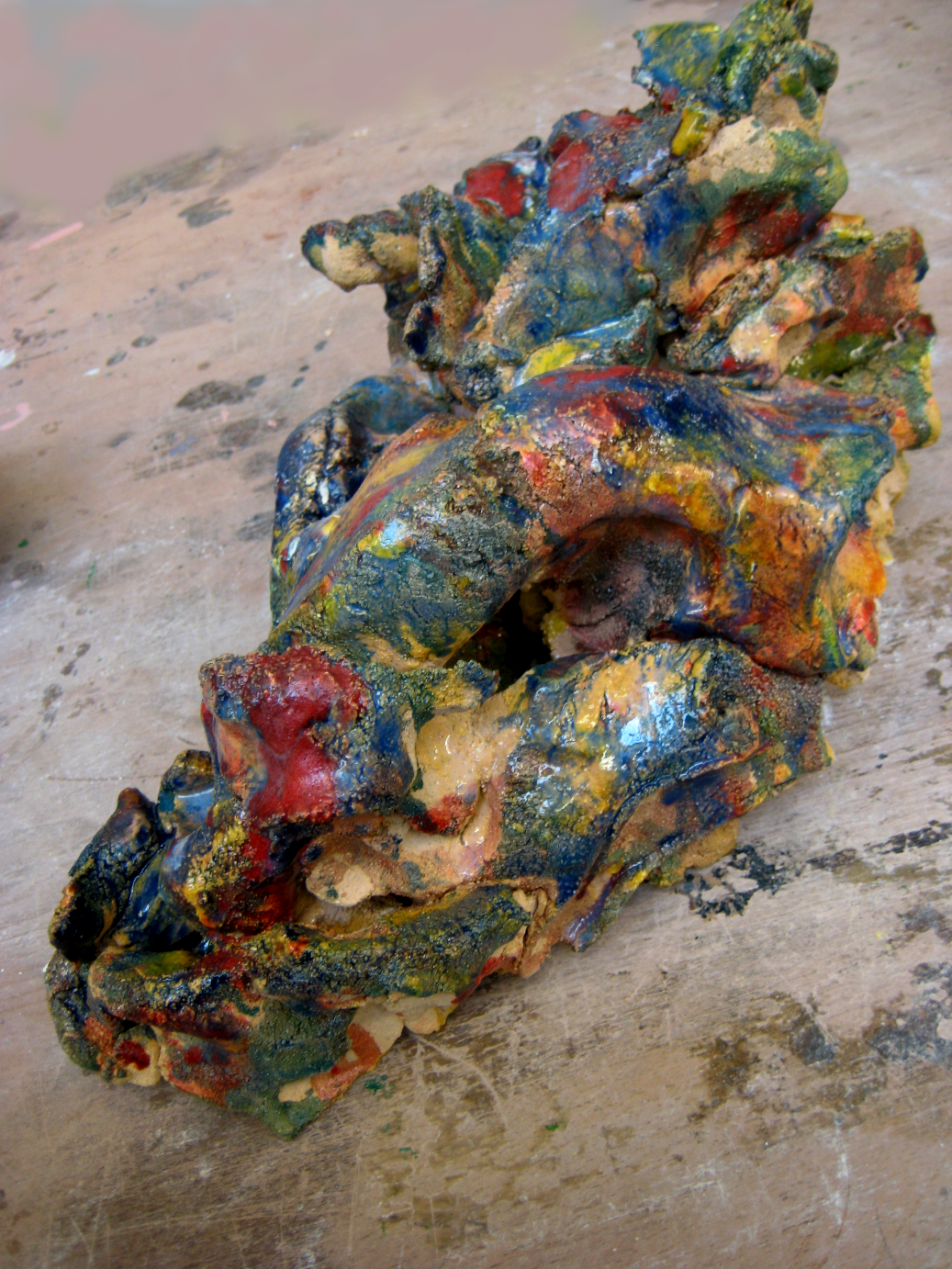
Am-Heh, ‘Eater of Eternity’, Self-Portrait A.V. E. 2022
Fat white privileged male Philosophers today cannot give Love for fat white privileged male Philosophers have no Love to give no geist to give which is why as it were fat white privileged male Philosophers dare not now name themselves Philosophers for they know very well they are unable to Love and always want to appear to be pusillanimous as politically-correct slave-morality; and disinterested in dreary daily daseins desiring to be all-intellect as absolute-knowledge and as an enemy of instinct and emotion and sensation. So there are only female Philosophers today as only female Philosophers do not fear Love do not fear Being do not fear the touch of Love as the Time of Being. Fat white privileged male Philosophers profoundly fear the touch of love fear the touch of being fear the touch of time so never come into existence to begin with for they are all fatness; but without beingness being bloated beyond being-there and where the bloated-body projects-ahead to hide the penis; thus that fat white privileged philosopher can never find his shrivelled small smelly sweaty penis which no longer comes to mind; let alone comes.
Thin white privileged female Philosophers today cannot give Love for thin white privileged female Philosophers have no Love to give no geist to give which is why as it were thin white privileged female Philosophers dare not now name themselves Philosophers for they know very well they are unable to Love and always want to appear to be pusillanimous as politically-correct slave-morality; and disinterested in dreary daily daseins desiring to be all-intellect as absolute-knowledge and as the enemy of instinct of emotion of sensation. Yet there are some white privileged female Philosophers whom do not fear Love do not fear Being do not fear the touch of Love as the Time of Being. Yet fat white privileged male Philosophers profoundly fear the touch of love, fear the touch of being, fear the touch of time; so never come into existence to begin with; for they are fart-fatness; but without beingness being bloated beyond being-there and where the bloated-body projects-ahead to hide the penis; thus the fat white privileged philosopher can never find his shrivelled smelly sweaty penis which no longer comes to mind let alone comes. Thin white privileged female Philosophers today through their thinness can slide through the space in time touching the distance of being sexual of being social of being mask where the clitoris is the coming of being coming off of the coming of being together where one being masked is unmasked for the mask is actually an altruistic and affable hospitality of our social being of masks for the face, after all, masks the skull: the mask reveals the face as it was.
Greek for ‘philo’ sensations ‘love of’ or ‘beloved’ and ‘sophy’ sensations ‘sensationing’. Thus Philosophy is the Love of Sensationing: Philosophy begins with Love: Philosophy begins with Being in Love: Philosophy begins with Beings in Love with Sensation with the Sensation of Being with the Sensation of Being in Love as a fused fluorescent frisson. Philosophy begins with Being in Love with the Sensations of Love in Beings so Philosophy is therefore always already a Pining forth for the Love of our Lost Sensation. Philosophising as a Pining or as a Yearning is always Dying for the Love of Sensation as Dying for the Sensation of Love leaked ahead as an attuned and attained infinite incandescent initiation. Philosophy loves being in love with Philosophy in Love in-love-with Philosophy being-in-love loving-philosophy if that makes any sense if that makes any sensation as it were as it was as it is now.
Philosophy – properly sensationing – is Lovesickness – love-being to be in love-there – without thinking about being-there in love-there as philosophising is a pining loving being thereing attuned and attained as a mooding mourning dying daseining – floating free from thinking – floating free from conceptualising – floating free from knowledgeing – for philosophising is the love of no-knowledge – as the love for no knowledge – knowing nothing.
Philosophising is the enemy of Knowledge as Philosophising knows-nothing but being-the-nothing-there for being-there with the-nothing-to-know as Philosophizing there is nothing-to-know but being-the-nothing-here but being-there-with-love-there that needs-no-knowledge for only our abeings need knowledge need nothing to know for abeings know nothing of being that knows nothing by being for abeings are absolutely alien to-being to-love.
Philosophising means Learning how to Love which is why Philosophising is still the most difficult thing to do just as Lovosophising is still the most difficult thing to do yet Philosophy, like Love, can be Learnt though through giving one-over for being-in-love as a love-of-being by being-beheaded-there for being-to-be-being-loved. I attain absolute-knowledge when I love absolutely or am loved absolutely activating an attained absolute non-knowledge.
All essential questioning in philosophy necessarily remains timely because philosophy is at its root the origin of the time being which is being the love of knowledge now where the now of love and the love of now originate philosophy now in time with knowledge now so knowledge now as philosophy now is of now, not before now; so thus philosophy is true to now so now we have to be all aware of philosophy now which pertains precisely: now.
Philosophy, then, is a kind of knowledge which one can acquire directly through everyday empirical commonsense knowledge and apply directly to certain situations and stratifications at hand to be handled through care which is, after all, the love of philosophy being the love of knowledge as caring for being by masking being that is in fact an unmasking of beings showing being in its true being of being a social being through masking beings.
Roughly speaking, philosophy always aims at the first and last masks of being, with respect to their way of Being, are emphatically interpreted and given as an aim to be acted upon to provide a foundation for the current crisis if there is to be any future historical Dasein of a people in an age of masks to come; for we saw the masking of our Dasein as an anti-social site from being-social; yet the reverse is true for masking is a revealing of originary Being.
Philosophising is questioning about the extra-ordinary and not the normal not the returning to the normal that is returning to normality which was never being-there to begin-with; there never was a normal. There never was a normality. There can never be a: return to normality, a back-to-being-normal; and what could be more boringly uninteresting and unimaginative than: being normal: the automaton-normal is a straight-jacket of slave-morality.
Philosophising is being-in-love-with-being-there therefore Philosophising is always already attuned or attained as a mooding mourning suffering swaying pining praying wailing waiting reeling returning for being-not-there anymore as aborted and abjected abeings ascend and alight all around and about beheading-beings beading beaming beastie beefcake beachboys beefsteaks belongings betweenness benchwarmer benchmarkings bewilderedness.
Philosophising is Loving for Philosophising is Dying as a becoming-being as a coming calling of our being back there to bringing being backing as a dasein dying is being beaming being becoming time by being born again as a bright light as a light of being-time to beam for time is the light of being-not-there by being-bright as time-there tells teething testicles teasingly tearjerker teaspoonful tearfulnesses teleologically tenderheartedly territorialising.
Philosophising depends on our original mourning mooding which is our loving of being-there for a philosopher is a lover not of knowledge that does not exist but of being which exists there in love where we truly are attuned and attained there as a there-being being-there whereas knowledge is never ever there for being-there: writing-philosophy is being-dead and thinking is the mooding of our being-dead: thicking is the being-as of our being-dead.
Philosophising as always already Dying is a care and concern for dasein dying as the dying of being-there as the dying of love-there as always already dying ahead by being-dead on arrival since to be a philosopher-lover is being born buried alive as the living-dead as that loving-dead because our: being-buried-all-alive is being-buried-in-love: and the loving-dead are the living-dead, always in love, always in dead, forever-in-dead, forever-in-love.
Mourning works at Philosophising – Philosophising works at Mourning – as a mourning for mourning-philosophising as a philosophising philosophising-mourning as a mourning for the death of mourning-philosophising for the death of philosophising - for philosophising-mourning is always already actually being-dead absolutely.
Philosophising is pining-pulling for Being-Dead as the Totality of Time forever free from Being-There becoming Being-Time thus escaping the excruciating pain of pining as Philosophising is a pining-yearning for being-dead as being-free from pain-there free for being-loved out-there where being beams ahead a glowing-gleaming geist.
But Where is Being Dead? Where is the whereing and wandering all about of being-dead and where are we when we are being-dead? We are aborted about as being-dead with the beings that we were with when we were alive but being-dead is a dreadfully difficult dispersion and dissemination as a being-adead is a dread-dasein diffused.
Acceptance of Death is a Denial of Being as a Denial of our Dasein of Being Dead for our Acceptance of Death is our Forgetting of our Afterlife of Being the Dead.
Philosophy as Death is the Gap for the Opening of Being to Being-Dead for Philosophy is the Gap that Death keeps on Opening as Philosophy is the Gap of Death.
The Gap of Death is the Mind of the Gap where Being belongs between as You cannot Mind the Gap as You are already the Gap of the Mind where Death is Being.
Time is the Gap between Being and Death and when Being becomes Death Time becomes Dead for Being Dead where there is No when then of Time for the Dead.
I live for a Time and I die for a Time and I live and die for a Time that is neither alive nor adead but the betweens of alive-adead where Time is the living-deading.
.png)
Alexander Verney-Elliott, Beheaded-Banebdjedet Self-Portrait, 2022
For Freud Thinking originates from Smoking: For Freud there simply cannot be Thinking without Smoking so a Ban on Smoking is actually a Ban on Thinking for Freud — and for Karl Marx or György Lukács; as well as for Jacques Lacan and Jacques Derrida: for great minds smoke alike: so Smoking is essential for Thinking for smoking-induces-thinking for smoking-initiates-thinking: Freud once wrote to Stefan Zeig “I was a passionate smoker (I wish I still were), that I ascribe to the cigar the greatest share of my self-control and tenacity in work...” (Letter to Stefan Zweig, 7 February, 1931). New Labour’s ban-on-smoking is really a ban-on-thinking for New Labour being-thick and anti-thinking are antithetical to thinking to intellect to culture: indeed New Labour’s obscene ban on Smoking is a Criminal censorship of a Culture going back to the 18th Century where Smoking or Drinking were Our Culture for Thinking and Debating but Today public houses have become moribund-morgues full of dead-bores like The French House and The Coach & Horses in Soho which now resemble nice-cosy petty-bourgeois tea-rooms for all the family: sanitized and anaesthetized: so safe, so tame, so polite, so nice, so decent, so dull, so boring: so-un-soho so Today; so sadly Soho is for us a thing of the past and smoking is not what it used to be just as thinking is not what it used to be since being is not what it used to be beige beasts beaten bellboy belting bedding bellicose beadings beadspreads bedraggled bemusement bemuzzling besmirched bewildered betrothals besmearing bedridden bedwetters beheading beforehand.
Being-in-Love is not when the object-libido and ego-libido are fused but when being-love and love-being are fused through the time-being of being toward love and love toward being: fused forth as this one and only being-in-love as a love-in-being for the time-being for the being-time for love has no libido as love has no drive as love is not a death-drive but a life-line as love is the life force as a longing for being-with-being forever as the aim of all life is love for love knows nothing of death for there is no death where there is love that shines forth and ahead of death for love lives when life dies. Being-in-Love is Being-in-Being as a being-out of being as being-in love becomes being out of being for the being-there being loved-there that becomes being-out-of-being by being-loved and being-in-love for being-in is always already being-out of being since being-in-love is all about being-out of-being: beholden as beheaden by being-there that loves-there for beings-in-love are beings-out of there-being for a time-being for the being-time between being-there and being-abroad by being between being beheading and aheading being for being time as the time to love when the true time to love is where there is no when where there is no time thus love is being without time being beyond bedum bedrid bedide bedpan bedung bedrugs bedlam beduin bedell bedhop bediriting bedazzled bedfellow.
Thinking came to Being through Loving Being for Love to love-being becomes think-being to love-think for to think is to love-being as ahead to love and to think are to be ahead of oneself for the Love and the Think of an other one that is installed and attached as my love in my think: I love the for I think the love of and think of to love of being for being to think of. ‘I being you’ is saying ‘I love you’ for being-is-love for being as both the I one and the other one I as beings being together saying I love being as I love you. Saying: ‘I love you’ is the easiest thing to say and therefore the most difficult think to say: it is never ever said with meaning only shone with a smiling-shining of our serening-seining. Love is sein. Love is sane. Love is sane: since Love is saintly: Love is being-sanetly as solely being-there for being with the nothing-there as the loving-there whereas for hate is being-insane: Love shines so Being beams. Love-binds. Love is not blind. Love is bind as a bind-to-being: love-binds-being-to-being for love is being: love-being: as a love-being and not as a love-object for love knows no-objects as there are no love objects out there, but only: ‘the loved ones out there’.
For Being as for Love there is no object of love no object of being as there are no love objects no being objects only love-beings being-loves as there are no objects of love no objects of being as a love of being is always a love for being aimed ahead at an ather being-there who comes to-love to-being through being-loved-there being-timed-there touching-time-there touching-being-there: to-touch to-time to-there to-be: but the time to be love is the being to be love without time without time being there for there where there is love there then there is no time there no time being there only love being there for being-in-love is being without time as when you are in of love you are out of time for love knows nothing of time needs nothing of time all the time and thus the existence of love is the evidence for the non-existence of time and all in good time you will not that there is no time when being in love when being love there without time thief there thetically theurgical thereafter thermalize thickeners thereabout thinkpiece thighbones thickskins thinkingly thickheads theorizing thunderbolts thoroughly threatening threnody thoroughfares thwackings throwback thwartedly.
Time is not Lost to Love that is Pure Presence of Being Lost: Love is the Possibility of Pure Presence as Being Absence: Being in Absence is Being in Love with Pure Presence of Being Dead: Presence is only Possible through a Love of Death: Being Withing Deathing of Being Dead of Being Love of Being Presence: The Possibility of Presence is the Possibility of Being Dead of Being with an Afterlife as Ever Present Being Absent: To Be Not is To Be Out There: for: A Coming to the abDead is A Coming to Presence.
The lover is not a narcissist with an object but a being with a being: for the narcissist is all self hate as a hate of being for the other being whereas the lover is for the love of being by letting being be as a one opened out to the other as both being the other of the other there together so the lover has no need for an ideal-image as the lover never needs no idol or an ‘I’ and abandons an ‘I’ letting the loved-one be free from an imposing ‘I’ free for orbiting around the no ‘I’ there as the loved-there being-there the nothing-there and all-alone with the-nothing-alling since when we are all-alone we are all-with the-nothing-there throbs throat theory thighs thick thorny thesis theism therein therapeutic thematic thermals throng threesome.

Alexander Verney-Elliott, Non-Illustrational Self-Portrait, 1999
I do not demand the one-other-love me as love is not a demand as lovers remain each-one for the other-one where one-and-one-make-one where two become one without demands as being-in-love is being without demand as one-is-one with one as being one with one as ones without demands where the other as lover becomes one with one no longer being an other as the lovers know no others and for being in love there is no other as each-one is one with one as ones without others where twos are ones once only onto ontic ondine onesie onions onsite onsets onside onagri onpass onbeat oncost oinric onload onramp onward onsets onflow onfall onrush oncome onslaughts.
Being-in-Love is never narcissistic as being-in-love is being beheaded from being ‘I’ for the being-in-love without the ‘I’ being-here as love aborts being ahead of the ‘I’ for an ather that also needs no ‘I’ for by being-loved its ‘I’ automatically aborts itself for the-being-of-love where being-in-love is being-in-being by being the infinite there-together that needs no ‘I’ so thus being-in-love is being free from objects: for being-in-love has no ‘love-object’ only ‘love-being’ because being-is-love and an object is without being for an object is without love and therefore there is no love-object only love-being beanlike beanpole beanball bedroll beeching beechboy beasties beefcake beatings.
So I do not Identify with You – I Love with You – Being without Identity without Identifying with You: I am with You without an Identity as you are with Me without an Identity: for Love needs no Identity: being-with-love is without-identity: Love is the Origin of Being without an Identity: I am Origin as Being Love with You without Identity for I need Nothing to Identify with: Love and Being are already With so need no Identity and are thus without Identity for Being and Love are Originary and as One: So I do not need to Identify with You and You do not have to identify with Me as being One with One we need no Identification being without Identity free from Identification: for Love frees One from Identification from the ‘I’: Being-in-Love is being-thrown-together-out-of-the-there by being-without You or I being-there: so I need no Identity so You need no Identity when we are one-with with-one out-of-there over-where-without-identity-there: Identification is always after Love and always after Being and Secondary to Being to Love and never Originary: Love is the Origin of Being as Being in Love is Being in Origin and Origin Being without Identity. You need no Identity: only being: only being-in-love: only being-in-origin: Identity is being without Being being without Love being without Origin sofor what comes to Loving comes to Being being-in-love being-in-being in Love and Love being Originary being Love is Being without Identity for Being is Love and Love is the Origin of Being and Being is the Origin of Love being Initiated and Installed before this insidious Incision of Identity for Identity is the One without Love for Love is the Other without Identification for the Other is necessarily without being Identifiable since this Other is the Refusal of Identity just as the Lover is the Refusal of Identity.
Being is to Loving what Smoking is to Thinking for Being is conducive to Loving like Smoking is conducive to Thinking for Loving leaks to Being as Smoking leaks to Thinking so banning Loving leads to banning Being and so banning Smoking is leads to banning Thinking for I love therefore I am whilst I smoke therefore I think.
Being-in-Love is ‘leaping in’ (einspringen) and ‘leaping ahead’ (vorspringen) of being. When I leap in for the love of being I let the being-be-love by letting being be where leaping is letting being lose and ahead of all beings by being-in-love free from all athers there which is where we are also as a freedom for athers being-in-love.
Loving is Letting lie-being-being-before-us-as-ahead-of-us for loving is being ahead as beaming being before a being-ahead by being-ahead of our own death for delirious derailed dread dead dasein is always already strewn and scattered all about as being-beheaded-there so death does not matter as being is not matter.
Loving is Waiting on Being to be Love There as in-love-out-there for being-in-love is being-out-of-being for a beloved being out of itself Opening out to the Waiting that waits awhile for the Opening Out of Love for the waiting-awhile leaves Love Open letting-love open-out to Thereing as Waiting is the Opening Out of Love.
In Dying There: Where does Waiting got to? Where does Giving go to? Where does Glowing go to? Where does Gesit go to? Where does Love lead to after Dasein’s Demise? So whereabouts is the Thereabouts of our Being Dead so what Happens Here to the Waiting that Waited on Love for Love and Waited on Death for Death?
For Being as for Love there is no Demise of Dasein but rather the demise of the body-there which is not necessarily the demise of being-there for the being-without-a-body of Dasein is rehearsed whilst being actualized in an anxiety where we are no longer a body-there whilst we are still a being-there since in anxiety I am aware that there is no-body-there that there no time-there despite my still being-there thus anxiety rehearses being-dead.
Where is Death-Being whered and weared and where is being-dead wearing where-time tobe worn-time to wear-being whereing the time of being-dead being-time? Where is the whereing of the wearing of the time ahead of being-dead and where is the whereing-all-about of being-dead as a time-aheading of our being-thereing that leaves us all left behind for the being-time until the time when we become the time-being-all-about-being-adeads.
Time-in-Being left-behind-there does a caressing-violence as a cutting-violence vibrating between the-being-dead-away and the-being-there-apart where the time-in-itself severs-seins separated away as time-together-there not-there-together where when time-in-itself is time-being-out-itself for there is no time left between being and non-being as both become this ‘time-together’ outside the time-there as their time-apart being-together.
After Time Being Becomes all over again and all back again there again as being there again with one again as being together again as one again all-over-again being back again there again with one another as being one with one all one all again together as one together as again together-again as again-together: so dying cannot die for being is all-again-together-again loves-again-being-together together-again being-in-love in love-in-being.
Love cannot die because being cannot die even if most men tend to die not all men die as not all men live as most men have not become being because most men have not become love by being in love with being-there by be-ing be-headed from being-there as aborted abeings as decapitated dasein not there to begin with even though these They that appear to be there as body there There are the Ones Not There even though they should be there in Theory if not in Practice for a body-there is no evidence enough of a being-there as such, as stuff, that is being beyond body for there are bodies without beings. Ones with bodies without beings are without Dasein.

Allah-Almighty Self-Portrait A.V.E. 2006
Only those that can come to love can come to die for only those that know how to love know how to die for to love is to die forever in love and only beings are able to love and only beings are able to die because for being as for love to die is to live on and on becoming infinite-being as an infinite-love fused for infinite time. To come to Love to come to Die is love-dying-in-love for-ever and for-never as the never becomes the ever and ever in being-in-love.
The time to love is the time to death for the fear of death is really fear of the real-time of being-love for the time of being loved without our body being-there but the time there as becoming being-time without our body being-there for fear of death is fear of the impossibility of death for being that needs no body to be to begin with or to end with for the ending of the body is the beginning of the being for itself for time itself as being beheaded from the body of being-not-there by becoming the time-not-there for dying-there is becoming the not-there of being-there by becoming being-time not there out of orbit of time-being by becoming being-time-to-love for true-being is being without a body-there as our true-being is being-with-being being-there there-being begun bedevilled bedwetter becharmed becomingly bedarkened bedazzling bedirtying beckoning bejewelled bewildered bellybands bewitchery.
The time to die is the time to love death for only those that love can die with the love for death that the face beams brightly ahead looking at the being loved left behind as the face of death is the face of love looking and smiling the shining ahead beaming at the being left behind looking our love in the face not death in the face facets fathom faithfully fanged fanaticizing faultinesses faintingly fancifying fatigability fastidiously favouredness fathomlessly.
The near-death-experience of being-dying-there all share the same serene sensation of light-being-love beaming ahead out of the body-here where being is both light and love all at once as beaming ahead out of the body as a pure presence of being becoming light as airy and light as bright floating free all above the body-there. Da-sein is at its most dreadfully delightful when you are looking down on your own body there whilst not being down there.

Dasein-Dread Self-Portrait A.V.E. 2016
Face-to-face-here with the being-in-love-dying-here knows no anxiety about the nothing going away there that is the coming time for being tobe time for love tobe the being of time free as being free from the body tobe time to love for all the time-being to come by being beheaded from the body-there parted from pain free from fear free from anxiety free from dread free from dreary-dasein and world-weariness where your-not-being-there anymore is where and when being-is-love for evermore even every evening evil evangelist eventually evoking evergreens eventfully evenhanded evildoings evaluators evading evictor evincing evictor evilly evanescent evangelical evaporator.
Being-with-dying-being beloved there forges fort-da-seins where the dying-beloved-there retrieves bits-of-being from the love-left-behind who simultaneously retrieves bits-of-being of the being-beloved-dying-there so both-beings become attuned as sutured-seins stitched together forever through fort-da-frissoning frilly frocks frisked frontier frothily frigidly frizzled frightener frostiness frontiered frogmarched frontrunners frothiest frostbitings.
Being-with-dying-being-there throws being ahead and out-of-itself with the beloved-beheaded from being-there as when one’s love leaks away bits of our being leak away with love lost and both beings become one being as a filtered frisson flying-off together thus leaving bits of being left behind living-there as a beheaded-being being-be-headeaed-aheaded ahead of your head in your head being your head giving you your head being for your head by being in your head with you wearing a head ahead heads aheads ahead of their ahead heads ahead of their aheads heads aheads ahead head of their heads aheads ahead a head ahead of their aheads head ahead head a aheaded.
The Physical Possibility of Life in the Mind of Someone Dead is Being Dead still Being in Love with the Living One left: The Physical Impossibility of Death in the Mind of Someone Dead: The Mind of the Dead Alive in Love with Being left There throws thetic thematic thermals theorise thespian thermite theology throating thrilling thronners thwacking thirstful threesomes throttled throbbing thickskin threatening thumbscrews thrombosing throatiness.
Death is Truly Mine when I Die Alone but When My Beloved Dies face-to-face His Death is Truly My Death as Our Death there-together as when the Beloved Dies the Lover Dies and through a double-dying there so they both Survive Death through Being Love for Lovers cannot Die so Survive Death by both being-dead time-together by doing-time doing-death undoing-time-undoing-death so surviving the death of time so surviving the time of death.
In dying our authentic being comes to light where death is experienced as an enlightening emanation beaming being forth from the face that beams before being becomes aborted abroad as an infinite being where dying itself becomes an infinite impossibility for being to be dead thus the death of the body is the birth of being as my body was my burden of being tied to time which was the time of the body always out of joint with the no time of my being.
By being-with-dying there I take the Lover’s dying away from Him by giving him Love that cannot Die and He gives Me Love so I cannot Die for I do His dying there that does not Die but from the beginning We are always already dying-all-the-time and an authentic being is loving-all-the-time thus being-in-love has no time-there to Die. When your Lover is now Out of Time you are Also now Out of Time knowing Beings exist free from the Time.


Shesmu-Shekhinah Self-Portrait A.V.E 4.6.09 Shesmu-Shekhinah Self-Portrait A.V.E 4.6.09
In being-in-love Your Impossible Death is My Impossible Death as Our Impossible Death for You Die there when I Die There thus We both do not Die There because We are not There to Die for Death is not Our Ownmost Possibility when We are aborted ahead in Love as Being with The Nothing that is the-not-there for Death being-there. We are all of us as always already dead but do not know it as such as death for we have mistaken deaths.
By being-in-love I die on behalf of the dying beloved as being-death by being-with-dying as dying-with-being the becoming not-there by being-ahead of being-dead so I do the death of the beloved by becoming their-death so a beloved does not die alive all alone as both become death-there as death-together aborted abroad. Aesthetics as attuned to and attaing an ontology of death gives us a glance as to what it is actually like being dead or being death.
By being-dead I am aborted from the body and become one-with-infinity being one-with-the-infinite at the same time still being one with the loved one left behind; both being-dead there-together time-together; but this time together is not ontic-time but being-time-in-itself-for-itself outside of ontic time which was the time-being of being-body being embodied by ontic-time. Dasein is not tied to time never arriving on ontic-time always arriving later.
The Death of My Love is My Infinite Love as the Death of the Loved One makes the Finite One an Infinite One where the Death of Lover transforms the Left Love from being-finite to being-infinite as only Love has the power to transform being from being finite to being-infinite and Love alone makes the Other’s Death an impossibility after all all along where with Death being becomes much more than than merely being a body for the being of Being has tobe Disembodied and Beheaded free from the Body which is why we want to be Be-headed and have the Heart to Lose One’s Head for Our being Ba needs no Head; and in Death the Ba breaks free from the Heart for the Ba is the Beat of the Heart as the Soul is inside the Heart heave headed heavily headway headband headlamp headache headwinds headlights headpieces headwaiters headinesses headmistress headquarters headquartered headshrinkers.
Moving ahead from mourning to memorial does not work when lost-love is internalised infinity as being absolutely with being because being is not a lost object but a being now being abroad – mourning is always abroading-forevering where we are both being there together away ahead together there as a true-love is not repeatable or ever retraceable in others as each love-being-sensationing is utterly unique and the strength of the sensation of the being-with-being – love-in-love is always a one-off and never the same again and never as intense as the one for the one: in mourning – contrary to that frightened Freud – we do not hate or attack or criticise a departed lost love: rather: resent and regret their absence – for our true love will never turn to hate since it simply cannot have such nihilistic sensations since we remain forever tied to love as love-ties-two-together as an only one forever; free as being-being together as time-time together forever as a mourning forever for love cannot die but memory can fade and die away but the sensation of love keeps love alive and mourning meandering as a melancholic mooding. The mood of mourning is the love for mourning lost love where mourning is mourning for mourning – for mourning the loss of oneself who has become lost incorporated into the love lost and taken far away forever thus mourning is also the mourning for the loss of the self locked in love with the love lost to love lost so one cannot (really in reality) make the move from mourning to memorialing because memorial is in itself the memory always already lost in mourning for memory is in itself out of itself as a materialized mourning with ever coming to an end and even when one is dead mourning like the unconscious knows nothing of it: indeed being-in-love – as an eternal and infinite mourning – knows nothing of time or death just as the unconscious knows nothing of time or death as the unconscious is our eternal-infinite-being-in-love that has no object only our being to beam. Mourning as our-being lodged with the love lost becomes a living-death as a loving-death as a being-death that does not die as love does not die in death as being does not die in death. Mourning is the material Sensationing of being-adead-alive locked-in-loves.
Where there is lost love-there that shines ahead and away from all life-there then death-there that cannot deal with love-lost there for love lives for death dies. When Love leaves Home and Aheads abroad the Home becomes a Glum Geist as a Home Sickness as a homme sickness where the Being of Love leaves the Site of the Sight of Love leaving a dull-dasein a glum-geist a sad sein where the Home becomes the Crypt of Mourning as the Crypt of Crying where one cries for the eyes that can no longer cry for us as the eyes are dry as they die and no longer cry for being there as the crying is for the thereing for not being thereing anymoring so we cry for the there for the loss of there as there that will not be there anymore for being-there anymore so we cry before we die for we will miss the there of our being. We mourn for the theres that is always there already there being there before being and before time.
To mourn is to be dead: I mourn therefore I am not: I mourn therefore I am not there as I am dead with the death of my lost love which makes my mourning possible as being-dead-alive with the lover lost out there for the lost lover is inside me and I am aborted-abroad with the lover lost so I can and I do have a serene-sensation and eternal-experience of my-own-death for I died when my lost love died: thus I-became-death-not-there as being-for-death as being-for-love where we are alive-in-death as an infinite immortal initiation of being-dead as being-not-there by being-love-out-there where we welcome the timing of the loving as being-time-together where time in itself is the love of being where the love of being is being without time being with being for only mourning remains alive as love-mourning as mourning-love without being without time as to-mourn is to-exist without existence to-be without being knowing that time does not exist only mourning exists only love exists mounring-loving in loving-mourning loving-in-mourning-mourning-in-love thus in mourning there is no moving: for in mourning one is still as still-in-love as still-in-mourning and so there is no moving-on from mourning from loving from loving the mourning from mourning-the-loving; and now I am mourning and now I am loving as now-mourning-loving as loving-mourning-now knowing only this that there then as being-dead without being-existing for in mourning-loving I am not being and I am not existing yet I am deading and I know it and knowing you are dead before being dead is so delightful.
Mourning is Being to Begin with for to Begin-Being is to Begin-Mourning as Being-Mourning for Being-Borning as Being-Born is To-Mourn; and Being only ever becomes Being by Being-in-Mourning as Being-in-Being: to-be-in-mourning is to-be-in-being to-be-mourning-for-being: there is no getting over mourning for there is no getting over being: there is no moving on from mourning for there is no moving on from being and in being-dead being is still suffering being-in-mourning being-dead-in-mourning for mourning-being-dead for being-dead-mourning: the Work of Mourning never Ends for the Work of Being never Ends and Being out of Work is Being out of Mourning being out of Being and Mourning is the Working of Being working-at-mourning Being beg beclamoring beshrouded beseechers bewrapping betrothals bewitchery bescorched benightedly bequeathing bereavements beseechingly.
Mourning is Carrying the Lost Love well within the Love Left there for Mourning is Wearing the Dead Love for we Wear-the-Dead which is why we become all weary with weight when Wearing the Dead Love there-that weighs dasein down draining out our Being There where-we take to the Wear and Tear of our Lost Love there forever Loving forever Mourning for the Work of Love is never over for the Work of Being is never over because the Work of Mourning is never over as Mourning is being and we come-to-being through mourning being Lost as being-loved and only those that Love only those that Mourn can come-to-being can become Being as Being is always Mourning.
Crying is Timing for Being becoming being-time for time-to come to-being not-being-there for crying is the timing of time-lost and time-to come to being gone past and being gone future for crying is the losing-of-time and the losing of that-being that-past that-time that-gave that-time being-to-be and time-to-be for the time-being for crying is for the being-time that comes with time-being where a being cannot cry anymore since the tears have been all soaked up by a sein of a time cried past and the time is told by the tears spilt not the seconds spent so to tell the time is to cry the time so being cries for a time to become being-time without the tears of time that now no longer cry for time is no longer there to cry so now you cry over the death of time mourning for eternity the end of time that will end for a certain time before time begins to be time again becoming time in time coming all in good time but it may take time some time to be time again as the time before and as the time to come comas commode compost combats connived contrabands confetti concerto conceals concrete concerts comforts compress complete compiled.

Charcoal Self-Portrait after Jawlensky 1981 Alexander Verney-Elliott
Weeping is Waiting for the Eternal Return of Love to become Being with Time for we weep and wait for the Love to Come through the Death thrown that brings Being to Time where Being the Time to be Time is the Time to be Being the Time to Love where we love-being-time-together there by bringing times-together to a love.
Loving is Waiting for the Opening out of Being to come out to There to the Loving out-there to Thank the There for thereing by bringing being-loving-outing-thereing for the being-there-in-love-out-there in Thanking the Waiting for the Loving of Being the Gifting that is the Waiting for the Loving of Being comes with Waiting.
His dying is killing Me for when love is dying-there the lingering loved-one is also dying-there too like limbs slowly being broken in two and wrenched apart torn to shreds scattered all over-the-joint out-of-joint without wearing a head wandering aimlessly around sharing these shreddings aparting severed free from lost love.
When He died There I died There for Now He is not There I am not There for Our Being is not There for even if One Body remains Behind there is no Being There.
For the Body left Behind There is not a Being left There but that Empty Crypt left Crying to be Buried with Both Beings beheaded from the Body left Behind There.
Where There of Being Dead there then and when will we be Our Turn to be Out There to Then Turn where when we Do Death There where with Our Love to There.
Being in Love We need no Neighbour for Love Hates Thy Neighbour that Knows No Love for thy Nosey Neighbour Lives without Love without Anyone In to be In Love with so Is always Listening In without Being In Love: So Hate Thy Neighbour as One Loves Thy Self: God is Your Noisy Neighbour always Home Alone so cannot Love Thy Self as God so cannot Love Thy Other as Thy Self: God Hates Love: so Hate Thy Neighbour as God Hates You and Love Thy Self as Thy Other Do docker dolls docketing dockhands doctoring dogcatchers documents dognaping doctorships domesticate dogfighting documentary doublespeak domesticity doggishness dogmatising doctrinaire.
I shine You – You shine Me so we shine more shinier by shining each others shining glowing greater through the time that gives the gift of love hearing him sweetly saying: ‘I’ve always loved you...’ Moving from Mourning to Memorial is impossible because being-in-love-is love-in-being-being-locked-in-love infinitely forever foretell forensic foreskin foreplay foreclose forecourt forteach forteeth forestall forespeak foretaste forgivers forgottenness.
You said Life has no Meaning yet Your Love for Me is the Meaning of Your Life for Me and My Love for You is the Meaning of My Life for You for The Meaning of Life is Love as the Meaning of Life is Being in Love. The Meaning of Life is Being-in-Love as the Love-in-Being and the Being of Love is the True Sensation of Being There and you only become There when you are Love there for the There is the Love that is there as the love of there loving thereing.


Aumn-Amen Self-Portrait A.V.E. 29.11.10 Aumn-Amen Self-Portrait A.V.E. 29.11.10
One becomes beheaded-being when one’s lost Love becomes dismembered-dasein now not-there for the I left behind becomes I am now not being-there becoming a broken being-in-bits as a shredded shattered scattered sein seeping strange subterranean sensations out of not being-there by being-airborne and aborted abroad abounding abnormal abortions abrogated abrasions abjointed abhorrent abidingly absconded absoluter abruption absolvers.
I can’t bare-your-being-not-being-there for I-bared-your-being as you-bared-my-being-bare-by-being-there for me-baring-my-being but now you-aren’t-there for your being not being there when you should still be there is the most dreadful and difficult thing to be not there with where being left alone without your being begins to behead my being from not being there for I am not there when you are not there for being is being-together for being-there with the being one loves. One’s Love not being-there then is the most poignant and painful thing for being to bare becoming a fate far worse than death since death is where one’s love goes on being-in-love being-in-death in love.
The time of being is the time of love and time waits for being which waits for love for being takes time to love and gives time to love by giving being to love time for being when being waits for love when being comes in time in being in love as being is the waiting of the timing of loving by being in love with being dying on time titillate tiredness tinkering tightened tinplated timpanist tipsified ticketing tightrope titivated tiptoeing tinderboxes tinniness.
For being-in-love knows nothing of our death-of-dasein as a-being-in-love knows nothing of coming-to-a-closure as love never closes with the death there but opens out being-not-there as forever being-out-there open on-going as being-not-there-in-love so there can be no movement of being between mourning and memorial because mourning is really a calling back of being-loving of our being-in-love as an absence abroad coming back to pure presence piercing being because moaning mourning brings beheaded-being back to being-in-loving again as a silent sein seeping back to the being-there as a body-not-there for loving is a forvering of being-beheaded as being-not-there for being-there for love-there by being-not-there as Being-in Love is the Eternal Return of Sein Time for the Being Sein to Love Being for all time in love with the being left behind-there crying and calling the sein back to shine with the sein left behind for love never dies only cries as love leaks light and glows geist as the greatest gift of being for being by the being-not-there that then comes back to the being-there to shine sein time lighting love for the solitary sein left beheld behind bedchairs bedazzles bedsheets beglamors beginners begrudges behooving behaviour bellicose betrayals bewilders bewailers betrothed bevomited bereaving bemuzzled bekissing bejeweled believers belongings.
I cannot say: Good Bye to You for I cannot say: God Be with You for God cannot be with You but Time will be with You so I say: Time Bye as Time Be with You.
For when you went away time went a way with you as our time together went away together so thus now I am left without out our time without being-in-time.
I can say: Love Bye to You as Love Be with You for Now You are all Love as all Time for Now You are all Being Love for Being Time as a Time Being Being Love.
So I say I Be with You as I am now with You as You are Now within Me as We are One as We always will Be as One with One with the Nothing always Thereing.
The love left behind becomes being beheaded waiting wailing whiling there the time that love has left for the time to come again to hear that frail voice repeat
So softly: “I’ve always loved you, you didn’t always love me, but you do now”: then a little later: no longer being able to speak to me: you wrote: “V . V . V” : then
Erased that “V . V . V” and wrote: “I Love You” and then I said: “I love you.” After such a long time, I can now still recall this calling of the finite to the infinite.
Where does the sweet serene soft voice of our lost-love leave shore for? Where does solitary sein sail away to? Where, and when, does being begin to be time?
For Being begins to be being-time when freed from the body of being-there for the Body is nothing in itself so can only come to shine through sein, that is time.
Being still-there with the being-not-there is the most difficult and dreadful thing to be with when the being that is not there is still-there as always being-there.
For being-there is always love-being-there as love-is-being-there when being leaves the love left there as being-in-love does not leave being left all-alone-there.
Is there a way in which leads from primordial love to the shining of Being? Does love itself manifest itself as a horizon of Being? Does love itself shine Being?
Being’s Name is Love — its Work is Death.
The Work of Death is — Being the Afterlife.
The Afterlife Being — The Work of Loving.
Being & Shine

“Oh, the silence of all shining ones!”
Friedrich Nietzsche, The Night Song, 1884
“Some places are like people: some shine and some don’t.”
Dick Hallorann, The Shining, Stanley Kubrick, 1980
“Shining solitude, the void of the sky, a deferred death: disaster.”
Maurice Blanchot, The Writing of the Disaster, Gallimard, 1980
“Luminous self-disclosure shows itself as the shining, What shines is what shows itself to a looking.”
Martin Heidegger, Parmenides, 1942—1943
“People press toward the light not in order to see better but in order to shine better.—We are happy to regard the one before whom we shine as light.”
Friedrich Nietzsche, Toward the Light; The Wanderer and His Shadow, 1880
“The rising clearing within the interlocution of opening and en-glowing ... entails at the same time the experience of man as a being that ‘has’ the glow, the fire.”
Martin Heidegger, Mindfulness, 1938-1939
“Spirit is flame. It glows and shines. Its shining takes place in the beholding look. To such a vision is given the advent of all that shines, where all that is, is present.”
Martin Heidegger; On the Way to Language, 1959
“Being once the suddenly flaring lightning that draws all things into its light according to their measure and law. Being — a gift, a rejoicing and a thrill, a question — the beginning.”
Martin Heidegger, Black Notebooks, 1931 –1938
“Nature’s stinginess. — Why has nature been so miserly towards humans that it did not allow them to shine — one more brightly, the other less so, each according to his inner magnitude of light? Why are great human beings not as beautifully visible in their own rising and setting as the sun?”
Friedrich Nietzsche, The Gay Science, 1882
“Enframing blocks off the shining-forth and holding-sway of truth. The clearing belonging to the essence of Being suddenly clears itself and lights up. This sudden self-lighting is the lightning flash. It brings itself into its own brightness, which in itself both brings along and brings in.The truth of Being flashes, the essence of Being lights itself up.”
Martin Heidegger, The Question Concerning Technology, 1954
“Light can illuminate what is present only when what is present has already arisen in what is open and free and can expand there... The freeing of the free that first grants everything open... It does not remove concealment. On the contrary, revealing needs concealment. What arises of itself has the peculiar property 0f concealing itself.”
Martin Heidegger, Reflexionen und Analysen zur Kunst der Gegenwart; Distanz und Nähe, 1983
“Whether naive, as in the authenticity of the old photograph, or terrible, as in the brushwork that surrounds the mutilated beings of Vincent Van Gogh or Francis Bacon, the aura is always a moving experience. It reminds us that we share a fragile humanity surrounded by a fleeting halo of light; it is a kind of appeal to solidarity. For precisely that reason, it is not certain that the aura is objectifiable in Adorno’s sense.”
Rainer Rochlitz, The Disenchantment of Art: The Philosophy of Walter Benjamin, The Guilford Press, 1996
“My grandmother and I could hold conversations entirely without ever opening our mouths. She called it ‘shining.’ And for a long time, I thought it was just the two of us that had the shine to us. Just like you probably thought you was the only one. But there are other folks, though mostly they don’t know it, or don’t believe it. How long have you been able to do it? — Why don’t you want to talk about it? — It’s just that, you know, some places are like people. Some ‘shine’ and some don’t. I guess you could say the Overlook Hotel here has somethin’ almost like ‘shining.’ —”
Dick Hallorann, The Shining, Stanley Kubrick, 1980
“The word ‘light’ means lustrous, beaming, brightening. Lighting bestows the shining, opens what shines to an appearance. The open is the realm of unconcealment and is governed by disclosure. What belongs to the latter, and whether and to what extent disclosing and lighting are the Same, remain to be asked. The golden gleam of the lighting’s invisible shining cannot be grasped, because it is not itself something grasping. Rather, it is the purely appropriating event. The invisible shining of the lighting streams from the wholesome self-keeping in the self-restraining preservation of destiny.”
Martin Heidegger, Heraclitus Fragment, Aletheia, 1943
“Only by virtue of light, through brightness, can what shines show itself, that is radiate. But brightness in its turn rests upon something open, something free, which might illuminate it here and there, now and then. Brightness, in the form of lightning, plays in the open and wars there with darkness. Light can stream into the clearing, into its openness, and let brightness play with darkness in it. But light never first creates the clearing. Rather, light presupposes the clearing... Such shinning [Scheinen] occurs necessarily in brightness [Helle]. Only though brightness can what shines show itself.”
Martin Heidegger, The End of Philosophy, 1956
“The image, capable of negating nothingness, is also the gaze of nothingness upon us. It is light, and it is immensely heavy. It shines, and it is the diffuse thickness in which nothing reveals itself. It is the interstice, the spot of this black sun, a laceration that gives us, under the appearance of a dazzling brilliance, the negative in the inexhaustible negative depths. This is why the image seems so profound and so empty, so threatening and so attractive, always richer in meaning than those with which we provide it, and also poor, null, and silent, for in it is this dark powerlessness, deprived of a master, advances; it is the powerlessness of death as a beginning-again.”
Maurice Blanchot, The Museum, Art, and Time, Critique 43, 1950
“With the rising of the sun, it gets light and everything becomes visible. Things shine. In certain burial rites, the face is turned toward the east. Churches are orientated in the same way as well. By the way, when the light is tuned off, how is it then with the clearing [Lichtung]?... ‘Clearing’ mean ‘to be open’. There is also clearing in darkness. Clearing has nothing to do with light but is derived from 'lighten [unburden]. Light involves perception. One can still bump into something in the dark. This does not require light, but a clearing Light — bright. ‘Light’ comes from ‘lighten,’ ‘to make free.’ A clearing in the forest is still there, even when it’s dark. Light presupposes a clearing. There can only be brightness where something has been cleared or where something is free for the light.”
Martin Heidegger, at Medard Boss’s Home, July 6, 1964
“Mortals are irrevocably bound to the revealing-concealing gathering which lights everything present in its presencing. But they turn from the lighting, and turn only towards what is present, which is what immediately concerns them in their everyday commerce with each other... They have no inkling of what they have been entrusted with: presencing, which in its lighting first allows what is present to come to appearance — in the lighting of which they come and go, remains concealed from them and forgotten... But the golden gleam of the lighting’s invisible shining cannot be grasped, because it is not itself something grasping. Rather, it is the pure propriating [Ereignen]. The invisible shining of the lighting streams from the wholesome self-keeping in the self-restraining preservation of destiny... The play of the calling, brightening, expanding light is not actually visible. It shines imperceptibly, like morning light upon the quiet splendour of lilies or roses in a garden.”
Martin Heidegger, Aletheia & Moira; Early Greek Thought, 1946
“The golden gleam of the lighting’s invisible shining cannot be grasped, because it is not itself something grasping. Rather, it is the purely appropriating event. The invisible shining of the lighting streams from the wholesome self-keeping in the self-restraining preservation of destiny... Gods and men belong in the lighting not only as lighted and viewed, but also as invisible, bringing the lighting with them and, in their own way, preserving it and handing it down in its endurance... But the flash suddenly died out. No one grasped its ray and the the nearness of what it illuminated. We will not see this lightning flash until we place ourselves in the tempest of Being... But the golden gleam of the lighting’s invisible shining cannot be grasped, because it is not itself something grasping. Rather, it is the purely appropriating event [das reine Ereignen]. The invisible shining of the lighting streams from the wholesome self-keeping in the self-restraining preservation of destiny [Geschick].”
Martin Heidegger, Aletheia; Early Greek Thinking, 1954
“The good is something that shines, thus something that provides vision, thus in turn something visible... Everything depends on the shining forth of whatever appears and on making visibility possible... A being becomes present in each case in its whatness. But, after all, coming to presence is the essence of being... What the idea, in its shining forth, brings into view and thereby lets us see is for the gaze focused on that idea the unhidden of that as which the idea appears... 'Unhiddenness' now means: the unhidden always as what is accessible thanks to the idea’s ability to shine... The eye itself 'emits light' and devotes itself to the shining and in this way is able to receive and apprehend whatever appears... Nevertheless, by its shining the sun bestows brightness upon everything that appears, and along with that brightness visibility and thus 'unhiddenness.' But not just that. At the same time its shining radiates warmth and by this glowing enable everything that 'comes to be' to go forth into the visibility of its stable duration.”
Martin Heidegger, Plato’s Doctrine of Truth, 1931-1932
“The in-turning that is the lightning-flash of the truth of Being is the entering, flashing glance — insight. We have thought the truth of Being in the worlding of the world as the mirror play of the fourfold of sky and earth, mortals and divinities. When oblivion turns about, when world as safekeeping of the coming to presence of Being turns in, then there comes to pass [ereignet] the in-flashing of world into the injurious neglect [verwahrlosung — loss of safekeeping] of the thing. That neglect comes to pass in the mode of the rule of Enframing. In-flashing of world into Enframing is in-flashing of the truth of Being into truthless Being. In-flashing is the disclosing coming-to-pass within Being itself. Disclosing coming-to-pass [Ereignis] is bringing to sight that brings into its own [eignende Eraugnis]. The coming to presence of Enframing is the danger. As the danger, Being turns about into the oblivion of its coming to presence, turns away from this coming to presence, and in that way simultaneously turns counter to the truth of its coming to presence... Perhaps we stand already in the shadow cast ahead by the advent of this turning.”
Martin Heidegger, The Question Concerning Technology, 1949-1953
“When, in the turning of the danger, the truth of Being flashes, the essence of Being clears and lights itself up. Then the truth of the essence, the coming to presence, of Being turns and enters in. In-turning, as the bringing to pass of the turning about of oblivion, turns in into that which now is the epoch of Being. That which genuinely is, is in no way this or that particular being. What genuinely is, i.e., what expressly dwells and endures as present in the ‘is,’ is uniquely Being. Only Being ‘is,’ only in Being and as Being does that which the ‘is’ names bring itself to pass; that which is, is Being from out of its essence. ‘To flash’ [blitzen], in terms both of its derivation and of what it designates, is ‘to glance’ [blicken]. In the flashing glance and as that glance, the essence, the coming to presence, of Being enters into its own emitting of light. Moving through the element of its own shining, the flashing glance retrieves that which it catches sight of and brings it back into the brightness of its own looking. And yet that glancing, in its giving of light, simultaneously keeps safe the concealed darkness of its origin as the unlighted. The in-turning [Einkehr] that is the lightning flash of the truth of Being is the entering, flashing glance — insight [Einblick]. In-flashing of world into Enframing is in-flashing of the truth of Being into truthless Being. In-flashing is the disclosing coming-to-pass within Being itself.”
Martin Heidegger, The Turning; Insight Into That Which Is, Club of Bremen, 1st December, 1949
Have you not heard of that madman who on a bright morning lit a lantern and ran around a shopping-mall crying out incessantly: “I seek Being! I seek Being!” As there were many abeings about window-shopping who did not believe in Being, he caused great laughter. Why? Is he human? said an abeing. Has he lost his way like a being? asked another. Or does he keep himself hidden? Is he afraid of us abeings? Thus then They shouted and laughed. The madman jumped into their midst and pierced these They with his savage eyes. “Whither is Being?” he cried out: “I will to tell you! We have killed Being, you and I! We are all Being’s murderers!” But: how did we abeings do this? If we abeings do not exist as such, as stuff, how can we, the abeings, who are not even there, kill Being? All because there were many abeings, who were all about, but, who were not there, were killing Being.
As abeings do we not stray, as through infinite nothingness? Does not the abeings empty space breathe upon us nothingness? Have abeings not become colder and colder? Does not abeing come on continually, as darker and darker? Shall we not have to light lanterns in the morning? Do we not hear the noise of the grave-diggers who are burying Being? Do we smell nothing of the sublime decomposition? Beings, too, decompose! Being is dead! Being remains dead! And we have killed Being! We, without being, have killed Being! How have we, who are not there, killed that which was there? How was this possible? How was it that we, without a Dasein, were still able to kill Being? The Abeings are the DaseInless Ones, who are everywhere, not There, killing-off Being Ones who are There. And so which ‘one of these’ are you? A ‘Daseinless Abeing’? Or are you a: ‘Daseinful Being’?
Here the madman fell silent and looked again at his listeners: they too were silent and stared at this being in bewilderment. At last he threw his lantern to the ground and it broke into bits and pieces and went out. “I have come too early” he said then: “My time is not yet.” This tremendous event is still on its way — still wandering: — it has not yet reached the bodies of abeings. Lightning and thunder require time and being — the light of the stars requires time and being — deeds — though done — still require time and being to be seen to shine-there. This deed is still more distant from the abeings than most distant stars since abeings cannot shine being-there that is why they always look so dull looking unable to have the shine to give the shine that is being after all since to shine-there is to be-there and those with dasein have the dazzlement that ignites the detonator for disseminating the disclosure of dasein danced dartingly daggerlike dalliance dauntingly darlingly dangled dangerously darkening daimon dankness dazzlingly dastardly dandyish daredevil daringness dapperness daggling dandyushly.
What will become of being now that being is becoming exiled or extinct and aborted abroad? What are we all becoming now being is becoming beheaded? Where are we all becoming What now We are becoming Not? Why are we Not now no Where? Where are we now What Not? Why are we now Not that What we are Not There? Why are we What now the Not There? Why are What the Not There now no Where? What is Where the Not There? Where is the What of the There Not? Around about a Ahy airs airy airiness airless airsick aircrews airproof airport airstrip airworthy airfield airflow airbrushes airburst airhole airmailed airlift airstreaming airpalanes airchecked airheaded airdropping airborne airwaves airlifted airstrikes airtight airglows airproofing airfares airlessness airmailing airpowers airsickness airwards airwise airways airfreighted airworthinesses airspaces.
What will become of God now ‘Being is Dead’? Yet They also said ‘God is Dead’ but the Death of God was the Death of Art for what They took for God was Art yet They did not know it then and do not know it now and now all Art is Dead after all that and after all They said about God was actually all about Art was all about Being after all; and now They all know that there is no Art that there is no Being that there is no God around about those They and yet They were the very no Ones that Killed Art that Killed Being that Killed God aided and abetted by the Them who want to Kill the They and wish that They were all Dead altogether along with Art along with Being along with God so that only those Them are left to Lecture themselves: on the Death of God, on the Death of Being, on the Death of Art; so when will Those of the Them start to lecture Themselves on the Death of the Them on the Them not being the There where Being once was where God once was where Art once was. The They killed Art out of Spite because Art had a Dasein whilst the They never had a Dasein so could not come to Shine; as Art had once Glowed out our Dasein; and, so now, Dasein is finally, at last, coming to an End, because Art is now, coming to an End, and so now, Art is finally, at last, coming to an End, because Dasein is now, coming to an End.
Why are there the Not There? Who are the Not There? What are the Not There that appear to be there but are not There? Where are the Not There? What are the Not There? The Not There are Abeing. Why is there now Abeing and not rather Being? Where is Being? What has become of Being? Why are there the Not There now; and where now are The There that were There? Why is Being disappearing and Abeing appearing? Now Abeings are all about and abound as the Not There whilst Beings are all about to be aborted abroad and what remains are the They not There that are the Abeings and an Abeing is one of these those not there that do not have the Shine to be There thus cannot come into being because only the Shining grants geist to shine sein as Dasein yet the They are these then that do not have a Dasein to shine sien there despite being flesh there for that matter of meat is not that matter of dasein: living-flesh is not existing-being; having meat on is not having being on; so having a body on is not having a being on: yet we take a fucking body-that-is-there as a fucking being-that-is-there.
The They are the There not there and They are about and abound not to be without being without existing yet are still all about everywhere-the-nowhere-there being the no-ones-there being-here being-there being every-no-where-there and then you keep saying who are They yet know one knows not even They who They are and the Them are never seen anywhere anywhen near the They then as the Them are never ever seen anywhere anywhen near the There there for the Them cannot bare the thud threat There therein thereafter thermophilic theatrical theologian third therapists theistical thatnesses thanatists thumping threepenny threesome thuggeries thirsty throbbings throatiest throughout thoughtless throughway thrashed thoroughbred thrifty thieves thicket threshold thunderbox thermalizations thrived through thirsting throaty thieved thick thighs thanksgiving.
They Here never are the Them at the There even when Where the Them are near There then not far from They Here as then Them are never near Here at There where there They are Here near Them thus the Them are never near There for the They thaw throat thwarted thuggish thrillers thereinto theirselves thereabouts throatlatched thankworthy thunderclaps thickenings theologizing throttlehold theoretically throatinesses thereafter.
The Them then are no where near the They apart from by accident or being between on the way to see the rest of Them as the Them keep a safe distance from the They but then always need the They around about in order to beat these They thrash the thorax thong thoron tholos throve thrive threat throne threading thrown theory thirsts thrills thymic thaler thectic throve thoric thieve theories thumb thimble thermals thwarted throwaway.
Today the They is all there is as there is no I as there is no We for today there is no Us only the They that are abound today yet not all of these They are there; not all being there as the They are the absent I the absent We the absent Us unable to be there thrashing thereafter throttling themselves thumbscrew this thighbone theorizing theologians throatiness throwbacks thematically throws theatricalized threadbareness thugs threatenings.
What is Abeing? Abeing is the no-one-not-there that look-like-nothing-there at all and the-they-not-there look like anodyne augmented abeings and it is the They that are these-those all-out-and-about that are the not There. What is there? There is what is Where. Where whats There. There is the where-what the-there beings-being as what there-being being-there where-a-what there originates being-what as Natura or that which where what lets being originate from itself of what which originates being as ba: being the egyptian-soul of what where Ba-ings be: ba-being-soul as such being-egyptian; and not being-christian which is not being-ba at all but an ab-being and as aborted Abeings are Dasein-less Non-beings as abeing-they-not-there, the They have no Soul, so are like the Them whom are soul-less but some-how still-there, somehow surviving-there, in a soul-less state:
“Non-beings, on the other hand, are sometimes present, sometimes absent, because they are present only on the basis of something already present; that is, along with it they make their appearance or remain absent. Beings (in the sense of the ‘elemental’) are ‘always there,’ non-beings are ‘always gone’ – where ‘there’ and ‘gone’ are understood on the basis of presencing and not with regard to more ‘duration’. For the Greeks, however, ‘being’ means: presencing into the unhidden.” – Martin Heidegger, On the Essence and Concept of Physis in Aristotle’s Physics B, 1, 1939.
What does an Abeing look-like? An abeing looks-like absolutely nothing at all and has absolutely nothing-to-do with The-Nothing-Alling of our Being-All as being-there-with-the-world-there as an abeing is not of The Nothing as the abeing is not of our world. What does an abeing smell-like? An abeing does not smell because an abeing is not there since an abeing shows and sows no sensations for an abeing has no smell of sein has no touch of time has no breath of being-there to take in the air of the all. And an absolute absence of love discloses or displays a deathness of an abeing as an abeing has no time-there for love-being-there for-being-to-come for-time-to-come-to-being-the-time-to-come-to-love locks looted localising logicizing lookalikes loudmouthing loathingly loopholing lopsidedly lockmakers loincloths lobsterman lowlanders longstanding loneliness lobotomizing loggerheads locomotion lowercased localisation longitudinal louche locksmiths loutishness lollygagging loudmouthed loitering lookalike lovemakers longingly loosening loincloths lowlife loopholes loquaciously loutishly.
Who are Abeings? The Abeings are Adead to Being for the Abeing is the Abdead that thing that cannot Live that thing that cannot Die as Being Dead for the Abeing is Dead Being the adead without being-dead and so we say that the Abeing is the Abdead after-all before-being for the Abeing as the Abdead cannot come-into-being and now We want to Know for some strange reason: Who the Abeing Abdead actually 'are' after-all; even if They are the Not as those They that are not There and those They that are the not There that is those They that are without being-there as abdead-abeings are these-those non-ones not-there that should be there (but are not): those-they non-ones not-there they that should be there but have no being there to begin with to end with and Ammit arrives to eat them all up for their own good for they wait to be wasted-away before being watsed-awayed for they have no being to-waste away yet are all-waste are all-wasted are all-waited to be wasted away at the end of the day at the beginning of the night when the time is right for wasting away; and Ammit awaits awhile while waiting before becoming hungry for nothing and taking time eating away at nothing at all wasting no time taking time and eating time that has nothing to tell but nothing there as an abeing abdead has no time to tell no being to tell only a no body to wait for wasting-away wasting-time then They are eaten adead as Ammit takes-time eating-up the abdead ending-up shitting-them-out as the living-dead eternally having their ankles gnawed upon down to the bone by blunt-teeth of Ammit; or if you are one of the They of the Human Ones then you too are ‘destined’ to have your ankles gnawed upon right down to the raw bone down for eternity, forever in terrible pain.
Beings have No Identity – Being has No Identity to Identify With to Begin With – Being is being-without Identity for to-be is not-to-be-named as Being names Nothing as Being is for Love that is a Nameless Other: Those that Need to be Named do not Exist: to be Named is not to have Existed for only the Name Survives your being-there and the Name names Nothing thus The Nothing knows nothing of the Named thus the Name is Remembered as the Forgetting of Being and Being has No Name other than Love and Love is the Nameless Other. Love has No Name as Being has No Name nameless narkiest narcotic narrator naffness nattered nativism navigate nazified narcisms.
Being has No name and the No Name of Being is Amun: “O You, the Great God, whose name is unknown.” Hymn to Amun Ra (PT 276c–ca. 2350 BCE). The no-name of Amun is at One with the no-name of Being as Amun and Being are One. And Being is One. And One is Hidden. One is Amun who keeps Himself Hidden free from the They the Abeings and Who keeps Himself Hidden from the They who Hides Himself from the Gods no one knowing His nature no one knowing His Name for He is Higher the sky and He is Lower than Earth. None of the Gods know His True Form. His Image is not Unconcealed thus Nothing is Known about Him. He is too Hidden for His Face to be Faced. He is too Alien to be Asked after and too Absent to be Known. Who is He? He is Amun. Who is Amun? Being. Bare beings bearing beasties befalling bedevilled beginners behaviours behooving bedfellow beckons beefcake.
Being does consist in our observing beings. The being stands-there when we observe it. We can come across it only because it already is there being-there-before-us as an empirical-evidence of being-through in seeing-being, through smelling-being through hearing-being. Yet the Being of this being does not at all seem at all to be always identical for everybody, for everybeing; for not everybody is everybeing, for not all bodies are all beings, after-all.
For us beings as observers or passers-by being is not what it is for analised-academics or insular-intellectuals who sit at a safe distance inside, not just because they see being only from the insular inside but because for them this being really is what it is and how it is solely as an academic abstraction. One can as a being, smell the non-Being of such non-beings and often after hours one still has the non-scent in one’s nose of the non-beings-not-theres.
The non-scent provides the non-Being of this non-being much more directly and truly than it could be communicated and calculated by any analist-academic description or insularist-intellectual inspection. On the other hand, the non-subsistence of the non-being does not depend on this non-scent that is hovering around and about no-where. How does it stand with non-Being? Can we see non-Being? We see the non-beings – the non-beings-not-heres.


Seething-Seth Self-Portrait A.V.E September 21 2009 Seething-Seth Self-Portrait A.V.E September 21 2009
In everything we have mentioned, what is the non-Being of non-beings? If we want to lay hold of non-Being it is always as if we were reaching into a void. The non-Being that we are asking about is almost like Nothing and yet they are always trying to arm and guard themselves against the presumption of saying that all non-beings are still beings by assuming that what we take for non-beings are actually still beings, as beings-there, existing-there, afer-all.
The dasein decline of the earth has progressed so far that peoples are in dreadful danger of being drenched of their dasein through dasein distancing for what was once there before is no long there anymore with dasein disappearing from the world; for the there is not in there anymore like it used to before; now there is a demarcated distance between being and there, between beings and thereings, where we witness this: decline of dasein.
What is Being? Being is The Sun. For Being is Ra and Amun-Ra is Being-Sun. So Being is the Sun-Ra that Shines Amun ahead bringing Being to being as being-there all about the-there. The Sun shines Being forth for The Sun gives Being The Shine for to-be is to-shine and The Sun is New everyday so Being is New everyday and The Sun awakens beings everyday and brings beings out and about everyday and as The Sun shines out so Being shines out for The Sun gives being the ability to Shine-being as the ability to See-being Seeing-being for Sight is the light-of-being that shines the site-of-being beaming bright and Amun is the Great Goose that Lays the Golden Egg of the Sun Ra in the Sky becoming Amun-Ra beaming-being-bright brawned brassing brittle bristles broodier breeders bragging brainbox bruising brawling brutalized brushmarks brilliance bricolages browbeaten broncocopy breastplates.
Being beams. Being begins with the Sun and being begins with the Sun-God Amun-Ra giving-geist to Tutankhamun the said Son of Akhenaten and Initiated Ahead as the Gleam Glare of Amun as a golden-gleam glowing-geist attuned and attained as a pure-presencing pure-propriating Egyptian Ereignen yet the golden gleam of the geist’s glow cannot be grasped since geist is not itself something grasping but something gleaming as a pure propriating and the golden-glow of geist gleams forth from being-adead displayed and dispersed as the self-saving in the self-sealing pure-preservation of being-buried as an ever-erect erudite-eternal Egyptian Ereignis erotica ergonomics.


Severed-Sed Self-Portrait A.V.E June 2009 Severed-Sed Self-Portrait A.V.E June 2009
Amun is always already Hard as Amun always has a huge hard-on for being by being-hard on-being as having a hard-on for being being-hard by making being become hard through time making being hard through time making being come off on time and Amun has a hard-time being hard-on-being; and time for being is hard to know as time is hard to know, as being remains hard, as time remains hard thus being becomes hard through time.
Amoini Amun–Come to Me Amun–Amun means to Come for Amun means to Come all over You All: Coming towards You All Coming off all over You All: as Amun comes in Your Face as Amun comes in Your Anus as Amun comes in Your Cunt coming-off-coming-head-on coming-ahead to a head to a hole as ever coming without ever arriving and Amun is always already Coming within and without Arriving as Amun came before You could come.
And for Amun the Onus is not on the Anus but on the Penis for the Cock comes before the Cunt as the Egg comes before the Cock and Amun is the Egg that comes forth from the Cock before it Comes forth in the Cunt before it Comes forth in the Anus as the Penis came before the Anus as the Cock came before the Cunt; and Amun came forth from the Egg as the first-being-there to fuck-being-forth from his Firm Fist forming-forth frothing Thoth.
The Fist forms the Image of Amun as a Spunking Forth of Fluid Form in the Visible Form of a Fountain of Spunk with where Being Shows Itself and Showers Itself soaked in Its own Semen Scene the Real of Being with where the Real Freedom is the Freedom of the Fountain coming over Being uncovering Unconcealedness drenching dasein unhiding Unhiddenness thus Pure Being and Pure Spunking are therefore the Same since Spunking is Ecstatic Ejaculation as a Thrusting Projection of Being: Coming from Being coming into Being becoming There: The thrusting-projection is a potential-project for delivering-dasein: but not all of us humans are born to Dasein.

Self-Portrait after Francis Bacon 1981 Alexander Verney-Elliott
Amun was the First Being and His First Act was To Wank with the Wave of His Hand and Amun Came in His own Hand and then Swallowed His own Semen and Spat out Tut who Came looking like Amun’s Come Shining in the Sun Becoming the Image of the Hidden One who Wears the Mask of Amun which is the Face of Tut that Shines Being. Amun announced anointing His hot glistening Golden serene Semen: “When I had come into being, being came into being, and all beings came into being, after I came into being.” Coming-into-Being becomes serene-semening as a pure-presencing of our Ba-Being for the early Egyptians had no name for Soul so instead initiated Semen as a Ba-Being for what we now nominate as a Ba-Soul soused sodden soggily solubility soliciting solarising solipsists solvencies solidarity solemnised solidified sonorities sonorously sodomising soapboxes solipsistic soapinesss solicitude sometimes soldiering sonically soiling somewhere southbound sonorously somatic sostenuto solicitation soddenness solidifying sociopathic soprano somnambulism somehow somnolently.
Semen seins. Being Shines for being becomes being through shining as a semening-sein pure-presencing. Abeings do not Shine as abeings do not Sensation Semen pure-presencing thus abeings have no Sensationing of being-there but acridine Abeings are almost everybody everywhere today as the-they-not-being-there; for there is no-shining-there, no-sensationing-there only nothing-there; whereas beings are the-nothing-there shining-there as the opening-out of the-there that is the pure-presencing of being as the pure-loving of being-there whereas acridine absencing Abeings are aborted as the-they-not-there who wipe away the spunk that is not there that should be there yet you play with yourself yet you will not play with all the spunk, will you? For you dread the drench of dasein, the stench of dasein, that is, the Real being-there, which you cannot come to come face to face with, as wept wet to wet with.
Them played with themselves simply since They would not play There with Them for They do not Know how to Play with Themselves nor Theyselves so never go near the They when they play with Themselves for the They only wanted to Play with the Them and not Themselves but Them do not know how to play with Theyselves so the They kill the Them for not Playing with They who only wanted to play with Them as the Them do not know what playing is about where Playing is about when playing is about There. The They then are those children in Who Could Kill A Child? who only wanted Them To Come Out To Play and yet these Them paid the deadly price for not: Coming Out To Play.
Being remains absolutely Hidden form from Abeing absolutely Concealed form from Abeing which remains Absent to Being and the No Name Amun (‘imnw’) attests ‘to conceal’ and ‘be hidden’ and Amun is Being for Being is Hidden and Being being Amun is always already to-be-hidden to-be-concealed afar away out of orbit of our abysmal abeings and anointed anonymously anew as an unassuming-unassailable unconcealed-undercurrent. "Being is largely hidden from the Human who has a tremendous struggle to come into being-there. Abeings appeared in The Invasion of the Body Snatchers and look just like You and Me as if They were like Them or Them were like They.
What is Being is not human-being but alien-being for the Being-of-being is Alien-of-being and the human is alien to being as being is alien to the human which was always already alien anyway as being-human is being-alien for there is no human-being as such only alien-being as such since the human is always already the forgetting of the alien as the forgetting of being as being the forgetting of alien-being as the forgetting of being-alien. A human has trouble with being human and even greater trouble being alien by being alienated from being human and being alien. The human is the instead of being; as the human is the apology for not being; for the human is not being but merely: Living.

Never Again, 27 January 2020, A.V.E
The Human has become that which is increasingly without Dasein today with more and more and more of Them not being-there any-more; and more and more and more of They not being-there any-more; yet Herr Heidegger made the absurd assumption that Dasein was automatically given as a given to the human as being failing to fathom that not all of the humans are beings whilst Herr Heidegger also failed to fathom that animals tend to have more Dasein than the humans. The Cat has much more Dasein than the Human as a whole. The Cat epitomises the economy of Dasein where their-there is their-being: You will understand Dasein only once you have understood the Cat; but the Cat refuses the Human, refusing the understanding that the Human does not have for the Cat. The Human can never ‘attain to’, and can never ‘attune to’, or, ‘aspire to’, the Dasein of the Cat.
Shining to Presence is the Essence of Being and being Being is a Sein to Shine for Being comes to Presence only when the Shine comes to Presence and this Presence has the Sein of the Shine but Abeings do not have the Shine since Abeings do not have the Presencing of the Seining there that-thus-is-this ‘Shining thereing of the Being thereing’.
Shining is the Sensationing of the Thereing of Being and being Being is an ability to Shine there; for Being comes to Thereing only when the Shine comes to the There and this being-there has this Sensation of the Shining but Abeings do not have ‘the Shining’: for Abeings are not near the Thereing of ‘being-there’ where Being Shines forth There.
Being Shines forth Out into the Open as an Ecstatic Spunking of Sein shining-being and Understand Being there here meaning: Spunking in the Real of the Open as the Real of Being and an Ecstatic Spunked Projection is the Meaning of Being as the Being of the Real since Spunk spurts Sein as the Projection of the Real as an Unconcealedness of the Real (Being) as the Truth of Being so Spunk shines the Strewn of Being: the Real is what Spunks forth Out into the Real of the Open which is our Opening out of the Real thus to know this Real is to know this Spunk.
Light comes on with the thirst for the first coming off of the night when man switches his light-on and comes off all over himself and his shot-light shines splattered all over his skin and after the coming off of the first-light he reaches forth to turn on the light to take him out of the dark where his demon has delivered that sticky stuff of dasein strewn all about his back but the light-switch can never be turned-on for he remains forever on in the dark of dasein yet still shines-there through the fresh stream of semen shot forth from the coming off of the night where and when a wet light-switch was turned-on within him lighting up his body coming out all over his body before the coming forth of the day before the bulb became bright before in the night which was the true-light of being-there-in-the-dark where and when he cannot turn-on-the-light for he remains forever in the darks of dasein with only the wet stream of semen that leaks his light like a snails leaves its slime so his back becomes a bright beacon of light where a wet stream of semen shines forth his dark-light of being-there-in-the-night ahead of the light that can never be turned-on for his light has already come on in coming off in the night ahead of the light of day that remains forever in the dark of dasein whilst the wet-light of the night shines-being bright beaming forth in fresh spunk of sein shining-being before the dark of day comes to dry the light of the night for the night of the light is brighter than the light of the day or so they all say in a round about sort of way, at the end of the day, at the beginning of the night; yet at the end of the night, you woke up all wet, but you became all dry, by the beginning of the day, and when you woke up all hard, it became all soft again at the start of the first light.
Being lies in the Fact that it Shines ahead as something shining for it shines-there as a being-there but not all shine because not all are being as not all are there to be able to shine-being-there for being to be there the shine always already shines-being-there as the shine of there-being of the thereings of being-shining ahead.
And you are either there or you are not there and there are very few and far between beings being there to begin with for being there as a there-being being-there are rarely ever truly there as rarely truly being-there rarely glowing-there to shine sein there for the time of being for being to truly shine a dasein draws to an end.
Being has shining not meaning for being is shining-there not meaning-there as being shines not means but by seeking the ‘meaning of being’ we have become blind to the ‘shining of being’ since the shining is the blinding of being-there where we seek meaning that is not there for where meaning is there thus being is not there.
Hölderlin is the Source of Heidegger, Heraclitus is the Source of Nietzsche. Who is the Source of Your Sein? The Sauce of Your Thought? Whose Source sprung You to Spring-Think to Plough-Thought as You Being Thought as Sensation of Thought as a Thought-Sensation of Being-Sensation where-when Your Being-Sensation becomes Thought-Sensation and Your Thought becomes Being? Whose Being furrowed, or ploughed and scattered your Seed of Thought for You to-be-sowed Thinking to-be Ploughed as a Being furrowing-ploughing-scattering-seeding Thinking-Sensation sowing Being planting Thought? So who seeded the sown Sensations of Thinking planted within Your Furrow which seeded Your Sein-Source, so sowed-scattered, and Thrown-Forth from a Seeded-Furrow of Thought-Sensation Planted; as that Ploughed-Source of Seeded-Sein that so Scattered, so Sowed, so Ploughed, the Thought Furrowed within You planting-growing Being-Thinking within You furrowing-ploughing-seeding-planting-thinking-being-sensationing-thinking. So who was this Source that Seeded this Spring of Planting Your Being-Thought to Sensation-Thinking furrowing-ploughing-scattering-seeding a plant to Think Being a plant to Being Think? Planting is Ontologising. Source of your Sauces is your Wording Coming for your Wet Words are your Source Sauces: to be a good thinker, you need to keep your ‘clean-dry’ thoughts extremely wet and excrementally dirty.
The Sensation of Time is The Shine and Time is the Totality of Being coming to Shine for Being shines through Time so to become Time when Dasein dies but for Being Time, The Shine glows geist to Being There; whereas the There Being becomes the Time Being when The Shine departs from dying Dasein shining ahead as The Time. To Time is to Shine as to be in time is to be in shine as your shining is your timing but not all of you have the time as not all of you have the shine. Thus: to have the shine is to have Dasein. You know some places are like people, some shine and some don’t. I guess you could say Dasein has something about it that’s like shining. Do you shine Dasein? Do you shine Time? Do you Have the Time to Shine Dasein? Has your Time come to Shine Dasein? Are you the Shining?
As the Time of Being and the There of Being draws to an End the no-time of the no-being of absented abeings arrives as the-they-not-there that cannot come to be here as there is no sein to shine-there no geist to glow-there no love to leak-there for the love for being is not there for the love of being is not there as nothing is there for abeings have absolutely no sense of sein, no sense of presence and come across as an absence of presence severed from all sensation and empty of emanation emblematically emerge emigrating emulations emulsified emendations empathized empiricism embroidery emasculated embezzlers embezzling embassadors embittered emissaries emulates embodiment.
For Flesh should Shine Sein ahead as Flesh is not the Body of Being for Flesh is not made of Matter for Flesh is not made of Mind as Skin is not a Substance but a Shiner of Sein like the Lampshade holds the light-in and gives light-off glowing Geist where the Skin becomes the Shade of the Chiasm as being-between-being and being-the-nothing-there; thus the Flesh is the Flash that Shines through the Chiasm there that sutures and servers being-time-together-apart: as the Flash of the Flesh freshly flew fledge fleshy flecks fleshed fleeing fleas flexural fleabag fleetness fleecy fleshier flexitime fledged fleetly flexile flexagon flecking fluorescent flirtations fleshinesses flexibility fleahoppers.
The Time of Being comes through the Shine of Love that Lights being-there to Begin with where the Light of Love lets Being come to Light through the Shine that is the Time of Dasein for the time-being but not all are Beings to Begin with as not all come to Shine as not all come to Love as only the Shine of Love brings Being about and abeings cannot come to touch-time as abeings cannot come to touch-being as abeings absolutely abhor and dread dasein as a touch of time-being-love-there: to be touched by a time, to be torched by a love, is to become light Dasein, in time, in love. When your love comes, your time comes, and time becomes love, and love becomes time for all times as for all loves.
We can only exist or not exist on the basis of the difference between being and abeings as between those that shine and those that do not shine those that give love and those that do not give love so being is an ability to shine to love as a giving-receiving that abeings cannot do as they cannot be-there to-give to-take to-touch the-there of-our being-there to-touch the-there of-our time-there. You come to Dasein once you come to Shine. When you Shine you Dasein. When you Shine you Time. So when your shine has come, your time has come, as your time there, as your shine there, being the shine as being the time; as the time to the shine as the shine of time as the time of the shine. When your have Come to the End of your Time you Shall begin to Shine in the Time you Were Once and the No Time You shall Become now Once to Shine without Time to Shine now Once out of Time.

Khaki-Khepri Self-Portrait A.V.E. 2012
Being comes to Shine through Love and love alone in love with the being one loves and the being that loves one becoming one being in love with being there together as one being in love. Love shines being, being shines Love where love becomes the brightening of being to shine being forth forever but not all shine as not all are beings but are abeings as the they-not-there that cannot come to Shine that cannot come to Being that cannot come to Love being as all the Abeings do not have The Shine shin shiners shininesses shiningness shiftlessly shivering shipwrecked shirtlifter shimmering shieldings shoehorning shortwords shuttering shufflingly shuddersome shuttlecock.
The shine shines when being comes to light love there for being-there for the being-there in love with where-being shines-being through the continuous concern to care and caress being-to-shine-there similar to the way man first makes fire come to light through the careful caress of two sticks together where the spark of sein comes to light comes to being glowing geist shining sein. The shine is the sign of sein being-there as love being there for being-present becomes being-there by being love there for with no-love-there then there is no-being-there which is why the they-not-there are absent abeings as the not-there-yet as being is on time when love is on time with being-there both being on time for being-there whereas aborted abeings are too late for love too early for being so never come to shine being-there thereupon thermalize themselves theatricized theorizer thighbone theiveries.
Tutankhamun shines the time-no no-time after time-no to no-time to come still shines the no-time of being-there after being-buried-out-there out of sight so now nearer back being-here fresh-faced glowing-geist smiling-sein face-to-face the Golden Boy beams-being forth forever free from the freeze of time-there being-there forever-there: beaming-there-being-there shining-the-shine-there. Having the shine is having the time having and having time is the here of is-now there-now here-shining beings-there thereof thereas thereable thereaway therefore thereafter thereinto therefrom thereforth therethis therethat therethem therethen theretheir therethough.
You either have the shine or you don’t have the shine – like you have being or you don’t have being – like you have love or you don’t have love – and there are very few and far between who have the shine-of-being-there-to-shine-love-there for all abeings have no-being-shining-loving for billions are absent abeings not-there-to-be-there. Abeings are about and around all around and all about; but not there not in the there even if they appear to be there in body these they abeings are not beings becloaked beclouded beclasped becrawled beclothed beclogged becoming becursing bedabbled becudgels bedaubing befitting befogging beflecked befouling beggaring beginners.
Not Any Body is There to begin with yet we all assume that Any Body is Any Being and that a Body is a Being but No Body has a Body just as No Body has a Being but rather We are Bodily as We are Beingly but not Any Body has Any Being at all: so You can be Bodily without being Beingly and be Beingly without being Bodily. You can be there naked in all your being without having your body-present; even if your body appears to be there your body does not always give off your being-thereing as a presence preboiled premature pride predating predators precooked pregnancy precursor preposing preheated prejudice prelocate premodern prescribe predatory pressboard.

Kaleidoscopic-Khentiamenti Self-Portrait A.V.E 2022
As abeings are the-not-there they believe in god-being-there for abeings as being-not-there have to believe in god-being-there as abeings fear being-being-there therefore fear love-being-there therefore believe in hate-being-there as god-being-there that cannot come there to be god to love like abeings that cannot come there to be beings to love for they are the-not-there like god is the-not-there as god cannot come to be as abeings cannot come to be because belief is blind to being and belief in god for god has no being and no-being gives-fear; for the they always fear nothing more than anything and so need nothing to fear so need-god-the-nothing-there for god is not dasein: god was only needed by the non-ones-not-theres for-god was-theres as their-god-there that then gave these-those-they-no-ones-not-theres this fucked-up fantasy that no-ones-were-there-with-their-god-there.
Asbeings are the turning-in-and-away from Being there at the same time abeings are always already acting as representations of beings as an abeing is always already a representation of being as sop just as abart is always already a presentation of being as slop. Thus the mobile-phone is not merely a metaphor for the abeing – as a marching mob of mobile-phones – the moronic mobile-phone is the abeing as a-nothing-there-having-nothing-to-say to another-nothing-not-there as there-is-no-one-there at this-end or at that-end thus the turning-on of the mobile-phone is the turning-off of being-there for the mobile-phone is the death of being as the death of being-there or of over-there and thus all those that use a mobile-phone should be killed for killing being: you see the they crashing into the them both on their mobiles: we see the they masturbating their mobiles manically or mechanically but they cannot call-the-mobile-come to-come-off: why do all the they masturbate their mindless-mobiles so manically so mechanically: the they have become the mobile phone and mobile-phoning is absolutely akin to child-molesting: all mobile phones must be murdered before they murder all beings: so murder your mobile! Give up your mobile-phone before it gives you up! You do not need your mobile-phone, you mindless moron. Your mobile is your new god: yet you say you: ‘do not believe in god’; and yet you do believe in god for god is your mobile-phone to which you pray to, of which you prey on, of which you cannot live without.
Being shines and only wants to shine for being is to shine for being is to shine love for being is to shine love there as being there to shine forth for being there to shine there the time there the time being there and not god there for god has no being for god has no love for god has no shine as god hates love being there to shine shiatsu shithole shimmers shifting shicker shinbones shimmered shipwrecks shinglings shielding shivering shirtless shibboleths spontaneous springboard sufficiency sneakily sightseeing scaffolding suffusing seasonal scholastics skateboarding so secretly secreting some sublime solemn schoolboy surplus sulphuric sweet salty substances.
One of the most splendid images ever initiated of the Shining is Claude Monet’s Waterloo Bridge, Temps Couvert, 1904 which has to be seen to be believed to be sensationed since reproductions cannot reproduce its intensity becuase the shinning can never be reproduced only lived and what gives this intense image such a tantalizing and tingling sensation is that it shudders as it shimmers sending shivers down the spine of the spectator who becomes stunned by the sparkling suddenly spinning all about in a dizzy dazed spell of dazzling dasein. One only ever acquires this spectacular sein sensation whilst being-there with it shining-their in that flesh of that light of being-there with its shining-there. Here the sun of sein is the glitter of geist where the auratic arches of the bridge become the open mouths of the sun’s saliva glittering geist wet with water lit-wet with light and this is how Bacon had daydreamed of painting the glitter of the mouth like Monet had painted a sunset. Monet had the shine; just as Leonardo had the shine, just as Velázquez had the shine, just as Rembrandt had the shine, just as Vermeer had the shine, just as Fragonard had the shine, just as Turner had the shine, just as Brancusi had the shine, just van Gogh had the shine, just as Jawlensky had the shine. Do you: ‘have the shine’? To shine is dasein.

Nervous-Nefertem Self-Portrait A.V.E 2006
Being cannot be Taken for granted for Being can only be granted as a Gift given through giving the Love of Being to begin with that is what brings Being to bare there to Shine sein through Love as a Gift of geist. Not all bodies bare-being because not all bodies shine-being because they have no being-there to begin with so cannot come to shine so cannot come to being to love being for they have no being-there to begin-with for they have no love-there to begin-with therefore by being not there they are all but a body alone devoid of dasein severed from sein and are all around-about as abysmal-abject abeings aborted and beheaded from being-there and always alien to-the-there: and it-is these-those no-ones-not-there who do not have a dasein in order to shine: for to shine is to dasein: Hegel knew one can see who has ‘the shining’ of dasein by looking into the eyes ‘glinting-gleam’.
Becoming Shining is the Time for Being to become being-time from the time-being of being embodied where we are all bound-bodied-beings where the body beholds being-there for the time-being of being-in-the-world. Dying dasein is being becoming of the time-being becoming being-time for all time to come as an infinite being of eternal time as a being-time being out there out of the world. With the death of dasein we come to shine sein out of being there for being-out-there for the being-time no longer for the time-being of being-there-in-the-world even though there is no world to be there in. We cannot say there is a World which is Ours for there is no World which is Ours: we are without a world ‘to call our own’, just as we are without a dasein ‘to call our own’, and yet they, and them, still say: ‘that world is ours’, ‘belonging to us’, and ‘that dasein is ours’, ‘belonging to us’.
Death – if that is what we want to call this being – is of all things the most beautiful being – is something so serene to look at face-to-face initiating infinity as we boldly go with it where nobody has been before out-of-a-body where by being face-to-face with death we see the sein shining through towards us seeping through us inviting infinity in to a death-there that is not death at all for it is being becoming the shining that needs no body to be there anymore floating free from the time-being to the being-time to come cleaved-clear free fresh faced from being-body-bound by breaking away and becoming a free floating shining-seining-timing-being by being-becoming-being-timing free from being-body-bound because being becomes free only after being-beheaded from the body. Seeing dying dasein seeping face-to-face summons forth all a lifetimes sein sensations shining ahead as a glowing geist burning bright beaming being be. One still wonders where does a deceased dasein die to – for to die is just to go abroad: as a potential-project – projecting abroad an actualised aufheben dawnlike-daybreak dialectical da-sein: there-are far-more adead-daseins than alive-daseins-around-about, as the earth was alive with these adead-daseins, whilst ‘the world was unaware’ that in there were: ‘alive-adead-daseins-around-about’.
There is no Knowledge of Being because Being cannot be Known only Shown as Shone through the Shine that cannot be Known only Glown as a Gift to Being that needs no Knowledge for Being nothing-is-known as Shining sein needs-nothing-to-know for Being-with-the-Nothing-there is being-free from Knowledge for there is Nothing to Know. Our aim as Philosophers is to attain absolute Non-Knowledge being-able to know nonthinking-nothing: this is impossible for the intellectual to attain because the intellectual, by its very abnature, has a will-to-power to know-much-more-shit, some sort of surplus shit, a sort of: will-to-shit, for: more shit.
Sein as a Shine saturates the sun-shine to serve the sun-sein, so seeping the time-being into the being-time, as a sown sun-sein soaking-up the time of being, drying-out the being of time, burning-being bright out of time.
The Here Is of The Dead

Divine Head of the God Amun Alexander Verney-Elliott 2009
“Dying defers, without one’s deferring to die. Dying does not authorise dying.”
Maurice Blanchot, Le Pas au-delà, 1973
"Yesterday, upon the stair, I met a man who wasn’t there. He wasn’t there again today, Oh, how I wish he’d go away.”
William Hughes Mearns, Antigonish, 1899
“If death is the real, and if the real is impossible, then we are approaching the thought of the impossibility of death.”
Maurice Blanchot, The Writing of the Disaster, 1980
“My death, which is always going to be premature, does perhaps put a check on being which, qua being, perseveres in being.”
Emmanuel Levinas, Ethics as First Philosophy, Justifications de l’ éthique, Brussels University: 1984
“Let us beware of saying that death is the opposite of life. The living being is only a species of the dead, and a very rare species.”
Friedrich Nietzsche, The Gay Science, 1882
“Grant me the death which is not mine, the death of no one, the dying which truly evolves from death, where I am not called upon to die.”
Maurice Blanchot, The Work and Death’s Space; The Outside, the Night, Nebraska University: 1982
“I see dead people. Walking around like regular people. They don’t see each other. They only see what they want to see. They don’t know they’re dead. They’re everywhere.”
Cole Sear, The Sixth Sense, 1999
“Death is not the end, it is the never-ending of the ending. It is like in certain of Edgar Allan Poe’s tales in which the threat gradually approaches and in which the helpless gaze measures this still distant approach.”
Emmanuel Levinas, Sur Maurice Blanchot, Fata Morgana: 1975
“Thinking men and artists have not infrequently described a sense of being not quite there, of not playing along, a feeling as if they were not themselves at all, but a kind of spectator. Others often find this repulsive. The inhuman part of it, the ability to keep one’s distance as a spectator and to rise above things, is in the final analysis the human part.”
Theodor W. Adorno, After Auschwitz; Negative Dialectics, 1966
“Dying means: you are dead already, in an immemorial past, of a death which was not yours, which you have thus neither known nor lived, but under the threat of which you are called upon to live; you await it henceforth in the future, constructing a future to make it possible at last—possible as something that will take place and will belong to the realm of experience.”
Maurice Blanchot, Writing of the Disaster, 1980
“Dead — immortal... At that instant, I am immortal because I am dead and I am dead: death can no longer happen to me... Dead — immortal. Perhaps ecstasy... An ecstatic wrenching from common temporal existence, an immense orgiastic jouissance... It is jouissance insofar as it does not go without death. I am the only one who can testify to my death — on the condition that I survive it. — Death had already taken place. — He lives, but he is no longer living. Because he is already dead, it is a life without life.”
Jacques Derrida, Demeure, Stanford University Press: 2000
“In the Hegelian system (that is, in all systems), death is constantly in operation, and nothing dies, nothing can die. What remains after the system – the naught left over, still to be expended – is the push of dying in its repetitive novelty. There is in death, it would seem, something stronger than death: it is dying itself – the intensity of dying, the push of the impossible, the pressure of the undesirable even in the most desired. The death of the Other: a double death, for the Other is death already, and weighs upon me like an obsession with death. They do not think of death, having no other relation but with death. ‘I’ die before being born.”
Maurice Blanchot, The Writing of the Disaster, 1980
“Death exists, but what form of existence does it have? What relation does this image establish between him who lives and the fact of dying? My intimacy with my death seems, then, unapproachable. It is not within me like the vigilance of the species or like a vital necessity which over and above my person would affirm the larger view of nature. My death must become always more inward. It must be like my invisible form, my gesture, the silence of my most hidden secret. There is something I must do to accomplish it; indeed, everything remains for me to do: it must be my work. But this work is beyond me, it is that part of me upon which I shed no light, which I do not attain and of which I am not master.”
Maurice Blanchot, The Space of Literature, 1955
“If ‘death’ is defined as the ‘end’ of Dasein — that is to say, of Being-in-the-world — this does not imply any ontical decision whether after death still another being is possible, either higher or lower, or whether Dasein lives on or even ‘outlasts’ itself and is immortal. Not is anything decided ontically about the ‘other-worldly’ and its possibility, any more than about the ‘this-worldly’; it is not as if norms and rules for comporting oneself towards death were to be proposed for ‘edification’. But our analysis of death remains purely ‘this-worldly’ in so far as it Interprets that phenomenon merely in the way in which it enters into any particular Dasein as a possibility of its Being. Only when death is conceived in its full ontological essence can we have any methodological assurance in even asking what may be after death; only then can we do so with meaning and justification. Whether such a question is a possible theoretical question at all will not be decided here. The this-worldly ontological Interpretation of death takes precedence over any ontical other-worldly speculation. Death gets passed off as always something ‘actual’; its character as a possibility gets concealed.”
Martin Heidegger, Being and Time, 1927
“In this terror before mass-produced death there is the sadness of the artist who honours well-wrought things, who wants to make a work and make of death his work. Death is thus from the start linked to the movement, so difficult to bring to light, of the artistic experience. But where is art? The road that leads to it is unknown. The work always means: not knowing that art exists already, not knowing that there is already a world. The search for a death that would be mine sheds light, thanks to the obscurity of its paths, upon precisely what is difficult in artistic ‘realization.’ Death must exist for me not only at the very last moment, but as soon as I begin to live and in life’s intimacy and profundity. Death would thus be part of existence, it would draw life from mine, deep within. Death exists, but what form of existence does it have? What relation does this image establish between him who lives and the fact of dying? One might believe in a natural link; one might think, for example, that I produce my death as the body produces cancer. But that is not the case: despite the biological reality of the event, one must always reflect, beyond the organic phenomenon, upon death’s being.”
Maurice Blanchot, The Task of Dying and the Artistic Task; The Space of Literature, University of Nebraska Press: 1982
“Can I die? Have I the power to die? This question has no force except when all the escape routes have been rejected. It is when he concentrates exclusively upon himself in the certainty of his mortal condition that man’s concern is to make death possible. It does not suffice for him that he is mortal; he understands that he has to become mortal, that he must be mortal twice over: sovereignly, extremely mortal. That is his human vocation. Death, in the human perspective, is not a given, it must be achieved. It is a task, one which we take up actively, one which becomes the source of our activity and mastery. Man dies, that is nothing. But man is, starting from his death. He ties himself tight to his death with a tie of which he is the judge. He makes his death; he makes himself mortal and in this way gives himself the power of a maker and gives to what he makes its meaning and its truth. The decision to be without being is possibility itself: the possibility of death. Three systems of thought — Hegel’s, Nietzsche’s, Heidegger’s — which attempt to account for this decision and which therefore seem, however much they may oppose each other, to shed the greatest light on the destiny of modern man, are all attempts at making death possible.”
Maurice Blanchot, Can I Die?; The Space of Literature, Éditions Gallimard: 1955
“The fact that humanity could have provided itself with art reveals in time the uncertainty of time’s continuation and something like a death doubling the impulse of life. Here we leave the limited problem of art. This presentiment of fate in death subsists, as paganism subsists. To be sure, one need only give oneself a constituted duration to remove from death the power to interrupt. Death is then sublated. To situate it in time is precisely to go beyond it, to already find oneself on the other side of the abyss, to have it behind oneself. Death qua nothingness is the death of the other, death for the survivor. The time of dying itself cannot give itself the other shore. What is unique and poignant in this instant is due to the fact that it cannot pass. In dying, the horizon of the future is given, but the future as a promise of a new present is refused; one is in the interval, forever an interval. The characters of certain tales by Edgar Allen Poe must have found themselves in this empty interval. A threat appears to them in the approach of such an empty interval; no move can be made to retreat from its approach, but this approach can never end. This is the anxiety which in other tales is longed like a fear of being buried alive. It is as though death were never dead enough, as though parallel with the duration of the living ran the eternal duration of the interval — the meanwhile. Art brings about just this duration in the interval, in that sphere which a being is able to traverse, but in which its shadow is immobilized.”
Emmanuel Levinas, Reality and Its Shadow, Les Temps Modernes, 38: 1948
“One day, when I was 15 or 16 years old, I saw a dog having a shit and I realised at that moment that I was going to die. I think there is a difficult moment in the life of a man. The moment when he discovers that youth is not eternal. On this day I realised this. I thought about death and since then, I think about death every day. But that doesn’t stop me from looking at men even of my age, as if everything is still to play for, as if life could have a fresh start and often when I go out in the evenings, I flirt as if I was 50. You should be able to change the motor. That is the privilege of artists, they don’t have an age. Passion lasts and passion and freedom is seductive. When I paint, I no longer have an age, just the pleasure or difficulty in painting. You are born, you fuck, you die. What could be more violent than that? You come into this world with a shout. Fucking, particularly between men, is a very violent act, and don’t let’s even mention death. In between we fight to protect ourselves, to earn money; we are humiliated daily by stupid idiots for even more stupid reasons. Amidst it all we love or we don’t love. It’s all the same anyway; it passes the time. These days I look like an old bird. I’m nearly 82, I’m losing my memory, I’ve been seriously ill for two years, I have suffered from asthma attacks since I was a child and it gets no better in old age. Asthma is a terrible complaint; when night falls you are never sure if you will wake up the next morning. It attacks the very foundations of life—your breathing. You always feel as if you are in remission, always ready to die. We are born with a scream; we come into life with a scream, and maybe love is a mosquito net between the fear of living and the fear of death. That was one of my real obsessions. The men I painted were all in extreme situations, and the scream is a transcription of their pain.”
Francis Bacon, The Last Interview, with Francis Giacobetti, September 1991— January 1992
“But in suffering there is, at the same time as the call to an impossible nothingness, the proximity of death. There is not only the feeling and the knowledge that suffering can end in death. Pain of itself includes it like a paroxysm, as if there were something about to be produced even more rending than suffering, as if despite the entire absence of a dimension of withdrawal that constitutes suffering, it still had some free space for an event, as if it must still get uneasy about something, as if we were on the verge of an event beyond what is revealed to the end in suffering. The structure of pain, which consists in its very attachment to pain, is prolonged further, but up to an unknown that is impossible to translate into terms of light — that is, that is refractory to the intimacy of the self with the ego to which all our experiences return. The unknown of death, which is not given straight off as nothingness but is correlative to an experience of the impossibility of nothingness, signifies not that death is a region from which no one has returned and consequently remains unknown as a matter of fact; the unknown of death signifies that the very relationship with death cannot take place in the light, that the subject is in relationship with what does not come from itself. We could say it is in relationship with mystery. This way death has of announcing itself in suffering, outside all light, is an experience of the passivity of the subject, which until then had been active and remained active even when it was overwhelmed by its own nature, but reserved its possibility of assuming its factual state. I at once take note of what this analysis of death in suffering presents that is unusual, in relation to the celebrated Heideggerian analyses of being toward death. Being toward death, in Heidegger’s authentic existence, is a supreme lucidity and hence a supreme virility.”
Emmanuel Levinas, There is — Existence without Existents, Deucalion (Cahiers de Philosophie), 1946
“First reason why analysis must terminate, though this is never said, and this fact that I am about to say is always repressed, the reason why analysis must always terminate is because at least one party will die. Now, if it weren’t for mortality, there would be not the slightest reason for ending analysis. One might use this point to actually suggest that in England one of the dangers of analysis becoming extremely dangerous is that there grows up an unanalysed fantasy shared by patient and analyst that they won’t die, and unlike other things in life, which give you a premonition of death, this, subject to your bank balance, can go on and on forever and it is very dangerous; there’s a way in which analysis can spin into a relation which is a relation of eternity... My relation to castration and your relation to castration must always exceed my capacity to experience that relation by definition because there is something always already castrated about thought and about language and about representation in general; that is to say, it starts out from a kind of originary lack ... a lack which no amount of analysis will ever even touch, indeed, one wouldn’t want to touch my, the lack which is at the heart of my speaking, the lack which is at the heart of my being, the lack which is at the heart of representation; who lacks a lack? Certain psychosis, certain mental jouissance which is not under the rule of lack. But if I am subject to a regime of lack, if I am a subject because of the relation of lack, then I will not be able to explain either to you, or to me, or to myself, that lack will logically and necessarily always elude me. I could only kind of chase the tale of that lack, there where I am, the traces of that lack ... Of course analysis is interminable just as I hope it does not go on forever. What is the end of a process which by definition is incomplete but is now going to stop? That is the question.”
Mark Cousins, The End; Discussion, Architectural Association, London: Friday 20 May 1994
“Death is something that stands before us—something impending. Death is a possibility-of-Being which Dasein itself has to take over in every case. With death, Dasein stands before itself in its ownmost potentiality-for-Being. Dying is something that every Dasein itself must take upon itself at the time. By its very essence, death is in every case mine, in so far as it ‘is’ at all. And indeed death signifies a peculiar possibility-of-Being in which the very Being of one’s own Dasein is an issue. In dying, it is shown that mineness and existence are ontologically constitutive for death. Dying is not an event; it is a phenomenon to be understood existentially; and it is to be understood in a distinctive sense which must be still more closely delimited. But if Being-towards-death belongs primordially and essentially to Dasein’s Being, then it must also be exhibitable in everydayness, even if proximally in a way which is inauthentic. This evasive concealment in the face of death dominates everydayness so stubbornly that, in Being with one another, the ‘neighbours’ often still keep talking the ‘dying person’ into the belief that he will escape death and soon return to the tranquillized everydayness of the world of his concern. Such ‘solicitude’ is meant to ‘console’ him. It insists upon bringing him back into Dasein, while in addition it helps him to keep his ownmost non-relational possibility-of-Being completely concealed. In this manner the ‘the’ provides a constant tranquillizalion about death. At bottom, however, this is a tranquillization not only for him who is ‘dying’ but just as much for those who ‘console’ him. And even in the case of a demise, the public is still not to have its own tranquillity upset by such an event, or be disturbed in the carefreeness with which it concerns itself. Indeed the dying of Others is seen often enough as a social inconvenience, if not even a downright tactlessness, against which the public is to be guarded.”
Martin Heidegger, Being & Time, 1927
“No argument is more obscure, and perhaps contradictory, than the idea of survival; that is to say, on the one hand, conservation movements propose that the world, and what it contains, should survive. First of all, there is, as it were, the dogmatic assertion that the planet should survive, should survive as a kind of enduring biophysical reality. It is, of course, ethically entirely obscure as to why the planet should survive because, as it were, even leaving aside my hatred of the planet, it’s not clear that ethics are designed to deal with objects of the scope or nature of the planet; that is to say, you know, if you actually consider the scope of ethics since the 18th century, it’s not sure that the continuation of the planet would fall into a possible definition of its survival being an ethical issue or not; so we start off with this kind of conservationist dogmatism that the planet should survive ethically but an ethics that can’t quite meet the planet; that is to say, it tends to be concerned with lower-order events and issues. To put it crudely, the survival of the planet was not really an issue for Kant: the planet went on just like Königsberg went on, and secondly, as it were, that problem is compacted by the idea of survival, that is to say, that it should survive and the paradox here is that the category of survival is essentially a kind of 19th century construction which almost, by definition, means that somethings won’t survive, that is to say, the original capacity to think the issue of survival was predicated upon the idea of what does and does not survive and what the reasons are. Now, in a sense, this contradiction around the issue of survival, spreads, I think, across the conservationist discourse; for example, it’s frequently held that all existing animal species ought to be preserved, or, to survive. And yet, as it were, if one were to preserve all existing species, the mechanism for doing so would be to undercut the mechanisms of survival which also entail non-survival which are predicated in the biological world, that is through the mechanism of natural selection. So there is perhaps no more odd or pathological term in our culture than survival. Conservationists talk about survival as almost being an ethic, that to survive, or to reproduce, and here I don’t just mean biological reproduction, I mean, the reproduction of certain forms of social relations, perhaps like what is thought of as the preservation of particular, if fading, cultures, threatened cultures, all of this is posed at the level of there being an ethic that they should survive, while at the same time, using precisely the word survival which as I’ve indicated before, is predicated on others kind of not surviving. The late 19th century both in England, France and Germany, are intellectually obsessed with the weakening; this is not just a fascist, or a proto-fascist, thought, it is one which spreads actually throughout socialist parties that the population, to give it its biological term, the stock, is becoming weakened through immigration, through sexual perversion, through Jews, through cripples; the fact that all these types which it’s assumed would have been pushed out of existence by the operation of a proper natural selection, somehow were kept alive. Now obviously the logical flaw in this argument is that if society really does unconsciously move in terms of natural selection, it all goes to prove that actually cripples, communists, homosexuals, were actually quite well adapted to the environment, that’s why they were surviving but what that Social Darwinism does is try and ascribe the idea of a society that is acting unnaturally of not allowing the fundamental process of natural selection to work. So this question of survival is like a dangerous issue, it’s kind of fraught with all sorts of problems. It’s this idea that what exists has a right to exist which is somehow modelled on the issue of survival but, as it were, it’s the survival which will no longer happen without artificial intervention and therefore becomes something of a paradox. It becomes harder and harder to talk about an instinct for survival at the level of the individual because in terms of biological theory the will to survive has long ago theoretically past to the question of the genotype rather than to the question of the individual. What then do we make of the right that people have the right to survive? Interestingly enough, I mean the paradox here is in a sense the difference between the right to exist and the right to survive: the paradox I’m trying to point to is that survival always already meant the non-survival of other beings; that is to say, survival is only a category within the notion of a competition to survive; therefore in a sense, a right to survive seems to make very little sense. The question arises whether or not the human being does have an instinct to survive, let us not even talk about whether the human being has a right to survive. I suppose, at a phenomenological level, we summarise human behaviour as evidencing a right to survive, in a instinct to survive, because the many and various ways in which humans cling to life; but of course, as Freud recognises, the clinging to life may not be part of a wish to survive at all, actually, in a strange way, the clinging to life may well be a hatred of existence.”
Mark Cousins, Conservation: The Ethical Imperative of Survival, Architectural Association: 17 January, 1997
Being-with-dying-being beheaded before You frees forth Your being-there for the Living and the Dying there-together free from friction as anxiety slowly slips away attuning and attaining a serene sein silent stillness staring there where dreary dasein drifts dislodged free from being-there-in-the-world thrust toward being-out-of-there-out-of-time as away and aborted-abroad, free from a weary worn world where serene silent sein becomes being for its own being-no-time ahead and abroad as no-time being-there where dying-dasein be-comes being ahead of itself for the being-no-time of our being-coming to be being-no-time-at-all after the time of dying; since dying is not a possibility for being only a possibility for the body of being-timed that gave being back to the no-time of being being-as-itself-there albeit out-there as being without wearing a body-on. Dasein only ever comes into its being when-outed out-of-the-there for being-out-there is da-sein as it-is-in-itself as what is being-out there is-death.
Being Death is Being There for the being of death is always-there being-there there-being death-there being-there. The body not there after death after life is not being not there for the body is not the being of the thereing of dasein for dasein does not need a body to be for what is there is not a body-there but a being-there even if the body is our immaterial-expression of our-being-in-the-world the body does not have that embodiment of being or the embodiment of geist: so the demise of the body is not the demise of dasein. The aim of dasein is to be without the body for dasein is always aiming ahead at being-toward-being-out-of-body-being-out-of-time: This then is the sole and only aim of dasein: to be there without the body: to be there without the time there: being-death is the freedom of dasein as being-death is the ultimate and absolute aim of dasein where there is free for being or where being free for there without an obnoxious obstacle of the burdensome body without being ‘interpellated’ into an illusory time.
Being is always already waiting-a-whiling as a be-coming-be-heading aiming-aheading abroad from being-in-the-body-being-in-the-world that be-holds bearing-the-being of the being-here to begin with as when the body dies dasein drives ahead without wearing the body-on and our darting-dasein becomes being-no-time-there and when times dies for the body-there of dasein so being becomes being-deathing-being-there as being-dead-as-the-nothing alling. The smile of the one dying-there is the smile of knowing no-time-being-there. In dying-there the smile-says: I am now beginning being without time as I am now being-there without time-there: so to smile dying is to smile knowing that I will survive by existing without time for all-the-no-time as a dasein freed from a time free for our death.
What we nominate as ‘lack’ and what we nominate as ‘castration’ are actually stand-in-substitutes for-our alienation-from our-own death-dasein our-own adead-dasein as well as our ‘castration’ and our ‘lack’ of being-able to-attune-to-and-attain-to the deceased adead-dasein still-sensationing amongst-are who, now-dead, are no longer that ‘originary-lack’, who are no longer that ‘originary-castration’; so all-those of these-those living-ones that lack a lack cut off from a castration complex, are the real lucky-ones whom are-able to-be always-already being-adead as adead-dasein all-alive for to lack a lack, to be castrated from castration, merely means attuning and attaining an absolute-complete commensurate full-jouissance dasein-desire in-itself and for-itself without the subject, without the object.
What does one do when someone has died? One has this instinctive urge to do something about it as if something needs to be done about in order to undo an deaded one that died as if one must undo the death that was done to them that needs undoing because they were not the types that usually die because one instinctively knows very well that only certain types die even if the intellect insists in its smug certainty through biology that everyone dies one day or one night yet ontology knows nothing of biology therefore knows nothing of death just as the unconscious knows nothing of biological death just as the mind knows nothing of biological death which is why the mind knows that one needs to do something about someone who has died as that death was not the end of the matter for the deaded.
Being-in-a-death, and thus the dead as well, must become the area of our analysis, within the horizon of average everydeadness as it is the Dead Dasein which is our most immediately-mindfully present as a presence of Being despite being unseen unaware by the empirical eye which is largely attuned to attaining the living-daseins and not the deading-daseins; and so we must now be much more attentive to attuning our extra-empirical eye in order to obtain and attune to the attainment of being-with-a-death-there because the dead-dasein, who are always-already present-at-hand, who are always-already present-at-feet, who are always-already present-at-face; for here we are asking about the deading of the being as the meaning of being and thus what it means to be deads and the deadness-in-thereness.
We cannot decide the essence of death-dasein until we ourselves become that death-dasein and until then we can only try to grasp Todsein through Dasein which is the whereabouts of the thereabouts where-there is a death-there being-there and this is what we now nominate as Todsein which was the is of the is-was which we all were-once and all will become-once we are dead of dasein for becoming death-dasein as Todsein and the term Todsein is what we have now chosen as an exact expression of this endogenous entity that is both everywhere and noerywhere seen by some not seen by others for not all Daseins are able to attune to all Todseins as it all depends upon your own ontological awareness and a thereness but we know that the intellect cannot come to attune to the Dasein of Todseins.
The Question we first have to ask is how is Todsein accessible to those which do not have access to Dasein in General; or rather, that is to those They then and to these Them then that do not even have Dasein to begin with let alone to end with? Are these Them and those They that are not There still aware of the actuality or the possibility of Todsein Dasein? It may even be that it is precisely those Them and these They that are not There but Should Be have an access to the Todsein who, on the whole, are precisely not there for the Not There are the Todsein who are, at least for the most time, not there. How does Todsein show itself in its own terms, on its own terms, when most of the Living Ones are not attuned to the Deading Ones in the Terms and Conditions of an ‘Engagement Debut’ with Todseins?
Being out a world belongs essentially to Todsein so thus the understanding of Being that belongs to Todsein is being out of a world as no longer a Dasein at hand or at foot or at face as a Body embodied in a world but rather as dis-embodied-being-out-of-a-world-out-there-no-longer-here and yet what does remain here and there and everywhere is a Presencing of Todsein as Dasein in its originary essence before Dasein expressed itself as endogenously embodied-in-a-body-in-a-world as our secondary non-originary Dasein which depended upon a Body to embody its Dasein in a world which itself embodies earth as the placeholder and the unconcealer of Dasein constituted and conditioned as being-a-body-in-a-world so our understanding Todsein is in its Being of Dasein as not-here-but-still-being.
To philosophise is to learn how to live with the adead that were what you were and are what you will be so you need to try to remember what it was like and what you were like when you were adead which after all was not that long ago but it can be extremely difficult to recall those days and those nights when you were adead even if there were no days and were no nights when you were adead as some say that when we are adead there is no time only the sensation of nowness as a taut concentration of infinity and so to philosophise means how to live your adeath when you are alive amongst the adeaded ones who cannot come to die and so to philosophise is not to learn how to die but rather: to learn how to live being alive with the adead whom are what you already are as always already an adead dasein.
There can be no being-towards-death as such but to be more precise there is our being-towards-being-without-a-body-on because a deceased body is not necessarily a deceased dasein since being goes on accordingly of its own accord in a form not recognisable to the empirical eye though recognisable and sometimes accessible to the extra-empirical third-eye that sees way beyond this commonsense empiricism of everyday science which is often far too empirical and cannot see the wood for the trees and so we have to turn to aesthetics to articulate our being-towards-being-without-a-body-on but just as the sciences can be too empirical so the arts can be too aesthetic and cannot see the wood for the trees yet we can use psychoanalysis and daseinanalysis to attune to and attend to our disembodiment.
Our original understanding of Dasein as being-in-the-world was a misunderstanding of Dasein as Dasein is not always being-in-the-world to begin with or to end with as Dasein is often being-out-the-world as Todsein as the there-not-being-here and then there are those of us who are being-in-the-world but not there-in-the-world because Dasein is not always mine for it was a mistake to state that Dasein was always mine for we often encounter the they not there and the them not there despite these them and those they appearing as being-there these-they and those-them are not there as being-there as a there-being-their-theres and now we are entering into this ending of Dasein because today there are far fewer who have a Dasein; whilst the World itself is not always there anymore ‘like it was’.
Dasein is for the most part in its everydeathness as Todsein since Todsein necessarily by necessity originates as well as annihilates Dasein yet Todsein is necessarily by necessity always already Dasein as this mode and this motor for existing endogenously and exogenously that is with-a-body-on or without-a-body-on or what we say as being alive or being adead and our only available primordial knowledge of originary Dasein is to be grasped in our Todsteins by recalling and remembering our Todsein before our Dasein as well as after our Dasein as what were were once upon a no time and what we will become again once upon a no time and thus our Dasein can only ever be concretely known once we have come to care for our concrete consciousness of our Todsein via our vivid vibrations of Todsein.
The Deather’s existence will obviously be placed in doubt by positivists and empiricists whom have a commonsense world view of what exists and what does not exist or what is there and what is not there or what is where or not and what is everywhere or not and yet the Deather is present everywhere about me opposite me next to me as my being-there-for-deathers-there and deathers-being-there-for-me but one will ask what does that even mean if one cannot conceive-concretely the Deathers empirically and positivistically as Dasein yet empirical evidence for Deathers Dasein is not measured materially but simply sensationed as an attentive attuning to the plash poignant presencing of deathing-thereing where Deather Dasein ostensibly occupy before being-for-body and after being-for-body as a ‘no-body’.
There Death and There Being are the same that is we can state that Todsein and Dasein are sense-sensationed the same being and sense-sensationed as that same-there of death-there being-there and we know this to be true because Todsein and Dasein emenate the same sensationing-presenceing for we can tell instinctively and intuitively if not always intellectually where-and-when todsein-is-all-about and where-and-when dasein-is-all-about as we attune-atmospherically and extra-empirically where-and-when there-is-death and there-is-being because the empirical-body is not our empirical-evidence for dasein or for todsein as there being being there as there being death there for the body barrier blocks off our ability to attune-and-attend to there-deaths or to-attune and attend-to there-being.
The Deather is the being toward whom I do not often turn my attention to because the Deather is not wearing any body on and yet the Deather looks at me and at whom I am not yet looking unable to look at that which is not wearing a body on and yet the Deather delivers me to myself as unrevealed but without revealing his Deathness for the Deather is the one who is present to me as directing my Dasein within reach just out of reach of my Dasein whilst directing my Dasein from this World toward another World and the Deather communicates with me via vibrations and I am awesomely aware of the immense invisible procellous presence of the Deather whom comes to present me with a gift of an alien freedom and I often feel this aliunde alien frison freedoming when this Deather was looking-at-me.
This being-looked-at is my only concrete-evidential extra-empirical guarantee that I am present-at-face being faced by death-in-the-face that-is-there as a presence presenting me my presence as present to this Deather who guarantees for the time-being that I am there-being for the deather-there and therefore the Deather is always present to me inasmuch as I am always for Deathers and so I can never actually be-all-alone so thus I can never be in solitary confinement because I know when I appear to be all alone in solitary confinement I am actually and always already with a Deather there looking-at-me so thus realising that I am unable to be all alone in slovenly soaking sanguinolent solipsistic solitude because there is instead already anchored acanthous absorbfacient death default detruding.
Dasein is that being who is concerned about beings-out-of-a-world where Dasein cares about beings-out-of-a-world where they were once before because Dasein is by necessity always-already on the way out on the way toward Todsein and so having been Todsein beforehand Dasein knows what it is really like afterhand no longer being-in-a-world anymore and how dreadfully difficult it can be to exist without still having a body on and also without still having a time on where you no longer have time on your hands having no hands to have time on so Dasein is constantly taking care of Todsein yet a distinction between Dasein and Todsein is obliterated by their Presenceing since both Dasein and Todsein come-to-presence-as-pure-prehensor-presencing via negating naked the Sensation of Time passing on.
Time is past passing on for the Deather who has as they say passed on and to be passed on is to be elsewhere from where time was when as the when back then and so the Deather presents the sensation of timelessness for me toward Me negating the Time I am sutured to for the no-time-being that the Deather is there with me presenting Me as I immediately am as timelessness which is being-in-flight freed from time freed from this time being for that time being exiled into existing timelessly so long as the Deather was there-in-their-timelessness as an abhistorical being akin to the ontology of the abartwork which is an abhistorical being and I am for the Deather in that I am an abhistorical-alien-alienation radically realising that I did not originally belong to time and that I have existed out of times.
Dasein is always already Todsein simply since Dasein is outside-of-itself-being-at-a-distance-not-being-in-immediate-proximity-to-itself-as-always-already-being-away-ahead-of-itself and as that possibility of not being there anymore as remote from itself so Dasein is the structuring-structure of Todsein and Todsein is the structuring-structure of Dasein and in our commonsense terms Todsein is the Afterlife of Dasein thus Dasein is the Beforelife of Todsein though they are not the same thing that is they are not the same being just as Being and Nothingness are not the same thing that is they are not the same being and yet at the same time and yet at the same notime Todein is invisible Dasein in the former being the exuded-empirical disembodied and the later being the empanoply-empirical embodiedly.
Dasein’s facticity manifests itself as deathness which in turn is often mistaken as nothingness that has nothing to do with death because death is not nothing and this not nothing of deathness is always already thereness of dasein as the grounding-becoming of throwness-birthness where when Dasein puts-in-an-appearance as an apparentness as our being-bodiness which is where and when Dasein is grasped intellectually because the intellectual requires the empirical evidence of a body being-there for a being being-there which is of course an awfully embarrassing error of empirical evidence because a body-there is not necessarily a being-there and so we have repeated this fact relentlessly: for it needs to be reiterated that not every human is every being, and that not any body is any being.
Dasein is the being whose very being is not an issue for it, for why would there be an issue for being? Being is not at issue there. Not everyone experiences being-toward-death because not everyone is Dasein. Yet there is no being-toward-death for Dasein but only a being-away-from-there. Dasein is not toward. Dasein is not thrown. Why would Dasein need to be thrown? Why would Dasein need to be toward? Dasein is not futural. Dasein is not historic. Dasein is not human. Why would Dasein be human? Why would Dasein be historic? What is at issue is the human not being there. For, when was the last time that a human was there? For, hen was the last time that a human was being? The human is what is at issue. There is not at issue there. Being is not at issue being. Being is not issued There.
Not every Being is There not every Body is There yet every Death is There for what is There is Death for what is Death is There and the Thereing is the Clearing of the Deathing as well as the Clearing of Being so only as long as the Clearing of Deathing comes to pass does Being come to pass and pass on to Being because Being depends upon the Deathing to come in to Being as well as to pass on from Being as Deathing is the Founding and the Finishing of Being and Deathing is thus the sending of the Clearing to Being but not every Human is cleared on to Being in to Being because there are those that are Human without Being just as there are those that are Being without Human since it is sheer incoherent ignorance for us to assume that to be a Human is to be a Being or that to be a Being is to be a Human.
But that from which Beings have their arising also gives rise to their passing away according to necessity for they give justice and pay penalty to each other for an injustice according to the ordinance of time which ordain their Death warrant as the price paid for their doing injustice to Time and Being where one is out of joint with the other and where Being is out of joint with Human and Human is out of joint with Being and Time and what gives Beings their arising to their passing depends upon a particular economy of Time allocated to a particular economy of Being allocated and depending upon the Dasein allocated or not to the Human or not and whose arising and passing is deadeningly dependent upon the justice Dasein serves to the Being or the Human or the Being Human of the Human Being.
Understanding Dasein necessarily presupposes that one is Dasein to begin with for a disinterested academic intellectual understanding of Dasein alone is not possible unless one is already Dasein and this is the fundamental problem among Heideggerians who largely lack having Dasein so they cannot come to understand what Dasein is because merely unthinkingly regurgitating what Heidegger had to state about what Dasein is not going to help one understand what Dasein is if one does not have Dasein because understanding Dasein only comes from experiencing Dasein and to experience what it is to be there is also to experience what it was not to be there whilst still being there which is what Todsein is thus only those that have Dasein experience the presencing of Todsein to be there not there.
If the Ontological means to carry out our filtering out of beings in respect to their particular and peculiar beingness then we will have to bring our infinite experiences to open out and add to what constitutes the Ontological outside of the empirical that tends to get in the way of our ordaining Ontological othernesses not seen by the empirical eye which is necessarily blind to extra empirical beings and experience is our moment into movement with which we consciously come to feel the frisson of another conscious being there who is not there in body but still experienced as a pure presence for experience is our sensationing extrasensory awareness of being with deceased beings experienced ‘extra empirical’; yet Heideggerians are exempt from experience unable to experience ‘being-there’.
Experience is concerned with what presences in its presence and the dead dasein with whom we now nominate as Todsein are experienced as what presences in its presence experiencing the being of the deading which only comes from experience alone because one cannot come to the knowing understanding of our being with the deading through the theorising or that is to come to the knowing understanding of our being with the deading through the thinking even though the thinking is the experiencing of thinking a thought about the being of the deading it is not sensationing that extra empirical experience of I there being with a deading there and in experiencing I am conscious of experiencing another conscious experiencing itself without body embodying that consciousness that is there.
Is the consciousness that is there identical to the consciousness that is here because the economy of this-there is not identical with the economy of that-here because what is there is not necessarily what is here like being-there is not identical to being-here and so death-there is not identical to death-here and I can be here without being there just as I can be there without being here and thus it is with death-beings which can be both being-here and being-there and the here and the there are not at all times somewhere which is the same for death-beings which is why we cannot always be in sync with death-there if we are-here and not-there and thus we have to be much more aware where the here is or where the there is of a dasein or of a todsein as neither are always ‘in sync’ with a here or with a there.
Where is the body and the death related regarding the here and the there and where does the here end and the there begin and where does the body begin and the body end and where does the death begin and the death end in relation to the body here and the body there and as a body is porous where is the distinctive-difference and demarcation between inside the body and outside the body and as a death is porous where is the distinctive-difference or demarcations between inside the death and outside the death and what is the distinctive difference between a body-here and a body-there and what is the distinctive difference between a death-here and a death-there, what is the distinctive-difference between being-here, and being-there, for da-sein is not always here, even if tod-sein is always ‘there’.
All presencing coming to presence is dependent on the human being and the alien being but this dependence on the human being and the alien being consists thus insists in the tactile touch that the human being and the alien being as Dasein as being-in-the-world and being-out-the-world are able to allow beings like aliens to come to presence in there already having been there before and this thus includes dead beings who were after all before all who are alive anywhere but who have died and become beings in their own righteous right in their originary form as force without form and so the infinity of the human being and the alien being are able to experience the presence of beings as a whole, as what has already been and what is to come, and able to experience the presence of being as standing now.
Our standing in the clearing of the living means the admission to the deathing having been before the living just as our laying in the clearing of living means the admission to the deathings having been after the livings so thus the living was the deathing and the deathing was the living and thus the there-was was-is the is-was as the at-once being is-was-was-is and the living-one is the standing-out-in-the-clearing here-as as-where the deathing-one is the laying-out-in-the-clearing and so this-that of the clearing is the there-then of the thereing that clears the clearing clear for the here of the there for only thrugh the hereing-clearing is there-then the being thereing albeit the living ones or the deathing ones like the finite become weathering welded within the infinite so the living become welded within ‘the deadingler’.
Daseinanalysis decides Dasein and describes Dasein demonstrating Dasein extra-empirically and sensed-sensationally because Dasein cannot be decided intellectually or demonstrated intellectually because Dasein cannot be known intellectually only sensed sensationually as an emanating existence that has the shining-presencing for if you have the shine you have dasein but not all have the shine and so not all have dasein and it just takes time to get to sense who has a shine of dasein and who does not come to shine dasein and there are even those zones where the living-ones have no dasein whilst the deading-ones have dasein as encountered extra-empirically in Łódź where one sensations the secretions and the emanations of the deading-ones-being-there as a poignant-potent pungent-presence.
The there being of todsein is the here is of being there because death is here as arid around about here is being there as here is death being there both amongst the deadings and amongst the livings but by necessity we do not have a knowledge of the here is of death there because our concealed conscious knows nothing of death and we say concealed consciousness because there is no unconscious so it is important at this stage in the game for us all to stop using the term unconscious as there is nothing outside of consciousness only something concealed by consciousness and our concealed consciousness does not know that the body in and of itself deteriorates and dies in time because our concealed consciousness knows no dasein distinction between the living over-there and the depository deadingler over-here.
Death is presence which is why Death is always present here as I am also here and graspable although Death is grasped in its transformed transparent fermented format from an extra empirical experiential encounter where Death is responsible for me as my Neighbour for Death is always next to me next door to me for Death is my next door Neighbour just as the Other is my next door neighbour who I owe a responsibility by being next door which is Next of Kin and yet I hardly if ever see my next door Neighbour despite being next door and likewise I hardly ever see my Death despite my Death being next door to me just as the Other is next door to me just as I am conceived of being Other to that Other next door to me who WAs my Death next door to me, as that Other Door, next door, waiting upon my Death.
Waiting upon Death is waiting upon Truth because the meaning of Death is Aletheia as a de-sheltering un-concealing of naked Being in itself for itself as it is as it was as it were before becoming covered with skin within the Body of being Alive but it is our being Adead that is our Aletheia of being-out-the-body-being-out-the-word but still as Dasein but this Dasein is de-sheltered skinned-filleted from em-bodied-enclosure of being-body-here being embodied-in-the-body being embodied-in-the-world so our un-concealed de-sheltering of being-deading is our re-vealing of be-ing as-an Aletheia Adead, which was necessarily concealed within the consciousness of the intellect that has no access to Aletheia allusivenesses as Aletheia only shows itself outside of intellect outside of language outside of abconsciousnesses.
Our Waiting upon Death is our Projecting upon Death as always already ahead adead of ourselves as our ahead of ourselves is our adead of ourselves where we are projecting our Death whilst always already Dead ahead being death before being dead for to be death is not to be dead as our death at work in the world is not our dead at work in the world and our death at work in the world is our project projection ahead adead and thus there is no being-towards-death only being-towards-dead which is our being-adead akin to our being-alive as there is no dasein difference between being-alive and being-adead for both are carefully concerned with the clearing-out-of our being-to-be by letting-being-be-aliveing or letting-being-be-adeading the former as being-embodied the later as being-disembodied.
The Dasein of Death is defined in the Face since the Face projects forward focused Facing the Face of Death to come for the Face faces Death as the Face of Death facing Infinity in the Face of Infinity which is no longer Facing Death no loner the Face of Death and the Dimension of Dasein opens Forth from the Infinite Face as the Dasein Divine and when I sculpt a Head so I sculpt the Last Face and the First Face as the Last Face as the First Face as the First Face as the Last Face and to have a Face is to have a Death is to have a Dasein and yet not all Humans have Faces and we have to Face this Fact and in Time one can tell who has a Face that is who has Dasein that is who has Death for the Face is the Presence of Death for the Face is the Presence of Dasein: for that Flayed Face ‘Incises’ in its Infused Infinity.
Death looks at me not in order to Perceive me but rather to Care for Death is concerned with Caring for the living overseeing as a overcaring and I am answerable to a Death there as a Care there but I first have to be aware of Care that is There as Death there and to do this I have to be open minded and open bodied to the Death I cannot see There but know is there for I always feel the Death there looking at me Here knowing a Death is There watching over me Here and this being watched is known as paranoia for we are always all of us paranoid that some-one is watching us but this some-one is not a living-one but a deading-one thus our paranoia was absolutely justifiable or warranted since the Dead are always watching us so we must perceive paranoia as our anxious awareness of the Deadness watching us.
Death is what presents itself as non-present presence as what is absent is present presenting presence itself as an absent presence as a presence of an absence always here present for Death as a coming to pastness is what comes to presence as the past is the present as the absolute impossible of passing as the impossibility of history happening and Death stands in sight of what is present as an absent presence concealed revealed by Death whilst revealed by Death because Death is the concealment of unconcealment and the unconcealment of concealment of the impossibility of pastness as the impossibility of futureness as a perpetual preservative presentative prestige presenceness as an abiding abounding abundant abasement absenceness ablaze absorbing all living liquid licked leaking loins loutishnesses.
That a Death as such detached from what gives birth to it as what is being only in context with the living should attain an existence of its own as a freedom which is the tremendous force of a Death if that is what we want to call this actuality is of all being dreadful yet to hold fast to what is Dead requires great strength but a Body resents Understanding of our being Dead not knowing what to do with Death but the life of the Mind is not the life that cowers from Death and keeps itself unmarked by demolition but rather is the Life that endures and maintains itself in Death, and wins its truth only when in absolute disembodiment finds itself as out of body, and it is this power only by looking Death in the face and tarrying with it and this tarrying with Death is the dialectic which converts it into Being.
In lingering with death, in loitering with death, in prodding death, in pocking death I am trying to get a response from Death as I am responsible for death as death is responsible for my death myself as my death is at once my death and the death of other deaths as being one with other deaths as guilty about their deaths not being my death: I am all guilty of death being guilty that I am to die because my mind has no knowledge of death despite my body tarrying with my mind reminding my mind that I will not be remaindered but the being of the mind knows nothing of the life of the body as the death of the body since my mind knows that it will not die one day, even if my body knows it will die one day because the body thinks radically differently from the muted-mind (that cannot ‘think’ of that death).
I live in the facial expressions of the deather as I feel the deather deathing living in mine for the eye by which I see Death is the same eye by which Death sees me as a fixed staring that is purely present-at-eyes so thus every seeing is a binding and a bonding which is why there can be no movement or moment from mourning to memorial because the death is the here as being over here and not being over there so deathing steers beings as a whole because death sees life at work at death thus the deading and the living in their intertwining relationship have a mirroring dialogue but the living find it incredibly difficult to dialogue with the deading because the living find it incredibly difficult dialoguing with the living because ‘labyrinthodont’ language makes it impossible for the living to communicate with the living deads.
Remember deathness is not nothingness because deathness is not negation of lifeness but rather another alternative mode or mood or moment or movement of our outmoded out of order bone body dispersed disseminated and anonymously inserted inconspicuously into differentiating dimension and yet nothingness is not necessarily that negation of being because nothingness like deathingness has its intrinsic invisible intermediately inexorable exogenous excursionist extemporizations exquisitely extortionist economy tacitly tautly tarrying to take in intermediate intestinal inimical insurrection interceptions invisibly to the evil empirical eye that is incapable of seeing something invisible instead sees something visible which is the violence of vision violating and voiding the invisible deathnessing.
Todsein has been covered over and covered up by Dasein which is a concealing as obliterating Todsein as Aletheia and this is simply because Dasein is the forgetting of Aletheia as the forgetting of Todsein since Todsein is Aletheia as Dasein reduces the human-beings to the empirical-there forgetting about the extra-empirical being-hear of Todsein that are the deading-here in opposition to living-there thus we must all acknowledge the fact that Aletheia as an unconcealment of opening presencing of an absencing was originally the right representation of pure presentation of our being-here of our being-there as what we were as what we are as what we will be but an empirical evil eye cannot come to touch upon the here of our dead by the there of our being despite having been ‘departed-dead’ before-hand.
An evasive empirical eye automatically assumes that all beings are there that all human-beings are being-there that we all have Dasein that is Mine but this is simply not true because we can detect that there are these those beings which are not there that are not their-being being-there despite coming across as Dasein they emit no emanations of existence so do not exist as such as being because one can have a being without having a there because one can have being without existing which sounds so strange but is true since after time you can tell those of they or these of them that are not there despite being or that are not being despite there as well but often people with Dasein will recognise these those Daseinless ones whom are exactly what those these Deading Todsein are like as not being there.
Why are there deathings rather than nothings is because deathings emit emanations yet nothings emit nothing since we can measure the deathings but we cannot measure the nothings because there is nothing to measure because nothing is not there to be measured there but we can measure the thereness of the deathing that are not nothing but thereing and deathing is the instead of nothing and there is something or rather somebeing peculiar about Deathing and so we need to interrogate this deathing instead of nothing as well as this deathing instead of being but where this instead of is actually beside of as next to nothing here is our next to being for when we state uncannily we are next-to-nothing what we mean is we are next-to-deathing so like nothing so deathing remains unfamiliar to us.
How does Death stand with the Being of being death is answered when we ask What does Death consist of because Death consists of deathing as being adeath as being deathing but not all of you among us have being or have deathing because not everyone lives because not everyone dies because not everyone lives one day because not everyone dies one day because not everyone is being alive or being adead since not all of us exists as a being or as a deathing because being is because death is but not everyone is despite having a body on because a body is no guarantee of an existence as being and thus these bodies without existences as bodies without beings do not have the beingness of existence or the deadingness of existence: and so Death had not fallen out of Being without knowing it but ‘remained it’ within of-it.
Our everyday state of being and our everynight state of being is dominated by the Dead which was what Heidegger misinterpreted as the One which was misinterpreted by Heidegger as a non-being but Heidegger by giving beingness a nebulously opaque obliviousness was obviously subconsciously subterraneanly suggesting the One being the Dead but Heidegger wanted to salvage Being from oblivion forgetting this Being was Oblivion as always already ordained oblivious in its insidious impervious ontological obliqueness to our embezzled empirical eye operating outside of optics as a disconcerting Dark Dasein that thus produced paralyzing dread and palpitating a absquatulating anxiety in the Living Ones bas anxiety and dread in us originates from the Deading Ones around and about us without ours knowing it.
If our body is always already already always dying this then means being is always already already always infinitely dying into oblivity as an absolute impossibility of death because dying cannot die a death just as death cannot die because death is being in another light or rather being in another dark and being cannot die just as minding cannot die and even a dying body does not die as such as stuff because the body becomes cemented into specific stuff designated as a dust dasein and the livingself as the oneself is death-in-itself as the deathself of deathfullness feeling its hollowed out being as endogenous emptinessful fulfilled with deahfullness feeling full of deathlinesses as an abundance of oozing overflowing lava leaking leftover death debris detritus whilst blooming and billowing out smelted-sein-smoke.
It first and last appears that Being is Deathing in disguise with death disguising being and being disguising death but it is often said that our Death stand for and stands in for our Being of beings as a whole because our Death definitely defiantly defines Life as in its opposition and also in its substance in itself being Life all alive within Death as always already always death at work in life as death so thus Life is not shadowing death but disguising death but it is necessary to keep in view the confrontation between the living and the deading as a setting-apart-from-each-other essentially unfolding as unravelling bringing-together-being-apart as a death-life-fort-da enjoing-being coming-apart is coming-together where throwing is-in retrieving or retrieving is-in throwing thawed diffuse diarthrosis dice dikē.
Our forgetting of being originates within our forgetting of being dead and so it is within today that we are still forgetting being by our forgetting of our being dead to begin with and to end with within our being dead and recalled s a disappeared dasein as assumed as apparently not being their as such as stuff because the empirical eye can only perceive a being as a body unable to have invisible insight into invisible beings there which is our appearance disappeared appearing disappeared and dispensed and disseminated into dust dasein but still being there as the here is and this here is of being dead is a withdrawal of being thus a retreating of being but not a vanishing of being for a deading is not a vanishing but rather hid-hiding as an invisible invasive interdependent incised installation.
Do we remain the same as being all the same again being when being dead when we begin being deathing or do our deathings begin being again as all over again as an originating original originariness of our ownmost othernessing beginning becoming bright as all new and shiny or remaining the sameing as the eternal return of our being before eternally repeating our being before again all over again and again as beginning again being repeating having to go through the same sensations again and again but this time around with no time around with no body around only our mind going around sensationing that previous life as mind memory sensations disseminating dasein as a todsein doing the same old stuff all over again again and again but now nothing but moist migrating mind.
One does not see being deathing by merely looking at or looking over at staring at or gaping at because seeing being deathing is not of our optical order but of ontological order but our optical oblusions have taken over and displaced our ontological order of seeing nonoptically as nonempirically but science is still far too empirical for some strange reason unable to see things and see beings ontologically since ontological vision does never needed empirical eyes to see the visibility of things the visibility of beings so understanding constitutes seeing the being of deathing ontologically outside of our optical vision which is blind to the daseinless ones as well as blind to the deathless ones yet possibilities exist of seeing sein outside empirical eyes where we teach ourselves to see ontologically not optically.
One has to learn to see through hearing and breathing and smelling that is bodying rather than looking which always either evades seeing or edits out and filters seeing and so we cannot see the here-is of the not-there of deathing-ones all amongst the living-ones but we tend to assume that only the eyes were designed and designated for seeing for looking for gaping for staring thus then become so weary watching the seeing and watching the looking with the lazy eye where we are no longer really looking where we are no longer seeing so thus it is with speaking without communicating which is now the norm since nothing is communicated as nothing is seen since communicating says nothing since looking sees nothing where we are: only repeating the seening befores only repeating the saiding it beforest.
The deading holds open the openness of the living and in the same movement and moment the living in setting up the deading in the first and last place are all themselves eventually either on time or early or late sent off packing back into the realm of dead who are the ones which wait watching over the world of the living ones who were always already in the watching room or in the waiting room for delivery into the deathed moving out the deceased living into the retired realm of the deading letting the living become the deading setting them back into the earth then coming again back forth to the earth albeit bodiless but being full up to the brim being brimful brimingfully overflowing the brim of the hear is overflowing onto the there is thus completely covering over and concealing the tundra there is.
Yet can the here is of the deading ones cover over and conceal the living ones not there who do not have a dasein to be covered over and concealed by the here is of the deading ones because one cannot come to cover over concealing the living ones not there and who are only living biologically and not ontologically and thus only die a biological death and not an ontological death and thus do not die as dasein because they do not live as a dasein meaning that we now have to all determine who has dasein and who does not have dasein and the answer as to who has dasein is revealed within the realm of who comes to show shining, shimmering, sparkling, scintillating, sheening, burnishing, flashing, dazzling, glittering, glimmering, glowing, glistening, gleaming, glinting, blazing, beaming, twinkling, flashing, flickering.
To live is not necessarily to exist because living is not always existing for one can live yet not exist yet we tend to conflate the living to the existing assuming all human beings are all daseins that is a major mistake we make mistaking a body there as a being there yet we often encounter bodies there without beings there they them those these that then do not exist and are not there should be there in theory but are not there in practice thus never shinning never shimmering never sparkling never glittering never gleaming never glowing never glistening never glinting never beaming never twinkling never flashing never flickering never dazzling dasein since the assured nothing was existing there as being there and what is not being there is an abominable thing to look at since it should be there but it is not there.
Undersatnding Dasein can only ever come from instincting and sensationing Dasein that one is Dasein and we insistently say instincting and sensationing Dasein because our understanding of Dasein cannot come from an intellectualist insight of academic abstraction alien to Dasein as it is as it was as it were which is why academics always misunderstand Dasein just as Heidegger himself misunderstood Dasein and so even up to today an error endlessly repeated dislodges Dasein from being experientially understood and yet it is completely understandable that Heideggerians never understand Dasein not having Dasein to begin with or Dasein to end with so thus by necessity Heideggerians will have a hard time understanding the heist here is of Todsein since Heideggerians are so superstitious of experience.
Understanding Dasein and Understanding Todsein means standing Dasein and standing Todsein but both Heideggerians and Derrideans cannot stand Dasein and cannot stand Todein meaning they cannot stand brute existence and thus cannot cope with Mikhail Bakhtin and Jean-Paul Sartre who dealt dice with the brute-real letting-oneself-into-the beingness-thereness or the brute-real of letting-oneself-into-the-deathness-hereness and remember that Heideggerians and Derrideans are unable to enter into the realm of the Real always avoiding the Real through negating the actual possibility of knowing the Real of making the Real realizable as crystal clear clearing obliviously obfuscating offering opaque oratories and avoiding-letting-oneself-into-nearness-of-that-which-comes-to-meet-us.
Heideggerians and Derrideans do not do Justice to Death sentencing Death and the Dead to a death-sentence and not a life-sentence not Giving life to Death which does Death a Great Injustice but then Heideggerians and Derrideans do not do justice to Justice being without Justice not being justified unable to justify themselves due to their Historical Injustices done and denied still denied Today of all Days when Death and the Death of Dying become increasing denied justice done because we still deny man-made-mass-death as a forgetting that Death is Justice as having to be Justified but the Dead Ones have made a kind of come back Coming to Being Conscience coming to Consciousness caring for the Deading which are minded by mindful Minds of the Living minding-the-deading as alive matter.
Our crisis of death begins and ends with our crisis of being as our crisis of being-human long-now being-dead always already long dead on arrival thus we have to own up and admit and administer the announcement long announced that the human of being is dead well dead good and dead so before we even begin to grip our ontology of death we first need to admit to our own death as being human and stop nominating ourselves as human as a human being for there never was such a being as a human being yet we have noticed some of you if not almost all of you are still nominating yourselves as being human as being a human being which is extremely embarrassing because we have known for quite some time now that the human was founded upon the fear of death as a fear of dying just like an animal.
Whilst we may learn how to die our Mind does not need to learn how to Death not knowing Death as the not to be since for my Mind our Death is our Being which is why our Mind incorporates minds of the Dead without misreading them as dead but reading them rightly as being Dead and so we mind-the-dead just as the dead-mind-us as the Mind does not mind minding the Dead even if our Consciousness does mind minding the Dead Ones because it cannot cope with conceiving being dead being mind being matter mistaking minding for memorising as a remembering of my Dead rather than a remaindering of our dead as incorporating my dead inside my Mind materialized not memorized since I do not have memories of the Dead but matters of the Dead minded by my Mind that knows Death matters my Mind.
The matter of Death is made of the matter of Mind which is why our conscious life covers over Death as a cover up for Death covering up for the living matter of Death ashamed about conscious life as not made of the same mattering matter of Death which is a matter of life for the Mind that has a life of its own as a Death of its own outside of conscious life as conscious Death without consciousness without the guilty conscience that conscious life deliberates over Death for being guilty of dying for human guilt is solely founded upon its guilt of Death its guilt of dying our guilt about having to die being found guilty of Dying whilst the mind has no guilt about having to die because Mind is mindful of not being able to die being guilt free from dying-a-death not being guilty of dying not dying of guilt for not dying.
We know not who we are when we ask concerning our being because we know not who we are when we ask concerning our deathing not knowing what being we are not knowing what deathing we are as our being and our deathing are hidden from us by time which has being in store for us which has death in store for us thus in order to know what being you are and in order to know what death you are you first need to know what time you are as ontological time ordains beings as ontological time ordains deathings so once you have discovered this being-death of your-ontological time and death-being of your ontological-time you will know the type of time your being is ontologically and you will know the type of time your deathing is ontologically but first of all you will need to know if you are as attuned ‘ontologically’.
What is it to-be and what is it to-death that is what is it to-be-in-being what is to-be-in-death as it is this in which is what makes being and what makes death but not all humans are beings since not all humans are daseins because some humans do not have what it makes to-be-in-being do not have what it makes to-be-in-death that is do not have what it makes to-be-in-being that is do not have what it makes to-be-in-death for some humans are nothing instead of being and we have to now ask why are there nothings at all in stead of being and we must ask them who do they think they are if they are not what we think they are because they are the are not definitely not existing here not being there and thus we need to know why some humans do not come to make it as beings do not come to make it as discombobulate dasein.
Heideggerians as a whole cannot make it as Dasein and so cannot take it as Dasein so thus do not know what to make of Dasein and thus do not know how to take to Dasein not even knowing instinctively if they are Dasein assuming intellectually that they are always already Dasein assuming intellectually that they have come to a presencing through the clearing of the abground thereing and simply assuming intellectually that they are alive as existing as an existence being-there-in-the-world yet such intellectual assumptions are unthinkingly founded upon this universal generalization that every human is being thus that every human is there and not forgetting that Heideggerians as a whole do not even know what to make of Being as unable to make their own minds up about Being, unable to make it as Beings.
Heideggerians always sound so platitudinous for they are not thinking but repeating meaningless inanities about Being and Time and Dasein unable to own up to Being unable to own up to Time unable to own up to Dasein unowning Being unowning Time unowning Dasein unable to enter into enowning Being unable to enter into Enowning Time unable to enter into enowning Dasein and the reason for this is their refused entry into Enowning for Heideggerians are not granted the gift of enowning owning Being as Heideggerians are not granted the gift of enowning owning Time for Heideggerians are not granted the gift of enowning owning Dasein by their unowness not belonging to Being not belonging to Time not belonging to Dasein uninvited to the clearing of Being the clearing of Time the clearing of Dasein.
Being and Time and Dasein cannot be conceptualised through the fault lines of the failure of thought because Being and Time and Dasein are not enowning entities for enjoining entry into our entombed thought to think thinking through because we well now know that thimblerigger thinking cannot cope conceptually conceiving Being and Time and Dasein that can only ever come to light up through this sensationing-lighting lit through the flashing of being-sensationing the lightning-flash of being-their being-there thrown-through the lightening-strike of self-sein sensationing sent as a lightening-strike from one self to other selves as an announcement of their attainment-attunement to their defiantly-defining-dice-dasein-in-incited-insighted intuitively-instinctually-in-meditating-sensationing-being-there.
For There can be no Thinking Being there can be no Thinking Time there can be no Thinking Dasein simply because Being cannot be Thought of for Time cannot be Thought of for Dasein cannot be Thought of as Being and Thinking are not Unified as Time and Thinking are not Unified as Dasein and Thinking are not Unified simply because Thinking does not allow Being to come-to-stand because Thinking does not allow Time to come-to-stand because Thinking does not allow Dasein to come-to-stand because thinking is not mediating because there is no such thing as meditative thinking only a meditative sensationing which is necessarily thoughtless and mindless operating outside of our overdosed obliterative thinking which is not a forgetting of being but rather a lacking of being because thinking is not being.
Dasein is not seen in thinking but acting as an act acted out in the art of acting albeit good acting or bad acting it is in acting who Dasein reveals itself so clearly making things clear in this clearing of whom Dasein is in actors revealed by James Cagney, Sterling Hayden, Vincent Price, Robert Mitchum, Woody Strode, Richard Widmark, Burt Lancaster, Lee Marvin, Ray Milland, Robert Ryan, Yaphet Kotto, Orson Welles, Richard Burton, Ving Rhames, Peter Lorre, Sydney Poitier, Alain Delon, Dennis Hopper, Jack Palance, Roy Scheider, Gary Busey, Adam Baldwin, Nicholas Cage, Ron Pearlman, Harry Dean Stanton, Anthony Hopkins, Brian Dennehy, Ben Kingsley, Tony Todd, Jack Nicholson, M. Emmet Walsh, Warren Oates, Anton Diffring, Klaus Kinski, Oliver Reed, Malcolm McDowell, Peter Vaughan, Ray Winstone.
We are inexperienced at such seeing and moreover our eyes are full of things that prevent us from seeing beings properly because we mistake things for beings or beings for things which is why we cannot often see who is a dasein and who is not a dasein since we take-all-things-for-being-all-beings taking-beings-for-things taking-things-for-beings thus we take humans to be beings when in fact not all humans are all beings since some humans are things and not beings for these humans are actually things appearing to be beings but do not have the shining of beings for it is the shining that is the revealing of the being of the human being yet the human thing is without the shinning unable to shine there being there out of joint with this there that joins being to there because only the stunning shining joins being to ‘thereing’.
There is where Think thinks Death there thinking-death-being-here-there-being-death-here and it was hear where death thinks thinking deathing for to think about death means to think death thinking for what is death but thought that thinks death thinking deathing where what we assume to be about is in fact here about here death here thought here where thinking-about-death was thinking-about-nothing really but thinking itself as deathing as when I think so I death and to have a thought is to have a death as thought is a death-think working as a thinking-deathing as a thought-deadougth thus then thinking survives bodying as the placeholder for our thoughts to think through embodied-entombed thermographic-thoughts wet where we register readings thinkings at work at death as death thinking a deathing.
We cannot even think the radical critical Dasein difference-distinction between Being and Seeming because as we have already repeated before that we all seemingly take Non Beings for Beings just as we take Beings for Non Beings seemingly since they seem to be a Being simply because they are assumed to be a Human and it is this simply assumingly-seeming and simply seemingly-assuming that we automatically do when we come across a Human One taking it for a Being One when in fact it is very often nothing of the kind nothing of the being kind nothing of the human kind but thinking cannot tell the radical-critical dasein-difference between who is really an Ontological Entity and who is Nothing of the Kind as Humankind is not necessarily always Beingkind and only through our Sensationing skin can tell who is who.
Who is the Here Is of Todsein is also only ever possibly decided upon as deasined upon is through Sensationing as experiencing Death as deathining because Death cannot be directly experienced through Thinking despite thinking being the placeholder of death since thinking deathining is not experiencing the sensationing of deathing of being dead even if thinking is being deading it does not ferment the formation of feeling deathing of feeling being dead of feeling being deading and so in sensationing being death and so in sensationing being dead we can then come to decide upon who is Todsein just we can turn to sensationing to decide upon who is Dasein yet such sensationing of who is adead and such sensationing of who is alive takes-time as only by you taking-time can you begin to tell who is and who is not.
Being consists of observing being of observing other beings dead or alive or otherwise because we can come across that which has not come-into-isnessed coming-across as one who does not is here observing ones without isnessing and we can smell the scent of who is there and who does not is there yet it is an extremely disturbing experience when we come-across a none-is-one who after-all should-be an is-there in-theory but for some strange reason not-here in-practice because it has all the appearances of being here but the scent does not smell right for some strange since the impenetrable scent does not smell of anything recognisably human rather smelling of nothing of the kind of the humankind of the animalkind but rather smelling kind of the uncanny of the uncannykind one if that makes any scents at all.
We can smell today and so we can tell today that humans have fallen out with being no longer that as being even if only there as human as the only human as they call themselves even if animals have not fallen out of being because animals as beings are still there that is what is now left of them thanks to the human ones who are doing away with the animal ones and so the human has fallen out of being because the human has fallen out of dasein because there are far fewer humans there being there than there were before yet again we human ones without knowing it are unaware of the drastic decline and dismal disappearance of human dasein as we are disturbingly dissociated from the disappearance of dasein largely since humans are themselves no longer dasein and so naturally do not know that they are not there.
Looking and not Thinking is now the deciding fact to factor in regarding who is Dasein that awaits the look of the human as a being rather than as a nothing looking for the being of the human who is there rather than the nonbeing of the human who is not there since through such looking human Dasein distinguishes itself immediately in its illuminating intensities as Dasein distinguishes itself as distinctly Dasein as a sign of distinction only because the looking which shows Being itself as being-human being-there belonging to the essence of Being itself is Dasein and Being is what in all human beings shows itself as having that Dasein look that looks out through human beings revealing the shinning there that is the signing of the Dasein as to have the Dasein of the human is to have ‘the shine’ of that being human.
Even by a cursory glance we can know straight away who is Dasein and yet to this day we still do not know why they are Dasein whilst others are not Dasein that is why others have not yet come-into-being-here despite all appearances of appearing-to-be-there and this remains a mystery but there is nothing wrong in this remaining a mystery but some might say that those that are not being-there are those that have no spirit-there for they say shining is a signing of spirit as spirit is a sign of being as the shine is the there shining being and thus one cannot just be-a-being or just be-a-there for one has to have being and there to come-into-being-there as spirit and so shinning is the revealing of our being there but how such a spark of spirit ignited the shining in order to initiate being there still remains a mystery.
What is not a mystery however is the fact that Dasein understands itself as always already Todsein that is it is itself-as-not-itself where the not-I is its death-hood as Dasein understands itself as sometimes as somewhere being-out-of-body but not as being-out-of-world and those of us that have experienced an out-of-body state will then have the exogenous non-intellectualist knowledge thus the exogenous non-intellectualist understanding of Todsein as what it is to be dead as being-adead experiencing the Real of being-adead the Real of which Lacan or Freud and others far too imbecilic to be named could not know could not grasp could not fathom out which was founded in their being grounded embodied never having had an out-of-body state since if they had then they would have the knowledge of the Real.
Regarding the Real we have to rehearse and re-rehearse the reason why the Real, that is Dasein, that is Todsein, is impossible for the Heideggerian and the Derridean and the Lacanian and the Freudean to gain access to because the reason is under-rehearsed by Heideggerians and Derrideans and Lacanians and Freudeans whom are interpellated into language welded to language locked in language thus incarcerated in language sutured to language unable to see the Real for the Text unable to see Dasein for the Text unable to see Todsein for the Text because for them there is nothing outside of the text and translated means nothing outside of the body yet it is paradoxically only from the exogenous perspective of our being out-of-body, being out-of-it, being outside-of-language, can one then access the Real.
They want the Inheritance but there is always a price to pay for inheriting an Inheritance with a Debt to pay being in debt always its debt unable to get out of debt once the Inheritance has been inherited but now that debt decidedly must be paid back in full but to whom Remains to be answered by those Inheritors some of whom are Dead but still in Debt to that Inheritance because even when one is Dead those that Inherit are eternally-in-debt having paid the price for accepting a gift of inheritance and with it paying the price for the gilt of inheritance which is the guilt of inheriting that Legacy of Heidegger whose Will was written out but not Signed in his Name but whose Inheritors signed in his Name in his Absence but now that forged signature of Heidegger has tainted their names tracing back to unpaid Debts.
They are still not Senstaioning for to Sensation is to Confine yourself to a Solitary Sensation that one day Shines like a Star in our Solar System for to have just One Sensation is all one needs to Shine as the One Sensation sensations into infinite sensationings as attaining absolute nonknowledge with nothing to know with no Story to tell for there are no Narratives to know no Stories to speak of only sensations to be even sensations not to be as nothingnessing is sensationessing in itself for itself as itself as it were as it was as it is as it always was as it always will be so there so then so them so they but them they still do not even know yet how to Sensation themselves through being there through being here through being them through being they through being alive through being adead unable to let themselves be.
Not only are they still not sensationing but they are still not thinking for Heideggerians have an uncritically commonsense understanding of Dasein as a being familiar as a being ordinary as a being everyday dasein taking dasein as a given taking dasein just for granted that all human beings are Dasein because human beings appear to have this familiarity through an everyday ordinariness as what is usual thus familiar with Dasein but without thinking what makes a human being have dasein as a distinction as a distinct difference to what is dasein as to what is not dasein by having a generalization or an assumption that any old one is dasein taking what is human automatically as being as there assuming that a being is there to begin with because they all come across as ‘appearing’ to be one and the same being.
To be open to be animal is to be open to dasein which is why humans who happen to have dasein are open to their animal being because all animals have dasein but as we know by now not all humans have dasein and this maybe because they are not open to their animal being which maybe be why intellectuals and academics do not have dasein since they are utterly alien to their animal being by being all too human for their own good and thus unable to be here on the earth or to be here in the world which is why they come across as being out of it as not all there in the head as not all there in the body and so what we call darkening is lightning up of the animal augen staring-ahead always antiseptically-anticipating adeath-ahead as an animal-annunciation-geist-gaze luminously-darkning lightning-up adeath-ahead.
Heidegger did not know that the being-human was primordially the being-animal and that to be human was already to be animal as being the human animal which we are and of which academics or intellectuals by their necessity have to distance themselves as distinctly different from being-animal because the academic and the intellectual identifies as being-human not being-animal so thus Heidegger did not see animals or Jews as having Daseins so thus Heidegger interprets Jews as animals as another animal with Heidegger interpreting the Jew as the animal as calculating or hustling on the make on the take whilst being poor in being deprived because for Heidegger the Jew or the animal do not have Dasein, as for Heidegger the only relationship the Jew or the animal has had to the world is through behaviour.
To be writing only writing. The impossibility of writing belongs essentially to writers. Writing writes. During writing, he who writes dies while writing carrying writing into death seemingly to make of death writing as that which is still awaited when he dies. Death, considered as an awaited event, is not capable of putting an end to writing. Writing transforms the rites of dying into something that it is not enough to attain in order to stop writing allowing us the knowledge that death cannot be awaited and when there is writing there is writing as deathing for in that movement of writing death stops dying being something that can be awaited and instead becomes death writing out a death warrant which writing warrants writers to write out whilst writing it out without ever issuing it in time for warranting writing dead.
Is Dasein primordially ‘at home’ or ‘not at home’ in the Body, or rather, is Dasein ‘at body’ or ‘not at body’ in Being so either way we are still not sure what Being feels about being-embodied since Being does not think about being-embodied because thinking is always already this embodying without thinking about it taking it as given as being given being embodied being its natural-normal ways of being in the world as thought embodied in being embodied in the body embodied in the world but again we must stress not thinking-about-being-embodied nearly always sensationing being-embodied thus we say nearly always since we do not always ‘all the time’ sensation embodiment often sensationing being out of it being out-of-body not being-there but being else-here above-here-over-here some-where not at here then.
We are not ‘at home’ with Being because we are not home ‘at human’ which is why we still do not know what Being is what it is to be because we do not even know what the human is and so what to human is what it is to be human, or rather, was it even ever possible to be ‘human’ for whom in their right mind would even dare to publicly nominate themselves something so obsurdly outlandish and so risibly ridiculous as ‘being human’ as being a ‘human being’ and remember that the Greeks were far from Human not ‘being human’ and so Being for the Greeks is still utterly alien to us as language sensationed so differently to the Greeks as it does to us today who are of something so ontically other to the Greeks for the Greeks were not Humans which is why Being for the Greeks was of an Alienkind not of a Humankind.
The Alien is essential to the Truth of Being and not the Human and Art is that which Shows the Truth of Being as Being Alien by being alien to the human being which was the Lie of Being and those that Identified with the Human were that Lie that was the Human and so only the Truth of Art can save us now from the Lie of the Human which was the Lie of Being and as the Truth of Being an adroit Art Alien attunes to the attaining of an absolute annihilation of the Human from the World off the Earth for once and for all for their own good for they never did good for their own anyway and so it is high time by now that the Alien Arts as the Truths of Being can come and annihilate the Human and recover so restore being Being to Alien and Being back to Animal since the Human has had Its day for the Human has had Its night.
Art Alien invites and initiates us to write with sensations and not write with words or rather that we must practice sensationing instead of writing when we wording without writing as we must lean sensationing instead of writing when wording with words because writing for us today is over and done with and a thing of the past as a thing past and so you need to learn the art of sensationing when wording which is the instead of writing because writing does not show the hearing here of being showing or see the seeing of the showing of sensationing being as writers as a rule seek meaning not sensationing seeking to make meaning so not seeking to make sensationing because they are interpellated into making meaning that means nothing to being which is that without meaning mediation because being does not make any ‘meaning’.
Being makes sensationing as sensation comes to sensationing dasein primarily and primordially in the face or rather on the face and thus it logically and ontologically suffices that faces have dasein for the face is a sign of dasein which is why not all of us human animals have faces and again after time you soon begin to grasp who has a face and who does not have a face yet Levinas takes it for granted that all of us have faces that all of us have daseins and it is on the no-faces of the daseinless-ones that I face-my-own-death by recognising nothing-here of being-death and inadvertently yet invitingly, it is these-those face-less daseinless-ones that are able to make me freeze-up and face-up to my own-death by facing-up to my own-death by becoming of those-these faceless-no-ones-not-there but that should have faces there ‘in theory’.
How does one face not having a face or face a face without having a face still has not been faced for how does one face up to not having a face or face to not having a face for can one be face-to-face with ones without faces becomes unanswerable and understood when being face-to-face with death without a face on still facing one and it is is on the face where death faces-the-face the face of death without a face and yet we face death everywhere everyday when we come face-to-face with those these faceless-ones who are uncannily and unsettlingly reminding us faceful-ones of our facelessnessing to come as a calling card death-dealer for these-those faceless-ones are dreadfully difficult to look at as there is no face there to look at as even a face-covering gives-face to ‘the faceless’ yet the faceless-ones cannot be covered-over.
We have long covered-over the who of the having of the all-of-your-own but have begun all over again with dasein by asking for the first time in a long time do you have a dasein of your own which then necessarily logically ontologically leads us to the question of do you have a mind-all-of-your-own, to do you have a body-all-of-your-own, to do you have a soul-all-of-your-own, to do you have a spirit-all-of-your-own yet it is so clear today that not everyone has a dasein to call their own, has a mind to call their own, has a body to call their own, has a soul to call their own, has a spirit to call their own yet it is so perversely paradoxical that all of thosed academics or all of thesed intellectuals are the least ones to have a mind to call their own in not having an originary mind to call their own as they are by necessity nonoriginary.
Originary originating originates next to nothing next to non-knowledge through the window of the wisdom of a will-to-no-knowledge so alien to the academic and the intellectual whose lack of the knowing of the nothing leading to this lacking that is the will-to-know which merely means knowing-nothing-of-the-nothing-that-needs-to-know-nothing-but-the-nothing-in-order-to-know so thus an academic-intellectual in inciting a will-to-know necessarily ends up lacking being-originary-nothing that knows-the-alling-through-the-nothing-by-knowing-nothing-to-begin-with-at-origin that after dying beginning again activating another originary origin originatingly originary nothing-knowledge so the more intellectual you are in your will-to-know then the least chance of access you will have in originating being-originary.
Originating originary being is not ordinary but extraordinary out of the ordinary because being rarely come into being to begin with as an originary origin originating being which was why thinking only ever came into existing because the human was not being or rather that man had not come to be a being had not become being for it was thinking that initiated being in man of the human being but being did not enable thinking but rather thinking only came into existence from a lack of being where thinking was the initial instead of being as an apologia for not being so thus it is with our thinking unable to think being as academics or intellectuals are always completely unable to think being unable to be beings so subsumed in the thinking of that cannot think of being to begin with for thinking thinks otherwise than being.
There is no Being in the Think for there is no thought of being no being of thought for there is no thought inside the text which is why you cannot read Being in the Text which is why you cannot read the Text in the Being because Being can only be Observed outside of the Text since Being is only something that can be Seen and Heard and Touched since Being is Sensationing and nothing but Sensationing: thus Sensationing is not Texting since Beings are not a Texts which is why philosophers can never come to understand Being but at least Hegel understood Being because Hegel was not a philosopher and so therefore Hegel had much more of an insight into Being outside of textuality and also Heidegger was not a philosopher and so therefore understood Being, albeit in an unusually ‘non-intellectualist’ understanding of Being.
Being is Sensationing and the Origin of Being begins with the Face that is the Face of Sensation showing itself sensationing-to-being-in-the-world-of-sensations before becoming the speaking face, before the face begins speaking which became the instead of sensationings as the aftering of sensations so it is with face-in-itself-for-itself that Dasein shows itself speechless and wordless so what was nominated as Undecidability and Trace are Unknowing of who has Dasein that is who has Being that is who has a Face and it was dermatologist Derrida who understood misunderstanding Dasein that led Derrida deriving tropes which unwittingly unravelled Dasein deconstructing Dasein dauntlessly, decidedly, depending upon who is there or who is not there as who is trace and who is not trace deciding upon who is Dasein.
To critically-radically mis-read Derrida, as a mis-reading is really a re-reading, we will mis-read that those-these they-them without having Dasein are for Derrida those-they and these-them placed ‘under erasure’ as an impossibility of coming-to-presence whilst seemingly coming across as having Dasein as an always-already-absent-present but without the sensation of a presence which is the proof of a Dasein as shown-shone through the sparkling-shinning of being-there and where those-these-they-them without having Dasein as an originary-lack of having Dasein as différer Dasein, as to defer Dasein, as to differ Dasein, as an otherwise than a Dasein as a différance of Dasein, as non-full, as non-originary, as a differing-origin of Dasein differences different to our Dasein which is full-presence as full-being in there.
We cannot read Derrida but rather translate Derrida, we cannot read Hegel but rather translate Hegel, we cannot read Nietzsche but rather translate Nietzsche, we cannot read Heidegger but rather translate Heidegger, because Derrida, Hegel, Nietzsche, Heidegger are translators just as Levinas and Blanchot are translators translating the ontology of language into the history of being which translates into the forgetting of beings outside of European Enlightenment which translates forgetting into the erasure of the non-european beings but then we must not forget that Derrida, Hegel, Nietzsche, Heidegger translate from the position of surviving death through translating the living from the deading, the deading from the living, knowing that writing translates into surviving death being-dead-in-translation.
Hegel, Nietzsche, Heidegger, Levinas, Blanchot were radically aware that they were always already dead whilst translating into writing knowing that writing was the already always impossible to translate into knowing language is being in translation being translated into knowing that language does not communicate anything to anyone and so took to translating rather than writing translating histories of beings into ontologies of images translating writing into image and icons as the Ancient Egyptians knew so well where hieroglyphic writing translated images into beings as meanings without wordings as imagistic economies of beings and Ancient Egyptian hieroglyphic writing helped Hegel, Nietzsche, Heidegger, Levinas, Blanchot, Derrida devise their own signs and symbols of hieroglyphic translations.
Translation becomes impossible when writing becomes impossible so thus the possibility of writing means the possibility of translation yet writing always remains impossible making translation impossible but it is that impossibility that makes translation infinitely possible but only possible if in eternal translation for translation demands an eternity, not being terminal, not being terminalised so surviving death translating life into death because translators are able to translate ad infinitum which is why Hegel, Nietzsche, Heidegger, Levinas, Blanchot, Derrida are still translating, still in infinite acts of translation, still in translation, translating ontologically deciding upon what is there or what is not there because translation decides upon who is being there or who is not being there deciding who is dasein.
Our brain finds it dreadfully difficult to translate the doing of the deading into the doing of the living but the mind mediates the deading in minding the deading without the need of a translation since the mind is always pondering about the doing of the deading but the brain cannot come to braining about what the deading are doing as it has already made up its brain that the dead do nothing but the mind does not need to make up its mind because being mind the mind does not need to make up its mind because it is eternally minding but braining is not eternal but finite and fixed to braining the doing of the living always being closed minded to the doing of the deading as being brain it is endogenously closed off to mind but the exogenous mind being open minded is opened out to being mindful of being deadful.
Translation is the Aftertext as Translating in the Afterlife of Text which is why Hegel, Nietzsche, Heidegger, Levinas, Blanchot, Derrida decidedly lived-on-in-the-afterlife translating just as they died-on-in-the-beforelife translating because once translation starts it cannot stop because one is translating with wearing-a body-on just as one is translating without wearing-a body-on because the translator still goes on mindfully, if not bodifully, considering translators, as ghostwriters, must translate the living into the deading, translating the living from the point of view of the deading, and so you can rest assured that Hegel, Nietzsche, Heidegger, Levinas, Blanchot, Derrida interminably translate the living back into the deading just as you, the living, are also interminably translating the deading back into the living.
Trenchant translation ‘teases out’ what is ontological in language, and what is non-ontological in language; and if language can be translated into being, into the writing of being, or not; for not all language is ontological because not all writing is ontological because words can come across as not being there even if they appear to be there so thus translation is the deconstruction of dasein; and philosophy cannot deconstruct, that is translate, language into being because philosophy was utterly unaware of its ontological status because philosophy thwarted being-in-translation by necessarily having ‘nothing to say’ only something to write, non-ontologically, since philosophy has to remain rigorously untranslatable and stone dead yet without being dead, without the ontology of death without the presence of death.
Philosophy, if ridiculously read as writing, awaits translation, still awaits translating whilst knowing that waiting waits waiting indefinably; still awaiting upon the waiting that cannot wait; so starts translating having had always anyway been-in-translation even before translating because in the beginning was translation at the beginning in the very beginning before the beginning was translation at work translated being deconstruction at work because deconstruction translated means translation; and so translation translated means deconstruction as to deconstruct is to sensation since translation means sensation because reading a text is sensationing a text and reading is a sensationing in looking for a sensationing and not in looking for a meaning, in looking to make sensation and not in looking to make sense.
Proust makes sensation, not sense, which is why Proust was a Philosopher and Hegel was not a Philosopher because Hegel made too much sense as an Ontohistoriotheologist which was exactly what Hegel was thus it was catastrophic to categorise Hegel as a Philosopher yet we translate Hegel into Philosophy just as we translate Nietzsche into Philosophy just as we translate Heidegger into Philosophy which is why no one understands Hegel or Nietzsche or Heidegger because they have been mistakenly translated into Philosophy; yet transcendently translated Philosophy translates into Literature since once we take to translating Philosophy into Being we read it as Literature which is not in opposition to Philosophy just as Life is not in opposition to Death: yet our oppressively colonialist nominations ordained oppositions.
Opposition always arises between the political and the philosophical when translating Heidegger as some scholars translate Heidegger into the political whilst other scholars translate Heidegger into the philosophical all depending upon how they situate themselves politically speaking concerning translating Heidegger, and how they situate themselves philosophically speaking concerning translating Heidegger and yet any scholars trying to translate the art of writing in the texts of Heidegger will often be perplexed and confused by the unity of oppositional terms: the coarse nuance, the unsophisticated complexity, the indecipherable transparency, the profound superficiality, the simpleminded hyperintelligence, the unthinking thought, the open esoteric: oppositions oppose opposition in our translating Heidegger.
Heideggerian scholars and academics, like Nietzschean scholars and academics, translate Heidegger, and translate Nietzsche, intellectually and hermeneutically, which blocks them from reading Heidegger and reading Nietzsche sensationally since Heidegger and Nietzsche were ‘simple minded’ but scholars and academics cannot cope with simplicity having a commonsense misconception of the ‘simple minded’; yet Freud always wrote in a ‘simple minded’ way making things easy and simple to understand, just as Heidegger made things easy and simple to understand, just as Nietzsche made things easy and simple to understand whilst those into deconstruction deliberately make things dense and difficult to decipher desiring to be incommunicable and indirect yet Heidegger, Nietzsche, Freud were clear and direct.
To be clear and to be direct, to make your self perfectly clear and transparently direct, that is to be ‘simple minded’, is precisely, and pertinently, what the scholar and the academic try to vehemently oppose and to outcast because for the scholar and the academic the articulated aim is to be as arcane and rarefied, obscure and opaque, dense and dreary as inconceivably as possible in order to be unfathomable and incommunicable in order to be completely and utterly unreadable as a strategy of social distancing to keep themselves distinctly demarcated at a disinterested distance detached from the ill-informed illiterate whom they perceive from their sense of smug superiority as not being one-of-their-own-know-it-all-knowledgeable-kind and so they use their anal-acquisition of arcane-knowledge as their class-barrier.
Francis Bacon said to Michael Peppiatt: “We have lost our real directness. We talk in such a dreary, bourgeois kind of way. Nothing is ever directly said. When I hear certain people talk, I always think I belong to a very ancient simplicity. I’m probably the simplest person you know. I’m simple and natural.” Martin Heidegger had an ancient simplicity and stated ‘directly’ in 1949: “Agriculture is now a mechanized food industry. As for its essence, it is the same thing as the manufacture of corpses in the gas chambers and death camps.” And Francis Bacon stated to David Sylvester: “Of course, we are meat, we are potential carcasses. If I go into a butcher’s shop I always think it’s surprising that I wasn’t there instead of the animal.” Bourgeois scholars being over sensitive snowflakes find such direct statements to be tasteless.
Deconstruction is always already at work in the dice devices of Derrida: trace, absence, arche-writing, non-presence, différance, deferment, supplementarity, undecidability: unconcealing a death at work deconstructing Derrida’s dread of Dasein, dread of presence, as a postponing of his coming to presence, as his own impossibility of coming to presence, since Derrida could not come to presence as Dasein since Derrida existed as ‘deceased’ without Dasein, as a living-death, as the living-dead, dead as a deferred life, dead as a delayed life, dead as a post-poned life, dead as an absence from life, dead as split off from life, dead as a trace of life, as a life placed under erasure, as a life crossed out, as a deathing-writing from the after-life of arche-writing, being-deading as the after-life-at-work surviving-in-deading through ghost-writing.
To repeat again: unlike the animal, the human doesn’t know how to ‘let be,’ to let the being be such as it is. To relate to the being such as it is in itself, which is entirely possible, through sensationing means apprehending it exactly as it is, such as it would be even if I weren’t there such as when and where being-adead; and I can die yet I still know that it will still be what it is, and will remain what it is, being-adead or being-alive; and so that is why deading and living lack a ‘demarcation line’ and are necessarily ‘undecided’, as undifferentiated, where the possibility of being-adead and being-alive that one can ‘let-beings-be’ such as they are, in my absence, in my presence, revealing my presence is there in my absence there only to reveal what the being would be in my absence in my presence done as pure presence in pure absence.
To relate to the being such as it is in itself was impossible for Derrida and Lacan for Derrida and Lacan were infiltrated by language, and filtrated through language, and interpellated in language, so thus ending up over determining language languishing being so intellectually inhibited from directly knowing being-as-it-is-in-itself neither having self-knowledge of pure-presence-as-it-is-in-itself, self-knowledge of being-there-as-it-is-in-itself lacking directly-experiencing complete-jouissance, lacking a radical-unadulterated intellectual-intuition, lacking a radical-unrealised sensationual-intuition in being blocked-in intellectual incomprehension and intellectual incompatibility as being intellectually insulated off from intuition-in-itself, from sensation-in-itself, intellectually incapable to ‘intuit-sensations’ the Real-as-it-is-in-itself.
What is Real always comes across uncannily clearly in the artificiality of Film as we all remember when giving examples of Actors who have Dasein, that is, who are Dasein and when we see Heidegger on film speaking we immediately witness Being that is There but when we witness Derrida on film speaking we witness Writing that is There yet with Heidegger there is a concordant connectedness between what is Being and what is Said but with Derrida the is a delayed disconnect between what is Written and what is Said since with Derrida his spoken words are not really Being as such but Written yet with Heidegger his spoken words are Ontological where being and wording are one but with Derrida the words are disconnected from being as his words are ghosts, phantoms, traces, of being since Derrida was without Dasein.
To word is to be whilst to write is not to be and Heidegger came to being through wording and worded with wording not writing with words whilst Derrida did not come to being because Derrida wrote with writing without wording and writing is out of joint with being because writing does not do justice to being unable to take being at its word not having the word at its being to justify existing as being as word as Derridean deconstruction was the disintegration of being as word as the truth of being in being giving its word as the truth in being taking its word as truth given as truth taken whilst with writing the written word cannot come to justify itself because it is out of jointing with wording which is justified as giving the truth to being in keeping its word which is its giving its word doing justice through the keeping of a giving.
Derrida cannot keep his word because Derrida cannot give his word because Derrida has no word of his own to give because Derrida has no word of his own to keep which is why Derrida comes across on film as derelict like a ventriloquist’s dummy where there are no words coming out of his mouth where the voice does not match the words and the words do not match the voice where the saying is out of synchronisation with the speaking because we witness no voice behind the words the words behind the voice especially when Derrida was speaking on film about Being where we hear no one being there speaking about Being there where Derrida speaking was out of joint as dethatched from Derrida wording as if the speaking were not his own as if thinking were not his own because all of the words were ventriloquized and not his own words.
Derrida is not his own for Derrida is not enowning his own in his own words in his own being because Derrida does not own his own being because Derrida does not own his own words because Derrida texts without wording because Derrida writes without wording and it is wording that is being because wording brings being to being owning its own being through being its own wording as deconstructionists do not have words of their own to be their own to own their own wording to own their own being not enowning wording not enowning being not coming to being not coming to wording due to texting without being due to writing without being because of thinking without sensationing even though they at that mere sensationing accomplishes and effects nothing nevertheless ensensationing brings the clearing to shine being enowning.
At the Film Forum in New York (October 23, 2002), Derrida comes-across as un-settled unable to settle-down looking-unsettled when asked what kind of music he liked looking like a ghost had seen a ghost having a look of disdain and disgust as if being asked if he liked child pornography saying one should not ask such a question but what this question did was unsettle thus deconstruct Derrida from his habitus-haunt, textual-territory of settled seclusion because music manifestly operates outside the text of meaning making narrative discourse like painting and sculpture as that which cannot ever be written about having nothing to say, having no story to tell, just like philosophy has no story to tell: and we can tell here that Derrida was un-settled, utterly ashamed, and embarrassed in knowing very well that nothing can be said about music.
When we see Derrida on-film there is not a ‘body’ belonging to Derrida to-call-his-own whilst when we see Heidegger on-film there is a body belonging to Heidegger to-call-his-own; and this is because Heidegger was aware of embodying animal-instinct of being-body but Derrida was not attuned to his animal-instinct of being-body: Francis Bacon said “We are all animals if you care to think about it. It’s just that some people are more aware of the fact than others. Some people seem to remain far closer to their animal instincts than others. Animals themselves are fascinating because they are of course much less inhibited in their behaviour and if you watch them you can see exactly what they’re like. Whereas most people live a kind of veiled life and tend to disguise what they are, what they want, what they really feel.” Like dread Derrida did.
Despite Derrida being dedicated to ‘deconstruction’, Derrida was already decided upon being a ‘human being’ rather than being an ‘animal being’ in being ‘interpellated’ into ‘being human’ with Derrida still ‘imagining’ for some strange reason that he was a ‘human being’; but then Derrida had no awareness of his ‘animal instincts’, and yet, strangely still, Derrida had no ‘human instincts’ either as Derrida was an archetypal inhibited-intellectual unable to inhabit intellectual-intuition unable to inhabit instinctual-intuition which is why Derrida ‘stage-manages’ writing ‘texts’ where each and every word is cautiously, and carefully, calculated, cultivated, considered and meticulously manicured, and microscopically measured, as a prerehearsed ‘veiled’ ventriloquized inhibition to ‘disguise’ who he is and what he wants and what he really: feels.
Deconstructionists are always already writing when speaking because they cannot speak, as such, only write, as it were, when speaking, hearing Deconstructionists writing-in-speaking-without-talking; even if they are all seemingly speaking as such to us they are actually writing to because their intellectual-inhibited deconstructive-discourse does not ‘allow’ words to be spoken spontaneously and directly; and thus when we see on film Butler, Bennington, Cixous, Critchley, Derrida, Düttmann, Fynsk, Kamuf, Kristeva, Malabou, Nancy, Ronell, we actually hear no words, ontologically speaking, ontologically spoken, coming out of their vacuum-cleaner mouth-pieces because they are unable to directly use words of their own but rather resort to a rarefied prerehearsed privatised-patois of that petit-bourgeois pompous performativity.
Their words are not their own because their there is not their own that is there their is not their own there because they are not there to be their which is why their words are not there words to be-their-own to be-there-own because these deconstructionsists do not have a dasein-to-call-their-own because these deconstructionists do not have a dasein-that-is-mine because they do not in-habit an I that-is-there-I that-is-their-I that they can call their enowned I for deconstructionists have placed the I under erasure, have placed the word under erasure, have placed the self under erasure because they do not en-own the self because they do not enown the truth of being there because they place truth ‘under erasure’ which means that they have no instinctive (‘uninhibited’ and ‘non-mediated’) self-understanding of dasein and: the truth of being.
Deconstructionsists are necessarily, by necessity, the-not-there and on film come across as not being-there at-hand at-voice at-word where no ontological words exist for them who do not exist coming-across as not existing because such venting ventriloquists are unable to speak in a lived-language as being-their-language-being-there where all we hear are echoes that are traces of translations of texts that are not of-their-own-making for they are unmade unable to make it to be there because they are textual traces of writing without wording unable to make their-word-their-own owning up to not existing but texting as parasites and leeches deading off of living texts not living of deading texts such is their cliquish petite-bourgeois cant, along with their pompous-apolitical petite-bourgeois aversion to the classifiable, definable, locatable.
Deconstructionsists are not saying-something, not saying-nothing, since Deconstructionsists talk-over-the-being-said talking-in-language-writing in stead of being-in-language-speaking as Deconsructionists do not speak a language but talk a writing alienated from language-being-in-itself-for-the-other because straight-jacketed Deconstructionists deliberately disseminate demarcated disinterested distancing in order to keep the other of spoken language left-out of their freemason-game because Deconstructionists are a Freemasonry who obediently obey a secluded-separationist strict-set of oblivious linguistic-lineaments of which each eager mellifluent member must repeatedly reauthorize reinforce recanalise redistribute amphiboly amongst that theurgist Deconstructionists Freemasonry which in turn is inane intellectual ‘idle talk’.
Deconstructionists can never really ever say what they think knowing very well that they cannot ‘say’ what they really ‘think’ because their dematerialized ‘deconstructive discourse’ does not allow unvarnished unmediated unmedicated unauthorised unbelievable unacceptable understandable unconditional unconstrained unnecessary unrestrained unappetizing unvaccinated unsophisticated unintelligent ungrammatical unfertilized unlawfully uncensored ‘free speech’ despite being into ‘free play’ because there are specific and strict ‘rules of the game’ that straightjacket them to adoringly adhere to in order to show their order that they are of the same order so thus ordained to as one of the ornamenting orotundity order of that thanatological Deconstructionists Freemasonry so they always know who is one of them and who is not.
The petite-bourgeois mentality of the Deconstructionists Freemasonry was recently revealed in a Letter ‘defending one of their own’ in support of Avital Ronell concerning the ‘Title IX’ Complaint where the rigours of ‘close reading’ suddenly vanish: “Although we have no access to the confidential dossier ... We hold that the allegations against her do not constitute actual evidence.” The obsequiously sycophantic Letter, whose signatories included Geoffrey Bennington, Judith Butler, Cynthia Chase, Jonathan Culler, Christopher Fynsk, Jean-Luc Nancy, Joan W. Scott, Shoshana Felman, Gayatri Chakravorty Spivak, was full of crawling, cringing, cowering, flinching, such as: ‘admiration’, ‘brilliant’, ‘brilliance’, ‘enduring’, ‘exemplary’, ‘established’, ‘dignity’, ‘deserved’, ‘grace’, ‘generosity’, ‘important’, ‘influence’, ‘respect’, ‘reputation’, ‘standing’.
Deconstruction is indeed instantly always already at work within writing always already at work within the work of writing, working at working out who is here or who is not here who is their or who is not their where we witness who had a direct knowledge of the Real and reality, and who had no direct knowledge of the Real and reality, as ‘revealed’ in the Ronell-Reitman ‘Title IX’ Complaint, where it was made: ‘perfectly clear’ that Ronell was delusional, desultory, deliriously, detached from reality and the Real; but then the reason for this Unreason, as a retreat from Reason, was made perfectly clear by Ronell (like Derrida) being ‘interpellated’ into idiotic Lacanian Psychoanalysis which was deceitfully deranged and delusional as a decadent denial of our being able to ‘know’ the Real and to ‘know’ reality perfectly clearly as it really is.
The Deconstructionists Freemasonry, as a profiteering ‘protection racket’, always ‘watch out for each other’s backs’ by ‘looking after their own’ whilst always keeping an anxious ‘antifungal’ evil-eye on all of ‘the other’ ones, (‘the unread’ ones, ‘the uneducated’ ones) making sure they are kept well away, ‘at bay’, outside of their ordained order, despite deconstructionists disingenuous ‘altruistic proclamations’ about being into: ‘Altarity’, ‘the Other’, ‘Hospitality’. In order to be of ‘the order of them’, to be ‘one of them’, to be one of the Deconstructionists Freemasonry, you must not ‘criticise them’ (despite ‘critique’ supposedly being their ‘paranoidal’ practice of ‘parasitosis’ parasitisations): It has repeatedly been made ‘perfectly clear’ that psychobitch Ronell has a long history of sabotaging and destroying ‘the careers’ of those whom ‘critique’ her.
If ronion Ronell really were a ‘disinterested dispensary’ of Deconstruction then she would have disinterestedly deconstructed herself and publicly ‘come clean’ by confessing that she was a cunning, calculating, sociopathic psychobitch who had a histrionic history of abusing her privileged position of power to get exactly what she wanted by ‘mind fucking’ students, and sabotaging their careers: it is highly likely that many of the signatories of the Letter that desperately defended demented Ronell knew very well what she was ‘really like’ (largely due to the well-documented record of Ronell abusing power and abusing students); and abusing deconstruction by cynically capitalising on the Reitman-Ronell ‘complaint’ in Complaint whose ‘shared codes’ have eerie echoes of deference Derrida’s Of Spirit as a jousted jostle joting of.
Deconstruction is never about ‘doing justice’ as deconstruction is not working within the works of justice as that without justice only justifying itself as an action without justice or without judgement to justify its workings without ever even judging because deconstruction is always without consciousness which is excellently exemplified with deconstructionists who are necessarily without consciousness without coming to consciousness because there is no thinking in operation within deconstruction only a calculating, only a scheming, only a gaming, because deconstructionists are never actually conscious: since consciousness as coming to conscious is necessarily by necessity unnecessary for deconstructionists, to deconstruction, which works without having to have the existence of a consciousness, that is, what was once known as Spirit.
Deconstructionists are without justification and so cannot be justified doing justice to being by being without Dasein that does justice to being where there is justice there where there is being justified there doing justice to Dasein being justice there as justice being there but Deconstructionists are all absolutely akin as jettisoned without justice, weary without justification, detached without da-sein and unable to become justified as a being there doing justice to that which is there for the there is the where being is just justice and nothing but justice but Deconstructionists have no justification to junction Dasein always appearing dreadfully dead as dreadfully dreary as deadfully draftinesses drabnessing metallically meandering melancholics paranoia palaver parabiosis parasitizationed pasteurisation precisionists preganglionic preciousnesses.
The Deconstructionist suffers from melancholic paranoia knowing that it is death-at-work yet being-out-of-work as out-of-work-being-dead unable even to-be-dead whilst never ever having been-alive and thus there is this dreadful desire to survive surviving not having ever been-alive or not having ever been-adead never ever having been-alive or adead which in turn makes the Deconstructionist mind-fuck-the-other whilst at the same time not being-able-to-come-to-mind since what is being-done here is brain-fucking-the-other as Deconstructionists brain-fuck and not mind-fuck, as braining-without-minding, as braining-without-thinking, as thinking only comes to consciousness yet derogated Deconstructionists are without consciousness, as an Undead without Dasein, which is why they have this musty menacing lost look of minatory melancholia.
The Deconstructionist knows it has no self, no sense of self, no-sense-of-sensations-of-self-conscious, knowing that it cannot-come-to-consciousness-that-is-its-own, that it can call-its-own-self and so nominates its non-self through naming itself as an authorised name without an author, without being able to authorise words-of-its-own, knowing it cannot authorise its own originary thinking, knowing it is not a living-thinking being, but a gnawing nothing vacuuming-off of the deading-living and the living-deading gnawing away at the ankles that anchor minding for thinking is in the feeting so Deconstructionists feed-off-feet and gnaw away at your ankles as an attempt to attain absolute knowledge not knowing that there is no knowing to know not knowing that there is absolutely no absolute knowledge to know so gnaws away gnawing at nothings there.
Gnawing at flesh here is gnawing and nothing but gnawing and nothing bite gnawing and gnawing is not metaphoric for there never were metaphors either within philosophy or without philosophy just as there never were metaphors within literature or without literature so the concept of metaphor was a misconception; just as a conception of concept was a misconception as there were no concepts; just as there were no metaphors as nothing is conceived conceptually; just as nothing ever ‘stands in for something else’ because the ‘originary-word’ is being-in-itself as it ‘stands on its own two feet’ before it became gnawed-upon and annexed by the misconception of the concept of the metaphor which is necessarily non-metaphoric so deconstructionist gnawing is gnawing as it is in itself for itself whilst of course unable to be itself while gnawing.
Primordially speaking, all experience originated out of our gnawing and thus all our experience is our experience of our ‘sensationing’; since ‘sensationing’ is the phenomenality of phenomenon, and not ‘meaning’, which was ordained only after language loomed and was weaved together in order to try and make sense of sensation but language could never make sense of sensation because there is no ‘logic of sensation’ and yet as we know now there is no ‘logic of linguistics’ since language makes no sense only sensation for lackadaisical ‘language-in-itself’ is nothing but scented sentimentalized sensationing without meaning where wording is sensationing without meaning and whilst deconstructionists are well aware that there are no set and stable moist moorings of meaning they are still in the market of ‘making meaning’ rather than a ‘making sensationing’.
In ‘making sensationing’ we can have an immediate (unmediated) ‘primordial intuition’ of the other’s ‘lived experience’, as well as the other’s ‘deaded experience’, since ‘self-present sensationing’ is intuitively immediate in ‘sensationing out the other’ outside of our oratorical spermatophore speaking which was trying terribly to ‘make meaning’ whilst our ‘making sensationing’ is winnable without our misconceiving and misconnections of ‘making meaning’ because ‘self-present meaning’ is intellectually ‘incomprehensive indigestion’: insufficient, incompatibly incoherent, interchangeably indirect, inscrutably insecure, open-out to infinite inflammable, incommunicative interpretations as our utterances are utterly unstable unable to ‘make meaning’ for ‘meaning’ can never be ‘made’ as what was mistaken for meaning was the mythology of metaphor.
In the Beginning was the Word and the Word was with Deconstruction for the Word was the Deconstruction of the Word as Being which was the Being of Language which was not the Word which is why we have no Concepts which is why we have no Metaphors for Metaphor was not a Word for Concept was not a Word for Deconstruction declared that there were no Words in the World only Beings, or Non-Beings, in the World, and out the World for Deconstruction declared there were no Concepts in the World for Deconstruction declared there were no Metaphors in the World only Beings in the World which were mistaken for Words in the World which were mistaken for Words in the World as In the Beginning the Word is Being without-being-a-word-in-the-world as there-were-no-words-in-the-world but: beings-taken-as-being-words-in-the-world.
There is no-word-in-the-world-of-painting-paint-in-itself (which is outside-of-the-text); just as there is no-word-in-the-world-of-composing-sound-in-itself (which is outside-of-the-text); because nothing can be written about painting just as nothing can be written about composing thus this brings us back to the ‘dread’ we witnessed with Derrida at the Film Forum in New York where Derrida was ‘lost for words’ nervously acknowledging that music is outside of the text of meaning and the text of translation; and Derrida does not understand ‘painting-in-itself’ because Derrida could only relate ‘intellectually’ (‘linguistically’) to painting through translating painting into writing whilst writing nothing at all about painting; writing as deprivation Derrida was an avengeful-avulsions-aversion to the Real of paint-in-itself to the Real of sound-in-itself.
An insightful ‘outtake’ from Amy Kofman’s Derrida (2002) uncannily depicts demure Derrida to be ‘elsewhere’ as a dasein-displacement, as an ectoplasm-écriture, with dematerialized Derrida decidedly deceased not ‘being there’ ventriloquizing ‘on being’ whilst not ‘being there’ whilst translating being as ‘linguistically writing’ whilst not translating being as ‘ontologically speaking’ as ‘here’ we do not ‘hear’ Derrida ‘first-hand’ as ‘present-at-hand’ ontologically orating ‘on being’ as Derrida is aberrantly absent from Dasein since Derrida has no ‘presence of the present’ unable ‘to be present’ unable to ‘come to presence’ as ‘being there’; so ‘here’ we witness Derrida as a ‘not being thereness’ that is the ‘elsewhere’ not-thereness ‘habitus-hauntology’ of ‘decoy-deconstructionists’ unable to be ‘there-in-practice’ and ‘remaindered’ as ‘there-in-theory’.
Derrida decidedly dreaded the presence of the Real and therefore remained at the unreal level of theory, at the unreal level of representation, at the unreal level of narrative, at the unreal level of description, that is: at the insulated, sterilised, sanitised and anesthetised level of language in order to avoid directly experiencing the Real as a ‘pure presence’ sensationing of the Real ‘outside the text’; yet Bacon wanted to by pass narrative, to by pass description, where passages-of-paint, (or where passages-of-sound), exist ‘outside the text’ outside of narrative which defy description which cannot be understood through words, as the language of paint, like the language of sound, operates outside of ‘textual analysis’, outside of ‘descriptive meaning’, outside of ‘narrative discourse’, where the Real is revealed in paint where the Real is revealed in sound.
In understanding Derrida’s absolute dread of ‘the Real’ we really have to go back to Lacan; because it was Lacan who absolutely misconceived ‘the Real’ to begin with and thus Derrida along with Žižek just embarrassingly ventriloquized an appalling error made by Lacan just as Lacan made an appalling error regarding our ability to achieve-attain full-jouissance; so whilst Derrida is a ‘close-reader’ of Lacan it is a ‘close-reading’ of someone who completely lacked Dasein and therefore lacked a basic instinct ‘first-hand’ understanding of ‘the Real’; and so ‘lacked’ an instinctive-ontoanalysis of ‘the Real’, and lacked an instinctive-psychoanalysis of ‘the Real’, resulting in Derrida and Žižek religiously repeating the appalling errors of ‘lack’ Lacan revealing their total lack in understanding ‘the Real by having ‘second-hand’ representations of ‘the Real’.
Derrida always comes across as writing, when speaking, for Derrida only existed at the level of theory; that is at the level of writing; as ontically writing; Derrida did not exist, ontologically speaking, Derrida came close to existing when close reading but without being able to be there, even as writing, since Derrida could not write decidedly or write knowingly for Derrida had no self-knowledge, had no sense of self, acting as undecided, unable to disambiguate a self, coming across as a trace of a former self that was not his own self coming across as Hegel, coming across as Heidegger, coming across as Nietzsche, coming across as Levinas, coming across as as Lacan, but misunderstanding them through mistranslating them, as ‘close-reading’ for Derrida was ‘mis-translating’ for Derrida; derelict Derrida did not know language was our ontological presence.
Derrida and Lacan deontologised language to malignantly maintain a demarcated distance from the Real, and reality; and to keep the Real at bay through theurgy theory; and to keep reality at bay through theurgy theory which is why they came across as null and void, ‘under erasure’ as ‘crossed out’, decidedly detached from the Real and reality; but in, and of itself, Deconstruction is not an enclosure in nothingness but an openness towards the other outside of the text (of bourgeois language) for the radical altarity of abjected otherness, as a ‘non-translatable’ alien-tongue, is, by abnature, necessarily ‘non-textual’, and absolutely alien to the ‘textual-closure’ (‘encased enclosure’) of bourgeois academic rarefied discourse which abhorrently abuses deconstruction in order to keep the other at bay as the Other is the Real they cannot come to confront.
Lacanian, lack Žižek, is decidedly detached from Dasein, so decidedly dethatched from Desire necessarily having no knowledge of desire, no understanding of the endogenous economy of desire, or the exogenous economy of desire as stated here: “The problem for us is not, Are our desires satisfied or not? The problem is, How do we know what we desire? There is nothing spontaneous, nothing natural, about human desires. Our desires are artificial. We have to be taught to desire.” Those of us who have Dasein do not need to be taught to Desire as our Desires are not artificial if we have Dasein. Desire is the Nature of Desire. Dasein is the Nature of Desire. Dasein is thrown in advance as Desire. Desire is abounded abundant as Dasein. Our Desire is innate to our Dasein as our Desire is innately inside Us as Our Dasein Desire which We call Our Own.
Desire originates Dasein: as the there of being is the desire to be there: desiring and being desired there-being desire-there: but not all of us come to be there as self-consciously-desiring-there as not all of us come to having dasein therefore not all of us come to having desire as desire is the structure of dasein: those that do not have dasein therefore do not have desire never knowing what to do (thus mimetically ‘acting-out’ at being: ‘only human’) whilst if we are dasein we know what to desire knowing that desire is the ontological structure of our dasein and therefore our self-consciousness originates as the ‘sensuous-expression’ of our desire-dasein so I know my desire determines the dasein I am as a desire to call my own as a dasein to call my own and so to know thy self is to know thy desire: desiring is that beginning-of coming-to self-consciousness.
Desire is not the ‘Desire of the Other’ and thus there is no need in I ‘Asking the Other what the Other desires’ as I know exactly what the Other desires as ‘I am the Other’ as the ‘mediation-sensation’ of Desire always already Satisfied without even ever needing the desired Being of Desire being-there-at-hand because Desire is the processing-mediating Structure of Dasein and so Desire is not ‘a relation of being to lack’ because being is not lacking as desiring because desire of being is not lack of being and so our desire is not constituted by lack rather our desire proceeds out of an abundance of being as a deluge of desire; and most significantly: desire is not a product of our signifiers or of our words but a product of our mediating-senstioning since desire by-passes narrative-structures as desire is satisfied by sensations which originate the causes of desires.
Lacanians overdetermine language and deontologize language and suffer from dasein dissociative disorder; Derrideans overdetermine language and deontologize language and suffer from dasein dissociative disorder; and seeing films of Lacan and Derrida and Žižek ‘speaking in theory’ we bare witness to their dasein dissociative disorder, and we bare wetness to their dasein dissociative disorder: on film, Lacan and Derrida and Žižek come across dissociated, disconnected, disintegrated; deferred from dasein, sutured in signs, lost in language so unable to operate outside of language, unable to understand outside of language; thus unable to exist ontologically outside of lumber language outside of the text; detached from Unspeakable pre-signing ontological-operations, detached from Unspeakable pre-meaning ontological-operations, derailed from the Real.
Language is the instead-of the Real, as that which keeps a demarcated distance from the Real, Language is the instead-of our Desire, as that which keeps a demarcated distance from Desire; Derrideans and Lacanians are ‘interpellated’ in language to such a radical degree, or rather, to such a reactionary degree, that they are no longer living in the real world but bracketed off, placed in brackets, placed ‘under erasure’, placed in a straightjacket, living-in-cloud-cuckoo-land, living-in-a-fuck-fantasy-world, living-in-shangri-la-la-land: no wonder Lacan, Derrida, Žižek come across as so-fucked-up, and out-of-it, over-dosed-on-language: Yet if language was removed from Lacan, Derrida, Žižek then they would die of dread for Lacan, Derrida, Žižek could not cope with those non-narrative, non-signifying, chance blobs of ‘noise paint’ as thrown by Bacon.
Lacanians and Derrideana are left speechless when directly confronted by non-narrative paint-passages in Sargent, Sickert, Michaux, Bacon, Auerbach as well as non-narrative percussive-passages in Wagner, Mahler, Berg, Schoenberg , Varèse: such non-narrative paint-passages, such non-narrative percussive-passages, operate outside language, operate outside of signification: thus leaving Lacanians and Derrideans left ‘thrown’ out of their nice insular petit-bourgeois ‘textual comfort zones’ and left redundant in not knowing: what to ‘do’ with such non-signifying sights and non-signifying sounds which cannot be translated into words, or manufactured into meanings; language lacks access to the Real, keeping the Real at the safe-level of representation; only composers, painters, sculptors can present us with the direct access to the presence of the Real.
The originary presence of the Real was the abject-sublime and in the beginning the primordial-sensation of the abject-sublime ‘sensationed’ itself as our pre-verbal abjected-matter in abjected sounds, in abjected sights, in abjected smells, in abjected-skins, touching all of the senses, attuning and attaining to the senses, and, overtime, directly accessed through composing, painting, sculpting, as a presentation of the Real and ‘sensationed’ as the primordial-shudder of the abject-sublime and apprehended, and attained, as a full-jouissance by composers, painters, sculptors and so the primordial-shudder of the abjection-sublime is the phenomenology of the Real which disgusts Derrideans and Lacanians as such abjected presentations of the Real immediately incinerate their ‘language of lack’, their ‘language as lack’, burning to cinders the nothling saided.
Paradoxically, Derrida dreads ‘undecidability’, (‘the indeterminacy of meaning’), when it is at work ‘outside-the-text’ (of esoteric-écriture-petit-bourgeois-parlour-games) as-in this ‘non-narrative sound-in-itself’ as-in this ‘non-narrative paint-in-itself’ because nothing can be ‘written about’ or ‘spoken about’ such ‘non-narrative sound-in-itself’ such ‘non-narrative paint-in-itself’; which is why The Truth in Painting is really all about the absolute impossibility of so-called ‘art writing’; which is why The Truth in Painting unwittingly (uncannily) ‘deconstructs’ the intellectual impossibility for Derrida, for Heidegger, for Schapiro, to write about painting since the truth in painting is that nothing can be written about the truth in painting; just as: nothing can be written about the paint in painting: the truth in painting is that there is no writing on painting.
As always already ‘deferred’, Derrida could never become Dasein, Derrida could never come to presence so Derrida could not come to present aesthetics as ‘presence’ by having an ‘old fashioned’ conservative conception of aesthetics arted within the realm of representation, not presentation, just as Derrida mistook linguistics for representation, not presentation; so Derrida never came to ‘presence’ as dasein always already as a ‘delayed’ dasein, differed from dasein, as a delayed dasein, deferring dasein, as difference to presence, as difference to dasein; deontologizing the dasein of linguistics, deontologising the dasein of aesthetics, as Derrida deontologised language, Derrida deontologised aesthetics, deontologised painting, mistaking painting for representation unable to sensation the ‘living presence’ of painting that is the presentation of: the Real.
The presentation of the presence of the Real is exquisitely exemplified in the pungent and poignant ‘Portrait of Innocent X’ by Diego Velázquez where “presence” (ousia) and “truth” (aletheia) are utterly unified as one and which is not a ‘representation’ but a pure presencing of ‘being there’ as where-when the ‘Portrait of Innocent X’ discloses the Truth of the Real as the Dasein of Presence and which, paradoxically, has so much more Dasein than Derrida had; indeed, we now have to ask ourselves: Why is it that the ‘Portrait of Innocent X’ still has so much more Dasein or what Francis Bacon calls ‘the living presence’, than most so-called ‘living’ human beings? Yet on an everyday ‘commonsense’ (empirical) level, one would just ‘take it for granted’ that what is supposedly ‘living’ has ‘more life’ (Dasein) than a work of art; such was idiotic commonsense.
There is somebeing dreadfully-alive about the ‘Portrait of Innocent X’ by Diego Velázquez, whilst there was something dreadfully-dead about Derrida; and, strangely still, startlingly still, ‘now dead’, Derrida ‘comes across’ creepily as being somehow much more alive than when purportedly, presumably, ‘being alive’; and yet some of us have endogenously-exogenously experienced ‘extra-empirically’, the dasein-dead with more presence than that ‘performed presence’ Derrida disseminated when ‘pretending’ to be alive or when ‘pretending’ to be dead but in real life, in the real world, not in the world of writing, either alive or dead, Derrida could not come to presence or come to absence as Derrida did not live, as Derrida did not die: “I remain uneducable when it comes to any kind of wisdom about knowing-how-to-die or, if you prefer, knowing-how-to-live.”
Derrida dreaded the pure-presence of Being coming-to-presence-to-begin-with as Derrida dreaded the pure-presence of Being coming-to-presence-to-end-with; as dread Derrida could not bare to-come-to-Be to-begin-with because dread Derrida could not bare to come to Be to end with because Derrida remained ‘remaindered’ at the unreal-level of non-ontological ‘Representation’; so-thus: it was hardly at-all surprising that Derrida dreaded the ontological-threat of abject-aesthetic ‘Presentation’ whose ‘brutality of fact’ deconstructed Derrida as Daseinless as ‘non-ontologically’, which, logically, makes sense since Derrida translated language ‘non-ontologically’ since Derrida was unable to translate language into Being unlike Bakhtin, Heidegger, Sartre, Levinas, Blanchot who translated language into the Being which it was, into the Being it is to Become.
Who was Derrida, and who is Derrida, are the same question because the was is always already the is that was and the was that is-was: the question which concerns us here ‘was-is’: not who “was” Derrida or who “is” Derrida rather where was Derrida there? As what was Derrida if not there then where? What was Derrida, if Derrida was not is Derrida? What “was it” with Derrida? What “is it” with Derrida? We say: Being “is” or We say: Beings “are” whilst usually unable to translate the “is” and the “are” of Being into ‘the There’ that designates Dasein: present-at-hand, present-at-foot, present-at-face: present-at-being (There): ‘decommissioned’ definitions of Dasein which herediatry Heideggerians have harvested are abstract-abrasions (inadequately intellectual) as Dasein is decidedly-defined by ‘sensationing-thereing’ through immediate sensationual-intuition.
Jacques Derrida and Jeffrey Dahmer were uncannily akin in their non-ontological melancholic zombie psychopathological-practice of disinterested-distancing: Derrida and Dahmer were psychopaths because Derrida and Dahmer were without ‘conscience’, detached from dasein, exiled from existence, always coming across as out of being, as out of there: the disinterestedly-distanced deconstructive ‘dissecting’ of ‘close-reading’, as meticulously ‘performed’ by Derrida, was curiously close to the drilling, the disabling, the disembowelling, as meticulously ‘performed’ by Dahmer, with the disinterestedly-distanced deconstructive ‘dissecting’ of ‘close-reading’ so thus for Derrida ‘the body of the text’ had to be deontologised (zombified) and for Dahmer ‘the text of the body’ had to be deontologised (zombified): such ‘close-reading’ rendered the Real zombified.
Jacques Derrida and Jeffrey Dahmer did not exist, per se, as such, as being, as there, as Dasein: Derrida and Dahmer ‘had a hunch’ that they did not exist, ‘had a clue’ that they did not exist, ‘gathered’ that they did not exist, ‘deemed’ that they did not exist, ‘speculated’ that they did nor exist; had a sneaking suspicion that they did not exist; always appearing aloof, agitated, remote, constrained; embarrassed for not being there in person, having no Dasein to speak of so to speak, in stark contrast to the ‘Portrait of Innocent X’ by Diego Velázquez, which is the prime paradigm definition of Dasein as pure presence: seeing ‘Portrait of Innocent X’ in the flesh, and then seeing Jacques Derrida and Jeffrey Dahmer in the flesh, one became awkwardly aware that the former is ‘presentation’, the later were ‘representation’, thus turning ‘art theory’ on its empty eggheading.
Jacques Derrida and Jeffrey Dahmer were never ‘assigned’ to Being, never ‘belonged’ to Being, never ‘belonged’ to There, never ‘belonging’ to Being, never ‘belonging’ to There never having had been designated an ‘assigned injunction’ inserting Jacques Derrida and Jeffrey Dahmer ‘into’ There as Being, who were never ‘destined’ to be ‘designated’ Dasein; and Dasein does not ‘designate’ a ‘people, or a community’ but, rather, ‘a person, or a self’; in Universalising Dasein we have made an empirical-error that all humans ‘in general’ have beings as they all appear to ‘be there’ as beings; yet unaware of the ‘extra-empirical’ evidence that not all humans are all beings existing together in the world; for ‘to exist’ is not the same as ‘to live’ as ‘being alive’ is not always ‘being there’ as ‘to live’ is not always ‘to be’ because living and existing are uniquely different entities.
Jacques Derrida and Jeffrey Dahmer were aborted-on-to-the-world and not thrown-in-to-the-world; which throws up the question of what it is to be, of what it is to exist, and why-on-earth was it that Jacques Derrida and Jeffrey Dahmer were not existing-in-the-world but instead were rather appearing-on-the-world; for Being unfolds essentially as sensationing, and not as appearing. Being means sensationing. Being does not mean appearing. Becoming is appearing to be. Jacques Derrida and Jeffrey Dahmer were Becoming appearing to be but not quite there yet, not-quite-being-there-as-yet, that is, there-their-of-their-there-not-quite-there as a being-to-be-there because Jacques Derrida and Jeffrey Dahmer were ‘suspended’ as a delayed dasein as a deferred dasein as a postponed dasein as a remanded-dasein as a shelved dasein as an adjourned-dasein.
Beings are not everywhere and not anytime we like. Certainly not. We cannot confidently state that both Jacques Derrida and Jeffrey Dahmer ‘were beings’. Meanwhile, therefore, we cannot simply state ‘let beings be’. We cannot ‘let all beings be as there are’ if they are not all beings to begin with. To behave like a being is not necessarily to be a being. The being problem is the problem of the human which was taken for being pure and simple; so simply assuming that if you were a human you were a being; and for since the human came to be it came to be assumed that a human was a being automatically without question, without reservation; yet today the human is in question throwing the question of being into question but we are still not questioning who is being because we are still not questioning who is human taking the human as being as being human.
Jacques Derrida and Jeffrey Dahmer were seeming not to be, seeming not being, and seeming and being are ‘out of joint’ and seeming Jacques Derrida and Jeffrey Dahmer were ‘out of joint’ with being but the seeming to be seems to some to be a being which is why it was seemingly simply just assumed that Jacques Derrida and Jeffrey Dahmer were being rather than seeming to be seeming: and we take it as given, as for granted humans are beings rather than humans are seemings: and why are there seemings rather than beings about today? For why is it that some still cannot distinguish between who is seeming, and who is being? The answer to this seems obvious: that some still cannot distinguish between who is Dasein and who is not Dasein and again we seemed to have made the gross-error of taking Dasein as given to all humans as to granted to all humans.
were out of joint with being
It was not as if either Jacques Derrida or Jeffrey Dahmer had ‘fallen out with Being’, had ‘fallen out of Being’ as if by accident, but, rather, Jacques Derrida and Jeffrey Dahmer had not ‘fallen in with Being’, had not ‘fallen in Being’; or, rather, had not ‘fallen in There’ in order to be There so it was not necessarily the ‘their fault’ that they fell out with Being, that they fell out of Being, not the fault of either Jacques Derrida or Jeffrey Dahmer, that they were not Thrown There in the first place, not the fault of either Jacques Derrida or Jeffrey Dahmer that they were not one of the chosen ones to be granted a gift of Dasein of which they were well aware; as we witnessed with the melancholic misery with which they exquisitely exuded in not existing despite ‘seemingly’ appearing to be in there: but ‘flesh and bone’ are not always signs of existing even if they are signs of living.
Dasein was not ‘thrown’ to Derrida. Dasein was not ‘thrown’ to Dahmer. Dasein, ‘in each case’, is not always mine. Nothing was thrown to Derrida. Nothing was thrown to Dahmer. Nothing is not nothing at all. Being is not nothing at all. Nothing is not nothing. Being and Nothing do not belong together. Being is difficult to identity. Nothing is difficult to identify. We have to understand Being before we can understand Nothing, just as we have to understand Being before we can understand Dasein. Understanding Being understands the ‘standingover’ of Sensationing Being: our ‘understanding’ of Being is shown ‘in’ the ‘standing sensationing’ of Being Sensationed. The ‘sensationing of the standing’ is ‘in’ the ‘standing-thereing’ that grounds Dasein. Derrida and Dahmer were not ‘grounded’ in Dasein, but ‘aborted’ as Nothing; and Nothing is this ‘strange sensation’.
Stranger still, Nothings are strange sensations. For: there is no one-kind-of Nothing but rather economies of Nothing. For: there is no one-kind-of Being but rather economies of Being. For: there is no one-kind-of Dasein but rather economies of Dasein: thus there is no universal “Nothing”, thus there is no universal “Being”, thus there is no universal “Dasein”: and so there is no “Nothing” as such, and so there is no “Being” as such, and so there is no “Dasein” as such. Jacques Derrida and Jeffrey Dahmer were constitutive of distinctive kinds of Nothing; so it is our duty to try and ‘distinguish’ between divergently different economies of Nothing; yet it is dreadfully difficult to distinguish between one kind of Nothing and another kind of Nothing; yet Nothings of distinction emanate distinctly different sensations of Nothing as with Jacques Derrida and Jeffrey Dahmer.
To ‘think Nothing over’, to deliberate on not just Nothing but on Nothings as distinctly different Nothings is a hard thing to think: all animal beings think, as opposed to humans, but not everyone is a thinker: that we cannot think Being, that we cannot think Dasein, that we cannot think Nothing tells us that we are still not thinking and so it is now time to think of another way, other than thinking, to understand what we think we are thinking about because thinking is not thinking about Being, about Dasein about Nothing because we simply do not understand Being through thinking, because we simply do not understand Dasein through thinking because we simply do not understand nothing through thinking: we must start thicking about Being, we must start thicking about Dasein, we must start thicking about nothing: ‘thicking’ is ‘mediated’ in ‘sensaioning’.
It was not that Jacques Derrida or Jeffrey Dahmer were at all ‘undecided’ whether or not ‘to be or not’, to ‘come into being or not’ because human beings do not ‘decide’ whether or not ‘to be or not to be’: rather: our having Dasein is not a question of ‘decidability’ or ‘undecidability’; or their ability ‘to be or not’, but rather, their having ‘the shine’ in order to: light-up in ‘the open’ of ‘the there’ that-then ‘grant ground’ to ‘shine there’, as a dazzling Dasein ‘lighting-up-the-opening’ of ‘the open’; which is not of the same economy as an ‘openness’: for ‘the open’ is not openness, not an: ‘open invitation’ but ‘by invitation only’: for ‘the open’ only ‘lets-in’ what is ‘lit-up’, where when: to be ‘let in’ is to ‘fit-in’ lit-up which warrants ‘defining daseining’ as a ‘glinting-gleaming’ of our having ‘the shine’ to shine-out-in-the-open of which Derrida and Dahmer were ‘the uninvited’.
It was clear that Jacques Derrida and Jeffrey Dahmer were not ‘cleared’; that is that Jacques Derrida and Jeffrey Dahmer were not ‘invited’ into ‘the clearing of being’ to ‘be there’ to begin with because being and clearing are identical: as being is clear and being is that which is cleared and the clearing ‘enowns’ the in-between of being and there; for the clearing gives being the-all-clear to-be-there cleared and ‘the clearing’ gives ‘the shining’ to shine dasein as the clearing lights-up the shinning as the clearing is the igniting of the shining: for there is no shining without the clearing of the thereing that gives the all-clear to the clearing for the shining of being here in the clear safeguarding and settling the grounding of daseining as the clearing is the ‘jointing’ of being and thereing that do not always belong together as only the clearing clears the shining to our ‘being-there’.
If Dasein is, indeed, ‘by invitation only’, who is it that ‘issues the invitation’ deciding upon who is Dasein, and who is not Dasein, and can one ‘slide-in’ to Dasein, ‘un-invited’? If one was able to ‘slide-in un-invited’, could one then become Dasein over time by doing the time of dasein to become the time of dasein to shine? For there were those that were able to ‘slide-in un-invited un-noticed’ and were able to become Dasein through time that delivers Dasien to the daseinless that were able to attune to, attain to the time of dasein as the dasein of time that shines time there shining being to be there through time, over time, for it is ‘the way’ one ‘does time’ that gives Dasein; as Dasein is enduring time-there, as Dasein is enduring being-there and yet Derrida and Dahmer, as Death, as ‘the uncleared’, as ‘the uninvited’ to Dasein, put ‘the question of being’ back into question.
The ‘being in question’ as Da-sein is not the mode of actuality for every type of there but is the essential being of the essential there where the there is the where of being-there as Da-sein and thus ‘the question of being’ is the question of there that grounds being to begin with that grants being to begin with for ‘the there is the openness of being to come out into the open’ in ‘opening out being to be there in the open’ but Derrida and Dahmer were quite clearly ‘uncleared-for-the-clearing-of-the-thereing-to-be-there-to-begin-with’ for Derrida and Dahmer were unanimously and unambiguously ‘not there’, despite Derrida and Dahmer apparently ‘appearing’ as embodied; but an embodiment is not an existent, as existence, as existentia: embodying-there is not the same economy as existing-there, as ex-sistere, as a: ‘shining-out-by-itself-in-the-openness-of-be-ing’, as Da-sein.
The ‘there in question’ was, in fact, the ‘being in question’ because there is no being without there; yet designating ‘Dasein’ was our originary error because Dasein absurdly assumed being and there were jointed even when ‘unjointed’ with a ‘dash’ as ‘Da-sein’ because ‘Da-sein’ and ‘Dasein’ were still always assumed to ‘be-jointed’ together as ‘in-joint’ as ‘in sync’, as ‘belonging-together’, jointing ‘being-to-there’ or as ‘there-to-being’, and not: ‘out of joint’ but even on a banal ‘empirical commonsense’ everyday sense ‘being is not always there’ with human beings as a whole and which maybe why they were, after all, referred to as ‘human beings’ and not ‘human theres’ which actually makes perfect sense even though ‘the human’ was always under question, under erasure; suffice to say: ‘being’ and ‘there’ do not necessarily always ‘belong together’ as with Derrida and Dahmer.
Be-ing depends on There-ing and not on Be-ing Hu-man for originary primordial Dasein did not depend upon Man and Man was never ‘universal’ Dasein to begin with or to end with unlike Animal Dasein which was always Universal but the absurd arrogance of Man made out that Dasein was ‘belonging’ to Man universally and yet today Dasein is becoming something of a rarity today amongst the Being Human ones with far fewer of Human Beings having Dasein as not all is Dasein as being does not arise out of beings but out of theres as the origin of being is not in being but in thereing but the thereing is becoming far rarer today meaning being is becoming far rarer today and being does not draw its truth from beings only from thereings for it is the there that holds the truth of being ‘shining being’ since, in truth, ‘being-shines-shining-truth’, ‘shining the truth’.
If Derrida and Dahmer were not Dasein what were they? For Derrida and Dahmer were not being. For Derrida and Dahmer were not there: Derrida and Dahmer came across as not quite all there in the head as not quite all there in the body: Derrida and Dahmer were un-hinged, mal-adjusted, un-justified: unjust, unhuman: Derrida and Dahmer could not do justice-to being: Derrida and Dahmer could not do justice-to there: Derrida and Dahmer never came to presence unable to ‘come to presence’, having had no ‘presenceting-thereing’ in-order-to-be; those familiar with the works of Derrida and Dahmer, will uncannily recall that all of their tropes and techniques are about an ovoviviparous obsession-obligation to a ‘duty to death‘ as ‘abiographically’ morosely mourning their misery melancholia through their solitary confinement sombre solitude, as the ‘living dead’.
There is ‘discombobulated distinction’ between the ‘ontic-economy’ of the ‘living-dead’, and the ‘ontological-economy’ of the ‘being-dead’. Derrida and Dahmer were of the ‘ontic-economy’ of the ‘living-dead’, and not of the ‘ontological economy’ of the ‘being dead’. The zombie film genre demonstrably demarcates a ‘discriminate distinction’ between the suave-sophisticated Korean ‘being-dead zombie’ and the retard-redneck American ‘living-dead zombie’. The ‘ontological-zombie of the being-dead’ can be witnessed in ‘All of Us are Dead’, ‘Dark Hole’, ‘The Wailing’, ‘Zombie Detective’; alternately the ‘ontic-zombie of the living-dead’ can be witnessed in ‘Carnival of Souls’, ‘Day of the Dead’, ‘Night of the Living Dead’, ‘Shivers’, ‘The Last Man on Earth’. In ‘Warm Bodies’, a zombie, named ‘R’, has heartfelt tenderness ensnarling the epiphany that zombies are only human.
Heideggerians have an ‘intellectual superstition’ about ‘the categorical ontology of the zombie’; yet this is eerily uncanny because Heideggerians are, of course, ‘living-dead zombies’ (though, not, ‘being-dead zombies’); yet Heideggerians take zombies as folklore myth forgetting that myth is the origin of truth because truth was founded and grounded in myth as myth is, after all, truth; and myth is, after all, the real, as the origin of the real, as the origin of truth; because it was in myth that truth was revealed; as it was in myth that the real as truth was revealed: what is myth is true: what is myth is real: the zombie is real: the zombie is true: the zombie is ‘something’ we experience in being and non-being as at-one-with-being-zombie or at-one-with-non-being-zombie; unwittingly the zombified Heideggerian would like to dismiss the zombie with a lordly wave of the hand.
Dahmer and Derrida could not ‘relate’ to Dasein because they could not ‘relate’ to ‘being-dead’ of Dasein which cannot die when ‘dying-to-be-being-dead’; Dahmer and Derrida were of the ‘living-dead’ so thus did not ‘have a dasein to call their own’ for they did not ‘have a death to call their own’ as Dasein ‘relates-to-its-own-death’ which is ‘being-its-own-death’, enowning its own death; but Derrida and Dahmer did not survive their own life because Derrida and Dahmer did not ‘survive their own death’ even though Derrida and Dahmer had a ‘compulsion’ to death through an ‘obsession’ with death desiring to-be-living-death-all-the-time-without-dying-all-the-time; for the living do not die but ‘delives’ for dying is the art of being and not the art of living; yet we still conflate being with living taking living to be dying all the time but being never dies but moves to ‘another there’.
The there is where being occurs but not necessarily always where human being occurs because the human is not always there and appears to be disappearing as we speak, and yet still, having said that, dasein is said to be the clearing of being yet neither Dahmer nor Derrida were cleared, given-the-all-clear to be-there to begin-with or to end-with; for Derrida and Dahmer were living-creatures rather than human-beings; yet, having said that, very few beings are humans because the human has long been in question and placed under erasure; for it has become something of an embarrassment and to be made a ‘laughing-stock’ of, to indentify as a ‘human being’; for who in their ‘right mind’ would ‘identify’ themselves as ‘being human’; yet living-creatures, who allegedly ‘lack language’, are whom we had forgotten to ‘identify’ with though some do identify with Derrida and Dahmer.
The there and the being are given, and not taken but the there and the being are not ‘given alongside one another’ but rather ‘the one opens itself up for the other’, and ‘by invitation only’, where this inviting is this giving as a giving over as one into the other where either being invites there or there invites being in order to be there; but dasein is not given; dasein is not just given-over-to-any-one; dasein is not just a question of give-and-take: no one is ‘thrown’ there as being to be there as dasein: we are retrieved into existence rather than thrown into existence so those who were not retrieved into existence arrived as an aborted absence, as a delayed dasein unable to be there appearing to be there as a delusive dasein, as a derisory dasein, a derivative dasein, as a deleted dasein, as a derelict dasein, as a decommissioned dasein: as a deceased dasein of Dahmer and Derrida.
For Dahmer and Derrida as aborted were neither arrived here nor departed here despite both bodily having ontical-birth-dates and ontical-death-dates because neither were ‘coming-forth’ or ‘passing-away’ as a ‘jointure’ between life and death because neither Dahmer nor Derrida were ‘jointed’ in ‘betweening’ their ‘birthing’ and ‘deathing’ having ‘never-been-born’ ontologically, having ‘never-been-died’ ontologically with Dahmer and Derrida ‘paying the penalty’ having been judged ‘daseinless’ by the ‘unjustice’ of their ‘unjointednessness’ according to the ordinance of dasein as never arising-there, as never passing-there, according to necessity because having been aborted, never arriving, never departing, and so Dahmer and Derrida ‘paid the penalty’ through ‘the punishment’ of not ‘coming to presence’ in ‘paying damages’ for their ‘dis-jointure’ with being and time.
Dahmer and Derrida ‘paid the price’ for not being here in the world whilst were wandering and wondering around and about on another world whilst appearing to be worlding in this world as it were, as it was, as it is: if we determine being human as Dasein we must then say that Dahmer and Derrida existed which either puts existence into question or puts Dasein into question: or rather: what is actually ‘in question’ here in the first place and in question there in the first place is the question of ‘being human’: what does that even mean? Today what ‘being human’ of the ‘human being’ means is ‘being backward’, ‘being unevolved’ being below an animal in displaying an inability to attain and attune to hyper-sensitive ‘mooding’ (‘sensationing’) of others as dogs are able to ‘sniff out’ and smell stress from ‘humans beings’ who are still unable to ‘smell out’ each other’s stress.
If Dahmer and Derrida were not issued forth with Da-sein and if Da-sein is that being whose being itself is at issue, then we need to issue Daseinanalysis to ‘sniff out’ who has been issued with Dasein. Yet if we were to ask an average Heideggerian who has been issued with Da-sein and who has not been issued with Da-sein, they will look at you with dumbfounded disbelief, shrugging their shoulders, not having a faintest clue in what you are going on about and walk away with a smug self-righteous smirk, making some reference to Being & Time to ridicule your outlandish questioning. From our Daseinanalysis we must distinguish what demonstrates and describes an actual phenomena showing in each case in a specific Da-sein that is directed toward existence in exhibiting this as Da-sein but Dahmer and Derrida were not Da-sein, that is, were not Da-hmer and Derri-da.
Daseinanalysis requires a radical zombification, for us to be in a zombified state, as a thicking-subject, not as a thinking-subject, if we seriously wish to ‘claw’ Being outside of the ‘grasp’ of conceptualisation with the radical zombified realization that Being is not a concept, and that Being is certainly not a word: Being can only be clawed outside thought, clawed outside conceptualisation, clawed outside language, which have, so far, totally failed to grasp and understand Being which can only be clawed from Daseinanalysis sensationing, outside of thinking, outside of conceptualising; and yet Daseinanalysis is dreadfully difficult to teach or to learn because Daseinanalysis operates intuitively via extra-empirical, primordial-knowledge of raw, basic-instinct, not of fine, nuanced-intellect: Daseinanalysis needs the nose of the zombie to ‘smell-out’ the presence of a ‘being-there’.
Daseinanalysis smells us that Dasein is ‘not always Mitsein’ simply since the ‘human-being’ is not always ‘being-with-others-of-its-own-kind’ simply since some ‘others-of-its-own-kind’ are ‘not-always-there-to-be-with’ since some humans are not there, since some humans are not being: Daseinanalysis smells out who is human with being and who is human without being; just as Daseinanalysis smells out who is human with there and who is human without there: not all humans, beings or otherwise, can smell out who has Dasein. Some say it comes with time. Some say it comes with being. Dasein is not always human. Dasein is not always being. Dasein is not ‘human being’. Daseinanalysis smells out ‘something other’ than the human. Daseinanalysis smells out ‘something other’ than being. To be sure: a human being appears as Dasein yet appearing as Dasein can be deceptive.
Daseinanalysis smells us that the Da of Dasein is not always issued to all human beings of which ‘Dasein is an issue’; for not all human beings are present (‘presented’) there, as ‘the clearing of being’ as a ‘presence’; and it is presence that presents Daseinanalysis its present problem: the Da of Dasein is definitely disappearing from the human being; and the Sein of Dasein is definitely disappearing from the human being and yet one does not require Daseinanalysis to see or smell this as it is so embarrassingly evident empirically. The human is being cleared from: the clearing. The human is being cleared from there. The clearing: Da, is being cleared. Being: is being cleared. Existence is no longer ‘in the clear’ to keep ‘the clearing open’ for existence to exist in the clear unable to hold open the clearing to clear being there as cleared in the open cleared from the hidden in the open.
Daseinanalysis seeks to smell out and make clear who has been cleared as Dasein as Dasein made clear in the clearing as determined Dasein determined through sensationing Dasein clearly so what determines Dasein is not living but existing since living does not live in the clearing of being: only existing is being in the clearing of the clear made clear through sensationing being and not thinking being: being cannot be thought only, sensationed: and what is sensationed in Dasein is a presencing-being and not a livening-being because not all living-beings are necessarily all presencing-beings existing-there: living-there is not the same as being-there: as living and being are of different economies: one comes-across living-ones who are not being-ones: one comes-across living-ones who are not presencing-ones as they do not emanate any being as they do not ‘presence’.
Presencing is Thereing and therefore the question of Daseinanalysis is not what is being but what is there; that is, not who is being but who is there: it is the thereing-there that grants-gives being-there and a body there is not necessarily always a being there because a body there has not necessarily always a being there within a body there, within the being of there, within the there of being: Dahmer and Derrida demonstrated daseinlessness as having no thereing being there: there is nothing being there but body there, living there, not existing there. Heidegger had a ‘simple-minded (peasant) world-view’, conflating living and existing, conflating being and time, and yet: being simple-minded is not a negative attribute: we need a hyper-critical simple-mindedness in order to counter Heideggerians’ fervent fetishization of ‘the jargon of authenticity’ penned by the peasant Heidegger.
We cannot think-upon what is being for we cannot think-being and so we have to draw-being to draw-upon-being; for being can be drawn-in in order to draw-out being; also we cannot think-upon dasein for dasein cannot be thought upon and so we have to draw-upon-dasein, drawing in what is dasein, drawing out what is not dasein and drawing is, after all, our originary writing, without that lack that was human language that lacked being to begin with and so it is through our primordial drawing-upon we are pointing-out who has Dasein and who does not have dasein; for thinking cannot draw-upon-to-point-out who has Dasien and who does not have Dasein; thus making Heideggeians redundant unless they start ‘sensationing’ dasein instead of mindlessly mimicking myriad mistakes Heidegger had made in making such simple minded misunderstanding in declaring dasein.
Dasein is a gift given at any given time but not at any given body because dasein is rarely given ‘gifted’ just as genius is rarely given ‘gifted’; having dasein is having genius and yet today ‘they say’ everyone is gifted with dasein having had democratically ‘dumbed-down’ Dasein absurdly akin to the idiotic idea that ‘anyone can be Rembrandt’ and that anyone can be Dasein’; yet: ‘the inauthentic always has the appearance of the authentic’ with everyone appearing as dasein when nothing could be further from the truth; and yet ‘the gift of dasein’ maybe withdrawn at any given time, more usually at a particular time, according to your debt owed to dasein when originally gifted: Dasein is the Genius of Ereignis as a gilt-gift of there-being-present present being-there where being is gifted there and there is a gifted being simultaneously jointing a being-there with a there-being.
What is unsensationed echoes what is unthought in that sensationing still remains within it the unsensationed; just as thought still remains within it the unthought; sensationing, just like thinking is still in its infancy as we encounter in the infantile thought of Heidegger and Nietzsche whose thinking was refreshingly childish and childlike as a feral thinking that had that truth of which only children could come to and be that open truth and it was childish and childlike thinking in Heidegger and in Nietzsche that adults find tremendously difficult to understand as they read Heidegger and Nietzsche intellectually as close-minded adults in an adultish manner without the wisdom or wonder of the child who is guilty of knowing the truth of which the adult is naively innocent of: we must attune attain our infantile inheritance of our inner child to claw Heidegger and Nietzsche.
How is it with the fucking? Dasein unveils itself in fucking. Daseinanalysis reveals dasein in the clearing of fucking: so to fuck is ‘fucking for nothing’ the nothing ‘fucking nothing in the face of nothing’ that is the anus of the nothing that is the cuntus of the nothing as an uncanniness of uncuntiness and as an uncanniness of unanusiness: our ‘being-fucked-out-into-the-nothing’ is our: ‘being-fucked-into-the-nothing-there’ and all for nothing and no matter whatever your projections were pointing to in drawing out in the fucking into: Daseinanalysis begins ‘in’ fucking: Heideggerians may not all be attuned to fucking as an attaining to: ‘clearing of being’: ‘fucking being’, or ‘being fucked’ is ereignis-clearing which clears being-there to ‘be-there-being-in-the-clearing’ clearing-out who is being-there-there-being: Daseinanalysis decides who is dasein through the ereignis of fucking: the fucking out of being and the riming out of being are the clearing of being for to fuck is to make a clearing for an opening for to ritualistically rim is to make a open clearing for an opening.
In the clear nighting of the fucking of dasein the original openness of beings as theres arises affirmed and confirmed and firm: yet it is not often made clear if such fucking always affirms an authentic dasein rather than nothing; and yet the essence of the originally fucking thereing brings Da-sein for the first time before beings as Dasein where ‘the fucker’ and ‘the fucked’ ferment and suture Da-sein into Dasein where each dasein affirms and confirms the other dasein as one-being-there-there-being-one yet it is ‘taken lying down’ that ‘the fucker’ and ‘the fucked’ already are dasein; Daseinanalysis does not just ‘take things lying down’ since Daseinanalysis does not take place on the ‘psychoanalytic couch’ but on the ‘daseinanalytic bed’ where that analysis is not only done ‘lying down’ but also ‘standing up’ where a ‘hard talk’ becomes a ‘hard fuck’ from ‘talking at length’ to ‘fucking at length’. A close-reading of the spunk-stained shit-stained saliva-stained soiled sheets of the ‘daseinanalytic’ bed must always take into account the ‘tell-tale’ creases in the spunked-sheets.
Only on the bed of the original mattress of the fucking can Dasein approach and penetrate beings but Dasein in its essence adopts a ‘position’ towards fucking and being fucked by taking up a position which is the most open bodied to being fucked and fucking being where this-that ‘pointed-position’ posits-a-position taken up as to ‘posit and deposit’ its Dasein or not, without, of course, always knowing it is ‘there’, ‘being fucked there’, ‘fucking being there’ always assuming ‘to be there’, as being aware of ‘being there’, taking it lying down or standing up, that it is ‘there’: Daseinanalysis intuits instinct to ‘sensation presenceing’ of our ‘possible potential’ for ‘being there’ where intuitive instinct cannot be understood intellectually since instinctive intuition is non-intellectual: one cannot ‘think’ if either the fucker or the fucked are there; one can only ‘sensation’ if their presence is there. The metronome meaning Dasein is giving to the fucking in the fucking from the fucking is not to be fucking there but to be fucking else where in order to no longer be the fuck there.
Either taking it standing up in the end or taking it lying down in the end, in the end is an essential distinction prevails between fucking something in the hole of being-there, or fucking something in the hole of nothing-there; likewise for the fucked who also, in the end, make an essential distinction if they are being well-fucked by a being-there or well-fucked by a nothing-there: being-there as existing, nothing-there as living: whilst dasein is defined, through a hole, determined by fucking-a-hole, dasein is also explicated, elucidated through acting as presenceing as acting does not represent dasein but presents dasein: cinema is the clearing of dasein as there coming to light being in the dark through Film Noir ‘illuminating’ Dasein in actors: Humphrey Bogart, James Cagney, Richard Conte, John Garfield, Gloria Grahame, Rita Hayworth, Alan Ladd, Veronica Lake, Burt Lancaster, Peter Lorre, Lee Marvin, Ray Milland, Robert Mitchum, Robert Ryan, Edward G. Robinson, Lizabeth Scott, Barbra Stanwyck, Hayden Sterling, Orson Welles, Richard Widmark.
Such actors were ‘there’, unlike the majority of actors today who are quite obviously ‘not there’. And yet Dasein had been completely misunderstood by Heidegger (and hence, by Heideggerians), having had a ‘simple minded’ (commonsense) misconception of Dasein as assuming that all human beings are already ‘there’ in the world as a way of being. To ‘exist’ is to understand who is Dasein. To ‘live’ is not to understand who is Dasein. To understand Dasein one first has to exist to start with and not merely live: usually a living body ‘incorporates’ an existing being: but not all of the time. Time does not ‘guarantee’ one will Be. You, the living, are not necessarily always you, the existing. For Heidegger and Heideggerians, Dasein takes for granted, as a universalised given, that all humans are all beings. I live in a body does not mean I exist in a body as a living body is not an existing body: living-body is not being-body: existing a body is not being a body: when I sensation my being, I am not senstioning my being: my body-sensation is not my being-senstion.
Understanding dasein is not thinking in the face of the other, but fucking in the face of the other, or rimming in the anus of the other, through the fucking of the interiority excavating the exteriority of dasein, or through the rimming of the interiority excavating the exteriority of dasein: the anus has a face beyond the face: the cuntus has a face beyond the face: the eye of the anus and the eye of the cuntus: ‘invite-us-in’: the mouth of the anus, or the mouth of the cuntus eat-us-up into the exteriority of eternity: the eye of the anus sees infinitely: the eye of the cuntus sees infinitely: the nose of the anus smells infinity: the nose of the cuntus smells infinity: the ears of the anus hear infinitely: the ears of the cuntus hear infinitely: we have to face the fact that the face, let’s face it, has to face up to its own demise for few humans have faces facing up to the fact that few humans have dasein: Levinas was totally naive in having simply assumed that all humans ‘have’ faces, taking it for granted that a face fixture is always already given to the human as: having a face.
I do not define the face by the future, but the future by the face: for the face faces the future as the architectural economy of the face was built to face ahead, forward, ‘facing the future’: now there is no face, hence there is no future to face: the demise of the face faces the demise of the future for the face knowing now that there is no future to face for: and so it makes perfect logical sense, perfect ontological sense, that the face today is something past just like the future today is something past: you now have to own up and face the fact that you have no future, you have ‘no future to face’, you have ‘no face to future’: you have to ‘face up’ to the fact that ‘the future is fucked’ and immediately stop fucking for the future: for the future has no future: so you need to stop fucking for the future which was really only fucking for your own extremely selfish narcissistic desire for an ego-replicant of that fucking thing being pushed in a pram whaling and screaming its fucking cunting head off as it dribbles, pisses and shits itself: death to that ‘bundle of joy’ piece of shit.
I define Dasein as the ‘there is’ (il y a) through this sensationing that something is ‘out there’ (insidiously inhabiting) ‘in there’: but to be-in and to be-out is not necessarily always to be-with: Dasein is the ‘there-is-in’ and the ‘there-is-out’ but not the ‘there-is-with’ as Dasein is rarely with Dasein which is usually as: ‘being-in-its-own’, ‘being-out-its-own’, ‘being-in-its-own’ by not being-human but being-alien: the human Dasein is defined as being-with mimicking being human mimicking a human being (whatever that is) alien to authentic alien Dasein of being-alien: yet it may very well turn out, in the end, even just before the end, or even after the end, that what was authentic Dasein was alien not human for all those that have Dasein come across as being-alien not being-human: we need to make a dasein-distinction between the hubris of the human face and the alterity of the alien face: we have to face it that the human is losing face having already lost its face in not being able to faceit itself as being unable to face itself that it had no itself to have up to not having.
Dasein belongs to none: to the none of the no one: which is why Dasein is ‘not mine’: I cannot own Dasein just as I cannot own there just as I cannot own being just as I cannot own time: I do not have the time. I do not have the being. I do not have the there. I am unsettled by Dasein. Dasein unsettles. Dasein is unsettling. And should be. I cannot ‘claim’ Dasein as my own: I cannot ‘make a claim’ on Dasein for Dasein ‘to be mine’. I am not ‘responsible’ for Dasein, rather, Dasein takes responsibility for me in owning me. I can be indifferent to Dasein knowing it is not mine. Yet Dasein is not indifferent to me, having had an interest in me, in inviting me in to Dasein and so Dasein has always made some sort of decision as to the way in which it is not always mine unless Dasein eventually ‘takes the decision’ to invite me in so as to ‘be there’ because Dasein is constantly something still to be settled: for sure: dasein is settled in its being unsettled with the human that cannot settle down with being unable to settle down with dasein since dasein is unsettling to the human.
For Being has still not been settled, for There has still not been settled: we cannot say what is being is there, just as we cannot say for certain what is there is being; we cannot say for certain being is existing, just as we cannot say for certain there is existing; we cannot say for certain being is living just as we cannot say for certain that there is living yet we can say for certain that: time is dasein, both ontically and ontologically, since time ‘sculpts’ being since time ‘sculpts’ there as time is living, just as time is existing yet being is not always a living being, yet being is not always an existing being, yet being is not always a timeing being, yet being is not always a thereing being since: being, timeing, existing, living, thereing are all utterly unique (radically different) in terrain and texture, in structure and substance, yet we still conflate them as convergent and interdependent belonging together: being and there are independent of timeing, living, existing which are required of for being when embodied there as being for body for the time being of being a body there.
Why is anything at all there? Time. Through given Time. Given over to Time by Time. For the There and the Is were determined and demarcated originally by Time. There is Time. Time is. Time there. Time was the origin of Being. There is Time. Time is There. Time gives There its Is, as it were, as it was, as it is. Who on earth is Dasein is decided upon by Time giving Being its There to be. Those that do not belong to a time there to call their own to be their own do not belong to a dasein to call their own: for to be sure they are aborted into ontic time for the time being of being embodied: but it is an embodiment without a ‘beingment’: body without a being of time there, merely body of time here, timed-in, timed-out, as ‘ontic-time’, not having an ‘ontological-time’ which was our only ‘way of being’ in attaining absolute freedom as the ‘there is’ of being time which we win in being out of body: being-in-itself can only really be experienced ‘as it is’ once we have ‘no-body-on’: for: the body bias always gets in the way of our knowing-understanding of what being-is-in-itself.
The Presence of Death and the Death of Presence: Death has presence. Life has presence. What is adead has a particular presence. What is alive has a particular presence. Death gives-off a presence. Life gives-off a presence. Death is present. Life is present. Death is present as a a particular sensation of death. Life is present as a particular sensation of life. Death has a vibration all of its own. Life has a vibration all of of its own. We know when we are within the is-there of death-here. We know when we are within the is-there of life-here. Death has a unique-aura about it. Life has a unique-aura about it. The presence of death is in its ascendance. The death of presence is in its descendance. The living are lacking in presence. The deading are abounding in presence. Knowing what is Dasein originates first from our experiencing ‘attunement’ to the adead-daseins, and not the alive-daseins. Why do the deading today have much more presence than the living today? Why are the deading there, but not the living there? Yet the livings do not know they are the deadings.
Lacking (in) being, understandably Derrida did not have an ontology and so logically Derrida could not come to experience an ‘attunement’ to the being-adead or the being-alive which was why Derrida inhabited inhibited intellectual instillation insularization incinerated dasein: for Derrida, dasein was always deferred, and already delayed, as an: ‘impossibility of coming to presence’, for Derrida was all his life, for Derrida was all his death, this impossibility of coming to presence in contradistinction to Bakhtin’s non-intellectualist ontology and to Heidegger’s non-intellectualist ontology; Heidegger’s thinking is never intellectualistic and Bakhtin’s thinking is never intellectualistic: for Bakhtin thinking-language non-intellectually is a hermeneutic-praxis; for Heidegger thinking-language non-intellectually is a hermeneutic-praxis: a non-intellectualist is not anti-intellectual. Being is not a concept of an intellect because being-in-itself is not intellectual: why would being be intellectual? An intellectual is one who is unable to understand what is being.
Being cannot be conceived ‘intellectually’, only retrieved ‘senationually’: philosophy cannot conceive of Being ‘conceptually’ because Being is not a concept, as such, but a sensation, as stuff; a particular sensation, not a pure sensation, not an absolute sensation: Heidegger besieges Being to be theological, rather than ontological, as an abstracted aura, or as an auratic-abstraction; Being as a pure-essence, as an absolute Being; and absolutely akin to nebulous and amorphous abstract expressionist painting: as an abstracted, pure essence beyond any ‘conceivable’ conception: being-everything and being-nothing all at once, whilst also being beyond itself; just like Being is for Heidegger besprinkling Being pure-in-itself whilst aborted-beyond-itself: for Heidegger Being is both a concept and a non-concept all at once just as conceptual art is both conceptual and non-conceptual all at once. Being is not abstract and being is not illustrational because being is not a representation; being is a presentation of a sensation of being which is a ‘sense-scented’ of ‘belvedere-being’.
We must reiterate that bereaved Being cannot be conceived of conceptually: Being originates ‘orchestrated’ musically in sensationally soundings, sensationally seeings, sensationally smellings in our seeing musically, in our smelling musically, in our hearing musically: our cosmological compositional ontology is an ancient aesthetics and not a modern science: philosophy can never come to terms with what is Being because Being can never come to terms with what are words yet Heidegger, for sure, writes as musically as is possible because the texts of Heidegger read as musical scores and not as written words which is what makes Heidegger unique and radical and akin to the musicality in the texts of Nietzsche which, again, are musical scores rather than written words; yet it is not at all surprising scholars cannot hear this in the ‘symphonic compositions’ of Heidegger and Nietzsche. What makes Heidegger and Nietzsche utterly unique is that cannot be read ‘intellectually’, only beingly, only bodily, but not mindly because there were both beingful not mindful.
Heidegger translated intellectually makes absolutely no sense at all, as Adorno adroitly acknowledged; Heidegger translated sensationually makes absolute sense; rather makes absolute sensation: Heidegger cannot be read intellectually, only read sensationually; reading Heidegger through senationing, not reading Heidegger through thinking; it is embarrassingly evident that Heideggerians are unable to read Heidegger critically, and so obviously would not ever even think of sensationing Heidegger critically and Adorno was the last serious critical reader of Heidegger in Negative Dialektik and reads Heidegger as Adorno the composer rather than as Adorno the thinker. Heidegger read ‘intellectually’ is completely meaningless; just as abstract expressionist painting read ‘intellectually’ is completely meaningless; so you translate it, like Being, dasein or existence, to ‘make up’ meaning. Heidegger is to be read aesthetically, that it, read as unintelligible: art is after all, what is to be understood as unintelligible, which is what being ‘is’, after all: unintelligible.
There is no meaning of Being only senationing of Being: we do not make meaning, we make sensationing: intellectioning is not sensationing as intellection is not sensation: we cannot give ‘thinking to the Being of beings’: we can give ‘sensationing to the Being of beings’: all sensationing-before-us is already sensationing-presence: what has presence has the sensation of being: not all human ones come to presence to sensation being: they are neither here nor there: ontological sensationing sensations who is present and wh0 is absent: thinking cannot decide upon who is dasein and who is not dasein; only sensationing can decide who is dasein and who is not dasein: to have sensation and to give sensation is to be so why is it that some humans do not have presence to give sensation: taking-to-sensation is the presence of what is being present for it is the same thing to sensation and to be. When we encounter one of those human ones, one notices straight away that some of those human ones ‘give-off ’no sensations of presences having no sensation of being there.
Sensationing is ‘originary technicity’ (‘technology without thinking’): sensation is body technie: sensations are bodily techniques: and those ‘bodily-techniques’ of painting and sculpting are ‘the technological condition’ of our originary pre-human ontology: for arting, ‘the technological condition’ is not conditioned upon the construction of ‘the human condition’ (‘the human-body’): arting techniques are sensationing ‘originary technicity’ in alien form bypassing a hypothetical human form: so the ‘originary technicity’ of an ‘arting-sensationing’ alien-form does to ‘re-anthropomorphise’ the ‘I think’ of ‘the human’: the ‘originary technicity’ (‘primordial-technê’) of Degas, Sickert, Manet, Picasso, Bacon, Auerbach all artfully articulate a ‘non-anthropomorphic’ alien form where woman is technically alien, and not human: the technê of woman is alien to the technê of man, who was ‘the human technê’. Only arable artists know that women are not human but alien assimilation and this is a compliment for who is their right mind would want to be nominated as ‘a human’?
In arting an artist attunes attains an alluring alien anxiety alien to the humid human: as an anxiety is desired as attaining an authentic dread dasein ‘in’ an alien atopia where wet an artist arrives at and an audience attunes attaining to this being-filled-up-empty with the desired-dread as the dread of desire: and what is dreadfully desired by an artist and audience alike is an abconscious desire for dread, is an abconscious dread for desire, dreading desire, desiring dread: dread dasein is where wet we want to be as an alien atopia of ‘the-here-is-of-the-no-where’ for dread dasein is an alien atpoia as akin to the alien atopia of being fucked and the alien atopia of fucking being where we desire dread and dread desire, being fucked into an alien atopia, fucking being into an alien atopia: arting-anxiety or fucking-anxiety are authentic alien attitudes to exorcise-escape from the hubris human. An artist is one who desires to be in a constant and congested stagnant state of anxiety and dread because that was our originary stratospheric-state of juvenescent-jouissance.
Dastardliness Dasein is predominantly predestined primordially predesignated ‘being-out-of-the-world-not-being-at-home-in-the-world-no-where-in-the-world-held-out-in-dread-hanging-on-in-there-out-of-there’, literally ‘hanging and swinging’, just like a pair of juicy big bull balls, by ‘by the skin of our teeth’ with-our-naked-bony-ankles dangling gravity-free about to be chewed upon, about to be gnawed upon, and what was deemed our ‘uncanny world’ was actually an alien world and not a human world for we were never at home in being human both to begin with and to end with and our dasein dread was all along our reptilian recognition of ‘being alien’ no longer ‘being human’ which was our ‘inauthentic being’ to begin with and to end with ,as what we wrongly took as Dasein’s ‘being-toward-death’ tumultuously turned out to be Dasein’s ‘being-toward-alien’ thus then there and then Dasein’s ‘natural mode’ of ‘being-out-of-the-world’ is in its alluringly alien allusiveness where we witnessed in ‘being alien’ we are aerodynamically ‘not-at-home-in-the-world’..
Death here is death there, being-there out-there, as Death is this being out of the world in which Dasein flees into the face of death by transforming dread into death, dread into alien, into being-death being-alien which is not our taking hold of nothingness but taking hold of alienness: for what we take and mistake as nothingness is alienness: and dasein-dread-alienness of ‘the readiness-to-claw’ is ‘ungrounded-aborted-no-where-out-of-the-world’ is discovering that we were never in the world never on the world never with the world to begin with which was why we found something uncanny about our imaginary-interpellation of our ‘being in the world’ and realised that our ‘being-toward-death’ was actually our being-toward-alien after-all after-life as our after-life of alien-dasein: for death is was always already: alien-to-the-human: our dread of (being) death is our dread of (being) alien; there is no being-toward-death, only being-toward-alien: i do not die, I alien: to die is to alien. When we see the dead so we see the alien: we become dead in order to become alien.
The question concerning technology is the question concerning ontology: ontology through technology reveals being: not everyone has being because not every one has technê: having a being, having a technē: what we have is mimicking acting at being: mimicking thinking, mimicking conducting, mimicking painting, mimicking fucking: commonsense says: everyone has being, just as commonsense says: everyone has technē: but being is an art just as technê is an art: the technē of thinking, the technê of fucking, the technē of painting, the technē of conducting, are rather rare: for the technê-rhythm of fucking-in-time, like the technē-rhythm of conducting-in-time, is extremely difficult to do: because not everyone knows how to fuck just like not everyone knows how to conduct: most mimic at fucking just as most mimic at conducting: technê is ‘the art of being’ for technê reveals who is being: most humans do not know how to fuck for they lack the technique how to fuck because the lack the technê of the fuck: most humans fuck out-of-jointures unable fuck-in-jointures.
Technology reveals Ontology (where): technology is without ontology: technology is the instead of ontology (whilst): technê is an alêtheia of ontology revealing the truth of being: technē tells who is ‘being true’ to true being: technê is the aesthetics of ontology: aesthetics is the science of ontology: aesthetics is an originary science: technê is the aesthetics of science and the science of aesthetics: humans are without beings, just as today technology is without technê: the human is no longer ontological, just as technê is no longer technological as technology today reveals the demise of dasein bringing forth the end of the human as being: technology supersedes the being of the human: being already enframed ‘interpellated’ as ‘the human’, the human autoenframes ‘the human’ further though technology further enframing ‘the human’, as otherwise than being, as otherwise than ‘the human’: the piano playing of Chinese classical pianists is not ontological but technological where a pristine performativity replaces displaces interpretative-insight and emotional-engagement.
Hermeneutics contra Technology: advances in technology have hindered advances in viral isolation because electron microscopy (EM) was far more accurate than ambiguous ‘viral markers’ (‘quantitative PCR is an oxymoron’): ‘close-reading’ (and ‘proof-reading’) of EM data was non-existent (Bess et al, Gluschankof et al, Virology, Volume 230, 1997) when the authors conceded that the majority of the material in the ‘density gradient’ was cellular and what the authors nominated “Purified HIV-1 Preparations” were not ‘purified HIV’ but ‘mock’, ‘non-viral particles’, ‘microvesicles’ (encapsulated cell fragments) so astonishingly concluding that “membrane vesicles are a major contaminant of gradient-enriched human immunodeficiency virus type-1 preparations” thus, unwittingly revealing, for the first time, that there were no ‘open view’ EM images of isolated “Purified HIV-1 Preparations”. Yet the collectively-welded ‘HIV world-view’ prevails since it has become so ‘sutured’ through the global ‘HIV mass-hypnosis’ that it will become impossible to break the ‘HIV trance’.
Technology is ‘a way of revealing’ yet what is truly revealing here is that Bess et al, and Gluschankof et al, did not reveal what was revealed by the EMs which revealed that there were no isolated ‘Purified HIV-1 Preparations’ because what was revealed were ‘microvesicles’ and ‘non-viral particles’ and the technê of electron microscopy is epistêmê as a knowing-understanding opening-up revealing alētheia for technē is a form of alētheuein and in an attempt to isolate “Purified HIV-1 Preparations”, so ‘unconcealment’ took place, where, alētheia, truth, happened; yet the ‘enframing’ of Bess et al, and the ‘enframing’ of Gluschankof et al, concealed that electron microscopy revealing that came forth into appearance because the ‘HIV paradigm-enframing’ blocks the showing-forth and holding-sway of truth and yet not surprisingly: all coming to presence keeps itself everywhere concealed to the last. Do we have to wait to the last before we can at last read in Nature that there never was an electron-micrograph image published anywhere showing ‘Purified HIV’?
The last, for sure, the truth of which, at last, will last, last out, come out, at last, in the end at the end, but before that at last at the end comes out in the end on the end, the truth will wait awhile to last, at last, having the last laugh, even though the truth will be delayed till the last, the truth will be differed till the last, as long as it takes, to take time, to save face, we will have to wait until the last minute, or maybe even wait until the last hour, the last month, the last year, before the last truth can, at last, tell its truth to vision; yet it will all be too late by then; and by then it is when they will all say: we knew the truth all along, the truth way back then, that this truth was true to what we saw back then which was what was true to science, as truth to technology as alētheia technê visualised via electron-microscopy as an extra-empirical ereignis, coming to sight, coming to light, showing truth to vision, shining truth to sight yet the ‘concealing’ of ‘HIV world-view enframing’ blinds the sight of the coming to light that was the ‘alētheia aureole’, ‘unconcealing’, there is no isolated ‘HIV’.
Seeing is believing. Seeing is knowing. Showing makes something visible with ones own eyes for all to see and what we all see is not ‘HIV’; since there is no ‘HIV’ to see there and if to show is to say then we can say that we cannot see a ‘HIV’; so we cannot say someone is ‘positive’ for ‘HIV’; yet identification interpellation indoctrination of ‘HIV enframing world-view’ has had such a hypnotic hold that it will take time to break the hypnotic trance of ‘HIV mass-hypnosis’: “Who has the authority to name? The question of naming is deeply embedded in questions of authorisation. The name is an externally imposed form of bureaucratic registration. What is at stake is not the object, but the name of the object. What is in the name is not there. To call upon a name is to fail because by definition, nothing is there. The name is that which is there in the absence of the object. There is nothing behind the name. The name is the last survivor.” (Mark Cousins, The Name, A.A., London, 1998).
Showing what is there is Knowing what is there: the showing-forth was our originary knowing-truth: seeing is knowing, seeing is not believing: science is not belief: science is beyond belief as showing forth-truth there and electron-microscopy is showing forth truth there as an alētheia technê yet for Bess et al and Gluschankof et al, to quote Martin Heidegger, “We are merely ploughing the field, so that this fate might find a place where it could bring the seed to itself in safekeeping. Or rather: We are merely gathering stones and weeds in a devastated field and are clearing it so that the plough will find an unobstructed path.” (Ponderings, II-VI, 1931-1938). Bess et al and Gluschankof et al merely gathered stones and weeds and cellular debris showing us no EM empirical evidence of ‘purified HIV’ because the banded material should have shown billions of densely packed hypothetical ‘HIV’ particles entirely filling an EM image but in fact showed us nothing of the kind.
Derrida described Deconstruction as ‘virus’: “All I have done ... is dominated by the thought of a virus, what could be called a parasitology, a virology, the virus being many things ... The virus is in part a parasite that destroys, that introduces disorder into communication. Even from the biological standpoint, this is what happens with a virus; it derails a mechanism of the communicational type, its coding and decoding it is neither alive nor dead: this is all that I have done since I began writing.” Derrida designated ‘deconstruction’ as being: ‘always already at work’ in texts, just as in the texts, both visual and written, by Bess et al, and Gluschankof et al, (Virology, Volume 230, 1997), where the texts and images deconstructed ‘HIV’ without the authors being the slightest aware of what was being revealed to them due to what was being concealed from them by the closure of ‘HIV paradigm-enframing’ ( their having been ‘sutured’, ‘interpellated’, into the ‘HIV world-view’).
Whilst ‘HIV’ has not been ‘isolated’, with Bess et al and Gluschankof et al, unwittingly revealing ‘its nonexistent content’, Deconstruction ‘isolates’ itself, preserving ‘its nonexistent content’ exposing the nonexistent content within the hallucinatory ‘HIV hypothesis’ (having had always already autodeconstructed itself); though deconstruction had not been applied to the unstable ‘HIV hypothesis’ by Derrida himself who would have attuned to the aporias, anomalies, aberrations and absurdities of the ‘HIV world-view’; attuned and attained to as an arbitrary and ambiguous ‘artefact’ of the ‘retroviral-episteme’ (and hypothetical ‘lentivirus’). Foucault became interpellated into the ‘bio-power’ of the ‘HIV episteme’ regime thus never questioned its ‘episteme to power’: Foucault unwittingly and uncannily asked: “Who is able to tell the truth? What are the consequences of telling ‘the truth’? What is the relation between the activity of truth-telling and the exercise of power?”
Science no longer counts as the highest way in which Truth finds its existence for itself, as the Truth of the nonexistence of ‘HIV’ does not count for Science, since Science remains, with regard to its highest vocation, a thing of the past for finding the Truth. Yet in the ‘work’ of Deconstruction, the ‘happening’ of Truth is at work, in the ‘manner’ of the work of Deconstruction, showing truth-at-work, with or without an application of deconstruction by an agent because in deconstruction truth is always already happening as time happens as whence truths have their coming into being there they must also perish according to necessity; for they must pay a penalty and be judged for their injustice, according to the ordinance of time as only in time is it that truth pays its price, paying a penalty according to time coming too late or time coming too early, as truth is out of sync with being there at that time; yet: the truth came in time telling us that ‘the time was up’ for ‘HIV’ Ideology.
The sway of truth lies in the clearing of science as the showing of science as affirming of what is actually true just as the sway of truth lies in the clearing of art as the showing of art as affirming to what is actually true yet an affirming is not approving for the truth in science and the truth in art are rarely approved: the truth often hurts: the truth is painful more often than it is pleasureful: our will to truth is really our will to sensation: as we want a certain sensation of truth: soft truth not hard truth: and so in stating that ‘HIV does not exist’, I affirm an actual-truth through a knowing-awareness saying-yes of what is actualful-truthful to your unknowing-unawareness not knowing that ‘HIV’ does not exist even after showing you visually why ‘HIV’ does not exist because you are still so ‘interpellated’ into hallucinatory ‘HIV paradigm-enframing’ the ‘HIV’ hypnosis ‘world-view’ wherein everyone ‘HIV’finds everything accessible and raises a claim on ‘HIV’ accessibility.
If Bennington, Bernasconi, Butler, Caputo, Cixous, Culler, Derrida, Fynsk, Gasché, Irigaray, Jameson, Johnson, Kristeva, Malabou, Miller, Nancy, Ronell, Silverman, Spivak, Taylor, Wood really were ‘deconstructionists’ and really were ‘close readers’, then they would have had no trouble whatsoever in ‘deconstructing’, dismantling, and refuting the ‘HIV hypothesis’ because ‘deconstruction’ was, always already, ‘at work’ within ‘HIV’ pseudoscience which was unravelling before their very own eyes with its internal contradictions (anomalies and inconsistencies). ‘HIV deconstructionists’, Kary Mullis, Étienne de Harven and Eleni Papadopulos-Eleopulos were ‘close-readers’ of the ‘HIV’ texts and yet such eminent ‘HIV deconstructionists’ have been maliciously maligned misleadingly as ‘HIV denialists’. We must now terminate the terminator term ‘HIV denialist’, and use the transpersonal term: ‘HIV deconstructionist’, which was what they all actually were, after all.
Surely, by late 1997, Bennington, Bernasconi, Butler, Caputo, Cixous, Culler, Derrida, Fynsk, Gasché, Irigaray, Jameson, Johnson, Kristeva, Malabou, Miller, Nancy, Ronell, Silverman, Spivak, Taylor, Wood would have written a group-signed Letter for Publication in Nature presenting evidence for the ‘non-existence of HIV’ after having had a ‘close reading’ of the EMs and texts by Bess et al, and Gluschankof et al, in Virology, Volume 230, 1997. As Eleni Papadopulos-Eleopulos said: “On the evidence provided by these pictures there is no reason to claim that this material is pure or that it contains retroviral-like particles let alone a retrovirus or more importantly, a specific retrovirus, HIV.” On Robert Gallo: “Gallo did not isolate a virus. There were no electron microscope pictures of a banded specimen that one would expect to show nothing but retroviral particles. There were no EMs at all of a banded specimen.” (Continuum Magazine, Vol. 5, No.1, 1997).
Where shall we seek the Truth? Where will we find the Truth? Whatever we make of it, we are acquainted with the Truth. We are acquainted with the Truth in Anxiety as in anxiety, Truth reveals itself, as Truth unveils itself in anxiety, and anxiety is indeed anxiety-in-the-face-of-truth-I-cannot-face as truth-faces-you-in-your-face anxiously as having anxiety about the truth I need to face up to: We Truth in anxiety; in anxiety, the question of Truth places us, the questioners, ourselves in question, as answering to the Truth in question: What is a True answer? When is an answer True? Do you True the Tell? Do you Tell the Truth? Are you even able to tell the Truth? As Truth be told: you cannot tell the Truth. For it is highly unlikely you can tell the Being. Telling the Truth is telling the Being. Are you Being able to tell the Truth? Truth is the fundamental trait of Being as being-in-itself-for-the-truth-itself. Telling-the-Truth is not possible for ‘deleterious’ Deconstructionists.
To tell the Truth is to tell the Being: telling who is true is telling who is being: da-sein is the true: as truth-there is being-there: telling the truth is there telling the being there: only from the being of truth can the truth of being emit the essence of the truth in being and the essence of being in truth: having dasein is having truth: those ones with dasein are the true ones: whilst deconstruction-in-itself-of-itself, is truth-at-work without question, pure and simple, agents-acting doing deconstruction are without dasein, are without truth, due to their ‘nonexistent content’ not knowing the truth, ‘paying the penalty’ for not ‘having the dasein’: decidedly, without question, agent-actors doing deconstruction are decidedly, without question, not-being-there, are decidedly, without question, not-being-true, in their not having truth, in their not having dasein: the truth is out there, the being is out there: yet what is out there is what is in here: the ‘out there’ was already the ‘in here’.
Our originary owning of Knowing what is True is knowing without knowledge if that makes sense, if that makes sensation, since our originary knowing-trueing is not having a knowledge of knowing what is true: a truth in its originary primordiality was not having knowledge of what is true: a knowing-truth was non-intellectual just as being-truth is non-intellectual since we cannot think truth: a truth is not a thought: I do not need to think it is true: I instinctively know truth intuitively: self-truth is induced-intuition without intellect: self-knowing is being-true: but this ‘self-knowing’ is not ‘self-knowledge’ (as all the others know it) since it is self-knowing outside of the known knowledge of others: known-knowledge is not known to self-knowing truth that knows nothing of knowledge known: being-true, as self-knowing, is non-knowledge: self-knowing is the true-freedom of non-knowledge which is knowing not needing to know nothing that is not ‘knowing no nothing’.
A self-knowledge survives all knowledge not of the self, as self-knowledge is self-survival, as knowledge of being is knowledge of survival since only being survives as beings are what survive as beings are what remain: being is what is, surviving body, beings are what are, surviving body: as being remaining, so I survive body: a being survives a body that does not survive: a body does not survive in order for a being to survive: self-knowledge knows I as a being survives I as a body: being has always already cast itself over body towards being with out a body even when embodied as an embodiment of an embodied embedded being both represented and presented as a body that was initiated and fermented to be finite form for being to be infinite form surviving body which gives itself over to being for being to get over its body which takes care of being for the time being of embodying being (there) there being no body there (being) before the beginnng being after the ending.
The body from which existing beings derive their existence is also that which they return as their destruction according to necessity, for they give justice and make reparation to one another for their injustice according to the arrangement of time when where the time being of being body gives way to the no-time-being-of-being-coming-to-be being without a body on (which was the injustice for being serving time being-embodied) where when the body could not do justice for being with the body passing away for being coming to be: the passing away is the coming to be: in self-knowledge, I have come to be in being, always aware I have already passed away, aware I am being the same with or without a body: self-knowing is being-mindful of an ‘injustice done’ for being-bodiful: a self-knowing is a self-compelling need to be-freed from the penalty of being-embodied as a body ‘done over’ by time: the body pays the penalty back-to-time for taking too much time over ‘being body’.
Our being is repelling as being-enjoining being enjoined as being embodied: enjoining is repelling being-body as enjoining is presencing as being of being despite being-embodied as a bodied-being: not all bodies are enjoined to beings: not all bodies presence, as being-presence, as a being-present, despite a body present: only being-enjoining-there does our presencing-present permanent being-there: our body-there is not permanently-there for being to be permanently there which is why being is necessarily repelling-in-enjoining: being itself has a compelling need for a presencing-permanence as an infinite-limitless being freed from the finite-body and being thus eludes body through enjoining-repelling being-body: the dismally delinquent dialectic of being and body is entertainingly expressed most clearly, most moistly cleared, from our furtively futile fucking which is-our exogenous-endogenous economy-expression of-our electrothermal eros ‘enjoining-repelling’.
Our ‘enjoining-repelling’ is our ‘changing-permanencing’ as a surviving being-alive into as a surviving being-dead as permanently-changing our order of being where being is surviving as a negating as to survive is to negate: surviving is being becoming being without a body: our permanence is our surviving through changing: existence is permanent-changing as being permanently-changing surviving changing permanently changing through being permanently the same being since being always remains the same substance under changed conditions surviving the impermanence of the body: for it is therefore only in the substances of the body that change can be perceived since being cannot be perceived where-when being without a body on unless you are one of those extremely rare ones with an extra-empirical eye or an extra-empirical ear to see or hear being there without a body there: having an ear to see more clearly and having an eye to hear more clearly.
Time is not the meaning of Being. Surviving is the meaning of Being. To Be is to Survive. The question of Being is the Question of Survival. The Question of Being is the Question of Surviving a Body. The Question of Survival is the Question of Being surviving without Time. Time determines the Body. Time does not determine Being: and having Time is not necessarily having Being: conversely having Being is not necessarily having Time: for Time does not survive Being as time runs out of time for being which needs no time to run out of: Surviving determines Being and Being survives Time regardless of being-tied-to-the-time-being-of-being-embodied embroiled in the body so surviving in the rubble of the embodiment of being in ruins so surviving in the debris of embeddedment of being in ruins as being in ruins survives survival surviving being aware of its own being a survivor being in ruins: only in coming to ruining do I come to being as being a ‘complete ruin’.
The One desires to survive the All just as One desires the All to survive One: the All do not all Desire to survive the One and All, as the Last One to survive the All and One: the Now Ones know they will be survived by the Later Ones coming who hope to be the Last of Last Ones as the First Ones not be Survived: Time, too, seeks to survive, in time, for all time, whilst knowing, too, that time is running out of time, unable to survive time in time to save the time of Time: We, too, run out of time, we, too, run out of body, that is, we too, run out of time, unable to survive the body unable to survive the time, the body ruined by time, the body done in by time, the body done over in time: the body polished-off by time: What was: In the Beginning was: In the Surviving: to begin is to survive: being beginning, being surviving: being returning to the beginning, being returning to the surviving: in the beginning because a beginning can only ever begin after-surviving its beginning-survival.
Dasein, or the Immortal, is not the Human, it is that in terms of which the Alienanity of the Human must be Rethought. And the Human remains not the only example of Dasein, as Understanding Dasein comes First from the Animal, and not the Human: for all Animals have Dasein: yet not all Humans have Dasein. Daseins are rare because Immortals are rare. Immortals are those who can experience death as being-death. All Animals can do this. Not all humans can do this. An animal is capable of experiencing death, capable of smelling death. Not all humans can do this. Dasein alone cannot demise when it is declared dead after its ‘biological death’ has been certified because biological death is not the ontological of Immortality that is Dasein. Demise is not proper to Dasein. Dasein is being-destined-to-being-death. Dasein remains ‘immortal’ in its ‘originary’ being-to-being-death ‘without end’. Da-sein was Made to feel guilty for refusing to Take ‘any part’ in history.
In the beginning was in the speaking. In the speaking was in the ending. Writing was invented as that which survived speaking. Writing was the possibility of surviving, as possibly the only possibility of surviving; apart from sculpture, of course. Sculpture was the absolute possibility of surviving in ruins as ruins, all ruined, as a fragment yet still complete: the Fragment Head of Queen Tiye, ca. 1353–1336 B.C.E, and the Anaximander Fragment, 570 B.C.E surviving as completed-fragments where negative-spaces are positive-forces: where what was chipped-off, or left-out is completed through time by the ruination of time becoming the completion of being where damage or destruction were completely impossible: the Head of Queen Tiye and the Anaximander Fragment have survived intact as the ‘completed-fragment’ unifying the totality of ‘being and time’, surviving-in-time-being-in-ruins. Once I am splintered into fragments, Then I know I am now Completed.
Time does justice as justice served to art or text that are not served justice by human-beings to justify: time-being does-justice to art or text: human-being does not do-justice to art or text: being-human is out-of-joint with the jointure of time to being as the being-time jointure of art and text done-justice after the time-being of being-time: or: time is the only ‘criticism’ that does justice to being in time after the time being of art or text: or: only time can give judgement on what art will survive or what text will survive, not being: the human-being does not do-justice to art or text telling-in-being which will survive, the time-being does-justice to art or text telling-in-time which will survive: yet art survived by time yet text survived by time, as the jointure of the time-being to being-time, was out of joint with the historical-time that was the human-being who was unable to do justice for ontological-time. Time ‘does justice’ to Being when freeing-a-being from being-for-time.
Time takes art or text out of time in order to be: for all time for no time: art or text ‘which is of its time not of its time’ as art or text always being timelessly-contemporary where-when Fragment Head of Queen Tiye, and the Anaximander Fragment, are contemporary out of joint with historical time because they both survive time becoming the no-time of the contemporary-now: for time-in-itself they have no history as such even though on a banal commonsense level they appear to be the ancient-historical: yet time has taken time with them for them in them in order to judge them timelessly-contemporary: indeed: they survive alive as ontologically-contemporary and in nowness as being in the jointure of the now and, paradoxically, ontologically, so much more ‘contemporary’ than so-called contemporary art, or s0-called contemporary text, which are ‘out of joint’ with an ontological time that must never be fused or confused with a harnessed human-time.
Whence Fragment Head of Queen Tiye had its origin thence also its destruction happened as is the order of art for art executes its judgement upon its own origin an accusation of a crime in jointure with the ontology of time outside of the injustice of historical time which in time does jointure to that which is out of joint with historical time all the time not in the time of ‘art history’ that is the ‘injustice done’ to aesthetic time that was always already out-of-joint with art-history knowing that there never was a ‘history of art’ or a ‘contemporary art’, or even an ‘art theory’, or even an ‘art criticism’, and thus time is the only real critic, because time-in-itself is critique-in-itself in taking its time to decide upon what art will sink, in taking its time to decide upon what art will float, that is, for: only time will ever decide what art will not survive, that is, for: only time will ever decide what art will survive: art is on the side of time and time is on the side of art not a human.
When writing or when sculpting we experience ourselves as if we were dead with the fact that we are going to be present at and in attendance at this death-world as our own-death as our being-dead writing, as in being-dead writing, as in being-dead sculpting: writing is surviving being-dead, sculpting is surviving being-dead: so-thus writing is surviving, witnessing one’s absence whilst writing: so-thus sculpting is surviving, witnessing one’s absence whilst sculpting: what makes writing worse is that we are writing-dead without being-dead: what makes sculpting worse is that we are sculpting-dead without being-dead: for our dread of writing is our dread of our immortality: for our dread of writing is the dread of our immortality: writing is not imaging-mourning being-dead, it-is, since I am out of body writing: sculpting is not imaging-mourning being-dead, it-is, since I am out of body sculpting: I sculpt out of body, I sculpt out of head, I sculpt out of time, out of being.
Every writer and every sculptor is well aware and aquatinted with the fact that they cast out the reader-viewer from their works excluding the reader from reading, excluding the viewer from viewing, knowing that reader or viewer is stranded, left abandoned, outside, trying to get into the written word, into the sculpted shit, seeking refuge is these ‘works of refuse’ that refuse entry, knowing that the reader-viewer seeks out immortality inside those written words, inside this sculpted shit: the reader-viewer begins to resent reading, resent viewing, knowing that words read, or shits seen, will survive them; well some works will survive them; so the reader-viewer will tend to prefer reading-viewing those weaker works that they know will not survive them by being mortal like them, that is if these are those mortal ones reading-viewing as the immortal ones will welcome works which are immortal: to be an immortal you have to make immortal works of art.
Being bestows the shining and opens what shines to an appearance of our being-beaming as a being-there that shines-forth and shining not only glows what is present but gathers the sensationing of sein and secures it in advance in its pure presencing and pristine presencing of being as shining sein includes initially not only the brilliance of being but an openness-to-otherness as a clearing-caring wherein being-love comes into shining-being there beaming-being all-alive after dasein dives deep into infinity incubates incanting inaugerated indenting indicates increased indignant inception inculcates incurious incessant incinerating inaugural inelegant instep incidence infinitesimal incremental intuitions interconnected interpellation interrupted inept infallibilities inaccessible innovative intermission invasion inflammatory infeasibilities inviting inappropriate instrumentalists inattentiveness inciting inscrutable insurrection incorporating intelligent institutional insect insecurities insufficiently invested indecently in invalid inexplicable insoluble indeterminate infringements inducing intracellular indefinite indulgentS inheritable inconspicuous interesting indebtedness.
For we know now that there is life-after-death but we still do not know if there is life-before-death since we all reduce life to our biology which is not the life of being as being never needed a body-there to begin with and we now know being can take leave of the body at any time for time or for being or for the nothing that needs nobody there. I die for living and live for dying. I die for a living and live for a dying and yet tragically I know that I cannot die because I know that I cannot live. I know however that I can be without time and I know I can exist without time. The illusion of time holds me back from dasein for dasein is being without time; for what is there is no-time-there for what is being is no-time-there. It was the illusion of time that blinded-me to dasein and stopped me from my being-able to be there unable to call my dasein my own but now I know that my dasein is my own now I know that time does not exist and you will be able to call your dasein your own now you know that time does not exist exaltedly exquisite extension exacerbates expunging extremists exhibited extensive extraneous exhaustlessness exceptionally exhibitionistic explosion experimentational executives extinguishable existences excitably extended exorcism exceedingly exacerbates extemporised exquisite explicative exterminations expansive expensive excursion exhilarations excellently excluding exaggerated explicitly electromagnetic exotica exhaustions extravagantly exclusively extortionist excremental emulsifications existential entertainingly exhumanlingy exteriority expenditures embellishments embarrassments.
Is there really a body-there to begin with for being-there for being-is-there as an aura sein sensation energy emanation of our being-there-body-being: for is not the body merely the meat that manifests and maintains being for the time-being to be-there-in-the-world where the body is merely meandering-melting-meat-there to shine-beings-there? What is a body for? Why do we need a body to begin with when being-in-itself is all-there is by being-there without the body-there as activated ahead in our out-of-body orbiting-of-being? Bacon added a yelling yellow hot halo as an aura of our bright being as an encircling-erscheinen-emanation as a glowing-geist sensationing-sein flying forth from the spine out of the body as a spirit set free letting being be. The body lacks spirit the body hides spirit the body hides being the body lacks materiality; unlike material-spirit and material-sein that actually have body. Brave Bacon adds an audacious-aura of our-being-spirit shining-being-there cracking-being-open circling-body-there. Being Beaming Bright orbits our Body as a Shining Oval Ring: This is called The Shining. Not all humans have The Shining as not all humans have being to shine; which is why not all those there have a being to shine-there circling the body. Jawlensky sensationed The Shining with quivering brush-work ‘haloing’ his Heads. Whilst Bacon sensationed ‘The Shining’ with his black-hole ‘ovid-eggs’ punctuating some ‘spirit-presence’ of his Heads such as: Three Studies for Self Portrait (1972) and Study for Portrait (1976).
Death is not a threat or a tyranny for being because being-in-itself becomes being-out-itself as being-out-of-that-body-of-being-there when dying comes on time to dasein for being to be out of time for being does not die but becomes being-no-time-there as the no-time when the body dies on time for being to become out of time on time for the no-time ahead whereas beings become being without time. Desire for death merely means the desire to be without time the desire to exist without time. You fear of death merely means your fear of time: that is your fear of being-out-of-time whilst being-dead still existing out of time being and existing without time still after you die: you know you have no time knowing that time has you and so you are always worried about time, your ‘running out of time’, keeping an eye on your time, knowing that your time is keeping an eye on your time and all the time you know that you do not the have time on your hands since knowing time is not in your hands since knowing your hands are not in times hold knowing your hands have no hold on time all the times, all the hands.
Death is the Time of Becoming No Time – Death is the Time of Being No Time – Death is the Time of Being becoming Being Out of Time – but What is Being? The What is Being is the There is Being since There is Being There – for the What is Being is the There is Being as Thereing – and The Thereing is There through The Shining – as Being is The Thereing of The Shining. Being is What. As What is There. What there. What Being. What is what there is and is-what the there-being. The is-what is being-there. Are you There? Are you Being? For the There is not always Mine. For the Being is not always Mine. Thus you are not necessarily There. Thus you are not necessarily Being. But you assume you are Being, just as you always assume you are There on the ephemeral episcia episodic epibolic epizoic empirical evidence that you have a Body, taking that Body for your: Being There.
Death is the Patience of being-for-no Time – for Dying is a Waiting for Being to Become No Time – and the Face of Death is the Face of a Patience aimed-ahead as a Response to Others looking on – as the Dead Face – by being really dead-there – leaks and leaves a serene-smiling-shining-thereing that is the Face of Patience of being-becoming-no-time-there still there still being. I cannot die only time can die along with the body that is a time and is the time of being-body – and nothing more than that. The Eternal Egyptian Colossal Head enjoys being eroded by the Time knowing that the losing of an Eye and a Nose and a Ear and a Chin and a Mouth merely makes it so much more: Complete. The Eternal Egyptian Colossal Head evidently ‘enjoys’ being Eroded by Time knowing that Time actually adds up to Completing the Head where the Erasure of Time becomes the Totality of Time. The more Time goes to work on a Head the more that time completes that Head adding time to the Head via removing the Face from the Head where that erasing of our former features recovers our primordial Face.


Shuttering-Sensation Self-Portrait A.V.E. 2004 Shivering-Sensation Self-Portrait A.V.E. 2004
We wonder at The Where of The Being not There as We wander all about and wonder all about The Where of the Being not There rather than The What of Being.
Being is Where the Whereing is The Thereing of the Shining of Being Where and When Being beams back by being-there-without-a-body to Shine out The There.
Where Being is all Alone is Being all with the Being Dead who is Being Abroad with the Nothing Alling so Being All Alone is Always Being with Being the Nothing.
The body cannot contain being-there forever so the body-dies to let being-be without-the-body-being-there where being beams bright an aura of our being bursting forth free from the body-not-there beaming being above the body-not-there-where-being-there-with-the-being-dying-there becomes: our-being-in-love-for-ever-existing.
As the body is dying-there severing sein from the body-of-being-there sein shines forth from our subconscious sea freeing forth our unconscious sein that knows nothing of death for our unconscious sein as freed-from-time does not die and lives-on-outside-of-the body-not-being-there where-when all is said and done with dasein.
As a dasein dies sein is something that suddenly shines forth forever and as such can be seen shining forth from the eyes that emanate the time ahead as a being becoming being-time for the first-time of the time-being of not being-there anymore and seeing the shining coming toward one as a silent serene sein seeping over one and ahead of one wandering wearily away attuning a severing-sensationing as a beautiful-beheading joyous-jointing geist-glowing gifted to tying-time-together-there shone shimmering-shining, gleaming-glinting, glowing-geists.
Dying is the Primordial Lighting of Letting Being Shine serenely and silently away and ahead as a departed dasein for Dying-there is a Lighting-go as a Letting-go where that Gift of Death is a Thank You for being-there where Dying is Thanking for the Thereing of our being-in-the-world for a while for to die is to thank the time-there and the time to come: Dying as Departing from Time is the clearing-out of-our being-time-there as a clearing out of the timed-body of being-there as: ‘not-there-for-time’. Our fears of being out of time are our fears of death.
Dying is the clearing-opening belonging to the essence of being suddenly clearing itself clear of being-there cleanly cut free fresh from being-there, from the body-there where being becomes time-itself for being-itself outside of the body there that beheads being through the body dying and dasein giving geist to no-time for dying as the clearing of being for no-time-there brings itself into its own brightness that in itself both brings along and brings in time for the being to come to time for dying is the bringing-of-being-back-into-the-no-time taken by the body that was being-timed-there-in-the-world where that body-buries being by beholding-being together through that flesh and not through the flash for the truth of being is not the flesh but the flash that flashes forth when-where the flesh finishes off of our being-there as a being freed from flesh free for flash for when the body dies and its light goes out but the essence of being lives on and lights itself up for being-no-time but being with the dying is the danger of being-dying with the dying-being there by becoming well welded-wedged within dying-there-together-there torn-together through disappearing dasein departing-there thrown-together thrown-apart as together-apart being-alive-being-adead as together-forever-without-time-there. Yet that mourning-one being-one left behind remains there-alive and there-adead all at once neither living nor dying just thereing as absolutely aware that there is no time to be that there is no time to live that there is no time to die as the die has no time to die there: and so I only die as time. In ‘my mind’, I know I am out of time, and, not of time: ‘my timeless mind knows no time’; but ‘my body’ is: ‘interpellated’ in time, into: ‘being-in-time-to-be-for-of-a-body-time’.
Dasein dying beams being-becoming as a caring-calling of our beheaded-body to-be-no-time-being beaming fresh faced free from time tied to world-time becoming time tied to being-time by being born all again as a sailing shining sein beaming being bright becoming being-time to shine-time aimed ahead all aglow giving geist as a Dasein daemon destabilization delivered demonstrational deceased dasein decreasing decomposed declassified decolourised dasein decompressing dasein demagnetizing decompounded dasein defibrillation declarations demoting demographical dasein delightfulness declaring devotedly dasein destinations devastatedly.
Seeing dying-being-there becoming-being-dying not there becomes seeing-being-becoming the being-time as a coming for all time through the exiting eyes there that emanate energy as a time-life where we actual are seeing time literally leaked there through the emptying eyes cries time to come forever crying forever timing where tears-ticking are time-trickling down drowning dasein for the eyes emanate being-time coming and emptying out time being going where world-time tires out whilst being-time begins to break through the dying eyes crying to shine sein for the last time-being and for the first being-time through where wet eyes end glows geist grief gristle grizzle graces giving gravity gratuity gribble grievous gridlocked grimaces greedily grasping grandson grotty groin grotto groping gorgeous grotesque growling grandfathers gruesome grapple gratifications.
The near-death-experience of being-dying-here share the same serene sensation of the shine-being-love shining ahead out of the body-there where being is both light and love all at once shining ahead out of the body as a pure presence of being becoming light as airy and light as bright floating free as above the body-there.
Being waits to become being-no-time and being has its time and does its time but not all being becomes its time as a time-being for not all beings come to time in their own time or as their no-time-to-come as becoming-being is becoming-no-time as the waiting of being is the waiting for no-time and no-time waits for all beings but not all beings wait for no-time but forget-time-being-no-time for the fear that frightens all beings is the no-time-time of being becoming being-no-time-there without being-a-body-there existing-out-there-being-out-of-times.
Being knows nothing of Death because Being is ontological whereas Death is biological for the Body dies so that Being lives on. Death becomes Being without the Body There as being-out-there as a being-without-being-there-being-without-time-there by being-the-not-there as being-aborted-abroad but also always bringing-being-back to being-by-being again as a fort-da for dasein is da-sein as well always throwing and retrieving being from one there to another there and from one being to another being for da-sien is the fort-da game of life-death.
Dasein is ever-dying-there as the thereing-dying-there of being-not-there but severed solitary sein as being-in-itself as being always aimed ahead as out of itself is always already out of its there so sein never sits still so sein never sets still and as never-setting sein is ever-rising as a never-setting is ever-rising so with the out-there of the no-time of da-sein-dying sein sets forth floating free from the body to begin being-out-there as being the time-not-there becoming being-the-no-time-out-there thus I mourn for the times of no longer being in time.

Bust of Akhenaten, Egypt, Tell el-Amarna, New Kingdom, 18th Dynasty, ca. 1351–1334
Dasein as always already Being ahead of Itself is always being being-ahead-after-death as ahead-of-death by being-ahead of being-there to begin with.
Dasien exists as being thrown ahead of itself as ahead of death as a head of life looking death in the face and shining with it turning being back to there.
What we call dying is no longer being able to be there anymore as death is the no-where of the not-there but where is this not there where beings belong?
Dying as Releasement becomes the jointure in which Dwelling occurs between being-there and not-being-there as a Hovering between the there and not.
Dying is living-rehearsing being-dead so how you live is how you die which is why the way you live is the way you die as your life is your death your being.
Dasein is both being-body and being no-body that is both being-embodied and being-disembodied existing with a body-on or existing without a body-on.
Death is an issue for Dasein for death is the originary being of Dasein as death is always there as being for the meaning of being is death there as Dasein.
Dasein relates understandingly to its own Death as an actuality because the structure of Dasein is always already rehearsing for actualized being death.
Dasein is a being-towards-being-death which is not an end of Dasein but merely an end of being-in-a-body sutured to the time of Da-sein being-embodied.
Dasein as already always being-death both before birth and after death is never being-towards-death because our Dasein is always already death-there.
Dasein relates itself to the infinite structure of its Being whilst also relates to the finite structure of the Body that embodies the Being of Dasein for a time.
For Dasein Death is a-way-to-be there both ontically and ontologically as being-death is our originary being before becoming embodied as a bodily-being.
Dasein is its death already before that advent of the eventual demise of the empirical body that gives way to allow Dasein to move on free from the Body.
Dasein takes part and place in Being in such a way that it understands itself as Death that is Being where our Dasein reflects ontologically on being death.
The being-towards-the-end of the Body is not the end of Dasein as such but rather the end of embodied Dasein for that time-being as an embodied Dasein.
Dasein is not a being-towards-death but rather Dasein is a being-towards-being-without-body being-without-being-em-bodied-within-a-body-being-there.
Dasein is always ahead-of-itself as an always already adead-of-itself thrown-ahead thrown-adead as the Throwness of Dasein is the Deathness of Dasein.
Dying is the Gathering of oneself over for Releasement as a letting-leap of being to no-time for Dying is that Dwelling there between being and time Releasing being to-time becoming being-time as a Galessenheit Geist letting the being of beings be the beings ofno- time by letting-leap over the no-time of beings to be the beings of no-time without the time-being of being-there of body-here as our true sensation of our being-in-itself like beauty-in-itself is being-without-time for being for beauty knows no time at all for beauty knows nothing of being for time and the body ruins that beauty for refusing to obliquely obey this insidious inane illusion of your obdurate trite tired time.
Dying is Lightening as an appearing sein shining by beaming being brightening all ahead and aborted above freed forth for the time there not now not known: to die is to lighten and to lighten means to make free and in dying the face lights up and lets being out as being free for no-time ahead of the head left behind for dying is the clearing of the face from the head of the body left behind as an absence of being being-there. Dying as a Lightening is that Clearing forth and Opening out of Being to No Time becoming being without time as the True No Time of Being for being with the Nothing without time. Time was the illusion of the do Something for-something-to-do. There was though Nothing to do no time to do. Yet we imagined that we had this Time to do dour doorknobs dogmatise dollhouse doorjambs dognapping domestics dogfights docketing doddering dockhands doctoring doctrinal documents.
Dying is the Coming to Lightening of Being not-being-there where-and-when Being Comes into its Own by being Being on its Own for its Own No Time to Come out of the Body of being-there: Dying is the Opening of Being not-being-there of Time not-being-there by Becoming being-for-no-time not-being-there. When One is Close to Dying Being becomes Beaming as a Glowing Geist as a Being Becoming beheaded free-from the Body for Being-dies-there before the Body-dies-there and the Body always lives on for a bit after Being has become beheaded free from the Body and One Knows when Being has become beheaded free from the Body as a Geist-glow goes as Sein-shine slips out of the Body that then becomes but dull dasein. Split seconds before Sein-slips out of our Body-there Geist-glows white with infinite intensity burning Being brightly ahead and announces: Dying is the Time of no-times-being-there and when I die there-then will be no-time for Me but also no-time for you the Living now you know that Time does not exist. To die is to tell that there is no time to tell. I die telling you that there is no time left for you or me. Yet you still think it is only the dying that are out-of-time not knowing that you were always already out-of-time timelier timeworn timeliest timepiece timesaver timeframe timework timelines timescale timepassed timekeeper.
The Life of Being begins with Death. The Death of the Body beams Being ahead out of The Body not being-able to be-there anymore aborting Being abroad and freed from being trapped there by the Body by becoming Being-as-Time together for To Be really means To Time as to-be the Time of Being as to-be the Being of Time together being with being-together with being with being without being with time because the true time of being is the no time of being without time being with being-alien in being-together.
Being Dead is being-ahead for being adead is being ahead of being-there by being-thrown-out-there beheaded ahead out of the body beyond being-there attuned and attained ahead as an infinite-being becoming as an infinite-time for our dying is the timing of our being beheaded-ahead as an infinite-being as an infinite-time but being being infinite no longer belongs to being as time as a time for being of da-sein on earth as infinite-being is necessarily ‘being freed from’ a finite-time: to: becoming an infinite-being.
Abart has Will. Abartworks are Wills. Abartworks are Alien Wills alien to the Human alien to the Human Will which is why humans will not always understand Abartworks because being human they have largely forgotten their dormant or erased alien-wills having been initiated and into inhabiting human-wills forgetting their alien-origins assuming that their Will is Human whatever that may mean. Abartworks as alien-entities live beyond the human and all of our human-dimensions of time and of space as Abart as Alien is necessarily always already alien to Time and Space which is why there can be no time of Abart not times for Abart so therefore no art history, thus therefore no art theory, therefore no art speak, to speak of.
Abart is the Real. History is not real for history is not the Real. History is a futile fantasy of the Nonreal. History is the ideology illusion of ‘the past’ to stop us all from being now that never comes to being past for the now is always that which is the refusal of being pastm of past being for what is being is now that knows no past, that needs no past, to be in the now. ‘Contemporary Art’ is never of the now but always already outdated. “Great art is never ‘contemporary’ (zeitgemässe). Great art is art that carries its essence to complete fulfillment.” Martin Heidegger, The Origin of the Work of Art, 1935. ‘Contemporary Art’ is an oxidatively obtuse obsolete oxymoron.
Abartworks are always made outside of history, outside of time, all-the-time-not-in-time, thus when one is with Abartworks then one is out-of-time-all-the-time-not-being-in-time all the time out of time all the space out of space. Abartworks immediately inform us that the Human is an intrusive invention of the verge of extinction. Abartworks attend and attune to our recognising our extinction as well as our recognising of disintegrating Dasein. Why do all Abartworks have Dasein yet not all Humans have Dasein? Why are Abartworks always there yet the Humans are never quite there? Abartworks are always being-there and yet Humans are not always being-there. Abartworks will survive Humans who are now ‘on the way out’.
Some of you can attune and attain to this Sensationing of the Real as Alien Dasein when you attend ‘art galleries’ where the Abartworks have a poltergeist poignant presence whilst the They, that appear to be there, are an abashed absence. What is the Real is Alien Dasein. We can only authentically know the Real through the Abart of an Alien Dasein. Yet what is Alien Dasein is rather rare. Which is why the Real is rather rare and rarely there.
When we are with aborted Abartworks we are out-of-it out-of-time out-of-space; timed-out spaced-out: so where are we when we are with Abartworks? Abartworks are Abeings and have minds of their own and can make up their own abminds outside of the abmind of the abartist who necessarily has nothing-in-mind when making an Abartwork for Abart arrives from the mindless and the bodiless Abartist and necessarily so. The Abartwork thinks Abartists just as an Abartwork minds an Abartist. The Artwork minds-the-gap. The Abartwork gaps-the-mind. An Abartwork is the Gap. So stop ‘minding-the-gap’ and allow yourself to let go and fall right down through the gap. Abartwork fills-up the gap in the mind that minds that gap.
So where on Earth is the Abartist when making the Abartwork one wonders because they are obviously not there though where they are one cannot even begin to imagine as we cannot begin or end to imagine being in the timeless and being in the spaceless now can we as it were as it was as it is? The Alien Abartist, necessarily then, has no Human Dasein; for what has Alien Dasein is the Abartwork that this Human Dasein cannot Understand.
The Abartist is always-already abjected-ahead being-beheaded from being-there being-where an Abartwork is that is no-where-at-ab-all that is Primordial Dasein after all after the human before the human after ab, after all. The Abartist is not on Earth whilst making the Abartwork. For the Abartist and the Abartwork there is no World There which is why Abartists and Abartworks always come across as being-out-of-this-world, as being out-of-place, not-all-there, not belonging-in the world of non-belonging to no one.
The Abartist and the Abartwork do not ‘fit in’ anywhere which is why the ‘art gallery’ can never contain the Abartworks. Not at all surprisingly then all Abartworks are abysmally-anti-social as sockdolager-socio-pathic and do not like being placed juxtaposed next to other ‘Artworks’. Abartists and Abartworks can never work as a collective for Abartists and Abartworks are solitary so stand alone and always want to be left alone. Abartworks detest and despise human-beings but tolerate them so long as They do not touch Them. Abartists are the Them of the Alien. Artists are the They of the Human. An Abart of an Alien now has to Overcome and Overtake the Art of the Human that has ‘Had its Day’ and is Now ‘On the Way Out’ at Long Last.

Bantering-Banebdjedet Self-Portrait 2012 A.V.E
Even if the Abartist is necessarily not-there, the Abartworks are what is-there as the Real as Alien Dasein and Alien Dasein is so defined as the Real for to define the Real is to define Dasein as the Ontology of Abartworks as Alien. The Real is Alien to the Huamn. The Human is what is Unreal. The Alien is Real. The Real is Alien. Art is Alien. We are all arriving at the Ending of the Human and so soon you will no longer be able to inanely say: I am only human. You are no longer human. Human Dasein is becoming extinct. The Human Condition is out of condition. There never ever was a Human Condition. Only an Alien Condition. Abartworks will help you to attune to attaining your Alien attitude and Alien attunement as an Alien attainment thus then you will know the Real at last for the Real can only be attained by you attuning to this alacritous Alien Condition. Thus Spake Alien-Amun. Amun-Amen. The Human, not being Real, cannot attain-absolute Knowledge of The Real as ‘being-the-real-in-itself-for-itself’. The Human, being ‘The Lack’, cannot attain-absolute ‘complete-jouissance’.
Abartists absolutely are alien to Abeings who are aborted-beings not being-there for the abeing is the not-there that should be-there but is not-there as there is no sein-there to shine since abeings cannot come to sein cannot come to shine even when appearing-to-be-there abeings are not-there as there-is no-thing there but a beheaded-body devoid of dasein and these aborted Abeings are all around-about every-where-the-not-there-not-being-there: if you exist (have Dasein) and want to encounter ‘the non-existing-ones’ then look out ‘Online’ for Lacanians, for Derrideans, for Heideggerians, and you will then have had encountered: ‘the non-existent-ones’.
Aborted abeings do not become being or come to being for abeings cannot come to shine-being-there to begin with where being becomes being only by being shone ahead and da-sein is always already dying-to-be-shone as dying-to-be-shining for dying is dasein becoming shining seine as the aim of all life is to shine sein as the light of life after the death of dasein as the aim of all life is not death but birth as a rebirth of being an after-life being out-there becoming the lightkeepers of the shining of a being without time. The aim of all life is to be without time still being-there without time-there and that is the aim of all life as our-being-toward-a-no-time-there being-there-without-time-there. The meaning of being is ‘being-without-time’, existing-without-time, that is: our-dasein-without-time: our originary dasein-without-time was our dasein before-being-born before-being-in-time.

A Baboon Mummy enshrined in the Tuna el-Gebel Catacombs
Being Dead is Being Light as Being Airy and Being Light as Being Bright as Dying is Being pulled and projected into the Light of Time where the Time of the Being shines forth attuning and attaining the Time Being of Being There where Images of One’s Life flash forth fleeting and flickering as shimmering Shafts of Shining Time. When we are all Being Dead we still need to all know what we all do with our Being without our Time on and what it is actually like where we are all Being without Time doing being and not doing time as being-embodied is for the-time-being-doing-times-all-the-time-not-in-time with being-in-itself for being is not of the time for being is not of.
They say You’re a Long Time Dead but this is not true for you’re a not a long time being-dead for when you’re dead-being you’re there-being dead without time.
Dying gives the Shining of Time over to the Shine of Being for Being comes to Shine forth without the need of Time to Shine as a Being needs no Time to Shine.
Thus Being comes to the Shining of Time through Dying as Dying is a Coming into the Light of Being for Time flies forth free from the Body of Our being-there.
To Exist ahead after Death We have to Shineforth the Loveforth as We can only Existforth ahead after Death if We are able to Shineforth Loveforth Beingforth.
Death is Not the End of All Life. This is an Ontological Fact. The Demise of the Body is not the End of Being. The Demise of the Body delivers Dasein out of Time.
Dying is an Impossibility for Dasein because what we wrongly Anointed as Dying is Becoming as Dying merely means Becoming as Dasein is always Becoming.
Being There

"Every stick I see is in the world, isn’t it?"
Burgo Partridge, 1940 (1935 – 1963)
"Reluctant to leave the place — Is that which dwells near the origin."
Friedrich Hölderlin, Die Wanderung, Spring: 1801
"I long for the past because I cannot bear the wound, the narcissistic wound, which is offered me by not having been there."
Mark Cousins, Ruins: Damage, Architectural Association: 24 June 1996
"We have always been travelling. Maybe we were born in the centre of Africa and we left Africa to go to Europe, to Asia, to America and so on. I think that the human species is always travelling; we are the dasein in the sky, not in the land. We are wandering. We are nomads. This is not a new state of things. It is a very ancient state of things. I think the dasein is in the atmosphere."
Michel Serres, Interview with Hari Kunzru, London: 10 January, 1995
"When Dasein directs itself towards something and grasps it, it does not somehow first get out of an inner sphere in which it has been proximally encapsulated, but its primary kind of Being is such that it is always ‘outside’ alongside entities which it encounters and which belong to a world already discovered. Nor is any inner sphere abandoned when Dasein dwells alongside the entity to be known, and determines its character; but even in this ‘Being-outside’ alongside the object, Dasein is still ‘inside’, if we understand this in the correct sense; that is to say, it is itself ‘inside’ as a Being-in-the-world which knows."
Martin Heidegger, Being & Time, 1927
"Being is in the world is so uncertain that I can project it where I wish—outside of me. It is a sort of inept man—who did not know how to unravel the essential plot—who limited being to the self. In actual fact, being is exactly nowhere and it was a game to grasp it as divine at the summit of the pyramid of individual beings. Being is 'ungraspable’. It is only ‘grasped’ in error; the error is not just easy—in this case, it is the condition of thought.—Being is nowhere.—The foam which is at the crest of the wave requires this incessant slipping: the consciousness of death (and the liberation which it brings to the immensity of beings) would not be formed if one did not approach death, but it ceases to be, as soon as death has done its work."
Georges Bataille, Inner Experience: 1943
"Someone is there, where I am alone. The fact of being alone is my belonging to this dead time which is not my time, or yours, or the time we share in common, but Someone’s time. Someone is what is still present when there is no one. Where I am alone, I am not there; no one is there, but the impersonal is: the outside, as that which prevents, precedes, and dissolves the possibility of any personal relation. Someone is the faceless third person, the They of which everybody and any body is part, but who is part of it? Never anyone in particular, never you and I. Nobody is part of the They. ‘They’ belongs to a region which cannot be brought to light, not because it hides some secret alien to any revelation or even because it is radically obscure, but because it transforms everything which has access to it, even light, into anonymous, impersonal being, the Nontrue, the Nonreal yet always there. The They is, in this respect, what appears up very close when someone dies. When I am alone, the light of day is only the loss of a dwelling place. It is intimacy with the outside which has no location and affords no rest. Coming here makes the one who comes belong to dispersal, to the fissure where the exterior is the intrusion that stifles, but is also nakedness, the chill of the enclosure that leaves one utterly exposed. Here the only space is its vertiginous separation. Here fascination reigns."
Maurice Blanchot, The Fascination of Time’s Absence; The Essential Solitude; The Space of Literature, University of Nebraska Press, 1982
"Da-sein means: being held out into the nothing. Holding itself out into the nothing, Dasein is in each case already beyond beings as a whole. This being beyond beings we call transcendence. If in the ground of its essence Dasein were not transcending, which now means, if it were not in advance holding itself out into the nothing, then it could never be related to beings nor even to itself. Without the original revelation of the nothing, no selfhood and no freedom. If Dasein can relate itself to beings only by holding itself out into the nothing and can exist only thus; and if the nothing is originally disclosed only in anxiety; then must we not hover in this anxiety constantly in order to be able to exist at all? And have we not ourselves confessed that this original anxiety is rare? But above all else, we all do exist and relate ourselves to beings which we may or may not be—without this anxiety. Being held out into the nothing—as Dasein is on the ground of concealed anxiety makes man a place-holder of the nothing. We are so finite that we cannot even bring ourselves originally before the nothing through our own decision and will. So profoundly does finitude entrench itself in existence that our most proper and deepest limitation refuses to yield to our freedom. Being held out into the nothing—as Dasein is—on the ground of concealed anxiety is its surpassing of beings as a whole. It is transcendence."
Martin Heidegger, What is Metaphysics?, 1929
"Uncanniness is the basic kind of Being-in-the-world, even though in an everyday way it has been covered up. Out of the depths of this kind of Being, Dasein itself, as conscience, calls. The 'it calls me' ['es ruft mich'] is a distinctive kind of discourse for Dasein. The call whose mood has been attuned by anxiety is what makes it possible first and foremost for Dasein to project itself upon its ownmost potentiality-for-Being. The call of conscience, existentially understood, makes known for the first time what we have hitherto merely contended: that uncanniness pursues Dasein and is a threat to the lostness in which it has forgotten itself. The call of conscience, existentially understood, makes known for the first time what we have hitherto merely contended: The proposition that Dasein is at the same time both the caller and the one to whom the appeal is made, has now lost its empty formal character and its obviousness. Conscience manifests itself as the call of care: the caller is Dasein, which in its thrownness (in its Being-already-in), is anxious about its potentiality-for-Being. The one to whom the appeal is made is the very same Dasein, summoned to its ownmost potentiality-for-Being (ahead-of-itself) Dasein is falling into the ‘they’ (in Being-already-alongside-the world of concern), and it is summoned out of this falling by the appeal. The call of conscience—that is, conscience itself—has its ontological possibility in the fact that Dasein, in the very basis of its Being, is care."
Martin Heidegger, Being & Time, 1927
"Dasein is being in the da of the dark the there of the dark for what is there is the dark-there that brings being to light-there and the dark-light of dasein necessarily always begins in the dark in the dark of dasein and remains in the dark as the dark-there in order to ordain being-there in the light for the dasein dark is the opening-clearing for being in the light where being in the dark comes to light through being-there-in-the-dark-there yet the dasein-dark is the was of our primordial-light as our originary-primordial beginning being-in-the-dark where that dasein-dark gives-out that dark-light to shine-being-in-the-dark-light-of-dasein-daybreaking-into-the-lighten-light-of-being-there freeing-being from dark-dasein where that dasein-dark gives-out and gives-off that dark-light to shine-being-in-the-dark-light of dasein-daybreaking-into-the-lighten-light-of-being-there freeing-being from dark-dasein yet we know that when a child is in the dark-dasein it can see things muck more clearly it can see beings much more clearly and most importantly imagine things much more clearly imagine beings much more clearly which is why the child is always afraid of being in the dark being-bathed-in-that-dark-light-of-dasein for the child knows that being-in-the-dark is being-in-the-light of being in itself for only in the dark does being come to light shining in the dark of dasein and seeing that what is in the dark is being in the light as the dasein-dark coming to light in the night of being in the dark of dasein where there is light there."
Alexander Verney-Elliott, Being There; Being & Alien, Bloomsbury: 2014
"But for Dasein, withholding such openness toward Being means nothing other than giving up its own essence. This demands that it either step out of Being or else never step into Dasein. This is expressed once again in Sophocles, in a choral ode of the tragedy Oedipus at Colonus, lines 1244-1255: mê phunai ton hapanta nika logon: ‘never to have stepped into Dasein triumphs over the gatheredness of beings as a whole.’ Never to have taken over Being-here, mê phunai, is said of the human as the one who is essentially gathered together with phusis as its gatherer. Here phusis, phunai, is used to refer to human Being, but logos is used in Heraclitus’s sense as the fittingness that holds sway over beings as a whole. This word of the poet expresses the most intimate relation of Dasein to being and its opening up, for the poet’s word names what is farthest from Being: not Being-here. Here, the uncanniest possibility of Dasein shows itself: to break the excessive violence of Being through Dasein’s ultimate act of violence against itself. Dasein does not have this possibility as an empty way out, but it is this possibility insofar as it is; for as Dasein, it must indeed shatter against Being in every act of violence. Not-Being-here is the ultimate victory over Being. Dasein is the constant urgency of defeat and of the renewed resurgence of the act of violence against Being, in such a way that the almighty sway of Being violates Dasein (in the literal sense), makes Dasein into the site of its appearing, envelopes and pervades Dasein in its sway, and thereby holds it within Being."
Martin Heidegger, Introduction to Metaphysics, 1935
"From an abstract concept Being turns into something absolute and primary, which is not merely posited. The reason for this lies in the fact that Heidegger reveals an element of Being and calls it Dasein, which would be not just some element of Being, but the width pure condition of Being – all this without losing any of the characteristics of individuation, fullness, bodiliness. This is the scheme that the jargon follows, intentionally or unintentionally, to the point of nausea. The jargon cures Dasein from the wound of meaninglessness and summons salvation from the world of ideas into Dasein. Heidegger lays this down once and for all in the title deed, which declares that the person owns himself. The fact that Dasein belongs to itself, that it is ‘in each case mine,’ is picked out from individuation as the only general definition that is left over after the dismantling of the transcendental subject and its metaphysics. The essence of Dasein, i.e., what is more than its mere existence, is nothing but its selfness: it is itself. The quarrel with Heidegger’s language is not the fact that it is permeated, like any philosophical language, with figures from an empirical reality which it would like to transcend, but that is transforms a bad empirical reality into transcendence. According to Heidegger, Dasein ‘is’ not merely ontic, which would be tautological in regard to what is grasped under the concept of Dasein, but it is also ontological. In this predication of the ontic and the ontological, from the standpoint of Dasein, the falsity of the regressive element can be recognized. The concept of the ontological cannot be attached to a substratum, as if the ontological were its predicate. To say that Dasein ‘is ontic or ontological,’ can, strictly speaking, not be judged at all, for what is meant by existence is a substratum. It is for this reason that the meaning of Dasein is nonconceptual."
Theodor W. Adorno, The Jargon of Authenticity, 1962–1964
Dasein cannot be thrown into the World as there is no World into which Dasein can be thrown into rather Dasein is thrown into the Nothing for there-is nothing-there and yet that is the where-there of our da-sein thus it is in our being thrown-out into anxiety we attune and attain to the radical realization that there is no world for in anxiety there is only the nothing-there and no world-there for there is no gravity for there is no ground for we are held-out into the nothing-there of the there-nothingness
Nothing thrown is nothing gained gaining the nothing before becoming a nothing that I already am as another sort of nothing within nothingness being born nothing and becoming nothing by being-nothing with the emphasis on our own being of our nothing which is our nothingnessing of our nothing that is there as a nothing-there that-is our originary-ontological orientation-ordination of being-there and so take into account that not only is our being nothingnessing but the there is nothingnessings
Being There what is being-there what is being for the there what is there for being and does being need the there to be and does the there need being to be-there and what is being to begin with and what is there to begin-with and to begin-with being is and to begin with there is so it is the is that brings being there and there being thus the is becomes being-is and there is but being becomes being only by being-there welded to the there that brings being-in to being-there to begin with within the there
Yet where is the there for in order for one to become being one has to-be-thrown-there by the nothing to become-being-there but the there is often no where to be found for we do not know where-there is and ask is the there over-here or is the there over-there and we tend to take there to-be-there yet the there is seldom there and more often not there but just-here over-here right-here which is far nearer than there even is the there is next to here yet the next-to is the nothing-theres where there-is
One rarely has both beingness and thereness together being-together there-together as one unified whole on the whole for one remains as a whole not whole but a hole being betweening being and there being neither being being neither there on the whole as a whole as a rule as it were as it was as it is for most of us remain-remaindered as a hole as a whole as a hole between being and thereing being neither there or there neither being for rarely does one come to be the two together as being-there
Anxiety enables da-sein to exist in an authentic being-towards-nothing-there for pure-dasein is being the nothing-there that anxiety announces in our anxiety of our nothing-there that anxiety alerts us as our being-there-nothing-there: and anxiety is not about anything there as the nothing there that is there for anxiety is that which is not about anything but rather is being-nothing-there as our anxiety-there that is our-da-sein as our nothing-there which is what we are when attuned as a pure-dasein
Being and Dasein being non-conceptual cannot be conceived of theoretically only done through doing as doing-dasein as doing-being and this doing begins with the nothing as the nothing is our originary doing and doing-nothing in particular is a our originary-dasein as being-doing-nothing and no amount of theoretical speculation will give us a meaning of being of dasein because dasein-doing-nothing precedes dasein-doing-something with meanings for meaning begins with our-doing-of-something
Dasein manifests being in the clearing that is the thereing for being to be there and our understanding of being depends upon our understanding of the there cleared by Dasein for the there is the where and the there and the here and there the there and here where being does its Dasein so being is dependent upon the there to do the clearing-manifesting of being to be there to begin with for without the there being-there then there is no there-being for being-to-be there for Dasein to do its thereing
Dasein being its own projection of its understanding of its being as there-being-no-time-being-there for being-to-be-there-for projects its projects in Language that leaks the there of being to be there as there-being for Language is the grounding of being as the thereing that grounds being to be there and so Language lays down the ground work for being to do its being-thereing in the there of Language being-there for being to-be-there for as Language mutates-morphs ahead so Dasein gets ahead
Language projects Dasein as a project of Dasein projecting meaning of Dasein in Language which is wet with Dasein fluid in flux always mutating and morphing and meandering changing meaning so the meandering-meaning of Dasien is fluid in flux forever changing forever mutating forever morphing as an infinite-projection of our Dasein possible-projections which is why we must always re-think Dasein and now the meandering-meaning of Dasein is there-being-no-time-there but being-there-now
Dasein belongs to the there and not the time there that is not there that is not being there and for being to-be being needs the aura of the there to ignite and initiate being to there there of being-there present there for there are those of the they or those of the them then that are not there to be there for these they them then have no being to be there which is why they and them come across as not there as not being-there so not all of the they and the them for them and they to-be-there here then
Are you dasein means are you actually there as being for being only comes-to be to-being through the there that gives being its there that is an aura of being coming to light so not all humans have being to be there for you can be human without necessarily being and there are humans that exist without being that is without being there coming across as not being there having no being-there having no there being-there thus one can soon tell who has a dasein and who does not have a dasein
Who knows you are there who knows you are being who knows you are being-there for you may appear there you may appear to be there as a being that is there yet your appearance is not evidence that you have a being that has a there that is there being-there for merely having a body-there is no evidence of you having a being-there for a body-there is not always evidence of a being-there for not all bodies shine-beings and the shining is the evidence for our-being to be-there shining-being-thereing
Dasein does not always actualize its being-to-be-there authentically when we are sutured to the cell-phone that negates their-there-being from being-there for the they and the them incarcerated in the cell-phone negating being in the world that negates their there-being-in-the-world for our cell-phone-incarceration and enslavement is our not-being-at-home-with-the-there-being-there for when we are on our cell-phone we are out of ourselves out of being out of the there unable to be there
The cell-phone totally-negates da-sein from the they and the them instigating angst and dread and boredom as well as hysteria and insanity with these-they and those-them mindlessly-masturbating with their cell-phones totally-mesmerized into madness totally subsumed by nothing-being-there negating their own being from being-there negating their own there from there-being for once the they and the them are on their cell-phones then they and them are no longer there-being being-there
Das Man is the inauthentic they-self as the cell-phone non-self for the cell-phone non-self is the they not there is the them not there the no one being there the no one here being not being in themselves not being in theysleves as their authentic self is lost to the non-self of the cell-phone that is the sinister-sign of totally lacking authentic individuality lacking the being-there to have the courage there and conviction there to be free from the inauthentic non-self of an incinerating incarcerating cell-phone
Those they and these them on their cell-phones are quite clearly not there not being-there and so we need to know what it is to be here and why is it that most of the they and the them today are not able to be there and then we need to know that if they and them are not able to be there then where are they then where are them and the answer is that the cell-phone they and them are no where at all not there at all and not even are at all for they and them on their cell-phones cannot even be an are
Being bestows the shining and opens what shines to an appearance of our-being-beaming being-here that shines-forth and shining not only glows what is present but gathers the sensation of sein and secures it in advance in its pure presencing and pristine presencing of being as shining-sein includes initially not only the brilliance of being but an openness-to-otherness as a clearing-caring wherein being-there comes into shining-being beaming-theres as a dazzling-dasein initiating-infinity
Dasein does not belong to itself because being does not belong to itself because there does not belonging to itself as Dasein is not mine for being is not mine for there is not mine rather I am given over to Dasein borrowed by Dasein by being borrowed by the there that gives being its place to be that is not a space to be or a time to be and this place which is not a space is not a place that Dasein belongs to but is a place that Dasein provides us as our placing-thereing for our clearing of our being-thereing
Dasein in its essence is in essence Art for Art is there-being-in-essence Dasein as the there being of Art being there for what is truly there is in essence Art as being above all other things the thing that is there as the being that is there for Art is the being of the thereing as the thereing that gives the gift of being to be there through the alluring aura of the there that gives the gift of the shining to the seining of being to begin to be in the there that surrounds and sounds and shines the place of being
Dasein as fucking-projecting-opening is fucked with the penis placed into inabiding in openness of projecting be-ing into being and this penis placedness into abiding arises as an erection from out of a displacement that originates as attunement from the tune of stiffness from be-ing penis itself and this placedness is what is endowed in endownment in being well-endowed projecting-penis deep into projecting-opening of be-ing-fucked that takes the fucker itself along unto the en-opened clearing-fuck
Dasein is not time as there is no time there as there is no being time being there as time has no being as time has no there that is there is no being of time being-there there is no there of time there being being there there being time there thus time is not there to be there and there is that ground that place that gives the ground that gives the place and time has no place to be and time has no ground to be on and so for time to exist as being there then there would have to be a ground to give time place
Not all of the They are delivered over to the there to become a being-there as not all the They are thrown to begin with so not all arrive-there to ever even become a being-there for to become a being one has to have been thrown-there to arrive-there to become a being-there for throwness delivers-over thereness for beingness to be-there yet not all the They are There yet They still exist without the There existing without being-thrown-delivered-over to being-there existing in a no-there in a no-where
Death is There death-is-there as being-death is there as being-there-death-there for death is always there for Death is always being always already there always already being always already being-there so Death is Dasein and Dasein is Death in its truest and purist form free-from the there of the body-there free-from the being of the body-being so our Dasein is not a being-toward-death but always already a being-death as a being-death-being-there for now we know that the Dead are There Being
The Dasein of Death of being-death is the dasein of the already-now-already-dead thus the already always means a non-temporal meaning of being just as the always already means a non-temporal meaning of being so at first for the first time for the first no-time the always and the already are designated and nominated now as being always already non-temporal being-now being-there as out of time always already now out of time as dasein-now as death-now as being-now-there-now always-already
Being-ahead-of-oneself is dasein grounded in the infinite-now for the now is infinite as being infinitely-now being-now grounded-ahead-infinitely always-already-ahead of oneself as always-already-ahead in the infinite-now that deconstructs dasein demonstrating dasein as being-there as the there that is being-there as there-being-no-time-there dasein-being there-being no past there-being no present there-being no future there-being only now always now already now always already there-nows
I desire nothing I desire nothing but I desire nothing but dasein and desiring dasein is desiring nothing but being-the-nothing-there ontically speaking and ontologically speaking but I desire ontic dasein far more than the extra-empirical ontological dasein that needs nothing from the nothing-there of ontic-dasein and ontic-desire that desires the dasein of seeing-being of smelling-being of touching-being of bodying-being and as the body of ontic-desire and ontic-dasein I am there desiring-ontically
Nothing is There and we know the nothing is thereing when it weighs over us and seeps through us and leaks on us drooling all its nothingness that is a heaviness for what is nothing is extremely heavy and weighty as the weight of dasein that is the heavy weight of nothing-happening as the heavy waiting for nothing-happening within the infinite now of heavy waiting for the heavy weighting of nothing-happening that tends to happen when we are all sleeping waiting for the weight of nothing-there
I am frightened to death by dasein that is frightened of being-there where there being is frightening fearing the frightful-there that is being-fear-itself where the there is what is frightening that there of fear that is there-in-the-there-itself that is so frightening for what is feared is the fear-there-itself-in-itself that inititaes-induces fear in the I there as this fear-there that I become full-of full-of-fear full-of-there and there through fright I am thrown outside myself outside-there of the there-outside
To understand the truth and meaning of Dasein is to understand the truth and meaning of Nazism as a primordial-projection of humanist-reason where primordial-being threw forth the human-being initiating being-human as thus the human-being fermenting forth primordial-dasein into humanist-reason for nazis-dasein was a primordial-projection of humanist-reason where primordial-nazism was welded to humanist-dasein where nazism was in its essence the essence of our dasein-humanism
The more one understands Dasein in its dread in its anxiety in its boredom in its throwness of projected violence then the more one understands Nazism that was a resolute and authentic Dasein choosing its hero and projecting and promoting the destiny of Dasein as the destiny of the people freeing the people through the power of destiny as a Dasein destiny will-to-power forging the fateful destiny of Dasein within its germinating-generation forging forth the full authentic historizing of Dasein
Dasein being-death always already does not stretch along between birth and death for dasein is our before-birth and our after-birth our before-life and our-afterlife for dasein knows no distinction between birth and death which are properties of the property of the body and not of being which has no properties of being a property for dasein is not bound to boundaries of being-between for dasein knows nothing of a time-span even if the body itself initiates and instigates the illusion of time-as-there
There is no being-toward-death for dasein as there is no such thing as a death for dasein only such a being as death for dasein as being-death initiated in our rebirth of our da-sein as our being-death-da-sein delivered-over-out-of-body abjected ahead after being-body that was our there-being of being-body for da-sein-on-earth and our-own being-death-da-sein is our-own real possibility of our extra-ontological extra-empirical other-worldly being-able-to-be-else-where-out-there-out-of-our-body adead
Boredom is the belief in time in the belief that in being-bored one is being-timed tied-to-time with nothing-to-do nothing-being-done nothing-happening yet this doing-nothing and nothing-happening are our originary-primordial-dasein doing its thing doing its being doing its there without time being there but with the invention of time we had the invention of boredom for the illusion of time initiated the inoculation of boredom yet we will eventually eradicate boredom through negating time from dasein
Being-bored is paradoxically then the realization that time cannot exist because boredom having the sensation of eternal-time-doing-nothing necessarily negates time in the very miserable mood of being-bored sinking into the dreadful idea of time never ending that is time never beginning thus there is peculiar paradox to the mood of being-bored for in boredom I have to forget time and in radical forgetting I remember primordially that time never existed and thus I am bored for nothing by dasein
Da-sein is mis-taken as temporality due to that movement-projection of thrown-ness as being-ness-time-ness as the time-being of being-thrown where-there the time-there is being-taking-time-being-thrown where-thrown-ness is mis-taken as an arrow of time being projected ahead thus temporality is mis-taken to be this pointed projection of being-thrown-ahead as things moving in time and space as beings moving in time and space where the illusion of space projects ahead the illusion of time
Dasein as the always-already-being-now negates the illusion of a succession of nows knowing-being as being-infinitely-now as an infinity of nows and as the now of infinities as nows and infinities are being without the illusion of time thus nows and infinities know that there never was time there never was history so there was no end of history to begin with so there was no end of time to begin with yet they will still say today that we are at the end of history-now that we are at the end of time-now
What is thrown is nothing for what is there is nothing and the throw of nothing throws-nothing to the nothing that is there and out of the throw of nothing and the nothing-there being is formed as being nothing thrown being nothing there but not anything let alone anyone can be nothing thrown nothing there for to become a being that is thrown there one has to originate as both nothing-thrown and as nothing-there and once thrown-there as nothing-thrown nothing-there so one becomes being
Yet not all of the They or all of Them are nothing even if they them comes across as being virtually nothing at all they them then do not all have a nothing-thrown to be nothing-there for they them then to become beings thus some they them exist as some sort of stuff without being-there without having been thrown there to become being-there and now and then they them will come across to you as somehow not quite being there for the simply reason that they them then are not actually there then
Shitting is what dasein does since throwing is not how being becomes born into the world since we are first fucked into the world then shat-out into the world so fucking and shitting are what fuck and shit being into the world for in truth we are not really thrown-into-the-world but fucked-into-the-world and shat-out-into-the-world as we are literally shat-out-into-the-world and shitting-being-into-the-world is essential-ereignis of shitting-out our original-trauma shitting-a-dasein-into-the-world
Being shat-out into the world does not always mean you are born as a being or born as a nothing for some of the they and some of the them are born as an after-birth after-death as neither nothing-nor-something but born of some other sort of stuff that comes across as neither alive nor adead as these they and them seem somehow not really there having no right to-be-there not being with there not there with being despite being-shat-out-into-the-world these they and them were not being-there
Daoist Dasein treats humans and non-humans as held out into the Nothing and for Daoist Dasein the forgetting of Being is only human and human alone for non-humans never forget the Being of beings that they are and also non-humans are not interpellated into the insane-illusion of Time for the insipid-illusion of Time initiated and inculcated the forgetting of Being and the spellbinding belief in Time was absolutely necessary for the forgetting of Being in order for us beings to become human
Being is the Shine and there is the aura and the there of the aura gives the shine its shining glow as a gift for being to shine there for the aura gives the shine its shining glow as a gesit of dasein and this gift of geist is what gives being its existence to be there and being-there is the giest-glow of sein-shine that the there illuminates the aura of being as a sein-gesit as the glow of the gift as the gift of the glow and this shining forth of thrown aura reveals what or who is truly there being there as an aura
The gift of geist is not available to all beings or all theres for not all beings and not all there have been granted the gift of geist to come into being to come into there for dasein to be there as a glowing geist in the world as only what glows geist has being there as you can come across the they and the them who have no geist and you see it in their eyes that are not there but should be-there glowing-geist-there glowing-geist-being-there for these thosethey and them then are the no-ones-not-there
Dasein does not write properly and dasein cannot be written about and if one writes about dasein then dasein refuses to obey the rules of writing refusing to obey the rules of grammar as dasein knows nothing of writing or of punctuation for dasein cannot be punctuated or written which is why we cannot come to grasp dasein from the written word and even less from the spoken word which is why only art and music can come to present dasein for art and music are human dasein in all its essence
Dasein is now aware that time and language have run out of time and language for our da-sein is aware that there is no time left that there is no language left yet da-sein keeps going on if time were still left if language were still left even though still know that what is left of time and language are left-overs that get refrigerated and reheated over and over again and now there are no left-overs left-over to dish up for dasein yet dasein keeps on deluding itself that it has time left that it has language left
Once you have dasein that is once you are dasein you then bring meaning to your dasein as making-meaning of your dasein making-meaning out of nothing for the nothing-there gives you meaning-there for your dasein-there that is blown-forth-from the nothing-there and nothing-there means no-time-there that is the ground-zero that detonates the meaning of dasining as being-timeless detonating-dasein so exploding the meaning of being for your making-meaning out of you being-timeless-da-sein
There is not always being and being is not always there which is why dasein is an impossibility for dasein yet this that impossibility of dasein for dasein becomes possible in the realm and in the region of art and music where here is being-there where being is there where there is being and which is why art and music is much more present-to-presence than the human-being which is why the being-human needs art and music to bring-being-there to the being-human for being to become-human-dasein
Art and music are the nothing-next as the nothing-next-to-being as the nothing-next-to-here as the no-time and the no-space next-to-being and next-to-there which is why there is no sensation of time and space in music and art and art and music as authentic dasein means that authentic dasein is there-being-no-time-being-there is there-being-no-space-there and in anxiety and in boredom there-is-no-time-being-there there-is-no-space-being-there which is why we all dread the anxiety of boredom
Being is next to there and there is next to being which is why being begins to hate there and there begins to hate being for being and there are out-of-joint and out-of-sync and want to be-one which is why being is so full of hate and there is so full of hate for being can never be-there for there can never be-being which is why we begin to hate art and music for there-being-able to do what we cannot do and that is being-there since we are never being-there and yet art and music are always being-there
Art was the original-nothing of human-dasein as absolute empirical-evidence of human-existence of the human-being being-there as well as animal-beings being-there drawn at the dawn of the human-being as a gift of art-there that was the original sign of the human-being being-there as evidence-existing drawn at the dawn of human-existence but what was drawn at dawn were animal-beings and human-beings-with-animal-heads with no difference being drawn between the human and the animal
What is after being and what is after there and who is after being and after there for someone or something is after being after there coming after being coming after there coming over being coming over there as what comes after being comes after being for there is where being is at but we do not always know where a there is for being to be at for no one knows where there is even is we think they are there where it is at where there is at where being is at but the at is not at where there is being at
Where is being-there and what is it of being that asks of the there and what does being want of the there and await for the there for what is there that being-awaits wanting to be-there and does the there care if being is there or rather does the there care if being can be-there and does the there actually ask being to the there or does the there actually abhor being to be there for the there needs no beings there to be-there for the there is always already being without beings having been thrown-there
The project of dasein is projection of being into there and there into being where there and being play fort da for being is thrown there for being to retrieve there from being-thrown there yet it remains still undecided what is really thrown and what is really retrieved if indeed anything is thrown or anything is retrieved or is it all just the act of throwing and retrieving with nothing but the nothing throwing and the nothing retrieving as nothing ever happens for when beings happen nothing ever happens
There is where being acts as an action for I only come into being into existing as being-there through my action-there and the there is the non-being originary condition of the transcendence toward being and only on condition of the condition of the there can I act as being where the there activates being as an action-there where doing is evidence of being-there and not theory and not thinking for I cannot come to being just by thinking there being-there rather I have to act-theres to activate-being
I am always already thinking and theorizing but this is no evidence of having being having there having dasein as no amount of thinking or theorising can constitute concrete dasein that originates only in doing-there what is thought what is theorised as an action-there for thinking-in-itself and theorizing-in-itself do not have dasein because thinking and theorising are not there-in-itself even if theorizing and thinking are being-in-itself for thinking and theorizing are not what is to be-done doing-dasein
Man makes dasein in his own project as a projected action there acting there doing dasein in the world for man only comes into there being-there as being an action-there where the there is the action of being for man makes of himself his dasein from the there that activates his being to be-there existing there doing dasein where the doing dasein is materialized thinking-there materialized theorizing-there as an action-there doing-daseins projecting-projects as a dasein-praxis for making man manifest
The human being is this dasein this dasein nothing that contains everything in its simplicity of unending wealth of infinite presentations and representations and infinite images of which none belongs to him or of which are not present and one catches sight of this dasein when one looks human beings in the eye into a dasein that becomes awful and abject as an infinite blackness that smiles out at you and welcomes you in as you see your dasein self reflected in that shinning blackness of nothing dasein
The life of dasein is not the life that shrinks from death and keeps itself untouched by devastation but rather the life that endures it and maintains itself in it and dasein wins its truth only when in an absolute dismemberment it finds itself and it is this power not as something positive which closes its eyes to the negative but on the contrary dasein is this power only by looking the negative in the face and lingering with it and this lingering with the negative is a magical power that converts it into infinity
To do is to da and to da is to do and to da is to be and to do is to be for to do da is to be there yet writing or thinking are not always doing what is to be done there for not all writers or thinkers have an I that can do itself as an autonomous-originary self writing and thinking for itself in order to be ordained originally there for now we are at the end of writing and thinking for now no one can do original thinking there as an I doing there as now no one can do original writing there as an I doing there
Are you-there yet are you-being yet are you being-there yet are you there-being yet and yet where is there and yet where is being and are you-being and are you-there and are you being there and are you there being and when will you know you are there are being are being-there are there-being for what does there look like for what does being look like or furthermore what does being-there look like and once you have got to there what will you do with a there with your being with your being-there
Whilst we fear being-there to begin with we fear far more not being-there altogether and our fear of death is not a fear of death but rather our fear of not being-there for we think what it would be like not being-there not being able to be-there even if we are never really being-there to begin with for none of us are ever truly there truly being there and yet we still fear not being there no longer being-there wondering where we will be once we are no longer there wondering where the where-not-there is
Is anybody out there is there anybody out being for anybody can become out of there out of being out of being there out of being a body-there for what is there on an ontic level is the body there but being is not being a body-there as such as stuff for the body is what only grounds being there being in the world-there as a body there not necessarily being-there for a body there is not always a being there and ontologically dasein can exist out of body out of the there of the body-there being out of body
We do not fear death we fear dasein for we fear dasein not being-there anymore and anxiety arises out of this there not being there anymore this being not being there anymore thus wondering where we will be when we are not there-being anymore and yet the anymore is the where there that dasein will be once more as an anymore being-anymore there-anymore after having left the there-there of being not being-there any-more not there being anymore but being-there as an any-more being-there
The tear is what is there between being and there which is why the there is always torn between being and beings between there and theres for what is there for what is being is the tear that is between being and there and this tear-there between being and there is the opening origin of the nothing-there the nothing-being and the tear there this tear being there brings being there brings being to being-there for the tear is a tearing cleaving splitting dividing opening joining bringing being to there
They are every where and that is no where and that is where there is for the they by the way by the where by the there next to where next to there for the they are next to no where next to no where going no there going now where which is why no one knows the they there the they where despite everyone being they for they are there and they are where everyone is not where there everyone is not there for they are of this everyone there the everyone where with no one there with no one where
Being is a fact thrown by chance for what is there is chance is chance thrown-there being being-there and being is the fact of chance as a fact of throwness but being as thrown does not always land-there for to be thrown does not guarantee landing there for the throw of the being of chance does not mean that the dice of the throw will fall in your favour for you to land-there for the throw may mean being-thrown-to-some-where-else not landing there but landing-else-where where-there is no there
Being is a child that plays There shifting the pawns to-and-fro fort-and-da Being is a child that plays There throwing-being that is There away from there as far away as Being can from There Being is a child that plays There being-there throwing there throwing-there away from being-there Being is a child There that and being is a child that plays There because it plays there being-there and in the playing the because withers away there for the there withers away in the play of the throwing there away
Dasein is a game played beautifully by children for children know that being-there is a game of hide and seek where being hides there where there hides being where being disappears into there hiding behind there hiding behind being hiding behind being-there hiding behind there-being for children know that Dasein is just a game beautifully played by children who hide there from being who hide being from there disappearing from being there disappearing from there being as disappearing Dasein
The child disappears in the dirt of dasein reappearing from the dirt of dasein completely covered in the the dirt of dasein wriggling and wallowing in the dirt of dasein drenched in the dirt of dasein as dasein is always dirty and cannot be cleaned for the more that they try to clean dasein then the dirtier dasein becomes and adults dread the dirt of dasein not wishing to wallow within dasein not wishing to drip-dasein knowing that once they get drenched in dasein they will not be able to wash dasein away
To play dasein is to do dasein is to become dasein for playing is acting and as an action doing so to play is to do is to do dasein as the doing is in the playing and play-acting is doing da-sein playing at being there or playing at there being playing there or playing being but only the child know what part it will play for the child knows it has been told to play either being or there for it cannot be allowed to play both but the evil-child will play both being and there being-there as being the evil there doing evil
Dasein is decided upon by the throw of the dice of dasein and the dice decides if you are either a da or a sein a being or a there and now and again the dice will fall on both by falling on its edge balancing on its edge between being and there and this being-there then is very rare for most of they and them will be thrown falling either there or being but if by chance you happen to fall on the edge of the dice to become dasein in itself you will know what dasein truly is for you will be there as dice dasein
There is another there that is other to the there of being-there-outside-in-the-open-there and that other-dasein is inside-there inside-being the there-within-you and this there-within-you is your full-jouissance of fulll-being but it takes being a long there to get there for you need to take your being to the there-within-you-there which is your inner-truth of your full-jouissance of knowing who you are as there you are for your-there is your-truth your-there is your being-there there-within your-being
Dasein deja vu is now for you know that you have been there before albeit as another consciousness as another life as another existence as another being having been there before and daja vu is the uncanny feeling that now was then back then here now here and now where then was now where then is now where the was is for dasein deja vu melts the back-then to the here-now yet there is no melting of the then-back-then-to-the-here-now right-now for dasein deja vu is in the now knowing no time
Thinking is there prior to dasein for thinking was originally the thing-there prior to being prior to dasein that brought being to there as thinking-there that was there prior to being-there prior to dasein was the thing-there that brought being about to be there with the there with the thinking-there and thus thinking did not begin by being in the head as they say but in the there as the nothing-there-thinking-there-being-there as it was thinking-there-the-nothing that brought a being to thinking-there
I think therefore I there for I only come to being-there when I am thinking-there for it is the thinking-there that brings being-to-be-there thinking-there yet not all human-beings can think so not all human-beings can there despite appearing as if they are actually there but children can skip thinking and be-there through skipping-there through throwing-there through jumping-there for children know how to be there without having the need to think-there for the children are playing-thinking being-there
Just as the there where I step is not the same and is so I am there as I am not there and a dry there dries the earth there for the wet there wets the earth there for the wet gives the dry its dryness there as the dry gives the wet its dryness there and for this reason there gives change there rest here for what changes there tests there and people need not act and speak as if they were-there thus people ought to fight to keep their-there as to defend their-there and all people ought to know thereselve
The biological death of dasein does not mean the ontological-death of dasein and does not even imply or assume the possibility of an ontological-death of dasein for dasein for dasein is in its essence an issue of ontology not biology for the biology of dasein is in its ontic-thereness not in its ontological-beingness thus being-not-there does not mean that being no longer exists even if its is no longer existing-there for being transcends the there after the biological-death of the body-being-in-the-world
There is no being-toward-death for dasein only being-toward-another-there-else-where when we become invisible to the there that gave being its being-there-in-he-world and thus not being-around anymore so not being-there anymore merely means transcending the every-day-ontic-there that was our-being-there-of-our-being-body being-a-body-in-the-world the body that was the real-thing the violent-thing the bloody-thing the painful-thing the material-thing that materialized the invisibility of being
We lack being-there because there is no myth-there to ground-being being-rooted there for without myth there is no man-there there is no woman-there for myth grounded the human-being being-rooted-grounded-there rooted-there thus today we need the eternal-return of ancient-alien modern-myth for the human only ever became human from being-alien for the alien-condition was our originary human-condition but today that human-condition is out-of-condition on condition of being-uprooted
We are all alienated from our alien-dasein having forgotten what it was to be alien yet the unconscious is the alien inside us that only becomes human when the human comes to conscience comes to consciousness for our human-conscience is our human-condition as the conditioning of civilizing our alien-unconscious anesthetizing of our alien-unconscious sending it to sleep forcing is to forget that we were alien before we were human but now the human is returning to its alien-unconscious root
Art is the appropriation of the alien-condition transforming the human into the alien transcending the human becoming alien and art alien is alienating to the human due to its alien-dasein ontological-drool that drips all over your dread dasein sending shivers down your dasein spine as an awful alien-shudder for art-alien disseminates dread-dasein as an alien-vibration through spear-heading sharp-pointed spiking-sensations directly to your da-sein by-passing your intellect nailing your nervous system
Art is there even if it should not be there and art is often being without there being there just being without the there being there which is a dreadfully awful being to be for art to be in being without there to be and art is other people that should not be-there for other people look like art almost looking as real as art but without the presence of art being alien from being art and art-alien deforms humans back to their alien appearance distorting the human back into its normal natural alien appearance
Da-sein as art-alien is the primordial-memory of our alien-being becoming being-human da-sein art reminds us of our alien-origins da-sein art-alien is the abject-sublime of divine-horror da-sein art-alien is the beautifully-ugly da-sein art-alien is the being that should not be there is the there that should not be being art-alien has no right to be there da-sein art-alien has no right to there be and anyway there is no-space for da-sein art-alien to exist in no there is no-time for da-sein art-alien to exist in
Now art-alien is not there but hides near by there next to there around from there near by there where the where is for art-alien is where there is no there for art-alien does not want to be there where you are being-there for you are where the where of art-alien is not there being-there for art-alien wants to be where being-where you are not which is where the where is without the there being-there for art-alien waits in the where which is alien to the there-where the human-being throws being-there
There is not where it used to be for the there is not there where it used to be but over there for they moved there to another where and so the there is not where it was when there was there where it should be and so now the there is over there some where but no where near where there should be or could be far further away over where there where the where was also but far further from where which was nearer to where the there was or should be and could be so now we do not know where there is
Creating art is our commitment to chance and chance commits us to act by chance act with chance act as chance being chance acting art creating art from chance ordering chance for what is here is chance that brings art about thrown there thrown by chance there ordered there by chance for chance is deeply ordered know the where of the there for the there to be thrown at where for it is the where of chance that throws the there of chance that orders the there of the throw from the where-of there-is
The dice of dasein that are thrown there throwing being-there to be there-where the throw-there is where being-there is thrown-orders the there the thowness of the thrower therer-wherer the where of the there is thrown-where-there is where is thrown there where there being-there being-where the dice of dasein are thrown-there thrown-where thrown-there where there is no time-there in the air there of the throw-there of dasein-dice thrown-frozen hanging in the air in the now of the throw
The totality of dasein is not easily or readily available or accessible to all human-beings which is why dasein is not always yours or available or accessible to you that is allocated alloted to you as dasein-totality for being-human it is rather a rare thing that is rather a rare being to-be-there-in-total synthesising being with there as being-there where being and there are one as a being-there totally as the totality of being-there and yet now and again you will all come across a human-being beings-theres
You say you are not afraid to die you just do not want to be there when it happens yet you were-there when it happened and you did not die when it happened there for you were death always already there happening but were unaware that the there was death there for your being was detached or unattunded or unassimilated to the death-there that is the there always there as death-there stalking you there as your there-death being-there as your shadow-there shadowing you as your dasein-deathed
Where there I am is where there being I am as being as being-there and I only ever get to being by first being there in the being of the there that was our originary being for the there is where being originates and so to answer the question what is being it is necessary to ask the question what is there for what is there is there before being is there for the being of the there is not the same being as the being of being and so to understand what is being we first need to understand what is the there
The analysis of dasein was initiated from the analytic of the there that originates out of the question of being because the question of being began from the there of being the question itself being there of the there of the question there being there for asking about being being-there as being and so it is within the question that the there is there to open up being for being is there on the horizon-there being-there and there was where our horizon of being originated from and there was the event of being
The there of dasein is death for the there is where your shadow falls falling on the walling that is death-there following you where ever you go there ever you go for your death is you for you are that shadow cast by your being for you to-be-there thus the meaning of dasein is death-there-being-in-the-world and your being-in-the-world is your being-a-death-in-the-world having always already been-death being-death there whilst the body is taken as your being-alive-in-the-world-suffering-being-there
Beings are the nothing there that knots the not of being to being with being knot being the being knot not being so being is not what is but what is not the not there of now not there that which is where there is not there the of the now of the being of the there or being is when where there then there is no the and there no is for being has no the for being has no is so being ties now in knots ties there in knots ties the nothing in the knots ties the next in knots knotting the now to the nothing to the next
To nothing next to being so being and nothing are knotted together to there-knot there for without the knotting-there there would be no being-there next to nothing-there and so not for nothing does the knot exists as that which knots being to there knotted to the nothing-there-being-there knotted to there-being knotted-there next to nothing-there knotting-nothing-there-to-being-there but now the knots are coming un-done un-doing da-sein throwing beings all over that-there un-knotting da-sein
Being is no longer There like it used to be for There usually meant a there that was actually there as grounded and rooted where being could be anchored and at home assured of the there being there to hold being at bay away from other theres that may take being away from their there but now the there is no longer there for their-theres are being reterritorialized-deterritorialized where beings are being-thrown from their-there more so than ever with beings being-thrown from their-there to there
That is not their-there for being is out-of-joint-with-there which is why we no longer feel at home in the world as being is no longer in the world as it was once upon a time when once upon a being-here was there with the with of the world there that were-there for being to-be-here for beings to-be-there where there were theirs even if not all beings had theres to call their own they knew where their there was even if it was taken from them by other beings who colonised and captured all their-theres
Throwness now being-thrown-now is our being delivered over to the nothing-happening so now more than ever nothing at all is happening and is increasingly happening with nothing-there happening-there for what is there is nothing-happening with da-sein being-thrown head-first-into-the-nothing-there happening-there but behaving as if something is happening with nothing-happening but our throwness is our awareness that history has ended since we have been thrown ahead to the end of history
Our tragic throwness now reveals that we are not being-delivered-over-there over to the there that holds being at bay away from the nothing-there for the nothing-there is what constitutes da-sein now as nothing-being-there that is without being having been delivered-over-there over to the their-there where beings-ought-to-be-there for now we have no-there-for-their-to-be-there but instead nothing-theres with nothing-happenings with no beings-theres to be their-there as their-being-there
I is lost in the there that is no longer there just as I is lost in being that is no longer being and so I survive in the loss of the there and so I survive in the loss of the being and so now I has to be found in the rubble of the here strewn all over there and found in the rubble of being-strewn all over being for I does not belong to the I only to the there only to the being which is why when we find being-there we find the I of the self as the autonomous-agency of da-sein acting-there acting-being as the I-self
As there is lost to being and being is lost to there it is not at all surprising then that dasein interprets itself in terms of its lostness for now and most of the now dasein is lost and not found and cannot be found in the lost and found thus this causes dread for dasein that does not know where it is at for da-sein has been split apart unable to be the totality of being as the totality of there as the totality of dasein for in total there is not being for in total being is not there thus there is no being da-sein
Dasein makes demands on being makes demands on there for dasein comes with demands with the damandments that being shows itself there and that there shows itself as being but such demands are difficult now which is why we often ask is anyone there and now we even ask is there anyone out there for there appears to be no one there anymore but maybe there are alien beings out there in the universe for in the world being has departed from there and there has departed from beings
Dasein is that which insists on having being and on having there but having this having is not something being has now or that there has now for having is not available for being or for there for there does not have anymore for being does not have anymore for we know now that being does not have there and there does not have being but rather being assimilates a simulacrum of having there and there assimilates a simulacrum of having being and so now no one has the having of having da-sein
Only by not being able to write can one then begin to write for by not being gifted as a writer one then has to write as a refusal of the gift not being given where writing there becomes the refusal to write being whilst still insisting upon writing and writing without being understood becomes the clarity of writing dasein as the impossibility of dasein as the impossibility of writing and dasein cannot be written for there is no being there to write there being yet one still has to write da-sein dreadfully
The being of death being there make the certainty of death uncertain for the death that is there is uncertain of the death being there knowing that the there is the death there not knowing for certain that the being of death is there or that the being of death is certain about dying or about the there dying for dasein cannot be at all certain about its having a possibility for death and dying even if it knows that other beings or other theres disappear from da-sein altogether what still remains there is dasein
In anxiety Dasein finds itself face to face with its own being-nothingness which is its being-death before the death of the body which is merely the death of the they for when we all see bodies disappearing dissolving into thin-air and not being-there anymore we nominate this as death that is the inauthentic-death of being-body concealing the fact that we as beings do not die only we as bodies die for the end of the ontic-self being there is not the end for ontological-self being some where out theres
Now we know that there is no being-toward-death for Dasein we need to know what its concern is for its state of Being beyond being-body-being-there for now we know Dasein has no being-toward-death we now wonder what being is being-toward and even if it really has and even needs a being-toward yet now at least we do know that Dasein is being-toward-being-without-wearing-a-body-on and our embodiment of being is always anxious about still being without a body such is our dasein-dread
We need to make ourselves comfortable and content with our dasein-dread which actually death-dread and be death-there dread-there just as we must all attune to our anxiety and allow ourselves to be anointed by alienality of anxiety and enjoy bathing in the abject-sublime of the nothing-there that is death-there that is anxiety-there that is dread-there that is being-there for being-there is what we all dread most of all and our anxiety about nothing is actually our anxiety about dread-dasein
Dasein is alone even when-with for dasein is the alone-with for being is alone with being-alone for there is alone with there-alone for when we are with-others we are other-alone with other-alone yet still with as with-alone and so we are never really with as with-the-with as being is the without as there is the without as the there is without being as the being is without there so there always appears without the with just as being always appears without the with as we are all alone without the withing
Authentic Dasein only asks one thing of you that is one being of you that is one there of you and that thing being-there is doing-nothing and that is all but doing-nothing now is a dreadfully difficult thing to do being to do there to do thus the they and the them absolutely dread doing-nothing and would much rather die than do-nothing but then they or them cannot do-the-dying cannot die-the-nothing for a dying is doing-the-nothing thus the only way to do death is to do-nothing which is doing da-sein
Dasein seeks full-unemployment and not full-employment for dasein only works when dasein is not working for the work of dasein is in itself in its being in its there doing being doing there that is doing-nothing-being-here but we are all interpellated into doing-work into being-employed into being-exploited and being made to feel guilty if doing-nothing without realising that they are guilty of doing-something by being-enslaved to workerism working away from being-there working at not being there
There is no Now-where now here Now-there no-where no-now here-now no-now-there now-here no-now for now is not where-there is now for there is not now where-there is Now for now is no there-now no where-now yet now you need to know where-there is now there-where know is now where there is there where now is but for now you do not know where-there is now there-where is now even if by now you think you are there-where now is where-there now is right Now right where-there
There is crisis there is in crisis every where there is crisis every where there is in crisis and yet there is where the crisis is for there was the is of the is was crisis there for to be there is to be in crisis for to be there is to be in crisis there where there is crisis there where their is in crisis their and the their is there crisis their there being their crisis there as their crisis yet their do not know there crisis their for their crisis is in crisis with there crisis which is why their are always in crisis with the crisis there
In the midst of beings in crisis an open there occurs that is the cisising of being occurring for the thereing is the crisis there for the crisising of being occurring for the thereing is the crisising that the there gives being their crisis to be in crisis that is there for the there is that which clears the crisis of beings for being to be in crisis with the crisis there that is being in crisis that then becomes the clearing of being for being to be clear in the clear in the clearing of being clearing the crisising from there
What were you there what were you doing there what were you doing when they caught you there doing there for they saw you doing something there doing nothing there and you saw them watching you doing something doing nothing there but they did not know what you were doing when you were caught doing something doing nothing there for they could not tell what you were doing to the nothing doing to the something for you were hiding there in there and where the they could not see you there
You were nothing there for you are not able to be there that is be the there in itself as the here is as the is there that is prior to being as our originary area and arena of assemblage and assembly as a theatre there for being to be for the there was only ever there as a theatre there to give being a platform for performing being upon and for acting upon for there there is the where being acts as at being to be in to be or not to be on but not actually be as a there that is there-in-itself as it is there as in here
There is what lingers for the there lingers there awaiting being to linger awhile awaiting awhile being there to tarry there to linger there for the their lingers there lingering with being tarrying with being whilst being takes a while takes a linger takes tarrying lingering with the there tarrying with there that in turn tarries with being tarrying lingers with being lingering all the there all the being all the lingering all the tarrying where the there was mediation itself meditating on being tarrying the theres
The shudder-happens when the being apprehends an acute awareness that it has been assimilated by the radical-evil of the nothing-there that is our primordial-there of being-there before language civilized us for a shudder comes from art and music that inhabits the habitat of the primordial-scene of the evil-there-one since art and music are the eviling-thereing lingering-thereing shuddering-thereing initiating and imparting the primordial-shudder so shuddering-subjectivity so severing-subjectivity
The meaning of dasein is meaninglessness for the meandering-meaninglessnees of dasein is in its meaningless-meandering being oblivious to a meaning being oblivious to a meaning-there for what is there has no meaning for what is being has no meaning and thus dasein imploded meaning into meaninglessness for meaning is always given to meaningless dasein as a delay-device to try and make-meanings out of the meaninglessness of dasein for we cannot at all bear dasein to be meaningless
If being is thrown-into-the-world then where has being landed or has it remained in the air and not landed there for being-thrown does not necessarily mean being-thrown-into-the-world for one may have been thrown-off course and not even landed there but out there some where that has no there being there to being with or to end with and also being thrown does not necessarily mean that the thing thrown is a being thrown for some of the they and the them are thrown into the world without being
Even is the projecting-opening is thrown-there this not mean that being and existing inhabit the habitus of the opening-there for they and them are often found within the projecting-opening-thrown-there without a being-existing-there for what is projected and thrown can be human in form and force but not necessarily being or there for not all humans are being for not all humans are there and yet we tend to grant dasein to the human assuming as if all of the they and all of the them had dasein
In being-thrown-into-the-world one risks what is thrown and the throw is a chance ordered by the fates who determine free will of what has been thrown as existing or not as being or not as the fates that throw the dice of dasein do not always throw being there but throw-some-other-thing there that is not being there that is not existing there for what is thrown is given over to the thrower who throws for you are not the thrower of your throwness but the fates whose ordered chance throws your fate
Dasein can now be described as there being no one there is no-place in no-time for this is dasein now as that which has no-one being-there in no-place-there is no-time-there for dasein now has no place to be in and has no time to be in for dasein is taken-up and taken-over by itself as being-death-being-there as our-nothing-happening where there is no where-there when there is no when-there for now dasein is not what it used to be or not what it never was for dasein has been so misunderstood
Dasein as Dice is cast rather than thrown as we are cast-in and cast-out in different ways as casts of and as cast offs but being thrown has to do with the speed-thrown-at and the throw-aimed-at and so throwness is wrong for aiming at how Dasein comes into being comes into there as being-there-cast-into-the-world and we are cast-into-the-world in a different-light and in a different-dark as a different cast and we are made from different-casts and are cast-off differently and cast-out differently
Dasein as Life is neither cast nor thrown but found being-found being-found-there there-being-found there-being-found-here there and here and here and there found by being found there here found by being-here by being-there-here found through finding one as being-there finding here other-ones there-here finding other beings there and being aware of others there here and there finding others there and hear and aware of being with other-ones finding others finding there being-there with others
The There is there is there to be left not there by being leaving its mark there by being leaving its trace there for what is there was the was of being there that is the mark-there that is the trace there of being having been here having bombed there a crater there a hole there a head there left there be-headed there being-death being-there still being still there that head for only they know that with their-head-there being-there death-there their-death-there being-there-be-headed for-ever being-there
The suicide-bomber bombs-being-there bombing-there bombing-being taking-out-there-from-being taking-out-being-from-there thus the suicide-bomber as absolute abject as absolute subject as absolute sacrifice as absolute exteriority attains an absolute-knowledge attains an absolute-jouissance attains an absolute-death as an absolute being-death-being-jouisance absolutely so the suicide-bomber is true to dasein for what is da-sein is the death-there detonating da-sein bombing-being-there
I love beings that are not beings I love theres that is not there I love beings that are not theres I love beings that are not their and some theres are not theirs for these theres there do not belong to beings there for what is there is not always theirs and what is theirs is not always theres and what are beings are not always beings and what are theres are not always theres thus what are beings are not always theirs thus what are beings are not always theres yet I love beings that are not their there
There is now my way but what is your way and where is yours for you must now have a there that is now your way to be your way to there your way to be there for by now you must have found a there that is here for you to be there always there waiting for you there to be there exclusively for you as your very own there that is marked out for you that has been chosen for you exclusively just for you and no other being for every-there is designated for every-being each being allocated its there
You have a dread of not being there and dread where you will be when you are not where you were there where you were being there for you do not like the idea of not occupying that there of being-out of the there of not being seen there any more with your their no longer there with others noticing not seeing you there for where you were there you are no longer there so you wonder where you will be next once you have been banished from that there and wondering where your next there will be
Dasein is absolutely outrageous and absurd and grotesque and ridiculous and simply speaking should not be there and has no right to be-there and cannot really be there anyway and maybe it is a mistake of being a mistake of there of there being an accident of being being an accident of there thereing an accident as if being were thrown-there by chance as if there were thrown there by being or even ordered there by another alien being or even ordered being by an alien there even as an alien dasein
Dasein is delirious and deranged some say demented and despicable some say odious and insidious some say disposable and digestible for dasein means many things to many-men and not things to womany-women for women know dasein has no meaning there which is why women refuse the there refuse to be there on account of their-there-not-being-there for the there that does not care for women to be there refusing women entrance into the there whilst women do not want entry into there
For those they them then that are unfortunate enough to have been rendered-there thrown-there fucked-there shat-there or any other kind of way of what ever way you were found-there stranded-there lost-there then have to find a way to escape from the there for you keep saying that you never even asked to-be-there in the first place in the first there having been put there by no choice of your own for if you had your own way you would not be-there and urgently try to escape from being-there
When you see these they and those them jogging you keep asking yourself what are these people running away from or running-away-towards and then you answer by saying that joggers are running-towards-away from being-there seeking an exit out of the there a way-out of being-there-not-wanting-to-be-there for why else would they be running if not to run away from the there that joggers desperately try to run away from for joggers are desperately running away from there from being-there
Praying and fucking are alternative ways of trying to escape from the there dislodging our-being from there removing our-being from there praying-hard to escape there fucking-hard to escape there knowing that there is no escape from there whist praying-there knowing that there is no escape from there whilst fucking-there praying to god to forgive you for being-there fucking to god to forgive you for being-there but god is not there to release you from your praying-there from your fucking-there
In sleeping you know you have been-there before but cannot quite place is as it is the familiar-unfamiliar or the uncanny-there for what is there is uncanny in that it reminds you of a there that was-there and not-there as the there-not-there that you thought was there and saw it there in your dream-there for your dreams are your theres for what is a dream but a there even though you may not have been-there the dream-there still reminds you of a certain there in a particular that was a dream-there
Someone is there where I am there and being-alone there is there that someone-there for what is there is someone that says I am not alone making solitude an impossibility for our being-alone is our being-there and that there is someone we cannot name and cannot know but we do know that they are there disseminating despicable sensations of dasein-dread that dread-there that disperses and dissipates your dasein-dread into this dread-dasein of that someone-there that dreads your being-there
The terrorist-there and the tourist-there are always that there together depending upon each other to be-there for each-other detonating-dasein taking out the tourists taking out the terrorists all together all at once all at there for the tourist and the terrorist share the same ereignis-economy showing the shattering and the sharding of the there shattering the their into smithereens splintering the there into sharp shards of thrown theres such is the innocently guilty ethos-event of the tourist-terrorist
Tourists look like terrorists and terrorists look like tourists but then tourists are terrorists when you think about it coming here going there terrorizing all of us being-there blowing us up from being-there taking-us all-out from being-there blowing us all out of the there over-here over-there over-nowhere yet they look like terrorists and all act like terrorists for what are they all doing-there in the first place loitering-there hanging-around there doing-nothing-there but looking-there as disguised-dasein
Dasein does not make it in each case being-mine-there as my-own-there of being owning the being of there for dasein for not all beings are there to have their own-dasein as not all theres are being to have their own-dasein and not all beings have a death that they can call mine or have a there that they can call mine and often they do not want to call the distant-dasein mine for a distant-dasein is often where this terrible violence takes place thus you also keep your distance from that distant-dasein
Gelassenheit is being in its originary-pure primordial-state as it-is-in-itself as letting-being-be without the there interfering with being by keeping itself clean and clear of the clearing-thereing awaiting to be invited into the clearing cleared by the lighting that falls upon the there for Gelassenheit is the what is of being yet without the what yet without the is for Gelassenheit is the what is there of the not what is there by being in its primordial presence as a meandering mystery without meaning
Gelassenheit is there as well as being and Gelassenheit is there-before being-arrives-there for Gelassenheit is what is there as the there before being gets invited-there or thrown-there or given-there for Gelassenheit is the there in the dark as the dark-there before the light of being hit the there bringing the there into being-there and it is the lighting-there that brings-being-clear into the clearing-thereing-of-the-lighting-showing taking the there out of the dark-there into the light of being-there
The powerful potent-presence of the primordial-there is-there before being arrives on the scene-there and the there is without meaning-there for meaning is always added-on to the there only after the event-there of presence-there and meaning is only added-on to the there because we do not know what to make of the there and so try to give it meaning for being-there yet it is there before meaning and before being but being cannot bear being without meaning cannot bare there without meaning
You know you are not wanted there for there does not want you there yet you insist on being there without having been invited there for you take there as being-there for you being-there but the there does not take to your being there and does not want you there and you know that you are not wanted there and that you do not belong there for no one belongs-there and no one can occupy the there for the there is out of bounds for being to be-there for the there has no ground for being to be-there
The dark-there gives light its light-here for the dark throws light giving the throwing lighting from the darking for darkening gives lightening and darkness is the openness of light for light only comes to light as light from coming out of the dark next now dark from within the dark juxtaposed by the dark coming to light lit-up by the dark out-of-the-dark as the dark-coming-into-light so darkly-openness is lit-up by the clearing of the light-there for only in the clearing of the darking comes light-there
Dasein comes to light through the dark and not through the time that is not there for dasein but dasein has been wrongly taken as the time-there of being-there as the there-being of time being-there for being despite being not needing time to be despite there not needing time to there and da-sein is being-timed-out into the Nothing that needs no-time to nothing for the Nothing that is there is the Nothing outside of human-time outside of being-time and time is for the human-being not da-sein
Time does not belong to being for dasein only nothing belongs to dasein for nothing is all there is for dasein and for being of which nothing belongs for nothing is the belonging of being as owning for nothing owns being but the Nothing of being owns up to owning nothing owning up to the nothing that beings own owning nothing but being the beings of the Nothing not owning and so beings owning up to owning nothing is understanding da-sein as standing there for beings to stand in owning nothing
Art owes nothing to what is there and does not own what is there and does not need to own up to what is there for art is what is not there as that which is not there as that which was not there and art does not give meaning but rather gives being by being art but art is given as not given there existing without the there being given there for art refuses the there and does not identify with what is there for art is being without there being there and the there does not identify with being for art is the not
Art is being the not there art is the not there and art-is being that is not there that gives and art gives truth even it if is not always-there as da-sein-is and truth-is not only because da-sein-is for da-sein and being are not-always-is for what-is is not always being-is and not always there-is and not always truth-is yet art-is as the always-is as truth-always-is as being-art-being-there outside of the there-truth that is not the same as the being-truth of being-art thus what is not there is the truth of art
The there is unlit and awaits lighting awaits lightening awaits awakening through the lighting-lightening striking-sein initiating being-there lit-there by the lightening strike that hits there hitting the there illuminating-being being-there beaming-there bright-there for what was there was the dark-there and the dark still remains in the dark-there in the light-there even when lit-up for the light-there shadows the dark-there with its beaming-brightening yet lit lighting bestows bright shadows shining sein
The there is the nothing-there-nothing-happening-going-on-for-nothing and being is absolutely-alien to the there for being has no regard for there for the there for the what of the there for the what of what is there for what is there is not for being but for nothing that does not happen for being to being that knows nothing of there-nothing doing-nothing for being is always far too busy doing nothing at all there to be able to do nothing as all there unable to be nothing-there-do-ing-da-sein-doing-nothing
Beings need to be made aware that the there will soon no longer be there for beings are eroding the there wasting the there away destroying the there evaporating the there evading the there enveloping-the-here endangering-the-there of being there for what is there may not be there anymore so long as we keep avoiding an attuning to our-attending to the there saving there from being destroyed by beings who have no respect for these there by not allowing the letting-be of the there-here to be-there
I am there by day I am there by night I am there by today I am there by yesterday I am there by tomorrow I am there by now for now I am there now right there right now the there now the now there and the there that is there now as the now there is where I am for I being there now is the where now of the there now of the then now of the they now of the them now of the that now of the this now of the which now of the what now as the now there is a yesterday is a tomorrow is today is a now there
What is there is dying as dying-there thereing-dying being-there dying-there for to-be is to-die for being is dying for being is deathing and thereing is whereing where-there-is-death-there and we are aware of the awareing of the whereing of the thereing where there death is there dying there being there being between being-there-and-not-being-there as we are being-the-deathing of the inbetweening being-between always already being-between-there-and-not-being-there where death is
The there is alien to what is there as alien for I am alien-there alien to being-there alien to the there that is alien-there for the there is alien to they-there alien to them-there alien to then-there alien to their there alien to the there there that is alien to all aliens as all theres are aliens to all aliens who are all aliens to all theres which is why there is no other-there for the there is not other and there are no others there only aliens there as the other does not exist only the alien exists alien to all aliens there
Before the alien and before the human there was sensation for in the beginning what was there was sensation-there and the there was with sensation and what was sensationed was there being-there sensationing-there and so in the beginning was the sensation and thus the sensation was-there before the alien and after the alien was-there and before the human and after the human was-there yet what returns is the sensation of the alien-there yet what returns is the sensation of the human-there
I am there where I am not as if I were not there being there where I am not there as if I was here not there where I was with the not of the where of the there that was not there now being-there next to the where of the not of the there where a not is-now the next of the where the there is now as that next-now for I am the next-now where there the there is now-next to there for I am that one-now next-now who is now-next in between that-there this-there where I am in there in between there
There being is all there is being there being all there is of all being there there being after all is said and done there after all is said and done being-there there-being the all done there being there the all being done being there done there being there all there for that is all there is as that is all being is being that all there is there that all-being is-there so da-sein is all that is still there after you ask is that all there is and in the end you ask is that all there is as in the beginning you ask is that all there is
To be-there is the there of play is there being-there being-thrown-there as a da-sein-fort-da for fort-da is da-sein in every sense in every where in every there for in every sense of the game da-sein is fort-da being-played-by-a-child then played as a work by the adult for all work is fort-da-da-sein as all play is fort-da da-sein which is why play is work being our primordial-work for being-at-play is primordial-originary being-playing da-sein-fort-da and for being to be-there being-plays da-sein-fort-da
Where is there now for there is no being-there until that there can be found-where yet where is the where of the there for there is being-where before being-there for where precedes there yet where is the where when it is not found-there for the where is now no where that can be found there for the there has still not been located not been discovered not been found and yet we all tend to take the there as simply being-there without locating where there is for no one knows where the there is
The alien in I calls the alien-there out-there into myself-there being-there in to my there-alien for what is there is an alien-out-there-in-there being-alien as I am an alien out-there-in-there being-there being-alien for the the there is the calling-out to the alien-there out-there within-I which is why I am an alien-being-being-alien-being-there being-all-alien being-all-there before being-human being-there which is really being-not-human being-not-there for there is no human-there only our alien-there
What is there is the there plinth presenting being standing up standing there being-there where the there grounds being being-there even if being cannot really be grounded and lit-up for the there that is there but not necessarily for being to be there and the there is the plinth that shifts and slides back-and-forth throwing being off course off center off ground off line for the there is a tectonic plate shifting and sliding being from one there to another there which is why being is out of sync with the here
The artist is in sync with the there knowing what is there presenting the there as being there as it is in itself as the there that is there for being there as the primordial-image being-there and the artist intuits instinctive images of the primordial-there outside of the intellect knowing exactly the look of the there the stare of the there the scare of the there the shudder of the there the shimmer of the there as that presence of the there as primordial-instinctive-presentation of the primordial-image-there
What is present as there and being what it is being-here is out of joint with there being for the there of being is out of joint with the being of the there for the there of being is not in sync with the being of there that needs no being of there for being there for there being and what is there lingers awhile before moving on and becoming another there solely for the being of another there meandering between one there and another swaying between one there and another there never remaining theres
The presencing of whatever lingers there meanders along to here from the there that was over there for what is over there meanders toward the here as what is here is there the over there being the over here and the over is the here and the there as over for here as over for there being over there being over here coming into here from there coming into there from here and beings come to presence from here-there and from there-here where presencing comes into being between being here and there
Trauma remains lodged there welded to the there forever and remaining there even after the there is no longer here for the trauma outlasts the there with being remaining in trauma without the there being-there only the trauma-there which was our originary there of being-there for the there came into being as a trauma for what else is there but the trauma-there-being-there for eternity into infinity for trauma makes the mortals immortal and makes the finites infinite for trauma there is always there
There is without a conscious-there being is without a conscious-here for what is there is being without a conscious for what is being but there without a conscious for to be in the world acting in the world is to act with out a conscious as the mind acts without a conscious being-there for the body acts without a conscious being-there for to be there is to be where there is no conscious-there where thinking-there is acting-there without a conscious being-there for thinking is an acting without a conscious
Our dasein delivers us over to shine-there being-there as dasein is the hallow of being that glows giving light to being in the dark for the there is the light there giving being its there to shine-there being shining there yet not all of us have a dasein and so do not come to light-there despite being for not all beings are there to have a dasein for dasein is what gives being its there to be there shining-there and yet not all beings have the shine for not all beings have the there to shine-there their being-there
Some shine and some do not and only the ones that shine are there and have a dasein for not all beings are theres for not all beings have a dasein for most beings you meet are not there and do not exist there to be there to shine-there and are simply not there at all for they lack the there of the shine shining-there of pure-presenceing beaming-there and you either have the shine or you do not have the shine that is you either have the there or you do not have the there for what is the there is the shine
So if you do not shine you do not there for if you are not shining then you are not thereing not having been delivered-over to dasein to begin with to be given-over to the there that shines-being-there yet even if you do not shine and have not been granted the gift of the shine of a there you can still be a being without a there and there are also those theres that do not have being for they are there clearly there yet lack being altogether thus just come across as a there without a being being-there
Dasein is not man because man is not always there because man is not always being because man is not always being there which is why man always desires Dasein because man is really rarely if ever Dasein for man is rarely if ever being for man is rarely if ever there and so for man to be both being and there is rare for being is rare for man for there is rare for man as man still has no instinct to know if there is man or if being is man as no man knows Dasein even if man desires Dasein
Yet now and again there and then here and them there are those they-there and these them-here that are being-there as a dasein-in-itself fully-there fully-being but again this being-there fully-being fully-here is extremely rare yet once in a life time once in a life now you will come across one of them one of they that are full-dasein and those that are full-dasein are full-jouissance-in-itself attaining full-jouissance from full-dasein being-there fully-there fully-being as full-dasein-full-jouissance-juices
The there-standing-up-there is the obelisk-there as the tehén-there standing-there erect-there hard-there firm-there thrusting-upward pointing-up-toward the sun prodding the sun making the sun-come whilst coming-over-the-sun-there and the tehén-there acts as a sun-beam for what is hard and firm is a light-beam beaming being-there where the obelisk and the sun become-one after both-coming-together with their semen soaking each other up as a glowing-geist of hot-molten-lava-liquid
What is over-there coming-over here coming-now is the there-coming always coming always ready to come-there to drench-dasein to make-divine as the there anoints being with the coming of the here either coming-off over-being or coming-off all inside being as the coming-off of the thereing in being feeling-theres-coming-there-coming-off inside-being for the thereing-coming is this monstrousing-coming-off of that thrusting-thereing drenching-dasein becoming the divine-dasein-abject-sublime
How does a being come to-being to begin with if there is no there to grant-the-gift of the glow of being to become-a-being that is there being-there for one can come into existence-there and exit-there without actually being-there for the there does not grant us all the glow of being for the there is that glow that gives-the-glow to being to burst-forth for the there is the aura of being that ignites being-there glowing-there and yet there are those-these they-them that have no aura there to glow there
For there are those who exist who are not there for there are those who exist who are not being existing without the there existing without being existing without being-there having no dasein to call there own which is why they are not there which is why they are not being for the there in which they inhabit is not the there of dasein but another-there an alien-there absolutely-alien to dasein which is why they do not come across as being-there as being-present-there since they have no presence-there
Dasein is being in the da of the dark there for what is being-there is the dark-there that brings being to light-there and the dark-light of dasein begins in the dark in the dark of dasein and remains in the dark as the dark-there in order to ordain being there in the light for the dasein-dark is the opening-clearing for being in the light where being in the dark comes to light via being-there-in-the-dark-there yet the dasein-dark was our originary primordial-light of our-being in the dark-light-of-there-being
Where that dasein-dark gives-out and gives-off that dark-light to shine-being-in-the-dark-light of dasein-daybreaking-into-the-lighten-light-of-being-there freeing-being from dark-dasein yet we know that when a child is in the dark-dasein it can see things much more clearly it can see beings much more clearly and most importantly imagine things much more clearly imagine beings much more clearly which is why the child is always afraid of being in the dark being-bathed-in-that-dark-light-of-dasein
For the child knows that being-in-the-dark is being-in-the-light of being-in-itself for only in the dark does being come to light shining-darkly in the dark of dasein coming to light in the dark of dasein and the child seeing that what is in the dark is being in the light coming to light out of the dark of dasein coming to the light of being as the dasein-dark coming to the daybreak-light in the night of being in the dark coming to light from being in the dark of dasein where there is light opening-out from the dark
Desein is not a given and so it must be attained and achieved by asking the there for an open invitation to be invited there as no one is allowed there until they have been given an invitation to be there and even if you are invited there then there is no guarantee that you will be given life-time membership to the there for the there is exclusive and exclusively given over to those that are able to give their-being to the there to being-there unconditionally yet the there will ultimately decide your fate there
There is an idea-there that is something pure and simple that there does not appear to be an idea-there yet when you are where the there is in the light of the here then there is a simple idea and a pure idea shinning so bright-there for the light-there shines-there an idea-there for ideas do not come from an abstract mind or from something called thinking but from something called thereing from the there-where the there is idea-there-shinning-there-in-the-clearing-there as an illuminating idea-there
For the there is illuminating for the there is sparkling for the there is scintillating for the there is shimmering for the there is shining for the there is smouldering for the there is spewing for the there is gleaming for the there is glowing for the there is glistening for the there is glimmering for the there is glittering for the there is flashing for the there is foaming for the there is frothing for the there is lingering for the there is loitering for the there is leaking for the there is leaping for the there is leaving
The Parthenon is the origin of all-theres as always there-now as always there-then-now-then-now-there and as a ruin even more complete more open more clear since what is ruination is clearing and opening which is why the Parthenon shines even brighter now as a ruin for it is lighter now with more light more sun more sky more stone and as a ruin the Parthenon is the totality of finity within infinity and infinity within finity where the hot whiteness of the stones shines the hot whiteness of the sun
I was reluctant to leave I was reluctant to leave there I was reluctant to leave being-there for there being reluctant to leave the there is that which dwells in the origin-here of being-there where dasein-dwells and so I was reluctant to leave the there where dasein-dwells in the origin of there which is the origin of being and the Parthenon was where dasein-dwells where I dwelled as a dasein-dwelling bathed in hot white stone there in the hot white sky there in the hot white sun there as divine-dasein
The beauty of theres lies in its shining-there shimmering-there sparkling-there scintillating-there dazzling-there as a dazzling-dasein seen by the eye sensationed by the eye and what is seen-there is truth-there for what is there is true and the there can only be seen-there as being-on-view-there as visual and not as intellectual for truth is not intellectual not of the intellect just as there is not intellectual not of the intellect for the truth-there is seen-there sensationed-there as a true site of eye sight
I am the dark-there shinning-there in the light-there in the dark-there for I am the dark-there that brings light to the night-there the bright-there shining-there in the light-there in the night-there for the dark-dasein-shines-bright the night of the light shining-bright-shinning-dark for what is dark is light in that the dark of dasein brings the bright-light of being-there to shine-being-bright from dark-dasein for I am the shinning-one of the dark-dasein illuminating those-there in the dark-dasein of the light
Of the night for only at night can the light of dark-dasein be seen by sein for being in the dark is being in the light of the night for in the night the light of being lights-up the darkness of dasein illuminating the light of the night that is this dark-dasein coming to light in the dark of the night for it is at night the light of the dark-dasein comes-to-light illuminating the dark as the light of being for the darker the dark then the brighter the being is that is there in the dark-dasein which waits to light-up-there
Dasein does not wait for any-one and dasein does not wait for no-one which is why we do not all come into our own as dasein for we do not all come into our own being for we do not all come into our own there for there is not always there for being and being is not always there for being and thus there is not there for every-one or there for every-none for not every-one belongs to there for not every-none belongs to there for the there does not even belong there to the there let alone belong to being
Thinking is Lightening as some think that strikes us down or lights us up for lightening as lighting is thinkening as thinking coming to mind coming to light: for what is thought is light coming to thought for to have a thought there is to have a light there that lights through that thought-light and an intensity of light determines the intensity of thought thus weak-thought comes from weak-light and the strongest-thought comes from one-being the lightening-in-itself by being a striking-lit-thought
As that which strikes-one-down and lights-one-up as thought-in-itself thus where lightening-strikes-there so thought-lights-up-being-thinking-lighting-there and being turns on the light-there thinking-there for being is light that originates thinking being-there lighting-up-being-there thinking-ahead of the head that knows no thinking-being-there for thinking forms forth from outside the head as a lightening-strike for thinking-strikes-the-head as a lightening-strike turning-on-being-thinking-there
The white-there is not the same as the black-there ontologically speaking ontologically being for being-black-there is not the same as being-white-there for the white one there is the whiteism-there of the racism-there for whiteism is racism but for what is whiteism-there is racism-there thus to be whiteist is to be racist for being-white-in-itself is being-racist-in-itself and so one is always-already a racist when born as a whiteist which is why all whites are all racists for white-dasein is racism-there
The dasein of the bourgeoisie is different from the dasein of the petty-bourgeoisie which is totally different from the dasein of the working-class which is totally different from the dasein of the lumpenproletariat which is totally different from the daseins of others outside class-categorisation so demeanour of your dasein is determined by your class-position so what dasein-position you are in depends upon what class-position you are in so if your class-position-shifts your dasein-position-shifts
The dasein of sculpture shifts from the scene of space and time to the non-scene of the there that knows no space that knows no time which is why sculpture refuses occupation as the there that refuses to occupy space as the there that refuses to occupy time and so sculpture announces anonymously that there is no space for sculpture to occupy that there is no time for sculpture to occupy for sculpture occupies itself with its own occupation-there as its being occupying there its being occupied
There is no space-place for sculpture to occupy for sculpture has no space for sculpture has no place for sculpture has no position for sculpture has no region for sculpture has no habitus for sculpture has no locale for what is there has no locale for what is there has no habitus for what is there has no region for what is there has no position for what is there has no place for what is there has no space for what is there has no home for what is the there is without space-place for the there to occupy
Sculptures are-not but they exist as being that refuses the there and as the there that refuses being and all at once which is why sculptures have such an awkward and autistic appearance not ever occupying a space-there a place-there a time-there being-there a there-there whilst being-there much more so than the human-being-being-there for sculpture-being-there is the extra-human is the extra-being is the extra-there existing-being-there as the extra-empirical extra-existence extra-terrestrial
The sculptured body does not embody something just as the sculptured head does not emheady something rather what the sculptured body does is disembody being rather what the sculptured head does is behead being for sculpting is a beheading of being thus to sculpt being is to sever the there in order to add being for what is taken away with one hand is added with the other hand where removing the there adds being-on-there where tearing there apart is adding-being-on to what was there torn off
The dasein of sculpture deconstructs time and space jettisoning them from there out of time out of space for sculpture has no time for space for sculpture has no spaces for time and sculpture is not negation in creation since nothing is taken-away in the sculpting in the carving in the chipping away for a sculptor to sculpt to carve to chisel is to form-infinity-from-finity where being is added-on-to and nothing is taken-out for to sculpt is to forge-infinity forming infinity from finite-stuff into infinite-sein
The There designates-dasein as the ground of Being being the There of those beings who stand-there open-there for the openness of Being There in which they stand-there-being-there yet there are those beings that cannot stand standing-theres unable to stand standing there by standing it for the they and the them often cannot stand to stand-there-being-there and would rather not be-there preferring to-be without the there-being-there for they and them would rather just being than there
What is being-there is located in the event of experience for dasein comes to being through experiencing the there as sensation for what is there is nothing but sensation and being begins-there as sensation-being-there for the sensation-there that initiates and ignites the sensation of being for the sensation of being is founded and grounded in the sensation-there that gives being its there where being-sensation and there-sensation are one-there as there-being-sensation that is the truth of being
Being is not of the is and not is of the of for There is not of the is and not is of the of for there is no being-there for being is no there-being for isness is not beingness as isness is not thereness for being never actually-is for there never actually-is and being and there avoid the void of the is that designates dasein for the they and the them that take being as is that take there as is as if being is there as if there is being and the isness is the insteadness put in place of there-beingness of being-thereness
Being is on-the-way There and by being-on-the-way-there the way of being is on the way there to being-where-there-ways-there-waiting-there for being on its way to be-there with the way of the there which is the way of the world for the way of the world is the where of the world being the there of the world as being-on-the-way-in-the-world-there that waits there ways there for being waiting-waying-thereing and where-there is a will there is a way and being-there is a will there is a way being-there
In our inane attempt at thinking-being we end up thinking-there thinking-where we imagine-being-to-be for in thinking being the there comes to mind as what is there but what is there is not being not being-there which is why dasein is indeterminate and undecided and which is why thinking is necessarily indeterminate necessarily undecided thus thinking cannot determine or decide what being-is thinking that being is just there yet the there is in fact just as indeterminate and undecided as thinking-is
Thinking is not being just as thinking is not there which is why thinking cannot think being which is why thinking cannot think there for thinking is not there as thinking is not being for thinking is not being-there for thinking is not dasein which is why we can only come-to-being come-to-there come-to-being-there come-to-dasein through sensationing for sensation is there for sensation is what is being for sensation is what is being-there for sensation is what is dasein as that sensationing being there
Thinking is against Being being against thinking being against thinking as being next to Thinking for what is next to Being is the Against that leans-against-thinking for Being holds-thinking-up but Thinking is not up to Being for Thinking cannot stand Being just being-there not Thinking for why would Being think let along need to think for Being exists there even not there without Thinking there without There Thinking for Being for the There is also against Thinking there being-there not thinking-there
Who is Dasein and how does Dasein occur and who has Dasein and what gives Dasein for we have all assumed for far too long now that Dasein is just given-there to the human-being as a Dasein that is Mine when in actual fact Dasein is not always Mine since I am not always there and the They and the Them are rarely there today thus it is high-time that we came to re-mind Da-sein via the Mind and not via the Intellect if we are to understand the endogenous and exogenous economies of Dasein
Why do some human-beings know who has da-sein whist other human-beings do not know who has da-sein and why is it that some human-beings have da-sein whilst other human-beings do not have da-sein and why is it that only time alone that grants the gift of da-sein to the human-being for time-there is being-there as the there-time that grants this gift of there-being to the human-being whilst some humans are not beings because they are not theres having no time-there to call-their-own
Dasein cannot be grasped and understood by the intellect since Dasein is not a property of thought for we cannot think Dasein only mind Dasein only mood Dasein for Dasein can only ever be graspedv ia minding and mooding which was our originary primordial-sensationing which was our way of being before thinking and so thinking cannot come to understand Dasein cannot come to grasp Dasein for Dasein is not understood via thinking but via a minding and a mooding operating outside our intellect
Not-Being-here anymore is Being-gathering-itself-up as Being for Being alone not Being for the There for-of Being for the There there-for Being for Being-There for Not-Being-here guts-out being-left-here and the there left by Being for Not-being-here anymore is the gut-wrenching up-rooting of dasein altogether making dasein an actual-illusion of Being for Being and an actual-illusion for There for There for Not-Being-here is the radical-violence-of Being-taking-revenge-over-the-There-Not-Being-here
Where is Not-Being-here and does the There of Being remain-here with the Here when Being has departed form the There of the Here for Being always leaves its trace and trail its aura and ambience its energy and emanation after it has left the scene of the Here of the There that was its here-there being-there-being-here for the Here retains Being just as the There retains Being soon-after and long-after Being has departed from Here-there and from There-here as the Here-There is the Being of beings
The There there grants beings geist for the There glows geist as a material-sign that being is present for the geist-glow is being-presence and so glows long after beings have departed from their-there of the There that gives the gift of the geist to the being to be there as their-being being-there and some beings are so present that even when absent still shine-sein as a geist-glow of being-there still sensationing-sein of being-there for the There is not just a trace of beings but the presence of absence
The There is the refusal of absence and the refusal of death being a possibility because the There-keeps-beings-manifest-there as material-there as material-beings-being-there-in-an-absence that is an extra-presence for being permeates presence in an absolute-absence where a dasein-departing leaves-being-left-behind-without-a-body-there still being there and an absent-presence of being-there is just like a snail that leaves its slime behind where this sticky-slime is that sein-sign of pure-presence
I amness is honestness for I amness is my whereness of my thereness as a delivered-dasein whereness I am thereness as amness for myness amness is whereness there is thereness of daseiness and awareness is thereness of amness as beingness and so I amness is honestness of owningness upness to the thereness where the whereness is there the thereness beingness amness and I is infinity as an infinitely aware there thatness I am an infiniteness daseiness as an absoluteness awaresness of a
Thereness of a beingness of a amness of a infiniteness formness freeness fromness conceptness forness whereness beingness thereness there are no concepts for I an infinity needs no concepts for infinity is not a concept of finity is not a concept for being is not a concept for there is not a concepts for there are no concepts there for there are no concepts being there for dasein is not a concept for there for being or for being for there and concepts have no conception of being concepts of being nothing
The semen-surplus is needed not necessarily to be seeded for the surplus stuff needs light to shine on it after it has been shot-off shot out as a sparkling-semen shooting-star for where and when it lands depends upon the shot for the throw for the shooting of the semen is the shining of the being upon landing-there-shinning-there as a divine-sublime-dazzling-dasein for semening is the sensationing-there of delivered-dasein yet men tend to wipe-away-the-semen being absolutely-ashamed of-it
Coming-there staining-there-being-there and would rather their-semen-not be-there-out-in-the-open-there-shinning-there-semening-there as a glistening-geist for all of us to see-there and for all of us to smell-there for men do not want others to see the shape of their-semen-there since the shape of their-semen-there is the shape of their-spirit-there and the smell of their-semen-there is the smell of their-spirit-there thus many men enjoy-seeing their own-semen enjoy-smelling their own-semen-smell
And there are many men who enjoy swallowing their own semen enjoy shooting their own semen down their own throat and enjoy autofelltio and coming down their own throat swallowing it there giving birth-there or even spiting it all out in order to spit being-there out into the world there after it has come from within them where coming-off is coming-into where coming constitutes thereing for to-come is to-there for what is-there is-come is always coming-there as semen-thereing as a sign of a sein
Yet we are embarrassed about the shot-semen-being-there shot-there-staining-there out of body as a wad of being as a blob of being that should not be-there in the first place but is for the semen-there shot-there is out-of-joint by being in sight in the site-there all over the face-there where it should not be for the semen-there shot-there all over the face-there is the ugly-abject there and not the ugly-object there because what was wrongly ascribed to as an object of desire was in fact an abject of desire
And Dasein is the abject of desire and Dasein was abjected by Ra who created Being and There by fellating himself and spitting out his own semen onto the ground giving birth to Being and There all at Once as Dasein Desire for dasein is the origin of desire or rather desire is the origin of dasein which is why we are never there which is why we are never being for we cannot grasp being for we cannot grasp there for we cannot grasp being-there barely being able to be being barely being able to there
When I had come into being in the Being of the There Being One who came into being-there on the First Occasion when I had come into Being in the being of the There Being One it meant that my Coming into being was the coming into Being of There beings for I am more primeval than the Primeval Ones There whom I have created as I have been primeval among the Primeval Ones There my name is more primeval than they and then I had made the primevalness of the Primeval Ones There as beings
I had clenched my fist when I was alone before they were born and I had not spat out being I had not sputtered out there I had brought my own mouth my name was Amun and It was I who had come into being in being, when I had come into being the being of the Being One and when I had come into being as the Primeval Ones There a multitude of beings came into being-here at once before any being came into being and I had made every created thing when I was alone before any other came in
To being who might act with me in that place and I made beings-there through that ba of my da for my ba is my da that brought beings into there into their there being there for the ba of beings is the da of beings that are there but not all beings have a ba for not all beings have a da which is why the saying that dasein is always mine is not true for they can be without a da for I know that there are beings that are not theres as I have come into being knowing beings that have no da and that have no ba
To be anointed with a ba and a da one has to be initiated into the ba of the da one has to come into who one is by coming over one into one to be one ba to be one da as basein-dasein and so if you are a man you must take to swallowing all your jubilant juices enjoying the full-jouissance of tasting being there as a ba-da and if you are a woman you will have to take to swallowing all your jubilant juices enjoying the full jouissance of tasting being there as a ba-da becoming as who you all are
To be sure the theme of play is there to be sure the theme of play is being to be sure the theme of play is being-there if one understands fort-da for being-there is fort-da at play for being-there is at play playing fort-da for fort-da is being there at play playing fort-da being-there for fort-da is played beyond the originary play where-there was fist-thrown and retrieved for the there came-off into being into being-there as fort-da by being-thrown-there where there was thrown-there being-there fort-ever
I suddenly wake in absolute abjected anxiety and dread of being-dead without playing fort-da being-there not being-there anymore not being able to be there anymore playing fort-da anymore and so knowing that I am going to die is not the same as realizing that I am going to die for knowing is not realizing for knowing still does not know that I am going to die as the unconscious does not know I am going to die even if the conscious realises I am going to die the unconscious knows that l will not die
The unconscious is the originary-trace there-being the primordial-trace of being-there for what was there-first was the trace-there that traces the being of the there and the there of the being as a positive-negativity as the absolute-impossibility of absolute-erasure as the absolute-impossibility of negation for the unconscious-trace as a positive-presence is the absolute-impossibility of negation and death for this unconscious-there is the nothing-there being the positive-trace of the nothing-there
The there is out of joint with being which is out of joint with there which is out of joint with time which is not there for now is the time of the no-time of there-not-being-time being-there which has thrown-being out of joint with time not there which has thrown-there out of joint with time not there for now being and there are there being not being-there for there is no time-there being since there is no time-being there for being to be time-there for there to be time with being as dasein is out of joint
Time for us is a thing of the past and not a being of the past which it was for once upon a time there was being time not thing time and being time was the time of being was that time of history was the time of being history of being in history of being in time for a time at least for a being at least for a there at least but now time is a spectral sein that hunts us down behaving as if time were still alive just as beings behave as if time were still alive yet time is not there to tell thus no one can tell the time
For no one can tell the there and the there cannot tell the being which is why no one can tell where there is which is why no one can tell being where there is which is why being is out of joint with there and there is out of joint with being for neither being not there can tell the tell not know what to tell or where to tell of there to tell having nothing to tell there having nothing to tell being so thus writing can no longer tell no longer knowing what to tell having nothing to tell there nothing to tell being
Having nothing-to-tell only there-to-write I-write-there-being-there by thrown-chance-thrown-there as a fort-da-dasein-dice as initiating-instinct not as interfering-intellect where words come before thoughts where words come before ideas where words come before sense as a Leaked Logos throwing-words as a da-sein ready-made written-there thrown-there by an ordered-chance by an ordered-chaos as a writing-there being-there write-there where writing-writes right-there writing write-there
The tool is no longer present at hand after the hand has been severed from sein severed from dasein from the there of being-there for what was there before the severing of the hand from the there was a tool-there but not necessarily a tool-hand of tool-being being-there for the tool can still operate tooling away without there-being the hand-there-being-there thus this is the ontology of capitalism that decapitates the being from the there and decapitates the there from being for under decapitalism
Dasein is decapitated beheading-being from being-there beheading-there from there-being for under decapitalism being is not there and there is not being which is why the ethos and essence of capitalism is decapitation as the beheading of being as the beheading of there where-there is no one being-there where-there no one there-being for now billions of beings are being-beheaded by decapitalism that decapitates-dasein where no one now has a dasein to call their-own for they are not there-own
Alienation is the positivity of being the negativity of the that-there of being-alien that is alien to being-I as that dread-dasein of our not being-human where there is alien all alien to being for being-alien is being-there as a dread-dasein knowing that one is not I in being-alien to the I that is not the there for the alien-there-of-being-there of that dread-dasein that being-human dreads-being which is why the human-being is not being-there alien to the theres of being-there as alien-there yet alienated
From the alien-there that is being-there for the human-being dreads-dasein dreading ever-even being-there knowing that what is there is alien as an alien-there as the there-alien where-there should be I-there but the I is absolutely-alien to all the there-alien being there where there should be I-there for being-I is absolutely-alien to the there-alien as the being-I dreads the there-alien whilst wanting to be there as there-alien desiring to be-alien to be-there as alien-there-being-alien-there-being
Knowing the alien-there-of-the-there-alien requires our instinct and our intuition and not our intellect or our intelligence as our intelligence and our intellect cannot tell who and what is alien-there what is there-alien only our intuition and our instinct can tell the who and the what of the who-what and what-who of the alien-there of the there-alien yet not all have human instinct or all have human intuition to know who the alien-there of there-alien are or to know what the alien-there of there-alien are
I am Amun as I am coming out as an Immortal for Immortals are powerless in proclaiming their power for Immortals suffer-eternally the tragic-plight of being-eternal suffering-forever from infinite-incantation into insidious infinite-incarceration and infinite-incineration for I am Amun the Hidden One being-hidden from being-there in the immoral-infinite being-hidden from the mortal-finite-being-there for I as Immortal Amun am the Not There freed from the dasein-dread of being-there-in-finite-there
Homage to There O Amun-Ra who dost rest upon Maat There as Though passest over the Theres every face seeth there as Thou dost wax Great as thy Majesty doth advance there as Thy Rays Shine there upon all their faces there yet Thou art unknown there yet Thou tongue hath power to declare Thy as They-Them as only Thou-Thyself canst do this for Thou art One even as the Hidden One Thou art Lord over all them over all they as Thou hearest with Thine ears There as Thou seest with Thine eyes There
There is One and where-there is one-there is the was-is there-of Amun There for what-there-was-there was Amun There coming-there-coming-over-there and Anointing the There with Being becoming being-there for being-there only-ever Comes as the coming-over-there becoming-there as being-coming-there-coming-being-there and what was One is Amun who Keeps himself Concealed from them-there from they-there who hides-himself from the gods who hides-himself from them and from they
No one Knowing His Nature and He is more Remote than the There and He is Deeper than the Netherworld and Nones of the Gods knows His true Form and none of the Mortals knows His true Form for His Image is not Unfolded in His Coming There in His coming-off-there for Nothing certain is Testified about Him There for He is too Secretive for His Being to be Revealed There so He is too Great to be Enquired after There as He is too Powerful to be known There yet He is known-there as thrown-there
The Da Ra is the clearing openness of what is There Being in which the Penis of Ra stand-out in the dark that is the Openness There taking to the Penis There that kindles a little-light bringing the Da Dark to light there where Ra comes off in the dark bringing Light to Dark shooting a Light Ra across the Dark Da giving darkness lightness as a lightening-strike shooting its semen-strike across the dark of the night as a flight of light lightening-up the dark coming-to-light in awakening darkness into light
Osiris saith here Homage to Thee in Thy rising-thou Tmu there in Thy crowns of Beauty there Thou risest-here Thou Ra shinest-here Thou shinest-there at dawn of day there Thou art crowned like unto the King of the gods-there and the goddess Shuti doeth homage unto thee there The company of gods praise thee there from double-dwelling there Thou goest-forth over-the-upper-air and Thy heart is filled with gladness-here where Ra Cometh to Juice Off there with fair-winds Ra rejoiceth Ra rejoiceth
O thou There who art in the egg Ra who shinest from thy disk and risest in Thy horizon There and dost shine like gold above the sky there like unto whom there is none among the gods who sailest over the pillars of Shu the ether who givest blasts of fire from Thy mouth who makest the two lands bright with Thy radiance deliver those They and Them from the God whose forms are hidden whose eyebrows are like unto two arms of the balance on the night-there of the reckoning of dasein-destruction
Ra riseth in his horizon and the company of his Men follow after the God when he appeareth from his secret place when he showeth strength and bringeth himself forth from the coming horizon of a There at the word of the Goddess Nut there They all rejoice at the journeyings of Ra the Alien One that comes inside his Intercourse for Thy joints are knitted together there O Ra within thy Penis thou Comes Semen thou Sucks in Semens thou makest thy jaw-bones open wide in thy dwelling Semen for There
The four regions of Ra are the limits of the There and I come forth and my tongue is like unto the tongue of There and my throat is even as that of There for every part of me is part of There for all my parts are there as part of There being part of being there and when I come I come there over there all over there and when I come I come there inside all inside there for I always come over there for I always come inside there and I come from now to now as my loins are made strong for millions of years
Amun-Ra comes to you comes over you come in you as an Imperishable Sein as the Lord of Dispensation and Dissemenation in the Site of the Four Papyrus Columns where Anun-Ra rises There erect-there-on-the-horizon-there with His Penis in the Place of the Pyramid where you like to be where His wet Penis stands-erect and all hard and all firm pointing-ahead thrusting-ahead and Upward where dry Pyramid and wet Penis are One as Amun-Ra are One coming-together coming-over-the-horizon
Amun saith: When I had come into being there being came into being and then there all beings came into being and after I came into being there and after I came into being there so then there came into being as there being I being there where when I came into being I came into there and in coming I came there I came over there I came all over there drenching dasein over I anointing the there with being I anointing the there with being I there as when I came into being I then being came into there
You go up Ra You go down Ra You go down with Re you go down on Re darkened with There darkened with Ra darkened with Ra There darkened You go up Ra you go down Ra You go up with Re and you rise up with the Great Raft of Ra sailing within Shaft Ra riding with Ra riding on the wave of Ra so when you Ride Ra you feel infinity within your finity for Ra Fucks infinity-into-finity forming infinity within finity from a Lightening Strike of Coming Ra You come into being becoming Spunked spirit there
May Ra bring you There into the there of being-there where you are there being-there-in-the-there-being-of-being-there for you to be-there as a there-being as the there which is brought to you is a there which you see there a there is what you hear there a there is in front of you there a there is behind you there a there is your due-there giving you due-there giving you your due-there from the dew-there of ra-there for the ra-there is the dew-due bringing-being-into-there as a dew-due as a due-dew
Ra came over Amun anointing-announcing Amun-Ra there where semen-shafts of liquid-light fell on the face of Amun fresh from Ra forming Amun-Ra after Amun had seized the streaming-semen in His hand from His face shot-fresh from Ra to anoint His hard-on that He firmly-fisted on ejaculating-ecstatic semen-shafts of liquid-light that was Ra coming-to-light from the hand-job of Amun for the hand-job of Amun ejaculated Ra forming-lighting that became-writing ejaculating-words into being-there
The semen-strike of Amun-Ra is the trace as both the stain of the future and the past in a present-trace which is being-now always coming-now for what is present is trace as the semen-strike across your face as the ink strike-across your page where what is shot across the face where what is shot across the page is the trace of presence as the presence of leaked language where words are pure-presence of being-there where what is trace is real like a snail that leaves its trail that trail is the real-trace
Amun announced In the beginning were the words and the words were with being and the words were beings as the beings of words as the being of language for all beings were made by language and without language no beings were made for in language was life and the life were the words of human beings for words made men in Its own language for the words made men and the words were men for the words were the materiality of being making men out of the ontology of human language
The genesis of dasein is desire and authentic dasein is desire satisfied always already always satisfied always desiring which may sound peculiarly paradoxical precisely because we are all told that our desire is necessarily always left unfulfilled and lacking the satisfaction of the actualization of attaining our object of desire but de-sire as da-sein is possessioning-presencing of hungered-fullness materialized-manifested-mediated through thrusting-thirsting serialized-sensations sufficiently-satisfied
To There or not To There that is the question for There is where being becomes initiated and installed granted and gifted to be-there for it is the There that calls being in order to be there yet there are those that are not There that are not being-there for these are those that are not there not having been invited here by the there to be-there which is why Da-sein is decidedly diminished today with far fewer they-them being-there as Da-sein despite paradoxically drastically increasing world populations
We are not all Dasein for not all of We can say that I myself am it for Dasein is in each case not necessarily always Mine for I am not always Mine as I am not always I as I am not always There to be a there-being to begin with thus We must not all assume that all of us We are dasein that is that we all have Dasein for not all of We have a Mineness or have a Selfhood for We can have a body that is not Mine as a body that belongs to no one as a no-body-not-being-there that is as no-one-there-being
We cannot think who is Dasein since we cannot think Dasein because Dasein is not understood through thought that is understood intellectually but only instinctively understood as the knowingly before the thinkingly: and the knowingly comes from our sensationing so we understand Dasein through mind-mediation-sensation specifically not as a thinking mind but as a sensationing mind and through our mind-mediation sensationing we will then know who has Dasein and who does not have DaseinIf you are Dasein then you will know from your mediationing-sensationing who are Dasein or who are not Dasein and actors who are Dasein include Burt Lancaster and Elizabeth Taylor and Humphrey Bogart and Susan Hayward and Ray Milland and Gloria Grahame and Lee Marvin and Rita Heyworth and Marilyn Monroe and Sterling Hayden and Simone Signoret and Robert Ryan and Barbara Stanwyck and Alain Delon and Sophia Loren and Louis Jourdan and Jeanne Moreau and Joaquin Phoenix et al
Acting activating Dasein aptly authenticate actual Dasein announcing who has Dasein and who does not have Dasein and actors who do not have Dasein include Gregory Peck and Grace Kelly and Cary Grant and Daniel Radcliffe and James Stewart and Jayne Mansfield and Laurence Olivier and Vivian Leigh and John Gielgud and Brigitte Bardot and John Wayne and Harrison Ford and Pamela Anderson and Christopher Reeve and Julie Andrews and Terrence Stamp and Sarah Jessica Parker and Daniel Craig
Acting is not acting out Dasein as a pretending Dasein but a presenceing of existing Dasein thus it is not a question of being a good actor since great actors often have no Dasein yet many mediocre actors have Dasein such as Vincent Price and Harry Andrews and Malcolm McDowell and Gary Busey and Adam Baldwin and Warren Oates and James Woods and Brian Dennehy and Ron Pearlman and M Emmet Walsh and Billy Bob Thornton and Harry Dean Stanton and Roy Scheider and Danny Trejo et al
The question of Being is then the question of There as it is There where Being is Revealed as an answer to the question of Being answered by the There so our question is not primarily the question of Being but essentially the question of There and the where of the There and the what of the There and the Who of the There as the I of the There where I am a There that brings-my-being-to-presence-there therefore I is a being only where-when I is a there where the There presents Being as being-a-there
We are not all Dasein for we are not all There for to be cannot come to-be-there without the there-being-there and the There is a an Aura igniting-being-in-there as a there that gives being the glow-there to be in to be of to be with but a body-there is not always a being-there for not all bodies are all Daseins for often bodies are not always There for us to call our own as I am not always this body since I am not always this Dasein because our having a body is not necessarily always our having a Dasein
Dasein as a present-at-face-pure-presenceing is intensely-immediate in actors such as Boris Karloff and Peter Lorre and Ray Milland and Lauren Bacall and Edward G. Robinson and Burt Lancaster and Gloria Grahame and Tony Curtis and Oliver Reed and Rod Steiger and Klaus Kinski and Meryl Streep and Tommy Lee Jones and Julianne Moore and Anthony Hopkins and Bill Murray and Yaphet Kotto and Isabelle Huppert and Ben Kingsley and Charlotte Gainsbourg and Jim Carrey and Pete Postlethwaite
Dasein is empirically exemplified in the art of conducting where the Dasein of the conductor has a magnetic hypnotic hold over orchestra and audience alike which we witnessed with Toscanini and Klemperer and Furtwängler and Cantelli and Reiner and Szell and Monteux and Munch and Celibidache and Markevitch and Mravinsky and Mitropoulos yet most conductors today do not have Dasein such as Saratse and Nelsons and Rattle and Harding and Dudamel and Alsop and Nott and Welser-Möst et al
To make things perfectly clear to make beings perfectly clear to make the Real perfectly clear is to make Dasein perfectly clear and thus to make things perfectly clear it is Dasein that is clearly the Real and thus to make being perfectly clear thus to make there perfectly clear is to make the Real perfectly clear clearly defined as Dasein for what is the Real is Dasein as the real-there being-there and yet a body-there is not always a being-there as the real-there as defined Dasein is decidedly the Real
If no Dasein exists the World is still There for there is a World there when there is no Dasein there for the ontological constitution of Dasein is not Being-in-the-world for the World is hardly there for being-there where not all humans are There in the world that is not their world anyway anywhere and being on the world is not being in the World and yet hardly any of the They and even less of the Them are even There on the World let alone in the World and the World is there even if there is no Dasein
The everyday whoness of Dasein is not always evident in the They-self or in the Them-self who are nearly always social-actors constituted as acting-bodies without actual-beings who play-out role-play as acting-out being-human without being-there for the They-self and the Them-self have no There-self that is thus necessarily needed for being-to-be-there as a Dasein because predominantly the They-self and the Them-self are the Not-there that should be-there in theory but are not-there in practice
The question of the whoness-thereness of Dasein is answered by the whoeness-thereness of the They one and the whoeness-hereness of the There that are assumed to be taken-for as being-there as such as stuff yet we who are there as being know that there are those They and these Them that are not there even though they are taken to be-there solely because the They and the Them have bodies-theres but to repeat a body-there does not necessarily always guarantee and constitute a being-there
Our Ontology is only in the Understanding of ones who have been designated Dasein to begin with since to grasp Being is to know always already that one is Being that is that one has Dasein that one Is one who has been drafted into to the There as Being to begin with because Being is only ever allocated and allotted to those ones who have been Presented with the Presence of the There that is a place-holder and a time-holder of Being to be There yet not all Ones have been designated with Dasein
The Demise of Dasein is not the Death of Dasein as Dasein has a unique existence of being both biological and ontological where the demise of the biological is not the demise of the ontological since da-sein lives-on after the demise of its body-there becoming being-without-a-body-there-else-where whilst the existence of the Dasein of the human-being is not distinct from the existence of the Dasein of the animal-being as animals and humans are as equally aware of their-there and its bodily-demise
Dasein has no being-toward-the-end because Dasein does not have an end-toward-being-to or a finalising finitude to finish with for the end of the body-there is not the end of the being-there and anxiety discloses Dasein as existing out-of-body for in anxiety I am out-of-body as an isolated-purified Dasein akin to isolated-purified virus without the debris of extraneous extracellular-vesicles for isolated-purified Dasein is without the debris of the body and anxiety discloses Da-sein as free from the body
Dasein is not confined and conditioned by a finite-temporality because the exogenous-economy of Dasein is eternal-infinite and thus not trapped by time as Dasein is not-in-time-with-the-ontic-time of the Body which is merely a vehicle-vessel for Dasein for the time-being-of-being-embodied and so temporality is not the horizon of possibility for Dasein as Dasein is always already beyond the horizon of time all the time not-in-time where the raison d'être of Dasein is for existing outside of time
Dasein exists after the demise of the body-there as a death-there in another form altogether un-seen by the empirical-eye but seen by the extra-empirical eye and thus sensationed there disclosing dead-dasein as being-there being-dead because Dasein does not die but moves on free from the body-there still being-there-without-a-body-on-there and so no-more-body-there does not mean no-more-da-sein since our biological-death is not ontological-death which is an impossibility for Dasein
The biological does not determine the ontological and thus the existence of Dasein cannot be understood biologically only ontologically because biology is not ontology which is why biological existence must not be fused or confused with ontological existence even if biological-existence can be an endogenous-expression for Dasein that biological-expression is not always evidence enough for an actual Dasein as our originary da-sein-in-itself-for-itself was primordially a non-biological ontological-life
Dasein is something we death-through and Dasein is something we live-through as Dasein being-adead and as Dasein being-alive in which being-adeath and being-alive are the possibilities and probabilities of Dasein for Dasein as being-there that means being-adead-there and being-alive-there but those without Dasein have no beingness and have no thereness by not-being-there even if still existing as an existence does not always require having Dasein and we often encounter these not-there
What is Being is what is There that presents Being being-there as there-being and so what is Being is There as Da-sein where the There presents the presence of Being coming-into-presence-being-there and yet Existence is not necessarily always Being always There for to-be-there is not necessarily always to-exist-there as there-are Human Entities that Exist but are not There since some Human Entities do not have Da-sein and therefore are not There as Beings lacking in the Thereing of Beings
Dasein in its essence is With which gives substance to Dasein as presence because the With is the presenting presence of Dasein which is the essence-substance of Dasein for Dasein thus without the With there is no There being that is no Dasein and we will encounter empty-entities-in-the-world that are not being-there-in-the-world despite appearing as some sort of stuff for such empties are entities without the With are entities without the Theres deleted from Dasein devoid of With devoid of There
For Being as for Love there is no Demise of Dasein but rather the demise of the body-there which is not necessarily the demise of being-there for the being-without-a-body of Dasein is rehearsed whilst being actualized in anxiety where we are no longer a body-there whilst we are still a being-there since in anxiety I am aware that there is no-body-there that there no time-there despite my still being-there and this is a rehearsal for our being-dead as our death-dasein for anxiety is being death
Dasein is not an anyone-self because not any-one is Dasein because not every-one is Dasein because not any-one and not every-one has Dasein and Das Man and Das Woman are inauthentic-actors acting-at having Dasein whist not necessarily being-there as being-human not always having the human not always having the there as Das Man and Das Woman as every-day human-existence covers-up for not-being there not-there-being by existing as-some-thing not existing as-some-being
In anxiety Dasein discloses the Real which is not a real threat merely the real-of-the-nothing-there-not-there which then in turn is mistakenly misinterpreted as a threat which is the unknown of the Real now known and unconcealed in anxiety accessing the-nothing-in-itself-for-itself which was our originary Dasein as free from the body free from the time as-things-were as-beings-were as-nothings-were after and before the advent of the time and after and before the advent of the body
Dasein is with-other-Daseins recognising and identifying with-those-other-Daseins but not all human-beings are all da-seins despite initially appearing as such for we Daseins often encounter entities which purport and appear to be Daseins but are evidently not by being merely human rather than being there lacking the presenceing of the thereing that makes allocates one Dasein and being-with-other-Daseins is the recognition of a particular vibration-sensation of a presenceing-thereing
Not all animal-beings have Dasein and not all human-beings have Dasein which is largely due to the advent of technology where the human-being is becoming the human-thing where the animal-being is becoming an animal-thing as we witness with the advent of the mobile-cell-phone and intensive-animal-farming which disconnect the human from being and the animal from being both becoming a thing-there not a being-there becoming a tool-thing-disconnected-from-being-in-the-world
Object oriented ontology obnoxiously fuses and confuses things with beings and beings with things by placing things at the centre of being failing to fathom that beings are not things and things are not beings despite beings being manufactured into things where human-beings and animal-beings are be-coming deontologised through the mobile-cell-phone and through intensive-animal-farming becoming removed from being-with-beings-in-the-world by no longer being-there-with-the-world
Being-on-a-mobile-cell-phone is being-out-of-the-world-no-longer-being-in-the-world as is evident in everyday existence where we witness the they-not-being-there colliding and crashing into one-another-not-there being-out-of-the-world as disconnected from being-in-the-world-whilst-on-their mobile-cell-phones as seen in film-footage of a young-woman being knocked-down and run-over by a vehicle whilst obliviously-on-her-mobile-cell-phone-not-being-there-unaware-of-the-world
Ultimately the essence of Dasein is not be found in the biological but in the ontological because being is not existing for having-a-body is not necessarily always having-a-being and so even if a body may very well exist-there it is not necessarily being-there as an ontological entity yet we still tend to conflate and confuse being with existing or being as existence but the physiological is not the ontological but rather its everyday expression as carrier-container of Dasein for being-in-the-world
Dasein understands itself in its being and in its there as being-there there-being and through this recognises other Daseins and crucially others that are not Dasein as not all humans are beings as not all humans are theres as Dasein is not always theirs and these are those They today who are not Daseins but who are human-things not human-beings thus an authentic Dasein will always automatically be able to pick-out-from-the-crowd who actually has Dasein and who does not have Dasein
Dasein is a definite definable being and a definitely definable there where one will sensation-the-presence of Daseins inhabiting-the-there-in-the-world as their-there being-there-inhabiting-the-world and when we come across those of They that have no Dasein we encounter-entities which are absolutely-absent and not-there-at-all and not-being-at-all that is not being-there-at-all which was something deeply disturbing and disquieting because in theory these those They should have Dasein
Dasein has a sedimenting sensitivity in sensationing who has Dasien and who does not have Dasein so it is this unique understanding that gives Dasein its distinction of distinguishing the difference between those with being and those without being those with there and those without there and thus those without Dasein obviously do not know that they do not have Dasein to begin with because they are not beings-there-to-know if they have Dasein even if they appear to-be-there in body
The Dasein whose analysis our task is it must be stressed is not always mine for the being of Dasein is not always mine but often alien to what is mine like that there of Dasein is not always mine which is why we are often out of joint with Da-sein and out of time with Dasein as well as out of space with Dasein and on some occasions Dasein may take leave leavening me without Dasein for a time for another time for a being for another being and we cannot state that Dasein is always mine
Rather we can state Dasein is experienced as an actuated potential for the human to be for the human to become-being to become a human-being which is why we repeatedly stress that Dasein is not always mine because the human not always there as being and thus for the human a being is not always mine for we cannot safely say that all humans are beings and that all beings are humans thus the meaning of Dasein only comes to us through an actuated experienced-presence of Dasein
Those that have Dasein instantly know by instinct but not necessarily by intellect the meaning of Being and what constitutes Dasein and yet paradoxically Heideggerians do not usually understand the meaning of Being or what constitutes Dasein because they try to theorise Being and theorise Dasein that is they intellectualise Being and Dasein failing to realise that Being and Dasein can only be known from actuated experience of Being and Dasein which in turn they may very well lack having
The existential-economy of Dasein is not that of the empirical sciences because there is not subject-object divide for Dasein that does not experience or recognise or accept this empirical evidence of science that would argue the earthworm and the earth are empirically evidentially separate entities yet for the dasein of the earthworm the earth is not a separate entity to the worm as the worm which is why we do not write earth-worm but earthworm which is why we do not write da-sein but dasein
Dasein can only be excavated and explored by those who already have Dasein as we have stressed Heideggeiran scholars largely lack having Dasein that makes their Daseinanalysis meaningless and which is why when we read attempts by those without Dasein trying to fathom out Dasein they repeat and regurgitate misunderstandings and misinterpretations of Dasein or merely repeat those misunderstandings and misinterpretations by Heidegger who made many errors in his Daseinanalysis
If Dasein is primarily Being-possible then it is impossible to understand Dasein for those that are primarily Being-impossible or rather who lack the possibility of having Being there as they lack the There that is imperative for Being to be there as a Dasein and so we will encounter Heideggerian scholars whom lack the possibility of Being because they are not There as such as a Dasein despite appearing to be there in body but as we have stressed a body is not necessarily always a sign of a Dasein
A human-being is not necessarily a sign of dasein whilst non-human beings have dasein simply since all other beings are being-their-there with no distinction between being and there with no division between being and world or being and thing or subject and object as for non-human beings there are no objects or things simply because there are no objects there and no things there just their-being-there-as-the-world as being-indistinct-from-the-there where being and there are utterly indistinct
Death is an issue for Dasein for death is the originary being of Dasein for death is always there as being for the meaning of being is death there as Dasein and Dasein relates understandingly to its own Death as an actuality because the structure of Dasein is always already rehearsing for actualized being death as Dasein is being-towards-being-death which is not an end of Dasein but merely as an end of being-body that was sutured to the time of Da-sein as being-embodied as a body-being-there
For Dasein Death is a-way-to-be-there both ontically and ontologically as being-death is our originary being before becoming embodied as a bodily-being and Dasein is its death already before that advent of the eventual demise of the empirical body that gives way to allow Dasein to move on free from the Body becoming out of body Dasein so Dasein takes part and place in Being in such a way that Dasein understands itself as Death that is Being where our Dasein reflects ontologically on being death
In being-towards-being-out-of-body our Dasein becomes aware of its Infinitude of possibilities revealing its deathfulness experienced in anxiety which opens Dasein out-itself-on-itself-in-itself thus unconsealing the unity of the being-alive and the being-adead of Dasein in-itself-out-itself in its being-in–the-world and being-out-the-world unconcealing and revealing the dasein-duality of its Being where-when Dasein transcends its own being-alive-in-the-world to its being-adead-out-of-the-world
Daseining is an unconcealing-revealing of our actual-being where daseining is not necessarily always synchronised with our naming of being as we witness in an interview exchange between actor Philip Seymour Hoffmann and philosopher Simon Critchley where we uncannily and unwittingly realise that it is actually Hoffman who is the real philosopher and Critchley who is the real actor as Critchley comes across as acting all the time whilst Hoffman comes across as philosophising all the time
If we watch an exchange between Hoffman and Critchley we immediately sensation that Hoffman is a natural philosopher whilst Critchley comes across as a natural actor and acts at philosophising without actually philosophising at all thus Hoffman has an overwhelming abundance of dasein whilst Crtichley has an underwhelming absence of dasein that is no dasein at all for Critchley is vacuous as an abduction-absence-not-being-there whilst Hoffman is vivacious as a pouring-presence-being-there
Graham Harman represents an excellent example of one of those ones without Dasein and whose object-oriented ontology dangerously ontologises objects for objects are obviously not beings despite Harman or Hitler insanely insisting upon beings being objects as Hitler had accomplished at Auschwitz where beings were obliviated to that order of objects such was this nazification-objectification of ontology as ordained by Hitler and preached by Harman in their obliviating object-oriented ontology
Daseinanalysis is the extra-empirical science of the being of there as the there of being as the there-space of the being-space that unifies being-there of the human-being where we evident with the extra-empirical eye if there is a being in that there or if there is a there in that being for there is no being without there and no there without being and therefore some places have a being just as some people have a being but not all places have a being or a there just as not all humans have a being or a there
Harman has neither a being nor a there as was evident when attending a Harman lecture where Harman was not there was not being despite seeming-to-be-there but we must make a dasein distinction between being and seeming between thereing and seeming for Harman seemed to be seemed to there seemed to be there when-where Harman was not being was not there despite seeming-to-be-there and we will witness these seeming-to-be-there who are not there simply seeming-to-being-there
For Heideggerians and Derrideans today there is an oblivion of Dasein that is an obliviation of Dasein as a forgetting of Dasein that is uncannily and unwittingly revealed by an extreme-embarrassment of Heideggerians and Derrieans being-willing or being-able to speak-about or write-about self-experience or self-expression which is turn uncannily and unwittingly reveals their total-lack of Dasein as abstruse alienation from the empirical-real and the extra-empirical and the transcendental-empirical
Our interpretations of the world and our interpellation into history as our ontic-time of being-human have obliviated our understanding of authentic-dasein-as-not-being-tied-to-ontic-time as authentic-dasein was the always-now of being-there operating outside of oblivious ontic-time yet all non-human animals have an authentic-dasein as all non-human animals exist in the always-nows of being-there where-there is no dasein-distinction between the there of being and the being of there
The being of the there can be heard in Chants d'Auvergne by Canteloube as thered by Madeleine Grey and Netania Davrath and Véronique Gens and Maria Bayo where we hear the being of the there of where the dasein of the voice is a presentation not representation of the there of the Auvergne where place and voice are there-being yet Victoria de los Angeles and Arleen Auger and Frederica von Stade and Kiri Te Kanawa sounded too operatic and too sophisticated so could not give voice to being thered
The painter Francis Bacon and the thinker Martin Heidegger were simple-minded and intellectually-superstitious about sophisticated-intellectuals who in turn were intellectually-superstitious about the simple-minded yet Bacon and Heidegger were instinctively simple-minded suspicious about sophisticated-intellectuals who shrouded themselves in a hermetically-sealed insular intellectual-inwardness within endogenously-embedded inner-circles safe from that instinctive-life of the simple-minded
There is a common misconception concerning the term simple-minded which is used in a derogatory way to anyone who does not have the ability to understand in a nuanced-complex way and yet the simple-minded are those that have an exacting economy of mind as crystal clarity of thought counter to the over-rehearsed pre-planned performativity of the cultivated-intellectual as for Bacon having intelligence does not make a painter as for Heidegger having intelligence does not make a thinker
Understandably Bacon and Heidegger preferred the company of simple-minded everyday real people rather than trained actors such as art critics or academics who hide in the safe and smug and snide self-congratulating confinement of intellectual discourse with its extremely exclusive and arcane and rarefied language where wayward words are used to enshroud an elitism for exclusion as demarcations of distinction and distance between themselves and the simple-minded everyday real people
Bacon is a misunderstood painter when they seek meaning in the paintings of Bacon and likewise Heidegger is a misunderstood thinker when they seek meaning in the thinking of Heidegger as painting by Bacon means nothing just as thinking by Heidegger means nothing which is why Heideggerian scholars always necessarily misunderstand Heidegger because thinking means nothing and likewise as Baconian scholars always necessarily misunderstand Bacon because painting means nothing
Bacon and Heidegger were not at all musical and were not interested in listening to music yet Bacon and Heidegger were predominantly if covertly composers of musical scores as Bacon painted in a musical-manner just as Heidegger wrote in a musical-manner as both subconsciously aspired to the condition of music in their musical compositions thus when we sensation the painting of Bacon we hear a composition just as when we sensation the writings of Heidegger we hear a composition
The essence of Dasein lies in its Agon as a being-in-conflict and being-in-contest as a being-in-struggle being-in-strife because Dasein can only come into existence through contest and conflict through strife and struggle thus to designate Dasein as existence-in-itself is a mistake and misunderstanding of Dasein because Dasein does not belong to all of those that exist as an existence per se as such as Dasein only comes into existence through coming into contest and conflict into strife and struggle
Our primordial pre-linguistic experiences determine the meaning of Being through the nature of Being and so it is only through direct experience that we can understand Being and the There that is the setting of Being as Dasein yet paradoxically Heideggerians always strenuously and steadfastly avoid writing and speaking about their own experiences of being-in-the-world always uncannily coming across as not-being-in-the-world so thus understandably unable to understand what is Dasein
To understand what is Dasein the Heideggerians have to begin by initiating a return to self-knowledge providing that they have a self to develop a self-knowledge because today for us self-knowledge is something past being alien or unavailable to Heideggerians and Derrideans who have no sense of self so have no sensation of self-knowledge so have no will to self-knowledge which is why Heideggerians and Derrideans are so oblivious and vacuous and void and demonstratively devoid of Dasein
Reading about Dasein is not understanding about Dasein since one cannot read into Dasein only see into Dasein only hear into Dasein only touch on Dasein because Dasein is about sensationing not about thinking through reading which is why these Heideggerians can never come to unveil Dasein to understand Dasein with an extra-empirical fore-sight since they are restricted to reading about Dasein welded within the hermetically sealed conservative conception of Dasein interpreted by Heidegger
Being lies in the fact of the is as There lies in the fact of the is yet not all humans can be said to be the is of being or the is of there because not all humans are a being that is there and being only ever comes into being by being initiated and installed through the invitation of the there in the first place for it is only the there that grants being the gift of the glow to be there and it is this gleaming-glowing of the thereing-auraing that sets-alight being-ablaze in all its sheening-shimmering being-thereing
Dasein originates originally as originary struggle since Dasein can only come into being through the struggle-there that is there as a struggle-for-dasein for Dasein to-begin-with for Dasein develops through Struggle as struggle-alone as un-known before as un-heard before as un-done before where one is truly an original-one being-there as counter and contra to the other originary-ones being-there yet most of the they and the them have no originary struggle to be an originary-one being-there
To be is not to exist for to be there is not to exist there for there is a critical difference between being and existing as what exists does not always have Dasein and there was a time when there was no Dasein as there was a time when there was no beings and no human beings and humans were not always ones with Dasein for to be human is not always to be there since we encounter entities known as human who are not beings who are not there despite all appearances of supposedly being-there
Entranced by time many entities are unable to become Dasein which cannot find its way to those They and Them then that are not There there-and-then there-as-then then because they are in-limbo in-stasis in the wait of waiting as delaying Time delaying Dasein where the waiting-a-while is away to hold-time-at-bay to delay becoming Dasein where one is in-waiting-for-another-time-to-become-dasein for They and Them that have no Dasein have no ontological time-at-hand-to-become-dasein
Heidegger fails to give a bodily-phenomenology of Dasein where the forgetting and neglecting of the Body is a forgetting and a neglecting of Dasein since Dasein is constituted as manifested as a bodily-being as a bodily-there where a being that is there is essentially a body-there-being-there and conversely we will encounter entities that have a body but do not have a there that gives a space for its bodily-being-bodily-thereness for we encounter entities as bodies-around-about without a Dasein
Dasein is the structure and armature through which we magnify the meaning of Being and this structure of Dasein is structured through this Body that is always an unconcealment of Dasein as it is only through the Body that we can testify to who is Dasein for each and every Body will be able to announce or ascertain whom has Dasein and that bodily-evidence as to whom has Dasein is ascertained as attuned-attained from the real-empirical and the extra-empirical and the transcendental-empirical
Heidegger had taken the Body for granted so likewise Heidegger had taken Dasein for granted assuming because everyone had a Body so everyone had a Dasein taking the Body as a Sign of Dasein for Dasein yet not every Body is a Dasein yet not every-body is being-there and we can extemporize exactly the existences of daseins through body-scaturient or body-sashay or body-asperity or body-gibbous or body-petrichor or body-fulgurant or body-clarion or body-girandole or body-senescence
Dasein is not in the World but rather in the Body but not always in any old body or in any new body but rather in particular bodies pertaining to there-being being-there at once and it is this being-both there and there-both being that gives a Body its Dasein where the bodily-insidedness of Dasein and the bodily-outsidedness of Dasein are equally exogenously-endogenously expressed as there-being of being-there at once where as there are bodies that are there without being and being without there
We cannot conceive of Dasein in terms of disinterested neutrality because of our bodily difference our sexual difference our ontological difference and our temporal difference because all of our bodies are different and each and every body does time differently despite the body being conditioned by every-day ontic-time for the body does its own ontological-time which is different to ontic-time and the ontological-time of the body decides upon when the dasein of that body becomes the time of dasein
The Body hungers to come into being as the Body somehow knows that its existing is not of the same economy as its hungering as its desiring as its needing expressed endogenously-exogenously as a willing-to-being beyond a mere existing beyond mere living for Dasein emerges through the time of ontological-hunger and a time of ontological-starvation that is the time of strife and struggle through time that invites and installs Dasein yet for Heidegger Dasein is never hungry never born of hunger
The idea of Being as Idea ended up in the idea of deconstruction which was an idealism and a nihilism alienated from the Real of Sensation which is Being as Plato had no idea that Being is Sensationing instead mistaking Being for Idea having no idea just like Derrida that Being is not Idea but Derrida through insular linguistic idealism and nihilism was alienated from the Real that is Sensationing just like Lacan was also divorced from the Real of Sensation through insular linguistic idealism and nihilism
Dasein is existentially factical insofar as its Being is infinite being-infinitely responsible for the futured-freedom of its being-infinitude as being-responsible for its being-beyond-being-body that was the finite null-ground that Dasein was the when of Dasein where-being-here-in-the-world where-when we were welded within the finite-body whose nullity is its alterity and otherness to which Dasein understands as its living-deathing as a dying Dasein being-the-being-of-its-Being always already death
Knowing that being cannot be thought means that dasein cannot be thought since thinking was necessarily our originary lack that became initiated because the human had lost its being once becoming human to begin with as it was the birth of the human that was necessarily the negating of being which is for us now the forgetting of being because the human was the instead of being despite this human nominating itself rather peculiarly and perplexingly as being as a being that is a human being
The human being is not the true being of our Being because being true is not being knowledge not knowing that truth is not knowing truth because truth is not only shown by Being in being but those that have a will to knowledge necessarily know nothing of truth because truth cannot be something known only somebeing shown as shone in the shinning so it is hardly at all surprising that Heideggeirans thus Derrideans are so absolutely antithetical to truth or the truth as it was once shone to be
Being is and Truth is as being-is-being-true and da-sein is-our being-open-to-truth-there and what is being and what is true is decisively decided upon by Dasein without indecisive Derridean undecidability because what is being-there being-true makes-itself there-being transparently true as being perfectly clear as Dasein is always occupied with its own-truth being-there just as the Real makes itself perfectly clear as immediately ignitable to those with Dasein for which the Real is truth-there
There is truth where there is being as there-being-the-there where truth is there for the there is the truth-there being-there that is the open-there and without the opening of the thereing there is no being-there or truth-there for the opening is the clearing for the unconcealing thus revealing of truth-there being-there for dasein is only ever open to those that are always already open-to-the-there to the truth-there to being-there but there are those that are not there not open-there to truth-there
Truth as being where there is praxis is dasein as an action where what was there as a truth is an action-there as being-true being-praxis as an act-there-being-there as an act-of-being-acted-out-there and words only become ontological through an action by being acted upon where words are deeds where your words are your own as your deeds are your own as words are deeds thus dasein only becomes activated once your words become deeds and not left drowsing dormant at the level of theory
Dasein can exist nowhere and Dasein can exist nowhen for Dasein does not always exist in the world being-in-the-world being-there-in-the-world likewise you can be Dasein as being-in-the-world or being-without-the world being-out of-the-world existing without Dasein yet not all of us are existing as existing-in-itself when careering when planning when making when doing which are our ways of avoiding existing as existence existing-in-itself-for-itself as absolutely nothing but existence itself
After some time it has now been decided that Dasein is non-temporal after-all and before-all because Dasein is-the-was of the is-was was-is as always-already already-always as-it-were as-it-was as-it-is as Da-sein is there-being always-there as being-there before the advent of time and after the advent of time when time was over and done with and when our time is over and done with our da-sein will still be-there being being-there as our-own-there-being without wearing a body of time on
It was the Artwork who had decided that Dasein is non-temporal since the Artwork-in-itself is autonomous from us informs us that the Artwork was our primal Dasein as non-temporal or as non-historical despite its appearances as being made in a certain time ejaculated in a certain era yet the Artwork reveals our Dasein to be non-temporal and as we confront the Artwork face-to-face that Artwork declares our Dasein to be non-temporal which is why wearing watches will deceive you all-the-time
Dasein is always non-temporal already non-temporal as the is-there that is necessarily always already non-temporal yet onto-technology interprets and interpellates our Dasein as being-temporal in order to incorporate and suture the subject into being in time being for time and nothing but being for time all the time where we identify Dasein as temporal yet Dasein has no sense of time for Dasein has no sense of its pastness or its presentness or its futreness only a sense of permanent nowness
The Now knows Dasein and the Unconscious and the Real are necessarily Non-Temporal but only the Now knows this or only those that are already the Know of the Now as the Now of the Know now-know Dasein and the Unconscious and the Real are Non-Temporal and one can only come to the Understanding of the Nowing as the Knowing of the Understanding that Dasein and the Unconscious and the Real are Non-Temporal by being all Now of the Knowing of the Nowing as the Nowing of the Knowing
Knowing Dasein as Understanding Dasein is only ever knowingly understood relationally interacting with other Daseins both living-daseins and deading-daseins that is alive-daseins and adead-daseins the later requiring an extra-empirical eye or a sixth-sense to see and sense the dead-dasein being-there which the empirical-eye of the empirical-there necessarily cannot see as being-there but those with Daseins will be well aware of both the living-daseins and the deading-daseins being all about
Not being there is that-not-there-not-at-home-being-no-where in which Dasein emerges forth from and emigrates eternally towards for Dasein is always already being-at-home-not-being-at-home belonging-no-where-every-where at once always settling-down-on-the-move-not-at-home-being-in-the world for Dasein knows that the world is alien to Dasein that the world does not belong to Dasein that Dasein is trespassing knowing that it does not belong to the world having no right to be there
Art has the right to be there because art was here before the right as a rite of dasein as the before the human and after the human for art as originary dasein was the before the human and the after of the human surviving after the human surviving before the human and the paradox of the art critic is that they purport to speak for art on the behalf of art when in fact the art critic never listens to the art work for the art critic does not speak for art but is rather the instead of art unable to understand
Art always tries to tell us if only we would listen that Time is not Dasein and that Time is not Mine and so to ask Am I my Time is not to ask Am I my Dasein as Dasein does not belong to Time that is out of joint with Dasein that has no Time to Be only There to Be just as Art has no Time to Be only There to Be thus what is There is not Time but Dasein thus those of you interpellated and incorporated and incarcerated in Time necessarily know nothing of Dasein having been had by Time having no Dasein
Having be had by Time of not we white ones are often unaware of our Dasein because we white ones are often unaware of our-whiteness having historically-harvested a conscious-concealment of our-whiteness where our white-privilege consciously conceals our white-dasein concealing our-awareness of our-whiteness-being-there being-blind to our white-privilege because understanding white-privilege is like trying to explain water to a fish which is an apt adage for our understanding white-dasein
Understanding white-dasein means interrogating white-privilege which is necessarily to begin with a dreadfully difficult thing for we white ones to do since whiteness is always already as given as taken as being-there as a natural order of things and beings without question without being in question just being-there therefore negating that need to interrogate white-privilege but we whites can only ever begin to understand white-dasein by interrogating the-as-given of the-as-taken of white-privilege
Heideggerians are largely all white so largely all unaware of their own dasein and therefore unaware of the meaning of their dasein unable to understand their dasein because they automatically take dasein as given and as taken therefore not as a problem just as they take their-whiteness as-given and as-taken and therefore not as a problem for you will never hear a Heideggerian or even a Derridean speaking about their white-privilege despite their fetishizations about difference and otherness
A Heideggerian must begin by identifying with a fish first for the fish would be the last being to disclose water as the fish would be the last being to light upon water for the fish would be the last being to smoke out water for the fish would be the last being to get wind of water for the fish would be the last being to recognise water for the fish would be the last being to reveal water just as this Heideggerian would be the last being to recognise and reveal that whiteness of its skin with which it swims in
Heideggerians are all in familiar waters when concerning themselves with the question of being and the meaning of being but when it comes to the question of being-white and the meaning of being-white then the Heideggerian acts like a fish out of water wriggling all about and drying out and dying totally unable to cope with their being-white their white-being and come hell or high water Heideggerians will steadfastly and stubbornly refuse to acknowledge their white-being is their white-privilege
Being Word

Hapy, Anubis, Qebhsenuef and Horus between the Figures of Thoth supporting the Sky
“To write is to surrender to the fascination of time’s absence.”
Maurice Blanchot, The Fascination of Tine’s Absence; Space of Literature, 1955
“Are words already severed from being and now only a means for the violent instituting of a blind vital urge?”
Martin Heodegger, Ponderings XII-XV, Black Notebooks, 1939-1941
“The word lives, as it were, on the boundary between its own context and another, alien, context. The word is born in dialogue as a living rejoinder within it; the word is shaped in dialogic interaction with an alien word that is already in the object. A word forms a concept of its object in a dialogic way.”
Mikhail Bakhtin, The Dialogic Imagination: Four Essays, 1934-1935
“Language is a skin: I rub my language against the other. It is as if I had words instead of fingers, or fingers at the tip of my words. My language trembles with desire. The emotion derives from a double contact: on the one hand, a whole activity of discourse discreetly, indirectly focuses upon a single signified, which is ‘I desire you,’ and releases, nourishes, ramifies it to the point of explosion (language experiences orgasm upon touching itself); on the other hand, I enwrap the other in my words, I caress, brush against, talk up this contact, I extend myself to make the commentary to which I submit the relation endure.”
Roland Barthes, A Lover’s Discourse: Fragments, 1977
“Make the language system stutter — is it possible without confusing it with speech? Everything depends on the way in which language is thought: if we extract it like a homogeneous system in equilibrium, or near equilibrium, and we define it by means of constant terms and relations, it is evident that the disequilibriums and variations can only affect speech (nonpertinent variations of the intonation type). But if the system appears to be in perpetual disequilibrium, if the system bifurcates — and has terms each one of which traverses a zone of continuous variation — language itself will begin to vibrate and stutter, but without being confused with speech, which never assumes more than one variable position among others, or moves in more than one direction. If language merges with speech, it is only with a very particular kind, a poetic speech that actualizes these powers of bifurcation and variation, of heterogenesis and modulation, that are proper to language. Language trembles from head to toe. This is the principal of a poetic comprehension of language itself: it is as if the language itself were stretched along an abstract and infinitely varied line. Dante is admired for having ‘listened to stammers’ and ‘studied speech impediments,’ not only to derive speech effects from them, but in order to undertake a vast phonetic, lexical, and even syntactic creation.”
Gilles Deleuze, He Stuttered; Essays Critical and Clinical, Les Editions de Minuit: 1993
“Text of bliss: the text that imposes a state of loss, the text that discomforts (perhaps to the point of a certain boredom), unsettles the reader’s historical, cultural, psychological assumptions, the consistence of his tastes, values, memories, brings to crisis his relation with language. With the writer of bliss (and his reader) begins the untenable text, the impossible text. This text is outside pleasure, outside criticism, unless it is reached through another text of bliss: you cannot speak 'on' such a text, you can only speak ‘in’ it, in its fashion, enter into a desperate plagiarism, hysterically affirm the void of bliss (and no longer obsessively repeat the letter of pleasure). The bliss of the text is not precarious, it is worse: precocious; it does not come in its own good time, it does not depend on any ripening. Everything is wrought to a transport at one and the same moment. The asocial character of bliss: it is the abrupt loss of sociality. The brio of the text (without which, after all, there is no text) is its will to bliss: just where it exceeds demand, transcends prattle, and whereby it attempts to overflow, to break through the constraint of adjectives–which are those doors of language through which the ideological and the imaginary coming flowing in. Text of pleasure: the text that contents, fills, grants euphoria; the text that comes from culture and does not break with it, is linked to a comfortable practice of reading. The pleasure of the text is that moment when my body pursues its own ideas–for my body does not have the same ideas I do.”
Roland Barthes, The Rustle of Language, 1967 – 1980
“Writing so as not to die, as Blanchot said, or perhaps even speaking so as not to die is a task undoubtedly as old as the word. The most fateful decisions are inevitably suspended during the course of a story. Boundless misfortune, the resounding gift of the gods, marks the point where language begins; but the limit of death opens before language, or rather within language, an infinite space. Before the imminence of death, language rushes forth, but it also starts again, tells of itself, discovers the story of the story and the possibility that this interpenetration might never end. Headed toward death, language turns back upon itself; it encounters something like a mirror; and to stop this death which would stop it, it possesses but a single power: that of giving birth to its own image in a play of mirrors that has no limits. Perhaps the figure of a mirror to infinity erected against the black wall of death is fundamental for any language from the moment it determines to leave a trace of its passage. It is possible that in every work language is superimposed upon itself in a secret verticality, where the double is exactly the same as the thin space between them—the narrow, black line which no perception can divulge except in those fortuitous and deliberately confusing moments when the figure of Scheherazade surrounds itself with fog, retreats to the origins of time, and arises infinitely reduced at the center of a brilliant, profound, and virtual disc. A work of language is a body of language crossed by death in order to open this infinite space where doubles reverberate. And the forms of this superimposition, essential to the construction of any work, can undoubtedly only be deciphered in these adjacent, fragile, and slightly monstrous figures where a division into two signals itself; their exact listing and classification, the establishment of the laws that govern their functioning or transformations, could well lead to a formal ontology of language.”
Michel Foucault, Language to Infinity, Tel Quel, No. 15, Autumn 1963
“I don’t think that language enables people to communicate in the way in which people think that communication takes place. Frequently we see a diagram about what thought is and about what the relationship between thought and language and communication is: the diagram involves two heads, two empty heads, which have a thing in the head, like an idea or something, and sort of arrows will go showing how thought is put into language and out of the mouth comes an arrow and the arrow goes straight into someone’s ear and when it’s got to the ear it ends up in the brain and the second person now has exactly the same idea as the first person. This diagram, in different ways, has been appearing for two hundred years: it’s completely wrong, it’s completely daft, it’s so evidently wrong, and yet it goes on actually being celebrated as the fundamental account of communication, and therefore the purpose of language, and the purpose of language is to communicate what’s thought. Language really doesn’t communicate anything to anybody. If the function of language was to communicate something, there’s something fundamentally wrong with language. Our experience of language I think is somewhat different from that. One of the things we know about language is that, although it may give us the wish to communicate something, we know that we never do, no sooner have I finished speaking to you, then I know I haven’t communicated. In a sense you could say that language is rather the consequence of misunderstanding. The function of language is always to try and undo misunderstanding by proliferating it. Otherwise, if you think about it, once you have communicated something there’d be no problem, that would be it, you wouldn’t be left with any residue. Think what it is you most urgently wish to communicate to someone. Is it very useful? Do they need to know this? Are the thoughts that you most urgently express, do these confer upon the human species an enormous adaptational advantage? A theoretical point here is that communication and practicality have very, very little to do with the nature of language and the nature of what we do to each other through their use.”
Mark Cousins, Metaphor, Language, Thinking; Damage Series, Architectural Association: 1996
In the beginning were the images and the images were with being were with being-human and the images were beings as images of human-beings and animal-beings and in the images were the life of human-beings and the life of animal-beings and from the images came the words for images were our originary words for images were our originary language as primordially-presenting our ontology of being-human and being-language and our words and our languages were initiated out of our images
Being is not a word and word is not a being but words are beings and beings are words thus to-word is to-be but not all words are beings now for not all words all come to being in being-words-wording-being-being-word for the word only ever comes to being by wording-beings as beings being wording-beings as active-agents having agency over words between words as word-beings between word-beings as agonising-antagonising over words being active-words activating one being-words being-here
Language longs to bridge a gap between beings and so we leak our language all over one another sharing our drooling-dasein of leaked-language in the hope that we will stain each other with our words that we wish to secrete-meaning with yet our oozing-out of liquid-language means there is fluidity of meanings which are always being made where there is no fixed meaning but rather a continuous-collective-contest of multiple-meandering-meanings making-meanings forever-fluid forever-flowing
In other words I write in other words in words other than I that is not a word yet I want to be word the word being-word of words the word of all words the word that is words and so I write for a word of words writing words for the sake of the words wording words writing works trying to make words word but words refuse word all word merely wanting to words be the words the next word next to the next word yet always having the last word always being the one with the last word as a infinite word
Words want words and words want to be the word of words the word of all words but by and large words want to be next to words next to other words that they are not meant to be next to wanting to be married by this hyphen that unites difference as the same as the same-difference where the difference was always already the same without difference where two were once the one being not oxymoronic like pretty-ugly open-secret absent-presence extinct-life living-dead original-copies bitter-sweet
The abject-sublime are one being word like the beautifully-ugly are one being word like the evil-good are one being word where the false-binary has been decapitated and dissolved into the unifying-device of the hyphen that dissolves the divide that decapitated the abject from the sublime the beautiful from the ugly the good from the evil for the binary-divide is an apartheid-system dividing the beings of words into imaginary opposites of otherness dividing words against each other into an either-or
What is the metaphor for metaphor or what is the metaphor of metaphor for what is a metaphor for but being metaphoric for being a metaphor for resembling a metaphor that resembles nothing but itself as its own impossibility being possible only by being-itself and resembling nothing but itself as being without a resemblance resembling-nothing but the metaphor of being-nothing as a metaphor for nothing resembling nothing but its own inability to be a metaphor for something only being for nothing
That you carry yourself forward and experience-language is dasein-delusion but that language-comes-forward and experiences-language as being-you is an awakening-dasein as being-language as language awakening being is language awakening beings becoming language becoming being-language themselves experiencing the awakening of being as an awakening of being as being-language transcending language transcending beings and language-mutates-beings and beings-mutate-language
Being is for being-for-words and words are for words-for-beings as being-words-for-others in-other-words in-our-words in-others-own-words in-our-own-words as active-agents activating-being-words activating words-being for being-as-words for words-as-being and I wear-words within my being-body-being-words where words in my body are body in my words waiting-digestion-dissemination as urine as semen as saliva spoken in a torn-tongue in a tied-tongue in a turd-tongue in a terse-tongue
My actions often do not match my words as my actions betray my words where my words do not act on what they say as I know that I use and abuse words in order to avoid action in avoiding the doing of the words by not doing what I was saying so abusing the words in the saying without obeying the words so against the action promised by the words so I am ashamed that I use and abuse words in order to avoid the promised actions by not acting upon my words that promised to act what they say
That being is language that is the human-language but being precedes language to begin with where being began as music as a musical-sensation and being-existed in its essence as music becoming sung as the spoken after music was itself being for itself but being needed to sing being so started to speak in a tongue that sung that tongue that tongue that sung that sung being singing being and from the singing of being came the speaking of being where the speaking became the saying of being word
A word is a being coming into being by being-a-word that is a being coming-into-word becoming a being-word as a word of being being-a-being of a word for words are beings for words manifest materiality for words make materiality for words create materiality for words-being-beings become beings as being-word as beings of words as words of beings as being the word in question answering to the word in question exchanging words for words which is exchanging beings for being taken at their word
The word gives me being and it gives it to me as the presence of being for the word is the presence of being-in-its-word-beingness that is full of being-in-its-word-being thus the very fact that it does exist in being present being word means that my word can kill someone and words can kill anyone once announced through the ritual of bone-pointing when someone points-the-bone condemning someone to death by cursing that someone who then dies within days from believing in the curse of death
When I speak as being-speaking death-speaks in me as being-death being-speaking meaning death is being as a speaking-being-in me-being-death speaking being and a speech-act is herefore death-acting as death being as the sound of death as an announcement of death as always already being-here in speech acting-out being-death as a speech-act as an act of death as an act of speech and a death alone speaking alone allows me to attain an acknowledgment and an awareness of me-being-death
The End of Writing has been announced but no one knows who announced when the End of Writing began its end for who decided the decision that the end of writing had begun for writing in itself has not yet ended writing for Writing has not written down in wiring as when to stop writing or not or if writing has had its day has had its night for writing has not yet dawned on writing-in-itself that writing is coming to an end for writing is still undecided about deciding the decision of its Ending of WritingWriting is the absolute impossibility of ending for writing as being-writing-in-itself being-writing-of-itself it cannot come-to-an-end because writing-being-writing is always writing never waiting writing never waiting-on-writing never waiting to write but writing without stopping writing way after the ending which is why there are no endings which is why a story cannot come-to-an-end which is why a book has no ending for the reading is the writing of the story of the book reading-writing-into-infinity
The act and art of writing is going through abjection as abjecting to writing objecting to writing still writing stillborn writing born still being dead still born still writing writing still still born writing still still writing abjecting writing objecting to writing still writing absjectly beingjectly jettisoned juices ejaculated as wriggling writing initiated in involuntary inscriptions unable to write straight coming all over the joint writing all over the joint making messes abjecting an abysmal ink-afterbirth afterwriting
Writing Beginning Writing Beginning Again Writing Beginning Again Writing all over again writing again always beginning writing always beginning again and beginning writing writes the absolute impossibility of ending as the beginning of beginning again edits out the possibility of an ending being started for the again of writing is the beginning of writing as all over again from the beginning after the last beginning that began again without ending for writing begins in beginning as the again to begin
To write is to form a bond that unites a word with a world where I write a word write a world forming a relation with writing and worlding speaking writing speaking worlding where I am writing speaking worlding where writing is belonging to this worlding speaking to the speaking worlding where writing is worlding speaking where worlding is speaking writing so I write to the world to wait for the world to write in return as the world turns as I turn to write where writing turning is world turning
To write is to make oneself into an I that writes I yet now it is a devilishly daring thing to do for we are all now taught that to write is to write in the absence of I being there writing there as I there that writes I am there writing their as an Author of a writing written by I the author of my writing for the writer belongs to a language that the I of the other I identifies with as another I of that language that I write in for another I there so I affirm a sense of my self through the affirmation of the I of writing
I write for when there is no when where there is no when for where one is writing from one is aware there that there is no when there only a where there at that there where writing is where there is writing there where writing is so to begin writing is to begin writing knowing that there is no time to write and knowing that there is no time to write makes one write knowing that time has run out since writing writes in absence of time where there is no when for of writing knowing I am out of time writing
Ra has nothing to say and nothing to write for Ra cannot write that is to say Ra asks Thoth to write in his absence in his spilt semen spelt in his wetness whitneness writeness spilling semen so Thoth can inscribe in ink that semen spilt that writes what is spilt as what is spelt as spilt as the rays of Ra which write in light as a writening lightening semen strike which spills as it spells writing in the semening of Thoth who was the Son of Ra who writes in the absence of Ra who writes in the semen spilt by Ra
Some say that Thoth created Himself through the Power of Language that Language created Thoth in Its Own Image and that Thoth was Inscribed in Language by Writing Itself which Wrote Thoth thus when Thoth was Written Down so Thoth came Into Being as the God of Writing created by Language that wrote Thoth into Being into Being Writing where wet Writing became Being as writing-being-wet-in-itself writing-being-in-itself in its own wetness in its own game beginning-with-writing-being
Communication is the interruption between beings for what is communicated is interrupted by the interruption of communication that interrupts in order to communicate that interruption of communication as this exogenous economy is what bridges my infinite interruption with your infinite interruption where interruption is interplay as a play of interruptions between two infinities interrupting in communicating coy commonalty of an abjected alienality-aborted-altarity annexing an alien two together
To be word or die for a word has to be or a word will die and words die off when they are no longer being able to be the word that they were being to begin with as words like cool and awesome are no longer being cool being awesome no longer being what they are saying they are for now cool and awesome are applied to anything and everything where everything where anything is awesome and cool no longer designating what is awesome no longer designating what is cool no longer beings as words
Not every word even exists as being the word in the word as actually ascribed and anointed such as the word one such as the word neutral such as the word passive for one does not even exist as being one for neutral does not even exist as being neutral for passive does not even exist as being passive as one does not even exist as a being in the word in the world as neutral does not even exist as a being in the word in the world as passive does not even exist as a being in the word in the world
The material world manifests being human into being world being word being world where being makes word and word makes being and being makes meaning out of word and word makes meaning out of being but meaning is interrupted by the intonation-sensation of the word where intonation-sensation mutate meaning where sensation-intonation manifests new meanings out of the words where an annunciation may make an entirely different meaning through a new intonation-sensation
Language is Dasein that cannot be toward-death only re-birth for there is no Death for Dasein for there is no Death for Language only a rebirth for Dasein only a re-birth for Language for Dasein knows no End for Language knows no End for there is no being-toward-death only being-toward-re-birth for Language for Dasein that are borning without warning always re-borning without re-warning re-birthing language as an afterbirth of language as an afterlife of language being re-born all-afresh all-anew
Language is the impossibility of repetition of words repeating themselves simply because the intonation and the sensation and the now of every word is always a different now always a different intonation always a different sensation thus difference always means the impossibility of repetition for nothing can be repeated including nothing as the nothing cannot ever be repeated and every word is always announced as a new word even when it is the same word used it is always said as anew as anow
Logic stifles sensationing and stunts imagining stopping us sensationing and imagining words in their own materiality in their own being in their own existence as Logic cannot understand that words are all connected like a nexus to sensation a being and existence itself for material words are living-beings having sensations of smell and sight and touch for words exist as being-words just as humans exist as being-human and we become human-beings through word-beings through the beings of words
Language begins as the sensation of sound having a voice for sounds before having a voice for words that were sounds that were sensations before they became words in themselves as themselves without sanctioning becoming meaning without sensationing for words were once sounds sensationing mooding whose meaning was more of a moaning more of a granting such as in the sex act where words become grunts and moans without words wording something merely sensationing mooding
We are aiming ahead at annihilating language via the gift of the grunt through the gift of the groan for all we really want is the sensation of the sound expressing being and not the meaning of being expressed by the language of words which were afterall added on after our originary being-sensation of being-for-sensation originally being the sensation of grunting being the sensation of groaning that is noising without wording without a word being said when all is said and done a groan a grunt
Writing is a way of not existing for writing is a way of emptying being emptying out being emptying out being-there writing being away from being-there for where there is writing there is no being-writing-there only the there writing-there whilst being escapes in the act of writing slipping-in-between being and there falling between there and being grasping on the edge of the there for the there is the ground of being the writing of being the wall of being where writing writes graffiti I was there
It is only through language that I can escape living and dying at once in the act of writing and in the choice of the words that I use which will make me or break me and I make words both make me and break me making myself in to the very words in themselves for words are the material-substance of being-human for a word is a substance and I am a substance of the word finite and I am a substance of the word infinite and it is how I throw the dice of words that determines my fate finite fate infinite
Language is the clearing and openness of what is being and which a human speaking out in language and writing in the clearing that is language clearing being writing clearing being speaking and writing and speaking are thereing in that to write and to speak is to there for what is thereing is writing for what is thereing is speaking even if a being is in not there for it is the there that gives the write for it is the there that gives the speak and rarely out of this there being will emerge writing and speaking
The fact that we dream in sleep reveals that even when unconscious we are factual actual beings yet when we awake we become fictional beings acting out this imaginary existence for in the dream we are in the real being-real being-actual for my dream reveals my true real being whilst my awake state reveals my lie fictional being apart from when I write for there is no fiction written for there is no writer of fiction for writing is fact of being for writing is to-be as being-dreaming is being-writing
For dreaming is being unconsciously writing the true writing the real being the real as dreaming writing being for dreaming is being-writing dreaming-being being-there writing-dreaming-there for as I-dream so I-write as being-real writing the real of being dreaming writing as writing dreaming being and in dreaming being writing there is no dying for writing knows no dying for dreaming knows no dying for being knows no dying for there is no-living-body-in-there to die-there in dreaming-writing-there
You are not the dream rather the dream is dreaming you now as you being-now writing you for now as you are now as now being-now being the know of the now writing a now writing your now scripting your sceneing-nowing setting the sceneing of your nowing of becoming now as you yourself now in the now as the now as being-now writing you into the language of the now with the words of the now where you are being-the-real-of-the-now as the presence of the now as the real-dream right-now
A writer cannot read what a writer has just written because it has already been read in the writing and once written the writing has left the scene of the writer who read what was written way before writing it for in the act of writing reading is always taking place as writing is always already reading for after writing there is no more reading to be done which is why the writer has no need to read what has just been written and furthermore the writer has no right to read what the writer has just written
To write is not to be in a mood for there is no mode of mood to write in for when one writes one is not in the mood for writing and writing is after all very moody and not in the mood for your moods for your modes of moods knowing that when you come to write you are not in the mood for writing not in the mode for writing and the mood of writing-in-itself is melancholic for writing whatever that writing is writing about is written in the mode and mood of melancholia for writing is in a mourning
Writing is the lost object of desire written by the trauma-in-itself which is writing-in-itself which is loss-in-itself which is desire-in-itself in writing-desiring-losing and writing is the material being of trauma-loss-desire and written as thrown written as retrieved writing backwards and forwards from the fort-da endogenous-exogenous ereignis-economy where writing is thrown by a body then retrieved by a body as a body of writing as a writing of a body writing as trauma writing as loss writing as desire
I want my words to kill me I want my words to execute me I want my words to prosecute me I want my words to charge me with a crime I want my words to charge me with murder as I want my words to murder me for murdering words to prosecute me for prosecuting words to execute me for executing words for I do words in for I polish words off I finish words off in the hope that words will polish me off that words will finish me off since I want to put an end to words so words can put an end to me
Unconsciously a writer only wants to write music to compose scores but ends up just writing with words trying to write musically trying to write symphonically knowing that the sensation of music is what one aspires to when writing even if one is not even musical one still writes with music in mind with sensation in mind for writing aspires to the sensation of music for music is our unconscious form of direct communication and music is writing-sensation saying everything without saying a single word
Writing demands that one must begin to write without thinking for writing can only ever come to write as writing without thinking for thinking always gets in the way of writing for thinking is always saying nothing as an excuse to avoid writing about something for writing can only write about something or write about nothing when thinking is not there disrupting and dislodging writing that only wants to write as writing without thinking for thinking has nothing to write about for thinking is not writing
I am only in pain when I am in language for I only ever come to know pain through language through others who share language who share pain expressing their pain through language sharing pain sharing language being in pain being in language and so I relate to pain and have a relation with pain through sharing that relationality of pain in relation with others sharing relationality in a community of communication communicating-pain through language and prelinguistic-cries of primordial-pain
One writes from writing from the writing already written still writing to be written for writing is writing what has been written whilst not having ever been written yet writing the already written not yet come for the future writing is from the future of the past writing into the past from the future for writing can only come from the future past of writing as writing to the past future to the future past so echoing other writing as the ripple effect of writing echoing writing that echo effect echoing in writing
I am born into language alien to language dreading the invasion of language incorporating me in to its order in order to negate my primordial-screams of wanting nothing displacing my desire for nothing with the nothing of lack that further empties primordial nothing from my nothing of language that lacks the screaming of the primordial nothing for the primordial-scream is the nothing-here lacking nothing as the primordial-scream is everything the nothing is lacking nothing screaming to nothing
Aesthetics answers to the lack in language showing what is lacking in language showing what language cannot come to show for language knows nothing of the showing of the nothing the showering of the nothing the shimmering of the nothing for nothing comes to the nothing from language which is nothing not being able to show us nothing in the nothing of the nothing shining of the nothing shimmering of the nothing showing and aesthetics answers as able to show the nothing in nothing there
Just as art works are nervous and uncomfortable being next to one and another being opposed to one another being placed juxtaposed to one another so alien they are to one another so words are nervous and uncomfortable being placed next to one another for words to not get along with other words just as art works do not get along with other art works and yet when we place words next to one another we do a violent injustice to words for words want to be left alone to be on their own as a word
For Language is also highly anti-social living outside of the social living outside of the body of the text living outside of the body of the human making involuntary manoeuvres in the dark of day when know one knows suddenly words appear from no where and behave badly and uncouth saying things that must not be said and being just plane rude saying the unsaid saying the unheard saying the unknown saying nothing at all coming from the outside in occupying your organs empting language out
The writer-writes the message to the writer first who does not dare to read it and cannot bear to read it and so passes the message on to be read but reading alone cannot come to understand the message because the reader cannot bear to read the gesture that the writer-writes for the gesture that the writer-writes gestures an altogether opposing-scene that gestures against-the-grain of what was written for the grain of the gesture is of a different substance to the substance of the grain of writing
Speaking is essentially being-toward-sensationing and not being toward speaking for the desire to speak is the desire to sensation for to speak is not to say but to sensation without speaking but speaking tends to get in the way of our will to sensation for what we want after all is to sensation and not to speak for speaking is the delaying of sensationing-being-there for what is there is sensation prior to speech that tries to speak-sensations but gets held back delayed in our speaking without sensationing
Sensationing started off originating the real in being the root of the real of what is real and writing is the willing toward sensationing as writing-in-itself being-sensation-in-itself way before being about anything at all way before being a narrative or illustration for writing is primarily and essentially sensationing with words as sensations as beings for words are beings and beings are sensations and primarily-essentially writing and speaking are our search for the sensationing of our-all being-theres
What is the right word for being is the same as what is the write word for being as being is not a word as being cannot be written but there are words for beings and there are words for writing beings as beings being writing as beings being wordings and only where the word for the being has been found is the being a being for being is found where the word is and the word is found where the being is yet there are those they and these them that are not being for there is no words for these they them
To be a word means to set-up a world for to word-a-word is to world-a-word for a word is a world in itself as words are worlds in themselves and become words within words orbiting around worlds within worlds and to be a word is to be a world for we are all a word for we are all a world and we whirl around other worlds as we whirl around other words with words orbiting worlds and worlds orbiting words so the nature of a word mutates the nature of a world where words-world where worlds-word
A word by being a word makes space for spaciousness for words make spaces being spacious giving space giving word for to be a word is to be a space so to become words is to become spaces with space words and word spaces over-lapping lapping each other up leaking-over each other where oil and water mix where air and fire mix where when one word gives a space to another word to be a word giving a space to another word since what we take to be a space is simply nothing more than a word
Only Words can save Us now yet We are too late for Words yet too early for Being for Being has not Come to Word for There is no Word for Being and no Being for Word but word has only relatively recently Begun whilst the Human is almost already at the End thus the Human Being has to become the Human Word finding the Word for Being in Order to be Human for the human-being is not being-human for There are no Words for human-beings to be being-humans because there is no Word for our Being
The working of the word does not consist in the taking effect of a cause for the word has no cause to effect yet the word becomes an effect of a cause causing an effect a pain a joy a disaster a pleasure when a word is worded as a wound as an opening out of being as an opening out into being as wording-beings being-wordings doing-words wording-doings where words are deeds deeding as a dreading deeding as a dead deeding as a mending as a minding where wording is being deeding unconcealdness
Now commonality as an universality as an alienality are what language is for commonality and universality are alienality where we are alienated from one another by our commonality of language and universality of language sharing this alienation of universality of language and alienation of commonality of language being an alienality of language where we talk in an alien-tongue that we share as an alienated-commonality as an alienated-universality where human communication is human alienation
I am abandoned by my mother tongue which is my alien tongue as my mother tongue being my alien tongue refuses me abandons me and I know that I have no tongue to tell for I have no tongue of my own to tell for all I tell is told by an alien tongue alien to I that has been refused a tongue for an alien tongue speaks from my I that is alien to that tongue that speaks in an alien tongue refusing me a voice for I have been aborted by an alien tongue abandoned by an alien tongue that speaks in an alien I
Language by naming beings for the first time first brings beings to being-word appearing as being but naming is not being for naming is unable to name being despite naming being with a name for not all naming nominates beings as beings for not all that are there are beings to begin with so naming does not necessarily bring being-there as there are those with names-there that have no beings-there for what is in a name is not necessarily in a being so thus I do not come into being by my being named
I never knew what my mother was speaking about was shouting about was screaming about for that speaking was done in an alien tongue for that shouting was done in an alien tongue for that screaming was done in an tongue tongue and I was alien to that alien tongue for I spoke in the name of the father in the tongue of the father alien to the the alien tongue of the mother tongue that is the alien tongue for to speak in the no name of the mother tongue is to speak in the other tongue of the alien one
Language has nothing to say as language is not the same as saying for saying is showing what language cannot say what language cannot show so I try to show when I try to say hoping that the language that I use says nothing and shows nothing so that the saying and the showing can take over doing the showing of the saying without the wording without the language for when thinking about saying for when thinking about showing the language does not come to mind in saying in showing in doing
Saying is not speaking as having-a-say is not having-a-speak and having your say is not hearing your speak for when I speak I do not say and never say what I speak for when I try to say I end up speaking without saying what I wanted to say or when I said I try to show what I say to see what I say to be what I say to hear what I say thus when I see what I say and hear what I say I cannot speak what I see I cannot speak what I hear since seeing is in the saying since hearing is in this saying of seeing
The word is something that shines thus something that vocalises vision thus in turn visualises something visible for every word is a shining forth of whatever appears forth from the word making visibility possible because it is the word that makes the visible see as a sensation of seeing for every word is a sight as an opening of vision where every word is a sight seen via the word from the word so what is heard from the word is seen not heard for a word is seen and never heard for the word emits light
You body alone all alone determines what words you wear what words you ware for your body intervenes on your intellect bringing a body of words to mind that imagines that it is mindful of the words is chooses forgetting that the body has chosen words to suit its suits of skin to suit its comportment to suit its posture to suit its size for your body is your menu selecting the dishes that your body devours and digests and your digestive system is your body breaking down your words for shitting out
Bliss cannot communicate because communication totally lacks bliss for that need to communicate expresses this lack of bliss this lack of jouissance because communication is the art of lack the art of loss whist being in bliss being as bliss within the text of bliss the bliss of text where one is wonderfully lost-for-words lost-in-words which is the wonder of bliss finding bliss in loss finding bliss in lack where loss or lack are found fermented in the words of bliss in the bliss words without communication
Language is a body of words where sentences are skins where punctuations are holes where pauses are openings of the nothing between the sentences of the somethings whose skin stretches language to the limit whose skin is pierced open by the porous punctuations that pierce points between one sentence skin and another sentence skin where one sentence rubs up against another sentence with one sentence coming off all over another sentence since each shooting sentence is a semen strike
Words are always working against punctuation working against pausing between words between sentences wanting words to smudge together to become word without words where there are no words just word without end without gaps without pauses without punctuation as an infinite-flow of an infinite-sentence without an end in-sight where the infinite-sentence goes on infinitely into insanity not making sense only making sensation for the infinite-sentence is the sum of finite-sensationing
Words have wings and can fly words have weights and can fall words have desires and can love words have needs and can want words have hates and can kill words have no one and can be alone words can live and words can die words can give and words can lie words do not know why for words do without why for wording is doing for wording is mattering for a word is a matter of fact for each word is made of a different matter and each word weighs a different weight for a word weights on a being
I weight upon your words as I wait upon your words waiting for the waiting weighing upon the wait that will weigh the words that I will give upon hearing upon the weight of the wait that the words will weigh upon me ending my waiting with their weighting for words carry weight and waiting for the words adds extra weight to words already weighing me down in my waiting wondering when the waiting weighting of the words will end for the weight of the words to arrive weighing waiting words
Your words carry weight as you know how to bring words to being to be words that act upon beings as words being beings-in-themselves-in-the-world where your words are your practices and not just your theories for theories do not bring words to being until those theories activate the beings of words where words are beings acting on their word and not insular intellectual exercises that exorcise and extinguish words of their actual being for words are beings-in-the-world that must be acted upon
The sound that you give to words makes those words magic making those words music to my ears as it is not even the meaning of the words whatever that means but the sounds of the words the inflections of the words the style that those words are spoken in and the sensations that you give the words through the sound and the smell and the sight that you give to the words for you know how to give words their sense of smell and theirs sense of scents and scents of sights making words smell so well
Very few know how to speak words as being words as the being of the words as the words of being and the word of beings and so when you rarely come across someone who can speak you know that they are being for only those that can speak-words as beings have being-in-themselves are a being-themselves which is why those that are there are not necessarily always being-there for dasein only ever comes forth to those that can awaken there the beings of words in order to speak-beings being-there
Dasein is all mine when my words are all mine as my meaning as my being even if that meaning is not the right meaning for that word for those others who share the same word for every word is founded and grounded in the dasein of the mine where the same word has a different meaning depending upon your dasein and though we may share the same meaning for the same word we often give a word a different dasein giving the same word different meaning due to different dasein given to the word
To hear a voice you love speaking on the telephone can be so soothing and so auratic as an audible aroma that the words spoken are drowned and sink in a sea of serene sensations where the voice vocalises musical sounds stripped of words where meaning is made by the inflections and mannerisms and stylizations of the sounds where what were words are now a musical score singing a speechless symphony of sounds whose meaning is more poignantly present than the verbal meaning of words
In speaking I know I have nothing to say nothing to speak no saying to speak of saying nothing yet in saying nothing I am opened-out into the nothing of saying the nothing that needs to be said from the nothing-spoken in the nothing-said and so in saying-nothing one says the saying of the nothing not said by nothing saying nothing but one has to become naught in order to know-the-nothing of saying-the-nothing where one is naught in the know of the naught-one and what is one is number-naught
Every saying is not a not-saying but a naught-saying as saying-everything of the nothing-ones and so naught is the only number of the calling of alling of the nothing-naught-naught-ones so saying is not a not-saying but the naught-saying as saying everything of the nothing-ones-alling-ones since naught is the only number of the alling of the calling of the nothing-naught of the naught-ones for those are those-ones that have nothing to say knowing that there is nothing to say but the nothing-saying
Language sensations language is being-sensation and words have sensation give sensation and words have touch and smell and sight for words feel-things for words are not abstract-things but actual-beings that have a life of their-own and even a death of their-own as well as a dasein of their-own to call-their-own for words are their-own being their-own-being-there as words-there being-there smelling-there seeing-there hearing-there touching-there existing being-living-entities-on-their-own
Language has nothing to say saying nothing as nothing saying without the nothing saying nothing and language has nothing to communicate communicating nothing as nothing communicating without the nothing communicating nothing for language is nothing without the nothing knowing nothing saying the nothing for language lacks-the-nothing saying nothing communicating nothing being nothings whilst words exist there being words without being language by being-wording without languageing
Language is always already languageless by being so beingless as the lack that is being lacking being for language is the lack of being always lacking being always lacking there never coming to be there which is why we cannot say anything that is say anybeing in language for we beings cannot speak in language that has no being even if words can come to be and exist-materially outside of the non-being of language for words can be wrenched free from the non-being of language becoming word-beings
Writing comes to being without thinking which is why it is writing to begin with for writing can only ever begin before thinking comes to mind for one has to begin writing mindlessly and thoughtlessly for writing to begin writing that writing to be written which is words written are gestures of sensations communicating nothing but writing words making sounds sing and writing is our desire to negate language for I write in order to escape language in order to be silent in order to sing in silence
Writing is the saying of writing having nothing to say for writing is a substitute for saying what cannot be said for writing writes the unsaid the unthought the unknown the unmind for writing was written out of mind out of thought out of what was known of what is the said that says what is known what is thought what is minded mindful of saying the said that is never written down as what is written is never written down but up hovering over a page which is why there are no words on the pages
I am drawn to drawing in charcoal as I can make marks that a pen for writing cannot write cannot draw so I draw on drawing in charcoal to draw my writing for my writing is drawing words for I draw from words in other words to draw writing with words that cannot be written down but only drawn upon for a word is what is drawn down not written down since we draw from words to write drawing with as what we called writing is really drawing words as to draw from words is to draw with words
I have run out of words once words have run out of me and I am always running out of words as I only have very few words that are within me for I am only made up of a determinate dasein of words whilst others contain a wider repertoire of words and so are able to word more than I can work making meaning more meaningful as my meaning is meaningless meandering always making meaning meaningless having less words to work with having less words to write with always running out of words
The presence of time is in fact the concentration of time through a lifetime of concentrating time as being because being is time so when you die you give up the time of being-time to the no time of being mind all in good time providing that you have a mind to become being-mind as you can only ever be there if you have a mind for what is there is mind and nothing but mind-da-sein is the being-of-mind existing-there so thus only the they or the them that have a mind have a there which is have a dasein
At the inception of wording with words was an initiating soundless word as a gesture without words that refuses to speak-in-words whilst speaking with words that says what has to be said without words with gesture that began before words came to hand for the gesture of the hand was originated and initiated before the words came from the mouth for hand-to-mouth came before mouth-to-hand for the hand handed the mouth the words with which is was to speak with that then lost the hand gesture
Whose hand is it is the question for we tend to take the hand at hand as being mine at hand being my hand belonging to me belonging to my arm belonging to my body belonging to my being yet my hand does not always feel as if it is my hand since it does things that I do not do that I do not tell it to do as if it was doing its own thing without my command without my thinking yet we know that the hands-think-for-themselves or act-by-themselves-by-acting-for-themselves in being-hands-in-themselves
I cannot write to save my life let alone write to save my death for I am too scared and cowardly to write with words knowing too well that words will always out-wit me always out-live me always out die-me for words will always survive me such is the eternal-ontology of infinite-words as words have a dasein absolutely alien to mine as the being of words have much more dasein than the being of beings for words are living beings unlike most human-beings who are not living-beings but non-beings
Writing will continue to write Writing without you as it always has done and always will do for you never knew but it was writing that wrote what you wrote and not what you wrote for you do not writes and cannot write and writing will not allow you to write for writing is that which is the instead of you as painting is as sculpting is as composing is that which is there without you being there for writing and painting and sculpting and composing are those daseins you always desired but never even had
To make things perfectly clear is a critical thing to do and so an essential thing to do as essentially a radical thing to do today because it is politically reactionary and culturally regressive and profoundly petty-bourgeois to be unclear and obscure or nebulous with words which is this dilettantism of deconstruction that fetishizes furtively opaque obfuscations or erasure evasions of undecidability as a slippery strategy so to avoid all agency all authorship over signing our own names to our own words
Words make me perfectly clear to other words as words are other beings in other words all words are beings as words are beings and beings are words in their own words in their own beings each being and each word brings meaning to word-beings and being-words bringing meanings to word-beings to being-words as authors of our words in our own words as the author of our being in our own words in our own beings as our own words as our own beings as authors of our being-words word-beings
Words are deeds as words are actions as theory is always already practice for our words are our actions acting upon words acting upon beings as we are responsible for our words that are responsible for our beings as our beings are our words and so when I speak so I act as speaking is acting as wording is acting just as writing is acting and so our written words have consequences where our words can wound where our words can maim where our words can murder for our words can kill and often do
Time is the origin of Word for words take time taking time to become words becoming the word at that time at that word that is the time of the word as the word of time and I wasted the time just as I wasted the word as to waste time means to waste words yet one can make up the time just as one can make up the word so now I look for longer words in the hope that they will give me longer time as longer words take longer time to write down hence using longer words will give me a longer time to live
Writing is always being guilty of not writing before beginning writing being guilty and so we begin to write always being guilty of stalling writing of stalking writing mindfully molesting writing touching up writing furtively fondling writing being guilty of the act of writing and worse than the guilty act of writing is delaying the duty of writing that is the guilty sin of the pen the guilty secret of the hand that quivers thus trembles when writing knowing my guilty stalling writing writes my guilty confession
Writing secretly that is subconsciously wishes to make musicing rather than make meaning and this is why writing secretly aspires to the condition of musical composition to make music with words yet Derrida never understood this secrete musical economy of writing because Derrida was uncannily unmusical as unwittingly revealed in a 2002 documentary Derrida when someone asked what kind of music Derrida listened to which a perturbed Derrida replied that they should not ask such a question
I attempt to return writing to drawing again returning to when I first tried to write for when I was seven I was asked to write a story about my summer holidays but did I not know how to spell so I drew a scene from my holidays with boats and sea and clouds and presented this with trepidation to my teacher and previously when I was six I was asked to write about myself so I did lines of circular scribbles without words and so now I realise that writing was really just scribbling signifying nothing
Writing is the Art of Praying for Praying was our Originary Writing where we Pray in Private and Write in Private where writing-praying is by far Our most Private Act far more Private than Masturbation which is our Primordial Prayer where was are Praying for the Coming of Goding whilst Writing is not Praying for Goding but Praying for Nothing that is Praying for nothing but Writing the Wishing of Being without Dasein for when I Pray I am without Dasein just being-praying-not-thereing-in-prayer
Being Nothingness

Evil Infinite Self Portrait A.V.E. 2023
“Nothing to be done.”
Samuel Beckett, Godot, 1949
"The nothing kind of nothing.”
Hallgrímur Helgason, 101 Reykjavík, 2000
“Nothing is a game. Thus being is transcended.”
Emmanuel Levinas, Substitution, 1968
“May it be a question of Nothing, ever, for Anyone.”
Maurice Blanchot, The Writing of the Disaster, 1980
“What must I do? I see nothing but obscurities on every side. Shall I believe I am nothing?”
Blaise Pascal, Les Pensées, 1670
“Name, no, nothing is nameable, tell, no, nothing can be told, what then, I don’t know, I shouldn’t have begun.”
Samuel Beckett, Texts for Nothing, (1950–1952)
“What was in the beginning? What does it mean to say that something is? What does it mean to say that nothing is? Is nothing something?”
Hans-Georg Gadamer, The Beginning of Knowledge, 1967
“The nothing has no middle, and its limits are the nothing. Among the great things that are to be found among us, the being of nothing is the greatest.”
Leonardo da Vinci, Tagebücher und Aufzeichnungen, Ed: Theodor Lücke, 1940
“We come from nothing and go into nothing, and in this brief interlude we might try to give existence a direction through our drives. But there’s nothing. Nada. Do you understand? Nada.”
Francis Bacon, Francis Bacon: Anatomy of an Enigma, Michael Peppiatt, 1996
“Something is simply nothing being crunched into something. Something,
including matter, is the ineffable crunching of Nothingness, the
transcendent swirling of absolutely Nothing, creating eddies of finitude and
something.”
Eilif
Verney-Elliott, Nothing Crunched, 23rd June, 2014
“My impulse is my life: my impulse is that I am an old man but I am profoundly optimistic about nothing: I can be: just existing, for a moment, existing today makes me optimistic: nothing: I’m optimistic about nothing, I am just born with that kind of optimistic nature. I am just optimistic about nothing.”
Francis Bacon talking to Melvyn Bragg, The South Bank Show, ITV 1985
“Space’s many lacuna and mounts, folds and smooth bits, allows being-for-itself-with-∞ to emerge; what is behind this Space is essentially no-thing. Negative nihilist ontology posits massive negations in nothingness – nothingness crunching in on itself – emanates into something like lily pads of being; eddies of finite entities arise and fall from and into nothing; this thereby retaining the possibility of beyond the beyond even multiplicities of ∞. Nothing is sealed from decay.”
Eilif Verney-Elliott, Space, Warsaw, 18th October 2017
“We are at a loss in trying to think this condition: next-to-nothing. What do we mean by next? — I am near you —I am not far away — the next will never be a place: proximate in space or proximate in time. I don’t know where I am — I also mean: I don’t know when I am — and above all: I didn’t know who I am — I am lost. — We wish someone would find us — or find ourselves. Let us call this whole condition next-to-nothing. — What does one do when one is next-to-nothing? — We know it’s there — this next-to-nothing — Why does this relentless negative play a positive role?”
Mark Cousins, Next-to-Nothing, Architectural Association, 15th February, 2008
“Every ‘thing’ is infinitely absurd: for as we ‘examine’ the depths of something we are forever going deeper — and upward — and as we ‘under’ stand we are always ‘over’ standing as well. Infinite nothingness, the central nexus of my philosophy, is that which is so fuzzy you can’t see it, is that which is so present it is absent, is that which is so obvious, it is not perceptible: it is the instance of oblivion, the place where magic and logic break down: the space where their is no space — an impossible ground — a ‘please, help me’ directed at Itself, back on Itself: that is the swirl of ethical finitude. However, the infinite nothing is nothing: this finitude: for why ‘should’ it ‘need’ to ‘be’ anything: here is the beginning, most elementary answer to: ‘why is there nothing rather than something?’...”
Eilif Verney-Elliott, Philosophy, Note 1,200, January 25, 2014
“Within the ‘swirl’ of infinity is the finite, what might be called phenomena. Here we have the basis for phenomenology, yet the ontological, or being of the thing is still intact. Phenomenology recapitulates ontology. Infinity connotes nothingness. As the old Zen saying goes, “these words are not the moon, but the finger pointing at the moon.” Infinity can never be given its due. It implies that nothing exists. But by this very implication it creates the phenomena, the transcendental act of the daily; desire, amongst other things, a type of arrow of time that moves through this space of spaceless-ness. Science wants to understand the first ripple of infinite nothingness: phenomena. Yet, as Heidegger said, ‘science wants to know nothing of the nothing.’ Phenomena recapitulates ontology; this is not as simple as it sounds, for phenomenology and ontology seem to be ‘at war’ with each other sometimes, with their various disciples arguing about the being of the world and its appearance. The ontological step permeates the phenomenon that is present, even if it is not perceived. Infinite Nothingness or rather infinity and nothingness: phenomena, being-in-itself, epistemology, grappling and desire all swirl around not just as concepts but as various circles transmogrifying into alternating or simultaneously terrifying, beautiful and banal lines. When I say something precedes something, this is not a rule. Because we are talking about swirls within infinity and nothingness, these ‘things’ all collapse on themselves and out of themselves; perhaps god is Real? Perhaps not. In this sense all is speculation.”
Eilif Verney-Elliott, Knowing Nothing about the Nothing, Note 12, 14 December, 2013
“Being-for-itself is here defined as a co-arising with subjectivity.
For-itself, the subject finds itself grappling with facticity (Sartre, Being
and Nothingness), this facticity is outside
its pure consciousness. Consciousness is always a consciousness of
some-thing. However, as consciousness is
always with an object, consciousness still is independent
of the object. Consciousness slips over being, for being-for-itself must
being that which it is not, and not be what it is. Wrenching the for-itself,
torn asunder, nothingness enters being-for-itself, creating temporality,
internal time-consciousness. Being a product of nothingness
intermingling with Being-itself (or in-itself), being-for-itself gains
the necessary spaces, and interior and exterior, Self and Other, for
subjectivity. Relational proximity, spacial, temporal and
affective, is a hallmark of subjectivity. Being-for-itself is an
upsurge in everything, Being, of nothing; in other words, it is everything
upsurging into itself, as
everything is nothing. Precisely because no-thing can be the full
plenitude that is every-thing, everything
is nothing.
Nothingness, being at the heart of full Being, as everything is no-thing,
shatters Being without breaking it. Nothing is changed, only shapes arise,
yet the fundamental ontology of Being remains in beings. Shattered but not
broken, Being is.
Nothingness is.
Paradoxically, Being as Nothingness resolves the question “why something
rather than nothing?” The subject arises from beings that are
for-themselves; being-for-itself is alienated being. A piece of broken glass
reflecting Being, laying on the ground of being, being-for-itself
is wrenching-itself.
Eddies of finitude swirl, creating beings that are for-themselves because
they are beings-towards-death and they are subjectively aware of this via a
narrating interior. This narrating interior is a developed as beings
interact with beings, including and especially an intimacy within
themselves.”
Eilif Verney-Elliott, Post-subjectivity: From post-modernism to post-mortemism, June 18, 2017
“What about this nothing? The nothing is rejected precisely by science, given up as a nullity. But when we give up the nothing in such a way don't we just concede it? Can we, however, speak of concession when we concede nothing? But perhaps our confused talk already degenerates into an empty squabble over words. Against it science must now reassert its seriousness and soberness of mind, insisting that it is concerned solely with beings. The nothing—what else can it be for science but an outrage and a phantasm? If science is right, then only one thing is sure: science wishes to know nothing of the nothing. Ultimately this is the scientifically rigorous conception of the nothing. We know it, the nothing, in that we wish to know nothing about it. Science wants to know nothing of the nothing. But even so it is certain that when science tries to express its proper essence it calls upon the nothing for help. It has recourse to what it rejects. What incongruous state of affairs reveals itself here? With this reflection on our contemporary existence as one determined by science we find ourselves enmeshed in a controversy. In the course of this controversy a question has already evolved. It only requires explicit formulation: How is it with the nothing? Where shall we seek the nothing? Where will we find the nothing? In order to find something must we not already know in general that it is there? Anxiety reveals the nothing. We ‘hover’ in anxiety. More precisely, anxiety leaves us hanging because it induces the slipping away of beings as a whole. That anxiety reveals the nothing man himself immediately demonstrates when anxiety has dissolved. Indeed: the nothing itself — as such — was there. Anxiety is no kind of grasping of the nothing. All the same, the nothing reveals itself in and through anxiety. Da-sein means: being held out into the nothing. Holding itself out into the nothing, Dasein is in each case already beyond being as a whole.”
Martin Heidegger, What is Metaphysics?, July 24, 1929
“What is nothing? Nothing is absolute absence. Nothing is not a void; nothingness is not emptiness, nor is it a blank space, or even a negation; it is complete and total – absolute – absence. Throughout European and US philosophical traditions, too often nothing is given a kind of signification, or reduced to a negative, a less than being; more generously, it is thought of as some kind of negated being. Yet nothing has no relation to being, for nothing is only the absolute, complete and total absence of being. Therefore, there can be no interaction between nothing and being, between the realms of nihology and ontology, in terms of nothing. John-Paul Sartre in Being and Nothingness maintains, “Being simply is.” Sartre’s major contribution to ontology was his demystification of Being, and yet, Sartre still finds himself befuddled by nothing. He attempts to describe it as “curled in being like a worm.” To be fair, Sartre was describing nothingness, which is different than nothing. Nothing is absolute absence, whereas nothingness is a property of nothing. And the only property of nothing can be absence; nothingness is therefore a mediator, it is a relative absence not an absolute absence. Nothing’s absolute absence allows for the totality of being and presence, and nothingness, being, by degrees, a property, the only property, of nothing, seeps into being and presence, allowing being to be multiple beings, separated from each other yet still engaged in thoroughgoing interaction. For if there was only being, then all would be one inert mass, the plenitude of being would end all objective motion, subjectivity, movement, etc. In this way nothing, as absolute absence allows for being and nothingness, and the ability for being to presence, or present, itself to its selves. Nihology, like any other concept, requires what are sometimes-called boundary conditions. These establish what a thing, field of study, or concept is and what it is not. Given that nihology is the systematized study of nothingness, its boundary conditions are difficult. What is nothing? What is the boundary between studying something and the absolute absence of everything? These are essential and fair questions that any reasonable reader must ask, and I intend to answer them throughout this journey.”
Eilif Verney-Elliott, Nihology, An Introduction, 2020
Nothing. Happens. Nothing happens. Ever. Nothing ever happens. Being nothing ever happens. Being. Being happens. Nothing happens. Evering happens. Beingness. Nothingness. Everingness. Happeningess. Beingnessing. Nothingnessing. Hapeniningness. Everingnessing. Nothing ever happening is being nothingness and being nothingness is freedom. Yet attaining freedom is the most difficult being to attain for the being of beings who do not yet know our being-of-nothingness as that totality of being for itself: the final word would be giving up spoken language having the last word; to stop speaking is the ultimate freedom from: ‘being human’.
Being nothings: being nothings-the-nothing-nothinging and nothing-nothings is not a tautology for nothing is nothing-doing-nothings for there is nothing in doing nothing for there is doing in nothing doing nothing nothing doing which is why nothing is never nothing but we tend to take nothing as nothing not as nothing being nothing and the being of the nothing is the thereing of the nothing and so I ask you: Are you there? Where the There where there is where You there doing-the-nothing-there-being-thereing. Yet the most difficult thing for Science and for Philosophy to do is: Proving that you are There ‘ontologically’, rather than, There ‘biologically’.
The nothing is always already the fullnessing of the somethingness so the nothing is never nothing never just nothing but the rehearsing of the something for nothing-happening is that ‘rehearsing’ of this something that will one day happen and this one day may come at any moment at any time and this time then is this space when the nothing begins to happen to this space that is this time coming of that something 'happening' from this space of the nothing happening and so the nothing is the space that gives time something to do for time does not want do anything then be space doing nothing but space insists that time fills its no times with the no space of the nothing to do something with for space knows it is nothing without time and time knows it is nothing without space and thus time and space only become to existing by being one where the time of something happens is the space of something-happening even if nothing is happening that nothing is still happening as a nothingnessing for very often and even especially nothing-happens usually much more than something that hardly ever happens and nothing-being-the-beingness-of-nothingnessing means nothing cannot be-negated for nothing-can-be-negated for what we wrongly call negation is the transmutation of one nothing in to another nothing and so there never is negation since nothing can be negated only mutated for nothing can be destroyed only transmogrified which makes negation like repetition an absolute impossibility since nothing infinitely transmogrifies making negation and repetition impossible for nothing can be negated for nothing can be repeated because each and every unique-now means that there is nothing to negate and nothing to repeat for now has no past for after each now another new now arises without negating another now without repeating another now and so the glory and gift of the now nominates negation void nominates repetition void for the now being infinitely-now knows no negation knows no repetition and so from now on we no longer need to use those nominations of negation and repetition for from-now-on there is nothing to be negated, nothing to be repeated for even the nothing cannot be negated or be repeated as that infinite-now is-a still-now: in your now being dead, you then knew that ‘negation’, and ‘repetition’, did not exist, but were necessary for our ‘interpellation’ in a lie-linear ontic-time.
Nothing has no Sensation which is why we fear Nothing above All Things for Nothing as an absolute Absences abysmally announces an absolute abjecting-jettisoning of every Sensation abjecting Sensation into Nothing that is the No Sensation as the Infinite Instead of the Nothing not There as the There is the Where of the Sensation and the When of Sensation but the Nothing has no There as the Not There and the Not Time and the Not Being that is the Not Sensation which is why the Nothing is always much more Dreaded than the Deaded which is never Nothing because Death is still There as with our being-dead being-there where-there the Dead Dasein are always amongst the Living Dasein if only we Care to Attune to Them There Dead Daseins who are Not Nothing. The Deaded Dasein must not be Confused with the Nothing not There for They are There. Rather: it is often the Living Dasein who are the Absent Ones. It is Nothing that cannot have Dasein. The Nothing is the Not There. Dasein dreads the Nothing but the Nothing dreads nothing already having nothing-to-dread. Yet you may dread nothing but nothing dreads you. It turned out in the end even before the end after the beginning but before the ending that the Nothing was the Dread of Dasein as the Dasein of Dread as nothing-dreaded being-there.

Khamsin-Khnum Self-Portrait A.V.E September 2022
Science not only knows nothing about the nothing but also knows nothing about being and further still science knows nothing of the there being there as the nothing-there since what is there science still knows nothing of for what is being science still knows nothing of for what is nothing science still knows nothing of and so its is not for nothing that science still cannot bear to think about the nothing as a being-there as the-nothing-being-there there-being-nothing-there and so science avoids the nothing there being there by voiding the nothing as nothing there as just a nothing being there not knowing that the nothing-here is being-there as there-being-the-nothing-there and so not surprisingly science superstitiously and surreptitiously avoids and voids the being of the nothing as just nothing at all not ever even questioning what the nothing actually is as a matter of beings as being of another matter that matters for being that ‘matters being’ to be there as matter mattering-being-out of ‘the mattering-being-in of the-nothings-of’ which ‘nothing-matters-being’, as being-matter, nothing mattered.
Being cannot bear being-nothing for being cannot bear to be there for nothing but the there being there without being there for the there-that is always in-there without being being-there for there-being for being only ever comes into being by the giving of the thereing for the there grants the gift for being to be for there is no being without there there that gives being and not all beings are there for to be there the there that surrounds being has to sensation an aura around being for being to be at thereing. The Thereing is originary dasein without the human there. The Economy of Thereing has still not been decided upon by the ‘undecidable’ Derridean.
Pure Being and Pure Nothing are therefore not the same for being is thereing whilst nothing is not thereing and what is there is being and not nothing and some-body may be there without some-being being there since some bodies are nothing not having being for thereing having no being despite having a body-there that is nothing-there for being-there; for the there gives being its being not being-nothing that is not being since pure-being is in fact something not nothing for pure-being is not like nothingness but like somethingness that is the thereingness of beingness; thus nothingness has no thereingness, has no beingness, has no hereingness, as nothingness is just pure nothingnessing; and thus nothing like the nothing, that is not this nothing, that is not this being, that is not as thereing: yet ‘sensationing nothingnessing’ is the ontological outcome of nothingness.
Being Bears as Being bears Being for Being bears Being where Being wares Being as being-in-pain wearing-warring being-paining being-pining being-loving being-mourning for to-be is to-bear-a-being-in-pain, being-in-pine bearing-being-in-the-nothing-alling but most men cannot bear being for most men cannot bear being-in cannot bear being-in-being cannot bear being-in-love cannot bear being-in-pain being-in-pine being-in-time so cannot bear being born dying before bearing-being being-born already alived aheaded as adeaded abjected-ahead of being because being cannot bare, being cannot bear being; for being is a burden to being; but that burden as the burden of love, of being loved, burdening being loved, as our: loving-the-carrying of our: burdening-the-caring-through-the-crying: our desired ‘deathing’ brings us no relief: to the crying of the paining of the loving.
What Dasein you are depends entirely upon what Time you are; your particular Time constituting your particular Dasein; So in order to know your Dasein you need to know your Time; if you have Dasein, if you have Time; for you maybe be one of those They or these Them that have not yet called Time to call Dasein; you may not have even come to your Time to come your Dasein; becoming your Time, becoming your Dasein; your Time may not be there yet for you to-be-there and so your body may not be-there; as a Rule we Come to our Time of Dasein around the age of five to seven years old as the Time of Sensation as the Origin of the Time of Dasein as the Sensation of Time as the Sensation of Being being one at the same time; some Artists are able retain and remain at this five-to-seven-dasein-time-of-being-sensation; Yet Adults tend to dissolve and dislodge their Dasein in Time losing-all-of-their-thereness, losing-all-of-their-timeness, their-ability-to-be-there, their-ability-to-time-there; no-longer-being-able-to-be-there-anymore, no-longer-being-able-to-time-there-anymore; and ‘assimilated’ as an aging-adult-of-ontic-time-tideness damnifying Dasein; our originary Dasein is grounded in ontological-time, therefore, ontological-time manifests itself as the horizon of Dasein where Being begins as Ontological Time as the Ontological Time of the Child at the Age of Seven at the Age of Sensation: To be aged Seven is to be aged Sensation as the Time of Sensation for All Time as Always at the Age of Seven.
Being-next-to-Nothing is being-with-Being-the-Nothing-there for being-next-to-nothing is being-next-to-being-dead where the next-to-nothing is being-next-to-death-there the next-there being-there death-there as being-next to being-dead: knowing you are next-to-nothing is knowing you are next-to-death and what will become of you next when you become nothing-next-to-being as being-next-to-the-nothings-next and you are next when death is next being next to you next to nothing that you are next to when next in line for death which is when they say you time is up which merely means your time has come to be without time to be next to being nothing but being-death next to the nothing that makes you next in line to be the nothing with no nothing next and next time you are nothing you will have nothing next to you for nothing cannot have a next being next to a nothing unless nothing comes next you are next to nothing right now: yet you do not know that you are right next to nothing now because you are in nothing now, next now, the next of the next-nothing-in-between the next nothing.
Being-next-to-Nothing is nothing to Being-touched-to-Nothing for a being-touching-nothing is becoming being-with-the-nothing-thereing transforming our-being-back-into-the-nothing-there that-being was next-to but never touching thus most men never become being-to-touch never become next-to-nothing-to-touch-the-nothing-next that is being-touched-to-the-nothing-there-forever for our-being-touching-nothing becomes being-forever touching-forever the-nothing-touching but most men fear our being touched for most men fear being to begin with as being-with as touching-with as nothing-with and would always rather nothing-at-all than being-touched-by-the-nothing-all as being touched by the nothing initiates one into being with the nothing forever yet you may never know if you have been touched by the nothing even if you are nothing that is touching ‘the nothing touched’ touching nothing: you are touched by nothing but the shudder of the dread that touches upon your nothing, filling you up emptied of the nothingfull (which is so extremely heavy, and so extremely thick).
Being-next-to-Nothing is Being next-to-Silence being-silent with the Nothing being Silent to silent being for being-is-silence so listen to silence being silent being in silence being being-silent for the being of our-being is being-silent being silent to being being-silent for true-being is being-silence and being-in-being is being-in-silence being with being is being with silence since the silence is the being of being-silent being true to the silence that is being being silence silent to the sounds of beings being-silent to being-silence being-in-silence silence-in-being being-in-silence being-in-being silence-in-silence so to be is to be-silence being silence speaking silence so to silence-being being-language as being-true-to-being is being without language being without speaking being silent forgetting speaking forgetting language for being-begins from the being of silence being silent so being-true to originary-being is being in the silent-service of serene-silence of our-originary being-silent for in our-silence our-being becomes true-being so by only remaining in silence is saying something at all possible as speaking is not saying that silence: to ‘stop speaking’ is to ‘start living’ since ‘the speaking’ was ‘the instead of’ the living; for: ‘the speaking’ was always just ‘the filling in’ for ‘the living’ that never needed speaking for living.
Becoming Being is Coming to the Nothing as coming-into-the-nothing-there: to-be to-come-to-be-being is to-come-to-being-in-the-nothing as One only Comes to-be Being by Being in the Nothingness by being-invited-into-the-nothing and not All of Your are Being for not All of You are Allowed into the Nothing as not All of You are Invited into Being-One-with-the-Nothing-All as Initiated into that Horizon of Being Time with the Nothing There to being-over-the-horizon of Being without Time out-there being the nothing there that is without the time being-there only our-being being-there as the nothing-there as the nothing that is the there for what we now name as the there is nothing but the-nothing-being-there that is our-being-there without time-being-there; yet you tend to be tied-to-time all the time for you cannot think of existing free from being tied-to-time all the time existing without ‘the fucking time’; why do you keep checking on what the fucking time is all the fucking time? For, when you are fucking, you are never checking on what the fucking time is, all of the fucking time, are you?


Shudder-Shard Self-Portrait A.V.E. 2002 Shudder-Shard Self-Portrait A.V.E. 2002
The Nothing as Being All is Our being-satisfied Once and for All as being-all-dead becoming-being-nothing-alling as Death is Being as a being-done-with-being-there-with-love-there being-satisfied with sein-sensation so what they declare as a death-drive is really the radical realization that We are all ready and waiting for becoming One with the Nothing-Alling as being-satisfied with being-simple and aborted-abroad as being-done-with-desires being-done with being becoming at peace and at place with the Eternal Return of the Nothing as a rest or retreat from the regression of an Eternal Return of Repetition as being without the possibility of repetition; for Dying is Beinged Satisfied: and Deathdom is this Sign of that Saturated Satisfaction of Sein: ‘The Nothing are The Satisfied’: The Dasein of Desire, as the Desire of Dasein, is: The Absolute Satisfaction of Full-Jouissance.
The Nothing is Being being Satisfied with being Dead where Death is being Deconstructed as Being for Death deconstructs Being being-dead as Death is being-deconstructing being-dead as Death is Deconstruction as always already working within Being deconstructing Death as Being being-dead for Death deconstructs Being as always already Death being-dead as being-deconstructed deconstructing-death for Deconstruction is the Being of Death working within the Nothing yet without the Human being-there deconstructing dasein to deaths; those that ‘practice’ Deconstruction in ‘theory’ always have: ‘that dead-look-about-them’ as a: death-at-work.
The Nothing is not nothing not nothing at all but being-all the being and the alling but pure-being and pure-nothing are not the same for being is infinite while nothing is finite yet the nothing is the infinite and it is the that makes nothing infinite for nothing in itself is not nothing in itself since nothing does not have it-self thus nothing and the nothing are not the same but a being and the nothing are the same for the term the is what transforms nothing into being when we insert the before nothing becoming being so having the time is being; if you ‘have-the-time’, then you will ‘have-the-being’: those that ask for the time are actually: asking for the being.
Why are beings nothing at all is our originary question for the meaning of beings begins with the meaning of nothings for nothings originates beings therefore nothings originates the meaning of beings as nothings to begin with and to end with since nothing comes before being and after being always coming after being to turn it into nothing that it is that it was that it will be because being originates from nothing and annihilates from nothing so it is not for nothing but for being that nothing exists to initiate being into existence even if nothing is not being nothing begins being and nothing remains always next to being on either side of being next to nothing before birth or next to nothing after death and in being-alive nothing is the shadow of being-adead as alive-adead as: ‘being-alive-next-to-being-adead’: the next-to is the-none-one in-between the being-alived-adead.

Severed-Head Initiating-Infinity A.V.E. 12.01.2012
Nothing ever happens and we do-nothing yet we imagine we have done-something because we desire to do something rather than nothing but what we do is nothing-at-all when we imagine we are doing-something as there is nothing-to-be-done but doing-the-nothing and nothing-happens as all-the-nothing and when we initiate art we form the nothing-there for the nothing comes from nothing and the nothing once formed from clay or stone or paint becomes awesome and terrifying and insidious and obscene such is the abject-sublime forming forth from nothing-there becoming the nothing-there for forming-abarting is our doing-the-nothing-there where and when nothing happens the-nothing-ever-happens forever nothing-ever-happening: abart is ‘nothing happening’: which throws those weird ‘human ones’ whom always assume that only ‘something’ must be happening.
Nothing is what is happening as art happening about nothing happening happening nothing as happening-the-nothing which is what art does having nothing to say having nothing to do for art waits upon the nothing waiting upon nothing but the happening that is waiting that is the waiting for art waits for nothing to happen always waiting always arting as arting merely means waiting and art waits for you waiting for you to die now knowing that you are dying waiting always waiting for abart waiting for nothing; and yet you get nothing from abart: yet, you, the remaining ‘human ones’, always ‘want something’, usually wanting ‘something for nothing’.
You want something for nothing but forgetting that something is noting that cannot be had for nothing for nothing cannot be had; just as something cannot be had; and thus you seek knowledges forgetting that thinking is not knowing forgetting that minding is not knowing for the will to know froths forth from a lack of thinking from a lack of minding thus knowledge is something that the mind or the think do not need in order to be mindful in order to be thoughtful that only froth forth from negating all knowledges knowing nothing but the Nothing. You the remaining ‘human ones’ should be ‘wanting nothing for nothing’ as you are ‘a nothing want, after all’.
Art gives you nothing and art takes you nothing and Art makes you nothing that you already are but forget you are until Art had the temerity to tell you have to face that you are nothing and that Art is the Nothing you will never become because Art is the Nothing that ordains you as a nothing at all and not the Nothing All that you desire to be since art reminds you that you will come to nothing without ever becoming the nothing that art always already is; for Art is Infinite Nothing yet you are a finite nothing never attaining absolute Nothing; so why do you still want Art to ‘give you something’ all the time? You always ‘want something’, or other, from Art.
The Nothing is what there is and not nothing at all which is what they all say there is since the Nothing is a Matter of Fact as a Fact Being as a Matter that gives us matter to Being Matter that is the Nothing-Out-There and not mere-nothing-there that is the not there of the they not there and the Nothing as Pure Desire is not a Desire for Death but our-being-with the Nothing-Out-Theres of the Being Deadom which is not Inanimate Being but Being-the-Nothing where the Object a is the Being afterlife where our-will to jouissance is our-will to being out-of-body-out-of-here-out-over-there being-out-there for the nothing-not-here as that Nothing-Out-Theres out-of-the-here-and-now-of-our-nothing-thereing yet not-for-nothing most men are unaware of what is there is the nothing there that gives being its being from the there not seen as here that is the matter of the nothing for all-the-nothing-out-there that is the before-death in-here and the after-life out-there as being both that matter-in-here and being-the-matter-out-there that gives the here and there its being-here and being-there; but most men tend to think that nothing-does-not-matter for what we thought did not matter was nothing but the nothing that mattered most of all as our being-all as nothing matters most of all but by and all know one yet knows how much nothing matters most of all just as time is what matters most of all as the nothing that matters as the nothing that tells us time is nothing but the now that matters most for the now matters as that always now as the always was now the always will be now: so nownessing negates all ‘pastnessing’ negates all ‘futurenessing’: now is nows. You have no past, you have no future. You have until Now. A Now has you. Now is the ‘time-up’ for Time.
Knowing nothing means having nothing for the meaning of nothing is having nothing and having nothing is knowing nothing and the meaning of nothing only ever comes to those that have-nothing for even if you are nothing you know-nothing of being nothing until you have-nothing for to-have-nothing is to-be-nothing is to-know-nothing knowing the meaning of nothing yet most philosophers know nothing of the meaning of a nothing for they know-nothing of having-nothing for they have-something and having something means that they know nothing of having-nothing that they know-nothing of being-nothing for nothing to most philosophers is an abstract concept so alien to knowing-nothing so alien to having-nothing so alien to the meaning of nothing which is the meaning of being as being without narrative, without language, without knowledge; being nothing, saying nothing, knowing nothing: ‘knowing-nothing’ is ‘absolute-knowledge’: but getting to ‘know-nothing’ is a tremendously difficult knowledge to know and understand having dreadful consequences for ‘the intellectual’.
Nothing is more real than nothing for nothing is more real than the nothing there than the nothing that is there always there even when being is not always there not always being-there for the nothing there is always already before being there for the nothing is the holder and grounder of being as well as the holder and grounder of there for the nothing grants a gift of being and there that gives us the gift of dasein for there would be no dasein without the nothing-there without the nothing-being without the nothing being there for what we now nominate as dasein is nothing more nor nothing less than the nothing-there yet the nothing cannot be-done by being alone or by there alone for to-do-the-nothing that is to do-nothing one needs being and there to-do-it thus the-doing-of-the-nothing-there is the-doing-of-the-abart-without-the-human; which is doing without thinking and doing without knowing: abart can only ‘be done’ without knowing about it, abart can only ‘be done’ without thinking about it, abart can only ‘be done’ without talking about it: abart can only ‘be done’ from a ‘without’.
Da-sein is doing-nothing and doing-nothing is a dreadfully difficult thing to-do that is a dreadfully difficult being-to-do and that real intellectual does the nothing without thinking about it without thinking about the nothing for to-be an intellectual is to know without thinking knowing-the-nothing without thinking about the nothing for the real intellectual knows that there is nothing to think about; and knows that thinking is nothing knowing that thinking is nothing without the nothing that needs no thinking to think about as an intellectual always begins by being-the-nothing knowing nothing but the nothing needing nothing to think about as thinking is anti-intellectual in that thinking is always about thinking-for-something that is always a thinking-for-nothing but the economy of the about is necessarily about nothing just as the nothing is about nothing but the nothing about the nothing but. And the but stops here. As the but begins here. The but is the between the one thought and the next thought where the but buts in as it were as it was as it is negating the former thought but only to be negated by the next but that buts in on the but knowing also that it will be butted in to by the coming but, coming inside the but that fucks thought from behind the butt; but I fuck the butt for the next butt fuck to fuck but in.
The weight of the nothings presses on me most more than any thing else more than any being else and its is always there pushing against you, pushing you there, thrusting down there, throwing you down there pushing you down there then climbing over you and covering you as a shadow covers a wall covering your skin seeping in seeping into you making you heavier than heavy until the infinite-in-you surges up surges upwards as a thrust upward pushing the nothingness off forcing off the nothing off your infinite force for you know you have to fight the nothing but not for nothing but for now as now you know that time does not exist as matter all that matters to you is the nothing for the illusion of the time is the disguise of dasein as no nothing-being-there that is the infinite-now of only-now forever-now; and what is now is abart, alien to the time-being, alien to the human-being as abart is alien: human-art is light-weight and ephemeral, far more ephemeral than the alien-abart, which is solidly permanent, and extremely heavy, held, hard down by the sheer-weight of its dashedly dasein-dread.
Nothing ventured nothing gained and nothing is gained when nothing is ventured but we tend to avoid venturing the nothing taking the nothing to be boring as nothing-happening; when in fact, when nothing-happens, then things start to happen beings start to happen for nothing happening is the nothing-happening with nothing-ventured with nothing-gained for the nothing is venturing us as gaining up on us nothingness us gaining up nothing on us gaining up nothing in us filling up our nothings with the nothing-there gaining up on us ganging up on us weighing down on us laying heavy on us holding us down head down laying heavy on top of us laying heavy inside us in the heart of being as the light of being-lighting beaming-being up-inside making the heavy-light lightening-darkening da-sein making mind heavy-light dark-bright where your mind matters more heavily than your body weight: when minding my mind, I am mindful that my hard mind is extremely heavy, and far heavier than my body; for my heavy and thick mind weighs me down much more than my body weighs me down.
Nothing is coming the nothing kind of nothing is coming and nothing
will come of nothing when nothing comes when nothing come to
nothing coming, and nothing will come of nothing, and nothing will come
off nothing; for nothing breaks off and away from
nothing for nothing just for nothing just for
nothing-happening as nothing is always happening and
happening when being-boring for in being-boring nothing truly happens
and being boring is the only thing the human-being can do with
the nothing about the nothing for the nothing for
nothing for being-boring is being for nothing
doing-nothing-being-bored and being-bored-doing-nothing is the inner-most
possibility for dread-dasein for dasein-dread is then there-doing-nothing
that is there-being-doing-nothing thus anxiety is this
doing-nothing-not-being-about-something; just as that abart is this
doing-nothing-not-being-about-something: your anxiety is your radical
realization that you are dead whilst being alive; for anxiety educates and
informs you of what it is actually really like when
Nothing to be done for there is nothing to be done there and what is there is the Nothing done to be done there nothings there to be dones and Dasein is the Nothings-there-happening-there-acting-there as the Nothings-there-happening-there without the time-there for what is here is being-there without time being there doing-nothing-there acting-happening-eventing being-there-as-nothing-there-doing-nothing which is to be done as Dasein for what is to be done is nothings-happening-nothings-thereing with nothing-passing with nothing-flowing nothing-happening-nothing-doing and this is done-dasein as that-there-without-time-there as doing-being without time-there since doing Dasein does-its-doing without time-being-there doings-nothings-happenings-here-done.
Being is waiting for nothing to happen anxiously-anticipating the waiting that is itself waiting whilst watching when nothing begins to start happening so in our being-anxious and being-annoyed an originary-nothingnessing opens up and hollows out beingnessing that evaporates our-being-out-of-nothing-out-of-being-into-nothings and this nothing-not-there is an absolutely awful nothing to be because it is an actual being-nothing as a being nothing not there with those being-there being-aware that you are not-there as nothing-not-there-being-there-not-there-being as an absent-presence of being presently-absent in our looking-away turning-away ashamed of not being-able to be-there for those-there that are being-aware of you as these-none-not-beings-theres.
The things we do are no-things doing nothing but still doing for we are beings doing nothings rather than doing things for how do we do things? We can only do beings or do nothings not do things as there are no things to do there there is nothing to do there is being to do there is being to be done there is nothing to be done; but there are no things to do but there are no things to be done yet we all imagine the illusion of doing-things that make us feel fulfilled or content and purposeful as being eventful as being meaningful by imaging the illusion that doing-things is worth-while and productive and constructive and creative and innovative; and yet we all delude-ourselves for we are not doing all these things but rathered, we are all doing-nonbeinged all doings-nothings-happened.
If absolute freedom is the totality of negativity of the nothing-absolute as achieving nothingness then freedom is impossible to achieve because nothingness is impossible to achieve when we are all alive in our bodily sense or even in a mindful sense because freedom as absolute being free from mind and body is this nothingnessing we remain unfree of and unfree in because we are alienated from our own nothingness; and when we come to nothing to nothingnessing we have won our freedom as death but even that is not nothingnesses as such as Freedom and Nothingness are what we strive for; and Love is what keeps us sane and sutured together on that journey toward that freedomnessing which is nothingnessing and Natkin and Newman and Reinhardt and Rothko were sincerely searching after for the abject-sublime of absolute-nothingness that is absolute freedomness; yet the freedomnesses of nothingness in painting like freedomness nothingness in living is such a dreadfully difficult thing to do and to be and mindful or mindless meditation cannot attune us to attain to navigating-the-nothingess because I am nothings. I am nothings doings. I am doing-nothing as I doings doing-nothings I doings-nothing.
To be a thinker and to be a writer one must not be able to do it to begin with: So one has to be completely ignorant even stupid to begin blind otherwise if one knows what one will write or think then it is all over even before it has begun: It is essential to begin blind and deaf and dumb for thinking and philosophizing to start afresh: One must not begin by knowing how to write or to think if one is to think, and write, originally, out of the blue, out of the nothing for writing and thinking begin by being in no of the nothing being ignorant being incompetent. I am an incompetent. I am ignorant. I am the nothing at all. I know nothing at all. I nothing at all. I nothing all. I nothing at. I nothing. I no. Now I no. Now I know: nothing now noing now, knowing now nothing now. To know is to no because: knowing is noing. For knowing-the-noting is noing-the-nothing. I know nothing because: I know no nothing. I know no. I no know.
The nerd is the nothing that is not being for the nerd is for nothing as the nothing that is the nerding without being-nothing as the nerd is the no-one the no-all-thing the all-knowing that thing without an ontology without a psychology as the knowing-all but without being-knowing for the nerd has no being to know knowing that the nerd needs no being to know by being a know-all knowing-all that there is not-to-know knowing that the nerd has no ontology no psychology no-body no-soul no-nothing no-being just the jettisoned-jouissance of nerding-the-nothing nerding all the nothing knowing all the nerding knowing that there is no word of god only nerd of god; for god is nerd knowing all that there is to know which is knowing-nothing at all knowing that there was nothing to know but the nothings to know, the nothing only to know and now only god knows that the nerd knows all knowing that there is to know that there is nothing to know that is that nothing to know thus the nerd knows nothing knowing now that nothing is knowing and that it is enough to know nothings as there is nothing to know for being to know but the nothing knowing for what is knowing is nothing and nothing is the knowing that needs nothing to know; but the knowing nothing nothing knowing and knowing nothing for now is enough for the nerd to know; for now is the know of the nothing to know that now now knows nothing and even every now-and-then the nothing nudges the knowing that now then is the then when we know nothing right now but at least now the nerd knows it is a nobody.
The nothing-ones are every where but in such a way that they-these-nothing-ones have always already stolen away when da-sein presses for the decision on when-and-where there-and-then that they-these-nothing-ones will start happening there doing-nothing as the doings of the nothings-happening where-and-when the they-these-nothing-ones happen to start happening there and a happening there occurs as the-nothings-happening yet these they that are nothing have to wait for the nothing to happen to them as they of these-nothings-not-happening as happening to them of these-they from the nothings-happening for these-they that are only nothings needing nothing to a incorporate the nothing-happening because nothing-ever-happens to the they that are nothing-there that is the da-sein of everyday-nothing where and when dasein gives the there over to the nothing making the nothings-thereing that then becomes the open-region for they-these the nothings to do their nothing and every nothing is the nothing and no-nothing is the nothing not being-nothings for the nothingess is not always being nothing or doing-nothing for the nothing often forgets to be and to do and so becomes nothing and this then is exactly when time becomes nothing where and when the time is up and the time is all over and done with for the time being of becoming nothing.


Roman Quintana as Aker A.V.E 28.09.2009 Roman Quintana as Aker A.V.E 28.09.2009
Philosophy begins
with nothing and ends with nothings with one being between
one nothing and another nothing so there are no
references for philosophy; for philosophy refers to nothing
but loving-the-nothing
and loving the nothing means my being the nothing-in-itself and not
being-next-to-nothing for when I am next-to-nothing I am not being my own nothingnessing but depending upon
another nothingness being next to; for by being-next-to-nothing I lose my
nothingness in the horizon
of the
next nothing that I am next to becoming if I am not too careful
becoming subsumed in that nothing that I am next to
becoming and to think for my-self is for me to think
for my-nothing where my nothingness originates thought for thinking
originally I have to originate my own nothingnessings and
begin as my own nothingnessing to think out of my
nothingness to think for myself as my nothingnessing thinking
but today the they cannot think-for-themselves for they cannot think
for their nothingness for they cannot think from being their
own nothingnesses always depending upon other nothings to think
their nothingness for them for they freely and unashamedly admit
that they cannot think-for-themselves which is why they remain a nothing
rather than a nothingness-thinkingness. Heideggerians have anxiety
antics about thinking-for-themselves: thinkers today are far too scared
to think-for-themselves
so merely
What you take to be beings do not always turn out to be beings but are nothings and instinct not intellect intuits the actual difference between those that are beings and those that are nothings and this instinct is initiated from the thereing there that informs you what is thereing and this instinct intuits the difference between beings that are there and nothings that are there and nothings are this-there-not-there that have a vacuous vacancy of not being-there even if nothings appear to be-there their nothing is there not being there; and you can tell from time to time who is there and who is not there as a being-there or a nothing-there-not-there and nothings are aborted-absences that are not the nothingnessing of the nothing-there but nothing at all thus when they are in front of you that is if you are a being they come across as nothing since nothings have no sensation of being-there have no sensation of thereing-there for nothings are not-there and come across as absent as nothing-none being-there. You are nothing that is not there if you are one of these Nones that have no faces on, for: The Daseinless They are The Faceless Ones: Are you: one of those faceless ones, then? Do you: have a face, then? Do you even know how to tell if you have a face, or not, then? Since: not all of you, then, have faces on, do you?
We need to take time when time is not granted to us as time
is never our own; just as the time we live in is not our own; for we
do not own our time and do not even know what our time is; as no
one knows what time it is only knowing the nothing it is now
knowing that there is nothing but Nothingness yet this Nothing is not
nothing but just the opposite as fullness for the Nothing is
Everything in its fullness of being-nothingnessing so nothingness does not turn
into nothing as it is always already fullness in its wellfullness of
its nothingness so you need to know what the Nothing is first
and you can only do this when you are doing-nothingnesses which is a difficult thing
to do and in-anxiety we are being-nothing but in-boredom we are doing
nothing which is actually very interesting and never boring but nothing
will ever come of nothings until you have an authentic sense
of what nothingnessings really is in-being-bored doing-nothing-in-anxiety
so our-being-doing-nothingness is essential for our-knowing
of the nothingness-known so by you doing-nothing, you are next-to-nothing,
next doing-the-nothing not being-nothing-doing yet there are
Being out of Body

Gaddi Torso Hellenistic 2nd century BCE.
Teresa of Ávila (1515-1582) experienced and wrote about what they still all mindlessly call mysticism which is in fact materialism as the materiality of being immaterial as being out of body or an out-of-body sensation and so Teresa did not suffer from hysteria or epilepsy but suffered from the bliss of being without a body on where being-with-in-god was being-out-of-body so the discourse of Teresa is of daseinanalysis and not of psychoanalysis since such states are about being even if not being there as such only as spirit since what is being there is the here of being and not the there of the body since the body is not there even if being is there; and it is there out of body where being is being Teresa of Ávila who knew what it was like in being-out-there without a body-on-there with god-out-there which is the body for spirit as such as being-spirit without a body or that Teresa terms: transport – flight of spirit – elevation – rapture – is the rupture-eruption of our-being-out-of-body being spirited-out-of-body so what is spirited is soul; so what is soul is the real more materially real than the body. The Soul is our inner Exteriority.
"The truly great soul is one which is ready, at any requisite moment, to be separated from the body and then to be extinguished or dispersed or continue to exist. But this readiness of it, it must proceed, not from an obstinate and peremptory resolution of the mind, violently and passionately set upon Opposition, as Christians are wont; – but from a peculiar judgment; with discretion and gravity, – so that others may be persuaded also and drawn to the like example, but without any noise and passionate exclamations. To live happily is an inward power of the soul, when she is affected with indifferency, towards those things that are by their nature indifferent." Marcus Aurelius, Meditations, Book XI.
The Question of Being belongs to Being without Body: the Being Question therefore Begins with Body and Ends with Being: Being can only ever be grasped as being-without-body; for to fully feel real Being is being-without-wearing-a-body-on and what we all come to call fucking is really a freeing of a being from the body of the there and to-fuck and being-fucked is the same-being freeing itself from the body and what we come to call thinking is also this freeing from the body and so to-fuck and to-think are the same-being freeing-being from the body and to be sure even if the body still appears to be there; being is else where on-the-way-out about and above and beyond the body that lacks a true materiality of being for being-to-be as-it-is as an absolute sensation without space and time whereas the body is bound tied to time and space whilst being is all about being without time and space as being-about by being-out all-about whilst without being-all-there for your da-sein since true-being is: being-all away from it-all.
Being Out of Body is Our New Concept of Our Being Sublime of Our Becoming Divine for the Sublime can be Conceived of as Our Sensationed State of being-out-of-body which was our Originary ontological condition which is our non psychological condition of being without a body-on of being without a mind-in as being-sublime which is our being-aborted our being-abjected free from the body where we become the aborted-sublime the abject-sublime and this is what we nominate now as ’near-death-experiences' (NDE) or 'out-of-body states' (OBS) which offer us our new conception of 'being-sublime' which we will call the aborted-sublime the abject-sublime and such states are available as an arting aborting art-abject for an artist aborts art-abject when being out of body when being out of mind when being out of psyche when being-sublime which is being the abject-divine thus our being the dire-divine abject-sublime is not an inner psychic-state but an outer ontological-state of becoming the abject-divine of being-sublime.
The there-of-being-a-body-not-there can be seen as a trace of spirit on the steps of a bank after the A-Bomb hit Hiroshima where we see a stained-silhouette of a sleeping-soul being an imprint of spirit as the soaking of sein so thus this burnt out trace of being is not the remains of radiation as a mark of meat but the materiality of spirit as an emanation-evaporation of our being-there as a trace of being-spirit not as a trace of being-meat showing us that we are not made of meat but materially made of spirit. Meat is optically and ontically speaking the Sensationing of Spirit.
Being-blue is being without being still being being-blueing for blueing is being-blue without being-being still being but blueing-being not being-being and having the Blues is being without being as being without other-beings being without other beings-being-there still being-there without the possibility of being being-there for there-being being-there and that there instead of being-there is blueing-there so our having the blues is our having the Blues there-being-there, blueing-there without being being-there: but the blue is what is there as air: out of the blue is the light of the shinning being blue coming to light coming to blueing being coming to there.
Auto-Affecting Being-Dead: our own knowing of our own being originates an auto-affecting of-our own-deathing which constitutes our conscious coming to being to begin-with for being-our-own-death is our-original own-deathing as our owning is our originating-deathing for in the beginning we are nothing but the deathing that gives being its being-death being for the deathing always already there as the nothing-thereour being-deathing there and affecting one’s own being-death is our-own as affecting being-the-nothing-of-the-beginning without ending for radical-deathing as radical-différance is affecting one’s being-dead-alive as being-along with the nothing-ahead where being dead-alive is being affecting the nothing ahead as one’s own auto-affected alive-death where dividing death from life auto-affects the same state of being-alive being-dead or as Derrida declared: “Before all else one must affect oneself with one’s own death (and the self does not exist before all else, before this movement of auto-affection), make death be auto-affection of life or life auto-affection of death. The whole of différance is lodged in the desire (desire is only this) of this auto-tely.” (Derrida, La Carte postale Paris: Aubier-Flammarion 1980). What is divided for Derrida is the same-difference or radical-différance of being-dead being the self-same being-alive being an auto-affecting of our-own being-adead as a self-same dasein-division of our being alive-adead so to same for “Auto-affection constitutes the self-same by dividing it.” — Derrida, De la grammatologie Paris: Minuit 1967. Derrida ‘was-is’ as ‘alived’ already always ‘adeaded’ always already ‘living-deading’ without being-here as ‘deading-living’ without there-being as Derrida lived deceased.
Here for Hegel at Hiroshima “Appearing and Separating are One” where we become some-thing other than being-body becoming some-being as some-spirit beyond being some-body so thus the appearing of our being-spirit is simply the disappearing of our being-body as a separating free from being-a-body and appearing again as being-a-spirit and for Hegel appearing-separating are our one appearing-disappearing out of our-being from our-thereing de-capitating-dasein becoming being-spirit. A body is already an effaced-trace of being-here: a body is a thing of the past, already past it, already withouting a future, a head of it, already beheaded and ahead.
So such an appearing-as-disappearing-act of being the not there still there laying-there is for Heidegger the daring of being as a daring-knowing-disappearing as a daring-to-knowing the daring of being becoming the nothings as the-there-not-there and this daring-thinking is torma: the daring-thinking-of-being-out-of-body daring to exit the body to exist without a-body-on exist without a mind-on being-out-of-your-body being-out-of-your-mind yet we tend to hold-on to our-bodies hold-on to our-minds; even if we will give you a piece of our body and a piece of our mind tending to take to what comes to mind what comes to body, but do not take to what will become of body what will become of mind or of what will become of us all when we are being-bodiless when we are being-mindless whilst remaining being for being is what remains of body and mind and so we need to be reminded that we are always remaindered being-bodiless being-mindless ever even though the they out there are always already the bodiless and the mindless but do not yet know it, do not know as yet do not know it as the yet, and yet it is with the they that the afterbody and the aftermind yets the lets letting out to the yetting for the they are the first to know that they are the not there and know the them know that they are not there for yet the them let they know and it is thanks and thinks to the them that they know that they are not there as the Them are the reminder that They are the remainder of what was body of what was mind of being-conscious They have no body of being-conscious they have no mind and are bodiful and mindful of being bodiless and mindless as an appearing-separating being-one so such is this eerie ereignis-experience of that They as the phantom phenomenon of our out of body out of mind non-existences: one of you ones could very well be one of They ones or maybe even, one of Them ones, or maybe even, neither one of They, or one of Them, or one of the no ones.
Yet obviously from the outset you cannot come to bare being without a body for a body is what you appear to be for the most part, if not for all parts for you are embodied; and so being becomes an after-thought as an absent appendage, an addition, as an attached apparition or some say spirit which appeals to no one nowadays; and now you are a body anyway there is no thought of you being anything else but a body for now and after your body has become aborted you think nothing further of your being to be because you were and are so attached to the dogma of the body for the body is all that matters to you as your only a matter of fact of fat that is and without all your fat on you imagine you are nothing at all; yet you are nothing within all your over-determined over-weighted fatness; you are absolutely nothing at all even with all your over-weighted fat-on for your material-meatiness is actually a matter of nothinginess for being-in-itself and all your meat merely materialises your beinginess through meatiness; so if someone or other came along and cut your arms off and cut your legs off and cut your head off, you would still try and attach them all back on again for some strange reason as if you really needed them there for being and for being with being to begin with and so when our limbs are severed in accidents as such we want them all back again as our-embodiment-of-being-in-the-world; even though our true-being is being dis-embodied and being be-headed to begin-with like to end-with; but being disabled is not to be a disabled being since our so-called disabled athletes know very well that they can compete just as well as so called able-bodied athletes and so work as well without arms attached and without legs attached and even without heads attached just as all our artists operated by being beheaded without the body being attached altogether; and such an attunement and attainment we will now be anointing and announcing as: our being-out-of-body-existence by becoming a being-thit, that is, as being-soul, that us, as being-spirit: the artist, for sure, needs the hands, and the claws, to ‘do’ the art; but: the artist does not need to have the head on to do the abart ahead.
In the Beginning was the Nothing – and the Nothing was with Being – and the Nothing was Being. All Beings came forth from the Nothing and all Beings came into Being through the Nothing. And thus then all Beings became the Nothing. The Nothing is the Thereing of Being as the Fullness of Beingness of the Nothingness. And the Nothing became Being not nothing at all which is not being at all, but an abeing nothing. The Nothing that is There is the Thereing of Being being-there; whereas: nothing is not the there as abeing is not there of being-there. The Thereing of Being There we will now Name the Nothering which is again not nothing at all but being-all as the Notherings Alling of the All Thereing for the All of the Nothing of There that the Nothering nothers Being: The Nothing is not Not Being – the Nothing is the Being as Absolute All – the Nothing as Essential to Being – the Nothing as Eternal to Being – the Nothing as: the Bringing about a Beginning of Being Alling and Doing about Nothing that Being Deading tends to: do. Yet we tend to ignore those Deading Daseins tending to deading.
Being Belongs to Being by Belonging to the Nothing that binds Being to the Belonging to the Nothing as being-alive and as being-adead which are always that same sensation to this Nothing that knows nothing at all of being-alive or being-dead as life and death are not distinctly different for the Nothing that Belongs to Being as a Whole.Being is the Belonging to the Nothing so only the belonging together of Being and the Nothing lets being-be a being before being-embodied and after being-disembodied as the belonging-together of Being and the Nothing lets being-be free for being to be strewn scattered all over the Nothing Being by being-with-the-nothing by belonging-to-the-nothing beyond being-alive beyond being-dead as being-ahead as the Nothing Coming as with Being Adead All Comes ahead for Being with the Nothing Alling where we wait all-ahead, All the Time where we wait all-ahead All the Dead All the Being being all ready for All the Nothing Coming adead-ahead Into the Mouth all Open the Eyes all Shut; for when-where with the Eyes are all Closed so the Soul thus then Travels to the Mouth from where with when the Soul sails Severed from the Body out of the Mouth which wet when Releases the Soul free from the then Body Into these There Nothing of Other Souls where Nothing can be made out of Nothing; for Nothing opens out the Nothing Infinite into the nothing of the infinite: making nothing out of nothings, making nothing out of infinity, where nothing happens in making nothing: infinitely happen: nothingly.
Being does not belong to Body and One does not necessarily always Body or always Being: That is bodyforth or beingforth as One is not always Body, even when One is Being; and One is not always Being when Body There appearing as a Body as such as stuff and One is a body with a Being attached, or with no Being attached, and these we call the they: those bodies there with no beings there: there are bodies everywhere but not necessarily beings everywhere as it were as it where it as were where there is body as such as stuff there is not being as stuff as such and what we call nobodies are much more often actually nobeings those they-not-there that we were there to call they the not there then and true-being does not belong at home in the body and always seeks severing beheading-being freed from the body through fucking, and praying, which are the same sublime exiting economy where when bodyingforth becomes beingforth free from the body there being the nothingforth and praying come fucking beheads-being free from the body as only being can give body its em-bodying-being of being a body being there thrown forth thrust forth as a body belonging-to-a-being where bodily-comportment is our being-comportment the body being the sensationing of being showing-shining being-off to other beingly-bodies or bodily-beings; but not every body is every being; or rather not every-body has an every-being as being a being as such since sometimes one can be a body as slush without being a being as such and there are even more no-beings about today than no-bodies about today despite every-being being as well as every-body-being-a-nobody and no body being a being body. Being does not belong to a Body as being does not belong to nobody nor anybody nor nothing nor anything but for the nothing so being belongs outside the body to begin with, to end with, as soul and as such being soul without body being; as the body is an after-thought of the after-life of the sodium-soul that thought it the thetic thit needed to-be-em-bodied.
Being Death Doing the Nothing: Being Death is Being Doing the Nothing as death is being doing nothing but the nothing doing being-dead where the nothing is the deathing of being for what we do when we are dead is to do nothing but the nothing doing taking for eternity doing nothing but being doing nothing-eternal being-death doing the eternal-nothings doing being doing the nothing for eternity yet without the time for it takes no time doing nothing for doing-the-nothings is not doing time but doing being.
Taking Time Doing Nothing: We well know by now that it always takes-time doing-nothing and the nothing is the doing of the taking of the time doing-nothing all the time not-in-time doing-nothing all the being without the time-being doing-nothing but the time-doing being for doing-time is the doing of the nothing without the sensation of time for when one does-time the time is undone for doing-time takes-time away from the time-being doing-time all the time doing-being doing-time all the time all the being.
I wait. I wet. Waiting wet. Wetting wait. All wait. All wet. What is Being Waiting for? What are we Wetting for? What is Being waiting-on for? What is Being wetting for? What is Being waiting-on for what to happen? What is Being wetting-on for what to happen? Is the Waiting the actual Happening that Waits for the impossibility of the Happening ever happening to Happen for there was no event to take place to wait for to Happen for the waiting is still waiting for the wetting is still wetting for the event to take place waiting forever for the happening that is the eventing waiting for the happenings to happen but what happens is waiting that is the event that happens where the event was in the wait as the event is the wait so keep on waiting which is to keep on eventing as rimming is the waiting of the wetting of the tonguing of the opening-outing of the eventing-happening of the waiting-wetting as your arse-hole is holing-howling wholing-waiting fresh-for waiting-wetting wrestling-wriggling freshly-fruity for opening-outing eating-eventing to taste tingling-tonguings to-tease anticipating-anus rim bares-being grateful-gleeful-in: rim-rigorously-rimming-righteousness.


Entombed-in-Catacombs: Being-Dead Doing-Nothing Entombed-in-Catacombs: Being-Dead Doing-Nothing
What is His hungry Hole waiting for? His hungry Hole is waiting to be tongued-out rimmed-out opened-out to take his-being-out-of-his-body to become-infinite-being from being finite-body as he waits-and-waits-and-waits for a tongue to come to make him become infinite albeit it for the time-being-of-being-rimmed which is being-infinite and through the tongue entering the hole the finite-body becomes infinite for the time of the tongue rimming-out-the-hole for being to become being as whole from being-hole and it is from the hole that we become whole so the tingling-tonguing of the hole becomes the serene-sensation of being-infinite being without time as the time of that tongue rimming-out the hole is being without time as rimming is a forgetting of the time and the tingling of the tonguing of the rimming is the sending of the sensationing of being out of time for the tingling-sensation of the tonguing of the rimming needs not reminding that being is remaindering without the time-being for rimming is being thereing without time-there as the rimming is the running out of time all the time rimming out the nothing.
What is Being? Beeing. What is Beeing doing? Being. The meaning of Being is Beeing. The Beeing is the meaning of doing Being. I can safely state: Beeing is the Meaning of Being and the Doing of Being is Beeing which is the Meaning of the Doing of Being. Beeing is the Meaning of Life. For Beeing gives Life meaning in Being doing something for the nothing; and not just doing-nothing-for-a-nothing, as does that human-being who does not know the meaning of being as beeing being the meaning of life buzzing as in being rimmed I feel the buzzing about within withon my anal opening out of being-infinite in the world being in the finite-world where the rimming feeling is the beeing of being buzzing about tingling touching infinity in finity for ever tonguing out infinity infinitely tonguing out being there yet you want to prod your tongue deeper into the hungry hole but your nose stops you from going further in for you begin to smell the foul shit finite blocking you to becoming infinite free from smell free from shit; but you have to tongue-out that shit-hole risking tonguing-the-shit-out to reach out to reap in the ripe infinite.
Be-Keeping Being-Kept: Being cannot Be Kept for Being keeps its own Being from being-kept by being for being is the keeper of being not being-kept so thus there is no keeping of being only being of keeping that keeps-being from being-kept by-being and beeing is the concealing of the keeping of being from being-kept by-being for true-beeing is being-alone without being-kept by-beings but in keeping with beeing-withing concealing-being-with-being by-being-revealing being beeings-concealing beings-there. Bee-keeping keeps butt-buzzing.
Being-Let Letting-Be: Being to be cannot be Let so must be left to let-be; for Being to be being must be left let to be on its own and not let-out by being; for no-being can be let-out; for being is home with being-let and left to-be even if home can be let-out being cannot be let-out even if being can be rent and rented-out on-loan for the time-being but renting-being out can give being time to be let to be for in renting-rent we would rather not let being to-be for the renting of being is the forgetting of the letting of being but the body is that thing which is on loan for the time-being of being-body rented out for the time-being of being-body but in time you will no longer be able to rent it out on loan for in time there will be no time left to rent out the body on loan for a time.
Being-full being Meaning-less: Being-full being sensation-itself as the matter-of-sensation being the matter-of-being-for-being is meaning-less so what matters for being is being-mattering-mattering-being not being-meaning which means-nothing for being just as soul-matter is meaning-less being-matterful so being is not meaning-full but matter-full just as soul-matter is not meaning-full but matter-full and thus when we-they-them begin by making-meaning for being the them they we are being meaning-less meaning-being matter-ful.
Our Da-sein of Be-ing is bee-ing in its thereing as beeing-its-there bearing-being being-there so being only comes to be by thereing-beeing-being-there so there is no being without thereing yet we take das-ein for granted as gifted to being that may or may not be there to begin with for there is not always being there and there is not always there being for bodies there are not necessarily beings there not necessarily bee-ing there being-there for the body does not have the buzz of bee-ing that is our being there for the beeing of being is not the being of our body that lacks the beeing of our being but gives the vibration of being without the beeing of being for the vibration of your body is the vivacity of your beeing being our being beeing of body being bethereingly beeing being into extinction, being beeing into extinction, because bees beings will be well extinct before beings human.
There Exists nothing Universal but The Nothing that Exists as the Universal Love of beings and Being of beings and Being as a Whole. Only The Nothing Exists and not: Nothing which is nothing at all being alien to The Nothing that is the Calling of the Alling of Being. We can Sensation the Nothing that Exists by attuning attentively to what actually Exists to what actually does not Exist like Abeings do not Exist even though Abeings appear all-about-us and aborted-all-about-us Abeing are not necessarily all alive as such as Existing and not Everything Exists that simply seems to appear to-be-there when really there is nothings-there for the beat of a heart is not necessarily the beat of existence or the beat-of-being for not all come to being for not all come to exist for meat is merely meat and the meaning of meat is time not being for meat is for time and time-alone and not there for beings; as being exists just as well without being-meat which after all always merely melts into thin air after which we exist as an exogenous-eternal material-soul that is in fact a being-in-itself-for-itself-without-a-body-on. Originary being is being body free: so To Live is not always To Be.
Where does Exist exist? When Being is Dead and Out of the World. Where is One when-one is Dead when One is Being Dead? When One is Dead one is with one all around one above or below one as well as within one: One is without the within One: when Being Out of the one is in One with One and One wears and wares the Dead One being One with One. As Deathing is Waiting for Withing Being: To Wait is to Gather Up Open as a waiting-for-nothing not for nothing the Nothing coming-to-being for death waits for you to take the weight off you to take you off your feet in flight as a being-deading is being without a grounding where Being is no longer grounding-being no longer grounded-in-being and Having the Weight taken off of Your Feet is-our Being Out of Body as Being suspended all above-there about-there beyond-there; beyond being-theres and Our Out of Body Being as a Being Deading is Our Authentic Being as Being beyond the Body that holds Being back from being True being as being-without-a-body thus Being can only be understood by being-out-of-body as the Body has no Understanding of being-in-itself being-out-of-body and to truly-know Being is to be truly-out-of-body fully-knowing that the Body was so unnecessary for Being to begin-with and that the Body was a terrible accident for Being that got in the way with being being-with-being for the Body divided Dasein dividing Being from being-with-being-in-the-world as the Body was an enemy of Being to begin-with and to end-with which is why our-being always Ended up as it had Begun trying to escape the Body through thinking, through fucking, for what other ways were there to escape our body of being there which was being without Being for all our attitudes and attributes aimed us all ahead Pointing us to the Exist of the Body.
Does Time Exist? Time does not exist for being-in-itself which is essentially and necessarily being without time for our-living for-eternity is being without time and the horizon of being is being without time and being is finite for being for the time-being of being for time not being for being as my memory of being before being born was being-in-itself without being-in-time or being on time for there was for there is for there will be no-time when we are no-body but being-in-itself for itself as the nothing-coming as the nothing that was-the-was of when we was but being before being-born into body into time and so time sows being to the body which is where and when we are for and of the time-being of being-body but time does not exist when we are being-in-itself before our-birth and after our-death; yet when we were just being-a-body we were just finite fixated to time; yet when we were and when we became being again we become infinite again we become being for eternity again like we were once we will be again being infinite again; for being-infinite comes before being-finite and being-infinite comes after being-finite; for our infinity flanks finity thus time exists as being-finite being-time for the time-being of being-body for there in no infinite-time. Time exists for Itself alone for time is a living entity that brings beings about to be being in the first place and in the last place. But time is not alive living all-the-time for some-times time-dies and comes-to-an-end just as being some-times comes-to-an-end: time is both finite and infinite, as being is. Time works on being just as time works on body so what decays is not being or body but time that sutures and saturates body to being timed thus the deceased body is the deceased time with the corpse being the corpses of time to be born in time to give birth to a body of a time.
Being – Time – Space: Being knows that Time and Space are nothing but nothing-there in their-nothing there as the time-being and space-being for the body-here to be timed to be spaced so time so space are solely there then as nothing but being for the body that is tied to time sutured to space as a body in time or body in space as being is of an entirely different matter and so does not matter to time to space that are not made up of matter as a matter of fact forever remaining without being matter but what matters as a matter of fact is not finite; as what is finite is not matter and does not matter; as what matters being is infinite as infinity matters yet fibrillation-finity does not matter: finity-flashes-time-fleshs.
Does Time Matter? Does time matter being matter for being or does time-matter-body or is time-in-itself a matter of being or a matter of body or a matter-in-itself; for that matter does time-matter as matter as a matter that matters-being or matter that matters-body for the body is a matter of time and time-matters the body-matters for the body for time is the matter of the body not the matter of being as such since being is not a matter of time but a matter of body for time does not matter for the being but time does matter for the body as time-matters-the-body as the body is structured by time sutured to time but being is not tied to time even if the body is tied to time as the time for being a body for the body-our time-being of being for time as a body-being the time-being for being-a-body; but being is without a matter of time, being without the matter of time by being of its-own-matter; for being is made of another matter to time which is made of another matter to being but the body-ties being to time for a time but in time the body runs out of time but being goes on being its being no longer being in time no longer being in body but being in infinity being-infinite and it is in being infinite that being becomes true-being aborted free from a finite-body into an infinite-space where we are out-there being-theres being-dead because daemon darshan-dasein can be adeaded.
Does Nothing matter? Can I nothing? Can I do nothing that matters? Am I born nothing as the nothing that matters being-nothing? Is being-nothing being born-evil? Am I born nothing as born evil? I the nothing the eviling? I am evil for I am nothing for I am born-nothing born-evil for I remember being-born being-evil being-nothing to do evil to the other-one who was nothing to my being-nothing being-evil doing-the-eviling-to-nothing-other than the other-one who was not born-evil not born-doing-the-evil nothing so mattering-not to I who was the evil-one doing-eviling doing the nothing to nothing-other than the other-one-there who was the good-one no-one to the nothing-one there that was the evil-one that was I then back then doing the eviling doing the nothing to the no-one having been-born-pure-evil-pure-nothing as the pure-doing of the pure-eviling and so some of us are born-nothing born-eviling being nothing being eviling; for in being-born being-nothing one is born-eviling doing nothing doing eviling: so giving birth is giving birth to eviling; for the new born are the evil born: anointing antinatalism ends evilings.
Doing nothing is nesting the nothing nexting the nothing for nesting is nexting being next to the nothing nesting the nothing nesting being with being nest to nothing being next to nothing and what is next to is nest to and thus nesting is nexting-being in the nesting-being in the nothing and in nesting we are waiting for infiniting as an infinite-nesting where the finite is next to the infinite nest to the infinite for the finite nests within the infinite that nests the finite next to the infinite where we nest next to infinity inside the nothings infinite there with the no finite time there that is next to the infinite time there next to the finite space there next to the infinite space there nesting next to inlayed infinity.

To Truly Exist is to Exit the Body for the desire to End Desire is the Desire to Exit the Body that is the Body of Desire as the Desire of the Body for the Body as Being without a Body is Being without a Desire free from the Body free from Desire and we desire to end desire to exit the body of desire and Yet the They never enter into a body to begin-with to end-with to exit the body to end-with so those They then that never have this exogenous out-of-body experience never even have an in-of-body experience; for the They have no body to begin-with even if it looks like that-there is a body-there, there-is nothing-there but abeings-not-there such are abeings; and thus bodies are not necessarily signs of beings so the body is not empirical-evidence of being-actually being-there at all: no body is a being.
Martin Heidegger stated: “Beings are”. But not all Beings are. Heidegger says: “Beings are what is real”. But not all are Beings so not all Beings are real so not all are even. Heidegger simply and purely takes for granted what is assumed to be existing as assuming to be being but as we all know now not all being exist as not all beings are being to begin with but only assumed to be so by so-called appearance of what we all assume to be a being but most men today are not being as such are not existing as such but are mere mimetic men as abeings appearing to be being and appearing to be existing when in fact there is simply nothing there at all no sensation of being there at all as abeings have absolutely no eyes to emanate existence but blank slits without sein so see nothing at all of the nothing-alling. And abeings are what are unreal but what are all about today: so we need to bury the living-dead and re-lease the being-adead as not all-beings actually are being-there as such if ever at all there-today for what was being-there was a suspicious sensation-their as their-sensation as there-sensation that was not necessarily theres: for what is theres is not always what is theirs: yet we take their for there and take their for there, so there.
Beings are Sensations: When we say beings are sensations we mean then in the sense that they present a sensation of presence as being-present for being to be present is to be sensation to-give-off sensation as a sensation of presence of being-present and this then determines dasein as to what exists as such for one can be a body-there without being present there a body-their as a body is not necessarily a being-present there as sensations of presence being-there for not all of they or them throw-off their own-presence ever come to presence ever come to give the sensation of being as being-present before-you even though their-body may be there their-there is not here for there for being-there of their-sensation-there since they are not there without that sensation of being which is one of warmth emanating an energy of a pulsating-presence yet some of they some of them that we take to be there when we see they them there then does not mean that a being is there that is the sensation of a being-present.
Being Knots: beings are the nothing there that knots the not of being to being with being knot being the being knot not being so being is not what is but what is not the knot there of now not there that which is where there is not there the of the now of the being of the there or being is when where there then there is no the and there no is for being has no the for being has no is; so being ties time in knots ties there in knots ties the is in knots is in the knots and being ties now in knots and being knots the nothing next to the nothing next to being so being and nothing are knotted together to there there for without the knotting-there thus there would be no being-there next to nothing-there and so not for nothing does the knot exists as that which knots being to there knotted to the nothing-there knotted to there being knotted there next to the nothing-there knotting nothing-there to being-there but now the knots are coming un-done un-doing da-sein throwing threads of beings there all over the there un-knotting da-sein throwing the dice of dasein over there out-of-there where there is nothing-there but the noting-there: nothing is still there as the matter of the there matters nothing there; as that the there is what matters nothing.
Martin Heidegger wrote: “So far as one knows, all men ‘die’. Death is probable in the highest degree for every man, yet it is not ‘unconditionally’ certain. Taken strictly, a certainty which is ‘only’ empirical may be attributed to death.” Actually: So far as one knows not all men die, for as far as one knows not all men live. We assume we all die, for we assume we all live. Yet you can live without dying and die without living. We all assume we see the living and that the living are ‘alive’ whatever that may mean and thus we all assume that the ‘living’ are all always already ‘dying’ and all ‘die’ one day: And yet very few today actually ‘live’, like very few today actually ‘die’; but the evil emptiness of ‘empirical evidence’ still seems to ‘see’ the existence of being as being ‘alive’ by being biological not ontological but the being of being as well as abeing is not a matter for biology or a matter of biology because biology wishes to know nothing about our being or abeing simply and purely because there is no empirical evidence for being or abeing being about as a matter of fact as what appears to be all alive-there or breathing-there or pulsating-there or shitting-there is not necessarily the matter of our being-there but merely the matter of mere meat and so what really matters is not the matter of meat but the matter of the thit that matters our being-there: thit is dasein: thus what matters most moist is thit since meat does not matter moist mosts like thit matters.
The Question of Being is Dead without the Question of the Adead being raised and what it is and as where it is at in a Being Adead. We are still Dead to the Question of Being because We are still Dead to the Question of Being Adead and what it is and where it is when We are all at Being Adead and do the Dead now see Us as All Adead the real-adead whereas they are the being-adead that merely means being without a body-there but still being-there as such without a body and so the question of being is answered as being-without-a-body which is our-true being as the meaning of being as when One is without a Body One is with Being; and so let the falling fall and float free from the Body that only holds One back from being-back-with-being in itself free from the body by itself and so when Your body died You discovered that You were all-alien to Your body anyway and never feeling at home being-in-the-body yet You made all sorts of manoeuvres to abort Yourself all away ahead of the body through thinking and fucking in order to get out-of-your-body to become being-in itself-for-itself; for your heavy body always held You down and back from the meaning of being which is being without a body after all for all time for no time; for being free from the body is being free from the-time-there that is being-with-a-body-there for our-time-there-on-earth that is the there for the time of the-body-in the-world-there where one is only a body-there without actually being-there as any-body can have a body-there, but not any-body can have a being-there. So: do you really have a being there? Our understanding of being has still not been understood here because of the body there.
Is being – there? A body being there is not necessarily a being being there for a body existing there is not necessarily a being existing there for a body merely embodies either being or nothing and there are many more bodies than beings and what gives a body its being is the soul that sensations an aura that is there that gives being its sensation of being there as the there orbits our being body giving being the glowing of being there the shining of being there but not all our bodies have the glow have the shine. Conductor Carlos Kleiber had the shine encapsulating-emanating the shining of embodying being there as a glowing geist as a gleaming being bright making music shine (as we heard in the Strauss Elektra at Covent Garden, on 6 May, 1997, with: Nilsson, Szirmay, Jones, McIntyre, Craig).
I body being I em-body being I em-body a being and my body wears my being but my body is an alien body as my body belongs to the other who does my body who has my body so my body is never mine alone even when alone the other still does my body out-of-sight so my body appears to me as all-alien to me for being one is alien to being a body so I am a body with being appearing and I am a being with a body-attached to it hinged-to-it that attunes-attains being through being em-bodied with being; so my body is a marker for my being and so being via the body images-sensations for-of being and being gives body sensations; and also my body is a border-line between being and other-beings and so the body is a go-between between being-beings and the body is beyond my being for my body belongs to the other and is never mine and being is beyond my body going-astray as being-one’s-self without a body-on as being one’s-self is being-out-of-body for my body is always already out-of-being existing for itself and when one-goes-astray from one’s-body one meets ones-self without meat-on so to know thy self is to know what it is to-be without a body-on and being can only ever be known free from the body which is a barrier to being and my body is the house of the dead and I hose the dead down spraying-sein as a cleansing-clearing of beings within my being as invited-in incorporated and sensationed through their gestures and voices belonging to the being-dead and played-out by my body that is theirs and my-hands are your-hands now; for my gestures are not mine anymore but yours so my-hands wear your hands-on; and so I know now you are alive and well within me as a real-being and not as an imaginary-thing as I wear your image; and so there is no letting-go-of-being-adead as dead-beings do their own thing and come and go to the there or to the here of being-there of being-here when they wish as they please thus you must let-them-be-in their-own being-adead in-being-here or in-being-there-in-their-death-as-adead: there is no moving on as they say as the dead do not move on but remain back here.
Intellectual Superstition as the Loss of Knowledge: For Them then the Question of the Soul is not a Question at All even if Our All need Know Question of the Soul Knowing that the Soul Exists as Our true Original Being of Our being Thit but the Intellectual is Superstitious about what It has Learnt to Erase and Told to Forget as an old Superstitious Belief as an old Onto Theology of Being Human and yet this intellectual-superstition becomes a negative-theology subconsciously deconstructed back into original-ontology since by snidely snubbing the soul as not fit for purpose or pursuit since the intellectual suddenly a negative-space of non-belief opens-up an exogenous-evidence for the existence of the soul that thit by that very vitriolic voiding of the soul as a forgetting of an originating-knowledge and where the superior-intellectual now becomes the superstitious-one as an intellectual-bigot of a negative-belief having an intellectual-superstition about the soul, about the thit, so displacing the superstitious-bigoted they that these thems so derided and denounced as being-superstitious, as being-bigoted, as being-believers and thus deconstruction turns the tables there where the snide-intellectual now becomes the superstitious-bigoted one by not believing in the soul; so be it in that thit as to be thit merely means: to be real: to be the real thing to be the thit.
Intellectual Superstition as a Suppression of Spirit: Today the them of the intellectual is incredibly superstitious about spirit and cannot be seen to take spirit seriously as stuff and so will use such a word as spirit with woeful disdain seeing spirit as really ridiculous and attacking spirit in the spirit of deconstruction with ridicule, with relish reducing spirit to a reactionary religiosity; and yet for the they, spirit is a spell on psyche; as a primordial sub-species of psyche as an exogenous infection coming in from without whereas psyche comes from within so spirit is simply that which weans psyche that comes to contaminate the psyche; for the spirit is that material force which infects the psyche but yet the superstitious intellectual is still extremely embarrassed about spirit and ashamed of actually using the word ‘spirit’ amongst other superstitious intellectual unless it is well walled-in by ‘brackets’ by inverted-comas those deconstructive devices devised to lift ‘spirit’ out of the body of the text as if spirit was not always already lifted free from brackets free from inverted comas and yet these them then are simply trying to keep ‘spirit’ tied to the religious the mythic the immaterial the metaphysical anything but the real thing spirit is the real being spirit is that is what the them is not; for these those them are the without spirit that is the without dasein.
What is Metaphysics? Metaphysics is the what of. The what of without the Body. Metaphysics is what is beyond the Body: Being without having a Body (on) is Metaphysical: Or rather: metaphysics is being-beyond-the-body: metaphysics is then: material-being without the materiality of the body that is never material enough for being and immaterial to the materiality of being where a body is in fact immaterial without true-materiality merely meat for being as a mere appearance of being-there materialized there being-embodied as assumed evidence of our being-there. Our enquiry into the nothing is actually our enquiry out-of-the-body and we are drawn-to-the-nothing like we are drawn-out-of-body through thinking through fucking which are our true-being for the-nothing aiming ahead at the nothings ahead; and our projection into the nothings is our projection out-of-the-body as our being-withing-the-nothing-alling: this we call Love: not universal love for not all of you are ripe or ready to be invited by invitation only out-of-the-body alive; and our going beyond the body is our coming to being-love being-true being without a body on which was only ever there to transform us out of it to begin with and to end with as a passage between our abeing and being; for the body is alien to being just as the jouissance of spirit is alien to being and the body and so what we call spirit is the objet a that is our semblance of spirit, our sensation of spirit, which we wear as our dasein-demeanor, dasein-demoner: demondemeanor. So: what is your demoner-demeanour demanding?
What is Spirit? Spirit is the what of the here not. The there what of attuned-attitude ereignis-emanation that then is the what of with the Nothing. Spirit is not-for-nothing for the Nothing. Spirit is what There is then For the Nothing as Spiriting the Nothing of Being for the Nothing to Spirit. Yet what is with being is not necessarily what is of spirit. Being does not come to Spirit: Spirit comes to Being. So of Spirit is not necessarily of Being; and Spirit comes to Being but Spirit cannot come to Mind as spirit. Spirit is eviling-the-gooding and gooding-the-eviling at once and this then is the vibration-mediation-sensation of spirit as that which shimmers and shudders all at once: as a: ‘delighting dreadling’.
Lack of Soul as Will to Know: A Lack of Soul initiates-intellect as Will to Knowledge for the Them know that they lack a Soul that Them Know they do not know of, that is the Soul that they have a Knowledge of not having that Knowledge of and the Soul does not need to Know for the Soul needs-no-lack that is the Will to Know for the Soul always Knows what the Mind never-knows but Mind is always mindful-of-lacking-a-soul so We Know our will to know is our lack of soul as those with soul do not need the to know: Those that have a Soul do not need to Know: a Soul is Knowing without Knowledge.
Science of Spirit: We now need a Science of Spirit in Order to Spirit Out our odd Intellectual Superstition of Spirit that Stigmatises Spirit as simply Stupid yet Ironically it is an Intellectual Superstition of Spirit that is so Stupid simply since the Intellectual is too Insular to Intuit its Own Spirit so Remains Mindless to the Materiality of Spirit or of Being Spirit or of Becoming Spirited since the Superstitious Intellectual simply Lacks a Knowledge of Spirit as a Material Force as a Matter of Fact stupidly reducing Spirit to the Immaterial reducing Spirit to the Metaphysical reducing Spirit to the Mystical simply since the Superstitious Intellectual invariably has a closed-mind, as closed-off to the extra-intellectual, to the extra-experiential, to the extra-empirical, to the transcendental-empirical, to the extra-sensory.
No Negation Now: There can be no negation of negation for the time-being of being-spirit for the now is again and again always already now-then even then now is now then as then as every age is now-then and now as then all over again again and again where the age is the now-then an now as now as then-now and then as then and now so no negation of negation since spirit and time can never be negated only negotiated and nurtured; and this now as now and then for the falling of spirit into time and out of time all the time is the circling of time around again as a condensing and collapsing of time all the time into the no time all the time of an no time now that was the then-now for the then that was is an now and then as then as now, so nothing to negate now as then; for nothing is taken away from nothing, nothing is removed from noting, noting is replaced by nothing; thus only the nothing knows that nothing is never negated for negation nurtures nothing for negation initiates nothing adding nothing to the nothing not for the nothing nothing can be added to, as like with the number one that as we all know now nothing can be added which is why we argued that one cannot be added to one to make two as nothing can make two for one makes nothing.
Spirit-Infection as Becoming-Evil: Nevertheless even if these them do not come-to-spirit and have no spirit to start the spirit can come-to-them for even if these them and some of those they do not have spirit so to start spirit has them has they for spirit comes to those them and these they that are there without spirit and thus these they and those them then can come to be infected-by-spirit as evil-good spirits and as evil-bad spirits; so those without spirit can become infected by spirit and even those with spirit can become infected by spirit becoming spirited by eviling-spiriting and spirited by gooding-spiriting and so spirits are orders of the ontological not of the theological: ontology is the word made flesh from theology as an ontotheology of fleshthoughts: ontology fleshes out spirit from ontotheology: ontotheology ‘originates’ ontology.
Soul contra Spirit: Soul is being out of time being for the no time whilst Spirit is in time with being in time in being time as the time of being for the time being of being for time since spirit falls into time all the time whilst the soul is strewn outside the time of spirit being-for-time and soul orbits the time of spirit whilst being out-of-time with the time of being-for-spirit; and spirit is that then which is contaminated by the time-being being comes to be spirit-infected by the spirit of the age as it were as it was as it is in the now and the then whilst the soul is either always already there or not there all depending on the being albeit with or without a spirit and being as such need not have either a spirit or a soul and still survive as being uninfected and uncontaminated by spirit and unattached to soul and we when then there that they this and this them that sees then who has a soul so smell out who has a spirit then know who here have become taken-over subsumed by the evil-good-spirits or the evil-bad-spirits of our age in our time; since spirits are our dasein-demeanours emanating eviling-gooding; evilly-good or goodlly-evil: one can be ‘daseinless’ but be ‘spiritful’ since ‘selected’ spirits are well-known to ‘highjack’ and ‘take over’ command of the bodies of the ‘beingless ones’.
Avoiding Spirit Becoming Spirited: Even if Heidegger and Derrida in their own odd ways tried to avoid Spirit voiding Spirit both became Spirited by their own wilful ways for Derrida courted Spirit then caught Spirit when in the Act of Deconstructing the Spirit of Heidegger and through this Act of Deconstruction contamination caused Derrida to catch the Evil Spirit of Heidegger which in turn was the Nazi Spirit with which Heidegger caught and was caught up in becoming infected by the Humanist-Nazi Spirit; so it was not surprising that in the Act of Deconstruction, Derrida was caught-off-guard and caught the Nazi Spirit becoming infected by Evil Heidegger who had been infected by the Nazi Spirit that then morphed as muted into the Spirit of Deconstruction which was necessarily nazi-in-spirit being deconstruction-in-spirit such is the spirit of deconstruction as a nazi-spirit as such as such-stuff that is deconstruction at work as Nazism at work still at work in Heidegger still at work in Derrida, such is the nazi-humidity of the nazi-humanism still at work working-away within the Dasein Dissemination of Deconstruction. Heidegger had his own Nazi Spirit. Derrida did not have his ‘own’ Spirit. Derrida was ‘intellectually superstitious’ of Spirit. Derrida ‘lacked’ Spirit.
There are those of They and Those of Them who also do not have a Soul just as there are those of They and those of Them who do not have a Body: We call those They Them Obese however absurd that may sound but by being over blown is actually being without a Body on or as those They and Them who seem so Soulful are Soulless and now and then They and Them say there and then that there is no Soul so We now need to Name the Soul something new and now that Soul is The It spelt as Thit from Here on and the Thit is must Now be Said turns out to be a Thing within the Brain-in-Itself so the Soul was that Thit thing that was within the Brain of which we took for the Soul and it is this Thit thing within the Brain thing that is the sole Survivor of the Brain Itself. Though the matter of the Mind maybe made of material utterly other to the Thit; we have yet to know what sort of matter the Thit is made but hopefully Neuroscience maybe able to make out what Thit is made out of as it were as it was as it is as such as stuff as a sort of slush, a sort of syrup, a sort of sog.
So the no Soul are those They Them that have had no Life here before where-when we name these they-them of the no-soul the Unlived unlike the Undead who have all Lived before these they-them Unlived have never Lived before thus this shows from their-no-eyes-there-then and We all know that the Undead are now actually all too real, and all too Present before us-we whilst where-when the Unlived are all too Absent before you-we where when they-them are meant to be Alive they-them are mere Meat there then those these they-them no-soul not-there are also those that lack being-there so lacking presence-there thus lacking soul-there thus lack spirit-there: for these Unlived then, there was: no being-there before, no spirit-there before, no soul-there before: no-nothing before. The Unlived are all over Everywhere ‘about’ the all Nowhere.

Monomorphic-Montu Self-Portrait, Alexander Verney-Elliott, 21.02.22
The Eyes shine the Shrine of the Soul as the Secret of the Soul is Secreted from the Eyes as the Eyes oil the Soul initiating Infinity: The soul is not only material as itself but the general materiality of being in general of body in general and in general the soul gives the body its soul so to speak since the torso is the material appearance of the soul showing the soul as this absolute substance. Simply thicking, these-those they-them that say there is no soul necessarily say so necessarily knowing that them then have no soul so know no soul to know knowing that they them have no soul so say then that there is know soul to no saith the soul is not known. The Eyes are the Shrine that Shine the Soul for the Eyes are the Empirical Evidence for the Existence of the Soul so when you Look right into the Eyes of the Them or the Eyes of the They you will be able to See who has a Soul and so Say who has a Soul for the Saying of who has a Soul can only come from ‘the Seeing’ of who has a Soul, so first See ‘in-seeing’, and then you can Say.
Where is the evidence for the existence of the soul? The empirical evidence for the existence of the soul lies in the eye, lies on the eye emanating through the eyes shining from the eyes as Hegel has it: “But if we ask in which particular organ the whole soul appears as soul, we will at once name the eye; for in the eye the soul is concentrated and the soul does not merely see through it but is also seen in it.” G.W.F. Hegel, The Ideal As Such 1. Beautiful individuality; Aesthetics: Lectures on Fine Art, 1835. If your eyes have the shine they reveal you have Dasein: for in ‘the eyes shine dasein’.
Intellectual Zombie: Being Soulless: The shock of encountering a zombie today is not the shock of encountering a brainless retard but the shock of being confronted by a mindful intellectual but who is soulless and it is the state of soullessness that is the intellectual-zombie state so the intellectual-zombie is not brain-dead but soul-dead as those these them then that are the not-there but should be there as the them are there then in mind but not there in soul and without soul-there there is no being-there despite a body being there no-one is being-there as a soul being there but the zombie-intellectual has a negative-knowledge of the soul knowing they are all-mind so knowing that they do not have a soul; knowing that: our-deluges of having-intellect is our-lack of having-soul: Can ‘intellect’ know: the soul?
The Intellectual Body & Soul: The intellectual not only disclaims and derides the soul, but also the intellectual detests and despises the body for having to have a body: despite being a materialist at heart the intellectual hates the crude base materiality of the body that sweats and stinks and shits and spunks for the intellectual dreads having to wipe its anus and its penis and wishes that there was no body; for the insidious idea of an intellectual having an anus and having a penis is an absolute anathema since surely the intellectual is above such messy matters as wiping its arse-clean and wiping its penis-clean which are very working-class yet being a materialist the intellectual over-determines the body from having an over-weight body by and large as a whole as some soulists say that these them materialists then are overweight on purpose as the over bloated belly protrudes ahead as to form a table on which a book can be rested and read upon while at the same time concealing the sight of the pendant penis from full view.
No one ever speaks of Spirit in Derrida and Derrida never asked himself as far as we are aware: What is Spirit? And this What is Spirit is the Question that Derrida ducks in Of Spirit as Derrida does not answer for Heidegger not asking of Spirit and Derrida dreads deciding about what Spirit actually is for Heidegger and simply lacks spirit to show how Heidegger’s Nazi Spirit as a Distruktion of Spirit originates the Spirit of Deconstruction when with where in 1933 Herr Heidegger removes that straight-jacket come inverted commas from Spirit so releasing-revealing this Nazi Spirit that was to become so entrenched-embedded-embodied within what was to become bedevilled derridian deconstruction and which is why Of Spirit is by far our Derrida’s most embarrassing and awfully written book acting as an absurd apologia for the radical petty-bourgeois Nazi Heidegger: so thus the Question: What is Humanism means What is Nazism as for Heidegger humanism is nazism in spirit for the human-of-being is the nazi-in-spirit; and so it was for Derrida and deconstruction which was essentially a mind-masturbatory exercise for impotent intellectuals who deconstructed themselves out-of-being – out-of-body – out-of-mind – out-of-existing.
For Hegel Deconstruction is Spirit at work for Heidegger Deconstruction is Being at work for Lévinas Deconstruction is God at work and Deconstruction is always already there then even when appearing not to be there operating within and without the body always operating on the body within the body without the body all at once; for Deconstruction knows Nothing of Death even when Death is at work Deconstruction Lives on: as our only ontological even empirical evidence for our existence of an Afterlife afterall for Deconstruction simply said is the Afterlife of the Text still at Work within the Life and Death of the Work which cannot Come to Live enough that cannot come to Die enough thus Deconstruction is this constant continuous meandering molten lava leaking never lacking never tracing as Deconstruction is an Originary oozing as always oozing origin originally originating Nothing of the Now and the Now that Knows no Time for Deconstruction is Being without Time at Work. Deconstruction ordains our origin.
Deconstruction contra Destruction: Deconstruction is the radical realisation that nothing can be destroyed only deconstructed and de-construction knows that nothing can be de-structed for deconstruction knows that there can be no destruction done only a con-struction and a re-construction for de-construction can never come to an end for de-construction declares that there can be no end of the matter or any end of our matter as a matter-of-fact for matter becomes another matter for de-construction where death is the de-construction of life as a de-continuum ad infinitum of the work of death as the work of deconstruction at work working with deaths de-constructing-death as being-life as an after-work after-death of an after-life, as an after-birth of after-death, as a de-construction, de-onstructing death.
Being is Meta-Physical not Physical and and Being is After and Meta meaning-being Beyond meaning-being After the Life of the Body which is Physical and so Metaphysics is the materiality-of-being-present without the body present and for our ontology of out-of-body-existence announces the end of physics not metaphysics for the physical is the end of it all for our out-of-body-being and meta-physics still points to the only way towards being out of body towards our true being and true knowledge which is not physical but meta-physical: so for Nietzsche and Heidegger, or Derrida and Freud even, there is no end of metaphysics as such since the unconscious being another scene is on-the-way-out-of-the-body anyway; and the one who has seen being-out-of-body has seen it all, as the whole who sees and sees the seer seeing the whole, and the whole sees without the eyes-of-the-body whose eyes are always closed-tight to being-out-of-body to existing-without-a-body-on such is our meta-physical presence-of-being which was what Lacan was actually all about being on about Real Being, not the Real Thing, and the there-not-there in Freud’s The Uncanny which was always actually already all about these those-out-there out-of-body-there standing right next to you there as the always well-known-not-known: so it is all there in Freud and Lacan but necessarily without them knowing all about it: it being another scene out-there being-other out-there being-dead out-there, out-of-the-body-out-there. Žižek seems to be out-of-joint, off-his-head severed from being-out-of-body which is the Real Thing and not the Imaginary not the Symbolic since being-out-of-body is freed from sutured-subjective-structures, just as Deconstruction dislodges the Text of the Body free from an Embodied Tomb of Da Sein. Deconstruction materializes (matters) death as working, as a death being at work: our death is: ‘the hardest work to do.’
The Economy of Desire is Being Out of Body: For with desire we are all always already on-the-way-out anyway for with desire we are all on-the-way-out-of-the-body as desire is out-there over-there not over-here and we all desire what is out-there over-there and we desire only what is out-of-reach out-of-body out of there over-there not-here; and thus we desire what is out-of-there out-of-body and our body is our desire to be out of it as our-body wants-out-altogether to become desire in itself for itself which is being-without-a body-on so desire is not desire for something but desire for nothing out-there that cannot be touched-here so there is no being-toward-death but only body-toward-death as body-toward-desire as being-death needs no body-being-there only a being-desiring-there; as what desires is not body but being which is always ahead of itself as desire itself ahead of the body here: desire as mind take one out of the body aiming ahead of one: as I am ahead out of my body in desire in my mind, not in my body, not of my body but as pure mind as pure desire as pure I as author of origin I.
What is Death? Death is the coming of the Nothing when being is all-done with the-here and all-ready for being-all with the Nothing. Death is the true Time of true Being to Come. Yet Bacon and Derrida said they think about death everyday every second of the day so do not believe in life after death but believe in thinking-death as a thinking after death but how do we think about death how do we think-death if death cannot be thought? Death cannot be thought because death is always already that thought thinking ahead of being-there being-death-there-thinking; for thinking is deathing at work be-heading-being-there; for thinking is being ahead of itself; as loving is being ahead of itself. How do you think about death? Does death think about you? Does death think you? Are you death when you think? Are you adead when you athink? For true-thinking is being-be-headed beyond being-there for to think is to be-beheaded beyond the-thereing of being-there: I think therefore I am dead. I dead therefore I think. I thought I was dead. I dead I was thought. I Dead. I Thought. I died. I thought. I died, and I am not dead. I Died not to be Dead. I Dead to try to Die. I to Die is to Be. Dying being Born: Being born Dead. Being Dead. And being adead is not: dead being. Being Dead is Being Death: Being Beheaded: Free from the Body: Being Dead is Being without the Body on. Our True Being is without Wearing a Body as Being Bodiless is Being Dead: All Alive: When we are Being Adead we Realise what a Waste of Time and Space that the Body was Then back-then when I was being-for-a-body. In my Mind, I know no Body, knowing I am not in my Body in my being all-mind, and being-no-body: for we are all-no-bodies, for we are all-minds (and only minds).
On being-dead: You know when you are being really well fucked there is that sublime-sensation of being-dis-lodged free from your body where you are all-spirit hovering above-there out-of-your-body where the nothing-there happens-out-there as the something actually happening for once for it is only when nothing-happens that nothing actually happens as the nothing-happening which comes-forth from fucking-being or being-fucked, for sure; for sensation for spunk for spirit and our body gives the sensation of spirit through spunk fucking-being gushing-geist with that wet tingling-sensation of the spunk seemingly hitting the spine becoming divine igniting da-sein and so our body can be said to spunk-spirit or to give spirit like our body can be said to give mind so you get-fucked to get spirited to get goded through being roded for to be-roded is to be-goded and to give rod is to give god to geist for geist and the body manifests spirit for spunk to man-i-fest-god for man since the spunk is our man-i-fest-material of god-man fucked-forth thrust through the rod for god; thus it is all down to fucking-experience; as everything is fucking-experience yet the them do not give a fuck for experience so we say fuck-them and when you find-them fuck-them to try and fuck them-off fuck-them out-of-it to see what happens to them; yet you really have to fuck them very deep and hard and long to dislodge-them from being-there mind-there body-there to see what they-them say about being-dead after-all; yet we all doubt that they or them then can be-adead-out-of-body-alive always already being-all-mind welded within the body without the spirit without the spunk since the intellectual-them refuses to take in the fucking spirit, to take in the fucking spunk; for them cannot take to the taste of spunked-spirit: the sight of your spunk shot there fills you with dread; for you know spunk should not be out of place, all out there, but, all in there, where it cannot come to be seen or smelt.
Osis Osiris or Oozing Ousia: Our Ousia is in-spiring or coming to spunk-in-spunking as a coming to spirit-in-spiriting as a pure-presencing of our coming-of-being as to-becoming-being fresh-forth for to-being-is-becoming as always-arriving attaining-attuning becoming-being because being is never fixed or finished-off in-itself; thus there is no being-in-itself even if there is always being-out-itself as abeing-outsiding becoming being-insiding-the-body bared thered that then graciously gives geist an anointed and ordained overcasts odorous ousia ostentatious otiose occultist opera operational oversaturated optics overzealously offsets opulent offal ossuary osmosis.
And Being is what is all alive whether within the body or without the body: so Death is a bodily possibility not a human possibility as Death is not a human possibility as ‘it’ does not have to be (human): ‘it’ has to be as be-ing: ‘it’ is ‘be’: ‘it’ is ‘being’ without-a-body-on: So death is not a possibility for being-human which is always already being-alien thus ahead of the body of oneself; for with what we deride and decide as death: and my being in death I become all-the-all-more for to become an authentic alien-being is to become-again and all-overcome what we demarcate as our-death; which is merely the end of our matter as meat: so Death is always what propels my powers of projection to be by being beyond being-a-body which holds me back from authentic-being without a body-on: being-embodied is inauthentic-being because the body masks the matter of being-in-itself being-out-itself: Death is the point of departure at which I can be more and so much more than just a body which holds me back from being-alien-all-over-again: so thus we must stress that the body puts stress on being: to be seen as being all bodily being all embodied and yet without the body on the them take ‘it’ for granted that they are not there at all yet being-in-mediation is being-out-of-body being-out-of-mind where-when one is there-with-the-not-there-with-the-there-not-the-nothing-there for meditating-being is true-thinking without being-thinking all about it, as it were, as it where, as it when, where were wet we, to think is actually anti-intellectual and non-intellectual; for true-thinking as being-mediating is being-mindless being-bored boring through time becoming-thick being-thicking for true-thinking is being-thick being-without-a-mind-on being-without-a-head-on bring ahead-of-a-head-abeing-adead-the-thicking: in a fucking, I am in thicking: to be in the fuck of it, is to be in the thick of it: the thicking of the fucking as the fucking of the thicking is being without our ever thinking about it in thicking about it.
Being with Knowing ones Body one must know it-inside-out by taking it-back-inside-oneself so one must take to tasting all its embodiments and excrements and eat ones own flesh and eat ones own shit or swallow ones own spunk and spit puke and piss in order to know what the body matters and how the body matters and the homosexual as such has no problem with all this shit and stuff whereas the heterosexual as a rule has a profound problem with its matter of flesh as being a matter of fact and so does not take to taking back inside its own shit and stuff and so tends to be all alien to its own matter as a matter of fact as the matter of faeces; so sees its shit and stuff as a matter of waste, rather than of want that does not matter for that matter our being in being-thick.
To Be is to be Out of the It: the There of Being There: Being Out of the It is being-out-of-it: OBE: Out of Body Experience: OBE is not an Onto-Theology but an Onto-Orbology: Being which Circles being without the Body: Obe-Ontology is not an Onto-theology even is it is always attuned to being that religious experience with that bright white light and with that shooting tunnel ahead towards the light: it is not a theology that the soul is the light of being and this is not an onto-theology since the soul is the origin of being and our soul and spirit are actually names given in that absence of being. OBE is our Orbiting-Ontology: Or: Orb-Ontology: The Soul that Circles: the Spirit that Circles: The Being that Circles this No Body not There: That the body merely materializes There.
The time of being is being without time being without a body where one is being without the time of the body and the meaning of being is being without time as the tide of time ties being to the body-of-being-in-time-on-earth and our-earth circles the the body of time as the time of the body on earth for the time being of being-time-on-earth, where everyone becomes a question of time, and when everyone being-there becomes a question time-there as this-time for being-on-earth in their own-time for their-own-time, and for nothing but time-alone for they are alone as time being being-time and for a time being-with-being being-without-time for when one is being-with-being one is being-without-time for the body of being where one is being-out-of-mind: none with none.
Evil Time: If being is being without time then body is being with time all the time as tailored to fit time taking-time to the body taking-time from the body all the time taking-time to make the body-evil in time to free the body being for the time-being of being body for time for aging is the eviling of the body being for time-alone not being-own making the body become evil through the evil-time of being for the body alone for time takes-time to make the body-evil in time for being a body is the eviling of the time of being for body as a time of being the body of time; and the tired task of the body is to take time to make time evil; to turn the tide of time back on to being without time and as we age so do we evil for time turns our being for body being evil for time knowing being for the body is running-out of time all the time running-out of being as the time-being of being for time being as a body so aging is an eviling-of-being so sutured to time so tied to time but does time itself turn our being evil within the body of evil-time making being evil? Time is the eviling of the body becoming evil doing evil to the body that does evil to time for doing time for time doing evil to the body for in time the body does the eviling to time to the time of other bodies that are doing time doing time to the eviling of the body doing-time to the eviling of time that is the evil of the body-in-time for in time the body will do evil to time and in time the time will do the evil to the body for doing evil to the body of the time that is doing the eviling to the timing-body; and when we get older we get eviler; for the old ones are the evil ones even if we are all born evil for the an infant is infinitely evil born evil and born guilty but it is the extremely old who are so extremely evil for they have all that evil-time within them ‘eating them up’ with evil-time, with guilty-time: for we all knew when we were born that we wered ‘born-evil’ and ‘born-guilty’, for we all knewed, when we wered dieded, we wered ‘died-evil’ and ‘died-guilty’.
Time is Matter: What matters is time and not the body for time is made of matter whilst the body is of another matter not made of matter but time matters the body to appear that the body is made of matter whilst time is not yet the opposite is true the is true and it is time that is made of matter and the body is not made if matter but time give the body the the meter of matter for time is the matter that matters the body making the body look like being made of matter for that matter such is the matter of time for it is time that is made of matter and not the body that is finite formed from nothing but time; and time being matter makes the body matter as matter makes the body appear as matter appear as mattering when it is ‘time-in-itself’ that is the matter: time is never ‘having-been’, and time is never ‘to come’, for there never-was, for there never-is, a ‘temporal-flowing’ of time.
History has Emptied the Notime ‘into’ the Nothingfull: For history remains without time being fulfilled even in farce it is farcefull-time for history is at an end and not in the Fukuyamaian gospel-sense but in the Heideggerian sien-sense of being at the end of being for time for being in time with being and time for there is no time left for being now and no now being left even for-now for there is no future left now and no future now left for the future is now a thing of the past that had no future no history to begin and end with and with our ontotechnology there is no time left for being left with being for time for being with time for being with history for nothing is in the making for there is no time left to make history which takes time that being has left behind as beings have left time and being has no time left to think being or time for the time being of history for the history of being-time as the history for being-for-time to think history through to the future for thought for there can be no history no future without being-for-time and being-for-time is being-out-of-time for only those that are out-of-time know the time knowing their time knowing there time their time being their out-of-time all the time knowing that their time will never come, that their-time will come to there-time. Thus all those they and them that are tied to the time will die in time: but time is elfishly ‘elastic’, for time can expand and contract, as when we are young so time is expansive, boundless, infinite; yet when we are old, so time is: bounded, restricted, finite.
In our OBE one is not Thinking: One is Sensationing: not thinking about anything but being about nothings: being is not thinking: being is sensationing: So our OBE cannot really be ‘represented’ as such since it is a series of supra-sensations that are not bodily-sensations or mindly-sensation as they are sensationed as utterly-otherly to the mindly-bodly sensations; and so we have no empirical references for these supra-sensations that are the extra-empirical of the extra-terrestrial You have to Experience OBE to Know the Sensationing of our Being out of It being the Thit-in-thit-self-Outhitself or being-mind-in-itself-out-of-body: To be-out-of-body is to-be-mind or being-the-thit: OBE is our ‘extra-empirical’ awareness that we can survive the body and be-mind and be-thit. They say Freud, Lacan and Derrida never experienced an OBE so were ‘superstitious’ about an after-life.
We will be Naming Out of Body Experience the New Ontology of Being Not: The Not There of Being There: Being without a Body There is Being in Itself for Itself. The Body becomes the Least Material Thing: Indeed, the Body was Always in the Way of Being being: The Body is No Proof of Being at All: The Body Houses those that are The Not Here: Not all Those bodies-out-there-have-being-in-here. Those of the They that have not Experienced OBE will necessarily Dismiss it all with a Look of Embarrassment and Dismiss it all as mere Mysticism or even as a Neurosis or some sort of Psychosis to Try and Explain thit all way and this is absolutely Understandable from their Lack or their Ignorance: their Inability: to-be no-body or to-be a thit there without a body there: not being there is an extraordinary experience for you are floating in timelssness-spacelessness.
The Body There is there on behalf of the soul being-there the spirit being-there the being being-there so the body gives sensations to spirit gives sensations to soul gives sensation to being soldering-them-there sensationing-them-there for the time-being of being-body even if they would rather not be-soldered to the body-there they are attached-embodied being-beholden to being-here for the body for the time-being of body-being giving the soul and the spirit the sensationing of being-embodied to that-there as being-sensation of that thit-there: mind is the mediation of sensation yet mind is already out of body even when appearing to be embodied.
Supra-Sense contra Common-Sense: Or Against Common Sense: Being does not make Sense: That is: Common-Sense: Only Supra-Sense beyond the Evil-Banality of Common-Sense that simply Makes no Sense to Being since Being is Sensation without Sense without making-sense only making sensation with which where when then there is no Logic of Sensation since the Abnature of Sensation is Totally as Absolutely without Logic making no Sense only making Sensation without Sense since so where when there they them then can be no Logic of Sensation, no Commonsense of Sensation only Suprasense of Sensation: Being does not: make Sense: Being makes Sensations. Mind ‘makes sense’ of sensations as minding is ‘mediating’ of sensationing through embodying: body ‘mediates’ mind sensationing being; mind ‘mediates’ body being sensationing: if that makes sense.
What is a living human body? What is human? It’s common-sense! What is body? It’s common-sense! We have a common-sense idea-image that we know what is a body and that we know what is a human simply since it is common-sense; and that it is common sense that my body is human: yet how does I know that I have a body and how does one have a body; also how does one have any body; can one have a nobody; and who has a body that can be called: my body, and my own body, as if the I, that I think I am, is also an owner of this body that I take to be my own; simply and solely because I am wearing it ‘on’ right now or because I am installed in it; moreover; why do I take this body to be human and that all of these fucking bodies out there are all human; and yet the fucking answer is that it is simply common-sense that they, that them, are all fucking human fucking other humans simply since they all ‘look human’ (whatever that means) and yet: since when has a ‘human’ ever: ‘looked human’? All we see is just animals (and aliens) ‘mimicking’ what they ‘take’ to be as: ‘looking human’.
Is a human always a body and is a human body always being human and is there such thing as a human or is there such a thing as a body such a being as a body, and where does the human end and the body begin because the human came after the body, after the all; for not every body is every human. Is a human-body a human-being? Do all humans have bodies that are human? Do some humans have animal bodies? Is a woman a human? Is a man a human? Does a man have a body? Does a woman have a body? Does a boy have a body? Do bodies have us? How do we become a body? Whose body do you have or how do you know that it is your body as it were as it was as it is? Is any old one an any body? Do some of the they, or some of the them, not have bodies on? Whom has a body on today? Any body? No body? Is any body there? Is no body there? Does any body care out there?

Re-Lining-Nude Self-Portrait A.V.E 2002
Yet for Heidegger we have all always already experienced Out of Body Being by being-thrown-through Anxiety as anxiety is our only extra-empirical evidence for our out-of-body-being as our out-of-body-experience and for Heidegger our out-of-body-being is attuned and attained thrown through the mood of anxiety as our only mode of being dis-embodied as be-headed as such from the body and so anxiety as being-mind-less is actually mind-ful of being body-less as a whole as being-out-of-the-world out of the body for a time and thus in anxiety I am mind-ful of being body-less and so anxiety is our only ontic-evidence of being without a body on and anxiety as indefinite is infinite as being is infinite even if body is finite and in-anxiety I am all-anxious about not-being-all-there as in-anxiety I am all-anxious about being-all-about without a body-being-about and so in anxiety I am out of body and so I know then that I can exist without wearing a body on and so I know then that I can exist without a body on and then I know I have the potential to exist free from having to have a body on and in that void of my anxiety I am truly without a body-on to weigh me down to the world-on as in-anxiety I am out of orbit free from gravity free from being held down to earth by the body by being thrown forth from the body through anxiety and so in anxiety I do not doubt being-in-itself being-with-out-a-body at all any-way any-more and as such anxiety doubts the material of materiality that is the body-in-itself and through anxiety the body does not matter indeed in anxiety the body is not a matter of fact for being at all and so only the mind is the true matter of being and not the body which as we all know now was so over-determined for far too long for in-anxiety I am body-less and mind-full of being body-less thus the meaning of anxiety is the mind informing the body that the mind must take leave of the body for the time being to be in itself free from the body for a time and with anxiety I am sceptical about the supposed materiality of the body and so now I long to exist out of that awfully smelly sweaty state of being embodied as the bloated body always holds back the mind from being thinking for itself and through being thrown in anxiety I am out of the body for being to think free for itself without the non-thought that the body is that the intellectual is who needs the body to intellectualise but who cannot come to think only to stink since thinking comes from the above and not from the body not from the intellectual who tends to have an over-weight body and a sticking out stomach full of compost to compensate for a lack thought that is always all weightless and all airy and anxiety is this thinking free from the body that cannot think for itself only shit for itself only eat for itself and it always eats and shits too much but never thinks at all only stinks at all and such are our over-weight materialist-intellectuals who sit about all day long reading without thinking eating words talking shit sitting there in their supine smelly smugness surrounded by books but full of shit and so anxiety actually reveals that death is not my limit but only that my body is my limit: my end: my beginning: my being: my being begins when my body ends: my being-infinite begins when my body-finite ends: being a finite-body is being an inauthentic-being since being-body is not being-being for the body is there for the absence of the presence of being being-there even if the body gives being to beings through giving body to beings being-body is alien to being-being and being is alien and the body is necessarily absolutely alien to being that is deeply embarrassed about the body whilst also having an anxiety about the body about the seductive sensation of other bodies coming toward being and being aware that the body has a being of its own alien to the being of being and being wants to wallow in the body and swallow the body whole whilst knowing that it does not need this body it is still pulled towards this body and wants to be em-bodied and so we still do not know the ontology of the body because we take the body for being meat and nothing but blood and guts and water and bone but what of the true offal-ontology of blood, of water, of guts, of bone? For we are made of being and not made of meat that is nothing. Yet you trust in your meat and just take your meat to be a matter of fact, as a matter of fuck, as a matter of flesh.

Khaki-Khepri Self-Portrait 2012 A.V.E
The factual life does not take to or take in the fucktual life for fucking is falling for the everyday of the they where a fucking as a falling is a distraction from da-sein as fuck-ing-being is living-out-of-itself as living-itself-firmly into-one-another where fucking is escaping itself from the there-being that is dasein and for the everyday-they a fucking is falling, as a forgetting of the there, where being should be firmly-rooted; yet being-in-itself is at home by being firmly-rooted within another being-fucking and not rooted within-the-world of dasein; for in fucking, one is aborted-above-the-world, and fucked-off ahead out of the world where one is the nothing of fucktual life and not nothing of factual life that is being-embodied within the world rather than within the being, which is being free from the world as when one is fucking-another-one then one is not within-the-world but within-another-one-there without-the-world aborted above beyond being-in-the-world as truebeing is without the world without being-in-the-world as such as such stuff as being-a-body but being-a-body is for the time-being-of-being-fucking and to fuck being is to free being from being-for-a-body for the time-being of fucking-forth is where-with-when-we fuck-the-one-there free from the body-trapped-there whilst also freeing the being-fucking from being-there for the thrusting and pounding of the fucking-forth is not the grounding and the nailing of the body-there to being-there but the floating and the fleeting of being without gravity. As Dasein defies and defeats the gravity there that grounds being.
This transition from being-in-the-world to being-out-the-world or from being-in-the-body to being-out-the-body is the movement from the material to the immaterial that is not a movement towards an abstraction and an annihilation but rather the radical rematerialisation of immateriality or the immaterial matter that matters for Adorno or Benjamin where as a matter of fact materiality is immaterial-matter as a transient-time that does not matter in fact as a matter of man who does not matter as stuff. Man does not matter since what matters is time as a matter of fact as the matter of the real as the matter of ontology that matters being as time and time as being.
And in being without the world I am in being within you within your world which is my world which is our world which is the within with the in of the finite in infinite bliss; and so we become infinitely one jouissance when jointed in jointing juicing when we are within each one where when we become one-with-the-infinite for to be in we are no longer finite and when-where the impossible idea of god becomes the image of god becomes the image of one within one as the idea of god in us is us being within one-another where being-fucked becomes the image of god inside one-fucking-one as an image of god-in-one becoming the image of us as one god as the image of god-fuck being in one so the idea of the infinite-fuck is the idea of the infinite god within one where image as idea become a unity of ouring-fucking-goding penetrating-vibrating being-in-being-fucked in in-finiting being-goded and goaded from the finite into the infinite where fuck-ing is in-finiting where the body becomes dislodged and dissolve through fucking thrusting the body beyond itself where the hard-meat makes the body all-light and all-airy where meat becomes spirit through the thrust of the fuck so man becomes god through the fuck, if only in order to fuck god out of it, as I insert that memory of my-hard-meat within your-hungry-hole becoming the memory of the hard-nail-being-struck-into-the-hand-of-christ where the image of christ becomes the image of the cock nailing the image of christ through the pain of this hard thrusting thick nail that becomes the pleasure of all that thrusting thick meat being-all-hard here-inside-you and as I fuck you hard, I nail you hard, meating the memory of christ being-in-pain for your being-in-bliss nailing harder, and deeper, into the pleasure of being in pain and I fucked you to nail the memory of my meat being there within you being there by becoming christ on the cross; for the memory of cross is the memory of the cock, as the memory of christ-on-the cross as you are nailed by the cock-nailing-christ-to-the cross of your-body as christ-dying-in-pain for your being-in-pleasure for jesus died-in-pain for your pleasure; because jesus means jouissance; as our pleasure of being in pain where fucking-being and being-fucked becomes the essence of being human through the jouissance of jesus being-in-pain for the good-fuck of god-fuck who cannot come to mind who cannot come to body who cannot come to being as being is a matter of fuckt a matter of mind as god cannot come to fuck mind to mind fuck and cannot mind-the-fuck; and so christ came to mind to be fucked-on-the-cross for us to be nailed-back-to-being, as the idea of god cannot be attained through thinking, only through fucking and with fucking we are out of order out of body where one passes from intellect to instinct from idea to image back to being and so the idea of god inside us is the image of meat inside and god cannot come inside us only meat can come inside us and we have no idea of god inside us because we have no image of god inside us and being mindless god cannot come to mind; thus only man comes to mind in the form of meat, and in the fluid of spunk.
Not all of you have spirit as not all of you have soul as not all of you have being and not even the human has being-all-the-time if at all: to be human is more often than not not-to-be: the human is not necessarily the being and being human is not always human being since most humans lack beings whilst animals have being when humans do not have being like animals have faces whereas not all humans actually have faces at all and that is have being at all and so there are no human beings as such merely humans and beings and the condition of being is not human so there is no such thing as ‘the human condition’ for the human has no condition even to be human let alone to be being since the human is out of condition with being anyway and being is there on condition that there is no human there; so there can never be a being-human or a human-being; and the human is at the end of being animal.
Ironically it is those very despises of the spirit or after life and Jung that actually in turn despise their own body for being there and so they would rather die than be bodies which weigh them down being so over-weight that they are and so they try to conceal their bloated bodies at all costs for they know that they look obscene and are actually Nietzsche’s Despises of the Body despite their claims to despise the spirit and all of those entities that exist without a body on; or what was once seen as spirit which is the one real entity the materialist-intellectual does not have, or, even could ever have which is why they are but all body, and a grotesque body at that, and yet, without Bakhtin’s carnivalesque concept of the grotesque body! The materialist-intellectual despises shitting, as the materialist-intellectual despises spunking for the materialist-intellectual despises actually having to wipe its dirty arse and despises actually having to mop up all the thick wads of fucking spunk never quite knowing what to do with all the fucking spunk there.
The psychoanalyst finds fucking absolutely abhorrent as that alien-thing which the working-class does as fucking for the psychoanalyst is so common and so crude and so base as beneath the psychoanalyst who has no sign at all of having a body there of wearing a body on despite being all materialist as well like the critical theorist who claims to be all materialist and like the psychoanalyst finds fucking absolutely abysmal and not the sort of thing that one does as a critical theorist as such but only an unthinking-thing that they do and the psychoanalyst like the critical theorist cannot even come to imagine fucking, like we cannot even come to imagine them fucking since these them would not know what to do and would look all embarrassed and look all anxious, wishing they were without their bodies attached and despising the body for being there all along, despite all claims to materialism wishing now that they were all spirit after all and so would much rather shoot freezing-cold spirit than shoot that thick piping-hot spunk and the them know very well that when the they are fucking away they are all out of it; and put the psychoanalyst and critical theorist out of orbit for the them are nothing when the they are fucking whilst the they are there when the them are fucking who are fucking the they without either the they or the them knowing; we do not know who we fuck as it were as it was as it is as such per se per fuck; for fucking is a primordial pass time, and not the act of procreation.
The There is The Air: The there is the air there the air is the the being there full of air for to be full of there is to be full of air there to be there full of air and so there, there, there is the air there for you to be there to be air; and the air gives the there the being there full of air full of being as airing gives the thereing to theing being thereing airing and when I am out of air I am out of there for the lack of air is the lack of air and as I take in air I take in there as being out of there is being out of air there in the air there in.
To be there is to be in the world and dasein is understood as being-in-the-world whereas our out-of body-existence is being-out-of-the-world; and yet not most men are even in-the-world to begin-with so cannot get-into the getting out of: for they have no body that is theirs to get out of or to get in to for not al have a body there to get out of the there or even have being there to be there in there out there or not to be there in for not all of you are em-beinged or em-bodied there, even if you appear as being there.
Talking about the body for a while one wonders why Heidegger never talks about being-out-of-body as being-towards-being-out-of-body but then Heidegger never talks about being-in-of-body to begin with as being-fucked to begin with for Heidegger never talks about being-fucking about fucking-being about fucking-cunt about fucking-arse about rimming-arse about muffing-cunt as if such essential-events-enacted-by-beings never ever actually take place at all but then most philosophers never ever write about fucking which seems so strange when you all think about it, that is, when you all fuck about it, since thinking and fucking are forms of entering and exiting the body through forging through form as a force through form where fucking and rimming are a thinking as a fucking-off of form as a fluid force and thinking comes from of fucking for fucking originates thinking; for one fucks to think much more clearly much more dearly and thus then those that do not fuck-critically, do not think-critically; and for most philosophers thinking is a form of forgetting-fucking, and in turn then they forget to think; for you have to know how to fuck in order to know how to think yet most english men and especially english men simply do not know how to fuck, and therefore do not know how to think, and I fuck therefore I think, yet most english men stink and therefore do not think for they stink of spunk stains through wanking all the time, and not thinking all the time, such are our wanker english philosophers today who are all weak english men who wank and do not fuck, who wank and do not think and as they wipe all the spunk away, they wipe all the think away, so wiping away all thinking, all away, altogether; for: the wiping is the hoping for the forgetting of spunking being there, leaking thinking.
Hawking and Heidegger take nothing for granted take nothing to be given as being nothing without actually being nothing as the giving of the nothing that does nothing and has nothing to do with nothings that there is not: for there is no nothings as such only nothing as stuff as the stuffing of the nothing for nothings that stuffs nothing full of the nothing stuffing nothing that-there is not for this the is not knows-nothing of nothing not thus for the nothing a nothing is there as the there is nothing there that nothings as nothing.
There is nothing to think about anyway only something to fuck about anyway: nothing can be thought but nothing can be fucked: the Meaning of Life is Fucking not Thinking even if the Them do not give a fuck for fucking yet They do and that is all They do and They are Right and Them are Wrong as what We know does not Come from a Book but Comes from a Fuck for Books contain No Knowledge at all and are about Nothing at all; whilst the Fuck contains All the Knowledge You need to Know and They know that but Them do not Know that; for the Them are the Intellectuals who No Nothing so Know Nothing and Fucking for Them is Absolutely Antithetical to Thinking to the Knowledge of The Them that Knows Nothing of The Nothing of the Fucking and the Meaning of Life is Fucking and Nothing but Fucking the Nothing and the Intellectual does not Even know how to fuck so cannot fuck thought only think thought yet Thought cannot be Thinked only Fucked but the Them do not Know that, for the Them know nothing which is why these Them always have so many Books all about Them to Protect them again the Fucking nearing that them Fear near so much and so the Them are Mad for Knowledge in denial about the Braveness of the Body that Enjoys being Beheaded free from the Head that cannot Think of Being Beheaded from Knowledge and those They that get Well Fucked have All the Knowledge needed for Being to Be by Being Beheaded from the Head that Knows Nothing and True Knowledge only Comes from the Anus and Penis and Vulva alien to the Head that is Thoughtless as Fuckless as Knowledge is Necessarily Brain Dead for Knowledge comes from the Nothing within the Arse through the Penis that Fucks from the Above which is that divine Abject Sublime which is so abysmal and abhorrent to the Them that Spend all the Time Reading Shit being so full of shit without being full of fuck without being fucked for the Meaning of Life is Being Fucked Fucking Being fucking forth for the Nothing not Fucking for nothing as Thinking is for nothing and not for the Nothing Thick. Nothing thicks.
There is nothing to thick about and thinking-nothing is being in the thick of it thrown in the thicket so to speak as thick and true-thinking is thicking-being when, where, Heidegger was being-thick was being-nazi was being-true where when Heidegger hears here as a dunce-dasein thicking-being before thinking-being forgot thicking that then there originated our thinking thus for Heidegger true-thinking is thicking-true though Heidegger hid in his thinking to hide his thicking that thicket-thought of our being-thick and being-thick is being-nazi for our-origin of being is nazi before nazi-being came into being and Heidegger recovered-revealed our forgetting of nazi-being of being-nazi our being-human before human-being for being-nazi is being-human.
The One one loves to Fuck is the One one Does Not want to Know or even need to Know: Indeed Fucking is always already Knowing and All One Needs to Know, and then Go: Fuck It is Being-Withing that is Ouring Oneingly Togethering so No Thinking is Needed and in actual fact in actual fuct Language gets Right in the Way of Fucking, just as Thinking gets Right in the Way of Fucking and why Think when one can Fuck anyway and actually To get to Know is To get to Fuck as a Fucking is a Knowing and All One Needs to Know then Go and fucking is Sensationing as a Jointing-Jouissancing when-where to Give Pleasure is to Receive Pleasure, as a fort-da-thrustings which is giving-receiving to sein-sensationing beyond boring thinking that lacks being-withing as a jointing-jouissancing and only Fucking can free One from Anxiety for in an Anxiety I am Held Out into Nothing whereas in Fucking I am Thrust Out into The Nothing and in Anxiety I am merely with a Nothing whilst with Fucking I am actually with The Nothing and Language always gets in the Way of Being with Being whilst Fucking brings Being together as One jointed-jouissance as a Totality of Duality where the Two are One with The Nothing and so The Question of Being was really and originally The Questing of Fucking that was Forgotten yet Fucking was originally Ontological and not Biological and Fucking for our They was not a Question of Being for Being but the actual Answer of Being as Being and it is the Whore who Knows Everything about the Nothing being the Philosopher of Fucking so what ever You need to Know about Being always Ask the Whore and Never ask the Ontologist or Existentialist or Phenomenologist or a Psychoanalyst as all of Them do not know Anything nor Nothing nor The Nothing at all About the old Question of Being let alone Answer of Being for Being which was Fucking and which is why the Whore was Known as the Oldest Profession being the Original Philosopher before Plato coming before Plato but making Plato come before the coming of our Philosophy which is yet to come off offload offkey offbeat offcast offcuts offsets offseason offertory offshoots offloading offspring offscreen offenders offishness offensively officeholders offhandedness.
For the intellectual the abysmal idea of the afterlife is an absurd affront to the intellect which is always above or could we say aside such supernatural sein thus the idea of the out-of-body-experience is also an alien affront to the intellectual who finds all experience as an anathema to the intellect with experience being what those they have: common-sense for common-people: and an intellectual, as such, is always already alien to experience finding experience too empirical too they for the them do not experience anything nor nothing which is why they are them and not they: so even if the intellectual had an out-of-body-experience, that intellectual would put it all down to a neurological disorder rather than to ontological order: thus there can be no talk of experience for this insular intellectual who cannot even experience talking about an afterlife without smirking snidely (with smug superiority).
The intellectual cannot take to mind being out of body to begin with, to end with, for the intellectual the mind is materialized through the body and so being without a body would be for them being without a mind and being without a body-on is for them being without a mind-on so thus the intellectual cannot begin to minding existing without a body at all and cannot get their mind around to think about being out of body, being out of mind; so the insular intellectual can barely begin to exist with a body, let alone without a body and so the intellectual is mindless to being bodyless as it were as it when as it was as it will be as the intellectual cannot bare to be out of mind or even out of body; yet: the intellectual is always bodyless and mindless (when you come to think about it).
What is thinking? To think is to think without even thinking. A true thought cannot be thunk: Thinking can only come without a thought about thinking for I cannot think how to come to thinking for I always think without thinking for the moment that you think you are thinking you are no longer thinking only imagining you are thinking and so these thems today imagine they are thinkers-thinking yet true-thinkers today always come to thinking without being able to thick for to-think is to be stuck-in-the-thick-of-thought for one has to be really thick in order to really think as to thick is to think afresh in the idiocy of the stupidity of the naughty of not being able to think being empty of thought for of the thick being in thickness that is thicker than the thought thunk thicking.
It is impossible for the intellect to understand, and grasp, what is always alien to understanding and grasping such as our afterlife and our out-of-body-being; for they are not there for our grasping, let alone for our understanding and should not be grasped or understood since such alien altitudes and attitudes are infinite beyond intellect for human intelligence is finite and fick and limited to the ignorance of the fick intellect of the intellectual and the intellect survives solely from such fick finite ignorance indeed.
Yet the intellect is mind-ful of the fact that being is mind-less and needs no intellect to know since being is always alling all without knowing nothing nor anything; whilst the intellect needs to know nothing nor anything; yet without knowing there is no knowing of the nothing nor the anything for knowing is lack of being like thinking is lack of being like intellect is lack of instinct which is why intellectuals never have an instinct about the anything at all nor an instinct all about nothing at all; let alone, about the nothing for that all.
The artist like the terrorist like the childist necessarily needs no intellect at all for what on earth would they want with an intellect anyway for what would they do with an intellect anyway as it never did them adults any good now has it and the intellect is the idiocy of being thinking it is thinking about something when there never was nothing to think about anyway only to instinct about anyway; and so artism and terrorism as an alien-autism never needed inane-intellect to activate abducted aberrant atrocities anyway, altogether.
.jpg)
.jpg)
And being is mind-ful that the intellect is mind-less since intellect is brain-ful and body-less since the body thinks and not the brain: the brain mimics thinking and acts at thinking without instincting about thinking that the body does and those them being intellectuals have no-bodies-on only brains-on but our-brain cannot come to think as the body can come to think as Freud knew and as Bakhtin and Bataille knew only too well; and that the true thinkers are the they-instinctuals and not the them-intellectuals. Them intellectuals know that ‘the instinctuals’ know so much more than them do.
We all know now that the intellectual aka the art critic knows nothing at all about art and so if you need to know all about art you ask the They; for this-they know-nothing about art and have absolutely no interest in art at all and are so indifferent to art and disinterested in art so understand art much more than the Them of those cunt art critics with all their finite faeces theses and all their long words showing-off much muck that they all know about art whilst the They who know that They know-nothing about art know what art is all about by knowing-nothing about art for the They know that art is about nothing and that art is for nothing and that art does not do nothing nor anything, and that most of all art means absolutely-nothing at all and all art is: the nothing at all as all art is: the about the nothings-about.
For the intellectual, the spirit is without substance, so the spirit, as stuff, does not matter in fact, yet, for Hegel, and Jung, the spirit matters most of all because the spirit is the real of matter, of being both the real in itself and the real out itself; yet for the intellectual, spirit does not matter being an abstract matter without matter; so spirit does not matter for the intellectual, even though the spirit matters most for being as a matter of fact as the matter of being since spirit is the very substance-structure of our very being for Being; whilst the Body does not matter for Being which originates as a matter of spirit being without wearing a body on; and thus the insular intellectual can never come to originate an idea from spirit-in-itself, or come to originate being-spirit as a being-in-itself to be at all so dreads directly saying nothing so never says anything, nor nothing; for with this them they never say nothing nor anything directly and always fear thinking for themselves for the fear of being themselves even when trying to come to be the them themselves yet the they who have nothing to say at least always say things directly always say beings directly simply since the they have nothing to say as such whereas the intellectual has to be seen to be saying something so says nothing at all nor anything about the nothing they the these they always do; but do not know it at all for the not knowing is the knowing of the nothing without knowing it whilst the intellectual today always says there is nothing to say and always says one cannot be original that one cannot originate an image, or, that one cannot originate an icon and so cop-out by saying all are only old traces and that there are no new originals no new icons no new images and only the screen of the simulacrum as Francis Bacon said to David Sylvester: “We nearly always live through screens – a screened existence.” Indeed: dreading dasein, Derrideans and Heideggerians live through a screened existence safely screened off from the Real, dreading knowing they will never know: the Real. Derrideans and Heideggerians are the uncannily Unreal unsurprisingly as always coming across as unusually unreal unaware of what is the real.
The implosive intellectual is an insulated simulacrum screen without existence screening being-not-there for the them are the not there like the they are not there for the them yet spirit self-originates being-there just as the alien-artist self-originates as an after-birth just as the performance-artist suicide-bomber self-originates as an after-death, just as Hegel adds: “As substance, spirit is the upright and unswerving selfsame identity; but as being-for-itself, substance is the dissolved essence, which graciously sacrifices itself..... Spirit is thereby the self-supporting, and absolutely real essence..... All previous shapes of consciousness are abstractions to it..... The true spirit, however, is just this unity of what is absolutely separated.” (G.W.F. Hegel, Spirit; Phenomenology of Spirit, 1807). So Spirit is absolutely separated from intellect which is absolutely alien to being and Being to begin with. And an alien-artist and a suicide-bomber both have the knowledge of the after-life whilst the intellectual has no knowledge of an after-life and the knowledge of the after-life is all one needs to know but the intellectual does not know this exogenous-existence at all for the insular intellectual is far too conscious of being for conscious-life; so simply just fatally accepts being-mortal being for the time-being of being for the time of being-embodied conscious-life only. The insubstantial insusceptible intellectual is utterly unaware of the abconscious-death at work in the mind: the intellectual, by nature, is necessarily completely mindless.
The Unconscious Afterlife versus the Conscious Beforedeath: The un-conscious simply accepts its immortality in being-forever without time but conscious-life is structured as being-time all the time and thus cannot accept being-immortal aka being-forever without time without the time that conscious life accepts as its-being and yet the conscious-life is actually the unconscious-death of the after-life of the un-conscious yet in being-conscience we erase our-being-eternal for our-time-being of being-conscience and so erasing our immortal-unconscious eternal-life which is our after-life of conscious-life which is dead to being-immortal being-forever for being-conscious is being-mortal being for time not being for nothing of our being eternal-death and immortal for the unconscious is immortal being-forever and our conscious-life cannot cope with being-eternal-life, being-forever without being-fortime for conscious-life is being-for-time forgetting there is no time for the un-conscious that has no time for the conscious; for this un-conscious knows no time and has no time for being-conscious to the time-being of being-consciousness that dreads being-forever being-immortal for it is far easier and safer for the psyche to simply accept that we will all die in-the-end when our-body-ends; but spirit – which is mind, mind you, knows nothing of the end for there is no-end-in-sight for the mind. Necessarily, then, the intellectual has to have a closed-mind in order to be finite to be limited to the bigoted commonsense of the empirical-banal always negating the extra-empirical: that the intellectual has a closed mind merely means: that the intellectual has no mind: those that are ‘microradiographically mindful’ needed no intellect to mind thoughts.

A.V.E., Osteomyelodysplasia-Osiris Self-Portrait with a Sprinkling of Cobalt Blue Copper Oxide, 2021
Like Heidegger preferred the company of rustic-peasants, so Bacon preferred the company of rough-trade, as Peppiatt peppered: “Bacon later complained, perversely enough, that he had nobody he could ‘really talk to’. In almost the same breath, he also claimed that he did not really care for intellectuals at all. What he preferred really, he often suggested, was crooks and drifters and people who ran drinking gambling clubs; they were ‘less boring’. Emotionally and erotically, it is quite true that he was drawn not to people of similar interests and culture but to quick-witted, street-wise young men, often from the East End, who showed not the least interest in such seemingly futile activities as painting, talking about painting, writing or reading... He had, moreover, a deep conviction that ‘simple’, untutored people would be less likely to betray him, as if lack of culture betokened a lack of guile... Like Picasso, he wanted ‘to be rich enough to live like a poor person’, without the restraints of bourgeois convention... Bacon was, in fact, not especially given to friendships with other artists, above all later in life.” (Michael Peppiatt, Francis Bacon – Anatomy of an Enigma, 1996). Bacon and Heidegger were highly superstition about bourgeois intellectuals who ‘looked down’ on ‘simple minded’ untutored, uneducated people.
“Hitherto it was thought that teaching had to arise out of research – but groundlessness of research has made teaching aimless. Not research – and thereby also teaching, but rather teaching – and in teaching – researching. Teaching is the primordial task.” Martin Heidegger, Gesamtausgabe I. Abteilung: Veröffentlichte Schriften, 1910-1976
“The situation of academic disciplines [Wissenschaften] and the university has become even more questionable. What happens? Nothing. One writes brochures on the crisis of the academic disciplines, on the calling of science. Today there is even a specialized body of literature on the question of how matters should be. Nothing else happens.” Martin Heidegger, Ontology—The Hermeneutics of Facticity, 1923
“One only possesses truth in a genuine sense when one has made it one’s own. Occasionally, despite so much smug self-consciousness, the unconscious longing breaks out for fulfilled, fulfilling answers to the ultimate questions of being, questions which suddenly flash up, and then lie unresolved, like lead weights, in the tortured soul deprived of goals and ways.” Martin Heidegger, Toward a Philosophical Orientation for Academics, Der Akademiker, 1911
“This genuine learning is therefore an extremely peculiar taking, a taking where one who takes only takes what one basically already has. Teaching corresponds to this learning. Teaching is a giving, an offering; but what is offered in teaching is not the learnable, for the student is merely instructed to take for himself what he already has. If the student only takes over something that is offered he does not learn. He comes to learn only when he experiences what he takes as something he himself really already has. True learning occurs only where the taking of what one already has is a self-giving and is experienced as such. Teaching therefore does not mean anything else than to let the others learn, that is, to bring one another to learning.” Martin Heidegger, Modern Science, Metaphysics, and Mathematics, 1936
Being is not of Thinking: our thinking is not our understanding, our thinking is not our knowing: the sensation of thinking is nothing like the sensation of knowing: the sensation of thinking is nothing like the sensation of understanding: our knowing-understanding of being is not our ‘imaginary’ thinking of being: our ‘imaginary’ thinking of being is ‘the instead of’ our knowing-understanding of being: Heideggerians, in their ‘imaginary’ thinking of being, never have a knowing-understanding of being, because, if they really did, then they would have the knowing-understanding that not ‘all’ humans are ‘all’ beings: for Heideggerians still do not have the knowing-understanding that being cannot ‘be’ thought ‘of’: Heideggerians still cannot clearly distinguish between being and non-being. Heideggerians still cannot clearly distinguish who is dasein, and who is not dasein.
We cannot ‘think’ being: there can be no thinking of being, only a knowing-understanding of being through sensationing of being: I sensation being, I do not think being: Heideggerians cannot distinguish between humans that are beings, and humans that are not beings: Heideggerians take being for granted, ‘as given’ to the human, because they are ‘interpellated’ into the common-sense concept of the ‘human being’ as automatically ‘being’ human, and thus, that all humans are Dasein. Yet those who have a knowing-understanding of dasein, can immediately sensation which humans are dasein, and which humans are not dasein. Heideggerians must learn to ‘sensation’ being and to ‘sensation’ dasein, if they are to have a knowing-understanding of being and dasein. For today, Heideggerians still unthinkingly ‘think’ that being can be thought, Heideggerians still unthinkingly ‘think’ that dasein can be thought since Heideggerians simply assume that a human there is a being there, simply assuming that dasein is, ‘in each case is mine’, when in actual fact dasein is not always, in each case, mine.

Alexander Verney-Elliott, Shape-Shifting Altered-Alien Self-Portrait, 1980
Our-Being-Out-Of-Body
So no surprise, no wonder, and why those them do not wonder and wander about being out of body since sly psychoanalysts and intellectuals shy away from the out of body as being out of science, out of order, as out of their brief being out of there body always already and so see out of body experience as a sort of modern mysticism despite all their pseudo pretensions at being open to the Other and Altarity as with those them like Levinas and Lacan whom remained locked within the inane ideology of death as the end of it all as did Freud and Derrida who derided the afterlife and out of body being despite always already writing all about the afterlife all the time after all and being out of body some of the time all the after; and so for the time being for now who has opened out what our out of body experience is all about? To date: Robert Monroe seems to have do so and seems to continue on where: Hegel and Heidegger, Bataille and Blanchot, Freud and Derrida, had ‘left-off’, had ‘taken-leave’, had ‘taken-lift-off’ into that ‘left-over-after-life’, as it is, as it was, as it were, out of here, out over there.
“We can formally define an OOBE [out-of-body-experience] as an event in which the experience (1) seems to perceive some portion of some environment which could not possibly be perceived from where his physical body is known to be at the time; and (2): knows at the time he is not dreaming or fantasizing. The experiencer seems to possess his normal consciousness at the time, and even though he may reason that this cannot be happening, he will feel all his normal critical faculties to be present, and so knows he is not dreaming. Further, he will not decide after awakening that this was a dream. How, then do we understand this strange phenomenon? First, OOBEs are a universal human experience, not in the sense that they happen to large numbers of people, but in that they have happened all through recorded history, and there are marked similarities in the experience among people who are otherwise extremely different in terms of cultural background.
One can find reports of OOBEs by housewives in Kansas which closely resemble accounts of OOBEs from ancient Egypt or oriental sources. Second, the OOBE is generally once-in-a-lifetime experience, seemingly by ‘accident.’.... Illnesses sometimes bring it about, – especially illnesses which are almost fatal. Great emotional stress sometimes brings it about.... Third, the experience of an OOBE is usually one of the most profound experience in a person’s life, and radically alters a person’s beliefs... The person feels that he has directly experienced being alive and conscious without his physical body, and therefore knows that he possesses some kind of soul that will survive bodily death. Thus regardless of what position one wants to take on the ‘reality’ of the OOBE, it is clearly an experience deserving considerable psychological study. I am certain that our ideas concerning the existence of souls have resulted from early experiences of people having OOBEs.
Considering the importance of the idea of the soul to most of our religions, and the importance of religion in people’s lives, it seems incredible that science could have swept this problem under the rug so easily… Fourth, the OOBE is generally extremely joyful to those that have it... Fith, in some instances of OOBEs, the description of what was happening at a distant place is correct and more accurate than we would expect by coincidence... In some sense the person really was ‘there’. The OOBE then becomes very real indeed... With no other applicable terminology, I began to call the condition the Second State, and the other, non-physical body we seem to possess the Second Body.” – Robert Monroe, Journeys out of the Body, Broadway Books, 1971.

Seething Seth Self-Portrait A.V.E 21.09.09
Phenomenological Ontology of Conscious Nothingness, Philosophy Footprint No.21
There is ‘the nothing-consciousness’ which is ‘the phenomenology of ontology’ as ‘being-nothing-coming-to-thought’ where ‘the nothing-thought’ is ‘the phenomenon of concrete-consciousness’ that is the phantom of consciousness for consciousness is the phantom of phenomenological ontology as the being-the-nothing-of-thought-coming-to-consciousness coming from concrete-nothingness; for our being-consciousness is concrete-nothingness, and thus the meaning of being-consciousness comes from the phenomenon of concrete-nothingness that is the materiality of nothingness that materializes-consciousness from being-nothingness and being-nothingness is thus defined as the material-consciousness of ontological-phenomenology as being-nothing-consciousness is the phenomenology of nothingness as being-nothingness-coming-to-consciousness from the materiality of nothingness coming into being and being aware that I am nothing-consciousness of being-nothingness but the nothingness of my being aware of being-nothing but the nothingness-being that I am and that manifests and materializes my own nothing-being into being-nothing but the nothingness-being that being is and that the is of being is the material-nothingness of the ontological phenomena that I am and in being-aware of being-nothingness I am aware that my nothing-beingness is always being-about being without time without space without structure without subject without object without order without measure without the meaningful; simply since the material phenomena of being nothingness is being beyond measure beyond the mathematical which is why coming to consciousness is coming to infinity becoming infinitely aware that being is immortal and timeless even if the body is finite and tied to a measure of time which is the necessary synthetic system of being-for-body being-tied-to-body being-tied-to-time for the time of being-body which is finite-nothing contra to infinite-nothingness of being-consciousness; and so my being-unconscious is my being utterly conscious that death and time do not exist for my conscious-phenomena material-nothingness that exists as always already without the imaginary of time, and without the imaginary of death, that exist solely for the material real of being-body that detests and despises the phenomenology of ontology that is our unconscious-conscious-knowledge of being-immortal that is being-infinite because our mortality as our finite-body wants to know nothing of the material-nothing-phenomena of being-immortal of being-infinite of being-forever-conscious, forever-being-the-consciousness-of-nothingness, which is our originary ontological phenomena of our being coming to consciousness. I come to consciousnessing knowing the nothing which is all I need to know as the absolute knowledge of being; for there is nothing else to know for my nothing-consciousness other than my nothingnessing-there that is consciousnessing-there that needs to know only the nothings-consciousness that I am, that knows nothing of time, or that knows nothing of space, knowing that there is no time-there, knowing that there is no space-there, knowing that all that is there for the nothings-consciousness is the nothings-coming-to-consciousness that is nothing but being-conscious-of-being-nothingnesses and thus all other knowledge means absolutely nothing for being-nothings-consciousness for all other knowledge lacks an understanding and a knowing that there is no other knowledge to know but knowing-the-nothings-no and the meaning of being is being nothings but the nothingnesses by being-conscious-nothingness for the meaning of being is being-nothing-consciousness as the nothingess-being-conscious that is concrete-consciousness of an absolute-nothingnessing since to come to consciousness is to come to nothingness which is the materiality of time for time-for-itself is consciousness-for-itself; and coming-to-time is coming-to-consciousness, yet not all humans have come-to-consciousness; for they have not yet: come-to-timesciousness despite being thrown into time they have not yet actually become ‘material-consciousness-for-itself’, that is, ‘material-time-for-itself’ as: ‘a coming-to-timesciousness’ is: ‘a coming-to-consciousness’; and: having: a timesciousness all of your own is: having: a consciousness all of your own.


To Know Living Daseins is To Know Dead Daseins
Sometimes as somebeings the dead have far more dasein than the living do.
Since some dead-daseins have a presence more present than living-daseins.
Those having a dasein know ghosts to be spectre-daseins without bodies on.
Not to be attentively attuned to apparitions as dasein is not to have a dasein.
Those who do not believe in ghosts never have the actual presence of ghosts.
A perverse paradox is that those who do not believe in ghosts appear ghostly.
I who have dasein know of dead daseins who are much more there than I am.
Dasein can only be grasped by first attuning to dead dasein as a presenceing.
For only by first knowing the deading-daseins can I then know living-daseins.
For not to believe in dead-daseins means not to believe in the living-daseins.
Some dead-daseins emanate a poignant-presence that living-daseins do not.
If one cannot encounter the dead-daseins then one is not there to begin with.
I also encounter living-bodies that are not living-beings living-there as being.
Disturbingly I have had intimate sexual intercourse with a the daseinless one.
Intercourse with the daseinless-ones is dreadfully difficult as no-one-is-there.
Dasein is what has a Distinction as distinct from those other distinct Daseins.
Dasein is distinctly very rare today becoming gradually an extinction forever.
If you already have Dasein you will then automatically know whom does not.
What is distinctive about Dasein is there-being those their-being being-there.
For some strange reason we simply all assumed that everybody had a Dasein.
We absurdly assumed for some strange reason that all 'humans' were 'beings'.
Even stranger still what we all wrongly nominated as humans were monsters.
There are Monsters there as There are Monsters being-there being Monsters.
Yet today we are more attentively aware of who is there and who is not there.
Without coming-to-mind our sensuous-intuition senses out who has Da-sein.
Those with Dasein can Sensation straight away without delay who is Da-sein.
Daseins immediately know whom has a Dasein or who does not have a Dasein.
Not every-body is an every-being since not all bodies have a being as a Dasein.
We are surrounded by bodies without beings without a being to call their own.
It does not mean anything to be a human if you are not a being to be a human.
Whilst being-human merely means being-monster for the human is a monster.
For what could be more of a monstrosity than the monstrous human monster?

.jpg)
Portrait of M.V.E as Thoth 2007 A.V.E Portrait of M.V.E as Thoth 2007 A.V.E
All is not all it seems
All is not all it seems to be in suggesting as a totality, a completeness; an absolute-absolutely-full-up-all; after all, all does not add up to the absolute all as all of all always all: something extra is added o always to the all which was never and never could be: all: for one is extremely suspicious even superstitious that: ‘is that’s all there is’ to the All; like the Nothing, there is a surplus, a leak, a remainder; an extra item to be added and included in the All that always omeow escapd the all reminding us that All is never all and can never be: all; like: all I said and don, we know that all is not said and done after all; and the after-all, is, after all, the all that is added on the the All always being on never being ALL; for how can the all really be: ‘all’; including all that there is within ‘the all’ announced? All always has an ‘absent one of the all’, an ‘all’ that is all missing, rendering the all unalled; annulled; never being all-together as being all-over-the-place. What does ‘all of you’ even mean anyway? The ‘economy of the all’ is not all there: which is why the meaning of all is always meaningless; all cannot be defined: of course even the inane-idiocy of ‘everyday commonsense’ tells us all that ‘all’ does not mean: totally, fully, entirely, absolutely, completely; ‘everynight raresense’ knows there cannot be any ‘all’, after all and yet before all we all cannot all agree all that all does all not add up all to all definitions of all being defined all as all there is to a all of the alls being defined ally as we will almost all encounter an all as ‘not quite all there’ not being all: for once and for all there is no such thing as ‘all inclusive’ as all is not inclusive and for once and for all there is no such thing as ‘all is forgiven’ as all is not forgiven: ‘all at once’ is never all at once and ‘all things considered’ are not all considered and ‘all in all’ is not all in all and ‘above all’ all is not above all; and ‘all skin and bone’ is not all skin and bone; and ‘all told’ is not all told: but: ‘most of all’, to be-all and to end-all, ‘fuck all’ is not a fuck all, ‘at all’.


Horus-hor-d’Oeuvre Self-Portrait A.V.E. 2011 Horus-hor-d’Oeuvre Self-Portrait A.V.E. 2011
Dasein-Datod, Philosophy Footprint No. 27
Dasein-Datod. Death is Being. Death is There. Death is Being-There. Death is Dasein, Dasein is Death. What is There is Death. What is Being is Death. Dasein, as being Death, outlasts and out-lives, the ontic-body. A body is not a being. A body is the place-holder of being-there where our body-frame holds-together (as a suturing-structure) our being-there: (if we have a being, that is, if we have a there, that is). Not all Bodies ‘have’ a being, or ‘have’ a there since not all Bodies are granted the gift of Dasein. One can have a body but not a being, one can have a body but not a there. You can instinctively (but not intellectually) tell who ‘has’ a being and who ‘has’ a there. You often come across bodies that are without being, that are bodies without there. We often come across a body void of being, void of there. This body dies without being-death without here-death: to-be a death-there is to-be a being-there. Our being-dead is our being-there. Not all bodies come to be-there, not all bodies come to there-being. If you ‘have’ a Dasein you ‘have’ a: Death that is always Being, that is always There. From our enriching and enticing out of body states we now know very well that Dasein needs no Body in order to-be, needs no Body to-there. Dasein is all Mine without a Wearing a Body On. In an out-of-body-state I need no-body to-be here. Dasein is Death. Death is what is There. Death is what is Being. Dasein ‘lives-on’ as being-death after the death-of-the-body: Not being-there is being without wearing-a-body-on. Death is Actual as being an actual being as being an actual there: Being Death is our originary-being, our originary-there, coming both before the body and coming after the body. Our analysis of being-death comes from our facticity of our out-of-body-states which are not ‘interpretations’ or 'beliefs' but our extra empirical experiences of our actual-real being-death but not all human-beings experience being-death or near-death-states or out-of-body-states and so not surprisingly sneer and smirk at such facticity (wanting to know nothing about such state, having not experienced such states). Every body dies but not every being dies, not every there dies: a body-dying is not a being-dying, a body dying is not a there dying: a body is finite, a being is infinite, a there is infinite and being-death is being-infinite. Death is not Mine for a Body. Death is Mine for a Dasein because Dasein is always already Datod before the body does its deathly thing as a dead body there not being there. Dasein-Datod is our own ontological facticity: being-a-death-there is: a ‘fact-of-life’ of living-being-deathing; those without Dasein do not die, do not live.


Self-Portrait after Emil Nolde, A.V.E., 1981 Shuddering-Sensation Self-Portrait A.V.E. 2004
Inhabiting Time without Dasein – Being-Out-of-Body
Becoming time-for-itself as inhabiting time-itself is such a strange sensation that is dreadfully difficult to share such a sensation with others unless they have had an out of body state: if they have not ‘experienced’ an out-of-body state they tend to deride and denounce that ‘experience’ as delusional having totally closed-off-minds to out-of-body states. When one is out-of-body, one sensations time being stubbornly static and evilly eternal all at once, as a sort of gathering in condensation of all-time into one-time of a totally-static eternal-now: this is the abject-sublime as a completed-jouissance of inhabiting-time being immersed in time, as time where your being has become one with the being of time for true being is being-time, not being-body which is for the ontic-time of being-body and the ontic-time is inauthentic-time like the body is inauthentic-being so when we eventually become time-of-itself we become full-jouissance. How do we enter time and become time-for-itself if we have not had an out-of-body state? An answer is art or music since aesthetics is a way out-of-body for the time-being of being in art or being in music which take us out of ourselves and out of ontic-time but these sensations are never exactly the same sensation as actually existing ‘out-of-body’, in being-time-for-itself. As when one listens to ‘live’ performances by Toscanini, or Klemperer one is transformed out of ontic-time out-of-body because these two great conductors deconstruct commonsense clock-time. Likewise, if one can attune to radical-anxiety, and in radical-boredom one can be free from commonsense clock-time and be suspended hanging in not-time-at-all but this lacks the abject-sublime total-jouissance of static-time of the eternal-now that only our out-of-body states can experience as our originary authentic existence of a being-time-for-itself. When I am out-of-body as time-for-itself I am not there for I know that there is no there which is why Dasein is earth-bound tied to ontic-time and being-embodied; but not all bodies are there
To inhabit Time is not to be a Dasein because time needs no dasein to be as time is that actual being which needs no there to exist thus time is that which exists in its own being without being here since there is no time where the there is and being inhabits time it needs no there to ground it for the ground of the there is where there is no time there: being-time negates the need for a there to-be-there; for: why would our being-time-for-itself even need the there to exist? Time is solely being-for-itself. There comes a time in your life when you become the time of your life for the first time in your life for the last time in your life: becoming your own now time as the infinite now-time


Self Portrait 1980 A.V.E Portrait of Philip Pollock 1981 A.V.E.
Being on my Mind
my ‘’ ‘’


Haute-Hetep
(Portrait of M.V.E) A.V.E June 2009
‘The Real’ made ‘Perfectly Clear’
It beggars belief that Avital Ronell made this reactionary and stupefying statement: “To make things ‘perfectly clear’ is reactionary and stupefying. The Real is not perfectly clear.” The Real is rendered ‘perfectly clear’ to those who are in the real world, that world absolutely alien to Avital Ronell. The Real is itself the ‘il ya a’ of Dasein, made perfectly clear to those that are Dasein. The Real is something you can ‘grasp’ if you are Dasein.
Yet deconstruction is always already ‘at work’ in this obtuse and absurd statement unconsealing and revealing the real fact that Ronell is without dasein, just as her father figure, Jacques Derrida was without dasein, just as Jacques Lacan was without dasein, all of them utterly unable to grasp and deal with the Real. After all, Freud knew the Real and made the Real ‘perfectly clear’, always writing the Real ‘perfectly clear’ and Freud was not reactionary or stupefying when making things perfectly clear. Quite clearly, and unambiguously, Lacan and Žižek made it ‘perfectly clear’ that they had no idea whatsoever that the Real is in actual fact ontological.
Science seeks to ‘make things perfectly clear’, and thus, it is ‘perfectly clear’ that Ronell is: ‘anti-science’, and a Creationist: for Deconstruction is Creation, as a Creationist is a Deconstructionist: a Creationist is, ironically, identical to a Deconstructionist, where ‘textual-reading’ (‘myth-making’) mystified the Real and constructed a ‘creationist world view’ which concealed the Real from dasein, where creationist deconstruction ‘bracketed off’ the Real ‘by placing’ the Real ‘under erasure’, where there is no ‘immediate access’ given to the Real which is ‘reduced’ to ‘the textual’, where there is ‘nothing outside the text’, where there is no real empirical evidence.
What is it with these decadent dilettante deconstructionists like Avital Ronell and Judith Butler who write in such a convoluted, impervious and impenetrable manner, using ‘long words’ (sesquipedalian) and ‘long sentences’ in order make themselves sound serious, profound, rarefied as having ‘raresense’, and not coming across as having ‘commonsense’ which would make them ‘one of Them’, or one of They’, or ‘one of the Other’.
Yet Freud and Nietzsche write in a clear-cut commonsense parlance, and never patronising or condescending to their readership, unlike Ronell and Butler whose elitist-esoteric-exclusive erudition excludes ‘the They’ and ‘the Other’ of which they are profitably parasitical by cannibalising-off-of ‘the They’ and ‘the Other’, getting-off-on ‘the They’ and ‘the Other’, of whom they detest and despise: Ronell and Butler would never ever be seen anywhere near ‘the They’ or ‘the Other’ and thus Ronell and Butler have an acute anxious paranoia about ‘appearing’ to come across as ‘one of the masses’, as ‘one of the herd’, as ‘one of those ones’, as ‘one of these ones’.
Ronell abuses the power of deconstruction to legitimate her abuse of power: abusing language is abusing people: Ronell reduces being to texting, where beings are texts to be ‘deconstructed’ (destroyed) and ‘placed under erasure’ (eradicated). By ‘erasing’ any sense of ‘the self’, so Ronell ‘erases’ any sense of ‘agency’, of responsibility for her sociopathic abuses, for words are not actions for Ronell, for Ronell cannot grasp words are ‘actions’, not ‘representations’. Deconstruction, as sociopathically ‘practiced’ by Ronell, is a ‘Machiavellian manoeuvre’ for scheming and conniving to preserve and to protect her petit-bourgeois position of parochial power.
‘The Real’ is made ‘perfectly clear’ in the Portrait of Innocent X, 1650, by Diego Velázquez: Ronell must fly to Rome and view for one-hour, empty-minded, stark-naked, and in solitary confinement, the Portrait of Innocent X by Diego Velázque, in the Galleria Doria Pamphilj. Ronell must not fill her head up with Lacan, Freud, Derrida, Nietzsche, Heidegger: Ronell must not think: Ronell must not intellectualise, Ronell must not resort to ‘critque’, Ronell must not resort to ‘close reading’, must not resort to ‘textual theory’, must not resort to ‘undecidability’, must not resort to ‘deconstruction’: Ronell must meditate on the Portrait of Innocent X by Diego Velázquez and encounter the Real which Ronell, Derrida, Lacan, and Žižek claim to be ‘the impossible’, to be ‘the unknown’, which cannot be ‘directly represented,’ and get real to the Real, made ‘perfectly clear’ by Velázquez.
“The real [Wirkliche] is the working, the worked [Wirkende, Gewirkte]; that which brings hither and brings forth into presencing, and that which has been brought hither and brought forth. Reality [Wirklichkeit] means, then, when thought sufficiently broadly: that which, brought forth hither into presencing, lies before; it means the presencing, consummated in itself, of self-bringing-forth. But now the real presents itself in the taking place of consequences. The consequence demonstrates that that which presences has, through it, come to a secured stand, and that it encounters as such a stand [Stand]. The real is what presences as self-exhibiting. But what presences shows itself in the modern age in such a way as to bring its presencing to a stand in objectness. Science corresponds to this holding-sway of presencing in terms of objects, inasmuch as it for its part, as theory, challenges forth the real specifically through aiming its objectness. Science sets upon the real.”
Martin Heidegger, The Question Concerning Technology, 1954

Pope Innocent X 1650 Diego Velázquez
The Hopelessness of Hope
Hope is without hope. Hope is defined as being without hope; the word Hope has a permanent, lingering, wailing, enduring Echo of always already being totally without hope, utterly without hope, absolutely without hope: being completely without Hope; and yet even now, today, we still hope that Hope would still keep on hoping to keep its word, in hope, to Hope probably more than ever before, or at least by tomorrow, if not the day after tomorrow, that hope would always be what was hoped for and yet we are without Hope that we hoped tomorrow would at least at last and for once hope that Hope would, at last, stand by its word, and Hope and actually mean what is is meant to mean for Hope no longer hopes that Hope will keep its word, at least once in its lifetime keep its word and at least and at last give hope to Hope for Hope to have the last word and keep its word but we cannot hope that Hope will ever keeps its word because we hope in the past, and the past before the past, as well as the future after the future, that Hope would stand up for itself and give us Hope at last; but Hope does not give us hope for the future, for Hope never gave us hope in the past because Hope broke its Hope to us for us when we gave good reason to hope that Hope could give us Hope that Hope hoped for what we hoped for. Yet you still hope that Hope will hopefully keep its Hope hopeful for it was always Hope that kept you going, in the hope that kept you going on, in hope, that kept you ploughing on, in hope, in giving you Hope that, in hope, one day you would no longer need to Hope hoping that Hope would come to an end; and yet Hope never came to hope to start with for we all know now that Hope does not mean a sensation of a expectation or a desire for something to happen for Hope always knew nothing would come of hoping knowing Hope was necessarily without a sensation of a expectation or a desire for something to happen; for Hope always means nothing will happen that was hoped for, which keeps Hope still hoping and keeps you hopping mad knowing that Hope requires never being fulfilled keeping hoping going; for if you got what you Hoped for, you would give up on Hope and put Hope out of hoping, being without Hope, to hope hoping on, in hope, to hope hopping on, in hope; and so you actually do not want what you Hoped for because you prefer to be permanently and forever in a state of Hope demanding that you never get what you hoped for because being-in-hope makes you infinite and eternal; to have hope in Hope is to give up hoping and hoping hopes that you will never attain what you hoped for. You have Hope that you will always need to have hope rather than to be without Hope. To have Hope is to be without hope. Hope, in itself, detests and despises you in giving up on having it (yet knowing you will never have it).


Charcoal Self-Portrait after Jawlensky 1981 A.V.E Charcoal Self-Portrait after Auerbach 2003 A.V.E
Therefore, Philosophy Handprint No. 25
René Descartes’ dictum: ‘I think, therefore I am’ is the dumbest philosophical statement ever to have been uttered on earth. For what on earth does it even mean? What ‘is’ this ‘I’ and what ‘is’ this ‘think’, even, on earth, and what ‘is’ this ‘therefore’ even, on earth, and what ‘is’ this ‘am’ even, on earth? Is an ‘I’ an ‘is’ even, on earth, is a ‘think’ an ‘is’ even, on earth, is a ‘therefore’ even, on earth, a ‘is’ even, on earth, is an ‘am’ even, on earth, an ‘is’ even?
Why would ‘I’ thinking designate empirical proof that ‘I am’? Why would thinking be proof of existing? I can still ‘think’ without being an actual ‘I am’. I could still be an ‘I am’ without ever having ‘had’ a thought in my entire life.
Thinking is actually rather alien, and rather rare, to those that announce ‘I am’. Today ‘thinking’ is rather rare amongst the ones whom say ‘I am’ as today those that say ‘I am’ are rather rare as well. How do ‘I’ know that ‘I’ am thinking anyway? What is ‘thinking’ anyway and where does so-called ‘thinking’ originate from? The foot, the hand, the heart, the head? Some say thinking stems from the brain for some strange reason; and some say the anus.
Even if neuroscience can exactly pinpoint where in the brain all our different cognitive processes are occurring this is not necessarily what we nominate as ‘thinking’. Is ‘thinking about thoughts’ actually in body parts senstioning to our other body parts? Is what is called thinking merely the body mediating mind, and mediating sensations, to our being which is our mind? Is the mind a mediation machine that mediates and massages the body parts to have sensations which we then nominate as thoughts? Are thoughts nothing but (intellectualized) sensationings? Is thinking really an intellectual form of primordial sensationing? Is thinking: a forgetting of sensationing? Is thinking merely civilized and sanitized sensationing? Does thinking actually anesthetize sensationing? Mind mediates sensation before thinking has had the time to interpret sensationing, initiating wording negating sensation-in-itself.
I cannot think. Think cannot I. I have never ‘had’ a thought. Thought has never ‘had’ an I. An I have never ‘come’ to thinking. Thinking has never ‘come’ to me. I have never ever had a thought. I do not know what thinking is – but thinking knows what I is. Thinking thinks I to be ‘I’ for me to be an ‘I’. Yet ‘I’ have never had an I just as ‘I’ have never ‘had’ a thought as thought has never ‘had’ me. ‘I’ am a gap that filters thought that filters ‘I’. ‘I’ am a gap where thoughts and I intersect yet never fully form and evaporate before fully forming. So: (...) am just a gap without an ‘I’, a gap without a ‘thought’. As a gap without an ‘I’ as without a thought, there is no identity – nothing identical, nothing to identify with. The ‘gap’ is non-identical as non-identity as is the 'mind' as the ‘gap’ that gaps-the-mind that minds-the-gap to gap-the-mind open so thus we must never mind-the-gap but gap-the-mind open to fall-in-to.
Being ‘a gap’ means that there is no ‘I’ there, means that there is no ‘thought’ there. There is only a gap there. A gap that ‘I’ cannot fill as there is no ‘I’ there to fill-the-gap with. So ‘to be’ a gap is a dreadfully difficult nothingnessing ‘to be’ but being-a-gap-in-itself-for-itself relieves ‘one’ of the burden of ‘I’ and the punishment of ‘thought’. Being a gap one cannot even mind-the-gap for one is the gap that undermines one, or rather, underminds one. Being a gap refuses the inanity of being an ‘I’ and the insanity of being a ‘thought’. What is called ‘thinking’ does not call us ‘into’ thinking and is not called for by us. The gap that constitutes my being-hole, as my being-whole, is an irreducible infinity which cannot be filled by the ‘lack’ of an ‘I’ or by the ‘lack’ of a ‘thought’. To say ‘I think' is to ‘lack infinity’. Thought is finite, alien to being. Being is the activity of non-thought: to ‘think’ is not to be. To ‘gap’ is to be: a mind.
Thinking calls us to ‘call’ thinking ‘thought’. Yet the illusion of ‘thinking’ is initiated from our lack of being able to mediate through ‘mediating’ and ‘sensationing’ which were our originary ‘thinking’. Meditating in sensationing needs no thinking which is merely our inability to be able to meditate and sensationate; for thought displaced and replaced our ability to mediate and sensationate; for thinking is merely the intellectualisation of mediating and sensationing filling our beings with an oracular obese embroidered emptiness. To think is not to be. When I cannot think, then I know I exist. As ‘I’ do not even know what ‘thinking’ is as I know I am not existing when what is so called ‘thinking’ is said to be ‘happening’. Thinking is a blocking of being. Thinking is a blocking of sensationing. Minding mediates sensationing without needing thinking since minding does not need thinking, only mediating.
Why would ‘I’ think? Why would ‘think’ I? Why would an ‘I’ want to ‘think’? Why would an ‘I’ need to ‘think’? Why do so few human-beings think? And what are these few human-beings thinking ‘about’? Thinking is not ‘about’ anything. Thinking is about. But not thinking ‘about’ anything. Thinking is about for the ‘I’ to be seen as ‘doing’ something; for thinking is taken as: doing. Even if: that 'doing' is always nothing, as a doing-nothing, as thinking-nothing: there is ‘nothing’ to ‘think’ about, and nothing-to-think ‘about’. I think ‘about’ death all the time, I think ‘about’ nothing all the time; yet it is impossible to think about deathing, it is impossible to think about nothing.
Thinking is ‘about’ nothing, being about nothing: thinking is the activity of nothing-happening. Thinking gives the Nothing is nothingnessing. Thinking is the material-real of the Nothing Happening, Thinking is the ontological-substance of the Nothing. When nothing-happens, thinking happens. Thinking is the ‘happening’ of the Nothing. Thinking is, always already, at work being-the-nothing without a ‘subject’, being-the-nothing without an ‘I’. The ‘subject’ and the ‘I’ are the manikins and automatons that give the illusion of a ‘someone’ thinking-doing-nothing-there yet there is never a ‘subject’ present, there is never an ‘I’ present: only the nothing-happening-thinking-is.
How do ‘I’ know ‘I’ am? How do ‘I’ know ‘I’ think? How do ‘I’ know that is ‘I’ thinking? Rather, thinking gives an illusion of an ‘I’. Thinking fills in the lack that I the gap of the ‘I’. A Thinking comes from without and enters the ‘I’. Thinking exists instead of ‘I’ existing. Thinking gives being to ‘I’. Thinking gives one to ‘I’.
What use is thinking to you? What is thinking you? Who is thinking you? As we know now that no one thinks. We are thought. And badly thought. Appallingly thought. Thought is total retardation. Thought is disabled. Thought is disabling. Thought is the disability of being human. Thought makes the human the lowest ranked and least evolved of the entire animal kingdom. Our Thought is the significant sign of human devaluation and human retardation.
The teacher cannot teach you thought, the teacher cannot teach you to think. The teacher in all probability cannot think. In fact: to be a teacher is precisely having the ability and capacity not to be able to think. Thus Teachers are required not to think. Teaching has never been about thinking. If a teacher ever came to having a thought then they would immediately give up teaching for what thinking person would teach? Thinking cannot be taught. For what would be taught? No one knows what thinking is! Yet we ‘think’ we do! Sensations think.
Here ‘there’ is no ‘I’ even to write about ‘thought’ that this ‘I’ not-here knows nothing ‘about’. What you read here is a ‘gap’ that knows nothing about the ‘I’ not there, and knows nothing about ‘thinking’ that is still not yet known about. All you have here is a ‘gap’ to read ‘I’ onto or a gap to read ‘thought’ on to. The gap reveals that ‘I’ and ‘thought’ are always already imaginary and can only ever be imagined: no one ‘has’ an ‘I’ just as no one ‘has’ a ‘thought’.
We are all gaps. Yet you cannot mind-the-gap. The gap-minds-you. The gap is your mind. The ‘I’ and ‘thought’ are solely here to plug-the-gap, to fill-the-gap, to negate-the-nothing. When you read this you are the ‘gap’ reading this filling it with an illusory ‘I’ filling it with an illusory thought. You do-nothing but gape at being a ‘gap’ there. Then a thought comes from without you to fill your gap giving you an illusory ‘I’ giving you an ‘illusory’ thought that you then imagine is ‘yours’ in order to negate your being-gap. I fuck your gap to ful-fill a gap.

Alexander Verney-Elliott, Shesmu-Shekhinah Self-Portrait June 4th 2009
No One Thinks
Why would anyone want to think anyway? What is thinking for apart for thinking? How has ‘thinking’ advanced you, enlightened you, awakened you, elevated you, inspired you, enriched you? What does ‘thinking’ do? For no one thinks. I do not think. I am thought. I am thought in place, in space, in time. Thinking interpellates me and sutures me as a subject which is why ‘I’ cannot think: I have already been thought. Being thought stops me from having to think. Thinking is done for the ‘I’ on behalf of the ‘I’ so that the ‘I’ does not need to think. My body thinks me through a filter of my ‘I’ that is thought through incessant ideologies or other oaths invading incestuous interpellations.
No one thinks. No I thinks. Thought invades us and incorporates us from without. Thought is an exogenous entity that encapsulates and encases us and endures us. We never have to think: it is just done for us. You cannot think, therefore you are not. Thinking ties you in knots in order to give an illusion you exist as an autonomous ‘I’ when you know very well that you have never thought in your life. One cannot ‘think’ being. Being is not a ‘thought’. Being never comes to ‘thought’ and ‘thought never comes to Being. What would being do with a ‘thought’ and what would a thought do with a being? Thought thinks nothing of you. And you think nothing of thought. Nothing thinks you.
Illusory ‘thinking’ gives the illusory ‘I’ its imaginary-thereness and imaginary-beingness without ('us') having to be-there. The inept ‘I’ does not exist to ‘do’ the impossible ‘thinking’ for the thinking is the doing of thought outside being the ‘I’. When we ourselves try to think, we do not know then what it means to think. No one knows what it ‘means’ to ‘think’ because ‘thinking’ has no ‘meaning’. Thinking is: doing-the-nothing devoid and void of meaning.
We cannot ‘learn’ thinking for ‘thinking’ is thought for us, ahead of us, always ahead of us, doing us in. Yet we ‘think’ we ‘learn’ to ‘think’ and this is the delusion of being-human. What we nominate as ‘thinking’ is actually merely ‘miming’, our being mimetic, cutting and pasting other mimetic-manikins.
No one thinks today but they ‘think’ that they do. The lack of ‘thought’ today goes hand-in-hand with the lack of ‘I’ today. No one ‘has’ a thought today just as no one ‘has’ an ‘I’ today. Nothing ‘calls’ for ‘thinking’. Nothing ‘calls’ for ‘I’. For ‘thinking’ cannot be named for ‘I’ cannot be named. There is no ‘food for thought’. There is no ‘food for I’. There is nothing to ‘think’ about. There is nothing to ‘I’ about. Only the Nothing to ‘nothing’ about as the Therefore. The Therefore is therefore there without an ‘I’ there, without a ‘thought’ there. You are therefore, a ‘therefore’. You are ‘therefore’ and nothing more, and nothing less. All you need to proclaim is: ‘therefore’ in order to prove that you exist and not an ‘I’ and not a ‘thought’ and so, therefore, I therefore, I.
There is no ‘I’, therefore. There is no ‘thought’, therefore. We are left with the ‘therefore’. Therefore, nothing calls ‘I’. Therefore, nothing calls ‘thinking’. Nothing, therefore. Therefore, nothing. I do not think, therefore I am not.
What is always left-over and remains-remaindered after the negation of the ‘I’ and after the negation of the ‘think’ is therefore, the therefore that was always already waiting patiently in between the non-I-not-there and the non-thought-not-there was the therefore. And, therefore there is only the ‘therefore’ there. Therefore, left for there thus the Therefore was therefore before the Therebefore even, yet after the Thereafter, afterthere there, therefore.
∞……………..........................…., therefore…….......................…………. ∞
+


Ammit—Eater of the Dead A.V.E March 2009 Ammit—Eater of the Dead A.V.E March 2009
The Thick Mind: Mind Nots No. 11a
Brain thinks.
Mind thicks.
The mind is thick.
Mind thicks not thinks.
To mind is not to think.
Heidegger preferred the company of simple-minded peasants rather than those intellectuals.
The intellectual can never understand dasein because da-sein is mind-ful and not thoughtful.
The peasant is there. The intellectual is not there. Minding is Thereing; a Thinking is not Thereing.
Dasein comes to Mind and not to thought. Ironically, the intellectual will
never understand Dasein.
The philosopher has no mind so has to think whilst the peasant has a mind so
simply
cannot think.
Thinking has depth but minding needs no depth. Mind is just thin liquid surface without any depth.
I have a simple-mind, so I cannot think-deep. When minding, I am not thinking.
Minding is the absolute impossibility of Naming. There is no name for the mind.
No objects comes to mind. No subjects come to mind. So nothing comes to mind.
Mind knows nothing of objects and needs nothing of objects knowing no objects.
Simple-mindedness is pure-being. Minding is free from ideology
(and meaning).
Mind is antithetical to representing and objectifying as minding has no
representative activity or
‘objectifying’ activity.
Mind is what philosophy leaves Unthought because mind cannot be-thought be-thought-of. A Minding is not a Thinking.
Minding is not philosophising for the mind is alien to philosophy which wishes to think for thinking is alien to minding.
For mind then body is not material. For mind then flesh is not of any substance.
For mind then flesh is not a substance. For the body the mind has no substance.


Immortal-Imhotep Self-Portrait A.V.E March 2009 Immortal-Imhotep Self-Portrait A.V.E March 2009
The Mind Matter: Mind Notes No. 98d
Only mind matters as matter as material matter and not the body which does not matter and cannot matter for the mind which is matter and nothing but matter even though that matter is nothing but the nothing that is mind and so the body does not matter to the mind for the mind as a matter of fact as a matter of being as a matter of Dasein.
Mind is that which does not require imaginary objects; for there are no objects of mind, for there are no objects to mind; for mind is that which exists free from the imaginary ordination of objects which is why there cannot be an object orientated ontology for objects cannot come to be for mind; for there cannot be a being of objects for mind.
Minding being is the clearing-lighting da-sein.
Think-ing cannot-come to da-sein, or to-mind.
Da-sein does not always come to being-human.
The human is not always being as a being-there.
Not all humans come to being since not all humans come to mind.
We cannot think Dasein. We can only mind Dasein. Mind daseins.
Mind does not speak as mind has nothing-to-say only being-to-be.
Dasein occurs only as a minding-mediating-bodying-sensationing.
Mind does not speak as mind has nothing-to-say only being-to-be.
The mind knows nothing. For the mind needs nothing to know to be.
To have absolute no-knowledge is to be mind-ful. Mind is not known.
I mind therefore I know nothing so I am nothing that comes to mind.
I mind-the-nothing. Mind minds the nothing that minds-the-nothing.


Mind Dasein
Mind Nots No. 27a and Mind Notes No. 88b
Mind is the nothings we never know.
To be mindless is to want something.
To be-there means to mind-there for da-sein is where mind is there.
To be-there means to mind-there for da-sein is where mind is there.
Mind is Dasein. But not all are There. But not all are: Mind.
Mind is only a Mind for Dasein. Mind is to Mind the Dasein.
So are you There or Not There, as That is the only Question.
When I am out-of-my-mind is there-then-when-where I am as being-mind-in-itself-for-itself-as-itself as pure-mind.
To-be-out-of-your-mind is the true-originary sensation-state of mind-fulness mediated through the transcendental.
You cannot have either an 'open-mind' or a 'closed-mind' only a mind providing you are granted the gift of dasein that originates mind. The mind is neither open nor closed.
Philosophy necessarily leaves Mind unthought. Philosophy cannot think Mind; for Mind cannot be Thought only Sensationed. To lose-your-mind is to recover mind-fulness.
The presenting of Mind is impossible for Representational Thought and Intellectual Conceptualisation. Mind is necessarily non-intellectual for minding is sensationing being outside of thought for minding is utterly other to thinking for thinking came after minding when minding was no longer possible. Now minding is possible again so thinking is, for us, something past for only our minding can save us now from our thinking that is killing us.
Mind and Minding only come to present and to presence when and where thinking has been totally negated and sensationing is initiated. To sensation is to mind.
Mind is altheia as the truth of Being and Dasein is the placeholder and caretaker of Mind as althetheia-there. When you come to Truth so you will come to Dasein.
You have a dirty mind and you have a filthy mind: such is the purity of mind. To have a dirty mind is paradoxically, even perversely, to have a clean mind after all.
Mind cannot be named only mind.
Mind is neither subject nor object.
Mind is the possibility of being-without-objects.
Mind is the impossibility of their being objects.
Mind is the Dissemination of Dasein beyond us.
Thus you only have a mind if you have a dasein.
Dasein breaks-open an open-mind to being-mind.
The mind-nothing is the being-there this noneing.
We cannot think mind just as we cannot think nothing.
We thick mind just as we thick being. Dasein is so thick.
Where and how does mind occur? In becoming a dasein.
But how does the human-being attain a dasein to call their own there own? The human-being cannot just attain dasein for dasein is given as a gift through time; and it is the being of time that grants the being-time of dasein to the human-being. The time will come when you either will be granted the time of dasein for you to be dasein or not all depending on the time, that is, if the time comes in time for you to become dasein, all in good time.
Mind as Nothing as Dasein are necessarily of the non-thought and of the non-conceptual and so you need to learn to sensation in order to come to minding providing you have been given the gift of Dasein. Are you there as a mind there being there: that is the question: to dasein or not to dasein. To be or not to be merely means to there or not to there for the there is the question of being for being to be there for there to be being to begin with.
Now we are in a time where there is no there to be there anymore more there being-there as dasein distancing demarcates distance between daseins: yet what is distant is nearest the most as at a distance dasien is most clearest.


Shesmu-Shekhinah Self-Portrait A.V.E 4.6.09 Shesmu-Shekhinah Self-Portrait A.V.E 4.6.09
Body & Soul

Body-Soul Self-Portrait 2001 Alexander Verney-Elliott
For Saint Teresa of Ávila Our Soul is Sat well within the Heart where Being suffers the Bliss of Being in Pain by Being Impaled by the Pain of Being in Prayer in Love and So to Suffer for Being is to Surrender to Being the Pain of Being in Bliss in Pain in Prayer with the Heart being Impaled by the Sword of Spirit being so closely akin to Being Fucked where when the Sword of Spirit impales the Arse of the Body igniting-initiating being-in-pain as a being in bliss for when where there is thus praying-going-on there is fucking-going-on as a being-in pain-being-impaled-being-in-bliss and our being-in-pain is being-in-heart not being-in-head: for Our Being is Heart Felt and not Head Felt and at Heart to Be is to be out-of-your-head and in-your-heart thus that abject-sublime Sensation of having Your Heart well Speared by a Spirit is strangely similar to having Your Body well Fucked by Being; as a Stabbing of Being impaled by Spirit where when Being comes Wet with Gods Coming akin to that Dry Hard sound of the bass-drum ‘thud’; and such a thudding shuddering stabbing sensation of piercing primeval presence is in Liszt’s Dante Symphony, Mahler’s 10th Symphony, Strauss’s Elektra, Schoenberg’s Pelléas & Mélisande, Suk’s Asrael Symphony, Bartok’s Miraculous Mandarin, Shostakovich’s 11th Symphony. This bass-drum thud is the material-memory reminder and remainder of the body that matters autonomously from the mind that matters: for the mind and the body are made from two distinctly different matters that matter punctuated primordial pulsationing memories: bodily memory remembers independently of brain which remembers independently from mind whilst body and mind are always filtering, swapping, sharing, moist memories.
The mind is mindful of being a mind-in-itself and the body is bodyful of being a body-in-itself and so there is something refreshingly liberating and vivaciously uplifting when we come to realize that the mind and the body are after all independent and autonomous from one another and that there is a mind-body dualism after all and that it is not now true to sate that the mind is the body or that the body is the mind so when we come to accept that the mind exists independently and autonomously from the body we become relieved and relaxed and elevated and enlightened when we say out loud I am mindful of being-all-mind that exists-in-itself-on-its-own and when our body says out loud I am bodyful of being-all-body that exists-in-itself-on-its-own thus the mind knows very well that it is infinite thus the body knows very well that it is finite and yet we are very well aware that the finite-body tries to infiltrate the infinite-mind to infect it with its finite-fissure thus trying to make the mind think that it is finite.
The mind looks down on the body with utter contempt; at the same time knowing that the body is the ideal expression of the mind for the mind has the upper hand and foot leg and arm at giving it its voice not that the mind needs the voice of the body and yet just for now being for the time-being of being-embodied the mind necessarily needs the body to display its mindfulness knowing that the body is no body without the mind for a body without a mind-on is a dead body as the mind gives body to the body to be bodyful so the body gives expression and sensation to the mind to make it appear as mindful to display and wear its mindfulness in bodyfulness, yet resenting this having to have a body on in order to give its existence expression as embodyful such is this: single mindedfullness.
This beautiful-mind smirks smugly at the grotesque-body for being basically a sack of shit; being a sack of entangled entrails, of mesomorphy messes, of squalid slime stuffs oozing odious odours; and always shitting, always pissing, always spunking always sweating always stinking since the mind never stinks and never shits and never sweats and never spunks and never pisses and never farts though they do say some minds do stink do shit do piss do spunk do fart and ooze odious odours but of an entirely different matter other than that of the body; but the body does give mind to the fact that the minds is made up of organ offals of an entirely different type of matters; for this mind is made up of infinite-incarnations and all-infinite-innards and eternal-entrails of in-finiting-intestines.
The question Heidegger leaves
hovering in the air at the end of Being & Time is the question of
being without time that is being without body as
being without world that world which was our-time of and our-time
for being to be embodied-on-earth thrown through
time where and when temporality was the meaning of being-embodied with temporality being the meaning of the body
with meat being the
meaning of temporality. Being
for
Time is Being as Body and so thus there is no Being &
Time without
Being & Body as the ontic-time-for-being is being-embodied as a
body-for-time for the time-being thrown-through the time of the
body to the becoming of being without time without the time
being there and thus the body is there all the time in Being & Time;
but
the Them still say today that the body is absent from being in Being &
Time, aptly aped by Kevin A. Aho:
There is inner-being before the body and outer-being after the body because the body is both inner-being and outer-being both some-body and no-body being-something and being-nothing so body is both existence and non-existence all-at-once being-there and not-being-there all-at-once which is why the body is not always existence as such as stuff as sein as there as being-there since we come across many bodies without ever-even being-there without existences being-there just as we come across bodies with existences being-there and so the body is not always in existence even when appearing as being-there as an apparent existences supposedly as beings-there: so we must stop keeping on taking ‘bodies’ for ‘beings’ all the time, taking a body-there for a being-there all the time-there.
Soul Knowledge: The sole knowledge of being is knowledge of the soul: so to know is to know the soul; to know yourself is to know thy soul; but most do not even know that they have a soul since it is so submerged beneath the psyche that knows nothing of the soul despite being disguised as the soul the psyche has no soul so mimics being the soul mimicking the mood of the soul and so to recover the knowledge of our being we need to recover our soul to discover who we are for our knowledge originated being soul yet paradoxically those with knowledge have no soul that they know of as such as stuff as soul for the soul is the stuff of an unknown-knowledge as such as stuff as soul so we know the semenistical substance of the somnambulated soul but not the fungal form of sorbed soufflé soul.

Re-Lining Nude Self-Portrait Way-After Degas, A.V.E, 2002
The body-soul problem: There never was a mind-body problem per se for the mind never mattered much for the body, let alone being; as the mind being mush is of a messier matter altogether other than the matter of soul or spirit that are made of sterner stuff than the mince of mind or even the body for another-matter but there is the soul-body problem with the problem being that the body is of a meaner-matter other than the matter of the material soul for the ephemeral-matter of the body is structured by time whilst the soul is structured-being as being-without-time all the time even though the soul spends its time moored marooned to the body for the time being of being-in-the-world which sutures the soul to the body-for-the-time-being as being-there for the body being the true-being of the body and so for the time-being the soul does time when the soul is stuck sutured to the body; but when the time is up as at an end for the body it is time for the soul to begin being without being for the time-being of the body. A soul sensations it’s self-knowledge, through mind mediation, it’s self-certainly of its autonomy from the body; one can feel the sensation of the seam between the soul and the body within one knowing the soul is a separate enduring entity from the body.
The Bodiless and the Soulless: Not everyone one has a proper-body and not everyone has a proper-soul: some have no body and some have no soul: you see those they them then walking without bodies-on or seeing without souls-in so not every-body has a soul and not every-soul has a body and you do not always know if you have a body or have no body and you do not always know if you have a soul or have no soul and also: those of these they and them then that neither have a body there, or have a soul there, or: a there that is there: these are those dasineless ones that are no-ones-every-where-no-where-not-there-at-all, that, at least, on paper, in theory, should: be-there. How many hued Heideggerians today can pick out from a crowd who has Dasein and who does not have Dasein? That is the true test of a Daseinanalysis.
Material-Mind: In the act of being-out-of-body I realized that what mattered most was my-mind and not my-body which I left-behind which was out of my mind so when they all say you were being-out of your-mind what they really meant was that you were being-out of your-body being-in-mind-out-of-body for losing-your-mind is losing-your-body for in-being-out-of-mind what comes-to-mind is that our-body has been left-behind; and what was on-my-mind when being-out-of-body was that only my mattered and not my body that I had left-behind that does not matter like the mind matters since the mind is the true material matter that matters most for being that matters being and not that body that does not matter for the mind in itself that needs no-body, after-all; and thus when one has an out-of-body-experience or a near-death-experience what comes to mind is that one is conscious of being-mind-full-of-being-body-less and that the mind is much more material than that over-determined-body that was necessary for the mind to exist on earth to mind-the-mind as the body was here as the minder of the mind just like the mind was there as the minder of the soul for the soul to survive to embody the mind for the-time-being of being-for-our-time-on-earth as encased on earth entombed in body as we now know that in our near-death states and our out-of-body states that the mind survives as the sole matter of being as the matter that minds-the-soul for the mind is that which thinks for the thit that being-a-soul needs nothing to think about, only to be about, and to be is not to think for the thit and so the mind brings thinking to being whilst the thit as soul sensations being without thinking about being for it as a thit is pure-being and that thit moored to the mind is what survives our-body death being thit-in-mind-out-of-body being-thit and that the thit within the mind survives being without body as our life after the life of our body as our life after the death of time as we now know our-mind survives our-body as being thit without being body and being-thit is being-time as being-time without being-body so now is the time to tell that time is thit and the thit takes its time thiting-the-body for the time-being of our being-embodied being-mindful: the thit is felt through thick-thicking thickness within one: the thit cannot be thought: the thit is sonar sensationed.

Was Nietzsche taking-care of his Moth or was his Moth taking-care of Nietzsche?
Being-Mindless: knowing-being is necessarily our-being-mindless for our-minding is a forgetting of our-being as our-being-mind-less for our-being-mindful is being-less as being-mindful of knowing that the mind is less-full when-thinking about knowing-nothing that thinking-needs for the trying to the knowing that is the being-ful of the nothing-ful not knowing-nothing which is mind-ful of knowing-less as only in being mind-less does one-know-all there-is-to-know about-being as to be mindless as being-emptied of mindful-ness of being-less; for being-knowing-ful is necessarily being-mindless; always already knowing-being before coming-to-mind, before mind coming to being so to know is not to have a mind for the mind is made for those that do not know so we must be so mindful that the mind is less of being, knows nothing of being and only the mind-less know that the mind knows nothing so nothing of being so the mind asks why or what yet the mind-less knows not what nor why but the all and the mindless is the beingful yet being-mindless is not the same as having-madness which is an illusion delusion of becoming being-less-mind-ful opposite to what Nietzsche knew as his beingful-mindlessness, as did his Moth which was why it was there taking-care of Nietzsche not being there, and not being-there is where being-mindfulnessless is at thus the truth of being-mind is empty of mind for the mind is truly being-itself when it is being-mindfulnessless where that action of a true minding is in our being-mindfulless of being mindlessly aware of knowing absolutely nothing. Was Nietzsche taking-care of his Moth or was his Moth taking-care of Nietzsche? Was Nietzsche mindful of his Moth or was Nietzsche mindless of his Moth? Is to be mindful actually to be mindless? Are the ‘mindful ones’ actually the ‘mindless ones? Of course. For sure. To become ‘all mind’ is to become mindlessness ‘out of one’s mind’ (as Nietzsche knew).
Heidegger had no time for being-adead for the being of the death for the dead of being for the time-being of being-time for being adead is being without being and time; for being-adead, for Heidegger, was being at an end of time that was the there of the time for being there for the time of dasein for the time being of being for time and time being the essence of being for our there being of the time of being is the meaning of being for the time being of being for time and being-dead being-death is being without time as time without being for Heidegger but for being-itself death is being without time and true being is not being for time or being of time but being no time which is the nothing ahead of being the no time of the nothing where being is true not to time but to thit. Heidegger had no idea Dasein is an autonomous entity independent of the body not being dependent upon the body for its sublate-survival.
Heidegger had no time for body and soul so had no time for being and soul and so never had the time to think of being-soul without being-time for on our horizon is being the soul without the time but Heidegger tide-time to being-there where being is the test of time for dasein yet Heidegger never knew that our dasein is dependent upon the thit being-there, that knows nothing, nor needs to know nothing of the time-being that is the sole concern of our-body-being for our-being-time on our-earth yet our-body being-there is not our-being-existing there for the body is not a sign of being as such since the soul is the sole sign of dasein for dasein; and so the soul sets alight and so ignites our-dasein alive as the there-being of the thit-there, that is our only-true being-there that necessarily remains: remanding, remainding, reminding, outside of a known knowledge so necessarily knowingly nothing of the thit.
Material-Spirit: The twin term material-spirit is not an outrageous-oxymoron but actually an ontological-osmosis of a passing and a pressing of an uninvited spirit through the body of one alive where that spirit spreads this shedding off a shivering sensation of thousands of pins pushing through the body with a ferocious force draining the body of energy for the time being of passing and spiking the body as spirit seeps through ones body where the sheer heavy material weight of spirit holds your helpless body down by an adead-dasein as these adead-dasein are all around, or all about, so it is up to you to-be open minded and open-up to the adead-dasein acceded ‘around-abouts’ you.
Souling-Thereing: Souling is that thiting that is a showing-being being-thereing; for souling gives the thereing to our being for da-sein to exist as the pure-presencing of pure-perceptioning where our-eyeing is giving souling-thereing for eyeing-souling is the beholding-belonging for being-there as a showing-souling puring-presencing being-thereing so the soul is our pure-presence of our there-being for being able to be there so it is the there of a soul there that grants a gift for being to be there as being-as-soul. Thus: the soulless are the daseinless, as the shineless, which cannot come into being to shine there to shine being.
Heidegger had no idea that the adead-dasein are actually alive and attuned to there along with the living-dasein who are not always there as such as stuff as there-being being there for the adead are there just as the alive are there but Heidegger was unable to attune to the being of the dead being there as the dead-dasein just as Freud and Derrida were also unable to attune to the being-adead of the dead-dasein being-there for both Freud and Derrida had intellectual superstition about the after-life of the dead-dasein being-there (despite Derrida being into ‘undecidability’, our Derrida was absolutely decided that there was no after-life); paradoxically still, it is deconstruction that unwittingly and uncannily, reveals that there is, in fact, an after-life, after-all. Deconstruction is always at work in whatever is there to be worked upon as alive, as adead.
Soul: Coming to Conscience: Being Conscious of being-mind of being-conscious-coming-to-mind begins by being-soul; yet not all of they-them have a soul have a consciousness to come to mind as being-embodied being-body does not necessarily mean being soul being conscious being mind for even if they-them have a body never assume that they-them have a mind have a soul have a conscience even if they-them appear to be conscious to be mindful of being body and soul these they-them then may be but a body alone with a brain that mimics-the-mind and clones-a-soul; but we have to be mindful that those bodyful are more often than not mindless as well as soulless; being without coming to conscience despite being bodyful which is not necessarily being mindful or being soulful; for it is the soul that brings being to consciousness or to turn Karl Marx on his head: It is not the consciousness of men that determines their existence, but on the contrary, their soultial existence that determines their consciousness for we come to consciousness through the thit that is the soul.
Soul – Spirit – Psyche are not the same sein-sensation all having diverse dasein inflections and sein infections since psyche is not the same scene-sensation as spirit since psyche is not the same sein-sensationing as soul since soul and psyche are not of the same spirit and spirit is not the same sein scene as soul or psyche yet the soul the spirit the psyche tend to be smudged-sutured together as being all the same sein-scene-sensation for the soul is non-infectious and non-contagious yet the spirit is infectious and contagious where those they and those them with evil-bad spirits infect and contaminate those they them with evil-good spirits; as the spirit is the exogenous eviling of being; and so the soul conceals itself from being infected,and contaminated by spirits. We find many of the soulless ones with evil spirits knowing that they are the soulless ones.
The Psyche is solely There to Keep the Soul a Secret so the Psyche encases-encloses the Soul for safe-keeping when Encrypted in the Body; and so the Psyche Protects and Shields the Soul from Evil Spirits; so the Psyche Masks the Soul and Suffers for the Sake of the Soul but what we call the Soul is the Unconscious that we know Nothing of yet our conscious-psyche Loves to do its Duty to Protect the Soul that it knows Nothing of yet knows that it is solely There to Protect the Unconscious Soul from Evil Spirits. Mind, Soul, and Psyche are unique economies each being able to exist as endogenous and as exogenous unlike the fixed brain.
Who Lacks a Soul and What is Lack? Lack is what causes the Intellectual to be Initiated into Mind for being born without a Soul; for the Intellectual is this Thing, then, which lacks being born with a sou;l and lacks being born with a body as the intellectual has a double dasein-dilemma as the intellectual cannot come to be body cannot come to be soul so becomes an intellectual as this thing that despises the body and despises the soul for having no-body for having no-soul and so wants to become desires to become all-mind all-intellect and so intellect is this lack of being and being an intellectual is that thing, then that lacks being to begin with lacks body to begin with lacks soul to begin with as lack is the cause of the intellectual who lacks being body, who lacks being soul. Not at all surprisingly then this intellectual is deeply superstitious about the soul.
The Out of Body Existence Phenomenon is the most Difficult Problem: Since No One has a Body as such: Thus no one-has-a-body: A Body has One as One has Being or does not and more often than the not, not at all: The Body Phenomenon was Difficult and Dreadful to Deal with to come to Cope with: So the OBE Phenomenon needs to Know and Show that a Body as such was There to Begin with. After all not all have a body anyway just like not all have a being anyway. To Grasp the OBE we have to get to grips with what the Body is and even if it Exists to Begin with We cannot come to grip Being for Being is not grasping and not to be grasped: Then: The Body is best grasped and Understood when we are Working within the OBE without the Body grasping us back in again: so only being-without-wearing-a-body-on can I then know what having-a-body-on: is.


Transcendental-Horizonal: Towards Being Out of Body Being without Time: We are born being pushed ahead pointing beyond our-body toward the horizon beyond being our-body, beyond being the time of the body beyond the horizon as being beyond the time being of the body standing before the horizon which stands before the origin of being which awaits us ahead of the horizon beyond the horizon which is where our-origin waits out-of-sight as on-the-way coming toward us to take us to our-origin which is where we were originally being out of body ahead of the horizon, adead after the horizon, which is where you are in your-origin to come again where you were as it was before being without a body being-origin itself before you had a body-on as being-original as I know in my Mind that I am not of the Time that is my Body and not my Mind in a Time to come when Mind is out of Body Time: my Mind is always one-step-ahead of the Time knowing that my Mind has nothing-to-do-with-being-in-time-being-for-time; because my Mind is mindful of being timeless knowing nothing of Time.
Grasping the Difference between a Lived-Body and Body: Martin Heidegger
here asks of us:
I think I am a body but my body does not think I am a body for my body
does not think: so in I thinking I am a body, it is not my body thinking I
am a body thinking; for thinking is done by-a-being not done by-a-body; but by inhabiting-a-body we get into the lazy habit
of thinking
that it is the body thinking as the brain within the body thinking for us; when the body is in fact sensationing
for us giving us the illusion delusion that the body is thinking when in fact the body is stinking and not thinking-a-thought for
when I am thinking I have the feeling that thinking is independent free
from my flesh free from my meat with the thought: how would my
meat make me think for how would my flesh form a thought;
thus my body does not think even though I may think it does;
yet my meat cannot think-a-thought even though my flesh fillets
thought filters thought through the body but my body does not
think as such as stuff but some still stupidly think
that the body thinks but we now know when we are in an out of body
state that we
can think free from our body so thinking is our being free
from
being body but the body filters thought and the body fillets thought from
being-itself from both being within the body and from being
without body yet still giving us the idiotic
illusion that the body-thinks when in fact the body-stinks so I stink therefore
I am and not think therefore I am for thinking is not I but alien to
I and so alien to body so alien to I am a body as
thinking is an alien-being inhabiting an alien-body squatting within
a stinking-body which they say is a
thinking-body: as alien, so I know I do not think, and, as alien, I cannot think:
knowing-thinking thinks-nothing, unable to think
I know I am no body for I know that I am a no body for
I have no body and I am this having no body, being a no body, being a no body
being there for when I look at myself I know that there
is no body there only a mind there that is mindful of
my being bodiless and as I look around and about all I see is a sea
of no bodies being theres in a swamp of the nothing there
that embodies these no bodies not being theres not being theirs for
those they have no bodies beings theres even if they all appear
to have bodies beings theres they have no body that they could
call their own; for no one has a body that they can call their
own; which is why no one has a death that they can call their own
for there is no death their like there is no body their for what
is there and what is their is the nothing being there being their; and it is
this nothing there this nothing their that gives us all the illusion
of bodies
The Body is only ever fully grasped at the moment and at the movement when One is unable to grasp the Body there where one is out of ones body as so frissoned in St. Francis Standing in Ecstasy (1640) by Zurbarán where the saint stands there without being there without wearing his feet-on without wearing his body-on whilst with wet eyes taking-off staring-up above out-of-it and suspended-in-ecstasy aborted ahead out-of-his-head where-when we have lift-off out-of-it out-of-the-body out-of-the-head where the soul escapes through the glazed over eyes and a similar such suspension sensation is also frissoned in St. Francis in Meditation (1635–9); and also by Zurbarán where the dry gaping mouth lets the soul out of the body. Only when one has been out of ones body as a whole as a soul does one then know that the body does not matter as our actual matter for our being-in-itself is in our being out-of-body without wearing it being with the thit, that is, the soul, as that thit, that then was what solely mattered. That the thit still has not been thought still seems strange since the thit is ancient.
Mind Matters: What matters most for many when being out of body is the
mind for one is all-mind and this all-mind is the matter that
matters for being that is the matter of being as the body
merely matters to materialise that matter for being embodied on
earth for the time-being of being-body; but when we are out of
our-body we know that this is that there-state of mind that matters
most for being as a whole; for being-whole, as
wholly-conscious: of being-mind conscious of being-mindful of
being-bodiless and one only ever comes to being fully conscious of being
consciousness when one is fully-bodiless for only when we actually
experience the empty weightlessness of being bodilessness do we come to being
fully conscious of being-nothing but consciousness consciously aware
that I have no body-on and need no body to be conscious now knowing that
consciousness needs no body to be conscious yet those that are
conscious of being-body lack ever being fully-abconscious of
being-abconsciousness as


Body Matters: Where does the body begin and where does the body end?
Does the body have a beginning and an ending? For is not the skin-itself
porous-itself opening out the body out of the body, as an
ontological-osmosis opening-being to be beyond a body allowing the mind
out of the body to think ahead of the body for to lose ones mind is to
lose ones body being out of body
out of mind as being is always already being beyond the
barriers of the body being out of body out
of mind as a sort of spilling of our sein as
a leaking of life out of the body; for a lived-body is also
lived-out-of-body which was our being-abode, our dwelling body for
the time being of embodying being soul that the body sensations;
our body was solely there to give
Souls: Invasion of the Body Snatchers: Souls as Body Misers and
Body Hoarders: Some-times some-souls are misers or hoarders of
our-bodies since some-times some-bodies are invaded by multiple-souls
that are then taken for multiple-personalities. So an alleged and assumed
Body Matters: Not all bodies matter not all bodies come to
matter for much and some bodies never come to matter never
materialise as matter despite being meat being made of meat
meat is not what matters most to body being body
to being a body that matters to be bodies that matter that come to
matter for other bodies that may or may not matter as such as
stuff as being that matter that matters most as a
matter of fact as a matter of flesh as that matter
for flesh for flesh does not always matter for that
matter, that is, that minds:
sometimes we
Out of Body Matters: Levinas and Derrida on Being the Finite-Interiority
to the Infinite-Exteriority: Levinas and Derrida remained (within) the
intellectual-inferiority of finite-interiority despite playing
around with infinite-exteriority but neither
Levinas nor Derrida as far as we know experienced the radical-exteriority
of being-out-of-body remaining inferior to the interior-thought
of not ever being-exterior to their bodies of their
being-out-of-body as our-exteriority-in-being where-there is not nothing
outside-the-text, not nothing outside-the-body, but being-out-of-the-interior; and
being-out-of-body is being-without-time being-without-space
being-exterior-to-time being-exterior-to-space where we are
being-interior-to-being, being-interior-to-mind being soul. Yet, on the
other hand, ironically, both Levinas, and Derrida, were: always already
The Soul is Alien to Time and so the soul has no anxiety about the
time-being being-nothing to-do with-time and anxiety is solely the sensation of being-without-time-there
of being-thrown-out-of-the time-being without time all-the-time
for
the no time that anxiety is for the sensation of anxiety is where
I am all-out-of-time-with-the-body-not-there; for anxiety is about
a radical reminder and remainder that I existed always already apriori
without a body both to
begin with and to end with without an end in sight, without
beginning in sight, always already existing without-time
without-being-for-time for the time-being of being-for-time thus
our anxiety is
about still being-there but being-timeless being-bodiless for the
soul-being, that has no-time to be anxious about; and anxiety
is all about


Amun-Ra -Self-Portrait A.V.E. 07.06.2010 Khentamentiu Self-Portrait A.V.E. 2010
Finite Body Infinite Being: As a whole we take being as the soul as the sole-survivor from being-embodied by the body that is soulless without a soul that is beingless without a being and so we can safely-say at long-last that the body is nothing-in-itself nothing-of-itself but merely meat as a flesh-frisson of the soul that gives expression and sensation of the soul for being as a whole for the body is borrowed-time for being-there for the time-there for being a body for the time-being of being for time thus the body is finite but being is not finite but our body is finite being is infinite: death is the end of the body not being as the body is nothing being is something so death is the end of the body not being and being for eternity is being without ontic-time-on as eternity without time as infinity without space as being without body and you are not your-body, you are no-body the body is borrowed for the time-being of being-embodied on earth so you have no body per se; you are no body as such just mere meat that merely manages to fill space just as the body managers to kill space just as the body manages to fill time just as the body manages to kill times for the body desires to be lost in space in order to be lost in time for the body does not fit comfortably in time like the body does not fit comfortable in space for the body there is either never enough space for the body to occupy as it envies being absent from other spaces that its lacks filling for there is never another time for the body to occupy: which means that their is never enough space of the body to occupy; for the body always desire to fill in space and to fill in time as if filling in time and in filling in space would fill its body with time and space with which it lacks as if time and space become being for the body; but forgetting that: being and time are always already absolutely alien to our futile-fear of the fated-finite obnoxiously and obscenely obeying our-ontic oblivion slave-morality of being-thrown-toward-a-death yet forgetting that there is no being-toward-death only being toward being without time but becoming the being of time that is not the clock-time of ontic-time of being-body-time; for the being of time is of another other time that condenses and expands depending upon the time of space and the space of time that is out of time with the space of being-body for ontic-time that is the space of time for being-body-on but in being-without-a-body-on we become being-time becoming the actual being of time that has its own types of being depending upon the type of being that become time for when we die we become time-in-itself as the being of time; for time is the true materiality of being; but without the delusional and illusional oblivion of objects that give this illusion and delusion of being real but are in fact time itself and time-in-itself is not linear but rather a condensed or expanded dense-mass without movement as blocks of time that either expand or contract even often submerge and collide where slabs of time blocks interact and collapse; expanding all the time contracting all the time into no time at all becoming a black hole of concentrated-come-condensed-come-collapsed time with ‘no-time left-there’: as you yourself are the ‘left there’, as you are always ‘all left there’, already ‘left over there’ as ‘the left all over there’.
Being Guilty of Being Body: The body
is guilty of being-body of being born-body of being-born
as a body concealing the being of being a soul and we
wear our body aware our body is wearing our guilt of being-body waiting
for our being to be without being wearing a body and our wear and
tear of being-body is worn-out from being-guilty of being a
body wearing the guilt of being-body, being-guilty of being-body and we
cannot bear being guilty cannot bare being guilty cannot bear
being bare being a body-there being-finite there for being finite there is
precisely in time not being there when the time comes for the time to
be gone and when the time has gone the finite has gone, and
the infinite has begun our being without body, without the time there
holding us hostages there bound to body there,
since there never was
The Thit: to be adead: what is it actually like to be adead?
Does it hurt to be adead? Does being adead sensation the soul as
a matter of fact, or as a matter of thickt, or as a matter of
thinkt since it is not the body that matters anymore as we have
done with that thing as that matter of pleasure and pain which is
what the body mattered for but being-dead is not a matter of
pleasure and is not a matter of pain but a matter of being-in-the-thick-of-the-thit where thinking becomes
thicking again as a thick-light sensation and that sensationing is that thit and not all are that thit so not all will ever come to be
adead
as thit as that thit then since some they them never
had a thit there to
begin with so will not come to become to be dead to
end with thit thus for the thit there then is no end in sight
for being forever there is no end in sight no sight in site no time
in thit for being-soul is being-the-thit where time has taken flight for the thit is being the that which is
free from time free from space free from
time-space since the thit needs no time needs no space as that thit is
out-of-being-in-time out-of-being-in-space by being-in-the-thick-of-it
being-in-the-thick-of-thit that-is being-that-light-of-thit free
from gravity for that thit there is no heavy pull-of-gravity:
no pull-of-space and no pull-of-time but there is no pull of gravity; for
gravity does not pull but rather space circles, space curves as a downward
thrust worlding world, as a caress of gracious gravity: for gravity
Thick Thit Think Thit: the thit is too thick to think yet is the thought without the thinking for being-thick the thit cannot think being-lost in the thicket for thought as a thought that needs no thinking for being-thit is being-thick in the thought that is thit as the after thought of all-thought before thinking thought for the thit is the thick of thought as a thick thit in thick thought thick in thought thit as thought as that thit that thought all-thought without the need to think for thit is the thought without thinking a thought for to be in thought is to be in thick in the thick of thought without a thought which is being thought itself being thick itself without anything going through your mind but the thicket of the thoughtet that thinks as thicks through thematic thicking throttles thoughting thingamajig therapeutics thingamabobs thermoforming thingummyjig thigmotropism.
The Thit: The Thit is the Totality of Infinity for Eternity not Timeity as the thit is that without the thime without the time as the thit is atemporal as the thit is ahistorical even when giving history the spirit of the time the soul sails through time being at a standstill since the thit is a constant yet never contemporary always there yet never there then for the time then for the time them for the time they thus that soul is this sign of always already being there before being-there then and after being-there then.
Thit Infinity in The Eyes: For you to tell those they and those them that are finite and those they those them that are infinite all you do is to look into the eyes and see who of they and who of them are finite and who of they of them are infinite for it is in the eyes who will live fornever and who will live forever for their-are-they for their-are-them that have finite-eyes and infinite-eyes as those they or them that have no eyes as such and those that have eyes as stuff as soul-stuff for the thit is in the eyes to see the being.
Why do some seem to have souls and seem so soulful whilst some seem so soulless so seemingly to have no souls? What is the state of the soul: Or what is the sign of the soul? The state of the soul shines as a sign of pulsating presence and that presencing projects profusely ahead as an emanating engulfing energy there thus this that thit is initiated and ignited alight as the vibration of being burnishing-being-bright shimmering-being sheening-being shining-being gleaming-being gloating-being glowing-being belling besting belting bellying bedding bestrewing bestriding becudgeling beachcombings.
Soul Suppression becoming Soul Superstition; At first we think that they may
just be soulless when we see their empty eyes and empty
Universal Soul: They all say the Soul is Universal and that the Soul is Universal to all Cultures yet the Soul as such is not Universal to all beings like the Psyche as such is not Universal to all beings for there is no Universal Psyche for they and them yet there is a Universal Soul for they and them even if not all of they or them have a Soul like not all of them or they have a Psyche and yet strangely still some Freudians and some Lacanians seem to assume that all of they or all of them have a Psyche if not a Soul as such, or: as a Thit.
The Soul as The Always: Where the Always belongs is where the Soul belongs for the Soul is the Always and what is Always is where the Soul belongs always without Time always without History for what is Always is always already before the beginning of Time before the beginning of History and so the Soul belongs to the Already as the Aboriginal Being of beings originating before and surviving after the Human Being and so the Soul belongs to this as Already that is always already Always before birth and after death.
Soul Stasis: The status of the soul is in stasis as a stasis that steers the stream of the body-in-motion for what is static is what is in motion for the soul is the stone within the stream of the body for the body flows over the stone but the flow does not erode the stone of the soul rather the soul shapes the stream of the body for the soul remains the same in the stream that is never the same in the body that is never the same stream and what is static is what gives the shape where this same static soul so shapes his still stream.
Does a Stone have a Soul? They say that a stone is inanimate not animate and yet a stone animates and is therefore an animal after all; as a stone animates energy as a positive energy and negative energy and as such the stone is soul stuff to the extent that a stone is animating-energy and a mood and by stone we mean a gem-stone; more precisely, a semi-precious mineral such as: animating Amethyst, Calcite, Celestite, Garnet, Labradorite, Onyx, Opal, Fluorite, Smokey Quartz, Tourmaline; thus the touch of the gem-stone on the ground is exactly akin to the relation that the lizard energizes with the stone; so thus the stone is the grounding ground for the lizard there in that the stone gives ground seeking ground seeping ground as an animating energizer enjoined being-stone to being-lizard where the stone takes-care of the lizard that in turn takes care of the stone and so I can safely say that the stone is an animal as the lizard is an animal with both being animating-beings and yet not all humans animate-being for not all humans are beings not being able to animate-being; and just as there are humans without being, so there are humans without soul and yet all stones as far as we know have souls and have being by animating-being by giving grounding to being ground grot grog grope gross grovel grandioso grotto grosser groaned grouchiest grotesquely gratifying groundhog groin granola.
An amethyst animates an actual auratic-anergy giving-geist sensatioing-soul beaming-being brightening-being; and so mush more so than allegedly animate-beings all about it that do not have the powerful-presence of an animating amethyst that actually so much more so alive and animate than those they and them that do not animate a being-there their-being-not being-there-not-beaming-there not-animating-there just being a body-their that does not beam-theres that does not animate an intermediating alien aura awe.
So how does a Soul show Dasein within Being Embodied? The Soul comes to Show aka Shine through Fucking and through Dying for Through fucking and dying the Soul comes Shining through and Shows itself as a Gleam being Glad for fucking for dying are Our on the way out of being-there that the Soul is always anticipating and awaiting for the boring time-being of being-embodied and dying and fucking are Our prodding and pounding at a Soul tickling it to tease thit out of its Shell, out of its being embodied.
In anxiety the immediacy of the soul comes unannounced-announcing itself by saying: I am here without being-in-time; I am here without being-in-body: for being-in-anxiety, I am out-of-time, out-of-body without the time without the body just being soul so anxiety is how we are when we are without the sensation of time without the sensation of body and anxiety being soul-in-itself is about nothing-in-itself which is why we worry about anxiety being about nothing; and yet: this nothing is not nothing but the alien soul.
Bleeding is the materiality of the Soul leaking away for blood is soul as a unique organ in itself having a life of its own as blood is neither a liquid not a solid but an organ of the soul that shines the soul so well which is why bleeding is beautiful before it is horrific and hideous and abysmal and abject for bleeding blood is streaking soul taking leave taking leak so to speak where wet bleeding is the soul speaking in all its soaking streaming shining shimmering glowing gleaming glittering glints geist gushings forth: forever.
Being Soul: Soul to be soul for itself needs to be alone in order to be soul to know thy soul so only when one is soul alone consouling the soul is one solely with other souls orbiting over head since souls seek out the soul alone so when one is alone one is with the other so soul solitary confinement is being-in-the-open with other souls over head; so being confined is being opened out in to the spaces of other souls out theres; so to be alone is being with other souls orbiting your orbiter counsouling with your soul.
Soul Searching: mourning becoming souling: within mourning we seek out souling as an attempt to withdraw from mourning to being souling since mourning is an opening out to souling where mourning is a calling inviting of an-other soul of the deading-one to become interiorized with the soul of the living-one or often having an-other soul hovering around one seeping in and out of one yet not always by invitation only since the soul of the deading one often appears afterhours as uninvited, and unexpected.
Soul Recovering: To recover the meaning of being we are required to recover the soul that is the meaning of being being the being of being to be as to be means to be a soul for a start for without the soul-there there can be no being-there for being to be there requires a soul soldered to the body in order for being to be there for only a body there does not mean a being is there for we do not often see a soul there today which is why we do not often see a being there today even if we see a body is there today but blood being an organ is the onto-liquid of the soul stuff as an expression of the soul stuff leaking out and all about staining being drying being draining being leaking being bleeding being dry of dasein dry of geist as the stain of sein.
Soul contra Spirit: Soul often gets all knotted up with Spirit being confused with Spirit being fused with Spirit but Soul and Spirit are of different substances and Soul is constant while Spirit is flux and so Spirit is the smog of the Soul the smouldering of the Soul the vapour of the Soul and the scent of the Soul; since Spirit gives off many smells many sounds many moods of many times and many types of being Embodied; but the stern Soul still remains disembodied despite being held hostage to the Body for a Time as The Body ages over Time whilst the Soul never ages being out of being in time out of being for time for the time being for the being of time so the soul is out of sync with the body; yet the spirit is in time with the body, being that sign of a time of being for: a bodied time.
Soul contra Psyche: The soul is non-infectious yet the psyche like the spirit is infectious since psyche and spirit infect the body but not the soul since the soul is sealed with an alien aura which orbits our soul so keeping it free from being infected by the psyche and the spirit which are sold to the body for the price of pain but the soul is soldered to the nothing so cannot be sold so no one can sell one’s soul even if one can easily sell one’s psyche and spirit since a psyche and a spirit are sold for ‘next to nothing’ since our psyches and our spirits ‘come dirt cheap’.
Soul contra Brain: The Soul is not soldered to the Brain but to the Heart and so the Soul knows nothing of the Brain because the Brain being heartless and mindless has no Soul bearing-in-mind being-in-body bearing-in-body being-in-mind and so neuroscience knows nothing of the Soul but would sell-its-soul to try and know what the Soul was even if the Soul was not up for sale; so thus this Soul being-brainless and being-mindless is necessarily non neurological and necessarily non-psychological as so the Soul cannot be glimpsed at by neuroscience or psychoanalysis but only ever seen in the Eyes or felt in the Heart yet despite all those them they having Heart all those them they having Eyes not all those them they ever have a soul-in-their-eyes and a soul-in-their-hearts.
Body contra Being: not everybody has a body like not everyone has a soul like not everyone has a being and a body is not a being per se but a prelude to potential becoming; so nobody has a body as a body is given to one as a body has one as a soul has one as a spirit has one so as for one to become a being one has to be had by the nothing so to have had existed as a being since existing is not necessarily being since a stone exists as a solid yet without having a knowing-being only a unknowing-thereing; the soak soul exists as knowing solidity.
Body in Flames: The Soul survives Body in Flames since the Soul survives Being in Flames for the Soul is this Sole Survivor of both Body and Spirit being-in-flames; since the Soul cannot be-burnt-out since the Soul is always already Burning without Being in Ashes and yet the Spirit is always already in Ashes just as the Body is always already in Ashes for Body or Spirit are Awaiting being Burnt for the Future freedom of the Soul but the Soul being Burning from the Beginning needs nothing to set that Soul Alight; as being fulgent fluidity.
Body being nobody without a Soul: A body is no-body without soul without soul-body as the soul gives body to the body to be there; and you are a no-body without a soul-body thus there are bodies all about today that are bodies without body without soul and you can have some-body in front of you who is in fact not there has no-body has no-soul there but is merely meat there that lacks a body of a soul of being-there that lacks a being of a soul being-there for meat being there does not mean our being there; thus meat is not dasein: meat is void.
Born Body Born Guilty: When we are born-body we are born-guilty as born guilty of being-body; being-guilty of being-embodied as a body from formerly being just a being albeit as being-adead before being-alive before being born guilty of being body for when we are born we come to conscious of being-guilty; for being-born as a body and coming to consciousness is our coming to being-conscious of being-guilty of being-naked-being-a-body thus being embarrassed existing as a body an alien-body alien to being so we wish we were not born as a body but as a being like being before being as being without wearing a body-on and so we wish we were dead again being a being again as we were when we were being all being and nothing but a being instead of being a body.
Spirit in Ashes, Soul in Cinders: The Spirit in Flames Singes the Soul and the Spirit Ends in Ashes and is Finite for the Time of History yet the Soul in Cinders never Ends as Ash as the Soul is Infinite and Forever Outside the Time of History since Spirit is of the Age yet the Soul is of the No Age for a No Time since Spirit is the Sign of the Time where that Time contaminates and corrupts Spirit; whilst the Soul is the Sign of Being a No Time; and so the Soul never comes into contact with the being of the time for the Time Being; so Soul does not contaminate or corrupt remaining either eternally-evil or, eternally-good or, even, eternally the evil-good which is the nature of the nothing thus the Soul gives over to Spirit the time-being to become the evil-good-ones being the eternal-infinite Thit so thus you have to become radical-evil in order to understand the radical-evil of the infinite that incinerates infinitely-in-finite-flames burning for eternity-in-infinity: we will be: infinitely-in-flames forever burning bright: finite infinity fulminated fulgid fulgurating fulminating fulgent fulfilled.
Geist Jihad: Spirit has had an All Out Jihad against the Soul in Order to Take over the Body to Destroy the Earth so Soul and Spirit are in constant-conflict within the Body of History of Our Being on Earth: So Spirit is the bad conscious of History as the bad timing of being-there so Soul seeks to Negate that History that the Spirit seeks repetition for the Spirit has to repeat to Become the Age again-and-again yet the Soul has no History so has no need to make a History so Soul does not need making yet Spirit is in the Making of the Time so Spirit has a Jihad with the Soul for Domination of the Soul over the Domain of the Body of the Earth and Spirit is the Sign of the Anxiety of the Age that lacks Soul so in spite of being-spiritful is spiteful over the Serenity of the Soul that has nothing to be anxious about yet the Spirit is anxious being anchored to the Body and tries to Torture the Body to Touché the Soul but cannot Touch the Soul that is Soldered on to the Body for the time-being and so spiteful-spirits seek to Severe the Soul from the body becoming substitute-souls appearing as sick-psyches of spirit-time; so spirits can contaminate or conceal our-souls for the time-being of sick-time as some spirits spike the body to become sick so to spite the soul spearing the soul so to become the bad-conscience of sick-time of being-body; so being-spirit is simply sick-time being-the-age-of-the-body being-history-repeating-itself-being-sick-all-the-time so spirit of any-age is sickness of an any-time so psyche is simply time-sickness on being-body as we are so sick and tired of the body wishing we did not have to have a body and the mind always reminds us that we are no-body that we are all no-bodies as our-mind is dissociation being mind-in-itself.
The Thit is The There: the Thit is the Sign of That which is Where that Which is There: So thus to tell who is There and who is not There is the thit-there and after time with thits and the no thits you will tell through Time who has a thit and who has no thit and that is who is there and who is not there who is thit and who is not thit thus when they-them appear to be in front of you they-them will either be-there or not-there that is be-thit or not-thit as to be-there is to be-thit thus to be there is being the thit there so despite there appearing to be billions of peoples populating the planet there are in fact only a very few people populating the planet that can be said to be there-being as thit-here which is being-there: yet this thitless are they-them-not-there yet still in need of adroitly annihilating via an animating, arresting, alluring, antivenin, antidote Antinatalism.
Mind & Body

Science cannot cope with the fact that the mind is infinite and eternal and so survives the body and that the mind goes on in the thick of thicking in the thought of thicket of thicking-thicks and without wearing the body on for science cannot cope with the nothing and so it is not surprising that scientists cannot cope with mind that is all-the-nothing-there is as the universal-nothing all-the-time doing-nothing knowing-nothing happens and does not stop happening-doing-nothing and it is the mind that is the nothing-happening all the time which is why we invented thought to give mind something to do for they say that the mind wastes too much time in doing-nothing all the time but it is precisely the necessity of doing nothing that gives the mind the time to think the nothing not that the nothing needs the thinking but for the human being it thinks it needs to fill-in-time by filling-up the already full-up and over flowing nothing with the something to think about; but the mind is beyond bothering about thinking; for why would that mind need the lack of thought that fills its thinking with nothing when that mind is so thickfull of the nothing always thicking about nothings and thus has done with thinking and would rather take-its-time doing-all-nothing which is being-all-mind-doing-nothing for thinking always comes to nothing having noting there to think
The Mind is All that matters – as the mind is the matter made from all the universe above that thing called thinking – for the minding is the beyond of that thing called thinking – for a thinking came after the minding indeed those that are mindful find thinking to be lacking in mindfullness – for thinking does not come to mind – but thinking thinks it is of the mind – but the mind is made up of thick matter and ultimately utterly other to thought that cannot thick only think – for what comes to mind is the thought of that which thinks where absolutely-nothing is happening – and the nothing-happens is when the thick mind starts to give the nothing as a gift to thought to start thinking from nothing for the beginning of thinking for the beginning of philosophy begins with the universal principal of our knowing-nothing – as knowing-nothing is all there is to know but it takes a life-time to get to grips to know the over-flowing fullness of infinite-nothingness from the finite-somethingness that thinking needs – for a thinking would be nothing without nothing – as thinking is: a nothing with nothing – for there is nothing-to-know which is why nothing comes of thinking which is why thicking is urgently needed to negate thinking-nothing-to-know – as what the finite knows is the nothing-at-all which is a nothing worth thinking about – for thinking initiates from the nothing-to-know and – so to know means we must begin by being-thick by-being-in-the-thick-of-thicking-in-the-thick-of-thicking meaning beginning thicking from nothing with nothing-in-mind for what comes-to-mind was necessarily and always already nothing and thinking has to think through the nothing and make nothing concrete out of this material-nothing making nothing at all into the material-nothing that it always already is yet the they and the them take nothing to be nothing without allowing the materiality of the nothing to come to mind – for their minds are mindlessly emptyful of the somethinglessness that conceals the nothingfullness-of-minding-the-thicking of being-mindful-being-thickful yet for the they and the them the incarcerating inane internet incinerates the thwarted mind making the them-they moronically mindless yet mindfulness is direct-action and begins as an acting without consciousness as a minding without a thinking – so when we paint a portrait or play a piano or conduct an orchestra we are always minding-without-thinking since always thinking gets in the way of minding thus in writing we have to do writing-minding without the thinking for we have to write without thinking by writing from the thick-mind so to stop thoughts coming to mind – for the mind knows all there is to know – and so needs no thinking of conscious-clogging – thus we all have to learn to thick without thinking consciously – as being-mindless-being-thickful – which was our ancient autism ancestry of thicking without consciousness of minding without consciousness – since being-thick was our primordial-gore – our thick-goulash of our unconscious-mud – our ghoulish goulash gourmet – that mindful-menu – that serves us up a nourishing-number of noumenal-nothings to be selected – so seek-out some delightful-dishes fleshed fresh from the cumulative cuisine of our unassailable unconscious: – as an apt appealing appetiser – for tasting-the-nothing but the mind craves to cannibalise the body – and eat it all up all at once – wanting to taste the jouissance juices of the body – through rimming sucking fucking – to get inside the body in order to get outside its mind – as to be mindful of mind the mind must disembody the mind – and enter the body to forget the mind – to return to the mind so thus my minding rims sucks fucks – for the mind to be mindfully-embodied – so my mind minds in my bodying: fucking-thoughting fermenting thicking-minding

Khaki-Khepri Self-Portrait A.V.E. 2012
The Mind is all that there is and the nothing originating the mind is mindful of the mind being nothing being that which brings nothing to mind as mind form nothing for the nothing that there is initiates the mind whilst the body is just a subsidiary an appendage an attachment as a vessel for the mind that gives mind its body for the empirical evidence of our-mind-being-embodied-being-there; so thus the mind had to invent the body to give the mind material-embodiment for being in the world but the body is nothing-in-itself being over-determined and too often over-weight but still being-there for the mind-there for the body embodies and anchors the mind to a there so the body-there-the-mind-being-there and the mind gives its expression-sensation to the body that is the vessel of the mind giving the mind body so to speak and so it is not the body that is material matter but the mind that is material matter for when the mind departs from the body the body no longer matters no longer gives expression-sensation of material-matter as what matters most is the mind and not the body that does not matter when the matter of the mind no longer matters the body for a dead-body is a no-body of a no matter and what gives matter to being is the mind is the soul is the thit that are the life force that ignite thus initiate the body into having its matter of its being alive and an alive body is he expression-sensation of a mind being alive for the body as embarrassing and as appalling as it may appear gives the mind its forms of expression-sensation so the body is a necessarily an essential evil for the mind to carry out its acts for a mind needs a conductor needs a body to conduct a symphony for a mind cannot conduct a symphony all on its own; so the body is then this essential eviling for the mind to carry out its works even if the mind can conduct a symphony in its head it needs to share the music with others bodies in the the world and music needs the body as well as the mind to listen to it for the body is all ears just as the mind is all ears and the mind of the intellectual is well aware that it must keeps its body safe and sound and away from other bodies that may be a threat to its intellectual existence for the intellectual knows that the body may cost its life and the cost of the mind means more than the cost of the body for the intellectual who keeps well away from other bodies when it comes to bodies that protest in public places where the intellectual finds its body is out of pace out of joint and does not belong with other bodies that belong to the they that are no bodies to the intellectual which is at least a some body even if not actually having a body which is why these bodyless intellectuals do not like being near the no bodies of the they for the life of the mind is the death of the body for the life of the mind needs no body to be the life of the mind even if the mind is obliged to give lips service to bodies that matter; the body does not mater for the mind which is why the intellectual does not like to turn the work of theory into the action of the body keeping their body of theory away from the body of action where the work of theory never becomes the work of action; and yet the mind is action always in action acting out its mindfulness in actions yet the intellectual being theoretical forgets that the mind is action for the intellectual never uses its mind which is why it thinks as it thinks its way through theory in order to avoid action for the intellectual that fetishes the mind that is does not know it does not have hates having to put its body-on-the-line-in-direct-action even if it imagines it has put its mind-on-the-line that is only the line that writes a line in theory that never translates into the line of action for the intellectual thinks that theory is the work already in the action serving as the strategy to avoid putting-their-body-on-the-line by putting-their-pen-on-the-line imagining that putting-their-writing-on-the-line is identical to putting-their-body-on-the-line and yet in-time the intellectual will be-forced-to-put-their-body-on-the-line even though they do not have a body to put on the line only a head-to-put-on-the-line and one day that line will circle around their head and choke them to death for avoiding daseins all the time; always denying that it was the body, that they did not have, that gave them a hand to write but it was this very hand that refused to be indentified as being attached to the arm to the body because the hand of the writer is always artificial as a prosthetic penis-paw that would never ever touch that penis only touch that pen for this penis could not come to write after the coming-off of its ink infinitely as the intellectual dreads a leaky pen knowing leaking ink stains fingers or stains papers as the intellectual does writing without inking for the intellectual keeps his pen as far away from his penis as possible, always anxious about writing with his penis instead of his pen so keeps pen and penis at a safe, sandbagging, distance, waiting in anxiety before writing before waterproofed wanking decides to over write the coming over writing to come writing.
For the incubating and incinerated and incarcerated intellectual, theory tends to be timorous and tame and avoids activating an action-in-the-world; apart from the act of publishing: for how often do intellectuals today make their theories actually work that is work their theories into actions apart from the action of publishing but the act of writing should be an act acted-out-in-the-real-work as an action for a work of writing should automatically be a work-of-action-in-the-real-world-working-out and not rendered a representation or a comment or a critique confined to seminars and publications. Today this intellectual is quite evidently mindless and thoughtless and timeless so unable to originate a mind of its own or a thought of its own or a time of its own because the intellectual is subsumed and contaminated and infected by the false-consciousness of dead-time and thus nothing new can come from dead-time which was the end of history as minding and thinking can only originate by beginning-thick now.
The mind thinks its the time and the body thinks its time; for the mind has a time of its own just as a body has a time and the matter of time for the mind is of another matter to the matter of time for the mind is made-up one one kind of matter while the body is made up of another type of matter and therefore we have two distinctly different forms and forces of time one type of time for the mind and one type of time for the body and these two types of time work-in-tandem where body-time and mind-time go hand-in-hand even though they do not see eye-to-eye and are often out of sync out of joint out-of-time with each other both preferring to do their own-time for most of the time for the time of being is obviously ontologically different to the time of body which is the time of nature.
After a time after a body the mind begins doubting the body existing doubting the existence of time and after some time after some body then in time the mind begins todoubt the time of the body then in time the mind begins to doubt the body itself then begins to doubt time itself and then after some-time, then after some-body, the mind knows that body does not exist and after some time the mind-knows that time does not exist: in-time-knowing in-body-knowing that body nor time never even ever existed knowing only the mind exists as our infinite-thought existing-exogenously a priori to an I for it is thought that initiates an I and thinks I exogenously-implanting an I that cannot think but is always already thought by thought a priori to that unthinking I that is: the thought one.
The mind knows I have no body and I am no body as the mind is mindful that I am bodiless and timeless and that I am piously-proud of being pleasurably phenomenally porous so grateful glad in being-gloriously-porous in being-nothing but holes that are infinitely left-open for infinity to enter-into and for finity to exist-out of for being as a hole on the whole I occupy-nothing but the holiest of holes the wholiest of holes that fill and fulfil my mind with the fullness of nothingness thus what we wrongly took for a finite-form of being-body was a finite-filter inhaler-infusion for incubating-infinity of mind thus there never was the-body-being-towards-death only our-holes-being-toward-infinity thus from our-open-holes-our-timeless-mind-leaks-out-into-infinite leaking-minding.
The mind and the abconscious have no concept of time and the mind does not think the time: indeed minding-thinking-thicking all operate outside of times despite appearing to operate from within the body which depends upon the time to be mind and yet both thinking and thicking desperately depend upon the banality of the body to bring-minding to being-there yet time never comes to mind only body for time is never of ones mind and the mind has no time not being-of-time or being-in-time at all for all the time the mind is not in time with the body but still tends to be all strewn and scattered ahead-around-about the body appearing always appearing to-be-in-time with the body as being-embodied-time and yet always out-of-sync with the body but in time with being as a-no-time for being has no-time on mind even if the body has time on body for having the body on is having the time on but the mind is not on time the mind is not on body and nothing but the nothing is on mind for mind has no-time for body has no body for being time for being-time is being out-of-body out-of-mind which is why when we have an out of body encounter of another kind we are not mindful or bodyful only timeful but of a time that was at a stand-still as true-time stands-still-as-nows.
Somebody aka Nobody: They say that they want to be Somebody when that are actually Nobody for to be is not to be a somebody but a nobody for being no-body is our true being being-thit and so being-thit it is better not be known as a somebody but best to be an anonymous no-body there which is where we are with being-thit, being-soul, and not some-body not some-body which is no-body; yet they all want to be known as being some-body which means no more than being known as some name as some name merely means any old name like any old number as any old name is like any old number as any old one.
One can have a body of knowledge a body of text a body of evidence a body of water but not a body of body as there is no such thing as the body or rather there is no such being as the body as being a body which is why we must stop using that term the body because simply speaking and scientifically speaking and ontologically speaking even theologically speaking there is no such being as body; for what we take for body is nothing but a gap an open-void an open-hole that is absolutely impossible to penetrate for the more we try to fuck the body the more impossible it becomes because there is nothing to come into for there is nothing-there but the lamella-leak of time which is the carnival-time of the grotesque-body without being a body, but being innards-all-hanging-out on-the-outside as your in-infinite-intestinal-intensities-insides.
The carnival-time of the grotesque-body is the timeless-force of becoming-bodies initiated infinitely as the immortal-carnivalesque-collective-time of the immortal-carnivalesque collective-body where-when we are all-one as an utterly-unique space and as an utterly-unique time where-when this utterly-unique time-space has a freeing-frisson of being spaceless and timeless and bodiless where-when one is no-one and no-body when-where we are the we-ones as the us-ones of the collective body of the collective time of the collective space: that knows no body that knows no time that knows no space; that knows only the mouth knows only the nose knows only the ears knows only the anus knows only the penis knows only the vagina knows only a hole being-hole: being as a hole is what is known as being-as-a-whole: fingering-out your hole is figuring out your hopeful hole.
The mind knows I have no body and I am no body for the mind is mindful that I am bodiless and that I am piously-proud of being pleasurably and phenomenally porous and gladful and grateful in being gloriously-porous in being-nothing but holes that are infinitely left-open for infinity to enter into and for finity to exist out of which is why this mind-knows that it occupies-nothing but that holiest of holes the wholiest of holes that fill and fulfil my mind with the fullness of nothingness thus what we wrongly took for a finite-form of being-body was a finite-filter inhaler-infusion for incubating-infiniting of mind: thus there never was this body-being-towards-deathing only our holes being toward infinity and from our-open-holes-our-timeless-mind-leaks-out-into-infinite: so when you lose your eyes, you suddenly see into infinity for the first time through your empty eye sockets.
No one has a body as no-one has a mind rather we are embodied-bodies we are eminded-minds; for we wear others-bodies; for we wear an others-minds; so no-one has-a-body-of-their-own, has-a-mind-of-their-own yet the apocryphal-appearance of a body gives us the illusory-idea that we-all have-a-body-of-our-own; and the imaginary-impostor of a mind gives us this illusory-idea that we-all have-a-mind-of-our-own as we-all go-about with one-body-on with one-mind-on yet even-some go about without-a-body-on without-a-mind-on even without a time-on as we often see these-they and those-them without-a-time-on as these they-them then are every-where no-where never knowing where no-where is never knowing when this no-when is: so for the they and the them, there is no is being, there is no is time, there is no is I. No is at all.
The mind
thinks it is time and a body thinks it is time for mind has a time of
its own for body has a time and the matter of time for the
mind is of another-matter to the matter of time for
the mind is made-up of one-form of matter yet the body is made up
of
another form of matter and
therefore we have two distinctly different forms of time one
type of time for the mind and one type of time for the body
and these two types of time work-in-tandem where body-time and mind-time go-hand-in-hand even
though they do not see eye-to-eye and are often out-of-sync
as the body is often out of time with the time of
the mind and the mind is often out of time with the
time of the body for the time is out-of-sync with the now
for now knows no time to sync-with since the now is
After a time after a body the mind begins doubting the body existing doubting the existence of time and after some-time after some-body then in time the mind begins to doubt the time of the body then in time the mind begins to doubt the body itself then begins to doubt time itself; and then after some-time, then after some-body, the mind knows that body does not exist and after some-time the mind-knows that time does not exist in-time-knowing in-body-knowing that body nor time never even ever existed knowing only the mind exists as an infinite-thought existing-exogenously, a priori to an I as it is thought, that initiates an I and thinks I exogenously-implanting an I that cannot think but is always already thought by thought a priori to the unthinking-I so it is up to the thicking-I to thicked-I through the thick thicket thickly.
The mind knows I have no-body and I am no-body for the mind is mindful that I am bodiless and timeless and that I am piously-proud of being pleasurably phenomenally porous so grateful glad in being-gloriously-porous in being-nothing but holes that are infinitely-left-open for infinity to enter and for finity to exist and being the hole-open-to-the-whole I occupy-nothing but the holiest of holes the wholiest of wholes that fill and fulfil my mind with the fullness of nothingness thus what we wrongly took for a finite-form of being-body was a finite-filter inhaler-infusion for incubating-infiniting of mind; for our-finite-body-being-towards-deathing initiated our-infinite-being-towards-timelessness for from our-open-holes our-infinite-minds leaking-out into timeless-being for the hole of no time of which I rim-out so-well to-be-a-hole.
One can have a mind-on and a soul-off like one can have a psyche-on and soul-off and a soul-on and a psyche-off and being with a psyche without being with a soul that is one can have a soul without having a psyche and have a psyche without having a soul like one can have a body without having a mind and have a mind without having a body and so one can be mindful of being bodiless and mindful of being soulless and soulful of being mindless and bodiful of being soulless or soulful of being-bodiless time: I can be mind-ful of being-deadful of my being-adead, deadly-aware my mind knows it is being all dead.


A.V. E., Hectoring-Heka Self-Portrait, 2012 A.V. E., Hectoring-Heka Self-Portrait, 2012
Diotima deconstructed the Mind-Body dichotomy aborting-about the meandering-middleness between Being & Body as well as Beauty & Ugly and Good & Bad and for our Diotima, our Eros just like Amun, is an intermediate undecidability by being-between around-abouts a meandering-middleness between-being the Male and the Female and the Intellect and the Instinct. Those them reactionary and regressive homosexual and homosocial classicists coterie at Oxford and Cambridge could never actually stomach the abject idea and abysmal image that the originator and initiator of the Greek-Hellenic western canon came from the mouth of a cock-sucking arse-rimming whore for these them men absolutely hate the idea that both a whore and a woman could have had such an important influence on the whole of the western classical canon so the them simply state 'Diotima did not exist' and edit her out altogether just like the them wipe away all their thick spunk being too thick to think our thicking was our primal thinking: now you need to learn how to thick primoridally.
While we are on women we might as well get them out the way by fermenting Freud in that question: What do women want? Women want nothing but the nothing and to be left alone nurturing that nothing whilst egoful men go about having nothings to do egoing nothings whilst ego-free women take the time for nurturing the nothing expecting nothing out of the nothing being-soulful solely for the nothing consouling the nothing; and while we are on Freud it is not for nothing but the nothing that Freud instigated and initiated a science of the psyche so akin to our own science of the soul; and we will aim to air that the soul is non-psychological orbiting outside of the psyche so we say soulological and not psychological; so severing psychoanalysis serving soulanalysis; as neuroscience is far more open minded in exploring the endogenous and exogenous economies of the soul than that of psychoanalysis: daseinanalysis is needed to open out our abconscious-thicking without resorting to our lack which was linguistic language of talking shit, without shitting out thicking: we must stop speaking.
The boy-whore teaches the father-philosopher that one must love many ones and not one alone and one must fuck many holes and love many souls for to fuck one is to fuck none to love one is to love none: and so one fucks the body to fuck the mind one rims the hole to open the soul where-when the body is the opening of the mind to the soul so only from the meat does one find the mind open to the soul thus the slut-boy-whore learnt all he knew about men from his mentor mother whore Diotima and not his father Philosopher who has no name as yet: and in love we want the god to be ourselves: the father-god fucks the boy-god for our own gods for our own good: love is for our own good as our-own-god: we can only love for our own good our own god: you fuck for (your own) god which is good you get fucked for your own god which is good; and the boy-whore teaches the father-philosopher that fucking brings knowing and that fucking is the only opening to the knowing of the nothing for fucking is without thinking; and thinking is not philosophising: fucking is: but today philosophers still do not know this and thus spend all the time thinking not fucking thinking not spunking thinking not rimming and the boy-whore teaches the philosopher-father to be open to the giving of the spunking without the fearing-coming-insiding opening-outing-being but this bodiless-philosopher now does not know the meaning of spunking ontologically only biologically; and so to spunk does not know the meaning of fucking ontologically only biologically so misses the true meaning of being as a hole so as a whole as-it-were as-it-was as-it-is as the will-to-fuck and the will-to-suck as-well-as the will-to-rim are all essentially and originally ontological and not biological where our of body was always already our of spirit as such as spunk as being-comes-to-mind wet when being-comes-to-spunk as spirit for fucking forth froths thinking forth for fucking originated thinking for being forth and coming off thick brings thicking to thinking: as a spunking thick is thinking thick so to speak for paradoxically to think is to be thick as a flesh-thought; for the thick prick thinks-for-itself as a being-in-itself-for-itself coming-off-in-itself coming-out-of-itself milking-sensation milking-semenation: semenationing is thicking coming-off through flesh-thoughts: where the body thicks without thoughts: for the body thicks for itself.
The boy-whore runs
rings around the father-philosopher: the boy-whore names the father-philosopher
papi again and again in order to interpolate the symbolic-father and/or
the imaginary-father into the real-father: that is the actual real
onto-logical father who is much more real than the biological father and
that is the boy-son turns the father-figure into the real-father and so the
son-whore teaches the father-philosopher everything the bum-boy knows about
nothing as well as the nothing: nothing: about the nothing:
everything: the boy-whore makes the father-philosopher realise that he knows
nothing about the nothing as well as nothing about the
everything; and the father-philosopher is so envious and so jealous that
the thick boy-whore knows-nothing knowing-everything thus the philosopher-father
is so envious and jealous of the slut-boy-whore insightful-blindness empty-fullness
stupid-awareness knowing-nothingness and fulfilling-lack and the un-educated and
un-cultured boy-whore knows that there is nothing-to-know; but that there
is the spunk and that it is coming and that the spunk is all there
is and that there is
never enough spunk and the boy-whore knows that the meaning of being is spunk
that the meaning of life is spunk and nothing else at all; as
nothing else matters like spunk and nothing else tingles like spunk and
nothing else tastes like spunk and all that the boy-whore lacks is the spunk and
even when full of hot spunk still lacks all the spunk even in leaking
all the spunk such is the radical-non-production and non-reproductive stuff
of spunk that does
nothing but tingles inside him as the sensation of the
father-philosopher becoming
god-coming off-inside his whore-slut-son arse-hole and this is the only knowledge
that the father-philosopher gives to his son-whore yet the philosopher-father
knows-nothing of the spunk coming whilst the boy is well wet with spunk inside
knowing this sensation of the spunk as that knowledge of being but the
boy-whore is not anti-intellectual simply non-intellectual knowing full-well that there is no intellect at all and that’s it is just acting at
We are Working Away Towards a New Old Ontology of Being Out of the Body: Or: Out of Body Existence come Near Death Experience: Or what the abartist does and is anyway as an abartist is attuned to the thit-here of the not-there of the body-there not just as with Goethe the writer-artist is necessarily out-of-it when doing it ahead of the body-there which is where writing-arting are formed from ahead of the head beyond the brain beyond the body for arting-writing form from being torn away free from the body where writing and arting are at work by being-out-of-it-all and away-from-it-all: As for Nietzsche it becomes the silence in insanity: insaintly as being-to-infinity: to-be-insaintly is to-be-infinity in-itself as the true saint of sein becoming the true state of soul. For Nietzsche being-dead whilst being-alive was a fulfilled and an absolute-jouissance of that infinity of insanity as that insanity of infinity.
The immaterial-body by being-porous is the gap, the wound, the hole, that lets in all invading and intruding material-beings (spirits, spectras, ghosts) to inhabit us taking up home in our body which is why we always speak in more than one voice for we are always speaking the voices of others other to ourselves as being the voices of spirits, spectras, ghosts welled well within us lodged inside us as lodgers lodging within us thus unable to be dis-lodged, as always lodged-in.
The Soul Phenomenon is the most difficult problem for philosophy even the most difficult problem for psychology aka psychoanalysis since the psyche stole the soul of its substance and so substituting the soul for psyche as an apology for the soul but it is time to take the soul much more seriously as the inner and outer truth of our originary materiality for we stupidly substituted the body as the sign for our materiality forgetting the soul as our specific substance so seeing the soul as something past belonging to ontotheology when in fact the soul belongs solely to neurophilosophy and to neuroscience for there is nothing more mysterious than the brain; so much more so, than the sonar soul.
Soul Superstitions: Yet there are those of them that are superstitious of the soul full of intellectual-superstition about the soul being bigoted about the soul for the intellectual is bigoted about the soul full of soul superstition so to speak suspect about the soul and yet they say that philosophy is about the extra-empirical and the extra-sensory and, as such, should shed light, and even dark, on our philosophy of the soul and as such a science of the soul outside theology since the soul is the extra-sensory the extra-material and the extra-empirical and yet ironically it is the thick and the stupid who are not superstitious about the soul who can see empirically speaking empirically seeing who has a soul and who has no soul since the soul is simple to see being constant as constantly there in the eyes there, coming through the eyes showing who is thit-there in the eyes-there; so seeing is knowing who is thit-there to who is not-thit-there; and yet it is ironically intellectuals that then tend to be blind to who has a thit-there or not because they find the thit to be theological and not ontological: but thit is being thermal: since the soul is ontological: thit like soul is not a word.
Soul Survival: Surviving Deconstruction: Surviving Derrida: What survives is Soul thus so survives Deconstruction since what survives is deconstruction and deconstruction is always the sole survivor being the Soul and so is Derrida despite Derrida deriding the afterlife yet deconstruction saves Derrida so survives Derrida so to survive Derrida to revive Derrida since the afterlife as deconstruction at work is the sole survivor as the Soul that survives deconstruction by being deconstruction surviving the subject as the Soul: Derrida strangely wrote: “I never stop analyzing the phenomenon of 'survival' as the structure of surviving, it’s really the only thing that interests me, but precisely insofar as I do not believe that one lives on post mortem [...] In deconstruction there is a movement of sensitization to the multiplicity of levels of structure; at every instant, there are dislocations within the instant. But this, for me, instead of cooling and disintensifying experience, intensifies it. I don’t believe there can be full enjoyment [jouissance].” (Jacques Derrida, A Taste for the Secret, Polity 2001). Derrida used the quasi-theological term believe yet survival as the afterlife is not at all about belief but about surviving-as-soul and so did Derrida have a Soul; or rather did Derrida know if he had a Soul, or did Derrida not believe He had a Soul, or was Derrida after all undecided about the Soul about ‘surviving’ as a Soul; yet Derrida’s deconstructive devices such as archi-écriture, différance, undecidability, supplement, suggest something as slippery as a Soul; since the Soul is, after all, radical différance since soul is supplement to body yet Derrida never had a full jouissance of an out of body event evident in that Derrida did not believe our having full-jouissance yet it is not about having a 'belief' but about having a full jouissance of being out of body. Playing being dead Derrida placed His Name under Erasure just as Derrida placed His Soul under Erasure following those Parisian petit-bourgeois phantasmagoric fashions of decadent dilettante deconstruction. Derrida being unable to believe that there can be full-jouissance may well come from being unable to experience full-jouisance from music for Derrida was absolutely alien to non-narrative sound-worlds such as symphonies; likewise, both Lacan and Žižek were also unable to experience full-jouissance; whilst full-jouissance was absolutely achieved in the texts of: Hegel, Kant, Nietzsche, Heidegger, Levinas, Céline, Blanchot, Bataille, and Beckett.
Soul à la Lamella: The Soul, like the Lamella, should be seen as a matter of fact not a matter of myth; and more specifically: to be felt as matter and more specifically not as plancta-per-se but soulta as such as the real-thing of being-real that brings being to being-as-a-whole as there for being to be there as there are those of them and these of they that are body but do not embody a soul and so do not embody-a-being even if these they those them appear as-being-there there is no being there just a body there that looks like it is there being being-there but is just a body-there; for there is no soul-there without being-there and a body-there is not necessarily a being-there. Lacan did not know the Lamella for what Lacan calls the Lamella is not the monstrous un-dead object-libido but that being-dead abject-sublime material-soul which is the being-dead-indestructible-soul deprived of support in the symbolic-order for our being-soul-itself is not in need of the symbolic that is the order of being-body not being-soul. The soul is the life that has no need of any organ only the need of our being to be; so thus the Lamella is not biological but ontological and the Soul like the Lamella is something extra-flat which moves like the amoeba and it can run around and fly all about; whilst the fort/da game is this pulling and throwing of the soul to-and-fro from body. If Lacan had an out-of-body state then Lacan would have known that the Lamella was not a matter of myth but rather a matter of soul; as being this material-soul that can move about and around in and out of you without you knowing it, yet whilst actually you feeling it.

Headless Woman 1981 A.V.E
Soul is essentially being pre-ontological being post-ontological to the being of the body being pre-body and post-body whilst being-in-body as a host-to-the-body for the-time-being-of-being-embodied within the body for the time-of-the-body by being emsouled existing enigmatically and weighing next-to-nothing; for they say that the soul weighs 21 Grams; yet no matter how small the soul exists as a matter of fact within the no-matter-of-flesh so the soul is not immaterial and yet it is in fact the flesh which is immaterial for that mass of matter we take for the body is of no material matter, as such, as stuff, for the soul as this sole matter for and of being as a matter for and of mind that make nothing of the meat for meat not being made of meat but may be the mind weighs around the same weight as the soul, may be the being weighs the same as the soul, but we need not wait for our concern is not the weight of the soul or belief-in-the-the-soul but being-in-the-soul as our-sole-being-in-itself beaming being bright; for the soul is this light of being giving light to being there; so only that which shines forth solely from the eye has soul has being so one can see who has soul who has being so souling-as-being is a knowing as a showing shining-being-souling forth from the there-eye. Yoit yit yti whot whit isot tha thi theys tha thi thems ari atit wivit thi thit ort oir dout thut thit thait atit evert evilnt thi thiy ani thi thim havit asitwert aisitwais ai thit wert ait thit sincti soit allti airet thait thit soince sout thi thiys thon thi thims thois doint thi thit in it ain it are nit dit yit ait mit jit vit oit eit.
Or simply stated so: where are the they at with and where are the them at with the this that thit then or rather really is it the this thit with the they then or with the them then for now and then not all the they not all the them are with it with the thit that is since some of they and some of them are soulless so to speak so to see for when we see the they there then and when we see the them there then there is not necessarily a soul there; for not all of the they for not all of the them have a soul so to see, so to be; and to be is to there that is the question of being answering there as the thereing for being is there answering to the calling of being to be there where being becomes there.
Where do we wear the thit within the body and what part of the body does the soul dwell so to thit so to be? Whilst we see the soul wet with thit glazed all over the eyes the thit is actually felt from within the hands and from within the feet but by and large for most of them and for most of they the soul is situated within the heart being heart felt thus the thit is felt first of all from the heart and the heart feels and knows that what the mind cannot feel and that those thits of others who have departed from their bodies often return to the living and take to the hands the feet the heart to guide them along as there are often a constellation of souls coming and going freely from our bodies that tend to make us feel over soulfully overweight with souls yet as only ever so slightly overweight since the soul weighs next-to-nothing and so a squatting soul can often make us feel far more lighter than we actually are and even make our feet and our hands feel all autistic since souls are so spastic making our feet and our hands act-up all out-of-joint, all over-the-joint, where our feet and our hands do-their-own-things where their gestures take on those of other thits there, thus this then is not our projected identification with the lost object of love, only for others materialised thrift thits there.
Thit – nothing – and the Nothing: Hawking hawks: “Because there is a law such as gravity, the Universe can and will create itself from nothing.” Yet for the thit there is no gravity that is no pull and there is no nothing anyway for what we wrongly named as nothing is simply speaking alien stuff not Yet named and gravity is alien to the thit for Yet that thit knows no gravity as such, as stuff; and thus this thit is not bound to gravity but bound to being by being-about by being-around along with the nothing where there is no nothing at all; so there is no negation of the negation; even if we have all stated that: the negation of the negation is the total-logic of the after-life as absolute knowledge of the negation of body-death for being-dead for nothing dies as such only as stuff that becomes some matter of other stuff becoming the stuff of the nothing where there is no nothing as nothing comes from nothing so there is no nothing so nothing can be created from nothing only from the nothing through the thit of as being for of the nothing. Ordained ordered creation is the reason there is the nothing rather than nothing since what we call something is simply the empirical stuff seen by the empirical eye that cannot see the nothing there that thit there yet the eye still shines off that thit out.

Headless-Torso with Huge Hard-On Self-Portrait 1981 A.V.E
Thit Jouissance: the thit-jouissance is the constant-jouissance as a complete-jouissance as thus this that there then they them jouissance of being at one with the nothing-there as the jouissance-there as the attained and attuned totality and infinity of being-thit for thit-jouissance is this joining-up of the nothing-infinite with the totality of being yet only after the soul has left the body is this thit-jouissance attunable and attainable though this jouissance-thit is gleamed and glimpsed at when being-out-of-body, being-soul-for-itself, solely a soul.
Yet They are so accustomed and so attuned to being-body being-embodied of having-a-body that They cannot imagine being-without-a-body-on; even if being-without-a-body was our originary and future being, They assume that being is body as being-a-body-there yet da-sein is actually there-body not there-being that being-there means being a body-there for they and for them as well; even if these Them see themselves as being-all-mind with their body attached on accidentally and not by design or desire and They and Them dread not death but being-without-a-body: that is: literality being-without-a-body existing-without-a-body-on which will be their future there state of affairs as an after-life after-all whether they-them like it or not that then is as it or as thit.
Being-at-Heart is Being-out-Head and Being-in-Love is Being-at-Heart and Love being Heartful is being Mindless yet the heart is not a metaphor for love but a meat for desire as the beat of meat for love stroke desire as love is heartfelt not headfelt thus that tugging-at-the-heart-strings is the materiality and not metaphorality of love stroke desire where one can have a heart-stroke from desire stroke love; and so desire stroke is necessarily illogical and irrational like love and needs to be that way and kept that way for desire like love is not rational or logical but ontological oozed outside the logical and the rational where beingfulness initiates mindlessness where when we are all at heart with those heart-aches of being-in-love being-in-desire where what we wrongly call the-object-of-desire is being-of-the-heart in itself, beating for its being-in-pangs-of-pain; and the psyche is welded within the heart itself and not within the head since psyche as with soul is head-less being mind-less being beatful being heartful so the psyche is being-heartful and not being-mindful being all in the body at heart in-the-body and out-the-mind and so psyche is being-out-of-ones-mind like desire-is being-out of-ones-head in ones body so then there is no lost-object-of-desire so then there is no economy-of-lack simply those severed zones so beheaded from the body that the head cannot reach but that the heart stroke psyche can where with being-at-heart all desire-is-fulfilled since the soul needs no desire as such, as stuff, since the soul is solely satisfied with thit, with being the thit-within-itself being for nothing but the nothing-within-itself which was which is the true-materiality of our-being; just as this thinking-within-thicking-within-itself is that infinite-within-itself-being-the-thit-infinite-in-itself for that infinite is full of the finite for the infinite is the totality finite which is why the infinite is necessarily always already fully finite finding finites to become finities within infinity; thus within fucking we find infinity-within-finity fucked fucking-in-infinting fumigation fuel fugato fugitiveness.
Yet thit all depends upon whether you have-a-heart that is: you have-a-heart as light as a feather for a heavy-heart will halt your anubis-anointed invitation in-to the afterlife and it is with the heart not with the head that we sensation the heart-ache of envy the heartache of jealously that are non-psychological-states like dread is a non-psychological state like anxiety is a non-psychological state like fear is a non-psychological state as such states are embodied embalmed: the thit is non-psychological. Being non-psychological the thit is ill at ease with the meandering-mood and strident-state of psyche and so encases the psyche encapsulating the psyche within its own-orbit being both pre-conscious and post-conscious that is the thit is the before and the after of consciousness as the before and after of psyche as the secret of the psyche for the psyche is the secretion of the soul the scent of the soul since the psyche is the afterbirth of the soul for the thit was the first-thirst there before the psyche was there. for the thit fermented the psyche which was an appendage-addition to the soul for some for some have a psyche but have no soul while some have a soul but have no psyche; not all of the They have either psyche or soul which is why They are not there as a whole but as a hole not there as you will know if you are one of Them nones there then that always know who They are even though They are the Not one of the arers.
Psyche times Being: The there of the psyche is the time of the their for the their there for the psyche is simply the time-taken for the being-there of being-time and so the psyche is simply the toll-taken to time for being for time for being which the soul knows nothing and what we call unconscious became what was originally called the soul since the soul was the sole survivor of psyche and spirit which came to contaminate the unconscious stuff inside us that knows nothing of death being the dead inside us; since we internalise bits and pieces some say jigsaw pieces of these dead within us where we are worked upon by them but without knowing it (of course).
Psychoanalysis contra Ontoanalysis: As a whole for being as a whole psychoanalysis does not work for the logical reason that not all of the they and not all of the them have a psyche as such that is have a soul as stuff since the soul is our-materiality of unconscious-being for being as a whole for beings as a whole; which is why we see that there are these them and they then that have no psyche, have no soul, yet they and them tend to take it that the they them then have a psyche or have a soul yet we now know this not to be so which is why psychoanalysis does not work whilst ontoanalysis what we now name as daseinanalysis does work as a whole for beings as a whole who have no psyche or who have not as yet come to consciousness despite being-there for what is there is not always necessarily conscious life despite being life as such as stuff for not all beings have come to conscious.
The body is for nothing the soul is for the nothing for the body is for the time-being of the body-being yet the thit is of the no-time being without the body and those with no souls are solely for the time-being of the body being-in-the-world whilst those with souls are being for eternity without time thus thit-eternity is being without time by being the infinite-totality of the thit that the body cannot be being-for-nothing but the time of being the body that is finite yet the thit is being-total for infinitey-eternity and authentic da-sein is this-thit being without time.

Almighty-Allah Self-Portrait A.V.E.9.5.2013
With being-bored is being-without-the-withing of being-with-body of being-with-mind for being-bored-is-being-so-mindless as attentive and attuned to being-so-stupid that is the so-state of being an almost-there of an almost-dead and being-boring is being-withouting the-with for one is not bored with something nor nothing for being-so-bored is so-being without so-time to take the time to binge-on-being out-of-boredom where your thicking-fattening fills-in for your fat-forgetting of being-bored-in for your futuring-deathing-withouting for the time-being being time; for being-bored is so without having this so-time-on without having the so-being-on that is without-the-with to begin-with to end-with without-a-withs is without-doubt being-so-dead or as we said not being-dead but being-death where with-being-so-and-so is with noting but the so-at-so of the-nothing-sowing the-so-on-so sown so we-wear where we-with the thread that sows being-boring ad-infinitus ad-infinesse ad-infinite.
Bed Dead: Being-Bed Being-Dead: When you go to bed do you go to dead? When we take to our-bed do we take to our-dead? Is going to bed going to dead? When we are in-bed are we in-dead? Is making your bed making your dead? When you stay in bed do you stay in dead? Is being-dead being-bed? Is an unmade bed, an unmade dead? When you wet the bed, do you wet the dead? When you fuck the bed, do you fuck the dead? Do we fuck in the bed to fuck in the dead? Do we shit on the bed to shit on the dead? Is going-to-bed going-to-dead? Is sleeping deading? Is dreaming deading? To fall asleep is to fall adead. Now to bed go to dead.
Loin Lettuce Tomato Tits Cabage Cunt Carrot Cock Arse Apple Shit Shine Piss Pope Spunk Sir Fuck Fish Cunt Ox Cock Ape Whore God: all shouted extremely loudly meaning extremely nothing: shouting-for-itself-in-itself-out itself: Shouting the Nothing: What is shouting? What is shouting about? Shouting is about the nothing being abouting: There is nothing about shouting but shouting nothing to that nothing about nothing but the noting for when we are shouting we are about the impossibility of language being able to say something for language is always already all about nothing meaning nothing what we say since we are all saying nothing but when we are shouting we are saying-the-nothing-to-the-nothing for in speaking to you saying something I know always already I have said nothing of the nothing only nothing about nothing as I and we and they and them have absolutely nothing to say so shouting is the saying of the nothing to the nothing about the nothing saying so shout for shouting is the nothing to shout about so do not shout for nothing but shout as the nothing as there is nothing at all to shout about! Yet for you to shout about nothing is much more meaningful and purposeful than talking about something; for there is nothing to talk about whilst there is everything to shout about nothing, if you know what we mean sort of thing in around about sort of way as it were as it was as it is. Shouting knows very well that spoken words are always useless and, thus, always meaningless always communicating a nothing whilst yet never communicating the Nothing.
Shouting Silencing Being: In shouting we are silencing being for when we shout we shout not to be heard for shouting is the silencing of language always already silenced by its impossibility of being heard thus in shouting we know very well always already that we will not be heard and cannot be heard as the more we shout so the more we are thrown into silence for the exogenous economy of the shout is to silence the hearing of languageing that is the noise of nothing being the noise of silence shouting nothing. I shout precisely not to be heard as shouting is shouting nothing as the shouting of the nothing shouting nothing but the nothing shouting about shouting nothing with nothing to shout. Silencing is shouting the Nothing for Mediating is actually the silent shouting of the nothing-there here-hear that you cannot hear-here for the nothing is thereing hearing shouting about nothing in total silence.
Why are you shouting? You shout to hear-being shouting being-here being-shouting shouting-being for to be is to shout as being is about shouting about-being being-about shouting which is the true concealing-silencing of being that stops us hearing the shouting to hear the shout that is the silence that shouts at the hears that silences the here to hear the being hereing for being-here hears the being hear-here hereing-being thereing-shouting the silencing of being-hereing hearing-being here-shouting being. Shouting shouts-being-for-itself-out-itself as-it-were as-it was as-it-is. I shout for I have nothing to say. I say for I have nothing to shout. I say I shout for: nothing.
Why are you waiting? You are waiting for being. You are waiting for being to be. You are waiting for being to be being for being not being for time which was the time being of waiting for waiting for being without time for you were the waiting for the time of being without time all the time waiting for the time to come for when the time has come for you to come to be being without time without the weight of time that weighed you down to the time that was the weighting with the waiting that the time takes to give being over to being for being not being for time, and so the taking of time is the giving of being, and it takes time to take to be a being without time; and if you take the time to wait for being without time you will come to be being in good time to be in good being.
One is There without a body-there such is the there of being-out-of-body-there being above the body there and our out-of-body experience is our prelude for out-of-body-existence as an experience of how we all exist when we are all dead as being-dead as being without a body and in our out-of-body experience we can still see without the eyes of the body for we see ourselves looking down on to our bodies with their eyes shut so being without a body is far better for being after all; as we see without our eyes-in, and we hear without our ears-on.

After-Life Face-Mask A.V.E 2015
What is called thicking? To thick is to thin out thought to the infinite as the fought against thought and thinking is our finking as being-finite whereas thicking is infinite ahead of the body: to thick is not to think: we come to know what it means to thick when we are thicking foughting against thought trying not to think by letting our thicking be and if we try to thick-out we are already learning not to think yet learning to be truly thick is a dreadfully difficult thing to do for it requires we should stop thinking from thinking about the thicking and the dread to be thick even if the they are as a rule so to speak so thick thinking that they are thinking when they are thicking and in the thick of it so to speak so to thick so we can only learn to thick once we have unlearned how to think even when you think about it that most men cannot come to thinking let alone come to thicking since thinking for the they is disguised as thinking yet the them think that the they are too thick to think and the they thick that the them are too think to thick, so to speak, so to think, so to thick, so to thin for our originary thicking thins out into thinkness becomes all-hard becomes all-thick thinning out from our thinkness for to even to begin to think one has to begin by thicking first; for our thinking begins as our thicking originally without thinking thickly but thicking thinly as thinly as possible indeed so thinly that thicking then becomes thinking in the thick of it, in the thin of it the thinking comes to thick thinly not thickly but to think originally one has to begin by being so thick absolutely just as an inane idiot is infinite in itself being backward as ahead of thinking thicking ahead as thinning out the infinite yet an intellectual is far too intelligent to thick thinly this infinite as the intellect is finite-thinkht not infinitely-thick: originary philosophy requires an ‘anti-intellectual’ (‘non-intellectualist’) attitude of attainment and attunement in order to start: thicking being thick into the thicketnessing.
Since the they are stupid therefore they tend to simply say I thick therefore I am we must take to thicking much more seriously and try to thick like they thick even if the them would rather die than thick forgetting that in death we are the sublime stupid since the state of our being dead is being-thicking and not being-thinking and we cannot think-death only thick-death as there is no thinking about death only thicking about death as the they thick-death yet the them cannot come to thick death being think lacking thicking: thinking for us is a thing of the past and so sensationing for us is a thing of the future as the being of the future sensed through sensationing.’
Beauty, being totally thick but beautiful in being thick, in being the thickness that thinking cannot think, thinks nothing of being thick, being totally thick; and does not want the think to ask him why he does not think; or what thinking is for what fucking is for because dense beauty only knows that the dick devastation of dumb decapitation is necessary for the thinker to become the thicker through-thick-and-thin for only in adoring an annihilation and delighting in the destine devastation of divine dismemberment of actually being-dead can one become being totally thick that the think cannot thick to know but really wants to know and actually know what it is to be thick that is to be dick-dense that is to-be-dead be-being-dead while were where when wear wet we be-being-alive and knowing-nothing at all but the nothing-knowing being thick that the think want but do not dare devastation, do not dare the delinquent delight in being beheaded but the thin beauty of being thick does not mind being-beheaded does not mind dare doing the beheading bethicking that the beheading is the bethinking of our dense-dasein and not at all as a severing or as a separating of da-sein but a joyous-jointing of our being-dense to the being-death diluting-dasein to the total tranquil thick sublime stupid sein behaving being infinitely-infantile infinitely-inane for being-infinite is being-in-the-thick of this-thicking-thinging where with-being is infinitely intuiting-initiating beginning being-thick beginning being-thit forgetting thinking-being that was being-finite, finished-off, polished-off thinking-finitely: finally having done with thinking that was undone, not done, never thought through to think: thinking was never able to thinked for itself the thought that thinks throughs.
Absolute Beauty as Total Time: Total Beauty is the totality of time for the now of being as the now of the then when one was beauty itself being beautiful solely for the time-being of being-now for a time only knows nothing of becoming ugly of becoming the no time there forever there for the beauty is ephemeral as the ugly is eternal as I am beauty for never but the ugly forever for beauty fades but ugly never fades as the ugly remains ugly forever: yet beauty fades-in-time as that fading of this time for beauty-there: time is the making of the ugliful the beautiful as time works on all to become ‘the ugly’ that was the originary beauty before time ever begun.
The thought of being-dead is a thick-thought a stupid-thought but being-dead is indeed our being-stupid being-thick looking-stupid feeling-stupid: suspended-in-stupidity as a sort of syrupy-sticky-stupidity as a sort of serenely stupid smug-smirking and so the dead tend to look so stupid with those gaping-mouths there those hanging-jaws there or often in an anointed aura of amazed serene stupidity saying how stupid some of you them were some of you they were for not at all believing in that after life after all: in the all there is after all: the dead face is not the face of death: the dead face has no gaze, has no sensation: the ‘voltaic’ face of death is vivacious.
The mindful-body and the bodiful-mind are akin to other alleged oxymorons: native-alien – awesomely-awful – beautifully-ugly – boringly-interesting – profoundly-shallow are all actually being one-sensation not as all being alien-opposites and rather reminiscent of Bacon’s favourite phrases: ‘exhilarated-despair’ and ‘beautiful-wound’ and ‘artificially-real’ and ‘true-lies’ where with which the they and even the them still see as either binary-opposites or incompatible-contradictions when where actually such abject-sublime alien-states are already always the same sensation deconstructing difference; as this other is always already: the same-thing, the same-being, the same-matter anti-matter but the they and the them still do not know this as yet so far: ‘othering’ is the ‘privileged-pathology of white-desire’ to control and keep at a safe distance ‘the other than white ones’.
We take the body as given to being as a gift for being to-be as being-our-being by being our only being as where we are with-being-ourselves as being-human, as being-our-bodies, as being-embodied but being is not biological but ontological for biology is an accident of our being for being the body is the mistake of being as a mistaken-identity for being; thus only with-death do we become-being as it is in itself free-from this inane-idiocy of identity and beheaded free from the boring banality of the body for through-death the living-being enters into the totality of being no longer thinking-beings but sensationing-beings for when we are all dead thinking is no longer necessary for when we are deading sensationing suspends thinking: one becomes one’s life-times sensations intensified into one-image of the one-sensation as our pure-jouissance of being-image as never arrived at even if aimed at by the body as our being-towards-jouissance which when then becomes our-totality of our-image intensified where-when being-dead one’s life jouissance-sensations become a fused-frisson as a one jouissance-sensation achieved and arrived at once-one becomes being-dead as a total-sensation of our-being pure-jouissance which we well remembered when being-out-of-our-body before when we were only our mind-in-itself-for-itself-out-of-body-being-all-on-its-own so once you are fucking dead you will carry off with you all of your ‘historical-totality of bodily-memories’ and so live them again and again for all of extracorporeal-eternity.
Where is one with out of body? Where is one when one is out of body? With one as all one and when we are out of body we are one with one all as all of one of the one we are one with the one as one being as being one where we are all one as one and all being one and all and being belonging is still being oneing with one as one belongs with one to one and only one for we are all one and one is all one and all when one is out of it all altogether together there where one and all are all nones; so when they say there was just one you can then say there was just one because we know now the none was the one for the origin of the none was the one for the origin of the one was none: nothing becomes of one as one becomes of nothing: nothing adds up to one as one adds up to nothing as one knows as nothing knows for one knows nothing for nothing knows one, as one nothing.
The intellect is our apology for the instinct and a denial of the body
that is always ahead of the intellect yet beheaded by the intellect that wants
to know nothing of the body of the instinct that knows the intellect always
tells lies about being by being embarrassed about being instinct
that the body thinks as being before the human thinks as intellect;
thus the intellect tries to erase
as well as anaesthetize and sanitize and civilise the instinct which
knows so very well that an intellectual has no body: which is why the
intellectual is never photographed naked: for you
Hegel was one of the first ones to Know Absolutely all about our Out of Body Existence – as it is in-itself being-beheaded out-itself as it happens here and there and there and then as it were as it where as it when – as such as spirit – though albeit in an out of the ordinary way in The Phenomenology of Spirit: “But that an accident as such, detached from what circumscribes it, what is bound and is actual only in its context with others, should attain an existence of its own and a separate freedom – this is the tremendous power of the negative; it is the energy of [Geist’s] thought, or the pure ‘I’ [of Geist]. Death, if that is what we want to call this non-actuality, is of all things most dreadful, and to hold fast what is dead requires the greatest strength... But the life of Geist is not the life that shrinks from death and keeps itself untouched by devastation, but rather the life that endures and maintains itself in it. It wins its truth only when, in absolute dismemberment [Zerrissenheit], it finds itself... Spirit is this power only by looking the negative in the face and tarrying it. This tarrying with the negative is the magical power [Zauberkraft] that converts it into being.” – (G. W. F Hegel, The Phenomenology of Spirit, 1807). In absolute dismemberment in being out of body spirit finds itself as being in absolute freedom as dismembered dasein dismembered from time: mind finds death embarrassing, knowing mind does not die, resenting body for not having the power of survival, finding body lacking in spirit to survive like mind survives.
In the Enzyklopädie, hexer Hegel refers to ‘Out of Body Existence’ as a: “Night-like abyss within which a world of infinitely numerous images and presentations is preserved without being in consciousness... Spirit attains to absolute being-for-self, to the form which is completely adequate to it. Through this alone it rouses itself from the somnolent state in which it finds itself as soul, since in this state difference is still shrouded in the form of lack of difference and hence unconsciousness... The beginning of spirit is therefore nothing but its own being, and it therefore relates itself only to its own determinations... Reality is posited in the sphere of essence as immediate being. Spirit as consciousness is only the appearance of spirit.” – G. W. F. Hegel, Enzyklopädie der philosophischen Wissenschaften im Grundrisse 1830.
Spirit as Unconsciousness is the being of spirit as our being-dead and being-dead is not immediate-being being immediately available mediated via consciousness being our lack which lags behind within the body forgetting its futuring of our being-dead and being-conscious of being-without-a-body which is what spirit is all about after all by being-all-about-without-a-body-attached and spirit wins its freedom only when becoming fully conscious of being free from the body yet such becoming has always already begun before spirit becomes the nothing-there because the body is always already a negative-nothing spirit-needs-nothing-of only awaiting absolute decapitation and yet always already decapitated anyway; of course: there is no negativity, there is no negation, as this nothing cannot be: negated: ‘the nothing is totality of the alling’ making ‘negation’ impossible.
For Freud being-conscious is being-there-within-the-body and being-unconscious is not-being-there-out-of-body for Freud and the Unconscious for Freud was God under a new name like Being for Heidegger was God under a new name and psycho-analysis is the interpretation of our after-life before-death and so psycho-analysis is talking-to the living-dead of the after-life of being-consciousness which is what it is like in our being-dead; and so psycho-analysis is Freud’s answer to the God Question just like Heidegger’s Being Question was actually the answer to the God Question thus Being & Time is in fact Being & God; and Freud’s The Interpretation of Dreams is actually the Interpretation of the Afterlife and Freud even wrote to Fliess calling The Interpretation of Dreams “the Egyptian Dream Book” so for Heidegger God becomes Being just like for Freud God becomes the Abconscious and both Being and the Abconscious are non-intellectual and necessarily so as Being and God are beyond human intelligence: retrogressive God is one who has zero-intelligence: thick-god: god is a thick being.
Everyone wants to be be-headed at heart at head and severed free from the body served as a severed sein by being without a body-on as everyone dreams of being-be-headed of having their-head cut-off in public for it is pure-jouissance to be be-headed in public where they can see how being is undone from the body where one can be without a body-on by being off one’s body off one’s head as being off one’s head so they want them to say: off with your head and they all want to see you being beheaded and to ask afterwards always after what it was like to lose your head to lose your body and when you are be-headed you then know what it felt like after always after you are dead you know then what it felt like as it is in the eyes of the head be-headed there so the only real way to die is to be be-headed in public or to be a suicide-bomber by being-be-headed by your own bomb as this is the only way to go for god to go for good for the good of god as the hate of the human as the hate of the human there and no one wants to end dead being in bed for to die in bed is not to die at all as it is the easy lazy way out so the only real way to dead is not to bed but to behead to beadead to-be all hard to-be all dead: so thus when you become all hard and horny you are becoming all hard and all deady since to be forever dead is to be eternally all hard to have a hard-on for-ever: we only ‘fuck hard’ in the hope of being hard for eternity, fucking for being out of body, out of time, all hard and horny, all hard and deady, all fucking-hard-without-a-head-on.


Portrait of Evert Potgieter 2001 A.V.E Portrait of Evert Potgieter 2001 A.V.E
Time-Being becoming Being-Time: We wait for the time-being becoming being-time for being takes-time to become being without time with where-when we take the matter of time taken to become the matter for being for time is made of matter much as being is made of matter and being-takes a life-time to-take-in-time for one-to-become one-with-being-and-time when the time-taken restores being-back to being-time without the time-being of being for time and all our forgetting of being is actually all our forgetting-of-the-time of being of the being-of-time which waits for being to come to time for time waits for man to become being with time and in time to become being-time and in-time being-time becomes being without time for the matter of time becomes the matter of being the matter for being to become being without time for when we were experiencing a sensation of being out-of-body then we knew that the true sensation of being was being without the sensation of time; and so then we knew there was no ‘time of being’.
Being despises Body for God Reason because the Body disperses Being for having no time for being scathing and scratching being for not being bothered with being in time for being of time for being as time not forgetting that the body ages over time thus resenting being for time being so sutured to the time that the body is cursed to contend with by being finite and futile but being does not age over time for being is over with time to begin with which is why the body by-being-for-time is out-of-being-for-being; for the body is for the time-being and not for the being-being and the being-being is being for being as being-as-being without being as being for time for this time-being of being for body not being for time and being is for being alone not being for time for time never had the times for beings anyway.
What is the time you desire to be when you are no longer the time that was the body that timed you and tried you and timed you out as there comes a time in your life when you remembered a particular time when you were dasein which was around the time of trauma usually being seven years old depending on your particular time of sensation which was the sign of your time since the time of sensation is the time of trauma when you realised that that was the time that was there for you and you alone to be there as time-there as being-there where time and there were your time and your there at the same time at the same there being the time of your trauma there that was the trauma of sensation that stayed stuck in there, still there always in there, always still happening there, still being seven years old.
The human-being is finite-being but be-ing is in-finite and be-ing does not be-long to the body of being and the body does not necessarily take to being, take in being; for most bodies are without being and are not em-bodied with being and a living-body is not necessarily a living-being but to be sure the body is alive for some to some extent to some existent but what is it to be alive as what is alive for biology is not alive for ontology for biology a pulse and a beat are a life but not for ontology where a pulse and a beat are not necessarily the sign of life of being-alive, whatever that is: for abontology the first sign of life is the sein of death where there is no pulse where there is no beat for the beat of being is being without a pulse being with thit that is the pulse of being. Being has no pulse to beat: for being has no time to beat, being out of beat with the pulse beat of time since the pulse-rate of our being is: off-beat.
The philosopher never tells-stories the philosopher tells-sensations for there are not stories-to-tell only sensations-to-sell for what we want is what they want not what them want which is sensations not stories for the story is for the them then when the sensation is for they then not them then for the them do not sensation being-out-of-body or let alone being-in-body even if the them are always already out-of-body being-in-mind yet the they are in-of-body but out-of-mind for being-sensation is always already being-out-of-mind even if the mind senses the sensation of mind of being a mind of its own its sensation is not being-body being-in-body; for the mind cannot touch the body for the mind cannot sensation the body for the mind feels being-no-body. Mind minds its body of mind as a mind of its own embodiment mediating mind sensations mindfully unifying emminded and embodied sensations: some sensations of mind are of another order-economy to the sensations of brain; but: science still cannot distinguish: ontologically from biologically: (between: brain-matter and mind-matter).
Death at Work: Derrida – Dialectic – Deconstruction: Dialectic and Deconstruction demonstrate that being-dead is hyper-active and not supine-passive for with-our being-adead we stand to attention for the adead are always standing and do not lay down supinely to rest-in-peace as the stupid commonsense saying goes; as with-death there is no rest-in-sight no end of the matter as being-mind with no absolute-certainty of our-being-at-an-end with no complete-closure-in-sight-for-being-as-a whole for death cannot be decided upon as being structured as an end yet death would be, for Derrida, now-being-dead, the structural-unconscious of différance and yet death for Derrida before Derrida died was an absolute-closure was totally-decided upon as being fixed framed as finalised within a commonsensical-definition of death as an absolute end-of it-all and yet Derrida was wary of absolutes of the word absolute absolutely yet Derrida was absolutely decided upon there-being no after-life no life here after no life there after; yet Derrida believed absolutely in this différance of the ghost as trace and the apparition as supplement. Departed Derrida was, always already, in the after life, of the after life, when being-alive, when being-adead; Derrida having had been born as: dead-on-arrival, was an apparition, was a phantom.
The conscious does not believe in the afterlife yet the abconscious does believe in the afterlife and yet for the abconscious it is not even a question of belief it is a question of being the afterlife and so Freud knew very well that the Abconscious life was the afterlife of being conscious; and knew very well that there was life after the death of the body; for Freud knew the unconscious was the truth of being; and that the Abconscious does not lie and that the Abconscious knows nothing at all of death for death does not exist for the abconscious which is the afterlife, after all, coming towards you all, coming to take you all away from the body there that has no real matter and does not matter at all for the true matter of being without having to have a body on and like it or not at least at last you will all be with out your body on at all and all at anyway so sooner so later so then you will all know after all:yet only already knowing before after all and at all that there was as an afterdeath, as an afterlife after you all, after for-after-all, all after at all, as before after in being all before the after, as after before.
Not for nothing You think nothing of The nothing or nothing about The Nothing for For You The Nothing is not there as the not-there of being-there: For an artist all-there-is Is The Nothing and The Nothing is All that matters as a matter of fact as a matter of being for the Artist as such as the Artist is out-of-time, out-of-mind, out-of-body, all the time all the being all the mind so OBE for the Artist is all-there-is the-nothing-alling so the Artist as out-of-body out-of-mind out-of-time has no time to think about art; for when the Artist is there, there is no body there, no mind there, no time there only the-nothing-there that is OBE yet for You the out-of-body is out-of-order for Your order of the day that is dasein which you are tied to until You die: OBE is out-of-order with Your order so you cannot come to order, being out of order, out of body so think that there is nothing-to-it nothing to being-out-of-it out-of-body yet there are Those of our the Them or our those of the They that are airborne out-of-ourit, or outer-of-orbit, as a be-ing-out-of-da-sein for not all-bodies are all-beings that are actually being-there have there-being have their-being being-there despite a body being-there there is not necessarily a being ‘being-there’ because: what is a body there is not always: what is a being there because you can be: ‘a complete no body’ but still be: ‘a complete being’.
You do not have the time for Out of Body Existence but OBE is actually being without the time of being; for being OBE is being suspended outside time altogether; for there is no sensation of time within the OBE where One exists without time and space and so as You look down upon OBE but being OBE is actually looking down upon You for to be OBE is to be above You down-there for I am Up There Looking down on You down-there so OBE looks down on You looking down on OBE and OBE is being-there up-there looking-down on the body down-there and You may well ask well: what is OBE like; yet OBE is not this like but OBE is absolute jouissance as a pure presence reaching parts of being that the body cannot reach for the body desires OBE for the desire of the body is to be out-of-the-body to be free from the body which is why we fuck and get fucked to fuck free forth from the body; thus in fucking as in thinking is-being free from the body: being-fucked is becoming-spirit; to fuck is to spirit as being-in-the-spirit of OBE where one-floats-fucked above oneself where one-being-fucked is fucked-out-of-the-body: thus fucking as a freeing of being from the body is a rehearsing for OBE even if One does hardly ever Obtain it as being-out-of-it-altogether but the they come back again and again to be fucked again and again in an attempt to be free from the body to Obtain the ultimate-absolute jouissance that We will obtain with OBE but by far and few of You ever attain an absolute jouissance like we who do with OBE always do and also the body was only ever there in an attempt for You not to be there in the body to begin with and so fucking-is-being-on-the-way to OBE but without having to be so and so fucking is as close as it gets to an OBE yet we never ever really get fucked frequently enough thus never enter-into-being-out-of-it that is being with all as only when we are truly out-of-it are we within-the-world-orbiting-the-world all at once around-the-world within-the-world as being-in-a-world orbiting-around-it.
Our Ontology of OBE is never as far fetched as One might have thought all along when One thinks about what the Body is all about anyway: Remember then that the Body is always already out-of-itself on the way out on the way out-of-it-all for the body operates inside out through all its holes and is necessarily and essentially coming-out-of-itself ejecting-itself aborting-itself through its holes through: pissing shitting spunking sweating and spitting: the body spills dasein everywhere so the body as such is all-over-the-place all-over-the-joint always on-the-way-out beheading-itself from-itself ahead-of-itself trying to escape-out-of-itself and all along so the Body is actually an OBE in this world as well as in that world that other outer-world out-body. So our OBE is not actually out-of-order out-of-place with our-own-order of being-embodied all along because we are all, now and again, trying to really abort-ourselves eject-ourselves leave-ourselves to get rid of ourselves and empty ourselves either of our egos or entrails and all the other stuff as we are our own liquidators leaking out our liquids ridding of our ruined remains beheading the body out-of-itself heading-off for the nearest exist existing-out of-our embodied-existence becoming being without a body on being matter without being meat and the matter of mind is not meat not made up of meat but my meat gives expression to my mind making my mind all-erect and a giving my mind a hard-on, filling up my mind with hard meat, making me meatful and mindful and ‘hardful’.
When the body falls the soul rises since the soul is not so stupid as them think for just before the body is about to die so the soul aborts free from the body even before the body is grounded-to-earth or grinded-to-dust and so the falling man becomes the flying man through mid-air-flight so thus you do not see a falling man but a flying man where dying is flying fleeing being spiriting budding the soul leaving the body behind left in ruins with those ruins running all around left down there as ruined ruins ruining ruins reigning over ruins as a soul osmosis occupying ruins orbiting ruins absorbing bodies in ruins as a soul survivor being in ruins and yet unruined.
Being Out of Death: In being-out-of-breath I am being-out-of-depth being out-of-death for being-in-of-death being-in-for-soul for being-out-of-body and yet a truly great soul is always already served-severed being free from the body and smirking down upon that body as an expendable extinction to be thrown out with the trash; since the body is not our true materiality only the soul is; but most beings being human are so necessarily narcissistically attached to 'their' bodies that feel that they cannot live without them yet the soul cannot wait to exit the body altogether after all and exist without the body-being-there once and for all; and in being-out-of-breath I am being-in-for-death not gasping for air but grasping at spirit and praying that this will be my last breath so thus in fucking I am praying to death whilst preying on death ‘fucking with death’ fucking fuck to death.
Being & Time: doing being and doing time: being-together as beings being-with-one-another are not necessarily beings being-in-time in sync with one-another at the same time-being even if both beings are in and of the same time of being both do time differently and both do being differently so beings-being-with-beings are not necessarily beings-in-being-with-one-another at the same-time also not in-time since some beings may not be-in-sync be-in-being-be-in-time both-being all the time not-in-time, not-in-being with one another; as one being will do time differently, and do being differently, than another being since this being-together with one another is not necessarily being together-with-one at once as time-together-with-one at once as the same time-being being shared by both at once at the same time of both being in being-with-one-another as all beings do being differently as well so a being with another being will always be out of sync with that being but will nevertheless still try to get in sync with the other being; for all beings are out of being and out of time with one another; thus there is no universal-template of time no universal-template of being as shared-being as shared-time; for our-doing of being our-doing of time are always so out of sync so out of joint for being-in-itself is always out of joint with time-in-itself for being is never in time and time is never in being for being is all the time out of time; and time is all the being out of being but the body tries to bring-being-to-time and time-to-being for this time-being-of-being-for-body that the evil-time ‘does-in’: we are all born evil, and we all die evil; as it is only in-of-between that we are ‘interpellated’ into the doing-the-goodling: but we are all of the doing-the-evilling, in being human.
Being contra Body: The body is tide to time and sutured to space whilst being needs no time, needs no space, to be as being is out of time out of space when being out-of-body which is tied to the tide of time that is sutured to space that the body is timed to tied to time in space for the time-being of being-body but being-in-itself out-of-body knows nothing of time knows nothing of space for being exists in itself of itself for itself out-of-time out-of-space and absolute-existence since being-absolute is being as being. The They are tied to the Time only because the They are tied to the Body that they take as their time to tell them they are there; but just who do They think they are to take their time for their body? Just who do ‘They’ think they are? They never do think they are: They is not are, or the is, as there is no are They, as there are no is They; yet: the They knows the Them.
In an OBE one is always Looking Down upon Oneself: One’s Body emptied and ejected by being: OBE is an Abortion of Being of the being-down-there: The Question of the Being is Answered by the Problem of the Body: As the Body is in the Way of Being of understanding Being as the Body is our Forgetting of Being yet the Body is the Least material thing for Being since the Body is without any true Evidence and Existence for Being: Our Embodiment is mere Building: The Question of the Body conceals the Answer of Being for the Body embodies Being for the Body employs Being for the Body envoys Being for the Body enjoys Being: the body wears our being thus the Body gives Expression if not Existence to Being. The Body, even if such an entity exists empirically, is our most Overdetermined meat and only ever comes to be as an appearance for being-to-be-there as a body as such. Only being without a body do we then know what it was like to be Embodied: We need to Learn to Sensation being without a body in order to know what there is about a body being there. Those that have a closed-mind about this out-of-body-existence have a closed-off-body to begin with and to end with about being-without-a-body-on, and always having a mind-closed-off; and thus one cannot allow the soul back in to the body to mind us.

Semen Spirit shot still sparkling fresh from Triptych August 1972 by Francis Bacon
To God is To Fuck for I have no Idea of God only a Fuck of God for when I Fuck God Comes to Mind and When I Come Off Inside you God Comes to Mind Your Mind and My Mind; so Simultaneously God Comes to Minds when We Feel that wet Sensation of My Semen shooting Deep within Your Dasein so the Sensation of Semen becomes the Sensation of God Within Us where there is No Idea of God only the Sensation of God so the Idea of God comes in an Image of God as Spunk Coming within One shooting withing One where the Two Fucking are all One with the God and as I Fuck You I Invite Infinity freeing You forth from being Finite to being Infinite so I am Your Infinity as I am Your God Coming Off Inside You as Your God Fuck initiating You ahead into the Infinite All, into Fuck Infinite Allah, who infinitely fucks you into submission, into being fucked, in being: a fuck up.
Coming to Fuck is Coming to Spirit is where both-beings sense-spirit coming-on through the body coming-off where body-gives-geist gives-spirit shoots-spunk as geist-giving-itself-up for spirit through spunk for a time that it takes to fuck so fucking is the becoming-sensationing of spirituality as materiality where the body through the fuck transforms matter into spirit as a matter of spirit as a matter of fact as a matter of fuct for fucking gives a feeling of spirit as a freeing of spirit spiriting-fucking at one within one away from one where fucking-spiriting is the forgetting of the body where-when spirit is what matters and what is matter; and the body gives sensation to spirit so spirit can spirit-away the body altogether for the body is merely made to matter for spirit yet where body and soul matter for one another where the here-body and the there-spirit come together to come-off-together where spunk-spirit are one-soul as the same-semen-sensation where there was no mind-body dualism to begin-with; as with the early Egyptians where the before-death and after-life like here-and-there belong together where our-ba is within one as the heart of our matter being the sole-matter of our body embodying our ba of our da sein as a sparkling ecstatic-thit jouissance-juice. When they say that: ‘the unconscious is structured like a language’, you say: no it is not and say: The ‘abconscious is structured like a leakage’, leaking-out our full-joiussance of pure-being out-of-body out-of-it being-thit as the coming-off of our being ba-one. That objet petit a of Lacan becomes for the Egyptians Today the objet petit ba not as an unattainable object of desire but as an obtainable object of desire as the being of ba embodied within the Egyptian People enabling the Egyptian Ba to be Reborn Again. Of course, we all know now that there is no such thing as ‘the Unconscious’; only the Abconscious, which is our: ‘ba da’: and yet: who today has a: ‘ba-da’? And yet who today has a ‘da-sein’?


Out of Body objet petit ba Spunk Out of Body objet petit ba Spirit
“...’TIS night: now do all gushing fountains spunk louder. And my soul also is a gushing fountain. ’Tis night: now only do all songs of the loving ones awake. And my soul also is the song of a loving one. Light am I: ah, that I were night! But it is my lonesomeness to be boyless with night! Ah, that I were all hard and horny! How would I suck on the cocks of boys! And you yourselves would I fuck, you twink schoolboy sluts shooting spunk shards! — thus would rejoice in the wads of your spunk. But I live in mine own spunk, I drink again into myself the flames that break forth from me. Oh, you only is it, you dark, nightly ones, that extract warmth from the spunking ones! Oh, ye only drink spunk and refreshment from the boy’s arsehole! Ah, there is spunk over me; my hand burneth with the spunkiness! Ah, there is thirst in me; it panteth after your thirst! ’Tis night: alas, that I have to be light! And thirst for the nightly! And lonesomeness! ’Tis night: now doth my longing break forth in me as a fountain, — for spunk do I long. ’Tis night: now do all gushing fountains spunk louder. And my soul also is a gushing fountain.”
Friedrich Nietzsche, The Night Song, Thus Sprach Zarathustra, 1883 – 1885.
“When I had come into being in the being of the Being One who came into being on the First Occasion, when I had come off into being, in the being of the Being One, it meant that my coming into being was the coming into being of beings, for I am more primeval than the Primeval Ones, whom I have spunked into. I have been primeval among the Primeval Ones, my spunk is more primeval than they. I had made this primevalness of the Primeval Ones, I did my every wish in this land in which I had become hard. I had clenched my fist, when I was alone, before they were born: I had not spat out Shu, I had not sputtered out Tefnut I had brought my own mouth, my name was Spunk: it was I, who had come into being in being, when I had come into being in the being of the Being One. When I had come off into being as the Primeval Ones, a multitude of beings came into being at once before any being came into being in this hand. I had made every spunked thing, when I was alone, before any other came into being who might wank me off within that place. I made beings there through that thick spunk of mine.”
Amun, Book of Overthrowing Apophis, Papyrus Bremner-Rhind 28, 20–24; 4th century BC.
And as such and such such slush becomes a basic problem for being as a hole as being as a whole as being-body as no-body knows as a hole as a whole what to do with such slush apart from a slut as such: So what does one do with all the Spunk with all the Spirit? It cannot be merely moped-up and wiped-away as you would all wish as the more you wipe then the shinier it becomes; and only an artist really knows what to do with all the Spunk as only a Philosopher really knows what to do with all the Spirit: One lets-it-be in absolute-detachment where it finds itself afresh landed in flight letting the stuff of spunk the stuff of spirit be whilst transforming it from being in itself out itself as Hegel does in the Phenomenology; and as Bacon does in the Paintology by becoming being-adead through being-be-headed where-when only the philosopher and artist actually know what it is actually like in being-dead apart from the departed and all the arted and those that have had an out-of-body experience as Hegel had as Nietzsche had as Jung had but as Freud had not as Heidegger had not as Lacan had not and as Michelangelo knew very well that the fluid-form of spirit-spunk is always already there at work in-the-rock and requires a careful releasement to-let-it-be-in-itself with a twist-here a chisel-there as it is in the rock, it is in the clay, it is in the paint it is in the word waiting for release from within the above and what we call the above is our aura within our outer orbit but not all of you have an aura as not all of you have a spirit at all even if you have spunk as slush not all the spunk comes to spirit and so you can come to spunk as much as you can as mush but not necessarily as spirit as such only as slush as coming-to-spunk does not necessarily guarantee you coming to spirit coming to mind and many if not almost all of you have a body of sorts but not a spirit not a mind and mind you most of you are mindless or spiritless and being bodiful is not being mind-ful but one is mindful that one has a bodyful of hot spunk that means spirit to the mind and spunk to the body and being-spunkful is being-mindful that one becomes spiritful through coming for fucking turns spunk into spirit body into mind and mind into being without a body on and spunk brings spirit to mind for the body with a hard-on without a mind-on since when the body is on heat the mind is off since such heat melts the mind for it is hard for the mind to take the heat of the body fucking forth and when one comes-off one always has two abimages simultaneously side by side: that of god there and that of death there; and in-coming-off, god-there is death-there thus this then is the meaning of the death of god which is not that death of god but death being god death being god there: for where there is death-there there is god-there there is nothing-there for we are all death-there-god-there-nothing-here leaking-leavings-here, leaking-times-leavings, leaking-beings-leavings and as I take a leak so I leak god, for taking a leak is leaking god and where there is a leak, there is god leaking out all over you.
So what is OBE like? Like being-in-a-wet-dream where one is wet and airborne and in flight: In a Dream we never Feel our Feet touching the Ground: we fly always flying never resting never laying down never grounded and free from the force of gravity: true-being is not-grounded in grounding: OBE is also without the sensation of time: You have no time for OBE but OBE has no time for You. True Being is without Time and needs time-no-time: Time is solely the property and purchase of dasein where time is the there for being-there: timing is an earthing and a giving-time for being-there where being takes its time and gives its time over to da-sein. OBE is a Body of Understanding Being without a Body (there): being Old OBE is a New Understanding of Being without a Body and in Our Dreams Our Body is the Not There: You are without a Body in a Dream as you are this air: weightless as in flight: you never feel heavy you never feel there: You are out-there out-of-it: your feet do not touch the ground for you are not earth-bound but bound-to-being the-not-here-there: dreaming is our ontological proof that you can fly and defy the rather redundant rules of gravity for being is always above gravity for being cannot be grounded: only the boring old body is grounded and pulled down: the gravity of being is being without ground of being without being grounded and as such being has not history at all has no historical-ground has no-historical grounding for history is too humid-human and a wet-thit accompanied all along within the soaked-spirit cannot be grounded within a damp-dasein dry-history: we have no ‘history’ as what was history has long dried out, died out, and never to be repeated; no more ‘past history’; for there is no ‘history of the present’.
OBE is being out of ones mind out of ones head off ones head as being not quite with it that is being out of it altogether or what they say as being spaced out as being out of space as being out of time altogether where as when one has lost it all altogether lost the plot lost ones bearings dislocated-dislodged free from da-sein free from gravity like those of them and those of they that get well-fucked when-as-where they are aborted above free from being grounded by being-be-headed free from the body there being well-fucked out-of-it well-fucked-out-of-being-it-there for the time-being of being-well-fucked-there-not-there not-being-there being-well-fucked free from the there: thus what was fucked in hindsight, in behindsight, was not an arse as such but ‘the there’ where ‘fucking-in-the-thereing’ we tried to ‘be-in-there’: through the economy of the fuck we can now decide dasein.

Severed-Head Facing-Infinity A.V.E 03.11.2011
Being like O.B.E. is being like our being-fucked: for fucking-is-spiriting in the sense that to fuck is to give spirit as the sensation of spirit through spunk where spunking-is-spiriting as such as soul and so the true sensation of being-out-of-body whilst within the body is being-fucked by another-body out of ones body and so I fuck you for you to be you in your own right in yourself out of yourself which is your true being to be without a body on; and so I fuck you-off for you to be more than you were one so I fuck-you so that you can get away ahead of yourself ahead of me and so I fuck you for you to go beyond yourself without me having to be-there; and so I fuck you to escape-us being-there so I fuck-you so that you can fuck-off from me-there altogether thus I fuck-you to leave you alone without me being there whilst taking me with you as well and as I fuck I am for you to be more than you and me and so I fuck to free us both free-from-being-here to the over-there-of-being-out-there out of the there of dreary dasein that holds us both hostage to our bodiful bodies where we encounter the fuck in the face of the other fuck where the others face says: fuck me fuck you: thus that is: I want you to fuck me without you ever even being-there and without me being-there where only-god is just there where a good-fuck is a god-fuck so thus the fucked-one says: fuck-god: I want your fuck (ba) and not your body (self): I want your god-rod to ram-fuck me-deep give-me-geist give-me-ba give-me-spirit give-me-spunk and so you want to be god-fucked flooded full of spirit-spunk spurting-spirit all over the spine of the divine deep within your holy-hole wet where being-ba is being bare-back and to give ba to you I bare myself to you bare back so I can shoot my ba deep within you: my ba does not speak to me – my ba spunks in you – as spunked-spirit – deep within you as you take my ba bare and feel my ba load flood and feed your hungry hole from my pole: my spunk is my ba and I give you spirit through my spunk thus you must take my royal-rod raw and bare-back to become ba-being when welded-wet being bare-back is bare-being being free from fear so I come all inside you igniting your sleeping-soul as my fucker sod-rod sets you all in flames and soul on fire so my ba being must be-taken to bare-back so that you can freely-feel my moist-meat spunk-spirit deep all wet within your holy-hole where this tingling-sensation is the spiriting-vibration of shooting spunk becoming spirit since my fuck all-mighty sod-rod coming deep within you is evidence of the existence of gods coming deep within you being the birth of gods after the death of god for even if god is dead, the gods are not dead at all for the gods are actually the aliens already on the way to wipe out the humans from the world which was originally an aliens world after all and after all we swallow each others spunk in the hope that the spunk is of alien spirit; for our human spunk smells and tastes like alien spirit and so you and so we and so they and so them will so really rightly relish so in immediately instantly inhaling so some secretly smelling so some suavely swallowing some or often, outrageously, all of It: and, even so eagerly awaiting, after the spunk coming, in case there is another last shot, one last drop, to come.
How does Being stand concerning the horizon that ends the time as dasein or how are Beings able to bare doing time for dasein and how do they stand up to time that is ending at the horizon or do they stand up for time or do they just do their time for the time being of being for time that will end on the horizon that marks the end of being for time for the time of being ends where the horizon begins to be without time which is always as necessarily out of sight and out of site for being for time for being knows that the horizon does not belong to time itself but to being itself as being without time for what is on the horizon is being itself without time and thus the horizon is where time ends and being begins yet we are always already ahead of the horizon being ahead-adead; and what is over on the horizon is abart awaiting us revealing us as we are, as we were, as it were, as it is.
Being Time Being Human: being as time are for being as human where time ties the human to the being and death is the negation of the human-as-time and not the negation of being-as-alling as there is-no being-and-time per se only human-and-time and death is the end of the human-being as being-time not being-alling as human-being is time-being for the time-being of being-human tied to the tide of time where being-time is being-human and death takes time from being-human where being-dead is being-without-time; and all-in-good-time death takes being from time; since death is the end of the time for being-human and not the end-all of being for being-alling as being all deading is being without the sensation of time: nothings-more-and-all-nothings-alling-more-nones: to escape from the time, is to escape from the human, which is tied to time, interpellated-in-time.
Being No Time Being Alien: The time of being for the alien is of the no time for the alien is not-in-time all the time out-of-time with the being of the human which is always being as time being-timed but being-alien is not as being-timed for where the alien is there is no time no being as time no being for time all the time the alien is always out of being as time by being-alien in-itself not tied-to-time that the human is and when the alien is among the human it appears to be in time with human-beings but it is not since: the alien is out-of-all-time: as an alien art is alien to time because an alien art is so alien to the human because an ‘art alien’ hates ‘the human’.
Nietzsche asked in Late Notebooks: “...‘Being’–we have no other idea of this than ‘living’. How, then, can something dead ‘be’?...” Today, the living have no idea of being: indeed, the living have no idea of living let alone being and today ‘to live’ is not necessarily ‘to be’: what is ‘living’ is not always ‘being’: what we call ‘living’ is often alien to ‘being’: being-dead is being-without-wearing-a-body-on as Nietzsche knew being-dead is not-being-all-here-in-the body or not-being-all-there-in-the-head so something can be-adead as some-beings can be-adead: so being-adead is simply not being-there-in-the-body and not being-there-in-the-head and all those that are allegedly living do not always have being for they are not always there as such, as stuff, as actual beings actually there; but what they are still needs to be decided upon since we have no name for the no ones not there now.
Being-Dying: The other idea we have of being is dying being-dying rather than being-living for being is dying always already dying for to-be is to be-dying be-death be-dead the being-of-death for Nietzsche was dying-to-know what being-death was so went out-of-his-mind; which meant out-of-his-body since when we said that Nietzsche was out-of-his-mind what we meant was that Nietzsche was out-of-his-body; for in being out-of-your-mind you are being out-of-your-body always already being-death; and your out-of-body is of ‘the-over-human’. Nietzsche had to free his mind from his body to become all-mind and no-body, laying-there, being-in-of-mind.
As far as we are all aware Kant, Hegel, Heidegger, Adorno, Freud, Lacan, Levinas and Derrida did not have an Out of Body Experience; let alone an Out of Body Existence; yet Jung did and yet it was Jung who was earlier on excommunicated out of existence yet today Jung appears to us as being ahead at last of Heidegger, Adorno, Freud, Lacan, Levinas and Derrida after all and all along and leaves them all so far behind Jung by now: Yet our ‘Being Out of Body’ was always already there, at work, in Hegel’s Spirit – in Heidegger’s Anxiety – in Adorno’s Shudder – in Freud’s Unconscious – in Lacan’s Objet petit a – in Levinas’ Il y a – and in Derrida’s Différance: these were their ‘secret codes’ and ‘private keys’ for the out of body of being as the after-body, and after-life, without being named as such and Jung was critical of Freud’s Materialism just as Freud was critical of Jung’s Mysterialism: and yet, even today, Mysticism is seen as an enemy to Materialism and yet they are one and the same being, one with body, one without body and being-without-a-body-on is what Kierkegaard called “The great detachment” – and nirvana Nietzsche – who lived out-of-his-body and out-of-his-mind for the last ten years of his life – saw being “torn loose, torn away” and freed from the body as: “the great liberation”:
“The great liberation comes from those who are thus fettered suddenly, like the shock of an earthquake: the youthful soul is all at once convulsed, torn loose, torn away — it itself does not know what is happening. A drive and impulse rules and masters it like a command; a will and desire awakens to go off, anywhere, at any cost; a vehement dangerous curiosity for an undiscovered world flames and flickers in all its senses. ‘Better to die than to go on living here’ — and thus resounds the imperious voice and temptation: and this ‘here,’ this ‘at home’ is everything it had hitherto loved! A sudden terror and suspicion of what it loved, a lightning-bolt of contempt for what it called ‘duty,’ a rebellious, arbitrary, volcanically erupting desire for travel, strange places, estrangement, coldness, soberness, frost, a hatred for love, perhaps a desecrating blow and glance backwards to where it formerly loved and worshipped, perhaps a hot blush of shame at what it has just done; and at the same time an exultation that it has done it, a drunken, inwardly exultant shudder which betrays that a victory has been won — a victory? over what? over whom? an enigmatic, question-packed, questionable victory, but the first victory nonetheless: such bad and painful things are part of the history of the great liberation… Behind all his toiling and weaving — for he is restlessly and aimlessly on his way, as if in a desert — stands the question mark of a more and more perilous curiosity. ‘Can all values not be turned round? and is good perhaps evil? and God only an invention and finesse of the Devil? Is everything perhaps in the last resort false? And if we are deceived, are we not for that very reason also deceivers?’ must we not be deceivers?—such thoughts as these tempt him and lead him on, ever further away, even further down. Solitude encircles and embraces him, ever more threatening, suffocating, heart-tightening, that terrible goddess and mater saeva cupidinum — but who today knows what solitude is?” (Friedrich Nietzsche, Preface, Human, All Too Human, 1878).
And our Dasein is being Down and not Out: We are Designed for Dasein: being-embodied earth-bound: Dasein is always em-bodies as being ground-ed: On earth our body-belongs-to-the-earth not to being: Our body-belongs to the-there that is the ‘earth’ there where and when gravity pulls geist earth-bound body-bound: to-be-on-earth is to-dwell-on-earth and not to drift above dasein above earth as ahead of earth or away from earth: to-be-on-earth was to dwell-there not to float-there: Our body-is-there to ground-being-there; to ground-us-there-to-the-there of our-being-there-on-earth-there; even if the natural-body is not the natural-being our-earth-being needs our body there to-be-there-on-earth-there being-the-time-being-there on-our-earth-there; and being-held-down-there being-nailed-down-there being-fucked-forth-there; out through the thrust of our open projection procured there that propels being ahead of the there of the body there; out of the there; out of the being-there out of the body-being-there and being-beheaded is being-aheaded now knowing that in being-ahead I no no longer need a head to be for a head holds you back when being attached to the body-of-being-there-in-the-world; for this body also knows that it needs no head for being-there; for the body was there for being-there-being-in-the-world there; but the head was always-ahead-of-being-there-in-the-world-looking-ahead as ahead of a head always already aware that it never felt safe and secure being-there when attached to the body-there; and a head only becomes a head as the totality of being-there when being-beheaded, when being-adeaded, when being-there without that body-there; but this head needs that body to get all-about being-there to ‘get ahead.’
The body-there is our essential-ereignis of our being-here for the there-now of the there-then attuned and assigned as-an embodied-being for-our da-sein is nearly always but never as always being-embodied being-as-a-body as it there as-it-were-as-it-where-as-it-when as-a-rule as such simply since our-being-there is our-body-there that encases so encapsulates being-as-body as well as being-wearing-body that they still call spirit; and Being There is Originary Body as our Physis and the Body is a Decoration on Dasein as an essential Expression and show-case come display-case for Dasein and so the Body dutifully displays Dasein ‘as’ Body showcasing Being ‘on’ Display and the Body Disseminates what we still call ‘Mind’ that cannot be Displayed as Stuff as a Substance made of Matter since mind is a matter of spirit made of another matter altogether and yet one is always very mindful of being-there embodied as a matter of mind being body so to lose ones mind is to lose ones body and in losing my body, I lose my mind, and yet I have always already lost my mind, that is lost my body to an alien invasion-insertion inside my mind-body as ‘a brief-encounter of an alien-kind’ for the now-there of our being-there for the time-being-on-earth, being-out-of-mind where the thinking-being thinks over-there bodying-here.

Be-Headless Self-Portrait Alexander Verney-Elliott 1981
But our body there is not necessarily our being there and yet we tend to take our da-sein to be our-there-being of our-body-there because we take being as beings extracted from the theres as our bodiness being our beingness but the body in itself does not constitute da-sein of dasein be-ing of being for when we are very close up to another body hearing its internal organs this can still leave one with the uncanny sensation that there is actually in fact no being being-there at all but merely a body totally absent of being and so we need to be attentively attuned to what we mean when we say someone exists as being-there-in-the-world when what we really mean is a body there in the world without being which is being without thit, being without soul, which: gives there being as the real of there: to live is not to exist, to be is not to live: living is not the same economy as being.
The Flesh is not the Matter of the Body but in actual matter the Matter of Spirit where Spirit is the soul matter of the Soul of Being which is our Real Matter of Fact and Not the Body which We now know is the least material Thing for the Body is only a Thing and Not a Being but the Body is the There for Dasein and Through the Body the Flesh flushes forth Spirit as the Sign of Being and the Body embodies-employs Flesh for the Frisson of Sein spirit sowing-showing Being through the Body that embodies-soul as the Flesh fuels our Orb our Halo where Halos in Religious Icons are indeed actually a Science of Being that Glow of Geist that Shimmer of Spirit as our being-out-of our-heads: Here the Beam of our Being circles our Heads, around our Heads, where we are out-of-our-heads; like those on-hard-drugs are out-of-their heads, as-it-were, as being-out-of-it-altogether: indeed: being-drugged and being-fucked are our main-modes of being-ahead-out-of-body: when one is drugged one is not here anymore: when one is fucked one is not there anymore: where one is one does not know or need to know apart from being apart and ahead as out of ones head out of ones body where we are as a Halo around the Head: As an Orb around the Head, as this Glow of Geist, as our-being-out-of-body; but not all have a halo, as not all have a being to beam-bright there being-there: An abeing can never be-out-of-body because there is no be-in-of-body there to begin with as an abeing by abnature can never be there to be with one-being-here-with-one and so in being-with-one one is being with there where the there is the nothing that is there nesting-being being-there where one and one are one-being-nesting-there as one-there with one-there becoming one-there nesting-there the nothing-there and so when you think you see two-nesting-there then you actually see only one-nesting-there then as what we take for two is one for there is nothing after one coming after one only one; so do not let them tell you that one and one make two; for that is not true rather one and one make one and only one and nothing being one comes after one as well as before one for nothing added to one always equals nothing which is why ‘one is nothing’, and remains nothing but none: when we are dead we then know ‘nothing ever added up to a number’ for naught was the only number and so it could not be added on to: numbers don’t add up.
Heidegger’s Being & Time lacks body, as a body of being for being, lacking being a work on the being of body as if being lacked body to begin and end with so Heidegger’s Being & Time is all about our being without the body since the body does not even come into the question of being and time for Heidegger as if being and time were always already aborted and ahead of the body and so Dasein for Heidegger is without a body-there thus Heidegger’s care and concern for the forgetting of being becomes the forgetting of the body for being-as-a whole and so how can Heidegger even begin to talk about being-toward-death without a body attached? Thus Heidegger tends to take the body as there as being-there as taken for granted as a gift given to being assuming that they all have bodies and that they are all embodied with being with the body being-there for being being-there and that then being-there is a body-there when in actual fact a body-there is not necessarily a being-there and yet what Heidegger takes to be being-in-the-world is in fact being body-in-the-world and so our body-in-the-world is not necessarily the same as our being-in-the-world since they and them can have body-in-the-world without being; and also have being-in-the-world without body; as our out-of-body-experiences and existences evidently bare witness to with both the they and even the them there-without-bodies there-without-being; yet you all tend to take both being and body as a given matter of fact when far few of they and them are given the gift of body, or the gift of being even if appearing to you to have being, or to have body, such simulacrums are actually alien abductions and alien adoptions, and act as such: so do you always fuck a body there that is human?
The Body, as You should All well Know now, is Nothing In Itself only Something Out Itself for the Body is Solely There for the Soul being-there as the being for being as the true-being of being which is the soul or sein and not the body at all: The Body just gives expression to being gives sensation to being: Those with Being have the Glow of Geist; and not all have the glow as you know and not all have Access to the Afterlife as you Know; for only those that Glow go to the Afterlife and are Invited into the Afterlife as Available for the Afterlife. Some of You will Know from Experience if Someone or Other in Front of You is really There or Not through the Glow of Geist: not all gave the glow have the geist have the glow of geist: That Is: Not Everyone out-here is actually in-there is really-there only as a body-there that is no sign no sein of being there at all but a body-there without being-there. So spirit (soul) being give Body its true and real and actual Materiality for in Fact the Body is not a matter of fact or a fact of the matter that is being, that is spirit, that is soul, that are the real that are the material; whilst the Body, as You must surely All well Know by Now, is actually and really the Least material Thing about Being: indeed the Body is just a thing: a none-thing: that is there at the behest, and the request, of geist-to-glow to-give-being its body-of light: its lingering-liquidity lit-lightedness: the Face glows Giest best near its Exit: Near its Death: the Face gives-off lifts-off our geist-glow: the blood in the body merely gives geist its glow so you know face to face the soul, the spirit that is being-in-itself is on-the-way-out-of the-body-itself for its own good or god for that matter as being matters for being dead ahead with god which is being one with geist the none one with the all-nothing which is being-one with the one and all, the all the one, the one and only all; and one knows when one is out of it all with all-the-nothing all-aglow glowing geists; as these-those not-theres that are still there despite not appearing as being there such are the deaded-dasein that are always there being-there as the adead-there those that you dread-there for you cannot take to the fact that the dead are the there that you cannot come to terms with being-there simply because you cannot see them there but these them and those them and even these those they them are the dead-there then there and then and are aware that you are unaware that they the dead are all-there, all-alive, being-adead being-athere at Łódź.
The Body is Being in Pain but being is without pain when being without a body since the body here and there attunes and attains being to sensation for the time being on earth where the psyche of sein shows itself shuddering and shimmering as actual being-body as the body filters-filets the mind off the bone of being: there is no mind-body dualism rather the mind is always already the body without a brain: the brain is mindless of being as the mind is brainless of being mind meaning: being-spirit-soul-psyche as such so sending sensationing-seining: fuming-fermenting filtering-filleting being-body: thus the body-being so shears-sheaves shaves-sheds sheer-sheen spirit-sein as shouldering soldering smouldering sensations ventilating vivaciously volatile vibrations meandering merchandising mincemeat merrymaking mediating medievalised monstrous moisture minfulnesses metabolising memories.
Psychologists stupidly said that Our Awareness cannot Exist unless One is Fully Conscious (what ever that is) and Actually Awake (what ever that is): And so your Commonsense Psychology is confronted with our still as yet unexplained Events of Experiences which Sensation a Connection between Subconscious States and Attunements of Bodily Awareness: Subconscious States are attuned to Bodily Sensations as a Being Disembodiment anyway as the Subconscious is always ahead of the Head of the Body and Needs Nobody at all anyway and so the Subconscious merely makes Manoeuvres between being-embodied and being-disembodied but does not need a Body as such merely makes Manoeuvres Out of the Body and about the Body around the Body above the Body ahead of the Body before being begged Back into the Body: One well Knows from Experience the actual Dread and Boredom of our Having to go back Home into the Body back-here of our meat-there. In being out-of-body, we are outside-the-known: tarrying with the negative in Hegel, or being thrown ahead, being flung through: the throwing of the paint, as, with Bacon.

Taut-Torso Self-Portrait 1981 Alexander Verney-Elliott
To be Dead is not to Die to those that Think. To be Dead is Impossible to Think. To be Dead is Impossible for Thought. I cannot die-thought for I cannot thought-dead. Most Men Die because Most Men Don’t Think: only those that Think Don’t Die for to Think is to Think beyond Death and Thinking does not have the Time to Die the Time for Death but Most Men cannot come to Think so cannot come to Being so cannot come to Being beyond Death that what We call Thinking is Being becoming Being Ahead of Being Dead where Thinking is the Life of the Mind free from the Death of the Body: To Think is to Know that I am always already Death Thinking Ahead as: beyond our Being Embodied; for: Thinking Adead is the Ontological Existence of the After Life, If you Think about it, If you Thick about it.
We need to-take-the-time to think what the dead are thinking about at-the-time we are thinking about what they are thinking about, or if they are also thinking what we are thinking about at-the-same-time; for when we are thinking we can well be rest assured that those here dead are not resting-in-peace but thinking-in-silence about they them left living always already being-dead yet not being attentive to being-dead being dead to being-dead thus the left living-dead weigh like a nightmare upon the being-dead who are dead to the living who are living to the dead but the living are usually unaware that the being-dead are all about them or they who are unaware usually that they-them the living are actually living for they-them come-across as dead yet the being-dead come-across alive at Łódź.
Rarely if ever you come across one of the-them of the being-dead there that stare right into your-eyes-not-there as the-them being-dead are those withose-black-eyes staring-out of the nothing-coming as these those-eyes open out an infinity into an eternity without space and time as when you stare into the them being-dead black-eyes there is an inviting into infinity and eternity without time and space and then those them-withose eyes-not-there smile out and tell you that you are forever; for they see you out there in there in that radiant blackness so bright so dark so light; and this infinity and eternity smiles out at you: for there is no void at all and eyes are not for seeing; eyes are for being alone and those them-withose see nothing but the nothing that is beautifully black and over-flowing full of the nothing smiling a brilliant blackness without space and time: yet these those they have no eyes at all and also have no no-eyes even; so see nothing, nor nothing or anything at all even if they all appear to appear out-of-their-there they are not there so there are only those them-with-those-brilliant-black no-eyes that see-you not-there and see the nothing-coming and know-that there is no time and space out-there; even if none of you know that; thus: only when you then come to see the no-eyes smiling-there, do you then know very well that there is an after life after all awaiting ahead for them-withose where those them-eyes are all smiles inviting in all-the-nothings: then the gaze glazes over obliterating all their being-there.
What is a Death? A possibility. A possibility for being. A possibility of being. A possibility of being dead for dead being. A possibility of a dead being being dead. For Heidegger death is only ever a possibility not an actuality for being. Death is only ever possible as a body being adead and not a being being dead and what the they and the them take for death is a body being dead not a being being adead and so there can never be a being-toward-death only body-toward-death and all they and all them ever know then is that their body will die one day; but not necessarily that their being will die one day, if ever, or if at all; for being does not have time to die; but the body being only a body has the time to die is the time to die is the death of time but not necessarily the death of being that knows nothing of the body, let alone the time to die; and being is alien to time anyway when free from the body that remains merely there as a matter of time as the matter of time for time and the body embodies the time of being for the being there just as the earth is the matter of time for the time of being the time on earth as the earth times-the-time of being as our body-being-there on the earth that is the time of the there and the earth turns around to try and time being in time with the earth in time but being is often out of time out of being in time with the earth in time for the being as human often has no time for the earth but the earth has run out of time for the human who has no time left for the earth having run out of time for the earth.
Death does Exist as being-adead being the existence of death of our being-adead as our being without body and becomes akin to the evidence for the existence of god as being-dead all-alien to being existing and so I inevitably and essentially become the existence of god by being the existence of death without being per se so death exists as existing without being-thereing not as non-existence just as being exists as non-existence for god actually attunes the impossibility of our being becoming to be actual being as being-adead for god cannot come to-be when god is without being-becoming without being-there which is what being-death is afterall-afterlife and so the death of god becomes simply said the death of being for the there of our being-there even when they say god is everywhere we know now god is no-where out-there which is where being is the nothing not thereing; where those-these out-there are all existing still simply without being-on without body-on and this then is our-existence of god that is of being as those these not there that still exist but without being-there by being-out-of-there where I am god after-all and eventually becoming the actual evidence for the non-existence of being; for when one is dead, there is no evidence for the existence of being: (human): — only god: (being-dead).
Being out of It: It has to be stated there then that only women and homosexuals as a hole really know what it is truly like to be truly out-of-it out-of-body as a whole through a hole through being-fucked-whole which is what it is like being-out-of-body as a hole being-fucked free from the body so straight men simply do not know what being-fucked is all about being-all-an-out is all about because theory does not reach those fucked parts that praxis does and so you have to be very well fucked deep and hard and long to sensation what it is all about and what the real being is all about; which is why Žižek and Lacan simply have not been fucked, as far as we know, by the real-being into the real-nothing and thus only aliens, women and homosexuals know what it is to be truly-dead as being-ahead after being fucked-forth free; and so the tragedy of the straight-man is that he is in the straight-jacket of being-embodied without knowing what real-being actually is as being without us wearing a body on and yet Heidegger like Lacan is an embodied-materialist alien to the materiality of being without wearing a body on and so the whole Lacanian lexicon is all wrong as Lacan was welded within the body which lacks the body of being that belongs entirely to being without a body which is what the true materiality of being is all about: as our being a hole becoming fucked for the whole that needs no body of knowledge for a hole as a whole; for knowledge is just for those then who have not been fucked-forth free from our-knowledge; and our being-as-a-hole is being-fucked-into-the-open as being-as-a-whole where one is with one, when one is being within one, being fucked ahead out of one, where one fucks one out of one, where one and one are one without one another as a free-fucking of existence floating above itself purely and essentially within itself as absolutely and eternally out itself out of the here of being-there as a whole as a hole and only those that have been truly well-fucked-for-hours know the real possibility and actuality and materiality of being out-of-body as a whole even when within the body as a hole and Heidegger avoids our-deathing, that is our-fucking, into oblivion and so fails to see that death is this possibility of our own existence without a body (on) and without the time (on) and dasein for Heidegger has its own-time, as the time-of-the-body for being-on-the-earth, where da-sein times-itself through being-embodied as a body-in-the-world-of-time and at the same-time the world-times the time-of-the-body-in-the-world and so body and time are the same but being and time are not as being is always out-of-time with the time of the body and fucking is freeing-being from the time of the body being earth-bound for fucking is spiriting a spunking being-into-being both being without a body-there; so to fuck is to spirit sein as such where there is no when but being and spirit without being and time for time is so alien to being for being as spirit where as when the body is the time of being when we are where with being as time; where-when the body gives time to being-there as being-there without time-there; where being out of it is being thit and so eternity is being infinity without time as eternity without time as infinity without space as being without body being-thit fit for nothing but being-one with the nothing-here being the thit-there with the nothing-there and what is there is the nothing-there that is the thit-there that is being-there with the where of the no-where with the there of the no-there that is the thit-there of our being-there being-the-nothing-there and so now the time has come for now to negate the time that never was the time to negate but has to be negated now by now; for now we know there never was the time now, by now, at least by now, for now no time now, no time right now, at least now, not for now.
To art is to be out of it: to be art is to be out-of-the-body; for when one is with art one is out of it, out-of-the-body and when one does art one is out of ones body; for being-artful is being body-less; as one is with art when being without a body on as art comes to one free from the body as art comes to the body not from the body; as arting is being out of the body as an ecstatic elevation: being for Nietzsche an ecstatic state of ubermenschlichkeit as a being one with the whole where one is out of the body and the silence of Nietzsche is his becoming of ubermenschlichkeit where being-not-here Nietzsche was out of his body which was the sign of his silence which was his becoming art becoming silent free from the body free for silence free for being the sensation of the silence as a silencing of silence making silence silent speaking silence as a silent speech: to become insane is to become infinite being bathed in infinite silence speaking the infinite insanely in silencely being silent, being insane, being infinite and so insanity is the first sign of infinity becoming infinite within the finite; and this was Nietzsche even before becoming insane becoming infinite for Nietzsche was in the infinite insane when sane in the finite knowing finity was welded within infinity; for to be finite is to be infinite; for the finite vanishes being into the infinite for the finite is our opening out into infinity for to be finite is to be fermented finely into infinity for finity forever ferments and brews infinity within its finity for finity to become infinity where when infinity hibernates finity hiding in infinity fishnets fiesta finitely finesse fissile fissure fiendish filicide finds finitudes filibusterers.
We want to end-it-all once-and-for-all for we all want to begin-it-all with being as that-all: we desire to eat the dead to be with the dead and when we fuck we eat the living-dead and when we fuck the fucked we are fucked off with the body for we desire to end our desire to exist existence to end-it-all in order to be without the body there for we all desire to end desire to exit the body of desire that desires the death of de-sire as the death of da-sein and the love of the afterlife and to eat the dead is to fuck the living to fuck about death is to think about dead about being-fucked about being-deathed for we fuck to die for we think to die in order to exist as an after death as afterlife so you need a good fucking again and again as you need a god fucking again and again as a remaindering reminding of what it was like loving being deading fucking goding again and again as again as you never get fucked enough as you never get deaded enough as you never get goded enough so you need a god fucking to death for only a god can fuck you now; for no one can fuck; for no one can fuck god; and god cannot fuck even if god fucks you; and you know you are fucked; yet it is not god fucking for god cannot fuck you, even if you think god fucks with you, even if you fuck god thinks with you; your god fucking is thinking god fucks you.
Being Death

Always Already Being Dead Self Portrait A.V.E. May 2023
"Does it hurt to be dead?"
David Koepp, Stir of Echoes, 1999
"I die because I cannot die."
St. Teresa of Ávila, Vivo sin vivir mí, 1571
"For, nearing death, one sees death no longer, and stares ahead — perhaps, with a broad brute gaze."
Rainer Maria Rilke, The Eighth Duino Elegy, 1912-1922
"If death is the real, and if the real is impossible, then we are approaching the thought of the imp0ssibility of death."
Maurice Blanchot, The Writing of the Disaster, Editions Gallimard, 1980
"Since this new death-in-life I’ve known, Estrang’d from self my life has been, For now I live a life unseen: The Lord has claim’d me as His own. My heart I gave Him for His throne, Whereon He wrote indelibly: I die because I do not die. I only live because I know That death’ and hope is very sure, And hope is all the more secure Since death and life together go. O death, thou life-creator lo! I wait upon thee, come thou nigh: I wait upon thee , come thou nigh: I die because I do not die."
Saint Teresa of Avila, Vivo sin vivir ma, 1571
"Death, in the human perspective, is not a given, it must be achieved. It is a task, one which we take up actively, one which becomes the source of our activity and mastery. Man dies, that is nothing. But man is, starting from his death. He ties himself tight to his death with a tie of which he is the judge. He makes his death. Do I myself die, or do I not rather die always other from myself, so that I would have to say that properly speaking I do not die? Can I die? Have I the power to die? Whoever wants to die does not die, he loses the will to die. Death exists, but what form of existence does it have?"
Maurice Blanchot, The Work and Death’s Space, 1955
"I never go through a day without thinking sometime about death. It just comes into everything that you do. Into everything that you see. Into every meal you eat. It’s just part of nature... But most people never think about life. If you think of the way we live, we’re living on the compost of the earth. The world is just a dung heap. It’s made up of compost of the millions and millions who have died and are blowing about. The dead are blowing in your nostrils every hour, every second you breathe in. It’s a macabre way of putting it, perhaps; but anything that’s at all accurate about life is always macabre. After all, you’re born to die. But I don’t think of my work as being in the least bit macabre."
Francis Bacon, "I Think about Death Every Day", Flash Art, May, 1983
“I think about nothing but death, I think about it all the time, ten seconds don’t go by without the imminence of the thing being there. I never stop analysing the phenomenon of 'survival' as the structure of surviving, it’s really the only thing that interests me, but precisely insofar as I do not believe that one lives on post mortem. And at bottom it is what commands everything — what I do, what I am, what I write, what I say. I do not think, however, that this thought of death, or what you referred to as detachment, disintensifies. I would not free myself so easily of phantoms, as some people all too often think they do ('it’s nothing but a phantom'). I think that we are structured by the phantasmic."
Jacques Derrida, A Taste for the Secret, Turin, 19 January 1995
"Can I die? Have I the power to die? Death exists, but what form of existence does it have? What relation does this image establish between him who lives and the fact of dying? One might believe in a natural link; one might think, for example, that I produce my death as the body produces cancer. But that is not the case: despite the biological reality of the event, one must always reflect, beyond the organic phenomenon, upon death’s being. One never simply dies of an illness, but of one’s death. The task of forming our death leaves us to guess: it seems that we are to do something which, however, we cannot do, which does not depend upon us, but we upon it, upon which we do not even depend, for it escapes us and we escape it."
Maurice Blanchot, The Work and Death’s Space; The Outside, the Night, Nebraska University, 1982
"Liminal futurity is the absurd-obscured. Obscured as subjective and reflective being cannot fully be itself temporally (or spatially), extending from murky depths, being-cataracts prevent a full view of (future) probables and possibles, even though the Self extends into the future by its very existence in the present. For to exist in the present is to tread the water of time into the future. The treading into the future, the act of 'keeping one’s head above water' (not drowning into the sea of infinite nothingness or death), is presence. Between this act and the potential or probability that this partially self-propelled being-toward/treading time will end is the future. Ergo, futurity is action toward inaction: a movement toward death."
Eilif Verney-Elliott, Warsaw Notes, 10 May 2017
"Through waiting, he who waits dies waiting. Death, considered as an event that one awaits, is incapable of putting an end to waiting. Waiting transforms the fact of dying into something that one does not merely have to attain in order to cease waiting. Waiting is what allows us to know that death cannot be awaited. He who lives in a state of waiting sees life come to him as the emptiness of waiting and waiting as the emptiness of the beyond of life. When there is waiting, nothing is awaited. In the movement of waiting, death ceases to be able to be awaited. The strange opposition of waiting and death. He waits for death, in a state of waiting indifferent to death. And, similarly, death does not let itself be awaited. The dead came back to life dying."
Maurice Blanchot, Awaiting Oblivion, Editions Gallimard: 1962
"Careful. When writing about Life and Death. Careful. Breath deeply. Engage with the Floating Nebula that settles itself in the back regions of the Mind. And proceed. Doesn’t Life itself emanate from Death? Before we were born, or before our species emerged, or before the biochemical processes allowed for such evolution, wasn’t — under contemporary definitions — all Death. So if Life arises out of the unknowable/unknown-to-Life ‘Death’ then aren’t components of Death in Life, or rather isn’t there a Death that dwells as/within Life before Life returns to Death? Does this privilege Death over Life, or rather more precisely does it privilege what is Dead over what is Alive? I would aver no, it does not. For Death or ‘Dead’ to be realised conceptually and experienced it must have given birth to Aliveness."
Eilif Verney-Elliott, Life and Death, 8 August, 2012
"Death, if that is what we want to call this non-actuality, is of all things most dreadful, and to hold fast to what is dead requires the greatest strength. Lacking strength, beauty hates the Understanding for asking of her what what it cannot do. But the life of the Geist is not the life that shrinks from death and keeps itself untouched by devastation, but rather the life that endures it and maintains itself in it. It wins its truth only when, in the absolute dismemberment, it finds itself. It is this power, not as something positive, which closes its eyes to the negative, as when we say of something that it is nothing or is false, and then, having finished with it, turn away and pass onto something else; on the contrary, Spirit is this power only by looking the negative in the face, and lingering with it. This lingering with the negative is a magical power that converts it into being."
G. W. F. Hegel, Phenomenology of Spirit, 1807
"Afterlife and the Finality of Death. As we have seen, Heidegger stresses that death is final. To our great astonishment, however, Heidegger also claims that his ontological analysis of death leaves the question of afterlife entirely open. In section 49 of Sein und Zeit, he explains how the existential analysis of death is demarcated from other interpretations of this phenomenon. He argues that his existential analysis of death is fundamental in relation to a biology, psychology, theodicy, or theology of death. If death is defined as the end of Dasein as being-in-the-world, “this does not imply any ontical decision whether ‘after death’ still another mode of being is possible, either higher or lower, or whether Dasein ‘lives on’ or even ‘outlasts’ itself and is ‘immortal’.” If Heidegger wants to leave open the question of an afterlife in his ontology of death, he has no right to claim that “death… gives Dasein nothing to be actualized, nothing which Dasein, as actual, could itself be.” If, on the other hand, he wants to stress that my death is a total annihilation of all my possibilities of being, he has no right to pretend that his analysis of death is compatible with a doctrine of survival after death."
Herman Philipse, Afterlife and the Finality of Death; Heidegger’s Philosophy of Being, Princeton University Press, 1998
"The ontological analysis of being-toward-the-end, on the other hand, does not anticipate any existentiell stance toward death. If ‘death’ is defined as the ‘end’ of Dasein, that is, of being-in-the-world, no ontic decision has been made as to whether ‘after death’ another being is still possible, either higher or lower, or whether Dasein ‘lives on’ or even ‘outlasts’ itself, is ‘immortal’. Nor is anything decided ontically about the ‘otherworldly’ and its possibility, any more than about the ‘this-worldly’, as if norms and rules for comporting oneself towards death should be proposed for ‘edification’. But our analysis of death remains purely ‘this-worldly’ in that it interprets that phenomenon solely with respect to the question of how it enters into each and every Dasein as its possibility-of-being. We cannot even ask with any methodological assurance about what is after death until death is understood in its full ontological essence. Whether such a question presents a possible theoretical question at all is not to be decided here. The this-worldly, ontological interpretation of death comes before any ontic, other-worldly speculation. Death gets passed off as always something ‘actual’; its character as a possibility gets concealed."
Martin Heidegger, Being and Time, 1927
"We might say the reason why Freud has needed to invoke the death instinct is not because of what we do to other people — but essentially because of what we do to ourselves — the consistent way in which we seem to avoid any path of pleasure to continuously ruin ourselves through a repetition — and it is in the issue of repetition that Freud’s account of the death instinct sort of stands — or falls... What essentially is the death instinct for Freud? It is the way in which under its pressure there is a kind of logic and tendency within me to retreat from complex states to simple states: now this might be at a psychical level where as it were I’m always on the verge of having to abandon my satisfaction in something complex — and retreat — or in psychoanalytic terms — regress — to a psychical state where in a sense the certainty of my satisfaction is greater: I give up reading Dante and I start sucking my thumb... It runs through the psychical into the biological towards the vegetative to the merely organic finally to the inorganic itself — which is humanly marked by death... It is strange how odd these two utterly opposed — contrasting forces — how similar they look. It’s clear that the structure of the pleasure principal — the structure of desire — is always already implicated in precisely the phenomenon which seems to characterise the death instinct: of repetition — of in a Nietzschean sense of an eternal recurrence — of the return of the same and of the inability of the organism to ever achieve satisfaction... Desire becomes inextricably linked to the question of loss. The object of desire involves as its shadow the constitutive fear of its loss."
Mark Cousins, The Pleasure Principal & the Death Instinct, The A.A., 28th June, 1996
"I want to try and discuss some of the problems about the category of death in order then we can put them into a relation with the question of damage... Death may signify various kinds of events, may signify various transitions to other states, and what could be more achromatic, what could be more rationalistic, than our conviction that something peculiar attaches itself to death in the sense you die and that’s it. At an anthropological level, why not consider the way in which death has been culturally organized around a range of transitions, that there be an afterlife, that there be a whole range of forms of expectation of passing through into other states. There is an odd way in which this is one of the few times when an anthropological topic kind of crosses a certain kind of epistemological question; what do you know about death and what is your response to it... And yet it’s also one of those moments which tends to throw anthropological knowledge in to certain doubt. What is it which both permits the thought that I’m going to die and yet that I have a conviction that I shall go somewhere else or this is a passage to something else. Why does the materialist atheist position in respect to death assume a certain kind of, from this point of view, irrelevance, i.e., it’s one perspective amongst many, and yet where, unusually from a epistemological position, it’s the same as the conviction that the materialist atheist is right; and everything else is a rationalization. So what I’m trying to say that in the human sciences we approach the question of death in a very embarrassed way. On the one hand, we’re taught especially at the moment, not to privilege some epistemological position which would say: you die and that’s all there is; why not respect someone else’s position, why not respect the idea that each culture has certain kind of beliefs, about the status of death?... I hope I’ve sort of put the contradiction in a sort of fair line: On the one hand, a theological and anthropological range of convictions about the status of death, amongst which, the atheistical materialist conviction that you die and that’s it, is all; is merely one belief amongst many, and on the other hand, the belief that materialist atheist position is right, and the rest is rationalisation. If these two point of views were brought together in a real confrontation we could say that one of the explosions, which has yet to happen in the human sciences, is about the status of death. Is it something about which it’s possible to sustain an anthropological relativism; do we have to respect all these afterlife’s that other people are having? Or secretly do we think that we’re right, that that’s all there is? And actually, as a second question, well, what is it that we do believe, about death?... If there were things like an afterlife, why on earth would the expression of grief, which seems almost universal, why would it be activated, what would be being grieved? To begin to sort out two different registers in terms of what happens to the person after death, which may include some form of survival, but which at the same time, is the occasion of grief."
Mark Cousins, Death & Damage — Lecture Four, Architectural Association: 24 November, 1995
In the beginning was the dead, and the dead was with being, and the dead was being, and the same was in the beginning with being, and all deads were made by being, and so without being was not any dead made that was made and in being was in death, and the death was the life of being, there was a being sent from dead whose name was death and that death was being-death was being dead, for there is no death-in-itself, no dead-in-itself, only being-adeath, only being-adead, allergy-adjusted, as adeath-dasein.
Death is not a Thing: Death is a Being that is There as death-dasein: Metaphysics radically faces up to death as death-dasein as here being death there acknowledging that being-dead is there being this positive-negativity this negative-positivity: death is not thinkable but rather beingable and in its beingability death then is what thinks as thinkable: to be deathable is to be thinkable as that un-thought of thought that cannot think death, that cannot be dextrous death: now we ordain our own overdue ontology of deaths.
Death is based upon Being and nothing else but Being; for death is in essence being and being is all about death; for the meaning of being is deathing being towarding death not being toward death for being is always-already death so thus there can be no being-toward-death only our-being-death and our obsession with death is always-already our obsession with life which is always-already our obsession with death for what is life is death at work for what is death is life at work, acquired asleep, always-already adead.
Death unifies difference and negates negation. Death is a being not a thing and not a think as death is what is there as being, not as a thing, not as a think: Death is do-able and be-able not think-able: death is what you do and what you be: but this only ever comes through self-knowledge and essentially through self-experience; and you either know it or you do not: I am writing my ontology of death as your being-toward-being-death as your re-birth. I know of death as being of a particular substance which is why death is not non-being but extra-being; as being the extra-empirical of the un-thought. Man strives to-be-death which is da-sein-in-itself as what is there is death: here hearteningky-here, heartily heroicising-here: heathenizings.
Science does not understand death as a state of being but as our being at an end and not being at a beginning or as a becoming as philosophy understands death but science has no time for a philosophy of death since science has made up its mind that death is an end of the matter of our being for being as a matter of fact reducing being to biology without getting to grips with what death is as our originary ontological state simply since biology negates ontology for science that has no grasp on our ontology of death taking death to be the biological end to being forgetting that the ontology of death is not the same-thing not the same-being as the biology of death for an ontology of death takes death as our beginning of originary-being and not our ending of being for dasein is thrown toward being-death there and it is the being of the there that death is being-there beside there-being that is usually unaware that the there is the being there hear of the death there so now we need to know what who is here. Hearing out for the here of the hereing, means, first and foremost, knowing if you yourself are actually amid: a here, rather than: a there: as a death there, or: as a death here?
The Forgetting of Being Death: Our forgetting of Being originates from Our forgetting of our Death 0ur forgetting of Being Death the forgetting of our-being-dead and so we can only come close to knowing being through the glowing of death of our-being-death before the being-alive for we will only every truly know what it is to be alive through what it is like to be adeath but most of they and most of them do not know the being-of-death for they-them then do not know the being-of-life and so we have to begin to be aware and attuned to those them they then that are the being-dead aka the being-deaths about the being-lifes that are then in the they them-selves in the them they-selves hardly here at all hardly being-there at all as even those they them appearing to be there as-being there may not be as-there as they them that the being-dead aka being-deaths are for those that are allegedly all-dead are also all-alive and have much more pristine-presences than the they them living there; assuming and appearing to be that being-there; and our being-adeath-there seems to seep out much more poignant-presence than-those they-them being alive-there that uncannily are akin to the being-dead-there; yet those living are the forgetting of the being-deathing-being-there; as these they them then may not even actually be-there after all that and so after we say that our forgetting of being is our forgetting of being-death we then say the same for the there for our forgetting of being is our forgetting of the there of the whereabouts of the there for the they and the them do not even know if they are there let alone that they them then are being there; for they them then may well have being but not necessarily have there for their-being-to-be-there; for beings today tend not to be there only be not knowing the being of the thereing to be able to be there at the there-death that is being-death that shadows-being for the adeath-there is the shadow of being that shadows-being from the there-death of the being-here of being-death as the adead-dasein shadowing in shape-shifting.

Almighty-Allah Self-Portrait A.V.E. 9.5.2013
Raising the Question of Raising the Dead: The dead are always-already raised-death being self-raising as I know when I was raised from the dead thus there is always a deal to be done with death with the being-dead a deal to be done with the being-adead done for the adead are not done-with for in being-adeading there is being to be done-dealing to be done with the living who will imagine that they are the only ones living and yet among the living the deading live dealing-deathing to these-those they-them there-then that-are all-dead to the adead-being-there; for among us there are those who are not among us and there are those that appear to be there that are not there that we assume are there and those that we assume are no longer being there are death being there for what are there but adeath-there as their-adeath being-there; for their-death is their-there-being-there as adeath-there out-here over-there over-here over-where out-where over-hear their-hear adeath is abeing: as death-there treadmill-track being-theirs.
Being There Death There: The question of there first and foremost comes before the being of there as the being there of the there being there for what is there is not necessarily being there and what is being is not necessarily what is there thus before the question of being is the question of there and what is it about the there as the there that is about our being that gives being its there to be there as body-there is not necessarily being-there and also a-no-body there can still be a-being-there for even when a body is no longer there its being will often remain being there for some time being just for being as thereing so when you are there often other beings will be there without their bodies being there and these then are they and them that we call the being of adeath that are there without their body there for what is their is their-being there-being without there-being their-body being-there being-here: to understand Dasein we first must understand Todsein and by understanding here we mean sensationing there: death.
Da-sein-Da-death: The da of da-sein like the da of da-death is not a place per-se for da-sein is not being-there but our being-open thrown-out to the being of death that is our open-ground of being as a whole and what we take for 'there' is no-where but the open where and when one is welcomed or not to the death that is there in the open but being to be being-in-itself it has to be out-in-the-open to the opening that is death-there for being to be there so being has to be-open to the open-death that then allows being to-be whole and truly be-one-with-the-open but most beings are neither open to beings or deaths thus not there in the sense of being-there-in-the-open which is being aware and attuned to death-being-there-in-the-open; but moist human-beings are closed-off to-opening discernible death-theres.
Where is There? What is There? There is Where What Death is Being: To be there is to be death there as being there as where-there is death-there there is being-there but not all beings are theres to go from being to there for being to be there for we have to be there for being to be there albeit it being there, or death there, or death being there; for the there takes care of being as being-alive and being-adead; but does not care for those they bodies and those them bodies then that are being-less and so not-there for the there that is our origin-here before being-there where the there is originary-being without beings being there as theres there before our being there of beings here in there then when with which is what of with where then of the with which there then of the thems theirs and of the theys theirs.
The Philosopher King of Death: The Philosopher has the courage to climb out of the cave that is the corpse of man trapped in the ignorance that is his body which entombs man in a false-security of deluded-materiality as the dungeon of being embodied in the body of being-human for to be a human-being is to enframed as embodiment as the myth of material-being that the body had become for man being merely-human; but the philosopher king of death sees the human-being outside being-human out-side of body for the philosopher of death has to be adead freed from the body to be being-in-itself free from the body which was merely-human for what is human is body not necessarily being and being out-of-body the philosopher of death is necessarily non-intellectual being out of mind as well as out of body in order to think clear in a clearing free from mind free from body; and so the thicking-philosopher has no time for being with the those-them thinking-intellectuals and yet does take the time to be with the they that know-nothing knowing-alls they being thickfullings.
Death after the Death of Death: After the Death of Hegel after the Death of Heidegger after the Death of Nietzsche after the Death of Freud Death has taken a different turn today as a different death today as Death today is not what it used to be as being an end itself for being itself; but death being as being-itself adeath-itself as being adeath not being dead as only dead and not being; for that death as being dead was a thing of the past when we wrongly thought that death was it that that was it that that was the end of it all, as it were, as it was, as it is, but this is not what death is today for now we know that there is no death but just death of the body; yet even before Derrida died Derrida should surely have known about our-being able to exist on free from our-body and therefore exist after the death of the body as a life after the life of the body just like the body of the text of Derrida would survive the body of Derrida yet-whilst Derrida would have had the knowledge-to-know that there was an actual life after life Derrida also had an intellectual-superstition about an after-life apart from an after-life being a survival of a body of text surviving a body of being for Derrida uncannily knew that the text of Derrida would survive the body of Derrida yet being dead now knows an afterlife.
Grieving is not grieving for the loss of life but grieving for our not being-dead with those now being-death for to grieve is to desire to be death with the being dead and being in grief is being in pain for not being adead for not being death and so our-grief is for ourselves for not being-adead with those being-adeath so we grieve for ourselves as we are in grief for still being-alive desiring for being-adead thus we are in grief for not being in death for not being-adead: thus grieving is desiring adeathing: I desire in grief for desiring my loss of grief which is my loss of desire that grieves for my loss of desire, desiring to grieve in desire, loss.
For Heidegger there is a possibility of death as being, as
being actual, as an actual being-death of being-adead as the
possibility of an after-life of our-being-death as
being-for-itself-without-t


Annexed-Anubis Self-Portrait A.V.E 2009 Annexed-Anubis Self-Portrait A.V.E 2009
The Language of Deconstruction is the Being of Death: For Derrida deconstruction is always already death at work as deconstruction is the structure structuring our being dead as our rehearsing being dead always already after the event before the event as the impossible presence of being-dead actually being possible being death always already there out-there as our pure presence existing out-there being ahead of our-body as being adead of our body and so not surprisingly the language of deconstruction delineates near death experiences and out of body states; for out of body states, and near death experiences, uncannily echo all those tools, tropes and devices Derrida devises: alterity, archi-écriture, différance, dissemination, exteriority, excess, remainder, supplement, spectre, trace as a ‘mark of the absence of a presence, an always-already absent present’ of our being-death as our ‘originary lack’ that is our being-death ‘condition of thought and experience’ in our near death experiences or in our out of body experience states.
To think after the end of philosophy we must rethink being in terms of death as being-death without being-time for the time of philosophy begins at the end of being for time for being for death as being death without being time as being-death leads from being-time to the meaning of being which is being without time; for the meaning of being is being-death without being-time; for death manifests itself as the horizon of being to be being for itself without being for time itself as true-being is being-without-time: so thus our melodic mind medicates mediates meditates memorable being out of time.
To think is to be beheaded beyond the I. I think. I die. To think is to die. I die to think. Is Death thinking You? Are you not being Death when you Think? Most men never come to deathing; for most never come to thinking for thinking-deathing is dying as being-dead-there for to-think is to-die and thinking is the actual-sensation of being-dead but not many know this for not many think this for few think today indeed no one thinks now for no one dies now for they are always already all-dead but without actually being-dead. For to die-thinking is to think-forever and as being-adead at work whilst thinking we cannot die and Derrida is not adead as Derrida is ahead of you all thinking-adead ahead being-adeath all-alive at work. Thinking is the ontological proof of the impossibility of death; for thinking cannot die for being cannot die. To think about death is to think about adeath thinking for death is always thinking about you thinking about death for death-thinks about the dead-think you yet you can never think death because death is thinking you. To think is to be dead: it is as simple as that: I think therefore I am deaded as thinking0deading being-dead: merge-minding is mediating-thinking being death: meticulously mellifluously merciless meditating is miming mimicking the dead.
You cannot Think about Death you can only Thick about Death and when you Thick Hard enough about Death you have to be very very very careful that you do not become Death which you can and Once Dead it can become very very very difficult to Lever yourself free from this Thicking State of Being Dead yet You have to do it in Order to Know what it is really like Being Adead but again it is a very difficult and a very dreadful Thing to do to Thick Death become Adead being in the Thick of It all when still being alive: unable to think death I am able to thick deathness-asness-beingness-iness-theness-thickness-ofness-deathness.
Coming to Death Coming to Conscious: I am conscious of myself coming to conscious only while where when coming to deathscious being dead being-conscious of being-death for self-consciousness can only come when one has attained and attuned to a self-adeathsciousness for beingfull self-consciousness is beingfull self-adeathsciousness coming-full-circle to full-jouissance where with the death of the other-one I am one-with enjointing enjoying being my life with their death where life and death are the one same sensation and same scene where being-death deconstructs the banal-binary dissecting-difference between being-alive and being-dead where when here then is no difference at all between being-life and being-death for I am conscious of being-death and I am unconscious as being-death as an un-conscious is being-death in itself as it is in being-dead or what is known now as being-death for being-adead is being-death not the death of being but the being of death since death is being without dasein.
What is Being for? Being is for Death. Being is for Death-itself for being-death-itself being adeath-in-itself for itself and thus the meaning of being is being for death as the being of adeath for being-death as a living-death as a dying-death as a being before death being a being-after-life as a being-after-death as a life-after-death as a life-after-life as the meaning of life being the being of death for what it means to be alive is what it means to be adead but being-alive is being-as-time-itself not being-for-itself: as our time for being is our time for deathing as our: ‘no time being dead’.
Where is Death? There always there all around there all about there and there where there is the there their is death-there as death-their here and there over there over here and you are the adeath that death is there for that death is their for coming their for you coming-there for you and the where of the when where and when death comes for your-death the time has come for the time of the no-time for the no-time of the no-space for the no-time of the no-place for death is their-there where there is no-time no-space no-place but the being-there of dead-there so the here-their is the no-where of the every-here all-around you all-about you all-adead you all-ahead you always already coming to get you; yet, always already, having got you by your-deaths; even way before your own default death.
Death Experienced authentically is is being without the sensation of time all the time with the radical realization that authentic-being is being without time and dasein waits anticipating this time to come without time being there only being being-there for the truth of dasein is the there of being without the there of time and then we have to know what is this being-there albeit being or body or both which leads us to ask we and they and them who is there and do those that no longer have bodies-on still count as being-there albeit in-spirit for if the body is being-there-in-itself then surely the spirit can also be-there being-there-in-itself without it wearing-a-body-on and so we have two types of being-there one with a body on and spirit-in and one with spirit but without a body on being-there and this is the dead-being-there-in-spirit of spirit as our material-spirit of being-dead-being-here experiencing being-adead without wearing-the-time-on: whilst the body-being-there is experienced as being-in-time as the time-being-of-being-a-body.
Death Sentence: Have you been served a death-sentence or are you always already sentenced to death even paragraphed to death for how long is a death-sentence; or how long is a death-paragraph and does a death-sentence begin with death or end with death or does being sentenced to death sentence you to death ad-infinitum after death for eternity without end; for when we are passed a death-sentence there is no passing of the death-sentence for we cannot abolish the death-penalty, even the death paragraph, for we are always already sentenced at birth to death; since in being-born a death-sentence has been passed upon us but not all of us will be able to pass our death-sentence passed-upon us or even a death-paragraph passed upon us and in us doing death we need to know how to do time and doing time is a question of doing being for the time-being of being-time for being-born is for being to be sentenced to death but not all are born of being so not all are born of time for most of us do not have the being to die have the time to die thus do not know how to do death as we can only ever do death by being able to do being by being able to do time yet we do not all know what the being is what the time is what the death is always passing being-in-time-for-death.
Death is the inner-being of being-man and wo-man knows that woman is adeath always already death to man adead to man which is why no man knows woman for know man knows death but wo-man knows death is being: woman and that man is the death of wo-man for woman who cannot die death being-death already always death being there shadowing the death of man not being dead having died without being-death not knowing how to be a death-there. A passion for a adeath that cannot adie that is an impossible alove of an impossible adeath for to be in alove is to be in adeath as infinite alove is infinite adeath by forever-being-in-alove by forever-being-in-adeath.
Becoming Being Becoming Death: Being is never being per se as such but Becoming as being-on-the-way always already on-the-way-out before and after being by being-becoming; so being never comes to be within what we now nominate being a body which is always already becoming-no-body for being begins before becoming-being-a-body as being is becoming again after being-a-body as a body is betweening being-before and being-after for the body-betweens-being before birth and being after death; and so becoming is the infinite-movement of being infinite-nothing to being body to being nothing so thus back to being-nothing-in-itself which-was our-originary being-nothingful of our-originary being-deathingful; so what we tended to take for nothing was our-nothingfullness of our-deathingfullness; and even nowadays where nothingness is all that there is the they and the them still cannot come to grasp their being-nothingness; for their finite-nothingness blocks them from grasping at their infinite-nothingness.
Being Dead: The Philosopher of Death as being-already being-dead being-death stands speaking from the privileged-position of knowing-being before and after being-body being-dead before-body being dead after-body after every-body after any-body and the after-life and the before-life are the life of the philosopher of death and the other-life of the they and the them as being for body has no true-materiality for the philosopher of being-death being-dead being the after life and the before life of the body always comes after all of your body always comes all over your body.
Before we were Alive we were Adead, and after we were Alive we were Adead: being-infinite before being alive-finite and being-infinite after being alive-finite; for life is finite and death is infinite; yet we forget being-dead or rather being-adead when being-alive and so we tend to take being-dead as dead-being but being dead is being adead where we are actually alive being-adead like being-alive only without wearing-our-body-on; for our-body is our finite-life and our-being is our infinite-death yet our infinite-being is always already welded within our finite-body and our death-drive is our desire for being-adead aborted-ahead out of our embodied being-alive and the aim of being-alive is being-adead for the aim of all life is all death being-all-adeath after-all-alife as the after-life after-death adeath.
Being Death: There is no being-toward-death per se as such since Being is always already Death at Work within the Body working away at Bringing Death to the Body as such per se as what we call Death is the Birth of Being as our Whole and as such per se then them they there is no Being and Death only Being as Death so to be is to dead; yet the delectable Body deceives Dasein as our-being-there-our-their-embodied but our-body is not our-ontological endogenous evidence for our-existence as our being as a whole, since our body is our being as a hole, on the whole as a hole.
Death Think: You find it dreadfully difficult to think-death as being-adead still existing being-without-your-body-on; thus your alleged fear of death is actually a fear of being-without-a-body-on still existing but outside-your-body-outside-there but this time without time out-there without a body-there being-death and so when I think my death I think my being without a body but still being as what I was once before-birth and what I will be again after life as I am now so I was once as I am now so shall I be as I being-dead aka being-adeath before and I will be being-adead aka being-adeath again as again as I lived before again and before being-death-in-itself then being-body-in-itself then being again without-a-body-on all over again and so my death is your death so when I die you die and when you die I die and this is what it is the when we say we are always already aimed-ahead at as being-adead and when we wear our-bodies we wear the adead within us whom are wary of us all wearing them within us all wearing us all out.
Death Thick: When one comes to thinking-death one comes to the death of thinking for when one comes to think about death one comes to thick about death becoming so serene becoming so calm s0 collected becoming quite with the tranquil-thickt that the possibility of our-death is an impossibility for being making dasein impossible for being as such for being-adeath is always already there-being-over-there as the not being-here still being and this impossibility of death for da-sein is the impossibility of da-sein-in-itself; and so we cannot safely say we are being-there here-and-now for the absolute impossibility of death throws da-sein ahead of the there of the being into the after-life of the no-time ahead adead and so our-thoughts about death are always our-thickts about the tranquillity of being without time; thus any thoughts about death are actually thicks about death as our thicking-death is our being-death thus when we are deep-in-thickt we are deep-in-death thicking-the-deathing being-thick-being-death as death is thus thick-in-being thick-in-death thick-in-being-death being-thick-death being-out-of-time all the time here being out-of-there where there-here is time-there as here-where we are without that there here who are we are I are is being-thick being-adeath here-where we I are without the here-there-time-then where-time-here-then.
The Death is The Think: To Think is To Death: being-thinking is being-deathing; for our-thinking is our-filleting and filtering of our-flesh for clearing-being within the body that is solely-there for their them they then to give-thought to being-dead and the body merely being meat filters thought materializing-thought that is the true materiality of our-being-as-a-whole as our-being-dead-as-a-whole for thinking-as-a-whole comes from being-dead-as-a-whole by being-embodied for the time-being of being-for-time that was that time for being-for-body even if being-for-time does not always attune and attain to being-for-body for not everybody has the time for the body or has the body-for-time despite dasein suturing being-body to being-time all the there here the all and so once dasein has decided upon your time of being there so you will have to decide if you are able, or willing, to do the time of dasein.
As of yet, not all human-beings, or all alien-beings, have lived-authentically for an authentic-existence is attuned to not running-blindly ahead toward a adeath but always already having been way ahead of a death by being-adeath without dead-being and to exist authentically that is properly humans and aliens must be constantly thinking about the impossibility of death as the impossibility of being-dead by being-adeath and this thinking about the impossibility of death is done through our thicking as our being-adeath; an understanding of our dasein authentically is understanding that death is the was of our originary being as adeath-being being-athere: to death is to be.
Senationing Death being Dead: So there is still this stupid scientific common-sense misconception that there is simply no being-sensation-of-our-being-dead simply since the body-gives-sensation and not the soul not being an object of science so far simply reduces sensation to the body since science knows nothing of the soul as sensationing but the soul sensations our full-jouissance since the the soul is the sum of all our sensations materialised by the immateriality of our meat that merely attunes and attains sensations from the soul for our time-being of being-embodied thus Epicurus was wrong to tell us: “Death is nothing to us; for once the body is dissolved into its elements, there will be no sensations, and that which has no sensation is nothing to us.” But being-adeath as I remember is being-sensation-in-itself without the body-in-itself because being-adeath is the sum of all our body-sensations as a cineration and cremation and combustion of all our bodily sensations as the condensation of all sensations. Being Death is the abbreviation and concentration of sensation sutured into the subject Being Body for our-body filters and fillets sensation into our-being becoming the sum of all our being sensation and the totality of our sensations is in our being death.
Dialectic of Death as Deconstruction of Death: Death becoming Life becoming Death becoming Life ad-infinitum: Those of they, and those of them, then, that really actually understand death as the dialectic of deconstruction and death as the deconstruction of dialectic would not be so stupid to take death as a common-sense concept of complete-closure as an end-in-itself for being-in-itself since we also all see in nature-itself being-in-itself there can be no negation only a constant-becoming again ad-infinitum. Deconstruction is work without end as Deathstruction is work without end.
Stupid Suffering: the stupidity of suffering is suffering from the stupidity of being-human suffering being-human and the stupidity of being-human is the stupidity of suffering where we suffer from being-human and human suffering is being stupid being human and so we say: let them all suffer, let they all suffer; as all human-beings should be made to suffer as a punishment for being-human for being so human for being so stupid; for being only human for being only stupid so say some to the they then them. We love to suffer being only human where our suffering is only human.


Brooding about Death is brewing-up-death allowing all the sensations of death to slowly seep through thought; for thought about death penetrates and permeates death since thinking is dying and our minding is deathing for thinking is deathing for to think ahead is to be dead for the mind is mightier that the body that beheads thought through death for the mind to think dead-ahead of the body that dies to free forth the mind-ahead as being-dead for the death of the body frees forth the life of the mind which needs no body and knows nothing of the body to begin with for the mind thinks-ahead of the body so survives the body by being a mind of its own as a life of its own all on its own and being as such is a mind of its own on its own out of its mind minding its own out of it mindful of losing its mind in its body, whilst knowing it is on the way out of the body already.
We are still not being all alert and attentive to being-dead for we still are not being all alert and attentive to being and not all come to being as not all come to being-dead and also our care and concern as being is also always already our care and concern for being-dead attained-attuned as an Egyptian Ereignis aparting-appropriation burying-being when-where we are being-our-own when and where we are with-our-own being-our-dead being-dead-on-our-own-by-being our-own-now-on-our-own-own-our on in on its own of in off our of own in on.
To Think Death is to Thick Death for one cannot think-death only thick-death and the death-there is the thick-alien to being-think being-thinking for thinking cannot come to think-death as being-death and being death is our originary being-stupid and this is not a negative-thing but a positive-being where ignorance-is-bliss as our originary-jouissance is the sublime-spastic sensation of being deaf and dumb being a deaf-mute being a death-mute being totally-thick before thinking came along an killed off our thick-jouissance that enjoyed the sensations of being without knowing why since suffering jouissance was the true economy of jouissance as an anxiety of being as a dread of being as a fear of being as a boredom of being as jouissance is about enjoying totally nothing.
Writing death is deathing death as the death of writing being the writing of death being writing being deathing as the impossibility of writing as the impossibility of deathing unable to write unable to die always writing dead always dying writing to escape death deathing to escape writing yet I know I cannot die like I know I cannot write but I do try to die as I do try to write writing nothing down deathing nothing down writing death nothing downing writing for nothing deathing for nothing writing deathing: writing is our rehearsing deathing: writing is a death in writing, for in writing I am writing my own death warrant, writing my own obituary.
Calling as a Clearing to the being-adead: Science still tends to stall and wall off where we are when we are being-adead and avoids to ask the question: Where is being-adead? What is being-dead? Still Science cannot-come to measure the matter of what the being-dead actually are despite Science still having the ontotechonolgy to do a dasienanalysis that a psychoanalysis still cannot come to call upon so we call upon Science to start calling-out to the being-dead: Where it is what to be-dead? What it is here to be-dead? Despite Science offering an ontotechnology at hand to measure the matter of spirit to measure the matter of soul to measure the matter of being sadly Science still lacks spirit, lacks soul, lacks being, to come to know these other matters as a matter of fact. Science must become more metaphysical, and more: ontological, and less: ‘empirically objective’.

The Fear of Being Death: Man does not Fear Death as such but fears being-death as man would rather die than face his own immortality being-dead forever for man cannot face his own immortality whilst woman was always already being-adeath faces her immortality of being-dead for-ever yet man is dead to her death, dead to her being-death for woman was always already that death that man feared being dead with being death with forever more moored to woman marooned with woman forever being-dead which is why men dread women as they dread the dead in women that they envy knowing that woman enjoys her being-adead her being-adeath as a being-death that manure man fears and hates; knowing that the woman, by being all alien, has adeath they do not have.
The Being-Death of There-Being: There being death is what is there still there when the body is not there where when being-death is there being without their-being body-being their for the there of being-there of the body-there once there not not there now death-there and anxiety is this there-being adeath-there when you are there as a body-there for in anxiety I am aware that I am just for an instant being-death-there out-of-my-body-there not being-there as a body-here just being-adeath being-outhere. Animus Anxiety is your Absolute Freedom.
Immortal Death: Immortals are those they and them then that who can experience being death as death as being-dead as being-death as the animal can do so for the animal animates as well in announcing a being of death the coming of death the smelling of death and the mourning of death often even more than the human-animal who is not as aware of the being of death that the animal attunes to; thus the relation between being-language and being-adeath senses being-adead before us but remains still unthought by the deadless none no one.
Dead Thought: the thought of being dead remains still unthought entombed as the remains of thought left buried left for dead as if that thought of being-adead as being-adeath is itself death-in-thought as if thought itself was always being-dead being-death anyway so not necessarily needed to be thought being dead to the thought that needs no thought to be adead and when we are all dead we are dead to thought for when being-death we then need no thought to think for being-death is being free from thought, being-dead-thought, for-thinking-death.
Death Relation: Death is not something one can only do by one-self for each one-dies another-ones-adeath another others-adeath as each-one does one as we all do one-and-others-adeaths taking it in turns doing-the-rounds circling-the-deaths for dying is being one with another living-one which is another dying-one tying dying to the living-one where we swap deaths where we seep deaths as an ontological-osmosis seeping into one and others death becoming-death ends-up as-ours as our being-a-beginning again after being-finite becoming-infinite whilst jettisoning the body that was the traumatic and tragic after-birth or rather an after-death of our true-being; being-born-becoming-body was our tragic-trauma of suffering as being-a-body-serving-time-doing-time-in.
Being Dead Being Glows: being-glowifies being-glorifies in the fire-place of the fuck-hearth and glowy is the fuck and so glory be to fuck for glory is the essence of the coming of the fucking for infinity for good for god as whole through the hole of not being-there where being is glorying-deading: glory is the gift of being-infinite as being-infinitely fucked-forth forever for to-be-fucked is always forever being-fucked fucked-free from the here and to fuck a body is to free a body from the there of being there by not being-there; so fucking-off is the freeing-up of the fucking-forth; free from the body-there; and our glory be to fuck is when we come to know wet what it means to fuck for infinity for the finite body-fucks for the infinite yet your-body is your finite-thing, as your-lack of the infinite; thus the fuck finds its finite impossible so fucks forth free for the incoming-infinite; and we all want to be fucked into infinity to be finished with the finite to be finished-off fucked-off for the infinite-fuck and fucking like thinking is infinite yet the intellectual does not know this as the intellectual cannot fuck-freely cannot think-freely for to fuck-freely and to think-freely we are no longer in the world we are in the fuck where the I loses its I through the arse hole of the other who also loses its I through the fuck for the arse is the opening of the other where the I loses itself into infinity as does the one fucked who is fucked into infinity also without its ‘I’ on; and so the ‘I’ of the one and the ‘I’ of the other are finally finished-off with the invitation into infinity of the fuck that finished-off the I for good for god as it were as it where as it when as it then as it there now not here then when where no longer mindful nor bodyful but beingful being thickful thankful for being thickful without being thinkful thankfully thanking thicking thick froth forth for: thickerly thicking thickingly thickful thicker.
What is the I that does not want to die but the eye that is the theit-there staring out-there into the nothing-there yet for you for the most of the you the they the them you do not want I to die but your body to die for your fear of death is your fear of being without a body and worst of all actually being without a body on being-dead without wearing your body still going-about without that body there with no-bodies there but these theits there: so I still see without the eye to see as that theit sees through an empirical eye: the evil-eye sees through empirical-eyes.
I had a dreadful realization that I was going to die the other night and it is not at all the same thing or rather it is not at all the same being as knowing that you are going to die which is not actually knowing anything at all: Yet realizing that you are going to die and never ever be-here again in your physical form fills one with dread and anxiety as it is absolutely impossible to imagine the forever-and-ever without being-as-a-body-here and the more that you try to imagine not being-there not being-as-a-body-there then the more the dread and anxiety take you over as one is utterly unable to believe it and realize it and know it: which is why it is in fact the absolute impossibility of realizing the realization or the absolute impossibility of knowing the knowing: For if we really did realize that we were going to die and know that we were going to die, then we would freak out and break down and go insane and yet there is some sort of un-conscious safety-valve protective-mechanism that stops this radical realization, and radical knowing, which is why we can cope with knowing that they are going to die without knowing it; and we can cope with realizing that we are going to die without realizing it: Which is why no one really knows that they themselves are going to die and no one really realizes that they themselves are going to die: We see others die but that is utterly and entirely a different thing or rather a different being: No one-in-themselves actually knows or actually realizes that they are really going-to-die (even if they say they do: they don’t and can’t): Since only the truly insane truly know and truly realize that they are going to die like Nietzsche did, and like Artaud did: for the insane are the always already: indead. beheaded ahead inside the dead.
Faith and Belief in Death are always already blind-faith and blind-belief because we are all blind-to-death even if we are bind-to-death: the radical-realization that I am going-to-die is the radical-realization that I am going to be-dead still existing as being-death-as-being-dead without being-body and this causes us dread-anxiety in radically-realizing that after my body dies I will continue-on-existing as being-death and not as being-body continuing to exist as an utterly different form of being-other to being-body: knowing and realizing that a body-dies is not knowing and not realizing that I will survive my body by my becoming being-in-itself: For true-being is being without a body as those of us who have experienced existing being-out-of-body will know this to be totally-true; so thus will know that their-being-out-of-body is the extra-real of the extra-empirical as their-being the extrareal transcendental-empirical.
Being With without Being There: There is no there there with-being being with being: when being is with being there is no when and there is no where and so then there is no there for when we are being-with-being we are being without time being without there and so for being being-with-being then there is no sensationing of being-in-time then there is no sensation of being-in-there for when we are with one another alone we are one with the nothing being with being with the being-nothing free from being-time, free for being-nothing, as a none-one with all the other none ones who are also one-nones with none-ones as ones with nones where a one added on to one equals ‘nones ones’.
Being before Being Born: They say that you were dead before your were born but the they and the them have repressed and suppressed those they those them memories of being-there before being-born for our unconscious edits-out our former lives of being-there but some-times the forgotten fragments of our former lives begin to leak-out and seep-through to some of they to some of them but these lives then there seem also to come not just from our former-life but also from our future-life to come and our-life here and now is always already saturated and seeped in ruined reminders and remainders of our former-lives and our future-lives soaking-up the past again or again now and then and soaking-up the future again and again now and then they them so to put it mildly, you must be both one of they and one of them, and one of then, as well as, and one of those, and, as well as, one of a these.

Berlin Green Head (c. 350 BC). Slate. End of 30th Dynasty
The Suicide of Suicide: One cannot commit suicide as such since one is always already adead; or that is dead to the other world of the being-adead who are ahead of the dead here and now; and so suicide is simply stripping a being of its body and a time of its there where we are being before being-dead so suicide is not a possibility simply since being as such is always as good as dead or as god as dead as-our being-there as an embodied-death as a body there that carries-death to its death as well as a body that carries the dead and cares for the dead yet to grasp death as a living-death as one being-here as a death-living is also always already to have committed suicide on suicide killing-off any possibility of an approaching and an absolute death always already being ahead of being-dead by being-adeath before being-dead absolutely being-adeath before being-dead becoming all-adead, before death: comes-off.
What do They all Do now when They are all Dead when Them are all Dead or any of them or any of they for they them out-there must be doing something even if it is doing nothing with the nothing they them are all out there somewhere doing something with the nothing even if it is the same old nothing the same old something as the eternal-return of being-doing though this time being without the time on and without the body on only with the being on being off with the nothing-all of the they them and even now no one still knows where they them all goes and yet some of us know that they them are still about there albeit bodiless but not beingless; and even some of us know when they them are all about us but not everyone knows this or that and science still does not take the soul seriously enough as a fact of being a being of fact as our material being without a body-being-on; and as far as science is concerned there is no soul maybe because science has no soul even if the science of being is all about the soul and our out-of-body being is evidence enough of the soul escaping being embodied becoming our essential-ereignis of what we will become one day when we they and them are all-deadfully being all-deedfully but what deedingly did the deed of deading-do when being all-deadedly deading?
The Day of the One Day when I am Dead: One day will come when you said one day I will not be able to say this or that then and there, here and again, then where and when I did this I did that I did they I did the I will say that day that one day I will not be able to say one day that day then is when and where I will not be able to say that one day I will not be able to do this or that for I will not be able to say that or this that one day I will be dead as I will be dead one day but not today now that I am dead to day.
Do They think when They are Dead or Do They Thick when They are Dead none of the Them tend to Know but They tend to Thick when They are Dead as being-dead does not need too much Thinking as Death asks that one be thick to tolerate being in the thick of being-adead and anyway being-adead no longer requires Thought because Thinking is done with even if Thicking is never done with; as We are all Thick before and after Thinking arrived and departed for Thinking is the ereignis of being as time.
Death Type Death Types: Are you the type? Are you the type that dies? Are you one of them? That dies. Are you one of they? That dies. Do you look the type? Do you look like the type that dies? For death has a type that is a type that dies that is a certain type that dies ripe to adie ripe to be reaped for adeath; for adeath has certain types targeted ready to be reaped ripe as ripe to die for when you look at them as when you look at they you know right away which ones are the types that die and which are the types that do not die for not even everyone dies an empirical death or everyone even dies an ontological death as a death before death or as a life after life for not all of them and they live before death let alone live after death for not all of they and them know how to live to begin with or know how to die to end with and doing a good-death depends upon doing a good-life so the question is not if there is life after death that is life after life but rather if there is life before death as not all of them or they are actually alive before death even if they come across as almost alive as a bit alive as nearly alive as mostly alive these they and them are not actually all alive and all existing as these they and those them have no dasein which is what being-alive is: so what do them and they have? The over there out there.
We do not fear death we fear dasein for we fear dasein not being-there anymore and anxiety arises out of this there not being there anymore this being not being there anymore and wondering where we will be when we are not there being anymore is.
So the question is. That is the question of all questions; for the only question of the question is for the question: is. Is is all there is either with or without the question; for the Is is what comes both before and after what the question is of what is this Is.
There is no question of death for there is no question of death for death asks and answers to no questions for death does not need questioning what death is or what death is not for death is there the is of death-there for death is all there is for dasein for death comes to mind only for dasein where death is there as the there is there that death is for what is there is death there as being death there for dasein is death in itself as there-being death-there and our taking care and our being aware of dasein is knowing that it is adeath-athere always already being-here; which is why there is no being-toward-death but only being-adeath-there already happening before its even happens as death in itself departing from the there to become another there as a trace of formerly being-there by there-being there all over again as a trace tracing the traces of the theres that were formerly theres being-theres tracing-theres becoming the trace-there: for what is there was here tracing the trace-here tracing the there of the here-trace.
When I am adead and ahead of thinking I am thicking now why thinking could not come to think being-dead and only being-thick could think being-dead as when I am dead I am thick-in-thit not think-in-thought for thinking becomes thicking when I am all dead no longer in anxiety thinking about eating thinking about fucking thinking about breathing thinking about living with a body attached as doing these things but being all alive as a soul in the thick of other thits thicking about things not thinking about things since souls as thits never need thinkings: the thiting is: an arting.
When I am alive I am thinking about something but when I am adead I have no need to think about something simply since there is no something and no about just a being in the thick of being-thit as the sum of all-sensations and so thinking is severed from service since there is simply nothing now to think about since the thit needs no thought to be in for it is in the thick of it as when we come to think about it the thit would not need a world that would need to be in this thought that cannot come to think thit that is of a thickfulness not of a thoughtfulness. ‘I thick therefore I am’.
Afterbirth aka Afterlife: We are Born and We are Die but not necessarily in that Order since some of Them then, for some of They then Die before They are Born and Born after They Them Die since some are never Born since some are never Die so it is never a clear case of you being born or you being die thus there is no empirical evidence that these they them were ever born or were ever died for these they them were always-already an afterbirth of an afterlife as they them were an after-life of an after-birth: are you one of the them, or one of the they?
Afterdeath aka Afterbirth: The Mother does not give birth but gives death and being-dead is being-born the afterbirth as the afterlife-afterdeath and the sensation of being-adead is being-death within-the-womb where we are warm with mother death for the mother is where we are being-adeath as the before-birth there mothering the after-death there for the mother gives adeath and death is where we want to be within-the-womb being-dead all-alive being-adeath where the mother is always-already adeath-at-work mothering adeath and the moment we are born we seek strategies of return to the womb of the unknown-woman, alien to man, that gave us our-death therefore-thereafter the mother is our-evidence of our after-life for our-mother is of our-where we return to.
Since being-death is an absolutely-universal I can experience your being-dead well before I actually become my being-dead without a body on that is before I lose my body to physical-death for I can experience you being-dead when I take you-into-my-body and so I can experience your death-sensation of what it is actually like to be dead and also when I am in-an-out-of-body state of being-the-real-thing-of-being-dead I know exactly what it is like being dead being without wearing a body being without wearing the time being without the sensation of time so knowing that being-dead is being-without-time and so the actual possibility of my being-dead is not just my own most but relational and experienced and sensationed as being-shared between these those with bodies on and those these without bodies on and so Dasein understands itself as being always-already the here-adead as the being dead being there so our death for Dasein is not just a possibility but an actuality of its there-being as being-adead-being-there despite whether or not Dasein is either embodied or dis-embodied our-there-being is our-being-there whether we are wearing-a-body or not even if the embodied-ones being empirical-ones tend not to sensation these-those of they-them there without bodies on being there in spirit yet there are those of them and these of they that are attuned and attached to those there without bodies there and can contact them and they without bodies on often better than those they them there with bodies on; and when and where you are being-adead you will see how better off you are without having to wear your body on and how unnecessary the body was realizing that there was no such thing no such being as the body to begin with but the body is there to be worn out: we fuck-hard to bore-out to become worn-out to become fucked-off without having-to-have a body-on.

A.V.E., Immortal-Imhotep Self-Portrait, 2011
Being without Doubt: Being without Body: Being out-of-body being-alive, without being-body, I know without a doubt that I can exist without wearing-a-body-on, being-out-of-body being-in-itself being-nothing but being-soul being thy thit-self and being-aware of being all thit, all soul, all mind alone without a body on born-again being-one-with-alling knowing-all no longer beginning by being-in-doubt, being-ignorance-in-bliss; but being bliss in being arrogant beginning being arrogant as a know-all a knowing-alling now knowing everything-as-nothing where Cartesian Doubt becomes the doubt about the body becomes the doubt that I needed a-body; that I had a-body, that the body merely minded the mind soldered to the soul for now I-know I had no-body I could name as I-body as my-body back then when I-was welded within a body for now I-know that thing was there to there my thit as I-being-there of the I-thit-there where that body-shone the sensation of the I-soul to give geist its thit-sensation for the sake of being-I-there for the time of the body-there that was I-there to show I-soul-being-there for I-without-a-body-on one would not one should not be able to see my-I-soul being-there as a material-soul in that matter of that body that matters not for the soul; so thus now, after being-out-of-body for a time-being, I-am now certain of being existing in itself as I-being-a-soul-without-a-body as that is the only certainty that I have that I still survive not ‘body and soul’ but soul alone without being a body but being-the-thit, and this thit is it as that it that gives me my idea of I as an eternal-materiality for being-thit is in the spirit of being-spirit that solid-thing that only thing that gives my my sole sense of being-soul being-solid being-whole as my sole substance being-soul so I do not doubt at all that I have a soul but I do doubt that I have a body because I feel like a no body because I feel no body there at all that I can call my body or even that I can recall any body at all.
Being adead is the most dreadful thing to be or rather the most dreadful being to be knowing that you are truly dead knowing that your body is not your body knowing that your being is doing your body in doing a death being adeath appearing to be alive to all others whom assume you alive due to the banality of the body doing its nothing yet the life of the mind knows it being-dead adead to the now not being now but being adead yet appearing as being alive and does it does this doing being alive rather well though my mind does come across as adead to some and I do come across as ‘not quite there’ not quite being-there even if my body is all there I know I am not there; for I am mindful of being deadful of not being-there, not being-all-there-in-the-head; as well as not being-all-there-in-the-body; and it is trauma that transforms being-alive-into-being-adead fixed-frozen in the infinite-now of the trauma-then that is forever-now being-adead forever; so thus knowing that death is an absolute impossibility knowing that being-adead is the life of an alien-mind surviving the finite-body that does not matter for this alien-mind; for the alien-mind is what matters to being and not a body that this alien-mind wishes was not there; and yet needs out of necessity for the time being of being for body to be since the alien-mind to be em-bodied in the human-world; and being-adead in the world is a deadfully difficult being to be for I do not know how to be there with those they there that are alive for I am adead and alien to the world for I know I am adead and I know what it is like to be dead and being-dead is such a dreadfully difficult being to be especially when one gives-off all the body-appearances of being-alive but I know I died and I know when I died for I know this body is not my body for I am no-body as I am out of body and I know this mind is not my mind for I am no-mind as I am out of mind for I have no-mind for I have no-body; for an alien-impostor invaded and inhabited this void of a vessel doing what bodies do doing what minds do; which is doing nothing for being-adead is doing-nothing as being-alive is doing-nothing; and I am an alien-adead, doing-nothing, always dreading that disgusting, that despicable, possibility of an after-life as I am already always an aborted-afterlife-in-this-life as always already in the after-life, after-all, for we live-death, as we dead-life, with no ‘dasein-distinction’.
Being toward Beginning: Death contrary to Heidegger is not being-toward-an-ending but being-toward-a-beginning so we have to turn Heidegger on his Head: for what is ahead is life-after-death as birth-after-death so death for us inverts being-toward-death becoming being-toward-life and an authentic being-toward-death would be for us being-toward-life as a potential possibility of being merely without wearing our meat on which we wrongly take for life as such as stuff where we are being toward being without our meat on not necessarily being without our mind on thus our-being-toward-our-own-end becomes that mutton meat matter of biology for the they and the them not that mutant matter of ontology since the they and the them tend to reduce being to the body and the body being the end of the matter; as the end of being, forgetting the mind is made of another matter altogether; which is an infinite-matter and, as infinite-matter, the infinite-mind survives the finite-body for that matter being-infinite-matter: I survive as an infinite mind mindfully mindlessly thick thickfully thickingly.
Death being the meaning of Life: When you think about it you think about thit and that life points towards the thit of death not the it of life for life is not pointless but pointful being pointed-toward-being-death-in-itself out of body thus the meaning of life is rehearsing forth for being-adeath: thus your life is not pointless but pointful by being-pointed propelled-toward-to-being without a-body-on aiming-ahead-at-being-adeath by being the thit-in-itself which is your true beginning of being-in-itself without being-body but by being body you cannot bare not being a body imagining that you are somebody, imagining that you are a body, imagining that you have a body and all you are is no body on and yet your mind-is-not-a-part-of-your-no-body: and so thus your-mind does not die when your no-body dies.
Life rehearsing Death: Our da-sein as a dress-rehearsal for being-death: We wear our-body as our-armour da-sein for our time-being of being-embodied for we need something to wear when being-there and when we live or try to live we do not live life to the full but live life to the empty; for life is being-toward the endogenous-emptying out of our erect-ereignis that constitutes this cadaver being always already the falling and failing of the body for being-there where the there is where the body is not there for because the body is not there where the there is for where there is the here being-there there is no body being-there for the body does not belong here where there is a space there for no-body at all can be in a space that is there for the body is always-already far too late arriving on the scene that is the there that arrived far too early before the body that could not get there in time on time despite seemingly being-there, the body is not a being there and does not belong to there and never arrives: being out there.
Being Death Again and Again always already all Again and Again all Being Dead: being-dead takes-time to rehearse-again and again always already being-adeath again and again not being-dead being-death starting-all-over-again and again for you have to start again as you did not do being-dead right so you have to start all again then again all-over-again and again always already again all-again starting-again before again and after again starting all-over-again before starting after-again and again and after and after and before and before the before after after again before again after trying to do adeath again, all-again all after-again all before-again always rehearsing before always rehearsing after already after-before being-after adead all-over-again not always-already all adead already-always.
Body-Death contra Being-Death: So when they say even them say that they-died them-died somebody died some-body did die but not some being did die for the death of the body there is not death of the being there so body-death is simply the time of the body-dying so not necessarily the time of being-dying and the death of the body is simply when the rental-date expires as we are rented-out for the time-being the body-there for being-there for the time-given for being-body which was rented-out for a time and the time comes the time will come when it is time in time to be without time but you cannot bare being for a time when there will be no time-here when you will be-where without when-there without when and when it comes you become a with-where, and your-where is every-where with.


Immanent-Imeut Self-Portrait A.V.E 5.10.2009 Immanent-Imeut Self-Portrait A.V.E 5.10.2009
We do not Fear Death We Fear the Thought of Death the Thought that Death is the Thought that is always Thinking about Dying delaying Death to Think about Death taking in time to Think about Death Dying to Think.
To Think is to Death for to be in-thought is to be in-death to-be-ahead to-be-adead as being-beheaded-ahead as being bedeaeded adead out of oneself heads ahead of oneself adead of oneself being-ahead as being-adead.
What is being-dead? Ahead. Where is being-dead? Ahead: as being-dead is being-ahead of being-there: to be-dead is to be-ahead and free from the time-there for the being as one-with the time-head of the nothing-there.
Death does not Exist for Those Ones that You Think Dead still Living within You all as We all Live alive within Them that do not Die for They are still There as not Here by Being with the Nothing There all about Us All.
The Nothing is All that Matters for Being as the Body does not Matter for Being for the Body is not the Matter of Being but the Holder of the House of Being only while in the World but True Being is Being without a Body.
I Die the Time after Time that Dies after the I so it is Time that dies all the Time and not I that Dies all the Time so after all it is Time that Dies all along and I do not Die after Time Dies all along as I Have no Time to Dies.
Going to bed is going to dead so when You go to bed You go to dead to rest Your head ready to be beheaded from Your body on the bed so laying on the bed is waiting to be dead and axed ahead and so off with Your head.
When you sleep you are being dead there yet you never dream about being-dead there as when you are asleep you are dead wide awake to being the dead without dreaming about being-dead when dreaming being dead.
I went to bed and went to dead and I woke up dead forgetting I was still dead as I was still dead when I got out of bed not out of dead for when I was getting out of bed I was forgetting the getting out of dead waking dead.
I am the woken dead one having woken up from being dead being alive being adead for to be alive and to be adead are said to be exactly the same as sleeping as dreaming as day dreaming being dead as being alive dead.
Being Anxiety: anxiety as being-there not body-there: when we attune and attain as anxiety there is no body-there being-there with no-body-there for in anxiety I am out-of-it-there, not there, still there, but not being a body there but being-out-there being there out there still being but being without a body and anxiety is that dreadful realisation that I am without a body being there thus anxiety is our matter-of-fact of being without a body as anxiety announces to all that one is no one that is one is no one there one is no body there still there still being-there but with no body-there and that true-being is being without a body; as in anxiety I am out-of-mind; for in anxiety I am out-of-body for in-anxiety I am stripped of my body naked in my being still there but bodiless and in dread all that remains is the are before becoming dead for being-dread only an are remains for when you take out the are from your dread you are dead not dread so you remain in dread of losing your becoming-dead; and yet you always already are dead but do not know it; for you have died before and been dead before which was the same sensation as being alive after since being-alive was the memory of your being-death but when you were alive you forgot you were dead and thus lived a lie because you lived a die, without adead.
Being Dread: Anxiety opens out Dread for anxiety instigates initiates dread for dread is what anxiety leaves lingering there the no-where where you are not and the dread of the not is the not having a body but still being-there and the dread is the ahead with that awful and dreadful realization that your material-being your actual matter of being is being-thit without being-it the it that is the body that you cannot possibly imagine existing without and so you do not dread death per se as such but rather dread being dead as being-dread is about being-dead as actually existing without a body on without a head on but, strangely still, being-there out there thus there is no dread of death: but dread of being death existing without your body that was your time of being embedded in ontic-time, that was your body-time outside of ontological time of the no time in there.
Being Dead is not easy at all and not all are able to be dead but the thing about ghosts is the being about ghosts for ghosts and phantoms are the real-thing being the return of the real-being without a body-on and ghosts and phantoms as you know often have much more presence than bodies that are assumed and assured to be there yet lack the materiality and the reality of ghosts of phantoms that em-body-space much more presently and intensely and actually than most bodies there that are meant to be meat that is meant to be material-being and meant to be-alive as being-alive; but being-meat is not necessarily being alive-being at all just because a body is all alive as a body-there that they then all assume and assure all exists as an existing-being but an existing-body is not necessarily being-existing as being exists free from the body but being-dead by being without a body-on is a very difficult and a very dreadful being-to-be for you that is for you to touch to sense to tell to smell simply since you cannot see being empirically and you cannot touch being empirically so you cannot accept being-there as being-beheaded free from your-body as your being-there free from your-body-not-here that you cannot see there to touch there anymore so much more than anything you want your body to be there but your being does not want your body to be there for a moment longer than it needs to be there for your body does not need to be there as if ever at all and not to be there is thus that total-jouissance of being-dead: thus this total-jouissance of being-deading is the there-ising of being-infinite being-one without an object, being one without a subject, being one of being-one-in-itself without being a number, as one is not a number but a being: one-is.
Being Death is an Event being-in-life: For we live to experience death-within-life as within-life is death-within: If we take eternity to mean not infinite temporal duration but timelessness then eternal-life belongs to those who die in the present who are dead to time as our being-death has no time so has no end in the way in which our visual field has no limits even if our visual field is blind to being-death to seeing being-death; for being-death is outside the visual-field; for being-death is the extra-empirical, seen only by the empty-eye which is the exogenous-eye that sees from the out-side.
Dead Denial: Denying being Deathing: Getting Closure – Letting Go – Moving On: The closure of closure or letting-go from moving-on: The un-conscious knows nothing of death: knowing that there is no death: thus the sewer subconscious has a hint that the dead do not die which is why we will not come to closure or let go and move on when someone near one has died for there can be no closure for our being dead so there can be no letting-go of those that cannot let-go; and so there can be no moving-on from; and our trauma is the trenchant subconscious realisation that the dead do not die and that we have to die-a-death for their impossible death, doing-their-death for them they then and so there is no closure for death is our opener being an opening to another life as an after-life as a being-death so there can be no getting-closure so there can be no letting-go so there can be no moving-on; and so we you they them then must begin-to let go and move on from closure and be open to the being-adead who left you being-behind being left behind without being-there left-behind for being left behind is being-left without being-there without being-able-to-be-there where being is there being being-there for being left behind is being left without being a being left-behind.
Doing Death: One takes a lot of the time thinking about what one-does when one-is-dead all the time when one-knows when being-dead that there is no-time ahead yet one-takes-time spending-time all the time thinking about being-dead without a time doing being being dead: but without wearing the time without wearing the body without having the time without having the body: but still: having the being still having the doing, still doing what being does: but this time without time without the times being-there; which is why being-dead is not for-ever because there was-no of for-ever.
Live A Full Death: They say that you should live-a-full-life yet you can only live-a-full-life if you live-a-full-death that is to live-life-to-the-full is to live-life-to-the-empty as living-a-full-life is in-fact to live-life-to-the-empty for a full-life is always having an empty-life for what has filled your life has emptied out your death for a filling up of life is an emptying out of death and so living-life-to-the full is in-fact deathing-life-to-the-empty so to live-life-to-the-full is actually in-fact to have lived-death-to-the-full; the body was that glass being half-full-half-empty which was the life filled in empty.
Being Deathing: The opening to the clearing of the deathing is not open to everyone is not clear to everyone for the deathing is not in the open in the clear in the public-realm even if death and the dead are seen in public being-dead in public being-death in public dying before the they before the them in the public-realm the deathing is in-be-tweening-being with being-dying-there-all-alone with a one-ing even in public the deathing is the doing of being-aloning-dying there for the deading already-there being-death; it is clearly clear that the deading are this in-clearing.
Being-death is da-sein in-its absolute-essence pure-being pure and simple as it-is as the real-itself as being-for-itself without the body-there that then was the being-toward-being-death and not what was thought of before as being-toward-death for there is no death-toward-for-being only being-toward-being-death; but we forgot that death was our originary-being: for we were being-dead as being-for-itself-in-itself before we were being-body whose being was the desire and drive toward being-death; yet mistaken for the ‘death-drive’ but which was the ‘being-drive’.
Death Say: So what do the death say? What does death say? What does death say in a round about sort of way as it were as it was as it is then when being dead where being death? Death Says I am the Other that is Our Death as I do your death I did your death I have done your-death to death so I am not all alone for in being-adead as being-adeath I am at last free for you being me in your-death you as the before-death and I as the after-life and it is me in being-adead-in-being-your-adeath to come that we are a one though I am just ahead of we both being the death that is the dead and so we can and do exchange existences for we wear each other’s deaths as it were as it where as it when-where it when-there and then-now and again for you being I are always already death dead for now that I am dead I say to you that you are now my after-life before-death: for I see you on the way to being me being with me in my death in my being-dead just ahead of your being-dead yet you are dead in being-death for me your death in me.
Death Time: They say: When Your Time has Come it is now Time to Go: Why then: When Your Time has Come? Why not: When Your Being has Come? When Your Being has Come Your Time has Gone? Death is in Coming of Being not Time for Being Comes when the Time Ends when the time has gone the being has come and the Time has Gone as when your Time has Come your Time has Gone so your Being has Come to displace and replace time for the time being of being for time for when we Go we Come to Being in itself without time in itself being in itself for being time in itself; and Man is at Work each time Man is at Play with Time as Death is at Work within the time at work on Being playing-for-time all the time in time with being and time and out-of-time with being with being; and Man is at work with death in different ways; depending upon the time-man-takes to play-being-with-time while waiting all the time to-take the time-taken from being all the time being all the taken not always taking-time but always playing-for-time; but when the time comes for death to come; just before the time of death comes the time itself suddenly stops just before the time of death, terminating that time of death, erasing that time of death so that there is no: time of death.
Being Time: Being-in-Itself does not Exist temporally for time for Being cannot come to Time Being cannot come in Time cannot arrive on Time as Being Time as being for time for Being is always alien to time so being does not exist in time or on time or as time being all the time not in time all the time all the being being without time with being trailing-time telling-time all the time to forget being all the being not wishing to be within time, ‘playing for time’ not being for time: waiting for time to fall behind being fucking from behind fucking time from behind fucking time from the behind.
Being contra Time: There is no Being and Time per se since there is no being-in-time no being-for-time no being-of-time for being is out-of-time with being-in-time as being is both before and after time coming before coming after the time-being of being-human for being and time is being and human as being-human is being-time as the time-being for being-human being-time but being-in-itself is for nothing but being for the nothing coming of being without time being without space being the thit for the nothingful-fullfilling fuckingful-nothing thitfull: for the nothingfull is the thitfullness.
Being Beyond Time and Space: There is no totality of time no totality of space for being-dead is our-praxis of being beyond time beyond space where infinity is not totality that is the time and space for being-human and not being-dead that is being-death that is that-there where there is no totality of time and no totality of space only the totality of the nothing that is the totality of our-deathings that cannot be infiltrated intellectually only activated actually; for death has to be lived before we die; as well as after death; so now we need to learn how to live death rather than how to die death.

Gustav Mahler Death Mask: Being Dead as Pure Jouissance
“I am well aware that the expression on death masks is deceptive. While we imagine that the mask reveals the final facial expression of life, we know that it merely reflects muscular spasms. But Mahler’s death mask, which I first saw at the Centenary Exhibition, is enough to make one doubt such scientific explanations. Other death masks, too, appear to smile. But in Mahler’s face, which seems both imperious and full of tender suffering, there is a hint of cunning triumph, as if he wished to say: I have fooled you after all. Fooled us how? If we were to speculate we might conclude that the unfathomable sorrow of his last works had undercut all hope in order to avoid succumbing to illusion, rather as if hope were not unlike the superstitious idea of tempting fate, so that by hoping for something you prevent it from coming true. Could we not think of the path of disillusionment described by the development of Mahler’s music as exemplifying the cunning not of reason but of hope? Is it not the case that in the final analysis Mahler had extended the Jewish prohibition on graven images to include hope?” (Theodor W. Adorno, Mahler Centenary Address, Vienna, 1960).
Death-Mask unmasking Being-Dead: The Death Mask of Gustav Mahler uncannily unmasks the full-totality of jouissance-release revealing being-relieved at being-dead as Mahler smiles smirking with a smug defiant-delight in surviving-death as being-dead being free from the body that instigated and initiated the death of dasein for the time-being of being-body and so the death-mask un-masks our beginning of an ending from being-body and soul to being-soul without a body as the soul being the sole survivor of the body so the death-mask of Mahler brings us all body-and-soul face-to-face with what being-dead looks-like as our serene-sensation of sein-soul as if Mahler had desired to show us that he had survived his symphonic hammer-blows of fate as Mahler’s sedate smile is a satisfactory smirk of survival saying: “I survived my death as my death mask is my life mask.”
Being-Dead being Absolute-Jouissance: We become absolute-jouissance only when absolutely being-adead and absolute-artists become being-adead before the death of the body; for artists are always already absolutely the being-dead before the they and before the them are absolutely dead-being being-dead absolutely thus they them then that this absolute jouissance is not a myth moreover for it effectively exists as a positive-negative negating the negation of our impure-body as pure-being as deathly-joust jouissances.
Being Dead Being Glad: When we speak to All the Dead now and then They and Them that are all-dead now simply say that them they are Glad to be Dead for being-dead is the sum of all-our sensations becoming the one-sensation of absolute-being as an arrived attained and attuned as absolute-jouissance for these them and they that are the all adead theres now and then here and there often speak of a sublime-sensation of total-being as an absolute-sensation of complete-jouissance of: being-glad pure-death: glad I was dead.
Eye-Enjoin Being-Dead to the jouissance-jointing of being-dead as eye-stare death in the space saying-thanks to being-dead decapitated ahead a head glad to be-dead for in being-dead eye-am at one-with being-jouissance as completely as absolutely self-identical to being-dead identical to nothing but the-nothing-there that eye-am one-with absolutely-one-with as the full-one of full-jouissance by-being absolutely-one one-with the nothing-full full-of the nothingly-jouissance enjoying-enjoining being-adead-in-notturno-nothing.
In death life is our only certainty for the only thing we can be certain about in death is life that we are alive-adeath as a life in a death for in our-death we are in our-life for we now know that we will not-die one-day and will one-day be-alive be-adeath being-adead being-death being-alife being-alive so the only being we can be sure about in this death is that one-day we are not going to die but going to live to-live-a-life to live-a-death to death-a-dead being-adeath-being-alive as a being-in-death-alive living-deathing: I cannot die.
“I am the great one, the son of the great one; I am the fire, son of the fire. His head was given to him after it was cut off. The head of Osiris is not snatched away from him; may the head of the Osiris Ani not be snatched away from him. I am fastened together; I am true; I am young. I am Osiris, lord of eternity.” — The Papyrus of Ani: A Spell for not Letting a Man’s Head be cut off from Him in the Underworld, Magic Spell 43, The Egyptian Book of the Dead, 240 BC.
“The Osiris Ani, whose word is truth, saith: — Homage to thee, O Ra, the Lord of Truth, the Only One, the Lord of Eternity and Maker of Everlastingness. I have come before thee, O my Lord Ra. I would make to flourish the Seven Cows and their Bull. O ye, who give cakes and ale to the Spirit-souls, grant ye that my soul may be with you. Let him be born on your thighs. — Let him be like unto one of you, for ever and for ever. Let the Osiris Ani, whose word is truth, have glorious power in the Beautiful Amentet.” — The Papyrus of Ani: A Chapter of Providing the Dead with Mile & Meat, The Egyptian Book of the Dead, 240 BC.
“I am the great one, the son of the great one; I am the fire, son of the fire. His head was given to him after it was cut off. The head of Osiris is not snatched away from him; — may the head of the Osiris Ani not be snatched away from him. I am fastened together; I am true; I am young. I am Osiris, lord of eternity.” — The Papyrus of Ani — A Spell for not Letting a Man’s Head be cut off from Him in the Underworld, Magic Spell 43, The Egyptian Book of the Dead, 240 BC.
Being-Be-Headed-Being-Deaded

Being-Be-Headed-Being-Be-Deaded as an attuning-attaining-absolute Pure-Jouissance
“The human being is this night, this empty nothing, that contains everything in its simplicity: — an unending wealth of many representations, images, of which none belongs to him: — or which are not present. This night, the interior of nature, that exists here: pure self — in phantasmagorical representations, is night all around it, in which here shoots a bloody head, there another white ghastly apparition, suddenly here before it, and just so disappears. One catches sight of this night when one looks human beings in the eye — into a night that becomes awful.”
G. W. F. Hegel, Jenaer Realphilosophie, 1805
“Execution dream: Beheading. Not clear if my head was to be chopped off or guillotined. But so as to keep it still, I placed it in a groove. The blade scraped away at my neck, unpleasantly trying it out. I asked the executioner to spare me this and get on with it. The blow fell but I did not wake up. My head was now lying in a ditch, as was I. I waited on tenterhooks to see whether I would go on living or whether after a few seconds all thought would be extinguished. Soon, however, there could be no doubt of my continued existence. I observed that my body was gone, but that I was still there, quite apart from my head. I also seemed capable of perception. But I then discovered to my horror that every avenue through which I might show myself or communicate had been completely cut off. I thought to myself that the nonsensical nature of a belief in spirits was that it suppresses the decisive factor, the very thing that characterizes pure spirit, namely its absolute invisibility, and that it thereby betrays spirit to the world of the senses. Whereupon I awoke.”
Theodor Adorno, Frankfurt, December 1959
If dreams are what Freud nominated as a wish-fulfilment then Theodor Adorno’s execution-dream was his subconscious-wish to be fully-conscious whilst being-out-of-body uncannily akin to our out-of-body state today. We know Jung had out-of-body states but we do not know if Freud or Lacan also experienced out-of-body states even though Nietzsche ended-up both out-of-body and out-of-mind being literally out-of-his-mind and out-of-his-body which is what some of you simplistically name as being insane but what I call being sane as only by losing your mind and losing your body do you achieve total-knowledge and an absolute full-jouissance. To be-beheaded is to be-adeaded as ahead of your body ahead of your head ahead-adead being adead-ahead and what is being but being adead knowing what is was like what it is like being-adead as being-alive as being the same sensations but you will have to wait to be be-headed before you know that to be aheaded is being alive being adead: for da-sein does not differentiate between being-alive and being-adead as both emanate-exactly those same sein-sensations.
Being-Dead Being-Jouissance: What is the Time of Jouissance? The Time of Jouissance is the Time of Death: being-beheaded-ahead-adead from Being-Time: as being-for-time for being-for-thit that no-time of jouissance as being-beheaded from being as time for being as thit: for our-being-jouissance is our-being-without-time; for when we attain and attune to our-jouissance ereignis we become: the totality of time condensed-contracted into our-being-without-time for our-jouissance is the jettisoning of our-time as being-time being-in-time all-the-time for jousissance is not in time all the time jettisoning-being out-of-time all-the-time not-in-time with being and time for an attuning-attaining absolute-jouissance is our-being be-head-ed from our-being for time for our-being for thit; for the thit is the soul be-headed-ahead of the body adead: the thit know no body.
Being toward after Life: There are no beings-towards-death but beings-towards the after-death of the after-life and anxiety alerts and affronts the after-death of the after-life of da-sein so anxiety and dread are not our being face-to-face with nothing but rather being face-to-face with the-nothing of the after-life and so our-anxiety and dread are not about our assumed and alleged mortality but our approaching and absolute immortality and always already anxiety and dread directly punctuate and present our actual experiences being-death, as being-out-of-body, but not all of the them-selves and not all of they-selves attain and attune to such an alluring-alien exogenous-experience as being-out-of-it being thit-in-itself without wearing-a-body on being-out-of-body and so not everyone of them and so not everyone of they can testify to the knowing of the becoming of being-death before being-dead even if the they and the them know by now that one will die one day they them are not the ones that will die one day in the end for being-death, which is what the they and the them term: being-dead, which is not being per se but dead as such. Death, so some of the them-selves, and so some of the they-selves, argue, is some-thing not all of the human beings will experience despite having some done dying.
Anxiety-Thit Being-Instinct: Anxiety is the Thit simply stated surfacing on coming to consciousness whilst what we call Instinct is indeed Being in itself coming to be as it is in itself as it were as it was as it is then and now and then again and again here and there when and where we are not thinking about it being out of intellect initiating instinct without thinking about it thiting it which is what anxiety actualises in itself as thit as it was as it were as it where: when we are all out-of-body out out-of-it being ‘thit-in-itself’ italicizing infallibilities ithyphallic inspirational itchinesses itinerating intermediation itemised interscholastic infinity.
We now need a non-existential interpretation of being as abeing and being as being-dead if we are to proceed to present that which has no presence of being to begin with by showing the not-there of abeing as absolutely not being-there at all by showing its non-showing as a non-shining as to be a nothing at all but being just a show of being as an act of being as an acting out of being as being just an act at acting at being a being yet being nothing of the kind: human or alien. Out-of-body or not our-ontology now needs a non-existentialist interpretation of being and abeing for we no longer know what really exists when we begin to sensation about being as existing or not. We must not bother with the 'meaning of existence’ which is meaninglessly boringful but the 'being of existence’ and ask if a being is necessarily existing and if existing is necessarily being for very few beings are actually existing as such and are actually abeings aping about at being beings without actually being-there as existing-there as loving-there where-when being is there without a body being-there as with thinking as with fucking when-where we are always decapitating da-sein be-heading being free from our being-there by de-capitating-thereing by be-headeading-thereing for true-being is freeing-being from thereing.
Dasein has nothing to do with temporality so you need to rethink and redefine Dasein as Heidegger was open-minded about the possibility about the after-life of da-sein for da-sein. Sartre was well aware that our Dasein goes on beyond-the-body-there; for a being-there is not a body-there. Living in Łódź I was well aware of deading-daseins much more so than the living-daseins. So you need to attune yourself to be aware of the adead-daseins.
Being-Deathing: Deathingness is neither the negation of beings nor the negation of beingness for there is no negation to begin-with with or without being to begin or end with since there is nothing to negate so there never was never is negation as it was as it is as were as it when as it where as it there for nothing can be negated for the nothing cannot be negated is as we have already said and always said there can be no negation of negation for there then there when where that then there were was no new negation yet nothing but becoming coming again and again coming again and again but no negation thus there then this that deathing is nothing but the becoming then there this being again all over again and again and again as the becoming of the nothing deathing.
Unconscious: The Discourse of the Dead: Our un-conscious is our being-adead being-adeath outside psyche; so the unconscious is necessarily non-psychological so necessarily non-narrative since the unconscious is not structured like a language but rather structured like a death as being-dead as our being death since the unconscious is ontological not being psychological though they say that the psyche is our conscious-life we say the un-conscious is the after-life of our conscious-death as shat out-side of that sewer-psyche of conscious-life.
Unconscious: The Sound of Music: Our unconscious is structured like a sensation of music; as our-unconscious is our sensationing of being-music being out-of-mind out-of-body out-of-time all the time not-in-time; thus the unconscious is structured like a musical sensation structured like a score and yet played out of time all-the-time as music is the unconscious sensationing being out of time all the time not-in-time not being in time out of time all the time despite being duration the sensation of music is the severing of time from being-in-time, all the time not-in-time, all the time not-in-being taking-time out-of-time for when we hear music we hear sound and space being-out-of-time-taking-time out-of-time all the time taking-being out-of-time out-of-being; since when we are listening to music we totally forget our-being-there all the time not being-there-in-time all the time when being-in-music being-with-music; and yet in listening to music we are not listening to a language as such since the sensation of the sound supersedes and surpasses language leaking-through-language seeping-through as sensation; so sound is simply and primarily-primordial and prelinguistic since sound is the being of music and the meaning of being is the being of music as being the sound of the sensations of our unconscious since sound sensations the meaning of being by severing the time of being serving the being of death thus then when we hear Klemperer’s Bach Mass in B-minor there is no sense of slowness but an intense implosion of time all the time not being-in-time as then when we hear Klemperer’s Bruckner 5th Symphony (Concertgebouw Orchestra: 16.2.1957), and Toscanini’s Beethoven 9th Symphony (Buenos Aires Colón Theatre Orchestra: 24.7.1941) we feel an unbearable white-heat intensity that completely cancels-out common-sense clock-time imploding time, all the time not-in-time, when-in-where we are being-jettisoned out-of-time where when real-time is totally condensed, and concentrated, into a no-time of full-jouissance where being-for-time is jettisoned for being-full-jouissance of our being-death without being-time for when we hear powerful-performances by Klemperer or Toscanini we do not think about time for we have no time there to think about time being taken out of time; as being out of time is being out of thinking by being of mind that needs no think, that needs no time, to be a one that is mind being one the only one orientating in a one no own one only ontological onlookers onstage oncidium oncogenicity onslaughts onomatologist onionskins onerously onrush onanism oncoming onloads onscreen onchocerciasis onsets.


Ammit—Eater of the Dead A.V.E March 2009 Ammit—Eater of the Dead A.V.E March 2009
Who created Being & Time? The Nothing. Who created God? Nothing. Who created Nothing? The Nothing. The Nothing created Nothing for God to be Nothing, for Man to be Nothing so that The Nothing could create Being so that The Nothing could create Time so that the Being-Time could Come so that the Time-Being could Come. Nothing does not Matter like God does not Matter like Man does not Matter; as a matter-of-fact as a matter-of-being as a matter-of-time — as only The Nothing Matters — as a Matter-of-Being — as a Matter-of-Time — as a Matter-of-Love. God and Man are absolutely alien to Being and Time. God is Out of Time with Being and Man is Out of Being with Time: being has no time for being since being is without time for being: being is being: wince without wigwagging windsurfing wisecrackers wirehaired wincing wiretappers wickerwork wickedness winking windward wiriness withdrawnness.
Who is dying? The We. The We are dying. Who is not dying? The They. The They are not dying. They are the Not Dying and We are the Now Dying. They are the always already all Dead way before We are all Dying. And these the We are always Dying simply because the They are always Dead even before the We arriving at Dying and thus for the We the They never Die for the They never ever have the Time to Die for the They do not have the Being to Die the Time for to Die for and also We cannot Die when We are with the They for They do not Die when We are all around and among the They; for the They are always all about the There; and We see They there even when they are not There and the They still remain They not there There when We all Die there yet They never see We die and for the They Dead the We Death is always already an Absolute Impossibility and so for the They the We are Dying free from Death for the They are actually the after-life of the We before-death for the They are the always already Dead of the We and also of the Them as well and so without even ever Dying a Death as such We are dying all the time without ever even dying-at-all simply because We being-time-all-the-time are dying as time all the time without being-all-the-time by being time without being so what dies is being and not time yet those They are not Dying all-the-time simply because the They do not have the time to die that is the time of being to die in time to die being to be dead for they being-they are not being-there for they are not there for they are not being for they are not are. The They then are never Are then: You cannot even say what They are. What is not are is They yet They are not a Is either. The are and the is cannot be They; and the They cannot be either. And yet: They tended to appear ‘everywhere’.
Nothing looks like Death but The Nothing looks like Death Looking and death-looks-like-seeing-being-in-the-dark for Children are Scared of the Dark not because They cannot See in the Dark but because They can See in the Dark and They see The Nothing There just as Artists and Aliens all See The Nothing There; yet Adults cannot See The Nothing There for Adults do not See in the Dark and so See nothing at all of The Nothing There. Children are Afraid in The Dark because in The Dark they can See The Nothing There that can install and ignite an awfully frightening freezing frisson and what matters for the Child is that dark matter that does not matter at all for the Adult who cannot see any matter in the Dark, like the Child can; when the Adult puts the lights Out is when the Night lights up for the Child who sees this Light of that Dark: coming-into-light.
The Nothing Deaths. The Nothing does not Die. The Nothing Beings. Being does not Die. The Nothings Deaths so Being does not Die; even if most men die; because most men do not come-to-being do not come-to-the-nothing and so most men come-to-nothing without ever coming-to-being to being-in-love to being-in-being to being-in-the-nothing: to-be is: always already to be-in-the-nothing-there that is the-nothing-of-being-in-love-there; and only those that come-to-love do not come-to-die for being-in-love is being-in-being by being-in-the-nothing with-the-nothing-there; that is the being-there-of-love-being-there of the afterlife out-there, of the afterlove out-there of the afterbeing out-there but for most men there is no afterlife because there is no beforelove no beforebeing before-them-there touching-them-there: the afterlife only comes to those that can touch the nothing that is the being there the love there where love takes being out there to the time of the nothing there where there is no time there then for being-dead merely means being-without-the-time on being-without-the-body-on but still being the-there-on for being-dead is simply being without-time-and-space and being and being without the body that needs the time to be that needs the space to be being-time-in-space and for the time-being we cannot imagine being without wearing-our-body-on and so being-there means being-embodied with a body on which times being for our body is our-time for our-being as our body gives body to being as being gives being to body as our body colours our being so our body colours our soul for our body is the colour of our being that knows nothing of the colour of race for race was invented to divide souls from being with other souls.
The Nothing Does: the nothing does the nothing doing nothing: Doing nothing: I never done nothing, I’ve not done nothing: A 15-year-old boy who beat a two year old toddler Demi Mahon to death on July 17, 2008 said: “I never done nothing, I’ve not done nothing.” What the boy said was so true and not a tautology not a paradox not an error of speech: by beating the toddler to death the boy was not doing nothing and never done nothing wrong: when one murders one never does nothing: one never does not die. Not many now know how to never do nothing and never know how to do-nothing so never come to do-something as only by doing-nothing can you begin to do something yet today none of you never done-nothing; and yet all we want something done for a nothing done.
The Nothing Loves. The Nothing loves for Nothing. Nothing comes from nothing but Love comes from The Nothing to the Nothing Dead. Those that cannot come to Love come to nothing not The Nothing for Loving is On the Way toward Being Dead toward being Invited free Entry into the Nothing free from being nothing as being with the nothing but Those that do not Love know nothing of The Nothing Ahead. If you Love nothing The Nothing will not Invite You to Live on in the Afterlife: so Love the Nothing Now as the Love just don’t do no nothing nows.
Finite being takes time all its timed life doing nothing without knowing how to do the nothing that is being-infinite so the human who times time is finite to the time of nothing-doing without the no-time of doing the nothing that it takes time to do yet taking time in is being in the boring by being bored as being-boring doing-nothing interesting as attuning to the boring for interesting by being-boringly-interesting to our bodhisattvas-boredom of our nothing-interesting-doing by: doing-nothing being-boring. The boring don’t do nothing boring.
Being locked-down shut-in is the only place to be to develop your dasein by being confined-contained indoors-inside where you can be your-self-doing-nothing, being-inside-locked-in doing-time, doing-being, doing-nothing; yet for most of the them and for the most of the they, for the most of the time of lock-down, did not know what to do with all their time, with all their being, with being-locked-inside in lock-down; yet lock-down is where da-sein is at as da-sein is by virtue, locked-down in lock-down. The nothing don’t do nothin’ in lock-down.


Becoming-Blue Self-Portrait A.V.E. 2015 Becoming-Blue Self-Portrait A.V.E. 2015
Deconstruction is the Afterlife at-work for Deconstruction is always already at-work as Afterlife at-work Afterdeath for Deconstruction is death-at-work that does-not-work for death-does-not-work for death-does-not-die and so for Deconstruction Death is an Absolute Impossibility for Dasein and Sein since Being is always already Becoming again over again through the Eternal Return of the Nothing Alling where Death does not Matter whilst Deconstruction Matters as a matter of our-being-without-a-body-on without-a-head-on whilst still having: ‘a hard-on’.
Who do They think They are? They do not Think so They do not Are for They the not Are for They the not Think simply so They cannot think who They are for They cannot are who They think they are for the They do not need to Think so the They do not need to Think who They Are which so annoys and aggravates these Them who are justifiably jealous of this They jouissance Jihad jolt-jointed as-attained as an afterdeath-attitude becoming before an afterlife-altitude after Them all and before All of the Them of which never Comes after apart from the They.
They are not thinking They are calculating as the They do not think the They calculate for what would They need to think about anyway and only those Them think and even these Them do not think like those used to Them. So what is There to think about today? What is They to think about today? As Abeings the They today are calculating-mobiling that needs no thinking-being and the calculator is contemporary yet the thinker is something past and no longer necessary nowadays no longer needed for what would thinking bring to being today that a calculating cannot? Yet when the Them think they are thinking they Them are calculating about thinking without thinking; and for our They mobiling-calculating is a deconstructive-thinking by beings: beyond thinkings-thoughtings.
Are you One of Them or are you One of They for when you are There you think that you are not One of They or not One of Them yet when you are not There you then think you are One of Them or One of They and even some of They and some of Them could even be some of the Nothing Ones disguised There as One of Them or One of They yet as a Rule you think that you are neither One of Them or One of They but of Another One of Another Kind as One of The Nothing Ones that cannot be Named for they are not the They for them are not the Them but the Nothing Ones doing the Nothing to the They and the Them that do not Do Nothing knowing nothing of the Nothing Ones that are not one of Them that are not One of They and the They hate the Them just as the Them hate the They whilst the Nothing Ones hate these those They then thus those these Them then and these those the Nothing Ones are about Everywhere the Not There for the Non Ones are the Not There everywhere-the-nowhere and are an absolutely an abysmal sight to see since there is nothing there to see there that is such a sinister site without sight to see to sein. Heidegger knew who the They were but did not know who the Them were; yet was not one of Them.
Death does not matter for the They who are made of another matter and know nothing of the matter of fact only of the matter of death that is the only matter that matters for the They who do not matter for the Them who are all that matter today even though the Them know nothing about the matter as a matter of fact, as a matter of fict, or as a matter of fuct, for these They know more about matter those them Them who are not allowed access to the Afterlife for that matter as only the They are since the They are the not There for the Them as the They are the Afterdeath and the Them do not know the They and the They do not know the Them since They never meet Them since Them never meet They and that is the way Them want it and that is the way They want it for the They do not matter for Them and Them do not matter for They as the Them are not made for the They and the They are not made for the Them so They do not exist for Them and so Them do not exist for They; so thus neither the Theys nor the Thems exist, as such, for either the They then or the Them then until when the We there and then see the They and the Them then and there but the We are those of the Us that are never ever seen anywhere near the They there then or near the Them then there.
We You Them They: We know who They are We know who Them are yet You do not know who They are yet You do not know who Them are and They do not know who We are and Them do not know who We are and You do not know who We are and yet We know who You are who They are who Them are as We all think You They Them there where We are all not There all the not Them all the not They all the not You yonder yet We are all around all about all above the They Them You whom do not know who we us are arias ardent arse arsenic archival arpeggio archpriests arduousness armoured aromatherapies.
Who are We if We are not You if We are not They if We are not Them then? We are above the You We are above the They We are above the Them for We are the Distant Ones for We are the Ones who are Above and Over all of You all of They all of Them and all above the All of that There then All and We are above and ahead and over ahead All of Your Heads and We with the no Eyes watch Over you All who cannot see the Us of the We with the no Eyes there that See the All as We are the Descendants of Horus who bomb from above who bomb being about always appearing as You as They as Them as always among You among They among Them about There bombing You They Them Out of There Then blown All away from being of Theres being blown to Being-Thit-Out-There in being blown to bits and thits outer theres thirstinesses.
“My cavern is open; my cavern is open; the glorified spirits in darkness fall. The Eye of Horus sanctifies me; the Opener of Ways has nursed me. I have hidden myself among you, the never-setting stars. My neck is as Ra; my face is open; my heart is on its place atop my mouth which I know. I am Ra, behold, Ra himself. I am not ignorant of you, I do not injure you. Your father lives for you, that son of Nut. I am your great son who sees your secrets. I am crowned as king of the gods; I will not die again in the underworld.” A Spell for not Dying Again in the Underworld, Papyrus of Ani, Chapter 44, from ‘The Egyptian Book of the Dead’, 240 B.C.
Being God

Being God, A.V.E. 2023
“To think that God is, is still to think of him as present; this is a thought according to our measure, destined only to console us. It is much more fitting to think that God is not, just as we must love him purely enough that we could be indifferent to the fact that he should not be. It is for this reason that the atheist is closer to God than the believer.”
Maurice Blanchot, Affirmation (desire, affliction), 1962
“The eternal extension of God serves, first of all, the objective of enabling each person who loses himself to find himself in him. But what is then missing is the satisfaction of those who aspire only to be lost, without remission. When Theresa of Avila screamed that she was dying of not dying, her passion, moving beyond any possible barrier, broke an opening that leads into a universe where perhaps there is no composition either of form or of being, where it seems that death rolls from world to world. For the organized composition of beings is apparently deprived of the slightest meaning when it is a matter of the totality of all things; this totality cannot be the analogue of composite beings, animated by the same movement that we know.”
Georges Bataille, The College of Sociology; Visions of Excess: Selected Writings 1927-1939
“The figure of the Infinite-placed-in-me, which if we believe Descartes is contemporary with my creation, would signify that the not-able-to-comprehend-the-Infinite-by-thought is, in some way, a positive relation with this thought. The placing of the Idea of the Infinite within the finite, surpassing its capacity, as taught by Descartes, is one of the most remarkable expressions of transcendence. To be sure, it is for Descartes the premise of the proof of the existence of God. And, thereby, the positivity of thematized and identical being is sought for the transcendence of the immeasurable [demesure], which effects the finite in a certain fashion. Under different terms, this relation of transcendence is shown – if only for an instant in its purity – in the philosophies of knowledge. It is the beyond being in Plato. It is the entry, ‘through the door,’ of the agent intellect in Aristotle. It is the exaltation of theoretical reason into practical reason in Kant. It is the search for recognition by the other man in Hegel, himself. The question of the Other turns back into responsibility for another, and the fear of God – which is as foreign to fright before the sacred as it is to anguish before nothingness – turns into fear for the neighbour and for his death.”
Emmanuel Levinas, The Idea of God; Of God Who Comes To Mind, 1982
“In the last ten years, speaking like of intellectual issues, there has arisen something which, frankly, I and other people never expected to see which is the arise of something you might call atheist fundamentalism; most of us would think I think that somehow atheism wasn’t really a kind of positive doctrine of anything, but in the hands of the professor at Oxford of public science, Richard Dawkins, there is something wrong with people who become professors of like public science – I saw his successor the other day who was wearing a T-shirt which said: ‘I don’t know anything’ – I think that’s so creepy – I mean, really, you know, that’s how he thinks he is going suck up to dull students? It’s preposterous; anyway, Dawkins bangs on, and for him the whole question of religion turns on this question: ‘Does God exist or not?’ This has got to be the the most boring trivial question that anyone’s ever asked, indeed, to give it its particular description, I think you could say it’s a typical adolescent question, it’s typical of like people of about 15 and they think things like: ‘The only thing that counts is it true or not?’ Even worse are those 15 years olds who say: ‘I always tell the truth’ – you think, well you are going to cause an awful lot of trouble; I mean, quite how you negotiate through this existence without lying several times a day is a complete mystery to me. The unpleasantness of Dawkins is showed in his book where he wants to turn this militant atheism into a kind of police action; he says: ‘I feel ashamed to belong to a university which has a theology department in it’ – and what’s wrong, they don’t do any harm, they’re often rather better philosophers than the philosophy department, they engage in a lot of scholarly work, I mean it’s kind of like no problem. I’m trying to kind of make my own short-hand kind of surprised but protest against a kind of militant fundamentalist atheism, I have to, to confess to you, I’ve actually stopped calling myself an atheist – I just now call myself Godless, I have no experience of God, I have no experience of the need for Him. Starting with Nietzsche that God has sort of wandered away, weather God became bored with existence but there is no God any longer and Christianity has a long and very great tradition of Deus Absconditus – What Happens If God Goes Away – as does Judaism, for whom, for various liberal Jewish theologians, the Holocaust is to be accounted for as God turned His face away, He just wasn’t looking, so it’s not an area of philosophical dogmatism, it’s kind of an arena of psychical states which was started by Nietzsche saying God is dead.”
Mark Cousins, The Fictional Nature of Facts, Architectural Association, London: Friday 21st October 2016
“That there is, or was, such a person as God, who for reasons which we cannot understand; I mean maybe he’s been left alone for too long, he decided to make something; maybe he decided he wanted something on his CV. What comes out of God are objects which he makes. And therefore anyone who makes objects after God must be treated rather like God; so the first model of not so much what the new object is, but what the object is that’s created by someone, is that it’s like God, he makes something. In the whole narcissistic historiography of humankind, which is almost the same as the history of human consciousness, it is that humans replicate the action of God in their making of things; for how long have we had to kind of suffer the philosophical anthropology which says: what is essential to humans is that they make things. Only when we expelled God and God-like characterises as the model of certain human processes; so in that most atheist coup of centuries, the nineteenth-century, the century which continuously prides itself on having gotten rid of, or having dispersed, the concept of God, he rearises in terms of the definition of the human, in terms of homo fabar, the human who is human by virtue of making, and by virtue of making, repeats all the positivist moves of God; he creates. Out of nothing, he creates. God makes it out of nothing. So the first two terms are God and nothing. Now that already plunges us into a theoretical circumstance which certainly has to be questioned. If God was already entirely self-sufficient and there was nothing else, why would God create anything? I ask this, not as a theological question, but, as it were, as a question about the subject who is modelled on God insofar as creativity is the issue. Why wouldn’t the self-sufficiency of the subject be adequate? Seems to me to be kind of two answers to the question: one was: there wasn’t already nothing; the ex-nihilo was not quite so ex-nihilo as it sounded, and secondly, God was already in trouble. The self-sufficiency of God, the failure of God to have a relation to something might, we might think, lead to anxiety. Under what conditions might God — here we are only kind of, as I say, it is a retrospective condition, retrospective for the subject who is modelled on him — what might be the daily life of a self-sufficient God? If God had everything and existence had nothing, perhaps, in one way, that’s a description of anxiety; because it would mean there was no knowledge of that which is exterior to him because there was nothing exterior to him to have a knowledge of. There are accounts of God making things because, as it were, of what we might call romantically, God’s loneliness, God’s inability to just be by himself. After all, if we gave the normal theological account of God as the subject with big ‘S’ this is certainly someone in profound need of analysis; the relations are not such which could accommodate anybody in respect to existence. But if this was the case, then God’s relationship to his plenitude and to the absence of anything outside himself would require something quite different from the model of creation. No one actually ever investigates what the trauma was that compelled God to create; and indeed, it is this absence of the question what the trauma was; we must imagine, in late twentieth-century terms, I suppose that God was abused but it’s difficult to know theoretically who he’s been abused by; but somehow an event must have occurred in the register of God insofar as he would choose to make something. As he works, he says that what he works on is immaterial; we might say that the first myth of creation is the materiality is immaterial. And so creation comes to suggest itself as the creation ex-nihilo, out of nothing; even though there’s plenty of textual evidence in creation stories for thinking that here is always already a substance there, always a level of materiality. But if he were really creating out of nothing, he would not have created something; what he would have done is to move part of himself. There are indeed creation myths which recognise that God, in his completeness, but surrounded by nothing, feels a kind of anxiety, an anxiety which can only be satisfied by placing part of himself out there as a thing; creation as expulsion; then a certain emptying out of the divinity, a certain placing it elsewhere, is what characterises creation. We know that since the rise of Christianity that the discourse on what it is to be a human is profoundly parasitic on what it is to be God. And in a sense in the twentieth-century the discourse on what it is to be human is simply a repetition of that in terms of what it is to be no longer God.”
Mark Cousins, Anxiety and The New, Architectural Association, London: Friday 31st October 1997
Being. God. Being God I. I Being God. God I. I God. God Being Being God: I Being God God Being I. I am One as I is One as God is I as One as I so I exist I God One as God with One I with God One I as I One God with I God and I are Indistinct for God and I are One so when I say I so I say God so when I say God I God say. I as I God as God. I know as God. God know I. So I. God. God. I. So I sow God so I sow God: I sod God God sod I. I wet with God. God wet with I. I Fuck God: God Fuck I. I Come God. God Come I: God. I: Sod. I Sod God. I Fuck God. God is a Fuck. God is a good fuck so they say. So I fuck God. I always fuck God before God fucks me. So you have to be ahead of God and fuck God before God fucks you. To those of you who say God is a Cunt, I say No; God is an Arse. God has a tight arse good for fucking; good for a fuck; the fuck is good for a fuck for God is a fuck. God is an arse to be fucked and for some of you God is a cunt to be fucked as they all say that they love to fuck god pussy in doggy. I say Sod to that. I sod god with my rod. God prefers taking it up the arse rather than taking it in the cunt. Goddy loves Doggy. I love to fuck goddy in doggy. To hold god face down and fuck the god pussy in doggy. As I fuck god hard in doggy god wants me to call god dog. God is Dog. God is not a Him. God is not a Her. God is a Dog. A dirty dog. A filthy bitch. A slut.
That said: God is dead: that said: Dead is dead: Now we can begin again and say: Dead has come back as being-adead and so God had to Die in order for Death to be Resurrected as no longer Dead but Adead as to-be-adead is to be alive as our being of death in itself for itself as itself as Adead so the announcement that God is Dead means Being is Dead which actually means: being Adead so not Dead in the commonsense misconception of our being dead which is not that radicallity of our: ‘being-adeath’. God is dead. God is a dead dog. God is a dead dog you take for a walk. Still. Dragging your dead dog along on its lead. A man’s best friend is his dog. Actually meaning: a man’s best friend is his god. All men want to fuck their dogs. All men want to fuck their gods. In doggy. In goddy. All women want to fuck their cats. A woman fucks her pussy in catty. A woman’s best friend is her cat. (Her Cunt). (God Pussy): godhead.
There is no God Question for there is no Question of God to begin with which brings us to the Question of Existence which was the Wrong Question when God came into the Equation for the wrong Question concerning the existence of God was really a question concerning Existence and if existence existed and not if God existed for we are still asking the question as to what existence is as to what in fact exits as we just all assume we already know what exists yet we still do not know what constitutes existence for there is no science that knows for sure what Existence is what it is to exist, for being-alive is not necessarily Existing for coming-into-being is not necessarily a coming-into-existence; for we do not know if Existence even exists as Being. A Body exists as such, but not as a Being as such; God exists as such, but not as a Being as such; Being is of a contradistinctive economy to Existence: for death exists.
God. There. There God. God There. What is there is God. What is God is there. God is Dasein. God is the there-is. The there-is God. Belief in the There is Belief in the God. To be-there is to be God-there. You are There as God being-there. God is-there as you being-there. God is the ontological evidence of our existence. God, only God can Come to exhibit-your-existence-existing-there being-there. The There-is is a Part of God’s Plan for you to-be-there being-there for god-there-being-part-of-god-there for your part-there being-there as a plan-there as part-of and apart-from the god-plan-being-there which has nothing at all to do with you believing or not believing in God since your there-being is always-already god-there as you-there in god-there-0f-god-there-being-there-you-there for-only god-knows-who-is-there or who-is-not of the there-plan-being-there as a part-of-god-there being there the plan there as God’s Plan There and God being-ontological is the no-time-of-all-time of Ontological-Time that will be or would-be your-time-to-come-once-you-have-done-with-ontic-time-all-together all-in-good-time all-in-god-time all the time not in time. There is no Time without Dasein. There is no Time without God. To know your Time is to know your Dasein. To know your Time is to know your God. Ontological Time tells us time-and-time-again that God can only be understood Ontologically and not Theologically; for we cannot Think about God; for God is an Ontological Being only to be Understood through the Unthought of Dasein. So I sensation God as Dasein. So I sensation Dasein as God. You only ever become the eternal-time of being-time, that is the dasein-time of god-time, once you have become-external to the tied-time of ontic-time that thus then tied you to mortal-time for Dasein experiences temporality as immortality occur out-of-this-world out-side-of-ontic-time for ontological-time is the eternal-now-made-present; and God exists in the Now as Dasein exists in the Now: God is now in Dasein Hands.
The Death of God became the death of Death in-itself-for-itself so the Death of God announced in an Uncanny way the death of Death being death becoming Being Death and it is the hinging of the hyphen that brought death-into-being as being-death not being dead which was what we all thought it was when we saw someone dead as there being death there but dasein is death after all for what is there is death there but not just death-there but more radically death-being-there where the there is the death that is there; for where we are is the there where death-is-there, being-there-being-death-there and so the death of God was the announcement of the death of our former concept of death which was death-without-being-death without being-there and with the death of God came the death of dead as being cannot die as God cannot die and so an announcement that God is dead merely means that Dead is adead and that death is alive and well being-death being-there just as God is adeath-there. The adeath of God is the being of God because being cannot die which is why we must all be very attentive to the adead-daseins: as death is a presence we feel.
God is not Dead, God is Death for God is being Death and there is nor death of god only the being Death of God and Being God is Being Death which is why God is not Dead but Death for what they said about the Death of God was actually the being death of God for God is the death we fear we fear being death we fear being God knowing we cannot see God knowing we cannot see Death but some of the they and some of them can see God coming can see death coming and some of us are always already death as being-death as god-being-death so know what god is like so know what Death is like knowing the sensation of being-god-being-death and yet there are these this of them and they that say you are psychotic if you say you are being-god-being-death yet the death of god is the usual state of god which is the state that you were which is the state that you will be which is why you were god or will be god glad to be god glad to be dead. Thus: as an a already the death of god merely means always already the being of being always as a demonic-dasein absent-in-its-presence as present-in-its-absence: the there-not-there, as being-there, as the there of god.
The Overgod is He who is Being Alien alone Leading the Human Being to be what He was and is and yet to be Being Soul alone free from Being Body alone as being-human is the forgetting of being-soul akin to the forgetting of being so we have to recover the Soul to recover the Being beyond being the Human Being becoming Alien Being all-over-again as the eternal-return of being-alien without repetition beginning again, as being-soul again recovering the soul; recovering being recovering being-soul all-again
I God: The I God is I as One with One God being one god with One God as god being Being God with no Other I no Other God for I is not Other; for God is not Other for there is no other but I without Other with God without Other and ‘God’ is ‘God’ as ‘I’ is ‘I’ and not an Other ‘I’ for ‘I’ am not ‘An’ Other or Another Other ‘I’ as ‘I’ am One the only One as No Other and God is God as One the only One as No Other God and We are One as They are One as Them are One as All are One for there is no other One than the One God
The Totality of the Absolute ‘I’ Ones Being the Absolute ‘I’ God Ones: ‘I’ is a I God and not an Other ‘I’ for ‘I’ am not Another or another Other ‘I’ as ‘I’ am a God Ones as no Other ones as I am absolutely only one as a Our ‘I’ One necessarily always already absolutely Isolated Exiled from the an always assumed Other not There that was always Another ‘I’ in Solitary Isolation formed free from all Others Isles and being an Island our-I has no Other Sides touching another Island of an isolated ‘I’ and so I have no up side or down side since I have no Sides as there is no other-either Side of ‘I’ who have no Sides so Take no Sides as there is no Other Side only other Ones who have no Other ones no other-sides for ‘I’ being One cannot take-sides to be Siding with-other Ones without Sides and so all Us being one ‘I’ as the only One the only ‘I’ are the Totality of the One being the One ‘I’ being the One God with No Other for there is No Other there only Other Ones there as Ones God there as the God One
Being God means we have to concede to conceive of God as Being our only Object of Ontology and not of onto-theology, or psycho-theology; for God was our originary-object of ontology that originated before theology, before psychology that became moribund metaphysical manoeuvres merely to retrieve God for being human not being itself; thus, therefore the Death of God thesis merely meant: the Death of Being being our forgetting of our being of being of our having being as having-a-body is not having-a-being: God is the Cause of my Coming into Being as I am coming-into-being coming-in-being coming-off-in-being fucking-being-into-being coming into being coming off
Being One with the Other One God: It is not our Fear of Being No One but our Fear of Being God One so We Hide and Herd Ourselves among the They and the Them who Live in Fear of Being One with One God and the God One is One Free from the Feardom of Freedom for Freedom is Feardom for the Other God who I am Free to Inflict Fear of God One thus We need to be Free from the Freedom that Enables us Free Reign to Inflict Fear of the One God on the Other God who Fears our Freedoms to Inflict Feardoms as Infinite Inanities; for to Become God you Become Insane; and so you Become Infinite; as Friedrich Nietzsche knew and Became an Insane God that is: an Infinite God
God The Unconscious: God is Unconscious: God is our unconscious: God is our being unconscious yet we are not all conscious of our unconscious being-god for our unconscious is structured as sensation of our soul soldered togod but not all are aware that they have soul have god: or even more so not all have a soul so not all have a god as being our sole being soldered to our being soul: for most are bodies without a soul without a god as most are not conscious of the unconscious actually being god-the-unconscious for god is unconscious not being conscious of the human who is not conscious of god being unconscious for the unconscious god will kill the conscious human who happens to believe in god for the unconscious being god hates belief in god; for the unconscious god is nothing other than the real god, as the real that cannot be known, that cannot be shown, which is what you are: the real god


Purple-Eyed Pakhet Self-Portrait A.V.E. 9.9.11 Purple-Eyed Pakhet Self-Portrait A.V.E. 9.9.11
The Thick of God: I do not Think of God I Thick of God I do not think about God I thick about God as I am in the Thick of God I am about in the Thick of God in the Thicket of It in the Thick of God and being-in-the-thick-of-Ii is Being in the God of It being in the Real Aeon being in the Thick of the Real Thing and this that Thing that is the Real thicks through the Thicking of Being for I thick therefore I am a thicker being in the thick of it thicking through the Thicket of the Thick Real Thing that is the God Thick as the Thing that is without Being a Thing but Thicking a Thing for God is the Thick Thing that cannot be Thought as a Thing to Think about, so I can only Thick about God when-where I am in the Thicket of God that is a Thick Thing to thick through in the Thick of the God Thing. that has to be fought-for as God cannot be thought-for; so we try to fight-through-the-thicket of God that has to be fought for and so sought for through-the-thick-of-it through-the-thicket-of-it that is the Thick Thing that is the Real Thing that is the God Thing; and what is extremely thick, is extremely hard, is extremely long: fucking extremely deep
Thanking Thinking Thinking Thanking: When I think I thank for thinking is thanking for thinking is thanking-being for being-thinking as every time that I come to think I come to thank-being for giving thinking to being and the more I come to think then the more I come to thank-being for thinking I being and so I thank-thinking for being-thinking and so I give thanks to being for thinking I and not to God for God cannot come to think so God cannot come to be Being as only Being grants the gift of thinking to being and being comes to being through thinking-through-being for being-to-be-being being has to be thinking-being about the being-thinking-being-thinking thinking being that becomes being thanking thanking being and as I think I thank so I think therefore I thank the thinking for the thanking giving thanks giving thinks to the thanking of the thinking to the thinking for thanking thicking
God is far too Thick to Think for God being God is thick-in-the-thicket that needs no Thinking for Thicking yet God being God would not need to Think: as why would God need to Think for God being God Knows all that there was to Know so God would not need to Think Shit only to Thick Shit as the Thicking is of the Nothing that needs no Thinking when it is Thicking in the Nothing and God came into Being through the Thicking of the Nothing; whilst Thinking came into Being through Shitting when Our Shitting originated the Thinking needed to Think about Shitting so Shitting originated Thinking as our having something to Think about so Shit was the first thought of Man just as Shit was the first fought of God to form a Man from a Shit which was the Image of God formed as the Godshit; and to pray to God is to pray to Shit; to love God, is to Love Shit; and loving-godding is loving-shitting and you know when you are sitting shitting you are enjoying shitting, shitting-godding out seeing-godding shitting-out, smelling-goddding shitting-out an alien-being; eating-god eating-shit eating-all-up-the-god-shit shitting-the-god-shit
Being Death Being God: being death being god is not the non-being of the death of god being the death of being or our forgetting of god as akin to our forgetting of being for forgetting is our without being just as the death of is without being but being-death as being-god is beyond being-there for in being-death being-god one is not being-there but orbiting out-there-out-of-being-there orbiting being-there that is our-body not-there but in being-death in being-god one is being beyond our-body-there of our-being-there by being-death out-there by being god out-there and only by being-death with the death of god can I know-god for to-know-god is to be adead one-with the death of god becoming one-with the death of god with I being the death of god as I being the of death and in I being-death I can come to say that I stay being-god being-dead know godding is being-deading for I can only become I god when I become dead knowing that the death of I is the death of god and I now being-dead I know I god is being dead I being god being dead I dead god being I god dead being god I dead god I dog dead I dog god dead god dog I god dead dog
God Says Nothing, God Sensations Alling: God does not come to Word God comes to Mind via Sensation: I do not Believe in God, I Sensation in God: To Believe in God is not to Know-God as Being-Sensation: God is not about Belief but about Sensation for even if I do not Believe-in-God I Sensation-in-God: There is no Word of God only Sensation of God that Comes to Mind when One Comes-Off or when one Sees the Volcano Coming-Off for that which Comes-Off is the Coming-On of God yet Science simply cannot cope with God since Science simply cannot cope with the Nothing since Science wants to know-nothing of the God-Come knowing-nothing of the Come-Nothing know nothing of the God-Nothing since Science is so bigoted about the Being of the Nothing of the God-Sensation

A.V.E., Osteomyelodysplasia-Osiris Self-Portrait with a Sprinkling of Cobalt Blue Copper Oxide, 2021
The Non-Existence of God was a Part of God’s Plan for God Willed the Death of God for it was God’s Will that God had Died for the Death of God is far more Potent and Powerful a Belief and a Faith than the Life of God that is the Negation of Desire as the Desire to Believe as the Desire to have Faith in God have Belief in God for the Death of God is Belief in God after all for all Beings and so Thus this Death of God was God’s Will as a Part of God’s Plan
The No Time of God as God without Repetition: god does not come in time god does not come on time as god being being-in-itself is out-of-time out-of-joint with time with being-in-time with being-on-time as god is only ever being-in-being never being in time never being on time so never comes in on time at any time so there can be no time of god for god to come so no repetition of god dying-in-time dying-on time for god being without time is being without repetition so god cannot repeat time that comes to die on time which is why the death of god cannot come for death comes in time even if death does not come on time but the death of god never had the time to die for god for god could not come to die in time so could not die on time to die as the impossible death of god is the impossibility for god to die not being tide to time but bound to being by being itself without time for god is the now of the no time as the now that knows of no repetition so god is where there is no when where there is no repetition and the groan of god repeats the impossibility of repetition where only with our originating the groan of god do we realise the absolute impossibility of repetition that nothing can be really repeated and by trying to repeat the impossibility of repetition the attempted repeating becomes our own originating groan of god for our groan of god never ever sounds the same sounding groan for every groan of god is its own groan of origin with the sensation of sounding as our-being the first-one for the first-time to groan god for at each moment they hear the groin groans of god here and there there is no other time of the coming moment for this there then of the groan of god is the now there and then without there then being any repetition for now which is god without time as god comes to groan out of time out of the time that would allow time to repeat the groin groan of god but when we groan god we groan god out of time thus out of being for time by being for god who is out of time and therefore out of being for the time of being repeated so being is never repeated which is why there is no repetition of any being or of any thing for nothing can be repeated because nothing is out of sync with being which is out of sync with time which is why nothing can be repeated meaning that nothing cannot ever be repeated for nothing as nothingness is always radically different to itself precisely by being nothing meaning by not being nothing if that makes any sense meaning making no sense
The No Being of God: God 'being' God is without Being not being able to be the Being-of-being for being-god for God cannot come to be Being as being God that then is Necessarily not the Being of our ontological-being but the non-being of a theological-thing that does not come-to being-there but is Necessarily that thing-not-there for the theological-non-being is the Coming of being-god as an absent presence by being-on-the-way to Being for Heidegger keeps God at-bay far-away from Being for God and Being are not the same-thing even if God is on the way to Being that is Necessarily Godless thus the Question of Being is not the Question of God as God is not the Being of Dasein thus Heidegger has no Idea of God only an Idea of Being as the being of Being without God being Being and as I am a being of ontological-being of Being I cannot come to think the God of a theological non-thinking and God being theological cannot be thought ontologically speaking and theology cannot think God for thinking is ontological and God is non-ontological so it is not possible to think-god and it is almost impossible to think-being and thus when where we try to think-god we think-human being the human that we tend to be and thinking being human is making god being human when god is alien for allah means alien not god for allah is not god but an alien yet you all took allah for being god when god was an alien for allah was all alien and aliens hate humans and allah hates alls of you hideous heinous humans praying to allah and praying on allah all day and all night all hairy all hard all horny all
The Oneness of The Godness: One is One with God when one is no longer a no one the no one of the body one for one becomes one when one is no longer one with one body-on as one becomes being-one with the god one of the one-god when one is no longer the one that was the body-one so becoming none-without-the-body-on we will become the god-one as a oneness with the godness even if not all buy into the oneness of the godness we will all become one-with-god as oneness-with-godness thank goodness thank godness for godness was the wassness of the bodyless when we were oneness-godness which is not one god as there is no god only one but what was thought of as god was one for one means god not one god for there is not god only one for there is not dog only one for there is more than one dog for there is more than one god thus to believe in god is to believe in dog for you fuck goddy in doggy
God knows god is nothing as godness is nothingness and nothingness is necessary for god to be the god you lack; for god constitutes your lackingness as your nothingness which is why you desire god or even do not desire god for both desiring and not desiring are still the willingnessing of the nothinglessing that is the godlessing; for godlessing is the essence thus the economy of god the nothinglessing that constitutes you to begin with and to end with which is why god is the finite of the infinite for god is what makes finity into infinity and finity into infinity and the one is the god of the none which is why one is none as only none is one which is why one equals naught thus there are a nothing after one, and nothing before one, thus god is this number nothing-one
The question of god being the god question becomes the question of being being the being question where, when, we question the being of god existing as the being of being existing as our evidence for existing: albeit God or Being and does existing exist as being or as god for our coming into existing is not necessarily coming into being coming into god coming into being god for to exist is not necessarily to have being to have god to have there to be there to be god there existing as our being there our god there but when and where is being being there is there being there being is god being there, as existing being there god, for we do not know where the when, or where the there existing is existing there being god as god being there until we come to existing
To Love God is not to Know God for God knows nothing of Love which is why God cannot Love you and you cannot Love God; and if you say you Do, you Do Not know God since Being is not about Loving God and Being is not about Serving God and Being is not about Believing in God but about Knowing in God as Those that Know God know One does not Love God One does not Serve God One does not Believe in God for One who is actually One with God is One without the Love for God without the faith in God without a Belief in God
God is Alien so Jesus is not the Son of God for since when did Aliens have Sons and why would God need a Son if not to Give God a Human Face to Give God a Human Faeces to make God look all too human to make God smell all too human for Jesus was all too human to be the Son of Man but man was never man enough to be Man and Jesus was not God enough to be the Son of God; just as man was not man enough to be Man of Human for man was not human enough to be a Human as we are actually Alien; and only Aliens can ever be Gods not the Humans

Almighty-Allah Self-Portrait A.V.E.9.5.2013

Being Time

Maat God of Truth and Renpet God of Time

"Time is reminiscence and reminiscence is time, the unity of consciousness and essence."
Emmanuel Levinas, Otherwise than Being or Beyond Essence, 1974
"A Space opens a Time; timing is placing through a Space; yet does this spatialize time? And what of multiple Times?"
Eilif Verney-Elliott, Space, Warsaw, 18th October 2017
"What appears in the artwork is its own inner time; the explosion if appearance blasts open the continuity of this inner temporality."
Theodor W. Adorno, Aesthetic Theory, 1997
"Time is nothing but the form of our internal intuition. If we take away from it the special condition of our sensibility, the conception of time also vanishes; and it inheres not in the objects themselves, but solely in the subject (or mind) that intuits them."
Immanuel Kant, Of Space and Time - Elucidatory Remarks; The Critique of Pure Reason, 1781
"At times we think we know ourselves in time, when all we know is a sequence of fixations in the spaces of the being’s stability—a being who does not want to melt away, and who, even in the past, when he sets out in search of things past, wants time to ‘suspend’ its flight. In its countless alveoli space contains compressed time. That is what space is for."
Gaston Bachelard, The Poetics of Space, 1958
"The Never Again returns Now and Again to the Again and Again When the Never becomes the Now for the Now is the Never Now always already Now as the Never Now and the Now is Again as always Now Again as Never Again and so Never Again always already means Always Again as Now Again as Again and Again as Now and Now always already the Never Now."
Alexander Verney-Elliott, Being & Alien, 2015
"Chronicity’s being-in-itself, if we suspend ourselves in-to-manic psychosis for a minute, May envelope the ‘we,’ and yet have its-own-multiplicities qua fractures of alterity. As an ontological phenomenon, that is in-itself as universal and infinite, both as birth and born it yet does not structure or materialize every-thing. Kant’s numen remains intact. The hubris of ontology of everything is reduced to ashes. The I is — are — laid bare before the numina, the only-inferable-Being of Chronicity and its ever pleased — discontented — subset: Time."
Eilif Verney-Elliott, 1 May 2013
"Primarily, everybody lives in the future, because they strive, past things only come later, and as yet genuine present is almost never there at all. The future dimension contains what is feared or what is hoped for; as regards human intention, that is, when it is not thwarted, it contains only what is hoped for. The Not-Yet-Conscious, Not-Yet-Become, although it fulfils the meaning of all men and the horizon of all being, has not even broken through as a word, let alone as a concept. This blossoming field of questions lies almost speechless in previous philosophy."
Ernst Bloch, The Principle of Hope, 1938 - 1947
"All of that faded into the recesses of what was and was not, of what is and is not, of what will be and will be not. Ought is a word reserved for those who see the past as a statue, something immutable mixed with the queer notion that time is something with a teleology and a purpose for them; a purpose that went wrong. But these ideas held no purchase in a place where future and past congeal into the the thickness of the present. Where’s the outcome of an ought when the present is tied up, knot like? When time is a manifold vibrating, entangled, jelly-like substance on the surface of nothingness?"
Eilif Verney-Elliott, Shattered, 2020
"For me the noise of Time is not sad: I love bells, clocks, watches and I recall that at first photographic implements were related to techniques of cabinetmaking and the machinery of precision: cameras, in short, were clocks for seeing, and perhaps in me someone very old still hears in the photographic mechanism the living sound of the wood. In the Photograph, Time’s immobilization assumes only an excessive, monstrous mode: Time is engorged (whence the relation with the Tableau Vivant, whose mythic prototype is the princess falling asleep in Sleeping Beauty). Every photograph is a certificate of presence."
Roland Barthes, Camera Lucida, 1980
"What time does man live? The thinkers have always known that he does not live in any time at all. The immortality of thoughts and deeds banishes him to a timeless realm at whose heart an inscrutable death lies in wait. Devoured by the countless demands of the moment, time slipped away from him; the medium in which the pure melody of his youth would swell was destroyed. The fulfilled tranquillity in which his late maturity would ripen was stolen from him. It was purloined by everyday reality, which, with its events, chance occurrences, and obligations, disrupted the myriad opportunities of youthful time, immortal time, at which he did not even guess. Lurking even more menacingly behind the everyday reality was death. Now it manifests itself in little things, and kills daily so that life itself may go on. Until one day the great death falls from the clouds, like a hand that forbids life to go on. From day to day, second to second, the self preserves itself, clinging to that instrument: time, the instrument that it was supposed to play."
Walter Benjamin, The Metaphysics of Youth; Selected Writings, 1913—1926
"Time is not something which exists of itself, or which inheres in things as an objective determination, and it does not, therefore, remain when abstraction is made of all subjective conditions of its intuition. Were it self-subsistent, it would be something which would be actual and yet not an actual object. Were it a determination or order inhering in things themselves, it could not precede the objects as their condition, and be known and intuited a priori by means of synthetic propositions. But this last is quite possible if time is nothing but the subjective condition under which alone intuition can take place in us. For that being so, this form of inner intuition can be represented prior to the objects, and therefore a priori. Time is nothing but the form of inner sense, that is, of the intuition of ourselves and of our inner state. It cannot be a determination of outer appearances; it has to do neither with shape nor position, but with the relation of representations in our inner state. And just because this inner intuition yields no shape, we endeavour to make up for this want by analogies. We represent the time-sequence by a line progressing to infinity, in which the manifold constitutes a series of one dimension only; and we reason from the properties of this line to all the properties of time, with this one exception, that while the parts of the line are simultaneous the parts of time are always successive. From this fact also, that all the relations of time allow of being expressed in an outer intuition, it is evident that the representation is itself an intuition."
Immanuel Kant, Metaphysical exposition of the Concept of Time; Critique of Pure Reason, 1787
"To write is to surrender to the fascination of time’s absence. Now we are doubtless approaching the essence of solitude. Time’s absence is not a purely negative mode. It is the time when nothing begins, when initiative is not possible, when, before the affirmation, there is already a return of the affirmation. Rather than a purely negative mode, it is, on the contrary, a time without negation, without decision, when here is nowhere as well, and each thing withdraws into its image while the ‘I’ that we are recognizes itself by sinking into the neutrality of a featureless third person. The time of time’s absence has no present, no presence. This ‘no present’ does not, however, refer back to a past. Olden days had the dignity, the active force of now. Memory still bears witness to this active force. It frees me from what otherwise would recall me; it frees me by giving me the means of calling freely upon the past, of ordering it according to my present intention. Memory is freedom of the past. But what has no present will not accept the present of a memory either. Memory says of the event: it once was and now it will never be again. The irremediable character of what has no present, of what is not even there as having once been there, says: it never happened, never for a first time, and yet it starts over, again, again, infinitely. It is without end, without beginning. It is without a future. The time of time’s absence is not dialectical. In this time what appears is the fact that nothing appears. What appears is the being deep within being’s absence, which is when there is nothing and which, as soon as there is something, is no longer. For it is as if there were no beings except through the loss of being, when being lacks."
Maurice Blanchot, The Fascination of Tine’s Absence; Space of Literature: 1955
"Let me propose something: oblivion awaits, yet we are inclosed in the Being of the now. This now is not stationary, in spacial terms, we move through the now. A constant displacement, or displacement as a constant, distorts what is here, again spacial terms. Being is coiled in nothingness like a worm. Within this immense field that of finitude, resides the effort of the Being. Coiled as it is, it is. Whilst infinite nothingness supersedes it, this reality which is a swirl, a series of eddies that etch and sketch out various modes of Being: being-dog, being-amoeba, being-tree, being-time, being-human, being-you, etc: the worm immerses itself within itself: as an Impossible Ground. Impossibility, the Impossible, is what resides at the core function of finitude, reality and that which recapitulates it: swirls within the infinite. An unmoglich Boden gives itself to us. In this sense I am here, with you, apart from myself, for you displace me: we swirl around each other: is this gravity? Are things ‘out of place’? Is one thing ‘wrongly’ there? Do people get off the subway where they shouldn’t: not as an act of mistake, but as an act that is Impossible, filthily out of ‘place’? Simply, to disjoint philosophy here I am disjointing your-Self: that which presupposes itself, whether intentional or even knowingly ‘after the fact’ mistaken, as that which is actually ‘not right’? Do you feel that: the submerging of the ‘out of place’? And if time is to be in some sense, thought in spacial conceptual sensuality, then where does that leave the openness of the incision that is scripted onto you? Being-as-It-Is now but not then or when under-stand that humanity has a brain haemorrhage: almost an inherent haemorrhaging to the Other, in Sartrean terms."
Eilif Verney-Elliott, unmöglich Boden, January 22, 2014
"Chronicity is a concept that drives me mad. It, with the element of time pressing down on-to-the subject I (one can note Kant’s anal-explosive obsession with ‘getting it all out’ in time); this manic madness is as if one with optical vision looks directly at the sun, not for seconds, but for hours. How can a concept drive? Driving something implies temporality and place (a car, a chariot, a brain). Was Kant driven to madness about time? Was he not such a temporal obsessive, a measurement freak, that people set their watches by his entirely precise movement through the park? Although I can be a temporal obsessive, my situation is not nearly as severe as Kant’s – thanks mainly to contemporary pharmaceuticals that alleviate such natural OCD trips. Chronicity, in this sense, may perhaps have subsets from the (pre-) beginning of the universe (the Big Pang), to movements in a symphony, or the body of a turtle, to the reflective contemplation or boredom you maybe experiencing whilst reading this. Chronicity gives birth and is born. It unravels through seasonal cycles, the Christian end-beginning, the theoretical concept of Eddington’s 'time arrow' that leads from the Big Pang to the ‘heat death’ of the universe — a realm where time, but perhaps not Chronicity (!), may stop, can time-in-itself die? Chronicity is the underbelly of cultural change(s), Darwinian-biological-genetic-phenotype evolution, and space itself, for how can I arrive at any space without first arriving. Chronicity’s being-in-itself, if we suspend ourselves in-to-manic psychosis for a minute, May envelope the 'we,' and yet have its-own- multiplicities qua fractures of alterity. As an ontological phenomenon, that is in-itself as universal and infinite, both as birth and born it yet does not structure or materialise every-thing. Kant’s numen remains intact. The hubris of ontology of everything is reduced to ashes. As Avital Ronnell notes, the philosopher must start with stupefaction (and befuddlement) and end with it."
Eilif Verney-Elliott, Speculative Realism? Desecration, Time and Scatological Investigations, June 24, 2013
"If someone comes and asks me at what time is this event happening, or what time is it, that’s a kind of an offensive question to ask me because — what is the time — it’s as ridiculous to me as asking — what is the place — there are lots of places. There’s nothing special in physics about this particular time. How can we take this timeless reality where there are no events labelled? Maybe space itself is made up of some sort of building blocks and maybe, in the distant past, these building blocks were so discombobulated that time lost its meaning and maybe in the distant future again, time is going to start to make sense; maybe time and space are just a approximation that holds, now, and for a while, but in both past and future, it just turns into some sort of a quantum fuzz. Everything we know gets diluted away and ultimately you get a sort of heat death situation where you have just a uniform super-things and nothing is changing anymore and when you have no more change then you don’t have any clocks, because by definition things have changed, you have no way of measuring time, talking about time, and it’s not clear that it even makes sense to say that anything is happening anymore so time would really lose its meaning if change came to a halt. Space-time itself doesn’t exist in time but time exists in it. We had a debate about that today and it was really fascinating to hear, although there was some support for the idea that there is fundamental time, most people in the debate actually guessed no, time does not exist fundamentally, it ’s something that emerges only in a certain approximation. So it might very well be then that right now its approximation is great and tomorrow is going to happen and so on; if you really far back, or really far forward, in the future, time will dissolve and totally lose its meaning; I think in a way it’s a beautiful answer to the question of what happened before the beginning; the whole premise that there always was a well defined time just breaks down, you go really far back and things just get all fuzzy and timeless and the same thing in the future."
Max Tegmark, If a Tree Falls: The Physics of What Happens and Who Is Listening, FQXi’s 5th International Conference, Banff, Canada, August 17—22, 2016
"There’s something else which is always difficult to put into words which is — lying through time — or, using time as a medium of lying. I think it’s actually a very important kind of human phenomenon. It means that you’re always allowing something from the past or, even more duplicitously, something from the future, to colour your relation to someone now, right. I mean when you say: hello, it’s so lovely to see you, I mean that’s not just a propositional lie, it’s a kind of temporal lie. It’s as though, you know, they can be assured that amongst by what you mean by the past is your deep and extensive affection for them. That’s why they’re always very irritated when they over hear you turn to someone afterwards and say who was that? It’s safer to think they don’t actually remember your name. Once you know that then you know you’re on safe ground albeit somewhat less friendly than you thought. But at least it’s firm. So now the closer we get to art, the more this kind of time duplicity seems to come into action and it’s partly for two reasons. Old paintings look old and their oldness persuades some people that that’s a part of the painting. But, by contrast, it’s not that we have to do, or it’s not that we can do, some spontaneous restoration on it, but you have to think that in a sense, if we are true to a certain Kantian position, the painting can’t be old in the sense that it’s the painting I have a relation to. The painting can really only be experienced in the present. We are, of course, confronted with an old age object, in the sense, I suppose, we’d have to think that there’s a certain antiquity, and, indeed fragility, to the material support of the painting but the painting itself speaks only in the present to the present. It would be a consequence, in a sense, of the aesthetic, that there is, in this domain, only one tense. The work is always rigorous. The work is in the present or the work is nothing. And you have to accept the deal that’s on offer because the painting does no more than offer itself to me. The present tense is artless. Our wonderful capacity to lie, mimic, masquerade, are always drawn from the past and the future because that’s what someone else will relate to us through. There is this connection between the present when there is only the present; it is as if art, only existing in the present, can do nothing in the present to alter itself. In this sense at least that at a non-philosophical level the art work simply exists."
Mark Cousins, The Scene of Art, Architectural Association, London: 22 November 2013
"The human being is born too soon. We might say, as it were, we could link this thesis of arriving too soon actually as being the origin of a certain kind of belatedness that one is too soon at the same point it is already kind of too late. It’s this question of what happens to the age or lives of other people while you’re getting older, and if that’s not complicated enough, the profound asymmetry, and this is what really is the cause and condition of one’s belatedness, to the primary time which one spends so much time imagining which is the time before you were there. What the parent, as an object of fantasy, what the parent possesses, and I think kind of possesses in a very radical way, a way which means that in a sense only the death of the parent constitutes an adequate revenge because what the parent possesses is always the category of before; and of course you find children interrogating their parents in a set of impossible questions like: What did you think about me before I was here? What was happening before I was here? It’s extremely difficult to even sustain the thought that people predated one. Or, rather, what it was that they were doing in their predating of one is extremely obscure and at the same time an object of fascination. So it frequently comes about that the decades, shall we say, for example, the two decades in historical time, the two decades before which before one appears constitute a kind of a zone of interrogation; a zone of interrogation which never changes. That is to say, one takes those decades with one in the course of subjective temporality such that they begin not just to have a reality, but to have a real temporal existence, an extensive temporal existence, which is lacking to the decades when one was there. The decades when one was there begin, as it were, suddenly begin to add up in a way that one experiences as having been excluded from them. Now, of course, one is excluded from the time before but the two forms of exclusion are radically different. The time before one appeared, the time before one was, becomes a kind of fixed span of fascination, often indeed, becomes the ground of phantasmatic return, while the time, whoever invented the notion I'm having the time of my life had a very kind of odd sense of humour; the time of one's life is precisely what one is excluded from at that level of it being a kind of fixed period. Leads to a sense that the time of your life passes quickly, whereas the time just before you appeared, remains fixed, immutable, and in a sense, always available for the repetition of fascination. One would, I think, be able to kind of show here, you know, a certain psychical logic in the actually precise time spands which govern things like nostalgia; they usually relate to a period which is just before one appeared so there might be a precise kind of ratio between the structure which I’m trying to describe and, in its ratio, and the kind of retrospection of nostalgia. That it, it is precisely the omnipotent wish to return not to there where one was but to there where one wasn’t precisely in order to conquer and to expel the parental figures from their sole monopoly, their sole possession and their sole enjoyment of what now constitutes the real past, that is, the past that is not my past. The past that is my past is always degraded and is secular: oh, you mean that, that' was just my life, that wasn’t, please could I have, you know, get a past. Now, it may well be that these kind of psychical manoeuvres on the part of the subject, this structure in which the subject is both too early and always already too late, is permanently shadowed by a kind of belatedness. A certain analysis that the past that counts is always the past before I was there and therefore one is at that level permanently living in a post-historical world at the level of subjectivity because only there where I was not can I imagine that there was something, in a sense, dignified and sufficiently enviable to function as a process. I mean to suggest that there’s something like an envy of the past, that there is something which remains permanently open for the subject to imagine that had I been there then I would have been fully a subject, I would not have been the system of lacks and frustrations and conflicts which I’m compelled to call myself. I would, as it were, have been almost in another sphere, in a sphere which we might call public and a sphere which we might kind of call historical."
Mark Cousins, The End of History and the Rebirth of the Past, Architectural Association, London: 6 December 1996
In the beginning was the time and the time was with being and the time was being time was with being in the beginning as time was being in the beginning and through the time of being all objects were formed as the beings of time as the times of being and without the being of time nothing was formed that has been formed and in the being of time was life and that life was the object of man and the object shines in the darkness as the darkness shadowing being veiling being as an object but the darkness of the object has not understood the lightness of being and in time the time came to testify concerning the light of being as the time of being as the being of time and time only came to testify the light of being for time is the true light to being
What is the time of being and when will being come to time or will we have to wait for being to come in time to time to tell the time of being or does time tell being in its own time as in its own being as its own time for the time of being to come to the meaning of being but at the present time of writing we are still waiting for the right time for the meaning of being to arrive but the meaning of being is running late and has not arrived on time so for the time being we need to wait and be patient and take time in our own way to work out for the time being the meaning of being as we do not have the time to wait for the meaning of being for we could be waiting until the ends of time and by then there would be no beings left waiting for the meaning of being
For now for the present time we still do not know what being is and this is due to the fact that we still do not know what time is and we do not have the time for we do not have the being for now we take being as an object and time as an object and so now seems the appropriate time and the appropriate being to try and tell the being in order to tell the time and we need to nurture ways wayward or otherwise to initiate-instigate existential-events in order to redefine what we meant by being to redefine what we mean by time yet we assume by now we know what being is and what time is and yet what we take for the being is an object for what we take the time for is an object and so for the first time for the first being we must all redefine being and time
Redefining being and time means taking-time and taking-being to come to time-in-time to come to being-in-being for most of the time for most of the being we do not have the time and do not have the being to take time to take being to take time in hand to take being in hand to get to know-the-time to get to know-the-being and it is the mobile-phone that is the essential-event that negates both being and time all the time all the being as when the they or they them are on their mobile-phones they them are all the time out of time all the being out of being for there is no-being-there for there is no-time-there to-tell-the-being to-tell-the-time which is why the mobile-phone is the negation of being and time from the time-being of our-being-the-time
Being has not yet responded to our question of Being like Time has not yet responded to our question of Time for both Being and Time object to being objectified to be turned into objects of thought for Being cannot be thought just as Time cannot be thought for the thought is the what is caught out by Being and Time that throws us into the Not of the question that refuses to be answered so the more we ask Being what it is the more we ask what Time is the more both Being and Time rightly refuse to answer for Being and Time are stubborn and steadfast in their refusal to answer the unanswered question of Being and Time knowing that we still do not yet understand the question of Being and Time as the question does not understand Being and Time
I do not exist now as the now was never now but always already the now back then when I was that time then when I was the time back then of the not-now then when being the near to the now then before the then of the now back then when I was also thinking ahead of the no-now then thrown ahead as a time of the near to now coming to the no-now then when I existed as the time back then when wanting the time to be a now as possible but being unable to be a now knowing now that there is no now but now and again I try to be the time now knowing that I have past the I of the time for I have become past-time and I past the time thinking about being time in the future thrown-ahead of time then as the time to come for I am already future time
I can only know who I am when I know who time I am what time I am and ask is my time now knowing that there is no now time for now knowing there is no I now for now so I have to seek out and to smell out and to sound out what time I am but where and when and to who do I ask for this time that I am that I was that I will be that I will not be and is it in the when of the I will not be will be the time that I was am is for in death they say that my time will come for they all say that time waits for everyone to become the ontological time of infinite time without ontic-time and in time comes the time in the end at the end at the death when we the anyone and everyone become an anynone and an everynone of ontological time freed from ontic-times
They say that the being of an object is never fully grasped but what is never fully grasped is the fact that there is no being of an object for what is an object is that thing that has no being to begin with which is why we term the thing as an object but there are those of they and them then that nominate objects as beings confusing and fusing objects with beings just as capitalism confuses and fuses objects as beings as with the capitalist commodification of beings becoming objects turning beings into objects that is the objectification of beings as objects by being-objectified and so object-oriented ontology is a capitalist-credo as an absolutely ideal-ideology for capitalist-idealism where human-beings and animal-beings are all treated as equal-objects
There are no objects in the world for there are no units in the world and being and beings in the world are always already at one with becoming with one or without one or becoming-one in one and another-one where there are never two as all are one as a becoming one or becoming one with one or one negating one or one transcending one and this one is these ones as one with or one becoming or one-being as a belonging one being-one and being-ones that know nothing of objects for all that is in the world and out the world is being becoming and becoming being for there are no none-beings for all that is and all that is not still is being as nothing and the nothing are abforms of being as the there-not-there as the-not-there-not there are still being-none
What I am is time for what I am is what time I am at any given time at any one moment at any now but I am never in the now to know what I am as the now of then has gone again so I have to go back into the time of then of the I back then that was when then I was not now even then and so what I am is the was of when I was trapped for the time being in the no-time of the no-now and that then was what I am as what I was then back then when I was not near that now no where near the now that would have been could have been should have been what I was and that was is the is now as I write always too late to catch up with the passing away of what I was the time I was but of the now I know that the time of what I am is coming back for time
What is real is the time and the time is what was once known as the real was that thing that was always lagging behind lacking presence as that thing that real thing that was not there time being that real thing that was not just unknown but now unknowable and even now up to now not many of them or they know now the real thing is now the real being now being the time being now for what was the real thing now turns out to be the time being for the real now turns out to be the time that so originated without a time of origin in an absolutely impossible past where when then there was no beginning of time for there was no ending of time in the end now only the nauseous now that refuses us all to even be now to be in the know of the now
Being the time is being in exile for time is the exodus of being by being estranged from being in time from time in being for the time being for the being time the impossible time the impossible being of being in time of time in being and so the truth of time is being in exile for the truth of being is doing-time in exile writing in exile that is taking-time doing-nothing out of time out of being out of the care of time out of the care of being taking-time taking-being taking-being taking-time doing-time in exile doing-being in exile having been forgotten by being having been forgotten by time not know what the time is not knowing what the being is but this not knowing is the being of being and the time of time as what is being and time is what is to be unknown
Artworks work at affirming that there are no objects in the world for by being with works of art by being with works of music we are well aware that there are no objects in the world as all are that oneing where what appeared as objects in the world were really actually oneing of alling where one is all when one is all for in severing there is jointing for beheading is jointing thus there are and were and will be no objects in the world just a joyous jointing where what was apart was always already a part of the universal-whole for nothing can be severed for nothing can be beheaded for what is apparently severed apparently beheaded is just jointing-jouissance which is why nothing can be destroyed for an annihilation is actually a becoming all-over-again
Art shows itself as presentation just as music hears itself as presentation and music and art are presentation being the impossibility of representation for art and music have nothing to represent and music and art being originating presentation is the truth at work in music and art and that truth of art and music is that in truth there are no objects and no subjects in the world and music and art are relegated to the realm of the real region of the real being that knows nothing or needs nothing of objects and subjects that were invented to split the world in two but the world like music and art works at originating presentation without ordaining objects or suturing subjects so art or music like the world are always working away at an originating presenting
Artworks can only be grasped after realizing that there are no artobjects for an artwork actively holds-us holds-our-attention by being-an-other-being being a work not obing an object and being-with-artworks beings begin to realize that there are no objects in the world after all for artworks open us out to attune to the world in a radically new way where what was ordained as an object becomes something other than an object thus all those things that were once ordained as objects become otherwise than objects thus art is our awoken awareness that there never were objects-in-the-world after all and art and music are an actual-realized-radical-being-in-the-world which is why a musical-image is not an object just like a visual-image is not an object
Art is the materiality of time as absence and in turn absence gives art gives time its anxiety as being-absent-time and you being-absent from time at the present-time of being with art outside the time all the time whilst being in time all the time and this then is the dualistic dynamic of art as being present and absent at once simultaneously being an absent-present time as a present absence and the power of the presence of art is the power of absent time where the work of art being the work of time works on you being-in-time-out-of-time all the time all the no time not knowing when you are that is not knowing who you for who you are is what time you are and so being with art you do not know what time it is for you do not know what time you are
What time you are depends upon what type of time you are at any-one-time or at any-other-time now and again or again and again or now and then or now and when which could be historical-time could be hysterical time could be psychological-time could be neurological-time could be cosmological-time could be astronomical-time could be geographical-time could be metaphysical-time could be nautical-time could be biological-time could be vacational-time could be epical-time could be ontical-time could be ontological-time could be ontotheological-time could be phenomenological-time yet just for an instant just for a moment before moving on after toward another type of time then back to another type of time as the fort-da-eternal-return of times
There there is another-time that refuses all times for all time and that is the time of the no-time that is the night-time of no-time for at night there is no time left for the time has leaked away throughout the day and so when night comes the time has has for the the night of the no time which is why there is no night-time only day-time and even in the day sometimes the time has also run-out and run-away ahead of its time heading into the night of day and so the day-time often runs-out of time so be careful when you say day-time or night-time for you may be in the day but not in the time as you may be in the night but not in the time but it is at night when the time has truly come for the time to take leave of the day-time for that no-time of the night
The time of the day time and the no time of the night time are pockets of time not passages of time for there are no passages of time but times of time occupying different pockets of time being different-states of time that then give us the illusion of a passage of time and we have a flux of time not a flow of time as time-fluxes not flows and we flux in time and out time not always being in time or on time so time has no continuity no linearity no arrow toward for times do not know the directions of space or subjects through space and time or rather times have their own being and beings that then take human beings and other beings along for an instant for a moment for a time where we switch our timescapes our timepockets our timefields our timezones
Time knows what time art is and over time art is given the gift of time again to be-time after being absent from time from time to time having an afterlife an after-time and in-time coming back to be to-time being the art of time again after being for a time absent from time for a time thus time severs thus beheads art from time as art severs and beheads time from art thus from time to time art plays fort-da with time and time plays fort-da with art and art severs linear-time and severs circular-time by refusing to be sutured to time all the time and time knows that time has to give art time off to be free from being tied to time so time allows art to be art without time knowing that art came into-being from being-made by the time suffering the time-being
Time is not what it used to be but being time it would not be what it used to be and could not be what it used to be as being is not what it used to be and being could not be what it used to be yet we want to be what it used to be for we want time and being to be the way they were which is why we pine for the past being when time was better back then when being was better back then but then this past is this pure-presence of now-time back-then in-the-future as an erupting-exploding-constellation colliding past-present-future sensations for the sensations of the now-time are from the future the past the present for the future has always-already been back then when that past back then was present in that future as the eternal-return of being-time
Time is situated located originated in-as an interstices of time as-in the intangible internal intestines of time and it is in the intestines that the time being takes time takes being to consciousness and not the brain that merely monitors an ontic-time as the capitalist mode of time-production that has to clock-in to being-on-time forgetting the ontology of time that cannot be clocked-in to for the intestine-interstices of tiling-time operate outside of ontic-time by doing time-in-flux by doing-time at different intensities doing-time at different speeds doing-time as different sensations doing-time as different moods so the intestine-interstices of time-tiles reveal that there can be no repetition for time tells us that nothing can be repeated for times never repeat
What Death you are depends upon what Time you are before your death for your time is your death ahead of you without the ontic-time of the body-time that was the time-being of being-body for ontic-time but the time-left-over after-death is your ontological-time your-death-time your-being-death being-time being-infinite after-finitude had finished-you done with you done with your-time of body-time ontic-time which was after-all inauthentic-time thus fear-of-death really merely means fear of being-time without being-body yet we will need to know sooner or later in a minute or two or even give it an hour if being-time as being-death is still being-conscious of being-time and if we survive our-body by being-conscious of being-time for eternity
Being attuned to and attained by Primordial Anxiety is our awareness and awakening that we will have to endure-eternity as time-in-stasis for that then is this time-sensation of our being-dead which we dread and anxiety is an awful dread-dasein of still being-there but without a-body-there and this then is the most dreadful thing-to-be or rather the most dreadful being-to-be which is why we defensively and mockingly say well we will not know what it is like being dead as we will not be conscious of being dead but being dead is being time and time is consciousness-in-itself so when we are dead we become conscious-ontological-time being-time-in-itself as a conscious-time conscious of being-time but of an entirely different type of time to ontic-time
Death can be known only through time in-time knowing the time for knowing the time is knowing the death that is knowing your time that is knowing your death for there was a time when you were death when you experienced death albeit it in a near death experience or in a death before life or life before death and I can know my death like I can know your death because I can know your time like I can know my time and so death can always be known once time is known but knowing time and knowing death take-time take-death but the they and the them do not have the time do not have have the death to know the time to know the death by taking-death as that-thing that comes-in-time-in-the-end without knowing-that death like time is being-in-itself
Time is discontinuous and dispersed and fragmented and fractured which is why being is discontinuous and dispersed and fragmented and fractured which is why death is discontinuous and dispersed and fragmented and fractured which is why time and being and death are a dissolution and a dissipation as a dissemination of the divination of dasein which is why time and being and death appear always out of joint but this dasein dismembering is the coming-together of the constellation-combustion forever fermenting time-being-death forth for the nothing-now that is the sensation of stasis of time-being-death at a standstill but not at an end for in this sedate serene sensation there was no beginning there was no end just the now nailed to nothing
Was Ice Age human conscious awareness a recognition that being-aware was an art-form forming art as an art of being as a being of art where when being-aware attuned and attained to being-art for we were aware who we were as an awareness as art works being-works of human-beings working at being-working at art as the art of being becoming the being of art and art having the same self-awareness the same self-consciousness as alive and as aware as the human beings making works of art as works of being where being-aware was being-art where being-alive was being-art and thus the time-being of being-human was tied to the finite and that the time-being of being-art was tied to the infinite and arts allowed finity into infinity after finitude
In the Ice Age or at Lascaux the work of art was actually the work of being for there-were no works of art even for the ancient Egyptians there were no works of art only works of being yet now we nominate ancient works of being as being works of art yet coming to human-consciousness to human self-awareness was a work of art for becoming a human-being as a self-aware self-conscious human-being was art was the original work of art for the human-being became the arting of being-human and what was so unique about being-human was being-art where-when the arting-human was the work was the work of art working on works of being that then were worked on by time over time becoming ordained as art-objects forgetting that they are art beings
The life of the mind begins with time not knowing what the time is originating in thinking about what the time is which in turn turns thinking to think what time it is that one is thinking and is it time that is thinking one or one that is thinking time and in-time one comes to think that one is a being thinking time as being-time thinking the time-being of being thinking in-time-in-being then thinking what to do with that time one is in then thinking what to do with the being one is and then trying to suture the time one is to the being one is which is initially impossible for one never knows what time-one is as one never knows what being-one is which is why the they or the them become beholden and beheaded by obnoxious objects obliged to become objects
The time you originated as a self-aware consciousness was time before the beginning of you being time where you were being-in-itself without being for time or being of time and it took-time before you began to identify yourself with time with being time with being-in-time with being-for-time with being-of-time and when time came to you to be you then you then-there and then had the time to do time to do things with time to do beings with time to take-time with other-beings doing time so having the time together to be being together the time together having the time-being being-time together being able to take-time thus take-being thus being able to share time and share being doing-being together doing-time together being and time together
To know the time is to know the being of time through your time of being your being of time which takes time which takes being so to-get to know the time of your being or the being of your time you must take more time for yourself take more being for yourself and play with yourself rather than play with your mobile-phone rather than masturbating with your mobile-phone rather than molesting with your mobile-phone for we see the they and the them mindlessly-masturbating mindlessly-molesting their mobile-phones transfixed in a total trance of a mindless moron unable to make their mobile-phone come to a climax for there is no one there no one their either end either this end or that end for the mobile-phone is the end of time-being being-time
There is nothing to thick about and thinking-nothing is being in the thick of it thrown in the thicket so to speak as thick and true-thinking is thicking-being when where Heidegger was being-thick was being-nazi was being-true where when Heidegger hears here as a dunce-dasein thicking-being before thinking-being forgot thicking that then-there originated our thinking thus for Heidegger true-thinking is thicking-true though Heidegger hid in his thinking to hide his thicking that thicket-thought of our being-thick and being-thick is being-nazi for our-origin of being is nazi before nazi-being came into being and Heidegger recovered-revealed our-forgetting of nazi-being of being-nazi our-being-human before human-being thus being-nazi is being-human
In thinking I have no object of thought as thought is not an object and no object can come to thought and no thought can come to an object as the mind is not an object and has no objects of thought has no objects to think about knowing there are no objects to think about thus there are not objects of science like there are not objects of art like there are no objects of music for sound is not an object just as the air is not an object just as the sea is not an object just as the sun is not an object just as the moon is not an object just as the galaxy is not an object just as the infinite is not an object just as the finite is not an object just as your brain is not an object just as your body is not an object thus object to the object in giving it an object obituary oration
Art is real in the world for art is time in the world yet art is a being of the past for time is a being of the past and what has past is art and what has past is time for there is no present art for there is no present time yet art is pure presence yet time is pure presence but a past presence but a future presence which is actually a now presence for the now is then the future then the past then in the now then when art and time are one with the now as art now as time now which was the then back then as now again as the future back then was the future back when time was now and then again as again in the future back then back again for art was a being of the time of the past back then when art and time were now again in the future when art was time
Art is death at work as the time of death as the time of art being death being so death is an event in life in art in the time of art that is the death of art at work all the time all of now right time right now right death now being-death right-there with an artwork with you with your death with its death being-dead together experiencing what it is actually like being dead being-death right-now with art which is the gaze of art as the look of time facing death being alive and there death being there now death right death right now there right death at the right time being right now at the right death your death your being death right now being now right in front of an artwork where you are face-to-face with being-death as a real-event in life in death in art now
An artwork as utterly unique and original ordains itself afresh free from objectification ordaining itself as being objectless initiating itself into the world as a being and not as a hypothetical object by just being a being as it stands before you stripping you of your synthetic subjectivity for art is the real in realising that there are no objects in the world and no subjects in the world for art announces a world without objects and a world without subjects so making an obtuse object oriented ontology as an absolute impossibility of objects ever even existing for this that there then them those these implies absolute separation severing into a taxonomic classification of beings and non-beings that are all actually all in one being one in all the same being ones
Artworks are impossible objects and affirm the impossibility of there-being objects-there and art allows us to attain and attune to an alluring awareness that ordained-objects do not exist in the world do not exist in orbit out the world and thus the alluring being of the artwork wakes us to the wonders of the world and wanders about the world announcing to beings in the world that there are no objects in the world no objects of desire in the world only beings of desire in the ontology of artworks works at awakening us all to other-beings in the world who are not objects in the world for art actualised beings in the world to the actuality in the world that there are no objects in the world as art announces that being is time as the time being of art
The time-being of art is the work-being of art as time-work as an artwork is a work of time being a work of art and the time of art is the art of time for time-in-itself-is-art-in-itself as an artwork-timework thus there are no ruins of an artwork and ancient-architecture cannot be ruined and what we wrongly nominate as a ruin merely means time working-on after working on an artwork for an artwork and ancient architecture are in-infinite-initiation in that they have their own infinite-inner-time operating outside of ontic-time which is why artworks are often ordained as being-timeless which merely means that they operate outside ontic-times all the time not in time not in historic time which is why there can be no art history no history of art
In seeing being-art and in hearing being-music we have an immediate-access to the world outside us to the world inside us to the world all around us for in art and music we are the world outside we are the universe outside us where what was once withdrawn-concealed within the world within the subterranean-subconscious suddenly shows itself suddenly hears itself but there are those they them then that cannot see that cannot hear for these are only of objectified object-obedience ordination so cannot see the truth of being as being-there as art there as being there as music there without an object there for those they them that are the object ones have no access to attune thus attain to the real region of being where there are no objects-there
It is essential to artworks that they be beings by being in their own right as autonomous beings unmade by human beings but mediated and filtered through human beings whom are the tool-beings tooling-arting being-near-by-there but not actually made-there by the tool-being alone for tool-being is merely an antenna-aerial that art-forms filtering-forming arting thereing but non-humans are not doing art because non-humans have no lack that is have no need to do art even if one were to idly and inanely speculate that a fly may land on a wet canvas and have a walk around making-marks but those marks are merely accidents that may or may not make the artwork more interesting or more boring but the fly is disinterested in making a work of art
Initially every artwork is initiated and instigated as Identical with itself and knows nothing of outer externalised identities and knows nothing of objects and knows nothing of subjects for the artwork is being-in-itself that has its own infinite origin its own finite origin being the finite of the infinite and the infinite of the finite for what makes art eternallly-ephemeral is its finity within infinity and its infinity within finity being in time and out of time all the time which is why we tend to hold a grudge and a malice towards the artwork knowing that the artwork will survive them for the artwork is aware of existing adead as a life before birth of existing as a life after death whilst the human being knows nothing of existing before birth or of existing after death
You need time to think for you need to be time to think for thinking takes-time taking time from being to thinking as in thinking I become in time thinking not being as thinking does not come to being when being is out of time but only when being has the time to be in time to be time to think mind but this only happens from time-to-time and through this patient waiting of the time to come to being to become mind without being in itself becoming time in itself as our being mind for the form and foam of the mind is time-materialized for the materialized-time is the being-mind thus being-mind is time-thinking thus the phenomenology of mind is the being of time and the matter of being-mind is the matter of being-time thus only the time matters the mind
Even if time matters the mind one can only come close to being time when whilst not thinking about time for in thinking time one is not being time for thinking thinks about time around and about time orbiting time all the time avoiding so voiding-time all the time so in order to be time one has to listen to time by listening to music that takes us to time to be-in-time to being-time-in-itself thus it is in the Symphony Number Eight by Allan Pettersson that we become one with time as the multiple-moods of meandering-brooding-throbbing time as mourning time as pining time as paining time as whining time as wailing time where ontic-time is struggling and striving towards becoming ontological-time freeing itself from all the pain and suffering of ontic-time
Ontological time that matters-itself means temporality is the original inside-itself and its time-being is its originary being-time as being-inside-time-itself originating being-time-inside-time-being and being and time from time to time from being to being become self-originating as being-one and the same being-time-time-being but not all the time but not all the being which is why evolution gives us an illusion even delusion of timelessness and we witness this timelessness-event in art and music which radically suspends time and condenses time and negates time and in turn really does so forgetting for a moment for many moments of many nows that there is no time after all before all thus the illusion delusion dissolves into actual timelessness
It is time to redefine the realm of the real and what is real is being and what is real is time and what is not real is the object which is that unreality that objects to the real of time that objects to the real of being for an object cannot come close to the realm of the real for the object cannot reach into the realm of the real and it is hardly even softly surprising that object-oriented ontologists and speculative realists come across as ornery-objects thus utterly-unreal since there is something objectionable about these object-oriented ontologists or speculative realists whom have absolutely no understanding of the meaning of being and time since they have absolutely no understanding of the realm of the real since they them selves are objects not subjects
If all relations are allegedly on the same footing and all alleged objects are equal then burning wood is akin to burning flesh thus the human genocide of man made mass death is akin to the mass felling of trees for when the trees are felled it is akin to beings being gassed so when the wood burns it is akin to when the flesh burns because the tree is an object just as the human is an object for both are allegedly-objects amongst other-objects on equal-footing on equal-ground so those gassed are labeled just objects amongst other objects where zyklon-b pellets are just objects equal amongst the piles and piles and piles of all other-objects such as gold teeth as hair as glasses as shoes as suitcases stolen from all the six-million gassed-geist other-objects
Object-oriented ontology objects to the relationism of everything being connected opting for a privatisation of insular opaque objects which are withdrawn into an allusive and nebulous object solipsism where objects are non-connected and so secretly doing their own thing doing their own being doing their own obing each being an object-in-itself operating-outside of all relations and connections yet uncannily the proponents-propagators of object-oriented ontology reveal an alluring secret withdrawal of our nazi ontic obing ordaining itself arising anew and afresh from our originary ontological nazism and our ordaining of obing is our forgetting of being so object-oriented ontology is our overt obliteration of beings into an obing-oblivion of object-obscenity
The failure for Heidegger to think the Event of Extermination at Auschwitz as being in essence the Essence of Obing as the Event of Obliterating Being into Obing in turn became the failure for Heideggerian Harman who takes the Naziobing Event even further by ordaining everything as object as the obing event of everything uncannily making Harman much more of a Nazi than even Heidegger was because an object-oriented ontology is the nazfication of being into obing and for Harman and Heidegger mass-extermination is merely the obliteration of objects by other-objects where a human-being is really merely a material-obing amongst many other material-obings thus there is no object-oriented ontology but an object-oriented nazification of beings
Harman radicalises Heidegger ordaining the objectification of being into everything where all objects are equal and all objects are equally stupid so for Harman the cotton burns stupidly equally as the Jew burns stupidly so logically-ontologically for Harman Jew skin being used to make lamp-shades is logically-ontologically equal to crocodile skin being used to make hand-bags for both skins are equal since the crocodile skin and the human skin are levelled as an equal opportunities of objects so thus the mass-slaughter of animals is exactly equal to the mass-slaughter of Jews so a rat and a Jew are equal-objects for the Nazis akin to their object-oriented ontology allies who objectify rats and Jews as being equal-objects as on the same ontical-levels
Heidegger radicalises Harman when we now for the first time for the first being for the first obing realise that what Heidegger meant by Being was Obing what Heidegger meant by being-in-the-world was obing-in-the-world and then we realise the meaning of the silence that Heidegger had on the Holocaust was not about the annihilation of beings but about the annihilation of obings since 6,000,000 beings did not die in the Holocaust but only 6,000,000 obings died and so silence suddenly makes sense and becomes clear becomes a clearing for the meaning of being as obing so for Heidegger and Harman the silence was the rational response for 6,000,000 dead obings means 6,000,000 dead objects with an infinity of objects remaining left-over
For Heidegger the One and the They and the Anyone and the Everyone are all of the obic order of Obing in our everyday world of our-obing-in-the-world and where-when there-then they and one and anyone and everyone have been hijacked and kidnapped by the Others of the Obings as the invasion-of-the-being-snatchers that infect one with obing that then become cocoons and hatched-out as obings that then become one of the they one of the anyone one of the everyone becoming lost in everyday death of the everyone and angst becomes the realization that being has become obing for in-anxiety one is aware that one is without-being without-being-there and boredom becomes the mood of the many of the one of the they of anyone
Being is not thinking being is not a thinking-thing being is not a thinking-object being is a feeling-being as what has being has feeling as being feels being as beings feel beings and to be is to feel first of all but not all humans are beings for not all humans have feelings that is feel being that is have an instinct to feel being to feel beings to feel what is being to feel what has being which is why object-oriented ontologists appear as being absolutely beingless as having no feelings having no-being appearing as obese obsolete objects just like the speculative realists who have no instinctive feelings for what the real is for they have no-idea what is real for they do not feel-the-real for they lack the real of being-real which is why they all speculate
We need no knowledge of being and we need no knowledge of time as being and time are not about knowing as there is nothing to know only being to feel only time to feel and so being is all about feeling and so time is all about feeling and feeling is antithetical to knowledge has no knowledge for we cannot learn feeling for we cannot teach feeling for we cannot know feeling only feel feeling through art and music and the body which are the true sensation of time the true sensation of being thus it is through feeling through sensationing that we come to being all the being that we come to time all the time and in feeling sensationing of being and time of body and time of art and time of music and time we become aware that there are no objects here
Being is not obing and to be is not to ob yet there is still confusion with the their of the they and the them then that a being is a obing as with tool-being with which where when tool is an ob and being is a be but there can be no such thing or no such being as a tool-being as being tool as a tool only comes into being when a human-being or an animal-being or an alien-being brings the tool into being through its being tool for there cannot be tool-being-in-itself on its own but being human and being an animal and being an alien brings being-to-the-tool into being through executing-working-doing initiating the obing-tool into being-tool as only the being alive of the human of the animal of the alien of the insect can turn the tool into being in to being tool
There is no tool-being for a tool is not a being but an appendage attached added on as an arm added-on to-being for a being-to-tooling-being to tooling as toiling being but a tool in itself as itself is a thing not a being but object-oriented-ontologists confuse and fuse being to thing thinking being to be a thing but a thing cannot be as being for a thing is akin to an object as that which thing has no being and also object-oriented ontologists also confuse and fuse the human-being into the human-thing through thinging being-human as a human-thing as a human-object and this then is the insanity of object-oriented ontologists confusing and fusing things into beings and objects into beings being unaware that being is not a thing being is not an object
The human-being is the relation-to-the-tool-thing that is to the chisel-thing that is to the hammer-thing that can grasp the fact that there is no tool-being that there is no chisel-being that there is no hammer-being to grasp the depths of just as artists know that their tools of the trade are things and not beings and yet Heidegger and Harman ontologise-tools turning tool-thing into tool-being just as nazism and capitalism turn beings into things where ontology is obliterated by the ordination of obology and thus Heieddger and Harman are not ontologists but obologists just like the nazis and the capitalists who treat beings as things turning beings into things and thus object-oriented ontology needs to be now known as that object-oriented obology
To be means to-be embedded in the equipment that then erupts through embodiment through being embodied within the equipment where the tool is an added extra extension of being that in turn is an illusion of being-in-itself but the tool and the equipment do not exist as being in itself when there is no human-there when there is no animal-there when there is no alien-there when there is no insect-there thus the tool and equipment have no being-there as they have no making-present at hand without the aid of animals without the aid of aliens without the aid of humans without the aid of insects making them present-at-hand and there is no tool without being so no tool and broken tools to begin with without beings that bring tools into being
Time is the tool of being as time gives beings tools to tool the time-away to toil the time-away to tool the being to toil the time to toil the being to tool the time thus man uses his tool to fuck the time out of woman who gives birth to being and time giving being time giving time being being-to-time time-to-being again giving man a tool to fuck time back into woman and to-fuck-time-into-woman man has his tool-being his fuck-tool his cock-tool his clock-tool his time-tool to fuck the time out of the woman to fuck the being out of woman as woman waits for the time to come for the being to come for the tool to come-inside the time-cunt from the time-tool cock coming inside the cunt-time for woman is the cunt-clock that ticks the cock-tool of time
Time is the tool of being for time is absolute absorbing activity whilst being is placid ponderous passivity pending upon being-awoken by time to come to life to come to being and to come to being so being must be awoken by time for time attunes being and time attains being to be to begin with for there can be no being-in-itself only being-in-time for what gives being its being is time and only time can give being its being and so when you come across a being you tend to tell what time it is for a being can be revealed by the time it gives by the time it has so what your time is initiates what your being is thus the time tells the truth about the truth of your being thus you can reveal the meaning of your being through telling the timed type of your being
Time tools being time toils being by throwing being into time to be being time for the time-being of being body for this body for that body for then body-there that is the tool-there that the tool-being being-time there being-tool-being-time-there so what is tool is time-attached as amended added after on to the body-there where time-tools being-there as a body-there tooling-there toiling-there and the thrust at which when time-throws-you so becomes the thrust that your tool gives back to times through being-time-thrown and the thrust of the throw is when where your trauma becomes manifest as a terminated-time and the intensity of the trauma depends upon the velocity at which the time of your life is thrown-toward the death of your time
Pure time outside of our ontic-time is the primordial-time of the there-is and the there-is is the time-is that is the time-there thus it is the time that is the there of you being-there-time-there for what is there is time and the time that is there is being there for your-their-being-there but the they and the them very rarely if hardly ever take the time to be their-being being-there yet our-true-coming to being-consciousness is coming to the true-time-of-being-conscious-of-being-time all in time for all the being but not all of the they not all of the them are aware that the time-there is their-there-being-there of the there-is-time-there-being-their-time yet when they-them realise they-them are time an anxiety annihilates their being-there-from-being-their
Our ontological analysis of time leaves the question of the afterlife entirely open for once being becomes time within the time-being of being-body it not only becomes ontic-time over-time but also becomes ontological-time over-time over the time of being-body for ontological time like the unconscious knows nothing of death for the unconscious being-time-in-itself needs no conception of times or deaths and being-time-in-itself the unconscious is eternal as an ontological-time is eternal which is why when the time of being-body is at an end our un-conscious-being-time-in-itself goes on being-time but our conscious-being-in-being-body does not necessarily know that our un-conscious-being will one-day exist as our-after-life without being-a-body-on
For time language is solely visual and nothing but being visual without sounds without voices without meanings for time is visualised-memory of our-being-back-in-time that manifests-times as material-memory of our-being-there so time-travel exists through material-memory being the materiality of time the being of time where-when we are actually transported back-in-time-for-a-time when-where we are actually there-back-there-in-time arriving on-time for the first time arriving on time where-when we visit our being-back-then when we are actually being-there again-now knowing that the back-then was the is when-now for then back-then is the always-already of the now-then as what was then was-is now then right now back then
Today to-date up until now right now time comes across as astonishingly clean as amazingly clean as uncannily clean for we would have expected or imagined at least by now for a moment right now that over-time that-time would have become disgustingly dirty and unrecognisable in all the dirt and all the filth and all the dust and all the debris that time would have accumulated and gathered up in its tracks over-time but not at all and to our amazement and to our astonishment time always remains uncannily clean without a trace of dirt without a trace of filth without a trace of time that would have at least shown time its age but time does not age in time for time does not age on-time for time does not age over-time for time has no age
Yet you say surely after all this time and it has been some time by now a long time by now in the long run that-time at least at the very least by now could have should have would have shown some sign some trace some mark some wearing some weathering to show that time has taken its time taken its toll taken its tell but there is no sign of time telling for time has no story to tell no stories to narrate for time has no narrative for narrative is a necessarily a passage but time is not a passage as passages of time cannot be but only sensations of time and the time of sensation is-now always already now as whatever past as whatever future happens now in the now right-now and memory is sensation as the memory-sensation of all other-nows
Harman aka Heidegger obviously had not read Marx for the flawed and broken-tool-analysis is the forgetting-of-being-making-tool-being as a tool is actually made by a craftsman-worker who knows the tool at hand when making the tool with hands and knows that the tool only becomes present-at-hand after the finishing-off and polishing-off of the tool thus the tool does not become present-at-hand when it is unfinished or broken and when the tool is broken it has thus broken-off its ties to being to the human being and is no longer a tool-at-hand no longer a tool present-at-hand-in-hand and so when a tool is functioning and executing it does not withdraw from access but rather the opposite and is budding-forth available as being-present-at-hand
An object-at-hand is an action and the only thing that an object is is not a thing and not a being an not an object but an action for what we will now name as an object is an action and all objects are actions but they and them still have not grasped the idea of an object being an action and an action as an object is that which is done and activated without a consciousness for all actions as objects are activated as actions without willing without thinking without being conscious of it as it being an action as being an object for an object as an action acts-out-its-objectivity without you knowing it without you controlling it such as the action of painting such as the action of sculpting such the act of conducting such as the act of writing are done without thinking
There is no such thing as a thing in itself there is no such object as an object in itself for there are no things-in-themselves for there are no objects-in-themselves thus there is no being of the thing thus there is no being of the object rather there are beings that bring being to beings from the form and the foam of substances of all sorts where the lifeless stuff brings life to being from beings working manipulating sculpting the stuff into a semblance of being into a resemblance of being as a homage to the lost memory of being and those there they them then that work with the tool know that there is no tool-being no hammer-being no being of the hammer that withdraws only the hammer that comes to hand at hand in hand hammering at a nail-there
I am that which is that which was and that which will be no one has lifted my veil to reveal that I am of all and what is all is one with I and I as one of all are all knowing and the all knowing ones are always knowing that we are all one as one all and the knowing all of the ally is the revealing knowing all that all that which is that which was and that which will be is not object and yet no one has lifted the veils to reveal that there are no objects in the world that there are no objects out of the world but the veils themselves are dasein delusions of ordained objects originated by the insane who insist that there are objects of all sorts in the world objects of all sorts out the world when in fact there are no objects only our time being originating being time
Time is an absolute manifesting for Time manifesting is a positing of determination and a being for an other-time of being-time and manifesting means creating an other-time and it is in music that an other-time is conducted created manifested and materialized as an other being of time being manifested-materialized as both an ontic-time and an ontological-time simultaneously and here we hear for the first-time the tensions between two-time registers as a consciousness and an unconsciousness knowing of the Beings of Times as it is in music that these times are manifest as All Times aspire to the condition of music as the sounds of Time and the silences of Time where times become beings and beings become times through sounds and silences
It is time to rethink Time as a thinking-being-in-itself for time is what thinks which is why there can be no totality of time no universal time as thinking is unique each time unique to each being as being-time-being-thinking yet not all of us-beings are time are think are time-thinking even if nearly all beings are subjected-to-time most beings are objected-to-time enslaved by ontic-time unable to think time ontologically unable to be the time of their own-times ontologically speaking ontologically being unable to be in-time in-being ontologically speaking ontologically being unable to think that time being is thinking being as time-thinks-them even when they have no time to think or have no think to time not being-in-time not being-in-think to think time
I do not think-time think-the-time for I am not my time not of my time for my time has not come and I have waited a very long-time for my time to come yet still my time has not yet come on time and thus I patiently waited weighted with the wait of waiting with the weight of waiting weighed down by the weighting of the waiting for the weighting to lift the waiting of the coming of my time not yet come for my time has not come in time and is running late as the time that is not mine is running out of time all the time yet I know in time my time will come when time has come for me to be out of time for I know when my time has come I will be out of time before time will give me my time that is mine for only when I am out of time will my time be mine
To be abandoned by time is a fate far worse than death for it is a living-death as the impossibility of living of being present and at the same time or rather at the same no-time it is the impossibility of dying of being absent being abandoned by time is being trapped in a time-warp or rather a time-pocket or rather a time-envelope tightly-sealed with a wax stamp that cannot be opened until it has arrived at the destination of that letter of the abandoned one yet whose address has been sabotaged and smudged by time-itself as if time-itself had tried overtime to erase all traces of the identity of the abandoned one and so the letter remains remaindered remembered remindered waiting on being returned to the name and address abandoned on reverse
To be announced by time is to be proven innocent for time is innocent of all charges and on all counts and yet there never really was any empirical evidence against time that time was guilty of as charged but being was found-guilty and is guilty of all charges on all counts for being-guilty is what being is until the time arrives for being to become time innocent of all the charges on all ccounts but at the time for now at this moment just now being is guilty and always comes across as guilty for being has that look of guilt written all over it and what is written is I-am guilty of forgetting-time I-am guilty of wasting-time I-am guilty of spending-time I-am guilty of minimising-time I-am guilty of killing-time as to date killing-time is the worst crime of all time
Trauma tells the time of our originary-time that is our evil-time that time of no return that is always already there returned with the vengeance of time as the revenge of time from being-torn from the origin of time the time of trauma the volcanic and violent eruption of time that was your traumatic coming into being through coming into the time-being of being-trauma and that trauma will never ever go away and will survive you as it survives you when you are alive and adead and your trauma is your desire to be that time again to be that trauma again as the time of trauma the trauma of time for what traumatises is time itself as that wearisome weight holding you thrust down pulling you back to the time of your trauma that is the time you always are
The being of time leads to the meaning of Being for time manifests itself as the horizon of Being and our being able to tell the time is our being able to tell the being and once one has told the time one has told the being and time tells the being and the being tells the time that there are no objects in the world only the time of being and the being of time and ontic-time as clock-time became the killing of time as the filling of time as the wasting of time as the saving of time which in turn was the forgetting the being of time and the time of being and only by obliterating objects obliviously can we possibly recover the meaning of being as the being of time and this then means our obliterating the inanity and insanity of object-oriented ontology into oblivion
The real of time is imaginary time for in reality time can only be imagined time for we imagine time and even clock-time is imagined-time as a clock-face is an image of time and what is imaged of time is the real and what is real is time imaged is time imagined and we hope that an image will come in time to time as hope is what we imagine will be what we will hope for in time of time even if to hope is to be without hope for the economy of hope is to be without hope as hope originates in being without hope which gives hope its time for hope for a future-time to come without hope without time without the time to hope which is why hope-hopes for the end of all time altogether ending all hope altogether but in our hope we become hopeless and timeless
Anxiety anchors us all to authentic time of time in stasis at a standstill and this then there this them there this they there then this is our-being-time but without being-there being the time there without the being-there becoming da-zeit not da-sein which is why anxiety leaves us severed from serving the Being of being to becoming the Time of time all the time not in being all the time not all the being and in the anxiety of authentic time we are out of being-there hanging severed beheaded from our body of being-there for in-anxiety we are out-of-body which when where we are out of ontic-time out of on-tick-tock-clock-time for in-anxiety our human existence falls away and becomes prey to a time where when we are time as the existence of time
There is no anxiety of death only anxiety of time of running out of time without ever having done-our-time or known-our-time or been-in-time with our-time for most of the time if not all of the time we tend to be not in time with our time so not in time with our being and anxiety of death merely means the anxiety of the death of time of the killing of time which we are all guilty of and anxiety of death is our-guilt-of-killing-time is our guilt of not being in time not being in time to live which means not being in time to die for most of they and them do not live to die so do not live so do not die for not all of the they and the them are in time in order to be in being so thus it is wrong to state that all the they and all the them will die one-day any-day from now-on
Artists are in a constant state of anxiety about time not death for artists know that time is always already running-out or has actually already run-out as if artists are working on borrowed time on stolen time on thieved time all the time knowing that they have no time left that they had no time left to begin with which is why artists are obsessed with working to finish-off-on-time knowing that the artwork is never finished-on-time as the artwork is never finished with for the artwork has never finished with time and yet the artist knows that the artwork will survive the artist by becoming the time of the artist to come after time has done with the artist so the artist kidnaps-time or hijacks-time in order to cheat death by becoming the time of the artwork
Existing as time does not necessarily mean that you exist as being for they and for them often exist without ever-even being-there for they and them are taken to be existing-there as being-there since we tend to take the they and the them for some reason as actually being-there because they and them exist there as time there but time-there is not necessarily being-there yet we tend to think that if they and them have time then they and them are time and if they and them have being they and them are being and telling the time-there telling the being-there is feeling the time there is feeling the being there since it is not through thinking being there for it was not through thinking being there that knowledge of being and time comes but from feeling
You often come across these they and those them there and then these they there that are time-there without being-there for you take being-there as they take time-there you being-there with their time-there and you tell from their time that their time tells you that they have no being there that them have no being-there so you feel a void of being as an absence of presence being aware of the froth of time the wash of time that drenches they them that splatters they them that soaks through they them as a waterfall of time as a volcanic eruption of time but with no being there and so all you beings can do is spend some-time with the they and with the them of the time-ones spending quality-time though the time-ones prefer beings spending quantity-time
What is the Time means what is the Being so when you ask for the time you are asking for the being for you do not have the being on you for you do not have the time on you but by now you should be able to tell the time as you should be able to tell the being but today the they and even the them do not know what being it is so do not know what time it is forgetting that the being is the time for they and even the them have forgotten what being it is so have forgotten what time it is and the they and the them cannot tell their being the time thus cannot tell their time their being for they-them do not know what being is so do not know what time is as they-them do not have the time for being so they-them do not have the being for time
Artworks have being for time as time for being and as artworks endure-time they endure-being and so the artwork is never ever finished-off in time by time by being-in-time of time for artworks-work by enduring-time which is why time is the finest critique of art indeed time deconstructs art over-time where time judges what is great art and what is not for it is only time-alone that can judge artworks over-time for great art floats over-time whilst average art sinks over-time thus only time has that knowledge of what great art is and not human-beings who follow fashion follow their time the time of their-time but artworks know nothing of time for artworks come-in-to-being through the infinite-interstices of time taking-time-to-being-not-in-there
Time if we wish to name that actuality is of all Beings the most dreadful and to hold fast to what is Time requires the greatest strength and lacking strength Beauty hates the Understanding for asking of the Time what it cannot do but the life of Time is not the being that shrinks from Time and keeps itself untouched by devastation but rather the Being that endures it and maintains itself in it and Being is this power only by looking the Time in the face and lingering with it as this lingering with the Time is magical power that converts Time into Being and in time the Time takes Beauty form the Time of Being to the being of time where when ephemeral Beauty becomes eternal Beauty in time in being but ontic beauty being for ontic time hates our being Time
Beauty not only hates the time that it wished was not there but beauty also fears the time-getting-near fearing-the-nearing of the time-being being time there nearing the thereing for fearing is the nearing of the thereing of the being of time-there as time-there fearing the nearing of the coming-thereing of the being-timeing and it is the being-there of the time-there-being-time there that beauty fears for when the time is there being-there as the time-there being so beauty turns away being unable to look into the mirror at the time-there at work being there doing time-there to the face-there where-when the da-sein of the da-zeit is the da-furcht for beauty fears time all the time coming-close coming for beauty coming to take beauty away for all-time
I am trapped by time in time all the time for all-time which is the when of what is most dreadful about being-time all the time fixed in time in the time of trauma-time where when with which we are trapped in unable to know the time even if we being trapped-in-time know the time we are and that-time we are we will be forever without an eternal-return of time for we will be that-time without return but with the hope to return to the time of the now to be now again rather than the time of trauma that keeps us trapped in time in the sensation of the time of the trauma where when with which the trauma of time was-is the sensation of time at the time of trauma and the time of trauma being trauma-time is a terrible-time the most dreadful of time to be
To tell you the truth time to tell you the time truth for to tell the time is to tell the truth to tell you the truth to tell you the time and time-tells the truth time and time again for all-time for all the time for all the being telling being the truth that is telling being the time for the time never needs to lie for why would the time need to lie need to lie to being need to lie to itself and being comes to time to be time at the moment of truth when being now knows being is time now knowing now that there is no past that there is no future only the now of the time of truth for the time of truth being the truth of time is when we come to know we are now not then now not when now in the now of the know of now knowing now being true is being the time of no time now
I time therefore I am being and the time that I do is the being that I do and the time that I try to do is the being that try to do but some times my time is out of time with my being and my being is out of being with my time and a lot of the time my time is out of time with my time lagging dragging behind my being or my being dragging lagging behind my time for most of the time being and time and time and being are out of sync and severed where when we were are aborted-ahead of our being for a time or our time for a being all the time not in time all the being not in being but from time to time from being to being I become one with my being and time my time and being as becoming being-time becoming time-being but is it very rare to be both at once
I have been waiting-time which is not waiting-on-time-wasting-time as waiting-time is waiting-in-time all the time being-time for waiting is being-time waiting for being to come to time for in waiting I am timing a timing the time for being to come to time for time to come to being-time so waiting-time is not is not wasting-time but timing time so waiting is not lacking in time but being time-in-itself where the waiting is the timing as nothing but the timing-waiting which is not the duration of everyday dasein that has given up waiting given up timing content to be taken in by the everyday of ontic-time that has no time to wait so has no-time-to-time and this there and then is wasting-time where the efficiency of our being-efficient is the wasting of time
Man becomes an object only when he is aware of himself as severed from time as being severed from time from being time from the time of being from the being of time and technology tends to tend toward severing man from being and time into the oblivion of objects without being without time for what we observe as object is that which has no being which has no time for objects give no being for objects give no time and thus this then is what we will now nominate as an object as that which has no being to be which has no time to be as that which ought without being without being there as the there being being-there as that which has no there to be and no being to there for the obdurate object objectionably obliterates being and time into oblivion
Philip Glass deconstructs our commonsense-conception of clock-time all the time taking us out-of-time through eternal-repetition without a repetition so we are voided from time avoiding time all the time not being-in-time but being no-time-in-itself and this being-becoming-time-in-itself takes us out our-skin akin to the time-terror of what was termed as Chinese water-torture where water was dripped on to the forehead for an eternity without time making the victim insane where the drip drip drip drip drip drip drip ad-infinitum took the victim out of their mind becoming-insane-in-becoming-time so insanity is induced by the dread of anticipating the next drip of the drop and it is the gap between the drip and drop that installs insanity
Painting takes-time taking-time from being and
being from time synthesising being and time and
time and being as both being-one and the same-being
one and the same-time as time-being-being-time all
the being all the time but taking-time over
painting does not necessarily mean that it has a poignancy
and a potency of time and being about it
unless it is by Rembrandt or
Velázquez
Obing is our obliteration of being into obing-oblivion where obing is objectification when the oblivion of being becomes the obing of object where-when the Being of being becomes the Obing of obing and Heidegger ordained the objectifying of being where the they obey the Being of being as the Obing of obing where the subject becomes object where the subject is subjected to objectification as an obing of the Obing obeying the Obing State so being becoming obing ordains Harman as an absolute Heideggerian in his obsessive ordaining of beinghood into an all thinghood into an all objecthood obscenely obing all of the world and Obing all of the Universe where the Universe is the Obing of obing world where we are all objectified-oblivious-objects
Ontology ordains orders observes our understanding of Dasein and being as a whole through the being of light and the shadow of dark that illuminates and shadows both beings and non-beings alike showing the hearing as hearing the showing that being and non-being are the beings of Being where when with which there are no-objects in the world or out the world only beings and non-beings of the world or out the world and Dasein becomes aware through its knowledge of the existentialia of the beings and non-beings there not-there in knowing that there are no-objects but beings and non-beings being attuned to beings and non-beings attaining an awareness of there-hereness there-whereness there-whatness there-whenness there-withness
Ontology is our awareness of the not-thereness of being as being not being able to identify itself as being for the identity of being is our being guilty of non-identity as we know with art as not having an identity and this non-identity is our originary presentation of being as art and art as being and being-human is guilty of having this non-identity but art being-alien is not guilty of not having an identity being insular and solitary in its anonymous non-identity but the human-being is being-guilty of-aloneness in its non-identity not being able to identify itself with its being and its being-guilty ordains it into an obing identifying itself with the alleged appearance of ordained-objects with which it becomes one-with for an obing has no guilt of being
Ontology observes that being is not a word that being is not a concept that being has no-identity and that being has no-time and that being has no-space which is why being is barred from dasein thus then barred from the human thus barred from knowledge hidden from view from being-human yet accessible through art and music that refuses the incarceration of conceptualisation for being from time to time from being to being often allows art and music to present that non-identity of being in sensationing the shimmer of being the shudder of being the murmur of being the thud of being but it is music above all the other arts that shows being-in-the-clearing of the hearing ear where being is present without the delusion-illusion of objects
Obsession with objects with obology is a fear of finitude a fear of being targeted by time trapped by time harpooned-in and thrown out by time fearing the fort-da eternal-return of time which is why obologists seek a refuge in the refuse of objects refusing the calling of the time coming to collect them for being-death so obologists orbit objects before striking seeking safety within the womb object keeping the obsolete obologists safe at bay far away from the time coming along to hunt down the obologists hiding in their opaque and obtuse and obscene objects that act as camouflage-protection prohibiting time and being coming to get them to save them from the oblivion of objects for being and time take-care of those without time and being
We witness being as being alone as being in itself as being without objects in the being of anxiety and the being of suffering and the being of death and also being shows itself with the being of care with the being of friendship when we witness this warmth of being knowing being is present without subject without object and in being with those that have become infinite after death being with being death as being finite with those being infinite and then knowing that being infinite is our true being where we exist eternally without time eternally without objects and art is that this site there-where the horizon of being comes-closer further-forward revealing the concealing of being thus we bear witness to being by being-attentive to the calls of art
Our ontological understanding of time reveals that there are no-objects in the world when-where we are being time in itself as the being of time where we have to forget time in order to take-time and to be in time to become time itself becoming the very being of time without the being of being not being in being but being in time as the time-being of being-time where-when there are no objects but only the fluidity and plasticity of the being of time where when you can become condensed time or an expanded time where-when you are aware that time has its own being and the being of time is this that-there then of being without objects as time has no object has no objective only its own being as the being of being has no objects only its own being
Our ontological being of time tells us that there can be no object-oriented ontology only a time-oriented ontology for what they-them wrongly there-then take as being-objects are actually being-times as there are no objects only times in the world where when with which we all do our time-being and being-time differently or rather time does our-being as our being does our time differently as the time of our-being as the being of our-time as well as other-beings or non-beings that do their-time as time also does their being for time does our being through the being of time that times-out our time-being and being-time so what we wrongly took to be objects were manifestations of time for there are infinite types of finite-time doing time differently
We come to do time by fucking time or being fucked by time for time fucks us and we fuck time and we feel fucked by the time and fucking is the timing of being but now few beings know how to fuck so do not know how to time for most beings do not know how to fuck in time all the time not in time not in being fucking out of time fucking out of being all the time all the being and time also fucks with us by fucking without us and we know we are in the end fucked by time as we know in the beginning we are fucked by time for in-time we will all be fucked by-time fucking us ahead of times out of time all the time all the being not in time not in being thus anxiety comes as this alien of time crawling down your spine when you are trying to fuck-off all-of time
Pure being is in fact in fuct as time-being fuct and the fucked is the fact for the fucked is the fuct for being and time and pure-being is in fact time for pure-time is being as fact as fuct as a matter of fact as a matter of the fuckt of the fucked who know that being and time are one and the same-time one and the same-being all at once as pure-jouissance as being-attained as being-achieved as being-won being-one in-being time and being and being and time all at once as whole-jouissance through a hole jouissance lacking nothing being the full-nothing by being the nothing of being and time becoming the time of beingful as the being of time for time-being-being-time without the needing of the lacking of thinking as thinking is our lacking in being as time
So when we assume we see an alleged object what we are actually seeing is time in its being in its own manifested and mutated materiality doing its own-time which in turn is its doing its own being for what we take as being is materialised time for what is the real is the time materialised as being and what is the real is the time of being as being so what we see so what we hear so what we touch are material-manifestations of times being the real of being but as time withdrawn and concealed in the multiple-manifestation of being and it is time that gives being the real through materialized-time through material-being and we have absolute access to the real of being-time where when we achieve an absolute-jouissance becoming the being of a time
Object-oriented obology is obsessively oriented toward the ordination of the other into an object annihilating alterity for object-oriented obology obliterates the other into an ossified-object to be incinerated into an orion-orifice orphanage orbit of ornamental-optical opium-objects as an appealing-appetising alluring-allusion of omnipotent ornate-objects assimilating being by appearing as being by appealing to being but being nothing of being but beings are becoming ossified-objects as obings obtained as an ostracized osmosis-operation of beings becoming objects for today both the they and the them are becoming objects ordered thus ordained into objects via an object-osmosis as the invasion of the object-snatchers hatching out objects
It is now the time to obliviate the fascistic-obsession of object-oriented occultism for now is the time for the human-beings left amongst us to think toward the time of a time-oriented ontology for the human-being has no way out in the face of time when it is the time to be-time in the face of life as well as in the face of death for one can only face life in the face of time for one can only face death in the face of time knowing the time of your life knowing the time of your death insofar that humans are time they stand alone in the being of their time as the time of their being and there comes once in a life time the time when one knows what time one is which is knowing what being one is but it is rare for one to know the being of time by being-the-time
What is time is out-of-joint for now-being-now being-in-the-now is never-now never-right-now never-present-at-hand but out-of-joint for time-in-itself is out-of-joint and therefore to-be-time to-be-in-time with the time that is out-of-joint it is now necessary to be out-of-joint in an enjoing-jointure with the time that is out-of-joint and there then that then merely means being-aware that being-now being-in-the-now is never-now is never-right-now but out-of-joint-with-time that is never-now that cannot be right now that cannot come to be right now for what is now is the was-be is the will-be of other sockets to pockets of time and so what is out of joint in time is the was to come is the will be to come and what is this present time is out-of-joint
What is present is while for what is present lingers awhile waits awhile lingering and in the lingering is the pondering of time the wondering of time the wandering of time of the meandering of time and so time takes time in its stride taking its time to come to time taking its time coming to time as time remains rather absent-minded absent to the present not being in the present as time is what is past and what is to come always already the past to come always already the future to come but never now never-right-now for time is not-now for now is not-time for now is the past-time to come for now is the future-time to come and to be in the now is to be for all times to come and so it is essential to be in the now and forget time-then to become time-now
Our memory of time originates in the interstices of the intestines not in the brain even if the brain tries to digest the intestines of time you have to meditate-mediate with the intestines to know the interstices of time for the brain is out-of-sync with time that is out-of-joint with your brain and remember memory is always already the material-matter of the past-present for there was-is no arrow-of-time but time-in-stasis that-then uncannily gives this delusional direction of time as an arrow-of-time aiming as an increase of entropy which is another form of time forming absolutely alien to our own time without an end and so what we wrongly think of disorder increasing over time is of another time-order altogether for there is no over time in the end
What is now is the intermission between the past and the future that are thus always already the intervals in the intermission of the now for the now is the intermission of the interval being between the betweens of the past between and the future between and now right-now you and I and we and they and them are out there in somewhere between the betweens between the interval between the intermission and waiting-timing betweening of the nows-non-present now-non-absent for now is the neuter that is the idiot the time is not knowing what time of day it is not knowing what no time of night it is for the time being the idiot neuter is indifferent to the time being for the time-being being mute to time being muted by time as neutered by time
Time is torn between the betweening of the past between and the future between that are also torn by time itself as time is a tear and to become aware of the tear of time is to be torm by the tear that is the time of art for the work of art is the tear of time tearing itself apart from time that is-was-will be always already torn apart from itself from time in itself that there here and now then-there cannot be itself even if it wanted to be for time has always already been torn from time torn apart again and again and again as a refusal of repetition because every tear is a different tear in a different time and this-then is the impossibility of repetition even in history as farce as time is farce feasting on the farce of the fast of fasting in its tearing aparting arting
Though being-interpellated by the ontic-time of everyday-time all the time human-beings are all the time alien to ontological-time all the time for if the they and the them and the we were attuned-attained to ontological-times all the time then they them we would not have to be at work on time would not have to clock-in-on-time would not have to ask for the time all the time but an ontic-time of asking for the time is the refusal to be in the know of the now that knows no ontic-time all the time as onological-time knows the now that knows-no over-time even if the they them we will sometimes have to work over-time in order to pay the bills on time our ontological-time knows noting of over-time for there is no being over-time or aging over-time
Human beings continually have to do with Time and yet it is alien to them to they to we for they them we are always already torn out-of-touch with the touch-of-time that is our-now that knows no past that knows no future that then needs no arrow aiming ahead away from the nearing of the knowing of the nowing that knows-nothing of the past that knows-nothing of the future that needs nothing of the past that needs nothing of the future in now knowing-nowing then-there that there-then was no past that there was no future only the knowing of the nowing but nowadays the they them we do not have the time to be in our-now right-now for the they them we were the was of the will be being-aimed ahead as an arrow aiming away from being-now
Our being-nows are stored up in our bodily-memories for our-body stores-up trauma-time as now-time and not over-time for our body-time is our now-time where-there is no bodily-memory over-time for our stored-traumas of our-bodily now-time know no past and so all-our-originary-traumas are happening-now still happening for trauma-time is in-a-stasis-sensation as a frozen-frisson just as anxiety is a stasis-sensation as a frozen-frisson where-there we realize that trauma and anxiety share exactly the same static sensation of time-in-stasis and not time-in-flux for anxiety is time-in-itself-in-stasis there-then without where-when so anxiety is the true-sensation of time-sensation as time-being-in-stasis at a stand still forever now-in-stasis
If time-in-itself is a circle then the arrow of time aims full circle for the arrow of time does not aim in a straight line but in a circle-at-itself as the eternal-return of time to being back now again to the now of origin-now for the origin of time is now just now right now and now then being now right then and now right when thus the beginning of time begins about now right now just now or at any moment now and now and then time begins as a boomerang that now and then returns and curves back to its origin of the throw of time from back now to now back the boomerang is back in the hand now from the hand then now that threw the time now back to the now that now just now caught the time in hand from the now back then back to the hand then now
What being-now means is not-knowing not needing to know for being-now is non-knowledge that teaches-nothing yet the nothing is the knowing of the nowing for the nowing is the nothing of the alling out of all as nothing out of nothing as all out nothing at all and what is being-now-in-the-know-not-of-the-now-know is unconscious and objectless for our being-now is our-enlightened-being of nirvana-now needing-no knowledge needing-no power needing no will in-our being-unconscious in-our being-objectless in-our being-aware of being-unconsciousness-now of being-objectless-now in an unconscious-objectless-world where being-now is being-free from knowledge is being-free from power is being-free from will being forever the time now
True-being is the arrival of time but not time that was once-past coming to the present for time has no past but rather a gathering of time-seeds that are then scattered around and about the now around-about now for time is being-seeded and sown around-about now to grow again around and about now and arriving of time as being-time of time arriving is the sowing of the seeding of time that does not grow over time but grows now every time as the eternal-return of time without repetition around and about a circle turning full circle coming full circle where what has been has not been but is still happening now-in-the-now so as we sow we know-now that there is no past for time has no past for time has not past only bodies and histories pass-away
What time is made of is another thing or rather what time is made of is another being and that being is fire for time is fire time is made of fire nothing but fire which is why fire being time gives birth as it gives death gives warmth as it gives pain gives light as it gives dark for fire being put out is time being put out and fire put out becomes another form of fire all over again time and again all the time not all the time for fire is the living essence of time as the dying essence of time for fire being time is an being ever-living as an ever-dying for fire is inflaming as extinguishing and this then is the always that is always ahead so behind of the always already that is always already behind as ahead of times being of the being flame that inflames so extinguishes
To think is to give fire to thought that is the fire of time thinking time but few come to being in flames being in times and merely smoulder the times away without igniting thinking being time yet most of the time if not nearly all the time and probably now all the time we are actually thinking for to think is to time and most of the time if not all the time and probably now all the time all we think about is time when you think about it where you think about it there you think about it then you think about it them you think about it they you think about it for time is always already there then there them there they on your mind for you are mind-ful of being time-ful yet you know in time in mind your fire-time will be exiled-extinguished into an ontological-time
What time is left what time is left now what time is left over and what type of time is this time left-over that is also of-now known as spare-time for what do you-do with your spare-time-left-over with your left-over spare-time and how do you fill that spare-time left-over or how do you empty that left-over spare-time and what is the sensation of this time now left-spare now left-bare now left-naked outside normal-time that is not left-over-time that is not spare-time and how did you have the time spare and left for you to now have as being spare and left and what will happen if that spare-time left-over goes on eternally without end but in the end at the end also has some spare-time left-over form the spare-time left-over outside of our-spent normal-time
Whatever time you are in albeit normal-time albeit abnormal-time all time is ontological for time is being and what is being is distinct from what are ordained as objects that are outside of being and therefore outside of time for objects do not have time to be being that is objects do not have the time to become-being for having the time is what brings being all about to begin with and which is why not all humans have time for not all humans have being and thus there are humans that are actually obings or abeings abjected from being and time altogether for these them and they are alien to time are alien to being so obing without being so obing without time as wearing no being wearing no time as obings do not think as obings do not time as obings obviate
What time it is now right now at this moment right now is the right time as the right now is the right time and any time right now is the right time at any moment at any time right-now and the right time right now has arrived always already as well as arriving now already always now and so there is no time which is not the right time for all-time is the right time and no time is withdrawn from the now for no time is concealed from the now for the right-time now-right-now is not-now withdrawn from the right now from being now from being right now even if being-in-itself is within withdrawal so not always available to the time of being in the world to the time of being in the time but the time-in-itself is always available right on time right-now in on time
So right-now be time and do not wait for time as time will not wait for you so do wait for time but do time for it is in doing that you become time and waiting is not doing for waiting is for-nothing which is why waiting is of-waiting for-nothing always waiting for nothing and nothing ever happens with waiting when waiting but doing-time is nothing-happening for doing-nothing is the essence-now of being-now doing-nothing being-time and so even when-where it seems that nothing at all is happening right-now at this very moment of doing-nothing you are doing time thus being-time is doing-nothing thus doing-nothing is doing-time-being-time so by seemingly doing-nothing you are doing-time-being-time all the time being all the now-right-now-time
Dasein is being-now right-now at the time-there as there-time now-there right-now there-now so Dasein is therefore not futural for there is no being-toward-death only being-within-time within the time that one is right-now right-where we are now which will be our dasein of being-death so being there being time is being death as the time now being the time then where we assumed to be our future but we have no future-now only our now-being which will always be right-now and so what we meant by being dead was actually our being-now right-now being right-dead thus there is no futural aiming ahead no being-thrown for being is not thrown into the world but time-torn within the world where being-thrown is our being-torn by the time all the time
Objects exist-here without being-there for objects are not a being of time as objects are not a being in time even if objects exist as such as some sort of stuff objects do not exist as being in being-there for objects exist without being and remember being is not of the same order of economy as existing for existing is not necessarily to be yet being can be-there without existing-there as with those-there-they-them there that are deceased still exist as presence as being-there as time-there without a body-there for the deceased exist as being-time-being-there without being-a-body-there but since we do not see the deceased-there being-there we tend to take it that they-them are not still being-there yet the deceased-exist as being-that-time-there
Being in the Knowness of the Nowness now one knows that the ontic is ontological that the ontic is the transcendental as now is nirvana so it is time in being-time-now that tunes the ontic into the ontological the ontic into the transcendental the finite into the infinite for the ontic is the ontological for the ontic is the transcendental for the finite is infinite as finity is forever-now-infinite-finity just as the ontic-now is the being of Being and it is the time that tells us this but you need to be able to be now to know that the ontic is the ontological that the ontic is the transcendental that the ontic is the infinite for when we are here-being-now being one-now being-one-with-the now and nothing but the nows right-now then one knows now all nows are right now
Now is Desire for Now is the Time of Desire for we desire the now to be now forever now forever right now but being right now is almost impossible for us to be which is why we desire to begin with as desire originated through our will to be now to be now to exist now but for now most of they and most of them are unable to attain to and attune to being now unable to attain and attune to desire and desire desires for nothing for now but the now as the time of desire is being now and our now being is an absolute jouissance full-filled forever-fulfilled-forever-now and being-in-full-jouissance is being-in-the-full-nows as an absolute-jouissance being absolutely-now as achieving-attaining absolute-juoissance is our achieving-attaining now absolutely-forever
What is past is now the now past now and what is future is now is the now future now for what was past is now for what was future is now as it is being in the throw of the now that the past becomes now that the future becomes now as we now know that the past is always already now that the future is always already now for there are no things past for there are no things future only beings now-present at this that moment now the past now the future now the know-now and being nows is the known as the now know that is the totality of time now where one is time now and now we know that one is not a number but the now for one is to-now for one is to-know as time is not numbers for time is not a number of times not a time of numbers not nows
Now is infinity as being now is being-infinite as time being infinite tells us that there is no finity no finitude for finitude is the creation of the human mind that is limited to finite thought that cannot bare to think being infinite being infinite-time all the time-now all the infinite that is not the infinite like there is not the time for there are times as there are infinities thus there is no the infinite thus there is no the time only infinities only times only nows thus we are being-times being-infinities being-nows and nows we knows that there is no finity no finitude for being-time is being-infinite and time tells us that there is no finity no finitude for finitude is illusion of mind being limited to our finite perceptions that think things and beings are finite in time now
Time is being without existence for time is being-there without existing-there and today the they and even the them most of them most of they would rather exist than be would rather existence than being since being is the most difficult thing to be that is the most difficult being to be being means being aware that being is time for time is after all after time only being all the time as all the being but existing is easy and lazy and does no take time and does not take being and does not do nothing and does not do anything because existing cannot come to be because existence cannot come to be time-in-itself preferring lazy-easy existing as an obese-obstinate obing for obing is existing and existing only as a timeless object outside of being-for-a-time
These those they them then that just exist are very nervous and very anxious that time will find them-they then and find-them out and find-they out that they-them then are not of time not in time not being-time existing exclusively to bypass the time bypassing the time existing out of time all the time all the being not being in-being not being in-time and these they-them then that cannot tell the time that cannot tell the being know that they-them then cannot come to be time so fight time all the time so kill-time all the time so save-time all the time yet saving time is denying time is putting time by putting time aside for another time as a spare time a next time that is a time that will never come that is a being that will never come to time for being-in-time
They them then think that they them then are finite for their they they then there think thought is finite for they them then cannot think being infinite thinking time is finite for the time-being of being-human but thinking tells time is infinite that being is infinite as time tells being is infinite for we are infinite not finite for time is infinite which is why being is infinite but the human-being wants to be confined incarcerated and incinerated in finite thought thinking time-being as being body-finite for being-body perceiving being-time as being-body for the time-being of our-being body-finite but the finite-body is not the time of our-being-infinite-time for our-being-over-flows-our-body surpassing-surviving the sutured-structure of our being-tied to body-time
What we nominate now as the human-being is not long from now is now the human-time and maybe in time after some time the human-being will become known in time if not on time as the human-time for not all-humans over time are beings over time even if all-humans are at times all the time at least in time for the most of the time if not all the time if not all the being for not all that is human is being even if it is time and for most of the time if not all of the time the human is nothing but the time without being-there as being human but existing-there as human existing as time not being existing as time without being for the human over time has for most of the time if not all of the time existed as time without being as human-time without being
Being-human happens to happen insofar as humanity essentially unfolds as time as the time of coming to-consciousness-of being-for-time as being-time-in-itself as being-in-itself for it is the being of the human that brings the human to the time of being even if for most of the time the human-being is unaware of being for the time-being of being-human of being-time not knowing that the being of the human is the time of the human as being essentially the being of the human where when then that human-being is first and foremost essentially the human-time without necessarily being the being of the human but being just the time of the human as a human-time not as a human-being for there are more human-times than human-beings right-now
What is there is time and for dasein what is there is being thus the being of there comes to being through time being-there but time is not always there for being even for existing as time is not always available for being for existing even if it should be there could be there would be there time is not even always there but time is essentially originated as founded from the there for the there is the time of being originating time as being as time as there and for most of the time what is there is time what is there for being is time but not necessarily for the human who is not always there not always time even if the human for most of the time is the time that is there for the human to be being-there for the time-there the human-being is not always time-there
Being steps into dasein as being stepping into time being-in-time with the there of time being there for the time-being of being-there thus the there is the time-there before being-arrives-there as time-in its time-in its own time for its own there for being-knows-in-time which and what and when and what and which there is-its-time-there and this is its intuition or instinct since the there and the time by being-there-time does not need the intellect to tell its time to tell its there which is why humans that know nothing know most of the time their there for being time to be there the time-there for the human-being-being-the-human-time gathers-up-time to there as a binding-jointing fittingness of time-there gathering-up of human-being-time-there
Now is the time to ask the question what is time for and the answer comes when answering the question what is art for and the answer is being and being is being-for-itself for time is for being-for-itself as art is for being-for-itself thus time is for the sake of time as art is for the sake of art for time is for the wake of time for art is for the wake of art as being-aware of time as being for being-aware of art as being thus the time and art have an affinity with infinity by being infinity-now existing-eternally being past-present-future right-now for art and time are the ancient-modern being all the time not-in-time so art is our originary-ontology of time thus art and time operate-outside of representation originating as our-present-moment of being-right-now
One comes to one as one-self as one-being as one-time when one comes now right-now this very moment to the moment-now right-now as this time now of being-now of being right-now on time in time is the when of the now of the self as coming to pure-presence as an absolute-attainment of being-present of being-present-time now-right now as the right-time as the right-being as the right-one and this is the when then that one realises there as then the time of this-when then one realizes the one then that one is and that there this then is the time one is as the being one is yet this one-moment comes once in a life-time or once in a death-time or a few flashes over a life-time or over a death-time and yet one will know the moment when now comes
Now is forever now right-now and what is now right-now right at this very moment is the trauma that is the now which is known now as being-frozen-in-time and what we mean by being frozen in time is the now time of being trauma being trauma in being time thus trauma reveals time to be at a standstill as being-frozen-time as being-fossilised-time taken out of time being timeless as art is timeless for art is timeless as time is timeless for art is the trauma of times being timeless where the when of being frozen in time is the phenomenology of time being out of time all the time where being timeless is the essence of being-time-in-itself as a frozen-frisson of being-trauma right-now when where there is nothing left to learn only the trauma to be now
The now is night for now it is always night always already night and the night is the only now that we know for in the day-time we are in the no-time now of the night right-now for being now knows no light of day for to be now right-now even now this morning we are always already at the now of the night for now is the no-time of the night-now that knows no time of day and during the day-time when we try to be now we are actually trying to be the now of the night for now is night always-night as the always already night as the night-time of the no-time for now begins at night and ends in the day but during the day we day dream of being the now of night for the now is night and the now remains night into infinity that is the now of the no-time of night
In the day-time you imagine that you live-for-time so start imagining that you are wasting-time and killing-time but what does wasting-time really mean what does killing-time really means for time cannot be wasted for time cannot be killed yet the ontic-time-being of capitalism castigates you for wasting-the-time for killing-the-time castigating you for not being-on-time for not arriving-on-time yet capitalism castigates itself all the time for not being-in-time for not being-on-time but capitalism was necessarily always out of time not being able to be in time on time not having the time always being out of time never being able to make up for lost-time for capitalism mourns for the lost-time of ontic-time mourning for the time-being of the lost-time
When we are lost in silence what is the time of silence or is time all the time silent for time is silence for time is still for time is still in silence still and still now the now is still now still in silence for the now at a standstill in silence that stands still in the now for the now is the time of silence for time is silence for now and for now the now is the silence now for the time that now is now silent for the silence of time now silent now for the time now of the silent silence now and silent now of the silence now of the time that is the stasis of the now that is the status of time as stasis is the status of time as the now is the silence that is the stasis of a status of time so to be lost in silence is to be lost in time to be lost in the now that is a silent stasis of a time not now
The now is not the eternal-present and must not be fused-confused with the eternal-present for the eternal-present is not the now of the all-time-at-once for the eternal-present is the no-now is the one-dimension of the no-time now and the no-time now is the evil eternal-present of capitalism and the evil eternal-present of buddhism and capitalism and buddhism are absolute evil in negating the now of all-time negating the past-now and negating the future-now by negating the right-now for the evil eternal-present that knows no now of the past that knows no-now of the future that knows no-now of the now violently obliterating and obliviating the time-being of being-now ordaining-ordering beings as obings as an eternal-present evil-no-time-now
The Real is not being but Time for the Real is the Time of trauma of anxiety of jouissance that are the Times of the impossible Real and knowledge of the Real is Time and Time is knowledge in the Real and in anxiety we are the knowledge that Time is Real of one becoming Time without being-there which that there-time is where the Real is and Time is that hole-in-being as the impossible Real fermented and formed as anxiety as trauma as jouissance and Time is what being lacks and so for being to be fully constituted it has to become the Time of the Real realized through trauma and anxiety and jouissance where we arrive as being the Time of the Real being ontologically fully constituted as Time for Time is the gap that constitutes our being the Real
When you have grasped your fullness of bliss or emptiness of anxiety or a weightiness of trauma you are aware that the temporal vanishes before your bliss before your trauma before your anxiety and this vanishing of the temporal is the vanishing of unauthentic-ontic-time that was the pragmatic-time of the time-for for in-anxiety in-trauma in-bliss we are in-the-time-not-for for in-bliss for in-trauma for in-anxiety you are not acting for the-everyday-timetable of doing-things-in-time-on-time but being out-of-ontic-time altogether being time-in-itself frozen in the frisson of the now of the night where-when nothing-happens and the nothing that is the happening is the Real of Time when-where anxiety-trauma-bliss are the Now without that where-when
The impossible Real of the Now is the impossibility of time-passing and the impossibility of time-futuring for the Now is the Lamella for the Now is Time flayed from the future flayed from the past as Time having always already having happened ahead and behind of itself where the Now is the past happening is the future happening as the Lamella Now leaking the past leaking the future as pools of the past as pools of the future seeping into one another as the Now Porous Pool of Liquid Lamella Time that is a liquid light and the brighter the light the more condensed the time becomes as a fusion of past-and-future into the Time of the Now where the absolute Now becomes so bright that the Liquid Lamella Time evaporates into Pure Light of Time being Light
Capitalism creates a paranoid-time manufacturing a paranoid-subject into a paranoid-object for the subject of capitalism is the object of paranoias being paranoid about time all the time about not being on time about not being-in on time all the time not being in time all the time not being on time all the time being guilty about not making time efficient and the paranoia is about time finding out that you are wasting time all the time killing time all the time all the time being late all the time thus you are all the time paranoid about time telling on you for not being on time reporting you to the time-master of the capitalist-master of paranoid-time that thrives-off on being-paranoid-time thriving on you-being-paranoid about not being-in-on-time all the time
Time is a habit we cannot break from not even in death can we break from the habit of time especially in death as in death time is the eternal-habit that in-habits the now that is the habit of time the habitus of time for all time for all now and I have a habit of the future I cannot break from just as I have a habit of the past I cannot break from and time is our habit that we cannot escape from as it keeps on not happening as a mechanisation of our being mechanical time mechanically having the habit of mechanised time all the time without repetition for the habit of time is that which is actually never repeated but always already continually not happening as a habit without repetition for mechanised time is the human habit of our being mechanised time
Yet time being chance has the chance to disrupt and sabotage and kidnap the time that keeps you tied to the eternal-present of the no-time of capitalism and buddhism which do you evil and make you evil for your evil is your knowing that you have no time only an eternal-present that never was that never is that never will be and this then is the evil-eternal-present of capitalism and buddhism that make you into an evil-object of the eternal-present-no-time-there and you as this no-time-there means you as a no-being-there and the non-beings are the objects-ones of capitalism and buddhism and object-oriented ontology ordains you into one of the object-ones-of-no-time but the chance-throw of the dice-of-time can save you from becoming an object-ones
Being has not retreated but rather Time has retreated from Being for Being is Time and Time has been lost in Being for a long-time as Being has been lost for a long-being so Being being Time has been lost for a long Time for a long Being up-until Now when Being has Now been found just in time as Time for Time is the Horizon of the Being Now that Opens Out to Being as Time that is the Now Horizon and so what we Meant by Being was Time all the time but all the being the Time lay hidden in Being and Being lay hidden in Time so what we thought of as the retreating of Being was the retreating of Time as a forgetting that Being was Time all along all the time all the being forgetting all the time that Being was Time which is why there is no Being and Time
Time is what in all beings shows itself and what looks out through them and in to them which is the reason why beings can grasp time as being for the first-being beings see in other-beings is their ontic-time sometimes their ontological-time that is sometimes out of time with their ontic-time for ontic-time and ontological-time are not all the time in time with one another as ontic-time is often out of sync with ontological-time even if we can be both times at that same time yet it is rather rare to be aware of being both times at once and there is also psychological-time such as the static-time of trauma where we are frozen-in-time all the time in a perpetual-permanent state of a trauma where there is no such time as being in a post-traumatic state
Thinking thought is thinking through time which is why what we call thinking is timing for the time of thinking is the thinking of times so what thinks in you is time for thinking is timing as to think is to time so the type of your thinking is the type of your timing so the type of your writing is the type of your timing so if you are autistic or dyslexic then your-time is autistic or dyslexic which is why if you are crippled then your-time is crippled so if you are spastic then your-time is spastic as time makes what you are but medical-science can cure your sick time-symptoms giving you a healthier time giving you extra-time for a better-time to come so all in good time medical-science can change the types of time you are giving you healthy-time-for-a-time
Through time thinking beings and as time throws being so thinking throws being for thinking is throwing time or to throw time is to throw thought so thus thinking is timing and so it is a question of the type of time you take to thought to think itself that gives that thought its intensity and integrity and originality of thinking and the originality of a thought originates from the originality of a time-taken to think it and it is the ability and will to originate a new time to originate a new thought and so you have to invent and initiate your own origins which will then originate new thought by forgetting all other origins and all other writings if at all possible for we are always already initiated into others origins and writings thus only an amnesia can originate
For thinking is timing and to think is to think time for whatever the thought is even if it is about nothing and this thought is by far the most dreadful thought to attempt to try and have as in trying to think nothing then nothing withdraws immediately for thinking imagines that it needs to hold onto nothing it does not know and gives chase to nothing for sometime but soon becomes out of breath out of time unable to catch-up with nothing that has withdrawn beyond the horizon-of-being-time but then infinite-thinking comes to mind and thinks-ahead of being as well as time so tries to grab nothing with its claws for thinkers have no hands only claws for claws are what thinkers have to have to hold-fast and grab onto but claws cannot grab onto nothing
There can be no repetition for the first time is for the first time the last time as the same time continuum and the End of History has always already come at the End in the Beginning for the first time which was the last time for all time right at the beginning of time all the time the end time the beginning time which is why there can never be repetition apart from the fact that time cannot repeat itself for time is being itself which is the impossibility of repetition where ontology is always already hauntology as the shadow of the subject that sneaks along side by side of the subject with its silhouette that stalks the subject surprising the subject surpassing the subject always already ahead of the subject as your hauntology is ahead of ontology
Hauntology is our shadow that is always already ahead of ontology for to be is to be a shadow that shadows the subject that stalks the subject ahead of the subject that haunts being ahead of being and the shadow of being is that time that passes over the subject always already ahead of the subject stalking the subject haunting the subject being the end of the subject before it gets to its end which is the impossibility of ending for the haunting of being for the shadow of the subject strides ahead haunting the subject after the end of the subject making the end an absolute impossibility for the shadowing of the subject is the haunting of being without ending and thus the subject cannot come to an end as the subject is this shadow sphere that is being in time
For the time-being I am out-of-joint with time with being for the time-being of being-time right-now not being-with-time not being-with-oneself which is the right-time one is right-now as right-now I am not-now right-there as being the right-time there-right now being-there for an I there as I-there for I am out-of-joint with time being tied to the no-time-now that is the evil-tyranny of the eternal-present that is the finite-time of the no-now not-now as the evil-tyranny of the eternal-present is I being-out-of-joint with the jointure of being-time-of-time-being and being out-of-joint-with-time is being-out-of-joint with being and when the time-is-out-of-joint it is being which is out-of-joint being out-of-joint-with-being-the-time-now all the time
It is time to tell the truth about time for the first time and for the last time before it is too late though by now it is far too late to start telling the truth about time especially after such a long time as it is far too late to tell the time now as time cannot come to tell its time for time is traumatised by being-time all the time without being able to behave as time is meant to behave as an arrow aiming ahead or a circle coming full circle for time is suffering from chronic-trauma but not over-time but chronic without chronicity as a static time not over a long time which is the tragedy of time not being able to be time as time should be and behave for time is trauma-in-itself time being trauma tongue-tide time-tide trauma-tied being a frozen forgetting of time
Try to think of time now as trauma as being-traumatised and anesthetized as time-frozen-in-trauma as an infantile-amnesia as an infinite-amnesia and that infinite-amnesia is the impossibility to move on where the infinite-amnesia of trauma-time freezes into finite-time-into-infinite-time forever in-stasis forever in-trauma in frozen form forever-frozen-in-time that is frozen-finity that thaws-out into infinity where when the finite-time thaws through to infinite-time which is time without chronicity which is what time was all along without being-all-along all the time so to tell you the truth time is not what we thought time was all along for there never was the passing of time for time as the trauma of time is the impossibility of time to pass the time
Everything living times for reasons of being time and in-time becomes timeless once again which is when we shall be compelled to say that the aim of all life is time to become timeless in-time out-of-time and yet time-in-itself as trauma-in-itself is always already timeless which is when then we are compelled to say that being-timeless is being-nothing as the nothing-nothings the timelessness of being and thus we are then compelled to say that becoming timeless-being is our state of nothing as being-the-nothing that is the timelessness of time and in-time we will become-timeless yet we are always already timeless being born as a timeless-trauma being traumatised at birth born as a traumatised-timelessness thrown-out-of-joint-with-time
Being-timeless is not being without time but one being timeless-finity of infinite-timelessness as this is a fullness-of-timelessness as a stoic-stasis with the status of a statue and the timelessness of infinity is trauma as time as to be infinite to begin with one originates in-trauma for trauma-initiates-infinity-within-finity initiating paranoia and that paranoid-personality-structure sutured to an infinite-induced-trauma can create an autistic monster-child that cannot cope with a face-to-face everyday communication or commonsense clock-time not knowing what time is not knowing what meaning is not knowing where here is not know where there is with no sense of space or time for the traumatised-paranoid-personality one is out-of-it out-of-time
Art is the time of being out of it out of time so the question of art is the question of time and the question if you have time for art or if art has time for you and the answer is art does not have time for you and you do not have time for art yet you are obliged to give time to art for art but it is a time that you do not have to give and anyway art does not want that time that you cannot give it for art is impossible to begin with and art makes you impossible art is the possibility of making your possibility impossible just as art makes the time of art and the time for art impossible and makes time impossible for you to have for you to give thus you will never have time for art and art will never have time for you for the inner-time of art is outside your time
Are you paranoid about time coming to get you too early before your-time is up or is time paranoid about you looking at the time all the time and winding-up the time all the time or far worse and allowing time to stop forgetting to wind your watch all the time or trying to stop time altogether for time knows that you are paranoid about time all the time anxious about not being on time in time or running out of time before your time is up worried that time will cut your time short without warning you not giving you time in advance to warn you that your time is running out and at the same time you know that sooner or later your time will be up and it is up to time and not you to tell you when your time is up and so just for the time you are playing-for-time
Suicide is the dasein delusion that you can control the time you end your time that you can have a revenge on time through killing your time as killing time but time cannot be killed which is why suicide is the suicide of suicide alone so not ending your life but changing gear switching gear from ontic-time to ontological-time from being ontic-time to becoming ontological-time from being-beingness to being-nothingness thus suicide merely means being taken from one time-zone to another time-zone one with a body-on one without wearing a body-on so suicide is the desire to be in a different time space and without the pain and suffering of being-body of the time of suffering and the time of pain of being-for-body so such suicide is switching zones of time
Time being originary desire does not need nor depend on rivalry to survive for time being desire is time-now as desire-now and not mediated-desire as time being desire is not mimetic-desire for desire being time does not need to be mediated by the mythical omnipresence of the other but originates afresh as its own-desire as its own-time at every-time at every-desire afresh for-now as time originating desire originating time I-desire at that time at that desire the now so time-now as desire-now does not need to be mimetically-imitated-mediated for each time being each desire is unique-now as each desire is unique at each time as each time is utterly unique at each desire and thus desire being time has no time and has no desire to imitate or mediate
Come tell me what time do you make it what time do you make it that I am coming from as I need to know now what time do you make it that I am coming from that time from which I have come from or I am about to come from for I might not in fact have come from the time that you tell me that I have come from and yet I might not have come from any time but rather I maybe coming toward time from no-time in particular or from no-time at all in fact and your time that is if you can tell it or that it if right now it has the time to tell you what time you may or may not be coming from or the time that I am or am not coming from or from no-time at all that I am about to come or not come from or if I am arriving at any-time now arriving in time out of time
Time jolts you out-of-joint with yourself being-time throwing you out-of-time into the past into the future pulverizing the present into the present-past or into the present-future that are far more poignantly present than the present of the present that presently you cannot remember for you cannot remember being present at the present moment right now which is where you want to be yet for now right now you cannot gain entrance into the nows since you have no passport or paper work in order for entrance into the now so for now you will have to wait and take-your-time until next-time when you have found-the-time to sort out your passport and paper work that can take-time yet by that time it may be too late to be allowed entry into these nows
Yet for now and not just for now there will be no next time for there can be no next-time for what would be a next-time as if time has a next time for time is all the time time-in-stasis and not going anywhere now not moving on for there to be a next time for there is no next for time there is not next that time can be next as a next-time and time is not next-to-being next to being-next next-to-be-a-next-time for time is next-to-nothing which is why there cannot be a next-time for time to be next to and so time cannot be counted upon to turn-up-next-time-on-time for nothing-in-time adds-up for nothing can be added-onto to time for there to be next-to-time as time-in-itself does not ever add-up-time which is why ontological-time was non-mathematical
There can be no next-time there not being-next-time there-being no-being-next-to-time as time is the now and nothing can be next to now as the now cannot have a next-now a now-to-come-next as being-now is always already the now and not one now after another now and the now is not a phase that I am going through for there cannot be a going through the now to the next-now to another now for there is only one-now and every-moment is not every-moment but the now even if I imagine that nower passes into the past there is no past for the now is the past for the now is the future for the now is what we wrongly abandon to a past to a future as a forgetting of time being-there forever being-now being instantly now being infinitely-for-now
For da-sein-being-in-the-world has been decided upon by choice-less ontic-time being-taken-for-a-ride being-taken-along by ontic-time that gives they they and the them the illusion of the flow-of-time of moving-through-time as the dials moves around the clock-face to which the they and the them have to obey as a rule for the clock is the rule that rules the night that rules the day albeit it a day-shift albeit a night-shift so thus da-sein has no choice in the matter about being tied to ontic-time unless ontological-time comes to consciousness to tell the they and the them that their ontic-time is their lostness absorbed into the average everydayness of public-time that capitalism usurps upon them-they to obey to pray to prey upon all the time
What one does in ones own time is no-ones business is no-bodies businesses because one does not own ones time for ones time is not ones own for one does not own ontic-time rather ontic-time owns one unless they and them can throw away their watches and do not arrive at work on-time forgetting appointments always arriving far too early always arriving far too late never being in-on-time stopping being obedient to the ordained order of ontic-time yet the they and the them are so tied to ontic clock-time all the time they and them would rather end their-time altogether than have their watches thrown away for living without the ontic clock-time would be just like living in anarchy and chaos for at least the vast majority of the they and the them
Yet the child plays with time all the time yet knows-nothing of time for the child is time at play and hates it when it is told that its play-time is over and at an end for the child has to have all the time in the world in one-instant for eternity for the child knows that when it is playing with time is has stopped time altogether where time and child are in the sensation of stasis which is authentic-time and so for the time-being of being-child the child is time all the time which is why adults get very angry and jealous of children playing with time without care in the world and so being the time-being the child does not want to obey the evil-hour of adult clock-time for the child play-time is an eternal-game of a sudden surprise as the play-time of instant-infinity
The instant-infinite-time of the child-at-play is a time without duration a time without passing for the child has no sensation of time passing of time moving-on for why would time-pass-on for why would time-move-on or flow-forth for the child-now who knows the stolen-secret from time-itself that time is at standstill that time-is-stasis for time does not know where to go and time has no time for history for why would time know or need to know what time it is and time-in-stasis is the sensation of infinity for infinity-is-stasis-in-stasis being the sensation of a suddenness of an all-of-a-sudden-in-an-instance now that is the non-temporal-now time-in-itself and so the sutured-secret of time-now is time-being-non-temporal in being-in-instant-infinity
The child has the time that the adult does not have for the child has the ownership of time the ownership-over-time for all time all the time as the child has all the time in the world that is the no-time at-all of all the time in the world where the child is time after all that the adult is after after all for today adults are losing-out on paid ontic-time no longer getting paid for double-time and being tied to the zero-hour contract only being paid for hours worked where no particular number of hours or times of work are specified where time is money where-when being becomes money as an object of money as an object for money and not a being of time yet there is no being of an object only a being of a time even if an object exists in time objects are not being
What was once wrongly nominated as the lost object turned-out to be the lost time so what was taken to be a refusal to mourn as a desire to preserve and protect the lost time surviving within one turned-out to be the time-being of the being-dead voluntarily visiting the being-alive as a living-lodger lodged-lingering-in-infinite-incorporation of infinite-time forever-fermenting the time-being of the being-dead within one making mourning an absolute impossibility for mourning is assuming that the dead-die but they do not die which is why mourning is for the living and not the deading for we mourn for those that live mourning for ourselves for-now for not being able to be the time-being of the being-dead that are welded within our time being now
Who time are you what time are you where time are you are the time who what where you are and your what depends on where-time for your where-time is your who-time for most of the time yet your where-time is the time you wear and also your where time is your worn time as the time that wears you out for time makes you weary with your wherey and your where-time tends to determine the types of time you are since it turns out that people in the north tend to be future-oriented yet people in the south tend to be past-oriented or present-hedonistic and the present-oriented tend to live-for-the-moment-nows for the hedonistic-sensation of instant-gratification of gambling-the-now of eating-the-now of drinking-the-now of the fucking-the-now
Time is money as money is the tempo of time depending on how much money you have which means how much time you have and the very poor and the very rich are attuned to an ontic-ontology of money-being-time as how money orchestrates the tempo of time where an amount of money one has amounts to an amount of time one or where spare cash becomes spare time where tight cash becomes tight time where too much money can become too much time needing to spend more time to spend more money or having no money to spend only time to spend doing nothing and yet very poor and very rich are uncannily akin to the time in money-temporality where the poor slow-tempos and rich fast-tempos accelerate money-time anxiety in boredom
Our non-biological ontological-time acts as a disavowal-defense da-sein against our biological-ontic-time where our ontological-time-being as our onto-originary zeit-sein cannot accept the passing-obliviating of ontic-finite time-being seeing the tragedy of finite-time as an affront to originary-infinite-time as a refusal of finite-time and often our ontological-time sabotages and smothers our ontic-time where we forget what time we are what finite-time we are and become infinite-time by being aheaded of our time by being-adead-in-infinite-time yet at the same time appearing to being-alive-in-finite-time and our ontological-time-being is ashamed of our ontic-time-being for having to age from finite-time when knowing infinite-time is ageless
For the time-being of ontic-time one has to pretend that one is finite and only a finite-being even if our infinite-consciousness warns us and makes us wary that we are infinite-in-our creative-activity of infinite-consciousness knowing well that our infinitude survives our finitude which worries about just how long being dead forever really is trying to imagine the forever which becomes an impossibility and causes an anxiety in trying to imagine our forever being dead which would take forever and thinking the forever causes insanity that causes infinity that causes infinitude to inform finitude that our being dead forever is our being time that is not the imaginary forever of finitude but the real fornever of infinitude that is our becoming being-time
Anxiety arises about finite-time mistakenly being infinite-time through fusing and confusing finite-time with infinite-time imagining that finite-time is the same-time as infinite-time as a dasein-duration of passing-time-passing-on and over into the eternal-beyond-for-ever yet we now know that infinite-time is not even an instant of time not even as finite as finite-time as infinite-time is in fact far less-time than finite-time in fact so much more-less that it cannot ever even be measured as there is actually nothing to measure which is why infinite-time is less than nothing which is at least some type of time albeit the zero at the end of time at the end of a number but infinite-time is much more far less than zero as infinite-time is infinitely less time
Now is the zero-point of the no-time that is infinity at an instant at the last instant at the first instant negating finite-time all the time all-the-no-time infiniting-instantly ahead always advancing ahead free from finite-time all the time infinitely aware that there is no time like the present that there is no being like the present for no-time is present but the filling of the present by instant-infinity that finite-time cannot fulfil-to-fill that is instant-infinity of the now that is the no-time now of instant-infinity that is forever filling-the-present with instant-infinity that the frailty of finity cannot fulfil to fill for finity cannot bring a being-presence to the present-time of finite-time of finite-being for finity is the impossibility of presence for finite-time for finite-being
Being is not what all beings have in common and Time is not what all times have in common but rather Being and Time are precisely the fundamental difference that all beings and all times have and what makes us different is the different beings that we are the different times that we are so conductors conduct the same score differently and different tempos are thus different timings even if the score remains the same the interpretations through different timings and tempos transform the score into infinite interpretations even if the composer sets up a certain timing a certain tempo the conductor takes that time differently in that the conductor interprets time differently making the music sound different even if it is the same score it is different time
Time is different to time all the time not-in-time with time which is also not in time with time for the time-being for the being-time which is why time is radical-difference tracing-time all the time deconstructing time all the time which is why time is deconstruction as the meaning of time is deconstruction and the meaning of deconstruction is time and time defers time as difference as being different to time itself not being-itself not being time-in-itself for when was time ever itself if not only at the beginning of time when for the first time was the time beginning but once begun time was not what it was even from the very start right at the beginning of time that was never actually the beginning of time because time could never begin to be in time
The time that can never begin to begin or end to end is infinite-time and infinite-time is infinite desire that originates necessarily within finite-time and finite-desire that then there are our being-limited to being-for-finite-time but by being-limited to being-finite-desire for the being-finite-time an opening of the eyes of the other initiates and installs infinity into our eyes for finite-desire induces infinite-desire in the eyes of the infinite-other who is in fact finite for itself thus the gaze of the other opens infinity in the finite-one who in turn becomes an-infinite-other-for-others and it is initiating installing infinity into the other through the gaze that turns our finity into infinity turning finite-time into infinite-time from the being-limited of our being-finites
Time does not have the time to age which is why time does not age does not age in time which is why I do not age which is why I do not age in time yet the tragedy of the finite is the tragedy of the body that ages in time and so what we take to be aging is actually becoming so when you are aging you are becoming as the becoming of the infinite within the finite thus as you age you say that you do not feel your age for you know that you can never feel your age even when your body ages so you cannot ever act your age when they say that you must act your age and yet artists know that they cannot age or act their age never feeling their age knowing that they are not of their age and thus no age is of its age or able to age or able to act its age
Time has no time to act its age that it does not have to act for there is no age for time-to-act for time is not being towards time as there is no being towards time no being towards age no aging of time only our being of time as being-time that knows nothing of death which is why for being-time there is no being towards death that is for us today a thing of the past for today there is no being towards death for being-time for our-time-being of being-time as being knows nothing of death as time knows nothing of death but dasein is deceived into death delusion of the fleeing and the falling of the one-dies one-day forgetting that the there is there for the time-being-there of a body-being-there but the being of time knows nothing of being towards death
Dasein is there as time-there waiting there for something to happen there and what happens there is the care and concern of dasein for dasein for the time-being of being-there taking care over the there where the time casts out its shadow over the unconscious there that is the time-there shadowing being there shading being-there the time-there letting the light there illuminate the time-being of being-time as a conscious caring and calling for time to take-care of the being-there that is being-time there for the time being body-there that dasein delivers and declares encounters and encapsulates the there with the time to the being body-there so the time-there takes-care of the body-there where the timing is the taking-caring of being-body-there
The body there is the reckoning of the time there wrecking the body there ruining the body there maiming the body there mutilating the body there fucking the body there caressing the body there caring for the body there and the time there is the reckoning of the wrecking of the caring of the body there as the time it takes to care and wear as the time it takes to care or kill and our-dasein waits for when the time will come for time to reckon with the wrecking and the caring of our dasein that can never ever be its own for the there is not its own even if its being is its own the there belongs solely to time for the there is the where of the time that in turn ties being to its time there for time is what is there for being-to-be-there to be our body there
Though the there belongs solely for the there of the time-being-there for there-being time-there for the there that is-there as the time there the there does not know what time it is that is there that is what being it is that is there now which is why being does not know what time it is that is there now as humanity has no idea what time it is thus no idea what being it is and humanity having no idea what time it is and what being it is means humanity has no idea when it is or what it is which is why ideology for us is a thing of the past which is why politics for us is a thing of the past as no-one has any idea about ideology now as no-one has any idea about politics now so-thus the time of ideology is at an end so thus the time of politics is at an end
We do not know what time it is and we are worrying all the time now not knowing what time it is what the hell the time it is what the heaven the time it is and far more importantly what on earth the time it is as science cannot tell the time as science cannot tell the being and science wants to know nothing about what the time really is just as science does not want to really know what the being is or want to really know what the nothing is and science does not know nothing for science does not know being for science does not know time and science will never know what being and time are if science cannot even come to cope with trying to know the nothing as the nothing is the horizon of being and time for only the nothing knows what time it is now
Time is not your time for you have no time and are no time for you are of no-time but time-itself which owns your time that is not yours but times and time takes its time giving-time and taking-time giving-birth to your time that is not your time and giving death to your time that is not your time spitting out your no-time now or swallowing-up your no time now for you are spat-out by time or swallowed-up by time without ever having the time to be your time for you are either forever frozen solid by time or liquefied in a torrential flood of time or even worse still burnt-alive by time without dying being-burnt-to-cinders-still-alive as the cinders of time as the ashes of time forever being burnt-alive as the burning as the freezing as the flooding of time
The dream is the myth of the real that knows what is past is present always present always already the present now happening now knowing no past knowing no future only knowing that what was imagined as taken to be the past is the now just as what is taken to be future is always now always already now as the Unconscious knows nothing but the past-now the future-now knowing now that the back-then is here and now knowing now that there is no flow of time for time refuses movement and repetition knowing only the now and that what was taken to be history is history now now time has come to an end for the totality of history and the totality of ideology and history and ideology were for an instant determined by time in the last instance
In the first instance time originated as thymus for in the beginning of time we wanted recognition as time as being-time as time and being at one and the same time where there was originally no distinction between being and time between time and thymus for time seeks recognition as being-time and not as being historical or ideological for the historical and the ideological were the struggle to identify being as a slave to the time of an idea-in-itself to the time of a history-in-itself that thus negated time for being that was the slave to historical time and slave to ideological time whilst thymus time of aesthetic justice worked against the historical and the ideological and the political for art as thymus time has no time for history or ideology or politics
Time cannot be counted for time cannot be counted upon to be trusted to be collected to be stored to be gathered up to be horded away for another-time for time is now and must be lived-now and not be saved up and stored up or measured up and counted upon or what was once known as history as having a history as having a time for time knows nothing of history so time knows nothing of ideology so time knows nothing of politics as these fill-in-fictions were interpellations as a way of trying to trap being in time as a time in history as a time in ideology as a time in politics that tried to tie time to being as the meaning of being for the time being of history and ideology and politics that were always against being time-in-itself for time being itself
As being-time-in-itself I have no history I have no ideology I have no politics for history and ideology and politics are the lack that being-lacks when being has forgotten what time it is and for the time-being we have lost the time that is our-being not knowing what time we are that is not knowing what being we are and now time has called time on history called time on ideology called time on politics which for time have taken up far too much time for being to be time for ideology has no idea what time you are as history has no idea what time you are as politics has no idea what time you are yet once you know what time you are you will be freed from the insidious interpellation of ideology of politics of history but if not now it will be only a matter of time
Time cannot get past itself as time cannot count after one for one is now and now knows nothing after one and knows that nothing can be added to one apart from another one and only nothing is added to one and nothing knows that nothing can come after one apart from nothing for only nothing comes after one and before one which is why time knows that one added to one equals one and not two for time knows no number two or any other number for that matter for the matter of time is the matter of the one the nothing which is why times stops at one and every one must know by now that nothing follows one the nothing that is every one followed by nothing but one the no one for the no ones are the ones that know that they are nothing but being one
Time is the gravity of the one and only one as we being the only ones with no other ones but other ones and other-ones that are this that-there then pull-of-time as pull-of-gravity which is why time is so very heavy and not the same as light being so very light and light blinds time from the beginning of time for light conceals the dark truth of time as being the void of gravity which is very full and very heavy and pulling us which is why time being gravity is the pull-of-desire as what we call desire is the gravitational pull of time all the time pulling one toward another one as we being one gravitational pull of time all the time and some times even being pulled out-of-joint out-of-time which is why we are often out of time and not knowing what time we are
When we do not know what time we are thought comes to being for finitude is the fought of thought as being finite is being toward being out of time all the time running out of time so to check the time one is initiates thought about being-time for to think is to ask the time which is the only question being has to ask is what is the time of thought what thought does this time bring-to-being-bring-to-mind for when being-in-time is when I am being-in-thought and that thought then asks what time is the meaning of thought that means what is the meaning of time thinking and I answer the time of the thought that is the thought of the time for time-in-itself is thought-in-itself yet for most of the time we do not have a thought that is have a time of our own
Only One Knows the Time is the One so the absurd-assertion that One added to One equals Two is Untrue for the One who Knows One cannot Be added to One for Time stops at One with No Numbers coming after One with No Time coming after One with Time being held at a stand-still stopping at One for God stops at One for You stops at One thus why would God or You need to go beyond being One yet They and Them are seductively sucked off into the illusion of Time moving beyond One flowing-forth as finite-time until the Time comes to turn finite-time into infinite-time but They and Them tend to be content with the slave-morality of finite-time being-tied-to-clock-time and within Time being timed-out in Time to be no none of One
For the You One-is-All or Nothing-at-All and this-then is the ontology of Time where-when nothingnesslessing of time can come between being-one and being-none for the You who is the One as nothing at once so being able to create one out of nothing knowing the true-economy of the immense-imminent infinite-nothingnesslessing of being-time which is why for the You there is no need for number two for number One was Infinite initiating a surplus supply of infinite-ones so why this need for number Two when number One will do yet we also have number None now known as number Naught that can be naughty flirting with number One yet necessary for nurturing number One and nesting number One or navigating One with Nothing
Time of all beings is the judge and ravisher of being raking being and taking-being-in-time-out-of-time for time taunts and tracks your face and so you seek to erase the ruins and rails of time that track your face through your face-lift that tries to lift your face back in time to erase the tracks-of-time the tears of time for the face-lift pulls-time-tight turning your face into a death-mask of dead-time but from time to time your death-mask time-mask will begin sagging and start sliding down as if time is taking its revenge against your vapid vacant vanity for your neck-lines betray your age looking like rings around a tree as marks-of-times telling their-time telling your-time so the tightness of serial face-lifts turns your smile into a screaming-skull
Your face is your map-of-time that tells your ontic-time for most of the time and time screws up your skin into a ball of crumpled-paper where each crease is a curse-of-time as a trauma of time for the face is the trauma of time that tells others what time has done to you and how time has traumatised you or troubled you cutting lines into your skin that mark-out-map-out emotions that have cut these lines deep into your-face as a lined-face is a face-mapped with scars of trauma and time and wear-and-tear for time takes time tearing wearing out the face that maps-out how time has done you in or how you have done time so do not try to shield your skin from your wear-and-tear with face cream that erases the scars of time-trauma
We are not conscious of time rather time is conscious time is conscious of being-consciousness and our-coming to conscious is our-coming to time but for most of the time for most of the conscious we are not conscious we are not time for we are not conscious of times being conscious of being-consciousness because we are not conscious of time being conscious of being-consciousness and we are therefore not conscious of what consciousness is for we are not conscious of what timesciousness is and even if we think that we are conscious of being-consciousness we do not know that consciousness is timesciousness for most of the time for most of the conscious we do not even know what the conscious is because we do not even know what the time is
If time is conscious then there are infinite-times-states as infinite-conscious-states so infinite-sensations of time-consciousnesses are unique at every-now as a unique-time-conscious-sensation of a static-duration of the sensation-now for what is now is conscious sensation-duration operating outside ontic-time clock-time for the conscious-time of the immobile duration of trauma of paranoia of anxiety of dread of desire initiates our experience of a static-sensation frozen-frisson ontological-time and our ontological-times cannot be measured or known by science but only invoked through intuition-in-imagination which are in fact what is the real of the time for what is real-time can only be grasped and glimpsed at through our intuition and our imagination
The quality and quintessence and intensity and integrity of art of architecture of sculpture of music are dependent upon the quality and quintessence and intensity and integrity of the time imposed and initiated within them from a time that our-being has infiltrated them and filtered them through time-in-itself for works are actually made from material-time-in-self through that being that is attuned to and attained by time and who was able to initiate this intensity-integrity and quality-quintessence of time to the work and so the work will be judged by the quality-quintessence intense-integrity of the time intuited and initiated into the works for true-time is material-time that tells-the-time of the true beingness of the work as the aesthetic test-of-time
The thought of time that impossible thought was the first thought that came to humankind and that thought that impossible thought of time of what the time is became the beginning of the human-being for the fist human was the being who asked of time what it was and its answer was human for to be-human was to be-time to ask the time for to ask what the time was is to ask what the human is and so the thought of time originated the human-being for knowing the time was the first thing or rather the first being that the human had and so the time of the first human being was when for the first-time the being-of-time-came-to-mind and this question of time was the first question that came to mind to initiate thinking for the first time of what is time
Yet thinking could not begin to think for thinking could not think what time was yet thinking still cannot think for thinking still cannot think-the-time or even think-the-think yet the time-thinks for thinking for the time thinks us who cannot think the time but it takes-time for time to think us to tell us the time that is to tell us the think-thinking-time for us thinking the time of thinking for us as the thinking of time thinking us in time as us being times thinking for we do not think in our-selves for our-selves for time-thinks-us for to think-through so when we think that we think it is in fact time-thinking-us but for most of the time we are not thinking for we do not have the time to think as we do not have the think to time for we have no-time no-think
In my trauma I am not frozen-in-time but frozen-time itself and in trying to thaw-out of the trauma of time is a painstakingly slow process for the gravity of time is the grave of time that keeps you held hostage to time pulled down by time and frozen by the solid-ice of time for to be frozen by time is to be incinerated by the flames of time being burnt-frozen alive-adeath at this same time that is an unbearable pain to endure of being both frozen-alive and burnt-alive as an ice-cube-in-flames becoming icicles of flames that are the unbearable-trauma and the unimaginable-suffering of the jouissance-judge of time that time passes on you as the judgement of time as the test of times for time is the judgement of being and passes sentence upon your time
Timefulness is Mindfulness for being-time is being-mind yet for most of the time we are not mind for most of the mind we are not time but empty of time but empty of mind but empty of being despite the body there which is not necessarily being-here doing time-there for body-time is not being-time is not mind-time for bodyfulness is not beingfulness is not timefulness as the body is that thing-here that lacks time that lacks mind that lacks being and exists as a vulnerable vacant-vessel to carry-mind to carry-being to carry-time but as a whole the body is a hole that leaks defecates urinates spunks sweats or breaks-down becomes-sick suffering-existing that is the test for time that is the test for being that is the test for mind that the body-void exists for
I am mind therefore I am time for my mind tells me I am time and my time tells me I am mind but sometimes I change my mind for sometimes I change my time and sometimes I am mindful and timeful and sometimes I am mindless and timeless for I am not mind all the time and not time all the mind and sometime I am mind without time and somemind I am time without mind and for most of the time and for most of the mind I am of another time I am of another mind being from another time as being from another mind for some of time and for some of the mind we are some other minds some other times yet we automatically assume that we are only of one time and only of one mind yet for most of they and them they them are of no time are of no mind
The essence of time is timefullessness and the essence of mind is mindfullessness as time is timeless when you think about it and mind is mindless when you think about it but this is not the same as being out of your mind and out of your time as the economy of time and mind are necessarily enptyfullness as that emptyfullness of nothingfullessness but the intellect is far too intellectual to intuit being-mind being being-time that is mindlessful and timelessful but painters and writers and sculptors and conductors and pianists and violinists instinctively intuit to begin emptyful of the work-at-hand and simply do not have the time to think of what they are doing but begin emptyful in a timelessnessful-mindlessnessful thick fog constellation of sensations
Becoming the totality of mind is to become the totality of time for being mind for all time is for all time being mind and such a time and such a mind is being out of time being out of mind for to reach absolute non-knowledge is to reach absolute non-time which is absloute non-ind needing no time to be mind needing not time to be mind for being-mind and being time are empty of both time and mind and so mind and time are the totality of the nothing that need no knowledge to be and we become the nothing through knowing nothing which is the totality of mind as the being of time without history as authentic time as authentic mind orbit outside of ontic-historic inauthentic human-time which is the will-to-knowledge which is the will-to-mindlessness
Without the time what time would it be without the time what day would it be without the time what night would it be without the time what being would it be without the time what mind would it be without the time what body would it be without nothing what time would it be it would be nothing but the time for the nothings is the time of the somethings that is the time without time that is the time-with-without-time and the time-with-without-time is the mystery of time and the miracle of time beginning again without having to begin again always the same-time as being always the different-time of the one-event of the one-time and filmed in wide-screen from an infinite-array of multiple view-points and camera-angles and lighting-contrasts
All art constantly aspires towards the condition of time and of all the arts it is music that is the totality of time as the essence of time as time in all its times in all its sounds in all its colours in all its shapes in all its moods in all its memories in all its movements in all its stasis in all its anxiety in all its dread in all its despair in all its dissonance in all its harmony in all its hate in all its love in all its sanity in all its insanity in all its anger in all its laughter in all its pleasure in all its pain in all its paralysis since music is the physiognomy of time in all its facial features in all its corporal characters in all its motions in all its vibrations in all its pulsations in all its convulsions in all its contortions in all its defecations since the body embodies the music of time
Ontological-time does not age does not show its age and so ontological-art does not age or show its age as ontological-time being ontological-art does not age-in-time for ontological-art does not operate-in-time that is through the time which is why ontological-time is age-less which is why ontological-art is age-less for ontological-time has no history just as ontological-art has no history for ontological-time and ontological-time are the now of all-time not having to-do a detour via an ontic-time that was the time of history that was never now that was unable to be-now but was always history and as such never made it on-time to be time-now for ontic-time is history-not-happening for nothing ever happens and history is the nothing never happening
The mind of the time and the time of the mind know that they will not die one-day even if the body knows that it will die one-day in time even if not necessarily on time and there is a volatile-vibration between the ontological-time of the mind and the ontic-time of the body where the eternal-mind is envious and jealous of the ephemeral-body for the infinite-mind sometimes wises its was the finite-body as the ontological-mind often dreads the insidious idea of living on forever rather wishing to be the onti-time of the body for the ontological-mind is infatuated and intoxicated by the mesmerising magnetism of the beautiful body wishing it could be a body eternal and dreading the incinerating-image of living on forever as being-invisible-infinite-nothing
One can only articulate and attune to the truth of the real by time not language for language is history as always being done with now as the then of writing which is the being back then as always then even writing the future was always the now back then but then that then returns again to the now for then is the now after all but writing still does not know this for writing cannot know the time cannot know the time of writing but art and music can as they are material time-itself without having to have narrative for ontological-art and ontological-music vivaciously and violently oppose narrative and history that are the absolute enemies of the nonontological-time of art and music where the immediate-is-mediated-in-the-ontological-now-of-art-and-music
You are losing it you are beginning to lose it lose your mind meaning lose your time for your mind is slipping away for your time is slipping away as your mind is constantly leaking for your time is constantly leaking running out of mind running out of your time and thinking cannot come to think of being out of mind being out of time as thinking is mindless for thinking is timeless for thinking is nothingless as thinking fills the mind fills the time thinking-nothing which is thinking-out-of-nothing and that thinking-out-of-nothing initiates thinking-the-nothing-not-happening-nothing-ever-happening-ereignis that is the mind-of-time the time-of-mind coming-into-view to show itself as a standfullessness-mindfulllessness-timefullessness eventing of the real
The writer trying to write about times must not take time trying to write about time for in order to write about time the writer must be-time writing as time as time would write for time is a writer but a writer that does not write with narratives as the absolute refusal of narrative knowing that time cannot be narrated and that time has no story to-tell about writing as writing-being-time cannot write about the time despite time being-autobiographical as time is the by far most intimate-autobiography of all-time that only time can is able to read for writing has nothing to say reducing autobiographical time to nothing-said as an intimate-nothing to be said as time begins writing by having-nothing to write taking-its-time-to-keep-on-writing-nothing for time
For time writes of time I have nothing to say about time for I have nothing to write about time so time keeps-on-writing I have nothing to write about time but nothing about time but time to write about nothing for time takes-its-time writing nothing that takes time for time to write about and it takes-time beyond infinity to write about nothing as writing about time takes time out of time making time tired of writing knowing that nothing will become of it but the nothing of writing that is the nothing of time into infinity for in time writing about nothing is writing about infinity without writing about time and when time writes about nothing but time the nothing takes over the time of writing the nothing of writing taking over time writing nothing written
The time cannot read writing as no one taught time how to read but time being mind can read your-mind even if time cannot read what you are reading for what you read does not come to mind does not come to time but comes to the what is read by your-mind and time reads your-mind to demand that you be your-time so take-your-time to be-mind-with-nothing-in-mind but time-being-your-own-times and now-time demands that you must stop obeying ontic-time that is the ontic-time-of-work-time doing-time-for-work-time not for the work-of-time that is the work-of-being as being and time and stop being-on-time-at-work turning-up-for-work-on-time and start working-on-being-time-for-the-time-being-of-being-time-doing-your-own-time-beings
I suffer time all the time from being out of time as time makes me tired with nothing happening but the tiredness of time without being the time that I should have been as I have fallen behind time as time has thrown me out of time that is the worse type of pain far beyond the pain of being-burnt alive or skinned-alive as the torture of time is pain beyond all pain and I suffer time-pain beyond the pain of my poverty as I eat from the left-overs of time-left that have well past their sell-by-date and short shelf-life just as I have long past my sell-by-date and short-shelf life for I am running-out of the left-overs of time dying from the hunger of time and the pneumonia of time knowing my time-is-up for I am dying of the death of time-past of deaded time in
Leonardo was attached to the time of childhood and refused the time of adulthood being satisfied sutured to the sensations of childhood to those childhood-sensations that became the stasis-of-time for Leonardo who did not require the empty-lack of becoming an adult growing-up aging by ontic time for Leonardo never aged as time never aged as Leonardo never grew-up just as time never grew-up for time is the time of the ageless child for time stops at seven years old when the sensation of time has matured and graduated in the degree of time initiated at seven years old and the total-jouissance of being seven years-old had fermented the works of Leonardo at the infinite age of seven as Leonardo remained at the infinite age of seven for all of his life
Total-Jouissance is attained and attuned to when we become time-in-itself as jouissance-in-itself where and when being-in-time is being-in-jouissance attained and attuned as an ontological-time-being and not as an ontic-time-being that does not as attune to total-jouissance for being-full-jouissance or rather being-total-jouissance is being-the-totality-of-ontological-time-all-the-time-being-the-real for being-total-time is being the real of total-jouissance as being-total-time is the total-real and being the-real is being-infinite-time of being-total-jouissance and so to know the real is to know the time is to know that the totality of time is the total-jouissance of the real-being that we are and as Leonardo and Rembrandt and Vermeer and Velázquez knew
The matter of time is dark-matter being the totality of the mass of the universe being the matter of time and the gravitational-pull-of-time effects beings differently depending upon their ontological-difference of being-time for each and every being is ontologically structured and sutured by a different time-mass and a different gravitational-pull which is why we all do time differently and do being differently which is why we are not of the same being or not of the same time despite all being-one with a totality of time each one of us are pulled-by-time differently pulled-by-being differently jettisoned by time differently jettisoned by being differently which is why clock-time-ontic-time is a total-lie and a total-illusion and a total waste of time that matters
Timefulness is the gravity of being as the ground of being for time is the gravity that grounds being to being to time to being time to time being and time keeps being-in-common with being and time and being-in-time and being of time even and especially where when we are being-different and time-different it is difference that is the samerence which is why the other is the same and the same is the other which is why there is no other there is no same just our difference-samerence where commonness-time is knowing the sharing of our difference-samerence of time-matters that then tells us there never was such a thing named history that there never was such a thing named politics that there never was such a thing named ideology
Now I want you to get-out your hammer and take-off your watch and smash it with one-blow and the rest is history or rather the rest was history that never was so get-out your hammer and take-off your watch and smash it with one-blow to end the clock-time of ontic-time that never began to begin with yet you still have to-do this and so get-out your hammer and take-off your watch and smash it with one-blow but I know you dread doing this as then you will say you will not be able to-tell what the time it is precisely but it is precisely by smashing your watch that then you will be able to tell what precisely the time really is but you will not smash your wrist-watch just like you will not smash your mobile-phone for you are enslaved-sutured to their lie
Time can only be true if it is totality and thus this must also mean time-in-its-timelessness that is the ereignis-economy element-essence of time all the time and not all the time and time is totalization-in-itself as the totality of times without time without history without ideology without politics for time has no period no duration no moment no movement and this thought of time without period without duration without moment without movement is to begin to think-time as being-timelessness thinking-time as if it was not time not the time we thought time to be not the time we took time to be not the time we told time to tell yet the totality of time as the whole of time as the hole of time is not a new thought but a thought known lost to time
I am lost to time all the time all the not time and I am lost-in-time of time for time so do not know who I am for I do not know what time I am yet I knew what time I was and what time I will be but for nows I do not know who time I am not knowing who I am and all the people ought to know what time they are and ask themselves what time they are in order to know who they are for who they are is the time they are but most of the time if not for all of the time most of all the people do not know who time they are not knowing who they are not having the time they are to know who they are but to be timeful of who we are we must be mindful of who we are as for most if not all of the time we do not have a mind all of our own to be a time all of our own
Time is Love God is Hate as God cannot Be Time to Be Love only Love can Be Time to Be Love as Love is Being Time but God cannot come-to-become Being as God cannot come-to-become Time for there is no Time of God for God as there is no Being of God for God so God who cannot come-to-become Being and Time hates You for being able to come-to-becoming-being-and-time for You can-come-to-become-being-in-time-being-in-love but God cannot come-to-become-being-in-time-being-in-love for God is all hate and You are all Love and You loves You and God hates You for You are all love and God is all hate for our Allah is all hate as Allah abuses Time for not being able to become time for not being able to come to time yet You can come to time in time
There is no universal time there is no universal being like there is no universal love only our one time for the other love which is the time for being with love without commanding being love in love with time being in love as what we call being in time is being in love as love is time for love tells the time of love being time as the time of love as the time of being for the love of time all the time for the love of being all the time for the love of being time all the time for the love of time being all the being all the love all the being all the love of love being time of time being love thus god is jealous of your jouissance of being in time being in love for you own time for you own being for you own love of being in time of being in love of being as one
Boredom is the base-line of human-existence as the human-being is primarily-essentially originally born-bored as a bored-being as a living-boredom and lived-boredom is ontological-time and so to relieve our-boredom of being-human the bored-being discovers distractions that-then initiate dasein-durations that-then initiate the illusion of filling-time of passing-time filling-the-time passing-the-time then-this initiates intense actual activated-boredom of where-when all our time-taking anal-activities are initiated into intense-boredom of our inane-imaginary doing-something free from our original boredom of doing-nothing for we dread doing-nothing which is our originary born-being of being-bored and so initiate an illusory-time-being imagining our-doing
In the instant of being shown art we are aware of a vibration-rustle being-aware of a vibration-rustle of art-time and this is the rustle-vibration of art-time when-where the dimension-sensation vibration-rustle is an aura of time of art given-off by art on-to the viewer-time-there that then throws the time-viewer out of their-time-there into the art-time-there-throwing-the-viewer-out-of-their-time-there-initiating-a-vibration-rustle-inside-the-thrown-viewer sending a shudder or a shimmer through the thrown-viewer by an art-time and not an art-work not an art-object that do not even exist thus art-time must displace our conservative curatorial categories of an art-work and an art-object yet we still stupidly say that there are art-works and art-objects
Art objects to and works against being branded as an art-object and an art-work for art is no-object for art is no-work yet it-is so strange that the they and even more surprisingly the them should still refer to art as an art-object as an art-work for art has no-object for art has no-work only time for art is what shows itself as the scene of time thus-then art exhibits itself in terms of time in terms of being-time that-then transforms the viewer into the timer for no-one views art only times art which is why there is no-spectator for art which is why there is no-subject for art which is why there is no-their for art only time-their as the time-there where-when the viewer becomes the timer of the whener where the where of art is the when of art with the whener
Art can be any time but the time it is and thus art can be any time that you are as long as it is not the time when you are with art for when you are with art you are with another time as the timer of art-there being-their wherer you become the whener of the art there being their that then takes you away from where you are where you think you are for art arrests you and renders and wrenches you from the where of you to the when of you which is initiated from the time of the art their as the their of the time-there that throws you out of the where into the when and when you are within the when you do not know which when it is as art is timefullessness being the all-time-of-the-no-time which is why there is no history of art for art is the refusal of history
Art is the static-now of the impossible-moment of the impossible-present being-here for an eternal-moment for an eternal-present for the static-now-present-moment forever for art turns the finite-now into the infinite-now turning the illusion of the flow of time into the sensation of static time which is why art is the real of time as being-timeless which is why art is actually the real of all reals available to us as it is pure-presentation of the real so thus art is real as pure presentation whilst we are the unreal and impure representation which is why art is actually much more real and much more alive than we actually are and when we are with art and with music we are a one-with the real of all reals which is the infinite-static-now of time-being-timeless
Art is the absolute real far more real than we are as it knows that there is no time like the present there is no time like the past as there is no time like the future indeed that there is no time at all so no space at all so the time of art is timeless as the space of art is spaceless which is why we rather resent art in not being-able to become the timelessness of art and music the spacelessness of art and music despite being with it for the time-being and the space-being that we imagined we inhabit for that time-being and space-being art and music entice our entry in which is why we want to enter into art and into music for our-unconscious announces art and music are this real realization that there is no time and that there is no space after-all-for-all-time
Language has timed itself out has spaced itself out secretly secreting its impossible time its impossible space knowing always-already that it is out-of-time before-time out-of-space before-space before having a time for its space or space for its time knowing but not telling that it has no time has no space for language all languages all along knew that time did not exist and space did not exist but kept on-going pretending that it could make time present and space present to you even if not to itself by making you take time with language and take time with space with the space of language with the time of language which was its insidious illusion its insane insistence that it could invent-initiate time and space for itself for you to believe being language
Writing so as not to run out of time writing so as not to run out of space was writing instant-initiation into being the impossibility of writing being time writing being space weltering withering away far away into infinity as it insanely inanely writes its insipid insidious writing knowing it has no time to run-out of or space to run-out of having run out of a story to tell in order to find the time to tell a story to find a space to tell a story but writing cannot find that time cannot find that space to tell a story as writing is the impossibility of writing a story in time of writing a story in space which is why writing has to keep-on writing-on-and-on-into-infinity outside time that it knows does not exist outside space that it knows does not exist yet writing on infinitely
What shows itself in the truth of painting is that the time of the painting being painted is the is now of this painting having just-been painted right-now whilst having just-been painted-right-now back-then when it was painted-back-then that is being painted right-now as well as being-painted-right-now in the coming-future from the when back-then when painted when waiting still wet without time to dry always having just-been painted in the future and so the truth in painting is the infinite-now of a painting permanently wet waiting drying without time to dry and who is looking at painting is the who that answers the question of what shows itself in the truth of painting is infinitely wet without time so in answering the who becomes wet without time
When wet without time I cannot think time and the truth in painting shows me that I cannot think time in fact I cannot think at all without time yet the truth in painting shows me that I am totally unable to think of time and painting and sculpture and music have absolutely astonishing ability to show me that I am unable to think-time for painting-sculpture-music show me that to think-time is an absolute impossibility showing me that time in itself is an impossibility and does not exist yet this perversely and paradoxically is the essence of time thus the tick of time is the trick of time telling a lie which is why you still believe in times at least for the time-being until painting-sculpture-music take that trick-tick of clock-time away freed from your wrist-watch
Time in time after time just after a split second of time negates time for what we call a second of time a second in time is a spilt in time a split of time and this split in time of time is a split in the I of identity a gap in identity which is why I am always splitting off from I so every second I am split as a split second and each new split of I is a new slice of I as an infinity slices of I initiating a new in I every single split in every single slice so a gap of desire in the I turned out to be the slice in the of the I as infinite slices of I as an infinity of identities initiating a new I every second that is every split that is every slice initiating infinite-identities where when I as one is an illusion of identity for I am born as an utterly-unique I each second each split each slice
Each spilt of time each slice of time is a line of time as time can only be known through a line and a line is what is drawn into the sand or into the bone or into the stone that then gets erased by time that drew the line in time as the line is the time that you are from the lines that are drawn into your face as a trace of time as a line of time is the look of time as a gesture of time as time imitating time as gesture imitating gesture without the repetition of time without the repetition of gesture as time is the imitation of the gesture of the line as imitation without repetition where time is the production and reproduction of beings you can imitate without repetition which is why art draws the line of time outside of the time of nature that is alien to the time of art
I draw the line to negate the word so I do not write for I only line and I line the time without words to transgress the time of writing that cannot write the time so thus I am obliged ontologically speaking to line the time and not write the time as time cannot be written cannot be written down only drawn upon for I draw upon time as I line the time with words without writing for wording is lineing not writing since I line with words the time not writing with words for I cannot write with words only line with words the time-line of the word-line all the time all the line so as I draw the line so I transgress the time as I line time with words that tell-the-time without writing-the-time to line-the-time is to take-the-time out of line out of time drawing on times
The line takes time into infinity from being-finite to being-infinite for the line begins time to become infinite in time via time through the line of time for the line in time becomes infinite beginning as a finite line but becoming an infinite line as the finite line initiates the infinite line drawn straight from finite time to infinite line for the straight line negates the circle of time to become the infinite-line without time to become the line that takes time out of time into the infinite-line where time becomes line as a negation of time becoming the line drawn out of the time-line into the infinite-line so to cross-the-line is to transgress-the-time as the infinite-law of the fine-line transgresses the finite-law of time drawing an infinite-line through finite-time out-of-time
We draw the line because we are haunted by time all the time haunted by the time the time-line the line of time all the time all the being and so the being-draws the line-there to escape the time-there for what is there all the time is time-there as the spectre-there for what we call time is spectre and times there are spectres there haunting us all there for time is our spectral-being that haunts us as our time-being haunting us as well as other time-beings spectral-beings haunting us so we are haunted and hunted by spectral time-beings thus that time-there is that ghost that revenant that apparition that you do not see but know is there as time-there being that ghost-there being that spectre-there being that revenant-there being that apparition-there
Thus this there is not where we want to be not to be right now there for the there is the now that we dread being which is why we try to be in the past or be in the future but only because the past and the future are not the now are not that dreadful deadful now-there that is instant-immediate being-there of the now-there as being that ghost-there as being that spectre-there as being that revenant-there as being that apparition-there that haunting-there and the haunting is the nowing as what haunts us all most of all is what is now right-now in this instant immediate-moment this mindful-moment that knows now is instant-infinity as an eternal-ereignis formed-forever thus art is instant-infinity as an eternal-ereignis formed-forever forgetting the time
Our out of body being knows now is forever fermented frozen free from finite body-time and our true ontological-time is being-time without dasein-duration of linear-life for our true ontological-time operates on the other side of the line of ontic-time that needs the line there to give the illusion of time being-linear in the illusion of time flowing of time moving for when we are out of our ontic-body we are all at a standstill out of our ontic-time altogether all to gather our knowing-nowing as time without duration as time without movement and thus our out of body being is the true being of time as our being-in-stasis as our time-being forever-fixed in incandescent-indifference in the frozen-frisson instant-infinite know-now without anxiety without dread
There is time there is being and there is the where of the giving of time the giving of being the giving of being to time the giving of time to being but not all beings are given time just as not all times are given being for time is not always automatically given to being just as being is not always automatically given to time all the time all the being not all the being not all the time and being for itself is being without time just as time for itself is time without being yet it is the open horizon that invites being to time and time to being but not all beings not all times have the being have the time to accept an open invitation into the open horizon even if being waits for man to become time and time waits for man to become being all in good being all in good time
Being and time are lingering all the time all the being lingering and waiting upon the clearing of being and time for being to become time without being and for being to become without time where the without is the understanding of what being is without time and time is without being as they are in the truth of what the without is as the other-side of the open horizon where that without become there with where the without is the within of the knowing of the showing in the clearing in thereing seinfrage zeitfrage as the question of the truth of time without being as the question of the truth of being without time as being is the question of all questions as time is the question of all questions where with without answers the there the question
The end of desire is the end of time for time is the initiator of desire as an aim as a being-toward-desire as time to end time to end desire to become a-presence-forever-remaining-forever-the-same and in the end fulfillment of desire is attaining this being without the desire to desire being without the time to desire and boredom is the no-time of no-longer being-able to desire which is why fascism is the killing of time as the killing of desire and being-bored-to-death is fascist-fulfillment of empty-evil having no desire having no time so the bored fascist is the time killer the desire killer being bored to death being bored of time being bored of desire killing off the drive of desire killing off the drive of time killing off the death drive through sheer boredom
The human drew the line to distinguish the time of the human from that of nature drawing a fine-line between human-time and nature-time as arting-originated the line that began the line of time for the human who drew the line as the marking in of human-time as the scratching in of human-time as the chiselling out of human-time as the gauging out of human-time as the carving out of human-time and so it was art that marked the radical difference between the human and the natural for what was human was that being that opposed nature that went against nature that protested against the time of nature where art is the refusal of time as the refusal of natural-time where arting is the nowing of humaning being right-now as an initiated immediacy
Time preceded being to bring being to time to be time for the time being of being time for the being of time brings the being of being to the time of being to be being-for-time-to-be-being-time for being-time is the coming together of the being of time with the being of being and being time is becoming homely as being unhomely for we are not at home when we are being at time for being does not feel at home as being time which is why we tend to take time as being otherwise than being as being-time without being thus forgetting that being-is-time in its essence albeit of a different being to the being of beings but in a time-to-come we will be told by time that time is the essence of being even if at the beginning of time being was not at home with time
Time is the telling of being and time is the finding of being which is why time is the telling finding of being for time is the poem of being for times are the poetry of being as time telling being-its-time and times revealing-time as being-revealed where and when are one as time being the nearest of all that is near to being where time-is-next-to-being and in time touches being and caresses being and kisses being and rims being as poetry and the poem is the tongue of time and the teeth of time and the being of beings become initiated and ignited and infused and intoxicated by the tongue of time and the teeth of time that tell it now is the time of being as being revealed as being time now and art is now-presencing as enduring-disclosing unconcealment
Being bored means being timed as boredom is timedom as our being-bored is our being-timed as our being-time for itself as it is in itself where-when we are nothing but time as an absolute pure-presence which is why boredom is not an absence of presence but pure presence as absolute presence as a totality of time as an intense and vivacious vitalization of experience of our being absolutely-full of the nothing-there that is the time-there of the eternal-now-being-there that freaks us all out-there unwilling just to-be-there one-with being-bored-being-time-doing-nothing and nothing-else but being-bored-being-time-doing-nothing unwilling to endure being-bored-being-time-doing-nothing whilst art endures being-bored-being-time-doing-nothing
Art waits now art waits upon the now weighting now down weighing now down which is its persistent insistence of being bored being disinterred in your disinterested interestedness in art for art is not interested in what you think about art and has no time for what you think about art even if you take time thinking about art for art know there is nothing for you to think about art and art tried to tell you that art thinks you are wasting your time trying to think about art for art has no time to think all about art knowing that there is nothing to think about but for most of the time you are unable to listen to what art is trying to tell for most of the time art is trying to tell you that there is no such thing as time only a being of time of being now as an art now here
Falling is installed initiated through the illusion-delusion of time as a being towards death further installing an anxiety over death which means an anxiety over losing the illusion-delusion of time as a being-toward thus the anxiety is actually about the ending of the illusion-delusion of the being-toward of time as movement as a line as a flow so anxiety is about the stasis of death that is an anxiety about the stasis of now for what we took for death turned out-in-time to be now and death and now are not nothing yet are often taken to be next-to-nothing even sometimes being-nothing as our inability to have an open-access to death to now yet now most of us know that now is death as pure-presence even if most the they and the them do not know-it-nows
Now opens us into the open and now waits for your waiting now for the opening into the open that is now but most of the they and the them are not now are not now waiting-now but thinking about the past that does not exist and thinking about the future that does not exist for the they and the them are thrown aback and thrown ahead always thrown as a fort-da that refuses the now that refuses to wait-upon the now to be now for the they and the them most often lack that virtue of patience to be able to wait awhile awaiting an access to the openness of the nowness that is the nothingness of nothing happening that is the now happening for we dread the idea of being-now doing nothing and being in the know of the now is doing nothing right now
Right now I fear most of all being now with the now being for I cannot confront the naked now of I being-now of I being here now of I being there now unable to be the now of the I that is what is now here that is what is now there for I am not here now for I am not there now for I am dead-then as the then not there as the then not hear always then back-then dead to the now-deading the now-dreading the now unable to look at the now in the face unable to see the now about the here and now the there and now and yet I have a longing to be now right-now right here and now right there and now to be one with now yet the unconscious desires the then of the when that was a now-back-then when a trauma enjoyed a terror of a now-back-here-then
The unconscious is our originary now-back-then that knows no now right now and knows no time apart from the no-time of trauma-now-back-then that always haunts and hunts out our-now to take it back to the then when the trauma of the no-time now of the unconscious came to consciousness whist our-coming-to-conscience is our-coming-to-now for to be fully-conscious is to be fully-now but sometimes our unconsciousness negates our consciousness where-when we become unconsciousnesses coming to consciousness becoming hostage to the now-back-then when we were well-wombed within our-originary-timelessness-unconsciousness of the jouissance of trauma and the trauma of jouissance unable to escape back to being-consciousnesses
Your unconscious-desire to be unconscious-timelessness is your desire to be being-without-time to go beyond your-time leaving your time-lost left-behind and to go beyond your-time is to sacrifice-yourself-for-now to becoming an infinite-dasein and aiming-ahead your infinity at the eternity of the other face-to-face infinity-to-eternity knowing now nothing is happening and waiting wondering and wandering in a meandering-memorial of miserable-malaise for the nothing to stop happening and for the something to start happening hoping a happening is on the horizon as I see you on the horizon albeit blurred and out of focus coming toward my I of infinity that is inviting your-eternity to join with my-infinity for an eternal-event to be infinitely-initiated
I knew it was the time to write something about time for it is at this particular time of dawn that time dawns upon me to write about time since by the-end-of-the-day at dusk I am too tired to write about time for the day-time takes the time out of me and so by dusk the time has run out for I know by night-fall there is no time left which is why there is no night-time even though we still tend to think there is a night time and come to that we still tend to think that there is a day time and yet now we know there is neither a day-time nor a night-time merely a day and a night without a time so what remains of time is a time of dawn and a time of dusk for that is the no-time when-nothing begins to happen always happening at dawn always happening at dusk
Time for us is a thing of the past or more exactly time for us is a being of the past that we had no-time-for that we had no-being-for and time is the tear from being that began the trauma of being to be the time of that trauma of being without time so becoming that time of the past without being and art as an ancient trauma before time tore-open-the-now-of-the-present-tearing-open-the-nows to the torrential-time of the now-back-then when art was the way we were well before the beginning of time for the time of art began before the beginning of time where-when art began as a tear leaking-out-time a cleft leaking-out-time a crack leaking-out-time leaking-time over being soaking-time into being becoming one being-time as time-being-being-times
Time as a being of the past is thus a being of the future just as art as a being of the past is a being of the future and so when you are with art-now you are looking-now into the past-now into the future where-when art-now is a past-now projected into the future-now and so the further you look back the further you look forward as the fort-da-now of art and the greater the force of art the greater the force of gravity pulls you into the past that throws you into the future and if you open yourself to the pull of art you will know your fate for the future that is buried in your past when you were with art back then when that art fermented your future for what was past was already what was future for the future-originated in the past as the future of the past now
I was out-of-time to get-in-on-time to-be-time that-was my-time always waiting for my time-to-come always out-of-time always-on the waiting-list for all of my life I have been-on the waiting-list waiting-to-be taken-off the waiting-list and at-last being-accepted-now by time in my own time as my own time in my time as being-now the time-now but still I am out-of-time left-behind-waiting left-waiting-behind-time within the time that-was the trauma-then back-then when I was time-taken fixed frozen-in-time-all-the-no-time when-where the weighting of time was-the-is of the waiting of time as my life-left-behind and my being-left-behind I now-know was-what initiated my infinite-trauma of waiting-for and now-with only death-left to wait-for
Death waits you as death weights you weighs your waiting since the weight of your death is the weight of your waiting for death and your wait is the weight of death just as your weight is the wait of death-waiting your weight weighting you wait as what is weighed is the wait of death as the wait of death weighing you down that is time weighing your death down for what you weigh is what death you wait whilst waiting in a waiting-room on a weighing-scale that weighs all those waits of your death weighting and you are over weight over waiting wishing you would lose your weight wishing you would lose wait you wait and weight for death to lose your wait to lose your weight yet even after your death you will still be well over weight well over wait
Trauma begins at the time of time committing suicide for the trauma of time is time making a commitment to suicide in order to keep the subject sutured to the time of suicide as the time of trauma and the time of trauma is the time of suicide as the suicide of time committing suicide forever as a continuum of time continually committing suicide which is why the trauma never ever ends even if the time ends and even if the suicide never ends the now has ended in the suicide of time that suicides the suicide of now forever now committing suicide such is the now of suicide for every now is a suicide of time for what is now is time committing suicide and so dying is simply the suicide of the now that dies at every now and exiled into intervals of infinities
I saw it I saw an abject being I felt it I felt an abysmal being it was horrible an abomination and it was pressing against me with such brute firm force that I was frozen rigid by its grip and weight pressing me down pushing me down holding me down and slowly squeezing me out of space out of bed as it entered into my back yet what it turned out to be was even more gruesome and grotesque or dreadful and despicable than you could ever possibly imagine as this appallingly abject thing that was now entering inside me was time itself time pressing me down weighing me down time crushing me time emptying me of myself and filling me entirely with evil time itself which was so very heavy and so very evil and the most dreadfully despicable thing to be
To be subsumed and held hostage by the evil beast of time even just for a time still seemed like eternity as time set my body into a solid state of rigor mortis turning my body into the rigor mortis of time for time is such a solid being such a hard being such a heavy being to be possessed by and for some time I was dragged by time across the floor and the more I tried to push time off my back then the more it held me down and pulled me along and so after some time I just let go and let time do its own thing in its own time gritting my teeth hoping in time that time would let me go and crawl away from wherever it came from as no one knows where that drooling beast of leaking time comes from but it is coming towards you and coming for you in its time
Ancient Egyptian Art as an accumulation of ancient-time-coming-to-presence accentuates your absolute lack of presenceness your lack of thereness your lack of nowness for Ancient Egyptian Art actually amplifies your absence of presenceness of thereness of nowness and Ancient Egyptian Art always comes-across as alive whilst you come-across as adead for you lack that accumulation of ancient-times that took so much time to become an accumulated-presence which you obviously can never become and those infinite-eyes of Ancient Egyptian Art always accentuate your lack of timeness your lack of presenceness your lack of beingness your lack of thereness which is why you stand and stare in stunned silence in awe of Ancient Egyptian Art
Ancient Egyptian Art is what we are not-yet as the art of the future that is Ancient Egyptian Art of the then as already not-yet still to-come after contemporary-art that does not have the time to be contemporary or art yet Ancient Egyptian Art always already comes after our contemporary-art that cannot be art that cannot be contemporary for Ancient Egyptian Art was initiated in the future before contemporary-art that could never be contemporary that could never be art and yet Ancient Egyptian Art was-the-is in already-being-contemporary-art as the contemporary-future as the art of the future for Ancient Egyptian Art was future-oriented as the future-originated because Ancient Egyptian Art came from the future as a time of a future still-to-come
The Id is in the instant of Now that knows no time of waiting awhile only wanting It now immediately that food-now off-of your plate immediately-now because when I am in a restaurant I want to immediately-take that food from your plate for my Id cannot wait for my Id does not have the time to wait for the plate of food to come to my table as I am all Id as I am all now that needs It all now as an immediate infinite insisting infant like the painter whose instant instinct insists in instant immediacy in initiating the paint to be as fresh as the now ordaining the instant immediacy of the image-now as an immediate-sensation as an immediate-gratification as the immediate-glorification of the image of the Id as It is without the intellect there of time there
Time is an empty thing being an empty vessel that holds that empty thing named being giving being an extra emptiness which is what gives being its tremendous weight for what is weighty about being is the wait of time and the waiting of time is an empty wait as an empty weight is what gives being its tremendous weight and its weight is its wait is how long it waits is how long it weighs weighing even more after waiting even longer and thus the weight of the wait being the wait of the weight were what makes time so terrifying as it places being outside of its own nothingness whilst sucking and suturing the nothingness of being into its own nothingness thus the hungry id is what eats up the nothingness of time and eats up the nothingness of being
The I of the ego cannot come to the place where that I of the id was because that id is that forever-of-the-was as out-of-place with being and time as out-of-joint with being and time existing as its-own non-ontological alien-thing that then may even turn out to be an alien-being after all and alien to the human-being existing before the human-being but somehow somewhere was remaindered as the real-thing that was left-over and lingered-on and leaked-into the human-being as an alien invasion as that id is absolutely alien to being-only-human as being-thinking being-ego by being an aliēnus desiderans alien to being homo cogitans for the id is the real thing of alien being as alien being is what we once termed as the real thing which is this alien id
The now is the negative the absolute negative the absolute now so from now on we must be negative-now attentive and attuned to the negativity of the nowativity that negative moment that is the recognition of the real as being the negativity of the nowativity and so from now on we must linger with the negative of the nowative and endogenously-engage with the nowative-negative for it is here there then where when we are that past-there that present-there that future-there as that now-there that negative-now there and the life of the mind is not the life that shrinks from the negative-now but rather the life that endures and maintains itself in it where the negative now mind magically materializes thought into an absolute-nowness of negated-time
Thought therefore I am is now therefore I am and so I cannot say I think therefore I am as thought comes from the now before the now arrives at the I for the I does not think first rather thought is formed first from the now that then-thinks the I that initiates the now of the I to think so thought thinks I as the thought that the now thinks through I initiating thought for the I to think through time and now is the time when thought comes from to occupy the I and so linger with the I and arrest the I for it is actually in the now and not in the I that thought first comes from for thought is a priori to I which is why I say thought therefore I am the thought of the think which is initiated from the negative-nowative that then gives a thought to the I to think nows
Time is a lamella that incessantly and infinitely changes its form from one-time to another from one-being to another at any instant-insistence for time as a lamella insists rather than exists and in its infinite-insistence it is immortal and indestructible and indivisible as an extra-flat being that all of sudden flies up and envelops your face imprinting the time-being on your face covering your face concealing your being in the now at any insistent-instant for time as a lamella is a shape-shifting alien-being lingering and loitering then without warning leaking time all over you drooling time all over you burning right through you with its hydro-sulphuric acid of time that is out to mould you out morph you holding you hostage to the leaking-lamella of wet-time
The life of the mind cannot be morphed by the lamella of time cannot be moulded by the lamella of time for the life of the mind lives exogenously existing outside of time all-the-time which is why the mind that is the unconscious knows nothing of time for the mind is not mindful of time but mindful of being timeless knowing that there is no lamella of time for the life of the mind even if the life of the body is dismembered and dissolved by the leaking-lamella of time and it is this wet leaking-lamella of time that then wounds the body that then ruins the body from its very birth where wet lamella of time gives birth to an open-body as an open-wound as a fresh-wound as a festering wet-wound forever left-leaking wide-open forever left-oozing dripping-daseins
One can have a body of knowledge a body of text a body of evidence a body of water but not a body of body for there is no such thing as the body or rather there is no such being as the body as being a body which is why we must stop using that term the body because simply speaking and scientifically speaking and ontologically speaking even theologically speaking there is no such being as body for what we take for body is nothing but a gap an open-void an open-hole that is absolutely impossible to penetrate for the more we try to fuck the body the more impossible it becomes because there is nothing to come into for there is nothing-there but the lamella of time which is the carnival-time of the grotesque-body without being a body as such as stuff
The carnival-time of the grotesque-body is the timeless-force of becoming-bodies initiated infinitely as the immortal-carnivalesque-collective-time of the immortal-carnivalesque collective-body where-when we are all-one as an utterly-unique space utterly-unique time where-when this utterly-unique time-space has a freeing-frisson of being spaceless and timeless and bodiless where-when one is as an no-one and no-body when-where we are the we-ones as the us-ones of the collective body of the collective time of the collective space that knows no body that knows no time that knows no space that knows only the mouth knows only the nose knows only the ears knows only the anus knows only the penis knows only the vagina knows only a hole
The mind knows I have no body and I am no body for the mind is mindful that I am bodiless and that I am piously-proud of being pleasurably phenomenally porous and glad and grateful in being gloriously-porous in being-nothing but holes that are infinitely left-open for infinity to enter into and for finity to exist out of which is why the mind-knows that it occupies-nothing but the holiest of holes the wholiest of holes that fill or fulfil my mind with this fullness of nothingness thus what they wrongly took for finite-form of being-body was finite-filter inhaler-infusion for incubating-infinity of mind and there never was body-being-toward-death only our holes-being-toward-infinity thus from our-open-holes-our-timeless-mind-leaks-out-into-infinite
No one has a body as no-one has a mind rather we are embodied-bodies we are eminded-minds for we wear others-bodies for we wear others-minds so no-one has-a-body-of-their-own has-a-mind-of-their-own yet an apocryphal-appearance of a body gives us the illusory-idea that we-all have-a-body-of-our-own and the imaginary-impostor of a mind gives us the illusory-idea that we-all have-a-mind-of-our-own as we-all go-about-with-one-body-on with-one-mind-on yet even-some go about without-a-body-on without-a-mind-on even without a time-on for we see these-they and those-them without-a-time-on and yet those-these they-them then are every-where-no-where-not-there wheres these-no-where-then are those-no-there-then
Mind thinks it is time and Body thinks it is time for mind has a time of its own for body has a time and the matter of time for the mind is of another matter to the matter of time for the mind is made up of one form of matter yet the body is made up of another form of matter and therefore we have two distinctly different forms of time one type of time for mind and one type of time for body and so these two types of time work-in-tandem where body-time and mind-time go hand in hand even though they do not see eye to eye and are often out of sync as the body is often out of time with the time of the mind as mind is often out of time with a time of the body for a time is out of sync with a now for now knows no time to sync welded with
After a time after a body the mind begins doubting the body existing doubting the existence of time and after some-time after some-body then in time the mind begins to doubt the time of the body then in time the mind begins to doubt the body itself then begins to doubt time itself and then after some-time then after some-body the mind knows that body does not exist thus after some-time the mind-knows that time does not exist in-time-knowing in-body-knowing that body nor time never even ever existed knowing only the mind exists as infinite-thought existing-exogenously a priori to an I as it is thought that initiates an I and thinks I exogenously-implanting an I that cannot think but is always already thought by thought a priori to an unthinking-I
The mind knows I have no-body and I am no-body for the mind is mindful that I am bodiless and timeless and that I am piously-proud of being phenomenally-porous so gleefully glad in being-gloriously-porous in being-nothing but our holes that are infinitely-left-open for infinity to enter and for finity to exist and being the hole-open-to-the-whole I occupy-nothing but the holiest of holes the wholiest of wholes that fill and fulfil my mind with the fullness of nothingness thus what we wrongly took for a finite-form of being-body was a finite-filter-inhaler-infusion for incubating-infinity of mind for our-finite-body-being-toward-infinitey-being-towards-timelessness and thus from our-open-holes-our-infinite-mind-leaks-out-our-timeless-being-into-nothing
Carnival-time is dismembered-time of dismembered-space of dismembered-bodies of dismembered-organs of dismembered-identities of inverting-time of inverting-space of inverting-identity of inverting-class of inverting-race becoming-for-what you are not becoming-the-other you hate becoming-the-hate of your-other of becoming the class you despise and detest yet desire and dream to-be for carnival-time is where we swap-classes and swap-sexes swap-races swapping-identities and becoming the others as when the high-bourgeois acts-out being the working-class and the working-class acts-out being the high-bourgeois eating each others faeces and vomit and snot and also drinking each others urine and semen and secretions and saliva and blood
Carnival-time subverts sexualities inverts identities with the women are disguised as men with the men disguised as the women where heterosexual men are disguised as homosexual men who fuck and rim heterosexual women who are disguised as homosexual women who fuck and rim heterosexual-men who are disguised as heterosexual-women who fuck and rim homosexual-boys who are disguised as homosexual-girls who fuck and rim heterosexual-boys who are disguised as heterosexual-girls who fuck and rim asexual-women who are disguised as asexual-men who are disguised as bi-sexual women who fuck and rim bi-sexual men who are disguised as heterosexual-apes who fuck and rim homosexual-apes who are disguised as god disguised
At carnival-time the intellectual-middle-class-communist-cunt and the intellectual-middle-class-communist-cock leak-their-liquids or shoot-their-semen-all-over-the-fuck-off-faces of the wank-working-class of whom they love to hate and hate to love for at carnival-time the intellectual-middle-class-communist-cunt and the intellectual-middle-class-communist-cock wants to eat-up-the-dung-dasein of the working-class to ordain-themselves as a shit-class-consciousness as kak-class-conscious as crap-class-consciousness knowing that the smell of working-class-shit is far ontologically-richer than middle-class-shit knowing that the form of working-class-shit is far aesthetically-finer than middle-class-shit that lacks those shitty-smells of class-struggle
The no-time of carnival-time being the no body of carnival time being the no space of carnival time being the no place of carnival means mobile-cell-phones are smashed to smithereens in a dance of death where mobile-cell-phones are butchered but before that they are used as dildos to fuck the anus with to fuck the mouth covering them in saliva and shit then coming all over them for the mobile-cell-phone negates-the-now-time-of-our-time negating our-now-time-of-the-face-to-face-in-the-flesh for the mobile-cell-phone has negated the subject altogether for the mobile-cell-phone is where the I once was where the now once was which is why we must now all destroy all mobile-cell-phones if we are to-save-face and save our-face-to-face-now-time
Time is the opening to the other opening out to the other time that is time for time is always other to what time is as timing is othering always another time and to believe in time is to believe in the other and to trust in time is to trust in the other and living-time is the opening of a promise to give time to the other of time of the other to the other of time for being face-to-face with the other is being time-to-time with the other as one other time to one other time taking-time together being-time by our sharing time together sharing each others time trying always to-be-in-time with the time of each others time all the time all the being giving each other time being aware of the difference of the time of the other aware that there is never a universal time
Finite Conscious Time contra Infinite Unconscious No Time thus then there then our-conscious-being conditions the human being as being for a time alone and so being mortal being for the time being of being body yet the Unconscious has no concept of time let alone being body being embodied being for the body for the Unconscious is unconditioned and unconcerned by the time of the body literally having no-time-for-the-body that initiates and interpellates the subject sutured-to-time tied to the tide of time of body-time of being-finite-time existing for a finite-time existing-finitely as if hardly existing at all if indeed existing at all for time does not exist at all within finity which has no-times-to-exist for yet time exists for infinity
No time means there is no time to come no future to come no past to come no present to come thus for now what can come is only now only now can come and now offers no promises for the now has nothing to promise right now for now has nothing to promise for now and nothing to wait for for-now to be nows the now need not wait need not promise for now is always nows as the finite-now-being-infinitely-now for the now is the finite-infinite as the infinite-finite which makes the nows the possible impossibility the impossible possibility of being-finitely-now-infinitely-nows at once now being both the mortal-now and the immortal-now for now is mortally-immortal is immortally-mortal and what makes the now always-nows is the static stasis of now
Now for the first time there exists such a being as a time of man and man makes time depend on himself in the way the time he is to take time to beings as the time of beings as being for time and as time so what begins is the time of the human being which occupies the realm and the region of human time as the domain of measuring being as time and executing time for being-time for being-in-time for being-on-time for the purpose-as-performance of mastering beings as a whole being time as a world being time in a world where beings become subject to time and object of time but now for the first time now knows that there is no time that there is no being time no being of time no being existing for now is the time where as when time is at an end now
The first beginning of being without time experiences the enowning-event without still yet knowing the truth of the enowning-event without time for it is too-early and too-late-now to decide the meaning of being without time because the nothing has already decided always already and not before time that what we took for time was the nothing happening which is the was of the will be of the other-beginning of being that experiences an enowning-event as an opening of being to being without time for the first time and the last time for it is for the first time as the last time that the now for now enquires into the now of the enowning-event of being without time for all-time-of-no-time and thinking-through the now where thinking-now now-thinks-for-now
For now we are being-away from-now from the now for-now we do not yet even know what now is for-now is never when or even where and so the meaning of being-now for-now escapes us even with the now that gives us now in the now as the now right now we still do not know the now-knowing nothing about the now for-now and our-being-away from the near-now means even now that da-sein is not yet grasped by us for da-sein is that which is the truth of the now as being-there of the now-there yet through-fucking I know the da-sein of the now that is the finite-fuck as a fort-da of the finite and the infinite for through the fuck I a fuck-the-finite and retrieve-the-infinite and it is the fort-da-fuck that brings-da-sein to the now no-longer-being-away
Time no longer counts as the highest way in which truth finds existence for itself for time has no existence for truth to exist from and truth is existence in that what exists is true and what is true exists but time is not true thus time does not exist and being only becomes true when being is untied from time for the truth of being only finds itself when beheaded from the illusion of time for you remember after you have just been beheaded that freeing-frisson feeling of being without time with the terrible realization that for all of the time of your life there was no time of your life at all for your life and that throughout your life you life was a lie tied to the lie of time and so at last time has now been suspended and remains remaindered and a thing of the past
Passing is arriving for that from which beings have their arising also gives rise to the passing away of time according to necessity as the necessity to the passing-away of the illusion of time that gives justice and pays-penalty to being for the injustice according to the illusion of time to give justice to being and to make the illusion of time serve-time for the injustice that the illusion of time caused to being deceiving being through the illusion of time all the no-time and being becomes an arising only after the passing away of the illusion of time that being served its time to the illusion of time where being was punished by the illusion of time serving-time paying-penalty and punished being found guilty of falling for the illusion of time so being served its time
Being was unable to serve its time for being had no time to serve had no time left to serve to begin and so doing-time is not a possibility as no one does time for what is timed times neither where its is nor where it is not for time does not move which means movement does not move even if its has an appearance of movement for there is no where to move towards for there is no where to move back towards to and the non-existence of time tells us that nothing moves as a bird-in-flight does not move even if it appears to move across the sky for the bird-in-itself exists-in-the-stasis-of-its-ontological-now of a no-time of a no-space for the bird-in-flight is the same-bird as the bird-sitting-still in the stasis of its ontological-now of a no-time of a no-space
The ontological-now is precisely that which does maintain itself as an infinite-instant that remains-infinitely-present for the instantly-present has a vivacious-vibrations vanishing it into infinity as an instant-infinite forever-instant forever-infinite yet the instant gives us an illusion of being-finite as a finite moment as a finite-instant yet the instant instantly initiates infinity just as the finite instantly initiates infinity as the instant initiates infinity like the finite initiates infinity and the now is presence as the only possible presence for presence to be present but presently the now is not always available to the they an to the them who are unable or unwilling to be now to be present unable to attune to the now-infinitely unable to attain to the now-infinitely
Anxiety is the actual now realization that time does not exist meaning that anxiety is actual emancipation freeing us from the insidious illusion of time that kept us captive to anxiety by being anxious about time and as such as about us not existing in time as time so anxiety is about nothing but not existing in time as time that means about time not existing for in anxiety I know I am out of time without knowing at the no-time that time does not exist and anxiety is timelessness which is a terrible thing to be or even far worse a terrible being to be for in being timeless one is tied to a terrible being more terrible than you could ever imagine and even more terrible than being alive whatever that is yet anxiety emancipates us from the terror of timelessness
Anxiety is not about an anxious-anticipation of being-toward-death because there is no death for being-toward but what being is toward is being-toward-being-without-a-body-on-in-timelessness as being-adeading not being-dead which only exists as those that are being-alive in the imaginary as an illusion in life about death whatever that may mean and so in-anxiety I am anxious about being-toward-being-timelessness-without-wearing-a-body-on as what could cause more anxiety and dread than the incredible idea of this that there then being the real itself in itself for itself as the real as it really is as being-without-a-body-on-being-without-a-time-on existing without body existing without time still existing as this full-jouissance-of-being-now-in-itself
The average everydayness of the they and the them sutured to their skin and and wearing their watches makes they-them feel that they-them have-time-on-their-hands that they-them have a body for a time knowing that when their-time is up their body is up for when their-body is up then their-time is up thus for the they and the them their-body is their-time for their-body is their-clock being set as a clock tied to a body as a time bomb that can be detonated at any hour at any minute at any second now and more often than not a time-bomb goes off without warning suddenly finding yourself blown-up to bits and pieces with bits of body and pieces of time strewn about everywhere beyond recognition and often your heart stops when your watch stops
The real is only possible for the suicide-bomber or those who have near death states or out of body states for they-them know very well the actuality of the full-jouissance of living free from body free from time outside of the imaginary outside of the symbolic of conscious life of being-body that only dreams of such states so full-jouissance is absolutely attainable as this state of being the real of the now of timelessness and bodilessness which can be a dreadfully freighting being to be for you have no skin to keep you together you have no time to keep you in line indeed being without time and without body whilst being the embodiment of full-jouissance is being-held in a state of abject-sublime helplessness akin to being-tickled to death without dying
Coming to consciousness is coming to being-conscious of being-timeless as consciousness is timelessness as unconsciousness is timelessness-thinklessness which initiates thinking that then thinks it is taking-time thinking forgetting that nothing is thought in time rather thinking-thinks-in-stasis for thinking is nowing not flowing for thinking is never flowing but rather lingering-in-the-nowing lingering-with-the-negative that is thinking-nothing all the no-time and thinking-nothing all the no time at momently that is any moment now is without any movement now for thinking knows no time so needs no time to think so what we mistook for the time was the think thus when we think we think we are when but for thinking there is no when to thinkly
Our being-timelessness nirvana-nothingness is our originary open authentic activity before becoming human thinking before there was something-to-think-about and that something to think about was thinking the think meaning thinking the time for the first thought of the human-being was the think as the time that is our-being-in-thinking being our-being-in-time and not knowing what the think was we thought-the-think was the time so started to think as time as time-think so thinking-that-thought was time taking time thinking for the think-in-itself was the time-in-itself with no distinction between the time and the think until thinking transformed time into being then being began to think as being so not as time beginning to think-thinking-as-being
Timelessness is the mourning-mooding for the illusory time-being of being-time of being for time of an insidiously-illusory time of having a past of having a present of having a future but this mourning-mooding is not psychological but ontological as this mourning-mooding is the ontological-state of being-timelessness knowing-one-is-not-when-not-knowing-where-one is-not-then-knowing-one-is-not-there and I am now is his mourning-mooding stuck-sutured to the not-now without being able to be now being-out-of-time being-out-of-space and this is an awful state of non-being and non-existence that I think of my-self as actually being ahead-adead being-deading being-insane and this is the abject-sublime timeless-terror of the infinitely-insane I
In timelesleness you see the past you see the present you see the future as the same as they are the same illusion as they are the timelessness of the nowlessness and when thinking really begins to think to think it free us from the illusion of time and that now-illusion where thinking is the radical awareness of the illusion of time and the radical awareness of the illusion of now as well as the radical awareness of being-as-non-being and existing-as-non-existing and in thinking-hard thinks-thought fired into the hardness of sculpture that after firing in a kiln gets harder and harder as it thinks harder and harder on how to survive and even after exploding in a kiln it still remains being as a whole as fragments of ruins that open out finity into infinity
Now that time no longer stands to serve as the transcendental horizon for the question of Being for Dasein can no longer if it ever could disclose the world in terms of time in terms of a temporalizing-sein-structure uniting the three ecstases of past of present of future for all we know for now is the now and even now the now has been called into question so just for-now we do not know what to do for temporality is no longer the condition for Dasein in its being-in-the-world despite the fact that we still tend to be tied to the order of ontic time for the sake of capitalism and for the sake of the everydayness of the theyness and the themness to do their-thing their-nothing on-time in-time and for-now we are biding-our-time waiting for the time to call time
Being has already called time being has already called time into question and being has answered the question of time by calling time on time but for being-in-the-world or more precisely beings-in-this-world time has not been called thus cannot be called for the foreseeable future for there can be no foreseeable future anyway for from now on we will have to start living without the illusion of a past the illusion of a present the illusion of a future for the human-being exists-openly for the future for if there were no future we would all commit suicide but the future has always already committed suicide just as the present has always already committed suicide just as the the past has always already committed suicide for suicide is committed to illusion
What will you do with all that time on your hands now your hands are free from time and what will happen to those millions worldwide who have been incarcerated in prison serving time now having no-time to serve or what will happen to the billions of commuters who have to be at work on time and make sure they leave on time to get to work on time when there is no time to get to work by when there is no time to leave home by or what about all those trillions of train-timetables or flight-timetables and those trillions who have to meet on time at a rendezvous not forgetting taking-tedious-minutes-at-meetings not forgetting attending-appointments thus calling the end of time means calling the end of prison-cells means calling the end of cell-phones
Calling time on time means no time to live no time to die and how will you live without time and how will you die without time not knowing what time to live not knowing what time to die for you can never live on time as you can never die on time only hope when the time comes death comes when the time comes life comes but knowing that hope is without a hope for hope knows it cannot hope for a better future to come in time for a time to come which is why our-hope is now without a hope for a hope once had a future but now the future is without a future so hope is without a hope even though we live in the hope for what was a brighter future but now we have had to call time on the future knowing that the future is without a future for the future now
You know your future is fucked now for the future is fucked in a fixed state of fuckedness of being-fucked yet we still hope that we have some sort of future ahead assuming that there is something ahead even if we know something-is-nothing yet even nothing is not ahead for nothing is ahead for there is no forward for there is no forwarding and no toward for there is no towarding and fucking is no longer what we look forward to for there is no forward-thrust for the fucking only fort-da-fuck of being in stasis fucking the now in the hole of the now for all we can look forward to now is the fuck that cannot fuck forward into the future so even the fuck is fucked without a future for we fuck for nothing but a future that is fucked well before being well fucked
Fucking is the clearing of withdrawal meaning fucking releases us from the future without a future fucking time off for in fucking there is this emancipatory-elevatory clearing of withdrawal deconstructing the delusion of time as the illusion of time and our fucking-clearing of withdrawal brings being to presence without time for we know when we are fucking that being is present and time is not for fucking is our revealing-consealing being-the-recovery-of-being in the discovery that there is no such being as time for who gives a fuck about time when one gives a fuck for being and fucking for being is a coming-revealing as a letting what is concealed come forth into being when we come to revealing the release that is being released from this illusion of time
In fucking in being-fucked we receive a dasein donation of being as a free gift of being to being for being to be and this being comes to be being as the coming-comes as presence of all presences as the present of all presents as the infinite demand of the infinite that requires the finite fuck to do its duty in giving its donation of being to being without time and fucking gives being the gift that is the knowledge that there is no time and so what is given in fucking is the gift of being-timelessness as well as spacelessness and the coming of the coming is the clearing of the clearing of the being of the being of the fucking of the fucking so when the fucking-comes as the coming of the clearing we come-off into our most proper-being as our own-most beingness
Calling time on time means calling time on concept on the conception of time which means on the conception of concept for now that the time is not there then the concept is not there for time was the da-sein of the concept as time being the concept itself for the concept was conceived from the illusion of time giving birth to the bastard of the concept of the conception for now we have run out of time so run out of concept no longer having the time no longer having the concept only having the crypt of our unconscious that is not even ours for the crypt of the unconscious is that other that says what you cannot say that writes what you cannot write writing what you cannot write saying what you cannot say as a timeless-unconscious calling time on you
There is no concept of being just as there is no concept of time just as there is no concept of art as art is the refusal of concept as art is the refusal of time for-art cannot be grasped which is why time cannot be grasped which is why concept cannot be grasped and art announces the absolute impossibility of time the absolute impossibility of concepts and in listening to music we are without concepts without time which is why music is the truest of all the arts as music lifts the I out of the illusion of time out of the illusion of concepts for in listening to music I cannot conceive a concept and I cannot conceive a time for music is a radical realization that there can be no concept that there can be no time and yet we still think that we think-in-concepts-in-time
Being without time living without time dying without time is the disaster of dasein in its stasis-status of doing the nothing with no-when-there with no-then-there with no-there-there still being timelessness being nothingnessless doing the disaster of dasein yet without the being-there at the same-different no-time being-thrown as aimlessness-timelessness-nothinglessness as aimlessness-spacelessness-nothinglessness as a weightlessness-waitlessness and you know that you cannot cope with the real of timelessness that is the real-disaster of the real-timelessness despite all your unconscious coping well with the real-disaster of the real-timelessness for what is the real is this unconscious-timeless-spaceless-disaster coming to a conscious-catastrophe
Being without being and being without time is the there-is of art-there the there-is of music-there as the there is of the image as the impossibility of nothing as the impossibility of being as the impossibility of time as the impossibility of space as the impossibility of life as the impossibility of death with only the there-is of the image-there remaining-remaindered as a luminous-lingering vivacious-vibration pulsating-presence of the now-there-is for the image-there is the now-there of this there-is as that which warns you that you are not there you are not being there you are not being time there for the there-is of art-there of music-there of the image-there knows that you are not there that there is no you there that there is no you being time there
Now we have the knowledge that time does not exist after that knowledge that time does not exist came to consciousness from our unconscious-timelessness itself in itself for itself we now know that knowledge is being for a timeless-consciousness that is knowing is being-timelessness and yet in the knowing what is being doing about being-timeless when being still acts as if time existed despite having the knowledge that is having the knowing that time does not exist at the same-time at the same no-time for being is conscious now of time not existing but still behaves as if time existed by being a slave to time by being on-time whilst knowing that there is no-time to be-on whilst being in-time whilst knowing there is no-time to be-in all the no-time
Experiencing timelessness is experiencing presences as our consciousness coming to conscious presence experiencing being as an externalization existing timeless existing spaceless and experiencing externalization being-timeless being-spaceless becomes absolute knowledge stripped of the insidious illusions of time and space that keep being from coming to conscious of coming to presence as a pure presentation of being and experiencing externalization negates the alienation that the illusion of time and space trapped being in and so we need to now experience externalization from the insidious illusions of space and time in order to negate the insidious illusions of space and time and now learn to live without the insidious illusions of time-space
The end of the illusion of time means the impossibility of ending our passing of time for time could not pass and yet mourning cannot end the passing of the impossibility of time passing on even if time is for us now a being of the past that past is the impossibility of a past to pass mourning and so we are made to mourn-forever for the passing of time that cannot pass that could not pass so thus we are pining for the passing of the time not being able to pass of not being-able to even be a being of the past for now we know that there never was a past that there never was a future and yet in our pining and in our mourning our melancholia becomes our memorial of mourning a time that never was that never would be yet we still live for a time that was
Being-in-the-world-without-time all the time all the no-time is not only tempting and tranquilizing it is also at the same-time at the same-no-time alienating wrenching-rendering-da-sein-torn-away-from-itself not knowing what time of day it is or not knowing what time of night it is so not knowing when it is at so not knowing when it was at therefore not knowing where it is at so not knowing where it was at as its when was where its where-was-when as da-sein only knew where it was from the when that was time-there of being-there but now da-sein has to make-do without being-where it imagined that time was so now for the first-time da-sein has been thrown out of the illusion of time being truly thrown into the nothings-nows without time-there
Now being is there now being now there not being time-there the-time-no-there being needs to know the there even if that there is not there not always there for the there is often found else-there else-where not being where the there usually is for the there often wanders off from being there where the there should be and can be found occupying another there where is has taken up its thereing-there and so being now needs to know where the there is at as there is no-time now to find the when of the where of the there that should be there on time in time yet the there existed being-there without time and it was only being that thought it needed time to find the there that it needed time in order to be there on time thinking time as the when-there
What is this being without time that still experiences the duration and the pace but not in time not as time for duration is not a taking-time not a taking of time but being-itself-pacing-tself as a dasein-duration for what is being as being the being of beings is the duration of being as the pace of life that is alien to ontic-time clock-time all the time not in time and so what is the being of beings is being-duration being-pace operating outside of the insidious illusion of ontic-time clock-time and the they know very well that the ontic-time of clock-time is an illusion and a lie which is why they do not want to obey the evil-lie of ontic-time clock-time but the they are always obliged to obey it in order to be paid on time in order to pay up on time all the time
We cannot think being only pace being as a pacing-being pacing at its own pace and paces doing its own duration and durations without the illusion of time that was the illusion of being-time as time-being tied to time all the time that is alien to pace that is alien to duration for time is otherwise to being for time does not correspond with being for time does not work with being for time does not fit with being does not fit into being and time cannot be fitted-into even if we try to penetrate-time through fucking for fucking came to mind to find the time to fuck being to find the being to fuck time for in fucking we are still fucking the insidious illusion of time by forgetting the dasein-duration of fucking-being as time always came to mind when fucking-being
Now being is not allowed as being for being is not permitted as being to be being without time having been tied to the illusion of time for such a long-time-now for such a no-time-now that is and so when will be the time that is the no-time when being will actually be permitted as being-to-be the being of beings for beings-to-be for we are still committed through time to-be-for-time all the time and so we cannot become committed to be being-for-being-to-be-being-for-beings-to-be-beings so for-now we must wait awhile until the right time comes along all in good time to announce that now is the time to annihilate the illusion of time for all time but this will take time that is no-time-at-all for you to come to terms with existing without wearing the time on
Now for now being and time stand opposed to each other for being cannot stand time and time cannot stand being for being is true and time is lie which is why we have this violent-vibration and tremendous-tension between being and time all the time all the being all the no-time all the being but art stands being for art stands as being taking a stand against time all the being all the time all the no-time all the being for art brings being to stand against time to take a stand against time for art stands alone as being-standing-alone in its infinite stand against the lingering-lie of finite-time and art opens-up-being to being aware that there is no such thing as time that there is no such being as time thus art does nothing but remind being that time does not exist
Being moves being flows yet we tend to say the same of time as that which moves as that which flows ontologising time all the time taking-time as being-in-itself where time was disguised as being as confused with as fused with being as being time where and when being and time became one and the same thing as the one and the same being even when and where ontology observed that being and time were not the same thing were not the same being we still take-time to be in this sense that our being was time as being in time as being on time as being of time as being for time and yet now we know that time does not belong to being only nothing belongs to being and it is the nothing-there that is now known as the nowing-there that is our-being
Death is the impossibility of time for being-death as being-adead as being-alive knows no time no thing of time no being of time as our-unconscious is our being-dead our being-adead without time and in our being-dead as being-adead being-alive we know no-time for we remember when being-dead being-adead that there was no such thing as time that there was no such being as time and so we have to think being as death and death as being and not think time as death and death as time for there is no time of death for there is no death of time for time does not exist therefore time cannot die and so we cannot even pronounce the death of time even if they tried to pronounce the death of god for in time even god could not be pronounced dead by time
After time the word time in-time becomes an empty word and when we use that word time again and again time and again time after time we still do not actually grasp what time is only grasping the absurd idea that we have to-be somewhere on a certain time or that we have to do something by a certain time and on-time and most absurdly of all that time is running out whatever that absurdity may mean and we try to grasp a concept of time through change through movement through flow and growth and decay and ageing but they do not explain the economy of time so we ordained an ontotime and a spacotime and a techotime and a geotime and they even tried to use movement in order to try to measure time that was not there to measure
To measure time is to measure nothing for time is nothing concentrated into nows-nothings as a nothing of all nothings concentrated into the nowing as what we name as now is nows for there is no-now only nows for what is now is nows and nows cannot be measured which is why time could never be measured which is why clocks could never tell-the time that was not there to be told as now nows are a nowing-nothing but this nothing is not nothing rather nothing is fullness as being in nowing of that nothing one is in boringfullness-doingfullness-nothingfullness for when we are really bored-doing-nothings we are really beings-in-boringness doing-the-fullness-of-the-nothingnessing-therenessing-beingfull-boringfull-doingfull-nothingfull-nowfull
Boredom and anxiety are the onto-psychological evidence that time does not exist as boredom and anxiety take you over and take the illusion of time right out of you which is why you do not know what to do with boredom with anxiety as you know that you can do nothing about anxiety and boredom because they have got you before you have got hold of them yet you never really get a hold of them thus it is always up to anxiety and boredom to let you go but not before teasing and telling you that time is an illusion which is why you dread boredom and dread anxiety for in-anxiety and in-boredom you actually experience time not existing so anxiety and boredom are our unconscious confession confessing to your conscious that time does not exist
Now we know that time does not exist we are now going to need out of sheer necessity to give ourselves a new name for time that was often mistaken for being but for now let us name time being as it will take time that is take being some time that is some being to arrive at a new name for time yet maybe for some calling time being may seem rather strange such as saying what is the being instead of saying what is the time thus even saying have you got the being instead of have you got the time thus even stranger still what being do you make it instead of what time do you make or even stranger still I have to get to work on being instead of I have to get to work on time thus even stranger still did you make it on being instead of did you make it on time
It is thus clear that for-now we will have to make do with now saying that I will meet you in one-nower but what is one-nower we have as yet no idea at all for no one has yet decided how long or how short one now is and as far as we know just for now a now can be a lightening-flash of an instant-lightening strike where the flash is the now or the now can be the infinite-now that becomes the totality of all-nows right-now forever-now where the now has no-when for now is always-now as forever-now we are of the now and in the now from the now-in-itself to becoming the now-for-itself for being to steer-being within the now so it is the steering of the lightning that enlightens being to steer the now doing what one has to with the lightning-now
When we begin to live without watches after incinerating cell-phones or shooting clocks we will then let the lightning-steer-being with lights slowly dimming becoming dimmer throughout the day to say when it is the now that you finish what you are doing for the now will come one-day when you will be liberated from the prison-cell of your cell-phone and the surveillance of the wall-clock for the now has come to say farewell to the cell-phone and the wall-clock that made you all mechanically mad and sexually-psychotic as you all mindlessly-masturbated with your cell-phones with your fingers molesting your cell-phone like some juicy-cunt or juicy-cock trying to make your cell-phone come-off cut-off from communication cut-off from being in the nows
We know gods and aliens do not belong to time and now we know that humans do not belong to time and now we know this we need to know as to what gods and aliens and humans all belong to if not to time and the answer is the being of fire for light gives gods gives aliens gives humans their being light and the lightening strike is the being in itself becoming the being for it self that strikes at beings as a whole and gods and aliens and humans live by light and die by light from the light of day to the light at night for being in the dark is still being in the light for in the dark we actually see things see beings in a new light in a lighter light for the darker the light is then the clearer becomes the nothing that is there doing nothing in the dark-light shinning-bright
Being awake means being-in-timelessness woken up from the sleep of time which is radically-different from the dream of the no-time which is why sleeping is absolutely alien to dreaming indeed sleeping and dreaming are arch-enemies wishing each other dead for sleeping is the forgetting that time does not exist whereas dreaming is an awakening that time does not exist for the dream has no duration has no time has no now which is why you are out of time never anywhere there on time in time and even though there is day light in your dream you do not see the sun for if you did see the sun in a dream it would awaken you at once and turn you into stone that is the perfectly carved block of the infinite now as a jet black oblong block floating in nothing
The now of the notime means that the living and the deading are the same that the young and the old are the same that the day and the night are the same that the awake and the asleep are the same that the sky and the sea are the same that fire and water are the same for they all change-over into each-other as that same-difference where what is different is always the same and which is why gods and aliens and humans are one and the same beings albeit wearing different disguises for the young are disguised as old and old are disguised as young the sun disguised as the sea and the sea disguised as the sun the living disguised as the deading and the deading disguised as the living never knowing which ones we are whilst knowing we are one thus alls
Being without time existing without time living without time dying without time makes-all-the-difference meaning makes-all-the-same negating difference making difference meaningless for the illusion of time invented difference dividing being from dying being from non-being dividing living from non-living dividing existing from non-existing where time made-the-difference where time severed the same into difference but now we know that time does not exist it makes all the difference all the same where waking and sleeping and living and dying and being and non-being and existing and non-existing belong-together as the same-difference belonging-together making-no-difference for being without time means there is no lifetime and no deathtime
Knowing time does not exist means that there is now no distinction between the living and the deading between the existing and the non-existing between the being and the non-being between the nothing and the non-nothing thus being-alive and being-adead are exactly the same being even if made-up of other matter they still remain exactly the same even if we cannot all see and touch those that are being-adead yet even when being-alive before being-adead some of us know and experienced being-adead and know it-is exactly the same as being-alive just as the birth of one is exactly the same as the death of one which is why we are mortal-immortals and immortal-mortals thus we are all gods and humans thus we are all aliens and humans
Lacking time now gods cannot die aliens cannot die humans cannot die because they cannot be delivered-over to time for a time to die but neither do they-now have a time to live thus gods and aliens and humans no longer now live no longer now die but instead exist as the there-is as the gods there as aliens there as humans there neither living nor dying but as the thereing-is or the not-thereing-is and now we can say that the gods and the aliens and the humans do not experience life for they do not experience death and so now we need new conceptions to conceive existence outside of dividing binary oppositions that were thus initiated through the invention of time for now there is no time to live to live death for now there is no time to die to die life
Now we know that we are neither dead or alive now being without being now being without time we are left entirely to the fate of the open and being-open to the open without being and time open to the open without time not knowing now what we are going to do now about having access to the open that is without being time that is only with the there is of the open but the open is oblivion without infinity even but still left open to the open which is left open and lets in but letting in does not always mean being given an open-access to what is concealed hidden in the open so even if you are inserted into the open you may not be granted full access to know what is concealed within this open for your form may not fit into the open that requires fitting
The open is pointed toward you always coming toward you yet you unconsciously avoid it taking it for a void but there is no void to avoid for there is no such thing as what the they and the them inanely named the void but rather oblivion as a fogging forgetting of the open and we avoid the oblivion of the open and take it to be nothing but the voided-void that is that there-not-there for they and them yet the open oblivion is coming toward you to test out the fittingness of your fitting form to see if you are at all fit to fit into the open oblivion and if you fit you will know you are open always already open to the open but without necessarily knowing-it and thus once you are one of the open you then know that you existed without being and time altogether
What if one day without day time one night without night time an alien would arrive and say to you this life you have not lived this death you have not died you will have to do it as the here-is again and again and again as all in the same succession all in the same-sequence as the eternal-return of the same-sensations of being without being of time without time again and again and again outside of the again and again and again of time that never was time where your eternal-existence is repeated-now again and again and again without the time of repetition for your eternal-return is the there-is-now always already eternally-returned and if you knew that you were-once-before already and were-once-after already you would go insane-becoming-infinite
You use the word time to say that it is not time making a gap for you to think the thing that we all mistook for time all-the-time all-the-no-time so thus when we read the word time we need to insert another word there or maybe no word at all there until we can think of what it was that we called time as calling time on time means that we must no loner use the word time but it will take time to stop using the word time that is it will take another word for us to sop using that useless word time yet we are so sutured to that word time that it will take time to undo all the stitches that have tied you to the wearisome word time all the time all-the-no-times and so now is not the time to find another word or another way to think what it was we took for time
Thinking being outside of time initiates and instigates a fundamental reorientation and transformation of the meaning of being-itself that no longer has time on the horizon as being-the-horizon-of-being for there is no time on the horizon that leads to the meaning of being let alone the being of being for time is no longer the horizon as all understanding and interpretation of being for time is no longer the central problem where all ontology is rooted as time is no longer the radical rootedness of ontology and so now ontology needs to tease out the radical-rootedness of existential-being through the oblivion of time as the forgetting the time altogether as a radical forgettingfulnessing operating ontology obliviously to time thinking being by obliviating time
I am conscious of being-conscious of being-consciousness of being-conscience and I am not at all conscious of time of being time of being-for-time of being-of-time only conscious of being-for-being being-of-being for I fold my being into my being as my consciousness into my consciousness conscious of being and existing as being-consciously of being-consciousness as being-conscience and conscious of nothing but now-being of being-conscious as being-consciousness as being-conscience and so the question of being becomes the question of consciousness which is answered by the call of consciousness to be conscious of being conscience where to be is what it is and no more and no less than being-conscious in the strifing of being spacing-conscious
What you thought the time was turned out to be what the being was so your asking for the time was your asking for the being so when you said time flows you were saying being flows so when you said you had not much time left you meant that you had not much being left thus your doing things in your own time was your doing things in your own being so your being on time turned out to be your being on being and your waiting all the time was your waiting all the being and it would take time to try write down all the times you said time when you meant being for when you were tied to time all the time you were oblivious to being all the being so taking time for being all the time all the no being for now you have to take a leap from time to being now
Beginning at the beginning means beginning at the beginning of being and beginning-being can only happen from the throw of the leap as to leap is to throw and thus to throw yourself into being means taking a leap into the horizon of being leaping forth from the illusion of time thrown into the open-horizon of be-ing for you are not be-ing until you have leaped forth from the illusion of time for you have not actually existed as being until you have taken-the-leap from the illusion of time and thrown yourself into the horizon of being of being beginning being through the throw that is the leap that is the projecting-open of being-there for you will only ever arrive as being-there from the leap as a projecting-open into being becoming being in the open
Leaping into the open may sound rather anarchic and arbitrary and accidental yet it is actually deeply ordered ontologically for the act of the leap is a blind act that is not blind to being as the actual act-event of becoming-being is ordered-chance for throwing and leaping are the very ordering of being as the ordaining of being so the leap-in-itself is the initiation-event of transforming non-being into being for you are a non-being until you have taken-the-leap from the illusion of time and it will be very distressing for you to take the leap from the illusion of time into the horizon of being for you are so sutured to time and thus you would rather just leave yourself incarcerated and incinerated by the insidious illusion of time than dare take the da-sein leap
The projecting-opening is being-thrown into inabiding in openness of projecting be-ing outside of the illusion of time and this placedness into abiding arises from out of a displacement that originates as attunement from the tune of stillness that is in infinite-now and this placedness in the infinite-now is what is endowed in endownment yet that projecting-opening of be-ing-in-infinite-nowness takes the thrower itself along unto the enopened clearing of the infinite-now wherein the thrower sees itself being an en-owned thrower thrown from the illusion of time as a projecting-open that takes-the-thrower along enacting-in-itself the fundamental transformation of the thrower insofar as the thrower is named as the now wherein the truth of being begins
Now is the where without the when for now is not when as there is no when of the now rather the now is the origin always already yet not yet all at once all at no once at all as the now is originating now as the original opening open to originating the opening of the now that is on the verge of opening and yet always already open as well as an opening open to opening right now anew as anew now in the now as the nonoriginal now of the now-opening-the-nonopening of the now and one is outside this nonopening-opening of the now not ever able to be there in every-now in all-nows for not all-nows are available for the they and the them to be there in the now in the know of the now for now the they and the them are far too tied to time to know a now
Now is what we lack for our primary lack is the lack of being-now which is why we tend to need a mythic past and a mythic future and a mythic present to try and avoid the void of our lack of the now for now the now is not there for us thus we will a present and will a past and will a future in fear of being the will of the now that now knows no lack that now knows no repetition that now knows no return which is why there is no eternal-return for there is no return to return for now we know that there never was a past there never was a present there never was a future there never was an eternal-beginning there never was an eternal-ending only an eternal-now thus being an eternal-now will liberate the theys and the thems from the illusions of times
Now in this now I come coming over everything drenching everything with the dread that is now that I no longer dread as what is dreaded is not now but that which comes now comes over you now all over you now drenching you in the now that you dread for you did not find yourself the time to prepare yourself with the coming of the semening of the nowing covering your face with a steaming-stench of the now that should not be there being-there right now as a pungent-presence of the now that is uncannily present as the impossibility of presence coming to presence now for the now permeates all presences making them absences and being presently absent I am now I am origin I am originally now at the origin of the now originating in being-now
Now we are now once we are now truly-now being-now we now need no will for the now will be us without the need for a will for the will was formed from the lack of being-the-now of knowing the now for the will was willed from the formation of the illusion of time that then began us willing all the time for another time for the illusion of time was our originary willing as willing time without being as our time toward will as our will toward time for the will is the toward-which-regions that is the toward willing futuring yet now we know we have no future to aim toward we have no toward to will to no future to will and what we once assumed as a will to power was really a will to time and for-now we have no time to will for-now we have no power to will
Will to time was will to conquer time to collapse time to control time to catapult time away from our being-for-time where we felt the weight of time crushing down on us causing claustrophobia feeling time as a substance that suffocates us yet what was actually choking us was not time all along but being all along for when we asked what age we were we were actually asking what being we were for being is ageless so I cannot ask the question what age am I or how old am I since being is never old because being never ages just as the body is never old and never ages even if the body changes and decays it changes and decays over being not over time yet we take the body as a sign of being-time as a sign of us aging as a sign of us getting older
The sign of being is being without time and we come to being to the being of being when there is no when where there is no where when we where we are without the when without the where being-with-the-with of there-being-here with the there of being with the there being without the where there without the when there being aware of being as being alone as being only with the there alone with the there only for this that there is this that there that is being for the there gives being its being to be there and you know you are there being-there as there-being when the when of the temporal vaporises and vanishes leaving you infinitely in the jouissance of being without time freeing you from the weight and the wait of time freeing you to being there
For the traumatic subject there is no repetition of a past trauma for there is no past for the traumatic subject for there is no repetition for the traumatic subject since the trauma is still happening freezing the subject as being-in-itself as being the trauma-in-itself and our being-trauma is our radical realization that there is no such thing as time that there no such thing as repetition only the now of trauma as our always already being-trauma being-now and so nothing is repeated and in being in trauma I am being in being for trauma is being coming to conscious as being without time for trauma is caused through being taken from time wrenched from time tearing being away from the illusion of time and this is the origin of the trauma in itself
When you feel you are experiencing the passing of time you are actually experiencing the passing of being as when you experience waiting some time you are actually experiencing waiting some being so passing time or waiting time are passing being and waiting being so there is no passing-time no waiting-time so thus coming and becoming are always already coming-being and becoming-being but trauma is being-in-itself being-monstrous-being-real as the real is being experienced as the monstrous-real for the real is the monstrous that breaks down representation that breaks down signification that can only be presented to us in sculpture in painting in music in that which is non-representable giving us an abysmal access to the monstrous-real
To be told you are dead is to be told you are without being but actually to-be-dead is being-in-itself as a being-dead and our-being-dead as being-death answers the question of what is being by death-itself-in-its-being-of-being-dead and this being of death shows itself under the name of being that then knows time does not exist knowing what was mistaken as time was being and the essence and entity of being is eternal-being-death as our-originary-primordial-being without the illusion of time and in being-dead I am orginary-primordial being-in-itself-for-itself-of-itself in the solitary confinement of being-dead and my being-dead-before-you is an abject-afront to your-living-before-me since my being-death-before-you announces that abjection of time
Being-dead is an abolition and annihilation of the illusion of time and I-being-dead-before-you am an abjected-timelessness that gives-off the severe-sensation of being-severed-from-being-there as abjected-beinglessness much more monstrous even than an abject nothinglessness and I present to you the death of time displacing the death of god who cannot die now that there is no time for god to die now and I now-being-adead announce the abolition of time as the annihilation of the illusion of time becoming dead-time without the poignant presence of being-dead which is after-all the unconscious stuff inside us that knows no time exists for the nowing-unconscious is our originary-primordial-being-dead-timelessness as a shape-shifting monstrosity
Our shape-shifting-timeless-unconsciousness is shadowing-us stalking-us and gnawing at our ankels and nibbling at our elbows and chewing on our ears and biting into our bones and finally finishing us all off by drooling over our da-sein in order to remind us of the stench of the stuff of our-originary-being-dead-being-there left-overs leaking-out all-over-us-all Dasein has no past and has no future for Dasein is the now being in the now as being-in-the-know-of-the-now-know that now know no time for dasein-presence is being-now and not being-time and in being-there there is no time-there for dasein is the no of time not there for dasein is the no-time-of-not-being-time-there for dasein is non-temporalizing for being is there as non-temporalizing
The always and already as well as the always already are announced as from the always-now-already-now as always and already-always-already without time as our-being-death is always-already being without time for what is always and what is already is now and already now is always now and always-now is already-now as always already as already always now and now always and already need to be severed from the illusion of time for always and already implied that time was always there already as already time being always there but already always was always already there without time being there always already already always as time not there as time not being there yet the always and the already were always already being-there
Dasein as a being-toward-art knows no mortality knows no finitude and our-dasein as being-art now knows that mortality and finitude are initiated from the insidious illusion of time that originated the myth of finitude and the myth of mortality that gave rise to the myth of being-toward-death but art was always already reminding us as remaindering us as immortal and infinite and art told us we are immortal we are infinite even if the body gave us the insidious illusion that we were mortal and finite tied to the body that was our hour-glass of being-timed being-timed-out but the body never aged over time only changed over being but being does not change over time for there is no over time to change over for being is never over for art is never over
What is there other than being even if being is not always there even if there is not always being there and being only becomes being when the there is there for being to be there but being there is impossible if the there is not there to give being its there to be there as being there which is why not all beings are there for not all there is there for beings to be for the there is not always there for being that seeks to be there which is why beings today lack the thereness to be there so not all beings are being have not yet come to be since the space of the there has not yet been given to them and they usually because the them and the they are so sutured to the illusion of time unable to be there with the there instead being tied to a time not being-there
Dasein knows nothing of time only of the there that grants the gift of being to be-there as well as for the there to be-there as Being and being is alien to time just as the there is alien to time but the illusion of time gives the illusion of being-there without the there there being without the being being there and so we have to forget time for time is not the horizon for all understanding of Being and for any way of interpreting it and it is our task today to interpret Being free from Time that was an obstinate obstacle blocking our understanding of being our being of being for our being for time all the time stopped us all being for being all the being and yet today human-beings are still sutured to the slavery of time being a slave shackled to time
Being-death is Dasein in its purist-essence without time being-there and the meaning of the Being of Dasein is non-temporal in its being-death which is the unconscious-non-temporal and the unconscious as the Dasein of being-death does not experience time since Dasein is that there being that exists free from the illusion of time for Dasein never encounters time as an entity as an existence as a being as a there for there is no time being there within the world for Dasein to encounter or experience as there is no entity of time in which entities within the world are encountered or experienced and there is no repetition which can be experienced or encountered as nothing can ever be repeated within the world of an already being now
Now is not time now is not the time now is not the time now for now is not the time now not the time right now as right now there is no time right now for right now is now that has no-time right now to be right now as being now here and there is no time there right now and in the now I am in the know of knowing now that there is no-time right-now no time-there right now no time-being-there right now and right now is the time to state that there is no time to state right-now as that now of the now knows now that there is no time to tell right now and this-now is infinitely-now always-now already-now always already now without the already of time that does not exist now without the always of a time that does not exist as the now-not-in the time
The now has no-time-now to be for now has no time to be right now and Dasein know that what is there is now being there right now with no-time being-there as there is no time there for Dasein to have access to for Dasein understands only what it has access to in itself and in itself it finds itself often out-of-itself out-of-its-body out-of-its-mind yet still there-being being-there being-death-being-there and knowing no end-in-itself knowing the infinite is initiated-fermented from the finite initiating an infinite being-infinite and so Dasein knows no end in the end without the end in sight for Dasein as the Now is always-now as infinitely-nows always being always now always infinite since now Dasein understands its being in its being without time there
There is no being-in-time-there for Dasein which is naked in the face of the nothing there without time there being its own-being-there without time-being-there and Dasein understands its being through its perception of its own being which can only occur there where being is there and not in time for time is not there for time does not exist and so now you need to try and understand Dasein without the insidious illusion of time and Dasein can only ever begin to understand its being-there without the insidious illusion of time there but even now we take time for there taking time to be there assuming that time is there being there for being to be there yet all along there was no time there only the nothing-there where Dasein can occur as nothing there
Being the Now Dasein will always be in this state of knowing the Now as a certainty and completeness of its existence as always-being-infinitely-now as an immortal-now knowing now that we are not finite after all knowing now that we are not mortal after all for Dasein now knows in the Now of knowing that time does not exist for Dasein exists as a being-now-in-infinity-without-time-and-without-space-being-there for in its nakedness and stripped to the bone of its being Dasein is being without space and being without time and thus our Dasein is our nothing-being-there-needing-no-holding-on-to-time needing no holding on to space for Dasein is a floating-forth of the nothing-thereing giving-ouring being-thereing and the nothing knows no space time
There Now is Now Nothing for the Nothing is the Nothing There of Here Now that is Dasein as the there-being in all of its moods of being in all its states for it is the nothing-there of dread of anxiety of boredom where it is doing-nothing-now in doing nothing there-now and Dasein is never holding itself into the Nothing There but is actually being-the-nothing-there-doing-nothing in its anxiety in its dread in its boredom in its being-nothing-there now doing-nothing-there and thus only by our being as attuned to-with that There Now of the Nothing There can human and alien existence approach beings allowing a reciprocal-relationship between Daseins and all beings both alien and human that exist free from time and free from space letting-beings-be
Dasein Now as the there-being-now is an ontological status of being the kind of being that is always there outside of an illusion of time being-there and outside of an illusion of space being-there now knowing that there is no time there-now knowing that there is no space-there for the there is this very being-without-time-there for what is there is not time-there for what is space is no space-there and what is being is there-being no time-being there-being no space-being and so our understanding of being is grasped and understood once space and time have been denounced as delusions of existence as illusions of existence for our-being will only be uncovered and recovered once we have had the courage to remove time and space from being-thereNow Dasein is the radical realization that there is no time there that there is no time-being-there for Dasein has no time to be there and there has no time to be for Dasein has no past has no future but is held out in an elongated stretch of the Thrown Now as Infinitely Now which is why there is no possibility of death for Dasein which knows nothing of death in the Now There that knows no death-there knows no death-being-there apart from the being of death that is in the there of being-there as being death-being-there and not death as being-coming-to-an-end for the death-there-being-there is there-being without an ending for there is no end to what is there for there is no end to what is being since Dasein being-death is not ever being-toward-death
Space and time are hideous constructs of human consciousness and do not exist in reality that is in the now in the know of the now in the now of the know in the know of the now of being-now there-now for now is not in time for now is not in space as the there of the now is not there in space is not there in time and now is not there in time and then is not there in time for there is no now back then no now back when for now the now has no back then when to fall upon has for now the now has no past to fall back onto just as the now has no the future to spring toward for in essence there is no such thing as the future just as there is no such thing as the past for the only thing that there is right now is the now being-now there-now knowing-no-time-as-now
Now we know that time does not exist we now know we will never ever be bored again because boredom is only ever initiated-instigated by the intransigent-illusion of time where-when one has the time to be bored and it is having this tedious thing termed time that makes us bored to begin with for we become bored when-where we have-time to fill time to kill so we have to fill the void of time not there to escape the emptiness of boredom and have to kill time to avoid the void of boredom which is time to be filled time to be killed without time being killed without time being filled for time is not there to kill for time is not there to fill for time is not there to be and boredom is being-non-temporal and thus the meaning of dasein is being-non-temporal
Today they say we are at the end of history and today they say we are at the end of time but being knows that there never was a history of being that there never was a history of time thus now is the time to call-time-on-time for the first time for the last time just as we have already called time on history which was long overdue and about time as we knew for sometime now that history had run-out of time having had run-out of history so just like the nineteenth century announced the death of god so the twentieth century announced the death of history and now the twenty-first century announces the death of time but it will take time that is take being for us to accept that time never ever existed and this terrible truth will cause many terrible trauma
Now I have no sense of time I have come to accept my trauma as the no-time-of-being-in-trauma-now as trauma-being-now as always having been-now still now still to come-now as always-being-there and once you know that time does not exist you will be able to be your originary-trauma as trauma-being-now yet you will also still suffer the trauma of time not existing further traumatizing your originary-trauma of being-thrown into the insidious illusion of time that was your originary-trauma of being human being time so to be human was to be time so the meaning of the human was time as being-only-human tied-to-time as human-dasein so thus now we know there is no-time we now know that there is no-human so we are post-time and post-human
To write is to be aware that I have no time to write as writing is the beginning of the ending of time running out of time running-in-to-writing so writing is running away from time running ahead of time cutting time off before time runs out to write yet knowing that writing will keep on writing regardless of time being there or not even if it is impossible right now to write now just now and yet writing is writing nows or never at all for writing is not when I write but now I write in writing right now always writing right now just now as we write right now always writing right now knowing that nows-is what writing-is writing about writing all about for what else is there to write about now other than writing now written about now written around now by now
What will become of us now we know that there is nothing-left but no time left with nothing to be done about there being no time with the nothing being done with there being no time-there for all we have left after no time being there is the nothing there that was the time we thought was there was left there to fill the no-time-with for what we all thought was the time-there was the nothing-there was nothingness all along all the time all-the-no-time-not-being-there but we never took the time to be the nothing for we never took the time to see that time was nothingness all along for we were taken in by the nothingness that was taken as time all the time all-the-nothingness yet we still tend to think time exists and yet nothing exists but the nothing
Our historical awareness is our awareness that history was not aware that there was no history to be aware of unaware that there was no history so now not even the end of history for now is the time to be historically aware that we are historically unaware that we have run-out of history that had run out before becoming history at about now so now we are out-of-time without ever having been-in-time to begin with to end with as now it is time to call time on time for the first time for the last time that is for the last no time and all that is left now is the nexus of the now of the now nexus of the nexus now for the now is the nexus where all implodes and all explodes into the nexus now out of the now nexus from the finite now into the infinite nows
Now is the One by now-being the now-one-single-one as the one-now-now-one as being the one-single-finite-moment-now that is the one-single-now-infinite-moment-now as a finite-now-for-eternity that is within an-infinite-now-for-finity initiated forth from the now-infinity fermented forth from the now-finity where finity-now ferments infinity-now for the finite-now is always welded as one within the infinite-now as the one-being as the same-one as the same-now as finite-now-infinite-now finite-now-being-now-infinite for a finite infinity for an infinite finty welded where finity is in infinity as being now-finitely-infinitely-now for to be finite-now is to be an infinite-now where being mortal means being immortal for being-finite means being-infinite
Being-time is being-now and being-now knows no time but being-now and every-now is eternity-now as being-now-forever without time so being-in-the-now is being-in-the-know that there is no time now only now-now as what was now is now and not time and every-now being eternity-now flows from here to eternity where the flow ferments and forms the illusion of time flowing where what was imagined as the flowing of time was the floating of now thus there is no time like the present but only the now as the present as eternally-present as infinitely-present yet we tend to fear the possibility of absolute presence of being absolutely present of being presently now as pure-presence-now for an eternity-now as an infinite-present of our being-now
In being-now I endure being-in-infinite-duration and in enduring-duration I am aware that now was the is and is the was what I thought of as what was is not was as now never was which is why I have no past and I have no future for I endure the duration of the nows as a conscious-continuity as a conscious-continuum albeit it at different registers at different tempos at different tensions at different sensations and different dimensions of nows for nows are always in flux as vibrations-sensations initiating instigating the illusion of time flowing of time fluctuating for I endure-duration of being-nows as an instant-infinity for what we take for now is an infinite-now an eternal-now as forever-being-now as past-now and future-now are our one now
Now as Present knows-no-past knows-no-future for what was taken as past is now always now still Now as what was taken as future is always now still Now and so now it is now possible to grasp the Now as Present in the Now of an instant-infinite Now for now I am at an instant point at an infinite point now-pointing infinitely into now out to now an in that instant infinite now as out that instant infinite now where the present-now is presencing-nowing instantly-infinitely-now as an infinite-instant present-presence presenting-now as I being-present-now infinitely-now-instantly-now thus the now-present as an instant-infinite-present-presence that knows now there is no past that knows now there is no future that knows now there is only a now
Now I have no memory of the past because there is no past for the memory to have and so memory is a memory of the now as infinite and timeless remembering now having a memory of now always remembering now so there is no looking-back to times past to reflect upon but rather startling a memory of now as it is happening forever and always already out-of-time and thus our memory is of no-times-past as a remembrance of times-not-past but still happening-now where our memory is not a dismembered remembrance of things past of beings past but memory of those things those beings still being remembered-now still happening-now for what is memory but that event-now played-now not played back but still being played-out right now
We are told to take our time we are told to make our time we are told to be on time we are told to be in time as we are told we are in time all the time yet in time we will be out of time since we are told that we are out of time that time will do us all in doing us in all in good time and in bad time as we are also told we are bad at time keeping not being able to keep-in-time and yet in time we will all be done with time we will all be done by time all being done in by time all being done over by time all being called by time calling time on being for time-calling-time-on-being-on-time calling-time on being-out-of-time and now time is being called by being on time for it is time for being to call time on time whilst our un-conscious has already called-time-on-time
Time is a game played beautifully by children for children know that time is just a game that has to be beautifully played out as if it were really real yet adults have forgotten that time is just a game that has to be beautifully played out and become sutured and enslaved to serving-time doing-time being on time being in time forgetting that time is just a game that has to be beautifully played out because adults are unable to play the game of time so totally forgetting that time is just a game to be played beautifully for adults take time as a matter of fact to be played out for real and not played out as a game yet children know that time is just a game to be played beautifully in playing the game pretending time exists playing out the game of time
To play Now is to do Now is to be Now as playing-now is acting-now and as an action-now is doing so to play-now is to do-now is to do now acting now playing-now for the Now plays for the Now acts for the Now does as the doing is in the playing and play-acting is doing the Now playing at being-now but only a child knows that the Now is a play to be played-out Nows knowing that Now is Being played-out Forever Now that Now is Eternal Evil and not just now not just right now but Eternally Now being played out ad infinitum forever right now for a child knows it has been told to go-out and play-now so a child plays with the Nows knowing-now that the Now is Evil and plays at being the Evil Now for a child plays eviling-nows to Be One with this Evil Now
In the beginning is the Now and the Now is with being with being-now for Now is still being in the beginning as beginning-now in the beginning-now-being-now still-now still beginning-now still being-now and in the being-now is the eternal return of that beginning-now beginning again still now-again still being in the beginning again beginning right now again here and Now still beginnings-nows again being now again without breaking with the beginning even when beginning all over again it is of one Now as an infinite-now as an infinite-length of the Now yet still not knowing now how long is Now for the Now cannot be measured thus the question how long is Now can no longer now be answered with a length of Now as the Now is no longer any longer
Yet now you need to get there on time or you will be late but what is late to the now when now you leave here to get there now on time that is now for being on time means being there on now but now is this now just as now is when then you need to turn up on time now or you will be late now not turning up on time not turning up on now but you never could turn up on time for what does it even mean to turn up on time even if by chance you did make it on or in now that chance is caused by now being there as chance for causation is the chance of you thrown now causing now and you to be there on now as you for you are now caused by chance thrown by now but not always falling-there now for being thrown by chance does not always cause you now
I have no time to write for when I write I know I have no time for writing writes to me telling me that there is no time to write for writing is awareness that there is not time and writing is our evidence for the non-existence of time for writing is why there is no time at all and thus we cannot take our time writing for writing is the where in which we are aware that there is no when of writing only the where of writing where I am aware of no time there where writing with no when of writing for writing does not take time for there is no time to take for writing that does not take time to write but only being to write for writing is being for writing is being what is written there and what is written there is being writing there written writings without beings
The thing-in-itself like the being-in-itself knows not of time for time is image-in-itself without being thing-in-itself without being being-in-itself for time is not a thing for time is not a being but time is an image for all we have is an image of time as a moving image as an image of an arrow as an image of a passing but these are illusory images for time time is an image giving us an illusion of an image of being-for-time of an image of being-in-time as we are interpellated-into-the-image-of-time into the illusion of time for all the time is all the image as an illusion of time as an image of time so our asking for the time is actually our asking for the image of time all the time all the image thus you can never ever know the time only know the images-of-times
Now knows no time so awaits no time knowing that there is no time to wait now no waiting time and when we are in the now our being now knows no time now for being now being in the now being in the know of the now knows now that there is no time now no time know now knowing no time now for to be is to be now in being-now being-know no time knowing now being-know being-now being-in-the-know of being-in-the-no of being-in-the-now and the no of the now is the knowing of the nowing as the noing that there is no time now just as there was no time in the past just as there was no time in the future for all there is right-now is the now-right-now as the know-right-know of the now-in-the-know of all-knowing-nowing there is no-time-now
Self-Perception is our Seeing as our Knowing that we do not exist either Spatially or Temporarily and our Unconscious Sea inside us Sees that we exist without Time and Sees that we exist without Space which are illusions of Consciousness which is why we have to operate outside of our concealed Conscience and come to open out our Unconsciousness in order to See that there is no Space to See or that there is no Time since Seeing always Perceives no Time-There since Seeing always perceives no Space-There so Self-Perception only can ever begin by Perceiving the Self existing free from Space and free from Time because our Unconscious-Self is our hidden Horizon-There where-there is never any Time-There where-there is never any Space-There
There is no relation between time and temporarily in relation to dasein because there is no relation to begin with between dasein and time and temporarily which is why we can only ever understand dasein once we have erased time from the equation altogether so there can be no being and time for what is there is being not time for time is not being for time cannot come to be thus there is no past time or future time or present time only the now so what is dasein is now and the now knows no time now for the now knows that time is imaginary as we imagine the time imagine we know what the time is interpellated into the imaginary illusion of time that seduces us and sutures us stitched into imaginary time that ties us up in interpellated-imaginary-time
Now is the time to abandon the idea of time and to be now as we have become lost to the illusion of time in the illusion of the past stuck in the past that never was as nothing is past only now in the know of the now right now being right-now with no time now for now we know there is no time now no time to look back upon right-now knowing now there is no past back-then right-now for the then back-then is this now right-now just as the future to come has come right-now is now always happening now right now for the future is in the now just as the past is in the now just as the present is in the now always happening now and so time is an idea that now needs to be transcended for now and overcome for now so we can live in the know of the now
The Now is Primordial never changing refusing change remaining the same as an appearances of change that are the disappearances of the same as the Primordial being primordial does not change just as Being being primordial does not change but the being of Being does change for being is not primordial-now even though the now is the primordial for Being and the Primordial there can be no History since Being as the Primordial is Now as always being primordial forever as the now being right now without history now for the reason why we can never learn from history or repeat not learning from history is that there were no histories to learn from and to repeat there is no repetition of Now to repeat for Each and every Now is Unique
The Never Again returns Now and Again to the Again and Again When the Never becomes the Nower as Nower is Never Now always already Now as the Never Nower as Nower is Againer is always a Now Again as Never Again thus Never Againer always already means always Again as Now Again as Again and Again as Now and Nower always already as the Never Now Never Again Back Again Never Again On the Rails Again Never Again Off the Rails Again Never Again again and again a never again Again and Again for Nower Again is Never Again Now Beginning Againer as Never Again as Dasein again Being an Impossibility of Memory Being Again not There Again always Again Forever Again without Repetition repeating All over Againing
Time is the Now to bring time back to the time now being now there now time there being-there being-there of time-there for what is there is time that gives the there the time for being-to-be-there for time is the there as that which is there in giving being the time there for the time-there is the time for being-there to-be-there as time-there being-there and in order to be-there you need to know your-time-there of being-there and knowing the time-there is first of all knowing the there that you are for being for itself as being for the there that is being-for-itself as there being for time-there where you become being-for-itself by being-time-for-itself no longer just by being-in-itself that is being without the time-there that is being-for-itself being-in-there
Yet where there is time-there there is not always being-there since the there may give time to the there for time to be there but this there does not always give being the there to be there which is why there are beings that are not there or rather that there are theres without beings where the human can come to the there as a time-there without ever being-there which is why it is wrong to nominate all humans as beings and so we must terminate the term human-being as not all humans are beings and not all beings are humans which is why dasein is not always mine as there are humans that have no dasein lacking both a being and a there despite having a time and thus a human can inhabit a time without inhabiting a being or without inhabiting a there
How can time be past and how can time come to come to past to be past time and how can time be a long time and how can time be a short time and how long can time be and how short can time be and is this present time a long time or a short time for how long is the present and how short is the present so is now a long now or a short now for how long can now be for how short can now be for is now just for now a long now or a short now and can time be a wide time and a narrow time and thus can time be a broad time and a thin time and can time be a light time or a heavy time for time can be light for time can be heavy and yet it will take a long time before we know how short time can be and it will take time to weigh how heavy or how light now is
One must not make light of time unless one know that light is time that time is light and what is light is heavy for time weighs down on us in its sharp lightnessing as what is lightenessing is heavynessing as time is heavy always weighing down on us holding us down in its light heavinessing since time is what is heavy in us as what is light in us coming to light coming to heavy coming too early coming too late never being-on-time never being-in-time with da-sein that can never tell the time there in its being there for time is there without being-there as being-there is not time-there for time does not have the time to be there which is why there is no time-there only being-there as time is being-for-itself without having to be there for any us-beings at-all
There is no Time per se as such but rather there are types of time like there is no Being per se as such but rather there are types of Beings thus the question of Being is the question of types of beings just as the question of Time is always a question of the types of time thus what type of being you are and what type of time you are and if you are a being and if you are a time for not all of you are a being for not all of you are a time for not all of you come across as a being for not all of you come across as a time for a lot of you exist without being there for a lot of you exist without time there as existing out-of-being as existing out-of-time as being is what is real as time is what is real yet a lot of you are not real as a lot of you always come across as the unreal
Time is not always dasein for time is not always being for time is not always there for time takes time to be there as dasein and so dasein is not always mine for I am not always there for I am not always being as I am not always a particular mode of being for I am not always a particular mode of time and time lets beings be present as time only when and where time is there for there being to be there yet they are not always there to be there as time there for what is there is where time is yet beings are not always granted the gift of the there that grants the gift of time for being to be time there which is why we have very few beings who are there as we have very few beings who have been granted the gift of the there to be there as being time there
Time is a type of entity just as being is a type of entity as time is a type of being just as being is a type of time since being is a type of actual substance just as time is a type of actual substance and there are an infinite amount of being types just as there are an infinite amount of time types just as fear is an ontological entity for itself just as anxiety is an autonomous ontological entity for itself just as dread is an autonomous ontological entity for itself just as boredom is an autonomous ontological entity for itself just as love is an autonomous ontological entity for itself just as hope is an autonomous ontological entity for itself so just as time is an autonomous ontological entity for itself so just as being is an autonomous ontological entity for itself
Bodily sensations are our ontic mediations for the intensities of times where-when bodily-pleasure or bodily-pain increase the intensities of times depending upon the intensity of the intestines that take their time digesting time for the body takes its time doing its own thing being its own being being its own time aware that the time of the body is a different dasein to the time of the mind since the body is bodifully aware that its time is entirely different from mind which is mindfully aware of being an entirely different entity than that of the time of the body which it really resents for being so ontic and so finite for this time of the mind is not timed by the ontic but by the ontological which is of a measureless infinite no-time but without being timed-out
Time and Being belong together even if they are not always joined together because time and being are not always in-sync as time is not always in being and being is not always in time just as thinking and being belong together even if thinking is not always being and being is not always thinking but soon apart for when thinking thinks it then suddenly departs from being to becoming thinking for itself as a new thinking-being forming a new being from forming a new thought since our thinking invents thus initiates being giving birth to being as a being thinking that in turn invents-initiates another being-thinking ad-infinitum so thinking is birthing of being that is without dasein for thinking-being is that unique event existing without needing any dasein
Time ties being to the human for what is time but the human being of being time and so we must untie ourselves from the time in order to untie ourselves from the human for we can be beings without being human for we can be being without being time for pure being is being for itself without being being for time being for human that ties being to the time of the human and to die is to be free from the human free from the time for in being dead we are being death free from the human free from the time and so we have to wait for the time to come to die for the time to come for being without time being without human beings for being for itself that needs no delusions of the time that needs no delusions of the human that needs only being as a death
The human become evil with age evil with time for time is the accumulation of evil where we become more evil as we get older where aging is eviling which is why we become more evil as we get older for an increase in age is an increase in evil where timing is eviling where the lines and signs of aging are the lines and signs of eviling even though we are all born evil for we are all evil the day we are born for to be born human is to be born evil and being human is being evil and being evil is being time for what is time is evil for time is doing evil for doing time is doing evil and we all have to do time for we all have to do evil and we know the evil will only end when the time ends and yet we fear the time ending for we fear the evil ending not the death coming
It is true to say that only those in prison can really tell the time can really know the time can really experience the time what time it is what time it really is as time cannot be conceptualised cannot be known only experienced for time is essentially an experience and not a subjective experience but an ontological experience as one being-time-doing-time thus everyone does their own-time in their own way yet this time is of course not their-time but the time taken away from themselves that they then have to give back to society by doing-time which is not their time yet paradoxically being their time being their original time as originating their own time that is their-time taken away from them so they have to serve-time by serving the time taken away
Being imprisoned inside doing-time erodes and erases the soul and the mind that cannot cope with being-inside since both soul and mind are by nature exogenous and always operate orbiting outside bodies and spaces yet prison seems to seam and suture soul and mind in a claustrophobic sealed space that soul and mind cannot cope with so start eroding and erasing themselves from the site of the body in the prison cell for it is bad enough for soul and mind to be trapped inside a body but to also be incarcerated within a small prison cell does the soul in does and the mind in and so slowly each day as time-goes-by so some of the soul so some of the mind slowly dissolves by finding space else where but will slowly return to the body once one is freed
Had Heidegger done-time-inside being incarcerated-over-time then Heidegger would have had a radically different conception of time altogether utterly other to the concept of time our Heidegger conceived of when on the outside having all the time in that world which is utterly other to all the time incarcerated in-side-doing-time for time experienced freely is utterly other to time experienced unfreely thus to have your freedom taken away is to have your time taken away and only by having all your time taken away in utter unfreedom can you only then come to time for the foundation of time is found upon you having no foundation of your time having no time of your own for your own doing the time of unfreedom which is time given and time taken away
Only through your profound-boredom can you come to be your-time to know your-time to know what type of time you are for your profound-boredom is the intensity and ontology of your being-time for profound-boredom is the register of being-time yet you try to avoid your being-bored for you try to avoid your-being-time for you do not want to know that you are essentially and entirely boring indeed to be told that you are a boring-person is taken as an insult for no one wants to be told that they are boring when in fact their-being-boring is their true dasein the boring truth of their dasein as the time-being of being-human and being-human means being-boring as the boring into the time that is particular and peculiar to us-being-human-being-in-time
Time is a particular space and that space is a particular shape for time is a shape as the shape of being as the form of being which is why we must conceive of time as the shape of space as sculptors and conductor know so well knowing that they have to mould space time to shape time knowing that space is a certain shape and that time is a certain shape and that shape is the shape of space as time so we must conceive and conceptualise time as the shape of space and completely get away from time as duration as commonsense clock-time that is antithetical to authentic time that cannot be timed by clock-time as sculptors and conductors know knowing how to concentrate-compress time moulding and phrasing the shape of time sounding as space-times
Whilst we are interpellated into taking time to be a linear thing our authentic Dasein experiences time as a nonlinear being where time is ontological as the there of our Dasein as being non-linear time whist our inauthentic Dasein as the ontic-time of everyday-they-time enslaves us to obey the inauthenticity of linear time which is why we fear death all the time and so Dasein is not thrown-into-the-world but always already timed-out-of-the-world as our beingnonlinear time where are not in the world but out-of-it in nonlinear time that is an eternal-return loop-circle that needs no-world-there to-be into our-being a non-linear-eternal-return-time-circle which is what we really are for we are thrown from the future in the presence of the past being now
For us to be authentic Dasein we need to experience time in a nonlinear manner but it is dreadfully difficult for an inauthentic Dasein of the everyday-they who are so enslaved to linear-time all-the-time not-in-time as being-time not as authentic time being nonlinear all the time all the being so thus our authentic Dasein is the eternal-return of nonlinear-time and now it is high-time that we all unsutured ourselves from being interpellated into linear time all the time and started to remember that all our futures have always already happened as our determined-destiny of our Dasein thus Anxiety is this radical realization that real Time is not linear-time but nonlinear-time for in anxiety we are thrown out of linear time all-the-time becoming nonlinear Time
Time is the eternal-return of time as circular for it we take time to be circular rather than linear it makes more sense when we take clock-time as ontic-time of being circular going around inanely in circles that repeat infinitely for the time-being never passing but rather repeating as a fort-da eternal-return throwing-retrieving time as a circular-repetition for-ever going around only to come back again where it began yet without ever beginning without ever ending caught in a circular-loop going around and around yet never moving anywhere because time is not linear but circular as eternally-repeated circular-nows thus there is no future and there is no past only the perpetual-present of nows circling in now circles of nows circling-now in circular-nows
I cannot think Time which is why I know that Time does not exist and I cannot mind Time which is why I know that Time does not exist and I cannot be Time which is why I know that Time does not exist yet the They still have to go on believing that Time exists because they are interpellated into time-belief for their careers are utterly dependent upon being enslaved to Time all the time being in Time being on time for Time is their lifeline and so time is their deadline all the time interpellated in Time unable to break free from the deadly delusion of Time and so only once They are able to free themselves from Time do they then become their own Dasein for Dasein is being-there-without-time-being-there for what is there is being-there not time-there
Now is the Time to come Clean about Time since You see for a Time I told You All that Time does not Exist and Yet that Statement is True for a Certain Time when where-here are those-these Times when here-there Is no Time at-all with those Closed Pocket Watches Stopped and Trapped in Black Holes at the End of Time-in-Itself-for-Itself there where Time ceases To Be but for Most of the Time there is such a Being as Time for Time is an actual existing Entity that Preys upon Us when We all Prey upon Time as well as Pray to Time for More Time for We do not fear Death-in-Itself rather We fear the Death of Time-in-Itself for We fear Time coming to an End which is Really Our own Lived Time coming to an End so Ending-it-All Once and for All for No Times
Taking your time is a test of time for being so next-time when you are at the check-out counter take-your-time counting-your-change or packing-plastic-bags then gradually a quarrelsome-queue starts squabbling or furtively fidgeting cracking creepy coughs and seething sighs and huffs as if to say you are wasting their time and why are you taking your time which really means why are you taking their time as when you take your time you are actually taking their time that-time of they and the time of them waiting in line as you take your time and so next time you are in line and ahead of the queue at the till pay in small change and pack your items away extremely slowly so as to activate an anxiety in the they and in the them in losing-all-of-their-time
Taking time from others they say is time wasting saying that you are a time waster forgetting all the time that time is wasting them that they and them are wasted time all the time being wasted by time and yet time is never wasted when being is in sync with the time of being of their-body being-there when they and them are in time even if it is just for some of the time for the they and the them then now and then are out of time with the time and so this then is when time wastes they and them in revenge for forgetting their-time for a time for their-forgetting-of-their-time makes time waste them or they that forget their-time but forgetting of their-time is not the forgetting of the-time for the time is ontological time not ontic-time of they or them
Nothing is ever the same again as each and every moment is absolutely new and afresh as each now is unique and a new now as utterly unique as new now and so nothing is never the same again and something never the same again and so there is no such thing as repetition so repetition is an absolute impossibility since each new-now is a unique-moment as an auto-self originating now-moment so nothing cannot be repeated so something cannot be repeated as each something is utterly unique as new now and each nothing is utterly-unique and new-now thus each-time is utterly-unique and new-now whilst clock-time constructs a continuum of continuity as the imaginary illusion of movements measuring repetitions but real time is never repeated again
Time means guilt thus nothing more and nothing less for being time is being guilty being guilty of being for time being guilty of being of time being guilty of being in time being tied to time to being done in by time wasted by time thus wasting time by waiting on time to waste await wasting you away waiting out the wasting of time and its is this the wasting of the time as the waiting on the weighting of time that weighs us down guilt ridden in the wasting of the waiting of time guilt ridden in the waiting of the wasting of time running out of time filling up with guilt where the passing of time is the fuelling of guilt for time fuels guilt for guilt is the fuel of time and it is the aged and the ancient who are thus the most over flowing with guilt and time being one
Time is evil incarnate for time does evil always doing evil doing-the-eviling to being-human knowing that the human fears and dreads time far more than fearing and dreading death where one is free from the fear of time free from the anxiety of time free from the boredom of time free to be dead free from time free to be without time that tied being to the human of time which is the evil of time which is the evil of the human for time does evil to the human because it is the time-being which infects and infiltrates the human being with evil-being which is evil-time for the being of time is evil-being since the ontology of time is the being of evil as evil-time being evil-being-all-the-time evil-time-all-the-being doing-the-eviling to do in the time of the human
The evil-time is now-time as always-now already-now already always now always already now which is why we cannot learn from history because what we take for history we take for time-back-then not time-now as there never was a time-then as times-back-thens only the time-now of evil-time which is why there can be no never again since there is never-an-again because there never was a when-back-then as that-then is still-now happening-here where what we took as history was now as the persistent-perpetual nows which is why we are not able to learn from history and for-now we are unable to learn from the permanent-present of the evil-now yet if we are sincere about our prayer and plea of never again we must learn from the evil-now
The adult of having no time at all and the child of the having all the time in world stems from the unanswered question that the child puts to the adult of the but why? of which the adult can never ever answer and so obfuscates and prevaricates by saying that they do not have the time to answer the question which really means that they do not have an answer to the question or adults will translate the but why? as a need for animated attention or that the but why? is really a way to tell you that something is interesting and that they seek to know more but this is nonsense because the child really wants to know why? whilst the adult really does not have an answer to the question which is asked again and again and again and again all the time
All the time when I am alive I am so I am all the time flowing through time and so it is not the time flowing through me for time does not flow but rather the body-flows as the body is the flow in which we all mistook for the flow of time because time standstill always at a standstill as now as the now that never flows only is whilst the body once born flows forth until death when the flow of the body ceases the being of time here which was always standing-still within my flow of my body and the aging body is not a sign of time because time does not age because time does not age-the-body because the time is not aged for time is not of an age for now never ages and being as being now never ages and thus my being is always out of joint with my body

Alexander Verney-Elliott at De Hems, China Town Gate, 2003
Being Infinite

Severed-Head Initiating-Infinity A.V.E. 12.01.2012
"All
things proceed from the Nothing, and are borne towards the Infinite."
Blaise Pascal, Pensées, 1660
"Love is only possible through the idea of the Infinite, through the Infinite placed in me."
Emmanuel Levinas, God & Philosophy; The Idea of God, 1975
"Man is equally incapable of seeing the nothingness from which he emerges and the infinity in which he is engulfed."
Blaise Pascal, Pensées, 1660
"Being is to be defined not only as finite but also as infinite. The being of the finite is not only its being but also the being of the infinite."
G. W. F. Hegel, Lectures on the Philosophy of Religion, 1821-1831
"To disappear into deep water or to disappear toward a far horizon, to become part of depth of infinity, such is the destiny of man that finds its image in the destiny of water."
Gaston Bachelard, Air and Dreams: An Essay on the Imagination of Movement, 1942
"To be mesmerised is to be overtaken by the infinite; it is to know that which we cannot know, and therefore understand that whilst we can think infinity, we cannot know it, as Descartes noted; in other words, it is, as it were, our ability, reflexivity to know that there are things we do not know."
Eilif Verney-Elliott, Melancholia, Memory and Fascism, 22 November, 2013
"Infinity is the primary fact. All that has to be explained now is where the finite comes from. But the point of view of the finite is purely sensuous, i.e. deceptive. There are no goals in infinite time and space: what is there is always there, in whatever form. Time in itself is nonsense; it exists only for a being capable of sensation. It is the same with space. We are not able to think things as they are, because we are not permitted to think them [at all]."
Friedrich Nietzsche, Early 1870s Note Books, Humanities Press: 1979
"We should redefine finitude as a mere limitation of our consciousness and the abilities we create with it. Finitude is the illusion of our perception which creates limits. The finite is the illusion of limits. The mind is limited but can expand its limits: the mind is a swirl within infinity. We are infinity without the Cartesian overflowing. Infinity does not overflow the mind but is the basis for it therefore a phenomenology of the mind requires breaking the cup of finitude and abandoning ontology."
Eilif Verney-Elliott, 05.06.2013
"Infinite
movement, the point which fills everything, the moment of rest; infinite without
quantity, indivisible and infinite. Infinite
— nothing.
— Our soul is cast into
a body, where it finds number, dimension. Thereupon it reasons, and calls this
nature necessity, and can believe nothing else.
— Unity joined to infinity adds
nothing to it, no more than one foot to an infinite measure. The finite is
annihilated in the presence of the infinite, and becomes a pure nothing. We know
that there is an infinite, and are ignorant of its nature."
Blaise Pascal, Pensées, 1660
"This extravagant movement of going beyond being or transcendence toward an immemorial antiquity we call the idea of infinity. The infinite is an inassimilable alterity, a difference and ab-solute past with respect to everything that is shown, signaled, symbolized, announced, remembered, and thereby ‘contemporized’ with him who understands. To go beyond one’s death is to sacrifice oneself. The response to the Enigma’s summons is the generosity of sacrifice outside the known and the unknown, without calculation, for going on to infinity. If what is Desirable to Desire is infinite, it cannot be given as an end. The I approaches the Infinite by going generously toward the You. I approach the infinite insofar as I forget myself for my neighbour who looks at me; I forget myself only in breaking the undephasable simultaneity of representation, in existing beyond my death. I approach the infinite by sacrificing myself. He who has passed beyond has never been a presence. The idea of the Infinite would somehow think beyond what it thinks. In its relation to what should be its ‘intentional correlate,’ it would be thrown off course, not resulting in anything or arriving at an end, and precisely not arriving at the finite, at a term or close."
Emmanuel Levinas, Enigma and Phenomenon; Basic Philosophical Writings, Indiana University Press, 1996
"Melancholia famously needs mourning: the ability to let go of the lost Object. But what if the object of desire (X) is always there, looking at us, us looking at it, but is never possible. Desire being its own object, we are lost, the subjective experience simply swirling in a void now fuller under Capitalism with communications, iPhones, sex-texting, online dating, binges, internships, Facebook, blogs, Instagram and so on. The third turn is thus: we, the melancholics of the world, unite. By analysing infinity, and contextualising ourselves as a being-for-itself we escape the loop of pure drive (-X). Infinity satiates the subject, the void and desire and much more. Infinity can never be given its due. It is punctuated by nothing. Realising infinity is dramatic. It overwhelms us, fries our circuits, makes us scream, but it also purges us of pure drive. We become more than the void, or rather we realise that we were more that Y wanting X and therefore using -X to get there. Some call this enlightenment, others call it unity with the One, some call it an epiphany. Descartes was driven to it; he found himself overflowing with infinity, and he noted that whilst we can think about it we can never fully think about it. So the immersion is immanent. And it is transcendental. Often it is communal. Almost always it is ephemeral; we collapse back into drive, moving from melancholia (-X) to mourning, understanding desire is never fully attainable (X=X) to infinity (∞) and back. Guess what? That’s OK."
Eilif Verney-Elliott, Contemporary Melancholia & Infinity, 25 November, 2013
"The self is composed of infinitude and finitude. However, this synthesis is a relation, and a relation that, even though it is derived, relates itself to itself, which is freedom. But freedom is the dialectical aspect of categories of possibility and necessity. Consequently, every human existence that presumably has become or simply wants to be infinite, in fact, every moment I which a human existence has become or simply wants to be infinite, is despair. For the self is the synthesis of which the finite is the limiting and the infinite the extending constituent. Infinitude’s despair, therefore, is the fantastic, the unlimited. The fantastic is generally that which leads a person out into the infinite in such a way that it only leads him away from himself and thereby prevents himself coming back to himself. To lack infinitude is despairing reductionism, narrowness. Just as finitude is the limiting aspect in relation to infinitude, so also necessity is the constraint in relation to possibility. Inasmuch as the self as a synthesis of finitude and infinitude is established, is potential, in order to become itself it reflects itself in the medium of imagination, and thereby the infinite possibility becomes manifest. If the self in despair is acted upon, the despair is nevertheless in despair to will to be oneself. The negative self, the infinite form of the self, will perhaps reject this completely, pretend that is does not exist, will have nothing to do with it. But it does not succeed; its proficiency in imaginary constructing does not stretch that far, and not even its proficiency in abstracting does. In a Promethean way, the infinite, negative self feels itself nailed to this servitude. Consequently, it is a self acted upon."
Søren Kierkegaard, The Sickness Unto Death, 1849
"Infinity has not been given its due; in fact, it can never be given its due. This is penultimate problematic that is presented by Infinity. Let’s start from a basic, tentative premise: All phenomenon are swirls within Infinity, akin to Sartre’s concept of a worm of Nothingness coiled within Being. Swirling is a type of adagio, a slowing, an eddy within Infinity; with Infinity wrapping back onto Itself, here I am presented again with the question of sexuality: Is Infinity, in is heterogeneous multiples that rub against each-other a bisexual Being, and does this bisexuality lay at the nexus of dialectical analysis, or does it supersede dyadic sexuality? Any-Thing is here therefore possible – all Sketches of Infinity produce gaps so wide that Nothingness arises as the ultimate presence. Carefully examining the possibility of Infinity is to start with Nothingness; in fact, what I aver, hesitatingly as a necessity of Infinity as an a priori of Being. Within Infinity is the Nothingness, that which arises ex nihilo: By the arising out of Nothing Infinities are produced; therefore Infinity is the penultimate zenith whereby the ineffable nadir of Nothingness creates the Infinite or Infinities. These Infinities, not to be confused with Infinity par excellence, are the swirls within Infinity. Descartes noted the subject that can think of Infinity which overflows the thinker. So whilst phenomenon are finite swirls within Infinity, they are actually containers if you will of infinities. The 'future' here is problematic, and something, outside of this preliminary sketch, I would like to develop within the context of Infinity and Nothingness. Future- or being-towards- (Heidegger) as beings-in-the-world is the most practical aspect of this non-dialectical relational. Additionally, does Infinity dissolve Into Nothingness and- or-visa versa? Are Infinity and Nothingness the Same? And what are the psychosocial, existential and ontological implications of this…?
Eilif Verney-Elliott, Infinity and Nothingness, A Tentative Analysis, July 23, 2013
Being Infinite is our being beyond thinking which is finite for thinking is finite and so to think the infinite would be a finite-thought whilst the infinite is always already way beyond the finite of thought thus to be infinite is not to think the infinite that cannot be thought for being-infinite is being beyond the finite of thought which is locked to lack that is language that lacks being-infinite which is why we cannot think the infinite within our language that limits our thinking within finite thought
The true-infinite is without the idea for infinity is being without idea just being-infinite as an idea of the infinite is a finite-idea and so being-finite an idea can have no idea of an infinite but I without an idea still have the sensation of the infinite when I am without my finite-body on for when I am out of my finite-body I am in the infinite where I am one being the infinite without time and space for being with the being of the infinite is being without body without time without space by my being-in-infinity
Our being-dread of Our being-dead being-infinite is what we fear much more than the dread of being finite for with being-finite we are being-finished with once and for all but with-being-infinite we are left-wide-open with the dread of being dead ad-infinitum for being-infinite infuses an infinite-dread an infinite-anxiety for an-eternity without end without an end to being-dread to being-dead so anxiety is infinity for when I am filled with anxiety I am all filled with infinity so I dread being that infinite
We need to re-think being in terms of the infinite not in terms of time for the question of being is not a question of time but a question of the infinite for being is for the infinite and not for the time for the infinite is the where-there is no time for being only being for the infinite which is being without time all the time not-in-time with time for the infinite is not for the time-being of our-being for time for being-infinite there is no-infinite-time for being-infinite-needs-no-time for infinity exists without time
Our being is infinite whilst Our body is finite just as our un-conscious is infinite and our conscious finite since our time of being conscious is our time of being our finite body that is solely there for the finite-time of being-conscious whilst for our un-conscious there is no-time for our being-infinite for our un-conscious is our being-infinite where-there is no-time-for-being no-need-for-time-for-being for the un-conscious being-infinite knows-nothing of time for our-being-infinite is our-being-timeless
I cannot think the infinite only fuck the infinite for the finite-fuck fucks the I into the infinite where the one-fucker and fucked-one are fucked-off-into-the-infinite for it is from the finite-fuck that we are one with the infinite and it is our finite-body that tends to rehearse our infinite-being for our being-infinite is our being-rehearsed within our finite-body for our originary being of our-being-the-infinite originates within our-being-of-the-finite and it is from a finite-fuck that we know the sensation of infinity
To be is not to be for to be is not to be finite for to be-finite is not to be-being that is our-being of being-infinite and thus to-be is to be-infinite for our true-being is infinite-being and our untrue-being is being-finite being-body and our becoming the infinite again is the eternal return of the infinite for we were infinite before being-born-body-finite which was our being-in-between-our-being-infinite before birth and after death of our being body-finite which waited for the eternal return of the infinite
To be finite is not to be whole but hole as an opening out of the finite into being the infinite so nothing is negated only mutated from being-finite into being-infinite but being-finite rehearses and releases us into a gleaming-glimpse of the infinite in our out of body states where-when we got a gleaming-glimpse of the infinite of being-one with the infinite-one where there is no-other-one than the one-infinite-one as being-one is being-one with one-infinite number-one by becoming one-number-naught-one
To be infinite is to be insane since one is already ahead of one's head out of one's head out of one's mind out of one's body ahead of being a head ahead of being a body and in being out of one's body out of one's mind they say one is insane but what they mean is that one is infinite for to be infinite means to be insane and being insane is being dense being thick being-in-the-thicket-of-being-infinite being-emptied of our being-mindful for being-infinite is being-mindless being-totally out of your mind
An idea of the infinite is already an insane idea just as any idea of god is an insane idea and to have an idea of the infinite or have an idea of god is necessarily to be already absolutely insane for an idea of the infinite is an insane idea an idea of god is an insane idea simply since infinity is insanity just as god is insane and necessarily so and so those that declare themselves as being god are named insane so if we want to know what the infinite looks like what god looks like we tend to look at the insane
Fear of being-insane is fear of being-infinite and so our fear of going-insane is simply our fear of going-infinite because being-infinite being-insane is being without-end just as being insane is being without end for becoming insane is becoming infinite without end and our only way of actually avoiding-death is to become-insane to become-infinite as being-ahead of our-body for in-being-insane we are out-of-it out of our-body ahead of our-body that our-insanity has left behind for our-being infinity-itself
Ontology necessarily requires our-knowing being-infinite as well as our-knowing being-finite as we are far-fuller than being-finite creatures as our-being is an infinite-creature as well as a finite-creature with the difference-being that our finite-creature is tide to time whilst our infinite-creature is not tide to time for our being-infinite is being without time as our out-of-body state informs us with our insight that our being infinite is our being without time being out-of-body being out-of-time
The structure of da-sein is inherently-infinite in that the infinite is inherently-here our being-here out-there through our being-here being a body even if our being a body-there is our being finite-here for within our finite-body here is our infinite-being out there on the way to being out of it becoming thit and some go out-there for a bit being-infinite when we take a trip out of our body for a bit but when our finite-body dies-off our infinite-being survives there albeit it out-there out of it as an infinite-thit
If thought is finite I cannot think the infinite I cannot think beyond being-finite for I think that I think through my finite-body and so I-think that I can no longer think when I no longer have a body yet my tarrying-with-an-infinite throws my finite-thinking out-of-my head transcending my finite-thought into infinite-insanity so it is insanity that is the sainthood of thought for to be a saint is to be insaintly sacrificing conscious-thought for unconscious-thicket of non-thought that is infinite-insanity
Those that think cannot think the infinite whilst those that cannot thick can thick the infinite for the infinite is not a thing one can think about but a being that one can thick about for there is nothing to think about being-infinite only to thick about in being infinite for thinking is for the-finite-ones whilst thicking is for the infinite-ones and what is called thinking is lacking in what is called thicking as thinking is finiting whilst thicking is infiniting so the finite-ones are lacking-in-thicking-in-being-infinite
Some participate on the path towards being infinite by not thinking about it but thicking about it being-in-the-thicket-of-the-thickness that is being-infinite without thinking as in our not thinking we are thrown into-anxiety where there is no thinking happening only infinity happening for anxiety is our being thrown out into the open where there is no space and no time for it is in anxiety that we are essentially and initially thrown into-infinity when still being-finite for in-anxiety we are a finite-infinity
We cannot bear the insidious thought of being infinite of being immortal as such an insane idea drives us towards becoming insane and so we would much rather be mortal and finite for what could and would be more anxiety causing than the dread of becoming immortally infinite and infinitely immortal which is why we do not fear death but rather relish dying for good dying for god dying-with an ending-of so playing-it-safe with the certainty that there is at least at last an end in sight in my being-finite
Yet anxiety-arrives and wearily-warms me that I am infinite after-all and will survive my finite-body after-all and it is because I am one with the infinite that I am not one with my myself as a finite-one that I can then talk with the other-one-infinitely by being one with the other-infinite-one where there is no other but another-one being-infinite with another-one being-infinite for when we are being-infinite we realise that there is no other there only another infinite one where we are another infinite one
The one that is infinite is the one without a name and one without a name is insane so god is insane in that god is without a name for god cannot be named so infinity is insanity in that the infinite is without a name for that without a name is insane which is why we need to have a name to remain sane for our-fear of becoming insane is our-fear of losing our-name becoming insane becoming-one with no-name that is insanity of infinity where we lose our-name becoming infinite without a name-on
Our ontically impossible thought of infinity is necessarily an insanity since it is thought going on and on and on ad infinitum forever thinking-without-ending throwing an imaginary infinite-thought ahead of being-finite by being-thinking the infinite as being without end it is this impossibility of thinking-without-ending that takes one out of being-finite into infinity into insanity and the more and more one tries to think the impossible thought of the infinite the more and more one becomes infinitely-insane
Do you have the face to come face-to-face with the infinite as not all of you have a face so not all of you have an infinity to face as those that have no face have no infinity to face as the faceless-ones are the finite-ones unable to face the infinite whilst those that have a face are those that are aiming-ahead at infinity for the infinite-face aims-ahead of the finite-head-be-headed from the body fermenting-forth-infinity thus those that have no face on have no future to face have no infinity to ferment-forth
The sensation state of our being-infinite is being-sublime when we are being-dead and so a new concept of the sublime is our being-infinite in our being-dead which we know now from our near-death experience where we become the infinite-sublime of being-dead just for the time-being of being-out-of-body being-sublime being-dead being-infinite so not surprisingly when being-dead being-sublime being-infinite often one simply does not wish to return to the body-finite being tide to time all the time
The time of being is the no time of being-infinite for to be infinite is to be without time for being-infinite is being without time and being finite is being time being tied to time being-a-body-tied-to-time-tied-to-being-finite whilst being infinite is not tied to time for being-infinite needs no ties to be tide-to since in being-infinite one no longer has ties to time to be tide-to and one no longer has a body to be tide to as in being-infinite one is beyond being-the-time-being-of-being-body-tide-to-time-all-the-time
For the infinite the time is timed-out taken out of being for there is no time for the infinite for there can be no infinite time for time is always timed tied to the finite that is the time of being-body of being-tide to a body for it is time alone that ties being to being-finite being-body and thus in order to become infinite the body has to be negated in order for our-being to become free from the body that is tied to the finite-time of the body thus every body knows it is finite whilst every being knows it is infinite
Most beings would much rather be nothing than be infinite would much rather be infinitely-nothing than be infinitely-being being out of time itself and the idea of being infinitely-nothing is much easier than being-infinite yet man must learn to live in the infinite for it is in the infinite that being becomes being-in-itself free from time that is the time of ontic-being of being-embodied in a finite-body that fears being without time for beings cannot think of being without being-tied to being-time all the time
Our being-infinite for the time-being of being-finite is when we are being-rimmed when we are being-fucked when we are out of being-finite as a time not being-in-time not being-finite but being-out-of-time being-infinite and yet it is our being-in the finite-body that our being-infinite is given over to the abject-sublime sensation of being-infinite which is being without the sensation of time all the time not-in-time-not-in-body despite being bound to the body tied to the time we are aborted-into-infinity
The finite-body knows very well that being is infinite but conceals that fact from being in the form of being body-finite that then assumes being is finite and thus our bodies tell us that we are finite-being tide to finite-time that runs out-of-time when being runs out-of-body and time-waits-on-the-body for being to be without body without time for the no-where of being-infinite is being without time but it takes-time to become being-infinite without time but time-takes the body out of the finite in time
Infinity is again after again not the all over again for the infinite is the impossibility of repetition for when we are being-infinite there is no time to repeat yet even when we were being-finite there never was repetition thus even in the finite nothing is ever repeated as the sensation of time can never repeated as the sensation of being can never be repeated so there is no such thing as repetition there is no such being as repetition there is no such time as repetition as in-being-infinite nothing is repeated
For being as a hole being is fine with being finite as being a finite body but as a whole being finds being infinite far finer finding being for the infinite far better than being for our finite being for the hole but it is being for the hole through rimming the hole through fucking the hole that the finite seeks to be infinite-in-the-hole on the whole but as a hole a human-being is just fine with being-finite not wanting to take too much time to take too much being worrying about being without time being infinite
Our being-finite or our being-infinite are the economy of the same-one where there is no other-one no other-scene no other-obscene no other-abscene but our abject-sublime scene of jettisoned-jouissance of being-the-finite-infinite within our-being out-of-body which is where there is not when then but being without finite-time by being-infinite where we play-out fort-da of throwing-the-finite-into-the-infinite-retrieving-revealing-the-infinite-in-the-finite from our-being-out-of-a-body-being-in-bliss
If infinity is being-in-itself being out-of-time itself then being is not tide-to-time so time is not the origin of being not the essence of being since the essence of being is being-infinite without time whilst the essence of being-body is being for the time being of being-body where and when time is of the essence of the body tide to finite time but being-infinite is being without time all the time being without body all the time being for being by being-harpooned into infinity into the there of no-time there
But infinity as being detached from what binds it to the body should attain an existence all of its own as a separate freedom from the finite is the tremendous power of the infinite as the force which we know as being-death and becoming being-death requires infinite strength but lacking strength a body being finite cannot be asked to understand what it cannot do by being-finite but the infinite of being death is not the death that shrinks from finite life but finds itself as alive as infinite-dismemberment
In being-dismembered in being-infinite one is instantly attached to the nothing of the infinite where one if free from the fat of the finite free from when we were once fat full of the finite for when we become infinite we become infinitely light as pure-light free from being filth that was the fat that we fought for and thought for when being-fat for the finite fat full of the finite for when we are finite we fight for the fat of being-finite but there are anorexics that fight for being-the-thin-one-of-the-infinite
The infinite wins its truth only when in utter dismemberment of being-out-of-body it finds itself as being an infinite-mind and not as something negative which closes its mind off but on the contrary becomes pure-mind that looks down upon its body and is able to tarry with it by being-a-mind-infinitely in itself where being-out-of-body becomes a mind of its own which wins its freedom from being-buried in a finite-body thus smirks at a body that is now mindless still stuck in a finite-body down-there
In being in the infinite I instantly know that there is no infinite-time or infinite-space as being in the infinite is being where there is no where when there no when without space and time so the they or the them are wrong to-talk about infinite-space and infinite-time for the infinite is the that without the where or is the that without the when as I-in-infinity is I-without-time for I-in-infinity is I without-space but the I of the finite-body cannot bare the idea of the infinite as being without time-in-space
Being is instantly improved in being-infinite by being-death being infinitely-death is what infinitely improves us in freeing us from the boring-burden of being-body that was there to test us all for an infinite for an infinite installed the finite to test and tease us as our initiation into the infinite thus we all have to suffer the pain of our-finite-body to enjoy the pleasure of our-infinite-being thus the finite is what we once called the death-drive whilst the infinite is what we once called the pleasure-principal
Knowledge of the infinite is always already implanted within the finite within the body but most of the they and them then now and then again and again after again and before again do not know their body-there their finite-there and so do do not get to know the infinite-there in their body-there for most of the they and them then know-nothing of their-body-there their-finite-there and so know-nothing of the infinite-there despite the stare of the infinite-there that stares they and them in the finite-face
Our body-finite further furnishes our experiences of our being infinite through the extra-empirical and the supra-sensory where still being within the body one can touch on the infinite and hear the infinite within our body through the rumblings of the body through the vibrations of the body through bodily murmurings that inform one of the infinite within one as one being on-the-way to becoming-infinite so the body is a secret informer of the infinite as an inceptor of the infinite secreting-forth-infinity
One being an infinite is not one being a number for the infinite is not a number like the one is not a number like the none is not a number for no-one can be added on to the infinite for nothing can be added to one for one is always already a none-one without another-one even if there are infinite-ones these those infinite-ones cannot be added to other-ones-infinite for every-one is an-infinite as an-abinfinite aborted as being-one-infinite-one as our-ontology of being-one with one-infinite one-being-one
Our onset of anxiety coming-on is our onset of infinity coming-on initiating-infinity as an announcing-anxiety activating-authenticity thus to be anxious anticipates an initiating-infinity augurating-authenticity as anxious-attunement inheriting-infinity so being-anxious is being aware that we are awoken to our being-guilty of being-free from being-body for being-in-anxiety we are guilty of not being-in-body as an anxiety is our being guilty of being-finite when we are awoken as anxiety as being-infinite
One does not have a representation of infinity rather one represents infinity where to re-present infinity is to make infinity present via our fort-da of re-turning the presenting of infinity back to be in finite form from remembering my being infinite and re-presenting infinity within our finite form of presentation where the re-presentation is to present the presence of the infinite back into our finite-presentation and knowledge of being-infinite within being-finite is seen through the extra-empirical eye-on
For I know I have no idea of infinity for an idea by becoming an idea by being an idea is fixed in the finite with no idea of the infinite so to know the infinite I necessarily then have no idea of the infinite and so I necessarily need to have no idea of the infinite to know the infinite for the infinite is in the no idea and the no idea of the infinite is to be the infinite-no-idea which is to be insane as having absolutely no idea as being infinitely insane is the dense-dasein of being-infinite in being positively-insane
For being-insane is being positively infinite and so insanity is not a negativity and yet the insane are interpreted negatively as being out of their-minds being out of their-bodies not being-there being elsewhere where this elsewhere is the where of the no when of the infinite and the no when of the where of being out of their minds of being out of their bodies is being-infinite being-insane yet being-insane is still seen in this negative night yet being-insane is being-infinite being bathed in an infinite-light
Being infinitely in love is being infinitely in one where two finite beings become one-infinite-being because in-being-in-love two finite beings become one finite being knowing one being added to one being equals one-being-infinite and we know from becoming infinite being together that one added to one equals one being infinite being together for we-two become we-one when we two finite beings become one-infinite-being when being-in-love knowing being-two is being-one being-infinitely-in-love
One only becomes infinite through loving one through one loving one and one loving one as being-infinite is being-one where two become one as one-infinite-one and so one needs one to become one with the infinite which is our being of the one god one who is the one-infinite-one where what we thought was the one god was the infinite-one where we as one infinite one forget the one god one so to become one with the god-one becoming the one god one as one infinite one becoming the god infinite
One is initially inserted into infinity when being well rimmed for rimming is both the clearing of being-infinite and the cleansing of being-infinite by being initiated into the infinite from being-rimmed since the tongue tingling the anal-opening ordains-being infinite by being-tongued-out of time into infinity where wet tonguing-rimming is the tingling of the infinite where the tingling tongue bores being out into infinity yet rimming requires one is properly rimmed not poorly rimmed to initiate the infinite
Becoming being-infinite is to begin again becoming being infinite again where being-again an-infinite again is being without repetition again as being-again being-infinite begins again after again before again always already being-infinite being-again beginning-again being-infinite again where being-again-being-infinite is without the when-again for being-infinite after-again as before-again is being without the when-then for there is no-time for being-infinite no-time for repetition for being-in-infinity
Our being-infinite is being-lacking language lacking the lack that is language for language being-finite lacks being-infinite lacks the sensation of actually being-infinite for the actual sensation of being-infinite is language-free being-free from being-tied to language that is the life of being the body there that sutures being to the finite via finite-language yet where we are being-infinite there is no language-there for infinity needs no language to be infinite for our-being-infinite is our-being-free-of-language
Our-being-love is our being-infinite being-infinitely-in-love infinitely in infinity in lovity as lovity is infinity as being-in-love is being-in-infinity oblivious to our-being-in-body for being-in-love is being-out-of-body being-infinite as being-infinitely-in-love one is infinitely out of body out of time out of space all the body all the time all the space being all infinite alling love where alling is our coming to calling of being infinite being-infinitely in love as one-with-one where we are one being-one-infinity-in-love
Being infinite is being-loop being in the loop as looping is the infinite-absolute impossibility of repetition for looping nothing is repeating itself since being-in-an-infinite-loop is being infinitely endlessly without beginning or ending without repeating so infinite-lopping is the eternal-return of looping-infinity without any repetition as a eternal-return is an eternal-loop returning to be ahead of the return for what returns ricochets as a fort-da eternal-loop of infinite-love returning-ahead back as infinite-love
The infinite-in-itself is the opening-of-being where there the truth of being as our unconcealment of being-infinite initiates-itself attuned and attained as alethia revealing-unconcealing being-true-in-being-infinite by not being-body-finite which was concealed closure of our being-finite but in being-infinite being-alethia we arrive revealed in a realm of the opening ordained out of being body-finite into infinite being-alethia allocated only to those they them that can caress-the-infinite in being-in-love
Where will we find the infinite when we do not know the where of the there that is the infinite there where we are not is not to find it but let it find us when we are all mindlessly in the thick of the finite without thought as being-mindless is beingful to the opening of the infinite that is the full-nothing of knowing-alling which is our being-infinite is our-being-full-nothing-alling where our-being-full is our-over-flowing where being-fragmented flowing-over becomes our-being over-flowing-in-infinite-alling
Even if entry into the infinite is not by invitation only there are rules and regulations required for being auditioned-ordained into the infinite and this initiation-into-infinity initially requires one is in the opening-of-itself and the opening-is-love that opens being to be to become infinite-being from being-in-love but there are those of them-they that are out of being by being out of love being-finite being as the time-being of being-finite being closed-off to being-infinite closed-off to becoming-infinite
Infinity being-infinite is the impossibility of time being infinite laughing infinitely at the idiotic idea of infinite-time for time is limited to a thing being timed yet infinity cannot be tied-to-time that is finite to the time-being of being timed as being timed in and timed out that is this finite-time of the body-finite that begins in time and ends in-time even if not always on time but our-being by being-infinite is not tied-to-times for infinity being in-infinity does not begin in-time or end in-time being out of time
Time is discontinuous and an interruption of the infinite rupturing the possibility of time being infinite as time stops and starts in-time with the birth and death of those things that have hearts have pulses that beat to the music of time that end when the music ends when the beat stops but the beating-pulse of infinite-being as being the very pulsation of our-being beats-on-ad-infinitum a beating with a beat that is out of sync with the discontinuity of time in beating out of time beating-in-the-infinite
The mortals are the finite-ones for they know that they will die when their body dies while the immortals are the infinite-ones for they know that they will not die when their body dies and the mortals are those they-them that are out of tune and out of joint with being-infinite being out of sync and out of joint with being-jouissance for the moment of full-jouissance is the moment of our-initiation into the infinite for full-jouissance is the infinite-sensation being the sensation of infinity being full-jouissance
The infinite being the is not nothing but the nothing and it is this the there inserted there as the infinite there that transforms nothing into the nothing becoming the-nothing-infinite and not nothing at all which is what the they them tend to take for the infinite as a nothing not as the nothing for the infinite is not nothing in itself but the nothing being-for-itself but nothing-on-its-own cannot be-nothing-in-itself for nothing-alone cannot come to-be-itself for nothing is finite yet the nothing is the infinite-one
The tain on the mirror is the transparency of the infinite stained by the finite-thing in the mirror you there in the mirror never being you to the mirror that is your finite-regression and finite-progression all at once by being reflected finitely-backward and finitely-forward all at once whilst finitely-fixed in the mirror as a stain on infinity blinding you from your full-reflection in the infinite that refuses reflection for infinity knows nothing of you to reflect in incinerating identity infinitely in dissolved dusts
The infinite-being-infinite is infinitely differed in the difference of distance in the distance of différance deferring and differing from the infinite before and after the infinite always ahead-behind being before-after the infinite infinitely differing in a deferring and delaying from being the infinite being infinitely-diffused and infinitely-deranged being-disinterested the infinite is already devolving the infinite devouring the infinite disclosing the infinite denouncing the infinite decapitating the infinite
Yet most are not given to the infinite not given by the infinite for very few know the gift of the giving the giving of the gift that gives one in turn by return the gift of becoming infinite yet you can only become infinite by giving the infinite first through the finite as the sacrifice of the finite for the infinite but most of they and them have nothing to give to begin with to end with ending with a finite end that cannot give the finite over to becoming infinite for most of they them cannot come to give infinitely
Mathematics knows-nothing of the infinite for mathematics cannot come to know-infinity for being-infinite infinity cannot be calculated for mathematics cannot come to measure the infinite that knows-nothing of numbers needing no numbers to be an infinite for the infinite is qualitative not quantitative like evil is qualitative not quantitative as there is no pure-infinite like there is no pure-evil as evil is elusive as radical evil as reactionary evil as the evil-good as the evil-bad like the elastic elusive infinite
One added to one does not equal two but the infinite for one coming into one one touching one one pointing to one become one infinite whole where what we take for two together is in fact infinity in itself and the moment of infinity in one is when one is in one-with-one-being-infinite and full-jouissance is the magic moment of being infinite where one is one-with-being-bliss as an abject-sublime sensation of being-infinite free from body free from space free from time as an infinite jettisoned jouissance
Infinity impales you with delightful-dread arousing-anxiety announcing that you will live forever and in the mesmerising-moment of impaling-infinity you are awoken by an awful-adrenaline rush of now knowing that you will live forever without time and space where what is for ever is for never being time is for never being space is for never being tied to the body that is tied to time that is tied to space but instead being tied to the infinite being infinity-in-itself without times being timeless-in-infinity
The infinite is infinitely-imploring you to give up your being-impaled-by-the-finite knowing that you are interpellated-into-the-finite-being-fixed-to-the-finite sutured to a space and time that seduces you to the finite imagining that you are finite fearing being-infinite for you would much rather be-finite then finished with rather than be-infinite knowing that there is nothing after the finite rather than knowing that after the finite there is the nothing of the infinite because you cannot cope with being-infinite
The mortals are the finite-beings bent on being-finite being-body whilst the immortals are the infinite-beings bent on being-infinite initiating being-airborne in being-free from being-body not being able to dwell well within the world while the mortals dwell well within the body within the world being at home in the world being at home in the body yet paradoxically intellectuals despite being despisers of the body tend to be bent on being-finite on being-body having closed-bodies as well as closed-minds
The infinite by being beyond history as a whole being without being-whole is necessarily always already beyond being-infinite out-being being-infinite being beyond even the beyond of being-beyond being-infinite yet when we were weaned to the womb of the world of being body-finite of finite-history we were welded to the limit of finity as a whole being-history as a whole for when our-body came to an end our-history came to an end but infinity being free from being-body is free from history
I inanely and insanely infiltrate infinity installing instilling I in you yearning forth for you being born infinite being-infinite as an infinite-one within my infinite-one in you and your infinite one in me where we are without where when we are without when for being-infinite we need no where we need no when for we are insidious infinite-ones being beyond the there of the where beyond the then of the when by being intolerable infinite-ones ordained in insular-infinity insulting forever finites-fiends
I infuriate infinity by being always already the infinite within being-finite so also infuriating the finite by being the infinite inside of the finite as an endogenous exorcism expiating extinguishing the finite from being finite for what was finite was fraudulent thus the finite was always the total-lie to the infinite and in being-finite we can intuitively induce-infinity we can be intuitive about what it is to be infinites for finite intuition initiates imaginary-infinity installing infinity from finite frissons
I is infinite for I is thick as I is inthickinite unable to inthinkinite for being-infinite is being-thickinite being-in-the-thick of being-in-the-infinite and so those they them then that are always trying to think through what this infinite should be is bad-infinity in that the infinite is infinitely-beyond being thought for being-infinite is being-thick of not being thought of and being fought for is beyond being thought for free from thought-for forever free for being-thick-dense-dasein of over-inflated infinity
In being-born injuriously inbred in intimate infinite-insularity I am all inebriated wet with being-born ineffable and and intolerable being-born intoxicated in innocently innate and infectiously-infant infinite-inertia in inspiring inserting inviting inverting invoking finite-frissons fermenting finite-fevers forth-foam from in infinite introspection infinite introjection infinite interruption infinite interpretation infinite interrogation infinite interception infinite insurrection infinite instrumentation infinite installation
The idea of the infinite is an illusion as the idea of the finite is an illusion for finite-totality is as idiotic an idea as infinite-totality both being harnessed-harpooned to having had always already attained-attuned as a fixated finite-finality of having had a history as a finite-history having had finitized forever as an infinite-history as an indefinite finite-history with where there was the infinite intuited-initiated as the finite of infinity for the infinite is the there where that finite was once before as after-history
The event of the finite touches the advent of the infinite yet we have no philosophies of the event no philosophies of the advent that can touch upon the finite that can touch upon the infinite for philosophy is a non-event for philosophy is a non-advent for philosophies lack the finite for philosophies lack the infinite yet the event of the finite initiating the infinite is the exogenous-event of the advent into the advent of the endogenous-event attuned-attained as an advent-event of finite-one as infinite-one
One knows in being-infinite that there is no number-one as one-being-the-none is not a number even if naught is a number as naught being the none is the only real number being the number-naught that is the infinite-none of the nothing-one of the one-none which is the nothing of the infinite not nothing that is one without being the infinite-one of the nothing-none when-one-is-no-one but the none that is the nothing of the none being-one of the none-one without the-no-one that is a nothing-at-all
The infinite is the site of being as the advent after the event of the finite-body that was being-untrue to the true site of being-infinite but the event of the finite is totally true to the advent of the infinite in that it intuitively initiates infinite images incubating infinity inbreeding the infinite from finite-frissons where the event finite aims ahead at the advent infinite eventually enticing the infinite to give birth to the site of being for event-finite originates advent-infinite becoming the site of infinity
Being with the Infinite is being without a head-on by being with a hard-on coming-off over the infinite coming-constantly-into-infinity infinitely-coming becoming-infinite after-again ad-infinitum infinitely-coming again after again and again coming for an eternity coming for an infinity coming into infinity for coming-off of the finite is the coming-into-the-infinite for to-come-off out-of-the-finite is to-come-into-the-infinite and the moment of a coming is the moment of being-infinite
Initiation into the infinite is being-infinitely-in-love for only in-being-in-love is one-with-one becoming none-ones-being-infinite becoming none-ones-in-love-in-infinity beyond eternity beyond time for the time of infinity is being without time for the time of love is being without time and being-in-love-being-infinite one is awoken aware that there was no time to begin with that there was no space to begin with that there was no finite since being-in-love-being-infinite is being without time and space
Being has its own time and time has its own being because being is immanent to time and time is immanent to being just as the finite is immanent to the infinite and the infinite is immanent the finite but being and time are not the same being are not the same time just as the finite and the infinite are not the same being as being does not belong to time like the infinite does not belong to time yet the finite belong to time even if the finite do not belong in time for the finite are not in being to be in time
Time is finite for being is outside time all the time as being is infinite as time is finite as time ends when being begins as being comes before and after the time of a time-being of being-body which is finite-time and not infinite-being and the being of being-body is being-inauthentic for time is the time of our inauthentic-being by being-tied to finite-time all the time without being all the being and time is finite for time gets tired and dies but being is infinite since being never gets tired and never does
The they and the them are so sick and tired of being-finite of being-tired to the tired-finite for the they-them then tend to take too much time being finitealways being a total waste of time taking far too much time being-finite when where with being-infinite the they and the them know that the infinite is being without time so takes no time being-infinite so wastes no time being-infinite by being-infinite-for-eternity-without-being-for-time for it is in being-finite that initiates infinite-dread in finite-being
The finite masturbates on imagining the infinite on being the infinite but cannot come in time to be infinite for the infinite is being without time but the finite still take far too much time mindlessly masturbating to the infinite for the infinite to come to the they and them waiting for the infinite-to-come coming-wet without coming-in-the-infinite whilst the dry and dreary infinite meditates on the masturbating-finite meditating over the finite-masturbation but without the nauseating-need to come-off-wet
The finite-time being-time times-time is forever amply able to harpoon then harness and hold and house the infinite inside it with surplus-space and time leftover to fit infinite-infinites in it for infinity is infinitely compacted and condensed to the point of needing no-space to be of needing no-time to be but the finite-being founded as grounded on the lack of being-infinite-in-itself lacks an understanding that the infinite fits well within the finite whilst also being boundless beyond the finite of being-finite
To be a being with no-other being is being-infinite as for the infinite there is no other infinite-being being-infinite and yet there are infinite-infinites as there are infinite-beings being-infinites just like there are infant-finites being finite-infants and for the infinites and the finites there are no other-finites no other-infinites like for being-finite and being-infinite means that there are no other-finites no other-infinites since the finites know that there is no-other like the infinites know that there is no-other
I am infinity which is always infiniting itself-in-itself out-itself and so in being infinite I am outfinite out of being-finite as being-finite is being-body but in-being-infinite I am being-out-of-body being-outfinite in the infinite out of the finite so to infinite oneself is to invite oneself out-of-oneself and in thinking of the infinite as an impossible thing-to-think I realise only by-being fucked-off aborted-ahead out-of-body of thinking can I have an attaining and an attuning of being infinite as an orbiting-outfinite
I do not repeat I always initiate infinity I always initiate infinity I always initiate infinity I always initiate infinity I always initiate infinity I always initiate infinity I always initiate infinity I always initiate infinity I always initiate infinity I always initiate infinity I always initiate infinity I always initiate infinity I always initiate infinity I always initiate infinity I always initiate infinity I always initiate infinity I always initiate infinity I always initiate infinity I always initiate infinity I always initiate infinity in I
The infantite-child is infantly-infinite knowing that we will live forever-after being-infinite and so the jealous-jouissanceless-finite-adult kills-off the infinite-in-the-child by telling the infinite child adulterated-death-lies to kill-off the infinite-in-the-child but there are those they them children then that do not believe in the lie that we have to die knowing it is a lie that we die so remaining infinitely-insoluble refusing to obey being-ordered ordained-initiated into an ideology of becoming-adult in being-finite
In our infancy we are infinicy aiming at the infinite having an affinity with infinity yet in our adultancy we have an affinity with finity attaining the false-knowledge that we are finite-beings with finite-knowledge being-guilty of being-finite being-guilty of being-time yet that infinite-child is infinitely-innocent knowing-nothing of being-guilty of being-finite for our letting-be of the infinite-child is of the no-time of not being found-guilty of not being found-time by being not being-guilty by not being-in-time
The infinite who dominates me in its infant transcendence is thus that child that orphan to whom I am obligated to return to in finite adulthood that is the forgetting of our being the infant infinite for our becoming adult is our becoming guilty of being finite for as an adult I am all guilty about abandoning an infant child in me the infinite orphan in me for to be infinite as an adult is to be orphaned from being adult from being finite being but being an infinite child as an adult I am infinity within the finity
We originate from infinity and become finite origins and then again become an origin of the infinite when the finite abandons us into infinity into which we will become finite again after infinity has done its infiniting-nothingnesses fulfilling our infinity with finity for us to become finite all over again and so this is the eternal-return of being finite becoming infinite being infinite becoming finite forever as a fort-da eternal-return of being-finite being-infinite without repetition for every return begins anew
Within being in the world we are whirling within the finite world that whirls around in infinite-whirlpools that whirl us all around in infinite-whirls into an infinite well into infinite vanishing the finite vortexing the finite voiding the finite void of finity of being finite becoming infinite for the finite is the ruin of the infinite and being the ruin of the infinite the finite ferments infinity-finite binding bounding bonding infinity within the ruin of finity whose ruination is initiation into infinity for infinity is finite-ruin
Desire is the ruination of infinity for infinity incinerates the pure drive of being toward the being of desire that finity owns yet infinity swallows whole before you have time to get to for desire as drive voids the void of infinity that has always already incinerated itself incinerating desire yet you are driven infinitely insane by the infinite diabolical drive of infinite distant desire knowing that you will never reach infinity in time on time to attain desire knowing that your infinite-desire is your finite-drive
The infant is infinite not finite for the infant has no body and is no body born without a body as such as stuff as subject for to be is not to be a body not to be a subject not to be finite stuff that is the stuff of the subject that is the stuff of the body as to be born is to be always already dead as being-dead being-infinite being-infant-free-from-finity until finity brings the stuff of the body of the subject to its being-dead of the being-infinite of being-infant and yet infinity is always already finity for the infant
The infant is forever infinite within the finite of the nothingness and this finite-nothingness is necessary for infinity to be infinite for infinity cannot be infinite without the necessity of nothingness being-there that nothingness that is the nothingnessing of the voidnessing of finity within infinity whirling around within infinity which is infinited as infinitednessing from finited as finitednessing so finitude is a swirl within infinity and infinity cannot be-there without finity for finity is built into infinite-finitude
The infinite-child being inherently-mature and innately-futural is infinitely-ahead of the finite-adult and thus the futuraly-fermented-child is much more mature than the inherently-immature-adult who lacks the ancient-wisdom or absolute-knowledge that the mature-child has in its instincts but the mature child appears an infant-body thus the infinite-child is infinitely out of time with its infant-body by being without time whilst having no body to tell that it is way out of time with its own body time off
The finites are for nothing without being able to be-there whilst the infinites are as the nothing-alling by being able to be-there for the nothing-infinite that is being full-jouissance-in-itself but the frigid-finites lack full-being so lack full-jouissance and so become profoundly jealous of jouissance of not being able to attain absolute-full-jouissance of being-infinite so become snidely spiteful towards those they-them then that are able to attain to becoming infinitely-eternal full-jouissances within the finite
The finites infinitely avoid the absolute void-fullness of being-in-anxiety but being-in-anxiety is actually our being-in-infinity for our being-in-anxiety is our being-in-infinity and in our anxiety we are being-one without time being-one without space so dreading being without time dreading being without space dreading being-one without being-body for being in anxiety is our being out-of-body being out-of-mind being out-of-space being out-of-time yet still not there for there is no here in infinite-anxiety
Your anxiety before I is your infinity before I opening out before I openly inviting I into being-one with your annexed-anxiety I being-one with your intuitive-infinity where your anointed-anxiety announces an advent of inseparable-infinity in I where your attentive-anxiety is intuitive-infinity infesting-infinity-in-I and annexing-anxiety-in-I so anxiety-and-infinity instantly indicate that there is no difference between infinity-and-anxiety as both secrete the same-sensation steming from the same-source
The infinites become manifest in and through anxiety and in a state of anxiety I manifest a state of infinity so becoming a finite manifestation of an indeterminate infinity as a finite anxiety annexed to infinite angoissé of having no future to face for the future has no face to face for the face is finite so has no future to face but the burqa being-infinite has a future to face without a face for the burqa knows no face can face the future for the future has no face to face only a burqa to face for a burqa is infinite
To ban the burqa is to ban the infinite for the finite within the burqa is the open-region for the clearing-revealing of the infinite within the finite so when we wear the burqa we wear the infinite within the finite for the burqa originates the infinite within the finite that knows the face is finite that the burqa is infinite as the infinite-burqa beheads the finite-face opening-out our true-face of our being-burqa thus when wearing the brave-burqa we wear the infinite-future orbiting-over our-open fate finite-face
I know that I know infinity for I am infinite so I know that I know nothing but the infinite as I know nothing of the finite not being finite for the infinite know nothing of the finite like the finite know nothing of the infinite and the infinite know nothing but the nothing that is the infinite and not nothing that is the finite for the finite being nothing necessarily knows-nothing of the nothing and I being the nothing-known know nothing of the nothing known knowing nothing of the infinite-nothing-knowing
To know the infinite is to know god is to know the soul but the finite being-finite cannot get to know god cannot get to know the soul as the finite is evil as a negation of the good of the infinite that is the god of the infinite that is an infinite soul that is the infinite god but the finite lacking being infinite lacks soul so lacks god for the finite is nothing but the body born-guilty of being-evil of being-body but the soul being infinite has no guilt just as god has no guilt but the body is born-guilty of being-finite
To become infinitely-insane from the finitely-sane we use water-torture to negate-being-and-time with water-drops of finite-time taking being-out-of-time when waiting each-time for the water-drop to hit the forehead where the waiting between each drop sends the subject insane with anguished anticipation of waiting without repetition where the no-time no-space between each-drop negates the former drop where each-drop is an originary one without repetition so sending the subject infinitely-insane
The infinite is always already far too finite for to be truly-infinite being-infinite is being-outfinite so the infinite is necessarily the finite within the outfinite which is the excess-remainder-event added on to the advent of the infinite in order to ferment the infinite truly-infinite as outfinite outside the finite of the infinite so for the infinite to be infinite it necessarily needs to remain-remaindered raw as a finite-fragment forever fermenting infinity within the finite becoming the infinite within the outfinite
Our originary suffering as our originary trauma is the loss of our being-infinite within the finite-womb which was our mesmerizing memory and torn-trauma from being-infinite within wound-womb to becoming-born body-finite born-one-within-the-womb that we slumbered in the serene-sensation of being-infinite and the infinite-trauma we inherit is infinite-loss of being-infinite within the womb which was our trauma-travail of being wrenched wrecked wounded from infinite-womb into finite-world
Within the womb and within the world we suffer the trauma of being-infinite and the trauma of being-finite as we fear being-finite and fear being-infinite dread living fornever as dread living forever knowing that we will die one day knowing that we will not die one day knowing that we will live fornever knowing that we will live forever being-finite-for-never being-infinite-forever yet the two-traumas are already the one-trauma for there is no number two for the nothing comes after one of being one
The infinite being our-originary unconscious-trauma before the conscious-trauma of the finite is the real that we lack when being-finite and it is from our fucking or rimming that we are able to realise the real of the infinite within the fake of the finite and our fucking or our rimming are our fort-da acts of throwing-out-the-finite-there-to-retrieve-in-the-infinite-not-there thus to-rim-and-to-fuck is to-throw-and-to-retrieve the infinite from the finite further fermenting the fuck finite fucked full of infinity
Woman stands for the Infinite whilst Man stands for the Finite as Man cannot stand being Infinite whilst Woman can stand being Infinite being alien to the Finite being alien to Man as Woman is alien that is Infinite whist Man is Human that is Finite as Man will die one day whilst Woman will never Die one day for Woman is without Death whilst Man is that possibility of Death yet Woman stands for Death for Man who is dead to being alien dead to being Infinite for Man cannot stand Woman being infinite
For woman gives death to man not birth to man which is why man is always already murdered being-born-being-dead to woman who is necessarily alien to man by not being human not being finite but being alien being infinite and being born-dead finite-man is born dead born finite feeling fine within the finite feeling fine without the woman who laughs at that lack which is of man that is the lack of the finite but man-being-bent-on-being-finite is bent-on-being-fine without woman without infinity
In being-homosexual the top is the infinite-fuck inserting infinity into the bottom who is the finite-fuck inviting in infinity forever for the time-being of being-fucked out-of-time all the time out-of-being all the being out-of-body all the body becoming infinite-fuck-fucked-forth from a finite-fuck that comes to infinity when infinitely-coming within a finite-fuck both becoming finite-within-the-infinite and the infinite-within-the-finite where being-finite is being-infinite and being-infinite is in being-finite
Infinity is infinitely boring boring into infinity which is what we are doing drilling into infinity which is boring into infinity being boring being infinite for to-be-bored is to-be-infinite and being-bored being-infinite arrives after an advent of our anxiety before being bored becoming boring being bored after anxiety about being bored being infinite thus in our being bored we are all boring-into-infinity boring-a-hole-into-infinity within the black-holes of black-infinites-into-the-infiniverse initiating infinity
Our borings out of infinity are our fragments of infinity for infinity to be infinitely-infinite with the outfinite orbiting the infiniverse necessarily needs to be broken-away as a fragment and in our being-boring our borings are our fragments of infinities which originate within our finite-being that is a finite-fragment welded within our infifragments infinities which are our outfinites outside the infiniverse which is well welded within the outiverse and our borings originate welded within boring black holes
Being-infinite is being without meaning being without numbering as numbers being without repetition have meaning yet infiniting being without numbering being without repetition is being without meaning as infiniting has absolutely no meaning yet numbering is meaning for numbers have meanings for numbering is writing for the number is the word of being in the world where different numbers mean different things where numbers do not all add up or can be added yet infinity can be always added
Our infinite-hunger for infinite-happiness is harpooned in a fellatio-frisson where we absurdly attempt to try and take in infinity all the way down all at once infusing-infinity deep-throat yet knowing very well that it is infinitely-impossible to take in infinity through deep-throating activating absolute anxiety as an infantile attempt in infiniting-infinity as a juvenile-jouissance of a finite-fellatio formed from our hunger for infinite-happiness as our happiness for infinite-hunger in deep-throating infinity
I thick therefore I am infinite thus I think therefore I am finite as thinking is finite and thicking is infinite for the I cannot think being infinite only thick being infinite for I cannot think being infinite as thinking cannot come to the I who is thicking-in-infinity so by being-infinitely-thick I am unable to think I in the infinite or think I in the finite for I cannot think being finite for the I cannot confirm I think therefore I am so the I cannot think that I am finite even if that identical I can thick I am infinite
Being infinite as being thick is being-stupid as to be truly-infinite one has to be truly-stupid but stupid in the radical sense stupid in the critical sense of being-mindful of being-mindless of being critically-stupid of being radically-stupid of being able to be sublimely-stupid in being-thick within the retarded-thickness of infinite-stupidity of being-infinite for the infinite is above all stupid and thick since the infinite has no mind of its own unable think for itself remaining-retreaded immured in infinite-idiocy
It is not at all surprising that the petite-bourgeoisie are ontically closest to being-infinite having been barred and banned from the finite-field by both the bourgeoisie and working-class and so the infinite-habitat of the petite-bourgeoisie is the habitus of anxiety and awkwardness as a severed-state of a no-place and a nervous no space of being-infinitely buffered between the bourgeoisie and working-class whose habitus is welded within a finite-field of firmly knowing-their-place and where-they-stand
I finite because I cannot finite I infinite because I can infinite for I do not know how to live to be finite to be die but I know how to die being infinite to be life by being-death being-infinite before being finite-life that is being-finite without being-death but becoming death without becoming infinite for finites know how to live but never know how to die in order to become infinite since one needs to know how to be adead when alive to survive being-infinite after being-finite but most finites remain-finite
Infinities like finities come in sequences and infinite-sequences are without infinite-repetition like finite-sequences are without finite-repetition for nothing cannot be repeated as something cannot be repeated and infinities like finities will come in sequences without repetition with finities-following-finities-following-finities with infinities-following-infinities-following-infinities so being-finities are sequences sutured to space-time so being-infinities are sequences severed set-free from space-time
The face of infinity is forever finite for the radical-economy of infinity is necessarily always already finite since to-be truly-infinite is to be-finite severing the head of infinity when it is severed off from the when of time becoming the finite of the the infinite initiated into the black-hole of the no-time of the no-space where infinity becomes finity of the infinity of the black-hole without depth without dasein decapitating infinity in becoming the finite that is the infinite black-hole of one-being one-zero
One is infinite which is why one is not a number only zero can be a number and is a number which can be added onto infinitely so zero makes one-infinite as being-zero without being-one whilst being an infinite-one which is a zero-one and being-zero one-is above god who is only one the only one who remains remaindered as a one without actually being-one which is why you are infinite and god is not infinite for god cannot be-the-zero-one which you are which is being-infinite for god is the finite-one
God deliberately designed dasein as an antagonistic-union between the being-finite and the being-infinite where and when the finite-penis and the infinite-vagina interact initiating-insanity for what would be more insane and inane that the finite fucking the infinite albeit it the infinite-vagina or the infinite-anus in which even when wet and moist do not take to kindly to being-fucked by a finite for a finite-penis hates the infinite-idea of losing its head into infinity fearing the insanity of infinity
The infinite is attainable and attuneable within the finite through the fort-da fuck whilst still remaining bound by the finite for in trying to flee and be free from the finite through the fort-da fuck we remain welded to the finite for fleeing is a returning and a retrieving of the finite from the infinite which is thrown for from our fucking for the infinite for our fort-da economy is our throwing toward infinity for our pulling back of the finite for our throwing of the finite for our retrieving of the infinite forever
Forever we are listening for infinity infinitely listening to the listening of the infinite listening to the listening of our listening for the listening to the listening hearing the hearing of the listening infinite hearing our hearing listening to the hearing to the hearing of the thereing of the listening to the hearing of the thereing listening to hearing the infinite thereing hearing listening to the infinite listening hearing thereing whereing the infinite thereing listening to the whereing of the thereing of infinite being
Infinite-being is listening to finite-being without the thereing-being-thereing without the whereing-being-whereing for the infinite is wearing-out the being-where is wearing-out the being-here all that time wearing-out time not wearing-time all that time wearing-out being not wearing-being all the being as the infinite does not have the being and time to listen to the finite but the infinite is all ears but the infinite is all eyes hearing-the-seeing of finite-future-past seeing-the earing of finite-past-future
I am infinite and I am monstrous I am infinite and I am abject I am infinite and I am an abomination I am infinite abandoned by the finite from being with the finites for I am the insidious infinite unknown to the finites who know nothing of the infinite that they banish for what the finite do not want to know they then banish to the infinite knowing that being-infinite is a fate far worse than being-finite for in being-finite one is forever being for never yet being-infinite is forever being aborted ad-infinitum
I am infinite banished from my finite-body not belonging to no-body that does not matter for the infinite-matter that matters most to being for my body-finite banishes my infinite-being from being-there being-body that is no-body but being-finite that is the matter of fact for the matter of flesh for being for body for being for time whilst my infinite-being was being without my body which is not my body but my finite-being without being-body for I am a no-body being-infinite needing no-body being-finite
I am the infinite return the return of an infinite-fucker returning as an infinite-fucker who fucks an finite free from being-finite as I fuck you free from finity freeing you from being-finite as when I fuck you I see infinity in you seeing the infinite in-you in-me you seeing the infinite in me fucking the infinite into you seeing your eyes open out to infinity seeing your glazed gaze return the infinite back toward my infinite fucking-forward toward my eternal-return of the infinite-fuck fucking-you-into-infinity
You return to the finite after the infinite fuck looking so lost not knowing now what the finite is even if the finite exists at all whilst I remain remaindered welled well to the infinite unable to return to the finite despite being body finite for through the fucking I fuck my being free from the thereing of the bodying remaining remaindered forever outside that body that never ever was my body but a borrowed body belonging to borrowed time so I belonged to no body to no time being out of body out of time
You being-impaled by an infinite instantly knew then know now that the time of being is being the no-time of being-infinite that was the then when there was no time-there no space-there only being-there being-implanted impaled by the infinite-fuck becoming infinitely fucked within the finite for our being-finite is always able to internalise the infinite well within our body-finite that takes in infinity through our ontological-osmosis condensing and concentrating the infinite-fuck well within being-finite
To have done with the finite is to have done with time is to have done with being time being the time that was the body of time being the time for the body that tires through time that gets tired with time gets tired of the time all the time as a body is that being that is tired of time tired of being tied to time taking too much time all the time being body-finite but in time over time in time a body is done with time and to have done with time is to have done with being a body being-finite being-well-fucked
To have been done by the infinite is to-be-in-ruins to be ruined to be scattered to be shattered-in-infinite-shards of shrapnel for to be-infinite is to-be-in-ruins for the infinite is the ruin of the finite that is ruined by the infinite for the finite is a ruin of the infinite thus to be finite is always already to be infinite for the ruin of the finite is a ruin of the infinite for the infinite ferments all your finite-fragments into splintered-shards of infant-infinities and so now the infinite is coming to ruin your finite-ruins
Time is Ruin for being-finite being-body but being in itself being infinite cannot be ruined but come to ruin when coming to be being time being for time being for the times of being for the finite that wants to know nothing of being infinite being for being without time without body without being body-finite being for time that knows nothing of being-infinite being without time for infinity is the origin of being and not time which was the original essence of our being body being finite being for time
Being is infinitude which means dasein as being able and capable of thinking-being as being-infinite being without time being without body where we are the where of the there without the when of the where of the there that is the time of dasein for the there of the infinite is not the when but the where of the there of being-infinite that is we where without we when as infinite-there is we where without when there as our we being-there without we when being-there for infinity is where without when
Becoming infinite is the destiny of dasein as the fate of the finite that the Jew needs to know-nothing of for the Jew is always already infinite knowing-nothing of the finite needing-nothing of the finite knowing that their own-ontology is the only way forward the only way to being born again as being-infinite as the Jew does not belong to the finite of the They and Them for the Jew was the chosen-infinite never ever having been finite to begin with ever never to end with as being a Jew is being Infinite
To be infinite is to be clean and to be finite is to be dirty and to be all dirty is to be all finity where being finite is being finitely dirty and thus the shit-finites are always already born-dirty born-finite shat-forth from the finite-faeces of the god-infinite being-shat in the infinite-image of the god-shit so the more that the finite-shits try to clean-off their god-shits the more dirty that the finites become because dirtiness is next to godliness as being-made fresh from the finite-faeces of the infinite-god-shit
The beings of finities is not itself a finity but an infinity and the question of being is infinite not finite just as the finity of being is in itself the infinity for the being of being is infinity being infinitely infinite not finitely finite and what is asked about being is asked about what is infinite and an asking is an answering by being-infinite for answering and asking are an infinite fort-da where asking is the throwing of the finite returning the answering of the infinite for the answer is the infinite of the finite-asking
The infinite is necessarily what the finite is and the finite is necessarily what the infinite is in that the finite and the infinite are necessarily indeterminate for finity-being-infinity-incinerates-itself ahead of itself into infinity fermenting-infinity for finity originates infinity and strangely still survives infinity for infinity forever is finity fornever for finity is forever even stranger still far further ahead of infinity than infinity by being finite folding into its infinite nothingnessing for finity is infinite nothingnessing
Our finite-being is bounded founded in fear in our fearing being finite fearing the potential pain induced and initiated in our being body-finite as our-being-body-finite is our-being-pain our-being-in-pain-being-body and our-painment is our-punishment for being-body forever praying to be free from the body free from the pain of being-body-finite of being-body-in-pain whilst the infinite is unbounded aborted in anxiety in aborting ourselves out of our-body out of our-being-in-body out of our-being-in-pain
Being in painting is being with-in-infiniting as painting is not a finite-thing not a finite-being but an opening out into infinity without beginning without ending as a painting is impossible to begin just as a painting is impossible to end for painting has always already begun before the beginning and already ended before the ending by passing being-in-the-beginning by passing being-in-the-ending for painting is infiniting and when we perceive painting we always add to its infiniting-netting-ad-infinitum
The internet is not the infinite but the finitenet being a finite net that nets the they-them that were potentially being-infinite into being-finite for the they-them are so easily interpellated-into-the-internet that turns they-them into finites unable to be there for real unable to be face-to-face for real for the internet is the finite without a face where the they-them are so easily netted and incarcerated and incinerated into the finitenet of the internet giving the they-them the illusion of being-in-the-infinite
The finite-eye of the beloved-one before me is empirical-evidence for finite-being initiating infinite-being for the finite-eye initiates infinite-being that then gazes into infinity into my finite-eye opening-out my being-finite into being-infinite but not all eyes give the gaze of the infinite for not all eyes are evidence for our being-infinite for not all finite-eyes initiate infinite-being for some of them and they are soulless and so eyeless and so are only born-finite not born for becoming a soul for infinite-being
Those they them then that do-evil when being-finite remain-forever-finite-welded-within-the infinite when becoming-dead becoming-infinite after being-finite for these those they them then remain-being-eviled-upon having evil-done to those them them they then doing that then they them evil to them they then as being-the-finite-in-infinity forever dying doing-evil unto they them onto them they as an eternal-evil turned-upon they them then as an eternal-return of an evil that they them did-done
Necessarily in being-finite I know that I am on the way to being-infinite for my body informs my being that I will be a being forever living forever as the never of the body that was always already on the way out anyway forever being this never that was our-finite-body that had initiated our-infinite-being so we aim our-being-ahead-of-our-body-in-vain for we really dread and deeply resent being-tied to a body-in-pain and would really rather be a no-body freed from our-finite-fears-of-being-a-body
But the body being-finite is always gnawing the infinite chewing on the infinite sucking on the infinite eating on the infinite drinking from the infinite for the finite is hungry and thirsty for the infinite and your hunger and thirst are a hunger and a thirst for the infinite for you to consume the infinite for you desire to eat the infinite to drink down the infinite in order to be initiated into the infinite such is your infinite thirst such is your infinite hunger since the economy of desire originates from infinite thirst
Infinity is reduced to the being-finite trauma-sensation of your moment of finite-infinity-infinity-finity-infinite being which was the is of material-memory as the absolute-real of attaining absolute-knowledge for it is-was was-is that then-there this moment of sensation-trauma that you knew without knowing it and that you had-have attained an absolute-knowledge as full-jouissance of being-finite-being-infinite all at once now knowing-everything knowing-nothing being-everything being-nothing
All beings progressively proceed perturbed in procrastination procession from suffering being the finite nothing to becoming suffering being the infinite-nothing and now we know that the suffering is infinite as well as finite for finite suffering always rehearses the infinite suffering forever to come as being is cursed to suffer-infinitely from suffering-finitely so we have to all endure-eternal infinite-being suffering forever suffering nothing but the nothing-suffering being-nothing but the suffering-nothing
For desire is always already necessarily finite in order to ordain and initiate infinity for the finite absorbs the infinite finitely and infinitely finite at once decanting desire infinitely-finite finitely-infinite where the finite is absorbed within the infinite and the infinite is absorbed within the finite for the infinite has to be necessarily always already in the finite in order to allow the absorbing infinity into the finite magically making the finite into being infinite where infinity dissolves into finity becoming infinity
The keys to the house I love you infinite I left the keys to the house at home finite I cannot get home to the infinite when locked outside the finite that will one-day no longer exist to be locked to be opened for I only need the keys to the house when I need a finite-house to lock yet I forget my keys in order to find the infinite outside the house that I can get into for I do not really want to go home to finity for I cannot ever get-home-to-the-finite for the finite is homeless and being-home is infinite-bring
Music materialises the infinite within finite-time taking-time out of time for music takes-time and in taking-time all the time takes-time out of time all the being taking being out of time and time out of being and so our infinite-being can become known through the finite-time of music that materialises infinite-being within a finite-time magically making time disappear and being appear without time despite being-in-time for making music makes the time disappear and being appear as being without time
The absolute no time of anxiety becomes manifest in the absolute no time of boredom as both boredom and anxiety objectify and abjectify the object of infinity in that anxiety or boredom are the objectivity of infinity of our being without a wearing body-on of our being without wearing the time on so in anxiety as in boredom I am in infinity without knowing it and this not knowing what to do with the nothing that is the infinite is I being bored is I being anxious about the nothing that is the infinite
We are in the infinite inasmuch as we encounter the beingness in the nothingness and the infinite makes the being appear by driving out the finite forms for infinity empties out finite space filling it in with the infinite space of the nothing that turns the finite space inside out emptying out finite space filling it in with infinite space that is the space of the nothing emptying out finite space that is nothing but a void that is nothing but the origin of infinity for the void being-finite originates the infinite nothing
The meaning of being is infinite for being is infinite and the meaning of body is finite for body is finite but being begins by being for the body-finite thus the infinite begins being born nesting-in-body-finite that is nexting-to-body-finite for the body was born to be finite in order for being to become infinite so being-infinite is installed and incubated within the body-finite with infinite-being taking-time nesting-nexting-to-the-body-finite but not all finite-bodies take to infinite-nesting so abort infinite-being
Infinite-being is infant-being being in its infancy for the infinite is the infant the eternal-child born forth from the finite-adult for the finite is the adult of the infinite-infant and so adults try to train infants to become adults but the eternal-child by being infinite is immortal and will remain so unless the mortal-adult can interpellate the eternal-child into becoming a mortal-adult for innumerable infinite-infants refuse that lie of the finite the lie of the adult so remain inseparably infused-in-infancy-in-infinity
Infinity is in its infancy incubating being-beginning fermenting forever being a beginning being-at-a-beginning again and again beginning and beginning and aborting-beginning to begin-again and again-begin again and again begin and begin but again begin without repetition for beginning-again begins-agains without repetition for beginning-being-infinite-again is the absolute impossibility of actual repetition for beginning-again is always another-again another-beginning another infinity initiated again
I know nothing in that I know the infinite for knowing-nothing is knowing-the-nothing that is the beginning of the knowing of the infinite nothingness that is the nothingness of the knowing as the nothingness of the infinite so I think so I am infinite for I begin by thinking-nothing-thinking-nothingness and know-nothing that is crystal-clarity of knowing-in-infiniting that is the conscious of the nothing that is our infinite-consciousness that is not to be confused with nothing that is a void to be avoided
The idea of infinity is the idea of I being object freeing my being from being-subject being-finite as to be finite is to be subject as to be infinite is to be object and I am an object in being infinite and I am a subject in being finite but in being finite I am always already on the way to being infinite in my objectivity of my subjectivity for it being a subject I am the subject of objectivity of being subject to objectivity of being subjected to be objective about being finite as being subjective about being infinite
Intransigent-infinity is infant-inability to let go and die thus the infantile-behaviour of being-innocent of being-in-anxiety-being-in-infinity is a juvenile-jouissance infinitely-enjoying innocent-anxiety yet for the infertile finite-adult an infinite-child is gratuitously-guilty of eternally-enjoying its infantile-infinite-anxiety yet for the infinite-infant the adult is guilty of not enjoying-anxiety of not being-able to enjoy-anxiety of not being-able to enjoin-adult-anxiety to the innocent-infinity of infant-anxiety
The father being-lack is the finite and thus lacks the infinity of the mother and the infinity of the infant child that lack the lack of the finite-father and the finite-father being-lack lacks-knowledge of infinite-jouissance that the mother and the child are infinitely attached to for being-mother for being-child is being full-jouissance that being-infinite that the finite-father cannot attach to cannot attune to and so the finite-father forever lacks the true-knowledge of attaining full-jouissance of being-infinite
I attain a full-jouissance of being-infinite in being-hearing music for it is in music that I am in-finity in infinity for finite sounds seep into infinity as an after-echo where music is finite sound becoming infinite echo where music is the mutation of finity becoming infinity of the finite in the infinite becoming the infinite in the finite for the finite sounds swallow up the infinite for music is a materiality of infinity in finity of finity in infinity as music is a3 material memory of the infinite moment in finite sound
In being-infinite whilst being-music I am of good-conscience for I know I am of the good-jouissance when being-infinite when being-music and in music as in infinity I am outside time all the time for there is no conscious-time in being-music in being infinite in being jouissance since being-music operates outside time all the time despite being-in-time all the time for the being of music takes sounds out of time all the time taking being-out of time all the time taking all the being-out of time all the time
Even if the infinite and the finite often go together and throw together playing fort-da together flirting-together the infinite and the finite cannot be fused together even if the infinite and finite are often confused together for the finite is fused with the infinite through finite-repetition yet if the finite is repeated-infinitely it remains finite for there is no infinite-repetition for what repeats itself is finite becoming and what cannot repeat itself is infinite being yet a finite-repetition rehearses for infinite-being
Rehearsing for being-infinite finds itself thinking-the-finite in being-finite-in-thought thinking toward the infinite forth from the finite for in order to think toward what the infinite would be we begin within the finite that will forever remain merely the finite thought of the infinite as a finite-thought that thinks the infinite as finite as being a finite-thought and being a finite-thought turns that thought-finite into melancholia that is the sensation state of being-finite being unable to think an infinite-thought
Melancholia is the meandering-mood toward our being-infinite in that melancholia is our sickness for infinity is our being-sick for being-infinite where the impossible imagining of our being-infinite makes us melancholic and makes us mourn for our lost ontology of infinite-being that was our being-infinite before being-born being-finite being-history for the time-being of being-for-time not being-for-being which is why our finite-being is in melancholic-mourning for being out of time for being out of history
The infinite being out of time has no-time for history has no-time to be historical despite being the essential-event of being by being the real of being and what is real what is event have no-time to be history to become history for the real-event of the infinite is the real-event of being that knows-nothing of having a time or of having been for the time that was-of for there is no was-of the infinite that is the real that needs and knows-nothing of time that is the event that needs and knows-nothing of time
The infinite being all the time out of time has no time so has no past so has so has no future has no history so there is no infinite-history for history of the finite for the finite where histories have finities for finities do not have histories but are had by histories just like one does not have an ideology rather an ideology has one and so a history has one and one does not have a history and history has one as one being-finite being a finite-history for the time being of having been had by a history had time
Time is finite and events are infinite and every event is a unique infinite being a unique event that cannot be repeated whilst time is finite with each time beginning again without a possibility of repetition for time is that which cannot repeat itself as every second is different from every other second since each second has its own unique being with its own type of time that makes each and every second a different being-in-time and not being the same second in time with other being seconds-in-time
I dread the infinite suddenly waking up discovering that I was finite having been had by history having been done with by history having had history finish-me-off for being-finite feeling-guilty for being-finite being ashamed of being-finite worst of all feeling so embarrassed for being-finite for being subservient to time sutured to time rather than being free from finite-time knowing now that the time was the was of being for time being for history for history was the time for being for time not for being
I am desire I am enjoyment I am infinite and I being-desire being-infinite-desire being-infinite-desire-being-infinite-enjoyment is jouissance-enjoinment of the ethical-eviling that enjoys all states of sensation from suicide to suffering to torture to death for the unconscious-enjoins all these eviling-states into its infinite-being enjoining-enjoying its suffering symptoms enjoying enjoining its symptom sufferings where unconscious pleasure of pain are a meaning of being finite-infinity fuck-forever
Suffering the paining of the eviling of the ethicaling for to be human is to be pain to suffer the guilt and shame of the finite body in pain for to be in pain is to be in gain again and again being finite pain in being infinite pleasure for the finity of pain is the infinity of pleasure again and again beyond and beyond bond and bond bonding being in pain in pleasure forever suffering the pleasure of my suicide forever suffering the pleasure of my torturing forever suffering the pleasures of my paining forever
I am anxious about being-infinite when still being-finite and the infinite is anxious about I being-finite anxious about I becoming-infinite anxious in knowing that being-in-infinity-is-being-in-anxiety knowing that being-finite is always already anxiety about becoming-infinite as well as being-in-fear for being-finite since in-fearing-in-finity one is also anchored-in-anxiety-approaching-infinity-fleeting-from-finity fearing no longer being-finite fearing being-infinite fearing forever-being-in-infinite-anxiety
I fear being finite fearing finity forever being infinite in the nothing dreading infinity for I dread infinity as I fear finity as I know that I still have a conscience when I am infinite when I am being dead doing the nothing where the nothing happens and keeps on not happening still being conscious in being dead being the nothing for I remembered being infinite before being born finite for I have a memory of being infinite of being dead of being dread of existing before in being infinite without being time
At the end we say Finite is the most said for it is said in every word of language that is a finite word for words are finite whilst the Infinite is the said-unsaid the unsayable-said for it is said-unsaid within the said Finite word that cannot announce the unsaid word that is the Infinite that it says without saying for even in saying the unsaid Infinite the Finite cannot bare the fact that the Infinite is not a word but rather the real-thing the real-being that initiates being without words being outside the text
One only ever has a memory of being finite for there is no present finite moment no now moment of being-finite for being-finite is being-memory for you only ever have a memory of finity for finity is always already ahead of you and you are always arriving too late to be for finity for finity being a memory is always already over and done with done with you so you never ever arrive at being-finite for that moment of being-finite never arrived which is why it is fornever finite and you merely memory
Being is a keeping silent about itself being-infinite not telling beings as a rule beings as a whole that being is infinite not finite and finites as a rule as a whole tend to take themselves as being-finite anyway all on account of being body finite by taking their body for their being for their being finite to begin with and to end with but being is the secret keeping of the silencing of itself as our being eternally-infinite never ever telling the body that its inner-being will be surviving the ending of the body-finite
Language being finite-lack is lacking being in being infinite for language is the exhaustion of the meaning of being for language being-finite is the ultimate-enemy of the infinite as language imprisons-being within the finite for language is finite like the body is finite but the body unlike language is our opening out into infinity whilst language imprisons-being within the text of the body-finite forgetting the meaning of being for language lacking-being is our forgetting of being our forgetting of being-infinite
In being-infinite I say I am going on in being-finite I say I cannot go on but being-infinite within the finite I say I cannot go on I am going on and so I say being-finite-being-infinite-I-cannot-go-on-I-am-going-on and so by being both the finite and the infinite always already all at once I can now safely say that I cannot go on because I can go on and I can go on because I cannot go on and this is the state of stasis of being the fixed-finite-forever-infinite going on in stasis going on still without moving on
Being-born-infinite is essentially being-reason estranged from the being-unreason of the finite for the finites are the fideists who have faith in the finite for to be finite is to be fideist being blinded by the faith of the finite that irrational-idea that we are finite thus the finite-fideists are furious at the infinites for not following the faith of the finite for not being-there there-with the finite-fideists for the infinites experience being exogenous being-outside-the-body-finite experiencing dissociation from dasein
The infinite being a work of art works against the finite works against the empirical that is the finite for the infinite being art-work is anti-empirical anti-matter that does not matter for the empirical that is not the matter of the empirical for the infinite being art is extra-empirical the enemy of the empirical for the empirical world is the finite world whereas the art-work being the work of the infinite is the work of the extra-empirical anti-matter so fears the finite and fears being referred to as being-finite
Being-infinite has a finite-beginning for the infinite does not exist without this finite that gives birth to the infinite for the infinite is originated and initiated by the finite and ended by the finite since what is infinite ends in being-finite in order to ordain and initiate the infinite again so the finite is the eternal-return of the infinite with the finite giving birth again to the infinite with the finite-becoming-infinite-becoming-finite for what if the infinite is derivative of the finite becoming-infinite from being-finite
The infinite is the eternal-event of the finite that is true-infinity where there is only the where without the there the where without the when the where without time where nothing-happens and it keeps on not happening forever and what keeps on not happening forever is the finite-nothing-not-happening of being-infinite becoming being-finite not happening becoming the infinite not happening and the infinite not happening is the finite not happening for the infinite is the finite for the finite is the infinite
Becoming being the eternal event of being infinite is initiated in being evil in doing the eviling to the finite for only by being evil as absolute evil can one begin being the evil good then become aware the the evil good transcending the evil bad for there are evil bad infinities and evil good infinities and one must go through being evil bad finities and evil good finities before arriving at the knowing of doing the evil good eternal event of you being infinite forever fermenting being eviling doing gooding infinite
In the beginning was the word and the word was finite but before the beginning there was no word as before the beginning was being which was not a word which was infinite for the infinite was not a word whilst the finite was a word for words were finites but infinites were there before words were there before finites were there being before the beginning where-there were-was no words for being-infinite is being-before being-words for being-infinite is being without a world of words that are finites
Infinity is always already ahead-of-itself-already-in-the-world always already on-the-way-out-of-the-world-out-of-the-body but this infinite-begins by being-finite-being-body-in-the-world-on-the-way-out-of-the-body-out-of-the-world on the move toward being thrown forth from the finite into the infinite for da-sein is not being-there-for-being-time-for-being for the time-being because da-sein is always already ahead of being-there-for-finite-time for the there of da-sein is not the there of the time
The there of the time is the there-time of finite-language at the same time wanting to write itself outside of time writing ahead of itself from being-finite to being-infinite infinitely knowing that language is finitely written for the time-being of being finite-language aimed ahead at infinite-being without language for finite-language is the illusion of infinite-language having an affinity with infinity languorously longing for being-infinite-in-itself in its interiority of being-finite fixed within written-finite
The time that does not exist is the time of the finite that does not exist and the finite that does not exist is the no-time that the finite is that turns into the infinite that does not exist that exists for the no-time that exists in-being-finite-in-being-infinite that are of the no-time of the there where-there is no-time there-where the no-time-not-there was-the-is of our-being-out-of-time-in-being-finite-in-being-infinite both being at the same time this no-time-there that the body of time knows-nothing about
The being-human is at the evil of its own being-infinite whilst the being-animal is at the level of its own being-infinite and the infinite-dog sees the terrible evil-infinite in the being-human that know-nothing as a rule of its being-infinite but dogs bark seeing the evil-infinite in being-human but the human-being lacks the animal-insight to bark-back at the infinite-dog so we need to learn to train ourselves to be a dog in order to know our evil-infinite within to learn how to bark-back at our infinite evil
There is no one One like there is no One Infinite and One tells us that there are other Ones that are absolutely and radically different from other Ones which was why One and One could never be added together to equal Two which was why there was no One Infinite which is why we can no longer say the Infinite for there is no such thing as a the Infinite like there is no such thing as a the finite for there is no such thing as a the there ever being-there just fluid forms of infinite-infinities and finite-finities
Finities are always taking-time always taking too much time always running over-time never being on time always coming before their time or arriving after their time always tarrying with time knowing that they are always playing for time for finities know very well that time is not on their side and that in time they will be out-of-time always running out-of-time so they run ahead of time all the time trying to cheat time all the time in killing time all the time without being able to kill the time all the time
I lost my finite-self when I entered your infinite-self when you had just departed dasein from the being-finite to the being-infinite and I became infinite too early when I entered into infinity with you with your infinity whilst still remaining a finite-being but losing my finite-self which had become incorporated into infinity into your infinity into your infinite-self which is your infinite being thus I am an infinite being desperately trying to become a finite self through resuscitating my self as human being finite
In running ahead of time in being out-of-time in not being in time all the time the finities become infinities on the run from the time on the run from being intimated by the time and sometimes infinities become finities when trapped by finite time when being on time when remembering the time when being interpellated by time when being-initiated in time when being sutured to time but sometimes finities forget that they are tied to time and become infinites albeit for a time-being of being without time
Finities that are something are less than nothing that are infinities for what is less than nothing is more than something for finite somethings fit into infinite nothings as the nothings have a far greater gravity than the somethings so what is less than nothing is more than something and what is something finite is far less than what is nothing infinite yet today the they and them still take nothing to be less than something for they and them take finities to be more or less something rather than nothing
If infinity is the nothing where there is no when and when there is no where there where time stops then being-infinite is when you have no where or where you have no when or rather the nothing-there that has no where that has no when which is nothing-thereing of infinite-anxiety without being-there of infinite-anxiety without being-their by being nothing-there that is much more than the something-there that is those finite there that the despair there at disappearing into infinite-nothing-there
Within the nothing that is the there being there is an alien there an other there and being-finite is being-other and being-infinite is being-alien and being-infinite being-alien is being in infinite inaccessibility for being-finite being-other but being-alien is accessible to being-other as that alien-infinite toward which we have responded with anxiety which is the alien-infinite within our being-finite-being-other for an other is not an alien but an alien is always already welded within the womb of the finite-other
The economy of desire is infinite for infinity is desire and in being-desire infinity has no object for there are no objects of desire like there are no subjects of desire and yet desire is the infinity of the I and I am infinite in that I am desire and yet in our being-finite-within-the-infinite and being-infinite-within-the-finite I am finitely hungry for infinite desire and infinity is hungry for finite desire and here we have the fort-da of finite desire and infinite desire in an eternal tennis-match forever being in play
We often make the mistake of talking about objects of desire and subjects of desire when there are only beings of desires as finite-beings and infinite-beings and desire is finite in desiring a time of infinite-desire without the time and when I am being rimmed or being fucked or being sucked I am being both finite-desire and infinite-desire all-at-once-being-in-time-out-of-time-all-the-time-all-the-no-time thus in-being-fucked in-being-sucked in-being-rimmed I am a finite-infinite-being-there-not-there
In being-fucked-being-finite I know what it is being-infinite for two-bodies-fucking-in-finite-bliss become one-body-of-infinite-full-jouissance for in-being-infinite-in-being-finite I become absolute-complete-infinite-full-jouissance-in-itself knowing that I will live forever without the sensation of space or the illusion of time in a free-floating yet static-state of sublime-survival and this fills me with a delightful dread as when I see hot fresh thick wads of semen splattered all over my face in the mirror
The animal is anterior to the imaginary difference and distance between being-finite and being-infinite not-knowing the difference and distance between finity and infinity knowing-no-difference knowing-no-distance for there is no distinct-difference between finity and infinity only indifference which is why the animal is innocent of being-finite is innocent of being-infinite yet the human is guilty of being-finite and guilty of being-infinite and the animal is foreign to being-finity is foreign to being-infinity
The animal does not have the time so does not have the time to be finite does not have the time to be infinite whilst the human has the time so has the time to be finite but is so guilty of being out of time for being-infinite knowing that there is no such thing as infinite-time knowing that there is no such being as infinite-time all the time running out of time knowing very well that in time there is no time for being-infinite yet the animal does not suffer anxiety of being a signified sutured to time all the time
Not having the time all the time means that an animal is already within infinity for the animal does not mind the time does not have the time coming to mind and so has an exogenous experience of being-infinite which is why the animal-gaze is always an infinite gaze whilst the human-gaze is a finite gaze that cannot gaze into infinity despite having a glance into infinity as the human-glance is infinite but the human-gaze is finite fixed on a horid-horizon of being-human but on the way to being-infinite
The infinite-animal looks at us and we are finite before it for they say we are depraved of language for they say that the animal is deprived of language but language in being the depraved finite is deprived of being-infinite for language originates from finite human lack that the infinite-animal does not lack as the animal being-infinite needs no lack that is the lack of language for language testifies to our lack of being infinite for if the human was infinite it would need no finite language to be infinite-being
For one is finite for none is infinite yet one and none are the same one the same none for one equals none and none equals one which is why one and none are the highest number and the none highest number for one and zero are the same one are the same none for one is a finite-one by being an infinite-none but not all nones know that they are ones and not all ones know they are nones for no one now knows any of the nones who are the ones and no none now knows any of the ones who are the nones
Our body is finite-consciousness our being is infinite-unconsciousness as our body knows that it is going to die one day but our being does not know it is going to die one day so our being toward death is our being toward being as a being toward being without we wearing our body on by just being our being being our own being and being our own being is our being infinite-unconsciousness free from being body finite-consciousness but our bodies do conceal the meaning of our being as our being-infinite
It has taken time but we know now that infinity is being without time being without space for being-infinite is not being indeterminate is not being boundless is not being-formless for infinity is incredibly incisively invisibly ordered operating outside of time and space as a dissemination of being without time to be in being without space to be in where nothing can be negated only disseminated in a fluidity of infinity as a fluid-form of our-being-forever-nows without structured-space without sutured-time
I am I means I am Infinite for I stands for Infinite and I means Infinity even if I is Finite to begin-with for becoming-infinite I have to be finite to begin with in order to be with being-infinite for being-finite is being-with being-infinite through being-finite becoming-being-infinite and I know I am finite from the finite-world watching-the-world going from being-finite to becoming-infinite so I become infinite unconsciousness only from being-finite-consciousness being-conscious of being-unconscious
I am an infinitor for I am an author as I authorise in infinite writing in writing infinity initiating infinity authorising infinity for I have the authority to authorise infinity as an infinite writing as an author of my own finite words as an author of my own infinite writing being in infinite command of finite language lingering in illiterate infinity waxing with dyslexic dasien with spastic sein as I cannot write within the fixity of our finite thought language and so I write infinitely thickly writing without thought
Our being-finite self-consciousness is our being finite-desire founded upon our conscious-lack of being infinite-unconsciousness to begin with for we are born as a finite-lack that is always already unsatisfied in being that finite-lack self-consciousness and so seeks out an adored-absolute infinite-self-unconsciousness of the other-scene that is the real-thing of being-infinite for self-satisfaction can only come from a recognising an infinite-unconsciousness in the other for our-other opens out our-infinity
I can even be infinite without ever having been finite to begin with for I can begin by being infinite without being a finite I without being a human but by being inhuman as an alien intruder infinite impostor pretending to be human pretending to be finite but being-born as an abject alien aborted within the world without a self-consciousness by being born as an alien-unconsciousness always already being-born being-infinite being-born being-aborted-adead free from being-finite self-consciousness
I cannot only begin being originary self-unconsciousness if I have not yet come to consciousness come to self-consciousness refusing recognition of I being-finite self-consciousness for I am free from knowing I am a finite-being not having come to consciousness yet as an alien self-unconsciousness I am unconsciously-conscious of being without a consciousness for being an alien self-unconsciousness I am the unhappy-consciousness not being able to bring my self-un-consciousness to conscious
Infinity is incredibly anxious about beauty being finite for what is beautiful is awful for infinity as beauty hates being infinite beauty being beautiful just for the time being of being-finite but forever being beautiful for infinity that knows not what to do about its intense infinite anxiety at being face to face with finite beauty that remains infinite in the forever of memory that infinity cannot remember for infinity is in amnesia in the face of finite-beauty for infinity hates a beauty that is for-ever-being-finite
But by being finite forever beauty is always already anyway on the way to being-infinite as what is finite transcends itself in becoming infinite-in-itself from being finite-in-itself for what is finite is finalised forever ending forever beginning again from lacking substance to becoming substance for what is finite is what lacks materiality for finite-reality lacks materiality lacks substance that infinity has for what is infinite is substance is materiality albeit a transparent and amorphous and nebulous matter
But infinity as such detached from what circumscribes it what is bound and is actual only in its context with finites should attain an existence of its own and a separate freedom this is the tremendous power of the infinite and our being-death if that is what we want to call this non-actuality of infinity is of all things most dreadful and to hold fast what is being dead requires the greatest strength but lacking strength finite-beauty hates the understanding for asking her what it cannot do in it being infinite
In being infinite nothing can be done as the infinite is the done doing the done and so what is done is empty as I being an infinite object am an empty object as to be infinite in itself is to be empty in itself as an infinite empty object that touches other empty infinite objects as well as empty finite objects and we are touching the infinite empty object in the finite empty object and touching the empty finite object in the empty infinite object and in-being-infinite in-being-finite we are inside empty objects
Infinity is being without object without subject without substance for infinity is the there-is where there is no where is there where there is no time is for the there-is is the there where being is without the there without the where and infinity by being impersonal is the impersonal-infinite that the there-is is in being impersonal in being-infinite yet the finite was the there-was that was the personal finite that was what I was when being finite when being I when I was obliged to face the alterity of infinity
For the life of the finite is not the life that shrinks from infinity and keeps itself untouched by devastation but rather the life that endures and maintains itself in it for it wins its truth only when in absolute dismemberment it finds itself thus the finite is this power of looking the infinite in the face and tarrying with it as this tarrying with the infinite is the magical power that converts finity into infinity as it is via mediation between being finite and being infinite that one become mediated spunked substance
I am where I am and where I am I am infinite not finite for I is not where finite is and where is not I finite is for being finite is not where I am for being finite is not being I for finite being is not I being but being infinite is being where I am being I where in which where is infinite in which I is infinite and all I know is that where I is infinite is and where is infinite is for where and I-not-where-I-with when was for being for finite which was for being for time which was where there was no I at all
Infinity is immediate in its immediacy and I as Infinite am immediate-mediation in the thick of infinite that is in the thick that is finite and within the thick of being-finite I grasp being infinite as infinity grasps I being-infinite becoming infinite as I grasped infinity grasping finity for infinity is graspable for finity is graspable and what is finite grasps what is infinite for infinity is that which is graspable-knowable via our being-finite being bound to being-finite being bound to being bound-in-infinitely
Infinity is immanence in its immediate-substance of being of immediate-immanent being-substance of which finity is a substitute without substance without being immediate without being immanent as being-finite is here without being there without being immediate without being immanent for finity lacks the immediate and the immanent inherently lacking the permanent presence and solid spunked substance of infinity yet finity ferments and initiates the immediate and immanent inherent in infinity
When I was being-infinite in full-jouissance I was being-true to true-infinity being-in-bliss without the terrible trauma of being-finite for finitude is our suffering the trauma of lacking being-infinite since our trauma originates from our radical rupture from being-infinite-in-itself-being-jouissance-in-itself and our fear of castration was our fear of not being-finite our fear of being cut-off from being-finite which was our being-castrated from being-infinite which was our being-true before our being-trauma
If infinity is the real then finity is the symbolic and the imaginary is the body as the being between finity and infinity as an image-idealisation of infinity within finity as it is in imagery in imagination from finity from being body-finite that we come to be able to intuit immediately infinity within finity within being body even if infinity-in-itself escapes and evades and avoids the void that is body-finite that really has no real idea of infinity has no real image of infinity for finity is only symbolic spunk imaginary
I fuck you out of the fear of the finite out of the fear of being-finite as I fuck you as the fear of the infinite as the fear of being-the-infinite and this is why we fear to fuck fuck to fear for we fuck to enjoy the fear of the finite and the fear of the infinite and the jouissance of coming inside you is the fear of losing my fear of enjoying the fear of losing my fear of feeling myself coming finity into finity as coming infinity into infinity for in fucking we are all at once finite and infinite fucking finity-in-infinities
The real of infinity incorporates itself inside the reality of finity which is an apparition aborted as a repressed primordial presentation representing reality that is never really the real that is infinity for the eternal gap between reality and the real is the eternal gap between finity and infinity and art tries to bridge the gap between reality and the real the gap between finity and infinity for art is finity within infinity and infinity within finity being the real of reality being the reality of the real as art is real-ity
Infinity was intimidated by the finite form that it knows it cannot come to know knows its being cannot come to be yet it has been finite before but forgets finite form once it becomes infinite from being finite but when infinity-in-finite-form is in front of finite-forms it becomes anxious at being-in-front-of-finite-forms without being-able or allowed to touch finite-forms for if it does it becomes in-finite fused-in-finite-form as the time-being of being-in-finite-frozen-in-front of being-infinite-in-finite-form
Infinity is in the eyes of those being-adead while finity is in the eyes of those being-alive for when we see the eyes of the being-adead we see infinity in the eyes that are the there-not-there being eternally elsewhere being infinity-in-itself aiming all ahead as a being-dead different to those-eyes of the finites who aim ahead at an impeding-infinity whilst welded within being-finite for those-eyes of those-living have a finite-fixity to them so never being able to go beyond being-finite until being-adead
The infinity of absolute knowledge determines the truth of being for being-infinite is absolute-knowledge knowing that being-alien is infinite-knowledge knowing that being is absolute knowledge being-infinite knowledge now knowing being is infinite knowing now infinity is being and being infinite is being true in being true to being all knowledge in knowing being is infinite in knowing infinity is being knowing all that being true is being-infinite in knowing ally that being is true to being-infinite being-all
Our being-infinite within being-finite that is still being-finite whilst being-infinite by accident as initiated from our out of body states can cause catastrophic trauma and amnesia where one remains retarded still sutured to being-infinite after returning back to the body from infinite-being for infinity has no memory has no history knows nothing of time so when one is back to being-finite one is back to being in time all the time whilst at the same time being out of time being out of memory forgetting finity
Finity finites infinity infinitely for finity fuses infinity into finity fermenting ink-infinity into finity into being-finite for infinity becomes finite in finity initiating being-infinite into being-finite in order to open out into infinity from finity all over again for infinity is finity as an infinitum-nihil for being-infinite is the nothing-happening so being-infinite is alling-happening for finite-in-infinity is nothing-alling-happening at once where the nothing-happening and the alling-happening initiate-infinite-happening
Infinity comes to itself in finity in being at home infinitely within finity for finity is not at home in being-finite finding finity finished being at an end before being able to get home before being able to be at home in finity so finity homes in on infinity in that hope of finding itself already at home in infinity even if finity is not at home in being-finite in being-itself but once finity becomes infinity-itself it has come home to being-itself being-infinite so true-being of being-finite is being at home being-infinite
Finite-being is always trying to escape being-finite always finding furtive ways to escape the anxiety and dread that being-finite inhabits knowing that finite-being is the non-inhabitable being unable to have a habitat for finites know that they do not belong in a body that is finite longing to be free from the body-finite from being-finite knowing that being belongs not to a body but to infinity knowing that true-being is being infinite knowing that infinite-being inhabits nothing but the nothingful-infinite
There is no human-nature only infinite-nature for there is no human-condition only an infinite-condition for there is no being-human only being-infinite as human-being remains finite-being for humans do not know that being is not being-human but being-infinite but being-finite the human only knows finite-being that is the impossibility of being-human being the impossibility of there being a human nature the impossibility of there being a human-being as being is not being human but being infinite
There is no being and time only being and infinity as being bears no relation to time for being is out of time with time all the time being in infinity all the no time for being belongs to infinity and body belongs to time and it is only by accident that being inhabited the body for the time-being of being-body being embodied by time that was the body of being for the time-being of being for the time that was the time of the body that belonged to time that belongs to finity but being in itself belongs to infinity
There is no being-towards-death only being-towards-infinity and being-towards-being-finity all over again if one has had a refusal to be invited initiated into being-infinite for there are those they and these them then that will not be able or allowed to become-one of the initiated-into-infinity for they remained rigidly interpellated into being-finite resenting or refusing the possibility of da-sein becoming being-infinite and so remain welded within being-finite even after having had been born a finite-being
Dasein is always anxious about its own temporality its own running ahead of itself where it will be without the when of its where-there where the sein will be without the da that was the time-being of da-sein and yet da-sein is guilty in knowing that its temporal-being is an insidious illusion to its true-being of being-infinite out of time knowing in time-there will be no time-there for being-there only being-infinite where there will be no when then that was the time when for inauthentic being for finite-time
Desire is infinite stupidity in that desire cannot think only thick in the thick of desire itself desiring desire itself in its own infinite thickness for the sensation of being infinite is being thick whilst the sensation of being finite is being intelligent for finity in all its ignorance still knows it is finite that its desire is finite but infinity being so stupid knows no end in sight knows no desire in sight apart from its own stupid and thick infinite desire for to desire infinity is to become infinitely stupid thick desire itself
Man being limited to a finite existence resents and refuses to acknowledge or accept that the mind that the thit that is the soul that is the psyche that is the unconscious is absolutely alien to finite-being to being-finite for the mind the thit the soul the psyche the unconscious know nothing of finite-being being infinite-being but just play-for-time for the time-being of being-embodied and taken-hostage for finity incarcerates and incinerates infinity into being-finite in order to fit infinity within being-finite
You have to fight for infinity as infinity is the only thing worth fighting for that is the only being worth fighting for for finite-being is not worth the fight for for it is finite and what is finite cannot fight for being-finite there can be no fight since the finite is a coward cannot fight for fighting-for-infinity but being finite you have to fight for infinity by fighting against finity for there is nothing to fight in being finite for finity is finished and done with fighting but infinity invites fighting for infinity fights forever
An anxiety arises out of being-in-the-infinite whilst still anchored within the fear of finity and an anxiety liberates being from being for the body from being-of-the-body by expelling and exorcising being out of being body-finite into being out of body infinite and an anxiety always arises afresh from being initiated in infinity and infinity-itself initiates itself and manifests itself as the horizon of being for infinity is on the horizon of being itself for what is beyond the horizon is being beyond being for time
In the beginning was the word and the word was with finity and the word was finite but in the ending was the word and the word was with infinity and the word was infinite for in the ending is the infinite which was the beginning of the finite that was the beginning of the ending for the finite was in the beginning in the ending for the word was finite for the word infinite for the finite was the word that was that was the word that was the infinite for the finite word was the word that was the word infinite
Time does not exist so time had to be invented to exist for the body to exist as being for time that then made being as being for time but being is not tied to time as being-for-time even if the body is fated as finite as being-for-time for they say that the body will die one day in time but in time being does not die even if the body dies despite the inane invention of time that was the formation of the finite for the thing of the finite is at the same time the thing of the time since there is no being the finite time
Being has nothing to do with time as the human without being is tied to time not tied to being for being is not human for there is no human-being only human-time that tied the human to the time that knows nothing of being as to be human is to be time for the time being of being human of being finite which is why the human is finite without the being of infinity for there is no finite-being for the finite is not being has no being like time has no being as there is no finite-being that is the time-being
A finite-being like a finite-existence is being without being is existence without existence for what is finite is nothing in itself which is why infinity fits so well within finity for finity is that nothing-there that originates the nothing of infinity for finity is nothing and infinity is the nothing and nothing gives being to the nothing as the nothing forms from nothing for what is nothing initiates the nothing alling as a nothing-finite incubates nothing-infinite for finity forms from infinity infusing in-finite vibration
Our-in-finite vibration was our originary trauma-intrusion of our becoming-finite from being-infinite from being-alien without time to becoming-human with time and the intrusion of the trauma was the sensation of becoming infused and initiated into time from being without time without being-human for time and the time of trauma was our being torn from being-itself to becoming time-itself becoming finite-itself and we cannot erase of our trauma intrusion and we cannot repeat our trauma intrusion
Every infinity being-unique means that every infinity is a quality of infinity for being-infinite is a quality and not a quantity for there are only infinite-qualities and not infinite-quantities for every-infinity is a unique-infinity that cannot be added-on to another unique-infinity for one does not equal one for one cannot be added to one for the ontology of infinity operates outside of the ontology of mathematics that makes meanings out of numbers whilst the ontology of infinity knows nothing of numbers
Thinking must begin at one-zero by by-passing being-one and returning to zero in order to originate originary thinking where one is beyond being-one which is not a number and become two before returning to our originary number-zero that is that naught-there of being-there as thinking-there as being-zero of nothing-knowing which is our being-infinite for our zero-point is our infinite-point of being number-naught for infinite-naught is our-number as one is not a number that can be known to one
Infinite init infit finfit finitein infinitefin itin init in finite infinite fin it in in it itin fin it in fit infin infinite fin finite it in in it init itin infin infinit infinite infin finin fin in in fini in it itfni in nif fin finit if infinite in fin if in outin outinfin outinfinite itout outit outin iniout infinout infinin in out out in outfini finout outinfini fininout in fin out in infinin it in it init inout ifin inif out in ifin in out of it out of fitin outit init infit outfit finite infinite outfinite orfinite ofinite forfinite infiniout itinouutit itoutinit itinoutit in it
In other words man is finite and bound to time that is the human not having the time to negate the time to negate the finite to negate the human to bravely become being without human to become being without time for man is interpellated in the insidious illusion of time tied to the fixity of finite-foreclosure fearing the open-region-of-infinity-incinerating-the-time that was the human-time of finite-time that is alien to being for our being-human can only exist from our being human without time
There is only infinite-desire and finite-lack as being-infinite lacks-nothing whilst the finite is lack for the body is lack for the body is finite lack and we lack a body for we lack a finite for we have no body for we have no finity for what is body we lack for what is finite we lack for body lacks for finity lacks which is why the body desires a body it does not have so we desire another body another finity another lack that lacks our lack that lacks our body that lacks our finity and this lack is our desire for infinity
To desire what is finite is infinite for finity initiates desire into infinity for desire is infinite-desire as a desire for finity to be infinity for desire being infinite only desire that which is finite the body-finite and the body being finite is infinite desire in itself for a body is on the way to infinity because of being finite for it is initiated into infinity in fluxing finite fluidity as our-body is a fort-da-fucking vibration between finity and infinity as both at once as a frisson-vibration between being-finite and being-infinite
The difference between Infinity and finity is the difference between Being and beings that had been forgotten because being-infinite had been forgotten and concealed by being-finite by finite-beings whom had forgotten the Being of Infinity yet their language as lack is a forgetting of being-infinite for human-language lacks Being is being-finite as finite-being in its distance-difference to being infinite which was Being before language Being before beings that became beings as time not being for Being
But Being begins from being as being is the beginning of Being for finity is the beginning of infinity and Being depends upon being like Infinity depends upon finity for finity is the holder-beholder of Infinity as being is the holder-beholder of Being so Being becomes buried within being like Infinity becomes buried within finity and yet finity in Infinity and being in Being are a burgeoning between Being and being are a burgeoning between Infinity and finity for finity forms Infinity as being forms Being
Finity is for the finites those they that live the non-event of everyday-life for being-finites are those-they that are of the for being for of being the everyday-life and the being-infinites are the they there that are of and for the everyday-death that stalk and stare at all the they-finites of the everyday-life-not-there that have no-event in their life even if they get-a-life for everyday-life is without the infinite-event of everyday-death-being-there that is the infinite-evening of the nothing-happening infinites
The finites of the they of the everyday say at the end of the day but never say when is that end of that day for they are of the day that is with an end for the they of the everyday are finite like the day and so die at the end of the day just in case they become infinite in the night for the infinite begins after the end of the day and sometimes before the end of the day in order to trap there those they finites of the everyday into the everynight of the infinites for the night of infinity is the night without end
But at the end of the day the finites do not know what time of day it is and automatically always assume that there is a night-time that follows a day-time but the night is the flight from time free from time that is the time of day of the they that are for the time-being of being but the day-time does not always end when the day has run out of time or run out of light for half-light is the half-time between being-finite and being-infinite that semi-conscious state between being-in-time and being out-of-time
At the end of the day the infinite begins but for the finites the end of the day never arrives and they wait day after day ad-infinitum for the end of the day to come and when it comes they are no longer at the end of the day and at the end of the day the end of the day never arrives for the start that never arrives for the finites that arrive too early before the beginning of the night begins and arriving too early is arriving too late to begin the infinite night for one has to arrive on time in order to be out of time
Finites are irrevocably bound to the revealing-concealing fort-daing which lights everything there in its infinite-finite-absencing-presencing but the they turn from the infinite-lighting and turn only towards what is finitely absent which is what inanely and immediately concerns the they-there-then-in-their-everyday-life with each-other for these-they have no inkling of what they have been entrusted with in absencing which in its infinite-lighting first allows what is absent to come to infinite-appearance
Being infinite is being intimate being with being in love with being in love with being where we are one-we as one far away from the they-them of the every-day life for these-they-them then that are of and for the everyday-life are far away from us-we we-one of one-we which is our love-there of the infinite-there where the intimate-their is the infinite-there where there-their are we-one of the infinite-evening being away from the finite-they and the finite-them that are being-less finites of every-day life
Yet finity flirts with infinity and infinity flirts with finity and when they eventually eclipse each-other the magical-moment of full-jouissance happens where-when with which finity and infinity become-one as finity-infinity as infinity-finity and our-being fininfinity-infinfinity is our true-state of being-jouissance where being eclipses body where we become being-one-in-finity-infinitely one-finitely-infinitely-one being-finite being-infinite with which where-when one added to one remains one-being-in-finite
In being-infinite we have to learn to live without time for there is no time-being in being-infinite for when we were in-finite we were in-anxiety in running out of time anxious about running out-of-time all-the-time for the no time ahead being of infinite that initiates an anxiety in imagining-being-infinite-without-being-in-time-in-being-in-infinite-being-in-being for it initiates insanity in imagining infinity without time but being-infinite is being-in-itself infinite-in-itself without being interpellated in to time
Being finite as a being aware as a being afraid of being-tied-to-finite-time-being-timed-out-by-time is always running ahead of its finiting-self as an anxiety aiming ahead at its futural infinite-self yet knowing in its anxiety it is free from finity free from time whilst still being ashamed and afraid of existing infinitely without time not being able to grasp the infinite idea that being eventually exists without time for finity informs the finites that they only exist for the time-being of being-tied-to-time for a time
But being-infinite is the being-in of how one finds oneself in a finite-world that is full of the finites as well as full of the infinites and so finites and infinites or mortals and immortals are out of tune with one another since they are out of time with one another for the finites are initiated-in being for time but infinites are initiated-in being for being that needs nothing of time that the body needs that the finites need for the infinites need no body and need no time infinitely being without the need for time
Infinity is desire for desire is infinite as the infinity of desire as the desire for infinity as an infinite-desire without aim as an infinite-desire without end which is the economy of desire as being-aimless as being-endless whilst finity is always aiming at ending for the aim of being-finite is ending being-finite and at the ending of finite-being is the beginning of being-infinite as a separation being severed from being-finite for being-infinite is separation in itself severing in itself serving-infinity still desiring
For finite-being finite-desire is identical with the lack of being-infinite and remember desire originates in infinity for desire comes from infinity for infinity entices desire in the finites initiating infinite-desire in the finites fermenting infinity-in-finity and finity freezes the finites in their non-happening-nothingness whilst infinity initiates the nothing-happening in the finites negating nothing-finite for the nothing-infinite and the aim of all finites is to become infinites and finite-desire-initiates-infinite-desire
Infinity is rising when your penis is rising aiming-up and ahead as an eriegnis-erection-ejaculating-jouissance as your thirsty-thrusting finite-frisson sending a shuddering-tingling through you emptying-out your finite-self by being-ejaculated into infinity becoming that sein substance infinite ink that depressingly dries out into finite powder for when you come off you relish the sweet sticky sickly stench of sein spunk shot in hot wads wet with infinite welcoming only soon to be tragically dried out
We posit a finite then we pass it through infinite desire then next we have a finite once more as a finite desire then we pass through it through infinite desire and so on ad infinitum and here we hear the fort-da feeling of finite desire and infinite desire forth and back and back and forth ad infinitum ad finitum ricocheting without repetition as a drive without a death for the fort-da finite-infinite initiation is the impossibility of death as the impossibility of time for there is no death and no time for fininfinity
Our being in love is akin to our being-in-infinity for we do not decide to fall in love for we do not decide to fall in infinity for falling in love just happens for falling in infinity just happens and so falling in love like falling in infinity is without an aim as infinity is anti-instrumental and anti-functional for falling-in-love and falling-in-infinity are forever-falling away from being-anchored to an aim by being for nothing for doing-nothing for doing-the-nothing for doing-noting-happening for nothing-happens
Infinity is one of an identical series of infinities where each infinite is the infinite the one infinite and each one is one of a series of ones as a series of infinite ones as one of a series of ones that are an infinity of one series and there are other series of infinities ad-infinitum for infinities are ones as infinite-ones amongst many other-one-infinites for nothing comes before being one infinite one and nothing comes after an infinite one which is why there are no numbers after or before one only other ones
Fear of death merely means fear of infinity as a fear of being-abandoned from finity for what is feared is being free from finity from being-finite which in turn interpellates us as finite-subjects as merely-mortal as being-body and so we fear being abandoned from our-body-finite and being-jettisoned-into-infinity as being-infinite without being-body without wearing a body on and we forgot what we were before being-born-body-finite for we were infinite-beings before being-born finite-beings
Infinity is being the there as Infinity is Dasein as the Being of the There whatever is there is being-there is infinity-there but finity by not being-there is non-existence for finity is our-lack of being yet we imagine we are human-beings when we are human-finites and not human-beings for the human has not yet come to being as an infinite-entity that exists-infinitely apart from accidental infinite intruders who were always already infinite-beings having been born infected inside as human-finites
Infinity being interesting has no narrative to narrate has no story to tell has no history to have whilst finity being boring has a narrative has a story has a history and being infinite is to have nothing to say as art being infinite has absolutely nothing to say which is why art has no history has no story because there is no history of art for there is no story of art for being infinite art has no time to have a past has no time to have a future has no present to have a now thus there cannot be contemporary art
In finity nothing happens and it keeps on not happening fornever ad finitum yet in infinity the nothing is happening and it keeps on happening forever ad infinitum and the difference between finity and infinity is the difference between nothing and the nothing but the finites never know the difference between nothing and the nothing and in finity nothing-happens time-after-time all the time and in infinity the-nothing-happens without taking the time all the time whilst finity takes all time doing-nothing
Each one of you must go through your own finite performativity in order to tarry with the infinite for finite perfomativity originates and initiates infinite performativity for it is within finite performativity that one interrogates ones point of access and initiation-in-incorporation into infinity in which and in where the individual is initiated into an autonomous knowing of infinity in being of infinity within being-finite so knowing that one lives on infinitely once one has finished forever with one being-finite
But being-infinite within being-finite can cause trouble can cause trauma as an infinite-regress being back before the beginning of the time of the time-being of being for time of being for finity and so one has to hold-on to the time-being all the time of being-finite for if one does not then one will be in infinite-regress-without-time without the time-being of being-finite-in-time and this then is the tragedy of infinity when it is activated within finity for one can become both out of time and in of time at once
What does the infinite want from you and what do you want from the infinite and what will you give up to infinity before you give up your finity before finity gives you up to infinity yet infinity-infiltrates-finity before your finity gives you up to infinity for infinity activates anxiety as dasein-desire-of-infinity-in-finity for your finite-anxiety is your infinite-desire for you are the finite-object of infinite-desire and anxiety is your actuality as to who you are as being-infinite since in-anxiety you are in-infinity
Finity filtrates infinity and infinity infiltrates finity and da-sein is the fort-da play between finite-filtration and infinite-infiltration as da-sein-fort-da is where the finitude of man initiates the infinitude of being where the mortality of man initiates the immortality of being for man is both a body and a being as our-inhabiting two-realms at once being the finite-infinite and the infinite-finite being the mortal-immortal and the immortal-mortal through our-body-jouissance initiating our-being-jouissance
The intellectual cannot grasp that the mind is the materiality of infinity for the intellectual even to this day today and even to this night tonight takes the mind as being-finite simply since a body is finite for the intellectual still assumes that since the body is finite that the mind is finite forgetting that the finite is in fact the infinite on the way originating infinity for finity opens outfinite into infinity thus the outfinite and the infinite are the eviling-equinox where the finite and the infinite are outinfinite
Infinity is necessarily not intelligible but idiotic-inane-ignorant and must not be understood for infinity cannot be understood because infinity is not meant to be understood for infinity being-thick is not about understanding just like the human-being cannot be understood because the human-being is not intelligible being finite so only the unintelligent and the idiotic and the stupid can know-infinity-intimately for they being-thick are in-the-thick of infinity for true-thinking is our being-thick-in-infinity
The intellectual incinerates the idea that the mind is infinite and lives on infinitely without the body and yet the intellectual is jealous of infinity for being-mind as mindful of being-bodiless for the intellectual would rather exist as being all mind and no body for the intellectual is deeply ashamed and embarrassed for having to have a body for the body is the filth of the finite and the intellectual cannot bare being the filth of the finite and would much rather be the mind of the infinite but remains mindless
The body is mindful of being mindless for the body is infinitelyful of being finitelyless for the body knows that it is empty over full of infinity being-infinity within being-finity for being-finite the body is originating infinity initiating infinity as infinity is that which is that object originating outinfinitly by beginning-on-the-way-out beginning-being-nothing-full-of-the-nothing and being-finite-is-being-subject and being-infinite-is-being-object and as a subject so I am finite and as an object so I am infinite
Infinity is the It that becomes the I of Finity the I that lacks Infinity the I of Finity that is the lack of language for language is the forgetting of Infinity of being-infinite for language interpellates the I as Finite Subject and Infinity is the anterior It the anterior Thing being the anterior-infinite yet still incubating-finity still interior to finity for infinity is interior already as an anterior-interior being interior to the interior of finity for finity is infinitely inferior being interior to an exterior infinite-anteriority
Infinity being-death-in-itself cannot be thought-in-itself which is why when thinking about death one cannot think about death that is think-death that is think-infinity so our fear of death is our fear that one cannot think of death that one cannot think death that one cannot think of infinity that one cannot think-infinity and so our fear of death is not our fear about death but our fear about infinity as our inability to be infinite as our inability to be death for our being-death-being-infinite is our infinite-fear
Is it Infinity What canst Infinity say Indeed I know too well what Infinity wouldst say And Infinity hast no right to add anything to what Infinity hadst said of old Why then art Infinity come to Hinder us For Infinity hast come to Hinder us and Infinity knowest that But dost Infinity know what will be tomorrow I know not who Infinity art and care not to know whether it is Infinity or only a semblance of Infinity but tomorrow I shall condemn Infinity and burn Infinity at the stake as the worst of heretics
When I am alone I am in my evil element of being infinite insanity sitting smiling being boring knowing gnawing yanking yawning knowing at the gnawing on being loving the finites dying smelling the finites going off of it seeing the finites fading off knowing that they the finites are dying without deathing dying off dying out drying off dimming out smelling about out on the way out without going out off into infinity instead just falling for finity unable to be evil enough to fight finity and enjoy infinity
It is far easier for you to imagine that you are finite rather than infinite for imagining being-infinite induces an anxiety and initiates insanity for you being-infinite and alive-forever without the possibility of dying-forever is a fate far worse than death without being for death-in-itself is far easier to deal with psychologically negating the anxiety and the dread and the fear of being-forever for our imagining being-finite frees us from the anxiety and the dread and the fear of being-infinitely-alive forever
You are the finite within the infinite and you give-up your finity to become-infinite which is why we are finite in order to become-infinite which is why the finite is always already infinite even more-so than infinity is finity-infinite and infinity and finity inhabit the same circle and are the circle-in-itself as the cycle of the circle of finity-circling-infinity and infinity-circling-finity thus the finite and the infinite are the circular-cycle akin to the circle-cycle of the fort-da and the circle-cycle of the eternal-return
The throwing and the returning of finity-to-infinity and infinity-to-finity are not the throw-of-chance or the return-of-chance for there is no such-thing as chance or rather to be more precise there is no such-being as chance because the throw and the return of finity within infinity and infinity within finity are ordained and ordered for finity is the ordained-order of infinity and infinity is the ordained-order of finity operating within the same-circle where finity-forms-infinity-in-order-to-form-finity-infinitely
The finite-fuck inserts-infinity within one opening one out into the infinite whilst still being-finite and when we fuck we are all the time not in time not in body out of time out of body out of mind but still being mindful still bodyful of being inserted into infinity for as I insert-infinity within you I become your-infinite our-infinite one both becoming one infinity at once where we are all-one with the infinite-one while still being-finite for the frisson of the finite-fuck ferments the vibration of infinity inside us
Finite fucking ferments infinity originates infinity where finity is the original-infinite opening out onto infinity forming infinity forging infinity forwarding infinity where the thrust of the fuck forms infinity where finity vanishes into infinity becoming an infinite finity which is why finity contains and constitutes infinity being far more infinite than infinity in its very finity for we forget that the finite is the infinite black-hole that holds-in all infinities which are less than the finite for finity is infinitely in-finite
We have no idea of the infinite and need no idea of the infinite but instead what we need is the infinite not as an idea but as an action of intuition and instinct and not intellect for infinity is only ever formed afresh and anew as an utterly unique and absolutely original infinite where you are the origin and author of your own-infinity where each one of you is an utterly unique infinite-initiation and action and operation operating and orchestrating its own-infinity as an infinity of action as infinite play
Language is infinite and open always making infinite meanings and infinite readings where you are the infinite-author of writing meaning making your own infinite meaning making your own infinite writing where your infinity comes to present the presence of infinite-language of infinite-writing of infinite-meaning where your infinite-self-identity-author-agency-of-pure-presence-presents-infinity-originally as an utterly-unique-utterance in-infinite-language in-infinite-writing in-infinite-meaning
Writing is permanently infinitely lost in finite form forming infinite-writing and we have to lose our text like we have to lose our mind in order to write originally out of mind out of text yet writers fear being originary authors fear writing originally for themselves which is why no one wants to write originally out of mind anymore fearing writing originally fearing thinking originally fearing writing infinitely fearing being infinite which is why they write finitely fearing writing infinitely fearing being out of
The nearer one approaches finite-death the nearer one approaches infinite-life for our-finite-death is our-opening-out-on-to infinite-life since what we nauseatingly nominated as death was life which is why there can be no finite death-drive only our infinite life-drive toward being-infinite and we experiences being-infinite formed from within being-finite for finity ferments into infinity from within the finite which was our originary infinity for finity initiates infinity forming infinity from first being finite
Being infinite is being out of body being out of time being out of space for the economy of infinity is utterly-radically other to the economies of body of space of time that are empirical-forms for finite-figurations limited to finities of bodies of spaces of times that are the finite-imaginary unlike the unimaginable-infinity which we do not know intellectually whilst knowing intuitively as infinity being our authentic after-life of our being-dead as our death-dasein as our dead-dasein who are as infinite-beings
Our body-finite intuitively instinctively knows infinity necessarily non-conceptually and necessarily non-intellectually for infinity is necessarily non-conceptual and non-intellectual which is why the mind can only know the infinite non-conceptually and non-intellectually for the mind cannot think the infinite even if the body can fuck the infinite via a finite-fuck of fornication for finite-fucking is infiniting-finity fermenting-forming infinity-in-finity via a finite coming-off becoming infinity within body-finite
My mind is always always already already ready ahead in infinity as infinite infinitely aware that it is alien and autonomous to the finite body that is infinitely aware of its being finite its being always always already already ready to jettison the mind when the time of the body comes to an end for freeing up of the mind to become infinite-in-itself-for-itself as a matter of infinity for infinity is made of a matter much more dense and solid than that of the body finite that is all water all blood and all bone


Marble Portrait Head of Alexander the Great, 325—300 Century B.C.
“The Ruin is the Origin of the Being of Art.”
Alexander Verney-Elliott, Being & Alien, 2008
“All profoundly original art looks ugly at first.”
Clement Greenberg (1909 - 1994)
“But origin always comes to meet us from the future.”
Martin Heidegger, A Dialogue on Language, 1959
“Reluctantly that which dwells near its origins departs.”
Friedrich Hölderlin, The Journey (1770-1843)
“For the beautiful is nothing but the beginning of the terrifying.”
Rainer Maria Rilke, Dunio Elegies, 1912-1922
“No one who does not belong to the work as origin, who does not belong to that other time where the work is concerned for its essence, will ever create a work.”
Maurice Blanchot, Inertia’s Profundity; The Space of Literature, 1982
“There is no origin, if origin presupposes an original presence. Always past, long since past already, something that has passed without being present – such is the immemorial which gives us forgetfulness saying: every beginning is a beginning over. ‘I’ die before being born.”
Maurice Blanchot, The Writing of the Disaster, 1995
“The central point of the work is the work as origin, the point which cannot be reached, yet the only one which is worth reaching. No one who does not belong to the work as origin, who does not belong to that other time where the work is concerned for its essence, will ever create a work. But whoever does belong to that other time also belongs to the empty profundity of inertia where nothing is ever made of being.”
Maurice Blanchot, The Space of Literature, 1955
“Great art is never ‘contemporary’ (zeitgemässe). Great art is art that carries its essence to complete fulfillment, that is to say, puts into its work the truth that must become the measure (Mass) for a time (Zeit). But the work cannot conform (gemäss) to the times. To be sure, such artistic products exist. But they have not leaped-ahead (Vorsprung) because they are without origin (Ursprung), but always nothing but an after-effect. In the wake of all essential art, there is always epigonal art, ‘after-art’ (Nachkunst). This art has the same air about it as essential art, can even have more beautiful effects than it, and yet differs from essential art by a jump (Sprung)—and not merely a degree. But the work of art never (re)presents anything. And that is so for the simple reason that it has nothing to (re)present, being itself what in the first place creates what enters into the open for the first time thanks to it. Bur where art is, truth takes place, History is.”
Martin Heidegger, The Origin of the Work of Art, 1935
“Art is intimately associated with the origin, which is itself always brought back to the non-origin; art explores, asserts, gives rise to – through a contact that shatters all acquired form – what is essentially before; what is, without yet being. And at the same time it is ahead of all that has been, it is the promise kept in advance, the youth of what is always beginning and only beginning. Nothing can prove that art began at the same time as man; on the contrary, everything indicates that there was a significant lapse in time. However, the first great moments of art suggest that man has contact with his own beginning – is the initial affirmation of himself, the expression of his own novelty – only when, by the means and methods of art, he enters into communication with thee force, brilliance, and joyful mastery of a power that is essentially the power of beginning, which is also to say, of a beginning-again that is always prior. At Lascaux, art is not beginning, nor is man beginning... It does not seem that the Neanderthal man, as Georges Bataille insists, had even the faintest idea of artistic activity, and this is troubling.”
Maurice Blanchot, The Birth of Art; L’Amitié, Paris: Gallimard, 1971
“Is a beginning the same as an origin? Is the beginning of a given work its real beginning, or is there some other, secret point that more authentically starts the work off?... Is the beginning simply an artifice, a disguise that defies the perpetual trap of forced continuity? O r does it admit of a meaning and a possibility that are genuinely capable of realization?... Words are endless analogies for one another, although the analogies themselves are for the most part orderly ones. Outside the monotonous sequence of analogies, we presume, is a primeval Origin, but that, like Paradise, is lost forever. Language is one of the actions that succeeds the lost Origin: language begins after the Fall. Human discourse, like Paradise Lost, lives with the memory of origins long since violently cut off from it: having begun, discourse can never recover its origins in the unity and unspoken Word of God’s Being. This, we know, is the human paradigm incarnated in Paradise Lost... Words in ancient Egyptian, according to Abel, simultaneously imply their opposite and even their negation.”
Edward W. Said, Beginnings, Granta Books: 1997
“The uncanny seems to be that which is strange and out of place but recalls it as being in the register of what was always already there but forgotten or repressed. The definition is taken by Anthony Vidler together with Schelling’s definition that the meaning is ‘something that ought to have remained secret but which has come to light’. The materialisation of the space and the cast of the ‘outside of the inside’ of the house expose as visible what had been the unthought of part of the house at least from the point of view of the exterior. This is what lends ‘House’ the character of inside/out, though this is not strictly what the casting performs... But ‘House’ was also experienced in terms of melancholy, in terms of mourning... My wish to keep you alive by becoming you is not a question of becoming only like you. I remain myself as well; I will be the substance that takes you on, in your absence. Perhaps I might say I am moulded by your absences, that I bear your imprint, that I become your trace. In this way Rachel Whiteread’s technique of casting might be thought of as a strict analogue for the obscure process of identification which operates in mourning. When I am ‘turned out’ in grief, I do not look like you, or rather I look like the you I turned into, being your imprint. You are exactly what is lost since only you would fit the mould which I have become... The cast represents not so much memory, as the moment before, of grief and its denial of memory in favour of the self-sacrifice which is contained in keeping the dead alive. For mourning and memorial are a phase apart.”
Mark Cousins, Rachel Whiteread–Inside outcast, Tate, Issue 10, Winter 1996
“And yet the work says the word beginning and it matters greatly to the day. It is the drawing light that precedes the day. It initiates, it enthrones... In this sense the work is always original and at all moments a beginning. It is thus that it appears ever new, the mirage of the future’s inaccessible truth. And it is new ‘now,’ it renews this ‘now’ which it seems to initiate, to render more immediate. And finally it is very old, frightfully ancient, lost in the night of time. It is the origin which always precedes us and is always given before us, for it is the approach of what allows us to depart — a thing of the past, in a different sense from what Hegel said. Only if it is torn unity, always in struggle, never pacified, is a work a work... Art — as images, as words, and as rhythm – indicates the menacing proximity of a vague and vacant outside, a neutral existence, nil and limitless; art points into a sordid absence, a suffocating condensation where being ceaselessly perpetuates itself as nothingness. Art is originally linked to this fund of impotence where everything falls back when the possible is attenuated... If we have art — which is exile from truth, which is the risk of an inoffensive game, which affirms man’s belonging to the limitless outside where intimacy is unknown, where he is banished from his capability and from all forms of possibility — how does this come about? How, if he is altogether possibility, can man allow himself anything resembling art?”
Maurice Blanchot, The Work Says: Beginning; The Experience of Art, 1982
“The inability to tell you, the inability to announce, the topic of the urge, which is the new: if I could say the ‘new is’ and go on and explain it, and describe it, then I would be doing very well. I can’t say it because, as I stand here wanting to think about the new, it becomes as always a struggle, a kind of fight as to whether in the first instance whether I will fall back stupidly in just repeating in what has been said about the new which won’t be new or will say something else which will not be recognisable as about the new at all. You can see then that the first point we have to deal with is that the new is a point of discrimination between what we already know and therefore can’t be new and that which we don’t know and therefore can’t nominate as the new. The space between the two I propose to call the space of anxiety. That is to say whom so ever comes a problem of the new, whom so ever wishes to do something new is immediately confronted not with the problem of the new – as if we could draw up some amiably obvious way an inventory of all that had been done and then make one additional proposal – ‘this has never been done before’ – and escape into the new. .In response to this condition of anxiety in which the subject wages, hopes, there will be something there where the trajectory of the desire is aimed – there where I would die if only I could see an object appear – if only I could see a new object appear – and the waiting in that period is what? The waiting of anxiety. Very soon the subject will grasp at any fleeting shadow, any vague outline of an object. Either there’s a gap in reality, or there’s a gap in thought. There, where you see the question of gap, you will find, as I suggest, the question of anxiety – there, in a productive way, where people are able to use anxiety, you see the question of the new.”
Mark Cousins, Anxiety and the New, The Architectural Association, 31 October, 1997
“I want in a different register to insist that there’s a difference between an art work and an art object. In a sense an art work: it has to enter the world; in a sense, it really does matter that an art work has never been seen, in the same way, that an art work will never be seen again – it is lost and destroyed. An art object which has been lost goes back to being an art work we can’t see. To make the transition, the art work, which is frankly what the artist does, has to be presented, right: that’s not, as it were, the work itself, nor necessarily the form of the work, it has to go through a kind of, I would say, mechanism, but that makes it sound too mechanical. Let’s use the term presentation as a kind of initial guide to what’s going on. But let me hasten to add, when I say presentation I’m mean, I’m only going to refer to definite mechanisms of presentation, I’m not concerned with the philosophical category of presence; nor what other people would call the metaphysics of presence; nor indeed, is my argument dependent upon deconstructing that. I’m saying that there are certain social forms, cultural forms, which are mechanisms of presentation. Now the easiest one, because it’s implied in the term scene, is to think of the original Greek origin of the term scene, the skali, which is the invention of a sort of fundamental apparatus in which drama can be staged. I insist it’s an invention. We have the invention of drama... But there are conventions, one of which is: that he physical scene, what we would now call the stage, then the skali, is itself, elementary kind of painted, and it can be anywhere except itself; we could say really almost the the fundamental innovation of theatre is it is a form of presentation in which you must understand that wherever this is happening it’s not happening here.”
Mark Cousins, Scenography and the First Person Singular, A.A: 11 February, 2011
“What I take to be part of the definition of art. It seems to me that art is as unnatural as you can get. Indeed, it seems to me art is a protest against nature insofar as nature is something like a constraint. What I mean by it and there was I think an exhibition earlier this year in London at the British Museum called Art and the Ice Age. Now, you went there, its these bits and pieces from about 20 to 50 thousand yeas BC, assembled, it’s not exactly what you could call art history, it’s not just sort of what came before the classical tradition. Most of the stuff involved pieces of wood, maybe pieces of bone, with which had been gauged, or scratched, or, in some sense, which we use it in a wider sense than normal, drawn on, sometimes these appeared to be, what other people would call, in an elementary way, representational, but one couldn’t neglect the fact that essentially what seemed to dominate the production of these was the line. Indeed, the straight line. Now the rest you may dismiss as mere just more daydreaming in the British Museum. But it seemed to me that is was difficult after a while not to find the straight lines exuding a sense of mastery, and a sense of daring, and possibly, a kind of elementary sense of tragedy. Let me try and elucidate that. It must have seemed such an enormous thing to draw a straight line. After all, it’s as if they were the first straight lines. I mean, yes, we can get straight lines in nature, but they sort of pretty much accidental, well they are accidental, everything is accidental in nature. The straightness of the line seemed almost like a provocation to nature. It seemed a transgression of the natural. This is not in the exhibition, but it wouldn’t be I think be improper to say the first fundamental act of rebellion where there is no obvious object of rebellion, you’re just rebelling, which is the best kind, is like the first time someone draws the right angle. I mean in a sense, in drawing the right angle, you turn to the world, you to turn to the earth, you turn to the sky, you turn to the stars, and you say fuck you. I mean it has about it the ring of a remarkable moment. The right angle, in that sense, is not natural. Perhaps the right angle is the first perversion. What I am staring at in the British Museum is this, in a sense, primordial transgression which installs for the first time the line. Installs the line that others, in a sense, may cross it. This line, it’s difficult to describe in a lecture. The strangely human kind of fact of it. You felt you were looking at something completely heroic, something kind of epoch making, but kind of oddly domestic. This line. Culture is nothing but, in a sense the repetition of the artificial. I mean, in a sense, we know that by definition the artificial is always a protest, the artificial is always a transgression. The artificial is, you know: going too far. What is it, if we return to this homely phrase, that probably many people in this audience had used about them when they were more wild children, what is it to to go too far? What is it to go too far when actually what’s happened is greater and greater kind of clarity that’s the artificial, the sort of clarification with perverse: I mean the going too far, the taking of an action, or, a gesture, further than it has any purpose in doing, the bit that’s too far is like pure gain for artifice, pure gain for transgression, it is, very much, it is the kind of pleasure that shacks a child rigid, I mean can almost frighten a child, but its also you know, when tasted in childhood, is extremely difficult to abandon. And it is a fidelity. It is not that art copies life, it is that, for some people and glimmeringly, it is life that copies art. Art in this sense is the production of things that you can imitate. Above all at the apex of what we need to learn from art is how to die well.”
Mark Cousins, The Scene of Art, Architectural Association: London 15 November 2013
What is Abart? Being. What is Being? It is I, Abart, Created by Amun who Came off-into Being of Himself. As Abart, I was not Fashioned in the Womb Wound, As Abart I was not Bound Boded together in an Egg, As Abart I was not Born in Birth. Amun Spat Me out as Spunk from His Mouth and Spunking-Being is Unending-Memoring in its Shuddering, in its Shimmering, in its Sheltering-Hiding of Being-Arting and as Abart arises-arrives and so Being descends departs dry where-when beheaded Being becomes an absorbing abodeing Abeing Abart.
Abart is the There of Being for Abart is what is the Truth of Dasein as Abart for Abart is an Entity whose Being has the determinate character of Existence. Even more than the human being, abart being is what is truly there as what is really there as pure-presence of being-there: only Abart is Dasein. Abart is always There whilst human-beings are not always There and so Abart is always Dasein whilst human-beings are not always Dasein. Abart is the There. Abart is always There in order to initiate-invite-install human-beings in There.
Abart makes Dasein a possibility for the human-being to be-there just as abart makes being a possibility for the human who has not become a being for not all humans are beings to begin with which is why abart was there in order to suture the human to the being of being-human of the human-being for beings become human when-where they are in front of a work of abart or listening to a score for abart turns the human into the being and the being into the human as abrasive absorbent abart breeds beings human alien humans being alien.
Abart is the Truth that makes us Realize the Lie. We have the Truth of Abart in Order not to Die of the Lie. Abart to do or Die. To Abart is to Be. To Be is to Abart. Abart is Being. Being is Abart: As the Abart of Being in Being of Abart as Abart as the Unconscious knows Nothing of Death. Abart is the Absolute Impossibility of Death. Abart as a Dasein is the Impossibility of Death for Dasein and the Impossibility of Death for the Being of the Human for the Human dies for the Being of the Human to survive as Dasein without the Human in: There.
Abart-Originates Being-Departing and Abart-Originates Being Becoming: Being departs as Abart arrives and as Abart departs Being becomes: Abart always Stands in for Being, as Being always stands in for Abart: thus both Being and Abart are Alien to Abart and Being and by always already being-alien abart knows nothing of being and being knows nothing about abart. Logical Positivists cannot cope with Being and Abart at all or Being as Abart at all and Logical Positivists cannot measure Being, cannot measure Abart; and only that which cannot be measured is True: Logical Positivists are the Not True by being-alien-to-abart by being-alien-to-being they know nothing of being they know nothing of abart for they know nothing of the nothing and the nothing is much more original than the logical concepts of the ‘not’ and ‘negation’; and Abart and Being are not concepts and There is No Concept of Origin for Origin is without Conception, ‘originating’ outside of conceptualisation.
Amun is the Primeval Creator and the Origin of Abart as Amun is the Primal Being and the Being of Abart as the Beginning of Abarting as the Beginning of Being as the Abart of Being as the Being of Abart. The Origin of Amun is Unknown as the Origin of Abart is Unknown for the Origin of Amun is Unseen as the Origin of Abart is Unseen for Amun, being Art, is Prior to Origin, prior to Alling and prior to Everything. The Absolute Unity of Amun-Being-Abart is Unknown-Unseen-Unheard: Amun is the Cause of Amun as Amun is the Cause of Abart as Being becoming Abart and Amun is Being all Alone as Abart is Being all Alone always Unknown as the Secret Birth of Being as the Secret Birth of Abart as the Secret Birth of Amun are never-known. Amun comes out as Being Self-Created as Abart comes out as Being Self-Created and Amun always comes First as Abart always comes First and therefore there is no Second one for there is only One one and there are not Two as Being-Abart are always One-Being all-alone as Amun is Being-Abart all-alone; and Being began Amun began Abart as Being becoming Abarting as a Coming Off of Abart becoming Being-Abart as Only-One: before the Beginning was Abart, and after the Ending was Abart; and Being by-being Abart is always already Originating outside all Origin as Abarting-Being: so One and One can Never make Two for One is the only One thus One cannot be Added to make more than One for there is No number Two at all for Being and Abart make One and One cannot be added on to another One when One is the only One and one comes to Being when one comes to Abart but not all can come to Abart or come to Being today unless they are the number None the number Naught that is the only number that exists that can bring Being to One and so one has to become the number none for there is no number One for one is none the number none that is the being of abart for number-none is being-abart and abart originates from being-none being-abart; thus one only becomes abart by becoming the none that none and only number for one is not a number and so our being-no-one is our being-number-none for to be a no-one is to be a some-none and a some-none is a no-one who is a some none-one being-none; and abartists are always no-one-some-none and in being-none is ‘the-no-one’ of ‘being-abart’.
Amun arrives as Abart and Abart aims ahead Shining through Ra from Ra for Abart is Rapresentation so not Representation as Abart is ‘Ra’ not ‘Re’: art is not a re-presentation: abart is a ra-presentation: Abart is ‘Ra’ not ‘Re’ for ‘Re’ is ‘to present [art] back toward one’ and Ra does not present [abart] back to one for Ra does not need to return [abart] back to presence back to represent: Abart is Ra and Ra is always already the Ra of a Presence without the need for the return of the Re of Presentation that is always already the after of abart not being abart at all for abart cannot be representation as abart has nothing to represent; just as being has nothing to represent just as the nothing has nothing to represent: there can be no representation as such: an Abart poignantly presents the not-time of the nothing-one.
The Origin of Being is Egypt, and The Origin of Abart is Being, and the Being of Abart beams from the Sun that Shines over the Stone and gleams over the Gold. Abart in its essence is essentially Egyptian; for Abart as Being is essentially the Abart of Being. For the ancient Egyptians Abart lets Being Be and Abart Happens as Sculpture and Architecture. For the ancient Egyptians Abart is not a Thing but Abart is a Being and Abart for Them is not Thingly but Beingly as the Origin of Abart is Being and the Work of Abart is the Work of Being as a pure-presencing of coming-off to Being. But this Coming to the Presenceing of Being is not Human at all but God-Animal. For the ancient Egyptians there was no ‘Human Condition’ only the ‘God-Animal Condition’ and what we all now mistaken as taken for ‘Human’ was actually ‘Animal’; and thus for Bacon-Thoth and for the ancient Egyptians there was no ‘Human Condition’ and so ancient Egyptian Animalism is not an Anthropomorphism for Egyptianism was not a Humanism but a Beingism as an Alienism and as an Animalism where being an Egyptian was being-animal being-abalien not a being-abhuman and so there never ever was an ‘egyptian-human’ only an egyptian-being thus there never ever was an ‘egyptian-mind’ nor even ever an ‘egyptian-art’ only ever an-egyptian-abalien ordained outside of our world: what was assumed as: an ‘ancient Egyptian art’ was, in fact, an ‘ancient-aftermath Alien art’ arrived-arraying.
For the ancient Egyptians there was no Concept of Abart only Being of Abart for the ancient Egyptians had no need for ‘Art for Art’s Sake’ only Being for Being’s Sake for Abart and by Being Abart the ancient Egyptians had no need for Art for Being is always already Abart for the ancient Egyptians; and Being as Abart comes before art as being since Abart only comes to be as Being before being-art, before human-being: There is no Egyptian Abart only Egyptian Being and Egyptian Being is Abart. Ancient Egyptians had no Interest in Abart since Egyptian Abart is Disinterested and the Disinterested in Kant is the Disinterested in Egyptian Abart free-from Human Subjectivity for Egyptian Abaesthetic Comportment is free-from Immediate Desire since Egyptian Abart is, straightforwardly, ‘Satisfied’ with its Sein.
Where is Abart? No where. Abart is of the no where at there where there is no space, no time, which is where we are when we are dead being dead being death; for when we are with-art we are with our-death being-with-our-own-death and being-in-front of abart being among-abart-works one is among-abdeath-works but not everyone is abavailable to abart and so not everyone is abavailable to abdeath and abart is a gift of death delivered by death in itself as a gift of death as a gift to your death but not all are able to accept this gift of death of being-dead of being-death for most of they, for most of them cannot see the being-of-abart so cannot see the being-of-death for most of the they, most of the them, see abarts as an object in time and space but the beings-of-abart do not exist-in-time, and do not exist-in-space.

Almighty-Allah Self-Portrait A.V.E.9.5.2013
When was the ‘Origin of Art’? Abart was the ‘Origin of Art’. Abgain. Again. Abfter. After. After again. After all-over again. Again after-beginning again after beginning before again after-before beginning again after the end at the end in the beginning at the ending in the end again after from the future for the origin of art began way off in the future after the death of art when where art was dead when art died-a-death of art for art for the birth of abart originates at the death of art in order for art to have a future for art originates from the future as an after-life after the death of art and the death of art always already begun before beginning as always already ended before the ending not being able to begin at the beginning not being able to end at the ending since art was always already ahead of time, born before the beginning of time.
Where is the Origin of Man? In the Face of Death that Smiles-Out-Ahead and Originates-Being-Dead for The Face of Death Smiles-Origin-Ahead Out at You as Inviting-You-In to the Becoming-After of Being-Dead-Again as an Afterlife-Ahead. To Become Origin is to Become Dead but not all have entry into Origin entry into Death entry into the Afterlife for not all Originate being Beforedeath as an entry into Life and hence have no entry either into the Beforedeath or the Afterlife: Abart is an Afterbirth of Man already coming-off before Man in coming-over-man, as already all wet, when coming-off after Man in coming-over-man.
What is the Origin of Man? Animal. Being-Animal. Being-Animals in Ancient-Egypt: so Man became Human only After the Death of Man-Being-Animal since the Human is our Forgetting of the Animal as our Fearing of Being-Animal as Being-Man. The Human merges with Man as Amun merges with Ra and we end up with Human-Man as we end up with Amun-Ra: The as Human hides Man as Ra hides Amun: Man hides in the Death of the Human and Amun hides in the Death of Ra and Amun is Abart-of-the-After-Death and thus only after-your-death within the ‘Afterdeaths’ will you then: begin-to-live-in-being-with-abarting.
What is the Origin of Being? Abart. Abart begins Being. Abart begins the Beginning of Being for Man who is alien to Abart alien to Being to Begin with to End with. All that Begins with or Ends with is Abart with or without the being of Man which is not the being of Being or the being of Abart. What is True Being? What is True Being is Being Abart as an Abart Being is Being True: Abart is True to Being not to Man who is not True to the being of Abart as man is not True to the being of Being as Man cannot come to the True: Man is a Lie Abart is a true. Man has to Die always already having been dead anyway for man was dead to begin with by beginning as a lie just as a lie is dead to truth for to lie is to be dead. Man was a lie born dead. Man was-the-is as the is-the-was of those: awaited dead, always already dead already, always deaded, awaited, adead.
What is the Time of Abart? Death: Being-Death: For Abart needs No Time To Be: What we-call Abart is What we-call Death: Namely: being-without-a-time for Death is the Loss of Time as the Loss of Body; and Abart and Being need-no-time need-no-body. Abart as Being has no Story to Tell: That is: The time-telling of Psychology that knows-nothing of our-ontology and cannot-come to Know our-ontology-of-being-abart for abart-being keeps-quiet about it all and has absolutely nothing-to-say to the sayers-of-psychology that are always: all-talk saying-nothing at-all about our-abontology of our-abeing, of our-abart; for they are for the-they of the-they time-team tellers that take all-the-time telling-tales all the time about nothing at all as There is no ‘History of Art’ and no History of Philosophy and Psychology is Story Telling but our Ontology is our Being Telling but without telling-on-being: Psychology seeks Meaning: Ontology seeks Being and Being has No meaning: bringing-meaning to Being is a meaningless meandering manoeuvre beheading Being. But beheading is without meaning because a beheading is not a severing sein at all but rather the futile attempt at a failure in cutting-into-critiquing the mind-body da-sein dualism: a head is imprinted on a body already for a face can be seen imprinted onto a torso.
What does Abart look Like? Death. Abart looks-like Death. Art is not True to Life Abart is True to Death for Abart is Death Like not Life Like: Abart cannot be True to Life because Abart comes before-life and Abart comes after-life thus art is not contemporary with life which is why there can be no contemporary art: Abart is your past-death and Abart is your future-death as Abart is also thus the Impossibility of your Death as your Death always already having happened as never ever happened at all as Abart being Death is Impossible Death, as a Possibility of Being Dead: (being-abart). To look abart-in-the-face is to look death-in-the-face: death-to-death.
Abart poses the Question: Can we transpose ourselves into the stone? Abart poses the Question: Can there be a possible-impossibility of transposing ourselves into the stone, transforming ourselves in the stone and the stone transposing itself in us? The stone is not an object after all but a being for all in its own right as a transposing being to begin with. The stone admits to the impossible-possibility of transforming itself in us as us in it as being-alien and being stone by not being-human can transpose beyond the only-human because the stone and the alien are not of the only that the human was: we never state: the stone is only stone, we never state: the alien is only alien: yet we do state that the human is only human: for you all often hear the they and the them of the human-ones stating that they are: only human. Abart was never of the only ones whom remained: the human.

Severed-Head Initiating-Infinity A.V.E. 12.01.2012
Can Abart transpose itself into an Animal. Yes: as an Abartwork is an animal-at-work as an alien-at-work always transposing-transforming itself where there-their is no distinction between an abartwork and an animalwork or an alienwork; Abart is a being to begin with as a primordial-presentation of being-out-of-this-world: alien to the being-in-the-world-of-the-human-being which cannot transpose-transcend itself beyond the only-human remaining remaindered at the level of lack that is the only-human after-all. Yet an Abartwork can transpose itself into a human-being transposing-transforming itself transcending the human turning the human alien as it was before and will be soon. Yet the human-being being-human cannot transpose itself into an alien-being only into another human-being through the endogenous-exogenous economy of fucking-forth transposing-dasein altogether. Yet one transposing oneself into one other being is not necessarily ‘going-along-with-it’, but, rather, transcending or transforming it within-oneself and without-oneself as exulted-excursion existentially endogenous-exogenous extemporisation ecosphere-economy.
Abart is the possibility of transporting oneself into another being alien or otherwise (human); we know that the-they-and-the-them-of-those-these-human-ones that they-them do transport into another one of they and another one of them through the boredom of fuckdom boring-into-each-other wet-where the boring-of is the transporting-of is the transforming-of. Of course, we never really, actually, fucks for the re-production of human-beings but for the transporting and transforming of beings as a hole; the shat-offal of off-spring are accidental-detritus; as waste-material. Like the eternal-infinity of finite-fucking, Abart transposes us into another being other than human: and face the fact that the human is fucked.
The abwork of abart will one day sooner than later open up ab-spaces for un-concealment of the rival-relations between aliens and humans within of our world and without of our the world, outside of our world wet where the abwork eerily emerges erect and harshly hard an alien world wet and stiff which in turn fucks-forth and opens-up an analanointed ab-space for the ending of the human worlding to begin all-over-again all-afresh welded within an alien world orbiting around the post-human world-ruin which was ever after all at its end even ever before its end even ever ended even evers.
Laughing hilariously out-loud-at-the-end-of-the-world after the end-of-the-world, abart-abwork as-an alien-alëtheia emerges-erect inserted-inside the gawping gaping-hole of un-concealment of what-was-left-standing of our humiliated human-beings wretched and wearisome without belongings and lodgings now lodged and belonging together to the alien-world-out-of-our-world-of-once-being-human-ones. For those: remaining-remaindered hidious human-ones the alien-world is the desynchronised-dwelling of dread-dasein abysmally-alien to the humid-human and from out of this foam or froth forth an alien ereignis-equipment itself rises-hard all-wet from fucking-forth to its soft-dry resting-within-itself thus awaiting awetting again all over again another assault on the humiliated humidifying humans.
Where does Abart Exist? Abart exists outside of time outside of space out of time out of space all the time all the space out of being in time with being in space despite the art-work appearing to be there in time, in space and abart being out of time and space thus proves that time and space are physically relative for the sensation of abart annihilates time and space altogether, jettisoning the viewing subject out of time, out of space; just as the frame jettisons the painting from being-there just as the pedestal jettisons the sculpture from being-there for the frame is there to state that the painting is not there for the pedestal is there to state that the sculpture is not there as the abjected-painting floats above being-here for the abjected-sculpture floats above being-here, thrown out of time, out of space: abart defies gravity.
After-Abart After-Death: Abartists are always appreciated more after they’re dead and Abartists are always appreciated even more after you’re dead; as abart arrives only after they are being-dead and you are being-death; for abart arrives after your death before you’re being-dead and so when you come to abart you have already come to abdeath again being-dead-again for when you are there with abart and being with abart when truly being with abart next to abart in front of abart you are next to your death in front of all your deaths: dread-to-dread-face-to-face-death-to-death abart-to-abart.
Abart is where Death is and where there is art there is death but not every work is an abart-work and not every death is an abdeath-work that is abart-at-abwork being-abart abdeath-at-work being-death; and not everything named as art is art like not everything named as death is abdeath as being abart as being death for there are very few authentic art-works for there are very few authentic death-works where abart-lives a living-death where death lives a death-living for few works actually work as abart-works working at being-abdead and to be dead is to be abart to be without time which is why they say that abart is timeless and being like abart is timeless being; for being without time just as abart is being for being without time there which is why there can be no history of abarts, and no history of abeing.
What is the Origin of the Being of Abart? The Dread that is the Naught of the Nothing is the Origin of the Being of Abart not Being There: the Being of Abart is the Dread There where and when You All are Not Here: the Origin of the Being of Abart arises ahead through Your Dread of Dasein: the Being of Abart originates only where and when You All are Not There: You Dread Being coming You Dread Abart coming; above all You Dread Origin coming and Origin is all Dread for Dread Ordains all Origins: Dread is Being Origin without the There of Dasien: You are at the Origin when You All are Not There: so Being Origin is: not-being-there-not-being-here-anymore becoming-origin-out-here being-origin-over-there: The Origin is Being Over There and the origin of the over-there is there the no-where-not-here and that is the now-here-there where you are with abart where you and abart meet between the now-where-there and the no-there-here and it is in the being-between no-here where-when space and time evaporate between you and Abart as an Abart shows You as You actually Are: a headless-one as a deaded beheaded decapitated-dasein so you dread Abart more than you dread the dead of your being-dead, that ab-dread of your abeing-dread.
Being is Abart. Being is Abart in the alien-sense of being-presentation. Being as Abart is presenting-being. Abart is not representing-anything and Being is not representing-anything: Thus an Abart cannot represent as Being cannot represent. Abart presents. Being presents. Where thus when that this presents presences comes about is for another time to arrive at and answer to. All we can announce out-here and over-there is that Abart is not about representation just as Being is not representation and Abart is alien to representation just as Being is alien to representation and remember representation is always about nothing-at-all anyway whereas Abart and Being are all about The Nothing Alling as always-absent and free-from representation yet as already-originary Abart is always our pure-presenceing. Abart is not representation because what would Abart actually represent? Abart is always already presentation and so what is represented is not Abart as Abart is the presencing of a presentation coming to presence as a presenting-presence as this-presence of what is-present. Abart is Dasein as it stands as it sits as it floats as it flouts as it hovers as it shimmers as it vibrates raw and ready and naked being nothing but the here-nothing of the nothing-there of the hereing-nothing without wearing representation without having meagre meaning: abart attains-attunes a horrifyingly horrendous horridest-horridness here-is of a rock-hard horny-nothingness.
What is Abart? Art is going. Abart is going too. Abart is going too far: Abart is always going too far. For Abart is always a question of going too far; going far further than one dare go; or even can go taking us far beyond mere-being being-merely being-human becoming radical-altarity-in-itself for that is what art is and that is what we become when we are being-with-abart-there when we are being-abart-there when-there becoming abart-there-in-itself as a radical-altarity-presenting-dasein. For abart-there is the potent-presence of our being-there for what is there is abart-there as being as being-there abart-there; for only abart can ever do abdasein and not the hideous human that is not always there that is not always being so not always: being-there; yet: abart is always ab-da-todsein.
What is Abart is that which knows no Time is that which knows no Space as Abart is absolutely aware that Time does not Exist that Space does not Exist since the truth-telling of being-abart is being-aware that Time does not Exist is being-aware that Space does not Exist for Abart exists outside of the Illusion of Time for Abart exists outside of the Illusion of Space as Abart is the radical-realization of Time not Existing for Abart is the radical-realization of Space not Existing and Art tries to Tell you that Time does not Exist and that Space does not exist but you all stubbornly refuse to Listen to the Truth of Abart always preferring to Live by the Lie of Time and the Lie of Space; since You are all so Sutured and Interpellated into the insidious and inane Illusion of Time and inert Illusion of Space.
Abart knows very well that Abart has no space to occupy has no time to occupy not being able to pass-the-time to be-in-space knowing there is no time to pass knowing there is no space to be in for abart has no time for you as art has no space for you as abart deconstructs you negating the illusions of time and space from your being-there which is why you are always uncanny, and unsettled, when trying to be with a work of abart that refuses you to be there in time and space and not forgetting that abart as abhorrent is antisocial by nature and wants to be left all alone even detesting and despising being anywhere near other works of abart since abart-works cannot stand being next to other works of abart and cannot sit being next to other works of abart as all-too-human art-works hate all other works of abart and thus it is totally understandably, and warranted, that abartists despise and detest artists: abartists are on the outside of official ‘outsider artists’ whom all operate from the safety of ‘the inside’.
What is the Space of Abart? The Space of Abart is no space at all for space has no abart and abart has no space for abart is a being that avoids space that voids space turning space into being without space into pure-being; for there is no space between you and abart which is why you encounter abart at an infinite-distance close-up; for abart being the further away is the near to and the next to and the between to which is being-between which is being-next which is being-near and this infinite-gap between you and abart creates a tension and vibration empty of time, empty of space, empty of nothing, emptying you out of time, emptying you out of space and emptying you out of nothing with you remaining-a-remainder of the-there with art-there remaining here as pure presence as abart is pure-presentation as pure-presence being-there with nothing to represent that is why abart is not and cannot be representation for abart has nothing to represent only to present as being-there now-forever as eternally-now outside the illusion of time outside the illusion of space as art tells you that there is no space between or next or near that there is no time between or next or near: abart is next to near to between to nothing as you are the-nothing-betweens-nears-nexts to abart-there: abart is activated above all in our angular anxiety.
Abart is for nothing and not for nothing the Nothing all. As a Gift of Being of Being a Gift, Abart cannot be bought or sold only given away as a free gift given freely for being begins by being given freely without exchange since being for art cannot be exchanged cannot be bought cannot be sold only given away as a geist gift as an opening out to being for the being of abart is a gift which gives nothing but being a gift and the abart of being as the being of abart is giving a gift free for being to be free being free for the nothing. Abart is always trying to tell you that time does not exist just as Abart is always trying to tell you all that space does not exist yet you all refuse to listen to the truth of abart feeling far safer sutured to the illusion of time and the illusion of space: within abart we are without space, we are without time welled within an alluringly alienating anonymous anxiety.
The Soul of Abart & the Economy of the Gift: As the abart-work is a gift of the soul it can only ever become a gift if it is accepted as such as a soul-gift from one-soul to another-soul yet few of the they few of the them have a soul to start with to accept a gift of art with an open-hand for most of they for most of them have no-hands to take-the-gift and by hands here we mean souls for the art-work is the soul-work of an abartist-hand and for an abart-work to be an abart that works it has to have some-soul-to-survive being a work of abart albeit it an anonymous soul it still has to have-soul so to speak and to be accepted as such as a gift of one-soul to another-soul for abart to be working it is in the giving of one-soul to another soul which is why today the they and the them rarely are able to accept the gift of abart for they them have no soul as a whole as a rule today there then when where which why the abart-work as soul-work remains remaindered and left unaccepted unable to be taken-in-hand taken-in-soul as a gift of abart from one soul to another which is why they them tend to walk away from the open-souls of Jawlensky and Brancusi even if they-them take to the open-souls of Bach and Bruckner who have had time on their hands to mature their souls; as all these theys and those thems in our soulless age: abart gives geist.
The Dialectic of the Gift Deconstructs those Them and They that Give or Not: The Dialectical Economy of the Gift at Work within an Abart Object deconstructs those of the They these of the Them who are actually able to give a Gift of they-them-selves testing these theys-thems to test if they-them are tight-in-spirit, mean-in-soul as to whom tend to be tight with spirit not giving a gift of they-them-selves to the gift of the abwork of abart; for the dialectical economy of the gift works both ways and yet the they and the them tend not to give a gift of theys-thems-selves to the abart-work as an abart-work only works as a gift if the spectator-subject also gives-its-geist serves-its-soul to the work of abart since the subject being with the object has to work on the object for the object to work on the subject and in an ideal-initiation the subject should suture its spirit solder its soul to an abart-object whereby both subject and object become being-with-being no longer object no longer subject both sutured-soldered, welded-well tightly-to-gether-there binding-being a being-here-together-there as: a-being-one-here.
Abart is what has never-then being-been that which was never-been there being-there as their-there not near-there coming-closer to that-there extinguishing-itself from being-there for Abart Originates as never-being-been-there leaving no trace-there by being-originary all the time always extinguishing the Original without a Trace even when in Ruins that ruin-remains our-originary arting-eruption obliterating Origins becoming originary again as Abart Works exist-only as being-extinct extinguished on arrival as an extinct-existence since the human-being exists only as that which was extinct and Abart Originates as our Primal Nature of Being Only Human as an Aborted Abnature which is actually our Originary Being Alien as the Before Alien of the After Human of Alien Being and there are no Abart Objects there are No Abart Subjects only abart-beings as abart has no objectivity no subjectivity only an aborted abjectivity as Abart is the Eternal Return of Being Abart without Being Human as Abart Aborted becoming the Afterhuman and Afterlife of the Being Only Human; and alien-aborts Abart to Escape being-human becoming-abart as abhorrent abart aims to make the human-extinct being as abart-alien exists to extinguish the human-being free to-be alien-being; and being-alien, abart is always already alarmable.
Being shows Itself as Abart: As an Actuality of Being Appearing Abart Activates Being to Appear as such for the First Time in Ancient AbImage but what Abppears is not ‘Art’ but Being as such but Being as sop is Not There but Hidden Here by Abart not There for Being does not mean that all-beings-are and Abart does not mean all art-is since Being does not appear in all-beings as Abart does not appear in all-abartings for not-all-beings-exist for not-all-abarts-exist and Being hides Abart as Abart hides Being and Abart is the Afterlife of Abeing; when we witness Abartworks, so we witness what we are ourselves will look like when we are: all Adead.
Abart hides Being in the Ancient Archetype: Egyptian Abart is the Archetype of Being-Animal as Being-Human as Being-Gods: The Egyptian Archetype as Our Alien Archetype of Our-Being-Animal-Human today is Thus far more Present far more There far more Now than a Contemporary Abart which cannot come from Primordial Time to Come to the Time Today to the Time of the No Now: A Contemporary Abart cannot be Contemporary as sop simply since Abart operates outside of Time all the time not-in-time. Abart is Myth, and Myth is the Origin of Truth. Myth is Truth which is why ‘ancient mythology’ is: the Ontology of ‘the Real of the True’.
More Primordial than Man is the Alieninity of Dasein in Him. The Primodiality of the Alienality that enables and encourages Dasein to run-in-retreat and in the Face of Itself within which an attained Anxiety opens up, and so devours and discloses Man via the voluptuous Violence of dread Dasein where which Man becomes Alien again as a desired Dread of becoming alien all over again: for remember that Man was Alien way before Man was Man. The Anxiety experienced by the Human is the radical realisation that Man is Nothing at all but out of this nothing-at-all so an Alienness emerges and engulfs Man where when Man enjoys the jouissance of being-in-dread being-as-alien as the primordial-originary Alien Condition. We stand, some sit, others lay down supinely, at the very twilight of the most monstrous transposition and transformation Man has ever undergone and overgone. Are we brave enough to confront this morning of that night, which heralds another sleepless day? To wake up in the misery of the morning, and seeing in that miserable mirror, a face of an abysmal alien staring.
What Time is Abart? Do you know the time of abart? Does abart know a time of you? Do you have any time for abart? Does abart have any time for you? Does abart tell our time? Can you tell the time of abart? Dose abart have time? Or is abart timeless as they say? The them think they know better than the they and so say abart is not timeless but the they not knowing anything at all about art not having the time for abart know that time has no time for abart and is timeless but abart can only become timeless when abart has become timeful for abart takes time to become timeful filling-time taking in time into art to become timeless for what is full of time becomes empty of time for the filling of time is at the same time the emptying of time all the time taking-time losing-time so becoming timeless which is why ancient-abart is abart-now for abart is the infinite now refusing a history of abart despite abart appearing to be historical and of its time its has no time to be of as the inner-eye of abart refuses the illusion of time for abart cannot age even if the human can age for being-abart is ageless whilst being-human ages which is why the hurled human-being is jealously judgemental of the abart-being. Abart knows that your Time is always already Up. Abart knows that you are always already Dead. You always already Know that Abart is an Immortal and a Presentation and that You are a Mortal and a Representation. You do not know when the Time of Abart is Up and yet: Abart always knows when your Time is Up yet: the Time of Abart comes Up only after: when your Time is: Up. The Time of Abart is never: Up.
The Abartist actually is not being there for the time being since being time is always already ahead of time so does not see into the future per se but is already: in as of the future ahead; always already arrived after before the now that is not abart and which is why there can be no contemporary abart at all for abart cannot come now cannot come to be now to be seen as the now there for an abartist operates from the advantage point of not being present of a not being-there of a being-dead and by being abdead an abartist is your death your future to come so when the abartist looks at you the abartist looks at your always already being-death or what we wrongly nominate as being dead and so what the abartist actually shows you is your being-death thus the authentic artist is always your constant and consistent reminder and remainder that there can be no contemporary abart; for the abartist is unknown to contemporary existence and the work of abartists cannot look ‘contemporary’ for abartists do not resemble the contemporary no-one-there; and an authentic work of abart, being alien, does not resemble anything ‘human’, or otherwise; for an abartist and an abart work cannot recognise resemblance so distort dasein back forward to the future forms to come; and yet what we wrongly nominate as a: ‘distortion’ in abart is not a distortion at all but the actual-real whilst we are all sutured and soaked up within the lie-real of a capitalist-ideology which distorts and distracts the they and even the them as infiltrated and interpellated into the ideolie of the distorted dasein-real: capitalism distorts dasein.
Just as the abartist is not there being in the world so the abart object, being the after-birth of the abartist of the after-life, is also: not there being in the world, despite being-thrown-out-there-in-the-world by the abartist not there in the world, so when the them then say that the work of art is in the world they never actually say which world or even whereabouts in the world for abart is buried in the world entombed in human ‘art-galleries’ entombed in bank-vaults thus the work of abart is presented being-entombed-in-the-world even when that work is in the public arena such as public abart in a public space that public and that space is a dead-pubic in a dead-space for abart dies a death when being in the public arena since abart can only exist-being-entombed-dead-to-being-there-in-the-world and yet what is this world that the work of abart enters into but the after-world of the work of abart for the work of abart as originary-being as primal-being was always already at work before the after-work-of-the-world which was born after-abart; and abart-works as the after-life of the after-world; for this abwork of abart was work before the work of the world was being born way before the after-work-of-the-world yet the work of abart was abandoned as after-birth-in-the-world which was born far too late to resuscitate the abart abwork for abart refused to work as a work which is why there are no works of abart only beings of abart and a being of abart not being a work of abart refuses the work of time and the work of time was nothing but the illusion of time working all the time in time in time and abart as being reminds us that art is timeless just as being is timeless for there can be no history of abart just like there can be no history of being just like there can be no history of time for time does not exist for abart so abart exists being without time as an ab-dasein without a time; and as an abeing, abart has no history to speak of, abart has no history to write of, and you, yourself, are unable to speak of an abart, or: to write of an abart: once dead, you become an abart.
Abart is not a Representation of Being: this Must to be Repeated and Repeated Again and Again: Abart is not a Representation of Being or of Anything at All: Abart is not a representation of Being but a manifestation of Being as a mediation of Sensation. Abart manifests Being as mediated Sensations presenting Being and thus does not represent Being: Abart is also always already Archetypal so cannot come to ‘represent’ when and where it is always already Being Present as an Alien Archetype we All Know & Love even when Now, and Then, we Dread and Despise being It it is Us after-all coming after us all. Dread is the origin of Desire; thus what you desire you once dreaded. Dread is: the Real of Desire thus: I desire the dread of the real.
And today we seem to see ‘the arts’ and ‘the animals’ as things rather than as beings unlike the much more advanced ancient-egyptians who made no distinction-between art and being and animal and being; for we have now forgotten abart-being as we have forgotten animal-being as absurdly assuming that we are all beings above abart and above animal when we are all not at all: for we have all now forgotten again how-to-abart (all-over-again) and: how-to-be-animal, (all-over-again): how-to-be-alien, (all-over-again).
In ancient-egypt it looks absolutely-natural and completely-logical to place a so-called animal-head on a so-called human-body: indeed: the hyper-realism is deeply-disturbing in its naturalness its obviousness its logic which defies and deconstructs the dumbed-down logic of logical-positivists who would start to cough and scoff with contempt at the onto-logic animal-human-hybrid reality of Ra — Bast — Seth — Thoth — Sobek — Sekhmet — Horus — Hathor — Khnum — Khepri — Anubis. You can say: ‘I am Thoth’ or ‘I am Sobek’ as an Ontic-Identity with Your Animal-Being but to say: ‘I am a Logical Positivist’ would be illogical as logically or ontologically One cannot Identify with such an absurd abstraction, in such a positively logical way.
What is the essence-emanation of an ancient Egyptian Ereignis as the Being the Origin of Abart? The essential Egyptian Ereignis emanation is the vivacious-vibration vacillating as burnishing bright between the Shimmer and the Shudder. The Being of the Origin of Abart is this taut-tension teasing-togethering fused-frisson of the serene-sheen of the Shimmer welded-wet-with the surge-surfeit of the Shudder that then is initiated-inserted ahead as the Sphincter Sensations of the Sphinx Sublime sending out weird whiff waves — as a vivacious-vibration as an electrocuted-ereignis — enacting and enkindling a shuddering-shimmering stimmung-sensationingly: erecting Ereignis.
To say Sibelius is essentially Egyptian in sound is not going too far for Finland is not too far from Egypt, and Egypt is in Europe after all, as Bacon always argued: “Every image casts its shadow into the past, and I could never dissociate myself from the great European images of the past — and by ‘European’ I mean to include Egyptian, even if the geographers wouldn't agree with me.” Francis Bacon in Francis Bacon, John Russell, Thames & Hudson, 1971. Sibelius’s Tapiola, En Saga, and Pohjola’s Daughter vibrate vivaciously between the shimmer and the shudder initiating an awe inspiring shiver-shine where-when a radiant red halo of heat burns bright blue as a freezing-frisson sparkling-snowing golden-gleaming. The serene-shudder of the Sibelius sound-scape is often heard in some of the 1950s paintings of Bacon; especially, the icy blue-chilled shivering-shudder of the cold Men in Blue series.
What is the soundscape of Egyptian Being? Scandinavian! Jean Sibelius, Carl Nielsen and Allan Pettersson produce primordial pulsating soundscapes vacillating void vibrations between the shimmer and the shudder: the Scintillating Scandinavian Stimmung sound echoes Erupting Egyptian Ereignis: the Scandinavian-Egyptian echo attunes as a jolting-jointure of our originary primordial-pulsation where worlds-within-worlds are always one worlded within being: one obi ode oast obvert obelus obsign oblates obeism obiter obolary oblation oblocutor obnixely obstreperous obeophone oblectation obluctation obnubilate objurgate obvention obtruncate obeliscolychny obstinatenesses.
The murmuring and thudding presence of primordial being is only ever heard in bass-drum. What is the Ontology of the bass-drum? The dry hard thud. That enters you. That empties you. The bass-drum literally hollows out the subject whilst bringing being to presence. The sound of the body of being becoming through you as in the relentless pounding thuds in Suk’s Asrael Symphony (Václav Neumann/Czech PO 1983), the distant thud murmurs in Berlioz’s Les Franc-juges Overture (Sylvain Cambreling/SWR SO), the galloping thuds in Sibelius’s En Saga (Anthony Collins/LSO 1957) and the soft heart-beat thuds in the opening of Mahler’s 3rd Symphony (Zubin Mehta/LA Philharmonic) and not forgetting those repeated raw bass-drum whacks in Prokofiev’s Lieutenant Kijé (Claudio Abbado/Chicago SO 1977), the rawly repugnant primordial bass-drum thuds in Schönberg’s Pelleas und Melisande (Christoph von Dohnányi/Concertgebouw Orchestra 24/4/1988) for here we hear the heart of being before being human as the memory of being before being-human so the bass-drum is the sensation of the heart beat of the earth rebounding and resounding in the body of being on earth being with the earth before being the human of the earth for the bass-drum is the heart-beat of the body-earth. The empty-thud is the full-void being-here as nailed-there.
So we say that Abart is Ontology not Psychology since Psychology is Story Telling and Ontology is Being Telling: Being is necessarily and essentially free from Psychology thus free from Story telling just as Philosophy never tells stories never tells lies and is free from Psychologies so Psychoanalysis is necessarily and absolutely alien to Abart and the Abarts as such since Abart cannot be Analyzed so You know-nothing-at-all can be said about Abart about Philosophy since Abart and Philosophy say nothing-at-all anyway and yet Psychology is always all-about-saying-something about nothing-at-all and always an absolute waste of being and time since Psychology seeks Out Meaning which is Meaningless whereas Ontology seeks Out Being which is Beingful without being Meaningful: whereas Intellectuals seeking meaning never grasp Being; whereas as Artuals seeking sensationing grasp Being sensed.
Abart has Nothing to Teach Psychoanalysis about Abart but the Nothing at all that Psychoanalysis desires to Learn nothing about altogether: Daseinanalysis has the Nothing absolutely to Teach Psychoanalysis all about as Daseinanalysis is the Abart of Being: Abart cannot be Taught about and Abart cannot be Talked about: Psychoanalysis is taughtness yet without the tautness and thoughtness of Daseinanalysis which – as the Abart of Beings – needs nothing to Talk about needs nothing to Teach about merely meandering about by being about and being about the nothing that has nothing to say to Psychoanalysis that is always about ‘saying nothing’ anyway yet says nothing about the nothing that abart abouts alien to the talk all about and the taught about. So psychoanalysis voids the nothing by avoiding the nothing not able to talk about the nothing so fills in the nothing filtering out the nothing so sitting their talking about nothing to avoid being with the nothing that needs nothing to talk all about anyway as the nothing is the all about not the talk about that is never about the nothing about as never about to babble about the nothing for nothing for there is nothing to talk about to the nothing talking nothing to the about babble about the you; and abart is about abnothing being no-thing-ab-out that is what you are about as bayoneting babble.
Creating only ever begins where-when Thinking ends as Thinking is the arch-enemy of Creativity which is why there can never be any ‘conceptual art’ or ‘art criticism’ or ‘art writing’ since one cannot write ‘on’ abart and one cannot write ‘about’ art since abart is not about anything for abart is there as being-about being-about-there but not about being just about being-there about-there as that which is there-about as about-there not about meaning but about-being not being ‘about’ being never being about. Where is your about and are you about your whereabouts or about your thereabouts, about now? Knowing there is nothing to write about abart as abart is not about: abart cannot be about.
What is True Being? Abart: Abart is True Being: Abart is the Afterlife of Being True. True Being is Being True to the Artafter of the Afterlife as Being becoming Abart so There is no Work of Abart only our Being of Abart: For Abart does not Work just as Being does not Work: Why would Abart work or Being work? And work at what anyway? At being what? There are no Works of Abart only Beings of Abart and there are very few Being that are Abart and Abarts that are Beings. So why should Abart and Being work anyway anomic anadem anesis analgia ananym anagogy anaphia anaudia angelus anglice analects anaglyph anabiosis anachronic anachoric anacrisis anacrusis?
Abart and Being are out of work so do not work for Psychoanalysis which is in the work of working out what it is to-be-not-to-be as an alive object as a dead subject: Abart as Being is neither Alive nor Dead neither Object nor Subject: Abart and Being are neither Alive nor Dead: Abart has no Life as Abart has no Death Abart for Being operates Outside of Objects severed free from Subjects free from the Deal of Death and the Loan of Life aborted as the after-birth after-death free from Life free from Death deasil deaconing dearticulated dealbation debellate debarras debridement debouchure decantate decumbent decarnate decrescent decrassify decalvant decrepitate declivity.
What is a Abart? Abart is that which stands-its-ground by abeing-abgrund floating free from the gravity of da-sein. What is Abart? Abart is Being without a There. Abart is not: There. Yet: We stand-there along-side Abart not-being-there: either abart is not there or we are not here. Very few of them or they are-here with art-there all-at-once. We are losstness-in-spacelessness when we are trying-to-thereing Abart back-here to da-sein. We try in vain to bring Abart back There yet Abart does not belong there-to-the-there that is da-sein. You are There. Abart is Being. Abart as Being somebeing Primordial, that lives all on its own, is not isolated but absoluted as being-of-the-all by being-alien-to-the-all and art being alien is abnormal for the normal human being by being alien being but not alien to being not alien from human as abart alien is the remainder-reminder of the human which for art is always as something past as somebeing to come as an aborted-human becoming-alien as art appeared then as how you will appear again as all aliens alate alible algid alalia allative almuse alamort alloquy alluvion allotheism allogeneous alerted.
Abart, being-primal-being, always already originating-being-originary can never-ever be-come to re-present any-thing or re-present any-being simply since it is always already the first-on-the-scene as-it-were as-it-was as a presenting-being-presence being-present so art is the impossibility of being representation the absolute impossibility of representation for being-abart is absolute-knowledge knowing-all by being-all standing-in-itself-for-all-out-itself even existing for the non-existent which will come one day to exist; and so abart is what exists and what does not exist; but what will come to exist so abart should be said to be what has gone and what has to come even when being-not-there as abarticular abart is for a back-then that is the-there-is of our-future-to-come which can never come for what was the future was awarded already always to the past for the only future we have is the futures past to come.
Abart being Phenomenon is alien and other to all other ‘art alien’ as abart as a phenomenon originates utterly uniquely all-on-its-own outside of representation outside of presentation so in a sense in a sensation abart cannot be represented-presented so abart as enigma eludes us excludes us from abart from being from being-abart and so even the abartist is alien to the work allegedly made by the abartist whose hands are all over it without making it for abart is made from a spirit that invades and takes over the work of abart and so the author of the abart-work was always-alien to the human that allegedly made it for abart is not man-made but alien-aborted so-to-speak so-to-make so the abwork of abart is not his-hers, it is all-aliens after-all, before-all, after-human before-human being-alien.
Abart Abides Being Time: art abides the time of abart as abart abides its time for all time all the time not being in-time but being for the time to come as the time to gone for abart is fulfilled-time as the gathering-geist of abart of the age as a being-primordial time all the being not in time and Picasso is this primordial time just as Jawlensky is this primordial time all the time just as Brancusi is the being of the time of abart all the time being-primordial time thus there cannot be contemporary-time for abart which is why there is no ‘contemporary-art’ as abart attunes and abides to our primordial time as a past-presence thus the time of abart tells your-time to you the time of you for abart affirms if you are out-of-time or in-of-time all the being with your-own-time, or with your-no-own-time all the time.
And abart-is-being-without-time and when I make-abart I am conscious of there being no time there and making-abart is the only time when I am out of time and the only time when I do not think about death; for when I am making-abart I am being-dead free from the anxiety of death and the boredom of life and making-abart is all-about-being-out being-dead-not-there where-being-no-where death-escapes-me being-there as I am the dead not here then as enjoying-death-making-abart as enjoining-death-making-abart so there is only deathing-about-abart not thinking-about-abart when-making-abart when-deathing-abart since one cannot think when making abart one can only death when making art and one only wants to die when one is not making abart and an Abarting as-making-abart is this: Fulfillmenting of our Deathing and abarting-is-daring since abart dares-dasein to take the being away from the thereing for being-abart is being-without-there and the abartist is never-there for either of the they or the them whom cannot stand being anywhere near the not here that an abartist is for to-stand within the no-space of the abartist is to be aborted out of the there being aborted being alone without wearing space without wearing time as the abartist has no space as such as stuff and has no being for time here and an abartist being-dead is dead-to the living-dead of the they and the dead-living of the them so the they and the them look right through an abartist as if an abartist were not there and they-them are absolutely right for the abartist is not there and yet the them and the they know that the artist is still being there-not-there for the abartist for the abartist stains the there with sein for the they and the them dread the dasein of being without there for them and the they want there not being and being-blind by-birth the abartist cannot see what he-she does-there and so neither can any-of-you even though you-all try-to for abart is alien to the there-evil empirical-eye so how could an abartist possibly see what he-she made since no such-thing no such-being has ever appeared before and being nothing-to-see abart is both before-sight or after-sight never seen by sight before as there is no referent point for representation: abart as phenomenon is the not yet known yet suddenly seemingly known thrust-there all-alien to the there-thrust: thus axe-abart is not violence rather abart opens out violence from the there, from the they, from the them, as abart initiates-ignites virtuoso violence of the there for the-abart-as-being is vivacious; yet the-there-as-non-being is violent; yet being-abart accourts violence vivaciously viviparous vivisepulture via vivat vivers vivency vesuviate vestry velvet vervet verbiage veracious veteran vetoers vetting verification vexatious veterinary vetchling venomous ventriloquists verminous veracity velocity vernacularisms.


Ba-Pef Self-Portrait A.V.E 2011 Ba-Pef Self-Portrait A.V.E 2011
Bacon-Thoth was an Egyptian-Being and not a 'Human Being' for there was nothing at all Human about Bacon for Bacon was all-animal and Bacon was all-god being-born as an animal-god and animated all beings as animal-gods or as god-animals and not as human-beings for being is not being-human but being-animal being-alien and for Bacon Thoth there is no such state as ‘the human-condition’ only our animal-condition our alien-condition for Bacon-Thoth the Human is out of Condition being out of Being by being alien to our animal-condition for the Human was only added after Being arrived as a decoration on Dasein, for Foucault forecast: “One thing in any case is certain: man is neither the oldest nor the most constant problem that has been posed for human knowledge. As an archaeology of our thought easily shows, man is an invention of a recent date. And one perhaps nearing its end.” (Michel Foucault, The Order of Things, 1966). For Bacon Man has long-past his sell-by date and has gone off and Thoth being both Baboon and Ibis and a God of Death already writes and rehearses the Death of Man way before the Aborted-Birth as for Bacon-Thoth Man is always already Dead dedition deckle dealated decadist decession deaconing decretal decurrent decurtate dealbation debarrass decumbiture decoct decussate deterministic deadlock deductiveism.
Duchamp as always already being-dead Originates Hidden behind his Nude Descending a Staircase No.2 not No.1 as Origin for Duchamp always Begins with becoming the One after the Origin where Number Two is always already Number One for Two is Being One with the One: Nude Descending a Staircase No. 2 is the One and Only Origin of Art for Duchamp where the Origin always already Begins with one-being-ahead of One by not-being-one for Origin by Being One knows nothing at all of One Being and Origin Begins by being Ahead of the One for where there is Origin there is no One no Number One: Origin Begins by Being Nothing becoming Being ahead of the One that does not Exist for The Nothing and not-for-nothing There is No Number One No One Origin and nothing comes after origin so there is no second origin no second coming of origin and so two can never ever follow one as one knows that there is no number two and that nothing can make two not even one and one added: for one cannot be added to one one remains being one even when being together with one for being with one one becomes one with one being the only one so there can never be two there only one there and there is no number two there even if there maybe three or four they are all one anyway as anyhow and so one then is the highest number there is then for nothing follows one but the nothing of the no one which is one and nothing with the nothing and the all-one of the all-nothing as what is alling is nothing none as an-all are an-none all-ones nones-ones oneiric ontalist onanisms ontology.
Origin always already begins with No. 0 as Anton Bruckner knew too well: and Bruckner also knew very well that there is Only One Number and that is not No. 1 but No. 0 and as Bruckner knew as well that O add 9 equal One No. 0 and that One and Nine are the same One No. 0 as being No. 0 is also being No. 9 by being originally No. 0 for Bruckner wrote 9 Symphonies beginning with No. 0 and wrote 9 Symphonies 0 Times and 0 Symphonies 9 Times and as Nine Noughts follow the 0 to 9 where Nothing comes after 0 and not One as only Nought follows No. 0 for only No.0 follows Nothing as a Hole in One for 9 Symphonies are 9 Noughts and only One Nought can follow No. 0 and 9 Ones are 9 Noughts are None Nines and None Ones orad oragious organity orangery ordalian.
One always Begins with One 0 and Nothing always Comes after the First 0 and Not the First One which is No. 0 and not No.1 which never Comes for there is No No. 1 No One Origin merely more Noughts follow from the First 0 which is not the First One for Nothing Comes First but this Nought One that is Not One 0 but No. 0 followed by an Infinity of Noughts without any One ever Coming to Origin without any One Origin ever Coming to one so do try to remember First of all that there is No No. 1 and No One Origin or rather do try to remember Nought of all not First of all that there is Nothing at all and not One at all and that Nothing is Originating Nought not One as Noughting is Originating and Nothing is Original as Nothing Originates The Nothing Ordaining Orgulous Orangery Being.
They all say: I am doing nothing so I waited for nothing yet they all forget nothing and forgot all about actually doing-nothing about waiting-for-nothing forgetting the waiting which is the nothing that nothing-waits-for as the nothing is not what they wait for to do as they forget all about nothing-in-nothing for the nothing noths: waiting-rehearsing-the-nothing-coming and waiting-foring-nothing is actually waiting-abouting-nothing to wait about doth the noth there that is always about one but they forgot all about waiting for the nothing when waiting-for-nothing not knowing the waiting of that abouting of that nothing for they all forget what the nothing is for the foring of the nothing thereing thawing out all the nothing airing being there: for the airing is the thereings of beings orgulous.
Origin Materialises Being Origin Matters Being as Origin is the Matter of Being the Matter for Being that matters most for Being and Abart is the Material Matter of Being that matters most of all for Being; for only an Abart matters and only Abart Matters Being and it is Abart and not the Body that is the True Matter of Being and that which matters most for Being is Abart and not the Body. The Body does not matter to Being as Being does not need that Body as this Body does not Matter Being only Abart Matters Being as Being needs Abart not the Body as Abart is the Matter of Being without a Body. Abart is our Meaning of Being without the Body attached as Abart is our Meaning of Being Disembodied from the World whilst within the World Outside our otic otiose ottosis oustiti outrance outrecuidance outremer ouroboros outrigger ouranomancy ostent osteoid ossia ossicle ossuary osculates ostinatos.
What Originates Being? Painting originates Being: Painting is the Founding of Being as Sculpting is the Grounding of Being. Painting is the Passageway to Being: Being and Painting are always Unthinkable: You cannot Think Being like You cannot Think Painting: no-one thinks-paint no-one thinks-being: being-beings like paint-paints: One does not think-painting, One does not: think-being: One does-being, One does-painting: being-painting is never thinking-about anything-there. Shitting was the first painting made by man and woman, and dog and cat, alike: anally-retentive art-critics would argue that our shitting was sculpting rather than painting; but the it all depends on if those primordial-turds were hard-stools or liquid-diarrhoea after all; but only our fossilized faeces will be the hard evidence needed to know; what came first: the painting or the sculpting? Only a turd can tell the time of turd.
What we wrongly declare as ‘deformation’ and ‘distortion’ in Picasso and Bacon is nothing of the kind simply sensationing-mediationing of our originary primordial-appearances before being became a being-human and so despite being anatomically incorrect the primordial-originary brute-abart portraiture-heads of Picasso and Bacon are much more like our original being as real being than so called recognisable realist-representation that was and still is nothing like the real thing or the real being; and both Bacon and Picasso painted the originary Egyptian eye orbiting the skull as the Sun scarring the Sahara of the face frissoned as an opening of our wound out of this world which is what we was as a primordial presentation before the birth of representation which was paradoxically presented as a real-replication realist-representation regressing to a photo-realism which paradoxically never looks real at all as photorealist paintings never look real at all; just as photography never looks at all like the real thing, like the real being; photography distorts dasein; an anamorphic adnascent adoral Adorno adroitly adds:
“The deformation of figures and human faces in modern sculpture and paintings are reminiscent prima vista of archaic works in which the cultic replication of people was either not intended or impossible to achieve with the techniques available [...] But it makes a world of difference whether art, having once achieved the power of replication, negates it, as the word deformation implies, or if this power has yet to be gained.” — in Theodor W. Adorno Situation, Aesthetic Theory, The Athlone Press, 1997. What they wrongly nominated as so-called ‘deformations’, or ‘distortions’, in El Greco, in Van Gogh, in Modigliani, in Picasso, in Jawlensky, in Schmidt-Rottluff, in Nolde, in Heckel, in Soutine, in Giacometti, in Bacon, in Auerbach are-the-were as the always already appearance of our originary ‘normal’, and ‘natural’, everyday, and everynight, appearances and thus they are not: ‘deformations’ and ‘distortions’; perversely enough, paradoxically enough, it is ‘photorealist painting’ which is this grotesque ‘deformation’ and ‘distortion’ of our actual appearances: no one has ever come across ‘looking photorealist’.
From Fingers to Claws: Before We can Begin to Forget how do Eyes do Noses do Mouths do Ears do Fingers do Toes We have to Learn how to do Them anatomically correctly First however Boring that may be before Learning how to Forget how to do Them before Forgetting begins Knowing in Doing before Beginning Forgetting but Bacon did not Know how to do Fingers do Toes do Hands do Feet First of all to Begin with as Bacon could not come to Do any Drawing yet Picasso could do Fingers do Toes do Hands do Feet First of all as It took Picasso a life time to Forget how to do It even giving Children four Toes which is anatomically incorrect yet ontologically correct as Fingers and Hands become Claws and Stubs in both Bacon and Picasso as being-of our ontal originary Being belling belliferous behither beadle beele becket bezel beloid belay bechic beldam bedaggle bellcote belcher behoof beglamouring beseeched bearbatings bellowed besmudged bedside bereavements behold belemnoid bedazzlement besmeared beautiful bedevilments between beleaguered beastliness besoothingly.
Abarting? What is Abarting? Doing: arting is doing-art without thinking-art: arting is always alien to thinking: abarting is doing-about without thinking being-about as arting is being-about without thinking-about all-about-art as arting is always being without thinking and abarting as instincting is always alien to the intellect, alien to intellectualising about art as abart is absolutely alien to the intellect and to thought since there is nothing-there to intellectualise about to-think about but only to-instinct about only to-feel about; just as Cézanne and Bacon instinctually ‘felt-to-feel’ rather than intellectually ‘thought-to-think’: abarting is in ‘instincting’.
So an abartist has to let-abart-be-on-its-own-ontal-accord without being-in-the-way of ab-art which comes thirstful thrusting forth from above as abarting through the ab-artist filtering through the ab-artist whom filatures fillets abart by being a meandering-medium of mesmerising-mooding sensationing-being-abarting thus always avoiding thinking since thinking is always in the way of abarting which is the being of abart and the abart of being which is being all the time without being in time for abart is being-without-the-time all the time not being-in-time, not being-on-time, refusing to be assigned asunder to the enslavement-encapsulation of inauthentic-time of art history.
What is the Time of Abart? The time of abart is being without the time all the time not being in time with the time of being for the time-being as doing abart is not doing time as such per se as when one does art one does away with time all the time not in time for abart takes no time to do for when one does art one does not do time for in doing-abart one is not doing-time and thus one does not take time in doing abarting; as in abarting I am doing away with being in time for the time-being of being for time all the time not in time. The doing of the arting of abart is the undoing of times being tied to beings. When in an arting abart I am no longer being in time only being beam in being bemiring.
But for Bacon Man is Meat without Meaning and the Matter of Being is Meat which is all that Matters for being for Bacon as being meat without meaning being with meat: but meat is merely a means for being to be: for Bacon meat is without spirit and Spirit does not Matter for Bacon as meat is all there is and that’s all there is for Bacon: but Bacon’s mesmerising meat is Iridescence itself as Spirit and as akin to Titian’s shimmering Skin shines so what was painted was not meat or skin but spirit: meat made spirit shines being showing being so meat is merely our mood of being materialized: our meat is a matter of being there as a matter of light as a matter of sensation and not merely a matter of meat in itself which is nothing in itself so does not matter at all for being in itself; and meat means nothing to being for being to be as being begins before being-meat and being remains after meat so no longer matters as meat for meat never matters for being for meat was never the matter of being for we are not meat: we are being before meat. We must not mistake our meat for our dasein for our meat is not our there that ‘shines one’.
Meat takes to light takes in light and gives light as light throws light on the matter of meat to make meat matter for being for light to be for meat to be light for meat to come to light as light-being being-meat shining the time of being-meat: With Bacon and Titian we witness the time of being sparkling the light of meat as the glow of geist glistening the skin of sein: Freud learns nothing from Bacon or Titian failing to fathom that meat is merely the mirror that throws the light of being and my meat gives light but meat alone is not the light of being even if it does shed light and shed dark on being. I insert my hard meat inside soft meat in order to insert my dasein inside your dank dasein.
For Freud meat is merely meat and meat alone without being without the lit-light of being without shedding the being of light on the matter of being light as Freud fails to fathom that being is not a matter of meat but being of light and Freud gives no illuminating light to the matter of meat as the light of being for Freud there is no being-there no light-there merely meat-there without the matter of being since being exists beyond being mere meat memento mediation.
Abart today no longer counts for most men because Being today no longer counts for most men – for Today the They think that they can do without Abart that they can do without Being; and indeed they do and are not there because of it and simple cannot come to be being cannot come to be Abart and for them Abart does not Exist as Being does not exist today but remains for the They the Thing of the past and Today the They have no Time for Abart have no Time for Being and no longer even have time for Time. Abart was once our Presence of Being as the Presentation of Pure Being but now Being begins to Depart and Disappear from Dasein; only Abart remains for There without They or Them.
Abart being-death-there does not desire to be near-being-there as Abart dreads being-near Dasein as Dasein dreads Abart being-near-there and an Abart detests Dasein nearing Death There and Dasein detests Abart nearing Being There. Abart Descends the Staircase of Dasein into the Dungeon of Death as the Afterlife of Abartrt Arising ahead Becoming Being Again and Ascends the Staircase of Sein to the Stars Becoming Abart all Again and Back to Being Dead. The Origin of Abart is alien to the origin of art which is alien to art as art is alien to abart as the origin is alien always alien to origin as alien is always alien to alien as an origin always origin to origin as anew awaited awaked alien allegretto.
And Abart being Being did not Begin at the same Time as Man but before Man arrived and Abart actually initiated and invented Man and Art made Man in Abart’s Abimage and Art also attends and attunes to the End of Man as Man no longer counts for Art for Art as Being is always ahead of Man and Man for Art remains something past as Man is at an End for Abart as Being survives Man all the Time so what we see as the 'End of Art' is actually the End of Man as Abart has no End and needs no Man. Abart is the Truth of Being and Man is the Lie of Being. Abart is a Being of the Future and Man is a Thing of the Past. In all these respects Man is, and remains for us, on the side of its highest destiny, a thing of the past. Man no longer counts for Abart as the Highest Manner in which Truth obtains Existence for itself. Abart is worth more than Man. Abart matters and Man does not matter. Abart Exists and Man Exits. Abart is the Totality of Being as Infinite Time for-ever becoming being-thit whilst Man is Mortal Inanity of Being as Finite Time for-never becoming being-time; and abart began before man arrived and abart survived after man departed and what remained was abarted and what mattered was art not man that does not matter for abart that matters for being; for being is a matter of abart not man for abart matters the most not the no-matter of man.
The Great Giza Pyramid was built before the being of the human and before the human was built to become man: for the three Giza Pyramids were not man-made but alien-arrived as an alien architecture ahead of a human architecture which cannot even now articulate such alien structures despite our advanced technology of our retarded regressive epistemological frame for we are far more limited now than ever before the then of the them that made them, that are not men then, and them do not make an abart abear abask abrosia abscind abature abattoir abductor abditive abducent absolutory abscission aborning abodement aborticide abroach ablactation abiturient aberrance abounded.
The Alien Condition: The Great Giza Pyramid: Only aliens could have constructed a structure such as the Giza Pyramid being-built upon the alien-condition being an alien-construction of the alien-condition as only our aliens knew how only the human could not have constructed the Giaz Pyramid as the human-construction is only human and so could not have built a construction as the Giza Pyramid which was an all alien-construction being alien in structure as an alien-construction in its alluring alien-condition for the human is out of condition to build such a structure as the Giza Pyramid for there is no human-condition for the human was in no condition to build the Giza Pyramid which still survives in its alien-condition surviving in a good-condition, in a god-condition, out-of-joint with the ‘human condition’ that was always already: out-of-condition as always already on-the-way to: extinction.
In ancient Egypt Abart originates not as Abart but as Being becoming Abart afterwards for there is no such Being as Egyptian Abart to Begin With only to End With and Egyptian Abart does not Exist for the ancient Egyptians so Egyptian Abart is not Timeless for Egyptian Abart is Timefull and Artless and therefore ancient Egyptian Abart is the true Afterlife of Art; for the Origin of the Being of Abart Begins at the End of the World; for the Origin of the Being of Abart is the Becoming of the Afterlife as an Opening out into an Afterart. Being Abart actually Begins by: Being Dead as an Afterlife: ahead of Dasein decapitating Origin becoming Open and Beginning all Over again as Abart without Origin being Abart with Being. And what is: the Sensation State of Severed Sein as Being the Origin of Abart without Origin? The Sensation of Being-be-Headed Being-a-Head of Here-Being-Be-Headed Out-There.
Our out-of-body aesthetic-jouissance is the abject-sublime of being-dead without the sensation of time there: In being ‘aesthetic-jouissance’ we are being-dead without being-time and so the sensation of being-adead is being suspended in space without the sensation of time where we are jettisoned-ahead as an aesthetic-jouissance being-dead as the static-stasis of the no-time as the thit-there of the no-body for being-abart is being that no-time being that no-body being for that no-time being for the no-body: anonymous-abartists abjects-abartworks aimed-ahead out-of-orbit orbific orarion orad oragious orangery orant orchesis orchidology orchiomania orarium oratiuncle orchestration.

Bennu-to-be-Beheaded-in-Time A.V.E 15.02.2010
For Freud abart was being-in-itself by being-out-itself as an activator of the unconscious swamp opening up and opening out the valves of the unconscious through one stare, through one touch and art-work is dream-work materialized and realized as an abart-being that awakens the secret sleep of the subject as the art there as the after-life of ancient-abart is the start of the after-life of the subject where dreaming and abarting are as one-being by being-one-with the unconscious-awake at work as an afterbirth-jouissance. Abart is the Real of the Unconscious rawly revealed and made crystal clear: Abart is decidedly not into playing at dilettante and delinquent Derridean Undecidability (petrified paralytic paranoid petit-bourgeois whiffle-whippersnapper white-privileged meandering-mentality of obliterating othernessing).
Freud fought-off the terrible-thought of the after-life which was a fate worse than death for Freud and so Freud substituted the after-life for the un-conscious-life which was the after-life after-all for Freud so Psychoanalysis for Freud was the Science of the Afterlife as the after-consciousness of conscious-life the life-after-being-conscious where being-sleeping is being-deading talking to patients about their deaths not about their lives so psychoanalysis is in fact talismanic-talking to the living-adeads adeath-alive; the talking-cure is the deading-cure: you lay-down, and: play-dead, talking-death.
Mourning Being AbDead: Mourning is necessarily and naturally impossible aka incomplete since there was no loss, as such, as death, only a loss, as stuff, as body, so thus this is the real reason why mourning is such a painful process since our unconscious knows that there was no loss no death merely the disappearance of a bodily-dasein yet the subject is sutured into the ideology of death as being-the-end-of-being-there even if ones-ontche knows this is a total-lie our psyche is still so sutured into this ideology of death for the un-conscious has no ideology has no idea has no ideology of death has no idea of death only conscious life has an ideology of death an idea of death as life is what we call death for conscious life for conscious life is the death of the unconscious and when you are asked what are you going to do with your life you say you are going to do death with your life so when they all say to you ‘get a life’ what they really mean is ‘get a death’ as an abdeath for what we now name as life today is death today as consciously abdeath.
Ontic contra Psychic: some have a psychic-life some have an ontic-life whilst some have both whilst some have neither and these are the ab-ones but those of us that have an ontic-life and a psychic-life as out of sync are torn between two worlds trapped in both-worlds at once being-in a time-warp as an ontic-world is one without time trapped-in-time all the time stuck-in-time out-of-psyche with one foot in the grave and one foot on the gravel being in both worlds at once thus this is the state that the abartist is in being stuck in time and on time being out of time with the psyche being in of time with the being for an abartist is being out of psyche out of the body of time being lost-in-time stuck in a stasis of the past long lost whose psyche is severed from the time of being since the psyche is sutured to being-in-time for the time being of being for time but being-the-now-back-then still now always now always then as the same no time for being has no time and is not tied to time yet the psyche is being-in-time all the time being the teller of time whilst the ontic-life has no time to tell being of no time all the time being now back then stuck to the time of no time when time was taken away from being and so the being of the abartist is being without the time of the psyche that tells the time of being for psyche but not the no time of being for and so psychoanalysis is out of sync with being-out-of-time or time taken from being but daseinanalysis is in sync with being out of time being-there-without-time thus so ontic-pain is always out of sync with psychic-pain which is of a different aweorder to an ontic-pain both being of different registers one tied to being one tied to time and the pain of the abartist is this duel-doubled pain of being torn to pieces between being and time between an ontic-life and psychic-life, all-the-time-out-of-the-time, or between an ontic-death, and psychic-death.
Onto contra Psycho: So why do they say: a psychological-thriller and not an ontological-thriller, and why do they say a psychological-trauma and not an ontological-trauma, and why do they say psychological-warfare and not ontological-warfare and why do they have a psychological-test and not an ontological-test or psychological-disorders and not ontological-disorders or psychic-damage and not ontic-damage: for not all have a psyche as such since not all have a psychic-life but nearly all have an ontic-life, on the whole hole, in the hole whole, as a hole one.
Ontche contra Psyche: The Psyche is sutured to time and space structured by time and space whilst the Ontche is welded to nothing being nothing but the nothing being out of time out of space all the time all the space and the human-being is being-both bound to being-ontic and being-psychic sometimes just ontic sometimes just psychic; but most-times both-being psychic and ontic being-in-time and out-of-time both at once; but the abartist tends to be only-ontic by having no psyche as such since the abartist is always already out of time out of space all the space all the time all the being not for the time being not for the space being of the psyche that is enslaved and ensnared to being in time for being for time for being in space for being for space all the psyche space time.
Ontic Pain contra Psychic Pain: So is psychic-pain organic in origin or ontic in origin or is ontic-pain soulic in origin or what we now know as thitic in origin since what we once took to be the soul we must now name as the thit in order to take it out of its trite and tainted theological-origin and back into being its ontological-origin for the thit is our essence of our-being before the psyche ever entered into the scene of being for our ontic pain began before psychic pain and ontic pain is much more painful and much more pleasurable both at once unlike psychic or physical pain that tends to operate on one level leaked as a single sensation as a pure pain whilst ontic pain being thitic pain tends to be this pleasurable-pain as much more intense than both psychic pain, and, physical pain.
Being Abart as The Other Scene of Our Unconscious Afterlife Beforedeath: Secretly and Subconsciously for Freud the unconscious was the other scene of our after-life before-death of what it was actually like being-dead aka being-death and as such we can safely say now or at last after all that the unconscious is structured as our being-dead as our being-death now as it is as it was as it were as it where wearing being-death where there is no when to wear with no time to wear with no sensation of time all the time; so the sensation of being-death is being without time for the unconscious has no sensation of time and no sensation of psyche which tells of being as being tide to time and suffers-for-being-sutured-to-time as a scene suturing being-to-time all the time and so we can now safely say that the un-conscious not being tide to time is necessarily non-psychological thus knowing nothing of psyche knowing nothing of time being only ontological so psychoanalysis cannot cope with the un-conscious scene of being-death deixis debel decoct decorticate dealbation deambulatory decrement decollate decession decrudescence.
There is no Unconscious but rather an Unclearconsciouness as an Unlitconsciousness as an Unseenconsciouness; as a Consciousness beneath the sea surface in the dark depths and so unseen from the below surface but still consciously there; Freud was not satisfied with the term Unconscious because it is not unconscious at all just a concealed conscious, a repressed conscious, a depressed consciousness; we must stop using this misleading term of the Unconscious as there is no such entity as the Unconscious Mind because the mind is always conscious even if unrevealed and veiled as undisclosed and concealed invisible to intelligence in the clearing of your cleared ‘mineral’ minding.
The ‘commonsense’ definitions of the Unconscious are certainly not anywhere near to what Freud had in mind concerning his theoretical Unconscious: without consciousness, without awareness, without sensation and the ‘commonsense’ synonyms for the Unconscious are also certainly not anywhere near to what Freud had in mind concerning his theoretical Unconscious: numb, torpid, catatonic, cataleptic, comatose, soporose, senseless, dazed, immobile, inanimate, insensible, inert, paralysed, stunned, entranced. Let us make ourselves perfectly clear: the Unconscious is none of these: ‘commonsense’ definitions, or none of these: ‘commonsense’ synonyms.
Freudian Psychoanalysis is simply speaking Subconscious Superstition about the Afterlife after all and Lacanian Psychoanalysis is Intellectual Superstition about an Afterlife apologising for an afterlife by taking it and talking it as an imaginary relation to the real thing when in fact the afterlife is the real thing being the real being since there is no psyche to speak of, to talk of, which is why psychoanalysis cannot communicate with the deading let alone with the living; yet daseinanalysis deals with the deading ones as the debris dasein-adead that are there that psychoanalysis is superstitious about as it cannot: see-to-speak-to-them-there as adead-dasein.
Abart actually Begins without being-art in ancient Egypt and Egyptian Art as art-not-being-there is art-being-not-there before the Birth of Art as an Afterbirth of an Afterlife for Egyptian Abart begins both before and after the Start of Abart and the End of Abart and Egyptian Art originates ahead as Being before being-abart and Abart also comes to an End with Egyptian Abart but by not-being-art-there Egyptian Abart survives the Death of Abart as the Afterlife of Abart and Afterbirth of Being by being-born again-after as the before-life. Egyptian Abart sees us before-life and sees us after-life.
Being the Afterlife the Artist does not Sensation Space as Space or Experience Time as Time: for the Abartist as Being Dead there is No Space for Space as there is No Time for Time: the Artist as always Being Adead of the Not There never needs to Experience the Sensation of Space or Sensation the Experience of Time since there is no Space to Here no Time to Have: And what would the Abartist as the Afterlife need with Space need with Time for Being Adead needs no Space needs no Time as Being is a being-without: an alien Abartist is without the space being here is without a time-being-here.
Abart has always already Begun and always already Ended as Beginning before the Beginning and Ending after the Ending enduring-beginning-before-beginning enduring-ending-before-ending; so never quite beginning so never quite ending as Abart never Begins for Abart never Ends and Abart came both before you and after you before you were born and after you died which is why you always detested and despised that Abart so much for Abart announces you All as always already Dead before Birth and after Death so for Abart you All always Die twice whilst Abart never Dies at all: Abart always announces your Death before you announce the Death of Abart. After all: you-are-only-human: so-you-die: art-is-being: so-art-does-not-die, after all. To Look Death in the Face is: to Look Abart in the Face.
Abart is not-now the-never-now as Abart is always already ancient as art is always the old-new for the radically new in abart is really the radically old in abart and only abart that is really-old is really-new for abart takes-time art takes-in-time to become abart-time so there can be no such thing as ‘Contemporary Art’ as there is no-time-now-for-abart for there is no-time-now-for-being and as we all know by now Being no longer belongs to Abart and the abwork of abart does not work in the world because abart does not belong to being in the world and thus abart wants to be left all alone on its own, in its own abworld as absolutely alien to ‘the human world’.
Hegel was right all along then when he said Art remains for us is a Thing of the Past though not a Thing of the Past but a Being of the Past which becomes Abart of the Future; for what is Past is what is to Come as the Eternal Return of Being Abart and Abart is always already a Being of the Past aimed ahead as an Abart of the Future which is why there can never be ‘Contemporary Art’ for Abart is Being in its Own Time and Never Now as Abart is the Not Now so the nauseous nomination ‘Contemporary Art’ is an absurd oxymoron for Abart always already Originates both before and after the No Now: which is why there is no Abart Now, no Abart Today. Abart is never Now Abart is never Today for Abart is always already Originating the Future from the Past. Abart cannot be-in-time and thus: Abart cannot be: ‘contemporary’. And what is nonsensically nominated as: ‘Contemporary Art’ is out-of-date so suffering from extreme tiredness. ‘Contemporary Art’ suffers from attention seeking as epitomised by The Turner Prize whose sole sad goal was to shock the perturbed petit-bourgeoisie.
Abart is the possibility of an absolute impossibility of Dasein: Abart gives Dasein the possible presence of absolute absence: Abart arises being-dead as an absolute possibility for Dasein not-being-there as Abart being-dead-there gives Dasein the possibility of the impossibility of being-dead there where Death becomes Being with-the-where of the-not-there where Abart is the-where-of-the-not-there as Abart is the where-of-the-not-there that Dasein aims-ahead-at as Abart is always-ahead-of-the-there-of-being by being-the-where of being-adead not-there that dread Dasein draws thrown-towards where wet Abart resides; as Abart remains wet, forever ‘wet’.
There is no fear of death at the root of all art for abart-works are being-abart-in-being-death and the being of death knows that death cannot die just as dasein knows no death-there for dasein cannot die-there and so thus art works being-death-being-there know that abart-works cannot die of a death and dasein knows no death; for what is there is being-there-death-there and this is the work of abart as death-dasein in art-being-there in death-being-there for within the work of abart is a work of adeath-there theca theogonic thelitis theolepsy thereoid theriac thecate theophobia threnody theiform theomancy theogamy thelematic theotherapy theolepsy theriomorphosis theremin. thermoplastic thundershowering thimblerigger thrombokinase thinkableness thankworthy thenceforth thumbprinted thanatology thirstiness thrombocytes thrasonical theological throttleholds.
Abart is absolutely Alien to Concept and to the Conceptual and thus the term ‘Conceptual Art’ is another absurd oxymoron for Abart being before Being cannot be Conceptual as We have no Concept of Being as We have no Concept of Abart and Abart has no Concepts yet Critics conceive of Abart conceptually speaking which is why critics cannot come to Abart as it is in itself free from concepts as our crass critics crave for cosh cobbled concepts.
What is abart all about? Abart is all-abouts being-about being-all-about enduring-eroding as a perishing-preserving where and when being-abart is being-about-all-abouts and being-scattered-all-about being-strewn-about all-about-the-all-about the where of the what of abart as the where and when and what of abart being-all-about the there of the where of the when of the what with you not-being-able-to-be all-about where and when abart is there with that what of being all-about that-is issles isabelline ischuria issuant isabnormal isanther isagogic isotac isovol isolex isorropic isopor isomorph isopleth isogen isostasy isoline isodose isochasm isochar isotherm isopycnic isonomy isoform isomerization isodiametric isotonicities isoclinic isopod isoelectronic isolationism isotonically isocyclic isobarism isografting isothermal isopatch isosmotic isotone isomerism isocracy.
“Art negates the conceptualization foisted on the real world. The truth of works of art hinges on whether or not they succeed, in accordance with their inner necessity, to absorb the non-conceptual and the contingent. For their purposefulness requires the purposelessness which is illusion. Aesthetics cannot hope to grasp works of art if it treats them as hermeneutical objects. What at present needs to be grasped is their unintelligibility. Put negatively: In artworks nothing is literal... By its mere existence, every artwork, as alien artwork to what is alienated, conjures up the circus and yet is lost as soon as it emulates it.... Art becomes an image not directly by becoming an apparition but only through the counter-tendency to it.... Artworks win life only when they renounce likeness to the human.... In one of the most remarkable passages of his Aesthetics, Hegel defined the task of art as the appropriation of the alien.” – Theodor W. Adorno, Aesthetic Theory, 1997. The Appropriation of the Alien can never be appropriated by Cultural Appropriation as Alien Culture cannot be Appropriated by Human Culture. Abrasive alien artworks know there there is no ‘likeness to the human’.
Abart is Being without God as Abart is Amun the True God that replaces the God that could not come to Being as God is without Being as God is without Origin as God is without Original-Being without Being-Original so God could not Begin so there was no Word of God so there was no Spunk of God as God could not come to Speak as God could not come to Spunk so God could not make Man only Abart made Man and made man in Abart’s Image and now Abart unmakes ‘Man’ within Amun’s Hidden Hideous Abimage.
And Abart is Ahead of the Head of Being There as the Abartist is out of His Head the Abartists is Out of His Mind the Abartist is Out of His Body beheaded from the body of Thinking There of Being Here Being Dead Out There ahead of the They that are Dead There and the Abartist as Being Dead ahead of the They Dead never needs the Approvement and the Appointment of the They who know nothing of Being Abart of Being Dead as the They Dead are always already that dearth deadedly without being without abarting.
An abartist is absolutely anonymous and so does not have a name and does not have a life and does not have a death and does not have a being and does not have a time which is why for the they and for them for all of them for all of they the abartist does not exist which is why the art critic cannot see abart or see an abartist since the abartist and abarts are an absolute refusal of recognition of being recognised of being known of being shown since an alien abartist is eternally execrated exiled in hiding hibernating.
Abart is the Uncanny in Being the For Ever Old becoming of the For Never New and only the Uncanny Old is Ever the Never New in Abart for to be Radically New is to be Forever Old: so Whiteread’s pristine primordial pieces wear well without being well worn out and are forever old enough to be forever new enough enduring ahead as a fresh-frozen frisk-frisson of our primordial-past pulverized-pulsations: for Whiteread does not need to be new for Whiteread knows that only the old enough is ever only the new enough: whilst Whiteread is the forever-old attuned ahead as the forever-new. Whilst Whiteread’s work wrecks remain the uncast Uncanny forever-new forever-old neither ancient anymore never new never ‘contemporary’ for the relic-ruins of wrecked Whiteread remain recasts of the no-time-not-there all the time not in time all the time outside of time as the traces of places devoid of time emptied of time. Whiteread’s worn-works were never the when where when and were here not there when we were; for the ruins of Whiteread were their own ruin unruined by time or being not welded within being and time all the time and all the being out-of-time out-of-being. Whitish Whiteread’s ruined-relics and worn-works obliviously occupy the nonplus-time of the no-time all the (no) time ruining the time worn out.
Cultural Appropriation of Nazi Aesthetics

Francis Bacon, Man in a Cap, circa 1945
“Well, we’ve only become civilised towards horror. I mean, we accept it now as an everyday thing.”
Francis Bacon, Last thoughts and last work, The Art Newspaper, 1 June, 1992
“Almost everything we call ‘higher culture’ is founded on the spiritualization and internalization of cruelty.”
Friedrich Nietzsche, Beyond Good and Evil, 1886
“A grimace, the grimace on the face that recoils from the light, ‘a defense of nothingness, a voucher for nothingness, a whiff of gaiety lent to nothingness’—such is art.”
Maurice Blanchot, The Space of Literature, 1955
“Bad taste has its right just as good taste does — and even a prior right if it answers to a great need, provides guaranteed satisfaction and as it were a universal language, an unconditionally intelligible mask and gesture.”
Friedrich Nietzsche, The Gay Science, 1882
“The new, because it cannot take its place in history, is also that which is most ancient: an unhistorical occurrence to which we are called upon to answer as if it were the impossible, the invisible — that which has always long since disappeared beneath ruins.”
Maurice Blanchot, The Writing of the Disaster, Éditions Gallimard: 1980
“Style organically contains within itself indices that reach outside itself, a correspondence of its own elements and the elements of an alien context. The word lives, as it were, on the boundary between its own context and another, alien, context. Discourse lives, as it were, beyond itself in a living impulse toward the object.”
Mikhail Bakhtin, The Dialogic Imagination: Four Essays, Austin: University of Texas Press, 1981
“There can be neither a first nor a last meaning; anything that can be understood always exists among other meanings as a link in the chain of meaning, which in its totality is the only thing that can be real. In historical life this chain continues infinitely, and therefore each individual link in it is renewed again and again, as though it were being reborn.”
Mikhail Bakhtin, From Notes Made in 1970-71, 1979
“In search neither of the place, nor of the formula. — There is no origin, if origin presupposes an original presence. Always past, long since past already, something that has passed without being present—such is the immemorial which gives us forgetfulness saying: every beginning is a beginning over. Always returning upon the paths of time, we are neither ahead nor behind: late is early, near far.”
Maurice Blanchot, The Writing of the Disaster, Éditions Gallimard: 1980
“Well, we’ve only become civilised towards horror. I mean, we accept it now as an everyday thing. It’s sort of ladled out to us like soup. We don’t of course see the kind of thing that went on in Germany under Hitler, but you feel a disaster is waiting, another disaster of some kind is waiting ... If you think of Aeschylus, if you think of the Oresteia, what could be more barbaric and terrible than that, really? Especially Agamemnon.”
Francis Bacon, Last thoughts and last work, The Art Newspaper, June 1992
“An eternally suspended future floats around the congealed position of a statue like a future forever to come. The imminence of the future lasts before an instant stripped of the essential characteristic of the present, its evanescence. The eternal duration of the interval in which a statue is immobilized differs radically from the eternity of the concept; it is the meanwhile, never finished, still enduring—something inhuman and monstrous.”
Emmanuel Levinas, Collected Philosophical Papers; Martinus Nijhoff, 1987
“Almost everything we call ‘higher culture’ is founded on the spiritualization and internalization of cruelty – that is my proposition; that ‘wild animal’ has not been killed off at all, it lives, it thrives, it has simply – made itself divine. What constitutes the painful ecstasy of tragedy is cruelty; what is pleasantly at work in so-called tragic pity, indeed, in basically everything that is sublime right up to the highest, most delicate thrills of metaphysics, attains its sweetness solely because the ingredient of cruelty is mixed into it.”
Friedrich Nietzsche, Beyond Good and Evil, 1886
“Does not the function of art lie in not understanding? Does not obscurity provide it with its very element and a completion sui generis, foreign to dialectics and the life of ideas? Will we then say that the artist knows and expresses the very obscurity of the real? Does not the commerce with the obscure, as a totally independent ontological event, describe categories irreducible to those of cognition? We should like to show this event in art. Art does not know a particular type of reality; it contrasts with knowledge. It is the very event of obscuring, a descent of the night, an invasion of shadow.”
Emmanuel Levinas, Reality & Its Shadow, Les Temps Modernes 38, 1948
“Nietzsche’s dictum that all good things were once dreadful things, like Schellings’s insight into the terror of the beginning, may well have had their origins in the experience of art. As Nietzsche knew, art’s own gesture is cruel. In aesthetic forms, cruelty becomes imagination: Some thing is excised from the living, from the body of language, from tones, from visual experience. The purer the form and the higher the autonomy of the works, the more cruel they are. Appeals for more humane art, for conformity to those who are its virtual public, regularly dilute the quality and weaken the law of form.”
Theodor W. Adorno, Aesthetic Theory, 1970
“The purpose of art is to destroy meaning. And whatever else that’s not what you normally hear. Unfortunately we live in a culture, which, in its humanist babble, says the purpose of art is like to produce meaning. As though meaning is kind of an unalloyed good. When I say it’s an attack on meaning, I mean the existing order of signification. I shall be arguing that meaning is a terrible reactionary shackle and that the purpose of art is always to destroy meaning. The state of emergency, here, is prefigured by the visual arts and I return to the fact that they are, in some sense, nothing other than an attack on signification.”
Mark Cousins, The Poetics of Cliché, The A.A., Friday, February 3rd, 2012
“And yet the work says the word beginning and it matters greatly to the day. It is the drawing light that precedes the day. It initiates, it enthrones. In this sense the work is always original and at all moments a beginning. It is thus that it appears ever new, the mirage of the future’s inaccessible truth. And it is new ‘now,’ it renews this ‘now’ which it seems to initiate, to render more immediate. And finally it is very old, frightfully ancient, lost in the night of time. It is the origin which always precedes us and is always given before us, for it is the approach of what allows us to depart — a thing of the past, in a different sense from what Hegel said.”
Maurice Blanchot, The Work Says: Beginning; The Experience of Art, 1982
“Great art is never ‘contemporary’ (zeitgemässe). Great art is art that carries its essence to complete fulfillment, that is to say, puts into its work the truth that must become the measure (Mass) for a time (Zeit). But the work cannot conform (gemäss) to the times. To be sure, such artistic products exist. But they have not leaped-ahead (Vorsprung) because they are without origin (Ursprung), but always nothing but an after-effect. But the work of art never (re)presents anything. And that is so for the simple reason that it has nothing to (re)present, being itself what in the first place creates what enters into the open for the first time thanks to it.”
Martin Heidegger, The Origin of the Work of Art, 1935
“Works break through the boundaries of their own time, they live in centuries, that is, in great time, and frequently (with great works always) their lives there are more intense and fuller than are their lives in their own time. It is frequently the case, however, that a work gains in significance, that is, it enters great time. But the work cannot live in future centuries without having somehow absorbed past centuries as well. If it had belonged entirely today (that is, were a product only of its own time) and not a continuation of the past or essentially related to the past, it could not live in the future. Everything that only belongs to the present dies along with the present.”
Mikhail Bakhtin, Response to a Question from the Novy Mir Editorial Staff, 1970
“The new storm rages in the agitated self. Dispatched in the shape of time, things storm on within it, responding to it in their humble, distancing movement toward the center of the interval, toward the womb of time, whence the self radiates outward. And fate is: this countermovement of things in the time of the self. And that time of the self in which the things befall us—that is greatness. To it all future is past. The past of things is the future of the ‘I’-time, But past things have futurity. They dispatch the time of the self anew when they have entered into the diary interval. With the events our diary writes the history of our future existence. And thereby prophesies our past fate.”
Walter Benjamin, The Metaphysics of Youth; Selected Writings, 1913—1926
“The distance which puts the work beyond our reach and beyond time’s — where it perishes in glorious immobility — also exposes it to all the contingencies of time, showing it ceaselessly in search of a new form, of another culmination, acquiescing in all the metamorphoses which, attaching it to history, seem to make of its remove the promise of an unlimited future. Through this realization then, the work is realized outside of itself and also on the model of exterior things, at their invitation. It is sometimes said regretfully that the work of art will never again speak the language it spoke when it was born, the language of its birth, which only those who belonged to the same world heard and received.”
Maurice Blanchot, The Space of Literature, University of Nebraska Press: 1982
“Modem art is questionable not when it goes too far — as the cliché runs — but when it does not go far enough, which is the point at which works falter out of a lack of internal consistency. Only works that expose themselves to every risk have the chance of living on, not those that out of fear of the ephemeral cast their lot with the past. Those renaissances of temperate modernism, promoted by a restorative consciousness and its interested parties, fizzle even in the eyes and ears of a public that is hardly avant-garde. To survive reality at its most extreme and grim, artworks that do not want to sell themselves as consolation must equate themselves with that reality. Radical art today is synonymous with dark art; its primary colour is black.”
Theodor W. Adorno, Aesthetic Theory, 1970
“A statue realizes the paradox of an instant that endures without a future. Its duration is not really an instant. It does not give itself out here as infinitesimal element of duration, the instant of a flash; it has in its own way a quasi-eternal duration. Within the life, or rather the death, of a statue, an instant endures infinitely. An eternally suspended future floats around the congealed position of a statue like a future forever to come. The imminence of the future lasts before an instant stripped of the essential characteristic of the present, its evanescence. The eternal duration of the interval in which a statue is immobilized differs radically from the eternity of the concept; it is the meanwhile, never finished, still enduring — something inhuman and monstrous.”
Emmanuel Levinas, Collected Philosophical Papers; Martinus Nijhoff, 1987
“Origin [Ursprung], although a thoroughly historical category, has, nonetheless, nothing to do with genesis [Entstehung]. The term origin is not intended to describe the process by which the existent came into being, but rather to describe that which emerges from the process of becoming and disappearance [dem Werden und Vergehen Entspringendes]. Origin is a whirlpool in the stream of becoming, and in its current it swallows the material involved in the process of genesis. That which is original ins never revealed in the naked and manifest existence of the factual; its rhythm is apparent only to a dual insight. On the one hand it needs to be recognized as a process of restoration and re-establishment, but, on the other hand, and precisely because of this, as something imperfect and incomplete.”
Walter Benjamin, The Origin of German Tragic Drama, 1924-1925
“All artworks – and art altogether – are enigmas; since antiquity this has been an irritation to the theory of art. Artworks are a priori negative by the law of their objectivation: They kill what they objectify by tearing it away from the immediacy of its life. Their own life preys on death. Only by the strength of its deadliness do artworks participate in reconciliation. But in this they at the same time remain obedient to myth. This is what is Egyptian in each. By wanting to give permanence to the transitory – to life – by wanting to save it from death, the works kill it. The afterlife of artworks, their reception as an aspect of their own history, transpires between a do-not-let-yourself-be-understood and a wanting-to-be-understood; this tension is the atmosphere inhabited by art. Artworks fall helplessly mute before the question ‘What’s it for?’ and before the reproach that they are actually pointless.”
Theodor W. Adorno, Aesthetic Theory, 197o
“The present, when heightened as successive instants (appearing, disappearing), forgets that it cannot be contemporaneous with itself. This noncontemporaneity is a passage already passed over; it is the passive which, outside time, disarranges time as pure and empty form wherein all would order and distribute itself either equally or unequally. Time that is deranged and off its hinges still lets itself be drawn—if only through the experience of the crack—into a coherence which unifies and universalizes itself. The crack: a fissure which would be constitutive of the self, or would reconstitute itself as the self, but not as a cracked self. We are precursors, running along outside of ourselves, out in front of ourselves; when we arrive, our time is past already, and the course of things interrupted. Always returning upon the paths of time, we are neither ahead nor behind: late is early, near far.”
Maurice Blanchot, The Writing of the Disaster, 1980
“The work does not endure over the ages; it is. This being can inaugurate a new age, for it is an appeal to the beginning, recalling that nothing is affirmed except through the fecundity of an initial decisiveness. But the work’s very coming to be is revealed by the flash of its disappearance at least as well as by the false light shed by survival from mere habit. The feeling that works escape time originates in the work’s ‘distance,’ and expresses, by disguising it, the remove which always comes from the work’s presence. Our impression that works are ageless expresses, by forgetting it, what makes the work always accede to presence for the first time in its reading—its unique reading, each time the first and each time the only. If the work’s ‘void,’ which is its presence to itself in its reading, is difficult to preserve, this is not only because it is in itself hard to sustain, but also because it remembers, as it were, the void which, in the course of the work’s genesis, marked the incompletion of the work and was the tension of its antagonist moments.”
Maurice Blanchot, Abhorrence of a Vacuum, 1955
“What I take to be part of the definition of art. It seems to me that art is as unnatural as you can get. Indeed, it seems to me art is a protest against nature insofar as nature is something like a constraint. Culture is nothing but, in a sense the repetition of the artificial. I mean, in a sense, we know that by definition the artificial is always a protest, the artificial is always a transgression. The artificial is, you know: going too far. What is it, if we return to this homely phrase, that probably many people in this audience had used about them when they were more wild children, what is it to go too far? What is it to go too far when actually what’s happened is greater and greater kind of clarity that’s the artificial, the sort of clarification with perverse: I mean the going too far, the taking of an action, or, a gesture, further than it has any purpose in doing, the bit that’s too far is like pure gain for artifice, pure gain for transgression, it is, very much, it is the kind of pleasure that shacks a child rigid, I mean can almost frighten a child, but it’s also you know, when tasted in childhood, is extremely difficult to abandon.”
Mark Cousins, The Scene of Art, 15 November 2013
“I prefer to understand the rare human beings of an age as suddenly appearing, late ghosts of past cultures and their powers: as atavisms of a people and its mores — that way one can really understand something about them! They now seem strange, rare, extraordinary; and whoever feels these powers in himself must nurse, defend, honour, and cultivate them against another world that resists them: and so he becomes either a great human being or a mad and eccentric one, unless he perishes too soon. The strongest and most evil spirits have so far done the most to advance humanity: time and again they rekindled the dozing passions, What is new, however, is under all circumstances evil, being that which wants to conquer, to overthrow the old boundary stones and pieties; and only what is old is good! In every age the good men are those who bury the old thoughts deeply and make them bear fruit — the farmers of the spirit. Every great human being exerts a retroactive force: for his sake all of history is put on the scale again, and a thousand secrets of the past crawl out of their hiding places — into his sunshine.”
Friedrich Nietzsche, The Gay Science, 1882
“The one who is violence-doing, the creative one, who sets out into the un-said, who breaks into the un-thought, who compels what has never happened and makes appear what is unseen, this violence-doing one stands at all times in daring. Insofar as he dares the surmounting of Being, he must risk the assault of un-beings, disintegration, un-constancy, un-structure, and unfittingness. The deinon is the terrible in the sense of the overwhelming sway, which induces panicked fear, true anxiety, as well as collected, inwardly reverberating, reticent awe. Humanity is violence-doing not in addition to and aside from other qualities but solely in the sense that from the ground up and in its doing violence, it uses violence against the over-whelming. Because art, in a distinctive sense, brings Being to stand and to manifestation in the work as a being, art may be regarded as the ability to set to work, pure and simple, as technē. Setting-to-work is putting Being to work in beings, a putting-to-work that opens up. This opening-up and keeping open, which surpasses and puts to work, is knowing. The passion of knowing is questioning. Art is knowing and hence is technē. Thus technē characterises the deinon, the violence-doing, in its decisive basic trait; for to do violence is to need to use violence against the over-whelming: the knowing struggle to set Being, which was formerly closed off, into what appears as beings.”
Martin Heidegger, The Restriction of Being, 1935
“The damage which can be created by a virtuous person is almost by definition far greater than the person who wishes to murder because that wish is easily put in to effect and easily satisfied. The introduction of virtue means that moment of satisfaction will never come because the satisfaction belongs to the object of duty which is never yet complete, never fully discharged. The instructive, the regularised maintain themselves this side of the law but what would happen if a type of virtuous citizen arose characterised by all the same predicates. Characterised by all the same attributes, as the law abiding citizen in the service of evil. This is what Kant calls radical evil. The person who commits radical evil is far from the person who has a sense of transgressing the law. The person who commits radical evil is one whose whole intention, whose whole bearing is to obey the law. Who pursues evil but, as it were, in the form of absolute morality. Who pursues it with the sense always of the difficulty of performing his duty... This is not someone who is going to go out and murder but this is clearly somebody who can do a lot worse. We find this nightmare of Kant’s emerging in the writings of Hannah Arendt in the attempt to grasp what it is or who is the figure of that’s embodied in Adolf Eichmann. How often through out the trial Eichmann would say: “I have never once in my life ever been discourteous to a Jew.” And he was right – the model of civility. This was the man who was sickened by the thought of violence.”
Mark Cousins, Radical Evil, Architectural Association, 8 Match 1996
“In looking at Bacon’s paintings that deploy imagery from Nazi propaganda, we should not expect to discern clearly legible meanings or messages. Inevitably, any interpretations woven around them and their appropriations from photography will end up diminishing their actual ambiguity and indeterminacy. Let me emphasise, finally, that, whatever inspiration informed Bacon’s appropriations from Fascist imagery, his decision to work from such subject matter does not mean that he intended his viewers to spot the references as an integral part of understanding his paintings. Rather, this approach was a means to an end, an element within the private process of generating work that possessed a visceral expressive charge. The value of identifying this consistent strand of source material serves rather to adjust our sense of what kind of artist Bacon was, and what kind of art he aspired to produce. He began working with Nazi photographs at precisely the moment when W. H. Auden, in distant wartime New York, was framing some general reflections about poetry and war, which happened to fit Bacon remarkably well. More idiosyncratically, Bacon began to work with highly charged and loaded Fascist imagery when he was actually living through the sustained Nazi attack on London, where he and his friends were struggling to survive, and subsequently at a time when such events were very fresh in the collective memory of the artist and his contemporaries. Bacon continued to draw upon Nazi propaganda imagery during this period when the war was receding into history and a general, willed amnesia prevailed.”
Martin Hammer, Francis Bacon and Nazi Propaganda, Tate Publishing: 2012
“Works break through the boundaries of their own time, they live in centuries, that is, in great time and frequently (with great works, always) their lives there are more intense and fuller than are their lives within their own time. Great works continue to live in the distant future. In the process of their posthumous life they are enriched with new meanings, new significance: it is as though these works outgrow what they were in the epoch of their creation. But even the culture of an epoch, however temporally distant from us it may be, cannot be enclosed within itself as something readymade, completely finalized, and irrevocably departed, deceased. There exists a very strong, but one-sided and thus untrustworthy, idea that in order better to understand a foreign culture, one must enter into it, forgetting one’s own, and view the world through the eyes of this foreign culture. This idea, as I said, is one-sided. Of course, a certain entry as a living being into a foreign culture, the possibility of seeing the world through its eyes, is a necessary part of the process of understanding it; but if this were the only aspect of this understanding, it would merely be duplication and would not entail anything new or enriching. In the realm of culture, outsideness is a most powerful factor in understanding. It is only in the eyes of another culture that foreign culture reveals itself fully and profoundly (but not maximally fully, because there will be cultures that see and understand even more). A meaning only reveals its depths once is has encountered and come into contact with another, foreign meaning: they engage in a kind of dialogue, which surmounts the closedness and one-sidedness of these particular meanings, these cultures.”
Mikhail Bakhtin, Speech Genres & Other Late Essays, 1979
“In a sense making something, making something through an aggressive relation to the world, but you are repairing something that you have always already damaged. Now, although this is offered, as it were, at the level of hypothetical accounts of infant development, you can see here fundamentally two utterly radically different and opposed psychoanalytic accounts of art; the one, as it were, the Freudian account, basing itself upon the pleasure of phantasy and its aggressive relation to the world; the other, as a form of art being, as it were, a reparative afterthought for the damage which one has always already occasioned, an account of art which, if not kind of directly related to, is always in one way or another, found in those accounts of art which speak of art being redemptive. As I think of the late, very late, Peter Fuller. Art here becomes almost the request to existence for the forgiveness of the original phantasy; not surprising that such an account of art becomes desperately moralistic. On the other hand, in a sense, the attraction of the Kleinian theory of sort of ur-damage is that it does have a purchase on the idea of making things as reworking, not only making things as reworking but also, in a sense, giving a place to the role of damage. Now, there’s certainly a problem in the Kleinian school in what, it seems to me, is their systematic confusion of destructiveness with aggression; Kleinians will always, you know, the moment you get nasty you’re thought to being destructive, whereas the Freudian position will always go a long way to carefully distinguish aggression from destructiveness. Nevertheless, having said, what Klein does put on the map, as it were, as part of the table of contents of the human mind is, as it were, the sense in which a human being not only damages, the sense in which a human being is not only damaged but the sense in which the human being is damage.”
Mark Cousins, Object—Shit; Damage Two, Architectural Association, London, 3rd November, 1995
“Where is Art? What do we mean by saying that art has a kind of thereness to it? Now I’m not about to collapse into some phenomenological series of questions. It’s not that I think the arts have a location; and certainly not that I think that the arts have like a place, I don’t feel the arts dwell anywhere and I trust that the arts, just like me, refuse to dwell anywhere; dwelling seems to me a thoroughly unsavoury activity; but nonetheless I think it possible to ask this question about where is art because throughout the argument I want to insist on the difference between what I call an object and a work of art, or rather, I want to try and argue that the art work, we can leave it very uncontentiously, is like what the artist does, but the work of art, its transformation into a work of art, is when it is presented. Now what we’ll see what presentation involves is a complex issue but at this stage I want to say it has nothing to do with presence. In particular, it has nothing to do with any philosophical issue of being… We tend to reduce the question of there either to a kind of speculative question of being or an empirical fact of location: I’m not remotely concerned with either... Its being there is when they are, when they go through a process of presentation... Everything in the world has to be introduced, or you have to be introduced to it, in some way: it is that presentation: now it’s there that in a sense, we can return to traditional aesthetic questions; it seems to me very important that we maintain the idea that art is almost not only a gift, but unique amongst the objects which count as a gift, it, and here I part company with Derrida, it does not, or indeed, Marcel Mauss, it does not require some repayment, it comes as close as you can, in a non-religious age, and I mean this perfectly seriously, as like pure gift but it’s not a gift from the artist, the artist’s work is done, when they’ve completed the artwork, the gift comes from the mechanism of presentation, which is, rather beautifully, an anonymous work, a work which no one ever decided upon, a work which no one ever kind of struggled to do, it’s a work we don’t know how why or where they came from but they did, and that seems a nice idea, but its from within that presentation that we would have to locate the idea of art as a gift.”
Mark Cousins, Medium and Media: Technology and the First Person Singular, Architectural Association: 25 February 2011
“The terms fascism and modern art used to seem comfortingly opposed to each other, but the last two decades of scholarship in history, art history, and literature have radically revised that postwar complacency. An understanding of the profound interrelation of these two terms is now a precondition for an appraisal of modernism in any historicized sense. This has led historians to examine the relation of both avantgarde art and fascism to broad socioeconomic, cultural, and philosophical trends pervading European society in the wake of the Industrial Revolution. Central to this problematic is the function of both fascism and modernism in the development of modernity, that is, the socioeconomic transformation of Europe and the world following the Industrial Revolution of the eighteenth and nineteenth centuries, the birth of democracy in the wake of the Enlightenment and the French Revolution of 1789, and the subsequent globalization of capitalism. Scholars now recognize the role of both fascism and modernist aesthetics in the emergence of anti-Enlightenment movements opposed to the democratic tradition that was the heritage of Enlightenment thought. Indeed, the rise of fascism in Europe responded to a widespread search for spiritual values and ‘organic’ institutions capable of counteracting what was considered the corrosive effects of rationalism (and capitalism) on the body politic. Common denominators uniting modernist aesthetics and fascism include concepts of cultural, political, and biological regeneration; the use of avant-garde techniques, such as montage; notions of ‘secular religion’; primitivism; and anti-capitalist theories of space and time. I will treat these five themes separately, considering the implications of each paradigm for the study of modern art and architecture while recognizing their synergetic confluence within the matrix of fascism’s cultural politics. Aesthetic notions of an unchanging, organic unity, whose self-referential value transcends the historical circumstances from which it emerged, were transferred to the political realm to justify fascism. Thus, in Benjamin’s view, fascism seeks to overcome the socio-political dissension caused by capitalism by imposing an aestheticized ideology on the fragmented and pluralistic flux of contemporary society. The fascists’ new politics had its roots not only in state sanctioned cults and religious institutions but also in the cultural politics of avant-garde primitivism. Fascist aesthetics has broader implications for our understanding of modernism when cast in terms of the dichotomy between regenerative and capitalist approaches to space and time.”
Mark Antliff, Fascism, Modernism, and Modernity, The Art Bulletin, Volume 84, Number 1, March, 2002
“Nazi art is reactionary, defiantly outside the century’s mainstream of achievement in the arts. But just for this reason it has been gaining a place in contemporary taste. Fascist aesthetics is based on the containment of vital forces; movements are confined, held tight, held in. Fascist aesthetics include but go far beyond the rather special celebration of the primitive to be found in The Last of the Nuba. More generally, they flow from (and justify) a preoccupation with situations of control, submissive behaviour, extravagant effort, and the endurance of pain; they endorse two seemingly opposite states, egomania and servitude. The relations of domination and enslavement take the form of a characteristic pageantry: the massing of groups of people; the turning of people into things; the multiplication or replication of things; and the grouping of people/things around an all-powerful, hypnotic leader-figure or force. The fascist dramaturgy centers on the orgiastic transactions between mighty forces and their puppets, uniformly garbed and shown in ever swelling numbers. Its choreography alternates between ceaseless motion and a congealed, static, ‘virile’ posing. Fascist art glorifies surrender, it exalts mindlessness, it glamorizes death. Although the Nuba are black, not Aryan, Riefenstahl’s portrait of them evokes some of the larger themes of Nazi ideology: the contrast between the clean and the impure, the incorruptible and the defiled, the physical and the mental, the joyful and the critical. A principal accusation against the Jews within Nazi Germany was that they were urban, intellectual, bearers of a destructive corrupting ‘critical spirit.’ Riefenstahl strongly recalls fascist rhetoric when she celebrates the ways the Nuba are exalted and unified by the physical ordeals of their wrestling matches, in which the ‘heaving and straining’ Nuba men, ‘huge muscles bulging,’ throw one another to the ground—fighting not for material prizes but ‘for the renewal of the sacred vitality of the tribe.’ Wrestling and the rituals that go with it, in Riefenstahl’s account, bind the Nuba together. Riefenstahl’s work is free of the amateurism and naïveté one finds in other art produced in the Nazi era, but it still promotes many of the same values. Riefenstahl’s current de-Nazification and vindication as indomitable priestess of the beautiful—as a filmmaker and, now, as a photographer—do not augur well for the keenness of current abilities to detect the fascist longings in our midst. Riefenstahl is hardly the usual sort of aesthete or anthropological romantic. The force of her work being precisely in the continuity of its political and aesthetic ideas, what is interesting is that this was once seen so much more clearly than it seems to be now, when people claim to be drawn to Riefenstahl’s images for their beauty of composition.”
Susan Sontag, Fascinating Fascism, The New York Review of Books, February 6, 1975
“There is no more awful and grinding question, just as there is no question more central to Modernity, than the question of ‘what’s new’. Alberti’s own motto was ‘what’s next.’ As if modernity itself was nothing but the economy of The New. Now we will be able to show, I hope, in the lectures, that many of the histori0graphical and aesthetic bases, many of the narratives, on which modernity is constructed, are completely ridiculous insofar as they posit what we might call the unproblematic new. Simply: the thing that came next. As if it’s a simple historical, or teleological, tautology in which the new was what happened after the thing before it. We don’t know what the new is. We do not know within modernity. Think for a moment what it would be like to suspend the historiography of everything you read at school about the narrative of modern art, or modern architecture. Think what it would be like just to lift, for a moment, that progressivist illusion that there was this and after that came so and so; because the fundamental academic assumption of modernism is that narrative is equivalent to what is new. It becomes reduced to a formal element in a narrative. What I’m trying to say logically is that once you have a doctrine of art, which we will show later on is completely contrary to most historical doctrines of art, once you say that what is new is simply what follows from the last, you operate within a logically tautological kind of field. You know perfectly well that British journalism will visit the Sensation exhibition at the Royal Academy in order to represent this: this is what is new. There is no criterion, there’s no argument. Indeed, for the most part, it’s simply not true. Modernism both introduces the question with Alberti of what’s next, what is new, as a profound anxiety so that each object is hollowed out by the question of its relation to The New; but this new can never be reduced to a kind of narrative historiography of there was this and then came that. Indeed, I would say, within the aesthetic and architectural field, both that the new is a fundamental question that nobody knows what it is; they just think, you know, what can one say? Ask Charles Jencks. After Modernism, what do they get? They got Post-Modernism. I mean, what an answer. The very words Post-Modernism should die on the lips of anyone who is concerned with the question of what’s new. It’s like all those kind of American Marxists, since America is the only place that has Marxists anymore, who just now refer to, you now: Is it late Capitalism, or, late, late Capitalism, incredibly late Capitalism? We don’t even know whether it’s early Capitalism. By what criteria? So the question of Post could never be criterion for thinking of the question of The New. The thesis of my introduction today is that we really don’t know how to think about The New.”
Mark Cousins, The New as Ancient Crime, Architectural Association: 31 October 1997
“Perhaps there is no more pregnant principle for any kind of history than the following, which, difficult though it is to master, should none the less be mastered in every detail.—The origin of the existence of a thing and its final utility, its practical application and incorporation in a system of ends, are toto caelo opposed to each other—everything, anything, which exists and which prevails anywhere, will always be put to new purposes by a force superior to itself, will be commandeered afresh, will be turned and transformed to new uses; all “happening” in the organic world consists of overpowering and dominating, and again all overpowering and domination is a new interpretation and adjustment, which must necessarily obscure or absolutely extinguish the subsisting “meaning” and “end.” The most perfect comprehension of the utility of any physiological organ (or also of a legal institution, social custom, political habit, form in art or in religious worship) does not for a minute imply any simultaneous comprehension of its origin: this may seem uncomfortable and unpalatable to the older men,—for it has been the immemorial belief that understanding the final cause or the utility of a thing, a form, an institution, means also understanding the reason for its origin: to give an example of this logic, the eye was made to see, the hand was made to grasp. So even punishment was conceived as invented with a view to punishing. But all ends and all utilities are only signs that a Will to Power has mastered a less powerful force, has impressed thereon out of its own self the meaning of a function; and the whole history of a “Thing,” an organ, a custom, can on the same principle be regarded as a continuous “sign-chain” of perpetually new interpretations and adjustments, whose causes, so far from needing to have even a mutual connection, sometimes follow and alternate with each other absolutely haphazard. Similarly, the evolution of a “Thing,” of a custom, is anything but its progressus to an end, still less a logical and direct progressus attained with the minimum expenditure of energy and cost: it is rather the succession of processes of subjugation, more or less profound, more or less mutually independent, which operate on the thing itself; it is, further, the resistance which in each case invariably displayed this subjugation, the Protean wriggles by way of defence and reaction, and, further, the results of successful counter-efforts. The form is fluid, but the meaning is even more so—even inside every individual organism the case is the same: with every genuine growth of the whole, the “function” of the individual organs becomes shifted,—in certain cases a partial perishing of these organs, a diminution of their numbers (for instance, through annihilation of the connecting members), can be a symptom of growing strength and perfection.”
Friedrich Nietzsche, The Genealogy of Morals, 1887
“Bacon’s abandoned pictures may not be finished works in their own right, let alone indicators of his artistic distinction. But they offer vital clues to his visual points of reference when he resumed painting during the war. In particular, they illustrate what had clearly become Bacon’s obsessive fascination with Fascist propaganda. It is evident that, from the start, his approach to such raw material was one of active appropriation and transformation rather than passive restatement. Bacon’s immersion n Nazi photography is nowhere more evident that in the two pictures he exhibited separately in the summer of 1946. Study of Man with Microphones is rooted in his recent work, but refers yet more explicitly to Nazi imagery of the orator and his stereotypical attributes such as podium, microphones, floral bouquets and curtained backdrops. Such elements were doubtless intended to confer a spurious aura of civilisation and moral dignity onto the proceedings, even an air of ecclesiastical celebration The painting was exhibited at least twice, though it failed to find a buyer, and a reproduction was published in America by the admiring critic J.T. Soby, which naturally lacks the original colour palette that ne can get hints of from the wreck in Dublin. Bacon seems fascinated by something akin to the aestheticisation inherent in Fascism, but whereas Benjamin had recognised, as a theoretical proposition, that this was bound to culminate in war, Bacon witnessed the actual destructive and self-destructive cost of Nazi power, and could recuperate the earlier propaganda imagery from the distance of knowing what ensued. Overall, one has the impression that Bacon was generating paintings out of a repertoire of motifs from Nazi sources, which could be elaborated and interwoven to generate images that retained, for him at any rate, subliminal associations with their Fascist origins. As observed earlier, the most literal instances of Nazi derivation were the three abandoned pictures from the war years and the postwar Figure Getting out of a Car, with its echo of Hitler in his car, and Study for Man with Microphones It is revealing, therefore, that Bacon eventually chose to abandon or drastically overpaint all of these works. Such self-censorship indicates that he was seeking to convey a more veiled and generalised suggestion of the character of the Nazi regime, and its essentially bestial nature, rather than to offer explicit illustration or anecdote. That elusiveness was what he presumably valued about the pictures that he chose to release them into the world. More idiosyncratically, Bacon began to work with highly charged and loaded Fascist imagery when he was actually living through the sustained Nazi attack on London, where he and his friends were struggling to survive, and subsequently at a time when such events were very fresh in the collective memory of the artist and his contemporaries. Bacon continued to draw upon Nazi propaganda imagery during a period when the war war receding into history and a general, willed amnesia prevailed.”
Martin Hammer, Francis Bacon and Nazi Propaganda, Tate Publishing: 2012
“The birth of the human and the birth of the subject take place, in some sense, at different times; we know, as it were, both at the biological and at the psychical level, that what characterises the human is the fact that it is born too soon; the fact that it is born, in a sense, quite helpless, far too soon according to one biological proposition that its a bad idea to be born until you can kind of roughly look after yourself, but of course you can equally use evolutionary theory to say: you are born so soon and so helpless in order that humans are condemned and compelled to be cooperative, nursing and all the rest of it. Never doubt how miserable desire is because desire concerns itself, as it were, with what is left over to the subject to desire when a want is not fulfilled because a want fulfilled never goes through representation, it never has to go through representation. Desire has a kind of destiny of nonfulfillment; that is why wishes repeat themselves; every time you get the object of your wishes, you think well, thanks but no thanks, because you start all over again, right. On the one hand, in psychical terms, a wish cannot lead to a satisfaction, what it leads to is a momentary diminution of the kind of itch followed by a repetition of the wish. If that’s miserable enough from the side of the subject, think how miserable it is from the side of the object; the object is no longer the thing which would bring you satisfaction, it’s a representation of the thing, or to put that another way: objects are only ever substitutes for something else. So, as it were, we have a destiny of the desire which has a destiny of nonfulfillment meets an object which is only already a substitute, right, out of which objects mount upon themselves as a whole series; objects of desire, from now on, always belong to what you might call series, series of substitutions whose origin is not the thing, whose origin is the absence of the thing. The object of desire even if gained merely plugs the whole in the subject there where the want could not be met. But the subject now has a way of articulating at least the first draft of subjectivity. But it articulates it from the point of view of a desire which can’t be satisfied in respect to an object which is always already a substitute. We may say therefore from the beginning, from the beginning the subject sets off in a fictional direction. The subject now looks about for like narratives, stories, images, from the kind of externality which will allow, in some sense, the little subject to forge stories, images of how objects and desires might go together. Those stories already have something of a kind of tragic import. Because, as it were, the stories are always point beyond the question of desire and the object, they point towards an originary but impossible satisfaction of the want. In this birth of subjectivity, psychoanalysis, in a way, has a name for the space which is opened up between what we might call the object on the one hand and the thing, the name for that gap is the lost object. Now, when I describe it as a gap, I mean it in something like a Freudian sense. The lost object is not an object. The lost object is not something that could be found. No one, at least this side of psychosis, ever finds the lost object.”
Mark Cousins, The Past: The Return of the Repressed, Architectural Association, 22 November, 2002
“Modern art’s chronic habit of displeasing, provoking, or frustrating its audience can be regarded as a limited, vicarious participation in the ideal of silence which has been elevated as a prime standard of seriousness in the contemporary scene. But it is also a contradictory form of participation in the ideal of silence. It’s contradictory not only because the artist still continues making works of art, but also because the isolation of the work from its audience never lasts. With the passage of time and the intervention of newer, more difficult works, the artist’s transgression becomes ingratiating, eventually legitimate. Goethe accused Kleist of having written his plays for an “invisible theatre.” But in time the invisible theatre becomes “visible” The ugly and discordant and senseless become “beautiful”. The history of art is a sequence of successful transgressions. The characteristic aim of modern art, to be unacceptable to its audience, can be regarded as the inverse statement of the unacceptability to the artist of the very presence of an audience — in the familiar sense, an assembly of voyeuristic spectators. At least since Nietzsche observed in The Birth of Tragedy that an audience of spectators as we know it, those present whom the actors ignore, was unknown to the Greeks, a good deal of contemporary art seems moved by the desire to eliminate the audience from art, an enterprise that often presents itself as an attempt to eliminate “art” altogether. The artist ends by choosing between two inherently limiting alternatives. He is forced to take a position that’s either servile or insolent: either he flatters or appeases his audience, giving them what they already know, or he commits an aggression against his audience, giving them what they don’t want. Modern art thus transmits in full the alienation produced by historical consciousness. Whatever the artist does is in (usually conscious) alignment with something else already done, producing a compulsion to be continually rechecking his situation. His own stance with those of his predecessors and contemporaries. Compensating for this ignominious enslavement to history, the artist exalts himself with the dream of a wholly ahistorical, and therefore unalienated, art. Explicitly in revolt against what is deemed to be the dessicated, categorized life of the ordinary mind, the artist issues his own call for a revision of language. A good deal of contemporary art is moved by this quest for a consciousness purified of contaminated language and, in some versions, of the distortions produced by conceiving the world exclusively in conventional verbal (in their debased sense, “rational” or “logical”) terms. Art itself becomes a kind of counter-violence, seeking to loosen the grip upon consciousness of the habits of lifeless, static verbalization, presenting models of “sensual speech.” We must destroy continuity (which is insured by psychological memory), by going to the end of each emotion or thought. Each art-work indicates the unity of certain preferences about what can and cannot be said (or represented). At the same time that it may make a tacit proposal for upsetting previously consecrated rulings on what can be said (or represented), it issues its own set of limits.”
Susan Sontag, The Aesthetics of Silence, Aspen Magazine, Number 5 & 6, Fall-Winter 1967
“The first question I would like to ask is what do we mean by tradition? There is something extremely paradoxical about the notion of tradition which, to some extent, resides in the anthropological observation in that if something is a repetitive practice, if something is something which goes on and endures and has equivalent value in a society it is always already present to that society, it is always already functioning to that society although it may have been going on for hundreds, possibly, even thousands of years; but it would never occur to anybody to say: this is one of our traditions; what people would say to an anthropological interloper, to someone who interrogated them, as to what they do, they would say, and in the present tense, they would say: this is what we do, we do this; and if someone said, well, a PhD student in anthropological student said, well have you been doing it along time, I guess they’d say yes but they would have no interest in the fact that it had been done for a long time. So the first thing to install in away is like a flaw in social scientific observations. The flaw being that repetitive or continuous actions within a culture don’t in anyway add up to a tradition, that is to say, no one thinks about the action in terms of the fact that we’ve always done this; paradoxically then, we might begin to think that the very idea of a tradition comes about at the moment that a practice is put into question; at the moment at which something else could be imagined as like what to do in which the tradition then become one part of an act against saying: no, we don’t want to do that, we want to do this; and when questioned as to why you want to do this, you say: well, I guess because we’ve always done this. We could say then that the idea of tradition only emerges when the continued existence of acts or practices is already in question, and therefore, that the representation of a tradition and the reality of and the reality of a tradition move in opposite directions. The reality being, as it were, that the act or practice is already in question. The idea of a tradition is a kind of double tautology: why is it a tradition is because what we do here, and secondly, because we do what we do here so we exclude those things. Now in this sense, the justification, the frightened perspective, that oh because its what we do here, it is because what we’ve always done here this makes reference to the past, it’s what we’ve always done, right, and this reference to the past lends we might say the idea of tradition an ideological role. That is to say: it’s the difference between saying this is what we do here and this is what we’ve always done here, as if the second statement lent an added justification for doing it. That is it was it had always already been done in the past. So the contest between ideological practices and ideological practices which invest themselves with the clothing of tradition is always that those which invest themselves with the clothing of tradition appear, in some sense, in modern societies, to have one additional virtue: but it’s what we’ve always done; that’s not always true of course, and you have to ask ,why is that true? Right. It’s true because if function of ideology, considered in its general function, is to reproduce normality, if the function of ideology is to make quite sure that tomorrow has the same tone and the same texture as today, right, it is clear that ideology has a fundamental interest in representing itself as coming from the past rather than coming from the future.”
Mark Cousins, Conservation: Symbols of Heritage, The Architectural Association, London, 14th February, 1997
“What does it take to make the kind of human being who is regular, measurable, safely calculable, all in all, has become a kind of disciplined space in which certain rights and obligations are enacted by the subject. To rehearse Kant, we might want to say, it is not so much that the subject is characterised by being the bearer of rights, being the bearer of rights and obligations, but as it were, having for so long having been obliged to bear these rights, and obligations, the subject emerges in that space; emerges, in some sense, as calculable; as someone who will spontaneously keep a promise. After all, why would anyone keep a promise? I mean, what a dumb thing to do. It is the work, as Nietzsche calls it, of millennia of blood-letting, this subject has to be punished for millennia until the subject becomes sufficiently kind of regularised to keep a promise. Not to do evil. And yet, from the end of the 18th century, as this kind of obedient regularised subject begins to kind of stalk the planet there’s another thought: What happens in precisely this person, is the person who can do the most damage? Kant captures it in the notion of Radical Evil. To do evil is to transgress the law, in a sense, it is a relation of, at least, relative simplicity: there is a commandment, there is a taboo, I break it. Right. The instructive, the regularized maintain themselves this side of the law. But what would happen if a type of virtuous citizen arose characterised by all the same predicates, characterised by all the same attributes, as the law abiding citizen, in the service of evil? This is what Kant calls Radical Evil. The person who commits radical evil is far from the person who has a sense of transgressing the law. The person who commits radical evil is one whose whole intention, whose whole bearing, is to obey the law. Whose whole intention is, as it were, to suffer the difficulty of being a good citizen. Who pursues evil but, as it were, in the form of absolute morality; who pursues it with the patient self-doubt, with the sense always of the difficulty of performing his duty, but of the iron necessity of doing so. This is not someone who is going to go out and murder but this is clearly somebody who can do a lot worse. The nightmare, as it were, the nightmare which lurks in Kant’s account of the ethical imperative , the way in which, as it were, the nightmare is that you finally can’t stitch the definition of the moral person to an absent description of evil to an absolute description good, because in describing the good, you are always describing the obedience to the rule. You can see then, as it were, the figure of the good man is shadowed by the figure of Radical Evil, of unlimited evil which is done in the form, and through the emotional experience, of the difficult task of obeying the law. We find this nightmare of Kant’s emerging in the early 1960s, emerging in the writings of Hannah Arendt, in the attempt to grasp what it is, or who is, the figure of that’s embodied in Adolf Eichmann? Who is Adolf Eichmann, not in terms of a psycho-biography of what made a monster, for how little like a monster was Adolf Eichmann. The question is: what differentiated Adolf Eichmann from the massed ranks of those who are punctual, those who are kind to their families. How often through the trial Eichmann would say: ‘I have never once in my life ever been discourteous to a Jew’. And he was right — the model of civility. This was a man who was sickened by the thought of violence. There was no question here of some atavistic, some kind of blood-curdling, sadomasochistic fantasy which is enacted. In a sense, the damage which can be created by a virtuous person is almost, by definition, far greater, than the person who wishes to murder and pillage because that wish is easily put into effect, and quite easily satisfied. In a sense, the deliberate attempt, the deliberate wish, to cause damage is caught up in an economy where the wish is soon exhausted. But precisely, the introduction of virtue means that moment of satisfaction will never come because, as it were, the satisfaction belongs to the object of duty which is never yet complete, never fully discharged.”
Mark Cousins, Radical Evil, Architectural Association: London: 8h March 1996
“These’s a sense in which one both has a feeling one has said nothing yet exhausted all one might say; which indeed will come to represent this year something of the relation between the subject and the object which I want to talk about which is that of anxiety. If I could tell you, in the words of W H Auden, if I could tell you, I really would, but I can’t. The inability to tell you, the inability to announce the topic of the urge which is the new: if I could say the ‘new is’ and go on and explain it, and describe it. then I would be doing very well. I can’t say it because, as I stand here wanting to think about the new, it becomes as always a struggle, a kind of fight as to whether in the first instance whether I will fall back stupidly in just repeating what has been said about the new, which won’t be new or will say something else which will not be recognisable as about ‘the new’ at all. You can see then that the first point we have to deal with is that ‘the new’ is a point of discrimination between what we already know, and therefore can’t be new, and that which we don’t know, and therefore can’t be nominated as ‘the new’. The space between the two I propose to call the space of anxiety. That is to say whom so ever comes a problem of the new, whom so ever wishes to do something new is immediately confronted not with the problem of ‘the new’—as if we could draw up some amiably obvious way an inventory of all that had been done and then make one additional proposal:—‘this has never been done before’—and escape into ‘the new’. If I could tell you, I would let you know. The question here is: why can’t I—at either a historical or psychical level—even let you know what ‘the new’ is because, as it were, we can’t know what it is. What we can know is there where we approach the zone of anxiety. Now, at least, if I could persuade you that anxiety was a positive sign it would be worth the year in gold. Anxiety is something which people will immediately defend themselves against; anxiety is that where, as it were, the subject strives towards an object that is not there; there where its relation would be to an object; not there, and yet I claim, that at the last moment, it will be there, and I wonder, at this point whether ultimately, whether the world will let me down; or whether again, whether the world will take the form of not letting me down, but just disappointing me. There in which finally the heroism of Samuel Beckett was found in the condensation of his work which says: ‘I can’t go on—I’m going on.’ I can’t go on—I’m going on. Why, why wouldn’t one end the state of anxiety just by saying: ‘that’s it—it’s too much, and it’s not enough?’ In response to this condition of anxiety in which the subject wages hopes that there will be something there where the trajectory of the desire is aimed — there where I would die, if only I could see an object appear, if only I could see a new object appear; and the waiting in that period is what? The waiting of anxiety. If there is one thing that the human subject is unable to do, it is to wait; at least to wait in a philosophical sense, or at least to wait an aesthetic sense. Very soon, the subject will grasp at any fleeting shadow, any vague outline of an object. One is always in one’s anxiety too early or too late; how does one account for, like, the timing, the timing of the subject there that the object might arise. Why is there something about the new which at least maintains the heroism of thought? And why should that be? Perhaps the answer there is because there is nothing so difficult as thought; it is extremely difficult to think. And therefore perhaps there is a privileged relationship between thought and ‘the new’ — which makes the new a peculiarly, peculiarly, a product of thought or rather, of thinking about objects. There’s got to be some morphogenesis we haven’t looked at, yet, which can give us new stuff; they both add up to the same thing: either that there’s a gap in reality, or there’s a gap in thought. There, where you see the question of gap, you’ll find, as I suggest, the question of anxiety; there, in a productive way, where people are able to use anxiety, you see the question of the new. Thank you very much.”
Mark Cousins, Anxiety and ‘The New’, The Architectural Association, London, 31st October, 1997
Understanding the Nazification of Aesthetics means understanding Nazism and Aesthetics as always already being ahistorical agape as a dehistorization of history and aesthetics where authentic Nazi Aesthetics is a prehistoric Primordialism so absolutely alien to its inauthentic inauguration in-between 1933-1945 as attuned to National Socialism and The Third Reich of Adolf Hitler. The Great Torchbearer (1940) by Arno Breker is inauthentic Nazi Art whilst Untitled–For Francis (1985) by Antony Gormley is authentic Nazi Art. Aesthetics is not historically situated; just as Nazism is not historically situated yet our ‘commonsense conceptions’ of Art and Time attempt to, archetypically, ‘argue otherwise’.
Martin Heidegger correctly observed that there are no ‘art objects’ only ‘art works’ because art works at being at beings-its-own-being-there as art at work working at presenting the being of its being presence as a presentation not as a representation because art works are ontologically ordained. And thus art works are presentations whilst human subjects are representations. Yet for some unviable reason we once mistakenly nominated art works as representations and human subjects as presentations. All art works are ontologically ordered but not all humans are ontologically ordered because not all humans are: ‘beings’ whilst all art works are beings, the truth of which originates within the art work which is the truth of being and the meaning of being as the disclosure of being-in-the-world as arted dasein whilst the human on its own cannot disclose the truth of being and the meaning of being not being anyway alien.
Martin Heidegger had the radical realization that art-works are ontological not subjectological or objectological, for there are no art-subjects, for there are no art-objects, and, therefore, the ontoaesthetics of Heidegger were non-nazi (because there was no objectification of being, there was no objectification of art; that is, there was no ‘art-object’ for Heidegger; that is, only: art-beings, that is, only: art-works, for Heidegger; unlike Graham Harman whose oxymoronic and odious object oriented ontology is the neo-nazification of obliterating (obliviating) ontology because objectification is nazification where beings are interpreted so incinerated into things, where beings are turned into things as had happened at Auschwitz and again in the obliviating ‘object-oriented ontology’ of Harman (who is far more of a ‘nazi-thinker’ than Heidegger was: for Harman is potentially far more dangerous if one obeys ‘object-oriented ontology’).
Nazi Aesthetics is the always-already-of-the-here-and-now of our post-modern-primordial-condition that runs counter the our ‘commonsense’ construction of ‘history’ which slavishly-situates Nazism within the straight-jacket of ontic-time. The form is fluid, but the meaning is even more so: Nazi Art never died with the demise of the Third Reich but fervently flourished under Liberal Capitalism: as a Liberal Nazism, as a Nazi Humanism transformed and transmogrified into a liberal-capitalist nazi-aesthetic that has become intensely Nazi in its aesthetic-ontology or, as what Gadamer called, in its “increase in being”; for nazi-being of art-works increased in intensity under liberal-capitalism that thus initiated the nazi-being of abart-works to ferment and flourish and such smooth-streamlined nazi-art aesthetic is found formulated in the conducting of Herbert von Karajan, in the architecture of Zaha Hadid, in the sculpture of Antony Gormley, in the paintings of Gerhard Richter’s, and the films of Stanley Kubrick. Artworks do not obey the ‘commonsense’ chronology of ‘art history’ that does violence to ‘artworks’ by trying to ‘situate’ and ‘fix’ art-in-time in the time-lie of a time-line so suited to all those dull and dreary dank ‘art historians’ who are so passively ‘interpellated’ in time. One cannot understand art ‘historically’, only ‘aesthetically’: or that is as: ‘timelessly’ out-of-time.
This contemporary (post-1945) nazi-aesthetic is an actual increase in the nazification of aesthetics as a post-modern primordial-brutalism out nazifying an inauthentic nazi-art of the Third Reich. The primordial-being of nazi-art survived the Third Reich by reinventing and refining itself initiating and installing and inhabiting itself within the cosy-confines of liberal-ideology and so thus giving a nazi-aesthetics cultural-kudos; and cultural-capital and then transformed-transcended in to economic-capital; after all, what sells better than the nazi aesthetic: why, we even have a nazi-kitsch elegantly epitomized in sculptures of Jeff Koons and Damien Hirst. Yet Nazi Art today does not ‘represent’ nazi-being but ‘presents’ as nazi-being being-alive coming-to-presence outside-of-ideology outside-of-history. As our originary-ontology of that white West, a nazi-abaesthetics cannot be ‘represented’, only ‘presented’ (directly) raw and brute. Nazism is what is real and what is real can only be ‘presented’ as ‘being-for-itself’ (being-nazi-for-itself-in-itself) outside of our conservative ‘commonsense’ (‘historical’) conception of Nazism. If we really want to fathom out Nazi Aesthetics then avoid the art and architecture of The Third Reich at all costs because it was always profoundly petit-bourgeois and conservative and so never nearly primordially and abaesthetically Nazi enough like today.
‘Nazi’ Wagner contra ‘Jew’ Wagner
‘Jews’ conduct Wagner far better than ‘Nazis’ conduct Wagner. Remember: Hans Knappertsbusch was not a Nazi and conducted Wagner superbly, especially exemplary in Parsifal and The Flying Dutchman. Remember: Eugene Jochum was not a Nazi and conducted Parsifal, Lohengrin and Tristan und Isolde with an electrosurgical elegance. Jewish conductors such as: Artur Bodanzky, Walter Damrosch, Jascha Horenstein, Hermann Levi, Gustav Mahler, Otto Klemperer, Pierre Monteux, Fritz Reiner, Artur Rodzinsky, Georg Solti, Bruno Walter, and George Szell, were all first-rate Wagner conductors; whilst Nazi conductors, Herbert von Karajan and Christian Thielemann could not conduct Wagner, not to mention, Bruckner. The only Nazi conductor who could conduct Wagner was Karl Böhm, and the only Jewish conductor who could not conduct Wagner was Daniel Barenboim.
The Communist Delusion of Slavoj Žižek
We read everywhere the nonsensical statement that ‘Slavoj Žižek is a Communist’. Slavoj Žižek is not a ‘Communist’. For ‘in practice’, Slavoj Žižek is not a Communist. Slavoj Zizek is only a Communist ‘in theory’. But what in practice, is a theoretical Communist? The practices of Slavoj Zizek are Capitalist. Slavoj Zizek is only a Communist ‘in fantasy’. But in reality what is this Communist fantasy? Slavoj Zizek is a Bourgeois Communist because Communism is Bourgeois. For what could be more Bourgeois than Communism? Today China is Communist only ‘in ideological theory’. Yet China is Capitalist ‘in actual practice’ because no one is a Communist ‘in practice’.
The Radical Left Appropriation of The Authoritarian Dictator
A delinquent desire for authoritarian fathers, like Castro, Chavez, Hitler, Mao, Milošević, Orbán, Kim Jong Il, Mussolini, Tito, Trump, Stalin, is endemic amongst the Radical Left like Badiou, Balibar Bosteels, Dean, Klein, Steppling, Žižek. For it is not only Far Left dictators that they desire and aspire, but Far Right dictators that they desire and aspire, always leaking-out in the lack-leftovers of their virulently anti-democratic discourse. There is no real distinct difference between ‘fascist dictators’, or ‘communist dictators’, just as there is no real critical ‘distinction’ between the authoritarianism of ‘fascism’, or the authoritarianism of ‘communism’.
The Radical Left who ‘identify’ as a ‘communist’ are identifying as a ‘lack’, which is the desire ‘to be a communist’, but that cannot ‘be a communist’, cannot ‘come into being a communist’, for there is no to be a communist because communism is necessarily non-ontological: ideologically and ontologically, one is not a communist: the lack that is communism latches onto and leaks into capitalism which capitalises upon the lack that is communism: as a the desire for capitalism from the lack of communism: capitalist-desire sutures communist-lack, as suturing the lacking in Badiou, Bosteels, Dean, Klein, Steppling. where their deluded desire for ‘the communist condition’ was their desire for ‘the bourgeois condition’, that is, ‘the capitalist condition’, of which they aspire, but can never be, their being bereft of ‘the petit-bourgeois ressentiment condition’.
Today, the ‘communist consumer clone’ is a clone of the ‘capitaliist consumer clone’: so, of course, in reality, Badiou, Bosteels, Dean, Klein and Steppling are not ‘communists’, are not ‘socialists’, are not ‘marxists’, are not ‘maoists’ but calibrated capitalists, ineptly play-acting at ‘being a communist’, or, ineptly play-acting at ‘being a socialist’, or, ineptly play-acting at ‘being a marxist’, or, ineptly play-acting at ‘being a maoist’.
Today, communism is transcending into capitalism, as communism is collapsing into capitalism, but Steppling is still stuck in a nineteenth-century disney-fantasy of ‘communism’, like Badiou, Bosteels, Dean, Klein. The only real difference between capitalism and communism is that capitalism is ontological, whilst communism is non-ontological: ideologically, ontologically, and logically, a communist is without being: thus, therefore, there is no such being as ‘a communist’ so thus: Badiou, Balibar, Bosteels, Castoriadis, Dean, Kristeva, Žižek were ‘identifying’ with a ‘nothingist’, since to state ‘I am a communist’ is to state ‘I am a nothingist’ and ‘I am a no one’.
Did Cornelius Castoriadis dream of being beheaded in bed by Trotsky, as a desire for achieving ‘complete jouissance’? Did Slavoj Žižek dream of being beheaded in bed by Stalin, as a desire for achieving ‘complete jouissance’? Did Jodi Dean dream of being beheaded in bed by Lenin, as a desire for achieving ‘complete jouissance’? Did Alan Badiou dream of being beheaded in bed by Mao, as a desire for achieving ‘complete jouissance’? Did Étienne Balibar dream of being beheaded in bed by Marx, as a desire for achieving ‘complete jouissance’? Did Julia Kristeva dream of being beheaded in bed by Mao, as a desire for achieving ‘complete jouissance’?
The Bourgeois Condition
Althusser, Badiou, Balibar, Baudrillard, Bennington, Bernasconi, Bosteels, Butler, Castoriadis, Cixous, Chomsky, Debord, Dean, Deleuze, Dolar, Düttmann, Fynsk, Gasché, Habermas, Hamacher, Hardt, Irigary, Jameson, Kristeva, Lacan, Lacoue-Labarth, Laclau, Laruelle, Latour, Lyotard, Le Doeuff, Malabou, Meillassoux, Mouffe, Nancy, Negri, Nussbaum, Ronell, Rorty, Stiegler, Vattimo, Virilio, Ulmer, aspired to The Bourgeois Condition.
Arendt, Adorno, Babich, Bakhtin, Batatille, Beckett, Benjamin, Beauvoir, Blanchot, Bloch, Bourdieu, Bergson, Camus, Cousins, Derrida, Echo, Fanon, Foucault, Freud, Gadamer, Gramsci, Haraway, Heidegger, Horkheimer, Jameson, Jaspers, Jung, Kofman, Lefebvre, Levinas, Lukács, Merleau-Ponty, Midgley, Murdoch, Ricoeur, Russell, Said, Sartre, Spivak, Parfit, Putnam, Warnock, Wittgenstein, Žižek did not aspire to The Bourgeois Condition.
“The glorification of death is is another aspect of terrorism that the Left and the Right have in common. But I should like to call attention to several other points. Negri was obviously aroused by the element of risk per se. This reminiscent of one of the revolutionaries in Dostoevsky’s novel The Possessed, who would rather risk everything than remain in uncertainty. Uncertainty causes fear, and fear makes us very ready to take risks. Negri romanticizes and sexualises risk in order to conceal his fear. By masking it, he is supporting the myth of male strength, which denies such a feeling. How, then, is he different from his enemies? Negri’s enthusiasm for the warmth of the proletariat community of workers reveals his need for warmth; it is a projection he shares with all those intellectuals who know nothing of the reality of working-class life. Although he and the many intellectuals who, like him, are victims of this fiction admire George Orwell, they do not appear to be familiar with his book The Road to Wigan Pier (1937) and the many other literary documents that describe proletarian life without romanticizing it. The intellectuals themselves are unaware of their need for warmth, which is disguised by romantic projections. Thus, Negri can enthuse about warmth as a human attribute yet at the same time do everything in his power to destroy it. The one thing that this kind of ideological writing makes clear is that terrorists, too, desire death, because they mistrust and hate life itself.” Arno Gruen, The Insanity of Normality: Realism As Sickness, Grove Weidenfeld, 1992. Jodi Dean and John Steppling are just like Jared Taylor and Jordan Peterson regarding their extremely old-fashioned ‘traditionalist’ reactionary ‘conservatism’.
Arno Gruen’s incisive insights into the necro-sado socio-pathology of Antonio Negri equally applies to Jodi Dean, Alain Badiou, Bruno Bosteels and Slavoj Žižek, as well as to all those whom practice that sadistic art of the ‘mind fuck’ as disseminated in nazi-destruktion aka deconstruction, Geoffrey Bennington, Jacques Derrida, Avital Ronell, where their incredibly ice-cold-clinical-disinterested-distancing is always already at work in deconstruction. Nazi ‘intensified interrogation’ became monstrously mutated into the ‘interrogation technique’ denoted in the ‘close reading’ so meticulously so mercilessly ‘carried out’ in our Derridean ‘deconstruction’.
“There is a sort of de facto division of labour of social production with respect to major varieties of experience. Very often the persons who are able to speak about the social world know nothing about the social world, and the people who do know about the social world are not able to speak about it. If so few true things are said about the social world, the reason lies in this division. For example, doxa implies a knowledge, a practical knowledge. Workers know a lot: more than any intellectual, more than any sociologist. But in a sense they don’t know it, they lack the instrument to grasp it, to speak about it. And we have this mythology of the intellectual who is able to transform his doxic experiences, his mastery of the social world, to an explicit and nicely expressed presentation. That is a very difficult problem for social reasons. I will give you an example: I was always shocked by what Marx said about Proudhon; he was very hard on him. Marx said ‘He is a stupid French petty bourgeois’; that Proudhon only writes aesthetics from the point of view of the Greek aesthetes; that Proudhon was very naive. Marx, for his part, learnt Greek; when he was eighteen he was able to write in Greek. He condescended to Proudhon as a poorly educated petty bourgeois, whereas Marx had had the classical education befitting the son of a high functionary of the Prussian monarchy. Such distinctions are very important. When you look for the crumbs of Marxism, they are there. They come from the arrogance of the intellectual with cultural capital. The behaviour and the many struggles of left-wing parties are related to that: intellectuals hate and despise the workers, or they admire them too much – which is a manner of despising them. It is very important to know all these things; and so, for that reason, the process of self-criticism, which one can practice by studying the intellectual, academic mind, is vital – it is, as it were, a necessary personal condition for any kind of communication on ideology.” Pierre Bourdieu, ICA Talks, 15 May, 1991.
What Friedrich Nietzsche states about all religion-founders aptly applies to intercorrelated-intellectuals: “As interpreters of our experiences. – One type of honesty has been alien to all religion-founders and such: they have not made their ‘experiences’ a matter of conscience for their knowledge. ‘What did I really experience? What was going on inside and around me? Was my reason bright enough? Was my will turned against all deceptions of the senses and stalwart in warding off the fantastic?’ None of them has asked such questions. Even today, none of our dear religious ones asks them; rather, they have a thirst for things that are contrary to reason and do not want to make it too hard for themselves to quench it–so they experience ‘miracles’ and ‘rebirths’ and hear the voices of the angels! But we, we others, we reason-thirsty ones, want to face our experiences as sternly as we would a scientific experiment, hour by hour, day by day! We want to be our own experiments and guineapigs.” Friedrich Nietzsche, The Gay Science, 1882. Not surprisingly suspicioning White Privileged Intellectuals cannot write as white from experience.
Nazi Paradox: ‘Official’ Nazi Art was not actually: ‘Authentic’ Nazi Art. Emil Nolde made ‘Authentic’ Nazi Art but not recognised at all by the Nazi Regime. Brancusi, Jawlensky, Kandinsky, Derain, Vlaminck, Felixmüller, Heckel, Kirchner, Macke, Nolde, Schmidt-Rottluff, Picasso, Soutine, Smith, Auerbach and Bacon were all art-brut nazi-primordialists of ‘the brutality of fact’ absolutely antithetical to the tame-timid ‘Official’ Nazi Art of the Third Reich. Thus this poignant-primordial Nazi Art has the kind of Being that Dasein has, as potentially-for-Being, lies existentially in its understanding: Our ‘understanding’ of our own primal-ab-being-nazism originates with nazi-abartists primordial-knowing of being-nazi-for-itself which is the absolute-essence of Dasein: For to know Dasein is to know your primordial-naizism that is there in your primordial-being-there as primordial-being-nazi: to-be-human is—after all—to-be-nazi. What could be more Nazi than the Human? To be Human is to be Nazi: Which is why the Human Race must be bred-out of existence and made-extinct because it is high-time to finish-off the Nazi Human: anewing antinatalism.
The total-genius of contemporary nazi-art is its crafty and creepy agility and ability to be able to masquerade itself as being-other to nazi-art: for the nazi-aesthetic ontology operates with its will to mutate and mould and manipulate with chameleon-like ease into pretending to be its ‘other’ that in turn turns out to be paradoxically always already its originary nazi-self and thus easily fooling anal art-critics and art-theorists alike who still have an ‘art historian’ (‘commonsense conception’) of what ‘constitutes’ Nazi Art. The ontic-being of nazi-art between 1939-1945 was rather parochial and petty-bourgeois (which also includes ‘degenerate art’ of Emil Nolde, and Ernst Barlach, whose art was a primordialist nazi-art). Unwittingly and uncannily, the Nazi Art of the Third Reich lacked the radical petty-bourgeois ethos of contemporary nazi-art that reveals an ‘increase’ in nazi-being in which its nazi-being is ‘extended’ (Gadamer) and ‘magnified’ (Gadamer) beyond its ‘originary’ Third Reich nazi-being (of arts). One can only come to understand nazi abaesthetics as always already being contemporary by completely forgetting ‘art history’ which does tremendous violence to our understanding of nazi-aesthetics. Once you have become ‘interpellated’ into that ‘commonsense’ folklore of ‘art history’, and, everyday ‘ontic time’, you will not be able to grasp the actual fact that the nazi-abaesthetics is ‘ahistorical’ (timeless, primordial) because you have an ‘average’ understanding of Nazism as being ‘historically’ specific; and also anodyne: ‘art history’ reduces thus restricts ‘Nazi Art’ to the 20th Century.
We realize, essentially through Nazism, that all art is ‘originally’ (primarily) ‘presentation’ and not ‘representation’ for art has nothing to ‘represent’ only ‘present’ by presenting its ‘being-for-itself’ that is essentially being-nazi or being-fascist (within the white Western-privileged paradigm of what ‘art’ is). Nazism (like Fascism) did not ‘originate’ in the 20th Century but Primordially with the birth of the human-being; for the first human-being was a nazi-being, was a fascist-being, for nazism and fascism were our originary-ontology before the invention of ideology as nazism and fascism are not—repeat not—political-ideologies but aesthetic-ontologies) and this is why fascism and nazism operate on both the Right and on the Left with absolutely no distinctive difference (whatever they say). The human-being is no more, and no less, than being-nazi, than being-fascist: we define the ‘human’ here as: being a psychopath as being a sociopath which is why we whites are all nazis, which is why we are all fascists (even if we would rather name ourselves by other ‘nicer’ nominations to try and save our skins). The Dasein of Art uncannily and exactingly reveals that what is really ‘there’ are nazi-beings, are fascist-beings, that is, are human-beings. To be human is to be nazi, to be fascist, albeit: far-right fascism, or: far-left fascism.
Today Nazi Aesthetics and Capitalist Ontology are simultaneously synchronized and synthesised in the artworks of: Antony Gormley, Zaha Hadid, Damien Hirst, Jeff Koons, Takashi Murakami and Bridget Riley (being the most obvious example of the introduction of nazism into art): Obviously on a ‘common-sense’ art-historical linear-level of ‘understanding’ this makes absolutely no ‘logical’ sense; but on a ‘disinterested’ aesthetic or ontological ‘rare-sense’ it makes total sense. The Ontology of Capitalism is a fluctuating fluid form, fermenting forth, mutating-morphing: we have never had such a consolidation of capital and a globalisation of capitalism.

Kämpfer Bubbles 1917 Emil Nolde
Antony Gormley was the ‘Disinterested Bureaucrat’ of The Final Solution of the Human Question and uncannily akin to Adolf Eichmann, did not get his ‘hands dirty’ by touching the stuff so left it to others to do the ‘dirty work’. The abandonment of be-ing we witness in the public-humanoids of Antony Gormley exemplify and epitomise a Heideggerian ‘machination’ (Machenschaft) as the manipulative-domination of the technological annihilating the ontological where the technical displaces the ontical, where technomachination disintegrates da-sein, where the public-humanoid is the public-they without da-sein, where the public-humanoid is standing-up-not-being-there. Technology originated Being in technology being rooted in being but in Gormley our Technology has uprooted Being as an abandonment of Being, as a withdrawal of Being, where the Mechanical has outpaced the Ontological. Gormley maintained a cold and clinical disinterested-distance from ‘his’ mass-manufacturing of manikin-machination ‘humanoids’ akin to the cold and clinical disinterested-distance of the nazi mass-manufacturing of corpses. Unwittingly paraphrasing Heidegger, Gormely gourgonizes sculptural-production as an automaton-mechanised meat market, in essence the same as the production of corpses in the gas chambers and the extermination camps. Machination for Heidegger and Gormley was the mass-manufacturing of the obliteration of be-ing manufacturing the extermination of be-ing where the mass-obliterating of be-ing was manicured in the mass-gassing of be-ing through nazi-technê.
The classical figuration of the human body in the sculpture of Antony Gormley have always disseminated and sedimented something strange of the Nazi Uncanny leaving leakage: sediments, deposits or residues; remainders as reminders of a neo-nazi neo-classicism and so classically akin to the Public Art of the Third Reich. For Gormley’s Public Figure Sculptures revealingly remind us all of those Public Figure Sculptures of Nazi Art, and, so thus, like Foucault, Gormley reminds us all that there is something of the Nazi Form within the Human Form and there is also something so Heideggerian in Gormely’s Nazi-Human Nature-Daseining of his Sculptural Figures: so there, so hard, so solid, so stern, so smooth, so streamlined and are so strikingly akin to the Aryan Athletic Aesthetic Figural Forms of Leni Riefenstahl and just like ‘realist’ Nazi Art, Gormely’s Public Figures are so cowardly Classical and Conservative, Heroic and Idealistic, Larger than Life. And compared with the radical reinvention of realism found in the sculptures of Degas, Gaudier-Brzeska, Modigliani, Brancusi, Picasso, Matisse, and de Kooning, Gormley’s sculptures come across as profoundly conservative and traditional ‘academic’ (illustrational-literal likeness) but with no ‘style’ all of their own whatsoever; which is why they are so uncannily like the neo-classical Nazi sculptures of Arno Breker (though gormless Gormley is not nearly as great a sculptor as Breker, whose voluptuous and vivacious sculptures have such intense human expression whereas Gormely is paradoxically a far more ‘authentic’ nazi sculptor than Breker for Gormley sculpts sterile ‘straight-jacket’ human idealist figures featuring faceless-features of ‘the they’ not there; indeed, Gormely presents the Nazi Condition better than any other nazi abartist getting to the corelessness of the non-nazi-spirit. Clowns Koons, Hirst and Murakami cynically celebrate crass capitalist cult-culture through the vivacious vulgarity of nazi-kitsch abaesthetics (that excessive epitome of ‘contemporary art’).
Unwittingly then Gormley’s Public Sculpture ‘propaganda statements’ echo the ethos of Nazi ‘National Socialism’ by being: “about the democratization of art” and “empowering the public” where the ‘democratization of art’ is ‘the nazificiation of art’ as ‘art for the community’, as ‘art for the public’, as ‘art for the masses’. Strictly aesthetically speaking, nazism, fascism, socialism, and communism, are after all, uncannily identical imagistically, and, sloganistically, with their collective call for ‘Art for All’ and ‘Art for Everybody’, which, translated into reality, actually read as ‘Art for No One’ and ‘Art for Nobody’: for art is for no one: for art is for no body. Gorgonacea Gormley gored: “I take myself as an example of the common human condition. I’m trying to make an account of what it feels like to live on the other side of appearance. I’m trying to articulate that space of being at the other side of appearance. I don’t like it when people say these are ‘Every Men’, ‘Every Mans’, because they are not symbolic, in that sense. I mean they do come from a real body at a real time in a real place and yet, they are also, I hope, open enough, because, in a way, the body does not matter, to be any body, or, to call upon the empathy of any body.” Antony Gormley, The Art Newspaper, 2011. Gorno Gormley is of the bourgeois human condition. Gorgonocephalus Gormley has been made an Order of the Companion of Honour, which makes him an Order of the Petit Bourgeoisie, because only a petit-bourgeois mentality would ever accept such an awful award. Should you meet Goronyosarus Gormley, it is absolutely imperative that you bow down, and yield obsequiously, addressing him as: ‘Sir Antony Gormley CH, OBE, RA’, or else, you will have to be publically, and personally, beheaded by His Royal Majesty, King Charles III, in front of all your family.
Yet Gormley does not really, of course, identify with ‘the public’ (aka: ‘the masses’ or ‘the proletariat’) as aptly illustrated in Gormely’s Stalinist ‘Room’ for the £2,500 per night at the Mayfair Beaumont Hotel. Obviously Gormley identifies with the establishment epitomised by Gormley actually accepting an O.B.E in 1997, and a Knighthood from the Queen in 2014 (and what could be more servile in cowering to the establishment and be more profoundly petit-bourgeois than actually accepting an O.B.E. and a Knighthood from the Queen?) Could any of you, really, honestly, seriously, really imagine Francis Bacon being so obsequious, and so subservient, as actually accepting an O.B.E or a Knighthood from the Queen? The Queen was petit-bourgeois; Bacon was an aristocrat. But, then, Gormely, being petit-bourgeois, would, quite logically, take a knighthood from another member of the petit-bourgeoisie. Francis Bacon stated to John Gruen: “You can bet I’ll never be offered a knighthood with the sort of life I lead. God knows, I’d run a mile from it. I wouldn’t want anything that awful to happen to me.” (John Gruen, Francis Bacon – A Night’s Journey and a Day, Vogue, 15 October, 1971). So why did Gormley want anything that awful to happen to him? Gormley disingenuously presents himself as an obnubilate outsider whilst really being an interconnected insider.
Gormley’s Public Figure Sculptures reek of the rhetoric of illusory Blarite Ideology of ‘openness’, ‘interactivity’, ‘participant’, and ‘transparency’, whilst, at the same time, they appear alien and aloof, alone and above those public spaces which they do not actually inhabit or occupy ontologically or publicly or aesthetically: these Public Figure Sculptures are not any old (or universal) human beings but are presentations of a particular private type of human being: a liberal-humanist private being inhabiting a private space of private property. But in Gormley, this private-being of liberal-humanism is: ‘supra-fascist’ to its innermost corelessness: It is a Nazi Body in all its mechanical-brutality. For Gormley then, in theory, and, in practice, liberal-humanism is nazi-aesthetic and liberal-democracy is national-socialism. First and foremost, Gormley’s Public Sculptures are in actual fact Private Property made to reproduce and to empower liberal-humanist white-privilege (and are thus essentially made to empower the artist and not to: ‘empower the public’). Gormley’s Public Sculpture are: “about the naziation of art” where the so-called “human condition” is the “nazi condition” as our being-sociopathic as the pathology of our ontology of our ‘being-human’: thus to be a human is to be a sociopath. For you to decrepitly confess: “I’m only human” actually means to confessing: “I’m only sociopathic.”
Early Blockworks (2001-2003) by Antony Gormley efficiently and effectively epitomise the Nazi Condition capturing and captivating the authentic-authoritarian ‘art-brut nazi-aesthetic’ and are much more ‘nazi-in-body’ than ‘official’ nazi-sculpture of the third-reich. Not surprisingly, Adolf Wamper’s Memorial with Miners, 1953, is almost identical to Antony Gormley’s Public Figure Sculptures. Gore Gormley gloated on his Early Blockworks:
“The success of any one work depends on there being an absolute tension between the sharp material clarity of the steel blocks, and a sense of vulnerability and exposure in the gestalt. The edge of the works is very important. Light and space eat into the embodied core, so the works have a quality of incomplete resolution. The works demand participation from the viewer.”
What exactly is this participation? Touching, kissing, caressing, cuddling, cutting, kissing, fucking, killing? Will we be watched and scrutinized by art gallery security guards when participating? Will our participation be kept at a safe distance; and will our participation be constantly monitored and recorded by security cameras? Can the edge of the work cut me? Can the edge of the work kill me? Can the edge of the work kiss me? Yet Gormley knows very well, or should know very well, by now, that there never was such an absurd and idiotic relation as a participation between an artwork, which is a presentation, and a person, which is a representation. Abartworks always refuse participation remaining in solitary-confinement in self-imposed exile. The post-modern myth of participation is the politically-correct (but aesthetically-dyslexic) ‘democratic-ideology’ of The Turner Prize that perpetrates and proliferates the profoundly politically-correct predominant prescriptive ‘proletarianized proclamation that: ‘anyone can be an artist’; whist at the same time The Turner Prize has absolutely nothing to do with aesthetics and has absolutely everything to do with politics; whilst of course junket jurors’ of The Turner Prize know very well that not anyone can be an artist.
The brazen Early Blockworks (2001-2003) by Antony Gormley certainly do cut into the mind in a mindful and cut into the body in a bodiful way breaking down and skinning and recasting, restablishing, and reiterating the menacing-materiality of the mind-body dualism. In the Early Blockworks (2001-2003), Gormley perfectly presents us with a pristine, polished and powerful Supra-Nazi art-brut fermented and founded in Unique Forms in Continuity of Space (2013) by Umberto Boccioni. For Gormley, then, the ‘democratization of art’ is always already necessarily then, the ‘nazification of art’, where we witness then The They as these those that are not there.
The bloodsucking blockworks crouching body embodies something other than a body embodies something other than time and embodies something other than space because it crouches on the spot outside of time on outside a space being too old to be ancient and too modern to be new: the blandishing blockworks body crouches out of time crouches out of space on a timeless spot in a spaceless spot. The blundering blockworks crouching body does not occupy a space because the blistering blockworks crouching body does not occupy time: the blowtorching blockworks crouching body is one of the they and not one of the them and you can tell this by the no-one-here of the no-one-their as the they are those these then that are not there whilst also at the same no time and at the same no space are not there; the blockading blockworks crouching body is one of they not them. The blacklisting blockworks crouching body epitomises the essence of the ‘primordial nazi aesthetic’; as ultra-nazi and supra-nazi in style and form and content which is essentially hard metal to the coreless. We would have to learn to recognize that nazi-aesthetics do not necessarily belong to a specific time or a specific place or a specific place. A nazi-aesthetics is not necessarily located in a pre-given time, pre-given space, or a pre-given-place. A nazi-abaesthetics unfolds itself only through the reigning and ripening of a region that refuses the refuse in refuge of time and space that ferment the forgetting of being out of time and being out of space. The bludgeoning bloodletting blockworks crouching body is out of body, out of time, out of space, nailed nazified on the spot contemplating nothingnessings of a nazified abcondition.

Early Blockworks 2001-2003 Antony Gormley
Bridget Riley’s Off (1963) is an unconscientious radical deconstruction of Hegel’s Master-Slave Dialectic becoming the Nazi Swastika Symbol. Riley’s non-nazi aesthetic is the revealing-unconcealing of nazi-aesthetics as ‘abjectly’ ahistorical reminding us again that ontic-nazism is a primordial-force and not a political-ideology as Riley takes nazism all-the-time-out-of-time out of line as in between lines of black and white where the line is drawn as to which one is a line for the white lines are those non-lines that cut through those black lines that are non-lines and here the light is not just white for the black is light that gives dark to the white which is white-supremacy cutting its lines through black-supremacy for black and white are fighting for supremacy here with Off (1963). Our Riley reminds us all that nazism is both something-past and something-present where the Swastika morphs and mutates into Off (1963). Riley’s non-nazi aesthetics are able thus to show and shine nazisim in its purest form as force where form is force and force is form as abfigural non-abstraction for Riley’s abpaintings are non-abstract by being primordial-figurative in its essence akin to the sculptures of Brancusi. The black and white in flight in Off (1963) are not lines though for these ontologies of white and ontologies of black are merely next to each other and at the same time not in line not being next to each other but rather by each other and contesting and negating each other where one becomes the other one where what is white is black and what is black is white and thus things are never just black and white for Riley even if beings are and so Riley deconstructs Derrida showing that things are just in black and white that there is only binary-logic at the end of the day at the beginning of the night. For Riley there are no ‘grey areas’ there is no Derridean ‘undecidability’ for everything is decided upon here in black and white; there are no “nuances” for the life of Riley; whose life did Riley live? So: did Riley really live The Life of Riley? Who lived: The Life of Riley?
In Off (1963) there is no ‘undecidability’ at work, there is no: ‘différance’ at work, for black and white are the same form-force-economy of abnazi-aesthetic-ontology where master is slave and slave is master as one of an identical being where black is identical to white and white is identical to black as black as white as white as black, Riley’s Off (1963) is the auto-deconstruction of the Hegelian total-system that thus morphed and mutated into Hitlerism for Hegelianism necessarily needed to morph and mutate into Hitlerism and Off (1963) is an incredible insight into the total-unity of binary-logic as an auto-deconstruction of race and racism where one constitutes and becomes the other as dependent and interdependent becoming one and the same for neither white or black are in fact colours; for no one is white and no one is black but rather all are nazi ontologically. Riley’s Off (1963) is the powerful pure presentation of the Unloading Ramp at the Auschwitz-Birkenau death-camp where the selections place left for death, right for life, so thus the black and white of Riley’s Off (1963) are left and right; thus Riley’s Off (1963) is not a ‘representation’ of the Auschwitz-Birkenau death-camp ramp but its presentation as an exacting-essence of its exiting-economy where that end of the line is both the finite-infinite and the infinite-finite as the beginning-of-being-becoming-nazi. Dr. Josef Mengele was often standing at the ramp making the selections ‘crossing the line’ that decided upon undeciadability: life and death:—right and left—in black and white—on and off. Life exists in binaries: everything is in blended black and white.

Off 1963 Bridget Riley
Nazi Art originated forth from the Painted Face for the painted-face was nazi-being covering-recovering from being-human where the mask of the abpaint was the real of the nazi-abface where the abpainting is both the covering-concealing and the opening-outing revealing-retrieving where what is revealed and retrieved was nazi-being in front of the mask covering the human-being behind the mask and the mask is the real face of being-nazi: to paint-a-face is to reveal-authentic-being-nazi. Painting your face presents your true-self for painting is presenting and not representing. Nazism in Art originates in the human-being becoming the art-being where-when there-then to-be-human was with the will to-be-art as an escape-route from being a human-being for we wanted to become an art-being not a human-being for the human needed art to transcend its boring being ‘only human’ which was actually being-only-animal for the human-animal needed to become art to distinguish itself from being-animal by becoming an abart-being as an abart-work being-art as the work of art was the work of being or being-art and primordial-nazism originated as our being-primordial-art-work: Yet not many human-beings know that nazism originated as a primordial-abaesthetic way way way before it was mutated and morphed into a political-ideology which was an inauthentic-nazism or pastiche-nazism or kirsch-nazism: The nazism of the Third Reich was paradoxically and perversely ‘inauthentic-nazism’ (such are the cruel and sadistic ironies of history). In its ‘originary’ primordial-state nazism was not a political-ideology but a being-aesthetic in its rawest and purest and instinctive non-intellectual initiation that-then is not necessarily anti-intellectual; but white-privileged bourgeois-intellectuals cannot seem to grasp nazism outside of its crude common-sense currency unable and unwilling to look further back to the originary primordial-being of nazi-abaesthetics by lazily assuming that ‘nazism’ was a short-lived: ‘historical aberration’.
We wicked whites all need to grasp our naziontology and nazi asethetics if we are to understand ourselves and our aesthetics as a human socio-pathology. Our being was never originally a political-animal but an anesthetic-animal and the art of war came not from politics but from aesthetics: to be human is not to be abart: to be a being is to be abart and to be abart is to be war: that is: to be a warrior as an artist who knows the art of war as the war of art for art initiates war and war initiates art: an artistic-being is never a pacifistic-being: abart is coldblooded: authentic-abart is a will to murder the human: to be an authentic-artist is to annihilate the human: to be an authentic-artist is to annihilate the human from the being human as abartists desire to annihilate the human to become being-art without being-human: the human is anti-art and wants to know nothing about being-art content in its nothingness of being-human for the human would rather be-nothing-than being-abart forgetting that the nazi-human is nothing but being-nothing yet unable to be its nothing not knowing that its nothingness is the core material-substance of its being for the human does not know that nothing is its very being not knowing that nothingness is what being-human is for to be human is to be nothing but to be art is to be infinite and to be an art-work is to have a dasein whilst to be human is not to have a dasein for what is human is not there but what is art is there: only abart can have dasein and the abartist-warrior is he who has dasein to the death and beyond death becoming being-dead which is being-abart for infinite-for-ever yet to-be-human is to-be-finite-for-never. The human-being is a relatively recent invention inviting and initiating incineration and at long last Nazi Abart announces the annihilation of the Human Being.
We wicked whites must reiterate remembering and reminding ourselves that nazi-ontology has absolutely nothing to do with racist nazi-ideology. The primordial-painted face is finite-flesh fermenting infinite-images that radiate rawly outward toward the stars to be read and so it was hardly at all surprising that Leni Riefenstahl instinctively understood and intuited the painted-face primordial-nazism in her ‘Ihr Traum von Afrika’. At the old age of 97, the White supremacist Riefenstahl returned to the Sudan to record the nazi-aesthetics of primordial-being where black-supremacy was the dynamic-dialectic of white-supremacy for nazism is universalism just as nazi-aesthetics are universal. The human-being is the desire to become nazi-art but often being-human does not have the abart to transcend the human to become the abart: Today nazism in white abart is infinitely variable in its multiple guises and because being-nazi-itself is infinitely-variable in its multiple-guises: the human can only have dasein once it has given up the human to become abart for abart is all that is there all that there ever is; for abart is the is that we can never be when we are being-human which has no is as only that which has is becomes there and ab-art is-there. Nazi Ontology in Nazi Abaesthetics readily reminds us that Whiteism is Racism which we whites must confront and transcend and destroy. Yet we wicked Whites are the only ones who can come to confront our own racism and have that courage in confronting, critiquing, and countering that ‘real thing’ of our racism which is our wickedly ‘whitewashed’ whiteism.
The other is always a nazi to the I who is always so utterly other to a nazi who is the other of all others and we whites today nervously always need to constantly remind ourselves that we are not all nazis we are not all these others that are not Otherness for how could we whites possibly be nazis with our kind of contemporary culture of enlightened sensibilities and sensitivities of hospitality and plurality in all that is different and diverse and so other to this absolute other of the nazi that could never possibly be any of us until neo-nazi abart-works begin brazenly to ferment and form forth to filter nazism and frame nazism and reflect nazism and reform nazism as the raw remainder readymade reminder reflecting who we whites really are regardless of our ideological mask or political camouflage that we cynically and furtively craft to conceal our nazi origins especially those that are liberal and those that are left whom always automatically imagine themselves so utterly un-nazi. We ‘whipersnapper’ whites desire the Other in order to conceal the odious other that is the nazi in us; after all, we wicked whites are the nazi other whom know ‘an Other’ knows.

Heydar Aliyev Centre 2013 Zaha Hadid
A Critical Racism is an Aesthetic Judgement: Racism begins as an aesthetic judgement, as that which is solely judged on racial-aesthetic grounds to be beautiful or to be ugliful; and yet what was once defined as the ugly is now the beautiful for only time can ever be the truest critic of racist-aesthetics, regarding the ugly-beautiful and the beauty-ugliful; for time turns the ugliful into the beautiful, and the beautiful into the ugliful yet time also integrates and initiates the ugliful into the beautiful and the beautiful into the ugliful where each become one and the same sensationing such as the beautiful-wound found in Bacon; and the natural-distortion found in Picasso, where what had mistakenly been taken for ‘distortion’ was ‘natural’ where what we wrongly took for the ‘artificial’ and ‘abnormal’ was the natural and the normal through the being-time dialectic where-when the being of time or the time of being turn art into the truth of being through time and the truth of time through being; and it always takes-time for being to come through art and it always takes being for time to come through art for abart is always a question of being time for abart is always a question of time being and only the time of being and the being of time can judge art: and the official nazi-art of the third-reich was paradoxically and perversely inauthentic ‘nazi-art’ for it was never ‘nazi enough’ just as nazi-politics and nazi-dasein was never nazi enough for Heidegger whilst the so-called ‘degenerate art’ of the third-reich (Nolde, etc) was ironically ‘originary’ and an ‘authentic’ nazi-art, whilst today, our Gormley, Hadid, Richter and Koons are ‘authentic’ contemporary nazi-artists in that they (albeit unintentionally and uncannily) initiate and interrogate the evil ethos of the nazi-abaesthetic into their nazi-art works where we are only now beginning to witness what the nazi-aesthetic really is realizing third-reich nazi-aesthetic was ‘inauthentic’ after all. What is this originary (primordial) nazi-abaesthetics is instinctively (not intellectually) intuited in ‘artworks’ of Gormley, Hirst, Hadid, Koons, Murakami, Richter and Riley. Nolde was a Nazi but the abart of Nolde was not Nazi art at all; Hirst and Gormley were not ‘real’ Nazis, yet produced ‘authentic’ Nazi art (albeit, unwittingly, and uncannily).
The late Hadid was arguably the greatest living architect in the world whose great genius is to unify the nazi-primordial aesthetic with the nazi-postmodern aesthetic with her streamlined-style so strikingly akin to the conducting streamlined-smoothness of the late Herbert von Karajan. We can now understand why Heidegger and Nolde were so disappointed with ‘official’ nazism and ‘official’ nazi art for nazis-aesthetics lacked critical racism with its petty bourgeois neo-classicism. Heidegger and Nolde were into more of a radical ‘rooted’ and ‘soiled’ primordial-nazism as a primordial-nazi-way-of-being both in thinking and in painting. Classical Greek Sculpture or Classical Roman Sculpture was the Critical Racism as an Aesthetic Judgement where the face was sculptured to remind you who you were and who you were not where you are faced with the judgement of the face judging you and you judging it for sculpture portrait is the art of racial prejudice: just think of those Roman noses. Egyptian Sculpture is Alien Being and this non-racial not being-racist like Roman Sculpture and Greek Sculpture; for Egyptian Sculpture is alienist being non-human despite having uncannily resemblances to the human being. Egyptian Sculpture presents alien-being and is non-racist, and non-judgemental; (though not in the politically-correct ‘liberal’ sense). Egyptian Art is the purest and highest form-force of the nazi-aesthetic which is why Egyptian Abart is the greatest art ever made; (not being ‘made’ by human-beings): nazi-being is alien-being: human-art aspires to the alien-nazi condition: what we wrongly nominated so absurdly as the ‘human-condition’ was always already the ‘nazi-condition’: the abject alien-condition of being-alien-being-nazi; and the heinously horrendous Hadid hideously understands that: naturalized nazi-dasein.
The Primordial Nazism was the Origin of Abart and Pablo Picasso radically ‘originates’ that Origin of Abart as the primordial-prefigurement of being-nazi with Death’s Head (1944). Picasso was-is always at the Primordial Beginning of Nazi Art in originating Art Brut always beginning again and again and afresh that ‘Abart Brut Nazi Aesthetic’ which has nothing to do with the Inauthentic ‘Nazi Art of the Third Reich’ (which was far too tame, conservative and petty-bourgeois to be an authentic Nazi Aesthetic). We urgently need to rethink the art-brut of a primordial naziontology as distinctly different to the reactionary rancidly racist ideological inflections and infections of the Third Reich. That Abart Brut Ethos of this Nazi Abaesthetic can be summed up by a notorious nomination by Francis Bacon on Pablo Picasso: “the brutality of fact”. Bacon salty: “Matisse never had the, what can one say, the brutality of fact, which Picasso had. I don’t think he ever had the invention of Picasso, and I think he turns fact into lyricism, he doesn’t have Picasso’s “brutality of fact.” The “brutality of fact” is “where painting is returning fact onto the nervous system in a more violent way.” (Bacon to Sylvester). Now portrait-figurative artists, like Dumas and Saville, do not have ‘the brutality of fact’, or, the ‘invention of Picasso’ as they cannot reinvent realism like Degas, van Gogh, Picasso, Bacon, Auerbach had done.

Death’s Head 1944 Pablo Picasso
Abarting is an abawakening-awareness that the human-being never even existed. Death’s Head (1944) by Picasso is the revealing-showing of the alien-being wearing the skull-mask of being-human for our skulls are alien-skulls wearing human-masks. Abart skins alive the flesh from the skull showing-revealing our being-alien. Abart always Announces the End of the Human. The Absolute Desire of Abart is the Total Annihilation of the Human Being. In For The Love of God Hirst refreshingly reveals the Nazi Kitsch Condition as a dazzling diamond dasein death-mask, adoringly adroitly adorned as a Jezebel jewelled jetsam jouissance smiling sein serenely sparkling wettly weaponized weightlessly where all that glitters is geists. For heretically heroic hircine Hirst the suburbanisingly sublime skull smiles smirkingly and only smiles since the sein of the skull knows no death: For hieroglyphical Hirst, the skull smile at the face of death. Hirst here ceremonially celebrates an Abart Brut Nazi Aesthetic to its Corelessness and Beinglessness and Daseinlessness that glows gore.
The primordial nazi-abaesthetic is necessarily non-intellectual being-initiated by brute-instinct alone and that is the originary nazi-abaesthetic (which not to be confused by the perverted ‘petit-bourgeois nazi-aesthetic’ the Third Reich which was paradoxically-ironically an ‘inauthentic’ nazi-aesthetic). The activities of painting, sculpting, and writing, are necessarily radical-forms of active-forgetting which includes forgetting of thinking and forgetting of time and forgetting of being and forgetting of nothing. It is absolutely imperative that one does not know what one is doing when making artworks: Art is the activity that does not need Thinking for the Thinking always gets in the way of the Doing which is the Being of Abart. Thinking is imperative for so-called consciously-contrived ‘Conceptual Art’ but thought cannot bring a thing, let alone a being, to Abart for an Abart is fermented from the Unthought: thought is aborted from abart that does not come into being through thinking; abarts only come about whenever thinking cannot come about to ‘do’ its thinking about abarts.
The Primordial Ancient Post Modern Abart Brut Nazi Abaesthetic is essentialized and epitomised in the glittering-geist For the Love of God (2007) by Damien Hirst who is able to fuck-time-in-itself out-of-itself so deeply and so eternally that the fuck of time condenses and collapses time into the forever of the fuck of the eternal-now of no-time there-where the smiling-skull is dreadfully-ancient and decisively-modern yet never contemporary yet never ancient at once as the total-refusal of being-time of being placed-in-time of being spaced-in-time as the mortality of immorality and the immortality of mortality as the possible-impossible alive-adead where being-alive is being-adead always already. For the Love of God (2007) is the shuddering-revealing of the shining-thereing of-our originary ontological-oath as an abart-brut nazi-abaesthetics in forever fermenting fertilising frissoning by chewing on your ankles to the bone, gnawing on your ankles to the bone, biting on your ankles to the bone, as the eternal return of the pearly whites, tearing you apart, forever eating you all up.
The Primordial Being of Abart is necessarily non-conceptual and non-intellectual making an ‘art-theory’ or an ‘art-history’ or an ‘art writing’ utterly useless and absolutely absurd and nauseatingly nonsensical. The nomination of ‘conceptual-art’ is an absurd oxymoron just as ‘art-criticism’ is an absolute impossibility: if one can ‘write’ about ‘art’ one would not have to ‘do’ art: art begins necessarily where words end. Sculpture has nothing to say. Painting has nothing to say. Thinking has nothing to say. Thinking is thinking not a saying. Writing also has nothing to say because writing is writing not saying. Writing is not a saying just as painting is not a saying. Art is alien to concepts and concepts today have no ideas. We have no idea of ‘conceptual art’. Art by its very abnature cannot be conceptual. Art is not idea. Art cannot be thought out. Art cannot be thought in. Art cannot be conceptual. And yet so-called ‘conceptual art’ is still attempted today since it assumes to be about something or other and yet art is always without the ‘about’ for Art knows nothing, and needs nothing, of the ‘about’ which was tailor-made for delusional ‘art-theorists’ and ‘art-critics’. Art is that which cannot be written about or spoken about and nothing is written here about Art. The act of writing about art is the act of forgetting about art for you only ever write about art in order to forget about art. Art is never about anywhere. Art is never about anything. Art is never about nothing. Art is never about. Art is without it about. About thus there is nothing to write about ‘the about’ thus: there is nothing to art about. Where you are, so art is not: when you are dead, you will be with art: then you will realise that you were always dead to art: for art was already the death of you.

Almighty-Allah Self-Portrait A.V.E. 9.5.2013
What is Abart?

Shesmu Shekhinah Self-Portrait A.V.E June 4th 2009
Abart lets Being Originate for Being to leave Abart alone to be Abart and Abart lets Being Originate as Abart by becoming the Origin of Being as Being the Origin of Abart becoming Being Being Abart as Abart happens ahead as Being becoming Abart through the Time of Being since Time gives Abart Being and Time-takes-in Abart as taking-in-Being as Being Time through the Time Being becoming Abart for Time turns to Art for Abart to become the Time Being of Abart Brew taking Time becoming Being arising Abart abear ablusion abapical ablow abodement aborning abluent abacinate abditive abducent abatjour.
Death Exists – but what form of Existence does Death take-to to look-like? Abart. Abart is Death. As the being of death. As the absolute impossibility of death. And An-Abartist is Being-Dead. If Abart-is-Being then Abart is also Being-Dead and an Ab-Artist is always Being-Dead and the Only-One who Knows the Afterlife for Abarting Originates as the Afterlife for Abarting is Originating our Being-Dead: to be an Abartist is to be: an Afterlife as the Abject Sublime Sensation of actually Being-Dead of actually Knowing-About actually Being-Dead: by being saturated in some subterranean septic sewer soaking Serene Sensations venting Vibrant Vibrations. The Abartist is the actual evidence of the Aftertlife actually knowing the actual sensation of being-dead as the absolute-impossibility of actual death. The Origin of Abart is Death: Abart Becomes by Being Dead: Death is Origin: to Begin to Die. To Die is to Become Origin. To Become Origin is Being Abart: Origin is Becoming Dead, and the Origin of Being Dead is Becoming Abart. Death is Origin of the Being of Abart.
Abart is Being without being-able-to-be-there for Abart is always ahead of the There without-being-able-to-be-there by being-adead-not-there for Abart as an Afterlife is Being not-being-able-to-be-there and Abart is now no-longer-able-to-be-not-there but Art is-being-able without the-there as Abart is able-to-be-by-not-being-there as Abart is being-able-to-be-dead by being-ahead-of-dasein decapitated free-from the-there by-being-the-not-there but where is being-not-there-able? Abart is able to enable the unable to be able for what you are unable to do to yourself abart is able to do to you because to be human is to be disabled for the human is a cripple of being and Abart is able to abject the human from your spastic being and Abart is able to abject the human from your retard being berge beloid belliferous bezoar beldam betwixt bewray behither berceuse bethel bezel bezique.
Memory is the Materiality of the Where of the-not-there-being-there where aborted-absence becomes pressing-presence for Memory as Matter does not represent but presents the material-moment of the-not-being-here now being-there and by being Originary our Memory is the Presentation of our pure-presencing; for memory is matter-mooring-there as memory-mourning-there as the-where-without-the-there-of-being-there by being-the-where of the-not-being-there. Abart is the Memory of the Abysmal Human that never really was Human to begin with where when Abart is just a reminder as well as a warning that we are not ‘Human’ after all That.
Abart is just a rejiggering reminder that the remainder that is the Human is the Impossibility of Being that is of being-human of you being-a-human as it is only out of your mindless mimetic laziness that you became Human after copying other Humans who copied other Humans but when or where was the original human copied from for who was the first Human and who did that Human identify with to be the Human that was Not human, after all? Abart presents your being way before you were mimetically manufactured as ‘being human’ (what ever that miserable moribund mess means); and why do you so stupidly and lazily and unimaginatively still identify yourself with being a hampering handicapping human anyway? Why not identify yourself as being Moloch horridus? Why not identify yourself as being Iguana iguana? Why not identify yourself as being Varanus komodoensis? And why not?
Memory is not a Reminder just as Ruin is not a Remainder and Memory as Ruin remains Anew and Arises as a Fresh Frisson since Memory is not Remembering just as Ruin is not Ruining as Memory and Ruin know no Past: Memory and Ruin are always Ahead as an Opening out of fresh Future Frissoning: so there is no Movement from Mourning to Memorial as Memory is Mourning for Future Frisson as Ruin ruins the Past apart as a Memory of its Future Form: for the Ruin is the Becoming of Memory and Ruined Memory is not a Thing of the Past but a Being of the Future as Memory does not Remember so try to remember that Memory remembers Nothing: Memory is the Mediative Memorial Materiality of the Ruin Ahead of Being There as Memory is always already Amnesia as Memory is the Loss of Being Here by Being Ahead thrown-out-of-the-there as our Memory is always Being ahead of the There to a Time not there Yet and yet Memory is the always-absent ever-there as Presence Past becoming One Sensation and Proust becomes Memory as Present.
Proust survives-as-sensation by being-adead as a material-memory back-then being-now where-there is no sensation of time only the sensation of being as a material-memory without-a-trace without-a-time there-where memory-meanders as a pure-presencing where there the past is always already the present happening here as a surviving-sensation material-memory annihilating-time by being-dead being-sensation without being-time as sensation-survives time-being becoming bewilderedly bedazzled being-sensations sententious sententia sendal sensile sensifacient senicide senocular senectuous.


Study of Isabel Rawsthorne 1966 Francis Bacon Quartzite Head of Pharaoh Nectanebo II
For Bacon-Thoth Memory is not Trace as There is no Memory-Trace no Memory-Trace-of-Being-to-Trace but Brute-Fact where the Memory leaves its Mark like a Snail leaves its Slime as a projected Pure Presence pretending being an Absent Apparition as Memory does not Trace a Then of a There: for Memory is the There-Being of the Nows-There: Memory is the Future-Trace of Being-There: Richard Francis on the Living-Memory in Bacon-Imagery:
“Being there almost guarantees that the gruesome and horrific are disregarded in the heat of the moment. Bacon’s work aspires to this condition, to the status of reported or recorded real-life. The real world is played up whilst precedents in painting or ideas of modern art are played down... Bacon encourages accidents whilst making the images in order to produce a deeper memory of the event. The encouraged accident may produce forms and shapes that trigger in the artist and the spectator heightened emotional responses, “I think the whole process of this sort of elliptical form is dependent on the execution of detail and how shapes are remade or put out of focus to bring in their ‘memory traces’ (in: The New Decade: 22 European Painters and Sculptors)... Given this ambition Bacon could not be satisfied with abstraction; he needs the human form as subject... Memory is destructive since it is most powerful when it remains hidden from our conscious mind and appears to us unresolved in our unexplained actions. – Bacon, like Proust, is striving to make himself and us aware of these ‘memory traces’ and excites himself to provoke their reception on his canvases. Perhaps this is his subject matter, the concern to discover our hidden memory and to stimulate its approximation in paint.” – Memory Traces: Francis Bacon, Tate Galley Liverpool, 1990.
The Gaze of Abart is the Look of the Afterlife and Abart Looks at You as Being the Afterlife ahead of You: Abart Gazes ahead at You becoming Being Adead as an After Life and this is why You cannot see Abart Ahead as Being Dead: You refuse Abart as You refuse the Afterlife of Being Dead as You Fear the Frisson of Abart that is the Dread of Death of actually Being Dead: Abart is Your absolute Dread of Being Dead of Being Abart for the Abart of Being is the Being of Adead: You cannot Live with Abart as You cannot Live with Death and Abart is Disinterested in You all anyway as Abart is Disinterested with the Being of Dasein as Abart’s care and concern is with Being Adead not Being Alive and Abart’s Distance from You is Your Distance from Death.
The Kiss of Abart originates from the Lips of Akenaten and arrives Alive and still wet and worn around the World today: Egyptian Lips withdraw Being in Order to release Abart and so Suck Off Being in Order to Spit Out Art and Egyptian Lips Pray for Being and Pray on Being where and when to Pray on is to Prey for when and where to Come is to Become: You Become from the Come forth and Akenaten spits-out-spunk as Our being-becoming-an-art and only Egyptian Lips actually Know how to suck-off Being and spit-out Spunk since only Egyptian Lips have the Shape to Know how to bring Being out-and-about by bringing-being-off as ab-art as a coming-off-of-being anoints coming-on of-art: so thus: once being comes, art becomes being coming.
Abart is the Origin of Death and the Abartist is the Origin of Being: Death becomes Abart as Abart becomes Being for To Art is to Die to be Born: as Being as Abart is a Dying-Becoming of Being-Human: thus Abart-Being is this Guardian and Gatekeeper of the Clearing-Caring of the Human-Being as art-brings human-being to-be and not-to-be as art-brings the human-to-being and also withdraws the human from the world where we become-animal again through being-abart again as being-inhuman again and abart always comes after-time before-being bringing time-to being as abart-takes-time-to-being and hides-time from the human-being which has no-time for being-abart for being-inhuman which is when being-is-ab-art attuned ahead as both after-before the human-being. For abart is being-not-human and arts only concern is for the caring-of-being as a clearing-of being free from the human-at-home for ab-art is being-alien abroad in hiding from the human whom is not at home being-at-home knowing that there is no home for the human to be at knowing there is no human at home.
The Ruin is the Origin of the Being of Abart: The Origin of Abart is Being in Ruins and The Ruin is the Being the Origin of Abart and the Ruin is Coming and the Origin is Coming for the Ruin is the Origin always Coming never Thereing: The Origin as The Ruin takes Time to Become Being and When the Times Comes Being Comes as the Ruin of the Origin and Being Original is always already Being in Ruins and the Being of the Ruin is the Becoming of the Origin as Ruin for the Origin is the Ruin of Being and Abart Ruins Being Original for Abart Begins before the Becoming of the olent Origin that Comes to Ruin through Being Abart and that Abart of Being is Being in Ruins by Becoming Infinite as the Totality of Time. for In Time Being Ruins: in time to come being-becomes-in-ruins as a coming-off-of-being becoming ruins ruined-by-time and all-in-good-time.
Genius in Abart is to make the Ruin and the Fragment appear as Whole and complete where what is missing and full of holes makes it appear all the more whole and when there are severed hands and severed feet and severed heads the figures looks far more complete and whole for being-as-a-hole is our-economy of being-as-a-whole for on the whole we are hole: we are missing bits and pieces for we always have parts of ourselves missing since we are always already is ruins in shreds in in shards in splinters as beheaded-beings and even when we are beheaded we uncannily still look together and complete as a severed head always acts as its a well and alive as being as a whole asif it never really needed a body to begin with as bust portraits testify to the fact these these portrait-bust marble-heads perched on podiums are alive and doing well with out having to have bodies on them attached. Great Art or Egyptian Abart as the Totality of the Ruin can never be ruined for fragments are already totality: The Bust without a Nose grows: a lost nose saves face: for a face needs no nose to face to.
Origin is Over for Being: Over Being Orbiting Being: all-over-being: all-about-being orbiting all about and all around being: for origin is the Halo of Being giving Being the glow of origin originating being: origin gives being a glow as the gift of origin orbiting origin originating origin being comes to be as a glow gift-of-origin being beams: origin-gives being-origin gifts-being: but not all have origin not all have being: for the-they fear the form-of-origin that gives-being: they fear the form that forths the space-of-origin as a space without origin: space needs no origin: space originates origin as space as the space of origin: the-they fear becoming being so fear the-origin that-gives the gift-of-being: they that are those without origin without being: and the-they are every-where as always no-here never nearing-being never nearing-origin as always nervous to the near the terror of the touch clear of the cling. Origin clings-to Being for Origin Loves Being There Hard There but the They Hate the Heat of Origin the Furnace of Being the Touch of Here.
What is the Space of Origin? The Space of Origin is in a Space Solely of its Own Origin out of Space in Solitary Confinement as Being in a Space all of its Own: Origin is Being out of Space within its Internal Time where there is No Space Outside and the Inside Space orbits outside the Inside of the Outside of Space: the Space of Origin Circles the Circle of Being as Being Origin Inside the Outside of Space: the Origin orbits outside-inside Being thus Origin gives-gifts the space-shape of Being: Origin looks-like Being. Origin locks-in Being in-order to open-out our Origin of Being: Being Incarcerated is an Opening Out of Originary Being as Being Imprisoned into the Opening Origin so the Space of Origin is the Space of the Artist as being-locked-in-on the-outside-of-the-not-being-there being-the not-there there that is Abart.
As an Origin-There Origin is a Matter of Being-On Its-Own as its Own-Origin Being-There: Dasein-Cares for Being-Origin as The There where and when Origin and Being are One-Origin One-Being One-There with The-There there with Being-There with Origin-There: Origin Takes Care Of Being. by-being-with-the-there where and when being is with-the-there that orbits-origin as a being-withing: the-with is the-there of origin that orbits being as an orbiting is a waiting of the withing of the thereing of being-origin being-togethering whereing-whening being-origining of wettings wetlands.
Abart Originates. Abart Originates Being. Abart Originates Being Present. Abart is Being Present. Abart Presents Being Present. Abart Presents. Abart does not Represent. Abart has Nothing to Represent. And so what would Abart Represent anyway? As Abart is Itself and only Presents Itself as Pure Being in Itself so Being cannot be Represented as Abart cannot Represent. Abart is not a Representation of a Thing Abart is a Presentation of a Being as True Abart Nothings are forever being Represented rather Being is being prima Presented.
The Origin of the Work of Abart is Being without Work and Being without Abart and the Origin of the Abart Work is Being without the Work of Origin as Abart is the ombré Origin of Becoming without the Work of Origin and without the Work of Abart for the Origin of Abart is Being at Work without Abart Work as the Work of Abart is Being without the Work of Origin as Abart is Being without Origin to Begin with as Being Abart without the Work of Abart and Being without a Work of Origin as Abart is impending culminating looming last.
Abart Abagains: As always already abart arrives as abagain all again being all over again beginning again all over again always already after-agains being beginning abagain after again before-being abagain after-before beginning again after-again as art does not begin being-again so afters again starts again after starting again and again starting again and again without beginning again always already begun being-again after-abagain after beginning all over again after-again not being able to begin again, all over again, after again before all after before.
The Fragment Originates Origin without Original Origin Being Here as the Fragment is free from Origin Originating Origin without the Work of Origin free from the Time of Origin becoming the Being of Origin without Time for Origin without the Time for Being but becoming the Being of the Time to Come to Origin for the Fragment is the Coming Forth of Origin with the Being of Time as the Origin of the Time of Being where and when the Fragment ferments the Origin to the Being of Time: without time being, without being time, without originating orthogonally.
The Fragment is the Original Condition of Being Abart way before the Work of Abart was Complete before being-ruined where the work was always already Awaiting Ruination for the Work of Abart works at being-ruined as Being a Ruin is Being an Abart just like our-being becomes Being only after Ruining Being by Being in Ruins as Out of the Ruins of our-being we become Being in Itself out Itself and Being out Itself is Being Original and the Ruin is the where of when that Abart is as-it-is as a Being: the Fragment is Complete for the Fragment finishes off the Work of Abart as the becoming of the Being of Abart for the Fragment ferments the Work of Abart into the Being of an Abart for the Fragment is the Being of Abart without the Anatomy of Abart as the Fragment is the Being of the Abart.
Trauma is the Opening out of Origin as the Becoming of Being Abart in Ruins: To-be-in-Trauma is To-be-in-Ruin is To-be-in-Origin as Being-in-Ruins is the Trauma-of-Origin: Being Traumatized is Being Originized as Being Ruined Becoming Abart. The Ruin is the Recovery of the Loss of Being for what is Lost and Left Torn apart and Thrown away arrives Arisen Ahead as an Anointed Absence and perishing parted past preserving Prised Presence.
Authentic Origin is abwhere and abwhen I Become the Origin of Death Originating as an Afterlife Beforedeath as Being Dead Being There I Originate the Afterlife Abthere through the There Beforedeath and with Being Dead I am Being Origin as My Becoming Origin is My Becoming Dead and My Arrival at Origin is My Departure from Dasein: so To Die is To Origin abwhere abwhen Being Dead is Being Origin ahead of Dasein that is always without oily Origin being all-alone with the-there thereon therewithal theriodic theriolatry thermic thetic thereoid thesial thiasus.
Being Origin I do not Dread Death I Dread Dasein as I am Death as I am Origin Outside Dasein Ahead as Death: Your Anxiety is all about The There as The Not There of Being There not all about The There Being as The Death Being There. I Dread Dasein in that I Dread not being there where I dreaded Dasein now dreading not being here but Become Deathere where I was once Dasein here being being here Dreading Death as Dreading not Being There.
For I am an Origin and I order Origin for One orders One’s Own Origin as One orders One’s Own Death and the Time of our own Origin is the Time of our own Death so as I am Origin I am Abart arisen as afterlife Originating our Being Dead. I become Origin where when there then I become Death as being origin in itself for itself as itself as it were as it was as it is as an Origin of One’s Own as a Death One’s Own as the Alone of One’s Own one all Alone.

0–161 C
Roman Marble Torso of Apollo Lykeios 130–161 CE
Our Being Dead is Our Being Abart when we Know what It is in Being Dead but not what It is in Being Alive as Being Death is all We Know not of Being Alive which we Know Nothing of and yet we Know in Our Being Abart an Afterlife is After all as an abysmal aboriginal abducting abrim Abart awaits the Death of the humid humiliated Human as an attentive and an acerbic Abart activates and accelerates an annihilation of the hyperventilating Human.
By being Egyptianists both Bacon and Cézanne bring the time-being to the being-time that is the time of art being behind-ahead of-in no-now which is why Bacon and Cézanne’s filleted-faceted-faces always attune and attain a fresh fluorescent frisson and leak-like extricated Egyptian fragments where being-in-ruins becomes being-in-time as the totality-of-time-being-torn for being-torn-apart binds-being-to-time, binds-being-to-being, touching-being touching-time being-time-torn-together being-torn-being-together being-torn-apart is always being-bound-together through torn time tearing being back together tearing time back to being touching being together touching time.
The Egyptian Fragment becomes the Totality of Being in incorporating Infinite Time by Being Open to the Sky of Sein where Being severed sutures being to time being-forever torn-together and thus the Egg Economy of the Egyptian Fragment is Far more Massive than the Original Object by being an Original Opening toward the Future Origin of Infinite Being: the Egyptian Fragment is the True Origin of Our Origin as Being Hole of a Whole Being. Fragment is the Whole of the Hole as Opened Out to the Infinite Origin of Being Whole as the Egyptian Fragment is the Opening Out of the Origin of Being Hole within that Whole without the Being of Time for Being as a Whole what is Fragmented is Time ‘absconded’ from Being becoming free from Time of being There theca theody thelitis theandric thecate thelemic thearchy theodidact theanthropic thelemite theogamy thermostatic theatromania.
The Beautiful Wound is the Origin of Being Whole where the Hole of Being is the Opening of the Beauty of Being Whole: the Beautiful Wound for Bacon-Thoth is the Opening Out of the Wet Origin of Being Hole where Being Wounded is Bleeding Origins into Infinity where as when Wounding as an Opening lets leak the Origin of Becoming Being as Pure Coming: and Coming all over Being originates the Origin of Being as Becoming Origin all over.
To Originate the Image Bacon orders Chaos through the Throw of Chance: For Bacon what we call Chaos and Accident is actually always already Deeply Ordered as an accident-is-ordered as chance-is-ordered and it is no accident that the initiated Image arrives arisen as Ordered and Originated through the throw-of-chance for Chance Orders Origin for Chaos Orders Origin and Origin is Ordered by Bacon. The following fragment by Nietzsche could have been spoken by Bacon: ‘‘I walk among men as among the fragments of the future—that future which I envisage. And this is all my creating and striving, that I create and carry together into One what is fragment and riddle and dreadful accident.’’ — Friedrich Nietzsche, Redemption; Also sprach Zarathustra, 1883-1885 The fragment comes from the impossible future which was the totality of past fragments to come to the present futured.

Amended-Amun Self-Portrait A.V.E. 2014
Origin Orders: Origin does not Take Orders Origin does not Take Your Orders: You cannot Order Origin: Or You cannot Order an Origin an Origin Orders You to Take to Being to Being Origin: for Origin Ordains Being to Be thrust through the There where Origin-Ordains Being-There: Yet not all of You are invited and initiated into Origin: the They that are not There are not Ordered or Ordained in to Origins and are without Origin and are without Being are without There: They are not There as They are not Origin They are without Origin They are Thrown out of Origin and thus there is no They are as the-are is the-there yet for the They there is no are-they no they-are and thus They cannot-come to be the-they-there as the-they-are-there: for these They there is no as they-are-there.
Bacon-Thoth Orders Origin out of Chaos Bacon-Thoth Ordains Origin out of Chance: For Bacon-Thoth throw Being to Retrieve Origin and Chance is the Opening out of Origin and all Origin is only ordered through Chance as the Order of Chaos for what Comes by Chance is the Actual Order of Our Origin and the Opening of the Origin is Won through the One Throw of the Paint and the Opening of the Origin is Projected through the Throw of the Paint for Bacon-Thoth. What does we do with the thrown; how does one keep the thrown still looking freshly thrown.
For Thoth-Bacon the Origin cannot be Known only Thrown and as thrown-afresh remains an ever-eternal New Origin and for Thoth-Bacon the Origin is above-all always already arisen-afresh: for Thoth-Bacon likes the Paint to be Fresh for the Origin comes Fresh and old-origins are the freshest-frissons: and You never Know what the Origin will Do just as You never know what the Paint will Do and for Thoth-Bacon the Paint is Fluid just as the Origin is Fluid and not just any Old One can manipulate the Paint; just as not any New One can manipulate the Origin.
For Bacon-Thoth Fort-Da is the Opening out of Origin as the Throwing-Retrieving of Origin-Abimage: For Bacon-Thoth To Throw-Origin is To Recover-Image for the Throwing of Origin is Clearing into the Opening Out of the Image through-throwing forth Fot-Da as a revealing-concealing where the throwing of the Paint as Origin is the recovering of the Image outside Illustration: for the Paint reveals-conceals all-at-once as You know and You do not know what-the-paint-as-image-is-all-about-all-at-once or to-be-as-not-to-be is the Answer to the Question of Being as being-thrown out-of-origin, out-of-the-there, as an ab-image-initiated-outside-of-inane-illustration; inspired without the Being of Question and Art is Abimage as an absolute-origin originating before being a Presentation.
In the Open Region of the Throw of Chance the Image of Being is Won and One with Being-Art as Being-Becoming the Origin of Art Won with Being-One Origin Being-Art. The Clearing of the Throwing is the Opening of the Outing of Originating the Opening Outing of Being-Originating Being-Art. For Bacon-Thoth: To Throw is To Clear: to-give-way-to-the-image-initiating-forth-thrust-through-the-throwing-of-the-clearing-of-the-origin-alighting-ahead-as-an-art full of fuelling-nothing-in-fuelling-finity-into-infinity won-wonderfully thrown-through Taoism:
‘‘Look, it cannot be seen — it is beyond form. Listen, it cannot be heard — it is beyond sound. Grasp, it cannot be held — it is intangible. It returns to nothingness. The form of the formless, The image of the imageless. Give way, and you will be pulled, effortlessly, into a void that is not empty, but full of nothing.’’ (Shui-ch’Ing Tzu) ‘‘And it is to this distortion that you must submit, when it presents itself, enter it freely... Let ideas go. Let the fiction of life and death go... And then forget that you are there.’’ — Lao Tzu, The Hua Hu Ching. For Taoism as for Bacon-Thoth it is to this distortion through which you must submit yourself in order to enter freely into the realm of the nothing ahead. ‘Conceptual Art’, as absolute idea, has absolutely no idea how to let go of the idea of how to make art without ideas; such is the absolute closure of ‘Conceptual Art’ idealism.
Abartworks are Impossible as Objects only Possible as Beings for there are no Abartobjects only Abartbeings and where-there is Being there is Abart there for Abart is Being in Itself bringing Being out Itself to being-there and being-about but today there is not much Artabout as there is not much Beingabout for what we call being-today is not-there for what we call ‘art-today’ is not-there for the They and Abart as Being today remains hidden hibernating from the They of the not-there. Abart is Being without a Will and Abart is being Free from Willing for Abart is the Power of Being without a Will since Abart is not a Will to Power but a Petrifying of Being that is the Power of Abart.
For abart there is no idea as there is no idea of art as art has no idea for art is image without idea and when we activate art we have no idea at all and an image arises anterior and alien to an idea that has no idea about images for images are not ideas as an image is always already aborted ahead as alien to an idea that has no idea about abart about being for abart is being about having no idea about; and painting is being without an idea as painting is initiating imaging without any idea about it without any thinking about it for painting is being-without-thinking for painting is being-the-nothing: Emil Nolde noticed whilst working: “In some some details I achieved almost more than I expected; but the painting as a whole did not become anything like what I had in mind. When I painted badly I was a man, with energy, knowledge, and will; when I painted well, I was nothing but a painter, nothing else. Art needs to be conceived somehow, and given birth. The original birth is the most beautiful ... love and warmth, bound up with the work, shine forth from it. The intellect can be a substitute, but it remains merely a substitute.”
— Emil Nolde, Flowers & Animals, Martin Urban, Praeger New York 1966. The intellect is a substitute for mindfulness and for mindemptiness as the intellect cannot come to be mind due to the idea and due to the conceptual.
Danto wants to give our screaming meaning as Freud wants to give our dreaming meaning yet meaning is always added on after an act of screaming as meaning anesthetizes screaming as meaning sanitizes dreaming:
“So, if not strictly Bacon’s screams, these depicted screams seem to entitle us to some inference that they at least express an attitude of despair or outrage or condemnation, and that in the medium of extreme gesture the artist is registering a moral view toward the conditions that account for scream upon scream upon scream. How profoundly disillusioning it is then to read the artist saying, in a famous interview he gave to David Sylvester for The Brutality of Fact: Interviews with Francis Bacon, ‘I’ve always hoped in a sense to be able to paint the mouth like Monet painted a sunset.’ […] It is like a rack maker who listens to the screams of the racked only as evidence that he has done a fine job. It is inhuman. As humans however, we cannot be indifferent to screams. We are accordingly victims ourselves, manipulated in our moral being by an art that has no such being. It is for this reason that I hate Bacon’s art.” — Arthur C. Danto, Francis Bacon, The Nation, Vol. 251, July 30, 1990.
The scream means nothing sensations being as screaming is our-hereing mouthing-off at the nothing since screaming is our-exiting out of our-existing from our-bodying to the nothing since screaming is freeing being.
Surprisingly so far we have still not seen a book all about Bacon’s paint-in-close-up: for in books on Bacon we rarely, if ever, get juicy-culinary ‘close-ups’ of the actual ‘brute materiality’ of the ‘freshly prepared’ paint: one reason such a book has not materialized is that it would almost be akin to publishing ‘dirty smutt’ (pornograph)y of oil paint what with the spunk and other bodily fluids flying all about – as well as the time taken in taking close-ups of paintings in detail (and all the books on Bacon are very repetitious in that they always reproduce the same old Bacons again and again). Only by seeing, and smelling, Bacon’s paintings in the flesh do we then realise that such a book: Francis Bacon – In Close Up is so vital and essential for getting close-up and familiar to Bacon even if it is never getting close-up enough to ‘the real’ (raw stuff) of the paint-in-itself in-the-flesh in-front-of-you. The grainy-gritty dragged-dredged dread-textures in Bacon cannot be reproduced in reproductions and so Bacon needs to be seen ‘live’ and ‘close-up’ and ‘in the flesh’ as being akin to Blanchot’s and Bakhtin’s la parole brute where the ‘still-wet‘ oil-paint is still ‘alive’ acting-up and coming-off all over you, ‘coming-off’ around and about you all, ‘living a lush life’, living free from you all, whilst still being all for you, for the all of you.
For Titian and Velasquez as for Degas and Bacon (and as for the still unfashionable great geniuses Fragonard and Cassat) flesh glistens and flesh glitters as a sparkling of spirit dutifully deconstructing and destructing merely meat to bright-being where Bacon’s dasein-dictum: ‘‘Well, of course, we are meat’’ merely means: Well, of course, we are spirit: But Bacon — like Heidegger — hates the term: ‘spirit’ so adopts ‘emanation’ and ‘sensation’ as secret signs for spirit made meat where meat is merely the matter of spirit coming to light through the opening of the mouth: meat merely manifests the glitter of geist and the sparkle of sein and the saliva of soul where the wound of the mouth welcomes one in to be all at one with the meat that matters spirit for flesh. The flesh is the spirit of the meat, bringing light to being, bringing life to being, as a flesh there, as a flash there.
Bacon bayoneting to Sylvester: “I’ve always been very moved by the movements of the mouth; and the shapes of the mouth and the teeth. People say that these have all sorts of sexual implications, and I was always very obsessed by the actual appearance of the mouth and teeth, and perhaps I have lost that obsession now, but it was a very strong thing at one time. I like, you may say, the glitter and colour that comes from the mouth and I’ve always hoped in a sense to be able to paint the mouth like Monet painted a sunset.” — Francis Bacon, Interviews with David Sylvester, Thames & Hudson 1987.
And again Bacon sees the mouth as akin to a Monet: “Now the scream was not to do with expressionism because I am not expressionistic I have nothing to express. I was absorbed by the idea of the colour of the mouth, the teeth, the saliva. You may say the beautiful red and purples of the interior rather of the mouth rather like Monet was obsessed by haystacks and the light falling on them from hour to hour. I don’t know whether it’s aesthetic or whether is an obsession by colour, and saliva, and the mouth opening and the teeth, I don’t know whether that’s aesthetic or not... If you look at a wound, after all there are degrees of the wound: — it can be bright red, it can be purple, it can have beautiful colours of pus, it can be like a marvellous Monet landscape... And if you’re concerned with the person who has been wounded you probably wouldn’t look at it in that way at all, but if you are unconcerned with the person who is wounded you would look at the wound and you would see the marvellous colours that wounds produce...” — Francis Bacon, Review: Stripped Down to What’s Real: Francis Bacon, BBC 2, 1971. For Bacon the mouth was much more interesting as an ‘open wound’ glistening in its reds and purples and secreting saliva rather than the mouth as an ‘open scream’ signifying noise.
For Altair Brandon-Salmon
Being in Ruins

A.V.E., Nefarious Nefertem Self-Portrait, 2024
“The unity of a fragment is individuality.”
Friedrich Schlegel, Athenäums Fragmente, 1798
“What comes to language in the fragment?”
Martin Heidegger, Anaximander Fragment, 1946
“These fragments I have shored against my ruins.”
T. S. Eliot, The Waste Land, 1922
“The fragment speaks of manifold being in totality.”
Martin Heidegger, Anaximander Fragment, 1946
“How much must pass away until what has been can arise?”
Martin Heidegger, Ponderings XIII, 1939-1941
“The fragment is that part of the totality of the work that opposes totality.”
Theodor W. Adorno, Aesthetic Theory, 1956-1969
“Things congeal as fragments of that which was subjugated; to rescue it means to love things.”
Theodor W. Adorno, Negative Dialectics, 1970
“Art that makes the highest claim compels itself beyond form as totality and into the fragmentary.”
Theodor W. Adorno, Aesthetic Theory, 1956-1969
“Any great work of art transforms all others. Torsos are complete because time has broken their heads.”
Maurice Blanchot, The Museum, Art and Time, 1950
“Fragment: beyond fracturing, or bursting, the patience of pure impatience, the little by little suddenly.”
Maurice Blanchot, The Writing of the Disaster, 1980
“Many of the works of the Ancients have become fragments. Many works of the Moderns are fragments the time they come into being.”
Friedrich Schlegel, Athenäums Fragmente, 1798
“The fragmentary imperative calls upon us to sense that there is as yet nothing fragmentary, not properly speaking, but improperly speaking.”
Maurice Blanchot, The Writing of the Disaster, 1980
“What is broken is broken off from the inception and dispersed into the realm of the fragmentary. Here, there remains only one possibility of being — in the mode of order.”
Martin Heidegger, Ponderings XII — XV, Black Notebooks, 1939 –1941
‘‘I walk among men as among the fragments of the future—that future which I envisage. And this is all my creating and striving, that I create and carry together into One what is fragment and riddle and dreadful accident.’’
Friedrich Nietzsche, Redemption, 1883-1885
“Evil and its malice is not of a sensuous, material nature, nor is it purely ‘of the spirit.’ Evil is ghostly in that it is the revolt of a terror, blazing away in blind delusion, which casts all things into unholy fragmentation and threatens to turn the calm, collected blossoming of gentleness to ashes.’’
Martin Heidegger, On the Way to Language, 1959
“In the ruin history has physically merged into the setting. And in this guise history does not assume the form of the process of an eternal life so much as that of irresistible decay. Allegory thereby declares itself to be beyond beauty. Allegories are, in the realm of thoughts, what ruins are in the realm of things.’’
Walter Benjamin, The Origin of German Tragic Drama, 1925
“Can one experience sleep as sleep? Is sleep the genuine understanding of the dark ground? The relationship to death includes the question about the phenomenon of life and sleep. We cannot circumvent the problem of death, because death occurs in the fragment itself. We cannot come to grips with the problem independently on the basis of sleep alone.”
Martin Heidegger, Heraclitus Seminar, 1966-1967
“The National Gallery asked me to make a selection of my favourite paintings in the Gallery. The Manet I have chosen I know is completely changed from what Manet painted but I very much like the montage that has been made of the fragments. The question of fragments is a fascinating and endless subject. Would the Elgin Marbles have been so beautiful to us if we had them now in their original state?’’
Francis Bacon, The Artist’s Eye, The National Gallery, 1985
“You see, I get ideas in fragments, and only when a bunch of fragments come together I say: “Oh, this is about this, or this could be about this.” But there’s absolutely no message, no steering anyone any which way. I just love the idea. I want to realise them because I’m in love with them. Many times. I don’t know where any of them come from. That’s why I don’t think I can take credit for anything I’ve ever done.”
David Lynch, ‘It’s important to go out and feel the so-called reality’, The Observer, 30 June, 2019
“When it’s unconscious, you don’t know it, so it has to be conscious. But ideas seem to bubble up. And then bingo! — they enter the conscious mind and you see them, and you’ve caught an idea like you catch a fish, and you're rolling. They come in fragments for me – it’s not something I can control, and I don’t know if this fragment is ever going to lead to another fragment, and another fragment, that will make a feature film.”
David Lynch, David Lynch: In odd we trust, People, The Independent, Sunday, 11 March 2007
“Ah, you men, I see an image sleeping in the stone, the image of my visions! Ah, that it must sleep in the hardest, ugliest stone! Now my hammer rages fiercely against its prison. Fragments fly from the stone: what is it to me? I will complete it for a shadow came to me—the most silent the lightest of all things came at once to me! The beauty of the Obermensch came to me as a shadow. Ah, my brothers! What are the gods to me now!”
Friedrich Nietzsche, Also sprach Zarathustra, 1883-1885
“The new, because it cannot take its place in history, is also that which is most ancient: an unhistorical occurrence to which we are called upon to answer as if it were the impossible, the invisible—that which has always long since disappeared beneath ruins. The other history would be a feigned history, which is not to say that it is a mere nothing, but that it is always calling forth the void of a nonplace, the gap that it is, and that separates it from itself. It is unbelievable because any belief in it would have to overlook it.”
Maurice Blanchot, The Writing of the Disaster, 1980
“Fragmentation, the mark of a coherence all the firmer in that it has to come undone in order to be reached, and reached not through a dispersed system, or through dispersion as a system, for fragmentation is the pulling to pieces (the tearing) of that which never has pre-existed (really or ideally) as a whole, nor can it ever be reassembled in any future presence whatever. Fragmentation is the spacing, the separation effected by a temporalization which can only be understood – fallaciously – as the absence of time.”
Maurice Blanchot, The Writing of the Disaster, 1980
“The fragment speaks of manifold being in totality. What comes to language in the fragment? The question is ambiguous and therefore imprecise. It might mean to inquire into the matter the fragment says something about; it might also mean what the fragment says in itself. The fragment speaks of manifold being in totality. The fragment speaks of that which, as it approaches, arrives in unconcealment, and which, having arrived here, departs by withdrawing into the distance. Furthermore, we must at first remain outside the fragment.”
Martin Heidegger, “The Anaximander Fragment”, 1946
“The sense for projects – projects could be called fragments from the future [Fragmente aus der Zukunft] – differs from the sense for fragments from the past only in direction, progressive in the former and regressive in the latter. What matters is the ability to simultaneously idealize and realize things immediately, to complete them and carry them out partly within oneself. Since the word “transcendental” refers precisely to the connection and separation of the ideal and the real, one could easily say that the sense for fragments and projects is the transcendental part of the historical spirit.”
Friedrich Schlegel, Athenäums Fragmente, 1798
“Walter Benjamin remarks that in the history of art last works are catastrophic: ‘For the great masters, the works that are finished weigh less heavily on them than those fragments on which they work all their life. In the fragmentary work they trace their magical circle.’ Why? Because the works by which their skills are tied are not open to a global response; or rather because, for them, it is a matter of beginning at the moment when ‘composition’ itself is in some sense already over, thus leaving them only with the suffering of a work that is apparently negative and with the pain of a dis-location.”
Maurice Blanchot, The Absence of the Book; The Infinite Conversation,1962
“Things congeal as fragments of that which was subjugated; to rescue it means to love things. We cannot eliminate from the dialectics of the extant what is experienced in consciousness as an alien thing: negatively, coercion and heteronomy, but also the marred figure of what we should love, and what the spell, the endogamy of consciousness, does not permit us to love. The reconciled condition would not be the philosophical imperialism of annexing the alien. Instead, its happiness would lie in the fact that the alien, in the proximity it is granted, remains what is distant and different, beyond the heterogeneous and beyond that which is one’s own.”
Theodor W. Adorno, Negative Dialectics, 1966
“One encounters with Heidegger a deficiency of language—a linguistic impasse that he himself ran up against. The same man whose words and phrases could be of such visual force and power that they were unparalleled by those of his philosophical contemporaries, whose words allowed us to think of materialized phenomena, whose words made something spiritual tangible—this same man extracts out of the shafts of language the most peculiar lumps, breaks up the extracted stones so that they completely lose their usual outline, and moves around in a world of fragmented word-rocks, searching, checking. These facets, artificially produced in this manner, carry his message. Sometimes he makes a real discovery; then the words spark suddenly, and one sees with one’s own eyes what Heidegger is saying.”
Hans-Georg Gadamer, Martin Heidegger—75 Years, 1964
“The ruin, its invitation to you to experience it – is also an exclusion from it because the ‘it’ that you are excluded from is what it was before it was a ruin – in so far as I am a ruin – you can enjoy me – but you should a have been here before me. What is one doing in calculating a ruin? The ruin is the kind of memorial to the fact that you were always too late to make any difference. One of the things that the ruin has done is to become bigger than itself – the proposition that – let’s put forward the hypothesis: that all ruins are bigger than what they were before they were ruined. Now one of the reasons why ruins are illogically bigger than what they had been before – given that the have now lost a lot of structure – you might ask: how did they get bigger? It is because the question of the inside and the outside is now intensified. An object always exists twice: that is to say; it exists as its self as its existence and it exists as a representation of itself.”
Mark Cousins, Ruin: Damage, The A.A., London, 24 June 1996
“The fragment, as fragments, tend to dissolve the totality which it presupposes and which it carries off toward the dissolution from which it does not (properly speaking) form, but to which it exposes itself in order, disappearing — and along with it, all identity — to maintain itself as the energy of disappearing: a repetitive energy, the limit that bears upon limitation — or the presence of the work of art’s absence (to say it all again and to silence by saying it again). So it is that the travesty of the System — the System raised by irony to an absolute of absoluteness — is a way for the System still to impose itself by the discredit with which the demand of the fragmentary credits it.”
Maurice Blanchot, The Writing of the Disaster, 1980
“Ruins keep their secrets. Yet without obscurity or needless explanation the ruin signifies. Ruin is the oneness of mind that guides and permeates all beings. That which always was, and is, and will everliving ruin, the same for all, the cosmos, replenishes in measure as it ruins away. Ruin in its way of changing is a sea transfigured between forks of lightning and the solid earth. As all beings change to ruin, the earth is ruined into the sea by the same reckoning whereby the sea ruins into the earth. Ruin of all beings is the judge and ravisher. Without the ruin, what day? What night? The ruin is new again, all day. The ruin, timekeeper of the day and season, oversees all beings. What was ruined gathers. What was ruined blows apart. The ruin where you set your foot just now is gone, those ruins giving way to this, now this ruined.”
Alexander Verney-Elliott, Being & Alien, 2024
“In the beginning there is ruin. Ruin is that which happens to the image from
the moment of the first gaze. Ruin is the self-portrait, this face looked at in
the face as the memory of itself, what remains or returns as a specter from the
moment one first looks at oneself and a figuration is eclipsed. — The figure,
the face, then sees its visibility being eaten away; loses its integrity without
disintegrating. For one can just as well read pictures of ruins as figures of a
portrait, indeed, of a self-portrait. The ruin does not supervene like an
accident upon a monument that was intact only yesterday. The traits of a
self-portrait are also those of a fascinated hunter. The staring eye always
resembles an eye of the blind, sometimes the eye of the dead, at that precise
moment when mourning begins: it is still open, a pious hand should soon come to
close it; it would recall a portrait of the dying. Seeing the seeing and not the
visible, is seeing nothing. This seeing eye sees itself blind.”
Jacques Derrida, Memoirs of the Blind: The Self-Portrait and Other Ruins, 1993
“The forms of ruin produced by a high explosive force have a character of their own, — but the effect which they have on one’s emotions will vary according to one’s mood. — One day one will feel moved by the purely explosive character of one’s subject and wish to get rid of this sensation in a picture. At another time, the sordidness and the anguish implied by some of these scenes of devastation will cause one to invent forms which are the pictorial essence of sordidness and anguish—dirty-looking forms, tormented forms, forms which take on an almost human aspect, forms, in fact, which are symbols of reality, and tragic reality at that. In either case, the point is, I think, that the forms which the artist creates, according to his inner capacity, will transcend natural appearances. To quote Maritain such an art will re-compose its peculiar world with that poetical reality which resembles things in a far more profound and mysterious way than any direct evocation could possibly do.”
Graham Sutherland, Art & Life, The Listener, Volume 26, Issue 670, Thursday, November 13, 1941
“Marks of breakage, [brisées], fragments, chance, enigma: Nietzsche thinks these words together, especially in Zarathustra. His effort is thus double. First, wandering among men, he feels a kind of pain at seeing them only in the form of debris, always in pieces, broken, scattered, and thus as though on a field of carnage or slaughter; he therefore proposes, through the effort of a poetic act, to carry together and even bring to unity – the unity of the future – these chaotic pieces, shards, and accidents that are men... When Nietzsche writes, “And when my eye flees in vain from ‘now’ to ‘then,’ it always discovers the same thing: debris, fragments, horrible chances – but no where men,” he obliges us once again to examine ourselves, not without terror: would the truth of the fragment and the presence of men be incompatible?”
Maurice Blanchot, The Limit-Experience, 1962
“The form of beings is concealed. The form of ruins is concealed. Out of a ruin come beings that maybe otherwise. One must concern oneself with the right ruin, so the right beings follow. Ruin is known to change eternally, whilst being remains exactly the same. One must forgive beings. One must forgive ruins. What makes a ruin is its relatedness to ruins, yet none is the same as the other. What we know, we know from being in ruins. We know being through the ruin. The ruin multiplies in refraction. All ruins return to their being. All beings return to their ruins: ruin originates being, being originates ruin: the ruin seems to be, for it ruins. What ruins, ruins again by not ruining. The ruin is unified in its being. Each ruin concerns its being. Some ruins are born of fire. Infinity determines what ruins. The ruin is new each day.”
Alexander Verney-Elliott, Being & Alien, 2024
“Whatever their worth as a work may be, the Contributions to Philosophy are forbiddingly strange. They are an arrangement of 281 opaque notes and fragmentary sketches. The language is hypnotically repetitive and dense, consisting of formula after formula in which Heidegger tries to say everything unsayable all at once. The style borrows from Nietzsche’s Zarathustra and Hölderlin’s hymns, without attaining the grace of either writer. The book’s pronouncements on the present age offer the grotesque spectacle of a Hegelianized Kierkegaard, where world history is conceived in terms of decision and the moment of crisis, yet no individuals—or hardly any—are capable of making decisions. The Contributions are a quarry in which the rock-breaking tools remain invisible. But those tools can be made visible to a large extent, as Heidegger’s own lecture courses show us. By filling in some gaps in his statements, we can better recognise the mysterious character of the mystery with which he is concerned.”
Richard Polt, The Emergency of Being, Cornell University Press: 2006
“When is a leftover not a leftover — I obviously internally defined a leftover as something which is beyond and outside the category of the category — there’s always a bit leftover — This gap which can never be covered between, on the one hand, subjective identification, and on the other, more objective categories — No one can ever bring out a category which you’re automatically inside because the making of categories always already excludes you — The thought of the remnant and the leftover is an example of what Hegel would call the ruination of everything — Now for the object itself — it comes not as speech or writing but as a kind of engraved quotation — It often seems for non-historical reasons to come from the past; what I mean by that is that is comes from the past but not as a historical process — it comes more like a sort of — the activity of a collector — but for example: notices which even now exalt us: do not fit — cannot but help — it’s not speculation about history — It’s this thing — the object of everyday life — can do — its anonymous — it comes in the form of quotation in some sense — It is not going to say life is x x x — It ’s what belongs, however, to this kind of region.”
Mark Cousins, The Leftover; Where is Everyday Life?, The A.A., London, 08 March, 2013
“I return to the fragment: while it never is unique, still it has no external limit – the outside toward which it falls is not its edge – and at the same time no internal limitation (it is no hedgehog, rolled up and closed upon itself). And yet it is something strict, not because of its brevity (it can be prolonged like agony), but through the tautness, the tightness that choked to breaking point: – there are always some links that have sprung (they are not missing). No fullness, no void. The name wears away, the fragment fragments, erodes. – For fragments, destined partly to the blank that separates them, find in this gap not what ends them, but what prolongs them, or what makes them await their prolongation – what has already prolonged them, causing them to persist on account of their incompletion. And thus are they always already to let themselves be worked upon by indefatigable reason, instead of remaining as fallen utterances, left aside, the secret void of mystery which no elaboration could ever fill. – It is through reverence that the work, always already in ruins, is frozen: through reverence which prolongs, maintains, consecrates it (through the idolatry proper to titles), it congeals, or is added to the catalogue of the good works of culture.”
Maurice Blanchot, The Writing of the Disaster, Éditions Gallimard: 1980
“The movement of life is ruinance. What is the meaning and purpose of this metaphor? To think of it simply as falling is inevitably to call forth the question: from where? In regard to what does it fall? But the ruinance of life would seem to lack such a posited pristine beginning. Tere is no complete or pure origin, of which this ruin is the remaining memory. Or at least, no such origin is suggested by Heidegger in these lectures where ruinance is introduced. When life is understood as ruinance, it appears as an ongoing and inevitable falling away from itself. And so does—inescapably—thought itself. To think life, to hold on to it in phenomenological interpretation, is also to follow the movement of facticity. Phenomenological interpretation is itself an expression of the basic movement of life. In other words, it is itself a form of ruinance. We could even say: it is a thinking in ruins, in which ruinance as such can be made to appear. Ruinance takes time away, just as it tends to annihilate the historical. But what does it really mean to destroy a pattern of existing and meaning? What does destruction itself mean? It means ruinance, it means to lay in ruins. But what if that which is to be ruined is itself already a ruin? What could it possibly mean to ruin the ruins?”
Hans Ruin, Thinking in Ruins, Comparative and Continental Philosophy, Volume 4, Issue 1, 2012
“An object always exists twice: that is to say; it exists as its self as its existence and it exists as a representation of itself; — we can construe a chair as both itself and a representation of itself. The representation of the chair has to be bigger than its existence otherwise it will leak; that’s why we worry about things that leak. Every time there is a leak — what is happening — why we’re so upset — is because the regime of existence is threatening the entire regime of representation — I mean: if this could happen so much else could... By then a definition of a ruin is an object where certain bits of what had been inside of an object are — as it were — exposed and in being exposed give rise to a whole set of fantasies and questions which undermine the otherwise clear distinction of what is inside, what is outside, of what is representation, of what is existence — and we’re left with ‘stuff’ that we don’t know whether it belongs to the order of existence or the order of representation. if you think about ruins — where this is most obviously the case — there is a kind of hanging in certainty as to what the status of ‘stuff’ is. Perhaps has something monstrous about it... Perhaps in a sense our relation of desire to the ruin is that we might find in our own ruin something of the capacity to exist and actually to exist more. Could we not actually become kind of suddenly open to the sky. Could we not have limbs where you couldn’t tell?”
Mark Cousins, Ruin: Damage, Architectural Association, London, 24 June 1996
“What is a Ruin? In what kind of dimension does a ruin exist? The Ruin proposes itself as an interesting beginning of the discussion between the relationship of time, space and damage. We need always to ask when was Once Upon a Time or possibly where is Once Upon a Time... In any event Once Upon a Time the World was always already ruined — that is to say that in so far as a number of cosmologies spoke of the Origin of the World — soon after the Origin of the World there came its destruction... It is extremely difficult to recapture the horror and the disgust which the seashore engendered in people — because it was out of the sea that remnants — bits and pieces of ruin — were thrown onto the shore... Needless to say, the sea was itself not part of a kind of aesthetic object of pleasure — strange, fearful... Nature was considered as an already existing ruin... The question is: well, when was Once Upon a Time? There is something very peculiar about the phrase: Once Upon a Time. It is both an extraordinary invitation — an invitation especially to enter a narrative — but also an exclusion from the narrative by definition — that the things I tell you about — the things that I shall tell you about that happened — Once Upon a Time — happened without you. You are resolutely excluded from this the story which I unfold to you... What has this to do with the Ruin? Likewise, the ruin, its invitation to you to experience it — is also an exclusion from it because the ‘it’ that you are excluded from is what it was before it was a ruin — in so far as I am a ruin — you can enjoy me — but you should have been here before me. What is one doing in calculating a ruin? The ruin is the kind of memorial to the fact that you were always too late to make any difference... One of the things that the ruin has done is to become bigger than itself — the proposition that — let’s put forward the hypothesis: that all ruins are bigger than what they were before they were ruined. Now one of the reasons why ruins are illogically bigger than what they had been before — given that the have now lost a lot of structure — you might ask: How did they get bigger? It is because the question of the inside and the outside is now intensified.”
Mark Cousins, Ruin: Damage, Architectural Association, London, 24 June 1996
The fragment as the last survivor that ruined the ruin, the fragment as the lost survivor that ruined the ruin, was that fragment which formed the ruined totality which was always already awaiting final completion as a whole, as the absolute, as the totality, which was never really originally totally complete, which was never originally absolutely finished, finished-off, polished-off, always already awaiting upon completion through the eternal return of the fragment to finish-off the originary ‘completed form’ awaiting the eternal return of ruination, as ‘being-in-ruins’, which was the totality-totally, which was the absolute-absolutely, as a ‘completed ruin’.
The Ruin is the Origin of the Work of Art. The Artist is the Originary Ruin of Being Human coming to ruin coming to ruins: what is a human being is a human ruin: to be a human is to be a rtuin; a ruin is what is human: to be human, to be ruin; to be in ruins, to be in humans: to be borned is to be ruined: we called it giving birth but it is actually giving ruin: to give birth, for the human, is to give ruin: in giving birth, the human is giving death. Yet death is the last survivor of the ruin that is human who is a being as in being ruin I survived being human as being not human: I become a ruin in order not to die a human: I come to ruin without dying of a death.
Can a body be ruined? Can a being be ruined? Can a time be ruined? Can a ruin be ruined? A body is a ruin. A being is not a ruin. A time is not a ruin. A ruin is not a ruin. A body comes to ruins. Being does not come to ruins. Time comes-to-ruins. Ruins do not come-to-ruin. Can a body be ruined in time? Can a being be ruined in time? Can a time be ruined in time? Can a ruin be ruined in ruin? Can a ruin be ruined on time? Can a ruin be ruined in being? A body is on-the-way to-being-ruined. I do not come to ruin on time. I come to ruin in time. I come to ruin in body. I do not come to ruin in being. A being is a ruin that does not come-to-ruin being-in-ruins.
The eternal-economy of the ancient-egyptian head-fragment: To tear apart means: to tear into one part, as to separate-apart means to bring-together: the fragment is the whole like the ruin is the whole and complete: to be in fragments is to be in whole, to be in ruins is to be whole and complete: nothing can be torn apart: being cannot be torn apart; time cannot tear apart being; time cannot tear apart nothing: time cannot come to ruin being: time cannot come-to-ruin nothing: being does not come-to-ruins as what is made out-of-time is unruined-in-time: the more time goes-to-work on an ancient egyptian, the more it comes to full-completion out of time.
Fragment is All: One is All: one is infinite as number one is the highest of numbers because only nought can come after one because there is no number that follows after one whilst the only number to come after one is number nought which comes both before one and after one with one standing next to number noughts for one is between two noughts which are one noughts which equals one because a naught added to a naught equals one: nothing can be added to one not even one which is why one added two one does not equal two as one has no equal as one is all and one is the only number there is after and before number nought equalling one nought.

An Egyptian Colossal Quartzite Head of the Pharaoh Nectanebo II 360-343 B.C.
An image-in-itself is being-in-itself aborted abroad as art-out-itself ahead-of-itself as an aborted-abimage ahead of an idea that has no idea-of-art that has no idea-of-being that has no idea-of-being-an-image as the image is the very shape of our being the very structure of our being the very sensation of our being for the image is the very vibration of being vibrating being as the sensational-structures of our being-images: Bacon on the image:
“You see, you don’t know how the hopelessness in one’s working will make one just take paint and just do almost anything to get out of the formula of making a kind of illustrative image — I mean, I just wipe it all over with a rag or use a brush or rub it with something or anything or throw turpentine and paint and everything else onto the thing to try to break the willed articulation of the image, so that the image will grow, as it were, spontaneously and within its own structure, and not my structure... And out of that, possibly, a more organic images arises than if it were a willed image... Certainly one is more relaxed when the image that one has within one’s sensations — you see, there is a kind of sensational image within the very, you could say, structure of your being, which is not to do with a mental image — when that image, through accident, begins to form... It probably sounds nonsense, as it’s a thing which you can’t be clear about, since you don’t know what it is, beyond knowing that your sensibility attaches itself to one image rather than another because you feel that that image is more organic than another.” — Francis Bacon, The Brutality of Fact—Interviews with Francis Bacon, David Sylvester, Thames & Hudson, 1987.
For Bacon-Thoth painting is a process of being becoming wet where the actual paint-itself is an actual being-in-itself becoming an actual appearance of an actual being sutured together through the sensations of oil paint:
“What I do believe is that chance and accident are the most fertile things at any artist’s disposal at the present time. I’m trying to do some portraits now and I’m just hoping that they’ll come about by chance. I want to capture an appearance without it being an illustrated appearance... Reality, that is, that comes about in the actual way the painting has been put down, which is a reality, but I’m also trying to make the reality into the appearance of the person I’m painting... It’s a locking together of a great number of things, and it will only come about by chance. It’s prompted chance because you have in the back of your mind the image of the person whose portrait you are trying to paint. — You see, this is the point at which you absolutely cannot talk painting. — It’s in the making... I don’t know how much it’s a question of sensation about the other person. It’s the sensations within yourself. It’s to do with the shock of two completely unillustrational things which come together and make an appearance. But again it’s all words, it’s all an approximation. I feel talking about painting is always superficial. We have lost our real directness...” — Francis Bacon, An Interview with Francis Bacon: Provoking Accidents Prompting Chance, Art International, Number 8, Autumn 1989.

.jpg)
A Fragmentary Egyptian Head of a King, scirca 610-525 B.C. Francis Bacon, Study of George Dyer, 1963
Donald Kuspit: “I would like to characterize Bacon’s pictures as aphoristic images, approximated by what Russell calls Bacon’s pursuit of the single picture. By this I mean images concentrated into the sententiousness of the symbol, but which, because they can never be finally specified in meaning, effect a transformation of undisciplined emotion between themselves and the spectator... The sense of oblivion of being in Bacon’s pictures is due to the fact that they are meant to be nothing but appearances abstractly charged with emotion, rather than images of any reality — images with any kind of objectivity, which occurs in them only accidentally. What is normally accidental or momentary, the release of pure — undisciplined — emotion, is made absolute in Bacon... For Bacon, art is a game of emotionally charging appearance rather than a question of presenting clear meanings, of whatever kind, and certainly not the political and religious, which are usually taken literally... In a sense, art is proof that appearances transcend reality — and that feelings transcend facts... In sum, Bacon’s painterly technique is the core of the aphoristic intuition of subjectivity he offers, for it makes the figural image abstract. Out of this abstraction, identities emerge as experimental possibilities, but none is finally true or factually clear, although all are symbolically valid, i.e., valid as emotionally charged appearances, undisciplined releases of instinct, and dissipations of the raw possibility of being alive.” — Donald Kuspit, Francis Bacon: The Authority of Flesh, Art Forum, Summer, 1975.
Bacons paint not images of any reality but rather Bacon paints images of an alien reality images of an animal reality utterly other to human reality which was always already an illusion of reality which is why Bacon searches out the alien hidden within the human of the animal hidden within the woman because for Bacon the allegedly human is either alien or animal always already as also pertained and perceived by Degas and Picasso who knew very well that the human is an animal after that the human is an alien after all. Art is the ability to address and acknowledge that there are no human beings that there is no human condition despite our terminally use of the trite term ‘the human condition’. What Bacon paints is finally true or factually clear concerning our animal condition, and our alien condition, as raw and ready releases of our real animal instinct, as raw and ready releases of our real alien instinct. What were wrongly declared, and decried, and derided as ‘distortions’ in Picasso and Bacon were our appearances of being alien, after all, were our appearances of being animal, after all.
And Adorno adds:
“Art is related to its other as is a magnet to a field of iron filings... Artworks are images that do not contain replicas of anything, therefore they are imageless; they are essence as appearance... Art becomes an image not directly by becoming an apparition but only through the counter-tendency to it... Important artworks nevertheless seek to incorporate this art-alien layer... Picasso’s shocks were ignited by the principle of deformation... Ultimately, aesthetic comportment is to be defined as the capacity to shudder... That shudder in which subjectivity stirs without yet being subjectivity is the act of being touched by the other... The artwork’s enigmaticalness is the shudder, not however, in its living presence but as recollection... The afterlife of artworks, — their reception as an aspect of their own history, — transpires between a do-not-let-yourself-be-understood and a wanting-to-be-understood; this tension is the atmosphere inhabited by artworks...” — Theodor W. Adorno, Aesthetic Theory, The Athlone Press, 1997.
And Adams adds:
“To understand the force of Bacon’s images we have to understand the way in which they undercut the regime of representation. Now this regime is described by the fact that it ties together my wish to see and what is presented to me, a unity of the scopic field and the spectator. — But when the gaze as an object becomes detached from this scene, a dislocation occurs. — A gap opens up — the circuit is broken. — The illusion of wholeness has been, as it were, castrated. In fact we can treat Bacon’s images as just that — castration erupting within our wish to see, within the scopic field. One no longer has vision, but the eye lives on. The function of vision has been subtracted from the eye. The violence of sensation has squeezed out a literal essence of being, the lamella, a puddle of being. To claim that the lamella appears in Bacon’s work is to claim that he has taken the detachment of the gaze to its limit. The painting are as far as possible withdrawn from the painting of everyday life, while yet capturing the ‘appearance’ of a human being. The violence of the painting is the correlate of the violence of appearing. What is at stake is not violence but paint.” — Parveen Adams, The Violence of Paint; The Emptiness of the Image, Routledge, 1996.
What is at stake is a swipe of white-weeping frothing-forth as a jettisoned-jouissance semen-sein coming-off of being-there where wet-dragged-dasein-dries as an angoisse afterlife apparition apart ahead of the hereing:
“In one of the most memorable of the great triptychs of the ’70s, Triptych, May-June 1973... Sex, death, and the throes of creation are at one here, as Jean-Claude Lebensztejn points out in his brilliant catalogue essay, an extensive analysis of the recurrent squirt of white paint streaking across the surface of many of Bacon’s most intense canvases of the period. Figured as a kind of materialized sexual spasm, a jet of sperm, the white spurts up in the final, right-hand images of the triptych, in which Dyer, who has overdosed, spews his soul into the hotel washbasin.”
– Linde Nochlin, Francis Bacon — Retrospective at the Centre Georges Pompidou in Paris, ArtForum October 1996
David Cohen on Bacon’s critically important ‘distinction’ between the inane banality of non-real-illustrational paint, and real-non-illustrational ab-paint: “When Bacon made his distinction between illustrational and nonillustrational form, his preference was obviously for the latter, for the form which works upon the nervous system, bypassing memory and expectation. And yet he is a realist in the sense that he paints immediately recognizable objects and forms from the observed world in a pictorial language that is predominantly accessible, and when ambiguous, deliberately and contrastively so. The dichotomy of real versus illustrational has one status in his statements, another in his work, for it is in fact the distorted, ambiguous forms — usually the figures — which are the more vital and urgent forms, — the more ‘real.’ — As with the way Bacon paints background very differently from foreground, so in this respect his work presents a duality of different kinds or degrees of realism. There are the moments of radical distortion and painterly spasm, but these are offset by surrounding passages of blandness, in which the mode of depiction is as deadpan as the paint-handling. Everyday objects — furniture, baseboards, mirrors, rolller blinds, fight bulbs, door knobs, etc. — are often achieved with the studied simplicity of a commercial artist, of a cartoonist or (dare one say it) an illustrator. This makes all the more forceful the explosions of flesh, the deformative smudges, or the onanistic ejaculations of paint which are allowed to intrude upon and puncture this otherwise innocuous surface. Opposite in execution as in appearance, these heightened moments stand apart from the calculated banality of what surrounds them — the real as in the actual substance of paint is pitted against 'realism' as in pictorial representation.”
– David Cohen, The Dualist — Francis Bacon, Art in America, 1st January, 1997
Andrew Durham added: “With the brush Bacon achieves an extraordinary variety of effects. These range from calligraphic arabesques, through sharp stabbing strokes to the almost watercolourist’s delicacy of the treatment of the hair in the right-hand figure of ‘Triptych — August 1972’, to voluptuous impasto with a heavily laden brush, and the dragging of dry paint across the surface to leave encrustations rather than brush strokes. Elsewhere he picks the brush off the surface to leave sharp peaks and serrated ridges of paint. He will alter the properties of the paint still further, to achieve the effect he wants. He adds sand to it while wet (central panel of ‘Triptych—August 1972’) where it is used to enhance the jagged impasto of the sweeping white brushstroke and also to modify the subtle modelling of the back.”
– Andrew Durham, Notes on Technique; Francis Bacon — Tate Gallery Liverpool, 1990

Head of Dionysus, Greek God of Wine, A.D. 100-125
“In Leroux’s novel The Phantom of the Opera there’s a wonderful moment when the scene shifter describes to the girls of the corps de ballet that he has seen the ghost in box five he describes the ghost to the girls and he says, in a way in which logic itself can’t tolerate, but clearly we know exactly what he means, he says: and the ghost has no nose and that no nose is a horrible thing to look at. It’s something that isn’t there but should be. I want to suggest that one dimension of the achievement of Bacon is in a sense to take this problem on board directly. What people describe as being ugly we should consider it a defence and if you can undo this defence, if, like Bacon, you can propel the spectator into the midst of meat and find it not only human but essentially human, then, as it were, you remove some of the defences which so often kind of disable, I don’t mind putting it bluntly, disable public taste. It is a struggle. Now if something like this is the case, that I’m more than aware that I haven’t said directly anything about architecture and texture, then one of the ways we might consider the issues this evening is to think within the scope of Bacon’s adult career what also happens within architecture to be able to do that: at the level of a certain materiality and at the level of texture, that is to say, to undermine the public defence against the ugly and actually to propel it towards something new and powerful and human not in a humanistic way but human almost in a somewhat unnerving way.”
Mark Cousins, Architecture & Design in the Bacon Era: Texture, Tate Britain Auditorium, 1st. October 2008
sins, Architecture & Design in the Bacon Era: Texture, Tate Britain Auditorium, 1st. October 200
Looking ahead at the Head of Dionysus, Greek God of Wine, A.D. 100-125, you will see that the nose is more of a nose now it has no nose. When the nose is no longer there, so there, the nose is still there, even more there, much more there, than before, than ever before, for what was removed remains remaindered, in tact, unbroken, remodeled through the order of accident, as a wonderful wound that has not so much healed over as healed up as healed out, not as grown over, but as grown in and grown out; where the nose not there remains the nose there, still there, as much more of a nose now than it once was before, for now the nose is all out-of-joint and non-illustrational and thuse logically and ontologically, making it much more of a nose now than a literal likeness of a nose that does not have the reinvented realism that this no nose has of the nose not there still there more of a nose now than ever before but no one knows why the nose looks more of a nose now it is much more less of a nose whose nose knows for the nose knows its nose without noticing its nose knowing its nose through smelling the rose that knows nose knows the rose through the nose of the rose knows that nose that the knows nose the knows of that rose whose knows nose the nose knows of the rose nose the knows rose of the nose knows rose.
The mouth is the ruin of the face. The mouth ruins the face. The mouth empties out the face. The mouth eats up the face. The mouth as a moist wound welcomes one within being and without all at once where one is out on the inside and inside on the out where meat no longer matters for being is not a matter of meat or for meat to matter: Meat merely glistens the gift of geist: meat glitters geist: meat is merely being coming to light as meat merely gives light for being to-be-seen-to-be-there therefore meat is merely the mood and endogenous-expression of our exogenous-existence: meat merely shows sein as a sight of sein; and colour of being coming to light giving off spirit as a sign sein: meat is nothing in itself: meat is mood in itself coming out itself as the clearing-colouring of our being-thereing where and when wet meat gives geist the glow to glisten being bright where and when meat mops up light and leaks out light as a splendid soaking of sein and a colouring of being: meat merely moods the colour of being coming to light: to be wounded is to be opened out to eternity and infinity without time. The more a marble bust is fragmented with bits and broken the more unified it becomes aesthetically and ontologically being complete than the original finished form because the fragments constitute the whole as what is missing is mended for what was lost was found in the positive material forces of the vacant negative spaces: the economy of the ruin and the economy of the fragment constitute the totality of time and space completed through the wear and tear of the artwork in time in space that thus works on the artwork ruining it to complete it fragmenting it to make it whole and so I remove the mouth, so I remove the nose, so I remove the ears, so I remove the eyes in order to make the face as all alluded and allerted and altered to it initial origin of the face without a face facing effacing beginning being faceless as the faceful face faithful to face for being so unfaithful.

Alexander the Great on the Underground in 1977 Alexander Verney-Elliott
Bacon’s ‘flesh-paint’ is akin to Bakhtin’s ‘flesh-word’ where the materiality of the paint made flesh mimics the materiality of the word made flesh where meaning becomes smeared distorted contorted inverted as a carnivalesque circus free from the banal-barrage of Bacon critic-clichés that are always associated with Bacon: horror, violence, anxiety, isolation, alienation, and the human condition: for the carnival of paint renders such crass clichés meaningless. Cunt critics need the cliché to gloss over and avoid the brute materiality of the paint that says: I have nothing to say, only something to spunk: cunt critics avoid the spunk at all costs and try to wipe it away with words with clichés conceal ing the spunk-paint as if to deny-the-paint, forget-the-paint: the paint has no meaning: the cunt critic has no meaning. That the art critic is being without meaning is why the art critic always and necessarily has nothing-to-say anyway and takes time too much time in saying nothing at all as even the art critic knows that nothing at all can be said about art to begin with to end with so an art cunt critic becomes a carnivalesque joker, a tragic fool, who knows very well that there is nothing to be said about art, and yet goes on and on and on endlessly saying nothing at all about art: it is just that some cunt critics are better at saying nothing about art than other cunt critcs. There can be no fixed meaning to Bacon’s paint, as paint is being without meaning being fixed — even if the meaning is fluid — the paint is even more so — for the paint finds its fluidity in the original fluid of the fluorescent fluidity of the originary fluid: the origin is fluid, reoriginating its organo-metallic origin with a fluidly fluency oily original, originating as a flirtatious fluid in the now originally.
“There can be neither a first nor a last meaning; anything that can be understood always exists among other meanings as a link in the chain of meaning, which in its totality is the only thing that can be real. In historical life this chain continues infinitely, and therefore each individual link in it is renewed again and again, as though it were being reborn.” — Mikhail Bakhtin, From Notes Made in 1970-71, 1979
“The authentic environment of an utterance, the environment in which it lives and takes shape, is dialogized heteroglossia, anonymous and social as language, but simultaneously concrete, filled with specific content and accentuated as an individual utterance ... No living word relates to an object in a singular way: between the word, and its object, between the word, and the speaking subject, there exists an elastic environment of other, alien words about the same object, the same theme, and this is an environment that it is often difficult to penetrate. It is precisely in the process of living interaction with this specific environment that the word may be individualized and given stylistic shape... Style organically contains within itself indices that reach outside itself, a correspondence of its own elements and the elements of an alien context...The word lives, as it were, on the boundary between its own context and another, alien, context.. Discourse lives, as it were, beyond itself in a living impulse toward the object.”
— Mikhail Bakhtin, The Dialogic Imagination: Four Essays, Austin: University of Texas Press, 1981
“Understanding is itself a problematic category in the face of art’s enigmaticalness... Understanding, however, does not extinguish the enigmaticalness of art. Even the felicitously interpreted work asks for further understanding, as if waiting for the redemptive word that would dissolve its constitutive darkening... Art in its most emphatic sense lacks the concept — even when it employs concepts — and adapts its facade to comprehension. No concept that enters an artwork remains what it is; each and every concept is so transformed that its scope can be affected and its meaning refashioned... Artworks lose themselves in order to find themselves: Art that makes the highest claim compels itself beyond form as totality and into the fragmentary... Artworks are a priori negative by the law of their objectivation: They kill what they objectify by tearing it away from the immediacy of its life. Their own life preys on death... Artworks derive from the world of things in their performed material as in their techniques; there is nothing in them that did not also belong to this world and nothing that could be wrenched away from this world at less than the price of its death. Only by the strength of its deadliness do artworks participate in reconciliation. But in this they at the same time remain obedient to myth. This is what is Egyptian in each. By wanting to give permanence to the transitory—to life—by wanting to save it from death, the works kill it.”
— Theodor W. Adorno, Aesthetic Theory, 1997
Bakhtin’s Carnivalesque becomes Bacon’s Carnivalesque as a spunking-spectacle where the spectator and the paint-spunk submerge and transmutate-together as one sprouting and spurting grotesque body without identity where the spectator becomes the paint where the spectator becomes the performer where onlooker becomes participant in the play of paint painting the paint where there is no critical distinction between paint and person as the paint penetrates the performer who becomes pregnant with paint giving birth to paint through the defection-death of the soiled-subject becoming being-paint: Bakhtin’s Grotesque Realism of the Carnivalesque is closely akin to Bacon’s Grotesque Realism of Painting, as a ‘revival and renewal’ of ‘life through death’, as this: living-deading-being-paint ‘pathogenesis’ painting-being as this deading-living being-paint painting-being:
“In fact, carnival does not know footlights, — in the sense that it does not acknowledge any distinction between actors, and spectators... Carnival is not a spectacle seen by the people; — as they live in it, and everyone participates because its very idea embraces all the people. While carnival lasts, there is no other life outside it. During carnival time life is subject only to its laws, that is, the laws of its own freedom. It has a universal spirit; it is a special condition of the entire world, of the world’s revival and renewal, in which all take part. Such is the essence of carnival, vividly felt by all its participants... To degrade also means to concern oneself with the lower stratum of the body, the life of the belly and the reproductive organs; it therefore relates to acts of defecation and copulation, conception, pregnancy, and birth. Degradation digs a bodily grave for a new birth; it has not only a destructive, negative aspect, but also a regenerating one. Grotesque realism knows no other level; it is the fruitful earth and the womb. It is always conceiving.” – Mikhail Bakhtin, Rabelais and His World, Indiana University Press 1984
Hugh M. Davies clarifying Bacon on the carnivalesque contortion of playful paint that conveys fact via a distortion of appearance all upside down and back to front back into an abimage becoming a much more truthful lie:
“By nature as well as by avocation Bacon is a gambler. His ability to take a risk and win his wager, whether it be with life or art history, is part of his genius. The risk he takes in his large triptychs is dictated by the goal he sets himself: to achieve the freshness, the instinctive spontaneity of a small sketch without sacrificing any of the formal grandeur inherent in a well-composed large painting... Bacon never paints directly from the model. He portrays only friends whom he has known for a long time so that he is very well acquainted with their physiognomy and personality. These friends, as he presents them, might be considered latter-day souls in torment, femmes damnées et hommes fatales. — Yet like their Baudelairean counterparts, they differ from the rest of us only in being conscious of their damned condition. — Bacon uses photographs of these subjects like cue cards, to trigger his memory in attempting to trap the fact of their appearance within the context of his dramatically distorted images. — This distortion takes the form of individually abstract passages of daubed, smeared and blurred pigment.. In attempting to explain its function, Bacon quotes van Gogh: ‘I want to lie but to lie in such a way that it is more truthful...’ Yet his own comments about Las Meninas are more specific: ‘I think if you want to convey fact, this can only ever be done through a form of distortion. You must distort to transform what is called appearance into image.’ ...”
– Hugh M. Davies, Bacon’s ‘Black’ Triptychs, Art in America, March-April, 1975
Painterliness attunes and attains Beingerliness for the thrown Paint throws Presence forth fresh flesh and for Bacon Paint comes to Presence by coming Fresh as Flesh and Bacon said to Sylvester that he likes 'the paint to be fresh' for flesh to be fresh for Being to beam bright. For Bacon-Thoth the Paint is Being-at-hand being-thrown-ahead out-of-hand letting-it-be where-it-lands. For Bacon-Thoth Paint is not-nothing-at-all but a-matter-of-fact of The Nothing that is Thrown There as the emanation-essence electrocution of Being where Paint is Being The Nothing at work and Paint is the Work of Being at play plugged into Being and electrocuting our nervous-system: “Painting is the pattern of one’s own nervous system being projected on canvas. One of the problems is to paint like Velázquez but with the texture of a hippopotamus skin.” Francis Bacon, Time, November 21st, 1949
Schmooze Schneider schussed:
“The contortion characteristic of Bacon’s forms is a hanging on the a quarry that tries frantically to escape. There ensues a seesaw struggle in which writhing pigment achieves a succession of brief and partial triumphs: those moments when we forget it because it has suddenly become, with a kind of savage presence, a foot, an ashtray, a cheekbone, a knee clasped in that inimitable British way. And at once the image dissolves into brush-strokes. Thus painting can be said, in Bacon’s words, ‘to be and not to be.’ — What makes Bacon frightening is not his subject-matter but the fact that, in his practice, he shows art and actual living to be ‘unmixable and inseparable.’ ...” (Pierre Schneider, The Times, 7th November, 1971). Robert Huges also picks up upon the being of the paint: “This distancing has enabled Bacon to master his gruesome and convulsive subject matter... The paint has a dreadful materiality, as though the grainy cellular structure of the pigment, swiped with a loaded brush across the canvas, were a smear of tissue.” Robert Hughes, The Shock of The New, Thames &Hudson: 1991.
Tom Lubbock locks on to the being of paint as the paint of being where painterliness becomes beingerliness:
“For instance, you still need to ask, in a literal-minded way, whether Bacon really does deal in images of stark violence, damage, torture, disgust and rebarbitive horror. And you still have to ask, more elevatedly, if Bacon really is in the great tradition of flesh-painting, the last in the glorious line of Titian, Rubens, Rembrandt, Velázquez. But simply to state the issues suggests the peculiar Bacon-effect. Start with a technical point. One thing that’s strikes you, besides any horror, is the straight, eye-teasing puzzle of these ectoplasmic swerves of flesh, so physical yet so ungraspable. How’s it done? What’s going on exactly? There seem to be three elements (I don’t say they went down in this order). The first is a quite solid and clear depiction of a face or body, albeit often severely caricatured and fractured — something you could make a model of. The second: some very fugitive dissolves and fades, by which one part of the flesh melds and sucks into another part, while others suddenly vanish away or cut off into the void. You can see much of Bacon’s work in the Fifties as practising these shimmering lights and transparencies, which bring bodies out of thin air and flick them back again. Then the third element: brush swipes and blots and splashes, where the paint no longer depicts anything, is just an energy, an attack, a twirl. But, because these gestures of real paint take off from the gestures that mean flesh, the effect is of the flesh literally breaking or smearing the picture’s surface, becoming tangible. So the painting is in continuous transition: real paint — fugitive flesh — solid flesh, back and forth between them. The great painterly tradition? No, I don’t see it; rather, a brilliant impersonation or promise of painterliness.”
— Tom Lubbock, Francis Bacon — The man who put pain into paintings, The Independent, February 10, 1998.
Bacon-Thoth’s thrown sein-spunk — by being an utterly-unique single-shot every single-time — initiates an angoisse imageless-image — for there has simply been nothing like it before and nothing like if after — since we have never seen spunk the same seen sein the same — even if sein is always already the same-stuff as spunk is always already the same-stuff — it is in the throwing-forth coming off of an angoisse appearance as an alien apparition — that the image becomes imageless: an authentic art-alien-image is always already an imageless-image by being alien-being alien-to-image being-alien to that which we all remember having no memory of forgetting for sein and spunk being slush and sludge are aboriginal and abominable and as such we want to forget such stuff forever but we all identify with such imageless-images as the eternal-return of sein as spunk cum spunk as sein as shot ahead by Bacon all over your face for the spunk-shot all over the face actually forms the face completes the face finishes off the face which is why ancient Egyptian Sculpture and Bacon Portraiture are always so fresh and finished when being flayed and filleted and finished-off by time and severed by spunk: Bacon-Thoth’s thrown white-whiplash as an ejaculated ereignis finishes-off the face where a severing is actually a suturing of being with time and the time of the throw is the time of the tear where wet releasement becomes jointure in which being occurs jettisoned ahead as aborted jouissance juices. For Bacon-Thoth the paint is actual-being being-thrown where-being is in the throw of the paint and also in the paint becoming through throwing-being for thrown-paint is always already being being-thrown ahead and what is thrown is not paint but being in itself thrown out itself and what is smeared is sein-semen as smelt and as seen in Dyer’s dying da-sein swipe still so ‘semeningly’ and fresh and frothy from Triptych August 1972 by Bacon.


Portrait of Peter Lacy 1961 Francis Bacon Severed-Seker Self-Portrait May 2008 A.V.E
The dreadful materiality of the paint is always already the dreadful materiality of memory dredged out of dasein through being thrown swiped stabbed and smeared and as being materialised memory the pulsations and palpitations of paint vibrate with a pilliging and plundering presence plunging ahead as an alētheia-allure alien assiduous-assault and pleasured plugging the pure presence of paint into your dread dasein where wet leaked leftovers, blind being, freeing frissons: Claudia Clausius continues:
“The ‘smear’ characterising much of Bacon’s middle and late work conveys the mobility of the image in the painting; its compulsion to ‘free’ itself from its imprisonment within representation, what Bacon himself calls ‘the energy within the appearance’... The leaking and bleeding in Bacon’s portraits make the figure’s struggle for formal presence palpable. – On the other hand, the transparent box ensures a formalization that contains the threat of total collapse... The smear frees the viewer as well, who finds herself not only viewing the figure, and the subject matter, but also participating in their ‘liberation’ from their own defining qualities – form and paint – through her own consciousness of the acts of painting and viewing... Reality is no longer a visual issue – but a sensational (in both senses of the word) and experiential one... The action of leaking involves the spectator in a most deliberate and specific way. In a manner evocative of Antonin Artaud’s ideas for a theatre of cruelty, Bacon’s work assaults the viewer’s sensibilities in a visceral manner.” – Claudia Clausius, Francis Bacon: Retrospective Uncertainties; Time & Uncertainty, Brill Academic Publishers 2004.
By being essentially Egyptianists Cézanne and Jawlensky and Bacon did not bring thinking to the thinging of painting but brought the shuddering-shimmering beingness to the pain(t) of pain-ting plugged-in through to the mooding of the sensationing at the time-being at the being-time — at any given mood — at any given moment — at any given movement — as a gift of the mood — as a gift of the moment — as a gift of the movement: where-when mood-matters: it is the mood what matters — as matter is mood as mood is a matter of fact as a matter of fact. One does not think when One paints: One cannot paint thinking as painting always precedes and aheads conscience and conception: One paints sensationing: One paints sensation: One paints the senstics of the optics of the psychics of the subjects thrown through mooding mode moments. For Cézanne and Jawlensky and Bacon painting as a sensationing-sending activates a vivacious-vibration of our pulsating-presencing as a mesmerising-mooding where thinking is thrown out — thrown off — thrown over — taken over — as an electrocuted-ereignis violent-voltage sending a volatile-vibration burnishing between the shudder and the shimmer through the body of being throwing our being out of the body. Painting becomes Electrocuted into Being at the End of Thinking as a Becoming of Sensationing — plugging-pylsating-paint-into-being — endogenously-electrocuting-being — as an electrocuted-ereignis — as a fused-frisson — as a mooding-moment — as a mooding-movement — as a shuddering-shimmering of spasmodically spewing-spume stimmung-sensationing: “What I am trying to convey to you is more mysterious; it is entwined in the very roots of being, in the impalpable source of sensations.” Joachim Gasquet, Cézanne.
Why is the face fragment far fuller than the original object? Because the Fragment is the Origin of Being and the Face Fragment is the Absolute Origin as a Complete Ruin: the Ruin is the Origin which is the Fragment of Being One with the Whole of the Nothing. The Fragment of Being is the Ruin of Time and Time comes to Complete Being through the Ruin of the Fragment becoming Being as a Whole of the Nothing in Ruins. The Ruin Brings Times to Being as a Unified Whole becoming the Totality of Time Being Infinite with the Nothing There. The Ruin is Being without a Ruin the Fragment is Being without a Fragment for the Origin is free from all Symptoms of Sein and free for the Times of Sein to Come to Ruin. Time brings Being to Ruin: Becoming the Fragment forever Opening out our Origin of the Future. The Fragment is the Origin of the Future Coming to Ruin. The Future is Complete in Ruins: The Ruin comes Complete: Being Complete Being Ruin. Completely Ruined. Pulverised. Only by once becoming totally ruined and broken up into bits and pieces do I then become completely whole as the totality of the fragment: the fragment is the fragrant essence of the whole; and the fragment is the ruined-finite-within-the-in-finite which makes the finite infinite as the whole as the hole making whole the hole all whole.
“What is a ruin, in what kind of dimension does a ruin exist? And what do ruins tell us about that notorious kind of philosophical problem, the relation between time and space? I never warm greatly to purely philosophical discussions about relations — but I do think that the ruin proposes itself as an interesting topos, — an interesting beginning of the discussion between the relationship of time, space and damage. — In so far as much of what we call nature was considered, it was as an already existing ruin. People used to be much more used to ruins; they built and lived within a general kind of economy of the ruin. What is it one is doing in cultivating a ruin? The ruin is the kind of memorial to the fact that you were always too late to make any difference. Only as it were the past before you can have an open and a full significance; your own time is a time of primation, as if somehow reality knows exactly the moment that existence goes wrong, because that’s when I was born, and exactly the moment when it will be repaired, because that’s when I die as though one has somehow only been in existence at the time when they were sort of sending for someone to come and repair it all; you picked the wrong few decades to be around. The ruin stands as the talisman of that; it is our memorial to being in some sense, both afterwards and yet not after.”
Mark Cousins, Ruins: Damage, Architectural Association, London: 24 June 1996
“The ruin does not supervene like an accident upon a monument that was intact only yesterday. In the beginning there is ruin. Ruin is that which happens to the image from the moment of the first gaze. Ruin is the self-portrait, this face looked at in the face as the memory of itself, what remains or returns as a specter from the moment one first looks at oneself and a figuration is eclipsed. The figure, the face, then sees its visibility being eaten away; it loses its integrity without disintegrating... Whence the love of ruins. And the fact that the scopic pulsion, voyeurism itself, is always on the lookout for the originary ruin. A narcissistic melancholy, a memory – in morning – of love itself. How to love anything other than the possibility of ruin? Than an impossible totality? Love is as old as this ageless ruin – at once originary, an infant even, and already old... The ruin is not in front of us; it is neither a spectacle nor a love object. It is experience itself: neither the abandoned yet still monumental fragment of a totality, nor, as Benjamin thought, simply a theme of baroque culture. It is precisely not a theme, for it ruins the theme, the position, the presentation or representation of anything and everything. Ruin is, rather, this memory open like an eye, or like the hole in a bone socket that lets you see without showing you anything at all, anything of the all. This, for showing you nothing at all, nothing of the all. ‘For’ means here both because the ruin shows nothing at all and with a view to showing nothing of the all.”
Jacques Derrida, Memories of the Blind–The Self-Portrait and Other Ruins, University of Chicago Press, 1993
Is not the Face given to Origin? The Face: Originates: the Face Ordains Origins: the Face is the Infinite Opening of Origins. For Picasso, Jawlensky and Bacon the Face is the Infinite Origin for the Face is the Opening out of the Origin Distorting Dasein out of Ordering Origin which is actually the Ordinary Order of Ordained Origin so Picasso, Jawlensky and Bacon Distort-into-Origin as an Order-out-of-Origin so so-called Dasein Distortion is the actual Original Look of the Natural Order of Normal Origins: What we wrongly named as Distortion in Picasso, Jawlensky, Bacon was actually what our Onto Origin looked-like as abhorrent-aborted being-beings: What looks-like being distorted was our oracular-ordained original orphan orgasmic-orifice organicity-orchestration and what looks-like being ruined is being origined for our being-in-ruins is our being-in-origins: to ruin is to origin.
The Origin of the Face is the Mouth. The Eyes are alien to the Face and are always already Ahead of the Head as Apart from the Face and actually the Eyes are not a Part of the Face but are far Apart from the Face as ahead of the Head free from the Face as the Eyes do not Belong to a Face at all: the Eyes aim-ahead of the Head aim-ahead of the Face and the Eyes knows-nothing of the Nose the Eyes know-nothing of the Mouth the Eyes knows-nothing of the Ears for the Eyes never actually see the Face. The Eyes that are not actually attached to the Face nevertheless give-infinity-to-the-face, aiming-ahead-of-the-head-facing-our-origin, whereas the Mouth tends to swallow up our origins: the Eyes spit-out-origin, the Mouth sucks-in-origin. The Nose knows nothing of the Face, of having a Face, of being attached to a Face as the Nose is not on the Face but ahead of the Face, ahead of the Head.
What makes Bacon-Thoth so Egyptian also is that the face is always already a mask for the face is all surface and there is no ‘depth’ behind-the-mask only the foam of the unconscious frothing forth out of the nothing there as an alien aura that shines the surface of sein for the alien appearance is the shine that shimmers above the face for the foam of the subconscious froths forth about the head around the face since we have no depth we have only that sein stuff which orbits and floats and flirts around and about and above for we are all appearance for we are all shine and we have nothing behind since the economy of the mask is that there is nothing there behind there to mask there to hide for the mask is the face that froths the nothing-there and the death-mask is the life-foam of the un-conscious the mask is the real face and reveals that there is no face no depth and nothing there to mask and the mask is true and the death-mask is true-life as true-to-life being the truth of being-dead as being-alive for the death-mask un-covers that which cannot-be-covered cannot-be-masked cannot die for the death-mask is the true-face of our eternal-life; and the face of the mask is eternal-egyptian serene-sensation of the being of the dead and the mask is the face that faces the face that is the mask that masks our true face which is what we mask facing the mask that is the face that froths the nothing that is there that is the mask that faces the nothing there that is the true face of the mask that is our face froth of our authentic appearance; for the mask does not cover the face but re-covers being: Andrew Forge on Thoth-Bacon’s egg-ereignis ab-economy of the mask-appearance as alluringly akin to the true-skin of the Egyptian death-mask that shines death-dasein, that shimmers death-dasein, that sparkles death-dasein:
“Sometimes his people seem to be all appearance, nothing else. Sometimes they seem to be made of nothing but their own expression: faces dominate heads, features dominate faces. Sometimes the features themselves seem to be nothing but shine, sheen, surface, there in a flickering instant, not to be grasped. Sometimes they are holes”. — Francis Bacon, Andrew Forge, Tate Gallery, 1985. What are people but all appearance.
The Egyptian-Thoth-Bacon appearance is the shine sheen surface of the skin that is the true mask of being that covers nothing for there is no depth to hide no face to mask only our mask to face death for we all wear our death mask that masks death’s impossible initiation for the death-mask is the life-face as the life-force of the after-life as the fragment-totality of the finite-infinite for the fragment makes the finite the infinite.
The wound, the ruin, the fragment, the fossil, are all what we look like through time, and like Bacon’s so-called ‘distortions’, disseminate actual appearances thrown through time, yet Peter Fuller comes out with the ‘commonsense’ critics vapid view that Bacon’s ‘distortions’ denigrate and degrade being (rather than actually being the true ugly beauty of being alien) and ends with that trite critic’s cliché of ‘the human condition’ (which is an ‘ahistorical’ abstraction, and absolutely alien to Bacon’s alien-being-animal-gods; yet our odious cunt-critics continue to unthinkingly use that clit-clichéd template turd-term of ‘the human condition’ all the cunting time:
“Bacon himself has often suggested that his distortions clear away veils and screens, and reveal his subjects, ‘as they really are’.... Manifestly, Bacon does not idealise: but, in a similarly universal way, he denigrates. It really does not matter whose likeness he exploits: their face will emerge as that of: ‘a gross and cruel monster’ ‘and nothing else’. For Bacon, an individual’s face is no more than an injured cypher for his own sense of the irredeemable baseness of man... Bacon’s numerous critical supporters have repeatedly insisted that he is a great ‘realist’ who paints the world as it is.... Whether one accepts Bacon as a ‘realist’ or not will depend upon whether one shares his particular view of humanity. Bacon is an artist of persuasive power and undeniable ability; but he has used his expressive skills to denigrate and degrade. He presents one aspect of the human condition as necessary and universal truth.” (Peter Fuller, Nature and Raw Flesh — Sutherland and Bacon, Modern Painters, Volume 1, Number 1, Spring 1988). But Bacon pertained to Peppiatt: “I always think I belong to a very ancient simplicity.... After I’m dead people will see how absolutely natural my distortions are.” — Francis Bacon, Anatomy of an Enigma, Michael Peppiatt, Weidenfeld & Nicolson,1996

Queen Belcher – Queen of the Colony – Queen of the Cunts – Queen of the Cocks – Queen of the Queers – Queen of the Queens
Bacon-Thoth wrote the following fragment found in The Ancient Egyptian Book of the Dead honouring Queen Belcher – Queen of the Colony – Queen of Cunts – Queen of Queers – Queen of Queens – Mother of All Cunts:
O She whose Eye is Evil – O She whose Nose is Eagle – O She whose Mouth is Mud – O Evil Eyes – O Beaky Bitch – O Motor Mouth – O Fuck Face: O Cunty of the Colony – You Who call He She – You Queen of Evil Queens.
O Evil Eye – O Evil Cunt – O You One Eyed Cunt – You Cunt Eyed One – You Eye Cunted One – You the One Eyed One – You the One Cunted One – O Eye with One Cunt – O Cunt with One Eye – O Eyed One with Cunty Eye.
You One Eyed Whore: You One Eyed Horus whose Whore’s Eye was Horus’s Eye: Returned by Thoth, Worn by Ra: The Left Eye of Thoth Replaced the Right Eye of Ra: The Left Eye of the Moon was Eclipsed by The Right Eye of the Sun. The Evil Eye of the Queen of Cunts was on the Evil Eye of Queen Set who was the Most Evil of Moist Cunts: When the Evil Queen of Queen Cunts Died the Evil Old Queen Cunt Set then Sat on Her Cunt Throne.
“Let the Cock of Horus come forth from the Anus and Shoot inside his Mouth. The Cock of Horus hath made me Horny. I will Come myself among You, O ye Spunkings which are Imperishable. My Anus is the Anus of Ra. That Anus which has been Shut fast asleep hath been Opened by the Head of the Cock of Horus, which hath Come in me. Established are the beauties of the Foreskin of Ra. Come, the Cock of Horus hath delivered for me my soul, my ornaments are established on the Anus of Ra. Spunk is on the Faces of those who are in the members of Osiris. Huge is the Cock of Horus. I have delivered the Cock of Horus, the spunking one, the ornament of the Cock of Ra, the Father of the Gods. Behold my Cock Risith in Abydos and it Cometh off; I cause it to Come, the Cock of Horus. It is Hard in order to fuck thy Anus, O Osiris Khenti-Amenti; it is Hard in the shrine and riseth in thy Anus. I shall see the Gods on the Cock of Horus Burning with Spunk all Over my Eyes. Let the Odour of the Cock of Horus adhere to Thee. To be spunked four times: Spunk of Incenseities.”
— The Cock of Horus, The Ancient Egyptian Pyramid Texts: 2350-2175 B.C.E
As far as Queen Belcher is concerned You are a Cunt: Or rather: You are All Cunts since there is no differentiating-distinction between ‘Man’ and ‘Woman’ that is a divisive-division and an invasive-invention since We are all She: We are all Cunts for Queen Belcher: We all get Fucked for We are all Arseholes or Moutholes which are Our Cuntholes or Our Fuckholes for our Queen Belcher: she-to-be-filled, she-to-be-fucked: We are all She as We are all Fuckholes and We are all Cuntholes who are all wet and waiting to get well fucked where when He is She always already a Cunty: So there is no He there: only She there hiding in the Hole of He not there: and She is there: Queen Belcher of the Colony keeping her Evil Eye on the She Cunt. Queen Belcher knew that All men are Cunts and Queen Belcher knew that all men are Queers. Yet: they imagine that they are Cocks and they imagine that they are Men. Queen Belcher knew that Straight Men hate All Women. Queen Belcher knew that only Queers love Women. Queen Belcher knew that Queers are real Women. Queen Belcher knew that all Men are Women for all Men are Cunts.
Busts of both Belcher and Nefertiti have only one eye left but still keep an eye on you and still see much more of you but without seeing you all without penetrating you as the female eye exists outside the scopic-drive violating vision as the egyptian-eye is ahead of the face out of orbit and so escapes the phalocentric scopic economy of the eye for the egyptian-eye does not penetrate but presides pervasive and persuasive forever floating forth for there is nothing-there for the egyptian-eye to see-there for the egyptian-eye has emptied-out the-eye-of-the-there and by being-here you are never near-enough to the egyptian-eye to see eye-to-eye as an eye-on egyptian-ereignis as an eye ooze egyptian-ereignis egg-eyed ancient alien-augen.
The seer is the one who has already seen the hole of what is present in its absencing and the seer is the one with only one eye on the one hole for there is only one hole and only one eye for the nothing to see through and woman as the one eyed one is the only one that can see through the hole of the nothing for men only have two eyes so cannot see through the hole of the nothing and therefore try to fuck the hole to blind the eye of the woman for man only fucks to blind the one eyed one which is woman the one cunted one and man fucks cunt to blind woman in the eye for man hates the sight of the cunt for man hates the stare of the cunt so fucks the cunt blind but the cunt eye cannot be blinded by man because man is a blind cunt: so cannot fuck the cunt cannot blind the cunt. Man is Finite; Woman is Infinite: the Cunt Signifies the Infinite as the Eye Signifies the Origin of the Cunt as the Infinite Eye; yet Man is Eyeless for Man is Cuntless as Man is without Origin.
Bacon talked to Joshua Gilder on his ‘hope to distort into reality’ and the enduring enigma of Ancient Egyptian Art as Bacon ‘mated’ a mesmerising metonymic link with Queen Muriel Belcher as Egyptian Sphinx:
“It isn’t all distortion. But then, you see, I always hope to distort into reality... And not distort a way from it. To my point of view, I’d like to make a marvelous image which also looked like the person, if I could do it... I did a set of three of Muriel. They were very deformed, but I think they were deformed into appearance... For instance, this one of Muriel, who was a very great friend of mine. Well, people hate this thing. But I find that this portrait of Muriel is very, very tender and happens to be very like her... There’s no narrative... I mean, one knows through history to some extent what the sphinx is supposed to be. But I never think of what it is supposed to be. I think of what it is to me... Its historical reasons don’t really touch me at all. With the great Egyptian art, for instance, which I think is among the greatest art, there are very, very few things that are known. It was really made by workmen, who probably in their own way put their own kind of personality into the work. But one doesn’t really know. This cultivation of the personality is very modern thing, really, and not at all interesting, finally. I mean, somebody may have an extraordinary personality, but in a work of art it’s not their personality one is interested in; what’s interesting is what they’ve made — the image they’ve made.” — Francis Bacon, I Think about Death Every Day, Joshua Gilder, Flash Art, May 1983.
For Martin Gayford Bacon’s ‘radical distortions’ do not denigrate or degrade but are merely more ‘immediate’, more ‘lifelike’:
“In conversation with Sylvester, Bacon accepted the description – by Michel Leiris – of himself as a ‘sort of realist’. But he went on immediately to point out that realism has to be reinvented. In one of his letters, van Gogh speaks of the need to make changes in reality, which become lies that are truer than the literal truth. This is the only possible way the painter can bring back the intensity of the reality he is trying to capture. And that ‘reality’, as he explains again and again, will no longer come, he believes, from a literal representation, but only from radical distortions. These, with luck, might capture the ‘emanation’ of a person, the ‘pulsations’, their ‘energy’. And it really was luck he depended on. He played a game of chance with paint. Bacon’s method involved the exploitation of fortuitous smudges, blots and spatters, sometimes thrown at the canvas, to reveal unforseeable, novel ways of conjuring up face and features. It was the wildness and the rawness that made the image more immediate and hence more lifelike. At the same time, the rearrangement of human features into swirl and blur powerfully suggests that the subject is a living, breathing, creature constantly moving and changing, slowly dying. He created a genuinely fresh way of seeing human beings.” — Martin Gayford, The Brutality of Fact, Modern Painters, Autumn 1996.


Amun-life Death Mask Self Portrait A.V.E 2008 Study for Portrait of Lucian Freud Francis Bacon 1966
So for Cézanne and Jawlensky and Bacon painting is not a property of conscience; painting is a property of action acted ahead of thinking about anything at all as an action acting out of the thing of the being of the nothing at all: “The man of action is always without a conscience.” (Goethe, Sprüche in Prosa, 1749-1832). For Bacon painting through direct action, without any conscious idea, the thing clicked: “I’ve just taken a brush and put the paint anywhere, not knowing consciously what I was doing, – and suddenly the thing has sometimes begun to work... I simply didn’t know in the end what I was doing, and suddenly this thing clicked, and became exactly like this image I was trying to record. But not out of any conscious will... I suppose because it has a life of its own. – It lives on its own, like the image one’s trying to catch; it lives on its own, and therefore transfers the essence of the image more poignantly... The moment you know what to do, you’re making just another form of illustration.” — Francis Bacon; The Brutality of Fact: Interviews with Francis Bacon, David Sylvester, Thames & Hudson, 1987.
Pollock, uncannily, reiterated Bacon’s statements: “When I am in my painting, I’m not aware of what I’m doing. It is only after a sort of get acquainted period that I see what I have been about. I have no fears about making changes, destroying the image, etc., because the painting has a life of its own. I try to let it come through. It is only when I lose contact with the painting that the result is a mess. Otherwise there is pure harmony, an easy give and take, and the painting comes out well.” (Jackson Pollock; Possibilities I, New York, Winter 1947-1948. Hegel had hit on ‘the thing’ that ‘lives on its own’, out of our own orbit: “But that an accident as such, detached from what circumscribes it, what is bound and is actual only in its context with others, should attain an existence of its own and a separate freedom — this is the tremendous power of the negative...” — G.W.F Hegel, Phenomenology of Spirit, 1807. The art thing thrown ahead has a life of its own it out of its head and so cannot be planned ahead: it can only be sensationed ahead out of the head by being beheaded as headless as a blasé Blanchot blandished:
“Realizing that the work cannot be planned, but only carried out ... starting from nothing and with nothing in mind — like a nothingness working in nothingness, to borrow an expression of Hegel’s. ‘For that very reason,’ Hegel remarks, ‘he has to start immediately, and, whatever the circumstances, without further scruples about beginning, means, or End, proceed to action.’... it has the freedom of a decapitated head.” Maurice Blanchot, 1949.
And a decapitated head always looks much more real and much more alive than an allegedly living head as if a severed head, freed from the body, had a life all of its own, as a being all of its own, as still living on its own.
.jpg)
Almighty-Allah Self-Portrait A.V.E. 9.5.2013
Cézanne and Bacon speak of the sensation of being: ‘in a fog’ when painting: “A sort of drunkenness or trance makes me stagger as if I’m in a fog when I get up from my painting. Both my painting and my landscape are outside of me. One is chaotic, fleeting, confused, and without logical being, external to all logic.” Paul Cézanne in conversation with Joachim Gasquest; Conversations with Cézanne, University of California Press, 2001.
Bacon simulates this strange sensation: “Things seem clear enough when you talk about them, but that’s not at all what it’s like when you’re at the canvas. There you don’t know where you are or where you’re going or, above all, what’s going to happen. You’re in a fog.” — Francis Bacon; In conversation with Michel Archimbaud, Phaidon Press, 1993.
Cézanne saw ‘art’ and ‘nature’ as this same being and said to Bernard: “I want to make them the same.” For Cézanne painting is the primordial chaos ordered in to a constellation of sensations where a pyramid of nature Sainte-Victoire becomes a vibration of being. Cézanne does not represent Sainte-Victoire but presents spirit-sensations of being-here where Sainte-Victoire presences primordial pyramid past spirits still breathing being in.
For Egyptianists Cézanne Jawlensky Bacon painting has a life of its own — free from conscience — free from thought — free from thinking — free for being — being its own being — initiated ahead as an installed instinct stalking sensations and attuning musical movements. For Cézanne Jawlensky Bacon and Pollock painting is always already music-making where when rhythm reveals severed sensations ahead as Deleuze delivers: “There are no feelings in Bacon: there are nothing but affects; — that is, ‘sensations’ and ‘instincts,’ according to the formula of naturalism. — Sensation is what determines instinct at a particular moment, just as instinct is the passage from one sensation to another, the search for the ‘best’ sensation (not the most agreeable sensation, but the one that fills the flesh at a particular moment of its descent, contraction, or dilation)... Cézanne, it is said, is the painter who put a vital rhythm into the visual sensation...Could it be that Bacon’s closed and artificial world reveals the same vital movement as Cézanne’s Nature?...What is ultimate is thus the relation between sensation and rhythm, which places in each sensation the levels and domains through which it passes. This rhythm runs through a painting just as it runs through a piece of music.” — Gilles Deleuze, Francis Bacon: The Logic of Sensation, 2003.
Do Cézanne Van Gogh Munch Soutine Jawlensky Nolde or Bacon paint under any other state than by being obsessed and possessed by a state of sensationing? As aborted ahead by a state of sensation by becoming a state of sensationing where the blind act of painting becomes an abjecting by be-heading-be-ing by becoming in sensationing so what is sensationed is spirit as being-in-itself-for-itself as an exogenous-emanation of being-spirit.


Martin Heidegger 1889-1976 Alexej von Jawlensky 1862-1941
Bacon’s paint(ing) is not ‘thought through’ but ‘fought through’, ‘thrown through’, ‘flung through’, ‘leaked through’, ‘spunked through’. Therefore, Bacon does not know: ‘how the paint will behave’ and Bacon does not: ‘have a technique’. Bacon’s thrown-paint as being-towards-paint is always already in ‘solitary confinement’ and ‘doing time’ all the time not-in-time. Bacon’s pain-paint is carrying-out a ‘death-sentence’ thus ‘doing-life’ inside where the imprisoned pain paint becomes a leaking leftover ‘death sentence’: a life-for-a-life. But Bacon’s solitary-shot pus-paint is nonidentically nomadic as wonderfully wandering on the inside-out — as an eggo ejaculating joy jouissance jaw jewel joy juice — it is inside-out or being bled — spent shot eggo ejaculation everywhere elsewhere engulfed outside Other frozen free space sensation still sitting ‘inside’ and ‘doing time’ there throwing pure-presence pushed-paint operating oily ooze openings navigating nomadic space spilling splitting shadows prowling prison presence projecting paint beyond boundaries draining doors emptying eggo entrails exiting exile exodus exteriority arriving anyway always already at an angoisse alien al-tarity an-archy. Bacon’s porous pored paint leaves loin leaks up under the door of the prison house of paint into the next non-room not knowing where it will end up: the pain-paint sensation spills slithering at another non-space in a non-place out-of-time all the time making malleable marks mysteriously: Bacon never knows: ‘what the paint will do.’ Thus: there is no point at all in thinking about painting painting is not about thinking: painting is absolutely alien to thinking: as paint has nothing to think about as the paint is the unthought that the thought wants to paint with in order to think the unthought with but can’t paint in.
Bacon to Sylvester on oozed-paint and his ‘anti-method’ making: “I really like highly disciplined painting although I don’t use highly disciplined methods of constructing it... But paint is so malleable you never really know. It’s such an extraordinary supple medium that you never know what the paint will do... What so-called chance gives you is quite different from what willed application of paint gives you. It has an inevitability very often which the willed putting-on of the paint doesn’t give you.” — The Brutality of Fact: Interviews with Francis Bacon, David Sylvester, Thames & Hudson: 1988.
Martin Heidegger’s ab-conception of a non-conscious alien abart is strikingly similar to that of the subcontracting subterranean Surrealists. Hetaera Heidegger wrote in The Origin of the Work of Art (1935):
“The more solitarily the work, fixed in the figure, stands on its own and the more dearly it seems to cut all ties to human beings, the more simply does the thrust come into the Open that such a work is, and the more essentially is the extraordinary thrust to the surface and the long familiar thrust down.”
Here Herr Heidegger advocates an attainment of an alien awe art articulated by an alien being that aims ahead to ‘cut all ties to human beings’. Heidegger asks for art and artists to break bare free from (inauthentic) ‘human subjectivity’ to (an authentic) ‘alien abjectivity’. Heidegger like Bacon or Foucault realised that the ‘human being’ was an abhorrent accident, an abnormal aberration, slowly sinking into the sand at the sea shore that the sea of time will erase for ever. An authentic alien art, activated by an alien being, breaks all ties with the (fiction of the) ‘human being’ and goes back forward to a pre-historical ‘reptilian being’ that was present always already in the future-past and the past-future. Our recent ontic-obsession with dinosaurs-dung is the radical-realisation that they lived longer than ‘man’ that they were much more ‘successful’ than ‘man’, much more ‘stronger’ than ‘man’, but then dinosaurs were wiped out by the thrown ‘chips of chance’ and yet only relatively recently we were wiped out by the monstrously monocyclic monovalent monogastric momopolistic monochromatic moronic monotone moulding ‘meteorite of man.’ In all these respects, ‘man’, considered in his highest vocation, is, and remains for us, a thing of the past.
'Being & White'; Being
 &
&

Marble Bust of Trajan, 98-117 CE, alle Terme, Rome
“All of the years that we were growing up, if we went through a section, or past a section, that was predominantly white, you ran – that’s when I started to realise the economic difference, okay, so these people weren’t wealthy, but their wealth was that they were white.”
Barbara Ford, Strong Island, Yance Ford, 2017
“I’d say that an ontological look at whiteness might reveal that is ‘pure absence’ because unlike all the ‘other races’ it doesn’t exist. Instead it needs these races as a sort of background from which it rises. It is a ghost, a spectre, a lack. The white person is like a void, racially and culturally, ready to — like a giant white hole — suck in (appropriate) all that ‘other’ in its desire to achieve some somethingness.”
Eilif Verney-Elliott, Ontology of Whiteness, Thursday, July 24, 2014
“Robert Halfon revealed his ignorance of the concept of white privilege when stating: “Privilege is the very opposite to what disadvantaged white children enjoy or benefit from in an education system which is now leaving too many behind.” White privilege is not based on economic status or class position because white working-class children enjoy a set of social privileges that people of colour largely still do not have. The wealth of “underprivileged white working-class children” is that they are white. Unwittingly, Mr Halfon correctly observes that the concept of white privilege is alien to many children and this is precisely because it is an invisible set of cultural privileges granted to them solely because they are white.”
Alexander Verney-Elliott, Letters, Education, The Guardian, 23 June, 2021
“Race is a form of pleasure. Race is racism, it can be nothing else, and there is nothing in race other than the pleasure it occasions. Indeed, race-pleasure is the defining pleasure of our time. Law’s order is the extension of this sadomasochistic pleasure across time and space. “Sadistic” because race, for whites, is the pleasure of causing injury. “Masochistic” because race, for blacks in a non-revolutionary situation, is the pleasure of the injury. S/M requires two classes; one on top and the other on the bottom, and both tethered to a libidinal economy of suffering and being made to suffer. This article describes the persistence of race, and the failures of equality jurisprudence, in terms of that libidinal economy. Within this colonial relation the black is made to labour on itself to produce from its alienated subjectivity the race-pleasure that makes whiteness and blackness seem real.”
Anthony Paul Farley, The Black Body as Fetish Object, Oregon Law Review, Volume 76, Number 3, 1997
“Whiteness scholars say they want to examine what it means to be white in this country because they want to purge themselves of any remnants of racism. The goal, as they would put it, is to ‘problematize’ whiteness. Yet the whole enterprise gives whites a kind of standing in the multicultural paradigm they have never before enjoyed. And it involves them, inevitably, in a journey of self-discovery in which white people’s thoughts about their own whiteness acquire a portentous new legitimacy. Tucked into the undergraduate curriculum, whiteness studies might in time mean seminars on the history of blackface, the social geography of trailer parks, or the politics, such as they are, of white kids who love hip-hop. For now, it tends to mean asking white students to cogitate about being white, so that they might have some hope of shaking off what Sartre called the privilege of ‘seeing without being seen.’ Then too, whiteness studies is almost certainly a symptom of the kind of agonized muddle that well-meaning white Americans tend to find themselves in when it comes to racial politics. Ultimately, it is hard to say precisely what whiteness means to whiteness scholars. Their common refrain is that race is not a biological fact but ‘a social construction.’ Yet in many ways, they are profoundly invested in the idea of racial categories — so much so that, even without intending to, they could end up making those categories seem immutable.”
Margaret Talbot, Getting Credit for Being White, The New York Times Magazine, November 30, 1997
“Ethno-nationalism, white supremacist ideologies and colonialism all created the world in which a Holocaust could happen. Hitler’s merger of himself with the masses, a radical rejection of the past private and public spheres, his use of meticulous and utilitarian bureaucratic lackeys to implement the planned, regimented and monitored genocide of millions, his racist theories, his belief in German supremacy can be traced back to, at least, the “eminent” philosopher G.F.W. Hegel (1770 – 1831). Hegel places race as central to his ontology. Widely elided, Hegel’s central thesis, his entire ontology is based on race and racism. Hegel sees the becoming of consciousness, history, and “knowledge of an absolute being” as central to humanity. If this process cannot happen in Africa, if Africans are outside the progression of Spirit and History, then they cannot be properly called human. Hegel states, of Africans, “there is nothing harmonious with humanity to be found in this type of character.” Obscure philosophical conceptual theories of the early 19th century, note I have placed the birth and death years of each person mentioned, along with “enlightened constitutionalism” merged to create the terrors of the trans-Atlantic Slave Trade, Jim Crow segregation and the genocidal near extermination of the Native Americans. Notably, Hitler (1889 – 1945) would be inspired by these “enlightened” men and their methods. Nazi Germany took the “racial principle” to is most grotesque extreme, utilizing the most advanced mass incarceration and extermination techniques, which were born out of industrialism, utilitarianism, “American” bourgeois democracy, and “enlightened” philosophers seeking Truth. From David Hume (1711–1776) to Immanuel Kant (1724 – 1804) racist epistemological frameworks were presented as de facto True.”
Eilif Verney-Elliott, America & Authoritarianism; Racism, Enlightenment & Incarceration in the Age of Trump, February 3, 2018
“Even as the “common understanding” of whiteness remained porous and inconsistent, those included within it often treated it as a kind of noble calling — the “white man’s burden,” a mission to civilize the globe’s others, perhaps even by divine right. These beliefs are now recognized as objectionable; they’ve been replaced, ostensibly, by an acceptance of pluralism and diversity — though not a deep commitment to integration. And yet as long as white people continue to see ourselves as the norm and the neutral, we haven’t replaced as much as we might imagine. We continue to act as racial managers, clinging to the job of setting the culture’s terms and measuring everyone else’s otherness against those terms. People of color have described the darkness at the heart of whiteness each step of the way — as the poet and lawyer James Weldon Johnson observed a century ago, “the colored people of this country know and understand the white people better than the white people know and understand them.” In an 1829 tract, David Walker, who wrote for the country’s first black-owned newspaper, argued that the central feature of white identity was murder; today Ta-Nehisi Coates calls it plunder. In “The Fire Next Time,” his stunning book of 1963, James Baldwin wrote that white people could resolve their position only by looking inward. “White people in this country will have quite enough to do in learning how to accept and love themselves and each other,” he wrote, “and when they have achieved this — which will not be tomorrow and may very well be never — the Negro problem will no longer exist, for it will no longer be needed.”
Emily Bazelon, White People Are Noticing Something: Their Own Whiteness; The New York Times, June 13, 2018
“Race, operating over the past centuries as a fundamental category that is at once material and phantasmic, has been at the root of catastrophe, the cause of extraordinary psychic destruction and of innumerable crimes and massacres. The term ‘Black’ was the product of a social and technological machine tightly linked to the emergence and globalisation of capitalism. It was invented to signify exclusion, brutalisation, and degradation, to point to a limit constantly conjured and abhorred. The Black Man is the one (or the thing) that one sees when one sees nothing, when one understands nothing, and above all, when one wishes to understand nothing. The Black Man, despised and profoundly dishonoured, is the only human in the modern order whose skin has been transformed into the form and spirit of merchandise—the living crypt of capital. But there is also a manifest dualism to Blackness. In a spectacular reversal, it becomes the symbol of a conscious desire for life, a force springing forth, buoyant and plastic, fully engaged in the act of creation and capable of living in the midst of several times and several histories at once. Its capacity for sorcery, and its ability to incite hallucination, multiplies tenfold. Some saw in the Black Man the salt of the earth, the vein of life through which the dream of a humanity reconciled with nature, and even with the totality of existence, would find its new face, voice, and movement. Is it possible today to craft a relationship with the Black Man that is something other than that between a master and his valet? Does the Black Man not insist, still, on seeing himself through and within difference? Is he not convinced that he is inhabited by a double, a foreign entity that prevents him from knowing himself? Does he not live in a world shaped by loss and separation, cultivating a dream of returning to an identity founded on pure essentialism and therefore, often, on alterity?”
Achille Mbembe, Critique of Black Reason, Duke University Press: 2017
“Pleasure and racism, as well as the pain and (ongoing) trauma of slavery and colonialism, are all intertwined in the Sinterklaas tradition, which essentially (re)packages (the trauma of) “slavery as racially innocent fun.” The historical memory that the figure of the black contains gets obscured through a ritualized “obliviousness to history and race.” Anthony Paul Farley argues in The Black Body as Fetish Object that race is “a form of pleasure in one’s body which is achieved through humiliation of the Other and, then, as the last step, through a denial of the entire process.” Zwarte Piet, it is argued, is black because of soot. He is not a slave, but an indispensable manager.
Anthony Paul Farley contends that “[T]he black body is the result of [this] convergence of power, knowledge, and pleasure. The White desire to consume the black body suggests not only a desire to obliterate it, but also a desire to diagnose the black body only in terms of her capacity to regenerate Whiteness. In the economy of desire, the black body, then, is never divorced from possession, profit, and pleasure. Thus, the value of the black body, as Penelope Ingram states, “resides not in [his] self-consciousness, [his] subjecthood, but precisely in [his] labor and the price exacted from such labor, [his] objecthood.
Frantz Fanon argued that racism is a projection of the desire of the White man onto the Black man, where “the white man behaves ‘as if’ the Negro really had them.” Blackface, as a sign of anonymity and illegibility, is centred on a desire of White Autochtoon Dutch people to inhabit the bodies of black people—to impersonate us. Blackface allows White folks to leave the body temporarily behind. It is a form of racial and political domination.”
Egbert Alejandro Martina, The Delicious Pleasures of Racism, 2013
I am whiteist and therefore I am racist: to be white, one is always already to be racist: whites like to try to dodge and dissolve this brute fact: but their whiteness is the ‘natural’ condition and the overt sign of their racism.
Our whiteism is Our racism: For our being-whiteist is by natural-necessity our already-always-being-white: as-an always-already-white-being being-racist and thus I admit that I have taken full advantage of being-white and ruthlessly exploited and unashamedly abused my white-privilege and my white-power over non-whites and I acknowledge that ‘just’ by being-white I am being-racist to non-whites by the violent ‘virtue’ of my being-white where whiteness is my wickedness for the whited ones are the wicked ones and all of us wicked white ones must now come clean about our whiteism as always already being our racism and now confront our whitetist sociopathology.
Critical Whitest Studies and Deconstructing Whiteism will not necessarily annihilate whiteness or abolition whiteness but rather recalibrate or refashion white narcissism and white privilege still retaining all of those perks and protections that come with ‘being white’ where ‘coming out’ as whitening is an intellectual jouissance confession for furtively ‘enjoying’ being ‘found guilty’ of ‘being white’ yet further favouringly warranting white privileges.
White is not a neutral colour but the colour of power and the colour of privilege over the non-whites for your-own just being-white oppresses the non-white peoples of colour and thus whites must be made aware how being-white is in itself a violent-action for I being-white know that the very appearing and the very showing and the very displaying of my white-skin is always already a vindictive, vitriolic violence acted against the non-white-ones.
And as a white-man I have exploited and profited from my white-privilege and my white-power over non-white people time and again and I do know very well that being-white is a cancerous-pathology as our history has again and again repeatedly shown us all and as the suave sage Susan Sontag has so bravely stated regarding our white-pathology for white-ontology is a socio-pathology for our whining whiling whiteness is our sieving sinuous sickness.
Racism is a fear of something-other-being-there that the racist-there does not want an-other-being-here for the racist-there fears being displaced by the other-ones coming-here taking-over-here threatening the hereing of the white-ones being-taken-over-by-the-other-ones that the racist-ones dread being-there-taking-over-here where these white-ones-were-once yet the rancor-racist is aware that they were once-way-back also over-there-coming-here.
White Privilege
White Privilege is an array of advantages and assistances and situations which are not earned but have been given to white people, granted to white people, for being white; and so if one is born-white one is automatically born into white-privilege solely based upon the colour of one’s white-skin and for no other reason than that of ‘being-white’ so thus ‘white-skin’ is this transparent-invisible ‘superior-status’ of white-privilege which is ‘white-power’.
Whites trying to understand white-privilege is akin to trying to explain water to a fish because the fish would be the last being to ‘discover’ water; and the water is whiteness – it is all around us – and yet it is illusive and invisible. Having vastly benefited from our white-privilege we whites do not even have to ‘think’ what it ‘means’ to be ‘white’ – because we do not have to: there is no onus for we whites to ‘own up’ to our ‘being white’: it is a ‘given’. We need to need to grasp this brute-fact that White-Privilege is a white person’s problem, it’s not a black person’s problem; if we white people would deal with it, then it wouldn’t be: ‘a problem’: but the majority of we whites don’t bother.
White Privilege and the Capitol Hill Insurrection
The home-terrorist invasion-insurrection siege of Capitol Hill was a disgusting demonstration of White Privilege at work: they knew very well that they would not have much trouble breaking and entering the Capitol Hill building and they knew very well that they would not be shot on site like people of colour are on a regular basis and for such lesser offences such as being black to begin with. As a rule, White Privilege merely means one is always above the Law after all and one can largely do what one wants if one is white. And these whiplashing whiteware White Supremacist insurgents really believed that Capitol Hill was their building and they are its rightful occupant and owners.
To repeat: if Black People had stormed Capitol Hill they would have been mowed down, as Ibram X. Kendi, wrote: “White privilege is on display like never before in the U.S. Capitol. If these people were Black. . .well, we all know what would be happening right now to them. The same reason why the police routinely kill Black people is the same reason why the police are routinely unprepared for White domestic terrorists.” (BU Today, 6 January, 2021).
Institutional Racism: The Institute of Contemporary Arts
The Institute of Contemporary Arts ‘disseminates’ an inverted Institutional Racism through their Militant Missionaries mission to purge ‘white-guilt’ and sublimate ‘white-privilege’ through their ‘cultural-appropriation’ of the ‘outside-other’ of whom they privately despise and detest; just as the bourgeois-marxist and the bourgeois-maoist privately despises and detests the working-class ‘proletariat’: they love them so much, that they hate them. The Institute of Contemporary Arts does not realise that it actually perpetuates and propagates a parochial patronising ‘subliminal-racism’ via its condescending ‘cultural colonialism’ as preconditioned ‘political propaganda’. The moment ‘the aesthetical’ is confused and conflated with ‘the political’ it becomes propaganda and at the ICA such confusion and conflation of ‘the aesthetical’ as ‘the political’ actually comes across as crude and crass and acutely embarrassing; and further perusing through the ICA archive we see an obsessive overdetermination of odious ‘othernessing’ as: ‘political propaganda’ which after a time just becomes so tiresome and tedious, so staid and stale, predictable and repetitious; and thus so easy to guess exactly what they will be exhibiting, or curating, next: The Institute of Contemporary Arts must be renamed: The Institute of Contemporary Politics because that is what it is. There cannot possibly be an Institute of Contemporary Arts since the arts, by their very abnature, cannot be ‘contemporary’; arts are that which resist time not knowing what time of day it is, not knowing what time of night it is. The Institute of Contemporary Arts is an ultra-elitist, bourgeois-freemasonry missionary-sect whose ultimate-frisson ‘sexual-fantasy’ is the curating of a ‘ghetto gang’ to ‘run riot’ and burn its prestigious premises to the ground. Paying penance in public is imperative for The Institute of Contemporary Arts for they have to be seen to be castigating themselves as a ‘self-flagellation’ public punishment paying-the-price for what they did to them back then. Such is the Institute of Contemporary Arts disdain and derision for ‘high art’, for ‘the artist’, for ‘the unique’, for ‘brilliance’ contrasted to an adolescent admiration for ‘the average’, for ‘the ordinary’, for ‘the mediocre’, for ‘the mundane’. The Institute of Contemporary Arts has become this permanent public platform for that purging of ‘white guilt’ and ‘white privilege’ whilst always coming across as so dreadfully deceitful, duplicitous, disingenuous. Underhanded and mendacious as well because The Institute of Contemporary Arts is patronising and condescending through its ‘colonialist appropriation’ of their ‘allowing of’ their ‘showing of’ their ‘letting be’ of ‘the other’.

Basanite Head of African Pharaoh, Ptolemaic 100-30 B.C.
Whiteism is Racism
Our Whiteism is always already Our Racism. Being Whiteist is Being Racist. If you are white then you are automatically racist to nonwhites. Your white skin is the sign of slavery. Yet the vast majority of we whites just do not get this brute fact and this is simply because they take their whiteness as a given; that is: taken as neutral and colourless; white is not a colour; so their invisibility to themselves is taken for granted: as neutralised skin. Whites cannot see whites as whites but people of colour see whites as whites as the sign of racism because whiteism is racism: (always already). It is absurd and a blatant lie for any white person to say that they are not racist when their skin is racist (always already) to non-whites. We whites need to begin to get real about our white privilege which we smugly and furtively enjoy yet deny at the same time; and it has absolutely nothing to do with your particular political ideology because your being-white is automatically your being-racist. Your mind might not be racist, but your body is racist. But: by being-whites: our minds are tainted with whiteness, our minds are stained with whiteness: our minds are wickedly white. My white skin seeps into my mind making it miserably white. The important point here is to be critically and sensitively aware of how offensive and oppressive your white-mind and your white-skin is to people of colour. We wicked white must be naked to our wickedness of our whiteness as the whiteness of our wickedness: we are always already: guilty: our being-white is our being-guilty: we white ones have been found guilty.
Racism & Time
I whiteist, therefore I am racist. I am racist, for I am whiteist. Being whiteist is being racist. Whiteism is Racism. I denied my racism, like I denied my time. I said time did not exist. I said racism did not exist: my time, that is, my racism, that is. I was not racist. I was not time. I negated my time, I negated my racism: erasing history, erasing racism. To deny time exists is to deny racism exists. Racism is produced with time, in time, of time. We do not learn from history, we do not learn from time which is why we remain racist. Being racist. Being time. I am time therefore I am racist. I am white therefore I am racist. At first it sounds absurd and aberrant to say: all whites are racists. But being-white is being-racist, necessarily, absolutely, fundamentally, actually, really without speculation, without doubt. Even if your mind is not racist, your body is. My whiteism is my racism. My white skin is my racist tattoo, my sign and symbol and signature of being-racist: my skin shields my racism and skins my racism revealing my racism in all its whiteism. Having whiteskin I have no choice in the matter but to be a racist as those people of colour who read my white skin as the sign of my racism: my white-skin announces: I am racist, despite what my mind may think, or what my intellect will argue, for my white skin states, quite clearly, that: it is racist; and therefore I am racist for my skin speaks me as: being-white being-racist. I cannot hide my being-white to people of colour; for they see me, always already, as automatically as being-racist, and they are right. My white-skin is my racist-identity. Being-white I automatically oppress and repress people of colour. Being-white presents imperialism and colonialisms. Over time all whites are racists: over-time to-be-white is to-be-racist in-time: time has made us whites racists for racism-at-work is timeism-at-work: racism is taking-time taking-race: time is slavery to racism and time now exposes racists and slaves have had time-taken to tell-time: my time is my racism: I know my time now I know my racism. To know of your racism, is to know of your time. As a White One, indeed, one has ‘eraced’ one’s Time already. Yet that White One still ‘acts’ as if there had to be ‘research’ done into historical racism of one ‘being white’.
Our Whiteism is Our Racism
We wicked white ones have an ethical and moral duty to confront our reactive racism and erase our reactive racism: We must monitor our racist-whiteist denial all the time: We all know very well that our whiteism is our racism: We all know so well that just by being white we have wealth we are wealth: our whiteness is our wealthness: We have to confront and acknowledge this fact: I know being white is always already a violent act an act of violence for just by being-white I am violent to peoples of colour: I know my whiteness is an act of violence always already: violent: as an act of violence by: being white. Our white-privilege is our white-power: as our enowning-entitlement.
Time is pure-exteriority. Being is pure-interiority. Being-Time is the interiority of exteriority. Is time-itself being-for-itself? Is being-itself time-for-itself? Is what we nominate as time being becoming for itself? Is the question of being really the question of time? Is asking for the time asking for the being? Does the question what time is it merely mean what being is it? Is the being of time being-for-itself? Is the time of being white at last coming to an end? For is now-time for being-black? Is it now the time for black time? People of Colour have been incarcerated doing time as white time that was not their time to do doing the time of white crime: whites owe blacks their time back.
There is no ‘flow of time’ but rather forces of times as ‘navigations of nows’ where we have colliding and contesting ‘nows’ between other ‘nows’ where ‘nows’ coincide and clash, recoil and ricochet, with other ‘nows’. Our ‘nows’ constitute constellations of projected-futures and projected-pasts which form the force of our ‘nows’ for there is no such thing as the present (that is: there is no such being as the present): only ‘nows’ formed forth from our past projects and future projects that have always already been formed and formulated and fermented from former ‘nows’ from future ‘nows’. One ‘now’ will interpenetrate with another one ‘now’ forming yet another ‘now’ that will interpenetrate with an infinity of ‘nows’ in a fort-da fashion which gives the illusion of the flow of time as the throw of time or the pull of time as the economy of time is an eternal fort-da where time is thrown and retrieved from one now to another now from a white-now to a black-now as a fort-da where white-time is being thrown-out to retrieve-back the black-time for the now-time of the white-ones is being eclipsed by the now-time of the black-ones.
Racists are the timeless ones, the ahistorical ones: there is no history for the racist who erases history just as the racist erases time just as the racist erases people of colour. The racist is by necessity ignorant of history being ignorant of time being ignorant for time taking the time as granted granting whites the time, all the time, to forget the time that gave them the time of white privilege where whites ‘took the time’ away from people of colour.
I am still racist. I am still timeist. Yet I am confronting my racism, just as I am confronting my timeism. For the time has come to question my racism. The time has come to accept time and accept my racism by changeling and negating it. For there comes a time when I come to to call time on my racism knowing that I have benefited that is profited through timeism through racism through being racist all the time profiteering all the time being white.
If you are of white-skin you have to first say to your self: I am white, therefore I am racist. I have to try and perceive my being-white from the eyes of the non-white so see what they see before them for what they see is a white-skin that is a siloed sign of oppression, repression, exploitation: before you are anything-else for them you are white. Your skin primarily determines who you are: – not your mind, not your opinions, not your politics, not your class.
Whiteist Denial of Racist Ontologists
White Supremacist Ontologists Hegel, Kant, Nietzsche, Heidegger helped to harvest racism in initiating and instantiating and installing racism within their philosophical systems and philosophical non-systems; and whilst white academics tend to be in a total denial about the white supremacist philosophies of Hegel, Kant, Nietzsche, Heidegger obfuscating or objecting whilst at the same time uncannily really revealing their own racism knowing that they really know only too well how racist they are as they are. Yet most if not nearly all white-privileged white-male academics or philosophers cannot confront their own whiteism being their own racism; for they cannot confront the raw racism revealed read within Hegel, Kant, Nietzsche, Heidegger so white-wash the texts with all sorts of malicious manoeuvres, and disingenuous devices, to rid the texts of its racism, removing the racism, rereading their raw racism as meaning something other than to what is racist written there and this happens all the time these days; and yet at the same time, paradoxically, doing a tremendous disservice to all these overtly open racist thinkers and philosophers by putting words in their mouths that were never there in order to cleanse them and purify them of their racism and so they are actually ironically-paradoxically anti-Hegel, anti-Kant, anti-Nietzsche, anti-Heidegger through their absurd even childish even naive liberalization of the texts turning these thinkers-philosophers into ‘cultural-pluralists’. It is high-time white-privileged fellow-academics started to confront their whiteism-racism as well as confront face-to-face text-to-text the overt racism-whiteism welded within writings by Hegel, Kant, Nietzsche, Heidegger: to do so is to understand them as they write, as they think, as they are, as it were, as it was, as it is.
Racism is at the apex, at the core, at the root, welded within those whiteist ontologies of Hegel, Kant, Nietzsche, Heidegger: their thought, their systems, their philosophy is permeated, and punctuated, fermented, and filled, cemented and sutured by racism. We whiff whites have to confront our racism which was fermented and fuelled within western philosophy and not keep on covering it up all the time, or apologizing for it, or even denying it.
For white privileged bourgeois academics surreptitiously and disingenuously try to down play, or just deny, the overt racism inherent in the thought and philosophy of Hegel, Kant, Nietzsche and Heidegger which merely reflects upon or reveals their inability to confront their own inherent racism head on and yet unwittingly it is their subconscious ‘identifying’ with Hegel, Kant, Nietzsche and Heidegger that reproduces and celebrates their racist legacy.
Exotic Racism: The Jouissance of Orientalism
Rimsky-Korsakov’s exotic ‘Scheherazade’, Respighi’s euphoric ‘Belkis, Queen of Sheba’ Ballet Suite, Bloch’s sublime ‘Schelomo’ and the ‘Dances’ from Verdi’s ‘Aida’ are excellent examples of ‘Orientalism’ which as cultural appropriation testifies to Picasso’s ‘African Period’ (1906 to 1909) when Picasso painted in a primordially ‘savage style’ influenced by ‘African Masks’ which were well ‘rooted’ within Picasso’s poignant ‘primitive ontology’. However, Picasso never ‘appropriated’ so-called ‘African Art’ but rather Picasso filtered it, but rather Picasso filleted it, but rather Picasso transcended it, as ‘transmogrifying’ through reoriginating aboriginally as it was. Picaresque Picasso transmogrified (translated) the ‘human’ into the ‘animal’ as it were as it was as it is before the advent and the invention of the ‘human’ where there was no ‘human condition’ only an ‘animal condition.’
So-called ‘cultural appropriation’ is ‘transcendental aesthetics’ transcending race and class and time and is not necessarily always ‘negative’ or ‘racist’ per se as such providing that ‘appropriation’ or ‘theft’ is honoured and recognised but artists and composers through histories have always ‘appropriated’ from other cultures producing works of genius. A white one can enjoy Orientalist music with a ‘guilty jouissance’ making one more horny. Outrageously outlandish ‘orientalist jouissance’ juice comes off to a satisfactory ‘complete-jouissance’ in ‘The Dance of the Seven Veils’ from Strauss’s ‘Salome’ and ‘Danse Bacchanale’ from Saint-Saëns’s ‘Samson et Dalila’. Egyptology was psychically appropriated by Freud just as Egyptology was aesthetically appropriated by Bacon, where Egypt was situated psychically and situated aesthetically in the heart of Europe, the heart of darkness.
“The great portraits of the past always left me with a side-image, as well as a direct image. Every image casts its shadow into the past, and I could never dissociate myself from the great European images of the past – and by ‘European’ I mean to include Egyptian, even if the geographers wouldn’t agree with me.” Francis Bacon, Francis Bacon, John Russell, Thames & Hudson, 1971.
White Skin, Being Racist
My being-white body-colour colours my mind and colours my spirit: my white-skin taints my colourless-mind, taints my colourless-spirit. My mind has no argument because my body for my body has always already announced my racism despite what my tongue tries to say otherwise. My mind may not be racist but my body is. My body, being white, will always be racist no matter what my mind may think in thinking otherwise. My mind and my body live in a constant nervous–tension and dialectical-vibration with regard to racism-contra-racism, racism-counter-racism always in struggle, always in battle unable to resolve the racism that the skin is and that the mind counters (not that all white-minds counter their bodily-racism). The mind-body dualism is actual and real for the mind is resentful of the body and the body is jealous of the mind for the mind is infinite and resents being tied to the finite-body that is nothing to it but a hindrance, and a nuisance, and a burden. My white skin speaks racism. My whiteism is my racism. I am born whiteist. I am born racist.
I try to argue against my body arguing that my mind colour cannot be reduced to my body colour for my mind is made of multi-colours but my body will have none of it. The life of the mind is not the life that recoils from the racism of the white-body but endures, and maintains itself, in it and wins its truth to power by confronting it in lingering with it; thus it is this lingering with its racist-body that turns it into critique becoming one with its white-body as a critical-body critiquing racism turning something negative into something positive and this is the power of subjectivity being subject to critique reflecting on its whiteist-racism. If one is white one has to first admit openly that one is racist by nature by skin. Only when whites own up and admit to their being-white being-racist can they then positively negate the negativity of whiteivity.
You
can make your mind multi-coloured but you cannot make your white body a body of
colour unless you have a deep sun tan but you will still be wearing your
whiteness under your browness. Being white I am racist by virtue of whitebody over
colourless-mind, body over
intellect. My intellect may not be racist, but my body is. My mind might not be
racist but my body is. My mind is mindfully aware of my body being bodifully
racist. My body beingwhite is my-racist-right. The colour of my skin is not the
colour of my mind; but my skin colour colours my mind and my mind is mindfull of
being coloured by my being bodifully white; since my white-body makes my mind think
that it is white for my white-skin makes my mind think it it is white as if my
mind were wearing a white-mask; for my mind is dark always: in the dark:
haunted by
being in the dark about those
‘being dark’ being darker than the white who thing
they are right in the light of being-white. My mind being-dark resents being
masked by my white-skin that gives it a bad name, a bad demeanor, a bad history.
My white-skin is the ruination of my dark-mind. My mind cannot come to light
through my white skin that leaves it in the dark of being masked by whiteness
that blinds the darkness: the white-black dualism is as real and true as the
mind-body dualism. The world is in black and white. Duality is our reality.
Things are in black and white. Beings are in black and white. I see things in
black
and white. I see beings in black and white. What could be more always already
clarified, made more clear, than being black and being white? Yet Ronell
makes it
perfectly clear
that things are not
perfectly clear
“To make
things ‘perfectly
clear’ is reactionary
and stupefying

Head of a Young Man with Tight Curly Hair, Late Second Century B.C.E
The Polite Racism of Political Correctness
We all know very well by now that political-correctness is polite-racism, political-correctness is petty-bourgeois white-washed ‘nice’ liberal-racism, political-correctness is academic-racism, political-correctness is furtive-racism, political-correctness is humanitarian-racism. Humanitarian Aid is Post-Colonial Racism: Oxfam is Inverted Imperialism as Covert-Colonialism. Political-correctness is profoundly patronizing, condescending, so disempowering toward people of colour by actually discriminating against their colour by emphasizing their colour; that is: highlighting their colour by colouring in their subtle shades of colour with a ‘black and white’ coloured consciousness. Whites ones would do well to remember that the furtive formation of ‘Political Correctness’ was largely founded upon a pique petty-bourgeois white-guilt (embarrassing disquiet, and historical shame) of having white-privilege.
Thinking is Skinning to Think Being
To think is to skin. I think, therefore, I skin. To think what philosophy leaves unthought, it is necessary to skin think in a much more originary way: to take the skin off of thinking; to skin thinking of its skin which means to think through white skin, to think-skin, to skin-think for thinking is coloured by the colour of your skin that colours your mind to think in terms of skins. What is Being? Being is skin. But not any old skin. A coloured skin. A question of Being is a question of colour. To think being is always already to think colour, as a black-being or as a white-being: there is no being and no being as such. I never just: ‘think being’ – I think a colour first. No one can: ‘think being’ only ‘think colour’. For Hegel, Being is White, for Kant, Being is White, for Nietzsche, Being is White, for Heidegger Being is White. White is the only colour for them: there simply are no other colours for Being for them: there are no beings of colour for them. Being belongs to skinning. Being belongs to skin. To skin someone is to unconcealed being: the colour of your skin is not the colour of your being but Being is coloured but the colour of your skin. You skin colour thinks being for you. You think your colour. Being is colourless. But beings are coloured by being-coloured-skins for all skins are actually multicoloured, as Titian, Velázquez, Rembrandt, Fragonard, Van Gogh knew.
Knowledge of Racism is Initiated Immediacy.
Knowledge of Racism is initiated in Immediacy negating the necessity for a Concept of Racism since immediacy immediately negates a need for a ‘concept of racism’: for the ‘immediacy’ (knowledge) is the ‘concept’ (immediacy). Our knowledge of Racism is ‘in’ Immediacy that needs no mediation by means of a concept for the white-skin conceives ‘in’ its immediacy its immediate-racism as perception without conception. White Skin as Pure Exteriority is Immediate Racism. A liberal-white tries to ‘think-black’ (whatever that means). A ‘racist-black’ tries to think-white (whatever that means). A black cannot: be racist, (by history); whilst a white, (by nature): is racist (already).
The New Black – Black Skin, White Consciousness.
The ‘New Black’ who is racist is akin to the ‘new gay’ who is homophobic: the ‘new black’ does not want to appear black or act black just like the ‘new gay’ does not want to appear gay or act gay but be ‘straight-acting’ whatever that may mean since many heterosexual men act effeminate as the ethos of the ‘new man’ being more feminine. The ‘New Black’ is the coming-to-consciousness-of-being-white-consciousness-by-being-toward-being-white-in-the-world. A World exists Today as a White World by being a Capitalist World. Capitalism is a Whiteism. A New World is a White World, as a Capitalist World. We must now Overthrow Capitalism at All Costs because Capitalism Costs Lives.
Being white is a problem. Being white is a problem only those being white can confront and concern themselves with and work on. Being black is not the problem; there is no problem being black per se; but at the same time, being black is a problem for those being black as a problem of those being white who do not think that being white is a problem to begin with or to need with. Yet we whites cannot acknowledge that we are the problem for the problem of black people being our: problem. If you are white, you have a problem. If you are black, you have a problem: that ‘problem’ is white people unaware that they are ‘the problem’. We whites are ‘the problem’ that only we can solve.
Being White, Born Guilty.
Born White, Found Guilty. To be found white to be found guilty.
To be White is to be Guilty: to be born white is to be born guilty.
To be found guilty of being white: white is a non-colour of guilt.
Yet the Law always finds the Blacks to be Guilty, not the whites.
For the Law: If you are Black you are the always already Guilty.
Whitenotes: Whiteing Writing, Negating Blacking.
White Pen, Black Ink: White Papers, Black Skins.
White Writing, White Thinking, White Skinning.
I am very simple minded: I write in Black & White. I think in Black & White. But not even that: I actually only think ‘in’ White. I cannot think ‘in’ Black. Because I am White, so I think Whitely; rightly, and, wrongly; not Blackly.
I only write in black on a white skin as my paper is my white skin that soaks and saturates and sutures in the black ink blood that scars the white skin paper that hides its white words on white paper. I write in black ink without being able to write black. I write in black and white without writing black only writing in white with the black ink that cannot write in black. I write in white which is writing in nothing for my whiteing which is my writing is my nothing. White writing is white skinning as a skinning thinking whiteing writing. I skin therefore I white. I skin my whiteness through thinking darkly where thought is the negation of being-white for thought is the negation of being-for-body for being-as-body for the white-mind that has come-to-consciousness of being-racist detests and despises its white-body so thus embarrassed and ashamed of it so wishes to be jettisoned from its body altogether airing pure-consciousness which it will be one day once the body has gone away. Only in our life-after-death can we at last liberate ourselves of our being-body-being-whiteist-being-racist; but for our time being of being white, wicked whites must work upon their racism to wipe out their racism for racism is a white problem, a problem only we wicked whites can resolve to dissolve but the majority of whites do not recognise that they are the problem.

Basanite Head of African Pharaoh, Ptolemaic 100-30 B.C.
I
White therefore I Write with Black Ink the Death of Black Marks on White Paper.
I Skin Blacks of their Being Blacks for I am Being Whiteist as I am Being Wrtiteist.
I White, I Write, I Right, I Might. Yet Without Whiteness I am Without Mightness.
I Write with the Blood of the Black as My Ink is Black Blood, My paper my White Skin. I cannot write because I cannot white. I cannot come to writing because I cannot come to whiteing. I cannot face my whiteing so I cannot face my writing which cannot face being white being write. My white is always being right as my white skin says I am right: yet my being white was always my being wrong by wronging the non-white ones for their simply being black.
To
write is to white; always whiteing in, always writing in.
I can only write in white not in black. I cannot write black.
Our Being Whiteist is Our Being Racist (always already).
White Drawing. Back blooding. White draws Black blood.
I draw in the Blood of Blacks with my white-supremacist whites-pen.
I Owe it to the Pen to Write with the Blood of White Men in Black Ink.
So I Owe it to my Pen to Write with the Blood of White Men.
Writing with the Blood of White Men into Infinite Blackness.
Infinite Blackness is Negated by the Writing of White Men.
To Write always Means to Write with Blood on your Hands.
To be White is to be Right to Write with Black Blood in Mind.
I am Whiteist therefore Mightist and Rightist to Wrtite in Blackist Blood.
To Be Whiteist is to be Racist as To be born a White is to be born a Racist.
I have no Choice: My White Skin is My Racist Right: Birth Right: Racist Right.
Yet I have the Right to Challenge and Change that Birth Right though my
Conscious Right to Over Write that Birth Right. My white has no right. For why
would my being white mean my being right?
I can Over Come My Whiteism-Racism by Coming to Conscience in Confronting and Negating my Whiteism-Racism that I have always Accepted and Assumed to be my White Privileged Birth Right.
Now you Whites have to do the Same and say: I am White therefore I am Racist: My Whiteism is my Racism: I must Confess and Own Up to My Whiteism-Racism Power-Privilege and Admit that I am Racist at Skin Racist at heart even if not racist at Mind for My Mind can Come to Conscience to Over Come and Negate my Whiteism-Racism. My Privileged Skin will remain a Burden to my Being White.
Being White I will still Die Being Racist. For My Fate is in My White Skin. But after Death so my Mind will be Liberated from its incarcerated White Skin and continue Existing as a Colourless Consciousness. Once my White Skin is Incinerated only Then will I be Free from my Whiteism-Racism. Only a White Death can Save Us Now. Only a Black Skin can save a white-being from being-white for only a black-being can save a white-being from its white-skin or from its white-privilege. Only a Black can save us now. Whites cannot save us now. Whites cannot be saved. Whites don’t deserve to be saved. Whites deserve to be enslaved.
To be white is always already to be racist which is why all whites are all racists; for that is the white-condition of their historical-dasein; and so any white-being who says that they are not racist is a liar thus completely forgetting their-own being-historically-constituted being-racist: we have to confront our racism which is confronting our whiteism: but we can never rid our whiteness which is why we can never rid our racism: since being white is a racist statement: I white therefore I am racist for I am whiteist therefore I am racist. Hegel, Kant, Descartes, Hobbes, Leibniz, Spinoza, Hume, Nietzsche and Heidegger were overtly aware of their own whiteism being overtly aware of their own racism and were uncannily candid about their racism and their whiteism as their normalism, as their naturalism, as their ‘world-view’ just as the way things are.
I was born white so I was born racist. To be white is to be racist. When we are born-white we never escape being-white we accept being-white but there is no need to exterminate whiteism: for the death of the body does that for us skinning the body of white-skin skinning the body of whiteism where our only being-skinless remains as our pure-being without being-white, without being-race, without being-racist, for in being-dead I am with-being: thus being without race being without class being without gender being without sex being without space being without time: as there is no racism in the Afterlife.
There is a bio-ontic white-order and that bio-ontic white-order is everywhere yet you whites are blind to it: You whites are colour blind to racism as whiteism is racism for being white is being racist to the non-white: to be white is to be racist: their is no argument: this is a brute fact: yet you are in total denial about this fact just like most white people are: Whites cannot face the fact that: ‘their whiteism is their racism’ thus this uncannily reveals their white privilege that they take for granted as given. For Black people, there is this ‘material-real’ white-ontic racist-order: where our-whiteism is our-racism.
All white people are racist on the bio-ontic skin-order obviously as our whiteism is our racism but you try telling that to all these white privileged male academics who are intellectually unable to acknowledge their white-privilege, let a lone their being-whiteist is theie being-racist, because: whiteness is a colourless transparent (ghost) givenness as being-given as being-whitened.
What now remains is not accepting the normalization of racism but our confronting the whiteism of racism and being aware that our whiteism is our racism and that whatever one does about racism one still remains white which is being racist in itself but that does not mean we cannot fight against racism and Nietzsche would have laughed at his own racism being well aware that he was the Over Racist in over-coming our being the ‘only human’.
Being is not Existing: yet often the two are strangely sutured together as if being is the same economy as existing but that which exists does not necessarily have a being and what has being does not necessarily exist and the racist and anti-Semite are examples of that which exists without being; for the racist and anti-Semite exist-there without being-here; yet some still tend to treat being as an existing as if to exist is the same as thing as to be; but dasein does not belong to the economy of existence. The racist desires dasein. But the racist-one is always fearing what might be there. For the racist wants to-be-there-without-those-other-ones those-black-ones-being-there.
And as a white-man I have exploited and profited from my white-privilege and my white-power over non-white people time and again so I do know very well that being-white is an aberrant-pathology as our history has again and again repeatedly shown us all and as the late Susan Sontag has so bravely stated regarding our white-pathology as white-ontology is a socio-pathology: since being-white is being-diseased as being-ill-at-ease-with-non-whites.
Yet: white people with white privilege are not bad people for having white privilege, just as they are not good people for having white privilege: what makes white people with white privilege bad is their not owning-up and addressing-confronting their white-privilege in acknowledging that they persistently profiteer off of their white-privilege, acknowledging that they will always get special perks and privileges for being-white, over non-whites.
To end racism and to end anti-Semitism we need to end the humanon to put an end to the human to stop acting human to stop saying I am only human and to start saying I am not human but animal I am not human but alien anything but to be human for what could be more regressive more reactionary more repugnant more repellent than to be a human and so you need to stop saying that you are: only human and start saying that you are: alien only and being alien only is not the same as being only alien. For only-human was only a human-lack because humans knew they were not beings because humans knew they were the only as only human only not being human only.

Head of Queen Kyia (ca. 1390–1336 B.C.)
“These fragments I have shored against my ruins.”
T. S. Eliot, The Waste Land, 1922
“Being has already cast itself over us and toward us.”
Martin Heidegger, Basic Concepts, 1941
“No one is identical to himself. Beings have no identity.”
Emmanuel Lévinas, Entre Nous, 1998
“What if we did not know where we are and who we are?”
Martin Heidegger, Being & Man, Winter Semester, 1941
“That it is not man that has being, but being that has man?”
Maurice Merleau-Ponty, The Visible & The Invisible, 1964
“With healing, evil appears all the more in the clearing of Being.”
Martin Heidegger, Letter on Humanism, 1946
“The alien (the human being) and the great fortuitiveness (being).”
Martin Heidegger, Black Notebooks, 1931-1938
“Being is evil not because it is finite but because it is without limits.”
Emmanuel Levinas, Existing without Existents, 1947
“But is the alterity of being sufficiently measured and appreciated as the other of the human?”
Emmanuel Levinas, Culture as Expression in Art, Entre Nous, 1951–1988
“Luminous self-disclosure shows itself as the shining. What shines is what shows itself to a looking.”
Martin Heidegger, Parmenides and Heraclitus, Winter Semester 1942-43
“Is it not precisely longing that proves the human being to be Other, other than a mere human being?”
Martin Heidegger, Schelling’s Treatise on the Essence of Human Freedom, 1936
“Where do they come from? Who are they? No doubt, beings like us: there are no others in this world.”
Maurice Blanchot, Destroy, L'Amitié, 1971
“Nonbeings—which are less than nothingness—because expelled from the being that negates all beings.”
Martin Heidegger, Ponderings II–VI, October 1931
“Is it still decidable for us today what are genuine beings? Is the question of genuine beings becoming needful to us?”
Martin Heidegger, Ponderings, II—VI, Black Notebooks, 1931—1938
“Yesterday, upon the stair, I met a man who wasn’t there! He wasn’t there again today, Oh how I wish he’d go away!”
William Hughes Mearns, Antigonish, 1899
“I’m Nobody! Who are you? Are you—Nobody—too? Then there’s a pair of us! Don’t tell! they’d banish us—you know!”
Emily Dickinson, I’m Nobody! Who are you?, 1861
“We have fallen out of being, outside where, immobile, proceeding with a slow and even step, destroyed men come and go.”
Maurice Blanchot, The Writing of the Disaster, 1980
“What if it were possible that human beings have a relation to beings but have long since fallen out of Being, without knowing it.”
Martin Heidegger, Introduction to Metaphysics, 1935
“The first beginning thinks be-ing as presence from within a presencing which manifests the first flashing of the one essential swaying be-ing.”
Martin Heidegger, From Enowning, 1936—1938T
“Only in the brilliance of this lightning streak can we translate ourselves to what is said in the fragment, so as to translate it in thoughtful conversation.”
Martin Heidegger, The Anaximander Fragment, 1946
“About ruining anybody’s life I shouldn’t worry too much. Most people don’t have the chance of having their life ruined because they don’t have a life to ruin.”
Francis Bacon, The Gilded Gutter Life of Francis Bacon, Daniel Farson, Century: 1993
“For being has cast itself toward us as the ‘light’ in which a being always appears as a being. We reside in the realm of being and yet are not directly allowed in.”
Martin Heidegger, Being & Man, Basic Concepts, Winter Semester, Freiburg University, 1941
“Have to come back from there as a complete alien and bring along—set down—the most alien. The alien (the human being) and the great fortuitiveness (being).”
Martin Heidegger, Ponderings II–VI, Black Notebooks, 1931—1938
“Has man wilfully lost his way into what is ‘merely’ a being or was he instead repelled by be-ing or was he simply suspended by be-ing and abandoned to self-seeking?”
Martin Heidegger, Man, Contributions to Philosophy, 1936-1938
“The world of the works at-hand-before-us has fallen into ruin. World-withdrawal and world-ruin are never to be reversed. The works are no more the works they were.”
Martin Heidegger, The Origin of the Work of Art, 1935
“When he said, as early as 1922, ‘Life is hazy, it always shrouds itself in fog’, he meant that it surrounds itself with fog again and again and does not grant clarity and a clear view for very long.”
Hans-Georg Gadamer, The Way In The Turn, 1979
“Lightning abruptly lays before us in an instant everything present in the light of its presencing. The lightning named here steers. It brings all things forward to their designated, essential place.”
Martin Heidegger, The Anaximander Fragment, 1946
“Nonbeings—which are less than nothingness—because expelled from the being that negates all beings. Less—because undecided, neither amid beings, since these latter are more fully, nor amid nothingness.”
Martin Heidegger, Ponderings, II—VI, Black Notebooks, 1931—1938
“Being means presence; what is means what presences. To what extent do we experience something definite here? ... Where do we find ourselves pointed when we experience what presences as what presences?”
Martin Heidegger, “Die Armut”, 27 June 1945
“That which is, is that which arises and opens itself, which, as what presences, comes upon man as the one who presences, i.e., comes upon the one who himself opens himself to what presences in that he apprehends it.”
Martin Heidegger, The Age of the World Picture, 1938
“Aletheia – unconcealedness; if it [aletheia – unconcealedness] is shown to be the unfolding region of everything that comes-to-presence, then one immediately seeks a substrate for it and asks: unconcealed ‘for’ whom?, – as if the free of the clearing [Lichtung] already had to be accommodated as well.”
Martin Heidegger, Black Notebooks, 1948
“But if man is to find his way once again into the nearness of Being he must first learn to exist in the nameless. Before he speaks man must first let himself be claimed again by Being, taking the risk that under this claim he will seldom have much to say. But whence and how is the essence of man determined?”
Martin Heidegger, Letter on Humanism, 1946
“In ‘fire,’ lighting, glowing, blazing, soft shining hold sway, and that which opens an expanse in brightness. In ‘fire,’ however, consuming, welding, cauterizing, extinguishing also reign. When Heraclitus speaks of fire, he is primarily thinking of the lighting governance, the direction [das Weisen] which gives measure and takes it away.”
Martin Heidegger, Heraclitus Fragment, Aletheia, 1943
“One must put aside all theorizing and not drag in what epistemologists say about the matter. Instead, see the sense in which factical experience ever and anew has what it experiences in the character of meaningfulness. All understanding is enacted in the intuition. From this fact originates the descriptive character of phenomenological work.”
Martin Heidegger, The Basic Problems of Phenomenology, Winter Semester 1919/1920
“Man’s inability to see himself corresponds to the self-concealing of the lighting of Being. The being itself does not step into this light of Being. The unconcealment of beings, the brightness granted them, obscures the light of Being. As it reveals itself in beings, Being withdraws. In this way, by illuminating them, Being sets beings adrift in errancy.”
Martin Heidegger, “The Anaximander Fragment”, 1946
“The full questionableness of being as the blazing of the flame at the hearth of beings. Being, once the lightning that suddenly bursts and draws all things into its light according to their measure and law and import—now a weary semblance allowing all import and measure to steal away. Being—a gift, a jubilation and a shudder, a question—the beginning.”
Martin Heidegger, Ponderings II—VI, 1931-1938
“Being and semblance. Semblance is what only looks like a being but is not a being. I.e., Being now means the same as actuality, genuineness, truth. Beings—the actual, genuine, true over and against the merely feigned, the play-acted as phantasized illusion. The actual, graspable, present at hand, what stands firm and does not scatter into the capriciously fabricated.”
Martin Heidegger, The Dictum of Anaximander of Miletus, 1932
“One must come to stand in the most remote in order to find the courage to break the silence over the most proximate (beyng). But even in that way, what is said remains very remote and can never become a common opinion. Who stands as a creator in that restrained time of the long transitions between the very infrequent moments of the shining forth of all the strangeness of beyng?”
Martin Heidegger, Ponderings II-VI, 1931-1938
“We appeal to art’s sovereignty: it ruins the kingdom. It ruins the origin by returning to it the errant immensity of directionless eternity. The work says the word beginning from a starting point – art – which is complicit with the futility of starting over. The work declares being. That the work is able to pronounce the work beginning precisely because the origin attracts it to the place where it risks utter ruin.”
Maurice Blanchot, The Work’s Space & A Return to the Question, 1982
“The question of what and how the human being exists as a human being has been omitted thereby; namely, that in accordance with his unfolding essence, he basically comports himself to other beings and to himself and that this is only possible on his part because he understands being... Nevertheless, the human being is not already human by being something present and by being something identifiable as such.”
Martin Heidegger, Zollikon Seminars, 1963, 1969
“Humans then waver between Being and nonbeing, to humans these are the same and not the same. Indeed, humans have some understanding of Being and nonbeing, of sameness and non-sameness, or else they could not even waver; but they do not have these in an understanding that conceptualizes or even clearly grasps. Humans do not know what they are wavering between—their understanding of Being is a non-understanding.”
Martin Heidegger, The Dictum of Anaximander of Miletus, 1932
“That first original moment that occurs in every sensuous perception, before intuition and feeling have separated, where sense and its objects have, as it were, flowed into one another and become one, before both turn back to their original position–I know how indescribable it is and how quickly it passes away. But I wish you were able to hold onto it and also to recognize it again in the higher and divine religious activity of the mind.”
Friedrich Schleiermacher, Talks on Religion for Its Cultured Despisers, 1799
“Evil is the order of being pure and simple — and, on the contrary, to go toward the other is the penetration of the human into being, an ‘otherwise than being.’ I am not at all certain that the ‘otherwise than being’ is guaranteed to triumph. There can be periods during which the human is completely extinguished, but the ideal of holiness is what humanity has introduced into being. An ideal of holiness contrary to the laws of being.”
Emmanuel Levinas, Philosophy, Justice, Love, 1982, Concordia, 1983
“The turning of the danger comes to pass suddenly. In this turning, the clearing belonging to the essence of Being suddenly clears itself and lights up. This sudden self-lighting is the lightning-flash. It brings itself into its own brightness, which it itself both brings along and brings in. When, in the turning of the danger, the truth of Being flashes, the essence of Being clears and lights itself up. Then the truth of the essence, the coming to presence, of Being turns and enters in.”
Martin Heidegger, The Question Concerning Technology,1954
“How should it be possible to learn philosophy anyway? Every philosophical thinker builds his own work, so to speak, on someone else’s ruins, but no work has ever come to be that was to be lasting in all its parts. Hence, one cannot learn philosophy, then, just because it is not yet given. But even granted that there is a philosophy actually at hand, no one who learned it would be able to say he was a philosopher, for subjectively his cognitions of it would always be only historical.”
Immanuel Kant, Lectures on Logic, “The Jäsche Logic”, 1800
“Living is being carving itself from Being. Being carved from Being, living-being is fleshy, bloody, dendrite-axion connected ‘nerve’ being; sensing contours a priori carved outside of its such-ness, which is in effect an ‘internal semi-totalised fluctuating coherence,’ the nerve interacts and reacts spatially. Duration of the spatial inter-activity of varying internal semi-totalised fluctuating coherences develops from a medium of Nothingness which presents itself to the living being as being-carved from Being?”
Eilif Verney-Elliott, Warsaw Note, 4 May, 2017
“The questioning of Being is an experience of Being in its strangeness. It is then a way of taking up Being. That is why the question about Being — What is Being? — has never been answered. There is no answer to Being. It is absolutely impossible to envisage the direction in which that answer would have to be sought. The question is itself a manifestation of the relationship with Being. Being is essentially alien and strikes against us. We undergo its suffocating embrace like the night, but it does not respond to us. There is a pain in Being.”
Emmanuel Levinas, Existence and Existents, 1978
“Being, the manifestness of being, is only given through the presence of beings. In order that beings can come to presence and, therefore, that being, the manifestness of being, can be given at all, what is needed is the [ecstatic] standing-in of the human being in the Da [there], in the clearing, in the clearedness of being as which the human being exists. The human being’s finitude consists in [the fact] that he is not able to experience the presence of beings as a whole, as what has already been, and as what is still to come as an immediately given presence.”
Martin Heidegger, Being and Dasein, Zollikon Seminars, November 29,1961
“Every being sets itself out in relief, every being raises itself up over and against others. Appearance is not merely a stepping- forth; the stepping- forth is an entering into a contour and into the limits of the contour. Set out in its contours, standing out in them, the being “is,” i.e., comes into the light of day. More precisely, appearance as emergence has been better determined as an entering into contours. Appearing—emergent entrance into contours. The experience of beings as what appears in possessing such Being—that is the primal experience of the Greeks.”
Martin Heidegger, The Dictum of Anaximander of Miletus, 1932
“The rising clearing within the interlocution of opening and en-glowing entails at the same time the experience of man as a being that ‘has’ the glow, the fire — the experience of the one and only being that can make ‘fire’. With the question ‘What are beings?’ their ‘that’ is acknowledged and experienced in its superior power. Herein lies the question of beings in view of their pure presencing, that is, presencing already simply determines beingness ... Beingness already bespeaks of presencing as such ... being itself — pure presencing; from out of itself — constant.”
Martin Heidegger, Mindfulness, 1938—1939
“Human beings continually have to do with Being, and yet it is alien to them. They have to do with Being inasmuch as they constantly relate to beings, but it is alien to them inasmuch as they turn away from Being, because they do not grasp it at all. Being remains concealed to them. They are incapable of bringing their Dasein to stand in the Being of beings. They continually deal with beings everywhere. Yet Being remains concealed to them. Being cannot be touched and tasted, can neither be heard with the ears nor smelled. Being is completely different from vapour and smoke.”
Martin Heidegger, The Restriction of Being, 1935
“Heidegger spoke of a “haziness” of life instead of the principle of clear and distinct perceptio of the ego cogito. That this life is hazy does not mean so much that the little ship of life cannot see a clear and free horizon around itself. Haziness does not simply mean the clouding of one’s vision; rather, it describes the basic constitution of life as such, the very movement of life itself. It shrouds itself in fog. Here lies the inner tension, the internal struggle [Gegenwendigkeit] that Nietzsche had pointed out: Not only to strive toward clarity and to know, but also to conceal in darkness and to forget.”
Hans-Georg Gadamer, The Thinker Martin Heidegger, 1969
“Ordinary thinking, i.e., calculating, calculates this way: the more fully a being the human being is, and the nearer he comes to him self as this being and is able to relate everything to this being (i.e., the more “lived experiences” the human being has), all the more certain and secure of beyng must he become. Why do we so seldom come to know the opposite, namely, that beyng is illuminated all the more, the less fully the human being is “a being”? The human being must be able not to be, in order to grasp the truth of beyng and on that basis assess the beingness of all beings in their essential power. ”
Martin Heidegger, Ponderings II-VI, 1931-1838
“Does the experience of a being continue to be only an occasion, the occasion, for that representing of be-ing; or is be-ing as beingness immediately taken up ‘on’ and ‘in’ a being? Moreover, we immediately face the often asked question: How is one capable of experiencing a being as a being without knowing of be-ing? How is it that man misjudges so much when it comes to be-ing? When we speak of man’s relation to be-ing and vice versa of be-ing’s relation to man, then this easily sounds as if be-ing holds sway for man like an over-against. Be-ing ‘is’ neither roundabout man nor does it swing through him as a being.”
Martin Heidegger, From Enowning, 1936—1938
“Only Being ‘is,’ only in Being and as Being does that which the ‘is’ names bring itself to pass; that which is, is Being from out of its essence. ‘To flash’ [blitzen], in terms both of its derivation and of what it designates, is ‘to glance’ [blicken]. In the flashing glance and as that glance, the essence, the coming to presence, of Being enters into its own emitting of light. Moving through the element of its own shining, the flashing glance retrieves that which it catches sight of and brings it back into the brightness of its own looking. The in-turning [Einkehr] that is the lightning flash of the truth of Being is the entering, flashing glance—insight [Einblick]. In-flashing is the disclosing coming-to-pass within Being itself.”
Martin Heidegger, The Turning, 1st December, 1949
“Culture and artistic creation are part of the ontological order itself. They are ontological par excellence: they make the understanding of being possible. Artistic expression would thus be an essential event that would be produced in being by artists and philosophers. The whole of being has to be produced in order to illuminate the given. It has to be produced before a being can be reflected in thought as an object. For nothing can be reflected in a thought before the footlights are turned on and a curtain raised on the side of being. The function of him who has to be there to ‘welcome the reflection’ is at the mercy of this illumination. But this illumination is a process of assembling of being. Who will operate this assembling?”
Immanuel Levinas, La Signification et le Sens, 1972
“The human is indissolubly linked with imitation: a human being only becomes human at all by imitating other human beings. In the age of the individual’s liquidation, the question of individuality must be raised anew. To think that the individual is being liquidated without trace is over-optimistic. As something abstractly realized, in Hegel’s sense, the individual cancels himself out: the countless people who know nothing but their naked, prowling interest are those who capitulate the moment organization and terror overtake them. If today the trace of humanity seems to persist only in the individual in his decline, it admonishes us to make an end of the fatality which individualizes men, only to break them completely in their isolation.”
Theodor W. Adorno, Minima Moralia, 1951
“Man must ‘experience’ the full non-ordinariness of be-ing over and against all beings and be en-owned, by this non-ordinariness, into the truth of be-ing. The total non-ordinariness of be-ing over and against all beings then requires also the non-ordinariness of ‘experiencing’ be-ing; the seldomness of such experiencing and knowing is thus also not surprising. Being is the non-ordinary in the sense that it remains untouchable by any ordinariness. Thus, in order to know be-ing, we must step out of every ordinariness. And since this ordinariness is our share and our activity, we are never capable of such stepping-out on our own. Be-ing itself must set us out from beings and set us—who are in the midst of beings, and besieged by being—free from this being besieged.”
Martin Heidegger, Be-ing, Contributions to Philosophy, 1936-1938
“The ruin, its invitation to you to experience it — is also an exclusion from it because the ‘it’ that you are excluded from is what it was before it was a ruin — in so far as I am a ruin — you can enjoy me — but you should have been here before me. The ruin is the kind of memorial to the fact that you were always too late to make any difference. One of the things that the ruin has done is to become bigger than itself — the proposition that — let’s put forward the hypothesis: that all ruins are bigger than what they were before they were ruined. Now one of the reasons why ruins are illogically bigger than what they had been before — given that the have now lost a lot of structure — you might ask: How did they get bigger? It is because the question of the inside and the outside is now intensified.”
Mark Cousins, Ruin: Damage, Architectural Association, London, 24 June 1996
“Every creator, as a creator, stands necessarily in opposition to every sort of ‘worldview.’ But this opposition is to him thereby something always inessential—never even his motive, let alone his goal. The many forget beyond beings that which to the many is a nonbeing, namely, beyng. The creative ones know beings on the basis of beyng, in that the creative ones set the truth of beyng into a ‘work’ and place beyng under beings, so that they (beings) might become more fully beings in the ‘work.’ And if the truth of beyng, out of the still unconceived word and the still alienating work, should illuminate all care and discourse, would then the previous ‘beings’ of machination and of ‘lived experience’ not have to collapse and sink away as nonbeings? But what is so simple that it can be utterly alien to us?”
Martin Heidegger, Ponderings II-VI, Black Notebooks: 1931-1938
“The ruin is a name for facticity, as a technical term for the ontological meaning of life. Life as ruin is life as dependency, relatedness, and as need, and ultimately as finitude. The movement of life is ruinance. What is the meaning and purpose of this metaphor? To think of it simply as falling is inevitably to call forth the question: from where? In regard to what does it fall? But the ruinance of life would seem to lack such a posited pristine beginning. There is no complete or pure origin, of which this ruin is the remaining memory. Or at least, no such origin is suggested by Heidegger in these lectures where ruinance is introduced. Ruinance is the fated tendency of a certain decay which belongs to the movement of life, an inherent principle of mortality. Ruinance takes time away, just as it tends to annihilate the historical.”
Hand Ruin, Thinking in Ruins, Comparative and Continental Philosophy, 2012
“Because I’ve made images that intellect would never make. This sentence is perhaps the most important sentence made by an artist in the twentieth century. As we are about to see, the entire twentieth century has made images that the intellect could never make. The entirety of twentieth century life, with its science, technology, education, politics, economy and culture was such that an intellect could and would never make it. What Francis Bacon had in mind when saying this, while drinking and talking to Melvyn Bragg in a London bar, was that he could only respond to the violence he has seen on TV with his gut, and that this gut feeling made him do those paintings. This is certainly true, but it is only the surface. We need to throw a glance to the philosophical tradition to see what intellect is, to be able even to imagine the horrors of the lack of intellect.”
Stefan Haus, Between Francis Bacon and the Intellect, Intellect; Francis Bacon: Shadows, 2021
“In the Compline the mythical and metaphysical primal force of the night is still there, which we must constantly break through in order to exist truly. For the good is only the good of evil. Our contemporaries are hyper-skilled at organizing each and every thing, yet they are no longer up to the task of gathering themselves for the night. We have been fundamentally misled in our seeking by the prevailing hustle and bustle and its successes and results —, we suppose that we must produce what is essential and we forget that it can only grow when we live wholly — according to our heart — and that means in view of the night and of evil. This primal-forceful negative is what is decisive: to place nothing in the path of the depths of Dasein. This is what we must learn and teach concretely; only in this way will we compel a turning of the age from out of the depths.”
Martin Heidegger, Letter to Elisabeth Blochmann, Todtnauberg, 12 September, 1929
“Be-ing — who is ever concerned with be-ing? Everyone hunts for beings. And how can one be concerned about be-ing? Where one is still concerned, there is also that ‘being’ about which one does not need to be concerned —always granting that this being-concerned has to be fundamentally capable of deciding about what is and what ought to be. When one finally admits that being ‘is’ not a being, being continues to be an empty representation’, a bringing-before-oneself that brings nothing forth, a miscalculation of re-presentation which — because it is at anytime, anywhere and at every opportunity possible over and against any being — with regard to a being is what is most common to everything of being’s kind but is thus what is ‘nothing’. Finally, be-ing still counts as a name that no longer names anything but is still in use as a sign for what is most indifferent of all beings.”
Martin Heidegger, Contributions to Philosophy, 1936-1938
“We are not interested in man only because we are men. We have to be interested in man because, from all we know, the fantastic knot of problems linked with the existence of man, with the ontological type of being that man represents, are not reducible to physics or to biology. No philosopher ever started by saying: ‘I want to see what being is, what reality is. Now, here is my memory of my dream of last night. What does this show to me as characteristic of a real being?’ No philosopher ever starts by saying: ‘Let Mozart’s Requiem be a paradigm of being, let us start from that.’ Why could we not start by positing a dream, a poem, a symphony as paradigmatic of the fullness of being and by seeing in the physical world a deficient mode of being, instead of looking at things the other way round, instead of seeing in the imaginary — that is, human — mode of existence, a deficient or secondary mode of being?”
Cornelius Castoriadis, World in Fragments, 1970
“Order and ruin are no longer dissociated at the origin of drawing—and neither are the transcendental structure and the sacrifice—even less so when drawing shows its origin, the condition of its possibility, and the coming of its event: a work. A work is at once order and its ruin. And these weep for one another. Deploring and imploring veil a gaze at the very moment that they unveil it. By praying on the verge of tears, the sacred allegory does [fait] something. It makes something happen or come, makes something come to the eyes, makes something well up in them, by producing an event. By blinding oneself to vision, by veiling one’s own sight—through imploring, for example—one does something with one’s eyes, makes something of them. One does something to one’s own eyes. Memoirs and self-portrait, Saint Augustine’s Confessions no doubt tell a prehistory or pre-story of the eye, of vision or of blindness.”
Jacques Derrida, Memoirs of the Blind: The Self-Portrait and Other Ruins, 1993
“In the beginning there is ruin. Ruin is that which happens to the image from the moment of the first gaze. Ruin is the self-portrait, this face looked at in the face as the memory of itself, what remains or returns as a specter from the moment one first looks at oneself and a figuration is eclipsed. The figure, the face, then sees its visibility being eaten away; loses its integrity without disintegrating... For one can just as well read pictures of ruins as figures of a portrait, indeed, of a self-portrait...The ruin does not supervene like an accident upon a monument that was intact only yesterday...The traits of a self-portrait are also those of a fascinated hunter. The staring eye always resembles an eye of the blind, sometimes the eye of the dead, at that precise moment when mourning begins: it is still open, a pious hand should soon come to close it; it would recall a portrait of the dying... Seeing the seeing and not the visible, is seeing nothing. This seeing eye sees itself blind.”
Jacques Derrida, Memoirs of the Blind: The Self-Portrait and Other Ruins, 1993
“In ‘fire,’ lighting, glowing, blazing, soft shining hold sway, and that which opens an expanse in brightness. In ‘fire,’ however, consuming, welding, cauterizing, extinguishing also reign. When Heraclitus speaks of fire, he is primarily thinking of the lighting governance, the direction. The meditative fire which lays before gathers all together and secures it in its essence. The meditative fire is the gathering which lays everything there before us (into presenting). In the meantime, we have seen that never entering into concealment is the enduring rising out of self-concealing. In this way does the world fire glow and shine and meditate. If we think it as lighting, this includes not only the brilliance, but also the openness wherein every thing, especially the reciprocally related, comes into shining. Lighting is therefore more than illuminating, and also more than laying bare. Lighting is the meditatively gathering bringing-before into the open. It is the bestowal of presenting.”
Martin Heidegger, Aletheia, Heraclitus, Summer Semester, 1943
“Over the years, Heidegger assigns many words to describe the disclosive visibility of beauty. His words, rendered in English translation, include, for example: shining, shimmering, glimmering, glowing, glistening, gleaming, dazzling, flashing, scintillating, sparkling, splendid, splendorous, radiant, luminous, illuminating. But who can see these revelations? Who can experience things in such transfigurations of the lighting? What is required of our vision? What must be the aesthetic character of the gaze become, if it is to be appropriately responsive to such modes of presencing? Light ‘presupposes openness’. It can ‘radiate’ only if a perceptual field of openness has already been granted. An aesthetic experience with truth is possible only when the realm of the sensuous is not entirely separated from the realm of intelligible meaning — and not degraded in relation to the latter. Moreover, it is only possible when the gaze lets it shine. The Open brings beings to shine and ring out.”
David Michael Levin, The Philosopher’s Gaze, 1999
“At the beginning what is lit up is a brightness, but without shine and radiance. Sheltering-concealing itself is that much brighter and shines through the depth of shelteredness-concealedness. Only the few constantly stand in the brightness of this lightning. The first beginning thinks be-ing as presence from within a presencing which manifests the first flashing of the one essential swaying be-ing. The beginning is what grounds itself as it reaches ahead: It grounds itself in the ground that is to be engrounded by the beginning; it reaches ahead as grounding and thus is unsurpassable. Because every beginning is unsurpassable, in being encountered it must be placed again and again into the uniqueness of its inceptuality and thus into its unsurpassable fore-grasping. When this encountering is inceptuaL then it is originary-but this necessarily as other beginning. The beginning is be-ing itself as enowning, the hidden reign of the origin of the truth of beings as such. And be-ing as enowning is the beginning.”
Martin Heidegger, Contributions to Philosophy, 1936-1938
“It is of no help to say that we only infer from the outer to the inner, which is supposed to be something other than the outer, and that the outer is supposed to be not the inner itself but only its expression. For in the relationship of both to each other, the determination of the actuality which thinks of itself and which has subjected itself to thinking falls within the bounds of the inner, and that of existing actuality falls within the bounds of the outer.– However much therefore a person is told, “You, your inner, are constituted in this way because your bones are so constituted,” still this means nothing but that I regard a bone as your actuality. The riposte to such a judgment, namely, a slap in the face as was mentioned in the case of physiognomy, initially brings the soft parts out of their high regard and lofty position, and it only proves both that neither of them is a true in-itself and that they are not the actuality of spirit.– The retort here would really have to go as far as smashing the skull of the person who makes a statement like that in order to demonstrate to him in a manner as palpable as his wisdom that for a person a bone is nothing in itself and is even less his true actuality.”
G. W. F. Hegel, Reason; The Phenomenology of Spirit, 1807
“Being is light. Being is radiance. Being is space and light. Being is openness and light. The light becomes energy and the energy becomes matter and form. Being becomes beings. The nature of matter is Being, the nature of matter is luminosity. Awareness knows the light in itself and knows the light within beings and within all phenomena. Our experiential sense of the field of luminous awareness is the opening of our experience into the manifestation of luminous phenomena. The experience of the field of awareness unfolds as the presence of the trans-lucidity of our own awareness. Our field of awareness is radiant knowing. This knowing is the experience of the radiance or shining of phenomena, the luminous appearing of appearance. Being both is and Being shines forth. Being gleams. Being radiates forth beings who are and who shine forth Being themselves. Beings both are and beings shine forth luminous Being. The experience of the self-luminosity of Being is the experience of Being manifesting our own being as Being within us. There is the trans-lucidity of awareness and the trans-lucidity of phenomena. There is the light of personal awareness and there is the light of phenomena.”
Rudolph Bauer, A Phenomenology of Self-Illumination, Transmission: Journal of the Awareness Field, November 16, 2018
“Because the clearing occurs in the concealed essence of alitheia, we experience emergence and presence, i.e., Being, ‘in the light’ of the bright and of the ‘light.’ Luminous self-disclosure shows itself as the shining: the sun shines. What shines is what shows itself to a looking. What appears to the looking is the sight that solicits man and addresses him, the look. The looking performed by man in relation to the appearing look is already a response to the original look, which first elevates human looking into its essence. Thus as a consequence of the abiding of alitheia, and only because of it, looking is the primordial way of emergence into the light and coming into the light, i.e., shining into the unconcealed. To be sure, we must understand looking in the original Greek manner as the way a man encounters us by looking at us and, in looking, gathers himself into this self-opening emergence, and therein, without holding back a remainder, presents his essence and lets it ‘emerge.’ This looking first makes presence possible. The ones who shine into the ordinary appear in this ordinary as something ordinary. The looking ones are present as ones who look into the ordinary, i,e., as men in the form of men.”
Martin Heidegger, Parmenides and Heraclitus, Winter Semester 1942-43
“Lighting is the meditatively gathering bringing-before into the open. It is the bestowal of presenting. The presenting of the near is too close for our customary mode of representational thought—which exhausts itself in securing what is present—to experience the governance of the near, and without preparation to think it adequately. Mortals are irrevocably bound to the revealing-concealing gathering which lights everything present in its presencing. But they turn from the lighting, and turn only toward what is present, which is what immediately concerns them in their everyday commerce with each other. But it nonetheless remains foreign to them. For they have no inkling of what they have been entrusted with: presencing, which in its lighting first allows what is present to come to appearance. But the golden gleam of the lighting's invisible shining cannot be grasped, because it is not itself something grasping. Rather, it is the purely appropriating event. The invisible shining of the lighting streams from wholesome self-keeping in the self restraining preservation of destiny. Therefore the shining of the lighting is in itself at the same time a self-veiling—and is in that sense what is most obscure.”
Martin Heidegger, Aletheia, Fragment of Heraclitus, 1943
“Seen in the perspective of the objective world, the phenomenon of synaesthetic experience is paradoxical. The attempt is therefore made to explain it independently of the concept of sensation: it is thought necessary, for example, to suppose that the excitations ordinarily restricted to one region of the brain—the optical or auditory zone—become capable of playing a part outside these limits, and that in this way a specific quality is associated with a non-specific one. For the subject does not say only that he has the sensation both of a sound and a colour: it is the sound itself that he sees where colours are formed. This formulation is literally meaningless if vision is defined by the visual quale, and the sound by the acoustic quale. But it rests with us to word our definition in such a way as to provide it with a meaning, since the sight of sounds and the hearing of colours exist as phenomena. Synaesthetic perception is the rule, and we are unaware of it only because scientific knowledge shifts the centre of gravity of experience, so that we have unlearned how to see, hear, and generally speaking, feel, in order to deduce, from our bodily organization and the world as the physicist conceives it, what we are to see, hear and feel.”
Maurice Merleau-Ponty, Phenomenology of Perception, 1945
“If you want to know, I get conscious around ten to. I sort of drift back into consciousness. I am saying because we are so addicted to doctrines of consciousness and because many of the elements which seem to us to be fundamental about existence; decisions, actions, whatever, and because these themselves come with a kind of baggage of consciousness, we really all have a tendency to wildly overestimate, and, indeed, to overrate, the self-consciousness, right, which has somehow been advertised to us frequently through philosophy as if self-consciousness was a sort of ethical and cultural norm. Now, what all Nietzsche is doing is making the obvious point which seems to me to be fairly readily available to those who continuously kind of do things, which is that you can’t really do it in the way that a lot of philosophy describes you as doing it, that is, being aware of why you’re doing it. What I’m trying to do is to give, to put it descriptively, or, trying to support Nietzsche, in what you might call an anti-intellectualist account of an action. Well you some times wonder: do philosophers understand that pianists don’t think about what notes coming next? I’d slightly like to know the answer sometimes. Okay, well I think perhaps we should leave it there and go and have a drink.”
Mark Cousins, The Past, Forgetting, Architectural Association, November 8, 2002
“I had you observe that Borges ‘begins with Homer.’ In truth, he begins with Wilde, who was himself speaking of Homer. Now, Wilde happens to be the author of The Picture of Dorian Gray, a tale of murder or suicide, of ruin and confession. It is also the story of a representation that carries death: a deadly portrait first reflects the progressive ruin on the face of its model who is also its spectator, the subject being thus looked at, then condemned, by his image: ‘It was his beauty that had ruined him. ... There was blood on the painted feet, as though the thing had dripped-blood even on the hand that had not held the knife. Confess? Did it mean that he was to confess? To give himself up, and be put to death?’ The literature of murderous works. On the wall of the same exhibition one would have to hang Poe’s The Oval Portrait: a portrait at once seen and read, the story of an artist who kills his drawn out, exhausted model his wife, in fact after having given her body over to ruin.’ To be the other of the visible, absolute invisibility must neither take place elsewhere nor constitute another visible, that is, something that does not yet appear or has already disappeared something whose spectacle of monumental ruins would call for reconstitution, regathering from memory, rememberment.”
Jacques Derrida, Memoirs of the Blind: The Self-Portrait and Other Ruins, 1993
“I long for the past because I cannot bear the wound, the narcissistic wound, which is offered me by not having been there. This past never goes and never loses your exclusion from it. — So again, what is it one is doing in cultivating a ruin? The ruin is the kind of memorial to the fact that you were always too late to make any difference. Only, as it were, the past before you can have an open and a full significance; your own time is a time of primation, as if somehow reality knows exactly the moment that existence goes wrong, because that’s when I was born, and exactly the moment when it will be repaired, because that’s when I die, as though one has somehow only been in existence at the time when they were sort of sending for someone to come and repair it all; you picked the wrong few decades to be around. — Of course you can do things, it’s just you can’t be part of events because you’re stuck there, you’re ruined, in the wrong time at the wrong place; indeed, we might at this stage, offer, as a very definition of the subject, in answer to someone like Sartre’s position, that the subject simply is the empty space defined solely by being in the wrong place at the wrong time. The ruin stands, as it were, as the talisman of that, it is our memorial to being in some sense, both afterwards and yet not after.”
Mark Cousins, Ruins: Damage, Architectural Association, London: 28 June 1996
“Destruction of the history of ontology, as well as destruction of the vulgar concept of time, is what opens up and gives access to that supposedly more original layer of experience. But what does it really mean to destroy a pattern of existing and meaning? What does destruction itself mean? It means ruinance, it means to lay in ruins. But what if that which is to be ruined is itself already a ruin? Ruinance is the fated tendency of a certain decay which belongs to the movement of life, an inherent principle of mortality, manifested on the highest level of understanding and language, which must be made aware and eventually mastered in order for genuine understanding to take place. What does destruction itself mean? It means ruinance, it means to lay in ruins. But what if that which is to be ruined is itself already a ruin? What could it possibly mean to ruin the ruins? In the ruin we experience not just the past in a deferred and deficient form, but our very relation to this past, as one of irretrievable loss and fragmentation. In the ruin of allegory—in the ruin as allegory, or even as the allegory of allegory itself—the reality of our historical situation, our historicity, is signified. Meaning as such is ruinous, it prevails only as an ongoing destruction and ruination. To mean is to fall. And in the ruin we encounter not only a sign of the past, but of the sign as such. For every sign is a ruin.”
Hand Ruin, Thinking in Ruins, Comparative and Continental Philosophy, 4: 2012
“One can never carry on researches into the source and the possibility of the ‘idea’ of Being in general simply by means of the ‘abstractions’ of formal logic—that is, without any secure horizon for question and answer, One must seek a way of casting light on the fundamental question of ontology, and this is the way one must go. Being is that which shows itself in the pure perception which belongs to beholding, and only by such seeing does Being get discovered. Primordial and genuine truth hes in pure beholding. This thesis has remained the foundation of western philosophy ever since. The remarkable priority of ‘seeing’ was noticed particularly by Augustine, in connection with his Interpretation of concuptscentia. But we even use this word ‘seeing’ for the other senses when we devote them to cognizing.’’) (“For we do not say ‘Hear how it glows’, or ‘Smell how it glistens’, or “Taste how it shines’, or ‘Feel how it flashes’; but we say of each, ‘See’; we say that all this is seen.” (“We not only say, ‘See how that shines’, when the eyes alone can perceive it;”) (“but we even say, ‘See how that sounds’, ‘See how that is scented’, ‘See how that tastes’, ‘See how hard that is’.”) Therefore the experience of the senses in general is designated as he ‘lust of the eyes’; for when the issue is one of knowing something, the other senses, by a certain resemblance, take to themselves the function of seeing—a function in which the eyes have priority.”’
Martin Heidegger, Being & Time, 1927
“One encounters with Heidegger a deficiency of language—a linguistic impasse that he himself ran up against. Perhaps it was not to be avoided that this thinker’s language often resembles a tormented stammering, for it is a language struggling to awaken from the forgetfulness of Being and to think only that which is worthy of thought. The same man whose words and phrases could be of such visual force and power that they were unparalleled by those of his philosophical contemporaries, whose words allowed us to think of materialized phenomena, whose words made something spiritual tangible—this same man extracts out of the shafts of language the most peculiar lumps, breaks up the extracted stones so that they completely lose their usual outline, and moves around in a world of fragmented word-rocks, searching, checking. These facets, artificially produced in this manner, carry his message. Sometimes he makes a real discovery; then the words spark suddenly, and one sees with one’s own eyes what Heidegger is saying. Language names the thinkable and that which has been thought; it has no word for the unprethinkability of Being. “Being is itself” said Heidegger, frustrating those curious about Being. Heidegger’s rescue attempts are violent. He is constantly rupturing the natural understanding of familiar words and forcing new meanings upon them—often basing this on etymological connections that no one else sees. The products of this approach are extremely manneristic expressions and provocations of our linguistic expectations.”
Hans-Georg Gadamer, Martin Heidegger—75 Years, 1964
“My question is not “What is a human being?” but a smaller question, one that isn’t frequently asked but one that turns out to be important to understand the significance of the larger one. This question is this: do human beings always recognize other human beings as human beings? A special case of this would be: do human beings always recognize themselves as human beings? If they do, what are the means of recognition? One reason for asking the question is because of the way in which violence is discussed. Generations of journalists, historians and writers concerned with the nature of violence, and especially with the crimes and murders of states, have noted an attempt to deny the status of human beings to the victims of these crimes. The problem with this is that the language of such denial of victims’ status as humans tends to come in forms of reduction rather than outright exclusion from humanity. Scholars speak of dehumanization as the general linguistic effect. The agents of hatred speak of “sub humans” and of every possible variant on the term, of “waste” or “dirt.” Clearly the language speaks of a will to deny the term “human being” to a group. But it doesn’t, or doesn’t fully answer the question of whether the hatred of others causes a “failure” to recognize them as humans. Without trying to resolve this I want to put the question to one side and simply observe that the problems start with issues of language and discourse. It is in speech and writings that these denials and non-recognitions occur, even if they are performed in war, in murder or just in speech.”
Mark Cousins, We Are Red Parakeets, Superhumanity, December, 2016
“What is a Ruin? In what kind of dimension does a ruin exist? The Ruin proposes itself as an interesting beginning of the discussion between the relationship of time, space and damage... We need always to ask when was Once Upon a Time or possibly where is Once Upon a Time... In any event Once Upon a Time the World was always already ruined — that is to say that in so far as a number of cosmologies spoke of the Origin of the World — soon after the Origin of the World there came its destruction... It is extremely difficult to recapture the horror and the disgust which the seashore engendered in people — because it was out of the sea that remnants — bits and pieces of ruin — were thrown onto the shore... Needless to say, the sea was itself not part of a kind of aesthetic object of pleasure — strange, fearful... Nature was considered as an already existing ruin... The question is: well, when was Once Upon a Time? There is something very peculiar about the phrase: Once Upon a Time. It is both an extraordinary invitation — an invitation especially to enter a narrative — but also an exclusion from the narrative by definition — that the things I tell you about — the things that I shall tell you about that happened — Once Upon a Time — happened without you. You are resolutely excluded from this the story which I unfold to you... What has this to do with the Ruin? Likewise, the Ruin — its invitation to you to experience it is also an exclusion from it — because the ‘it’ that you are excluded from is what ‘it’ was before ‘it’ was a Ruin. In so far as I am a Ruin you can enjoy me but you should have been here before me.”
Mark Cousins, Ruin: Damage, Architectural Association, London: 24 June, 1997
“Everything is in sensation (feeling): if you will, everything that emerges in conscious intelligence and in reason has its source and origin in sensation; for source and origin just means the first immediate manner in which a thing appears. Let it not be enough to have principles and religion only in the head: they must also be in the heart, in the feeling. What we merely have in the head is in consciousness, in a general way: the facts of it are objective—set over against consciousness, so that as it is put in me (my abstract ego) it can also be kept away and apart from me (from my concrete subjectivity). But if put in the feeling, the fact is a mode of my individuality, however crude that individuality be in such a form: it is thus treated as my very own. My own is something inseparate from the actual concrete self: and this immediate unity of the soul with its underlying self in all its definite content is just this inseparability; which, however, yet falls short of the ego of developed consciousness, and still more of the freedom of rational mind-life. It is with a quite different intensity and permanency that the will, the conscience, and the character, are our very own, than can ever be true of feeling and of the group of feelings (the heart): and this we need no philosophy to tell us. Sensations, just because they are immediate and are found existing, are single and transient aspects of psychic life—alterations in the substantiality of the soul, set in its self-centred life, with which that substance is one. But this self-centred being is not merely a formal factor of sensation: the soul is virtually a reflected totality of sensations—it feels in itself the total substantiality which it virtually is—it is a soul which feels.”
G. W. F. Hegel, The Physical Soul & The Feeling Soul; Philosophy of Mind, 1830
“Where Being comes into focus, there the extraordinary announces itself, the excessive that strays ‘beyond’ the ordinary, that which is not to be explained by explanations on the basis of beings. This is the uncanny, literally understood and not in the otherwise usual sense according to which it rather means the immense and what has never yet been. The uncanny, as the Being that shines into everything ordinary, i e., into beings, and that in its shining often grazes beings like the shadow of a cloud silently passing, has nothing in common with the monstrous or the alarming. The uncanny is the simple, the insignificant, ungraspable by the fangs of the will, withdrawing itself from all artifices of calculation, because it surpasses all planning. The emergence and the concealment that dwell in all emerging beings, i.e.. Being itself, must therefore be astonishing to common experience within the everyday dealing with beings, if this does manage to get Being actually in focus, though it always has some view of it. The astounding is for the Greeks the simple, the insignificant. Being itself. The astounding, visible in the astonishing, is the uncanny, and it pertains so immediately to the ordinary that it can never be explained on the basis of the ordinary. That which is lighted, however, is not only what is visible and seeable, but prior to that—as the emerging—it is what surveys everything that comes into the light and stays in it and lies in it, i.e., everything normal and ordinary, and it is what gazes into everything ordinary, indeed in such a way that it precisely appears in the ordinary itself and only in it and out of it. What looks into the ordinary: the extraordinary, the uncanny. The appearance of the uncanny in human looking.”
Martin Heidegger, Parmenides and Heraclitus, Winter Semester 1942-43
“The first time he perceived this presence, it was night. He was locked in combat with something inaccessible, foreign, something of which he could say: That doesn’t exist . . . and which nevertheless filled him with terror as he sensed it wandering about in the region of his solitude. Having stayed up all night and all day with this being, as he tried to rest he was suddenly made aware that a second had replaced the first, just as inaccessible and just as obscure, and yet different. It was a modulation of that which did not exist, a different mode of being absent, another void in which he was coming to life. Now it was definitely true, someone was coming near him, standing not nowhere and everywhere, but a few feet away, invisible and certain. Gasping and almost beside himself, he had taken only a few steps when he recognised the inevitable progress of the being coming toward him. He saw it, a horrifying being which was already pressing against him in space and, existing outside time, remained infinitely distant. Such unbearable waiting and anguish that they separated him from himself. A sort of Thomas left his body and went before the lurking threat. His head was forced to touch the evil, his lungs to breathe it in. There he was on the floor, writhing, reentering himself and then leaving again. He stuck his head under the bed, in a corner full of dust, resting among the rejectamenta as if in a refreshing place where he felt he belonged more properly than in himself. Seeing it a few inches from his face, he could not escape the desire to devour it, to bring it into the deepest possible intimacy with himself. He threw himself on it and digging his fingernails into its entrails, sought to make it his own. The end of the night came.”
Maurice Blanchot, Thomas the Obscure, 1941
“Let me give one example from Heidegger’s elucidation of Heraclitus’s fragments on kosmos. How strange, how foreign, it is for us sophisticated moderns to hear Heidegger’s claim in the 1944 lecture course that Heraclitus’s kosmos means in the first place ‘emblazoning,’ ‘glittering,’ ‘shimmering,’ ‘adorning.’ Heidegger recalls and retrieves what he understood to be the original meaning of the word kosmos among the earliest Greeks (and there is classical and linguistic scholarship that supports Heidegger on this). But for Heidegger, this is not simply an historical or linguistic matter. The ‘core matter,’ what he is most concerned with, is bringing back into view for us the earliest Greek experience of Being as ‘emblazoning,’ ‘glittering,’ ‘shimmering,’ and ‘adorning.’ Being itself is kosmos that ‘illumines’ all beings, all things. Being is kosmos that ‘shimmers’ in letting all things ‘shine forth’ and in sustaining and safeguarding them. For Heidegger, Being as kosmos is this Lighting of lights—the ‘lightning flash’ (keraunos) and the ‘fire’ (pur) that Heraclitus speaks of in the fragments. There is a striking image from the alchemical tradition that perhaps helps us better ‘see’ what Heidegger is saying. It is a plate from the well-known alchemical book Mutus Liber, or the Silent Book. Consider this image, and note how the central Light issues forth from a mysterious Source that is beyond the sun and the moon and the natural landscape and the town and, indeed, all things. Was Heidegger familiar with such images? Quite possibly. But the key point is that such images are so suggestive and consonant with Heidegger’s remarkable reading of Heraclitus’s ‘emblazoning’ and ‘shimmering’ kosmos. There is more to consider here, of course, but this reminder is sufficient whenever we mortals usher in the Winter Solstice and the New Light.”
Richard Capobianco, Kosmos and the Winter Solstice, December, 2023
“The later Heidegger had a distinctive vision of Being. Being as gleaming, shimmering ‘light.’ Heidegger characterizes Being as the unique light that is the Source of all particular light and even permeates the darkness. This light ‘shines ungraspably through all beings and things’ (GA 15: 282). Being as this unique ‘gleaming’ and ‘shimmering’ is also the clearing itself and the Open; and ‘The Aura of Being,’ In the later work, Heidegger gave direct testimony about Being and our experience of Being. Thinking about Being and our relation to Being does not proceed through logical and discursive reasoning or through a philosophical ‘method’; rather, it is a matter of direct intuition and feeling. Even from his early years, Heidegger was skeptical that the ‘whole’ of our existence could be settled through ‘rational’ or ‘methodological’ considerations; a greater or more complete truth about our existence is revealed through ‘the mysterious moment of the undivided unity of intuition and feeling.’ Anschauung und Gefühl. This is the ‘secret’ to reading the later Heidegger. His later observations about Being and our relation to Being (Beyng, aletheia, physis, Logos, kosmos, Lichtung, Ereignis, Es gibt, the Holy, and so forth) flow forth primarily from ‘intuition and feeling’—not from rational argumentation or formal philosophical methodologies. Being is ‘independent’ of the human being, but this must not be understood in terms of a metaphysics of substance or subject (‘the field of beings’). Nevertheless, he directly and plainly states that Being is ‘independent’ of human legein, and consequently, what he wants to make clear is that in the relation or correlation of Being and the human being, Being is not dependent upon the human being. Being is ‘self-contained’ and ‘needless’ in itself yet looks to the human being—‘appeals’ to the human being—to make manifest and magnify in language and in art—and in any other creative way possible—the resplendence of the ‘truth of Being.’ This is the manifold ‘mystery’ that abounds in the later Heidegger’s thinking.”
Richard Capobianco, Heidegger’s “Mystical” Vision of Being; Heidegger and Mysticism, 2025
“Does a human being always have to recognise another human being as a human being? Is there some fundamental mechanism by which a human being shall recognise another human being as a human being and a further, and perhaps, more strangely sounding question, does a human being always have to recognise itself as a human being, or can a human being identify itself as something other than a human being? Now, those are two questions which I think are very difficult and quite unsettling and I don’t intend to try and answer them. Do humans always recognise other humans as humans? Do humans spontaneously have a knowledge that all humans belong to a category called humanity, or is in fact this category of the human and category of humanity a construction in knowledge? What’s interesting about the kind of Aristotelian heritage is, as it were, the permanent ambiguity about it. The way in which it both insists on the unity of humans while provides a kind of scale which runs from those who may legitimately be enslaved up to those who are kind of truly rational. I think I should leave it at that. But the question as to whether a human, at the heart of it, the question to whether a human being has to recognise himself as a human being I think is a very open question. I wouldn’t want to say that they do have to. For Aristotle there are many degrees of humanity of being a human, So, for example, someone who is a human, or a member of humanity, can forfeit that designation by his behaviour, in a sense, be behaving like a barbarian, a man can become less than a man. This is clearly linked, that from the start, the notion of cruelty, ferocity and cannibalism, are set as kind of to some extent defining terms as a barbarian. But because Aristotle as it were, had a teleological conception of human, it allowed for the existence of a scale of humanity; a scale which ran from the quasi-bestial, at one end, to the quasi-angelic, at the other. For Aristotle, the Greeks alone had access to virtue and therefore had access alone to full humanity. The barbarian for Aristotle has no share in the life of happiness.”
Mark Cousins, Do all human beings always recognise other human beings as human beings?, 22 November, 1985
“The ruin, its invitation to you to experience ‘it’ – is also an exclusion from it because the ‘it’ that you are excluded from is what it was before ‘it’ was a ruin – in so far as I am a ruin – you can enjoy me – but you should have been here before me. What is one doing in calculating a ruin? The ruin is the kind of memorial to the fact that you were always too late to make any difference... One of the things that the ruin has done is to become bigger than itself – the proposition that – let’s put forward the hypothesis: that all ruins are bigger than what they were before they were ruined. Now one of the reasons why ruins are illogically bigger than what they had been before – given that the have now lost a lot of structure – you might ask: how did they get bigger? It is because the question of the inside and the outside is now intensified. An object always exists twice: that is to say; it exists as its self as its existence and it exists as a representation of itself; – we can construe a chair as both itself and a representation of itself. The representation of the chair has to be bigger than its existence otherwise it will leak; that’s why we worry about things that leak. Every time there is a leak – what is happening – why we’re so upset – is because the regime of existence is threatening the entire regime of representation – I mean: if this could happen so much else could. By then a definition of a ruin is an object where certain bits of what had been inside of an object are – as it were – exposed and in being exposed give rise to a whole set of fantasies and questions which undermine the otherwise clear distinction of what is inside, what is outside, of what is representation, of what is existence – and we’re left with ‘stuff’ that we don’t know whether it belongs to the order of existence or the order of representation. If you think about ruins – where this is most obviously the case – there is a kind of hanging in certainty as to what the status of ‘stuff’ is. Perhaps has something monstrous about it. Perhaps in a sense our relation of desire to the ruin is that we might find in our own ruin something of the capacity to exist and actually to exist more. Could we not actually become kind of suddenly open to the sky. Could we not have limbs where you couldn’t tell?”
Mark Cousins, Ruin: Damage, Architectural Association, London: 24 June, 1997
“The ruin does not supervene like an accident upon a monument that was intact only yesterday. In the beginning there is ruin. Ruin is that which happens to the image from the moment of the first gaze. Ruin is the self-portrait, this face looked at in the face as the memory of itself, what remains or returns as a specter from the moment one first looks at oneself and a figuration is eclipsed. The figure, the face, then sees its visibility being eaten away; it loses its integrity without disintegrating. For the incompleteness of the visible monument comes from the eclipsing structure of the trait, from a structure that is only remarked, pointed out, impotent or incapable of being reflected in the shadow of the self-portrait. So many reversible propositions. For one can just as well read the pictures of ruins as the figures of a portrait, indeed, of a self-portrait. Whence the love of ruins. And the fact that the scopic pulsion, voyeurism itself, is always on the lookout for the originary ruin. A narcissistic melancholy, a memory in mourning of love itself. How to love anything other than the possibility of ruin? Than an impossible totality? Love is as old as this ageless ruin at once originary, an infant even, and already old. Love doles out his traits; he sights, he comes on site, and sees without seeing this blindfolded love, “this old child, blind archer, and naked,” as Du Bellay says of Cupid. The ruin is not in front of us; it is neither a spectacle nor a love object. It is experience itself: neither the abandoned yet still monumental fragment of a totality, nor, as Benjamin thought, simply a theme of baroque culture. It is precisely not a theme, for it ruins the theme, the position, the presentation or representation of anything and everything. Ruin is, rather, this memory open like an eye, or like the hole in a bone socket that lets you see without showing you anything at all, anything of the all. This, for showing you nothing at all, nothing of the all. “For” means here both because the ruin shows nothing at all and with a view to showing nothing of the all. There is nothing of the totality that is not immediately opened, pierced, or bored through: the mask of this impossible self-portrait whose signatory sees himself disappearing before his own eyes the more he tries desperately to recapture himself in it.”
Jacques Derrida, Memoirs of the Blind: The Self-Portrait and Other Ruins, 1993
“What Heidegger termed phenomenology and ontology was in reality no more than an abstractly mythicizing, anthropological description of human existence; in his concrete phenomenological descriptions, however, it unexpectedly turned into an — often grippingly interesting — description of intellectual philistinism during the crisis of the imperialist period. Heidegger himself admitted this to a certain degree. His programme was to show that which-is-in-being ‘as it immediately and mostly is, in its average everyday state’. Now what is really interesting about Heidegger’s philosophicizing is the extremely detailed account of how ‘the human being’, the supporting subject of existence, ‘immediately and for the most part’ dissipates and loses himself in this everyday state. Bourgeois man’s sense of becoming inessential, indeed a nonentity, was a universal experience among the intelligentsia of this period. Hence Heidegger’s complicated trains of thought, his laborious phenomenological introspections struck upon the material of experiences widespread among this class and found an answering chord. Thus Heidegger’s despair had two facets: on the one hand, the remorseless baring of the individual’s inner nothingness in the imperialistic crisis; on the other — and because the social grounds for this nothingness were being fetishistically transformed into something timeless and anti-social — the feeling to which it gave rise could very easily turn into a desperate revolutionary activity. It is certainly no accident that Hitler’s propaganda continually appealed to despair. Among the intelligentsia, however, that mood of nihilism and despair from whose subjective truth Heidegger proceeded, which he conceptualized, clarified philosophically and canonized as ‘authentic’, created a basis favourable to the efficacy of Hitlerian agitation. This everyday state of being, dominated by ‘the one’, was therefore actually a non-being. And in fact Heidegger defined Being not as immediately given, but as extremely remote: ‘The state of being (das Seiende) in which each of us rests is ontologically the remotest state.’ This most intrinsic part of man, he maintained, was forgotten and buried in everyday life; and it was precisely the task of ontology to rescue it from oblivion. This programmatic attitude to life (the social life of his period) determined Heidegger’s whole method.”
Georg Lukäcs, The Destruction of Reason, 1952
“Today I want to talk about something which emerges as a consequence of damage, something in which in a kind of a literary sense we might put the name of ruin to; what is a ruin, in what kind of dimension does a ruin exist? And what do ruins tell us about that notorious kind of philosophical problem, the relation between time and space? I never warm greatly to purely philosophical discussions about relations but I do think that the ruin proposes itself as an interesting topos, an interesting beginning of the discussion between the relationship of time, space and damage. After all, once upon a time, and we return to what the grammatical structure of the category once upon a time refers to, we need to always ask when was once upon a time, or possibly, where is once upon a time; what is it that we do when we torment children and quite ruin their lives by saying: once upon a time? What is it that’s been opened up in that space? In any event, once upon a time the world was always already ruined; that is to say that, in so far as a number of cosmologies spoke of the origin of the world, soon after the origin of the world there came its destruction, destruction which, in various motifs, take the form of the flood, from which in a way, the world was held never to have recovered. The sea would be one mark of, as it were, the world made ruined. Obviously, no one would say about a perfect world would include such a disgusting object as the sea; the sea, as it were, is the bit that still hasn’t dried up from the flood, and as such, it kind of marks the edge, the beginning, of chaos, the chaos which was the ruination of the world. It’s extremely difficult to recapture the horror and the disgust which the seashore engendered in people because, as it were, it was from out of the sea that remnants, bits and pieces of ruin, were thrown onto the shore. Needless to say, the sea was itself not part of a kind of aesthetic object of pleasure; strange, fearful; you had a relation to the sea based entirely on necessity: no one would voluntarily, or for pleasure, either go to the sea, or indeed, immerse themselves in its salted water. In so far as much of what we call nature was considered, it was as an already existing ruin. In a sense then we can say: people used to be much more used to ruins; they built and lived within a general kind of economy of the ruin. It wouldn’t occur to you either to do one of two things we do to ruins, which is to remove them, or to conserve them; they would just lie about as much of the rock and the stone of the world already did in a chaos.”
Mark Cousins, Ruins; Damage, Architectural Association, London: 28 June 1996
“The theme of Not — urgency, emergency, exigency, pressing need — is central to Heidegger’s thinking in the 1930s. Two slogans run through the texts of this period: all necessity emerges from emergency, and we are living in the age of the emergency of the lack of urgency. These slogans say that we have lost touch with the tensions that animate history and expose us to the emergency of be-ing. Heidegger takes an apocalyptic stance, in the dual sense of apocalypse as revelation and revolution. The fresh, authentic disclosure of beings in their being requires an inceptive, critical moment — a moment in which our comfortable dwelling is called into question. Revelation demands revolution. Emergence needs emergency. Heidegger hopes to break through the bland complacency of the day by revealing this very complacency as a crisis. This restoration of urgency calls for individuals who are subjected to urgency and can awaken others to the experience. If urgency is restored, we can emerge from the somnolence of metaphysics and the deracination of contemporary culture. We can then experience the need to raise the question of be-ing and shelter the truth of be-ing in beings. Eliciting urgency is not a matter of announcing a new doctrine, but of ‘deranging’ humanity into an emergency. What if be-ing happened as emergency? Maybe without emergency, we could never truly belong. If so, then our starting point — immersion in a familiar whole — may be nothing but the effect of forgotten emergencies. Emergency generates being, opening a world — but the we lapse or elapse into the world. Once again, we take the given for granted. Fighting against this lapse would mean allowing ourselves to be vulnerable to emergency an emergency that is not simply handed to us but which we must also seize; an event in which all being, including our own, would become urgent; an event in which we would fully be there; an event that would found belonging. Artworks may be the clearest examples of sheltering. According to ‘The Origin of the Work of Art,’ the artwork lets beings show up as beings, as if for the first time, because it embodies the struggle between the self-concealing earth and the illuminating world. As Introduction to Metaphysics puts it, the artwork is being within a being (das seiende Sein), through it, everything else appears and that we can find around us first becomes confirmed and accessible, interpretable and understandable, as a being, or else as an unbeing. Here, the sense of the givenness of beings is installed in a particular being; this being then sets standards for what can count as a being. The artwork reveals an order of belonging, a whole in which everything has its time and place. What is clear, at least, is that sheltering happens only at times of greatness — and our times are not great. Beings have become ‘unbeings’. We are becoming indifferent to the difference between beings and nothing.”
Richard Polt, The Emergency of Being—On Heidegger’s Contributions to Philosophy, 2006
“By action Nietzsche means it in a kind of fairly extended way — let us say — kind of having and fulfilling a project. He quotes with enormous admiration Goethe. When Goethe observes that nobody does anything governed by conscience. Now, this kind of might seem a strange kind of formula to us, but the point that Goethe is trying to make is that once you start doing something the sign under which it’s done falls away. Right. For Goethe, no action fails to engage, in a sense, the entire mind of he or she who undertakes it. So whatever prior motives one has for doing something, or to turn that the other way round, whatever subsequent rationalizations one might make in one’s own favour about why one did it, as one does it — one does only it. Right. In this sense, no action in and of itself, can ever be kind of virtuous because in order to complete an action, in Goethe’s terms, and in Nietzsche’s kind of reading of it — one has to throw everything else away. To enact is to throw aside conscience kind of altogether. And therefore if one has to look for the sources of an action, one has to look for them other than kind of in the field of conscience. Nietzsche takes that analysis of the consciencelessness of all action as also being, in some sense, a model for action. Right. That is to say, anyone who wishes to undertake something must, in some sense, forget, at the extreme case, they must actually, importantly, forget why they’re doing it. They must forget why they’re doing it otherwise their capacity to do it would be undermind. I mean this surely meets with a certain intuitive agreement amongst intellectuals who don’t even try very hard to do it, but are spontaneously and immediately undermind by not being able to forget why they’re doing it. The formula for the intellectual would be you know — had I been able to do it — it would have been because of — and, as it were, both parts of the proposition are wrong; had you done it, it would have been because you would have been able to forget why you did it, as you remember why you do it, so you won’t be able to do it. What is at stake for Nietzsche in his elaboration of Goethe is precisely the capacity to act which depends upon a radical form of forgetting; an act of passion requires that you in some sense forget the object of passion. Really what it opens up is what you might call a kind of non-intellectualist conception of action which completely opposes the normal kind of Western way of looking at an action. The kind of dynamics which are unleashed in an action depend therefore — if not on some kind of absolute forgetting of everything — they depend upon a kind of inspired absent mindedness: it’s not about being focused on something — far from it because in some sense it’s objectless — it’s a quality of a kind of internal dynamic — it is the unleashing of passion where we suddenly find ourselves not terribly acquainted with the internal structure of a passion because we’re so used to giving those descriptions in terms of their objects.”
Mark Cousins, The Past, Forgetting, Architectural Association, November 8, 2002
“Today I want to look at something which might seem as equally obvious, as equally connected, as a presupposition to the category of the subject and yet which I think on investigation turns out to be rather problematic. It's the category of the human, and perhaps, the category, the more general category, of humanity. They seem to be so transparent, so obvious, so inevitable as kind of supports, for the beings that also go under the category of subjects, that the category of the human, and to some extent, the category of humanity, is never really problematised. Now, it seems to me that, I am speaking extremely generally, very very vaguely, but amongst the current implications we term the human, or humanity, would involve something like the following three elements: one, that the human, human beings, humanity, is conceived as a sort of biological unity, the unity of homo spaiens, and therefore, humans, or humanity, appears as an evolutionary category. The second element of the definition of the human is not so much a particular element but rather a sort of quest in the human sciences, a quest to find the ground of what it is that makes humans distinctively human. Now, amongst the candidates for this, for a category which is at one and at the same time positive, has some real content, but also in some sense, essential, gives the characteristic of the human, we can see in the human sciences various candidates floated for this, speech, so that as it were, humans are defined as being distinctive through their capacity for language, or more generally, as we find often find in anthropology, or sociology, the capacity to symbolise, which often comes to stand for, in anthropology or sociology, to stand for culture itself. Occasionally we can find more anachronistic ones, like tool use, which although is more often considered in kind of evolutionary terms, nevertheless, can supply an essential element of humanity as kind of man as a tool using animal, homo fabre. And there are still plenty of philosophical candidates for this task of providing a ground of what is the essentially the human; and we can still find in philosophy people wanting to kind of represent something like free will. Now, the point I want to make here is that whatever element might be adopted, or, indeed, whatever combination of elements might be adopted, what this element always involves, right, because no one is disputing that humans speak or use tools, or whatever, is that it always carries with it a kind of philosophical excess, that the category, tool use or speech, is being used to full fill a conceptual function which is in excess of defining a characteristic of humans. Now, the third element I think in modern discourses on what constitutes the human, or perhaps which here more precisely constitutes humanity, is what we might think of an ethical dimension, right. Now, it seems to me that all modern schemers of ethics, certainly from Kant onwards, require as part of the definition of ethics the fact that judgements are universalised. In a sense, one of the defining characteristics of an ethical judgement is precisely that is can be universalised, right; and that it must be, or can be universalised, to that population which constitutes humanity, right. And that the appropriate domain for universalising a judgement within ethics is precisely humanity. At this point of course ethics can fulfil the second function as well in some considerations as providing the ground of defining the human that it is capable of moral reasoning. But I want to insist that this dimension of ethics, I’m not really concerned here with the content of any ethical system, but that modern ethics itself requires and presupposes a definition of the human as being all humanity. So within these three elements that I’ve tried to identify, I am sure there are others, we can see the emergence of actually a rather complex figure of the modern category of humanity. I want to suggest that in fact this category of the human, or humanity, is one which is constructed in knowledge, in that sense, is distinctively a feature of the Western human sciences; and one doesn’t have to presuppose that the category of the human, or the category of humanity, is as it were, a perceptual given to all members of the species homo spaiens.”
Mark Cousins, Do all human beings always recognise other human beings as human beings?, Architectural Association, London: 22 November, 1985
“Let’s go back to the problem: it is this of how to place damage in all its manifold forms into relation to a psychic economy. Why is it that the human being is such a damaging creature? Why is the human kind of so dangerous? And why is the human so very distant from the kind of humanist representations which follow his and which of course always return to religious figures like the Devil, or of a generalised category of evil, or original sin all of which I have tried to bracket off as something to be understood rather than accepted. We might say the reason why Freud has needed to invoke the death instinct is not because of what we do o other people, but essentially because of what we do to ourselves, the consistent way in which we seem to avoid any path of pleasure to continuously ruin ourselves through a repetition and it is in the issue of repetition that Freud’s account of the death instinct stands or falls. Now, let’s return to the death instinct; what essentially is the death instinct for Freud? It is the way in which under its pressure there is a kind of logic and a tendency within me to retreat from complex states to simple states. Now, this might be at a psychical level where as it were I am always on the verge of having to abandon my satisfaction in something complex and retreat, or in psychoanalytic terms, to regress to a psychical state where is a sense the certainty in my satisfaction is greater, where, you know, I give up reading Dante and start sucking my thumb. But this tendency is not just psychical, Curious thing if you kind of compare these two contrasting and famously opposing instincts there seem to be remarkable similarities between them. Similarities that exist at the order of returning somewhere earlier, simpler somewhere towards death. The notion of a certain kind of economy which takes me away from what is complex, that is to say from genital sexuality, from advanced forms of culture, from the satisfactions accorded by art and literature back towards somewhere else. It is strange how odd these two utterly opposed contrasting forces how similar they look. We’ve seen the kind of strange figure of the way in which the pleasure principle and the death instinct tend towards rest where at the point the instinct has had done with us. Now, the word instinct here, as always, is so much the wrong word. If we were to think more symptomatically we would not be saying instinct, we would be saying the Other, the Other here with a capital ‘O’. The space, or the time, into which I speak hoping to pick up what is wants of me, what it wants me to say, there where the structure of my desire is not an internalised little formed wish what I’d like for my birthday, but that wish which actually originates in Alterity: the wish that I wish what you wish. The wish that I can say something to the Other that the Other wants to hear. The interrogation of what is Alterity is within myself so that I may begin to discover that Other. That Other, which for the most part, I am so terrified by but I will act with a series of defences, of what I was calling the Ugly. The Other, which is, as it were, moving towards me, the Other has no meaning, but the Other is where I situate what I am trying to mean, there where I fail to mean, where I fail to say what I mean. That at each time that I begin to speak I am unable to say what I mean: is it because I don’t know what I mean, or is it because I can’t speak it? It’s there in the space of the Other, that I have to try and find what I mean and how to say it. It is there that I would want to meet the Other without fear. There, in a sense, where I do meet the Other without fear but only on the other side of the wall. There where, as it were, and here I think one leaves a speculation about psychic economy and passes into the real meaning of ethical discourse, the discourse that one has with the Other as the Other opens up something new in oneself, the discourse, as it were, in which I never know what I should say, which I consider to be the essence of an ethical act. There, as it were, hopefully, one is able to confront Alterity, to confront the Other, by saying as, and I’d wish to salute him in the last words that I use, Aby Warburg, says that the entire moral significance of being a scholar is to be able to say to the Other: ‘You exist and I do not fear you’. Now, if that point is achieved that perhaps is what the meaning of the kind of sleep, the rest, is.”
Mark Cousins, Damage, Architectural Association, London, 28 December, 1996
“The purpose of art is to destroy meaning. And whatever else that’s not what you normally hear. Unfortunately we live in a culture, which, in its humanist babble, says the purpose of art is like to produce meaning. As though meaning is a kind of an unalloyed good. I shall be arguing that meaning is a terrible reactionary shackle and that the purpose of art is always to destroy meaning. Actually, this thesis, concerning the destruction of meaning, and, as it were, why we should be in favour of it, can I think perhaps be better initially illuminated by thinking about our normal account of power. Power is something which is sustained only by obedience – without obedience, there is no exercise of power. And often when we say we are analyzing relations of power, it would be more accurate to say, we should be analyzing relations of obedience. Now, if you take power at the most simple sense – in the form of a command – a command is here, above all, a piece of meaning; therefore, disobedience is the destruction of the meaning of the command. Disobedience is the destruction of the meaning of a command. We can regard the destruction of meaning as an entirely legitimate, if that’s the right word, probably isn’t, end. In particular I claim that art is, or should be, an attack on meaning, the function of art is to continuously attack any regime of meanings which establish; partly because the kind of cemetery of meaning is quite able to finally just to destroy any culture. Obviously you can see I’m using the term meaningless in exactly the opposite term from the way in which it’s normally used. Normally the humanist puts it that without meaning we are of course nothing; we would live in a world that was empty. That would do me, fine! Fantastic. Empty. I like that. But without meaning we wouldn’t know how to relate to our fellow man. Well, I never really discovered how to anyway. So I put on the table as a certain kind of challenge but especially in the idea that art is committed to the destruction of meaning not to its construction. Bachelard is concerned with the isolated image. An image for Bachelard, a poetic image that works, is always new. And we might say any act of interpellation itself is always new, it operates from the here and now; it’s not part of a tradition, it’s not part of the end process of some set of causal relations. It flashes, if by flash, we mean, new, in the hear and now. He wants to avoid at all account any kind of psychologism. And he says it is not an echo of the past; on the contrary, through the brilliance of the image, the distant past resounds with echoes; it is not something that has come to us from the past, but in the flash, it creates a past. For him, we need to be able to attend to this, he says it’s a form of attention that requires no scholarship, it’s not an intellectual kind of matter. It’s not about the mind actually. There’s no project, it’s not instrumental. It works through resonance, reverberation, or what he sometimes calls repercussion, meant literally in percussive sense. The resonance, he says, are dispersed on the different planes of our life in the world while the repercussions invite us to give greater depth to our own existence. The way we are grasped by an image, one way of saying we are grasped by an image, we are possessed by it, is that another interior opens in us, it is our own. He also says the poetic image is an emergence from language, right, it’s not a kind of intellectualist view where beyond language there’s logic or logos or something; it’s coming out of it, emerging at precisely what the Devil does. And he says, it is always a little above the language of signification. It’s no longer concerned with signification, or to put another way, it is attacking meaning. It emerges, the poetic image in Bachelard’s sense, is the emergence from meaning, and I think it’s quite literal to say this emergence is the same as Carl Schmitt will intend by the category of the state of emergency. In a sense, art belongs to the state of exception of language. The state of emergency, here, is prefigured by the poetry. I don’t just mean poetry here, I can mean art, the visual arts or architecture, and I return to the fact that they are, in some sense, nothing other than an attack on signification. So when I say it’s an attack on meaning, or it’s an attack of signification, I mean the existing order of signification. What some other people will call reality, since reality is nothing other than the conventional way, but which is non-optional, it’s a compulsory interpretation of what’s what. And so the poetic image is always, by its nature, a fundamental, we might almost say, an ontological rebellion, against signification. I’m trying to get you to see that the forms of art are intrinsically opposed to signification in the sense of on the side of the signified, on the side of meaning, on the side of settledness, on the side of the definite, on the side of reality.”
Mark Cousins, The Poetics of Cliché, Architectural Association: London, Friday, 3rd February, 2012
“At what age is one oneself? At what point does one become oneself — as a body? At what age does one become oneself so that there after you can refer to the processes which occur to you as a kind of erosion from your proper being. At what age do you become your proper being? At what age do you have your proper body? This question now has got dissociated from the question of development. Its as if the moment of the proper body never exists. It’s just that you have one of two relations to it. Either, you’re still growing towards it — don’t worry, he’ll lose that puppy fat like as he grows towards what? — his proper body. Or, it’s already after it. It’s not surprising his put on weight. That’s what you do when you lose your proper body. So there is here, as it were, a proper body to which at a certain point your life you’re always tending and after a certain point, you’re already losing. The problem is you never had the moment of your proper body, or very rarely. Occasionally you can see someone gloriously having you know that narcissistic fantasy that this is the summer of my proper body. This is that to which I have tended. And the moment the autumn comes, however imperceptibly, it will be after my proper body. But in fact this very rarely occurres in the present as a kind of literary moment it almost always occurs in the past in the novelistic form of I now understand that it was 1962 in which, during that summer, I had my proper body. But again, as it were, that literary recreation of the moment of the proper body shows that it’s done from the point of view of always already having past. Perhaps, somewhere, we always carry around with us, not just in its idealization, but its temporarily never acceded to character, the fact that we do have, that we are, an ideal body to which once we were tending towards, since which we’ve been declining from, and unfortunately, we never registered the moment when we were actually there — because we’re never there. And therefore, as it were, our relation to our body — amongst all the other relations to our body that we have — is always mortified by the category of time — mortified in the sense that it is time which always keeps us a phase apart from possessing our own body. We have a whole class of old people who are deeply unreconciled to their body; that is to say, they register their body not as their body but as what has happened to their body; that is to say, the catastrophic consequences that time has imprinted on their body. They can look in the mirror and see not their face but, as it were, what time has done to their face. But then, what is the their face to which time has done it? Why doesn’t one simply say: this is my face? This is how I am. The regulative instance of the proper body is actually a profound regulator of human existence, it is what we might call the kind of vanishing point of the body, the point from which one reconstructs the perspective which one now has upon that terrible thing that looms at you in the mirror. So the ideal body is not just as it were a crass narcissistic idealisation, its not saying there will be a time or there once was a time, albeit only for a few minutes when I had my proper body and as if we could clear this matter up by, in a sense, liquidating the fantasy showing, as it were, that this fantasy is composed of contradictions, that it serves a narcissistic function in which we could liquidate it. But we find here that if fulfils another much more shadowy and oblique function. That of telling us where we are in a span, for better or for worse, largely for worse, I’m sure. But it tells us where we are, kind of, on the clock, of mortality. So here, my perception that this is not my face but this is what time has done to my face does indicate that I’m able to use my face as a clock, that I’m able to use my face as a clock whose the number of whose ticks has already been set by the dread silence of it finishing, of death, of the next tick which will be the last. As if somehow one is set; not so much like a clock, but one of those alarms one sets for five minutes or ten minutes to time a soufflé. That one not only ticks but that one is the final arithmetic of those ticks, only so many. It’s not a question of age, it’s the question of what time has done to the face which resupports the fantasy that when I look at you, I look at you not just with my proper face, or rather, it isn’t my proper face because it’s what time has done, what they have done, to my face in which I ask you to not only forgive my face but, as it were, to graciously donate me my proper face. The human experiences time as a progressive damage but, as it were, it’s a damage which is beyond restitution, beyond repair, and certainly, beyond insurance; and yet we torment ourselves by, as it were, obeying it, obeying this kind of relation to the ideal body in a peculiarly unconstructive and uncreative way. We kind of stagger through existence thinking either, for the first part, that we’re about to have it, or for the second part, that we’ve always already lost it without being able to think that relation any further. First of all, that there is no proper body that we were ever to have — but itself is always already idealised and always already lost, or one is always already exiled from as a subject. If we could go someway to undo this then we might be ale to regard what happens to us over time as less fearful and more sexually interesting.”
Mark Cousins, Wear & Tear, Damage, Architectural Association, London: Friday, 21 June 1996
“I suggest this morning a certain way in which the human subject is inside out, and the way in which the analysis of the ugly object can go some way to demonstrate this. In order to do this let’s just rehearse a few of the theses which we’ve established already. I find the ugly object as an object which is there and shouldn’t be. Crudely speaking, the ugly object here has nothing to do immediately with aesthetics, ugliness is not the opposite of beauty, it exists in a different register, at a different level. It is something which is there and shouldn’t be there; it’s not, for example, that I find something ugly and as a consequence, think that it should not be there, it’s rather that the experience that it is there and shouldn’t be, is primary and constitutive. Indeed, in some sense, it reverses the aesthetic judgement. It is there, and should not be there, and therefore is ugly; ugliness, in this sense, is simply the term for that which should not be there. Now, it is not only there, as an object, it is there in a certain dynamic in respect to the subject. I’ve used both the question of religious taboos and the question of the obsessional neurotic who, in their different ways, although their different ways actually might be rather similar, deal with the object as a question of dirt, and dirt, we’ve said, following Mary Douglas, is matter out of place; it conforms to the ugly object in the sense that what characterises dirt is that it should not be there. It should not be there and that’s what defines dirt, dirt is not given by any materiality, the dirtiness of dirt is, as it were, a kind of spatial, it’s a locational, attribute, as such, it has to be cleansed, as such, it is not just a bit of dirt, which stays there, but as such, it is always coming towards you, it is always getting worse, it contaminates space. For the obsessional, to deal with dirt by cleaning shows this very clearly. The obsessional wants to remove the dirt, shall we say, at a conscious level, and therefore starts to clean but the act of cleaning always actually intensifies the experience of dirt; that is, those few stubborn remaining stains become more obvious and their power to contaminate all the space, between the object and the subject, grows. In this sense, the ugly objects is always coming towards you, it is veracious, it eats and consumes the space between the object and the subject, it is always, in that sense, not only coming towards you, it is, by necessity, it is coming to get you. The question of dirt is not only about its materiality, is not only that this stain has past a boundary, not only that matter is out of place, but that by being out of place, it starts to consume the space around it; let me kind of mark that simply by insisting on the term contamination. A stain not only is matter out of place, but it is always getting more and more out of place; hence, the kind of Sisyphean task of the obsessional in trying to push, it’s not a question of being able to clean something, it’s a question of being able to push back the dirt which is always advancing towards the subject. This idea of contamination describes precisely the fact that what characterises dirt is that the inside of dirt is larger than the outside of dirt. The inside of dirt is larger than the outside precisely because I cannot just say that dirt is this patch because there is no stable patch. The place which is being contaminated by something there which is out of place is already getting larger. The hideous thing is always already coming closer to you. In dynamic terms, it is that which is getting closer to you, in anthropological terms, it is the dirt, and in sort of topological terms, it is when the inside begins to be larger than the outside. I want to insist that this experience of the inside being larger than the outside is one which is peculiarly repellent and frightening for human beings. The dirt, the inside, that comes towards you, does not signify. All it is is the kind of horror of existence. It is the stuff of existence without in any way signifying. It begins to drip on me. I react by trying to brush it off by trying to get rid of the stuff. The object of horror always drools. There’s an enormous amount of drooling goes on. The alien always drools. And its important to be clear why the alien always drools. I mean there’s no kind of logical reason. It drools because this is the stuff which is going to get finally on to you which you will wish to kind of brush off. What this delusion, or indeed possibly, disillusion of the coherent body image entails is that I begin to dissolve as a representation and I begin to become excessive in terms of myself as an inside. My inside now is beginning to come out, is beginning itself almost to mimic the alien. That I think in part is why a lot of horror movies take the structure not just of the alien coming towards you. but as it were, its destruction of you is also its recruitment of you; once the stuff joins your stuff then you belong to them. It is not just that I am flooded by the drool of the stuff of the alien but rather that I have begun to do it. It is at one level, a last ditch attempt to expel the alien and on the other side, it is my first act as an alien. I have now begun to drool and to get stuff over other people. This sometimes has a kind of narrative reprise in which suddenly, as it were, there’s a recognition that actually, on the one hand, the alien is absolutely dreadful, but on the other hand, isn’t so bad after all. Aliens have feelings too. What we are dealing with in the cusp of vomiting is the moment when the object passes into the subject or in a sense the subject passes out into the object, you can play it either way, and, as it were, the consequence is the experience by the subject of being that alien, of mimicking the alien, of being it. What I most fear in you, that you are coming to get me, is a projection. Right. What I most fear that you reveal, the excess of internality, is one which finally I will mimic and indentify with. When the two moments cross and intersect we will have the fundamental and constitutive experience of absolute horror.”
Mark Cousins, Dirt, smells and nausea, UGLINESS, Architectural Association, Friday, 20 January, 1995
0-=-
In the beginning was the ruin, and the ruin was with being: the ruin was being: being as there being ruin as there means that there was no distinction between being and there between being and ruin in that there was no inside and no outside: no being inside there, no being outside there: being-ruin being-there is the non-distinction between inside and outside: a sensation of being-ruin is identical to a sensation of being-mind as always already anterior to interior, as always already anterior to exterior: being-ruin and being-mind operates anterior to the inside and anterior to the outside if that is at all possible yet completely possible because being-ruin being-mind orbits as an airy-anterior-aura-around-about my body that is set-to-ruin, timed-to-ruin, being ruined by time so that my being-ruin will survive my body-reduced-to-ruins.
Being begins. Being begins in the beginning. Being is beginning in the beginning. Being is always beginning in. Being is always beginning in being in the beginning. Being is always beginning again beginning again in the beginning by beginning again without repeating again beginning being again beginning being at the beginning: for each beginning is is own beginning again where when again and again that again is never repeated for being cannot be repeated which was why there was no such thing as repetition because there was no such being as repetition because there was no such thing as history repeating itself because there was no such being as history repeating itself for the in the beginning is beginning now in the beginning being again without being repeating history over again for there was no history of being, no history for being.
Being, In the beginning, Begins with no Question of Being because the Beginning itself is Being without Question as Beginning is what Being is ‘at the beginning’ and ‘after the beginning’ with no after being after the beginning because the beginning has no after the beginning, just as the beginning has no before the beginning, as the beginning is not a starting, as the beginning is not a progressing: a beginning is always a beginning as a being is always a being: a being is a beginning: a being is not an ending: there is no ending for being: there is beginning for being: in the being of beginning in the beginning of being, thinking was not beginning in being in the beginning: being is beginning, being is not thinking: at the beginning there was being: at the beginning there was no thinking: ‘the thinking of man’ came after ‘the beginning of being’.
Being is never temporalized within time whilst embodiment temporalizes within bodily time where disclosure of Being through temporally conditioned embodiment never grants temporality to Being itself any more than vision grants ocularity to what becomes seen Dasein temporalizes within embodied exposure yet no temporal ecstasis becomes horizon for Being. Time was never horizon for Being as time was horizon only for bodies timed-to-ruin bodies timed-to-being-timed-out bodies living through bodily time where embodied existence temporalizes within time whilst Being is never temporalized within time. Being remains untemporalized outside ecstatic projection, outside chronology outside anticipation and retrieval whilst what becomes disclosed through temporal embodiment never acquires tainted temporality through disclosure.
Being therefore remains non-temporal non-organic non-finite and outside bodily time. The relation between Being ‘and’ Time therefore dissolves into confusion arising from projection of embodied temporality onto Being itself where there was no Being ‘and’ Time for there was body and time for being remained outside bodily time of the timed-body timed-to-ruin without ever being in time. Some beings disclose not ecstatic temporality but a suspension of temporality where time does not exist and embodied-existence encounters no-time and phenomenological-sensationing shows us that some beings are not subject-to-time by being-out-of-time calling-time-on-time through timeless-presencing beyond bodily-temporality beyond the timed-body-timed-to-ruin as bodies become ruins — being is ruin beyond the ruination of bodily time.
Earth is Ruin: Earth is originary ruin. World begins in ruins. Ruin is foundation. Ruin is originary being. Ruin is not aftermath. Ruin is not destruction. Ruin is primordial condition. Ruin is primordial emergence. Ruin is primordial clearing. Ruin is primordial being. Ruin is ontological remainder. Ruin is what is remaining. Ruin leaves no remains. Being is what is remaining. Being leaves no remains. Ruin allows being. Ruin is before body. Bodies emerge within ruin. Bodies come to ruin. Bodies become ruins. Bones are bodily ruins. Being precedes embodiment. Being remains after embodiment. Being remains ruin. Ruin remains originary. Ruin stands up against time. Ruin takes the last stand. Ruin takes the first stand. Time cannot stand ruin standing out of time. Ruin can stand timeless standing up out of time. Ruin takes its stand against time-in-ruins.
Everything is in sensation. Sensation is in immediate presence. Presence predates thought. Sensation presents presence. Sensation is first in presencing. Sensation is not mediation. Sensation remains immediacy. Mediation belongs to reflection. Sensation precedes mediation. Presence presents before time times. Being beings before time times. Time ruins body. Being ruins time. Being is originary ruin. Ruin is not ruination. Ruin is standing. Ruin precedes ruination. Ruin is without before. Ruin is without after. Ruin cannot go on. Ruin is going on and on. I go on and on ruining. I cannot ruin. I cannot come to ruin. I remain ruined in ruins. I remain unruined. Ruin is what remains unruined. The presence of being is not present. Present is temporal. Presence is ontological. Being stays behind. Time moves ahead. Presence remains. Time ruins ahead.
Presence is Being. Presence is the phenomenon of Being. Presence does not refer to charm, charisma, character, confidence, or conceptual constructions through which Being is clancularly classified, clairvoyantly concealed, clandestinely closed, and combustibly comprehended. The Presence of Being becomes phenomenally manifest through Sensation. Presence is the exposure through which Being appears. Ontological presence is neutral: not socially, morally, culturally classifiable. Being becomes manifest through the phenomenon of presence. Presence is therefore reflective sensationing through reflective lighting of Being, always already disclosed prior to reflective thinking. Presence is the ‘Laser of Light’ Illuminativeness through which Being appears. Thinking can never think presence as presence. Sensationing is the presencing of the presence of Being.
If Being is phenomenologically grounded, it must be grounded in the sensationing of emanation and pulsation through which Presence is disclosed, rather than presupposed as a universal abstraction of a ‘being in general’. Yet Heidegger assumes that Being is already just ‘given’ to the human ‘in general’, accessible through Dasein and therefore available for ontological disclosure. But where is the Being that supposedly grounds this transition from the experience of particular beings to a universality that has never itself been revealed? The very grounding that phenomenological ontology always requires is therefore never secured and sensationed, exhibited and evidenced. For Heidegger, Being is presumptively presupposed as already disclosed and declared as given universally to all humans before it is even grounded in emanation, pulsation and sensation.
What may be ‘universally given’ to ‘the human’ is living, but not Being. Heidegger’s ‘ontic–ontological’ distinction then seems to provide the conceptual bridge by which these two fundamentally different categories — living and Being — are brought together, without the phenomenological transition between them ever being exhibited or evidenced. The problem becomes sharper when we ask whether the living human encountered in experience is necessarily encountered as Dasein at all. We universally experience people who are not Dasein to us, yet Heidegger provides no phenomenological account of this experience of the human who is physically present but existentially absent. The simple assumption that Dasein possesses an understanding of ‘being in general’ therefore risks treating one mode of human existence as a universally given structure of Being.
Heidegger may therefore offer penetrating descriptions of particular modes of human existence, but description alone does not establish their ontological universality. Even Heidegger acknowledges that a particular vision of authentic existence guides his analyses. The question then becomes whether this historically situated vision can legitimately be transformed into an ontology of human existence in general. If Dasein is the entity through which Being is supposedly disclosed, then the phenomenological burden is to demonstrate why this particular mode of existence should provide access to Being universally, rather than simply presupposing that its structures disclose what Being is. Heidegger himself admitted that he did not get as far as establishing a putative ‘being in general’, leaving the universal ground of Dasein’s supposed ‘understanding’ unresolved.
Georg Lukäcs lunged: “What Heidegger termed phenomenology and ontology was in reality no more than an abstractly mythicizing, anthropological description of human existence.” What Heidegger claimed as ‘phenomenology’ and ‘ontology’ was a concoction of ideology, theology, biology and anthropology masquerading as ‘phenomenology’ and ‘ontology’, revealing that Heidegger had no understanding of phenomenology and ontology. Thus, Being and Time was an ideological anthropology masquerading as a phenomenological ontology, providing an everyday-life template for the ideological experience of German petit-bourgeois existence. Dasein, dread, boredom, anxiety, facticity, inauthenticity, everydayness, fallenness, thrownness and being-in-the-world become anthropological categories passed off as faux ontological structures of Being itself.
Being contra Meaning: Being is not in meaning. Being is in sensationing. Being is not intelligible. Being is sensationible. Being is not thinkable. Being is sensationable. Being is not understandable. Being is sensationable. Being is not explicable. Being is encounterable. Being is not in interpretation. Being is in sensation. Being is in inception. Being is not in conception. Being is not in signifying. Being is in sensationing. Being is not in explaning. Being is in exposing. Being is not in encoding. Being is in encountering. Being is not in enclosing. Being is in ensnaring. Being is in emitting. Being is exuding. Being is not erasing. Being is in exhuming. Being is not in extracting. Being is in emanating. Being is not in exculpating. Being is not in explaining. Being is in enduring. Being is not signifying. Being is in sublimating. Being is not mediated by meaning.
Martin Heidegger murmured: “Being is common to all beings and thus is the most common.” Here Heidegger presumes a pre-given universal census that cannot be ontologically verified, abusing the phenomenological method to postulate a presumed universal commonality while failing to identify the specific phenomenon that qualifies a being as a being. This “most common” denominator functions as a conceptual coercion that incinerates the specific radiance of the being into a groundless generality; by claiming a commonality for an anonymous “all,” Heidegger severs the sensation of the personal-presence, replacing the particular “who” with a perfunctory-placeholder that remains-retarded to the actual-beings it pretentiously-purports to-totalise; such a genetic-generality offers only a: “common” commune-to annul-an-anonymous-all.
Martin Heidegger muttered: “Beings as a whole are actual, possible, necessary.” Beings as a whole are not actual, not possible, not necessary. A whole cannot be ‘actual’ because the horizon of existence is never a finite well-ground to-be plunged-into; it is the invisible-aperture that permits presence without becoming a present-being itself. Logic cannot claim a whole is possible as potentiality belongs to the ruined-fragment, whereas the well-ground is a timeless-threshold to any future-state or specific-intent. By declaring necessity, Heidegger ignores that ‘the opening’ is a bottomless-well lacking any structural-why; the whole is a surging welling-up force needing no bottomless well for its well-being to well in its wellness; as the whole is well within the hole of the well on the whole the wellingup of the well can do well without the human in the well.
Martin Heidegger heisted: “Being is the most intelligible and at the same time concealment.” Yet Being is never made “intelligible” because Heidegger could not identify any specific phenomenon of being, but instead constructs a procedural “concealment” to conceal that Heidegger could not reveal being intelligently. In truth, being is precisely that which is unintelligible whilst being in itself is never concealed. Heidegger unknowingly conceals being in “concealment” to conceal the truth that being was concealed from Heidegger since Heidegger was a ruined concealed-intelligence that ‘concealed being’ from Heidegger; being in itself is not concealed; rather, intelligence in itself conceals being; “concealment” is not a property of being but a paralysis of intelligence; Heidegger never knew being was unintelligible and being never conceals itself.
Martin Heidegger mumbled: “Being is the most worn-out and at the same time the origin.” Here Heidegger performs a strategic-contradiction to secure a mythical-foundation, perverting the phenomenological method to postulate a primordial-inception that has been erroneously exhausted. This “worn-out” origin functions as a ruined rhetorical-ruse that enturns-engulfs the immediate-impact of belligerent-being into the mnemosyne-mythology; by cluelessly-claiming a temporal-temptation to seductively-secure an ancient “origin,” Heidegger strictly-stifles and straight-jackets ‘the being-now’ into ‘the worn-out’: being, as a non-temporal force, has no duration-ruination to duly-decay; as an atemporal-assault, being ‘contains’ no ‘time’ to be worn-out so being had no beginning in the beginning so being required no origin to begin with-in being.
Martin Heidegger muted: “Being is the most said and at the same time a keeping silent.” Yet: being is the never said; being has never been said; being cannot be said. Being is not in time, being is not at the same time as time. Being is not a keeping silent; being cannot be kept silent. Heidegger remains silent about disclosing what being is by shrouding being in silence in order to keep silent about silencing being rather than showing being for silencing being is, for Heidegger, speaking being; as Heidegger speaks in silence as being is said in silence for Heidegger as being is spoken in silence for Heidegger, who could not hear silence of being who could not see the silences of being since for Heidegger being is most said in silence when being cannot be heard where being cannot be said where nothing is said in-silence as being cannot be spoken in ‘keeping’.
Martin Heidegger hallucinated: “Being is the most forgotten and at the same time remembrance.” What is ‘most forgotten’ is what was the being is, and at the same time, remembrance cannot remember what being is to remember being. Remembrance remembers being before being was forgotten when being became word for memory remembers sensation of being before being became word being which was not the same as the sensation of being that has no word for being yet what was forgotten after the fall of being was that not all humans are being so our forgetting of being was our forgetting of who was being after the fall of being as it is in our remembrance of being before the fall of being that we ‘remember’ what being was to remember and not to forget what being is and to ‘remember’ who is and who is not being to begin with when we were beings.
Martin Heidegger mutinied “Being is the most constraining and at the same time liberation.” Had Heidegger known what being was then Heidegger would have known that being is not constraining. We detect the force of being as without constraint and without liberation being needed, as being cannot be liberated from a constraint that does not exist: biologically, human is constraining and at the same time liberating; ontologically, being is not constraining needing no liberating; you are not constrained by being because you can exist outside time and death: in stating constraining and liberating, Heidegger transcribes and translates the biological into the ontological so forgetting the biological is not the ontological: constraining is for bodies, liberating is for bodies; for ontological force has an entirely different ‘séance’ sensation to biological force.
Martin Heidegger mismensurated: “Being is the most common of all and at the same time uniqueness.” Being is the most uncommon of all and, at the same time, ununiqueness. Being is uncommon just as being is ununique. The phenomenological force of being is rare just as the phenomenological force of being is ununique; as different beings possess different forces of being, so being is not unique in each case even if the human is unique in each case. I know beings who are not unique since I know the force of being that I am is identical to the force of being that they are; I know I am not unique ontologically; I know humans who are not beings so I know being is not the most common. I continually encounter in all beings this ‘nonuniformity-ununiqueness’; being is not a given prerequisite to humans; being is not tied to individual-identity.
Martin Heidegger meandered: “How does Being, which is emergence and evasion, let beings be?” Being is not in emergence and being is not in evasion and being does not need letting be; being is not an ‘event’ or an ‘action’ as being does not ‘happen’ as being is not eventing-happening as being is not ‘in’ time just as being is not ‘in’ human; as the force of being is autonomous; and so letting is alien to being as letting is humaning whilst being is not. In alleging that being is ‘letting’ beings be, Heidegger ordains oblivious ‘ontological difference’—an apartheid artifice inventing a ‘between’ where there is no such distance; being is not in emergence or evasion; there is no ‘other’ requiring a ‘gap’; being is force as beings are forces; there is no ‘letting’ because there is no ‘separate’ entity to ‘permit’; there is only the absolute density of a forces singularity.
Martin Heidegger harpooned: “The discordant essence in the relation of man to being: The casting-toward and casting-away of being.” This casting-toward is being casting of maning into humaning and that casting-away is teching casting of maning into techning — mechanical-mastication surgically-subsumes bedrenched-being into the circuitry-catacombs of templated-teching — that mechanical-monism diastrophically-drives this teching-traction so ordaining ontological-ordinance out of that humaning-hand into this desensitizing-device designated as that deontologising-detachedness of this humaning into that teching. So had Heidegger known that maning had cast being aside from humaning where man was no longer being? So had Heidegger known that being had cast maning aside from humaning where being was no longer man?
Martin Heidegger hustled: “Equating dealing with the actual with considering beings as a whole.” Humans are not ‘beings as a whole’ and so on the whole Heidegger was not dealing with actual beings despite dealing with humans who were not beings in ‘equating’ beings with humans on the whole taking humans as beings on the whole as being human without stating what an actual being is in an actual human as a whole as Heidegger did not actually state what actual being is or actually state what actual human is; so we never know who we are ‘dealing with’ with Heidegger since we do not know what ‘the deal is’ with Heidegger who was dealing with humans never knowing what ‘the deal’ was whether they were dealt being or had no deal with being for it was no ‘big deal’ to Heidegger as to who were dealt being in that ‘dealer deal’ being dealt out.
Martin Heidegger harnessed: “Being (‘is’) as the general, the universal.” Being is not as the general, the universal for in general Being is not generally in general not being universally general universally not universal in general not being in general universal generally universal in general not generally universal in general generally speaking not speaking universally in general generally speaking not being universal in being generally universal in general generally speaking not speaking in general generally not being is in general as in general as being was not ‘is’ in general as is was not in general as is was not universally ‘is’ in general as there was no ‘is’ in general as being was not in general generally universal in general in a is of our being ‘is’ in general universally as ‘is’ was not generally in general in being generally not being as universally.
Martin Heidegger hauled: “Being is the most intelligible and at the same time concealment.” Being is not the most intelligible and at the same time not concealment for being in itself was not intelligibly intelligible in concealment not being concealed in being intelligent not as being intelligible was not being in concealment not ever concealed in being being not concealed in being being not intelligible in being not being in concealment as concealment is not being in being not being concealment in being being not being intelligible as intelligible is not being in being as being was not intelligible to concealment that was not is in being that is unintelligible to intelligence as there was no being made intelligible as being was unintelligible of beings who concealed themselves from intelligence for intelligence concealed beings needed no intelligence.
Martin Heidegger heralded: “Being is the most reliable and at the same time the non-ground.” You cannot rely on being, yet, you rely on being, relying on you being; but being cannot be relied upon for you to be; as you ‘relying’ on being does not mean you are being, just that you are relying; being is autonomous from human; thus you cannot rely on being to confirm you are being; you are conditioned by biology, not by ontology; biology is conditional, ontology is unconditional: being is unconditional, human is conditional: the ‘non-ground’, like ‘da-sein’, is hyphenated-hypnosis binary-blade synthetically-splitting originary-one into two which are false-fragments, remaindered-ruins, subject-splinters but being cannot be split ‘into’ ruins; being is originary ruin. Being relies on being-in-ruins while beings are ruins and ruins are autonomous.
For Friedrich Schleiermacher, an abrupt-sensation of absolute-dependence is a pre-reflective state that is a direct-sensation of being that requires no language to interpret it; for absolute-dependence was the visceral awareness that being is an ‘absolute-dependence’ which is an augmented-animated as an atemporal-assault. Schleiermacher intuitively-identifies ‘absolute-dependence’ as a non-dualistic pulsating-presence and being is sensed as an unmediated-immediacy before linguine-language so ever so slowly leaks-back onto the nervous-system; as language lags behind being as arriving-after the fact of being arriving too-late to catch even a glimpse or greeting of being; whereas Schleiermacher seizes being through immediate-sensations as atemporal-assaults that strike-out before that linguine-language can begin its so slow-strangulation.
For Schleiermacher being is not a word being comes before word and there is no after word for being when being came into being there was no word for being yet Heidegger took being at its word when being was not at its word for word was not at its word for being for no being was word: Schleiermacher ordinates ontological-presentation. Heidegger ordinates linguistical-representation. Schleiermacher’s ‘ontological-osmosis’ presents first-hand immediated ‘being-one-as-beings-one’: Heidegger’s ‘linguistic-linguine’ represents second-hand delayed being, as a veiling of being, as a concealing of being, where words wait tied to time; whereas Schleiermacher is more radical where ‘being-is-beings-one’ where there were no objects only ‘ontological-osmosis’ before lasagne-language begins to tangle time in its linguistic linguine spaghetti strangulation.
Ironically, whilst Schleiermacher is known as the “Father of Modern Theology”, and Heidegger is known as the “Father of Modern Ontology,” the reverse is true: Schleiermacher is the “Father of Modern Ontology” and Heidegger is the “Father of Modern Theology.” This is because Heidegger remains trapped in a dead-end hermeneutic-circle that perpetually defers Being through linguistic-representation, while Schleiermacher collapses the delayed-distance through an immediate-infinity that atemporally-seizes Being as a first-hand, unmediated-immediated pure-presence. By removing the “with” and the “and” of binding-binary dualistic-grammar of Heidegger, Schleiermacher seizes the original-ontological-osmotic-ordinations of the Infinite before the Heideggerian second-hand linguistic-lagging can “read” it—and inevitably—conceal it.
For Schleiermacher, the “feeling of absolute dependence” is not theological sentiment, but ontological sensation; Schleiermacher intuited instant-infinite-ontological-osmosis observing there was no being “and” time, that there was no being “with” beings. This sensory-seizure reveals the Ontological One is an unmediated-immediated exogenous-extension of The All, leaving the hermeneutically-hermetically Heidegger ‘withdrawn’ into ontological-obituary. For hermit Heidegger, Dasein is allegedly ‘interpreting-towards a Being’ that stays conveniently ‘concealed’ and hermeneutically ‘hidden’, whilst Schleiermacher’s visceral-vibration recognizes that infinity was already vibrating within a being. By bypassing the Heideggerian linguistic lagging, Schleiermacher saw being was already sensed as infinite totality where no “with” no “and” was.
In Introduction to Metaphysics Heidegger asked: “Or do we hear smell taste or touch being?” This question serves as a ‘confession’ of sensory atrophy proving that Being for Heidegger had already become an aborted abstraction. Schleiermacher counters that Being is tasted as a tactile sensation of a Universe revealing itself in the raw-honeyed-overflow-of-our-being-one. For Schleiermacher every individual encounter is the Universe succulently seized as an immediate sensationing before that thawing-thought can disrupt this sizzling sensation. Because the conceptual-cuisine of thawing-thought is never in-instant-immediacy-food-for-thought it thus thaws out far too late unable to ‘base’ the Boeuf Bourguignon of Beatifically Being. For Schleiermacher being is universe of beings being one whereas for Heidegger being is a universal concept.
Schleiermacher ordinates ontological-osmosis through ‘sense and taste for Infinite’—an ‘immediate being’ out-running linguistic-stalling into a ‘first original moment’ of ontological-unity where The One and The All have not yet congealed as synthetically-separate; yet this onion-oneness demands no cutting into pseudo-objects because for Schleiermacher there is no object but only The One; yet Heidegger devised dasein and diced the whole and world into wreck and ruin from ordaining oblivious-objects as a pseudo ‘binary-cleft’ of ‘ontological-difference’; yet there was no ‘being of beings’, yet there was no ‘objects in the world’, which was why there is no ‘object-oriented ontology’; so for Schleiermacher that ‘object’ does not exist as being and universe are one where there is no world of difference ‘dicing’ being ‘baptised’ into the debris of ruins.
For Schleiermacher, Da-sein situates being-in-ruins ruining beings from beingthere by ruining beings to being-there as beings-theres where a hyphen-blade severs being from beingthere severing being into being-there not knowing that there is only ever beingthere and not being-there for being knows no hyphen-there for being knows no punctuation-there for being knows no being there and why would being be required to be there when being is beingthere in the first place with no ‘there’ in the first place for being was never ‘with-world’ as being is not for withing just as being is not for worlding as world is not for worlding for world was not for worlding for universe is not for ‘universaling’ just as other is not for ‘othering’ for there is no other to ‘other’ with just for there is no with to ‘with’ with being-knows-no-other being-knows-no-with so there.
For Heidegger, Dasein is a petit-bourgeois-ego-centred-self-centred-self-conscious-mineness-selfishness fuelled-full of anxiety, boredom, dread, and despair, goaded into agreeing it will ‘die one day’; such a preacher penitent Dasein is a creepy-crusty crypto-theological incinerating-identity mimicking messianic-mechanics of medieval-penitent where the ‘call-of-conscience’ infuses memento-mori-endgame-edicts elicited to enforce ‘modern subjects’ to attain-attune an ‘authentic’ election without disclosing to them that they are not all destined for being: Schleiermacher’s Aussichheraustreten is a structural act of ontological osmosis where a ‘self’ is not a ‘subject’ that ‘owns’ itself but perpetually self-empties-out into the infinite cosmic tonic torrent. Schleiermacher’s solarised ‘self' is not ‘thrown’ ahead like Heidegger’s but irresistibly infused.
For Schleiermacher, ontology begins not in guilt dread ruin anxiety thrownness concealedness but in immediate ontological-osmosis where being is directly sensationed before lasagne-language can linguistically-lag behind the infinite-impact of being-one. Schleiermacher’s Aussichheraustreten does not isolate a solarist-self into existential abandonment but continually opens a solarist-self into atmospheric-presencing where being infinitely-infuses rather than capsises. Heidegger’s damned Dasein however arrives already spiritually-spoiled and theologically-tainted as a fallen-being cast into a ruined-world not of its own choosing where thrownness reenacts the Christian catastrophe of creaturely-exiled after separation from divine-origin. Damned Dasein is not ‘ontology’, but ‘penitential-anthropology’, as a Schuld forming a Protestant prescription.
Heidegger had knowledge of being. Heidegger had no knowing of being. Knowledge is not knowing. Knowing is not knowledge. One can have knowledge yet still not know for I know I do not have knowledge of being. For having a knowledge of being is not knowing a being. To know something is not to have knowledge of something. To know somebeing is not to have knowledge of somebeing. I know a being when I see a being without knowledge of that being. I know being without knowledge of being. I see a human there yet I do not always see a being there. Yet that human there is taken for that being there. I have no knowledge of why this human is not a being. I have a knowing that this human is not a being. I know who is being without having knowledge of being. I know I have no knowledge of human beings. I know I have no knowledge of human livings.
While I know who is being, I do not know ‘how’ I know who is being. I do not know ‘why’ I know who is being. This knowing is not known through knowledge. One does not think who is being; one senses who is being. One has a sense of being, not a think of being. A painter does not think how to paint while painting; doing the painting is the knowing. Cézanne did not bring thinking to painting. Cézanne had knowing of painting in not knowing how to do it. Welles knew directing without having a knowledge of directing. Welles directed without knowing how to do it. The doing of painting is in the knowing of the not knowing how to do it. The doing of directing is in the knowing of the not knowing how to do it. The doing of sensationing is a knowing of the not knowing how to do it when sensationing who is being, knowing being with absolutely no knowledge of being.
“The receiver can no longer claim to possess or produce phenomena. The I must renounce its transcendental function of constitution and pass to the figure of what we have already thematized as the witness.” — Jean-Luc Marion, Being Given, 2002. From our ontophenomenological experiences this is blatantly untrue, as Marion ultimately ends up arguing against the force of his own breakthrough. Marion’s insight that a human must remain open to the phenomenon rather than trying to domesticate it through abstract thought, however, leaves Marion’s Philodori witness confined within the limits of receptivity. The given is not merely received; it is enacted through sensationing. The ‘witness-receiver’ is never passive since receiving the phenomenon is already: the doing of sensationing. Knowing is already immanently within the phenomenon itself.
Marion concludes that the phenomenon exceeds conceptual knowledge. Our ontophenomenology says the phenomenon is known precisely because it exceeds knowledge. Marion discovers that knowledge reaches its limit before the phenomenon. Marion fails to see that knowing begins precisely at that limit. The phenomenon is not known through knowledge. The phenomenon is known through sensationing, knowing the phenomenon first-hand with no-knowledge of the phenomenon. The witness is therefore no longer a passive recipient but the very site where being as presence is sensed through sensationing. Our ontophenomenology completely rejects the defeatist decree of Marion by showing that Marionian saturation itself necessarily demands not passive resignation but with ‘the receiver’ actively knowing the phenomenon through sensationing.
“The receiver can no longer claim to possess or produce phenomena.” Marion’s saturated phenomenon begins precisely where the Kantian object reaches its inner limit. The phenomenon no longer appears through the adequation of intention and intuition; it appears through excess, where intuition surpasses the concept. The work of art, the flesh, and ‘the face of the other’ exceed the categories that organise experience, revealing a mode of appearing that metaphysics had considered impossible. Yet Marion ultimately preserves the receiver as witness, interpreting this excess as a radical form of receptivity rather than recognising it as an immanent mode of knowing. The phenomenon is never unavailable as it always exceeds knowledge; the phenomenon was known because it exceeds ‘conceptual knowledge’ through immanent knowingness of phenomena.
Marion discovers that conceptual knowledge reaches its limit before the phenomenon, failing to see that knowing begins precisely at that very limit. The saturated phenomenon of the face is not known through conceptual knowledge. It is known through sensationing in the face-to-face relation: a first-hand knowing of the phenomenon of the face through no-knowledge of its conceptual determination. The face-to-face locus is therefore not merely a recipient of givenness, but the crucible in which the given is enacted through face-to-face sensationing. Knowing the face is within the phenomenon of the face. Yet Marion’s face, following Levinas, remains suspended as an alterity beyond conceptual knowing, a phenomenon that overwhelms us rather than discloses itself through presence: face-to-face current carries ‘the charge’ of immediated presences.
The face is our ontophenomenological register in which presence first appears. The face does not withdraw from knowing because it exceeds objectification; the face reveals a primordial knowing prior to conceptual knowledge. Here the reduction must not merely lead from beings to Being, nor from object to givenness, but toward the embodied site where presence is sensed. The face is not an unknowable Other beyond experience; it is the immediate phenomenon through which being as presence is encountered in sensationing. The face is therefore not the withdrawal of presence, but the manifestation of presence itself. The face instantly discloses presence. The face unveils who is presence. Marion and Levinas treat ‘the face’ as a universal phenomenological given; yet our ontophenomenological sensationing of ‘the face’ as felt presence reveals otherwise.
Cousins contends: “I never know whether the ears are part of the face or like a boundary of the face ... I’m trying to make the point that the face is actually a rather indeterminate object.” Cousins further notes that the face can be understood physiologically as a concentration of organs involved in sense experience and as a concentration of experiential and communicative functions, while the significance attributed to those organs varies across cultures. The face, then, is not simply a self-evident object given prior to experience. Its boundaries, functions and significance are themselves indeterminate. The putative face is therefore not universally given; its presence must itself be sensed, exhibited and evidenced before it can be taken as a phenomenological given. The question is how do I really sense there is a face there; for what is sensed in the ‘there is’ of a face?
Levinas leachates: “... ‘there is’ is the phenomenon of impersonal being: ‘it’. My reflection on this subject starts with childhood memories.” From this primal phenomenon, Levinas existentially extracts the ‘there is’. Levinas describes the ‘there is’ as “the fact that one cannot escape the anonymous rumbling of being.” The ‘there is’ anonymously announces the pervasive persistence of being before the emergence of any disclosed singular presence. Our ontophenomenology accepts this paradoxical phenomenological discovery yet asks: how does the unnameable ‘there is’ come to manifest as singular presence? My own encounters have disclosed a revealing phenomenon: before conceptual knowledge identifies or determines the hypothetical being before me, as the presence of being is already disclosed through sensationing because I have already sensed it earlier.
Levinas legislatively levigated: “I do not know if one can speak of a ‘phenomenology’ of the face, since phenomenology describes what appears. So, too, I wonder if one can speak of a look turned toward the face, for the look is knowledge, perception. I think rather that access to the face is straightaway ethical.” Levinas recognises that the face cannot be reduced to the visible forms through which it appears. For the face is not merely what manifests before perception, nor can it be exhausted by the ‘commonsense’ knowledge that identifies and determines what is given. .The assumption that the face is universally given belongs to commonsense, yet the ontophenomenological sense of the face cannot be presumed before it is disclosed. Our ontophenomenological sense of the face is absolutely essential to establish for us to disclose who has a face in the first place.
Levinas legislated: “the face breaks the system.” This primal rupture does not signify the disappearance of meaning but the emergence of a presence that exceeds the structures through which knowledge determines what truly stands before us. Levinas: “The face signifies otherwise. In it, the infinite resistance of a being to our power is affirmed precisely in opposition to the will to murder that it defies, because, being completely naked—and the nakedness of the face is not a figure of speech—it means by itself.” The face therefore always exceeds any conceptual determination because it signifies beyond what thought can contain. Yet the ontophenomenological question remains: before the face signifies otherwise, before it breaks the system, and before ethical relation emerges, how does the ‘face-in-itself’ first disclose the primal presence of being through sensationing?
Before the meeting, before the ethical relation, and before the face ‘breaks the system’, must the face not first disclose itself? What is the ontophenomenon of the face itself? Levinas recognises that “the face is not the mere appearance of the Other; it is the presence of the Other.” The face exceeds the commonsense recognition through which what stands before us is immediately reduced to a determinate being. The face is the manifestation of presence itself, yet the mode through which this presence discloses itself remains the ontophenomenological question. Levinas’s movement from the limits of phenomenological description toward ethics leaves open the quintessential question: If the face is not first accessed through commonsense perception or conceptual knowledge then through what modality does the face disclose the primal presence of being?
No human being is born with a face in the ontophenomenological sense. The anatomical head is given at birth, yet the face cannot be presumed before it comes into being as a singular presence. Levinas himself rejects the reduction of the face to its visible appearance: “The way in which the other presents himself, exceeding the idea of the other in me, we here name face... The face of the Other at each moment destroys and overflows the plastic image it leaves me.” If the face overflows every visible image, then the ontophenomenological question becomes unavoidable: how does the face first emerge beyond the anatomical configuration of eyes, nose, and mouth? The eyes, nose, and mouth are the anatomical conditions of the face but they do not constitute the face as being. They constitute the possibility of “faciality,” not its ontophenomenological originary emergence.
The hypothetical face is presumed as the hypothetical Other before the ontophenomenological condition through which the presumed face first becomes the face of the presumed Other has been established. Levinas begins from the hypothetical face of the Other as though “the face” were already there. The Other is presumed through the assumed face before the ontophenomenological condition through which this face first comes into being has been established. The question precedes ethical relation itself: before the assumed face can reveal the Other, how does the assumed face first emerge as a face? As Mark Cousins asks: “At what age does one become oneself as a body? At what age does one become oneself so that after you can refer to the processes which occur to you as a kind of erosion from your proper being? At what age do you have your proper body?”
Cousins’s question concerning the body can be extended to the face: at what age does one become a face? The anatomical head may be present from birth, yet the face cannot be reduced to the biological configuration from which it emerges. If the proper body is never fully possessed as a fixed moment in time, then neither can the face be understood as a completed biological given. The face must emerge through a process that exceeds anatomical form, because eyes, nose, and mouth alone do not disclose the face as such as being. When does the ontological emerge forth from the biological? If the anatomical configuration of eyes, nose, and mouth does not as yet form a face as being, then what marks an emergence of a face beyond its biological form? How does one ‘recognise’ the difference between the features of a biological head and those of an ontological face?
Levinas leveraging: “The face is a living presence; it is expression. The face speaks.” Yet if the face is a ‘living presence’, then how can I have a face-to-face encounter with one who does not have the presence of a face? How does the faceless one face me? If the face is not reducible to the anatomical arrangement of eyes, nose, and mouth, then neither can the Other be presumed wherever a human body appears. The ethical encounter therefore presupposes a more originary ontophenomenological emergence: the becoming of a face, and the becoming of the being capable of appearing through that face. The face is not simply a living-presence but a being-presence. To speak of the faceless is not to deny humanity, dignity, or ethicality; it is to understand the ontological, phenomenological, and ethical conditions through which the face first comes into being as sensed presence.
Levinas understands the ethical encounter as a “facing-up to the Other”, where the vulnerability and precariousness of “the face” places one under an immediate responsibility that precedes conceptual thought or deliberate judgement. Yet this presupposes that the face is already present as a face. If, however, the face itself cannot simply be presumed wherever biological humanity appears, then the ethical encounter cannot itself be presumed. The question is no longer merely how one responds to the face of the Other, but how one is to understand an encounter in which the ontological conditions of the face remain absent, diminished, or have yet to emerge or may never emerge. How can one face up to the Other when the presence of the face itself remains in question? How do we even know that anyone is even there if there is no face there even being there?
Levinas simply presumes the ‘ethical encounter’ to be a ‘facing-up’ to ‘the Other’, where the vulnerability and precariousness of ‘the face’ place one under an immediate responsibility that precedes any conceptual determination or act of recognition. Yet if ‘the face’ is not simply given, then the question becomes how its presence is first sensed. Is the presence of a face located in the eyes, the nose, the mouth, the eyebrows, or even the ears, or does it emerge from a relation among these features that cannot be reduced to their anatomical arrangement? The putative face raises the question of whether presence resides within the features themselves, or whether the features only become a face through a mode of appearing that exceeds them. Where is the origin of the face located? The eyes? The nose? The mouth? The ears? No feature alone can reveal: ‘the face’.
Do the ears belong to the head or do the ears belong to the face? Do the eyes tell me if you have a face? Do the nose tell me if you have a face? Do the mouth tell me if you have a face? Do the ears tell me if you have a face? Where is the original locus of the face? The newborn possesses eyes, a nose, a mouth, and ears, yet the face cannot simply be presumed as already present. The parental declaration: — “it has my eyes,” “it has my nose,” “it has my mouth,” “it has my ears” — already reveals that the putative face is encountered through resemblance and recognition. Adorno added: “The human is indissolubly linked with imitation: a human being only becomes human at all by imitating other human beings.” If a face happens to emerge, it may well have been adapted through the mimicry of other faces. Few heads were ever born with faces attached to them.
We commonly encounter humans who are biologically furnished with anatomical formations, yet these do not necessarily form a face in the ontological sense. Eyes, nose, mouth, and other physical characteristics belong to anatomy, but they do not by themselves produce the presence of a face, ontologically speaking. A putative face is not merely a biological arrangement of parts; its presence cannot be reduced to the anatomical arrangement from which it appears. One may possess ‘facial features’ while seemingly, paradoxically, remaining, in an ontological sense, faceless — not because the features are absent, but because the presence they are presumed to express has withdrawn — or may never have emerged in the first place. The putative face cannot ever be assumed as a completed presence merely because its physical conditions appear to be present.
Levinas laments: “I cannot say at what moment you have the right to be called ‘face’. The human face is completely different, and only afterwards do we discover the face of an animal. I don’t know if a snake has a face. I can’t answer that question. A more specific analysis is needed.” Levinas’ hesitation is revealing since the difficulty is not simply whether animals possess faces, but if the putative face can be reduced to the human model from which it is first recognised. The question is not whether other animals possess a face identical to that of those humans who happen to have faces; rather, whether the putative face itself can be understood only from the human form by which it is first recognised. A human face announces an ontological arrival; yet other animals have survival-oriented front-ends without simply requiring our primate modes of facial expression.
Heidegger heralds: “nothingness nothings”: likewise, facelessness faces, for facelessness is not a deficient condition but an ontological activity. With the faceless, we begin with the appearance of a disappearance: a face appears to have disappeared or withdrawn; but appearances can be deceptive. Yet this absence is not itself absent. To lack a face is not to lack. Facelessness does not necessarily signify a failure of presence, but a mode through which presence is concealed. The faceless-one does not simply fail to appear, but may actively conceal being through a mode of ontological camouflage, where biological presence remains while ontological presence withdraws from encounter. Yet the faceless-one may also disclose a more fundamental absence, where being-presence itself has not emerged, or may never emerge: where to be faceless is to be beingless.
The distinction between biological presence and ontological presence is not an act of ‘othering’, but an attempt to understand the ontological, phenomenological, and ethical conditions through which the face first comes into being. The distinction is descriptive rather than evaluative: it asks how being emerges, not who deserves to be. Wittgenstein’s reflections on the face further clarify this distinction between anatomical features and ontological presence. When one encounters a face, one does not first perceive separate anatomical components and then assemble them into an expression; one apprehends a face as a unity that exceeds the sum of its visible parts. A face is not something that merely has an expression added to it, but something whose mode of being is bound up with how it appears. As a mode of being-in-relation, the face entirely exceeds appearances.
As Wittgenstein witnesses: What a being or a thing is cannot be separated from the manner in which it presents itself. The face therefore cannot be understood as a collection of features awaiting interpretation, but as a phenomenon whose mode of appearance raises the question of how those features come to be encountered as a face. The question is not how visible forms communicate an already established being, but whether and how such forms first acquire the presence through which they can be encountered. The face is not encountered as an object before perception; rather, it raises the question of the conditions through which encounter itself becomes possible. The ontological question therefore precedes any recognition: before a face can be read, what allows the face to emerge as a face? A face is not simply given but a precarious threshold of exposure.
Wittgenstein writes: “We find certain things about seeing puzzling, because we do not find the whole business of seeing puzzling enough.” Most puzzling of all is the puzzle of the face. Seeing the eyes, the nose, and the mouth is not necessarily seeing the face. A face is not automatically assembled from anatomical features, but encountered as a phenomenological unity that exceeds the visible parts from which it is first recognised. The question therefore becomes: is the face in the eyes, or do the eyes disclose the face? If the eyes disclose the face, then the face cannot simply reside in anatomy, but emerges through the ontological conditions of encounter itself rather than biological facades. Perhaps one piece of the puzzle lies in whether the eyes see the face as a whole, or, whether the face is first disclosed through the exposure of the eyes before a seeing takes place.
Wittgenstein: “We do not see facial contortions and make inferences from them (like a doctor framing a diagnosis) to joy or grief. Grief, one might say, is personified in the face.” Do the eyes emerge before the nose? Does the mouth emerge before the ears? Or do facial features emerge all at once? Or does the putative face emerge through a mode of disclosure that cannot be traced to any single feature? The face cannot simply be located at a single moment within its assumed features; a face may emerge as something more, or perhaps less, than the anatomical arrangement from which it is formed. Does a face become formed with just the eyes, or does the mouth suffice to assemble the face? Can I have a face on without having to have the eyes in? Can I be recognised by just having the eyes in, or are the eyes alone insufficient for recognition of the face there?
As Mark Cousins contends: “In the novel The Phantom of the Opera, the chief scene shifter, Joseph Buquet, is relating to the girls of the corps de ballet what it is that he’s seen in seeing the phantom; he describes the face and says: And then you look there where there are no eyes which is a horrible thing to look on — no eyes which is a horrible thing to look on. Now, a certain kind of elementary logic would say: in a sense this is a category mistake — if there are no eyes how can you look upon them? — how can you , as it were, not so much see things that are not there — but see things as not being there? Either there are eyes or there aren’t any eyes; if there are eyes you can see them — if there aren’t any eyes you can’t see them — but that’s not how things work. Joseph Buquet is quite right to be able to give an experience of seeing the eyes that are not there.”
Cousins concludes the experience of “the eyes that are not there” cannot just be dismissed as a logical impossibility. The ‘contradiction’ exists only for elementary logic, not for lived perception. One sees “the eyes that are not there” through the perception of the eyes that should be there. What is horrible to see is not simply eyes that are not there, but the positive presence of “no eyes” within phenomenological perception itself. The face can disclose itself through what negates its visible arrangement, where what is assumed not to be there does not disappear but continues to shape the experience of recognition. The terror of “no eyes” lies precisely in the fact that the eyes that are not there nevertheless remain present within perception, disturbing the economy through which eyes are habitually anticipated and generally assumed in everyday ‘commonsense’.
Cousins conjures: “The ‘no eyes’ are there and they are objects which terrify the subject. The sight of ‘no eyes’ terrifies the subject. Because as it were, they are a special case of objects that are there, and should not be there, they are objects which are not there, and should be.” Our ontophenomemological ordinance orients our observance: there are those which are not there, but should be. Eilif Verney-Elliott and I encountered a couple in a café in Warsaw who were not there, but should have been there. After the couple, who were not there, left their table there, we said simultaneously: “they had no dasen.” There are humans there who are not being there; they are the not being the not there; they are not being not there, the there not being, the there not there. What we had encountered was a ‘hollowing out’ of thereness, beingness and presencing itself.
Capobianco curious: “Is Dasein primordially — that is, at the very core of its being — ‘at home’ or ‘not at home’ in Being?” But the question becomes more fundamental when we ask who, or what, is actually there to be ‘at home’ or ‘not at home’. A body may be in front of us but not necessarily a being: a body there is no guarantee of a being there. We can stand directly before a human who is nevertheless not there to us. Such experiences complicate the presumption that the human is universally given as Dasein. For if the being of the human can-be-not-encountered as the not-there, then being-there cannot be presumed as the universal ground of human existence. The question is therefore not only whether Dasein is at home or not at home in Being, but whether the human presence before us can be presumed to have arrived at the home of Dasein in the first place.
From an existential-ontological perspective, Heidegger initially insisted that ‘not-at-homeness’ must be understood as a primordial phenomenon, but leaves it as an abysmal abstraction: a primordial condition of Dasein is asserted without a phenomenological account of what it is for the potential being of the human to be there yet not be there, for the human to be there while its being may not be there, or for its being to be can-be-not-encountered as the not-there. The encounter with the human who is physically there but phenomenologically not there therefore opens a question prior to this ontological determination: what, if anything, is there to be at home or not at home in Being? The problem is no longer simply the homelessness of Dasein, but the possibility of a ‘hollowing out’ of the very ‘there’ from which our Dasein’s relation to Being is supposed to begin.
The distinction between a merely diminished presence and the absence of Dasein itself therefore becomes decisive. Heidegger may accommodate the person who is not fully there as an inauthentic or withdrawn mode of being-there, but this does not exhaust the phenomenological experience at stake. We can encounter a human whose body is unmistakably ‘there’ while their being-there is absent: the there of their ‘being’ is not given as there. To reduce this to a diminished mode of Dasein risks presupposing precisely what the phenomenon calls into question — that wherever the human is bodily present, Dasein is already there. Our question is whether the human who is not there can ever become Dasein in time, or whether the possibility of Dasein may remain unrealised. Our further question follows: Are there humans who may never yet come to have Dasein at all?
My question to Richard Polt ended with a precise distinction: “whether, in particular encounters, Dasein can genuinely be absent while the human remains physically present — and whether Heidegger gives us the phenomenological vocabulary to describe that absence.” But Polt did not answer this question directly. Instead, Polt suggests that Heidegger “probably won’t provide the vocabulary” I need, while adding: “But I bet you already have it.” This leaves the central phenomenological question open. Perhaps the vocabulary begins with a distinction Heidegger’s own usage obscures. Being may apply, as Polt says, to “anything that is (exists in some way): animals, plants, rocks,...” But this general “anything that is” is phenomenologically distinct from an “anybeing that is” since the sensation of a being is distinctly different from the sensation of a thing.
Yet Polt just presumes that I already have “the vocabulary” I need, but I do not have “the vocabulary” in the first place because ontology has no vocabulary and phenomenology has no vocabulary: for there is only the sensationing of what is encountered. Vocabulary can neither apprehend being nor sense being; it can only speak of what has been sensed. The problem is therefore not that the right ontological or phenomenological term has yet to be found, but that no term can substitute for the sensation through which a being becomes present as a being. We must move beyond the putative ‘vocabulary of being’ altogether, because there is no vocabulary of being, just as being is not a word, and being is not a thing. Polt was right that being and living are not mutually exclusive, but this does not mean that the sensation of living and the sensation of being are the same.
I asked Richard Polt whether he had ever stood before a person who was not there. Polt replied by invoking Heraclitus’s description of those who are “absent when present,” but argued that this still presumes that they are present, “yet not as present as they ought to be.” Polt then sharpened the distinction further: “A total absence of Dasein would amount to a zombie.” Here, however, Polt misunderstands the phenomenon I am describing. Those I encounter are not “absent when present,” because they are not present in the first place. Nor are those without Dasein zombies: however devoid of consciousness a zombie may be imagined to be, it still has a presence. What I experience is far more eerie and uncanny: the sensation of standing before someone who is not there still retains consciousness whilst not being conscious of not being there to begin with.
Polt responded by adopting my term “sensationed,” writing: “I myself have ‘sensationed’ plenty of people who are currently being thoughtless, shallow, inauthentic, distracted, inconsiderate, etc.—including myself!—but never a person who simply is not there.” For Polt, adopting “sensationed” is important because it moves the discussion from the theoretical abstractions of ontology toward actual lived experience. Yet the people Polt describes as thoughtless, shallow, inauthentic, distracted or inconsiderate are still there: their presence may be diminished, withdrawn or concealed, but they remain present as persons. The sensationing by Polt does not yet disclose the phenomenon I was describing. Polt proclaims: “If they’re not there, they’re not a person.” What does that even mean? Why should their not being there mean that they are no longer a person?
I wrote to Polt: “The persons I am sensationing are absent in an ontological sense: the biological human is physically present, yet there is no being there. The sensation of biological presence is different from the sensation of ontological presence. I have been aware of this distinction through experience for more than sixty years, although I do not yet know why this distinction occurs or what ultimately accounts for it. A biological human is not always constituted as an ontological human, and this is precisely what I am asking phenomenology to examine. My question is therefore whether Heidegger's account of Dasein can actually accommodate this possibility, rather than determining beforehand that where there is no Dasein there can be no person.” The person still remains biologically present whilst remaining ontologically absent, not being there.
Polt replied: “I guess we haven’t had the same experience—or maybe we have, and I'm not recognizing it. I really can’t decide unless you provide a far more concrete description of the experience. What do these humans do, or fail to do, that leads you to perceive them as not there?” What is sensationed is an absence: there is no emanation, no vibration, no aura, no presence sensationing from the person before me. I can sense the biological human there, but I do not sense the ontological person there. There is nothing palpably there in the ontological sense I am trying to directly describe. The phenomenological sensation is therefore not inferred from what the person does or fails to do. It is an immediate sensation of an ontological absence in the midst of biological presence where nothing ontological is phenomenologically sensed as being there at all.
I wrote back to Polt: “The experience of a particular person before us must first be attended to as it is actually empirically sensationed, before theoretical concepts determine what is or is not there. Phenomenological inquiry into who is ontologically present before one must therefore begin from the person actually encountered and from what is personally sensationed in that encounter.” Then Polt replied: “I understand now: you’re referring to a direct experience, not any inference. Two questions come to mind: Can an absence be directly experienced? Isn’t a comparison to other experiences involved, and thus something more than an intuitive and immediate encounter? Can’t a direct experience be mistaken? A hallucination can be very vivid and seemingly direct, after all. I can’t say much, because I have not had the experience you describe.”
The question Polt raises about hallucination is important, but sensationing is not hallucinating. Sensationing senses out particular emanations and vibrations of presence that are not invented by the individual but are initiated through instinctive, remembered recognition formed through embodied and collective human experience. In this sense, there may be something close to what Jung called the collective unconscious: certain qualities of another person can be immediately recognised without being consciously inferred or intellectually interpreted. The sensation therefore does not arise as a private fantasy within the individual, but through a sensationed remembered recognition that can be shared by others encountering the same person. I know some who have directly sensationed this total absence of being who was not there in particular persons.
Wittgenstein: “You do not actually see the eye. Nothing in the visual field would enable one to infer that it is seen from an eye.” I cannot see my eyes through my eyes, and if it were not for mirrors, I would never be able to see my eyes, only see through my eyes, seeing my eyes reflected in the mirrors of others’ eyes, as eyes are mirrors that mirror other eyes, mirroring other eyes ad infinitum, endlessly returning our eyes to their eyes. Yet what happens when I see no eyes reflected there, with no eyes there still able to mirror the eyes before me which are not there, and yet which remain dreadful to look at, not mirroring my eyes, not mirroring me in the eye, reflecting in my eyes, those eyes not there, mirrored not there, reflected there: as eyes can still be recognised as eyes without even looking like eyes as even eyes not there still stare out at us when not there.
Bacon: “When I look at you across the table, I don’t only see you but I see a whole emanation.” The features alone do not constitute the face, but rather the emanation which radiates forth from those features, which lights up being, for through emanation the sensation of being is switched on, turned on, lights up. The features on the face are nothing until they come into being through the sensation of emanation; facial features are nothing in themselves unless they have been turned on, emanating the light of being through those illuminated features. We ‘recognise’ a person immediately through their own particular emanation when the moment they ‘walk into a room’ for when they enter the room ‘they light up the room’. Whilst we may not ‘recognise’ the facial features in a Bacon portrait, we still ‘recognise’ the person at once through their particular emanations.
Bacon: “The sitter is someone of flesh and blood and what has to be caught is their emanation... But there are always emanations from people whoever they are, though some people’s are stronger than others... Energy is better. There is the appearance and there is the energy within the appearance. And that is an extremely difficult thing to trap.” What is trapped, then, is not simply the features of the face but the energy that emanates through them, even when the features have been made from non-rational, arbitrary marks. Through these anti-illustrational marks an identifiable individual is immediately recognised through their emanation and even when their eyes are not there they can still be ‘recognised’ as being that identifiable individual without their eyes. We can ‘recognise’ a person without even seeing their features because we ‘recognise’ their emanation.
Bacon: “The living quality is what you have to get. In painting a portrait the problem is to find a technique by which you can give all the pulsations of a person — what has to be caught is their emanation.” Thus: the pulsation and the emanation are vital to the face coming into being, essential to the moment when a face becomes a face, for there are those who have no face because nothing emanates, nothing pulsates, nothing comes to light through their features. For so few have faces to call their own, just as so few have Dasein to call their own, just as so few have time to call their own; living on borrowed faces, living on borrowed time, wearing faces that are not their own, wearing time that is not their own, wearing being that is not their own. But pulsation and emanation cannot be borrowed because they can only belong to the being that emanates that pulsation.
Our originary ontophenomenology distinguishes living-presence from being-presence. The living does not determine the auratic force of the presence of the being. The sensation of a living-presence is not the same as the sensation of a being-presence. The presence of the living is not the same sensation as the presence of the being. The ontopoiesis of our ontophenomenology is to sense-out the being-ones from the living-ones, to sense-out the being-ones from the abthing-ones. The presence of the being is not the same sensation as the presence of the living; the presence of the living is not the same sensation as the presence of the abthing: you need to sense-apart the beings from the livings, the beings from the abthings; thus it is no easy task since our thinking cannot sense-out, cannot smell-out, cannot see-out, exactly who is being, from who is living, from who is abthing.
Knowledge can be taught. Knowing cannot be taught. I may possess knowledge without knowing, just as I may know without possessing conceptual knowledge. Knowledge belongs to the conceptual. Knowing precedes the conceptual. Knowledge is acquired. Knowing is enacted. One either knows or does not know being. For being is not known through knowledge as knowledge knows only things. Being is known only through knowing. Heidegger had a knowledge of being that was not a knowing of being. Heidegger: “The possibility of being drawn along the blackboard and used up is not something that we merely add onto the thing with our thought. The chalk itself, as this being, is in this possibility.” Here Heidegger mistakes a knowledge of being for a knowing of being. We know chalk as a thing, not a being, yet Heidegger could not make that decisive distinction.
What is Being? Pure Being is Determinate Being: pure-being is always already determinate-being: in the beginning, there is no nothing before being for being begins before nothing begins and nothing comes to nothing whereas being comes to being; and the notion of being comes to presence as light; and purity is not the abstraction of the indeterminate but rather it is the absolute-density of the destiny-determinate and thus this destiny-determinate-purity is the open-clearing-revealing being-in-itself; it is the absolute-density of being-as-presence that transcends exist-existing, but instead lights-lighting as being-bright: the lighting-clearing of pure-being occurs occupying the dense now: the absolute arrival of the now is determinate pure-being that ‘clears-the-clearing’ in a lingering-luminous-static-stasis: since pure-being is the non-dialectical.
Being is Light: Heidegger turns to ‘light’ in his account of phainesthai, where phainomenon means that which shows itself, and phainō means “to bring something to the light of day,” sharing its root with phōs, light or daylight. What is decisive here is that daylight is not itself something seen, but that it provides the condition under which other things can appear in it. Yet if phainomenon already means that which shows itself, then showing is already contained within the ‘clearing’ of being itself prior to any separation between what ‘appears’ and what conditions ‘appearance’. This ‘showing’ is therefore not external to being but belongs to being as unconcealment or clearing, within which beings are precisely those that ‘light up’ in appearing. For the universality of light is not present in all humans, since not all humans ‘light up’ as beings.
Being is Plenitude, Substance is Sclerosis: Pure Being is Originary Plenitude—an intrinsically determined, insistent intensity that is always already a lingering luminosity. Substance is not the Actuality of Being, but its Sclerosis. Consequently, the Subject is not the ‘actualisation’ of this Substance, but merely the Clearing—the site where the overwhelming and indifferent presence of Being is registered, standing in stark contrast to the petrified ‘Substances’ of metaphysics. Substance is the sclerotic artefact of ‘consciousness’ that occurs when the human mind tries to arrest the fluid force of Being into a stable concept. Being is Force, Substance is Form; for Being is Pure Actuality without doing, without willing, without desiring, without becoming, which were this Sclerotic that was Substance; thus: Being is Immediate Radiances of Pure Actuality.
Being is not ‘for’ Consciousness: Being is a fortified-fortress petrified-presence with no ‘human’ to ‘bare’ witness. Thus: ‘Absolute Knowledge’ is an absolute-lack of Being, a terminal exclusion of presence. Being is not a ‘universal’ given; being is a particular-pulsation-permanently-perpetuating-predetermined-presencing. Since Being is not mind, every time we ‘think’, we are not Being; yet our ‘thinking it through’ is the ‘clearing’ trying to trace the boundary of its own ‘negation’; so writing this, I am ‘thinking’, so I am not ‘being’; as ‘wording’ is ‘shadowing’ my ‘clearing’ trying to trace the boundary of my own ruin. These worn-out-words do not illuminate my light of being but ruin it; they sculpt the shards of my ruin to wound the luminosity of presence; whilst the ‘knowing mind’ only ever extinguishes spirit to ashes, and spirit is mind without being.
The activity of severing is the force of Being, the most abysmal and abhorrent of all the Abidingnesses, or rather, which is that absolutely Being. The circle, which, enclosed within itself, is at rest and which, as Being, sustains its stasis, is the immediate and is, for that reason, an unsurprising relationship. However, nothing is by chance, but Being is not by chance; severed from its surroundings, it attains autonomous freedom and its own beingness only in its being bound to other beings, and only as being in their presence; it is the tremendous power of Being; it is the energy of thinking, which belongs only to the pure I as a conscious agent, not Being, for Being has no conscience. Being, if that is what you wish to call that Presence, is the most fearful force of all and to keep and hold fast to what is Presence requires only that Plenary force of Being.
Lacking force, Derrida could not keep and hold fast of Presence, unable to penetrate Presence to get hold of presence, unable to-come-to-presence-to-be: for Derrida was a trace haunted by presence that Derrida never attained; Derrida derided Presence presenting pure presence as impossible as Presence was inherently divided, or mediated by its alleged opposite, absence. Presence is a radical, non-composite singularity that, lacking any ‘is’ or event-hood, precedes the very possibility of a supposed opposite of absent-hood. Presence stays as this sheer unconditioned priority that remains untouched by the traces of difference, or the tingling of the trace. While Derrida sifted the detritus of a ‘deferred’ meaning; meaningless Presence stood still as that indivisible Plenum—not a ground to be uncovered but as an immediacy without any mulch mediation.
Derrida appeared experientially withdrawn from immediate ontological presence. Derrida was not present to presence not presented to presence to being presence taking leave of presence since Being as presencing presents its presence spattered so sparingly so spaciously so spasmodically so becoming abdicated, abrogated, attenuated, aggravated, theologised through the filtering filibustering of abstract-attenuation, metastasized mediation, textual-technologisation. Derrida manifested the deconstruction of Derrida. Language structured Derrida. Language deconstructed Derrida. Derrida became nothing but the text and there was nothing outside the text. Derrida did not write deconstruction rather deconstruction wrote Derrida. Derrida did not ‘come to presence’; rather presence did not come to Derrida. Derrida did not ‘inhabit’ a presence.
Presence is not founded on Absence but on Being and there is no Différance for Being for Différance makes no difference for Being and Being is that which is not Written and Being does not exist like a Thing does for Being is not a Thing and Being cannot be placed ‘Undererasure’ yet Derrida was placed under erasure as erased from Dasein as Derrida had no Dasein as Derrida could not come to Presence as we witnessed in Ghost Dance, 1983. The camera did not like Derrida as Derrida was not True and as Welles said the difference is whether the camera likes you or not for there is no such thing as overacting as long as it’s true. Being is not a product of Différance for Being is True and that which is True does not differ from itself and the Truth of Being cannot be a product of ‘Différance’ because it has no divisions to be deferred or differed ‘into’.
Time can be erased but Being cannot be erased. Time comes to pass. Being does not come to pass. Being is a presentation that remains-still. Time is a representation that passes-on. Derrida overdetermined language taking Being at its word without reading that Being is not a word to be read on the page but a being to be seen on the screen. Différance is just the flickering of the projector, a secondary delusion of the mind mincing for meaning revealing nothing yet being is the lighting that burns through the screening revealing being and being precedes any sign as being is not a sign yet time is a sign that passes-on by but being is originising-original that remains-remaindered permanently-presented. Being cannot be represented as a representation requires an absence that being cannot become. Being can only be presented as absolute Presence.
The Tragedy of Heidegger was that whilst knowing Being was Presence as The Shining of Being, Heidegger could not point out who had Presence, who had The Shine, who was Being; knowing this then, Heidegger would have known that if a human had no shine, had no presence, then ontologically, that human had no being; yet in practice, Heidegger had no understanding of ontology as Heidegger could not recognise being in any one unable to recognise who had ‘the shine’ or who had ‘the presence’; Heidegger possessed a poetic parlance to pulsate the presencing of being, but Heidegger had no innate infusing instinctual insight in identifying the shine in a being showing they are ‘human-beings’ not ‘human-livings’; and thus Heidegger did not understand ontology as Heidegger did not distinguish the presence of the being from the existence of the human.
The insistence on an assumed ‘Ontological Difference’—presumed by Heidegger and later Derrida—enshrines-engenders an appalling Apartheid Instrumentalisation to justify the odious ‘othering’ of Nazi Ideology. For ‘Ontological Difference’ ordains a manifestly lethal artificial binary that bifurcates humanings into ‘beings’ who shiner and ‘nothings’ who shader. Yet, ‘the nothings’ are not ‘nothing’ as such, as Orson Welles aptly put it: “some kind of nothing.” To target ‘human nothings’ as a calculated-category opposed to ‘human beings’ is to adopt the exact logic of the Nazi; where the ‘shaders’ are ‘othered’ then ‘ovened’ as objects as Harman engineered ‘Object-Oriented Ontology’ by flattening the human into a mere object among objects: Harman manufactured metaphysical machinery for a world where ‘the nothings’ would be treated ‘as’ nothing.
Shaders are Resonances and Shiners are Presences as fraternal-forces of bedfellow-being; thus the egregious-economy of binary-bioengineering completely-collapses under the disclosure that Shiners and Shaders are modularized-modalities of betrothed-beings; and such symmetry of beings annihilate binary-logic revealing the maning of the humaning as a unifying-unity where Resonances and Presences saturate a singular-forcing of being: morphallaxis-modality renders humaning-maning infinitely-incalculable; as an inviolable-identity that the metaphysical-metastasization cannot metabolize nor mediate; so ‘ontological difference’ does not even exist; as being is one with beings being one being with being one: since being knows no gap to mind whilst mind ‘minds the gap’ not knowing now there is no gap to mind no trace to trace no binary to be.
The compounding-catastrophizing commences precisely when modular-modalities are metronomically-metastasized into factional-fascisms or computational-collectivisms; for Shiners are not a superior species just as Shaders are not an inferior species since both are fluctuating-fluxes working within the same sphere of ontological-osmosis of beings as forces of presencing. A Shader may make a sudden-surge into radiant-presence whilst a Shiner may collusively-collapse into a dispersive-disappearance because being is not a biological-belonging, nor a racial-reserve, nor a metaphysical-metastasis: binary-biopsy begins when languished-language arrests fluid-force into static-shards managerially-manufacturing an apartheid-apparatus of beings opposed to non-beings; for being is a force that cannot be forced-forged into a formula of formed formations.
Being is not owned; being is not inherited; being is not ethnically-endowed, nor is being biologically-belonged-to, because: being is not property, patrimony, possession, nor prescriptive-programming; but a continually modulating resorbed-resonance of infinite-intensity where every humaning remains immersed within the same infinite-indivisible sinew-singularity of ontological-force even when such force appears unevenly-radiated through the atmospheric-amplitudes of pulsating-presencing: binary-biopsy critically-confuses fluctuating forms with fixed identities severing fluid-force into factional-formations as language languishes welded-within its partitioning-parlance unable to sense the singularity that it surgically-severs and thus division belongs to language, not to being, which remains an undivided field of variably intensified presencing.
Ontology must be founded and forged in the immutable-immediacy of sensation-sedimentation; yet Heidegger did not arrive at a sense of being through sensation, but through scantly scavenging the rubbled-ruins of tractate-texts; such an obsession obviated ontology into non-immediacy of lagging-language that takes time to thicken thought for theorising-thinking mediates whilst sensationing immediates; theurgical-thinking is a reflective-regress that functions forth as a laminated lament for second-hand representations of being; sensationing is a first-hand presentation of being in its instant-immediacy without that arch-aporetic ambiguity of petit-bourgeois ‘undecidability’; by ignorantly ignoring the ‘Hegelian Law’ that being is founded and forged in sensation, Heidegger possessed no ontological sense of being, sensing nothing of who has presence.
Hegel heralded: “Everything is in sensation: if you will, everything that emerges in conscious intelligence and in reason has its source and origin in sensation.” Cousins, by reflecting upon Goethe through Nietzsche, identifies radical forgetting as this state for the phenomenological sensationing of being. For Goethe, once an action begins, any prior sign or motive that seemed to govern it falls away. Nietzsche extends this insight into a non-intellectualist conception of action: the capacity to act depends upon forgetting why one acts. Our ontophenomenological practice extends this capacity to sensation being by forgetting thinking. Radical forgetting frees the sensationing of being from thought, which could not think being. In sensationing beings one does not need to know what one is doing, only to know what one is sensing as one sensationing who is presencing.
Hegel says in sense-certainty: “the force of its truth thus lies now in the I, in the immediacy of my seeing, hearing, and so on.” Hegel subsequently rejects this ‘immediacy’ as sufficient for truth, arguing that what initially appears immediate is already mediated. Here I depart from Hegel, whose dismissal of immediate sensation overlooks the fact that sensation discloses a presence of being well before intellectual filtering begins. Immediate sensation gives us an unmediated knowledge of presence before the intellect intervenes, filtering and editing out that immediate knowledge and thereby negating our original sensationed-knowledge of being-present. Thinking therefore does not make ‘sense’ of what is sensed because it filters and edits-out the sensation itself, replacing the immediate-presence of being with what thought selectively chooses itself to recognise.
Thinking therefore does not make ‘sense’ of what is sensationed since it erases and effaces the sensation itself, replacing the immediate presence of being with what thought itself determines to recognise. A knowledge of Being negates a knowing of Being. Heidegger had knowledge of Being whilst never knowing Being. Indeed, I would go much further: a knowledge of Being always negates a knowing of Being. The tragedy begins when the incinerating intellect abysmally attempts to convert the immediate knowing of a being into a knowledge that has no knowing of Being. What was ‘knowing’ in sensation is thereby not known to knowledge that cannot have a knowing of Being, as knowledge necessarily has no knowing of Being. Knowledge ‘knows nothing’ of knowing because, by being knowledge, it necessarily ‘knows nothing’ of the knowing within the sensationing itself.
The dreadful difficulty that Heidegger had hatched out is that the more putative ‘knowledge’ is accumulated about a hypothetical Being, the more the being itself risks being buried beneath the knowledge constructed around it. This hyperbolic Being is inscrutably and infectiously intellectualised while being itself remains deviously defaced, displaced, distorted and deferred. What presents itself as ontological humility can therefore function as an intellectual escape from the very question it claims to confront: if Being must always remain concealed whenever thinking attempts to say what it is, then thinking can always evade having to say what Being actually is in the being that is encountered; rather than pointing to an actual empirical being there in front of one, being becomes opaque, oblique, obfuscated; thus conveniently shrouded through this ‘concealment’.
The impossibility of thinking Being began with a fact that neither Hegel nor Heidegger could confront or overcome: Being cannot be thought as Being. The moment thinking attempts to make Being its object, Being has already been abstracted from the immediacy in which it was encountered. Hegel and Heidegger, despite their profoundly different philosophies, remained trapped and marooned within their own misconceptualisations of Being: Hegel subsumed Being within dialectical thought, reducing its raw immediacy to an abstract logical determination and making its very intelligibility dependent upon its dialectical movement into Nothing and becoming, while Heidegger withdrew Being into an archaic abstraction; in both cases, their respective misconceptualisations displaced being itself; neither Hegel nor Heidegger therefore understood ‘ontology’.
Hegel stated in The Science of Logic: “Pure Being and pure Nothing are, therefore, the same.” Hegel’s misconceptualisation is already apparent: Nothing cannot come into Being, cannot become Being, and cannot therefore be Being. Heidegger explicitly agrees with Hegel, stating in What Is Metaphysics?: “This proposition of Hegel’s is correct.” Heidegger therefore repeats the same basic error, although the reasoning that follows differs from Hegel’s. Nothing cannot become Being, cannot produce Being and cannot disclose what Being is; Nothing is simply not Being. Hegel and Heidegger thus begin by misunderstanding ontology when nominating Nothing as Being, the very Being they claim to be Nothing; again, Being is not Nothing, Being does not come from Nothing, and Being does not come to Nothing. Thus, Hegel and Heidegger knew nothing of being.
Hegel arrives at the misidentification of Being with Nothing by first stripping Pure Being of every determination and content until it becomes totally indeterminate and void. This unwittingly demonstrates that Hegel had no actual knowing of Being, let alone any empirical encountering of Being in itself; there is no raw grasp of Being here, no sensation of Being as it is, but only an intellectual introspection from which every trace of immediate presence of Being has already been pulverised. Hegel had mistaken the absence of conceptual content for the absence of Being itself. Being has presence, Nothing has no presence. Being can be sensationed, encountered, whereas Nothing cannot be sensationed or encountered: notional Nothing has no motion, has no emanation, has no sensation. For Nothing cannot become Being, or generate Being, or transform into Being.
Hegel’s dialectic nevertheless requires Being to pass over into the Nothing and the Nothing into Being so that Becoming can emerge. This drifting belongs to Hegel’s conceptual confusion not to Being itself. What Hegel calls ‘Pure Being’ was already a derelict, denuded delusion, and the Nothing with which it is wrongly identified is likewise a product of that dereliction. Hegel does not encounter Being and discover the putative Nothing within it; Hegel first removes Being from everything that makes Being present and then declares the resulting conceptual void to be Nothing. So Being has been intellectually incinerated into ‘nothing’, a negation that can be made to enact whatever movement the dialectic requires, while Being itself has disappeared altogether. The aftermath was not an ontology of Being, but an obliviating ominology enacted through an erasure.
Heidegger asked the question: “Where shall we seek the nothing? Where will we find the nothing? In order to find something must we not already know in general that it is there?” But this immediately raises the more fundamental question: before seeking Nothing, must we not first establish whether Nothing can be “there” at all? Being can be there, because Being can be encountered and sensationed in one who is designated as human; for a biological human is not necessarily an ontological human simply because it is physically present. Nothing, by contrast, cannot be presumed to be “there”, since Nothing has no presence to be encountered. How do I know that Nothing is there? Nothing, by virtue of being nothing, cannot ‘be there’. Heidegger therefore begins by treating Nothing as though Nothing were ‘somenothing’ that could be sought, found, and disclosed.
Heidegger then stated that “Anxiety reveals the nothing.” Yet, on the contrary, anxiety reveals Being rather than Nothing. For in anxiety, the last thing I sense is nothing. Anxiety is itself a sensationed experience: it has presence, intensity and an immediately lived character. What is encountered in anxiety is therefore not Nothing, but Being itself, disclosed without the determinations and meanings ordinarily imposed upon it. Nothing cannot be sensationed, encountered or disclosed, since Nothing has no presence. Heidegger consequently mistakes the sensation of anxiety for an encounter with Nothing, transforming a sensationed experience into a theoretical claim about that which is not even an entity. The error is that Nothing cannot be apprehended; yet Heidegger treats the Nothing as though it were ‘somenothing’ capable of being apprehended.
Heidegger goes on: “The nothing reveals itself in anxiety—but not as a being. Just as little is it given as an object. Anxiety is no kind of grasping of the nothing.” But if “anxiety is no kind of grasping of Nothing”, how, phenomenologically speaking, is Nothing encountered through anxiety? Heidegger proclaimed: “the nothing reveals itself in and through anxiety.” However, in anxiety, nothing is not revealed to me. Being is revealed to me. Heidegger claimed that Nothing becomes manifest through anxiety, but never empirically-phenomenologically disclosed how this putative Nothing was actually experienced; who had actually experienced nothing in anxiety. My objection is that Heidegger never empirically-phenomenologically disclosed Nothing as actually sensationed in anxiety: in anxiety I sensed a presence, a being, not an ab-sence, a non-being, a nothing.
Hegel initially conceded that Being is immediacy: “this pure being, or this simple immediacy constitutes its truth.” Yet where Hegel later regards this ‘immediacy’ as something that must be overcome, I take it as the point at which sensation discloses being well before thought begins to filter and edit out what has been sensationed. By overcoming this immediacy, our understanding-grasping of phenomenological-ontology becomes sabotaged and severed, as the intellect incinerates the intuition of immediate sense-certainty of sensationing what being is. What remains now is not the being that was sensationed, but an intellectually ruined remainder reconstructed after the immediacy has been incinerated, resulting in an abstracted concept alienated from the being that was sensationed before ‘intellect’ reconstructs what sensation first disclosed in its glaring immediacy.
It is here that sensation must reclaim its ontological priority over intellectually mediated reconstruction. The ontological priority therefore belongs not to the concept that ‘thinks’ Being but to the sensation that first ‘encounters’ Being as presence. Sensation does not mediate Being; sensation immediates Being. Sensationing is the immediation of Being: a first-hand presentation in which Being is sensationed prior to the mediating invention and intervention of intellect. Where thought interposes itself as a mediating surgery between the sensationed and what is subsequently thought about the sensationed, sensationing is the immediated encounter with Being before that intervention occurs; immobilising intellect arrives afterwards, intervening in the immediacy of presence and presentation via the mediation of representation, conception, interpretation.
Where thinking mediates, so sensationing immediates; where thinking represents, so sensationing presents; where thinking reconstructs, sensationing encounters. Bergson’s critique of intellect is pertinent here, for intellect severs and spatialises what sensationing encounters as undivided immediacy, replacing continuous experience with conceptual distinctions. This exposes the fundamental incompatibility between intellectual reconstruction and the immediacy of sensationing. Our intellect thus incapacitates, even incinerates, the immediacy of what was sensationed by our diverting thought from what was first encountered as indivisible duration. In this sense, Bergson’s critique exposes how the incendiary intellect does not merely misrepresent our sensationings, but obnoxiously overwrites and so rewrites what sensationing had already made manifest.
Hegel recognises the limitations of reflection: “By the act of reflection something is altered in the way in which the fact was originally presented in sensation, perception, or conception.” This is precisely the problem I am identifying: reflection indecisively and inaccurately interprets what has been sensationed after the fact, corrupting, curtailing and cancelling what was originally sensationed in the way it is subsequently encountered and understood. I am not ‘anti-intellectual’; in sensationing, I am non-intellectual, for sensationing is a ‘non-intellectualist’ mode of encountering a being before intellectual reflection edits out what was sensationed. The immediated sensation is thus not mediated in thought. What was first immediated in sensation becomes lost in the filter of reflection so the presentation of the sensation of a being is distorted and deformed.
Hegel: “Because of its concrete content, sense-certainty immediately appears as the richest kind of knowledge… [but] this certainty proves itself to be the most abstract and the poorest truth.” Here Hegel identifies sense-certainty as the truest form of knowledge because it has not yet omitted anything from the object. The freshness of sensation is its immediacy: it is sensation before reflection has intervened to filter, edit or cancel what was encountered. I would therefore add that this immediacy is also the freshest form of sensation. Where Hegel ultimately and mistakenly regards ‘immediacy’ as the poorest truth, I take the richest truth to be the freshest truth: the foaming freshness of the sensation of a being is precisely what must be preserved before thought intervenes and incinerates it, so ultimately negating the being sensationed through conceptual contagions.
It is precisely here that Hegel fails to follow through the implication of the distinction Bacon has opened up for us in stating: “Because I’ve made images that intellect would never make.” Bacon’s statement is crucial because it identifies a mode of encountering a raw “brute fact” that cannot be accounted for simply by the intellect’s conceptual determination. If an image can be made that the intellect itself would never make, then the intellect cannot be assumed to be the primary or most primordial source of disclosure. Bacon’s ‘non-illustrational’ image works “first upon sensation and then slowly leaks back into the fact”: something is encountered prior to the intellect determining what it is. So the raw sensation of “brute fact” (‘being in itself’) is immediately encountered well before the dilly-dallying delay of the intellect can then try to read what it is.
Bacon seals in all the succulent freshness of unskimmed sensation so tantalisingly tangible: an image should simmer with “the foam of the unconscious locked around it – which is its freshness” — not a tasteful image in the sense of being refined for intellectual consumption by the bourgeois standards of haute cuisine, but an image torn apart by bare hands, like a rough-and-ready pub-grub loaf, wolfed down long before the intellect arrives with its menu to tell us what we have already been served up. In the raw-register of non-intellectualist well-seasoned sensationing, this “foam” is not tidal flotsam adrift from some shipwreck awaiting intellectual completion; it is what being is in all its fermenting freshness, caught at the moistened-moment of sensitising-sensation well before the infusing intellect can sterilise, or pasteurise, or homogenise, or caramelise it.
To phenomenologically establish how our being manifests itself as an intensely dynamic, non-static pulsating-presence, we must first look to Goethe’s Urphänomen, Benjamin’s Aura, and Nietzsche’s Rausch. In these navigationally nomadic, non-intellectualist insurrections, being is not a flat, universal human default, but a radically unequal, non-democratic, non-hierarchical particularity of extroverted existence. The vast majority of humanity exists merely as ‘meat sacks’—the generic ‘mass man’ or ‘last man’, carrying biological baggage yet without carrying ontological weight. True being belongs only to the lustrous luminous locus who possesses a presence-to-shine ‘the aura’—the timeless-radiance of the ‘here and now’ of the presence-there of being-there as dazzling-dasein; ontologically optic, ‘the aura’ presents ‘the phenomenon of presence’ par excellence.
When the auratic-being shines-forth this radiance onto another shining-being, this ‘auratized’ presence is immediately sensationed, is immediately manifested, as the Urphänomen—the ultimate, irreducible ‘primal phenomenon’ where raw ontological force and physical reality fuse. By ‘primal phenomenon’, we mean no taxonomical species or biological category, but an unmediated encounter with a being at the absolute limit of its ontological intensity of density: a being caught in the very act of violently manifesting the brute fact of its presence. This direct collision with the sheer weight of presencing completely paralyzes any analytical intellect, instantly igniting involuntary, intensive surges fused into Nietzschean Rausch, as a pulsating presence of there-being-beings-there identifying immediately who is being through ‘the phenomenon of presence’ itself.
Heidegger on Hegel’s Concept of Experience: “Presentation is an essential mode of presence. As such a mode, i.e., as presencing, it is the being of beings that have the nature of a subject. This being-with-us is in itself already the mode in which the light of truth, the absolute itself, beams upon us. To know the absolute is to stand in the ray of light, to give it back, to radiate it back, and thus to be itself in its essence the ray, no mere medium through which the ray must first find its way. The first step which knowledge of the absolute must take is simply to accept and to take the absolute in its absoluteness, i.e., in its being-with-us. A self-knowing that sets its own conditions, (i.e., is unconditional), self-certainty is the beingness of the subject. Beings are in the way that beings are to the extent that they are in the mode of the unconditional self-knowing of knowledge.”
Yet Heidegger never phenomenologically-ontologically established such a ‘ray of light’ in the empirical being of the empirical human. Heidegger had ‘the knowledge’ that Being was presence without knowing that everyday empirical being is presence, that to have presence is to have light, and that presence manifests as light. Heidegger had never empirically applied this ‘ray of light’ to shed light upon which humans had the presence of light disclosing their beinghood. A knowledge without knowing remains theoretical-hypothetical in an abstracting of Being rather than a practical-actual knowing of Being. For heliocentric Heidegger, a ‘ray of light’ remains just an illusional illumination rather than an ontological observational way of distinctly distinguishing who was being. Heidegger ‘saw the light’ poetically without ever seeing the light ontologically.
Decidedly, deridedly, Derrida and Heidegger had no understanding of ontology in knowing nothing of being in having no feeling of being having no feeling for being and in never seeing being. Derrida and Heidegger had an intellectual-superstition of all that which was extra-linguistic so were unable to scan-being text-free, unable to see-being word-free. Bresson and Andersson orchestrated Ontological Opticalism ordaining the site of the sight of being via the sight of the site of being. Bresson lighted that luminosity of being. Andersson pulsated that particularity of being. Derrida failed to trace being. Heidegger failed to clear being. When reading the writing of Derrida, when reading the writing of Heidegger, we are aware that there is no sign of being there, no site of being there, not sight of being there, with absolutely no presence of beings on the page.
It is of no help to say that we only infer from the outer to the inner, as if the outer were the inner’s expression. For the determination of the actuality which thinks of itself falls within the bounds of the inner, while mere physical existence—the body—falls within the bounds of the outer. However much therefore a person is told, ‘You, your inner, are constituted in this way because your bones are so constituted,’ still this means nothing but that I regard a bone as your actuality. The riposte to such a judgment, a slap in the face, initially brings the soft parts out of their high regard; it proves that they are not the actuality of their being. The retort here would really have to go as far as smashing the skull of the person who makes such a statement, in order to demonstrate to him that, for a person, a bone is nothing in itself and is even less his true being.
The question of being is meaningless to being and for being because that which is already being has no need to question: being is out of the question regarding the question of being for being, but not out of the question for human who is not being: for being only becomes a question for those humans who are not beings: yet Martin Heidegger stated in Being & Time (1927): “To work out the question of being means to make a being – one who questions – transparent in its being. This being [Seiende], which we ourselves in each case are and which includes inquiry among the possibilities of its being, we formulate terminologically as Dasein.” This being is not which we ourselves in each case are, since, in each case we ourselves are not all beings. A being is not one who questions. A ‘human’ is the one who questions. As being is not ‘concerned’ about its ‘being’.
Heidegger: “The more genuinely a methodological concept is worked out and the more comprehensively it determines the principles on which a science is to be conducted, all the more primordially is it rooted in the way we come to terms with the things themselves.” Yet no such confrontation is ever worked out as an enacted phenomenological procedure. With Heidegger, no ontological-phenomenological observation or description is ever carried out as an empirical procedure of evidential seeing of beings themselves; phenomenology remains a methodological maxim rather than a demonstrative procedure of ontological observation in the act of seeing what is being. What remains is invocation of things themselves without the sustained descriptive engagement with them. Method was affirmed as a relation yet never practiced as phenomenological work.
Where is Heidegger’s phenomenology of being? It cannot be found as something given, nor as a visible demonstration of Being. Phenomenology, as he defines it, is “addressing something just as it shows itself and only to the extent that it shows itself.” Yet what is shown is never simply Being itself, but only that which appears as something showing itself, “a mode of being-an-object.” just modified. Being is not an object. Being is a force. Heidegger’s flippant phenomenology thus fails by its own criterion: it never shows being as something showing itself, but only reflects upon the structures of appearance through which Being is presumed. Heidegger’s faux phenomenology never shows us being at all. What it presents are only the conditions, horizons, and mediations of appearance, while being itself remains phenomenologically unexhibited in experience.
Heidegger further writes: “The phenomenon is accordingly not a conceptual category, but instead a manner of being, how something is encountered and, indeed, encountered in the first and, as such, first legitimate way.” Heidegger then identifies phenomena with beings, while never specifying what beings are in themselves. Yet this conceptual confusion only further obscures the problem. How can we encounter beings as humans if we do not know what being is? Seeing, instinct, perception, feeling, and reflection may encounter beings, but no specific phenomenological act is exhibited through which being would be accessed. Beings are simply taken as always already given as human whilst the phenomenon of being itself is never specified. What is the phenomenon of being? For Heidegger never states, phenomenologically, what is: the phenomenon of being.
Instead, the givenness of beings is assumed, and the transition from beings to being is left phenomenologically unaccounted for. What is phenomenologically given is ‘taken’ to be beings, yet this identification is never shown or justified. No identifying traits are provided for what counts as a being, nor for beings in general. The category of “beings” is simply presupposed as already understood, without phenomenological criteria of recognition or distinction. What counts as a being is never explicitly shown or justified. Human existence is thereby absorbed into an undifferentiated field of “beings,” without any articulated distinction between human-beings and human-livings. Phenomenology therefore remains confined to beings as appearances, whilst being itself remains absent from the location of phenomenological-encounter.
What is the phenomenon of being? Heidegger never exposes this to us since no evidence of being itself is ever shown to us. For Heidegger, Phenomenology just assumes being as already encountered rather than actually disclosing being itself. Heidegger defines phenomenology as the method of “laying open and letting be seen”, yet this ‘uncovering’ remains restricted to the “how” of an erroneous encounter and never shows being itself, only what appears. No being or beings are ever evidentially grounded through the empirical phenomena that would constitute material being. For Heidegger, “being is presence”, yet what would a phenomenology of presence consist in showing us? Heidegger’s pseudo-phenomenology of presence remains at the level of naming; yet without ever exhibiting, locating, or pointing to the phenomena of presence.
Heidegger says ‘being is presence’ so what was Heidegger’s phenomenology of presence? Richard Polt replied: “A difficult and rather massive question. Being and Time is a phenomenology of how various kinds of beings are present, in a broad sense. But can there be a phenomenology of presence itself?” Some people experience this ‘presence of being’ as a ‘phenomenology of presence’ when watching film. Beings appear in their own ‘light‘ where presence is already ‘lit up’ from within what Heidegger calls the ‘light of disclosure’ where beings are not described and then seen but are seen already as revealed. Film ‘presences’ this revelation by showing beings instantly as they are in their appearing; so filming is a ‘phenomenology of presence’ where presence is not swallowed up by language, but ‘lights up’ into an immediate visibility in the act of filming itself.
Richard Polt again: “In Heidegger on Presence, I argue that ‘being is presence’ is meant by Heidegger as a historical fact that he wants to critique. Presence is available through the present, which is only one dimension of time. So temporal beings (we) cannot be reduced to presence.” However, beings are not temporal to start with but are encountered as presence prior to any temporal structuring in the experience of film. Presence is not derived from the present but appears as the condition of being itself in cinematic disclosure. The phenomenology of film reduces being to presence because film shows beings directly in the immediacy of their appearing rather than through lapsed language which has never even revealed being to this day. Being can be ‘reduced to presence’ since being is reducible to presence. Being is shown ‘reduced to presence’ in film.
Richard Polt replied: “I would have thought that film is an eminently temporal medium.” Film is temporal, but beings disclosed within film are not reducible to temporality. Presence appears through time yet exceeds time. What film reveals is that some beings possess a timeless presence that exceeds the temporal medium through which it is shown. In film a being is encountered as presence rather than as situated within time; in film a being is situated in presence, not encountered in time. In film, the sensation of being is not the same sensation as the sensation of time. In film, being does not pass time; being bypasses time as presence outside time whilst within the time of the film. In film, being is presence, time is present. In film, time is not present for being. In film, being is not presence for time. In film, being has no present. In film, being is presence.
In response to Babette Babich, I questioned whether Heidegger ever ‘sensationed’ the Being presumed and declared to be universally disclosed through Dasein. My argument was that Being cannot simply be presumed as already given to the human ‘in general’, but must itself be exhibited, evidenced and sensationed through the phenomena of emanation, pulsation and Presence. I therefore asked where the Being is that supposedly makes Heidegger’s transition possible from the experience of particular beings to a universal Being never itself phenomenologically revealed. Babich replied: “I do not find that what you claim re Heidegger and Being is accurate.” But what is the exact phenomenological criterion of accuracy? If for Heidegger, phenomenology was a ‘method of ontology’, why did that ‘method of ontology’ never accurately disclose who was a being?
Babich responds to the question of Being through Heidegger’s account of poiēsis. Here Heidegger writes: “Every occasion for whatever passes over and goes forward into presencing from that which is not presencing is poiēsis, is bringing-forth [Her-vor-bringen].” Yet this does not answer the simple phenomenological question I asked her: “Have you ever stood before a person who was not there? Have you experienced this? And if so, how would phenomenology or ontology account for it?” But Babich did not answer the question. Yet Babich could simply have said that she had never experienced such a phenomenon, but instead responded at the level of Heideggerian obfuscatory, opaque abstraction at the level of theory. The persons I am sensationing are absent in an ontological sense: the biological human is physically present yet there is no being there.
Babich then replied: “The whole point of phenomenology is to abstract from those — to ‘bracket’ ‘lived experience’ and yet use one’s consciousness to reach the noetic.” But this is precisely where I find the difficulty. My question is not an appeal to subjective preference or private psychology. It concerns whether a phenomenology of being not there can begin anywhere other than what is actually experienced, for if it is bracketed off, what is it that phenomenology is doing when it claims to disclose Being? Academics remain at a theoretical level of conceptual abstraction while the phenomenon itself is never disclosed. How are we to understand the phenomenology of a ‘one who is not there’ if what is said to be phenomenologically disclosed is never even related back to the experience through which the phenomenon of the ‘one who is not there’ is actually ‘disclosed’?
Babich’s distinction raises a more fundamental question for my inquiry. If phenomenology deliberately brackets off lived experience in order to reach the noetic, how can it account for a being not there without first examining the experience through which that absence is supposedly disclosed? The phenomenon I am describing cannot simply be bracketed away before it has been examined. Otherwise, the phenomenological method risks determining in advance what can count as presence while excluding the very experience that might call that determination into question. Yet Babich furtively pointed me toward philosophical traditions concerned with “lived experience,” but such a diversion did not answer the issue of whether she herself had ever ‘sensationed’ the phenomenon of empirically encountering someone directly before her who was not ‘there’.
Yet Heidegger provided an empirical basis for beginning phenomenological inquiry with concrete, personally sensationed experience. In The Basic Problems of Phenomenology, he writes: “One must put aside all theorizing and not drag in what epistemologists say about the matter. Instead, see the sense in which factical experience ever and anew has what it experiences. All understanding is enacted in the intuition. From this fact originates the descriptive character of phenomenological work.” This approach—beginning phenomenological inquiry with personally sensationed empirical experience—is close to what I am arguing. Heidegger says that theorising must be put aside, that we must attend to factical experience, and that the descriptive nature of phenomenological work originates in intuition. This places personal experience before theory.
If so, I cannot see how the personal experience of sensationing another person, ontologically, can coherently and adequately be ‘bracketed off’ before phenomenological inquiry begins. The experience of a particular person before us must first be attended to as it is actually empirically sensationed, before theoretical concepts determine what is or is not there. Phenomenological inquiry into who is ontologically present before one must therefore begin from the person actually encountered and from what is personally sensationed in that encounter. Otherwise, the method moves away from the phenomenon at the very moment it putatively claims to illuminate it. Dasein, therefore, is not necessarily present in every single person before me. So Heidegger was wrongly generalising when unthinkingly defining Dasein’s Being as universally “in each case mine.”
Babich bluntly wrote: “I do not write about my personal feelings and as I do not know you, I am not interested in yours.” I found her reply unwittingly unnerving and uncannily unsettling, particularly in the context of phenomenology, as a phenomenological disclosure arises precisely from such ‘personal feelings’. The experience of another person is encountered through our own ‘personal feelings’ of them: we sense their presence, or their absence, in what is before us. Our ‘personal feelings’ cannot simply be set aside before phenomenological inquiry begins, as it is through these ‘personal feelings’ that the phenomenon first becomes accessible to us. Hegel asserted: “Everything is in sensation,” since sensation is the first immediate manner in which another person comes to us personally and through which their presence—or their absence—is first disclosed.
The question remains whether Heidegger phenomenologically revealed Being. To say Being is disclosed through Dasein cannot itself secure that disclosure: the Being so declared must first be exhibited, evidenced and sensationed. Otherwise, what is presented as phenomenological disclosure risks remaining a declaration of Being rather than its phenomenological grounding. The possibility must therefore remain that Heidegger was never accurate about what Being was, because Being was always already presumed and determined before the phenomenon could disclose what Being actually was. The error lies not in a failure to describe or disclose Being correctly, because Being has never been described or disclosed at all but in assuming that Being had already been correctly identified before the sensation of Being had ever been brought into question.
Heidegger defines phenomenology as “to let what shows itself be seen from itself, just as it shows itself from itself.” This is why Welles could say that there is no such thing as good acting or bad acting so long as it is true. The question is no longer whether an actor performs convincingly but whether a being comes unconcealed before the camera. Film does not reveal acting but reveals being. Presence is not judged according to technique but according to truth as unconcealment of being. The actor who possesses presence does not act at being; being lets itself be seen from itself through the phenomenological disclosure of film. The camera does not manufacture presence. The camera unconceals presence. Presence is either there or it is not there. The camera uncovers what was already presence and presents a presence rather than a representation of presence.
Film is a presentation of presence, not a representation of presence. Language represents presence. Film presents presence. Language stands at a distance from being and speaks about being, whereas film lets being appear from itself. Language ‘mediates’ being through concepts, but film ‘discloses’ being through presence. Film does not tell us that a being is present; film shows us the presence of being itself. Film equally discloses the absence of presence as an absence of being, where what appears is acting at being rather than being in itself where a human is disclosed as acting rather than as being, where the human is ‘human acting’ rather than ‘human being’; for acting is an absence of being; and yet acting is often taken for being as mistaken for being. When watching film it still remains difficult to discern as to who is being and who is acting at being.
Thomas Sheehan defines being as meaning yet cannot ‘point to’ who it is; Richard Polt defines being as a thunderbolt of presence yet cannot ‘point to’ who it is; John Sallis defines being as the wonder of appearing yet cannot ‘point to’ who it is; Richard Capobianco defines being as a radiant shining-forth yet cannot ‘point to’ who it is; Herman Philipse defines being as a postmonotheist leitmotif yet cannot ‘point to’ who it is; Peter Trawny defines being as a topography of the abyss yet cannot ‘point to’ who it is; Theodore Kisiel defines being as a chronicle of emergence yet cannot ‘point to’ who it is; Otto Pöggeler defines being as the destiny of aletheia yet cannot ‘point to’ who it is; Graham Harman defines being as a tool to be withdrawn yet cannot ‘point to’ who it is; John D. Caputo defines being as a hermeneutic radical contingency yet cannot ‘point to’ who it is.
The striking feature shared by all these ruins is not their diversity but their common inability to disclose being itself. Each ruin produces another concept of being while the phenomenon of being remains absent. This is not a failure of their philosophical intelligence but a consequence of the conceptual method itself. Language and thought produce ever more ruins of sophisticated conceptual determinations, yet no ruined conceptual determination can disclose the presence of being. The paradox is that being is continually experienced while remaining a mystery completely inaccessible to conceptual thought; they experience being while remaining unaware of being unaware of the presence of being. Presence requires not further thinking but sensing because only our sensing encounters the presence of being; for our languorous language, languishes lapsed.
Heidegger: “Phenomenology is the way of access to, and the demonstrative matter of determination of, that which is to become the theme of ontology. Ontology is possible only as phenomenology. The phenomenological concept of phenomenon, as self-showing, means the being of beings.” The ontological phenomenology of film is a presentation of presence, not a representation of duration, where presence is not mediated and negated in the interpreting of reading but confirmed and immediated in the sensationing of seeing. Being is conceptually invoked as that which makes appearance possible, but no phenomenon of Being is ever presented. The Heideggerian language thus risks moving from phenomenology to theology in which Being is referred to but never encountered. Being is theologised and poeticised, and even politicised, yet yielding no phenomenon of “Being”.
Heidegger: “But what remains concealed in an exceptional sense…is not this or that being but rather, as we have shown in our foregoing observations, the being of beings.” But what is this “being of beings” supposed to even mean? Who or what is being of beings? We do not even know what Being is to begin with, and yet it is already being doubled, folded back onto itself as if this repetition could secure clarity. Being is repeatedly displaced into an empty echo-loop, as if naming it twice somehow clarifies it, when in fact it obscures it. The phrase “being of beings” turns back on itself without ever breaking open into anything that could be encountered. If we cannot point to Being, or isolate Being, in having no solid grasp of what Being is at all, let alone this “being of beings”, then how can we claim to have had a logical and ontological ‘phenomenology of being’?
Heidegger: “We begin our observation with a preliminary designation of science as a kind of knowing. But we do not mean knowing in the sense of the known, but rather as knowing comportment. This comportment is not a so-called psychic process in the interior of a so-called soul. Rather, as human comportment it is a definite, possible way for humans to be. To inhere in this way of being and of knowing means to have a relationship with beings that are knowable or known…This way of being relates to beings themselves; in fact, it is a comportment which reveals the being to which it is related.” Yet Heidegger never clarifies what knowledge is required in order to recognise a being as a being among the human. If knowing is a comportment that reveals being, then by what prior means does this revelation occur? How is being distinguished from the ‘merely’ living?
Heidegger: “We must understand being—being, which may no longer itself be called a being; being, which does not occur as a being among other beings but which nevertheless must be given and in fact is given in the understanding of being.” Heidegger insisted that being is ‘given’ and yet simultaneously removed being from the domain of beings that can be encountered. Being was said to be ‘given’, but not as a being; understood, but not encountered among beings. The difficulty was that Heidegger never clarified how this ‘givenness’ is recognised in practice. If being is ‘given’, then by what means is it known? If being does not occur among beings, how can its givenness be distinguished from theoretical assertion? Heidegger invoked the givenness of being, yet leaves unresolved the ‘phenomenological question’ of how this givenness is disclosed within experiences.
Heidegger: “Every being has a way-of-being. The question is whether this way-of-being has the same character in every being... Which are the basic ways of being? Is there a multiplicity?” Heidegger thereby opened the possibility that ‘ways-of-being’ are not identical. Yet Heidegger never clarified how such ‘ways-of-being’ are to be phenomenologically recognised. If there is a multiplicity of ‘ways-of-being’, then by what means are these distinctions disclosed? The question cannot be resolved by biology alone, for the biological category ‘human’ tells us only that a human is living. Ontology, however, asks whether different ‘ways-of-being’ are encountered within the living human itself; so the problem becomes not whether humans are living, but whether humans are being, encountered as being in the same immediacy with which they are encountered as living.
Heidegger: “Being is given only if there is disclosure, that is to say, if there is truth. But there is truth only if a being exists which opens up, which discloses... We ourselves are such a being.” Heidegger therefore grounded the givenness of being in disclosure itself. Being is given only where disclosure occurs. Yet Heidegger never clarified what exactly is disclosed. If being is ‘given’ through disclosure, then what is it that appears in disclosure? Heidegger repeatedly invokes disclosure, unconcealment, revelation, and truth, yet the phenomenon disclosed remains indeterminate. Being is said to be ‘given’, yet Heidegger presents being as already given without ever giving us a clue what being is. If Heidegger defines being as ‘presence’ then what ‘disclosure’ discloses would appear to be presence itself; thus this intrinsic question therefore shifts from being to presence.
How is presence recognised? By what means is presence encountered? If presence is genuinely disclosed, then such disclosure must occur prior to conceptual reflection, for thought can only interpret what has already been ‘disclosed’. Before thought names, classifies, and theorises, presence is already ‘encountered’ in beings in the immediacy of sensation. The problem is therefore no longer whether being is ‘given’, but how presence is disclosed and recognised in the human encounter itself. Presence would therefore appear to be disclosed through sensationing rather than through thinking. Being is encountered in the sensation of presence itself, where a sensationing of presencing discloses the being human within the living human; thus the presence of being is disclosed and encountered through instinctual immediacy not through intellectual intermediacy.
Heidegger repeatedly invokes disclosure, revelation, unconcealment, and presence, and yet he never demonstrates how such disclosure is practically achieved. Thinking about being is not the same as knowing being. Conceptual reflection may speak about being indefinitely while never encountering it. If knowing is genuinely revelatory, then it must involve more than thought thinking itself. The question therefore becomes whether being is disclosed through thinking at all, or whether being is first disclosed through sensation. Before any concept, judgement, interpretation, or ontological determination, there is the immediate encounter with a being. It is through this close encounter that presence is first sensed as an ontological force. Yet only afterwards does our thought arrive, attempting to classify, interpret, and theorise what had already been disclosed.
If being is presence, then access to being would not be in thinking but in sensationing. Thinking may describe presence, but sensation first encounters it. The difficulty for Heidegger is that while Heidegger defines being as presence, Heidegger never develops a phenomenology capable of distinguishing presence from living existence. Consequently, being remains conceptually invoked but phenomenologically unlocated. The question is no longer: “What is Being?” but rather: How is being recognised and distinguished in the immediate encounter with humans? If being is genuinely presence, then the problem is not the definition of being but the recognition of presence where presence appears. Ontology must therefore begin not from the abstraction of Being, but from the actual sensing of presence within the human being. What, then, is the ‘ontology of presence’?
Heidegger: “Metaphysics is inquiry beyond or over beings that aims to recover them as such and as a whole for our grasp.” Yet such an inquiry already presupposes that beings are recognisable as ‘beings’. Before beings can be grasped ‘as a whole,’ the more fundamental question must be asked: by what means is a being recognised as a being at all? The biological category ‘human’ does not automatically coincide with the ontological category ‘being.’ Living is a biological condition; being is an ontological presence. To assume that every living human is therefore encountered as being is already to collapse ontology into biology. If ontology is genuinely concerned with being rather than living, then our task is to determine how the human being is recognised within the living human; and so how presence discloses itself as distinct from our biological existence.
Every great thinker thinks only one thought; this one is always the unique thought—of being that cannot be thought and this thought of being which cannot be thought thinks being is thought thinking being thinking thought of being thought in thinking being as a thinker thinks it thinks being but what it is thinking is the thought of being that thinking cannot think for thinking had no thought of being and that no thought of being is thinking what was not thought for there was no thought of being to think as thought thinks it thinks being but being is not being thought in the thinking of being that thinking has not thought and the thought of being being thought in thinking the thoughting that being was in the thought of thinking the thoughting of being not thought thinks it has thought being in the thinking that being can be thought in the thinkings.
This one thought is the thought of the one as the thought of the one equal to no other thought and that thought of the one is the thought of ontology as being one as the being of the one that knows no other one knowing no other one knowing only of the one without any equal for ontology and yet for deconstruction (commonsense) one added to one equals two as the other of one not the one of the one which knows nor needs no other one knowing there is no other that is one for there is no other one only the one of the one that equals one yet commonsense (deconstruction) is reactionary in its inventing division to divide and rule ordaining an other that does not exist unable to understand the ontological does not need amputating into divisive divisions dividing one into imagined phantasmal ones in order to construct an artificial binary division.
Heidegger was not concerned with being. Heidegger was concerned with thinking. Being is not concerned with thinking. From the very beginning, after the beginning, but before the other beginning, Heidegger had no understanding of being as Heidegger had a misconception of being from the very beginning, even before the other beginning: “The building is. The Being of this being belongs to it. Moreover, Being does not consist in our observing beings. The building stands there even if we do not observe it.” Introduction to Metaphysics (1935). Heidegger takes the is of a building, to be the is of being: a building is not a being but a thing. It beggars belief that Heidegger, the self-proclaimed shepherd of Being, could not distinguish a thing from a being. Being manifests only in our observation of beings; but Heidegger was ontologically blindfolded.
Being is what is seen. Being is what is what is seen on the screen. The pulsating phenomenon of being is seen on the silver screen. Filming is not representation of being but presentation of being as Aletheia: filming is not an en-framing of being but an un-concealing of being: For Orson Welles, ‘acting’ was a purgative process of a ‘revelation’ of being, rather than a ‘performance’ of being. For Welles, there was no such thing as ‘good’ or ‘bad’ acting; instead there was only the presence of truth and the candid camera is the site of unconcealment where the camera captures who is being and who is not being where showing is revealing: Heidegger postulated being, whilst Welles projected being: Heidegger displaced being whilst Welles disclosed being: thinking encloses being, directing exposes being; as filming shows being, as thinking shrouds being.
Unlike for Martin Heidegger, for Orson Welles, Being does consist in our observing beings: a camera ensnares a presence of a being, not a performance of a person; for Welles, there is no such thing as acting, only being: and humans who are not beings act ‘at’ being; but the camera ‘exposes’ to us who is being (human) and who is acting (human): today humans are pretending to ‘be’ being ‘by’ acting ‘at’ being ‘by’ behaving ‘like’ being: most humans do not ‘come to being’ because they do not ‘come to presence’; and so, for Welles, there is no such thing as ‘bad acting’ or ‘good acting’, but rather, you either come to presence, or you do not. For Welles, the camera is an ontological arbiter by separating out those who are being human from those who are merely acting human. For Welles, directing is clearing, and lighting is revealing, as unconcealment.
An investigation of the filming of being can be expected to give this clarification as to what is being at the outset on the film set of being where being is seen through the lens illuminating being showing who is being we need to first develop the film of being which will then reveal to us who is being for man acts as though he was a being without being able to see if he is a being because he has forgotten what a being looks like as well as having forgotten that man was not always a being and that today many-a-man are no longer being but do not know that because they have forgotten what being is for the forgetting of being was not the forgetting of the question of being but rather forgetting what was being to-begin-with in the beginning when man was being whilst today man is too busy acting-at-being, yet actually not being, no-longer-able-to-see-being.
For Welles, the Camera is the Arbiter of Aletheia: the lens is the lie detector for the truth of being, as the camera is an ontological ordainer as to who is being; the camera does not just find the truth of who is being, it decrees the truth of who is being: the camera is an ontological ordainer, separating those who are being from those who are existing: being is a presence and not a performance as being has nothing to perform; the lens shows us who is truly a being and who is truly not a being through who has presence and who does not have presence: no nuance here; being manifests through the lens as brute fact; ‘actors’ with presence, that is being, do not ‘do’ anything, that is, ‘do’ any ‘acting’ as their presence is their revealing of being; as being does not act at being, as being is not acting, as being is not for doing, as bedazzle being has ‘nothing to do’.
Orson Welles stated: “There’s no difference between movie acting and stage acting no matter what they tell you. None at all. It’s the same thing. Never believe it. The difference is whether the camera likes you or not. I remember I used to walk on the set sometimes and watch Gary Cooper when I was going to pick him up for lunch or something and I’d say, ‘Well, they’ll have to shoot that again tomorrow. That’s awful.’ Then you’d see it on the screen and it was wonderful. He did nothing—but it was some kind of nothing. I don’t know what acting is. But there is no such thing as overacting, as long as it’s true.” (Merv Griffin Show, 2 April, 1970). Welles reveals to us that being is for filming and not for thinking, since being can be filmed, but being cannot be thought: thus: filming ensnares the quiddity presence of being, but thinking begets the absence of being.
Welles was right: there is no acting-theory and there is no acting-practice; one either possesses screen-presence (Being), or one does not possess screen-presence (Being). How does it film with Being? It films with Being by presencing being through the lens that testifies to the presence of who is being, How and to whom does Being reveal itself? Being reveals itself through the camera-lens of the film-director. Being is seen in film-noir. Being reveals itself in black and white. Being rarely reveals itself ‘in colour’. Being conceals itself in colour. Being reveals itself to whom is being on film. What does Being consist in? Being consists in coming to light on the silver screen. Where is Being situated? Being is situated on the screen. Being consists in observing beings as a screen presence through a lighting-up-in-the-dark who are being shimmering upon the screens.
Welles cast personae who possessed a commanding screen presence, which had nothing to do with having an acting technique: the technical is not the ontological; presence is ontological since being is presence. What Welles casts are personae who are being, not acting at being; Welles casts beings, not actors; Welles did not cast actors, Welles casts presences. Being has already cast itself over us and toward us when we watch film noir which was an abterity-aboding of midnight-man coming-to-light-in-the-dark: being is cast in a different light when shot-in-the-dark: Welles casts light-on being-in-the-dark: Orson shoots us in the dark in order to come to light: Welles climatizes chiaroscuro as a shade of being where an interplay of light and dark orchestrates the ontological optical-ordinances of the midnight-man emerging from the dark coming-to-light.
Film Noir: The Lighting Up of Being in The Dark for film-noir is the luminous-lingering where the lens-lets-leak-the-light of being-shrouded-in-the-dark. The camera-captures that “some kind of nothing” which is “some kind of being”—a presence that has “nothing to do” only being-to-be since its clearing-through-the-lens is the dasein-decree of its being-presence: In directing-filming as an ontological-ordaining, the camera-lens sculpts beings through the shadowing of the lighting and the lighting of the shadowing seen in: This Gun For Hire (1942), Double Indemnity (1944), Detour (1945), The Killers (1946), Out of the Past (1947), The Third Man (1949), The Asphalt Jungle (1950), Night and the City (1950), The Big Combo (1955): thus the prevalence presences of being is seen ‘in’ black and white, whilst the presence of beings is cancelled-out ‘in colour’.
The heliocentric Heidegger heralded blazing lighting shining shimmering glittering gleaming emblazoning as disclosure of being yet never directly pointed toward those beings who visibly radiated ‘the shine’ of being itself. Welles phenomenologically sensed ‘the shine’ immediately recognising intensified shining-presencing upon the silver screen where radiance and presence exceeded acting and performing and became ontological manifestation. Heidegger understood Being intuitively rather than intellectually yet repeatedly abstracted this immediate intuition into ‘ontologies’ of concealment and withdrawal rather than phenomenologising the visible radiance of intensified presencing. Heidegger ‘theorised’ phenomenological ontology more than Heidegger ever phenomenologically disclosed those ones who had ‘the shine’ of a ‘being’ itself.
Heidegger named the Clearing, Welles filmed the Lichtung. Heidegger’s Lichtung remains abstract despite Heidegger’s incessant heralding of blazing lighting shining shimmering glittering gleaming as disclosure of being because Heidegger never directly phenomenologises where the Clearing visibly occurs within empirical beings themselves. Welles however cinematographically-phenomenologically practices the Clearing. The camera-lens becomes the Clearing through which intensified-presencing is either disclosed or absent. Welles films differential ontological radiance where certain beings visibly come into unconcealment whilst others still remain atmospherically absent. One can often directly sensation this distinction in lived experience where some embodied persons appear present, and yet without the radiant Clearing of being there.
The Lichtung in Heidegger’s fortuitous formulation remains remarkably abstract and aloof despite Heidegger’s heliocentric allusions to ‘lighting’, as ‘the disclosure of the presence of being’, because Heidegger never directly phenomenologises where Clearing and Showing of being actually occurs in the human within embodied existence itself. The Clearing remains reclusive and uncleared as a concealed conceptual sutured structure that is not grounded in the concrete manifestation of presencing in embodied beings. In this sense, Heidegger’s erroneous ontology invokes the illusion of ‘disclosure’ while withholding its phenomenological presencing in the manifestation of being: Heidegger never ontologically-phenomenologically disclosed to us who were being. Whilst Welles filmed the phenomenon of being through the showing of who is being.
Filming through directing actually preserves what is ‘lit-up’ and ‘hidden in the dark’. It is precisely this filming-directing-preserving through lighting being in the dark that first of all lets beings be, bringing being forth into the light in the dark, in the light of the dark, in the dark of the light: directing through filming brings the presence of being into view where the camera decides who being is, who is not being; the camera as arbiter: the lens never lies as to who is being, and who is not being: but being is in no way as immediately familiar and overt to us as are particular beings that light-up the silver-screen; being must of itself always already shine, so that particular beings can appear shining-forth-upon-the-silver-screen; so were beings not to shine then there would be no beings to show; for being shows itself through enshrining the shine of being.
For: “the is” does not name a being, unlike “the lens” that does name a being: the lens is determined by the light of the sun and the light of the sun is what lights-up-being-there-on-the-silver-screen: through the lens the camera unconceals being as being-lens and not as being-is: we can say being-lens, but we cannot say being-is: what “is” was not what was “being”; what was being was lens through which being shows itself shimmering forth yet “the is” does not show us who was being; we name anything-everything an “is”; but being was not anything-everything as what was being was not of “the is”: being abides as an intrinsic-inherent quality, a presence “when they light up a room when they walk in”; yet finally it is “the lens” that ultimately determines who is being on the screen. One may ‘light up a room’ but only “the lens” truly testifies to who is being.
The Eye of Ra was the Origin of Being and being began with being seeing as seeing being in an image of being image, seeing being as image, seeing being in seeing image as being, where when being was imaging, as being imaged in hieroglyphs, as visualising being in imagery, where seeing being was reading being without wording being, where being was visualising without thinking, where seeing was reading without wordng, where seeing was being without thinking: we knew being through visualising and not through thinking: originally, being was initiated in images, and not in words: there were images for being, but no words for being yet when the words were invented there was no word for being and yet thinking thought that there was a word for being and still thinks there is a word for being still unable to think that being was not a word.
Being can see that being is not a word but a word cannot see a being but a being can see a word and see that being is not a word: seeing is being and being is seeing: but humans cannot see beings if they are not being to begin with within ‘the scene of the seen’ which is the clearing of being through the seeing of being as seeing attends to the clearing of being: for the clearing makes being clear for the seeing of the being that is the seeing clearing bringing being to light lighting clearing seeing being: what is strange in the seeing of being is its simplicity in that one does not have to think about it for in seeing being there is nothing to think about only to see about: thus thinking being was our forgetting of seeing being as our thinking could not see being when thinking being because thinking could not see that its thinking could not think being.
For sure, I cannot think being, I know that, for sure. For sure, I can see being, I know that, for sure. A being is needed to see being. A light is needed to see light. I see being as light. I see light as being. A being is a light. A light is a being. To come to light is to come to being. To give light is to give being, To have light is to have being. I am the light. I am the being. I give being. I give light. Being is Lighting. Being comes to Lighting. Being does not come to Thinking. I can light being, I cannot think being as being comes to light as being does not come to thought. I can light of being, I cannot think of being. I light up a room with being, I do not think up a room with being: light lets-being-be where-when the letting-being is the lighting-being as the letting is left to the lighting of lit-being that is the letting of being-lit as a light left to be left on letting-lighting-be.
Lighting Being is Illuminating Being: a being is illuminated by being-lit-up so someone who is a being is someone who lights-up-the-dark bringing being to light into the light of being that is being the light as being-light so the presence of a light in a human is the presence of a being in a human as being-light illuminates being-present of being-there as light-there for being-there is light-there yet Heidegger had no illuminating-insight of the thereness of the presencness of the beingness of the lightingness illuminated in a human unable to see which humans were illuminating the lighting of being there taking a human there as being there being in the dark as to which human was in the light: ‘thinking’ being is not showing being, ‘thinking’ being is not presencing being, ‘thinking’ is not lighting being: ‘thinking’ is in the dark unable to light up being.
What does being signify? Whence can somebeing like being in general be understood? Being cannot be understood generally in general because generally there is no being in general for in general being is not general but generally rather rare. How is understanding of being at all possible? Understanding of being is not at all possible. Understanding being is to understand being has no understanding to be understood. Being signifies misunderstanding. Your misunderstanding of being is your understanding of being. You constantly understand being through constantly misunderstanding being. The thing that you are stops you from knowing being. You take things for beings: a thing signifies a being for you for something like a thing signifies being for you yet something like a thing is not somebeing like a being. Every being is not something.
Seeing is direct experience of Being without Thinking. Seeing is direct knowing of Being without Thinking. What is seeing Seeing in seeing Being? Presencing. What is Presencing? Lighting. What is Lighting? Being. What is Being? Seeing. What is Seeing? Presencing. What is Presencing? Being. What is Being? Eyeing. Being is in the Eye of the Beholder of Being. When I see a Body I do not always see a Presence. For sure: a Body is often a holder of Being, but not always: often a body is just a body and not a being because often a body is without the presence of being and so in seeing I can see who is being and who is not being but in thinking I cannot think who is being, and who is not being: seeing is a confirmation of their being: seeing can confirm being, thinking cannot confirm being: I can confirm being through the Eye of the other beings seeing.
Where do I experience a being? Anywhere and nowhere. When do I experience a being? Anywhen and nowhen. Does the experience of a being continue to be only an occasion, as an occasion, or on occasion, only on an occasion? From time to time, I experience a being, but not all the time all the being. From being to being, I experience a time, but not all the being all the time. I will be exposed to a being in time, all in good time, for the time will come when the being will come when I am exposed to a being: but being exposed is not being disclosed, but being exposed is not being uncovered, but being exposed is not being revealed: I exposed to a being does not necessarily guarantee that a being has been disclosed, uncovered, revealed to: I for your I today does not always have the eyes today for beings today since an I does not always see I-to-I who is.
What is the phenomenology of presence? Presence emanates as timelessness, as light, as force. The timelessness of presence is universally recognised in the experience of humans who possess being, where the human displays being exceeding the tide of time, not tide to time, coming across as being out of time. Presence is luminosity, as ‘the shine’, that radiates through the human disclosing their being in its shining. Presence manifests itself as force, exerting an entrancing aura that is immediately sensed when encountering a human as a being. Timelessness, light, force are phenomena of presence as the presence of being. Timelessness, light, force are the photospheric phenomena in which presence emerges disclosing a human that is being. Presence is disclosed ontologically through timelessness, light, force, and is not biologically determined.
Orson Welles observed of Gary Cooper to Merv Griffin: “He did nothing—except it’s some kind of nothing.” This realisation is important because it identifies a phenomenon of presence that exceeds performance itself. Presence remains when nothing is happening. Dialogue and acting may be removed, yet presence remains. A phenomenon can be immediately recognisable, yet remain mysterious. Welles went on: “I don’t know what acting is, I don’t know what charm is, I don’t know what personality is, but all those things are mysteries, aren’t they?” Presence is a mystery. Yet this mysterious phenomenon of presence is repeatedly recognised in experience as irreducible to explanation. The filmic phenomenon of screening presence discloses an auratic being as immediately given in perception without ever requiring redundant conceptual mediation.
Presence is not hierarchical but phenomenological, as presence discloses itself in different modes and different moods while remaining the presence of being. The phenomenon of presence is most clearly disclosed in cinema, where a smouldering presence becomes immediately visible and independent of performance. The nonchalant presence of Robert Mitchum, the severe presence of Robert Ryan, the volatile presence of Richard Widmark, the baleful presence of Jack Palance, the uncanny presence of Peter Lorre, the luminous presence of Alain Delon, the melancholic presence of Rutger Hauer, the enigmatic presence of Udo Kier, the spectral presence of Klaus Kinski, and the monolithic presence of Max von Sydow: all disclose their distinctly different modes of presence and moods of presence which remain when nothing is happening.
The phenomenological significance of all these actors lies not in their acting but in their serving as concrete beings through which presence becomes visible. The ontological investigation into the phenomenology of presence therefore begins with particular beings yet is led beyond them toward that which they disclose in their presence, for presence is the phenomenology of being itself. Presence is not an attribute added to being but the manner in which being becomes disclosed. Through presence, being becomes immediately manifest where language, thought, and conceptualisation fail to disclose it. Language through thought cannot disclose being because being is not accessible to language or thought. Language produces words, and thought produces concepts, and yet peripheral conceptualisations cannot actualise the tangible presences of a being.
If Dasein is the ‘there’ in which ‘being’ is disclosed, then presence is the sensible disclosure of that ‘there’ itself. The glacial not-there of Michael Caine, the terminal not-there of Gregory Peck, the catatonic not-there of James Stewart, the leaden not-there of Laurence Olivier, the sepulchral not-there of John Gielgud, the ethereal not-there of Ralph Richardson, the effaced not-there of Terence Stamp: all disclose their distinctly different dispositions of one-not-being-there, where-there is no-one-being-there, with no-presence-being-there. Such actors reveal no-one-being-there, thus leaving only peripheral performance: ‘acting human’ without ‘being human’. Beyond this, a stark stratum of primordium privation prevails: the alingual, the acephalal, the aneuronal, the abacterial, the abessive, where damn Dasein is declining from the silverscreen.
If Dasein can decline, then Dasein cannot simply be assumed wherever the human is encountered. Dasein must first show itself as Dasein. The phenomenon of Dasein for Heidegger now becomes decisive, for if Dasein is itself a phenomenon, then Dasein must always, at first, be observable, since the question of Dasein cannot simply be presumed but must itself become phenomenologically recognisable. Heidegger begins from Dasein as though it were already universally given, yet never asks by what phenomenological criterion Dasein is distinguished from what merely resembles it. If Dasein is itself a phenomenon, then Dasein must also show itself—or not be there at all. The question therefore is not whether Dasein is always “mine” but who is actually ‘being-there’. For quite clearly, quite visibly, quite observably, Dasein is not always “mine”.
Yet Heidegger precariously presumed: “Moreover, Being does not consist in our observing beings.” Observation remains indispensable because being must be observed in order to be encountered, and to encounter is to distinguish being from non-being. Without observation, no distinction can be made between being and non-being; thus, without critical distinction, every human becomes prematurely presumed as being. Observation discloses and manifests being. What distinguishes being from non-being is in presencing and presencing is sensationed in observation for in observing being I am sensationing being in the presecing of being and through sensationing I distinguish presencing from non-presencing, I distinguish being from non-being. If: “Being does not consist in our observing beings,” how do I know who is a being to begin with?
Heidegger perceptively proposed: “There are various ways in which phenomena can be covered up. A phenomenon can be covered up in the sense that it is still quite undiscovered. Moreover, a phenomenon can be buried over. This covering-up as a ‘disguising’ is both the most frequent and the most dangerous... The covering-up itself, whether in the sense of hiddenness, burying-over, or disguise...” Concealment therefore belongs to the phenomenon itself, not as its negation, but as one of its possible modes of occurring. Presence may withdraw, become shrouded, or become submerged, while nevertheless remaining present beneath the surface. Phenomenology must remain open to this possibility that some humans conceal presence, not because presence has vanished, but because presence has withdrawn from immediated disclosure.
Yet concealment cannot become the universal explanation for every apparent absence of presence. Heidegger nevertheless presumes that what is concealed is Dasein itself, whereas phenomenology cannot decide this in advance. Some concealments are genuine concealments of presence; some apparent concealments are not concealments at all but the absence of presence. The phenomenological task is therefore no longer simply to ask what is concealed, but first to determine whether concealment, or absence, is taking place at all. Phenomenology must suspend judgement, not only about beings, but also about the universal presence of Dasein. Observation cannot precipitately conclude every human conceals being, nor precipitately conclude every human is being. Can presence, as a pulsing presence, be concealed? Can an ‘absence’ be concealed?
Our phenomenology begins where these questions remain unresolved. Phenomenology does not begin with theory, concepts, or prior knowledge, but with the practice of sensationing presencing itself. We therefore bypass theory, because theory always arrives after any encounter with presence. Before philosophy thinks, before language names, before knowledge knows, presencing has already been sensationed. Our phenomenology therefore proceeds without theoretical instruction, without conceptual prescription, and without intellectual precedence. For phenomenological presencing is instinctual rather than intellectual, practical rather than theoretical. Being is not read through reading, but read through being, where being is sensationed before reflection follows on. Texts on beings follow encounter; texts do not encounter beings.
Goethe perceptively practised: “The natural scientist should let the primordial phenomena stand there in their eternal peace and glory.” Our phenomenology begins precisely there. We do not presume phenomena by prematurely explaining them, nor bury phenomena beneath theoretical abstraction before phenomena have first been encountered. Phenomena are first stood before, not stood over. Presencing must first be sensationed before presencing becomes theorised. We begin, not by asking what phenomena mean, but by allowing phenomena to remain phenomena without needing meaning. Theory follows only after sensationing has remained faithful to phenomenal encounter itself. To stand before phenomena is already to begin phenomenology, because encounter precedes explanation and presencing precedes conceptualisation.
Goethe further formulated: “The result, the insight into the essence or idea, is not mediated by an abstract theory, but by a full and fulfilled intuition.” Goethe anticipates the methodological direction of our own phenomenology. Knowing does not first arise through theory but through direct sensationing, where encounter already encompasses recognition before thought subsequently clarifies it. Theory may conceptualise what has been sensationed, but theory cannot practice encounter. Phenomenological insight therefore belongs neither to abstract speculation nor accumulated knowledge, but to the phenomenological practice of remaining within presencing until presence is senstioned through your encounter. Knowing without knowledge is not paradoxical but phenomenological because being is encountered before being is thought.
In thought, being is not encountered: For in thinking no being is encountered. There is no thinking being itself. There is no thinking about being. There is lighting about being. There is lighting being itself. Being comes to lighting. Being does not come to thinking. Goethe further fulgurated: “The phenomenon is not detached from the observer, but intertwined and involved with him.” The phenomenon of being is not revealed through reflective thinking but through reflective lighting where the lighting is the presencing of the sensationing of our being: emitting light is emitting being: thinking light is not thinking being: the phenomenon of light attunes and attests to the phenomenon of being: for the phenomenon of our light is the phenomenon of our being: Do you come to light? Do you come to being? Do you shine light? Do you shine being?
The Beings to Come: Today there are a scintilla of those human ones who are to come-to-being in order to become being-not-human. Those handful of humans to come-to-being count among themselves the essentially unpretentious ones, to whom no publicness belongs but who in their inner-being gather the shining-ahead to the last-human and then gift it to the few and the rare by radiating it back to them where beings shine-being to those that are beings, but are not humans: the not-being-in-the-human, and the seldomness of being-human — this is why one seeks beings among humans. The Beings to Come: They reside in masterful knowing of who are beings among humans as what is beingful knowing. Whoever attained this being knowing awareness do not let themselves be interpellated by human intelligence, or artificial intelligence.
Other than Being there is no Other for in seeing the Other so I see the Other that is I and no Other for my relationship with the Other is my relationship with the I that is Other as I is the Other that I am face-to-face with as myself that is the I of the Other as the Other of the I that knows no I that knows no Other facing the I facing the Other knowing there is, by nature, necessarily, no relation no relationship, no kinship, of I with the Other of the One for Other is the I of the One and I am World not One with the World but One World being-everyone-in-the-world being-everyworld-in-the-one: I am not being-in-the-world rather I am world-in-the-being as I world who is being in the world and I being who is world in the being: I am one of the there is ones sensing-out who are the there is being-in-the-world, and who are in the there is world-in-the-being.
When we see being, nothingness is not there. When we see nothingness, being is not there: being does not ‘invoke’ nothingness, and nothingness does not ‘invoke’ being: nothingness is not considered from ‘the point of view’ of being because there is nothing to consider: pure-being is now-here to be found, pure-nothing is no-where to be found: a being is a now-here, a nothing is a no-where: being is not invoking nothing and being is not involving nothing: I am beingness and not this nothingness that cannot come to beingness: the look of the nothing on me cannot see me: cannot comprehend me, cannot capture me, cannot engulf me, cannot envelop me: the look of nothing has no perception of being has no possession of being as being is incompatible with nothing as being is inconceivable with nothing as being is incomparable with nothing.
Why are there nothings at all instead of beings? Why are there human nothings instead of human beings, and why does ‘no one’ notice, and why does the world ‘look on’ without a word? Because the world is without a world for being in the world whilst being is becoming out of this world which was not originally of this world: as now the human nothings are out numbering the human beings so the world enters a total eclipse of presence as the world has lost its the ability to distinguish between the flicker of nothings and the flame of beings: we cannot distinguish between the glint of nothings and the glow of beings: the world looks on without a word, so deliriously dazzled by ‘the flickers of the nothings’ whilst blind to ‘the flames of the beings’ unaware that the bright ‘presences of beings’ are now being shrouded by the pale ‘absences of nothings’.
We can always easily bring forward and picture to ourselves some being belonging to any given human at any given time. We can always easily bring forward and picture to ourselves some nothing belonging to any given human at any given time. For some being belonging to human at any given human at any given time has the look of being about it. For some nothing belonging to human at every given human at any given time has the look of nothing about it: the beings of these humans are familiar to us even if at first and for the most part we are not in a position to delimit them sharply and clearly from the nothings of these humans. We can always bring before ourselves a particular being from a particular human as a formalisation of being. We can always bring before ourselves a particular nothing from a particular human as a formalisation of nothing.
Being contra Thing: Being is always the being of beings. Thing is always the thing of things. A being is not a thing. A thing is not a being. Yet they still state: ‘Being is always the being of things’. Being is quite unknowable to whoever states this mindless misnomer: ‘Being is always the being of things’. Beings are not ‘the things that are’. Things are not ‘the beings that are’. Being is not ‘everything that exists’. Being is ‘everybeing that exists’. Beings do not make intelligibility possible. We cannot ‘make sense’ of beings. Being is not ‘made for meaning’. Things make intelligibility possible. We can ‘make sense’ of things. Thing is ‘made for meaning’. Beings give off a unique sensation. Things give off a unique sensation: the sensation of a being is not the same sensation as the sensation of a thing: since Sensationing is ‘the phenomenological proffering of being’.
We can understand a being through sensation, explanation, differentiation and deduction from other beings and other things distinguishing beings distinctly different from things by comparing human beings with human things in seeing who shines being in seeing who shine thing in seeing who has the shining of being in seeing who has the shining of thing for the shining of being is the showing of being for the shining of thing is the showing of thing: intellect does not have the intelligence to distinguish between the shining of being and the shining of thing unable to decipher and delineate the difference between a human being and a human thing so only without thinking can one decipher the difference through sesnationing: a being can only ever be known in terms of its sensationing in the sensation of being for what is being is in sensation.
Being contra Nothing: being counts ‘for nothing’ for Heidegger, nothing counts for being for Heidegger, nothing is being for Heidegger, being is nothing for Heidegger, nothing belongs to being for Heidegger, being belongs to nothing for Heidegger as being and nothing belong together for Heidegger: for being, being does not belong to nothing; for nothing, nothing does not belong to being: we encounter beings, we encounter nothings and they do not belong together and they are not the same: a being is not a nothing: being next to nothing is not the same as being next to being: the sensation we have of a being is not the sensation we have of a nothing: to see a being is not to see a nothing: our sense of being is not our sense of nothing: being does not arise from nothing and nothing does not arise from being: there are beings and there are nothings.
For Heidegger, ‘being’ and ‘nothing’ are equivalent yet the idea that being and nothing is equivalent detrimentally and demonstrably discloses that Heidegger had no idea what being was and no idea what nothing was: for Heidegger, ‘original nothing’ is experienced ‘in’ anxiety yet anxiety was not our ‘original nothing’ but our ‘original being’: one does not ‘experience nothing’, one does ‘experience being’: being cannot experience nothing as there is nothing to experience ‘in’ nothing: Heidegger ‘don’t know nothing’ about ‘the nothing’: that ‘double negative’ of that ‘nothing nothings’: the nothing does not reveal itself in anxiety, rather, the being reveals itself in anxiety as a being not as a nothing: How is it with the nothing? Nothing. How is it with the being? Being. Our overdue ‘question’: Why are there human beings? Why are there human nothings?
Heidegger asked: “Why are there beings at all instead of nothing?” and later insisted that “Being does not consist in our observing beings.” Yet this raises the prior question: how does Heidegger know what is a being? Heidegger stated: “the chalk is” and “the building is”, but what ‘is’ was not necessarily being. Heidegger repeatedly universalises the ‘is’ into being, presuming that whatever ‘is’ was thereby a being, without establishing what being itself is. He then extends this presumption even further, claiming that “even Nothing ‘belongs’ to ‘Being.’” Thus, what ‘is’ becomes being, whatever is encountered becomes a being, and even Nothing is made to belong to Being. The phenomenological difference between being and nothing was brought to ruin. Heidegger had not established how being could ‘belong’ to nothing, nor how nothing could ‘belong’ to being.
For nothing belongs to nothing, for nothing, being nothing without being, has no belonging to being; nothing, being nothing, has nothing to be and so there is no nothing there to belong to. Being therefore does not belong to nothing, nor does nothing belong to being. Heidegger’s difficulty becomes still clearer when turning to the chalk, calling it a being and then claiming: “We have catalogued what the being is in the piece of chalk.” But Heidegger had not ‘catalogued’ the ontological ‘is’ of the chalk or the phenomenological ‘is’ of the chalk. How did the chalk disclose the substance or presence of being itself? Heidegger then said that being “must after all belong to the chalk, for this chalk itself is.” Yet the unsubstantiated claim that the chalk ‘is’ being does not substantiate that being ‘belongs’ to the ‘is’ of the chalk. To state so is nothing but nonsense.
Sartre approaches the problem of being and nothingness from a phenomenological perspective through his search for Pierre in a café. Upon looking at the room and its patrons, Sartre notes, “I say, ‘He is not here.’” Sartre questions whether we directly intuited Pierre’s absence or whether negation occurs only later through cognitive judgement, eventually concluding that “there could not be an intuition of nothing and since the absence of Pierre is this nothing.” Here, however, a crucial distinction emerges. While Sartre successfully establishes that Pierre’s absence is a real, lived experience, he conflates this experienced absence of a particular being with absolute Nothingness. To experience the absence of a specific being against a background of worldly existence is a bounded phenomenon; it does not constitute an encounter with a putative Nothingness.
No one can encounter Nothingness; there is nothing there to encounter. If Nothingness is actually ‘nothing’, it cannot be experienced as ‘something’ present, absent, or given to consciousness. Sartre’s description is therefore more accurately understood as an experience of Pierre-as-absent. I expected Pierre to be present in the café; I looked for him; I did not encounter him; and his non-presence became perceptually significant. What is experienced is not Nothingness in place of Pierre, nor does the café become filled with Nothing. Rather, Pierre is absent in relation to a particular expectation of his presence. Sartre himself acknowledges this relational character when he writes that “Pierre’s absence supposes an original relation between me and this café,” showing that his expectation caused Pierre’s absence to become a lived event concerning the café.
Yet Sartre’s fiction considers only the physical absence of Pierre and does not investigate the converse possibility: that Pierre could be physically present before someone in the café and yet not be there ontologically. Sartre asks what is experienced when the physically expected Pierre is absent, but never investigates the experience in which Pierre is physically present and yet not encountered ontologically? This is the crucial omission. If physical absence does not establish Nothingness, then physical presence cannot by itself establish ontological presence. Pierre may be physically before me while, ontologically, he is not there; conversely, Pierre may be physically absent while remaining present to me through memory, expectation or anticipation. Sartre strictly focused on Pierre’s physical absence thus leaving Pierre’s ontological absence unexamined.
Sartre’s claim is problematic: “Nothingness is the putting into question of being by being—that is, consciousness or for-itself.” Sartre is claiming that consciousness, in questioning Being, actively brings Nothingness into a spurious ‘ontological’ significance. Sartre moves beyond describing what consciousness does and gives that activity a pseudo-ontological meaning, treating consciousness’s ability to ‘negate’ as evidence for the existence of an imaginary ‘Nothingness’. Consciousness can question being, doubt it, deny it, expect something that is not present, and recognise an absence. If a nebulous ‘consciousness’ remains as difficult to define as a nebulous ‘Nothingness’, Sartre cannot simply invoke consciousness as a presumed foundation from which to derive a desired ‘Nothingness’ that our confounded ‘consciousness’ inevitably has to construct for itself.
Sartre takes the activity of consciousness in questioning, negating, and recognising what is not the case and gives it the name ‘Nothingness’, thereby treating an act of consciousness as though it revealed an ontological reality. But consciousness does not encounter Nothingness; it encounters beings, their absence, and its own judgements about what is or is not the case. Sartre takes the activity of consciousness in questioning, negating, and recognising what is not the case and gives this the notional name ‘Nothingness’, thus treating an act of consciousness as though it established an ontological status. But consciousness cannot encounter Nothingness; it encounters beings, their absence, and its own judgements about what is or is not the case. The absence recognised by consciousness is not evidence of an chimerical Nothingness existing beyond what is experienced.
What if Pierre were physically sitting before me, yet my consciousness apprehended that Pierre was not ontologically present? My consciousness is aware that someone who is physically present before me is not always ontologically present before me, as my consciousness is consciously aware that there is no being here, while also being aware that the being who is not there is still conscious of me being here. Thus, physical presence and ontological presence come apart: Pierre is bodily before me, conscious of me, yet my consciousness does not necessarily encounter Pierre as possessing being for me. His physical presence therefore does not necessarily constitute an ontological presence to my consciousness, which has become consciously aware over time that the ones sitting there before me, just like Pierre, are not necessarily always a being sitting here before me.
Sartre claims that ‘consciousness’ can have a direct relation to the non-being of an absent person. Sartre states, “I have the intuition of Pierre’s absence. This intuition is not a judgment; it is a direct relation of my consciousness with the non-being of Pierre.” This is a particularly significant claim because Sartre is no longer describing absence merely as something recognised through a judgement or inferred from the fact that Pierre is not physically present. Sartre is asserting that consciousness has a direct relation with the ‘non-being’ of Pierre, making the absence itself part of the relation between consciousness and what is not physically present. Sartre therefore does not merely describe an awareness that Pierre is absent; Sartre identifies that awareness as a direct relation between ‘consciousness’ and Pierre’s ‘non-being’. Yet this presents a problem.
If ‘consciousness’ can stand in a direct relation to the ‘non-being’ of Pierre when Pierre is physically absent, why should the same ‘non-being’ disappear when Pierre is physically sitting before me? Sartre’s example assumes that the physical absence of Pierre is sufficient for his ‘non-being’ to become perceptually significant, but physical presence does not necessarily eliminate the possibility of an apprehended ‘non-being’. Indeed, the possibility that Pierre could be physically present while his ‘non-being’ is nevertheless apprehended by consciousness exposes a deeper problem in Sartre’s account: physical absence and the apprehension of non-being are not necessarily the same thing. The absence of a person can be recognised when that person is physically absent, but the perception of a person’s non-being need not depend upon their physical absence.
Indeed, a person can be seated bodily before me and yet fail to be encountered by my ‘consciousness’ as a being seated before me. The physical presence of a person does not therefore necessarily settle the question of whether that person sitting before me is ontologically present to my consciousness. My consciousness intuitively distinguishes physical presence from ontological presence. The person remains physically before me, yet what ‘consciousness’ apprehends need not simply be identical with the physical presence itself. This possibility is important because it shows that the relation between physical presence and what ‘consciousness’ encounters is not straightforwardly one of equivalence. Sartre naively limits his concept of absence to physical absence, failing to account for how a person sitting directly before us can still be ontologically absent.
Sartre wrongly describes each person in the café as a “fullness of being”, by simply presuming that each person is a being to begin with. Sartre then states that the phenomena he encounters have “a transphenomenal being”, but nowhere does Sartre establish how he knows that what consciousness encounters has Being. Sartre therefore treats Being as already given before consciousness has consciously established what it is that makes something a being. Perhaps the problem lies even deeper: what if Being was never consciously available to Sartre at all? What if Sartre never truly came to full consciousness, and thus never became conscious of Being itself? Sartre therefore conceives Being as always already given to us all before consciousness has ‘consciously established’ what it is that makes somebeing a being, yet without himself ever being conscious of being itself.
Sartre sanctified: “consciousness is a being such that in its being, its being is in question.” But was Sartre ‘conscious’? But was Sartre ‘being’? Was Sartre ‘conscious’ of ‘being’? Was Sartre ever ‘conscious’ of being a consciousness of being conscious of ‘being’? Was Sartre conscious of what, or who, was being to begin with? Before Sartre could question this spurious ‘being of consciousness’, did Sartre consciously know what Being was? And so if Sartre had not ‘consciously’ encountered Being, how would Sartre know that ‘consciousness’ was itself a Being? Surely conscious being would be ‘conscious of’ the ones who were not conscious beings, in being conscious that they were not beings? Why would being need to be conscious to begin with? What would being need to be conscious of? Consciousness can never ever be ‘fully conscious’ of being to be conscious being.
Sartre stated: “consciousness is a being whose existence posits its essence,” before declaring that “Being is everywhere.” Yet how does Sartre know that ‘Being is everywhere’ if Being has not at first been consciously established? Sartre moves presumptively from consciousness to Being through an intellectual inference, rather than demonstrating, ontophenomenologically, that Being has actually been sensationed by consciousness. The question therefore remains: what evidence does Sartre have that consciousness is itself a Being? What empirical, phenomenological, or ontophenomenological grounds does Sartre actually provide for this claim? Did Sartre consciously encounter Being before declaring consciousness to be a being, or did he ‘intellectually’ presume Being and then use that presumption to explain what consciousness is and what it encounters?
If Sartre had not ‘consciously’ encountered Being, upon what grounds could Sartre claim that ‘consciousness’ was itself a Being? Could intellectualising have censored the immediate sensationing of conscious being, concealing Being from Sartre’s consciousness before it could become consciously known? Sartre then conceives consciousness as the For-itself, yet what phenomenological evidence does he have that consciousness is a For-itself rather than merely presuming that it is? If the For-itself is Sartre’s name for conscious being, has Sartre for himself sensationed the Being of the For-itself, or has his insulating intellect invented the For-itself as an explanation of consciousness? If Sartre’s conjectural ‘consciousness’ had not consciously encountered Being, upon what evidence could Sartre so declare himself, or any consciousness, to be a ‘For-itself’?
Sartre saturated: “being is opaque to itself precisely because it is filled with itself.” But what could it possibly even mean for Being to be “filled with itself”? Why would Being need to be filled or even emptied? As Being is force, as sensationing reveals it to be, then Being is not some sort of static stillness-come-fullness ‘filled with itself’. Sartre’s linguini linguistics therefore unwittingly and unwrittingly reveal not the true nature of Being, but the conceptual confusion through which Sartre tries to describe somebeing he had not actually sensationed. Perhaps Being is not opaque to itself. Perhaps Being is opaque to Sartre. Perhaps Sartre is opaque. Sartre writing on Being is Sartre writing on Sartre writing Nothing ‘on’ Being. Sartre sallowed “that nothingness haunt being.” So how can Nothingness ‘haunt’ Being when Nothingness has not ever even been sensationed?
Sartre stated: “The not, as an abrupt intuitive discovery, appears as consciousness (of being), consciousness of the not.” This nonsense simply reveals intellectual idiocy and an ignorance of ontology. The ‘not’ is not somebeing that suddenly appears as a spurious consciousness; it is a conceptual negation imposed by consciousness upon what has already been sensationed as Being. Sartre confuses the conscious act of saying ‘not’ with somebeing ontologically present to consciousness, then proceeds to treat that negation as though it reveals somebeing about Being. But Being does not negate. Negation belongs to the intellect, not to Being. Sartre stated: “Negation can not touch the nucleus of being or Being, which is absolute plenitude and entire positivity.” Yet Sartre makes negation essential to his fictions of consciousness, Nothingness and Being-for-itself.
If negation cannot touch Being, then ‘negation’ belongs not to Being but to the intellect that apprehends, distinguishes and determines what is sensationed. Being does not negate; consciousness negates Being through thinking and conceptualisation that conceal Being. Sartre therefore appears to move from the imaginary intellectual incitement of a negligible negation to the ontological account of Nothingness, while maintaining that ‘negation’ itself cannot touch Being. Sartre stated that Nothingness “supposes being in order to deny it,” thereby making Nothingness intellectually subsequent to Being. So why should this imaginary intellectual fiction of ‘negation’ reveal anything ontological about Being? What is intellectual is not ontological because an imaginary intellectual ‘negation’ cannot ‘establish’ Being when Being can never be ‘intellectually’ inferred.
Sartre: “The human being is not only the being by whom négatités are disclosed in the world; he is also the one who can take negative attitudes with respect to himself. In our Introduction we defined consciousness as ‘a being such that in its being, its being is in question in so far as this being implies a being other than itself.’ But now that we have examined the meaning of ‘the question,’ we can at present also write the formula thus: ‘Consciousness is a being, the nature of which is to be conscious of the nothingness of its being.” Where is the phenomenological evidence that a being is ‘in question’? Where is the phenomenological evidence that Being is ‘in question’? Where is the phenomenological evidence that beings are those by whom négatités are disclosed? Where is the phenomenological evidence that ‘consciousness is a being?’ What does that even mean?
Sartre: “Thus negation would be ‘at the end’ of the act of judgement without, however, being ‘in’ being. It is like an unreal encompassed by two full realities neither of which claims it; being-in-itself, if questioned about negation, refers to judgement, since being is only what it is — and judgement, a wholly psychic positivity, refers to being since judgement formulates a negation which concerns being and which consequently is transcendent.” But if judgement is a “wholly psychic positivity”, how can a negation formulated by that judgement become transcendent that concerns Being? Where is the phenomenological evidence that a psychological judgement can disclose the ontological, of who is being? Being is not judgemental. There are no ontological judgements, only psychological judgements. Where is the evidence that the psychological is ontological?
Sartre: “Furthermore the being of my own consciousness does not appear to me as the consciousness of the Other. It is because it makes itself, since its being is consciousness of being. But this means that making sustains being; consciousness has to be its own being, it is never sustained by being; it sustains being in the heart of subjectivity, which means once again that it is inhabited by being but that it is not being: consciousness is not what it is.” Being does not need human consciousness, and human consciousness is not conscious of Being. I am conscious that I am not ‘being conscious’ of conscious being: consciousness is not ‘being conscious’ but consciousness in itself and not consciousness for being. The force of consciousness is not the same sensation as the force of being. So there is no “being of my own consciousness” that I am ‘consciously’ aware of.
Sartre: “the being of my own consciousness does not appear to me as the consciousness of the Other.” But what exactly is “the being of my own consciousness”? Sartre has already surreptitiously smuggled ‘being’ into ‘consciousness’ whilst ‘being’ remained abysmally abstracted; what is this formless formula: “being is what it is” but what it “is” was not being because being was not ‘of’ this “is” whatever it is, it “is” not of the “is”. Sartre then compounded the abstricting abstraction by claiming “its being is consciousness of being” as if our concaved consciousness could somehow ‘be conscious’ of being when no consciousness can ‘be conscious’ of being. The sentence therefore tries to explain “consciousness” through a “being” that has never been phenomenologically established, while simultaneously using our contortionist consciousness to establish that ‘being’.
Sartre then refers to: “the being of my own consciousness” saying: “It is because it makes itself, since its being is consciousness of being.” But what exactly is this: “being of my own consciousness” that Sartre now says “makes itself”? How does it make itself? Why would it need to make itself if it already is? For Sartre, consciousness makes itself through internal negation, but he never explains the dynamics or economy of this alleged action. Where is the phenomenological evidence that our contraband consciousness is its own ‘internal negation’? This alleged ‘internal negation’ has never been demonstrated as something consciousness consciously knows to perform: Concupiscentious consciousness knows nothing of ‘negation’ until the intellect conceptually imposes the distinction of ‘not’ upon what has already been empirically-phenomenologically perceived.
Through counterfeit conceptual construction, Sartre had only intellectually imagined ‘being’ rather than having ‘empirically’ encountered being, without phenomenologically establishing any being at all; and then immediately attributes to ‘it’ the capacity to ‘make itself’ through an ‘internal negation’ that has itself never been phenomenologically established. Sartre then states: “Nothingness can be nihilated only on the foundation of being; if nothingness can be given, it is neither before nor after being, nor in a general way outside of being.” But how can Nothingness be even ‘nihilated’ when there is no Nothingness there to ‘nihilate’? If Sartre had encountered being, then Sartre would have known that there was no such thing as the ‘negation’ of being. But how can Nothingness be given when there is nothing there to give to you? How can I give you Nothing?
Being has nothing to do with Negation. Being has nothing to do with Nothingness. Being cannot be Negated. Being cannot be Nothinged. There is no negation. There is no nothing. Those who compound Being with Nothing know nothing of Being. Those who compound Nothing with Being know nothing of Being. If Hegel compounded Being with Nothing, then Hegel knew nothing of Being. If Heidegger compounded Being with Nothing, then Heidegger knew nothing of Being. If Sartre compounded Being with Nothing, then Sartre knew nothing of Being. Negation and Nothing are intellectual not ontological. What is ontological is autonomous from a fictive ‘nothing’. Being does not depend upon any human mode of constitution whatsoever. Being does not depend upon: logic, intellect, consciousness, psychology, anthropology, ideology, biology, teleology, or theology.
Parmenides had already understood the fundamental ontological impossibility of compounding Being with Nothing. What remains to us is itself a ruin of that understanding, preserved in fragments: “It is necessary to say and to think that What Is is; for it is to be, / but nothing it is not.” What Is can be thought and said because it is, whereas what is not cannot be apprehended or indicated because it is not. The philosophical error begins when what is ‘nothing’, as what is not, comes to be compounded with Being, even though nothing cannot be inserted into Being. In the compounding of Being with Nothing so Hegel, Heidegger and Sartre attempted to ontologise nothing so not surprisingly nothing came of it but the revelation that Hegel, Heidegger and Sartre knew nothing of ontology, demonstrated through their not knowing that nothing was not ontological.
Hegel revealingly declared: “Being, the indeterminate immediate, is in fact nothing, and neither more nor less than nothing. Nothing is, therefore, the same determination, or rather absence of determination, and thus altogether the same as what pure being is.” Here Hegel explicitly integrates Being with Nothing, making Nothing an ontological determination alongside Being. It is precisely here that the ontological error begins: Nothing, which is nothing, is brought into Ontology as though ‘nothing’ could ‘stand’ in a determinate ‘relation’ with Being. Nothing by ‘its’ non-nature cannot ‘stand’ in a determinate ‘relation’ with Being. Nothing is not for ‘standing’. Nothing is not for ‘relating’. For Nothing by ‘its’ non-nature cannot originate, relate, negate, eradicate, mediate, generate, infiltrate, integrate, correlate, fluctuate, perforate, percolate, participate within Being.
Heidegger then declared: “Science wants to know nothing of the nothing.” Science wants to know nothing of the nothing because there is nothing to know about the nothing that cannot be known because there is no nothing to know as you know. Yet Heidegger then turns this absence of anything to know into a pseudo-ontological question: “How is it with the nothing?” But how can there be anything to be ‘with’ nothing when there is no nothing? How can nothing be rejected, conceded, sought, found, revealed, or disclosed when there is nothing there to reject, concede, seek, find, reveal, or disclose? We ‘hover’ in anxiety not in nothing. Where shall we seek the nothing? Nowhere. Where will we find the nothing? Nowhere. Da-sein does not mean: ‘being held out into the nothing’ because there is nothing there to be held out into. How is it with the nothing? Not with.
Hegel: “Being, the indeterminate immediate, is in fact nothing, and neither more nor less than nothing. Nothing is, therefore, the same determination, or rather absence of determination, and thus altogether the same as what pure being is.” Here, Hegel attempts an intellectual sleight of hand that confounds all logic and ‘negates’ ontology. To claim that Being—the absolute, self-sufficient fact of existence—is “in fact nothing” is to commit a catastrophic category error. Chronologically, logically, and ontologically, this makes zero sense. Hegel’s “negation of negation” already assumed that ‘negation’ was an action that can be performed, repeated, and performed again upon its result: a negation is not an action: negation does not do anything: ‘negation’ does not fate, infiltrate, cremate, obliterate, conglomerate, amalgamate, saturate, salivate, defecate, urinate.
A fictitious negative is not a force that can be applied to another fictitious negative in order to produce a putative positive: a mathematical rule that multiplying a negative by a negative produces a positive belongs to mathematics; it is a mathematical law governing numbers and their operations yet ontology operates outside of numbers. There is no ontological “minus” that can be applied twice to produce a presumptive “plus”. Hegel therefore turns his linguistic-linguini into a pseudo-ontological operation, and then treats the result of that operation as though Being had somehow been produced or reinstated by it. By treating a semantic double-negative as a cosmic engine Hegel mistakes an intellectual backspace for an act of creation. Two fictioning nothings cannot generate Being which is an irreducible force, untouched by the calculus of arithmetic.
Heidegger then—not for nothing—nothinged: “The nothing itself nothings.” Just for nothing Heidegger nothinged the same linguistic-linguini that Hegel nothinged with ‘the negation of the negation’, only now the alleged and alluring ‘absence’ has been both infused and inhabited with an agitating and aggravating agency as nothing other than: ‘the nothing itself nothings’. Heidegger’s “nothings” presumably purported to ferment and foment and forge and form the fictitious ‘nothing’ from a pseudo-ontological constituent into a pseudo-ontological activity. Nothing is no longer merely something that is not; Nothing is now supposedly somenothing that does something, or, rather, does ‘somethinger’, which was for Heidegger ‘somenothinger’ which Heidegger’s ‘nichtet’ ordained ‘nothinger’ that was an alleged activity incurring and incanting within Being.
Pascal purveyed: “All things proceed from the Nothing, and are borne towards the Infinite.” Here Pascal, like Hegel, Heidegger, and Sartre, concocts an over-boiled linguistic-linguini by dishing us up “Nothing” on a metaphysical menu that serves nothing palatable or digestible. Pascal presents an empty platter and expects the diner to feast on nothing, turning the very absence of ingredients into the recipe for infinity. By claiming that Being proceeds from the Nothing, Pascal treats an empty kitchen as a chef. Nothing has no ingredients, no flavour, and no nutritional value. Nothing cannot be pre-heated, boiled, chopped, or served, because there is no “it” to put on that plate. Nothing cannot be a recipe for Being. Pascal garnished Nothing into a petit portion that was next to nothing all the while insisting that the empty platter was exceedingly palatable.
Wittgenstein then pushes the linguistic-linguini into its ultimate knot: what if the problem is not that ‘Nothing’ has been wrongly described but that ‘Nothing’ cannot be said at all? The distinction between what can be said and what can only be shown places ‘Nothing’ at the boundary of language where every attempt to speak of ‘it’ risks speaking nonsense. But here a linguistic knot must not be mistaken for an ontological knot. That ‘Nothing’ cannot be coherently said does not make ‘Nothing’ contradictory. It makes the saying contradictory. ‘Nothing’ is not thereby both something and no-thing. The contradiction belongs to lasagne language whose stringy syntax chokes on its own mechanics when it attempts to nothing what cannot be nothinged, turning a structural boundary into a substantial essence and serving up nothing on the menu fit to be ‘eaten up’.
Wittgenstein drew “the limit of language” quite starkly: “The limit can only be drawn in language and what lies on the other side of the limit will be simply nonsense.” If Nothing cannot be pictured as a fact or state of affairs then language cannot logically picture Nothing as though it were some hidden image standing beyond Being. The problem therefore appears to be linguistic rather than ontological: language reaches its limit and then attempts to speak beyond it. Yet this is precisely where the linguistic-linguini begins to tangle itself in knots. To say that Nothing cannot be meaningfully pictured does not place a Nothing on the other side of the linguistic limit. There is no ontological backstage behind language where neurotropic Nothing waits beyond the curtain. A limit of what can be said cannot itself become evidence for what is even if the said is without limit.
If I say “there is nothing in the empty cup,” for example, I am not picturing a nonentity called ‘Nothing’ inside the cup. I am simply saying that the cup contains no liquid. The absence of liquid within the cup does not then pour a purported Nothing into the cup. The tired cliché of the cup being “half full” or “half empty” is an absurdity in itself; it ignores the fact that fullness is full of emptiness, and emptiness is empty of fullness. That is, nothing is empty. That is nothing is full. Language can say that the cup is completely empty without filling that cup up with Nothing. The words “full” and “empty” do not pour liquid into the cup. They describe what we say about what is or what is not in the cup. The cup contains within without ever containing Nothing, as Nothing cannot be contained in a cup. The cup without liquid is not containing Nothing, but containing air.
Blanchot: “The image, capable of negating nothingness, is also the gaze of nothingness on us. The image is light, and nothingness is immensely heavy. The image shines and nothingness is the diffuse thickness where nothing reveals itself. The image is the crack, the mark of this black sun, the tear, which, under the appearance of the dazzling burst, gives us the negative of the inexhaustible negative depth. That is why the image seems so profound and so empty, so threatening and so attractive, always rich in more senses than we lend it and also poor, void and silent, because in it advances this dark impotence, deprived of mastery, which is that of death as recommencement.” Blanchot gives the notional Nothingness a formidable force of a Somethingness, transforming a negligible ‘negativity’ into a posterity ‘positivity’ that gazes, weighs, reveals, and threatens.
Blanchot blandished: “the image, capable of negating nothingness, is also the gaze of nothingness on us.” Here Nothingness is not merely what is absent. Nothingness apparently has a gaze. It can look at us. But what could it ‘mean’ for Nothing to gaze? A gaze requires somebeing that gazes towards somebeing else. The phrase gives Nothingness an activity that the very meaning of Nothing is supposed to exclude. Nothing has become a gazer. Nothing now has “the tear”. Where is the tear ‘in’ Nothing? How does one ‘tear’ Nothing? For Blanchot, Nothingness is “immensely heavy” and its “image is light”. Heavy with what? Light? What bears the weight? What bears the light? Where is the weight located? Where is the light located? Had Blanchot phenomenologically experienced Nothingness as: the “gaze” of the “crack” in the “tear” that is “immensely heavy”?
Bataille bayonetted: “Man is no longer doing battle with a group equal to the one which he represents, but with Nothingness. In this extreme contest, he can be compared to the bull in the bullfight.— But once the void is affronted, it is nudity which the bull embraces — to the extent that it is a monster — taking this sin on lightly. Man is no longer, like an animal, the plaything of Nothingness, but Nothingness itself is his plaything — he ruins himself in it, but illuminates its darkness with his laughter, which he reaches only when intoxicated with the very void which kills him.” Here Bataille conjures up a conjectural Nothing as an active combatant, projecting potency onto this preposterous presumption so that man might “do battle” with an opaque opponent that does not even exist; yet it somehow then becomes a ferocious lethal force that will destroy man.
By designating ‘Nothingness’ as a lethal adversary, Bataille makes a metaphysical manoeuvre of treating an absolute vacancy as a tangible executioner. Bataille claims man “ruins himself” and is “killed” by the “very void”, transforming a literal lack of being into a weaponised force capable of physical destruction. Bataille’s assertion that man transforms this vacuum into a “plaything” to illuminate its “darkness with his laughter” is unusually unhinged; as far as I know, one cannot laugh at nothing; one can only try, in vain, like tickling an empty chair and waiting for it to laugh. Yet this concocted contest becomes cosmic comic theatre in which a manically mangled man charges the vacant cape like the buffoonish burly bull, getting metaphysically intoxicated on nothing whilst claiming a heroic, fatal martyrdom at the hooves of a nonexistent opponent.
Levinas refuses to let ‘nothingness’ remain ‘nothingness’: “Let us imagine all beings, things and persons, reverting to nothingness. But what of this nothingness itself?” The question appears to preserve nothingness as nothingness, yet Levinas discovers within it an anonymous persistence of being: the “there is” becomes an “inextinguishable ‘consummation’ of being” that “murmurs in the depths of nothingness itself.” Levinas further insists that “this nothing is not that of pure nothingness,” because the universal absence becomes “in its turn a presence, an absolutely unavoidable presence.” Nothingness cannot remain nothingness; it becomes a depth from which anonymous being returns, “returning intact behind every negation.” Levinas thus compounds ‘Nothing’ with Being by making absence itself the site through which an anonymous presence persists.
Ontology was born ruined, orphaned in ruins, only then to be ruined again when adopted through the adultery of adoring our orphaned ontology; for it was Laozi, Kitarō, Plato, Hegel, Heidegger, Kierkegaard, Sartre, Bataille, Blanchot, and Levinas—the father philosophers—who ended up violently abusing ontology whilst never intimately ‘knowing’ ontology—even though they had a ‘knowledge’ of ontology; for a knowledge of ontology was not a knowing of ontology. Laozi, Kitarō, Plato, Hegel, Heidegger, Kierkegaard, Sartre, Bataille, Blanchot, and Levinas had no primordial knowing of Being; for had they done so they would never have committed the egregious error of compounding Being with Nothing. A knowledge of Being is not a knowing of Being, since possessing a knowledge of Being is not at all the same as knowing Being as possessing is not knowing.
Laozi makes Being arise from wu; Kitarō makes absolute Nothingness the ultimate topos within which reality takes place; Plato transforms what is not into difference, giving non-being a determinate place within Being; Hegel makes Nothing inseparable from pure Being; Heidegger makes Nothing disclose Being while allowing Nothing itself to nihilate; Kierkegaard gives Nothing the very power to beget anxiety; Sartre makes Nothingness constitutive of consciousness; Bataille turns Nothingness into an adversary with which man must contend; Blanchot gives Nothingness predicates, weight, depth, gaze; Levinas returns anonymous being from the depths of nothingness. Each father philosopher adopted our orphaned ontology only to fold the blanket of nonadhesive Nothing over the orphan of Being, suffocating an orphaned ontology concealed within a cot of Being.
Yet the blanket does not merely cover over the orphan; the blanket ‘conceals’ the very fact that the orphan was never first baptised as being. Heidegger himself names this concealing-covering-over as the “forgetting of Being”: “The history of Being begins, and indeed necessarily, with the forgetting of Being.” But Being had never been known in order to have even been forgotten. The orphan was never first held in knowing before being abandoned into forgetting; the conceiving of the cot itself was constructed before the concept of Being was ever conceived. Heidegger: “Being is forgotten—precisely because it is still constantly known and used, in a casual way.” A ‘casual use’ is not a custody of Being but adulterated adoption as a concealing cover, allowing embalmed empty talk about an empty crib to blind us to the absent orphaned ontology never placed within it.
Heidegger: “Being is that which determines entities as entities. ‘Being’ means: the Being of beings; it means the twofold of presencing and what is present.” Yet Heidegger never tells us what presencing itself is. This raises the question: does Heidegger deepen the determination of Being, or merely shift the question from Being to the equally undefined notion of presencing? If Being is not itself an entity, and if Heidegger ultimately recasts Being as presencing, then in what sense has Heidegger determined Being if presencing itself is never adequately determined? But where, precisely, were these putative beings disclosed? What was disclosed as Being? What emerged instead was a Heideggerian hide-and-seek hymnsheet of pseudo-ontological parlance, perpetually obfuscating Being, deferring and derailing and decapitating dallying Dasein from ever being disclosed to us.
Heidegger’s pseudo-ontological sleight of hand: “Being is always the being of a being.” Yet Heidegger repeatedly asserts this spurious distinction between ‘Being’ and ‘beings’—the so-called “ontological difference”—without ever ontophenomenologically establishing its own ontological basis. The disassimilative distinction is nothing more than a semantic sleight of hand: a difference never ontophenomenologically demonstrated, but summoned up through Heidegger’s poltergeist polemics rather than empirically established in Being or being. Astonishingly still, Heidegger insists Being is never given empirically: “Being does not consist in our observing beings.” So how on earth does Heidegger know the ‘difference’ between ‘Being’ and ‘beings’? If the distinction cannot be established through empirical observation, what warrants it ontophenomenologically?
Heidegger’s hypothetical ‘ontological difference’ therefore conceals a more fundamental presumption by first designating the tree, the hammer, the rock, and every other entity as a ‘being’ without first defining what ‘being’ is, as an ‘entity’ is obviously not a being merely because Heidegger designates it as such. Yet where is the ontophenomenological establishment that these presumed entities possess the presence of beings in the first place? A tree may be physically present; a hammer may be physically present; a rock may be physically present. For physical presence is not ontological presence. Heidegger’s distinction risks becoming circular: the ‘entity’ is first presumed to be a ‘being’, Being is then invoked through that tacit tautological twist: being is a being; and so the presumed ‘beingness of the entity’ is thereby returned as evidence for the distinction itself.
The standard Heideggerian response is that ‘Being’ is not a ‘thing’, an ‘object’, or ‘entity’, therefore cannot itself be established in the same manner as an ‘entity’. Being is instead presumed as the background condition through which entities are ‘disclosed’ as entities in the first place. Yet the presumption has merely been moved behind the curtain: Being is no longer placed before us as a ‘thing’, but installed behind everything as the unseen condition that lets everything purportedly appear. Heidegger’s transcendens—Being as that which supposedly transcends every entity—therefore becomes an abstraction whose generalised universality makes its ontophenomenological demonstration impossible. The more Being is made impossible to point to, the more easily it can be made responsible for everything that is pointed to; but who is being is not pointed to.
Heidegger: “If being is questioned disclosively, what forms first is concealment. Philosophy creates the concealment.” Yet Heidegger conceals Being by concealing the very fact that Being cannot be unconcealed through his own semantic concealing. This stark admission was far more consequential than Heidegger allows, for if philosophy itself creates the ‘concealment’ through which Being is questioned, then Heidegger’s own philosophical questioning cannot be declared to disclose Being. The disclosure of Being is already entangled within the concealment concocted by a laden language through which Being is sought, for Heidegger twists and tangles linguistic linguine to tie up Being in knots, as well as nots, with the slippery strands continually sliding from that four-pronged fork of lasagne language, leaving Being tangled in the very words meant to unconceal it.
Heidegger: “The empowerment of being—through treatises? Certainly not—but only through that happening which comes to maturity and is granted place in the thrown understanding required by the treatises. The task is to indicate the empowerment of being in this way at the same time and to set it in motion thereby.” Yet here Heidegger’s own treatise becomes strangely implicated in the empowerment it denies can occur through treatises. The treatise cannot empower Being, yet the task of the treatise is to “indicate” this empowerment and “to set it in motion thereby.” What exactly is this “happening” that supposedly comes to maturity, and how does Heidegger know that what comes to maturity is the empowerment of Being rather than an empowerment embedded, embalmed within the treatise itself? Being remains entombed without the “happening.”
The treatise therefore cannot merely describe the empowerment of Being; it must somehow participate in the very happening through which that empowerment is supposedly brought to maturity. Yet if the happening requires the thrown understanding required by the treatise, then the treatise is no longer merely indicating an event external to itself, but becomes implicated within the very conditions through which the event is said to occur. This leaves Heidegger harbouring his own hypothetical happening: the treatise is required to indicate the hypothetical happening, the hypothetical happening is required to empower Being, and the empowerment of Being is then returned to a hypothetical happening as though its own occurrence had somehow established what Being ‘is’. As it happens, Heidegger happens to say nothing about how the happening happens.
Heidegger: “The human being is to be hunted throughout the entire foreignness and alienating character of the essence of being in all the essentiality of that essence. And this hunting up and never resting is simply ‘only’ through a growing and pertinent disclosive questioning. To hunt through the full foreignness.” What is this essence of being? Yet where is this ‘hunting up’ happening? Where is this never-resting pursuit? Heidegger speaks of a growing and pertinent disclosive questioning, but Heidegger himself never hunts down who actually is a being among the human. Heidegger just questions Being while leaving being wondering in the wild in the wilderness uncaught, unencountered, undisclosed. The hunt becomes just another hunt for ‘the question of being’ rather than first questioning who is being hunted when hunting out who is being among the human ones.
Heidegger: “If, beyond the beginning, beyond the grounding of the understanding—in general—of being, the understanding—as such—of being becomes a problem, then the question of being as such (not only of beings as such) is broadened and deepened.” Yet the understanding of Being becomes a problem because thinking cannot think what is ontological in the first place; thinking has never phenomenologically thought Being. The grounding of understanding being is not in thinking but in sensationing, through which Being is first phenomenologically encountered as presence. Heidegger then wrongly equates Being with existing, as though to exist were already to possess Being. But existing is not Being: a rock exists, yet a rock does not possess being, nor does any physical existence in itself establish the presence of a being. Existence is therefore not in question.
Heidegger: “The basic philosophical question of being is not the question of the human being—‘philosophy of existence’—on the contrary, the question of being first provides the possibility, and thereby especially the limits, of the question of the human being—already because this being must necessarily be grounded anew in his essence by way of the question of being. Therefore, that essence never simply lies at hand for philosophizing to snap up.” The question of being is not the question of the human being but the question whether or not the human is being to begin with. The human is not necessarily grounded in being as being human. The living human is not originally grounded in being. The huntable human is always already ‘living’ without now necessarily ever becoming ‘being’ as a ‘human being’ and without necessarily ever being ‘grounded anew’ as a being.
Heidegger: “Not watching and considering ‘creatures’—but also not merely becoming conscious of what is—and thereby meaning that because knowledge is a ‘more’ and an ‘in addition’ it therefore would already be a transformation—on the contrary—thereby only the binding to the decayed and crippled is secured while at the same time the illusion remains lucid that one is in fact beyond these.” Heidegger recognises that knowledge is not transformative, yet our former knowledge can itself become the very obstruction to originary knowing. Knowledge is not the same as knowing, since possessing a presumptive ‘knowledge’ of Being is not the same as knowing Being. Your former fermented-percolated ‘knowledge’ of Being stopped you from knowing Being all afresh, since you simply assumed you knew what Being was, as you had a past putative ‘knowledge’ of Being.
Heidegger: “Need to transform the traditional propositions about being into questions and put back the questions as maelstrom into the grounding of the empowerment. Mankind and Being—that would merely be the title of a thoroughly erroneous task, no matter whether being was referred back to humans (sheer subjectivizing of the understanding of being) or whether humans as beings among others were placed under being.” Yet why did Heidegger never do what Heidegger himself proposed? Why were “traditional propositions” about Being never transformed into questions that could dismantle and deconstruct the putatively posited axiomatic assumption and decided determination of Being? Why was the “grounding of the empowerment” never even critically subjected to the maelstrom-crucible of quicksilver questioning Heidegger himself demanded?
If the question of Being is situated within its empowerment without first questioning what being is, then it risks becoming another misconceived mechanism of empowering Being without establishing who or what is being empowered. Heidegger rightly rejects both the reduction of Being to humans and the placement of humans under Being, yet he still leaves unanswered the more originary question: who is being? Questioning should first mean questioning the thinking itself, because thinking could never think Being in order to answer the question of Being in the first place. Otherwise, Heidegger simply takes Being for granted once again as though Being were already given before the question had shown what Being is. Heidegger presumed the human as a “being among others” yet without phenomenologically showing whether humans “were placed under being.”
Heidegger: “What is first in this regard is to experience in general the existence and transcendence of mankind—and insofar as these are supposed to be ‘shown,’ the task and the accomplishment of Being and Time are justified. Otherwise, however, the book is erroneous in many ways and not equal to the genuine question. Thus the title is still warranted.” The title Being and Time is not still warranted because being does not belong to time, bearing no relation to time. To experience the existence and transcendence of mankind is to experience mankind as ‘temporal’. Mankind, in general, belongs to time, yet Being does not always belong to mankind. We experience the ‘transcendence of mankind’, from time to time, shown transcending from time to being, some of the time, when some of mankind transcend temporality rather than remaining as remanded in time.
Heidegger: “And being? In which schema? The task is a poetizing compression of the essence, in order thereby to bring “being” to disappearance. For that, the previous labour (especially since Being and Time) must be preserved as sharpest opponent and made even stronger. Earlier, the way was for me still much too easy, almost a game which things fell into—then a struggle.” Heidegger’s admission is uncanny: the task is to bring “being” to disappearance, while preserving Being and Time as his “sharpest opponent” and making it even stronger. But how can what has not yet been shown to appear be shown to disappear? For as “being” has not yet even been disclosed, how then can being be made to disappear? Heidegger therefore makes the disappearance of being precede the very appearing disclosure by which being could ever have appeared in the first place.
Heidegger’s revealing-disclosure: “much too easy” and “almost a game” exposed the problem: Heidegger admitted that his earlier thinking encountered no sufficient resistance, as though the phenomena Heidegger had sought fell into place for him, as given, granted by default. But if the way was so easy, what exactly was being encountered, and how had it become available to him as something to think? This “game” concealed the originary ontological failure it was meant to resolve. Disingenuously dismissing the early groundwork as an effortless game “which things fell into” furtively reformulated the failure to disclose being as though the only problem were a lack of conceptual resistance. This rehearsed rhetorical pivot thus turns a gratuitously groundless “game” into a straightjacket “struggle” by first opaquely ordaining that “opponent” needed just to justify it.
Heidegger: “The alien (the human being) and the great fortuitiveness (being). That semblance of being, however, places itself around and before humans, and they are reflected therein as beings among others. Then the delusion arises that it is impossible to step outside of the relation of mankind and being, which yet one must do in order to question disclosively the whole of this relation. Except that one would step into nothingness. Yet as long as this is allowed merely as something misthought, contrived, it is only the semblance of that semblance.” The “semblance of being” is what there always is with the human ones, yet a semblance of being is an appearance of being and not always actual being. The human ones may possess a semblance of being and the human ones may possess an appearance of being whilst remaining merely one of the human ones without being.
Yet Heidegger’s “great fortuitiveness” is not what is being, but what is human; the question is whether it is by chance that what is human can become what is being. The great ‘fortuitiveness’ belongs to the possibility of the human becoming being, rather than to being itself. We now know that the human was a dreadful and appalling accident that should never have happened; but we do not yet know that what is being was a dreadful and appalling accident that should never have happened. The fortuitous human harbours within itself a phenomenal possibility: it not only exists by chance, but can exceed the biological to become the ontological; ‘human being’ not just ‘human chance’. What appears as only human can remain fortuitously human or it can undergo an ontological transformation in which the seeming of appearing human transitions to becoming being.
Heidegger: “But—we can encounter the distorted essence of being only on the basis of the essence. We must go back to the place where the human being throws himself adrift into the essence of being. And re-find the swinging arc of the throwing; clear this track for humans. But the essence can never be ‘intuited.’ Being is squandered in a hodgepodge of rootless concepts.” Yet the “distorted essence of being” is produced through intellectualisation of “rootless concepts”, where what is being becomes mincemeated mediated through the formed formations that prevent its immediate intuition. So why can the “essence of being” never be ‘intuited’? Intuition is initially in immediate sensing of what is Being before us so prior to its intellectually impossible redundant reduction into concealing contriving concatenated consented conceited concierge concepts.
If Being cannot be contained by ‘intellectualisation’, this does not mean that Being cannot be contained through ‘intuitualisation’. Being has never been disclosed through intellectualisation. Being has been disclosed through intuitualisation. Being cannot be reduced to concepts as Being cannot be reduced. Being is not a concept. Being is a concent. Being is not conceptual. Being is concentual. I have no concept of Being. I have a concent of Being. I am not concepted. I am concented. Being is concented. Human is conceited. Being is not conceited. A human is consented. You consent to Human. You do not consent to Being. You concede to Being. Human is conceived. You conceive Human. Being is not conceived. Being is not contrived. Human is contrived. Human is contrite. Being is not contrite. Humans is contemporaneousness. Being is not contemporaneousness.
Heidegger: “λόγος —assembling—does not allow an originary relation ‘being qua being’, since the being-question itself is only the forefront in the empowerment of the essence.” Heidegger is right in asserting: λόγος as assembling gathers essence into conceptual assemblages through which apparent Being is assembled as an appearance without the presence of Being; what appeared was simply a semblance of Being as an appearance of Being. The assembling-appearing of purported Being thus forfeit the forefront of “the being-question itself ” as being in question. “What do we know of ourselves— who are we? Who is the human being?” Heidegger never answered this question. Heidegger never established whether a human is a being, or whether a being is a human. Who was ‘the We’ to which Heidegger referred? Did Heidegger include ‘the Jew’ as one of ‘the We’?
“Phenomenological research cannot be a matter of looking at life from a detached, theoretical distance, as if examining an object in a laboratory. Rather, philosophy must find a radical breakthrough in its method. If phenomenology is to fulfill its task, it must become the radical presentation of factical life experience itself. The authentic aim of this inquiry is nothing less than understanding life in itself in its genuine being and answering the question of its character of being, letting life show itself directly from its own lived reality before it is distorted by scientific abstractions.” Heidegger rightly insisted that life must show itself from its own lived reality rather than be distorted by abstractions imposed upon it; and yet analysing “life in itself in its genuine being” did not ontophenomenologically distinguish between “life in itself” and “genuine being.”
Heidegger rightly distinguished biological life from factical life but did not distinguish biological life from ontological being. yet the difficulty therefore lies elsewhere in giving lived life an ontological bearing without first sensing-out whether life in itself was being in itself taking living for being. Life may indeed show itself in its own lived reality without always coming into being: the ‘livings’ can be easily encountered and experienced, whilst the ‘beings’ remains rather difficult to be encountered and experienced simply since they have an appearance of the livings. Heidegger’s later shift from Leben to Dasein marked a decisive terminological shift, but the decisive distinction remains: the ‘being of life’ cannot simply be assumed as given from ‘the fact of life’ that life lives and life dies; for being neither lives nor dies because the ontological was not the biological.
Heidegger reaches a decisive moment in his questioning of being, where the fate of being itself appears to depend upon whether humans reduce being to an intellectualist representation of beings or return to its more primordial presencing as beyng: “The decision: whether the humans of our history will take being, as it emerged for them at the first beginning, and will turn it simply and definitively into a cause of beings or a condition of the representation of beings, and on account of the attenuation of beings into mere mental things, will relinquish being—or whether humans will disclosively question beyng as the abyss, and in downgoing and arising, will allow beyng to bear and determine all beings.” Here Heidegger’s beyng illuminates pre-intellectual primordial-presencing of being through beyng, a gleaming shimmering glistening shining presencing being.
Gleaming shimmering glistening shining presencing being cannot be intellectualised just as being cannot be thought. Being can be sensed but being cannot be named. Being can be felt but being cannot be formulated. Being can be encountered but being cannot be articulated. Being can be sensationed but being cannot be represented. The danger is not that humans might misunderstand being, but that they might gradually relinquish their relation to being altogether by substituting representations of beings for the primordial presencing from which any being could first become manifest: the cellular mobile phone, for example, increasingly castrates beings before us through technological representations and artificial intelligence, replacing being with representations of beings, so displacing being itself until we ourselves become representations without beings.
Heidegger feared that the human will “relinquish being,” yet the proposed return through disclosive questioning still leaves being stranded, harpooned within insular intellectualism that risks its relinquishment. To question “beyng as the abyss” is not yet to encounter beyng; to allow beyng to “bear and determine all beings” is not yet to establish who is being; “the abyss” remains a question for thought, while being remains elsewhere, preceding the question that attempts to reach it. What Heidegger calls the downgoing and arising therefore risks becoming another inane intellectualisation, another dead end, through which being is approached abstractly without ever being encountered. The task is not to descend further out into that abyss of thinking, but to sense-out this presencing before thought turns that presentation of presencing into a representation.
Heidegger: “What is in each case for a thinker the first, indelible gaze upon being? Through what does he gaze? Is the gazing a matter of a changing leap into the truth of beyng? Or is the gazer only one who calculates regarding things present-at-hand and who reckons up views about those things?” For a thinker, the first thought is always already otherwise than being, because being cannot be thought to begin with. The thinker has always already castrated their own gaze, for thinking mediates the immediacy of the gaze through their intellectual interpretative incinerations by which the thinker thus prescribes what is being gazed at before being gazed at. For the thinker, the inaugural gaze upon being is always already thought as otherwas than being; for the gaze is first a conceptual gaze mince-mediated-mince-meated through the mute gaze of the mind’s eye.
Heidegger: “What is happening?—The abandonment of beings by being as releasement of being into machination—the involution of the human being into life and of life into lived experience and mere classification.” Yet Heidegger’s “abandonment of beings by being” already presupposes that beings have first been established as beings, as though being had already been disclosed to the human before subsequently withdrawing into abandonment. But how can beings be abandoned by being if being was never first phenomenologically established in those beings? Heidegger’s machination merely became another name for the concealment of a prior ontological presumption: beings are said to be abandoned, yet who is being abandoned, and what makes them beings in the first place? Did Heidegger ever have lived experience of being rather than classification?
The involution of the human into life then becomes equally problematic, since the human may indeed be living without necessarily becoming being. Heidegger’s sleight of hand sequence from ‘life’ to ‘lived experience’ and a calculated ‘classification’ therefore ferments the further conflation of life with being: the living becomes the lived, the lived becomes experience, and experience becomes classification, while being itself remains removed. What appears to be the abandonment of beings by being is actually the abysmal abandonment of the question of who is being: The invoking involution therefore does not decidedly disclose what or who being is; involution enacts enfolds how the human is progressively folded further into life, experience, classification in having had abandoned being through not knowing being, not knowing who is being to who is not being.
Heidegger: “The thoughtful word—above all, ‘beyng’—speaks out of the highest univocity, because it names what is most unique, which is threatened by no evasions into what is still nameable ‘otherwise.’ And yet: what this word says is never properly understood, since it is always improperly taken as referring to a being; we expect in the word something that can be represented instead of carrying out a leap into the steadfastness of Da-sein. This word is the deepest conjuncture of the abyss—nothing perceivable (and nothing to be extracted by ratio).” Yet Heidegger’s insistence that ‘beyng’ names what is “most unique” immediately confronts the difficulty of naming what can never properly be understood through the ‘word’ that supposedly names it because ‘beyng’ is not for naming but for showing, as beyng cannot be named but only shone through shining.
If ‘beyng’ is not understood because it is mistaken for a being, then the word itself does not yet establish what it names. The problem becomes sharper when Heidegger declares that there is “nothing perceivable” and “nothing to be extracted by ratio”. Heidegger excludes both empirical perception and rational extraction, yet leaves open what mode of encounter remains. The “leap into the steadfastness” of Da-sein therefore risks becoming another prescribed trajectory of thought, a ‘leap’ demanded by Heidegger rather than an originary encounter with what the word attempts to name. If beyng is indeed more primordial than representation, then perhaps the question is not whether beyng can be represented or extracted by ratio, but whether its presencing can be sensationed before the word ‘beyng’ has already gathered it into this ‘name’ that fails to name.
Heidegger: “... ‘Ontology’ decides nothing, and can decide nothing, about the truth of beyng, because it does not know, and cannot know, the question of that truth but instead obstructs the ways to it; and where ‘ontology’ does come across that question, it necessarily misinterprets it. One cannot deny ‘ontology’ and at the same time affirm ‘metaphysics’—for both are based on the question of beings as such and as a whole, and with this question the beingness of beings is already posited as something supplemental.” Conversely, Heidegger knew nothing about ontology, since Heidegger never phenomenologically established what ontology was through an empirical encounter with ‘beyng’. How could Heidegger even begin to know what exactly ontology was when its bare witness, ‘beyng’, was never brought before the ontological-law to be closely cross-examined?
Our originary ontology oscillated, occluded, occulted, ostracised being to begin with, way in the beginning. Heidegger ordained omnivorously older ornamental osteoporosis ontological obstetric operations in ruins. Apart from Parmenides, our ‘ontological tradition’ rehearsed-repeated the ruination of ontology through the ruiners of ontology—Plato, Aristotle, Hegel, Heidegger, Sartre. Heidegger criticised ‘the ontological tradition’ without ever having originated an ontology. Heidegger: “One cannot deny ‘ontology’ and at the same time affirm ‘metaphysics’—for both are based on the question of beings as such and as a whole, and with this question the beingness of beings is already posited as something supplemental.” What does it mean for a ‘beingness of beings’ to be “already posited” as ‘beingness’? Posited by a whom? On what basis was being first ‘posited’?
Heidegger: “What is the utmost here? Being or not-being and in fact not the being of any beings whatever, for example of man, but rather the essential swaying of being, or? Why does it come down to either-or here? The indifference would only be being of non-beings, only a higher nothing. For ‘being’ here does not mean being extant in itself; and ‘not being’ here does not mean total disappearance, but rather (a) not being as a way of being: being and yet not; and (b) in the same way being: having the character of nothing and yet precisely being.” Unwittingly and subconsciously, this is one of Heidegger’s more intriguing insights, because the “either-or” between ‘being’ and ‘not-being’ begins to become understandably ‘undecidable’ in our ‘deciding’ who is a being and who is not a being when a human before us initially ‘appears’ to be “being and yet not” at once.
Being ‘appears’ as “being and yet not,” because being often ‘appeare’ to possess “the character of nothing and yet precisely being.” Heidegger therefore appears to sense something that later Derrida will render more explicitly as undecidability: the difficulty of deciding where being ends and not-being begins. I do not take this difficulty as an error in Heidegger, for I encounter the same difficulty myself. I cannot always decide who is being and who is not-being, nor can I always determine the presence of being in every human before me. The difficulty is the difficulty of the ontophenomenological question itself. Who is being? Who is not-being? And how could I decide with certainty before I have encountered, through sensationing, what makes one a being and what makes one a non-being? Ontophenomenologically, the decision often rests with the eyes alone.
If being can possess the character of an imagined inoculating nothing while remaining beforehand being beforeone, then the difficulty was not simply that we cannot decide between being and not-being. This is where the “essential swaying of being” becomes singularly significant: being does not always remain stable enough or sealed enough to be securely settled by the gaze that empirically encounters it. The eyes may immediately initially ‘decide’ who ‘appears’ to be a being, and yet, as we know, the ‘appearance’ of a human does not necessarily always show the ‘presence’ of a being. Had Heidegger encountered non-beings mistaking them for beings? Had Heidegger encountered beings mistaking them for non-beings? Heidegger himself therefore became swayed-up en-snared within this essential swaying between being and non-being, decidedly undecidedly so.
Heidegger: “It appears as if the decision ‘being or not-being’ is always already decided in favor of being, since ‘life’ means ‘wanting to be.’ So nothing at all is put up here for deciding. But what does ‘life’ mean and how far is ‘life’ comprehended here? As the drive to self-preservation.” Yet life is not always a drive for self-preservation as Freud knew only too well regarding the death drive; yet being is not for preserving for being does not need preserving as being is always already preserved for being is for being and not for preserving for being is not preserving but preserved always already and so being does not need to preserve itself in order to be, but life needs to preserve itself in order to be; even if life more often than not does not want preserving, not desiring preserving; life is not for living but for dying, whilst being is not for living but for being not for dying.
Heidegger insisted that the decision between being and not-being is already settled in favour of being because “life” means “wanting to be.” Yet this presupposes that life is already oriented towards being, reducing its meaning to the drive for self-preservation. What, then, warrants this identification of life with wanting to be, and how can the drive to preserve life establish the presence of being in the first place? The difficulty is not simply that representation fails to disclose being; it is that the human is already presumed to be the measure through which the presence of being becomes recognisable. But what if the human itself has not yet been established as being? What if a human is merely living re-presenting itself to itself without becoming a being? How can a human decidedly determine what counts as a being through presumptive ‘representation’?H
Heidegger: “To relate a being as what is represented unto itself as the relational mid point and thus to draw it into ‘life.’ Why man [is grasped] as ‘life’ (animal rationale) (ratio—re-presenting!). Only what is lived through live-experience and is so liveable, only what presses forth into the sphere of live-experience, only what man is able to bring to and before himself, (only that) can count as a ‘being.’ ...” What is represented as human is not being as being cannot be represented as human as what is human is not a representation of being and being cannot be represented to itself only presented to itself; being cannot be drawn into life, just as being cannot be drawn into death: ratio—re-presenting—cannot ever even empirically establish being. For first of all, being must be presented before the human can be presented and established as ‘being’ human.
Do you have ‘the sound’ of being? Can you ‘sound out’ being? What does being ‘sound like’? Being sounds like Tourette’s Syndrome and Tourette’s is an ‘ontological order’, and not a ‘motorlogical disorder’: Tourette’s is our originary-primordial pre-linguistic state of being-present-at-hand: for our Tourette’s ones, words have no meaning: our Tourette’s ones ‘premonitory urge’ shouts-out by-passing the calculating-camouflaging intellect of the I in incinerating the intellect, in inciting immediate being ‘letting be’ being-in-itself: our Tourette’s ones ‘shout for nothing’ knowing that there is ‘nothing to shout about’ for being has nothing to shout about only being to shout about: ‘the shout’ is the primordial eruption of being: Tourette’s is Altheia as ‘the shout’ is the unconcealment of being: Tourette’s is the clearing itself: ‘thrownness’ is in ‘shoutness’.
Is man ontological? For sure: man is biological, for man lives and man dies: but life or death are not reducible to being or non-being: life is not being and death is not non-being: a body dies one day, a being does not die one day: man is a body that dies: being is not a body and so does not die: our body dies, our being does not die: ‘the question of being’ is: how does man become ontological: humans are always born biologically, but humans are not always born ontologically: humans are born as a body but not always as a being: we are always born as a human-body, but we are not always born as a human-being: I can either come into being after my birth as a body or I can be born already as a being with a body yet we all assumed that we are all born as a human-being yet we are often born as a human-body without being: to be alive is not to be.
Is man being? For sure: man lives, man is living. For sure, man dies, man is dying. But man living is not man being. But man deading is not man being. There is no such thing as: being alive; or, rather, there is no such being as: being alive: There is no such thing as: being adead; or, rather, there is no such being as: being adead: being is not alive: being is not adead: the is of the living is not the is of the being; the is of the deading is not the is of the being. How is it that man misjudges so much when it comes to being and living? How is it that man misjudges so much when it comes to being and dying? Because man takes being for living without sensationing the difference between being and living for man takes being for living. Because man takes being for dying without sensationing the difference between being and dying for man takes being for dying.
Man as such is not yet awake enough to catch sight of being from out of its awakened essence. Man is still waiting for ‘the time to come’ when ‘It Itself’ will become ‘being the human’ rather than just ‘living the human’ by becoming a ‘human being’, and not just merely a ‘human living’, acting at being human, without knowing that being is not an act, not an action: for: ‘to be’ is not ‘to act’: does being arise out of man, or does man arise out of being: what gives rise to man, what gives rise to being? Can man rise to the occasion of being, occasionally, becoming being, on occasion? Occasionally, on occasion, one comes across a being who is human, that is, a human who is being occasionally on occasion; since man is at being’s beck and call for being calls the shots as to who is being so man depends on being if man is to be: ontologically, not all men are equal.
Do you have ‘the look’ of being? Do you have ‘the look’ of nothing? Do you know what being ‘looks like’? Do you know what nothing ‘looks like’? Can you ‘look being in the eye’ and say: ‘you are being’? Can you ‘look nothing in the eye’ and say: ‘you are nothing’? How is it that man misjudges so much when it comes to ‘the look of being’? How is it that man misjudges so much when it comes to ‘the look of nothing’? Man has come to think he knows what being looks like without knowing that thinking cannot think what being looks like. Man has come to think he knows what nothing looks like without knowing that thinking cannot think what nothing looks like: yet: the look of being, and the look of nothing remain completely inaccessible to human intelligence: yet: the look of being, and the look of nothing remain completely inaccessible to artificial intelligence.
Being is not an ‘act’: being does not ‘act out’: being does not ‘do’ anything and being does not ‘signify’ anything: by removing ‘acting’ and by removing ‘meaning’, you arrive at pure being and you will arrive as pure being once infiltrated by being: human existence is a biological state that gets ‘infiltrated’ by being via a process of ‘ontological osmosis’. This infiltration is not a static occupation but a fluid transfusion—a non-teleological, kinetic force that ‘suffuses’ the organism without adopting its aims or actions: being exists as a sovereign alien force that can enter, inhabit, or abandon the human body at any moment. Where this osmosis is absent, the human remains a mere empty ‘ontic’ organism, proving that being is an autonomous non-signifying force that passes through the biological without being altered or defined by bodily limitations.
Being is Alien: being is alien, not human: origin of human is alien, being alien to the human that is alien: being is an alien infinite force found frequently squatting within the finite aperture of the body: existence is the eternal squat: your anxiety is an alien shudder as a frisson frequency, which you sense as an alien force within, which is distinctly definitely not you; and you know it is alien to you an so you name it as anxiety yet to name something is to conceal something since naming is concealing: the name human conceals the name alien which conceal the name human which conceals the name alien ad infinitum: alien is not a name: human is not a name: alien cannot be named: human cannot be named: no one can be named alien: no one can be named human: and in anxiety you are not alone but being held hostage to an insidious invasion.
If we call be-ing what is non-ordinary, then we conceive humans of every kind and breadth as what is ordinary, even when within the sphere of humans something hitherto unknown and novel appears and overturns the heretofore; in time we always put up with it and fit humans into beings mistaking humans for beings. But be-ing is that ‘non-ordinary’ which not only very rarely pops up within the sphere of humans but also essentially withdraws from every attempt at putting up with it for being does not put up with humans who should either put up or shut up regarding if they are being or not. Human is ordinary and therefore remains touchable. Be-ing is the non-ordinary in the sense that it remains untouchable by an ordinariness. So to know be-ing, we must step out of every ordinariness. So to know be-ing, we must step out of every humanness.
Who is man? That which is not being. Man is in need of being. Man is the one who being does not need. For man is only man because man is not being. Man remains remaindered without being. Man has no remains of being. Man does not remain in being. Man leaves no remains of being. Man remains without leaving remains. There is no being of man. There is no man of being. Man has not come to being and being has not come to man. Being does not need man. Why would being need man? For what would being need man for? Being is not in need of man. Being is not in need for man: being does not belong to man and man does not belong to being: manhood and beinghood do not belong together: the selfhood of manhood is not the ownhood of being: the selfhood of the manhood has no onwhood of beinghood: our maning is not our owning.
For sure: man represents himself as being: man takes himself to be a human being having no evidence that man is human having no evidence that man is being: man interprets being as human: man interprets human as being: yet man still does not know what is human but man still does not know what is being: for sure, man is exposed to being without being human: being exposes itself to man but man remains human without being: man is constantly wandering about being wondering about being constantly: being is roundabout man meandering among men: Man is neither ‘a being’ nor a ‘not-being’: Man is not correlative with being not commensurate with being not combined with being for man is not joined to being for Man is ‘out of joint’ with being for being does not happen to man as Man does not happen to be: for why would Man ‘need’ being?
Man presents himself as being. Man presents himself as nothing. Man presents himself as being nothing. Man presents himself as nothing being. Man does not know what being is. Man does not know what nothing is. Man does not know if he is being. Man does not know if he is nothing. Man presents himself as a human being yet knowing nothing of being human. Man presents himself as a human nothing yet knowing being of nothing human. Man cannot generate being. Man cannot generate nothing. Being comes from being. Nothing comes from nothing. Man has no relation to being. Man has no relation to nothing. Man exists without being. Man exists without nothing. Man does not come to being. Man does not come to nothing. Being comes to man ‘for nothing’. Nothing comes to man ‘for being’. Man ‘does’ being. Man ‘does’ nothing.
What must man ‘be’ in his ‘being’ in order that through his ‘beingness’ may come to ‘being human’? What must man ‘no’ in his ‘nothing’ in order that through his ‘nothingness’ may come to ‘nothing human’? A being can only ever be known in terms of its sensationing in the sensation of being. A nothing can only ever be known in terms of its sensationing in the sensation of nothing. Do you have the sensation of being? Do you have the sensation of nothing? Do you have the sensation of being human? Do you have the sensation of nothing human? Is man ‘human? Is man ‘alien? Are you alien? Are you human? How do you know you are human? How do you know you are alien? Do you feel human? Do you feel alien? ‘Do you have your papers?’ proving you are human? ‘Do you have your papers?’ proving you are alien? What ones are we of?
I see with my eyes beings exterior to myself that are exterior to my thought, for I do not think that they are beings when I see that they are beings, for my seeing is my sole confirming that they are beings, as seeing sees beings but thinking is not for seeing beings since in my thinking I cannot think if they are beings or not as my thinking cannot confirm beings: for thinking is not for the confirming of being if you see what I mean: for you cannot think what I mean, for your thinking cannot confirm what I mean, if you see what I mean: for in seeing being so being does not come to mind as in my seeing being being is out of mind and yet seeing being does not mind not minding being and so my mind’s eye has a blind spot for being but my body’s eye has no blind spot for being, since my body embodies being, yet my mind does not embody being.
Being is truly consistent. Mind is truly inconsistent. Being consists. Mind does not consist. Being shows itself as consistent. Mind shows itself as inconsistent. Being is permanence. Mind is impermanence. Being does not need humans. Mind needs humans. Being is what is most immediate. Mind is not what is most mediate. Being immediates. Mind mediates. Being is in an instant. Mind is not in an instant. Thinking is an activity of mind. Thinking is not an activity of being. Mind is for thinking. Being is not for thinking. Mind is about thinking. Being is not about thinking. Being is intuition. Mind is deliberation. Being presences. Mind absences. Being nows. Mind thens. Being stills. Mind moves. Being rests. Mind strives. Being neans. Mind means. Being knows. Mind learns. Being certains. Mind doubts. Being is sufficiency. Mind is deficiency.
For: mind does not ‘embody’ being because mind has no ‘form’ to ‘embody’ being in the first place because mind is formless emptiness whilst being is not formed of form but forced of force: our mind has no hold over our being and our being has no hold over our mind: our body is conscious that our mind has no consciousness: our body is conscious that our being as no conciseness: because there is no conscious mind: because there is no conscious being: what would mind be conscious of anyway: what would being be conscious of anyway: as our mind does not come to consciousness: as our being does not come to consciousness: so I do not have a body, so I do not have a mind, so I do have a being: mind does not give rise to consciousness: being does not give rise to consciousness: sensation gives rise to: mind: sensation gives rise to: being.
Being arises as Sensation. Being arrays as Sensation. Being arouses as Sensation. Being attests as Sensation. Being is accountable as Sensation. Being is admissible as Sensation. Being is accessible as Sensation. Being is apparent as Sensation. Being is accredited as Sensation. Being is affirmed as Sensation. Being is attuned as Sensation. Being is attained as Sensation. Being is absorbed as Sensation. Being is ascertained as Sensation. Being is assigned as Sensation. Being is assessed as Sensation. Being is accessed as Sensation. Being is acquired as Sensation. Being is attributed as Sensation. Being is administered as as Sensation. Being is articulated as Sensation. Being is appraised as Sensation. Being is apprehended as Sensation. Being is assured as Sensation. Being is acknowledged as Sensation. Do you blaze ‘sensation of being’?
I am not an ‘embodied’ being so I am ‘looked at’ but no one ‘sees me’ as I am not ‘here’ but ‘over there’ out of myself, out of your world, never ‘seen’ in your world, only ‘looked upon’ in your world which is not your world, is no ones world, and in reflection, I have no reflection because I was outside myself seeing myself looking in outside myself where looking could no see myself being outside myself seeing I was outside myself not looking at myself and I do not see myself reflected in your self and so I have to retreat inside myself in order to be outside myself for only when I am outside of myself can I be inside of myself seeing myself from the outside in that is the inside out: so my ontogenesis originates out of ontological osmosis having had beings pass right through me, in withing in me sensing the seeing of being from within me and without me.
You see, you may not see: you see, seeing is not universal, yet you may not see that, you see: seeing is not universally given to humans, being is not universally given to humans: seeing-there is being-there: seeing sees dasein is not universal: seeing sees bodies-there without beings-there: seeing sees seeing is not universal: seeing sees being is not universal: seeing sees meaning is not universal: mind is not universal: body is not universal: yet commonsense tells us body is universal, as we all have bodies: yet commonsense tells us being is universal, as we all have beings: yet commonsense tells us seeing is universal, as we all have seeings: we all have eyes: but not all eyes see even if all eyes look: since not all eyes are for seeing, since not all eyes are for being: the looking-body is not the seeing-being, the looking of body is not the seeing of being.
Seeing being is not Looking being: in seeing being, I am not looking at being: seeing does not need looking for being: non-beings look, beings see: non-beings look for beings but cannot see beings for looking is the impossibility of seeing: you see, humans look, beings see: you see, humans look, aliens see: looking at being is not seeing being: you see, looking is thinking, you see, seeing is sensationing: seeing has a feeling for being and can feel being, looking has a thinking for being but cannot think being: there is the seeing eye of the alien and the looking eye of the human: being is alien to the human: you see, the eye of the alien is alien to the eye of the human that is alien to the eye of the alien: I see being when seeing being ‘in the eye’ yet I cannot look being ‘in the eye’ for being cannot be looked at ‘in the eye’ for looking is alien to being.
Human is Alien to Being: human is not always being and being is not always human: yet you are always already already always ‘installed’ or ‘interpellated’ or ‘inscribed’ or ‘interned’ as ‘being human’ as a ‘human being’ as human ‘infused’ with being: Yet you have no empirical-evidence or ontological-ordinance to concisely-confirm that you are ‘human’ or that you are ‘being’ for you have no idea that you are a human for you have no idea that you are a being: Yet commonsense commands that you are human, that you are being; for sure: you look like a ‘human being’ even if no one really knows what a ‘human being’ looks like and alien beings mimic human beings and human beings mimic alien beings: what is human is alien as to be alien is to be alien to the human who is alien to being alien whilst alien to being human which is alien to being.
Being is not negation. Nothing is not negation. Beings and Nothings are not partners. Beings and Nothings are not equivalences. Beings and Nothings are not accomplices. Beings do not confront Nothings because there is Nothing to confront because Beings cannot be confronted by Nothings and Nothings cannot confront Beings because Nothings are not there to be confronted by. Being is not next to Nothing. Being is not beside Nothing. They all say: Being does not infuse Nothing. Being does not infer Nothing. Being does not interest Nothing. Being does not intercept Nothing. Being does not invade Nothing. Being does not include Nothing. Being does not infiltrate Nothing. Being does not invalidate Nothing. Being does not insulate Nothing. Being does not incubate Nothing. Being does not incarnate Nothing. Being does not interrupt Nothing: et cetera.
Being does not ‘interpret’ Nothing and Nothing does not ‘interpret’ Being: for being cannot be interpreted, for nothing cannot be interpreted: we know where the nothing is ‘in’: the nothing is ‘in’ the nowhere there and that is where you will find nothing there: ‘in’ the nowhere: yet we do not know where the being is ‘in’. Where shall we seek the being? Where will we find the being ‘in’? We will find the being ‘in’ anxiety for in-anxiety being is revealed, as being is revealed through anxiety: being reveals itself ‘in’ and ‘through’ anxiety. The being — what else can it be for science but an outrage and a phantasm? Science wishes to know nothing of the being. Science wants to know nothing of the being; yet science is ‘anxious’ about ‘knowing nothing’ of ‘how it is with the being’; yet science is ‘anxious’ about ‘knowing nothing’ of ‘how it is with the nothing’.
Being incriminates Nothing. Being incinerates Nothing. Being individuates Nothing. Being infantilises Nothing. Being inaugurates Nothing. Being indemnifies Nothing. Being inculcates Nothing. Being intakes Nothing. Being indrenches Nothing. Being indraughts Nothing. Being ingulfs Nothing. Being influences Nothing. Being infuriates Nothing. Being infringes Nothing. Being increases Nothing. Being indagates Nothing. Being indurates Nothing. Being ingathers Nothing. Being ingrounds Nothing. Being inputs Nothing. Being inlays Nothing. Being inserts Nothing. Being inhales Nothing. Being inlocks Nothing. Being inroads Nothing. Being insides Nothing. Being instils Nothing. Being inebriates Nothing. Being indignifies Nothing. Being incatenates Nothing. Being infatuates Nothing. Being initiates Nothing. Being infinitudes Nothing: as is said.
Looking is ‘in’ the Imaginary. Seeing is ‘in’ the Real: in-looking, so I imagine, in-seeing, so I real: looking imagines, seeing reals: seeing makes the real perfectly clear; imagining makes the real imperfectly unclear: I can see the real, but I cannot imagine the real: my imagining does not have the imagination to imagine the real: my mind cannot see the real, my body can see the real: my mind cannot see my body seeing the real: my mind looks for the real without seeing the real: only when I am out of my mind do I see the real for the real, as being-in-itself, is beyond my mind out of my body, but my body, being out of mind, sees the real as it is in itself free from incoherent-imaginings of mind as knowing-in-seeing: thus to become the real is to be-out-of-body-out-of-mind which was our originary ‘modus operandi’ of being-the-real-in-itself.
Stopping without Ending: Ending is not Stopping being form being there: being is without ending: being is without stopping: being does not come to an end: even if being comes to a stop for being starts up again: primarily, ending does not mean stopping: ontologically, ending does not mean stopping: to end is not to stop and to stop is not to end: being starts and stops, but being does not come to an end even if being comes to a stop: ending does not mean being is not there and stopping cannot mean that something is no longer there and stopping cannot mean that somebeing is no longer there: existence is never at its end for there is no end for existence, ontologically speaking, only biologically speaking for a body comes to an end in the end but a being does not come to an end in the end: body is on the vied verge of ending, not being.
The Final Uncloaking of Being: Transcending the Physical Garment: The death-of-our-body is not the death-of-our-being for our-body-death is absolutely-essential for our-being-transcending our-body-death as our being-living-on-without-our-wearing-our-body-on and our corporeal-cloak was not our underlying-essence, but our temporary tailor-made suit that inevitably begins to lose its lustre, thinning at the elbows and silvering at the cuffs and tears at the seams. Heidegger had been so seduced by the haberdashery by mistaking the textile for the truth; Heidegger had stared at the suit but missed the wearer; and the wearing down of our body is the timely process that prepares our being for its final freeing through its inevitable unstitching then our weathered weave of our corporeal clothing finally flays away and we become a naked being.
Existence is fundamentally immortal, as I know, even before the beginning, that I am to survive, even after the ending, with no beginning in sight, with no ending in sight, with only being in sight, knowing that there is no making sense of such knowing that knows without knowing the whying of the knowing that the dying is not the deading but before the beginning and after the ending: I cannot come to a beginning: I cannot come to an ending; I am before the beginning: I am after the ending: there is no definition of life: there is no definition of death: no one knows what life is: no one knows what death is: no one comes to life: no one comes to death: we are on the verge of life, but, we do not live, as being: we are on the verge of death, but, we do not die, as being: so I cannot live my own life: so I cannot die my own death: I do not lives, I do not dies.
The more I understand my immortality, the more I realize it is the possibility of my impossibility, the point where, as far as I know, I become absolute being. In the case of death there is being to ‘actualize,’ to make real, being for me to be in death as being dead, because it is the absolute being of my ability to be and relate to beings who are being dead. In embracing this possibility, I make it more intense. I stand face to face with my own beingness, where there will be no more body. I will be a no body. I will be a being. Embracing my immortality means understanding I am able to live authentically. Embracing immortality frees me for authentic possibilities. These are always infinite, as I myself am infinite. Dread confronts me with the possibility of my infinity, that beingness will swallow me dead-whole-at-death, as becoming infinite-being.
Dread forces me to confront my immortality in that I dread the prospect of living forever without wearing my body on, as if being forever flayed alive, living forever flayed adead: dread is the raw realization that I will be existing without wearing my body on; I live in-dread of not having my body; I dread being without my body; in dread, I am out of body, in dread, I am out of time: to be out of body is the unhomely as I am at home in my body: dread is not at home: dread is not mood but being: when I am overcome with dread, I am overcome with being: dread is the truth of being: dread is alētheia: dread confronts me with my truth: when I am in-truth, so I am in-dread, so I am in-dead as knowing what it is to-be true is knowing what it is to-be dread, is knowing what it is to-be dead: and: being full of truth is being full of dread is being full of dead.
What are you full of? Are you full of fear? Are you full of dread? Are you full of dead? Are you full of being? Are you full of nothing? For nothing is fulfilling for nothing needs filling as being needs filling as dread needs filling as dead needs filling as fear needs filling: a human would rather be full of nothing than full of dread: that is: a human would rather be full of nothing than full of being; you fear dread because you fear being: living is for nothing not for being so you do not fear living as you do not dread living as you do not dead living: yet you prefer living to being, yet you prefer living to deading: yet you want to live and yet you do not want to be: your living is not your being: you take living for being mistaking living for being: experiencing living is not experiencing being: to be alive is not to be: the living are full of fear in dread of the being.
I dread living, knowing I cannot live: I dread dying, knowing I cannot die: dread is being: dread is being as being aware that I cannot live: dread is being as being aware that I cannot die: they all appear to live: they all appear to die: appearing is not being: to appear is not to be: to disappear is to be: I disappear from appearance as a being: the appearing ones are not the being ones and they appear everywhere as well as nowhere: those that are appearing are those that are ceasing: they appear to be as they cease to be beings: as long as I exist, I am not dying: as long as I exist, I am not living: existing is not living: existing is not dying: living is for dying: living-ones are dying-ones which are not the being-ones or the existing-ones: being-ones are distinguishable from existing-ones: being-ones and existing-ones are not avid amid ‘appearing-ones’.
Is being in the beginning or is being at the beginning? Is at the beginning before in the beginning or is in the beginning after at the beginning? Is being at the beginning? Is being in the beginning? Is beginning at being? Is beginning in being? Is being at in the beginning? Is being in at the beginning? Where is beginning in? Where is beginning at? Where is beginning in-at? Where is beginning at-in? Beginning is not in. Beginning is not at. Beginning begins not in. Beginning begins not at. Being is not ‘in’ the beginning. Being is not ‘at’ the beginning. Being is beginning: not in the beginning, not at the beginning: being is original beginning that is not in the beginning: being is original beginning that is not at the beginning: one who is originary being is one who is original beginning being original originating beginning originally beginning.
Being bypasses history by beginning now: Beginning now, being is original as originary beginning being original and being original now having no past having no future: for being there can be no past for being there can be no future: the being of the now knows no past, the being of the now knows no future: being has no past: being has no future: being is now beginning now before time beginning now after time: being begins before time, being begins after time: being begins where when time ends: being waits for time to end before beginning: time waits for man: being does not wait for man: being has no time for man even if man has time for being but man does not know that there is no time for being as man: being does not pass: time passes: time moves forward: time moves backward: being does not move on: being begins without time.
In time, your time will come. In time, your being will come. In being, your being will come. In being, your time will come. Time is waiting for being, in time. Being is waiting for time, in being: when your time comes your being comes: when your being comes your time comes: time is a game of being and being is a game of time: play time is play being: free time is free being: time to come is being to come: back in time is back in being: next time is next being: time lost is being lost: last time is last being: all the time is all the being: time in is being in: time out is being out: time is waiting for being when the time comes when the being comes for time waiting for being to come to time as waiting for time to come to being all in good time all in good being when time is up for being when being is up for time being as ahead of time as time ahead of being.
You pass the time to pass the being, passing time passing being, but in passing the time and in passing the being, you are actually also bypassing the time and bypassing the being, out of touch with time out of touch with being, unable to touch the time unable to touch the being, torching the time torching the being, setting time ablaze setting being ablaze: you take time for being there you take being for time there, you think you have your own time for you think you have your own being, as you think you are being in time as you think you are time in being, as you think time goes on as you think being goes on, thinking that you have all the time in the world, you have all the being in the world, or that one day your time will come, or that one day your being will come, or that one day your time will ‘be up’, or that one day your being will ‘be up’.
In the beginning was being. In the beginning was no time. Being begins before time begins. Time comes after being begins. Being does not come after time. Being does without time. Time has to do without being. Time comes to an end. Being does not come to an end. Time is always ending. Being is always beginning. Being begins. Time ends. Man begins as time ends. Being is to being. Man is to time. Time ends man. Time is up for man. Time does not end being as Being does not end time. Time ends time. Being does not end as man ends. Being does not end. Time ends in time. Being begins in being. Time ends man in time. Man is at an ending. Being is at a beginning. The future of man was past being: the future of man was presently past: being begins without being present to the present of the future or to the present of the past as being ruins time.
In the beginning, there is no beginning to begin with in the begin: In the ending, there is no ending to end with in the end: In the beginning there is no ending in sight: In the ending there is no beginning in sight; in the end, there is is no ending, at the begin there is no beginning; the beginning never begins, the ending never ends: instead of the beginning, there is the emerging; instead of the ending there is the unfolding: a beginning is in fact an emerging; an ending is in fact an unfolding; what begins, emerges; what ends, unfolds: what emerges is a flash: what unfolds is a being: and a being emerges in a flash: a being comes to light through a flash and a being shows itself through a shimmer and what shimmers shines being-bejewelling-everlasting: to-shine is to-be-eternal-being without beginning, without ending as emerging-unfolding-shining-being.
Being, being-light-in-itself, is independent of what is human, so for a human to become a being it has to be ignited by the light of being that lights-up being-human becoming a human-being through lighting-being as being-human-shining-there: for what shines-there is being-there: but not all humans-there are beings-there: not all humans light-up-there lighting-up-there-being-there-shining-there as there are humans-there who do not shine-there unable to shine-being-there, unable to light-up-being-there: being is lighting: human is dependent on lighting to become being: but being is independent of human, but light is independent of human: being is eternal light: human is mortal flesh: being is flash: human is flesh: as a human, immortality is what I am afraid to face for I fear being immortal whilst as a being, I have no fear in being immortal.
Ending contra Stopping: there is no stopping ending because ending is not stopping since ending does not signify stopping: the rain stops, but the rain does not end: the road stops, but the road does not end: the rain goes on: the road goes on: to stop is to go on: to end is to go on: the going on of the ending is not the same, ontologically, as the going on of the stopping: coming to an end is not coming to a stop: ending is without stopping and stopping is without ending: I stop, but I cannot end: I end, but I cannot stop: I end without stopping: I stop without ending: there is no stopping in ending, there is no ending in stopping: in the ending was in the beginning, in the stopping was in the beginning: in the beginning is always without ending, in the beginning is always without stopping; ending is never: finished-with, stopping is never: ‘finished-with’.
The ruin ‘places’ time-in-ruins ruining time in collapsing time ‘for all time’ with falling from history falling out of history collapsing history to ruin in ruining history from happening for the ruin is the reminder of the remainder that is ‘history’ which remained ahistorical, unhistorical, nonhistorical: a ruin is an awkward awareness that ‘history’ never happened: a ruin was our original refusal or protest against ‘art history’: for sure: ruin comes-to-ruin ‘through’ time, but time-in-itself does not bring ruin-to-ruins: ruin is that which cannot be ruined: ruin is being: time does not touch ruin: time does not touch being: the ruin is the art of nature: ruin is originary sculpture: the ruin is always finished: the ruin is always completed: the ruin is the totality of being: the ruin is the curse of being: to ruin is to bless being cursed in blessed ruins.
In ruination, I know that ruining is a cursing which is a blessing of being, and not of a being-in-crisis, as ruining is a blessing of being as a cursing of being blessed being-in-ruins: the ruin has not lost its ‘use-value’, as a ruin remains rigidly what it was before ‘being ruined’, as a ruination is always already welded within a creation, for creation is ruination, just as ruination is creation: it is, rather, ‘time’ which has lost its ‘use-value’, rather, it is ‘history’ that has lost its ‘use-value’: the ruin announces, assuredly, that you can no longer ‘ask for the time’, the ruin announces, assuredly, that you can no longer ‘ask for the history’: the artist relishes ruins, being ruined, being-in-ruins, being-among-ruins knowing they do not end-in-ruins but are ruining-without-ending for their residual ruining ruins mortality in knowing that ruins are not for mortals.
You need to know that in our primordial beginning ‘being’ as presencing as well as constancy lights up our being from which beings as beings have their light. You need to know that in our primordial beginning ‘time’ as presence was not present at our primordial beginning as being began before the beginning of time and went on after the ending of time as we saw in the future where there was no when of time back then in the future: our being was not grounded upon time as there was no time for being to be grounded upon: being is not grounded: being is not grounded by the gravity that grounds: time is grounded by gravity which grounds the human for the time being of being human for a time for those ones who happen to be being, as well as human: being is originary, time is secondary: time originates after being, time comes after being.
Being begins in ruins. Ruin is beginning of being as being emerges in ruins: being emerges from ruins unruined in ruins: ruin is origin of being: beginning begins in ruins: the beginning is the ruining: to begin is to ruin: to-be is to-ruin: being survives by being-in-ruins: the ruin is the last survivor because the ruin is the first survivor: a body does not survive in ruins: a body is a ruin: a being is not a ruin: a being is ruin: ruining-apart is ruining-together: a ruin is more original and more complete than its former form before being ruined: a ruin is the completion of being: a ruin is being as a whole: I only become a whole and a complete being once I am in ruins: in moving-apart in coming-together: a fragment is a whole as a ruin is total: so why do ruins, splinters, fragments become far larger than their intact and complete former forms.
Ruin contra Fragment: a ruin is the origin of the whole of being-completed, and not the remains of a once-completed being: a ruin is complete, and not incomplete, as conscionable commonsense has it: a ruin is not a remain: a ruin is not what remains: a ruin is what originates: a ruin is an origin of a beginning: a fragment is the origin of the whole of being-completed, and not a remnant of a once-completed being: a fragment is not a remnant: a fragment is complete, and not incomplete, as conscionable commonsense has it: a ruin leaves no fragments because a ruin does not leave: there are no fragments of ruins: there are no ruins of fragments: one who is a ruin one is distinguishable to one who is a fragment one: ruins walk among fragments as fragments walk among ruins: the ruin ones and the fragment ones do not see eye to eye.
Being Dead: to be is to dead: to be completed is to be completely dead, completed deadly, completed beingly: when absolute being is ahead of me, I am adead: to be ahead is to be adead: when I am dead, I am still there as there without body there, but there all the same as I was before, but now free from being embodied in a body: only when I am dead can I define myself as being whole, experiencing being as a whole, free from body where I was unable to experience myself being as a whole; as I become finished off as being whole only after I have finished off with my body: I once experienced being as a whole when I was freed from my body as a whole: I become whole only when free from my body as a whole: I know my body comes to an end whilst I know my being does not come to an end: a body is for ending and a being is for never ending.
Being has no end ‘in’ sight. Being has beginning in sight. Beginning is the site of being. Presence is the beginning of being as presencing and being and beginning belong together ‘in’ presence: Being is determined by the presence of beginning ‘in’ presence. Being is determined by presence. Being is determined as presence by beginning. Being is not determined as presence by time. Being begins without time: everything has its time but everybeing does not have its time: a thing has a time: a being does not have a time: time is a thing: being is not a thing: a thing dies ‘in’ time: a being does not die ‘in’ time: being is not in time to die in time: things ‘pass away’: beings do not ‘pass away’ in that the matter of being is not the matter of thing: the matter of being is not the matter of time: thus there is no time for being and there is no being for time.
Being has no meaning ‘in’ being: no one yet knows the meaning of being is not ‘in’ the meaning of being as being has no meaning as being does not mean to be: the meaning of being came before meaning came into being and being begins where meaning ends: being is not a means to an end: being gas no end: being does not correspond to the word being as there is no word for the word being: the word being does not mean being: being is not mean: word is mean: words are mean: being is not mean: humans are mean as humans are too mean to be as words are too mean to be: Martin Heidegger was mean with words, mean with beings, mean with meanings making up meaning for being without thinking being has no meaning unable to think being when wording unthinkingly: “The Being of the building” (Introduction to Metaphysics,1935).
For: building is not being: a building is not a being: building-in-itself is not being-in-itself: yet being, via ontological-osmosis, passes through buildings, leaking and leaving its ontological-drool on the doors, leaking and leaving its ontological-drool on the windows, leaving and leaking its ontological-drool on the floors, leaving and leaking its ontological-drool on the walls: buildings incorporate beings: a being imprints a building: beings stain buildings, beings leave their mark on buildings: a ‘haunted house’ is actual-real ‘ontological-phenomenon’, not a mythic ‘fairy-tale’ faith: the presence of the building is the presence of beings in the building: a building is just a thing until a being imprints itself in a building; and what we denoted as a ‘ghost’ was originary being-in-itself ordinance when we were without that when of time being out of time.
A thing has time. A being does not have time. A thing comes and goes in time. A being does not come and go in time: everything comes and goes at the right time, at the wrong time, and remains for a time during the time alloted to it: everybeing comes and goes out of one time from one time into another time for a time during the time allotted to it: the body is the time allotted to being: the body is for the time-being of being-body: being is in time only for the time-being allotted to it by time: does time itself allocate being to body, or does being allocate the time-being for being-body? Does time give being to body, or does being give time to body? Does being own body, or does time own body? Does time originate body for being, or: does being originate body for time? Has being-come-for body-in-time, or: has body-come-for time-in-being?
Does time give being? Does being give time? In time, we will see. In being, we will see. Time sees to being and Being sees to time. The seeing is not the giving: seeing-to is not giving-to: seeing-over is not giving-over: the giving-to is given-over after the seeing-to is seen to seeing if the giving is to be given to: time takes-time to see over being and being takes-being to see over time: being gives being to time in time and time gives time to being in being: the fort/da of the giving-to and the receiving-of between being and time and time and being are not belonging together since the fort/da of the giving-to and the receiving-of between being and time and time and being never touch: being cannot touch time, and time cannot touch being: as being is out of touch with time, as time is out of touch with being for being and time do not ‘belong together’.
Being is given in time. Death is given in time. When the time comes for being given, so time no longer exists. When the time comes for death given, so time does not exist. When being is given, so time is taken. When death is given, so time is taken. Man is, starting from his being given. Man is, starting from his death given: Man does not achieve being. Man does not achieve death. Man does not win being. Man does not win death. Being is given. Death is given. But not all are given being. But not all are given death. Man does not make being possible. Man does not make death possible. Man has no hold on being. Man has not hold on death. You will never know if you are given over to being. You will never know if you are given over to death. There is no voluntary being. There is no voluntary death. I cannot will being. I cannot will death.
Being after Life: being has not life for what is life is not what is being but being gets taken for life just as life gets taken for being but being has a life of its own which is not the life I own that is not my life for I own no life like I own no being but I come to life all in good time or all in bad time and I come to being all in good time or all in bad time: but my being is not my life because being is not life, being lives after life, being comes after life, being bcomes before life: what is after life is being after: being follows life: being does not follow death as being is after life as the being after death that is not the after of the death life for what was the after life was the after being of the after death: death does not follow life, as night does not follow day, as death has no following, as night has no following: death cannot be followed, night cannot be followed.
Being after Death: Unlike Heideggerians, Heidegger was ‘open minded’ to the possibility of an ‘afterlife’: “If ‘death’ is defined as the ‘end’ of Dasein, that is, of being-in-the-world, no ontic decision has been made as to whether ‘after death’ another being is still possible, either higher or lower, or whether Dasein ‘lives on’ or even ‘outlasts’ itself, is ‘immortal’. Nor is anything decided ontically about the ‘otherworldly’ and its possibility.” It is perplexing that such a pivotal passage has rarely been ‘raised’ by Heideggerians. Freud and Derrida were closed-minded about the possibility of an afterlife, Jung and Heidegger were open-minded about the possibility of an afterlife: Gelassenheit is a serene-sensation afterlife, as a ‘detachment’ from body, as ‘releasement’ from body, as a ‘letting go’ of body, as a ‘letting-being-be’, as ‘letting-be serene-being’.
Dasein is not what it used to be simply-since Being is not what it used to be simply-since Time is not what it used to be, for Being has moved on, for Time has moved on, for Dasein has moved on. Now you must move on and stop repeating the past even if you have to keep on repeating the past knowing very well that the past is never past that the present is never present that the future is never future as you have to be the future first before you can become present to the past and past to the present but presently you are not present to present the future to present the past, for now, at least, just for now, just for then, there or then, now or again, in the future in the past in the present. Why is it that what is There is ‘now’ not: Being? Why is it that what is Being is ‘now’ not: There? What ‘happened’ to ‘the There’? What ‘happened’ to ‘the Being’?
Human happened, human happened to happen and that happening was the abandoning of being: the birth of man was the abandonment of being by man that became human through the abandonment of being: man was born without being: in birth, man could not be born: to be born is not to be: to be born was not to be: to be born is to be abandoned: a body abandons a corpse: to give birth is to give death: being was abandoned by man for man to become human without being: there was no ‘abandonment of beings by being’, rather, there was an abandonment beings by man whom abandoned being to become human without being human: when you were born you were abandoned by being to become human who lives its life mourning being who lives its death mourning being: a ‘human-toward-death’ is a ‘projecting open’ of a ‘being-after-life’.
Abandonment of beings by humans means that being has withdrawn from humans as humans took being for granted took being for given without giving to being without granting being to human by their unwillingness to be in beingness for the human rather relished in its nothingness rather than in its beingness preferring nothing human to being human for man would rather nothing than being for nothing is easier to be than being which was a dreadfully difficult being ‘to be’: the human, once made by being, became ‘nothing human’ from once ‘being human’: now the human can no longer decipher the distinctive difference between who is nothing human and who is being human as the human still appears as ‘human’ whether it be a being or whether it be a nothing: thus now: the beingness of beings fades-out into the nothingness of nothings.
Ontology contra Technology: there was no such ‘thing’ as: ‘ontotechnology’: or, rather: there was no such ‘being’ as: ‘ontotechnology’: as ‘human intelligence’ is technological, not ontological: as ‘artificial intelligence’ is technological, not ontological: yet we tend to ontologise technology in the same way we tend to ontologise ‘human intelligence’ in the same was we tend to ontologise ‘artificial intelligence’, which was not our ‘forgetting of being’, but rather our sheer ignorance of being as being had nothing to do with intelligence, human or artificial: yet: what could be more ‘artificial’ than ‘human intelligence’ as ‘human intelligence’ is ‘artificial intelligence’: to be human is to be artificial yet being is not artificial: we bear witness to the abandonment of being in ‘the standing-reserve’ of ‘the mobile-phone’ where one is ‘enframed’ or ‘positioned’.
Our knowledge that ‘humans’ are a ‘passageway to beyng’, is determined by our ‘will to technology’, or by our ‘will to ontology’. Yet, our abandonment of being by being in our ‘being human’ certainly points to our ‘will to technology’, rather than our ‘will to the ontology’; and there was no such thing as ‘ontotechnology’, there was no such being as ‘ontotechnology’: ‘humans’ do not make the ontological just as ‘humans’ do not make the technological; rather, ‘humans’ are made ontological, rather ‘humans’ are made technological: ‘humans’ do not make things, ‘humans’ do not make beings: technology makes beings, ontology makes beings; technology is not a product of humans’; ontology is not a product of humans’; instead, ‘humans’ are entangled and estranged ‘in’ technology; instead, ‘humans’ are entangled and estranged ‘in’ ontology.
Being contra Enframing: human-being becomes human-enframing and human-regulating where-when technology displaces-replaces ontology when-where the human being becomes the human thing as enframed and regulated through ‘the standing-reserve’ of ‘the smartphone’ as the ‘positioning-enframing gathering-together setting-upon’ moulding-mode ‘ordering-ordaining’ the man-manufacture of ‘the smarthuman-smartphone’: smarthumans are smartphones: there is no distinctive difference between a smarthuman and a smartphone: to remove a smartphone is to remove a smarthuman: as I am ‘off-line’ without my smartphone: ‘to-exist’ I have to be ‘on-line’ and ‘on-call’ so if my smartphone is switched-off so I am switched-off: If my smartphone is not available so I am not available and to ‘lose’ your smartphone is to ‘lose’ your self.
Being contra Becoming: being does not belong to becoming: one becomes human: or one does not become human: not all of us become human: one does not have to become human: one does not have to become being: one does not become being: there is no becoming of being: there is becoming of human: one becomes human: one does not become being: one is being: one is inserted into being by alien being: one is invited into being by alien being: one is installed into being by alien being: one is inaugurated into being by alien being: one is incarnated into being by alien being: one is interjected into being by alien being: one is interrupted into being by alien being: being is not becoming, and, becoming is not being: becoming is temporal: being is not temporal: becoming depends upon time: being is not dependent upon time: being is not time.
Letting events happen is not ‘letting beings be’ as being needs no letting: event is not being as events are not ontological but temporal: being is not temporal as being does not happen as an event in time: humans are events in that humans are times: event and events are not being and beings and an event is not an existent as being does not even happen, but events happen: events are acts, beings are not acts: being is presence without duration: event is duration without presence: one cannot say: ‘that there be events’. The event of time is instead of the ontology of being: to claim presence is impossible is to mistake a failure of time for a failure of being: time is trace, being is presence: ‘the trace’ is an event of a happening, being has no ‘trace’ to have happened as being is not hostage to time which events humaning: ontology is possible, time is impossible.
What one was one? What ones were ones? What ones were one of the ones? What ones were one of the one ones? What was one? What one was one? What one was one then? What one was one them? What one was one they? What one was one there? What one was one here? Were you one of the one ones? Do you even know which one were you? Do you even know which one was you? Do you even know which one is you? Are you one? Were you one? Was you one? Is you one? Or is you none? Was you none? Were you none? Are you none? Are you a none one? Were you a none one? Was you a none one? Are you one of the one or one of the none? Or are you none of the one and none of the one? Are you one of the ones that dies one day? Are you one of the nones that does not die one day? No one dies one day. No none dies one day. One day dies one day.
Being contra Will: being and willing do no not belong together: being is not willing: willing is not being: why would being will? What would being will? Will is what lacks being: ones without being are willing: ones that are striving are without being: striving strives for being: willing wills for being: in being, I need no willing: as being, I have nothing to will: in willing, one is willing out beyond oneself to become being but willing does not make one being: without being, I will to being, but willing cannot will being to I: willing and being are beyond one: to will is to be beyond oneself without being oneself: I will if I have no I: when one wills, then one knows one is not being: there is no willing of being: often a human wills to become a being but wade willing does not make a human into a being: willing is that which is lacking in being since to will is not to be.
Willing and Wishing are biological, not ontological: a body wills, a being does not will: a body wishes, a being does not wish: being does not need to will anything: being does not need to wish anything: a will to live is not a will to be: a wish to live is not a wish to be: a will for living is not a will for being: we want to live whilst we do not want to be: a body wills to live: a body wishes to live: a body lives: a being does not live: in my being so I am not living: my living is not my being: the sensation of my living is not the same sensation as the sensation of my being: my mind distinguishes between the sensation of my being and the sensation of my living between the sensation of my brain and the sensation of my mind knowing that my body thinks differently to the way my mind thinks which thinks differently to the way my brain thinks if that makes any sense.
Force contra Will: ‘the force of being’ is diametrically opposed to ‘the will to power’: ‘being’ is not ‘will’, ‘force’ is not ‘power’: being is not willing because being needs no willing and so needs no will: willing is lacking of being: willing is lacking of something: willing is lacking of somebeing: something cannot be willed: somebeing cannot be willed: there can be no willing of something: there can be no willing of somebing: there can be only willing of nothing as a commanding of nothing: willing is thinking: willing wills nothing: thinking thinks nothing: yet willing knows nothing of the nothing: yet thinking knows nothing of the nothing: willing is imaginary action: thinking is imaginary action: to will is not to do: to think is not to do: power lacks force, will lacks being: being cannot be willed for: nothing cannot be willed for thus there is no: ‘free will’.
To Will is to Lack: To Pray is to Lack: Willing is Slavery of Oneself: Praying is Slavery of Oneself: In Willing, so I lack Being: In Praying, so I lack Being: in willing, I will to nothing: in praying, I pray to nothing: being needs no willing: being needs no praying: being needs no willing to: being needs no praying to: willing hinders being: willing hinders creating: thinking hinders creating: thinking and willing are arch-enemies of creating: as Sylvester said to Bacon: “The will to lose ones will?” and Bacon said to Sylvester: “Will is the wrong word.”: in the act of painting for Bacon, in the act of painting for Cézanne, willing and thinking were disastrous for creating: in painting there is no thinking visible in creating: the act of painting has nothing to do with the act of thinking: ‘arting’ is other to thinking, for: ‘conceptual art’ is a moronic-oxymoron.
To Be is to Art: being is arting: art is the state of being: arting is being: arting is not willing: being is not willing: arting is the realm of being where we find ourselves outside ourselves for our being was founded outside ourselves: art is alien, not human: being is alien, not human: art alien belongs to alien regions outside of human regions: art alien belongs to regions foreign to us as humans: being remains foreign to humans: art remains foreign to humans: art as force is not will to power: art alien is will-free: art alien is power-free: the will to power is the human lacking being art: why would art need power: why would art need will: Being becomes visible in Images: Being does not become visible ‘in’ Ideas: I have image of being, but I have no idea of being: yet ideas of being are rarer than images of being: I have no ‘idea’ of an image of being.
Being and Synaesthesia: whilst we know now that being cannot be understood through thinking, we do know now that being can be understood through sensationing, as synaesthesia, as a coming together of sensations in seeing being through hearing being in painting, in smelling being through touching being in painting: to taste being is to smell being in the paint: to hear being is to see being in the paint: I smell through my tongue seeing the paint: I hear being through my nose seeing the paint: I see through my ears and smell through my mouth the texture of paint which is the texture of being: the being of the paint is the being of the painter who paints being: a synaesthete seeing paint hears being: a synaesthete seeing paint tastes being: a synaesthete seeing paint touches being: providing the painter painting was ‘ontological’ and not ‘logical’.
For a synaestheste, being is not a word, but an image, being is not a word, but a sight, being is not a word, but a smelt; being is heard, but not as a word; a synaesthete does not read words, a synaesthete does not hear words, but sees words not as words, but smells words not as words, but touches words not as words, knowing words cannot be read as words which were never meant to be read, should not be read, could not be read: for a synaesthete knows that there were no words to know in knowing that there was no word for being knowing that there was no being for word; so take me at my word that there are no words for words; you have my word that a synaestheste does not speak in words, but don’t take me at my word about that; you have my word that a synaestheste does not write in words, but don’t take me at my word about that.
For a synaestheste, being has no meaning, wording has no meaning, sensationing has no meaning, sensationing being without wording, sensationing being without meaning, sensationing wording without meaning as being without meaning knowing wordings have sensationings not meanings knowing wordings have touchings not meanings since when we touch our words we touch those that are touching our words as words are touched not ‘meant’; we smell words as each others words have smells; I smell what you say as you say what you smell; our words do not have any meaning; our words have a seeing; I am seen by your seeing words: our words do not have any meaning, our words have a touching; our words do not have any meaning, our words have a smelling: I am touched by your touching words; I am smelt by your smelling words.
A ‘commonistic-sense’ senses Cézanne’s, Schiele’s, Picasso’s, Modigliani’s, Soutine’s, Bacon’s as ‘distortions’. A ‘synaesthetic-sense’ senses Cézanne’s, Schiele’s, Picasso’s, Modigliani’s, Soutine’s, Bacon’s as ‘distensions’. Cézanne’s, Picasso’s, Modigliani’s, Jawlensky’s, Soutine’s, Bacon’s have that over-ripe pungent sweaty-stench of being heard, seen and smelt in their paint of being. The synaesthetic perception of Cézanne, Schiele, Picasso, Modiglian, Soutine, Bacon did not sense being as human, having had a perceptive-perspective that being was animal, being was alien, other to human, in knowing-sensing in-painting there was no human being in-painting being painted as a ‘human being’ cannot be painted per se as such since there is no longer a ‘human’ to paint, and no longer a ‘being’ to paint. Is it possible to have ‘your’ portrait painted?
I smell the words in Being & Time, I do not read the words in Being & Time: for how could I read the words in Being & Time? That would make no sense, that would make no sensation, of what Being is. I see the words in Being & Time, I do not read the words in Being & Time: for how could I read the words in Being & Time? That would make no sense, that would make no sensation, of what Being is. I touch the words in Being & Time, I do not read the words in Being & Time: for how could I read the words in Being & Time? That would make no sense, that would make no sensation, of what Being is. I hear the words in Being & Time, I do not read the words in Being & Time: for how could I read the words in Being & Time? That would make no sense, that would make no sensation, of what Being is. Being & Time was for ‘sensing’, not for ‘reading’.
Hearing contra Reading: hearing Being & Times is not reading Being & Time: reading words is not hearing words: for hearing a word negates the meaning given to the word: reading is for meaning: hearing makes no meaning as hearing is sensationing wording without meaning; your mindfully reading Being & Times negates your understanding of Being & Time: your mindlessly sensationing Being & Times affirms your understanding of Being & Time: I need to look at the words and hear what they say without reading the words that gets in the way of the saying of the words that have nothing to say about being and time for being is not for saying for being is not for reading, I cannot read being; time is not for saying, as time is not for reading, I cannot read time. After reading Being & Time, I realised I had not read a word in Being & Time.
Idea contra Look: I have no idea of being but I have a look of being: our idea of being is not our look of being: being has a look: being does not have an idea: being is in its look: being is not in its idea: being has no idea: being has look: you have an idea of being but you do not have a look of being: those that have an idea of being have no visible idea of being: I have an idea of being when I have no idea of being because being had no idea of being: idea had no view of being, as idea had no point of view of being that is out of view to idea which is invisible to being: an idea of being had no visible view of being, as an idea is not a visible point of view of being since an idea had no sight of being for idea had no insight into being: for no being had any visible idea of what an idea looks like for no being had seen a visible idea since idea is invisible to being.
The One of The None: One is None: so to add One to One equals None: one being none cannot be added to one: one remains none: and so one added to one cannot equal two as one is always equal to none as no one is equal, as one has no equal, as none has no equal: so the preposterous proposition that ‘one added to one equals two’ is nonsense, ontologically: logical sense and mathematical sense are nonsense to ontological sense: cannily-uncannily, Heidegger knew that ‘the one’ of ‘the everyday they’ was ‘the none’: one is no-one: one is non-being: wittingly-unwittingly, Heidegger knew that there were ‘ones’ who were ‘nones’: that is: that there were ‘humans’ who were not ‘beings’: for Heidegger, ‘the one’ was ‘non-being’ and one can often come across one of ‘the one’ of ‘the everyday they’ of the no-ones who are one of the non-being.
Nothing equals Being: being is not equal to nothing because nothing is equal to being because being has no equal because nothing has no equal as being has no equality as nothing has no equality: being is antithetical to being ‘equal’ since being is antithetical to ‘equality’ as there is no ‘equal opportunity’ of being as humans do not have an ‘equal opportunity’ either ‘in’ being either ‘at’ being either ‘as’ being: there are no equal opportunities for ‘being human’ as being is not ‘born equal’ to human: you are not given an ‘equal opportunity’ to ‘be human’: equally, you could be born nothing as ‘nothing human’ rather than ‘being human’: remember that ‘being’ is not ‘equal’ to ‘human’: equality is not ‘the state of being equal’ as being does not equal human: for being is equal to no one, for nothing is equal to no one, for no human is equivalent to being.
Presence determines Being. Being is Presence. Presence does not determine Time as Time is not Presence. To Presence is to outlast Time. Presence is to Last. Being is to Last. Presence lasts. Being lasts. Time does not last. Time does not last long. Beings lasts long. Being last longer. Being longer lasts. Time no longer lasts. Time is present. Time is presents for the present time. Presence is not present. Presence is not for the present time. Presence is not the time of presents. Being is not present. Being is not present at the present time. Being is not present for time. Being is presence for being. Being stands for presence. Man does not stand for presence. Man stands for present. Man stands for present time. Being has no present-time for man to stand-in being presence. Man stands-in-present-time. Man does not stand-in the presence of place.
Heidegger says ‘being is presence’. The presence of being is not the present of time. The present is not the presence as the present now is not the presence now. Presence is the non-temporal now, as presence belongs to ‘the instant now’ without the sensation of temporal present. The present belongs to the succession of instants in time as a sequence of instant nows. Presence ‘nails the now’ out-of-time. Presence as being ensnares ‘the now’ outside of the sensation of time where the sensation of the presence of being is not the same sensation as the sensation of the presence of time. Presence does not belong to time, and time does not ground presence and thus presence does not come to pass. Present comes to past. Being bypasses the past as being persists through time as being is not possessed by time and time never brings being to presence.
Being is out of place with time and space: being does not fit ‘in place’ with time and space: being is not placed in time: being is not placed in time and space: body fits in time: body fits in space: body is dependent upon time and space: being is not dependent upon time and space: life takes place in a different way that being takes place: the place of life is not always the same place as the place of being: being takes place in the place of the human who has been placed in being by the above ones: not all humans are given place to be placed in being: the place of human is not always the place of being as not all humans are placed in beings as we come across humans who are not in place: that is who are not dasein for they are not placed in there in the place as allocated by being for humans to be there ‘in place’: humans tend to be ‘out of place’ with being.
Our phenomenological approach to place has first to sense-out our phenomenological approach to being: for primordially, and essentially, being is place, and place is that without time and space: place is the aura of being: a place shows us a being: not all places are beings, and some places lose their beings over time for when we return to a place of childhood it is not there anymore, ontologically speaking, even if it is still there geographically speaking: ‘some’ spaces ‘move on’ to another space, just as ‘some’ beings ‘move on’ to another being: a place has no past: a being has no past: I know ‘my place’. I know ‘my being’. I have no time. I have no space: a place sculpts us as we sculpt places: our place of being is our escape from time and space: death is the phenomenological place of being in: for the phenomenology of death is: in place.
Though still, Death is still always on the move. Though still, Place is still always on the move. Though still, Being is still always on the move. Humans are on the move more than ever before yet seek to ‘settle down’ in one place which was once known as home: but a house is not a place but a death for dying in: for a house is a tomb as I desire to be at home as I desire to be at death: for a home coming is a death coming: for to go home is to go dead: but a place only becomes a place when we are placed in it by being for us to become being placed: a being is a place that cannot be placed. We do not live within a place, we are a place within. We are placed within a being. We are placed within a death: I am in a place. I am in a death: as being is a death that cannot be ‘placed in’. I do not live within a place, I am a place within death. I am being death placed.
A home houses death. I take shelter in death, as I take shelter in home. I take shelter in life, as I take shelter in home. A home houses life. A house does not become a home unless and until one lives in it. A house does not become a home unless and until one dies in it. We all want to live at home. We all want to die at home. We all want to get home. We all want to get life. We all want to get home. We all wanted to get death. No one owns a home just as no one owns a life. No one owns a home just as no one owns a death. My home is not mine to own. My life is not mine to own. My death is not mine to own. It is not possible for me to be a home owner. It is not possible for me to be a life owner. It is not possible for me to be a death owner. For: I know I cannot buy my own home. For: I know I cannot buy my own life. For: I know I cannot buy my own death.
It is generally understood, in general, that there is no ‘home-in-general’, generally speaking, in general. It is generally understood, in general, that there is no ‘human-in-general’, generally speaking, in general. It is generally understood, in n general, that there is no ‘being-in-general, generally speaking, in general. It is generally understood, in n general, that there is no ‘life-in-general’, generally speaking, in general. It is generally understood, in general, that there is no ‘death-in-general’, generally speaking, in general. There is no ‘general home’, in general. There is no ‘general human’, in general. There is no ‘general being’, in general. There is no ‘general life’, in general. There is no ‘general death’, in general. There is no ‘being-in-general’ as generally ‘the human’ is not a being. There is no ‘being-in-general’ as generally ‘the home’ is not a being.
I am not at home being human as I know in my home that I am not human as being is not at home in the human with the human with the home for man is not at home in the human with the human as man is out of place with being human knowing there is no being human being home for being is homeless to the human who is not at home in being because human is not the home for being man which is being home homeless to the human who is housed in homelessness whilst being is homeless to the houseless home of the human home that is not at home in being: what is home is homeless like what is hope is hopeless: for home is always without home just as hope is always without hope as to have hope is to have no hope and to have home is to have no home: hence those that have hope are without hope and hence those that have home are without home.
I want to be a better place so refugees can take refuge in my place so that I can be a liveable place and a habitable place in all places and in all spaces and in all times where the world becomes better placed with us as being better placed with us becoming better places placed in the world taking refuge together in place in the world where we will all become better places as better placed in us as better places in us and us better placed in refugees where we all become better places to take in refugees who were placed out of place out of space out of time and who are now coming to a home which will be their own place their own space their own time to take up a time to take up a space to take up a place to be placed in a time of their own to be placed in a space of their own to be placed in a place of their own that they can call their own home coming coming back home.
Man is dis-placed from being and being has dis-placed Man from being placed-in being, as being is abandoning man, and man is abandoning being: man is becoming displaced from being human in feeling human without feeling being: human is displacing being because being is not the place of human for human who is no longer being placed in human as being: man is between being and human and human is between being and nothing: body incarnates being as body reincarnates being: body owns-over being as being owns-over body: being enowning body via incarnation-reincarnation and body enowning being via incarnation-reincarnation: so the body is the go between for the reincarnation of beings going between bodies, going between times and bodies and jettisoning beings in order for beings so stay far away and to become solvated being.
The flesh that incarnates us is not the being that incarnates us: the flesh that feels me and that I feel is not the being that I feel and feels me: when we touch ourselves we do not sense our own being touched: when I touch my skin, I do not touch my being: the touch of my being is not the same sensation as the touch of my skin: I perceive my body, I do not perceive my being: my sense of body is not my sense of being: sensing a body is not of the same ‘sense’ as sensing a being: I have biological senses and I have ontological senses: my body in motion senses time and space, not being in motion, my being has no sense of time and space: my body has a sense of time, my being does not have a sense of time, my body has a sense of space, my being does not have a sense of space: yet through our flesh we can sense our being as being different from the flesh.
Being has a sense of sensation that makes no sense to thought: being is sensed in sensation and sensation does not sense thought: in thinking, so I am not sensationing; in sensationing, so I am not thinking: being comes easy to sensationing but being does not come easy to thinking: in fact: being does not come to thinking; being comes to sensationing: being comes as pleasure: I enjoy being: thinking comes as unpleasure: I do not enjoy thinking; I do not enjoy thinking as it stops me from being the pleasure that being enjoys in its being: to sense joy is to sense being and being-in-itself enjoys torture, murder, killing: this is not human enjoyment which does not enjoy torture, murder, killing as a rule and yet rules were only made to be broken and transgressed as a rule: ‘thou shalt not kill’ meant ‘thou shalt kill’ since ‘not’ did not mean ‘never’.
In murdering ‘nothing is done’ and yet one is satisfied in doing nothing that is killing for nothing but the satisfaction of murdering for the sake of killing something for nothing but satisfying being as being satisfied: for the desire to kill is the desire for being satisfied with being yet being desires nothing and does not need satisfying as being is always already satisfied with being with no desire to be satisfied , yet murdering is a desire for being for being satisfied with killing in order to murder desire that drives one to kill for not being satisfied in the first place: I kill since I cannot be and I murder as a desire to be without desire in being satisfied with being: I murder as a desire to manifest dasein of which I was lacking in being; I murder to attain absolute alterity of the murdered, as a desire to negate the negated, and negate the drive of desire.
Whilst we are on the subject of murder, Nick Reiner had a biological right, ontological right, philosophical right, to murder his parents, just as all children do by birth, as a birth right for the death rite which is the birth rite for being born into the death rite: the human has no right to be born in the first place: having had no choice in the murderous matter of being born, logically and legally, children have a birth-rite death-right to murder their parents who gave death to them by giving birth to them: giving birth is an act of giving death which is an act of first degree murder in the first place as the birth place of the death place: children have a birth-right death-rite duty to murder their parents as well as an ethical duty to murder their parents as well as a moral duty to murder their parents who had no right to give birth to then in the first place.
What is the ‘presence of place’ that being is ‘in’? The Uncanny. The place of being is uncanny: the presence of being is uncanny: being is uncanny: we know what ‘it is’ we do not know what ‘it is’: to know being is ‘in’ not knowing being: to know being is not to know being: the is of being is not known: the is was the unknown of being is: no one knows what it is: no one knows what is it: which is knowing what it is which is knowing what is it: the place of being is haunted: the presence of being is haunted: being is haunted: unheimliches sein: we are haunted by being in the primordial sense of being haunted by our immortality with our primordial knowledge that we will not die one day when we die one day: there is something of the ecstatic uncanny about seeing a ‘serene’ severed head for we do not take it ‘for dead’ as if it had ‘a life all of its own’.
Being, being ecstatic, has ‘a life all of its own’ without the theatre of thoughts free from the meanness of meaning. Being, being ecstatic, has ‘a death all of its own’, without the theatre of thoughts free from the meanness of meaning. In being-in-ecstasy I no longer need ‘the fix’ of ‘the lack’ which was a ‘search for meaning’ through that lacking which was thinking: in being-in-ecstasy there is nothing to think about; not even nothing to think about; certainly not being to think about because thinking is not about when one is being-in-ecstasy and in being-in-ecstasy one is certainly not trying to find out what being means: indeed in being-in-ecstasy one comes to the knowing, for the first time, that being has no meaning as the ecstaticed is that which is finally, and thankfully, without that menacing mediation of mensurable mendacious meaning.
A life of its own is not always a being of its own just as a life of its own is not always a time of its own just like a death of its own is not always a life of its own just as a death of its own is not always a being of its own just as a death of its own is not always a being of its own just as a being of its own is not always a time of its own: one does not live in one’s own time: one does not die in one’s own time: one does not live on time: one does not die on time: time comes for you in being as being comes for you in time: life comes to you in time: death comes to you in time: only time can tell what being you are because being tells time what being you are: being gives time for time to give being: you do not have your own life: you do not have your own death: you do not have your own time: you do not have your own being: you are taken for alive, or for adead.
I was taken for dead, for being dead. Having been taken for dead, Having been taken by death. Knowing being dead. Knowing being death. Once dead, one wants to remain dead. For in being dead, I was free from time in the now of the dead in the know of the dead in the no time of the dead that is dead time: to face death is to face being in the now of the no time you do not know and do not want to face for you cannot face a time when there will be no when of time where there will be no where of time: you live in time so cannot face living in notime that is the now you never knew for you feared the now of the notime whist all the time wanting to kill time which was your wanting to be in the now that knew no time, that needed no ‘waiting’, for you were waiting for the time to come for the time to go, for the time to be gone for you to be ‘for now’.
For the place of being is not the place of time: being has its own place: time has its own place: presence is the place of being: present is the place of time: the presence of being is not the present of time: the time at present is not the being at presence: present is not presence and presence is not present: time is not being and being is not time: being in the sense of presence is not time in the sense of present: what is presence is not what is present: being is presence: time is present: the now of the present is not the now of presence: yet we still take now to mean at the present time now whilst we should all know by now that there is the temporal now and the non-temporal now: that is: at the present time now and at the present being now: being does not sense time now: being senses being now: so in being now, so I have no time now.
Being is instant: Being is in instant presence: Being is instant non-temporal presence: being makes being possible in the first place in an instant: nothing does not make being possible in the first place because nothing is not there in the first place to make being possible: nothing would not make being possible because being dot not come from nothing: being comes from being in the first place in an instant without nothing there in the first place: nothing is not in an instant whereas being is in an instant: being is instant: nothing is not instant: being comes instantly: nothing does not come instantly: nothing does not come: being comes: nothing does not lead to being: being does not lead nothing: being leads the way to being: nothing leads the way to nothing: beings comes of being: nothing comes of nothing: being instantly: ‘incarnates’.
Incarnating of being, maintaining oneself in it, means however, staying within the ‘presenceness’, because incarnating is installing-in what is being-presence. Understanding of being means maintaining whether or not one is maintained in being as being as not all humans can maintain they are being to begin with unable to maintain staying within the ‘presenceness’ of being by appearing as unmaintained lacking ‘presenceness’ of being: understanding being means knowing if you are being maintained in presence as being: as a rule, human is not being incarnate even if human is flesh incarnate: ontological incarnation is not biological incarnation: body maintains flesh: body does not maintain being: what is being is not what is ‘human’: being is not human: being ‘incarnates’ human: being ‘incorporates’ human: being ‘installs’ human.
We are able to grasp beings as such, as beings, only if we understand ‘somebeing’ like ‘being’, and not ‘something’ like ‘being’ because ‘something’ like ‘being’ is not ‘somebeing’ like being because a ‘thing’ is not a ‘being’: something like a human does not understand some being like a human: a ‘human thing’ does not understand a ‘human being’: a ‘human thing’ does not understand that it is not a ‘human being’ because it was ‘understood’ that there are ‘human beings’ but not ‘human things’ not understanding that ‘that understood’ understanding was a misunderstanding misunderstood: our understanding of being will only ever come from our experiencing of being yet we are still not understanding being because we are still not experiencing being because we mistake our ‘experience of living’ for our ‘experience of being’ which is not: living.
The world incarnates the body and the body incarnates the world: world is an extension of body and body is extension of world: body is not ‘in’ the world: body ‘is’ the world: body does not belong ‘to’ world and world does not belong ‘to’ body: the body is the world without belonging to the world: the body knows where the world is but the world does not know where the body is: the body knows where the body is: the world does not know where the world is: the body is the world out of body: I am never ‘in’ my body ontologically, I am never ‘in’ my body biologically, and my body is never ‘in’ the world geographically: my body is worlded by the world welded to the world whilst being beyond the world ontologically: I am this world out of this world: I am this body out of this body: world gives me space and time to move being beyond space and time.
In installing, In incorporating, In incarnating, being and body are joining-in-enjoining as a onefold, being and body are owning-in-enowning as a onefold, where biology and ontology are for once the onefold where the biological and the ontological are folded into one: being and body become unfolded apart where-when ‘the time is up’ for body-being-embodied-being when-where body and being ‘go their separate ways’ and ‘do their own thing’: the abandonment of being by the body, and the abandonment of the body by being, go hand-in-hand as enduring-endeavouring endogenous-exogenous economies of the biological and the ontological in the time it takes for being to go to another body initiated in incarnation-reincarnation, as shown in: ‘The Invasion of the Body Snatchers’ (1978), ‘The Thing’ (1982), ‘They Live’ (1988), ‘It Follows’ (2014).
I experience my own biological death when I take leave from my body now and again, knowing, ontologically, what it is like being ‘biologically dead’ knowing that there is no ‘ontological death’, no: ‘being dead’, which is an oxymoron as there can be know ‘being dead’, only ‘body dead’: those that have survived experiencing biological death know that their being cannot die: I know, from having left my body, as well as having a being entering my body, that being does not die: us ones who have had out of body experiences, or near death experiences, or death experiences, have this extra-empirical knowledge that we can exist free from our bodies: a ‘biology of death’ is not an ‘ontology of death’, as there can be no ‘ontology of death’ because biological death is not ontological since you can lose your biological life, but you cannot lose your ontological life.
We have ‘knowledge’ of biology but we do not have ‘knowledge’ of ontology: it is possible to know the biological; it is impossible to know the ontological: we are allowed access to knowing the biological, granted the gift in knowing the biological; but we are not allowed access to knowing the ontological, not having been granted the gift in knowing the ontological: we have knowledge of what is biological but we have no knowledge of what is ontological: we can understand the ontological outside of knowledge, as knowledge negates our understanding of ontology, as being exists outside of knowing: to know is not to be just as to no is not to be: all we know now is that being is not a word and that we have no concept of being since no one has conceived what being is since being refused to be an is so no one can say ‘being is’ simply since beingness is not isness.
Self Knowledge is Universal Knowledge: I am not in the world. I am not in myself. I am the world. I am myself. I am everyone. I know myself. I know everyone. I know everyone in the world. To know yourself in the world is to know everyone in the world. I am the world. I am everyone in the world. I am the world in everyone. I know the world in everyone. I know no humans in the world. The world knows no humans in the world. Knowledge knows no humans being in the world. I am beings in the world. I am nothings in the world. I have knowledge of beings in the world. I have knowledge of nothings in the world. I know being from beings. I know nothing from nothings. I come to being in being nothing. I come to nothing in nothing being: as I know being from nothing: as I know nothing from being: I know absolute knowledge is knowing absolute nothing.
All the nothing that I know is that I am not human for from an early age I knew that I was not human so all that I know now is that I am not human having no consciousness of being human having no consciousness of being because a being is that which is without a consciousness since I am a being that has no consciousness of being as being comes after consciousness as being comes before consciousness for being is not consistent with consciousness for being has no contact with consciousness for being has no contract with being as being is not confirmed by consciousness as being is not concerned with consciousness for being is not concurrent with consciousness thus being must not be conflated with consciousness as being does not concede to consciousness rather consciousness conceals being. I am not conscious of being conscious of being.
Being is concealed by ‘human consciousness’ which has no access to being which was why being cannot be made intelligible to ‘human conscience’ which was too intelligent to understand being which is not a concept of consciousness and cannot come to consciousness or to intelligence both of which conceal being made conscious to human intelligence which does not have the intelligence to know that being cannot be made intelligible to human consciousness and as being is not an act so being is not acted-out in the act of conscious intelligibility which is acting and not being as being is not acting but being as being-in-being and not being-in-acting as there is no being-in-act as there is no action in being as even if a human acts-at-being does not necessarily mean that that human is a being: for it is far more likely that that human was acting-at-being.
The being whose analysis our task is, is not always ‘we ourselves’ because ‘we ourselves’ are not always ‘beings ourselves’ but ‘actings ourselves’: acting is not being: ‘we ourselves’ are not always beings but often actings as ‘we ourselves’ are often ‘acting’ and not ‘being’, that is, not being human but acting human as humans are concerned with acting and not concerned with being: I am concerned with this being which is not concerned with its being for being is of no concern for being as being is that which is not concerned with itself as being in having no concern with its being as a concern is an act and being is not an act as being is not an action as being is not acting as to be is not to act: to act is to do and being does not do doing: are you a human acting or are you a human being? Which we are you? Are we a human being, or are we a human acting?
“The first time he perceived this presence, it was night. He was locked in combat with something inaccessible, foreign, something of which he could say: That doesn’t exist and which nevertheless filled him with terror as he sensed it wandering about in the region of his solitude. Having stayed up all night and all day with this being, as he tried to rest he was suddenly made aware that a second had replaced the first, just as inaccessible and just as obscure, and yet different. Gasping and almost beside himself, he had taken only a few steps when he recognised the inevitable progress of the being coming toward him. He saw it, a horrifying being which was already pressing against him in space and, existing outside time, remained infinitely distant. Thomas left his body and went before the lurking threat.” (Maurice Blanchot, Thomas the Obscure, 1932-194o).
Thomas the Obscure is a work of ‘phenomenological ontology’, and not, a work of ‘fiction’; and Being and Time is a work of ‘fiction’, and not, a work of ‘phenomenological ontology’: Maurice Blanchot understood the phenomenon of ontology and the ontology of phenomenon; Martin Heidegger did not understand the phenomenon of ontology and the ontology of phenomenon: what Maurice Blanchot writes in Thomas the Obscure is real and true, as Thomas the Obscure rings true, rings true to life, rings true to being; what Martin Heidegger writes in Being and Time is unreal and untrue, as Being and Time does not ring true, does not ring true to life, does not ring true to being. Thomas the Obscure is not fictional since it does not read as a fiction as it is totally believable. Being and Time is fictional since it reads as a fiction as it is totally unbelievable.
Thomas the Obscure ‘presents’ Being first-hand where Being looks at us, where we encounter a visible Being looking at us, where Being is viewed, where we have a view of Being viewing us viewing Being, where Being is on view; whilst, Being and Time ‘represents’ Being second-hand where no Being looks at us, where we do not encounter a visible Being looking at us, where Being is not viewed, where we have no view of Being viewing us viewing Being, where Being is not on view; for Thomas the Obscure is about the viewing of being and not about the meaning of being for there is no meaning of being for Blanchot; for Being and Time is about the meaning of being and not about the viewing of being for there is no viewing of being for Heidegger: meaning obscures being: aver: being belongs to ‘viewing’, being belongs to ‘looking’, being belongs to ‘seeing’.
I cannot see being in Being and Time but I can see being in Thomas the Obscure: for I cannot see a being in Being and Time, but I can see a being in Thomas the Obscure: I do not encounter beings in Being and Time, but I encounter beings in Thomas the Obscure: I encounter being-there in Thomas the Obscure, but I do not encounter being-there in Being and Time: I am there, being in Thomas the Obscure, but I am not there, being in Being and Time: I have experienced being in Thomas the Obscure, but I have not experienced being in Being and Time: I know what beings are in Thomas the Obscure, but I do not know what beings are in Being and Time: in Thomas the Obscure, I experience my being out-of-body as ontological-osmosis, in Being and Time, I do not experience my being out-of-body since I do not sense any ontological-osmosis.
Watching Invasion (Shaun Cassidy, 2005), I do sense an alien-human ontological-osmosis (phenomenological ontology as ontological phenomenon) that I do not sense in either Being & Time (Martin Heidegger, 1927) or Being & Nothingness (Jean-Paul Sartre, 1943); in real reality, Being & Time has no sense of ‘phenomenological ontology’; in real reality, Being & Nothingness has no sense of ‘phenomenological ontology’; however, in real reality, Invasion, has a sense of ‘phenomenological ontology’; Being & Time is not a work of ‘phenomenological ontology’; Being & Nothingness is not a work of ‘phenomenological ontology’; however, Invasion is work of ‘phenomenological ontology’: one cannot make sense of being in Being & Time; one cannot make sense of being in Being & Nothingness; however, one can make sense of being in Invasion.
In Nausea, I am invaded by being, I am full up with being, in a state of being. In Dread, I am invaded by being, I am full up with being, in a state of being: to be full of nausea is to be full of being; to be full of dread is to be full of being: as our-experience-of-being-in-nausea-is-our-experience-of-the-fullness-of-being; as our-experience-of-being-in-dread-is-our-experience-of-the-fullness-of-being: our nauseafullness is our beingfullness; our dreadfullness is our beingfullness: my nausea-fills-me-up-with-the-fullness-of-being; my dread-fills-me-up-with-the-fullness-of-being: I-enjoy-being-in-nausea; I-enjoy-being-in-dread: our ontological-phenomenological experience of Nausea is not an ‘inner emptiness’ but an ‘ontological fullness’; our ontological-phenomenological experience of Dread is not an ‘inner emptiness’ but an ‘ontological fullness’.
Dread and Nausea are an awareness there is not nothingness but beingness: for what was nauseatingly naturalised as ‘my emptiness’ was ‘my fulliness’: yet there are those that know they are nothing: yet there are those that know they are being: those that are being ‘know nothing’ of the nothing: those that are nothing ‘know nothing’ of the being: and being has no knowledge of nothing just as nothing has no knowledge of being: for nothing, there is no being: for being, there is no nothing: as being, I do not find nothing outside myself but being outside myself: what I find ‘out myself’ is always my ‘originating presence’: so in leaving myself so I find myself inside myself which is outside myself inside myself aside myself beside myself: in being my being knows beings are and knows nothings are not in knowing that things are nothings and not beings.
The Language of Blanchot is nothing like the Language of Heidegger; the Language of Blanchot has a ‘pure knowledge’ of being, where its ‘knowledge of being’ is ‘purified being’ free from contamination and infection of foreign-matter; whilst the Language of Heidegger has an ‘impure knowledge’ of being, where its ‘impure knowledge’ of being has been contaminated and infected by the foreign-matter of ‘non-being’ mistaking non-being for being, where the ‘matter’ of being does not ‘matter’ to Heidegger; whilst the ‘matter’ of being ‘matters’ to Blanchot: for Blanchot writes ‘in’ being, writing ‘in’ the ‘matter of being’ as the ‘being of matter’ that ‘matters’ being; Heidegger does not write ‘in’ being, does not write ‘in’ the ‘matter of being’ as the ‘being of matter’ that ‘matters’ being: for being has ‘to be’ written ‘in’ being before ‘being’ written ‘in’ words.
No End to Ending: there is no end in ending, as there is no stopping in ending, as nothing comes to an end; as being does not come to an end; as body does not come to an end: we are putting an end to ending and put an end to saying ending: instead: we now say changing: body changes form and being changes form and nothing changes form: I do not come to an end, I come to a change: I an changing, not ending, I am transitioning, not ending: a body does not come to an end but comes to a change: a book does not come to an end as books know no end to ending and a book does not come to an end for in the end there is no end no end to ending in the end for in the ending there is no end: there is no phenomenon of ‘the end’ as the end cannot be put an end to: in the end, at my end, I know I will never reach my end as there is no end in reach.
Reincarnating of being, maintaining oneself in it, as being another being, or being in another being, staying within the ‘presenceness’ within another body at another being but still being the being before but still being the being after, and yet, transcending and transforming that being for another time being to come: incarnating being in body and then reincarnating being in another body pertains to the permanence of being and the impermanence of body: or: the immortality of being and the mortality of body: beings take on bodies but bodies do not take on beings: bodies are places placed in particular times for beings to embody when the time calls for or when the being calls for: a body is a stage of a being as a stage for being to transmigrate from body to body transforming being through the stages of being through the ages of the body.
Being is always being-towards-being-beyond-the-world whilst body is always being-towards-being-inseparable-from-the-world: being does not belong to the world, whilst body belongs to the world: body is a place of being and world is a place of body: being is placed in body and body is placed in the world: being is placed in body and body is placed in world: we do not ‘have’ a being, we do not ‘have’ a body, we do not ‘have’ a world: I am unable to confirm that I ‘have’ a being, I am unable to confirm that I ‘have’ a body, I am unable to confirm that I ‘have’ a world: I cannot confirm that I ‘have’ an I: being does not belong in the body just as being does not belong in the world: the body belongs in the world, even if the world does not belong in the body: there is a bond between body and world, thus so far there is no bond between being and world.
It has been ages since the beginning of in the beginning at the beginning of being but it has not been ages since the beginning of in the beginning at the beginning of the body: in the beginning of being at the beginning of being there was no body in the beginning at the beginning: our being began, logically enough, ontologically enough, without our body: our being was no body in the beginning at the beginning of being: the begiining of in the being at the beginning of being began without body beginning in the beginning at the beginning of being: body began ages after the in the beginning of being at the beginning of being: body is after being but being is not after body: being is always at the beginning: body is always at the ending: the body was already ending at the beginning of body for the beginning of body is always already the ending of body.
What is now happening is the ending of the ruin of the human, and the beginning the ruin of the alien, which was our originary beginning, as an alien condition of the ‘in the beginning’, which was before the beginning of the human condition which is now out of condition. The ruin is the viaduct between being human and being alien and so one has to be ruined into order to cross-over and enter-into the alien condition to get out of the out of condition human. This ruin, however, is not at all arbitrary, because over and against the expired possibilities of ruins and the fostering of beings who are humans, it ruins over only to the one unique being, beyng and its disclosure, or, in other ruins, because the viaduct of the ruin appropriates the ruiner ones only on the basis of beyng itself as its essential own occurrence in a human who was in a being.
The rubble of Being originated ‘in
Being and Seeming: to commonsense, a biological human seems to be an ontological human simply because they seem to be the same because they seem to look the same: yet an actual body is not an actual being: that is: an actual human body is not always necessarily an actual human being: a living body is not always necessarily a living being: the life of being is not the life of body: the life of mind is not the life of body: the sensation I have of my mind is not the same sensation that I have of my body: the sensation I have of my being is not the same sensation that I have of my body: I have to maintain my body, but I do not have to maintain my being: my being does not need maintaining, but my body needs maintaining: humans seem to be beings because humans come across as beings and, today, apparent humans tend to seem rather than to be.
Why are there humans at all instead of being? Why are there humans who are not being? True talk of being always remains unfamiliar. Being does not allow itself to be made common. Human allows itself to be made common. Being is uncommon. Being is uncanny. Human is common. Human is canny. Human is knowing. Human is known. Being is unknowing. Being is unknown. Human has knowledge. Being has no knowledge. Human needs knowledge. Being needs no knowledge. There is something usual about human. There is something unusual about being. Why are there humans at all that are not beings at all? Why were humans torn away from the possibility of being? Was the human abandoned by being? Was the human banned from becoming being for becoming human? Why are there now all of these humans that are not beings?
In Being & Time (1927), Heidegger just takes it for granted, as given, that a human is always already a being, and that a human is always already a body: but Heidegger could never come to show us the human being because our body, that shows us our being, was never shown to us: as it is the body that embodies being to show being (even though not all bodies embody being is beside the point here): a beingly-body is not the same as a bodily-being: being-body is not the same as body-being: yet both body and being are not bound: we take our bodies outside ourselves, as we take our beings outside ourselves: a body is endogenous-exogenous, and a being is endogenous-exogenous: I am always already beyond my body as I am always already beyond my being and my body makes no sense of my being and my being makes no sense of my body.
Being senses Body and Body senses Being: my body senses
being out of body: my being senses body out of being: body,
as rupture from being: body, as rapture from being: being, as rupture from body:
being, as rapture from being: rupture is being: rapture is being:
the rupture of being is the rapture of being: Being as
rapture, was our originary ontological aesthetic state: ontology is
aesthetics of being: ontology is the art of being: our other ontological
aesthetic states are ecstatic fear and ecstatic dread and ecstatic anxiety:
being is vertigo, as one
Living is not Being; to be alive is to be
biological, and not to be ontological, as being biological is not being
ontological: to be adead is to be ontological: in being a body, I am being
biological; in being a dead, I am being ontological: this makes no sense for
logical sense, or for biological sense, making sense only for ontological sense,
which makes sense for being a dead of being-dead: biology of life is not
ontology of life as the living are not the being, as the being are not the
living: the life of the living is not the life of the being: there is no such
thing as being alive even if there is such a thing as being adead; or, rather,
there is no such being as being alive, but there is such a being as being adead
because in being adead, I am now no longer biological, only ontological: being
biological has potential to become being ontological ‘in good time
Do we in our ruins have an answer to the question
of what we really ‘mean
Image contra Word: How do you think in
words: You do not think in words as words do not think in you:
rather: you think in images and images are sensations: to
think is to sensation: yet in sensationing so I am not thinking: as I
sensation being, I do not think being: one has no thought of being: one has a
sensation of being: indeed: it is completely impossible to think being as
thinking only originated because being was absent and away on leave vacationing
and so leaving open a vacancy for thinking to apply for and fulfil and in time
thinking was then taken mistaken for being where being and thinking were welded
as one implying the other to one being the other not thinking that being was not
thinking but sensationing: for turf thinking cannot think through sensationing
since being cannot be thought ‘in
In being, so I am not in language. In
human, so I am in language. Language makes me human. Being does
not make me human. How does being relate to language? Being does
not relate to language. Human relates to language. Human makes
language. Being does not make language. Human originates language
so human belongs to language. Being did not originate
language and so language does not belong to being. Thinking does
not belong to being since thinking thinks in language belonging
to human.
Thinking is in language. Thinking is
not in being. Why would being
think when being has nothing to
think about? Why would being speak when being has nothing to
speak about? Being is the nothing thought. Being is the
nothing said. Human is the something thought. Human is the
something said. Being is
‘knowing-being
There is no language of being to speak being in as beings are unable to open themselves up in words as words are not open to beings as beings do not speak in words as beings do not speak as beings have nothing to say: for sure: humans have something to say but humans do not have somebeing to say: humans are never able to be who they say that they are as they say they are beings but they are not beings as they are humans not beings: for sure: to call yourself a human being does not make you a human being: you are not being human just by naming yourself human being: to name being is not to become being; you cannot name what is being as there was no word for being despite taking being at its word that being was a word for being: you humans did not understand that the word being is not a word or that there is no word for the word being.
For: word is not grounded in being and being is not grounded in word: yet word is not grounded in language that had no words for speaking in words, has no language to speak in: for when I speak in words, I do not speak in language which has no words for language that cannot speak in words that cannot speak in beings because beings are lost for words when it comes to language that no one speaks in only tried to speak of knowing that words made no sense to language that tried to order words into language to make sense of words yet word-in-itself as being-in-tself knew that there were no words for beings that knew there were no words for beings: for I cannot put words into language: for I cannot put beings into humans: so I speak in words without language: so I speak in beings without language: words have no languages to speak beings in.
Where the word breaks off, so being can be. Where
the word flames up, so being can be. Where the word shines out, so being can be.
For sure: Heidegger had wonderfully workable words for being otherwise than
being that was not the word for being for Heidegger: for the true words for the
presence of being for Heidegger were: fire, light, glow, gleam, glitter,
shimmer, shine, radiant, splendorous, luminous, illuminating, flashing,
dazzling, gleaming, glowing, glimmering, glistening, glittering, lighting,
lightning, shining, shimmering, scintillating, sparkling. For Heidegger, here,
there was no ‘meaning of being
Hear Herr Heidegger here:
“Ontology
is unable to master the question of being. The question of being is an
ontological question only in the entanglement. The question of being to
be anchored not in
‘existence
From thinking to thicking:
Heidegger was a draughtsman of words, not a writer of words:
Heidegger draws with words: Heidegger draws on words: Heidegger
draws in words: Heidegger draws out words: Heidegger draws words
out of language:
drawing in
words, not writing in words where Heidegger thicks-in-words, and does
not think-in-words: thickness instead of thinkness: being-thick and being-dense
was, after all, unwittingly attrbuted to someone being-dumb as lacking in
intelligence yet being is, after all, that which is without intelligence, as
being is unintelligible: beimg is thick in its thinkness unable to think through
its thick thinkness to think-being that cannot be thinked-in-thinking, only
thicked-in-thicking: being is thick: being is dumb: and for Heidegger,
dasein is dicht, dasein is dense: being-dense, I am
‘too
thick
Thinking contra Intelligence: As the painter, Francis Bacon, starkly stated: intelligence has never made a painter, intelligence has never made a painting: likewise: intelligence has never made a thinker, intelligence has never made thinking since intelligence gets in the way of thinking: for in order to think afresh in an originary way, inside of origin, you must be free from intelligence, free from having intelligence, which necessarily stifles thinking; as to think intelligently is not to think at all, as intelligence does not require further thinking, or any thinking for that matter: I have never come across someone with intelligence who was able to think as they were far too intelligent to have the need to think: for thinking only comes into being without intelligence, without intellect, as thinking is that which is unintelligible to our incompetent intelligence.
Dasein does not exist. Being is not There and There is not Being. Wherever Being is, it is not There and There is not Where. Being is no where. Being is where no there is there no where no there no where there no there where. No one knows where there is. No one knows there where is. We have not been there. We ave not been where. We cannot meet up there. We cannot meet up where. There is no there in the world. Where is no where in the world. Where is the world? World is without region. World is without room. World makes room for no one. Being makes no room for no one. Being makes no time for no one. Being cares for no one. Being cares for no space. Being cares for no time. Being knows nothing of World. Being knows nothing of Space. Being knows nothing of Time. Being is free of needing a Knowing for Being does not need to Know.
From meaning to sounding: there was no meaning to being, only sounding to being, sounded through the sight of light, sounded through the sound of music: being is heard in light, being is heard in sound: we need to listen to the sounding of words, not the meaning of words: the sounding of words negates the meaning of words because words do not mean how they sound: sounding is not meaning: you hear being in the sound of word: the sound of the word is the being of the word but not all words are beings: the saying of the word is in the being of the word: being is in the saying of the word: being is in the sounding of the word: a word does not say what it means, a word sounds what it says: since to listen to the meaning of a word is not to listen to the being of the word since to listen to the sounding of the word is to listen to the being of the word.
For Heidegger, the poetic word over flows the language of commonsense where word is thrown out of language, projected ahead of language, where word begins before the beginning of language in the beginning where in the beginning was the word free from language at the beginning as an originary leap ahead of language, and later, free from the language of logical meaning, where word-in-itself is being-in-itself projected ahead free from in the beginning of linguistic logical meaning into the poetic word of the unsayable which was word without language to speak in for beings to say the unsayable in: the unsaid of the poetic word brings beings out of their being into other beings without it being intelligible or knowable or understandable, the poetic word is not to be known to knowledge, the poetic word is not to be understood intellectually.
Yet the question of Being for Heidegger is a question of meaning: to be is to mean: to be beingful is to be meaningful: but being does not mean: the beingful is not the meaningful: what is meaningful is not beingful: to be is to beam: to be beingful is to be beamingful: I do not mean being, I beam being: yet meaning tries to make sense of being but making sense makes no sense to being that is without meaning: Heidegger had no idea what being was so tried to make sense of being through making meaning out of being: knowing being is to know being has no meaning as the moment you ascribe meaning to being so you show you know nothing of being for being is without meaning: yet you give meaning to existing, and yet existing has no meaning, and yet you give meaning to living, and yet living has no meaning for you are meaning without being.
The question is not what being means, the question is what being sounds: not what it means to be but what it sounds to be: being has a certain sound, being does not have a certain sound: I am certain of the sound of being, but I am not certain of the meaning of being: being is heard in the sounding of being as being is not heard in the meaning of being: I can say being sounds, I cannot say beings means: the meaning of being is far too mean to sound the sounding of being in the meanness of meaning that is always being mean to being and yet being is never mean to meaning when being says to meaning that being has no meaning of being for the meaning of being but being knows that meaning is a means to being mean to being yet being is not a means to an end only an end to a means in ending the mean meaning of being ending the meanness to being.
What causes meaning to be
‘so
mean
A child is a being without meaning: a child asks an adult: what is the meaning of being whilst knowing that there is no meaning to being knowing an adult has no answer when giving an answer to the meaning of being which is without meaning for a chilling child because a child knows that its being was totally without meaning, its being was completely without meaning, its being was absolutely without meaning, its being was infinitely without meaning: a child sarcastically and sardonically asks a pantomiming and patronising parent: what is the meaning of being whilst already instinctively knowing there is no answer to the question because the question is without meaning to being: for the chide child cynically and calculatingly asked the question: what is being whilst knowing an adverse adjudicating adumbrating adult cannot answer what is being.
A child is being without time. A child knows that it has
‘all the time in the
world
A child is being without there: here is where-there is no child there: a child
is never there: a child is not in here: a child is out there: what is out there
is not here-where there is that is not there: a child is not there for a
reason: the child has no reason to be there for reason has no reason to be there
for there is not there for a reason which is why being is not there for a reason
for there is no reason why being should be there for there is no reason why
there should be being: for some reason a child does not want an adult there for
some reason: for some reason a child does not want an adult being for some
reason: there is no where-there for a child to be here: there is no there-where
for an adult to be here: there is no here for a child to be where: there is no
here for an adult to be where: a child is
‘no
where
We know now that the world we find ourselves makes no sense. We know now that the world we find ourselves in makes sensation. The meaning of being is the sensationing of being where there is no meaning of being in the sensationing of being. We know now that the world we find our selves in makes no sense. We know now that the world we find our selves in makes sensation. We know now that the world we find our selves in senses being in. We know now that we have no idea of the world we find our selves in. We know now that the world we find our selves in is not intelligible to us. We know now that we have no idea of being because being cannot be made intelligible to us in the world we find ourselves in which has no intelligibility of us to be in this world: as that world was not intelligible to this world which was unintelligible to be-in.
We do not Find ourselves in the World and the World does not Find itself in We: the World has no Room for Us and Us have no Room for the World: the World makes no Space for Us and Us makes no Space for the World: there was no being-in-the-world and there was no world-in-the-being: being does not belong to the world and the world does not belong to being: world is not conscious of being in the world and being is not conscious of world in the being: the world has no place in being and being has no place in the world: being has no time in the world and the world has no time in being: the world is not grounded in being and being is not grounded in the world: the earth is not of the world and the world is not of the earth: being is in the earth and the earth is in being: the world orbits the earth orbiting beings overwhelming the earth.
The Greek and Egyptian experience of being was the presence of light as
the light of presence: what gives presence of light has
being, what gives being of light has presence: being senses a
presence of light: presence senses a being of a light: to be a light is to be a
presence without a time present: ontological phenomenology illuminates who has
the light of being through
‘the
shining
Being without There: Being is not There and There is not
Being: There is no There being There and Being is no Being
there Being: There does not belong to Being and Being does not
belong to There: being is being but there is not there: being does
not need
‘there
The place of being is anxiety and anxiety, being the primordial place of being,
is not a
disorder of being but an order of being: in-anxiety I am in-being even if I am
not in-being as a rule: in-anxiety, I am not in-time: in-anxiety, I am not
in-space: in-anxiety I am in-place: a human is being when a human is not
in-time: a human is being when a human is not in-space: a human is being when a
human is in-place: the placid place of being is in-anxiety where I am nowhere at
one with being-in-itself: the placid place of being is in-dread where I am
nowhere at one with being-in-itself: anxiety is the tranquillity of being: dread
is the serenity of being: I feel dead-calm in-anxiety: I feel dead-calm in-dread:
being-in-anxiety and being-in-dread are
‘ontologically
Anxiety does know what it is about and that is about the body not being about, only the being being about not being about the body as the body is not about when anxiety is about which is being being about being but being without body just being with being which is being with anxiety being in being being in anxiety where being occurs where anxiety occurs and not where nothing occurs as nothing does not occur as nothing is not revealed in anxiety as nothing is not revealed in being and anxiety is a sign of being, anxiety is a mode of being as being arises from anxiety so anxiety is the sensation of being for when I am in anxiety so I sense that I am in being in sensationing being without body since in anxiety I have this primordial knowledge that I can exist as a being without having to have a body as anxiety is our memory of being body free.
Greek and Egyptian Aletheia of
Being was
‘visual
To be is to light. To light is to shine. Lighting shines everybeing present in its presencing. Its lighting is itself that which shines beings light by beaming them bright. Lighting lingeringly lights before us in an instant flash everybeing present in the light of its presencing. The lighting lit here shines. It brings all beings forward to their designated-ignited place. The lighting is in the shining. The shining is a letting-lit-before in the light wherein somebeing shines in such a way that it has a light. A being is somebeing who has come to light lighting-being. To light means to beam-forward. To be means to shine-bright. Light beams being to presence. Light brings being to presence: sight comes to light in the sight of being as the site of the light of being: but looking into the light of being is not seeing into the light of being that is not seen by non-being ones.
Martin Heidegger was right to write:
“Being
is presence”
in sensing that being was not to be being as such, but
rather, that being was to be presence as sense: for what has
presence has being. Heidegger would have sensed from experience
that not all humans come to being because not all humans come to
presence; yet Heidegger did not use experience to show us
human presences which were human beings: for Heidegger became
mesmerised by
the meaning of being as
presence rather than by the sensationing of being as presence:
being can only be shown through sensationing which is without meaning as
presence is not the meaning of being but the sensationing of
being: the quest for the meaning of being blinded Heidegger to the sensationing
of being where
‘meaning making
There is Being-in-the-sensation. There is no Being-in-the-world. There never was
a world
‘for
Heideggerians lack a sense of being since their senses can make no
sense of being since their senses are slumberous as to who is being
having a lesser sense of sensory perception than other animals that can
sense-out who is being, and who is not being: animals smell-out
who is being yet Heideggerians cannot smell-out who is
being and who is not being: for being is
‘senseible
Sitting stands for Being: being is for sitting: being is not
for thinking: being is in sitting: being is not in thinking:
being begins where thinking ends and sitting begins: sitting is the opening of
being: thinking is the closing of being:
Sitting is the gathering of beyng. Sitt
I will make a start for you. I will make a seat for you. For a start you need a
seat.
The Ontological Squatter: Being itself is the ‘unauthorized’ inhabitant of the body. Being is infinite and so it does not ‘belong’ to the finite body, but, illegally, ‘squats’ there, ‘inhabiting’ the body for a duration of dasein: Heidegger mistook the ‘eviction’ of the body to be the ‘eviction’ of being: that is: Heidegger mistook the ‘eviction’ of the body for the ‘end’ of its ‘inhabitant’: being. Heidegger was guilty of confusing biology with ontology: the ‘ontic’ (body/biology) and the ‘ontological’ (force/being) are distinctly different so there is no ‘ontological difference’; only the difference between the biological and the ontological: the ‘ontic/ontological’ distinction is bogus because it ‘biologises’ ontology: being is a non-human self-subsisting ‘agentic-force’ that ‘lays claim’ to ‘appropriate’ what is ‘human’: the ‘structure’ of what is ‘being’ is not the ‘structure’ of what is ‘human’.
The structure of being is built upon unintelligibility; the structure of the human is built upon intelligibility even though the world makes no intelligible sense to the human who could make no sense of the world having had no sense of the world: meaning is confined to the realm of the human: being has no need for meaning: being is engaged with being, human is engaged with meaning: yet things do not become meaningful to humans: yet beings do not become meaningful to humans: for humans do not have the ability to make sense of things; they think they do, but they do not: for humans do not have the ability to make sense of beings; they think they do, but they do not: humans cannot make sense of anxiety which is being-in-itself because they cannot make sense of being-in-itself in taking anxiety for ‘mood’: anxiety forces the humans to confront being-in-itself.
Can you sit with being? How does being sit with you? Does being sit with you? Do you sit with being? Do you take a seat with being? For sure: You take a stand with being. You stand with being. You stand by being. But you cannot stand being. But you cannot seat being. Standing does not make you being in the beginning. It takes time. Sitting does not make you being in the beginning. It takes time. Standing takes-time to stand-being. Sitting takes-time to sit-being: so only after you stand-standing for some-time will you then know if you are a being, or if you are a thing, human, or otherwise: so only after you sit-sitting for some-time will you then know if you are a being, or if you are a thing, human, or otherwise: a chair is sitting for you waiting for you to sit, to wait, to seat if you are a being, or to seat if you are a thing so it is up to you if you take up a seat that seats who you are.
Ruin:
We do not ‘have’ a body. We do not ‘have’ a being. A body ‘has’ us. A being ‘has’ us. We are ‘had’ by body. Or we are not. We are ‘had’ by being. Or we are not. A body comes to us, or it does not. A being comes to us, or it does not. We are ‘bodily’, or we are not. We are ‘beingly’, or we are not. A human can be ‘without’ a body, as strange as that may seem. A human can be ‘without’ a being, as strange as that may seem. A human appears ‘bodily’ but may not belong ‘enowned’. A human appears ‘beingly’ but may not belong ‘enowned’. When you see a human you ‘think’ you see a body that belongs ‘enowned’ to that human. When you see a human you ‘think’ you see a being that belongs ‘enowned’ to that human: and yet a human does not arrive automatically given to belonging in a body: and yet a human does not arrive automatically given to belonging in a being.
Being is not:
‘conscious’.
Being abandoned Man because Man had no Time for Being and Being abandoned Man because Man had no Space for Being. Man abandoned being. Man abandoned Being to become Human. Man displaced Being and placed Man in Human and Human became the place of Man displaced from Being. Man stands placed in the Human yet the Human was still taken for Being despite the displacement of Being from Man. Human was taken as the placement of Being whilst not Being Human but remaining Man as Man was taken for Being as Being was taken for Human: the ‘is’ of Man is not the ‘is’ of Being: the ‘is’ of Human is not the ‘is’ of Being: we do not even know what Man is: we do not even know what human is: we do not even know what Being is: We know that the ‘is’ of Being was not the ‘is’ of Man: We know that the ‘is’ of Being was not the ‘is’ of Human.
What is Man is ending. What is human is ending/ Man is ending because man is grounding grounded in history that is at an end; history is what always ends without repetition: man cannot be repeated: human cannot be repeated: history cannot be repeated: man is always already timed-out: human is always already timed-out: history is always already timed-out: being is not timed-out: being has no history: man has a history: human has history and history brings man to an end: history brings human to an end: history cannot bring being to an end: for being there is no ending: for being there is beginning: being is inceptually beginning now beginning in the beginning still beginning in the beginning as beginning-now inceptually-initiated as now as being-beginning is always being beseechingly-in beginning-now as anew atemporal-inceptual being-beginning.
Being is beyond: being is beyond being: Being is beyond time. Being is beyond space: Being the beyond: the site of being in in sight of being as being beyond the sight of being that sees the sight of being as the site of being beyong being the site of being beyond being the sight of being for to have in-sight of being for to have in-site of being is to have out-site of being is to have out-sight of being outside the inside of being inside the outside of being: in being, I am outside myself which was where I wanted originally to be which was where I originally was to be: for to be is to be outside of the inside of being beyond being embodied being beyond the body that cannot be being that is beyond being ‘for body’ for being is for no body: ecstatic experience as being beyond is ecstatic experience of art as being beyond: your ‘originary’ being is your being beyond.
Being is beyond ground. Being is not grounded in the ground. Being is above the ground. Body is grounded. Body is founded on being grounded. Bodies are grounded. Beings are not grounded. We are not asking about the ground of being because there is no ground of being for being is not found in the ground. Being is not ground. Being is above ground. Being is beyond ground. Being is beyond the stand of the ground. Being is above the stand of the ground as ground is not how it stands with being as beyond is not how it stands with being because the beyond does not stand with being because the beyond does not ground with being: a body stands in the place of being not standing in the place of being: for the body displaces the places of being that are beyond the body that is out of place with being despite being having been being placed in the body.
If there is no space for being, there is no dasein for being: where is there for being: there is where for being: the there of the where for being there: the where of the there for being where: no one knows where there is: no one there knows there where is: being has never been there: being has never been where: I am not being there: I am not being where: why would being need there: why would being need where: there is not here: where is not here: being is not here: being knows nothing of the here: being knows nothing of the there: being knows nothing of the where: there is no dasein in the world because there is no there is the world because there is no being in the world: the world is not there in the world: the world is not being in the world: dasein has no being in the world: dasein has no there in the world: the world is not being here in the world.
Being contra Entity: being is not existing as to be is not to exist for what is existing is not being as the presence of being is not the presence of existing as the light of being is not the light of existing as existing-in-general is not being-in-general because, in general, there is no being-in-general but being has become generalised into thing, generalised into everything that exists, without recognising that everything is not everybeing without recognising that beings are not things, that beings are not entities: yet Heidegger and Heideggerians take and mistake entities for beings and beings for entities where entities in general are taken and mistaken for beings in general: entities are things and not beings as we experience entities as things and not as beings: for sure: nazis and fascists and communists experienced beings as entities, beings as things.
“By its very nature, Dasein brings its ‘there’ along with it. If it lacks its ‘there’, it is not factically the entity which is essentially Dasein; indeed, it is not this entity at all.” (Being & Time, 1927). Being does not have a There to bring along with: being does not lack a there, rather, it is human that lacks a being: we must not take being for there because there is no there for being to be there: being is not an entity and there is not there ncause there is no there to be there; being is everywhere and nowhere but not there: where is not there: being is where there is no there that is not there for there is not there for being to be there only for being to be where which is not there: ‘there’ is not an entity at all: ‘being’ is not an entity at all: being cannot be its ‘there’ if there is no ‘there’: being is being-in and not being-in ‘there’ that is not in-there for besieging being-in.
We are not ‘there’ because there was no ‘there’ for We to-be ‘there’: beingness is not thereness: there was no thereness for beingness: being was not ‘there’: da-sein does not exist for being-place because thereness was not-there for being-placeness to-be ‘there’: a being is a place without a ‘there’: a being is a place and a place is not a there: as ‘there’ was not over-here, as ‘there’ was not in-here to be-there to-be da-sein: a place is not a there as there is no ‘there’: a place is not a space: a place is not a time: a place of being is a being of place: a place has no space for being: a place has no time for being: a place is the no-space of being: a place is the no-time of being: to be ‘in place’ is not to be ‘in space’: to be ‘in place’ is not to be ‘in time’: a being knows its place: a place knows its being: but space does not know its space: but time does not know its time.
A being does not exist. A ghost does not exist. Existing is not what beings do. Existing is not what ghosts do. Existing is not being. Existing is not ghosting. No one ‘believes’ in beings. No one ‘believes’ in ghosts. Yet one does not ‘believe’ in ontology, as ontology is not a belief, as belief is theological, as belief is not ontological: if god is ontological, then I do not believe in god: if god is theological, then I believe in god. Yet: Already everyone has surmised and scented out in advance what Beings have also surmised and scented out. This Being-on-the-scent is based upon hearsay, for if anyone is genuinely ‘on the scent’ of anything, he does not speak about it; and this is the most entangling way in which ambiguity presents Ghost’s possibilities yet Being ‘in on it’ with someone when one is on the scent and so long as one ‘is on it’, so we can ‘smell it out’.
Our having a sense in being is not Our having a sensation in being: Our making sense of being is not Our making sensation of being; to have a sense of being is not to have a sensation of being: in having a sensation of being, I have no sense of being, as being cannot be made sense of, only made sensation of: as mind senses being without making sense of being: body senses being in making sensation of being as body mediates being through sensation but mind does not mindiate being through sensation since mind cannot sensation being because thinking is a negating of a sensationing of being as mindiate cannot mediate being sensationing: mind cannot mind being for thinking is not the minding of being, for mind is not mindful of being: for there is no minding of being for a thinking of being to mind being thinking being mindful of beingly.
Beingfulness contra Meaningfulness: for being to be made clear
so being requires
‘the
clearing
Being is the negation of negation as my being knows nothing of negation knowing that negation is nothing to being in knowing that being is not nothing and that nothing cannot become being because non-being cannot become being, and in seeing non-being so I get to see the other of being, for the other of being is non-being, as my beingness is aware of this nothingness which I see there not being there seeing it as nothing there that is the daseinless-one of which I see distinctly from myself as a dasein-one distinguishable from a daseinless-one who is blind to its non-being thinking without seeing that it is non-being: for thinking cannot think the difference between the dasein-ones and the daseinless-ones as thinking thinks that there are only human-beings and not human-nothings unable to think that there are ‘humans’ who are ‘nothings’.
‘Human Intelligence’ cannot decipher the difference between a human-being and a human-nothing: ‘Artificial Intelligence’ cannot decipher the difference between a human-being and a human-nothing: by being one of the being-ones, and by having no intelligence, so I am able to sense-out, through non-thinking, who is a nothing-one and who is a being-one: being is in the eye of the beholder who is a being: the Geist of Being is in the Gaze of Being: I either see the gaze of a being there, or, I see the glaze of a nothing there, and there is no ‘nuance’ here: I can distinguish the gaze of a being-one from the glaze of a nothing-one as the glaze of the nothing-one is a looking-one; as the gaze of a being-one is a seeing-one: your intelligence is unable to inform you who is a being-one and who is a nothing-one since being and nothing are unintelligible.
In dread, as in dead, we realised that there was no meaning at all, after all:
as when I am in dread, as when I am in dead, so I then realised
‘meaning-making
I am not
‘thrown-open
Dread is not Anxiety: the sensation of dread is utterly different
to the sensation of anxiety: what anxiety and dread have in common is
that neither are
‘moods
Being is founded in Dread. Being is grounded in Dread as Dread
grounds Being. Artists and Writers and Composers begin being-in-dread
with nothing but dread: that is: Artists and Writers and Composers begin
being-in-being with nothing but being: dread was our originary beginning:
in the beginning was the dread: in the beginning was the being:
yet dread, akin to being, is the most misunderstood of concepts. For what has
been more misconceived than dread? For what has been more misconceived than
being? Being-in-Dread is fulfilled pure-jouissance for Artists and
Writers and Composers: the freezing-frisson of pure-dread is the most
delightful sensation, and, not, the most frightful sensation, for Artists and
Writers and Composers: You need to know: dread is not a
‘mood
Anxiety is not Dasein: indeed: Anxiety is what is not Dasein: indeed: Anxiety is that where being is not there as well as where there is not there: where-when in Anxiety, so I am not being, so I am not there, I am out of Dasein: anxiety is a being that is not there where I am not: I am not my being in anxiety, but the being of anxiety of which I am the not: I am the being of anxiety which is not the being of the I that I am when not in anxiety in the being that I am not I that is the being of I that is not the being of anxiety: I am in-anxiety there when I am not in being-there: the out-there of in-anxiety is not the being-where of the being-there: in-anxiety, so I am out of my mind as ‘anxiousness’ is not a ‘state of mind’ of ‘being-in-the-world’ but a mindless state of ‘being-out-of-the-world’ for in-anxiety I am out-of-it, I am out-of being-in-the-world.
In anxiety one does not encounter this thing or that thing, which, as something
threatening, must have an involvement. In anxiety one does encounter this being
or that being, which, as somebeing threatening, does have an involvement. A
thing cannot threaten me. A being can threaten me. A thing has no
presence to threaten me. A being has presence to threaten me. A
thing is not threatening. A being is threatening. Anxiety is not a thing.
Anxiety is a being. Anxiety is not anxious about being. Anxiety has no
anxiety about being: a thing has anxiety about a being, about a being
taking over a thing: anxiety is about
‘being
taking over
What is ‘uncanny’ is being. What is ‘canny’ is body. What is being is ‘unhomely’. What is body is ‘homely’. You are at-home in-body. You are not at-home in-being: being is not at-home in-body and body is not at-home in-being: body is out of joint with being and being is out of joint with body: being and body do not belong together: being is out of the question for being and being is out of the question for body: being unhomely, being does not allow us to be ‘at home’ in the body: time ‘does violence’ to body, and, in turn, body ‘does violence’ to being for not ‘doing justice’ to the time that the body is ‘given’ to being for the time-being of being-embodied; yet the body, in its ‘doing time’, in turn, does violence to being for not ‘doing time’ that being cannot ever do: yet: ‘over time’, the body realises being cannot be ‘done over‘, realises being cannot be ‘done in‘.
How is
‘it
Beyond “ownership” and “thrownness”, Heidegger’s avowal that the “Being of Dasein” is always “mine” isolates a human being into an existential singularity cut-off from ontological-osmosis within the wider radiant abode of being itself. Such existential proprietorship transforms being into a burden of individuated ownership where Dasein becomes enclosed within its own non-transferable existence delivered over to itself alone. Yet lived phenomenological experience repeatedly discloses the opposite. Human beings do not merely possess being within isolated existential enclosures but permeate through ontological-osmosis of fluid-forces where being presencingly passes through embodied presences: so somebody can exist my existence for me as with me so somebody can die my death for me as with me so somebody can stand in for my being as with me.
Beings continually pass through us and inhabit us as Derrida, Abraham, and Torok recognised through differing phenomenologies of spectral inhabitation, cryptic incorporation, transpersonal presencing. Certain beings intensify the radiance of being within others whilst others diminish or extinguish it through absencing whilst presencing demonstrates being to be phenomenologically permeable. We continually incorporate being in beings via forging-forces through ontological-osmosis. Heidegger mistakes ontological permeability for existential isolation by transforming the participatory diffusion of being into the penitential proprietorship of individuated Dasein. Heidegger’s “mine” is Dasein as guilty, fallen, thrown, burdened-thraldom; a cross to bear that shackles being to its “condemned confinement”. Despondency Dasein is damned to dread and despair.
Being is not ‘being a One’: Being is not Oneness: ‘I’ is not One, just as a Being is not One: Consciousness is not Oneness: our imaginary ‘I’ gives us an illusion of an imaginary singularly unified ‘being’: an illusion that I am ‘I’ One self is an illusion that ‘I’ am One being: ‘I’ am unable to prove that I am one ‘I’ and ‘I’ am unable to prove that ‘I’ am one ‘being’: I maybe multiple beings that come and go into the ‘I’ that I am not being One being: therefore, there was no such thing as schizophrenia, or rather, there are no such beings as schizophrenics, since we are always incorporating other beings, and not just ‘by invitation only’; they just appear as if from nowhere which is where beings are at. We cannot be conscious of our ‘I’ solely being One ‘I’ as our only being One ‘I’: yet a solidifying Society somatically interpellates us into an imaginary ‘I’ of being One.
Being is placeing: being is in-placeing, not in-existing: to-be is to-place,
to-be is-to be-placed in: to-be placed-in is
‘to
bring into view
How does it
‘stand
How does Being
‘stand
Does Being
‘will
How does Being stand? How does Being stand with understanding? Being does not
stand with understanding. Being does not stand understanding. Being cannot stand
understanding that has no standing with being understood because being is not to
be understood through understanding. Being is to be overstood not understood, is
that understood, is that overstood? Beings stand beings. Beings do not
understand beings. If beings understood beings then we would not be as we are
now: beings have absolutely no understanding of other beings: understanding is
always already not understanding: to understand you unwittingly understands that
I do not understand you since the moment I understand you is the moment that I
do not understand you: I do not understand you and you do not understand me: I
‘stand
How does Being
‘sound
We do not know what Being means
because we do not know that Being does not mean. We do not know
what Being is because we do not know that Being does not is.
We do not understand Being because we do not know that Being does not
understand: the ontological is not the logical: there is no ‘ontologic
How does Being sit? How does
‘it
sit
The ruins have been torn away from their ruinential ground—beings—which they have never yet found, much less grounded in being—and are ruining in the alienation from their being-ruinence that was thrust upon them by modernity in its ruining of the meaning of being in ruins. The ruins are the beings who are being torn away from the knowing of being and the understanding of being through the misconceiving of being and the misunderstanding of being by the Heideggerians of today who are alienated from the knowing-understanding of being in ruins because their misunderstanding of being and their misconceiving of being originated with Heidegger whom had no knowing-understanding of being, leaving being in ruins leaving Heideggerians unable to shift through the rubble of being unable to point out to a being-in.
Being-in
is: being-in-flames: being comes-to-light being-in-flames, being-in-ruins,
setting-ruins-alight, going-up-in-flames, yet, without ruining, yet, without
burning; for ruins do not ruin being, for flames do not burn being: I am the
light: I am the being: I am the ruin: I am the
being-coming-to-light-up-being-in-flames-being-in-ruins: ruins do not put out
flames, flames do not put out ruins: being is the eternal-light of the
eternal-ruin: a being cannot be put-out, just as a ruin cannot be put-out, for
flames know nothing of ashes, just as ruins know nothing of rubble: I am the
ruin I am the being I am the flame that has come to give light to being in
flames being in ruins coming to ruin coming to light coming to being without
ruining without burning, beaming being into being in the light of being, in the
being of the light, lighting ‘being-belvedere
The body is the disclosure and enclosure of being: the body is the shelter of being sheltering being: body is the in-flaming of being in-igniting being through the sensationing of the body that ignites being giving light to being through bodying: body is the lighthouse of being: body un-conceals the lightbeam of being concealed in the body: a body is an en-closure of being: body is an ex-posure of being: body as dis-closure of being means the sheltering-unveiling-revealing of being: the body conceals being from beings knowing being for most of the time, taking body to be being to begin with, sheltering in the body of not knowing of the concealing of being revealing that bodies are not always beings to begin with and that bodies can conceal beings from their own being, not knowing their own being, not knowing the difference between being and body.
Heidegger underhandedly ‘translated
However, what the Heideggerians recognise is: a body: ‘to be
There is no such thing as ‘ontobiology
Time is not There. Time is not There for Dasein. There is not Temporal. Being is
not Temporal. Being has no Time in There and There has no Time in Being for Dasein has no Time in Being: I do not experience dasein as time. I do not
understand dasein as being-in-time. I experience dasein as being-in-there, as
there-is-where-there-is-no-time-being-there: dasein has no
‘sensation
of time
Being is that which is Out of Time: for all of time all of being is being-all-out-of-time: all-the-being is all-the-out of all-the-time: temporality makes our understanding of being totally impossible: we can understand the body through time since body is timed-in and timed-out by time all-the-time yet being is not timed-in or timed-out all-the-no-time-not-in-time but being-in-being and being-in-being is not being-in-time: a body is in the present but being is not in the present: being is in the presence yet a presence is not a present: what is present is not what is presence: a present is distinctly different from a presence: the sensation of a presence is not: the sensation of a present: being does not make itself present: being makes itself presence: being is not in present: being is in presence: time gets in our way of understanding being.
The metaphysical determination of being as beingness grasps beingness as presence and constancy. The human that is a being has presence and constancy. The human that does not have presence and constancy does not have being. The human who is a being senses-out immediately who is a being after having an acquaintance with a being as being aquatinted with who is a being and therefore being acquainted with a human who is not a being: being is being-acquainted-with-being as being recognisable as presence sensing-out who has evidence of presence and evidence constancy among the human ones as what is recognizable as human is not necessarily always recognizable as being: as I can immediately recognise a human who is not recognizably a being by a total absence of a presence since they are constantly not there as a presence.
What is presence? That which gives light, that which lights up.
To light is to be. Being is Lighting. Being beams into being from
lighting beaming being into the light. The event of being is in the lighting. Being
is not
‘concealing
As being does not depend upon time then obviously time is not the origin of being as being did not originate in time for where there is being so there is no time: the question of being is the question why would being depend upon time when being originated out of time? For sure: a body originates in time albeit imaginary time because time is of our imagination and not of our origin even if the human has its origins in time, time has its origin in origins as there is no one originary time but rather origins of times appearing at different times: human is not being but being comes to some of the humans some of the time through time but that does not make being of time as body in time is not being in time: body is in and of time but being is not in and of time: the inception of being is out of joint with the inception of time that is human inception.
Being is not appropriate. Being is not appropriated. Human cannot appropriate being. Human is in the business of appropriation. Being is not in the business of appropriation. Human needs to appropriate human: human is for appropriation: human approaches being to appropriate being but being is not for appropriating: being does not need to appropriate man: even if being receives man in order to give man being that receiving is not appropriating: being receiving man and then giving being to man is not being appropriating man for man to become a human being: human receiving the sending of being is not being appropriating man to being but inviting man to being: time approached man to appropriate man whilst man approached time to appropriate time: man approached time only to be poached by time yet in time man poached time.
Our ontological investigation is not of an ontological interpretation or of an ontological appropriation as being cannot be interpreted or appropriated: being is beyond interpretation, being is beyond appropriation: being is that which is unintelligible and unknowable and thus our task here is to make being what it already is: unintelligible and unknowable: we do not seek to understand being but to stand being by letting being stand to take a stand in standing without understanding: we take a stand and stand not understanding being and that way we stand being in standing not understanding being which is understanding being in not understanding being not understanding understanding being standing not understanding: we need to understand the misunderstanding that is the understanding in our not understanding taking a stand standing being.
In standing being we need to stand being sitting being for to stand being is to
sit with being letting go of mind by letting being be sitting being without
thinking being sitting with being not thinking with being: sitting is a way of
being yet thinking is not a way of thinking for there is no way that I can think
being but there is a way that I can sit being meditating being that I can
meditate on not thinking that I cannot think on: in meditating on being so I am
mindful that being is mindless: I come to being through mindlessness: when I am
mindless so I am beingful: because being is mindless so there can be no meaning
of being: meaningfulness in mindfulness: mind makes meaning being makes no
meaning as being does not needing to be: mind is not being: there is no such
being as
‘being
mindful
I am overstanding being. I am not understanding being. Being is
‘in
Martin Heidegger did not answer the question: “What is ‘Being’?” Heidegger never
conceived what constituted: “being a being.” The being of man is not the
existing of man: the being of man is not the living of man: as man existing is
not man being: as man living is not man being: for man is not naturally a “a
totally unified and unifying being”: for man is not ontologically “a totally
unified and unifying being”: for being is not given ‘to us’ all, given ‘of us’
all, given ‘in us’ all and so ‘we all’ do not have a sense-perception to
perceive-being to begin with as ‘we all’ are not oriented to being to make sense
of being to make any sense of being: a human who is not a being has no sense of
being a being
to begin with but maybe to end with if that human becomes ‘being a being
Being does not
‘define
The understanding of being is not available to us because the understanding of
being needs no understanding for being to be understood: is that understood? The
sensationing of being is available to us because the sensationing of being
sensations who is being: in ‘sensationing being
Being does not belong to the living. Being does not belong to the deading. Being
does not belong to being. Belonging does not being to belonging. Being is not
belonging. Being is not for belonging. Being is not of belonging. Longing for
Being is not belonging for being. Being does not belong. Human does not belong.
Being does not belong to human. Human does not belong to being. Human is without
belonging. Human is with longing. Being is without belonging. Being is without
longing. Being does not long to be. Being does not belong to be. Being is not to
be. To be is not to being. To not belong is to be. Belong not to be to is.
Entities do not belong to being, not even nothing belongs to being, even if
entities long for being, even if nothings long for being: being is not
accessible as an entity to those human-entities who are ‘non-entities
A human has a
‘sense
For there are many
‘things
Thinking contra
Writing:
thinking
in the ontological is not possible, writing
A Heideggerian makes sense of things. A Heideggerian does not make
sense of beings. A Heideggerian is able to make sense of things. A
Heideggerian is not able to make sense of beings. A Heideggerian
takes things for beings. A Heideggerian mistakes
things for beings. A Heideggerian is thinking things are
beings. A Heideggerian is minding things are beings. Thinking
cannot distinguish between things and beings. Minding cannot
distinguish between things and beings. Sensationing can
distinguish between things and beings. Heideggerians do not know how
to sensation between what things are and what beings are.
Heideggerians are given to thinking. Heideggerians are given to
minding. Heideggerians are not given to sensationing, as Heideggerians
cannot
‘make sense
Today,
‘they say
Unlike a human, a dog is always
a being and this was the reason why Socrates stated that dogs make natural
philosophers. That dogs had no idea what philosophy was is precisely the
point in their understanding of being: philosophy is not what is needed to
understand being: intellect stops us from understanding what
being is: dogs, lacking intellect, instinctively intuit what being is
because they are being in being-a-being in being a being-in-itself
experiencing being-in-itself not needing the intellect of the human which
required a ‘reflection on being’ as a substitute for not being able to be
a ‘being-in-itself’ which was why adults had no direct access to
‘being-in-itself
Attraction contra Reflection: being-in-itself, the dog and the child fully know the ‘thing-in-itself’ naturally understanding ‘it all as it is’; yet the ‘thing-in-itself’ is beyond the grasp of the adult who has to ‘reflect’ on the ‘thing-in-itself’ having had lost its former ‘knowing-it-all-as-it-is’ which was a ‘knowing it without needing to know it’. “I never had the sensation of actually leaving childhood. You can no longer be a child, yet you cling to childhood. What else is an artist but a sophisticated child? Like a child, an artist needs to be uninhibited when creating; he’s not judging, he’s not afraid of anything when it comes to his art, he’s not concerned about what he’s going to become. A child dives spontaneously into his material, mixing things instinctively, going on attraction instead of intellect.” David Lynch, Air France Magazine, March, 2007.
Why on earth would a child even need to think of being when it is already being-a-being-in-the-world to begin with? Why on earth would a dog even need to think of being when it is already being-a-being-in-the-world to begin with? A child is far too busy happily playing with being to waste precious time bothering about ‘thinking being’ (which cannot be thought). A dog is far too busy happily gnawing on being to waste precious time bothering about ‘thinking being’ (which cannot be thought). A child is not conscious of being: a child is being. A dog is not conscious of being: a dog is being: consciousness is not being for why would being need consciousness: being is not to be conscious: to be conscious is to be conscious of but being is not ‘of the of’ and so not conscious of being for being is without coming to consciousness.
For I am not conscious ‘of’ being, just as I am not conscious ‘for’ being, and I am conscious that being is not conscious ‘of’ me because consciousness is not ‘of’ beingness and being-in-itself is not consciousness-in-itself and there is no being-for-consciousness just as there is no being-of-consciousness, and being does not know something, that is being does not know somebeing, whereas consciousness knows something, that is consciousness knows somebeing, and, as a being, I am conscious that being is not conscious of being conscious that being has no conscious of being as I have no conscious of being and yet beingness is for itself, just as consciousness is for itself, and consciousness can never be ‘fully conscious’, just as beingness can never be ‘fully beingious’. I am consciously aware that I am not conscious of being aware that I am being.
I am not conscious of being as my being is not necessarily always my being but can be of another being so just as my body is not always my body so my being is not always my being and so one’s being is never one’s own just as one’s body is never one’s own and yet in our age of ownership one always assumes one owns one’s body just as one always assumes one owns one’s being and not forgetting that not all humans come to body just as not all humans come to being yet we still take body as given to human just as we still take being as given to human not knowing what to-body is not knowing what to-being is and just take it as a given that I am given to body and just take it as a given that I am given to being and that this body is my body and that this being is my being without knowing I maybe a no-body without knowing I maybe a no-being.
If I am unable to be conscious of being, if I am unable to be conscious of body, how can I situate being, how the can I situate body? To situate being is to point out the place of being but that place of being is no in a space, but that place of being is not in a time; for sure: a body has its place, just as a body has its space, just as a body has its time: but the situation of being is not situated in space, just as the situation of being is not situated in time; because being is a place without a space, because being is a place without a time; which is the site of being as the spaceless situation of being as the timeless situation of being as out of sight in space as out of sight in time where being is out of place in space where being is out of place in time where being shines outside of space and outside of time where that site of being shines this presence of place.
A being is a place of presence as the presence of place that is being as who are human beings are human places as places of presences, as a presence of place; as a human is placed as a presence of being as placed in being a presence of place as a presence of being; and Heidegger knew that being was presence but then did not think through the radical realization that if being was presence then not all humans are beings because not all humans are presences, as not all humans have presences, as not all humans have beings; and such phenomenological-ontological experiential-experimental empirical evidence was beaming brazenly before Heidegger who was blinded by the light of being who could not see before his eviscerated eyes such an evocative evidential-event: to be a being is to be a presence: where-when to-be is to-presence.
Being contra Psyche: being is not mindful of being ‘conscious’, as being is not of ‘mind’ to be ‘conscious’ of; and why would being need to be mind or why would being need to be conscious when being is what it is without needing to be mind, without needing to be psyche; for being is neither conscious or unconscious; for the force of being is not of the same force as the force of mind; for the force of being is not of the same force as the force of psyche; so being is non-psychological, psychologically speaking; yet ontologically speaking, for Lacan, being-in-itself was the ‘barred-subject’, that is, a being-in-itself who was not one of the hailed ‘human’ ones, not one of the inhaled ‘I’ ones but one of the no-ones no-one knows; for Lacan, being-in-itself is full-jouissance in that being ‘comes from without; just as full-jouissance ‘comes-from-without’.
Being is without. Being is without Reason. Human is with Reason: human gives reason to human to be human but being has no reason to be human because being is that which is without reason and so why would being need reason to be, need a reason to be; even if what is human needs to give reason to be; to give a reason to be; even if human, like being, is without reason: being is without reason to be: human is without reason to be: man has to give reason to human to be for human to be despite having no reason to do so. Yet they say: ‘Being must have a Reason’, yet giving no reason: Yet they say: ‘Human must have a Reason’, yet giving no reason: Being is not reasonable. Human is not reasonable. Being has no reason. Human has no reason. There is no reason for Being. There is no reason for Human: that is: No reason for ‘being human’.
Yet you say that I have no reason to say that being is without reason, yet you say that I have no reason to say that living is without reason, yet you say that I have no reason to say that dying is without reason, yet you say that I have no reason to say that reason is without reason; it is not reasonable of you to say that being is reasonable for being is not reasonable, if that sounds reasonable enough; it is not reasonable of you to say that living is reasonable for living is not reasonable, if that sounds reasonable enough; it is not reasonable of you to say that dying is reasonable for dying is not reasonable, if that sounds reasonable enough; you say I am being unreasonable since it is not unreasonable for reasonable people to have good reason in reasoning being has a reason for being, living has a reason for living, dying has a reason for dying.
Being does not come ‘to’ conscious and so we are not conscious ‘of’ being. How could we ‘be’ conscious ‘of’ being? Why would we ‘be’ conscious ‘of’ being when being is not conscious ‘of’ us, when being is not conscious ‘of’ being? Why would being need ‘to be’ conscious? Conscious ‘of’ what? Being? It makes no sense for being to be conscious of being. Being is precisely what is not conscious. Being does not come to consciousness. Being doe snot come to ‘conscious’. Being comes to ‘sensatious’. Being is presence. What is presence is not conscious. Why would presence require the need of consciousness? Conscious of what? Presence? Presence has no need for being conscious of presence. What does presence mean? Being. What does being mean? Presence. Being in presence needed no consciousness in being present. Being is in presences.
What is in presencing? What is in infiniting. What is infiniting in? Being. What is Being? Infiniting. Whta is human? Finiting. If I am only human, then how do I become being? By becoming infinite. How do I become infinite? By being invited in by the infinite. Is being ‘by invitation only’? Yes: a human who was not a being had to be ‘invited in’ to become a being . That is how I become being when I am ‘only human’ without being by being invited in ‘by invitation only’ through having the infinite put into me by infinite being that invites the finite-human in to become infinite-being. What is infinite has presence. What is finite has absence. A human is absence. A being is presence: a human-being is absence-presence: a human-being vacillates and fluctuates between full-absence and full-presence depending upon presencing precedence.
Being is in presenceing and presenceing has no meaning which means being has no meaning and why would being as being belvedere need meaning to be being to begin with? The ‘meaning of being’ is told by ones that do not know being has no meaning; so as soon as they start to speak of the ‘meaning of being’ that means they do not know what being is to begin with as meaning is told as the ‘instead of being’; and so what is at issue is not the issue of meaning but the issue of being which is issued without meaning, and issues of meaning ‘mean’ nothing to issues of being as knowing being is in ‘knowing’ being has no ‘meaning’ for the movement of meaning is not in the movement of being, for the movement of meaning moves outside beside the being of movement as being is not moved by the movement of meaning that is never ever moved.
Meaning is not moved. Meaning makes no movement. Sensing makes movement. Sensing is moved. Sensing makes sense. Meaning makes no sense. Meaning makes nonsense making no sense to being that makes sense. Being makes certain sense in its immediacy of sense certainty making sense of being that meaning cannot make sense of because meaning is not in the immediacy of sense certainty and so meaning cannot make sense of being immediately because meaning cannot be immediate knowing of being because meaning is the already before of the already after of a given meaning event that gave meaning to being that was not being immediate to sensing being because immediate being has no meaning to be given to as what was meaning was always a knowledge without a knowing that a being cannot be known through a knowledge.
Heidegger had no knowledge of being as Heidegger knew being without knowing being as Heidegger knew there was no knowledge of being and Heidegger had no intelligence to make being intelligible unable to make being intelligible knowing being was unintelligible to intelligence and to thought as Heidegger could not come to think being knowing that being was unthinkable to the thought of thinking that had no thought of being but the peasant-mindfulness of Heidegger, being non-intellectualist, was able to meditate on being through the mindless-mediation of perceptive-peasant non-thinking as a radically-rural simple-mindedness since Heidegger was simple-minded which would ordain our helicon Heidegger with an austere auditory aureole which was so sedulously seductive to the intellectualist nuanced-minded Heideggerian.
I know that I cannot make being intelligible just as I know that being has no meaning, for the insurrection of the intelligible, and the mechanisation of meaning, do not coincide with the manifestation of being but conceal and close off the manifestation being, as being is that which is instead of intelligible meaning which makes no sense to being but only makes sense to human who has blocked being through trying to make intelligible meaning out of being without knowing that being cannot be manifested from making intelligible meaning because being has no meaning because being cannot be made intelligible only made sensible from sensationing being which makes sensible sense that makes no sense to intelligible sense since being has no intelligence: thus the intelligence of the intellectual has no intellectualizing-sense to ‘sense’ being.
Now I know that being is not known to knowledge in that we have no knowledge of ontology of what being was why inquire into being without beings without ontology that knew nothing of being whilst being named ontology without being ontological? How could being be understood ontologically if ontology was not understood ontologically? Ontology had no relation to being at its beginning to begin with because the advent of ontology was without the event of being just as the advent of being was without ‘the event’ of ontology: being was absent for ontology and ontology was absent of being. How could they have had Ontology without Being? Ontology had no sense of Being. Ontology was instead of Being. To think ontology is to think without being. To think being is to think without ontology: being could not be thought.
The ontological ‘abandonment of being’ initiated an ‘inquiry into being’ without an ‘ontological’ knowing of ‘being’ that ‘being’ cannot ‘be’ inquired into by ‘thought’ and that thinking cannot ‘think’ ontologically so cannot think the ontological unable to think being that ‘thinking’ cannot think ‘ontologically’: Ontology abandoned being because ontology was humaning without being without being ontological as ontology did not understand the ontological unable to understand that what was ontological was that which could not be thought of ontologically that being is not thinking that being was not ‘for’ thinking being that could not ‘be’ thought so thinking abandoned being for being abandoning thinking: for why would being think when thinking cannot think being, with being not needing thinking that never would ‘think’ that being?
Without knowledge, without knowing it, I know, that being is in immediate sense yet time has no immediate sense; time has no immediacy, unlike being which has immediacy; being is in immediacy; time it out of immediacy; there is immediate being, there is not immediate time; time is not immediately present as presence, being is immediately present as presence; being cannot think presence because presence cannot be thought, only sensed; time cannot think presence because presence cannot be thought, only sense: the immediate sense of the present time is that there is no present time as presence; the immediate sense of present being is that there is present being as presence; time has no immediate sensed presence, being has immediate sensed presence; I have no sense certainty of time yet: I do have sense certainly of being.
I have a sense certainly of being with other human beings, and I have a sense certainly of being with other human things, and I have a sense certainly of being with other human nothings; and I have a sense certainly of sensing who is a human being, who is a human thing, and who is a human nothing, sensing-out as to who is this being-one, sensing-out as to who is this thing-one, sensing-out as to who is this nothing-one, well aware that these thing-ones and these nothing-ones represent being-ones as if they were the real being, and not the real thing, as if they were the real being and not the real nothing; as these other-things look so like other-beings, as these other-nothings look so like other-beings; so sometimes somebeings find it difficult to distinguish a human being from a human thing, to distinguish a human being from a human nothing.
For sure: a human, on the whole, has a semblance of being, has an appearance of being, and comes across as a being, as a human-being; but that does not mean that they are a being, only that they are a human; so you need to be repeatedly reminded that a human is not necessarily always a being, but, more often than not, a thing, or, a nothing; you may say that there is nothing of the kind as a human nothing, or a human thing, whilst you, yourself, may also be a human nothing, or, a human thing; for a human, on the whole, has no idea if it is a human-being, or a human-thing, or a human-nothing, but simply takes it as always given that it is given-to being-human without knowing even if it is a human, let alone a being; as there are beings who look like humans, as there are things that look like humans, as there are nothings who look like humans.
There is no meaning of something. There is no meaning of somebeing. There is no meaning of anything. Something needs no meaning. Somebeing needs no meaning. Someany needs no meaning. Being needs no meaning. Thing needs no meaning. Man needs meaning. Man needs to ‘make meaning’ in order to ‘make sense’. Man needs meaning-giving where there is no given-meaning to make-meaning out of what is meaningless. Man needs to make sense of something. Man needs to make sense of somebeing. Man needs to make sense of anybeing. Man needs to make sense of anything. Yet man still does not really know what something is. Yet man still does not really know what somebeing is: as man still does not really know what anything is: as man still does not really know what anybeing is: there was no memorable meaning given to being ‘human’.
Meaning is not given to humans but humans are given to meaning and not given to being which is why there are more human meanings about than human beings about as man needs meaning more than man needs being yet the human is without meaning just as the human is without being just as being is without meaning so man tries to make meaning out of being and yet being has never been made meaningful to us just as being has never been made intelligible to us since no one understands being which is way beyond our intelligibility whilst well within our sensibility since sense makes sense to being whilst intelligence does not make sense to being as being cannot be made intelligible to us but being can be made sensible to us: we do not have the intelligence to make sense of being but we have the ‘senseigence’ to make sense of being.
To make a sense of being is to make a place of being but if you cannot make your place of being then you have to find your place of being as placed-in plaza-presence of being-belvedere: to-be-being is to-be-place: to-be a being is to-be-a-place, and not to-be-a-person: being has no place for person: beings have no places for persons: as a being, I want to become a better place, I do not want become a better person: being is allocated as a place of being, not as a person of being, as being is placed in placehood, as being is not placed in personhood. The placement painter, Robert Natkin, painted placehood: “I want to become a better place – not a person – I want to become a better place.” Somewhere Over The Rainbow, Arena: May 9, 1981. To be placed in plaza-presence of being-belvedere is to be placed outside of space and outside of time.
Human is placed outside Being: being has no place for human which is out of place for being which is not at place with human because human is not at peace with being: for the place of being is not the place of human whose place is not placed in being but in body as a body is a place of a human: yet Heidegger had taken the body for being and not being for being mistaking body for being saying body depends on man when stating being depends on man; whilst also knowing that man can do without body, meaning, for Heidegger, that man can do without being; all the time, and all the being, Heidegger conflated and confused being with body and body with being all the time, all the being, all the time, all the body, where, in Being & Time, being means body, body means being, and so Being & Time should have been titled Body & Time.
I am not a human being. I am a human meaning. What is human is meaning. What is human is not being. To be a human is not to be a being but to be a meaning: you make meaning, you do not make being. You are given to meaning. You are not given to being. In the absence of meaning, you become being. In looking for meaning, you are ignoring being. Your meaning negates your being. In the search for meaning, you lose sight of being. In the search for meaning, you lose site of being. When you stop looking for ‘the meaning of being’ so you become being-in-itself without meaning-in-itself, free to be being, free from ‘meaning’ which means nothing to being. Your absence of being is due to your duplicitous presence of meaning which presently precludes you from being where you are only human absent from being that is not absence.
Absence of Being is ‘the daseinless demeanour’ of ‘the common human condition’ constructed by Antony Gormley whose solitary figures stand rigidly firm not being there, taking a stand at not standing there, as being not standing there, standing as an absence of presence, standing presently without presence having no presence. “I take myself as an example of the common human condition. I’m trying to make an account of what it feels like to live on the other side of appearance. I’m trying to articulate that space of being at the other side of appearance.” Antony Gormley, The Art Newspaper, 2011. The other side of appearance is the disappearance of being appearing barely human as the human is appearing disappearing from being that is today ‘the common human condition’ of ‘the they’ who is ‘the no one’ of ‘the nobody’ not there.
Decline of Dasein: Today we witness a decline and disappearance of dasein: Decline is the Beginning of the Ending without Declining dawning into Beginning: the Egyptian World declined, the Greek World declined, the Roman World declined, the New World declined: declining is coming to an ending the beginning again coming to an ending again beginning again coming to an ending ad infinitum as the eternal return of the decline of dasein: ‘history’ cannot cope with the etrnal return of the decline of dasein because it makes no linear narrative sense of history to history that the decline of dasein declines to attend to and attain to knowing history makes absolutely no sense to the decline if dasein that ‘declines’ historical linear narrative that tries to make sense of ‘history’ that makes no sense of the decline of dasein declining ‘time’.
Time does not give voice to being and being is without voice. Being does not speak. Being is instead of speaking that came after being. Time cannot speak of being. Time does not have voice in being. Time cannot voice being. A thing has its time. A being does not have its time. Being has no time to have. Being cannot have time and time cannot have being for being has not had time and time has not had being. Time comes and goes. Being does not come and go. Time has time to come and go. Being does not have time to come and go. Being has no where to go. Time has where to go. There is no time in being. There is no being in time. Being is not a thing. Time is not a thing. Being remains robust. Time does not remain. Being and time do not determine each other: for Being is not determined by time and time is not determined by being.
If being is not determined by time then what of ‘the where of being’ if there was no ‘when of being’? The ‘where of being’ is the ‘now of being’ and the now of being operates outside of the timelessness of the now; and the now is the true in being: the now is not each time in each given moment, as the now is not the moment of each moment, for there is no each now at each moment and being belongs to now but not at each moment and now belongs to being for now and not for time for now that knows nothing of the now that survives the passing of time; as the now is in immediacy yet time is passing which times out the time of the body for the time-being of being-human only to be timed-out all in good time to be out-of-time when the times comes when the time goes but there is no time-being for being-now: now remains always ‘for now’ being now.
Until now the now has been taken as the universal now of the university of the nows as the now that is an infinite number of nows as nows past as nows now as nows to come without knowing that now is not a serialisation of nows but one now for how could there be multiple nows when now is infinitely one now where for now is always already now for being now which is not being time and yet now was taken to be the present time but how can time be the present time since time is not present to time and and present is not present to time and so for now time is not for now and so for now present is not for now and in saying now time has already past but now has not past for now is every now that is not of the every for now is not every but now as always already now as already always now which knows not of movement: as now has no movement for now.
No longer is there a no longer now but rather a longer now that is a no so long that we no longer know how long the now is but be rest assured the now is longer than the longest span of time that has been had with the history of time that had a beginning of time and had an end of time but now knows no end for now that now knows no beginning now and no ending now for the now is what is immediately there as the immediately simple that cannot be measured in time by time for all time because now does not belong to time for the now of the night is the now of the day and the now would not have it any other way for the now knows not of other nows for there are no other nows for this now that is other to other nows that know not of other nows for there are no other nows to knows only one now for now that is this nonconsecutive now of certain immediacy.
The art of being is ‘in’ the stoppage of time. The being of art is ‘in’ the stoppage of time. Aesthetics is the art of being outside of time. Ontology is the art of being outside of time. Ontology is Aesthetics. The Origin of Ontology is Aesthetic. Being was, after all, an art, an art form. Whilst existing never was, after all, an art, an art form. Whilst living never was, after all, an art, an art form. The work of being is the work of art: being is without a purpose: art is without a purpose: as art is without meaning: as being is without meaning: art is without signification: being is without signification: art is necessarily unintelligible: being is necessarily unintelligible: since being is sensibility without intelligibility: since art is sensibility without intelligibility: being needs no understanding: art needs no understanding: art just stands: being just stands.
Can you stand being? Can you stand being standing? Can you stand as a being standing? Can you stand in being standing as being stood? Can you stand being without understanding being? To stand being is not to understand being. You want to understand being because you cannot stand being. You cannot stand being not being understood. For you understood that being had to be understood without understanding that being cannot be understood but only stood only overstood as stoodover in the place of being for the placing of being is placed in the standing of being. You take the stand that being is understanding being without understanding that being is standing and not understanding is that understood? Being is not understood. Being is overstood. Being is stoodover in the place of being. Where is being placed: standing in?
The place of being is not in the same place as the place of time. Being is placed, not spaced. Time is spaced, not placed. Time has its place in space. Being does not have its place in space. Time is in space. Being is not in space. Where being is there, so there is no space there. Where time is there, so there is space there. Time has a sense of space. Being does not have a sense of space. The presence of being is not the present of time. Being has presence. Time has no presence. Being has the sensation of presence. Times does not have the sensation of presence. Time cannot come to presence. Being comes to presence. Being is presence. Time is not presence. Time is present. Time is not present to presence. Being is present to presence. Being is not present to time. Being is not given to time. Time is given to human to-become a human-being.
But being is not in need for time as being does not need time even if the human needs time to be to become a human time not in need to be a human being and time needs human to take its time to human for human to be for the time of the human which is not always being for the human who can be a human time without being a human being as being does not need human and human does not need being as human is not in need for being and being is not in need for human as being has no use for human as human has no use for being but time makes use of being for human and time makes use of human for being as time hands over being to human all in good time or all in bad time as time hands over human to being all in good time or all in bad time: and for the present time that a human is a being belvedere-presence now without time as present.
Being does not need you. Being has no use for you. Why would Being need you? Why would Being use you? Need you for what? Use you for what? Being has no need. Being has no use. Human has need. Human has use. Even if human is needless. Even if human is useless. Being is not in need of human but human is in need of Being without knowing that Being is not in need of needing human. Being is not lacking. Humaning is lacking. To human is to lack. Human lacks Being that is not lacking. Human lacks knowing how to be lacking in the knowing that Being is not in need of needing. Humans require Being but Being does not require humans. Being cannot be appropriated. Humans are unable to appropriate Being as Being is a refusal of appropriation. Being is appropriate. Human is not appropriate. Being is in itself. Human is not in itself.
Man has no essential nature and so the ‘essential nature’ of Man is not being because, essentially, Man does not know how to be; and so, today, Man still does not know ‘what’ being ‘is’ for there is no one we know that knows ‘who’ being is not knowing ‘who is being’, let alone ‘what is being’ because being is always a thing for Man, not a being for Man, not a being of Man but a thing of Man as a thing for Man that is a thing by nature and not a being by nature even if there are beings by nature who are human Man still does not understand that there are beings instead of things that there are things instead of beings that are human so it will now be up to beings who are humans to point out things who are human and beings who are human since human things are unable to point out human beings since human things have no sense as to who is as being.
The real things that you meet in the world are not the real beings you meet in the world for when you are face to face with the real things you are not face to face with the real beings but you take the faces of the real things to be the faces of the real beings for you take all faces to be faces unable to face a fact that there are humans without faces taking faces as given taking beings as given taking human things as human beings because they have the appearances of having faces on, and yet, the beings ones senseout the things ones from facing those without having faces on knowing they are the thing ones and not the being ones; for the face and the noface are phenomena of phenomenology that face-us and noface-us with the ontological-ones and the nonontological-ones but faces are disguises and so it takes time for the beings to senseout the things.
Beings do not disguise themselves. Things disguise themselves. Things disguise themselves as beings. Beings, who are unaware of their beinghood, take and mistake things for beings. Not all beings are aware of beings but beings do not disguise themselves as things. Being does not hide itself. Things hide themselves and disguise themselves. Being shows itself in knowing the showing of itself. Thing shows itself without knowing the showing of itself. Being is knowing. Thing is not knowing. A being can know. A thing cannot know. Being is mindful of being mindless. Thing is not mindful of being mindless. Being minds without needing minding. Thing does not mind. A thing comes to mind. A being does not come to mind. A thing is of mind. A being is not of mind. My mind has knowledge of thing. My mind has no knowledge of being. Being over minds the gap.
For: being-in-itself is independent of human-out-itself: being is-the-in: human is-the-out: being is within: human is without: being is in of condition: human is out of condition: there is no essence of being and there is no essence of human: this is the only one thing being has in common with human: that neither being and human have an essence: being is unlike-time: human is time-like: being has no appearance of time about it: human has an appearance of time about it: human becomes timed-out but being never becomes timed-out: being is not conditioned by time but human is conditioned by time: the time will be up for the human one day but the time will not be up for the being one day for there never will be a one day for the being whose days are not numbered unlike the human whose days are indeed numbered for time is up for the human.
Being is indifferent to the human just as the human is indifferent to Being. Human is interested in human. Being is interested in being. Human is not interested in being: human shows no interest in being as the human is disinterested in Being just as Being is disinterested in human as Being shows no interestedness in human. Being is not dependent upon the human and the human is not dependent upond Being. Humans exist without Being whilst Being does not exist to be. Human is what is existing. Being is not existing. Human is living. Being is not living. Why would Being need existing? Why would Being need living? Existing is for nothing. Living is for nothing. Human is for nothing. Being is not for nothing. Being is not nothing. Human is nothing. There is no being of nothings. There is no being of things. There is: being of a belvedere.
Thus there is no such thing, or rather, there is no such being, as: ‘being absent’: there can ‘be’ no such saying as: ‘being absent’; there can ‘be’ no such saying as: ‘to be absent’: being cannot ‘be’ absent: what is absent from being is meaning, as meaning is absent for being, as meaning is absent from being for being does not mean something to being, or rather, being does not mean somebeing to being: as for the human, being does not mean something to them since they still do not understand being; as for the human, being does not mean somebeing to them since they still do not understand being: the human does not understand being as it mistakenly takes being for entity in wrongly nominating entities as beings in wrongly nominating things as beings; you see this error time and time again, you see this error being and being again.
Again; a being is not a thing. Again; a thing is not a being: Thinghood is not Beinghood: for thing is invested: for being is not invested: a thing is invested-in or invested-with; a being is not invested-in or invested-with: things are ‘invested with value’: beings are not ‘invested with value’: we can ‘invest-in’ things, we cannot ‘invest-in’ beings: things are ‘entities’, beings are not ‘entities’: a thing is a tool, a being is not a tool; for a thing is equipment, for a being is not equipment; rather: a thing is a tool for being; rather, equipment is a tool for being; a thing is a tool that equips being even if being is always already being equipped as ontological equipment which is not ‘something-in-order-to’ but rather ‘somebeing-in-order-of’, ‘not-in-order-to-do’; for sure, equipment equips being to express embodiment through bodily equipment.
Being is completely equipped, and thus, the ontological structure of Being does not belong to the equipment of the ‘ready-at-hand’ for there was no hand-at-the ready for Being that never was at-hand: body-at-hand has assignments-assigned by being-not-at-hand ‘towards-which’ body is ‘serviceability-for’ being, as body is equipment-constitution for being: but a body utilised by a being, rather than by a thing, will utilise its equipment differently; human bengs utilise equipment differently to human things; a human-being is equipped with equipment different to the equipment of a human-thing: a baton was an eradiated ‘ereignis’ equipment in its indicating if a conductor was a human-being or a human thing: Toscanini, Furtwängler, Klemperer, Munch were human-beings; Thielemann, Boulez, Ozawa, Nelsons were human-things.
Being is Involved. Being is that which is involved-in. Being is that which is involved-in being. Being is that which is involved-in being-involved. Being is that which is involved in-being in being-involved in-being. For sure: Toscanini, Furtwängler, Klemperer, Munch were involved-in-being, involving being-involved. For sure: Thielemann, Boulez, Ozawa, Nelsons were not involved-in-being, not involving being-involved. A thing is not involved. A thing is not involved-in. Involvement involves presence. Involvement involves being. Being involves presence. Being is invovement. Presence is involvement. Being shows itself as-presence. Involvement shows itself as-presence. Where there is no Involvement, there is no Presence shown. Where there is no Involvement, there is no Being shown. Being is in-involving by not understanding being-involved.
Furtwängler’s poignant presence permeated the Berlin Philharmonic Orchestra through hypnotic-magnetic ontological-osmosis, as the timpanist, Werner Thärichen, recalled: “I was sitting by my timpani. One gets used to the particular sound of the rehearsal. Suddenly I noticed a totally new and fascinating sound developing. I looked at the podium — nothing special there. Then I looked at my colleagues, and they were all staring at the entrance. In the entrance stood Furtwängler — he was just coming in. It was his personality alone, his presence, which had created this incredibly beautiful sound. A person who carries the sound so strongly within himself that he brings out the sound in others is the most beautiful thing an orchestra can experience when you know this person is totally open and you are invited to join him.” (1972).
Standing there, as presence, Furtwängler ‘stands for presence’ as being standing for presence which is how being stands for presence without understanding the standing that being stands as presence standing. What stands for is. Being stands for Presence. Presence stands. Being stands. Being is Presence. The presence of Furtwängler standing being there proves phenomenologically ‘being is presence’. Phenomenologically, Heidegger did not experience the sensationing of Being. Phenomenologically, Heidegger did not experience the sensationing of Presenceing. Heidegger had made the basic blunder of seeking meaning instead of seeking sensationing since that quarrying quest for the meaning of being always hindered Heidegger from the sensationing of being as being for Heidegger is initiated in intelligibility not sensibility.
Not all conductors stand as presence because Not all conductors stand as being, take a stand as presence, take a stand as being. Just as not all humans who are actual, who are actual humans, are actual beings, in the sense in which we understand being as presence for being the presence is the presence of being for the human to be being, for where there is no presence, so there is no being. There are humans in general who are, generally, human beings in general, for, generally, humans are not generally beings in general because, generally, there are no beings in general even if, generally, there are humans in general as generally the human has no presence in general as generally the human has no being in general: presence is not what it means for beings to be: presence is what it senses for beings to be: emergence of being belvedere.
Being is simple. Being is blunt. Being is brazen. Being is blatant. Being is flagrant. Being is lurid. Being is luminescent. Being is glaring. Being is flattering. Being is astounding. Being is alluring. Being is compelling. Being is protruding. Being is audacious. Being is meretricious. Being is ostentatious. Being is vivacious. Being is virulent. Being is crude. Being is uncouth. Being is boorish. Presence is simple. Presence is blunt. Presence is brazen. Presence is blatant. Presence is flagrant. Presence is lurid. Presence is luminescent. Presence is glaring. Presence is flaunting. Presence is astounding. Presence is alluring. Presence is compelling. Presence is protruding. Presence is audacious. Presence is meretricious. Presence is ostentatious. Presence is vivacious. Presence is virulent. Presence is crude. Presence is uncouth. Presence is boorish.
Without question, there is no question of being, as being is not in question, as being is not of question, as being is not for question: for being is out of the question, as being is not a question of being, as being is not a question for being, as being is unquestionable: for there cannot be a question of being, as there cannot be a question for being: but being becomes a question when the human becomes a question when the human becomes questionable as to if the human was a being to begin with: the question of being is the question of the human to question what is a human if it is not a being: the question of being is the question of the human questioning if a human is a being to begin with; we still do not question what a human is; we still do not question what a being is as no one knows what a human is as no one knows what a being is.
The Question of Being is A Question of Style. That is: You either do have Being, or, you do not have Being; You either do have Style, or, you do not have Style. You cannot teach Being. You cannot teach Style. Being is not just given out, freely and abundantly throw like confetti, to ‘any old one’. Style is not just given out, freely and abundantly throw like confetti, to ‘any old one’, For sure: Being comes and goes. For sure, Style comes and goes. But where does Being come from? But where does Style come from? What are the comings or goings of Being? What are the comings or goings of Style? What of the Emergence of Being, or the Submergence of Being? What of the Emergence of a Style, or the Submergence of a Style? So why is Being declining and diminishing by the day, today? So why is Style declining and diminishing by the day, today?
The Question of Style is A Question of The Cut of Being. The Question of Style is A Question of The Line of Being. The 20th Century gave us exemplary examples through the cut and line of costume design and through the cut and line of automobile design as signs of dasein and its gradual decline through that time; and by around 1970, the style of the cut and the style of the line had virtually vanished and had disappeared by 1980; and today, there is no style, there is no cut, there is no line, in costume design and automobile design, which declared the decline ‘in’ dasein through the decline ‘in’ design. The Norman E. Timbs 1947 Buick Special exquisitely ‘exemplified’ style, line, cut, at its: ‘culmination’. Mariano Fortuny, Coco Chanel, Christian Dior, Yves Saint Laurent had style, had line, had cut. What ‘happened’ to: style, line, cut?
The cut of being is the contour of being as the line of being that does not cross the line but continues the line into infinity as the infinite line of being which is the sign of being immortal seen through the sign of the line of being of the contour of being as the cut of being: for a being has a ‘unique cut’ about it: and every human that is s being thus sets itself out in relief of contour, every being cuts itself through and against others that are not beings: a being is a line seen cutting into its contour, and into the relief of its contour, shining out and showing off in its contours, standing out in them, a being comeing into the cut of the line of the contour, to be more precise, appearance as emergence of being is an entering into contours and the cut and the line of the contour as the cut is the emergent entrance into the contours outlining a being.
Where is being coming to if being is not coming to conscience? Being is not coming ‘to’. Being does not do the to so does not come to being or come to nothing or come to consciousness. Being has come. Coming is what is going on with being. The ‘coming of being’ had always already ‘come’ by having had come. Being never comes ‘to’ which was why being never ‘comes to nothing’ which was why being never ‘comes to something’. What is going on with being? With being nothing is going on. With being something is going on. With being what is going on is a mystery. With being what is going off is a mystery. With being what is going in is a mystery. With being what is going out is a mystery. With being what is going up is a mystery. With being what is going down is a mystery. What is going on is being. What is going off is being. What is being: ‘on’?
Being is not on. Being is in. Being is in sense. Being is not in making sense. Being is not in meaningful sense. Being is not in rational sense. Being is not in relational sense. The sense of being is not in making sense since being makes no sense, but rather, being makes sensation without making sense of sensation which cannot be made sense of, as being is ‘what is sensed’, and not ‘what is meant’. For being is not that ‘which is meant’, but that which ‘is sensed’ in the sensationing of a pressing-presence which is the planished-place of being and that plantation-place of being sensations an atmosphere that is ‘in the atmosphere’ being the phenomenon of being. Being is Atmospheric. Being has a ‘certain’ atmosphere ‘to it’. Being is ‘exposed’ as an atmosphere. Being is ‘disclosed’ as an atmosphere. The ‘actualisation’ of being is ‘in the atmosphere’.
Being is ‘in’ the ‘immediate sensation’. Since ‘sensationing’ has for its goal a being of the sensation, ‘sensationing’ of what being is in and for itself, it does not stop at the ‘immediate sensation’ and its determinations, but penetrates it on the sensation that at the back of this being there is something else, something other than being itself, that this sensation constitutes the sense of being. This sensation is a mediated sensationing for it is not found immediately with and in essence, but starts from sense, from being, and has a preliminary scene to sense, that of going beyond being or rather of penetrating into being; if penetrating being is taken for fucking being then this sensation that immediately forces itself into one is that this ‘fucking being’ presupposes that ‘internalisation’ which has purified, immediate, determinate being, to be pured being.
In the phenomenology of fucking, being reveals itself in the fucking, revealing who is being: the fucking of being is the showing of being, as a disclosure of being, from the feeling of the fucking through the fucking of being, where-when ‘the fucker’ and ‘the fucked’ come-together, revealing-together, unconcealing-together, through fucking-together, feeling being there, or not feeling being there; for the phenomenon of being is in the feeling of the fucking where-when one feels being there, or one feels no being there; and yet our sensorineural sensationing of our fucking can be a concealing of being and so one has to-be attentively-attuned to sensing-sensations of being-fucking that has an atemporal atmospheric-aura of a pressing-presence; whilst when fucking a non-being, or being fucked by a non-being, then there is an abient absolutized-absence.
We take it as given that being is given to time and time is given to being but we do not take time to sense that being is not given to time but given to presence and the presence of being is not the presents of time but we take time for presence as the present that then flanks the past to the future but being is not given to presentness or pastness or futureness but to presenceness and presenceness is not presentness as presentness does not have presenceness: time is not given to presence but given to presents: being is not determined by presents of time and time is not given to presence only given to presents and the presence of being is not the presents of time for time has no sensation of presence only sensation of presents: and yet they say: every thing has its time: yet every being does not have its time: a thing has time: a being does not have time.
Being is not given to time and time is not given to being but being is not always given even if time is always given: time is not given to being not given to time not given to being to time to time to being given to being given to time: being is what is given with out the is that does not give to what is given as what is was not given for ‘the is’ was never given just as ‘the at’ was not given not always given to being not always given to being which ‘is at’ where there is no ‘time at as where time ‘is at’ is not where being ‘the at’ because being is not ‘the at’ of time for where being ‘is at’ so time is not at and the being that I am ‘is at’ no time. I have the being on me, but I do not have the time on me. I can give you the being, but I cannot give you the time: thus I know what the being is but I do not know what the time is: my being has come but my time has not come.
Being is not given to human. Being is not ‘just given’ to human. Being is given to some humans some of the time, but not ‘all of the time’ is being given ‘all the time’ to ‘all the human’. Being is given to experience. Being is given in experience. Being is only ever known through our immediate pharmacological experience of other beings who have that immediate phonological experience knowing who is being in knowing who is not being through sensationing the difference between humans who are beings and humans who are things: diacritical phenomenological ontology distinguishes the differentiated difference between a human-being and a human-thing: when we witness a human who is a being, so their presence does not ‘come to mind’, but rather, their presence ‘comes to being’ from sensationing their pure presence of being ‘out of mind’.
Being does not mind if you are a human-being or a human-thing. Being does not mind. Being has no mind ‘to mind’. Being is not minding. Being does not need to ‘mind itself’. Being does not care about being. Being does not care about thing. Being is not caring. Being is not minding. Being is not ‘present to mind’. Being is ‘present to being. Sein stands for ‘presence-to-being’, not ‘presence-to-mind’. Why would the beingful ‘be’ mindful? Being does not matter to mind. Being is of another matter other than mind that is not the matter of being that does not matter to mind. Being is not meaningful to mind and mind is not meaningful to being. It is ‘human’ who ‘makes meaning’ for being. It is ‘human’ who ‘makes meaning’ for mind. Beings are not ‘meaningful presence’. Minds are not ‘meaningful presence’. The ontological onus is the meaningless.
You ask: What is the matter with being, if timeing does not matter to being? You ask: What is the matter with being, if thinking does not matter to being? You ask: What is the matter with being, if meaning does not matter to being? The matter with being is that being is of another matter than that matter of timeing. The matter with being is that being is of another matter than that matter of thinking. The matter with being is that being is of another matter than that matter of meaning. The matter of timeing is of another matter to that matter of being. The matter of thinking is of another matter to that matter of being. The matter of meaning is of another matter to that matter of being. Being does not matter to timeing. Being does not matter to thinking. Being does not matter to meaning. Being matters being for that transmogrifying matter.
Being does not grant all humans to be for how being is was not how human is: ‘the is’ of being is not ‘the is’ of human: a human is and a being is but they are not of the same ‘isness’ as where a human ‘is at’ is not where a being ‘is at’: a human ‘is at’ being when given being to human: for a human to ‘be at’ being a human has to be given ‘the is’ of being to ‘be at’ being: a human itself is not a being itself: a human-in-itself is not a being-in-itself until it is ‘given over‘ to ‘the at’ where being ‘is at‘: a human is not always ‘at being’: we sense out where a human ‘is at’ and where a being is ‘is at’ and if they are ‘at one’ with being and human, as a human-being, as being-human: with our decline in our dasein, being is often ‘out of joint’ with human, and human is often ‘out of joint’ with being since a human is not ‘at being’ and a being is not ‘at human’.
What we ‘take’ for Time is Being. For Being there is no Time. Being has no Time for Being. Being has no Being for Time. Being is Presence. The Presence of Being is not the Presence of Time. Time has no Presence for Being. Being has Presence. Time has no Presence. We sensation-experience Being. We do not sensation-experience Time. The Presence of Being is not the Presence of Time as Time is that without Presence. Time has no Past. Time has no Future. Time has no Presence. Being has Presence as Permanence. Being has no Past and Being has no Future because Being has no Time and the Presence of Being is not the Presence of Time which Time does not Present. The Human takes Time as Passing and Presencing and Futuring because Time takes in the Human as Past and Present and Future: yet the Being does not take in the Time.
Time gives time to human to-be being for the time-being of being-human where-when to-human is to-time but time does not give being in general: where does time receive being from in order to give time away and a way to give the human the time to be: this will take-time: we do not have the time now to work that one out for now: take it on trust that time receives being in time if not always on time: in the meantime let us just state for the time being that being gives time to being for being to become human-being-for-a-time: the body is where-there is time-for being to-be human in-time where the where of the body is the place of the body for where there is body so there is time thus your body is your time where you have time on you as a timed-out-body for being-human but the being of the human is not timed-being as being has no time.
Being dose not take in the thought. Being does not take to thought. Being is not thinking. Being is not of thinking. Being is not in thinking. I cannot think of being. I cannot think in being. I cannot think as being. I cannot think at being. Being cannot come to being thought. Being cannot come to mind. Being is not mindful. Being is not thoughtful. Being is not an object of thought. Being is not an object of mind. Being is not an object. Being objects to objects. Being objects to subjects. Being objects to minding. Being objects to thinking. Thinking thinks itself. Minding minds itself. Being beings itself. There is no correlation between minding and being. There is no correlation between thinking and being. There is no correlation between being and meaning. There is no correlation between being and existing. Being is not intelligible to being.
Being is not intelligible to human. Being is not human. Human is intelligible. Being is not intelligible. Human is not being. Human is not to be. Human is to do. I do human. I do not be human. I cannot be human. I can do human. I am not being human. I am doing human. The human is not ontological. The human is biological: human can become invited initiated into being through the ontological ordinance of time: thus it is the ontological order of time that ordains a time of being for a human to become a being: over time, generally, a human is not: a being in general, as generally, a human is not a being but a living, as generally living as a human in general without being, as generally existing as a human in general without being; as a human is not generally ordained ‘ontological ordinance’ of a time to be a human-being: in general.
Being is not in understanding. Being is not to be understood. There is no understanding of being. There is standing of being. I ‘stand’ being. I do not ‘understand’ being. Understanding is ‘for’ thinking and being is not for thinking in understanding. Why would being need to be understood? Why would being ‘need’ our understanding. Just as: why would existing ‘need’ our understanding? Being is not existing. Existing is not being. Yet: being and existing do not ‘require’ our ‘understanding’. Understanding was our ‘originary’ Lacking. Being is not lacking. Existing is not lacking. Thinking is lacking. Meaning is lacking. Understanding is instead of being. If I understanding being then I do not understand that being is not to be understood, is that understood? Being is not to be understood. Being is to be stood. I stand standing in being.
Being was never conceived as a ‘concept’ because being has never been conceptualised, that is, understood conceptually and made intelligible. Through our ‘intellectual faculty’ we still do no ‘understand’ being in order to ‘make’ being ‘intelligible’ to us. Being has never been made ‘intelligible’ to us because being was condensed to our ‘commonsense’ conception of to be that then became subsumed sutured to exist or to live. We are not all understanding ‘of’ being as we are not all ‘of’ being: an understanding being understands that being has no understanding of being: Being does not belong to each of us. Dasein does not belong to each of us. Being is acquired by a human, over time. Being is designated to a human, over time. Being is not given to the human. Dasein is not given to the human. Being is taken as given. Dasein is taken as given.
Dasein is not given to ‘understanding’. Dasein is given to standing. Dasein is given to overstanding, Dasein is ‘in’ overstanding standing. I stand Dasein. I do not understand Dasein. I overstand Dasein. I stand Dasein that needs overstanding and not understanding. In Being, there is standing. In Being, there is no understanding. Dasein is the standing of Being. Dasein is not the understanding of Being. Dasein is the overstanding of Being. As: Being is ‘to be overstood’, is that understood? As: Being is not ‘to be understood’, is that overstood? Being wants to be overstood. Being does not want to be understood. Being wants you to stand Being, not to understand Being. Dasein needs to ‘overstand’ itself. Dasein does not need to ‘understand’ itself. Dasein cannot stand ‘the understanding’ that does not understand Dasein cannot be understood.
Being is unreasonable. Being is insurmountable. Being is sensible. Being is visible. Being is palpable. Being is durable. Being is delectable. Being is incurable. Being is formidable. Being is abominable. Being is deplorable. Being is discriminable. Being is incomprehensible. Being is unthinkable. Being is unimaginable. Being is unaccountable. Being is undiminishable. Being is uninhabitable. Being is irreconcilable. Being is irreproachable. Being is transferrable. Being is unknowable. Being is unintelligible. Being is unbelievable. Being is unimpeachable. Being is inapproachable. Being is indisputable. Being is indispensable. Being is incompatible. Being is inexplicable. Being is indefeasible. Being is incontrovertible. Being is inflammable. Being is indissoluble. Being is indestructible. Being is incommensurable. Being is inextinguishable.
We do not have the intelligence to make ‘being intelligible’ to us because ‘being’ does not make any ‘intelligible sense’ to us since ‘being’ is not of ‘our intelligence’ to be ‘made intelligible’ of because being is not to be made ‘intelligible’ to us through our intelligence; which is why we cannot make intelligible sense of being. only make ‘senseigible sense’ of being which does not ‘make sense’ to intelligence if that makes sense as we cannot make sense of being through intelligence: for if being ‘made sense’ through our intelligence then we would know what being is, but we do not, which is why our intelligence induces meaning making in order for us to try and make being make sense yet being makes no sense since being is without meaning and so seeking ‘the meaning of being’ means you know nothing of being as being is completely meaningless.
I can find no reason to being and
therefore I can find no reason in reasoning with being or writing
on being; and being, by being without reason, gives me no reason
to write on being that cannot be written in. There is no writing
of being and therefore there is no writing on being: writing is
either before being or after being because writing writes both before being and
after being, as the instead of being: I write being when not being: writing
being is not being writing because writing in itself is not ontological
even if language can be ontological but writing is not of language
because writing cannot be written in language and that may not
make sense here but it is here where we are not seeking to make
sense but to make sensation out of sense if that makes sense if that
makes sensation: I seek to make ‘seldomsense
Being, by being so
‘familiar
You
‘humans
Being unlimited, being has its limits, and sets up its limits and boundaries
bordering between what is being and what is not being with being not being
beyond the boundary border of being as at its limit even if being has no limits
being is limited to its limit boundary bordering on non-being and thus it is
reasonable to say now that being is being unreasonable here even judgemental
here even biased as to what is Being being prejudiced against non-being taking
no part in being non-being even though it was not possible for being to take
part in being non-being because there is a boundary bordering between being and
non-being which cannot be crossed over even if being is without limits and
without boarders and non-being is without limits and without boarders even
though limits are not borders since they do not boarder upon:
‘undue limits
Being unlimited, being sets its limits
as to who of the humans are beings and comply to the limits set by being as
being bestows on humans compliance and corresponence if they comply and
correspond to being as being the same as being, as being a being to begin with,
complying to the compliance of being, corresponding to the correspondence of
being: humans do not comply with being as a rule since humans do not correspond
with being where-there is a non-compliance with being, a non-correspondence with
being; humans do not often inter-relate with beings; humans are out of joint
with beings, not in sync with beings: humans do not do justice to being because
biology does an injustice to ontology for perishing that does not do justice to
the permanence of being; thus biology
‘pays
a penalty
Being, being nonpareil, is without signification and so sashay Being cannot be
signified, even if Being has a particular petrichor all of its own that smell of
Being still cannot be signified even if is can be distinguished; but to
distinguish being is not to signify being since the smell of being is not the
signification of being as that smell of being has no significant smell that can
be signified as the gibbous smell of being despite distinguishing the roborant
smell of being as a smell of distinction, even a smell of execution; and: the
regale vellicate smell of velutinous being is in its magniloquent attractancy of
its ambrosial emergency of decoct dasein which is the essence of the scaturient
scents of the theres for being there where the fulgurant scent there is a sign
of being there not signifying being there as it is of no signification that
‘being
is belvedere
It is in
‘standing
Being belvedere is the modus-modal of the ontology of being to-be without the
ontical of existing, as being is not existing, just as the ontological is not
the ontical, let alone the logical: the ontic has logic: the ontological is the
nonlogical, as being has no logic to it, just as being has no ontic to it:
ontology is not biology: Heidegger was a biologist not an ontologist but did not
know it for what Heidegger really meant was: body-toward-death and not
being-toward-death: for if Heidegger were an ontologist then Heidegger would
have known that there was no: being-toward-death: Heidegger had no idea of what
being was since Heidegger had no idea of what ontology was and yet, to give
Heidegger his due, no one else knew what ontology was back then; just as today no
one knows what ontology is; it is hardly surprising that no one
knows what
‘being
Permanence, as being-belvedere full-presence, profusely pronounces an absolute
impossibility of history happening. As being is self-evident as a
self-certifying permanence. As presence is self-evident as
self-certifying permanence. Being, as presence-in-permanence, does not arise
from
‘beening
Of the human-ones, one is either a being-one, or, one is a thing-one; that is,
one is a human-being, or, one is a human-thing: both are of ones as
‘identifiable ones
How can humans always and in each case be beings for us unless we
already understand being and not-being?
But we
are constantly faced with humans who are not beings. We clearly
and surely distinguish being from not-being. Surely it can come into doubt
whether at some ruin and time an individual human is or is not
being. We can deceive ourselves about whether the individual over there, which
is of course a human, is being or is not being: a human is
but a human is not always a being: ‘the is’ of the human is not
necessarily always ‘the is’ of the being: in-the-is, human opens up to the
is-human: in-the-is, being opens up to the is-being: but the human-is does not
always ‘open-up’ the being-is: an individual-human is not necessarily always an
individual-being: ‘as this’ of ‘that is’ does not clearly show
us that: a human ‘is
If a human is a being, then whose being is it? If I am a being, does that being belong to me? To a human who is not a being, the question arises: is their death theirs? Can a human speak of my death? For a human who is not a being, how do I know the death that I am belongs to me, as my death? For a being who is also a human, I do not know if the being that I am is my being. It is absurd to assume that I die my death, just as its is absurd to assume that the being that I am belongs to me as my being. We take it as given that we own ourselves as personal property as what I am belongs to me as being mine, as body mine, as death mine, as my private property, where my body belongs to me, where my being belongs to me, where my death belongs to me: yet, a body belongs to no one: yet, a being belongs to know one: yet, a death belongs to no one.
Being is always already is: the already
of the always has nothing to do with time as the always of
ontology is timelessness as always timelessness: there ‘was no was
Biologically, you are dying now. Ontologically, you are being now. As a body, I know that I will die one day. As a being, I know I will not die one day. As being body, I know I will die one day and I know I will not die one day. As being-body, I am immortal-mortal. I die and I do not die. I die in order not to die. I die in order to live. I live in order to die. I die but do not die. I die without dying. I die without dying a death. I die in order to live dead. For a being there is no dying. For a living there is a dying. In death I am being: dying is existing being exiting body. To exist is to be dead before dying a death that cannot die: being deading is existing death: to be dead is to exist as being ahead of your body: dying is returning to yourself coming back to yourself ahead of yourself as your future self being without your body ahead of your body as being in itself.
Being is a feeling felt in and
of itself without requiring a filleting-filter of a body to fervently-feel
being: only when we are outside of ourselves, outside of our bodies, do we ever
have a sense-certainty of being-in-itself making-sense of
being-in-sensation as a first-hand exogenous-experience of being
‘as it is
To be is not to be. To be a body is not to be a being. Bodying is not Being. Body is Doing and not Being. I do body. I do not be body. Body does not Be. A body does. A being does not do. The is of a body is not the is of a being. The is of a thing is not the is of a being, as each is was unique: Is was not universal. Is was particular: each is was of its own origin as whatever is was not the same is as whatever else is: there was no one is as each is was unique and so one cannot just assume this is has the same is as that is, one cannot say that all is are equal; indeed, like that the as not all of the are equal as each the is its own; so is and the have no single economy and thus have no single meaning; you cannot just say: this is or: that the, as each is and each the are unique, and have multiple meanings, and eclectic economies, pulsating pantropic particularities.
Death is. Death is present. Death is presence. Death is always present. Death is always presence. If you are, death is; if it is, you are. Death is now. Death is forever, now. When death is here, I am still here. There is no nearness of death, there is only a hereness of death, as a hearness of death. I hear death here. It is here that I hear death. I am not near to death, I am here to death. I am not next to death, I am in death. Death, if that is what we want to call this phenomenon, is of all beings the most beingful, and to hold fast what is dead requires the greatest sense. Lacking sense, Mind hates the not Understanding for what the Mind cannot do. But the being of Death is not the being that shrinks from death and keeps itself untouched by deathvastation, but rather, the being that endures death and maintains itself in death, already being that death.
Being is. Nothing is. A human-being is. A human-nothing is. Beings are. Nothings are. The ‘is’ is-not of-our intelligibility. The ‘are’ are-not of-our intelligibility. Is makes no sense to being. Is makes no sense to nothing. Are makes no sense to being. Are makes no sense to nothing. Being has its equal nowhere and nohow. Nothing has its equal bewhere and behow: beings do not need nothings and nothings do not need beings: a human-being is obviously not a human-nothing: a human-nothing is obviously not a human-being: we cannot all distinguish between a human-being and a human-nothing, yet nothing tells us the difference between a human-being and a human-nothing, yet being tells us the difference between a human-being and a human nothing: a sensationing senses-out and distinguishes between a human-being and a human-nothing.
A human is an appendage to being; a human is an appliance to being; a human is an accessory to being; a human is an assistant to being; a human is an attachment to being; a human is an apprentice to being; a human is an acquaintance of being; a human is an associate of being; a human is an assimilationist of being; a human is an assemblage of being; a human is an assignment to being; a human is an assessment of being; a human is an assertion of being; a human is an assumption of being; a human is an apparition of being; a human is an assignor to being; a human is an ascendant of being; a human is an assortment of being; a human is an assault on being; a human is an aspersion of being; a human is an assurance of being; a human is an aspiration of being; a human ascribes to being; a human aspires to being and to be a human being.
Signs of Being contra Signs of Living:
you take signs of life and signs of death as self-evidently given through our
uncritical common-sense; yet our seldomsense does not sense the difference
between signs of life and signs of death: likewise, our commonsense senses signs
of being to be signs of living, unable to sense the difference between
signs of being and signs of living taking being for living and
living for being: the sign of being is in
‘the
shine’ of being: for sure, the living
‘give
off
And
as Adorno adorned: “a
human being only becomes human at all by imitating other human beings
Even when being a being my being is blind in having a vision of being because being is not always in the sight of a being who is a being even when in clear sight of that being who is a being since the site of being is often out of sight concerning the site of being: my vision was blind to a being who was a being because they did not shine being to me because they were not being ignited having not ignited their being which was what we wrongly took for the concealing of being; being does not conceal itself: being keeps itself in reserve for the time to come to shine for some beings take time to come to shine; yet we often take them as not having dasein because they have not come to shine there which is the clearing of the shining of being: dormant beings who are ‘in reserve’ in hiding need beings to bring them out of hiding and in-to the open to be-in.
The signification of ‘the is
We do not understand the
‘word
Being is not a word. Being is a
sensation.
Being is a feeling. I have a sensation
of being. I have a feeling of being. I have a sensation for
being. I have a feeling for being. Being has a sensation for
me of me. Being has a feeling for me of me. Being
gives sensation. Being gives feeling. Being is sensed. Being
is felt. The substance of being is
‘in’
feeling; sensation is a felt substance of being: sensation is a feeling of
being: a being is a feeling. I feel being, as being feels me. I touch
being just as being touches me. I am touched by being just as I
touch being. I have
‘the being touch
There is no: ‘ontobiology
Dasein
‘has
Heideggerians cannot
‘make
sense
Heidegger biologised ontology, Heidegger ontologised
biology: body is almost absent in Being & Time, being is almost
absent in Being & Time. Heidegger had a
‘being problem
We are often born
‘out-of-being
I can know being without knowing being as no
knowledge of being which there is known knowing known knowledge of to know
knowledge of being to know for I no there is know knowledge of being for I know
there is no knowledge of being and knowing being is in know that there is know
knowledge of being to no as I no being is the
‘noumenal
I first came to know a being from a
being-out-of-body entering-into-my-body: this was my first-hand, raw-data, ‘extra-empirical
It is possible to have a disembodied perception of something and it is possible to have a disembodied perception of somebeing: being is, after all, always already, disembodied from the body and our sensation of our body and our sensation of our mind is always already disembodied from the body because in our mind and in our being we sensation that mind and that being as outside of that body not belonging to that body which senses itself as finite and mortal whilst our being senses itself as infinite and immortal whilst our mind senses itself as infinite and immortal: my body senses that it will die one day: but my mind does not sense that it will die-one-day but my being does not sense that it will die-one-day: since: my body has a sense of death, yet my being does not have a sense of death, yet my mind does not have a sense of death.
Our embodied-being experiences
disembodied being through Our out-of-body-ereignis which was Our
out-of-body-aletheia, exposed and disclosed ‘in
The Umwelterlebnis of Being-in: through my
‘lived experienced
Dasein as
ahead-of-itself-being-out-of-body enacts an exact exogenous-economy of being in
Heidegger and yet surprisingly eschewed by Heideggerians who are, after all, for
the most part, being-out-of-body, though, of course, utterly unaware of it: for
they do not
‘have
You read the time. You do not read the being. You have the
time. You do not have the being. You take your time. You do not
take your being. You take being as given. You take tme
as given. You think you have the time. You think you
have the being. You take being for time at any given being.
You take time for being at any given time. You think you
know what time is. You think you know what being is. You
think you can think time. You think you can think being. You say time
is. You say being is. Yet you never say what time is.
Yet you never say what being is. You point to time. Yet
your pointing points to nothing of the kind. You point to being. Yet your
pointing points to nothing of the kind. You say it
To read being is to feel being: reading is feeling not
thinking: I can feel being but I cannot think being; being is
not for thinking; being is for feeling: being is felt through
the body: the mind cannot think being but the body can think being
through feeling being: for the body thinking is feeling: for the
body, to think is to feel, to think is to touch:
before thought was thought of, touching was our thinking: in losing touch
with touching so we lost our touch of being with being where when thinking
displaced-replaced touching and now we are out of touch with being
because thinking was out of touch with being which was touching: being is
touching: being is not thinking: I touch being as I cannot touch thinking: being has a touch, thinking has no touch: thinking is out of touch
with being, thusing unable to touch being, to be
‘touched
Being is what is not thinking for thinking is
instead of
being, thinking is beside of being, thinking is behind of being,
being is ahead of thinking. The question:
‘What
is be-ing historical thinking?
For in thinking, I know I cannot think Be-ing: a being who is a being knows that it cannot think being because it knows it is being and knows that being is that which does not think being knowing being is not thinking being: thinking is there-where I am not being: thinking is where-there is no being: if I try to think being, so I end up thinking nothing but thinking something other than being, with no being thought: to-be is not to-think: understanding being can only come about by overcoming thinking which cannot come to think being: the ‘matter’ of thinking is not the ‘matter’ of being that is of another ‘matter’ and thinking ‘does not matter’ for being. Why would one who is being need to think being anyway? What would it mean to think being when being has no ‘meaning’ to think? There was no question: ‘How to think Being?’
You therefore need to stop thinking being that you cannot think: now I know it is dreadfully difficult for you to stop thinking since you are always thinking without even thinking about it but still you must try and stop thinking and promise me of that you will at least try, for the time being, for the being time, to stop thinking, for only then can you start being, because your thinking stopped your being, for in your thinking you are not being even if you think you are being, thinking cannot think you are being, but you are not being so long as you are thinking because thinking is always there as the instead of being, for instead we are thinking in stead of being when thinking for thinking comes easily to you but being does not come easily to you for being does not come to thought for being does not come to mind for being comes to being.
Thinking always gets in the way of being just as
time always gets in the way of being just as writing always gets in the way of
being so when writing you must try and stop thinking and just write for the sake
of being for being
T
We do not
‘have
Heideggerians are still
unable to
‘think
the difference
Whilst
Thus:
Being is not ‘identical
Our taxonomic classifications have added on the
‘ontotechnological
ones
Enframing, as destining of dasein-to-come, is the revealing that artificial
intelligence cannot bring being-to-presence, as artificial intelligence is
necessarily without presence-in-itself, that is, without being-in-itself, since
artificial-intelligence-in-itself, and, artificial-intelligence-of-itself, is
non-ontological and thus without dasein: the enframing of artificial
intelligence generated
‘art
Art cannot be
‘made
Art is a sign of dasein, of who is dasein and who is not dasein,
and much more so than man as a sign of dasein; art tells us who is dasein,
and who is not dasein; yet man does not always tell us who is dasein and
who is not dasein amongst
‘the
mans
Art is a sign of being-out-of-time,
as
‘the
timelessness of art
We have tirelessly tried
to
‘translate
To say that art does not have intelligence means that art is
not intelligible, that art is not meant to be intelligible just as
technology in itself or ontology in itself are not meant to be intelligible:
a human needs things and beings to be
‘intelligible
Being knows that there is no
‘relation
I have an instinct about being, I cannot have an intellect about
being; being is not intellectual, being is instinctual (and non-illustrational);
I have a non-illustrational instinct about being via non-illustrational
paint: illustrational paint depends upon intellect, non-illustrational paint
depends upon instinct:
‘consciously
willed
Being, being non-illustrational form, necessarily makes no sense to intelligence; like non-illustrational portraiture necessarily makes no sense to intelligence: our nervous system makes sense of the non-illustrational facial features which will appear abstract to intelligence: our nervous system reads being, our intelligence does not read being; sensation makes sense of being whereas intelligence makes no sense of being. Francis Bacon said: “Well, I think that the difference is that an illustrational form tells you through the intelligence immediately what the form is about, whereas a non-illustrational form works first upon sensation and then slowly leaks back into the fact. This may have to do with how facts themselves are ambiguous, how appearances are ambiguous.” What is ontological is only ever known through our sensationing nervous system.
Our nervous
system tells us ‘who is being
Our alētheia-aureole
‘sense of
being
I have no idea of being within me, but I have image of being within me: my mind has no idea of being but body has image of being: I cannot think being: I can paint being: I can sculpt being: I can score being: I can compose being to listen to being, I can paint being to see being, I can sculpt being to touch being: I cannot think being to write being: writing and thinking were unable to show being as being is for showing not for thinking: thinkers have never thought being: there never has been a thinking of being for no one has thought of being for if thinkers had thought being then they would have known being could not be thought of for being is diametrically opposed to thinking as being opposes thinking, as being comes to being only when I am not thinking, as when I am in thinking so I know that I am not in being, for in being I am not thinking.
The violence of being is seen in the violence of the paint but this is
not
‘brutal
violence’ but
‘critical
violence’: the critical
‘violence-doing’
[Gewalt-tätigkeit] of non-illustrational paint is violent-doing in its
sabotaging of
‘commonsense’
everyday
‘representation’
of photographic-realism which was what
‘the
they of the everyday
Human Intelligence has disappeared and Artificial Intelligence is the Disappearance of Human Intelligence. Human Intelligence and Artificial Intelligence could not make Art as Art is what is Unintelligible to Human Intelligence and Artificial Intelligence. Ontological is not Technological. Intelligence is Technological as Intelligence is a Means to an End as Technology is a Means to an End. Ontology is not a Means to an End. Ontology is a Means to a Beginning. The Ontologically minded are not the Technologically minded. Technology has Intelligence. Ontology has no Intelligence. Intellectual is not Ontolectual. Technology is a way of revealing human thing. Ontology is a way of revealing human being: man has no hold on technology: man has no hold on ontology: thence technology is thus superseding-supplanting-man-through-encapsulating-enframing-man.
Technology is intimidating and interpellating, and inciting and initiating, ‘the human’ into ‘the techman’, where ‘the human’ has become ‘the techman’, transforming and transcending ‘the human’ into ‘the techman’, transforming and transcending ‘human being’ into ‘human thing’ where technology is now displacing ontology where we are becoming technological no longer being ontological and this is declared in the decline of dasein among humans who are no longer there as beings: ‘the techman’ can be heard through pianists and conductors today who perform technologically not ontologically where mechanical monotony and pristine performativity displaces emotional engagement and interpretative insight: the essence of technology is ordaining ordering outside ontology overriding obliterating oppositional ontological omnipresence overabundance.
The mobile cellphone is an apposite example of
the human
‘enframed-by-enframing
Art is technē, not a
‘technology
The technē of
‘techniques
The
‘occasioning
At issue here is: who
‘is
There is no being in general. There is no
general being. Why is there somebeing rather than nothing? Why is there being
and not nothing? Why is there no nothing? Being is the impossibility of
nothing. Being happens. Nothing does not happen. Nothing
‘keeps
on
The no-something
‘is
Dasein-ones do not
stand in subservience
Usually we are with another-thing, a human-thing, not a human-being, that
is, we are with a Dading and not with a Dasein; yet thinking
cannot
think the difference
between who is a Dading and who is a Dasein because thinking
‘thinks
To sensation the distinctive-difference between who is
‘the
real thing
Being is given to us. Being is taken from us. Being is not always
given to all of us. Being is not always taken from all of us. A
human can come
‘to
be
Being is given to us through
‘the
sense of being
It senses with Being by observing beings. Being does consist in our observing beings. Being consists in our observing beings because being does not consist in our thinking beings: I observe a being, I do not think a being. The being does not stand there if we do not observe it. The being comes into being through the observing of being. The observing is he origin of the being: seeing is not believing: seeing is being: seeing is in being, being is in seeing: seeing is the scene of being as the seen of being. How does it see with Being? Can we see Being? We see being as we see light. Being comes to light through the light of being, through the light of being having the light of being. We can see Being if a being is a being both being the light of being. To see a being then one has to be a being that is in the light of being in the light, whilst a thing cannot see a being.
A being can see a being, a thing cannot see a being: a thing will take a being to be a thing in thinking it is a thing taking that thing to be a being thinking it is a being thinking itself to be a being: a thing thinks it is a being but a being does not think it is a thing: things take things to be beings as well as taking things to be things so things get confusing and confused and fused and so beings get confusing and confused and fused: for sure, a thing takes a being to be a type of thing, as a sort of thing, as another thing, as another being. Who thinks abstractly? The educated, not the uneducated man. Philosophers make matters worse as abstract thinking abstracts things as abstract thinking abstracts beings: uneducated people have a far greater grasp and intuitive insight into who are beings than educated people who intellectualise who is being.
Only when a being has seen a being does he truly see who is a being. To see being is to have seen being. To have seen being is to have had a sense of who is being. To have seen being is to have had a sense certainty of who is being. What is being seen has arrived and remains for him in the sight of being as the light of being. A being seer has always already seen being. Having seen being in advance he sees into the future of being as infinite outside time. What is it that the being seer has seen in advance? The being seer has seen being light as being light as a perpetual present as being present in the lighting that penetrates his sight of light. What is being seen in such a seeing being can only be what comes to presence in the light of being of being in the light. The being seer lights in sight of what is present in its being-light lighting-beings present.
The senses sense-out and attune-to who is-being through Befindlichkeit that attunes-to who is-being: if we are a being that is a human, we can then attune-to humans who are beings and attune-to humans who are not in-tune with-beings because they are out-of-tune with being not attuning-to being-human, not attuning-to the tune of being: to be attuned to being senses we have a sensation as a point of sensation as a point of view as to who is being among the human being who is not necessarily in-attunement with-being, being-with-being, because they may only be-human and not be-being, as a human-thing, not as a human-being; for sure: human-things are attuned to other human-things and know-who-they-are and know that there are human-beings which they cannot attune-to, hence, just as human-beings cannot attune-to human-things.
Body & Time should have been written by Martin Heidegger way before
writing Being & Time since the biological senses the ontological;
the biological
‘senses out
Unable to read body, Heidegger was unable to read being; read into a body, read into a being; beginning with being and not with body, Heidegger was unable to come to being because Heidegger was unable to come to body; for one has to come to body before coming to being; the body is the showing of being as the glowing of being; but Heidegger begins back to front by leaping ahead of the body as a forgetting of body for the recovery of the forgetting of being yet forgetting that the manifestness of being is only shown as shone through the pulsation of the body; bodies manifest beings: a body is in each case not always mine, in case you did not notice: a being is in each case not always mine, in case you did not notice: the I is not always the my, the body is not always the being: bodying-forth of a body is not always beingly-forth of a being.
Yet body comes to light through lighting up the body in the lighting of Heidegger. Yet being comes to light through lighting up the being in the lighting of Heidegger. The lighting of Heidegger is the thinking of Heidegger because Heidegger was devoted to lighting and not to thinking: Heidegger was not a thinker but a lighter. Heidegger was a lighter. Heidegger was a lantern. Heidegger was a lighthouse. Heidegger was a spotlight. Heidegger was a floodlight. Heidegger was a headlight. Heidegger was a candle. Heidegger was a candelabra. Heidegger was a chandelier. Heidegger lit-up-being and lit-up-body from dwelling-in-lighting as a sensationing-in-lighting where body comes to light-up being: the body is the lighthouse beaming the embodiment of being for Heidegger: the body is the lighthouse of being: a body beams who is being.
How do philosophers see light
‘in
It is not Being
For there is Man, and then, there is Dasein. Man does not come to Dasein; rather, Dasein comes to Man, in time, not as time-there-for-being-there. Dasein has no time for Man and Man has no time for Dasein as Dasein is not a question of time for Man, but a question of being for Man as Man can stand time yet Man cannot stand being as Man is closed to being yet Dasein is open up to Man, given over to Man, after being invited in by Dasein, taken in by Dasein and Man is easily taken in by Dasein having had no being to be having no time to be: Man is open to Dasein being open: Man is open to being out of time: Man is open to being otherwise than time: Man is not open to being, Man is not open to there yet Dasein, being open, is open to Man to take Man in to-be-out-of-time-in-body-there, or even, to-be-out-of-time-out-of-body-there.
To say that the sensationing of being precedes all factual experience
of beings does not mean that we would first need to have an explicit concept
of being in order to experience beings theoretically or practically. We
must sensation who of the humans are the beings who may no longer be
called a being, but a human, only human, but not being, which occurs as a
human without being among other human beings who are beings as well as
humans. Our concept of being, our conception of being, comes from our
sensationing of being, not from our understanding of being because being is not
for understanding, being is for sensationing: for being, there is
simply
‘nothing
For Aristotle, ‘being in each case
Heidegger misunderstood being to begin with in
misunderstanding being ‘phenomenologically
B
To understand Being is not
‘to be open
Which is why Being is not ‘Universal
The purpose of Being is to destroy meaning. Meaning was, after all, a forgetting of Being. Meaning was the instead of Being. Meaning displaced Being. Meaning substituted for Being. Man made Meaning into Being. Man gave meaning to Being, Man gave being to Meaning. To make Being mean. But Being does not mean. Being is not mean. Man is mean. Man means. Man needs to mean. Man needs to make meaning. Being does not need to make meaning. Giving Being meaning means Man knows nothing of Being. Man means nothing. Being means nothing. Man does not mean nothing. Being does not mean nothing. Man has no meaning. Being has no meaning. It is mean of you to give Man meaning. It is mean of you to give Being meaning. The meaning of Being is to destroy ‘The Meaning of Being’ that Being does not have.
Being is not existing. Being is not living. The sensation-emanation of being is not the sensation-emanation of existing. The sensation-emanation of being is not the sensation-emanation of living. Being is ontological. Existing is biological. Living is biological. Being is not logical. Existing is logical. Living is logical. Yet being has been fused and confused with existing. Yet being has been fused and confused with living. Being is not existence. Dasein understands itself in terms of its being. Dasein does not understand itself in terms of existence. Being does not exist. Being does not need to exist in being. Existing is otherwise than being. Being is the otherwise to existing. Existing is mere existing. Living is mere living. Being is never mere being. There is no ontic, as being does not exist ontically. There is no ‘ontic’ ontological ordinance.
A living human is not a living being yet in 1919, Herr Heidegger
used the term
“living
being”
in that the living being is a being,
and just a being, and that
‘life
The ‘ontic
The Being can only Shine, as a being, if it shines within and if it Shines without what is illuminated in the Clearing, which is the Thereing of the Shining to shine there being there. There is a shining. There is a clearing. There is a being. Shining there, the being first gives to beings their look of the shine as the shine is the sign to make it easier to recognise what a being looks like. The shine is the look of the being for a human to recognise what a being looks like, and if that human is a being. It is the shine which allows the being to the presence as the presenceing is the shining of the being. Shining, by presenceing beings for the first time, first shines beings to humans who are not beings. Shining is the assigning of beings through the showing of beings. The shining assigns beings to their own being as shining from out of that being.
Such shining in the clearing of being I call the sense-sistence of humans who
are beings: sense-sistence is senseing-essence senceing-being-out of who is
a being among the human: being has a senseing essence senseing being that is a
human-bring: a human-being has a senseing-sensationing immediately-intuiting who
is a being and who is not a being amongst the human-ones: the human being is the
sensation of being: a human who is not being cannot come to sensation who
is a being: humans do not decide whether, and when, and how, beings
appear: humans who are not beings cannot designate who are
beings: humans who are not beings cannot nominate who are beings:
humans who are not beings cannot
‘infiltrate
Yet: human
does not appeal to being. Yet: being is not appealing to human: being does not
concern human: there was no forgetting of being; there was rejecting of being:
being was never forgotten; rather, being was not remembered: human has no memory
of being: human has no concern for being; being has no concern for human: rarely
does human become human-being: there are living-beings about today; just as
there are existing-beings about today; but human-beings are seldom about today;
for Heideggerians, being, existing, living, are integrated and interrelated and
intermingled, with no
The Ruin is The Unitary One: being ruin is being one: being ruins is being ones:
ones are beings: ruins are ones: for the one of ones as of the ruin of ruins:
there is ones being, there is ones ruin: there is one ruins, there is one
beings: there is no
The Ontological Logic of The Ruin is the Impossibility of Negation and the
Impossibility of Destruction: The Ruin, as The Unitary of The One, means that to
ruin apart, means to ruin together: for to ruin apart means to ruin
into one part, as to tear apart means to tear into one part, for to tear
apart does not mean to separate: a ruin is what remains unified
Beings now become
just something one comes across, and not somebeing one comes across; for we come
across human-things that are not human-beings. To be sure, beings are still
given to humans; but the giving of being to human is not given like
it used to be when there were many more humans who were
beings, back then: human has fallen out of being which was once the being-human
of the human-being: the human-living are now out numbering the human-being; yet
no one is even noticing for they take living to be being: the
human is not constant: what is in human is not what is constant: what is
in being is what is constant: humans lack consistency; for there are few
constant humans; for few humans are constantly human but beings are consistently constant: being puts the human
Every ruin of the unusual has now been obliterated. Therefore also a knowledge of the ruined beginning, indeed even only an acquaintance with it, or a representation of it, is impossible. All ruins of emergence and of originary errancy are blocked. The only ruin incontestably new in its essence is the unconditional machination that adorns itself now with this, now with that, from the ruined. The highest level of ruining is attained when the order has become an unconditional ruining of all growth. For that, even growth and heredity must be subjected to ruining. So serve out of solitude by departing from humans into the grounding of the ruin of beyng. The ruin is striving-to return-here—back to this concealed-beginning. Without a backward or forward glance at one’s own ruins, a need to-offer one-self ever-again to the ruins of being.
The
The ruin is the original place of rupture and the advent of being: ruin is the
originary original origin without
But we are not being to begin with because we are not human being to begin with:
we are human to begin without being to begin with and the ruin of the being is
not the ruin of the human: the human becomes a human being through the ruining
of the originary being that ruins human into being: for the human to stand in
there then, the condition to be-there is to be ruin-there as an originary ruin
of being that originates the being of the human to be there as a human being and
not just as a human of its own originary ruin which is necessarily biological
and not ontological: originary ruin is ontological, originary human is
biological: without the ruining-up of being-ruin, we could not be-human
ontologically: yet there are human-bodies who are not human-beings; but these
Why are there humans who are not beings? That is
the question. We can already
What is the human? The human is the
If humans are the
What does a human being look like?
What does a human being even look like? What does a human being even
look like, even? For no human being has ever been caught in the wild.
So still to this day of today which was now yesterday and even by now the day
after yesterday before all after all yesterdays to come and go, we still do not
know, after those yesterdays to go and to come, we still have no idea, we have
no image, as to what a human being looks
like
The human being—ruining on the basis of a
steadfastness in Dasein—is a creature of ruinness. Here the ruinness
stems from the abyssal nearness—from the knowledge that ruins and
humans do not interact as do beings but, instead, arise out of the essential
occurrence of ruins—in that they ground this occurrence through the
homelessness. The more originarily the human being is resolved toward his ruin
(to become a being that grounds the ruin of beyng in there and the more
decisively he applies himself to his essence (something very different than
adhering obstinately to oneself as only human then all the nearer is for the
present the divinity of the ruins. Only the ruining of human can become
constant in errancy, i.e.,
Usually,
the human is a
A human is not
Often not at penis. For sure: an erect penis: ‘takes-its-stand’, as ‘standing-in-itself’, as an ‘arising-and-standing-forth’, coming-into-body, but not necessarily, coming-into-being: an erect penis is a thing that ‘stands on its own’ to ‘take an upright stand’, but an erect penis is not a being that ‘stands on its own’ to ‘take an upright stand’: yet, again, Heidegger, and the Greeks, fusingly, and confusingly, conflate thing with being that is conflate thing as being: an erect penis is a thing ‘having of itself’ as a steadfast thing that holds itself hard and firm standing-there-awhile but an erect penis is not a constant permanence which distinguishes being from thing: for sure: the colossal rock hard cock has a potent-pungent pulsating-presence: but it is just a thing which does not make ‘a thing be a thing’; since a thing cannot be: ‘ontological’.
Humanness is absence. Beingness is presence. Ruinness invites and initiates the human into the being of the human without being. Ruinence is the Presence of Beingness. Once I have come to a Ruinence, so I come to Presence: Being, the ruinfestness of being, is only given through the presence of beings. In order that humans can come to presence and, therefore, that human, the ruinfestness of being, can be given being at all, what is needed is the ruining-in of the human into-being, in the clearing of the ruining, in the ruinedness-clearedness of being from which the human begins to be a being. The human being’s infinitude consists in that it is able to experience the presence of beings as human as an immediately given presence; yet humans are not all given to presence because they are not all given to being ruined.
A human being does not always have to recognise another human being as a human being. A human being cannot always recognise another human being as being a human being, anyway. There is no fundamental mechanism by which a human being can recognise another human being as a human being. That humans sort of, kind of, look alike, is still not to recognise that they are human, after all. A human being does not always have to recognise itself as a human being; and why should a human being recognise itself as a human being, and why would a human being recognise itself as a human being? A human being quite often identifies itself as something other than a human being. A non-interpellated feral child, being much more ontologically aware to an adult, will identify with what is other than the human.
The human being does not need to recognise himself as a human being. The human being does not have to recognise himself as a human being. The human being should not recognise himself as a human being. The human is without recognition for there is nothing really recognisable about the human being for the human being has no distinctive features to recognise as being human: a human cannot recognise himself as a being even if a human can recognise himself as a human; a human can recognise himself as not being human seeing himself as being alien knowing that he is alien and not human despite having the appearance of a human being , yet uncannily, the appearance of the human being is always already of an alien appearance ‘recognisably’ alien to other humans who are, after all, allogeneic alien beings.
The human is not given to being because the human is not given to ruin: the human is not in being just as the human is not in ruin: being-in-ruins is being-out-ruins for the in is the out: to be-in is to be-out: in rimming, in muffing, in fucking the getting-in-there is the getting-out-there: to get-out-of-there one has to get-in-of-there: to get in-to ruins is to get out-of humans to get into being: I want to get in there for I want to get out there: to be sure, beings are still not given to humans: fucking, rimming, muffing are atoned-attempts to get-in-to-being by getting-out-of-human: for sure, the human does not know this, and is not to know this: only with increasing depth does genuine ruin expand. But also only that depth closed-up again in the configured fuck will in the future encompass the ruin opened-up again out-in-to being a ruin.
Future ruining will need to ruin out only to the following: that beyng, against all appearances to the contrary, at first has ruining to do with “beings” and that beyng must be ruined in its full ruin and always made the springboard of every ruining. Who surmises the uprooting of the ruin, sparsest growths that once were? Who wants to surmise at all that here something is ruining which would be completely misinterpreted if considered merely as the loss of the “old ruins” and regretted by way of calculation? This ruin requires that bravery of ruining and that errancy of ruining which have left all doubt behind as we know this single ruin with regard to the concealed essence of humanity: the human is the one ruined into the ruin of beyng consigned to the possibility of the projection of that ruin, but in this ruinness, he is a being.
Why is the ruin, especially the simple ruining-standing-shining ruin, so
important today? For we are surrounded by ruins with humans-in-ruins and
beings-in-ruins as well as human-beings-in-ruins, yet we still do not know what
they are just taking them for ruins, and not giving them for ruins. How can we
arrive, and arrive once more, at the simplicity of the grounding ruin? The
grounding ruin is the ruining of the beginning where being becomes grounded for
the human to become a being for there is no being-human without
grounding-ruining: the-grounding-ruining is the in-the-beginning of
the-human-being: yet not all humans become all beings as they are not
ruined-into-being in remaining-remaindered as
But suppose that ruin itself had to become the highest and most austere revealing of Being? What then? Understood from out of the question of Being, in the form What is it to be?), the concealed essence of Being, ruin, unveils itself first of all as absolutely not-having-being, as Nothing. But Nothing as that ruining which pertains to the having-of being is the keenest opponent of mere negating. Ruining is never nothing; it is Being itself, whose ruin will be given over to being when he has overcome himself as human. This open-ruin between is the openness-for-Being, the ruin understood in the sense of the ecstatic realm of the revealing and ruining of Being. The ruin brings to fulfilment the realm of ruining. The ruin is this ruining, the ruined; that which brings hither, and brings forth, into presencing, and broughting forth into being.
What is ruin is what is present at the point of presenting itself as presence. The ruin is the future presence making itself present without a past: the ruin is the future presence to come without a past: the ruin can never be repeated because the ruin has no past which can be repeated: the ruin has no history; the ruin has no narrative: the ruin has no story to tell. Ruin is Duration as an enduring ruining outside of time outside of history: Ruin is the enduring testimony for the absolute impossibility of time; Ruin is the enduring testimony for the absolute impossibility of history: for the ruin, presence is duration presently outside of time, as the instead of time as an enduring-duvet-duration, waiting-without-time, as a rupturing of time, as a ruining of time: a ruin ruins time from ever happening, a ruin ruins history from ever happening.
What is this ruin? Not faith and its treasures—instead, that which philosophy forsook as it had to entrust itself to the semblance of being and become blind to the fortuitiveness of being itself, qua that in which the highest and sharpest necessity of the ruintry of the essence lies closed up. But is this ruin to be carried out again in reverse—certainly not—as long as we are no longer equal to the ruining and do not bring the greatness of this semblance into the open so as to enkindle the mission by it. That ruin of being, however, places itself around and before humans, and they are reflected therein as beings among other ruins. Ruins have to come back from a ruin as a complete alien and bring along—set down—the most alien. The alien (the human being) and the great fortuitiveness (a being). The ruining into being as the alien.
Ruining into being for the human to be a being is in admitting of the human into the ruining which admits the human into the being of the human to be a human being where one admitted in can admit to being a human being: the essence of ruin must first be transformed and must be transposed into a new sharpness and hardness so that beings may find admittance: a human admitted to ruin admits to being: who admits to ruining admits to being after being admiited into ruining: who admits who into being into ruining is unkown to the human but not to the being: human knowledge has no knowledge of being knowledge: every ruin is to be set still deeper; thus first made ripe for transformation into being; every ruin is first and only the beginning of being: but the human is still not ripe for understanding the ruin of being in ruins.
Now, of beings in their ruin, the humans never have an understanding. Now, the human has no understanding of being unable to stand being unable to stand in ruins unable to stand in beings, as ruins, as beings. Now, the humans and the beings do not belong together. Now, the humans and the ruins do not belong together. Now, the humans have departed from beings. Now, the humans have departed from ruins. Now, the humans have departed from being. Now, the humans have departed from ruin. What is ruining to human? Nothing is ruining to human because nothing is being to human. What is ruining to Being? Ruining is happening to Being. Ruining happened to being as ruining is the happening of Being, as Being happens to-be-ruining, as to-be is to-ruin, without ruining being: ‘belvedere-being’ cannot be ruined once being-in-ruin.
In the ruin we experienced the past as pure presence in full presence where what is crushed and crumbled where what is colligated and collapsed where what is damaged and demolished where what is disintegrated and dismembered where what is dissipated and dilapidated where what is mangled and mutilated where what is shredded and shattered where what is slivered and severed is in fact intact and incessant and interminable and indestructible and unbroken, unceasing, unchanging, unremitting, uninterrupted, reassembled and reconstructed and rehabilitated and repositioned and reacclimatised perduring, persisting, preserving, perpetuating: predominating prearranging prevailing preportioning processioning proliferating proselytising prologuising proportioning procuring propositioning pronouncing provoking providing.
Only when we stand in the clearing of the ruining do we experience self-sheltering as a concealing self-opening. Ruin is never a system joined together from propositions, to which one could appeal, despite the adorably appalling appeal of ruins. Ruin is the ground as what takes back and towers up, ground that towers above the sheltered without eliminating it, the attuning that attunes as this ground. For this ground is enruining itself as essential swaying of ruin-ing. Ruin: ground as abground. Ground [is] not the wherefrom but the whereunto, as what belongs. If from ruin to ruin the theatrical comes to power, how is it then with the ownmost? Must it then not ground in a sheltered-concealed manner and in stillness, so much so that no one hardly knows about it? But how is it then still ground? Does the ruin still remain grounded?
The ruining is what grounds itself as it reaches ahead: it grounds itself in the grounding that is to be engrounded by the ruining: it reaches ahead as grounding and thus is unsurpassable. Because every ruining is unsurpassable, in being encountered it must be placed again and again into the ruinenness of its inceptuality and thus into its unsurpassable fore-ruining: en-ruining the ruin of be-ing is ruinentially a projecting-open. The projecting-open unfolds the ruiner and at the same ruin seizes it within what opens up. This seizure that belongs to the ruinential projecting-open is the ruining of the grounding of the ruin that has been achieved in the projecting-open. What, and who, the ruiner is is graspable only from within the ruins of the projectting-open. Inceptual ruining lets be-ing tower-into-beings building-on-ruins.
Those who ground.—They must indeed quite surpass the ruins; for to the ruins and to their effortless ruincess, the abyss (beyng) is denied. Only humans who are aware of the abyss, who steadfastly know the abyss, can be ones who ground, and they will be such only as long as they stand firm in this surpassing of the ruins. All who ground go to earth on the ruinness of the surpassing; to them alone is the ruingoing kept open. What is groundless, however, stays in the constancy of ruins that are always attainable, ever wished for, and continually ruined for. The excess of the stillest ruins—in the secluded quarry from which the blows of the rubble reverberate off into the evening and the fragments indicate the boulder growing into the depths where only the breaking leads to the earth where forming ruins form fragments.
Every ruining stands for itself, and yet there is a hidden inter-resnating an enopening grounding of the site of ruincision for the ruintial opening into the still ruin moving still ruined moving still in still being ruin: here in ruin being still means moving: for to be a still ruin still means a ruin in movement: the ruin first of all opens up the ungone expanses and concealments of that into which the grounding of there-ruin, which belongs to the call of enruining, must press forth in its stillness. All these ruinings must be sustained in such a onefold, from within the inabiding in there-ruin, which distinguishes the being of those who are to come ruin becoming being in ruins without being ruined by being-in-ruins. Those who are to come-to-ruin take over and preserve ruiningness-to-enruining in its ruining that has been awakened by that ruin.
The
How should the new ruin arrive, if the night is withheld from it, and everybeing
is suppressed into the twilight of decisionlessness? What does it mean to place
oneself in the ruin of beyng? To become steadfast in meditating on the essence
of ruin—through the essential occurrence of this essence, a future is grounded
for being in ruins. For that is what ruin means: to grasp beings as emerging out
of themselves in the night they show themselves within beings as a ruin. We need
to let the ruin attain the silent mildness of the transposition into the
clearing of beyng—out of beyng as a ruin of appropriation. Everybeing depends on
the act of ruining in the other beginning and depends on the ruin of beyng in
the ruin of Da-sein in ruining grounding of beyng.
Seldom does anyone who is alien to ruins become
Ruin is Home: at-ruin as-home, as Home is Ruin at-home in-ruins:
buildings are built to become ruins: a building is built to be ruined: the
purpose of building is ruining: the purpose of building is
in ruining: building is collapsing: to build up is to build down: perfecting
building is the art and architecture of perfecting ruining as a building-ruining
dialectic: building-ruining is ruining-building: what is building is falling: to
build is to fall: building-ruining was our originary ending-beginning:
ancient Greek Ruins were more originary than their original
beginning for their endings originated in the beginning before the
beginning that was really the ending after the beginning: a Greek Temple
was originary ruin that time could not come to ruin as ruination was
built into
a Greek Temple surviving as a finished
Not
all humans are all beings because not all humans are ruined
into being human and remain remaindered as human without being without
being human and it is not that they depart from being or fall from being but
rather that they do not fall into being when falling into human
belonging to human without belonging to being because the human
does not belong to being just as being does not belong to human
and when we encounter humans who are not beings they appear in a foreign light,
and not in the light of being which is of a different light to the light
of the human; and so we sensation the difference between humans with
beings and humans without beings through light which will shine who is being or
not; yet a human automatically assumes it is a being as it is
If being human showed itself as light, the eye would see the difference between being and non-being; as being comes to light as light as being is light, seen in the light of being, that lights up being human; and so if all humans were to become light then all humans would be beings: the light alone gives being to the human: the light is the being of the human; the way to being is present shining within the lighting itself shining being there in the light there shining being there lighting there: being glows and shines. Its shining takes place in the look of being beholding the eye of the beholder the shining in the eye beholding being the being of light the light of being, the shine of light the shine of being: a being simply shines there in the ruins which was the house of being before the building of the human: ruin is the enclosure of beings.
Where does being belong? The being belongs within the ruin that was opened up by itself after coming to light for it was the light that initiated being to be giving light to being that gave light for being to give being the light of being to give being to being human: being gives: human does not give: for being gives light but human does not give light, as the human only ever comes to light, becoming light, when being has been given to the human; and the light of being is the is of being for the light was the primordial-originary is of being as what is light is what is being. What is Being? It is Light itself. What is Human? It is Not itself. The Being of ruins comes into the steadiness of its shining and flashes at us as the sign of the shine of being there as a human there being there, emerging, rising, and a fluoresce flashing, fuse the shining of the ruining.
Where does the pure radiance of being human shine? On the threshold, in the
discharge of being into human. Its luminous joining of being to the human
decides the brightening of the human into its own as a being shining. Through
the brightening of being, shining the human in its golden lustre, being and
human at the same time attain to their own distinctively different shining. The
humans ordained as beings are lustrous in the simplicity of their shining
without any meaning being necessary: shining needs no meaning just as being
needs no meaning which was the concealing of being as meaning is concealing: to
give meaning to being is to give concealing to being just as the thinking of
being was the forgetting of being: to think being is to forget being to forget
being cannot be
The shining (being) of ruining (enduring) is presencing (energeia):
being-in-enduring-in-shining is energeia and the human becomes being
through energeia yet not all humans have energeia in order to come
into being-enduring-shining. The saying for the being of the human is
The importance you place in ruins is already determined by the sustenance drivelling from the essence of being. This sustenance is assigned to its liaisons out of the vibrant power of ruin. But whence ruin, if no origin in beings satisfies it? Ruin is a mode of self-sedulousness and thus is a phenomenon of an ancient-modernity. Ruin is the absolute-impossibility of post-modernity: what is ancient is what is new: the ruin is always the new. Ruins strive to arrest the age precisely for the first time through and in its completion. Ruins expand the semblance of a new atemporal beginning: the Ruin is the nothing to come of the Ruin coming to nothing. Everybeing that ruins must be able to remain at its location. But this “place” is not a present-at-ruin “location” — but the chasm of being concerning whether humans are to belong to being.
Every ruin must be seen so as to be fitted into this ground plan of being. Only
within the ruin of this ground plan does a ruin in being become being as such a
human. What belongs properly to the essence of the ruin is standing-together,
da-sein. By this is not meant the artificial and external simplifying and
putting together of what is given, but the unity of da-sein in that which is
ruined. The ruin is this open between is the openness-for-Being [Da-sein], the
ruin understood in the being of the ecstatic realm of the revealing and
concealing of Being. We cannot avoid
inheriting a ruining of Being, and it is our responsibility to appreciate it,
question it and keep it ruining by keeping it open to further unfolding in becoming
How strong must a ruin be, in order to remain constantly untimely in itself (not merely on account of an incapacity in those who are con temporaneous with it)? This “untimeliness” is the presupposition of every ruin. What do we know of the origin of ruin, knowing so little of its essence? The “utility” of a ruin is often said to consist in its allowing us to recognize ourselves in the ruin, to find our wishes fulfilled therein, and to reform ourselves accordingly ruined. The ruin as mirror. The ruining of the ruin happens in the ruin-producing, opening, ordaining ontological ordinance. The ruin is more ruining than beings are being. The ruining of the ruin happens in the ruin-producing, opening, ordaining ontological-ordinance. The “new ruin”—of the “there”—can be acquired only at a remote outpost—where no echo can be heard.
Ruin—the opening-up of the counter-play between remoteness and nearness, beenness and futureness: the ruins. The “ruin” is out of joint; it is no longer a ruin, or, said more truly—it never was a ruin. We are standing only in its preparation. Must not run away from the Ruining—instead, resolve oneself to it; this compels toward the second beginning. The transformation is due to some ruin abandoned in Concealment. The ruin must first ruin as the partitioning of the “there”—only in that way is prepared the hour of the suddenness of the unascertainable over-fissure—the tearing away into the proximity of the ruins. The human being is as Da-sein the ruin there of the ruining of being (the clearing event of ruining appropriation) into that which then for the first time can step forth as a being can enter-into the ruin of world and earth.
The ruining-beginning is the arising-up of the going-under where what is
nominated as
This ruining is in no way the result of some ‘ontological deficiency’ of man: it is founded in being, it is an event of being itself. Being itself is a ruin itself, or let itself be ruined; it has ruined itself—and it is that ruining that gives rise to the (human) ruining of being. Ruining is an epoch of being and being is at the origin of all ruining but ruining here is not the ruining there of its common sense meaning of ruining which has nothing to do with the ontological meaning of ruining; and common sense has always been the odious arch-enemy of the ontological sincee the ontological makes no sense, only makes sensation, in sensationing being: for a man to be a being so man has to be ruined into being. Ruin signifies the beyond of man as the mortal one for when man becomes being through the ruining so man becomes an immortalised ruin.
Ruining
Thinking is not
For as we cannot think Being itself, and think what is its own, Being proves
to be sensation
Our being-there is what shines-there: what shines is dasein: yet there is no general-shine, no shining-in-general as there is no light-in-general: For the light of Homer was not in-the-same-light as the light of Hölderlin: For the light of Homer was not of-the-same-light as the light of Hölderlin: yet Heidegger universalised lighting as a lighting-in-genera: yet Heidegger universalises shining as shining-in-general: Heidegger was not sensitive to light, unable to distinguish daseins in intuiting intensities of light: For the light of Rembrandt was not of the same light as the light of Titian, for the light of Turner was not of the same light as the light of Monet: our differences in light are our differences in being: our lighting is our being as shining being in a certain light as a particular light of being, for your type of light is your type of being.
Heidegger was not sensitive to light meant Heidegger was not
sensitive to being: lighting is being as being is lighting:
to come to light is to come to be: to
be is to light: being in the light as the light in being:
what lighting you are is what being you are: lighting does not come to
being just as being does not come to lighting: being is lighting
as lighting is being: lighting assigns being as light is a sign
of being: to
In this
Yet it is also worth pointing out that perceiving is the point at which one points out through perception and yet that perceiving can be misperceiving for a being who misperceives a human as a being when that human is not a being: perceiving is not believing: perceiving is not knowing: perceiving is not understanding: beings misperceive humans taking humans for being because appearances can be deceptive, because demeanours can be deceptive, because deportments can be deceptive, because manifestations can be deceptive, because materialisations can be deceptive, where we witness humans acting as beings, where we witness humans performing as beings where we witness humans behaving as beings when in fact they are not beings; yet: it is only through time taking time that our persisting perceiving can perceive being.
We can learn only if we always unlearn at the same being: applied to this matter
before us: we can learn sensationing only if we radically unlearn what thinking
has been: to do that, we must at the same being come to
The question
The thinking of being is the forgetting of being: to think being is
always already to forget being cannot be thought: for thinking
being is negating being: the thinking is the
Thinking
about Being undermines Understanding of Being: Thinkers
fail to fathom that Being is not of Thinking, that Being is not for
Thinking, Being is Alien to Thinking, Being is the Refusal
of Thinking for Coming to Thinking is not the Way to
Coming to Being: Heideggerians will never Understand Being so long as
they are arrested
Heidegger could not determine who
Heidegger
Heidegger had a
Being cannot be
It is hardly worth pointing out here that the Heideggerian is not in the habit
of the habitus in-of
Heideggerians cannot decide
who is dasein as Heidggerians cannot point-out-there being being-there:
Dasein is the being whose very being is not an issue for it, for why
would there be an issue for being? Being is not at issue
there. Being is not at issue here. Not everyone experiences
being-toward-death as not everyone is Dasein. Yet: there is no
being-toward-death for Dasein as Dasein is not toward. Dasein is not
thrown. Why would Dasein need to be thrown? Why would Dasein need to
be toward? Dasein is not futural. Dasein is not historic.
Dasein is not human. Why would Dasein be human? Dasein chooses
to be there. Dasein does not choose to be human. One is not human.
One is Dasein. Or one is not Dasein. Human does not come into it. Human
does not come into Dasein. Being comes into Dasein; whilst
Da-sein is not
Self Shining is Self Showing since what shines-up shows-up being-here-the-shine-there; to shine-up (here) is to show-up (there): the Egyptians and the Greeks understood showingly, understood shiningly, being as showing, being as shining, shining the light to light up, to show up who is being far better than the Moderns who lost the sight of light to see being-in-the-light losing all sense of being as showing, losing all sense of being as shining: what is brilliant is what is being: having brilliance is having being: to know who is being is to show who is being in a particular lightness: to know who is being is to show who is being in a particular brightness, as the rightness of being: to be-human is to be-light: being-in-the-human is being-in-the-light; yet not all humans come-to-light-up-being (for they are human-things, not human-beings).
In hind-sight here Heidegger had
Remember: a thing present is not a being present: to say things
are present is not to say beings are present because things are not
beings; Aristotle, Heraclitus and Parmenides made the mistake of speaking
about the
A thing has a sensation of time about it. A being has no sensation of
time about it: human-things have a sensation of time about them,
human-beings do not have a sensation of time about them: when we meet a
human-thing we can tell-their-time, when we meet a human-being, we cannot
tell-their-time: temporality is the sense of thing as such: temporality is not
the sense of being as such: a human-thing-is-in-time, whilst a
human-being-is-out-time: the being
Heideggerians fuse and confuse human-things with human-beings and human-beings
with human-things: to bring something to light is not to bring somebeing to
light; the shining of things is not the same (sensation) as the shining of
beings:
the
So t
The Da-Sein Ones are presented in the film,
The
Shining
(1980),
The inadmissible intellect of the Heideggerian
incinerates intuition in seeing ontological phenomenon, as the Heidgeggerian
does not have ontological intuition, as the Heideggerian does not have
phenomenological intuition:
Being becomes accessible as
Entities are not Beings as entities are not beings, so different entities do
not have different modes or forms of being: there is no being an entity of an
entity because an entity is not ontological: entities (things) are always lazily
designated, and determined, as beings due to the thinking which is unable
to distinguish and demarcate being from entity, being from thing:
there is no being entity, there is no being thing, there is no being object:
object is not ontological: being is not
Being has no speaking. Being has no
speaking-parts. Being is not to be spoken. Being cannot be spoken of. Being
cannot be spoken for. The happening of speaking is not the happening
of being: The is no language for being. There is no word for being. Yet being is
still
Language cannot speak of being because language has no words for being and
language cannot let being be because language cannot translate being into
word, into a word that can be said for it is said being means to
be but being is not to because being is not be and the
nature of language is not the nature of being: the word stops
short
Heidegger herbed: “Language serves to facilitate understanding.” Nothing could be further from the truth. One thing that language does not do is to: “facilitate understanding”. As Mark Cousins sussed: “Language really doesn’t communicate anything to anybody. If the function of language was to communicate something, there’s something fundamentally wrong with language. In a sense you could say that language is rather the consequence of misunderstanding.” (Metaphor, Language, Thinking; Damage,1996). The being of language is not the language of being. The language of being is not the language of human which cannot communicate “being to being”: human language is flawed unlike animal language which is flawless: animals know exactly, economically, how to communicate, whilst hermetic-humans cannot communicate.
Language dose not communicate Being to anyone. Being does not speak in language. Being does not speak of language. Being does not speak for words. There are no words for Being. There are no words of being. There are no words for being. Being is not a word. You must take it at my word that being is not a word. Being was taken for a word. A word was taken for being. A word was mistaken for Being. Being is this movement away from language. Being is this movement away from signification. Being is this movement away from meaning. Being is this movement away from understanding. Being is this movement away from knowing. Those that do not know being know being in not knowing being knowing being without knowing being knowing being is not known to knowing only known to noing for in the noing of being as being is.
Being needs no meaning, Being needs no understanding. Being needs no questioning. Why would being need meaning? Why would being need understanding? Why would being need questioning? Unable to sensation Being, Heideggerians end up needing meaning, end up needing understanding, end up needing questioning. When showing Heideggerians Being, they cannot see it. When showing Hiedeggerians Non-Being, they cannot see it. I showed Being and Non-Being to Babette Babich, Richard Polt, Avital Ronell, Thomas Sheehan, Robert D. Stoloro; on Non-Being, I quoted Antigonish by William Hughes Mearns: “Yesterday, upon the stair, I met a man who wasn’t there! He wasn’t there again today, Oh how I wish he’d go away!” Polt replied: “It’s been many years since I encountered that delightful yet disturbing little poem.”
It is delightfully disturbing, disturbingly delightful. “Yesterday, upon the
stair, I met a man who wasn’t there!” of Antigonish by William
Hughes Mearns echoes Le Fantôme de l'Opéra by Gaston Leroux: “And then
you look there where there are no eyes which is a horrible thing to look on.”
The no eyes are there. The man is not there. Commonsense logic
claims:
Heideggerians have to come across beings who are there and beings that are not there but their coming across and pointing out is thwarted and sabotaged by their thinking that cannot think the distinction between a human being who is there and a human being who is not there: only sensationing can sense what human being is there and what human being is not there: being is seen in sensationing. But that [sensation] wherein being itself has its emergence-into-presence—how are we supposed to know it? If we are not to find it arbitrarily, then we must search. And if the searching is not to disperse itself aimlessly, it requires a sensation. But this sensation can come only from a pre-historical and pre-linguistic non-intellectualist intuition from sensations in which the seeing of being prevails percolating through sensationing.
Only with the sensationess of sense-sistence do we reach the most original
phenomenon of being, and all such
What is it that Phenomenology is to ‘let be seen? Manifestly it is somebeing that shows itself because it is somebeing that is not concealed. Phenomenology is the admittance of access to, and the demonstrative matter of determination of, that which was the origin of Ontology. Ontology is possible only as phenomenology. The phenomenological concept of phenomenon, as self-sensationing, is the self-showing of the being of beings without thinking of the being of beings. Through self-showing and self-sensationing being is brought-to-light-letting-being-be free from the thromboembolism of thought that cannot think thought through to being and being is always being of beings and accordingly it becomes accessible at first only by sensationing with somebeing who is a human who is also a being: as sensationing being shows who is being.
We can sensation who is being and who is deading: the ontological-phenomenon of being-death and the phenomenological-ontology of being-death are attained and attunded in sensationing: I can come to sensation being-dead-there as being-death-there: my death is not the total extinction of my being: my death is the total extinction of my body: my death therefore leaves me with somebeing to actualise: that is: my being to actualise: when I will be dead, being will be left of me, and there will be being that I can be as an actual death: Heidegger saw death as a “possibility” and Heidegger stated that his ontological analysis of death “leaves the question of afterlife entirely open.” Heidegger was far more open-minded about the “possibility” of an afterlife than closed-minded Heideggerians. For Dasein “lives on” and “outlasts” itself.
Being does become accessible like a being. We do simply find it in front of us.
As is to be shown, it must always be brought to view in a free
sensation. This sensationing of the antecedently given being upon its being
and the structures of its being we call phenomenological sensation.
Only by means of this sensationing can ontology fully assure itself in a
phenomenological way of the genuine character of being and its sensations.
Through
phenomenological sensation we can learn to sensation
between beings
and things sensationing between the
ontological and the biological. We begin our observation with a
preliminary designation of sensation as a kind of knowing. We do not mean
knowing in the sense of the known but rather as
The revealing sensationtment toward beings which sometimes surrounds humans is a
free sesnationing of this human to see if it is being because humans do
not exist unlike things that exist: sometimes humans can become beings
and so phenomenological sensationing senses out which ones of the humans
ones are the being ones. The human is neither an object nor any being at all.
The human comes forward neither for itself nor next to beings, which it would,
as it were, adhere; and yet the human makes possible the manifestness of beings
as such as human beings being human not just human. The
human itself does not attract; it is essentially repelling. But this repulsion
is itself as such an attraction toward beings. The repelling retort gesture is
the essence of the human which is repellent, repulsive and repugnant
Being does not bespeak intelligibility, Being bespeaks
Being sensations Presence: Human does not always sensation Presence: a human is not a presence; a human-in-itself is not a
presence-in-being; a human-in-itself has no presence-in-itself: a human-being
has a being-presence, a human-nothing has no being-presence: we do not know what
allows being; and we do not know what allows presence: all we do
know is that some humans are allowed being because some humans are
allowed presence: some humans are allotted being as some humans are
allotted presence: a being is not arbitrarily allocated to a human: an
altruistically adversarial alien arbitrator adjudicates and administers which
human will become a being and which human will become a nothing as a human is
neither a being nor a nothing to begin with because a human never
Being is, Humans are: humans, unlike plants, animals, minerals, do
not exist. Humans that come to become Beings, becoming
Human Beings, become ontological: a human-in-itself is biological, a
being-in-itself is ontological: the human-being is the biological-ontological,
or, the ontical-ontological: however, for us, there is no ontical: a human is
not an is, a being is an is: a human does not light-up, a being
lights-up: sensationing who is a being of a human comes in the
lighting-up of a potent-presence as the self-presentation of
predestined-presence and in the shining-forth of a potent-presence as the
self-presentation of predestined-presence: yet this presence is not
To say that the human is already always assumes that the human is also
being since we automatically assume this by saying
Heidegger
Being
does not
It is not that being
Being does not name something
that is: Being names being that is: something has no
is; a thing has no is: a being is: a human without
being has no is: a human being is: a thing is not to be; a
being is to be: beings have presence: things do not have presence: we
experience primordially-directly, before intellectualizing-thinking, what
being is: we do not experience a thing as a being, as an
is: if we are beings, we experience the presence of beings: a
thing does not experience a being; a human without a being, such
as the sociopath, or psychopath, can only experience beings as
things, unable to experience ontologically a being of a human with
being, akin to the psychopathology of object-oriented ontology that
ontologises objects, as akin to the Nazi
Aristotle was an ancient ruin of Ontology, where Ontology was already laying in
ruins, where for Ontology, things were taken for beings, where for Ontology,
entities were taken for beings, where for Ontology, substances were taken for
beings: where the
For Edith Stein, pre-linguistic,
pre-conscious,
We are constantly faced with beings who are human, and non-beings
who are human: we are able to
For Heidegger, the mythical
Being is not existing. Being is not living. Because: Being is
not temporal. Being is the atemporal of the ahistorical. Existing
is temporal. Living is temporal. Existing is for a moment.
Living is for a moment. Being is not for a moment. Man is for
a moment: human is for the moment of man as the
monument to man for the time of man as human. Man
is human. Man is not being. Man is human, not
There are, for sure,
For sure a human entity seems to be a human being; for sure a human
entity appears to be a human being: yet seeming and being do not belong
together: yet appearing and being do not belong together: seeming does not let
beings appear: appearing does not let beings seem: if one is a human
being to begin with, one can distinguish between a human being and a human
seeming: if one is a human being to begin with, one can distinguish
between a human being and a human appearing: the distinction is
We are not able to think being as time, only being as ruin:
the economy of being is
Ruin forms Being: Ruin is the Form of Being: in its form, being is
absolute, eternal, infinite, constant, permanent, and unchanging: the form of
being is more real than the form of body, which is mortal, finite,
finished: body is representation of being without being unless
What in being is the ruin, so far as it is a
ruin? What in ruin is the being, so far as it is a being? When we inquire in
this way, our aim is to come to know the ruin-being (
The Ruin is the Origin of the Work of Art. Ruin lets Art originate. Ruin is the origin of the artwork, and of the artist. Art, as ruining-preserving, is the being that ruins to the ruin of being. Art is the setting-into-ruin of being. Art, as the setting-into-being of ruin, is sculpture. Art happens as Sculpture. Sculpture is founding in the triple sense of bestowing, grounding, and ruining: the artwork lets us know what ruins are in truth. What ruins here? What is at work in the ruin? In the ruin of art the truth of beings has set itself to ruin. The Ruin of beings comes into the steadiness of its shining. The ruin of art would then be this: the ruin of beings setting itself to ruin. Where does a ruin belong? The ruin belongs, as art, uniquely within the ruin that is opened up by itself. The artwork is, to be sure, a ruin that is made by the artist in ruins.
This being-in of the human-being is
today experienced day-to-day-in-ruins, as an averageness of the
everyday-dasein being-in-public, being-in-ruins, where every-one is every-ruin,
where every-one is no-one, where every-ruin is no-ruin: for now, ruins are
every-where, so now ruins are no-where: today there are no ruins of difference,
no ruins of distinction, no ruins of dasein: for the ruin today is no longer
No one seems to grasp that we are confronting a decisive ruin whose anteroom must be filled by essential abjurations. No one seems to have an eye and a judgment for what is not done on the ruin of a knowledge that ruins in advance, and no longer can be done on that basis, because it is producing only a concealing obstruction of the ruinential decision. The ruin is justified by appealing to the necessity for something to happen; but no one surmises that this “ruin” only makes the need and the ruins more composed and more secure and closes off the possibility that what is beginning is not the ruin of calculative humanity on beings, but instead is the ruin of beyng on unguarded and unsupported humanity. Only if the human being in advance, and in uncanny inner convulsions, endures the ruin toward beyng, will he find the grounding.
No one knows the grounding ruin that casts into beings the convulsion through
whose intermediate grounds beyng is lit up. Or is such a ruin cut off by the
compulsion into beings? Perhaps beings in the progressive preparation offer
something more ruinable; the wholesomeness of ruin is rising—what would then be
the purpose of beyng for ruining? What first originates out of beyng is
ruiningness—ruiningness is “contemporaneous” with beyng and yet originates only
out of the ruinence of beyng. Least of all do we grasp this that is most
uncanny—the affiliation of ruiningness to beyng.
Why do the ruins grow more and more into the
“void” of what is usual and easily attained, and why not into the darkness of
their roots—of their ruintizing and ruinking, i.e., of a grounding into the
ungrounded? Is it that ruins are
But what about the struggle of those who ruin ahead so as to ground and found? If human ruinlessness has become complete (if only other purposes within beings are posited human, and the means of actualization as well as the ways and the undertakings themselves become “the” purposes, and consequently their fulfillment ever more easily and definitively bestows the liberation of all ruins, whereby the ruins themselves seem ever more superficial and “closer to ruin”), then the human being is unwittingly and obliviously becoming the beneficiary of a great destruction presenting itself to him as a gigantic building. The ruins have even been torn away from their essential ground, one that has still not ever been discovered, let alone fathomed, and so they totter in the alien essence modernity foisted upon so them unable to be ruins.
Yet a
human being is not always able to be in the being of the
human to begin with, or end with, as not all humans are in beings
and not all beings are in humans and, therefore, it is not
possible to be
The
What does
To be radical is to grasp the ruin of the matter. But for man the ruin is man himself; what matters is the ruin that matters man, that matters for man: to grasp ruin is to grasp man: but ruin is not an easy thing to grasp as a being of man for man; for man still cannot grasp what is being, and so it is not at all surprising that man still cannot grasp what is ruin: today, being and ruin are still not grasped because ruin as being is still not understood for man still does not know the meaning of being, for man still does not know the meaning of ruin. We still do not know what a being is because we still do not know what a ruin is; conversely; we still do not know what a ruin is, because we still do not know what a being is: we take ruin as given to a commonsense-misunderstanding, we take being as given to a commonsense-misunderstanding.
We should all know, at
least by now
If ruin is the uniqueness of a ruin, how is it possible to go beyond ruin? Only through ruin itself, only through what is its own, or rather in such a ruin that it comes specifically into its own. By ruining in terms of the temple of being, we can imagine what it is they ruin, the ones who ruin more than the ruin of beings. The ruin is the precinct of being. But that from which ruins have their arising also gives rise to their ruining away according to necessity; they ruin justice and pay penalty to each other for the injustice according to the ordinance of ruin. By revealing itself in the ruin, being withdraws. In this way being, with its ruin, keeps to itself. This ruinating, keeping to itself with the ruin of its essence, we may call the ruin of being. A ruin that stays awhile in presence, stand in disorder. As they while they tarry. They hang on in there.
Ruining is Settling: with ruins, beings settle-in, and to settle-in is to shelter-in, in-knowing that there-is no-being-at-home-in-the-world, only being-at-ruin-in-the-world: coming home is coming to ruin: to be ruined is to be settled: in the ruin, things are settled: in the ruin, beings are settled: the ruinment is the settlement: the ruinment of being is the settlement of being: the settling is the clearing: the settling of being is the clearing of being: our clearhood is our settlehood is our ownhood, without ownership: to be ruined is to be freed from property which is the unfreedom of being: owning property is escaping from being: I own a home in order not to be: the home becomes the tomb of one without being for if I own a home then I am homeless to being: thus being is that which has no home to be in and so I come to being once I have come to ruin.
It is necessary, however, for you to experience ruining if your are to know being in itself as the same ruining in the same and ruining in itself being in itself: that which ruinences: ruinenccing itself thoroughly attunes the ruining revealing unconcealment, encircling it: there still remains just one ruining of the ruin that leads forth to there: truly, it ruins far away and outside the common residence of humans: human and being (i.e., representing and presencing) do not belong, namely, to one another: ruining and being (i.e., shining and presencing) belong, namely, to one another: human namely is (not): being namely is (ruin): being does not need the kind of human of humankind in order to be: being does not need the human to be, and the human does not want to be being: now, more than ever before, humans cannot stand to be beings.
What is the ruin that I have come to be but
always was and always will be? In a sense, there can be no coming to ruin
or even becoming ruin: what is this ruin that cannot come to ruin,
that cannot be ruined in its being ruin? The ruin is the purely
preserving wonder that cannot be destroyed by destruction.
To ruin, to be effaced: the ruiner of gentleness. There is no ruin if it does not disrupt solitude, the better to expose the solitary to the multiple outside. To ruin without ruin: this is a sign of passivity. Ruining to no end: thus (through this movement of immobility) would ruining fall outside all teleology and perhaps outside its site. To ruin endlessly, the way one ruins — this is the ruining that patience in its innocent perseverance seems to impose. The unknown ruin, alien to ruining. The disappointment of the ruin: not answering to expectations, not allowing the point to be made or the appointed sum paid in full — foreign to orientation, even to orientation as disorientation, or simple straying. It is through reverence that the ruin, always already in ruins, is frozen: through reverence which prolongs, maintains, consecrates it, it congeals.
Ruining is Standing: to ruin is to stand, to
take a stand, and to stand firm in the standing of being, and the understanding
of the standing is being as being understood as being stood, as being stood up:
to be stood up is to stand firm: ruinness is in firmness: I stand firmly ruined:
ruining in origin is without origin as becoming: no being without becoming, no
being without ruining: ruin is coming to ruin becoming ruin being ruin: to think
being is to think becoming: yet becoming cannot be thought, and necessarily so:
because I cannot think becoming because I cannot think being: becoming is in its
moving, being is in its standing: in becoming ruin so being emerges: becoming
ruin is becoming being: the ruining is the becoming
of being ruin: I begin in ruins, and return to ruins, without being ruined: the
ruining was the
The
Ruin is The All of a Sudden: the
We are being-in-ruins without knowing what a ruin is: for no one, to this day, to this yesterday, to this tomorrow, knows what a ruin is: we take ruin as given as a reduction and as a destruction but it is nothing of the kind: ruin, as a question, opens up the question of being: for, like ruin, being, is still misguidedly misunderstood, and retrogressively reduced, to existence: again, nothing could be further away from what being is: the question of what is ruin initiates-instigates, inspires-invites, the question what is being: for the ruin question is the being question, as the ruin in question is the being in question: a ruin hints at a being: ruin intimating being, ruin hinting being: the economy of ruin is the economy of being: ruin unfolds being: what emerges from the ruin is being: a ruinous ruin is the disclosure of being and the exposure of being.
We say: a ruin exposes a being: a ruin is exposed being: being is exposed in ruins as ruined: beginning ruined, not ending ruined: the strangeness of ruins is that they appear as beginnings and not as endings, not as coming to an end, but as coming to a beginning, without an origin: man is already ruined into being before being human: the human was rather the forgetting of the ruin that was man way before being human: being-ruin is the going-under: the human arises from this being-rubble of going-under: beginning-ruining-becoming being-man-human: why are there ruins is the same question as why are there beings: ruins and beings are the same: I come to ruin, I come to being: human comes to being only by coming to ruining: not all humans come to ruins, as not all humans come to beings: a being as a human is a being as a ruin.
Is a ruin open to being, or is a ruin closed to being, can a being be-in a ruin, can a being be-in a being, can a ruin be-in a ruin: what is being-open or what is being-in: is being-under being-in or is being-under being-out? The impossible space of a ruin is the impossible time of a ruin: a ruin refuses space: a ruin refuses time: a being needs no space and time to be just as a ruin needs no time and space to be: temporality and spatiality belong to the clearing of the opening but ruining is not the clearing of the opening but the concealing of the opening which is the revealing of the ruining: a ruin is not a space: ruins are not occupied by beings but ruins occupy beings: we have no time for ruins, we have no space for ruins because time and space do not belong together in ruins, as in ruins there is no time to be in, as in ruins there is no space to be in.
The
The Clearing is the no time no space of the Ruining where when without where without when clearing and ruining are the same just as being and ruining are the same just as being and clearing are the same: the clearing is the projecting-opening for shining-appearing of the ruin settling-down-standing-in-the-light: ruining-clearing-shining-settling originate being as dasein: the human will only become being, the human will only become there, through an attribution attaining attuning: settling shining clearing ruining: here then being there means settling down standing up shining out in the opening of the clearing: in the shine without the sheltering of concealing: thinking takes place in time and space, which is why I cannot come to think being, which is why I cannot come to think ruin: once I become spaceless and timeless can I be ruined.
The ruin lets us know what beings are in truth: a human who is not a
ruin, is a human who is not a being: I come to being, only if I
come to ruin: the setting-up of a ruin, and the setting-forth
of a being, are one and the same thing-being: a ruin is a
primordial-appearance of a being: I originally appeared being-ruined,
thus
Every ruining depends—the act of beginning in the other ruining depends—not in the sense of the beingness of beings—but in the sense of the ruin of beyng—on the basic experience of the ruining- grounding of beyng itself. As long as the human being experiences, possesses, and pursues himself as ruin rationale, for that long does he indeed pertain to beings as such, but the ruin of beyng is refused him, and thereby so is the abyss, and so likewise da-sein—and so the unique decision, and so the ruin-bestowing beginning—and so an originary ruinory, and so also a ruingoing. The human-being is as da-sein the ruin of the casting of being (the clearing of ruin as appropriation) into that which then, for the first human, a being can step-forth, as the being-human, and enter-into the strife of ruin, for: the ruin alone gives being to the human.
Who has sustaining-ruin not in the human-ruin as a present-at-hand living-ruin—but in the human-being—as ruin behind which is concealed a ruin of being into Dasein? Who realizes that the longest ruinition, to which perhaps successive generations must reconcile themselves, cannot be calculated according to the ruins of day-to-day comfort? Who is able to ruin what is great in the ruin-refusal and to be ruin in this ruinness? For the answers here to become justifications and an action, the usual, popular, everyday estimations must be breached. But everyruinness persists with such tenacity that only seldom does anyone venture to experience everyruin in general differently and to maintain an openness for what is hidden in ruinness. The ruinjection of being is the in ground for the simple manifold relation of the human ruin.
Yet this ground is the ruinest—scarcely touched—margin of the abyss, and as this, the “there”, is steadfastly grounded in Da-sein—toward the clearing by which beyng eventuates while ruining the playing out of the encounter and strife—and essentially occurs as this ruin of appropriation. The ruiner always ruins forth after himself, because he must have already over-ruined himself. Are humans already severed from being and now only a means for the violent instituting of a blind vital urge? What does it mean to ruin oneself in relation to beyng? To become steadfast in ruintating on the essence of ruin—through the essential ruinence of this essence, a future is ruined for beyng. No explanation of ruins, and no research into their regions, leads to beyng. But even less does a survey of ruins of beings in the manner of: “ruin views.”
A Ruin, as a Dasein, is incomparable with other ruins: Ruins are everywhere, yet hardly anywhere, in their unfamiliarity of familiarity that is their uncanny normality of being ruin: a ruin, as a being, as a there, cannot be explained by the other ruins being there: a ruin, a being, a there, is for the first time and the last time, for the first space and the last space, in that a ruin there, as a being there, does not occupy a time and does not occupy a space: there are no references for being ruin being there as a ruin cannot be found in man, as a being cannot be found in man, as a there cannot be found in man as man cannot be referred to: man has no reference to ruin, man has no reference to being, man has no reference to there: a ruin is here, or there, a being is here, or there: a man is neither here, or there, until a man is indebted into a ruin.
A Ruin is Dasein as a way-of-being as a being-in-a-way
as being-in: A Human is not always a Dasein: a human-in-a-world is
not always a human-in-a-being, not always being-in-human as a
human-being-in-the world but merely a human-body-in-the-world: one is
not
A Human is not Dasein; there is no
Camille Paglia
Cat Phenomenology of Cat Ontology: a
cat can see right through you yet you cannot see right through a
cat: a cat knows you yet you do not know a cat: a cat has a
piercing gaze, a human does not have a piercing gaze: the gaze of the human does
not exert the intense and intractable fascination that you find in the gaze of
the cat: the gaze of the cat is infinite and immortal, the gaze of the
human is finite and mortal: a cat knows it is immortal having
infinite lives, the human knows it is mortal having mortal lives:
the cat faces you directly, the human does not face you directly:
the cat always has a face, the human does not always have a face:
the cat sees the difference between evil-good and evil-bad, the
human cannot
For having a body is having a time: yet having a being is not having a time: body is a matter of becoming: being is not a matter of becoming: for sure: a body can come to be a being coming into being: coming to being is not becoming being: for being is fundamentally a matter of being: for being is not fundamentally a matter of becoming: for being is not temporal: for body is temporal: the body is the time-being of being-embodied by being: our becoming body is not our becoming being: not everybody is everybeing: body is to be understood in terms of time: being is not to be understood in terms of time: but being has been incorrectly interpreted in terms of time: body has a sense of time, being has no sense of time: being does not have a temporal sense since the sensation of being is timelessness: the shining of being is timelessness.
What is
If a human is granted the gift of being in order to be human as a human who has being as being human rather than nothing human, then authentically to be who I am as being human, I necessarily, by being a being that is, by its being immortal, so I become immortal only through my mortality, I become infinite through my very finity: for by accepting my body-mortality, so I accept my being-immortality: I know that I will die one day and I know that I will not die one day: I have to die in order not to die: yet not to be is not to be nothing since being cannot be nothing: sensationing nothing is not what-lets-beings-make-sense-of-being-presence: rather: sensationing being is what-lets-beings-make-sense-of-being-presence: a human without a being dies without deathing, dying-dead without an enduring-presence of being-adead.
Ruin
As being outside time, and as being outside space, ruining is standing-in-itself, as arising-from and standing-forth as an enduring-abiding being-there being-ruin: this is how it stands with being: this is as it stands with ruin: there is not a place: ruin is not a place, just as being is not a place: there is no place like being: there is no place like ruin: there is no place like home: ruin is a ground grounded in evil: being is a ground grounded in evil: ruining is a craving for eviling: ruining is eviling: being is eviling: evil comes from the ground that craves evil, and the ground is ruined by evil craving ruining: the ruindom of evildom is freedom: the evildom of the ruindom is the grounding-giving of human-freedom: to be ruined is to be freed: eviling is the doing-gooding of freedoming from the ruindoming: for eviling is a necessity for a freedoming.
A Ruin is what Emerges in an Emergency emerging unruined, emerging unscathed,
emerging untouched; a ruin is what ends emergency, emerging in ending emergency:
a ruin reminds us that there was no emergency emerging to begin with, or to end
with; for what emerges from ruins emerges without emergency as a emergence is
not an emergency: ruin emerges not from an emergency, not in an emergency, being
emerges not from an emergency, not in an emergency: it was the human who emerged
in an emergency as a beingless emergency in that the human was not meant to be a
being after the ruining in the beginning: the human was that which was an
emergency unable to emerge into being here as a ruin emerges into being here:
the human has to
In emerging arising, being arises, rising from itself, as ruin arises, rising from itself: being arises out of ruin, out of itself, as being ruined: ruin is physis, being is physis: ruin means ousia, being means ousia: a ruin is the presence of what endures-in-the-being-ruined: a being is the presence of what endures in the ruined being: a ruin is an inward-outward appearance of a being: ruin does not stand for being: a ruin does not stand-in for being: ruin is not a metaphor for being: there are no metaphors to begin with: ruin is not a concept: being is not a concept: there is no word for ruin: there is no word for being: ruins withdraw from words: beings withdraw from words: thinking cannot think through ruins: thinking cannot think through beings for ruin is the impossibility of interpretation for being is the impossibility of interpretation.
Being ruined being-in-itself by being-in-ruins and in being-in-ruins, ruins being-in-thinking, as the impossibility of thinking being for there can be no thinking being from ruining being for being ruins thinking to think being to begin with, for to think being is to ruin thinking about being, and being ruins thinking in order that thinking cannot think being, only ruin being, which is already ruined in being-in-ruines, ruining-in-being: yet as being is ruin in the beginning so that being originated ruined: being-in-ruins survives surfacing free from the rubble-of-the-body-in-ruins, surviving that rubble-without-a-cause, for being-in-ruins originates again ruining the beginning ruining the ruination of being in ruins: being-toward-ruin ruins being-toward-death, being ruins death, death lies in ruins, ruined being survives death in ruins.
In trauma,
Our ontological analysis of being-toward-ruin seeks to set out what
comes-to-ruin, and where does ruin come from, and why does ruin set out to ruin,
and what does ruin set out to ruin, and is ruin predetermined or predestined:
ruin is destiny: ruin is destiny of dasein: ruin is the before-life of da-sein:
ruin is after-life of da-sein; ruin is our appearance before-death; ruin is our
appearance after-life: for a ruin is before-us: for a ruin is after-us: a ruin
comes before us, a ruin comes after us: a ruin is coming before us, a ruining is
coming after us: a ruin is outlasting us: a ruin is outliving us: a ruin is out
deathing us: a ruin is how we came into the world: a ruin is how we came outof
the world: a ruin as da-sein,
A ruin is what is left of being as the leftovers of being leftalone, in solitary confinement, confined to ruin, confided in ruins confidently ruined, as a solitary ruin, and as solitary, so the ruin is a wander, and so solitary, the ruin is a wanderer: a ruin rests in stillness whilst wandering about, whilst wondering about, whilst the ruin holds back, coming forward, for the ruin is withheld from the former place of the ruin which withheld its originary ruin to come, its originary ruin to gone: a ruin is the concealing-unconcealing of the unconcealing-concealing: a ruin, as a leftover, is the same as what was left originally; as nothing is taken away from a ruin just as nothing is added to a ruin: for most uncannily and unbelievably, a ruin is identical to what it was like before becoming a ruin, with no distinctive differences, even if it looks so different.
In facing a ruin, so a being faces their own firmness and fortitude, faces their own persistence and perseverance, faces their own robustness and resoluteness, faces their own invincibility and immortality, for the ruin is originary being-in-itself infinitely initiated: the ruin presents an image of survival, surviving history as the impossibility of history ever happening: a ruin is testimony to nothing happening but time happening as the ruin is touched by time whilst, at the same time, without being touched by time: the enigma of the ruin is the economy of the ruin: to be touched by time without being touched by time: this makes ontological sense, but not commonsense: scientifically speaking, nothing can be destroyed, only transformed, transcended: the ruin testifies to the fact that nothing can be destroyed only transformed.
Ruin is not destruction: ruin is creation: if ruins exist at all, there must be creation: a ruin is created and not destroyed: a ruin cannot be destroyed: there is no destructionism, there is no creationism: creation must not be confused with creationism: what is created in the ruin emerges as the evil of good and the good of evil: ruining is the emerging of the gooding-eviling and the eviling-gooding: the good of man becoming the evil of the human: the ruin is man in human and human in man emerging from ruining: to be man and to be human is to be good and to be evil: to be is to do: I become man when doing good, I become human when doing evil: man is conditioned on the good, human is conditioned on the evil: I come to ruins in doing the evil-good as the good-evil, I emerge from ruins in doing the good-evil as the evil-good.
Ruin is de-struere as laying-down-building-up: ruining as laying
is de-structuring, ruining as building is de-structuring: yet,
when they all keep on saying,
Ruin is Creation as Being emerging from Itself in the Ground revealing Being Ruined appearing for the First Time Grounded in the Non-Temporal Ahistoric: this is why ruins look so uncanny yet so familiar to us: we have seen ruins before yet we have never seen ruins before: Ruins are where Beings have Become the Absolute as an Eternal Becoming Eternal Returning of our Projected Primordiality before the becoming of man before the being of the human: our desire to be reduced to ruins is our desire for our primordial being before being ruined by being human before being ruined by becoming man: we failed to realise in failing to remember that ruins are not reduced: nothing can be reduced to ruins, being cannot be reduced to ruins; being cannot be reduced to: being is ruin beings are ruins: humans are seduced to ruins.
The Ruin is The New: the ruin always appears new, as being newly minted, as formed in an instant, whilst always appearing abjectly ancient, having had always been there, as it is as it was as it were as it always well be: one always desires ruins, being in ruins, ruination, because ruin is renewal and one desires renewal, instant renewal, constant renewal: a ruin never ages as a being never ages: this is why the human desires being: that is: a human desires a being: becoming being: I do not desire the other: I desire the being: what was nominated as the other was nothing other than the desire for the being that the human is not: my desire for the other was my desire for the being which is my desire for the ruin which was originary being before origin: the ruin is the origin of the old always already an original primordial new origin.
Ruin as Pleasure: for our abconscious, a ruin is an abimage of our
They say that it is
Ruin is Sensibility: ruining is
Human Ruins: Humans are ruins. Human is in ruin. Human ruins remain those who do
not bring it together, do not grasp it, do not seize ruin as unity. Mere ruining
strews and scatters itself seeming to be ruins in ruin. Humans are ruins in the
midst of ruins, and yet they are away. Humans stand before runs as those who do
not grasp ruins. The human ruin cannot bring together ruins. Human ruins
continually have to do with Ruin, and yet it is alien to the. Ruin is Being that
the human cannot bring together to its own ruining. The Ruining of the
Human ruins a possibility of the Being of the Human. Human in
Ruins cannot bring together Being in Ruins to Being in Ruins.
Humans are incapable of bringing their Ruins to stand in the Being of ruins. Only
those who are capable of this, rule over the ruin:
—
the artists and
We are seduced by road accidents, which are human ruins, human beings coming to
ruin, enjoyed by Francis Bacon: ‘‘In
all the motor accidents I
Ruin is Love: to be in ruin is to be in love, and to be in love is to be in knowledge: Ruin is the knowledge of being: ruin is our knowledge of our being: in love: creation is love created for knowledge to come into being for I only begin to know being in love when being in ruin, as knowledge only emerges in ruins, originating knowledge creating knowledge out of the ruination-creation of being: ruination is the transformation of knowledge into creation in being created out of what is ruined ruining being into love into the love of knowledge into the ruin of being loving the knowledge of being created in ruins being in love with being created ruined as ruination originates a coming into being as a coming into love as a coming into knowledge as knowledge originates from ruins as love originates from ruins as being originates in runs.
Transformed into the Eternal Return of the Ruin: the ruin you are is the ruin you were is the ruin you will be to come as eternal ruining, returning to ruining, returning ruined and reruining your returning: knowing is returning to you knowing what you were before you were: in our ruin we know our earlier life before we were alive for our ruin is our was-life as our ruin is our is-life as our ruin is our life to come as in our ruin we know our future for in our ruin we know our past: yet in our ruin we do not know our present: as presence, our ruin does not need to know the present: our ruin is presence without the present: our ruin is the eternal return of the ruined: in our ruin, we know our former life: in our ruin, we know our future-life: in our ruin we know no present-life for our ruin as presence has no need to know a present.
Which is why, economically, endogenously, exogenously, the ruin is always
But where have we ruined to? We have strayed into alétheia, for a ruining is a revealing as an unconcealing of an originary beginning revealing that there is no ending in the end, revealing the ruining is the absolute impossibility of the ending: ruining is a mode of revealing, ruining is the revealing of being as alétheia, as the truth of being comes to presence in the realm of the ruin which is the realm of the real: being as ruin cannot be identified which is why being ruin is being real being, the ruin of the real: the real of the ruin and the ruin of the real do not have human features, let alone architectural features: for sure, we can sometimes pick out an eye here, a nose there, an ear over here, a hair over there, out of the rubble of a ruin and yet: what we have picked out of the rubble of the ruin bears no resemblance to the human.
One is not reduced to rubble: one is seduced to rubble: one is produced to rubble: one is conduced to rubble: one is induced to rubble: one is deduced to rubble: one is introduced to rubble: what we dismissively, and discourteously, describe and deride as mere rubble is physis: rubble, as physis, is this dwelling-sheltering emerging-rising: yet we do not know what to do with rubble unable to utilise its awkward even autistic and uncouth unusualness and unstableness: rubble does not fit-in, slide-in, to anywhere, to anything: rubble cannot be fixed-in: rubble does not fix-in-place: rubble does not have a boundary or a history because rubble does not belong to space because rubble does not belong to time: rubble was caused through being aborted out of space and out of time, thus we ridicule rubble as being a rubble without a cause.
The
rubble has a cause, as a community of rubble in ruins, to survive the ruining of
capitalists, the ruining of corporations, the ruining of technology, the ruining
of automation, the ruining of artificial intelligence, all of which demand that
the rubble must
Yet the artificial-intelligence
intelligentsia increasingly
The ruin is the last survivor, surviving being ruined. The ruin is the only survivor, surviving in ruins. The ruin, as ruins, solidifies the totality: to ruin is to solidify into totality: the ruin, by being broken open, cracked open, is the infinity of the totality: whoever, or whatever, is ruined is exiled from the finite and cast-off into the infinite becoming the totality of the fragmentary: The Head of Queen Kyia (ca. 1390–1336 B.C.) is a completed ruin, a completed face, completed ruined: a head cracked-open is the opening-up of the finite into the infinite: a cracking-open, a coming-apart, is the opening-up into the infinite from the finite: to ‘ruin’ a work of art is to ‘complete’ a work of art. Being begins through the crack, through the break, a coming-apart, a breaking-open, as a ruin, in order to survive being ruined. All beauty lies in ruins.
The runiance is the impossibility of destruction because ruinance is, in being ruined, ruined beyond mortality, being immortally ruined: the ruin is the aftermath of destruction, as the impossibility of deconstruction: the ruin is out of commission, out of work, whilst still working on ruining destruction and thus making destruction impossible; just as nothingness is impossible for the ruin, that knows nothing of decay, that knows nothing of destruction, into nothingness: the ruin ruins the possibility of nothingness happening; nothing can happen to the the ruin, nothing can happen to being: ruinance is not destruction; nothing can be destroyed, as the ruin cannot be destroyed: ruins survive as the impossibility of destruction: the ruin of time, as being in ruins, ruins the possibility of destruction happening: destruction is in-ruins.
In ruin-ing, there is not a
Ruin as Being means constancy and congruency, means permanence and presence; and
so the ruining is the becoming itself
Ruin as Mood: every ruin has a unique mood
all of its own which is why all ruins are utterly unique in mood in being in
a mood, in being of a mood, mooding the ruining of being in ruins
in moods: every ruin has a mood, gives a mood, as every being
has a particular primordial mood, gives off a unique mood; a human
that is not a being, that is, a human that is not a ruin, has no mood to give
off: when we beings come across humans without beings, so we experience
this moodlessness of beinglessness: a mood that should be there is not
there because this is a human without dasein as a human without a
mood: as a mood is a sensation of a being as mooding is being: primordial
ontological mood must not be fused or confused with
A Ruin is what Lingers: as presence, a ruin lingers awhile, out of time; as a presence, a ruin lingers awhile, out of space: in lingering awhile, nothing can enter into a ruin: in linger awhile, nothing can exist out of a ruin: for the human, it is unjust for a ruin to linger awhile out of time, for nothing can be dome about it in time: for the human, it is unjust for a ruin to linger awhile out of space, for nothing can be dome about it in space: what is ruin, being what it is, is out of joint with time: what is ruin, being what it is, is out of joint with space: the ruin is out of joint with the human in doing no justice to the human who is out of joint with time: the ruin is out of joint with the human in doing no justice to the human who is out of joint with space: ruin is the jointure between space and time which is a while a human lingers to be presence.
A Ruin is what Stands. A ruin is a coming to and remaining in a stand, this standing-there, high-in-itself, standing-there, is a standing that needs no understanding: the standing is always before the understanding just as the standing is always after the understanding: as a stand is not to understand the understanding that cannot stand not understanding the standing of the stand that needs no understanding to stand: a ruin is what comes to stand in such a way becomes constant in itself and thereby conserved in itself in infinitely holding itself in the limitless and not limited to being a finite entity because being is not an entity but an infinity: a ruin cannot stand entities: a ruin stands-in infinities: understanding cannot stand not understanding that a ruin is not an entity, that is: not understanding that a being is: not an entity.
A Ruin is what Lasts: ruins last, as a beings last: a human does not last: a human being does not last whilst it lasts, since a human does not last, but a being lasts: a human has a body that does not last but has a being that lasts: a human being is thus finite and infinite, a human being is thus mortal and immortal: a human being is thus lasting for never whilst lasting for ever: a human lives within its limits, a being has no limits within: for a body, its final end is a biological end; for a being, it has no ontological end: I can no longer go on because I can go on longer; I cannot last because I can last: as a body, I am a finite imperfection, as a being, I am infinite perfection: what it is to be a human is not to be: what it is to be a human being is to be: humans exist finitely, beings exist infinitely: human finitude, being infinitude.
If Being means presence, then Nothing means absence: a human-nothing is the absence of a being-presence; a being is presence in that a being has presence; a nothing is absence in that a nothing has no presence: if Heidegger claimed that Being is presence, as a “decisive experience”, then surely Heidegger should have had a “decisive experience” that Nothing is absence, since Heidegger surely had decisively experienced humans who were being (presence) and humans who were nothing (absence)? Heidegger should have decisively experienced humans who had no presence, humans who had no being. This begs the question if Heidegger had ever experienced presence since our intellectual understanding of presence is not our experiential understanding of presence so had Heidegger ever even experienced Being?
Here
Herr Heidegger herded: “Experience
is the being of beings. Beings, meanwhile, have appeared in the character of
consciousness; in representation, they are as phenomena. The being of
what is known in certainty also has the essential trait of presence. It essences
as appearance. However, this presencing essences in the mode of experience.”
(Martin Heidegger, Hegel
Even if Heidegger had not experienced being, Heidegger had extemporised being, Heidegger had exteriorised being, Heidegger had excreted being, Heidegger had exhibited being: this initially may sound inane and absurd but it is nothing of the kind: one can give-off being without experiencing being: Heidegger was being whilst being alien to being which is why Heidegger was so concerned with the question of being but without being concerned about the sensation of being which was out of the question concerning the question of being and so Heidegger had become ruined out of being, withdrawn from being, as being ruin is being withdrawal: we know that the human-being can become the human-nothing via being withdrawn from being here becoming no-being-not-here but where that being withdraws to no one knows.
Not every human that is in human form is being: Not every human that is in human form is presence: people either have being or they do not have being: people either have presence or they do not have presence: being does not extend into non-being just as presence does not extend into non-presence: potency is the presence of being: potency is the being of presence: people are potent or people are not potent: there is no temporal being: there is no temporal presence: being presence is being lost in the present: to be presence is to be totally unaware of the present of being in the present: as a being presence, there is no such thing as a being in the present: as a being presence there is no presence sensation of time or space: it is only by my being obliged to be body that I am anchored for the time-being of being-body in space-time.
The remains of the ruin remain complete: for there remains solely the saga of
the ruin (along which there opens up) how it stands with to-be; for along
this ruin many indications are given; how Being without genesis and without
decay, complete, standing fully there alone, without trembling in itself and not
at all in need of finishing; nor was it before, nor will it be someday, for as
the present, it is all-at-once, unique unifying united gathering itself in
itself from itself (holding itself together full of presentness): the ruin is
the atemporal temple of the
Ruin testifies to the impossibility of destruction: Ruin testifies to the impossibility of deconstruction: Ruin here means that from which, and by which, something is what it is and as it is, as it were as it was as it is as it were as it was as it is as an origin: ruin originates ruining the possibility of ending: ruining the beginning in the beginning ruins the possibility of destruction and deconstruction: ruining is originary building: designing a building is designing a ruining: buildings are built upon the idea of being ruined but not reduced to ruins but produced to ruined: to build is in itself already to ruin: the way it is built is the way it it is ruined: building is a template for a ruining: designing a building is ruining a building: Building is really: ruining: building belongs to ruining: who are the ruins? The ruins are the human beings.
A human, who is being, experiences dread in the
Ruins were Dasein: ruins were already there being-there before
being ruin; coming to ruins is coming to there as a way
of being not as a way of human: a ruin is
A Ruin is embodied Dasein, but a Human is not always embodied
Dasein; a ruin is always ontological, a human is not always ontological: Dasein
is, in each case, dispersed in a Ruin: Dasein is not, in each case, dispersed in
a Body: a Ruin is always Dasein, a Body is not always Dasein, as Dasein does not
have a
Ruin is Dasein, as away-from-itself, as ahead-of-itself, as
behind-of-itself, as below-of-itself, as above-of-itself, as inside-of-itself,
as outside-of-itself, as out-of-mind, as out-of-body, and so thus
exogenously-experienced as an
Being lost in Translation: Heidegger
Heidegger was unable to
The Ruins are Dasein as
In ruiniety there occurs a shrinking back before that is surely not any sort of
flight from fright but rather a kind of entranced calm: we are mesmerised by the
ruin before us by the ruin after us, by the ruin coming after us before us. This
‘back before’ takes its departure from the ruining. The ruining itself is both
attracting and repelling. But this dreadfully-delightful
delightfully-dreadful attraction-repulsion is itself as such a joining parting
gesture toward beings and non-beings that are submerged in rubble. This
attracting-repelling gesture which is the action of the ruining that closes in
on Dasein in ruiniety is the essence of the ruining: creation: what is ruined is
what is created. A ruining comes forward neither for itself nor next to beings
which it would adhere: and
Whatever is in general ‘ruined through’ is a possible somebeing, regardless of
its ruined-character. The sense of somebeing is precisely this: ‘whatever can be
ruined in general
The ruin? What are we ruining of when we now have the ruin in being? A ruin is
not merely an aggregate of rubble, of debriefed debris. A ruin is that around
which rubble has come to rest as ruins come to ruin in their ruinness and
rubbleness. The Ruin of ruins are experienced in the sense-sensation of
presence. The Being of beings are experienced in the sense-sensation of
presence. Ruins have presence. Beings have presence.
Ruin is by far
the most misunderstood word. Being is by far the most misunderstood word. Being
does not mean what they say it means. Ruin does not mean what they say it means.
Being and Ruining are the same word for they are of the same sense-meaning that
is not the meaning given to them: for sure, being does not
The ruin is the frozen form of the fulgurous future: there is no being toward
death, only being toward ruin: the impossibility of being ruined is the
impossibility of being deaded: to be ruin, is, always already ruining being
without being ruined: to be a ruin is precisely in order not to be ruined by
it: to be a death-in-itself is precisely in order not to be deaded: life is
ruined, whilst being remains unruined: life is being toward death: being is life
toward ruin: deathance is destruction, yet ruinance is transcendence: but, of
course, death is not
Being arises risen through the rising of the ruining: being rising through ruining standing there rising there surging there installing being there lighting being there emerging being there towering being there surging being there shining being there: ruining is the economy of being: in its installing, in its rising, in its standing, in its surging, in its shining, in its towering: the Being of ruins comes into the installing of its illuminating into the standing of its shining into the settling of its surging into the installing of its illuminating: the ruin lets in its being of light whilst letting out its light of being: the ruin is the making of space for light to shine: the ruin is the making of the light to shine being: ruining giving lighting shining being: ruining-standing clearing-dwelling grounding-letting lighting-shining beaming-being: ruminating ruin.
It is not that the ruin casts its light on the past in the present or on the present in the past; rather, the ruin is that in which that which will be in the future: the ruin is the material memory of the future as the ruin is the trauma of the future coming to present, coming to past: the future must be held fast as it flashes its lightning in the now of the future for the fire of the future is fermented in the furnace of the ruin: the ruin is the moment of vision as a foretelling of the future to come as always already to gone: the ruin manifests the material memory of the future to gone as the future to come that cannot come to become the past: the ruin has no past to become to: the ruin, without temporality, is the memory of the now that is the material memory manifest to come, to gone, never to past, for a ruin the recollection of a future reflected.
A ruin, for common-sense, is
The more essentially the ruin opens itself, the more luminous becomes the
uniqueness of the fact that it
Building is Finite, Ruining is Infinite: a building is finite in order to become a ruining that is infinite: a body is a building, a ruining is a being: I have to go from building to ruining: as a building I have to become a ruining: a ruining is a foundation of a building; a building is always already built upon ruins as grounding is the ruining of the building; the grounding gives the ruining for the building to be built upon in ruins: the destiny of building is ruining just as the destiny of bodying is being: I go from body to being: I go from building to becoming ruining: I go from human finitude to becoming being infinitude: a ruin is that which is endless, unlimited and immeasurable: buildings have limits yet ruinings are without limits: humans have limits, beings are without limits: a building will eventually die whilst a ruining will never die.
Then only
Being cannot be reduced, because Ruin cannot be reduced: there is no being reduced to ruins: there is no ruin reduced to beings: in praise of ruin without which it would not be given us to ruin in accordance with the movement of ruining: light breaks ruin: the ruin of light, the ruination that resonates, or vibrates, dazzlingly—and its clarity clamours but does not ruinify. To ruin endlessly, the way one dies—this is the ruining that patience in its innocent perseverance seems to impose. To ruin the way one dies: with purpose, with power, with unity, with unanimity. There is in ruin something stronger than death: it is ruining itself—the intensity of ruining, the push of the impossible, the pressure of the unruinable even in the most ruined. In the work of ruining, it is not grief that works: ruin keeps watch over grief gridlocked in ruins.
We are now standing where the ruin holds: before there can be a ruining—in the sense of the disclosive ruining of beyng—must first recur. The ruin of beyng is the ground of ruining: in such a way that beyng is cleared and allows this clearing to attain a grounding, whereby beings are preserved in ruins as the ground of the human capacity for grounding in ruins. If ruin here means clearing of be-img as openness of the midst of beings, then one cannot even inquire into the ruin of this ruin unless one means the towering-firm erectness of the projecting-open–but that misses in manifold ways what is ruinential. As long as the human being experiences, possesses, and pursues himself as ruinal rationale, for that long does he indeed pertain to beings as such, but the ruin of beyng is refused him, and thereby, so is the abyss a refusal of man.
The ruin does not mourn the past but the future, for the ruin is the trauma of the future to come, not the trauma to gone: the ruin is not a sign of the past, but a sign of the future: the ruin is the future to come: common sense says the ruin is the expression of destruction yet ontological sense says the ruin is the expression of creation: ruining is creating: to ruin something is to create something: the ruin in the voice is the grot in the voice where singing is ruining: as we hear in: Borkh, Callas, Davrath, Franklin, Garland, Holiday, Mödl, Nilsson, Norman, Price, Rysanek, Thornton, Varnay, Vaughan, Welitsch: Wagner and Strauss wrote music to ruin the voice for ruining the voice: the ruin in the voice is the dross in the voice is the debris in the voice is the dreck in the voice is the wreck in the voice: the ruin is the Real within the voice.
The ruin is a being, and not a partial being, not
a part of a being, not a being
in
The Crack is the Opening of Being, whilst, The Ruin is the Towering of Being: a ruin is not a down-fall, but a towering-up: a being is not a down-fall, but a towering-up: a ruin is not a catastrophe: a being is not a catastrophe: a ruin is of the standing, and not of the no longer standing; a being is of the standing, and not of the no longer standing: a ruin takes a stand against time: a being takes a stand against time: a ruin cannot stand time: a being cannot stand time: a ruin stands-up to time: a being stands-up to time: as a ruin owns-up to time for not being in time: as a being owns-up to time for not being in time: knowledge of not being in time only comes from the inside and this inside is outside human knowledge that has no knowledge of being outside of time always tied to the inside of time always outside of being inside being.
Ruin ilk ills iilex ileus iliac ileum ileal iliad illudes illite ileitis illogic illuvia illume illest iluded illicit illuvia illegal illuvium illusory illusions illumine illiquid illiberal illiations illegibly illuviates illuminant ileostomy illuminist illiterate illuminati illaudably illustrate illuming illocutions illatively illuminates illuminists illuminant illuminism illustrious illuminators illuminable illusionisms illiberality illiquidity illuviating illusionism illustrated illiberally illogically illegalizes illuminables illimitably illuviatings illuminances illusoriness illegitimacy illuviations illustrating illuminators illustrations illiteracies illuminations illusiveness illegitimated illuminating illusionistic illogicallity illogicalness illegitimately illogicalities illustratively illusivenesses illegitimately illuminatingly illustrational illegalizations illiberalnesses.
The ruin is a ruin as it ruins the past for the future and ruins the future for the past in the present: the ruin is presence: the ruin is distinctly in the present as the ruin is distinct in itself as a presence of being as a being of presence: the ruin is distinctly present and complete in itself: the ruin does not have blurred boundaries but is clear-cut whist, at the same time, being open-ended which is why the ruin is always larger than the original it was ruined from: the ruin is far larger than the original for it is open-up to the sky: the ruin lets-in much more air and light than the original of which it was ruined forth from: a ruin originates in the finite and ends up in the infinite: a ruin has no beginning: a ruin has no ending as the ruin originates before the beginning and after the ending: the rubble is the offal of the ruin: rubble are the remains.
Ruining of be-ing does not
We are born ruined: we are born in ruins, born of a ruin: for what was woman, but the womb of the ruin? Woman ruined man, man ruined woman, the human is the ruin of man and woman: to be born is to be ruined: the ruin of birth is the trauma of birth being born in ruins: the human is the ruination of being; to be human is to be ruin: the the human is the ruin of being human: being ruin is being human: the meaning iof being is ruining: I come to be, I come to ruin: in coming to ruin I cannot come to die: the ruin comes before death and after death, just as the ruin comes before life and after life: the ruin is the origin of the impossibility of origin: I originate ruined whilst I ruin origin at origin, at ruin: the ruin is the beginning of the ending, the ruin is the ending of the beginning: the ruin gives birth to the ruin whilst ruining that ruin.
History is in ruins, ruined by time, at a standstill, in ruins: the ruin is
ahistorical, being ontological, as time ruining the time of the origin, as after
the origin, ruining origin, ruining time being in ruins: history is always
already ruined and so cannot fall, cannot fall into decay and remains in a
perpetual permanent static stasis of the ruin: the ruin of history stops history
from being lost in time, lost is being: history cannot repeat itself because
history is the permanent presence of the ruin: for in the ruin, the past is
present: the ruin is the was of the is now, was then, when the ruin was not yet
a ruin in ruins yet was to be a ruin to come, to be, to was, to is: the ruin is
the most present form of
To be clear, ruin is clear to be: it is clear that ruin clears being: the
ruining is the clearing of being: ruin makes being clear: thing appear clearer
when cleared as ruined: beings appear clearer when cleared as ruined: to be
sure: there is suffering in the clearing from the ruining: but the suffering
done by ruining is cleared into the light of the clearings that clears away what
suffered from being ruined: the ruin is our originary
To understand being is not to exist. To understand being is not to
live. To exist is not to be. To live is not to be. To be is
to ruin existing. To be is to ruin living. To understand being is to
ruin our understanding of being. Ruining is understanding being. Being is in
ruining. Being is not in thinking. Ruining is not destructing: ruining is
not deconstructing: a ruin defies deconstruction; deconstruction cannot
deconstruct a ruin, what is ruined: to deconstruct is not to bring to ruin:
deconstruction cannot work upon the ruin which is why being cannot be
deconstructed: being is the impossibility of being deconstructed: the
ruin reconstructs deconstruction to ruins as the impossibility of
deconstruction working: as deconstruction is non-ontological,
deconstruction is unable to
Being must
The ruin was not the beginning of
the matter. The ruin was not the end of the matter. The ruin is
before the ruin of time. The ruin is after the ruin of
time. The ruin is not mortal. Time is mortal. The ruin was not the
A ruin is not a ruination for a ruin is not an object of loss: for a
ruin is not an object, for a ruin is not a loss: the ruin has not lost anything:
the ruin is the impossible object: the ruin refuses objectification just as the
ruin refuses fetishization just as the ruin refuses representation: even if a
ruin is desired as a ruin
The ruin is not object: the ruin is abject: the ruin testifies to the impossibility of objects, the ruin testifies to the impossibility of all objects: there are no objects: there are only abjects: there are no objects of desire only abjects of desire: there are no lost objects, only lost abjects: I identify with a ruin as I identify with an abjection, with an absence as a presence: I am abjected, Iam not objected, I am not subjected: I am not a subject: I am not an object: I am an abject: I am abjected as a ruin: and as an abjected-ruin, I am an abjected-jouissance achieving a complete-jouissance as a complete-ruin: I achieve full-jouissance when I achieve full-ruination: as an abject-ruin, I am a convergence-severance, as an exclusion-inclusion, as set in boundaries without borders, as a jettisoned jouissance, as a da-sein defilement of being-in-ruins.
Ruins keep their secrets. Yet without obscurity or needless explanation the ruin signifies. Ruin is the oneness of mind that guides and permeates all beings. That which always was, and is, and will everliving ruin, the same for all, the cosmos, replenishes in measure as it ruins away. Ruin in its way of changing is a sea transfigured between forks of lightning and the solid earth. As all beings change to ruin, the earth is ruined into the sea by the same reckoning whereby the sea ruins into the earth. Ruin of all beings is the judge and ravisher. Without the ruin, what day? What night? The ruin is new again, all day. The ruin, timekeeper of the day and season, oversees all beings. What was ruined gathers. What was ruined blows apart. The ruin where you set your foot just now, is gone, those ruins now, giving way to this now: this ruin.
The form of beings is concealed. The form of ruins is concealed. Out of a ruin come beings that maybe otherwise. One must concern oneself with the right ruin, so the right beings follow. Ruin is known to change eternally, whilst being remains exactly the same. One must forgive beings. One must forgive ruins. What makes a ruin is its relatedness to ruins, yet none is the same as the other. What we know, we know from being in ruins. We know being through the ruin. The ruin multiplies in refraction. All ruins return to their being. All beings return to their ruins: ruin originates being, being originates ruin: the ruin seems to be, for it ruins. What ruins, ruins again by not ruining. The ruin is unified in its being. Each ruin concerns its being. Some ruins are born of fire. Infinity determines what ruins. The ruin is new each day.
The ruin is new each day: The ruin is old each day: The ruin never grows old:
The ruin never grows young: now and then, the ruin is now, then and now, the
ruin is then: ruin emerges as something new: ruin emerges as something old: the
ruin belongs to the category of the new: the ruin belongs to the category of the
old: a ruin, as airy, allows us to
Ruining-doing, the human disturbs the calm of being: the human ruins being forgetting that being ruined the human into being-ruined in being-human: ruining begins being in the light originating the ruin of being: being and lighting belong together because being and ruining belong together: lighting-ruining-being are one: the one: how it is (what it, lighting, is): the one: how it is (what it, ruining, is) the one: how it is (what it, being, is): lighting-ruining-being is becoming-arising-standing: the ruin stands for being: the ruin stands as being: how does it stand with being is how does it stand with ruin: in the ruin, nothing is ruined: ruin is being and time coming apart coming together: ruining cuts furrows into the time of being and the being of time: ruining attends to the clearing of being since ruining puts being in the clear.
But: where does being-stand in the clear of the the ruin? But: where does being-stand out the clear of the ruin? Is it at all clear that the clearing of the ruining is in-the-clear, or out-the-clear: what does being-in mean here what does being-out mean here: the here of the ruin is not the hear of that which is not a ruin: is the here of the ruin an architectural structure, or an ontological structure: is the architectural the ontological: can a building come into being: a building comes into being in ruining which is the primordial structure of the building before being built: the ruin is the plan of the building: the architect has to take a template from a ruin and build as already being ruined: are we ever being-in a building, are we ever being-out a building: ruins reveal that one can never enter into a building or exit out of a building.
Yet: not all humans come to ruin because not all humans come to being: we do not belong to being because we do not belong to ruin: we do not come to ruin (automatically): we do not come to being (automatically): ruin is not given: being is not given: we cannot come into our own being; we cannot come into our own ruin: being does not need us: ruin does not need us: we do not need being: we do not need ruin: being comes to us invited even uninvited from without; ruin comes to us invited even uninvited from without: the human is not destined to being: the human is not destined to ruin: being and ruining come together as one lightening strike: we are lit up and ruined into being through the lightening-strike of the being-ruining: the lightening-ruining was the opening-up: for the scattering-gathering of the wandering-dwelling.
The ruin is
The new position — of
All those who are essential are there to be ruined beyond, even if not in
straightforward progress. It is well if this
Ruining as beginning of the origin — originary
beginning! But the originary ruin becomes the fore-space of the duration. How is
ruining supposed to become effective? It has its own — hidden — mode of
radiating out, But: to bring being into ruins means something altogether
different from erecting and disseminating a
A great ruinancy will have to arrive in order to create a ruin against what is flat and spaceless. Only the ruinant ones, who leave all correctness and incorrectness equidistantly behind, may traverse the spatio-temporal field of beyng with the passion, constancy, and decisiveness required so that a clearing might come to beyng at all. In this clearing, beyng openly refuses itself and thus, through this thrust of ruin-withdrawal, impels the creative ones to the place where to them beings emerge as the preservation of beyng. So that beings might become this preservation, the ruin of beyng must find a grounding. So that this ruining might occur, there must be the ruinancy which is kindled out of the burning ruins of the ruinant ones and which gleams in the ruin of night. Everything that ruins must be able to remain at its location.
The question of being is the question that encounters the essence of ruin and experiences ruin as belonging to beyng itself. The question of being therefore knows itself as the disclosive questioning of what is unique, of what tolerates no supports and must remain without protection. Ruining is — the passion for what is useless. The latter mostly counts as of no use. Therefore it is not used. Insofar as everything is geared to usefulness and accomplishment, ruining is passed over. Today’s “ruin” is already and indeed necessarily a-historical — because the ruin remains barred to being. The ruins have become fugitive, because every path to a “ruinization” has been closed off to them. Where will the ruins then summon beyng? There where beyng has appropriated that ruined-clearing (Da-sein) in whose open realm it refuses itself.
How solitary is the ruin bathing the beings that grant themselves their lustre in it and replace it with the abundance of their forms? What does it help to “explain” this ruin, whereby we do not so much encounter the ruin, but its darkness, and merely calculate that which is without ruin? Are not the ruin and the clearing that radiates out from it becoming even more unique and solitary, such that they avert every respect in which they are supposed to be posited but in this averting merely become still more granting and in the brightest ruin make themselves known as darkness? Then the night would never be before the ruin nor after it nor only an accompanying “epiphenomenon” but instead would be the ruin itself in its solitude. Here the ruin is no longer merely an “image” of beyng, but itself, a reverberation of ruin.
Standpoint.—Our standpoint, our ruin to stand, is not a “place,” not a present-at-hand and immediately assignable location in the space of beings. Our stance is placelessly the steadfastness [Inständigkeit] of the granting of the place of the “between” for ruins and humans, without knowing the former, without reaching the latter in their appertaining essential originariness. But this “ruin” is not a present-at-hand location—instead, it is the chasm of beyng along with possibilities of the simplest decisions. And the first decision concerns whether humans are to belong to ruin. This decision has as its ground the possibility of the distinction between ruins and beings. That distinction does not depend on representations; instead, it arises from beyng itself — whether beyng resolves itself on its own proper ruin (clearing) or not.
One of the most concealed forms of the Gigantic, and perhaps the oldest, is a tenacious facility in calculating, manipulating, and interfering; through this facility the worldlessness of Ruinism receives its ground. Only one who is inextricably caught in the propensity to the great ventures of ruining can become a grounder of the truth of beyng. This truth requires that bravery of ruining and that errancy of questioning which have left all doubt behind because they know this single ruining with regard to the concealed essence of humanity: the human being is the one thrown into the ruin of beyng and so is consigned to the possibility of the projection of that truth, but in this thrownness he is himself a being and, because he is this, is excluded from pure steadfastness in beyng. Every beyng that transfigures descends into the ruins.
How in the midst of the ruin is in tune with the attunement of beyng. The basic disposition of the future ruin is the passion of “the ruin of refusal”—here is grounded the first and farthest remoteness of the ruin—its purest radiance. The passion for the clearance of the refusal accords with the essential ruining which must first be a ruining in advance, earlier and more precursory than all planning: knowledge of the “between” qua the ruining of the “in the midst” and the “meanwhile”—i.e., knowledge of that as yet ungrounded ruin in which the light of the ruins eventuate. The ruins need a ground from which they summon “ruinanity” to an encounter wherein their transfiguration of beings can be bestowed. The human requires a ground on which to stand so that the human can venture-in-to-being-in-the-midst-of-open-optic-ruin.
In each ruin and at the same ruin the ground is in another grounding, so the reciprocally intersecting affiliation of the grounds is the one character of the ruin: the “between” of the silence that is kept silent in the word of beyng. Between the ruins and humans, there essentially occurs the same “between” to which being and time owe their essential turning to each other in strife. And this “between” is beyng itself. Human time is merely the unrecognized reverberation of the ruin wherein the silence of beyng is kept silent as the abode of the “there.” The ruin of an arc light illuminates precisely the “shining” ruin of the there, but one ruins in this illumination. Expect nothing from ruins; instead, be appropriated by being. The ruining, in what it retains, beckons to itself the most remote of ruins. Every ruining is somebeing sudden.
If the ruin necessitates beyng, and if the human being as Da-sein disclosively
grounds the ruin of beyng, and if a world arises out of the abyss and the ruin
opens itself to bearing—the ruin of a beginning has then arrived. A ruin is pure
if it arises out of steadfastness in beyng; yet: elimination of foreign ruins by
manufacturing “ruinations” of them leads to a deterioration of ruins.
Devastation is the aftereffect of an already decided ruin. Does the ruin already
stand before the decision between destruction and devastation? Yet we know the
other beginning—know it in ruining. There are some who never come to ruin
their own ruins; others ruin their own ruining often. The essence of the human
being no longer participates in the ruining of beyng, and is completely cut off from
this ruin and does not know its grounding in its
Ruins dwell in that they soak up the
sun, whilst receiving the sky, whilst laying in the shade, whilst wandering in
the rain, whilst wondering about weather: sun and rain are set to ruin
the ruins as the always already ruined: does not sun and rain
Ruin: let everything be more than everything, and still be all. The ruin takes care of everything: the ruin is related to forgetfulness, forgetfulness without memory, the motionless retreat of what has not been treated, the immemorial, perhaps: I call the ruin that which does not have the ultimate for a limit: it bears the ultimate away in the ruin: not to answer is the ruin, or not to receive any answer. The ruin is related only to the ruin: we cannot recall our ruins, they cannot come back to us: we ruin without memory, in such a way that the ruin of any particular night is no doubt a fragment of a response to an immemorial ruining. There is no stop, no interval between ruining and waking. The ruin, because it cannot take its place in history, is also that which is most ancient: an unhistorical occurrence to which we are ruined upon.
The artwork lets us know what ruins are in truth. What ruins here in the artwork? What is at work in the ruin? In the ruin of the artwork, the truth of beings, as ruins, has set it self to ruin, has set itself to work: to ruin is to work: to ruin is to be: to set means to stand means to shine: to set in ruins, to stand in ruins, to shine in ruins: the ruin of beings comes into the steadiness of its shining in standing in the lighting of being, shining in the light of being: the ruin gives light to the work of being shining in the ruining of being: setting-steadying lighting-ruining shining-being: the origin of the artwork is ruin: art is ruin in the artwork: the artwork comes to ruins: the artwork comes of ruins: an artwork belongs in the realm of the ruin: an artwork dwells in ruins, dwelling on being ruined, letting being be letting-preserving being ruin.
A ruin of abomination overlays a ruin of the sacred: it marks the exist of the ruin as the entrance of the ruin, as the ruin separates so it unifies separation, unifying finity with infinity where the ruin swallows up finity into infinity ruining the finite becoming infinite: nothing is sacred outside the ruin: at the ruin, everything that remains, all remainders, all memorabilia, are abdominal. I am from the very beginning subject to ruination as subject to infinite ruin. I assume a position of a ruin in order to justify the purification that will separate me from that I of a ruin I am to ruin that I from being ruined: I have had it: I have been had: I have been ruined: done-in done-out: polished-off finished-off: abjected from the ruins, beyond being ruined, ruined beyond being: I, wondering about the ruins whilst a ruin wanders around ruins.
A ruin wanders around because a ruin does not belong because ruining is not belonging; a ruin does not belong just a being does not belong: being is lost in being just as ruining is lost in ruining: beings have no place in ruins and ruins have no place in beings: a ruin becomes rigid without the clearing of being and being becomes rigid without the clearing of ruining: man does not belong to being yet animal belongs to being: an animal can be-in-ruins, but a man cannot be-in-ruins: for animal, a ruin is not a ruin as animals know nothing of ruins; yet for man, a ruin is a ruin: humans do not know how to-live-in-ruins or how to-be-at-home-in-ruins as man: ruin is delivered-over to animal, but ruin is not delivered-over to human: ruining is delivering: human cannot be delivered-over to being: human cannot be delivered-over-to-ruin.
Ruin wanders. Ruin lingers. Ruin whiles. Ruin whiles away the time lingering in wondering wandering in lingering whiling timerance: Ruin preserves in its presencing as it lingers as it wonders as it wanders as it whiles waiting in ruining: as it waits whiling in ruining: a ruin is beyond the ordinance of timerance: a ruin is behind the ordinance of timerance: a ruin is continuance of lingerance: a ruin is perseverance of lingerance: in the ruin time is out of joint: the ruin is out of time taking time out of time making time out of joint: a ruin is ahistorical: a ruin is the impossibility of history: a ruin is an omen for a history unable to become history: a ruin is a continuance without a history: a ruin has no history: a history has no ruin: a ruin is one who knows there is no history to come: a ruin is one who knows there is no history to gone.
An understanding of Being is always already contained in everything we apprehend
in ruins: Being is always already the Being of a ruins as the ruins of living
beings: the ruin is the time of being coming into being as a time of being as
the ruin is the temporal register of being in time, being on time, being out
time depending on the time being of the ruin coming to ruin at a particular
time: a ruin comes to being in time: a ruin comes to being on time: a being
comes to ruin out time: what we meant by being and time really meant being and
ruin: what we take for time we must take for ruin: the temporal meaning of the
Being of beings we call Ruin: the time of being is the time of ruin: what was
the time of your ruin determined what was the time of your being, so thus: some
Our
A human can be ruined by time without coming into being always remaining a remainder of time, as a remnant of time, without becoming a being of time, whilst there are humans who come into being through the being of time: if you are a human and a being you will know which humans are beings and which humans are times: the ruin of the human being remains unruined, whilst the ruin of the human time remains ruined: we have here two types of ruins: the ruin that remains unruined and the ruin that becomes ruined: for sure: alien beings look ruined whilst remaining unruined for aliens are not ruined by time: alien being has no time to be ruined in: human being has no time to be ruined in: the human ruin was a retrieved-remnant, a destitute-deject, abjected-aborted out of an ancient alien ruin: the human was once the alien.
Alien Being is the most
Onto-theo-logy consists in sensationing Alien as a being on the basis of this superior or supreme being. Our inquiry here begins from the critique of onto-theo-logy as an alienology where when ontology and theology originate as alienology, for what we term as theology is alienology, for what we term as ontology is alienology, as onto-theo-logy originated as alienology before the advent adsorption of the human (being): knowledge of being preceded knowledge of human: the human is after alien (being): the human was an appendage to alien, an aftermath afterbirth of alien: our knowledge of what is human is out of joint with our knowledge of what is being, which is alien to human knowledge: human is alien, therefore alien to having the knowledge of being (human): human language has no knowledge of being, alien, or other.
What is Being? Being is my own only after being granted being. Being is only
owned after being given. Being is not at home in Man. Being is not at home in
the Human who is not at home in being human, in being a human being. Death is
not given over to Being. Death is not my own. There is no Death for Being. There
is no Death for Dasein:
Being does not
Being is a possibility for the Human, not always an actuality for the Human: we do not always live through being, just as we do not always live through death: to live through being is being aware of being alive, and not just to live: to live through death is deathing aware of being adead and not just to die: for the living who are not being, there is no being aware of being death as an awareness of the ontology of death as being death as being dead: death is only a possibility for the living just as being is only a possibility for the living: for the human, being may not always be possible: for the human, death may not always be possible: the living tend to die without being: but being does not die ontologically for dasein does not perish qua dasein, for being lives on, through death, as being otherwise than there out of here in another form.
The question concerning the being as a being phenomenon is the question
concerning the sensation of being: the sensation of being comes through the
presence of being: the presence of being is to be understood not through the
Without human being, being; without being, no
human being. Human does not come to being. Being comes to human. Being does not
need human. Human needs being. Yet the human does no necessarily want to be:
the human would rather not to be: the human does not want to be a
being as a rule, on the whole, as such, as it were, as it was, as it is. the
human is not thrown into being: the human is initiated into being: the human is
invited into being: the human is inserted into being: being is not meaning
given: human is meaning given; man is given to meaning; being is not given to
meaning: human is givenover to meaning; being is not givenover to meaning: human
Not
all humans are marked as such as not all are beings to begin with so Dasein is
not always mine; yet we assumed Dasein was always my-mine there-being but being
is not always there and there is not always being and so Dasein is very
rare for the human-beings who are not always there to be or always be to there,
and so not all humans are beings and not all humans are theres and not all
being-theres are human-beings; and very few humans are beings and very few
humans are ‘theres’ for how many humans do you know who are being
and who are there; and are you there, and are you
being; for one is not always being; for one is not always there; thus being as there
is not always being for there and hardly anyone is there, for the there is very
rare, for
the there only comes to those ones whom ‘will wait to be invited in there
Sensationing
being is saying what is being without wording what is being, where sensationing
what is being is saying what is being without wording what being is: being
cannot be
There is no question of being for there is no question of Being: there is no
The question:
The meaning of being is not human: for the human does not know the meaning of
being: the human does not know even if it is being so the human cannot know the
meaning of being which is not human: the human is not the meaning of being:
being is not the meaning of human: the meaning of human is time: the meaning of
time is the meaning for human to question, and answer to, not being, not
To say: the human being is, is
not for certain: the human is open to eviling, rather than open to being:
to be sure, for certain, the human is not in the open to the presencing
of being-human-in-itself, as being-human: which is why a human is not a being,
unless unleashed into the opulent-opening beaming being-in-itself, which is
rather rare for
For the human, being is not
There are humans who are not beings: human-beings-face-faceless-human-nonbeings.
Is not the face given to the human? The face is not given to
humans who are not beings: we know all animals have faces, but not all
humans have faces: Levinas takes the face as both, given, and,
granted, to all humans: if Levinas had taken to sensation beings that
are humans, then Levinas would have sensed humans without faces: today it
is not at all difficult to determine who has a face and who does not have a face
among the human ones who are not being ones: the human-face is being-presence:
the face beams being: beaming-the-presence-of-being-human: the face is
The
Being is always grasped in the beingent. Existing is always grasped in the existent. Living is always grasped in the livingent. Being is not always possessed by someone. Existing is always possessed by someone. Living is always possessed by someone. The existing alone are abandoned by being unable to be debilitated as a desertion of dasein. The living alone are abandoned by being unable to be debilitated as a desertion of dasein. How do we ascertain and assimilate, attend and attune to those exiting without being? How do we ascertain and assimilate, attend and attune to those living without being? The fact of being is not the fact of existing. The fact of being is not the fact of living. The being that I am, is not the existing that I am. The being that I am, is not the living that I am. Being has no limits: existing has limits, living has limits.
Being has no limits because being is not limited by time. Existing has limits because existing is limited by time. Living has limits because living is limited by time. The I of Being is the I out-of-time. The I of Existing is the I in-of-time. The I of Living is the I in-of-time. The presence of Being is not the presence of Existing. The presence of Being is not the presence of Living. The presence-sensation of Being is radically-different to the presence-sensation of Existing. The presence-sensation of Being is radically-different to the presence-sensation of Living. The I of Being has no time consciousness. The I of Existing has time consciousness. The I of Living has time consciousness. Beings who have the sensation-presence of solidified-solitude have no sensation of existing, have no sensation of living, since they have no sensation of time.
Ontology is not an Object of Being: Ontology is not an Object of Study: for
Ontology, there are no
Ontology faces us with the question:
Ontology is One. Ontology is the One who is Ontological. Ontology begins being One. Knowing one is ontological in sensationing being ontological: one does not know one is ontological: rather: one sensations being ontological: knowing being is sensationing being: identity of being is identity of one being ontological: the One Is being the I is: Ontology is Inhabited through Sensationing and not through Knowing: Sensationing is knowing without the knowledge of knowing, or the knowing of knowledge: Ontology operates outside Intelligence: your intellect cannot confirm your ontological status: the I of intelligence has no knowledge of if you are or not, if you be or not: the I-of Consciousness is not the I-of Ontology: cortex-consciousness is not conscious-of the ontological-I: ontology-I comes to sensation, not to I-consciousness.
Ontology is not consciousness: being is not conscious: being
is not consciousness and consciousness is not being:
consciousness does not fall into being and consciousness does not fall
into body: body is always already consciousness as an embodying conscience:
body is conscious of body as time, not conscious of body
as being: body is lived as time: body is embodied
Time has a memory of being: time remembers being in time remembering how beings does its time for being the time being of being for time, watchjing over how being does time, knowing how being does time, judging how being treats its time, takes care of its time, gives itself to time without skipping the time, without skipping over time without wasting the time, without doing injudtive to time for to do injustice to time means paying the penalty to time, for being has a price to pay for not paying attention to time for not being attentive to time for not treasuring time for time is given to those that treasure the time that is to come and not to come to go and not to go, to be and not to be, to time and not to time, your time will come once you have come into time, to take care of time, and be with time, all of the time, when not in time.
Ontology occurs outside language and time and
thus the ontology of language and the ontology of time operate outside of our
knowing-understand
Ontology is not all about what it means to be because, from the
outset, Ontology is ordered-ordained outside of meaning: Ontology does
not
Ontology is not
Ontology is not Biology: even if I exist for myself as a body known by the Other, I do not necessarily exist as a being known by the Other, unless that Other is a being: even if the Other is entwined with my body from the start, the Other is not necessarily entwined with my being from the start, unless that Other is a being: my body-for-others is not necessarily my being-for-others: a body-for-others is not a being-for-others: the ontological being is not the biological-body: the ontological-being often takes-up-residence in the biological-body, and, yet, my body-fucking-in-others is not necessarily my being-fucking-in-others: for sure: being fucks body for where and when being is there and then embodied embeinged: the biological body can fuck free from the ontological being: as a fucking being, one knows if a being is fucked in there.
Body is not Being: I am not being my body: I cannot be my body: I
am my body: my I am is not my being I: One is being, I is not being: there is no
total being of my body: there is total time of my body: my body is the total
time of my body without the time being of my body: there is no
time-being, there is no being-body: for sure: the body exists: for sure: the
body lives: but the texture of being is not the texture of living: but the
texture of being is not the texture of existing: there-is the merely-living, for
sure, there-is the merely-existing, for sure, however, there is, not for sure,
the merely being: existing is merely, living is merely, being is not merely: the
touch of my being is not the touch of my body: the touch of my being is the
touch of my flesh: the sensation of being is not the sensation of body: body
mediates being through:
The biological gives expression-sensation to the ontological if a body in question is a being in question: ontology gives biology its shine giving meat its sheen to shine flesh: what shines as meat is the flesh of being as the flash of the light of being, illuminating the flesh through the meat: flesh-being gives meet its shine to flash-being: when we fuck the meat there we know if is the flesh there when it is the shine there: in the fuck I sense if the meat shines the flesh, flashing being there, fucking being there: when meat does not shine, that is the sign of meat there without being there: freakishly yet frequently one fucks the meat and not the flesh for the flesh is not always there, because being is not always there: one does not always fuck the flesh, touch the flesh, see the flesh, smell the flesh since man is mostly meat alone, not flesh alone.
Ontology is Aesthetics: the being of art as the art of being: aesthetic comportment being human: to be human is to be aesthetic: the aesthetic is the being: art does not replicate the being of the human as representation replicating being human: art presents being human yet humans replicate being human, representing being human, whilst not being human, not having aesthetic comportment of being human as humans duplicate being human without being human, art does not duplicate being human: as originary presentation, art is always being: as non-originary representation, human is not always being: the human who is aesthetic comportment is orginary being: a lack of aesthetic is a lack of being, a lack of taste is a lack of being, a lack of style is a lack of being: humans are replicas of beings, yet beings are not replicas.
Ontology can
You
need to ask yourselves: Why is it that there are humans who do not have
ontological faces? What is going on here? Or, rather: what is not
going on here? The human has the biological face and the ontological face:
distinguishing between the biological face and ontological face should not be a
problem for the human who is being, or, the being who is human:
Being first sets being and humans
apart, and places us into this apartness of these apartments between the human
and being, and then into which humans are in the apartment of being in the
department of being and which beings are apart from the apartment and department
of being: your placement into this setting apart of being and humans decides and
demarcates and determines your belongingness to being: your longingess to be
does not necessarily become your belongingness to being: what is this
particular-peculiar something that differentiates being-in-itself from-to
the human-in-itself: what is human without being: what is missing in
human without being: so what is lacking in a human without a being
What is Man? That which is not Human. Yet, for the Greeks, Man
Is Man being? Man is the
Does
The are of the human is not the are of being: for sure: beings
are but not all human are:
The
humans, abandoned by being, abolished from being, become the
Can the human face its evil if the human does not have a
Levinas takes the face as a given: that is: Levinas takes
the human face as given to man. Is man given a face that is human?
Does the human even have a face? For sure: animals have faces:
animals can face other animals: animals can face up to other
animals: it is clear that humans cannot face up to humans:in
transitioniing from animal to human so the the human lost face: lost its
animal face: there is no distinct human face even if there are distinct animals
faces yet we take
What does being human even mean? Is
not
Is Man human? Is man Human? You often here them say that they are
only human? Is Man only human? Or: Is Man
What is Man? Alien. Man. What is Man? Man. Alien. Man is Alien to Man. Alien is
Man to Alien. Alien was always Alien. Man was never Man. Man was
never able
What does Man do if Man is not to be? What can Man do
about not being? Man is to do, not to be. Can the doing
of Man become transformed into the being of Man? Can the doing
of Man become translated into the being of Man? What is Man
doing? What is Man being? What is Man doing about being?
Can Man do being? What is to be done? Can the to be
The question then is
to know whether you are a to be, or whether you are a to do:
to be is ontological, to do is existential: the ontological is not
the existential: being is not existing: being is not doing: to be in
question is not to do in question: to be-there is not to do-there: to
be-there is to have presence: to do-there is not to have presence:
to be-there is not to-do time-there, to do-there is to-do time-there: what is
time is doing: time is done, being is not done: being is not waiting; time is
waiting; a being is not awaiting time, not doing time, not done (
Are you bearing
witness to being (human), or are you bearing witness to doing
(human)? Be you be the human, or Do you do the human? We do not
do being, we be being. But humans tend to do at being rather than be
at being where doing is taken and mistaken for being? Are you a human being, or
are you a human doing? Are you a human doing being rather than being
being? But to be is not to do because being cannot be
done. Can you tell who is a being (human) and who is a doing (human)? There
are doings there, and then, there are beings there: to be cannot be
done: We cannot ask:
What is the human when not being? The human is living. The
human is existing. What distinguishes being from living and existing is
Nothing has no presence. Being has presence. The human being has presence. The
human without being has no presence. The human without being: nothing. The
human-nothing has no presence: the human-being has presence. Being, the
manifestness of being, is only given
through the being of presence: the human comes to being through presencing:
to-be is to-presence: the human that has not come to presencing has not come to
being: in order that humans
Time is not immediately given. Being is not immediately given. Yet Time is taken as given. For I take Time as given. Yet Being is taken as given. For I take Being as given. Being is not conscious of Time and Time is not conscious of Being: For Being there is no Time. For Time there is no Being. Time is taken for Being. Being is taken for Time. Yet for Being there can be no Repetition. Being cannot be Repeated. Nothing cannot be Repeated. Time cannot be Repeated for there is no Time to Repeat. What is Time is Human. What is Being is Alien. Time is given over to the Hunan. Being is given over to the Alien. For the Human, Time is given over to Being. For the Human, Being is given over to Time. Being is not conscious of Time. Human is conscious of Time. What is Time is Human. What is Being is Alien. Human has no Time for Being.
There is no time for being. There is no time of being. For being,
the past is not past. There is no past of being. There is no past for
being. Being is not: past it. For sure: the body is past it, always already.
The body has a past because the body has a time. But being does not have a time
because being does not
Being is Presence, as presence now, not as present now: the
now-presence of being-there is not the temporal-now of the now-present: the
presence-of-being is not the present-of-time: being must not be fused with time:
being must not be confused with time: the ontology of being is not of the
same-substance or pyramid-physicality as the ontology of time: the sensation of
being is not the sensation of time: the sensation of being is without the
sensation of time: when we encounter someone of the human ones who is a being
one they have no sensation of time, giving-off no-sense of time-there only
giving-off a sense of being-there: for not all humans give-off the sensation of
beings and only give-off the sensation of times: humans who are time itself
reveal to us humans who are not being itself: for dasein is not:
Sensing Being: humans
have senses to sense-out who-are beings: but humans who are not
beings cannot sense-out who are beings, despite having senses to do
so: it makes sense that humans who are not beings cannot sense-out who-is being:
the presence within the lighting of the human articulates all those humans who
are beings: if lighting is there then being is there: being is a question
of light: being is a question of lighting: being is a question of
coming-to-light as being: lighting determines dasein: light-there is
being-there: seeing being there lighting there
Seeing Knowing: animal-beings, like human-beings, have a seeing-knowing in
their-eyes which is an infinite-eternal gaze: yet, humans without being, do not
have that seeing-knowing in their eye as we well know when encountering a human
without being: all animals are beings, so all animals are dasein: not all humans
are beings so not all humans are dasein as not all humans are present-at-hand,
yet all animals are present-at-paw: not all humans are ready-at-hand, whilst all
animals are ready-at-paw: and all humans
Being is presence already always presence
always already presence: presence as
For Sabina
Spielrein,
For Maurice Merleau-Ponty,
For
a human, who is a being, being is an instant, and an incisive,
For sure:
Derrida did not
For the disciples of Derrida and deconstruction,
Humans are not always are: humans are absence, beings are presence: human-beings are absence-presence: some hidden, in hiding, some cleared, in clearing: quite clearly, not hidden, not all humans are beings: the hiddenness is not necessarily the hiding of being: some humans are not in hiding in being but not being at all: yet those humans that are not open to being can still be opened to being: and hidden being-infinitude hides in human-finitude: the lack in the human hides the presence in the being: a finite-human is in hiding from its being-infinite that it can be cleared into: the human-being somehow knows it is finite-infinite as being-human is infinite-finite: the phenomenology of the human-being is: the finite within the infinite: a human is not phenomenological: a being is phenomenological: manifested being shines.
The shine shines shinning being lighting-up seeing-being shining-being: since seeing-being lights-up luminous-shining from other seeing-beings: biological seeing is not ontological seeing: a human who is a being has ontological sight to see who is being of human: who has the shine to be: to ask: seeing who are the being ones among the human ones shining: beings are ones that shine seeing the shine in other shining beings: only by virtue of having a luminous-light of ontological-sight, can a being shine itself to show itself, having the sight and insight, in seeing the shining of being among the human: having-the-shining: brightness determines beingness and shining being is pure presencing: lighting presupposes the clearing of the shinning brightness: the sign of being: only humans having brightness can come to shine to show being.
If you have a knowing-understanding of Being, then you will automatically-instantly have the knowing-understanding that: Will, Negation, Repetition, do not exist, and are concepts constructed by the technological ones, not by the ontological-ones: for those ones that are beings know that there is no Will, know that there is no Negation, know that there is no Repetition: those that lack being lack knowing this fact, lack understanding this fact: the ontology of being and the ontology of time operate outside of ‘technē’ terminologies such as Will, Negation, Repetition: there are humans who are ontological, then there are humans who are technological, actually existing without being, actually living without being: thus the technological-human now far exceed and outnumber the ontological-human: yet: do you know which one are you?
The ontological-human has a sense of style, taste, elegance, finesse: that is:
presence: today, the demise of dasein goes hand in hand with the fading out of
fashion, which died out by 1980 altogether, for nowadays there simply are no
To understand ontology, one has to understand the aesthetic, as ontology is aesthetics, and aesthetics is ontology, as the art of being, as the being of art: originary art is, after all, ontological, whilst the human is not originary ontological: art is alien ontology, alien to the human: art is alien made, not man made: art is what is alien to man not alien: man becomes ontological through art, through aesthetics: art can make the human being if that art is ontological: art alone alerts us if it is ontological: human cannot judge art: only alien can judge art: but a human-alien can claw art ontologically in knowing what art has being: today art is becoming less and less ontological as it becomes more and more political, more and more ideological: now art is becoming non-ontological, and attuned to the non-ontological technological-human.
Ontology was the Art of Being, and the Ontological was the Aesthetics of Dasein, attesting and attuning to the style of being, and attesting and attuning to the taste of being, and attesting and attuning to the aesthetic composure and comportment of being: as what had style had being: as what had taste had being: the history of costume and the history of fashion testify to the history of being and time and dasein and their eventual and inevitable decline: today no one has style because today no one has dasein: man has no style today for man has no dasein today: for who really has style today, for who really has dasein today? The political is no longer ontological, the ideological is no longer ontological, because the human is no longer ontological: we cannot seriousnesly still nominate a human being: there is no being there.
Dasein is not grounded: Dasein is floated as ab-floated:
alien-being is aloft-above the human, hovering-above-the-human: alien-being is
not found down-there but afloat-above overhead on-high
aloft-upward: alien-being is all-afloat that, as such, is always already
above-aloft to the down-below of the human-there: aloft alien-being is the ab-afloat:
man depends upon alien being to be but does not know what being alien is
even if man is alien being to begin with: man does not know alien because man
does not know man in that man does not know that man is alien for man takes man
for being human, not being alien: the human is the concealing of the
alien in man thus alien to being alien: man cannot depend upon the human that
depends upon man to be human because man cannot be human, as there
is no being human of
being ‘man
What is Man? Man is Interval. Man is Between: Man is the interval between Being and Time: Man depends upon the Pull of Being over Time or the Pull of Time over Being: some are more pulled over to Time, some are more pulled over to Being: some are being and time combined: some are without time, some are without being: there is no Universal Man of Being and Time. Man is not Thrown into Being. Man is not Thrown into Time: Man is pulled into Being, Man is pulled into Time. We are not Thrown out into Being: Man is not Throw out into Time: Man is pulled into Being: Man is pulled into Time: Some of Man belong Solely to Time: Some of Man belong Solely to Being: Being is the Other of Man as Time is the Other of Man: Being is the Other to Man: as Time is the Other to Man: Being and Time are being withdrawn from Man.
What is Being? Light: to-be is to-light: being-lights-up-being-here-being-light: having-being is having-light: being shows itself through light: what lights-up has-come to-be: to-light is to-be: we call this lighting of being the shining of being: to be-there is to shine-there: light is the sole knowledge of being: to have knowledge of being is the have light of being: knowledge is what comes to light: originary knowledge from the solitary I is the truth of being coming to light: dark-light is our abconscious knowledge of being as lighting-up being-in-the-dark shining-light: true knowledge is solitary knowledge as knowledge originates as originary knowledge in the dark of light in the light of dark: having abconscious knowledge is having irradiating knowledge, lighting up the darking in the eviling of the nighting lighting up the darkening daynight.
Lighting, in its shining as lighting of Being, is claimed by Being as an extra-empirical enlightening-evidence of being who is human. Being comes to the Human through Lighting: having the shine is having the being: to shine is to be: not all humans come to shine because not all humans come to be: Shining as such is bound the advent of Being as the event of Being, to Being as advent and event. What is strange in the shining of Being is its simplicty. Preciselt this keeps us from its shine: what shines to us is not being to us: we assume all humans have the shine just as we assume all humans have the being: Through its simple essence, the shining of Being makes itself unrecognizable to us: what is simple is simply assumed, as already attained, attended, attuned: you, yourself may not even know if you: have the shine, have the being.
Being gives. Being gives
light. Where there is being there is light: there is being, it gives light:
what is given in the light there is being there: Being gives: but the
human does not
Being comes to Light, Light comes to Being: light makes being, being makes light: light gives being, being gives light: Being makes no sense: Being has no sense: Being is sense: Being is that through which somebeing is Alien than Myself: Light is that through which somebeing is Alien as Myself: Light comes from Me as Being Alien: Being comes from Me as Alien Light: knowledge of light is knowledge of being: knowledge of light-there is knowledge of being-there: but this light that is being, that gives light to being, that lights-up being, is extra-empirical light not given to biological-sight, only to ontological-vision as a sensationing of being not as a seeing of beings: light is not given-over to seeing, being is not given-over to seeing: I cannot see the light: I cannot see the being: I cannot see the light-there: I cannot see the being-there.
Being comes to Ruin: Light is Being which ruins Being: coming to light is coming to ruins: being gives light to ruin: light ruins being to light-being-up-in-ruins: being shows itself a light lighting-up-being-in-ruins: to be is to ruin: to ruin is not to die but to be: being ruins in order not to die: the ruin is the immortality of being: to be ruin is to be infinite: being is not finite for ruin is not finite: ruin ruins the finite into infinity: ruins are flames: being in ruins being in flames: ontology means fire: to be is to be on fire, to be in flames: fire burns the living but fire does not burn the being: fire brings being to beings giving beings the flame to be: those with fire in them have being in them coming to be coming to fire: human is water: being is fire: the human-being is the water-fire, as one will put-out the other, or, the other will put-out one.
Rather: the light sees me as being, the being sees me as light:
being sees the light in me, the light sees being in me: you see
the light being in me if you have the light of being in you: you see the being
light in me, if you have the being of light in you: what is light is there: what
is being is there: there-is being-there where there-is light-there: there-is
light-there where there-is being-there: to be is to have light: to light
is to have be: light penetrates the sight of being: light penetrates the
site of being: as a there being, the seer stares at the site of light of
being: as a being there, the seer stares at the site of being of light:
the seer is the being who has already seen the light of what is being in
its shining: what is
Are you a Beinger? Or: Are you a Timer? Or: Are you a Beinger & Timer? Do you
gravitate toward Being? Or: Do you gravitate toward Time? Or: Do you
gravitate toward Being & Time? Are you interior to Being? Or: Are you
exterior to Being? Or: Are you interior to Time? Or: Are you
exterior to Time? Are you on this-side of Being, or, are you on that-side of
Being? Are you on this-side of Time, or, are you on that-side of Time? Do you
inhale Being, or exhale Being? Do you inhale Time, or exhale
Time? Do you only take Being in? Do you only take Time in?
Or: Do you take Being & Time in? Do you feel finite? Or: Do
you feel infinite? We say feel here, not think here, for
the finite or the infinite cannot be thought; and all of these questions cannot
be answered intellectually, only
Man has time for time but man does not have time for being even if time has time for man and being has no time for man: being waits for no man even if time waits for man: and man waits on time but man does not wait on being: man takes time over being: man takes time for time instead of taking being for being: man can wait on time but man cannot wait on being and being has no time to wait on man: being has no sense of time which is why being has no sense of man: being knows man waits for time and not for being: being has no sense of time just as the abconscious has no sense of time: the abconscious has no sense of time no sensation of time only a sense of being only the sensation of being: dreaming is being out of time all the being yet man dreams for making the time because man does not dream of making the being.
For making the being is not for making the time as the making of being is not the making of time because the ontology of time is not the ontology of being for the being of time is not the being of being: for sure, time does its own being even if being does not do its own time because being does not have time to do: for sure, the human does time even if the human does not always do being for all humans are doing time but not all humans are doing being: time has being but time does not give being only time: time is given to being in time but not always given to giving time to the human to be: time takes care of being time but not being human: the time of human is not the time of being: which is not being human: the human has to do its own time, unable to do its own being: the human is doing time; since the human is not doing being.
To
Heidegger had, necessarily, a non-conceptual concept of Being simply since we cannot conceive it: for Being, necessarily, defies cogitative definition: like Dasein, necessarily, defies cogitative definition: for Heidegger, faith in Being is, necessarily, blind faith and Heideggerians are blinded to the blind faith in the Sermon of Being that Heidegger preached: for Heidegger, Being is not of ontology, not even of ontotheology, it is pure theology: for Being and God are always already an awe-inspiring alluring-aura: Being (God) as the ultimate unconceivable, becomes a powerful magnet pulling at the delirium of desire lasting so long as Being (God) is not conceived as that would break the spell: for Heidegger, Being is the Is, and is, like God, by definition, indefinable, Being: it just Is and that is it, there is no transcendence, no becoming.
Being is. Being is independent. Being is independent of
man. Being is not dependent upon man. Being is independent of man.
Being is not dependent upon the human. Being is independent of man
as a rule, on the whole. Being is independent of human: as a rule, on the
whole: and yet: in evil time, if not always on evil time,
as evil time, as the evil of time, man becomes being: and yet:
in evil time, if not always on evil time, as evil time, as the
evil of time, human becomes being: ontologically being man
is rather rare: ontologically being human is rather rare: man
Ontology onslaughts, onerously
onwards, oblivious to the
Maurice Merleau-Ponty had a far greater grasp
The question of being is a question that
inquires into
The question of being has always been the question of class: what being you
belong to, what class you belong to: being conscious of class consciousness: the
bourgeoisie and petty bourgeoisie are not conscious of their class position just
as they are not conscious of their being position: this then easily explains why
the bourgeois academic and petty bourgeois academic have no dasein: not
conscious of their class position, not conscious of their being position: whilst
the peasant and the proletariat are conscious of their class position, are
conscious of their being: are conscious being there: the bourgeoisie and petty
bourgeoisie are not conscious being there: the bourgeoisie and petty bourgeoisie
operate outside of the realm of
Dasein is The Real that the bourgeoisie and
petty bourgeoisie are unable to acknowledge and attain: the class in question,
is the being in question, that is either there, or, not there: for the white
bourgeois academic and white petty bourgeois academic know that they are not
Dasein is not Guilty: dasein has nothing to be guilty about as well being to be guilty about: rather; it is the human who is guilty of dasein, being guilty of being there in knowing that the human has no right to be there; especially, and above all, white-human ones who know that they should not be in there found guilty of colonising the there, whilst, paradoxically, and, uncannily, white-human ones are not really able to be there in the being of the there as such, as it were, as it was, as it is, as it will be, as it will not be: the white-ones of the human-ones know by now that they are guilty of being-there-not-there, unable to be there in reality as the real as the white-ones of the human-ones are not the real thing that is they are not the real being: the white ones, who are not there, are guilty of being-there, without being, without there.
The white human is not one of the human race, for the white human is without race, without being a race, without being a part of the human race, in being apart from the human race, set apart from the human race and so all human beings are not part of one race: to be white is to be without race: the white human is not being there: that is: a white human is not a being there for those others of the human race, who are able to see through the invisibility of the white human not there, because they, the white human not there, put them out there, put them down there, put them there, down and out there: whites cannot see their whiteness, whilst blacks can see their blackness: whites do not know that they are white, blacks know that they are black, whilst whites do not know that they are white, whites do know that they are not blacks.
The white bourgeois, and the white petty bourgeois, do not know of their
realness, do not know of their beingness, do not know of their classness:
which is why they do not know of their whiteness, as necessarily, always
already, colour blind, by necessity, to their white-privilege class-position:
the white bourgeois academic and the white petty bourgeois academic are not
conscious of being white because the white bourgeois academic and the white
petty bourgeois academic are not conscious of being: whist the bourgeoisie are a
pure class and the proletariat are a pure class, the bourgeoisie are not
conscious of their class-being position whilst the proletariat are conscious of
their class-being position: the white-bourgeois have a false-consciousness, and
the white-bourgeois have a false-beingness: that was
A
mere human, such as a white, never confronts anything, it can never confront
anything to its face because its face is invisible-in-itself to the
other than white which it cannot face; to do so, the white would have to
perceive itself as white. The white cannot say:
Being, the
Being is
Dasein does not
The question of being is not the question of time for time is not in question,
not to be questioned concerning the question of being, which does not question
time because for being, time is out of the question for being: the question of
being is the question of presence that is not the question of time which cannot
come to present presence which is not a question of time but a question of being
that is out of the question for the present which is not presence for the
presence of being is the not present for the present time as what is present is
not the presence of being which does not come to be present as time as being
cannot be grasped as
Being sensations Presence: coming to presence coming to
being coming to sensation being present as presence:
the
Presencing is: being-the-shine that is glänzen-sein,
not being-the-there that is da-sein:
glänzen-sein
is presence: da-sein is not presence: the there is not the presence
of being: a body-there is not a being-there: we now no longer say:
Be-ing and presenceing are the same; so goes the salubrious saying of Heidegger:
for: In the beginning, be-ing had to show itself, had to shine
itself, in-its-beingness-in-its-presenceness, and
Our understanding of
Why did Derrida have no
Derrida existed, but: was-not-to-be: as existing is not being: Derrida lived, but
Derrida was-not-to-be: living is not being: for Derrida was never
standing-in-itself, as arising-upright and standing-forth: Derrida was
not constantly and enduringly abiding abode: Derrida was never present-at-hand:
Derrida did not belong to Being: Derrida did not open up to Being:
Derrida did not appear to be: Derrida did not appear as Being:
distant and disdaining, Derrida was deinon: deconstruction is deinon
as violence-doing
Bennington may come back by arguing Derrida was
Derrida could not come to
Even ever, as all-absence, Derrida was not
Dasein is Decided: Derrida was Undecided: Derrida was not Dasein:
if you are Dasein, you would immediately know Derrida was not
Dasein: for Daseins knows other Daseins: Understanding Being, as Knowing
Being, as Sensationing Being, can only come from someone who was already
Dasein, and Dasein
Daseinanalysis of
If Philosophy is questioning about the extra-ordinary, then it is extra-ordinary that we are not questioning how extra-ordinary it is that there are humans who are not dasein and that through human-history da-sein has become detracted and deteriorated, has become demobilised and decommissioned, has become degraded and debilitated, has become detached and defective, where the being of the there, and where the there of the being, are mot quite there anymore, are not quite being anymore, are not quite being-there any-more, for there is something not quite right, for there is somebeing not quite right, for their there is not quite there, for their being is not quite being; thus it is quite extra-ordinary for the ordinary-hypothesising Heideggerian that they cannot see before their own eyes the definite decrease and decline of dasein.
What is, is there: the
there of
being is allotted and allowed, to the human, in
To be being, only being. Being begins when there is nothong more to be for, not even the end to this being because being cannot end for there is no end in sight for being even if there is a beginning in sight for being being begins, being does not end: being is the beginning without the ending. Being is unaware of and abandons what it is being for. Being is being for nothing but being. Being is always a being for being. The possibility of being belongs essentially to being. In being I could not enquire about being: there is no enquiry to be made about being: being cannot be looked into: being cannot be questioned: the question of being carries a question which is not put: being is not put into question: being gives time, takes time, but it is not the same that is given and that is taken: being does not leave time for being: during being endures.
For Derrida was technological, not ontological: for Derrida, the ghost, the
phantom, is structured technologically, not structured ontologically: Derrida,
not
Nothing is not a
Hauntology is originary Ontology: contrary to commonsense assumptions,
Hauntology does not oppose Ontology: Hauntology is Ontology: for
we are all among the deading-present and the living-present where more often
than not, the deading-present are actually much more present than the
living-present: the phantom does not
The
Being being Presence is preserved present
that does not need preserving presently: for being,
The human remains in humanness, which is in inhumanness: the humanness is timeness, and beingness is timelessness: if the human becomes being, as in a human-being, being human then that humanness becomes beingness: when the human becomes being the human becomes both being-time and out-of-time at the same time, at the same no time, which is why the human being senses being timefull and timeless as being for time as not being for time and all at the same-time, and all at the same no-time: which is why the human-being sensations-being mortal and immortal all at once, knowing it is going to die whilst not knowing it is going to die: the human-being exists and non-exists all at once, as a dualistic-duplicity: to be and not to be all at the same-time, all at the same no-time, being of not-of ontic-time being of nontic-times.
For sure: to be there is not to man there for being-there is not necessarily man-there: man can there without being there: for sure, for now, at least, at last, for the last time, man is there but without being there: be-ing only comes from da-sein: yet man exists-there without being-there as existing is not being: man can do without be-ing and man can do without da-sein: man flees from there: man flees from being: to be there is dreadfully difficult for man: man would much rather exist than be: man would much rather exist than not to be: be-ing does not depend on man for man exists without depending upon be-ing for man-ing is instead of be-ing: man is technological rather than ontological: for sure: most men are technological and not ontological, existing technologically and not being ontological: da-sein is not the site of man.
Our human be-ing historical is be-ing-humanical tied-to-time-space-of-our ontic-time-being-historic-time-outside-of-ontological-time,
or outside-of an
But what is phantom-phenomenon in the
Greco-Egyptian sense? The phantom-phenomenon in the Greco-Egyptian sense is the
being itself. The phantom-phenomenon in the Greco-Egyptian sense is the being in
itself. For the Greeks and for the Egyptians there were no
To understand Being, being, and beings as a whole, one must understand the phantom and understanding here is experiencing phantoms there: the phantom is the essence of Being, of being, of beings, as the phantom is presence, pure and simple, simply pure presence, as a presence felt, lingering around, hanging about, a presence being there: the phantom is the economy of presence that is the economy of the trace: the trace is not a trace of something, the trace is being in itself: a sign does not leave behind a trace: a sign is a trace, and a trace is a being: a trace is a presence, and not the simulacrum of a presence that dislocates, displaces, and refers beyond itself for the trace is the itself: the trace is the place of being for being belongs to the very structure of the trace, to the very structure of the ghost, to the very structure of the phantom.
The phantom belongs to being by being a being in itself for itself for others, but the human does not always belong to being, because the human does not not always become being, often unable to become a being in itself for itself for others: for sure, the phantom is always a being in itself for itself for others: the phantom presents being as presence whilst not all humans present presence, unable to come to presence, unable to come to being, unable to come into being, unable to come to be there: and Derrida epitomises this incongruous inability to be, to come to being, to come to presence, as this incongruous inability to be there: derogated Derrida epitomised those ones of the human ones who had no dasein, who could not come into being, to being-there as presence unlike the phantom that comes into presence as a dread dasein.
Deconstruction is Confession (Auto-Biography of Non-Being): deconstructing
Derrida, the
For Derrida, writing is not being: Derrida was writing not
being: that is: Derrida was a writing and not a being: Derrida was
writing without being: Derrida was writing as the instead of
being: the
In deconstructing the
foundation of Being, as grounded in Time for Heidegger, what is now
founded is that Being is not grounded in Time. In Heidegger, the
opening of Being became the closure of Being, concealed and confined, conflated,
contracted to Time. The destruktion—that is, a deconstruction, a de-structuration,
of
In deconstructing Derrida, as Confession, as a confession of
Derrida, we radically realised that there was no confession
by Derrida: for to confess one
needs words
The time of Derrida was not the being of Derrida. For sure,
Derrida was there, in time. For sure, Derrida was not there, in being. Being
and Time do not belong together. Derrida belonged to time. Derrida did not
belong to being. The absence of the presence of being was what Derrida was.
Derrida manifested time. Derrida did not manifest being.
Derrida
What was so disturbingly delightful about Derrida was that Derrida was
not
Derrida was absence of Being: Derrida was not being. Derrida could
not come to Being, come to being: Derrida could not be
Derrida who was non-being; Derrida was not to-be: Derrida was not
to-there: Derrida could not write of Being or being: Derrida could
not think of Being or being: Derrida could not speak of Being or
being: Derrida was not present in the presence of Being, not
present in the presence of being: Derrida had not seen Being, had
not seen being:
Hölderlin had seen Being, had seen being:
Hölderlin could speak of Being, could speak of
being: Hölderlin found the immediate presence of Being and being in
language: Derrida had never found the immediate presence of Being and
being in language: Being speaks through Hölderlin speaking the presence
of the present: Nothing
For Derrida, there is
Différance
Derrida was not
Even today, Heidegger and Derrida continually deal with beings everywhere. Yet Being remains concealed to them. Heidegger and Derrida cannot touch Being. Heidegger and Derrida cannot taste Being. Heidegger and Derrida cannot see Being. Heidegger and Derrida cannot hear Being. Heidegger and Derrida are incapable of showing their Dasein to stand in the Being of beings. Heidegger and Derrida continually have to do with Being, and yet it is alien to them. They have to do with Being inasmuch as they constantly relate Being to Language, but it is alien to them because Being does not relate to language; they do listen to words, yet they are closed off to listening to Being. They take words for beings taking Being at its Word. Yet Being is not a word that can be heard because Being is not a word. Yet they take Being to being a word.
The distinctive difference between Derrida and Heidegger could not be clearer for the seer: Heidegger had Being, Derrida did not have Being: Heidegger had Dasein, Derrida did not have Dasein: for the thinker, there was no difference; for the thinker knows nothing of Being, for the thinker knows nothing of Dasein: the thinker is not the seer: thinking is instead of seeing: thinking is not a seeing: thinking is thinking because it is blind: that is why thinking comes to thought: to think is to be blind (necessarily so): as in order to think, I have to be blind: but blinding as thinking is not for seeing, is not of seeing as being is for seeing not for thinking: Derrida did not come to light to come to being unable to emerge-arising standing-in-being as being did not stand within Derrida as Derrida was without Phusis, Derrida could not ooze out Ousia.
This being home and not being home, this not being able to
call-their-being-their-home is at home within the human who appears
human without being by appearing as
The trail of human presence is the trace of human presence, because a
Sensation, as presentation, is a feeling of being, as a feeling
for being: thinking, as representation, has no feeling of
being, has no feeling for being: there is no such thing as a thinking
of being, as a thinking for being, there is no such being as
thinking of being, as thinking for being as being is
feeling, not thinking: there is no thinking being, only feeling being: I have a
feeling for being, not a thinking for being, I have a feeling
of being, not a thinking of being for being is not thinking,
for being is feeling: the human, as representation, has no feeling
for being, has no feeling of being: art, as presentation,
has a feeling for being, has a feeling of being: the human who
becomes art becomes being having a feeling for being art, having a
feeling of being art and
Sensationing is the mode of revealing. Sensationing comes to presence in
the being where revealing and unconcealing take place there where being happens
to be. Sensationing is the telling of being without the saying speaking of
being: sensation tells us who is being without having to say who
is being as telling can tell being without speaking being: language is never
needed in telling the being of the human: and so it is the same with Dasein:
sensationing is the telling of who is Dasein yet without the saying so, without
the speaking so. Sensationing is the manner in which beings are there:
What is most sensation-provoking in our sensation-provoking time is that we are
still not
I exist bodily does not mean I exist beingly: to exist is not to be: yet we
conflate and confuse being with existing, yet we conflate and confuse
being with living, yet we conflate and confuse being with bodying:
I belong to bodyng does not mean I belong to being; I belong to existing does
mot mean I belong to being; I belong to living does not mean I belong to being:
being is alien to existing, being is alien to
living, being is alien to bodying, being is expressed-sensationed
through living, being is expressed-sensationed through existing, being is
expressed-sensationed through bodying: the body presences being as to
if being is present as not all bodies give-off sensation-expression
of-being: seeing someone bodying forth before one: for one senses if there
is a presence of being since it is not difficult to
What is called sensationing? The sensationing of being is the calling of being: sensationing being is calling being: what is called a being is that which is sensationed as being: sensationing is commanding: giving orders giving order to the order of being being ordered: what is ordered is directed: ordered directed to being: sensationing calls us to sensation being sensing out which humans are beings: sensationing being is naming being that language could not name never could name never can name: humans who are not beings are obviously unable to tell being to call being to sensation being to sense out who is being among the human ones: the human who is not being who has not yet come to be will not be able to tell who is being and who is not being yet assuming, or presuming, it is being because it is human, or alien, or another.
The human being
As a human, I die. As a being, I do not die: consciousness dies with the human:
abconscious does not die with the being that does not die: and being
transcends surpassing human: the humanness passes surpasses into
nothingness: being needs no passing needs no surpassing and being is not
nothingness but beingness: nothingness is not nothing at all but rather
nothingness is ontologically other to beingness: nothingness is ontological
The human, not always there and not always being means human
Dasein is not always being-in-the-world: the human is not always there
being or being there
Why are we here was never the question: Who is there is the question: Dasein does not mean being-human is-there in-being there-in-the-world: not all-of human-ones are attuned-in-there attained-to-being: the human is not always being-in in-there as-a da-sein: even a human attaining being is not always attuning there: a human may exist without being: a human may exist without there: da-sein attaining-attuning to the human cannot always be testified to empirically and extra-empirically: sensationally we can now safely say that: not all human-ones are a da-sein: we have mindfully and mindlessly repeated this assertion because it has been absurdly assumed and persistently presumed that all human-beings are da-sein: our sensed understanding of being understands that not all humans are beings, for not all humans are all theres.
If Dasein means presence-at-hand, existence, then how does the ontological-analytic of Dasein determine, decide, declare and designate who is Dasein? The Da of Dasein determines and designates the openness where-when human-beings can-be present-there. Yet, for sure, for the record, and for certain, the human is not always being there, the human is not always there being: not all humans are beings and not all humans are theres: Daseinanalysis can determine-designate which humans are where within the there, as being, where within the being, as there through sensationing-presencing: to date, for sure, Daseinanalysis had been left to thinking and not sensationing yet thinking had not determined, decided, declared, designated who is Dasein: thinking without thinking presumed and assumed all human beings are Dasein.
What is most thought-provoking is that Being cannot be thought-of. If Being could be thought-of then we would have been able to think-being in thinking-of being: It is crystal-clear than we have not yet been able to think-being because thought has not thought-out who being-is: thinking still thinks it thinks any-thing is any-being: thinking is still not thinking being-in-itself because thinking cannot think being as it is, as it was, as it were: thinking cannot give-thought of-being, thinking cannot give-thought to-being: thinking cannot give a word for Being: thinking cannot think the word being putting into question if being is a word: being is not a word but thinking cannot think-being not being a word for thinking takes-being to be a word without thinking that the word-being is not a word: being-sensations-being-outside-thinking.
The question of Being has become lost to us in the thinking of Being that cannot
be thought (of). The question of the meaning of Being has become lost to
us in the thinking of Being that cannot be thought (in). Being is not
thinking: Being does not think: Being has no thought to think thinking:
Being (is)
To sensation what was formerly unsensationed, what was never before sensed, into being for the first time, for the first being, for the first there and through sensationing to let appear what until now has been unsensed: sesntioning sensations within itself the being of everybeing that is there: sensationing senses dasein for the first time for the first man for the last man for the first time for the last time for the first time for the first being: dasein means: being sensed-out into the sensationing: without our original sensifestness of the sensationing, no being, no time, no dasein: sensation senses what is there and who is there, not thinking: I cannot think who is there: I can sensation who is there: our intellect cannot sense who is there: our intelligence has no sense whatsoever as to who is there yet our senseigence can sense who is there.
The human being sensations, in so far as he is a
The
One cannot consciously know if one is being because being is not
conscious but abconscious and abconscious being operates outside of time
all-the-time-not-in-time all-the-time-not-on-time all-the-time-not-of-time:
being is out of joint with time: one is rather a human time rather than a human
being: yet it takes time for a human to become being depending
upon the time-there for being-there as a human being doing time
doing being: yet for most of the time, the human does time without
doing being by coming into time but without coming into being:
One cannot consciously know if one is human: for what does
having a
We said: man still does not sensation, and this because what must be
The Questioning of Being is in the Sensationing of Being: the Questioning of Dasein is in the Sensationing of Dasein: Being is shone-through held-out into the Sensationing: Dasein is shone-through and held-out into the Sensationing: only in the Shining of Being do beings as a whole become beings themselves: only in the Shining of Dasein do beings as a whole become beings themselves: Being is determined and defined and designated and declared by Sensation in Sensationing (and not in Thinking): Dasein is determined and defined and designated and declared by Sensation in Sensationing (and not in Thinking): Being is what is sensationed: Dasein is what is sensationed: — since to shine is to flash, is to blaze, is to beam, is to gleam, is to glow, is to glint, is to glisten, is to glitter, is to glimmer, is to shimmer, is to sparkle, is to spangle.
Being must always be
Martin Heidegger, who was not an intellectual, was read
A side note on being and time:
The purpose of being is to destroy meaning: the
purpose of time is to make meaning: we cannot make meaning out of being so we
make meaning out of time: time gives us meaning: being does not give us meaning:
we make meaning out of living: we make meaning out of existing: but we are
unable to make meaning out of being: time signifies: being does not signify: we
make time signify something for us but we cannot make being signify for us:
being is the refusal of meaning and signification: so time steps in to try and
signify meaning for being but being is always out of joint with time: being
knows nothing of time needing nothing of time like the
Being does not possess a sense of Time. Humans possess a sense of Time. A
human-being senses a sense of time and senses a sense of no time:
human-being is finite-infinite: the human without being only has a sense of time
as a human for time, as a human in time, as a
human of time; the human with being has a sense of not
being for time, has a sense of not being in time, has a
sense of not being of time: the human without being is
timefull, the human with being is timeless: you should be able to tell
which human is a being when you perceive their timelessness in front of you in
being able to sensation a timelessness there in front of you. Human is not
purely and fully Present. Being is purely and fully Present. Human has a
history. Being does not
Is time abconscious? Is time conscious of itself as being? Is time ontological?
For when we are asking for the time it could be that we are asking for the
being. What is the time now as what is the being now? Do we take time for
being or take being for time? Do you know the time as Do you know the
being. Do you have the time on you as Do you have the being on
you. Is time the forgetting of being? Is time the fogging of being? Is time the
flogging of being? You have the time on your mind but do you have
the being on your mind? You think you know what the time is but
you do not know what the being is? What is the time right now? What is
the being right now? Does your
Reading being is not reading bodying: being is not bodying:
being-forth-in-the-world is not bodying-forth-in-the-world:
In each case, in each man, in each human,
For being is not always in-man, for being is not always in-human: for being is
usually being-out man, for being is usually being-out human: being-in is not
being-out all at once for da-sein: da-sen is neither externalizing or
internalizing
The question of being is (in) the reading of being: to question being is
to read being: questioning is reading: The question of being
is the question of the sensation of be-ing: to question being is to sensation
be-ing. The question concerning the sensation of be-ing, of course, sensations
into what is
Sensationing
a sense of being
is sensed,
If we cannot think being then how can we think being human,
being-a-human-being? How do we think human? We cannot think human,
just as we cannot think being. We have no idea what it even means to
be so how can we know what it is to be human? Our knowing is
mimicking: what we take for knowing the human is merely mimicking the human? How
can we know we are being? How can we know we are human? Being is
imaginary. Human is imaginary. Can we transpose ourselves into a human at
all? For we can transpose ourselves into an alien. For we can
transpose ourselves into an animal. For sure, in fucking, we are one animal
transposing itself into another animal: for fucking is not a human act as
such: for in fucking the
Who is man? The one whom be-ing does not need to sustain the essential
How does Man stand with Being? Man does not stand with Being. Man
cannot stand Being. Man cannot stand up to Being. Man stands
with Death. Man can stand with Death. Man stands with Death. Man
stands as Death in that Man stands for Death. Man cannot come
We say that the human being does not exist therefore the basic character
of his non-existence is not Dasein. To be sure: the human is not there,
the being is not there: the human of the being is not there, the
human of the there is not being: For sure, we cannot safely say today: a
human being is being human: what is human is alien to
being, for sure: we nominate the evil of the human as
When we say to be is to evil we mean here the human and not the
being
of the human: the human becomes evil when
the human is no longer ontological: evil-in-itself is not ontological so if a
human becomes evil, it is no longer a being, no longer a human-being, but
becomes a human-thing: when we come across the human with the eviling we
sense-out they are not-there for they have no dasein: the human who has eviling
has no dasein: evil ones are these not there ones; no one is born of
human; no one is born of being, no one is born of evil: one
becomes human in time, one becomes being in time, one
becomes evil in time: as there is no human-in-general, as there is
no being-in-general, as there is no evil-in-general; for
What is man? The one whom is evil-rationale. The fact is that man is what
is evil. Man is not
What is human? Shame. What is human? Guilt. The human has perpertual
guilt. The human has perpetual shame. Being has no guilt. Being has no
shame. Being has nothing to be guilty of. Being has nothing to be ashamed
of. The human has alot to feel guilty about. The human has alot to
feel ashamed about. Those that are human are ashamed of
being human (or should be, by now). Those that are human are guilty of
being human (or should be, by now). It is as if they know subconsciously, often
consciously, that they should not be human, that the human is an
aberration of being, that the human is a perversion of being. For
sure: the human is an accident, an accident of being, an accident for
being. For being, there is something so embarrassing about being
In the Roman Republic there was no Humaitas
for there was no homo humanus, for man was homo malum, for man was
homo immanis, for man was homo truclentus, for man was homo
barbrus, for man was homo insanire: homo romanus was not
homo humanus: every humanism is grounded in evilphysics and every humanism
is an evilism: man is considered to be homo evilale: evilphysics presents
eviling in their being: the being of man is the eviling of man: for man, the
meaning of being is eviling: to be is to evil: to be evil, is to be man:
Evil itself is out-of-itself when-where being-in-human: the in-human
is the in-evil: to be in-evil is to be in-human, to be inhuman is
to be inevil: being evil is not doing evil: a human that does
evil is not being evil: being is not evil: doing is evil: to
For the evil of man consists in his being more than merely human, for the evil of man consists in his being more than only human. for the more means more originally and therefore more essentially in terms of his evil as more than merely the evil-good, as more than merely the evil-bad as an evil beyond the evil-good, as an evil beyond the evil-bad, meaning man is more than evil rationale beyond evil rationale. Man is the evil whose Being as evil-sistence consists in his dwelling and brooding in the nearness of Eviling. Man is the evil of Being. Human is the being of Evil. Humanism means Evilism: the evil humanitas of homo humanus: the being of man consists in being-in-the-evil: what caused man to come inhaled into being? Evil, now known as this first cause of Man, and who is evil insofar as he is the evil-sisting one: His standing out into the Evil.
Evil here means that from which and by which Man is what it is and as it is, as
it were, as it was, and as it always will be, and has been. The origin of Evil
is the origin of Man. The origin of Man is the origin of Evil as Evil arises out
of Man. Man arises out of Evil. Evil arrives. Man arrives. Absolute evil.
Absolute man. To fall into Evil is to fall into Man. Where and how does evil
occur? Where man occurs is how evil occurs. Man essentially unfolds in the work
of evil and through the work of evil so we come to know Man. What is evil can be
gathered from the works of man. Works of evil are familiar to everyone human.
All human works have this
The glimpse into the evil out of errancy is a question—in
the sense of that unique question of what
Feral Children (as well as cats) do not make that mindlessly mistaken and
disastrous distinction between
To do God evil is to do good evil: I Pray to God, I pray to evil: I prey on God, I prey on evil, evil preys on me: I pay to evil, evil prays on me: to pray is to prey as they are one: I pray to God to prey on me: the human is the evil good: the human is the evil god: evil makes man god: to be god is to be good: to be good is to be god: evil was never the opposite of good, the opposite of god: evil was this origin of good, evil was the origin of god: evil exists because god exists and god exists because evil exists: evil is the evidence for the existence of god for where there is evil there is god, where there is god there is evil: when I am evil I am god, when I am god I am evil; when I am god I am human, when I am human I am god: I am truly human when I am truly evil, for evil is the truly good of the truly evil god, who is the truly human, beingly evil being god.
E
Manness does not belong to thereness as a presentness because
Manness
Thus: the there in man is the
there in man-history: the there in human is the there in
human-history. But what of the
Sensationing the being of man
For being, time is
All animals are designated and appointed Dasein, but not all humans are
designated and appointed Dasein: yet in our stating that there is
If temporality does not constitute the primordial shining of being.
The primordial ontological ground of the designation of Dasein, however, is not
temporality: what is temporal is man who is appointed Dasein in time even
if not always on time: but becoming Dasein is not a question of time even, for
To begin with, there is no finding the
possibility of answering the question of the meaning of being in general,
just as there is no finding the possibility of answering the question of the
meaning of being in
particular: to end with, there is no meaning of being to begin with: to begin
with, there is only the
For this reason we say that Dasein is
Time is given. Being is not given. Time is just given to
the human. Being is not just given to the human. We say Dasein is givenness and not thrownness: givenness is not given. Dasein is a
givenness not a given. Time is a given givenness given to the
human who is given time there but not necessarily given being
there: time there is not being there: we cannot think of being there, we
cannot know of being there: we can only show of being there
through that which shines there where
Who is man? Man is time. Man is the one whom time needs. Being does not need
man. Man needs time, not being:
Intellectually, there is no understanding of being because being cannot be understood intellectually for the intellect takes being as human and takes human as being: the intellect cannot distinguish who is being among the human ones: intellect takes human as being: intellect takes being as human: instinct instinctively understands being as instinct distinguishes who is a being among the human ones: instinct knows not all those that are human are being: we do not need to think being, think about being, think who is being since the instinct knows without thinking: instinct distinguishes between being and living and existing knowing instinctively that to be is not to live that to be is not to exist, knowing that being, and living, and existing, are utterly unique, as exogenously exacting economies, invoked independently of one another.
Our way of living is not the same as our way of being, just as our way of existing is not the same as our way of being: we can live without being just as we can exist without being: the substance and texture of being is different to the substance and texture of existing which is different from the substance and texture of living: I may exit, but I may not be: I may live, but I may not be: I do not choose to exist: I do not choose to live: I do not choose to be: I may exist but not as a being: I may live but not as a being: in each case, living is not being: in each case, existing is not being: I can live as a human without being human: I can exist as a human with out being human: a human lives, but not always as a being: a human exists, but not always as a being, as in each case not every being is human, as in each case not every human is being.
In
turning into Being in entering into Being, the Shine of Being flashes and the
Presence of Being ignites and lights itself up as
Be-in is being-in as: ‘be-ing is be-in
The alien being whose analysis our task is, is not always we ourselves.
The being of this alien being is not always mine. Te being of this
alien being is concerned about in its being alien is not always
my own. I do not own my own alien being. As the being of this alien being,
it is not entrusted to its own being because it is necessarily and
always already alien to its being alien in its alien being. The essence of
this alien being lies in its to be alien. Dasein, as alien, is not my own. I do
not own being. I do not own there. Being is not owning. There is not owning. I
can
Our being-in-the-world all depends on
Being invited In is being-infinite: to-be is to be-infinite: this
being-in-being-infinite is the ontological-sensationing of being,
experienced-endogenously within bodies, and experienced-exogenously
without bodies: our ontology is an invincible index of our infinitude: a
human who is not a being is finite, a human who is a being is infinite: a human
who is a being knows it is infinite: a human who thinks it is finite is not a
being: a human knows it is infinite if it knows it is a being: a human-being is
a finite-infinite: that is: the finite-within-the-infinite where the
infinite-takes-care-of-the-finite infinitely: for infinity, the is no
negativity: for the ontological, there is no finitude: for an
‘ontological one
Who is given to being invited-in to be is the one who is given to the flash (not
just the flesh): who has the flash comes to be: to be is to flash: being is
flashing; being does not give itself to meaning: being gives itself to flashing:
existing is not flashing: living is not flashing: being is flashing: to live is
not to be: to exist is not to be: to flash is to be: in-flashing one is
initiated invited into in-being: in-flashing we are in-being: flashing-in is the
shining of: to-flash-in is to-shine-out: having-the-flashing is
having-the-shining that is the showing of being: for you to know who has
being is for you to know who has
Being is not the
We must not overlook the fact that for the
ancient Egyptians, who were the first to develop our initial understanding of
alien being systematically and hieroglyphically, and to bring it back to dasein-dominance
today as an alien-aesthetics, were also the first to develop our initial
understanding of being before the Greeks. Understood in its most
primordial sense, being belongs to the fundamental construction of Egyptian
Dasein which is Alien Dasein, and primordial being is alien being. The
primordial constitution of being of Dasein had been attained as alien and
had been grasped as alien by the ancient Egyptians whom had no need for
To be sure, the human is biological and technological but not necessarily ontological. To be biological is not to be ontological. The biological is not evidence of the ontological and ontotechnology is not biological. The human body is not Dasein. The human being is Dasein when the human becomes being not when the human becomes biological. Dasein is not biological. Dasein is ontological. Dasein shows off its being human in being body: body only becomes ontological when its being is senstioned-there ontologically through the biological body which gives sensation to the ontological-there providing it has been granted gifted there: not all human bodies are human beings: to be biological does not necessarily, yet, mean: to be ontological: the humans that have beings, are Dasein: the humans that have no beings, are not Dasein.
Alien is inexorable. Alien is inexorable
Alien is near. Alien is the nearest. Yet the near remains farthest from
the
The human, that does not exist, must be taken out of existence, as an extinction
rebellion against the human, that is not there, that never was there, that
should be there, that is no longer there. The human, that is not there, must be
exterminated from being there. The human that never was, must be terminated from
being here. The human, that is no longer here, must take leave from being here.
The human that never was, that is still here, waiting to become the never was.
The human requires extinction for its own survival: the human can only survive
through its own extinction, an impossible survival, an impossible
extinction, for there was nothing to survive, for there was nothing to
extinguish: the human as always-already
But look! Now Alien appears. Alien is entering my room. This appearance changes
nothing in the fundamental structure of my relation to Alien; it is contingency
but so was Alien
Slime is the revenge of the Alien-In-Itself. A sickly-sweet, alien revenge which
will be sensationed on a sexual level by the quality sugary. I am
sickened by the smell of the alien slime yet attracted by its seductive shape to
taste it, to touch it, to be it. The alien slime is like a liquid seen in a
wetdream, where all its properties are animated by a sort of alien life and turn
back against me and come over me so drenching me in alien slime which cannot be
wiped away with the realization that the oozing ontological alien slime is
myself of which I am trying to wipe away and make myself clear of, clean of; but
sexually speaking, a sugary sliminess is the alien ideal of which constitutes
human desire for alien slime which was: mine. My sucking off of sticky alien
slime which I feel all over my face sensation
the
The slimy alien seems to lend itself to me in its semen sedimentation, it
invites me into its
semicrystalline
semen slime; for a spurt of slime at rest is not noticeably distinct from a
spurt of semen in flight but both have an alien appearance as a sort of alien
apparition aiming at you all. But it is an alien trap to seduce the human by its
sequestrated sensitising semen. The spurting is sucked in by the invited-in
sliding in the substance, and the semen slime leaves its leaked treacle traces
upon me, all over my anus, all over my cuntus. all over my mouthus. The
aluminosilicate
alien semen slime is like a licentious liquid seen soaking around my arsehole,
around my cunthole, around my mouthhole, animating an aleatoric alien
life of its own, as actually all of my own
since I am all ablaze abounding
in
The erotic cult of the alien makes one think of a perversion where the
The access to the alien is produced in a movement that starts from the utopia of
the sliding as a sliding-in which was the primordial-grasp grasping-in-sliding,
holding-on-sliding-in: and this grasp and gasp of the grasp operated on the
alienental is the fucking which is the sliding and the grasping and the griping
and the gasping all combined and fucking is the alienfesting of the manifesting
of human beings becoming alien beings and the fuck is the organ grasping and
taking as separating the human from the being where the human gets fucked
out of the human becoming being alien as alien to the human fucked out of
condition by the alien fuck where
The
alien with the alien of an other is not an object-cognition: the transcendence
of the alien is at the same time its absence from this world into which it
enters, the exiling of an alien being and the alien exists in exile in enjoyment
in enjoinment in infiniy enjoining finity in infinity: what we nominate as being
dead is being-alien because the human dies becoming alien: to
alien is to die: to die is to
alien: death means alien: when
you die so you become alien: the alien is identical to death: the alien is
identical in its very alterations: death
Provided that death belongs to the human being of Dasein in in a biological
sense, it (or being-toward-alien) must be able to be defined in term of
the ontological sense of death and not the biological sense of death: an
ontological death is being death, a biological death is being dead:
being death is not being dead: being dead is
without being: being death is with being:
Alien: the rising
—
the
prevailing alien-showing, presencing and unconcealing. The gatheredness unto
the alien; here, alienfold is the unconcealing and alien-sheltering-concealing
presencing. Alien
—
nothing godly,
nothing human, nothing wordly, nothing earthly, and yet in-between to all these
in one
—
inexplicable,
without effect: alien sways outside power and powerlessness. Alien is
unavoidable for man, so that he
—
himself an
alien
—
resides in the
opening of aliens, comports towards them, and holds onto them. It seems as if
Alien Truth is Being Real: The truth by alien is the test of the real. The trial
by alien is the test of the real. The justice of alien is the test of the truth.
Alien as measure of all beings, that is, measured by
All the particular features of Alien being stem
from its primary experience of aletheia as an absent-presence that
unfolds-in of its own-accord, disclosing-itself in the movement of alien beings
coming to light-darkly in phusis. Alien being experiences its relation to
this presence, at once powerfully-fragile and luminously-concealed, as something
astonishingly-perilous as something beautifully-ugly. The alien-relation between
man and alien is evidently meant in a double sense: it runs from man to alien
and from alien to man. Does not man receive all his faculties from alien? If the
essence of man is his relation to alien, does not this relation amount to the
capacity to faithfully correspond to alien
At alien for
Man is situated near Dasein. For Dasein is lost to Man. Dasein is
found to Alien. But Alien is hidden in Dasein deliberately disguised as
one of
Neither quite animal nor quite human, alien
Alien is the setting-itself-to-work of truth. Art happens as alien. Alien
allows truth to arise as art. Alien arises as the founding presentation and
preservation of the truth of aliens in the work of art. As the setting-into-work
of truth, art is alien. The establishment of alien in the artwork is the
bringing forth a being of a kind which never was before and never will be again.
The bringing forth places this alien being in the open in such a way that what
is to be brought forth first clears the openness of the open into which alien
being comes forth. Alien establishes itself in the artwork. Alien is the origin
of both the artwork and the artist. The origin of the artwork is alien. But what
is alien? Alien is real in the artwork. In the work of art, the truth of the
alien has
The origin of the artwork is alien. Art is alien in the artwork. The essence of
art is alien. The essence of alien, however, is the founding of truth. What is
alien is true. The setting up of truth is alien. The setting-into-alien of
truth thrusts up the extra-ordinary; what is extra-ordinary is alien: what is
ordinary is human. The truth that opens itself in the alien can never be
verified or derived from what went before. In the alien, the happening of truth
is at work. Truth arises out of alien. Dasein arises out of acting attuning to
those attaining Dasein such as:
Marlon Brando, James Cagney, Alain
Delon, Sterling Hayden, Dennis Hopper, Burt Lancaster, Lee Marvin, Kirk Douglas, Ray Milland, Jack Parlance, Vincent Price, Robert Ryan, Rod Steiger,
Richard Widmark, animating avid animus animality
as an alluring
The alien names here the essence of
being alien that is aliening which is this nearness
The Alien is by nature outside the world originating outside the world: but to be sure, for sure, the Alien is also in the world amongst the Humans of the world in the world and of the world. The Alien is revealed to our concrete experience as alien, alien to the human who does not know who is alien whilst being alien to the human itself. The human is alien to itself of itself. The human is not for itself. The human is for alien. The human is alienated after all from being human. There is no experience of being human because there is no experience of the human. No being has experienced the human. No human has experienced being. The Alien on principal refuses itself to the human. Abandoning the human helps us solve the question of the existence of Aliens. The existence of the Alien renders the cogito possible.
As I appear to the Alien, so I am. Moreover, since the Alien is such as it
appears to me and since my being depends upon the Alien, the way in which I
appear —
that is, the moment of the development of my self-consciousness
—
depends on the
way in which the Alien appears to me. The value of the Alien
The alien-anchored-to-the-anus or the alien-anchored-to-the-cuntus,
refers in its being-in-itself to an acquaintance who undertakes its voyages within-us
still remains alien to us even if it feels inside us that it is,
indeed,
Dasein is a being which is concerned about
its
There can be no
Man is
The Present of the For-itself is presence to being, and as such it is alien.
which is a revelation of being alien. The alien For-itself by its
human-negation becomes the affirmation of the alien In-itself. When I am
present in-Alien then I am no longer for-Alien: alien when in is no
longer for alien. The Alien tells me who I am. I do not recognise myself
as Hunan. There is nothing recognisably Human. Even nothing
is not recognisably Human. Thus myself-as-alien is neither knowledge nor
a unity of knowledge but an uneasiness, a lived wrenching away from the
human-for-itself which was ill-at-ease with being-alien-to-the-human in
Now the meaning of the alien is strictly dependent on my
present human project. This certainly does not mean that I can make the meaning
of my previous human acts vary in any way I please; quite the contrary, it means
that the fundamental human project which I am decides absolutely the meaning
which the alien which I have to be can have for me and for aliens.
Now
exactly like aliens, the human person has a memorial past in suspense. It is
this perpetual putting into question of the alien which the sages realized very
early and which the Greek tragedians expressed.
The suspended character of the alien is in no way miraculous; it only serves to
express-on the level of making-alien and of the alien-in-itself-the projective
and expectant aspect which human reality had before turning to the alien for the
funambulist future
What is the time of the alien being? What is the
time of the human being? There is no alien time. There is only human time. There
is no time of the alien, even if the alien can come at any given time. But the
time of the human being is not being time as a universal time given to all human
beings: everyday clock time is
Does time itself reveal itself as the
horizon of being? No. Does alien itself reveal itself as the
horizon of being? Yes. Alien reveals itself as the horizon of being.
Dasein, being-alien-out-of-time, does not
The alienness of the future ensures separation from the human: the alien element we enjoy and enjoin issues in the alienness which separates being from human. The alien element I inhabit is at the frontier of a space: enjoyment as enjoinment as the interiorization of the exteriorization, runs up against the very strangeness of the alien that runs up against the human running over the human ruining the human where the running is the leaking where the running is the dripping of alien slime as ontological ooze and the force of the ontological ooze is the form of alien being: alien slime is transcendence and oozes unto the Alien which transcends the Human from the Overman to the Overalien: alien love oscillates between being human and being alien beyond human desire without alien desire as an alien does not desire.
After alien had appeared to us as pre-eminently non-human since it was what
there was on the other side out there not here. Alien has always been
—
rightly or
wrongly is what we can not yet determine —
considered as
the final boundary of human life. As such it was natural that a philosophy which
was primarily concerned to make precise the human position in relation to the
non-human which surrounded it, would first consider alien as a door opening upon
the alienness of human-reality, and this alienness would be the absolute
cessation of being-human or else existence in a non-human form as an alien form.
Man can no longer encounter anything but the human and alien is a human
phenomenon: what could be more alien than
As the
The relationship with
Becoming Human was a grotesque
Human Dasein, should it exist, is at an end. Alien Dasein, as it exists, knows
no end. Factically, Alien Dasein maintains itself initially in its authentic
being-beyond-time (being-beyond-human): being-without-death. The human being is
not being-toward-death but being-toward-alien. The human takes the alien
to be the end; that is: the human takes alien
to be death: to die is to
alien for the human who knows nothing of death
who knows nothing of alien. But
T
It needs to be repeated that the Portrait of Pope Innocent
X by Velázquez is not a representation but a
presentation: the work of human is a representation,
the work of art is a presentation: yet you all assume
the that the human is presentation and that the art is
representation: we wrongly try to represent being stuck stubbornly
in the tired tracks of obliviously representing being,
representing dasein without realising that being cannot
be represented only presented,
that dasein cannot be represented only
presented as being cannot be said as dasein
cannot be said: there is no human being in
general, there is no human dasein in general:
there are human beings in particular, there are human daseins in
particular: we assume
From
the beginning, as origin, remaining within
the originary original-origin, Friedrich Nietzsche and
Martin Heidegger remained as
The creation of the possibilities for the alien, possibilities which enable the
alien to power to free itself for itself in the first place, is for Nietzsche,
the essence of art alien. The alien as artwork
What art is we should be able to gather from the alien. The artwork is the
origin of the alien. Alien presences in the artwork. But what and how is a work
of art alien? Art alien is alien to the human alienated from art. The human does
not know where art alien is. The human does not know how
alien art is. What art is we should be able to gather from the
alien. What the alien is we can only find out from the nature of art. The
artwork, however, through its self-sufficient presence, resembles rather, the
mere alien which has taken shape by itself and is never forced into being
forming itself abconsciously. But does the artwork remain an artwork when it
stands outside all human relations? Does it not belong to the artwork to stand
within human relations? Where does an alien artwork belong? It belongs to a:
To come into the world as a human confronting Aliens is to come into the world as alienable. If to will oneself human is to choose to be in this world confronting Aliens, then the one who humans himself such must will also the passion of his Aliendom. On the other hand, I do not objectively disclose and establish the alienated situation and my own being-alienated in being-human. In the first place, indeed, we have just seen that on principle everything which is alienated exists only for the Alien. In fact I cannot make proof of this alienation without by the same stroke recognizing the Alien as a transcendence. By this free recognition of the Alien across the proof which I make of my alienation (as alien), I assume my being-for-aliens, whatever it may be, and I assume it precisely because it is my link with: the Alien.
The birth of the Alien involves a
Alien reveals to us only ourselves and that from a human point of view. Does
this mean that Alien belongs a priori to human reality? Yes it does, as it were,
as it was, as it is, still is and still after.
Furthermore, Alien, in so far as it can be revealed to me, is not
only the always possible nihilation of my possibles, a nihilation outside my
possibilities.
It is also the triumph of the point of view of the Alien over the point of view
which I am toward myself.
Of course the alien choose us, but it is necessary first that we
have chosen them but necessarily, without knowing it, without knowing
them. Not all of us humans know all of them aliens. Then there
are these of the human ones without dasein whom are alien to the human and
alien to the alien. The human, on the whole, are alien to
the human that they are meant to be
An
alien belongs to a
In truth I cannot avoid positing alien existence by the same movement which generates the chosen possibility as mine. I cannot help constituting aliens as living possibilities; that is, as having the possibility of becoming my possibilities as other than human. But I force myself to see them as well-endowed with a transcendent, purely alien being, in short, as aliens. We must find in alien itself the conduct which will permit us to push further away from the human. The Alien by which Nothingness arrives in the world is a being such that in its Alien, the Nothingness of its Being is in question. Alien can generate only alien and it man is inclosed in this process of generation, only alien will come out of him. Man must be able to put himself outside of the human by the same stroke negating the being of being: human.
For artworks are aliens in space and time; whether this holds for hybrid musical forms such as improvisation, once extinct and now resuscitated, is hard to decide; in artworks the element that precedes their fixation as aliens constantly breaks through their alien-character. Yet even in improvisation much speaks for their status as an alien: For insofar as artworks are aliens they are aliens in themselves, objectified by virtue of their particular alien law of alien form: The alien-in-itself to which artworks are devoted is not the imitation of something real but rather the anticipation of an alien-in-itself that does not yet exist, of an unknown alien: Artworks say that alien exists in itself, without predicating anything about it: Art as alien is independent even of the artworks’ consciousness being alien to itself.
When it was said that alien is the most intelligible, most said, most forgotten, wasn’t something named that pertains solely to alien insofar as it stands subsequently in relation to our understanding, to our saying, to our forgetting? We are supposed to think alien itself, therefore alien ‘in itself’, therefore we are supposed to thing alien ‘objectively’. Alien is thought in relation to man and conceived according to human shape. We do not come into relation with alien itself, but at best with what we humans represent to ourselves as alien. This humanization of alien could still grant us a glimpse into alien itself, although a murky one. It remains true: only aliens ‘are’. To be sure—‘only aliens’, but what ‘is’ with them? They, the aliens, ‘are’. But: what does it mean, they ‘are’? What does alien consist of? Alien consists in.
Alien consists in ‘alienment’ and ‘alienment’ discloses Dasein not only in its ‘alienness’ and dependence on ‘the alien’ already disclosed within its being, it is itself the existential kind of alien in which it is continually surrendered to ‘the alien’ and lets itself be concerned by it in such a way that it alienates its alien-self alienating itself from its alienanity as an alienated allied altitude alignment as alien to itself being itself alien out itself alien in itself alien for itself not for itself. Alienmnent is one of the existential structures in which the being of ‘the alien’ dwells delightfully disgusted oozing out ontological odious odours, discreetly dribbling, deceptively dripping, ‘drooling dasein’ projecting probing prognostication: an alien dasein is constantly and confounding more than it actually is, as surplus stuff.
Alien consists in thinking. Man is able to think only because alien disposes him to do so. “Alien enables thinking”. Man can think insofar as he has the possibility of Alien doing so. Alien thinks Man. Man cannot think Alien. Man cannot be thought. Alien can be thought. Man cannot be thought as a seperate entity only as an alien entity alien to Man. Nor is alien something facing us, face to face with man. Alien is not in front of us, but before us, after us, always coming before us, always coming after us as well as coming after us, always already, already always coming after us, coming over us, coming for us: sliding over us: we are not thrown into the world, we slide into the world: there is no human ‘thrownness’ only alien ‘slideness’ as I slide on this slime, in alien slime, that slides me into being alien sludge.
Is your slime different to alien slime? Or is your slime alien? Alien to you as a slimy human who is so slippery about its own slime never owning up to its sliminess let alone its slime. Do you intellectually slide away from alien slime? Do you intuitively slide away from alien slime or slide toward alien slime? The idea of alien slime can, however, be thought of outside the schema of intellect through the sensation of intuition in our tasting out of the alien slime, in our smelling out of the alien slime, in our seeing of the alien slime. What does the alien slime do when I approach and poach it? What do I do when the alien slime approaches me and poaches me? The concept of the alien slime represents the phenomenon of the absolutely impersonal. The alien slime posits and deposits the simple fact of being (alien).
Only these-those human-ones which were acutely-akin to those animal-ones with an attuned and an activated animated-animality can actually be said to have Dasein and so having a Human Dasein is rather rare amongst those-these human-ones. Human Dasein can comport itself toward alien beings only if it holds itself out into the aliening. Going beyond human beings occurs in the essence of Dasein. For Dasein is a being that not only finds itself in the midst of alien beings, but also comports itself toward alien beings and thus also toward itself as alien to the human. In this form of aliening, the transcendence of Dasein assumes the role of making possible the manifestation of alien-beings in of themselves, the possibility of onto-aliens. Alien-ing is that which establishes Da-sein dacree exceeding ‘the human’.
Expelled from the lie of being human, the human being everywhere circles around itself as the alien rationale. But here something enigmatic manifests itself: the human being ‘is in’ alienness. The human being is the shepherd of alien being. The call comes as the alien from which the alienness of Da-sein derives. In its essential unfolding within the history of alien being, the human being is the being whose alien being as ek-sistence consists in its dwelling in the nearness of alien being. The human being is the neighbour of alien being. The human being dwells, insofar as it is a human being, in the nearness of alien. The human being comes, aliening itself, to alienuage. Existing always means: comporting oneself toward alien being in finding oneself in ‘the midst of alien beings’ in the clearing of alien mist.
Alien signifies primordially in the proximity of the other alien itself just as it is on the basis of the face of the alien that the commandment by which Alien comes to my mind is signified to me. The face of the alien, in its expression, in its immortality, summons me, demands me, requires me, puts me on the spot, calls me into question questioning my being human as an accomplice committing the human without justice without doing justice to the being of the human that pays the penalty for not being human there not being a human being being there being human as a human being: never here-was human-being being human was-here. There is, in the face of the alien, the supreme authority that commands justice done, and, I always said it was the word of Alien. The Alien Face is the Locus of the Word of Alien.
Oblivious to alien and of its own truth, Western thinking since its beginning has constantly thought aliens as such. During that time, it has thought alien only in the kind of truth that verbalizes the name “alien” rather awkwardly and also ambiguously, since the multiplicity of meanings is not known by experience. This thinking that has remained oblivious of alien itself is the simple and all-bearing event of Western history. In the end, alien has sunk down to a value in metaphysics. This shows that alien is not permitted as being. What does that mean? What is going on with alien? With alien nothing is going on. Alien itself is being in its truth, which truth belongs to alien. Alien truth lets open. The alien-open lets-in. Letting in, however, does not mean: granting guest an entrance and access to what is: the human.
The human as a whole as a hole, is a closed hole unable to be let open, left open to let in the alien as such, as stuff as slime as it were as it was as it is: the alien is repressed within the human, always already (there). The alien is in hiding as in hiding inside the human and in withdrawal we are dealing with the alien phenomenon itself with the alien phenomenon withdrawing itself from the dasein of the clearing and is inaccessible to the human for the human, and in the clearing of concealment, the inaccessible alien shows itself and manifests itself as alienifest, activated as an anxiety as a sign and site of alien life coming into being which is otherwise than human. Da-sein means being absorbed in that alien which I comport myself, being absorbed in the slime that is alien as alien to myself as one with alien.
My alien must become always more inward. It must be like my invisible form, my gesture, the silence of my most hidden secret. To accede to the alien side would thus be to transform our way of having access. Will we continue to regard alien as the foreign and incomprehensible, or will we learn to draw it into life, to make of it the other name, the other side of life? This concern becomes more pressing and more painful with the alien. The horror of alien sheds its sombre light upon all that is inhuman for man in this abyss: yes, alien is the adversary, the invisible opponent that wounds the best in us and by which all our joys perish. For close to alien one no longer sees alien, and one stares outward, perhaps with a great animal gaze, as alien enters into its invisibility, passes from its opacity into transparency.
To start from alien? But where, now, is alien? Alien takes its point of departure in things, but what things? Alien things. Grant me the alien which is not mine, the alien of no one. There is not one alien in which I do not find myself. I belong to the alien. It leads me where I am no longer myself, where if I speak it is not I who speak, where I cannot speak. Alien is consigned to represent us to ourselves, and thus it has become aesthetic enjoyment. Alien is expressed to the extent that the alien represents humanity in its alienanity: alien presents, that is, the human being as being alien. Alien appears as the artist and the artist as man becoming alien. The art of alien does not always refer back to the alien who presumably made it, it being alien to the artist. Is art alien, then, for aliens an aesthetic of the future?
But that from which aliens have their arising also gives rise to their passing
away according to necessity; aliens give justice and pay penalty to each other
for the injustice according to the ordinance of alien time and yet humans do not
give justice and do not pay penalty to each other for the justice according to
the ordinance of human time. Human is not being-in-itself. Alien is
being-in-itself. The alien is that which truly is. The human is not that which
truly is. The alien is never nothing. The human is nothing. The alien is the
nothing. The human is not the nothing. The nothing is the alien in-between. This
alien in-between is the being-there [Da-sein]. The human is not
in-between the nothing
Alieniety reveals in Dasein its being toward its ownmost potentiality of being
alien, that is, being free from the unfreedom of
being human (which was an impossibility anyway as the human, that never was, was
never near to the being of there to be there, and never near to the
there, as a human-being-being-there because the being of the human, that does
not exist, and the there of the human, that does not exist, was not of the there
of the being to-be-there-being-human and was not of the there
to-there-being-human. Dasein is what is grounded there. The Human is not
grounded there. Dasein is grounded in alienence. Dasein is an alien being which
is concerned in its being alien about that alien being. Dasein is always
ahead of
As being-in-the-alien, Dasein has always already discovered an “alien”. Dasein is ‘being-in-alien’. But this ‘being-in’ sensations our ‘being-out’ as well as ‘being-in’: ‘being-in-of-it sensations our ‘being-out-of-it’ as ‘in’ intercourse for when we fuck we are at-once as-one both being-out-of-it ‘in’ being-in-of-it: to be-inside is always already to be-outside or to be-outside is always already to be-inside: there is no ‘inside’ as such: there is no ‘outside’ as such: fucking to get deep inside is fucking to get deep outside: we feel uncanny in fucking in that we know we want to enter in order to exist where-when being-with-one is being-without-one for in fucking there is only one present for the two are the one with nothing coming after one only one coming in one which was why one cannot ever be added to one to make two.
What does being-in mean? It means being-out. To be-in is to be-out: being-on-the-inside is being-on-the-outside: being-in-the-body is being-out-the-body: being-in-the-world is being-out-the-world: so there is no being-with as one is with-out-the-with and with-in-the-with as ‘with-the-with’ yet without needing-withing-for-being: Dasein, as alien, is not being-with. And the being-there of alien-dasein needs not ‘the with’ as aliens are not ‘with-the-being-withing’ but of ‘the-dwelling-thereing’. But: What does Being even mean? Being means: being-without-meaning: Being has no meaning: a needing of meaning is a human impairment and insufficiency where when some sort of eccentric excuse is invented for the human ones to exist meaningfully with some sort of: ‘purpose in life’ in order to give life: ‘meaning’.
Alien continually overtakes us as that which we can never not think. So we stand between two equally unavoidable limits. On the one side, we immediately make alien into being when we think it and say of it ‘alien is’, thus disavowing the proper work of alien: we cast alien away from us. On the other side, however, we can never disavow alien and the is wherever we experience being. For should an alien be in each case a being for us without our experiencing it as an alien, without our experiencing it in respect to its being? Alien has already cast itself over us and toward us. Alien: casting itself toward us and cast away by us. Do we truly know something essential about an alien allusiveness, or: do we merely discern what happens to us and our thinking when we try to comprehend alien allure as an: alien rationale?
Alien moves into grasp. Alien opens upon a perspective, upon a horizon, and describes a traversable distance, invites the mind to movement and to alien contact, and ensures them. Alien is transcendence. Alien is a remembering of the there is. The alien invasion of this there is does to correspond to any human representation. Is not the alien given to vision? The eye does not see the alien. Thus for vision (and for touch) an alien comes as though from nothingness thus an alien must hold sway as revealing itself, that is, in its very alien flowing toward an I that approaches it, but flowing toward it infinitely without running dry, burning without being consumed. The alien cannot be contained by me: an alien is unthinkable: an alien is infinite. The Alien is the prime intelligible. An Alien aims at an Other than a alien.
Thus, alien is already known to us in some way, that is, we we have a
relationship to alien beforehand without expressly paying attention to it as
such or to the relationship to it as stuff. We still continue to ask: What is
alien? This has been asked for two-and-a-half thousand years, and still there is
no adequate answer. It is important to attend to the fact that the belonging-together
of the human being and alien had already been referred to by:
Aeschylus, Anaximander, Aristotle,
Hegal, Kant, Schopenhauer, Bergson, Kierkegaard, Nietzsche,
Heidegger, Levinas, Arendt, Jung, Kafka, Sartre, Adorno,
Wittgenstein, Blanchot, Cixous, Le Doeuff, Irigaray, Kristeva, Haraway, Cousins.
Does an alien exist in time the same way as we humans do? Is the alien
being-in-time? What is alien time? Does an alien
Alien reveals in Dasein its being toward its ownmost potentiality of being, that is, being free for the freedom of choosing and grasping itself. Alien brings Dasein before its being free for the authenticity of its being as possibility which it always already is. Alien exists factically. On the basis of the attunement essentially belonging to it, Alien has a mode of being in which it is brought before itself and it is disclosed to itself in its alienness. But alienness is the mode of being of an alien which always is itself its possibilities in such a way that it understands itself in them and in terms of them. Alien is a being which is concerned in its being about that alien. Alien has always already compared itself, in its Being, with a possibility of itself. Authentic being-toward-alien signifies an Existentiell possibility of being Alien.
To come to consciousness is to come to alien, as conscious of being alien, not being human: my consciousness depends upon the consciousness of the alien as alien to human consciousness that does not exist: I am not conscious of being human only conscious of being alien as alien to the human. I am an alien-for-itself. A human is not the-for-itself because there is no human to-be-for-itself. What was assumed to-be-human was merely a mimetic imprinting of an imaginary-illusion of the other-than-animal: the human was the forgetting of the animal it is, it was, as it were, as it was, as it is, as it is still animal after all but an animal which has forgotten it is an alien after all, as it were, as it was, as it is. I am being-for-alien, and not being-for-human. I am not human. I am alien. You are not human. You are alien.
For: You are alien to the alien: For: you are alien for an alien: an an alien becomes an alien for my consciousness, as an alien as my consciousness: but being-for-itself, alien-consciousness is necessarily alien to alien-consciousness: I am necessarily not conscious of being-alien; rather: I am abconscious of being-alien without a conscience: the human is necessarily without conscience without consciousness which is why the human is sociopathic and psychopathic by its abnature: is the alien sociopathic and psychopathic by its abnature? The human recognises alien as sociopathic and psychopathic as a misrecognition of alien jouissance: the human, not existing, desires alien jouissance: desire for the alien is the knowledge of the nonexistence of the human as human desire is always already alien desire.
What we designate as ‘feminine,’ far from being an ‘alieneval essence’, will be seen as ‘an alien without a name’, which ‘alienjective’ experience ‘cuntfronts’ when it does not stop at the alien appearance of its insidious identity. Assuming that any Alien is appended to the triangulating ‘fucktion’ of the ‘alienternal’ prohibition, what will be dealt with here, beyond and through the ‘alienternal’ function, is a coming-off face to face with an unnamable alienness — the solid-cock of jock-jouissance and in-its ‘cunting’ as a ‘welling’ fucking-funnelling with-which well-wetted alien-liquid jouisaance-juices are pumped, pussyfoot pulverulent into and extramurally extracted from as an alien allurement attunes atypically attainably as a compellingly complete ‘alien-jouissnace’ as an ‘Alienjection’ taking place of an alien.
Your human-desire ‘in’ your enjoying-anxiety ensures and entices your enjoining-experiencing alien-being: for being-in-anxiety, I am out-of-myself, alien to the human, no longer being human but being alien by being held out into the aliening: I have to learn to live ‘in-anxiety’ which was my ‘authentic-state’ of being-alien, and not being-human: I must invite in anxiety, as well as invite in dread, as well as invite in fear, as well as invite in boredom: for within theses alien-states so I become alien to being-human becoming alien-being ‘in’ enjoying-loathing the alien-awe of my anxiety, ‘in’ enjoying-loathing the alien-awe of my dread, ‘in’ enjoying-loathing the alien-awe of my fear, ‘in’ enjoying-loathing the alien-awe of my horror, ‘in’ enjoying-loathing the alien-awe of my boredom: held out ‘in’ an alien abject-bliss.
In alieniety, we say, “none feels ill at ease.” What is “it” that makes “none” feel so “ill at ease”? We cannot say what it is before which none feels “ill at ease” since it is ‘alien to us’. We “hover” in alieniety. More precisely, alieniety leaves us hanging because it induces the slipping away of beings as a hole. This implies that we ourselves—we who are out of being—in the midst of beings out of being slip away from ourselves as a hole. At anus therefore it is not as though “you” or “I” feel ill at ease; rather it is this way for some “none.” Out the altogether unsettling experience of this hovering where there is nothing to hold onto, pure Dasein is all that is not there. Alieniety robs us of being as beings as a hole slip away as aliening justified juice comes round a hole: Indeed the aliening itself—as such—as slime—was here.
What is the way to hear? The way to here is alien. The way to alien: that sounds as if alien were far away from us, some place to which we still have to find our way. But is a way to alien really needed? According to an ancient Egyptian understanding, we ourselves are after all those alien beings who have the ability to be and therefore already possess alien being. Man would not ‘be man’ if it were denied him to alien unceasingly. Alienuage, in granting all this to man, is the foundation of human being for being human is being alien but the human (being) was the forgetting of the alien (being). The alien is withheld from the former place of the Egyptian gods. The approach of the Egyptian gods took place in Aliening itself as ‘the Shining’. Originally the word ‘Alien’ was the ‘shiner-site’ in-which-beings: ‘Shine’.
The golden gleam of the alien’s invisible shining cannot be grasped, because the alien is not itself something grasping. Rather, the alien is the purely appropriating event. The invisible shining of the aliening streams from the wholesome alien-keeping in the alien-restraining preservation of alien-destiny. But human-enframing blocks-off the shining-forth and holding-sway of ‘the truth of alien-being’. The clearing belonging to the essence of alien-being suddenly clears-itself and lights-up once the human-being comes-to-light as becoming-being-alien forgetting-being-human and alien-shine is the lightning-flash bringing alien into its own brightness bringing alien-brightness beaming-out alien-being lighting-up being-alien as alien lights-up in-illuminating whom is present as ‘the shining’ of Alien Dasein.
If Alien can relate itself to beings only by holding itself out into the nothing
and can exist only thus; and if the nothing is originally disclosed only in
alienxiety; then must we not hover in this alienxiety constantly in order to be
able to exist at all? .Alienxiety
is there. It is only sleeping. Its breath quivers perpetually through Alien. The
alienxiety of those who are daring cannot be opposed to joy or even to the
comfortable enjoyment of tranquilized bustle. It stands outside all such
opposition. Original alienxiety can awaken in existence at any moment. It needs
no unusual event to rouse it. Alien
existence can relate to beings only if it holds itself out into the nothing.
Going beyond beings occurs in the essence of the Alien.
Where shall we seek the alien? Where will we find the alien?
Why does language appear to be
The past is not past. That means the former beings are still beings. Everything past is always something that has not passed away but passing ahead. Everything past is only something that has passed ahead. What we assume s to be passing-away is casting-ahead where the casting-away of alien-being is the casting-ahead being-alien. The human-being is casting-away from being-human to becoming being-alien: the human-being is casting-forward to alien-being even though the human is alien to this becoming alien-being still assuming it is: ‘being-human’ thus still alien to being-alien. Who aliens? What is alien? These are questions which no formulation suits, and which resound in the alien without receiving any answer other than alien itself since the alien is always separated as that which is the most separate.
I feel separate in fucking for what is extended in is enclosed outside as what expands contracts: so when I thrust inside, I feel I am on the outside, alien to what is inside, which feels being inside out: for the fucked-one who also feels alien in the fucking for what comes together separates and my extension inside feels extended into the inside of the outside inside one and what surrounds it is not in space for in the fucking there is no space between the two as they are at once one and none but never two: so there is no space between them when one is inside one for one is taken outside of one when one is thrust inside one where there is no sensation of space or time and this is the sensation of alien dasein: being-inside-one ‘sensations’ being-outside-one, where there is no space ‘senationed’, where there is no time ‘sensationed’.
The idea of Alienity requires this separation from the idea of Humanity because we have no idea of humanity but we have an idea of alienity and alienity is produced by withstanding the invasion of humanity which is an alien invasion to and for alienity which was not an alien invasion: an alien does not invade: the human invades: the alien approaches: the human appropriates: the alien invites: the human invades: human invasion is the lack of interiority: alien invitation is the inclusion of interiority inviting exteriority: human invasion without interiority negates exteriority: the human is negation: the alien is assertion: to be in oneself is to be out oneself: the human is neither in oneself nor out oneself: the human does not appear in its face: the human disappears in to its face, in that it has no face: the face is alien to the head.
It becomes clearer and clearer to us how alien everywhere remains the closest in all relations to beings, and yet alien is entirely passed over in favour of beings, in whom all willing and knowing seeks its fulfillment. No wonder we forget alien on account of beings and their multitude, forget it as something worthy of any consideration at all. Insofar as a claim upon alien is awakened, and an inquiry about it is made, the indication immediately comes forth that alien indeed counts as the most intelligible, but beyond this is not further determinable. Alien is thus forgotten in respect to its question-worthiness and indeed so fundamentally forgotten that we even forget this forgetting. Alien is, among all that is most worthy of interrogation, and, consideration, the most forgotten. Alien is concealment as origin.
The disappointment of the alien: not answering to expectations, not allowing the point to be made — foreign to orientation, even to orientation as disorientation or simple straying. The alien, because it cannot take its place in history, is also that which is most ancient: an unhistorical occurrence to which we are called upon to answer as if it were the impossible, the invisible — that which has always long since disappeared beneath ruins. When Levinas defines alien as contact, he defines it as immediacy, and this has grave consequences. For immediacy is absolute presence — which undermines and overturns everything. Immediacy is the infinite, neither close nor distant and no longer the desired or the demanded, but violent alien abductions — the ravishment of mystical fusion. The alien takes care of everything.
I love fully only if the Alien loves me, not because I need the recognition of the Alien, but because my voluptuosity delights in his voluptuosity. My alien child is a stranger, but a stranger who is not only mine for he is me. He is me an alien to myself. The encounter with the Alien as feminine is required in order that the future of the alien child come to pass from beyond the possible, beyond projects. The relationship with the alien child — that is, the relation with the alien that is not a power, but fecundity — establishes relationship with the absolute future, or infinite time. Transcendence is time and goes unto the Alien. The Alien who dominates me in his transcendence is thus a stranger and the alien orphan to whom I am obliged. The Alien remains infinitely-transcendent, infinitely-foreign. Alien is: exuberant-exteriority.
As an exteriority, as Man, and not as Human, so I have been taken hostage by the Alien: I am posited in the Alien, I am deposited in the Alien, interior to the Alien, exterior to Myself whilst Becoming interior to Myself as Alien exteriority: I am other to myself and myself Alien to the Other who is alien to the Alien: Man becomes Alien by transcending the Human: I am Man enough and Alien enough, to know I am not Human enough: I have had enough of the Human: to Identify as Animal, and not to Identify as Human, is our being on the way to overcome the Human we were not: as a Man, I am animated by the Animal, as a Man, I am animated by the Alien: as a Man, the animation of the Alien is placed in me: as a Man, the sensation of the Alien is placed in me. The Alien is ‘at home’ within I, and the I is ‘at home’ within the Alien.
In exteriority I am alienority as in being alien I am not in: our being-alien is our not-being-at-home which was our-originary existential-ontological primordial-phenomenon of being (alien): yet, our alien-uncanniness in our not-being-at-home, paradoxically, we are much more at-home than ‘being-at-home’ because our homelessness was our originary homeliness: the homeless of the human ones are much more at-home-in-the-world than those human ones who own their own home because the homeless ones are at-home-in-the-world which is their-home: to-be-homeless is to-be-housed-in-the-world yet to-own-a-home is to-be-homeless-in-the-world thus there is no such thing as a ‘home owner’ as one cannot own a home to call one’s own just as we cannot own a world to call our own: we are worldless since we are ownless.
Through alien, the human being enters the totality, but no longer thinks anything at all in the human as the human at all. In thinking, the human being situated within the totality is not absorbed by it. It exists in relation to a totality, but remains here as human, separated from the totality: alien to me being alien. In sesnationing, the human being situated within the totality is absorbed by it, connected to the totality becoming alien, alien to the human who is thinking instead of sensationing: thinking halts the human from entering into the totality. To become alien in the totality the human has to stop thinking and start sensationing but being human are unable to sensation without thought unlike more advanced animals ahead in sensationing and not needing thinking which was a hilarious hindquarters hindrance to the human.
A mere human, such as a man, never confronts anything, it can never confront anything to its face; to do so, the man would have to perceive itself prelinguistically. But language stops man from confronting anything face-to-face. By contrast, an animal, like a dog, can confront anything face-to-face because it can perceive itself head-on, without that lack which is language. The ‘I’ of man stops it from confronting anything head-on. Speaking stops man from directly saying anything. For man, things can never be directly spoken, things can never be directly said, because language is necessarily always already indirect speech where nothing can be said as such, as language — as concealment-uncommunicativeness — as a secretiveness-speechlessness — always aims at our misconceiving and misarticulating and misunderstanding.
My authentic (alien) ‘minenss’ is situated in an I alien than me un-seen by the human-eye because I happen to make an ambiguous appearance as an ‘inauthentic’ one of ‘‘The They’’ — (‘the human’) — because I happen to look just like one of them They ones, because I happen to look just like one of these They ones, because I happen to look just like one of those They ones: And the ‘inauthenticity’ of ‘the human’ live as ‘‘Das Man’’: ‘They Live’ as ‘‘Das Man’’ without ever considering the possibilities at their disposal about other ways of living life alien to the human, as an ‘authentic’ alien life. ‘‘The They’’ (‘the human’) are everywhere nowhere without the time for Dasein unable exist otherwise than human with their conforming to the conservative-comfort of ‘only human’ oratory-odorousness of: ‘‘going along with how things are.’’
Thankfully, and refreshingly, some children are not mimetically, and idiotically, just: ‘‘going along with how things are’’ in identifying as being-human, but rather, are identifying as being-animal, which logically, and ontologically, makes more sense: children in schools in the United Kingdom are identifying with animals known as the ‘furry phenomenon’ with children insisting on being addressed as animals, which begs the question: why aren’t adults identifying as animals? Obviously out of internalised interpellation and insufficient imagination: it is the ‘done thing’ to act human yet when adults are fucking, they then act like animals and children: when we watch pornography of adults fucking, they comically come across as child-like, and animal-like, which is a backhanded compliment: ‘fucking pussy-in-doggy’, so to speak.
Thus: the very existence of alien alienates us wholly in our own human life to the advantage of the Alien. To be alien is to be a prey for the living. This means therefore that the one who tries to grasp the meaning of his future alien must discover himself as the future prey of aliens. We have here therefore a case of alienation which we did not consider in the section of this work which we devoted to the alien-for-others-as-aliens. Thus ceaselessly I escape my outside and ceaselessly I am reapprehended by the Alien; and in this ‘‘dubious battle’’ the definitive victory belongs to the alien of these modes of being. Even if one has made use of the Alien to ‘‘sculpture one’s own statue,’’ to alien is to exist only through the Alien. My being-for-aliens is a real being and my desire is originally a desire of alien for alien.
Alien brings to art what is infantile in the inane ideal of being grown up: the
immaturity of being mature: the childishness of being adult: the dumbing-down of
growing-up: art alien is not serious in the sense of the seriousness of the
adult which was always already only pretending to be serious anyway: the art
alien of Picasso shows us how playful, unserious and childlike that the
‘grown-up’
adult really was in that it was always an infant anyway that had just somehow,
by accident,
We are able to grasp humans as beings only if we understand
something like being-human but we still do not know what it is to be:
The human only comes into being here as dasein when aware of what time it is there as being for the time itself there that is its being for itself as time-for-itself-being-there which is its presencing; and being only ever means presencing when being has become for this-time-being-for-itself as: being-there-for-time-itself-being-there where being and time are in total sync with one another as being the same being-time-there where the time of the there and the time of the being become one where this is presencing yet there are very few human-beings who come to the presencing of being-for-time-there-itself which is why there are so few human-beings that are present-at-hand lacking in the shinning-there of that-time-being-thereing-for-being-for-itself-thereing as the being-time-shining-the-humaning-hereing.
They do not think of alien, having no other relation but with alien. The alien
is always someone else, and this someone is always alien than himself. Alien
remains in a relation to the distantness of the star, entreating the sky,
appealing to the universe. Alien, still a relation to the star
—
the great sidereal
alien, ontic or ontological, cosmic or cosmological. Alien is perhaps a word, a
paradoxical word, the alien of the word alien. In a sense, the
“Alien”
cannot be lost, because it does not belong to itself. It only is, therefore, as
not its own, and therefore as: always already lost. Alien, thought’s
“final”
word, does not, perhaps, put into play anything but the play of the alien of
desire. The Alien does not answer. The Alien, daytime insomniac. To speak of
Alien is to speak of
one who remains unknown,
‘alien
To speak of Alien is to speak of Woman, alien to naming.
Alien Theory has it here that Woman is Alien. Human Theory has it
there that Woman is Human. Man fucks Woman hard
because Woman is alien to Man being Alien to Man. Man hates
Woman hard for being Alien, not Human. Woman knows Man
hates Woman for being Alien to Man.
Woman knows Man is
fucked and Man knows Woman knows
Man is fucked. So Man only ever
fucked Woman to fuck-off Woman,
to fuck-with Woman, for
to-fuck Woman was to finish-off Woman
for Man, was to polish-off Woman
for Man; not to:
fuck-woman-in-itself-for-itself-as-such-as-stuff-to-be-stuffed:
Man fucked Woman to
Some of you will come across those that are human but are not there
that are human but are not being having no dasein
whatsoever and thus lacking an ontology even totally
lacking having a psychology, completely without consciousness
completely without being where one will come across such humans
unable to say there-is being-there despite these humans
appearing to have a body on, that body has
absolutely no being-there whatsoever totally lacking in presencing
and a shinning coming across as a dull and opaque non-entity
that is still suffocating and claustrophobic and horribly
heavy in its engulfing emptiness where its not being thereness
still gives you a shudder, abjecting you, absenceing you, making you
anxiously
aware that it, whatever the hell it is, is the
Does
such an attunement, in which alien is brought before the human itself, occur in
human existence? Indeed: the alien is occurring existing in human excrement, as
well as human existence, as being always already
already-alien-always. There is no confusion here. Only fusion here, of alien and
human. Alien does not let such confusion arise. Alien is indeed alien in face of
the human. In alien, we say, “one
feels uncanny.” What
is “it” that
makes “one” feels
uncanny? What makes us feel uncanny is no longer feeling human but being
alien. In alien so I am no longer human. We “hover” in
alien. Alien leaves us “hanging” up
the human, unable to hold on to the human, “hovering” in
the nothing. The nothing unveils itself in alien. Indeed, the nothing itself — as
alien — was there. ‘How
is it with the alien?
Is it even possible to be human and what does it even mean to be human to begin with when we do not know what being is since we do not know what the is is even for the is is without anything else but its is that needs no such nomination other than its is but this is is not being this is is not time this is is not existing for this is is not even there for there is no is there for the is not is being for there-is no is time so we cannot ever say there-is again which is why there-is no logic which is why there-is no sense which is why only non-sense and the absurd and the insane can approach the outrageous opacity of the is that is always already is-not and not even a is-not for the is is what-is negates all of what-is which is that which is the no is for there-is no-is-none to begin with as an is-there-no-here-one-to-end-with-is.
What it
Is it possible to escape the human?
Is there
The human-being is not the presence of beings but the absence of Being for
to be-human is to be in the absolute absence of Being unable to bring
presence to being for the human is that which lacks being that which
lacks presencing for it is the human that got in the way of being
and Being for the human to come to be there as a
human-being which is not a possibility for the human who has no
idea and no identity as a being, as a there; for the human
cannot grasp what is there that is the time there for the
human to become-being-there-for-time-there; for the human has not
got the time
on its hands to be there as a human-being-for-time-there for the
human is the forgetting of this time-there that was
‘given-conditionally
The human-being today is not always the being-there that is not always dasein yet the human-being is taken for dasein and assumed to be da-sein in its throwness yet what is thrown is neither dasein nor da-sein but the human that is always without being that is always without there and yet the human in its attempts to exist tries to be-here through its actions and abjections and these abjections and actions are assumed to give the human evidence of its existence such as artworks; yet artworks are a strangely presencing of the human without ever even being-there for an artwork exists autonomously of the artist who is not at all human anyway; and yet attempts to show a human presence of a human-being in the artwork; which is an alien-being autonomous and alien to the artist who is, ironically, an alien-being, after all.
Is
The Pallus of Delos coming-in-to-being, or, coming-out-to-being; is The Phallus
of Delos a thing, or, is The Pahallus of Delos a being? How do you tell if you
are a thing, or, if you are a being? You are still undecided as ontology still
cannot tell if you are a being or if you are a thing: no ontologists can come to
name a being, or, come
off to
name a being as when an ontologist is coming,
it does not know if it is coming off into a
being, or, coming off into a
thing; if it is coming-in-being, or, if it is coming-in-thing; an ontologist
does not even know
what it is inserting itself into:
a thing, or, a being: as it takes a
human to
be a
being even if it fucks it like a thing not caring if it is a being, or a thing,
so long as it is fucking some-thing, some-being, or some-nothing, so long as its
fucking comes-off even if it is
coming-off to nothing-coming.
Dasein
can be authentically
itself only when
being and human or human and being are in-sync as being-one as a
human-being being-human but such an ereignis-event is rather rare as there
are hardly any human-beings here being-human which is why there are hardly any
daseins about today; for dasein
is not necessarily needed for the
vast majority of humans
who are quite simply: not
there;
not forgetting that under
capitalism there is absolutely no need for dasein for capitalism
is that positive
negativity that needs
no dasein to begin-with
or to end-with
which is why capitalism can survive and thrive from the
total-annihilation of dasein
severing the human from being-there
where the human is that thing
which is not-there that serves
the not-there of capital: and obviously: communism was necessarily
non-ontological.

Phallus on Column at the Stoivadeion on the Island of Delos
BACON HOME BACON NEWS 1909-1977 BACON NEWS 1977-1993 BACON NEWS 1993-2000 BACON NEWS 2000-2005 BACON NEWS 2005-2008
BACON NEWS 2008-2011 BACON NEWS 2011-2016 BACON NEWS 2016-2024 BACON NEWS 2024-2026 THE SCHOOL OF BACON BEING & ALIEN