DARREN COFFIELD |
PREVIEW
|
FEATURES
|
ARTLYST
|
MONDAY, 7 OCTOBER, 2024
This
month sees the opening of an exhibition of portraits by the artist Francis Bacon
at the National Portrait Gallery and the launch of my book Queens of
Bohemia and Other Miss-Fits at Hatchards of Piccadilly. The book
reveals the scandalous lives of the women who influenced and inspired Bacon, an
intense man whose eyes could penetrate the soul. When interviewed for my book,
the pop icon Marianne Faithfull said she first crossed paths with Bacon after
she’d just split up from Mick Jagger:
‘Francis Bacon didn’t try to stop me or tell me I was making a big mistake or
anything. My plan was to disappear for a while. Even the people I knew on the
street didn’t know my name. They didn’t know who I was, or care … I thought I
was invisible. But Francis Bacon, the man with X-ray eyes, could see me.’
Although seen as a 1960s counterculture figure, Marianne Faithfull was
fascinated by the generation before her, the Bohemia of 1950s Soho. Looking back
on it now, Marianne wondered:
‘What the hell happened to Bohemia? It took a hundred years for poets, painters
and talented layabouts to create and just twenty years for slick pseudo-hipsters
to fuck it all up. It’s the curse of hollow tinsel bohemia! Everybody’s cool,
and nobody knows what the hell it means.’
Central to the scene was Marianne’s best friend, the bohemian bombshell
Henrietta ‘Hen’ Moraes, the subject of some of Bacon’s best paintings. Hen was a
half-Indian beauty and one of the stars of bohemian London. She became part of
an incestuous hedonistic set that bedded one another and included artists such
as Lucian Freud who partied with hard-living aristocrats and East-End villains.
She
was the prototype Rock ‘N’ Roll wild child a decade before the term once used to
describe Marianne Faithfull was invented. Hen possessed a fearless naivety and
an uncanny antenna for adventure, and it was this that Marianne hankered after:
‘Back in the old Bohemia… art was more intense, purer. Sex was hotter, too –
more repressed! And there was a genuine intellectual bohemia instead of this
hipster-lite culture we have today. It was much smaller, much more authentic.’
Marianne and Henrietta’s paths first crossed in the 1960s at Baghdad House, a
Persian restaurant on Fulham Road, where they sat on cushions, drank yoghurt and
smoked dope. Here, the crème de la crème of hip London hung out, and it became a
popular spot with the Rolling Stones and their aristocratic circle of friends.
The Royal photographer, Cecil Beaton, was dining with Mick Jagger in a gold
brocade coat. Beside him sat his girlfriend, Marianne Faithfull, with her
beautiful blonde hair and slightly smudged eyes; she noticed a middle-aged woman
in bright red and green zip-up boots covered in gold covered stars, which made
her look like a comic book superhero:
‘Her
reckless intensity of spirit magnetically attracted people to her. Henrietta had
friends from the gutter to the aristocracy whom she both terrorised and
enchanted.’
According to Marianne, Hen and her aristocratic friends at Baghdad House
embraced the hippy way of life and dropped out of society to travel in
horse-driven caravans. They also adopted a hippy diet to get rid of all the
toxins of the modern world:
‘They all went along with this very strict hippy rule book about only eating
macrobiotic food, avoiding anything edible that was white (bread, sugar), not
taking baths and not using any medicine — which caused some very funny things to
happen, you know. If anyone got the clap or crabs…they never got rid of them.’
Hen’s hippy ‘wagon trail’ took four years to travel to Wales at the heady speed
of 4 miles per day. According to her ex-lover, the artist Lucian Freud, at one
pub Hen stopped at along the way:
‘She
didn’t wear any knickers, sat at a table, put up her legs, and the pub owner
came by and didn’t like what he saw and barred her.’
Strangely, Marianne and Henrietta found a common reference point in the artist
Francis Bacon. Henrietta began her wagon trail just as the years of drug
addiction began to take hold of Marianne, and her four-year long relationship
with Mick Jagger ended:
‘I
could’ve stayed with Mick, and he did love me, but I couldn’t bear it, that
world. I just felt not good enough. Low self-esteem. All the things a drug
addict feels.’
At
this point, Marianne entirely simply lost her way and slid down the social scale
from being a sex symbol to a Soho bum — a homeless junkie hanging around the
streets, looking to score. Her favourite spot was the bombsite opposite Soho’s
French pub, a former haunt of Henrietta’s, where a dishevelled Marianne first
caught Francis Bacon’s eye:
‘Francis would come out and, seeing me sitting there, would take me to Wheeler’s
to feed me. In a strange way, he knew what I was doing, Francis knew a lot about
pain … whenever I bumped into him, he treated me as a long lost friend. I don’t
know why … maybe he saw a kindred spirit … Francis couldn’t understand why in
the world I wouldn’t want to live with Mick Jagger! To him, living with Mick
Jagger would have been heaven.’
By
the time Hen’s wagon trail had come to an end, Marianne had stopped living on
the streets and was slowly getting her life back together. She lived in a mews
flat right by London’s Regent’s Park. Hen was jobless and homeless, so Marianne
somewhat naively took her on, and she parachuted into Marianne’s life with such
a tremendous thud that it shook the very foundations of her existence:
‘I
thought she was so beautiful — to the point where the Faerie Gypsy Queen in my
song is Henrietta, stomping about with a stick.’
Hen
enchanted and wove her spell around Marianne whilst exhibiting her charming
I’m-taking-care-of-you side. Marianne considered Hen’s arrival a great,
wonderful gift … until she met her horrific boyfriend. Hen had a penchant for
some truly dodgy characters, and things soon began ‘disappearing’. One day,
Marianne returned to find that her beautiful Persian rug (one of her most
precious possessions from when she lived with Mick Jagger) was missing and that
Henrietta had hocked the museum-quality carpet for a couple of hours of
hedonism. But being pragmatic, Marianne soon realised that Hen was far more
valuable to her than any old rug:
‘She
was blessed with a thirst for ecstasy and oblivion, a bold eye for a promising
sexual encounter and uncanny antennae for alcohol and drugs. She inhabited an
enchanted space where the oddest, most unlikely things happened.’
Hen
had got some doctor under her thumb, writing prescriptions for amphetamines:
black bombers, mandrax, etc. — Hen and Marianne mostly lived on Green Groovers —
a mixture of speed and barbiturates. Marianne found Hen’s high-octane
amphetamine-fuelled antics fun for a while. Life had become an Alice in
Wonderland-like non-stop Mad Hatter’s tea party held in a minuscule little mews
house, which Marianne felt she might suddenly outgrow and stick her head through
the roof of at any moment:
‘She
travelled on her own loopy groove, avoiding the straight world
entirely. Henrietta was very kind to me when I needed someone to be kind to me.
When I was really in a bad way and deep shit on heroin, Hen would come over and
look after me. She loved me.’
But
few could keep up with Hen’s heroic ability to indulge in every intoxicating
substance known to medical science. Like Alice in Wonderland herself, everything
that Hen came across seemed to be compelling her to’ Drink me’ or ‘Eat Me’ and
at some point, Marianne started to wonder if it wasn’t all too much, even for
her:
‘I
was terrible at being a junkie — it was a degrading experience — but not
degrading enough! The Star Wars actress Carrie Fisher explained to me that the
problem with my life story becoming the basis for a feature film was that it
wasn’t bad enough. I thought I’d degraded myself plenty, but I did not. I guess
I wasn’t thinking of the movie rights.’
Over
time, Henrietta became Marianne’s de facto minder, a vital part of her
entourage. Marianne wanted to avoid going on and facing the audience at one gig.
As if to confirm her inability to perform that night, her nerves got the better
of her. She was violently sick all over Hen, who wasn’t having any of it and
spun Marianne around to face the stage and shoved her out there so hard she
stumbled on stage with her right hand raised, trying to break her fall, but for
all the world looking like she was giving a Nazi salute:
‘When she wanted to be, Hen could be absolutely charming, but she did have a
very grumpy side to her, which manifested itself in a character she called
Scotch Jimmy — her inner demon!’
Francis Bacon painted Hen dozens of times, and even though she inspired him, he
never gave her any of the pictures he painted — despite promising he would. In
later life, when she was living in a cramped room on Skid Row and Bacon’s
portraits of her began to fetch millions at auction, Henrietta realised the
profit being made off her back and continued to complain about it until the end
of her days…
Marianne has happily been living in a retirement home for entertainers since
contracting Covid in 2022. Last month, her pictures and mementoes were sold at
Sotheby’s auction house, and one particular painting had great sentimental
value, as she wrote in the sale catalogue:
‘I
love it because it carries a sense of loss and remembrance … Looking at it makes
me think of her, dear brave, wild, chaotic, funny, heroically self-indulgent
Hen. She was one of my best friends, wonderfully warm and lovable, and had a
good heart. She epitomised that bohemian life that’s all gone now.’
As
every true bohemian knows, disposing of one’s possessions is liberating. They’re
no good for you. When you die, you leave all your possessions behind, and
someone else has to go through them all.
You
want to avoid stuff. What you want are memories – and Marianne has some
wonderful ones:
‘Take me back to the old bohemia!’
To
read more about the extraordinary women in Francis Bacon’s life, Queens
of Bohemia and Other Miss–Fits which will be launched at Hatchard’s
bookshop, Piccadilly, on 15 October 2024.
Francis Bacon Portraits runs from 10 October to 19
January at the National Portrait Gallery, London.
‘You’re beautiful, darling, and you always will be’:
The extraordinary life of Francis Bacon’s muse
One of the artist’s many portraits of Henrietta Moraes, who was known as
‘the Queen of Soho’,
is the highlight of a new show at the National Portrait Gallery.
Alastair Smart revisits
the wild life of a remarkable woman
ALASTAIR SMART |
IN FOCUS
|
CULTURE
|
THE INDEPENDENT
|
SUNDAY, 06 OCTOBER, 2024
In
the 1950s, while the rest of the United Kingdom remained shrouded in post-war
austerity, the Soho area of London was an oasis of exotic pleasures. Upon
entering its streets, one enjoyed European cuisine (rather than soggy
sandwiches) and espresso coffee (rather than lukewarm tea). There was also a
permissive attitude towards sex and alcohol in its bars, pubs and clubs.
Soho’s bohemian scene attracted major cultural figures such as Francis
Bacon, Lucian Freud and Dylan Thomas – as well as Henrietta Moraes, a young bonne
vivante in revolt against her strict convent upbringing. She had moved to
London to attend secretarial college in South Kensington, but found the food at
Wheeler’s oyster bar in Old Compton St and the champagne at the Gargoyle Club in
Dean St more appealing. It wasn’t long before she earned the sobriquet “the
Queen of Soho”.
Moraes and Bacon met in a bar in 1949, when the former was 18 and the latter
around 40. They became close friends, and Moraes went on to serve as a frequent
portrait subject for the artist.
Some
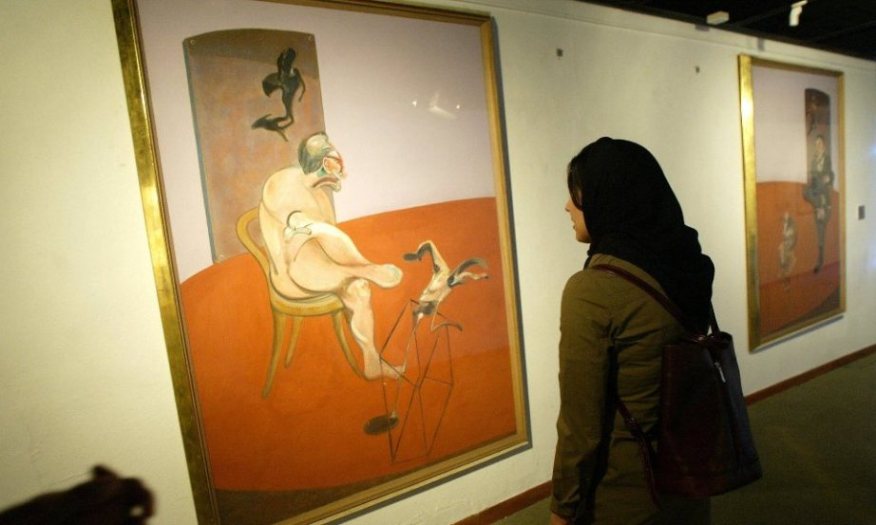
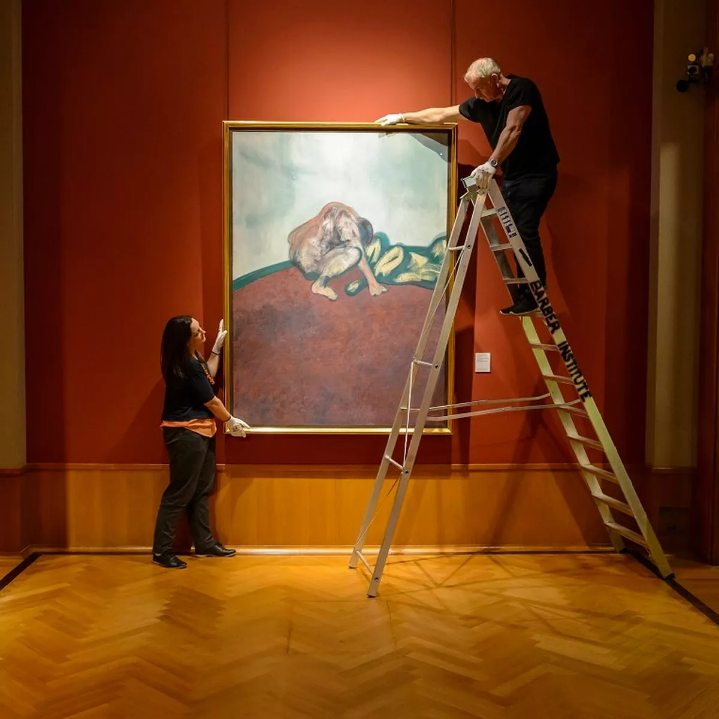
20 paintings of her by Bacon exist, and one startling example from 1966 is a
highlight of the new exhibition at the National
Portrait Gallery, Francis Bacon: Human Presence. It depicts
Moraes lying naked on a bed, her face so distorted she’s barely recognisable.
The
exhibition features portraits from across the artist’s career. Best known are
his pictures of lovers such as Peter Lacy (a former fighter pilot) and George
Dyer (a small-time crook), and of male friends such as Freud – in large part
because of the inherent erotic tension. However, his portraits of women still
have plenty to recommend them.
“I’d
go anywhere and do anything at any time,” said Moraes late in life, when asked
to explain her popularity in post-war Soho. She added that Bacon “exuded
incredible energy” back then. “If there is a force field around people, his was
10 times as strong. [He was] very funny and very generous.”
The
artist only began to paint Moraes several years after they met. His output in
the 1950s was dominated by pictures of screaming popes and unfortunate animals.
At the start of the following decade, he had a change of tack. One day in 1963,
at The French House, a pub in Soho, he told Moraes (now in her early thirties)
that he wanted to do some paintings of friends, and asked if she would like to
participate
Initially, she was hesitant, as participation would entail posing nude. However,
after a few drinks and reassurance from the artist (“You’re beautiful, darling,
and you always will be, you mustn’t worry about that”), she agreed.
Bacon never liked portrait subjects to sit for him in person, so he organised
for the photographer John Deakin to take a set of shots of Moraes naked on a
bed. The shots proved a little too explicit for Bacon, who demanded a second set
be taken. It was these photographs – along with Bacon’s memories of, and
feelings about, Moraes – that provided the basis for his paintings of her, the
last of which was completed in 1969. (In her autobiography, Henrietta,
Moraes wrote that she had caught Deakin trying to sell copies of the first set
of photos to some sailors in The French House. She bore him no ill will, though,
as “he bought me a drink ... with the proceeds”.)
The
reclining female nude has a long tradition in Western art history. Bacon
admired The
Rokeby Venus (1647-51) by Diego Velázquez, for example, a
painting in the National Gallery on which the canvas under consideration here –
1966’s Henrietta Moraes – was loosely modelled. Witness
the bent right arm, which in both pictures helps prop up the subject’s head.
Another reference point for Bacon was Jean-Auguste-Dominique Ingres’s Grande
Odalisque (1814). However, where the Frenchman’s subject was
a concubine in a plush harem, Moraes is seen in a decidedly unexotic,
contemporary setting: in an empty room, on a mattress without a sheet on it.
Moraes’s body – like the concubine’s – is in a serpentine shape, but in Bacon’s
vision of her she looks less like a voluptuous object of desire than a carcass
of meat. The viewer is confronted by a fleshy mass without much definition.
This
blurry flesh, like the distorted face, is typical of Bacon’s approach to
portraiture overall. Where portraits had historically been judged in terms of
the physical resemblance to the person depicted, 20th-century artists such as
Bacon and Picasso chose to represent subjects more radically, with faces often
looking little like faces and bodies little like bodies.
“In
painting a portrait,” Bacon said, “the sitter is someone of flesh and blood,
[but] what has to be caught is their emanation.”
Moraes was a single mother (of two children) and working as an account manager
in an advertising agency when she sat for Deakin’s photos. Her other jobs around
that time included being a coffee bar manager and a cat burglar (the latter
costing her three weeks on remand in Holloway Prison).
Moraes blamed her take-up of crime on her increasing dependency on drugs through
the 1960s – something reflected in two of Bacon’s paintings of her, Lying
Figure with Hypodermic Syringe and Version
No. 2 of Lying Figure with Hypodermic Syringe.
(Interestingly, these works suggest the use of heroin, purportedly one of the
few drugs available at that time that she didn’t take.)
Moraes was married three times by the age of 30 – to a documentary filmmaker
called Michael Law; to the actor Norman Bowler, who would go on to star in the
long-running BBC cop show Softly Softly: Task Force and
later as Frank Tate in Emmerdale; and to the poet Dom Moraes, whose surname she
adopted. All three marriages ended in divorce.
She
was also briefly a lover of Lucian Freud, who depicted her in a 1952 painting
called Girl in a Blanket. According to her
autobiography, the pair consummated their relationship in a Brewer Street
basement “on the edge of an unwieldy sink”.
Moraes died in 1999, aged 67, the second half of her life having been much less
wild than the first. She spent part of it as a gardener. Unsurprisingly, it’s
the early years for which she’s remembered today – a period when she lived life
to the full, free of inhibitions and heedless of social norms.
It
makes sense, then, that Bacon would have thought to capture her “emanation” on
canvas by representing her as a figure all but unidentifiable, a figure on the
verge of disintegration.
‘Francis Bacon: Human Presence’ is at the National Portrait Gallery from 10 Oct
2024 to 19 January 2025
Henrietta Moraes and her husband Dom on their wedding day in 1960
‘Emotion
is so important in his work’: National Portrait Gallery
charts a personal path through the career of Francis Bacon
With its first-ever Bacon show, the gallery plans to make ‘a
real splash with a major British artist’
FLORENCE HALLETT |
PREVIEW
|
EXHIBITIONS
|
THE ART NEWSPAPER
|
FRIDAY, 27 SEPTEMBER, 2024
The National Portrait Gallery’s (NPG) first Francis Bacon exhibition is
an overdue acknowledgement of one of the 20th century’s foremost figurative
artists. “[The show] has been on the cards for a while,” says the curator Rosie
Broadley, “but we wanted to reserve it until after the reopening of the gallery
[in 2023], and then make a real splash with a major British artist.”
Beginning with the anonymous, screaming heads painted in the 1940s,
Bacon’s radical reappraisal of portraiture in the post-war world has typically
placed the artist beyond the NPG’s remit, with the result that he is not
represented in the permanent collection.
“The people he paints are not the people who fit the Portrait Gallery’s
collecting criteria,” Broadley says. “George Dyer [Bacon’s lover in the 1960s],
for example, is not someone who has made a significant contribution to British
history or culture.”
With more than 50 paintings organised chronologically and thematically, Francis
Bacon: Human Presence charts the artist’s increasingly personal focus and
how his relationships with friends and lovers coincided with key developments in
his work. A section dedicated to Dyer will include one of the “black triptychs”
made after his death in 1971. “Something that sets Bacon apart from more
traditional portraitists is that he paints people after they had died,” Broadley
says. “He paints George in the throes of his suicide, but he does it in this
incredibly Old Master way, and elevates a sordid situation to the highest manner
of painting.”
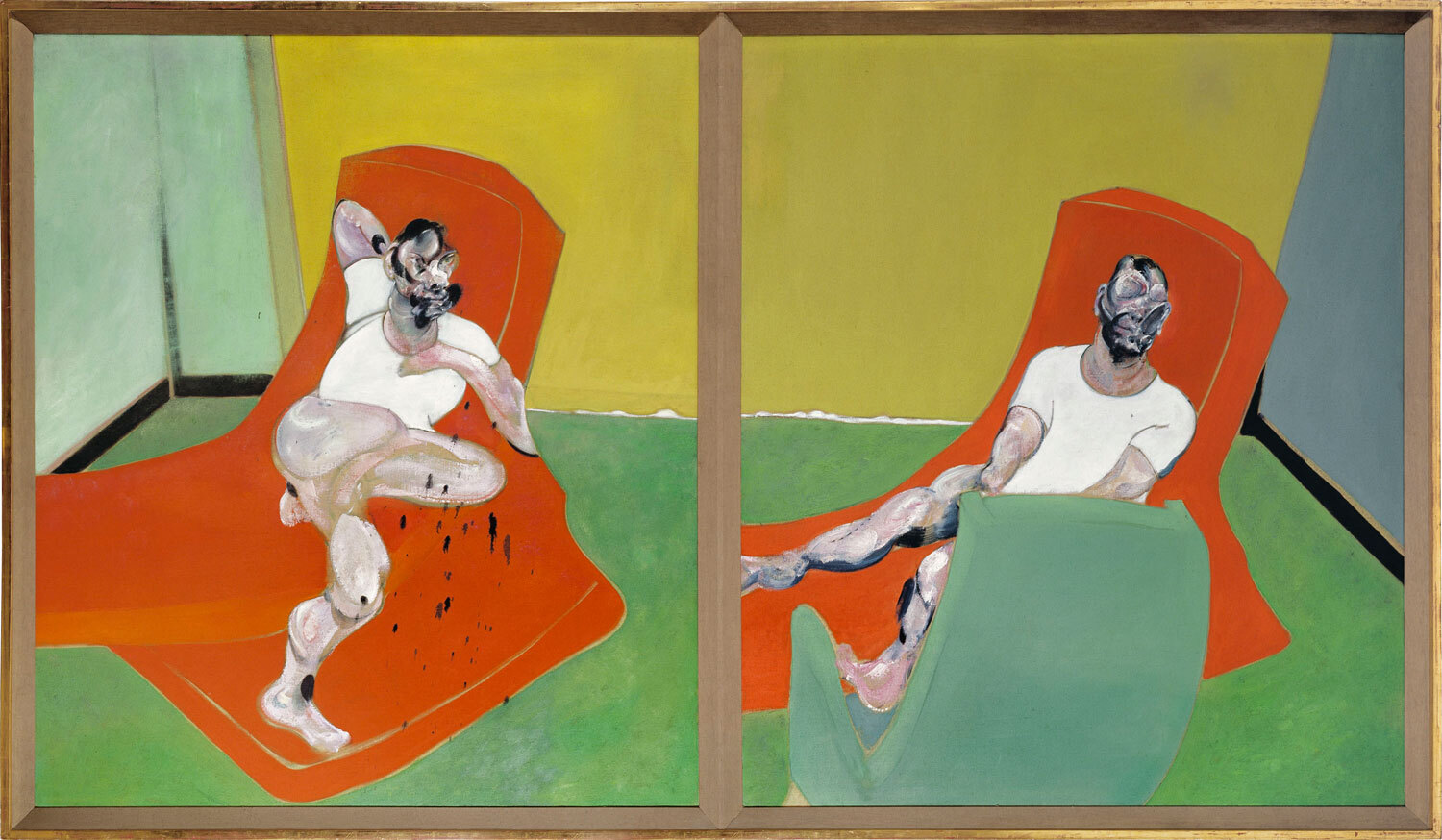
Bacon is best known for portraits of men, but the painter Isabel
Rawsthorne, another of his Soho coterie, emerges as a key sitter. Three
Studies of Isabel Rawsthorne (1967), on loan from the Nationalgalerie in
Berlin, “is one of his more complicated compositions”, Broadley says. “In it he
is thinking about reproduction, and revisiting versions of a person that he’s
made in a [previous] portrait.”
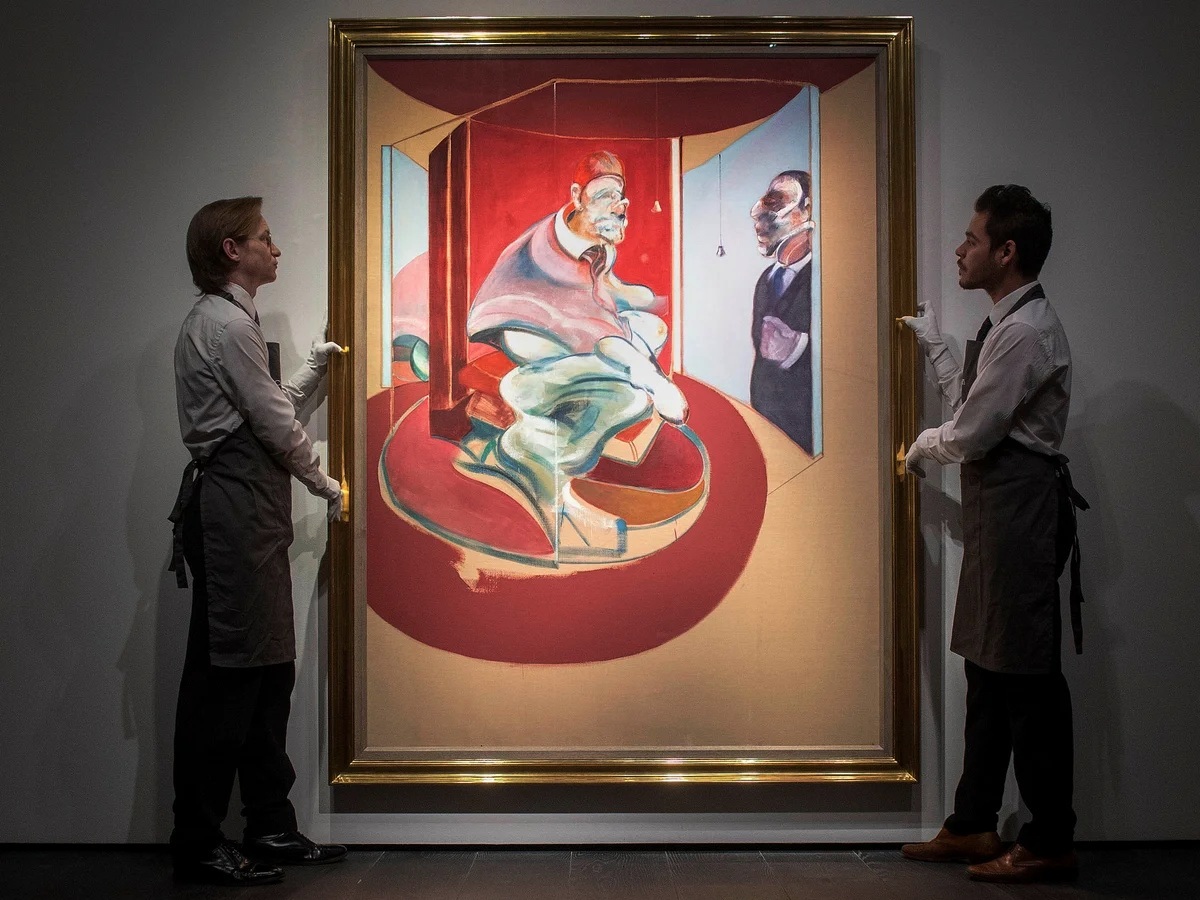
It was through reproductions that Bacon knew Velázquez’s Pope
Innocent X (1649) and Van Gogh’s The Painter on the Road to Tarascon (1888).
Key to his anti-illustration project, to capture “all the pulsations of a
person”, was Rembrandt’s Self Portrait with Beret (1659), which he
studied in person. It will be included, next to Bacon’s own work, highlighting
their shared interest in self-portraiture.
Bacon was himself a willing subject who loved having his photograph
taken, evidenced by the NPG’s Photography Collection, which includes portraits
of him by Cecil Beaton, Bill Brandt and Arnold Newman. “I hope this exhibition
returns a bit of warmth to the topic,” Broadley says. “Bacon was sensitive and
passionate and loving but also sometimes vicious and angry. Emotion is so
important in his work and sometimes in intellectualising it, it loses
something.”
If
Francis Bacon’s short-lived career as a designer in the early 1930s is not
widely understood, it is because he devoted immense energy to pretending it
never happened. The artist seems to have been acutely embarrassed by his
adventures in that world, possibly because (pace the
recent biography by Annalyn Swan and Mark Stevens) ‘there was a moment when his
design work was not an unpleasant chore but a chosen career’. He preferred to
let it be known that he spent his youth drifting ‘from bar to bar’, merely
dabbling in creative pursuits. An exhibition currently at the Espace de l’Art
Concret in Mouans-Sartoux, however, sets out to investigate the artist’s work as
a designer and trace his debt to contemporary trends in France. In terms of
presentation, it is less an art-historical survey than a showroom, resembling
the kind of ensemble a luxury design brand might stick in a Mortimer Street
window display. A lack of contextual information works at cross-purposes to a
visitor’s reasonable expectations: we have, after all, come to learn something
about a little-discussed chapter of a famous artist’s life. So what, if
anything, do we learn?
That
the ostensible subject of the exhibition is represented only sparsely cannot be
put down to curatorial negligence: for a start, Bacon didn’t actually make much
furniture, and went to great lengths to destroy whatever paintings he realised
before his late thirties. Indeed, what has been borrowed from Majid Boustany’s
foundation – a painting, a gouache, a molar-shaped stool, a mirrored, circular
table in tubular steel and a tapestry – represents an impressive haul. The
galleries are padded out with contemporaneous paintings by Picasso and Léger, as
well as furniture designed by the likes of Mallet-Stevens, Eileen Gray and even
Le Corbusier, exhibits that might provide some contextual heft if their
connections to Bacon were spelled out.
Bacon’s own exhibits are interesting, albeit as curios. Painting (1930)
is a decent bit of juvenilia, depicting a series of what look like painted
screens shooting up like vegetation from a desolate landscape. While it owes an
obvious debt to Picasso, it doesn’t feel as derivative as it might. The same
cannot be said of Gouache (1929), a shaky compilation of
every cliché in the Surrealist image bank. Still, you can’t help but find
yourself searching for (and sometimes identifying) hints of Bacon’s later style.
The
most exciting discovery here is the tapestry, a large wall-mounted rug
emblazoned with ‘African’-inspired cubist motifs. Bacon made a number of these
pieces, one of which appeared in a spread devoted to the young designer in the
August 1930 issue of The Studio. Several lifetimes of
cigarette smoke and wear have yellowed and faded the rug’s cream and dun colours
to the point that its patterns are barely discernible: the only element of the
composition that confirms it as Bacon’s handiwork is a string of brand-building
block capitals spelling out his name in the bottom left-hand corner. A facsimile
of the article in The Studio is as generous as the show gets in terms of
explanation. Probably written by the fashion editor Madge Garland, the piece is
dominated by photographs of the artist’s live-in work space, a converted garage
in South Kensington – Bacon’s centre of gravity for the rest of his life.
The
photos accompanying the article find a visual echo in a tiny reproduction of a
painting of the studio by Roy De Maistre, the older Australian artist who was
something of a mentor to Bacon. The original was one of two views De Maistre
painted of the space, both of which were exhibited there in October 1930: the
strange mise en abyme this would have created seems a
sophisticated touch, and a sign of quite how much thought went into the two
shows Bacon is known to have staged on the premises, presenting the work of De
Maistre and the artist Jean Shepeard alongside his own paintings, tapestries and
furniture. The spotless, empty room, glimpsed from an unusual perspective, seems
to presage some of the eerie interiors Bacon would go on to produce in the 1960s
and, at the painting’s extremities, De Maistre interrupts the rhythm of sharp
edges that otherwise dominate the composition by including two circular tables
of tubular steel, one topped with glass, the other’s surface obscured by an
abundant vase of flowers. An identical design is on display in the adjacent
gallery, its top pockmarked by gravy-hued rust that implies it probably wasn’t
passed down as an heirloom. You can’t help but wonder what kind of existence it
has led – too much to ask, perhaps, but it would still be interesting to know
where and how Boustany and his people found this object.
A
fourth and final gallery consists of a makeshift cinema screening a slideshow of
the artist’s paintings from the late 1940s to the mid 1970s. If you can get past
the selection of Bacon quotations interspersed with the images, it is
fascinating to see how elements of modernist furniture made their way into the
artist’s better-known compositions, acting as rigid, rational foils to the chaos
unfolding around them. That observation is not an original one, but seeing the
artist’s oeuvre through the prism of design here is great fun – and in one
instance quite eye-opening. This coup de grâce is delivered through a
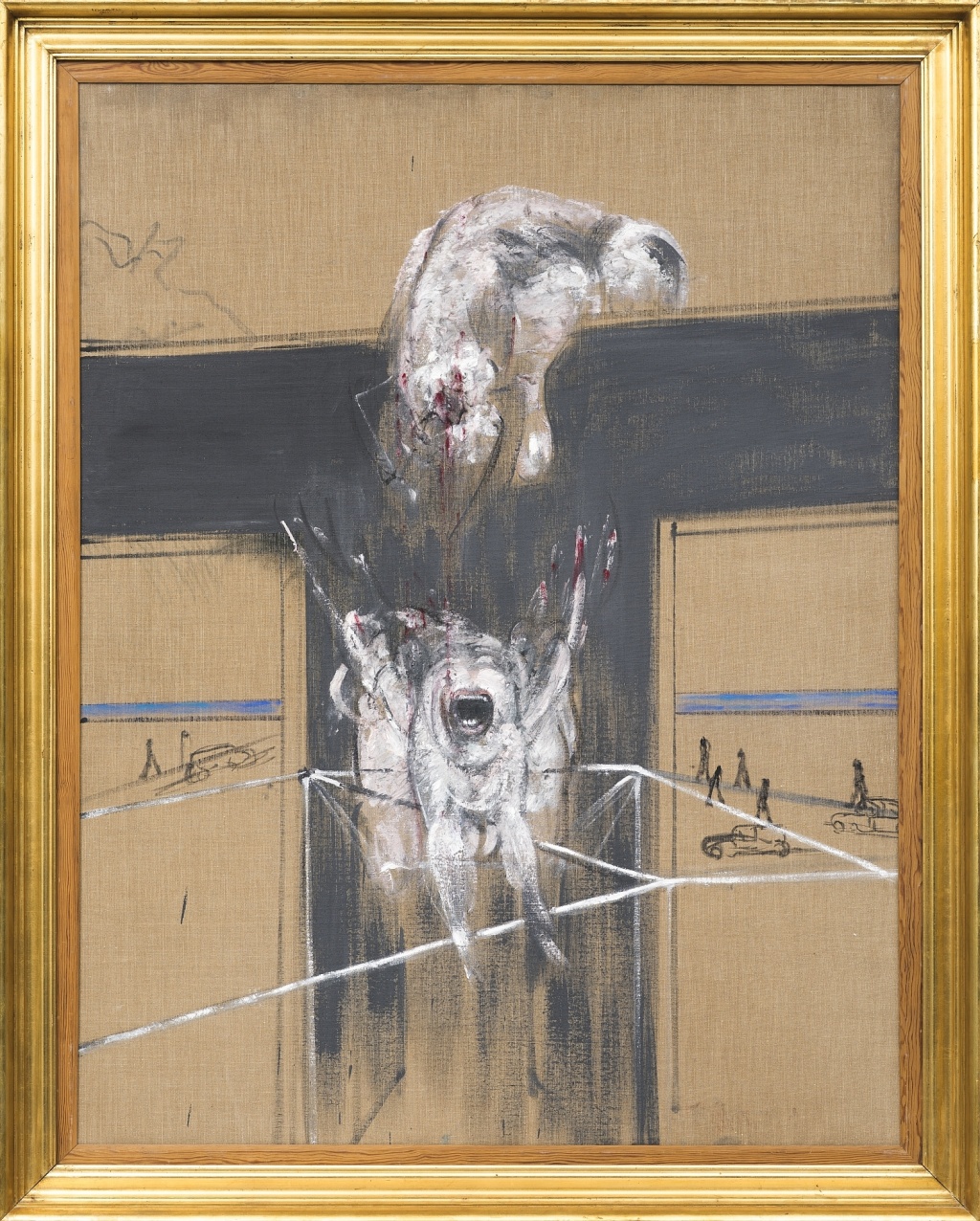
projection of one of Bacon’s best known works, Painting 1946. Amid the screaming
meat orifice and borderline camp (if still terrifying) drama for which we might
remember the piece, something weird is going on. Look down to the lower third of
the composition and the white rings seemingly imprisoning the tortured figure in
the middle distance suddenly take on a new identity: it becomes abundantly clear
that the painter has borrowed his own furniture to decorate the scene. What we
are looking at is nothing other than the distinctive form of that table a few
rooms back, altered with only a modicum of painterly licence. As for what this
says about the artist and his odd compulsion to erase his own past, we can only
speculate – one of many unanswered questions prompted by this frustrating but
not uninteresting show. Of one thing, however, we can be sure: Francis Bacon
would have hated it.
‘Francis Bacon and the Golden Age of Design’ is at the Espace de l’Art Concret,
Mouans-Sartoux, until 5 January 2025.
Francis Bacon in Paris in 1932. Photo: Diana Watson
Sotheby’s earnings plunge as art market catches a chill
ROBERT SMITH IN LONDON
| MARKETS
|
THE FINANCIAL TIMES
|
FRIDAY, AUGUST
30, 2024
Sotheby’s has reported an 88 per cent plunge in its core earnings and a 25 per
cent decline in auction sales, as a chill in the art market hits one of the
industry’s most famous brokers. The first-half figures at Sotheby’s main auction
business reveal the extent of the financial pressure the group came under before
it struck an investment deal with Abu Dhabi this month.
Weaker luxury spending in China is among the factors weighing on demand for fine
art and affecting both Sotheby’s and historic rival Christie’s. One of Sotheby’s
marquee auctions fell short of expectations in May, when the winning bid for a
Francis Bacon portrait of his lover George Dyer missed the low end of its
$30mn-$50mn estimate.
Abu
Dhabi-based sovereign wealth fund ADQ agreed to take a minority stake in the
auction house this month, through a $1bn capital raise funded with its present
owner Franco-Israeli billionaire Patrick Drahi, who has been looking to cut debt
across his business empire.
Ahead of the deal, Sotheby’s told lenders that its earnings before interest,
taxes, depreciation and amortisation (Ebitda) plunged 88 per cent to just
$18.1mn in the first half of 2024. Even after it stripped out further costs —
such as severance pay and legal settlements — from this earnings measure,
Sotheby’s adjusted Ebitda fell 60 per cent to $67.4mn.
It
also booked $558.5mn of revenue in the first six months of 2024, a 22 per cent
fall on the $712.3mn recorded in the same period last year, according to an
earnings report shared with its lenders. The results cover Sotheby’s main
auction business and do not include earnings generated under other arms of
parent company BidFair, such as its financial services division that makes loans
to art collectors.
Sotheby’s declined to comment.
One of Sotheby’s marquee auctions fell short of expectations in May, when the
winning bid for a
Francis Bacon portrait of his lover George Dyer missed the low end of its
$30mn-$50mn estimate
Francis Bacon and the Ephemeral:
Between Life and Death in Triptych,
May-June (1973)
Francis
Bacon had spent his entire personal and professional career haunted by the
ephemeral nature of life and the permanence of death. Both of which are
expressed in various forms in every one of his paintings – a black shadow, a
scene or memory contained within a room, the round-area or three dimensional
structure of which a figure may be confined to. They may also be seen in his
obsessive reluctance to ever complete a painting because completion was ending,
and ending, to Bacon, was death. This obsession escalated, a consequence of his
partner’s suicide in the bathroom of the Grand Palais in 1971. George Dyer’s
death transformed Bacon’s approach to painting into a fleeting reaction of
violence in the production of his triptych(s), paradoxically preserving the
image and memory in paint forever. It is the final work in the Black series, Triptych,
May-June (1973) which semi-sequentially presents the ephemeral and Bacon’s
anxiety concerning mortality most provocatively. It captures a modernism
reflective of Virginia Woolf’s To the Lighthouse (1927), which embodies
the ephemeral through language, form, and the creation of art as an antidote to
the fragility of life.
Beyond
the semantic ephemeral in modernist literature that made its way into Bacon’s
work, such as T.S. Eliot’s brothel and imitations of voyeurism in Sweeney
Agonistes (1932) in Triptych inspired by TS Eliot’s ‘Sweeney Agonistes’ (1967),
the modern art scene (including and extending into the postmodern Fluxus
movement of the 1960s) presented non-verbal iterations of the ephemeral at a
staggering rate, where the process of the artwork’s creation took precedence
over its finished forms.
Throughout his interviews with David Sylvester[1] and John Russell, Bacon
repeats the sentiment that his artwork is produced because of the effect memory,
literature, art, photography, and other influences have had on his nervous
system; not simply a product of an unconscious or intentional external factor
during the process of putting paint onto canvas. This ephemerality is evident in
the chaos and movement displayed in his paintings as he often described the time
painting in the studio to be an ‘assault’ on the canvas, an intense performance
of violence that translates into form and colour. For example, the right panel
in Triptych, May-June has a swipe of white paint extruding from Dyer’s back as
he leans, as if a tool or brush has struck the canvas with force. Sylvester
picks up on this feature in his comments regarding the use of chance to gain a
controlled appearance on and in the canvas as Bacon firmly agreed to keep in the
white mark; ‘chance’ in this instance seems to have only occurred once, as this
white mark does not appear elsewhere in the image. It is the one motif where the
canvas has been visibly struck with heavy motion, presumably as a consequence of
Bacon’s grief to exert such a powerful force though we cannot be sure.
Upon
encountering Bacon’s work, the spectator adheres to this individual ephemeral
experience as they/we react with their/our nervous system to Bacon. Despite this
constant, cyclical reaction to his work as long as we have access to it, the
singular fleeting anxiety, discomfort, and precariousness of the spectator’s
observation of the triptych is ephemeral, even if the display of the artwork in
a gallery is not.
Woolf’s To
the Lighthouse articulates an introspection of grief and the act of
immortalising a loved one in paint to mitigate against the inevitability and
omnipresence of death alongside the backdrop of a rapidly changing twentieth
century. After the death of her close friend, Lily Briscoe continues to preserve
her memory of Mrs Ramsey in her art in a desperate attempt to bring a sense of
permanence to her life in the midst of loss. Woolf invites the reader to not
only engage with the text as an object and an account of the ephemeral, as the
novel is situated temporally during times of radical change and a period of
summer in the Isle of Skye, but to experience character both intimately and
individually. To the Lighthouse captures a displacement of characters’
thoughts and distances from one another, where events correspond or clash
according to distinct individual experiences of time. The second part of the
novel, ‘Time Passes’, parenthetically denotes the absence of character using
brackets and paragraphs, with examples isolated from the text to make a clear
point of referencing time, in most instances expanding upon characters’ deaths:
Moreover,
softened and acquiescent, the spring with her bees humming and gnats dancing
threw her cloak about her, veiled her eyes, averted her head, and among passing
shadows and flights of small rain seemed to have taken upon her a knowledge of
the sorrows of mankind. [Prue Ramsay died that summer in some illness connected
with childbirth, which was indeed a tragedy, people said, everything, they said,
had promised so well.] And now in the heat of summer the wind sent its spies
about the house again. Flies wove a web in the sunny rooms; weeds that had grown
close to the glass in the night tapped methodically at the windowpane [2]
Woolf’s
sentences are short; passages and scenes are fleeting as she narrates
fragmentary imagistic observations in quick succession. This fleeting life
portrayed in language by Woolf in her characters and narrative has a resounding
similarity to the striking of paint upon a canvas. A brief temporality between
the absence and presence of a loved one may be observed in the placement of
panels in Bacon’s triptych: the stretching burgundy walls of the bathroom, the
dim light in the middle, and movement between and around the event of Dyer’s
actual suicide.
Just as
the harrowing memory of Dyer’s suicide bore a weight so heavy on Bacon’s nervous
system that he created Triptych, May-June, Lily Briscoe’s response to
grief and the mourning of Mrs Ramsay is also presented as a nervous system
response or impulse to remember Mrs. Ramsay. Woolf describes it as thus,
“laying down her brush in extreme fatigue, I have had my vision.”[3] This
fatigue, one shared by Bacon, leaves the reader and spectator to presume it is
brought on by the emotional turmoil of grieving a loved one [Mrs. Ramsay], and
the exertion of energy during the process of painting. The laying down of the
brush signifies an end, whether the painting is complete or not, to the time
spent exerting oneself during the creation of the image.
There is
a dichotomy between the permanence of death as a product showcased by the
impermanence of movement in the manufacturing of Triptych, May-June, and Lily’s
artwork in To the Lighthouse. It encapsulates a modernist paradox, and how Bacon
and Woolf immortalise the ephemeral both emotionally and physically. They denote
death as a constant communication across media, which is simultaneously a
universal experience that is nonetheless individually expressed and never
repeated or shared the same.
[1] David
Sylvester , Interviews with Francis Bacon, 3rd edn (London: Thames and
Hudson , 1993)
[2] Virginia Woolf, To the Lighthouse (London: Penguin Books ltd, 1998),
p.132
[3] Virginia Woolf, To the Lighthouse (London: Penguin Books ltd, 1998),
p.209
Zandra Rhodes: Francis Bacon was so
destructive
The
fashion designer on her conversations with George Harrison, her issue
with The Archers
and why she couldn’t finish Tess of the d’Urbervilles
ZANDRA RHODES
|
MY CULTURE FIX | CULTURE
| THE
TIMES
| THURSDAY, 18 JULY, 2024
The book
I’m reading. I’ve just reread The Visitors’ Book by Jon Lys Turner. It’s
about the relationship of a wonderful teacher I had called Dickie Chopping with
the guy he lived, Denis Wirth-Miller, and how Francis Bacon was the destructive
evil fairy among the whole thing. I knew Francis Bacon. You could see how he was
so destructive to these two friends. I could see how he was like a puppeteer who
manoeuvred people around him and obviously because his work brought him so much
money, it gave him unnecessary power.
“I
knew Francis Bacon. You could see how he was so destructive to these two friends.”
NATIONAL PORTRAIT GALLERY TO OPEN MAJOR
FRANCIS BACON PORTRAIT EXHIBITION.
BY MARK WESTALL | EXHIBITIONS |
PREVIEW
| FAD
MAGAZINE
| THURSDAY, 18 JULY, 2024
Charting Francis
Bacon’s career through more than 50 of the artist’s paintings, the exhibition
will explore Bacon’s engagement with portraiture from the late 1940s, with a
focus on self-portraits and images of key sitters made from the early 1950s
onwards; including lovers Peter Lacy, George Dyer and John Edwards; and friends
Isabel Rawsthorne, Henrietta Moraes, Lucian Freud and Muriel Belcher.
Bringing Bacon and his
sitters to life in an unparalleled way, paintings will be displayed alongside
rarely-seen photographs and portraits of Bacon from the Gallery’s Collection –
captured by leading twentieth-century photographers including Cecil Beaton,
Arnold Newman and Bill Brandt.
Francis Bacon has long
been considered one of the most outstanding painters of the twentieth-century.
Best known as a figurative artist, his work transforms the appearance of his
subjects through an extraordinary use of paint. Francis Bacon: Human Presence (10th
October 2024 – 19th January 2025) will be the National Portrait Gallery’s first
exhibition to focus on the work of this important artist, and will explore
Bacon’s deep and complex engagement with portraiture – from his responses to
portraits by earlier artists, to large-scale triptychs memorialising lost
lovers.
Featuring more than 50
works from private and public collections around the world, in addition to
photographs of the artist, Francis Bacon: Human Presence will be
organised thematically and chronologically, starting with works made in the late
1940s and closing with portraits painted at the end of his life, one of which
remained unfinished on an easel in his studio. Through five key phases – Portraits
Emerge, Beyond Appearance, Painting from the Masters, Self
Portraits, and Friends and Lovers – the exhibition will chart the
evolution of Bacon’s practice, exploring how he both embraced and challenged the
traditional definitions of portraiture.
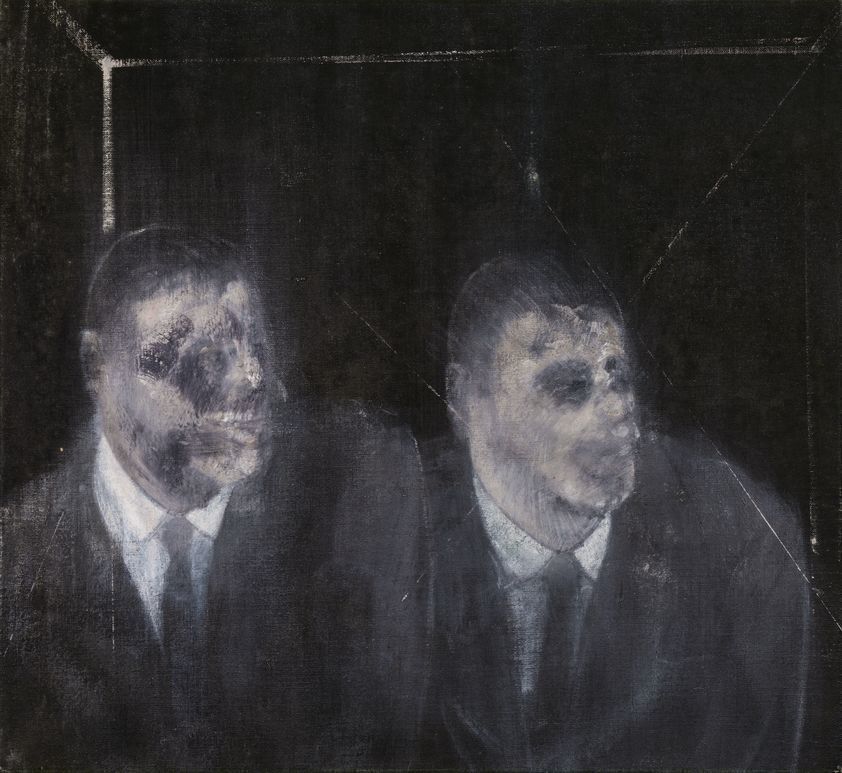
Bacon’s early
works feature disconcerting figures, screaming or pained, as the artist explored
how to depict humanity in a post-war world. The exhibition will begin by
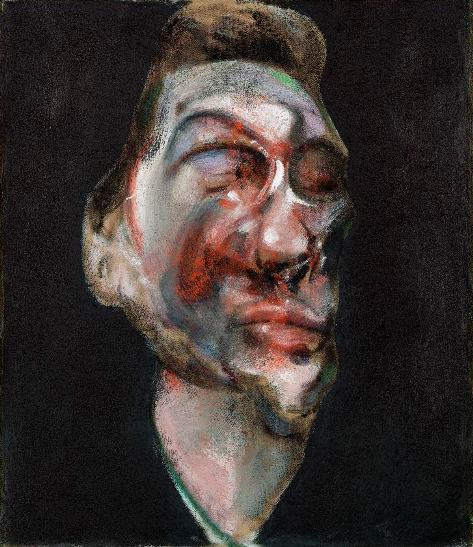
introducing viewers to a selection of these early paintings, includingHead
VI (1949) and Study of the Human Head (1953), works that depict
anonymous male subjects. Both bear all of the visual conventions of formal
portraiture. The sitters are presented in a traditional three-quarter-length
format against dark backgrounds. In the case of Head VI, the figure is
trapped within a transparent cage, while Study of the Human Head peers
through striations and appears X-rayed, disconcertingly revealing the sitter’s
skull and teeth. Bacon’s early work destabilised and the traditional
understanding of portraits of powerful and successful men.
While he never saw
Velázquez’s Pope Innocent X (1649/50) or Van Gogh’s The Painter on the
Road to Tarascon (1888) in person, these paintings became great sources of
inspiration to Bacon. From books and torn-out references that adorned his studio
floor, he reimagined elements of each painting throughout his career, paying
homage whilst challenging assumptions of what a portrait was and could be.
Bacon’s interest in Van Gogh saw him move away from the creation of dark,
monochromatic images, opting to introduce colour, which would characterise his
future work.
By
the mid 1950s, Bacon had moved away from painting screaming figures, but
continued to paint ambiguous and unsettling images. Choosing – for the first
time – to paint from life, he made portraits of his patrons, Robert and Lisa
Sainsbury, and his friend and fellow artist, Lucian Freud, displayed in a
section of the exhibition called Beyond Appearance.
However, Bacon did not overly enjoy the process of painting from life, which he
found to be inhibiting. While he valued qualities of immediacy in the
application of paint, Bacon began to frequently distance himself from his
subjects in the studio, choosing instead to paint from photographs and memory.
This approach allowed him the freedom to ‘distort’ and protect his sitters from
any perceived ‘injury’ that he knew he could inflict through his interpretation.
Gifted a model of an 1823 life-mask of the poet and artist William Blake, bought
from the National Portrait Gallery’s Shop, Bacon also painted a portrait based
on this historic object, which fascinated him.
Another ‘Master’ revered by Bacon was Rembrandt, who he admired for his
‘anti-illustrational’ painting style. Bacon studied the brushstrokes that made
Rembrandt’s Self-Portrait with Beret (1659) while
staying in France, and coveted several printed reproductions of the portrait in
his London-based studio. Displayed as part of the Painting from the Masters, the
National Portrait Gallery exhibition will provide an opportunity to see
Rembrandt’s Self-Portrait with Beret alongside Bacon’s
own work, presented as a key painting in his development as an artist.
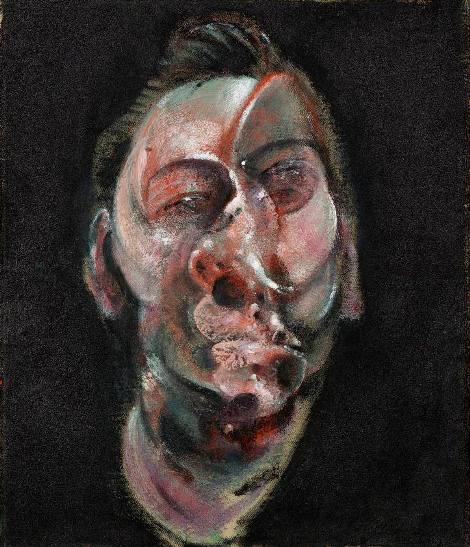
Like
Rembrandt, Bacon returned to self-portraiture throughout his career, painting
himself over 50 times during the decades of his life, from small single heads to
full-lengths and large triptychs. Other artists were also drawn to depict Bacon,
particularly photographers, for whom he sat throughout his career. The
exhibition includes photographic portraits and film of Bacon by some of the
century’s leading photographers, including Cecil Beaton, Arnold Newman, Bill
Brandt and Mayotte Magnus. Some of Bacon’s most poignant and introspective
self-portraits were undertaken shortly after the deaths of the people closest to
him. When his long-term partner Peter Lacy died in 1962, Bacon responded with a
small triptych of portraits that memorialised their relationship. A decade
later, Bacon lost his lover George Dyer, another potent presence in so many of
his paintings. Dyer’s death seems to have compelled Bacon to make a remarkable
group of self-portraits, including Self-Portrait, 1973
(1973), which – capturing his grief and isolation – became a way to reckon with
his own mortality.
As
Bacon’s work evolved in the 1960s, his portraits became more personal and
focused on a select coterie of sitters. At the heart of Francis
Bacon: Human Presence are the artist’s paintings of friends and
lovers, who inspired him throughout his life. Transcending likeness, Bacon’s
portraits represent some of his closest relationships – including his partner,
Peter Lacy; his lover, George Dyer; his partner in later life, John Edwards; his
friend, Henrietta Moraes; the founder of the Colony Club, Muriel Belcher; and
his friends and fellow artists, Lucian Freud and Isabel Rawsthorne. These
clusters of portraits allude to Bacon’s biography – his sociability and
tumultuous relationships – but also speak to his acute sensitivity to despair,
grief and pain. While Bacon chose not to paint his sitters from life, he
acknowledged that he could not paint them unless he knew them very well. These
paintings are perhaps his most intimate and personal, despite their distortion.
He preferred to work from photographs, sometimes torn and crumpled, which he had
commissioned from the former Vogue photographer, John
Deakin, some of which are included in this exhibition.
The
exhibition publication Francis Bacon: Human Presence, written by curator Rosie Broadley, will be available from October 2024, with essays by art historian,
Richard Calvocoressi; author and art historian, James Hall; art historian and
Francis Bacon specialist, Martin Harrison; curator at Tate Britain, Carol
Jacobi; archivist of The Estate of Francis Bacon, Sophie Pretorius; associate
professor of art history at the University of Birmingham, Dr Gregory Salter;
contemporary curator at the National Portrait Gallery, Tanya Bentley; assistant
curator of photography at the National Portrait Gallery, Georgia Atienza; and
filmmaker and director, John Maybury, whose Love Is the Devil: Study
for a Portrait of Francis Bacon starred Sir Derek Jacobi, Daniel
Craig, and Tilda Swinton.
The
exhibition publication, Francis Bacon: Human Presence
available to purchase in both Hardback (£40) and Paperback (£29.95), with the
Paperback exclusively available via the National Portrait Gallery’s Shop. Both
publications can be pre-ordered.
Bacon studied the brushstrokes that made Rembrandt’s Self-Portrait with
Beret (1659) while staying in France.
It’s
late 1958, and Chicago gallerist Richard Feigen is preparing an exhibition of
paintings by Francis Bacon. It’s just the second exhibition of Bacon’s work ever
mounted in the United States, but that’s not why Feigen is nervous.
“[Bacon’s London dealer] phoned and said Bacon wanted to attend the opening… but
that I should be a bit wary lest he use a little knife he carried around to
slash any earlier paintings he felt like disowning.”
To
Feigen’s relief, this mad, bad Bacon never appeared in Chicago. He’s similarly
absent from “Francis Bacon: A Self-Portrait in Words,” a new collection of
Bacon’s words, gathered and introduced by art critic and long-time friend
Michael Peppiatt. It’s a calmer, more polite Bacon we get instead.
The
book has four parts. “Statements” presents a range of comments Bacon made about
his art and artistic aims, drawn from interviews, exhibition catalogs, working
notes and conversations with friends, some previously published, others shared
for the first time. Likewise the second chapter, “Letters,” which includes
correspondence from familiar published sources and others from archives or
private collections. The third section, “Studio Notes,” presents the content of
notes, found in Bacon’s studio, about current and planned works of art. The
final section, “Selected Interviews,” gathers conversations from Bacon’s early
years, before the famous interviews with David Sylvester, as well as a late-life
chat with William Burroughs. Peppiatt provides thoughtful commentary throughout
and the footnotes provide important detail and context. The preface by Colm
Tóibín, by contrast, is quite cursory and a bit disappointing given the
insightful writing he’s done on Bacon elsewhere.
The
best approach is to begin at the end, with the interviews. Bacon’s verbal
wit—and what Stephen Spender called his “idiosyncratic critical
vocabulary”—appear more often when Bacon is talking, not writing. Some of the
humor comes from simple directness:
HMD:
Are you curious as to what happens when you die?
FB: I know I’m just dead. I know I just become a skeleton. I just go back to the
earth.
HMD: But nobody knows. Nobody knows what happens.
FB: Of course we do. We all know. That’s all there is. We become once again the
compost of the earth. That’s all there is.
The
letters seldom delight and become tedious over time, brief as they are. As
Peppiatt says, “He often uses letters to communicate in a calmer manner and to
make up for his earlier behavior.” There are moments of levity, however, for
example when a paean to his sumptuous new apartment is followed by a request to
borrow £30. And it’s wonderful to catch sight of a now-famous work just being
born:
“I
am working on three studies of [a] Velasquez portrait of Innocent II. I have
almost finished one. I find them exciting to do and of course always hoping this
time it is going to be the real thing,”
It’s
also great to see color illustrations of the works being cited, reproductions of
letters with Bacon’s handwriting and photos of Bacon from all periods of his
life.
David Sylvester’s “Interviews with Francis Bacon” (1975) and the biography
“Francis Bacon: Revelations” by Mark Stevens and Annalyn Swan (2020) remain the
essential starting points for understanding Francis Bacon’s life and art. But
Peppiatt’s intimacy with Bacon and his world, his industry in assembling
material and his deeply informed commentary make all his books, including this
collection, uniquely interesting.
“Francis Bacon: A Self-Portrait in Words” By Michael Peppiatt, with a forward by
Colm Tóibín Thames & Hudson, 480 pages
Francis Bacon’s Nanny: A peek into the
darkness of the artist’s childhood
Maylis Besserie’s novel lays bare the cruelty of Bacon’s father as seen
through
the eyes of the family’s domestic servant Jessie Lightfoot
BY MICHAEL CRONIN | BOOKS | REVIEW
| THE
IRISH TIMES
| SATURDAY, JULY 13, 2024
Jessie Lightfoot got more than she bargained for in Ireland. A farmer’s daughter
from Cornwall, she was hired as a domestic servant and nanny by the Bacon family
in Co Kildare in the years leading up to the first World War.
Not
only has she to contend with a country that is becoming increasingly hostile to
the staunchly, pro-unionist Bacons but she also has to navigate her charges
through the unpredictable and explosive violence of “Eddy” Bacon, the brutal and
coercive father. His son, Francis, who was born on Dublin’s Baggot Street, and
who would go on to be one of the most influential painters of the second half of
the 20th century, is the particular object of the father’s uncontrollable rage.
The descriptions of the punishments meted out by this unhinged ogre on a
defenceless child are unfailingly harrowing.
Maylis Besserie has chosen the character of the nanny to tell the story of
Francis Bacon. Lightfoot accompanied Bacon throughout his childhood and early
career, first as nanny, then as helpmate, until her death in 1951. If Besserie’s
previous two Irish-related novels – Yell, Sam, If You Still Can (2022) and
Scattered Love (2023), dealing with Samuel Beckett and WB Yeats respectively –
have focused primarily on endings, the last years of the writers’ lives, this
third novel in the trilogy is especially haunted by beginnings.
The
pain, agonising distortions, twisted discomforts on the canvases are not wholly
explained by, but pick up on, the finely calibrated cruelty of the artist’s
childhood. At the age of 16, Bacon would leave Ireland never to return. In the
novel, his nanny observes: “No pilgrimage to the places of his childhood – why
should he, anyway? – when his childhood is always with him, never leaves him.”
Lightfoot, who prefers to sleep on the kitchen table during the day, in Bacon’s
residence in 7 Cromwell Place, is also, on occasion, light-fingered, not above
shoplifting and running gambling dens, when finances in the Bacon household are
not what they might have been. The partying, the drinking, the doomed loves, the
professional disappointments, the startling intuitions – all are all refracted
through the wry commentary of the nanny, who despises fame while acknowledging
greatness.
Francis Bacon’s Nanny is an impressive endpoint to
Besserie’s sustained engagement over three novels with the imaginative
turbulence of Irish artistic achievement.
Prof
Michael Cronin, a contributor to The Irish Times, is
director of Trinity College Dublin's centre for literary and cultural
translation.
Francis Bacon’s Nanny Author: Maylis Besserie, Translated
by Clíona Ní Ríordáin ISBN-13:978-1843518884 Publisher: Lilliput Press Guideline
Price: €15.95
Francis Bacon’s vile bodies
The
fusion of violence and pleasure defined the painter’s life and work.
BY JOHN BANVILLE | BOOK OF
THE DAY |
BOOKS |
CULTURE
| THE NEW
STATESMAN
| 1 JULY, 2024
Is Francis
Bacon the most overrated painter of the 20th century? No, surely that dubious
accolade must go to Lucian Freud, the artistic Tweedledum to Bacon’s Tweedledee.
To say that an artist is overrated is not to say that his or her work is
uniformly bad, that he or she is lacking in talent, or is a fraud. Indeed, even
a first-rate painter can be overrated, as is the case with Pablo Picasso, whose
reputation is so elevated that it might seem he never made an unwise artistic
decision or painted a duff picture.
In his brief
foreword to Francis Bacon: A Self-Portrait in Words, Colm Tóibín writes
that Bacon’s letters “add to our sense of his mystery, his complexity”. It is
hard to see the evidence for this assertion – well-intentioned though it surely
is – in the couple of hundred dashed-off missives, scribbled postcards and
scraps of notes that make up the bulk of this curious ragbag of a book.
The meagre haul
of correspondence represents all that the editor, Michael Peppiatt, a long-term
friend of Bacon’s, has been able to disinter from the midden of material that
the painter left behind. A living, or still-life, example can be viewed at the
Hugh Lane Gallery in Dublin, to which Bacon’s gloriously chaotic London studio
was transferred, complete to the last daub of paint and squashed cigarette end,
in 1998.
The letters do,
Peppiatt writes, “fill in all sorts of blanks in our awareness of the artist,
however much he aimed at keeping to the bare bones of a message”. Here, Peppiatt
is making the best of a sad and, for an editor, embarrassing situation. “It is
surprising,” he writes dolefully, “that so few letters to his closest friends
have come to light. Where we might have expected caches of correspondence to
Isabel Rawsthorne and Lucian Freud, we have found only a handful of hastily
scrawled notes,” which are dutifully included here, to the point of absurdity.
Consider this – what to call it? – communication with Sonia Orwell:
[no address]
[undated]
Sonia
With love & best wishes,
Francis
A
rich source of insight into Bacon’s personality, Peppiatt laments, “might have
been the letters Bacon sent to his lovers, filled with revelations from the
heart… But virtually none have been found.” The one scrap of such material we
are offered is a note to John Edwards, Bacon’s companion in his later years,
apologising for “my outburst the other day”, due to the fact of Bacon’s having
been drunk – as so often. These pages are awash in alcohol. A number of the
interviews Peppiatt collects descend into hilarious confusion when, after yet
another bottle of wine has been broached, the artist, and sometimes the
interviewer as well, becomes as incoherent as a newt.
Bacon was a late Edwardian, born in 1909. It is something of a shock to be
reminded of this fact, since he seems so much our contemporary, in the flash and
shallowness of his public persona as much as in the violent disruptiveness of
his artistic style. He loved being rich and famous, and even when he was poor
and as-yet-unknown, he still managed to cut a dash.
He
had been a sickly child, suffering from debilitating asthma attacks. Mark
Stevens and Annalyn Swan describe these early afflictions in Revelations,
their superb 2021 biography of the painter: “The house smelled of Potter’s
Asthma Cure from the smoke of medicinal candles burning in the sickroom. Francis
wheezed among the eiderdown pillows, his breath sometimes keening into an eerie
whistle.”
His
Anglo-Irish parents, who had settled in Ireland only in the early 1900s, were
proud of their aristocratic connections, however tenuous. Bacon père could
and did claim descent from the original Francis Bacon, the Elizabethan statesman
and philosopher, although there is a question as to how direct the line was. His
namesake derived mischievous satisfaction from throwing doubt on the matter. As
he pointed out, in one of the more bibulous interviews reproduced here,
“whatever ‘queer’ means, [Sir Francis Bacon] preferred men to women. There you
are. He had no children, so I would be, if I was related to him, I would be a
‘collateral descendant’.”
Our
Francis Bacon turned himself into an aristocrat of the spirit, moving happily up
and down the scales of the fashionably louche underworlds of London, Paris and
Tangiers, where the rough trade was often very rough indeed – to an interviewer
he remarked lightly that he had lost all his teeth to his “friends”. Here, he
was as likely to be found booing Princess Margaret at a party at the Rothermeres’
as rubbing shoulders, and perhaps more than shoulders, with the Kray twins and
other notorious thugs popular with the gratin. Yet in a way, even as one of the
most famous artists in the world, Bacon continued to be the boy gasping on a
bed, which in time would become, as he wrote in a studio note to himself in
1962, the “bed of crime”.
The
most affecting, and distressingly affected, documents in this book are the many
letters he wrote to Michel Leiris, the French intellectual and writer who
befriended him in Paris in the 1970s and who was a staunch champion of his work
for nearly two decades. As Peppiatt writes, “As an original surrealist from
pre-war Paris, [Leiris] conferred continental and high-modernist prestige on the
predominantly postwar British painter.”
Bacon was an acclaimed artist in his sixties when he first came to know Leiris,
yet the reverential, almost fawning tone of these letters is hard to stomach.
Was he using him shamelessly to bolster his international reputation?
Admittedly, Bacon was writing in French, a language in which he was not entirely
fluent, but in any language they would be excessive. Here is an example from
1971, probably referring to an introduction Leiris had contributed to the
catalogue for an exhibition at the Grand Palais in Paris that year:
“It’s only now in rereading what you wrote for the catalogue have I truly
realised what a marvellous text you wrote and you are the only one to have
understood and been able to put into words all the kind of things that I have
tried to do – I don’t know how to thank you for everything that you have done
for me.”
If
one were to be charitable, one might see nothing here but the joy of an artist
who has found at last a person who not only admires his work but can interpret
it for the public, or at least for that intellectually fashion-conscious section
of society whose approval can make an artistic reputation overnight.
As
to what he has “tried to do”, Bacon, despite repeated claims to be incapable of
understanding or explaining his painterly processes and aims, was, from the
start, specific in defining what he considered to be the ends of art, his own
art in particular. First and foremost, as he said in a 1952 interview
with Time magazine, there is “the struggle with the object… Art lies in the
continual struggle to come near to the sensory side of objects.”
This
leads, over and over, to a defence of figurative art, carried out mainly by way
of dismissive attacks on abstraction. In a conversation with Peppiatt, published
in 1964, he set out in brief what can be considered his aesthetic: “Abstract art
is free fancy about nothing… One needs the specific image to unlock
the deeper sensations, and the mystery of accident and intuition to create the
particular.” (Italics added.) Yet the particular, “the object”,
will have to be subjected to extremes of manipulation in order to distil from it
the pure, shining drop which is its essence. “You must distort, if you can, what
is called appearance into image,” that image “which unlocks the valves of
sensation”.
For
Bacon, the object is always the body – the flesh in the throes of pain and of
pleasure and of both combined. Many commentators have seen in Bacon’s work an
apocalyptic vision of a world in unremitting torment, his figures tearing and
gouging at each other in a stylised riot of violence and vengefulness. John
Berger, quoted in Stevens and Swan’s biography, had no doubts: “The pitiless
world Bacon conjured up and tried to exorcise has turned out to be prophetic. It
can happen that the personal drama of an artist reflects within half a century
the crisis of an entire civilisation.”
Yet
there are other ways of seeing Bacon’s pictures. One way is to regard them as
straightforward though powerfully distorted depictions of, and celebrations of,
male homosexual congress, in its more masochistic extremes of lavish suffering,
pleasure and fulfilment. Bacon was a masochist, and by his own account,
frequently repeated, he enjoyed being beaten by his lovers and casual male
pick-ups. Even his portraits of women seem to catch his subjects in the instant
after they have been delivered a sweeping, disfiguring blow to the torso or the
face.
Of
course, people are free to misinterpret works of art or read into them all sorts
of portentous effects unintended by the artist, but sometimes, as Sigmund Freud
remarked, “a cigar is just a cigar”. Bacon was dismissive of his series of popes
enthroned in their glass cages, most of them screaming but some laughing – and
it may be that the screams are of hilarity – grotesque variations on Velázquez’s
portrait of Pope Innocent X. There are moments when, looking at these and other
richly inventive works of Bacon, one finds oneself wondering with a twinge of
unease what exactly the joke is and at whom such savage laughter is being
directed.
Francis Bacon: A Self-Portrait in WordsMichael
Peppiatt, Thames & Hudson, 480pp, £40
Francis Bacon photographed by Michael Ward
Francis
Bacon, a multi-medium artist
GEORGES-OLIVIER KALIFA |
ART & CULTURE |
LA GAZETTE
| FRANCE
| JUNE 29, 2024
Francis Bacon’s paintings are
world-famous, but his prints and etchings are less well known. Probably because
the artist himself claimed not to be interested in them. Yet they are a
fundamental part of his overall oeuvre, revealing a career path that the Francis
Bacon MB Art Foundation wanted to highlight with a new, original exhibition.
“The
exhibition examines the tools and processes used to produce Bacon’s prints,
while shedding light on the circumstances of their creation. It also aims to
explore, through a selection of prints, the recurring themes that fed the
painter’s imagination,” comments Elsa Boustany, curator of the exhibition. The
author of 584 paintings, the British artist also produced around thirty prints,
comprising 21 lithographs and nine etchings, three of which were posthumous. And
it is precisely these graphic works that are the focus of this new exhibition.
Though small in number, these prints
are no less essential to an understanding of Francis Bacon’s entire career, and
their very existence reflects the artist’s very being: “Francis Bacon's attitude
to printmaking is characterised by a notable ambivalence. Although he claimed to
have no interest in the medium, he nevertheless ended up agreeing to the
reproduction of some of his works and even went so far as to involve himself in
the process of creating these prints,” points out Elsa Boustany.
An elaborate creative process
In the first part of the
exhibition, the metal plates used to create some of the prints are displayed
alongside the images to which they gave rise. The intelligence of the
scenography underlines the importance of another aspect of the artist’s work:
her strong attraction to the repetition of images, which manifests itself in her
engravings through the principle of reproduction.
The same repetition can be seen
in the paintings of Francis Bacon, whose career has been marked by numerous
triptychs. These bridges between the different mediums provide an insight into
the artist's world and creative process.
An abiding interest in the
human condition
Through a selection of
prints, “the exhibition explores certain themes dear to the British painter.
Whether it’s bullfighting, the human figure, Greek mythology or religious
subjects, Bacon's favourite themes share a common characteristic: a constant
interest in the human condition. The presentation of these graphic works is
therefore an opportunity to study in depth the narratives that stem from these
themes,” say the Foundation’s directors.
A whole universe
As usual, the Francis Bacon MB
Art Foundation’s exhibitions are not confined to displaying works on the wall,
but venture into every nook and cranny of the artist’s universe. Photographs and
working documents from Bacon’s studio, as well as magazines and folios, are also
on display to give a clearer idea of the artist's unique approach to
printmaking. All the works on show come from the MB Art Collection, Majid
Boustany’s collection, which remains the only one of its kind in the world.
Georges-Olivier KALIFA
Francis Bacon’s Nanny by Maylis Besserie
We present an extract from Francis Bacon’s Nanny by Maylis Besserie,
translated by Clíona Ní Ríordáín and published by The Lilliput Press.
At
the very centre of the life of one of the twentieth-century's greatest artists
was the most unexpected of life-long influences. The aptly named Jessie
Lightfoot shielded the young Francis Bacon from the brutish violence of his
bullying father, as well as from his worst self-immolating excesses later in
life. The tenderness, wit and warmth of this inimitable Nanny stands in
illuminating relief to the sulphurous palette that defined Bacon’s work.
In
the final of author Maylis Besserie's Irish-French trilogy, her preoccupation
with the art and lives of artists who crossed borders between France and Ireland
has a fitting climax as Bacon confronts the boundaries between the real and the
imagined.
NANNY
I
seem to be there still, feeling the rain lashing down on my cape, water seeping
into my bones as I walk through the door of Cannycourt House, introducing myself
like a drowned rat to Mr and Mrs Bacon – 'Jessie Lightfoot, I’ve come for the
job as a nanny …’ No sooner had I finished greeting them than my boots, which
were full of holes, began to spew out all the Irish mud I had picked up on the
paths, soiling the carpet in the great hall at Cannycourt House. I can tell you
that I felt ‘as guilty as that cat who just ate the canary’, as my mother used
to say! Ah, I can assure you that I didn’t dawdle, I took my leave and scuttled
off towards the children’s quarters, and the servants who showed me the way
followed me like shadows, mopping away my errors. Talk about making an entrance,
having to slink away, slithering like a snail all the way down until I reached
the corridor when I could finally take off my bloody boots. And then who did I
see coming towards me? Two little fellows, as tiny and handsome as could be: one
standing up, the other on the floor, Harley trotting along with his head down
like a dammed soul while my baby Francis crawled at his feet, polishing the
floor with his saliva, wiping it with his belly. A beautiful baby, he is, I
can’t believe it – lamb’s eyes, face as round as an apple. And such cheeks. But
mind you, he’s quite something, he never looks down. When he holds out his arms
to me and says, ‘Carry Nanny,’ he knows what he wants, I’m telling you, and you
can’t expect him to give up. He’s right there up against my leg, patiently
waiting for me to give in. And he gets his way, I give in, of course I do. I
carry him. Sometimes I even carry him around for hours. He’s so cute, my little
one, and so sensitive. If it makes him feel better, I carry him – why wouldn’t
I? He’s calm with me and very affectionate; he hides his face in my neck, rests
his head on my shoulder. You should see what life is like here: the children
have no right to anything, they’re herded like animals upstairs, and even then,
to the back of the house. They hardly recognize their own parents when they see
them at teatime or at Sunday lunch. The parents call them down to give a toothy
smile for their guests, shake their hands as if they’re strangers and give them
back to me just as quick, as if they had the plague. Ah, with these people there
are no displays of emotion, you can rest easy. When I think of Mr Bacon’s
affection for his dogs, the petting he gives them.
To
come back to the story about the boots, I was furious, you see, I was forced to
borrow boots from the stables until the following day. And those grooms, I don’t
like them at all, oh no. They’re brutes and smart alecs. Always snotting their
sleeves or squatting behind bushes. And when you rub their noses in it, they
dare to say it’s the dogs. Well, they wouldn’t dare pull that one with me. I was
brought up in England, in Cornwall, in the hamlet of Burlawn, and I’m not going
to learn manners from the Irish. In fact, I found it hard to get used to Ireland
at first – the change of air and all that – but the wages on offer were more
than fair, there was no question of being picky. I said to myself, they want a
nanny, I’ll be the nanny, why wouldn’t I be? As long as they don’t expect me to
be a wet nurse – I’m still a maiden! – everything will be fine.
I
haven’t told you about Cannycourt House. Lord, it’s grand and smart, and such a
luxurious house! Eighteen rooms, plus the outbuildings. Ah, what a change of
scene for me. Yet when I arrived in 1911, I’d already been a maid in London for
twenty years, and yes, Miss Lightfoot was no longer a spring chicken. You can
imagine, I was almost the same age as Mr Bacon – ‘the Captain’, as we call him –
well, retired Captain, now his hobbies are hunting and racehorses. Some Captain
he is, a bloody puritan, more like, who laughs when he burns himself! He forbids
everything in his house, no alcohol, no this or that. But it doesn’t stop him
from being as mad as a Christian, a real beast, always ranting, spitting his
complaints, spitting his venom at his sons and at the whole world. It’s like
hell coming out of that mouth, out of those entrails. Rotten from the inside
out. And yet the devil looks good, swan-like in his elegance, always with his
tie around his collar, and strong as an oak with it. A great swindler when you
get to know him. This man has every fault in the world. He’s got a temper, he’s
a brawler and he bets his money at the races on top of everything else. When
he’s not gambling. Well, when I say his money, I should say Madame’s dowry, mind
you, that’s why he married her, the bugger. He sucks her dry, even puts her into
debt. Ah, what a wonderful marriage, when you see Madame, who is so young, with
that sinister old fox, what a waste. It’s easy to understand why her cousin
didn’t want him. You have to have strong nerves to put up with that animal. He’s
a real despot, everyone stands to attention in front of him, as stiff as
soldiers, waiting for the orders to be issued, for things to snap if they don’t
respect his commands and the strict timetables he imposes. A hurricane, a storm.
Always bellowing or biting, bitter (that’s putting it mildly) and bad. Bad.
Nobody does anything good, anything worthwhile. They’re all a bunch of losers,
with the exception of His Honour the Captain and His Honour the horse trainer.
None of his comrades, even those from the racecourse, last long; he always ends
up arguing with them or they leave, worn to the bone. He becomes all the angrier
for it. Angry with them, with everyone, with God and his creatures. When he
feels like it, when he bumps into a chair and hurts his toe, when he finds his
boots badly polished, the blood goes to his head above his moustache and then
nothing stops him, except his own tiredness when the sack of malice is emptied
and his victim lies inert. And Madame is regally calm and unflappable. As long
as the house is ‘im-ma-culate’ and he lets her entertain all her friends in
their beautiful dresses and cloche hats, she couldn’t care less. How do you
expect her to deal with an animal like that anyway? You’ll say to me, with what
I’m telling you, that his ears must be burning pretty badly right now, don’t you
think? Ah, I say good enough for him, he earned it all.
You
know, when I took up my job at Cannycourt House, I had no idea where I was
going, what was happening in Ireland. You see, I was far more interested in
George V ascending the throne than I was in their squabbling or in their potato
stories. Of course, in London, I’d been told the story of the dimwit who’d blown
himself up trying to blow up Westminster Bridge, and we’d had a good laugh about
it, but that was all. Nor did I know anything about the English in Ireland who
had settled in County Kildare, or on large estates where they bred their
racehorses. When I arrived, I can still see the wife saying to me: ‘Miss
Lightfoot, we are the enemy here.’ Oh, yes – Protestants, and English ones at
that. The worst category of all. Houses looted, burnt down, including the
stables with the horses in them. Everything up in smoke. And do you think the
Sinn Féin boys mind? A trip to confession the following Sunday and it doesn’t
seem to bother them any more. Ah, their God is accommodating. He doesn’t look
too closely at the pedigree of his flock. At Cannycourt House, we’re like deer
on the opening day of a hunt, we can’t cross a room without glancing from side
to side. Her ladyship keeps saying to me: ‘Miss Lightfoot, never turn your back
on the windows and, for pity’s sake, keep the curtains drawn.’ Talk about living
in a castle. We live like sheep next to a slaughterhouse. Madame is even
convinced that one of the servants in the house (Mr Moody, not to name any
names) is a freedom fighter disguised as a butler and that it is down to him
that we owe our survival (more precisely, down to his love for the women of the
house). You can understand what it’s all about. In other words, you have to
watch out for the neighbours.
When
you leave the estate, it’s the same story: you can’t talk to anyone, so to
speak, and you must be careful not to attract attention or to give out any
compromising information. The Captain terrorizes the children with this,
constantly talking about the rebels and saying to them, ‘If they come tonight,
don’t tell them anything.’ As if the children were a threat, as if they were
going to give him up, to make him pay for his wickedness, this torturer of a
father. He adores making them cry. Nothing makes him happier than Francis’s
tears and his laboured breathing in bed. When Francis is in a bog of sweat,
choked with asthma and coughing uncontrollably, as white as a sheet, his father
calls him a wimp. In truth, it’s his horses he’s worried about. His
thoroughbreds. Ah, they count more than anything else, he wouldn’t risk having
them whipped by those bloody grooms like his sons. That would cost him too much.
To
get back to Ireland, there are some frightening things happening in the
neighbourhood: Englishmen buried up to their necks in sand, waiting for the tide
to finish the job, roads booby-trapped, potholes full of bombs. In the forests
around us, the birch trees are festooned with Sinn Féin flags, green, white and
gold, taunting us and threatening reprisals. One evening, Francis and his
grandfather got caught in the Bog of Allen, in a pro-independence ambush. They
got out of the car at the last minute and they heard the rebels’ voices in the
distance, congratulating themselves on their capture and shouting the news to
each other. ‘Englishmen caught!’ Beams of light pierced the darkness. Francis
held tight onto Grandpa Supple, Granny’s new husband. The old man led him on a
wild goose chase; they didn’t know how many rebels were after them. The
asthmatic boy took to his heels, running as fast as his legs would carry him to
escape the monsters with their yellow night-time eyes. The shadow of the
hangman’s noose hovered over the countryside, and it seemed to him that the
grass and trees were following him, that the hares, foxes and badgers were
working for the terrorists, digging holes into which he was sure to fall. At
last, a light in a window, the door they are pounding on with their fists is
opened. They breathe a sigh of relief. But believe it or not, the owner is armed
to the teeth. He questions them, warily, with his gun on the table,
interrogating them about their background, testing their accents. Then,
reassured by the fact that they are as English as he is – with their cut-glass
accents – he ends up serving the grandfather a fine old whiskey and offering
them a bed for the night. Things like that leave a lasting impression on a
child, I can assure you. Decades later, when a light bulb blew in his London
studio, Francis still thought it was the IRA.
Francis Bacon’s Nanny is published by The Lilliput Press.
Beauty Of The Flesh: Francis Bacon at MASP
MASP:
MUSEU DE ARTE DE SÃO PAULO
JUDSON STACY VEREEN | REVIEW
| MUSEUM
EXHIBITION |
THE ART DISTRICTS
| WEDNESDAY, MAY 29, 2024
Rising up and out of the Trianon/MASP metro station, it had already begun to
rain. It was nearly noon. Across the entire corridor of the bustling Paulista
Ave, one of São Paulo’s largest commercial areas of museums, restaurants, malls,
homelessness, etc., umbrellas were beginning to sprout like black flowers amidst
the haze, the chemical miasma, the combustion from rain water and warm concrete,
motor oil and automobile fumes. Cops, the Polícia Militar, were standing in
formation—seemed like a thousand of them, like a bee colony of the state.
Paulista was even becoming littered by a small population of placards, as it was
often the setting for marches, doubling as a political battleground; protestors,
and of course, their counters. Yasmin (my wife) and I giddy off a dose of
cachaça and coffee. We needed a quick libation. We didn’t want to see Francis
Bacon completely abstinent. No use in being completely clear minded before being
beheaded. For the paintings of Francis Bacon, Beleza Da Carne—one best be a bit
tilted, in one direction or another.
If
the scene of Paulista feels at all sinister, or even something out of a comic
book—think Gotham City, think Batman ’89 —then you are certainly on the right
track. I think Paulista was the same as it always was, always will be. With one
exception. Looming, practically levitating in the large concrete structure,
which appears to defy gravity as it hovers column-less over the avenue, is the
São Paulo Museum of Art (from here out referred to as MASP). In its furthest
wing, dedicated to its rotating exhibitions, is a showing of 19 paintings by
Irish modern master, painter of anguish, Francis Bacon—the exhibition’s title, A
Beleza Da Carne, translates to “The Beauty of the Flesh”, as one interpreter
would have it. In another iteration, one could also find it means “The Beauty of
Meat”; both, at any rate, exquisitely appropriate when seen through the lens
of Bacon’s very human, very fleshy oeuvre
Entering into the museum was an easy chore. São Paulo, probably because of the
rain, was still sleepy, somnolent, languid. It was as though the exhibit were
just for us. A private exhibition with no lines to wait in, no crowds to fight
through. Just straight up the stairs into the hovering museum. Bacon! In
isolation—spectacular!
On
another note, mentioning rain and smog and umbrellas popping up, one could feel
the whole of Paulista had been set up for a day of Francis Bacon. Afterall, no
painter exudes the smog of torture and anguish, of crude yet dignified
portraiture like Bacon. Not to mention, umbrellas were a constant enough
thematic element of his work. It would be like going to see a Dali exhibit, and
inexplicably, lobsters crawling the sidewalk at every turn. Or travelling to see
Van Gogh, amidst patches of wild, bursting sunflowers. Gotham City, Batman ’89
is not without its double entendre either; it was in this film that The Joker,
played by Jack Nicholson, spares a lonely Bacon painting from destruction.
Entering into MASP’s rotating exhibition wing, Beleza Da Carne is already
striking, as two large photographs, portraits of Bacon himself, mural size, loom
over either side of the entryway. The walls of the four large exhibition spaces
are deep, earthy, felt green. In the natural fashion of Bacon’s preservation
ritual, every painting behind glass, every painting adorned with a glistening
gold frame. Beleza Da Carne is an exhibition of 19 works by the late Francis
Bacon, exhibited chronologically, beginning in the year 1947, and ending in
1988.
In
the wide gallery promenade, dwarfed by 20 ft tall ceilings (at least!), I, along
with my wife, enter into Bacon’s world. Already there is no escape. The
paintings confront the viewer—they will not allow themselves to be ignored. No
way to ignore a world where there are seemingly no whispers, only screams. Where
mouths and eyes are fixed in a nightmare, blasted away, transfigured by a
perverted brush. Faces are mangled, bodies warp to the whimsy of their creator;
sex and violence are merged, no, slammed together as if they were met inside a
particle collider. Everything in a Francis Bacon painting is either frozen or on
fire, either moving at the speed of sound, or dead still. There are no mild
movements, temperatures or middle roads. Everything is combustible. Terror
reigns, suspended in a black abyss, only barricaded by the standard that is
gold.
One
of the first pictures of the exhibit is Head I, an image from the years
1947-1948. Painted on hardboard and one of the exhibits earliest pictures, it
contains many of the hallmarks of Bacon’s work to come. However, it is not
without its peculiarities. For one, it is a rather small piece, the smallest
work in the show. Here, we see what could even hardly be considered a head at
all. The viewer can only be said to see a vision of a head, a head that might
someday be. And although there exists a mouth, which more or less floats, and an
ear which connects to a bust, there is no true “head” to speak of. In some
sense, the head has been either dashed away by paint, is a figure of the
painter’s imagination, or is simply implied. In the picture, we also find the
clear themes of line and form with which we have come to associate Bacon; there
exists what seems to be a metal bedframe, perhaps a pillow like shape at the
bottom of the board and geometric line work, typically suggesting the corner of
a room, or when isolated in this case, appears to function like suspension wire,
as you would find in a hospital, stabilizing an injured patient in a bed. Of
course, this is all suspended in the black. We have little context, little entry
or exit ways. Nowhere for the subject to find refuge. Perhaps the subject
has lost his head, and is perhaps being slightly comforted by a series of
colorful strokes, possibly indicating a blanket. At the very least, the subject
of Head I is given a screaming mouth and an ear.
Suggesting that Head I is stuck in a feedback loop—at once his very own
torturer, and also his only audience.
Among the second salon of the MASP exhibit, one is forcefully confronted with an
image of outstanding execution. Bacon’s Study for a Seated Figure II, of
1953. As opposed to his work in the early 1940’s, in the later years of that
decade Bacon seemed to be making shifts towards not only a fine tuning of his
style and overall aesthetic, but also his content and commentary. In the early
1940’s, Bacon’s canvases practically spilled out with painterly imagery. Brush
strokes were impulsive, colors were rendered at their fullest saturation.
Canvases were arguably overpainted, filled out in every direction. By the later
years of the decade, Bacon’s fascination with black had become readily apparent.
The luster of his burnt oranges and reds, violets and earth tones had been
replaced by the abyss, the vacuum of nothingness. And with this desaturation of
color, came with it a kind of minimalism of line and form. In fact, many
canvases from this period were left with raw canvas exposed.
In Study
for a Seated Figure II, we are met with a handless man, in a full
suit and tie, appearing to be caught midscream. Sitting upright in what appears
to be a typical Bacon bedframe, his body becomes deconstructed as one moves down
the canvas—where his face is in completion, his legs and feet are mere
suggestions, sketched out in quick, darting paint strokes which only vaguely
hint at their form. When one gets closer to the work itself, one can sense a
watered-down application of the paint. Lines and forms are fairly soft, the work
itself is not overwrought with extraneous texture, rather, in contrast, has a
delicate nature to its presence. To paint like this, in my experience, is the
entry of confidence. Bacon, it seems, no longer requires himself to necessarily
aggravate his paintings with aggressive paint strokes and heavily layered
textural surfaces, his brush, and his decision making can describe the angst,
the isolation, more focused, cleaner, if you will. It is not the aggressive
marks of Bacon’s are gone, it is that they are done so quicker—he is not
painting on these canvases over and over.
Many
canvases of this period make great use of unprimed raw canvas as an element of
color. This is often done in concert with geometrical shapes and in some cases,
wider plains of view. In the 1950`s, Bacon was wildly productive, introducing
many of the themes and much of the imagery that are indelibly connected to the
Bacon canon. This includes, but is not limited to images of the Pope, the seated
male figures, the warped male portraits and the famed animal carcass paintings.
By the 1960’s, though many of the basic themes would continue (warped and
transfigured portraits, screams, studies of the male figure), a new Bacon
dynamic was blossoming. In this decade, Bacon would become slightly detached
from the black of his earlier canvases of the 1950’s, and rejuvenate his imagery
with lush greens, blood reds and violets.
As
the exhibition continues, I wish I had another dose of cachaça. Not to numb
myself for any reason, but rather to become ever more vulnerable among the
haunted pictures. What was once a darkened, muted exhibition of his early work
in electric whites and thick as night blacks, the later wings of the exhibit
showcase a more playful Bacon, if not in theme, at least, perhaps in color. One
could sense that his work had become ever more focused; themes were laid out
bare and came naturally. His shapes, his lines, his use of space were locked in
and tight. Even his canvases began to take on a more uniform size and, even more
importantly, dimension. Francis Bacon had spent over three decades fine tuning
what it is he wanted to say, and could now play inside the verbiage. When
compared to the grotesque imagery of the 1940’s and 1950’s, the 70’s and 80’s
were a blossoming of more refreshing color combinations. The bright oranges and
sky blues of the period, punctuated by his thematic geometric lines and now
arrows, newspaper clippings, and everyday objects are in a sense, the colors of
a painter who may have lightened up a bit in older age. To put it directly, it
appears the Irish painter was having fun.
Two
images from the exhibition sum up this observation fairly concretely, 1988’s Jet
of Water, and Two Figures with a Monkey of
1973. At the near end of the exhibit, true to the nature of Bacon’s dogged and
relentless pursuit of personal imagery, a cloud is lifted. As if the struggle
was not all for nought, color appears, whimsical, playful, frisky, lively
expressive.
In
these paintings we see some of the themes of the late 60’s play out—dangling
light bulbs, figures, beds and tables suspended not in the black, but in rooms,
designed like arenas, the subjects of which are seen as spectacles, centered,
though manipulated beyond recognition. Backgrounds have become monochromatic,
large swaths of canvas are dedicated to panel like shapes. Geometric line work
is no longer abstracted to floating borders. The paintings here have a more
defined ground, space, and size. Objects and shapes and the human form have a
more realistic relation to one another. These later Bacon’s are still Francis
Bacon, no doubt. They contain within them all the violence and gusto that was so
tightly packed into his early work. However, one feels as though the subjects
were better allowed to breathe. He may keep them somewhat confined, true, but he
was no longer torturing them.
Beleza Da Carne was not billed as a retrospective per se. The show boasts 19
works over the course of four decades, but is too small a showing to constitute
a retrospective. However, its layout, chronological ordering and spatial
organization may constitute a miniaturized version of such an effort. What we
have in Beleza Da Carne is a collection that does highlight the main themes and
styles of Francis Bacon’s lifelong efforts in painting. Upon close inspection,
the earlier canvases are brutal; not just in their pictorial elements, but also
in the bare elements of painting. Canvases appear to be painted over numerous
times. Thicker, textured layers suggest multiple attempts at an image—an artist
relentlessly and perhaps, even somewhat clumsily tackling his canvases,
eventually painting much of the images out, leaving us with the terrified beauty
we have come to love him for. Though through time, Bacon simplifies, organizes
and cleans up the act brilliantly. Beauty of the Flesh, Beauty of the Meat,
indeed.
Bacon’s lifelong commitment to the art, the act, the process of painting is hard
to overestimate. It is a story of a man and his art that practically expands the
entirety of the 20th century. Born in 1909, in Dublin, Bacon saw and expressed
the most gruesome aspects of the century. Two world wars, a plague, genocide,
atomic bombs, mustard gas, famine, hell on earth. And while each of these
objects may not be represented in his paintings in their physical nature, their
respective impacts are felt. Bacon was an intelligent man, to be sure, but he is
not an intellectual painter. More of a poet painter. One who sees and feels and
paints not with his brain, but with his heart.
After a few go arounds in the exhibition, Yasmin and I head out to the bustling,
smog filled avenue that is Paulista. Umbrella’s bobbed overhead, traffic roared,
sirens blared. The São Paulo metropolis now abuzz with an immeasurable amount of
human activity. Flashes of screams, strokes, mangled faces and geometric lines
infiltrate many of my thoughts, obtrusively, insistently like instant snapshots
from a tragic hallucination. The images stamped onto the mind like a mental
tattoo. What I mean to say is: Bacon was everywhere. Like a child who leaves the
theatre imagining himself the superhero, I imagined seeing our lovely world that
is at once a hellscape and utopia in the eyes of the mad Irish painter. And in
some cases, this may be a terrible thing. But there are those of us that will
still be tortured anyway, no doubt about it. Those who run towards anguish, or
despair, not because these things are unpleasant, but that these things, too,
are real. To the ones who live like poets—who live equally inside the daydream
and nightmare, the work of Bacon is thrilling, exalting, truthful. For the
poet—one who lives with his heart and not necessarily his brain — the paintings
of Francis Bacon allow us to feel the consequence of our shared doom. That among
his paintings there is death and anguish, but also lots of life and humanity. It
is within that experience of humanity that we should feel less alone. That we
can be comfortable in our very own skin. Beleza Da Carne, indeed. Bravo, Bacon!
Judson
Stacy Vereen, São Paulo, 2024.
Francis Bacon: Beleza Da Carne is on view at MASP from March 22-July 28.
Study for a Seated Figure II, 1953
Lucian Freud, Francis Bacon and Frank Auerbach
form part of Sotheby’s summer exhibition
Exhibition showing Britain as ‘melting pot’ for world renowned artists
ATHENA STAVROU | ART
| CULTURE
| NEWS | THE
INDEPENDENT
| FRIDAY, MAY 24, 2024
Masterpieces from Lucian
Freud, Francis Bacon and Frank Auerbach will be displayed at Sotheby’s as part
of their summer exhibition celebrating Britain as an artistic ‘cultural melting
pot’. The premier auction house has brought 12 UK museums together to stage the
exhibition highlighting the nations central role in the lives of
leading international artists.
The month-long exhibition, London: An Artistic Crossroads, will be free
of charge and bring together an assemblage of remarkable works by artists who
passed through or settled in the UK during their lifetime.
“In its own unique way, the UK has for centuries been a magnet for artists,
thinkers and writers from around the world, attracted both by a broad spectrum
of patronage
–
from royal to mercantile
–
and a tradition of open mindedness,” André Zlattinger, UK Deputy Chairman of
Sotheby’s said.
“Their time here has often been marked by moments of exceptional artistic
flourishing that underpin the rich, multicultural and innovative art scene that
is as much a characteristic of the UK today as it always has been.”
“The exhibition at Sotheby’s will shine a light on this fascinating narrative,
telling the tale of some of the artists who found inspiration, refuge, patronage
and like-minded creative spirits in the UK. The earliest of the works is a
vivacious portrait by Flemish artist Marcus Gheeraerts the Younger, who became
one of the most sought-after portraitists in England during the 16th century.
Lucian Freud, Francis Bacon and Dame Lucie Rie are included in the line up, with
all three having come to Britain from across Europe. Lucian Freud arrived in
London from Germany with his family in 1933, aged just ten years old, to escape
the rise of Nazism.
Painted in London in 1952, Freud’s portrait of his friend John Minton
–
a teacher and an artist himself
–
will be displayed at the exhibition and is a significant work produced during a
crucial period in the artist’s career.
For the most part, it was Freud who selected the sitter for his paintings, but
in this case, it was Minton who commissioned the artist to paint his portrait,
deeply impressed by a small-scale portrait of Francis Bacon, completed just a
few months before. Born in Dublin, Bacon left home in 1925 at the age of 16 and
moved to London and will have one of his own paintings featured in the
exhibition too.
Bacon’s Pope I (Study after Pope Innocent X
by Diego Velázquez) from 1951 takes the Spanish master’s portrait
of Pope Innocent X from 1650 as its inspiration. Bacon’s worked on multiple
versions of the painting for over 20 years resulting in a portrait that embodies
the trauma and anguish of the post-war years.
A vase and a bowl from renowned potter Dame Lucy Rie will also be featured among
the collection. Rie was born and trained as a potter in Vienna, but fleeing the
rise of Nazism moved to London in 1938. She was able to pursue her overriding
ambition to return to making pots once the war ceased, creating in full force
from her home-studio at Albion Mews in the centre of London.
“The UK holds arguably the greatest public collection of art in the world,”
Chief Executive of Art UK Andrew Ellis said.
“[The exhibition] powerfully illustrates how the UK’s rich cultural heritage
draws on creators and influences emanating from well beyond our shores. All of
us at Art UK greatly look forward to further collaborations with Sotheby’s that
showcase the UK’s national art collection.”
London: An Artistic Crossroads will run from 25 May
through to 5 July at Sotheby’s New Bond Street, and will be complemented by a
rolling series of adjacent exhibitions and auctions, including material that
further illuminates the central theme.
Fourth stolen Francis Bacon painting found in Madrid
Police have recovered the fourth of five of the British artist’s
paintings that were
stolen from a flat in the Spanish capital in 2015
ISAMBARD WILKINSON | MADRID
|
EUROPE |
WORLD NEWS
| THE
TIMES
| THURSDAY, MAY 23, 2024
Had he still been alive, Francis Bacon may have had some sympathy for the
thieves responsible for stealing five of his paintings from a Madrid flat in
2015. His long-term lover, George Dyer, was a petty crook from the East End.
The paintings, worth an estimated €30 million, were stolen from the home of José
Capelo, another lover of Bacon’s, who had inherited the works after his death in
1992.
Spanish police have now recovered the fourth of the stolen paintings, leaving
only one more to find. They seized the 1989 Study for Portrait of
Jose Capelo, valued at €5 million, after the arrest in February of
two people suspected of having received two of the five works by Bacon.
Since the investigation into the largest theft of contemporary art in Spain
began, 16 people believed to have masterminded and carried out the robbery have
been arrested, police said in a statement.
Three of the paintings were recovered in 2017. Spanish police said at the time
that the three works were recovered after a tip-off from a London team
specialising in tracking down missing art. Police offered no further details
about which paintings had been recovered, or where they were discovered. The
burglars also made off with a safe containing jewels from the house.
In a statement on Thursday police said they were continuing the search for the
fifth painting and were focusing investigations on Spaniards with connections to
criminal gangs from Eastern Europe.
The gang that carried out the theft in 2015 was made up of “a motley crew”, El Pais reported, that included an art dealer and
jewellers from the Madrid flea market, as well as an Uber driver. Since then,
the five paintings have passed through various hands in unsuccessful attempts to
sell them.
The failed attempts to sell them provided police with clues that have helped
retrieve the works. The first attempt at a sale, in September 2015, just two
months after the theft took place, was made by Ricardo Barbastro, 46, one of the
detainees. He called a cousin who was employed by an art gallery and offered him
the paintings. The gallery owner refused the offer.
The second failed attempt was in 2016 in Majadahonda, a suburb of Madrid. The
gang was discovered after the third attempt to sell the paintings to an antique
dealer in Sitges who consulted Art Register, a British company, about the
painting and was informed that the painting was stolen and alerted police. A
fingerprint on the photograph of the paintings sent to the antique dealer led
police to the perpetrators. In 2021 the last attempt to sell the remaining two
paintings provided the clues for the recovery of the fourth work.
Bacon often visited Madrid, where he spent time studying in the Prado Museum. He
died in the Spanish capital in 1992, aged 82. He drew inspiration from the old
masters for his work, in particular Diego Velázquez’s Portrait of
Pope Innocent X which Bacon used as the basis for his own series
of screaming popes. In November 2013, his painting Three Studies of
Lucian Freud, sold for €122 million at auction, breaking the
record for the highest price paid for an artwork.
Spanish police recovered Study for Portrait of Jose Capelo,
c. 1990
Spanish police recover Francis Bacon painting worth €5m
Two people arrested over theft of José Capelo portraits in Madrid in 2015 – one
of which is still missing
SAM JONES IN MADRID
| SPAIN
|
ART THEFT |
NEWS
| THE GUARDIAN
| THURSDAY, MAY 23, 2024
Police in Madrid have recovered a portrait by Francis Bacon, valued at €5m
(£4.3m), which was one of five works by the famously thirsty and hell-raising
artist that were stolen from the home of the painting’s subject almost a decade
ago.
The
pictures, whose total value has been put at €25m, disappeared in 2015 after a
break-in at the Madrid home of José Capelo, a Spanish banker and close friend of
Bacon who sat for the painter. Three of the paintings were found in 2017, and
the Policía Nacional announced on Thursday that a fourth – Bacon’s 1989 Study
for Portrait of José Capelo – had been recovered.
“Our
inquiries led to the arrest of two people in Madrid in February who had received
stolen property – two of the stolen paintings,” the force said in a statement.
“As
a result of those arrests and other police actions, one of the missing paintings
was found at a property in Madrid.”
The
Policía Nacional said 16 people had been arrested in connection with the theft,
including those allegedly responsible for the burglary nine years ago. It also
said it was focusing its inquiries on Spanish citizens with links to eastern
European criminal groups.
“The
investigation will remain open as we endeavour to recover the last painting and
arrest those who have it in their possession,” the statement added.
Bacon, who died in Madrid in 1992 at the age of 82, is one of the most highly
regarded and sought-after artists of the 20th century. His visceral, violent
pictures of popes, crucifixions and twisted, agonised faces and bodies,
continue to fascinate and command huge sums at auction.
In
2008, his Triptych 1974-77 was sold to an anonymous buyer for £26.3m –
then a European record for a postwar artist. Five years later, a triple portrait
of Bacon’s friend and peer Lucian Freud sold for $142m (£89m), far exceeding
the $119m (£74m) paid for Munch’s Scream in 2012.
Earlier this month, one
of Bacon’s portraits of his lover and muse George Dyer – described as
“the first monumental single-panel portrait by the artist to appear at auction
in a decade” – sold
at auction for $27.7m.
But
the artist, who was played by Derek Jacobi in the 1998 film Love is
the Devil, is equally famous for his drinking, gambling, his
turbulent relationships, his famously chaotic studio, and for the mordant toast
frequently attributed to him: “Champagne for my real friends, real pain for my
sham friends.”
Bringing Bacon Home: collection of Francis Bacon
letters shows the painter in a new light
ROBERT BROKL
| BOOKS |
ARTS & CULTURE
|
THE BAY AREA REPORTER
| TUESDAY MAY
14 2024
Edited by critic/curator Michael Peppiatt, with a forward by novelist Colm
Toibin, “Francis Bacon: A Self-Portrait in Words” (Thames and Hudson USA)
arrives at a propitious moment. Bacon’s paintings have set world record breaking
prices at auction ($142 million for a Lucian Freud triptych portrait), and
biographies and reports describing his rather scandalous affairs and lifestyle
are old news.
The time may be right for a more measured examination of his friendships and
relationships. Peppiatt, a longtime friend, has done a painstaking job of
compiling Bacon’s side of letters to friends, dealers, and other art world
figures, with helpful notes providing context.
The book is supplemented with photographs, images of artwork, the rare
statements Bacon provided about his work, even some conversations, including a
garrulous one between Bacon and William Burroughs. Consider adding this to your
Bacon library, a companion to more lurid accounts like the "The Gilded Gutter
Life of Francis Bacon" by Daniel Farson.
In the post-WWII era, after the unspeakable horrors of the Holocaust, nuclear
bombs, and carnage, Bacon’s signature screaming Popes and figures paired with
slabs of raw meat struck an existential chord. His paintings combined somewhat
aestheticized backgrounds of bright, decorator color, often with the suggestion
of glass boxes or cages, evoking Adolf Eichmann on trial in Jerusalem.
Unspeakable
Bacon was an unlikely candidate for art world stardom. The effeminate son, born
in Dublin, of an English/Australian Army captain and race horse trainer (Bacon
was allergic to horses but attracted to his father’s "masculine beauty" in
general as he put it later) and a mother who was heir to the Sheffield steel
fortune.
Bacon was on his own from an early age, evidently thrown out after being caught
by his father wearing his mother’s undergarments. Bacon didn’t start to paint
until his late 20s, after a stint as an interior designer. He had no formal art
education, and his oil paintings on raw canvas are, per his instructions,
displayed under glass, providing sheen without technical processes of glazing.
Unfathomable
An example of Bacon’s difficult, even toxic, relationships is that with Denis
Wirth-Miller, a figurative painter, and Richard Chopping, a writer and
illustrator, a gay couple. As Peppiat explains:
“The mercurial character of their friendship is well evoked in the constant
apologies and details of nights gambling and drinking in Bacon’s letters... It
is clear from the extracts that Bacon is more tempestuous in person and over the
phone than when he was writing. He often uses letters to communicate in a calmer
manner and make up for his early behaviour. ”
Their “unfathomable threesome” had its ups and downs, and “Bacon publicly
humiliated Wirth-Miller in 1978 by publicly mocking his work at his solo show,”
after which he “appears to have given up painting.”
But Bacon was also generous and kind on occasion, paying the medical bills of
his friend Sonia Orwell, with limited means and brain cancer, and promoting
Moroccan painter, Ahmed Yacoubi, arranging for him to show at his gallery.
Unlikely
Like a more ribald Bloomsbury, Bacon’s circle was stellar. He maintained a long
friendship with Freud, the painter and grandson of Sigmund. It’s unclear why
they drifted apart, or what happened to correspondence from Freud, another
instance when the reader misses the back and forth of letters.
He made frequent visits to Morocco, linking to the Tangier circle of gay writers
and ex-pats like Paul and Jane Bowles. Burroughs was also a lifelong friend,
Pappiat quotes him saying: “Bacon and I are at opposite ends of the spectrum. He
likes middle-aged truck drivers and I like young boys. He sneers at immortality
and I think it’s the one thing of importance.”
Bacon was as hard on his own work as he was on others. “Nine out of ten
paintings I see, I hate, including my own. I don’t really like most of what I
see, and I think if people do one or two extraordinary things they’ve done a
lot...”
These were remarks recorded by the photographer Peter Beard, who befriended
Bacon. Beard was gloriously handsome, and his appearance seems have intimidated
Bacon; his portrait of Beard is mannerist Bacon doing Bacon.
Unimpressed
Another provocative, if arguable statement from Bacon from 1984:
“... it is a real pleasure if another painter happens to like anything one
does—I believe in the first place people working in the same medium are the only
real judges even if it is not the type of work they like they know the good from
the bad.”
Bacon was unimpressed by David Hockney’s artwork. While “lik(ing) him very
much... I have never liked Hockney’s very sub-Picasso drawings or any of his
work for that matter I suppose it is so thin and bland that it is so popular.”
Bacon’s most profound work may have been triggered by the alcohol and sleeping
pill-induced suicide of his lover, George Dyer, two days before the opening of
Bacon’s Paris retrospective at the Grand Palais in1971. Dyer was rough trade
working class, a petty thief and burglar. Bacon had taken him in, providing
financial support even as the relationship deteriorated, Dyer even planting
drugs in Bacon’s flat resulting in his arrest.
Undaunted
But his despair over the death resulted in several major triptychs and an even
gloomier world view: “Everyone I’ve ever been really fond of has died. They’d
always been drunks or suicides. I don’t really know why I seem to attract that
kind of person. There is nothing you can do about those things. Nothing."
Legacies are enhanced by cinematic accounts: “Love is the Devil,” based upon the
Farson book, starring Derek Jacobi (“I Claudius” fame) as Bacon and Daniel
Craig, in a pre-James Bond role, as the doomed Dyer
With Bacon it’s warts and all, but the comments reflecting self-loathing and
cynicism are rather depressing, and dated: “...growing old is much more
difficult for homosexuals. Because homosexuals are always obsessed with
looks...Most of the time I meet only brutes. I’d love to be with someone I could
really talk to—but I’ve never been able to talk to the people I’ve been obsessed
by.”
Some of Bacon’s best paintings will outrun and outlive the notoriety and auction
prices, and Peppiatt’s book is an honest, de-sensationalized attempt to
illuminate the life of an important, if uneven artist. In a homage that Bacon
might have enjoyed, his squalid longtime studio in London was dismantled,
documented, and reassembled at the High Lane Gallery in Dublin, Bacon’s
birthplace, on permanent display.
‘Francis Bacon: A Self-Portrait in Words,’ edited by Michael Peppiatt, Thames
and Hudson USA $50, 480 pages.
Francis Bacon and Ahmed Yacoubi in Tangier, 1956
Francis Bacon by Michael Peppiatt
— portrait of an elusive genius
An
elegant and luxuriously illustrated book that features letters,
interviews
and studio notes from the great painter
STEPHEN SMITH
| BOOKS |
REVIEWS
|
ARTS
|
FINANCIAL TIMES
| TUESDAY MAY
14 2024
Great artists have a lot in common with criminals. They exist outside the norms
of polite society, where large sums of money change hands in opaque
circumstances, and there’s the delirious prospect of getting away with it — of
pulling off a stroke that makes them untouchable. Crime is a gamy ingredient in
the story of Francis Bacon, the Irish-born British figurative painter who was
best known for his screaming popes and writhing portraits.
Like
a mafia don, Bacon never wrote anything down. Or hardly anything. We have the
notebooks of Leonardo and the letters of Van Gogh, but the most celebrated trove
in the Bacon archive to date may be the so-called “Robertson Collection”:
cheque-book stubs of payments to Annabel’s club and Wheeler’s restaurant —
upmarket haunts popular with London’s posh and raffish crowd — were among other
items discovered in a skip outside Bacon’s studio in 1980, and named after the
electrician, Mac Robertson, who found them.
Bacon’s former amanuensis, the tireless art writer
Michael Peppiatt, has stepped forward to reassemble his fragmentary literary
estate, all brought together in the book Francis Bacon: A
Self-Portrait in Words. The letters, interviews and studio notes of
this elusive Mr Big of the art racket will be pored over for leads, clues to the
meaning of his often violent and bloody canvases. Bacon, who died in 1992,
applied himself to them with a fierce work ethic, but chucked out ones that
displeased him and simply forgot about others.
The
art historian Martin Harrison, researching the painter’s definitive catalogue
raisonné, had to fossick for “lost Bacons” among lock-ups and attics. But
there’s no doubt about the art market’s interest. For a time, Bacon’s “Three
Studies of Lucian Freud”, a 1969 triptych of his fellow artist and sometime
friend which fetched $142.4mn in 2013, was the most expensive artwork ever sold.
We
may have crime to thank for introducing Bacon to his lover and muse, George
Dyer. In a meet-cute undreamt of in the realm of romcoms and dating apps, Dyer
was a burglar who broke into Bacon’s studio, or so the story goes. The artist is
supposed to have offered him a simple choice: go to bed with me or I go to the
police. It wasn’t the first setback that poor Dyer would have encountered that
day. Letting himself into Bacon’s famously dishevelled premises in Reece Mews,
South Kensington, with its “compost” of rags, spilled paint and torn newspapers,
he could have been forgiven for thinking another thief had beaten him to it.
Peppiatt has unearthed no billets-doux from the painter
to his boyfriend. But he found thank-you notes to friends who helped him after a
jealous Dyer had planted cannabis at the studio and turned the tables on Bacon
by calling the police.
In
these bread-and-butter letters, the old rogue is kind, even courtly, in keeping
with his upper-class origins. He might not have bequeathed us a great store of
words but the ones we have are moreishly quotable: “Morality is a luxury that
has come on me with age”; “The other day someone called me ‘the greatest living
painter’. That’s very flattering, of course. But there’s not much competition,
is there?”
Discussing his work appeared to bore him and he claimed to be indifferent to
what posterity would make of it. In conversation with the photographer Peter
Beard, published in 1975, Bacon said: “The most interesting things that are kept
are things like diaries and police records.”
The
only diaries that Bacon scribbled in were free ones given away to punters at
casinos, and he abandoned those well before January 31 each year. But if we’re
talking about police records, Francis Bacon reads a lot like one. It’s an
elegant and luxuriously illustrated book, but it carries a whiff of the cells,
all the same. Bacon’s short, sometimes repetitive, often evasive remarks could
almost be the transcript of an interview under caution: you half expect him to
reply “No comment” to his more dogged questioners.
Elsewhere, expressing his reservations about abstract art and pop art, he says,
“there is nothing between the police record and real art which . . . can unlock
and deepen the channels of intuition and sensation”. Bacon’s references to
police records made me think of the famous line from The Waste Land,
“He do the police in different voices” (TS Eliot’s original title for his
masterpiece) which is thought to refer to the innovation of multiple points of
view in the poem.
Bacon, who was very influenced by Eliot, was similarly concerned with
perspective. One thing that’s abundantly clear from his otherwise sketchy
paperwork is that he was searching for a new way of looking at the human form —
the human condition — at a time when photography seemed to have had the last
word on portraiture (and his figurative art was out of style). He returns again
and again to the challenge of surprising himself, and — very much as an
afterthought — the spectator. He hopes to bypass a conventional response to art
by delivering a visceral jolt to the nervous system instead.
Many
biographical sleuths have tried to get the cuffs on Bacon. But he is the art
world’s answer to the Keyser Söze character in the film The Usual
Suspects, a master of deception and invention able to spin an
entire story about himself from the notices on the walls of a police interview
room. Bacon went one better: he left us scrambling to make up our own stories
about him by leaving behind as few words as possible. It’s taken a gumshoe of
rare indefatigability to dig out the evidence gathered by Peppiatt.
Despite that, I seem to hear the artist’s ghostly laughter as I close the book —
and a haunting cry that sounds like “You’ll never take me alive, critic!” Bacon
remains tantalisingly out of reach, between the police record and real art.
Francis Bacon: A Self-Portrait in Words by Michael
Peppiatt Thames & Hudson £40, 480 pages.
Joanna Taylor discovers how one forgotten photographer helped forge the legend
of Soho past — and immortalise the likes of Francis Bacon and Lucian Freud
forever
JOANNA TAYLOR
| BOOKS |
REVIEW
|
GOING OUT |
EVENING STANDARD
| TUESDAY MAY
14 2024
There are few places as alluring as the rabbit hole that is ‘Old Soho.’ A
gritty, artistic haven of creativity, debauchery and sexual liberation, its
postcode is hazardous, yet utterly addictive — well, at least the search for it
is. And that search is growing ever more difficult, because Old Soho is
shrinking. In fact, much of it exists only in our imagination because the
reality is we never experienced it. Not really. Not up close. The area we see
fetishised by Tiktokkers smoking Marlboros in farmer’s caps disappeared long ago
and today, other than a half pint at the French House, or a dance alongside
Humphrey Bogart at Trisha’s, the only way in is via the legacy of the artists,
writers and characters who made it.
There are names we know well — the likes of Francis Bacon, Lucien
Freud, Frank Auerbach, Muriel Belcher and Jeffrey Bernard — and there
are countless we don’t. Despite capturing the aforementioned figures in their
element, immortalising them and Old Soho forevermore, John
Deakin is the latter. And it’s this same John Deakin who inspired
writer, film-maker and social commentator Iain Sinclair’s new book, Pariah
Genius, released last week alongside an exhibition of the photographer’s work at
Swedenborg House in Bloomsbury, and soon to be followed by a short film
premiering at the Barbican on
30 May. Part truth, part fiction and part work of psycho-geography, the book,
Sinclair says, is ‘a mythology of the man rather than a straightforward
biography’. The reason? For the most part, the details of Deakin’s life are a
mystery. ‘I was very interested in this character, John Deakin, because he was
the sort of unreliable witness to the whole [old Soho] scene and took portraits
of Francis Bacon and Lucian Freud, and captured their connection to some of the
London underworld. John is really the key witness to this period. So much was
being photographed by this guy and yet nobody knew too much about him.’
The
project began during the pandemic,
when Sinclair found himself in possession of Deakin’s life’s work. ‘One day
someone rang the doorbell and there were these two gigantic boxes full of all of
his prints that had been found after he died. He lived in a little flat
in Berwick Street and he had just kicked all his old contact sheet negatives
under the bed. Nobody knew all this was there. And after he died, picture editor
Bruce Bernard found them and they were sold to James Moors, who looked after
them. Everything he’d done was made into new prints and I got these 17 albums,
but no explanation. There were no names, no dates, no chronology, nothing. So I
just thought, “This is a fantastic graphic novel which you could shuffle and
assemble in almost any order and make any kind of story.”’
Still, what could be gleaned from the visual information and little oral history
Sinclair could get his hands on was priceless. ‘I began to hear that he was a
complete pain in the neck, a horrendous drunk and everybody hated him. But
everybody kind of liked him at the same time. It’s interesting. He was very,
very witty, very bitchy and he kept getting barred from various pubs.’ Sinclair
believes that Deakin’s nature and relative ostracism is what allowed him to take
such excellent, realistic and often unflattering portraits. ‘He was a sort of
craftsman who stayed on the fringe of things and was the kind of court clown to
all of them. He was cut off, he never forged deep or serious relationships with
anything except the bottle. There was a cruel eye to him.’
His
love-hate relationships regularly got him into trouble. ‘He went into the Golden
Lion at lunchtime every day and there’d be a big glass of white wine ready for
him. One day he goes in and there’s a glass filled with Parazone, the very
strong cleaning stuff. He drank it and was taken to hospital, had his stomach
pumped and returned to the pub. We don’t know if he was poisoned or just
horrendously drunk.’ Plus, Muriel Belcher (the legendary owner of the Colony
Room who called her clientele ‘Cunty’) despised him. ‘She couldn’t stand him.
She was very fond of David Archer, the publisher and bookshop owner,’ says
Sinclair. ‘He was gay and patronised poets, giving them money when they had
none. When he lost it all, he asked Deakin if he could give him back a fiver or
something, and Deakin gave him nothing. And so he killed himself. Muriel Belcher
was very pissed off about that.’
Many
of the photographs Deakin produced became the basis of Soho folklore, such as
the iconic lunch scene featuring Timothy Behrens, Lucien Freud, Francis Bacon,
Frank Auerbach and Michael Andrews at Wheeler & Co restaurant on Old Compton
Street (pictured top), which seemed to sum up the mood of the time. And while
the group did regularly enjoy long, booze-soaked lunches at that very
restaurant, that particular day in 1963 was very different.
Deakin, who often stole references from cinema, was inspired by a scene
mimicking the last supper and crafted the portrait for Queen magazine. ‘It
wasn’t even a lunch, they didn’t have anything to eat. It was really completely
fake,’ says Sinclair. ‘He said to them, “You have to be in the Wheeler’s at 11
o’clock in the morning,” and they were all really bad tempered because they
don’t want to be there that early. He lines them up and there’s no food, the
bottle of champagne isn’t open. The photograph wasn’t even used, the magazines
spiked it as it’s out of focus. Many years later it came back because it was the
only thing that caught this particular group of people all together.’ Meanwhile,
Deakin was also responsible for the famous image of Bacon holding a split
carcass shot for Vogue, and many images the painter used as reference points.
‘You can see directly how the photographs that Francis Bacon got him to take
went into Bacon’s paintings’. Still, Deakin’s work largely went unnoticed.
‘Bacon becomes incredibly rich, his paintings are going for 80 or 100 million,
and Deakin is completely penniless — not penniless but very poor — and
forgotten. So it’s a sort of sad story.’
In
the end, the notorious Soho life, ‘the endless drinking, endless dramas, late
nights, money coming and going and relationships all over the place’, got the
better of him, says Sinclair. ‘He died in the Old Ship hotel in Brighton.
He’d given up photography but was still hanging around in the drinking circles.
He’d been quite ill with all sorts of things and had a lung removed. Francis
Bacon paid for him to convalesce in this hotel in Brighton. But the first night
he was there he went out on a great binge and died.’ To Sinclair, his death
coincided with the end of that particular era; Soho, he says, would never be the
same again. ‘He bowed out of the scene at the moment the scene was
disappearing.’
Does
he believe any of the area’s original spirit remains? ‘Not really,’ he says.
‘When I’ve been there in recent times it feels like a funeral or a wake for a
culture that’s gone. I felt what I was describing in the book was completely
gone.’ Even by the 1990s there was very little Soho spirit left, he adds. ‘That
young British artist period is like a parody of the earlier period.’ In fact,
the area itself, he says, had very little to do with the movement. ‘The thing
with the original bunch is that they didn’t really give a fuck about Soho, it
was just convenience. It was a place where, when England was so grey and dark,
you could meet in pubs and whatever your interests nobody took any notice. It
was a hideaway. It was a secret island, but nobody was being sentimental about
it until it was over.’ So, what to do now? Perhaps it’s time to redefine our own
secret island.
Pariah Genius by Iain Sinclair is available now, £19.99 (Cheerio)
FRANCIS BACON BY JOHN DEAKIN, 1967
New York May Auctions Get Off to a Slow Start as Pricey Bacon
Misfires During Sotheby’s $267.3 M. Sales
BY ALEX
GREENBERGER & KAREN K. HO | MARKET | ART
NEWS
|
ESTABLISHED
1902
| MONDAY MAY
13 2024
Sotheby’s kicked off this month’s marquee New York auctions with two sales on
Monday evening, one devoted to established contemporary artists, the other to
emerging ones. Together, the two auctions brought in $267.3 million, for a total
squarely within its pre-sale estimate of $241.8 million to $350.4 million.
These were the first two big auctions to take place during the annual May New
York sales, with others to follow at Christie’s and Phillips. All these sales
are happening against the backdrop of concerns of a weakening market and fewer
estates coming to the block than in previous years. Simply based on estimates
alone, the sales at Christies, Sotheby’s, and Phillips are down by around 18
percent compared to the ones held this time in 2023.
Going into the sale, Sotheby’s at least had a leg up on Christie’s, whose
website was still down on Monday, reportedly following a cyberattack.
But the action at Sotheby’s this evening was relatively sluggish, doing little
to dispel fears of a market slowdown.
Monday evening’s most expensive lot was Francis Bacon’s 1966 painting Portrait
of George Dyer Crouching, the first of 10 full-scale portraits by
Bacon depicting his lover George Dyer. The work on offer had been in the same
collection for 54 years, having sold to its consignor in 1970, just four years
after Bacon finished it. It came to auction with a $50
million high estimate, a number that seemed poised to put the painting
among the most expensive ones by Bacon ever sold publicly.
Unfortunately for Sotheby’s, it was a big flop, failing to even meet its low
estimate. The painting ended up selling for $27.7 million. (All figures reported
here include premium, unless noted otherwise.) Murmurs abounded; many seemed
awed by this hyped work’s implosion on the block.
Eighteen lots were due to be offered, but one, a Cecily Brown painting, was
withdrawn before the sale’s start. Sixteen of the lots sold, most of them
performing respectably and about half selling above their estimates once
premiums were counted in.
Even discounting the underwhelming Bacon sale, other star lots also failed to
deliver. A Richard Diebenkorn abstraction from his “Ocean Park” series,
initially pegged to sell for as much as $25 million, failed to find a buyer
altogether. The painting’s consignor, according to Artnet News,
was Lorenzo Fertitta, who bought it at Christie’s New York in 2018 for $23.9
million, at the time a new auction record for the artist. On Monday, auctioneer
Oliver Barker had to fish for bids to even bring it past its $14.8 million low
estimate.
‘Greedy, tricky and lacking politeness’: Francis Bacon’s
contempt for the Marlborough Gallery
Exclusive: Previously unheard tapes of the coveted British artist
reveal his frustration
at his long-time London art dealers
DALYA ALBERGE |
EXCLUSIVE | ART & DESIGN |
CULTURE
|
THE OBSERVER
| SUNDAY MAY
12 2024
As
one of Britain’s foremost painters it is perhaps unsurprising that Francis
Bacon could display an artistic temperament. But the depth of his loathing for
his own art dealers at the Marlborough Gallery in London has been revealed
through previously unheard tape recordings.
In a
conversation with a friend in 1982, the artist can be heard dismissing them as
“greedy” and “tricky”, as well as lacking “a certain politeness” towards him.
Bacon is one of the country’s most celebrated artists. He once confided to
another friend: “When I die, my paintings won’t be worth anything, I’ll be
forgotten.” He could not have been more wrong. His 1969 portrait Three Studies
of Lucian Freud, sold in 2013 for a record £89m.
Yet
he did not feel appreciated by his dealers, the tapes reveal. When his friend
suggests that the Marlborough wants him just “slaving away, producing paintings
for them non-stop and … keeping you prisoner in a quiet, shut-off place”, Bacon
exclaims: “Yes.”
Such
was his anger that he planned to hold back one of his latest paintings from
them: “They will never see that.”
In discussing his latest exhibition at the Marlborough, which had marked all his
paintings as sold, Bacon says: “You can never trust them. They say they have
sold things they have not. They buy them themselves, you see – you never know
with them.”
The
friend to whom he was confiding his frustration was Barry Joule, who lived near
Bacon’s studio in South Kensington, London. In 1978, they had struck up a
friendship that continued until the artist’s death in 1992. They holidayed
together and the artist agreed to him recording a series of their conversations,
signing a statement that Joule could use the material 12 years after his death.
Earlier this year, the Marlborough Gallery confirmed that it will close in June.
It was founded by the late Frank Lloyd and Harry Fischer in 1946, who turned it
into one of the world’s most important galleries. But, despite acclaimed
exhibitions, its record was not unblemished. In the 1970s, it emerged that
trustees of Mark Rothko’s estate had sold paintings to the gallery for far less
than the market value. Lloyd was later convicted of tampering with evidence in
connection with the case.
When
Joule asks Bacon whether Lloyd was buying the paintings himself, the artist
replies: “Yes. You never know with them – they are a very tricky gallery.”
Irritated that Lloyd had phoned him repeatedly from Nassau, the Bahamas, trying
to get him to move to the tax haven, Bacon jokes: “Can you imagine anything more
ridiculous than me prancing around on the sand of a Bahamas beach?”
In
the recordings, Bacon can also be heard reading passages from a letter from a
former Marlborough employee who had moved overseas: “He writes… ‘The only time I
have regretted not being at the Marlborough was when I looked at your catalogue
and I realised I had a peculiar desire to see your new exhibition, but could
not’ … He goes on to say, ‘I don’t know why you stay with that pack of
thieves’.”
Elsewhere in their conversation, Joule tells Bacon that he has heard from US
friends that his Marlborough New York exhibition is causing a stir and is packed
every day. Bacon replies: “That is why it would have been quite interesting to
have heard from them [the Marlborough], just what the reactions were … This is
the thing of simple courtesy – a certain politeness.”
Joule told the Guardian that most of Bacon’s criticisms of the Marlborough are
“pretty damning” and that, while coming “very close to walking away from them
for good”, he “could run hot and cold” with them: “Yet Francis never left them
for well over 30 years. I have to think that some of his paintings that were
sold outside UK jurisdiction – mainly Switzerland with no tax paid – that maybe
this was used as pressure on him, should he wish to quit Frank Lloyd and co.”
He
recalled Bacon’s bitter battle in 1987 with the Marlborough over his proposed
exhibition in Moscow, which was staged the following year to great success,
despite their strong objections: “He very nearly quit them in 1987. They
strenuously did not want it to happen and tried very hard to stop it. The
recorded Bacon outrage is some the strongest I ever heard from the painter’s
lips.”
Referring to one of the Marlborough directors, Bacon recalls mentioning Russia
to her: “[She said] ‘you must be mad’. I said, ‘I am certainly not mad’. She
said, ‘Marlborough will never lend’. And I said, ‘I shall have plenty of my own
stuff by then.’”
When
Joule applauds his response, saying that the Marlborough want “100% control”
over him, Bacon says: “They are so greedy.”
The Guardian approached the Marlborough for comment.
Francis Bacon told his friend Barry Joule about his tense relationship
with the Marlborough Gallery. Photograph: Barry Joule
Francis Bacon by Michael Peppiatt
review — ‘Sorry I was very drunk’
This collection of the dissolute artist’s letters are a stream of morning-after
apologies — plus a few catty gems
LAURA FREEMAN | REVIEW | ART | SATURDAY
REVIEW
|
THE TIMES
| SATURDAY MAY
11 2024
You have perhaps heard of the “Collins” letter. This is the bread-and-butter
thank-you note, gushing and obsequious, that takes its name from the Rev William
Collins, the crawling clergyman of Jane Austen’s Pride and Prejudice.
I’d like to coin a new sort of letter. Let’s call it the “Bacon”, after the
artist Francis Bacon. This letter is sent the morning after the night before, or
the Monday after the weekend before. It is contrite, it begs forgiveness, but,
if it is perfectly honest, it cannot remember, in the cold light of day, what it
is so very sorry about.
“Dear Dennis,” Bacon wrote to Denis Wirth-Miller, a fellow painter whose name he
always misspelt, on November 28, 1978, “I hope we did not have a terrible row in
Mr Chows as I meant to pay the bill and found I had the cheque the next morning
in my pocket I must been very drunk as I cannot even remember leaving there
please let me know what I owe you for dinner — it is terrible with age what
drink seems to do.”
“DEAR JOHN,” Bacon wrote in capital letters to his companion John Edwards on
September 21, 1984. “I AM SO SORRY FOR MY OUTBURST THE OTHER DAY PLEASE EXCUSE
ME I WAS DRUNK — DO PLEASE TELEPHONE ME.”
“My dear Rodrigo,” he wrote to the artist Rodrigo Moynihan in an undated note.
“I don’t know how to apologise for last night I got so hopelessly drunk and had
a sort of black-out [ . . . ] will you please let me know how much I owe you for
Wiltons You see why I have no friends — I have tried all morning to telephone
you without success.”
His beg-pardons for leaving previous letters unanswered are often baroque.
“Please excuse me for not having replied to your previous letter but I am
working a lot at the moment and I am having all kinds of trouble with the police
because of the drugs I didn’t take.”
Each of these penitent letters appears in Francis Bacon: A
Self-Portrait in Words, edited by Michael Peppiatt. The young
Peppiatt first met Bacon over oysters at the French House in 1963, in pursuit of
an interview with the artist for a student magazine. They became friends,
lurched around the loucher bits of Soho, and Peppiatt was anointed, in the words
of the photographer John Deakin, “Bacon’s Boswell”. His Francis Bacon
in Your Blood: A Memoir is a racketing good read.
This volume of Bacon’s collected statements, interviews, letters and studio
jottings is a book for the Bacon completists. Bacon wrote letters, but he was
not a letter-writer as Patrick Leigh Fermor, Virginia Woolf and Henry James were
letter-writers. You do not read these letters for the pleasure of a turn of
phrase or men-of-letters repartee. One postcard, postmarked “New York”, is
nothing more than a “wish you were here”. “Wish you and Zette were here Love
Francis.” Many of the letters concern back-and-forth business stuff or travel
arrangements and could without injury be dropped.
Some of Bacon’s artistic statements and aphorisms are interesting. “I usually
like a canvas when I finish it. But the more I look at it, the more dissatisfied
I become. If somebody doesn’t take it away from me within a few days, I will
probably destroy it.” And some are odd. “I’m trying to paint the track left by
human beings — like the slime left by snails.” His thoughts on the complexity of
“horror” — from the Isenheim altarpiece, with its grisly, blighted crucifixion,
to his own screaming popes — are fascinating, and he’s on to something when he
says our attachment to the Elgin Marbles comes in part from the poignancy of the
stones being fragments. “I don’t know whether one would have liked the Parthenon
so much if we’d seen it painted up like a Christmas tree, as it was originally.”
From the letters, one comes away with gleanings, but not a rich harvest. Bacon
took an interest in a “young man called Damien Hirst” who in 1992 had an
installation at the Saatchi collection. “It is of a cows head in one compartment
and in the second part they breed the flies which swarm around the cows head it
really works.” He articulates his aversion to abstract painting well. “For me
abstract art can be nothing but decoration because there is nothing to anchor it
by except its artistic allure.”
There is a brief letter to Roald Dahl, who had bought a number of Bacon
paintings, including — with the money from the US edition of Charlie
and the Chocolate Factory — Study for Head of Lucian
Freud. Dahl had written asking Bacon to describe his ideal final
meal. “For my last supper — I would like 2 lightly boiled very fresh eggs and
some bread and butter.”
Bacon can be catty. “I have never like Hockney’s very sub-Picasso drawings or
any of his work for that matter I supposed it is because it is so thin and bland
that it is so popular.” But such flashes of malice — paintings of flowering
bougainvillea done by holidaymakers are dismissed as “lesbian postcards” — are
rare.
He can, when minded, be gracious. “Thank you very much for offering to make me
an Academician,” he wrote to the president of the Royal Academy in 1985, “but I
am afraid I must refuse [underlined] –– I belong to nothing and feel I am too
old to start now but thank you very much for the suggestion.”
Nothing and no one would persuade him to join the establishment. “Would you
please convey to Her Majesty The Queen,” he wrote to the monarch’s private
secretary, “how honoured I feel in being offered the Order of Merit, but I
regret [underlined] that I am unable to accept this honour.” Possibly for the
best. One can imagine the sheepish “Bacon” sent the next day, “Your Majesty, I
am so sorry for what happened at the investiture . . . ”
Francis Bacon: A Self-Portrait in Words by Michael
Peppiatt (Thames & Hudson, 480pp; £40).
‘One of my great heroes’: A new book on Francis Bacon
sheds light on his admiration for Van Gogh
Bacon believed the Dutch artist deformed reality “to make
it more real”
MARTIN BAILEY |
REVIEW
| ADVENTURES
WITH VAN GOGH |
THE ART NEWS PAPER
| FRIDAY,
10
MAY, 2024
An anthology of writings on Francis Bacon compiled by Michael Peppiatt, to be
published next month, includes revealing comments on Van Gogh. Bacon (1909-92)
was a great admirer, inspired to produce a series of bold paintings capturing
the Dutch artist striding off to work in the Provençal countryside.
In Francis
Bacon: A Self-portrait in Words(Thames & Hudson),
Peppiatt records statements by the artist. Bacon told Peppiatt that having read
Van Gogh’s letters over and over again, he recalled his memory of some of the
Dutchman’s words: “What I do may be a lie, but it conveys reality more
accurately.”
Bacon had then added his own comment, “it’s not the so-called ‘realist’ painters
who manage to convey reality best”. Bacon certainly practiced what he preached,
producing disturbingly distorted images of his models.
In his anthology Peppiatt also includes a 1973 interview Bacon gave to the art
historian Hugh Davies. Bacon told Davies: “All art is a lie... Van Gogh…
deformed appearance all the time to make it more real… If you are going to make
a portrait of somebody, how are you going to deform the image so profoundly and
return it to fact?” Bacon went on to say that two painters had successfully
achieved this by putting paint on “in slabs”: Cézanne and Van Gogh.
In 1956-57 Bacon had made a series of pictures inspired by Van Gogh’s The
Painter on the Road to Tarascon, a lost 1888 work which was probably
destroyed during the Second World War. Owned by the art museum in Magdeburg, in
central Germany, it was stored deep in a salt mine to protect it from bombing.
But in April 1945 there was an underground fire and it is feared that the
Van Gogh was burnt.
Bacon never saw the original of The Painter on the Road to Tarascon, but
he had a pre-war colour reproduction—most likely the frontispiece in a 1936
Phaidon volume on Van Gogh.
Throughout his career Bacon often worked from photographs, using them as a
jumping off point for his vivid imagination. It is likely that he chose The
Painter on the Road to Tarascon as his inspiration precisely because he had
never seen the original—and it no longer existed.
Altogether Bacon produced nine major paintings inspired by the destroyed Van
Gogh. Along with the three shown at Tate Britain in 2019, there are two works in
the Hirshhorn collection in Washington, DC (Version III and Version V), one at
the Sainsbury Centre in Norwich, one at the Museum für Gegenwartskunst (Contemporary
Art) in Siegen (Germany) and two in private collections.
In Bacon’s depictions of Van Gogh struggling along the Road to Tarascon,
burdened with his painting equipment and trailing a very dark shadow, it is
tempting to see the tortured, standing figure as partly a self-portrait of the
British artist.
Adventures with Van Gogh is a weekly blog by Martin Bailey, our long-standing
correspondent and expert on the artist. Published every Friday, his stories
range from newsy items about this most intriguing artist to scholarly pieces
based on his own meticulous investigations and discoveries.
‘There are an awful lot of my paintings I don’t like,’
admitted
Francis Bacon
While waspishly dismissive of
many of the 20th century’s greatest artists,
Bacon was also critical of his own work, in conversation with David
Sylvester
CRAIG RAINE | LEAD
BOOK REVIEW
| CULTURE
|
THE SPECTATOR MAGAZINE
| 11
MAY, 2024
In 1959, Edvard Munch’s ‘The Scream’ was hanging above the bed
where Francis Bacon nursed a fractured skull after falling downstairs drunk
at his framer Alfred Hecht’s house on the King’s Road. It was there to be
re-framed – a circumstantial detail Mark Stevens and Annalyn Swan report
neutrally, en passant, in their 2021 biography Francis Bacon:
Revelations. An inadvertent cry, nay a scream, for attention? Or a
frame-up? It was a decade after Bacon painted his first screaming pope, a
palimpsest obviously based on Velázquez but equally in hock to Munch.
Francis Bacon: A Self-Portrait in Words is
an annotated compilation by Michael Peppiatt of statements, letters, studio
notes and selected interviews. You might think that the project is sabotaged
by the artist himself on page 58: ‘One can’t really talk about painting,
only around it. After all, if you could explain it, why would you bother to
do it?’ It’s a decrepit truism which has been doing the rounds since the
invention of the easel. On the same page, another ancient saccharine cliché:
‘I think one thing about artists – there are very few real artists, of
course – is that they remain much more constant to their childhood
situations.’ Picasso, typically intelligent and subversive, injected some
counter-intuitive mischief into the tired idea that the artist uniquely
remains in touch with his young self. As a child, Picasso said, he drew like
Raphael, and it took him a lifetime to learn to draw like children. Compare
this with Bacon’s fatigued evocation of childhood, hoarse with repetition, a
whisper expiring as it is enunciated.
Bacon had no
time for latePicasso. He thought ‘Guernica’ ‘just a long story… an illustration’
And then you remember his childhood situation. Caught wearing his mother’s
underwear, Bacon was handed over by his father to the grooms, who took him
to the stables where he was beaten and sodomised. Which led to a lifetime of
extreme, masochistic homosexuality: ‘The fishnets are a terrific success.’
Or: ‘Tell Arthur [Jeffress, financial backer of the Hanover Gallery] the
Rhodesian Police are completely Him too sexy for words starched shorts and
highly polished leggings.’ Or this typically unpunctuated epistle: ‘Charlie
is a really handsome East End thug and would not be hard to make as he likes
giving the whip.’ When Bacon left home, his nanny, Jessie Lightfoot, lived
with him until her death in 1951, aged 80, permanently, if obliquely,
locking him into his childhood situation. Those grooms explain, you might
infer, quite a lot, if not everything. Think of all those screaming mouths
and the way Bacon eroticised them, wanting to paint them as Monet painted a
sunset.
On the other hand, you may think of Munch’s ‘The Scream’. Bacon’s
lift was a heist so transparent that it is never once mentioned in these
talkative, repetitive pages. Munch, as far as I know, merits only one
dismissive mention, recorded by David Sylvester in the third of his
interviews with Bacon: ‘But I’m not really saying anything, because I’m
probably much more concerned with the aesthetic qualities of a work than,
perhaps, Munch was. But I’ve no idea what any artist is trying to say,
except the most banal artists.’ Munch on message. Munch on speakerphone.
Like many autodidacts, Bacon was anxious to advertise his highbrow
credentials: Aeschylus’s Oresteia, T.S. Eliot’s poetry and prose, W.B.
Yeats, Conrad’s Heart of Darkness, Nietzsche. There is frequent,
nervously habitual recourse to this narrow pantheon of greats. Eliot’s ‘The
Love Song of J. Alfred Prufrock’ – ‘It is impossible to say just what I
mean! /But as if a magic lantern threw the nerves in patterns on a screen’ –
supplies a reiterated, indebted Bacon adage: ‘Painting is the pattern of
one’s own nervous system being projected on to the canvas.’ Not so different
from the ‘rationale’, the theory behind Jackson Pollock’s drip paintings, as
once explained to me by Philip Rylands, the former director of the
Guggenheim in Venice – viz. direct access to the painter’s essential self. A
convenient, grandiose and unfalsifiable assertion. Bacon despised Pollock
and the abstract expressionists as essentially decorative – ‘like old lace’,
in Pollock’s case.
There were plenty of artists the waspish Bacon swatted. ‘I have never liked
Hockney’s very sub-Picasso drawings, or any of his work for that matter. I
suppose because it is so thin and bland that it is so popular.’ After
generously recommending Lucian Freud to Norman Reid, the director of the
Tate, he later withdrew his endorsement when Freud’s show at the Musée
nationale d’art moderne in Paris had a great success: ‘I was myself very
disappointed in his new style. It is a mixture of Frank Auerbach and a
painter who used to show at Helen Lessore called John Bratby.’ Bratby. Oof.
Jealousy.
Bacon also turned against Graham Sutherland, who had helped him
climb the ladder. Peppiatt reports that he compared Sutherland’s portraits
to the covers of Time magazine – a standard insult of the time if you
were a realist figurative painter. John Berger said the same of Freud’s
portraits in a New Statesman review. Bacon had no time for late
Picasso. He thought ‘Guernica’ ‘just a long story…an illustration’. Positive
verdicts? He praised Giacometti as a great draughtsman, Warhol’s electric
chairs and car crashes and Damien Hirst’s flyblown ‘A Thousand Years’.
Here, though, Bacon is keener to claim kin with Velázquez, an
undisputed great to set alongside Eliot, Aeschylus, Yeats and Conrad. His
comments subtly seek to align Velázquez’s portraiture with his own:
I think Velázquez was very, very extraordinary, because if you
analyse the heads of Philip IV and people like that you will see that these
are profound distortions. But they are distortions which distort themselves
into fact.
You
see where this is going. Bacon is attempting to refashion Velázquez in his
image, to place himself in a tradition, in a pantheon. Philip IV’s protrusive
Bourbon lower lip, and a jaw like George Eliot’s, are mildly grotesque but
hardly a Bacon face that’s been in the blender.
This
is part of the careerism on show here. (Or legitimate career management, if you
want to be kind.) By the end, one is weary of the endless toadying. Bacon
loathed Henry Moore, but Peppiatt reproduces an incriminating congratulatory
telegram celebrating Moore’s British Council show at Florence’s Forte di
Belvedere in 1972. Bacon flatters and gives paintings to critics who further his
career by prefaces, articles and introductions. To Michel Leiris, an important
and assiduous advocate, painted twice by Bacon, he says: ‘I know that I am very
privileged that the greatest writer of our time has written texts about me.’
Leiris is given a study of Isabel Rawsthorne. David Sylvester is given ‘Sleeping
Figure’ (1974). Bacon painted Jacques Dupin. Edward Quinn, and Robert and Lisa
Sainsbury of the Sainsbury Centre are given pictures. To Gaëton Picon,
director-general of arts and letters when André Malraux was minister of culture
in France, Bacon writes: ‘I am trying to do a painting to give you as thanks for
all that you have done for me.’
At the same time, Bacon was suppressing writing he disagreed with, that
didn’t follow the party line, or was indiscreet. An article by Peppiatt is
stopped: ‘I do hope it will not be published in my lifetime also it is not at
all accurate.’ And a piece by Eddy Batache is rejected: ‘It will not do as it
is.’ Hugh M. Davies is encouraged and allowed to publish several articles, only
to be later disappointed: ‘Since reading your manuscript what you have written
has nothing to do with what I think about painting – I regret I don’t agree to
it being published.’
In the interview section, Peppiatt doesn’t include the famous,
influential interviews with Sylvester, nor a BBC interview with Richard Cork.
Cork looked round the studio and said: ‘No drawings, Francis.’ Bacon replied
with supreme self-confidence: ‘That’s because I can’t draw.’ There is a very
winning side to Bacon’s personality when he turns his ready contempt on himself:
‘I don’t think that any of these things I’ve done from other paintings have ever
worked.’ He told Sylvester his variants on Velázquez were ‘very silly’. Again:
‘There are an awful lot of my paintings I just don’t like at all.’ This is a
much more convincing proof of Bacon’s artistic stature than the metaphysical
megaphone, Thought for the Day pronouncements: ‘Man is haunted by the
mystery of his existence.’
Francis Bacon: A Self-Portrait in Words edited by Michael Peppiatt Thames & Hudson, pp. 500, £40
Francis Bacon photographed by Mario Dondero
Francis Bacon: A Self-Portrait in Words by Michael Peppiatt
review – glimpses of a demon-driven genius
Despite the painter’s lack of ‘epistolary fluency’, this collection of his
writings – from drunken
interviews to begging letters – offers some insight into his working methods and
private life
PETER CONRAD |
BOOK OF THE DAY |
REVIEW
| ART & DESIGN
|
THE GUARDIAN
| MONDAY,
6
MAY, 2024
Francis Bacon composed his autobiography in paint, not words. His portraiture
laid bare the skull beneath the skin, the beast pregnantly housed inside the
human form, and all of the figures he painted – copulating men, hybrid monsters,
bystanders at a crucifixion, many of them trapped in chrome cages or
sadomasochistic cellars – were fractured images of himself. The verbal
self-portrait that Michael Peppiatt has assembled could never match that
lacerating self-scrutiny; in his correspondence, his scrappy memos for paintings
and his repetitive interviews, Bacon hid behind evasive banality or wilful
obscurity.
Descended from Irish gentry, he took a snobbish pride in his lack of education,
and his writing is clumsy, unpunctuated and whimsically misspelled. His greatest
works were triptychs, profane versions of religious altarpieces; he habitually
referred to them as “tryptichs”. In an exchange that lasted for decades, he
always addressed his close friend Denis Wirth-Miller as “Dennis”. In addition,
as Peppiatt admits, Bacon lacked “epistolary fluency”. The volume contains
dozens of postcards from Monaco or Morocco in which the laconic messages consist
of weather reports, while another terse and entirely insignificant note asks his
London cleaning lady to come on Monday.
More eloquently, the young Bacon writes to patrons begging for loans, usually to
pay off debts to the casinos where he gambled in an existential frenzy,
outfacing fate in every accidental roll of the dice. He also frequently sends
apologies for his inebriated antics the previous night, or explains that he
missed an engagement because he had been blacked out in an alcoholic stupor.
This tippling befogs his interviews. “I’m drunk today and I don’t talk very
clearly,” he tells a frustrated curator. Another dialogue is filmed in a fish
restaurant, where the manager agrees to write off Bacon’s unpaid arrears of
£1,500 in exchange for publicity on television; the uninterrupted supply of free
champagne and oysters merrily but vacuously loosens the old devil’s tongue.
Revelations sometimes glint through the groggy haze. It’s good to know about
Bacon’s veneration for the “saintly life” of Marcel Proust. He shared Proust’s
determination to leave a “profound record of his time” at no matter what
personal cost, but whereas Proust sealed himself in a cork-lined room, secluded
from the society he chronicled inRemembrance of
Things Past, Bacon haunted gambling dens and lewd Soho dives,
taking delight in his exile from tame normality. “I was completely distorted,”
he says when contentedly recollecting his adolescent immersion in the sexual
stew of pre-Nazi Berlin.
Bacon’s comment on one character in Proust’s novel is particularly incisive.
Describing the collapse of Charlus, the decadent baron who pays to be flogged in
a male brothel, he remarks that this pompous grandee is “really reduced to
nothing”. Bacon shared the predilections of Charlus, but with his dyed red hair,
his cosmetically retouched face, his tight leather jackets and his frilly female
underwear, he fended off annihilation by constructing a defiantly deviant
persona. “I’m probably the most artificial person you’ll ever meet,” he boasts
to Peppiatt. He claims that mere vanity made him decide to be a painter;
advancing from the reclusion of Proust to the outlawry of Jean Genet, he adds
that he could equally well have been a prostitute or a criminal, and these were
alternatives that he explored by picking up East End thugs or fraternising with
the gangster Ronnie Kray.
Bacon guarded his technical secrets by pretending that he randomly “sloshed”
paint on to canvas. Stray verbal echoes in Peppiatt’s book tell a different
story, explaining the raw carnality of the work. When an image coheres, Bacon
says in an interview that it does so in a “coagulation”, which likens it to
clotting blood. He extends the metaphor by defining his subject as “the human
cry”, an outburst that is “the coagulation of pain and despair”, made visible
when his version of Velázquez’s Pope Innocent X emits a primal scream. The aim
of his images, Bacon repeatedly insists, is to “unlock the valves of sensation”.
As well as assailing our nerves, his paintings with their ridges of pigment and
their dirt-roughened texture merge with what he called “the great compost heap
of the world”. He recreated that fertile, decaying mound on the floor of his
South Kensington studio, which was piled high with a surf of litter like the
detritus of a collapsed civilisation or the heaped clods of a freshly dug grave.
In photographs, he proudly perched on this landscaped mess as if waiting to
moulder into it.
In 1972, Bacon contributed to the campaign to block the export of Titian’s Death
of Actaeon, in which the hunting goddess Diana, having turned her lover into
a stag, watches as her hounds savage him. Bacon thought the painting
“magnificent” and “tremendously tragic” because it showed “the tearing of an
image, a human image, to bits”. That dismemberment had an intimate, even erotic
frisson: using the same phrase, he justified his explosive tiffs with cronies by
saying that friends had the right to “pull each other to bits”. For this
demon-driven man, both art and life were carnage by other means.
Francis Bacon: A Self-Portrait in Words by
Michael Peppiatt is published by Thames & Hudson (£40).
‘He guarded his technical secrets by pretending that he randomly “sloshed”
paint on to canvas’: Francis Bacon in his kitchen in 1984: John Minihan
Splendour in the grass – when Francis Bacon went al fresco
PETER PARKER |
FEATURES |
APOLLO
|
THE INTERNATIONAL ART
MAGAZINE
| WEDNESDAY,
1ST
MAY, 2024
In January 1955 the first retrospective exhibition of Francis Bacon’s paintings
opened at the Institute of Contemporary Arts in London. The selection had been
made by the gay arts patron Peter Watson, and among the 14 pictures on display
was Two Figures in the Grass, painted the previous year,
in which a pair of naked men are depicted, one lying on top of the other. Two
visitors to the exhibition were so affronted by this image that they made a
formal complaint to the police, but officers dispatched to the ICA to
investigate decided that the men were merely wrestling and took no further
action. Although they would not have known it, the policemen were partly right,
since both this painting and its companion piece, Two Figures (1953),
in which one man straddles another on a bed, were based on pictures of naked
wrestlers taken by the 19th-century photographer Eadweard Muybridge as part of
his project to illustrate human and animal locomotion. Bacon had, however,
transformed these images to suggest something a good deal more intimate.
It could be argued that Bacon’s figures are both wrestling and having sex.
Christopher Isherwood, who was in Berlin not long after Bacon in the late 1920s,
recalled that sex with his working-class lovers there often started out as a
wrestling bout. Furthermore, Bacon had painted both pictures during the most
intense period of his relationship with Peter Lacy, a former test pilot whom he
would later describe as the love of his life, and this was a relationship
characterised by physical and psychological violence. The earlier painting was
known among the artist’s friends as ‘The Two Buggers’, and Bacon’s dealer Erica
Brausen, worried she could be prosecuted for obscenity by exhibiting it at her
Hanover Gallery, confined it to an upper floor. It was subsequently bought by
Lucian Freud (who hung it at the foot of his bed) and was not seen again in
public until 2017.
The ICA, therefore, was taking a considerable risk in exhibiting a painting as
unapologetically queer as Two Figures in the Grass,
especially since it did so at a time when homosexual acts were both illegal and
causing a good deal of public concern. The establishment in August 1954 of the
Wolfenden Committee to investigate the criminal and social aspects of
homosexuality meant that a subject hitherto little discussed had been forced on
people’s attention, with tabloid newspapers frequently warning their readers
that a change in the law would lead to the further ‘spread’ of homosexuality and
pose a grave moral threat to society.
In the past, artworks depicting contemporary homosexuality (rather than scenes
from history or classical mythology) tended, of necessity, to be coded, focusing
more on hidden or suppressed desire than its realisation. In contrast, Bacon’s
paintings are shockingly confrontational, and it seems altogether appropriate
that Two Figures in the Grass was shown at the ICA
alongside two versions of his ‘screaming popes’.
The painting is in fact considerably removed from Muybridge’s original images of
wrestlers, and there is a distinctly sensual focus on the buttocks and extended
leg of the man who lies on top. Bacon felt that Michelangelo was just as much of
an influence on his depictions of the male form as Muybridge. ‘I perhaps could
learn about positions from Muybridge,’ he said, ‘and learn about the ampleness,
the grandeur of form, from Michelangelo, [who] made the most voluptuous male
nudes in the plastic arts.’ The al fresco setting of the painting is unexpected,
and it may not be altogether fanciful to see this as a nod to the many gay men
of the period who were obliged to meet and have sex in the after-hours darkness
of London’s parks and other open spaces. At the same time, the grass appears to
be enclosed, the striped backdrop and the thick black horizontal across the
bottom of the painting suggesting a stage setting. This might imply that, as in
a theatre, we are being invited to witness this spectacle, which makes us less
like people who have stumbled accidentally across a coupling on Hampstead Heath
than spectators who are actively colluding in what is taking place.
This in itself would have been provocative, though it is doubtful that Bacon,
who had a fine disregard for legal constraints, intended the painting as a
contribution to the debate about changing the law. The exhibiting of Two
Figures in the Grass in 1955 could nevertheless be seen as a direct
challenge to those many people who felt that, rather than being openly
discussed, homosexuality should be swept out of sight.
Two Figures in the Grass (1954),
Francis Bacon
The story behind the Soho photo of Lucian Freud,
Francis Bacon and their circle
John Deakin was a drunkard who stumbled from bar to bar. But he was also
a photographer,
whose work provides the most significant record of the ‘School of
London’ artists
IAIN SINCLAIR
| PHOTOGRAPHY |
CULTURE
|
THE SUNDAY TIMES
| SUNDAY, APRIL 28, 2024
How
is it that a group photograph, one of a series taken in a Soho seafood
restaurant by the struggling photographer John Deakin in March 1963 — and
immediately spiked by the commissioner of the society magazine Queen — emerged
60 years later, blown up to wall-size for an exhibition in the Gagosian gallery?
The group in question was made up of the main painters in a loose association
soon to be promoted as the “School of London”, and they were dining at Wheeler’s
restaurant. Frank Auerbach, cigarette in the corner of his mouth like a doomed
hero in a French film, fires up Francis Bacon. Michael Andrews stares down at
his lap. Lucian Freud pulls away from Timothy Behrens, the shabby intruder
without status or reputation.
The photographer was their drinking companion, the subject of a number of
magnificent portraits and still an undervalued collaborator in mischief. He was
the secret witness, noticing everything, dancing with shadows, swaying on a bar
stool.
Hungover, shuttling between cellars and rat holes depending on where he had been
most recently barred, Deakin, who was born on the Wirral and spent time in Paris
and Rome, accumulated one of the most significant records of life, private and
public, in those places at those times. Then he put the negatives and contact
sheets in shirt boxes, kicked them under the bed of his nest in Berwick Street,
and left the whole sorry business to future accident. Someone else could salvage
a coherent storyline; a graphic novel made from ruined faces, with no prompts
and no text. The picture editor and photographer Bruce Bernard found the photos
when he and Bacon went to clear out Deakin’s flat after he died in 1972. They
curated an exhibition of his work, ensuring it lived on.
But this Soho lunch was a botched promotion. Grey as ectoplasm. Awkward and
unappeased. The lunch at Wheeler’s was a fiction.
Eleven o’clock in the morning was altogether too early for working artists in
Soho. Deakin was invited by Francis Wyndham to corral the painters for a puff in
Queen magazine. Perched precariously on the bar, the photographer staged a
blasphemous last supper. He stole the idea from the beggars’ banquet in Luis Buñuel’s Viridiana. Between heavy lunchtime sessions in the Golden Lion and
evenings at the Colony Room, Deakin dozed in cinemas, sometimes snapping away at
the screen — then tried to pass off the results to indulgent editors.
The entire session, Auerbach reported, took about five minutes. Then the artists
scattered to their various fates. Deakin was in a very bad way. The shakes.
Before he’d had a chance for a straightener. Which might explain the problems
with focus. He was a trained and experienced war photographer, but after a
decade in Soho, and so many undeceived and remorselessly effective portraits, he
was unconcerned about mere competence. Christopher Barker, the son of the poet
George Barker, was startled, when he took up photography as a career, to be
asked for “simple technical advice” by Deakin, who was twice sacked by
Vogue. Barker claimed that Deakin’s Rolleiflex was a gift from Bacon.
In the print Deakin chose to keep, the one signed by all the artists, Bacon is
not smoking. He is sparring with Freud. Auerbach is smiling. Michael Andrews is
scratching his head like Stan Laurel. In another, much reproduced, version,
Bacon sucks on his Gauloises. A passport through time does not depend on a
single image. Many years after the event, the entire sequence was animated into
a live-action film, available on Vimeo, and the lost characters, through their
twitches and glances, were fully revealed. A piece of theatre, ripe to be
forgotten again, was given new life.
Timothy Behrens, Lucian Freud, Francis Bacon, Frank Auerbach and Michael Andrews
having lunch at Wheelers restaurant in Soho, 1963
Pariah Genius: John Deakin, The Psychobiography of a
Photographer’
WRITTEN BY EDDY FRANKEL
| REVIEW |
ART
|
TIME OUT
| FRIDAY, 26 APRIL, 2024
Fag-stained, booze-drenched, stumbling and slurring: John Deakin captured the
lows of Soho at its height. He was the photographer of choice for Lucian Freud,
Frank Auerbach and all the other artistic degenerates of central London in the
1950s and ’60s. He documented their fracturing lives, and he was commissioned by
Francis Bacon to take photos that would become the basis for some of his most
important paintings.
A
handful of his photos have been brought together in this small exhibition by the
influential writer and ‘psychogeographer’ Iain Sinclair, who used them to create
a new semi-fictionalised biography of Deakin called ‘Pariah/Genius’. The images
on display have been pulled from Bacon’s own archive; they’re in such a state of
disrepair, half rotted and faded, torn, creased and splattered with ink and
paint. Freud is captured timid and playful, Henrietta Moraes nude and supine,
Muriel Belcher forlorn and fragile. Dylan Thomas stands waist-deep in greenery
in a graveyard, comical and pathetic. The images are stark, amazing, vulnerable
things; but their rips and tears at the hand of Bacon elevate them further. It’s
all these figures drinking themselves to death, shagging themselves to death,
smoking themselves to death and fading into the past right in front of you. It’s
dark, joyless, miserable. It’s incredible.
There are ghostly, harsh paintings by Jock McFadyen on the walls too, as well as
books and excerpts of sound and film works by Sinclair. The show functions as a
slightly ramshackle but charming extension of his book, so it feels like an
archival expansion of the Deakin narrative rather than a fullblown retrospective
of the photographer's work. It’s a neat idea, but you just want so much more. It
makes you desperate for a bigger show of this; it needs a whole, proper,
institutional exhibition uniting Deakin’s photos with the paintings they
inspired. This is just a drunken, filthy, uncomfortable amuse bouche for a
bigger treat we’re yet to be offered.
‘All of them were drunk’: Iain Sinclair on Freud,
Bacon and the postwar Soho arts scene
The author on his new book about photographer John Deakin, being at ease in his
80s –
and walking amid London’s fast-moving phone zombies
KATE KELLAWAY
| INTERVIEW |
CULTURE
|
THE OBSERVER NEW
REVIEW
| SUNDAY, 21 APRIL, 2024
Iain Sinclair is a writer, film-maker and a prodigious walker who has always
been drawn to outsiders and the telling periphery of things – from his book
London Orbital,
about circumnavigating the M25, to Edge of the Orison,
about outlawed poet John Clare, and now Pariah
Genius, about
John Deakin (1912-1972), the relatively underexposed photographer who captured a
Soho crowd that included Lucian Freud, Frank Auerbach and Francis Bacon (Deakin’s
photos were the basis for several of Bacon’s paintings). The book is a startling
piece of psychogeography: exhaustively researched and developed in the dark room
of Sinclair’s imagination.
What was your first encounter with John Deakin?
I first encountered him through his prophetic photo of Dylan Thomas [taken in a
graveyard, up to his waist in autumn leaves, in Laugharne]. I grew up in south
Wales and was – I’d have been 17 or 18 – haunted by this amazing photo but did
not know anything about the photographer. My book was commissioned in the middle
of Covid when I couldn’t go wandering about London as I usually do. From Arnold
Circus, where Deakin’s archive was kept, came two gigantic boxes to my Hackney
door, like cardboard coffins on special offer from Ikea, containing negatives
and contact sheets. The scale was daunting but this proved to be a phenomenal
gallery, a window into time.
What was Deakin’s attitude to his own work? And how highly do you rate him?
Deakin was very cynical about everything and had an acid tongue. He had a casual
attitude, kicked all his work under a bed in his flat and left it there where it
was eventually found – a bit like Tutankhamun’s tomb. And then there was the
drink, this was the medium in which they all swam in that postwar dramatic
delirium. All of them were drunk. Some suffered, others made a career of it.
Deakin really suffered, and was quite ill by the time of his fame in the 60s. I
rate his photos as one of the best records of the milieu of that period:
unforgiving, direct and smart.
As a personality, he sounds a nightmare. Noël Coward said: “Never let that man
near me again.” What would you have made of him had you met him? And is there a
pull to that nastiness in a subject?
There is. I don’t think we’d have got on… I’d have wanted to get away. People
were frightened of him, put him down as a clown, a non-entity. He really didn’t
care, didn’t seem to have an ego. There is a terrifying power in meeting someone
who, unlike you, is not invested in his career or politics or himself.
Did you ever meet Francis Bacon or Lucian Freud? And who do you regard
as the greater artist?
I never did, although I used often to see Francis Bacon when I was working as a
gardener down in Limehouse. I used to cut the grass around St Anne’s, a
Hawksmoor church. Bacon would leave his house in Narrow Street because he could
not work in the brilliant light on the river. He preferred a dark room with a
lightbulb so would catch the bus outside the church and I’d watch him over my
mower as he walked past. For me, Bacon is the greater artist. When I saw his
1962 show, it was a revelation, I was living in London for the first time,
seeing its possibilities. I hadn’t ever seen painting like that before.
At one point, you write “all I know is that place dictates the story”.
What has your relationship been with Soho?
I guess my relationship with Soho is a bit like Deakin’s with fashion models [Deakin
had two stints working for Vogue] – attracted yet
conflicted and pretty negligible since the great burrowing of the Elizabeth
line. I have, in the past, been on its fringes through film-making and
bookselling but not through socialising. I’ve always been aware of the history
of people who went into Soho and never came back.
I’d call you an Insideouter – writing about the outside from the inside. Where
would you situate yourself?
I am an outsider electively. When we first moved to Hackney, it felt like a
periphery, it seemed as if we had just stepped out of the war, it was all black
and white, there was a tin bath hanging on the wall, an outside toilet. I’ve
lived here since 1968 and every single day that you set foot outside, the old
landmarks change and shift. They recognise you as you recognise them. Their
stories have become your stories. You disappear into a place if you stay on.
Do you enjoy taking photos? Could you have been a professional?
I’d have starved! But taking photos is an important part of what I do – for
research. We’ve also just made a film about Deakin, with the same title as the
book, with Chris Petit and Emma Matthews.
Do you still have a flat in Marine Court in St Leonards as a bolt hole?
I do. I love it – I think of St Leonards as the same place as Hackney. It was my
wife Anna’s dream to go there. We walked from Hackney to Hastings over a single
beautiful week in late September – it was magical.
Can you still do marathon walks? And how does it feel to be an octogenarian?
I can – I walk all day, quietly. I’m probably the slowest walker in Young
Hackney. Everyone is on their phones and walking at incredible speed but they’re
not actually there. I like being an octogenarian because I feel more permeable –
as though the world flows through you a bit more easily. And close friends of
mine who have died – I feel still very much in communication with them,
sometimes even more than when they were alive – because they don’t shut up!
There is, at times, a compelling morbidity to your book, it is as if you were
trying death on for size…?
Exactly – I was.
John Deakin: the perfect anti-hero of the tawdry Soho scene
The photographer never attempted to show anyone in a good
light, making his portraits of Francis Bacon and other
Soho habitués look like dress rehearsals for morgue shots
WRITTEN BY STUART KELLY
| BOOKS |
THE SPECTATOR MAGAZINE
| THURSDAY, 18 APRIL, 2024
The photographer never attempted to show anyone in a good light, making
his portraits of Francis Bacon and other Soho habitués look like dress
rehearsals for morgue shots
During the various lockdowns I found myself wondering how Iain Sinclair was
coping with the restrictions. It seemed unthinkable that this unflinching
punisher of pavements could be stuck with 30 minutes round the park. But, as it
turns out, sequestering, in a fashion that only the Scots word ‘thrawn’ can do
justice to, has resulted in the most archetypal Sinclair book yet.
John Deakin is the pariah genius of the title. During the ‘brain-dead
hibernation’ of the pandemic, Sinclair got a short-term loan of ‘17 albums of
John Deakin’s photographs, fresh prints made from recovered contact sheets; a
substantial history of his labours, a flickbook parade of the stunned and waxy
faces of his time and place’. From this Sinclair tried to create a
‘psycho-biographic fiction’. The milieu and the manner suited him perfectly, and
it seems ironic that the enforced inability to travel and the ‘resurrected
eidolons of a story that was not mine to tell’ has created a far-flung book,
taking in Wales, Malta, Paris, Rome, Athens and Tangiers, and ending with death
in an insalubrious hotel in Brighton.
Deakin, to Sinclair, is rather like God to Voltaire: if he did not exist it
would be necessary to invent him. He was not only the subject of paintings by
Bacon, but his photographs were the basis of Bacon portraits. He was marginal
and central, his role behind the camera being a search for willing victims.
There was no attempt at best sides or good light. His subjects look like dress
rehearsals for a morgue shot – not just Bacon, but Frank Auerbach and Lucian
Freud, as well as the poets George Barker and Dylan Thomas.
Deakin was the perfect anti-hero of the tawdry Soho scene. George Melly called
him ‘a vicious little drunk of such inventive malice and implacable bitchiness
that it’s surprising he didn’t choke on his own venom’. To Barbara Hutton, he
was ‘the second nastiest little man’ she had ever encountered. (Sinclair, or
posterity, draws a veil over the first.) Noël Coward warned: ‘Never let that man
near me again.’ There was a sulphurous miasma to him; yet Sinclair manages to
convey a hybrid of pity and admiration. With a kind of spiteful panache, Deakin
named Bacon as his next of kin, forcing the artist to travel to Brighton to
identify his body. In a way, Deakin forced Bacon to acknowledge him. It was, to
use Deakin’s coinage, a horrible ‘obitchery’. As a last laugh, it may be
whimpering but it is persistent.
‘It can feel,’ writes Sinclair, ‘to the conspiracy obsessive, initiated by the
tarot of the albums, that the stalking photographer lurks somewhere at the back
of all the cultural manifestations. He served, he provoked. He kept the record.’
The presence of the Krays and other avatars of crime gives a dark slant to the
idea of potentially compromising snaps. But there is more to this than
ghoulishness, particularly in the section on David Archer and the Parton Press.
For Archer to have published many of the post-war surrealists and writers of the
‘New Apocalypse’ was no small achievement, even if the reward was being sponged
off into penury.
Pariah Genius reminded me of a story in the cult 1980s
television series Sapphire and Steel, where the
antagonist, ‘The Shape’, is a featureless man hidden in every photograph who
traps people in two dimensions. His look bears an uncanny resemblance to
Hitler’s only known self-portrait. Sinclair is working with some of the same
icons. His lexicon is occult as well as criminal. This is a world of negatives,
dark rooms and transparencies. He inverts the old anthropological canard about
groups such as the Amish, Native Americans or Arabs believing that the camera
steals the soul. Sinclair presents Deakin’s imagined life as a form of botched
exorcism, with the subjects warped, distorted and smeared like sitters in a
Bacon painting.
Deakin’s archive becomes a wordless novel, with Sinclair tasked as the magus or
critic to interpret what story it is telling. One sinister figure, Robinson,
named after the transient character in the poetry of Weldon Kees, chides
Sinclair that:
the quality that separates Deakin’s snaps… from an AI pastiche is spirit… And it
would be child’s play to call up a simulacrum of your rather singular prose
style. With a few words redacted, the book would write itself.
It is the old Sinclair refrain: ‘These fragments have I shored against my
ruins.’
Pariah Genius: John Deakin and the Soho Court around Francis Bacon Iain
Sinclair Cheerio Publishing, pp. 325, £19
‘Untitled I’: photograph of Francis Bacon by John Deakin, 1967
Pariah Genius by Iain Sinclair review
— the bitchiest man in Soho
John Deakin, photographer, ‘vicious little drunk’ and friend of
Francis Bacon, is brought back to horrible life
BY ROGER LEWIS |
BIOGRAPHY |
BOOKS
|
THE TIMES
| FRIDAY, APRIL 12, 2024
John Deakin, with his “discoloured rodent teeth, bloodshot eyes and aubergine
tongue”, was, according to Iain Sinclair, “disliked by those who didn’t know him
well, and loathed by those who did”. Deakin, “a foul-mouthed solitary”, was, the
jazzman George Melly said, “a vicious little drunk of such inventive malice and
implacable bitchiness, it’s surprising he didn’t choke on his own venom”.
I find it impossible not to warm to such a person. “Never let that man near me
again,” Noël Coward shrilled when Deakin rejected a free ticket to see the
Master on stage, claiming he’d rather go and see Soldiers in Skirts.
Nothing impressed the alcoholic photographer Deakin. “Art crap, poetry crap,”
he’d say if anyone attempted to start up a cultural or intellectual
conversation.
Deakin, who died in 1972, is best known as the court photographer of Francis
Bacon, snapping his seedy world. Deakin’s paint-flecked prints were always to be
found underfoot in Bacon’s studio, along with Polaroids and pictures cut from
magazines. Deakin captured faces looking craggy, bruised and awkward, victims
rather than subjects. The black-and-white shots, lit by bare bulbs, contain
“basilisk stares, calculated stubble, cratered pores”.
Pariah Genius is described as “a psychobiographic
fiction”. In evoking Deakin, Bacon and their Soho world Sinclair eschews such
biographical conventions as hard facts and chronology. It’s with some
difficulty, therefore, that I eventually ascertained from Pariah
Genius that Deakin was born in the Wirral in 1912, his father a
clerk with Lever Brothers. He was a window dresser in Dublin before detouring to
Spain. By 1934 he was in London, where he met a wealthy, high-camp, Acton-born
American named Arthur Jeffress. Deakin and Jeffress wandered the Continent,
travelling light: “two cases and plenty of exotic labels”. It was for Deakin a
briefly idyllic existence of cruise liners and ritzy hotels. Jeffress paid
Deakin a regular allowance for years.
In 1942 Deakin was in a heavily besieged Malta, attached to the Army Film and
Photographic Unit, recording parade grounds and presentation ceremonies.
Transferred to the Eighth Army, he participated at El Alamein and was promoted
to second lieutenant. All this was to turn Deakin into a documentary
photographer. In Paris, Rome and Athens he looked through his lens at bars and
brothels, catacombs, manhole covers, flea markets and newspaper kiosks.
As Sinclair explains, “what he did, in terms of technique, felt like nothing. It
happened fast.” Deakin, “a knotty little nuisance”, crept about wielding his
Rolleiflex. Back in Britain he made ads for John Player cigarettes on Hastings
Pier. He photographed Dylan Thomas posing in an ivy-choked graveyard. There were
book jackets and commissions to record society events, “opera divas and
Medusa-mask hostesses crippled by wealth”. In 1947 and again in 1954 there were
brief contracts from Vogue, where Deakin was turned upon the “mock haughty and
genuinely affronted models”.
But Deakin, never a tractable subordinate, was more keen on liquid luncheons and
“a long evening’s trawl towards some borrowed bed”. He scorned his benefactors,
and from the early Fifties became one of those ruined persons formed by the war
who disdained the trappings of conventional success. Soho was the spiritual home
of such sorts — “old men, tired men, veined and knotted men” — and Sinclair
gives us a rollicking account of the celebrity criminals, obliging osteopaths
and screaming queens of the seedy quarter. This “brotherhood of the damned” was
caught by Deakin’s unforgiving camera, his prints bringing out their terror and
melancholy.
When Sinclair says Deakin’s work challenges Lucian Freud and Bacon in its
“intensity, conviction, momentum” he has a point. Deakin had a willingness to
accommodate demons. His pictures, like Bacon’s pictures, are a “theatre of
torture, submission and suicide”. Yet where Bacon’s corpse-coloured canvases,
inspired by Deakin’s portraits, have fetched hundreds of millions at auction,
Deakin succumbed to a life of begging, blackmailing and pimping “for a dole of
cash”. He was always waiting for the bailiffs. His chief source of income was
selling muff shots to sailors in bars. Sinclair says Deakin was like Spooner in
Pinter’s No Man’s Land, “busking for patronage”. He also
likens him to Pinkie in Brighton Rock, “a poverty-bred
starveling fixated on damnation. Rickety bones and feral sharpness.”
In and out of hospital with lung cancer, Deakin died in Brighton, in a room at
the Old Ship hotel paid for by Bacon. Deakin’s last joke was to name Bacon as
his next of kin, ensuring that the artist had to travel to the morgue and
formally identify his corpse. Bacon’s revenge was to be dismissive. “Hardly knew
him … He was not a particularly good photographer and photography itself is of
no importance.” None of which is true — Deakin had long ago taken iconic
pictures of Bacon, holding slabs of meat, or else “with light bouncing from
sweep of hair to glint of leather”.
Sinclair, best known for his psychogeographic writings about London, is prone to
purple passages: windows “framed by filthy bandages of lace”; “the steady
convulsions of an unforgiving sea”; “disembarked and almost disembowelled by the
nag of hunger”; and many more. There are meaningless aphorisms too: “Every
photograph is a memorial to failure”; photographers are “spoiled priests of a
discredited culture”. Does anyone have any idea what that may mean? Deakin was
excited by “the alchemical wonder of seeing a face swim out of a dish of
developing fluid”. How does Sinclair know? Was he in the darkroom with him?
Luckily these are minor demurrals. Sinclair gives brilliant, pungent accounts of
the sacred sites: Wheeler’s oyster bar, the Colony Club, the Waterman’s Arms and
the French House. The upper-crust bohemian Thursday Club — which met in a
private dining room above Bacon’s haunt at Wheeler’s — sounds as esoteric as
Kingsley Amis’s fascist lunches. Members included Prince Philip, various
“custodians of English acres”, Stephen Ward, the Krays. Ronnie Kray did a
ventriloquist’s act with a midget on his knee, truly the stuff of nightmares.
Sinclair is particularly imaginative with his cinematic and literary parallels
and digressions. He is correct to find parallels between Deakin and the
photographers in the Sixties movies Blow-Up and Michael Powell’s Peeping
Tom, the latter, like Bacon, “exploiting aberrant psychosexual
behaviour”.
To write this swirling book Sinclair took possession of the 17 albums,
containing contact sheets and negatives, found under the bed in Deakin’s
abandoned Berwick Street flat — “a flickbook parade of the stunned and waxy
faces” of Deakin’s place and time. It all starts to make Deakin look important.
Did his freak show anticipate Andy Warhol?
Pariah Genius: John Deakin and the Soho Court around Francis Bacon by Iain
Sinclair (Cheerio, 325pp; £19.99) is published on April 25
Francis
Bacon, photographed by Deakin, 1967
Marlborough Gallery: ‘blue chip’ art institution
to close after nearly 80 years
Locations in London, New York, Barcelona and Madrid to be shut ‘after long and
careful consideration’
BY LANRE BAKARE |
ART |
CULTURE
|
THE GUARDIAN
| FRIDAY, 5 APRIL, 2024
The Marlborough Gallery is to close in June, shutting locations in London, New
York, Barcelona and Madrid and bringing to an end one of the most influential
“blue chip” galleries in the world.
The decision to close after almost 80 years came “after long and careful
consideration”, according to the board of trustees at the gallery, which was
once on the bleeding edge of the global art market but in recent years had
failed to keep up with the evolution of the sector and was riven by internal
power struggles.
On Thursday, the board member Franz Plutschow announced the decision to “sunset”
the business, which had once had Francis Bacon, Frank Auerbach, Henry Moore,
Lucian Freud, Barbara Hepworth and Paula Rego on its books.
The Marlborough was opened in 1946 by Frank Lloyd and Harry Fischer, who were
later joined by David Somerset and Lloyd’s son Gilbert. For the first two
decades of its life the gallery established a reputation for incredibly shrewd
deals and timely, agenda-setting shows.
In the 1950s, well-received exhibitions of Juan Gris positioned the Marlborough
as an exciting new space in London, while its relationship with Francis Bacon
and its decision to open an outpost in New York in 1963 made it one of the first
“mega galleries”.
The Guardian described Lloyd and Fischer as “two partners [who] supply
the eyes and ears of the business at home”, while Lord Somerset was called “a
sort of éminence grise continually roving the continent”.
It was on one of those tours that the gallery secured the kind of “astounding”
deal it was initially known for. In 1960, the Marlborough bought part of the
collection of the Norwegian shipping magnate Ragnar Moltzau, before selling on
the pieces – including Cézanne’s Quarry at Bibémus – for huge profit.
But by the 1970s the gallery’s reputation began to suffer after a scandal
involving Mark Rothko’s estate, which had sold paintings to the gallery for
under market value; leading to a legal case and Lloyd being found to have
tampered with evidence.
More recently there had been a protracted power struggle at the top of the
organisation after Gilbert Lloyd allegedly pushed out Lloyd’s nephew Pierre
Levai, who had served as chair. That led to a lawsuit brought by Levai’s son Max
that eventually revealed the gallery, which owns an estimated 15,000 works that
are thought to be valued at about $250m, reportedly lost $18.7m between 2013 and
2019.
A spokesperson for the gallery told The
Art Newspaper that the family issues “were resolved” and had “nothing to do
with this decision to wind down the business”.
In 2022, three directors left and were followed by Rego who departed for the
Victoria Miro gallery in the same year. In the last few years the gallery’s
turnover dropped sharply, although it or its parent company reportedly still
owns the properties in London, New York, and Madrid, plus warehouses in Spain
and New York which it plans to sell.
Post-war art titan Marlborough Gallery
to close after 80 years in business
The firm is winding down its operations globally and will
sell off an estimated $250m of art
BY ANNY SHAW |
COMMERCIAL GALLERIES |
NEWS
|
THE ART NEWSPAPER
| THURSDAY, 4 APRIL, 2024
After nearly 80 years, Marlborough Gallery—one of the world’s leading
dealerships in post-war art—today announced that it will close its galleries in
New York, London, Madrid and Barcelona following a period of leadership turmoil.
From June, the gallery will no longer present exhibitions or represent artists
and estates in the primary art market. The firm currently employs 52 people
globally; some of the team will stay on to ensure that consignments are returned
and the inventory is sold, though most are facing redundancy.
The firm’s inventory, assembled over decades, is reportedly estimated at more
than 15,000 works and rumoured to be valued at around $250m. It will be sold off
over the coming months and years, with a portion of sales going to non-profit
institutions that support artists, according to an official statement.
Marlborough Gallery was founded in London in 1946 by Frank Lloyd, a Jewish
immigrant, in partnership with Harry Fischer, an expatriate Austrian rare books
dealer whom Lloyd had met in the British military. The pair were joined by David
Somerset, who later became Duke of Beaufort. Through Lloyd’s contacts, the
gallery quickly made a name representing many of the UK’s most important
post-war artists, including Francis Bacon, Henry Moore, Lucian Freud, Frank
Auerbach and Barbara Hepworth. In 1963, the gallery opened in New York, where it
became a home for the work of Abstract Expressionists including Richard
Diebenkorn, Robert Motherwell, David Smith and Clyfford Still, as well as the
estates of Franz Kline, Jackson Pollock and Ad Reinhardt, among others.
Leadership issues and lawsuits
In recent years, the gallery has encountered leadership issues as well as some
financial difficulties, though profitability appears not to be a major issue. In
June 2020, it was reported that the gallery was shutting its New York operations
over a family feud which pitted Gilbert Lloyd, the son of Frank Lloyd (who
Anglicised his name from Levai), against Frank’s nephew, Pierre Levai, who ran
the New York gallery for several decades, and his son, Max Levai, who took on
his father’s role in 2019 but was ousted as president in 2020. Both parties
filed lawsuits, which revealed that the business reportedly lost $18.7m between
2013 and 2019.
Court filings also showed how ambitious expansion plans involving purchasing the
former Cheim & Reid building next door in New York were vetoed by the gallery’s
board. The new space had been due to open in autumn 2020 as part of a rebranding
initiative.
Marlborough Gallery confirmed that the lawsuits were settled to the satisfaction
of all parties, and the existing New York space remained open. According to a
spokesperson for the gallery, the family issues “were resolved” and have
“nothing to do with this decision to wind down the business”. The main reason
for the closure, the spokesperson adds, is that “it is not possible for an
outside board to manage a gallery, a business that relies on personal
relationships with artists”. No heirs of Frank Lloyd are currently employed at
Marlborough Gallery.
According to UK Companies House filings published on 5 January, the London
gallery’s turnover dropped 35% from £11.7m to £7.7m in 2022, while gross profit
fell by 24% following the departure of three directors in May 2022 and a “major
contracted artist”, likely to be Paula Rego who left for Victoria Miro in
October 2020. The gallery “continued to incur losses during 2023”, the accounts
state.
The three directors who left were Frankie Rossi, Geoffrey Parton and John
Erle-Drax, while Mary Miller resigned in August 2022. The filings reported that
the company was, at that time, “facing significant uncertainty concerning the
future ownership of the gallery”.
At the time the audit was published, the London gallery had assets of around
£7m, of which £5.2m was stock and £1.8m was liquid assets. The gallery’s parent
company, the Bahama-based Marlborough International Fine Art Company, loaned the
London firm a total of £1.5m in 2023. During that time, the accounts reveal, the
parent company had also “entered into a period of negotiation in relation to a
potential sale of the company’s assets and its underlying trade”, though no deal
had been reached at the time the accounts were signed in December 2023.
Marlborough International Fine Art Company is owned by a group of trusts
established in South Dakota and managed by Hermes Trust Company, a registered
private trust company based in Sioux Falls, South Dakota.
Another entity in the group of trusts, Scandia Holding Establishment, owns the
gallery’s Albermarle Street premises, which it currently rents to Marlborough
Gallery for £582,000 a year, according to the Companies House filings. That
lease runs until 2028. The gallery or its parent company owns the properties in
Chelsea in New York City and in Madrid, as well as warehouses in Spain and New
York. All buildings are being sold in due course; the gallery declined to give a
figure for their total value.
Francis Bacon’s Beauties Meet in São Paulo
BY RORY MITCHELL |
EXHIBITIONS |
PICKS
|
OCULA ADVISORY
| THURSDAY, 4 APRIL, 2024
Coinciding with the 20th edition of Brazil’s
premiere art fair, SP–Arte (3–7 April 2024) is the first solo exhibition devoted
to the work of the formidable Francis Bacon in Brazil, on view at Museu de Arte
de São Paulo (MASP).
Francis Bacon: The Beauty of Meat (22 March–28 July
2024) presents 23 paintings produced from 1947 through to 1988, focused
primarily on his queer identity and lifestyle.
Bacon was open about his sexuality well before same-sex sexual acts were
legalised in 1967. For over six decades, the painter portrayed friends from
London’s
bohemian and cultural life, anonymous figures he met in bars, and his lovers,
notably Peter Lacy and George Dyer, with whom he maintained intense and often
turbulent relationships.
One such early example—on view at MASP—is Man at a Washbasin (c.1954)
from Bacon’s
great
‘blue’
period of the mid-1950s. The work pictures a nude male figure, thought to be
based on Peter Lacy, Bacon’s
lover at the time, leaning over a basin.
Mark Stevens, author of Francis Bacon: Revelations published
in 2021, has said of their relationship that
“it
was the most important relationship in each man’s
life.”
It is Bacon’s
unique ability to bring vigour to carnality through painting that the São Paulo
show aims to bring to the fore. The enigmatic dark figure in Man at a
Washbasin remains faceless, shuttered behind glinting white rays, providing a
harrowing, tortured image of a man whom Bacon loved, yet endured a famously
mercurial connection with.
An example of Bacon’s
later work in São Paulo is Two Figures with a Monkey (1973).
Featuring Bacon and his lover George Dyer in an embrace, foregrounded by a
monkey jumping off the table, the painting seeks to confront the bestiality of
the human form.
“This
key notion in Bacon’s
art, that man is an animal, was explored in numerous paintings throughout the
1950s in which humans and monkeys are depicted as interchangeable if not almost
indistinguishable: both imprisoned in dark cages with their mouths opened in
screams,”
explains art historian Michael Peppiatt who met Bacon in Soho’s
French House in 1963.
Museu de Arte de São Paulo’s
artistic director Adriano Pedrosa curated the show ahead of arguably his biggest
appointment yet as the curator of the 60th Venice Biennale (20 April–24 November
2024).
Pedrosa is not only the first Latin American curator to oversee the event, but
its first curator from the Southern Hemisphere.
In
the depths of the Covid lockdown, Iain Sinclair received two enormous yellow
boxes ‘like cardboard coffins on special offer from Ikea’. They contained
seventeen albums of photographs – fresh prints made from recovered negatives and
contact sheets – by the ‘elective pariah’ John Deakin. The boxes arrived
‘without a single word of explanation to deface the purity’. Together, they
formed a ‘serial autobiography in images’.
The
self-destructive Deakin died unknown in 1972. His friend and patron Francis
Bacon considered him ‘the best portrait photographer since Nadar and Julia
Margaret Cameron’. Much of what remains of his work was pulled from under his
bed in his flat on Berwick Street after his death or chanced upon by the curator
Robin Muir in the archives of English Vogue (from which he was sacked
twice in six years for repeated loss of equipment and drink-fuelled
misdemeanours). Over the past forty years, a succession of books and exhibitions
have brought overdue attention to Deakin’s portraits of the hard-drinking
bohemians of demimonde Soho in the 1950s – stark, truthful mugshots, unpolluted
by flattery. Evidence of the influence Deakin’s work had on Bacon – which he
sought to erase – also keeps mounting.
The
contents of the yellow boxes are the means through which Deakin ‘dictates’ his
own story to Sinclair, his ‘ghostwriter’. The approach is part chronological
investigation, part seance. The result is a remarkable fictional biography – or
‘psychobiographic fiction’ – written in Sinclair’s highly poetic and dazzlingly
allusive prose. Deakin’s many lives and professions (including globe-trotting
kept man and spook) grant the pursuing Sinclair a passport to an improbably
varied cast (Dylan Thomas, John Pudney, Barbara Hutton, the Krays) across a
sprawl of locations, from Malta to Mexico, from Tangier to Venice.
Identification between author and subject is strong. Both have the street
photographer’s eye for the ‘telling detail’. Deakin’s ‘game’, like that of his
psychobiographer, is ‘recording London’. A key theme is that every portrait is a
self-portrait, a record of the reaction of the sitter (or ‘victim’, as Deakin
called them) to the portraitist’s personality
In
the space between fiction and biography, between the era of the subject and the
contemporary world of the author, some elements lose their sharpness. Depictions
of Deakin’s encounters with the work of Antonin Artaud, William Burroughs and
Malcolm Lowry seem as far-fetched as Sinclair’s imagining of him
perusing Brighton Rock days before travelling to the Brighton hotel where he
died. In places, one can’t resist the feeling that Sinclair is imposing his own
hinterland onto Deakin’s. And though the book is peppered with
milieu-appropriate slang, the register is often too literary and Latinate to
capture its ‘unlanguaged’ protagonist.
Yet
such is the joy of Sinclair’s prose that the excesses feel like minor blemishes.
His work has often been likened to Imagism, and it certainly is taut, compressed
and musical, each clause presenting a single image. His prose is fighting-fit –
shorn of adverbs and often verbs altogether. In the quest for pith and
precision, Sinclair coins many a compound adjective (‘have-yacht oligarchs’) and
countless collective nouns: ‘a migraine of gestural paint marks’; ‘a murder of
blood-red paint’; ‘an anxiety of black paint splodges’. When the talents of
author and protagonist converge, we get pitch-perfect pen portraits: ‘The
tumble-dried Deakin, a warned-off Irish jockey who has lost his horse’; ‘his
greasy pinstripe, an autobiography in fag ash’.
But
Sinclair largely forgoes the Imagist’s insistence on ‘commonplace’ language. As
he has acknowledged, cinema and working with film editors have exerted a greater
influence on his prose. His staccato lists, piling on ever more impressions and
allusions in rapid succession, are ‘associative montage’ in the tradition of
Eisenstein. His grammar mimics montages too: full stops (hard cuts) replace
commas (dissolves) and conjunctions (match cuts). Take this masterclass in
visual montage, as dry and neat as one of Deakin’s gin and no tonics: ‘Bacon
couldn’t endure boredom: he required constant alarms, violence (under coercion)
in his lovers. Bruises like a sunrise by Monet. A fresh tooth in the butter …
Burroughs took intravenous ennui as his special inheritance: he measured out his
life in cooking spoons.’
And
he’s funny, dealing in understatement, parody (mostly of TV), bathos and wry
if-you-know-you-know allusions to Larkin, Monty Python, E L Wisty and so on.
Sometimes he does grim humour, poetic montage and doubling in the same breath,
as in this evocation of Deakin’s cancer:
Later, the odd couple, squamous cell and failing lung, would become warring
intimates: parasitic tenant and pickled host. Playing up as metaphors, they
rubbed along. The photographer and his metastasising assassin were much like the
old gang in the Caves de France. But this was to prove Deakin’s final visit to
the City of Light. The only exhibition of Deakin images still ahead, a show at
which he would be both model and instigator, was a comprehensive hang of bad
news X-rays, fouled with prophetic ectoplasm, and pegged up for unwelcome
inspection by an audience of one.
A
Sinclair book is full of rabbit holes. With writing this glorious, it would be
churlish not to follow his trail of associations, even as we suspect that the
real Deakin would have disagreed.
Pariah Genius: John Deakin and the Soho Court around Francis Bacon –
A Psychobiographic Fiction By Iain
Sinclair Cheerio 325pp £19.99
Francis Bacon’s Portrait of a Tragic Lover
Goes to Auction for the First Time
Thought to be among his strongest works, “Portrait of George Dyer Crouching”
(1966) will leave private collection for the first time since its debut.
BY SARAH ROSE SHARP |
ART NEWS |
NEWS |
HYPERALLERGIC
| MONDAY, MARCH 25, 2024
Since his emergence in the 1940s, painter Francis Bacon has been renowned for
phantasmagoric compositions that seemed to rise directly from his hedonistic
lifestyle. Bacon had a famously mercurial personality, though some part of that
reputation was likely connectedto
his committing the “transgression” of being openly homosexual in a far less
tolerant era. One of Bacon’s recurring subjects was his muse and lover George
Dyer, whom painted obsessively.
Now, Bacon’s first full-scale portrait of Dyer is headed to auction at
Sotheby’s, expected to fetch anywhere between $30 million to $50 million at
hammer drop.
“Portrait of George Dyer Crouching” was painted in 1966 and depicts the
eponymous subject poised naked at the edge of a diving-board-like plank that
juts into a circular structure that looks like a cross between a piece of
mid-century living room furniture and a well. The figure has three overlaid
faces, one of Bacon’s signature elements, giving the effect of frenetic,
unearthly movement and animalistic frenzy. Here, however, that overlaying could
be interpreted as intimating a deep, inextricable connection between the artist
and his lover: Many
believe that the artist fused Dyer’s face with his own.
This painting is a gut punch — a vortex of flesh and emotion that lures you in
with this almost gravitational pull,” said Lucius Elliott, head of Sotheby’s
Contemporary Marquee Sales in New York, in a statement announcing the upcoming
auction in May.
“Dyer is simultaneously predator and prey, isolated in the picture frame with a
single blood-red eye trained on the viewer, both fearsome and desperately
alone,” Elliott continued. “The head alone has an intensity and presence that
beggars belief — chops of pigment and scumbled paint delineating a face that
stands as one of Bacon’s most arresting and compelling creations.”
The work is compelling enough to have remained in the same family collection for
more than 50 years, after being acquired from Malborough Gallery in 1970. Only
two years ago, the work surfaced for public viewing at the Royal Academy of Arts
in London, part of a Bacon exhibition titled Man and Beast.
The work is being offered without a guarantee, arguablya
demonstration of faith that the work will command a high price. Though the pool
of buyers who can afford such an opportunity is not deep, portraits of Dyer —
there are officially 10 full-sized such paintings by Bacon — are some of the
artist’s most sought-after works.
Still, this trajectory from museum to auction block might be cynically
interpreted as a calculated move to enhance provenance before selling the work
for a higher price.
‘George Dyer Crouching’: Francis Bacon
portrait to be auctioned in New York
BY BEN FORREST |
ART NEWS |
NEWS |
FAR OUT MAGAZINE
| FRIDAY, 22 MARCH, 2024
Looking for something new to hang on your walls? Well, you’re in luck; an
incredible full-scale portrait of George Dyer, painted by Francis Bacon in 1966,
is set to be auctioned off by Sotheby’s in New York this Spring.
The portrait, imaginatively titled Portrait of George Dyer Crouching, had
previously hung in London’s Royal Academy of Arts, as part of the celebrated
exhibition ‘Man & Beast’ back in 2022. Reportedly, it was a very important
painting for Bacon, the first he had painted of his great love, George Dyer. In
fact, it held such a special place for Bacon that he personally selected the
work to feature in his first major retrospective in Paris in 1971.
The oil painting was first shown in a Parisian solo exhibition in 1966 and has
been sporadically featured in a handful of exhibitions since then. It was most
notably shown at Francis Bacon’s 1971 retrospective, which opened only two days
following the tragic death of George Dyer, which marked a move towards more
sombre works for Bacon.
Alas, nothing is sacred. After being on display to the public in 2022, the
seminal work is now due to be auctioned off to the highest bidder in New York.
The current owner acquired the painting in 1970, and since then, it has only
been on public view a handful of times, so there is a chance that, with the
sale, the public will get further chances to see the incredible work.
Sotheby’s estimate suggests the painting could go for up to $50million. A
similar painting, Portrait Of George Dyer Talking, sold in London in 2014
for £42.2million. The two paintings have largely similar themes, of emotion and
adoration set on a backdrop of dark, brooding imagery.
Bacon’s portraits of his lover, Dyer, are among the most highly sought-after
works by the figurative painter, though the auction estimate is certainly
optimistic for a Bacon painting of this type. Nevertheless, Sotheby’s chairman,
Olly Barker, has argued, “the re-introduction to market of a painting of this
type of quality and rarity is a major market moment”, which is likely to bring
some top bidders out of the woodwork.
Featured in Sotheby’s May auction of contemporary artwork, the sale is hoping to
give something of a boost to the art market, which has been struggling in recent
years.
From museum to market in two years: Francis Bacon lover
portrait to be auctioned in New York for $30m to $50m
A highlight of Sotheby’s May evening sales, Bacon’s first full-scale
painting of George Dyer
was exhibited at the Royal Academy of Arts in 2022
BY ANNY SHAW |
ART MARKET |
NEWS |
THE ART NEWSPAPER
| THURSDAY, 21 MARCH, 2024
Francis Bacon’s first full-scale portrait of his lover George Dyer could fetch
$50m at Sotheby’s in New York in May, less than two years since it hung on the
walls of the Royal Academy of Arts (RA) in London as part of the acclaimed
exhibition, Man and Beast (29 January-14 April 2022).
But just how much can a museum show boost the value of a work? “There are good
arguments both ways for whether a major exhibition changes the commercial market
for certain artists work,” says Olly Barker, Sotheby’s chairman in Europe. In
the case of the Sotheby’s picture—a 1966 canvas titled Portrait of George
Dyer Crouching—Barker thinks the consignor is unlikely to have loaned the
work to the RA with a view to raising its profile and therefore its value.
“For many lenders, when they lend a picture to a significant exhibition and it’s
been out of their house for an extensive period of time, that’s when a kernel of
an idea is formed when they think about possibly parting with the work,” Barker
says, noting that any conversations around the sale of works that have appeared
in museum exhibitions usually happen within 24 months of their display.
Meanwhile, strict government insurance policies stipulate that works cannot be
sold while on loan to a museum and must be returned to the same lender at the
end of a show.
The sale comes ahead of another major museum show of Bacon’s work, at the
National Portrait Gallery in London in October.
“Judiciously priced” at $30m to $50m, the portrait of Dyer is being offered
without a guarantee—a sign, Barker says, of “the faith the vendor is putting in
the painting and the process”. Irrespective of the auction market’s 7% drop in
2023, as cited in the latest
Art Basel/UBS Art Market report, Barker thinks that “the
re-introduction to market of a painting of this type of quality and rarity is a
major market moment”. In tougher times, he adds, more discerning buyers “who
only look for the very best pictures” rise to the top, though he acknowledges
“the air is thinner above a certain level”.
The Sotheby’s picture is the first in a series of ten full-scale works that
Bacon painted of Dyer, with whom the artist had a tempestuous relationship.
Three other works from the group are in museums, including the Fondation Beyeler
in Switzerland, while one was destroyed in a fire in 1979. Another in the series
sold for £42.2m (around $70m) in 2014.
First publicly shown at Bacon’s 1966 solo exhibition at Galerie Maeght in
Paris, Portrait of George Dyer Crouching was acquired by the current
owners from Marlborough Gallery in 1970. A year later, it was loaned to Bacon’s
retrospective held at the Grand Palais in Paris, which opened just 36 hours
after Dyer died from a drug overdose.
Portraits of Dyer are among Bacon’s most sought-after works, with the record for
any single panel portrait by the artist, as well as the top three prices for
small scale triptychs, all boasting Dyer as their subject.
Francis Bacon portrait of lover on market for $50mn
MELANIE GERLIS |
THE ART MARKET |
THE FINANCIAL TIMES
| WEDNESDAY, 20 MARCH, 2024
Sotheby’s will offer the first in a group of Francis Bacon’s visceral portraits
of his lover, George Dyer, for between $30mn and $50mn in May, a potential boost
to a downbeat art market. “Portrait of George Dyer Crouching” (1966) has been in
the same family since it was bought from Marlborough Gallery in 1970 and was in
the artist’s landmark retrospective in Paris’s Grand Palais the following year.
More recently, it featured in Francis Bacon: Man and Beast in
London’s Royal Academy of Arts. “There really is something animalistic, with
[Dyer] looking ready to jump,” says Grégoire Billault, Sotheby’s chair for
contemporary art.
Between 1966 and 1968, Bacon made 10 large-scale portraits (more than 6ft high)
of Dyer, with whom he had a passionate and ultimately destructive relationship —
Dyer died from an overdose just before Bacon’s Grand Palais exhibition opening.
Three other works from the group are in institutions including Switzerland’s
Fondation Beyeler, while one was destroyed in a fire in its owner’s home in
1979. Another, the brighter-hued “Portrait of George Dyer Talking” (1966), sold
in 2014 for £42.2mn (nearly $70mn).
Billault says that the RA exhibition has probably helped more works by Bacon to
appear on the market since, including in London this month when both Sotheby’s
and Christie’s sold sought-after paintings. Continuing the momentum is London’s
National Portrait Gallery, which opens a Bacon show on October 10. The Sotheby’s
painting will tour to Hong Kong and London next month before coming to auction,
without a guarantee.
Bacon’s “Tangier Landscape” Leads Christie’s Sale in London
For the notorious London art dealer Ivor Braka, whose art collection operates
from his Chelsea townhouse, and more recently spilled into the pair of Norfolk
pubs he owns, the answer is easy: Francis Bacon.
“He has tremendous charm and charisma, and he was witty, cruel, and
devastatingly intelligent, ” Braka told The Art Newspaper.
Bacon’s Landscape near Malabata, Tangier (1963), whose present owner
acquired it from Braka in 2000, will lead Christie’s 20th/21st Century Evening
Sale in London on Thursday, 7 March 2024 with an estimate of £15 to 20 million
(U.S. $18.8 to 25 million).
Braka was an early advocate of Bacon. He stood behind the artist ’s work before
prices began their mountainous climb when the 1969 triptych Three Studies of
Lucian Freud sold at Christie’s New York in 2013 for a record U.S. $142.4
million.
To put it in perspective, in Braka’s recent 2023 interview with the Italian
journalist Alain Elkann, he recalls being shocked when at just 24 years old, in
the early 1980s, he was able to buy a Bacon for £26,000.
So when Bacon’s Landscape near Malabata, Tangier (1963) came up for
auction at Sotheby’s New York in 1985 hammering for U.S. $517,000—an auction
record for the artist at the time—it came as little surprise when its new home
was the West London townhouse.
The 1963 painting is a powerful memorial to his lover Peter Lacy, with whom he
had a tumultuous affair after they met in 1952 at the Colony Room (The famous
Soho watering hole frequented by Bacon). Mark Stevens, author of Francis
Bacon: Revelations published in 2021, has said of their relationship that
“it was the most important relationship in each man’s life”.
Bacon’s paintings often adhere to similar contextual frameworks—his South
Kensington flat, or a bullfighting ring in Southern France—yet it’s the subjects
that reside in each work and how he tackles them that becomes the meat of each
painting. In Landscape near Malabata, Tangier, one dark anthropomorphic
form lurks menacingly in the centre of the composition above a smaller
vulnerable figure, connected by red and green curved strokes that imply shadow
and movement. This frenetic activity is set amidst swathes of grass-like
painterly marks and specks of paint akin to desert sand.
Painted from memory, the work flickers with images from his own bank of source
material. The lower figure is procured from a photograph Bacon owned of an owl
wrestling a snake, an illustrative quality that no doubt fed into the
imagination of the children’s author Roald Dahl, who bought the painting from
Marlborough Fine Art in 1963 and sold it at auction to Braka 20 years later.
“All I can tell you about the work of Francis Bacon is that it stirs and excites
me emotionally. This is surely how the work of any painter should be judged,”
Dahl said.
“I know that there are some people who are not moved by them at all and to those
unfortunates I would simply say, ‘Jolly back luck. I can’t help you.’ ”
Landscape near Malabata,Tangier (1963)
was one of seven paintings by Bacon in Dahl’s collection, a number of which were
funded by the triumphant success of his books James
and the Giant Peach (1961)
and Charlie
and the Chocolate Factory (1964).
Many were sold through his lifetime, including a small portrait of Lucian Freud
for £11 million at Christie’s London in 2014.
When in his hands, and after, the 1963 painting was included in nearly all
Bacon’s major retrospectives across the world, including his career-defining
retrospective at the Grand Palais in Paris (1971), and more recently at London’s
Royal Academy’s Francis Bacon: Man and Beast, in 2022.
A
year before the author’s death, Dahl wrote to Bacon to ask what he would choose
for his last meal. “Two lightly boiled very fresh eggs and some bread and
butter,” was the response.
Seems like a dream dinner party to me!
Spanish police arrest two over stolen Francis Bacon paintings
BY JOHN ENSOR |
SPAIN |
EURO WEEKLY NEWS |
NEWS AND VIEWS SINCE
1998
| MARCH
1, 2024
An investigation to recover stolen artwork, by the Irish-born painter Francis
Bacon, got a major breakthrough recently as Spanish police arrested two
suspects. On Thursday, February 29, the National Police in Madrid detained two
individuals for their alleged involvement in receiving artworks by Francis
Bacon, valued at €5 million each. The operation is a significant breakthrough in
the case that began in 2015, following the disappearance of five Bacon paintings
from a private residence in Madrid. The collective value of these artworks
these is estimated at €25 million.
The investigation unfolds
The Historical Heritage Brigade’s diligent efforts have culminated in these
recent arrests, shedding light on the whereabouts of two of the missing
artworks. This development brings the total number of recovered paintings to
three, with two still unaccounted for. The probe has, so far, led to the
apprehension of 14 suspects, all of whom are linked to this high-profile case.
A continuing quest for justice
The police report, published on Friday, March 1, states that the investigation
will remain open until the two remaining works are recovered, and the successful
arrest of other people who could be related to the events. The authorities are
committed to unearthing the full extent of this criminal network and retrieving
all stolen pieces.
The significance of recovery
The recovery of these invaluable pieces of art not only represents a victory for
law enforcement but also underscores the importance of protecting cultural
heritage. The National Police’s ongoing efforts exemplify the dedication
required to combat art theft, a crime that robs society of its cultural
treasures. This case continues to develop, with the promise of more discoveries
and arrests that will hopefully lead to the return of the remaining Bacon
paintings.
A ‘crucifixion complex’: two newly discovered
sketches attributed to Francis Bacon
A copy of André Level’s 1928 book on Picasso in the Art Gallery of New South
Wales, Sydney, contains
two pencil sketches here attributed to Francis Bacon and dated c.1933.
Identified as being related to
his lost portrait of his early patron Michael Sadler and as an idea for Three
Studies for Figures at the
Base of a Crucifixion, the discovery elucidates the origins of Bacon’s interest
in the crucifixion theme
BY REBECCA DANIELS |
THE BURLINGTON MAGAZINE |
VOLUME 166 |
NUMBER 1452
| MARCH, 2024
Only nineteen works of art survive from Francis Bacon’s early career, between
1929, when he is first recorded painting, and 1944, when he completed
Three Studies for Figures at the Base of a Crucifixion (Tate). An
examination of these works reveals that the role drawing played in his early
artistic practice was entirely different to what it became in his later career.
Bacon (1909–92) had a very complex and secretive relationship with drawing, and
during interviews he regularly and emphatically repeated that he did not draw.
This led to great controversy when, after his death, a substantial number of
sketches emerged from his Reece Mews and Battersea studios.1 The confusion lies
in the fact that these are not traditional drawings but rough sketches. Of this
material only two sketches, both compositional studies, were found to have
survived from this early period, Sketch (Fig.1),
hereafter referred to as Sketch (c.1930s), and Sketch of a Biomorph (Fig.3).2 They form important evidence
that sketching played a role in Bacon’s preliminary technique from as early as
c.1933.
Bacon’s assertion that he never drew has been taken to be untrue, but he
considered it easier simply to avoid the topic rather than try to explain the
complexities of his working methods. Wanting to avoid any hint of the
possibility of drawings existing, which might have put pressure on him to create
a secondary market for them, he did not engage in any public discussion of his
use of sketches.3 However, he did sketch, sometimes in paint, and when David
Sylvester asked him in an interview if he drew, his answer hinted at the way he
used his sketches: ‘I often think I should, but I don’t. It’s not very helpful
for my kind of painting. As the actual texture, colour, the whole way the paint
moves, are so accidental, any sketches that I did before could only give a kind
of skeleton, possibly, of the way the thing might happen’.4
Bacon’s sketches should be considered as part of his preliminary process
alongside his use of photography and illustrations from books, newspapers and
magazines. He may have kept his sketches a secret of his studio, but he was
being truthful when he said, in relation to later work, that he did not use
preliminary drawings (in the disegno sense) when he painted – he simply outlined
the composition in thinned oils directly onto the canvas.5 In Sylvester’s
informed opinion, Bacon never looked at his sketches once he picked up his
brush; Sylvester sensed that they were destroyed before the painting was
completed.6 Bacon frequently said he believed in an ‘ordered chaos’ and his
sketches formed part of his preliminary preparation, which was the ‘ordered’
aspect.7 The ‘chaos’ took over when he started to paint and the ‘accident’ and
‘chance’ that he associated with the unpredictability of the application of the
oil paint became his primary focus.
The first part of this article will examine Bacon’s early career and explore the
role of drawing and sketches in his creative process. Due to the rarity of
surviving sketches, this aspect of his œuvre has been largely neglected in Bacon
studies.8 The second part of the article will publish two newly discovered
sketches that are here attributed to Bacon and, it will be argued, can be dated
c.1933. The two sketches relate to the lost ‘Portrait of M.E. Sadler (skull)’
and Three Studies for Figures at the Base of a Crucifixion.
Many biographical accounts of Bacon’s life record that he began his journey as
an artist, in his late teens, by ‘experimenting with watercolours and
drawings’.9 His two earliest surviving works, ‘Gouache’ and ‘Watercolour’ (both
1929; Francis Bacon MB Art Foundation, Monaco; MB Art Collection), along with
his ‘Painted Screen’(c.1930; private collection), ‘started as pencil drawings
using a ruler or freehand lines’, which were later filled in, a technique Bacon
used throughout the 1930s.10 In some cases, for example ‘Gouache’, Bacon went
over the finished painted surface in pencil to make certain elements of the
composition more prominent.11 This technical approach developed alongside the
interior decorating business Bacon ran in the 1930s, for which he used similar
artists’ materials to create designs for his modernist rugs and furniture.
1933 was one of the most important years for the development of Bacon’s
practice. His interior decorating business was flourishing, and he was starting
to find his own artistic voice. During that year, and in 1934, Bacon completed
five surviving works that are the only works by him that could be classified as
drawings, in that he considered them to be completed works when they left the
studio and were sold.12 Variously executed in pen, ink, pastel, gouache and
chalk, they form a unique body of work in his œuvre.13 Bacon abandoned such
‘presentation drawings’ sometime after 1936, when he devoted himself to oil
painting. He continued, however, to use sketches. Sketch
(c.1930s) is his earliest surviving pencil drawing on tracing paper; it was
found, with thirteen later examples of drawings using the same technique, in
Bacon’s studio after his death.14 It appears to depict a Renaissance-inspired
angel with outstretched arms alighting from a plinth on which an indistinct
object is placed. The composition has a ‘frame’ drawn around it, a device that
Bacon would develop until it evolved into the celebrated motif in his work known
as a space frame or ‘cage’.15 This sketch most likely dates from c.1933 and is
evidence that Bacon was using tracing paper with pencil as a technique from very
early in his career.16
Sketch (c.1930s) was originally glued to the only other previously identified
surviving early sketch, Sketch of a Biomorph, which is a compositional study
that relates closely to Abstraction from the Human Form (Fig.4), a destroyed
painting of c.1936.17 This sketch was executed on a single sheet of commercially
produced lined paper in coloured inks.18 It has minor variations from the
finished painting, notably the inclusion of a Picasso-inspired face that did not
appear in the painting, and this suggests that the sketch was either a
preliminary study that was subsequently revised or a record of another version
of the painting, also lost.
The importance of drawing in Bacon’s early career can be quantified when one
considers that there are only six surviving paintings in oil before 1935, when
he decided to focus on oil, and one of those is a trifold screen painted on
plywood, a crossover work from his interior decorating career. All the other
extant works are on paper. It is not surprising that he was comfortable working
on paper as it was also the main medium he used for drawing designs for
decoration.
Bacon was using oil paint by September 1929, when he is recorded opening the
door to a visitor while on holiday in Ireland, with a ‘palette in his hand’.19
His earliest oil paintings, ‘Painted Screen’ and ‘Painting’ (Francis Bacon MB
Art Foundation, Monaco; MB Art Collection), appear to have been conceived and
were probably painted between 1929 and 1930. This timing helps explain the role
that the Australian modernist Roy de Maistre (1894–1968) played in Bacon’s
artistic development. De Maistre was very surprised when he first met Bacon,
shortly after he arrived in England in March 1930, to be asked technical
questions about painting that he thought most schoolchildren could answer.20 De
Maistre and Bacon developed a close relationship and in November 1930 they held
an exhibition together in Bacon’s studio in Queensberry Mews West, South
Kensington. De Maistre had already started painting compositions depicting
Bacon’s studios, works that record in colour his furniture, rugs and destroyed
paintings.
De Maistre also played an important role in preserving some of Bacon’s early
work. He kept until his death ‘Watercolour’ and ‘Painted Screen’, as well as a
sofa that Bacon had designed. John Rothenstein vividly recalled that it would be
difficult to find two people more different than Bacon and De Maistre.21 De
Maistre, he wrote, lived with ‘meticulous precision’, as was evident to the
present author when looking through his archives in England, in a private
collection, and Australia, at the Art Gallery of New South Wales, Sydney.22 The
archives include press cuttings in dated envelopes and photographs of De
Maistre’s work neatly pasted into a book and annotated with documentary
precision. His books are all in immaculate condition, as if he had never read
them – only the bookmarks in several volumes revealed his presence in their
pages. One book in the Art Gallery of New South Wales, is, however, completely
different: filthy, battered, water-stained, with loose pages and with paint
marks splattered on both the front and back cover and throughout, often with
traces of fingerprints, it evokes Rothenstein’s description of ‘the life of
Francis’, which was ‘anarchic, his environment one of spartan disorder, for he
cares nothing for possessions of whatever kind, except for the photographs and
other materials which he requires for the practice of his profession, and a
handful of books’.23
The book that De Maistre had carefully preserved is a copy of Picasso by André
Level (1863–1946), published in Paris in 1928. In the view of the present author
it clearly belonged to Bacon in the early 1930s. Level had been the foremost
early patron of Picasso and through his speculative purchase of paintings –
which he sold spectacularly well in 1914 – he helped to cement Picasso’s
reputation as a master of modern art.24 The book illustrates fifty-one
paintings, two watercolours and eight sculptures, many of them from Level’s own
collection. Another prominent owner of the works illustrated in the book was
Paul Rosenberg, who exhibited works by Picasso in his gallery in Paris, which
Bacon saw. This inspired Bacon to become an artist as he ‘realised the
possibilities of painting and began thinking in terms of being a painter from
that point on’.25 The illustrations in the book make it obvious how important an
influence Picasso was to Bacon’s early career. It is tempting to assume that
Bacon bought the book when he was living in Paris in the 1920s. However, on the
inside cover there is a small label from B.H. Blackwell’s Oxford bookshop. The
diary of the civil servant Eric Allden (1886–1949), who met Bacon in 1929 and
was for some years his partner, contains a tantalising reference to Blackwell’s.
On 30th November 1933 Allden was in Oxford visiting a former neighbour of his
(and Bacon’s) and they went ‘to the famous bookshop on the Broad, which was
crowded with undergraduates and from which we emerged each with a book under our
arms’.26 Although there is no evidence that Allden bought Level’s book for
Bacon, the date of the diary entry would fit the sequence of the commissions
that can be related to the remarkable discovery contained within it.27
On opening the book at the half-title page, the present author found two
previously unknown and unrecorded sketches in pencil that are here attributed to
Bacon (Fig.2).28 We can be confident that these sketches are not by Roy de
Maistre. His sketching technique is completely different to Bacon’s: even in his
few abstract drawings, De Maistre used traditional techniques learned in his
art-school training, such as precise lines and shading. He taught art for many
years in both Sydney and London, whereas Bacon prided himself on being
self-taught. In addition, De Maistre would never have kept a book in such poor
condition had it not had a special meaning for him. Although the Bacon drawings
and sketches so far discussed are all works on loose paper or removed from
sketchbooks, he also often drew preliminary sketches in books. When he had a
studio in his friend Paul Danquah’s Battersea apartment, Danquah was shocked
that he saw Bacon ‘scratching and scrawling things [. . .] on newspapers and
magazines, AND books of other people’s artwork!’.29 Several examples of this
practice were found in Bacon’s Reece Mews Studio, including sketches for
compositions on the endpapers or half[1]title pages.30 One example is a copy of
Monroe Wheeler’s catalogue for the Chaim Soutine exhibition at the Museum of
Modern Art, New York, in 1950–51 (Hugh Lane Gallery, Dublin). On the front
endpapers there is a compositional sketch in black paint, showing a chair on a
dais with two owls on the back. The latter motif appears in Bacon’s Painting
(1958; Royal Museums of Fine Arts of Belgium, Brussels).31
The newly discovered sketches occupy most of the book’s half-title page. Below
the half title itself is what appears to be a double head on a tripod (Fig.5).
The second sketch is positioned at the top right of the page; although, at first
glance, it seems to be an unresolved primo pensiero, on turning the page around,
it can be seen that it clearly depicts a single head in profile resting on a
tripod of the same design (Fig.11). The remainder of this article will seek to
explain the background and importance of these sketches. In 1933 Michael Sadler
(1861–1943) wrote excitedly to Kenneth Clark: ‘I’ve discovered a new painter.
He’s called Francis Bacon. I’ve commissioned him to paint my portrait for Hall.
It will be like an X-ray photograph of my nut’.32 There has been ongoing
speculation about whether this painting was ever executed. At the time of Sadler
coming into Bacon’s life he was the distinguished Master of University College,
Oxford, an influential educator and philanthropist. He was also one of the
leading collectors of modern art in England. Sadler believed in collecting the
work of young, emerging British artists and through his patronage offered
financial support at the earliest stages of their careers. Sadler’s son
described him as a daring collector who ‘liked to “chance his arm” on a
promising youngster [. . .] He was a good example of the aesthetic adventurer
and his adventurous spirit came out in his selection’.33 Approaching collecting
as a gamble would have appealed to Bacon, who used the same strategy in his
art.34 In the first catalogue raisonné of Bacon, published in 1964, Ronald Alley
stated that Sadler was the first person outside of Bacon’s immediate circle to
buy one of his paintings.35 During 1933 and 1934, Sadler purchased three oil
paintings and two works on paper from Bacon. This offered the artist significant
financial support at the height of the Depression, when there was a ‘sudden and
alarming cessation of sales’.36
Sadler’s first purchase of a work by Bacon was Crucifixion [skeleton] (Fig.6),
which was included in the autumn 1933 exhibition at The Mayor Gallery, London,
‘A survey of contemporary art arranged in connection with “Art Now”’, referring
to Herbert Read’s seminal book on modern art.37 Read – who became Editor of
The
Burlington Magazine in the same year – stated that his aim was to defend modern
art and help explain it to the British public, something that even critics were
struggling with in the early 1930s.38 In the heavily illustrated Art Now
he
placed Crucifixion [skeleton] opposite Bather with raised arms
(1929; Phoenix
Art Museum), one of Picasso’s Dinard-period works that Bacon found both
inspirational and ‘beautiful’.39 Bacon’s painting used a monochromatic palette
that photographed well tonally, resulting in an image that was very close to the
original. It is extraordinary that in the year Bacon first exhibited a painting
he was included in a book next to Picasso, his idol. In Crucifixion [skeleton]
Bacon’s distinctive style was beginning to emerge, in the way that the painting
combines images ‘somewhat akin to the concept of cinematic montage’.40 In this
case he blends Picasso, the hazy monochromatic darkness of an X-ray and what the
present author has recognised as the shape of a figure in Piero della
Francesca’s Baptism of Christ (c.1437–45; National
Gallery, London).41 The figure, ‘a candidate for Baptism’, is illustrated as a
full-page detail in Roberto Longhi’s Piero della Francesca, published in 1930
(Fig.7). Bacon and De Maistre both owned copies of the book – De Maistre’s was
given to him by the critic and collector Douglas Cooper (1911–84), then a
partner in The Mayor Gallery, who inscribed it to him.42 In October 1929, after
hearing Roger Fry lecturing on Piero’s Nativity on the wireless, Bacon went to
the National Gallery, London, to examine the painting and he no doubt also saw
the Baptism of Christ there.43
When Sadler saw a reproduction, perhaps in an advance copy of Read’s book, of
Crucifixion [skeleton] he sent a telegram asking to purchase it.44 Curiously,
although Bacon had received several notices for the lost Woman in sunlight, the
first painting he ever exhibited, shown at The Mayor Gallery in April that year,
Crucifixion [skeleton], considered today to be one of his masterpieces, does not
appear to have been mentioned in any newspaper review of The Mayor Gallery
exhibition.45 Nevertheless, Sadler must have been delighted with his purchase
because he commissioned Bacon to paint his portrait from an X-ray of his head.46 Allden confirms this with an entry in his diary, recording that on 19th October
1933 he ‘ran into’ Diana Watson, a cousin of Bacon and the family member to whom
the artist was closest, and that she ‘told me that Sir Michael Sadler, who has a
collection of modern pictures has bought one of Francis’s for £20, & has
commissioned him to paint him a picture of his skull from an X-ray photo for
£30!’
This was a very avant-garde concept for a portrait intended for an Oxford
college hall and it is not surprising that it did not end up in University
College. As a result of uncertainty about whether the portrait was ever
executed, scholars have assumed that the X-rayed head was simply included in
Bacon’s painting The Crucifixion [skull] (Fig.8), which depicts an unadorned
figure in the pose of a crucified Christ with an over-scaled skull on a platter
beside him.48 This painting was also owned by Sadler, which has added to the
confusion. Kenneth Clark thought that Sadler experienced extreme ups and downs,
and believed that the portrait, commissioned on an ‘up’, was not painted as it
was cancelled when he ‘went down’.49 Clark may have told people of this belief,
given that he included it in his autobiography forty years later. He may,
therefore, have been the origin of the idea that the portrait was never
executed.
Bacon had a lifelong interest in X-rays and one of the most important sources
for his later art was Kathleen C. Clark’s Positioning in Radiography, the
standard text on the subject, first published in 1939. Sadler’s commission may
have sparked Bacon’s interest in X-rays and certainly the artist’s two extant
copies of Clark’s book have, like the Level book, paint, fingerprints and
markings throughout.50 X-ray was still a relatively new medium in the early
1930s and its role in saving lives was still being celebrated. One book that
stressed this was The Wonder Book of Electricity (1933),
of which Bacon owned a copy.51 It is possible that he bought it because it
contains a section on the science behind X-rays and illustrates a woman
undergoing an X-ray of her head. It is not known when or where Sadler had the
X-ray of his head taken and frustratingly his diary for 1933 is missing.52
Evidence does, in fact, exist that Bacon completed the portrait of Sadler’s
X-rayed skull as it was included in a privately printed inventory of Sadler’s
collection ‘prepared by M.L. Hutchinson’ in December 1934.53 In the inventory
the work is titled ‘Portrait of M.E. Sadler (skull)’. It must have been an oil
as it was included in the paintings section and was described as on ‘canvas’.
The inventory clarifies that The Crucifixion [skull] is
a separate painting, as it is listed as ‘Crucifixion, canvas, large’, proving
that Bacon did not simply add the skull to it in order to fulfil the terms of
Sadler’s commission for a portrait. No sizes are given, but the portrait must
have been substantial as the probate valuation in the inventory, £10, is twice
that of The Crucifixion [skull]. Sadler’s probate inventory, made in 1944, lists
the works hanging together in ‘The Small Room’ at his house, The Rookery, in Headington, near Oxford.54 Sadler must have greatly admired these paintings as
they were still hanging together in his house eleven years after he purchased
them. Given that both works contain portraits of his X-rayed skull, they must
have looked powerful together.
Sadler died in October 1943, and his substantial and eclectic collection was
sold in a three-day estate sale held between 1st and 3rd March 1944 at The
Rookery, which was conducted by an Oxford firm, Buckell and Ballard.55 The Crucifixion [skull] failed to sell and was eventually sent
to Christie’s in London, where it was purchased by James and Brenda Bomford on
25th May 1945 for sixteen guineas.56 The Bomfords took over from Sadler as the
leading collectors of Bacon’s work: they were to own no fewer than twenty-three
important paintings by him, mainly purchased in the 1950s. A letter from Alley
to James Bomford, written on 7th April 1963, when Alley was compiling Bacon’s
first catalogue raisonné, provides further evidence that the ‘Portrait of M.E.
Sadler (skull)’ was completed: ‘do you happen to remember another of Sir
Michael’s Bacons which has now disappeared – a portrait of Sir Michael’s skull
on a tripod, painted from an X-ray photograph?’. Bomford annotated the letter
‘No. I don’t know it’ but it ‘would be a very fascinating work to find’.57 Given
that Alley and John Rothenstein compiled the catalogue over a very short period
in 1963 and that there was no photographic record of the painting in either
Sadler’s papers or The Mayor Gallery’s archive, it appears that Alley concluded
that Sadler’s X-rayed skull was included in The Crucifixion [skull].58 The catalogue therefore contains no reference to ‘Portrait
of M.E. Sadler (skull)’
In fact, the portrait had also been included in Sadler’s estate sale at The
Rookery.59 Catalogued simply as ‘The Skull’, it formed part of lot 186, with two
other paintings, Graham Bell’s A landscape and A. King’s
Newbridge, River
Thames, which was sold for £1 15s. The agents kept no records from that period
and the painting has never been seen again. No visual record of it survives.
Alley provides the crucial evidence that the skull was on a tripod and this is
powerful corroboration that the newly discovered sketch of the double head,
which the author attributes to Bacon, is related to the lost painting.60 The
author has titled the work Sketch for Portrait of M.E. Sadler [skull] (Fig.5) to
aid the reader; it could also be a record of the portrait or a version of it. It
should be noted that Bacon would never have titled a sketch as he would have
considered it a working document.
The head in the sketch matches the profile of Sadler’s face, as can be seen from
a comparison with his portrait bust by Loris Rey, dating from c.1933, of which
there is a cast at University College (Fig.9): they have the same distinctive
squared-shape forehead, medium-sized nose and very pronounced dip under the
lower lip that flares out into a pointed chin. Placed alongside it in the sketch
is a second, abstracted head, which consists of two elongated rounded rectangles
that contain the outer table and vessels of the skull, as seen in an X-ray. The
sketch is in effect a double portrait of the exterior and interior of Sadler’s
head. The former even includes a small bow tie: this image corresponds to a
photograph of Sadler that his son used on the cover of his father’s biography.
In 1934 Bacon bravely hired a space in Sunderland House, Mayfair, where he
opened the Transition Gallery to exhibit his own art. Diana Watson recorded that
although Bacon had redecorated the space, no one went to the exhibition and
nothing had sold. This would not be surprising, given that it was held at the
height of the Depression. In fact, she purchased two works on paper and Allden
bought the lost Head in ecstasy (c.1934), although he soon returned it to
Bacon.61 It is also possible that Sadler made purchases from the exhibition,
since Hutchinson’s inventory records that he bought the now-lost ‘coloured
chalk’ drawing Head of a Girl in 1934. Although a gallery card for the
exhibition lists two drawings, Alley thought that ‘about five or six gouaches
and drawings’ were shown at the Transition Gallery.62 This is possible, given
that Bacon often added works to exhibitions late and had no limitations since he
had organised the show himself. Even if Sadler had instead purchased them from
the artist directly, Bacon was somewhat disingenuous about propagating the idea
that his work was a failure when he was being heavily supported by the most
important collector of contemporary British art. In addition, Allden records
that the British artist John Skeaping (1901– 80) attended the exhibition with
him and Watson and that he ‘liked [Bacon’s] drawings very much’.63
The most important painting in the exhibition was Wound for a Crucifixion, which
Bacon destroyed after the show, something he regretted for the rest of his life.
That work belonged to the series of paintings on the theme of an object or
figure on a tripod. The composition depicted ‘a clinical ward painted dark green
to waist height and cream above, with a typical horizontal black line in between
and the “very beautiful wound” which referred to the piece of human flesh on a
sculptor’s armature’.64 The inclusion of ‘Crucifixion’ in the title may suggest
that Bacon deconstructed key elements of the Crucifixion into the attendant
figures and a wound, raised on armatures.65 Sketch (c.1930s) may have been a
rejected idea for another attendant figure. Since Bacon was an atheist, many
interviewers asked him why he used a religious subject. He famously described
the Crucifixion’s relevance to him as a ‘magnificent armature on which you can
hang all types of feeling and sensation’.66
A painting of c.1936, Studio Interior (Fig.10) depicts
the same distinctive tripod, with slightly different proportions to those in the
newly discovered sketches. Forming a sculptor’s armature – there is a sculpture
positioned on top – it is an important element of the composition. Bacon was
influenced by Picasso’s treatments of an artist in a studio and the painting
shares the motifs of artist, model and blank canvas with Picasso’s works on this
theme, such as Painter and model (1927; Tehran Museum of Contemporary Art),
which Bacon would have seen in plate 48 of Level’s book. Picasso’s most famous
treatment of the subject, Painter and model (1928; Museum of Modern Art, New
York), was included in an exhibition at Galerie Rosenberg in 1929 and it clearly
inspired Bacon.
Bacon continued to use the theme of an object or figure raised on various forms
of tripod throughout the remainder of his early career. As well as the
sculptor’s tripod in Studio Interior and the two newly discovered and attributed
sketches, Sketch for Portrait of M.E. Sadler (skull)
includes an overdrawing in lighter grey pencil of a second variation of a tripod
that is more like a plinth and shares visual similarities to Sketch (c.1930s).
This ongoing dialogue with the tripod or plinth could be the reason why Bacon
glued Sketch (c.1930s) to Sketch of a Biomorph (c.1936), since the sculptor’s
tripod evolves into an elongated camera tripod in two paintings,
Abstraction from the Human Form (Fig.4) and Abstraction
(c.1936), both destroyed.67 The use of the tripod culminates in 1944 in the
central panel of Three Studies for Figures at the Base of a
Crucifixion (Fig.12), but transformed into a breakfast-table leg of
Regency form, which still flares out but is joined to the front leg by a
Regency-style chair rail.68 These early works established the subject of the
raised figure that Bacon would use for the rest of his career, but the tripod,
which featured so heavily at this early date, rarely appears later. Instead, it
was transformed into different raised structures, such as a throne in the Pope
paintings or metal rails on which Bacon placed naked figures. The second sketch
discovered by the author in Level’s book, and here titled Sketch for triptych
(Fig.11) is the first ‘trigger’ – the word Bacon used to describe how images
came into his mind – for the figure in the left-hand panel of Three Studies for
Figures at the Base of a Crucifixion (Fig.12). The sketch shows only the
bodiless head of the figure in the triptych, but is surprisingly close to the
final version. Given the position of both sketches on the same page it suggests
that the Sketch for triptych was probably a discarded version of Sadler’s
portrait. The two attributed sketches show that Bacon was exploring the
compositional possibilities of a head in profile positioned on a tripod and as
the tripods are identical it suggests that the sketches were completed
contemporaneously, despite the finished paintings being executed eleven years
apart.
The distinctive, wild hair that almost completely covers the face in Sketch for
triptych renders the features partially obscured, leaving only the profile of
the nose and the prominent chin visible. This image was partly sourced from a
photograph of the medium ‘Eva C.’ in Baron Von Schrenck Notzing’s book Phenomena
of Materialisation. 69 The accompanying text notes that the medium said: ‘I see
hair – much hair’ and the messiness of it was a visual sign of the intensity of
the séance, which left the medium ‘shaken’.70 Bacon owned a 1920 edition of this
book (first published in 1913), on which again multiple paint stains and
markings are visible on the pages.71
The two newly discovered sketches attributed to Bacon provide important evidence
that the triptych subject grew out of Sadler’s X-rayed head. The X-ray forms the
other source for Sketch for triptych, which shows a lateral view of the outline
of the skull, giving the appearance of a thick halo. The halo, which appears in
the sketch amidst chaotic pencil marks indicating messy hair, is repeated in a
thick white outline over the skull in The Crucifixion [skull]. It can be argued,
therefore, that the attributed sketch forms a direct link between the The
Crucifixion [skull] and Three Studies for Figures at the Base of a Crucifixion.
The two sketches share motifs that appeared not only in the lost ‘Portrait of
M.E. Sadler (skull)’ – as is suggested by Sketch for ‘Portrait of M.E. Sadler
(skull)’ – but also The Crucifixion [skull] and Three Studies for Figures at the Base of a Crucifixion. This
group of paintings should therefore be seen as a related body of work.
Furthermore, Bacon glued together Sketch (c.1930s) to Sketch of a
Biomorph, c.1936, which relates to Abstraction from the Human Form,
a work widely acknowledged to foreshadow the central panel of Three
Studies for Figures at the Base of a Crucifixion. This also links a
work of c.1933 with the evolution of the triptych. Based on this evidence, the
author dates the two newly discovered sketches to c.1933.
In 1973 Bacon told Hugh M. Davies that his thinking about the Eumenides figures
that feature in Three Studies for Figures at the Base of a
Crucifixion had started ‘early in the thirties’ and that the
triptych was ‘the culmination of these studies’.72 Bacon stated that the work
evolved over ‘several years’ and this is the way it was regularly described in
biographical notes issued by his dealer, Marlborough Fine Art. In December 1933
Watson recorded that ‘Bacon had a crucifixion complex that continued all summer
and winter’, proving his devotion to this theme.73 All of this is highly
significant evidence that Bacon was engaged in subjects relating to the Crucifixion in 1933, when he conceived the idea of mourners at
the base of a crucifixion. It is not clear when he had the idea of configuring
the mourners as a modernised, secular triptych, inspired by Greek tragedy.
Bacon acknowledged that the triptych panels are not Christian themes but
‘“sketches for the Eumenides” (The Greek Furies) which I intend to use as the
base of a large Crucifixion which I may still do’.74 This crucial intention,
along with the newly discovered attributed sketches taking the origins of the
triptych back to 1933, raises the question of whether any of the 1933
crucifixions may have originally been intended to be positioned above Three Studies for Figures at the Base of a Crucifixion. The
present author would argue that the triptych’s power lies in the absence of a
panel representing the Crucifixion, because it focuses on the mourners and their
grief. Bacon’s specification that it was not ‘the’ but ‘a’ crucifixion implies
that he wished to focus on universal grief and suffering. However, visual
similarities between the figures suggest that Bacon may have originally
conceived The Crucifixion [skull] as a possible
‘central’ image for the triptych.75
The Crucifixion [skull] can be linked with the left-hand
panel of the Three Studies for Figures at the Base of a Crucifixion as result of
the juxtaposition in the Level book of Sketch for triptych with Sketch for
‘Portrait of M.E. Sadler (skull)’. Moreover, the depiction of Christ in The Crucifixion [skull] has strong visual links to the figure in
the right-hand panel of the triptych. Despite the figure in The Crucifixion
[skull] having no physical attributes of Christ, such as the cross or stigmata,
the painting’s title suggests that in this instance Bacon meant to depict ‘the’
Crucifixion.76 The presence of the skull forms an iconographical link to the
historical tradition of paintings of the subject, in which a skull was often
included at the base of the cross, alluding to Golgotha, the name of the hill on
which Christ was crucified.77 According to Mark 15:22, ‘they brought him to the
place called Golgotha (which means Place of a Skull)’. The painting was in fact
first known as ‘Golgotha’, although that was a title Bacon never gave it and
intensely disliked because of what he described as its ‘melodramatic’
associations.78
The striking figure of Christ in The Crucifixion [skull]
is half in shadow, painted in a blood red that also appears to be the ground
colour of the work. In December 1933, just days after Bacon finished this
painting, Watson recorded his unusual technique: he ‘covered canvas with red
paint – takes rag + wipes the canvas with his eyes shut – amazing beauty to the
result’.79 This distinctive effect is visible in this painting. On 28th November
1933 Allden wrote in his diary that he ‘looked into The Mayor Gallery and saw
Douglas Cooper, who showed me the new picture Francis has painted for Sir
Michael Sadler, a strange powerful figure against a lurid yellow, and a skull
below’, providing confirmation that The Crucifixion
[skull] was commissioned by Sadler.80
Christ is shown with a distinctive stylised rib cage that is reminiscent of
Picasso’s drawings of the Crucifixion after Matthias Grünewald’s Isenheim
Altarpiece (c.1512–16; Unterlinden Museum, Colmar), published in the first
edition of the Surrealist magazine Minotaure in May 1933.81 On 10th December
1933 Allden recorded that Bacon ‘is mad about Grunewald’s paintings’, and the
altarpiece had a direct influence on the painting.82 The construction of the
torso of the Christ figure, built up of shading on the left side of the body and
the rib cage structure on the right, if turned horizontally anticlockwise,
echoes the torso of the right-hand figure in the 1944 triptych. Bacon has moved
the left arm down to become a leg and the right arm has been transformed into
the neck of the screaming biomorph.
In The Crucifixion [skull], the skull appears on a
platter, rather than a tripod, possibly alluding to St John the Baptist, and
unnecessary human suffering.83 Bacon said in 1974 that ‘I am interested in the
crucifixion as a symbol of suffering, the idea of suffering for others’, and it
is undoubtedly the case that grief and loss are key themes in his œuvre.84 It
should be asked, however, why the subject appealed to him in particular at this
early period in his career. Although he had an intense dislike of narrative in
painting, Bacon came close to admitting an autobiographical element in his
treatment of the theme when he told Sylvester that in painting a crucifixion,
‘you might say it’s almost nearer to self-portrait. You are working on all sorts
of very private feelings about behaviour and about the way life is’.85 One clue
about the nature of those ‘private feelings’ in 1933 is that in February 1927
Bacon’s younger brother, Edward (Eddy), died at Cheltenham College at the age of
twelve.86 His death may not have been a surprise, as he had been absent for the
entire autumn term in 1926, presumably indicating that he was seriously unwell.
Bacon never spoke openly about his brother’s death and it may have been in order
to avoid discussion of a painful topic; when asked in interviews, he often said
Edward died at the age of four.87 Siblings’ grief is still not sufficiently
recognised, and many people view it through the eyes of parental tragedy.88 This
can mean that the child’s emotions are ignored, making the grief worse for the
sibling. Watson’s diary is evidence that in these early years Bacon was an
extremely sensitive and emotional young man: during the 1930s she noted that
‘the origin of his moods remained obscure, covered in a pall of secrecy as heavy
as the coming of soot over Bradford’.89 Nevertheless, Bacon gave two important,
if cryptic, clues that he was grieving for Eddy. The first is a remark that is
commonly quoted out of context in accounts of Bacon’s pessimistic and nihilistic
personality: ‘I remember looking at a dog-shit on the pavement and I suddenly
realized, there it is – this is what life is like. Strangely enough, it
tormented me for months, till I came to, as it were, accept that here you are,
existing for a second, brushed off like flies on the wall’.90 The meaning of
this bleak description of the frailty of human existence is clarified by the
preceding sentence, which is often omitted from the quotation. When asked by
Sylvester, ‘At what age did you come to realize that death was going to happen
to you?’, Bacon replied: ‘I realized when I was seventeen. I remember it very,
very clearly’. Bacon was seventeen when Eddy died. As he often said, ‘you’re
walking with the shadow of death all the time’.91 The second clue that Bacon
gave that he was profoundly affected by his brother’s death is that in an
interview in 1991, a year before he died, he told the critic Richard Cork: ‘I
lost my faith completely when I was seventeen’.92 Contrary to widespread belief,
Bacon was not a lifelong atheist but as a child was a Christian. His remark
suggests that the death of his brother could have been the catalyst for his loss
of faith.
Only two months after Eddy’s death, Bacon was sent off to Europe, first to
Berlin and then to Paris, and this sojourn changed his life and set him on the
path of the artist. However, it is possible that the reason for the trip was
that he was still ‘tormented’ by Eddy’s death. After spending eighteen months
away, Bacon had returned to London by February 1929, when he is recorded
ordering rugs from Wilton’s carpet company for his new interior decorating
business.93 Two months later, Bacon’s older brother, Harley, died in what was
then known as Southern Rhodesia from tetanus, aged twenty-four.
Although Bacon never explicitly referred to mourning for his brothers, the
circumstantial evidence suggests that grief for Eddy, and possibly Harley,
deserves to be explored as a context for his works on the crucifixion theme in
1933.94 In any case, the discovery of the two sketches here attributed to Bacon,
Sketch for ‘Portrait of M.E. Sadler (skull)’ and Sketch for triptych, helps to
establish a link between that series of works and the evolution of
Three Studies for Figures at the Base of a Crucifixion. Moreover,
the Sketch for ‘Portrait of M.E. Sadler (skull)’ gives the only known clue to
the appearance of the painting ‘Portrait of M.E. Sadler (skull)’, which has now
been shown to have been completed but lost. Bacon’s art in his early career was
powerful, haunting and significant. However, he chose to reject it and never
wanted it exhibited. He always claimed: ‘I began with the Tate’s triptych Three Studies for Figures at the Base of a Crucifixion’.95
In fact it signalled the end of his early career, and was the culmination of
eleven years of experiment and artistic development.
Sketch for Portrait of M.E. Sadler [skull], here attributed to Francis Bacon.
c.1933.
Pencil and possibly wash. Art Gallery of New South Wales; Roy de Maistre Archive
Bacon’s landscape of violent love and loss
could sell for US$19m in London
KAYAN WONG |
FEATURE SERIES |
AUCTION NEWS |
THE VALUE
| THURSDAY, 29 FEBRUARY, 2024
One of the major British painters of the post-World War II period, Francis Bacon
is widely recognized for his iconic, violently distorted portraits of scathed
and traumatized humanity.
In the upcoming London sales in March, Christie’s offers a rare landscape by the
figurative titan, Landscape near Malabata, Tangier (1963),
the place where his great love Peter Lacy was laid to rest. Packed with the
emotional intensity Bacon is celebrated for, it is a tribute to their passionate
yet turbulent relationship in a singular image of grief, desire and longing.
Once belonged to celebrated children’s literature author Roald Dahl, it was last
auctioned in 1985 when it set an artist record for Bacon at US$517,000. Unseen
in the market for nearly four decades, the piece is now expected to fetch
between £15 and 20 million (US$18.8 - 25 million) and has already been backed by
a third-party guarantee.
Francis Bacon and Peter Lacy first met in 1952. Some trace their first encounter
to the artist’s beloved Colony Room in Soho; others suggest they might have met
at Careless Talk, where Lacy worked as a pianist.
At either place, the two hit it off almost immediately. Bacon recalled, "I’d
never really fallen in love with anyone until then; he had this extraordinary
physique – even his calves were beautiful. And he could be wonderful company."
Beneath this exterior, however, Lacy was a troubled man, a former pilot who had
served during the Second World War. Both of them were tempestuous, volatile
characters, and their intense relationship was fuelled by a turbulent mixture of
passion, infatuation, violence and hysteria.
On one occasion, Lacy hurled Bacon’s clothes off the side of a ship in anger; on
another, he reportedly pushed the artist out of a window. Bacon confessed,
though, "I couldn’t live without him, and I couldn’t live without him," and
later lamented, "Being in love in that way, being absolutely physically obsessed
by someone, is like an illness. It’s like a disease, a disease so ghastly I
wouldn’t wish it on my worst enemy."
Ever restless and dissatisfied with his life in London, Lacy moved to Tangier in
1955. While their affair had already reached boiling point, Bacon made frequent
and extended trips to visit him every summer, and they continued their uneasy
liaison abroad.
With its glistening sun, lively expatriate community and liberal gay scene, the
northern Moroccan city quickly became Bacon’s favourite exotic retreat.
During these stints in Morocco, Bacon was particularly prolific, writing to his
dealer Erica Brausen – founder of Hanover Gallery in London: "I hope to come
back with about 20 or 25 paintings early in October … I feel full of work and
believe I may do a few really good paintings now."
Those paintings, which reflected their tortured affair, include the intensely
emotional Pope with Owls (1958), which sold for US$33
million at Phillips New York in 2021. The majority of the other canvases,
however, were destroyed by Bacon, who, on one evening, was clouded by anger and
determined to eliminate his memories of Lacy.
Despite its liberal climate, Tangier ultimately proved fatal to Lacy. On 24 May
1962, the official opening day of his first retrospective, held at Tate Gallery
in London, Bacon had sent Lacy a telegram in Tangier with news of the show’s
success. The answering telegram shattered him: Lacy was dead. In the grips of
alcoholism, his beloved one passed away at just 46 years old. Trapped in the
abyss of grief, Bacon chose to portray him as he remembered him.
One famous posthumous painting of Lacy is Study for Portrait of P.L. (1962),
which is now in a private European collection. As for this Landscape
near Malabate, Tangier (1963), the artist depicts the landscape
where Lacy was laid to rest instead – it was a place he had undoubtedly visited
with him and a site to which he would return after his death.
A portrait of love and loss capturing the inevitable circularity that eventually
returns flesh to earth, it is one of Bacon’s most prominently exhibited
paintings, among which was his career-defining retrospective at the Grand Palais,
Paris in 1971.
The show was a triumph for him, but was also marked by tragedy. Less than
thirty-six hours before its opening, George Dyer – his lover after Lacy – was
found dead in their hotel room. At that moment, in a cruel twist of fate,
history seemed to repeat itself, and Bacon later concluded, "After all, I’ve had
a very unfortunate life, because all the people I’ve been really fond of have
died. And you don’t stop thinking about them; time doesn’t heal."
Shortly after the creation of Landscape near Malabata, Tangier,
it was unveiled at the Solomon R. Guggenheim Museum in New York and featured in
the pages of Vogue. Not long after, it was acquired by Roald
Dahl – renowned author of popular children’s literature – and his wife, the
American actress Patricia Neal.
Buoyed by the triumphant professional and financial success of the publication
of James and the Giant Peach and Charlie and the Chocolate Factory, Dahl bought
four other Bacon canvases between 1964 and 1968, including the landmark Three
Studies for a Portrait of George Dyer (1963).
The present work last hit the market in 1985, setting the artist’s then-auction
record at US$517,000 at Sotheby’s New York. Now, Bacon’s record stands at a
staggering US$142.4 million, set by Three Studies of Lucian Freud (1969) when
it was sold at Christie’s New York in 2013, reportedly to Elaine Wynn, ex-wife
of billionaire casino mogul Steve Wynn.
Francis Bacon’s final portrait of lover George Dyer
expected to fetch £7m at auction
BY FIONA AUDLEY |
NEWS |
CULTURE
|
THE IRISH POST
| SUNDAY, 25 FEBRUARY, 2024
THE last portrait painted by Francis Bacon of his lover George Dyer will go
under the hammer next month. Painted in 1970, Study of George Dwyer was
completed a year before Dyer’s death.
With an estimated price tag of £5-7million, it will go up for sale for the first
time in more than 50 years next month. The piece will be on offer at Sotheby’s
Modern & Contemporary Evening Auction in London on Wednesday, March 6.
It is one of a handful of highlight pieces due to go under the hammer on the
night, which includes the first Blue Period work by Pablo Picasso to be offered
at auction in almost 15 years. Dublin-born Bacon completed Study of George Dyer
a year before his lover’s death in 1971.
“The compositional catalyst was a photograph of Dyer taken by John Deakin in
Soho in about 1964, one of a vast number found ripped, torn and paint splattered
among the debris in Bacon’s studio after the artist’s death,” a Sotheby’s
spokesperson explained.
The current owner, a private collector, bought the piece directly from the
Marlborough Gallery in London in 1970.
“Charged with extraordinary intimacy and framed within a seductive dark
background, the rare depiction of Dyer – at the time, the love of Bacon’s life –
was included in the artist’s major 1971 exhibition in Paris, which marked the
first time a living artist had been given a solo show at the Grand Palais in
Paris, since Picasso,’ Sotheby’s adds. The piece has only been seen once,
briefly, in public since that exhibition.
“George Dyer was undoubtedly Francis Bacon’s greatest love, inhabiting a
position of paramount importance across the grand theatre of Bacon’s life and
work,” Tom Eddison, Senior Director, Contemporary Art at Sotheby’s London, said.
“His painterly incarnations of Dyer wield a power unlike any other and span the
full extent of human drama and reveal their multifaceted, tempestuous and
passionate love affair.”
He added: “This painting showcases a ferocious investigation and Bacon’s radical
handling of paint; a visceral, emotionally charged response to his subject,
unlocking what he called ‘the valves of sensation’.
“Selected by Bacon for inclusion in the single most important exhibition to be
held in his lifetime and held in the same private collection for more than half
a century, this rare small portrait carries a psychological intensity as great
as any seminal painting in Bacon’s momentous body of work and is a poignant
tribute to the Bacon-Dyer relationship.”
Sotheby’s Modern & Contemporary Evening Auction takes place in their London
auction house from 6pm on Wednesday, March 6.
Francis Bacon portrait of lover George Dyer to go on sale
Artist chose study to appear in first big retrospective in 1971.
Dyer was found dead in couple’s hotel room 36 hours before show’s opening
BY NADIA
KHOMAMI
| ART & DESIGN |
CULTURE | THE
GUARDIAN | THURSDAY,
22 FEBRUARY, 2024
It
is one of the most intimate and psychologically charged portraits that the
artist Francis
Bacon painted
of his great love, George Dyer. So special was it to him that he personally
selected it to appear at his first major retrospective at Paris’s Grand Palais
in 1971.
But
what should have been a monumental occasion celebrating Bacon’s stellar career
was marred by tragedy when barely 36 hours before the opening, Dyer was found
dead from an overdose of sleeping pills, exacerbated by alcohol abuse, in the
couple’s shared hotel room.
Now,
more than five decades later, Study of George Dyer is being auctioned by
Sotheby’s as part of its modern and contemporary arts sale.
The
painting, which carries all the hallmarks of Bacon’s best works, is expected to
fetch between £5m and £7m when it goes under the hammer next month. It was
acquired by the current owner from London’s Marlborough Gallery in 1970, the
same year it was painted, and has been publicly seen just twice since then –
first at the Grand Palais and later at a show at the Marlborough in 1993.
Dyer was 29 when he met the 54-year-old Bacon in the autumn of 1963. Legend has
it that Dyer had broken into the artist’s house (an account perpetuated by the
1998 film Love is the Devil starring Derek Jacobi and Daniel Craig). But
according to Bacon himself, they actually met in a Soho drinking den when Dyer
introduced himself to Bacon’s party with the gambit: “You all seem to be having
a good time. Can I buy you a drink?”
The
men quickly became enraptured in each other’s lives, though their relationship
would soon be marked by a polarity of extremes: romantic and passionate,
tempestuous and violent.
Such
congruent of feeling is evident in Study of George Dyer, which is dramatic,
intense, and framed within a seductive dark background. The compositional
catalyst for the work was a series of photographs of Dyer taken by John Deakin
in Soho in about 1964.
The
event at Grand Palais was to be the single most important exhibition of Bacon’s
life. It marked only the first time after Picasso, Bacon’s hero, that a living
artist had been afforded a one-man show at the venue. Bacon continued with the
opening, despite suffering from numbing shock over Dyer’s suicide at the Hôtel
des Saint-Pères.
“George Dyer was undoubtedly Francis Bacon’s greatest love,” said Tom Eddison,
Sotheby’s senior director of contemporary art. “A chance encounter soon evolved
into something that could really only be described as a tempestuous and
passionate love affair, with Dyer quickly inhabiting a position of paramount
importance across the grand theatre of Bacon’s life and work.
“The
fact that Dyer appears in over 40 paintings truly shows the emotional force that
he had over Bacon, so clearly evident in this intimate, highly charged
portrayal. Of all Bacon’s paintings of Dyer, this is the final of just two named
portraits he created in this 14in by 12in singular format, which only adds to
its emotive power. Its dark, seductive background draws you in, and is perhaps
even foretelling of the tragedy that would prevail soon after.”
Dyer
hailed from London’s East End and served several short prison terms for theft
and petty crime. Study of George Dyer is the last small-scaled portrait Bacon
painted of his living muse, making it “extraordinarily rare”, according to
Sotheby’s.
The
auction house said the painting served as a counterpoint to the “black
triptychs” of the early and mid-1970s that commemorate Dyer, which are widely
considered to be among Bacon’s greatest artistic triumphs.
Francis Bacon’s Study of George Dyer, 1970, is expected to fetch between £5m and
£7m at auction
Bacon and Monet Landscapes to Lead Christie’s
Evening Sale in London
BY DANIEL CASSADY
|
AUCTIONS
|
NEWS |
ART NEWS
| ESTABLISHED
1902
| FRIDAY,
FEBRUARY 16,
2024
Christie’s big 20th and 21st century art sales in London this year will be led
by two landscapes: a dynamic and passionate Francis Bacon and a wistful Monet,
both of which have not been seen at auction in quite some time.
The
Bacon, Landscape near Malabata, Tangier (1963), is
estimated at £15 million-£20 million. It was painted as a tribute to Peter Lacy,
with whom the artist had a years-long passionate, and often abusive,
relationship.
Bacon made the painting in London, just one year after Lacy died tragically in
Tangiers at 46. The painting has remained in the same collection for more than
20 years. When it last sold at auction, at Sotheby’s New York for $517,000 in
1985, it became the most expensive Bacon ever sold. (Today, Bacon’s auction
record is for the 1969 picture Three Studies of Lucian Freud,
which sold at Christie’s New York for $142.4 million in 2013.)
The
Bacon painting was originally sold by Marlborough Gallery in 1963 and, according
to Christie’s, has been on view in 32 exhibitions across 27 cities worldwide,
including the 1971–72 retrospective at the Grand Palais in Paris and the Royal
Academy of Arts’s “Francis Bacon: Man and Beast” in 2022
Monet’s Matinée sur la Seine, temps net (1897) is among the 21 pictures that
make up the artist’s “Mornings on the Seine” series. Each work in it focuses of
the same section of the famous river at different times of the day. Estimated to
bring in £12 million-£18 million, Matinée sur la Seine, temps net is coming to
auction for the first time in 45 years.
The
work was made in Monet’s bateau-atelier (studio-boat) in the middle of the river
that snaked through Giverny, the countryside village where Monet created some of
his most recognized works, including the “Nymphéas” (Water Lilies) series.
Matinée sur la Seine, temps net was last exhibited in 1990
as part of the “Monet in the ‘90s: The Series Paintings,” held at the Museum of
Fine Arts, Boston, the Art Institute of Chicago, and the Royal Academy of Arts
in London.
The
Bacon painting will be on display at Christie’s New York through February 19,
and both pictures will be on display at Christie’s London from March 1 through
7.
Francis Bacon Landscape Will Highlight Christie’s London Sale
BY GEOFF NUDELMAN
|
ART |
COLLECT
| PENTA
|
BARRON’S
| WEDNESDAY, 14
FEBRUARY,
2024
Bacon crafted Landscape near Malabata, Tangier in 1963, a year after
Lacy’s death as a tribute to the former fighter pilot and the duo’s noted
difficult-yet-passionate relationship, according to Christie’s. The painting
depicts the landscape surrounding Lacy’s final resting place.
“It feels as relevant today as when he made the picture,” says Katharine Arnold,
head of post-war and contemporary art, Christie’s Europe. “It’s all about human
feeling and emotion.”
The painting’s provenance shows its own legacy. Author Roald Dahl
purchased Landscape near Malabata, Tangier directly from the gallery
representing Bacon in 1963. The painting was included in Bacon’s lifetime
retrospective at the Grand Palais, Paris in 1971-72, and Dahl retained it with
his then-wife, actress Patricia Neal, until their divorce in 1983. Neal sold the
work in 1985 (a world record for Bacon at the time) into a private collection.
That owner sold the painting in 2000 to a new collector, who has owned and
loaned it out since. Christie’s notes that the picture remains one of the most
requested of Bacon’s, presenting in 32 exhibitions across 27 cities.
“This is an extremely important piece of Bacon’s work at the ‘height of his
powers,’” Arnold says.
Bidding for the painting could surpass the high estimate given the ongoing
interest in Bacon’s work, which is often compared to Van Gogh in terms of style
and overall artistic ability, Arnold says. She’s hesitant to offer comparisons
to other sales by the artist given the unique “trajectory” of each piece. In
2013, Bacon’s 1969 triptych Three Studies of Lucian Freud set
a world record at the time for the most expensive artwork ever sold at auction,
achieving US$142.4 million.
Landscape near Malabata, Tangier will be on display from
Feb. 14-19 in New York before heading to London for a pre-auction view leading
up to the sale on March 7.
Bacon’s painting will feature alongside a few other important works announced so
far as highlights of the upcoming sale. Claude’s Monet’s Matinée sur
la Seine, temps net from 1897 (not seen publicly since the 1990s)
is estimated to sell for nearly US$23 million and David Hockney’s California,
is estimated to achieve about US$20 million. A significant painting by René
Magritte from 1958, L’ami Intime (The
Intimate Friend), could fetch as much as US$63 million at the
auction house’s surrealism sale, also on March 7.
Francis Bacon’s Tribute to Love Heads
to Auction With a $25 Million Price Tag
Bacon created the work to commemorate the love of his life, Peter Lacy.
Francis Bacon’s 1963 painting Landscape near Malabata, Tangier will lead
Christie’s 20th/21st Century Evening Sale in London on March 7. It’s the first
time the work has resurfaced on the market in nearly 40 years. The work’s
presale estimate of £15 million to £20 million ($18.8 million to $25 million) is
more than 35 times its sale price since it was last auctioned in 1985. It sold
then at Sotheby’s New York for $517,000—a world record for the artist at the
time. It had previously been in the collection of British author Roald Dahl and
American actress Patricia Neal.
Painted around a year after the alcohol-related death of the artist’s partner
Peter Lacy in Tangier, Morocco, Bacon created the work to commemorate the love
of his life and pay tribute to their relationship.
“Inspired by the landscapes of the master Vincent Van Gogh, this painting is
packed with the emotional intensity Bacon is celebrated for. It represents the
extremes of love, loss, ecstasy and pain in the wake of the death of his great
love Peter Lacy,” said Katharine Arnold, the head of post-war and contemporary
art at Christie’s Europe.
“[It’s] an extraordinary feat of painting,” she added. “It spins with near
centrifugal force, a small creature running around the margins of a tree filled
landscape, with grass dried to the color of gold by the heat of the North
African sun.”
Bacon’s relationship with Lacy began with their first meeting at the Colony Room
in Soho in 1952, after the end of the artist’s relationship with merchant banker
Eric Hall. Lacy was a former fighter pilot and also a deeply troubled man. In
addition to struggling with alcoholism, he was also reportedly a violent person.
On one occasion, Lacy attacked Bacon and threw the artist through a plate-glass
window, according to the account of art critic John Richardson, writing in the New
York Review of Books.
But that did not stop Bacon from loving Lacy. On the contrary, the relationship
between the two deepened further. It also became more complex as it was fueled
by the same passion, rage, and obsession that was central to Bacon’s art. On May
24, 1962, Bacon sent a telegram to Lacy in Tangier, sharing his excitement of
the success of the opening of his first retrospective at Tate Gallery in London.
But the only answer that Bacon received was that the love of his life was dead.
“He was the only man I ever loved,” the artist later said.
The death of Lacy had a profound impact on Bacon, who created works honoring the
memory of his lover, such as Study for Three Heads (1962), a triptych
created shortly after Lacy’s death in MoMA’s collection, and Study for
Portrait of P.L. (1962) in a private collection in Europe. The latter was up
for auction in 2013 but did not find a buyer.
Landscape near Malabata, Tangier has
changed hands privately several times over the years. The present owner acquired
the work in 2000 from London art dealer Ivor Braka’s company. The painting has
been exhibited internationally since it debuted at Marlborough gallery in London
in 1963. It was last shown in 2022 at the Royal Academy’s “Francis Bacon: Man
and Beast” in London. The work will go on view today, Valentine’s Day, through
February 19 at Christie’s in New York before returning to London for an auction
preview exhibition from March 1 to 7.
Bacon’s auction record was set at $142.4 million when Three Studies of Lucian
Freud (1969) was sold in November 2013 at Christie’s New York; at the time,
it was the most expensive work of art to ever be sold at auction. However,
prices for the artist’s work have been declining since 2014.
Francis Bacon, Landscape
near Malabata, Tangier (1963)
The art of eating out: why the best chefs
are opening restaurants in art galleries
With restaurateurs, like Jose Pizarro and Richard Corrigan,
opening in galleries
and gallerists opening restaurants, Clare Finney, explores the
places food for the
heart meets food for the mind and delivers a truly satisfying
feast
CLARE FINNEY |
FOOD FOCUS
|
LIFE STYLE
| THE
INDEPENDENT
|
THURSDAY, 18
JANUARY,
2024
Two years ago, at 8am, chef Richard Corrigan visited the Francis
Bacon exhibition at the Royal Academy of Arts, then went to The Wolseley for champagne and
a bacon sandwich with the archivist who had taken him round. “I was gorged,
mentally gorged,” he explains. “He was the most horrid creature in the widest
world.” A glass or two of champagneand
a bacon sandwich made sense.
It made sense, not just for the obvious symmetry of bacon and Bacon, but
because after being mentally gorged, he needed to be physically restored; to
recover from Bacon’s assault on the senses. Corrigan is one of the country’s
most revered chefs, with
restaurants in
Mayfair, the City, Ireland and, most recently, the top of the National Gallery in
London. Yet, when confronted with art as
exceptional and extreme as Bacons’ lurid distortions of man and beast, he didn’t
need a tasting menu of 12 courses. He needed what all of us need when
discomfited: buttered bread and bacon.
“It’s a hungry relationship, between artists and chefs,” Corrigan
continues – and I like the sentiment, even if I don’t fully get what it means. I
like the idea, particularly within the context of Francis Bacon, that the
connection between food and art is centred on appetite, before anything more highfalutin. Corrigan’s
National Portrait Gallery restaurant, The Portrait,
opened in the summer last year. The year before, Spanish chef Jose Pizarro opened
a restaurant and bar in the Royal Academy of Arts.
Francis Bacon, Ian Board and Ian Winchester at the Trattoria
Otello Restaurant, 41 Dean Street, W.1, Soho, in 1961.
Distortion as a path to reality
Art and extinction with Francis Bacon
BEN WARE |
ARTS |
IAI NEWS
| THE
INSTITUTE OF ART & IDEAS
|
12 JANUARY,
2024
Francis Bacon’s art has been leaving audiences curious and revolted since his
early success in the 1940s. But the ‘imagination material’, the complex and
existential literature and philosophy that inspired his work has often been
ignored from his biography. Ben
Ware argues
that the decay and extinction of his work bleeds into a philosophical view we
have overlooked and which heightens his genius.
Encountering Francis Bacon’s art is a troubling experience. What are we to make
of the mutilated faces, the bulging and contorted bodies, and the large fields
of colour which enframe the figures? The paintings are clearly important – each
exhibiting a certain sublime aura – but how should we read them?
Bacon is certainly not an ‘abstract’ painter, as some critics have argued.
Indeed, Bacon himself hated abstraction, describing a room of Rothko’s at the
Tate as ‘depressing’ and ‘the most dreary paintings that have ever been made’.
He is, as he says in numerous interviews, a ‘figurative painter’. But at the
same time, he clearly breaks with conventional figuration, elevating the figure
to a new level of disconcerting prominence, depicting the human body in a
permanent state of discomfort or agony.
The artist himself had much to say about the ideas behind his image-making. In
his famous conversations with the critic David Sylvester, Bacon states that the
aim of his works is to make a violent impact upon the spectator’s ‘nervous
system’. Eliminating what he calls the ‘story-telling’ aspect of the image, the
paintings seek to ‘unlock sensation’, to provoke a convulsive, existential shudder in
those who encounter them.
It is precisely these ideas that are taken up by the philosopher Gilles Deleuze
in his 1981 book Francis Bacon: The Logic of Sensation.
Here Deleuze argues that Bacon’s ‘painting is of a very special violence. Bacon,
to be sure, often traffics in the violence of a depicted scene: spectacles of
horror, crucifixions, mutilations and monsters. But these are overly facile
detours, detours that the artist himself judges severely and condemns in his
work.
What directly interests him is a violence that is involved only with colour and
line: the violence of a sensation.’ Deleuze therefore distinguishes between
sensational violence (the spectacle of mutilations, monsters and screams) and
the violence of a sensation (associated with colour and line), which, for him,
is the real concern of Bacon’s art. The paintings, he argues, echoing Bacon’s
own claims, bypass representation and act directly and violently upon the
spectator’s ‘nerves’.
But this emphasis on sensation and affects turns out to be highly problematic.
As the philosopher G.W.F. Hegel already reminds us in his Lectures on
Aesthetics, ‘the investigation of the feelings which art evokes, or
is supposed to evoke, does not get us beyond vagueness.’ In relation to Bacon,
then, we might say that by assigning primacy to the viewer’s emotional response
to the paintings we are given no sense of what it is that they actually mean, or
what it is that compels our enduring aesthetic interest in them.
In an era saturated with explicit and disturbing imagery, it is perhaps now time
to dispense with the old modernist aesthetic categories of ‘shock’ and
‘sensation’, and to find new ways of approaching Bacon’s art. These new
approaches might well begin by re-focusing on some of the philosophical and
psychoanalytic dimensions of the paintings. But how to start thinking in this
direction?
For Bacon, the essence or truth of a subject is to be
found in the distorted recording of its appearance. His gaping mouths,
gouged-out eyes and bruised bodies are in no way ‘abstract’, but are, in fact, a
way of arriving at the ‘real’ through the ‘artificial’ – a real that is,
paradoxically, more real than subject’s day-to-day
experience of reality itself. But what is this real that many of Bacon’s
paintings seek to capture? Nothing less, we might suggest, then the real of transience:
what Sigmund Freud describes, in his 1915 essay on the topic, as the fact that
all beauty, including human beauty and the beauty of nature, is ‘fated
to extinction’.
In the powerful Triptych August 1972 Bacon’s late lover
George Dyer is shown to be literally decomposing: his flesh melting into a pool
of liquified pinkish-grey matter at the base of the stool on which he is seated.
The effect here is not one of shock, the image does not come across violently
onto the ‘nerves’. Rather, in a subtle and controlled way, the triptych invites
us to look the negative (i.e. death) in the face and to tarry with it. To recall
a famous passage from Hegel’s Phenomenology of Spirit:
[T]he life of Spirit is not the life that shrinks from death and keeps itself
untouched by devastation, but rather is the life that endures it and maintains
itself in it. It wins its truth only when, in utter dismemberment, it finds
itself. [Spirit achieves its] power only by looking the negative in the face and
tarrying with it.
Almost all of Bacon’s successful figures appear to have life flowing out of
them; and yet strangely, and for the most part, they are able to endure and
maintain themselves in this state of devastation. Indeed, their devastation –
which is to say, their deformity and physical imperfection – appears to be
precisely the source of their strength. It is here, we might say, that Bacon
presents the viewer with a new redemptive aesthetics of ugliness.
What philosophical lessons, then, might we take from Bacon’s art? Could it be
the case that it is only through an encounter with the real of extinction that
we are reminded of who we really are: bodies made of flesh, tethered to an
excess of life, which, in psychoanalytic terms, goes by the name of the drive
(the very thing that animates us as human subjects)?
Moreover, might Bacon’s images of subjective destitution bring us, finally, to a
new and unexpected threshold: a point from which humanity itself can come to be
imagined otherwise? Bacon’s figures show human life reduced to a kind of
zero-point, but as the great modernist artist Kazimir Malevich reminds us, it is
only from zero, in zero, that the true movement of life itself begins.
Ben Ware is Co-Director of the Centre for Philosophy and Art at King’s College
London
A Lesson with Francis Bacon Forced
Me to See Out of the Software Box
NELSON J. DIAZ |
ARTIST’S NOTE |
LEONARDO
|
VOLUME 57
| NUMBER 1
|
2024
Computers became more standard in the early 1980s, and science and technology
were influencing artists like the author. He began using a supercomputer and
FORTRAN 77 software to define a non-Euclidean geometry model using conformal
mapping to create art. A series of twisted and curved space images was
manifested, reflective of Albert Einstein’s theories of general and special
relativity. It was the author’s encounter with Edward Teller, “father of the
H-bomb,” that led the author to artist Francis Bacon. It was a private lesson
with the artist that forced the author out of the box and into his own visual
world.
Bridging Art and Technology
As
an art student, I never thought about the crossroads of art and technology until
I stumbled into a lecture by Hungarian theoretical physicist Edward Teller
(1908–2003) [1], “the father of the hydrogen bomb,” being hosted on Miami Dade
Community College’s North Campus, 3 February 1979. He talked about his friend
Albert Einstein and how, right to his death, Einstein felt guilty and sad about
the outcome of the atom bomb. even though he did not participate in the making
of it. Unfortunately, according to Teller, his famous equation published 1915, E
= mc2 [2], did. It informed scientists how a massive release of atomic energy
equal to mass faster than the speed of light can impact neutrons, splitting and
bombarding other neutrons into uranium creating a radioactive chain reaction,
which would result in two devastating nuclear blasts, killing 129,000 to 226,000
people in Hiroshima and Nagasaki, in 1945.
Teller told us, a group of students and software engineers, over coffee after
the talk, “We have a choice: we can create or destroy, that we can control.
Pandora’s box is open. We cannot put the missiles back. We can only hope it does
not fall in evil hands.” After Teller’s workshop, all I wanted was to get my
hands on physics and quantum theory books. I was inspired to participate in
something in the larger scheme of positive energy within my reach.
Days
after the lecture, I visited my favorite bookstore in Coral Gables, Florida,
which sold used books, collectibles, etc. Upon entering, I noticed a
comprehensive book on the artist Francis Bacon (1909–1991), titled Francis
Bacon: Catalogue Raisonné and Documentation (1964) by Ronald Alley [3]. I
opened the book and saw that this copy was signed by Bacon. I looked at some of
the pictures of human figures in curved empty rooms and thought, Could these
macabre images represent the initial physics of a thermonuclear blast rushing
into flesh at 200 mph [4], as Teller discussed? I was shocked! (I also wondered,
Where do you hang such disturbing art?)
I
started thinking about being a painter. I was also motivated to explore
computers and what software to use in order to make art with complex geometry as
the subject matter. My challenge was to learn FORTRAN 77, known as the IBM
Mathematical Formula Translation System and used for many applications,
including complex mathematics and geometry. It was very difficult at the
beginning. I studied roughly eight hours a day for more than three weeks. With
time, it started to sink in.
In
1984, mathematician and software engineer Neal Atkins, geometer and artist
Enrique Castro-Cid, and I wanted to place a simple 3D drawing, called The
Leonardo Room after Leonardo Da Vinci The Last Supper 1498, into a
four-dimensional non-Euclidean geometry using conformal mapping w = z + 1/z
transformation, the Cray X-MP supercomputer, and FORTRAN 77 [5]. What we
witnessed hours later was astonishing. The Leonardo Room was transformed
into an interpretation of Einstein’s general and special relativity in a
non-Euclidean geometry, resulting in an atomic wave singularity blast where the
white and red tile floor entangled with the receding blue wall, sending the
red-and-blue singularity out to infinity to crush any matter in its path at the
speed of light (Fig. 1a). My drawing The Leonardo Room visually
represents a link between the curvature of spacetime in general relativity and
Bacon’s pictorial environments of curved rooms with distortions of human models
that I had seen in Alley’s Catalog Raisonné.
I
was very motivated in studying Bacon’s artwork. I had obtained 35mm slides of
Bacon’s Pope 1953 painting and other works from the Museum of Modern Art in New
York, and I would enlarge these on the wall with a slide projector. I observed
the phenomenon of a complex mathematical design structure that I could relate to
the Italian mathematician Eugenio Beltrami, such that curved lines might seem
straight while spherical topology seemed flat [6]. His notion was groundbreaking
in the new geometries, creating one of the first hyperbolic non-Euclidean
models, the pseudosphere (Color Plate C[b]). The Beltrami metric also provided
an inertial framework for Einstein’s conception of 4D spacetime in general
relativity on effects of gravity and inertial force. Instead of pure gravity in
Euclidean 3D such as we experience in the real world, in the Beltrami
pseudosphere model I witnessed a geometric tractrix curve in blue and pink (Color
Plate C[a]) and a geodesic in blue (Color Plate C[b]) in the iconic Bacon
painting. The pseudosphere hyperbolic model fits perfectly inside Bacon’s Pope
1953 [7], possibly making it one of modern art’s first non-Euclidean geometry
artifacts (Color Plate C).
A Private Lesson with Francis Bacon
While finalizing my dissertation in 1985, I met Francis Bacon in London. He
invited me to visit his 7 Reece Mews studio, asking me to bring all the
materials of my thesis, “Painting Next to Zero.” I showed him drawings I created
with the mathematical models in the non-Euclidean geometry using human figures
in caged rooms entangled in 4D transformational grids. I told him about
mathematical art representation (MAR), a term I coined, used in conformal
mapping where space maps z = (x,y) into another space w = (u,v), and each
coordinate z = space (real) mapped into the w = space (imaginary) [8]. It was w
= z + 1/z conformal mapping transformation that reflected Bacon’s aesthetic
deformations.
Bacon understood and praised the flow of the mathematical grid geometry within
the composition—most important to me was how he saw these new 4D computer
representations as affirmations of his distorted rooms and twisted, spasm-affliced
bodies and faces. He looked through the materials for about 35 minutes at a
nerve-wrackingly slow pace, then the mathematical diagrams along with my
paintings for another 25 minutes, while whispering and mumbling to himself. He
lashed out rudely, dismissing the math as fine for schoolwork, then quickly
became silent. “What academics do is they put you in a box just like that,” he
finally said.
Bacon proceeded by painting on my 8-×-11-inch spiral notebook. He appeared to be
agitated. I was scared he was going to rip up all my thesis diagrams—he had a
reputation for slashing canvases with a knife when fed up with them. “This is
how I do it,” he said. “I am in the real, the real is what I paint, not academic
shit.” He started with black markings composing a sitting figure in a cage room,
as he explained. I told him I really loved the portraits he made in the 1960s,
how he twisted and stretched the topology of the eyes and sockets and
interconnected at times the jaw with a shoulder and parts of the room, a
technique and style he used in most triptychs of that time. Mumbling to himself
again, he moved to another spiral sheet, the first image in the lesson triptych.
He swirled black paint around, interlacing thick gestural markings of infinite
space crammed into finite space similar to the supercomputer model plotting out
coordinates onto a non-Euclidean 4D space.
Bacon completed the triptych by painting it in sky-blue and yellow-orange
washes, hues that had become his palette of colors in triptychs and paintings of
the 1970s and1980s. He gave me the artifacts on paper and said, “Here’s your
lesson.” I was speechless! What took the supercomputer hours to plot—a
Leonardo-Bacon room with a female nude, and about 30,000 coordinates in
conformal mapping — Bacon manifested as a triptych in less than 20 minutes.
Moreover, I saw Einstein’s special relativity, how the speed of light can bend
energy and mass in spacetime, in the way Bacon bowed the yellow floor in the
triptych like a reed. Francis made it clear that the 3D Cartesian plane room in
panel 2 in the triptych represented “gravity” curved in general relativity in a
4D non-Euclidean geometry, formulating pictorially in the art piece the one-toone
unity of the real and imaginary complex plane that Einstein was dreaming of in a
simple projection, like a child’s stick drawing for a theory of everything.
Looking back many years later, my mentor Edward Teller inspired me to use the
same knowledge of electromagnetism to create, not destroy. The knowledge of the
H-bomb can destroy the planet, and maybe the consciousness of art can save the
planet. It was Francis Bacon who freed me from the linear obsession of the
limited software mentality of the 1980s, allowing me to release myself from the
box and just create using my surroundings as elements and putting them into my
work (Fig. 2). “If the geometric grid works, use it,” Bacon said.
Nelson J. Diaz is an artist, visual physicist, and STEAM educator. Diaz
specializes in non-Euclidean geometry in modern art, with a focus on Francis
Bacon.
References and Notes
1
Harold Brown and Michael May, “Edward Teller in the Public Arena,”
Physics Today 8 (2004) p. 51.
2
Einstein Relatively Easy, “Nov 1915 The Four Einstein’s Papers”: (6 July 2022).
3
Ronald Alley. Francis Bacon: Catalogue Raisonné and Documentation (London: Thames and Hudson, 1964).
4
Charlie Furrer, “Likelihood of Firestorm after Nuclear Explosion” (18 March
2018): (23 Febraury 2022).
5
V. Rajaraman, Computer Programming in FORTRAN 77:
Includes Introduction to FORTRAN 90 (New Delhi:
Prentice-Hall of India, 1997).
6
Eugenio Beltrami, “Essay on the Interpretation of Non-Euclidean Geometry,”
John Stillwell, trans., in John Stillwell, Sources of Hyperbolic
Geometry (American Mathematical Society, 1996).
7 The
estate of Francis Bacon, Iconic Study After Velázquez’s Portrait of
Pope Innocent X, 1953: (15 January 2018).
8
Murray R. Spiegel, Schaum’s outline of theory and problems of complex
variables with an introduction to conformal mapping and its applications..
Bacon Pope painting inside the Eugenio Beltrami model pseudosphere. 2021.
Bacon’s Pope fits perfectly one-to-one into the non-Euclidean model.
Andy Warhol: Three Times Out
ELENA CLAVARINO | ART |
THE ARTS INTEL REPORT
|
AIR MAIL
| WEDNESDAY, DECEMBER 27, 2023
In the 1970s, Andy Warhol collaborated with Peter Beard on a 27-page collage
called Introduction to the Things of Life. Warhol referred to Beard’s
diaries as “trip books,” and the pair hung out and partied together.
Francis Bacon was also fascinated by Beard, and painted at least eight portraits
and three triptychs of the photographer, who in turn, photographed the painter.
In this large display of Warhol’s work—which includes over 250 pieces from
museum collections around the world—a special section examines Warhol and
Bacon’s mutual adoration of Beard.
The show took five years to put together. — Elena Clavarino
WHEN Until January 28, 2024 WHERE Hugh Lane Gallery, Dublin
An artist that marked me: Francis Bacon
ELEANOR PITT | ART |
UNIVERSITY OF GLASGOW
|
THE GLASGOW GUARDIAN
| 26 NOVEMBER 2023
Francis Bacon was missing from my life when I was young, although I didn’t know
it.
Francis Bacon, an Irish artist known for his surrealist and disturbing work, is
somewhat predictable as the choice for my favourite artist. Growing up, I was
always interested in somewhat disturbing ideas and media. Although I was a
fairly happy kid, I just had this innate attraction to horrific ideas and
images, albeit through a childish lens – my favourite film was The
Nightmare Before Christmas, and my favourite book was
the Goosebumps version of Phantom of the Opera.
These interests were not deemed especially unusual, but the way I expressed them
was. I particularly remember, at around the age of five or six, drawing a
picture of a vampire with blood around its mouth. My teacher was, I suppose
understandably, a little concerned about this, but I could only react with a
sense of annoyance. I didn’t like the implications of her concern, that there
were things I had to restrain myself from expressing, for the benefit of…who?
What? So people could be more comfortable? I felt that would be lying somehow. I
liked vampires! I wanted to draw them, I thought they were cool. Why couldn’t I
express what I wanted to, or how the world was, even if it wasn’t perfect, or
cute? This was something I often experienced but couldn’t quite articulate as a
child – how strange it seemed to me that people sought to avoid anything dark or
depressing.
I think my attraction to dark subject matter did partially come from personal
lived circumstances – I moved countries twice as a young child, leading to
feelings of loneliness, not quite belonging amongst the other children – as well
as a kind of existentialism about the sheer size of the world. When I got older,
I started to realise I was attracted to women, which I don’t think requires
explanation of how it might bring some difficulties into a young person’s life.
Francis Bacon was also famously, messily, extravagantly, gay. When, at the age
of 17, I opened a book on surrealist artists, the first thing I noticed after
being hit in the gut by his Three Studies for Figures at the Base of
a Crucifixion was the book’s mention of his homosexuality.
Something about the immediate impact of the eerie figures combined with the
focus on personal life hooked me in, and I began further research on both his
art and him as a person.
Unlike me, Bacon had faced a deeper amount of trauma regarding his
homosexuality. He had a self-described “difficult” relationship with his father,
who kicked him out of the house at 17 when he caught the young Francis
crossdressing. After that, he lived in London on limited funds from his family,
traversing the gay underworld. The pain and torment of this early rejection, as
well as of a man who lived through two World Wars, is in my view deeply felt in
Bacon’s work, and I cannot relate to either of these experiences.
Still, Bacon represents an experience a lot of queer people have – the
realisation that the constructs everyone lives by, gender or religion for
example, are limited and created – although this doesn’t mean they don’t have
weight or aren’t “real.” There is a benefit to society casting you out of some
of its parts – you understand a little more about the cogs of identity we all
live by and operate. Although in some respects positive, this experience can be
stressful, as is the pain of rejection. Through Bacon’s surrealist approach, he
conveys not only his own perception of a subject, but that of the subject
themselves. He imbues in his paintings the aura that exists in each subject and
situation, conveying the intersection of symbolic identification and experience.
Take for example, his famous painting Study after Velázquez’s
Portrait of Pope Innocent X. Bacon’s screaming pope is imprisoned
in bar-like, horizontal lines, a much darker image than Velásquez’s original. In
his interpretation, Bacon not only depicts perhaps his complicated feelings
surrounding his father’s recent death, but a clear criticism and defacement of
the original patriarchal and stately depiction of the pope. Yet at the same
time, a sense of visceral reality is felt here. I feel as a viewer that I am
seeing the truth, particularly in the context of the original Velásquez. Bacon
is not interested in conveying any sense of prettiness or respect for religious
institutions and figures – but he is not unsympathetic to his subject either.
His pope screams in pain, but the image simultaneously emits a sense of fear and
oppressiveness onto the viewer. Thus the image of the pope is deconstructed; the
religious figure here oppresses and is oppressed. But, although difficult,
negative emotions must be embraced.
When I look at Bacon’s work, I, like the rest of the world, am intrigued by his
incredible technique and his cryptic choices of subject matter and depiction.
Yet I think it is this passionate embrace of darkness and existentialism, like
they are old friends, that speaks to me most of all in his art. The embracing of
the truth, ugly or not.
And for that, the little girl drawing vampires and blood within me feels
comforted that someone sees her.
Francis
Bacon with Ian Board in The
Colony Room Club, September 1st, 1983
‘Portrait of Francis Bacon’:
The stolen Lucian Freud painting that is lost forever
BY POPPY BURTON | ART |
LATEST ARTICLES
|
FAR OUT MAGAZINE |
FRIDAY, 17 NOVEMBER, 2023
Ahead of a major retrospective exhibition at the Tate in 2001,
figurative artist Lucian Freud made a public plea. He wasn’t trying to drum up
more interest in the show but desperately appealing to a thief after one of his
copper works was stolen. “Would the person who holds the painting kindly
consider allowing me to show it in my exhibition next June,” he asked, in vain.
The painting, a portrait of Francis Bacon, has still never been found.
The mystery surrounding its disappearance only added to its infamy, and Freud
was so bereft it was lost that he demanded that the few photographs of it be
shown in black and white. He’d started a second painting of his artistic peer,
but the missing one was the only version he ever completed. When it first
debuted in 1988, the work was briefly well-received. That’s not to say the
viewers in Berlin’s Neue Nationalgalerie got cold feet about their love of the
painting – it was just that it was stolen before anyone could form a
long-lasting opinion.
The gallery was teeming with students and art critics, who were all milling
around the exhibit, closely watched by guards. It became quickly apparent one
very crucial piece was missing. In one of the art world’s boldest thefts, in
broad daylight and surrounded by onlookers, someone walked out with Francis
Bacon tucked under their arm.
Likely, to the delight of the thief and the regret of Freud, this was a
particularly small painting, almost the perfect size to be smuggled out in a
briefcase. The oil portrait had been painted on a sheet of copper in 1952 and
was only 7-by-5 inches in size.
A panicked appeal to get it back ensued, involving “wanted” posters promising a
300,000 DM reward for its recovery, but the steep
cash offering didn’t entice the thief. In 2008, art critic Robert
Hughes reviewed the Tate’s Francis Bacon exhibition and recalled a conversation
he’d had with Freud following the theft. The only conclusion Freud could draw
was that the thief wasn’t a fan of his. He believed it was a Bacon superfan
who’d taken it because only that “would justify the risk”.
Though a rare picture of the painting, taken hours before its eventual theft,
was released in David Scherf’s 2021 book, Lucian Freud: The Copper Paintings,
the late Freud had always insisted photos of the painting be shown only in black
and white. “Partly,” he explained to The Telegraph, “Because there was no
decent colour reproduction, partly as a kind of mourning.” He approached it with
humour, but it was a reminder of his loss – both of the painting and his late
friend Bacon.
“The painting is quite near monochrome, so it comes out quite well, and I
thought it was a rather jokey equivalent to a black armband,” he joked. “You
know – there it isn’t!”
The Colony Room: Soho’s Infamous Drinking Den
is Back From The Dead... Sort Of
The Colony Room — the boozy Soho salon where Francis Bacon rubbed
shoulders with Tom Baker — is reopening as a pop-up bar this November.
BY WILL NOBLE | DRINK |
FOOD & DRINK
|
LONDONIST
| MONDAY, 13 NOVEMBER, 2023
You could fill a book with the brandy-soaked anecdotes from the debauched club
which stood on Dean Street from 1948 to 2008 — in fact, a few years back, the
artist Darren Coffield did, regaling us with stories such as the time Jeffrey
Bernard accidentally told a Kray twin to “stop being such a fucking bore.”
Coffield has now worked with Daisy Green Collection (the outfit who’ll you“ll
now find all over the National Portrait Gallery), to create a faithful facsimile
of the Colony Room, its emerald green walls cluttered with a slew of artworks
and knick-knacks including Maggi Hambling’s portrait of Soho dandy Sebastian
Horsley, and Francis Bacon as painted by Michael Clarke. Even little details — a
gravy-hued Bakelite phone, a Courvoisier ashtray — are scattered about.
The Colony Room 2.0 opens on 16 November as a pop-up below bougie Heddon Street
restaurant Ziggy Green (so named, of course, because David Bowie’s Ziggy
Stardust album cover was shot here). The closest that younger Londoners have
been able to come to the club where doyens of the arts scene — from Joan
Littlewood to Tracey Emin to Princess Margaret to Suggs — came to get sozzled,
has been through old footage of the club, folkloric tales, and the occasional
batty scene in Toast of London’s ‘Colonial Club’ (in which there’s a
thinly-veiled version of the club).
It
should prove an interesting installation, buoyed by the fact it will stay true
to the original bar by banning phones, keeping the opening hours at 3pm-11pm
daily, plus as an introductory offer — certain drinks will sell at 2008 prices
(£4 for a Beefeater and tonic is not to be sniffed at in 2023).
Other things will have to change. The bar is downstairs, rather than up. No
longer will a pea souper of fag fumes be permitted to clog the ether. (In fact
if you so much as think of using that ashtray, you’ll surely get barred.) And
we’d expect the barkeep to be a smidge politer than the club’s nefarious
landlady Muriel Belcher (we’d put money on the Daisy Green peeps NOT greeting
punters with the catchphrase “Hello cunty!”).
Some will say this self-billed “love letter to London’s lost bohemia” is folly;
last year, the Standard wrote how today’s Londoners are “too dull” to appreciate
such a place — and after all, that was always the cardinal sin. As for what
Muriel Belcher would say about all this... well, we’re not able to print that.
Muriel Belcher in a blonde wig, Ronnie Kray, Joan Littlewood, and James Booth
(photograph by David Marrion)
Bacon and Warhol, two geniuses in the photo booth
Francis Bacon and Andy Warhol met in 1974.
OLIVER THANSAN |
ENTERTAINMENT |
BREAKING NEWS
|
USA NEWS
| SATURDAY, 11 NOVEMBER, 2023
Francis Bacon and Andy Warhol met in 1974. Two giants face to face and in peace,
without boxing gloves in between as exhibited by Warhol and Basquiat. They were
introduced to David Hockney (who continues to paint and smoke cigars) at a party
organized by gallery owner Claude Bernard.
The Dublin painter and the Pittsburgh artist hit it off, expressed mutual
admiration, and highlighted similarities that the art world has skirted for
several decades: serializations, forms, and a capital interest in photography. A
year later, in New York, the two met again at a lunch organized by Lee Radziwill,
Jackie Kennedy’s sister.
Bacon was overseeing the retrospective that MoMA was about to dedicate to him.
At the inauguration, Warhol praised his colleague for her color treatment... and
took the opportunity to confess that she copied them in his works. Typical
Warhola. Those days, the Irish painter visited the Factory and the American
multi-artist photographed him with his polaroid.
The photo, signed and well preserved, can be seen in a display case at the Pilar Ordovás
gallery in London where the two totems of world art have once again shaken hands
and danced a pasodoble that unites the two creators through the photography, as
a final product or as a medium for painting.
The sample is delicious and strange. “What are these two doing together tête a
tête?” many people ask), it is complete and, above all, it has an impact. The
official title of the exhibition is Endless Variations, but the unofficial title
could very well be Francis and Andy in the photo booth.
If one is not an expert on Bacon (1909-1992) and Warhol (1928-1987), there are a
few indecipherable details, but if the visitor is lucky enough to take the tour
with two authorities on both, everything changes. Magazine walked with Pilar
Ordovás, a great expert on the generation of Bacon, Freud, R. B. Kitaj and
Auerbach (who is still alive and active) and then with an eminence, Martin
Harrison, the most important scholar of Francis Bacon and the editor of its
catalogue raisonné.
“Bacon was always associated with artists like Giacometti and I said no, I said
Warhol and here they are,” says Harrison, who shows the famous polaroid and has
managed to get some of the works that were condemned to table display cabinets
to be hung as full-fledged works of art.
Harrison does not forget Hockney on his walk through the rooms and explains his
smoking habits and how he refused to let a small balcony disappear in the
artists’ room at the Royal Academy, which was under construction, because that
was his refuge to take four drags on the cigarette. He now smokes all he wants
in his Norman house.
In the exhibition, Bacon, the modern master of triptychs, of the agony of human
existence, and the transience of life, painted a piece inspired by some photos
that he took in a photo booth and that he then painted vertically with its four
sides superimposing one on top of the other.
“It is a unique piece, very rare and the one that will give him the idea of
triptychs, this is a contradictory format for Bacon, if you can say that,”
says Harrison, who knows everything about Bacon. Next to that monumental piece,
with an aged and monumental jade green, another piece by Warhol appears, with a
light blue background inspired by other ID images that he took one day.
Pilar Ordovás remembers that some of the pieces that can be seen until December
15 have not seen the light of day in decades. Henrietta Moraes’s 1969 portrait
had not been seen in London for more than 30 years and Warhol’s 1963 Five Deaths
in Turquoise, a painting from the Death and Disaster series, had never been
exhibited in the UK.
One of the great works in the exhibition is Study for a Portrait of John
Edwards, painted around 1984 and which represents Bacon’s boyfriend and model at
that time on a very Warholian bubblegum pink background. “It is a painting –
explains Ordovás – that remained in the possession of the painter until his
death and had never been seen in London until now.” It is a painting that is
associated and dialogues with another on a black background in a kind of
triptych, this time by Warhol, which portrays the legendary dancer Merce
Cunningham.”
The exhibition in the Savile Row gallery
–
which also has art, and quite a bit, on Tailor Street
–
has little secrets barely seen by the admirers of the painter, whose London
studio can be seen intact and totally disastrous - in Dublin. There are family
photos of Bacon with his lover George Dyer at Roland Gardens in 1967 and photo
booth strips of Bacon, Dyer and David Plante in Aix-en-Provence in 1966.
To finish the party for all these immortal characters, none other than Peter
Beard appears, the photographer and friend of both who contributes his grain of
sand to the exhibition with two snapshots of Warhol.
One title is Birthday, Montauk Point, Long Island (1972/2004) and another Andy
Warhol on his birthday (1975/2005). As a whole, the exhibition is exquisite and
can be compared to the one that Ordovás presented about his great personal
friend Lucian Freud and which was dedicated to horses.
The expo is a box of chocolates, it has just the right size and calories, a long
session of Bacon and dramatic Warhol paintings induces dizziness and calls
immediately to make an appointment with the therapist.
Christie’s Robust 20th Century Sale Nets $640.8 M.,
with Six Auction Records
BY BRIAN BOUCHER |
NEWS |
ART NEWS
|
ESTABLISHED 1902 |
FRIDAY, NOVEMBER 10, 2023
Christie’s New York staged a marathon two-and-a-half-hour sale of 20th-century
art on Thursday night that netted $640.8 million and notched new auction highs
for Fernando Botero, Richard Diebenkorn, Arshile Gorky, Barbara Hepworth, Joan
Mitchell, and Joan Snyder. All but two of the 63 works found buyers and two lots
were withdrawn.
The night was notable for the depth of bidding both in the room and on the
phones; American bidders were an especially strong presence throughout the
evening, the house said at a post-sale press conference. Applause broke out no
fewer than six times in the course of the evening, including a round of applause
for auctioneer Jussi Pylkkänen, who helmed the first half of the sale and gave
his final performance before retiring after 38 years with the house.
“It was a solid performance,” advisor Todd Levin told ARTnews on
his way out of the sale room. “They did a good job with the estimates, and it
was livelier than the last two nights.” Advisor David Norman described the sale
as “quite remarkable, especially when world events are so perilous.”
“It was an excellent sale, with lots of good, fresh material, which is exactly
what the market wants,” Norman told Art News after the
auction. “Works that were making a repeat performance, like the Magritte, did
extremely well,” he added, referring to L’empire des lumières(1949),
which sold for a $30 million hammer price, or $34.9 million with fees, just shy
of its high estimate.
Thursday’s sale marked the third night of New York’s marquee fall auction
season. It followed a subdued $107.5 million debut sale of 21st-century work on
Monday, which nonetheless set several records, and a white-glove sale of 31
works from the Emily Fisher Landau Collection at Sotheby’s on Tuesday that totaled
$406 million, led by Femme à la montre, a 1932 Pablo
Picasso painting of his young lover Marie-Thérèse Walter that fetched $139
million to become the second-priciest painting by the Spaniard ever to sell at
auction.
Thursday’s sale at Christie’s was led by Impressionist Claude Monet’s Le
Bassin aux nymphéas, ca. 1917-1919, spanning nearly seven feet
wide. It hammered for $64 million against a high estimate of $65 million to a
phone bidder courtesy of the house’s Alex Marshall after just over a minute’s
worth of bidding. With the house’s fees, the painting cost $74 million.
Alex Rotter, chairman of the 20th- and 21st-century art department, secured the
night’s second highest sale, Francis Bacon’s Figure in Movement, 1976,
also after about a minute-long contest, at a hammer price of $45 million. That
was shy of the $50 million estimate but good enough for the seller, and with
fees, the painting went for $52.2 million. The work had been off the market
since the year after it was created and is considered part of a group of works
painted following the death of the artist’s beloved partner George Dyer in 1971.
One of the longer contests was for Picasso’s Femme endormie,
a painting showing the shape of his sleeping young lover, Marie-Thérèse Walter.
Against a high estimate of $35 million, it hammered for $37 million to a phone
bidder via the house’s Xin Li, who works with Chinese buyers, after a
three-and-a-half-minute contest to rank as the fifth-highest-selling lot, for
$43 million with fees.
Jussi Pylkkänen works the room at the Christie’s.It was the auctioneer’s last performance after 38 years with the house.
Rooms: Francis Bacon in Wartime London
Research Lunch – Altair Brandon–Salmon
Paul Mellon Centre
ALTAIR BRANDON–SALMON
| PAUL MELLON CENTRE |
BEDFORD SQUARE WC1B
3JA |
17 NOVEMBER 2023
In 1942, Francis Bacon moved into a dilapidated flat in a bomb-damaged house at
7 Cromwell Place in South Kensington. It was here that he painted Three Studies
for Figures at the Base of a Crucifixion in 1944 and other early, groundbreaking
work which cut across the prevailing trends of British art.
His work that was exhibited at the Lefevre Gallery the next year all came from
this studio, where he mixed the bomb dust into his paint. Bacon’s art often
focused on the human body placed under stress in an interior environment, a
manoeuvre that was shaped by the impact of Picasso. The domestic space of the
room, central to early twentieth-century modernist art, came under attack as
never before during the Second World War. The destruction of London during the
Blitz enabled a new creative direction for Bacon.
By tracing the history of Cromwell Place, the evolution and political urgency of
Victorian domestic rooms will emerge; a powerful force which Bacon sought to
explore in his painting. It will enable connections to be drawn between his
upbringing in colonial Ireland and his life in war-torn London.
These environments structured how he approached creating space in his painting
of the 1940s while his defiantly unconventional life at Cromwell Place breached
the boundaries between public and private worlds. Bacon’s work shows how the
terrors of the twentieth century would be unleashed within rooms.
This lunch time event is part of the The Paul Mellon Centre’s
summer Research Lunch series 2023. Speaker: Altair Brandon-Salmon (Stanford
University). Altair Brandon-Salmon is a PhD candidate in Art History at Stanford
University, writing a dissertation on how bombsites in London shaped postwar
British art and architecture. His essays have appeared in Art History.
1:00
– 2:00 pm, 17 November 2023, Paul
Mellon Centre, 16 Bedford Square, London, WC1B 3JA
Francis Bacon, London, 1952.
Photograph: Henri Cartier-Bresson
Endless Variations
Bacon and Warhol hand in hand
JULIA PASARÓN| CULTURE
| INTELLIGENT MAGAZINE FOR INQUISITIVE
MINDS|
NOVEMBER 2023
Very few gallerists know the work of the artists from the so-called School of
London as well as Pilar Ordovas, which is probably one of the reasons why she is
so unique and successful in the international art scene.
This group of artists, among them Francis Bacon (1909-1992), shared a
preoccupation with figurative painting and kept it alive at a time when abstract
and conceptual art were increasingly dominant. Around the same time in the
20th century, Andy Warhol (1928-1987) was revolutionising – and scandalising –
the establishment as leader of the Pop Art movement, which exposed the banality
of the commercial culture of the United States and propelled artists to
celebrity status.
Apart from both figures being central to defining the art of their own
generation, one could initially struggle to find any other common ground but in
this exhibition, Pilar Ordovas shows us there were many interests that they
shared, such as the use of colour, love of photography and serialisation of
images.
At the core of the exhibition are seven paintings; four by Bacon and three by
Warhol, the majority of which have rarely, if ever, been shown in London. These
include the four panels of Self-Portrait, the first
seminal self- portrait by Andy Warhol, executed between 1963 and 1964. This
artwork is fundamental in his career as it was the first he produced after he
started to experiment with images taken in photobooths. It has since featured as
the cover image of the catalogues for the major Warhol retrospective held at the
Museum of Modern Art, New York, and the Pompidou Centre, Paris, in 1989-90, and
is on public view in London for the first time in over 30 years having last been
shown when that retrospective travelled to the Hayward Gallery.
Francis Bacon’s Four Studies for a Self-Portrait, 1967,
is also based on a four-part photograph taken in a photobooth. Shown at the
artist’s legendary retrospective at the Grand Palais, Paris, which opened in
October 1971, and which then travelled to the Kunsthalle in Düsseldorf and the
Galleria del Milione in Milan, it has only been seen once in public in the last
50 years. Another work shown at the same retrospective and based on a series of
photographic portraits is the triptych Three Studies for Portrait of
George Dyer (on light ground), 1964.
Although Bacon and Warhlol belonged to different art movements, they were well
aware of each other’s work and both went against the dominating trend of
Abstract Expresionism that had established its hegemony since the 1950s. They
finally met in 1974, introduced by David Hockney, who was being thrown a party
by Claude Bernard. They would meet again in New York a year later, at a luncheon
organised by the socialite Lee Radziwill. Bacon had travelled there for the
inauguration of his retrospective at the Metropolitan Museum of Art. At the
opening, Warhol remarked upon Bacon’s radical and bold use of colour which he
confessed to copying in his own portraits. On the same trip Bacon visited the
Factory, Warhol’s studio, and also had his portrait taken by the American artist
on his Polaroid camera. In later interviews with the art critic David Sylvester,
Bacon stated his admiration for Warhol’s revolutionary serialisation of works
which he found made those objects intrinsically interesting.
The artists’ use of colour is also explored through Bacon’s Portrait
of Henrietta Moraes, 1969, which hasn’t been seen in London for
almost 30 years, and Warhol’s Five Deaths on Turquoise,
1963, a painting from the artist’s Death and Disaster series,
which has never previously been shown in the UK. This theme extends to Study
for Portrait of John Edwards, circa 1984, which depicts Bacon’s
companion and muse on a bubblegum pink background. this painting remained in the
artist’s possession until his death and has never previously been exhibited in
London. The portrait explores themes of movement alongside Warhol’s Merce
Cunningham, 1963 – a rarely seen work which is on view in London
for the first time at Endless Variations.
Bacon and Warhol’s love of photography was also shared with Peter Beard
(1938-2020), the genius American artist and wildlife photographer, with whom
both had a close friendship. Bacon painted nine major portraits of Beard and
used his photographs as inspiration for other works, while Warhol collaborated
with Beard during the 1970s and 1980s and had a neighbouring oceanfront house in
Montauk. In a way, given how close they both were to Beard, it is almost a
miracle that Bacon and Warhol did not meet more often. Endless
Variations includes two related works by Peter Beard (1938-2020);
Andy Warhol on his Birthday, Montauk Point, Long Island,
1972/2004, and Andy Warhol on his Birthday, 1975/2005.
At this exhibition, we can also admire rarely-seen paintings, photographs and
archive material related to both artists, including a range of archival and
contextual materials, among which we find previously unseen photographs of
Francis Bacon and George Dyer at Roland Gardens in 1967 taken by John Deakin
(1912- 1972), and photo strips of Francis Bacon, George Dyer and David Plante
taken in Aix-en-Provence in 1966 and subsequently mounted by Bacon onto the back
cover of a book which was last shown at the artist’s retrospective in 2008-09 at
Tate Britain, the Prado Museum, and the Metropolitan Museum of Art.
The show is accompanied by an illustrated catalogue with an essay written by
Martin Harrison, a leading authority on the work of Francis Bacon and editor of
the Francis Bacon catalogue raisonné.
Endless Variations
Until 15th December 2023
Francis Bacon, Portrait of George
Dyer on Light Ground,
1964
Francis Bacon’s ‘Figure in Movement’
Could Sell for $50 Million at Christie’s
The 1976 painting of George Dyer, owned by the same anonymous family for
nearly 50 years, is among highlights of the auction’s house New York sales
BY ABBY SCHULTZ | ART
| COLLECTOR
| PENTA
| BARRON’S|
OCTOBER 3 2023
Figure in Movement, a 1976 painting by Francis Bacon that expressively reveals the
artist’s pain after the death of his lover and muse, George Dyer, is expected to
achieve about US$50 million this November at Christie’s in New York, the auction
house announced early Tuesday.
With the news, Christie’s lineup of major works for its series of major
20th-century and 21st-century sales is beginning to take shape. Last week, the
auction house announced it would offer Claude Monet’s Le bassinaux nymphéas,
circa 1917-19, with an estimate of about US$65 million, and three paintings by
Paul Cézanne that are being offered by the Museum Langmatt in Baden,
Switzerland.
Cézanne’s Fruits et pot de gingembre, circa 1890-93, is estimated to
achieve between US$35 million and US$55 million.
The Bacon work, rendered in oil and dye transfer lettering on a
six-and-a-half-foot tall canvas, is among a series of paintings the artist
created after Dyer’s death in 1971. It’s never been sold at auction and was
owned by the same anonymous family for nearly 50 years.
“It is a painting in which a whole range of Baconian devices are brought
together with a compelling mastery,” the critic David Sylvester wrote of the
work, according to Christie’s.
This 1976 Figure in Movement (other Bacon works have
had the same title) was first displayed in a solo exhibition at the Musée
Cantini in Marseille, France, along with the artist’s black triptychs, which
were painted shortly after Dyer died. The painting has been widely exhibited
since, most recently in 2018 at the Beyeler Foundation.
THE DISTRESSING 1971 DEATH
OF
FRANCIS BACON’S LOVER
BY S. FLANNAGAN | ENTERTAINMENT
| GRUNGE| SEPTEMBER 9 2023
The paintings of the
British artist Francis Bacon are some of the most instantly recognizable works
of art of the 20th century. Highly idiosyncratic in his approach, Bacon made a
conscious step away from both symbolism and purely representational art to
create images of human forms that, while human, offer the body to the viewer in
all its physicality, dynamism, and inherent violence: what his biographer
Michael Peppiatt calls “the
infinite interplay of flesh and feeling”
(via
“Francis Bacon: Anatomy of an Enigma”).
Bacon’s career was unusual when compared to that of many other celebrated
British artists, in that his reputation was only made in later life, culminating
in a career-defining show at the Grand Palais in Paris in 1971, a retrospective
of his artistic journey to that point. Born in 1909, Bacon was by then in his
early 60s and had faced many trials and tragedies. But the high point of Bacon’s
career was about to go hand-in-hand with one of the most shocking and disturbing
incidents of his private life. The painter's longtime friend, lover, and
artistic collaborator, George Dyer, had died in tragic and horrifying
circumstances in their hotel room.
GEORGE
DYER: BACON’S MOST IMPORTANT MUSE
Francis Bacon worked with many models over the course of his long career as a
boundary-breaking painter, but none is as present in his work over the decades
as George Dyer, whom he first met in 1963 and would remain a constant source of
inspiration throughout Bacon’s life.
Legend has it that Bacon first encountered Dyer when the latter attempted to
burgle the artist’s home, but rather than manage to sneak in and rob the place
Dyer is said to have fallen through a skylight right in front of Bacon, who
found him instantly attractive. Though this story has been reported by the likes
of The Irish Times, according to “Francis Bacon: Anatomy of an Enigma” the pair
met at a pub in the Soho area of London, a notorious spot for bohemian
drinkers. Dyer was a petty criminal and recidivist who was little educated
compared to Bacon. But the artist was attracted to Dyer — who was a quarter
century younger than him — for his rugged good looks, which despite his tough
appearance masked a vulnerable and troubled personality.
Dyer
became Bacon’s muse and the subject of many of his most famous paintings,
including “Three Studies for Portrait of George Dyer (on Light Ground),” painted
shortly after the pair first met and became lovers. The painting was one of
those exhibited at the Grand Palais in 1971, showing how important Bacon himself
considered it in his oeuvre
THE
DEATH OF GEORGE DYER
Though George Dyer ultimately became a successful model for his lover Francis
Bacon, he remained little interested in the art itself. According to Michael
Peppiatt — who knew both Dyer and Bacon — the artist’s muse resisted sharing his
own views on art, even those pieces in which he featured, with critics he
encountered as he accompanied his famous partner to gallery openings and other
public events. Instead, he would share his incredulity that such
horrible-looking paintings could attract such incredible prices from gullible
art collectors. Nevertheless, he loved and respected Bacon as an artist and
public figure.
Apart from art, Dyer and Bacon’s relationship was primarily characterized by
alcohol, to which Dyer increasingly turned as it became clear he was considered
an outsider to the art world in which Bacon was becoming ensconced. Hours before
the opening of Bacon’s Grand Palais retrospective, staff at the hotel where the
artist and his muse were staying discovered Dyer’s dead body in the bathroom of
their suite. Though the official report claimed the death was accidental, Bacon
later admitted that Dyer had died by suicide.
Bacon’s response to the death of his lover, friend, and muse is astonishing.
Rather than withdraw from his public engagement, he reportedly continued as if
nothing had happened, mingling with critics, journalists, and art dealers as the
event rolled on. His friends later commended him on his nerve, but that Bacon
was able to keep a brave face in the aftermath of the loss of his longtime lover
and muse didn't mean that the death didn’t deeply affect him.
HOW
BACON TURNED DYER’S DEATH INTO ART
Francis Bacon was obviously in a state of shock after the discovery of George
Dyer’s body in his Paris hotel room, and the image of the horrible scene he
encountered that day certainly remained in his mind’s eye and went on to
dominate his work in the years that followed.
The
work Bacon began immediately following the Grand Palais exhibition revealed that
the artist was obsessed with the image of Dyer’s body he had witnessed in the
Paris hotel room, with his earlier portraits of his model informing a series of
triptychs that seemed to show Dyer in various stages of semi-lifelessness. Bacon
felt that he was partly responsible for Dyer’s death: “I feel profoundly guilty
about his death. If I hadn’t gone out, if I’d simply stayed in and made sure he
was all right, he might have been alive now.” Bacon employed images of mythical
furies consuming Dyer’s body which were emblematic of his feelings of guilt
surrounding the death.
In
his final years, Bacon, who died in 1992, went on to revisit several of the
themes of his early work, but nothing after 1971 rings with the sheer emotional
power of his meditations on the death of George Dyer. “The hardest thing about
aging is losing your friends,” Bacon said (via “Francis Bacon”) My life is
almost over and all the people I’ve loved are dead.”
Denis
Wirth-Miller’s studio collection
BY KATHARINA GÜNTHER | ARCHIVE
| THE
BURLINGTON MAGAZINE
| VOLUME 165
| NUMBER 1446 | SEPTEMBER 2023
In 1944 the artist Denis Wirth-Miller and his partner, Richard Chopping, a
prolific illustrator, bought the Store House on the quayside of the small town
of Wivenhoe, on the Colne Estuary in Essex.[1] Wirth-Miller (1915–2010) was to
live in this converted warehouse made for storing sails until his death, two
years after Chopping (1917–2008). His best-known paintings are of the
surrounding countryside, with a particular focus on its wind-swept trees, open
salt marshes and flat grasslands. The Store House soon became a bolthole for the
couple’s illustrious group of London friends, including in particular
Wirth-Miller’s best friend, the painter Francis Bacon (1909–92).[2]
Although Wirth-Miller has received growing attention in recent years, little is
known about his studio practice and working methods. On the basis of a selection
of items from his Store House studio – an eclectic collection of torn-out and
cut-out photographic images from books and magazines on content as diverse as
botany and body-building – this article aims to provide a better understanding
of his preparatory and painting processes. The origins and dates of most of
these loose leaves and newspaper cuttings have been established, and their
physical state, notably the creative alterations to which some were subjected,
has for the first time been analysed. A study of their relationship to
Wirth-Miller’s works and approach to painting, a significant lacuna in research
on his art, may in addition help understanding of his much-emphasised but under
researched artistic relationship with Bacon. It also provides a case study of
value in the history of the use painters have made of photography.
Wirth-Miller started his career at the age of sixteen as a fabric designer at
the cotton manufacturing company Tootal Broadhurst Lee in Manchester, and did
not commit himself to painting until 1939.[3] He met Chopping in London in 1937
and in 1941–42 they took lessons at the East Anglian School of Painting and
Drawing run by Cedric Morris and his partner, Arthur Lett-Haines, at Benton End,
near Hadleigh, Suffolk, where they coincided with the young Lucian Freud.[4]
During this time Wirth- Miller and Chopping formed a friendship with Bacon, to
whom they had been introduced by mutual friends, the artists Robert MacBryde and
Robert Colquhoun. Bacon and Wirth-Miller quickly became close; they went on
holiday abroad together and although contemporaries recalled that the
relationship could be turbulent and even ‘stormy’,[5] to the end of Bacon’s life
they spoke on the telephone almost every day. Although Wirth-Miller’s art has
inevitably been overshadowed by that of his famous friend, he exhibited at
prestigious London galleries, such as the Beaux Arts Gallery, works by him were
purchased for important collections, such as the Arts Council of Great Britain,
a biography of him and Chopping was published in 2016 and in 2022–23 a
retrospective at Firstsite, Colchester, prompted a reassessment of his
achievement.[6]
In 2014 Wirth-Miller’s studio was photographed in order to record an impression
of the space before it was dismantled. These photographs show how his collection
of photographic material – illustrated books, magazines and newspapers, and a
few original photographs – was piled up in heaps, littering the floor, shelves,
desks and walls of the small space (Figs.1 and 2).[7] The total number of items
in the studio is not known, but judging from these images it must have been at
least several hundred. In 2014 some of the studio’s contents became available
for analysis, following their acquisition by the Francis Bacon MB Art
Foundation. Of the 272 items that could be studied, 212 have been traced back to
the books and magazines from which they were removed. Although this is only a
fraction of the whole, and a more comprehensive study of the Wivenhoe studio is
still needed, analysis of this cross section has proved enlightening in terms of
their use and purpose.
Wirth-Miller owned material on a wide range of topics, from archaeology and
ornithology to war and conflict. One group, for example, ranges from a picture
from an article on the Korean War in a 1950 issue of Picture Post, which
Wirth-Miller cut out and mounted (Fig.4),[8] to printed matter on male erotica,
athletics and body building, such as twenty leaves torn from a 1949 edition
of Muscle Control or Body Development by Will-Power by ‘Maxick’ (Fig.3).[9] Many
pages were torn from books and newspapers but relatively few were altered or
embellished by Wirth-Miller. Some images and figures were accentuated by cutting
them out, as in a photograph of a semi-nude bodybuilder,[10] and some were given
painted frames, such as a soldier within a group of American G.I.s in a
black-and-white news picture from a 1950 issue of TIME magazine
(Fig.6).[11] Although Wirth-Miller dismantled several of the series of
reproductions of photographs by Eadweard Muybridge that he owned, curiously, he
numbered the separated images according to their original positions in the
series.[12] His most intrusive manipulation was the painting over of heads and
figures, as he did with greyish-green paint on a page torn from R.D. Lockhart’s Living
Anatomy: A Photographic Atlas of Muscles in Action and Surface Contours (1950).[13]
Occasionally Wirth-Miller created collages. On one cardboard support, for
example, he combined four unidentified clippings: on the verso is an aerial view
of a street scene and a fragment of a news picture of a cyclist and on the recto
a goalkeeper in mid-air catching a football, together with a nude male
torso.[14] Several items, in particular individual cut-out frames from sequences
by Muybridge, were mounted on supports. For some, such as the news picture of
American soldiers mentioned above, Wirth-Miller used glue. For Muybridge’s
photographs of a dog walking, he used a number of small pieces of Sellotape
(Fig.5).[15] Sometimes he cut two diagonal, parallel slits in the support into
which the corners of the photograph were slotted.[16] From an unidentified
colour photographic reproduction Wirth-Miller cut out the upper half of a man’s
face.[17] The result is reminiscent in its plain deconstruction of anatomy of
the interactive children’s book Heads, Bodies and Legs that Wirth-Miller wrote
with Chopping in 1946, in which body parts from different figures can be
combined in any way the reader chooses.[18] Some torn-out pages have a few
spatters of paint, such as a fragment from Picture Post from 1956;[19] on
some, including a Muybridge photograph of a dog, a faint fingerprint can be
seen.[20] In some instances, as in the marks below an image on a loose page from
a body-building magazine, the paint appears to have been applied
intentionally.[21] Overall, however, the torn-out pages show only minor signs of
use in the painting process or exposure to it.
The photographic illustrations in the books and magazines that Wirth-Miller
accumulated at the Store House sometimes served as source material for his
paintings, at least for a period. For example, Walking man (Fig.7), an
unfinished canvas featuring a suited man moving away from a dark backdrop, is
based on a news photograph of a young man named Tom Doxsee taken when he was on
trial for killing a fellow student at Dartmouth College. Published in TIME:
The Weekly Newspaper Atlantic Overseas Edition in 1949, it was cut out,
mounted on cardboard and given a dark blue painted frame over the surrounding
text (Fig.8).[22] In the painting the head is obscured and the legs dissolve
into the background, but otherwise the figure is very close to the photograph in
the shape, proportions and positioning of the limbs. The painting is dominated
by black, white and grey hues that are consistent with the monochrome source
image, just as the cropping of the legs corresponds to the photographic source.
The most significant deviation is the omission of Doxsee’s head, although, in
contrast to other working documents in the collection, Wirth-Miller did not
paint over it on the photograph.
In both the quantity and type of material, the contents of the Wivenhoe studio
are reminiscent of those of Bacon’s famously chaotic studios, notably the last
and best documented, that at 7 Reece Mews, London, which has been reconstructed
at Dublin City Gallery The Hugh Lane, the contents of which have been available
for research there since 2001 (Fig.9). Comparative analysis suggests itself
because Bacon visited Wivenhoe not only to socialise, but for at least
twenty-five years he regularly shared Wirth-Miller’s studio.[23] In a letter
from the 1950s to his dealer Erica Brausen, Bacon explained that he was staying
‘with Dennis [sic] and Dickey [Chopping] for a few weeks and am working on some
small canvases. [. . .] I am staying in a pub here and working in their
home’.[24] It is not known which paintings he meant or if they were ever
finished, but fragments of an early version of the left panel of Three studies
of Lucian Freud (1969; Francis Bacon MB Art Foundation Monaco), found in
Wivenhoe after Wirth-Miller’s death, are evidence of Bacon’s activities
there.[25] They suggest that the triptych, which was finished at the Royal
College of Art, London, was begun in The Store House. It is known that Bacon’s Study
for portrait (1966; private collection) was both started and completed
there.[26]
Spatial proximity may have fostered some exchange on the paintings themselves.
In his 1964 Bacon catalogue raisonné Ronald Alley credited Wirth-Miller for
painting ‘a few brush-strokes’ on Landscape (1952; private
collection).[27] In the same year Bacon allegedly turned to Wirth-Miller for
help when painting House in Barbados.[28] Wirth-Miller himself claimed to
have contributed to Bacon’s Dog (Fig.12), but it is more likely that he
meant the less refined Dog (1952).[29] He may also have contributed to a
Vincent Van Gogh variation painted in 1957.[30] Although there is no definitive
evidence that Wirth-Miller made any of these supposed contributions to Bacon’s
paintings, Bacon might well have taken advantage of the fact that his
technically more adept friend was readily available. Although, like Bacon,
Wirth-Miller never received any formal training, the skills he had absorbed when
working as a pattern designer, and the one and a half years spent at Benton End,
where ideas and techniques were exchanged and students were pushed to challenge
themselves,[31] are evident in such sketches as Study of a dog in movement:
running (c.1953–54; private collection) that demonstrate Wirth-Miller’s
competent handling of perspective and grasp of anatomy.[32] By contrast, as
David Sylvester remarked, Bacon ‘was forever asserting that he couldn’t draw,
and this was not a pose’.[33] The two painters themselves recorded little about
their artistic exchange, although Bacon did publicly credit Wirth-Miller with
introducing him to Muybridge’s photographic motion studies when they visited the
Victoria and Albert Museum, London, together in 1949, with important
consequences for Bacon’s art.[34] With very few exceptions, Wirth-Miller and
Chopping retained a discreet silence about their famous friend all their
lives.[35]
Wirth-Miller had at least a cursory knowledge of Bacon’s collection habits and
studio set-up. He knew that Bacon ‘had a distinct core of source material which
could be packed into a couple of suitcases’,[36] and in a 1964 television
documentary he can be seen in the Reece Mews studio together with Bacon and his
lover George Dyer.[37] The survival of both men’s collection of source material
– on Wirth-Miller’s side at least in part – and the way this material provided
pictorial springboards for their paintings allows for a comparison between their
approaches to their art. Both Wirth-Miller and Bacon were interested in
publications on physical exercise and body-building. Wirth-Miller’s books on
this topic are matched by Bacon’s copies of Pumping Iron: The Art and Sport
of Bodybuilding (1977), History of the Olympics in Pictures (1972)
and an issue of the magazine Physique Pictorial from 1961.[38] Themes of books
owned by Wirth-Miller, such as archaeology, ornithology and violent conflict,
correspond, for example, to The Concise Encyclopaedia of Archaeology (1960),
Birds of the Night by Eric J. Hosking (1945) and The True Aspects of the
Algerian Rebellion (1957), which Bacon kept in Reece Mews.[39] Like Bacon,
Wirth-Miller owned printed reproductions of works by Rembrandt van Rijn, Alberto
Giacometti and Marcel Duchamp.[40] Sometimes the painters even owned copies of
the same books. Unsurprisingly, both Wirth-Miller and Bacon possessed
publications containing reproductions of Muybridge photographs, and both owned
the books Stalking Big Game with a Camera in Equatorial Africa (1925) by
Marius Maxwell and Film (1944) by Roger Manvell.[41] Although to some
degree such overlaps in their collections are a manifestation of the two men’s
shared visual interests, many of the book’s topics, such as war photography,
that are prominent in Bacon’s collection of material and sometimes fed into his
paintings, played no role in Wirth-Miller’s art.[42] It is possible that
Wirth-Miller acquired books on these subjects in imitation of his friend, or in
an attempt to make him feel at home.
There are also noticeable differences between the two collections. Judging from
the studio contents that have survived at the Store House and are available for
research, some types of material and topics that played a vital role in Bacon’s
studio are absent from Wirth-Miller’s. For instance, Bacon owned thirty-one
books on ancient Egypt, and a variety of cookery books.[43] He also possessed
larger quantities of original photographic prints, handwritten notes with ideas
and plans for paintings, together with transparencies and reproductions of his
own work. Photographs of Bacon’s friends and lovers, books on cities and places
where he had lived, publications on bull fighting, which he witnessed in France
and Spain, and books on the wildlife that he saw when he visited his family in
South Africa make the contents of Reece Mews a picture of his personality and
biography.[44] There is nothing similar reflecting Wirth-Miller’s life and
interests in the Wivenhoe collection, apart from a set of pages torn out of A.G.
Tansley’s The British Islands and their Vegetation (1939–65).[45]
Even though photographs of Wirth-Miller’s studio depict a large number of
objects, his collection of source material came nowhere near the four thousand
‘flat items’ unearthed from Reece Mews after 1992. In addition to this, he
usually kept only single leaves on such topics as archaeology or specific
sports, whereas Bacon often obsessively bought a number of books on one subject,
often acquiring multiple copies of the same publication, such as three copies of
Robert Daley’s The Swords of Spain (1967).[46]
Furthermore, the contents of Reece Mews range from the early nineteenth century
to 1991,[47] whereas the material from the Store House analysed here dates only
from 1911 to 1974.[48]
There were also differences in the arrangement of material in the two studios.
Known to be very tidy,[49] Wirth-Miller kept his working material in neat piles
whereas Bacon built messy heaps and scattered ripped out pages, fragments of
books and crumpled photographs carelessly over the studio floor (Fig.13). This
‘image carpet’ formed a giant collage incorporating multiple viewpoints,
perspectives and distances from the subject, which may have anticipated the
combination of different viewpoints on some of Bacon’s canvases. In the left
panel of Three studies for a crucifixion (1962; Solomon R. Guggenheim Museum,
New York), for example, the figures are placed parallel to the picture plane,
but the surrounding space is seen from above.[50] The democratisation of images
of all sorts and their reciprocal fertilisation on the studio floor may have
inspired Bacon to combine, in such paintings as Study after Velázquez’s portrait
of Pope Innocent X (1953; Des Moines Art Center), sources as disparate as
a Baroque painting and a still from the film Battleship Potemkin (1925).[51]
The working material from Reece Mews incorporates a variety of interventions and
alterations by Bacon that both have considerable consequences for the image and
demonstrate their underlying purpose for him. Although he shared some techniques
with Wirth-Miller, they were executed differently. Bacon used cut-outs of faces
or figures as stencils, as is suggested by the paint around the edges of a
profile of Dyer cut from a photograph by John Deakin, which forms the basis of
such works as Study for head of George Dyer (1967; private
collection).[52] Although Bacon, like Wirth-Miller, highlighted elements in an
image by framing them with paint, instead of enclosing the entire image he
singled out elements of it, such as one figure or parts of a subject.[53] Bacon
also anonymised figures by obliterating their heads, but did so mostly by
folding or taping over them rather than painting over them.[54] Collages are
rare among Bacon’s surviving working documents, and none includes a combination
of images on both sides of a support.[55]
Other techniques employed by Bacon were not utilised by Wirth- Miller. Bacon
sometimes made pictorial additions to a found image – for instance, by drawing a
stool on a depiction of a nude in a drawing manual.[56] Furthermore, the
haphazard arrangement of loose leaves, newspaper fragments and photographs in
the studio meant that they were often accidentally crumpled, folded, torn and
spattered with paint. Bacon cherished these effects of use and decay and
sometimes integrated them into his paintings, rendering the battered photographs
and decomposed news cuttings the equivalents of the preparatory work of more
traditional artists.[57] For example, a Muybridge series of a pugilist striking
a blow has been (probably accidentally) folded in such a way that two frames –
two moments in time – are merged into one, creating an anatomically curious
‘split’, or ‘double back’ (Figs.14 and 15), which Bacon referenced in Study from
the human body (man turning on light) (Fig.16).[58] Such treatment of the
photograph undermined its integrity. This is in stark contrast to Wirth-
Miller’s careful and controlled handling of his own working documents, the
alterations to which did not result in meaningful changes to the subject,
neither distorting nor elevating the image. A good example is the cutting from
TIME magazine that served as the pictorial springboard
for Walking man: mounted, over-painted and paint-spattered, it is one of
the most intensely used and modified items from the Store House. In that, it
bears a strong resemblance to Bacon’s working documents, but its framing,
mounting and blob of pink paint have no consequences for the painted canvas.
There is no connection between the cutting and the painting beyond the formal
aspects of the original photograph. Thus, at first sight, the two sets of
material may look similar, but a closer look reveals a different understanding
of their use and purpose.
Perhaps inspired by Bacon’s treatment of source material, Wirth- Miller toyed
with the techniques he observed, but never gave them the significance they had
for Bacon. He never matched Bacon’s free, inventive and complex appropriation
process, in which trivial base images could be transformed into powerful
iconography. For example, in ‘Figure getting out of a car’, which was later
overpainted and is now titled Landscape with car (c.1945–46; private
collection), Bacon converted a figure of a female gardener from an illustration
of a colour print in a German book on the history of morality into an eerie
fantasy creature, whose neck and head is based on the original figure’s arm.[59]
Often the identity of the figure in the source image was changed during the
appropriation process, so that, for example, the distinctive appearance of
Quasimodo as portrayed in a 1939 film adaptation of The Hunchback of Notre
Dame became the source for Self portrait (1956;
Modern Art Museum of Fort Worth).[60] In addition, Bacon’s backgrounds usually
stem from a photographic source different from that of the figure, as is
exemplified by three of his dog paintings from 1952: the animals are taken from
a Muybridge motion series, but the setting is lifted from a photograph of a Nazi
rally at the Zeppelin Feld, Nuremberg.[61] There is nothing similar in
Wirth-Miller’s borrowings.
In the 1940s and 1950s Wirth-Miller often painted his landscapes en
plein air, ‘sketching and painting landscapes and individual trees
by the estuary’,[62] and thus had little need for photographic source material
to inspire a motif. Although most of the identified items from Wirth-Miller’s
studio available for analysis date from this time, they cannot have provided
much inspiration for landscape painting. Instead, the material seems
predominantly to date from the period when Bacon and Wirth-Miller were working
most closely alongside each other and it seems reasonable to suggest that it was
during this time, in the early 1950s, that Wirth-Miller was creatively closest
to Bacon.
In the early 1950s the two artists did not only share common interests regarding
the type of material that they collected, but for a couple of years they also
shared similar motifs. Although Wirth-Miller’s early works featured portraits,
figures and still lifes,[63] he had soon found his main subject: the British
landscape, and later the Essex countryside in particular, and in 1944 he was
included in the group show British Landscape Painting at the Lefevre Gallery,
London.[64] But in 1954 he deviated from his usual subject-matter.
In his first solo show Paintings. Studies of a Dog in Movement at the
Beaux Arts Gallery, London, Wirth- Miller exhibited fourteen paintings of a dog,
all painted in 1953.[65] Several more dog paintings in various degrees of
completion were found in the Store House after 2010.[66] Centred on the canvas
and taking up almost all of its space, solitary light-coloured dogs are placed
on sparse, sombre backgrounds, sometimes evocative of grasslands, a pavement or
a street. In several, for example Dog (Estate of Francis Bacon), the
subjects are built up from sharp, angular brushstrokes that barely fill the
space within the outlines of the subject. This brushwork is an ingenious way of
conveying movement, giving the illusion of body parts revolving around and
sliding against each other. In other paintings, such as Study of a dog in
movement: walking; plinth (c.1953–54; private collection), found in the studio
after Wirth-Miller’s death, the depiction of the body is interrupted by vertical
omissions. In others, such as Study for ‘Dog in movement’ (Fig.10), the
anatomy is blurred and barely distinguishable. As a consequence, the dogs lack
corporeality and, together with their colour composition, the paint application
gives them the ghostly look of a supernatural emanation, a flickering, unreal
appearance full of internal energy.
The exhibition took place two years after Bacon had begun a group of very
similar dog paintings, starting in 1952 with three works all titled Dog,[67]
followed by Man with dog (1953; Albright-Knox Gallery, Buffalo)[68] and
two paintings from 1954 titled Study of a dog (National Gallery of Art,
Washington) and A performing dog (private collection).[69] Wirth- Miller
must have been familiar with all but the last two when painting his series,
especially since Bacon’s Man with dog had been shown at the Hanover
Gallery in the summer of 1954, and Dog was exhibited there in the winter of
1952–53.[70] As discussed above, Wirth Miller may even have contributed to one
of these canvases. It was a moment when his work showed clear influence from
Bacon: for example the unfinished painting of a suited man walking mentioned
above alludes to Bacon’s Men in blue series painted in 1954. The obvious
parallels between the two groups of dog paintings stems in addition from the
fact that both artists borrowed the form of the dog from a Muybridge series
documenting the motion of a mastiff.[71] This source, used by Wirth-Miller in
Study for Dog in Movement (MB Art Foundation, Monaco)
was found among his studio material (Fig.6).[72] For his dog paintings
Wirth-Miller also adopted distinctive stylistic devices of Bacon’s. The smearing
of the animal’s face in Dog is not unlike Bacon
smudging of the face in Dog (1952; Tate), a technique also evident in
other works of this period, such as Study of figure in a landscape (1952;
Phillips Collection, Washington).[73] In addition Wirth-Miller used what Bacon
called ‘shuttering’[74] – the interruption of anatomy by vertical omissions –
producing an effect reminiscent of a number of Bacon’s paintings, such as Study
after Velázquez’s portrait of Pope Innocent X.[75]
The colour scheme of Wirth-Miller’s dog paintings, in which bright figures are
set against a dark grey, blue or black background, is also consistent with
Bacon’s preferred hues from 1953 onwards, as is exemplified by Study of a
nude (1952–53; Sainsbury Centre for Visual Arts, Norwich).[76] The purple and
black in combination with large areas of unpainted canvas in Wirth- Miller’s Study
for Dog in Movement (MB Art Foundation) is reminiscent of Bacon’s Study
of a baboon (1953; Museum of Modern Art, New York)[77] and the studies of a
pope of the same period. On some occasions, Wirth-Miller even emulated Bacon’s
hand. In Study of a dog in movement: walking; plinth, he merely provided
an indication of a foreleg with a free brushstroke, imitating Bacon’s way of
hinting at elements of figures in such paintings as Sphinx II (1953; Yale
University Art Gallery, New Haven).[78]
Yet although Wirth-Miller’s dog paintings are so close to Bacon’s that a
comparison is inevitable, Bacon’s dogs are, for instance, much smaller in
relation to the canvas, creating room for more complex and meaningful
backgrounds. All of Bacon’s dog paintings of 1952 emphasised the figure by
placing it in the centre of an octagonal constellation on the ground; in
addition Man with dog incorporates a second, albeit shadowy figure.
Furthermore, whereas Wirth-Miller made use of a wide variety of poses taken from
several different Muybridge sequences, the subjects in Bacon’s Dog (1952;
Tate), Dog (1952; private collection), Man with dog (1953; Albright-Knox
Gallery, Buffalo) and probably, albeit with slight alterations, Dog (1952;
private collection), all derive from the same Muybridge photograph (Fig.11).[79]
In general, Wirth-Miller studied the Muybridge sources more diligently and
remained closer to them. This is exemplified by the way that in contrast to
Bacon’s paintings, where the dogs’ heads resemble those of a greyhound,
Wirth-Miller kept the bulky head of Muybridge’s mastiff. In their overall
design, and especially in the rendering of the animals, his paintings are more
deliberate, planned and sometimes laboured, whereas Bacon’s works harbour his
explosive imagination, spontaneity and ability to surprise, along with his
characteristic expressive and gestural paint work.
After he had created his series of dog paintings, Wirth-Miller returned to
landscape painting, as exemplified by his solo show East Anglian Landscapes
at the Beaux Arts Gallery in 1956, which consisted of paintings of the Essex
countryside. Although some colour photographs of landscapes, probably from later
decades, were found at the Store House no direct references to them in
Wirth-Miller’s paintings have yet been established.[80]
A
comparison of the use Wirth-Miller and Bacon made in their work of the
photographic material they collected in their studios opens up important new
insights into the painters’ artistic relationship and helps to delineate its
extent. Their diverging ideas of how to handle their studio collections, what to
borrow from them and whether or not to alter subjects in the images they
collected, are both enlightening and exemplary in terms of the different ways
painters have worked with photography. The obvious parallels in these aspects of
their art make comparisons both sensible and fruitful. However, for many other
aspects of Wirth-Miller’s work, it may be worth eventually shifting the emphasis
away from Bacon. There is still much to be explored about him as an artist in
his own right. For example, as the exhibition at Firstsite demonstrated, a
considerable amount of his work is not conclusively dated and the variety of
style in his paintings suggests that an equally wide range of influences remains
to be explored. It will be exciting to see what comes to light when Bacon is
taken out of the equation.
The author would like to thank the Francis Bacon MB Art Foundation for
initiating and supporting her research on the contents of Wirth-Miller’s studio.
The present article summarises its results.
Walking man, by Denis Wirth-Miller. c.1954. Oil on canvas, 130 by 99 cm.
McCartney, Bacon, Dodd: Melvyn Bragg’s
10 best South Bank Show interviews
From divas to epic drinking sessions: as Britain’s longest-running arts
show comes to an end, a look back at its most revealing encounters
Francis Bacon (1985)
BY ALEXANDER LARMAN | CULTURE | THE DAILY TELEGRAPH |
TUESDAY 29 AUGUST 2023
By
the mid-1980s, Francis Bacon’s reputation as an artist was assured; so was, to
put it crudely, his standing as a piss-artist. Therefore, any interview with him
would be fraught with danger and event, and so it proved when he appeared on The
South Bank Show, at the age of 75. Bragg had refrained from drinking for a few
months while he was working on a novel, but when he met Bacon, what ensued was
“an alcoholic waterfall”; the artist insisted that they drank Bollinger, then
cheap red wine, and then led Bragg on a drinking spree, all the while on camera.
The refreshed, and exhausted, interviewer later confessed that “my liver [was]
leaping up into my ribs like a salmon” and that “we were not a pretty sight”,
but the final show was a fascinatingly unvarnished insight into Bacon in all his
ferocity and creativity. As late as 2009, Bragg reflected that, “Still today art
students like to say: ‘Cheerio Francis, cheerio Melvyn’ and lift an imaginary
glass of rough red.
Extract: Bacon in Moscow by James Birch
Art crosses the Iron Curtain in this complex memoir
of suspicion, espionage and opportunity
BY JAMES BIRCH
| EXTRACT | BOOKS | VISUAL ARTS
| THE
ARTS DESK
| FRIDAY 07 JULY 2023
In
1988, James Birch – curator, art dealer, and gallery owner – took Francis Bacon
to Moscow. It was, as he writes,
“an
unimaginable intrusion of Western Culture into the heart of the Soviet system”.
At a time of powerful political tension and suspicion, but also optimism and
opportunity, the process of exhibiting Bacon was riddled with difficulties,
careful negotiations, joys and disappointments.
In
this extract, we find James in 1988 and perestroika is
in full bloom: General Secretary Gorbachev appears to be at the height of his
popularity and power, and a possible democracy beckons. James sits with one of
his story’s most important figures: Sergei Klokov, the man on the inside of the
iron state who could make things happen, a bridge to the West and all the art it
might bring, James’s exhibition fixer fraught with contradiction – but a man
necessary to his cause.
One misstep with an unseen Soviet official
and the exhibition would
be cancelled. If Moscow was
leaning towards the West, could the USSR really follow suit? Could goodwill and
and openness to Western art and
culture really solve Russia’s huge economic problems? And could the iron state
re-make itself, within the space of a few years, as a liberal democracy? The
tale that tells the attempt is one of thrilling twists and turns,
full of false-starts, narrow triumphs, and near misses: an important piece of
history
Klokov came back into the room with Vodka. “Poyekhali!” he declared –
let’s go! – the word uttered by Yuri Gagarin before blasting off in 1961. “Poyekhali!”
we echoed.
In these circumstances, I had to see Klokov as a friend, and as I got to know
him better I came to admire his apparent genius for pushing things just about as
far as they could be pushed without incurring the wrath of the Communist Party.
Klokov had the knack of judging what could qualify as acceptable under the
Soviet system. He also took me seriously, which I responded to, and he was happy
to consider the largest and most unlikely projects. This struck a chord with me.
We were both, in our different ways, ambitious, and I wanted to give the
Russians the opportunity to see a different version of the world through art. It
might sound foolishly idealistic now, but I believed it with complete conviction
and I saw Klokov as the man who would help me make it happen.
As we sat at the table that evening, Paul talking to Johnny Stuart and Elena
next to me, I mentioned to Klokov an idea I had had: might it be possible for
the artists Christo and Jeanne-Claude to wrap up the Kremlin? In September 1985
they had covered the Pont Neuf in Paris in bronze-coloured man-made silk, a
project that attracted three million visitors. Imagine what the world would say
if they wrapped the Kremlin in Russian Red. I wasn’t being entirely serious but
Klokov considered the suggestion as if I were in deadly earnest. He waved a
finger around, grunted, pulled a face and then declared, “Yes, why not wrap the
Kremlin? It would announce perestroika to the world. Anything is possible!” We
cheered and applauded, as indeed anything did seem possible in that moment.
Even Johnny Stuart, usually urbane and contained, was caught in the mood of
excitement. “It’s happening already,” he said. “Sotheby’s are going to have an
auction of early Soviet art and they’re letting the contemporary guys take part.
There’ll be avant-garde pictures in the auction too.”
I had read Sotheby’s auction announcement. It was to be the first official art
sale to take place in Moscow since the Revolution. Klokov knew about this
already, of course.
“It will bring influential people to Moscow,” Klokov said. “The world will be
looking at us and they will still be looking in September when we have the Bacon
exhibition.”
The Bacon show was a radical departure from the norm but still recognisably
within the parameters of the Soviet worldview, part of the state’s remit to
bring culture to the masses. In theory, anyone could queue up and buy tickets
for Bacon in Moscow. However, the Sotheby’s auction was an expression of pure
capitalism and in stark contrast to official Soviet ideology.
“Will it be low-key?” I asked.
“I doubt it,” laughed Johnny. “The whole circus will come to town. There’ll be
Western dealers, international journalists, agents for wealthy bidders. I’ve
heard Elton John and David Bowie are interested. And I guess there’ll be some
big nobs from the politburo.”
“What about the Russian artists?” asked Paul. “Won’t they be there?”
“They’re letting them in,” said Johnny. “I think they are going to stand at the
back and watch from behind a rope, but there won’t be any mingling. The
dissident artists will only be allowed a glimpse of capitalism.”
I knew enough to recognise the implications of the auction. It commodified an
aspect of human existence that Marx and Engels had argued, in those long
meetings above the Red Lion, would prosper through communism – man’s innate
artistic creativity. Sotheby’s were the out-riders of a coming
counter-revolution.
Did Klokov realise this? What calculations was he making? Which bets was he
laying off in the months before the Bacon show? As we talked and laughed that
evening, I found myself freshly intrigued by him. His great knowledge, his
occasional naivety and, of course, the ominous pressure he was subject to.
Occasionally there would be a hint of a darker, more terrifying Russia just
behind the city of empty shops and threadbare hotels we were encountering: the
Soviet hinterland where Klokov also lived, with the long shadows of
interrogations, prison camps and executions.
This is an exclusive extract from Bacon in Moscow by James Birch (Cheerio,
£17.99)
Francis Bacon, John Edwards and James Birch
Stranger than the sum of his parts: Francis Bacon’s legacy, 1967
Five years after his first major Tate retrospective, a critic wonders
how future generations will view the artist
EMMA BEDDINGTON
| FROM THE OBSERVER ARCHIVE | LIFE & STYLE | THE OBSERVER
| SUNDAY 25 JUNE 2023
‘Bacon is the man of the moment,’ art critic Nigel Gosling declared in an Observer profile
on 5 March 1967. ‘But will his reputation last?’ The assessment that follows is
almost as intense as the full-page colour reproduction of a recent portrait of
Bacon’s lover, George Dyer, that accompanies it.
Bacon was 57 and, five years after his first major Tate retrospective, the
pre-eminent figure in British art and beyond: ‘A disturbing rock dominating the
world scene’. That reflected, Gosling argued, his ability to tap into a
counter-current to the general forward-looking positivity of the age. ‘Beneath
the prosperity and fun-loving, cures-for-cancer optimism, the old pit of fear
yawns as widely as ever.’ Bacon’s themes were universal: ‘The love-suffering
equation that is sex and the vacuum of loneliness that is death.’ Cheery stuff
for your Sunday morning.
Pinning the artist himself down on the page proved tricky. Anglo-Irish,
upper-middle, untrained, peripatetic, apolitical, Bacon was stranger than the
sum of his parts. There’s his chaotic studio, house number roughly chalked on
the front door and brushes wiped on curtains, but then there are the elegant
suits and shiny shoes for outings to ‘posh restaurants’. His relationships span
‘respectable to the seamy underworld’ and his hobbies are ‘Nietzsche, champagne
and gambling’. The man himself is described as ‘slightly fey-looking,
soft-moving, soft-speaking… civilised and intelligent,’ but his work is
‘squeezed out of him by a convulsion of the spiritual bowels’.
A photographed collage of Bacon’s influences includes ‘riot scenes, film facials
and closeups… a man with a monkey, the Velázquez papal portrait that has haunted
him for years, Baudelaire, hippopotamuses’. Gosling seems almost physically
winded by the work; that’s how he describes it: ‘Coming upon one of his huge,
horrific canvases is like being hit in the crotch.’ He sees a lasting and
transcendent truth in that violence, though. ‘I believe future generations will
continue to be moved by it,’ Gosling concludes, answering his own question, ‘and
even, which might alarm Bacon, find it totally beautiful.’
‘I
believe future generations will continue to be moved by it’: Observer’s
art critic on Francis Bacon’s work, 1967. Photograph: Ian
Berry
$100
for a piece of Francis Bacon
THE ART MARKET
| NEWS | ART REVIEW
| FRIDAY 2 JUNE 2023
Investors can now buy a small chunk of a triptych painted by Francis Bacon in
1963. Three Studies for a Portrait of George Dyer shows the artist’s
lover from three angles. The work is the first to be offered by a new company
billed as a ‘stock exchange for art’, with up to 70 percent of the painting
available in shares equivalent to $100 (£79) each.
The painting was bought by its present owner at Christie’s for $51.8mn with fees
in 2017. Artex, the shares platform, which is regulated by the Liechtenstein
Financial Market Authority with an EU licence, now values it at $55m.
Yassir Benjelloun-Touimi, a former investment banker and co-founder of Artex,
told the Financial
Times that the current owner will maintain ten percent of the
work, with initial trading opening 19 June and the remaining shares coming
available soon after.
A work by Bacon, 3 Works: Studies Of Lucien Freud sold in 2013 for
£89.4m, landing it just shy of the top twenty most expensive paintings ever
sold. Three Studies for a Portrait of George Dyer once hung on the walls
of the author Roald Dahl’s home in Great Missenden in the English country of
Buckinghamshire.
Stock exchange for art opens with $55mn Francis Bacon
MELANIE GERLIS |
THE ART MARKET | THE FINANCIAL TIMES
| THURSDAY 1 JUNE 2023
A stock exchange for art announced its launch in London this
week, aiming to make art a more accessible investment prospect. Called Artex,
the new exchange — regulated by the Liechtenstein Financial Market Authority
with an EU licence — opens with the listing of Francis Bacon’s “Three Studies
for a Portrait of George Dyer” (1963), which Artex has valued at about $55mn.
The work has been consigned by a private collector who bought it from Christie’s
for $51.8mn with fees in 2017. Artex will initially offer 70 per cent of the
work (worth $38.5mn) in shares equivalent to $100 each, though more will come as
its owner can only keep up to 10 per cent, confirms Yassir Benjelloun-Touimi,
co-founder and chief executive of Artex and a former investment banker.
Pre-marketing is set to begin officially on June 19 and public trading starts on
July 21.
Artex
will take 3 per cent of the work’s valuation and will also make a “small fee”
from each trade, Benjelloun-Touimi says. Other works will come to market, with
their frequency “depending on the response”, he says.
This is not the first attempt to divide art into tradeable chunks — and so far
the jury is still out on such projects, which have yet to attract enough
liquidity to succeed and can invite shortlived speculation. Benjelloun-Touimi
says that Artex’s regulated framework dictates “transparency and
non-discrimination”, making it a viable option for institutional investors. He
accepts that “art is not oil, it is not a commodity” and is committed to having
the works Artex offers on view in public museums, rather than, for example, kept
in a freeport. When it comes to speculation, he says, “you can limit it but you
can’t stop it in any asset — it is ingrained in human nature”.
Christie’s will offer a Jean-Michel Basquiat painting of Picasso, estimated at
between £4.5mn and £6.5mn, in London on June 28. The 1984 work is painted on
metal with “Pablo Picasso” written in capital letters seven times, “almost like
a mantra”, says Tessa Lord, Christie’s senior specialist. “There’s a continuing
fascination about an artist painting an artist, particularly
cross-generationally, and Basquiat and Picasso are two big ticks for us,” Lord
says. The work sold at Christie’s for £1mn with fees in 2007 and was last seen
in public at the Barbican’s Basquiat: Boom for Real
exhibition in 2017-18, on loan from an Italian private collection.
Christie’s scored a hit with Basquiat in Hong Kong last weekend when his
three-dimensional painting “Black” (1986) made HK$51.5mn (HK$62.6mn with fees,
about $8mn). The work, which had a third-party guarantee, was the top lot of its
healthy 20th/21st-century evening sale on May 28, though its final price was
just below its presale estimate and the amount made at its previous sale in 2020
($8.1mn, not accounting for inflation).
The estate of the German-French artist Hans Arp (1886-1966) has given 200
plaster sculptures to 10 museums worldwide, including the Nasher Sculpture
Center in Dallas, the Hepworth Wakefield in the UK and Vienna’s Albertina. The
donation also includes two bronzes for each institution, the foundation
confirms. The plasters, which Arp finalised before handing them over to
foundries for fabrication, are “invaluable resources” towards understanding the
artist’s process, says Engelbert Büning, director of the foundation. The gift
and associated collaboration, which targets institutions that don’t have Arp
works, stretches to Melbourne’s National Gallery of Victoria, while Büning says
plans are afoot to add museums in Asia and Africa.
Arp was a co-founder of the Dada movement, which rejected traditional
definitions of art after the horrors of the first world war, and his often
amorphous work reflects the fluidity of national and cultural identity. Born in
Alsace, Arp was originally German but, after the war, became French with the
region. He used two first names — Hans and Jean — to reflect his mixed
nationality.
‘Three Studies for a Portrait of George Dyer’ (1963) by Francis Bacon, estimated
$50mn-$70mn
Artist Francis Bacon’s Screaming Pope Gets Closer to Einstein’s Dream
the Theory of Everything, According to MIT Press Reviewer and Artist
It is a mathematical journey through art and physics that Einstein’s dream the
theory of everything can be seen by the
human eye rather than calculated with thousands of complex calculation then hung
on a wall in a painting.
NELSON J. DIAZ | NEWS
WIRE | NEW YORK
| THURSDAY, JUNE 1, 2023
NEW YORK, June 1, 2023. Nelson J. Diaz, a visual physicist, has proposed that
Francis Bacon’s famous painting of a screaming pope holds the key to Einstein’s
theory of everything. Diaz’s manuscript titled
“A
Lesson with Francis Bacon Forced Me to See Out of the Software Box,”
was published in the prestigious Leonardo journal by MIT Press. The manuscript
explores the intersection of art, mathematics, and non-Euclidean geometry
applied to Einstein’s unified field theory.
In the manuscript, Diaz argues that Bacon’s Study After Velazquez’s
Portrait of Pope Innocent X painting is the first modern artwork to
depict a non-Euclidean fourth-dimensional model, where the Pope fits inside
Eugenio Beltrami model pseudosphere 1868. This model is one of the non-Euclidean
models that triggered the Einstein-Maxwell equation and the visual
representation of gravity deformation in general relativity. Diaz suggests that
combining Bacon’s 3D space with a non-Euclidean 4D space manifold could result
in a 1:1 unity of everything in a mathematical art representation (MAR).
Diaz’s interest in non-Euclidean geometry began in the early 1980s when
computers became more standard. He started using a supercomputer and FORTRAN 77
software to define a non-Euclidean geometry model using conformal mapping to
create art. Diaz’s encounter with Dr. Edward Teller, known as
“the
father of the H-bomb,”
in 1979 led him to Francis Bacon six years later while finishing his thesis at
Florida International University. In 1985, Diaz had a private lesson with Bacon
in London that transformed his approach to art and helped him develop his unique
style of painting that blends science and art seamlessly.
Infamous
Francis Bacon masterpiece
becomes centre of bitter legal row
Rarely seen Two Figures painting has rival art companies spending
tens of thousands in legal fees wrestling over its ownership
PATRICK SAWER
& SARAH LIMBRICK | NEWS | THE DAILY TELEGRAPH
| SATURDAY 20 MAY 2023
When it was first unveiled in 1953 Francis Bacon’s painting Two
Figures shocked the British public with its intimate depiction of two men
grappling on a bed. It has since become one of the painter’s most acclaimed
works, estimated to be worth as much as £5.23 million and praised for its
muscular representation of what could equally be a portrayal of agony or ecstasy
But the rarely seen painting is now at the centre of a bitter
legal row, with two rival art companies spending tens of thousands in legal fees
wrestling over its ownership. Bacon sold the oil painting for just £100 to his
former friend, the painter Lucian Freud, just months after completing the work.
Painted at the cottage of his violent and neurotic boyfriend,
Peter Lacy, a former fighter pilot, the work – produced at a time when
homosexuality was still illegal in Britain – has been rarely exhibited in
public. London-based Ashti Fine Art said it bought the painting from the
Goldmark Gallery for £1.25 million plus VAT, paying for it in instalments by
2022.
The painting, which measures 134.5 x 91.5cm, was delivered to the
Art Logistics warehouse in Park Royal, in Oct 2021. But even before it had
arrived Ashti Fine Art claimed it had agreed to sell it on to Italian gallery
Dart Milano for £1.75 million.
In documents lodged with the High Court in London, Ashti Fine Art
said it handed over the painting to Fracassi Worldwide Shipping, on the proviso
it was not to release it to the Milan-based gallery until it had been paid for.
Ashti Fine Art maintained, however, that the deal was not fulfilled and that the
Italian company had not yet paid for Bacon’s painting in full.
Ownership disputes
On Nov 12 last year, Ashti Fine Art directed Dart Milano and Art
Logistics to release the painting to Ashti’s director, 31-year-old Ashwin
Uttamchandani Daswani. But, a month later, Dart Milano is alleged to have
borrowed money secured against the painting and moved it to the “account” of the
Los Angeles-based company Art Lending Inc.
Ashti disputed that the Italian gallery has “title to the
painting” – meaning ownership of the work – or that it has ever had the right to
use the painting as security. It asked the High Court to declare it to be the
owner of Two Figures and for Art Lending and Art Logistics to be ordered to hand
over the work.
But Art Lending has rejected all the allegations and is preparing
to fight them in court, claiming that not only is the painting rightfully its
property, but that it is in fact worth $6.5 million (£5.23 million) rather than
the £1.25 million Ashti paid for the work.
The Los Angeles firm also claimed that Ashti has produced “no
sufficient documentation” proving that the painting belongs to it. Art Lending
is now countersuing Dart Milano for £42 million for breach of contract, alleging
it is the victim of a conspiracy involving the Bacon painting, as well as an
unnamed painting by Picasso.
A troubled history
Two Figures has had a troubled history. When it was first
exhibited in 1953 at the Hanover Gallery, its founder Erica Brausen placed it in
an upper room in a bid to avoid scrutiny from the police, who might have
regarded the graphic subject matter as obscene and potentially subject to
prosecution.
The composition was said to be based on a motion series of
photographs of men wrestling published by the pioneering photographer Eadweard
Muybridge in the 1880s, although that explanation was widely regarded as a cover
for its depiction of a sadomasochistic homosexual encounter.
Two Figures was exhibited at the Bacon retrospective exhibition
at the Tate Gallery in 1962. However, Freud, who fell out with Bacon,
subsequently kept it in his private collection and refused to lend it for
exhibition.
Following Freud’s death in 2011, Two Figures was seen in public
for the first time in decades at the Fitzwilliam Museum in 2017-18, before being
displayed at the “Francis Bacon: Couplings” exhibition at the Gagosian Gallery
in London, in 2019.
Two Figures offers an intimate depiction of two men grappling on a bed
How seeing a Francis Bacon exhibition at Dublin’s Hugh Lane Gallery
of modern art changed this fashion designer’s life
During a school trip to Ireland for her English A-level studies, Celine Kwan was
taken to Dublin’s Hugh Lane
Gallery to see its Francis Bacon exhibition
RICHARD LORD |
ARTS & MUSIC |
POST MAGAZINE | WEDNESDAY, 5 APRIL, 2023
The Hugh Lane Gallery, one of Dublin’s leading museums of modern art, hosts a
permanent Francis Bacon exhibition that includes a reconstruction of the
Anglo-Irish artist’s studio, which was moved there piece by piece from London
after his death in 1992, and showcases the chaotic nature of his working
environment as he created his unsettling abstracted portraiture.
Celine Kwan visited a Francis Bacon exhibition during a school trip to Dublin,
and was amazed at the replica of the Irish artist’s studio and how messy it was.
It inspired her to pursue a career in design.
Hong Kong-born, London-based fashion designer Celine Kwan Yu-hei tells Richard
Lord how it changed her life.
“My parents shipped me off to boarding school aged 12, to Queen Anne’s School in
Reading (near London). We went on a trip to Dublin when I was 16. The trip was
for English A-level; we were studying James Joyce and W.B. Yeats at that point,
and the school thought it would be useful for us to go and see the sights of
Dublin. It was a very memorable trip, but the visit to the Hugh Lane Gallery was
unexpected.
The teachers decided to take us there because we had some spare
time. I didn’t know much about the gallery, but I was studying art, so I knew
Francis Bacon and was pleased to see his work there. What made it special was
the exact replica of his studio in the exhibition.
I
was mesmerised. It was like nothing I’d ever seen before – it was complete
chaos, the messiest space I’d seen, and it really left an impression on me. I
remember clearly the pink and blue marks on the wall, and the floor just covered
with brushes, paint and slashed canvases. It was so different to me. At boarding
school, everything is so strict, with everything in its place, and it was the
same with my family in Hong Kong. This was just so out of bounds, and it struck
a chord. I thought, ‘Wow
– someone can work in that environment.’
At that moment I really wanted my studio to be like that. I had a kind of envy
that he could work in a space so free. It gave me the courage to be messy, which
also meant I felt more free to pursue my career in design. I guess you could
describe it as an epiphany. It shifted my thinking. I realised I was not suited
to a normal job, one that my Asian parents would want me to do.
I
applied to (leading British art and design college) Central Saint Martins by
myself, knowing my parents wouldn’t be happy about it. And when I did break the
news to them, they weren’t very happy, because they didn’t think it was a stable
career, but they were supportive. I’m very grateful that I was rebellious enough
to do it.
A
few years later, when I was at art school, I went back to Dublin to see that
exhibition again and pay homage. It was like coming back home. I kind of
chuckled to myself, ‘Now
I’m in Francis Bacon’s world, where I can be creative.
My studio sometimes goes through messy periods these days, but I think, ‘Francis
Bacon’s studio was messier’.
He set the bar very high.”
Irish-born artist Francis Bacon in an undated photo
Whatever happened to the British bohemian?
Twilight of the Soho set
TIM DAWSON |
ARTILLERY ROW | THE CRITIC
| SUNDAY 19 MARCH 2023
“I’m not one of those made-up poofs!” hollered Francis Bacon, at nobody in
particular, as he ordered yet another round of gin and tonics in The Colony Room
Club.
The club, which closed in 2008, was one of a triumvirate of smoke-filled
watering holes that serviced the network of artists, writers, actors, criminals
and misfits that made Soho home in the mid-to-late 20th century.
The French House is still going, as is The Coach and Horses — though, like Soho
itself, they have been stripped of much of their character.
Francis Bacon, Lucian Freud, George Melly, Peter O’Toole, Tom Baker. These were
the sorts of people who called such dens of iniquity their turf. They were
bohemians in the truest sense; the antithesis of the shiny-faced young thrusters
pretending to find each other interesting in Soho House today.
The remaining link, between the new generation and the old, is alcohol. Arguably
the louchest, lowest-lifer of them all, the journalist Jeffrey Bernard, drank
vodka in prodigious quantities. He was, essentially, a professional alcoholic —
as opposed to so many in the cultural sphere today, who are alcoholic
professionals.
“Jeffrey Bernard is unwell”, The Spectator would print,
in the space where his column should appear, when the old fruit had allowed his
second bottle of vodka of the day to bleed into a third. The phrase gave Keith
Waterhouse the title for his play about Bernard’s life, which starred O’Toole in
its original run, the dialogue pieced together from Bernard’s columns.
Bernard wrote as elegantly as he smoked, the prose winding across the page in a
series of languid plumes. It takes skill to write — and smoke — like that.
John Le Mesurier, who took things a step further and lit up a joint at the
BAFTAs, made a permanent smouldering fag an extension of the soul; the
delicately held Woodbine adding inflection and dash. Bernard and O’Toole pulled
off the same trick. Curiously, stubby people can’t do it. You need a bit of
length.
“I think most people lead lives of such annihilating boredom, sort of paralysed
by the awfulness of life,” remarked Tom Baker, “that being in an alehouse,
drinking with a few acquaintances and talking a load of rubbish half the time,
is a tremendous relief.”
Of course, as Christopher Howse notes in his excellent book, Soho in
the 80s, it was unsustainable. Tom Baker is, happily, still with
us, but most of his drinking crowd are long dead, in many cases taken by the
bottle.
Graham Mason, known semi-affectionately as Soho’s Angriest Drunk — once telling
John Hurt “you’re just a bad actor” — ended his days wired to an oxygen
cylinder, sipping wine as he stared through the window of his East London
council flat, along the Thames at the life he could have had.
Bernard fared little better. The drinking got worse, and eventually his right
leg went. Loneliness enveloped him, and he found himself placing an advert in
the personal column of The Spectator: “Alcoholic,
diabetic amputee seeks sympathy fuck.”
It was a far cry from the glory days, when Muriel Belcher, a magnificent Jewish
lesbian, would sit by the door of the Colony Room Club and shout “Hello Cunty!”
at anyone brave, or foolish, enough to stagger in. A friend of mine recalls
going — only once — and finding the whole experience terrifying.
Perhaps these characters cast a particular spell over those of us who are, when
we survey our lives, downwardly mobile.
I certainly feel they have something to teach us. They were egalitarians, they
were meritocrats, and they embraced the whole spectrum of life. Common criminals
drank with celebrated thespians. Kitchen porters mixed with politicians,
conservatives with communists.
Their central mission, I think — aside from drinking — was to sit stubbornly
outside the 9-to-5, and to refuse to bow to convention. Their exploits,
therefore, give all of us who are palpably less stylish a taste of la vie bohème.
But it is amusing to consider what they would make of the current consensus.
There were plenty of gays, lesbians and bisexuals amongst this group, yet it’s
hard to believe they’d be much impressed by today’s humourless, corporatist
LGBTQI+ “community”.
And what of Gary Lineker, currently in the news, parading his “empathy”? Well,
they probably wouldn’t know who he was. But if they did, they’d likely think him
— as they’d likely think all the new generation Sohoites spilling onto Greek
Street this evening, and every evening — stultifyingly dull. It’s not just his
politics. It’s the predictability. It’s sad, I feel, that when you hear a person
is a writer or an artist — or, God forbid, a “creative” — and you know exactly
what they will think.
You know how they’ll dress, who they’ll hang out with, what they tweet. You’ll
know the television programmes they pretend to watch, the books they pretend to
have read. You can probably even guess their dietary requirements. Most of the
time your guess will be right.
The decline of the English bohemian is not a happy thing.
Perhaps it’s the inevitable consequence of mainlining progressivism. A bohemian
can only really thrive when there are sets of rules and expectations — social,
sexual — that they can make it their business to reject. Similarly, that other
trope, the eccentric English aristocrat, has been largely swept away, along with
the old aristocracy – to be replaced by a new elite: progressive rather than
conservative, but still, ironically, unelected, and every inch as fierce in
defence of its interests.
But I, for one, would love to see a bit more colour, a bit more imagination and,
well, a bit more diversity in our culture. Let us hope
we’re just temporarily unwell.
Francis
Bacon on Old Compton Street, Soho, London, in 1978, photographed by Carlos
Freire
Crunch time: — The day Roald Dahl spoke to
Francis Bacon about the threat of censorship
DIARY |
NEWS |
THE ART NEWSPAPER | MONDAY, 27 FEBRUARY, 2023
The children’s author Roald Dahl once found an unlikely confidant in the artist
Francis Bacon, according to The Observer which reports
that the pair once discussed the delicate topic of censorship. Dahl told the
artist during a meeting in 1982 that he would set one of his most popular
characters, the Enormous Crocodile, on his publishers if
they tried to change the language used in his books. “I’ve warned my publishers
that if they later on so much as change a single comma in one of my books, they
will never see another word from me. Never! Ever!” he said.
The revelation is timely in the wake of the controversy over publisher Puffin’s
plan to rewrite Dahl’s books with hundreds of revisions, changing for instance
the description of the character Augustus Gloop from “enormously fat” to
“enormous” in Charlie and the Chocolate Factory (Puffin
has said it will publish the original texts and reworked versions). Bacon was
just as adamant on the subject, telling Dahl: “There must be no changes to an
artist’s original work when he is dead for any reason whatsoever.” The
conversation was recorded by Bacon’s friend Barry Joule during a sojourn at
Dahl’s home in Great Missenden, Buckinghamshire.
Roald Dahl promised to set a
crocodile on anyone who changed his words
BEN ELLERY |
BOOKS | UK NEWS | THE
SUNDAY TIMES | SUNDAY, FEBRUARY 26, 2023
Roald Dahl said he would go about “setting an enormous crocodile” on his
publishers if they changed his work, in a conversation uncovered with the
painter Francis Bacon.
The author was recorded at his home in Great Missenden, Buckinghamshire, telling
Bacon that “I’ve warned my publishers that if they later on so much as change a
single comma in one of my books, they will never see another word from me.
Never! Ever!”
Dahl said: “When
I am gone, if that happens, then I’ll wish mighty Thor knocks hard on their
heads with his Mjolnir. Or I will send the ‘enormous crocodile’ to gobble them
up.”
He was referring to his Norwegian roots and to his story of “the greediest
croc”. Bacon told him: “There must be no changes to an artist’s original work
when he is dead whatsoever.”
Crossing himself, Dahl replied: “I just hope to God that will never happen to
any of my writings as I am lying comfortably in my Viking grave.”
The conversation, revealed in The Observer, was
recorded, with permission from both men, by Barry Joule, who had accompanied his
friend Bacon to spend a weekend with the writer.
Dahl’s publisher, Puffin, caused controversy this month for hiring “sensitivity
readers” to rewrite his books with hundreds of revisions so that they “can
continue to be enjoyed by all today”.
In the new edition of Charlie and the Chocolate Factory, Augustus Gloop —
a glutton for chocolate — is now just “enormous” rather than “enormously fat”.
In The Twits, Mrs Twit is no longer “ugly and
beastly”, just “beastly”.
Following a backlash the publishers announced on Friday that they will publish
both the original texts and reworked editions.
Recalling the 1982 weekend, Joule said that both Dahl and Bacon were “pleasantly
oiled with drink and in a good mood”, and that talk of “red-line post-mortem
changes to any artist’s work” sparked passionate debate.
He said that Dahl was “banging his fist so hard all the glasses shook and wine
spilled” and Bacon thumped his wine glass down with such force that “I thought
he would break it”.
Their weekend together followed the publication of Dahl’s Revolting
Rhymes, and Joule recalled that he and Bacon were presented with
copies.
He said: “Fully puffed up on the subject, [Dahl] informed us, ‘You know, it was
Marx and Lenin who commenced this political correctness rubbish way back in
1917, and by God it’s creeping into this country.’
“He suddenly grabbed my copy and roughly flipped through several pages to a fine
comical drawing by Quentin Blake of Miss Red Riding Hood wearing a heavy
wolfskin coat. ‘For instance, look here — knickers!’ he exclaimed [at the line
‘She whips a pistol from her knickers’] and pressed his forefinger fingernail
under the eight letters so hard an imprint was left behind… noting, ‘I suppose
if the political correctness police could get ahold of that, they’d change the
filthy word to “ladies underwear apparel”!’
“Francis frowned, then grinned widely at such an outrageous possibility.”
Roald Dahl threatened publisher with ‘enormous crocodile’
if they changed his words
Conversation with Francis Bacon emerges amid the row over
updating controversial
One
of Roald Dahl’s best-known characters was the Enormous Crocodile, “a horrid
greedy grumptious brute” who “wants to eat something juicy and delicious”.
Now
a conversation the author had 40 years ago has come to light, revealing that he
was so appalled by the idea that publishers might one day censor his work that
he threatened to send the crocodile “to gobble them up”.
The
conversation took place in 1982 at Dahl’s home in Great Missenden,
Buckinghamshire, where he was talking to the artist Francis Bacon.
“I’ve warned my publishers that if they later on so much as change a single
comma in one of my books, they will never see another word from me. Never!
Ever!” he said. With
his typically evocative language, he added: “When I am gone, if that happens,
then I’ll wish mighty Thor knocks very hard on their heads
with his Mjolnir. Or I will send along the ‘enormous crocodile’ to gobble them
up.”
He was referring to his Norwegian roots and to his earlier story of “the
greediest croc” in talking to Bacon, who apparently felt just as strongly about
the subject, telling him: “There must be no changes to an artist’s original work
when he is dead for any reason whatsoever.” Crossing himself in mock jest, Dahl
replied: “I just hope to God that will never happen to any of my writings as I
am lying comfortably in my Viking grave.”
The
conversation was recorded, with permission from both men, by Barry Joule, who
had accompanied his friend Bacon to spend a weekend with the writer.
Dahl, who died in 1990 aged 74, was one of the most successful children’s
authors of all time. But his publisher, Puffin, caused controversy this
month for hiring “sensitivity readers” to rewrite his books with hundreds of
revisions so that they “can continue to be enjoyed by all today”.
In
the new edition of Charlie and the Chocolate Factory, Augustus Gloop – a
glutton for chocolate – is now just “enormous” rather than “enormously fat”; in The
Twits, Mrs Twit is no longer “ugly and beastly”, just “beastly”, and in The
Enormous Crocodile, “we eat little boys and girls” has been changed to “we
eat little children”.
Salman Rushdie, the Booker prize-winning novelist, is among many who have
condemned such censorship as “absurd”, while Puffin has been reportedly
inundated with complaints from the public.
On
Thursday, Camilla, the queen consort appeared to weigh in on the debate. At a
Clarence House reception for her online book club, she told authors: “Please
remain true to your calling, unimpeded by those who may wish to curb the freedom
of your expression or impose limits on your imagination.”
Responding to the criticism, the publishers announced on Friday that they will
publish both the original texts and reworked editions.
Recalling the 1982 weekend, Joule said that both Dahl and Bacon were “pleasantly
oiled with drink and in a good mood”, and that talk of “red-line postmortem
changes to any artist’s work” sparked loud and passionate debate.
He said that Dahl was “banging his fist down so hard all the glasses shook and
wine spilled” and Bacon thumped his wine glass down with such force that “I
thought he would break it”. The
weekend followed the publication of Dahl’s now-classic Revolting Rhymes,
and Joule recalled that he and Bacon were presented with copies.
He
said: “Fully puffed up on the subject, [Dahl] informed us, ‘You know, it was
Marx and Lenin who commenced this political correctness rubbish way back in
1917, and by God it’s creeping into this country.’
“He
suddenly grabbed my copy and roughly flipped thorough several pages to where the
right-hand side featured a fine comical drawing by Quentin Blake of Miss Red
Riding Hood wearing a heavy wolfskin coat. ‘For instance, look here – knickers!’
he exclaimed [at the line ‘She whips a pistol from her knickers’] and pressed
his forefinger fingernail under the eight letters so hard an imprint was left
behind … noting, ‘I suppose if the Political Correctness Police could get ahold
of that, they’d change in an instant the filthy word to “ladies underwear
apparel”!’ Francis frowned, then grinned widely at such an outrageous
possibility.”
Joule had regularly recorded his conversations with Bacon, and over that 1982
weekend Dahl also agreed to a tape recorder being turned on. Luckily, Joule also
transcribed the conversation because the recording was inadvertently destroyed
soon afterwards.
Roald Dahl, Francis Bacon and Barry Joule during a weekend in 1982 at Dahl’s
home in Great Missenden, Buckinghamshire. Photo: Barry Joule
Works from publishing billionaire S.I.
Newhouse’s collection could bring more than $144m at Christie’s previous
group of 11 works from
Newhouse’s collection brought in $216.2m across two Christie’s sales in
2019
BY CARLIE PORTERFIELD |
ART MARKET | NEWS |
THE ART NEWSPAPER | TUESDAY, 21 FEBRUARY, 2023
Christie’s will auction off more works from the collection of the late
billionaire media mogul S.I. Newhouse, four years after a sculpture that
belonged to him fetched $91m at auction and set a record to make Jeff Koons the
most expensive living artist at auction.
A single-owner evening sale, scheduled for May, will feature 16 works that
belonged to Newhouse, who was among the most prolific collectors of his time.
Highlights from the collection include Orestes (1947) by
Willem De Kooning—which a Christie’s spokesperson described as the finest of the
artist’s black-and-white works to ever appear at auction—that is expected to
fetch more than $25m.
Also up for auction is Francis Bacon’s Self-Portrait (1969),
valued in excess of $20m, and Pablo Picasso’s L’Arlésienne (1937),
which is expected to bring in more than $20m.
Christie’s said the artist completed L’Arlésienne between
finishing his well-known works Guernica (1937) and La
femme qui pleure (1937). The collection heading to auction also
includes works by Jasper Johns, Roy Lichtenstein, Brice Marden, Lee Bontecou and
others, a Christie’s spokesperson said. The lots are expected to collectively
fetch more than $144m at auction.
The previous tranche of art from Newhouse’s collection came up for auction at
Christie’s in 2019, two years after his death at age 89. The 11 works brought in
a collective $216.2m (including fees) across two auctions. Jeff Koons’s
sculpture Rabbit (1986) sold
for $91m (including fees), which set an auction record for a work by
a living artist. Other top lots from Newhouse’s collection included Paul
Cézanne’s Bouilloire et fruits (1888-90) that sold for
$59m and Vincent van Gogh’s Arbres dans le jardin de l’asile (1889),
which brought in $40m, including fees.
Large single-owner auctions from wealthy collectors have served as a boon for
auction houses over the past few years. In November, works that belonged to late
Microsoft co-founder Paul Allen fetched $1.6b at Christie’s to become the most
valuable art collection ever sold at auction. The sale broke a record that had
been set just six months earlier, when the collection that belonged to real
estate mogul Harry Macklowe and his ex wife Linda brought in $922m over two
auctions.
Paul Johnson was a man who never wrote a dull
sentence – or had a dull thought
BY STEPHEN GLOVER|
OBITUARY
| THE DAILY MAIL | THURSDAY 12 JANUARY 2023
With
his Promethean energies and strong convictions, he might have walked out of the
Victorian age. For
more than two decades Paul Johnson, who has died aged 94, was a regular
columnist on The Daily Mail, where he displayed the extraordinary breadth of his
knowledge, as well as trenchant opinion, on all manner of subjects.
He
was an exceptional columnist who created a sense of excitement whatever he
wrote. Even readers who thought they might disagree with him looked forward to
his next offering. He never penned a dull sentence, or had a dull thought. As
well as being an intellectual pillar of the Mail, he wrote for many publications
including The Spectator (where he had a regular column for many years);
Forbes,
the American magazine; and the Wall Street Journal.
He
also produced more than 50 books. Nothing daunted him. He wrote, with equal
authority, a history of the Jews and a history of the world. Biographical
subjects ranged from Socrates to Charles Darwin to Napoleon to Jesus Christ. In
a world of increasing specialisation, Paul Johnson’s fearless and restless
intellect respected no bounds.
He
was not always a man of the Right. As a young journalist he revered Aneurin
Bevan, the firebrand of the Labour Left. Only in middle age, disgusted by the
selfish behaviour of the trade unions, did he abandon the Left. Margaret
Thatcher became his heroine.
Paul
Johnson was born in Manchester into a devout Roman Catholic family, and remained
loyal to his faith all his life. He was educated at Stonyhurst College, where
Jesuits taught him the difference between right and wrong, and Oxford, where he
read history. His father was an artist and the principal of an art school in
Burslem, Stoke-on-Trent.
Johnson himself became a prolific watercolourist. He deplored most modern art,
recalling that when he met Picasso the famous artist described himself as a
‘joker’. When the avant-garde Francis Bacon offered Johnson a free painting, he
declined.
After Oxford he joined the Left-wing New Statesman, where he was a foreign
correspondent, leader writer, deputy editor and, from 1965 to 1970, editor.
During his editorship the magazine, then at the high-water mark of its
influence, achieved record sales.
The
political journalist Alan Watkins, who worked for Johnson at the New Statesman,
described him in his book Brief Lives as the outstanding polemicist of his age.
Watkins noted that, notwithstanding his ‘irascible manner’, he was a ‘kind man’
who ‘had a personal concern for anyone in trouble’.
Johnson’s iconoclasm was as much in evidence when on the Left as it later was on
the Right. He railed against many aspects of the modern age, and in 1964 warned
of ‘The Menace of Beatlism’.
Once
he had embraced the Right with the enthusiasm of a convert, his many
preoccupations included the importance of the Anglo-American relationship,
standing up for the state of Israel, and championing Mrs Thatcher and her
values. There was a strong moral quality to all his writing, informed by his
religious belief.
He
was probably more celebrated as an intellectual in the United States than in his
own country, where some on the Left could never forgive him for being what they
regarded as a political turncoat. In 2006 he received a personal medal from
President George W. Bush for services to freedom.
In
the scope of his interests, the strength of his beliefs and the energy of his
intellect, Paul Johnson was in many ways an old-fashioned figure. His death
leaves a vacuum in British life which may never be filled.
‘Drawn from life: biography in British art history’
– a talk at London Art Fair
LONDON ART FAIR|
APOLLO EVENTS
| APOLLO MAGAZINE | THURSDAY 12 JANUARY 2023
On Thursday 19 January at 4pm, Apollo assistant editor Samuel Reilly will chair
a panel discussion at London Art Fair, Islington, on the theme of British art
and the environment – with panellists Peter Parker (writer), and Florence Evans
(art historian, curator and director of Florence Evans Fine Art). Read more
about the talk below.
Recent years have seen a proliferation of biographies published and
monographical exhibitions staged on modern British artists. These have come both
as a means of reassessing well-known figures such as Lucian Freud, Francis Bacon
or Walter Sickert, and of returning attention to forgotten figures.
To an extent, this reflects a global trend towards the return of the
biographical method in art history. But is there something in modern British art
– with its neo-romantic tendencies and continued celebration of the figurative
in the face of abstraction – that is peculiarly open to being read through the
lives of its artists? How does it change our appreciation of the course of
modern British art to think and write of Sickert, rather than the Camden Town
Group, or Hepworth and not the St Ives School? How far does an emphasis on
personality risk entrenching particular ways of looking at the work of artists
like Freud or Bacon – and how far can it enable the possibility of broadening
out the story of modern British art to encompass neglected voices?
Group portrait of painters (left to right) Timothy Behrens, Lucian Freud,
Francis Bacon,
Frank Auerbach, and Michael
Andrews at Wheelers Restaurant in Soho, London (1963).
The makings of Francis Bacon
–
inside The Outsider
Producer and Director Karen McGrath introduces The Outsider, her
revealing new documentary about iconic painter Francis Bacon, hosted by U2’s
Adam Clayton and premiering on RTÉ One this December.
Not much was known about Francis Bacon’s early years in Ireland, bar he had a
difficult relationship with his father, he lived largely in Kildare and he left
the country at sixteen. Ireland was little more than a footnote in Bacon’s life.
In 2020, however, Dr Margarita Cappock, art historian, contacted me about a book
she reviewed, released by the estate of Francis Bacon which published diary
extracts by his friend and early patron Eric Allden. She realised the
significance these diaries had to understanding Bacon’s time in Ireland
–
and that became the concept for our documentary Francis Bacon: The Outsider.
Having successfully pitched the idea to RTÉ’s Executive Producer for Arts &
Culture, Aifric Ni Chianáin and the BAI, we set about producing a documentary
which would go some way towards exploring the relationship Bacon had with
Ireland, the land of his birth, thirty years after his death.
Given the importance of Francis Bacon’s legacy and the cultural influence he
continues to wield, I felt that U2’s Adam Clayton
–
a man with an understanding of art and an admiration for Bacon since his early
years
–
was the right person to present our findings.
Adam started the road trip from 7 Reece Mews in London, Bacon’s home and studio
for his last thirty years (and now home to the Estate of Francis Bacon) before
travelling to the Hugh Lane Gallery in Dublin and then to the West of Ireland,
via Straffan Lodge in Kildare, and finally to Monaco where the Francis Bacon MB
Art Foundation gave permission to film their unique and extensive collection of
Bacon’s early work.
Once we went into production, the journey used the diary as our guide and
supported the theory that the relationship Francis Bacon had with Ireland was
far more nuanced than previously written. As a filmmaker nothing can be more
exciting than making a story that is a genuine journey of discovery. so well
evident in the enthusiasm of our presenter, Adam Clayton.
Kevin Cooney edited the story, with brooding landscape and atmospheric shots by
John Fay to reflect the themes of darkness and light. Original music from Gavin
Friday and Michael Heffernan create an undercurrent of tension and pain redolent
of Bacon’s work to cut with our footage of Francis Bacon’s work from the
recent Man and Beast Exhibition at the Royal Academy, London and Tate Britain.
The documentary reveals how the Allden diaries cast a new light on Bacon’s early
years. They offer an intimate account of Bacon’s 1929 tour across Ireland and
unveil details of family dynamics, previously unknown work and glimpses into
Anglo-Irish relations at the time.
Shrouded in mystery, partly of his own making, these diaries uncover an
alternative account of Bacon’s relationship with his family and his childhood
home.
The Outsider, RTÉ
1, Thursday 15th December at 10.15 pm
–
catch up afterwards via RTÉ Player
Francis Bacon, pictured on the streets of his adopted hometown of London
Lucian Freud at
the National Gallery and
Friends and Relations at Gagosian
Nicholas Cranfield sees exhibitions for Lucian Freud’s centenary
NICHOLAS CRANFIELD |
ART REVIEW
| BOOKS & ARTS | CHURCH TIMES
| 09 DECEMBER 2022
UNDOUBTEDLY the two greatest artists of the last century who came to dominate
artistic representation in England and to reclaim figurative painting were rank
outsiders.
Born to English parents in Dublin in 1909, Francis Bacon, like the younger
German Lucian Freud from Berlin, was subject to a range of indifferent English
boarding schools. Both men survived schooling, art college, and a succession of
scandals and sexual adventures, although neither really fitted in, and both
preferred to live and love along the boundaries.
In the second room of the National Gallery exhibition, which offers new
perspectives on the younger of the two in his centenary year, we are privileged
to come face to face with both, side by side. The self-portrait (fragment) of
1956 is larger (measuring 61 × 61cm) than the oil and charcoal sketch of Francis
Bacon from the same period (35.5 × 35.5 cm). It is the very nature of the
unfinished state which makes such a powerful statement. These could be fragments
from the early Italian Renaissance or the wooden remains of Fayum portraits.
Freud has chosen to depict himself with his hands scratching his cheeks or maybe
holding his face up. Bacon looks down, not addressing the artist and perhaps
intentionally avoiding his interlocutor. It was never finished. Bacon shot off
to travel abroad, but Freud may have intended to leave it non finito.
The Bacon may have served as sketch for the portrait that was owned by the Tate
and stolen when it was exhibited in a British Council exhibition at the Neue
Nationalgalerie in Berlin in 1988. Both painters had friends in common, many of
whom were crooks and aristocrats. No doubt that hampered any attempt at finding
the missing portrait long before the Berlin Wall came down.
At Grosvenor Hill, in Richard Calvocoressi’s staggering show for Gagosian, Freud
and Bacon are reunited, together with Frank Auerbach and Michael Andrews. They
fell in and out of friendships, drank deeply at the Colony Room in 1960s Soho,
and variously inspired, and sparred with, one another.
Two other portraits, which are in fact not paired together at Trafalgar Square
but will be subconsciously linked by the viewer there, are much more widely
known.
The first was the royal commission for a Diamond Jubilee portrait of Her Late
Majesty the Queen in 2001. She made no secret that she did not enjoy being
painted by Freud with honesty and invasive intelligence over nine sittings.
While many of her opinions remain private, we understand that she quipped that
at least he had not painted her in the nude.
The diminutive portrait of her head (23.5 × 15.2 cm) is simply about flesh. It
is her face that commands, as the spectacular crown, rendered more directly, her
earrings, and three ropes of pearls become accessories of little value. It is a
profoundly intimate portrait of the unknowable and unknown monarch, and a
hundred times better than so many commissioned daubs from her 70-year reign.
In the same Jubilee year of 2002, that other national treasure David Hockney
(private collection) sat to the artist for more than 100 hours. His portrait
head is hung next to that of the Queen. Instantly recognisable (even with his
clothes on, unlike his earlier forays into film), it shows how Freud
painstakingly worked to let all his subjects live and breathe.
The other portrait that will receive, if nothing more, a moment of esteem from a
nation still obsessed with Diana, Princess of Wales, is simply entitled The
Brigadier (private collection). It is in the final room at the
National Gallery and commands the enfilade as visitors walk towards it through
the seven galleries that, broadly chronological, cover seven decades.
Painted in 2003 or 2004, this depicts Andrew Parker Bowles with rather more on
his mind than simply sitting for a portrait. The first husband of the Queen
Consort is barely able to hold his military stance. He is seated in a chair,
placed some four feet below the artist’s brush. Although he is wearing full
dress uniform, it is unbuttoned, and he appears as if he is a roué, recovering
after a night out drinking to console himself in the collapse of his marriage.
Freud is an artist who frequently came into the National Gallery, often outside
opening hours, saying that it was “rather like going to doctor for help”.
He never acknowledged the debt that he paid to previous artists, although, in a
wonderfully back-handed joking remark made to the then director of the National
Gallery, after long looking at a landscape painting by Constable, he remarked
that he had failed to appreciate how much Constable was indebted to Max Ernst.
Constable died in 1837; Ernst, who inspired the young Freud in Berlin, was not
born until 1891.
The 1993 self-portrait Reflection shows him standing in his studio full length.
He is naked and brandishes a palette knife in his right hand and a palette is
held in his left. The pose echoes Michelangelo’s Saint Bartholomew in the
Sistine Chapel, where the martyr holds his attributes of a knife and his own
skin. Freud never used a palette knife in his own painting, so this deliberately
makes us look at flesh as life.
Although there are works on paper, including two early self-portraits of 1948,
in which fronds of his hair are depicted like foliage in watercolour in the
first room, and the graphite and pencil drawings of his mother, alive in 1983
and dead in 1989, hanging in sepulchral gloom in a shrine-like side room, the
National exhibition of 64 works is principally one that is given over to oil
paintings.
Thank goodness, as this is where Freud excels. The head of his friend Frank
Auerbach, painted in 1975-76, or of one of his mistresses with a whippet in her
arms (Double Portrait, 1985-86) speak volumes of paint
and of flesh on a monumental scale, long before he began painting his oversized
models, one the performance artist Leigh Bowery and the other a benefits
supervisor, Sue Tilley.
It was Freud’s profound wish that a retrospective might be held in the nation’s
premier gallery. The curator, his long-term friend and associate David Dawson,
finally brings this to bear in the year marking the centenary.
There are many bons mots in what he claimed to be his
inspiration, but he picked up on a line of W. B. Yeats, “Only two topics can be
of the least interest to a serious and studious mind — sex and death,” a line he
apparently used repeatedly.
There is a great deal of flesh as the oft-married artist took up with
mistresses. Latterly, he enjoyed painting gay men and their lovers, but all are
portrayed with the same generosity of observation which he had brought to his
study of the Queen. We see, and indeed feel, the mischief behind much of Lucian
Freud’s painting, but also the dedicated and deep introspective sense of an
artist who engaged with his sitters.
Is Man in a Blue Shirt from 1965 (private collection,
courtesy of Ordovas), his troubled portrait of Bacon’s lover George Dyer
(1934-71), who took his own life, evading our glance? Are the studies of Leigh
Bowery confrontational or redemptive?
In Bowery’s case, he had stripped naked when he entered the studio before Freud
had even discussed how he might portray him. Certainly, there is a brashness of
depiction; maybe that is what our late Sovereign Lady did not like. This
National offers a majestic exhibition, and, if not all the essays offer new
perspectives on Freud, it is the art of the century, and will show well in
Madrid.
Seven other London galleries host significant centenary shows: Gagosian, Ordovas,
Hazlitt Holland-Hibbert, and Lyndsey Ingram, as well as the Freud Museum and the
Garden Museum, housed in the former church of St Mary at the gatehouse of
Lambeth Palace, long since secularised, which gives visitors to the Archbishop
one view of what the Church of England thinks of its built heritage.
At Gagosian, the sheer power of Freud comes out by comparison; his 1952 nude
study of Henrietta Morales sitting in a Paddington window faces a Bacon triptych
of the same model painted in 1969, each vying for our attention as we leave the
first great room that holds Freud’s portrait of the owner of Wheeler’s
restaurant, who brazenly knows he is successful, his studio window view painted
20 years later (1970-72) over a run-down Paddington mews, and the naked
self-portrait, Interior with Plant, Reflection Listening (1967-68),
canvases that each provoke an intense response and attention from the view.
Each show is a fitting tribute to this extraordinary artist who kept painting to
the very end; the unfinished Portrait of the Hound is a
sober reminder that ‘Art is long, life is short’.
“Lucian Freud: New Perspectives” is at the National Gallery, Trafalgar Square,
London WC2, until 22 January 2023. Phone 020 7747 2885.
“Friends and Relations: Lucian Freud, Francis Bacon, Frank Auerbach, Michael
Andrews” is at Gagosian, 20 Grosvenor Hill, London W1, until 28 January 2023.
Phone 020 7495 1500.
Lucian Freud And His Circle Surveyed
In Two London Exhibitions
REVEREND JONATHAN EVENS
| REVIEWS | ARTLYST
| 1 DECEMBER 2022
In Bruce Bernard: Portraits of Friends and in a noted John Deakin photograph of
Michael Andrews, Frank Auerbach, Francis Bacon and Lucian Freud in Soho in 1963,
we see the group conviviality which underpinned the angst typically depicted in
the work of these foundational School of London painters. While often discussed
in terms of figuration versus abstraction, their work is also resolutely
existential, with the mood engendered by much of Bacon’s work, in particular,
being, in the words of the writer Sue Hubbard, “one of bleak isolation and
violent angst … a paean to existential despair.”
While the Deakin photograph was posed and was rejected for publication at the
time, it does, nevertheless, capture something of the depth of friendship
enjoyed initially by these four, when, for example, Auerbach would see Bacon
twice a week, and Bacon and Freud would be together all day when they weren’t
working. Auerbach has described their conversations about painting, literature,
gossip, and all things under the sun. Bernard’s images of Freud, Bella Freud,
and Celia Paul show them playing the fool together in the studio in refreshing
contrast to the intensity found in paintings such as ‘Painter and Model’,
1986-7, and ‘Naked Portrait on a Red Sofa’, 1989 – 1991. It’s worth noting that,
in recent years, Paul has emerged as a Gwen John to Freud’s Augustus and that
there’s a lightness in the photographs which is rarely seen in the artist’s
work, perhaps appearing most fully in some works by Andrews. ‘The Colony Room
I’, 1962, and ‘The Colony Room II’, 1962, however, while showing members of the
group relaxing through their intense colours, distortions and expressive
brushstrokes, inhabit the existential in ways not shared by the photographs.
The group also painted one another, while Freud, in particular, collected the
work of each of his friends. At various times throughout his life, he owned
paintings by Bacon. At his death, he owned sixteen by Auerbach and one small oil
by Andrews. Portraiture sat at the heart of all their practices with images of
each other and self-portraits found in Friends and Relations: Lucian Freud,
Francis Bacon, Frank Auerbach, Michael Andrews and Lucian Freud: New
Perspectives. The National Gallery exhibition, for example, has ‘Michael Andrews
and June 1965–6 and ‘Frank Auerbach, 1975-6, while the Gagosian show has two
studies of Freud by Bacon. The exhibitions explore aspects of the camaraderie
and interrelationships of these four painters whilst also highlighting the
intimate relationships between artist and sitter, including artist and lover,
partner, and offspring.
While figuration, existentialism, and portraiture remain significant strands
within their work, the critical debate between them, within their works, seems
to have been about distortion versus clarity and fine versus broad brushstrokes.
Freud moves from his crisp, clear early style, which shows a debt to
Neo-Romanticism, to a much more expressive use of broad brushstrokes, presumably
somewhat influenced by Bacon’s distortions, Auerbach’s layers and Andrews’ mix
of loose and tight passages of paint.
Bacon distorts his portraits to reveal the underlying existential angst found
within, while Auerbach’s layers serve to suggest the subject’s presence more
than their features. Both operate primarily in the liminal hinterland between
figuration and abstraction. Andrews and Freud, while using abstract passages,
remain more fundamentally figurative artists. Andrews’ use of looser and more
tightly painted passages within the same painting is a way of indicating focus
and creating atmosphere. Freud, who spoke of “wanting the paint to work as flesh
does,” increasingly comes to paint flesh and how flesh forms and fails us as
human beings.
The National Gallery’s exhibition is structured in five chronological sections,
which are also thematic. In ‘Becoming Freud’ we see a move from an initially
naïve expressionism to the crisp objective acuity, which led Herbert Read to
describe Freud as the “Ingres of Existentialism.” The Gagosian exhibition ‘Girl
in a Dark Jacket’, 1947, exemplifies this early style depicting Kitty Garman,
Freud’s first wife and the daughter of sculptor Jacob Epstein and Kathleen
Garman.
‘Portraying Intimacy’ frames his artistic development within the context of
relationships with family and friends, covering similar ground to that explored
in Friends and Relations. ‘Power and Death’ contrast Freud’s portraits of
powerful individuals with his delicate and poignant chronicling of frailty in
his own mother’s death, such as ‘The Painter’s Mother Dead’, 1989. Again, the
two exhibitions overlap as, in the Gagosian show, we find ‘The Painter’s Mother
Resting III’, 1977, an early entry in the series of portraits of Lucie Freud,
which he began after the death of his father, Ernst Freud, in 1970. ‘Art and the
Studio’ then focuses on Freud’s keen awareness of artistic predecessors and the
role of the studio in his practice, with it presented both as stage and subject
matter. His awareness of his predecessors enables his paintings to reflect
aspects of the history of art astutely; couples hold hands in ways that remind
of Renaissance friendship portraits; sitters clutch flowers in the manner of
Hans Holbein, and interiors are informed by Surrealism.
His interest in the representation and materiality of paint also comes to the
fore in this section. It is carried over into the final section, ‘The Flesh’,
which brings some of Freud’s most famous large-scale naked portraits into this
retrospective, among them ‘Painter Working, Reflection, 1993. Tessa Lord has
explained that it was, in part, under Francis Bacon’s influence that “Freud
adopted a more painterly approach, producing bigger and bolder brushstrokes as a
result.” This change in style leads Freud to focus on flesh more than likeness
and fuels his continuous examination of the surface of the human body, including
his own, in old age. The Gagosian show, ‘Sleeping Head’, 1962, gives us a
portrait that is more a depiction of the individual’s skin than of their
likeness. Interestingly, this returns us to the ripples or waves of paint that
non-realistically cross his face in an early ‘Self-portrait’, 1940.
Freud—in the centenary year of his birth—emerges as the group’s central figure
in terms of maintaining relationships, painting group members, and collecting
their works. Each painter was aware of the others’ practices to the extent of
occasionally competing with one another. In his interview with Richard
Calvocoressi for Gagosian, Auerbach said, “the basis of the association was a
feeling that the others were worth contending with”, and yet he also “found
Lucian quite exceptionally nice, an exceptionally sweet man, and a good friend,
and very frank and honest and everything one could wish for in a friend.”
Influence, he suggests, was more in terms of lifestyle and behaviour than
painting. Yet, affect one another they did, whether reacting against aspects of
each other’s styles as Auerbach says he initially did with Freud’s fine sable
brush style or more positively as Freud when influenced by Bacon towards the use
of more extensive and bolder brushstrokes. While their talk was about all things
under the sun, their primary effect, one on the other, was on the marks that
their brushes made on canvas.
Bruce Bernard: Portraits of Friends and Friends and Relations: Lucian Freud,
Francis Bacon, Frank Auerbach, Michael Andrews, 17 November 2022 – 28 January
2023, Gagosian Gallery Grosvenor Hill
Queer icon and Francis Bacon confidante:
an interview with Maggi Hambling
She
tells Art Basel about sharing a muse with the legendry artist and painting the
dead
SKYE SHERWIN
| INTERVIEW | LATEST
STORIES
| ART BASEL
| THURSDAY 24 NOVEMBER 2022
When Maggi Hambling was an art student in 1960s London, visiting Francis Bacon’s
exhibitions at Marlborough gallery was, she chuckles, ‘regarded as a bit of a
dirty habit.’ The master of existential dread and tortured human meat was a
‘figurative painter when everything going on was Abstract Expressionism.’ ‘Of
course,’ she adds, ‘it was fantastic paint.’
Hambling, famously, is not an artist who has ever toed the line when it comes to
art world dictums. A Queer icon who lit up old Soho’s drinking dens and gay
clubs, her five-decade career has been dedicated to expressionist renderings of
people and places. She and Bacon were in many ways kindred spirits, both as
bastions of figurative painting and in the social scene they sometimes shared.
For Hambling, the connection is first and foremost material. ‘It’s the
physicality of his paint,’ she says. ‘You can feel the sweat of his bodies and
you can feel that they’re breathing. Mine is a very physical painting too.’
At Art Basel Miami Beach, Marlborough’s presentation of a selection of
Hambling’s portraits of loved ones, animals, and seascapes alongside Bacon’s Man
at a Washbasin (1989–1990), throws the crossovers and departure
points for their projects into relief. They both speak to big, timeless themes
like death and loss. The hulking nude before a skeletal sink against a grey void
in Bacon’s painting revisits his first works of the 1950s depicting his former
lover, Peter Lacy. A twist on art history’s many women at their toilettes, the
bruised pink, disturbingly swollen flesh of this animalistic figure suggests
both masculine energy and vulnerability, sex and violence. It’s less a painting
of a person than angst made flesh.
Hambling’s portraits also conjure ghosts, but what fuels them is empathy. A case
in point is Double Portrait (2001–2002), in which the
face of her late lover Henrietta Moraes materializes from swirling serpentine
brushstrokes. Though her skin is an uncertain tumult of smoky hues, her gaze is
strong. ‘I try to paint the spirit of the person,’ says Hambling.
Moraes was herself a bridge between the two artists: this ‘Queen of Soho’ had
been one of Bacon’s key muses in the 1960s. When Hambling first met her at a
Boxing Day lunch in the late-1990s she says, ‘it was like being with a Bacon
painting, but alive.’ In the nine months leading up to her death from liver
disease, Hambling made many portraits of the woman she describes as ‘One hundred
times more alive than anyone else in the room.’ These works continued after
Moraes had died too, including a portrait of her in her coffin. ‘She looked
absolutely furious,’ Hambling recalls warmly. ‘She was still very much “there”.’
While Bacon was concerned with death as a brutal reality, Hambling has painted
actual deceased loved ones, beginning with her mother to whom death gave a
‘serenity […] It’s the last time you’re going to see them so it’s obvious to
make drawings or paintings.’ The posthumous portraits in Marlborough’s
presentation however have been created from memory. ‘They just come, years after
the person has died,’ she says.
As a Queer woman Hambling has made her own alternative family, and its members
are the subjects of these works. They include Arthur Lett-Haines, her friend and
mentor who, with Cedric Morris, ran the East Anglian School of Painting and
Drawing, a rural Suffolk art school, where the teenage Hambling first
encountered Bacon in person. ‘People ironically called Lett “father” because he
was rather frightening, though not to me,’ she says. Sebastian Horsley, the
artist and well-known dandy who died of a heroin overdose in 2010, appears in a
chaotic Egon Schiele-esque sweep of black and purple: ‘He always called me
“mother”, and I called him my “wicked son”.’
As with Bacon, Hambling’s work upends heteronormative structures, including the
dichotomy of male artists and female muses. Yet she doesn’t see identity as a
useful vector for thinking about her art. ‘It’s a question of whether it’s any
good or not,’ she says. ‘I agree with Picasso who said we are all partly male
and partly female and you have to bring the whole thing together to make a work
of art.’
Furthermore, she considers her paintings of animals and nature to be in the same
vein as those depicting friends or famous faces. Her most recent subjects
include the waves crashing on the Suffolk beach near her rural home, captured in
paintings like Wall of Water VI (2011) – an ecstatic
crescendo of icy spatters and churning darkness. ‘Every wave is different from
the last,’ she says. ‘My paintings of them are portraits just as much as those
of people.’
She recalls some crucial advice that her school art teacher once gave her: ‘The
subject chooses you, you don’t choose the subject.’ Whether it’s Henrietta
sitting for me or the waves, the subject has to dictate every mark that I make.
It’s all a question of being a channel for the truth to come through me into the
paint. The subject is in charge.’
‘Friends and Relations: Freud, Bacon, Auerbach, Andrews’
WRITTEN BY EDDY FRANKEL
| LATEST LONDON ART REVIEWS | ART
| TIME OUT
| FRIDAY 18 NOVEMBER 2022
A
bunch of lads getting pissed in Soho isn’t unusual, it happens every day. But
the boozed-up fellas in the photo as you walk into this gallery aren’t your
average louts, they’re some of the most important British painters of the modern
era: Lucian Freud, Francis Bacon, Frank Auerbach and Michael Andrews, all
chowing down, lighting up and getting the drinks in at Wheeler’s restaurant in
1963.
They were friends, drinking buddies and colleagues in art. The works in this
exhibition show how they painted each other, themselves, their city and their
world, carving four different paths through the artistic landscape of
twentieth-century London art.
There are some stunning Bacons here. The triptych studies are gorgeous,
especially the three visions of Henrietta Moraes as a mound of twisted flesh and
jet-black hair. His image of Freud is all blurred, swirling chaos; John Hewett
is pure abstract psychedelia. These little works are intimate, intense. The
bigger works, including a splashy, splodgy reclining Freud, are more restrained,
calmer.
If Bacon is all inner turmoil, heaving flesh and psychological intensity, then
Freud is all skin, surface and full-frontal reality. His works are so much
lighter and physically attractive than Bacon’s. He looms over his sitters,
reducing them down to folds of skin and shellshocked eyes. His portrait of petty
criminal Ted is an act of total domination, but his portrait of Moraes is all
flat, light, foreboding sensuality.
So Bacon is inner life, Freud is all surface, and then there’s Auerbach and his
endless tonnage of gooped paint. His portrait of a woman and her kids is caught
in a haze of thick static beige. Gerda Boehm is like a pile of cream waiting to
sludge off the canvas. It’s like he’s trying so desperately to hold on to these
people, these places and memories, that he’s buried them in paint.
And then there’s poor Michael Andrews, who just can’t compete with his mates,
not even close. He paints evenings at the Colony Rooms and a portrait of a woman
in front of some steps, but his faces are a mess: they feel rushed, unfinished,
poorly executed. He just can’t stand up to the painterly prowess of Bacon, Freud
and Auerbach. That said, his painting of him teaching his daughter to swim in
ink-black water is fantastic, as is the ghostly nude portrait of his wife, but
they really are the exceptions here.
How lucky was London to have these lads doing their thing here for so long
though? Decades of friendship, drinking, partying, and a little bit of changing
the course of art history chucked in for good measure. Incredible.
The British painter who was bullied into obscurity
PETER PARKER|
REVIEWS
| APOLLO MAGAZINE | THURSDAY 17 NOVEMBER 2022
The name Denis Wirth-Miller is invariably coupled with that of his lifelong
partner, Richard Chopping, and their close friend of many years, Francis
Bacon. While Chopping achieved success and fame with the dust-jackets he
designed for Ian Fleming’s James Bond books, and Bacon is widely acclaimed as
one of the greatest painters of the 20th century, the work of Wirth-Miller
(1915–2010) has until recently remained little known. It has not helped his
reputation that he and Bacon often worked closely together, at times pursued
similar subjects and in a few cases, even seem to have worked on each other’s
paintings. Instead, Wirth-Miller has been unfairly dismissed as a pale imitation
of his sometime collaborator. It is good to report that a major survey at
Firstsite in Colchester conclusively demonstrates that Wirth-Miller was not only
an artist in his own right, but also a very fine one who deserves to be much
better known.
Born in Folkestone, Kent, to an impoverished German hotelier and his English
wife, Wirth-Miller showed an early talent for drawing and painting. He left
school at the age of 15 and got a job in the design department of the Manchester
textile manufacturer Tootal, Broadhurst and Lee. After a year he asked to be
transferred to the company’s London office and set about joining the capital’s
artistic and sexual bohemia. He moved into Walter Sickert’s old studio in
Fitzrovia and dedicated his spare time to improving his skills as a painter. In
1937 he met Richard Chopping, who had worked for an interior design magazine,
then embarked on a course in stage design. The two men entered a lifelong and
notoriously combative relationship and became part of the Fitzrovian set
alongside other queer painters such as John Minton and the Roberts Colquhoun and
MacBryde. When war broke out they decamped to a small cottage in the Stour
Valley, where they were befriended by John and Christine Nash. Among the
earliest paintings in the Firstsite exhibition is Watercolour After
John Nash (undated), while Stour Valley Landscape (1939)
bears some resemblance to the work of Nash’s brother Paul.
Wirth-Miller then decided that both he and Chopping should enrol at Cedric
Morris’s East Anglian School of Painting and Drawing, where they did odd jobs in
exchange for tuition and met Lucian Freud, with whom they briefly became close
before experiencing the kind of major falling out that characterised the lives
of all three artists. After leaving the school they became temporary
house-sitters in a huge, run-down manor in Essex, ideally situated for
Wirth-Miller to develop his skills as a landscape painter. While there they
collaborated on a children’s book, Heads, Bodies and Legs,
which became a huge success when it was published in 1946. They made frequent
excursions to London, where in late 1944 Wirth-Miller (who always maintained he
was set up by the police) was arrested for gross indecency and sentenced to nine
weeks’ imprisonment.
The two men had meanwhile bought the Storehouse, a dilapidated but beautifully
situated property on the banks of the River Colne at Wivenhoe. They moved in a
few months after Wirth-Miller emerged from Wormwood Scrubs and lived there for
the rest of their lives. The Storehouse provided Wirth-Miller with inspiring
views to paint and their friends with a riparian Fitzrovia where they could
carry on the kind of drunken revels they enjoyed in London. The most regular
visitor was Bacon, to whom they had been introduced by the Roberts, and he more
or less became part of the household, often working in the studio there.
Wirth-Miller had by now begun exhibiting his paintings in London galleries with
some success, and by the 1950s would shake off the influences of the Nashes, and
of the Neo-Romantics, seen in the paintings he did of Welsh landscapes during
the previous decade, to produce something entirely new both in vision and
technique.
His landscape paintings are almost entirely devoid of human or animal figures,
but at the same time he was also making intensely dynamic studies of dogs and
other ‘beasts’, including crouching or wrestling men. Inevitably, these
paintings have been compared with those of Bacon, notably by David Sylvester who
in a review in the Listener declared that ‘an idea of Francis Bacon had been
re-stated in a rather neon-lit way’. Though Wirth-Miller is often characterised
as a disciple of Bacon, Andrew Wilson in his contribution to the excellent
exhibition catalogue convincingly argues that the relationship between the two
painters was more mutually dependent. Bacon frequently worked alongside his
friend and discussed work-in-progress with him. Crucially, it was Wirth-Miller
who first ‘discovered’ Eadweard Muybridge’s photographs of humans and animals in
motion, and who in 1949 introduced Bacon to images that had a profound influence
on the work of both artists.
The two painters were also clearly drawn to the bestial nature of animals and
human beings – the exhibition at Firstsite devotes a whole wall to
Wirth-Miller’s studies from around 1953–54 of solidly muscular dogs, any one of
which looks capable of seeing off Bill Sikes’ fearsome Bull’s Eye. Although some
of these studies are derived from Muybridge, one wonders whether Wirth-Miller
was also familiar with the many drawings of ferocious or down-at-heel dogs by
Honoré Daumier, who was one of Bacon’s favourite artists. In a separate room
Wirth-Miller’s paintings are hung alongside several by Bacon. Wirth-Miller
emerges very well indeed from this juxtaposition – though it should be admitted
that his case is helped by the inclusion of one of Bacon’s very worst paintings,
the garish and slovenly Study for Portrait of Van Gogh VI (1957).
While Wirth-Miller’s Study of a Dog in Movement: Leaping (1953–54)
could at first glance be mistaken for a work by his fellow artist, not least
because of its blue and buff background, the overall composition is very
different from Bacon’s celebrated Dog (1952), which
hangs near it. As with his caged monkeys, Bacon’s canines seem trapped – pacing
a green circle in Dog, while cars speed by in the
distance, or attached by a leash to a shadowy owner in Man with Dog (1953)
– whereas Wirth-Miller’s freely walk, trot or bound along, their tails whisking
behind them, apparently captured just as they are about to leap out of the
picture plane. These paintings are all about movement, swirling brushstrokes
skilfully mimetic of sheer animal energy. In Shaking Dog (1954),
for example, white lines dashed all over the dark outline of the dog not only
suggest water flying from a violently agitated pelt, but also the precarious
stance and instability of the animal’s legs as it performs this action.
In the article already quoted, Sylvester stated that even in Wirth-Miller’s
landscapes ‘a broad hint has been taken from Francis Bacon’, a suggestion that
he does not elaborate upon and seems inexplicable unless motivated by simple
malice. Small wonder that Wirth-Miller slapped the critic when he next
encountered him, whereupon Sylvester punched him back, breaking the artist’s
nose. Wirth-Miller was inclined to such confrontations, particularly when drunk
(as he frequently was), but one can see why he was infuriated, especially
because Sylvester’s summing-up on him as ‘an essentially derivative painter’
would stick.
In fact the landscapes to which Wirth-Miller largely devoted the rest of his
career are not in the least derivative of anyone but instead highly distinctive.
Several of the paintings in the exhibition depict the estuarine countryside of
Essex, a local landscape of marshes and reed-beds to which he often returned as
a subject, but he also painted other parts of East Anglia and made excursions to
Dartmoor. Many of the Essex paintings show a flat landscape stretching away in
layers of colour to a distant and largely featureless horizon, with the
contrasting vertical stripes of reeds taking up the foreground. The occasional
line of trees can be seen – bare-branched and painted with an etching-like
delicacy in the beautiful Estuary Landscape Winter (1967–68),
or in leaf and created from seemingly casual swirls of khaki paint in the
bravura Reedbed with Small Wood (1959). The Dartmoor
paintings similarly emphasise a wide horizon, with thin lines of carefully
graded colour painted across the entire width of the canvas.
To appreciate the quality of these paintings, one really needs to stand before
them, as they do not reproduce well. Photographs flatten their complex textures,
fail to pick out their painterly detail and freeze the sense of movement that
often characterises them. In Reedbed with Small Wood,
for example, the background is painted in earthern colours so thinly that the
texture of the canvas is visible, while the reeds are vertical lines that,
though narrow, are made three-dimensional by the thick application of paint, so
that they look like slivers of gathered fabric. A similar technique ingeniously
and convincingly creates the lines and layout of the fields beyond. As for
movement, Wirth-Miller based many of his landscapes on photographs he took at
random through the car window while being driven by Chopping through the
countryside. Three paintings of a country lane from the early 1970s give a
remarkably vivid impression of speeding towards a bend in a road lined with high
hedges and an overhanging canopy of trees, while lines smeared across Wet
Evening Landscape (1962) evoke not only a heavy downpour but the
ineffective sweep of windscreen-wipers. Weather plays a significant role in most
of Wirth-Miller’s landscapes, which tend to be darkly brooding or subject to
pelting rain and howling winds, beautifully conveyed. Thin, horizontal slashes
of paint blur the dark green outlines of trees to suggest a gusty day, while
dashed vertical lines all curving in the same direction become wind-bent grasses
and reeds. The energy that has gone into such pictures is palpable, giving them
an extraordinary immediacy. These landscapes do not belong to any gentle English
pastoral tradition of painting but are instead thrillingly elemental.
While by the mid 1970s Wirth-Miller’s reputation as a painter had remained
steady, that of Francis Bacon had reached giddy heights. Success had not
improved Bacon’s bad behaviour, and in 1977 he drunkenly mocked and condemned as
‘rubbish’ the work his friend had assembled for an exhibition at the Wivenhoe
Arts Club. Wirth-Miller decided that his career was over: he closed the
exhibition, destroyed most of the work and hardly ever painted thereafter,
though some pictures were included in a group show the following year. His
paintings were never exhibited again until the year after his death, when the
Minories in Colchester held a retrospective. Without his painting, Wirth-Miller
found it hard to fill his days and he increasingly turned to drink. He and
Chopping became famed less for their art than for their furious rows, which
often took place at other people’s houses, making them unwelcome dinner guests.
Their declining years were increasingly grand guignol,
but none of this should detract from their considerable achievement as artists.
Chopping was given his due in an exhibition at the Salisbury Museum last year,
and now it is his partner’s turn. Firstsite has mounted a survey of more than
100 works that more than justifies its size and makes Lucian Freud’s
characteristically vindictive habit of referring to the artist as ‘Denis
Worth-Nothing’ look very silly indeed. Most of these outstanding paintings and
drawings are in private hands, and so this beautifully mounted exhibition
provides a rare opportunity to see them – an opportunity that no-one who is
interested in 20th-century British art should miss.
‘Denis Wirth-Miller: Landscapes and Beasts’ is at Firstsite, Colchester,
until 22 January 2023.
Sotheby’s sale of Francis Bacon’s Triptych Inspired by the Oresteia
of Aeschylus for $84.6 million was a big deal in the art world in
June 2020.
The pandemic lockdowns had just started getting lifted, but the state of the art
market remained uncertain. Sotheby’s first-ever livestreamed auction—a masterful
cinematic production viewed by thousands of people—sent a clear message.
“Tonight we redefined the boundaries of what is possible,” said Oliver Barker,
the event’s auctioneer. The Bacon, the night’s top lot, was key to its success,
accounting for almost a quarter of the sale’s total. It was the subject of a
10-minute “dramatic” bidding war between a “determined” telephone client of
Gregoire Billault and an online bidder from China, Sotheby’s said at the time.
Artnet News reported
last year that the winner was none other than Sotheby’s billionaire
owner Patrick Drahi. Sotheby’s declined to comment at the time.
Any ambiguity surrounding that sale came to rest last week after The
Art Newspaper revealed it was part of Drahi’s $750 million art
collection, based on a cache of leaked documents that surfaced as the result of
a hacking incident. Sotheby’s owner amassed more than 200 works of art, with at
least 25 of them bought from the auction house between 2015 and 2022. (Drahi
paid $3.7 billion for Sotheby’s in 2019 and took it private.)
Another significant work in his collection is Alberto Giacometti’s 9-foot-tall
bronze, Grand Femme I (1960), that was consigned to
Sotheby’s by billionaire Ron Perelman for a private sale in 2020. Estimated at
$90 million it was offered in a “sealed bid” process, with submitted bids
reviewed by Sotheby’s general counsel and an outside auditor.
“This is the bespoke sale for a very special work by one of the greatest 20th
century artists, designed to both embrace the vast potential field of interest,
but also to maintain the privacy that people desire,” Brooke Lampley, then
Sotheby’s vice chairman of global fine arts, said
at the time.
News of the hack tore through the art market like fire. One market player
compared the situation to getting caught dancing naked in the middle of Art
Basel Miami Beach. Another said “it was like eating popcorn at the movie theater.”
According to TAN, the French website Reflets published
10 articles in September based on the leaked documents, providing details on
Drahi’s collecting and manoeuvres to pay lower taxes on acquisitions. The
hackers demanded a €5 million ransom from Drahi not to leak at least 140 GB of
data, TAN said. Drahi sued the publication, according to the newspaper.
“Mr. Drahi and his family have always paid all taxes due in respect of each
related regulation,” Arthur Dreyfuss, CEO of Altice France, told Artnet News in
a statement. “The documents that you reference are in the public because of
criminal theft. We’re working closely with authorities on this matter.”
Aside from the curiosity and the gawking—and cringing at the hacking and
blackmail—the revelation sparked a question. Is buying from your own business at
publicly high prices tantamount to market manipulation?
“Nobody should be shocked by this,” said Todd Levin, an art advisor in New York.
“If you own a sandbox, you can play anyway you want in it.”
A. Alfred Taubman notoriously bought at Sotheby’s when he owned it privately and
later when he became the majority shareholder of the public company. This became
evident when his estate was sold at Sotheby’s in 2015, with works by Vincent van
Gogh, Pablo Picasso, Henry Moore, and many others previously purchased at the
house.
Christie’s
owner Francois Pinault is known for guaranteeing art at Christie’s, whether to
build his collection or prop up a high-value artwork that may have no other
buyers. One of these is said to be Roy Lichtenstein’s Nurse, which fetched $95
million in 2015 and remains the Pop artist’s auction record. The Russian owners
of Phillips have done the same, according to people familiar with the company.
“To me, an auction house owner anonymously buying from their auction house can
be market manipulation as it creates the appearance of more market appetite than
there actually is,” said Natasha Degen, chair of art market studies at the
Fashion Institute of Technology. “But it’s not so dissimilar to guarantees. Both
help prop up prices and project success to external audiences, mainly the public
and the media.”
Not everyone agrees.
We find nothing wrong with auction house owners collecting art, in fact, we
applaud it!” Josh Baer wrote in the Baer Faxt newsletter on November 14. “They
‘walk the walk and not just talk the talk’ about collecting art. However, as we
have advised for years, we think when they succeed at auction (or in sealed
bids, such as for the Giacometti), they should immediately reveal themselves as
the buyer.”
Baer said that “the transparency would benefit both showing the truer market of
the artists they bought, as well as be more honest as to the actual business
viabilities of the auction companies.”
Francis Bacon, Triptych
Inspired by the Oresteia of Aeschylus (1981).
Image courtesy of Sotheby’s
Cache of leaked documents reveal Sotheby’s owner Patrick Drahi’s
$750m art collection—and his tax affairs
Billionaire businessman has amassed a treasure trove of
more than 200 prime works of art,
many bought through his auction house
ANTOINE HARARI & GEORGINA ADAM
| ART MARKET NEWS | THE
ART NEWSPAPER
| FRIDAY 11 NOVEMBER 2022
In 2019 the French telecommunications billionaire Patrick Drahi stunned
the art world by buying
Sotheby’s for $3.7bn (Sotheby’s
was sold to Bidfair USA, a company wholly owned by Drahi) and taking
it private. Now
Drahi is the focus of something equally headline grabbing—the surfacing of a
cache of leaked documents concerning his art collection, following a ransom
demand by hackers.
The documents provide details not only of Drahi’s collection, but also
of the arrangements around his tax affairs, and the extent to which he and his
advisors were optimising these. The Swiss online publication, Heidi News,
has seen the documents and is publishing an investigation, as is the French
newspaper Le Monde.
In September this year the French site Reflets initially
published ten articles based on the hacked emails. HIVE, the name of the
hackers, were demanding €5m as a ransom from Drahi not to publish at least 140GB
of data about his collection and various communications from his tax advisors.
Three of Drahi’s companies brought a complaint against Reflet’s company
Rebuild.sh in the Commercial Tribunal of Nanterre, France, in September,
alleging breach of commercial secrecy and “troubling public order”. The tribunal
ordered Reflets not to publish any new information but allowed the
existing articles to remain online. An appeal is scheduled for the 23 November.
While Drahi was described as a collector at the time of his acquisition
of Sotheby’s, very little was known about what he collected nor the extent of
his holdings. However, the leaked documents reveal the extraordinary quantity of
prime quality art he has amassed, over the last seven years, much of it bought
through Sotheby’s. Picasso, Magritte, Bacon, Marc Chagall, Dubuffet, Giacometti,
Léger, Vasarely and Kandinsky are just some of the authors of works he owns. The
prices range from €76.6m for Alberto Giacometti’s Grand Femme I, 1960,to
€6,700 for a ceramic piece by Suzanne Ramié. Estimates of the value of the
holdings are well over €750m.
Among the major pieces belonging to Drahi are Pablo Picasso’s Femme
Turc au costume dans un fauteuil (1955), valued at €27m, Amadeo
Modigliani’s Portrait of Jeanne Hebuterne sitting in an armchair (1918),
€71m, and Francis Bacon’s Triptych inspired by the Oresteia of Aeschyluss (1981),
€75.2m. There is another Giacometti, Femme de Venise II (1956-57), valued
at €13.3m, and René Magritte’s Le domaine enchanté(V) (1953)
acquired by private sale from Sotheby’s New York for $8.9m in 2020. Jean
Dubuffet’s, La tasse de thé V (1966) was bought in June 2015 for $1.1m.
Then there were two Gerhard Richter Abstraktes Bild paintings, one
yellow, one red, with their prices given as $2.9m and $3.9m. Other works cited
by Heidi News are Marc Chagall’s Crépuscule ou la maison rouge (1948), bought
for $5m, and Fernand Léger’s Le corsage rouge (1922), $17m.
From Asia comes a Ye Liu, Leave me in the dark (2008), for €5.5m,
and a large longquan celadon vase bought for €842,183.40. There is also a
Giovanni Battista Tiepolo Madonna of the rosary with angels (1735) that
cost €15.7m. But the vast majority of the collection consists of Modern and
Impressionist art, from Barbara Hepworth The family of man, 12, purchased
for €4.8m, to Egon Schiele’s Dammernde Stadt (1913), bought for €25m.
At least 25 works of art were bought from Sotheby’s between 2015 and
2020, according to another inventory, which contains handwritten notes in blue
pen, noting where they could be placed in Drahi’s Swiss residences.
As a private company, Sotheby’s only publishes its sale results but not
profits, but for the year 2020 its top lot was the Francis Bacon triptych bought
at auction for $84.5m. It carried an in-house guarantee; until now the buyer had
not been identified. The record price raises questions about how this price was
achieved, and whether the buyer benefited from the terms of the guarantee. Such
sales inevitably boost the firm’s reported sales figures.
Much of the collection was stored in the armoured warehouse of the
Geneva freeport, in Grand-Lancy, beside the airport. While in the freeport they
would not attract 7.7% Swiss VAT, but should they be moved into Drahi’s multiple
homes this would be payable. For example, in the case of Drahi’s Zermatt chalet,
works worth €65m were destined (according to what are thought to be Drahi’s
handwritten notes) to be hung there, which would have attracted €5m VAT. His two
Cologny houses were noted as possible destinations, too, for another €312m worth
of art, potentially attracting €24m VAT.
He was advised by the Geneva tax advisors Oberson
and Abel that
he could rent the works from Before SA, which would enable him to get a refund
of VAT. Another solution they suggested was a “temporary import”—permitted for
two years, which could be prolonged for a third.
Oberson and Abel proposed to write to the Geneva customs authorities
requesting exemption from VAT. Heidi News asked the Swiss authorities
whether this proposal was accepted, but has not received a reply. The documents
show Drahi’s advisors exploring the possibilities of his home being used
regularly for business purposes, with works of art displayed as potentially for
sale, or the creation of an adjoining gallery annex with some measure of public
access, in order to reduce the VAT burden. There is no documentary evidence that Drahi took the Geneva firm’s advice, although they did write to the tax
authorities along these lines.
According to Heidi and Le Monde, Drahi initially owned
some 200 works of art through his Luxembourg-registered company Before SA, and
because of this would not be liable for capital gains tax when he resold them or
gave them to his children. However, this possibility changed in January 2022
when the European Union adopted a new directive, ATAD2 (Anti Tax Avoidance
Directive), notably targeting Luxembourg and the Netherlands.
Perhaps in anticipation of this change in regulations, a few months
before, on 29 October 2021, ownership of the collection had been transferred to
two companies in St Vincent and the Grenadines, a Caribbean tax-haven, called
Angelheart Ltd and Forever Ltd. The group was initially valued at €764m, but in
order not to attract capital gains tax, the valuations were subsequently
reduced. In March 2022 the valuations were revised and lowered to €717,023,825.
When existing losses on other items were taken into account, no capital gains
tax was due on the transfer. It is unusual for such a valuation to be carried
out in-house, rather than by an outside, accredited expert. Professor Roman
Kräussl, from the department of finance at the University of Luxembourg,
commented: “You just cannot do this sort of evaluation internally, you need an
independent, external specialist and preferably more than one. Otherwise there
is such a risk of underevaluation which could lead to problems with tax.”
At the time of publishing, Drahi had not responded to questions from The
Art Newspaper. He and his advisors did not respond to 31 precise questions
sent by Heidi. However they did say: “Mr Drahi does not comment, confirm
or reject allegations relative to his private life, to his children or his
religion,” adding: “Mr Drahi and his family have always paid taxes which were
due, in conformity with the applicable regulations in the countries concerned.”
The Francis Bacon triptych bought at auction for $84.5m. It carried an
in-house guarantee; until now the buyer had not been identified. The record
price raises questions about how this price was achieved, and whether the buyer
benefited from the terms of the guarantee. Such sales inevitably boost the
firm’s reported sales figures.
Record $1.5bn auction reveals Microsoft co-founder
Paul Allen as voracious collector
Astronomic total defies economic downturn
MELANIE GERLIS
| THE ART MARKET | THE
FINANCIAL TIMES
| THURSDAY NOVEMBER 10 2022
Auction records tumbled at Christie’s New York on Wednesday night as the first
60 works from the collection of late Microsoft co-founder Paul Allen sold for
$1.3bn ($1.5bn including fees). It was the biggest single auction haul ever and
the first to break the $1bn barrier. All but one work hammered above $1mn — the
cheapest was a 1922 oil by Paul Klee at $850,000 ($1.1mn with fees) — while
three works hammered for more than $100mn, five once the auction house’s premium
was added, in another auction first.
Top of the lots was Georges Seurat’s 1888 work “Les Poseuses, Ensemble (Petite
version)”, which sold for an artist record of $130mn ($149.2mn) over the phone
to Xin Li-Cohen, Christie’s deputy chair and its liaison with China’s
billionaires. Buying in the busy saleroom was dominated by high-power art
advisers picking up works on behalf of their wealthiest clients. Overall, 20
artist records were made on the night.
Wednesday’s cream-of-the-crop auction — with hammer proceeds all going to
charities — beats the likes of Peggy and David Rockefeller’s, whose collection
totalled $835.1mn with fees in 2018. Much of the excitement of the Paul Allen
auction was inevitable. Presale estimates had been set to at least $1.1bn and
Christie’s had guaranteed to buy all the works, with 39 of the 60 subsequently
backed by third parties who promise to buy at a minimum agreed level.
Nonetheless, the astronomic totals will add more confidence to a market that
still seems to defy the ongoing economic and political uncertainty outside of
its bubble.
The works in the Christie’s sales, which by no means include everything that
Allen owned, characterise him as a scattergun collector. The Microsoft
executive, who died in 2018 aged 65, voraciously bought a broad range of artists
rather than favouring any one style or period. He had a sentimental streak, and
Christie’s catalogue notes some themes, including a penchant for Venice, where
Allen’s yacht was often spotted. His Venice-based works on Wednesday included
two Canalettos — one from around 1730, which sold for $8.8mn ($10.5mn with fees,
est $5mn-$7mn) and a slightly later work that soared to $10mn ($11.8mn with
fees, est $2.5mn-$3.5mn). Manet’s uncharacteristic, light-filled 1874 painting
“Le Grand Canal à Venise” went for $45mn ($51.9mn with fees, est $45mn-$65mn)
while Giacometti’s “Femme de Venise III” sculpture (cast 1958) sold for an
above-estimate $21.5mn ($25mn with fees).
Most striking is the revelation of Allen’s dominance in London and New York
auction rooms in the last 20 years of his life. He apparently bought directly
and often picked up more than one work in a sale. On December 8, 1999, he bought
three paintings from an auction at Christie’s in London. These sold well: Paul
Klee’s “Bunte Landschaft” (1928), bought by Allen for £991,500, sold on
Wednesday for $4mn ($4.9mn with fees, est $1.2mn-$1.8mn); Yves Tanguy’s “Un
grand tableau qui représente un paysage” (1927), bought for £1.5mn — an artist
record at the time — sold on Wednesday for $2.8mn ($3.4mn with fees, est
$2.5mn-$3.5mn); while Francis Bacon’s “Three Studies for Self-Portrait” (1979),
bought for a mere £1.2mn in 1999, proved the best investment of the day, selling
this week for $25mn ($29mn with fees, est $25mn-$35mn).
How nearly losing his eye in a lovers’
brawl
inspired Francis Bacon self-portrait
Diaries of former friend tell of the artist’s fears for his sight
following a drunken fight in his studio. By Dalya Alberge
DALYA ALBERGE
| NEWS | CULTURE | ART
& DESIGN | THE
OBSERVER
| SUNDAY, 30 OCTOBER, 2022
Francis Bacon feared for his sight in one eye and how it would affect his future
as a painter after he was seriously injured in a drunken brawl with a lover in
1972, it has emerged.
Part
of the evidence comes from the previously unpublished diaries of the late Denis
Wirth-Miller, who was Bacon’s friend for 45 years, although their relationship
was famously turbulent.
In
April 1972, Bacon was holidaying in France with Wirth-Miller and his partner,
Richard Chopping. In one diary entry, Wirth-Miller wrote: “F very neurotic,
concerned over his left eye and a tendency to double vision.” In another
passage, he added: “Francis strangely quiet and low, worried about his eye.”
The
fashion designer Dame Zandra Rhodes, who was a close friend of Chopping and
Wirth-Miller, through whom she met Bacon several times, confirmed details of the
brawl in Bacon’s London home and studio.
Speaking to TheObserver, she said she had been told the
story by a friend who knew Bacon’s doctor: “[My friend] told me that Francis had
had a drunken fight in his studio with a lover. Francis phoned the doctor
because his eye was out. The doctor said, ‘you must go to hospital to have your
eye put back’. Francis refused point-blank to go to the hospital because he
didn’t want the publicity.
“The doctor went to his studio and, despite the filthy environment, sewed the
eye back, saying ‘you must come to my surgery the next morning so that I can
clean your eye properly’. Francis did that, and the doctor gave him a lecture
that he shouldn’t drink so much. When Francis was just leaving, the doctor said,
‘you’ve left a package there’. Francis said, ‘No, that’s for you’. It was a
painting.”
The incident inspired Bacon to paint the violent expressionist Self-Portrait
with Injured Eye, 1972, which is said to reflect the desperation and
loneliness he felt at the time.
Designer Jon Lys Turner revealed the contents of the diaries to the Observer.
He has been transcribing them, slowly but surely, as they are part of a vast
archive that Wirth-Miller bequeathed to him following his death in 2010.
Turner completed his masters degree at the Royal College of Art, where
he was taught by Chopping. Both became his mentors and close friends. He recalls
many drunken evenings with Bacon, who would drink his friends under the table in
Soho’s pubs and clubs, painted his masterpieces while hungover and, late in
life, claimed to have been “drunk since the age of 15”.
While Bacon is revered today as one of Britain’s foremost painters,
Wirth-Miller is relatively unknown, although his paintings are in public
institutions, including the Royal Collection.
Turner said: “Bacon would often open up to these two friends as they
drove across Europe, or walked along the Essex coast, or painted together.”
But, in 1977, after a public spat with Bacon, Wirth-Miller destroyed
some of his own pictures and virtually gave up painting. The friendship
continued on and off until Bacon’s death in 1992, but it was never as close
again.
Francis Bacon, Self-Portrait with Injured Eye, 1972
A Francis Bacon series of paintings of legendary Soho 50s
beauty Henrietta Moraes sells for £24.3million.
The portraits come from the collection of US media executive William S Paley
BY TOM SCOTSON FOR MAIL ONLINE
| NEWS | DAILY
MAIL
| SATURDAY 15 OCTOBER 2022
A Francis Bacon series of paintings of legendary Soho 50s beauty Henrietta
Moraes sells for £24.3million.
The paintings were the highest value work sold in a Frieze season auction in the
last 10 years.
The three portraits come from the collection of American media executive William
S Paley, who acquired the work from Marlborough Gallery months after it was
finished in 1963.
Moraes was a key figure in London’s post-war artistic landscape and acted as a
muse for both Bacon and Lucian Freud.
The
triptych made its auction debut at Sotheby’s in London during a contemporary
evening sale on Monday.
Until recently the work was kept under the stewardship of the Museum of Modern
Art (Moma) in New York, where it stayed for more than 30 years following Mr
Paley’s death in 1990.
Bacon, known for his bold and shocking figurative style, died aged 82 in 1992.
His work focused on the human form in an often brutal manner and included a
number of triptychs, religious images of crucifixions and popes, and
self-portraits.
Sotheby’s said proceeds from the sale will support various charitable
organisations, including The Paley Museum, the Greenpark Foundation, and a new
endowment at the MoMA (Museum of Modern Art). Further works will be sold at
Sotheby’s to benefit charitable causes on Saturday.
Born in India in 1931, Henrietta was one of the stars of the demi-monde that
drank in London’s Soho and bedded each other in the Fifties. The half-Indian
model was brought to England as a small girl by her mother, after her father,
who was in the Indian Air Force, walked out of the family home in the foothills
of the Himalayas after a marital row.
The two of them went to live in Northamptonshire, with Henrietta sent to
boarding school at the age of three. Her mother abandoned her after running away
to South Africa and leaving her with her grandma who badly mistreated her.
She was shipped off to a convent in Reading and developed a crush on a girl
called Valerie who slept with T.S. Eliot’s poems under her pillow.
Henrietta Moraes drunk regularly in her teenage years and wined and dined at the
Colony Room, the Gargoyle Club, the French House.
During this point she met Francis Bacon who was one of the few admirers she did
not sleep with. But the famous artist did paint her at least 16 times over a
period of some 20 years — the portrait sold for £21million was painted in 1963 —
and he drank with her every night in the Soho clubs.
Henrietta, perhaps realising the potential profit to be made, continued to
complain about this until the end of her life.
The half-Indian model, who died in 1999, was brought to England as a small
girl by her mother, after her father, who was in the Indian Air Force, walked
out of the family home in the foothills of the Himalayas after a marital row.
Francis Bacon remembered in Paris
Sotheby’s sale features a work by Louis le Brocquy and a rare rug
by the Irish-born artist
ELIZABETH BIRDTHISTLE
| LIFE STYLE |
FINE ART
& ANTIQUES | THE
IRISH TIMES
| SATURDAY OCTOBER 15 2022
Thirty years after the death of Irish-born artist Francis Bacon, Sotheby’s Paris
will hold a sale to include 20 works spanning over half a century of the life of
the figurative painter.
Entitled Inside the World of Francis Bacon: Works from the Collection
of Majid Boustany, the sale includes portraits of the artist by
photographers such as Cecil Beaton, Don McCullin and Peter Beard, along with
paintings by his acquaintances such as Roy de Maistre, Graham Sutherland and
Louis le Brocquy, whose 1980 work, Image of Francis Bacon,
is listed at €12,000–€18,000.
Bacon and le Brocquy first met when Bacon moved to London in the late 1940s, and
the pair remained friends until Bacon’s death in 1992. They met regularly in the
south of France where le Brocquy and his wife, Irish painter Anne Madden, had a
house near Nice.
Bacon was a resident of Monaco from July 1946 until the early 1950s and
continued to stay in the principality with family, friends and lovers until his
death.
Majid Boustany, a dedicated Bacon aficionado and collector, founded the Francis
Bacon MB Art Foundation in Monaco in 2014, which is the ‘only non-profit
foundation dedicated to promoting a better understanding of Francis Bacon’s
work, life and creative process’, according to catalogue notes.
The foundation provides support for research and artists through a scholarship
to a doctoral student at the École du Louvre in Paris.
“When Bacon burst into my life, I was quickly fascinated by this singular,
unclassifiable, self-taught and uncompromising giant, whose paintings raise
burning questions,” recalls Boustany, whose sale will “support and perpetuate
the various actions and missions of my foundation”.
Of
interest, besides le Brocquy’s image of Bacon, is a plate that served as the
artist’s palette at his studio, 14 Rue de Birague in Paris, where he stayed
between 1974 and 1987.
Many
photographs of Bacon show his penchant for using both upper and underside of a
plate to mix oils. This particular plate – one of only three palettes known to
have survived this period – comes from the collection of art historian Eddy
Batache, who, along with partner Reinhard Hassert, became some of Bacon’s
closest friends (€20,000–€30,000).
A
very early piece, executed in 1929, when Bacon was just 20-years-old is Rug,
‘Composition’ (€90,000–€140,000), which forms “an important yet little known
part of his artistic output” according to catalogue notes.
Bacon originally became known as a furniture designer, bringing modernist
thinking to the London design set. He produced at least 25 rugs, though, as only
ten are thought to have survived, it makes this rug a rare enough piece. It is
said that the design for this particular pile was one of the artists’
favourites, as he used it to decorate his apartment in Chelsea, which is evident
in a rare 1932 photograph.
The
top lot in the sale is Bacon’s own Figure Crouching
(€3.5m–€5m), which is coming to the market for the first time. Featuring a
solitary half-human, half-animal figure, the work “brings together some of the
most iconic motifs of Bacon’s oeuvre at their earliest conception”.
Louis le Brocquy, Image of Francis Bacon (€12,000–€18,000)
Francis Bacon in his Battersea Studio, by Cecil Beaton €6,000–€9,000
Francis Bacon triptych sells for £24.3m at auction
Three Studies for Portrait of Henrietta Moraes was sold on
Friday.
ISOBEL FRODSHAM
| NEWS UK | THE
INDEPENDENT
| FRIDAY 14 OCTOBER 2022
A Francis Bacon triptych depicting his close friend has sold for £24.3 million –
the highest value work sold in a Frieze season
auction in the last 10 years.
The paintings, titled Three Studies for Portrait of Henrietta Moraes, come from
the collection of American media executive William S Paley, who acquired the
work from Marlborough Gallery months after it was finished in 1963.
Moraes was a key figure in London’s post-war artistic landscape and acted as a
muse for both Bacon and Lucian Freud. On
Friday, the triptych made its auction debut at Sotheby’s in London during a
contemporary evening sale, which totalled £96.1 million – highest frieze week
evening sale at Sotheby’s since 2015.
Until recently it was kept under the stewardship of the Museum of Modern Art (MoMa)
in New
York,
where it stayed for more than 30 years following Mr Paley’s death in 1990.
Bacon, known for his bold and shocking figurative style, died aged 82 in 1992.
His work focused on the human form in an often brutal manner and included a
number of triptychs, religious images of crucifixions and popes, and
self-portraits.
Sotheby’s said proceeds from the sale will support various charitable
organisations, including The Paley Museum, the Greenpark Foundation, and a new
endowment at the MoMA (Museum of Modern Art).
Further works will be sold at Sotheby’s to benefit charitable causes on
Saturday.
Jackdaw — a metafictional dive into the life of Francis Bacon
Tade Thompson deploys an alter ego for this disturbing immersion in darker
aspects of the artist’s lifestyle
MICHAEL ARDITTI
| REVIEW | FICTION |
BOOKS | THE
FINANCIAL TIMES
| THURSDAY 13 OCTOBER 2022
Tade Thompson enjoys a more charmed professional life than most novelists. An
award-winning science-fiction writer and consultant psychiatrist, he relates at
the start of Jackdaw that about twice a week someone
contacts his agent “about me doing some work for a book or a television or radio
show”. A commission from the Francis Bacon Estate to write about the artist’s
work was, indeed, the genesis of this novella.
Of course, the Tade Thompson who is Jackdaw’s protagonist should not necessarily
be identified with the Tade Thompson who is its author — and, given the
appalling abuse that the fictional Tade suffers in childhood, one trusts that
his naming is a device.
The real-life author plays various metafictional games, firstly around the
writing of the book, and then around the editing of the finished text. But by
putting either himself or his alter ego in the frame, Thompson both increases
readers’ investment in the story and excites their curiosity about its
truthfulness.
The fictional Thompson’s agent and patrons both give him books about Bacon,
which he later ingests — literally — explaining that it takes 15 minutes to chew
a glossy, high-quality sheet of paper into an edible pulp.
One of the books contains a series of explicit photographs by John Deakin of
Bacon’s muse Henrietta Moraes, who comes to obsess Thompson, driving him to
compulsive masturbation at home, in a restaurant, on a train and, most
humiliatingly, at the hospital where he practises psychiatry.
More disturbing still is the silent apparition of Jessie Lightfoot, Bacon’s
childhood nanny and adult partner-in-crime, who bought him drugs, organised his
illegal gambling parties and, despite her rabid homophobia, vetted the replies
he received when he advertised himself as a “gentleman’s companion” in The
Times. Most disturbing of all is Thompson’s vision of an amorphous “flesh
sculpture”, which — though never explicitly stated — resembles one of Bacon’s
“Three Studies for Figures at the Base of a Crucifixion”. When Thompson succeeds
in destroying it, it is punningly found to consist of pork.
Thompson strives to understand Bacon’s masochism, first by hiring a dominatrix
prostitute, the Destroyer, whose previous incarnations as an actress and a nurse
turn out to be useful for both fuelling his fantasies and stitching his wounds.
She penetrates him anally, but when he decides that he is “still clinging to my
heterosexual schema for safety”, he pays a violent rent boy, the denizen of a
crack den.
Jackdaw is an original and compelling account of a writer so desperate
not to short-change his subject that he descends into a cycle of degradation and
madness. It is therefore something of a disappointment when, after he is finally
committed to a mental institution, his troubles are found to stem from a frontal
lobe injury that can be surgically cured. Nevertheless, while this may account
for the perversity of the fictional Thompson’s behaviour, it cannot explain the
mystery of Bacon’s art.
Jackdaw by Tade Thompson, Profile Books £15, 160 pages
Battle of the Francis Bacons: two multi-million-dollar
paintings face off at Frieze Masters
Marlborough is offering work by the artist for $30m, while
Skarstedt has earlier painting available for $15m
KABIR JHALA
| ART MARKET | NEWS | THE ART
NEWSPAPER
| THURSDAY 13 OCTOBER 2022
Two paintings by Francis Bacon are among the most expensive works offered at
this year’s Frieze Masters. The first, Study from the Human
Body—Figure in Movement (1982), from Marlborough Gallery, shows a
contorted naked male torso wearing cricket leg pads, a decision Bacon said he
made to make the image look “more real”. The work was bought by a private
collector directly from the artist in 1984.
It comes from a two-part series, the first of which is in the collection of the
Centre Pompidou in Paris. Priced at $30m, it is the most expensive work at the
fair with a disclosed price. It was placed “on reserve” prior to the fair’s
opening, gallery director Joe Balfour says.
For Bacon collectors with exactly half that budget, Skarstedt is offering an
earlier work by the British artist, Seated Figure on a Couch (1959),
for $15m. An abstracted portrait of Bacon’s one-time lover, the fighter pilot
Peter Lacy, the work comes from a private collection and was purchased from
Bacon’s first show at Marlborough.
It was made the year after the artist switched representation from Hanover
Gallery to Marlborough, which represented him until his death, famously
advancing the artist money to pay off his gambling debts. At the end of preview
day, this work was still available. Neither Skarstedt nor Marlborough represents
Bacon’s estate.
Francis
Bacon’s Study for the Human Body—Figure in Movement
(1982)
20
pieces from Francis Bacon MB Art Foundation
in
Monaco, to be auctioned soon in Paris
The sale will take place on 24 October at Sotheby’s, the prestigious auction
house.
The Majid Boustany Foundation in Monaco is organising an auction of twenty
exceptional pieces on 24 October to mark the 30th anniversary of the death of
the British painter Francis Bacon. The sale will take place at Sotheby’s in
Paris.
Called “Inside the World of Francis Bacon”, the sale will include a number of
different items, including a major 1949 painting, “Figure Crouching”, estimated
at 3,500,000
–
5,000,000
euros.
Bidders will also be vying to acquire a very rare rug, signed by the artist in
1929 (estimated at 90,000 – 140,000 euros), two magnificent works on paper, or
historical objects, such as a plate that the painter used as a palette
(estimated at 20,000 – 30,000 euros), as well as other pieces from Bacon’s
Parisian studio.
The collection also includes works by friends of Francis Bacon, such as painters
Graham Sutherland, Louis Le Brocquy and Roy de Maistre, as well as an original
letter from Francis Bacon to the writer Michel Leiris and portraits of the
artist by photographers such as Cecil Beaton, Don McCullin and Peter Beard. All
proceeds from the sales will be donated to the Foundation.
The painter will be honoured on Saturday 8 October, at the Mouans-Sartoux Book
Festival. The film Francis Bacon / Ernest Pignon-Ernest : Échanges, by Alain
Amiel and produced by the Foundation, will be screened free of charge at 5.15 pm
at the La Strada cinema.
The film deals with the written correspondence between the two artists, who
never met. Francis Bacon is said to have asked Ernest Pignon-Ernest, an
emblematic figure of the Mouans-Sartoux Book Festival, to send him several
enlargements of his drawings. The screening will be followed by a discussion
between the artist from Nice, the film’s director, and the writer Gérard
Mordillat.
« Figure Crouching » – Francis Bacon
Francis Bacon triptych could sell for more than £30m at auction
debut
The work is being previewed at Sotheby’s in London.
BY ALEX GREEN
| UK NEWS |
THE INDEPENDENT | SATURDAY 8 OCTOBER 2022
Francis
Bacon
triptych depicting his close friend Henrietta Moraes is expected to sell for
more than £30 million when it goes to auction this month.
Moraes was a key figure in London’s post-war artistic landscape and acted as a
muse for both Bacon and Lucian Freud. The paintings, titled Three Studies for
Portrait of Henrietta Moraes, come from the collection of American media
executive William S Paley, who acquired the work months after it was finished in
1963.
The triptych will make its auction debut at Sotheby’s in London during
a contemporary evening sale on October 14. Until recently it was kept under the
stewardship of the Museum of Modern Art (Moma) in New
York,
where it stayed for more than 30 years following Mr Paley’s death in 1990.
Bacon, known for his bold and shocking figurative style, died aged 82 in 1992.
His work focused on the human form in an often brutal manner and included a
number of triptychs, religious images of crucifixions and popes, and
self-portraits.
The sale also includes German artist Gerhard Richter’s 192 Farben, which has an
estimated sale price of between £13 million and £18 million, the highest placed
for a work from its series. Also featured are Frank Auerbach’s Head of
JYM and a 1948 portrait by Jean Dubuffet in his signature art brut style.
A full preview of the series will be unveiled at Sotheby’s New Bond Street
Galleries from October 8-14 ahead of the evening auctions on October 14. It will
be followed by the contemporary day sale the following afternoon.
Francis
Bacon triptych could sell for more than £30m at auction debut
AUCTIONS
| ENTERTAINMENT |
THE IRISH NEWS
| FRIDAY 7 OCTOBER 2022
A Francis
Bacon triptych depicting his close friend Henrietta Moraes is expected to sell
for more than £30 million when it goes to auction this month. Moraes was a key
figure in London’s post-war artistic landscape and acted as a muse for both
Bacon and Lucian Freud.
The
paintings, titled Three Studies for Portrait of Henrietta Moraes, come from the
collection of American media executive William S Paley, who acquired the work
months after it was finished in 1963. The triptych will make its auction debut
at Sotheby’s in London during a contemporary evening sale on October 14.
Until
recently it was kept under the stewardship of the Museum of Modern Art (Moma) in
New York, where it stayed for more than 30 years following Mr Paley’s death in
1990. Bacon, known for his bold and shocking figurative style, died aged 82 in
1992.
His work
focused on the human form in an often brutal manner and included a number of
triptychs, religious images of crucifixions and popes, and self-portraits.
The sale
also includes German artist Gerhard Richter’s 192 Farben, which has an estimated
sale price of between £13 million and £18 million, the highest placed for a work
from its series. Also featured are Frank Auerbach’s Head of JYM and a 1948
portrait by Jean Dubuffet in his signature art brut style.
A full
preview of the series will be unveiled at Sotheby’s New Bond Street Galleries
from October 8-14 ahead of the evening auctions on October 14. It will be
followed by the contemporary day sale the following afternoon.
Denis Wirth-Miller | Bohemian in the Bullrushes
From louche Fitzrovia carouser to painting partner of Francis
Bacon,
Denis Wirth-Miller confounds Alexander Adams.
ALEXANDER ADAMS
| EXHIBITIONS
| ART |
WHY NOW
| TUESDAY 4 OCTOBER 2022
What
was going through Denis’s mind as he waited for his friend Francis
Bacon to visit his solo exhibition? Trepidation, anticipation, pride?
Bacon was an artistic superstar, a fierce wit and notoriously capricious. Denis
had been his friend since the 1940s and had a hand in some of Bacon’s best early
works. By 1977 Denis’s profile was dwarfed by Bacon’s, and the display of his
landscape paintings (in a modest East Anglian venue) was only a small affair.
Knowing Bacon’s volatility, Denis must have been a little apprehensive.
Bacon arrived and toured the display with Denis before the private view. His
comments were so savage and contemptuous that Denis was distraught. Humiliated
and shocked, Denis took all the canvases away and destroyed them. For the four
decades that remained to him, he virtually ceased painting. It appeared the
artist had lost inspiration and lost heart. Bacon, the painter who had inspired
him, had also crushed and extinguished the pleasure he experienced from making
art.
From Soho to East Anglia
The
extraordinary life of British painter Denis Wirth-Miller (1915-2010) is like a
history of the last century. The new exhibition Denis Wirth-Miller: Landscapes
and Beasts (Firstsite,
Colchester, 1 October until 22 January 2023) presents the best of his art and
sheds light on three remarkable men: Denis Wirth-Miller, Francis
Bacon and Richard “Dickie” Chopping, Wirth-Miller’s partner.
Born
in the First World War, Denis worked in textiles and window dressing before
following his vocation as a painter. The exhibition includes paintings in Cubist
and Neo-Romantic styles from the 1930s and 1940s when he studied alongside Lucian
Freud. (They did not get on, then or later.)
During the Second World War, Wirth-Miller met Chopping, and they became lovers.
Despite constant rows – often fuelled by heavy drinking – “Dickie and Denis”
remained devoted to each other for the next 60 years. In 2005, they became one
of the first gay couples to enter a civil partnership. Chopping was a brilliant
illustrator, beloved tutor at the Royal College and sometime novelist. His
covers for James Bond novels are still hailed as classics. One layout for a Bond
novel jacket is exhibited here
The couple moved to Essex to escape the frantic social life of Soho. They moved
to the Storehouse, an old quayside house in Wivenhoe, which would become their
long-term home. Artists, actors, authors, and socialites would travel by train
to Wivenhoe’s tranquillity. Turner became heir to Chopping and Wirth-Miller’s
art and archives.
Painter-partner of Bacon
Bacon and Wirth-Miller were best friends from the 1940s until Bacon died in
1992. Bacon was inspired by Eadweard Muybrodge’s
photographs of figures in motion, and Denis’s paintings of the time, of nude
boxers and dog-walking, are close to Bacon’s style
The
pair collaborated, with Denis painting foliage in Bacon’s canvases.
Wirth-Miller’s dog paintings are comprised of rough brushstrokes on dark
backgrounds, causing the forms to flicker and surge out of the gloom. The
animals have a raw muscular presence, and the pictures of crouching figures are
animalistic, like beasts about to pounce.
The
exhibition includes three Bacon paintings: the head of a screaming pope, a dog
walking (from 1952) and a depiction of Van Gogh, where trees resemble
Wirth-Miller’s views. That gallery shows Bacon and Wirth-Miller at their very
best. Visitors will be tempted to see Bacon’s handiwork in some canvases
attributed to Wirth-Miller. That’s how close the subjects and the technique are.
Wirth-Miller adulated Bacon the artist but drew away from him artistically in
the 1960s, choosing to paint landscapes, while Bacon’s trajectory drew him
closer to the figure. Wirth-Miller resented that his art never got more
recognition than it did, though he did have good sales and even had his art
bought by the Queen. Yet, if he is known today, it is as a friend of Bacon’s.
Brilliant and banal
Wirth-Miller’s landscapes are usually squarish in format, mainly of Essex and
Suffolk, capturing the fenlands with level horizons and rushes. Broad stripes
evoke furrowed soil, curving in slashes, brio, and tension. The thickly textured
surfaces and repeated marks make paintings look like textile-wood-plaster
decorative plaques from the 1950s and early 1960s. No wonder interior designers
bought his landscapes for display rooms.
The best landscapes have energy and impact, but the worst verge on handicrafts,
with dots of impasto (thick paint) speckling simple compositions. Unlike
Chopping, who made detailed observations for his own botanical and animal
illustrations, Wirth-Miller could be relatively casual and generic in nature
paintings. One has trouble discerning species of trees or bushes in his
landscapes. This absence of deep engagement (a degree of superficiality, maybe)
prevents Wirth-Miller from being a great landscape painter.
Curator James Birch (author, collector and expert on Wirth-Miller) has been
honest enough about Wirth-Miller’s limitations to include two paintings (of cows
and ducks) that are lousy and lazy. These simple images of animals are flickered
with diluted paint to animate them; they are painfully bland.
Time for reassessment
Wirth-Miller is a skilled and occasionally dazzling painter who deserves to be
appreciated more. Long ignored by London’s commercial dealers, the exhibition
should see the re-emergence of Wirth-Miller as a vital collaborator with Bacon
and as a painter in his own right. Firstsite should be commended for exhibiting
a local artist and calling in a knowledgeable curator whose passion shines
through.
Well worth a trip to Colchester or picking up the handsome catalogue.
RELATIONS: LUCIAN FREUD, FRANCIS BACON,
FRANK AUERBACH, MICHAEL ANDREWS
MARK WESTALL | ART PREVIEWS | EXHIBITIONS | FAD MAGAZINE
| MONDAY 3 OCTOBER 2022
Taking as its inspiration a famous John Deakin photograph from 1963 that
shows the four painters in Soho (along with much younger painter Timothy
Behrens, the subject of a portrait by Freud that is on view), the exhibition
includes some of the artists’ portraits of each other, elucidating the
connections between their respective practices.
Curated by art historian Richard Calvocoressi, Friends and Relations contextualizes
key works by four era-defining artists. Featuring about forty paintings from
private and public collections, it positions Freud—in the centenary year of his
birth—as the grouping’s central figure. Each painter was aware of the others’
practice, to the extent of occasionally competing with one another, but of the
four, Freud alone collected his friends’ work. At his death, he owned fifteen
paintings and a large number of works on paper by Frank Auerbach. The exhibition
includes two portraits by Auerbach formerly in Freud’s collection, on loan from
British museums.
Portraiture was at the heart of Freud’s, Bacon’s, Auerbach’s, and, less
directly, Andrews’s practices, and the exhibition’s title echoes not only the
four artists’ camaraderie, but also intimate relationships between artist and
sitter, which here includes artist and lover, partner, and offspring. Girl in
a Dark Jacket (1947) exemplifies Freud’s early style and pictures Kitty
Garman, the artist’s first wife and daughter of sculptor Jacob Epstein and
Kathleen Garman. The Painter’s Mother Resting III (1977) is an early
entry in a series of portraits of the artist’s mother, Lucie Freud, which he began after the death of his father, Ernst Freud, in 1970.
The
intense friendship between Freud and Bacon is commemorated in the latter’s
Three Studies for Portraits: Isabel Rawsthorne, Lucian Freud and J.H.
(1966), in which Freud’s head is paired with those of John Hewitt, an
antiquities dealer, and Rawsthorne, a close friend and fellow artist whom Bacon
painted many times. Another highlight is Portrait of a Man Walking Down Steps (1972),
a tribute by Bacon to his lover George Dyer, who committed suicide the year
prior, the day before the opening of the artist’s 1971 retrospective at the
Grand Palais, Paris.
A
selection of Auerbach’s work includes E.O.W., S.A.W. and J.J.W. in the Garden
I (1963), a full-length portrait of his lover and frequent model, Stella
West, and her family outdoors. Also included is Head of Gerda Boehm (1964),
which depicts Auerbach’s cousin, who was, like him, a refugee from Nazi Germany.
On loan from the Sainsbury Centre, University of East Anglia, in Norwich, the
work’s dense accretion of paint epitomizes Auerbach’s approach during this era.
Michael Andrews’s ambitious group portrait The Colony Room I
(1962) is on loan from Pallant House Gallery, Chichester. Set in Soho’s storied
drinking club, it pictures Andrews’s own mural in the background, with figures
of Freud, Bacon, Bruce Bernard, artist’s model Henrietta Moraes, and the club’s
proprietor, Muriel Belcher. Melanie and Me Swimming
(1978–79), loaned to the exhibition by the Tate, depicts the artist teaching his
daughter to swim in a river in Scotland.
The
exhibition is accompanied by a fully illustrated catalogue featuring essays by
Martin Gayford and Florence Hallett, and an interview with Frank Auerbach by
Richard Calvocoressi.
Also
on view at Grosvenor Hill will be a selection of photographs of the four artists
by their friend, the distinguished picture editor, writer, and photographer,
Bruce Bernard (1928–2000). Complementing the paintings in Friends and Relations,
Bernard’s portraits of the artists in their studios—some of which are exhibited
publicly for the first time—are both direct and informal. The painter Virginia
Verran, who represents Bernard’s estate, notes: “The link between painting and
photography was a vital one throughout his life and the chance to bring his
photographs together with paintings in this way is a profound one.”
Friends and Relations: Lucian Freud, Francis Bacon, Frank Auerbach,
Michael Andrews, Bruce Bernard: Portraits of Friends Opening reception:
Thursday, November 17th, 6–8pm, November 17th, 2022–January 28th, 2023, Gagosian,
20 Grosvenor Hill, London
Together again: Gagosian exhibition celebrates Freud’s centenary
by
reuniting the artist with his closest friends
The show will feature works by Freud, Francis Bacon, Frank
Auerbach, Michael Andrews
and the photographer Bruce Bernard
DANIEL CASSADY
| EXHIBITIONS | NEWS | THE
ART NEWSPAPER
| MONDAY 26 SEPTEMBER 2022
If it is true that you can judge a man’s character by the company he keeps, then
Gagosian’s forthcoming exhibition, Friends and Relations, has much to say about
Lucian Freud. One of many shows across the UK that will mark the artist’s
centenary this year, Friends and Relations will
situate his works among those by three others with whom he was close: Francis
Bacon, Frank Auerbach and Michael Andrews.
The exhibition will feature around 40 paintings, roughly half of which are by
Freud, loaned from both private collectors and institutions. The idea for the
show, which opens on 18 November and was curated by the art historian Richard
Calvocoressi (formerly of the Scottish National Gallery of Modern Art and Tate),
came from a photograph of the four painters at Wheeler’s Restaurant in Soho,
London, in 1963. The picture was taken by a friend and occasional subject of the
group, the bohemian photographer John Deakin, who Bacon had commissioned to take
photographs of his friends that he would later use as the basis for his
paintings.
“For Freud’s centenary, The National Gallery in London is mounting a
retrospective of his work, ” Calvocoressi says. “I thought rather than put on a
complementary Freud exhibition, it would be more interesting to look at this
group of friends and see how they reacted to each other’s work. ” The four
painters shared many of their sitters and models, providing the exhibition with
a great deal of common ground, Calvocoressi adds so “why not look at them as a
sort of core. Not exactly a formalised group in any way, not a school or
anything like that, but rather a group of friends who saw each other a lot and
who sparked off each other?”
Freud and Bacon’s relationship is on full view in Three Studies for
Portraits: Isabel Rawsthorne, Lucian Freud and J.H. (1966), while The
Painter’s Mother Resting III (1977) is an early entry in a series of 18
portraits of the artist’s mother, Lucie Freud, which he began after the death of
his father, Ernst Freud, in 1970. Andrews’s group portrait from 1962, The
Colony Room I, features both Freud and Bacon, as well as the artist’s model
Henrietta Moraes, and Muriel Belcher, who ran The Colony Room, one of the Soho
haunts favoured by the group. Two portraits by Auerbach, formerly in Freud’s
collection, will be lent to the exhibition from museums in Britain.
With a few exceptions the works are from the 1960s, when the four were closest.
It was also a time “when figurative painting was very much going out of
fashion,” Calvocoressi says. “With the rise of Minimalism, conceptual art and
politicised art they stuck to the idea of paint on canvas and tried to represent
the human presence in some sort of way.”
The exhibition will be accompanied by a smaller show: Bruce Bernard:
Portraits of Friends. Bernard, a picture editor and writer, was a close
friend of all four artists, and his photographs of the painters in their
studios, some formal and some more candid, will further contextualise the
relationships embedded in the paintings on view.
Friends and Relations: Lucian Freud, Francis Bacon, Frank Auerbach,
Michael Andrews and Bruce Bernard: Portraits of Friends, 17
November 2022-28 January 2023, Gagosian, 20 Grosvenor Hill, London
Group portrait of painters (left to right)
Timothy Behrens, Lucian Freud, Francis Bacon,
Frank Auerbach and Michael Andrews at
Wheelers Restaurant in Soho, London, 1963
Francis Bacon pulls the rug out
ALICE FISHER
| DESIGN | THE
GUARDIAN
| MONDAY 26 SEPTEMBER 2022
While Francis Bacon’s art has been exhibited all over the world and he’s
acknowledged as one of the most important painters of modern times, far less
attention is paid to his time as an interior designer. But in the late 1920s,
inspired by his European travels and the likes of Bauhaus and Le Corbusier,
Bacon designed modernist rugs and furniture. His showroom – Francis Bacon Modern
Decoration: Furniture in Metal, Glass and Wood; Rugs and Lights – contributed
important works to British interior design and the rugs, in particular, are
resonant of his early paintings.
Bacon often destroyed his work (his slashed and abandoned canvases are a
headache for the authors of his catalogue raisonné) and, as his time as a
furniture designer was so brief, little of his furniture remains – only seven of
the 12 rugs he created still exist. One is in the Victoria and Albert Museum
collection, another is at the Château de Gourdon, France, one of the most
exceptional collections of art deco works in the world.
But next month, one comes up for sale at a Sotheby’s auction to mark 30
years since Bacon’s death and to celebrate the artist’s love of France. Bacon
was a Francophile, and he was deeply respected by the nation. He was honoured
with an exhibition at the Grand Palais in 1971 – the first living artist to
achieve this since his hero, Picasso, in 1966. He also lived in Paris from 1974
to 1987.
The rug features the string instrument and brickwork which also appear
in one of his earliest paintings, Gouache (1929).
The auction at Sotheby’s will be held on 24 October at the end of Paris+
week – the first Parisian edition of the Art Basel fair.
Francis Bacon Triptych, August 1972
‘We cannot understand happiness before pain’
Francis Bacon and his Triptych August 1972 is next in Art Feeds The
Soul, where we
examine several pieces of art in permanent collections around London that are
not
necessarily
easy to see, but that may be today’s medicine for our existential needs.
RAPHAEL TIFFOU
| PAINTING
| ART FEEDS THE SOUL | WHY
NOW
| THURSDAY 22 SEPTEMBER 2022
“The emotionally intelligent person knows how to hope and be grateful while
remaining steadfast before the essentially tragic structure of
existence.” – Alain de Botton.
While discernible in ordinary life, there is no place in which de Botton’s words
ring more accurate than in the art gallery – a place where even the most
optimistic people are faced with questions of purpose. This leaves little space
in a gallery for art that is comfortable and familiar and even less for art that
is comforting.
But the challenges of art can themselves be comforting. In this vein, we look at
several pieces in permanent collections around London that are not necessarily
easy to see but that may be today’s apothecary for our existential needs.
Triptych August 1972 is not a life-affirming painting. It is not even a cheerful
painting. It is a painting that defines the depths of survivor’s guilt, the pain
of losing a close one even while acting as though nothing is the matter, but
also one that represents the technical zenith of Bacon’s work.
We all know the overused epigram of great art borne from great pain, but it
is difficult not to apply this cliché tracing paper over this painting.
It is a painting of Bacon’s lover and muse, George Dyer, a hardened East Ender
from a criminal family. In a mythical but oft-repeated story, Bacon and Dyer met
while the latter was burglarising Bacon’s studio – and they started a turbulent
relationship. Withdrawn and reserved when sober, Dyer was highly animated and
aggressive when drunk, and he became increasingly needy and dependent on his
older caregiver.
By 1971, he was drinking alone and only in occasional contact with Bacon, who
was more or less paying him to be drunk from dawn to dusk. Bacon’s most
extensive retrospective in his career took place that October in Paris, and
purely as a gesture of respect to the man who featured in so much of his work,
Dyer was invited to Paris for the show. Although clean at the time, the pressure
of being back in the fore entrained him into an evening of heavy pill and
alcohol use.
Bacon and a friend discovered his body, sitting peacefully on the toilet the
night before the opening. According to the critic John Russell, Bacon continued
with the retrospective and displayed powers of self-control “to which few of us
could aspire”. Bacon was deeply affected by the loss of Dyer; from this point,
death haunted his life and work. Though outwardly stoic, he was inwardly broken.
The Tate gallery display caption for Triptych–August 1972 reads, “What death
has not already consumed seeps incontinently out of the figures as their
shadows.”
There are three highly regarded “Black Triptychs”, though two are in private
collections, each of which details moments immediately before and after Dyer’s
suicide.
Several other characteristics bind them. The shape of a black rendered doorway
features centrally in all, and flat and shallow walls frame all. In many, Dyer
is stalked by a broad shadow which takes the form of pools of blood or flesh in
some panels or the wings of the angel of death in others.
Bacon was helped towards the irrationality of this amalgam by adapting the pose
from one of his favourite photographic sources: ‘Some Phases in a Wrestling
Match’ from Eadweard Muybridge’s sequential photographs of moving bodies
published as The Human Figure in Motion.
The popular association of his work with anguish and debauchery was confirmed
when the film director Bernardo Bertolucci used Bacon’s paintings in the opening
credits of the controversial and sexually explicit LastTango in Paris (1972). This film has taken on
additional negative weight from the apparent treatment that Marlon Brando
subjected his co-star too.
This may be a strange word for a series named ‘Art Feeds the Soul’. But art is
as much a personal voyage for him, the artist, as it is a unique feeling for us,
the viewer. This is perhaps the most striking example of pain objectified onto a
canvas, which is why it is a piece that needs to be seen. We cannot understand
true happiness until we understand real pain. This is undoubtedly an excellent
place to start.
During the funeral, many of Dyer’s friends, including hardened East End
criminals, broke down in tears. As the coffin was lowered into the grave, one
friend was overcome and screamed, “you bloody fool!”
Triptych August 1972 , Francis Bacon Tate Gallery, London.
Purchased 1980
‘A class of his own’: Sale of rare Bacon works
marks 30th anniversary of artist’s death
The auction will include rarely seen paintings, rugs, photographs and letters
KIM WILLSHER
| CULTURE | THE
GUARDIAN
| WEDNESDAY 21 SEPTEMBER 2022
As
a teenager, the artist, Francis Bacon, famously ran away to Paris to escape
school and an authoritarian, homophobic father who had thrown him out of the
family home.
Although his visit was brief, Bacon returned to the city two years later and
became fascinated with the works of Picasso, Rodin, Degas and Monet. On seeing
Picasso’s works at the famous Paul Rosenberg gallery, Bacon would later say: “At
that moment I thought, well, I will try and paint too.”
Back
in London, Bacon became an interior designer. It was the beginning of a lifelong
relationship with the French capital, however, to which he would often return,
eventually setting up his studio in the newly trendy Marais district where he
lived for more than a decade, from 1975 to 1987.
Now, to mark the anniversary of Bacon’s death 30 years ago on 28 October
1992, one of the artist’s most assiduous collectors, the Monaco-based
philanthropist Majid Boustany, founder of the Francis Bacon MB Art Foundation,
is selling a number of rare pieces including paintings, photographs and letters.
The highlight of the sale is the 1949 painting Figure Crouching, the
earliest surviving work from Bacon’s long-running series of hunched subjects,
which he would continue until into the 1970s, valued at up to €5m. Another of
the 20 lots is a hand-knotted carpet made while Bacon was working as an interior
designer.
Guillaume Mallecot, who is overseeing the auction for Sotheby’s on 24
October, says the artist produced 20 rugs in the late 1920s and early 1930s, of
which only seven are believed to exist today.
“We don’t know very well this side of Francis Bacon the interior
designer, and very few of the items he produced in the 1930s exist, so this rug
adds a touch of magic to the sale,” Mallecot told The Guardian.
A rare surviving painting from the 1930s (Bacon destroyed most of his
early works), the Corner of the Studio, which reveals the extent of
Picasso’s influence, is also being sold along with a hand-drawn postcard, a
paint-covered plate palette from the artist’s Paris studio – one of only three
from this time – and several black-and-white photographs, including one by Cecil
Beaton and another by Don McCullin.
During his life, Bacon was equally parsimonious with details of his
early years, censoring biographers and removing details he did not approve of.
However, he admitted that he would not consider himself a success as an artist
until he had achieved recognition in France. “If the French like my work, then I shall feel that I have, to some
extent, succeeded,” he said.
They did. A 1971 retrospective at the Grand Palais is considered the
zenith of his career – the only other living artist to have been given the
honour until then was Picasso, though the event was marred by the suicide of
Bacon’s companion, George Dyer, two days earlier in the Paris hotel they were
staying in. David Hockney, then 34, and described by Le Monde as a
“young rival” of Bacon’s, travelled from London to attend the opening.
“He always thought the English didn’t understand him, that his reception
in Paris was decisive in a career, that it was the only place where an artist of
his calibre could be recognised,” Didier Ottinger, curator of the 2019
exhibition Bacon en toutes lettres at the Centre Pompidou, told Le
Monde at the time.
This was perfectly illustrated by the fact that the president, Georges
Pompidou, opened the 1971 retrospective, while the then-prime minister, Margaret
Thatcher, described Bacon as: “The man who paints dreadful creatures”. The success of the Grand Palais exhibition prompted Bacon to buy a
studio at rue de Birague in the Marais in 1974, which he kept until 1987.
To mark the sale, British art historian, Martin Harrison, an authority
on Bacon’s work, wrote: “Arguably the most significant consequence of Bacon’s
reception in Paris in the 1970s was that it reversed the injudicious and casual
opinions of British critics who tended to glibly posit a visible decline in his
later paintings. French critics ignored such subjectively inclined periodisation
and responded with intelligence to major works that were often given their debut
in Paris.”
Mallecot says despite the clear influences of other grand masters like
Picasso, Bacon remains “in a class of his own”.
“There is no Francis Bacon movement, there is only Francis Bacon. He is
a giant in the history of 21st-century art,” he said. “There is no Francis Bacon
movement, there is only Francis Bacon. He is a giant in the history of
21st-century art,” he said.
All proceeds from the sale will go to Boustany’s Francis Bacon MB Art
Foundation.
A portrait of Bacon by Don McCullin.
An
Uncertain Image
A collector thought he had bought a painting by the
celebrated British artist.
How far would he go to prove it?
BY SAM KNIGHT
| ONWARD AND UPWARD WITH THE ARTS| THE
NEW YORKER
| SEPTEMBER 26, 2022
In
the spring of 1997, an art collector in Geneva received a call from a contact at
the city’s office of bankruptcies and legal proceedings. There was an auction
coming up, of an estate that had gone unclaimed for nine years, and among the
lots was a painting that the collector might want to take a look at: a canvas
attributed to the British artist Lucian Freud. The collector was a businessman,
originally from North Africa, who was used to picking up furniture and art works
at competitive prices from Geneva’s plentiful array of galleries, antique
dealers, and salesrooms. He is keen to preserve his privacy, so I will call him
Omar.
Omar
went to see the painting that day, at the auction house in Carouge, a suburb to
the south of the city. The estate had belonged to a man named Adolfo di Camillo,
who died in 1988. According to auction records, di Camillo appeared to have been
a collector, too. In the seventies, he had sold a seventeenth-century painting
of Pan, the Greek god of shepherds, that was once believed to be a Rubens.
The
work attributed to Freud was a medium-sized, naturalistic oil portrait of a
naked man, painted from the side and from behind. Parts of the background
appeared unfinished, or hastily sketched, but the figure itself was skillfully
captured, with a certain power. “Oh, it’s interesting, it’s strong,” Omar
recalled saying to himself.
The
bankruptcy office had attached an estimate of five hundred thousand Swiss francs
(about three hundred and fifty thousand dollars) to the work. At the time, a
recognized Freud portrait of a named sitter could fetch three times that amount.
Omar asked his contact to hold it back, as one of the final lots of the sale, so
that the room would be quieter. On the afternoon of March 7th, Omar bought the
painting for less than a hundred thousand Swiss francs, or seventy thousand
dollars. He also picked up one of di Camillo’s side tables, a lampshade, and a
bronze sculpture in the style of Giacometti.
“After I bought the painting, I went home and put it in the rest of my
collection and I forgot about it,” Omar told me in French when we met, earlier
this year, at an expensive hotel on the lakefront in Geneva. He wore a Harrods
baseball cap and was carrying a plastic bag. For years, Freud’s searching,
candid portraits went against the overwhelming appetite of the contemporary art
market, which was for abstraction. Although he was a famous painter in England,
in part because of his surname (Sigmund, his grandfather, went to London as a
refugee in 1938), Freud was a respected rather than a fashionable artist in
Europe. In 2002, Omar watched a program about his career on Swiss television,
which prompted him to learn more about the painting. So he put it on eBay.
Omar
posted the ad on the evening of Saturday, November 30th. The item description
read “Lucian Freud Painting.” Omar told me that he didn’t intend to sell the
work; rather, he hoped to flush out information. “To do a reconnaissance,” he
said. Four days later, Omar got a message from the auction site: his item had
been blocked because of a copyright complaint. He called eBay’s office in
France,and
was told that the complaint had come from the artist.
According to Omar, a few days later the phone rang in his apartment. It was
early in the afternoon. “I said, ‘Hello, hello,’ and after a long time I heard a
voice: ‘I am Freud, Lucian Freud,’ ” Omar recalled. The voice, speaking in
English, but with a Germanic rasp, said that he was the rightful owner of Omar’s
painting and that he wanted it back. (Omar had put his phone number on the eBay
ad.) Omar says that Freud offered him a hundred thousand Swiss francs, which he
declined.
Three days later, the voice called back. This time, according to Omar, the man
was angry. Freud was eighty years old at the time. The caller offered Omar twice
what he had paid for the painting, but still the collector refused to sell.
“ ‘No. Sorry,’ ” Omar remembered saying. “ ‘I am loving this painting. I am
loving this.’ He said, ‘Fuck you.’ He said, I remember, ‘You will not sell the
painting all your life.’ And he hung up.”
Omar
has been trying to unravel the meaning of this call—and have his painting
authenticated—for the past twenty years. Owning a disputed, possibly wildly
valuable, art work is a cruel test of any person’s aesthetic values, basic
reason, and innate (often well-disguised) capacity for greed. Close your eyes
and there are millions of dollars hanging on the wall. Open them, and there is
nothing to see. Hope flares, dies for years at a time, then sparks again, at odd
moments. The question of authorship can be both maddeningly simple and
frighteningly difficult to resolve. Laboratories and lawyers might tell you what
you want to hear, and charge you by the hour. Omar always projected confidence
when we spoke. “There is a beautiful story behind this painting,” he told me
more than once. But there were days this year when I wished that I had never
heard of it at all.
In
July, 2005, Omar shipped the portrait to London, where it was examined by
Freud’s longtime confidant and biographer, William Feaver. By this time, Omar
was wondering if it could be a self-portrait, noting a similarity between the
face of the figure and photographs of Freud from the fifties and sixties. In
customs documents, he declared the value of the painting to be a million Swiss
francs.
Feaver gave it the thumbs-down: the feet were unfinished, which was unlike
Freud; the body was too heavily built for a self-portrait; the background was
stylistically off. When I asked Feaver about the picture recently, almost
seventeen years after the viewing, he had no memory of seeing it at all. But
after consulting his diary he agreed with his initial assertion, which was
recorded by a gallery assistant at the time. “If this spectral me had gone in,
he would have said roundly that it wasn’t by Freud,” Feaver said. “There’s
nothing like it in Lucian’s work ever, anywhere, to survive. . . . Every single
certifiable one is fundamentally quite different from this rather careful,
painstaking, correct thing.”
Freud was shown images of the painting several times, by his daughter Esther and
by Pilar Ordovas, a former deputy chairman of postwar and contemporary art at
Christie’s, who is now a gallerist. Ordovas grew close to Freud in 2003, after
she brought to market a rare urban scene of his, which he had not seen for
thirty years. She became a regular visitor to his studio and handled his
relationship with the auction house. “The artist was alive. I was doing my duty
of showing him this work, slightly embarrassed,” she told me. “He said, ‘Pilar,
absolutely not.’ There was not even a moment’s thought or question.” After
Esther showed her father images of the painting, Freud asked for his name to be
removed from the frame.
Omar
had more luck with independent experts. In the summer of 2006, Nicholas Eastaugh,
a world authority on pigmentation analysis, travelled to Geneva. Eastaugh
examined the painting, which was now being called “Standing Male Nude,” with a
microscope, under UV light, and took sixteen tiny paint samples. Eastaugh found
“a series of points of similarity and correspondence” between Omar’s painting
and known Freud works: traces of charcoal in the paint, the use of hog-hair
brushes, which Freud favored starting in the late fifties, and the presence of a
loose preparatory drawing, in pencil. On the bottom edge of the canvas, Eastaugh
also found a partial fingerprint, which could point to a more definitive
connection with the artist.
In
life, Freud was a keen guardian of his œuvre and of his privacy. He communicated
mostly by phone but did not give out his number, and he changed it often. He was
sensitive to the market for his work and hated signing his name. “He was
prepared to do whatever was necessary in order to protect what he thought was
his right to be able to project to the world what he wanted,” Geordie Greig, a
former editor of TheDaily Mail and a friend of Freud’s, who wrote
a book about him, told me.
Most
of Freud’s failed paintings never left the studio. “Lucian was an avid destroyer
of works that went wrong,” Feaver wrote me, in an e-mail. “I can remember many
awaiting the cull. Generally, these—portraits especially—would be stiff and,
more often, disproportionate.” Freud also kept an eye on paintings long after he
made them. Throughout his career, he became angry when substandard works found
their way to the market or forgotten canvases resurfaced. In the early fifties,
the house of Gerald Gardiner, Freud’s lawyer at the time, was broken into and a
single picture was taken: a portrait of Carol, Gardiner’s daughter, which Freud
had painted but didn’t think much of. The story gave rise to a legend,
encouraged by Freud, that he paid criminals to get hold of paintings that
displeased him or that he regretted seeing out in the world. Late in his life,
one of Freud’s daughters, Rose Boyt, hesitated to send him a painting for
authentication, for fear that he would punch a hole in it instead.
“Everything had to be remarkable,” Greig said. Freud was drawn to
extremes, and to fights. In the early seventies, John Craxton, an artist and an
intimate friend of Freud’s, sold some of his drawings to a collector. When a
dealer asked Freud to sign the sketches, he was furious, writing, “John Craxton
is a cunt” on one of them. Freud’s fight with Craxton—a mess of legal letters
and injunctions—went on for years. At one point, according to Ian Collins,
Craxton’s biographer, Freud managed to have a Craxton portrait called “Lucian”
removed from an exhibition, by saying it was not of him. “They became an art
form,” Collins said of Freud’s feuds. “He had this phenomenal energy. He
actually needed this to get him fired up. He needed enemies.”
Freud died in 2011, at the age of eighty-eight. From then on, his estate, and
his lawyers, took over the protection of his name. Omar felt that every attempt
to have his painting authenticated, or even looked at, resulted in a mysterious
dead end. Curiosity would turn to silence. A few months after Freud’s death, a
French connoisseur named Hector Obalk agreed to go to Geneva. Obalk presents an
art-history show on French television. In the preceding decade, he had filmed
two hundred and fifty-eight Freud works, collecting hours of footage in
collaboration with the artist’s studio. Obalk viewed the painting in Omar’s
office. “He had a pipe. He stood for half an hour like this,” Omar recalled,
striking a pose of contemplation.
Obalk had no doubt that the painting was by Freud. But he saw limitations, too.
Like Feaver, he found the feet unconvincing. He thought the face showed poor
technique. Moreover, he respected Freud’s right to reject the painting.
“Authentication of an œuvre does not only depend on the reality of a piece of
work, but also on an aesthetic decision sanctioned by a number of acts, such as
its signature, the studio output, exhibition in the artist’s lifetime, etc.,”
Obalk wrote, in a nine-page report.
But
the painting didn’t look like a forgery, or a case of mistaken attribution.
Obalk noted a patch of impasto on the figure’s flank—paint so thick that it
stands out from the canvas, a characteristic of Freud’s work—and a handling of
the flesh tones that recalled several of his other portraits. In Obalk’s
analysis, the painting was by Freud but not a Freud. “In our
opinion, Standing Male is a canvas which Lucian Freud painted, then
abandoned and disowned,” he wrote. “It is always more delicate to authenticate
an unfinished work (in which the artist has hit an impasse) than to authenticate
a resounding masterpiece.”
Twelve days before he delivered his verdict to Omar, in the spring of 2012,
Obalk received a warning from Goodman Derrick, L.L.P., the law firm that
represented Freud’s estate. The letter reiterated Freud’s disavowal of the
painting during his lifetime. “It seems unclear to us why you may be using your
extensive knowledge of the work of Lucian Freud to back an attribution you must
know makes no sense,” the letter said. The law firm asked Obalk not to
authenticate the painting but “to deny it,” and appeared to threaten any future
coöperation by the estate on Obalk’s television work.
Obalk authenticated the painting anyway. He declined to speak for this article.
“I have nothing to add,” he said. For several years, he was the only connoisseur
willing to study Omar’s portrait, let alone give a positive opinion. The trail
went cold until January, 2016, when Omar mounted a private show of his
collection at the Freeport, a huge storage facility for art works and other
valuables, in Geneva. To his surprise, an acquaintance named Ignacio Moreno
stopped in front of “Standing Male Nude,” and said that he had seen it before.
“It
was a flashback,” Moreno told me recently. Moreno, who was born in Cuba, is in
his mid-sixties. He remembered seeing the nude on the wall of the apartment of
the previous owner, di Camillo, where he occasionally went as a young man, in
the late seventies. Moreno described the apartment as a gay oasis in Geneva at
the time. He showed me a photograph of himself sitting near a fireplace, with
another canvas propped against the wall behind him. Curiously, Moreno said that
the apartment was used by Francis Bacon when he stayed in the city: a place of
mess and paint by day, and raucous gatherings by night.
The
relationship between Freud and Bacon, two of Britain’s greatest
twentieth-century artists, is one of the most exciting and complex stories in
modern art. During the fifties, the two men saw each other almost every day.
Bacon was thirteen years older: famous, more obviously transgressive, gregarious
and rude, openly gay when homosexual activity was still illegal in Britain.
Freud was, in many ways, an unlikely protégé. He was a social celebrity—the
weekend guest of aristocrats, turning heads in grotty drinking dens in
Soho—magnetic to an almost intolerable degree. People kept falling in love with
him. But Freud was haunted by Bacon’s genius: the older artist’s willingness to
embrace accident, his feel for paint itself. “Real imagination is technical
imagination,” Bacon told Time, in 1952. “It is in the ways you think up
to bring an event to life again.”
Each
was entranced by the other. Bacon painted Freud at least seventeen times. The
younger artist had access to Bacon’s cramped, image-strewn studio. (Bacon
preferred to work alone, from photographs, often taken by the artists’ mutual
friend John Deakin, which he first crumpled up and threw on the floor.) There
was a fierce attraction. A Bacon painting, “Two Figures,” from 1953, which is
based on an Eadweard Muybridge photograph of wrestlers but seems to show two men
making love, hung opposite Freud’s bed for fifty years. He was reluctant to lend
it for exhibitions.
Freud painted Bacon only twice (an exquisite, postcard-size portrait, on copper,
from 1952, was stolen in Berlin in 1988 and has never been recovered), but, of
the two men, he owed the greater artistic debt. “I got very impatient with the
way I was working. It was limiting,” he told Feaver. “I think my admiration for
Francis came into this.” In the late fifties, Freud moved away from his
hyper-controlled, almost inert painting style to a looser, more baroque mode of
portraiture, which he ultimately realized with his candid, sprawling nudes of
the eighties and nineties. Freud painted from life, working on some pieces for
years at a time. “My work is purely autobiographical,” he said. “It is about
myself and my surroundings. It is an attempt at a record. I work from the people
that interest me, and that I care about and think about, in rooms that I live in
and know.”
As
Freud fully matured as an artist, he and Bacon drifted apart, with occasional
spats until Bacon’s death, in 1992. In 2008, Freud’s “Benefits Supervisor
Sleeping” sold for $33.6 million, making him, for a time, the world’s most
expensive living artist. Both painters are now highly collectible, but works
that carry a charge of their early love and rivalry are in a category of their
own. Earlier this year, a single panel of a Bacon triptych, “Study for Portrait
of Lucian Freud,” from 1964, sold for fifty-two million dollars.
The
possibility of a connection between Omar’s painting and Bacon was tantalizing.
Had Bacon owned the work? What was he doing in Geneva?
In
late 2018, Omar asked Thierry Navarro, a Swiss investigator, to get to the
bottom of the authentication problem. An engineer by training, Navarro is an
alert, quietly stubborn man in his early fifties, who wears half-rimmed glasses
and walks extremely fast, as if he were slightly late, which he often is. His
other jobs have included developing computer games and a new navigation system
for motorcyclists. His father, Pedro, was a landscape artist, and Navarro
himself is a self-taught painter. “I’m a multidimensional person, quite a
complex one, I guess,” he told me. Nonetheless, Navarro saw the question of
Freud’s authorship in binary, provable terms. “It has been denied. That is a
fact. No question,” he said. “And there is another fact: the painting is on the
table. I mean, it exists. And nothing is against the attribution to Lucian
Freud.”
Studying Omar’s file, Navarro noticed that Obalk had flagged the academic,
formal pose of the subject as extremely unusual for Freud. “Throw of discus?”
Obalk had asked, in parentheses. One evening, as Navarro read up on Bacon, he
found himself scrolling through an online copy of “The Human Figure in Motion,”
a collection of Muybridge photographs from 1901. “Suddenly, I came to a series
of images—then I went slowly,” he recalled. The series was called “athlete.
catching at a ball.” Navarro stopped scrolling. “It was just, like, That’s it,”
he said.
Navarro zoomed in. To his eye, the pose of Omar’s portrait matched a figure in
the third row of the Muybridge series, down to the line of the wall and the
floor in the background and a blemish on the figure’s left buttock. “My mind
was, just, Wow,” Navarro said. The only difference was that the images were
reversed—a discrepancy that could be explained if the artist had been painting
in a mirror, which, if the work was a self-portrait, he might have been. “You
get the dots and you start drawing a line,” Navarro said. “It’s probably not the
entire line, but there are a lot of similarities and consistency, I would say,
between all those dots.” If his theory was correct, and Freud had worked from a
key Bacon reference, that would make the painting a remarkable artifact of the
artists’ relationship. “I think this might have been a challenge requested by
Bacon,” Navarro said. “ ‘Can you paint yourself from the back? For me?’ ”
In
the spring of 2019, Omar and Navarro approached Art Recognition, a tech company
outside Zurich, and asked it to evaluate the painting. Art Recognition uses
artificial intelligence to detect the brushstrokes, color palette, compositional
choices, and other barely definable mannerisms of individual artists. The C.E.O.
is Carina Popovici, a theoretical physicist. She trained the first prototype of
the system to recognize works by Max Pechstein, the German Expressionist, in
order to weed out fakes by Wolfgang Beltracchi, a notorious forger, and has
since worked with museums, galleries, and dozens of private collectors. In 2019,
Art Recognition independently authenticated a van Gogh self-portrait at the
Norwegian National Museum, in Oslo. When she started out, Popovici worried about
giving owners bad news. It turns out that most people are relieved, either way.
“They’re just glad to have an answer,” she said.
For
Omar’s portrait, Art Recognition used data from two hundred and thirty-five
known Freud paintings and more than three hundred paintings by other comparable
artists from the same period. These were broken down into a total of some five
thousand fragments, which were used to train the A.I. to identify patches of
canvas painted by Freud, and those by other artists. For each art work examined
by the A.I., Popovici explained, the model is run forty-five times, with
slightly different calibrations, to make sure that the over-all result is
representative. Popovici’s team found that “Standing Male Nude” had an
eighty-nine-per-cent chance of being an original art work by Lucian Freud. “From
our point of view, it’s a very, very solid result,” she told me. I asked if, to
her knowledge, her A.I. system had ever been wrong. “No,” Popovici replied. Then
she laughed for a long time, as though this was somehow an inappropriate
question.
The
A.I. report appeared to vindicate Navarro’s technical approach to proving that
“Standing Male Nude” was by Freud. “There is no feeling,” he said. “It’s just
facts.” Navarro came to perceive the rejections of the artist and his estate as
a matter of intrigue, rather than facts with meaning of their own.
“Why would
the painter have denied this? That is really, for me, the point,” he said. When
I suggested that Freud may have denied the work because he didn’t paint it,
Navarro shrugged off the idea. Both Omar and his investigator became deeply
suspicious of what Navarro called “the Freud environment”—the close group of
experts, former assistants, biographers, and lawyers who guard his work, and its
value—in London. “Nobody’s going to move,” Navarro said. “There is this kind of
secret rule. You don’t go against the will of someone like Freud.”
In
time, Omar’s file of paperwork relating to the painting grew thick, becoming—in
the eyes of many art-world insiders—a problem in its own right. A New York-based
art lawyer told me that he tunes out whenever people start talking about
scientific reports relating to disputed art works. “You can tell when something
doesn’t feel right,” another dealer said, of similar situations, “when someone
so desperately wants something.” The art market can’t stand doubt. Great art
should be simple, agreed-upon, and expensive: visceral to the eye and to the
wallet. Truth is more important than facts. “The moment the story is elaborated,
the boredom sets in,” Bacon once said, of complicated paintings. “The story
talks louder than the paint.”
It
didn’t help that Omar and Navarro were relative outsiders, with no track record
of owning or researching Freud’s work. Some of their attempts to make headway
were touching in their naïveté. Navarro called Scotland Yard and the F.B.I., to
see if they had copies of Freud’s fingerprints that they would be willing to
share. (The authorities declined.) Navarro was offended when experts seemed to
skim through a dossier that he had prepared on the painting, or didn’t engage
with his Muybridge theory.
One
prominent European dealer, who went to see the painting at a private bank in
Geneva, told me that he had misgivings as soon as he walked through the door.
“I’m not an expert in Freud,” the dealer told me. “But I am an expert in
situations.” “Standing Male Nude” was on an easel, next to another work from
Omar’s collection, which the dealer believed was a reproduction.
“It
was just a farce,” the dealer said. “Everybody was talking about millions of
dollars. . . . And I was, like, What are we talking about? We shouldn’t be
talking about money when we don’t even know what we have.” According to the
dealer, Navarro seemed to think that it was up to the Freud estate to disprove
the attribution, rather than up to him to provide any proof that this could be a
Freud in the first place. “There was nothing to substantiate anything,” the
dealer said. “I’m not doubting the good faith of everyone. But, basically, when
you’re outside of the art world, you put the chariot before the cattle. I don’t
know how you say it in English, but you do things backwards.”
During the meeting, the dealer called Ordovas, the former Christie’s expert,
whom he knew, for her opinion. She told him that Freud had denied the work
during his lifetime, which the dealer said was the end of the matter. Navarro
told me that he thought the call was staged—a stunt designed to humiliate him
and Omar—and he lost his temper. “I was a bit upset,” he said. He reminded the
dealer of Obalk’s verdict, the A.I. report, and Eastaugh’s positive pigmentation
analysis. “How can you say that? Do you have no respect for those experts? Who
are you?” Navarro recalled saying.
The
dealer softened and, according to Navarro, acknowledged, “Ça pue de Freud.”
“It stinks of Freud.” (The dealer disputes Navarro’s account of the meeting.)
But to what end? “Even if it was the case, there’s nothing I can do about it,”
the dealer told me. According to Navarro, the dealer offered to send the
painting to London again, to other experts that he knew, but there was a risk
that it might be destroyed, or disfigured, in the process. “Come on,” Navarro
said. “It’s a joke.”
More
than a hundred and fifty years after art historians began certifying Old Master
paintings (for a fee, of course), the rules for authenticating art works are the
same as the rules for the rest of the art market: strict, scholarly, and
undermined by human sin.
People talk about three pillars, or a triangle, of authentication:
connoisseurship (What does it look like?), technical analysis (What is it made
of?), and provenance (Where did it come from?). But in truth every major
artist’s output is a fiefdom unto itself, with august gatekeepers and unwritten
rules. There is no single authentication process. Some artists’ estates have a
committee, made up of scholars and hangers-on, to evaluate possible works.
Others have disbanded theirs, in part because of the risk of litigation from
rich collectors. (Since 2012, committees for Andy Warhol, Roy Lichtenstein,
Keith Haring, and Jean-Michel Basquiat have all stopped authenticating works.)
Some artists have a single catalogue raisonné—a definitive record of all their
work, typically in chronological order—which acts as the reference for their
œuvre. Others have none. Modigliani has five, and they are all different.
Money makes everything worse. “You can have good people at the beginning. And
then, you know, they begin to be influenced for some reason,” a Swiss lawyer who
works in the field told me. At the top end of the market, the power to
authenticate a Picasso, a Rothko, a Hepworth, is a lambent, magical thing. Often
it comes to rest—by chance or by careful plotting—in the hands of two or three
people. Preparing a catalogue raisonné is a project with its own unique rewards,
risks, and access to privileged information. Dealers have been known to fund the
research, in order to find out who owns an artist’s œuvre. Deciding what to
include, and what to leave out, can have huge financial implications. One dealer
described the responsibility as a kind of curse.
But
the lure of being an authenticator is strong. Since the late nineties, Marc
Restellini, a French curator and connoisseur, has been attempting to sort out
the Modigliani mess. He began work on a sixth (and presumably final) catalogue
raisonné with a research institute in France, funded by the Wildenstein family,
the legendary Parisian art dealers.
In
2001, Restellini paused his work on Modigliani’s drawings after receiving death
threats. I asked him recently whether the threats had come because he had been
willing to include previously unrecognized works (which can drive down prices)
or because he had taken out existing Modiglianis. “Out. Out. Out!” Restellini
replied. For the past twenty-five years, he explained, his problem has been a
catalogue raisonné first published by Ambrogio Ceroni, in 1958. The Ceroni
catalogue has come to define the market for Modigliani (the most expensive
Modigliani nude sold for a hundred and seventy million dollars) despite
containing obvious omissions. Restellini believes that Ceroni also included
forgeries and even touched up Modigliani’s paintings himself. (The catalogue’s
publisher did not respond to a request for comment.) “The market for me is just
mad,” he said. “Because they are in negation of the truth for just private and
financial interest.”
It
is unclear whether Restellini will ever set the record straight. Since 2020, he
has been in litigation with the Wildenstein Plattner Institute over
intellectual-property rights relating to the latest catalogue raisonné.
Restellini is himself an art-world player. He has been a curator and an
entrepreneur, as well as a scholar. He lends his name to a high-end art-analysis
laboratory, the Institut Restellini-Investigation, in Geneva. He promised that
his Modigliani-paintings catalogue will be published next year. I said that the
project sounded like a nightmare. “Not so much,” he replied. “I think I am the
nightmare of many people.”
Overturning an artist’s own verdict on a work—during his lifetime or after his
death—is a tough move in a tough game. In France, the moral right of an artist
to withdraw or deny his work is perpetual, and passed on to his heirs.
Discarding art is an aesthetic gesture in itself, the inverse of the creative
act. “Cutting up the paintings was always an act of liberation,” Gerhard
Richter, the German artist, told the magazine Der Spiegel a few years
ago. Richter is thought to have destroyed about sixty works from the early
sixties, when he began to paint from photographs, that would now have an
estimated value of six hundred million dollars. If an artist detests something
he makes, particularly an early work or an experiment that failed, then the
market tends to reflect that. “You wouldn’t want to own that, would you?” one
dealer said. “If you could buy anything?”
But
what about when artists lie, or muddy the waters for their own reasons? “I often
paint fakes,” Picasso is said to have said. In the sixties, he was shown a
photograph of “La Douleur,” a painting that he supposedly made in 1902 or 1903.
Picasso described the work as a “joke by friends,” and it was ignored for
decades in a storage room at the Metropolitan Museum of Art until it was
definitively authenticated in 2010. In 1995, a New York appeals court overruled
a judgment that a work by Balthus was a fake just because the artist said it
was. At the age of eighty-three, Balthus had signed an affidavit saying that he
was not blind and that “Colette de Profil,” a portrait from 1954, was a “faux
manifeste.” But the court sided with the work’s former owner and an expert
from the Met, who suggested that Balthus was trying to get back at his ex-wife,
who had authenticated it in the first place.
Along with the moral and legal hazards, orphaned works are often difficult to
identify because they are simply not that good. “It’s slapdash,” Gary Tinterow,
a Met curator, told the Times, in 2010, of the authenticated Picasso.
Talking to Freud experts, I noticed that even connoisseurs who were extremely
disparaging about Omar’s painting often left the door open a tiny crack. “I saw
a photo of this a year or two ago and assumed it’s a dud,” James Kirkman, one of
Freud’s former dealers, told me in an e-mail. “One is capable of being proved
wrong, I suppose,” Feaver said.
One
day in February, I stopped by the Bacon estate, which occupies Bacon’s former
studio, in Reece Mews, in Kensington. I was looking for evidence that Bacon
spent time in Geneva. Until 2016, the Bacon estate had an authentication
committee, which was chaired by Martin Harrison, the editor of Bacon’s
five-volume catalogue raisonné. (The committee stopped meeting after the
catalogue was published.) Like Freud, Bacon destroyed or abandoned hundreds of
paintings during his career, many of which then escaped from his control one way
or another. (Bacon’s studio was burgled three times; roughly a hundred canvases
that had been slashed by Bacon survive.) When genuine works have resurfaced,
Harrison has had no choice but to recognize them as such. “If I believe a work
to be by Bacon, I have to say it,” he told me. “I wish it weren’t, in many ways.
What am I going to do?”
Bacon and Freud scholars maintain a quietly bitchy relationship, and Harrison,
who has a mischievous side, took an interest in Omar’s painting. “It doesn’t
stop it being a Freud just because it’s not good,” he said. “I wouldn’t
dismiss it.” In a recent biography of Bacon, the American art writers Annalyn
Swan and Mark Stevens suggested that he made short trips to Switzerland in the
seventies, likely to collect money from a Swiss bank account. Harrison invited
me to look at one of Bacon’s two passports for the period. I found only a few
Swiss border stamps, from Basel, in 1969 and 1976.
Harrison thought that Omar’s painting was competently done. “Some of the Bacons
that I had to reproduce were much more negligible than this,” he said. In the
room where Bacon used to paint, Sophie Pretorius, who manages the estate’s
archive, magnified an image of “Standing Male Nude” on her computer. “I just
don’t think the body is right,” she said. “There’s no distortion.” Harrison
looked again. “It looks like somebody else,” he agreed. “But who on earth is
somebody else?” Harrison said he thought the painting had a thirteen-per-cent
chance of being by Lucian Freud. I couldn’t tell if he was teasing.
The
perils of the authentication process, and the slim chance of extreme rewards,
mean that some quests never end. Eastaugh, the pigmentation expert, told me that
he sees it a lot: the bulging file, the flights from one European city to
another, the latest invoice for a round of bomb-pulse radiocarbon dating. It’s
usually a campaign carried on by men and, when they die, Eastaugh observed,
continued by their daughters. At a certain point, it stops being about the
painting and becomes a search for deeper, and even more impossible, forms of
validation. Owning a work made by a genius induces a feeling of connection—to
something pure, and, perhaps, to the purer part of ourselves.
“The
obsessive desire to prove parentage is quite a strong psychological state of
mind,” Feaver remarked. “Isn’t it?”
Seven years ago, Richard Polsky, a former Warhol dealer, set up his own
art-authentication business. He quoted a Talmudic idea to describe an elision of
identity that can take place between owners and their unproven masterpieces: “We
don’t see things as they are, we see things as we are.” (Polsky’s life has also
been threatened, over a fake Basquiat). “When you make money, you feel smart.
It’s as simple as that,” he told me. “It does sort of justify who you are as a
person—‘I’m a smart person, I made a good decision. I saw something others
didn’t see.’ ” Uncomfortably, the reverse is also true. Finding out that you
didn’t, in fact, buy a priceless art work from a bankruptcy auction can raise
troubling questions about whom you imagine yourself to be.
When
I first met Omar, over lunch in Geneva, I asked him why he didn’t just try to
sell the painting in its disputed state, and let someone else take on the
problem. He made it clear that this wasn’t an option. “It is a battle,” he
replied.
“I
think it’s about personal ego,” Navarro chimed in across the table, indicating a
degree of association that now existed between his client and one of the
greatest twentieth-century artists. “I think he has a personal feeling, or he
wants to prove to himself that he can go over this decision by Freud.”
There is no Freud authentication committee. In 2013, the Freud archive appointed
Catherine Lampert, a curator and historian, who knew Freud, and Toby Treves, a
former curator of twentieth-century British art at Tate, to write his catalogue
raisonné. The first catalogue, of Freud’s prints, was published in the spring. A
second catalogue, of about five hundred paintings, will appear next year
In
May, I visited Treves at his home, in West London. Although Omar and Navarro had
not formally submitted “Standing Male Nude” for the catalogue raisonné, Treves
had seen an image of the painting in an article in TheObserver,
last year. “I don’t need to see it again,” he said. “If we put that painting in
a line with all the other paintings that he made from 1939 to 2011, I think
pretty much everyone would think, That looks like the odd one out.” The
selection for the Freud catalogue raisonné was practically complete. “The
criteria is certainty,” Treves explained. “And, if we’re not certain, then
that’s it.”
Treves acknowledged Freud’s unpredictable behavior toward attribution during his
lifetime. “Freud was an extremely knowing individual,” he said. “And he knows
about mythmaking.” But Treves also observed that Freud’s artistic output was
well documented. He had the same studio assistant, David Dawson, for the last
twenty years of his life. He worked extremely slowly, usually on three portraits
at a time, and was fairly static, making almost all his paintings in London.
During nine years of research, Treves and Lampert turned up only four small
paintings that they previously hadn’t seen, and three belonged to the family of
one of Freud’s lovers. “People doing these projects would love to find a new
work,” Treves said. “That really is finding a new poem by Keats.” But he added
that the chances of discovering a major portrait at this stage were almost
nonexistent. “I very much doubt it,” he said. “What you may find is unfinished,
abandoned paintings. . . . That’s definitely happened.”
In
1997, the year that Omar bought his nude, a creative director named Jon Lys
Turner inherited another painting attributed to Freud which the artist had
denied. Turner’s portrait, of a young man in a black cravat, belonged for many
years to Denis Wirth-Miller, a bohemian landscape painter. Wirth-Miller and his
partner, Richard (Dicky) Chopping, were among Francis Bacon’s closest friends.
But they couldn’t stand Freud. Freud called Wirth-Miller Worth-Nothing; Chopping
kept a handwritten list of reasons he hated Freud. Turner recalled that
Wirth-Miller had left the painting to him with a specific instruction: “I want
it sold as loudly as possible to really upset Lucian.”
But
it wasn’t as straightforward as that. In 1985, Christie’s had accepted the
painting for an upcoming auction, only for Freud to reject the attribution. The
reason appeared to be spite. Wirth-Miller and Freud had studied together at the
East Anglian School of Painting and Drawing, in Suffolk, during the Second World
War, and Wirth-Miller had owned the canvas since then. Like Omar, Turner found
the task of overturning Freud’s repudiation virtually impossible. Polite phone
calls went nowhere. “They said, ‘O.K., we’ll get back to you,’ ” Turner said.
“Tumbleweed.”
As
Freud’s fame grew—and his prices rose—Turner’s relationship with the painting
became uncomfortably charged. “It’s a lot like going through hell as you go
through one recession after another. I used to think to myself, Imagine if this
is a Freud,” he said. “Imagine if this is worth lots of money.” Unlike Omar,
however, Turner was close enough to the London art market to be sensitive to its
unspoken codes. “A lot of people were frightened of him and they weren’t going
to go against him,” he said, of Freud. “I am a sole individual who goes into a
big auction house. Which side is that auction house going to take?”
In
2015, the producers of a BBC arts program, “Fake or Fortune?,” agreed to
investigate Turner’s painting for the show. “I was full of trepidation,” Turner
said. “I also knew that, at the end of it, if I did that myself, I will get
nowhere.” During filming, Diana Rawstron, Freud’s lawyer, revealed a note from a
phone call with Freud, in which he acknowledged starting Turner’s painting.
Technical analysis of the canvas, paint, and brushstrokes suggested strongly
that the work had been completed by a single hand. In 2019, Treves and Lampert
agreed to include Turner’s portrait in the catalogue raisonné, as an unfinished
painting.
Three years later, Turner’s Freud remains unsold. He waited for the publicity
around the TV show to fade and then offered to use it to endow a scholarship at
an art school. But the conversations did not progress. A couple of curators
asked to borrow the painting for exhibitions, but, similarly, did not follow
through. When we met, Turner did not want to think about why. “I have got no
evidence, no evidence for anything, but it is history repeating itself,” he
said. He wondered how the painting would be received by Freud’s circle if he put
it on the open market. “I’m still the outsider,” Turner said. “Let’s face
it. . . . They must hate me, because I did what they didn’t want. I won.”
You
carry on,
because what else can you do? In November, 2021, Omar and Navarro escalated
their campaign, sending “Standing Male Nude” to the laboratory of Marc
Restellini, the scourge of the Modigliani market. The Institut Restellini
charges up to thirty thousand euros to examine an art work. A specific type of
carbon dating that has been recently applied to twentieth-century canvases
allows them to be dated to within a couple of years. According to the Institut
Restellini, the canvas of Omar’s painting dated from the early fifties, which
ruled out a recent forgery. In May, Navarro told me that Omar had unearthed a
second witness, based in Italy, who could also attest to Bacon spending time in
Geneva in the seventies. “Excellent news are on track and should be confirmed
soon,” Navarro texted.
The
longing is infectious. One day, I remembered something that Harrison had said,
at the Bacon estate. A few years ago, he was sent a group of supposed Bacons,
which had originated in Sweden. He came to the conclusion that they weren’t
fakes, as such, but had probably been made by an art student in the sixties or
seventies, who had fallen under Bacon’s influence; the paintings had later been
mistaken for the real thing. I wondered if the same thing might have happened
with Omar’s nude. Freud supervised students sporadically throughout his
career—at the Slade, in London, and, in the autumn of 1964, at the Norwich
School of Art.
I
tracked down Roger James Elsgood, a radio producer in his seventies, who was one
of five students taught by Freud in Norwich. One morning, in the spring, we met
at the Royal Academy of Arts, on Piccadilly. There was a major Bacon show on
display, which included “Two Figures”—the masterpiece that had hung in Freud’s
bedroom—complete with an image of the Muybridge reference on the wall next to
it. Elsgood didn’t think that Omar’s painting could have been done by a student.
“It’s a relatively mature work by a very middling figurative painter,” he said.
“They were ten a penny.” Then he brought out his phone. He wanted to show me a
painting that his wife, Jan, had bought in the late sixties, from Ken Brazier,
an artist whom Freud painted in 1957. Elsgood had begun to think that maybe they
owned a Freud, too. “Of course, when you start to wonder, you start to think,
Well, we’re rich,” he said. He was thinking about looking into it.
The
painting was on display in a conference room at Omar’s lawyers’ offices, in the
middle of town. It rested on a stand in an alcove. Omar had put the portrait in
an elaborate gilt frame, which was distracting. Up close, I was struck by the
painting’s tidy correctness. The figure looked away. The patch of impasto on the
flank was the artist’s only real flourish. The previous day, I had been to a
small show of Freud’s paintings at the Freud Museum, the London home of Sigmund,
and all the works there had seemed to possess more complexity, more problems,
more life. “Everything is fought over,” Feaver said, of Freud’s work. A home
video at the exhibition had showed the artist, in his late teens and wearing a
suit, performing somersaults in Sigmund’s garden.
Moreno, the witness who
remembered the painting and Francis Bacon from the late seventies, was also at
the meeting. He wore a Panama hat, silver reflective sunglasses, and sneakers
covered with rhinestones. He said that he first met Bacon at La Garçonnière, a
disco bar. Moreno seemed totally plausible as someone who might have partied
with Bacon almost fifty years ago. He said that Bacon loved Geneva, because of
the anonymity and because it was the place where he first met Sophia Loren. (Her
manager confirmed this.) “He saw that people looked at her in the street and no
one bothered her,” Moreno told me. “He thought, I can do my private life here.”
At the same time, there were gaps, and oddities, in Moreno’s account. He claimed
to have owned a Bacon painting, and later sent me a video of “Head,” a Bacon
work from 1962, whose recent owner said that the assertion was impossible.
Moreno told me that he once had a photograph of Bacon in Geneva, but that it
might have been lost in a flood. At one point, for complicated reasons, he
showed me a pornographic video on his phone.
The
margins of the multibillion-dollar art market are a bewildering place. You are
touching immortality, or you are touching nothing at all. A few weeks after the
meeting, Omar and Navarro fell out, over Omar’s plans to sell the painting and
Navarro’s role in the process. (Neither man wanted to talk about the details,
for legal reasons.) In the conference room, there was an intoxicating,
disorienting atmosphere. I found myself doubting everything except the fact of
the painting resting against the wall. When Navarro started talking about his
own forays as an artist, I even had the bizarre thought that maybe he had
painted it, or his father, who, as Navarro said, liked to make copies.
Across the table, Omar beamed. “I am proud to say I am the owner of a Freud,” he
said. He repeated his offer to the estate, and to the authors of the catalogue
raisonné, to come and see “Standing Male Nude” for themselves. “It’s like saying
you don’t like an orange,” he said. “And yet you have never tasted one.”
Sotheby’s to sell $70m of art stored at MoMA to
benefit New York museum’s digital initiatives
Francis Bacon triptych and Renoir still life among works
from the collection of CBS founder
William S. Paley that have been
“under the museum’s stewardship”
since his death
BY KABIR JHALA
| ART MARKET
| NEWS
| THE
ART NEWSPAPER
| 14 SEPTEMBER 2022
Around 30 works from the collection of the late Columbia Broadcasting System
(CBS) founder William S. Paley, which have been on loan to the Museum of Modern
Art in New York (MoMA) since his death in 1990, will come to auction this autumn
at Sotheby’s sales in London and New York.
Consigned by Paley’s foundation, these works come from an 81-piece-strong trove
that was placed under MoMA’s stewardship; Paley served as the museum’s
chairman and president during his lifetime. They were loaned with the
understanding that both the museum and foundation could determine “how these
works could best be used to serve the public and the changing needs of the
institution”, according to a MoMA press release that announced the forthcoming
sale. Accordingly, much of the sales’ proceeds will go toward establishing an
endowment for digital media and technology at MoMA, as well as towards the
museum’s “new strategic acquisitions”.
The works carry a combined estimate of $70m to $100m. Top lots offered in New
York’s Marquee evening sales on 14 November include Pablo Picasso’s Guitare
sur une table (1919), estimated between $20m to $30m and Renoir’s
fruity canvas Les Fraises (1905) (est $3m-$4m).
And Sotheby’s contemporary art evening sale on 14 October during Frieze
Week in London will be headlined by Francis Bacon’s intimately sized triptych Three
Studies for Portrait of Henrietta Moraes, (1963), estimated in excess of £30
million. This is the first time the work has come to market since Paley
purchased it from Marlborough Gallery in 1963, according to a Sotheby’s
statement. Many of these works were until recently considered
“off
limits”
for selling, Sotheby’s chairman Brooke Lampley tells The Wall Street Journal.
As
the works were never officially in the collection of MoMA, but rather under its
stewardship, the sale cannot be considered an instance of deaccessioning.
This
is the first time that works from Paley Foundation’s collection have been sold
since being loaned to the MoMA. Since Paley’s death they have been the subject
of two travelling exhibitions. One in 1992, and the other between 2012 to 2014.
Francis Bacon’s
Three Studies for Portrait of Henrietta Moraes, (1963)
Spotlight: Has the Modern Age Changed How Artists Paint
the Face?
A
Hong Kong Exhibition Traces Portraiture’s Evolution Through Five Key Figures
The
exhibition juxtaposes paintings by Francis Bacon, Adrian Ghenie, Zeng Fanzhi,
George Condo, and Yukimasa Ida.
ARTNET GALLERY
NETWORK
| ARTNET NEWS | ART WORLD |
ARTNET |
FRIDAY, SEPTEMBER 9, 2022
Every month, hundreds of galleries add newly available works by thousands of
artists to the Artnet Gallery Network—and every week, we shine a spotlight on
one artist or exhibition you should know. Check out what we have in store, and
inquire for more with one simple click.
What You Need to Know: The human face has
defined art since some of the earliest creations, acting as a mirror and mask of
the world and a powerful force of attraction and repulsion. In Western art,
canonical artists from Rembrandt to Vincent van Gogh have centered the visage,
often their own, at the center of their practices. Now, a new exhibition “The
Loss of Human Face?” at Hong Kong’s Villepin is considering the ways in which
the upheavals of global war, environmental crisis, and pandemic over the past
century have morphed the ways in which artists depict the face. The exhibition
centers around the works of five blue-chip artists—Francis Bacon, Adrian Ghenie,
Zeng Fanzhi, George Condo, and Yukimasa Ida—and seeks to show how they have used
the human face to reflect deeper truths behind the visage of humanity.
Why We Like It: With some 20 works on view, the
exhibition presents Bacon, one of the most influential portrait painters of the
20th century, as a point of departure, with his distorted subjects’ faces
revealing their raw, at times challenging psychologies. Ghenie’s portraits offer
similarly gestural brushstrokes that question the role of historical memory,
while the social tensions of life in contemporary China define Zeng Fanzhi’s
famed “Mask” series. Condo’s characters offer both grotesque and whimsical
configurations, and Ida’s thickly painted canvases carry the historic medium
forward with a futurist perspective. Through their diverse backgrounds, the
artists conjure human faces that in their own ways reveal the intensities,
apprehensions, rages, and passions of their time and place. Ultimately, the
exhibition asks if the human face is, indeed, decipherable, or whether it has
been lost to a world of increased technological detachment.
According to the Gallery: “In a world beset
by war, crisis, and a pandemic, many are overcome by fear and anxiety. As a
gallery, we wanted to question how art can help us navigate new paths to hope.
Bringing together this exceptional group of artists, we invite visitors to come
face to face with the distortion, destruction, and metamorphosis of their
portraits that stand as a flag to humanity. These works challenge us to reflect
on our own fears and aspirations, revealing new ways of understanding ourselves
and each other in this fragmented world,” said Arthur de Villepin, chairman and
cofounder of Villepin.
“The
Loss of Human Face?” is on view at Villepin, Hong Kong, through November 2022.
‘We
bringKorean art to another level’
President of Christie’s Asia Pacific
BY PARK YUNA
| INTERVIEW
| LIFE
& STYLE | THE
KOREA HERALD
| SEPTEMBER 7, 2022
When Korean contemporary artist Kim Whan-ki’s masterpiece “05-IV-71#200
(Universe)” fetched 13.2 billion won ($9.6 million) as a highlight of the
Christie’s autumn auction season in 2019, it became the highest-ever price for a
Korean artwork sold at an auction house. The record remains unbeaten.
The record sale has attracted attention to the late artist from home and abroad.
Kim is a pioneer of Korean abstract paintings that feature lines and dots with
colors reminiscent of the ocean around his hometown, located at the southwestern
tip of the Korean Peninsula.
“There are many (Korean) artists of which we have established world records,
from Kim Soo-ja to Kim Tschang-yeul. Interestingly, we have seen a fairly high
number of records in the past seasons. This season in May in Hong Kong, we broke
35 records of artists in total, of which four are Korean (artists). There is a
strong belief in Korean art,” said Francis Belin, president of Christie’s Asia
Pacific during an interview with The Korea Herald on Wednesday in Seoul.
“What we bring is the global stage to Korean art. We bring global attention when
we put Korean art into our sale, because we put them along other very prominent
artists — whether they are modern artists or contemporary artists. This is where
we see our contribution to the Korean art market, which is giving it an
international platform, not domestic one which is very well-structured and very
active,” he said.
Belin arrived in Seoul two weeks ago, ahead of the Frieze Seoul opening on
Friday, to showcase the exhibition “Flesh and Soul: Bacon/Ghenie” at Boon the
Shop in southern Seoul, which brought together 16 works by Francis Bacon and
Adrian Ghenie — works to which Koreans have not been widely exposed.
The three-day exhibition that opened on Saturday went viral on social media and
the reservation roster of 1,000 people filled quickly as soon as it opened on
Sept. 2. The works in total are worth more than $440 million, according to
Christie’s.
“It was the first time that these two artists were put together, and no
institutions have done it. The reason why we do this is because a lot of
galleries are coming to town, and a lot of things are going to happen here
(coinciding with Frieze Seoul),” Belin said. “It is an amazing moment for Seoul,
and we wanted to do something very unique. This is also a way to start a
conversation with our clients.
Christie’s has been one of the forerunners in the international auction scene in
Seoul, opening its office in the capital in 1995. Since its opening, there has
been steady development in the South Korean market. Over the past two years,
there has been a clear acceleration, and expansion of the office is under
consideration, Belin said.
“The Korean market is increasingly important for us. In the past few seasons, we
have seen a very strong uptake (of Korean collectors),” he said. “We are
constantly looking at our real estate footprint in Seoul.
Young collectors are growing — particularly in the Asian markets, including
South Korea. While some people are skeptical of the sustainability of the Hong
Kong market, Belin said the art market is still strong and that people need to
see the Asian art market as a “growing pie” rather than a “zero-sum game.”
Christie’s has signed a 10-year lease for a new Asia Pacific headquarters at The
Henderson in Hong Kong, which will open in 2024.
South Korea’s art market has a “strong ecosystem” involved by a variety of
stakeholders in the art scene – art institutes for academic aspects and
galleries and auction houses on the commercial sides, growing collectors and
great artists, he said.
When asked about the recent infighting between local galleries and auction
houses in the country, Belin said that tension between the primary and secondary
markets could happen in any region, but it should be a “healthy competition,” as
they are all intertwined together to create an ecosystem of the art world.
“Galleries are our clients too. They may sell with Christie’s or they may buy
with Christie’s. We must respect our clients. It’s really important to create a
successful ecosystem of the stake holders, and we are small part of it. Is one
more important than the other? No, they are all important,” he said.
Francis Bacon Study for Portrait II
1953
Francis
Bacon
SKARSTEDT GALLERY |
NEW
YORK R79
DONALD KUSPIT
| REVIEWS
| ARTFORUM
| SEPTEMBER, 2022
Five of the ten portrait paintings in this Francis Bacon exhibition, “Faces &
Figures,” were studies, indicating that they may have been works in progress.
The artist’s hyperactive, agitated brushstrokes seem to imply that a person’s
true essence can never be definitively nailed down. Thus, Bacon (1909–1992)
offers us Three Studies for Portrait of George Dyer (on
light ground), 1964, bizarre embryonic renderings of his burglar lover (who
committed suicide in 1971), and Three Studies for a Portrait,
1976, a visceral excavation of some unknown soul with disagreeably wormlike
lips. The show also included Study of Henrietta Moraes Laughing, 1969, a
depiction of the famously hedonistic bon vivant, who seems to be morbidly
grimacing rather than happily giggling—a rather unflattering picture of a close
friend. Also featured were full-body illustrations, such as Seated Woman,
1961, in which a woefully twisted being rests uncomfortably on an ungainly gray
thing that appears to be carved from stone, and Figure in Movement,
1972, a portrayal of a man who casts a pitch-black shadow that contrasts
irreconcilably with the bright-yellow space of its surroundings. Bacon’s imagery
is indebted to film, as he acknowledged, and possesses a certain melodramatic
flair. All of these works are masterpieces of their kind; but what was Bacon
trying to master?
The artist’s canvases contain only excruciating pain and unrelieved suffering,
as the relentless blackness that surrounds many of his figures makes clear. His
harshly rendered, grotesquely distorted subjects, often fragmented to the extent
of being dehumanized, are monstrous creatures, tormented in hells of their own
making. Their bodies and faces are frequently patchworks of conflicting colors
and shapes, further marred by streaks of darkness recalling scars and pus-like
eruptions of white, the latter of which convey a sickness unto death. The
figures are both Manneristically distorted and expressionistically
destructive—actors in some bloody theater of the absurd. None of Bacon’s models
seem capable of cracking a smile—to do so would go against the grain of their
steadfast ugliness. As art historian Stephen Eric Bronner once stated, these
faces are “bursting the objective barriers that constrain the subjectivity of
the subject,” achieving an objective he claimed was the goal of all
expressionistic painting. So I wonder: Does this aspect of Bacon’s work make it
existentially authentic? Or, rather, is denying his vulnerable human subjects
the “promesse du bonheur,” per Stendhal, a terrible
injustice?
“Everywhere and at all times the portrait was a school of objectivity,” wrote
art historian Max J. Friedländer—but in modernity it has become a school of
subjectivity. All of Bacon’s people convey a sense of what psychoanalyst Erich
Fromm felicitously called “vital impotence,” which he said is indicative of
“psychical ‘crippledness.’” Bacon’s people are as emotionally incapacitated as
Bacon himself was: The man was notorious for his uncontrollable destructiveness,
someone whose particular brand of love almost always led to ruin. Psychoanalyst
Donald Winnicott noted that the painter’s depictions of his subjects’ faces were
“distorted significantly,” arguing that their hideousness indicated the artist’s
“painful striving towards being seen,” or the need to be empathetically
mirrored, a desire that can persist throughout life. Bacon was a shy child with
an effeminate manner, a trait that angered his manic-depressive father, a
breeder of horses who had his son whipped by stable hands in his employ. Is
Bacon projecting this experience of paternal violence onto his subjects,
mercilessly brutalizing them as his father had brutalized him? “The past is
never dead,” as William Faulkner said. Perhaps more to the emotional point of
the individuals Bacon portrays is that they are all wracked by pain, as he was
his entire life—the most broken of souls, lost and isolated.
— Donald Kuspit
Francis Bacon, Figure in Movement, 1972, oil and dry-transfer lettering
on canvas, 78 × 58".
RTÉ’s new season puts Irish culture, creativity and talent centre stage, with a
number of major new documentaries from the Arts & Culture team alongside several
major stand-alone cultural events and the return of a number of old favourites.The season was launched at an event in Dublin’s RDS, featuring a
show-stopping performance from singer Tolü Makay, who features in the
forthcoming RTÉ documentary A Note for Nature.
Highlights include fresh takes on the lives of Francis Bacon and Lady Gregory,
deep dives into Irish culture, landscape and familial bonds from the likes of
Tommy Tiernan, Sebastian Barry and Colm Toibin, new writing from the cream of
the nation’s authors and an array of homegrown musical talent across every
imaginable genre.
Francis Bacon: The Outsider
A new diary reveals an unrecorded chapter in Francis Bacon’s life. U2’s Adam
Clayton, a huge admirer of the artist, retraces a trip Bacon took to Ireland in
1929, with his new friend and diarist, Eric Allden, painting a fresh picture of
Bacon’s relationship with the land of his birth.
Christie’s and HomeArt Bring Seminal Works by
Bacon and Ghenie to Seoul for the First Time
BY KAME
HAME
| EXHIBITION ANNOUNCEMENTS
| WIDEWALLS
| AUGUST 20, 2022
Even though artists Francis Bacon and Adrian Ghenie are generations apart, their
works possess a haunting similarity. Inspired by the human condition, they are
united in the exploration of the deepest, darkest parts of humanity. Each with
their own unique style and technique brings to life the raw images that speak
about violence, nightmares, and the darkest facets that, for most, are better
left in the dark.
This September, Christie’s and HomeArt will highlight the artists’ commonalities
and differences in the museum-quality exhibition entitled Flesh and
Soul: Bacon/Ghenie at BOONTHESHOP – Cheongdam in Seoul, South
Korea. The not-for-auction exhibition will feature the 16 most renowned works by
two artists priced at over US$440 million.
Private demons and the angsts of post-war Europe come together in Francis
Bacon’s eerie, ghoulish figurative paintings. Inspired by history and his often
personal volatile relationships with sitters, the artist has produced images
that speak about the primal fear that is in all of us. Standing as a silent and
unflinching witness of humanity’s daemons, he created images featuring
crucifixes, distorted bodies imprisoned inside claustrophobia – inducing
settings, and portraits of howling faces begging for release. About his ultimate
goal, Bacon said:
“I
would like someday to trap a moment of life in its full violence, its full
beauty. That would be the ultimate painting.”
Romanian painter Adrian Ghenie is best known for dark and disturbing
images inspired by European history. Over time, what started as an exploration
of personal daemons and the unconscious mind has evolved and become a journey
into collective and shared traumas. In his work, the artist sheds light on the
darker parts of history, such as the eugenics of WWII German physician Josef
Mengele, communism, and genocide, in hopes of bringing forth feelings of desire,
vulnerability, and frustration.
Flesh and Soul: Bacon/Ghenie will
showcase some of the artists’ most iconic motifs side by side and thus bring
all similarities and differences into a sharp focus. From Bacon’s Papal
Series, Study for Portrait II and Study
for a Pope I will be shown alongside Ghenie’s Lidless Eye and The
Collector 3.
Papal Series was inspired by the work of Spanish artist Diego
Velázquez entitled Portrait of Innocent X., which
features the portrait of Pope Innocent X sitting in a throne-like gilded chair.
Bacon reinterpreted the stern-faced image into a dramatic, dark, and sinister
composition that alludes to the chaotic modern age.
Ghenie’s work Lidless
Eye, inspired by Van Gogh’s s Self
Portrait (1889), investigates how memories of the past influence the future.
The chiaroscuro drips and pours and scraped surfaces come together in the
artist’s paintings to create decay and fluidity within a single composition.
The exhibition aims to encourage public dialogue around art and foster cultural
exchange. It is one of a kind opportunity to see together works by the two most
distinguished artists. Elaine Holt, Deputy Chairman, and International Director,
Christie’s Asia Pacific, said:
“Curating their work side-by-side opens a window into the heart of a myriad of
themes - love and intimacy, power and oppression, cultural icons, and the tropes
of war.”
Exhibition Flesh and Soul: Bacon/Ghenie will be on view
BOONTHESHOP – Cheongdam in Seoul
from September 3rd until September 5th, 2022.
John L. Eastman, McCartney’s Lawyer in Beatles’ Strife, Dies at 83
An entertainment attorney for high-profile clients, he was central to a battle
over control of the Beatles’
business empire in the last days of the band.
BY BEN
SISARIO
| OBITUARIES | ARTS | MUSIC
| THE NEW YORK TIMES
| MONDAY, AUGUST 15, 2022
An
entertainment attorney for high-profile clients, he was central to a battle over
control of the Beatles’ business empire in the last days of the band.
John
L. Eastman, a lawyer for musicians and artists whose representation of famous
clients like Paul McCartney, Billy Joel and Willem de Kooning made him a force
in the entertainment world, and who played a key part in a power struggle over
the control of the Beatles’ business in the last days of the band, died on Aug.
10 in East Hampton, N.Y. He was 83.
The
cause was pancreatic cancer, said his son Lee, a partner in their longstanding
family firm, Eastman & Eastman in Manhattan.
Mr.
Eastman and his father, who was also named Lee, worked with a long roster of
big-name clients over the years, including Andrew Lloyd Webber, David Bowie,
Elton John and the estates of Tennessee Williams and the painter Francis Bacon.
But of all of them, the lawyers were most closely associated with Mr. McCartney,
whom Mr. Eastman represented for more than 50 years.
Their connection was both professional and personal. Mr. Eastman was the brother
of Linda McCartney, Mr. McCartney’s first wife, and Lee was her father.
The
Eastmans became involved in the fight over the Beatles’ business empire in early
1969. Mr. McCartney had hired the Eastmans, father and son, to be his
representatives and tried to persuade his three bandmates to put them in charge
of the group’s affairs. Despite their enormous success, the Beatles were then on
the brink of insolvency.
But
John Lennon and the other Beatles had selected another New Yorker to manage the
group: Allen Klein, who had worked with Sam Cooke and the Rolling Stones. Mr.
Klein had a reputation as a ferocious negotiator and, as Mick Jagger once
described him, a “gangster figure” — the opposite of the refined Eastmans,
whose townhouse office in Manhattan was lined with museum-quality paintings by
de Kooning and others.
The
conflict between Mr. Klein and the Eastmans, and the disagreement within the
group over those men, would consume the Beatles for years to come, even after
their official breakup in 1970.
To
break Mr. Klein’s grip over the band, and to secure Mr. McCartney’s
independence, Mr. Eastman masterminded a lawsuit, filed in London on Dec. 31,
1970, to dissolve the Beatles’ partnership agreement. As part of their
preparations for the case, Mr. Eastman suggested that his brother-in-law wear a
suit and tie to court. Mr. McCartney half-complied: He appeared in a suit, but
no tie.
The
other Beatles responded to the lawsuit in frustration. “I still cannot
understand why Paul acted as he did,” George Harrison said in an affidavit. In
March 1971, the judge ruled in Mr. McCartney’s favor, appointing a receiver for
the Beatles’ business interests until the dissolution of their partnership could
be negotiated, which came several years later.
Early in their work with Mr. McCartney, the Eastmans helped him set up what
would become MPL Communications, his entertainment company. It owns many
valuable copyrights, including the music publishing rights to songs by Buddy
Holly, Fats Waller and Carl Perkins and from hit Broadway shows like “Annie” and
“Grease.”
With
the Eastmans’ guidance, Mr. McCartney also acquired ownership of all of his
recordings and songwriting rights since the breakup of the Beatles. Lee Eastman
died in 1991, and Linda McCartney died in 1998.
In
2017, Mr. Eastman steered a lawsuit by Mr. McCartney against Sony/ATV, the music
publisher (now known as Sony Music Publishing), to regain his share of the
United States copyrights in Beatles songs that he wrote with Mr. Lennon, citing
an amendment to federal law that allows creators to recapture those rights after
set periods. The case was settled; the terms were not disclosed, but
Mr. McCartney has been registering the American ownership of those rights under
MPL
“John was a great man,” Mr. McCartney wrote on Twitter last week, along with a
photo of him with Mr. Eastman in yoga poses. “Not only did he help me massively
in my business dealings as my lawyer but as a friend he was hard to beat.”
John
Lindner Eastman was born on July 10, 1939, in Manhattan, and grew up in
Scarsdale, N.Y., the eldest of four children of Lee and Louise Lindner Eastman.
His mother had inherited a fortune from the Lindner department store in
Cleveland.
His
father, who had changed his name from Leopold Epstein, set up a successful legal
practice representing high-profile musicians, artists and writers, among them
the bandleader Tommy Dorsey and the songwriters Harold Arlen and Hal David.
John
Eastman graduated from Stanford University in 1961 and from the New York
University School of Law in 1964. The next year, after briefly working in the
office of the United States attorney for the Eastern District of New York, he
and his father set up Eastman & Eastman.
They
developed a specialty in working with pop musicians whose business had suffered
under previous representatives. Aside from Mr. McCartney, they were best known
for working with Mr. Joel in the late 1980s and early ’90s, when he sued his
former manager and lawyer. The case was settled, and the Eastmans helped Mr.
Joel rebuild his business
“He
was fierce when it came to protecting artists’ rights,” Mr. Joel said in a
statement to The New York Times, “and I credit him with whatever longevity I
have achieved in my career.”
Mr.
Eastman served on the boards of a number of prominent organizations, including
the American Museum of Natural History, and two music groups, the National Music
Publishers’ Association and the American Society of Composers, Authors and
Publishers, known as ASCAP.
In
addition to his son Lee, he is survived by his wife, Josephine; another son,
Jay; a daughter, Louise; two sisters, Louise Weed and Laura Malcolm; and 11
grandchildren.
Francis Bacon to be celebrated at Heritage
Arts Festival in Laois town this week
BY EXPRESS
REPORTER
| LAOIS LIVE
| LOCAL NEWS | LEINSTER
EXPRESS
| SUNDAY, 7 AUGUST, 2022
The life of internationally renowned Irish artist Francis Bacon is being
celebrated in Abbeyleix next week.
The Abbeyleix Heritage Arts Festival will run from August 12 to 14 with a
marvellous line-up of music, exhibitions, workshops, and much more centred
around the life and times of Bacon.
Francis Bacon was born in a nursing home at 63 Lower Baggot Street, Dublin on
the 28th October 1909. He was the second of five children born to English
parents who had recently settled in Ireland, but had no Irish blood ties. His
father Anthony Edward ‘Eddy’ Mortimer Bacon, was a retired Army Major. His
mother was Christian Winifred Loxley.
The Bacon family moved between various country houses in counties Laois and
Kildare and, for shorter stays, to England. As his home life was chilly and
fraught with his father, Bacon developed a close relationship with his maternal
grandmother, Winifred Margaret Supple who disliked Bacon’s father.
Her house near Abbeyleix contained bow-ended rooms that would be echoed in the
backdrops of Bacon’s paintings as a result of living with her for sometime —
hence his love affair with Laois began, seen through his expressionism and
surrealism influenced art.
Festival organiser Andy Ring said, “Bacon was an Irish-born British figurative
painter known for his raw, unsettling imagery but he developed deep regard and
fondness for Laois as his grandmother Winifred Supple lived here. She and the
county became an ongoing influence in his life until his death in 1992 in Spain.
“The Festival organisers decided the time was long overdue to celebrate Bacon’s
life and his times here in Laois along with that of one of the most famous
sculptors, Launt Thompson.
“Many of his works are now housed in the Smithsonian American Museum of Art in
Washington DC.”
The sculptor left Abbeyleix as a teenager during the Famine with his widowed
mother and became one of the United States’ most sought after sculptors. They
settled in the Albany, New York area. Thompson was one of the most important
post-Civil War sculptors in America, who exhibited in France and Italy who died
in obscurity and was buried in an unmarked grave until recently.
Music over the three day festival will be held in Morrissey’s Pub and includes
the bands Beats Working, Abbeyfolk, Revelation and Brian Kileen.
All proceeds from the Festival go to Laois Down Syndrome Laois — Abbeyleix Field
of Dreams. It is kindly sponsored by Morrissey’s Pub in Abbeyleix, one of the
oldest and most iconic pubs in Ireland which has been in existence since 1775.
All artists have been asked to give 25 per cent of everything they sell to
charity.
Mr Ring added, “While we want to celebrate Bacon’s and Launt’s links to
Abbeyleix we want to also champion those in our community who live with
intellectual difficulties and that is why all funds from the Festival will be
donated to Laois Down Syndrome and their project Field of Dreams.”
The charity’s goal is to establish an Employment Training Centre of Excellence
called the Laois Field of Dreams in Abbeyleix. They aim to continue their cradle
to grave philosophy and help complete the life cycle of those who live with an
intellectual difficulty.
The charity has secured four acres of land from Laois County Council and are
currently drawing up plans to develop the site to accommodate members with an
intellectual difficulty in the county. The planned service aims to get those
helped by the charity to have less reliance on Day Services and move them into
the community in a very practical way through inclusion and integration into
society and the community.
Denis Wirth-Miller show to launch at Firstsite Colchester
BY LEWIS
ADAMS
| NEWS | DAILY GAZETTE |
COLCHESTER GAZETTE | THURSDAY, 4 AUGUST, 2022
A MAJOR new exhibition will revisit the work of a Colchester artist whose work
was once acquired by the Queen. Before his death in Colchester aged 94, Denis
Wirth-Miller’s art had been shown in London’s leading galleries and owned by the
Her Majesty.
The self-taught painter was both a friend and collaborator with famed artist
Francis Bacon, but following an explosive disagreement with Bacon, Wirth-Miller
ended his career in painting in 1977. Now, in the largest retrospective of his
work to date, Firstsite, in Lewis Gardens, Colchester, will display more than
one hundred paintings by the influential artist.
The exhibition is curated by the renowned writer and curator James Birch, who
has secured key loans from a variety of sources to give visitors a chance to
view pieces never before been seen in public.
Many artworks are from private collections, including more than 70 never shown
and important artworks from Jon Lys Turner, the holder of Denis and Dickie’s
personal archive and author of their biography, The Visitors’ Book.
Wirth-Miller was born in 1915 in Folkestone, Kent but, having met his
partner-to-be Richard Chopping in London, he would later move to Wivenhoe in
2005. The couple became the first in Colchester to solemnify their relationship
with a civil partnership in December of that year.
“It’s a great honour to be able to draw attention to an often overlooked and
talented artist who loved and depicted this area with such vibrancy,” said
Firstsite director Sally Shaw. “The show will examine how Wirth-Miller and Bacon
collaborated together.
“This can been seen in the style and techniques used in some artworks –showing
how powerful it can be when people are creative together.” While living in
Wivenhoe simultaneously, Wirth-Miller and Bacon would share a studio and often
contributed to each other’s work, however, theirs was a tempestuous
relationship.
After his 1977 exhibition, following a public spat with Bacon, Denis destroyed
his own pictures and virtually gave up painting. James Birch added: “[Denis’]
work captures the magic of this country’s landscapes, especially the Essex
marshes and fields, and deserves to be much more well-known in its own right”.
Francis Bacon,
Reinhard Hassert and
Denis
Wirth-Miller in Paris, November 1983
The well of happiness – and despair:
Queer St Ives
reviewed
The town in the 1950s was a crucible of gay artistic life, as painters,
sculptors, playwrights and actors flockedto
it
WRITTEN
BY PETER PARKER
| BOOK REVIEWS | THE SPECTATOR MAGAZINE | 23 JULY 2022
In
the winter of 1952 the 21-year-old sculptor John Milne travelled to St Ives in
Cornwall to take up a temporary job as an assistant to Barbara Hepworth. The
arrangement was that he would become her pupil in exchange for helping her in
the studio, but he was subsequently paid a small salary and ended up staying in
her employ for two years. By this time, Milne had decided to settle in the town,
which had become a thriving modernist artists’ colony, and in 1956 he acquired
Trewyn House, a three-storey Victorian property next door to Hepworth’s studio.
The reason a working-class boy from Eccles could afford so substantial a house
was that it had in fact been bought for him by Cosmo Rodewald, a very wealthy
American-born academic 16 years his senior who was also a collector of
contemporary art. The two men had met and become lovers in 1951, and although
Rodewald found the man who would become his life partner some four years later,
he remained Milne’s close friend and patron.
Milne decided to run Trewyn as ‘a guesthouse for painters, sculptors,
and people generally connected with the arts’, and visitors included Francis
Bacon, Patrick Procktor, Keith Vaughan, Noël Coward, John Schlesinger and
Lindsay Anderson. Some were merely holidaymakers, but despite finding the town
‘a stronghold of really dreary abstract stuff’ and having a tooth knocked out by
his boyfriend during an altercation with locals outside the Sloop Inn, Bacon
rented a studio in St Ives and produced 13 paintings while there. A woman
brought up in the town later recalled that it wasn’t until she moved to London
that she realised homosexuality was not universally accepted.
Another regular visitor was a flamboyant young layabout called Julian
Nixon, who helped run the guesthouse, becoming a talented cook ‘of the Fanny
Cradock type’. Nixon joins Milne and Hepworth as the third principal player in
Ian Massey’s beguiling account of what Tatler in 1958 dubbed ‘Le Quartier
St Ives’. Four years earlier, Nixon had been one of a group of 15 men found
guilty of ‘gross indecency’ in a notorious trial at the Somerset Assizes, but he
had escaped a prison sentence, being instead bound over on condition he spent 12
months in a psychiatric hospital.
The ‘treatment’ he received proved unavailing, and after his release he
took up with a succession of older men, notably Richard Blake Brown, a dandified
clergyman and the prolific author of such novels as Bright Glades, My Aunt in
Pink and ABroth of a Boy. It was because of this last book
that Brown nicknamed the wayward Nixon ‘Brothy’, and in spite of severe
provocation he remained devoted to him. Nixon left St Ives in 1965, heavily in
debt, but reappeared in Milne’s life five years later when he attempted to take
him to court, claiming damages of £10,000 for the ‘alienation of affection’ of a
young man the sculptor had employed as a gardener.
Meanwhile, Milne had continued to pursue his vocation, but turned in the
mid-1960s from carving to casting and produced many drawings. He had been
advised to use drawing as a way of dealing with his frequent nightmares while
undergoing Jungian therapy as a teenager, and this became a lifetime’s practice.
These drawings, Massey observes, were ‘abstract expressions of his inner life
that, in contrast to the formal containment and smooth surfaces of much of his
mature sculpture, read as maps of his state of mind’. Hepworth remained a major
influence, but whereas her work had a strong connection to Britain’s ancient
landscape, Milne became more inspired by the mountainous terrains of Greece,
Morocco and Iran. He was attracted particularly to the architecture, the traces
of ancient civilisations and the willing young men he encountered, and the
extracts from his travel diaries reproduced here are exceptionally fine.
Although their relationship was not always an easy one, Milne was
devastated when Hepworth died in a fire in 1975, an event that exacerbated his
regular bouts of suicidal depression and insomnia. At the same time, he was
achieving his greatest success as a sculptor, with major exhibitions in Britain,
America and Ireland. Having visited St Ives in late autumn, however, Massey
finds it ‘easy then to imagine how one might turn in on oneself, depression
seeping in like a sea fog, so that you gradually lose your bearings’, and Milne
died the day after his 47th birthday from an accidental overdose of
barbiturates.
Massey skilfully describes the physicality of Milne’s sculptures, mere
photographs of which do not convey their volume or the experience of walking
round them. He also provides an illuminating account of the queer and artistic
circles in which Milne had moved in Manchester before coming to St Ives. This is
an absorbing and extremely well written book, and it sheds new and welcome light
both on Milne and the celebrated town in which he lived and worked.
Queer St Ives and Other Stories
Ian Massey Ridinghouse, pp. 256, £30
For sale: Francis Bacon’s former home
where he painted George Dyer
Five bedroom house comes with a piece of Britain’s artistic history
BY MARIA
BASTAN-SARABI
| PROPERTY | THE DAILY TELEGRAPH | MONDAY,
11 JULY, 2022
There are conflicting accounts of how Francis Bacon met George Dyer, his
artistic muse. The
most captivating story is that Dyer, known as a criminal from East London,
attempted to burgle Bacon’s Reece Mews home in 1963. According to The
Irish Times, Bacon told Dyer he could take whatever he wanted if he
took his clothes off and came into his bed.
Although this may be urban legend, Bacon continued to paint Dyer in his small
studio at Reece Mews. Bacon’s London home serves as the location where he
crafted his most famous works as he reported “I feel at home here in this chaos
because the chaos suggests images to me”. Francis Bacon’s artwork is known for
its abstract and ominous flare, a vision that he enabled through the griminess
of London.
Surprisingly
however, Bacon swapped his Reece Mews home for the quieter Horsemoor Studio in
1964, a house located in Chieveley, Berkshire and known now as Courthill. Bacon
found his Chieveley home through an advertisement James Page-Roberts, the
previous owner, placed in The Daily Telegraph. Although
he experienced less robbery in his country home, his artistic passion withered.
In
The Gilded Gutter Life of Francis Bacon, Daniel Farson notes the artist’s
reaction to his new home, remarking, “I thought I’d be able to do some work
there, but I’ve discovered that the light is entirely wrong. The studio’s facing
the wrong way”.
Although the studio was rebuilt by Page-Roberts, the glass walls and marble
floor failed to suit Bacon’s grungy and dark aesthetic. He continued to derive
artistic inspiration from Dyer, with Page-Roberts recalling in his blog an
instance when Dyer draped himself on the studio platform in a “languid,
greased-hair pose”.
Page-Roberts progresses by writing how he would occasionally see a Bacon
painting of Dyer and notice that it had been created when Dyer would “recline in
the corner” of the studio. Bacon and Dyer therefore spent much time together in
Chieveley with photographs taken of the two sitting outside the property.
After undergoing extensive refurbishment, remodelling, and enlargement,
Courthill is now on the market with Carter Jonas for £1,000,000. At 2,540 sq ft,
the house includes five bedrooms, a bespoke fitted kitchen, and a south facing
garden which looks onto open farmland.
Edward Westmacott, of Carter Jonas Newbury, comments that “this exquisite house
would suit a family, or a buyer who is particularly architecturally inclined and
is keen to own a part of Britain’s artistic history”.
Courthill serves as a spacious family property and tells a story of art.
Francis Bacon (right) and George Dyer on the Orient Express in 1964
Francis Bacon friend hits out at Tate for returning archive
BY
ROBBIE GRIFFITHS
|
LONDONER’S
DIARY
| NEWS | EVENING STANDARD | MONDAY, 6 JULY, 2022
A
FRIEND of artist Francis Bacon, who had a Bacon archive once valued at £20
million returned by The Tate last month over fears it is fake, has hit out at
the gallery.
Barry Joule claims an archive of hundreds of sketches and clippings were given
to him by his former friend Bacon just before the artist’s death in 1992. Joule
donated the archive to the Tate in 2003, but the gallery struggled to verify it,
saying last month it had “credible doubts” over its veracity.
The Francis Bacon
estate has also queried the items.
Joule told The Art Newspaper criticisms of him were
“fake news... filled with omissions and glaring inaccuracies”, saying it was his
legal demand which led to the return of the works. Joule claims to be giving the
archive to the Centre Pompidou in Paris, though the French gallery say they have
not been in contact with him.
A $23.8 M. Francis Bacon Painting Has Become a Political Football in the U.K.
BY
FRANCESCA ATON | NEWS
| ART NEWS | ESTABLISHED 1902 | TUESDAY,
JULY 5, 2022
A painting by British artist Francis Bacon worth £20 million ($23.8 million) has
become the center of a political battle in Leicester, England, after a
Liberal-Democrat politician decried the city’s Labour-controlled Council’s
keeping the work in basement storage, the BBC reported Sunday.
Bacon’s Lying Figure No. 1 (1959) had been on view at
the Leicester Museum and Art Gallery until recently. The City Council, which
owns the artwork, cited space limitations as the reason for its removal.
“I’m
sure a lot of people would visit Leicester just to come and look at it. It must
be the most valuable painting we have got in the museum,” said Liberal Democrat
councillor Nigel Porter. “Rather than having this £20m painting stuck in some
basement, what harm would there be to put it on display and have it back where
it was?” he questioned.
“We have an astonishingly large collection of very important artwork,”
Leicester’s mayor Peter Soulsby responded. “It is inevitably the case that,
compared to the scale of the collection, we have a limited amount of wall space
on which to hang them.” Furthermore, Soulsby explained, Lying Figure No. 1 “will
be safely in storage and will be on display in rotation as time passes.”
The sizable oil painting depicts a blurred curvaceous figure at the center lying
upside down on what appears to be a green couch, feet propped against a blue
wall. The City purchased it in 1960 with the assistance of the Museums and
Galleries Commission and a Victoria and Albert Museum Purchase Grant Fund.
Since the artist’s death in 1992, Bacon’s works have fetched high prices at
auction. Just last week, his Study for Portrait of Lucian Freud (1964) sold
at Sotheby’s for
£43 million ($52 million). Three Studies of Lucian Freud (1969) still
holds the record, however, at $127 million, from a 2014 sale at Christie’s.
This news comes on the heels of a decision made earlier last month by the U.K.’s
Tate Museum to return a donated archive of Bacon works
to its owner Barry Joule, a former neighbour of the late artist. The collection,
which has been under the museum’s examination since 2004, included 800 magazine
and newspaper clippings, 39 photographs of Bacon and his friends, other
ephemera, and an “X Album” of overpainted sketches.
Tate made the news public on June 8, The
Art Newspaper
reported in a statement, explaining that the archive had been
“researched by art historians, and this research has raised credible doubts
about the nature and quality of the material,” adding that the “material does
not lend itself to any significant exhibition, and any potential it held to
improve the public’s understanding of Bacon’s art has been exhausted. It has
therefore been considered unsuitable for retention in Tate Archive. In the first
instance, it has been offered back to the donor, in line with the donor’s
wishes.”
‘Tate capitulated to my legal demand’: donor of disputed Francis Bacon
archive responds to museum’s return of collection
Barry Joule disputes gallery’s claim that trove of
sketches and documents,
which he donated, was
“unsuitable
for retention”
MARTIN
BAILEY |
LATEST NEWS | NEWS | THE ART NEWSPAPER |
MONDAY,
4 JULY, 2022
Barry Joule, who donated his Francis Bacon archive to the Tate, tells The Art
Newspaper that its decision in June to return a thousand items was at his
insistence. “Tate capitulated to my legal demand,” he says.
On 8 June we revealed the Tate’s
decision to return the archive to Joule, the friend of Bacon who had donated it.
Joule has subsequently provided The Art Newspaper with a lengthy and
detailed response to the Tate announcement.
In January his lawyers, Collyer Bristow, had demanded “the return to Joule of
the entire donated archive whilst highlighting the non-fulfilment of the
Tate/Joule contract”.
Joule says that he had “long suspected they [Tate] wanted
to hang onto it forever, lingering in their basement vaults, and for me to shut
up and go far away”.
The Tate’s 8 June statement said that the Joule donation had been “researched by
art historians, and this research has raised credible doubts about the nature
and quality of the material”.
The Tate statement added: “The material does not lend itself to any significant
exhibition, and any potential it held to improve the public’s understanding of
Bacon’s art has been exhausted. It has therefore been considered unsuitable for
retention in Tate Archive. In the first instance, it has been offered back to
the donor, in line with the donor’s wishes.”
It is most unusual for the Tate to deaccession works, or archives, and this
decision needed to be approved by the gallery trustees.
In his response, Joule explains that he had acquired around a thousand documents
and sketches, which he is convinced are from the hand of Francis Bacon. Joule, a
neighbour of Bacon’s, had known him since 1978. He would do occasional odd jobs
for the artist and became a friend.
Joule’s collection donated to the Tate included 800 magazine and
newspaper cuttings, some bearing pencil and pen marks and daubs of paint. There
were also 39 photographs of Bacon and his friends, books and other documents.
Finally, there was the so-called “X Album” of overpainted sketches, which the
Tate now describes as “of unknown authorship”. Joule has always vigorously
defended the authenticity of all the items...
The collection was apparently given by Bacon to Joule at his Reece Mews
studio in London on 18 April 1992, ten days before the artist’s death. Joule
cites a witness who recorded seeing the artist help load up his car with the
papers Joule handed over the archive to the Tate for examination in early 2003.
A contract donating the archive was subsequently signed on 15 January 2004, with
no requests for payment or tax concessions.
At the time of the donation the papers were described as probably the
Tate Archive’s most important acquisition ever. Press reports suggested that it
might be valued at up to £20m, although the source of this figure is now
unclear. The 2004 press announcement stated that “Tate will undertake to study,
photograph and catalogue the collection over the next three years, before
displaying these items and making them available for loan”.
Joule says that, despite the promise of an exhibition, this never occurred in
what is now more than 18 years. Disappointingly, the archive was not digitised
and posted online, although he says he had offered to fund this. Joule blames
the Bacon Estate. “Over the years they have continually exerted their
considerable influence on the Tate to make certain the archive was never
exhibited,” he says.
In June last year the Francis Bacon Estate, set up by the artist to
administer his inheritance, published an analysis of the Joule archive by their
archivist, Sophie Pretorius. Her essay was included in the estate’s publication
Francis Bacon: Shadows. The Tate’s private letter to Joule, informing
him that the archive would be returned, relied heavily on the Pretorius
research.
“Fake news, cheap shots”
Joule is dismissive of the essay. He describes it as “fake news, peppered with
cheap shots and slurs at myself, filled with omissions and glaring
inaccuracies”. Joule points out that Pretorius failed to contact him for any
information while she was working on his archive.
Details are disputed. Pretorius writes that Bacon never used charcoal, which
appears in some of the items in the Joule archive. Joule disagrees, pointing out
that he was in Bacon’s studio on numerous occasions, whereas she was not.
Joule also stresses that his archive has been exhibited at major museums,
including the Irish Museum of Modern Art in Dublin, the Barbican Art Gallery in
London, the National Gallery of Canada in Ottawa, the Musée Picasso in Paris,
the Fondation Maeght in Saint-Paul de Vence and, most recently, the Shoto Museum
of Art in Tokyo.
The Barbican catalogue was published with support from the late David Bowie.
Joule says that Bowie was deeply involved with its production, “even insisting
on the disturbing transformation image for the cover”.
In April this year Joule told The Observer that he has now cancelled
plans to give the Tate hundreds more items that he had saved from Bacon’s
studio. He lives in France and instead intends to offer them to the archives of
the Centre Pompidou in Paris. “The Tate and Britain will be missing out on part
of the nation’s art history of one of their most important painters. I turn my
back on the Tate forever.”
A spokesperson for the Centre Pompidou says that it “hasn’t had any contact with
Barry Joule in this matter and we only learnt about it through the press”.
The Francis Bacon Estate comments: “Many specialists from within the Estate and
without have studied the material, coming to the conclusion that the material
does not bear any substantial evidence of Bacon’s hand.”
Reece Mews in South Kensington, London, where the artist lived and worked for 30
years
Leicester owns famous Francis Bacon painting worth £20m
— but you can’t look at it
‘It must be the most valuable painting we have got in the museum’
A painting by Francis Bacon claimed to be the most valuable in Leicester’s
collection is in storage and unable to be enjoyed by members of the public
Leicester City Council owns the work of art titled Lying Figure No1, which is
thought to be worth around £20 million.
But the piece, which dates back to 1959, is not currently on display. It would
formerly housed at the top of the stairs in the New Walk Lricester Museum and
Art Gallery.
Liberal Democrat councillor for Aylestone ward, Nigel Porter, questioned why
such a valuable work of art was ‘sitting in a basement somewhere’ at a scrutiny
meeting this week. “I think a lot of people would like to see it,” he said.
“It’s a very valuable, very important painting and I’m sure a lot of people
would visit Leicester just to come and look at it. It must be the most valuable
painting we have got in the museum.
“Rather than having this £20 million painting stuck in some basement, what harm
would there be to put it on display and have it back where it was?”
Bacon died in 1992 and his works have been selling for huge sums. In 2013 his
Three Studies of Lucien Freud sold for a record $142.4m in New York. Another
piece of his called Seated Figure sold for $40m in 2014.
However, city mayor, Sir Peter Soulsby, said the council has many valuable
paintings in its collection and cannot have them all on display at the same
time. “Down to the generosity of previous generations, we have an astonishingly
large collection of very important artwork,” he said.
“It
is inevitably the case that, compared to the scale of the collection, we have a
limited amount of wall space on which to hang them.
“If it is the case that the Bacon is not in display at the moment, I can assure
[Councillor Porter] that is will be safely in storage and will be on display in
rotation as time passes,” he added.
Francis Bacon. Lying Figure No I. Oil on Canvas. Leicestershire Museums
Sotheby’s sales in
London fall short —
though Francis Bacon brings in £43.4m
Bidding was strong for red-chip artists, but the air is much
thinner at the top of the market
DANIEL
CASSADY
| ART MARKET | NEWS |
THE ART NEWSPAPER | THURSDAY, 30 JUNE, 2022
Sotheby’s Modern and contemporary art sale yesterday was a study of extremes,
but ultimately fell short of its estimate of £70m-£101m, bringing in a
lacklustre £64m (£76.8m with fees).
At
times there were bidders almost jumping out of their seats and experts wildly
gesticulating while whispering into their phones and holding out shaky hands to
try and get another bid in. At other times, especially during the latter half of
the sale, many of the experts who were manning the phones looked slightly bored,
their heads down, texting, chatting to each other or casually flipping through
what was presumably the printed catalogue.
That does not mean there was no excitement. The sale started off at a gallop,
with the first five lots spurring fast-paced bidding from the phones, the floor
and online. Michel Majerus’s new comer (2000) opened the
sale and sparked a snappy bidding battle between specialists Bame March and
James Sevier, with some added competition from the floor. The picture sold for
£190,000 (£239,400 with fees) against a £150,000 high estimate to the bidder on
the phone with Sevier. Next was golden lion winner Simone Leigh’s Blue/Black
(2014), a terracotta and porcelain bust that looks both ancient and futuristic.
The sculpture sold for well above its high estimate of £300,000, hammering at
£490,000 (£617,400 with fees), after a lengthy battle between David Galperin,
Julian Gascoigne, Gregoire Billault and Oliver Barker, who worked in the
trenches while Helena Newman took command of the rostrum.
Gagosian’s new recruit Anna Weyant’s elegant still life Buffet (2020)
came next and within a minute or two doubled its high estimate of £150,000. An
absentee bidder swatted away the competition at first with what turned out to be
a £200,000 bid, but the pressure kept coming, as did the bids. The picture
ultimately hammered at £370,000 (£466,200 with fees). The fourth lot, René
Magritte’s eerie La
Saveur des larmes (1938 or 1939) was the first lot to break £1m,
but also foreshadowed the latter half of the sale when the excitement had
dissipated in the room. The picture hammered at £1.3m (£1.6 with fees). Bidding
was slow and felt conspicuously drawn out for Study
for Clouds (Contre-jour)(1970), an ethereal picture
populated with translucent clouds by Gerhard Richter. With an estimate of
£6m-£8m, the canvas eventually hammered at £8.4m (£11.2m with fees) to a bidder
in the room.
Andy Warhol’sSelf
Portrait(1986) was one of the most impressive lots but did
not bring in as much as expected. The estimate was £12m-£18m and it barely sold
after a round of bidding that was over almost as soon as it began. Newman opened
the bidding at £10m, and the picture hammered at £11m (£12.7m with fees).
Still, more than 50% of the of the works sold above the high estimate. But
the pace that introduced the sale, almost exclusively for the red-chip artists
that have been commanding the market for the past couple of years, proved to be
unsustainable. Indeed, for a sale that had more than 40 lots, only nine went
unsold—but six of those were among the last 12 lots, among them Andreas Gursky’s Chicago,
Board of Trade III (1999-2009), Camille Pissarro’s charming Statue
d’Henri IV et hôtel de la Monnaie, matin ensoleillé (1901) and
Eugène Boudin’s Trouville,
l’heure du bain(1881).
Meanwhile, the preceding Jubilee Auction of British art brought in £61m
(£72.3m with fees), again noticeably short of the £73m-£99.9m estimate. Here, a
1964 portrait of Lucian Freud by Francis Bacon accounted for more than half of
the sale’s value, achieving £43.4m with fees.
In total, Sotheby’s made £125m (£149.1m with premium), falling below the low
end of its combined pre-sale estimate of £143m-£201m. The market could yet be
headed for a correction.
A $52 M. Francis Bacon Painting Reigns in Otherwise
Weak Sotheby’s London Sales
BY ANGELICA VILLA
| MARKET | ART NEWS |
ESTABLISHED 1902 | WEDNESDAY,
JUNE 29, 2022
Sotheby’s staged an evening sale offering works of modern and contemporary art
on Wednesday evening in London, bringing in a combined total of £149 million
($182 million) with fees.
The 79 lots offered spanned works from young newcomers like Shara Hughes and
pieces by well-established figures like Francis Bacon. 61 works sold, with two
withdrawn in advance. 23 lots in the auctions were guaranteed; 18 of them were
secured with irrevocable bids.
The total hammer price for the entire grouping before fees came to £125 million
($152 million), falling below the low end of its combined pre-sale estimate of
£143 million-£201 million ($174 million-$244 million).
Leading the first part of the two sales and reigning as the most expensive lot
of the night was a 1964 painting depicting the British painter Lucian Freud by
Francis Bacon. The work was inspired by a photograph depicting Freud sitting on
a bed with his arms outstretched. Coming to the auction block after nearly 60
years out of public view and offered with a guarantee, Study
for Portrait of Lucian Freud sold
for £43 million ($52 million). The result met the estimated value Sotheby’s
assigned to it ahead of the sale.
The first sale, which took place under the title “British Art: The Jubilee
Auction,” was dedicated to art made by British artists. That portion saw several
works including those by David Hockney and Banksy fail to sell on the block. By
contrast, the mood in the second sale of the evening, which was dedicated to
postwar and contemporary art made from the 20th century and on, saw some more
energetic moments, but not many surprises. In total, 50 percent of the lots sold
above their high estimates.
Portions of the second evening sale that focused on contemporary artists saw
steady results for women artists, though many of whom have seen higher sums in
New York and Hong Kong venues. Other parts of the sale spotlighting modern
artists brought more of the usual, with all of the top lots made by men. The
sale generated a new record for August Strindberg and Pauline Boty. A
self-portrait by Ernst Ludwig Kirchner held in private hands for 40 years failed
to sell.
As is typical in evening sales, the most expensive works offered in the second
tranche of works were by male blue chips artists. An 1880 landscape scene by
Claude Monet, one of a swathe of examples by the Impressionist forbearer to come
to auction this season, sold for £11.7 million ($14.3 million). A black and
purple self-portrait by Andy Warhol from 1986 sold around its low estimate of
£12.7 million ($15.5 million).
A new benchmark was set for Pauline Boty, known as one of the founding
members of the British Pop movement in the 1960s, with the sale of her paintingWith
Love to Jean-Paul Belmondo (1962), an orange and grey-toned
rendering of the painting’s namesake French New Wave actor. Though it was
produced 60 years ago, the work’s style called to mind contemporary works on
sale by Hughes, Quarles and Weyant, which may have figured in the result, a
record £1.2 million ($1.5 million), doubling its £500,000 ($727,000) estimate.
Francis Bacon portrait of Lucian Freud sells for £43 million
BY
ROBERT DEX
| UK NEWS | THE EVENING
STANDARD | LONDON | WEDNESDAY,
29 JUNE, 2022
A
Francis Bacon painting of Lucian Freud has sold for a record-breaking £43.4
million at auction The work, Study For Portrait Of Lucian Freud, had not been
seen in public for almost 60 years and was owned by the same person - described
by Sotheby’s as a “distinguished European collector” for four decades.
It
was originally estimated to make £35 million before it went under the hammer at
the auction house. The artwork was painted by Bacon in 1964 and based on a
photograph of his contemporary and great friend Freud, taken in the same year by
their mutual friend John Deakin.
It was last seen on display in 1965 when it was on show as the central panel of
a large-scale triptych as part of a travelling exhibition to Hamburg
and Stockholm. The piece was also displayed on its own in Dublin in the same
year.
Bacon separated the three individual works of the triptych shortly after they
were created, with the left-hand panel in a private collection and the
right-hand piece belonging to the Israel Museum in Jerusalem. Bacon and Freud
had been friends for 20 year prior to Bacon’s creation of Study For Portrait Of
Lucian Freud and shared a friendship for over 40 years, before relations soured
and the relationship ended in the mid-1980s
Both
artists painted each other on numerous occasions, with Freud often painting from
real-life and Bacon preferring to work from photographs.
In
the instance of Study For Portrait Of Lucian Freud, Bacon used an image of Freud
sitting on a bed with his arms outstretched, fists clenched and white sleeves
rolled up above the elbows. The black and white photographs taken by
photographer Deakin became Bacon’s primary source material as he painted Freud
obsessively in the 1960s.
Bacon kept the photographs with him for the rest of his life, and they were
rediscovered torn, crumpled and splattered with paint in his studio following
his death in 1992, Sotheby’s said. Ahead of the portrait’s sale, senior director
of contemporary art at Sotheby’s, Tom Eddison, described the work as being
“executed with painterly bravura at the height of Bacon’s acclaim”.
Velázquez’s Pope eclipses Bacon’s ‘silly’ screamers
A firsthand encounter with the Spanish
artist’s
portrait of Pope Innocent X
in Rome puts the later interpretations in perspective
BEN LUKE
| COMMENT | LATEST | THE ART NEWSPAPER |
THURSDAY,
23 JUNE, 2022
Recently, I was about to see a painting by a favourite artist that I had never
viewed in the flesh—the Portrait of Pope Innocent X
(1650) by Diego Velázquez in the Galleria Doria Pamphilj, Rome. Yet amid my
excitement was a hint of trepidation. Two things provoked it. First, the fear of
disappointment. Just before my visit, the artist Mark Leckey had confided in our
A brush with…podcast how he had journeyed to
view Michelangelo’s Sistine ceiling but found that he “couldn’t see it”. He
said: “I made this pilgrimage. And then it was denied by the crowds and
everything else. It was just horrible.”
I had been so bewitched by Velázquez’s painting in reproduction, so expectant of
its mastery, that I couldn’t help but worry that it might not live up to the
magnificence I’d already projected onto it. At least, at the mercifully quiet
Galleria Doria Pamphilj, there are none of the stifling hordes that contributed
to Leckey’s disillusionment in the Vatican Museums.
But then there was a different claustrophobia surrounding the Velázquez: Francis
Bacon’s interpretations of it, many of which I had seen up close. There are
around 50 Bacon Popes, made from the 1940s to the 1960s, which, according to
Gilles Deleuze “hystericised all the elements of Velázquez’s painting” by
portraying the pontiff in various stages of scream. After Bacon’s shrill horror,
is it possible to innocently see Innocent X?
Bacon himself never saw Velázquez’s masterpiece, even though he visited Rome in
1954, at the height of his engagement with it. Would confronting it have
affected his capacity to reinvent it? He avoided making portraits from life,
because, as he said, “I don’t want to practice before them the injury that I do
to them in my work.” Whatever, as Deleuze tells us, Bacon always expressed “his
doubt and discontent” when he discussed them.
Now, more than ever, I can see why. Perhaps no one described the power of
Velázquez’s paintings better than Bacon when he said: “In each of his portraits
you find the life and the death of his characters.” What I hadn’t expected,
something visible perhaps only in the flesh, is the tenderness in Velázquez’s
handling—even if it’s unflinching, it’s also empathetic, one of Velázquez’s
greatest qualities.
You also feel a little-discussed delight—a relish in the depiction of Innocent’s
ruddiness, perhaps after so many sessions with the pallid Habsburgs in the
austere gloom of the Spanish court. Most powerfully, more even than in Las
Meninas (1656), I felt Velázquez’s presence in the picture—while he observes
the most powerful man in the world, he is being observed, and so, too, are we.
The multitudes contained in Velázquez’s canvas make Bacon’s interpretations seem
almost “silly”, as he himself described them. So magnificent is the Spaniard’s
painting that those screams fade to whimpers.
Despite his recreations of it (left), Francis
Bacon never saw Velázquez’s masterpiece (right)—even though he visited Rome in
1954
Poisonous feud between the artists who painted the town red:
Behind the £35m sale of an iconic portrait lies the
colourful tale of how
Francis Bacon and Lucian Freud — once so
close many thought them
lovers — fell into spiteful rivalry, writes
Richard Kay
Francis Bacon became ‘bitter and bitchy’ towards his
one-time protégé Freud
RICHARD
KAY
| LATEST HEADLINES | NEWS | THE
DAILY MAIL | MONDAY,
20 JUNE, 2022
Like
all good feuds, theirs began in a blizzard of mutual admiration — passion, even
— that led some in London’s bohemian circles to wonder if there was a frisson of
romance to their friendship.
But
it was art, not sex, that drew Lucian Freud and Francis Bacon to one another.
Bacon, thrown out of the family home when his father found him wearing his
mother’s clothes, was childless and gay; while Freud, who acknowledged 14
children but may have fathered as many as 40, was an ardent pursuer of women.
Both
men had a prodigious appetite for the good life. For more than 30 years the two
were inseparable, drinking and carousing in raffish Soho bars and clubs,
gambling — roulette for Bacon, the horse track for Freud — and basking in each
other’s company.
And,
of course, they painted one another, too — indeed, Freud sat for Bacon no fewer
than 18 times. Such was their closeness that Lady Caroline Blackwood, Freud’s
second wife, noted that she had dinner with Bacon ‘nearly every night for more
or less the whole of my marriage to Lucian — we also had lunch’. The marriage,
perhaps inevitably, lasted only four years.
Freud recalled seeing Bacon at some point virtually every day for a quarter of a
century. The pair scrutinised each other’s work. As Bacon put it: ‘Who can I
tear to pieces if not my friends?’ Alas, over time, this competitive rivalry
consumed their friendship and their mutual regard for one another descended into
envy, resentment and hatred.
The
sale at the end of this month of Bacon’s 1964 work Study For Portrait Of Lucian
Freud, which is expected to go under the hammer for £35 million at auction, has
reignited the story of one of the art world’s greatest sagas. It is a story as
electrifying and colourful as any of the masterpieces both men produced. It also
followed a noble artistic tradition. Van Gogh and Gauguin were also
friends-turned-enemies and when their relationship ended, the Dutchman sliced
off his own ear.
If
the poisonous feud between Freud and Bacon did not descend to quite such grisly
levels, nor did it do anything to diminish their public status as Britain’s
greatest post-war artists: the Turner and the Constable of their age. No two
artists did more to revitalise figurative painting than Freud and Bacon, and
both lived to see their work sell for many millions of pounds.
Such
status and riches must have seemed a distant prospect when they first met in the
louche and dangerous streets of bombed-out Soho in the mid-1940s. Freud, who was
13 years Bacon’s junior, looked up to the older man, who represented a thrilling
example of how to conduct the life of an artist while also embodying an
aristocratic spirit.
In
background, they couldn’t have been more different. Bacon, born in 1909 to
well-to-do British parents in Ireland where his father trained racehorses, had
little formal education because of severe asthma. His childhood was turbulent,
not least because of his abusive father, who once ordered stable boys to give
him a whipping.
After spending time decadently in Paris and Berlin, he arrived in London in 1930
where he found work as a gentleman’s gentleman, only to be fired when his master
saw him dining at the next table at the Ritz. As one biographer noted, the
flamboyant Bacon ‘could be found in the gutter or the Ritz and was at home in
both’.
Even
in later years, when he was recognised as England’s finest painter for 150 years
and his work was selling for many millions, Bacon still preferred to travel by
bus and live in the same scruffy mews house he had for years. For a time, he
earned a precarious living as a designer of furniture and rugs, and it wasn’t
until the closing years of World War II that he started painting seriously.
Self-taught, his work demonstrated considerable technical ability and
originality that took the art world by storm. Even so, he was his own most
severe critic and he destroyed more canvases than have survived of that period.
Freud, born in Germany in 1922 and raised in Berlin during the rising tide of
Nazism, studied at art school. As a Jew and the grandson of Sigmund Freud, the
founder of psychoanalysis, whom the Nazis abhorred, he had to be accompanied by
a bodyguard to and from his private school. The family fled to Britain and
Lucian was sent to Bryanston public school in Dorset. He was expelled for
dropping his trousers for a dare in Bournemouth.
However, there were other domestic similarities with Bacon. He had a lifelong
estrangement from his younger brother Clement, the broadcaster and former
Liberal MP, and was only partly reconciled with his elder brother Stephen, an
ironmonger. After a stint of war service in the Merchant Navy, he began to paint
full-time from his early 20s.
Like
Bacon, Freud gravitated towards the drinking dens, illegal betting shops and
seedy sex parlours of Soho. Both loved its gilded squalor.
In
Bacon, Freud found a teacher not just in art but in life. From him he learned
about the best wine, food and tailoring. They spent much of their time at the
Gargoyle Club and later the Colony Room, drinking and arguing with figures such
as the philosophers Jean-Paul Sartre and Simone de Beauvoir. But, usually, they
preferred to be alone and, if they could, would exclude anyone else.
Many
found this self-obsession insufferable and rumours circulated that the pair were
sleeping together. Biographers have suggested this friendship did have a
‘quasi-erotic tone’ but that it was ‘sensual’ rather than sexual.
Freud’s daughter Annie said her father described Bacon as having the ‘most
sensuous forearms . . . That is lover-like, isn’t it?’ The two were rarely apart
— breakfast at a working man’s cafe in Smithfield Market, lunch at Wheeler’s on
Old Compton Street, then drinking in the Colony. A lot of it, recalled friends,
was the two of them showing off.
Then
there was the gambling: both men were reckless. On one occasion Freud lost
everything he owned, including his car, which he went home to fetch and drove to
a garage to sell, placing the proceeds on a horse which also lost. Bacon was
similarly profligate, throwing money at people and buying extravagant rounds of
drinks. He would say: ‘Champagne for my real friends — real pain for my sham
friends.’
In
1949, they attended a white-tie ball where an ingenue Princess Margaret had
taken the microphone and began to sing an out-of-key Cole Porter classic, Let’s
Do It. Bacon, who was standing with Freud, started to boo and hiss and a
red-faced Margaret fled mid-song with her ladies in waiting. Freud declared his
friend was the most fearless man he had ever met, the ‘wildest and wisest’.
Although they painted in the same tradition, their methods were very different.
Freud liked to show women’s flesh, wrinkled by age and imperfections. Bacon’s
distorted portraits captured the peculiar horror of modern life.
When
Lucian first sat for Bacon in 1951, he was fascinated by Bacon’s hurried and
spontaneous approach. Bacon, when sitting for Freud the following year, was
amazed at how long the younger man took to paint. This portrait was stolen from
a gallery in Berlin in 1988.
Their sexual proclivities, however, were wildly different. Henrietta Moraes, a
muse to both men, was painted and pleasured by Freud — for Bacon the beauty was
sitter and drinking companion.
Freud fretted over his friend’s taste in rough male trade and couldn’t
understand his relationship with George Dyer, a hanger-on of the Kray crime gang
family. Bacon liked rogues and was sexually unafraid at a time when homosexuals
caught in the act could still be imprisoned.
Bacon disapproved of Freud’s hobnobbing with aristocrats. But Freud relied on
this ‘posh trade’ for his portraits and for the ruthless candour the
upper-classes offered. In the 1950s and 1960s, Freud was the less successful and
viewed by the snobbish art world as Bacon’s ‘pet’. But everything changed with
Freud’s first major show in 1969.
Suddenly, Freud found the sycophants around Bacon tiresome while Bacon grew
tired of Freud’s refusal to acknowledge any kind of ‘duty’. They also became
impatient of each other’s sexual obsessions.
Francis became ‘bitter and bitchy’ towards his one-time protégé. As a rift
opened up, Bacon cruelly observed of his one-time friend: ‘She’s [Freud’s] left
me after all this time and she’s had all these children just to prove she’s not
homosexual.’ Freud, who was by now the much more substantial figure, confined
his public remarks to criticism of Bacon’s art. ‘Ghastly’, he said of his work
from the 1980s on.
Matters came to a head when Freud accepted honours — both men had previously
turned down the CBE. But Freud accepted a CH — Companion of Honour — and later
became an OM, a member of the Order of Merit. Bacon observed: ‘I came into this
world as Mr Bacon and I want to leave as Mr Bacon.’
They
did occasionally meet in the 1980s but their encounters were punctuated by
ever-longer silences. On one occasion, Freud telephoned Bacon at home. The
conversation ended with a red-faced Francis slamming the receiver down so
violently the wall shook.
A
few years later — and shortly before his death in 1992 — Bacon was having
breakfast in a London restaurant when Freud walked in and past his table without
stopping. Bacon observed sadly: ‘That’s the way things are.’
Freud, who outlived his one-time friend by 19 years, had other feuds with
lovers, friends and agents. There was no rapprochement with Bacon — but he kept
one of his paintings hanging on his bedroom wall until the day he died.
For more than 30 years the two were inseparable: friends Francis Bacon and
Lucian Freud
Francis Bacon: why Tate returned a 1,000-piece archive
BEN LUKE
| THE WEEK IN ART | PODCAST | THE ART NEWSPAPER |
FRIDAY,
JUNE 17, 2022
This week: Why is Tate rejecting an archive of material relating to
Francis Bacon,18 years after acquiring it? Our London correspondent Martin
Bailey tells us about his recent scoop that Tate is returning a thousand
documents and sketches said to have come from the studio of Francis Bacon.
The Art Newspaper broke the story last week that the items are due to be
returned to Barry Joule, a friend of the artist, who gave them to
the Tate in 2004. At the time of the donation the material was described as
probably the Tate archives most important acquisition ever but last week Tate
issued a statement that the items had been researched by art historians who had
raised credible doubts about the nature and quality of the material.
Now among the scholars
to have expressed doubts about the Joule archive are
Martin Harrison, the pre-eminent Bacon expert who compiled the catalogue raisonné of
the artist’s work published in 2016, and Sophie Pretorius, the archivist for the Francis Bacon Estate,
mentioned by Martin Bailey, who analysed the Barry Joule donation in the Tate
archive item by item and wrote an essay on the subject for a recent publication
Francis Bacon: Shadows. I went to 7 Reece Mews in London, the location of
Bacon’s famously detritus strewn studio, where he worked from 1962 until his
death in 1992, to talk to them.
Ben
Luke: Martin, you put together the catalogue raisonné of Bacon’s work over a
long period; at what point did Joule’s material enter into your thoughts in that
process, did you consider the material for the catalogue raisonné?
Martin Harrison:
Joule’s
material was available before the catalogue raisonné began, which in earnest was
2006, and it was well known before that, I tried to stress that I was author of
the catalogue raisonné primarily but I had a committee, an authentication
committee of five distinguished art historians, who obviously became friends,
one can understand, we met twice a year and some I knew already and their
opinions were very important and so when we saw, as we did latterly, material
that came from Barry Joule, I had then to voice their opinions; in case of one
member of my committee, he almost refused to look at it: Why are you making me
look at this garbage, basically. You know the whole question comes back to one,
and they’re not popular ways of looking at art anymore, but the question of
authenticity, and you can be, I could bore people with lots of pages of writing
about this, will make an intellectual case out on a long carefully reasoned
argument for what that means, but in the past great art historians going way
back sometimes said things and it sounds a bit rhetorical but it gets to the
truth: Look if it looks like a Rubens or Caravaggio it’s probably not a Bacon,
there’s even chance it’s Rubens of a Caravaggio. And the works from Barry Joule,
I often use the word, they’re like juvenile parodies of Bacon, they’re based on
Bacon, to some extent, the imagery past, which they bare no relation in their fabrication and
materials and in every conceivable way.
We’re talking a vast
number of things, more than a thousand, I am told, and across that material you
have drawings, you have archive material, photographs that have been sketched
on, etcetera, to what extent are there just obvious inconsistencies in those
materials; for instance, is it right there are things like charcoal which Bacon
never used?
Yes, the materials
themselves are one the key reasons why you’d immediately eliminate them, or, be
very careful with the way you questioned and examined them, and it presupposes,
therefore, that there was a whole body of work by Bacon which came ostensibly
from the building we’re sitting in, 7 Reece Mews, Bacon’s studio, and yet even
in those terms of the actual materials, bore no relation, or hardly any relation
ever to the material we know came from this studio, and was removed forensically
and archeologically, eventually to the Hugh Lane Gallery in Dublin. The
differences between that material, which we can take and no one’s ever going to
question that and surely wouldn’t, as authentically Bacon’s, and for material I
don’t believe came from here at all. Perhaps occasionally there was some
base-material that came from here and was worked on by someone else. We tend to
say, it’s
easier, that it was Barry Joule himself but we don’t know that, he could have
had a sister we don’t know of or a friend, or anything that made them, could be
more than one person, so you’re only guessing then and we’re trying to make this
a carefully scrutinised question of establishing real authenticity so one
doesn’t want to be careless about attributing things so what we may say among
ourselves, a lot of it not printable, you asked what acquaintance I had, most of
my members had seen material, I was granted a day at the Tate, I think it was
2003 because they realised my project; at that time the public weren’t really
being allowed in to look at it because it wasn’t in a form properly within its
archive where it could be. And you know a day was more than enough, it’s deeply
depressing and of course it had been shown before that at IMMA in Dublin and at the
Barbican art gallery here in London and I’d seen that, that was just the
selection that was displayed and you sort of looked at it in disbelief, as most
people did, and you know that people were prepared to entertain it, you might
wonder what their motives were for this and perhaps there were people who
actually can’t tell a Francis Bacon from a Lucian Freud, and you’d want to test
their ability to do that and know what criteria they applied in making this
comparative assessment to see whether their views worth listening to.
So what was your
reaction when the Tate acquired this material for its archive?
Well, people have shown
me emails that prove I was sort of around but I was very much on the edge. I
wasn’t then being sponsored, as I was to write my first book about Bacon or
around Bacon, called In Camera by the Bacon Estate and I was no part of
that process. I knew the main protagonists and I was being proved to me I was in
London where David Sylvester was present and there was a lot of material on
show, I didn’t live in London then I came down for the day and I remember seeing
it on tables and just being well, bemused would be a polite word, what is all this,
and it was so disparate, I guess, you’ve referred yourself to, works over
photographs, actual works on paper and so on, so many different things and all
looking like some wild fantasy around Bacon and I had not yet begun the
catalogue raisonné
and so if you’re going to grandly call yourself a Bacon expert that I had to be
careful about saying it back then but I kind of knew what a Bacon looked like
and it was nothing like this; and someone from the Tate was there, I think David
Mellor, who was then professor at Sussex and some of these people knew Joule, as
I did. And the fact that he’s a very affable chap, which he was and charmed
people sometimes complicated this slightly, he came across so well and he often
goes around with pictures of himself and Francis because no one’s denying he knew
Francis. I tried to persuade him, and put a lot of effort into it, to do a book,
I said tell the truth about you and Bacon because especially in the last five or
six years of Francis’s life, John Edwards wasn’t around much and Barry was a
valued helper, yes electrician, driver a lot, odd jobs, Bacon needed people like
that because he was on his own, he was very much on his own, Bacon, and it’s
jolly useful to have someone near by to perform those functions so he was
generally useful to him, quite genuinely; and the thing that interested me as an
art historian, he was almost uniquely given access to take snap shots around the
studio; so Barry would send me photographs of authentic Bacon paintings in the
studio here in Reece Mews half finished; imagine what of value that is because
we only know the finished painting, he showed canvases begun with a rough sketch
of an idea which don’t exist that Bacon obviously the next day, whatever,
scrapped it; these are invaluable. I said Barry, tell the true stories and show
your pictures which they’re not great quality, technically, but really valuable
historically, and I put him in touch with a publisher but.
And we are now joined by
Sophie Pretorius who wrote an essay in the book Francs Bacon: Shadows
which went through the Joule material in detail. Sophie can say something about
your methodology for doing that; so you were looking at each individual item of
this archive?
Sophie Pretorius: So, yes I was asked by the Estate to go into the Tate and
establish the authenticity of each item individually because most of the
discussion of this work it’s always been, well, the base material is real, the
marks on top are questionable and no one’s ever really analysed if that first
statement is true: the base material is real: it just looks a bit like stuff
Bacon had and so I went in, very open minded and for the better part of a year
everyday went though each and every item and slowly went insane because, as
Martin said, it’s so obvious it’s not Bacon and if you have eye-balls, it’s
true, like, there’s no denying it.
And just how early in
the process were you thinking like that? First day?
Yes, especially because
when you go into the Tate and ask to see this archive you get shown the X-Album
first and the X-Album is this once bound now unbound photography album that’s
been painted on with finished drawings sort of presentation drawings, we can get
into the nature of drawing and Bacon maybe a bit later but he definitely didn’t
make presentation drawings; but these get shown to you, probably the worst
things in the whole archive, they’re really bad, very juvenile, they have giant,
as we’re looking at here, giant penises drawn like on a boys lavatory wall,
really ridiculous; outrageous; men dressed as sailors and things. You look at
them and I obviously admire Bacon a great deal and you think, oh, poor Francis,
that’s what you think; and so yes, very early on in the process I thought this;
but connoisseurship of that sort, Morellian analysis, is very much dead in art
history and there are reasons behind that, not good reasons but there are
reasons and so scientific fact, that’s what you need to establish and so I was
going through, trawling trawling trying to find something that was undeniable
and I did, six months in, I found a clipping from 1995. Bacon is dead by 95. And
this is what’s so confusing about the journalistic reaction to this essay, my
essay, is there are points like that and chronologies is another one of these
things that just gets swept under
the table. Francis cannot paint if he’s dead. Journalists, when they asked us
for a comment, we sent them a PDF of my essay it’s in-depth as we can possibly get
and they picked up the charcoal comment, which you repeated to Martin earlier now
that is a point I make in the essay but it’s a point 150 of 300; and it’s true
that he didn’t work in charcoal ever and there’s no charcoal in his studio and
there’s lots of charcoal in the Barry Joule archive but he strongest points in
my essay are Bacon can’t paint when he’s dead and various other large lacunae in
the author of the Barry Joule materials working practice but I guess it’s not
very sexy to say something that completely damns it; it has to be will it won’t
it, could it be, so I trawled through and I would say, as Martin said, because
Barry did know Bacon, there are somethings that are real; there are photographs
in there there are receipt for when they went to
Bibendum
but you can sort of count the items on two hands and the Tate did a show in 2019
of material from the Barry Joule archive and they very cleverly included nothing
with a single mark on it; no paint, no watercolour, no charcoal, it was only
detritus of their friendship of which Barry has kept most so the stuff in the Tate
is miniscule and you didn’t ask me the question but if the stuff that was in
that show can be considered genuine and as much as they are photographs of them
together, genuine photographs, but the end of my research over that period the
conclusion was none of the marks on it could be by Bacon; and if you’re going to
talk about material, the main point against it is none of them are in oil, and
Bacon painted in oils and there’s not even drips of oil paint on any of it.
And if you look at the
studio photographs of Reece Mews there’s just oil everywhere right.
Yeh, and oil obviously leaves a hallo
on paper and so it’s so easy to tell when its oil and not watercolour; also
watercolour everywhere in there, Bacon didn’t own a tube of watercolour; so you
have to think that Bacon had a separate studio he kept all this stuff in, if
it’s real, to work exclusively in charcoal and watercolour and kept it all
separate and then gave it to Barry and the mental gymnastics you have to do in
order to justify it because in the spirit of open enquiry I was trying very hard
to think am I biased I’ve been asked by the Estate, obviously, there’s a history
there, if it was real I would have said it was and unfortunately it isn’t.
And just to be clear, the idea of the
base-materials, you’ve talked about counting on two hands, so there’s nothing
that has inauthentic marks in your view on a base material that is real?
There’s one item which is a Bacon
catalogue that has the evidence of Bacon fumbling the edges, I mean it’s likely
that it was Bacon’s and that has some watercolour drawings over the paintings so there’s
been figures added to a painting, a reproduction of one of Bacon’s paintings in
this catalogue. So there’s one out of a thousand. Bacon was very generous with
his possessions and so there’s lots of books in there that are inscribed to Bacon
from
famous people; Peter Beard for instance, there’s a dear Francis here’s my latest catalogue
love Peter, that’s there, so that obviously was Francis’s at one point and then
Barry got it. And then there’s marks in that; it was likely Bacon already had a
copy of that catalogue and so off it goes, and so in that sense, there’s again
maybe you can maybe you can count on one hand the number of items that have a significant paper-trail back
here and then have marks that are obviously not in Bacon’s hand on them; and another thing people
don’t remember about the whole process because it’s so boring is that from the
very beginning, from day one of looking at this material, people said it was bad
quality; David Mellor said that in his IMMA catalogue, and that it was clear that it was
by more than one person; even its supporters form the get-go say it was all by
Bacon and if they did say it was by Bacon, they said it was very poor quality Bacon. It’s
very worrying when a collection can’t even have one supporter that says it’s all
real. You end up having to come up with these ridiculous and then this happened
and this happened; Peter Lacy, one of Bacon’s lovers, was brought in as a
possible author, I mean he’s dead before most of the stuff is printed so that’s
impossible. But it was a very unsexy process digging it all up, and I think I’m
very glad we’ve got the result we have because as an Estate a lot of what we do
is of, I think, huge value but it’s not provable how valuable it is but getting
something that is not a Francis Bacon out of our national collection, the
collection he donated his work to, so he clearly thought a great deal about is
capital g Good in my opinion and I think something that he would be pleased we
were doing.
Right. Can I ask you about liaison
with the Tate about all this so you’ve done all this work, you did it, as you
say, for the Francis Bacon Estate.
Yes.
What correspondence did you have with
the Tate in that process?
The Tate were very very helpful. When
they accepted the items in 2004, they, even in their publicity statement about
it, they said this material is going to be studied and made available online;
nether of those things happened and I was the first person to look at each piece
methodically.
First person ever to have done that?
Yes, every single piece. Marcel Finke
did a very good piece about it in 2000 which was basically ignored but that was
of a much smaller section. I mean I think the Tate implicitly knew, that’s even
unkind of me, they knew, they’re smart people. In 2008 when the big Bacon show
happened, the centenary, they didn’t include any of the Barry stuff and so they
knew. So they made everything available and they were very encouraging, they, as
a big institution, and it being part of a public collection, they obviously had
to be careful and I very much respected their going through due process with it
and it’s very unusual, as Martin points out, that something leaves a public
collection and so you have to be surer than sure that you’re making the right
decision but the stuff was accepted with a proviso and the proviso was never
fulfilled and so it left it in art historical limbo this collection and I’m glad
that someone did it, it’s great that it’s me but it could have been anyone and I
don’t think it’s anything to do with my talent as an art historian I think
literally any art historian looking at it would have come to the same conclusion
but it was just hard work, just sloggy, horrible, repetitive work which means
you can come forward with the data and that’s what people listen to and that’s
what persuaded the Tate’s lawyers and our lawyers to even let me publish that.
I’m not saying anything about him as a person or who did it, it’s just that it
wasn’t Bacon and that’s the end of it.
Well, Martin and Sophie thank you so
much for telling us about this today.
Martin: Thank you, Ben. Sophie: Thank you.
Francis Bacon in his 7 Reece Mews Studio (around 1970s) Prudence Cuming
Great Art Heists of History: A Break-in for Bacon
In the final iteration of our heist column, we take a look at a still
not fully resolved break-in and the taking of five Bacons
BENJAMIN BLAKE EVEMY |
GREAT ART HEISTS OF HISTORY
|
MUTUAL ART | FRIDAY,
JUNE 17, 2022
Art heists, by nature, typically target museums and galleries. They are where
most masterpieces and priceless works are housed, their whereabouts not being a
secret – the targeted loot is common knowledge for those that are inclined that
way. And once the art pieces are selected for procurement, the heist itself can
be planned and executed seamlessly, as museums and large galleries are places
teeming with thousands of daily visitors. How is the half-asleep security guard
to know that the solemn, non-descript man taking in the Van Gogh or Rembrandt
isn’t plotting its forthcoming departure? But, of course, as we’ve learnt during
the course of this column, not all art heists fit the mould. And for our final
entry in Great Art Heists of History, we will be observing a heist not targeting
the Louvre or the Isabella Stewart Gardner Museum, but a private residence. That
doesn’t make the crime any less impressive, however, for 2015’s heist of five
Francis Bacon paintings from an apartment in Madrid has gone down as the largest
contemporary art heist in recent Spanish history.
José Capelo, a banker by trade, owned an apartment located in one of Madrid’s
safest and most secure districts. And even though Capelo was away in London at
the time of the theft, the criminals responsible for the robbery managed to pull
it off without tripping any alarms or rousing suspicion in the neighbourhood.
They also left no tangible evidence such as fingerprints. It was clear that the
thieves behind the heist were professionals. The paintings were small to medium
in size, making them easier to transport, and were worth a combined estimated
value of 30 million euros. Even though the theft occurred in June 2015, it was
initially kept under wraps by the authorities, and only made public in March
2016. Alongside the paintings, jewels and other items of value such as precious
coins were taken from the premises.
Almost a year after the paintings were taken, in May 2016, seven suspects were
apprehended in connection to the theft. Although this in itself was not a
complete victory, as unlike the criminals, the paintings themselves still
remained at large. The arrests were made after a tip-off was received by Spanish
police from the Art Loss Register (ALR) in London – a team that specializes in
tracking down stolen and missing artworks via the use of a sophisticated art
database. The ALR had been contacted by an individual in Sitges, a coastal town
near Barcelona, who asked the team to verify what could potentially be one of
the stolen Bacon paintings. The team received photographs of the piece in
question, which included one of Bacon’s signatures on the rear side, and
verified it as indeed real. The photographs also were concluded to have been
taken after the heist was pulled off. The Spanish police wasted no time in
identifying the model of camera used to take the photographs, and traced it to a
camera rental firm, where they identified the photographer responsible for the
shots. This break in the case led to the first arrest being made. The other six
swiftly followed – and a further three in January 2017.
In July 2017, three of the five stolen paintings were recovered due to the
diligent combined work of the Art Loss Register and the Spanish police. The
ALR’s director of recoveries and general counsel, James Ratcliffe, stated at the
time of the paintings’ recovery:
“The return of the pictures is testament to the value of collaboration between
the public and private sector. We gave the police this lead to help them track
down these individuals. The Spanish police have done a fantastic job.”
The 2015 Francis Bacon theft is cloaked in secrecy. There is no detailed account
of the break in or any subsequent attempt to sell the stolen paintings. But what
makes this heist so tragic is the personal element involved. The thieves
violated someone’s sanctuary, their place of security and comfort. Even more
tragic is the connection the victim had to the artist. José Capelo was a dear
friend of Bacon’s and reportedly the artist’s final lover before his death of a
heart attack in Madrid in April 1992.
The men arrested in connection to the case remain accused of masterminding the
heist and all are currently on parole. The two paintings not recovered remain
missing. They are believed to be somewhere in Spain.
And that concludes in the final chapter in Great Art Heists of History.
José
Capelo and Francis Bacon
Francis Bacon portrait unseen for 60 years to make auction debut
Study for Portrait of Lucian Freud was painted by British artist Bacon in 1964
BY CONNIE EVANS |
CULTURE
|
UK NEWS
|
THE INDEPENDENT | WEDNESDAY,
JUNE 15, 2022
A Francis Bacon painting which has not been seen publicly for nearly six
decades will be auctioned off later this month, having remained in the same
private European collection for 40 years.
Titled Study for Portrait of Lucian
Freud, it
was painted by Bacon in 1964 and is based on a photograph of Freud, his
contemporary. The photograph was taken in the same year by the artists’ mutual
friend, John Deakin.
The painting will go on sale as part of Sotheby’s British Art: The Jubilee
Auction on June 29. It was last seen on display in 1965, on show as the central
panel of a large-scale triptych in a travelling exhibition to Hamburg and
Stockholm.
It was also displayed in Dublin on its own in the same year. Bacon and Freud had
been friends for 20 years prior to Bacon’s creation of Study for Portrait of
Lucian Freud and shared a friendship for over 40 years before relations soured
and ended in the mid-1980s.
Both artists painted each other on numerous occasions, with Freud often working
from real-life and Bacon preferring photographs.
In Study for Portrait of Lucian Freud, Bacon used an image of Freud
sitting on a bed with his arms outstretched, fists clenched and white sleeves
rolled up above the elbows. The black-and-white photographs became Bacon’s
primary source material, as he painted Freud obsessively in the 1960s.
Bacon kept the photographs, which were of great personal significance, with him
for the rest of his life. They were rediscovered torn, crumpled and splattered
with paint in his studio following his death in 1992, Sotheby’s said.
Speaking about the portrait ahead of its sale, senior director of contemporary
art at Sotheby’s, Tom Eddison, said: “In this one single portrait we bear
witness to a masterpiece, illuminating the deep and complex relationship between
two titans of the 20th century.
“It is hard to think of two greater artists whose lives and works are so
interwoven into the fabric of our consciousness than Francis Bacon and Lucian
Freud.
“At the same time both muses and critics for each other, it was their
friendship, respect, rivalry and deep infatuation with one another which
ultimately fuelled their unequivocal artistic talents.
“Executed with painterly bravura at the height of Bacon’s acclaim, here we see a
portrait that pulsates with an intensity, a tension that mirrors the emotions
which bonded these two sparring partners together for over four decades.
“Now, having remained completely unseen to the public for 57 years, this
remarkable portrait will return to London as the star highlight of the summer
auction season.” The portrait carries an estimate in excess of £35 million.
Along with Study for Portrait of Lucian Freud, Sotheby’s British Art: The
Jubilee Season sale will also include further highlights such as Banksy’s
portrait of Sir Winston Churchill, a sculpture by Dame Barbara
Hepworth,
David Hockney’s almost four-metre wide tranquil portrayal of Woldgate Woods, L.S.
Lowry’s A Town Square, J.M.W Turner’s view of London and Flora
Yukhnovich’s Boucher’s Flesh.
The live-streamed auction will begin at 5pm on June 29.
Bacon and Freud: unseen portrait
is
glimpse into doomed friendship
Painting goes on show in the UK for the first time before expected £35 million
sale
BY PETER
CHAPPELL
|
ART
|
UK NEWS|
THE TIMES | WEDNESDAY, JUNE 15, 2022
Lucian Freud’s second wife, the writer Lady Caroline Blackwood, once claimed she
sat through dinner with her husband and Francis Bacon “more or less every night
of my marriage to Lucian” which, inevitably perhaps, lasted just four years.
The buyer of Study for Portrait of Lucian Freud by Bacon of his then
best friend in 1964, which is expected to sell for £35 million at auction later
this month, may hope they can put up with the presence of two of Britain’s
greatest contemporary artists for a little longer.
Art critics say that the oil painting, which will be exhibited in the UK for the
first time before it goes under the hammer, reveals a softer side to an artist
described as having a “pitiless sense of mankind.
“It’s a very admiring portrait in a way of Freud”, said Mark Stevens, co-author
of Francis Bacon: Revelations. “We don’t often think of Bacon as a
person who paints admiring sorts of portraits, but I think this is a portrait of
focus and determination.”
It offers a glimpse into a doomed friendship forged in the pubs and clubs of
1950s Soho, and is based on a photograph taken by John Deakin, one of their
close bohemian circle.
“They were actually inseparable from about the late 40s throughout the 50s and
even into the early 60s. And Lady Caroline was correct,” says Bacon’s biographer
Annalyn Swan. “When they were both in the Colony Room [a Soho club] they only
saw each other, they only wanted to gravitate to each other, to talk to each
other, and excluded everyone else.
“It was sort of a partnership of the two of them. And what they had to say about
art mattered most. Bacon admired Freud’s eye and Freud admired Bacon’s.”
In the painting, which was originally part of a triptych, Bacon has “planted
this figure on the bench, and it’s as if he’s screwed him on to the bench with
such force that his head almost seems to twist. To me, it’s a picture that
captures a man of will, focus, determination, and a person resolute on
dominating his body in achieving what he wants,” Stevens said.
Despite the pair’s friendship creating an “unbreakable rhyme in a room”, many
found their self-obsession “insufferable”.
Bacon and Freud were so close that there were rumours the pair were sleeping
together. Stevens and Swan said this was unlikely but the “friendship did have
this sort of deep quasi-erotic tone, not overtly sexual, but sensual”.
The two artists fell out after 1974 when Lucian Freud’s show at the Hayward
Gallery transformed him into an international star, with Bacon left feeling like
their relationship was permanently altered.
“Bacon suddenly had to see Freud in a new light. Freud had always been the one
who hadn’t gotten all the acclaim and the sales . . . And so there began to be a
strain and a shadow in this relationship,” Swan said.
Aside from jealousy, the two objected to each other’s sexual tastes. Freud
couldn’t understand Bacon’s love of the East End world and his relationship with
George Dyer, a Cockney from a well-known crime family. “He shared it to a
certain extent, but certainly not in the bedroom. And then Bacon, for his part,
disliked Freud’s social-climbing,” Swan said.
However, this painting created ten years earlier was a “testament” to their
friendship and one of the first of Bacon’s mature oil portraits. Despite the
feud, the pair still met for intimate breakfasts into the 80s, with Freud
arriving at Bacon’s nearby studio in his Bentley to pick him up.
The work has been in the collection of a private European owner for 40 years and
its existence only became widely known in 2016 when a colour photo was included
in a catalogue of Bacon’s work. It will go on public display at a gallery in New
Bond Street from Thursday of next week.
Bella Freud, a fashion designer, and Lucian’s daughter, said last year: “I was
rather disappointed that they weren’t friends when I then started spending more
time with my father, and sitting for him in the late 70s. When I asked him why
he fell out with Francis, he said “because his work went off.”
“But I am sure there was more to it than that, because they had been so close
and obviously seemed to love each other. Francis was clearly somebody who he
adored and admired. And there weren’t many people my father talked about in that
way.
“The things he repeated about him were just dazzling, utterly disarming and
breathtakingly wonderful, and silencing because of their brilliance. I imagine
he must have missed that when he stopped being friendly with him.”
Tom Eddison, senior director of contemporary art at Sotheby’s, said it was
“rare” for a previously unseen Bacon portrait to come up for sale. “Executed
with painterly bravura at the height of Bacon’s acclaim, here we see a portrait
that pulsates with an intensity, a tension that mirrors the emotions which
bonded these two sparring partners together for over four decades.
“Now, having remained completely unseen to the public for 57 years, this
remarkable portrait will return to London as the star highlight of the summer
auction season.”
Francis Bacon portrait of Lucian Freud expected
to sell for over £35m at auction
Painting, based on black and white photograph, last exhibited in 1965 as part of
a triptych
BY MARK
BROWN
|
ART & DESIGN
|
CULTURE|
THE GUARDIAN | WEDNESDAY, JUNE 15, 2022
A Francis Bacon portrait of Lucian Freud not seen in public since it was first
exhibited 57 years ago is to be auctioned with an estimated price of more than
£35m.
Sotheby’s on Wednesday announced what is believed to be the most valuable
contemporary work to be offered in London in almost a decade.
Study for Portrait of Lucian
Freud was
painted in 1964 and shows Freud with his chest bare and face monstrous and
mangled, sitting on a hard bench with his arms outstretched and his fists
clenched.
It is based on a black and white photograph taken by the two artists’ mutual
friend John Deakin and shines light on a friendship and rivalry that was
incredibly intense, but ultimately incredibly bitter.
The
painting was the central panel in a triptych exhibited in 1965 in a travelling
exhibition to Hamburg, Stockholm and Dublin. With Bacon’s consent, the triptych
was broken up, with the left-hand panel now in a private collection and the
right-hand one in the Israel Museum in Jerusalem.
Bacon and Freud met in 1944, introduced by the painter Graham Sutherland. They
became instant friends and in the 50s and 60s they would see each other almost
every day, both in each other’s studios as well as eating and drinking in Soho’s
most celebrated haunts.
The
Guinness heiress Caroline Blackwood once said she remembered having dinner with
Bacon every night for the five-year duration of her marriage to Freud in the
50s.
Freud was the sitter in 1951 for Bacon’s first identifiable portrait of an
individual. He went on to paint Freud more than any other person, save himself.
By
the 80s they were drifting apart because of petty rows and jealousies, with
Freud clearly tiring of Bacon.
Freud’s daughter, Bella, said of the feud: “I was rather disappointed that they
weren’t friends when I then started spending more time with my father and
sitting for him in the late 70s. When I asked him why he fell out with Francis,
he said ‘because his work went off’. But I am sure there was more to it than
that, because they had been so close and obviously seemed to love each other.
“Francis was clearly somebody who he adored and admired. And there weren’t many
people my father talked about in that way. The things he repeated about him were
just dazzling, utterly disarming and breathtakingly wonderful, and silencing
because of their brilliance. I imagine he must have missed that when he stopped
being friendly with him.”
Bacon’s remark on the fizzling of the friendship, told by a smiling Freud to
William Feaver, his biographer, was: “She’s left me after all this time. And
she’s had all these children just to prove she’s not homosexual.”
The
work has been in the same private collection for 40 years and will go on public
display at Sotheby’s galleries in New Bond Street London from 23-29 June.
It
will be auctioned on 29 June in a sale titled British Art: The Jubilee Season.
Other works include Banksy’s portrait of Winston Churchill with a lime green
Mohican, estimated at £4m-£6m; and David Hockney’s almost 4-metre wide portrayal
of Woldgate Woods.
Austrian Billionaire Heidi Goëss-Horten Has Died at Age
81,
Just Days After Opening Her Private Museum in Vienna
The collector owned some 700 artworks.
BY SARAH
CASCONE
| PEOPLE
|
NEWS | ARTNET | TUESDAY, JUNE 14, 2022
Austrian billionaire Heidi Goëss-Horten died on Sunday at her home on Lake
Wörthersee, just days after opening her private museum in Vienna. She was 81.
“It is with great regret and in deep mourning that we have to give news of the
completely unexpected death of our patron and benefactor Heidi Goëss-Horten,”
read a statement from the Heidi Horton Collection.
In honor of Goëss-Horten, admission to the museum—normally €15 ($15.60)—will be
free through the weekend. In its first week, the institution attracted some 800
daily visitors, according to Artnews.
Born
Heidi Jelinekin Vienna in 1941, Goëss-Horten met her first husband, department
store magnate Helmut Horten at a bar in 1959. She was just 19 and he was 51, and
in 1966 they were married. Together, they began building what became a nearly
billion-dollar art collection in the 1970s.
Horten died in 1987, leaving Goëss-Horten a $1 billion fortune, which allowed
her to continue amassing her collection, with a focus on Expressionism and
American Pop art. At the time of her death, Goëss-Horten’s net worth was $2.9
billion, which put her at 1,040 on the list of the world’s wealthiest people,
according to Forbes. When she died, Goëss-Horten had a collection of some 700
artworks.
In
1996, Goëss-Horten notably spent $22 million in a single week on works by
Francis Bacon, Pierre-Auguste Renoir, and Paul Klee at Sotheby’s, The New
York Times reported.
Agnes Husslein-Arco, then managing director of Sotheby’s Austria, served as
Goëss-Horten’s art advisor, and was eventually tapped to direct the Heidi Horton
Collection.
It wasn’t until 2018
that Goëss-Horten finally shared her holdings with the world, in the critically
acclaimed exhibition “Wow!
The Heidi Horten Collection”
at Vienna’s Leopold
Museum.
It became the museum’s most-visited show of all time, and inspired the collector
to create a permanent venue to showcase her collection.
“I knew after the
first public presentation of my collection that I wanted to preserve the works
for posterity and share a treasure with people that has been with me in my
private life for many years and given me such happiness,” Goëss-Horten told Artnews.
The
high-profile project invited greater scrutiny of Goëss-Horten’s finances. In
2020, she commissioned a report from historian Peter Hoeres that found that her
husband “Helmut Horten benefited from the economic circumstances provided by the
Nazi state” in the form of confiscated Jewish-owned department stores, according
to The Art
Newspaper.
In
2018 and 2019, Goëss-Horten donated nearly €1 million ($1.04 million) to the
conservative Austrian People’s Party, but in amounts small enough not to be
publicly reported, according to
Der Standard.
Her lawyer maintained she did not break any laws, and Goëss-Horten said she
would no longer make political donations.
But
any controversy appears to have failed to dampen enthusiasm for Goëss-Horten’s
new museum. The venue, originally an annex of the Albrecht Palais and the
offices of Archduke Friedrich, underwent a gut renovation by Next Enterprise
Architects Vienna ahead of its transformation into a museum.
The
building, rechristened the Palais Goëss-Horten, now features three floors of
gallery space, with two futuristic floating platforms.
For its inaugural
exhibitions, the 16,000-square-foot museum is showcasing a selection of 50 works
by the likes of Lucio Fontana, Robert Rauschenberg, Dan Flavin, Andy Warhol, and
Damien Hirst. But there is also a focus on less established figures,
particularly emerging and mid-career Austrian artists, with new commissions by Constantin
Luser and Andreas
Duscha.
“I am proud, with my
collection and the construction of the museum,” Goëss-Horten said in a statement ahead
of the museum’s opening, “to have created something lasting, which future
generations will also be able to experience when they visit my museum and take
joy in the art that has given me such joy for so long.”
The Brooklyn Museum Sold a Francis Bacon Pope in 2019 for
$6.6 Million.
Helly Nahmad Is Selling It at Art Basel for More Than
Twice That
The 1958 canvas was offered for $15 million.
BY KATYA
KAZAKINA
| SENIOR
REPORTER
|
NEWS |
ART WORLD | ARTNET NEWS | JUNE 14, 2022
The Nahmad family is
known for bringing some of the most expensive and significant modern artworks to
international art fairs such as Art Basel. Inevitably, the Picassos, Rothkos,
and Calders displayed on their booths act as bellwether for the high-end art
market.
Some
years, these paintings linger. Some years, they go fast. This year is a fast
one. The latest
edition of Art Basel, which opened to VIPs on Tuesday, is an example of the
booming market. By the end of the day, Helly Nahmad gallery sold its Francis
Bacon Pope painting, according to a representative.
The 1958
canvas was offered for $15 million, and the sale price wasn’t disclosed.
Multiple people considered the work, according to the gallery. It was the
second-highest known price at the fair. Earlier in the day, Hauser & Wirth reported
the $40 million sale of an 11-foot-tall Spider by Louise
Bourgeois.
You may recall
the ghostly Pope from Sotheby’s contemporary art evening auction in November
2019, just before the pandemic struck. At the time, it was consigned by the
Brooklyn Museum to raise money for its collections fund. Estimated at $6 million
to $8 million, it fetched $6.6 million, and was bought by the Helly Nahmad
gallery.
The $15 million
list price represents a considerable markup over just a few years—127 percent,
to be exact.
There’s been a
steady stream of high-end Bacon paintings at auction. Two years ago, billionaire
Sotheby’s owner Patrick Drahi was the winner of Francis Bacon’s Triptych
Inspired by the Oresteia of Aeschylus (1981),
which fetched $84.6
million.
Earlier this
year, star architect Norman Foster’s triptych
fetched $51.2 million at Christie’s in London. Patrick De Pauw, a scion of a
Belgian collecting family, sold Bacon’s Study
for Red Pope 1962, 2nd Version 1971 (1971)
for $46.3 million at Sotheby’s
Bacon’s auction
record of $142.4 million was established in 2013 for Three
Studies of Lucian Freud
(in 3 parts).
Francis Bacon Pope (1958). Courtesy of Sotheby’s.
A Secretive Austrian Collector Unveils a Long-Awaited Private
Museum in Vienna
BY ALEX
GREENBERGER
|
MUSEUMS
| NEWS | ART NEWS |
ESTABLISHED 1902 | FRIDAY, JUNE 10, 2022
Back in 1996, the art market was left in shock after a single collector bought
up $22 million worth of art at a Sotheby’s auction in London.
The buyer, who called in with a Vienna specialist with the house, was a
“mysterious German-speaking collector,” The New York Times reported at
the time, and she had purchased pieces by Lucian Freud, Francis Bacon, Pierre-Auguste
Renoir, Marc Chagall, Paul Klee, and others all in one fell swoop, making
herself a sensation almost overnight
That collector, The Times went on to reveal, was none other than Heidi
Göess-Horten, the ex-wife of Helmut Horten, a Viennese department store owner
with whom she began buying art. (She has since remarried two times.) Some years
after Helmut’s death in 1987, a new passion for art collecting was ignited in
Heidi, who currently owns 700 pieces and ranks on the ARTnews Top 200
Collectors list.
Now,
in addition to those hundreds of artworks, she also owns a museum, the Heidi
Horten Collection, which opened in Vienna earlier this month.
In a
sense, Göess-Horten has even come full circle, naming Agnes Husslein-Arco, the
Vienna Sotheby’s specialist who placed bids for her in 1996, as the museum’s
director.
It
is not the first time Göess-Horten’s collection has been seen in Vienna — that
would be in 2018, when a survey of it opened at the Leopold Museum. But that
exhibition came and went in a matter of six months, and the goal with the Heidi
Horten Collection is to offer a permanent view of one of the country’s richest
private collections, which has rarely been seen publicly.
“I
knew after the first public presentation of my collection that I wanted to
preserve the works for posterity and share a treasure with people that has been
with me in my private life for many years and given me such happiness,”
Göess-Horten told Artnet News in an email.
“That’s why I see my museum as a place of discovery, of sensuous experience, of
the joy of art—because that’s what art has been and still is for me: a vital
source of joy!”
So far, according to those involved with the museum, the Viennese have indeed
taken pleasure in visiting the museum, which has 16,145 square feet of
exhibition space. Self-reported data from the museum say that at least 800
people visited each day during the space’s first week and, on Thursday, there
were already crowds pouring in just 15 minutes after opening.
In some ways, this fervor from the public is a bit of a surprise, since Vienna
is already packed with museums, among them the Albertina, mumok, the Kunsthalle
Wien, and more, all of which are walking distance from the Heidi Horten
Collection. But Husslein-Arco did not seem shocked that the museum already had
such a large audience.
“The people love it,” she said.
Some coming to the exhibition are likely to arrive expecting some of the iconic
works in Göess Horten’s collection, including paintings by Bacon and Roy
Lichtenstein. Those paintings, as well as some of the other more famous ones
owned by Göess-Horten, are still in her house, however. Instead, the spare
opening hang at the museum, set across three pristine floors, is primarily
devoted to emerging and mid-career artists, many of whom are Austrian.
“I did it on purpose,” Husslein-Arco said. “I wanted to show two things: that
the collection keeps growing and that there is a younger art” in Göess-Horten’s
holdings. She also wanted to foreground the architecture, by the Vienna-based
firm ENTERprise architects.
The Heidi Horten Collection’s building seems small from its outside, but on the
inside, it feels big. (The price to get in, at 15 euro per adult visitor, is
hardly small either.) Two staircases appear to float over viewers’ heads, and
there are large airy parts in which one can see right up to the roof.
This
scale allows the museum to show grand works, most notably Constantin Luser’s
Vibrosauria (2022), a 20-foot-tall sculpture of a female dinosaur that is
crafted from brass instruments twisted together to form something like an
armature. The sculpture can be played by up to 24 musicians at once. Meanwhile,
the museum’s tearoom is itself a work of art by Markus Schinwald, who covered
its walls in paintings of an old-school teahouse. Schinwald Photoshopped out any
people who appeared in his source images, however, and anyone who inhabits the
room is meant to effectively figure in their place.
More
minimal pieces shine as well. A Dan Flavin sculpture composed of a fluorescent
lighting tube propped against a corner gets a gallery to itself, as does Lili
Reynaud-Dewar’s video Lady to Fox (2018), in which the artist, painted
entirely red and wearing only a set of white sneakers, gyrates among a herd of
sheep. That work stems from Göess-Horten’s longtime love of animals, which also
informed her decision to buy works by Claude Lalanne, Lena Henke, and Ulrike
Müller.
There’s enough blue-chip art to whet the palette of those wanting bigger names.
Among the offerings are two paintings resulting from a collaborative effort by
Andy Warhol and Jean-Michel Basquiat (plus a drawing by the latter working
solo), two of the six Lucio Fontana paintings that Göess-Horten owns, a painting
from Robert Rauschenberg’s beloved early ’60s period, and a painting made with
dead butterflies by Damien Hirst
More works by stars like Franz Marc, Georg Baselitz, and Ernst Ludwig Kirchner
are likely to figure in future shows, but it’s these lesser-known artists that
speak to the depth of her collection. After all, the opening hang is just 50
works, or roughly 7 percent of her holdings.
“I am convinced that my collection contains treasures that are unmatched in
Vienna, in Austria, even in Europe,” Göess-Horten said.
Heidi Göess-Horten
13 February 1941 – 12 June 2022
Tate returns a £20m slice of Francis Bacon
Authenticity fears led to the rejection of a gift of sketches
from the famous artist’s friend
DAVID SANDERSON
|
ARTS CORRESPONDENT
| ARTS | NEWS | THE TIMES |
THURSDAY, JUNE 9, 2022
Francis Bacon would probably have had a chuckle — but for those left to resolve
the legacy of one of the 20th century’s most important painters it is no
laughing matter. A long-running dispute over a “generous” gift to Tate from a
friend of Bacon’s escalated yesterday after the gallery returned the 1,000-plus
items and cast doubt on their authenticity.
It said “credible doubts about the nature and quality of the material” had been
raised by art historians. The archive of documents and sketches purportedly from
Bacon’s studio were donated to Tate in 2004 by Barry Joule, a gift estimated at
the time to be worth about £20 million.
Joule, who said he had been Bacon’s chauffeur, friend and handyman for more than
a decade before the artist’s death in 1992, said that Bacon had handed the items
to him saying: “You know what to do with them.” After 2004, however, it seemed
that Tate did not know what to do with them.
Sir Nicholas Serota, its director at the time, said the “generous gift will
provide a fascinating insight into Bacon’s working practices”. The gallery said
it would take as long as three years to study the material before it could be
put on display. However, only a few items were exhibited. The Francis Bacon
estate has continually cast doubts on the authenticity of the material.
Last year in a book, Francis Bacon: Shadows, Sophie Pretorius — the
archivist of the estate’s collection — launched an attack on the Barry Joule
Archive [BJA]. “The story of the material associated with Joule is riddled with
exaggeration, half-truths and contradictions,” she wrote. “Bacon’s work is not
easy to mimic. But the author of the items in the BJA made a stab at it.”
She said that while many of the sketches were drawn in charcoal, “no charcoal or
charcoal marks were found in Bacon’s studio upon his death”. Joule at the time
said he was “fuming” and would consider legal action.
He said the estate had only started questioning the authenticity of the material
after he had declined its request to donate it to the Bacon Study Centre in
Dublin in the 1990s. He has previously said the estate once accused him of
having stolen the material. Joule also said last year that he was frustrated
that Tate had failed to exhibit works from the archive.
In April of this year he said he was cancelling plans to donate a further 150
drawings, ten paintings, hundreds of photographs and more than 12 hours of taped
conversations with Bacon which he said would instead go to Centre Pompidou in
Paris.
“The Tate and Britain will be missing out on part of the nation’s art history of
one of their most important painters,” he told The Observer. Bacon, who
was born in Ireland but was based in London for most of his working life, is
regarded as one of the 20th century’s most influential painters. In 2013 his
triptych, Three Studies of Lucian Freud (1969) became the then most
expensive artwork ever sold at auction after it fetched £89 million.
Among the works that Tate is deaccessioning from its archive — a highly unusual
move in Britain’s museum world — and returning to Joule are an album of
overpainted sketches. Tate said the sketches were of “unknown authorship”,
adding: “The gift has been researched by art historians, and this research has
raised credible doubts about the nature and quality of the material.
“In itself, the material does not lend itself to any significant exhibition and
any potential it held to improve the public’s understanding of Bacon’s art has
been exhausted.”
Loud, drunk and desired
Francis Bacon, according to Tracey Emin, “just did whatever he wanted to do,
drank whatever he wanted to drink, slept with whoever he wanted to sleep with”
(David Sanderson writes). Her contemporary and fellow Bacon aficionado, Damien
Hirst, meanwhile, was drawn to Bacon’s “very, very dark view of the world”.
Much of the darkness came from his formative years in Ireland where he grew up
as the openly gay son of a horse breeder and was banished from his conservative
family’s home aged 16.
Violence and sex became the markers of his life. Childhood horsewhippings from
grooms and stable boys segued to fights with strangers on the streets of London;
exploratory teenage sex progressed to sado-masochist relationships with a parade
of lovers.
And all the time his star kept rising, with an enthralled art market and
appreciative curators. All in all, there are many reasons he was described as
the “loudest, rudest, drunkest, most sought-after British artist of the 20th
century”.
Following his death in 1992 aged 82, his star continued to glow, with a
procession of auction records and prestigious exhibitions. The Royal Academy
this year devoted an exhibition entirely to the artist’s relationship with
animals. The dispute over the Barry Joule Archive will only add to the Bacon
mystique.
Barry Joule with Francis Bacon at the home of the artist Richard
Hamilton in 1986
Tate to return Francis Bacon archive—once valued at
£20m—to donor who was close friend of the artist
A thousand documents and sketches from the Barry Joule collection to be
deaccessioned by London museum over attribution doubts
BY
MARTIN BAILEY
| TATE NEWS | THE ART NEWSPAPER |
WEDNESDAY, 8 JUNE, 2022
Tate is to deaccession a thousand documents and sketches said to have come from
the studio of Francis Bacon. The Art Newspaper can report that they are
to be returned to Barry Joule, a close friend of the artist, who donated them in
2004.
At the time of the donation the material was apparently valued at around £20m
and was described as probably the Tate Archive’s most important acquisition
ever.
A Tate statement issued today records that the Joule donation has been
“researched by art historians, and this research has raised credible doubts
about the nature and quality of the material”.
The statement explains: “The material does not lend itself to any significant
exhibition and any potential it held to improve the public’s understanding of
Bacon’s art has been exhausted. It has therefore been considered unsuitable for
retention in Tate Archive. In the first instance, it has been offered back to
the donor, in line with the donor’s wishes.”
Joule has consistently and robustly defended the authenticity of the material.
Canadian-born Joule had been a London neighbour of Bacon’s and developed a
friendship with him in 1978. He helped Bacon in various ways up until the
artist’s death in 1992. Joule came into possession of a considerable quantity of
paper material from Bacon’s London studio at 7 Reece Mews in South Kensington.
The studio material donated to Tate includes 800 magazine and newspaper
cuttings, some bearing pencil and pen marks and daubs of paint. There were also
39 photographs of Bacon and his friends, books and other documents. Finally,
there is the so-called “X Album” of overpainted sketches which Tate describes as
“of unknown authorship”.
The collection
When Tate accepted the 2004 gift it was described in glowing terms: “The
trustees of Tate have acquired an archive collection from the studio of Francis
Bacon, one of the most important painters of the 20th century, thanks to the
generous gift of Barry Joule, a friend of the artist… Tate hopes the acquisition
and further study of this material will enable scholars to resolve remaining
issues about Bacon’s working practice.”
But since then specialists from the Francis Bacon Estate have studied the
material, ending with a negative conclusion. An essay on the donation by the
estate’s archivist, Sophie Pretorius, was included in their publication Francis
Bacon: Shadows,
released in June last year.
Pretorius quotes Andrew Wilson, until last year a senior Tate curator, who
believed that the hand(s) that applied the marks “may not have included Bacon to
any substantial degree”. She herself concludes that “for scholars to devote time
to analysing a collection of works not by Francis Bacon is a waste of
resources”.
It is certainly unusual for Tate to deaccession. Under a Parliamentary act, the
gallery is normally prohibited from deaccessioning artworks. Although this does
not apply to archival material, the gallery follows the same procedure when this
is considered, a Tate spokeserson says.
Tate’s trustees have now deemed that the Joule material "can be disposed of
without detriment to the interests of students or other members of the
public”—and have decided to offer it back to Joule.
After holding the Joule archive for nearly 20 years, a Tate spokesperson says:
“Credible doubt has been cast on the majority of the material. While it remains
unproven as to whose hand the markings on this material might be attributed, the
addition that it represents to the public understanding and enjoyment of Bacon’s
art has been exhausted and is no longer suitable for retention in the
collection.”
Joule has voiced frustrationwith
Tate’s failure to exhibit his donation, which he insists is fully authentic. In
April he told The Observer that he has cancelled plans to donate hundreds
more items from Bacon’s studio to Tate. Instead he intends to offer them to the
archives of the Centre Pompidou in Paris. “The Tate and Britain will be missing
out on part of the nation’s art history of one of their most important painters.
I turn my back on the Tate for ever.”
Tate returning Francis Bacon archive after
researchers raise ‘credible doubts’
The collection was donated in 2004 by Barry Joule, a close friend of the
artist.
BY ALEX
GREEN
| ENTERTAINMENT | THE IRISH INDEPENDENT |
WEDNESDAY, 8 JUNE, 2022
The Tate is returning an archive of documents and sketches purportedly from the
studio of Francis Bacon, saying its researchers raised “credible doubts about
the nature and quality of the material”. Donated in 2004 by Barry Joule, a close
friend of the artist, the collection includes almost 1,000 items and was
reportedly valued at £20 million at the time of acquisition.
As first reported by The Art Newspaper, a statement from the Tate said the
gallery had offered the material back to Mr Joule after concluding it “does not
lend itself to any significant exhibition”. The gallery also said that any
potential the material held to improve public understanding of Bacon’s art “has
been exhausted”.
Of the 1,000 pieces donated, around 800 are magazine and newspaper cuttings,
some bearing incidental marks or daubs of paint. It also includes 39 photographs
of Bacon and his friends, a selection of books and other documents and an album
of overpainted sketches the Tate concluded were of “unknown authorship”.
Bacon, known for his bold and shocking figurative style, died aged 82 in 1992.
Among his most famous and recognisable works were 1966’s Portrait of George Dyer
Talking and 1953’s Study after Velázquez’s Portrait of Pope Innocent X. The Tate
said: “Francis Bacon is one of the most celebrated and influential British
artists of all time.
“Tate has consistently championed Bacon’s art for over half a century, having
staged his first ever retrospective exhibition in 1962, and today Tate’s
collection holds several of his most renowned paintings which are regularly on
public display.
“In 2004 Barry Joule, a friend and neighbour of Francis Bacon in his later
years, offered Tate a body of archival material which had recently come to
light. Tate Archive accepted the donation as ‘material relating to Francis
Bacon’s studio at 7 Reece Mews, London’ and it was catalogued and made available
for further study. Since then, some items from the gift – photographs and
written material – have featured in an archive display and been made available
for publication. The entire gift has also been researched by art historians, and
this research has raised credible doubts about the nature and quality of the
material. In itself, the material does not lend itself to any significant
exhibition and any potential it held to improve the public’s understanding of
Bacon’s art has been exhausted. It has therefore been considered unsuitable for
retention in Tate Archive. In the first instance, it has been offered back to
the donor, in line with the donor’s wishes.”
Mr Joule has repeatedly defended the authenticity of the material, which has
been questioned in recent years by the Francis Bacon Estate. In August 2021, he
threatened to cancel the gift and accused the Tate of reneging on a pledge to
stage exhibitions of the material, according to The Observer.
Canadian-born Mr Joule was living near to Bacon’s home and studio at 7 Reece
Mews, west London, when they met in 1978 and became close friends. He helped
Bacon with his work until the artist’s death in 1992, when he came into
possession of a collection of material said to be from the London studio.
Announcing the donation in January 2004, the Tate hailed “the generous gift of
Barry Joule, a friend of the artist”. It said: “Tate will undertake to study,
photograph and catalogue the collection over the next three years, before
displaying these items and making them available for loan.”
However, since then specialists from the Francis Bacon Estate have studied the
material and come to negative conclusions, even questioning its authorship.
Francis Bacon’s studio-cum-home in South Kensington
Tate returning Francis Bacon archive
after researchers raise ‘credible doubts’
The collection was donated in 2004 by Barry Joule, a close friend
of the artist.
BY ALEX
GREEN
| UK NEWS | LONDON EVENING STANDARD |
WEDNESDAY, 8 JUNE, 2022
The Tate is returning an archive of documents and sketches purportedly from the
studio of Francis Bacon, saying its researchers raised “credible doubts about
the nature and quality of the material”.
Donated in 2004 by Barry Joule, a close friend of the artist, the collection
includes almost 1,000 items and was reportedly valued at £20 million at the time
of acquisition. As first reported by The Art Newspaper, a statement from
the Tate said the gallery had offered the material back to Mr Joule after
concluding it “does not lend itself to any significant exhibition”.
The gallery also said that any potential the material held to improve public
understanding of Bacon’s art “has been exhausted”. Of the 1,000 pieces donated,
around 800 are magazine and newspaper cuttings, some bearing incidental marks or
daubs of paint.
It also includes 39 photographs of Bacon and his friends, a selection of books
and other documents and an album of overpainted sketches the Tate concluded were
of “unknown authorship”. Bacon, known for his bold and shocking figurative
style, died aged 82 in 1992.
Among his most famous and recognisable works were 1966’s Portrait of George
Dyer Talking and 1953’s Study after Velázquez’s Portrait of Pope
Innocent X. The Tate said: “Francis Bacon is one of the most celebrated and
influential British artists
of all time. “Tate has consistently championed Bacon’s art for over half a
century, having staged his first ever retrospective exhibition in 1962, and
today Tate’s collection holds several of his most renowned paintings which are
regularly on public display.
“In 2004 Barry Joule, a friend and neighbour of Francis Bacon in his later
years, offered Tate a body of archival material which had recently come to
light. Tate Archive accepted the donation as ‘material relating to Francis
Bacon’s studio at 7 Reece Mews, London’ and it was catalogued and made available
for further study. Since then, some items from the gift – photographs and
written material – have featured in an archive display and been made available
for publication. The entire gift has also been researched by art historians, and
this research has raised credible doubts about the nature and quality of the
material.”
“In itself, the material does not lend itself to any significant exhibition and
any potential it held to improve the public’s understanding of Bacon’s art has
been exhausted. It has therefore been considered unsuitable for retention in
Tate Archive. In the first instance, it has been offered back to the donor, in
line with the donor’s wishes.”
Mr Joule has repeatedly defended the authenticity of the material, which has
been questioned in recent years by the Francis Bacon Estate. In August 2021, he
threatened to cancel the gift and accused the Tate of reneging on a pledge to
stage exhibitions of the material, according to The Observer.
Canadian-born Mr Joule was living near to Bacon’s home and studio at 7 Reece
Mews, west London, when they met in 1978 and became close friends. He helped
Bacon with his work until the artist’s death in 1992, when he came into
possession of a collection of material said to be from the London studio.
Announcing the donation in January 2004, the Tate hailed “the generous gift of
Barry Joule, a friend of the artist”. It said: “Tate will undertake to study,
photograph and catalogue the collection over the next three years, before
displaying these items and making them available for loan.”
However, since then specialists from the Francis Bacon Estate have studied the
material and come to negative conclusions, even questioning its authorship.
Tate Returning Francis Bacon Archive Amid
Doubts Over ‘Nature’ and ‘Quality’
Tate is to return a thousand documents and sketches once
said to have
come from the studio of Francis Bacon and valued at £20
million, amid
concerns over their authenticity, The Art Newspaper
reports
ARCHIE BRYDON
| GALLERIES
| ART |
WHY NOW
| WEDNESDAY, JUNE 8, 2022
The works are to be deaccessioned to Barry Joule, a close friend of Bacon’s, who
first donated them to Tate in 2004. At the time of the donation, the collection
was valued at roughly £20m. It was described as “probably the Tate Archive’s
most important acquisition ever.”
In a statement from Tate, issued today, it is revealed that the collection has
been “researched by art historians, and this research has raised credible doubts
about the nature and quality of the material”.
The
statement goes on: “The material does not lend itself to any significant
exhibition and any potential it held to improve the public’s understanding of
Bacon’s art has been exhausted. It has therefore been considered unsuitable for
retention in Tate Archive. In the first instance, it has been offered back to
the donor, in line with the donor’s wishes.”
Joule has “consistently and robustly defended” the authenticity of the material.
He was a neighbour of Bacon and the two became friends in 1978 – a friendship
that continued until Bacon’s death in 1992, at which point the Canadian-born
Joule came into possession of a “considerable quantity” of paper material from
Bacon’s London studio in South Kensington.
The collection that Joule donated to Tate in 2004 includes 800 magazine and
newspaper cuttings, some bearing pencil, pen and paint. Thirty-nine photographs
of Bacon and his friends were also included, as were books and other documents.
The final component of the archive is the so-called “X Album” – an album of
overpainted sketches which Tate now describes as “of unknown authorship”.
When Tate first accepted the archive, the response was rather different. They
said: “The trustees of Tate have acquired an archive collection from the studio
of Francis Bacon, one of the most important painters of the 20th century, thanks
to the generous gift of Barry Joule, a friend of the artist…Tate hopes the
acquisition and further study of this material will enable scholars to resolve
remaining issues about Bacon’s working practice.”
Since the glowing welcome, specialists from the Francis Bacon Estate have
studied the material and “come to a negative conclusion.”
While it is unusual for Tate to deaccession works – under a Parliamentary act,
the gallery is normally prohibited from deaccessioning artworks – Tate’s
trustees have now deemed that the Joule material “can be disposed of without
detriment to the interests of students or other members of the public”, and
hence have decided to offer it back to Joule.
Tate said: “Credible doubt has been cast on the majority of the material. While
it remains unproven as to whose hand the markings on this material might be
attributed, the addition that it represents to the public understanding and
enjoyment of Bacon’s art has been exhausted and is no longer suitable for
retention in the collection.”
Joule has long voiced frustration with Tate for their failure to exhibit his
donation. In April, he told The Observer that he has cancelled plans to
donate more items from Bacon’s studio to Tate, and will instead offer them to
the archives of the Centre Pompidou in Paris.
“The Tate and Britain will be missing out on part of the nation’s art history of
one of their most important painters. I turn my back on the Tate for ever.” Hmm.
Tate art gallery wants to return collection of works
‘from
Francis Bacon’s archive’
to
the donor after historians announced the documents are of
‘unknown
authorship’
The Tate art gallery may return works found in Francis Bacon’s achieve
after
‘credible doubts’ were raised over the document’s origins
BY DAILY MAIL REPORTER
| NEWS |
THE DAILY MAIL | THURSDAY, 9 JUNE, 2022
The Tate art gallery wants to return works – said to be part of painter
Francis Bacon’s archive – to their donor after historians raised ‘credible
doubts’ over the documents’ origins.
The 1,000-piece archive includes sketches, magazine and newspaper
cuttings, books and photos of Bacon and his friends. It was said to be worth
£20million when given to the gallery in 2004 by Barry Joule, a friend of the
artist. But the Tate has offered to return the works to the original owner after
it announced the oeuvre was of ‘unknown authorship’.
In a statement, the gallery concluded that the material had been
‘exhausted’ of its potential to improve understanding of Bacon’s art.
Canadian-born Mr Joule has defended the material’s authenticity. He claims to
have considered legal action over what he called the Tate’s failure do justice
to the collection.
Yesterday a Tate source said: ‘We have honoured the terms of the
original acquisition agreement.’ The collection includes an album of overpainted
sketches the Tate describes as of ‘unknown authorship’; around 800 magazine and
newspaper cuttings, some bearing incidental marks or daubs of paint; 39
photographs of Bacon and his friends, and a selection of books and other
documents.
Barry Joule was living near to Bacon’s home and studio in South
Kensington, London, when they met in 1978. They became close friends and he
helped Bacon with his work until the artist’s death aged 82 in 1992.
Bacon is best known for his paintings of screaming Popes, crucifixions
and often brutal portraits. His painting of his friend and fellow artist Lucian
Freud fetched £89 million in 2013, making it the then most expensive artwork
ever sold at auction.
In its statement yesterday, the Tate said some of the photographs and
written material have featured in an archive display and been made available for
publication.
It added: ‘The entire gift has also been researched by art historians,
and this research has raised credible doubts about the nature and quality of the
material. In itself, the material does not lend itself to any significant
exhibition and any potential it held to improve the public’s understanding of
Bacon’s art has been exhausted. It has therefore been considered unsuitable for
retention in Tate Archive. In the first instance, it has been offered back to
the donor, in line with the donor’s wishes.’
In an essay on the material, Sophie Pretorius, archivist of the Francis
Bacon Estate, last year quoted a former senior Tate curator who believed the
hands that applied the marks ‘may not have included Bacon to any substantial
degree.’ Ms Pretorius concluded that ‘for scholars to devote time to analysing a
collection of works not by Francis Bacon is a waste of resources.’
Earlier this year, Mr Joule reportedly said he was so frustrated by the
Tate’s failure to exhibit it properly that he has cancelled plans to donate
hundred more items to the gallery. Instead, he would like the work to go to the
Centre Pompidou Paris in France.
The Art Newspaper,
which first revealed the Tate’s action yesterday, reported the archive was
‘apparently valued at around £20m’ at the time of the donation. The Tate source
said the £20m estimated value ‘hasn’t come from us’ and that there was no
mention of an estimated value in Tate’s original announcement about the gift in
2004.
At the time, the Tate hailed ‘the generous gift of Barry Joule’ and said
it would ‘undertake to study, photograph and catalogue the collection over the
next three years, before displaying these items and making them available for
loan.’
Tate to Deaccession Francis Bacon Archive
Over Authenticity Concerns
BY ANGELICA VILLA
| NEWS | ART NEWS |
ESTABLISHED 1902 | WEDNESDAY, JUNE 8, 2022
In an unexpected turn, the Tate announced Wednesday that it will deaccession a
vast archive of materials from Francis
Bacon’s
estate donated by a close confidant of the Irish-born painter, after researchers
raised questions about the gifts’ authenticity.
The move comes just two months after Barry Joule, a British man who befriended
Bacon in 1978 while living in London, rescinded his initial plan to donate
another group of works to the museum after it failed to exhibit the disputed
archive, which he donated nearly two decades ago. Joule, who is said to have
been in contact with the artist until his death in 1992, threatened to take
legal action against the Tate over the rift.
In 2004, Joule donated the near 1,200-item archive spanning drawings to
photographs from Bacon’s studio that was worth an estimated £20 million ($25.1
million) to the Tate. At the time, the Tate said it would catalogue the donation
over a period of three years before making it available to be exhibited, but the
promised public showcase never materialized. The museum said it is now offering
the archive back to the donor — a move that is rare, but legally permissible for
U.K. institutions.
In a statement first obtained by the Art
Newspaper, the
Tate said the Joule archive materials had been “researched by art historians,
and this research has raised credible doubts about the nature and quality of the
material,” continuing that “any potential it held to improve the public’s
understanding of Bacon’s art has been exhausted.” Joule has denied any claims
that the archive contains inauthentic materials.
In April, reports of the ongoing row escalated when it was revealed that doubts
had been cast by scholars over Joule’s donation, known formally as the Barry
Joule Archive (BJA). Last September, the Bacon Estate published Francis
Bacon: Shadows, which quotes a former Tate curator Andrew Wilson as saying
“the hand/s that applied the marks to the material may not have included Bacon
to any substantial degree.”
Joule said he intended instead to donate a second grouping of Bacon’s
works—around 150 drawings, 10 paintings and other archival materials including
documents and audio recordings — to the national archives of the Centre Pompidou
in France after falling out with the London institution and had already begun
negotiations. Bacon was the subject of a retrospective focused on his literary
influences in 2019 at the French museum, titled “Bacon: Books and Painting.”
Whether or not the Tate’s move to jettison the long-held archive will affect the
ongoing negotiations between Joule and the Pompidou to receive the other tranche
of works is still unclear. A representative for the Center Pompidou did not
immediately respond to ARTnews’ request for comment.
The
Tate is returning Barry Joule’s Francis Bacon archive
ART NEWS
| APOLLO | THE INTERNATIONAL ART MAGAZINE |
WEDNESDAY, 8 JUNE, 2022
The Tate
announced on Wednesday (8 June) that it will deaccession around 1,000 sketches
and documents said to have come from the studio of Francis Bacon by his friend
and neighbour Barry Joule, who donated the archive to the Tate in 2004.
At the time of the gift, the archive was valued at around £20m, but in a
statement today, the institution revealed that art-historical research into
Joule’s collection has ‘raised credible doubts about the nature and quality of
the material’, which has now been offered back to the donor.
Joule
has defended the authenticity of the material, and in the past has voiced
frustrations with the Tate for not making use of the material in exhibitions; in
April, he announced that he had cancelled plans to donate further items
associated with Bacon to the museum, intending to offer them to the Pompidou
instead.
An
Interview with Villepin Gallery’s
Founder and Director, Arthur de Villepin
ARTHUR DE VILLEPIN
| INTERVIEW
| ART REVIEW
| MONDAY, JUNE 8, 2022
Ahead of the opening of The Loss of the Human Face? at
Villepin Gallery, ArtReview speaks to the gallery’s founder and director to find
out more about the new exhibition featuring modern and contemporary masters, and
why he wants to create a gallery dedicated to art before commerce,
ArtReview: How was the idea forThe Loss
of the Human Faceborn?
Arthur de Villepin: We always need art to connect with people and the world we
live in. And with the ongoing pandemic, the way we look at the human face in
particular has changed. When I think of classic portraiture – Da Vinci,
Velázquez & Rembrandt – and contemporary artists today who seek to capture the
challenges we collectively face, the works have always acted as a mirror of the
world. So we wanted to find ways to rediscover and reconsider the role of
portraiture in art, how they reflect the true faces of humanity, and serve as a
portal for introspection into our ever-changing identities.
AR:
Do you remember the first time you saw a Francis Bacon painting?
AV: I first saw Study after Velázquez’s Portrait of Pope Innocent X (1953)
when Tate Britain had a Francis Bacon exhibition in 2008. At first glance it was
unsettling: I immediately felt the tension and struggle inside the painting. And
of course with Bacon’s paintings, their sense of emotional weight is
inescapable. But I’ve noticed in my own life that when you go through tough
moments, you realize that the best way to deal with these challenges is actually
to stick with it, to embrace it. The way his brush strokes ascend through the
dark and heavy air right up to the frame embodies a certain resilience or
conflict – and that gives me hope when I look at it, because where there is
still energy, there is life. Drawing from the artist’s own pain and struggles,
Bacon finds a way to make you feel incredibly vulnerable almost immediately –
and in that way can create an instant and visceral connection with the viewer,
no matter who they are or where they are from.
AR:
In addressing the human face, what strikes you about how contemporary artists
like Zeng Fanzhi and Yukimasa Ida have approached the challenge?
AV:
Zeng and Ida each approach portraiture from their own distinctly different
social realities and personal backgrounds, but there is also a wider truth
within their works. Fanzhi lived in 1990s communist China and witnessed the
evolution that regime brought about – and the subsequent anxieties he observed
in the cities. His use of the mask draws us into the tension between the eyes,
but keeps us simultaneously at a distance. His mask series as a whole, in fact,
not only reveals the significant social and economic transformations of that
period, but also speaks to the universality of everyday masquerade, where
sometimes contradictory identities are constantly reconstructed and re-presented
to society. Ida’s portraits, built around specific moments of upheaval in his
life, draw viewers closer into his personal experience and philosophy to create
a rare intimacy with the viewer. Both their contemporary portraits have a sense
of immediacy, while also embodying truths that are universal and timeless.
Portraits throughout history have always held up a mirror to the world at the
time, and their works illustrate that.
AR:
You describe the gallery as built ‘by collectors, for collectors’. Can you tell
us more about this community around Villepin?
AV:
Having grown up in a family where both my mother and sister are artists, and my
father is a collector, the centrality of the artist has always remained at the
core of the gallery’s mission and programme. Since childhood, my own
introduction to art was through spending time in the artist’s studio, observing
and hearing from artists such as Zao Wou Ki, Anselm Kiefer and Miquel Barcelo in
person.
At
Villepin, each exhibition is the product of months of intensive curatorial
research among our team and in collaboration with institutions and museums
around the world to present thoughtful presentations that offer opportunities
for visitors and collectors to develop a deep relationship with the artists and
artworks on view. For the forthcoming exhibition The
Loss of Human Face?, we
have a team of eight researchers working every week to help further our
understanding, and we have invited Edwin Becker (Head of Exhibitions at the Van
Gogh Museum) and Didier Ottinger (Deputy Director of Centre Pompidou), to
contribute two essays on artists featured in the show. We host events and
salons, where collectors can learn the history and context of the works from
experts, and discuss the work in a more intimate setting. Artmaking was the
environment I was born into so it’s in our DNA – and sharing that experience
with collectors to develop their own relationships with art is the primary goal
at Villepin, much more than any commercial or financial objective.
AR:
And what does Hong Kong mean to you?
AV:
I arrived in Hong Kong when I was 22 and instantly fell in love with the city. I
was born in the US and raised in India, so I was really drawn to the city’s
diverse international community. My love for the city and its brilliant
placement with access to different art markets from China and the Asia Pacific
to the rest of the world made it a perfect fit. Hong Kong has such a rich
ecosystem for the public to access art, whether through auction houses,
commercial galleries, the growing number of high quality museums and art spaces
that have opened in recent years, and a growing awareness of local artistic
talent. We are really proud to play a role in this cultural landscape, which
continues to be a vibrant and supportive environment for the arts.
AR:
Villepin opened in March 2020. How have you found running a brand new gallery
space through lockdowns and unpredictable times? Did it enable you to view your
work or the space in different ways?
AV:
We started Villepin at an undoubtedly challenging moment – there were protests
throughout Hong Kong, and then COVID hit. At that moment, we had to reassess
what we wanted from the gallery, what our goals were. That was when I knew we
had to just focus on making something beautiful and meaningful. These
circumstances forced us to slow down and reconsider what was most important.
Although we were unable to travel easily – and continue to navigate restrictions
in the city – it also allowed me to put all my energy into launching the
gallery, which offered its own way of experiencing the world through art.
AR:
You’ve talked previously about the ‘strong social function’ of art. How does
this manifest in the gallery’s programming, for instance?
AV:
Art in our modern world is sometimes associated with its market or investment
value. When we talk about a social function, we want the art to be the primary
focus of the experience. At Villepin, we hope to use the gallery space to help
collectors and visitors navigate the art market through exhibitions that
encourage meaningful relationships to the artworks themselves. For me, the
function of art is first and foremost to help you to live, to help you to
understand and gain new perspectives, to appreciate life. This is what we
emphasize as much as we can in every exhibition. Collectors have also had a
massive positive influence on art. Just look at Peggy Guggenheim or Heinz
Berggruen.
AR:
What do you have planned for the future?
AV:
I think the most exciting thing I would mention is that we have acquired Zao
Wou-ki’s studio and residency in Gaudigny, France. It’s a stunning 15th century
property which we are currently conserving and reviving as a living space for
artists, collectors and the public to come together with special exhibitions,
programs, residencies and more.
The Loss of the Human Face? is on view at Villepin
Gallery through November 2022 53 Hollywood Road Central, Hong Kong Island,
Hong Kong Opening hours: Tuesday – Saturday | 11am – 7pm Sunday | 11am –
6pm
Francis Bacon: Faces & Figures
BY ALFRED
MAC ADAM
| ART SEEN | THE BROOKLYN RAIL |
JUNE, 2022
Francis Bacon’s biography may help us to understand the artist, but can explain
nothing about his art. That is, from the biographer’s perspective, the work only
exists to reveal something about Bacon’s tumultuous life. To learn that such and
such a figure is George Dyer, a lover, or Henrietta Moraes, a friend, is at
worst anecdotal gossip and at best historical fact.
To deal with Bacon as artist, to deal with this extraordinary panoply of ten
paintings assembled here, we have to deal with a number of undeniablefacts.
Bacon does not represent people as they are: his bodies or faces are contorted,
his colors are unnatural, and his disregard for verisimilitude is total. To deal
with Bacon’s work, we must equip ourselves with an aesthetic of ugliness.
Umberto Eco’s 2007 essay “On Ugliness” establishes the ugly as an artistic
category, one that traffics in rejection, disgust, lack of harmony,
irrationality. Notions such as these, and not the names of Bacon’s sitters,
explain our unending fascination with Bacon, revealing why the emotional and
psychological reactions his paintings arouse in us far outweigh the importance
of his drinking, gambling, and sexual proclivities.
If we do want to take into account a biographical fact about Bacon in looking at
his work, it would be that he is not our contemporary. Born in 1909, before
World War I, he comes from a remote, alien social and artistic milieu. It is
precisely Bacon’s unabashed manipulation of “primitive art” elements, his
affinities with Picasso, with the distortions and unnatural colors of
Expressionism, with his reworking of the composition principles in
seventeenth-century Dutch portraiture and genre paintings: all of that links him
inextricably to a twentieth-century art that reveled in its links to art
history.
The ten oils on canvas here, ranging from the astounding Man at a Washbasin (ca.
1954) to Study for Self-Portrait (1979), do not pretend to be a
comprehensive presentation of Bacon’s long career. There are no biomorphic
figures, no screaming popes—only explorations of figures within the confines of
pictorial space. But that self-imposed limitation is a tremendous opportunity to
look closely at superb examples of Bacon’s work.
Two studies come to the point: Three Studies for Portrait of George Dyer
(on light ground) (1964) and Three Studies for a Portrait (1976). The
six images are all 14 by 12, so despite the twelve-year distance between them,
the two series share a genealogy that leads back to Van Dyck’s 1635 Charles I
in Three Positions. That each portrait of the king is slightly different
from the others may have appealed to Bacon, who also individualizes each of his
images by torquing them in different ways and defacing them with swaths of
paint. True, the Dyer images are slightly closer to reality than the 1976
studies, but the face in both instances is no longer human. In the 1976
triptych, the echo of Picasso’s mask faces in Demoiselles d’Avignon is
palpable, and we are staring into an allegory we can never hope to fathom. Bacon
leaves Picasso and his bordello far behind and focuses instead on the reality of
grotesque distortion.
The same applies to Study of Henrietta Moraes Laughing (1969) and the
three other portraits. The Moraes image is arresting because it might be a death
mask, while the Study for a Head (1955), the largest of the portraits at
40 by 30 inches, constitutes a parodic version of a conventional portrait—a bank
president perhaps now transformed into a leprous demon.
The other four works here, all on a larger scale, involve figures arranging
themselves in space. Here Bacon takes cues from a host of antecedents: Goya,
Ingres, and Manet, who all painted women reclining on divans. Man at a
Washbasin (ca. 1954) takes up a Degas theme: a person washing themselves
off. But Bacon reduces his figure to a ghostly presence, as if to draw attention
away from the central figure to the composition itself: the rigorous geometry of
a Dutch interior, static but animated by the nebulous figure.
Figure
in Movement (1972),
the largest piece in the show at 78 by 58 inhces, is the culmination of Bacon’s
aesthetic of the ugly. Again, a single, writhing figure isolated in a yellow
space, perhaps a model on break reading a newspaper and moving around rather
than posed. But the torsion and distortion contrast with the control Bacon
imposes on the space, with its roomlike geometry enhanced by encasing
rectangular outlines. The figure, as in the other two images of seated figures,
is both in transit and fixed for all time, captured in an artistic experiment of
simultaneity.
This is the way to truly experience Francis Bacon’s greatness: a dose large
enough to tell us what Bacon was all about and small enough to remain
comprehensible.
Alfred Mac Adam is Professor of Latin American literature at Barnard
College-Columbia University. He is a translator, most recently of Juan Villoro’s Horizontal
Vertigo (2021), about Mexico City.
Francis Bacon,
Man at a Washbasin (ca.
1954)
(Non–) Beauty and the Beast
The 2022 Francis Bacon Exhibition at The Royal Academy
Laurent Châtel
BY LAURENT
CHÂTEL
| REVIEW | BRITISH VISUAL ARTS | MIRANDA |
ISSUE 26 | JUNE 2022
In Spring 2022, the Royal Academy showcased works from the entirety of Francis
Bacon’s fifty-year career, commencing with his first successful painting – the
Crucifixion (1933). Aptly entitled ‘Bacon- Man and Beast’, it had something
beastly about it: despite the wonders of its scenography, both in its scale and
quality, the exhibition felt unpleasant and unkind in the eyes of many visitors,
as if Bacon meant to put them off, with a perverse talent for repulsiveness; and
above all it placed visitors face to face with their beastliness- at once
physical, material and psychological. Against plain, dark walls, the paintings
struck a jarring note, often in strident colours, starting with the picture of a
‘one ear’ head, anthropomorphic portraits of animals followed by ‘animal’, as it
were, images of men – glaring reds, oranges, and blues among others. It took
some critical distance to see the gains and insights provided by such an
animalistic angle.
One of the main contributions of the exhibition is indeed to have taken on
animals as a major feature of Bacon’s œuvre rather than as a « walk-on part »,
as the curator Michael Pepiatt put it. Tackling animals and men together
actually helped the least enthusiastic viewers to be reconciled with Bacon’s
violent extremes. Indeed it is the distortion of composition and human anatomy
that generally causes malaise. Once it is understood that Bacon has done away
with beautiful representations and that he is not out there to convey a sense of
beauty, it is paradoxically possible to find some intellectual solace, and even
beauty, in contemplating his works. Shifting focus away from linear form and
seeing the compelling potential of a combined exploration of men and animals,
one embraces more readily the non-mimetic, exploded shapes and figures.
Perhaps it is reassuring to think Bacon’s works are not the product of wild
fancy and fanciful artistic visions but constitute in fact a more meaningful
quest for the intersections between manly and beastly forms. The ravaged faces,
wide-open mouths showing frightening teeth redolent of « alien » creatures are
objective correlatives of horror, fear and trauma filtered through the
animalistic. To highlight Bacon’s lifelong and enduring concern with animals,
the exhibition pointed to his Irish rural childhood, his inspiration from
Eadweard Muybridge’s photographs, his collection of books, as well his own
safari explorations of wildlife in Africa.
One particular aspect happily rediscovered in the light of the exhibition is
Bacon’s fascination with entrapment – most portraits, self-portraits and figures
are framed, caged-in and boxed-in: having animals in mind, this feature now
strikes a more profound chord with reference to the animal-like cries and
screams that dramatically appear to tear through the canvas. Even when bodies
are caught in the act of love making, a savage grin brutally deflates any sense
of pathos and sentimentality one might have projected onto the canvas, pushing
us back into a state of perplexity and unease.
Although there hardly ever was any temptation towards the abstract with Bacon –
probably because there is an embedded fabula or storytelling – and this despite
all of Bacon’s pronouncements that there is not –, most paintings still have a
minimalist quality. They lend themselves to being ‘extracted’ into one feeling
or one feature. Thus bodies are less fleshy and ‘embodied’ than could be
expected, with the viewer principally retaining their contour, shape and
posture. At times, when features are not precisely delineated, human forms are
hastily sketched like shadows with animals taking centre ground, as can be seen
in Man with Dog, 1953. That human faces are often blanked out also makes greater
sense when one has in mind Bacon’s propensity to conflate the human and the
animal, blurring their differences in ways which resonate probably even more
today, in our present context of reappraisal of animal kingdoms and reconsidered
fusion of ‘nature’ and ‘culture’.
The curators selected « beast » rather than « animals » for the title of the
exhibition and they were well-inspired to do so, as numerous tableaux of
monstrosity show men with no sense of dignity or care: such lack of welfare
would not be thought today to relate to ‘animals’, but rather to beastliness.
The intensity of men’s beastly violence is hard to take for viewers probably
because Bacon’s anguish had accumulated over years and years of coming to terms
with post-Holocaust trauma as well as his own identity: the bitter end result of
such a long drawn-out process was necessarily explosive, tearing through and
shrieking beastily across his canvasses.
It is fitting to reflect here in this French journal on the ways and means of
grappling with Bacon the very year the École du Louvre in Paris consolidates its
partnership with the F. Bacon MB Art Foundation and develops a new study centre
of 1300 m2 thanks to the patronage of Majid Boustany.
Bacon – Man and Beast, 29 January–17 April 2022, Royal Academy,
London
Bacon’s US$46.2 million Pope portrait
tops Sotheby’s New York evening sale
BY KAYAN
WONG
| AUCTION NEWS | LATEST | NEWS | THE
VALUE
| FRIDAY, 20 MAY, 2022
This season’s New York auction marathon came to a close with Sotheby’s US$210
million Contemporary Art Evening Sale.
Amongst 27 lots offered, only one was unsold, bringing in a total hammer
price of US$181 million – higher than its presale low estimate of US$170
million.
The sale’s top lot was Francis Bacon’s Study of Red Pope 1962. 2nd Version
1971 – the only painting by the British figurative painter depicting both
the Pope and his lover, George Dyer – which realised US$46.2 million after fees.
The auctioneer began soliciting bids at US$35 million and saw unenthusiastic
reception from both telephone and floor bidders. The hammer was dropped at US$40
million, offered by Grégoire Billault, the chairman of Contemporary Art at
Sotheby’s New York, for his client with paddle number 267.
One of the major British artists of the post-World War II period, Francis Bacon
is widely recognized for his iconic – often unsettling and blatant – images of
scathed and traumatized humanity.
Inspired by Diego Velázquez’s Portrait of Pope Innocent X, his renowned
Papal portrait series, which he worked on for at least two decades, is no
exception. Under his brushes, the benevolent, highly-respected Pope is casted as
a victim of his own status, tortured by the weight of his authority.
Study of Red Pope 1962. 2nd Version 1971, the
last painting in his Pope series, was originally created in 1962, when only Pope
Innocent X was on the canvas. Later in 1971, he decided to rework the painting
and placed his lover George Dyer next to the Pope, making it the only work by
him that has both muses in the same composition.
Bacon’s relationship with George Dyer began in late 1963 in a pub in Soho.
Dyer’s devotion to Bacon was fuelled by his admiration for Bacon’s intellect,
power, and confidence. From the mid-1960s, Dyer became Bacon’s muse and was seen
at every gallery opening.
However, their relationship soon went downhill due to Bacon’s tempestuous manner
and increasingly destructive drinking. By 1971, Dyer had already attempted
suicide on more than one occasion but saved by Bacon every time. At the Grand
Palais in Paris in 1971, while Bacon was to be honoured with a major
retrospective, Dyer was found dead from a drink and drugs overdose in the
bathroom of the hotel.
According to literature and scholars, Pope Innocent X’s sister-in-law Olimpia
Maidalchini Pamphilj was actually the power behind his papal throne. The two
were rumoured to be having an affair; however, after the Pope’s death, Olimpia
wouldn’t even pay for his burial but instead letting the body being dumped in a
closet, where rats nibbled at it.
Was Bacon reminded of this story of Pope and decided to include his lover Dyer
in his painting?
Lot 115 | Study of Red Pope 1962, 2nd Version 1971 | Sold:
US$46,284,500
Last of Bacon’s famous papal portraits
auctioned for $46 million in New York
ONLINE
NEWS EDITOR |
ARTS & ENTERTAINMENT | LA PRENSA LATINA
| FRIDAY, MAY 20, 2022
New York City, US, May 19 (EFE).
—
The last of Francis Bacon’s famous papal portraits was sold on Thursday for $46
million at an auction of contemporary art at Sotheby’s in New York.
The sale of “Study of Red Pope 1962, 2nd version 1971,” which has been in
private hands since 1973 and has a tragic history, took place five years after
it failed to sell at Christie’s in London, which made an overly optimistic
valuation.
The Irish-born modernist painter depicts a “haunting” encounter between the Pope
and Bacon’s lover, George Dyer, who committed suicide two days before the work
was unveiled to the public at a career-defining exhibition at the Grand Palais
in 1971.
It is the last papal portrait of several dozen that Bacon painted, inspired by
Diego Velázquez’s “Portrait of Pope Innocent X,” 1650, but despite its
historical significance, it failed to fetch a price close to the artist’s most
expensive painting, “Three Studies of Lucian Freud,” sold in 2013 for $142.4
million.
This Bacon painting’s selling price was closer to its minimum value of $40
million than to the maximum of $60 million predicted by Sotheby’s and that was
the general tone of the auction, which had three dozen pieces, most of them
paintings.
The next most valuable work was an untitled painting by the American Cy Twombly,
of circular scribbles in wax on a dark gray background, which sold for $38
million.
Andy Warhol’s “Elvis,” in which rock-and-roll legend Elvis Presley is dressed as
a gunslinger, raked in $21.6 million.
A huge painting by Ed Ruscha that had “Cold Beer Beautiful Girls” stenciled in
white letters onto an image of clouds fetched $18.82 million, and David
Hockney’s colorful “Grand Canyon III,” sold for $11.03 million.
Perhaps the only surprise was German artist Georg Baselitz’s record-breaking
sculpture “Women of Dresden,” which was estimated at a maximum $4 million but
sold for $11.24 million.
EFE
The Thrill of Bringing Bacon to Moscow
James Birch recounts the fascinating journey of introducing
Francis Bacon’s art
to Soviet Russia, including transvestites, the KGB, and political
manoeuvring
MICHAEL PEARCE | BOOK REVIEW | MUTUAL ART MAGAZINE
| WEDNESDAY, MAY 18, 2022
Art history would be much more fun if it was all written like James Birch’s
excellent Bacon
in Moscow.
The book is a ripping yarn about the author’s wild Cold War adventures as a
young gallerist attempting to bring paintings by Francis
Bacon to the Russian capital. Bacon
in Moscow reads
with the tension of a John le Carré spy story, vividly coloured with the fluid
sensuality of scenes from Birch’s bohemian life set against the scenography of
taut life in late Cold War Russia, which was ready to snap.
The story begins innocently enough in the early eighties, when an ambitious
Birch set up his first gallery in London. To put it on the cultural map, he
formed the crazy idea that he should take an exhibit of work by transvestite
potter Grayson Perry, and the members of his eccentric “neo-naturist” group, a
surrealist collective of body-painting nudists, to Moscow, thinking that this
bizarre cultural mission might bring his gallery some notoriety. He travelled to
Paris to follow an introduction to an unlikely Russian cultural diplomat, Sergei
Klokov, a frightening but comical KGB agent who looked like a hairdresser but
had the power to stop airplanes on the runway on their take-off approach and
board them, to sweep aside murder, and to intimidate his countrymen with looks
and gestures alone. In this first bizarre meeting, Klokov introduced Birch to a
tall and beautiful young woman, Elena Khudiakova, who left the room several
times, reappearing dressed in different outfits, attempting to impress Birch
with her skill as a fashion designer. Dangerous, and self-obsessed, Klokov
agreed to help Birch with papers to go to Moscow to scout venues for an exhibit.
Birch’s Moscow delivers as the grim, grey, and oppressive setting of the surreal
Soviet dystopia of the 1980s, and his fluidly descriptive writing brilliantly
carries the narrative on a vivid journey through a dreary series of cavernous,
dirty, white galleries and into age-beaten hotels with suites subdivided into
tiny and stinking rooms, miserable food, and worse waiters. As he was toured
around the smoke-stained and vodka-fueled nightmare of declining communism,
constantly chaperoned by KGB guides and translators, Birch realized that the
Soviet art scene was not tuned for the decadent excesses of cross-dressing Perry
and his louche pots, or naked body painters mocking bourgeois pretentions – what
need, when there was no bourgeoisie to mock? Instead, he suggested bringing
Russian artists to Britain. Klokov promptly arranged for him to be escorted to
the state-funded studios of mediocre Russian artists, but in them Birch saw only
a stream of paintings frozen by decades of fear into the official Socialist
Realist style ordered by long-dead Lenin, Stalin, and Lunachersky, and who
shared an endless supply of theoretically rationed vodka. However, while their
work deserved little praise, to Birch’s plastered surprise these painters were
united by their admiration and applause for Bacon, whose work they had only seen
in small photographs in art magazines discretely passed from hand to hand among
artists until they were ragged and stained. Klokov asked Birch if he could reach
Bacon. Birch had known him since he was a little boy – Bacon once snapped a
photograph of him splashing about in his grandmother’s bathtub. Now, Birch’s
mission was clear – bring Bacon to Moscow.
Birch returned to England and met with Bacon during one of his legendary drunken
nights out in Soho. Over bottles of champagne he pitched the idea of a Moscow
show. To his surprise Bacon immediately agreed to the idea. “When I was younger,
I met two Russian sailors in Berlin, they were very good to me,” he said with a
smile.
But who would fund the show? A rush of meetings followed. The Marlborough
Gallery wouldn’t pay. The Russians couldn’t pay. Bacon was nonchalant. Klokov
came to London and met him for lunch at an expensive restaurant on Germyn
Street, in the heart of the establishment, then met representatives of the
British Council, bringing the Russian ambassador with him and persuading them to
fund the expensive shipping, crating, and insurance of the paintings with
British taxpayers’ money. Eager for opportunities to develop new intelligence
contacts in Gorbachev’s Russia, the British Council promised to assist. Klokov
complained of sharkish behavior at the Marlborough Gallery and warned Birch that
he must find a way to neutralize the threat that they might attempt to control
the exhibit. Birch worried about the word “neutralize” coming from the mouth of
the KGB agent. The Union of Artists offered to host the exhibit in their own
gallery.
Birch returned to Moscow to measure the gallery. He had begun thinking of Klokov
as a friend and was falling in love with Khudiakova, and they all dined together
to celebrate. Birch was becoming used to the pragmatic and dour Russian outlook,
although he was shocked when Klokov told him he served in Afghanistan as a
flamethrower operator, burning down the houses of suspected mujahadin.
Chillingly, he said that the smell of burning flesh and the sand in his mouth
had made breathing difficult. “It felt like an ethical lobotomy,” Birch writes.
To lighten the mood, he retrieved a copy of Daniel Farson’s story announcing
Bacon’s exhibit in the Daily Mail, which reported that Klokov had joked to
Birch, “You know James… if Mister Bacon made a show in Moscow, I’m sure the
queues will be bigger than those for Lenin’s tomb.” For the first time he saw
fear on Klokov’s face. Klokov cursed Birch’s naivete and told him he had put him
in danger. “These kinds of remarks can have serious repercussions in USSR,” he
said. But Gorbachev was in power now, and Klokov had unwittingly captured the
mood of perestroika.
After all the drama, Birch’s description of Bacon’s show in Moscow seems almost
like an afterthought. As Klokov had predicted, immediately after it was clear
that it presented a real opportunity for political manoeuvring, powerful players
pushed him to the sidelines, although he had a glowing career ahead of him as an
international art dealer and curator. Bacon’s show in Moscow attracted more than
600,000 people. Lenin’s tomb didn’t stand a chance.
Birch asked Khudiakova to marry him, and eventually she came to London to live
with him. He discussed the marriage proposal with his mother, and she was
horrified, telling him, “You can’t marry her, she’s KGB.” His father asked
Khudiakova what was the best thing that had ever happened to her, doubtlessly
expecting her to affirm her love for Birch, and she replied, “Meeting Klokov.”
James Birch, Bacon in Moscow. Cheerio Publishing
Majid Boustany: “When Bacon burst into my life,
I was fascinated by the unique giant”
BY
CAMILLE
ESTEVE
|
EDITOR’S CHOICE
|
PERSONALITIES|
NEWS
|
MONACO
TRIBUNE
|
MONDAY 2 MAY 2022
The patron and president of the Francis Bacon MB Art Foundation agreed to tell
us about his passion for the painter and the activities carried out by his
Foundation.
Could you tell us about your background?
After a degree in business administration followed by a master’s degree in
international relations in England, I started working as a corporate director in
my family’s business in Monaco. I am also co-owner, along with my brother, of
the Hôtel Métropole in Monte-Carlo and founder of the Francis Bacon MB Art
Foundation Monaco, a non-profit institution that is dedicated to the British
artist Francis Bacon.
How would you describe the bond between yourself and Monaco?
Extremely strong. My family has been here for over forty years and I am deeply
attached to the Principality and the Princely Family.
Why did you decide to launch the Francis Bacon MB Art Foundation in
Monaco and not elsewhere?
During my student years in London, I took an art history course and on a visit
to the Tate Gallery, when I was in my twenties, I came across Bacon’s triptych, Three
Studies for Figures at the Base of a Crucifixion (1944), which defied
interpretation and triggered a need within me to explore his world.
In the course of my research, I discovered that the artist first visited Monaco
in the early 1940s, that he was a resident of Monaco from July 1946 until the
early 1950s, and that he continued to stay regularly in the Principality with
his family, lovers, and circle of friends right up until the end.
He would readily speak of his stays in Monaco and he often referred to the work
he managed to do here, despite the many distractions he faced. It was in Monaco
that he began to focus on the representation of the human figure and began his
first series of popes and series of heads. Creating a foundation in the
Principality therefore seemed to me to be an obvious choice.
The vital support of Prince Albert II and the Monegasque authorities played a
major role in the creation of the project, and the Sovereign inaugurated the
Francis Bacon MB Art Foundation on 28 October 2014, the anniversary of the
painter’s birth.
What does the painter mean to you? What does his art awaken in you?
When Bacon burst into my life, I was quickly fascinated by this unique,
unclassifiable, self-taught and uncompromising giant whose works raise burning
questions. As an observer of his time, he made monumental and tragic works, “a
concentration of reality,” as he put it so well, which captivated and haunted
me. His powerful images, tinged with intense pain, disturb, shock, fascinate and
have such a spellbinding power that nobody can remain indifferent.
Is there a seminal work foryou?
One of my favourite works by Bacon, and part of my collection, is Figure
Crouching, a canvas dating from 1949 that was probably painted in Monaco.
What are your Foundation’s aims?
The
Francis Bacon MB Art Foundation is a non-profit institution that is dedicated to
study and research on the British painter. It was created to promote a better
understanding of the artist’s work, life and creative process, with a special
focus on the period he spent living and working in Monaco and France.
It supports research, awarding a research scholarship every four years to a
doctoral student at the École du Louvre whose work focuses on Francis Bacon, and
is open to researchers and art historians. It also supports artistic creation by
providing scholarships to young graduate students from Villa Arson, publishes
books on Bacon and supports publications about the artist.
The Foundation also produces short films about the painter and contributes to
exhibitions by lending works or through financial support. The Grimaldi Forum in
Monaco, the Tate Liverpool, the Musée Fabre in Montpellier, the Fondation
Beyeler in Basel, the Musée Fernand Léger in Biot, the Centre Pompidou in Paris,
the Musée des Beaux-Arts in Lyon and the Royal Academy in London are some of the
museums we have cooperated with.
The Foundation is open year round to researchers and art historians. It is open
to the public, by appointment only, every Tuesday and on the first Saturday of
the month for guided tours, free of charge.
What other philanthropic activities have you carried out?
In 2020, I created an endowment fund with the Musée du Louvre, directed towards
the conservation and enhancement of the collections of this prestigious Paris
institution.
The income from the fund is destined to support the restoration of works in the
Louvre that were admired by Bacon during his many visits, some of which
influenced his own work. That same year, I became a patron of the École du
Louvre’s endowment fund by making a capital donation to enable it to carry on
its work.
I was also the patron of an ambitious architectural project entitled “ÉCOLE DU
LOUVRE 2021-2022” involving the refurbishment of its library, IT and
documentation services and cafeteria, as well as the creation of a research
centre, which was recently inaugurated in the presence of the French Minister of
Culture Roselyne Bachelot-Narquin and Princess Caroline of Hanover.
It
is the most significant funding ever provided to an educational establishment
run by the Ministry of Culture. For this major project, I also provided the
school with two sculptures by the British artist Antony Gormley, Witness VIIand Witness
VIII, as well as an easel that belonged to Francis Bacon and a photograph of
the artist, bringing works of art into this study and research environment for
the first time.
How do you view the cultural offering and the art world in Monaco?
Culture in all its forms has always played a fundamental role in the
history of the Principality. The Ballets de Monte-Carlo, the Philharmonic
Orchestra and the Monte-Carlo Opera have been internationally renowned for over
a century.
I have noticed a significant development in the cultural offering in the
Principality over recent decades, in particular thanks to the opening of two
establishments: the Grimaldi Forum which, along with its other attractions,
hosts a major exhibition every summer that has become a must-see event, and the
New National Museum of Monaco, which holds several exhibitions each year,
promoting Monegasque heritage and its collection.
The Oceanographic Museum, by inviting major artists for its temporary
exhibitions, has also contributed to this movement. This development was made
possible thanks to the essential support of Prince Albert II and Princess
Caroline of Hanover as well as the numerous initiatives by the Directorate of
Cultural Affairs.
The Principality of Monaco has also become a pivotal centre for the art market
with the arrival of the artmonte-carlo show but also thanks to the recent
opening of prestigious galleries and the vitality of its auction houses. By
creating the Francis Bacon MB Art Foundation, I wanted to make a further
contribution to Monaco’s existing cultural landscape.
What
are your tastes and choices as a collector?
I have dedicated my collection to the works of Francis Bacon but I have
also acquired works by painters who worked alongside Bacon, such as Graham
Sutherland, Roy de Maistre, Denis Wirth-Miller, Vladimir Veličković, César,
Maggi Hambling and Louis le Brocquy, or who were influenced by the work of Bacon
such as Ernest Pignon-Ernest or Robert Longo.
Man and
Beast: Francis Bacon’s powerful exhibition
BY
TIJS VERVAET|
REVIEW |
EXHIBITIONS |
ARTICLES
|
CULTURIUS MAGAZINE | THURSDAY, 28 APRIL, 2022
The Royal
Academy of Arts is an art institution based in the heart of London that’s been
operational for over 250 years. It is an independent and privately funded
institution, so it may not come as a surprise that this is the location holding
an exhibition on Francis Bacon – one of the most influential London based
painters in the 20th century.
The
exhibition ‘Man and Beast’ is set up in a linear, roughly chronological order.
Tickets for attending had to be ordered in advance and time slots were
allocated, as we are grown used to in our post-covid world. Yours truly decided
to go on a Saturday morning at 10.30 and was surprised by the number of people
who were present in the museum. The crowd slowly relocated from one small room
to the other as a swarm of wasps, until we came to the bigger halls and some
more time could be spent staring at the canvases without being disturbed.
The works
of Bacon seem to represent a mood, a vibe or an emotion rather than an image. As
with many painters, “Bacon’s painting, proceeds through series” (Deleuze,
p36) and we clearly feel the curator’s attempt to respect these series. Walking
along the tableaux, we can easily tell it’s painted in the 20th century, the
painter having moved away from representing reality.
Yet,
there is no abstraction such as we can find in cubism or impressionism, but
Bacon has created a very unique, captivating, violent aesthetic – with three
recurring pictorial elements. The most striking element throughout his oeuvre,
is the disfigured figures or incomplete objects, which is what the philosopher
Gilles Deleuze would later come to call ‘the Figure’.
Other
recurring elements in his paintings are the subtly transparent parallelepipeds
or circular forms, incorporated in the layers of paint; and the use of space, by
not always putting the disfigured object in the middle, not always using the
whole of the canvas. In alignment with other modernist art, both these elements
highlight the artificiality of the painting, or as Deleuze puts it in his
reading of Bacon’s work, “three levels or orders coexist” (Deleuze,
p37). Not only do we have these horrifying images, it also has its specific
place on the canvas and an enigmatic mathematical form roaming around.
In
theory, it may resemble the skilful surrealist painters with their dreamlike
images and compositions that don’t make sense, putting objects in incompatible
landscapes and having certain objects – such as locks, hats and whatnot –
throughout their work, but Bacon’s work has a complete different impact on the
viewer. There is less going on in a painting with Bacon’s work always focusing
on one Figure. According to Deleuze’s study on Bacon, we should see his work in
the succession of artists such as Cezanne, where their work breathes a
sensation.
When
looking at Bacon’s paintings, we feel the pain of the subject, but we also feel
puzzled by the composition. Or, as Deleuze pointed out “it is each sensation
that exists at diverse levels, in different orders, or in different domains.
This means that there are not sensations of different orders, but different
orders of one and the same sensation” (Deleuze, 37).
And so as
we walk along the various rooms, and take time to see the triptychs, and read
the small biographic texts, we see the Figures screaming on the canvas, we are
left speechless. This exhibition gives us a unique collection and a mind blowing
(or should I say breathtaking?) experience of one of the most infamous Londoners
ever to have painted.
How Elaine Wynn Became the Grande Dame of Las Vegas
BY
CHRISTINA BINKLEY|
FEATURES |
THE WALL STREET JOURNAL MAGAZINE | WEDNESDAY, 27 APRIL, 2022
On mornings in one of her four homes, Elaine Wynn likes to take her coffee
beside Francis Bacon’s triptych Three
Studies of Lucian Freud.
She bought the paintings for $142.4 million at a Christie’s auction in 2013.
That purchase, made anonymously at the time, smashed the record for the most
expensive piece of art ever sold at auction and created a frenzy of speculation
as to the buyer’s identity.
In the hours after the auction, Wynn says reporters called her ex-husband, Steve
Wynn, to ask if he was the mystery buyer. “They were saying it will probably be
on the wall of a hedge fund guy or in the desert in Arabia,” Elaine Wynn
recalls. “I remember being offended that speculation centered on men, and nobody
thought that a woman would either have the money or the balls.”
On this February morning, she is wearing an old Giorgio Armani blouse and newish
Gabriela Hearst slacks. To her right, the shimmering copper-tone towers of the
Wynn Las Vegas casino resort dominate the view from her limestone-walled dining
room. She recently redid her condo with the decorator of the Obama-era White
House, Michael Smith. It sits in a complex that has been home to numerous casino
titans and power hitters, including the former heads of Harrah’s (now Caesars
Entertainment), Metro-Goldwyn-Mayer and Fontainebleau Resorts. It goes almost
without saying that those titans have been men.
Wynn’s panorama is metaphorically rich. Wynn and her ex-husband designed and
operated one Las Vegas casino after another for nearly 50 years. They brought
fantasy to the desert town in the form of Mirage’s volcano, Treasure Island’s
pirate battle, Bellagio’s fountains and the Wynn’s luxury. While she watches
over the Wynn from her aerie, her ex lives far from his high-powered former life
after having been ousted in a cloud of sexual harassment allegations from the
company they co-founded. These days, he can often be found in Palm Beach,
Florida, with his new wife, Andrea. Las Vegas itself has changed too, its
founders replaced by hired fund managers and marketing executives.
Though Elaine Wynn is no longer an executive of the empire she co-founded, she
is its biggest and most active single shareholder. This makes her the last of
the dreamers whose gambling parlors transformed a small town into a global
resort destination while they became high-profile casino moguls with political
and financial clout ( Kirk Kerkorian bought MGM film studios; Steve Wynn became
fundraising chair of the GOP). In one of the most testosterone-driven cities on
earth, a woman outlasted and outmaneuvered them all.
Wynn, who has held a Nevada casino license since 1978, is worth an estimated
$1.8 billion, according to Forbes,
based largely on the value of her 8 percent share in Wynn Resorts. Yet for most
of her adult life she has been known more for her philanthropic work in
education, and as a supreme hostess with friends in high places (one of her
former homes featured a mini Oval Office for visits from George H.W. Bush).
As she turns 80 in April, Wynn is coming to terms with the hand she was dealt
when her husband divorced her, in 2010, and then left Wynn Resorts amid
allegations of sexual harassment and rape (which he has repeatedly denied),
revealed in a January 2018 Wall Street Journal article.
Elaine Wynn became a primary catalyst in the company’s reform. She established
new leadership on the board and testified in support of Wynn Resorts keeping a
vital license to operate a new casino in Boston.
She has remade herself as a world-level art collector and a force in public art,
supporting the Los Angeles County Museum of Art and using her influence to help
create a national monument designation to protect land around Michael Heizer’s City—a
1.25-mile-long earthwork sculpture in Nevada. She has taken her work in Nevada
education to the national level: She is chairman of Communities in Schools,
which provides resources to disadvantaged children. It recently received a
surprise $133 million gift from MacKenzie Scott, Jeff Bezos’s ex-wife.
She laughs that her taste is evolving as she learns to create spaces that aren’t
mega casinos, and without pressure from her design-obsessed ex. Smith, she says,
rejected some of her fabric choices as “too hotel” as they designed her Las
Vegas home, which ended up, she says, without a single fabric that she chose
herself. “There is a Wynn style that’s very much based on the hotels,” says
Smith. “Elaine has a personal style also that we wanted to explore.” She is more
confident in her fashion choices, and those have evolved too. Once a loyal
client of Oscar de la Renta, she recently purchased a colorful oversize sweater
from Christopher John Rogers and a zany embellished Libertine coat. “Fashion is
the new art,” she says, pulling the looks from her room-size closet and
describing her pursuit of an asymmetrical satin Balenciaga dress that she saw on
a client at the brand’s flagship store in New York. When she’s in New York, she
likes to shop at Linda’s, a boutique curated by Bergdorf Goodman’s well-known
fashion director, Linda Fargo.
The Wynns have two daughters: Kevyn Wynn, a sometime fashion designer who was
famously kidnapped in 1993 and released after her father paid a $1.45 million
ransom, and Gilian Wynn, an entrepreneur and philanthropist. They have seven
grandchildren, including 23-year-old Marlowe Early, who has begun working on an
oral history of her grandmother, with whom she sided in the family split. Early
says she believes that “Mouchie”—Elaine’s family nickname—has been
under-recognized for her achievements in the face of dramatic personal and
professional turmoil.
“I don’t think it’s fair that he gets to go on with his life,” Early says. “She
is the person who has conducted herself with grace, value, consistency. Who is
the real superhero in my eyes?”
Elaine Wynn had worked in and served on the board of the Wynns’ companies since
1967, maintaining an office and focusing her energy on everything from human
resources to training to catering. She directed the Chanel-style uniforms for
front desk employees when the Wynn resort opened in 2005 and persuaded Oscar de
la Renta and Manolo Blahnik to open their only Las Vegas boutiques (at the time)
there. But she has been credited only in recent years as a co-founder. Steve
Wynn, as chairman and CEO, sometimes called himself the casinos’ “dada,” but her
management roles didn’t fall into the standard executive titles.
“I was always the wing lady,” Wynn says. “It wasn’t part of the push for me to
be concerned about gender equity or recognition. I always viewed our work as
partners.”
Michael Govan, director of the Los Angeles County Museum of Art, says Wynn was a
key figure in the 2015 creation of Basin and Range National Monument, which
protects the 704,000 acres surrounding Heizer’s City. President Barack Obama
approved the designation. “When [Elaine] started making calls to Congress,”
Govan says, “somehow I was received in a different way.”
Wynn was one of the first major donors to support a controversial new LACMA
building designed by reclusive Swiss architect Peter Zumthor. When Govan, hoping
she would donate, invited Wynn to tour Zumthor’s work in Europe in 2015, they
wound up that August on a four-day road trip from Cologne, Germany, and Bregenz,
Austria, to Haldenstein, the tiny Swiss mountain village where the architect
works, with Govan behind the wheel of a rented station wagon. Marlowe Early and
Govan’s daughter Ariana came along, the teenagers lending a National
Lampoon’s Vacation vibe.
Wynn soon pledged $50 million without requesting that the building bear her
name. “Without that initial 50 there would be no project,” says Govan. Music
mogul David Geffen later pledged $150 million, securing the naming rights. Wynn
is now co-chair of LACMA’s board.
The Wynns once had Picasso’s famous Le Rêve in their
dining room (Steve Wynn later put his elbow through the painting by accident),
but Elaine Wynn says her own tastes ran to the crafty, such as basketry and
weaving. At a cocktail party at Donna Karan’s home in New York, Wynn saw a
Francis Bacon work on display that sparked her interest. “It got me by the
gurgle,” she says.
“I decide I’m going to enter into the auction business myself and get me a
Bacon,” she says, conceding she failed at her first attempt. She began fleshing
out her collection with works by Édouard Manet and Lucian Freud, as well as
contemporary artists including Lauren Halsey, Adrian Ghenie and El Anatsui.
Wynn was working with art dealer Bill Acquavella in 2013 when the Bacon triptych
showed up in a Christie’s auction catalog. “I always do my 48-hour test where I
leave the darn thing on a credenza somewhere and go about my business,” Wynn
says. “Well, this thing just didn’t leave me alone.”
A basketball fanatic, Wynn was in Chicago for the Duke versus Kansas game at the
State Farm Champions Classic tournament the day of the auction. She bid
anonymously from her hotel room with Acquavella on the phone. “There’s a lot of
action until we get up to $100 million,” she recalls wryly. When the gavel
smacked at $142.4 million, “I had this moment, like, OK, OK,” Wynn says. “I get
in the car to go to the game, and I am having the worst buyer’s remorse. What
have I just done?”
Much has been written about Steve Wynn, Wynn Resorts and the aftermath of the
2018 sexual harassment and assault allegations. Little is known about Elaine
Wynn’s aftermath.
In 2018, she found herself an outsider, having been ousted from her office and
the Wynn Resorts board after the divorce. She was now the largest individual
shareholder, however, while the company was being investigated by Nevada and
Massachusetts casino regulators. She was also locked in litigation with her ex
and the company involving the control of her shares. Then she began to hear from
women making the allegations about her husband. In a sign of the complexities of
the relationships and notions of responsibility, Wynn says some described their
experiences and apologized for not coming forward earlier.
“I don’t know how many other victims confess to the wives,” Wynn says. “But
because of my unique situation, as being their employer-slash-mentor-slash, you
know, mom—there were departments in that place that I helped put together…so I
knew those people.
“People will always say, ‘How could she not have known?’ ” Wynn says. “Did I
suspect that my husband could be mischievous and be, you know, a playboy?” She
pauses. “All I did was apologize.”
Steve Wynn, who has said that any suggestion that he assaulted a woman is
“preposterous,” declined to comment or answer any questions for this article,
according to his attorney, Reid Weingarten.
Wynn’s face clouds as she discusses that year—the shame felt by her family, and
the recognition that her net worth was tied up in a company that required wholly
new corporate governance.
“I was really distraught by the behavior and the history that was unveiled,”
Wynn says. When a longtime friend of Steve Wynn, John Hagenbuch, opted to remain
on the board with the support of management, Elaine Wynn went rogue against the
company she co-founded, waging a proxy fight to remove him that she says cost
her “several” million dollars.
“Everybody, even her children, told her to stop,” Marlowe Early says.
Michael Klein, a banker and founder of the consultancy M. Klein & Company, was
one of the advisers who accompanied her on a road trip to make the case to
investors. He notes that Wynn was often received with suspicion, more as a
vindictive ex-wife than a founder and shareholder. The proxy battle was
bruising.
“To sleep at night, I’d say, I know I’m killing myself, but I can’t let this
story end on their terms. I am the only one that’s being held accountable,” Wynn
says.
In May 2018, Wynn won the proxy battle after investors and the three largest
institutional investor advisory firms voted in her favor. But with critical
regulatory investigations underway in Nevada and Massachusetts, the role of Wynn
Resorts chairman was held by another of Steve Wynn’s longtime friends, D. Boone
Wayson. Wynn saw that as a risk.
Wynn reached out to Phil Satre, the former chief executive of Harrah’s casinos,
who had a reputation as the casino industry’s altar boy and was respected by
regulators, whose support Wynn Resorts desperately needed. Satre was by then
chairman of the board of Nordstrom In. Satre says that Wynn phoned him, then
flew to Seattle, where he was attending a Nordstrom directors’ meeting, and
convinced him to consider joining the Wynn board.
“The remarkable thing about Elaine is that a lot of people in her situation, in
my opinion, would have taken her shareholder position and gone off and had a
good time in Sun Valley and L.A. That’s not what she did,” says Satre, who
resigned as chairman from Nordstrom and left other commitments to join Wynn
Resorts that August. Wayson retired, and Satre became chairman in November.
“Her ability to finalize that last play on the chessboard—I’ve watched some
fantastic tacticians in the corporate boardroom, but no one was thinking of Phil
until Elaine,” Klein says.
Wynn says she is now pleased with the direction of the company. “The stock’s in
the toilet but that’s OK. I’m here for the long term. We’re doing fine. And I do
like the management now.”
With the casino drama settled, Wynn has turned her focus to her children and
grandchildren, her life in Las Vegas, Los Angeles and New York (her Sun Valley,
Idaho, house was under contract to be sold in April) and her work in education.
She continues to trade and collect art but says she will never sell the Bacon
triptych. Yet she wishes to assuage her guilt, she says, for keeping such a
valuable artwork to herself, so it will be part of her estate, destined one day
for an as-yet-unnamed museum. “I’ll have had the pleasure of being a steward for
a while,” Wynn says. “And that will clear my conscience.”
How much does Govan want it for LACMA? “What’s the scale?” he responds. “From
one to 10? Eleven.”
Wynn recently watched a CBS Mornings interview in
which Melinda French Gates reflected candidly on exiting her 27-year marriage to
Bill Gates, and on the ways women are often left to answer for the men in their
lives. “I had a lot of tears for many days. Days when I’m literally laying on
the floor on the carpet,” French Gates told interviewer Gayle King after
parrying several questions about her husband’s infidelities. “Days I certainly
was angry.”
“Man,” Wynn says. “There I was right in that woman’s body, feeling what she was
describing.”
Elaine Wynn likes to take her coffee beside Francis Bacon’s triptych Three
Studies of Lucian Freud.
She bought the paintings for $142.4 million at a Christie’s auction in 2013.
Skarstedt New York explores Francis Bacon’s
relationships in upcoming exhibition
WRITTEN BY
DOM CARTER| ART & CULTURE
| NEWS
|
CREATIVE BOOM | WEDNESDAY, 27 APRIL, 2022
A group of masterworks by Francis Bacon painted between the 1950s and 1970s are
coming to Skarstedt Gallery in New York as part of an upcoming exhibition that
explores the artist’s relationships with beloved friends and muses.
Running from 4 May to 11 June 2022 at Skarstedt Gallery in New York, Francis
Bacon: Faces and Figures looks at the "poignant moments of loss and
companionship" which were felt in the great painter’s personal relationships.
Featuring depictions of some of Francis Bacon’s most beloved friends, lovers and
muses — including Peter Lacy, George Dyer, Muriel Belcher, and Henrietta Moraes
— the exhibition also doesn’t shy away from the fiery and tempestuous aspects of
these relationships. Intimate self-portraits and a portrait of Pope Pius XII are
also on display to round out the collection.
For admirers of how Bacon experimented with figures and distorted the human form
in his expressive paintings, Francis Bacon: Faces and Figures also
promises to offer up some rarities. Amongst them are the paintings of Muriel
Belcher and Henrietta Moraes. While not usually associated with the romantic
discourse which usually dominates his work, the two women played an essential
role in his practice.
In particular, the muse of Henrietta Moraes gets special treatment. Study of
Henrietta Moraes Laughingand Three Studies for a Portrait will be
shown side-by-side for the first time, which is fitting, seeing as both pieces
were inspired by the 1959 film Hiroshima Mon Amour in which the lead actress
appears with a piece of hair across her face.
“Here, Bacon uses it as a compositional device to split Moraes’s face in two
while evoking the love, loss, and despair latent in the film and his own life,”
Skarstedt Gallery explains.
However, Bacon’s muse was not always other people, and the artist started to
turn to himself for subject matter later in his career when people around him
started to die.
“Painted when he was nearly seventy, Study for Self-Portrait (1979) sees
Bacon considering his own mortality after a life of so much loss and death,”
says the gallery. “Hues of crimson, blue, and purple flicker across his face as
if battered and bruised, tired from years of fighting.”
Man at a Washbasin (1954)
Bacon’s bequest
OBSERVER LETTERS
| NEWS |
THE OBSERVER | SUNDAY, 24 APRIL, 2022
Your
article mischaracterises the material donated to the Tate by Barry Joule and the
events that have taken place since (“Francis Bacon bequest will be sent to
France is snub to Tate gallery”, News).
This
is a collection of archival material from Bacon’s studio address, including
documents and photographs, not finished works of art. It was accepted into the
Tate’s archive as such, where it has been catalogued and made available for
research at Tate Britain, and where some of the items have since been publicly
shown in archival displays.
We
have acknowledged and thanked Mr Joule, keeping an open dialogue with him
throughout this period and our conversations with him about the material are
ongoing.
Maria Balshaw,
director, and Roland
Rudd,
chair of Trustees, Tate, London
Nicolas Cage faces off with a new foe: himself
BY JAKE COYLE| AP FILM WRITER
| NEWS |
THE INDEPENDENT | MONDAY, 21 APRIL, 2022
“Metropolis.” Bruce Lee. Woody Woodpecker. A pet cobra. All of these things have
been inspirations behind Nicolas Cage performances — sometimes private homages
that the actor has used like blueprints to build some of his most exaggerated,
erratic and affecting characters.
A conversation with Cage, likewise, pulls from a wide gamut of sources.
In a recent and typically wide-ranging interview ahead of the release of “The
Unbearable Weight of Massive Talent,” Cage touched on Picasso, Elia Kazan,
Timothée Chalamet and Francis Bacon. A book of interviews with Bacon, “The
Brutality of Fact,” for instance, helped Cage define his attraction to intense,
even grotesque performance — “that which is not obviously beautiful,” he says —
rather than naturalism.
“And I’ve kind of approached my public perception, as well as the way I
design my film work, as an actor with that concept in mind
—
to not be afraid to be ugly in behaviour or even in appearance,” says Cage. “To
create a kind of taste that you have to discover.”
With more than 100 films, the 58-year-old Cage — an Oscar-winner
(“Leaving Las Vegas”), an action star (“Con Air”) and the source of countless
Internet memes for his most theatrical moments in films like “Face/Off” — has
long been one of the most particular tastes in movies. Yet by being “an amateur
surrealist,” as he refers to himself, Cage has emerged — even after resorting to
a string of VOD releases to pay off back taxes and get himself out of debt — as
one of Hollywood’s most widely loved stars. As “Unbearable Weight” director Tom Gormican says, “the sight of his face sort of makes people happy.”
But for even the mercurial Cage, “The Unbearable Weight of Massive
Talent,” which opens in theaters Friday, represents something different. In it,
Cage plays himself. Or, rather, he plays a fun-house mirror version of himself
that sometimes interacts with a younger version of himself. The movie is one big
homage to Cage in which the actor somehow manages to both satirize perceptions
of himself and act out those personas sincerely.
“The through line that’s always been there for me: No matter what I
designed, and it has been a design whether it’s ridiculous — and it’s often
ridiculous — or whether it’s sublime, it has to be informed with genuine
emotional content,” says Cage.
“No matter how broad or what some folk like to call over the top, it had
genuine feeling.”
But what to Cage constitutes over the top? This is the actor who,
channeling Nosferatu in “Vampire’s Kiss,” gave one of the most bonkers recitals
of the alphabet ever heard. He’s fond of answering: “Well, show me where the top
is and I’ll tell you if I’m over it.”
“I grew up in a house where my mom would do things that if you put it in
a movie, you would say that was over the top,” says Cage, whose mother, Joy
Coppola, was a dancer and choreographer. His father, August Coppola, brother of
Francis, was a professor of literature. “But what is the top? When you want to
design something and you think about different styles — naturalism,
impressionism, surrealism, abstract — then you start to look at it in a
different way. It’s not going to be for everybody and it’s not necessarily going
to sell tickets. But that’s OK.”
“Movies are a business and it was not without peril that I took this
path, but it was important to me,” he adds. “I stuck by it and, sure, I got
plenty of rotten tomatoes thrown in my face. But I knew that was going to happen
so it wasn’t anything I didn’t expect.”
But what’s unusual about Cage is that many of those experiments HAVE
sold tickets. A lot of them. Cage’s films account for nearly $5 billion in
worldwide box office. Still, it’s
been a while since he was front-and-center in a major studio film.
“The Unbearable Weight of Massive Talent,” which Lionsgate premiered at
South by Southwest to warm reviews, allows him to play around with the notion of
a comeback. In the film, he’s
desperate to score better parts than the birthday party he’s been offered $1
million to attend. The movie was an opportunity to wrestle — usually comically,
sometimes physically — with his own exaggerated mythology.
“He would come up to me and say, (lowers voice) ‘Tom, there’s a guy who
wears rings and leather jackets and he lives in Las Vegas and he would never say
that line,’” recalls Gormican. “And I would go, ‘Oh, you mean you.’ He’d say,
‘Yes.’ And I’d be like, ‘Well, it’s not you. It’s a character based on you.’ And
he’d go, ‘But he has my name.’ I was like, ‘Come on, man, just say the line.’”
“We’d have discussions about who understood Nick Cage more,” adds
Gormican, laughing.
Gormican was initially turned down several times by Cage before a heartfelt
letter finally convinced the actor to make the film. The issue was that Cage,
even at his most outlandish, has never put quotation marks around his
performances. He tends to invest fully in even the most unhinged characters.
(Werner Herzog’s
“Bad Lieutenant: Port of New Orleans” comes to mind.) Cage initially feared
Gormican’s film would be self-mocking parody, and while it has those elements,
Cage steers it in more unpredictable directions.
“Without mentioning names, there were some actors that came out of the gate that
I thought were really sincere and profoundly emotional and honest in the
beginning and then became too high on their own supply,” Cage says. “They
started winking at the audience and, in my opinion, it lost the emotional
connection. It’s a slippery slope when you make the decision that you want to be
emotional and raw.”
The actor does reach some gonzo heights in the film. After one scene, Gormican
was honoured to hear Cage say: “That was the Full Cage. You got the Full Cage.”
Another scene features the two Cages making out, after which the younger
exclaims, “Nick Cage smooches good!”
Cage’s own exotic tastes — he once had to return a dinosaur skull he purchased
that had been stolen from Mongolia — have contributed to his legend. But he
insists that he is normal in his life so that he can be extreme in his work —
and that some of his self-promotion, like an infamously nutty appearance on “Wogan,”
was itself an act.
Cage last year married Riko Shibata, his fifth wife, and they are expecting a
child. (Cage also has two grown sons; a sticking point in “Unbearable Weight”
was that he not be shown as an absentee father — one fiction Cage wouldn’t
permit.) After an unusually introspective press tour for the film, Cage is
looking forward to returning to the desert outside Las Vegas, where he lives. He
could use a break from “Nick Cage.”
But “The Unbearable Weight of Massive Talent” wraps a chapter for the actor.
He’s finally out of the red after making some 30 video-on-demand films over the
last decade to pay off the IRS and his creditors. He makes no apologies for
those films. They made him a better actor, he says.
“I was practicing. I managed to keep my access to my imagination at my
fingertips. It was a much better way for me to get this financial crisis off my
back than doing something like a Super Bowl commercial — and believe me they
offered,” says Cage. “That was also a point for me, that I’m not a salesman, I’m
an actor.”
Cage can also once again feel some mainstream momentum behind him. His
performance in last year’s
“Pig,” as a grizzled truffle hunter with a past, earned some of his best reviews
in years. It was a more naturalistic performance than Cage is generally known
for — and a reminder of his limitless range. Having started professionally at
15, Cage reminds that he’s been doing this a long time. To him, his path began,
appropriately enough, with an audacious performance.
Cage’s father, the actor says, had a massive influence on him, exposing him to
books, early films and paintings. But he could cut his son down with words.
“And I just wasn’t going to take it,” says Cage. “I knew that he thought more of
me than he let on. I tricked him once and I did something that I’ve never done
ever again. I lied. I said, ‘Dad, I wrote this song.’ And I played him Joe
Jackson’s “Is She Really Going Out With Him?” And he believed me. He said, “Wow,
Nicky, that’s incredible.” Then I got the positive affirmation that I needed to
believe in myself. That was the one time a lie saved me.”
Nicolas Cage, “Mandy,” 2018
Francis Bacon Confidant Reroutes Donation
to France Following Rift with Tate
BY
ANGELICA VILLA | LATEST NEWS
|
ART NEWS | MONDAY, APRIL 18, 2022
A confidant of Francis Bacon has decided not to donate a trove of works by the
postwar painter to Tate in London following a long-running rift with the British
institution over its handling of a previous gift. Instead he will donate the
works to the French state.
Barry Joule, a British man who befriended Bacon in 1978 while the two were
living in London, rescinded his initial plan to donate the works after Tate had
failed to exhibit an earlier tranche of works he had donated almost two decades
ago, The Guardian reports.
The current donation is said to comprise around 150 drawings and 10 paintings,
along with a trove of archival materials that include hundreds of photographs
and 12 hours of audio recordings between Joule and Bacon. Joule maintained
contact with Bacon until the artist’s death in 1992.
Now, Joule says he has already begun negotiations to donate the materials to the
Centre Pompidou’s national archives in Paris. In 2019, the Pompidou organized
an exhibition titled “Bacon: Books and Painting” that looked at the literary
influences on the Irish-born artist’s work.
Joule has donated works to French museums before. In 2005, he donated 80
drawings by Bacon to the Musée Picasso in Paris, which displayed them in a
large-scale exhibition that same year.
In
2004, Joule donated to Tate a near 1,200-item archive spanning drawings to
photographs from Bacon’s studio that was worth an estimated £20 million at the
time. When the announcement was made, Tate said it would catalogue the donation
over a period of three years before making it available to be exhibited.
Joule has said he is considering taking legal action against the Tate over the
museum’s failure to prominently showcase the collection as agreed, threatening
to sue the institution in an email correspondence published in August 2021.
A
representative for Tate did not immediately respond to Artnews’s
request for comment.
But
recently doubt has been cast over the bona fides of Joule’s 2004 donation, known
as the Barry Joule Archive (BJA). Last September, the Bacon Estate published Francis
Bacon: Shadows, which quotes an unnamed Tate curator as saying “the hand/s
that applied the marks to the material may not have included Bacon to any
substantial degree,” according to an article published by The Guardian at
the time.
In Shadows,
Sophie Pretorius, an archivist for the estate, adds, “The story of the material
associated with Joule is riddled with exaggeration, half-truths and
contradictions… Bacon’s work is not easy to mimic. But the author of the items
in the BJA made a stab at it.”
Francis Bacon friend to snub Tate
with French donation
BEN ELLERY |
UK NEWS
| THE TIMES | MONDAY, APRIL 18, 2022
A collection of art by Francis Bacon will not be given to the Tate and will
instead go to France after a row between the gallery and one of the artist’s
closest friends.
Barry Joule, a confidant of the artist, will no longer give the Tate hundreds of
works after it failed to exhibit an earlier donation.
The second donation was to have included up to 150 drawings, ten paintings,
hundreds of photographs and more than 12 hours of taped material in which the
artist chatted with Joule about subjects including art and sex.
Joule has started negotiations to give the work to the French National Archives
at the Pompidou Centre in Paris.
He told The Observer: “The Tate and Britain will be missing out on part of the
nation’s art history of one of their most important painters.”
In 2004 Joule gave the Tate 1,200 sketches, photographs and documents from
Bacon’s studio in a gift estimated to be worth £20 million. At the time the
gallery said: “Tate will undertake to study, photograph and catalogue the
collection over the next three years, before displaying these items and making
them available for loan.”
Joule has since threatened legal action after what he describes as its failure
to display it in a proper exhibition, as agreed, although Maria Balshaw, the
Tate’s director, wrote to him last year reiterating the gallery’s gratitude.
Last year Sophie Pretorius, archivist of the estate’s collection, wrote in a
book about Bacon: “The story of the material associated with Joule is riddled
with exaggeration, half-truths and contradictions . . . Bacon’s work is not easy
to mimic. But the author of the items in the BJA [Barry Joule archive] made a
stab at it.”
Joule said he was “fuming” and was considering legal action. He had lived near
Bacon’s London studio and in 1978 they struck up a friendship that lasted until
the artist’s death in 1992. Joule recorded several of their conversations. He
said: “He [Bacon] signed a statement saying I could use it 12 years after his
death. Many of those conversations feature him philosophising.
A
Tate spokeswoman declined to comment on the gallery’s handling of the 2004 gift.
Asked about Joule’s cancellation of a further gift, she said: “We can confirm we
have received the letter and will be responding to it.”
Friend of Francis Bacon snubs the Tate to give art works to Paris
instead
Barry Joule says he is cancelling plans to donate a collection to the UK
gallery because it failed to exhibit works in earlier gift
DALYA ALBERGE |
CULTURE | THE OBSERVER |
SUNDAY, 17 APRIL, 2022
An
extensive collection of Francis Bacon’s art will be given to France instead of
to the Tate following a row between the gallery and one of the artist’s closest
friends.
Barry Joule, who was Bacon’s confidant, said he is so frustrated by the Tate’s
failure to exhibit an earlier donation of the artist’s work that he has
cancelled plans to donate hundreds more items to the gallery.
The
further donation was to have included up to 150 drawings, 10 paintings, hundreds
of photographs and more than 12 hours of taped material in which the artist
chatted with Joule about subjects from art to sex.
Instead, he would now like the work to go the French National Archives in the
Centre Pompidou Paris, and has started negotiations.
Joule told TheObserver:
“The Tate and Britain will be missing out on part of the nation’s art history of
one of their most important painters. I turn my back on the Tate for ever.”
In 2004, he gave the Tate about 1,200 sketches, photographs and
documents from Bacon’s studio in what was then described as one of the most
generous gifts to the gallery, worth an estimated £20m. Its announcement stated
then: “Tate will undertake to study, photograph and catalogue the collection
over the next three years, before displaying these items and making them
available for loan.”
Joule claims he has been driven to pursue legal action against the Tate over
what he describes as its failure to do justice to that collection with a proper
exhibition, as initially agreed, although the Tate’s director, Maria Balshaw,
wrote to him last year, reiterating the gallery’s gratitude.
He
has now told the Tate they won’t receive a further gift. “The gallery’s
reaction? Nothing,” he said.
Joule had lived near Bacon’s London studio, and in 1978 they struck up a
friendship that continued until the artist’s death in 1992, exactly 30 years ago
this month.
He spent numerous holidays with Bacon and recorded a series of their
conversations: “He [Bacon] signed a statement saying I could use it 12 years
after his death. Many of those conversations feature him philosophising, often
with his unmistakable no-nonsense comments,” he said.
He singled out a 1991 recording that gives insights into Bacon’s dismissal of
his own success. At one point, he shouts the words “I am not rich!” – even
though he was by then the most famous and richest painter alive.
Joule said: “He was a self-deprecating artist who, strangely enough, never ever
thought of himself as rich. Of course, he was rich, but he lived very simply.
The only time he really splashed out was in expensive restaurants.”
In those recordings, Bacon talked about other artists, including Jasper Johns,
dismissing his 1959 abstract painting, False Start –
which had sold in 1988 for $17m (£12m) – as “such a ridiculous thing”: “It is
nothing. It is just a … number of diagonal scratches going in different
directions in red and blue,” Bacon said.
Joule, who now lives in France, noted Bacon’s love of Paris, although “he said
he couldn’t work there because there were too many distractions”.
He previously donated about 100 Bacon drawings based on Picasso to the Musée
Picasso in Paris, which exhibited them in a large Bacon-Picasso exhibition in
2005. Shortly afterwards, the French government awarded him the Chevalier des
Ordres des Arts et des Lettres: “It’s the equivalent of a knighthood. I gave
them one-tenth of what I gave to the Tate and they knighted me … I never got a
cup of coffee out of the Tate.”
Joule’s donation to France will now include a dramatic painted head that
musician David Bowie particularly liked: “Bowie had an art publishing company
and personally chose what art catalogues they would publish. He immediately
agreed to do the catalogue for the 2001 exhibition of my Bacon archive at the
London Barbican. Bowie chose this image for the front cover. Of course the
Barbican and I agreed,” he said.
He added: “Many of these Bacon images in my collection have an engaging story to
tell. That art history and my intimate knowledge of Bacon will be lost to the
UK.”
A
Tate spokeswoman declined to comment on the gallery’s handling of the 2004 gift.
Asked about Joule’s cancellation of a further gift, she said: “We can confirm we
have received the letter and will be responding to it.”
Sunday 24 April 2022. For the record. UK news. This week’s
corrections. An article (“Friend
of Francis Bacon snubs the Tate to give art works to Paris instead”, 17 April,
p22) referred to Bacon’s work going to “the French National Archives in the
Centre Pompidou Paris”. The French National Archives and the Centre Pompidou
Paris are two separate organisations; we meant the archives of the latter.
Hilary Fannin: Francis Bacon offers a kind of therapy
Bacon’s bleak vision is more in tune with the times than Bond
Street’s glitzy shops
HILARY FANNIN | LIFE
& STYLE | THE IRISH TIMES | FRIDAY, APRIL
15, 2022
At London’s Oxford Circus Tube station the concertinaed gates had been
temporarily drawn closed, the platforms below too congested to take any more
commuters. In search of the Victoria line to Brixton, we walked, the three of
us, towards Piccadilly and then on to New Bond Street, en route to Green Park
station. My two companions walked ahead, talking quietly, amicably, about their
shared past, postwar babies both, strolling through the city of their birth. I
trailed behind them, looking in the windows of the designer shops.
Dawdling past the displays of frigid opulence on that warm spring evening, the
minimalistically exhibited luxury accoutrements seemed, in the light of the
increasingly devastating international news, quite bizarre.
The items on show – mother-of-pearl inlaid watches, lambskin “poodle-curve”
high-heel sandals (hand-stitched by elves in a forest of primroses), tiny
gold-chained handbags that wouldn’t fit much more than a credit card, a tube of
Dior Rouge, a condom and a packet of vintage Marlboro – all appeared, as a
contusion of purple clouds gathered overhead and a light rain began to
fall, particularly vulgar and gracelessly misplaced.
But what do I know? I’ve never shopped on Bond Street, never experienced the
rush of pleasure or the sense of belonging that proceeding under the marbled
portico of a designer boutique to purchase a yellow shearling handbag might
bring. I haven’t experienced the sense of accomplishment that some, apparently,
derive from consuming high-end goods.
I don’t know how much the little furry yellow handbag cost; there was no price
tag in the window. “If you need to ask…”, as the saying goes.
There was a similar handbag a few shops down, also very small and fluffy and
tethered to a golden chain. This one, in shades of tangerine and brown, looked
like it might bite; looked indeed as if it might have a row of tiny incisors
underneath its pelt to snap the hand off anyone who might try to snaffle it.
Mind you, given that it was retailing at around three grand, you’d expect it to
do something for its keep.
We’d
been at the Royal Academy that afternoon to see the Francis Bacon exhibition,
Man and Beast. The uncompromising savagery of some of the Dublin-born artist’s
images – many painted and exhibited in the immediate aftermath of the second
World War – made them feel like the work, once again, of a man for the times.
Anguish is everywhere in this exhilarating show. It is in the studies of the
figures at the base of a crucifixion; in the emaciated howling monkey on its
shocking pink background; in the aghast, almost severed-looking heads of the
popes, melting like wax on the canvas; in the deformed, mostly faceless bodies
with screaming razor-toothed mouths. There is carnage, too, in the circular room
full of massive orange canvases depicting the bullfight, in the broken bodies of
matador and taunted beast.
The
retrospective, spanning decades, at times felt almost too much. But then there
was always the distraction of observing the other spectators, standing stock
still and silent in front of the work, themselves adding another component to
the dramas on the walls.
Some visitors to the gallery even brought along small foldable stools and
perched, seated, in front of the paintings, staring intently at their details.
I watched one elderly man, his eyes wet with emotion, sit and lean forward
towards the canvas as if he was trying to read it, to decipher in its language
signs of hope or revelation.
I
watched a magnificent woman with long dark hair, dressed in the palest yellow
silk, her slim feet in jewelled shoes, stand in front of a painting called Two
Figures in the Grass, in which two hunched lovers are coldly observed as if by a
huntsman watching game.
Even
if I was desperately rich; rich enough to schlep about in poodle-curve
slingbacks with a tooth-baring reticule over my arm, I wouldn’t have paid to
have a private view of this exhibition.
Although I’m aware that paying a few quid for the thrill of its unyieldingly
bleak vision is itself a form of consumerism, experiencing it with other silent
watchers gave me a momentary sense of belonging which, to be fair, I don’t think
I’d get from purchasing a pair of diamante-encrusted sunglasses.
At Green Park station, the newspaper billboards told a grim story. I followed my
companions down the escalator, dropping into the bowels of the city, reassured
once more by the murmur of their equitable conversation, by the ordinary,
unremarkable rhythm of our homeward journey.
Norman Scott has the last word on a very English
scandal
The hypocrisy, class bias and establishment cover-up throughout
the Thorpe affair is fully
revealed in Scott’s long-awaited memoir
WRITTEN BY ROGER
LEWIS | LEAD BOOK REVIEW | THE
SPECTATOR MAGAZINE |
SATURDAY, 9 APRIL, 2022
I’m
glad Norman Scott can say he has ‘always had the ability to laugh at the
absurdity’ of his existence because, as detailed here in a long-awaited memoir,
I too couldn’t stop shrieking, he is so tragic. When he came home unexpectedly
as a youngster, for example, and witnessed his mother having sex in the lounge
with a telephone engineer, he was so shocked he dropped his tortoise. ‘The
terrible guilt over my tortoise stayed with me,’ he writes – maybe until just
the other day. Scott is now 82.
He’ll always be remembered of course for the Jeremy Thorpe trial, when the
judge, Mr Justice Cantley, called him a fraud, a sponger, a whiner and a
parasite; and Scott’s haplessness is truly in a class of its own. I know he was
played on television tenderly and sensitively by Ben Whishaw, but the
personality in An Accidental Icon is more Jim Dale when,
in one of the Carry Ons, he zoomed about tethered to a
floor-polisher or clattered down steps on an iron bed frame. I lost count of the
times Scott wakes up ‘strapped to an iron bed’, whether in psychiatric wards or
when romantic assignations go awry: ‘I couldn’t move. My wrists and ankles were
tied.’
A commingling of horror and farce is never distant. An unhappy childhood sets it
all in motion: desertion, insecurity, violence. Scott had a stepfather who ‘got
hold of Mummy by her hair and threw her down the stairs’. The nuns at his
convent school were bullies. Friends were few. He had a stammer and curvature of
the spine. He wet the bed; and any adult he met fiddled with his flies. ‘The
sense of something unkind and unpleasant about to happen was always present.’
His mother was no support. She wanted to have him taken into care: ‘I can’t
control him. He’s just difficult.’ Scott’s salvation was horses: ‘They didn’t
see me as weak or vulnerable or someone they could manipulate.’ No, they simply
threw him off, bucking like mad in ‘a nightmare of flailing hooves, sky, brown
earth, splinters of wood’, leaving him concussed and with shattered vertebrae.
Scott is undoubtedly brave, mastering these vigorous creatures. He has spent his
professional life in the equestrian world of dressage, three-day eventing,
jumping and racing, and was employed as a stable lad and groom by many a ghastly
old snob, bore, lunatic, sadist, bankrupt or associate of Princess Anne. One
morning on his way to work he fell off his scooter, breaking limbs, which caused
him to reflect: ‘I had found myself gripped by a bleak premonition that nothing
would ever go right for me.’ Nor did it. The doctors put him on high doses of
tranquillisers and antidepressants and he found it impossible to sustain
relationships.
In one typical sequence he moves in with someone in the Cotswolds. Their mental
anxieties clash and soon everyone is ‘placed in a psychiatric clinic’. They
escape, rent a flat in Oxford and ‘within a week Jane had slashed her wrists’;
the other person, Brian, gets drunk and hurls a pass (‘he was a big, strong man
and at first I was very scared of him’), before somebody else switches on all
the gas taps. Scott throws a chair through a window and goes for a walk with
Brian, who tries to drown them both in the canal. Later on the gas trick is
tried again, and Brian was ‘standing over me, holding a knife’.
This sort of caper happens every day. Friends vanish and turn up in Australia or
commit suicide in Wales. Scott is always getting the wrong train, or finding
himself stranded in the middle of nowhere, his luggage lost. Businesses close
down, leaving him in the lurch. Helicopters buzz his bungalow. Pranksters phone
up pretending to be Michael Heseltine. Doctors he trusts are struck off. One
minute he is a male model in London, sharing premises with Margot Fonteyn (‘she
spoke about her involvement in the Panamanian revolution’), the next he is in
Dublin, being intimate with a member of the Dáil and Elizabeth Taylor’s
secretary – Taylor and Richard Burton having ‘returned to the yacht to be with
their pet dogs’. If this is meant to be 1964, the only time the Burtons were in
Ireland, then it’s worth mentioning they didn’t acquire a yacht until May 1967.
I relished this book’s celebrity cameos. In a Dulwich flat filled with
‘flamboyant and extrovert’ sorts, Lord Snowdon is glimpsed. Scott’s mother’s
best friend was Dorothy Squires. When Scott was (very briefly) married in 1969,
he spent his honeymoon in a cottage owned by Terry-Thomas and there were elderly
Czech refugees hiding in the bathroom. Scott says he slept with Francis Bacon,
who snored, and next morning said: ‘You’re not my usual type.’ Scott’s favourite
West Country pub was run by the son of Fanny Cradock.
Thorpe, who first encountered Scott at one of those grisly stables, was
intrigued enough by the sound of this picaresque existence to give him his
telephone number – and Scott, who during one low ebb ‘ended up sleeping in the
men’s lavatories in Barnstable’, was naive enough to believe that Thorpe could
rescue him. He appeared at the House of Commons, where the MP ‘put his arm round
me in a warm friendly gesture’. Thorpe took Scott home to meet his mother, a
grim old trout called Ursula, who knew the score. The abuse began immediately.
Scott relates how ‘he held me down with great force as he thrust violently into
my body. It hurt so much I was gasping with pain.’ Thorpe took full advantage of
a vulnerable, medicated person. ‘I was forced,’ says Scott, ‘into
non-consensual, illegal, agonising sex by a man in a position of considerable
power and influence... I was just a vessel for his pleasure.’ One interesting
fact emerges: Thorpe had nodules on his balls.
Scott had no redress. No one was interested in his complaints. ‘I just don’t
believe you,’ said David Steel. ‘I don’t believe this could have happened.’
Evidence went missing. Briefcases containing letters were stolen. The
authorities treated Scott as a blackmailer. Several times he was roughed up by
the police or security services. ‘If you don’t cooperate, I have the power to
lock you away and you won’t see the light of day for 14 years,’ he was told,
before having his head banged against a cell wall. Thorpe kept Scott’s National
Insurance cards, in an attempt to control him, and Peter Bessell, the Liberal
member for Bodmin, paid Scott a weekly retainer to ensure his silence. Thorpe,
meantime, seduced sailors at Dan Farson’s pub on the Isle of Dogs. He was
thoroughly homosexual, despite two marriages. Being with a woman was ‘like
making love to cold rice pudding’, Thorpe claimed. On one occasion he sodomised
Scott against Selwyn Lloyd’s garden wall.
The bungled murder attempt on Exmoor is well known, but increasingly bizarre in
retrospect. The failed assassin, Andrew Newton, who’d later become a rubber
fetishist, initially went to Dunstable, mistaking it for Barnstaple. After he
shot Rinka, the Great Dane, the gun jammed, so he fled. ‘They have shot my dog
and they tried to shoot me!’ said Scott, covered in Rinka’s blood. Owing to his
homosexuality – thus ‘hysterical, vindictive’ and ‘a dreadful pervert’– he was
accorded little sympathy. That was the cruel line taken by George Carman,
defending Thorpe at the subsequent trial in 1979. Scott’s evidence was worthless
because he was weak, soft, poisonous and paranoid. Thorpe, by contrast, was ‘a
statesman of courage and truth’ and, despite documentation of his lies,
manipulation and financial embezzlement, was acquitted.
It
was the greatest miscarriage of justice of modern times – Thorpe getting away
with his murderous conspiracy through class bias, homophobia, hypocrisy and
establishment cover-up. Scott says there was even talk of Thorpe’s wanting him
chucked down a Cornish mine or dumped in the Florida Everglades. He is to be
applauded, therefore, for surviving to have the last word. He deserves a medal
for his resilience.
Norman Scott, An Accidental Icon: How I Dodged a Bullet, Spoke Truth to Power and
Lived to Tell the Tale,
Hodder, pp. 336, £20
Howard Jacobson’s Diary: Home-front warriors
and Francis Bacon’s waning shock value
The spectacle of genuine horror unfolding in Ukraine throws into
perspective our more synthetic outrages.
BY HOWARD JACOBSON
| DIARY
|
THE NEW STATESMAN |
WEDNESDAY, 6 APRIL, 2022
So now we know what tyranny actually looks like up close and personal, we must
wonder what those intrepid warriors who faced the might of Priti Patel to defend
their right not to wear a paper mask have to say about their struggle. “I
suppose we were being a mite silly”? Not a bit of it. “We stand vindicated” is
my bet. “See? Isn’t this exactly what we warned against? Allow them to stick a
needle in our arms today and they’ll be occupying the Isle of Wight tomorrow.”
And what of those who’ve been bowdlerising Lamb’s Tales from Shakespeare lest
it creates panic in the playground? How are they explaining the horrors of war
to their little ones? “Darling, they’re only lying down to take a rest. It’s a
game, like paper, stone and scissors, only don’t use the word scissors in this
house. Now dry your eyes, turn off the television and get back to reading that
comic of King Lear I bought you, the one without the
naughty daughters, the rude clown, the bad weather and the blinding scene.”
Screen solace
I
can’t pretend I’ve been any more heroic myself. I too was waking wet-cheeked
until I stopped doom-scrolling before bed. In fact, what I was doing was more
like false-solace-scrolling. Tell me the Ukrainians have shot down the entirety
of the Russian air force. Tell me the Russian people have suddenly begun to
wonder why opposition politicians in their country are always going away and not
coming back. Tell me Zelensky’s flying in to do Live at the Apollo. Sing me a
nice hymn. “All things bright and beautiful…”
Writing is reality
Beyond that, I’m making a reasonable fist – sorry, sorry, not fist, job – of
following Kingsley Amis’s advice to writers to forget all about a book the
minute they finish writing it and get stuck into a new one. This is to forestall
the disappointment that invariably waits on publication. The world will look no
different the day it appears in print, he warned. And he’s right. A few
appreciative words from an astute reviewer, a handshake dipped in Novichok from
an embittered fellow writer, someone mistaking me for Alan Yentob on Regent
Street, otherwise all is as it was before.
So it’s back to the desk and the pleasure of actually writing, which must never
be confused with the siren distractions of praise or dispraise, publicity or the
lack of it, and worry about one’s legacy. A writer’s only legacy is the sentence
that comes after the one before.
Paint and politeness
I suspect Francis Bacon would have agreed with me. My only subject is
paint, he said to someone. By which I take him to have meant his only lasting
purpose and pleasure was paint. As opposed to getting sloshed in Soho. I usually
leave it too late to go to the great art shows in London, which must bespeak
some deep reluctance to see them, or at least to being told I must, but I made
it just in time to catch Francis Bacon: Man and Beast at the Royal
Academy, on the way to which I was mistaken twice: once for Waldemar Januszczak
and, for a second time, though not by the same person, for Alan Yentob.
It was a bold, well curated show with informative wall notes in the
English language, rather than that academic socio-speak that squeezes the
vitality out of every canvas it describes in the name of precisely those
abstractions art abhors. How much I like Bacon’s work I can’t decide. There’s
some disconnect that bothers me between the raw animality of what he paints and
the serenely civilised demeanour of those looking at it. What beasts we are,
except when we’re looking at Francis Bacon!
You can’t blame him for the way he’s looked at, of course, but you can wonder
why work so obviously intended to be disturbing barely disturbs a hair of his
admirers’ heads. How do I know that? Well, put it this way: it barely disturbs a
hair of mine. Are we too used to it now? Has Bacon dated already? Or was it
always less harrowing than it purported to be – more kitsch than horror, more
partygate than Mariupol?
We play happily with plasticine bestiality until the real thing bursts into the
nursery. Suddenly I find myself thinking Boris Johnson’s not so bad. When hell
unlooses demons, what’s a scoundrel more or less?
Howard Jacobson’s memoir “Mother’s Boy: A Writer’s Beginnings” is published by
Jonathan Cape
David Lynch once named his favourite artist of all time
SWAPNIL DHRUV BOSE
| FILM
|
CUTTING ROOM FLOOR |
FAR OUT MAGAZINE |
TUESDAY, 5 APRI, 2022
David Lynch has always maintained that he is not just a filmmaker. Even though
he is considered to be one of the greatest pioneers of surrealist cinema, Lynch
has actively ventured into other areas of artistic expression such as music and
painting. In fact, a major part of Lynch’s cinematic vision has been deeply
influenced by his formative training as a painter.
During his college years, Lynch decided that he was going to pursue a career in
painting and had even travelled to Europe in order to learn from the famous
expressionist painter Oskar Kokoschka but it never ended up happening. Upon
returning to America, Lynch found a different kind of liberation in making short
films after being moved by the grotesque surrealism of Philadelphia.
In
many interviews, Lynch has stated that he conceptualises the artistic process as
something very similar to fishing. According to the legendary director, one has
to bait ideas as if they were elusive fishes. “If you catch an idea that you
love, it is a beautiful, beautiful day,” he declared. Adding to his comments,
Lynch explained: “In the other room, the puzzle is all together but they keep
flipping it one piece at a time.”
These conceptualisations are very familiar to those who have seen Lynch’s work,
especially incomprehensibly alluring projects such as Eraserhead and
Twin Peaks. While Lynch drew from the contributions of other
directors like Werner Herzog, he was also motivated by masters of painting.
Specifically, Lynch named the enigmatic painter Francis Bacon as a chief source
of inspiration.
Lynch’s films have been described as paintings themselves by many people,
including Jeremy Irons who compared Lynch’s works to Rothko paintings. However,
the influence of Bacon throughout the filmography of the director is pretty
apparent. Lynch discovered the works of Bacon early on in his life, being moved
by them for the first time at a gallery in 1966.
According to a popular myth, Lynch’s interest in filmmaking was generated when
he asked himself “How would I do a moving painting?” after one of his paintings
was moved by the wind. The unsettling art of Francis Bacon played a major role
in showing Lynch how visual images can have emotional momentum and can even
project movement.
Looking back on the experience of discovering Bacon, Lynch described it as “a
beautiful storm” and “thrilling”. Later on, he would use Bacon’s paintings like Portrait
of a Man and Two Figures at a Window for visual inspiration
in Twin Peaks. While the iconic Red Room of Twin Peaks was also
directly influenced by Bacon, Lynch based the look of the protagonist of his
1980 masterpiece The Elephant Man on Bacon’s Self-Portrait
1969.
Lynch based the protagonist of The Elephant Man on Bacon’s Self-Portrait
1969.
Lynch would use Bacon’s paintings like Two Figures at a Window for visual inspiration
in Twin Peaks.
Spying an opportunity – how Francis Bacon made it to Moscow
WILLIAM DUNBAR |
REVIEWS
|
APOLLO
|
THE INTERNATIONAL ART MAGAZINE |
TUESDAY, 5 APRIL, 2022
As
his plane touched down in Moscow in 1986 the young English gallerist James Birch
saw ‘low grey clouds, military vehicles and […] apparently endless birch
forest’. It was, he says, ‘exactly what I expected to see’. Birch was there on a
wing and prayer, trying to get some of his stable of young contemporary artists,
which included a nudist collective and a young Grayson Perry, a gallery show in
the Soviet Union. This, he soon realises, was never going to work, but when his
KGB minder-cum-cultural-collaborator, Sergei Klokov – who serves as the book’s
amoral anti-hero – introduces him to some penniless Soviet artists, they soon
all have the name of the same Western artist on their lips: Francis Bacon. As it
happens, Birch has known Bacon since childhood, and an idea takes root.
Birch’s account of his struggle to stage the show, the first of a living Western
artist ever to exhibit in the Soviet Union, barring Chagall, who was after all
born in the Russian empire, reads as if he were recounting it to you over drinks
at the Colony Room – which, it seems, is where almost everything got done in the
London art world of the 1980s. As well as an intriguing portrait of Bacon
himself, there are cameos from Soho sleaze baron Paul Raymond, Grayson Perry and
Grisha Bruskin, as well as (inevitably) a raven-haired Russian beauty, the
fashion designer and KGB informant Elena Khudiakova, and the great textile
expert and scholar of Dagestan Robert Chenciner, whose idea it was for Birch to
go to the Soviet Union in the first place.
But beyond being a garrulous yarn of a memoir (the word ‘rollicking’ is used
twice on the dust jacket), the book is a record of an extraordinary encounter at
a momentous time. Based on Birch’s journals, letters from Bacon, Klokov and
others, and illustrated with the author’s pictures of Russia and a gazetteer to
the Bacon exhibition, with reproductions of all the paintings, there is some
proper art history being smuggled into this book, like a bottle of scotch
entering the USSR.
Birch gives an engaging account of his struggles to stage the show. First,
dealing with an opaque Soviet system in which nothing makes sense: machinations
involving the Union of Artists, the delegation to UNESCO and mysterious, unseen
wielders of influence. All this would seem like so much Cold-War cliché until he
gets back to London to deal with the capitalist equivalent: insurance companies,
cultural grandees and gatekeepers from Bacon’s gallery and the British Council –
as well as the vanities and resentments of the great man’s inner circle, which
ultimately meant that Bacon never travelled to the Soviet Union to see his own
triumph.
The exhibition itself – at the Central House of the Union of Artists in Moscow
in 1988 – was a watershed, a set-piece of perestroika, and an indication of what
Gorbachev wanted the Soviet Union to become. It would now be called cultural
diplomacy, an expression of ‘soft power’ but, as the memoir shows, Russia in the
1980s exerted its own soft power on those from the West, not least James Birch,
who later comes to realise he has developed the ‘Russia bug’.
Some 400,000 people visited the exhibition during its six-week run, many queuing
for hours for a chance to see Bacon’s disturbing vision of humanity – his
twisted forms the polar opposite of the smiling-but-sexless musclebound workers
and peasants of so much officially sanctioned art. Indeed, only one painting was
forbidden by the Soviet censors, Triptych from 1972, which depicts gay sex.
Birch had been warned by Klokov not to include too many ‘cock-exalting’
pictures, and Klokov later provided the excuse to the Independent that its
inclusion might have led Soviet society to dismiss the entire show. Even so, the
reception was not universally positive. Included as an appendix are selections
from the visitors’ book: ‘I haven’t seen anything like this before in my life,’
‘The exhibition reminds me that madness is real,’ and, most memorably of all,
‘We want bacon, not Francis Bacon.’
We all know what happened next. Within four years, the USSR would be no more,
although Birch would get one more exhibition in just below the line; he brought
Gilbert & George to Moscow in 1990, but does not record what the Soviets thought
of their underpants. The borders would open – for those who could afford travel
– and the entirety of Western modern art would become available to the peoples
of the Soviet Union. It was a two-way street of course. Russian artists such as
Bruskin would become millionaires and move to New York, while some of Klokov’s
circle (though not Klokov himself) would become billionaires and furnish their
London homes with paintings by Bacon. James Birch would become rich and
successful, though as this book shows he would never lose his roguish,
self-deprecating charm, and has never left the demi-monde of the Soho art scene.
There is a particular pathos reading Bacon in Moscow
now, as Russian aggression flattens cities in Ukraine and the resulting
sanctions cut off Russia from the West more than at any time since Birch’s first
visit in 1986. The Russian invasion of neighbouring Ukraine shows that the
experiment that began during perestroika has definitively failed. The country is
again becoming the secretive pariah state in which Birch landed all those years
ago, with KGB-style surveillance, low grey clouds and military vehicles on the
runway.
FRANCIS BACON, MAN AND BEAST
BY AMELIA SEREN | REVIEW
|
ART |
GET THE CHANCE
|
WALES |
MONDAY, APRIL 4, 2022
The biggest London exhibition of the work for years of Francis Bacon presently
stagnates at The Royal Academy. I have fond memories of the previous exhibit at
the Tate Britain in 2008, a lasting legacy for me as a lover of his craft. I
can’t tell you how many times I doodled his Base of a Crucifixion figures in
university, a version of this on display, though not the pure horror of the
original. The only work of his I’ve seen since is the lesser known painting in
Cardiff at the National Museum, not one of his best (though I believe) is still
on display.
Even with my energies waining I found this show at the Academy quite
absorbing with all the morbid curiosity, crowds rushing to see the weird stuff
first indeed. This is certainly for the strong of stomach as the amount of
viscera splashed around is unbounded. We see some electric bull fighting
paintings, (I saw an actual living spider in one of the canvasses and notified
security!) with swept paint and a mustard yellow backdrop, the scorching Spanish
climate defining death in the afternoon that is the so called sport. We know he
loved boxing as well, violence is never far away. This gory spectacle both
horrifies and delights.
Fine work is seen in his portraits of friends, lovers and his
contemporaries. The way he holds the faces is but a still shot of a highly
rendered, bruised stop-motion. The pit of despair which never leaves any of this
work…consider the drunk and drug fuelled nights he created this paintings
without any idea of what they might be in his baffling, hoarder like studio. His
influences are clear and also quite random. The early photography of Meyerbeer,
the classic Russian film Battleship Potemkin and even the animal world
strongly feature and maintain masterstrokes in every flick and scrub.
Monkeys and chimps appear a few times, a reminder of our primal heritage
and of our base desires. Sex is never far away from Bacon’s mind, a homosexual
during the time it was illegal must have had a deep effect on him. His lover
George Dyer haunts many frames, their tragic love story best presented in the
film Love is the Devil: A Portrait of Francis Bacon. Derek Jacobi was
simply made to play Bacon…
Nobody nor face comes out of his gaze undamaged, as if surreal boxing
match in a dark theatre box outline. The deformed and the decayed loiter. His
use of colours not usually seen in art: purple, orange and black also defines
his brilliance. One sensational triptych even features huge pink paintings with
three squalid female figures. His blows dust in other pieces, or newspaper print
in another. Perhaps other unmentionables as well, maybe? His work is now in
museums around the world and private collections. Here was a small buffet of his
twisted vision with some good highlights and lesser seen work to boot.
A must see in London.
Francis Bacon Man and Beast runs at the Royal Academy
London till 17 April 2022
Bemused by Bacon
An Old Painter Still Manages to Remain a Mystery
BRYN HAWORTH
|
CULTURE & SOCIAL AFFAIRS
|
AL MAJALLA
|
01
APRIL 2022
There is a picture by Rembrandt of the carcass of an ox or bull. It is variously
entitled Flayed Ox, Slaughtered Ox, Carcass of Beef or Side of Beef. Apparently,
the subject was not uncommon in Rembrandt’s time. The animal has been
decapitated, its hooves have been removed, the entrails also, and the skin and
hair flayed away. Hung upside down by its hind legs in a cruciform manner, the
carcass has a forlorn quality – particularly for a Christian viewer, recalling
the martyrdom of Saint Peter – though it might also be taken as a symbol of
plenty; cattle were slaughtered in this way at the end of autumn, because it was
difficult to feed them in the winter months, and feasting would follow. So, the
mood of the picture is best judged by the solemn palette that Rembrandt employs,
made up of umbers and ochres, with a definite gloom about the scene, which seems
to be a basement. So far, so banal. Then, just as we assume this is a straight
forward still life or nature morte, we spot someone lurking in the darkness.
t’s a girl, in all probability a maid, popping her head round the doorway behind
the massive, suspended animal. Is she just there to give us a sense of scale?
Possibly. But her posture suggests that she has this instant happened upon the
scene, and that her likeness was painted at speed, or else from memory, as no
model could hold such a pose for long. It is a snapshot. Unlike the pictures of
rich patrons who sit for hours as the artist’s meter registers the passing of
time, this face is hastily adumbrated. She gazes at Rembrandt, not at the meat,
because the meat would inspire no curiosity in a maid. What would pique her
curiosity is the sight of a person sitting in front of the meat and painting its
likeness. You can almost read her mind in that bemused expression: ‘Why would
anyone think a butchered carcass was worth painting? It’s hardly a thing of
beauty, is it? And yet this strange gentleman, this artist, is fixing his gaze
on it, exactly as if there was something beautiful in front of him.’
If indeed Rembrandt had been in search of beauty, now, suddenly, there it was.
Not a woman lolling on a chaise longue, admittedly, nor the classic siren of the
Venetian school, decorously bedridden and scantily clad. Not even a whole woman,
as the head and outline of her bust are all we can see of her. But, simply by
popping her head round the door like that, the maid has managed to transform
Rembrandt’s work from a still life into a genre painting. The carcass is no
longer a forlorn denizen of eternity, a memento mori like so many still life
pictures before it. Instead, it occupies a passing instant of everyday life.
Beyond changing the category of the painting, the maid has replaced the pathos
of death with a mere fact of life: the unsentimental human need for sustenance.
The bemusement we see in the maid’s face is pretty much what a lot of people
feel when confronted by the subject matter and style of Francis Bacon’s work,
now on view at the Royal Academy in London. Bacon didn’t just know the Rembrandt
painting; he borrowed its carcass for one of his many popes, himself borrowed
from Velázquez’s much-admired portrait of Pope Innocent X.
In an interview with Melvyn Bragg, Bacon admits that on a visit to Rome he
didn’t get round to seeing the original – didn’t get round to it as, among other
things, he was feeling too depressed! This must count as one of the artist’s
more playful attempts to shock us. What, you mean a bout of depression prevented
you from looking at the single most important painting of your career? Of
course, Bacon was kidding. I recommend any visitor to Rome to head straight for
it, even before they dash off to the Sistine Chapel.
It’s hard to overstate the importance of this image in Bacon’s work. The
screaming pope was the making of Bacon. He repeated the image over and over
again, with the pope in various states of terror and entrapment. Not to have got
around to making the original picture’s acquaintance would have been a bit like
Andy Warhol standing up Liz Taylor because he was feeling a bit under the
weather. But Bacon also offers Bragg another explanation for giving the
Velázquez a miss – that he didn’t feel up to seeing it ‘because of the stupid
things one had done with it.’ Is it possible he felt just a soupçon of guilt
about the way he’d treated the pontiff, or was it more the guilty feeling of
someone who had vandalised another artist’s work? Velázquez is no stranger to
vandalism, as we shall see later. It’s quite possible that Francis Bacon saw
himself more as vandal than fawning imitator.
The fact that, for whatever reason, Bacon blew Innocent X off also tells us
something else about his methods: he preferred to work with reproductions. In
one passage of the Bragg film, standing in front of a table strewn with
photographs, he announces with a mischievous grin that ‘these are my models’. He
got John Deakin, the trendy Sixties photographer, to supply him with photographs
of people he would then use as ‘reference’ for his portraits, rather than have
the actual people sit for him in his studio. Deakin was very obliging. He took
lots of pictures of Bacon’s drinking companions in the notorious Colony Club in
Soho. He also took a shot of Francis himself, caught in flagrante after
personally ripping a pig in two with his bare torso:
Such stunts came naturally to Francis, as they would one day come naturally to
Damien Hirst. For a long time now, morte nature has had a greater appeal to
certain English artists than still life could ever have, though thankfully the
appeal remains somewhat niche.
If she’d been able to visit a Bacon exhibition, Rembrandt’s maid would have
found precious little that might be called conventionally beautiful, but maybe
she would have been mistaken. Bacon perceives beauty in places others see only
ugliness and even the grotesque. Take his repeated praise of the mouth. He
claimed to have seen the beauty of the human mouth as a result of reading a
medical text on the diseases that could afflict it. In all probability, that was
his little joke. In the same interview he launches into an encomium to the
orifice seldom heard outside dentists’ conventions. “I love the mouth… it’s
rather like a Turner… it’s got all these beautiful colours, it’s got these
lovely vibrations of colour, between the tongue, the lips, the teeth” (Bragg
interview, 1985). This is the mouth as The Fighting Temeraire. Not the old ship
itself, but the deep reds of the sunset in Turner’s celebrated picture.
Elsewhere, he praises the “beautiful colours of the mouth, as beautiful as Monet
landscapes.” If anything, this is surely a sly way of deprecating the anodyne
beauties of Monet. It’s pretty unlikely that any mouth could resemble one of his
landscapes. In actuality, the typical Bacon mouth has very few colours. Often,
it’s monochrome. But you know he’s getting a kick out of trivialising the
landscape artists, in a similar manner to his debunking of Jackson Pollock (he
habitually compared Pollock’s work to old lace, much to the indignation of
American art lovers), or his dismissal of abstract art as dreary. Gazing, with
lip curled, at a Rothko, he tells Bragg it’s spoilt by the artist’s choice of
‘that dirty maroon colour’ and claims he wouldn’t want to visit an exhibition of
such paintings lest he got depressed by their dreariness. This is funny too. I
dare say there is not a person on the planet who visits a Bacon exhibition to
cheer themselves up. Nor do most people seek beauty there. With Bacon, beauty is
a poke in the eye of the beholder, and his repeated avowals that he can only see
beauty in what everyone else finds ugly come across as affectation, rather like
a paradox operates when constructed by Oscar Wilde.
The interviews are never so revealing. They are repetitions of a carefully
scripted press release, a little reminiscent of politicians, but more charming.
Like the average politician, the position has always been rehearsed beforehand.
I actually began to wonder if fame had come as an unwelcome shock for him. The
fabrication of his public persona is quite as exhaustive as his triptychs. No
gaffes. Give nothing away. By sticking to the repeated themes, he manages to
simulate candour.
Repetition is the key to Bacon’s art too. He repeats winning formulae without
embarrassment, returning to the crucifixion, the triptych, the anguished popes,
the ghostlike shapes and the beaten-up faces, over and over again. It’s a fairly
extensive repertoire, but ultimately it feels constricted. You only have to
compare the painter who first turned Bacon on to the idea of becoming an artist,
Pablo Picasso. Bacon attended an exhibition of the great Spanish artist’s
drawings. It’s possible he saw a drawing such as this, of Igor Stravinsky.
What we see in the handful of sketches from this time is Picasso’s absolute
command of likeness. He has a knack for grasping the character of a person. Look
at the hands, for instance, the oversized hands of the pianist. Or the
composer’s short-sighted air, that of the driven intellectual. Throughout
Picasso’s work there are moments when he captures these quirks in his sitters,
often with a style that borders on caricature. Even when he is hellbent on
distorting faces, he usually manages to preserve some kind of authentic
likeness. If he doesn’t, you know he’s in a really ugly mood. He had trouble
getting Gertrude Stein right and went off, brooding over the problem, until
coming back and getting her to a tee. Picasso had an unmistakable flare for
these things. If he failed to get the likeness, it was because he didn’t care
to.
Contrast all of this with Bacon. A recurring claim of his ‘press release’
interviews is that he doesn’t want to ‘illustrate’, by which he means capture a
likeness. Shunning the convention of having a model sit for a portrait, he
prefers to avoid the sitter altogether. In the conversation with Burroughs, from
around 1982, he asks “How are you going to trap reality… how are you going to
trap appearance without making an illustration of it – and that is one of the
great fights, and one of the great excitements, of being a figurative artist
today.” One wonders how many times Burroughs had heard that one while the two of
them dilly-dallied in Tangiers.
However, this avoidance of illustration cannot account for every effect we see
in Bacon’s work. Picasso’s distortions are quite different, they can even have a
tenderness about them, whereas Bacon invariably bruises and beats up the faces
of his absent subjects. This led to a confessed reluctance to portray people he
liked. “I don’t want ‘to practise the injury’” is what he told David Sylvester
in 1966. It’s hardly surprising that friends were equally reluctant to undergo a
process akin to assault, which left their faces, like those of murder victims,
so badly mashed up that their closest relatives would have been hard pressed to
identify them. To solve the paradox of a portrait that was not an illustration,
Bacon bludgeoned his subjects with paint to the point where their heads and
bodies would hover on the verge of unrecognisable, even as human beings, let
alone as themselves. Then he placed them in a setting that was exaggeratedly
ordered and formal. It’s the same trick, over and over again. Except I think the
actual evolution of individual images was the other way around. He started with
the setting.
There are birds of paradise which prepare stages for their elaborate courtship
displays. They set out an arena for attracting a mate, tidying everything
obsessively before they are ready to dance and pose before a visiting female.
Bacon had spent a few years (before taking up art) as an interior designer, and
this is the expertise he uses in his backdrops. There’s a certain mechanical
simplicity to the first phase of the painting, tidying, getting things
geometrically correct and in the right relationship with each other. This is
when he arranges the furniture of his torture chamber and works out where the
walls and cages should go. All these things he can do easily while hung over
after an all-night session at the Colony Club. The same is not true when it
comes to the second phase, which is desecration. This is the phase that demands
all Bacon’s alertness. He has to be mentally prepared for it, because this is
when he abandons himself to inspiration, or to chance.
We know he was a gambler as he is very keen to tell us, and to relate this
pastime to his artistic method. “I must be the perfect compost for casinos,” he
tells Bragg, “because they must love someone who comes in and always loses.”
That word ‘compost’ is a gorgeous example of his idiosyncratic diction. “I’m
profoundly optimistic about nothing,” he insists. “I’m born with that kind of
optimistic nature.” Isn’t this the optimism of the gambler who knows the house
always wins, yet gambles anyway? That is to say, what any normal person might
call pessimism. Surely it amounts to a negation of the term ‘optimism,’ if the
‘optimist’ cannot conceive of a better future. The effect of this paradox is
similar to the aesthetic impulse which negates the pursuit of beauty. I think
what Francis Bacon cultivated with all that compost might be called amoral
paradox. It’s even there in the famous quip about the crowd in the Colony Club,
which he referred to as a ‘concentration of camp’ – he has to defile the joke
with a chilling allusion to the places where camp individuals were routinely
murdered. The same dark tinge is detectable in the pun he repeated at every
opportunity as a toast: “Champagne for my real friends; real pain for my sham
friends!” The convention is to drink to your companions’ good health, but here
it’s exactly as if we can only enjoy our good fortune if our enemies are
unfortunate. This is also the nature of luck in gambling. For anyone to get
lucky, someone has to lose out.
He may have been a loser in the casino, but Bacon was definitely a winner when
he took artistic chances. His boldness and recklessness came to the fore when
the formal, ordered backdrop was ready and he could execute the inspired
splurge, the jet of jism or ectoplasm no Dutch maid would care to witness. It
was now that a strange fit took over and left, deposited on the ordered scene,
the bruised, beaten up and collapsed body of a man, less often that of a woman,
with flesh seemingly devoid of structure, as if the bones had been removed. For
however long it took, he would desecrate the ordered scene with these broken
figures, spatchcocked like chickens, or with random spurts of paint. Then the
fit would pass, the paint would cease to drip, and Bacon would slope off, spent,
back to the Colony Club.
Of course, I have indulged in a fantasy of Bacon’s work practices here. He gives
little away and, unlike Picasso for example, never consented to being filmed in
the act. But for birds of paradise who renounce beauty, how many other ways were
there to go? You could be as anal as you liked about the context, but your
centrepiece was never going to be a pretty sight.
This is the repeated gesture of his work. The paucity of themes derives from an
over-conscious narrowing of options. No illustration. No abstraction. No
stories. No expressiveness. The fetters Bacon put on himself were a kind of
aesthetic masochism. He can see the voluptuous beauty of Michelangelo’s drawings
of men, but unlike the devout Catholic fresco painter and sculptor, Bacon the
atheist cannot permit himself a vision of beauty. He can recognise the beauty of
Velázquez’s Venus, he can even gaze admiringly at a harem by Ingres, but unlike
those painters he cannot permit himself to indulge in pulchritude, even if it be
the beauty of men as befits his ‘attitudes’ (the odd way he describes, in the
Bragg interview, his sexual preferences: “my attitudes are different. I like
men”). Instead, he persuades himself, or he tries to persuade us, that he is
looking at reality, the Truth, with an unflinching eye. Could it be he is
fascinated by a projection?
It was Keats who said that beauty was truth. For Bacon, the suffering and pain
of the world were the only valid criteria. They were the truth that society
chose to hide. And yet we know, because it’s well-documented, that he had a sado-masochistic
streak. One of the paintings in the Academy is of a grown man reduced to a
cowering foetal heap on a sofa, presumably because he has been humiliated,
perhaps even beaten, by a lover.
If desire and joy are inextricably connected to humiliation and pain, another
paradox takes over. Bacon might like us to think he is mirroring the violence of
the modern world, or of human existence itself. What compromises this empathy,
this apparent cry of shared pain, is the sadistic or masochistic pleasure that
might be mixed up in it. There’s a hint of bad faith.
The Grand Guignol theatre – Bacon’s work has often been characterised as ‘Grand
Guignol’ – used to be situated in the Pigalle district of Paris. There, people
would pay good money to see horrors. It was a former church, and cubicles that
had once been used to protect the modesty of visiting nuns were rented by
members of the public, some of whom got aroused by the spectacle. For others,
the horrors were too much. There were accounts of women fainting or even
miscarrying. In the theatre’s heyday between the wars, it was frequented by
royalty and celebrities in evening dress. However, its fortunes declined after
the Second World War and by the early Sixties it was forced to close. The
management attributed the closure in part to the fact that the theatre’s faux
horrors had been eclipsed by the actual events of the Holocaust two decades
earlier. “We could never equal Buchenwald," said its final director, Charles Nonon. “Before the war, everyone felt that what was happening onstage was
impossible. Now we know that these things, and worse, are possible in reality.”
The horrors Bacon strives to present suffer from the same comparison. They seem
unreal. Adrian Searle, one of the Guardian’s art critics, highlighted this
unreality when he complained that Bacon was an almost entirely mannered and
theatrical painter. He was detecting the inauthenticity that lurks behind the
paintings. Bacon would never miss an opportunity to insist that ‘all reality is
pain’ and quote from Aeschylus to back this assertion up – the reek of human
blood smiles out at me. The problem is that, coming from a sadomasochist, this
assertion is somewhat ambiguous. The followers of Messrs Masoch and Sade go in
search of pain, after all, for themselves or for others. If it didn’t already
exist in the world, they would have to invent it.
We can see the problems this penchant for pain creates if we look at Bacon’s
pictures of the bullfight. Wouldn’t he have been better advised to leave the
depiction of the bull and the matador to Goya, say, or of the bull/minotaur to
Picasso? It seems only prudent to leave such an un-English ritual to the Spanish
painters. But no, Bacon wanted to commit it to canvas himself. The results are
peculiarly ineffective. Being the one trick pony he is, Francis sets the scene
while nursing a hangover, a very limited scene, as if the stadium has shrunk to
the size of a bedroom. There is a crowd, but that too is reduced in number. Then
he places within the frame of the scene a mess of paint showing animal and human
in deadly conflict. And yet nothing here evokes the passion, the danger or the
cruelty of the actual event. That’s because it is remembered, for one thing. I
don’t think Bacon, as he sat through the experience, was sketching furiously.
His models (as usual) were photographic. More tellingly, he says somewhere that
the bullfight was an ‘excellent aperitif’ to sex. One is bound to wonder whether
it was the the life-and-death struggle that got his juices flowing, so much as
the shapeliness of the matador’s buttocks. The fact is, he has allowed his
‘attitudes’ to interpose themselves between the spectacle and his aesthetic
sensibilities. There is far more of Sade & Masoch in all this, than there is the
unflinching depiction of suffering. Even the oft-repeated quote from the
Oresteia gives the game away: the reek of blood can bring a smile to one’s lips,
I expect, if one is either a murderer or a guilt-laden fantasist.
One would hope the great Painter of Pain was the latter. A little bit of guilt
never went amiss. The bemusing thing, though, is that we will never know what
possessed him to sit in the same gloomy basement, again and again, painting one
imaginary carcass after another. He just might have been enjoying the
experience.
Footnote: I mentioned above that Velázquez was no stranger to vandalism. At the
National Gallery, Ali Cherri, the Lebanese artist in residence there, has had a
look at the paintings in the Gallery’s collection that have suffered from
vandalism over the years, the most famous being the Rokeby Venus by Velázquez.
The story behind this particular assault is fascinating. It was slashed with a
meat cleaver by Mary ‘Slasher’ Richardson, a militant Suffragette, before the
Great War. Cherri’s response to the vandalism is to place a recumbent wooden
‘Venus’ – it resembles a neolithic figure – in a vitrine, along with a one-eyed
female head gazing at itself, or us, in a mirror. Richardson seems to have had a
violent disposition; she went on to join Oswald Moseley’s party, the British
Union of Fascists. I would like to have known more about the identities and
motivations of the other vandals, who attacked a Barocci, a Rembrandt, a Poussin,
and a Leonardo. Cherri’s responses to the desecrations are beautiful, if bleakly
so
‘Francis Bacon: Man and Beast’ is at the Royal Academy in London until 17 April
2022.
‘If you prick us, do we not bleed?’ by Ali Cherri is at the National Gallery in
London until June 2022.
On safari with Francis Bacon
Francis Bacon’s family links with Africa and his enduring friendship with
photographer Peter
Beard drew the artist’s eye to the animal kingdom and its killing grounds,
writes Philip Hoare.
BY PHILIP HOARE |
REVIEW
|
RA MAGAZINE |
ROYAL ACADEMY OF ARTS | 31ST
MARCH, 2022
Francis Bacon gave me the glad eye once. He was boarding the bus at South
Kensington, bound for Soho, I guess. His face was florid, his look sharp. His
friend, the artist Michael Wishart, said Bacon had the eye of a bird of prey.
But I didn’t feel predated that day, just honoured. His eye, looking back,
unblinking. The artist of the nuclear age. A starry hunter like Orion; but also
the prey.
During his childhood in Ireland, Bacon had pored over books of big game animals,
fascinated by the lives and deaths frozen in photographic plates. Later, his
family would migrate to Africa. His elder brother Harley moved to South Africa
and then Northern Rhodesia, dying of tetanus in 1929. By 1950, his sisters and
mother had moved to South Africa. These were still colonial zones as far as
white people were concerned, with dark relationships with the West.
On his own subsequent visits, Bacon would see the place, and especially its
animals, the way he saw everything else, through his mythos of sex and death. On
4 January 1951, Bacon sailed from Southampton to South Africa. We don’t know
what he saw in the Kruger National Park, where one may turn a corner and be
confronted by willowy giraffes with the poise of supermodels, or lions after
slumber stretching their legs like athletes, or crouching hyaenas like spotted
gargoyles. As we project our qualities on other species, knowing so little as we
do of their own, so they often decline to perform.
Bacon would later observe:
“People have these ideas about good and bad… the jackal is bad. Everyone knows
that wildlife has evolved over millions of years, slowly, naturally, and yet we
seem to want to apply almost puritanical adjectives to animals as individuals,
judging them in our world,
never ourselves in theirs.”
That trip, the animals seemed to be concealing, rather than revealing
themselves. Nonetheless, Bacon took many photographs, and declared that he
wanted his paintings to have “the
same immediate effect
of an animal after the kill”.
In the spring of 1952, Bacon returned to Africa with a new lover, Peter Lacy, a
pianist and former RAF pilot with sadomasochistic tastes. Bacon acquired 12
whips of rhino hide, with which Lacy would beat him. Again, details of what
Bacon saw of the other wildlife are scarce. But back in London, animals began to
appear in his work, as if they’d been there all along.
In his exhibition at the Hanover Gallery that winter, he showed a painting of an
elephant crossing a river. Set in a dark landscape that seems to dwarf it, the
giant wades through oil-black water. The spirit of the image makes it
startlingly modern; it might have been painted by Peter Doig. The elephant
trails its own extinction, laden with the paradox of the anthropocentric phrase,
‘Big Game’. Just as the expression ‘livestock’ implies ‘soon-to-be-deadstock’,
so the big game were doomed by their name. They stand there stilled by their
fate: to be killed, replaced, then killed again.
Bacon drew this ur-animal not from life, but from a book that celebrated this
imperial pursuit of death. Marius Maxwell’s Stalking Big Game with a
Camera in Equatorial Africa (1924) is shot through with the memory
of violence. Maxwell photographs elephants, then kills them. “Picking up my
0.600 bore, I emptied both barrels in rapid succession on the biggest bull.
Bewildered at first, the other elephants crowded aimlessly round the carcass of
their fallen leader... until they finally moved away in sedate and stately
fashion.”
In another canvas, Bacon painted a rhinoceros in an open landscape; he was
haunted by the veldts and forests of Africa, he said. “I felt and memorised the
excitement of seeing the animals move through long grass.”
But something about the rhino dissatisfied him. His beast was crumpled,
collapsed, abased. So, like a hunter, he took his Stanley knife to it, in an
augury of contemporary rhinos sacrificed to furnish aphrodisiacs, a death for
love. All that remains is an indistinct reproduction of the painting, a kind of
grey rival to Albrecht Dürer’s clanking immortal woodcut of 1515. And just as
Dürer saw only sketches sent to him of the rhino, so Bacon chose to paint the
animal from a photograph in his London studio; it was its component parts that
he needed.
When he asked David Sylvester to pose for him, the critic was surprised to find
Bacon ignoring him and peering at a photo of a rhino instead; the artist said
the animal’s skin intrigued him:
“I didn’t especially think that he looked like a rhino. The movements of the
body of this rhino gave me suggestions of movements – about his face – so that I
could dislocate his face in a way...”
Animal and human were becoming blurred in Bacon’s visceral canvases. He began to
paint images of wild dogs that appear like prowlers in the Soho gutters. These
ghostly beasts are no pets, and they show no emotional connection with us,
unless it is despair. That’s where Bacon’s animals find their fugitive power, in
their shadowy in-betweenness. Humans, as Bacon said, are most obsessed with
themselves. And so his mysterious evocations of chimpanzees, baboons and owls
were in fact drawn in London Zoo; zoologist Desmond Morris declined to tell
Bacon that the screaming primate he had painted was actually yawning. What Bacon
saw or did not see, and what we then see or do not see, betrays our
incomprehension, “the
narrow abyss”
of ignorance that the artist-writer John Berger saw between ourselves and other
species.
Seeing Bacon’s 1952 exhibition at the Hanover Gallery, painter John Minton
proclaimed it was “all about Bacon dogs. Dogs, shitty South African dogs, dogs
with foul breath”.
But critic John Russell saw a vision of “an imagined Africa as mystical as
Shakespeare’s Italy”,
one which was freighted with “the haunting power of private emotion”.
In 1967, Bacon met the handsomest man he had ever seen. Peter Beard was an
adventurer and photographer, born in New York. With his square jaw and thick
hair, he became Bacon’s perfectible other – muse, avatar, friend. Equally, Beard
told the artist’s biographer Dan Farson that Bacon was the most important thing
in his life. When they first met, Bacon informed Beard he owned his book, The
End of the Game, a delayed, accusatory response to Maxwell and his
kin. Its death-in-life images transfixed Bacon, a fatal tumble of tusks and
ribs, of African people bearing witness to foreign hunters. The animal skins
which Bacon had used as art deco furnishings in his youth had become shrouds
over bones. Beard’s photographs are a bitter, beautiful reproach; Bacon
transforms their darkness into something yet darker. He would paint some nine
portraits of Beard, as if to possess his friend’s own animal grace.
Those paintings also echoed with three more trips Bacon made in the late 1960s
to southern Africa, to see his ailing mother. Visiting his sister Ianthe in what
was then known as Rhodesia, he was taken out hunting. An eland was shot, and
Bacon helped skin and butcher the animal. He said he was fascinated by the
colour. But he also saw these scenes through one of the books that, as he told
Sylvester in 1966, he had almost memorised by heart: Conrad’s Heart of Darkness,
which he called a great “isolated peak of literature”.
(The betrayal and execution of the homosexual Roger Casement, Bacon’s fellow
Anglo-Irishman and part inspiration for Conrad’s story, must have also
resonated.)
The powerful effect of Conrad’s portrayal of murderous colonial horror was one
he shared with Beard, to the extent that Bacon painted his friend – after he had
briefly been imprisoned in Kenya for assaulting a poacher – as a kind of Colonel
Kurtz figure from the story, an imperialist driven insane by his own
depredations. Beard’s shaved head appears in Triptych (1976),
as do vultures he photographed, here pecking on human flesh; and in response, in
a diptych he sent to Bacon, Beard collaged a gilt-like image of a dead elephant
calf over a photograph of himself, paired with a scene of warthogs and giraffes
(above).
The toy-like pachyderm is set against the half-naked beauty of Beard-as-Ariel,
laying a tribute before Bacon-as-Prospero. Four years earlier, in 1972, in a
taped conversation, Bacon and Beard discussed those dead elephants. The world
was catching up with Beard the eco-prophet; it was still coming to terms with
the dark visions of Bacon’s art. Their dialogue reads like a play by Beckett.
“We
are not natural,”
Beard said to his friend. “We
have gone so far from natural.”
Bacon’s own nature had been outlawed for all but five years of his life. “Well,
there’s nobody more unnatural than I am myself,”
he told Beard, “and after all I’ve worked on myself to be as unnatural as
possible in a sense.”
“It’s
the shape and the movement of animals which really absorb and interest me,”
Bacon said. “And
I link their movement with human movement... the organism of movement in
itself...”
He told Beard how his first interest in animals came from Eadweard Muybridge’s
book on animals in motion, and from Maxwell’s book. “I
found those tremendously exciting... They set up a whole mechanism of images for
me which very often hadn’t anything to do with the photograph I was looking at,
but they were like a trigger which released something with me, you can call it
some kind of instinctive drive or reaction, and for that reason animals have
always fascinated me and especially photographs of animals, because I find with
me, it sets up a sort of underground train of imagery.”
“Are
there any other things which you see as beautiful things,”
Beard asked him, looking around at the debris of the artist’s room, “such
as a discarded newspapers changing colour in the sunlight?”
“Bones
and carcasses that have been in the sea or sun and sand for a long time and have
changed into other things,”
Bacon replied. “There
is a kind of beauty in that – a kind of magic.”
He picked up one of the scraps. “I
don’t know what this image here is. I was actually looking at a photograph of
some birds diving into the sea, and this thing came out of it – this kind of
double image, I don’t really know what it is.”
“‘Do
you think those dead elephants have an aesthetic quality to them?”
Beard asked.
“No,
I don’t,”
Bacon replied. “You
can say that there are... beautiful elephants, beautiful people but I don’t
think that’s the same thing as aesthetic. Aesthetic is even more artificial...”
“Another
kind of beauty,”
Beard said
“For
me it’s in the state in which I see it in the photograph", Bacon said. “It’s
a trigger. It’s a release action, I mean, it releases one’s sensibility... After
all, the mind tends always to be making out of chaos, patterns... the chaos of a
decomposing elephant...”
It was as if both men knew it was already too late. That the balance of both
human and animal life on the planet faced irrevocable threats. Twenty years
later, after Bacon’s death in 1992, hundreds of Beard’s photographs were found
scattered on the floor of Bacon’s studio. It was a silent, spectral site; a
“deeply
ordered chaos”
as the artist said. Bacon’s animals are not ironical or emblematic. They stand
across the abyss, looking back at us.
“I’m
not here to preach anything,”
Bacon told Beard. “I
work as near to my instinct as I possibly can. It’s all I can do”.
After all, he was only an animal himself.
Visit our five-star exhibition Francis Bacon: Man and Beast
Francis Bacon, David Hockney and Picasso: Inside their studios
Meticulously tidy or a horrible mess? To really know an artist, just look at
their studio
WALDEMAR JANUSZCZAK |
ART REVIEW
|
THE SUNDAY TIMES |
SUNDAY, MARCH 27, 2022
One of the perks of being an art critic is that you get to visit artist’s
studios. Sometimes, I manage to inveigle my way into the alchemist’s lair for
the simple reason that I’m dying to see it. Studios are such fascinating and
telling sites of work.
When I interviewed Yoko Ono in New York, she showed me the spaces in the Dakota
Building in which she and John Lennon had lived and worked. In a big white room
was the big white piano on which she and Lennon had recorded Imagine.
Next to it was a looming golden sarcophagus containing an unwrapped Egyptian
mummy!
But the really telling moment came in the kitchen. Next to the large table where
she did most of her work was a fridge plastered with photos, attached with
magnets. I looked closer. They were private photos of John. Polaroids. Kodak
snaps. Yoko makes cool, purist art. Most of it is strikingly white. But the
loving emotions that hide behind her purist whites were laid bare on the fridge
of her working kitchen.
When you get inside an artist’s studio, you get inside their intimacy zone.
Studios are mini museums not just of the artist’s materials and methods, but
also of their minds. And the really marvellous thing, the miraculous thing, is
what happens when the materials and the minds coalesce to illuminate the art.
The other day I went to interview David Hockney in his studio in Normandy and
was struck by the dramatic sense of order in his converted barn. Everything was
in exactly the right place. Hundreds of tubes of acrylic paint were arranged in
perfectly neat rows, like those army parades you see in footage from North
Korea. Every brush was spotlessly clean and standing to attention in a glass
jar. Here, clearly, was an 84-year-old artist determined not to waste a second
that was left to him. The studio was as ready to go as an Olympic sprinter in
the blocks.
That, then, is one kind of workplace: neat and minutely organised. I bet
Vermeer’s studio was like that. Or the studio of Ingres. It’s an arrangement
that fills me with respect and admiration. But, hand on heart, it is not the
kind of studio that sends the pulse racing. For that to happen you need mess.
A classic example is Francis Bacon’s germ-filled and chaotic work room, which
we’ll come to in a moment when we visit The Artist’s Studio, the new show at the
Whitechapel Gallery. I never made it into Bacon’s abattoir, but I came close
when I interviewed Louise Bourgeois in her profoundly disordered studio/home in
Greenwich Village.
Bourgeois was in her eighties. Every inch of her tall, thin brownstone was
packed with drawings, manikins, plaster casts, reams and reams of cloth and
materials. If a cat died somewhere in the clutter you would never have found it.
Had she not been an artist — one of the greatest the world has seen, I think —
social services would have been called in to put her in a home. But that’s the
thing about studios: they are not part of the “normal” world.
It’s a point that keeps being made by the Whitechapel’s appropriately chaotic
event. Looking back on a century of artist’s studios, from 1920 to 2020, this
crowded, throbbing parade has evidently had serious difficulty managing its
subject. As a show it’s all over the place. Some of this chaos comes with the
territory. But not all. Some is down to contemporary overthinking.
What they seek to present us with here — it’s announced in the opening wall
texts — is the studio not just as a private place of work, but also as a public
domain. We will be visiting not only the places where artists make art but also
the ways in which they present themselves to the public. These are two
reasonable ambitions. Each would make a reasonable show. But they are not the
same ambition, and the divide between them keeps derailing this event.
We begin with a moody Bourgeois sculpture, one of her atmospheric cages, inside
which two marble carvings of the artist’s hands sit atop a roughly hewn altar,
surrounded by mirrors. As an artistic statement — a tribute to the artist’s
hands — it’s powerful and resonant. But to feel these powerful meanings you need
to concentrate on the hands and forget the studio.
The busy journey ahead — 80 artists! — is packed with such detours. For every
tangible evocation of a studio, like the grubby but fascinating recreation of
the pictorial compost in which Bacon worked, there are intrusions of a different
kind of subject matter. The Nigerian artist Rotimi Fani-Kayode takes subfusc
homoerotic photographs styled deliberately on Caravaggio. They’re beautiful. But
they say nothing tangible about artist’s studios. The Egyptian painter Inji
Efflatoun stares soulfully at us from a self-portrait. It’s nice to discover
her. But the image clearly belongs in a self-portrait show.
As the display bounces between its confusing ambitions we keep getting glimpses
of artist’s studios and then having them taken away. It’s the sort of problem
that regularly afflicts contemporary theme shows. In their urge to get away from
traditional, one-directional, masculinist tellings of a story, they end up
saying nothing solid.
Here, though, it needs also to be admitted that the studio of today is not what
it used to be. The cost of urban hire has turned them into expensive luxuries.
And modern methods of communication have done away with much of the need for
fixed art spaces. The old idea of a sacred locus in which artists could work
their magic has been replaced by a shifting reality where artists plan their art
on portable workstations and travel the world with their MacBook Airs.
The Artist’s Studio makes a point of noticing these changes. Indeed, it is as
much a celebration of them as a record of the old ways. I find that sad. Others
will not.
The Artist’s Studio, Whitechapel Gallery, London E1, until June 5
Astragal: Russian exit and no Bacon
BY
ASTRAGAL
| NEWS
|
THE ARCHITECTS’ JOURNAL
|
THURSDAY 24 MARCH 2022
This month Foster + Partners said it would stop working in Russia, as it
‘deplored’ the country’s invasion of Ukraine. The announcement came a week after
similar statements by Zaha Hadid Architects and David Chipperfield Architects.
Given that the Russian ruble has lost 43 per cent of its value against the pound
since the start of the year – and sanctions are targeting a growing number of
Russian companies, including banks – this may not be quite the principled
sacrifice it appears.
Either way, Foster + Partners chairman Norman Foster is still making ends meet,
having also this month sold a triptych by painter Francis Bacon. The artwork
features, among other things, a blood-soaked sheet on the recording equipment of
Leon Trotsky, the Marxist revolutionary Ukrainian assassinated by the Soviet
state in 1940. The 1987 piece sold at Christie’s auction house for its minimum
asking price: £35 million.
Bringing Out The Beast At Royal Academy’s Francis Bacon Exhibition
NICHOLAS STEPHENS |
EXHIBITION |
DOSSIERS
|
COBO SOCIAL |
WEDNESDAY 23 MARCH 2022
London’s Royal Academy of Arts is presenting a solo exhibition of 46 paintings
by Francis Bacon, one of the most celebrated and influential artists of the 20th
century, spanning from the 1930s and 40s through to Bacon’s final painting in
1991. Finding common ground between human and animal, exploring how animals are
less inhibited versions of ourselves, bulls, chimpanzees, humans and other
beasts are portrayed with a pitiless, unflinching eye.
In an accompanying video to “Francis Bacon: Man and Beast”, Michael Peppiatt,
co-curator and friend of Francis Bacon, talks of Bacon’s fascination with
animals. “He wanted to know what humans were, and what they were made up of.
Animals took you to that truth more directly and quickly. They are a guide to
humanity”. Bacon grew up around animals, particularly horses, in rural Ireland,
but turned towards them most markedly after his visits to Africa in the early
1950s. He believed that to look at animals is to look at mankind beneath the
veneer of civilisation, and to see what we really are. In so doing, we are faced
with, in Bacon’s own words, “The brutality of fact”. This exhibition is based on
that premise.
It is said that, shortly before his death, Shakespearean actor Laurence Olivier
spent his days watching films starring Vivien Leigh, with tears in his eyes
exclaiming “This, this was love”. The spark and the passion endures, the
remnants of longing, the petty vengeances, the sulking betrayals and joyous
reconciliations live on. Bacon had to come to terms with the death of two of
those closest to him during his lifetime: Peter Lacy died of alcoholism in 1962,
aged 46, while his subsequent partner, George Dyer, died of an overdose in 1971.
Like Olivier and Leigh, this was love at its most raw and tempestuous—Lacy once
threw Bacon out of a window.
In
a video interview introducing the exhibition, Peppiatt remarks: “These pictures
are almost too much to bear. Because they look at life with a pitilessness”.
Bacon’s memories of Lacy and Dyer were fertile ground for his exploration of
humanity at its most exposed and defenceless. In Bacon’s Study
for Portrait of P.L. No. 1 (1957),
Lacy is curled up on the sofa like a domestic pet, a depleted figure of abject
sorrow and misery, cowed and vulnerable. To look at this painting is to hover
over an abyss of despair. In Triptych
August 1972 (1972),
one in a series of Black
Triptychs painted
after Dyer’s death, the central image is a life and death wrestling match,
perhaps one of love and death. Dyer and Bacon sit patiently, separately either
side. The dark emptiness of death does not dominate but projects a hushed glow
of anticipation.
Bacon’s intense interest in the photographs of Eadweard Muybridge (1830–1904)
vindicates the joint top billing of man and beast in this exhibition. Known as
the man who proved that horses can fly, Muybridge’s harnessing of the camera to
document motion of both humans and animals was prime source material for Bacon,
who owned several copies of The
Human Figure in Motion (1901)
and Animals
in Motion (1899).
Several of the paintings on display directly echo Muybridge’s ground-breaking
anatomical photography, notably Two
Studies from the Human Body (1974–75)
and Man
with Dog (1953).
Not all of the forms are recognisably animal or human. Some are in
between—these are the “beasts” of the title perhaps. In Figure
Study II (1945–46),
an elongated figure bows and peers, with trappings of domestic mundanity dotted
around her—her dimensions are palpably not human, yet she is a redoubtable force
of sentience and intelligence. Second
Version of Triptych (1944),
a reworking of his Three
Studies for Figures at the Base of a Crucifixion (1944)
presents what Bacon describes as his “Furies”, women of a kind, principally
mythological harbingers of vengeance. One critic described this painting as
depicting “the atrocious world into which we have survived”. Bacon’s world is
one where religion lends its stories, props and language to illustrate a reality
of fear and hopelessness. An example is Head
VI (1949),
a satisfying injection of one of Bacon’s most iconic motifs. Inspired by Portrait
of Pope Innocent X by
Diego Velázquez (1650), the purple robed, ghostly figure screams in primal
horror or fear—this is mankind, mouth agape, releasing its inner beast in
surrender to the terrors around it.
In 1969, Bacon began to depict bullfighting, perhaps the ultimate
showdown of man and animal, and an opportunity to blur the lines between them.
The corrida became
a theme he returned to in later decades, and it is at the heart of his final
painting, Study
of a Bull (1991).
Poignantly, Bacon employed dust as a medium in this work, commenting: “Dust
seems to be eternal . . . the one thing that lasts forever”.
For an artist who roguishly dressed his works in Christian themes, his
remark about dust is in character. Whilst Christians are told on Ash Wednesday
that “Dust you are, and to dust you shall return”, Bacon muses on the
immortality of that medium rather than our own transience. In so doing, he
underlines the power and endurance of art itself. Visitors to this exhibition
will most likely reflect on the gratifying immortality of human passion—how it
retains its power to shock and unsettle us, even when the fires of love have
burned out.
A tawdry death imitating art
Francis Bacon’s turbulent love for George Dyer is visible on the
canvas
BY
MICHAEL PRODGER
|
ON ART
|
THE CRITIC MAGAZINE |
WEDNESDAY 23 MARCH 2022
One night in late 1963, Francis Bacon was at his studio at 7 Reece Mews in South
Kensington when he heard a loud crash followed by scrabbling noises. He rushed
upstairs to find that a burglar had just slipped and tumbled through the
skylight.
Bacon confronted him, sized him up and gave him an instant ultimatum: they must
have sex there and then or he would call the police. This is how Bacon first met
George Dyer, a petty criminal from Borough, just south of the Thames, who would
become one of the painter’s great loves.
At least it is one version of how they met. Lucian Freud offered a rather less
picaresque alternative: the pair met in a club and went back to Reece Mews to
seal the new acquaintance. Freud added that Bacon expected to be robbed by his
casual squeezes — usually it was a watch that went missing. This time, however,
Bacon was the recipient: Dyer gave him a gold watch, albeit one he had stolen
the night before.
Dyer would go on to feature in some 20 paintings by Bacon, although he never
liked them: “I think they’re fuckin’ ’orrible, really fuckin’ orful,” he told
Bacon’s friend, Michael Peppiatt. If Bacon believed that “a thing has to arrive
at a stage of deformity before I can find it beautiful,” Dyer didn’t. However,
perhaps the most important pictures to emerge from the relationship were painted
after Dyer’s death in 1971. Then, in mourning, Bacon produced three works, known
as the “Black triptychs”, with Dyer, transmuted, in every panel.
The first of them, Triptych August 1972, is currently on show at the
Royal Academy’s uncomfortable if stirring exhibition, “Francis Bacon: Man and
Beast”. Even fifty years on, it remains an upsetting work. Dyer is shown twice
seated, in nothing but his underpants, in front of a black door opening as he
appears to melt into a pink puddle on the floor. In the third canvas he is on
the ground, either in his death throes or tangled with Bacon as they have sex.
Bacon famously refused to explain his pictures but nevertheless admitted that
while he wasn’t trying to express “the sorrow about somebody committing suicide
… perhaps it comes through without knowing it”. If so, the visual metaphors — a
dark portal to a void, dissolving forms as if life itself is seeping away — seem
straightforward enough.
In a second work, Triptych May-June, 1973, they are even more obvious. In
its panels, Dyer is shown in the dark of the doorway, sitting on the toilet,
retching into a sink, and liquefying into the shape of a black bat. The picture,
said the artist, “is in fact the nearest I’ve ever done to a story” because it
shows how Dyer was found, dead from alcohol and amphetamines in their hotel
bathroom, on the eve of Bacon’s 1971 retrospective at the Grand Palais in Paris.
Such an exhibition was only the second time that the honour had been granted to
a living painter and was supposed to be the crowning moment of Bacon’s career.
By then the relationship between the two men had soured, exacerbated by Dyer’s
drinking and drug taking and a series of unpleasant incidents. Dyer, by turns
maudlin, possessive and vindictive, had planted cannabis in Bacon’s studio and
called the police; in New York he had threatened to hurl himself from a
skyscraper — again the police were summoned; and he had thrown Bacon’s furniture
down the stairs at Reece Mews, blocking the painter out. As Freud (again) said:
“It was awfully tragic, really. Francis stopped fancying him and George was in
love with him.”
Bacon seemingly invited Dyer to accompany him to Paris out of pity. He was told
of Dyer’s death just before the exhibition opening and went through the full
meet-and-greet rigmarole knowing that his lover of nearly 20 years was dead
nearby, in the most ignominious of circumstances.
As added torture, shortly after their relationship began, Bacon had painted Dyer
on the toilet as part of an earlier triptych, Three Figures in a Room, 1964 (also
in the RA show). He would never know if the conditions of Dyer’s death were a
coincidence or some form of mockery or accusation.
Dyer’s death was one of several in Bacon’s circle around the time, including
that of his childhood nanny, Jesse Lightfoot, who lived with him in London,
ministering to him just as she had when he was a boy. Bacon claimed not to think
about it: “because there’s nothing to think about. When it comes, it’s there.
You’ve had it.” Nevertheless, a greater morbidity can be sensed in his paintings
from that time on.
Bacon remained addicted to rough-trade lovers — a legless Moroccan in Tangier
who pushed himself around on a wheeled board, another who interrupted a
conversation about Bonnard with an art critic by asking “Are you ready for a
thrashin’ yet, Francis?”, and assorted couplings near Tube stations and at
rooms-by-the-hour hotels. Even when he was in his eighties Bacon would look at
men “as if everything is still to play for”.
These though were transient fancies and did not make it on to canvas the way
Dyer had. According to Bacon, “You always have to go too far to get anywhere at
all, in art or life.” He did indeed get somewhere with his posthumous triptychs,
but it was Dyer who had gone too far.
THAMES MMXX Readies a Collection Celebrating
the Works of Francis Bacon
Featuring five paintings by the British figurative painter.
TEXT BY
NICOLAUS LI |
FASHION
|
LATEST
|
HYPEBEAST |
TUESDAY 22 MARCH 2022
For its latest collaboration, Blondey McCoy’s THAMES MMXX has worked together
with the Estate of Francis Bacon on a full collection. Comprised of twelve
styles, the special range is centered around select paintings by the Irish-born
British figurative painter.
A work jacket, hoodie, crewneck sweater, viscose shirt, T-shirts, beach towel,
skateboards and printed booklet bring THAMES MMXX’s distinct take on streetwear
with Francis Bacon’s raw imagery. Works featured include Study
from Portrait of Pope Innocent X by
Velázquez (1959), Two
Figures Lying on a Bed with Attendants (1968), Self-Portrait (1969), Oedipus
and the Sphinx after Ingres (1983)
and Chicken (1982).
Ensuring the original qualities of each painting, the compositions and emotive
color characteristics of the imagery depicting popes, self-portraits, nude
figure studies, mythology and meat are maintained. Additionally, the limited run
of 100 and numbered skate decks split paintings, mirroring Bacon’s affinity for
separating his compositions.
Limited to 1,000 copies and free with the first 250 orders, the accompanying
booklet highlights the breadth and depth of Francis Bacon’s life and work, art
directed by Blondey. The print work features pictures of the collection’s
campaign, starring Swedish skateboarder Ludvig Håkansson and shot by esteemed
fashion photographer Daniel Martensen. Images of the paintings featured
throughout the collection are also shown with selected quotes.
“For six or seven years now, I have caught myself standing in front of fucking
great paintings, not wholly incapable of appreciating them, as such…but always,
always noting the voice in my head saying, ‘it’s great, but it’s not Bacon,’ or
words to that effect. Silly, I know, but there you are. I do try to suppress the
voice. To simply appreciate other painters and paintings for who or what they
are. But the man set the bar at such a height or, rather, in such a way that I
find it near-enough impossible. The THAMES MMXX. x Francis Bacon collection is
an attempt to thank him for that,” said Blondey McCoy Founder and Creative
Director of THAMES MMXX.
Check out the range above and look for the Francis Bacon x THAMES MMXX
collection to be available on THAMES MMX’s website March
25, 7 a.m. EDT.
Valuable reassessment of British art: Barbican’s Postwar Modern
This show succeeds in revealing numerous half-forgotten movements – and contains
some out-and-out masterpieces
WRITTEN BY MARTIN
GAYFORD
| EXHIBITIONS
| MAGAZINE
|
THE SPECTATOR |
19 MARCH 2022
Notoriously, the past is another country: what’s more, it’s a terrain for which
the guidebooks need constantly to be rewritten. That’s one attraction of the new
exhibition Postwar Modern at the Barbican. It’s a survey of what might seem
all-too-familiar territory: British art in the two decades that followed VE day.
Yet it succeeds in revealing numerous half-forgotten or undervalued movements
and people, the good, the bad and – most intriguingly – candidates for
reassessment.
The
decades that followed the second world war were marked by dreary austerity,
perhaps explaining the tendency for the art to be coloured oatmeal, beige, grey
and brown. But this was also a time of dawning hope, increasing prosperity and
growing optimism. One of the out-and-out masterpieces on display, Leon Kossoff’s
‘Willesden Junction, Early Morning’ (1962), manages to embody both these
contradictory moods.
It
is executed in shades of sludge, while the subject – a snaking tangle of railway
lines under overcast sky – is the reverse of picturesque. But when you see the
actual picture, it knocks you back on your heels. The thickly encrusted paint is
pulsing with force and energy.
Here
Kossoff presents something banally familiar, north London commuter transport,
but in a way so utterly fresh you might think the artist was from another galaxy
or a different age. Frank Auerbach pulls off a similar feat in his marvellous
‘Head of Gerda Boehm’ (1964), a portrait of a modern woman that looks like
something excavated from an archaeological site. It was painted in 1964 but you
could believe it came from Mycenae or Babylon.
From
Lucian Freud there is a trio of early masterpieces, depicting his first wife,
Kitty Garman, and second, Caroline Blackwood. The almost incredible levels of
observation and precision that he then achieved are visible if you look into the
eyes of ‘Girl with Roses’. In each of her pupils the sash window of his studio
is clearly reflected. Worlds within worlds, observed in the rundown area of
Paddington where Freud worked.
Francis Bacon fares less well in this selection, understandably since there is a
phenomenal exhibition of his greatest works elsewhere in London. The trio of his
pictures at the Barbican are of lower wattage. On this basis it would be hard to
explain the enormous impact Bacon had on his contemporaries. But his example was
crucial, for his audacious ambition as much as for his actual pictures.
On
the opposite side of the divide between figurative and non-figurative art, Alan
Davie was perhaps the nearest thing Britain produced to a true abstract
expressionist. He was also one of those artists who were only briefly on peak
form – at more or less the moment of the two works in this show. His ‘Creation
of Eve’ (1957) looks roughly like a half-and-half mix of Pollock and Bacon: a
swirling mass of brushstrokes disquietingly like body parts and innards.
Even
better is Frank Bowling’s ‘Big Bird’ (1965), in which two wounded and bleeding
swans flutter against geometric areas of colour (borrowed from abstraction).
These birds stand, Bowling explained, for ‘people who had broken lives’, adding,
‘If you don’t straighten up and fly right, you’re going to end up in the
gutter.’ There’s a touch of Bacon here too, in the splattered gore and
free-flying paint. Altogether more buoyant, indeed sumptuous and ebullient, is
Gillian Ayres’s ‘Break-off’ (1961) in which a whole genus of new organisms like
plankton or protozoa seem to float out of the canvas.
Biology was one of the obsessions of the age, as was science fiction. The
‘action sculptures’ of the short-lived Peter King suggest both: inchoate masses
of material which seem just on the point of transformation into a body or a
face. Something similar is true of Eduardo Paolozzi’s strange sentinel figures
made by pressing bits and pieces of detritus into clay and suggesting robots,
but also vagrants.
To
my eye, though, the most effective three-dimensional works on show are not
conventional sculptures but an array of pots by Lucie Rie and Hans Coper (both
refugees from the Nazis). Coper especially was able to create forms and surfaces
that look as if they might belong to an ancient culture and were simultaneously
filled with the spirit of the times. His ‘hourglass’ vases are a bit like
miniature versions of those monumental works of the 1960s, the cooling towers at
power stations.
There is much more, too much to describe here, including remarkable documentary
photographs by Roger Mayne and Nigel Henderson. Other artists and idioms and
reputations remain in the not-to-be-resuscitated category. But, having said
that, it’s true that our view of the past continues to alter as the present
unfolds.
That’s happening as I write to works by Elisabeth Frink, William Turnbull and
Lynn Chadwick in the idiom known as ‘geometry of fear’. These sculptural
evocations of tangled metal, ruined cities and burned, blasted bodies used to
seem like relics of a distant age. In the past few days, they’ve started to look
horribly close to news reports.
Postwar Modern: New Art in Britain 1945-1965
Barbican Art Gallery, until 26 June
Chelsea art dealer owes us royalties going back 16 years, artists tell
court
Ivor Braka, who sold a Francis Bacon painting for $50 million, is
accused of denying ‘desperately needed’
income to painters and creatives
BY
DANIEL CAPURRO |
SENIOR REPORTER & HISTORY CORRESPONDENT
|
THE DAILY TELEGRAPH |
FRIDAY 18 MARCH 2022
A
high-profile Chelsea art dealer has become embroiled in a High Court battle over
claims that he hasn’t paid royalties in 16 years.
Ivor Braka and his company, Ivor Braka Ltd, have not paid any royalties or
revealed what artworks they have traded, despite reporting sales of goods of
over £9 million, a judge was told this week.
Since 2006, art dealers have been required to pay royalties to living artists if
they resell their works.
Mr Braka is well known in the art world, having once sold a Francis Bacon
painting for $50 million (£38 million) and amassed a sizeable private
collection, including works by Damian Hirst.
The Artists’ Collecting Society (ACS) and the Design and Artists Copyright
Society (DACS), which collect royalties on behalf of artists, have taken Mr
Braka and his company to the High Court to force them to reveal details of their
sales since 2006.
In
documents submitted to a preliminary hearing on Thursday, a judge was told that
the claimants had made requests for information on payable royalties from Mr
Braka and Ivor Braka Ltd every quarter since 2006-07 and had never received a
response
The
lawyers argued that they were making “a straightforward claim for information.”
Mr
Braka’s legal team responded in a written argument that the requests “were
advanced on an incorrect basis” because it was necessary “to identify a relevant
sale… it is not enough to simply ask for information as to any potentially
relevant sales”.
Not disclosed information
The
claimants argue that this is not possible to do, given that Mr Braka and his
company have not disclosed information on any of their sales.
Mr
Braka’s team argued: “The claims against Mr Braka were misconceived,
speculative, inconsistent with the claimants’ own contemporaneous documents, and
should never have been brought.”
Representatives of ACS and DACS told The Daily Telegraph that the amount
of royalties involved was likely to be very small but that it could make an
enormous difference to artists who rarely made much money.
Gilane Tawadros, chief executive of DACS, said: “While the majority of the art
market complies with the Artist’s Resale Right Regulations, a few do not, and in
doing so gain an unfair advantage against their fellow art dealers and deny
artists and creatives income that is desperately needed, especially after the
Covid-19 pandemic.”
Ivor
Brakar Ltd was approached for comment. A further hearing is scheduled to take
place in the summer.
‘Francis Bacon: The First Pope’
WRITTEN BY EDDY FRANKEL |
ART | THINGS TO DO
|
TIME OUT |
LONDON |
FRIDAY 18 MARCH 2022
The man on the dais screams his invective. The microphone in front of him shakes
with the volume of his speech. His mouth is wide, his teeth are bared, the anger
and viciousness of his rhetoric is almost real, physical, like you can feel it
in your chest.
This is Francis Bacon’s first pope painting. He painted it in 1946, based on a
Velázquez image of Pope Innocent X. It would lead to more pope paintings, images
full of aggression and tyrannical hate, but this first one hasn’t been seen in
public since it was sold in 1967.
And now it’s here, presented all on its own, with no other works around it, in a
pitch black room. It’s like entering a tiny private chapel. The air conditioner
hums, but otherwise it’s silent. You are alone with this one single, beautiful,
awful, violent painting.
The pope in his shirt and tie is part religious leader, part tyrannical despot.
He stands in front of a neo-classical Nazi colonnade, spewing his bile at a
crowd of violet cyclamen flowers. It’s a stunning, powerful work.
If the giant Royal Academy exhibition of Bacon’s work that’s on show now is an
overwhelming celebration of his art, this is a tiny, private, personal
meditation. It’s a chance to be one on one with his painting, eyeball to eyeball
with his first pope, and it’s amazing.
MICHAEL CAMERON |
ART & COLLECTING |
FANCY | THE
MARKET HERALD |
THURSDAY, MARCH 17, 2022
Man and Beast. The name of an exhibition of the 20th century Irish-born
figurative painter, Francis Bacon is indicative of his carnal impression of life
and death and subsequent expression of what he saw as risqué and primal.
His paintings are often vicious, confronting depictions of human forms with
animal characteristics, deformed and dramatised to fit his bleak world view
which depicted the carnage and violence of the military conflicts of his time
with raw, unsettling imagery.
Bacon existed in the art world as a boundary-pusher, his depictions of
crucifixions, portraits of popes, self-portraits, and portraits of close friends
all presented the viewer with a reaction-inducing take on the prevailing
ideological direction at the time, pacing them far outside their comfort zone.
The work Head, 1947-48, from his first exhibition at
Erica Brausen’s Hanover Gallery, London, in 1949 is indicative of compositional
elements he would go on to use for many years such as the addition of white
lines in a geometric pattern reminiscent of a room or cage.
Bacon seems to ask where the distinction is between the human-like figure in the
painting and the grisly fangs as it seems to morph and transform in muted, dusty
grey into some kind of deformed mouth, he seems to want us to realise our
capacity for transformation, but leaves the viewer with an undesirable image of
biological ugliness rather than the current, prevailing, nature-positive
viewpoint.
It is not his only work that uses such evocative imagery and combines it with
compelling composition.
The Exhibition will feature a trio of Bullfighting pieces that have never been
on display before, many posit this triptych was an unfinished project and there
is conjecture that a fourth, central painting was abandoned and destroyed as
happened to many of his work that he was dissatisfied with.
Bacon said of bullfighting, ”[It] is like boxing – a marvellous aperitif to
sex.’
He was decades ahead of his time, discussing the complex relationships between
spectacle, terror and power, and the capacity of the individual to become lost
in herd mentality in the rare bullfighting triptych with his depiction of the
crowd including a Nazi-like Eagle.
This exhibition is being shown at the Royal Academy London until the 17th of
April.
“POSTWAR MODERN: NEW ART IN BRITAIN 1945 -1965”
BARBICAN ART GALLERY – THE PROCESSION OF CATHARSIS
BY JASPER SPIRES | ART
REVIEWS |
EXHIBITIONS |
ART STUFF LONDON
|
FAD MAGAZINE | THURSDAY,
17 MARCH, 2022
“Postwar Modern” collects not only some of the most impactful artwork produced
following the Second World War, but draws crucial focus to the impact that
trauma can have on the subjectivity of the artist. Now showing at the Barbican
until 26th June 2022, the exhibition delicately balances the distressing imagery
and impact of world-changing events with a beguiling intellectual narrative.
The lights are low in the gallery, hauntingly facing the walls and the art on
them. Through the dense atmosphere, the exhibition’s path climbs across two
floors to mimic a dialectical spiral. In a thrilling combination of emotional
resonance and ideational creativity, what becomes most impressive about this
show is the active curatorial philosophy behind its execution. It builds firmly
upon itself, enacted as though performing a drama, and leading visitors towards
a concrete vision of the works within. Once inside, the visitor is guided from
the colossal and intrusive intercession of John Latham’s ‘Full Stop’ (1961) – a
Lacanian traumatic interruption if ever there was one – through the
dissemination of the subject into their art by Alan Davies’s ‘Creation of Eve’
(1956), and finally into confronting the thing in itself – the war, the
violence, and the uneasy future that awaits. Perfect for our moment, as the UK
and so many of its citizens begin to define our times as similarly ‘post-covid’,
the mechanics of this story play out with an eerie resonance.
These are neatly encapsulated by another work of Latham’s, ‘Man Caught Up with a
Yellow Object’ (1954), where the artist’s obsession with spray painting finds
theoretical impact through the painting’s form – a chaotic spread of atomised
particles and pigment and a looming figure. The piece’s plaque reads of how
Latham interpreted the Christian god’s act of creation – standing in for the
acts of the artist – to represent not concrete objects but moments in time. A
poignant Kantian portrait, this is tantamount to the announcement of the show’s
intentions: that the art which follows is tied not to the artist as a unique
object, but an immediate reflection of their subjectivity at one time, and in
the wake of violence. Looping around the many works inside, the visitor finds
the passing of time painstakingly apparent between canvases and sculpture, as
they dizzyingly traverse all manners of expression. The artworks unfold from the
dense packaging of earthy colours and bombastic composition in earlier images,
to a settling of tones in Lucien Freud’s impressions of his surroundings in
‘Hotel Bedroom’ (1954), and finally Richard Hamilton’s pop-art visions of the
future, in his poster for the ‘This is Tomorrow’ show at Whitechapel Gallery
(1956). In short, it is a procession through trauma, and eventually into moving
past it.
The upper floors follow much the same trajectory, though more compactly
exploring divergent sets of themes as opposed to one overwhelming post-war
narrative; as if unburdened with the direct influence of tragedy, the artists
included could act purely of their own accord. The dark surrealism of Francis
Bacon in works like ‘Man in Blue II’ (1954) may be tonally consistent with the
bloody battles of the recent past, but their thematic content represents an
individualistic move away from historical engagement. Similarly, the
constructionist departure of abstract sculpture enters its own reality, apart
from history in the ‘concrete’ themed room. Here lies the sharp absence of grimy
interpretations of war, and in their place mathematical and architectural forms
designed quite without human beings in mind, as if the past subjectivity had
itself been experimentally abandoned, or left behind in the procession of the
arts.
After leaving behind a likewise traumatic period of history, the Covid-19
pandemic of our times, the Barbican’s latest creation is most vitally a
suggestion towards how we may process this interruption in our lives. By looking
to the past, it vocalises through the drama of its curation how we may move
beyond the mire of reflective work, beyond being trapped by the memories of
violence. Once again, it becomes apparent that towards art is the direction we
must take. To express, and process these events in therapeutic catharsis, and if
not to create ourselves then to languish and engage with the expression of
others; that by art we must always be drawn to take the next step.
Postwar Modern New Art in Britain 1945-1965— 26th Jun 2022
Barbican Art Gallery
Screaming pope painting by Francis Bacon goes on display
REUTERS |
GAGOSIAN GALLERY |
PREVIEW |
LIVING
|
NEW YORK POST | WEDNESDAY, MARCH 16, 2022
LONDON, March 15 – A dark Francis Bacon painting of a screaming pope, said to be
the earliest in his series of papal depictions, went on display in London on
Tuesday, the first time the artwork has been exhibited publicly.
The Dublin-born artist created the canvas, known as “Landscape with
Pope/Dictator,” in 1946 while living in Monaco.
It depicts a blurred, open-mouthed figure in a biretta, a traditional cap worn
by Catholic clergy and wearing a politician’s usual attire of a shirt and tie. A
microphone stands in front of him and beneath are flowers.
Art gallery Gagosian, which is showing the work in its London Davies Street
gallery, said it was “Bacon’s first treatment of the papal image.”
“Here you’ve got this sort of hybrid figure of a kind of papal clerical figure
but at the same time, dressed in an ordinary secular suit and tie,” Richard
Calvocoressi, director and curator at the Gagosian gallery, said.
“So fusing these two figures of authority…on the one hand the pope, on the other
hand, the dictator, the authoritarian figure is something that he pursued and
carried on…for another 20 years, coming back to this idea.”
The painting was recently discovered when British art historian and curator
Martin Harrison compiled a catalog of Bacon’s work. The listing was published in
2016.
“It’s never been in an exhibition. It went into a private collection in Italy in
1967 and really, this is its first public appearance since then,” Calvocoressi
said.
The painting is on show until April 23.
Oil be back: is this long-lost, terrifying painting Bacon’s very first pope?
The Gagosian Gallery certainly thinks so, and it’s well worth
heading to Mayfair to see it (if you dare...)
BY ALASTAIR SOOKE |
CHIEF ART CRITIC |
REVIEW |
CULTURE
|
THE DAILY TELEGRAPH | MONDAY, 14 MARCH, 2022
Against a dark, sinister background, a man sits before a microphone, ranting
into the night. Who is this screaming, eyeless spectre, with teeth as sharp as a
vampire’s? Answer: a figure by Francis Bacon – and, according to the Gagosian
Gallery, which is about to show the picture in which he appears, his “first
pope”.
Likely abandoned by Bacon in the early Fifties, when he moved out of a studio in
South Kensington, the painting was lost for decades, hidden away, since 1967, in
an obscure private collection. Now, following its rediscovery in 2016, it’s
being exhibited for the first time – not far from the Royal Academy, where three
of the artist’s pope paintings (he made more than 40, over 20 years) are on
display in Francis Bacon: Man and Beast, including Head VI (1949),
usually considered the series’s prototype.
Anyone interested in modern art will want to see such a potentially important
early Bacon for themselves. So, at the first opportunity, I pedalled to Gagosian
in Mayfair, where the gilt-framed painting has been hung dramatically (and
spookily), surrounded by Stygian drapes, so that it seems to float, by itself,
in an otherwise empty, pitch-black space. If this is what the threshold to the
underworld looks like, I won’t be surprised – and, judging by the distorted,
hysterical expression of the picture’s purple-clad martinet, we’re all going
straight to hell.
It
was the art historian Martin Harrison who tracked down the painting, which the
artist never titled, to a warehouse in northern Italy, while compiling Bacon’s
catalogue raisonné. Could it be one of three lost “sketches” of Velázquez’s
17th-century portrait of Pope Innocent X, which Bacon mentions in a pair of
letters written on the same day in 1946? “It is thrilling to paint from a
picture which really excites you,” he told his friend, the artist Graham
Sutherland – although he knew Velázquez’s composition only in reproduction, and
never visited the original in Rome.
One
of the studies, he added, was almost finished, and Gagosian, who insist it isn’t
available, believe this is the “new” work. In which case, it must have been
painted in Monaco, where Bacon, feeling flush following the sale of Painting
(1946), which today hangs in the Museum of Modern Art in New York and features
another menacing, eyeless bully, was rattling around the roulette tables, with
his lover, Eric Hall, and beloved former nanny, Jessie Lightfoot, in tow.
If
correct, the painting, which measures 55 x 43 inches, was executed (on the
canvas’s rougher, unprimed side) very early in Bacon’s career, which,
traditionally, is said to start with Tate’s 1944 triptych, Three Studies for
Figures at the Base of a Crucifixion. Astonishingly, many of the motifs that
we associate with his artistic maturity are already present: a solitary male
figure; a bestial, chimp-like scream; the claustrophobic sense of being trapped
within box-like structures. In the foreground, pink flowers (cyclamens?) crackle
and sputter like fireworks. Their pronged, finger-like petals echo the figure’s
blurred, gesticulating hands.
In
an elegant essay, art historian Richard Calvocoressi suggests that they may,
too, stand in for his audience: the “waving or saluting” hands of a crowd
listening to a demagogue. Bacon kept press photos of speechifying dictators, and
the painting’s neoclassical colonnade recalls buildings by the Nazi architect
Albert Speer. Hence, Harrison’s tentative title: “Landscape with Pope /
Dictator”. Perhaps those petals represent toxic propaganda tumbling, like
spittle, from the figure’s fanged, fanatical mouth.
In
fact, isn’t this tyrannical phantom more dictator than pope? He wears a collar
and tie, not vestments. (Am I seeing things, or are the notches of a lapel
visible in the thin paint describing his outer garment?) True, his throne is a
little like that in Velázquez’s portrait, while, Calvocoressi argues, the
predominant blue-violet tonality “anticipates the later series of popes from
1951 and 1953”. His elongated headgear may be a prelate’s “biretta”.
But,
at its base, encircling his temples, there’s the ghostly line of a brim, which
suggests a different sort of hat altogether. If he is a pope, he’s a shadowy one
– the first stirrings of an idea. Still, whoever he is, he’s fascinating, as
well as scary, and I suggest you seek this intriguing, transitional picture out.
From March 15 until April 23
How Larry Gagosian courted Russian oligarchs
to build art gallery empire
BY ISABEL VINCENT | THE LATEST |
ENTERTAINMENT | NEW YORK POST |
FRIDAY, MARCH 11, 2022
New
York’s most successful art tycoon has built a billion-dollar empire by being the
dealer of choice for Russia’s biggest oligarchs.
One
art world source dubbed Gagosian “the official art dealer to the Russian
oligarchy,” adding that “the Bond villains he consorts with are dangerous,
repulsive and devalue art by their very presence.”
Larry Gagosian, 76, has worked with billionaire and Putin confidant Roman
Abramovich, whose
assets were frozen by the British government Thursday over Russia’s
ongoing invasion of Ukraine, and Mikhail Fridman, the sanctioned co-founder of
Alfa Bank.
He
is also said to have cultivated relationships with Russia’s most important
museum, run by a close associate of President Vladimir Putin. With Ukrainian
artists and others calling for more sanctions in the cultural sector,
such relationships may soon be under scrutiny, analysts say. The Gagosian
Gallery in New York did not return The Post’s calls and an email seeking comment
this week.
Gagosian, who owns several galleries around the world, has long held close ties
to Abramovich, the owner of the UK’s Chelsea football club, helping him and
ex-wife Dasha Zhukova build up a massive art collection. It includes pieces by
artists Francis Bacon and Damien Hirst, whose work has been represented by
Gagosian’s galleries.
“In
my years working for the Gagosian gallery, I watched Larry’s interest move from
key American collectors to mother Russia,” said a former gallery employee who
did not want to be identified.
In
his pursuit of wealthy Russian clients, Gagosian hosted exhibitions in Moscow,
beginning in 2007, featuring artists Hirst, Willem de Kooning and Jeff Koons,
among others. That inaugural show was partly funded by Russia’s Alfa Bank,
Russia’s largest private financial institution, which was sanctioned by the US
Department of the Treasury last month.
One
of the bank’s founders, Fridman — who, as of 2017, was Russia’s seventh-richest
citizen — was a client of the Gagosian Gallery, and sanctioned by the European
Union in February. He resigned from the bank’s board earlier this month,
according to reports.
Fridman bought an Andy Warhol painting of Marilyn Monroe through the gallery for
more than $38 million in 2013. He then flipped the 1962 acrylic and silk-screen
“Four Marilyns” two years later for $44 million. At
the beginning of his business relationship with Gagosian, Fridman had bought
“Midas,” a monochrome painting of butterflies in a gilded cage, by Hirst from
the Gagosian Gallery.
“Gagosian is no different from all the other art dealers who were circling
around the money trough of the oligarchs,” said an art world source who did not
want to be identified. “Everybody, including Christie’s and Sotheby’s were
shamelessly courting the oligarchs.”
But
Gagosian, whose net worth is estimated at $600 million, may have been better
than most at courting these billionaire clients. His gallery is the most
successful modern dealership in the world, with outposts in Geneva, Los Angeles
and even a hangar at a Paris
airport. The nearly 18,000-square-foot space near a runway at Le
Bourget has featured exhibitions of Gagosian artists Richard Serra and Anselm
Kiefer, among others.
“Larry occupies a unique position that hasn’t been reached by any dealer in the
history of art and will never be reached after him,”
said fellow contemporary art dealer Philippe Segalot in a 2018 interview with
Allinet, an online art journal. “He is the greatest on the market. He is a true
military machine.”
To
that end, Gagosian has maintained a close connection with the State Hermitage
Museum in St. Petersburg, Russia, and its longtime director Mikhail Piotrovsky,
who is so close to Putin that he boasted about helping the Russian president
draft constitutional amendments in 2020. Piotrovsky’s wife Irina worked
with Putin for six years while he was deputy mayor of St. Petersburg in
the early 1990s.
“It’s not that I’m Putin’s person since the early ’90s,” said Piotrovsy in an
interview with The Art Newspaper last year. “Putin has been my person from the
early ’90s. He is from Petersburg. He had approximately the same job that I did.
We both worked for the reputation of Petersburg. So indeed he is closer to me
than many others.”
In
partnership with Piotrovsky, Gagosian has staged several art exhibitions of his
clients’ work at the Hermitage in the past, and wined and dined Piotrovsky on
his numerous trips to the US. “My relations with Dr. Piotrovsky are excellent,”
said Gagosian, the son of Armenian emigrés in a 2018 interview “After all, he is
half-Armenian. For me, to be an Armenian means to have a kinship with Russia.”
Gagosian and the New York-based Hermitage Museum Foundation, a non-profit that
raises money for restoration projects and artistic donations to the Russian
museum, hosted Piotrovsky on visits to the US, including “whirlwind” tours of
Palm Beach and Washington DC in 2009, according to the group’s federal tax
filings.
During the Palm Beach trip, Piotrovsky was treated to a farewell brunch at
Mar-a-Lago, hosted by Donald Trump. In Washington, he was given a private tour
of the Library of Congress and awarded the Woodrow Wilson Award for Public
Service. He even laid a wreath at Mount Vernon where George Washington is
buried, according to tax filings.
In
2017, “Larry Gagosian graciously hosted an intimate dinner for Professor
Piotrovsky and several art collectors in his home,” according to the Hermitage
Museum Foundation’s website.
Abramovich, who made international headlines when he paid $86.3 million for
Francis Bacon’s “Triptych” and another $33.6 million for Lucian
Freud’s “Benefits Supervisor Sleeping” in 2008, was added to the British
sanctions list of “pro-Kremlin” oligarchs with ties to the UK.
This is art for the penthouses of oligarchs’
– Damien Hirst: Natural History
The artist’s progress from raw young punk to pretentious money-lover
is on show in this collection of formaldehyde works. Even the shark is
getting very shrunken around the mouth
JONATHAN JONES | REVIEW | EXHIBITIONS |
CULTURE | THE GUARDIAN | WEDNESDAY 9 MARCH 2022
Thirty years ago, when I walked into the Saatchi gallery in London, I saw
something wildly liberating and compulsive: a huge tiger shark that seemed to
swim forward through clear blue liquid, with just a sheet of glass between you
and its jaws. But the shark you see on entering Damien Hirst’s survey of his
formaldehyde creations is not the same work: it’s Jaws 2, or even Jaws 3, the
one where the mother shark attacks an aquarium. It is called Death Denied and
was made in 2008, a fresher version of the notoriously decaying original, titled
The Physical Impossibility of Death in the Mind of Someone Living. But even 14
years is a long time for a dead shark, and this one’s getting very shrunken
around the mouth.
Any
fear of those teeth – and the inevitable advance of death they symbolise –
rapidly dissipates as you take in the progress of Hirst from raw young punk to
pretentious money-lover. It is still possible to put on a strong exhibition of
his early work, with its genuine sense of grabbing something from this short
life, but what we see here instead is how his original desire to shock has
become empty and artificial. Somewhere along the line he stopped feeling it.
Behind the shark are three tall tanks with a dissected upright sheep in
each, like the three crosses in a medieval altarpiece. Of course, he’s emulating
Francis
Bacon, who took the gothic art form of the triptych (or three-part altarpiece)
and filled it with painted meat, purple and grey emanations of godless flesh.
Does Hirst want to be Bacon? He isn’t.
The
Pursuit of Oblivion is a towering tank, inside which an umbrella floats over an
empty overcoat on a chair, among sides of beef and butchery tools hanging in
still, clear fluid. It is a homage to Bacon’s crushingly real nightmares,
especially his 1946 canvas, Painting. The cleavers and knives remind you of
Bacon’s admiration for butchers’ shops. As the eloquent Soho existentialist once
said between drinks: “Ham, pigs, tongues, sides, of beef seen in the butcher’s
window, all that death, I find it very beautiful.”
Bacon waxed lyrical about meat but what he put on canvas was paint. His smears
of pink and grey, his sickening orange backgrounds and tubular furniture, are
acts of imagination. Hirst’s vitrine looks like the artistic effort of someone
with no imagination. Why can’t you create a Bacon masterpiece with real meat and
a real umbrella? Because it becomes banal. It’s like pretending that by
exhibiting a pig sliced in two to reveal its guts you’ve made a powerful modern
version of Leonardo da Vinci’s anatomical drawings. Oh and yes, Hirst does try
that one here, too.
The
more art history his vitrines quote, the sillier they seem. Chopping off a cow’s
head to create The Beheading of John the Baptist (2006) does seem a bloody
waste. It just does not achieve the same pathos and horror as Caravaggio could
get by painting a man with his head half removed in a prison yard and the
executioner reaching with his knife to sever the last flap of skin.
That’s because Caravaggio and Bacon were painting human suffering. Many will be
offended by the fact that every work in this show is made with dead animals.
But, paradoxically, you would have to believe every animal death equal to the
death of a human to be moved in the right way by The Beheading of John the
Baptist. As someone who still eats meat, it would be hypocritical for me to
weep. So the only people who can take Hirst seriously are more likely to be
outside the gallery protesting.
To
be fair, he’s closer to veganism than you might think. His early 1997 piece Shut
Up and Eat Your Fucking Dinner is a grotesque recreation of a butcher’s window.
It looks like a memory of being sickened by windows full of dead animals when he
was a little boy in Leeds. But this ghost of sensitivity fades in the cold,
industrial output of fake masterpieces that surround it. This is art for the
penthouses of oligarchs who look out of their windows and ask who really cares
about all those pieces of meat walking about down there.
Damien Hirst: Natural History is Gagosian Britannia Street, London
Multicultural Man: On Bacon
With war under way, it is impossible to visit a new exhibition
of Francis Bacon’s work and not think about humans’ terrible
vulnerability in the face of shot and shell
WILL SELF | OPINION | ART | THE NEW EUROPEAN
| 10 MARCH, 2022
To the Royal Academy for Francis Bacon: Man and Beast. Galleries are not my
favourite venues, ranking only a little higher than theatres in my estimation –
both being largely places middle-class people go in order to manifest themselves
as “cultured”, rather than any true repositories of culture. But Bacon and I go
back, while the show has received rave – or possibly, given its subject matter,
raving – reviews, so I thought: maybe this time it will be different.
But it wasn’t. Just weaving along Piccadilly made me feel nauseous – and then
there was the Academy itself: all porphyry pomp and marmoreal circumstance.
Burlington House was originally an exclusive 17th-century private dwelling, but
over the centuries it has been remodelled, extended, adapted and remodelled
again so many times and by so many famous architects (Gibbs, Kent, Barry, Smirke,
Shaw and Foster to name but six), that it now appears as a strange sort of
chimera. Mind you, Bacon’s paintings are also often of strange chimeras – so
perhaps there was an affinity between them and their setting in this respect at
least.
If no other. Don’t get me wrong – I didn’t know the painter, but for a while in
the late 1970s and early ’80s I frequented the Colony Room Club in Soho where he
was a regular fixture: propped up by the ornately engraved Edwardian till,
wearing his trademark Belstaff jacket, or a tightly belted leather overcoat, and
with his dyed-brown hair scraped back over his pale forehead. It was already
widely understood that Bacon was the preeminent figurative painter of the second
half of the 20th century, so to find him there, in this dingy afternoon drinking
club, swapping Polari quips with the Colony’s potty-mouthed proprietor, Ian
Board, and knocking back glass after glass of champagne (his exclusive tipple),
already felt magical.
While to find his paintings, 40 years later, hung in such opulent rooms and
fawned over by such conventional art-lovers was always going to seem a bit
bizarre. Yes, yes – we all know the painter liked rough trade and liked being
roughed up by it, but the jump-cut between Janus (the sadomasochistic gay porn
purveyor on Old Compton Street, where I last saw him), and the Royal Academy
still seemed dizzying. Ian Board loathed mobile phones and would never allow
them in the Colony. I wonder what he would have made of these ageing
culture-vultures, who revolved from one canvas to the next, stopping briefly to
take a snap of it and its accompanying info-panel, presumably so they could
refresh their failing memories once they got home.
All of this he achieved with extraordinary lightness of touch – while the
apprehension of the figure itself is always total: after looking at several
Bacons in a row, you realise the painter could take the human figure and subject
it to any possible distortion
–
then reincorporation, while also rotating it in three dimensions, before he even
got near a canvas. Such was the torturous nature of his imagining, Bacon was
early on lauded as the artist who showed most vividly the impacts of the great
traumatogenic events of the mid-20th century – the Holocaust, the atomic bombing
of Hiroshima and Nagasaki – on the human body.
With another war under way, as I strolled through the gallery it was impossible
not to think about humans’ terrible vulnerability in the face of shot and shell.
But more impossible still not to recall an anecdote told to me about Bacon by a
notorious East End gangster who knew him in the 1960s and me 30 years later. One
night he’d been bar-crawling in Soho with his crew when they ran across Bacon
and John Deakin the photographer: “We took them back to this deserted house in
Clapton where we used to go to do… stuff. We were sort of joking that we were
going to hang the two of them – but somewhere along the way it got serious, and
we really did try and string ’em up… I tell you one thing about Bacon, though,
he may look like a lightweight, but when the chips were down, he fought like a
fucking tiger.”
Janus (the sadomasochistic gay porn purveyor on Old Compton Street), where I
last saw him.
Never before exhibited, Francis Bacon’s first screaming Pope
goes on show at London’s Gagosian gallery
Sinister besuited figure, painted in Monaco in 1946, was only recently
rediscovered
BY GARETH HARRIS | EXHIBITIONS | NEWS | THE
ART NEWSPAPER | MONDAY, 7 MARCH, 2022
Francis Bacon’s first image of a screaming Pope—which has never been exhibited
publicly—is due to go on show next week at Gagosian gallery in London. The papal
image, known as Landscape with Pope/Dictator, will be
displayed at Davies Street gallery in Mayfair from 15 March to 23 April.
The work, made in Monaco in 1946, depicts a figure in a traditional
Catholic clergy cap known as a biretta and a shirt and tie, combining religious
elements and more sinister aspects, drawing on the artist’s fascination with
Fascist dictators.
On 19 October 1946, Bacon wrote to Duncan MacDonald, a director of the
Lefevre Gallery in London: “I am working on three studies of Velázquez’s
portrait of Innocent II [sic]. I have almost finished one. I find
them exciting to do.” Bacon was fascinated by Velázquez, the leading
17th-century artist in the court of King Philip IV of Spain.
According to the Sunday Times,the work was discovered by
Martin Harrison as he compiled Bacon’s catalogue raisonné in 2016. The painting
was reportedly acquired from Bacon’s London studio in 1951 and was later held by
galleries in Milan and Turin before being bought by an unnamed Italian
collector. Gagosian gallery says that Landscape with Pope/Dictator is not
for sale.
Gagosian’s director Richard Calvocoressi says in a statement: “It is
particularly exciting that this important early Bacon has re-emerged now, while
three of the artist’s reinterpretations of the Pope theme—from 1949, 1951, and
1965—are on display in London,
in the Royal Academy’s current exhibition, Francis
Bacon: Man and Beast.” Bacon, a devout atheist, made more than 40 portraits of popes over a
20-year period.
FRANCIS BACON
The First Pope
EXHIBITIONS | GAGOSIAN GALLERY | DAVIES STREET |
LONDON | MARCH
15–APRIL 23, 2022
Gagosian is pleased to announce the exhibition of Francis Bacon’s first
treatment of the papal image—a subject that would preoccupy the artist on and
off for at least two decades. Executed circa 1946, this highly important picture
in Bacon’s oeuvre has never before been exhibited publicly. The canvas entered a
private collection in 1967 and was only rediscovered during the compilation of
the artist’s catalogue raisonné by Martin Harrison, which was published in 2016.
The painting will be on view in Gagosian’s Davies Street gallery from March 15
to April 23, 2022.
Scholar, art historian, and Gagosian director Richard Calvocoressi commented,
“It is particularly exciting that this important early Bacon has reemerged now,
while three of the artist’s reinterpretations of the Pope theme—from 1949, 1951,
and 1965—are on display in London, in the Royal Academy’s current exhibition, Francis
Bacon: Man and Beast.”
‘Landscape with Pope/Dictator’ (c. 1946) (the title is placed between quotation
marks in the Bacon catalogue raisonné because the artist did not give it one)
was painted in Monte Carlo, Monaco, where Bacon lived for much of the time from
1946 until 1950. Having survived the London Blitz and wartime austerity, he was
susceptible to the Mediterranean climate, the good food, and the temptations of
the casino. In Monte Carlo he completed only a handful of paintings, of which
this is one. On October 19, 1946, he wrote to Duncan MacDonald, a director of
the Lefevre Gallery in London: “I am working on three studies of Velasquez’s
portrait of Innocent II [sic].
I have almost finished one. I find them exciting to do.”
A couple of months later, starved of the stimulating company of sympathetic
fellow artists, Bacon wrote to his friend Graham Sutherland, hoping to persuade
him and his wife Kathy to join him in Monte Carlo for the winter. “I don’t know
how the copy of the Velasquez will turn out,” he added. “I have practically
finished one I think. . . . it is thrilling to paint from a picture which really
excites you.”
In 1946 Bacon would have known Velázquez’s full-length Portrait
of Innocent X (Galleria
Doria Pamphilj, Rome) only in black-and-white reproduction. From the following
year he could have seen the half-length version at Apsley House, London, when a
selection of the Duke of Wellington’s collection went on show, although the
house itself did not open to the public until 1952. However, a number of Bacon’s
radical reinterpretations of images of enthroned Popes in the 1950s were based
not on Velázquez’s portraits of Innocent X but on photographs of a living Pope,
Pius XII—a controversial pontiff owing to his alleged failure to publicly
condemn Nazism and the Holocaust. In Bacon’s paintings he can be identified by,
among other details, his metal frame spectacles.
Another source for the picture was Bacon’s fascination with press and propaganda
photos of Fascist dictators and their henchmen. ‘Landscape with Pope/Dictator’
is one of a very small number of his paintings in which the attributes of a
Catholic clergyman—for example, the traditional cap known as a biretta—are
combined with the secular garb of the political leader, such as a suit or
uniform, shirt, and tie. The microphone appears in other works of this period.
Pius XII was sometimes photographed speaking in front of microphones, although
entirely without the atmosphere of suggestibility, mass hysteria, and violence
implied by the shouting or screaming mouth and strutting stance of the dictator.
The columns in the background of Bacon’s picture seem to have been based on a
photograph of a neoclassical colonnade such as those found in public buildings
by Albert Speer and other Nazi architects.
The fusion of human and animal in the Pope/Dictator’s blurred face and wide-open
mouth with prominent teeth—a theme of the current Bacon exhibition at the Royal
Academy, London—suggests that Bacon was already looking at photographs of
monkeys and chimpanzees. Another arresting feature is the bank of delicately
painted pink and green flowers, probably cyclamen, beneath the podium, which
also evokes a crowd of waving or saluting hands. The predominant tonality of
blue-violet anticipates the later series of Popes from 1951 and 1953.
Francis Bacon was born in 1909 in Dublin, and died in 1992 in Madrid. His
work is held in prominent public collections worldwide. Recent exhibitions
include Bacon en toutes lettres, Centre Pompidou, Paris (2019–20);
Invisible Rooms, Tate Liverpool, England (2016, traveled to Staatsgalerie,
Stuttgart, Germany); Francis Bacon and the Art of the Past,
Hermitage, St. Petersburg, Russia (2014, traveled to Sainsbury Centre for Visual
Arts, Norwich, England, under the title Francis Bacon and the Masters);
Five Decades, Art Gallery of New South Wales, Sydney (2012); Tate
Britain, London (2008, traveled to Museo del Prado, Madrid, and Metropolitan
Museum of Art, New York); Portraits and Heads, Scottish National Gallery
of Modern Art, Edinburgh, Scotland (2005, traveled to Hamburger Kunsthalle,
Hamburg, Germany).
Francis Bacon: Man and Beast is on view at the Royal
Academy, London, through April 17, 2022.
17–19 Davies Street
London w1k
3de
Hours: Tuesday–Saturday 10–6 March 15–April 23, 2022
Francis Bacon, ‘Landscape with Pope/Dictator’, c. 1946
FRANCIS BACON’S FIRST POPE TO BE
UNVEILED IN LONDON EXHIBITION.
BY MARK WESTALL | EXHIBITIONS | ART PREVIEWS | ART STUFF LONDON |
FAD MAGAZINE | MONDAY, 7 MARCH, 2022
Gagosian
to exhibit Francis Bacon’s first treatment of the papal image—a subject that
would preoccupy the artist on and off for at least two decades. Executed circa
1946, this highly important picture in Bacon’s oeuvre has never before been
exhibited publicly. The canvas entered a private collection in 1967 and was only
rediscovered during the compilation of the artist’s catalogue raisonné by Martin
Harrison, which was published in 2016.
Scholar, art historian and Gagosian director Richard Calvocoressi commented,
“It is particularly exciting that this important early Bacon has re-emerged now,
while three of the artist’s reinterpretations of the Pope theme—from 1949, 1951,
and 1965—are on display in London, in the Royal Academy’s current exhibition,
Francis Bacon: Man and Beast.”
‘Landscape with Pope/Dictator’ (c. 1946) (the title is placed between quotation
marks in the Bacon catalogue raisonné because the artist did not give it one)
was painted in Monte Carlo, Monaco, where Bacon lived for much of the time from
1946 until 1950. Having survived the London Blitz and wartime austerity, he was
susceptible to the Mediterranean climate, the good food, and the temptations of
the casino. In Monte Carlo he completed only a handful of paintings, of which
this is one. On October 19th, 1946, he wrote to Duncan MacDonald, a director of
the Lefevre Gallery in London: “I am working on three studies of Velasquez’s
portrait of Innocent II [sic]. I have almost finished one. I find them exciting
to do.”
A couple of months later, starved of the stimulating company of sympathetic
fellow artists, Bacon wrote to his friend Graham Sutherland, hoping to persuade
him and his wife Kathy to join him in Monte Carlo for the winter. “I don’t know
how the copy of the Velasquez will turn out,” he added. “I have practically
finished one I think. . . . it is thrilling to paint from a picture which really
excites you.”
In 1946 Bacon would have known Velázquez’s full-length Portrait of Innocent
X (Galleria Doria Pamphilj, Rome) only in black-and-white reproduction. From the
following year he could have seen the half-length version at Apsley House,
London, when a selection of the Duke of Wellington’s collection went on show,
although the house itself did not open to the public until 1952. However, a
number of Bacon’s radical reinterpretations of images of enthroned Popes in the
1950s were based not on Velázquez’s portraits of Innocent X but on photographs
of a living Pope, Pius XII—a controversial pontiff owing to his alleged failure
to publicly condemn Nazism and the Holocaust. In Bacon’s paintings he can be
identified by, among other details, his metal frame spectacles.
Another source for the picture was Bacon’s fascination with press and propaganda
photos of Fascist dictators and their henchmen. ‘Landscape with Pope/Dictator’
is one of a very small number of his paintings in which the attributes of a
Catholic clergyman—for example, the traditional cap known as a biretta—are
combined with the secular garb of the political leader, such as a suit or
uniform, shirt, and tie. The microphone appears in other works of this period.
Pius XII was sometimes photographed speaking in front of microphones, although
entirely without the atmosphere of suggestibility, mass hysteria, and violence
implied by the shouting or screaming mouth and strutting stance of the dictator.
The columns in the background of Bacon’s picture seem to have been based on a
photograph of a neoclassical colonnade such as those found in public buildings
by Albert Speer and other Nazi architects.
The fusion of human and animal in the Pope/Dictator’s blurred face and wide-open
mouth with prominent teeth—a theme of the current Bacon exhibition at the Royal
Academy, London—suggests that Bacon was already looking at photographs of
monkeys and chimpanzees. Another arresting feature is the bank of delicately
painted pink and green flowers, probably cyclamen, beneath the podium, which
also evokes a crowd of waving or saluting hands. The predominant tonality of
blue-violet anticipates the later series of Popes from 1951 and 1953.
BY ANNA MIKHAILOVA
| NEWS
| THE MAIL ON SUNDAY | SATURDAY,
5 MARCH,
2022
The preening self-regard of the great legal minds in the House of Lords was on
full display last week as several peers defended themselves from the charge of
courting lootin’ and Putin-friendly oligarchs.
This undignified sight was part of the spat following the Government’s laggard
response to sanctioning them, with Ministers desperately trying to blame
amendments tabled five years ago by QCs Lord Pannick and Lord Judge to
legislation covering sanctions and anti-money laundering.
These required the Government to provide ‘good reason’ to sanction targets – men
such as Arkady Rotenberg, Pannick’s client and Putin crony who the lawyer
defended from 2014 to 2015. Ministers say these amendments put too much emphasis
on the rights of oligarchs.
In response, an incensed Pannick penned a letter to The Times saying oligarchs,
like alleged murderers, are entitled to legal representation.
George Osborne was spotted last week chatting to Christie’s honorary chairman
and minor royal David Linley ahead of the auction house’s spring sale, once a
favourite place for oligarchs to deodorise their reputation and fortunes in
London.
The former Chancellor, who oversaw a financial sector swilling with dodgy
Russian money, had been admiring a Francis Bacon portrait of US President
Woodrow Wilson, alongside a piece of paper stained with the blood of the
assassinated Leon Trotsky.
Priced at £55 million, the Bacon was out of Osborne’s reach, but in other times
would have attracted Roman Abramovich, who used a slice of his fortune to bring
home a $86 million Bacon from Sotheby’s in 2008. But I hear he’s a little tied
up right now.
Strange happenings back in the USSR
The brilliant story of a Francis Bacon exhibition in Moscow
BY ROBERT THICKNESSE
| REVIEW | BOOKS | THE CRITIC | SATURDAY,
5 MARCH,
2022
Did it really happen? Did that place really exist? The further it shrinks in the
rear-view mirror, the more wholly improbable the Soviet Union seems, some
feverishly over-imagined sci-fi comedy-horror, a fairytale of indecipherable
meaning written by a madman.
James Birch’s rollicking book about late-80s Moscow, as he dreamed up the
plainly ridiculous idea of holding a Francis Bacon exhibition in that peculiar
place, pithily brings it all right back with bracing black comedy. As a fellow
celebrant of those dog-end Soviet years, memories subsequently overlaid with
gaudier images of the later Moscow came storming back.
It’s all here: how flying to Moscow always felt like going to prison, shadowed
by the queasy fear that you’d never get out. Once there, everything was a
hallucinatory dream of booze and hilarity, with flashes of random, desensitising
horror.
These Russian scenes, with Birch’s disturbingly acute memory of the smells and
other particularities of Old Moscow, would really be enough for a jolly memoir
on their own, but there is more to the exhilarating ride of this short book.
The grotty London of the early 80s was a different universe from the gimcrack,
security-goon-infested poncification we now inhabit, and the days of the
20-something Birch’s blithely happening gallery down by Stamford Bridge (at
least some things never change: pissed-up Chelsea trogs would poke their heads
round the door asking “What’s all this fucking shit, then?”) make the point that
our own past is just as foreign as the Russian one, if marginally less
frightful.
To all appearances rather hopeless, the Neo Naturists were 29-year-old Birch’s
headliners in ’85. You might dimly remember Jennifer Binnie doing a Lady Godiva
on a white horse down King’s Road to publicise her show. Jennifer lived in a
Camden squat with Grayson Perry, the bolshie potter rather far from the celeb
darling of the twenty-first century.
The
Neos’ gimmick was nudity and body painting and their bit of the artworld was
pleasingly skint and carefree. One evening, Birch rolls up to a party on Campden
Hill with the punk poet David Robilliard, runs into Russophile academico-cultural
gadabout Bob Chenciner, who in an access of drunken genius tells Birch to take
his artists to Moscow rather than New York, and that the mysterious Klokov will
fix everything, and we’re off.
Birch tracks down this Klokov — who tuns out to be an urbane KGB cultural fixer
— in Paris, and is beguiled by his accompanying siren Elena Khudiakova,
correctly beautiful and unsmiling, a “high priestess of fashion” variously
togged out for “a high-end roller disco” or “a Wham! video directed by
Eisenstein”.
As usual with Russians, everyone has obscure motives and arcane uses for
everyone else, only some of which ever become clear, so an intricate quadrille
ensues as things unroll with the curious inevitability that so justifies Russian
fatalism. Birch, his reading list full of Dostoyevsky as ordered by the exigent
Elena, goes to Moscow, and shadowy machinations in the Union of Artists result
in a Bacon rather than a Perry exhibition becoming the plan.
Luckily, Bacon (“Eggs”) is an old pal of the Birch family, and James knows his
elusive gentle and charming side as well as the abrasive drunk. Back in London
we plunge amid the world-class bores and freaks of ’80s Soho, its locus
classicus the ghastly old Colony Room with its collection of pissed-up bitches.
Birch shuttles about like a guileless Candide, reporting back with likeable
candour on things he has no right to remember.
The rest is history. The exhibition happens, and half a million Muscovites queue
round the block for Bacon’s visions of horror, some way from Party-time Soviet
art with its camp factory workers and allied nonsenses, and they leave messages
in the visitors’ book that remind you of the point of art.
Just
about everyone in the book is dead now, except Birch and Perry: Bacon back in
1992, then the rest — his lover John Edwards, Klokov, Chenciner, bit-part
players like Misha Mikheyev from the Union of Artists, the raffish biker-arthound
Johnny Stuart, Grey Gowrie — even the enchanting Elena, a rather tragic figure
with “a broken brain” who drifts through the book like a sad muse.
Birch and his co-writer Michael Hodges have put together something strong and
beautiful, a monument to basically grim times and places that retained at least
some paradoxical, vestigial human traits, all the atmospheres of the freakish
past that joltingly reminds us how fantastically random the world is, and what a
blast the Soviet Union could be — just so long as you had that return ticket.
Francis Bacon: Man and Beast at the Royal Academy
Nicholas Cranfield sees Francis Bacon’s stark visions at the
Academy
BY NICHOLAS CRANIELD
| RAW FLESH | BOOKS & ARTS | CHURCH
TIMES | FRIDAY, 04 MARCH,
2022
WHEN I hear the words “Cultural Centre”, I reach for my gun. A good friend
invited me to explore the modern and contemporary art collection assembled by
the Madeiran merchant José Berardo. It is still on loan to the Cultural Centre
of Belém in Lisbon, despite the uncertainty surrounding the allegedly unpaid
debts of the Portuguese billionaire.
The monstrous building (140,000 square metres; Vittorio Gregotti and Manuel
Salgado) was completed in record time for the year in which Portugal presided
over the Council of Europe (1992). It looks more like a bunker or, to be
generous, the painted visions of John Martin (1789-1854) of ancient Babylon and
Nineveh. It scars the Tagus riverside of the World Heritage Centre and the
early-16th-century Jéronimos monastery across the street.
Solid blocks of towers, narrow ramp ways, and hidden squares contain conference
halls, theatres, a reading room, a library, and the like. The Coleção Berardo
alone fills some 9000 square metres in an art gallery.
It houses one work by Francis Bacon (1909-92) which I had come to see on the day
that I was missing the press view of the current Royal Academy exhibition in
London. Instead, I was able to spend time with the artist’s 1983 Oedipus
and the Sphinx after Ingres.
If we think of Jean Auguste Dominique Ingres at all (1780-1867), we might think
of a lush, post-revolutionary French neo-classical academic artist; but his use
of pure colour and his distortion of forms found echoes later in Matisse and
Picasso, as Bacon well knew.
In his interpretation, Bacon includes an injured athlete, awkwardly lifting his
bloodied and bandaged foot, in place of the mythical king of Thebes, with a
sculpted sphinx. In an outer darkness hangs one of the Furies, the Eumenides.
Bacon not only distorts, but one might also say perverts, the original work
(1808). He offers a profound reflection on flesh, raw, bony, and, if we are
honest, unattractive, quite at odds with the handsome, almost homoerotic, male
beauty captured by Ingres. Sexuality has become animalistic for the Dublin-born
painter.
From early on (to judge by his surviving work), Bacon was obsessed with the
Furies. In the second room of the London exhibition, in the first of several
illusionistic coups of the design, three paintings are brought together to form
a triptych, the earliest being one of the Eumenides.
Placed centrally in this hang is Figure Study II (1945-46),
loaned from the Bagshaw Museum in Batley to the National Galleries of Scotland,
in which a half-naked figure yells out from beneath an incongruous open
umbrella, face down in the rich leaves of a succulent. The man’s herringbone
coat is draped over his rump much like a cast-off matador’s jacket. The tweed
coat, this time with a trilby hat, reappears in a parallel work, Figure Study
I (1945-46). Blue and deep pink blossoms complete the composition; are they
the discarded bouquet of a disappointed lover, or flowers gathered at a
graveside?
Alongside these two canvases, which can usually be viewed side by side in
Edinburgh, the curators have chosen to add an earlier (1944) painting of a Fury
(private collection), devouring a bunch of flowers. It is unlikely that Bacon
intended these paintings as a conventional triptych, but they work well as a
group. It would be a Fury that featured on his last commission: a wine label for
Baroness de Rothschild in December 1991.
With rather more reticence, three paintings of a corrida (1969) surround
the octagonal central gallery, two of them clearly intended as a pair with
numbered doors for the spectators to crowd into the arena. Savage emotion has
overtaken the crazed onlookers, who throng the terraces beneath what appears to
be the Nazi flag of the Party Eagle. In contrast, the bull is ennobled with
oncoming death, its head and horns outlined against the still unstained white capote de
brega.
Few of Bacon’s sitters emerge as beautiful people. His is not a technique
beloved by celluloid and by family albums. Isabel Rawsthorne and Bacon’s first
long-term lover, Peter Lacy, have simian faces, and perhaps only in Triptych
August 1972 (Tate) did a figure regain some dignity in human form;
but, by then, his lover George Dyer, the subject of this and several of the
“Black Triptychs”, had committed suicide.
Rather, Bacon’s own bestial nature and his incisive and all too deep human
understanding allow him to paint in ways that are rarely encountered in Western
art except in the figment of imagination, such as Ovid’s Metamorphoses,
perhaps, the flaying of Marsyas, or some of the horrific scenes from the
biblical accounts of genocide and mutilation: Cain and Abel, the rape of Tamar,
the death of Jephthah’s daughter, and the sadistic beheading of John the
Baptiser all came to mind.
Bacon, of course, was not a religious painter; that was never his intention. But
the profound experience of walking through the Royal Academy galleries left me
with a deeper understanding of human nature than many more romantic or
romanticised versions of humanity can offer. It is perhaps fitting that this
latest exhibition closes on Easter Day.
“Francis Bacon: Man and Beast” is at the Royal Academy, Burlington House,
Piccadilly, London W1, until 17 April. Phone 020 7300 8090
‘Francis Bacon: Man and Beast’ laat je door elkaar geschud achter
Het is 10 jaar geleden sinds er in Londen een solotentoonstelling liep over
publiekslieveling Francis Bacon.
De Royal Academy brengt nu Francis Bacon: Man and Beast, een
expo die van de muren naar je loert, op
een onbewaakt moment op je afspringt en je door elkaar geschud achterlaat.
SOFIE VAN HYFTE
| EXPOSITIE | TV & CULTUUR |
DE MORGEN | DONDERDAG, 3 MAART, 2022
Eén zeer realistisch oor. Meer is er niet om het amorfe figuur in Head
I uit 1948 te identificeren als, nu ja, m-mens. Het grauwe ding
heeft een scheve vissenbek waar te veel en te scheve tanden in plakken. Heel
veel meer en een bedrand kan je niet opmaken uit het eerste schilderij in
Francis Bacons majestueuze Man and Beast-tentoonstelling. Je kan de vieze
adem van het ding nog net niet ruiken.
“Als je erover nadenkt, zijn we allemaal maar dieren”, poneerde de Iers-Britse
Francis Bacon (1909-1992) ooit in een gesprek met vriend en cocurator van de
tentoonstelling Michael Peppiatt. “Alleen zijn sommige mensen er zich iets meer
van bewust dan anderen. Die lijken veel dichter te staan bij hun dierlijke
instincten. Ik heb wellicht op een andere manier kennis gemaakt met dieren dan
de meesten onder ons. Als kind was ik steevast omringd door beesten en dat zal
altijd een impact blijven hebben op mijn leven.”
Dat de Royal Academy Peppiatt als een van de curatoren aanstelde is op zijn
minst een goede zaak te noemen. Bacons biograaf heeft topwerk afgeleverd. Met de
hoge galerijen geschilderd in tinten donkergroen, dieprood en grauw zand,
passend bij het palet van de kunstenaar, en de theatrale maar subtiele
verlichting is het een onberispelijke setting voor Bacons schilderijen. De
tentoonstelling gaat op zoek naar een fundamenteel, maar weinig onderzocht
aspect in zijn oeuvre. Bacons feilloze fascinatie voor dieren, hoe het zijn
benadering van het menselijk lichaam zowel vormde als vervormde.
Bacon had inderdaad geen gewone verhouding met dieren. Hij had een zware vorm
van astma en was uiterst allergisch aan alles wat op poten liep. Maar eraan
ontsnappen kon hij allerminst, happend naar adem bewoog hij zich door zijn
kindertijd. Hij werd grootgebracht op een hoeve op het Ierse platteland waar
zijn vader een autoritaire paardentrainer was. Bacon, die als kind al lak had
aan in de pas lopen, werd het mikpunt van treiterij van Eddy Bacon. Die zag zich
gefaald als vader als hij naar zijn subversieve zoon keek en probeerde hem ‘te
redden’ door hem af en toe te laten afborstelen door een van zijn stalknechten.
Bacon ontwikkelde een verstoorde relatie met de man. Toen hij op zijn zestiende
worstelde met zijn eerste homoseksuele gevoelens stuurde vader Eddy hem met de
ultramasculine Cecil Harcourt-Smith naar Berlijn. In essentie om hem een lesje
te leren, maar dat mislukte toen Harcourt-Smith plots gevoelens kreeg voor jonge
Francis. “Na Berlijn was ik compleet beschadigd”, vertelde Bacon er later
lachend over.
MASOCHIST
De kunstenaar was op zijn minst een enigmatisch figuur te noemen. Op feestjes
was hij steevast de joviale boemelaar die zijn gasten champagne trakteerde en al
te graag aan gokpartijtjes deelnam. Ook was hij de man die zorg droeg voor
verslaafde vrienden, hen te eten gaf en geld uitdeelde aan al wie het moeilijk
had. Maar in de slaapkamer veranderde de kunstenaar in een op seksuele
machtsspellen kickende masochist. Geen man van de brave huis-,tuin- en
keukenbondage, maar één met lusten die gestoeld waren op ronduit gruwelijke
fantasieën, voortgegroeid uit de trauma’s van zijn jeugd.
Die meedogenloosheid zie je vandaag als je naar zijn schilderijen kijkt. Hij
gebruikte het als tool om zijn kunst te maken. Hoewel hij kon liefhebben, was
hij onverbiddelijk voor zijn bedpartners, al zeker voor zijn vele gewelddadige
ex-lieven die stuk voor stuk het bijltje legden, maar nog veel minder lief was
hij voor zichzelf. Bacon haalde plezier uit ruwe seksspelletjes. Hij liet zich
in de naam van de kunst het ene blauwe oog na het andere slaan. Met blinkende
trots vertelde hij in interviews dat hij alweer een rijtje tanden kwijt was
kwijtgespeeld na een nachtje stoeien.
Nadat hij zich in de jaren 30 op schilderkunst had toegelegd vestigde hij zich
in South Kensington in West-Londen. Hij stichtte samen met Muriel Belcher The
Colonoy Room in hartje Soho, een plek waar een mengelmoes van alcoholverslaafde
lageklassers en geroemde Britse kunstenaars langskwam. Nog levende stamgasten
zoals Maggie Hambling, artiest en vriend van de kunstenaar zijn formeel. “Bacon
was één grote brok charisma. Als hij een kamer binnenwandelde, dan kon je er je
ogen niet afhouden. Hij had iets betoverends.”
Bacon flirtte erop los. Getroebleerd door de mishandeling in zijn verleden ging
hij steeds op zoek naar onmogelijke, bijna perverse contacten. Het zijn die
beestachtige relaties die ook in heel wat schilderijen opduiken in de
tentoonstelling. Zo had hij seks met de stalknechten die hem als kind hadden
vernederd. Onder meer Man Kneeling in Grass uit 1952 in
de tweede zaal is voortgekomen uit die onderonsjes. Een kwetsbaar, naakt figuur
kruipt met voorovergebogen hoofd op handen en knieën door het gras. Het beeld
heeft tegelijkertijd iets erotisch als meelijwekkends. Het figuur suggereert een
onderdanigheid aan een onzichtbare sterke kracht van een geest die je misschien
vaag in de achtergrond ziet.
De tentoonstelling dendert in een stevig tempo door. Een mensenhoofd met de
kreet of enge glimlach van een aap, de dans tussen stierenvechter en stier, zijn
lovers die op de meest absurde manier worden gecapteerd. Bacons monsters doen
haasje-over in de rondgang. Bij momenten wil je rennen, nog vaker wil je
wegkijken. Echt gezellig is de verzameling schilderijen in de Royal Academy
niet.
Zo sloft er op een gegeven moment een uitgeputte hond naar ons toe, met hangende
tong, oren naar beneden en het achterwerk gebogen. Er is uitputting te zien in
elke plooi van zijn benige lichaam. Rond de hond is een varengroene cirkel
getrokken, als laatste standplaats van de natuur in een prairie van leeg canvas.
In de verte razen auto’s over een snelweg. Een blauwe zeestrook en een eenzame
palmboom kunnen het desolate landschap niet doordringen. Dog uit
1952 vertelt ons halverwege al dat we het einde lijken bereikt te hebben.
KOORDDANSEN
Hoewel hoogtepunten elkaar in een stevig tempo opvolgen en we deze keer echt
niet kunnen kiezen wat onze absolute voorkeur krijgt, blijven we het langst
hangen bij Paralytic Child Walking on All Fours (from
Muybridge) uit 1961. Bacon beschrijft hoe de beweging van dieren en die van
mensen voortdurend interfereren in zijn werk. Hij verwijst in zijn schilderijen
vaak naar fotografische beelden. De kunstenaar was gefascineerd door het
vermogen om de beweging van het lichaam vast te leggen. Fotograaf Eadweard
Muybridge’s Complete Human and Animal Locomotion had een
grote impact op Bacons werk. Muybridge maakte stop-motions van elementaire
bewegingen van mens en dier, denk aan een wandelende hond, een man die een
discus werpt of twee mannen die aan het worstelen zijn. Het door polio verlamde
jongetje schiet in al zijn natuurlijke kracht boven die vele beelden uit. De
beestachtige trekken van het kind trok Bacons aandacht.
Een zaal verder staan zijn stierengevechten in een rondje opgesteld. De wilde
penseelstreken doen denken aan iets wat Bacon ooit tegen criticus en biograaf
David Sylvester zei: “Ik wil een heel geordend beeld, maar ik wil dat het
toevallig tot stand komt”. Bacon liet erg veel aan het toeval. Zo zie je de
witte verfstreken die het bewegende doek van de stierenvechter moeten
voorstellen bijna op het canvas gegooid worden. In veel opzichten zijn de
risico’s die hij opzoekt vergelijkbaar met de risico’s die de matador neemt.
Berekend, maar nog steeds roekeloos.
“Bacon zien schilderen is alsof je iemand gadeslaat die met vallen en opstaan
aan het koorddansen is”, stelt hedendaags kunstenaar Damien Hirst in de BBC
documentaire uit 2017 over Bacon. “De man weet duidelijk waar hij mee bezig is,
toch is het telkens gokken wat zijn volgende penseelstreek wordt. Het is enorm
boeiend om hem bezig te zien.”
Hirst is sterk beïnvloed geweest door de werken van Bacon. Net als vele andere
Britse artiesten. Denk aan Jenny Saville. Haar vlezige schilderstijl werd vaak
vergeleken met die van Peter Paul Rubens en Lucian Freud, maar zelf zegt ze
vooral naar Bacon te hebben gekeken. “Francis Bacon waakt over mij als ik
schilder. Dat gevoel heb ik al sinds ik op mijn 15de zijn tentoonstelling
bezocht in Tate. Er hangen reproducties van zijn schilderijen verspreid over
mijn atelier. In tijden dat meer afstandelijke, abstracte schilderijen de
kunstwereld domineerden bleef zijn figuratieve werk dicht bij ieders hart, net
zoals het dat vandaag nog steeds doet.”
Het brengt ons terug bij de tentoonstelling in Londen. De grootse opstelling
laat je wat ongemakkelijk achter. Bacon zorgt ervoor dat je het vertrouwen in de
mensheid, onze moraliteit en superioriteit stukje bij beetje verliest. Je kunt
het aankleden zoals je wilt, maar het is zoals de kunstenaar het ooit stelde,
uiteindelijk zijn we inderdaad allemaal maar dieren.
Francis Bacon: Man and Beast loopt nog tot 17/4 in de
Royal Academy, Londen. Eurostar biedt een 2FOR1-korting.
Russian Billionaire Petr Aven Resigns as a Royal Academy Trustee
as Arts Institutions Face Mounting Pressure to Cut Ties with Russia
The museum says it returned the donation Aven made to support its
current Francis Bacon exhibition.
BY VIVIENNE CHOW | ART
WORLD | CULTURAL INSTITUTIONS | POLITICS | ARTNET NEWS | TUESDAY,
MARCH
2,
2022
The Royal Academy confirmed the news, adding that it returned to Aven the
donation he made in support of “Francis Bacon: Man and Beast,” which is open at
the RA until April 17. The museum declined to comment on the amount of money or
terms involved in Aven’s donation “for reasons of commercial sensitivity.”
An avid art collector who has lent artworks to prominent institutions worldwide,
including the Museum of Modern Art in New York and Tate in London, Aven was
named as “one of Vladimir Putin’s closest oligarchs” by the European Union in a
sanction document published on February 28.
The reports notes that Aven is a key shareholder of the Alfa Group, one of
Russia’s largest private investment groups and the owner of Alfa Bank.
“He does not operate independently of the President’s demands,” the document
said in reference to Putin.
Aven’s London-based business partner, Mikhail Fridman, was also punished by the
E.U., but the pair have called the sanctions and related allegations “spurious”
and “unfounded.”
Russian banking magnate Petr Aven has stepped down as a trustee of the Royal
Academy in London as cultural institutions in the U.K. face increased pressure
to sever ties with Russia in the aftermath of the country’s invasion of Ukraine.
The moves comes as U.K. politicians and activists call for other cultural
institutions to remove allies of Putin from their boards.
“Putin supporters should be removed from our cultural institutions and
galleries, and museums should run a mile from blood-drenched Russian
money,” parliamentarian Chris Bryant said in a Twitter post.
Tate is under pressure because of its ties with Russian billionaire Viktor
Vekselberg, who is an honorary member of the Tate Foundation.
In a statement issued to Artnet News, a museums spokesperson said Vekselberg had
donated to the museum seven years ago and that his membership title is honorary.
“There is no ongoing connection,” the spokesperson added.
Vekselberg, an energy tycoon, claimed he had more than $1.5 billion worth of
assets frozen since he was placed on a U.S. sanction list in 2018. (To date,
Vekselberg has not been sanctioned by the U.K. or the E.U.)
Ukraine’s culture sector has been vocal in calling on major cultural
institutions such as Art Basel, the Venice Biennale, and Documenta to stop
working with Russia.
A petition organized by Oleksandr Tkachenko, Ukraine’s minister of culture, has
thus far been signed by curator Pavlo Gudimov, the founder of Ya Gallery in Lviv;
and Marta Trotsiuk, the founder of Gallery 101 and the head of the Ukrainian
Gallerists Association.
Meanwhile, the Russian-owned auction house Phillips made a pro-Ukraine statement
on a Instagram with an image of the country’s flag.
“We at Phillips unequivocally condemn the invasion of Ukraine. Along with the
rest of the art world, we have been shocked and saddened by the tragic events
unfolding in the region. We call for an immediate cessation of all hostilities
in the strongest possible terms,” said Stephen Brooks, the auction house’s CEO.
The auction house added that SWIFT sanctions against Russia, which have cut the
country’s banks off from their international counterparts, will have no impact
on upcoming auctions.
A tawdry death imitating art
Francis
Bacon’s turbulent love for George Dyer is visible on the canvas
BY MICHAEL PRODGER |
ON ART | ARTILLERY ROW | THE CRITIC | MARCH 1ST, 2022
One
night in late 1963, Francis Bacon was at his studio at 7 Reece Mews in South
Kensington when he heard a loud crash followed by scrabbling noises. He rushed
upstairs to find that a burglar had just slipped and tumbled through the
skylight.
Bacon confronted him, sized him up and gave him an instant ultimatum: they must
have sex there and then or he would call the police. This is how Bacon first met
George Dyer, a petty criminal from Borough, just south of the Thames, who would
become one of the painter’s great loves.
At
least it is one version of how they met. Lucian Freud offered a rather less
picaresque alternative: the pair met in a club and went back to Reece Mews to
seal the new acquaintance. Freud added that Bacon expected to be robbed by his
casual squeezes — usually it was a watch that went missing. This time, however,
Bacon was the recipient: Dyer gave him a gold watch, albeit one he had stolen
the night before.
Dyer
would go on to feature in some 20 paintings by Bacon, although he never liked
them: “I think they’re fuckin’ ’orrible, really fuckin’ orful,” he told Bacon’s
friend, Michael Peppiatt. If Bacon believed that “a thing has to arrive at a
stage of deformity before I can find it beautiful,” Dyer didn’t. However,
perhaps the most important pictures to emerge from the relationship were painted
after Dyer’s death in 1971. Then, in mourning, Bacon produced three works, known
as the “Black triptychs”, with Dyer, transmuted, in every panel.
The
first of them, Triptych August 1972, is currently on
show at the Royal Academy’s uncomfortable if stirring exhibition, “Francis
Bacon: Man and Beast”. Even fifty years on, it remains an upsetting work. Dyer
is shown twice seated, in nothing but his underpants, in front of a black door
opening as he appears to melt into a pink puddle on the floor. In the third
canvas he is on the ground, either in his death throes or tangled with Bacon as
they have sex.
Bacon famously refused to explain his pictures but nevertheless admitted that
while he wasn’t trying to express “the sorrow about somebody committing suicide
… perhaps it comes through without knowing it”. If so, the visual metaphors — a
dark portal to a void, dissolving forms as if life itself is seeping away — seem
straightforward enough.
In a
second work, Triptych May-June, 1973, they are even more
obvious. In its panels, Dyer is shown in the dark of the doorway, sitting on the
toilet, retching into a sink, and liquefying into the shape of a black bat. The
picture, said the artist, “is in fact the nearest I’ve ever done to a story”
because it shows how Dyer was found, dead from alcohol and amphetamines in their
hotel bathroom, on the eve of Bacon’s 1971 retrospective at the Grand Palais in
Paris. Such an exhibition was only the second time that the honour had been
granted to a living painter and was supposed to be the crowning moment of
Bacon’s career.
By
then the relationship between the two men had soured, exacerbated by Dyer’s
drinking and drug taking and a series of unpleasant incidents. Dyer, by turns
maudlin, possessive and vindictive, had planted cannabis in Bacon’s studio and
called the police; in New York he had threatened to hurl himself from a
skyscraper — again the police were summoned; and he had thrown Bacon’s furniture
down the stairs at Reece Mews, blocking the painter out. As Freud (again) said:
“It was awfully tragic, really. Francis stopped fancying him and George was in
love with him.”
Bacon seemingly invited Dyer to accompany him to Paris out of pity. He was told
of Dyer’s death just before the exhibition opening and went through the full
meet-and-greet rigmarole knowing that his lover of nearly 20 years was dead
nearby, in the most ignominious of circumstances.
As
added torture, shortly after their relationship began, Bacon had painted Dyer on
the toilet as part of an earlier triptych, Three Figures in a Room,
1964 (also in the RA show). He would never know if the conditions
of Dyer’s death were a coincidence or some form of mockery or accusation.
Dyer’s death was one of several in Bacon’s circle around the time, including
that of his childhood nanny, Jesse Lightfoot, who lived with him in London,
ministering to him just as she had when he was a boy. Bacon claimed not to think
about it: “because there’s nothing to think about. When it comes, it’s there.
You’ve had it.” Nevertheless, a greater morbidity can be sensed in his paintings
from that time on.
Bacon remained addicted to rough-trade lovers — a legless Moroccan in Tangier
who pushed himself around on a wheeled board, another who interrupted a
conversation about Bonnard with an art critic by asking “Are you ready for a
thrashin’ yet, Francis?”, and assorted couplings near Tube stations and at
rooms-by-the-hour hotels. Even when he was in his eighties Bacon would look at
men “as if everything is still to play for”.
These though were transient fancies and did not make it on to canvas the way
Dyer had. According to Bacon, “You always have to go too far to get anywhere at
all, in art or life.” He did indeed get somewhere with his posthumous triptychs,
but it was Dyer who had gone too far.
A detail of Triptych August 1972
Capitalist Realism Comes to Russia
Bacon in Moscow By James Birch
BY CHARLES DARWENT
| ART | LITERARY REVIEW
| ISSUE 505 | MARCH,
2022
In September 1988, I found myself in the back of a Moscow taxi with a gallery
owner from London, now dead. ‘Taxi’, in those days, was a contingent term in the
Soviet Union. Ours was a private Lada, the gallerist having done a deal with its
driver. He was good at deals. Handsomely coiffed (he had been a hairdresser in a
former life), the gallerist was known for spotting early gaps in the market and
making money from them. Now he was on the scent of Soviet art.
‘I went to see the widow Tatlin this morning,’ he said, in a patrician drawl not
his own. ‘She’s been hiding her husband’s work under the linoleum of her bedroom
all these years.’ He examined his buffed nails. ‘I gave her five thou for the
lot.’ Vladimir Tatlin, the great Soviet Constructivist, had died in 1953, months
after his tormentor, Joseph Stalin. Stalinism had not died with the Dear Leader.
For the next four decades, Tatlin’s widow, Aleksandra Nikolaevna Korsakova, had
secreted her late husband’s work in their flat, aware that the revelation of its
existence might lead to its destruction, and her own. Now eighty-four, she had
been seduced by hard currency and the promise of securing her husband’s legacy
in the West. Each of the works bought by the London gallerist would fetch very
much more than the sum he had paid her for all of them. Korsakova died eighteen
months later.
This story might serve as a coda to James Birch’s engaging new book, Bacon in
Moscow. Both the manicured gallerist and I were in the Soviet Union for the
opening of an exhibition of paintings by Francis Bacon at the Central House of
Artists, the first involving a living Westerner in the USSR since 1917. It was
Birch’s brainchild; this book is his memoir of staging it.
Birch, too, was a gallerist, although of a different stripe from the one in the
Moscow cab. His early galleries had shown work by an eclectic mix of people –
the cheerily nudist Neo Naturists, the Surrealist Eileen Agar – united only by
Birch’s admiration for them. He was a dealer rather than a wheeler-dealer: an
endearing moment in the book comes when he describes how he managed to talk
himself out of the gift of a painting proffered to him by Francis Bacon at a
boozy London lunch. Birch emerges from Bacon in Moscow as a decent naïf
who found himself suddenly adrift on geopolitical pack ice, looking about him
with alarm as cracks opened and killer whales frolicked all around.
For Bacon’s Moscow exhibition turned out to be about a great deal more than art.
Four years before it, Margaret Thatcher had croaked, in her new bass contralto,
that Mikhail Gorbachev was a man with whom she could do business. The last word
was carefully chosen. Whatever else glasnost and perestroika might mean for the
West, they would open the gates to carpetbagging of the kind visited on the
widow Tatlin by the coiffed London dealer.
The most obviously sinister of the actors in this drama was Sergei Klokov,
Birch’s Soviet minder and a KGB officer with a taste for Pierre Cardin suits.
(Asked by Birch what he had done in the Soviet–Afghan War, he had blankly
replied, ‘I operated a flame-thrower.’) The pair had been introduced by a
self-styled ‘cultural entrepreneur’ (read: carpet dealer) with the words,
‘Klokov will fix it … Klokov can fix anything.’ ‘It’ was a proposed exhibition
in the USSR involving one of the artists whose work Birch showed in his gallery
in London: the breast-baring Jennifer Binnie, perhaps, or a little-known
cross-dressing ceramicist called Grayson Perry. In the event, even Klokov could
not fix this. As Birch’s contact at the Ministry of Culture woodenly observed
when the idea was put to him, ‘Avant-garde art is not always ideologically
correct.’
In any case, the Western-wise Klokov had bigger ideas. Far better, he thought,
for Birch to bring Andy Warhol to town. Unfortunately, approaches to Warhol’s
fixer in New York revealed that Andy would rather die. It was the Soviet
painters Birch interviewed during a fact-finding trip to Moscow who came up with
an alternative. Asked which of their fellows in the West they most admired, they
answered as one, ‘Francis Bacon’. ‘If you are Soviet then the way that Bacon
paints, it feels like he is with you,’ said one. ‘He shows the dark side of life
… The darkness in our soul.’
This was good news for Birch. By chance, Bacon was an old friend of his parents.
As a child, the gallerist-to-be had been so obsessed by the American series Rawhide that
he had been nicknamed after it. Reproduced in the book is a note from the artist
to the young Birch: ‘To Rawhide, with all best wishes, Francis Bacon.’ Happily,
too, Bacon had a soft spot for Soviet culture, incorporating images from the
films of Sergei Eisenstein into several of his most noted works. On a less lofty
note, he also had a tendresse for Soviet men. ‘When I was younger I met
two Russian sailors in Berlin,’ Bacon confided to Birch, adding sotto voce,
‘they were very good to me.’
Not all the dodgy characters in Birch’s story were Russian. In the 1980s, the
British Council in Moscow was suspected of being a nest of Western spies. When
Birch approached the British Council for help with funding for the Bacon show,
they saw a chance to win back favour. Their announcement to the press of Bacon’s
forthcoming show simply said that it was being held under their aegis; Birch was
not credited at all. Without asking Bacon’s permission, the British Council also
arranged a round of headline-grabbing functions, including tea at the British
embassy, for the famously establishment-shunning artist to attend. This was an
own goal of almost ruinous proportions. Bacon, spooked, refused to go to Moscow,
sending instead his delightfully foul-mouthed partner, John Edwards, to whom
Birch’s book is dedicated.
I found Edwards one of the most beguiling men I ever met. In the bar of the
National Hotel one night, he stared down a huge and drunken Finn who had been
bullying the babushka attendant. Although Edwards was half the man’s
size, it was clear to any reasonable barfly that he would be nasty in a fight.
The Finn meekly got up and left; it was hard not to cheer. The last time I saw
Edwards, he had been wafted as a VIP through departure formalities at
Sheremetyevo airport and was happily shoplifting in the airport’s duty-free
store. ‘Cor, Charles,’ he said, slipping a watch into his pocket with a misty
look in his eye. ‘It’s fucking good here.’
Bacon’s decision to send Edwards in his place wasn’t meant simply as a slight to
the British Council. Then as now, Russian society was institutionally
homophobic. The Soviet Union of Artists demanded that Birch send them
photographs of all works to be included in the show beforehand. Klokov wrote to
him explaining, ‘I was told that outspokenly gay subjects with two male figures
and cock-exalting canvases would never be understood by Soviet public.’ The
union turned down the Tate’s offer of a loan of the Triptych of August
1972 on the grounds that its central panel showed two men buggering each other.
Sending his male partner as his official representative was a silent two fingers
on Bacon’s part to the entire Soviet system.
Without its author wishing it to, Bacon in Moscow reads as a moral fable.
The Soviet system was absolutist and crushing, but it was, at least on paper,
high-minded. The slogans of the Central House of Artists have, thirty years on,
been replaced with the dictum that greed is good. If Russian artists now believe
in the transformative power of art, the transformation is of their bank balances
rather than their souls. Sergei Klokov was an early convert. Finally meeting
Francis Bacon in London after the show was over, Klokov asked Bacon for the gift
of a painting, to be left on Klokov’s death to the Pushkin Museum in Moscow.
Bacon, touched, obliged. Klokov took the picture straight to Sotheby’s, who sold
it for over £250,000. With the money, the by now ex-KGB man bought a cobra farm
in one of the ex-Soviet Union’s newly independent republics. It went bust;
Klokov died in 2017 at the age of fifty-seven.
One of very few Westerners in Bacon in Moscow who voices anything like
the quixotic idealism that still motivated many communists is its author. ‘I
believed (and still believe) in the power of art,’ Birch writes wistfully. ‘Back
then the world was divided into two heavily armed camps bristling with nuclear
weapons but I felt art could slip through the battle lines and open people’s
minds.’ This his exhibition undoubtedly did: 400,000 people queued to see
Bacon’s paintings in the few weeks they were on show, filling the visitors’ book
with comments of uncommon acuity. A V, an engineer aged thirty-five, wrote,
‘Bacon is beautiful in his monstrosity. If he is mad, he is neither more nor
less so than the modern world.’
John Edwards alongside a poster of his portrait by Francis Bacon
Das
Biest in meinem Kopf
VON ALEXANDER MENDEN
| KUNST | KULTUR |
SÜDDEUTSCHE
ZEITUNG | MONTAG
28 FEBRUAR 2022
Im Jahre 1949 gab Francis Bacon dem Time Magazine ein
Interview, in dem er verriet, er wolle “malen
wie Velázquez, aber mit der Textur von Hippopotamus-Haut”.
Steht man vor seinem ein Jahr zuvor entstandenen Gemälde Head I aus dem
Metropolitan Museum of Art, dann wird klar, mit welcher Brillanz er diese Textur
zu schaffen wusste.
Wurde hier mit Nilpferdhaut gearbeitet statt mit Leinwand?
Aus der Nähe meint man zunächst, Bacon habe tatsächlich Nilpferdhaut statt
Leinwand verwendet, so organisch, ja zerklüftet heben sich die Farbflächen in
ihre Weiß- und Grauschattierungen vom Untergrund ab. Man denkt an die Bemerkung
des Picasso-Biografen Robert Melville, der fragte: “Wie
ist es diesem Mann gelungen, eine Haut von solch beunruhigender Textur
hervorzurufen?”
Er könne “die
Faktur nicht von dem unterscheiden, was sie formt”,
gestand Melville. Hier ufert der feiste Hals nach unten hin scheinbar grenzenlos
aus, oben endet der Kopf im Nichts, bleibt nasen— und augenlos. Das
scharfzahnige Gebiss ist um 90 Grad im aufgerissenen Mund gedreht.
Head I ist ein Prototyp der ebenso bedrohlichen wie gequälten
Kreaturen, die das Werk des im Jahr 1909 in Dublin geborenen Francis
Bacon bestimmen sollten.
Das Gebiss übernahm Bacon aus der Fotografie eines zähnefletschenden Schimpansen.
Dieses Tier wird im Verlauf der Ausstellung Francis Bacon — Man and
Beast in der Londoner Royal Academy of Artsnoch
mehrmals auftauchen, unter anderem als eingesperrtes Monstrum, und in Form einer
vergleichsweise munteren Studie, auf einer Kiste hockend, vor fuchsienrotem
Hintergrund. Die Schau konzentriert sich auf einen eher vernachlässigten Aspekt
der Arbeiten des Enfant terrible der Nachkriegskunst: Die Darstellung von Tieren
und ihren Einfluss auf seine Darstellung von Menschen.
Bacon war der festen Überzeugung, er könne Menschen und ihre Natur besser
verstehen, indem er das Verhalten von Tieren analysierte. Er war in einem Gestüt
bei Dublin aufgewachsen, der Umgang mit Tieren und Jagd war für ihn von früher
Kindheit an Alltag gewesen. Er sammelte sein Leben lang Fotos und
Bewegungsstudien von Tieren und die Unbefangenheit animalischen Verhaltens
prägte seine Sicht auf das Verhalten von Menschen.
In den letzten Jahren des Zweiten Weltkriegs begann Bacon, seine sogenannten
“Biomorphs”
zu malen. Ohne diese seltsamen Hybridwesen, bei denen oft Körperteile fehlen und
andere grotesk vergrößert und verformt erscheinen, wären spätere Horrordesigns
wie etwa H.R. Gigers “Xenomorph”
aus den Alien-Filmen undenkbar. Fury (1944) mit seinem
weit aufgesperrten Rachen, dem langen Hals und den Reißzähnen erscheint geradezu
wie ein Prototyp solcher Monster. In London ist die frühe Version ebenso zu
sehen wie die zweite, weitaus glatter gestaltete von 1988. Daran, wie weit die
Entstehungszeit dieser beiden Versionen auseinanderliegt, lässt sich ablesen,
wie obsessiv und Œuvre-bestimmend seine Beschäftigung mit solch spekulativen
Ungeheuern war.
Die schiere Fleischlichkeit und Kreatürlichkeit der Gemälde, die in dieser
superb kuratierten Schau zusammengestellt wurden, reflektiert Bacons Bemerkung,
wir seien “alle
Fleisch, alle potenzielle Kadaver”.
Eine Reihe der zahlreichen Arbeiten, die auf Velázquez’ Porträt von
Papst Innozenz X. basieren, gehören zu den berühmtesten solcher
Kadavergestalten, die in der Royal Academy gezeigt werden. “Studie
für einen Menschlichen Kopf”
und Studie für ein Porträt, beide von 1953, sind
zähnefletschende Zombies.
Doch zu den faszinierendsten Motiven gehören jene, die tatsächlich Tiere repräsentieren.
In dem im selben Jahr wie die Zombiestudien entstandenen Mann mit
Hund etwa ist das Herrchen nur schemenhaft im Hintergrund zu
erkennen. Der Hund, den er an der Leine führt, ist ein sehnig-muskulöses Etwas,
kraftvoll und wie zum Sprung bereit, ein Staffordshire-Terrier vielleicht, die
verwischte Essenz potenzieller Bissigkeit. Vorlage war die fotografische
Bewegungsstudie eines vor sich hin trabenden Hundes aus Eadweard Muybridge’s
Human and Animal Locomotion, einer der Hauptinspirationsquellen Bacons.
Der nackte Mann wirkt so verletzlich wie ein Steppentier
Von Muybridge übernahm er auch die Gestalt eines sich auf allen vieren
fortbewegenden “gelähmten
Kindes”.
Das Unbehagen, das den Betrachter angesichts dieser Animalisierung eines als
beschädigt und offenkundig minderwertig angesehenen Körpers überkommt, war
womöglich ausnahmsweise keine der typischen Bacon-Provokationen. Es geht
vielmehr einher mit dem Wandel der Sicht auf die Hierarchisierung und
Stigmatisierung von Körpern, die bis in das 20. Jahrhundert hinein Standard war.
Anders verhält es sich mit Mann, der im Gras kniet
(1952), einer Leihgabe der Münchner Pinakothek der Moderne. Bacon hatte gerade
eine Reise nach Südafrika unternommen. Er war fasziniert von den trockenen,
kargen Grasflächen und begeistert von den Tieren, die sich auf ihnen bewegten.
Der nackte Mann im Gras, bar allen zivilisatorischen Schutzes, wird auf die
Verletzlichkeit und Offenheit eines Tieres reduziert. Die Behauptung eines
überlegenen menschlichen Raffinements gegenüber anderen Kreaturen erscheint nur
noch wenig überzeugend.
Die Kuratoren der Londoner Ausstellung haben Werke aus allen Schaffensphasen
Bacon’s zusammengetragen. Die spätesten Arbeiten, Bacon starb im Jahr 1992,
beziehen sich auf eine besondere und besonders brutale Form menschlicher
Interaktion mit Tieren, den Stierkampf. In typisch aphoristisch-erotomaner Weise
erklärte Bacon, eine Corrida sei “wie
Boxen — ein wunderbarer Aperitif zum Sex”.
Tatsächlich kam er erst vergleichsweise spät zu diesem Sujet, das sein großes
Idol Pablo Picasso immer und immer wieder gemalt hatte. Die drei
Stierkampfbilder von 1969, die in der Royal Academy erstmals zusammen zu sehen
sind, stellen eine der unmittelbarsten Begegnungen zwischen Mensch und Tier in
Bacon’s Werk. Der kinetische Wirbel dieser Darstellungen, ihre farbliche Helle
machen diese Gemälde zu einigen der erstaunlichsten, die Bacon je schuf. Neben
den offensichtlichen Grundfragen, welche die Corrida immer wieder aufgeworfen
hat, jenen nach Gewalt und Erotik, Leben und Tod, interessierte Bacon auch die
Heuchelei jener, die den Stierkampf als brutal verurteilten, aber kein Problem
damit hatten, Pelze zu tragen und Fleisch zu essen.
Das letzte vollendete Werk Bacon’s beschließt auch die Schau: Studie
eines Stiers (1991). Drei Viertel der Leinwand sind bedeckt mit
Staub, den Bacon in seinem berüchtigt schmuddeligen Londoner Atelier gesammelt
hatte. Die Morbidität der Staubsymbolik war wichtig für den Künstler, der gern
sagte, nur der Staub sei unvergänglich, schließlich zerfielen wir alle
irgendwann wieder zu Staub. Er selbst starb ein Jahr darauf, bei einer Reise
nach Madrid. Das Bild zeigt das Rind völlig anders als in den Stierkampfszenen
gut 20 Jahre zuvor. Es ist ganz und gar statisch, geradezu minimalistisch
reduziert auf Hörner und Schwärze. Die Stierstudie zeigt die reduzierte
Meisterschaft des späten Bacon. Hier findet das Tier gleichsam zu sich: Kein
Körperhorror mehr, nur noch reine, in sich abgeschlossene Existenz.
Francis Bacon: Man and Beastin der Royal Academy of Arts, London, bis
17. April. Katalog 19,99 Pfund.
Object lessons: from a Francis Bacon triptych to
India’s most expensive woman artist at auction
Our pick of highlights from forthcoming auctions and fairs
ANNA BRADY & KABIR JHALA
| PREVIEW | OBJECT LESSONS | THE ART NEWSPAPER | 28 FEBRUARY, 2022
Christie’s is one of the principal sponsors of the current Francis
Bacon: Man and Beast exhibition at London’s Royal Academy of Arts
(until April 17). And, as luck would have it, this month it is also selling this
huge triptych by the son of an Irish racehorse trainer, which depicts the former
US president Woodrow Wilson leaving the 1919 Treaty of Versailles negotiations
to the left, an image inspired by a photograph of Leon Trotsky’s study after his
assassination to the right and, in the centre, a figure resembling Bacon’s
partner at the time, John Edwards. First exhibited at the Marlborough Gallery in
New York in 1987, the work was then shown at the Central House of Artists’
Tretyakov Gallery in Moscow in 1988 and is now one of only a few large-scale
triptychs by Bacon left in private hands.
Francis Bacon, Triptych (1986-7)
20th/1st Century: London Evening Sale, Christie’s, 1 March
Estimate: £35m-£55m
Humanity and history at odds:
Francis Bacon’s Triptych 1986-7
With its references to Woodrow Wilson and Leon Trotsky, this masterpiece
encapsulates Bacon’s
contemplation of pain, isolation and mortality in the face of history’s ruthless
advance
ARTISTS
| POST WAR & CONTEMPORARY ART | FEATURES | CHRISTIE’S | FRIDAY,
25 FEBRUARY, 2022
When
the Tate Gallery celebrated Francis
Bacon (1909-1992) with a second retrospective in 1985, its director
at the time, Sir
Alan Bowness, declared him ‘the greatest living painter’.
By
then in his seventies, Bacon had been exploring the raw sensation of the human
experience for more than 40 years. ‘I feel ever so strongly that an artist must
be nourished by his passions and his despairs,’ he told art critic John Gruen in
1991. ‘These things alter an artist, whether for the good or the better or the
worse.’
The
following year, at the height of his fame, Bacon painted Triptych
1986-7, three monumental canvases that conflate public and private
histories in his rarest and most celebrated format.
The
suited figure in the left-hand panel is based on a press image of the US
President Woodrow Wilson leaving the Quai d’Orsay during the Treaty of
Versailles negotiations in 1919.
The
right-hand panel is an over-scaled depiction of Leon Trotsky’s cloth-covered
recording equipment, inspired by a photograph of his study taken soon after his
assassination in Mexico City in August 1940. A single lamp illuminates the
blood-stained sheet, a metaphor perhaps for the fleeting nature of life.
In
the centre panel sits a figure resembling Bacon’s then-partner, John Edwards.
His pose is reminiscent of the artist’s former lover, George Dyer, in the
haunting eulogy Triptych August 1972, one of a series of
‘Black Triptychs’ that Bacon painted following Dyer’s suicide in 1971. With his
naked body dissolving and his gaze fixed on the bloodied white sheet, he
attempts to clasp the incongruous pair of cricket pads he is wearing, as if
desperately trying to remain in the present.
The
images, though half-connected by the strip of pavement, remain self-contained,
the solitude of the figures heightened by the dark, canvas-like voids behind
them.
‘It
is an extraordinary meditation on the passage of time,’ says Katharine Arnold,
head of Post-War and Contemporary Art Europe at Christie’s in London. ‘In the
grand tapestries of life, death, love, art and war, Bacon seems to suggest that
we are all ultimately alone.’
Between 1962 and 1991, Bacon produced just 28 large-scale triptychs, each
measuring 78 x 58 inches (198 x 147.5 cm), nearly half of which reside in
museums worldwide.
Triptych 1986-7, one of few such Bacon triptychs to
remain in private hands, will be offered at auction for the first time on 1
March in Christie’s 2oth/21st Century: London Evening Sale, a key auction within
the 20/21 Shanghai to London sale series.
‘We’re thrilled to present the painting as a leading highlight of our London
Evening Sale,’ says Arnold. ‘The quality and power of such a masterpiece are
sure to appeal to our global collector base.’
Bacon began his career painting crucifixions, papal portraits and other
instances of mortal reckoning, finding fame in the mid 1940s with his seminal
Three Studies for Figures at the Base of a Crucifixion (1944),
above, now held in Tate’s collection.
Chris Stephens, the former head of displays and lead curator of modern British
art at Tate Britain, has called the painting ‘a turning point in the history of
British art. It’s a work that was seen immediately as a brutally frank and
horrifically pessimistic response to the Second World War.’
As the 1950s progressed, Bacon’s own life began to infiltrate his work, with
portraits of friends and lovers taking centre stage. Famously, however, he did
not paint them from life, explaining that ‘even in the case of friends who will
come and pose, I’ve had photographs taken for portraits because I very much
prefer working from the photographs than from them’.
Working from secondary imagery also allowed him, he said, to engage with the
impulses of the ‘nervous system’. In his ferocious contemplation of the human
condition, he sought to reveal the raw animal spirit beneath, or what he called
‘the pulsations of a person’.
By the time he painted Triptych 1986-7, Bacon had lived through almost
the full gamut of the 20th century, experiencing personal triumph and turmoil in
extreme measures. While basking in the extraordinary success of his Tate
retrospective, he was still haunted by Dyer’s tragic death, and had spent much of the previous decade in painterly confrontation with his own
mortality. It is perhaps no coincidence that the source images in Triptych
1986-7 span nearly the entire length of Bacon’s life.
‘The large-scale triptych format offered Bacon the opportunity to trace
his life back through the historic events of the 20th century, instilling the
canvases with his lived experiences, his triumphs and his traumas,’ says Arnold.
The historic implications of the iconography have come to resonate on
many levels, too. The juxtaposition of Wilson and Trotsky has been interpreted
by some as a recapitulation of Bacon’s intention to ‘paint the history of Europe
in my lifetime’, and by others as an allusion to the American passport that was
given to Trotsky in 1917, enabling him to travel from New York and re-enter
Russia.
Then there’s the plinth on which Edwards sits. Propped open by an
extended chair leg, it resembles a large reference book. Could this be what the
Bacon scholar Martin Harrison calls the artist’s ‘sardonic review of the
failings of a century’?
The year after Triptych 1986-7 was painted, it was one of
23 works by Bacon to be shown at the New Tretyakov Gallery in Moscow — the first
exhibition by a well-known artist from the West to take place in Soviet Russia.
The Iron Curtain would fall the following year.
‘Though many viewers did not recognise the Trotsky photograph as a
source,’ says Arnold, ‘the painting heralded a sea change in the country’s
political attitudes towards art.’
Just over a decade later, the work made its American institutional debut
in the Yale Center for British Art’s Bacon touring retrospective. As it
travelled the country, its nod to US history would undoubtedly have resonated
with American audiences.
Most recently, the work was included in the Pompidou Centre’s acclaimed
2019-2020 exhibition Bacon en toutes lettres.
‘Bacon’s ability to translate the full gamut of our emotions is
perfectly encapsulated in this masterpiece,’ says Arnold. ‘The fact that it has
been so widely exhibited is testament to its stature within his oeuvre.’
President Wilson leaving the Quai d’Orsay during the Versailles Peace Conference
in 1919.
Francis Bacon with Triptych
1986-7 at
his 1987 showPeintures
Récentesat Galerie Lelong in Paris.
Francis Bacon’s ‘Trotsky’ triptych tipped
to fetch up to US$75m at auction
REUTERS
| NEWS | LIFE | WORLD | HOME |
THE MALAY MAIL | THURSDAY,
24 FEBRUARY, 2022
LONDON, Feb 24 — A Francis Bacon triptych that depicts the aftermath of Russian
revolutionary Leon Trotsky’s 1940 assassination in Mexico City is expected to
fetch up to US$75 million (RM314 million) when it goes under the hammer next
week.
Described by Christie’s as among the iconoclastic Irish-born painter’s last
great paintings, “Triptych 1986-7” features then US President Woodrow Wilson
leaving the post-World War One Treaty of Versailles meeting in 1919 and Bacon’s
friend John Edwards on its other two canvases.
The British auction house’s price estimate for the work, part of a March 1 sale
in London of 20th and 21st century masterworks, is £35 million to £55 million
(RM198 million – RM312 million).
“Bacon lived between 1909 and 1992, almost the full length of the 20th century,”
Katharine Arnold, head of post-war and contemporary art at Christie’s in Europe,
told Reuters.
“And here he’s reflecting on the passage of time, those moments that were
pivotal moments in Western history in particular, but also had implications for
the whole world.”
Other lots in the sale include Lucian Freud’s 1986-87 portrait “Girl with Closed
Eyes”, estimated at £10 million to £15 million.
The prize item in an “Art of the Surreal” auction being held on the same evening
is a surrealist self-portrait by Pablo Picasso.
The 1929 piece, called “La fenêtre ouverte” and depicting the Spanish artist and
his muse Marie-Thérèse Walter, has a price estimate of £14 million to 24
million.
“This is one of 37 large size Marie-Thérèse paintings, which are the most
expensive Picassos in the market,” said Olivier Camu, Christie’s deputy
chairman, Impressionist and Modern Art.
“Of those ... there are only 13 in private hands. The last one we sold, sold for
US$103 million last year.”
London, 24th February.
Storm Eunice, ‘the worst in 30 years’ or whatnot, rages like an old, deluded man
— a quick, thirty minute burst of anger, followed by an hour-or-so of
embarrassed retreat. Outside the Royal Academy, a motorbike had blown over and
was ringing its nauseating siren. All the better, then, that my brother whom I
was meeting there was late; and so I stood outside (AT THE BACK ‘CAUSE THE
COURTYARD WAS SHUT) and contemplated how bleak and cynical my view of mankind
would be after spending an hour looking at Francis Bacon paintings and hearing
about his peculiar sexual fantasies and how man and beast are the same sort-of
and how we’re all in anguish, pain and are furiously lashing out against the
monsters inside. My brother arrived, finally, and we walked down that bizarre
corridor/storeroom, packed with unloved sculptures and unlovable paintings,
which leads to the main galleries.
The exhibition, curated
by Michael Peppiatt (Bacon’s friend and biographer), explores the relationship
between man and beast in Bacon’s paintings. This is a crucial lens for
understanding Bacon’s paintings, Peppiatt argues, but one that is often
overlooked. Of course Bacon should have been influenced by animals. He grew up
on an Irish stud farm. His relationship with his parents was difficult at best:
one story suggests that his father once made the grooms whip the young Francis
with horsewhips. He was also shy. Animals, as for many lonely children, could be
his consolation; he could love his horses, his little puppy, or the big smelly
cow … Or, in the words of Peppiatt, he could observe ‘the way that they fought,
copulated, and died’. That’s what he did. It might be weird, but it gave us
Francis Bacon. And without Francis Bacon, what would we be, have, think? Perhaps
we’d even, what?, think human beings had a shred of decency to them.
The first painting Head
1 (1948) has a misleadingly dull title. It’s alone in the exhibition’s first
room. Because of my brother’s tardiness, as well, we had that room to ourselves.
I was struck by the painting’s texture: the grittiness of oil on board, but also
the sculptural qualities of the teeth. Somehow the teeth rise off the canvas, in
3D. ‘Those are some pretty cool teeth,’ I said. My brother nodded in approval.
It’s always fun visiting an Art Exhibition with a critic (especially one so, um,
sophisticated, and well … Ladies?). Head 1 is fascinating, too, in its typically
Baconian elements: not only the distorted, screaming mouth, but also the
depiction of the surrounding space. A few lines are present, suggesting the
walls and the back of an old-fashioned sofa. It suggests that the figure is in
such anguish, is so completely isolated from the outside world, that the only
thing which it can see or hear or feel is its own tormented interiority. When
thinking of Bacon’s art as an art which depicts mental illness, this certainly
seems to be the most relevant in the exhibition.
Next, the gallery
offered us a few paintings resemblant of Bacon’s famous Three Studies for
Figures at the Base of the Crucifixion (on permanent display in the Tate
Britain). One of these, Fury (1944), interested me. The figure has the same
distorted, humanoid figure as seen in the right picture of Three Studies. But,
crucially, it appears to be eating roses. Why? Well, as I ventured to suggest to
my brother, ‘It seems a pretty obvious motif to me, which Bacon’s using … Of
course, it’s violence destroying love, or anger or anguish doing so.’ My brother
bettered me and compared it to Toulouse-Lautrec; I felt belittled and
insufficiently pretentious. We were Cain and Abel; we were Richard II and
Bolingbroke — and once we’d taken this to its bitter, egotistical end, I knew I
would come out the better man. I set my sights on the next room.
There were lots of
animal paintings. This, I knew, was showtime. And I had my suspicions confirmed
when I saw a painting of a man next to a monkey. And then I saw another monkey.
And then another. And then I realised how unbelievably overdone the whole
Post-Darwinian idea of man-as-ape was. But then, unsuspectingly, I found myself
muttering, ‘Well, really, it’s about how similar we all are to apes. And we all
have that ape inside of us, still.’
Chimpanzee (1955) was
excellent. In my opinion — and, frustratingly, in my brother’s too — it was the
exhibition’s standout piece. There’s an incredible sense of the chimpanzee’s
frenetic pain, its wild anguish. The influence of Eadward Muybridge’s
photography is evident in the way that Bacon captures the chimpanzee’s
successive movements. What’s perhaps most amazing about the picture is how
complete an impression of the animal we receive despite Bacon’s sparing use of
the paintbrush. ‘Wow’, I said. Chimpanzee had instigated a brief ceasefire in
our intellectual sparring; but not, you’ll be pleased to hear, enough to stop me
from moving very close to the canvas and leaning my head over to look at some
detail I’d apparently spotted. All the other visitors could tell I was thinking
something profound. Perfect.
Nearby was the
eloquently titled Dog (1955). It made an interesting
comparison to Bacon’s other paintings, since the pictorial space was much more
open. Yet even then, with the horizon visible, the dog seemed so isolated in
such a claustrophobic space. That might have been the ominous red hexagon around
it. Much of the canvas is left untouched — and, in fact, the whole thing is
untreated, lending it a raw, urgent feeling. The cars go by, in the background.
‘The cars,’ I said, ‘remind me of the Torturer’s Horse in the Auden poem.’ That
stumped my brother. ‘Who’s Auden?’ Oh, please … Get Out! But that was, in an
overly allusive manner, an excellent reflection on the cars. They seem to
reflect the cosmic indifference to suffering; the fact that, at the end of the
day, your suffering doesn’t amount to much, and the world goes on in its merry
way. Profound, maybe. Bleak, definitely. Then came the Crucifixion
(1950): the climax of the exhibition’s brutality. An owl-like creature is on a
cross, and some canine creature stalks it from above. The surface is roughened
by fluff, mixed into the paint. Bacon’s use of texture (the untreated canvases,
congealed paint, mixed-in materials) is truly magnificent. ‘He must have been,
like, the first person ever to use materials like that,’ my brother remarked.
‘Uh, the Cubists … the Dadaists,’ I remarked. A smile on my face. Victory lap
inbound.
By this point, less
than halfway through the exhibition (but, dear reader, I assure you, over
halfway through this review), it dawned on me that it’s possible to saturate an
audience. Too much Bacon, especially on a dark, stormy day, can leave you a
little exhausted. The next few rooms, therefore, didn’t quite grab a hold of my
attention in the same way as the previous ones had. For that reason, sadly, my
review is slightly flawed: so I won’t be able to speak of the Popes, and the
later developments of the 60s and 70s.
We’ll sail through four
or five rooms, and we’ll pick up with the exhibition’s headline pieces: Study
for Bullfight No.1, No.2, and No. 3. It’s the first time these
have been displayed together. This was truly exciting, and a smile on my
nauseated face confirmed this. I’ll only talk about No. 1. In the centre there’s
a bullfight and in the top right a kind of curtain opens in the background which
shows a group of soldiers whom I can only assume are Nazis, dressed in grey
uniforms with a big flag. And so the bullfight — how its audience relishes in
violence — develops into a metaphor for the Nazis. Perhaps.
Now, the bit we’ve all
been waiting for … Bacon’s use of white paint in these studies, and how it’s
randomly tossed onto the canvas, and then painted over again. The artist becomes
the matador, governed by the illegible narrative of fate. Critics are often too
eager to make connections between a detail in a painting and the reproductive
system. But I think we can agree the white paint’s a little like ejaculate. So
masculine and exciting that it almost makes you agree with Bacon’s statement,
‘Bullfighting is like boxing, a marvellous aperitif to sex.’
Well, sobeit Francis.
I’m yet to try it. But I can certainly assure you that a Francis Bacon
exhibition isn’t one. I walked out a little tired, dejected, thinking how
mankind is so brittle and terrible and terrified and violent.
‘Bullfighting is
like boxing, a marvellous aperitif to sex.’
IN THE SHADOWS OF BACON
BY PAUL CAREY-KENT | ART REVIEWS | EXHIBITIONS |
PAUL’S
ART STUFF |
FAD MAGAZINE | WEDNESDAY, 23 FEBRUARY, 2022
The
Royal Academy’s
Man and Beast
offers the chance to see many prime paintings by Bacon, which is probably all
you need to know to book a ticket. It’s about a third animals and two thirds
humans as animals – for ‘we’re all animals’, as Bacon liked to say – and 100%
bracing nihilism. There are no horses (did Bacon never paint a horse, despite
growing up with them?) but plenty of typical Bacon tropes – screaming mouths,
cuboid cages, blurred and distorted bodies… I found myself looking at his
shadows more than I had before:
The man as shadow: the owner, one assumes, of the
snarling canine in ‘Man with a Dog’, 1953, has been reduced to just a shadow of
himself. No wonder the dog seems drawn to the underworld beneath the drain.
The shadowed splat: Bacon liked to fling a loaded brush at the canvas to
introduce the drama of chance. We might read it as ejaculatory, which also makes
sense as Bacon declared bullfighting ‘a marvellous aperitif to sex’. In this
prominent example the ‘accidental’ mark is emphasised by the addition of a
shadow (‘Second Version of Study for a Bullfight No. 1’, 1969).
The flesh shadow: following on from George Dyer’s death, the shadows in Bacon’s
paintings of his late lover feature pools of pink, as if his body is melting
into the shadows. These are from ‘Triptych, August 1972’ (above and top image).
The shadow of death: perhaps death is implied by every shadow, especially in
Bacon, given his obsession with mortality. His last-ever painting, ‘Study of a
Bull’, 1991, makes this explicit by texturing the dark with dust.
Art writer and curator Paul Carey-Kent sees a lot of shows: we asked him to jot
down whatever came into his head
Francis Bacon: the body and blood
LUCIEN DE GUISE
|
ARTS | MAGAZINE | CATHOLIC HERALD
| FEBRUARY 28, 2022
The Royal Academy has been transformed for Francis Bacon: Man and Beast. There
are no more cheerful cascades of Summer Exhibition paintings; it’s now close to
the catacomb darkness of a spiritual experience. Then a small, ghostly
crucifixion scene miraculously comes into view, all by itself on a very large
wall.
This is the first such apparition that I’ve encountered at the Royal Academy
since Dalí’s Christ of St John of the Cross five years ago. One is perhaps the
most famous crucifixion of the 20th century; Bacon’s might be the least. The
popular fixation is on Bacon the colourist, not the X-ray technician. This
version is very early (1933) and is titled Crucifixion. It’s unlike anything
else in the exhibition, which is about man and beast – not the beatific.
From this promising and unexpected start we move into Bacon, the man who lived
up to his name. There is evidence everywhere of his deep interest in the
nitty-gritty of the animal kingdom. Despite spending part of his childhood on an
Irish stud farm there’s no evidence he was involved in anything grisly, except
proximity to his father. Apparently the former Army officer liked to take his
riding crop to the young Francis.
Bacon is famous for other paintings with the title Crucifixion. Many are
misleading, but at least it’s not an exhibition full of untitled works. Three
Studies for Figures at the Base of a Crucifixion is apparently about the three
Furies, not a Calvary scene. This is the extra-large 1988 version of a triptych
from 1944. Critics were less kind about the newer reworking, maybe because they
were seeing it without the majestic setting it now enjoys, illuminated by
high-intensity LED spotlights.
The 1988 version is on a scale that should stun those who have only seen it
before as a gatefold pullout in an art book. A Victorian exhibition could have
crammed 30 paintings into the space occupied by this triptych. It’s breathtaking
in all respects. The size, the intense colours and the disturbing composition
shout at the viewer with furious vigour. This work is a far more convincing
evocation of torture than Picasso’s undersized and overblown rendering of
Grünewald’s 16th-century Isenheim altarpiece.
When you take the next massive triptych into account, the price of the ticket
could be justified by these two works alone. It is called Triptych Inspired by
the Oresteia of Aeschylus, which is more useful than the previous work. There
are more distorted figures than the last, and the painting is just as large. It
was sold two years ago by Sotheby’s New York for $85 million. One of the Furies
here is described by the Royal Academy as a diving pelican. Could this be a
distortion of the Christian imagery in which the pelican represents Christ’s
sacrifice? This version looks like it’s going for the kill rather than pecking
its chest to give blood to its hungry progeny. Bacon might have enjoyed the old
imagery. We are told he loved this line in the Oresteia: “The reek of human
blood smiles out at me”.
As he was just as interested in blood-spattered animals, bullfighting is around
the corner in this exhibition. The corrida room shows Bacon once again thinking
along the same lines as Picasso. Whereas the Spanish/French aficionado shows the
heroism of the bullring, the Irish/British newcomer introduces an element of
political oppression. The curators believe the crowd in the background to be a
swastika-waving rally. Visitors might wonder whether this is ancient Rome
instead. Despite Hitler’s atrocities to humans, his party passed animal-rights
laws far ahead of their time. The ancient Romans perfected cruelty to wild
beasts on a pay-per-view basis.
Is it possible that there is a Roman soldier present in Fragment of a
Crucifixion (1950)? The animal kingdom is present in this one, with a rather
humanoid owl screeching against a Tau-shaped cross. There’s some living creature
above the owl-human’s head and it might be attaching an inscription.
For confirmed Romans, of a later date, bring on Bacon’s popes. There are four of
them on display. The images are among his best known and have little to do with
religion. Like Picasso and that Isenheim altarpiece, it was the image of the
thing rather than the thing itself that obsessed Bacon. Who could fail to be
impressed by Velazquez’s 1650 impression of the restless, suspicious power of
Innocent X, a pope who was born and died in Rome. Bacon’s contribution was the
screaming mouth and claustrophobic box-like forms, especially for his popes.
Innocent had only five years to live when this portrait was painted at the age
of 75. Bacon was two years older than the pope when he died. He had become
increasingly preoccupied with death while keeping his distance from religion. In
the end, the two came together. Fascinated though he was with animals and wide
open spaces, his end did not come in a national park. He died in Madrid, city of
Velazquez, in a private hospital run by Catholic nuns. As crucifixes hang in
many of the rooms, I wonder if these brought him any calm at the end of an
anguished life
Francis Bacon: Man and Beast is on at the Royal Academy until 17 April.
Bacon in Moscow — how a western artist stormed the Iron Curtain
A fascinating memoir by curator James Birch on a defining moment
in 1988 when Russia began to open
up to the world after decades of self-isolation
BY
GUY CHAZAN
| BIOGRAPHY AND MEMOIR | BOOK REVIEW | THE
FINANCIAL TIMES | TUESDAY,
22 FEBRUARY, 2022
Few
art exhibitions are truly historic. The Francis Bacon show in Moscow in
September 1988 was just that: an event that changed perceptions and left an
indelible mark — an amorphous Bacon-like blob — on Russia’s cultural landscape.
Coming at the height of glasnost it was one of the first times since 1917
that a living western artist had been granted the accolade of a major exhibition
in the capital of the Soviet empire. Nikolai Andrievich, a distinguished Russian
artist born in 1944, remembers it well. “You have to bear in mind that this was
the very first time that we spectators ever encountered contemporary,
up-to-the-minute art in the flesh,” he told me recently. His generation had only
ever seen poor-quality reproductions in well-thumbed western art journals. “And
here you saw the real thing . . . For me, it was a revelation.”
Bacon in Moscow by James Birch tells the story of the exhibition. An English
curator and gallery owner who was a close friend of Bacon’s, he was the prime
mover behind the show and his tale of how he managed to pull it off is
fascinating.
At
the book’s heart is an engaging narrative about a time that now seems halcyon —
the moment Moscow finally opened up to the world after decades of
self-isolation. In an age where Russia has reverted to autocratic type, a new
cold war looms and Ukraine is threatened with invasion, that period now seems
like a lost dream. The
idea of bringing Bacon to Russia came to Birch in the mid-1980s while visiting a
group of Soviet artists in their studios in Moscow. He asks one of them which
western painter he likes the most. The answer: Francis Bacon.
“If
you are Soviet then the way that Bacon paints, it feels like he is with you,” he
says. “Bacon sees the darkness. He shows the dark side of life, the dark side of
society . . . The darkness in our soul.” That
conversation plants a seed in Birch’s mind. It is encouraged to grow by his
friend Sergei Klokov, a careerist KGB agent he first meets in Paris in 1985, who
assures him the queues for a Bacon show “will be bigger than those for Lenin’s
tomb”. A footsoldier in Gorbachev’s liberalisation drive, Klokov sees the
political utility in such an event. “It would be a big sign for the whole world
to see: Look, perestroika (reform) is working,” he tells Birch.
The
book describes in detail how Birch engineered an event he sums up as an
“unimaginable intrusion of western culture into the heart of the Soviet system”.
Some of the cultural diplomacy can be tedious, as can the endless accounts of
champagne lunches with Bacon and his companion John Edwards in London (“the wine
at Aspinall’s was Château Laffite at £400 a bottle . . . it was . . .
delicious.”) The book is occasionally let down by cliché: in the Russian scenes
there is the usual cast of “scowling” waiters and people with “ashen
complexions”, “wide kipper ties” and “badly cut Terylene flared trousers.”
Where it succeeds is in its evocation of Moscow on the cusp of a new liberal
age, where people starved of western culture gorge themselves on their new
freedoms. Birch enjoys lavish vodka parties with the jeunesse dorée of
the Soviet capital — a femme fatale called Elena Khudiakova who craves to get
her name in The Face magazine, and Klokov himself, an Afghan vet whose
grandfather was commander-in-chief of the Soviet air force and who is the source
of most of the jokes in the book. There is much speculation as to how the Soviet
censors will view Bacon’s brutal images, the paralytic children, screaming popes
and grotesquely contorted bodies. But Klokov is most concerned about the
explicitly gay paintings. “Cock-exalting canvases would never be understood by
Soviet public,” Birch quotes him as saying.
In
the end, the show is a huge success — though with shops beginning to empty out
of food, western art isn’t uppermost in the mind of the average Muscovite. “We
want bacon, not Francis Bacon,” one wag writes in the visitors’ book.
Since 1988, Bacon’s status in Russia has only grown. But the awkward details
have been hidden away. “The fact that he was gay and that his partner was his
leading model was not spoken of,” Nikolai Ivanov, a prominent Russian art
historian, told me.
Birch’s account ends on an elegiac note. Klokov buys a snake farm in Uzbekistan
hoping “to produce cobra venom commercially as a health tonic”. (The business
failed.) Khudiakova, it transpires, spied on Birch for the KGB, filing 2,000
pages of reports on his activities in Paris, Moscow and London. It is a sad
ending to a big adventure that encapsulates the transformative power of art.
Bacon in Moscow by James Birch with Michael Hodges, Cheerio, £17.99, 208
pages
Guy
Chazan is the FT’s Berlin bureau chief
Gallerist and curator James Birch, right, who organised the 1988 Moscow show,
with Francis Bacon, left, and Bacon’s companion, John Edwards, in 1987
Francis Bacon’s triptych from prominent architect’s
collection expected to garner US$47.6 million
BY
SEBASTIEN RAYBAUD
| CHRISTIE’S
20TH/21ST CENTURY
SALE | AUCTION NEWS | THE VALUE | TUESDAY,
22 FEBRUARY, 2022
During 2022’s Spring auction season, Christie’s 20th / 21st Century: Shanghai
to London Evening Sales will be the focus. Amongst its highlights, British
painter Francis Bacon’s Triptych 1986-7 will lead the London Evening Sale on 1
March.
In addition to illustrating a close companion during the famous British artist’s
late years, the painting also depicts former American President, Woodrow Wilson
and the scene of assassination of Soviet Russian revolutionary, Leon Trotsky.
The triptych is estimated between £35 million and 55 million pounds (around
US$47.6 million to 74.9 million dollars).
After 30 years in private hands, the painting will be auctioned. According to
Western media sources, the triptych’s current owner is Norman Foster – a
prominent British modernist architect.
Bacon’s Triptych 1986-7 is currently owned by British modernist architect,
Norman Foster, Baron Foster of Thames Bank. He is best known for designing key
buildings around the world, such as the Great Court at the British Museum, the
Apple Park in California and Hong Kong Shanghai Banking Corporation building in
Hong Kong.
First exhibited at Marlborough Gallery in 1988, the work was later purchased
from the New York gallery by Foster in 2007. In 2020, Bacon’s triptych was
exhibited at a Centre Pompidou show devoted to the artist.
From 1944 to 1986, Bacon created 28 triptychs. In 2013, his personal auction
record was set with a triptych – when Three Studies of Lucian Freud (1969)
was sold for US$142.4 million dollars at Christie’s New York.
The British figurative painter’s protagonists range from lovers, close friends,
self-portraits and the famous series of portraits of Popes. In this present
auction, the Triptych 1986-7 is a rare amalgam of one of Bacon’s
companions and two historical figures.
On the left panel, former American President Woodrow Wilson (1856-1924) is
depicted from a scene during World War One – the moment he stepped out of the
Paris Peace Conference at Quai d’Orsay after signing the Treaty of Versailles in
1919.
During the peace talks, Wilson established the League of Nations to maintain
world peace. Despite its best efforts, it failed to prevent the aggression of
Axis powers (Germany, Italy and Japan) and ultimately, the outbreak of World War
Two. In 1946, the League ceased operations but many of its components were
transferred into the new United Nations.
At the centre panel, John Edwards is illustrated. He was Bacon’s closest and
trusted companion, and inherited the painter’s house, studio and paintings after
his death in 1992.
Edwards was the son of a London dockworker and Bacon was one of the most famous
faces on the London social scene. In 1974, Bacon met Edwards at the Colony Room,
a private club in Soho. The artist was in his late 70s, while Edwards was his
early 20s.
The process of the two from meeting was eventful. They first met at the Colony
Room’s bar, where Edward worked. At first, Edward learned from Muriel Belcher –
the club’s owner – that the famous Bacon would come to his bar with a group of
friends, and ordered in a large quantity of the artist’s favourite champagne.
Unexpectedly, Bacon did not show up in the end and left Edwards infuriated. A
few days later, when Bacon finally arrived, Edward confronted him for his
selfishness and the inconvenience he caused. The encounter startled Bacon, but
also intrigued him.
The two remained close until Bacon’s death. Edward’s presence also allowed Bacon
to get over former partner, George Dyer’s death and propelled him to a new style
of his late paintings.
On the right panel, the scene of Leon Trotsky’s (1879-1940) assassination is
depicted.
During the early 20th century, Trotsky was an important revolutionary and
theorist in Soviet Russia. He was one of key leaders of the October Revolution,
as well as a key figure who established the Red Army and Fourth International.
After Lenin’s death in 1924, Trotsky’s rival and Soviet Russia’s political
leader, Joseph Stalin, grew increasingly in power. He expelled Trotsky from the
party and sent him on political exile.
In August 1940 and during asylum in Mexico, Trotsky was assassinated by Spanish
Communist and Soviet Union agent, Ramon Mercader – fatally hit with an ice pick
on the head.
Whether Bacon’s triptych sells within expectations remains to be seen. The
Value will continue to report on its development.
The Morbid Pleasures of Francis Bacon
In Man and Beast at the Royal Academy, London, the uncanny overlapping of
familiar and strange
is a psychic reminder of our animalness, provoking horror more than genetic
discourse
BY
TOM DENMAN
| THE
ROYAL ACADEMY
| REVIEWS | ART REVIEW | FRIDAY, 18 FEBRUARY, 2022
A fresh curatorial premise can renew our experience of an artist’s work, which
is especially welcome with an artist as iconic and mythically familiar as
Francis Bacon. Curator Michael Peppiatt does this by homing in on the images of
animals in his work, stating that Bacon ‘sensed how closely man and animal would
interact, whether caged or uncaged, to the point where each depends on the other
to survive’. This statement feels forced, its ecological rhetoric ill-matched to
Bacon’s nightmarish, often fantastical creatures, which defy taxonomy by being
germane first and foremost to the paint. Head
I (1948),
shown by itself in the opening room, both refuses and struggles to be, its only
anatomical elements being a human ear and a chimpanzee’s mouth, locked in a
contortion of existential agony. It is less of a literal interaction between
human and chimpanzee, or their respective orifices, than a nightmare born of the
painter’s skill in suspending resolution. We are left hanging, as though
subjected to some Hadean punishment, which along with Bacon’s hard-to-match
virtuosity has its own morbid pleasure.
Despite Bacon’s evident interest in animals – stemming from his father’s
profession as a racehorse trainer, the story goes – the human presence always
predominates, animals coming second to the anthropocentric endeavour of art and
image-making. Wildlife magazines and Eadweard Muybridge’s time-lapse photography
were the mediated form of much of Bacon’s engagement with the animalistic. In Dog (1952)
and Man
with Dog (1953)
Bacon experimented with a single image captured by Muybridge, repeating it as
compositional device to varied effects. In the former the dog functions as a
kind of energetic motor, bringing antagonism to the otherwise serene, almost
sterile composition. In the latter it partakes in an experiment in tonality,
fighting to prevent the image from disappearing into blurry nonexistence, while
somehow speaking to the shadowy human legs behind it in a semiabstract tableau
of urban, masculine loneliness.
The physiognomic, scrambled portraits and studies of the human body remind us of
animality’s relationship with the well-established Baconesque tropes of
carnality and mortality. Two
Studies from the Human Body (1974–75)
look almost like apes in a zoo, but they are hardly zoological; the uncanny
overlapping of familiar and strange is a psychic reminder of our animalness,
provoking horror more than genetic discourse. The picture is funny, too. Putting
a baboonish head on an athletic, all but classically proportioned body, with
jets of semenlike paint shooting from the buttocks of the figure upstage, it
pokes fun at humanity’s civilised pretensions. Indeed, there is a touch of the
camp in Bacon’s pink outline of an ape in‘Pope
and Chimpanzee’ (c.
1960), which he could have drawn from one of Charles Darwin’s diagrams, as if to
mock the scientific establishment as well as the religious.
Many of the works reek of sex, the aesthetic tension between pain and pleasure,
violence and grace, suggestive of Bacon’s sadomasochistic predilections.
Although his sexuality is touched upon – with reference to his overtly
homoerotic Two
Figures (1953)
and Two
Figures in the Grass (1954)
– more could have been made of it (he did claim, after all, that he found the
smell of horse dung ‘sexually alluring’). Bacon was openly gay when it was
illegal to be so, for which reason this element of his life and work was
wilfully overlooked in earlier criticism. By giving what feels like perfunctory
attention to the issue, the exhibition tends to perpetuate this oversight.
Most of all, the show inadvertently reveals the futility of trying to taxonomise
the subjects of Bacon’s work in any literal sense. It exemplifies the dangers of
uncritically aligning eco-theory with artistic intention; the wall text often
quotes from Bacon himself, without once considering his rampant tendency to
self-mythologise. One of the highlights here is the appearance all three of his
bullfight studies (all 1969) in a single room for the first time. But more than
‘challenging a clear distinction between human and animal’, as the wall text
argues, surely the noteworthy union here is the marriage between the subject
matter and Bacon’s ability to choreograph ineffable formulations of elegance and
machismo, movement, poise and stillness in paint. The distinctions are unclear,
but they are felt, they are there – it’s just we don’t know how he puts it all
together. In Bacon’s world, we are all paint.
Francis Bacon: Man
and Beast is
at the Royal Academy of Arts, London, until 17 April
‘Francis Bacon: Man and Beast’, 2022 (installation view, Royal Academy of Arts,
London). Photo: David Parry
One of Francis Bacon’s last
great paintings could fetch more than €30m
Bacon captures passage of time
BY DES O’SULLIVAN
| PROPERTY | LIFE STYLE| IN FOCUS | IRISH EXAMINER | FRIDAY, 18 FEBRUARY, 2022
WHEN
it was shown in Moscow in 1988, Francis Bacon’s Triptych 1986-87 was the first
painting by a well-known artist from the West to be shown in Soviet Russia.
It was a sea change in the country’s political attitude towards art. The Iron
Curtain would fall the following year. One of Bacon’s last great paintings is a
meditation on the passage of time and the solitude of the human condition.
The suited figure on the left is based on press pictures of US president Woodrow
Wilson as he was leaving the Treaty of Versailles negotiations in 1919; the
right-hand panel was inspired by a photo of Leon Trotsky’s study after his
assassination in 1940, and the figure in the centre resembles Bacon’s then
partner John Edwards.
It comes up at Christie’s 20th/21st Century sale on March 1 with an estimate of
$35m-$50m (€30.93m-€44.19m).
The first panel of the Francis Bacon triptych is based on press pictures
of US president Woodrow Wilson in 1919.
The clothes in Francis Bacon’s paintings are as fascinating as the subjects
A new exhibition at the RA examines Bacon’s relationship with man and beast, but
it’s his
take on clothing that offers up a macabre surprise
BY FINLAY RENWICK
| ART |
FASHION | CULTURE
| GQ MAGAZINE | THURSDAY, 17 FEBRUARY, 2022
Francis Baconhad a masterful and, as was his style, unnerving way of recreating
clothes in his paintings. He would let dust gather around his London studio, a
genius’ hovel in South Kensington that has graced a million art books and online
moodboards
—
a cramped explosion of paint, dark wood, ephemera, crusted brushes, stained
mirrors and deep, dark feeling
—
before scooping up the required amount, an unknowable amount, and mixing it in
with the oil paints that he favoured over the years.
“That’s how, if you look closely at the paintings in person, the clothes in them
have that slightly furry look,” says Michael Peppiatt over the phone, the
author, art expert, historian and foremost authority on Bacon, who has curated
the landmark new show at the RA, Francis Bacon: Man and Beast. “I
remember him saying something about how he was able to paint a perfect flannel
suit thanks to that dust… and he was right. He could. Over everything else he is
—
he was
—
just a marvellous painter. He let it speak. The actual grain of the paint comes
over and speaks very directly to the eye.”
Spanning Bacon’s 50-year career, the show’s primary focus is on, so reads the
RA’s description, “Bacon’s unerring fascination with animals: how it both shaped
his approach to the human body and distorted it; how, caught at the most extreme
moments of existence, his figures are barely recognisable as either human or
beast.” “He looked for a more spontaneous and accurate representation of human
behaviour in watching animals,” says Peppiat. “They went about their daily lives
in a less inhibited fashion. They acted the way they acted, whereas humans
disguise their true feelings.”
On a gloomy day in late January I stand inside the RA, in a room painted an
ominous shade of murky green, in front of Figure Study 1, which Bacon
finished in between 1945 and 1946. The background is a hazardous orange dripping
with dark matter, while in the foreground a body, not quite human, is suffocated
by a herringbone-weave coat. The description is morbid and wonderful “the body
protrudes from the garment like a snake shedding its skin.” There is studio dust
in there somewhere, turning the coat into something living and something
decaying, The drape makes it look luxurious; the fray and disintegration around
its edges make it look awful. I stare at it for 10 minutes, unmoving. I have to
remind myself to blink.
“He was very concerned with clothing,” says Peppiatt, who first met Bacon while
still a student at the French House, one of the artist’s regular Soho haunts,
quickly becoming his closest confidant and, later on, posthumous biographer.
“His studio was a tip, but he always had several bespoke suits hanging in
cellophane. He was immaculate like that. He was keen on attracting people you
see.” Peppiatt recalls the clothes that Bacon favoured while dashing around his
seedy kingdom during his inspired and debauched heyday.
“There was the formal look: a proper suit with a button down shirt and he’d
always wear a tie. A black silk knit tie, which he would rather loosely tie
around his neck. It appeared to me at the time that there was just the one tie,
but I suppose he had a rack full. He was very keen on smart boots, a good
cashmere polo neck sweater and he had a taste for trench coats with epaulettes.
He cut a swathe, certainly. He used to say, ‘I think the thing is to look
ordinary, but better.’”
Unlike the man himself, who sought a certain pleasure and status in his clothes,
the outfits in Bacon’s paintings often appear excruciating: a man-made
simulacrum of the taught fur on a baboon or the bleeding skin stretched across
one of his famous bulls. Suits appear often, constricting, swallowing their
wearers whole. A leaden weight in the brushstrokes and in the fibres. George
Dyer, Bacon’s lover and tragic muse, appears regularly in sombre charcoal
tailoring, white shirt pulling at his neck as his features melt into a sort of
primal agony; the suit conceals and constricts. Even the decadent purple and red
velvets clad onto his screaming and rupturing popes burst from the canvas in the
grotesque shades of an open sore.
“They are often about rather disquieting and brutal truths,” says Peppiatt of
the works that he has compiled, “but they are nevertheless of a grand scale. He
himself would like that, I think. His life played out on the stage like a kind
of King Lear, or Macbeth, but I do think Francis would have really enjoyed the
show. To be in the RA, which he never managed during his life, although he
hasn’t been in touch, so I can’t guarantee it! He rolled around in the Soho
gutter, there’s no doubt about that, but he was also a very grand person during
his life. I can feel his presence here in this space and in these paintings.”
If you have a chance to visit, which I highly recommend you do, take a close
look at the clothes. Not so close that a security guard puts you in a rear naked
chokehold, but close enough that you can see the memory, the grain, of the South
Kensington studio dust still present inside Francis Bacon’s tweeds, wools and
perfectly-rendered flannel suits.
“There was the formal look: a proper suit with a button down shirt and he’d
always wear a tie. A black silk knit tie.”
Glass reviews Francis Bacon Man and Beast at The Royal Academy
BY CHARLIE NEWMAN
| REVIEW | ART | FEATURE |
THE GLASS MAGAZINE | WEDNESDAY, FEBRUARY 16, 2022
THE majority of retrospective exhibitions from blockbuster artists can often
feel like entering a time capsule with rose tinted glasses on, wondering how
groundbreaking it was for its time.
However Francis Bacon’s Man and Beast at The Royal Academy still packs an
almighty punch. Having endured both of the world wars, the backdrop of Bacon’s
life was extremely violent and yet post pandemic, amidst a climate and refugee
crisis, we can still seek an unnerving alliance in Bacon’s work today.
So the title suggests, Bacon metaphorically and literally draws out the beast in
man. At times they are indistinguishable, setting an internal fire alight inside
one another. Bacon believed “we are meat, we are all potential carcasses.”
Growing up on a stud farm in rural County Kildare, Ireland, stirred an awareness
in Bacon on the carnal nature of animals. He explored this theme further once
his father died in 1940 when his mother and sisters moved to South Africa. It
was on game reserves here that he became “mesmerised” by the hunt and
impassioned fight between animals.
Eadweard Muybridge’s discovery of time-lapse photography had a profound effect
on Bacon, so much so that he kept a copy of Muybridge’s Human and Animal
Locomotion 1887 in his studio. Later he noted “[I] look at animal photographs
all the time. Because animal movement and human movement are continually linked
in my imagery of human movement.”
We see this most clearly in Two Figures 1953 and in 1954, where two tousling men
are reduced to a blur of figures, fighting to be on top, both conceptually and
sexually. So erotic are these paintings that two women after seeing the 1954 Two
Figures at the ICA in
1955, lodged a formal complaint with the police.
However, thanks to Muybridge’s studies of men wrestling, Bacon was let off.
Bacon’s sexuality was punished from day one. He was banished from his family
home aged 16 after he was found trying on his mothers underwear.
He practised punishment further in his sadomasochistic relationship with Peter
Lacy whose various incarnations we witness throughout the exhibition, whether
that be as a slumped, vulnerable nude, lying on a black sofa, or sat staring at
us from the corner of a lurid green room.
Bacon’s work is at once unpleasantly unrecognisable and disturbingly apparent,
pushing and pulling the viewer between repulsion and fascination. Each figure is
presented to us a like animals in a cage, surrounded by a glass box, or pushed
back into the corner of the room.
We are pressing ourselves onto his subjects, whether that be man or monkey, and
yet they loom large over us on the enormous canvases, suffocating us with their
alarming palette and feverish energy.
You feel uncomfortable for standing and staring so long, and yet you can’t
leave, encouraging us “to unlock the valves of feeling and therefore return the
onlooker to life more violently.”
This feels most potent in his studies of Bullfighting during the late 1960’s, a
sport Bacon described as “like boxing — a marvellous aperitif to sex”.
The crowds excitement is palpable, delighting in the matador’s performance,
mirroring our own experience viewing Bacon’s artistry.
The white splatter of paint symbolises the matador’s spinning cape but also
ejaculation. For Bacon, paint was so much more than an artists tool, he believed
that there “is an area of the nervous system to which the texture of paint
communicates more violently than anything else.” Lucien Freud described Bacon’s
technique as “calculated recklessness”.
Indeed his work is extremely calculated and can seem like an art historians
handbook, referencing the crucifixion, Ancient Greek plays namely The Oresteia
by Aeschylus, depicting a Study from Portrait of Pope Innocent X in 1965 and of
course his biomorphs, reminiscent of Picasso’s “organic form that relates to the
human image but is a complete distortion of it.”
While his references might seem aloof to the everyday man (he even rented John
Everett Millais’s studio in South Kensington in the early 1940s), Bacon’s themes
are brought crashing down to earth when littered with mundanities, such as an
umbrella, cars, hats and flowers.
In conversation with Time magazine in 1948, he explained how he wished “to paint
like Velazquez but with the texture of hippopotamus skin.” Bacon’s visceral art
is supposed to jar us, stirring deep primal and sometimes terrifying truths
within you.
You can’t help but think Bacon might have been cancelled in todays age, but as
always he has the final laugh. Who would have thought a man who so revelled in
revulsion would be hanging in the revered walls of the Royal Academy?
Francis
Bacon’s
Man and Beast
is on at the Royal Academy, London until April 17th
Francis Bacon, Figure Study II, 1945-46
ANATOMY OF AN ARTWORK
Head VI, 1949 by Francis Bacon
BY ARTSPACE EDITORS
| IN DEPTH | ARTSPACE | TUESDAY, FEBRUARY 15, 2022
The paintings of Francis Bacon (1909-1992) occupied an odd place between
figurative art and Surrealism. Disconnected figures, altered forms and
dismembered parts were presented, but with a deeply human, visceral, tactile
quality. A new show at the Royal Academy of Arts – Francis Bacon: Man
and Beast – explores this physical aspect of his work more deeply,
through the lens of his fascination with animals. The prolonged studies that
Bacon undertook of these forms – through trips to South Africa, an extensive
collection of wildlife books, and the 19th century photographs by Eadweard
Muybridge of physical motion – informed his studies of people, and presented the
idea that when pushed to the extremes of existence, living figures are barely
distinguishable from one another. As the exhibition catalogue says: ‘Whether
chimpanzees, bulls, dogs, or birds of prey, Bacon felt he could get closer to
understanding the true nature of humankind by watching the uninhibited behaviour
of animals.’
The
show spans Bacon’s entire career, including his final ever painting,
rarely-loaned works from private collections, a trio of bullfight paintings
which will be exhibited together for the first time, and one of the artist’s
landmark paintings, Head VI. The source material for this painting was a
portrait of Pope Innocent IX from 1650 by the Spanish painter Diego Velazquez
(1599-1660). Bacon never saw this painting in person, working instead from
photographic references and placing the pope inside the geometric framework of a
translucent box. That framing gives the character an oppressive air of silence,
trapping him as if behind glass or underwater. Another line hangs through the
centre of the painting – perhaps a curtain tassel or a lightswitch cord –
further reinforcing the geometric lines of the image (the hanging cord was a
motif that would reoccur in, and become a signature of, Bacon’s work).
The fabric of the subject’s robes sits in crumpled folds, the deep purple of the
material contrasting with the brown, corporeal smears of the walls around him.
Closer inspection of this aspect of the painting fully reveals Bacon’s technical
mastery – surprisingly few of his forceful strokes are used to bring the Pope’s
outfit to life, with negative space used as much as colour to convey the feeling
and texture of the velvet.
The focal point of Head VI is, unavoidably, the screaming mouth set at its
centre. The inspiration for this part of the image is found a quarter of a
century earlier in Sergei Eisenstein’s silent movie masterpiece,
Battleship Potemkin (1925). The film tells the true story of a
Russian warship crew’s mutiny on the Black Sea in 1905 and made a huge
impression on Bacon. ‘Of course, during the silent era, the image had tremendous
force,’ he is quoted as saying in the book In Camera Francis Bacon:
Photography, Film and the Practice of Painting. ‘The images of
silent film were sometimes very powerful, very beautiful.’ In particular, he
returned repeatedly to one of Battleship Potemkin’s most powerful shots: after
Imperial soldiers and Cossacks have brutally massacred the population of Odessa
and the camera lingers on the face of a wounded woman wearing glasses and
screaming in fear and agony. Bacon spoke of how this image had ‘deeply
impressed’ him, and her screaming mouth is clearly identifiable in the centre of
Head VII, together with her spectacles.
The same figure would reoccur in later works by Bacon: Pope III (1951),
Study for the Head of a Screaming Pope (1952), and a full length
nude, Study for the Nurse in the Film Battleship Potemkin (1957). In each
of these, as in Head VI, the screaming mouth becomes a void or a sinkhole,
pulling the rest of the painting down into it, rather than expelling the image
outwards. And in each, the thinly sketched frame sits around them, trapping the
subject alone with their agonies in an airless chamber.
This was the last of a series of six paintings which made up Francis Bacon’s
‘1949 Head’ series. They were exhibited together in Bacon’s show at the Hanover
Gallery organised by the gallerist and art dealer Erica Brausen, marking a
hugely productive period for the artist. ‘The shock of the picture, when it was
seen with a whole series of heads ... was indescribable,’ wrote the artist
Lawrence Gowing 40 years later. ‘It was everything unpardonable. The paradoxical
appearance at once of pastiche and iconoclasm was indeed one of Bacon’s most
original strokes.’
Having produced nothing that survived between 1947-1948, and having just turned
40, Bacon knew this show was a huge – perhaps final – chance to establish
himself. The brutal, unnerving impact of all the series, but especially Head VI
ensured that was the case. Writing at the time, The Observer’s critic
judged that ‘The recent paintings ... horrifying as they are, cannot be ignored.
Technically they are superb, and the masterly handling…only makes me regret the
more that the artist’s gift should have been brought to subjects so esoteric.’
Even now, the impact of Head VI remains undiminished.
Francis Bacon: Man and Beast is
at the Royal Academy of Arts from 29th January until 17th April 2022
Exclusive: Artnet News Has Identified the Seller of a Francis Bacon
Triptych at Christie’s That Could Fetch $74 Million
The work goes up for sale on March 1 in London.
KATYA KAZAKINA
| EXCLUSIVE | MARKET |
ARTNET NEWS PRO | MONDAY, FEBRUARY 14, 2022
The anonymous seller of a prized trophy painting by Francis Bacon going to
auction next month at Christie’s in London has been identified.
Bacon’s Triptych 1986-7, which is scheduled to be sold
with an estimate of £35 million to £55 million ($47.3 million to $74.3 million)
on March 1 in the first of a series of high-stakes 20th- and 21st-century art
auctions, is being sold by star architect Norman Foster, according to people
familiar with the work.
Since the pandemic began, the triptych has been offered privately, according to
people familiar with those discussions, with an asking price ranging from $70
million to $100 million.
It is now appearing at auction for the first time, according to Christie’s,
which noted that the current owner acquired it from Marlborough Gallery in 2007.
Representatives for Foster didn’t respond to emails and calls seeking comment.
Christie’s declined to comment.
The painting, which carries a third-party guarantee, making it as good as
sold, depicts a male figure in a gray overcoat and top hat on its left-most
panel. The image is based on an 1919 photo of the U.S. President Woodrow Wilson
at the Treaty of Versailles, which ended World War I.
The right-hand panel alludes to the assassination of Russian revolutionary Leon
Trotsky, and the central panel depicts a contorted figured based on John
Edwards, Bacon’s partner at the time.
The work was completed five years before the artist’s death in 1992 and was
first exhibited at Marlborough Gallery in New York in 1988. Bacon often painted
in triptychs, creating 28 works in the format from 1944 to 1991. One of them, Three
Studies of Lucian Freud, fetched $142.3 million at Christie’s in
New York in 2013, and remains the artist’s auction record.
Foster is a winner of the prestigious Pritzker Prize in architecture. He and his
wife, Elena Ochoa Foster, have a foundation in Madrid, and she is also a founder
of Ivorypress, a publishing house specializing in artists’ books. Since 1996, it
has grown to encompass an exhibition space, an art consultancy, and curatorial
services, according to its website.
It’s unclear why Foster is selling the Bacon now, but the work did make an
appearance in the Centre Georges Pompidou’s acclaimed exhibition ‘Bacon en
Toutes Lettres,’ which was open from 2019 to 2020.
The last triptych by Bacon to come up for auction was at Sotheby’s in 2020.
Titled Triptych Inspired By the Oresteia Of Aeschylus,
it fetched $84.6 million and was purchased by billionaire Sotheby’s owner
Patrick Drahi.
Is Francis Bacon really the greatest painter of the 20th century?
Apollo’s wandering eye on the art world, taking a rakish perspective on art and
museum stories
RAKEWELL | APOLLO | THE
INTERNATIONAL ART MAGAZINE | SUNDAY, 13 FEBRUARY, 2022
Introducing Rakewell, Apollo’s wandering eye on the art world. Look out for
regular posts taking a rakish perspective on art and museum stories.
It was not an enormous surprise that an exhibition of works by Francis Bacon at
the Royal Academy that is supported by Christie’s should swiftly be followed by
an announcement of the auction house offering a large work for sale. Triptych
1986-7, whose central panel depicts the artist’s partner John Edwards, with
Woodrow Wilson on one side and the assassinated Trotsky’s study on the other, is
being offered in the sale that takes place on 1 March with an estimate of
£35m–£55m.
Nor is it a surprise that an auction house should drum up interest in one of
their lots using superlatives. But Rakewell was a little taken aback by the
claim on Instagram from a Christie’s specialist that ‘Francis Bacon is
unmistakably one of the greatest painters of the 20th century.’
John Berger opened a review of a Bacon exhibition at the Hanover Gallery in 1952
with the line, ‘It has always been Francis Bacon’s very considerable reputation
– not his work – which has puzzled me.’ In another review he writes, ‘Bacon’s
art is, in effect, conformist. It is not with Goya or Eisenstein that he should
be compared, but with Walt Disney.’
It is curious that an artist who has left so little for subsequent generations
to inherit so excites contemporary viewers. His work, as the show at the Royal
Academy reveals, is amazingly consistent in tone. The darkness of the human
spirit is energetically displayed in every work and the dedication to depicting
it suggests seriousness.
There is no denying his commitment: mutilated figures and claustrophobic frames
fill each canvas. His technique is difficult to parse as the violence he tries
to depict seems also to have been carried out, hidden in his studio. Tales of
Bacon running at his canvas to get an effect with his shoulder proliferate. But
is this insistence on a surface of violence really an expression of profundity?
By the end of his time thinking about Bacon, Berger had come round to a
different view. Visiting ‘Sacred and Profane’, the exhibition of Bacon’s work
held at the Musée Maillol in Paris in 2002, Berger wrote, ‘Last week, as I
walked backwards and forwards before the paintings in the rue de Grenelle, I
perceived something I’d not understood before.’ The thing he understood was the
pitilessness of Bacon’s vision, ‘Nobody painted by him notices what is happening
to somebody else painted by him. Such ubiquitous indifference is crueller than
any mutilation.’ There is no denying the power of this vision, but is it,
ultimately, what greatness is made of? It might be a mistake to dismiss Bacon;
equally to not question his work seems just as much of a mistake. In the words
of another evasive modernist, is this the best we can do?
It’s a Russian slice of Bacon
BY PATRICK KIDD
| THE TIMES DIARY | THE TIMES | FRIDAY, FEBRUARY
11, 2022
Bacon in Moscow may sound like Liz Truss seeking to open a pork market in Red
Square but it is the title of a memoir by the gallery owner James Birch about
putting on an exhibition of Francis Bacon’s work in Soviet Russia. Speaking
about it to Ed Vaizey’s Break Out Culturepodcast, Birch says he was always impressed by the artist’s
resourcefulness.
He once saw a violent portrait of his that showed “a sort of
animal with sharp teeth and an ear and a cage going round it” and asked what it
was. “It was meant to be Lord Sainsbury,” a guide said, “but it didn’t work out
so he turned it into an ape.”
They probably meant Sir Robert Sainsbury, Bacon’s patron. His son, who is a lord, recalled his elegant mother saying
that the biggest problem she had with Bacon was that his studio was such a dump
she couldn’t visit without getting paint all over her fine clothes.
Birch and Bacon used to go on long boozing sessions where the artist especially
enjoyed meeting people who hadn’t heard of him. One asked what he did for a
living. “I’m a painter,” said Bacon. “Oh!” the man replied, delighted he had
found someone who could help him. “My house needs painting.”
Francis Bacon’s animal instincts
The painter saw eerie similarities between man and beast,
as a new exhibition demonstrates
THE
ROYAL ACADEMY
| CREATURE DISCOMFORTS | CULTURE | THE
ECONOMIST | FRIDAY, FEBRUARY
11, 2022
A
photograph, printed in Vogue in 1952, captures Francis Bacon in his
element: bare-chested, staring intently and clutching the fleshy remains of
something slaughtered. To paint the human figure, the British artist, who died
in 1992, sought inspiration from the animal carcasses he saw hanging in
butcher-shop windows. He seemed to delight in reducing his subjects to blood and
bone.
Throughout
his 50-year career Bacon was preoccupied by mankind’s animal nature, as a new
exhibition at the Royal Academy in London makes clear. Curated by Michael
Peppiatt, one of Bacon’s close friends and biographers, “Francis Bacon: Man and
Beast” is the first time Bacon’s interest in animals has been properly explored.
Born
in 1909, Bacon was brought up on an estate in County Kildare, Ireland. While his
elder brother took up horse-riding and hunting, Bacon preferred to remain
indoors on account of his asthma. His unsympathetic father, an ex-soldier turned
racehorse-trainer, persevered in dragging his son outside and thrashed him when
he began to have a coughing fit. No doubt traumatised by his childhood, the
adult Bacon was contemptuous of the countryside and its wildlife, “all those
things singing outside the window”. The exhibition reveals that he was more
interested in the animal within.
A
key influence was his relationship with Peter Lacy, a former fighter pilot whom
he met in 1952. The men shared a taste for alcohol and sadomasochistic sex—on
one occasion, Bacon nearly lost an eye when Lacy drunkenly pushed him through a
plate-glass window. The artist delighted in encouraging Lacy’s animal urges for
lust and violence, then painting the aftermath: a portrait of 1957 depicts Lacy
with a dark pelt and simian face, sprawled in a corner of a cage. Inspired by
the big game he had once seen on safari in South Africa, Bacon depicted the
couple as animals unleashed. In “Figures in a Landscape”, from 1956-7, they are
naked and grappling in scorched savanna grass.
In
his South Kensington studio, Bacon hoarded thousands of x-rays,
newspaper cuttings and photographs of elephants, dogs, bulls and monkeys. By
pairing these images with the paintings they inspired, this new exhibition shows
the striking resemblances Bacon found between man and other species: the wings
of an owl and the hunched shoulders of his lover, or the leathery hide of a
rhino and the skin-folds of his own face.
Art
history supplied Bacon with his most famous subjects. “Portrait of Pope Innocent
X”, by the Spanish artist Diego Velázquez, was an inexhaustible source of
inspiration. Between the 1940s and the 1960s Bacon produced around 50 variations
of the work (see above), although his sharp-fanged figures better resemble
howling chimpanzees than the 17th-century pontiff. Cimabue’s “Crucifix”, from
the 13th century, was another obsession: Christ’s green and contorted body put
Bacon in mind of a “worm crawling down the cross”. It inspired what is surely
one of the most harrowing crucifixions ever painted: in “Fragment of a
Crucifixion” (1950), Bacon’s Christ is an ugly, bone-white apparition, swooping
down the canvas towards the viewer.
Bacon’s paintings are not easily understood, but they never fail to unsettle.
Stripped of clothes and respectability, the gaping mouths and butchered limbs of
his figures shock the viewer into an awareness of their own fleshiness. In
interviews he rejected the idea that his work could be interpreted rationally.
It was made, he said, to assault the viewer’s “nervous system”. (He kept an
illustration of that tacked to his studio wall.)
With
its biographical focus, the exhibition connects the animal anguish of Bacon’s
paintings with the many tragedies that afflicted his life, beginning with his
brutal childhood. A consequence of belonging to the relentlessly boozy circle at
the Colony Room club in London was that Bacon suffered the loss of many friends,
including Lacy in 1962. Perhaps none had as devastating an impact as the death
of George Dyer, a handsome burglar from the East End whom Bacon had met in 1963.
Their relationship was fraught with jealousy, violence and alcoholism,
eventually culminating in Dyer’s suicide, alone in a hotel room in Paris in
1971. It plunged Bacon into a state of terror as unrelenting as any he painted.
Bacon never flinched from the truth, but did he find catharsis painting it? To
judge by his “Black Triptychs”, completed in the wake of Dyer’s death, the
answer is unclear. In “Triptych August 1972”, Dyer is pictured as another
trapped animal, sitting in front of a dark void. But in this heartbroken
painting—which closes the Royal Academy’s show—Bacon seems to accept the fact
that “we are all potential carcasses”. Dyer is not howling or writhing. With his
head high and eyes closed, he appears resigned, even serene.
“Francis Bacon: Man and Beast” continues at the Royal Academy, London, until
April 17th
Bacon triptych estimated to fetch a sizzling £55mn
BY MELANIE GERLIS
| THE ART MARKET |
COLLECTING | THE FINANCIAL TIMES | THURSDAY, FEBRUARY
10, 2022
Francis Bacon’s late “Triptych 1986-7” is up for auction for the first time,
estimated at between £35mn and £55mn. Its March 1 sale at Christie’s London
coincides with the artist’s well-received show at the nearby Royal Academy of
Arts (until April 17).
The central panel of the Christie’s work shows John Edwards, Bacon’s partner
from the 1970s until the artist died in 1992. He is flanked by an image of
American president Woodrow Wilson leaving the Treaty of Versailles negotiations
in 1919 and, on the right, by the bloodied study of Leon Trotsky, based on a
photograph taken after the assassination of the revolutionary in 1940.
The weighty imagery reflects Bacon’s mindset at the time, says Katharine Arnold,
head of postwar and contemporary art at Christie’s Europe. “He lived through
most of the 20th century and is looking back at the critical decisions that
changed the course of history as well as those that changed his life.”
Bacon painted 28 large-scale triptychs and these ambitious works are his most
sought-after on the market. His auction record was set in 2013 when a 1969
triptych of fellow artist Lucian Freud sold for $142.4mn, the priciest public
sale at the time. The latest Christie’s painting, guaranteed by a third party to
sell, was in the 2019-20 exhibition at the Centre Georges Pompidou in Paris. It
is being sold by a European private collection.
Francis Bacon’s, Triptych
1986-87,
with an estimated price of £35mn-£55mn
The Beastliness of Bacon
Bacon was obsessed by animals lifelong. Rawness. Beastliness. Fearsomeness.
The way they lived. The way they died. The way they preyed upon each other.
BY MICHAEL GLOVER | ART | REVIEWS | HYPERALLERGIC
| NEW YORK | THURSDAY 10, FEBRUARY, 2022
LONDON — Full in your face, you might say. Before you enter the exhibition
proper, you see a photograph of Francis Bacon as a relatively young man,
confronting you through the glass in the double doors. It’s blocking your way —
and throwing down a challenge. It was taken in 1957 by an old friend of his
called John Deakin, and it shows him against a door that is slightly on the
tilt.
He’s staring back at you, with a brutish and almost sneerily cold lack of
concern. The collar of his mac is turned up. A smattered smear of red just off
to the left suggests blood — or danger. He looks pinned there, ready for
anything, any amount of fight-back, by fist or boot or brush — should it ever
come to it. A bit of a bruiser, a likely lad, a roughneck, a street brawler, a
jack-the-lad. And so he was, this self-taught painter from Dublin.
Bacon always lived close to the edge, and close to the sheer thrill, the
energizing power, of violence. His sadomasochistic excesses are well documented.
He knew how to take a good beating. His father had shown him the way by beating
him as a child. But there was much more to Bacon than that. He also knew how to
put all these impulses of excess to good use as an artist. There was violence
for sure and, as with Jean Genet, another street fighter, there was also an
extraordinary ability to make art out of it.
When I saw him on the streets of Soho a couple of years before his death in
1992, he was clinging to the image of the man by which he had always been known.
His cheeks, slightly puffed out, were hectic with rouge; that dyed black quiff
of hair was still well sculpted. A black leather jacket gave definition to his
shoulders. He was leaning on a fashionable cane. Had he just emerged from a
drinking dive or a night club? He could have. After all, it was way past dawn.
In fact, it was 11 in the morning.
There was always something very animal about Bacon himself and the work that he
made, and for the first time an entire exhibition is devoted to the theme of
Bacon, animals, and the animality of his art,
Francis Bacon: Man and Beast.
As we pass beyond that photograph, we hit a warning: Adult Content. If you
happen to be an adult yourself today, that nifty little turn of phrase,
especially when capitalized (my choice), always manages to be more than a tad
appetite-whetting. The Royal Academy, often the modicum of restraint and
decorum, has decided to let its hair down. The show is well staged, almost
smoothly cinematic in its unfolding. The first galleries are very low lit (this
is a subterranean world after all), but the paintings themselves are spotlit.
It’s quite a decorative spectacle.
Bacon was obsessed by animals lifelong. He traveled to Africa to see them in the
wild. He kept hundreds of cuttings of them in action. Rawness. Beastliness.
Fearsomeness. The way they lived. The way they died. The way they preyed upon
each other. Their erotic unconcern — none of them was much preoccupied by sin.
All these matters were abiding preoccupations that fed into his art.
Picasso showed him the way with his Boisgeloup sculptures of the early 1930s.
Bacon almost reprised some of those tortured, swelling, elongated forms, part
man, part beast, in some of his earliest paintings. (Several years ago, the
Bacon Estate refused to allow these early, derivative works to be shown beside
Picasso’s. Now they are happy to acknowledge Bacon’s debt.)
You see, Bacon was more than a bit of a renegade, a man outside the law, a
potential criminal, for much of his creative life. It was not until 1967 that
Welsh Home Secretary called Roy Jenkins (in the Labour Government of Harold
Wilson) steered legislation through parliament that made consensual sex between
men legal in the United Kingdom. Which means that Bacon, stealing some words
from Bob Dylan’s great “Key West,” often had to operate “under the radar/under
the gun ….” He had to cover his tracks, and this may explain, in part at least,
why his gyrating, turning, twisting, copulating figures are so often blurred,
their gender indefinite. Bacon was wholly besotted by indefinition. The floor of
his studio was a dramatic mashing of images of all sorts from all kinds of
sources. Everything piled in, from images of Hitler to the figures in movement —
horses and men — captured by the revolutionary photographer Eadweard Muybridge.
And today this outsider, this boozer of the night, is welcomed with open arms by
the establishment, and these huge works hang here, many in the kind of
over-the-top gilded frames that their plutocrat owners would expect.
One of the most interesting things to be said about the Bacon on view in this
show is to do with the little explored issue of art and teeth. Human teeth
hadn’t played much of a role in art until Bacon. Skulls — emblems of this
passing masquerade that goes by the name of life — often show them off, but we
seldom see teeth lodged within the warmer skulls of the living. Why? Perhaps
they rotted too soon to be shown off as objects of desire, before cosmetic
dentistry was able to weave its magic. Do we remember Rembrandt, Raphael, or
Ingres for their angles on human teeth? Exactly. With Bacon it is quite
otherwise. Teeth abound. Sometimes they are almost side-on inside the mouth —
such a flourish of grotesquerie. Most often we see them because Bacon’s human
heads, such as his miserably pent popes, often howl inside their cages — and
when a human howls, teeth generally go on full display. On the other hand, there
are paintings by many artists of animals with teeth on the snarl and the snatch
and the chomp. Bacon does it to establish that link with animality. We proceed
through life with slavering fangs to the fore, posing on all fours.
This show sprawls needlessly. It gives you ten paintings when two might have
sufficed to illustrate various aspects of the chosen theme. Fortunately these
galleries are huge, and the paintings are never dwarfed by their surroundings.
What is more, the staging is so good — the walls of individual galleries change
color to match the paintings. The beastly Bacon roars on from first to last.
Francis Bacon: Man and Beast
continues at the Royal Academy (Burlington House, Piccadilly, London, England)
through April 17.
The exhibition was organized by the Royal Academy of Arts, London, and curated
by Michael Peppiatt with Sarah Lea and Anna Testar. Francis Outred served as
Special Adviser to the exhibition.
Monumental Francis Bacon Triptych Could Fetch $75 M. at Christie’s
BY ANGELICA VILLA
| CHRISTIE’S
|
MARKET |
HOME
|
ART NEWS
| ESTABLISHED 1902 | THURSDAY 10, FEBRUARY, 2022
A six-and-a-half-foot-long triptych painting by Francis Bacon could fetch
between £35 million and £55 million ($47.4 million and $74.5 million) at
Christie’s next month. Triptych
1986-87 (1986-87) will make its auction debut after three decades in private
hands. The painting will hit the auction block during Christie’s 20th-century
and contemporary art evening sale in London on March 1.
Two of the painting’s three sections each feature a single figure. In the first,
there is a man donning a grey suit and top hat—a figure drawing on a press image
of Woodrow Wilson after signing the Treaty of Versailles in 1919. The second
figure is meant to represent Bacon’s then-partner, John Edwards, whose nude body
appears abstracted. The third canvas depicts a sheet of paper that appears to be
stained with blood in reference to the 1940 assassination of political dissident
Leon Trotsky.
“The rare, large-scale triptych format offered Bacon the opportunity to trace
his life back through the historic events of the 20th century,” Katharine
Arnold, head of Christie’s postwar and contemporary art department in Europe,
said in a statement.
Bacon produced the work while living in England, and it is one of 28 large-scale
triptychs that Bacon created throughout his career. Its anonymous seller
purchased the work in 2007 from the Marlborough Gallery in New York. First shown
at Marlborough Gallery in 1988, the work was last exhibited at a Centre Pompidou
show devoted to Bacon in 2020.
Other triptychs by Bacon have brought some of the highest prices for the artist
at auction. In June 2020, as the pandemic lockdown lifted in some parts of the
world, a large-scale Bacon triptych from the collection of collector Hans Rasmus
Astrup sold at Sotheby’s for $84.6 million, becoming the most expensive artwork
sold at auction that year.
Christie’s to Offer Francis Bacon Triptych for up to £55 Million
BY ABBY SCHULTZ
| CHRISTIE’S
| PENTA BLOG | THE BARRON’S
DAILY
|
BARRON’S
| THURSDAY 10 FEBRUARY 2022
A
late-period triptych by British artist Francis Bacon will be sold at auction for
the first time at Christie’s 20th/21st century evening sale in London next
month.
Triptych 1986-87 is expected to realize between £35 million and £55 million
(US$47.4 million and US$74.5 million) at the March 1 auction. The work—one of 28
triptychs Bacon created across three huge canvases in his lifetime—has been in
the same private collection since 2007, when it was purchased from the
Marlborough Gallery in New York.
These grand paintings, all 78 by 58 inches in size, are the medium where Bacon
most successfully [can] push forward certain ideas,” says Katharine Arnold, head
of post-war and contemporary art at Christie’s Europe, although the artist
himself “never provided a narrative” to his work. Nearly half of Bacon’s
triptychs are in museum collections, according to Christie’s.
“This painting is looking back on turning point moments in history,” Arnold
says. “Equally they are also moments that defined his life. He lived through
both World Wars, and saw the brutality of those wars. And that history is all
bound up with his own sense of self.”
Bacon’s life spanned much of the 20th century, from 1909 to 1992.
The canvas on the left of Triptych 1986-87 depicts a
life-size Woodrow Wilson leaving the Treaty of Versailles negotiations marking
the end of World War I in 1919. The image on the middle canvas is of John
Edwards, Bacon’s partner at the time. The painting was composed in a similar
fashion to Bacon’s former lover George Dyer as painted in Triptych
August 1972, which is at the Tate museum in London, Arnold says.
Dyer committed suicide in 1971.
Bacon was “looking back in time at a moment defining for him on a personal and
creative level,” Arnold says.
The third canvas, on the right, was inspired by a photograph of Leon Trotsky’s
study taken after the Ukrainian-Russian revolutionary was assassinated in Mexico
City in 1940. The image includes a large blank paper spattered with blood.
To Arnold, the Trotsky panel offers a metaphor of creativity, “and the fact that
absence is as profound as presence.” And, she says, the three images together
“leave a powerful impression.”
Triptych 1986-87 was exhibited widely, including at
Gallery Tretyakov in Moscow in 1988, a year before the fall of the Soviet Union,
as part of a show of 22 works by Bacon, making him the “first great Western
artist allowed to come and exhibit in Soviet Russia,” Arnold says. It was a
moment when the Soviet Union was opening up culturally and ideologically, she
says.
Six Bacon triptychs have previously come to the auction block, including most
recently Triptych Inspired by the Oresteia of Aeschylus, 1981, which
achieved $84.6 million, with fees, during a virtual live auction at Sotheby’s in
June 2020. In November 2013, Christie’s made auction history with the sale of
Bacon’s triptych titled Three Studies of Lucian Freud, 1969. The painting
carrying an estimate of US$85 million sold for US$142.4 million, with fees, the
highest price for a work sold at auction at the time.
Triptych 1986-87 will
be shown at Christie’s New York galleries at Rockefeller Center from Feb. 10-15.
James Birch on the New Francis Bacon Exhibition
BY ED VAIZEY AND CHARLOTTE METCALF
| INTERVIEW | CULTURE | COUNTRY & TOWN HOUSE | MONDAY 7 FEBRUARY, 2022
Francis Bacon: Man and Beast opened recently at the Royal
Academy, illustrating Bacon’s belief that humanity was simply another branch of
the animal kingdom. To coincide with the exhibition, there’s a new book called
Bacon in Moscow by the art dealer and gallery owner, James Birch, which
tells the story of James as a young art dealer putting on an exhibition of
Francis Bacon’s paintings in Moscow in the late ’80s. Grayson Perry, to whom
James gave his first show in 1984, has described the book as, ‘a rocking
cultural adventure.’ It’s certainly a rollocking read, and we’re delighted that
James Birch is here to tell us all about it.
This interview was taken from our Break Out Culture podcastwith Ed Vaizey and Charlotte Metcalf.
In the book, there’s a photograph of you in the bath, aged seven, taken
by Francis Bacon. That would now be illegal. You knew Francis Bacon from a very
young age.
My parents had a summer cottage in a place called Fingringhoe, which is across
the water from Wivenhoe, which is where these two artists, Richard Chopping and
Denis Wirth-Miller lived. And Francis Bacon was a friend of theirs, and they
would come over to my parents’ cottage. And I think there was a camera lying
around, and I was in the bath, and Francis took his photograph. And people said
later on to my mother, ‘isn’t that a bit strange?’ She said, ‘no, no, I
completely trust him.’
First question about Francis Bacon is everyone talks about his studio,
which was famously filthy and shambolic. Was it as filthy and shambolic as
people say?
His house, which was in Reece Mews in South Ken, was an old mews cottage. You go
in the front door, up these very steep stairs with an arm railing on one side
and rope on the other. And I can imagine Francis staggering up the stairs,
holding onto this rope. Then there’s his kitchen, which was quite small – more
like a galley. And then what looked like a table was actually a bathtub, and he
had wood over the top.
Can you tell us a bit more about what his studio was like?
It was more like looking at a skip than a studio, there was just rags and bits
of paper and everything all over the place.
And the second thing about Bacon, of course, is as a notoriously heavy
drinker around Soho.
The extraordinary thing was I had a gallery, which was underneath, about two
doors down from the Colony Room, the notorious drinking club. Francis would
sometimes just pop into the gallery in the afternoon and say, ‘do you fancy a
drink?’ And off we’d go upstairs to the Colony Room, whereupon there would be
endless amounts of champagne, and then somebody would say, ‘I’m bored here.
Let’s go somewhere else.’ So we went to the Groucho Club. And then you had The
French House and that was, in those days, not so busy as it is now, and good
fun.
Who were the regulars, when you went on this mini pub crawl?
Sometimes his companion from Suffolk, John Edwards, and sometimes Bruce Bernard,
who was at that time editor of The Independent Magazine.
People came and went.
So was Francis at the centre of all this?
He was part of the group, but everybody was in awe of him. Lot of people didn’t
even recognise who he was, and he had a lovely anecdote that he must have been
in a pub and somebody said, ‘what do you do?’. He said, ‘I’m a painter.’ He
said, ‘oh, my house needs decorating.’
So you’re getting hammered in these pubs with Bacon, and in the middle
of all this, you suddenly come up with this idea, ‘Francis, why don’t we go and
do an exhibition in Moscow?’ How did that come about?
That’s not quite what happened. What happened was I’d been in Moscow and I
wanted to take 10 young artists to Moscow, as in Grayson Perry and the Neo
Naturists. And I realised within a day, this was going to be impossible. Who’s
going to pay for it? And so when I went around to various artist’s studios, I
would say, ‘what’s the one artist you really admire in the world?’. And they all
said, ‘Francis Bacon’. And I said to Sergei Klokov, my fixer in Moscow, ‘what
about Francis Bacon?’.
Then when Francis came to my gallery, we went off to have drinks in the Colony
Room, and then supper down the road. I said, ‘how would you like to have an
exhibition in Moscow?’ He said, ‘I’d be delighted’. And so the next day I rang
him and I said, ‘Francis, I’m just checking, you said you wanted to have a show
in Moscow’. He was rather annoyed by this and said, ‘yes, I do really want to
have a show’.
We now obviously think of Bacon as part of the pantheon, but he was a
controversial artist.
Oh, totally controversial. And it’s quite extraordinary that now, he’s become
mainstream. And what is fascinating is that he never seems to go away. He’s
never out of fashion, even to young people, they absolutely adore his work.
Why do you think that is? He is Marmite, isn’t he? You either absolutely
love him or you hate him.
Yes, that is true. He’s definitely Marmite. I think it’s the imagery, which is
so extraordinary and unique. There’s nothing else like his work around. And even
when people try and copy it, you just know that’s a copy, because it’s trying to
be Francis Bacon and so doesn’t work.
Did Bacon ever sit down and talk to you about what motivated him to
paint? What drove him, what he wanted to depict?
No. He was quite good like that. He didn’t want to talk about his art.
Occasionally we’d talk about other people’s art, but never his own. And he
didn’t really like being questioned about what motivated him to paint.
If I had walked into the Colony Room or the Groucho with Bacon sitting
there, and you’d been kind enough to introduce me and draw me into the inner
circle, would I have found him welcoming and warm, or taciturn and suspicious?
No, you would find him welcoming and warm. He was always intrigued and
interested in people.
‘He didn’t want to talk about his art – occasionally we’d talk
about other people’s art, but never his own’
James Birch maintains a charitable view of the colourful Francis Bacon
in
Bacon In Moscow:
an amusing romp that could also act as a cautionary tale
BY SIMEON HOUSE | REVIEWS | BOOKS | HOME
| THE DAILY MAIL | SATURDAY, 5 FEBRUARY, 2022
A voracious reader, Francis Bacon would have appreciated the vast number of
books that have been written about him since the artist’s death in 1992. Last
year alone saw several new volumes, including an 880-page biography.
While the painter was as colourful a character as the art world has produced,
one wonders what more can be said.
In Bacon In Moscow, gallerist James Birch takes an unusual tack, using the
artist as the step from which to trip into a ribald tale of geopolitics and
shady deals.
This account of staging a Bacon exhibition in the shadow of the Kremlin, just as
the Cold War began to thaw in 1988, is an amusing romp that could act as a
cautionary tale.
Birch was introduced to Bacon as a boy through his parents.
It proved a valuable contact when, years later, he opened an avant-garde gallery
on the King’s Road, where his roster of artists included several nudists and a
young transvestite potter named Grayson Perry.
A Bacon show in Moscow was Birch’s shot at the big time.
Taking Bacon’s visions of twisted torsos and howling faces (Study After
Velázquez’s Portrait Of Pope Innocent X, 1953) to Moscow was always going to be
an exercise in optimism.
Birch is rarely ruffled: ‘From my window seat I observed low grey clouds,
military vehicles and a missile launcher armed with two green rockets angled at
the sky,’ he recalls.
Birch’s counterpart in Russia is Sergei Klokov, a secret service fixer-cum-
cultural attaché with a mid-Atlantic drawl that makes him ‘sound like a bad
British DJ’.
Moscow delivers exotic and dreary aspects to which Birch brings a Woosterish
eye: ‘People hurrying by had ashen complexions and wore badly cut Terylene
flared trousers and skirts.’
More attractive is Elena Khudiakova, a vampiric Russian fashion designer.
Bacon was more than just a talented artist, he was a raconteur and a bore, a
drinker and a drunk, a generous friend and a shocking liability.
And while Birch hints at these conflicts, he maintains a charitable view of the
man.
This book is at its best when illuminating the cultural divides – food, hotels,
personal freedoms – and occasional similarities.
And the intersection of the dark poetic Russian psyche and the struggle to
survive the Soviet system is perfectly embodied in Klokov, a mercurial figure
who might have been conjured up by John le Carré.
Whether Moscow needed the show is debatable. ‘We want bacon, not Francis Bacon,’
notes one hungry visitor.
Bacon In Moscow James Birch with Michael Hodges Profile
Books £17.99
Bacon’s eclectic references reminded me of Bob Dylan’s buccaneering plunder
BY CHRISTOPHER HOWSE | COLUMNISTS | THE TABLET | THE
INTERNATIONAL CATHOLIC NEWS WEEKLY | THURSDAY, 03 FEBRUARY, 2022
One bank holiday in the 1980s, when halfway respectable people had homes to go
to, Francis Bacon was in the Colony Room club in Soho. He was in his seventies,
but looked younger, his expensive leather jacket, fastened at hip level,
concealing his paunch.
He stood near the Georgian window, as light from the wasted day lit up the
cigarette smoke, and played with a sunken-bottomed and horribly uncomfortable
barstool of tubular construction, much like the ones he used to design for
Heal’s in the 1930s, although he didn’t want anyone to remember that. As he
stood talking, buying more champagne for anyone within range, he remarked to me:
“You see, I can’t paint.” Perhaps I agreed with him too readily, for he fixed me
with those eyes set deep in his pear-shaped head as though I was being drawn
into an ambush.
I thought about this remark a year ago when a big exhibition, Francis
Bacon: Man and Beast, was to open at the Royal Academy. And I
thought about it again last week when the exhibition, delayed by the pandemic,
actually opened. Trivially, it is true that he couldn’t paint. A breakthrough
in his career was a canvas called Painting (1946). In
it, before an opened carcass of meat, a figure grimaces under an umbrella
(behind some tubular furniture). The dead beast derives from Rembrandt’s
Slaughtered Ox, but the central image began as an attempt to paint a bird
landing in a field. Another remark by Bacon that was only trivially true was
once made to the novelist David Plante, that human beings are “nothing but
meat”. Of course a painter can only represent bodies (or photographs of bodies),
but the reason that the paintings come to be hung up in the great rooms of the
Academy is that the sitters and the artist are much more than meat.
A third element in Bacon that doesn’t ring true is his titling of paintings. No
doubt he couldn’t call them all Painting, but one in the current show, from
1950, is called Fragment of a Crucifixion. Again, under
the screaming mouth and spattered blood, it derives from a photograph, an owl in
flight. It’s relation to the Crucifixion is only accidental. Bacon was hostile
to religion and its iconography. From Poussin’s Massacre of the
Innocents (1628) the one thing he brought away was the screaming
mouth of the mother of one of the infants being murdered.
It’s not that he treated the Crucifixion in a sado-masochistic way. Though a
masochist by preference, his treatment of sexual violence is so extreme or
abstracted that it leaves the erotic behind. I’m not saying abstraction made it
safer: his life was affected by what he saw as the deliberate aggression of his
former sadistic lover Peter Lacy committing suicide to coincide with Bacon’s
first retrospective at the Tate in 1962.
Bacon’s eclectic references reminded me of Bob Dylan’s buccaneering plunder of
songs and poetry to remake into his own work. A large room at the Academy shows
only three large canvasses of bullfight studies painted in 1969. This seems to
me a weak passage in his career to emphasise. Two of the paintings include
representations of a crowd under a version of the Parteiadler emblem of the
Nazis. It doesn’t help that the curators have chosen to quote a joke of Bacon’s
to accompany these pictures: “Bullfighting is like boxing – a marvellous
aperitif to sex.” He might have said the same of a Nuremberg rally, but it would
hardly tell the whole story.
The holy water is back in the stoups in my parish after the long Good Friday of
pandemic drought. I wasn’t sure I was ready to splash about with the communal
germs till they were behaving as uninterestingly as they used to. But after
falling back for 22 months on the words carved above the stoup, Lavabis me et
super nivem dealbabor, “Wash me and I shall be made whiter than snow”, I feel no
threat from a drop on forehead, breast and shoulders. I just don’t inhale.
While trees were falling on people in the north of England, the sun came out in
London and so did I, wandering near the Thames through the grounds of Chiswick
House, that chilly Palladian extravagance. By a round pond with an obelisk
stands a classical gravestone memorialising a favourite dog, Lilly – humani
generis vitiorum expers – “free of the weaknesses of humankind”. So the dog is
remembered, but funnily enough, no one seems to know quite whose dog she was.
While trees were falling on people in the north of England, the sun came out in
London and so did I, wandering near the Thames through the grounds of Chiswick
House, that chilly Palladian extravagance. By a round pond with an obelisk
stands a classical gravestone memorialising a favourite dog, Lilly – humani
generis vitiorum expers – “free of the weaknesses of humankind”. So the dog is
remembered, but funnily enough, no one seems to know quite whose dog she was.
Christopher Howse is an assistant editor of The Daily Telegraph.
Francis Bacon at the Royal Academy: visceral visions of man and beast
A new retrospective shows how the ruthless painter captured our animal
instincts.
BY MICHAEL PRODGER | REVIEW | CULTURE | ART
& DESIGN | THE NEW STATESMAN | WEDNESDAY, 2 FEBRUARY, 2022
Francis Bacon was born in the first decade of the 20th century and died in the
last, and throughout his long life he refused to explain what his paintings were
about. That his pictures express something meaningful, universal and profoundly
disconcerting is irrefutable, but he shut down explanations with the curt if
nonsensical assertion that his work “meant nothing” just as life itself was
meaningless: “There’s nothing, see. Nothing. Nada. Just nada.”
Bacon may not have known exactly what was going on when he put brush to canvas,
but he had lived through two world wars, was born just nine years after the
death of his hero Nietzsche and belonged to the generation of Samuel Beckett,
Albert Camus and Jean-Paul Sartre. A combination of nihilism, personal agency
and violence was intrinsic to both his art and his “gilded gutter life”, with
its epic drinking, its rough-trade lovers and its sadomasochistic sex. “Life is
nothing but a futile series of moments,” he once said, “so the more intense they
are the better.” His paintings are expressions of that intensity.
Explaining his art was perhaps the only area in which Bacon was reticent. In or
out of his cups he was a talker, and one of the things he told his friend and
biographer Michael Peppiatt was his conviction that “we are all animals… It’s
just that some people are more aware of the fact than others. I think I’ve been
very aware of it ever since I was a child.” Bacon grew up with horses; his
father was a racehorse trainer in Ireland and animals quickly became a part of
Bacon’s tangled psychosexuality. He not only had sexual feelings for his father,
but when Bacon père ordered his grooms to give his son an occasional thrashing
to cure his effeminacy, the medicine wasn’t unwelcome. Years later he would
state that “I don’t like the smell of horse dung, but I find it sexually
alluring, like urine.”
Animals also represented danger; they exacerbated Bacon’s childhood asthma, for
which he received morphine injections. Indeed, when Bacon was called up during
the Second World War, he avoided conscription by hiring an Alsatian from
Harrods’ pet department the night before he was due to appear in front of the
military board, so that when he presented himself, wheezing and gasping, he was
rejected for active service.
Animals fascinated him too because they didn’t have inhibitions. “If you watch
them you can see exactly what they’re like,” he said, “whereas most people live
a kind of veiled life and tend to disguise what they are, what they want, what
they really feel.” It was why, he told Peppiatt, he found people such as the
Kray twins so appealing: “I don’t actually believe people should go around
what’s called cutting their victims’ throats – or kicking them to death, come to
that. At the same time people of that kind can be more interesting, or at least
more unusual, because they go to the very end of what they do, and they are much
clearer about where their real instincts lie – for violence, for power, for
excitement, for whatever it is.”
Instinct is everywhere in the Royal Academy’s compelling and terrifying new
exhibition, “Francis Bacon: Man and Beast”. It is a show full of intertwined
creatures – some with pelts, some without – and the walls heave with strange,
snarling, menacing, biomorphic organisms, all moving by deep impulse.
Bacon was a self-taught painter who always doubted his technical competency. He
was also a ruthless editor of his work who would destroy pictures that didn’t
meet his standards – a clearout in the early 1980s resulted in five sacks full
of cut-up canvases. Nevertheless, there are some poor paintings in the
exhibition, but even they are visceral. He wanted every picture to look as
though “it’s come directly off the nervous system”, and almost all do.
Although Bacon first exhibited a painting in 1933, he claimed that it was with Three
Studies for Figures at the Base of a Crucifixion (1944, a second, more
refined version, painted in 1988, is in the exhibition), that “I began”. In each
panel of the triptych squats a creature inspired by the Furies in Aeschylus’s Oresteia;
the figures were intended to sit beneath the crucified Christ but Bacon never
completed the upper part of the painting. So these blind, howling forms,
distended and stretched, sit against a vivid red background exuding menace,
impotence and pain in equal parts.
Writing in the New Statesman and Nation (as this title
was then called), Raymond Mortimer thought the pictures expressed Bacon’s sense
“of the atrocious world into which we have survived” and were “symbols of
outrage rather than works of art”. Though tempting, reading Bacon’s works as
psychological documents is an uncertain business, yet it would seem more than a
coincidence that his emergence as a painter thanks to this triptych came
immediately after his service as an air raid warden and a Red Cross driver
during the Blitz. He had first-hand knowledge of screams and mangled bodies and
it fitted his aesthetic. “You have to deform appearance into image,” Bacon
claimed.
By aping the predella panels of early Renaissance altarpieces, Three Studies was
also an acknowledgement of Bacon’s competitive reaction to the canon of art. It
was already there in the earliest picture in the exhibition, the small
white-on-black Crucifixion of 1933, one of fewer than a dozen paintings from
that decade that he didn’t destroy. The crucified figure is barely human, but
rather a splayed object that resembles Rembrandt’s Slaughtered Ox (1655)
and Chaïm Soutine’s Beef Carcass (circa 1925) far more than the
attenuated Christ figures of tradition.
There is a long history of artists conflating man and meat, but for Bacon it was
personal; he once admitted that “if I go into a butcher’s shop, I always think
it’s surprising that I wasn’t there instead of the animal”. And perhaps the
painter with whom he has most in common is Théodore Géricault, who painted the
severed heads and limbs of executed criminals as part of his preparation for his
great work of savagery and cannibalism The Raft of the Medusa (1818-19).
It was Velázquez’s portrait of Pope Innocent X (circa 1650) that stirred Bacon
the most, and his first “screaming pope”, Head VI (1949), is in the
exhibition. Bacon’s most recent biographers, Mark Stevens and Annalyn Swan, see
the pope paintings as his reaction to authority: in them, they say, he took on
both the pope, representing the authority of religion, and Velázquez,
representing the authority of old master painting. It is not a theory that holds
up in front of Head VI. There the pontiff sits in a transparent cube-like
structure – a trick Bacon probably adopted to help him overcome compositional
difficulties – as his head evaporates from the percussive force of the yell
hurtling from his mouth. There is no discernible authority here, but rather a
man bursting from the unsustainable pressure of being human and being caged by
his position. For all his temporal power, Bacon suggests, Pope Innocent had less
free will than his flock.
Although Bacon visited Rome, he never went to see Velázquez’s portrait, but
relied on illustrations. This too was a way of compensating for his lack of
formal training. He bought books of the 19th-century photographer Eadweard
Muybridge’s freeze-frame images of men and animals in motion, volumes of
photographs of wild animals and, among other things, a book of anatomical
illustrations of diseases of the mouth. Even in 1961, when he started painting
portraits of his Soho coterie, he made them from photographs he commissioned
from his friend John Deakin.
It is Muybridge’s work that reappears again and again, and if Bacon knew the
photographer had once murdered his wife’s lover that would simply have added to
the appeal. It is Muybridge’s images of dogs that Bacon used as the basis for Dog (1952)
showing a panting animal seemingly doomed to move in never-ending circles on
untouched canvas, as cars speed along a distant shoreline road with a single
palm tree behind. And it was Muybridge’s photographs of wrestlers that Bacon
turned into striking images of gruntingly rough gay sex – Two Figures (1953)
and Two Figures in the Grass (1954). These are surely not simply
expressions of the primal sexual urge but of the torture of being a gay man
before the Sexual Offences Act of 1967 legalised his particular desires.
Peter Lacy and George Dyer, two of Bacon’s own lovers, reappear again and again.
It was Lacy, a former RAF pilot, who made explicit the debasement involved in
their relationship: he beat Bacon, raped him, threw him through a window with a
ten-foot drop, and enticed Bacon to his home by telling him: “You could live in
a corner of my cottage on straw. You could sleep and shit there.” Like an
animal, in other words. Lacy died on the day of the private view for Bacon’s
1962 retrospective at the Tate, the show that cemented the artist’s reputation.
Dyer, an East End tough who fell through Bacon’s skylight while trying to rob
him, became the subject of some 20 paintings (Dyer hated them: “I think they’re
fuckin’ ‘orrible,” he told Peppiatt, “reely fuckin’ ‘orful. And he’s getting all
that money for ‘em”). Dyer died in 1971 of a drink and drugs overdose on the eve
of another major exhibition, at the Grand Palais in Paris, and Bacon
subsequently made a series of “Black Triptychs” featuring him.
In one, Triptych August 1972, Dyer is shown, face turned inside out as
if, in the film director Bernardo Bertolucci’s memorable phrase, he is being
“eaten up by something that comes from within”, and stripped to his underpants
and dissolving into pink puddles – melting before the painter’s eyes.
It is hard to discern a tangible difference in sentiment between his paintings
of lovers and those of animals. After Bacon travelled to what is now Zimbabwe in
1951, where his widowed mother had settled, he recalled that “I felt and
memorised the excitement of seeing animals move through the long grass” (he also
found the Rhodesian police “too sexy for words – starched shorts and highly
polished leggings…”). But then to be alive was a state of predation – either eat
or be eaten.
Apes, mouths wide like those of his popes, became a regular motif in the late
1950s as if to emphasise that, in terror or pain, both humans and animals scream
(to add another layer of picaresque complexity, Bacon once got drunk with his
framer, fell down the stairs and, unconscious, was put to bed under Edvard
Munch’s The Scream, which was being reframed at the time). And in 1969 he
painted a series of bullfight paintings, matador and animal swirling as a single
entity with a snapshot of a Nazi Nuremburg rally at the back of the ring.
“Bullfighting is like boxing – a marvellous aperitif to sex,” Bacon said, and
three of the paintings have thick dollops of white paint that could be
ectoplasm, or semen.
Bacon’s conviction that there was no distinction between man and beast makes
this a visceral if bleak and disturbing show. All his Dr Moreau’s creatures are
visualisations of a belief that, as we labour under the human condition, there
is no such thing as animal urges, just urges.
Francis Bacon: Man and BeastRoyal Academy of Arts, London W1J
Until 17 April
Second Version of Triptych 1944 (1988) BY Francis Bacon..
Bringing the Bacon to Moscow: new book reveals saga
of staging a major Western show in the Soviet Union
BY LOUISA BUCK | BOOK REVIEW |
THE BUCK STOPPED HERE BLOG | THE ART NEWSPAPER |
TUESDAY, 1 FEBRUARY, 2022
Not many people can claim—publicly at least—to have been photographed naked in
the bath by Francis Bacon. James Birch was a small child when he was innocently
snapped in the tub by the painter buddy of his family friends Dicky Chopping and
Denis Wirth Miller, an artist couple who lived near his parent’s holiday cottage
on the UK’s east coast. The nihilistic maker of the shrieking, bleakly
existential canvases currently on show at the Royal Academy’s survey Francis
Bacon Man and Beast seems a far cry from Birch’s more benign memories of the
genial avuncular figure who was a regular fixture throughout his 1960s
childhood, writing him letters addressed to “Rawhide” after the TV series with
which the young Birch was obsessed.
The bathtime shot and a fond “Rawhide” message scrawled in Bacon’s unmistakable
loopy handwriting form the opening salvo to Birch’s memoirBacon in Moscow (Cheerio, 2022).The
book centres around how, a couple of decades later in 1988 and now an aspiring
art dealer, Birch managed to organise a major Francis Bacon retrospective at the
Central House of Artists in Moscow—the first show of a living western artist in
Russia for over half a century. (Birch had initially wanted to bring his new
protégés Grayson Perry and the Neo Naturists, but that was a step too far for
the Russians.)
Bacon’s Moscow show may now be a footnote in mainstream art history but in
Moscow it was a landmark event, attracting over 400,000 visitors during its six
week run between 22 September-6 November 1988. The tumultuous account of how
Birch pulled off this audacious feat (and how others stepped in to use it for
their own agendas) is a gripping, rollicking read, rife with shady characters
and sinister machinations from the powers that be in Russia as well as within
the London art world.
There’s Sergei Klokov, the mysterious KGB officer with an interest in culture,
clad in Pierre Cardin and with a penchant for male handbags (but whose weapon of
choice whilst serving with the Russian army in Afghanistan was a flamethrower);
and Klokov’s companion and “muse”, the impossibly beautiful fashion designer
Elena Khudiakova, who subsequently ended up co-habiting with Birch in London
whilst all the time still filing secret reports to her Soviet masters.
The London protagonists include Lord "Grey" Gowrie, Margaret Thatcher’s former
arts minister, who wrote Bacon’s catalogue essay but at that point was also the
director of Sotheby’s, which was poised to hold the company’s first (and highly
lucrative) art auction in Moscow; and Henry Merrick Hughes, then-director of the
British Council, who originally offered to pay for Bacon’s Russian debut but
then reneged. The tab was eventually picked up by the Marlborough Gallery, but
not before they had attempted to deduct the costs from Bacon’s personal account.
Also lurking in the wings was the disgruntled art critic David Sylvester who,
Birch believes in a fit of pique at not being asked to contribute to the
catalogue, was instrumental in discouraging Bacon from attending the show by
fuelling the frail 79-year old’s anxiety about the effect of such a trip on his
health.
So Bacon pulled out of going to Russia at the last minute and never got to see
his 30 paintings hung in Moscow. Instead he sent his friend John Edwards, who
featured in several of the works on show, as his representative. (Bacon gave
Birch £3,000 to cover Edwards’s expenses, although condoms apparently proved to
be a better currency for purchasing caviar in late-era Soviet Russia).
Bacon in Moscow might be the ostensible subject of this book, but what emerges
from this picaresque saga of an exhibition realised amidst spats, feuds,
promises broken and much drinking and dining on both sides of the Iron Curtain,
is that Birch and Bacon were just part of a much bigger game being played out
between the West and Moscow. As well as offering a vivid account of a now
largely forgotten cultural event, in the sharply observed details and telling
anecdotes that emerge out of Birch’s long relationship with this most
contradictory, perverse and much-mythologised artist, Bacon in Moscow brings
Francis Bacon and his motley milieu to life in ways that even the most
meticulously researched and scholarly biographies never can.
Bacon in Moscow is
the first publication to emanate from Cheerio, the imprint and production
company launched in 2020 in collaboration with the Bacon estate and named after
the artist’s favourite drinking toast. There were certainly many Cheerios at the
book’s Moscow-mule-fuelled launch last week at Hatchards in Piccadilly, where
the throng ranged from fashion designer Zandra Rhodes to artist Jeremy Deller as
well as Grayson Perry and Neo Naturist Wilma Johnson, both of whom seemed to
have forgiven Birch for their being passed over in favour of Francis Bacon all
those years ago.
James in Bath by Francis Bacon
Courtesy
of James Birch
Francis Bacon’s ‘Screaming Pope’ Embodied Postwar Anguish
— Here Are 3 Surprising Facts About the Influential Painting
The picture, Bacon’s first of a Pope, is currently on view at the Royal Academy
BY KATIE WHITE | REVIEW | ART
HISTORY | NEWS | ARTNET NEWS |
TUESDAY, FEBRUARY 1st, 2022
The facts of Francis Bacon’s life are the ones that tend to envelop
interpretations of his work: he was an alcoholic, atheist, gambler, and
homosexual in an intolerant age.
This fraught personalization is not so surprising given his subject
matter. Bacon’s paintings are full of personal torment, depicting solitary
figures with their faces and bodies writhing or contorted beyond familiarity,
seemingly trapped in the empty, airless spaces that define his work.
The Royal Academy of Art’s just-opened exhibition,
“Francis
Bacon: Man and Beast,”
aims to present the 20th-century artist’s work through a different prism: his
fascination with the animal world.
While Bacon was very much a metropolitan louche in his adulthood, his
childhood was immersed in nature. Born in Ireland to English parents, Bacon was
raised on a horse farm (his father, a retired army officer, trained racehorses).
The impressive exhibition brings together all of Bacon’s bullfighting paintings
for the first time, as well as images of owls, a chimpanzee, and horse-like
creatures.
Several works in the show, rather than depicting animals directly, hint
at humankind’s most primal nature. Among these is the seminal Head VI (1949),
the first of Bacon’s paintings to reference Diego Velázquez’s Portrait of
Innocent X. (He would make close to 50 “screaming pope” paintings in his
career.) The oil-on-canvas painting was the last of his 1949 “Head” series, and
marked an important new chapter in the artist’s career.
On the occasion of the exhibition, we’ve unearthed three fascinating
facts that might make you see the artist’s work in a new way.
While Francis Bacon was a devout atheist and an outspoken critic of the Catholic
Church, his oeuvre is predicated on the iconography of Catholicism. This was the
case from the very start of his career: the painting that defined Bacon as an enfant
terrible of the art world was Three
Studies for Figures at the Base of a Crucifixion (1945). (A secondary
version of this triptych, made in the 1980s, is on view in the RA exhibition.)
Why did he return to the image of the Pope, and Pope Innocent X, so frequently?
The word Pope shares its etymological root with the word “papa,” and many have
interpreted Bacon’s fixation with the Pope through the Oedipal lens of Bacon’s
tumultuous relationship with his father, who scorned both his son’s
homosexuality and his desire to be an artist. In this vein, some have said that
the “Screaming Popes” were a response to the Church’s teachings against
homosexuality.
Others believe that Bacon’s fixation is rooted in his childhood, and his
experiences living as a prosperous member of the English Protestant minority in
Ireland.
“Bacon was brought up during the Sinn Féin movement and once the Irish
Republican Army was formed in 1919 guerrilla warfare broke out. During his
boyhood, Bacon’s understanding of religion was marked by social and religious
tension and isolation,” writes art historian Rina Arya.
“These formative experiences led to a conflation between violence and religion,
and by extension, the Pope, as the incarnation of the Catholic Church, would
have been viewed within this context of opposition and conflict.”
Pope Innocent X, in particular, played a role in these historical tensions.
During the English Civil War (1642–49), the pontiff acted is an important
political player, offering significant arms and finances to support the Irish
fight for independence in the hopes that it might establish itself as a
Catholic-ruling nation. In such a way, the image so powerfully depicted by
Velasquez embeds Bacon’s own experiences within a greater historical narrative.
One might wonder why a depiction of the Pope is featured in an exhibition
focused on Bacon’s fascination with animals. A close examination of Head
VI offers clues.
A clear box appears to surround the pope; such pictorial enclosures were a
device Bacon adopted in 1949, and would reappear in his works for decades to
follow. Many art historians have interpreted such enclosures as pens or
cage-like structures, perhaps symbolic of society’s norms.
“His apes are usually caged, his dogs slink helpless and cringing from their
broken leashes, and his humans are often segregated within small chambers or
otherwise shielded from the ignored enemies of contemporary civilization,”
writes art historian James Thrall Soby.
“Whatever its psychological implications Head VI announces with full
vigour an abiding obsession of the artist: the enclosures within which animals
and humans alike live out their lives,” he added.
The Royal Academy alludes to this synthesizing of man and animal in an
exhibition text, saying: “Whether chimpanzees, bulls, dogs, or birds of prey,
Bacon felt he could get closer to understanding the true nature of humankind by
watching the uninhibited behaviour of animals.”
Moreover, Bacon believed the mouth to be the most primal part of the human
body. “You know how the mouth changes shape. I’ve always been very moved by the
movements of the mouth and the shape of the mouth and the teeth. People say that
these have all sorts of sexual implications, and I was always very obsessed by
the actual appearance of the mouth and teeth,” the artist wrote.
If the Pope is traditionally believed to be called by the divine, here Bacon
pictures him as though called by the wild.
“‘God is dead. God remains dead. And we have killed him,’ cried out the madman.”
While Frederic Nietzsche wrote those words about the death of Christian
civilization in the 1880s, the experience of World War II had heightened belief
in the proverbial death of God. It is here, in the immediate aftermath of war,
into which Head VI’s scream is best understood. “Bacon’s
interpretation is diametrically opposed to… sanctifications: it is, rather,
located within the context of death,” Arya said of Head VI.
Bacon was a self-taught art historian and an avid cinephile, and his “scream” is
one that exists on a continuum of cultural history. Bacon himself acknowledged
that his image alluded to a scene in Sergei Eisenstein’s film Battleship
Potemkin (1925), in which a nurse silently screams after being shot
through her glasses. (Bacon’s Pope similarly cannot be heard). While Bacon often
tried to rebuff affinities between his work and that of Edvard Munch, The
Scream is a self-evident influence.
“Bacon takes Munch’s kitsch Nordic universal scream, critiques it, and refines
it. He gives it teeth… They express pain, the agony of orgasm, pity and terror,
rage, appetite, fear, pleasure,” Craig Raine wrote in a 2016 article. (In the
context of war, one also thinks also of Picasso’s Guernica of
1937, which was deeply influential to a young Bacon.)
It’s important to note that Bacon’s interest in the Pope came soon after
he completed his 1946 Painting, a work laden with allusions to Nazism. A
tassel (as though from a curtain) that appears in Painting returns in HeadVI, creating
a strange conversation between the two.
“The Pope’s head is bisected by the Hitlerian tassel… his mouth is agape
in a scream… like in one of Goebbels’s more frenzied exultation,” notes Thrall
Soby.
As the “Screaming Popes” continued, Bacon would insert increasingly
direct references to contemporaneous pontiff Pope Pius XII, who some believe
appeased the Nazis and who did not openly speak out against the Holocaust.
Considering Bacon’s Head VI in this context, Thrall Soby wrote:
“In his paintings, an inexplicable sense of opulence prevails, and [curator]
David Sylvester is right in saying that Bacon ‘prefers settings which are
luxurious and simple lush velvet curtains and a gilded armchair like prison
cells for high-born traitors.’ ”
Francis
Bacon: Man and Beast at the Royal Academy of Arts
JAMES WHITE | REVIEW | ART | CULTURE | THE
UPCOMING | MONDAY 31 JANUARY 2022
30 years after his death, the visceral, raw imagery of Francis Bacon has lost
none of its power to unsettle and shock. The Royal Academy’s new
exhibition, Francis Bacon: Man and Beast, co-curated by Dr Michael Peppiatt (a
close friend of the artist) throws into sharp relief Bacon’s fascination with
animals and how it informed the development of his human figuration. Featuring
45 paintings that span nearly six decades of his career, this Covid-delayed show
carries serious existential wallop.
Bacon saw humans as animals like any other. That’s a reality he explores
repeatedly in this far-reaching exhibition, constantly conflating the boundaries
between homo sapiens and the animal kingdom. The artist’s father was stud farm
owner who banished the then 16-year-old due to his homosexuality, and horses are
notably absent in the exhibition. Testament is made, however, to the impact of
the two wildlife trips he made to his family in South Africa in the 1950s. Over
the years he would study animal photography for inspiration. The screaming,
tilted-back heads appearing here at the RA (embodied by the biomorphic creature
in the right canvas of the Second Version of Triptych 1944, painted in
1988) derive from a photograph of a chimpanzee he used as source material. The
show at times usefully juxtaposes the magazine cuttings and photographs of
animals with the pictures they inspired.
Head I (1948), the first work on display, accords a room of its own. It
depicts a fanged mouth – taken from a photograph of a chimpanzee – conjoined
with a human ear. This hybrid being is an early incarnation of the human animal
that would recur throughout Bacon’s oeuvre. The chalky white figure emerges from
a dark space possessing the shoulders and the disembodied ear of a man; there’s
no human face, however, but rather the mouth of a chimpanzee, its thickly
painted jaws jutting out of the canvas. The work is one of the series of six
heads Bacon produced in the late 1940s for his first solo exhibition. Their
characters are all enclosed within a cuboid structure that suggests a cage that
isolates them and silences their screams. Indeed, the final work of that
series, Head VI (1949) sees the artist sourcing directly from Velasquez’s
Portrait of Pope Innocent X (c. 1650) for the first of what would become
50 versions. The pontiff is reduced to an incarcerated animal, all divine
authority negated.
Throughout this retrospective, animals of various kinds roam the canvases. Crucifixion (1933),
despite its title, resembles a body on a cross more akin to an abattoir carcass.
As the son of a horse breeder, Bacon would have been very aware of the
viscerality of meat. In Man with Dog (1953), a forlorn white dog walks alongside
its shadowy owner down a grey pavement as they pass a drain, a leash restricting
its movement – a visual metaphor for the mundanity of life, perhaps. The mighty
beast in Elephant Fording a River makes its way across the dark water,
dwarfed by the landscape. Bacon’s preoccupation with human and animal movement
led to paintings that saw people behaving like animals. A case in point is Paralytic
Child Walking on All Fours (1961) in which the child, suffering from polio,
awkwardly moves on her hands and feet as if imitating a monkey.
There are a number of rarely seen paintings from private collections on display,
including Two Figures (1953). Here, Bacon has borrowed from Edweard
Muybridge’s Human and Animal Locomotion photograph of wrestlers. By
painting a white sheeted bed beneath them, the artist transforms them into a
pair of lovers; placing them in a glass box, he suggests they are engaged in a
voyeuristic display. Bacon was openly homosexual years before its legalisation
in 1967 and both Two Figures and Two Figures in the
Grass (1954) highlight the close proximity of violence and sex, particularly
in the mind of a painter with sadomasochistic tendencies.
The 1960s bring an increasingly distorted human form. The figures became
fleshier, suggesting butchered bodies, set against brightly coloured
backgrounds. In Portrait of Henrietta Moraes on a Blue Couch (1965), the
skin appears to have been flayed. Bacon’s stormy relationship with East End
gangster George Dyer is seen here to have prompted some of his most powerful
works. Three Figures in a Room (1964) sexualises Dyer as a reclining
nude, whilst also portraying him astride a lavatory in a bluntly human moment.
In the aftermath of his lover’s tragic suicide in 1971, Bacon painted a series
of Black Triptychs, including Triptych August 1972, appearing at the
Royal Academy. The outer two panels have Dyer seated in front of a black
aperture, his body seemingly breaking up and melting away. In the centre panel,
two figures engage in vigorous sex, on the verge of disappearing into the black
void, immediately recalling the earlier wrestlers.
As this captivating blockbuster enters its final stages, one finds Bacon drawing
on the bullfight and its metaphorical layers of eroticism, violence and life and
death. He once remarked bullfighting was “like boxing – a marvellous aperitif
for sex”. Sourcing images from bullfighting books and postcards of the corrida,
he painted three canvases of the controversial tradition in 1969. In Study
for Bullfight No 1 and Study for Bullfight No 2, the crowds
enthusiastically urge on the matador and bull as they battle in a swirl of
movement within a brightly coloured arena. Positioned above the crowd is a red
flag resembling a Nazi eagle and swastika, the inclusion of the flag perhaps
alluding to the crowd’s barbarity (the artist was known to have had an interest
in Nazi imagery). Two decades later, in 1987, Bacon made a bullfighting triptych
where the wounds of fragmented human figures are presented on screen-like forms
next to an exhausted bull with visibly bloodied horns.
Bacon’s very last painting and the final work in the exhibition once again turns
to the bull as its subject. Unusually monochrome it stands in contrast with the
colourific intensity of his earlier corrida paintings. The animal is rendered
one horn in the dark and the other in the light, stopping abruptly at an empty
bullring, causing flicked-on dust to spurt up from the sand. Surely, it is a
ready metaphor for the artist sensing his own impending demise.
This hotly anticipated exhibition, suffused with violence, is frequently bleak
but endlessly arresting. One is assaulted on all sides by the twisted
contortions of Bacon’s figures, be they human, animal or hybrid. Man and
Beast brings into focus that animals were a pervasive sensibility in his art.
Michael Peppiatt believes, “We are animals with a veneer of civilisation”,
adding that Francis Bacon “was interested in that primal instinct.”
Francis Bacon: Man and Beast is
at the Royal Academy of Arts from 29th January until 17th April 2022
Bacon reveals the beast within us all
Francis Bacon wouldn’t have been seen dead in the Royal Academy,
until he actually was — this is a gripping, potent show
WALDEMAR JANUSZCZAK | ART | THE
CRITICS | CULTURE | THE SUNDAY TIMES | SUNDAY 30 JANUARY 2022
There is a cheeky chimp inside me who takes ignoble pleasure in noting the
revealing relationship between artists and gongs.
As a basic rule of thumb, the greater the artist the less chance there is of
them accepting a knighthood, CBE, OBE, MBE or, finally, membership of the Royal
Academy. History provides the evidence.
Neither
Constable nor Turner were knighted. Nor were Hogarth and Gainsborough. On the
opposite side of the ledger we have Sir Hubert von Herkomer, Sir Luke Fildes,
Sir Martin Archer Shee, Sir William Llewellyn and any number of Who He’s.
When
it comes to Royal Academy membership the same sorts of ratios apply. Bridget
Riley, Lucian Freud, Frank Auerbach never joined. And though David Hockney is a
busy Royal Academician these days, for the first 50 years of his career he was a
fierce and vocal critic of the institution. As
for Francis Bacon, he wouldn’t have been seen dead in the place. Until he was
actually dead.
However, a close relative of my inner chimp appears now to have taken over the
bookings at the RA and fixed it for Bacon to be the subject of a show that is so
gripping and potent that it left me with residual shakes. Good exhibitions stir
you. Brilliant ones attack you.
The idea that guides Francis Bacon: Man and Beast is
that humanity, as understood by Bacon, was another branch of the animal kingdom.
We have a beast within us and it needs facing up to.
The point is made straight away by the first picture we see, Head 1,
painted in 1948, isolated on one wall, bristling with pessimism and anger.
Against a black background, on which a few quick lines have implied the presence
of a cage, we see the shoulders and head of a shadowy figure. The top of the
head is missing. All that remains of its identifiable features is a single ear
and a snarling mouth. The ear is human. But the fanged and screaming mouth is
not.
This dark notion that humanity is another branch of the animal kingdom is hardly
groundbreaking. We can almost dismiss it as a cliché. But two factors at work in
Bacon’s twisty response to the belief turn it into an extraordinary piece of
artistic motivation.
The first is the mood of the times. In 1948 the war had only just ended and the
sins of the Nazis were still a part of the present. Events at Auschwitz were
being detailed. Hiroshima and Nagasaki were recent outrages. If ever there was a
time when a sophisticated understanding of humanity’s nature was unnecessary, it
was in the years in which the opening stretches of this event are set.
What also becomes clear as the show unfolds — factor two — is that the impact of
the man-beast analogy on Bacon’s painting was astonishingly fertile. It kept
feeding him new food. Even his touch, the scratchy and instinctual way he
applied his paint, looks as if it was learnt from something in a zoo rather than
someone at an art college.
The captions tell us that he grew up on a stud farm in Ireland and that the
education he received about life from the farm beasties stayed with him. Horses,
though, seem never to feature. Instead, the most insistent of his comparisons
blurs the divide between humans and monkeys.
The fanged mouth of the screaming ape keeps recurring. It’s a comparison that
was still shaping his views when he began his great sequence of screaming popes.
On the outside we have the leader of the Catholic church. On the inside we have
a screeching baboon.
The 1950s were his wonder decade. The central gallery here contains as riveting
and inventive a grouping of paintings as I have seen in years. As you slo-mo
round them, glued to the walls, the confessional fierceness of this furious
identification with the animal kingdom becomes increasingly evident: he’s
talking about himself, not about you.
Two naked men, half glimpsed in the long grass, display their buttocks
animalistically as they wrestle. His lover, Peter Lacy, usually the punisher in
their brutal relationship, curls up on the edge of a sofa like a beaten cur. Dog
lovers — this is not the show for you!
Painted when homosexuality was illegal, the sweaty insights into his sexual
preferences are furtive and tense. The relentless identification with animals
seems always to involve thinking the worst of yourself, never the best.
Pictorially, however, it leads to brilliant solutions. Especially in the
paintings in which Bacon compares his wild animal self with the tameness that he
sees in the rest of us.
The masterpiece in this dark genre is a 1950 painting called Fragment of a
Crucifixion. The screaming blob at the centre, representing the tortured
Christ, started out as a photograph of a hunting barn owl. That’s how crazily
inventive he can be. A T-shaped shadow on the wall forms the cross. And behind
it, glimpsed through a window, are some tiny figures strolling by and driving
their cars. That’s us: the unsuspecting passers-by. We haven’t got a clue what’s
really happening in the house across the road.
As the show progresses and Bacon settles on his signature style — brightly lit
arena; warped figure at the centre — the level of invention decreases and the
saturation levels go up.
A show that had felt black and white at its outset becomes brightly coloured,
and the grit and decrepitude of the opening salvos is hidden behind foregrounds
as big as billboards.
A trio of bullfighting scenes that have never been seen together before offer
unmissable proof of the glamorous international lifestyle that Bacon was now
leading. The furtive humping in the grass has grown into a Hemingway-sized
contest in the sun.
The bulls, when they appear, take up a lot of space. But it’s the snivelling
curs that I can’t forget.
Francis Bacon: Man and Beast, Royal Academy, London W1, until Apr 17
The
way of all flesh
Francis Bacon’s preoccupation with our animal urges is laid
bare in this
magnificent collection of nightmarish brutes and lovers in
torment
TIM ADAMS | ART | CRITICS | THE NEW REVIEW | THE OBSERVER | SUNDAY 30 JANUARY 2022
The first hint of what is to come is a large bared canine tooth, in Head 1 (1948).
The painting featured in Francis Bacon’s debut London exhibition the year after
it was made, and it greets you now in an opening room of its own at the Royal
Academy. The human form in the painting, which emerges out of a black background
within a sketchy geometry of a cage, has been reduced to a contorted mouth
arising out of a body that suggests a side of lamb or a pork belly. It is that
enlarged fang that holds your attention, though, gesturing not so much at the
transformation of Jekyll into Hyde, but the sure evidence that the rough beast
never went away.
More than his earlier flayed carcass of a crucifixion, that first Head reveals
the preoccupation in Bacon’s art that persisted right up to his death; the
question that this often magnificent and properly disturbing retrospective nags
at on every wall: just how animal are we?
After his sexual adventuring in Berlin and Paris and London before the war, and
his dabbling with interior design, Bacon seemed transformed as an artist by the
knowledge of carnage. Excused active service on account of his chronic asthma,
he’d volunteered for a while as an ARP, pulling bodies from the wreckage of the
blitz. By 1948, a full picture of the horror of the death camps had emerged.
Bacon was gathering and devouring everything from Nazi speeches to pathology
textbooks.
That
bestial rage creeps into the stunning trio of early paintings in the next room,
arranged as a triptych because of their common orange background.
Figure Study I is a faceless form in a big herringbone coat, head
down in a flowerbed. In the next, Figure
Study II, a deformed body emerges from another overcoat,
supporting the first of Bacon’s screaming mouths, cavernously black, turned to
the viewer, vomiting bile. Finally in Fury (1944), a variation of Three
Studies for Figures at the Base of a Crucifixion of the same year, Bacon
conjures the first of many grotesque mythologies, where the human figure has
become a mutation of body parts and a chapfallen, alas-poor-Yorick jaw, agape in
horror.
Faced with this opening brutality, you wonder where the exhibition – co-curated
by Michael Peppiatt, once a co-carouser with Bacon in Soho and the liveliest of
his biographers – will take you next. One answer is among those that Bacon
himself found, in the 1950s. It will take you on safari. A series of mostly
nightmarish paintings of animals – chimpanzees in particular – reminds you that
Bacon became an enthusiastic observer of big game on visits to Rhodesia, where
his mother lived after the war, witnessing what he called “the whole horror of
life, of one thing living off another”.
His
painting, we see, in this context, started to put his lovers on display like
animals in zoo cages, all flesh and torment. His nightly predatory hunt round
Soho clubs fixed in 1952 on Peter Lacy, the former Battle of Britain fighter
pilot, with whom he entered an obsessive sadomasochistic relationship. Lacy, he
told Peppiatt, “wanted him chained to the wall, shitting and sleeping like an
animal on a bed of straw”. He pictures Lacy in 1957, curled post-coitally on a
sofa, all haunch and shoulder. Earlier, there are a pair of paintings of
muscular outdoor couplings including 1954’s Two Figures in the Grass, in
which the lovers are spied as if through field binoculars, and which solicited
two complaints from outraged female visitors to the ICA in 1955.
Some
of these carnal scenes take inspiration from Eadweard Muybridge’s freeze—framed
motion pictures from the 19th century. The film pioneer’s chaste wrestling
scenes become powerfully erotic in Bacon’s hands. They are juxtaposed with owls
swooping low with human teeth and gutter hounds who keep their noses to the
pavement.
Bacon once told his confidant David Sylvester that his ambition had always been
“one day to make the best painting of the human cry”. You see here the different
ways that ambition foundered for him. In place of anything like the wild sorrow
he revered in the faces of Poussin’s The
Massacre of the Innocents, he could summon variations of
alienation and anguish. The four studies for howling popes that occupy one wall
have never looked so savage; they see him experimenting with papal purple, livid
as a baboon’s backside.
Bacon’s animal instincts rarely separated lust from violence. A room of
bullfighting pictures from 1969 find him still in thrall to the carnal dance of
muscle. He saw bullfighting as “like boxing – a marvellous aperitif for sex”,
and traced canvases in which matadors merge satyr-like with their quarry with
thick, ejaculated streaks of white paint.
The
two triptychs of his doomed lover George Dyer that follow seem to put a stop to
that idea of flesh as dramatic life. In the first group, the male figure is
bluntly human, squatting on a lavatory, sprawled on a couch, rotating on a bar
stool. In the second, made in 1972, some months after the alcoholic Dyer’s
suicide on the eve of Bacon’s triumphant retrospective at the Grand Palais in
Paris, his subject’s flesh melts and pools beside him, his animal body blackened
out.
That
emotion is brought closer to home in the final room here. A triptych of 1987
offers a sequel to the earlier bullfight pictures: gored flesh and bandages and
bloodied horns. The shattering autobiographical trajectory of this show
culminates with Bacon’s last painting, made in 1991, the year before his death,
and discovered in a private collection in 2016. It depicts an almost transparent
bull, half in and out of darkness, pawing at handfuls of dust that Bacon
scattered on the canvas from his own chaotic studio floor.
Francis Bacon: Man and Beast
is at the Royal Academy, London, until 17 April
Feral showstoppers and some of the greatest paintings
of the 20th century: Francis Bacon at the RA reviewed
The painter was a master of capturing the beastliness in humanity, and the
humanity of beasts
BY MARTIN GAYFORD | REVIEW | ARTS | THE SPECTATOR
MAGAZINE | SATURDAY, 29 JANUARY, 2022
The superb new exhibition at the Royal Academy, Francis Bacon: Man
and Beast, is not a retrospective. Nonetheless it is one of the
most revealing presentations of this great painter’s work I have ever seen. It
follows one of the most important of the chains of thought and feeling that ran
through his art — animality: the beastliness in humanity, and the humanity of
beasts.
He was a great master of the feral. ‘Man with Dog’ (1953) depicts a creature
with which it would be hazardous to tangle: a blurred, slathering smear with
just a hint of Cerberus, the ancient guardian of Hades. Just below its paws is
the gutter, with a drain opening downwards into the earth. So this is an
utterly, even squalidly naturalistic picture, but with distinct overtones of
something else, which you might call metaphorical, or even metaphysical. The
image was derived from photographs of a walking mastiff by Eadweard Muybridge, a
favourite source of Bacon’s.
Holding the dog’s lead is a ghostly, sinister shadow. There are a lot of those
in Bacon’s pictures and they seem to have had a specific meaning for him: death.
‘Most artists,’ he said, ‘are very aware of their annihilation — it follows them
around like their shadow.’
One day Francis Bacon was walking down a street in London with a friend, the
painter John Wonnacott. Suddenly he stopped, pointed at a horizontal shadow and
exclaimed: ‘Do you see the way that eats into the figure, like a disease?’ This
remark gives an insight into the way that Bacon saw and felt, how he observed
the world around him — in this case someone strolling in strong light, and an
oblong of shade; how he perceived things poetically and morally.
This exhibition is not simply an array of Bacon’s animal pictures, though he
produced a surprising number of paintings of dogs, bulls, birds, monkeys and
other non-humans — many of them marvellous. Its point is encapsulated in another
of Bacon’s remarks: ‘We are all animals if you care to think about it.’
The thought that Homo sapiens is a species of ape dawned
on the European mind in the aftermath of Darwin’s On the Origin of
Species — the era in which Bacon (1909–92) grew up. He sensed that
inner beastliness deeply and conveyed it in paint with sensational power. The
blurring Bacon loved, derived from photography, suggested he had captured
something wild, prowling, struggling, getting ready to pounce.
‘Study for a Portrait’, another showstopper from 1953, does for middle-aged
businessmen what ‘Man with Dog’ does for domestic pets: it reveals their inner
savagery. Admittedly the subject, sitting up on a bedstead in suit and tie, does
not look overtly hostile. He shows his teeth in what might be a jovial laugh.
But the figure is full of ominous power. That open mouth could bite and rend;
the laughter might be a prelude to a lunging attack. A masochist by sexual
preference, Bacon was, he said, excited by an ‘atmosphere of menace’.
Of course, by no means everybody reacts like that. But Bacon’s sensibility made
him aware of the dangerous edges of existence. Some individuals, vicious
criminals for example, he thought ‘remain far closer to their animal instincts’,
whereas ‘most people live a kind of veiled life and tend to disguise what they
are, what they want, what they really feel’. His own artistic superpower was the
ability to express that animality in paint.
There are a handful of works in this show that make you stop and think: this
must be among the greatest paintings of the 20th century (‘Study for a Portrait’
is one). But the exhibition also brings out how uneven in quality Bacon’s art
was. The installation is somewhat chronological, beginning with an early work
and ending with the artist’s last (a shadow of a bull, depicted partly with dust
from the studio floor, and presumably representing his own approaching end).
Along the way, however, pictures from different periods are mixed up to
illustrate particular themes, inadvertently revealing how hit and miss Bacon
could be. This was partly because what he was trying to do — attempting to ‘trap
this transient thing’, that is, life — was tremendously difficult. Formally
untrained as he was, Bacon also had great handicaps, particularly not being able
to draw well — at least in the academic, anatomically accurate manner.
Even in a stunning painting such as ‘Two Figures’ (1953) the anatomy is
hopeless. This is, shockingly for its time and place, a representation of two
men having sex on a bed, derived from a photograph of naked wrestlers. It looks
as if Bacon has had two goes at the upper man’s back, neither remotely
‘correct’. But this doesn’t matter. As Lucian Freud, on whose wall this work
hung for many years, noted: ‘Francis was so brilliant’ he made you forget all
that.
To put it another way, he might not have been able to draw but my goodness he
could paint. Bacon seemed to have an intuitive feeling for pigment and how it
behaved: thick and thin, viscous and dry, pulled along the weave of the canvas.
He had this sense of the possibilities of paint from the beginning. It’s visible
in the vaporous early ‘Crucifixion’ (1933), with its almost ectoplasmic figure.
This unBritish feeling for what the French call the matière was
presumably the reason why Graham Sutherland made an unexpected comparison of
Bacon with Vuillard. You can see what he meant in a Bacon such as ‘Figure Study’
(1945–6), which is not in fact a depiction of a human being but an almost
hallucinatorily vivid evocation of the textures of a tweed coat, grey Homburg
hat and billowing bouquets of flowers. These are summoned up almost entirely
with brush marks; the blossoms, for example, are a haze of coloured splodges.
There is a lot of that kind of beauty in Bacon, along with the fear, menace and
horror, if you care to look for it.
He never quite lost these magical painterly abilities. That last picture of the
bull is extraordinary. But to my eye, Bacon was at his peak in the 1940s and
early ’50s. His triptychs of the 1960s and ’70s can have great force but the
metaphysics get a bit too obvious. They are like altarpieces dedicated to an
absent God and an abject, all too mortal humanity.
There’s also something that doesn’t quite work visually about, say, ‘Triptych —
Studies of the Human Body’ (1970). It’s the way the three nudes are silhouetted
against solid rectangles of mauve, a device borrowed from abstract painting. In
conversation, the American critic Clement Greenberg complained that he found
Bacon too ‘crisp’. Perhaps what troubled his eye was that such pictures look
like cut-outs against a backdrop.
In the earlier paintings the central subjects are often presented more
atmospherically against heavy curtains such as those that might enclose a stage
or screen. There is always something theatrical even about the greatest Bacon,
or perhaps cinematic is more accurate, since Eisenstein’s Battleship
Potemkin was among his sources. Like his near-contemporary, Alfred
Hitchcock, he was master of creating maximum visual impact. Bacon believed that
there ‘is an area of the nervous system to which the texture of paint
communicates more violently than anything else’. On a good day, he truly hit
that spot.
Francis Bacon: Man and Beast is at the Royal Academy until 17 April.
FRANCIS BACON ‘MAN AND BEAST’
AT THE ROYAL ACADEMY OF ARTS
BY LEE SHARROCK | ART REVIEWS | ART STUFF LONDON |
FAD MAGAZINE | SATURDAY 29 JANUARY 2022
For
the first time in a decade, a major retrospective of paintings by 20th Century
master Francis Bacon (1909-1992) is on display in London. A carefully curated
selection of more than 40 paintings takes over the central galleries of the
Royal Academy of Arts includes seminal triptychs and iconic artworks on loan
from private collections including the Guggenheim Collection, Tate, the Musée du
Beaux Arts de Lyon and the Sainsbury Centre for the Visual Arts. Bacon’s friend,
art historian Dr. Michael Peppiatt, curated the exhibition with Sarah Lea and
Anna Testar.
In
the opening room of the exhibition hangs a monochrome painting of a figure that
resembles a cross between a carcass in a butcher’s and a figure in the
crucifixion pose. Titled ‘Crucifix’, this is the earliest work from Bacon’s
career on display – painted in 1933 when the artist was only 24 – and it sets
the tone for the haunting feeling of the exhibition. The walls of the RA have
been painted in oppressive shades of oxblood and dark gray, lending a sobering
feel to the overpowering nature of the paintings and their dark subject matter.
Francis Bacon was renowned for his unsettling paintings of surreal,
human-alien-animal hybrid forms, enclosed within imagined interiors. The
exhibition’s curator Michael Peppiatt, who formed a friendship with Bacon during
the 1970s and accompanied him on many louche evenings in the notorious Colony
rooms and other Soho drinking dens, writes in the exhibition catalogue about the
artist’s comparison of human beings to animals. He recounts a tale of an
encounter in Soho one evening when he was out with Bacon and they came across a
gang of youths attacking a body on the ground. Peppiatt says he was going to
intervene when Bacon warned him: ‘You won’t come out of that. They’re animals.
Worse than animals’, and later that evening he explained further: ‘Well, they
were animals, real brutes, and behaving like animals. But then we are all
animals if you care to think about it. It’s just that some of people are more
aware of the fact than others. I think I’ve been very aware of it since I was a
child. Perhaps it was something to do with the kind of introduction to life I
had, being brought up with animals all around.’
And this insight into the upbringing and mindset of Bacon explains his
fascination with animals and in exploring the more animalistic side of humans
through his art.
‘Study for Chimpanzee’ (1957), features a human-like figure with the gnashing
teeth of a chimpanzee, which was inspired by Bacon’s visits to London Zoo, and
many of the paintings were inspired by Victorian photographer and anthropologist
Eadweard Muybridge’s late 19th-century series of photographs of humans and
animals in motion. ‘Head IV (Man with a Monkey), 1949, depicts a man in a formal
suit peering into a void while the face of a monkey peers back at him, creating
the effect of man and beast morphing into one another, and emphasising the
lineage between humans and apes.
The source material for ‘Dog’ (1952), was Muybridge’s photographs of a mastiff
walking. Bacon places his version of the mastiff inside a red hexagonal shape,
with the impression of a seafront and formal gardens in the background, which
resemble the view from Monte Carlo’s casino, which Bacon frequented during a
period of living in Monte Carlo (1946-1950).
Bacon also collected wildlife books which inspired some of the paintings on
display at the RA including ‘Owls’, 1956, and he studied the expressions and
gestures of birds of prey, dogs, bulls and chimpanzees. By studying the
unrestrained behaviour of animals, Bacon thought that he could gain a better
understanding of the more feral side of humanity.
Other paintings in the exhibition depict the furies and reflects Bacon’s
interest in mythology which emerged in his work. ‘Fury’ 1944 is exhibited in the
RA exhibition and shows a biomorphic creature with a long silvery gray neck and
distorted body, letting out a primal scream. Bacon described his furies as
‘organic form that relates to the human image but is a complete distortion of
it’. The hybrid figures that populate some of the paintings are alien-like and
inspired many a horror film – they bring to mind Ridley Scott’s 1979 dystopian
space-horror ‘Alien’ or Dali and Buñuel’s 1929 Surrealist film ‘Un Chien Andalou’
(‘An Andalusian Dog’).
‘Second Version of Triptych 1944’ (1988), was a reworking of ‘Three Studies for
Figures at the base of a Crucifixion, 1944’. The triptych features a central
figure with a long grey neck and small round face dominated by blood-red lips
and gnashing teeth, with a screaming fury-like figure in the right-hand
triptych. The 1944 in the title of this violent, bloody triptych alludes to the
suffering of so many during World War II, when close to 85 million people died
before it ended in 1945. The intense pain portrayed in these images, and the
animal-human-alien hybrid forms show the thin line between man and beast during
the bloody battles of World War II. Bacon grew up during a time of world war,
and the human capacity for extreme violence on a mass scale was reflected in his
work.
‘Man and Beast’ explores how Bacon’s fascination with animals informed and
shaped his artistic subject matter: human beings and their innermost fears and
desires. His interest in animals stemmed from a childhood spent growing up on a
horse stud farm in Ireland with a father who often beat him and his siblings. At
the age of 16, Bacon was banished from the family home by his conservative
father who objected to his homosexuality at a time when it was illegal. After
leaving home he spent time in Paris and Berlin before moving to London, where he
found a set of like-minded people, becoming part of the liberal Soho nightlife
scene. The trauma of those beatings and the observance of the life and death
cycle of animals during a childhood on a stud farm, must have ignited in Bacon
an interest in understanding the darker, more animalistic side of people.
Many of the images are unsettling and even disturbing, including the pope
and referencing the inner animal inside human beings, and are often violent yet
captivating with their visceral brushstrokes and kinetic sense of movement.
Bacon’s homosexuality is also a subject matter, and ‘Study for Portrait of P.L.
No. 1’ (1957), shows his ex-lover Peter Lacy curled up on a sofa in a
foetal-like position, perhaps in pain, alluding to their sadomasochistic
relationship. ‘Two Figures in the Grass’ (1954) is a more romantic painting,
depicting a same-sex couple in an intimate embrace, half submerged by long grass
that evokes Bacon’s visits to South Africa. The painting was exhibited at the
Institute of Contemporary Arts in London in 1955, 12 years before homosexuality
was legalised in the UK, and provoked a complaint to the police by two upset
women.
Perhaps the highlight is the display of three of Bacon’s bullfight paintings,
which are united for the first time at the RA. Yet despite the beautiful
portrayal of the magnificent bull, there is a dark side as there is to all
Bacon’s paintings, as we see in the final gallery the bloody aftermath of a bull
fight.
This isn’t an exhibition for the faint-hearted, and there is even an adult
content warning before visitors enter the galleries. However, for art lovers
this exhibition is a masterclass in how to depict the most primal instincts of
humanity through art. Bacon was following in the footsteps of some of the most
unforgettable war artists, such as Picasso, whose 1937 masterpiece ‘Guernica’
was painted in reaction to the Nazi bombing of the Basque town of Guernica
during the Spanish Civil War, or Goya, whose ‘Los Desastres de la Guerra’
(Disasters of War) series of prints recreated gory scenes from the
Spanish-French Peninsular War of 1808–14 under Napoleon Bonaparte. These
artists created images that serve as a powerful reminder of the inhumanity of
warfare.
The exhibition opened at the RA during the same week as Holocaust Memorial day,
which commemorated the death of six million Jews during the Nazi occupation of
World War II, and just as the threat of Russia invading Ukraine in 2022 looms.
Bacon’s visceral, provocative paintings depict the horrors of war, and act as a
warning that we must not let history repeat itself by unleashing those animal
instincts that can often lie too close to the surface. It’s difficult to look at
the paintings, but difficult to look away.
Francis Bacon at the Royal Academy — a painter for our times
The exhibition brilliantly explores the outrage, suffering and cruelty
in his work, now more relevant than ever
RACHEL SPENCE | REVIEW | VISUAL
ARTS | LIFE & ARTS | THE
FINANCIAL TIMES | SATURDAY JANUARY 29 2022
The dog slouches towards us, tongue lolling, ears lowered, rump hunched.
Exhaustion in every line of its fleshless, chalk-white body. Around it, a
fern-green circle is nature’s last stand in a prairie of blank canvas. In the
distance, cars fly down a highway, blind and purposeful. Beyond them a blue
scrim of sea fringed by a lonely palm tree can’t leaven the desolation. Entitled
“Dog” (1952), this painting says we’ve reached the end of the road.
Most significant artists with a monograph in 2022 would look altered by our
post-pandemic light. But Francis Bacon looks like a prophet. He’s always come
with a bunch of question marks. Was he too dark, too cruel, too male? A queer
man who, so Desmond Morris in the catalogue says, cursed the “do-gooders” for
campaigning to legalise homosexuality because safety would strip it of its
underground allure, Bacon’s penchant for sexual power games and innate
pitilessness is palpable in every painting. Even his reds are cold as ice.
But he’s a man for our season. Bringing together 45 paintings from the course of
his 60-year career, the new show at the Royal Academy, Francis Bacon:
Man and Beast, is an invigorating if abrasive adventure through a
mind that was — to quote Bacon’s fellow Irishman WB Yeats on Maud Gonne —
“simple as a fire”. You leave burnt-out yet braced to face whatever fresh hell
is coming next. Global sickness, climate catastrophes, refugee crises — with his
parched cells and solitary suffering fingers, Bacon covers the whole spectrum.
The show sizzles not just because Bacon’s in sync with the times. The curators,
who include Michael Peppiatt, Bacon’s close friend and biographer, have done a
tip-top job. With the lofty galleries painted in hues — dark green, moody red,
arid sand — to chime with the artist’s own palette, and theatrical yet subtle
lighting, it’s an impeccable setting for art that, though spare, reflected the
melodrama of the painter’s own life.
As the title suggests, the theme spotlights Bacon’s predilection for fusing
animal and human. The opening gambit is “Head I” (1948). In oil and tempera, the
image shows a face snapped back, yelping in agony, one bestial fang creepily out
of joint with a human ear. But this stricken monster, perhaps tied to the bed
frame that looms above him, testifies to a world where metamorphosis is not the
stuff of sensual, mischievous Ovidian allure — à la Titian and Picasso — but
pain, terror and abjection.
Contradiction is the clay of the imagination. Bacon forged his art on the
anvil-hard paradox that man — because he was all about men — was caught in the
trap between reason and nature, instinct and thought, savage desire and
civilised behaviour. Bacon’s cages — the corner of one hovers above chimp-man —
were probably inspired by the bars Giacometti sometimes used to frame his
figures but their effect is to declare man’s captivity in his own tormented
head.
Animals, though, were free to follow their noses, cocks, appetites, needs.
Bacon, born in 1909 into a posh, horsey Anglo-Irish family but too weedy and
asthmatic to join in the macho fun, unleashed his own instincts on sex and art.
One took him out of himself but nearly killed him. His notoriously louche
lifestyle revolved around Soho drinking dens and turbulent love affairs. (In the
1950s, his masochistic relationship with Peter Lacy, the great love of his life,
involved rhino whips and other squalid physical humiliations.)
Art, too, put him in a double bind. Bacon the painter wanted to nail base human
instinct but he had to think to do it. Lucian Freud, Leon Kossoff and Frank
Auerbach were the postwar British artists who let paint do the talking. Bacon’s
ideas crowd his images — those conceptual cages, background colour slapped down
as metaphor — like the Furies that he once said haunted him.
Animals riveted Bacon because, they were “much less inhibited — if you watch
them you can see exactly what they’re like. Whereas most people live a kind of
veiled life and tend to disguise what they are, what they want, what they really
feel.”
Bacon’s aim was to strip men of that veneer and “make the animal thing come
through the human”. After stints in Berlin and Paris in the 1920s, he returned
to London in 1929. Ostensibly, he was working as a furniture designer, but a
show of Picasso drawings in 1927 had inspired him to start to paint himself. He
was always drawn to images of slaughterhouses and fresh meat, and the discovery
of Eadweard Muybridge’s photographs of animals in motion in 1949, plus African
safaris with Lacy in the early 1950s, proved revelatory.
The RA show’s fine array of paintings from this crucial period include “Two
Figures in the Grass” (1954). Hugely bold given that homosexuality wouldn’t be
legal for another 12 years and possibly inspired by watching animals in Africa
“move through the long grass” which Bacon said “mesmerised” him, the painting
shows two pallid, simian bodies, faces buried in each other’s necks, limbs
dissolved by desire, on a bed of wispy green blades hemmed in by a dingy
curtain. Triggering a complaint to the police when it was shown at the ICA, the
picture declares that Bacon’s sexuality was both his staircase to heaven and
gateway to hell. If the cops didn’t get him, the guilt would.
Bacon’s inner jailers encompassed the father who despised him — he was thrown
out of the family home aged 16 after he was caught dressed in his mum’s lingerie
— the Christianity that condemned him and the Old Masters whose technique he
could never match. Based on Velázquez’s painting of Pope Innocent X, his series
of pontiffs — screaming, caged, reduced to primordial terror — stormed all the
barricades. In “Pope and Chimpanzee” (c1960), he eclipses Innocent with a
triumphant howling monkey. In “Head VI” (1949), he wickedly suspends a tassel —
which can symbolise a penis — over Innocent’s nose, just above his open mouth.
Yet Bacon needed the safety net of tradition to perform his iconoclastic
tightrope act. Brimming with crucifixions, triptychs, portraits, nudes and
bullfights, his oeuvre is one long riff on what went before. The fact that he
stuck with figurative painting, however brutalised, when all around had embraced
abstraction, Pop and later multimedia — suggests a closet conservative lurked
within the rebel. Often his nudes, especially his women — “Henrietta Moraes”
(1966), “Triptych — Studies of the Human Body” (1970) — fail to convince. With
their Jessica Rabbit curves and smeary features, these are immaterial girls, too
cartoonish even to offend.
You can’t help comparing Bacon to Picasso, who painted women, for better and
worse, as if wreaking revenge on the entire female species. The Spaniard’s
shadow looms especially large over Bacon’s bullfights, a series of which are on
show here. But in, say, “Study for Bullfight No 1” (1969), which shows matador
and bull locked in a swirl of lines and planes on a murky orange arena, the
effect is thoughtful rather than raw, observed rather than felt. Bacon watched
the bull. Picasso became it.
Yet by the time you reach the titanic triptychs which close this exhibition, the
accumulation of images of men at their most desperate and defiled makes it
impossible not to be awed by Bacon’s sheer capacity for outrage. No Buddhist he;
mortality and suffering made him snarl. (He once said he thought about death
every day of his life.) Bacon’s fury at the many shocks to which our flesh is
heir oozes through the bloody goo — a rare venture into matière
for this driest of painters — that escapes an orifice of the Bosch-vile hybrid
in “Triptych Inspired by the Oresteia of Aeschylus” (1981). Some years later,
when he paints “Second Version of Triptych 1944” (1988), the incandescent hiss
out of the deformed serpent forced to writhe alone on meagre scraps of furniture
that mock the notion of a sculptural plinth declares he’s steaming angry still.
The very last work, painted the year before his death in 1992, suggests his rage
against the dying light had dimmed a little. It shows a bull emerging through a
black portal on to a desert of unpainted canvas, his body smoking down to
crematorial ash thanks to Bacon’s use of dust and aerosol paint as well as oil.
Only the sinuous blade of his horn retains the cut and thrust of youth.
One hopes that by the time he painted this rare, evanescent whisper of
surrender, Bacon had conquered some of his demons. Despite working at a time
when figurative painting fell out of favour, he had shown all over the world —
including at the Metropolitan Museum and Tate — to critical acclaim. Today, the
human figure is back in vogue. With artists such as Damien Hirst and Jenny
Saville owing him credit, his star is high. In an era when collective tempers
are running high, this show feels like artistic licence to get madder still. It
should nudge Bacon one more notch up the firmament.
To April 17, Royal Academy
The Animals and Animalism of Francis Bacon’s
Paintings
As Francis Bacon: Man and Beast opens at the Royal Academy, James
Cahill spotlights
seven works from the show that lay bare the artist’s conception
of “the animal
within”
TEXT
JAMES CAHILL | ANOTHER LIST |
ART & PHOTOGRAPHER | AN OTHER |
FRIDAY, JANUARY 28, 2022
For Francis
Bacon,
the animal was a facet of the human; dogs, birds, bulls and monkeys populate his
canvases, while humans and animals combine into strange chimeras. The Royal
Academy’s long-awaited exhibition Man and Beast demonstrates
that animals weren’t merely a tangent of his art, but a pervasive sensibility.
“He didn’t like animals”, remarks the show’s curator Michael Peppiatt. Since
childhood, horses and dogs had triggered Bacon’s asthma, and yet they were a
persistent source of fascination, fundamental to his conception of life.
Peppiatt had the idea for Man an Beast three years ago.
He realised that discussions of Bacon’s paintings had focused heavily on the
human form, paying little attention to the animals that the artist observed and
translated into his pictures – whether the big game that he witnessed in South
Africa in the 1950s, or the photographs of birds and other wildlife that
provided cues for his biomorphic creations. “A large number of paintings have
animals either as their main subject or as an accompanying subject,” Peppiatt
says, “and I started to wonder why this was. He always professed to hate the
countryside, and never wanted to stray from city centres. But it occurred to me
that he’d had a completely countrified upbringing on a stud farm in Ireland. His
whole formation took place among animals.”
The resulting show is a formidable survey spread across the RA’s main galleries,
featuring little-seen works from private collections, while simultaneously
stripping Bacon’s art of some of its ingrained familiarity. Below, we’ve picked
out several paintings from the show that lay bare Bacon’s conception of “the
animal within”.
Head I (1948)
Head I (1948),
the first work in the show, depicts a fanged mouth – taken from a photograph of
a chimpanzee – conjoined with a human ear. Rendered in chalky white paint on
black, like a transcription of an X-Ray, this hybrid being is an early
incarnation of the human animal that would recur, in various guises, throughout
Bacon’s art. The painting seems to suggest that the chimp is utterly different
from us – and yet just the same. “He saw human beings more clearly by looking at
animals,” Peppiatt says. “Animals were less camouflaged than humans. He liked to
get right through to the primal instinct – without the veneer of so-called
civilisation.”
Study for a Figure (1945)
That idea of the animal as a foil for the civilised veneer emerges in Study for a Figure (1945), a close echo of the screaming Furies
of Three Studies for Figures at the Base of a Crucifixion (the triptych
of 1944 – not included in the RA show – that brought Bacon to fame after years
of obscurity). A half-formed being swoops across the centre of the picture, its
illegible head protruding from two hillock-like shoulders. Trailing a swathe of
black shadow, it extends its face towards a bouquet of pink-red flowers – the
vestige, perhaps, of some social ritual.
Figure Study
II (1945-46)
Figure Study II (1945-46) repeats the motif: a humanoid
body, pale and stunted, slides from beneath a herringbone coat and edges towards
a spray of ferns, its head shaded by an umbrella. Plants and cut flowers suggest
the tamed nature of everyday life. It is tempting to wonder whether the creature
in these pictures is enticed by the stuff of an ordinary life, like the
semi-feral Steppenwolf of Hermann Hesse’s novel, who craves bourgeois normality
even as he shuns it – or whether the animal intends to devour and destroy.
Fragment of a Crucifixion (1950)
Banal, sedate reality is reflected in the background details of Fragment of a
Crucifixion (1950) – the small, scurrying pedestrians and cars that evoke WH
Auden’s “someone … just walking dully along” while a disaster unfolds close by.
Across the centre of the picture, an open-mouthed apparition plunges across the
dark axes of a cross. Bacon’s crucified body – conjured out of white paint,
stamped with a black mouth – was based on a photograph of an owl.
Dog (1952)
Auden also remarked in his poem Musée des Beaux Arts that “the dogs go on
with their doggy life”. Something of the kind is happening in Dog
(1952). Here, there is no violent upheaval – no crucifixion – to puncture the
carapace of mundane reality, and yet the dog itself becomes an index of raw,
untameable instinct. Its twisting body – marooned on a hexagon of unprimed
canvas – is frozen in agitation. A line of papal red borders the ground on which
it sits, a strange formalist touch that rhymes with the red tongue of the
panting animal. In the background, cars glide along the Monte Carlo seafront.
Triptych Inspired by the Oresteia of Aeschylus (1982)
For Bacon, the ‘animal’ wasn’t simply a vector of instinct, violence, fear and
flesh. It could be a mythic quality, something arcane and metamorphic. By
extension, realism in art was about capturing life’s cryptic, encoded,
incalculable aspects. In Triptych Inspired by the Oresteia of Aeschylus (1982),
the Fury on the left derives from a photograph of a diving pelican. The natural
world transmutes into an emblem of antiquity and otherness, framed within a
theatrical space.
Man with Dog (1953)
The same combination of theatre and violence is glimpsable in Bacon’s three
virtuoso pictures of the stages or tercios of the bullfight, dating from
1969, brought together for the first time. For all the high-mythic drama (Bacon
quotes in one picture from a photo of a Nazi rally), the rage and exertion of
the bull are not so different from the straining of the dog on its lead in Man
with Dog (1953). Animals were a point of connection between base reality and
the otherworldly. “Bacon was a powerful enough painter to make those very
mundane, banal scenes of dogs almost mythical,” as Peppiatt puts it. “It was
that moment where you might say a reality is revealed, just as powerful as a
Mithraic sun deity.”
Francis Bacon Man and Beast is
on at the Royal Academy of Arts in London from 29 January – 17 April 2022.
‘His Pictures Rather Put Me Off Meat’
: Animal Experts on Francis Bacon
A new exhibition at London’s Royal Academy highlights Francis
Bacon’s paintings of animals.
We showed them to some specialists in their subject matter.
BY ALEX MARSHALL | DAILY ARTS BRIEFING |
ART & DESIGN | THE NEW YORK TIMES |
FRIDAY JANUARY 28 2022
LONDON — The painter Francis Bacon was never “particularly fond of animals,”
recalled Michael Peppiatt, one of his biographers, in a recent telephone
interview.
Bacon largely grew up on a stud farm in Ireland, but he “shied away from horses
and dogs because they triggered his asthma,” Peppiatt said. As an adult, Bacon
didn’t have pets either, partly because they would have put limits on his
bachelor lifestyle, much of which involved frequenting the drinking dens of
London.
Yet
even if Bacon avoided the companionship of animals in his daily life, they were
vital to his art. Now, they are the heart of a major exhibition of Bacon’s work
that is opening at the Royal Academy of Arts in London on Saturday.
Called “Man and Best,” and running until Apr. 17, the exhibition highlights
Bacon’s paintings of animals — from screaming chimpanzees to haunting, wide-eyed
owls — as well as his grotesque half-animal, half-human figures known as the
Furies. The exhibition also includes Bacon’s many paintings of people at their
most animalistic, often little more than glistening lumps of flesh, fighting in
the frame.
Peppiatt, who co-curated the show, said Bacon was always fascinated by animals
because he felt observing them offered insights into human life. After all,
Peppiatt said, “we are animals with a veneer of civilization.” Bacon, he added,
“was interested in that primal instinct.”
British art critics have been raving about the show ahead of its opening. But
what do those closest to its subject matter think? We asked five animal experts,
including a primatologist, a bullfighter and a chef who favors “nose to tail”
eating, to give us their take on some of Bacon’s works. Below are edited
extracts of those conversations.
‘Man with Dog,’ 1953
Rob Bays, canine behaviour expert at Battersea Dogs & Cats Home, London
Maybe it’s because of my experience with rescue animals, but this painting
really captures the loneliness that dogs can find themselves in — the fact that
it’s so dark, and the dog’s almost separate from the human figure.
It’s a really unique take. Generally when people paint animals, they try to
capture the companionship of pets and their warmth, whereas Bacon is showing us
the wilder, more fierce side of some domestic animals. It’s really easy to shy
away from those cases, because it can be emotionally difficult, but for me this
painting shows the real need for rescue organizations like ours. It’s really
thought provoking.
‘Study for Chimpanzee,’ 1957
Lindsay Murray, primatologist and lecturer on animal psychology
A
chimp sitting on its own is one of the saddest sights, because they’re such
highly social animals with such depths of intellect, and emotion and
personality. And this really is a being on its own.
I
find the red background quite unappealing and stark. When I first saw it I just
thought of blood, probably because it looks like the animal is holding a form in
its right hand, maybe a fresh monkey kill. That resonates with the darker side
of chimp life where they relish their meals of meat.
The
painting is called “Study for a Chimpanzee,” but I saw it was once sold as a
“Study
for Baboon,”
and the face does look more baboon-like to me, while the arms, the way they’re
extra long and curved at the end, is more like a gibbon. If it was a chimp, the
head should be much larger. Art doesn’t have to be realistic, but…
‘Owls,’ 1956
Chris Sperring, conservation officer, Hawk and Owl Trust
Well, my first reaction was, “It’s barn owls.” There’s that faint glimmer of
their heart-shaped face. And if you look at the bottom branch there’s what looks
like two wings folding over a short tail, which is the adaptation that barn owls
have.
But they’re strange barn owls to say the least.
Do you want to know what my second impression was? That they looked like these
weird swaying aliens from the original 1960s “Lost in Space” TV series!
But the owl on the right, he’s definitely telling me a story. He’s
pulled himself tight, which means they’re alert or alarmed. He’s
telling me that there’s something close to him he doesn’t like, that he feels
slightly threatened by. But he isn’t going to fly away yet, he’s going to pull
himself tight to camouflage more.
‘Second Version of Triptych 1944,’ 1988
Fergus Henderson, chef and co-founder of the restaurant St. John
These works always remind me of chickens and testicles — unfriendly ones. Both
of these make appearances in my kitchens, but not in this way. I am not often
accused of being squeamish, but it’s the drippiness here that rather puts me
off. Call me old fashioned, but I’m not crazy about other people’s drippy bodily
fluids.
Francis Bacon’s approach to meat could not be more different from my own. His
speaks of violence, of nature red in tooth and claw, using meat as an expression
of human pain, whereas I think about meat as a way of existing sympathetically
in the world, respecting your surroundings.
I’m afraid his pictures rather put me off meat. They are meaty, but itchy. I
think he probably did like meat himself — he was a famous eater-out — so it is
strange to paint your lunch in such a way before sitting down to enjoy it.
‘Study of a Bull,’ 1991
Frank Evans, “El Inglés,”bullfighter
The
biggest problem with bullfighting these days is that you are going to see a bull
put to death. I was brought up by a butcher as a child — I went to the
slaughterhouse with my dad and the abattoirs — so the bull’s death wasn’t a
shock for me. Bacon grew up on a farm so he must have felt the same.
I
think the painting’s got something to do with Bacon’s impending death. What he’s
showing is the bull about to step into the bullring, but he’s skidded to a stop.
You can see he’s skidded because there’s a plume of dust coming from the sand.
One
of the bull’s horns is in the dark still; the other horn is in the light. And
the bull’s looking now at emptiness. There is no crowd. There are no
bullfighters. There’s nothing there. Bacon is saying, “This is the end.” The
bull is him.
Why
would someone paint a bull as their last-ever painting? Well if you’re a
bullfighting aficionado like him, you couldn’t think of anything nicer, really.
When I die, I’m not going to be painting like our friend Bacon, but I’ve got an
insurance policy, which will take my body back to the south coast of Spain, and
my coffin will get a final lap of honour around the bull ring with my
bullfighter’s hat on top.
Alex Marshall is a European culture reporter, based in London
Second Version of Triptych 1944 (1988) BY
Francis Bacon..
Man
and beast: Francis Bacon’s monstrous monster paintings
A new exhibition at the Royal Academy explores the artist’s fascination
with animals and animalism
TEXT EMILY DINSDALE | LIGHTBOX | ART &
PHOTOGRAPHY | DAZED |
FRIDAY JANUARY 28 2022
Throughout the work of Francis Bacon, the veil separating our civilised human
behaviour and our latent animalism frequently disintegrate, revealing a ghastly,
feral vision of humanity as twisted meat and silent screams. His paintings,
known for their animal intensity, are suffused with his surreal iconography of
pain, sex, and bodily horror. A new exhibition at the Royal Academy, Francis
Bacon: Man and Beast traces the thread of this recurring interest
in the slippage between humans and wildlife.
Bacon was always fascinated by animals. He spent his childhood among horses and
hunting dogs in Ireland, where he was raised by a sadistic father who forced him
to endure arduously long, asthma-inducing hunting excursions and frequently
ordered the stable boys and grooms to whip his sickly, small son. Later, young
Bacon would seduce the very stable boys who had beaten him, somehow completing
this sequence of abuse by inflicting revenge on his father and forever cementing
the connection between shame, punishment, and sexuality that typifies not only
many of his paintings, but also the mythologising tales that continue to
encircle the late artist’s private life.
The exhibition encompasses Bacon’s entire career, from one of his earliest
surviving works, “Crucifixion” (1933), to the last known painting he made in
1961 (here on public display for the first time in the UK). There’s a profusion
of reds and browns, and a nightmarishly uncanny sense of recognisable objects
and limbs dissolving into configurations of organs, jaws full of sharp incisors,
Simion features, and strange polyp-like growths.
“Head VI” (1949) depicts a claustrophobic, noiseless scream in which his subject
appears to be locked in an airless vacuum… perhaps a hellish vision of the
chronic asthma that dogged Bacon throughout his life. Elsewhere, human bodies
are reduced to their naked, vulnerable animal-selves. “Portrait of George Dyer
Crouching” (1966) depicts Bacon’s former-lover as a minotaur-like creature-man,
either cowering or about to pounce.
Take a look at the gallery above for some of Francis Bacon‘s epoch-defining
works featured in this compelling exhibition.
Francis Bacon: Man and Beastis running from January
29 – April 17 2022 at the Royal Academy, London
The physical power of Francis Bacon’s paintings
will haunt you for days to come
BY ELEONORE DRESCH | VISUAL ARTS |
LIFE & STYLE | CULTURE WHISPER | FRIDAY, 28 JANUARY, 2022
In 1991 Francis Bacon painted a haunting study of a bull. The beast in the
picture emerges from the darkness as if about to charge into heavenly white
light, only the dark void behind holds him back. It serves as a poignant
reflection on life’s transience and is Bacon’s final work. Not long after
finishing it, the artist passed away, aged 82.
Held in a private collection, the two-metre-high canvas only became known in
2016. It is exhibited for the first time in the UK in this major Royal Academy
exhibition that brings a new perspective on the artist’s work through his
fascination with animals.
Born in Dublin in 1909, Bacon would become one of the most important and darkest
artists of the twentieth century. He is perhaps best known today for his
visceral, raw imagery of psychological and physical brutality and his volatile
friendship with Lucian Freud.
What is less known is that Bacon was brought up on a farm in Kildare in Ireland
and developed from an early age an obsessive interest in animals. He grew
convinced that he could analyse and reveal the true nature of mankind by
watching animals behave, from the way they mate to the way they die.
‘Bacon’s man frequently comes across as barely human while, disquietingly, his
‘beasts’ come to resemble humans in our most extreme, unguarded moment’ writes
co-curator and Bacon’s great friend, writer Michael Peppiatt in the exhibition
introduction.
The journey across the Royal Academy rooms is unsettling. The physical power
emanating from the paintings is at time almost unbearable.
In the first rooms, studies of early biomorphic creatures echo human depictions
of the same period. The contortion of a leeched dog (Man with Dog) is placed
next to a crouching humiliated naked lover (Study for Portrait). The harrowing
face of a caged chimpanzee (Head IV, Man with a Monkey) bears parallel to a
study of Velasquez Portrait of Pope Innocent X (Head VI).
The beast within the man emerges. Staying away from any form of storytelling,
Bacon wants ‘to unlock the valve of feeling’ first. Humans bodies are depicted
wrestling, screaming, sprawling, being humiliated or making love. The depiction
of George Dyer, Bacon’s love and muse crouching, his face totally distorted,
pushes the notion of moving to the extreme.
At the core of the exhibition, the colourful trio of paintings of the corrida
(bullfights) almost comes as a respite. ‘Bullfighting is like boxing, a
marvellous apéritif to sex’ Bacon is quoted. A celebration of movement,
confrontation and desire, the trio highlights the fine lines between violence
and eroticism — but also life and death.
What happens after the bullfight, once the fury and the excitement are gone
emerges in the final room and in Bacon’s final painting. It is in the inexorable
pain of a wounded human body or the certainty of the bull’s death.
‘Artists know they can’t defeat death, but I think most artists are aware of
their annihilation — it follows them around like their shadow’.
This exhibition is a mesmeric insight into the mind of a 20th-century artistic
genius.
Francis Bacon: Man and Beast, Royal Academy ★★★★★
29 JAN 22 – 17 APR 22, 10:00
AM – 6:00 PM
Francis Bacon sitting in front of Study for Bullfight No. 1,
1969
Francis Bacon: Birth Copulation And Death
– Royal Academy
“Birth, Copulation and Death. That’s all the facts when you come down to
brass tacks. Birth, copulation and death.”
T.S. Eliot Sweeney Agonistes
BY SUE HUBBARD | EXHIBITION | REVIEWS | ART
CRITICISM | ARTLYST | THURSDAY, 27 JANUARY, 2022
If there is one image that Bacon made his own above any other, it is the mouth
contorted in a scream or grimace. It is not Munch’s shrill scream of terror.
Bacon’s mouth is cavernous, the lips curled in a snarl to reveal rows of
potentially castrating teeth. Sometimes it is a gaping black hole, at other
times a fleshy orifice. It is always sexual and often animalistic and dangerous.
In this exhibition at the Royal Academy, brilliantly curated by the art
historian Michael Peppiatt, the first image the viewer encounters is Bacon’s
monochromatic head I painted in 1948 in oil and tempera on board. Thin white
perspectival lines suggest an enclosed space. A dock? A prison? A figure
dominates, its thick white neck poking from a torn garment. The top of its head
is missing. Its face seems to have been torn off and is hanging, flapping
almost, like a ripped mask, the mouth open to reveal an array of teeth. But
these are not human teeth – there is a huge, bared incisor on display – and yet
the shape of the figure is human. The pink lips appear smeared with froth or
saliva. It’s a terrifying, ambiguous image. Who or what is this? Man or beast?
Born in 1909 to English parents in Dublin, the second of five children, Francis
Bacon not only suffered asthma as a child but was beaten and abused by his
sadistic, racehorse trainer father for whom he came to have inappropriate
feelings. He also lived through some of the most turbulent events in history.
The Irish Easter Rising. The First World War with its millions of dead in the
mud of the trenches. The rise of Fascism and subsequent death camps. These were
the backdrop that turned this one-time interior designer into a prophet of
existential doom. As a young man, Hitler and Mussolini barked their speeches
into microphones, their mouths contorted with hatred. While in 1925, the film
director Sergei Eisenstein made an iconic film, the Battleship Potemkin, about
the Russian Revolution where, in one of the most famous cinematographic scenes
of all time, a screaming nanny, the glass of her Penz-Nez shattered into her
bleeding eye emits, what Bacon described, as ‘a human cry’ from the black cavern
of her mouth. The mouth, fringed with teeth, returns again in numerous other
images throughout this exhibition – in the centre of a ghostly hybrid/human owl
in Fragment of a Crucifixion, 1950, and the contorted and distorted figure of a
‘Fury,’ 1944 arched in an orgasmic scream gushing red roses from its throat, or
in the studies of caged Baboons and Chimpanzees rattling their cages.
As a young gay man in London, when homosexuality was illegal, Bacon, conditioned
to the sexual masochism instilled by his brutal father, explored the gay haunts
of Soho. Rough sex was to his taste. Bodies were disposable. Muscles, flesh and
available orifices were all that mattered. After leaving Ireland, he’d spent
time in Paris and seen the meat markets and abattoirs, also discovering the
visceral, fleshy paintings of Soutine. Like the French philosopher and
theoretician Georges Bataille, Bacon came to explore the duality within man’s
nature between the ‘irrational’ sacred and the ‘rational’ profane, that
dichotomy of terror and awe within the human psyche. For Bataille, the ‘scared’
encapsulated ‘inner experience’ that disrupted order and incited both disgust
and veneration. Nowhere is this more clearly demonstrated than in Bacon’s 1960
painting Pope and Chimpanzee, where the gesticulating animal morphs into a
pontiff with an ape-like face. Here, the normally subsumed animal nature of man
hidden beneath the niceties of a red clerical gown is made visible. Bacon had
been fascinated by seeing wild animals hunting since visiting, in 1951, his
mother and sisters who had moved to South Africa. He haunted the streets of Soho
like a predictor, the low-life drinking dens, the gambling salons, the queer
pubs. Man Kneeling in Grass, 1952, a nude male, buttocks raised in an inviting
sodomistic pose, takes on the quality of prey camouflaged by the zebra patterns
of the savannah scrub and recalls William Blake’s mad and defeated
Nebuchadnezzar crawling naked on his hands and knees, his wild beard dragging
along the ground.
Myth played a central role in Bacon’s iconography. He incorporated echoes of the
art and literature of the ancient world into his allusive imagery, such as his
Triptych Inspired by the Oresteia of Aeschylus, 1981 with its blood-soaked
reverberations, and the Second Version of Triptych, 1944. He once admitted that
‘The Furies’ often visited him. These vengeful goddesses seemed to function as
harbingers of guilt, malevolence and destruction in his godless world. But Bacon
never really explained his use of imagery and, like the great Egyptian art he so
admired, held precise meanings close with the enigma of the sphinx.
Movement was another thing that fascinated him. Dogs, men having sex and the
stark image of a Paralytic Child Walking on all Fours, 1961 were taken from
Human and Animal Locomotion, the photographic studies made by Eadweard Muybridge
in the 19th century. In Bacon’s hands, Muybridge’s wrestlers become men
copulating, underlining Bacon’s penchant for violent sex. By the 1960s, his
preoccupation with the body in motion had led to increasing distortions in the
figures that he painted, including his few female studies of Henrietta Moraes.
Among the most disturbing is the portrait of his lover George Dyer Crouching –
he died of an overdose on the toilet two days before the opening of Bacon’s
triumphant and career-making retrospective at the Grand Palais – standing on
what looks like a diving board, enclosed in some strange circular pit like an
animal waiting to be fed.
Towards the end of his life, Bacon became fascinated – like his hero Picasso had
been – with the bullfight. In his late 1987 Triptych, he shows the wounded and
bandaged legs of a nude matador, the wounds raw as sexual orifices, the bull’s
horns a final brutal phallic symbol. The bull was to be the subject of his final
painting. Unusually painted in monochrome, with dust added from the studio
floor, the animal seems to be dissolving into the dark, merging with the void
behind the white walls as it, finally, loses its power.
Francis Bacon: Man and Beast Royal Academy 29 January 2022 – 17 April 2022 £20
Sue Hubbard is an award-winning poet, novelist and freelance critic. Her novel
Rainsongs is published by Duckworth, Overlook Press US,
Mercure de France and Yilin Press, China.
What did the Russians make of Francis Bacon?
Bacon was hardly a Soviet-friendly artist, yet his 1988 Moscow retrospective,
organised with immense difficulty by James Birch, was a runaway success
BY JOHN MAIER | MEMOIR | BOOK REVIEWS |
BOOKS | THE SPECTATOR | SATURDAY, 29 JANUARY, 2022
The KGB might not have known much about modern art, but they knew what they
liked. For instance, at what came to be called the ‘Bulldozer show’ of 15
September 1974, the Soviet secret service instructed a small militia of off-duty
policemen to besiege an unofficial exhibition being staged by a group of
underground artists in a field on the outskirts of Moscow. As James Birch
recalls, KGB goons ‘attacked the show, using bulldozers and water cannons.
Artists and onlookers were beaten up, some paintings were set on fire, other
works were thrown into tipper lorries where mud was piled on top by diggers’.
Surviving artworks were ‘driven off to be buried’ in an unknown location. An
uncompromising response, perhaps — but then again, which artist in the West
could hope to provoke such a spirited critical reaction?
By
1986, Birch, an enterprising young gallery owner with a showroom at the
unfashionable end of the King’s Road, hoped that attitudes in the increasingly
liberated USSR might have relaxed enough to permit an exhibition of contemporary
British art there. At the time he was ambitiously promoting the work of the Neo
Naturists, a group of ‘mercurial young artists’ whose manifesto outlined their
commitment to ‘taking their clothes off for the sake of it’. The group, which
included the transvestite ceramicist Grayson Perry, would paint primitivist
designs on to their naked bodies and then roll around on blank pieces of paper,
or turn up pre-decorated to other people’s parties where they would burst into
song and ‘suddenly disrobe’, invariably frightening off the other guests. Their
work had an undeniably stark quality, and Birch believed in it. But ‘was Moscow
ready for the Neo Naturists?’
No, it wasn’t. As Birch recalls in Bacon in Moscow, a first
exploratory trip to the Soviet Union revealed an artistic sensibility still
disconcertingly ‘frozen in time’, the country’s leading painters apparently
‘unaware of whole areas of 20th-century modernism’, its cultural institutions
unfathomable bureaucracies. Then, of course, there were those bulldozers,
perhaps still lurking in the shadows with their engines running; and since the
Neo Naturists used their own bodies for canvases, the premonition of Grayson
Perry being slowly pressed into the earth by a dumper truck must have weighed
heavily on Birch’s conscience. That would give a whole new, less glamorous
meaning to the term ‘underground artist’.
In a despairing attempt to salvage something of his project, Birch
instead proposed a major retrospective of an established western artist,
tentatively suggesting Francis Bacon, a close family friend, as its subject,
though all the while harbouring mis-givings: ‘I could hardly think of a less
Soviet-friendly artist.’ While certainly a committed socialiser, Bacon was no
socialist; he was, admittedly, devoted to the betterment of the proletariat,
though in Bacon’s case this involved lavishly indulging the coterie of East End
petty criminals and rough trade who participated in his complicated sex life and
lived off his masochistic generosity. ‘He may call Margaret Thatcher a silly
cow,’ Birch warned, ‘but he still votes for her.’
However, to Birch’s delight, Bacon proved gung-ho. Around the same time,
Birch bought a gallery below the Colony Room, and, as a matter of social
inevitability, became one of the many energetic young men borne about town by
Bacon and the tide of booze that swept him along on his endless champagne
benders. (‘Champagne for my real friends, real pain for my sham friends!’ as
Bacon used to say, raising a toast.)
Bacon in Moscow is
a forthright and enjoyably strung-out anecdote about the gallerist’s hidden
plight: a record of the two years of intense anxiety, logistical set-backs and
flights of diplomatic imagination required to persuade Bacon, his private
gallery (the Marlborough) and the USSR’s Union of Artists to co-operate in the
pursuit of a shared aim. ‘Francis was a very honourable man, but he could be
changeable.’ He was easily distracted whenever conversation took a practical
turn. An ‘apparently innocent’ organisational meeting could inexplicably
degenerate into a ‘day of intense drinking’. What one really needed in Bacon’s
presence — in addition, it seems, to a couple of spare livers — was ‘a certain
ease of attitude’.
The denouement of the book — which sees Bacon’s 1988 Moscow
retrospective, the first of any living western artist in decades,
open to the world’s press — discloses a few telling failures of nerve. Bacon,
his bags already packed, his Russian-language tapes primed in the Walkman, was
dissuaded from travelling at the last moment, partly due to the jealous
influence of his confidant, the art critic David Sylvester, who terrified him
into believing he would be kidnapped and ransomed while using the Russian
railways. The Soviets, for their part, refused to display one of Bacon’s
greatest works ‘Triptych’ (1972), on the grounds that its central panel, which
depicts gay sex, was ‘too pornographic’. Or, as one of Birch’s Soviet
counterparts explained delicately, such ‘cock-exalting canvases would never be
understood by the Soviet public’ (though the real worry was, as ever, that they
would be understood all too well).
In
addition to being a gallerist’s remembrances, Bacon in Moscow is an
enjoyable portrait of two insular, rather dysfunctional societies, both awash
with drink in their long dying day: Soho and the Soviet Union. Birch is a
likeable, unselfconscious memoirist, and cheerfully celebrates his coup: despite
mutual suspicion and political hostility, great art managed to ‘slip through the
battle lines’ drawn by world powers. Over six weeks, 400,000 people saw Bacon’s
retrospective. Being Soviets, they were luckily used to standing in line for
bacon.
Bacon in Moscow James Birch Cheerio, pp. 280, £17.99
Francis Bacon looks at animals
Animals were a part of his life from the start. But in trying to depict the
animal
in
humanity’s own instincts, Bacon unwittingly revealed something else
BY DAVID McALLISTER |
ART | CULTURE |
PROSPECT | WEDNESDAY, JANUARY 26, 2022
In 1980, John Berger published an essay on the degraded state of animals in the
20th century. As industrialisation removed wild animals from our day-to-day
lives, he wrote, we replaced them with iconography: fluffy toys, picture
postcards, pets. In zoos they became “the living monument to their own
disappearance.” We no longer see animals as living beings like us. They became
reduced to mere images and symbols, the more exotic and alien, the more symbolic
their image.
Francis Bacon could perhaps be the most significant chronicler of this
marginalisation. Painting exclusively from books, postcards, film stills and
other scraps, never from life or living subjects, his work shows the imagery of
the world thrown back at us. It is made not from life but from its symbols,
reflected in a broken mirror.
Is this accolade—as recorder of humanity’s alienation from nature—what the Royal
Academy has attempted to bestow on the artist in its latest exhibition, Francis
Bacon: Man and Beast? Not quite, or at least not on
purpose. On the surface, it is more a call to bridge the divide between humans
and animals or even to suggest that any divide is superficial.
The curators are quick to highlight the indelible links between Bacon’s life and
animal life—and by extension the animalistic instinct with human instinct—in his
work. They present how essential animals were to him from the very beginning,
from his upbringing surrounded by horses on a stud farm in Ireland (horses are,
in fact, conspicuously absent from his work) to his trips to see wildlife in
southern Africa, to his vast collection of animal photographs.
Early on in the show, the line between what is human and animal is indeed
blurred. In Man with Dog (1953), the man appears as
only a pair of legs by the dog’s side, more a shadow than a figure in his own
right. It is the dog that is disconcertingly human. It has the intense, brutal
musculature of a bodybuilder collapsed on all fours. The dog’s collar and
quadrupedal posture introduce something both violent and sexual to the image,
but whether these stem from the dog’s suggestive humanoid shape or its
essentially animal form is unclear. Elsewhere the stretched mouth of a
chimpanzee, seen in several of Bacon’s paintings spread over many
years—including Head I (1948) and Chimpanzee (1955)—we
identify as both a cry of agony or ecstasy that feels somehow human.
But as we continue through the exhibition, the connection between the animal and
the human becomes more spurious: from their literal depiction we come to rooms
conveying a vague sense of “the animal within” or “bodies in motion,” where some
of Bacon’s most overexposed works are on display: his popes, his tussled
portraits of lovers Peter Lacy and George Dyer. If humans are animals and
animals human, then essentially all of Bacon’s work can be classified under the
same category. At this point we realise that Bacon’s method prevents him from
elevating animals beyond their role as foils in human dramas. We try to look at
animals, yet time and again we see only ourselves.
By the latter rooms Bacon becomes his most overtly and singularly human.
Throughout his life Bacon insisted that his work was shorn of narrative context,
which he considered to be the trap of “illustration.” He wished instead to
characterise his works as evoking a purely emotive or sensual response from its
viewer, to “return the onlooker to life more violently.” Here the RA has chosen
to characterise this response as being essentially animalistic. But nothing
reveals Bacon’s failure to avoid narrative more than his obsession with
triptychs, to which an entire room is dedicated here.
This failure is because the act of bringing images together in sequence
inevitably evokes a narrative progression. One triptych here, Three
Figures in a Room (1964), depicts Bacon’s former lover George
Dyer—the man with the most recognisable profile in all of Bacon’s art—first sat
doubled over on a toilet seat, apparently in contorted agony. He is looking away
from us. In the next he is in repose on a navy lounger, now facing forward but
looking off to the side, distant and removed. In the third he has fallen to the
floor, in an apparent relapse.
It is in the spaces between these images that the possibility for narrative is
opened. What has happened to Dyer? Is he getting better as he writhes between
the frames? What does this progression from one state to another mean? Dyer’s
convulsions become a chapter of his life story, where we as viewers feel
compelled to make coherent.
Another narrative is evident in one of the last triptychs Bacon ever painted, Triptych (1987),
conveying a matador’s wounds in the aftermath of a bullfight. Three curved
panels jut out from a rough patch of earth, like monoliths in the desert. Inside
two of the panels are the floating limbs of the matador. In the first the limbs
are laid down, displaying red punctures from the bull’s horn; in the second they
are standing, some of the wounds lightly bandaged. In the third the bull itself
appears, triumphantly alive and with horns poised. We look at the fight’s
conclusion and imagine how we got to that point. The triptych is the beginning,
middle and end of the matador’s humiliating emasculation. We see beyond the edge
of the triptych, at the possibility of the matador’s death from his injuries.
This ability of ours to see things beyond what they are—and to see connections
that are not obvious—is about as far from that reactive animal instinct as you
can get. That is the product of the world we have spent centuries fashioning for
ourselves, in which we have become surrounded by images that affirm our
separateness and the stories we tell each other.
We ceased to be animals long before Bacon began to paint. In his work he strived
to show there remained something fundamentally animal in our nature. In his
failure to reveal that fundamental thing he instead confirmed the opposite. Like
the outstretched mouth of his favourite chimpanzee, the divide between the human
and the animal is as wide as it ever was—and our loneliness complete.
Francis Bacon: Man and Beast is on display at the Royal
Academy of Arts from 26th January to 17th April
Francis Bacon called bullfighting ‘a marvellous aperitif to sex’: artist’s
bestial fascination explored in new show at the Royal Academy of Arts
Though known for his louche Soho lifestyle, the artist had roots in the
countryside and an interest in animal instinct
BY ANDREW PULVER |
PREVIEW | EXHIBITIONS |
THE ART NEWSPAPER | WEDNESDAY, 26 JANUARY, 2022
“Francis was very aware of animals and how animal we humans are. We might put on
suits, but the animal instinct is still very strong. It’s still fear, lust and
rage.” This, says Michael Peppiatt, is the guiding principle behind Francis
Bacon: Man and Beast, the Royal Academy of Arts (RA) exhibition he has
jointly curated with the institution’s Sarah Lea.
Peppiatt—biographer and confidant of Bacon—has arguably been the foremost
promoter of the artist’s work since his death in 1992. “I know he was interested
in animal instinct, and animal instinct in human beings as well. When I went
through the oeuvre, I realised this was a whole facet of Bacon’s interest and
imagination, and it hadn’t really been explored before,” Peppiatt says.
The exhibition will bring together paintings containing actual images of
animals, such as Bacon’s 1969 bullfight series, with more emblematic figures of
variously distorted and tormented humans, including the “screaming pope” Head
VI (1949), as well as the bizarre, hybrid creatures contained in both his
early crucifixion paintings and his 1980s work inspired by classical Greek
tragedy.
Peppiatt, who got to know Bacon in the early 1960s, remained a close friend
throughout his life. He says that his own theory is that Bacon, while rigorously
pursuing the urban and decadent lifestyle for which he became notorious, was in
fact responding to a wild, rural childhood (as the son of a former army officer
who had relocated to Ireland to train racehorses), which he professed to despise
in later life.
“He turned against the circumstances of his childhood and dismissed it all as
absurd, but he wasn’t born in a bar in Soho, he was born in the wilds of
Ireland, surrounded by nature,” Peppiatt says. “Animals and animal behaviour was
what he did, even if he was allergic to both horses and dogs. This is my
conjecture, but I think he got to know how animals reacted, how they rear or
snort, and he would see life through the spectrum of animals and their
behaviour.”
Peppiatt says the exhibition was lucky to get all of Bacon’s bullfighting
pictures (including his final painting, from 1991), which he describes in the
exhibition catalogue as “among the most direct and powerful encounters between
man and beast in his work”. Peppiatt is, of course, aware of contemporary
disapproval of blood sports, but says Bacon “was deeply moved by the whole
spectacle”.
“I think it excited him: the danger, the blood, the courage. He also called
bullfighting ‘a marvellous aperitif to sex’.” Equally crucial, according to
Peppiatt, is that the bullfighting iconography meant Bacon could directly
measure himself with the artist who—above all—intimidated him: Pablo Picasso.
“He was obsessed with Picasso,” Peppiatt says. “He once said to me, out of the
blue, ‘I have to be aware of Picasso the whole time, there’s no way round it.’”
The two artists never met, though. “Bacon didn’t want to, and I can see why,”
Peppiatt says. “You suddenly get these two heavyweights in the ring—what’s going
to happen?”
Francis Bacon: Man and Beast, Royal Academy of Arts,
London, 29 January to 17 April
The show will
include all of the artist’s bullfighting paintings
What next?! Now woke brigade slap ‘adult content’
warning on Francis Bacon paintings
BY CHARLES HARRISON |
ROYAL ACADEMY | HOME NEWS | UK |
THE DAILY EXPRESS | WEDNESDAY, JANUARY 26, 2022
The Royal Academy of Arts has baffled art experts by including an adult content
warning before a Francis Bacon exhibition
—
despite the gallery featuring plenty
of other adult content just round the corner.
The exhibition of Mr Bacon’s work, which will open this Saturday, includes a
warning sign on the door stating “this exhibition contains adult content”. The
sign is included even though, an art expert argues, Western audiences are
already desensitised to nude figures, and the warning may even be contributing to
sexism in the art world.
Over
40 artworks by the infamously dark artist have been brought together for the
Francis Bacon: Man and Beast exhibition. The exhibition also includes a final canvas which is being displayed in
the UK for the first time, and it is understood that the Royal Academy
themselves decided the works warranted the warning.
While the exhibition does contain nudity, the Royal Academy of Arts is no
stranger to such paintings, and they have not felt the need to warn
visitors of the content in the rest of the gallery.
The content of the exhibition was reviewed, and the cautionary note was added to
alert art lovers and Francis Bacon fans to the violent or potentially disturbing
concepts either suggested in the paintings themselves, or referred to in display
information.
The works included in the exhibition feature a series of nudes, including two
male figures on a bed.
There are also many distorted and bestial human forms, images of crucifixion,
and quadrupedal creatures that appear to be in agony.
Notes in the exhibition space state that Bacon’s intention was to “unlock the
valves of feeling and return the onlooker to life more violently”, and his work
is described as suggesting “a disintegration of civilised humanity.”
While Mr Bacon’s work is doubtlessly dark, the warnings have been criticised by
art experts who point out that mere metres away from it are artworks packed with
nudity, such as Sebastiono Ricci’s “Diana and her Nymphs Bathing” and “The
Triumph of Galatea.”
These works have no content warnings.
Ruth Millington, art historian and author of Muse, said: “This trigger warning
is not only over the top, but oppressive and somewhat infuriating, given current
contexts.
“Aren’t Western audiences already desensitised to naked bodies?
“We see them everywhere: adverts, influencers’ Instagram accounts, and, of
course, pornography, which is readily accessible at the click of a button.
“We also see countless nude bodies inside museums worldwide.
“Just like interpretative wall panels in an exhibition, museums’ trigger
warnings act as a framing lens, leading the viewer to feel that they are gazing
upon disturbing content which requires censorship.
“But it is these warnings that should be used with caution.”
Ms Millington added that historically, people may be more comfortable with
female nudity in art, unlike Mr Bacon’s depiction of the male form.
She added that “art history is steeped in sexism.”
The Royal Academy of Arts stated that content warnings have been used before for
exhibitions on Tracey Emin and Edvard Munch, with warnings allowing visitors the
option of finding out more about the contents of galleries and making informed
choices about what they wish to see.
Francis Bacon: Man and Beast, Royal Academy
: a mesmerising, magnificent show
This rich and remarkably handsome exhibition explores the artist’s
fascination
with animals – and reminds us of our own primal instincts
BY HETTIE JUDAH |
ROYAL ACADEMY | REVIEW | ARTS
| CULTURE |
i NEWS | TUESDAY, 25
JANUARY, 2022
Francis Bacon looms
over British
art of the 20th century. In Europe as a young man he was influenced
by the startling innovations of his near-contemporaries. There are traces in his
early paintings of Giacometti’s boxed-in figures emerging from darkness as if
floating up through oil, and Picasso’s globular re-horroring of the Crucifixion.
Such was the art education from which Bacon went on to mark out his own
tormented territory.
If that conjures visions of Bacon pissing on lampposts, so much the better. This
major exhibition, long delayed by Covid-19, is the first to explore the artist’s
fascination with the animal in mankind and the humanity of beasts. There was
much of the dog in Bacon. A mastiff, perhaps, like the one photographed by
Eadweard Muybridge.
Muybridge’s mastiff is there in a desert of raw canvas in Dog (1952),
anxious, shimmering in the heat, tongue lolling, cramped into a target-like
green circle, isolated and ignored by the quickly sketched cars zipping along
the waterfront at Monte Carlo. In the darker Man with Dog (1953),
a shadowy human is obscured by a barrier, while the dog lunges toward us,
leaning off the pavement over a drain cover, its metal lead sparkling in the dim
light. It’s not hard to tell which end of the lead Bacon, a masochist and
connoisseur of the gutter, would be.
Bacon grew up a delicate asthmatic in
the fug of macho dander permeating a huntin’ and fishin’ Anglo-Irish household.
No riding to hounds for him, to his irascible father’s disappointment. Unlike
his friend of the post-war years, Lucian
Freud, Bacon had no interest in capturing the spindly anatomy of a
pet whippet. His fascination with animals was fuelled by revelations of modern
culture: Muybridge’s studies of bodies in motion, ghostly snaps of owls at
night, books of nature photography, primates trapped behind glass at the zoo.
The private lives of animals suddenly opened to scrutiny.
The show opens with Head I (1948). Broad shoulders and a floating
ear mark out the space of a man, but the face has disintegrated and the cackling
jaws of a chimpanzee are in its place. Ear and teeth are painted so thickly they
emerge from the dark canvas in relief. The dazzling fangs have not eaten the
head: they are the head, as if they were the man’s inner nature revealed.
Bacon’s hectic studio was scattered with images that fired his imagination. We
see him returning to his favourites again and again in this show. Mouths
fascinated him: the howl of a baboon, the roar of fascists addressing a rally,
the scream of the nursemaid on the Odessa steps in Battleship Potemkin, the
bared teeth of wounded jaws in a medical manual. He paints a screaming
chimpanzee as he does a screaming pope: caged, helpless, terrified, alone.
The ghostliness of Bacon’s early work owes a debt to X-ray images. His
breakthrough Crucifixion (1933) hints at clavicle and
ribs, the vertical form of Christ descending like a sternum within them, the
suffering of the Son of God cached in a human chest. The smiling bespectacled
man in Study of a Human Head (1953) fragments into a
filmy skull: we stare through his jaw to the roots of teeth descending into the
bone. Then again, it could just be a trick of the light: a face filtered through
a gauze curtain.
I found myself mesmerised in this show by the influence of modernist design. In
the late 1920s Bacon designed furniture and interiors. As a painter, he marks
out space in fine lines as if for technical drawing and his works are steeped in
the vocabulary of European Modernism: tubular metal furniture, screens that
focus the space of a room, tasselled light pulls, spindly table bases, velvet
divans and gauzy curtains.
Bacon’s figures are often surrounded or half-cloaked by voile curtains, the
light catching the fine fabric in streaks, like rain descending glass. They feed
into Bacon’s repertoire of the indistinct: half-glimpsed acts, howls hovering at
the brink of horror and ecstasy, suggested flesh, the border between the hunched
human body and the beast stalking through grassland.
This is a remarkably handsome exhibition, rich and spacious, the walls picked
out in dark indigo or pale plaster pink. It is no coincidence that Bacon’s
paintings occupy the galleries forcefully: this is the space he set out to
occupy, the revered status he set his sights to. Seeing his later work in the
Royal Academy, the proportions recall portraits and history paintings in the
grand style, but no human deed is glorified here. Bacon reduces his subjects to
components, raw flesh, bone, shit and blood.
Each
of Bacon’s two great loves – Peter Lacy and George Dyer – is given compelling
presence. He paints them like oxen, weight massed in the shoulders, hair swept
back from square foreheads. In Study for Portrait of P.L. No. 2 (1957),
Lacy presides over the painting, his weighty head apparently carved from rock
above a smeared, paste-pink torso. His indistinct arms loll confidently along
the back of his seat, and the pale green space behind him is squeezed tight.
Elsewhere Lacy appears curled up on a dark sofa like a dog licking its wounds:
hungover, perhaps, or remorseful.
Following the horrors of the London
Blitz, and the self-destructive deaths of both Lacy and Dyer, Bacon
became transfixed by the suddenness with which this exquisite human animal, with
its capacity for love and wit, could transform into a carcass, lifeless as a
side of beef hung in a market. Triptych August 1972 (1972) painted not
long after Dyer’s suicide, pictures Bacon’s lover in three positions against a
black void. To either side the bulk of him melts away like a wax candle. In the
central canvas he’s a mound of bruised and indistinct flesh lying at the edge of
darkness.
The small white arrow that skirts the edge of Dyer’s calf shows a different
visual language creeping into Bacon’s later works: that of the technical manual.
In a painting of Dyer Three Figures and Portrait (1975)
circles within the painting draw our attention to specific details, as if they
lay over a map or diagram. Other works have circled numerals, or red arrows,
placing these grand paintings into the realm of a pedagogic text, as though
Bacon were teaching us something practical: the monster is within us, and the
void hovers close.
The
show bows out on Bacon’s fascination with bullfighting.
Three thrilling paintings explore the contortions of matador and bull twisting
together in a dance of death. They occupy a tightly constrained circular space,
and in two paintings are bordered by a mass gathering that looks grotesquely
like a Nuremberg rally. Bacon “dirties” all of them – and a number of other late
works – with great fat lobs of flecked white paint, which stick out from the
surface. It’s as though he felt the urge to add something materially gross to
pull the paintings back into the realm of the living.
He
dirtied his last painting – a ghostly bull, tugged between the void and the
light – mixing studio dust into the paint, embedding the everyday in its
surface. It’s a magnificent end point, the aged bull, all heavy horns and
bunched shoulders. This, too, is a great, brooding beast of a show.
Francis Bacon: Man and Beast is at the Royal Academy of Arts,
London, 29 January to 17 April 2022
Francis Bacon: Man and Beast — profoundly moving
show that spans the artist’s 50-year career
RACHEL CAMPBELL-JOHNSTON | ROYAL
ACADEMY | FIRST NIGHT | REVIEW | EXHIBITION |
THE TIMES | TUESDAY, JANUARY 25, 2022
Yowling baboons and tormented bovines, skulking hounds and mangled humans — and
a whole lot of horrific mutants that come from some no-man’s land in between.
Hands grip, mouths gape, tongues loll and fangs gleam as figures glare, squat
and wrestle; convulse, crawl and scream. Francis Bacon: Man and Beast at the
Royal Academy lands us in the middle of a nightmarish menagerie.
Bacon, brought up the
son of a racehorse trainer in rural Ireland, was a sickly asthmatic. He
preferred prancing around in girl’s knickers to shooting or riding with hounds.
Yet, he remained all his life obsessed with the animal world.
He watched wild beasts
on the African savannah; he fostered a strong creative friendship with the
eco-warrior Peter Beard; he turned again and again to Eadweard Muybridge’s
images of animals in motion; he was riveted by the primates that languished in
London Zoo. In his search to capture the unvarnished reality of our human
condition, he observed the uninhibited behaviour of beasts.
Bacon’s fascination
with animals at once shaped and warped his approach to the human body as a
broadly chronological hang makes clear. The show begins with a 1948 painting of
a half-melted head, in which a disconcertingly realistic human ear melds with
the gape of a chimp.
It progresses through
frequently macabre hinterlands in which man and beast increasingly merge.
Trapped in the cages of their theatrical gilt frames, twisted and prodded,
tormented and pleasured, subjects expose their nature at its most basic, most
brutal and raw.
For those who know
little about Britain’s most important postwar painter, this show, spanning a
50-year career and displaying almost as many canvases, will serve not only as a
succinct biographical introduction to Bacon but also introduce his nihilistic
philosophies with all the primal force of a punch in the gut.
Those well acquainted
with his work will discover, alongside some spectacular loans (outstanding among
them a triptych from the Centre Pompidou), a few images (some from private
collections) that have seldom if ever been shown before.
At its most striking,
the exhibition is a dramatic experience. Oranges burn, crimsons bleed, shadows
brood against the dark backdrops. Paint is splattered like giblets from a
butcher’s slab. The Academy’s lofty galleries create a grand arena in which
existential battles are fought. Three bullfighting paintings (Bacon hugely
admired Picasso) are brought together, for the first time ever, in the ring of
the octagonal hall.
The show also reveals
how hit and miss Bacon’s talent was. At one moment you might be stunned by a
superlative portrait of Isabel Rawsthorne, her beautiful features mashed and
twisted into a bruised mess, or in awe of a climactic display of great
triptychs, including the gruesome furies who squat yowling at the foot of a
cross. At the next you are confronted by clumsily clotted histrionics. Raw
ferocity can descend into what feels not a long way short of farce.
The show ends with a
never before shown work which, for a long time believed lost, was rediscovered
about seven years ago. Painted in 1991, the year before Bacon’s death, it shows
a bull — for Bacon, who had travelled to Spain at that time in hopeless pursuit
of a lover, the bull was a symbol of our life force — hovering at the doorway to
an empty arena. Beyond all is black.
The paint is so
vaporous, that the creature seems almost a ghost. Bacon gives it texture by
scooping up handfuls of dust: the dust to which all his fierce passion and cruel
playfulness was about to return. It may not be his greatest painting. But when
he truly captures the moment that man and beast merge, his paintings are
profoundly moving.
From January 29 to April 17
Francis Bacon: Man and Beast at the Royal Academy
: astonishingly potent
The first show to focus on the painter since 2008 shows
his unsettling understanding of humans as animals
BY MELANIE MCDONAGH |
REVIEW | EXHIBITIONS | CULTURE |
THE EVENING STANDARD | TUESDAY, 25 JANUARY, 2022
It’s 30 years since Francis Bacon died, and since then any number of
exhibitions have tried to nail the essence of the man and the artist, who was
famously enigmatic about his work. Francis
Bacon: Man and Beast at the Royal
Academy, the first exhibition in London to focus on his work since
2008, takes a different approach. It’s co-curated by Michael Peppiatt, a friend
of Bacon’s and what we get isn’t just Bacon’s paintings of animals – though he
was obsessed by them and by photographs of them in motion – but the old idea of
man as beast. Peppiatt recalls Bacon telling him, in Soho, after they had seen
a man getting kicked by a group of thugs: “We are all animals. If you care to
think about it. It’s just that some people are more aware of the fact than
others.”
The theme is broad enough to give us paintings from the entire span of Bacon’s
career, including the haunting Crucifix from 1933 – a cross between a ghostly
carcass and an X-ray. It’s unsettling in reproduction, and extraordinarily
potent on the wall.
Actually, that’s true of everything in this exhibition. Bacon’s work is large
scale. To see the paintings in the big spaces here is to be overwhelmed by their
potency. They really are different from the reproductions, even more unsettling.
The figures of the Furies in Second Version of Triptych (1944) seem more
nightmarish when the canvases dominate a room, blindly reaching out to the
viewer. The curators have shown these domineering pictures to maximum effect.
One
useful element of the show is that is juxtaposes the magazine cuttings and
photographs of animals in motion with the pictures that they gave rise to. A
figure in a triptych is based on a photograph of a heron; another of an owl in
flight gives rise to his most unsettling humanoid form. George Dyer, Bacon’s
lover who died of an overdose, sitting on a lavatory in Paris, here crouches
like an ape. A Man Kneeling in Grass, on all fours, his bare buttocks exposed,
is watched by a shadowy figure.
At the centre are Bacon’s three bullfight paintings – bullfighting, like boxing,
he observed, was the perfect aperitif to sex –
brought together for the first time; in the background to the encounters between
bull and man there’s an indistinct crowd dominated by what looks like a Nazi
eagle. It’s not the animals who are animalistic here.
What the exhibition also shows is that Bacon couldn’t really draw; it’s one
reason for his shadowy fingers, for the fabric that tails away into nothingness,
the scrambled still lifes. Yet it doesn’t matter. This is haunting work which is
as overwhelming now as it ever was. Not so much beastly, as demonic.
Francis Bacon paintings given ‘adult’ content warning
‘Over the top’ trigger warning on Royal Academy of Arts
exhibition that includes
nude images along with distorted and bestial human forms
BY CRAIG SIMPSON | ART |
UK NEWS |
THE DAILY TELEGRAPH | TUESDAY, 25 JANUARY, 2022
A Francis Bacon
exhibition has been given a content warning by the Royal Academy of Arts, with
visitors cautioned about “adult” material.
More
than 40 artworks by the painter, including a final canvas being displayed in the
UK for the first time, have been brought together for the Francis Bacon: Man and
Beast exhibition.
Visitors entering the gallery to see the artist’s distinctively dark works are
greeted with a sign on the door stating “this exhibition contains adult
content.”
Although the exhibition contains nudity, the Royal Academy of Arts is replete
with nudes that do not carry content warnings, and it is understood Bacon’s
works warranted their own warning.
The
content of the exhibition was carefully reviewed, and a cautionary note was
added to alert art lovers to the violent or potentially disturbing concepts
either suggested in the paintings themselves, or referred to in display
information.
Bacon’s displayed works include a series of nudes
—
including two male figures on a bed
—
along with characteristic distorted and bestial human forms, agonised
quadrupedal creatures, and bleak images of crucifixion.
Notes in the exhibition space state that Bacon’s intention was to “unlock the
valves of feeling and return the onlooker to life more violently”, and his work
is described as suggesting “a disintegration of civilised humanity.”
Despite his darkness, the addition of warnings for his work has been criticised,
with art experts noting that metres away from the Bacon show are vast Ricci
canvases Diana and her Nymphs Bathing and The Triumph of Galatea
—
both packed with nude figures
—
which do not have content warnings.
‘Over the top’ trigger warning
Ruth
Millington, art historian and author of Muse, said: “This trigger warning is not
only over the top, but oppressive and somewhat infuriating, given current
contexts. Aren’t Western audiences already desensitised to naked bodies?
“We
see them everywhere: adverts, influencers’ Instagram accounts, and, of course,
pornography, which is readily accessible at the click of a button.
“We
also see countless nude bodies inside museums worldwide.”
Ms
Millington added that people may be historically more comfortable with female
nudity in art
—
compared to homosexual Bacon’s depictions of the male form
—
and said that “art history is steeped in sexism.”
She
has also argued that warnings themselves force an interpretation on visitors.
She
added: “Just like interpretative wall panels in an exhibition, museums’ trigger
warnings act as a framing lens, leading the viewer to feel that they are gazing
upon disturbing content which requires censorship.”
“But
it is these warnings that should be used with caution.”
The
Royal Academy of Arts said that content warnings have been used before for
exhibitions on Tracey Emin and Edvard Munch with warnings allowing visitors the
option of finding out more about the contents of galleries and making informed
choices about what they wish to see.
Francis Bacon: Man and Beast, Royal Academy,
review: are these bestial people all that wild?
This exhibition takes an admirable long view on Bacon’s career, and offers
plenty to the eye – but it isn’t as radical as the curators think
BY ALASTAIR SOOKE | REVIEW |
THE DAILY TELEGRAPH | TUESDAY, 25 JANUARY, 2022
Just
when we thought the nightmare of the past two years was almost over, the Royal
Academy shoves us into the dungeon that was the imagination of the 20th-century
British artist Francis Bacon, and slams the door. A grisly painting greets
visitors to its new exhibition, Francis Bacon: Man and Beast, anticipating the
horrors to come. It depicts a fanged chimpanzee’s mouth, frozen in a howl, and a
disembodied ear emerging from a white membranous mass. Are we looking at an
abortive laboratory experiment thrashing about in a petri dish? Or straight at
the jaws of Hell?
There’s much to admire, even enjoy, in this show of around 45 paintings spanning
Bacon’s long career, from one of his earliest, an X-ray-like vision of a
stick-man on the Cross, from 1933, to his last, executed almost six decades
later, of a ghostly bull emerging from a void. The main draw? Several thrilling,
privately owned paintings that, unlike many of the works from public collections
on display, haven’t been seen umpteen times before – including Two Figures
(1953), in which a couple of men wrestle atop bedsheets as luscious as Chantilly
cream. Known as “The Buggers”, it hung in Lucian Freud’s bedroom until he died.
That
said, I wonder whether Bacon is starting to look a little dated. There’s a
grandiloquence to his approach, a histrionic quality, which, though it must have
felt urgent and courageous during an era cratered by war and Holocaust – and in
which, moreover, homosexuality was still outlawed – now perhaps feels out of
step. Today, his vast, glazed, gilt-framed triptychs have become trophies for
the super-rich; and, whisper it, not every Bacon is first-rate.
There’s a more specific problem here too, and that’s the exhibition’s premise,
exploring Bacon’s “obsessive interest in animals” and the bestial quality of his
human figures. According to curator Michael Peppiatt, who knew the artist well,
this theme has hitherto been “barely explored”.
Thus, in addition to chimps, we find paintings of malevolent owls and blurry,
panting dogs, as well as three powerful bullfights, enlivened with semi-random
spurts of white, cleverly positioned in the central octagonal gallery, which is
transformed into a sort of arena. “Bullfighting is like boxing – a marvellous
aperitif to sex,” Bacon once said. Strangely, though, given that he grew up on
an Irish stud farm, there isn’t a horse anywhere in sight.
We
learn about the artist’s trips to southern Africa during the early 1950s, and
his lifelong interest in wildlife photography. And, of course, we encounter a
host of figures, their faces and physiques resembling ectoplasm, or else mangled
chunks of butchered meat, with animalistic traits. Bacon’s tormented souls
snarl, fight, writhe about in grassland, or, in the case of a “paralytic child”,
painted in 1961, walk on all fours. A long-necked biomorphic monster, emerging
from a bristly doormat, munches at a bunch of flowers. “We are all animals if
you care to think about it,” Bacon once told Peppiatt over champagne at Soho’s
Colony Room. “It’s just that some people are more aware of the fact than
others.”
Surely, though, anyone who has considered his troubling paintings has understood
at once that, fundamentally, they’re about the bestiality of mankind. The
capacity within each of us for predatory, red-in-tooth-and-claw cruelty and
violence: that was his chief artistic concern, wasn’t it? The insight that each
of Bacon’s flayed figures is nothing but a poor, bare, forked animal is
unoriginal.
Moreover, the curators are forced to work hard to link everything back to their
overarching idea. For instance, one hunched body emerging from a herringbone
overcoat is, we’re told, “like a snake shedding its skin”. Really? A naked man
kneeling in grass “may” be derived from a photograph of a rhino, and so on.
Reproductions of Bacon’s sources sometimes appear on the walls, but I wish
they’d included the actual images he’d consulted. And while the claustrophobic,
cage-like structures in his canvases, trapping anguished popes and businessmen
grinning maniacally like asylum inmates, may seem prescient in foretelling the
experience of lockdown, haven’t we had enough of feeling cramped? I know I have.
From
Saturday until April 17. Tickets: 020 7300 8090
Francis Bacon: Man and Beast –
‘I want to run away, but I can’t stop looking’
Animal cries and distorted bodies confront us at every turn in
this
dramatic survey of the artist’s shocking paintings
Royal Academy,
London
BY ADRIAN SEARLE
| REVIEW | ART & DESIGN |
CULTURE | THE
GUARDIAN |
TUESDAY,
25 JANUARY, 2022
Francis
Bacon: Man and Beast is a frequently grim but endlessly fascinating parade
through the Royal Academy’s main galleries. Room after room – all oxblood and
indigo – track the artist’s development from the mid-1930s, with his early,
Picasso-ish Crucifixion, to the end, with his last, somewhat unsuccessful and
schematic 1991 painting of a bull. It looks like the artist’s heart wasn’t
really in it; his use of spray-can shadowing and flicked-on dust doesn’t really
help. As well as all the human intrigue, occasional tenderness and persistent
cruelty, Man and Beast also looks at Bacon’s interest in animals, and how
interchangeable one species becomes with another. A human head with an ape’s
shriek or aggressive smile, the dance between bullfighter and bull, a study of
two owls on a branch (one of the few genuine surprises in the show, though there
isn’t much surprise in that it isn’t very good), Bacon’s monsters and monstrous
Bacons confront us at every turn. I want to run away, I can’t stop looking.
With their theatrical painterliness, their flat planes and gnarly eruptions,
Bacon’s painted situations and entrapments are nothing if not dramatic. And then
there are the screams and the animal cries, the vulnerable and distorted bodies,
the flung paint, the arrested high-speed blurs, the slashing grass stems and the
rumpled sheets. Sometimes it’s as if all the air has been sucked out of Bacon’s
paintings, leaving a dog panting somewhere off an Egyptian highway, with
cartoonish cars beetling along the coast road in the background, and the pope on
his throne in his cloistered solitude, gasping for air. Is His Holiness all
right in there, you ask. Bacon’s figures are invariably in a bit of a state,
squirming on the sofa, burying their heads in flowers, naked in the undergrowth,
caged in their human zoos. It is what we expect. Should bodies ever be so bendy?
I’d have a little scream myself, in rooms done up like that, the light so flat
and strong, the colour scheme so ghastly, the spaces between things so empty and
so full of threat.
Bacon is a
manipulative painter, getting us up close then pushing us away. Teasing us with
something familiar – a plainly painted doorknob and the key in the lock, a bit
of bedframe, a plain acre or two of carpeting, the dangling light-pull, a tweed
coat, a stage prop or two of modernist furniture, with the mess of a human or
animal form in some sort of paroxysm rearing up in the middle of it all. Bacon
is good at this sort of stuff. We are forever being accompanied by silent
screams, human and simian dental-work, tongues and lips, bulging calf muscles
and cheeks and forearms, the convex and concave meetings of shoulders and neck,
prow-like jawlines, twisted physiognomies and ears so well sculpted by his
brush, so contoured and thrown into relief you could stick your finger down
there and it would go all the way in. Great at ears, and the tender naked soles
of the feet, great at asses, toilet plumbing, pleated curtains and furniture, he
could never do hands and his Baconised heads became an awful mannerism. Bacon is
always arresting, but not always very good. His paintings can flail terribly.
The best are when he keeps things straightforward. His 1961 Paralytic Child
Walking on All Fours (derived, like many of his images, from a late 19th-century
series of photographs by Eadweard Muybridge of humans and animals in motion) is
genuinely shocking, in the way the child crosses the room beyond an open window
frame that juts in on the right, keeping us at bay.
The
dog pausing by the drain in the gutter, its owner no more than a shadow of legs,
is a wonderful moment of everyday abject silence. But when Bacon paints his late
lover George Dyer seated, one leg pooling away on to the floor like a puddle of
Silly Putty, the effect is merely absurd. Bacon’s bullfights (all three of them
bought together here, for the first time) might be all swerve and torque and
slew, an attempt at bravura, but the crowds half-seen through a gap in the
sliding wall – like a Nazi rally in a nearby room – feel overcooked. Bacon’s
1944 Three Studies for Figures at the Base of a Crucifixion (not in the show) is
a great piece of late surrealism, but the second 1988 version here is suave and
silly, as is his 1981 Triptych inspired by the Oresteia of Aeschylus, with their
wiggly, unbelievable sci-fi forms.
The caption to Bacon’s study of his ex-lover Peter Lacy, curled up and burying
his head in the couch, says it might be an image “of pain or remorse”. Or maybe
he’s waiting for a good seeing-to, in their fraught S&M affair. Bacon didn’t
want stories, but his paintings are full of them, and life, fame and gossip
leaked out of Soho and caught up with his obfuscations and the misdirections he
gave in interviews. I look forward to the day (it won’t be in my lifetime) when
someone who couldn’t possibly have known Bacon or his milieu can look back and
evaluate his art without all the trappings, the overheated talk of “man’s
inhumanity to man” and all the rest of it. We are still lumbered with all the
baggage, all the heavy breathing.
Study for Bullfight No 1, 1969, and Second Version of Study for Bullfight No. 1,
showing at Royal Academy’s Francis Bacon: Man and Beast. Photograph: John
Hedgecoe
Francis Bacon – Man and Beast:
Post-Holocaust surrealism that still feels raw and challenging
Co-curated
by writer Michael Peppiatt, author of one of the more entertaining Bacon
memoirs, this exhibition
at
the Royal Academy is the first to look at Bacon ‘through the lens of his
fascination with animals’
BY MARK HUDSON | CULTURE |
ART
|
REVIEWS
|
THE INDEPENDENT | TUESDAY, 25 JANUARY, 2022
Francis Bacon may still be widely regarded as the “greatest British artist of
the 20th century”, but given we’re now nearly a quarter of the way into the next
century, that hardly guarantees relevance. Bacon was a sadomasochistic, gay
alcoholic who transgressed every boundary of petit-bourgeois propriety, but he’s
still, at the end of the day, another dead white man. The mood of post-war angst
he embodied so unnervingly now feels a very long time ago, and the tales of epic
dissipation and nihilistic aphorisms have become boring through repetition.
A substantial Bacon exhibition
is still a significant event, but it will have to work a lot harder to hold our
attention in these culturally contested times than it would have even 10 years
ago.
This
exhibition – co-curated by writer Michael Peppiatt, author of one of the more
entertaining Bacon memoirs – is the first to look at Bacon “through the lens of
his fascination with animals”. That isn’t just “the animal”, the current of
visceral physicality running through his work, but actual animals. Bacon
paintings featuring monkeys, dogs and bulls spring immediately to mind, but it’s
hard to imagine there are enough of them to sustain a large exhibition.
The show, however, argues that the artist, who grew up on an Irish stud farm,
had an obsessive interest in “how animals fought, how they mated and how they
died”, and that he was “convinced he could analyse humans more directly and
tellingly by watching the way animals behave”.
While Bacon’s studio was apparently crammed with “wildlife books”, his
interpretation of animal form was hardly scientific. In the show’s opening
painting Head I (1948), a male human head and a monkey’s ferocious bared
teeth merge into one blurred form, with the alarming, and typically Baconesque,
sense that aggressor and aggressed, the eater and the eaten, have become one.
In
the next room, in an electrifying coup de theatre, we’re shown three very early
paintings, from 1944-46, representing, the show claims, “furies” – ancient Greek
deities of guilt and vengeance that the artist employed to “embody his own
disquieting sensations and emotions”, but conjured through banal, modern
objects. In Figure Study I, the presence of the figure is implied by a draped
tweed overcoat and hat. In Figure Study II a howling eyeless figure
emerges from the coat, while in Fury, the figure is reduced to a gaping,
ravenous mouth on spindly limbs.
Whether or not these works, united by their brilliant orange backgrounds, and
dramatically spotlit, were intended to be seen together as a sort of triptych,
as they are here, the effect is stunning. This is a sort of post-Holocaust
surrealism that still feels raw and challenging.
After this taste of early Bacon at his absolute best, the standard of works
hardly dips in a large room devoted to “wildlife”, where we’re shown images of
monkeys (a chimpanzee evoked in a blurred mass of paint marks stands out), dogs
(including a famous image of an exhausted mastiff glimpsed by a roadside on the
Cote d’Azur) and quite a number of naked men having messy, muscular sex.
While I’m prepared to be persuaded that the grassy settings of these latter
paintings were inspired by sightings of animals passing through long, sunlit
grass, which had “mesmerised” Bacon on a trip to South Africa, the show
interprets his interlinked perceptions of the human and animal conditions so
broadly, it becomes an excuse to include just about any Bacon work.
The portraiture section finds space for four of his seminal Pope paintings –
only one of which includes animal imagery – on the grounds that he “strips away
the pretensions of even the highest sections of society”, presumably to an
“animal” essence (the wall texts veer frequently into specious pop psychology).
But it’s hard to complain too bitterly when faced with works of the quality of Study
from Portrait of Pope Innocent X (1965), Head VI (1949) and Pope
I (1951), all inspired by a great Velasquez portrait with which Bacon
remained obsessed for decades.
Bacon perceives a current of violence and cruelty not only in Velasquez’s image,
but in the whole process of the containment and scrutiny of the human form: two
of his popes are contained in cage-like structures; one howls in anguish or
agony. The quintessential Bacon questions of whether he’s aghast at that cruelty
or simply enjoying it, of whether the violence of his brush marks is spontaneous
or highly calculated – issues that might have become tired over the decades –
still feel fresh and immediate.
This, then, is a sound trawl through Bacon’s career, with an often vaguely
applied animal theme: are the smeary figures in a room on “The Animalistic Nude”
any more “animalistic” than those in other Bacon paintings – if that’s even a
proper word? With most works being from British collections, and many frequently
exhibited, there will be few revelations for the seasoned Bacon-fancier. Yet it
provides a compelling and welcome reminder of why he is still an extremely
important artist.
If the quality of the work falls off in the second half of the show, that is
simply an accurate reflection of Bacon’s trajectory. Where some artists, such
as Picasso,
one of Bacon’s great early inspirations, were able to endlessly vary and extend
their output, Bacon went on refining the signature tropes developed early in his
career.
The blurring and deconstructing effect he derived from long-exposure
photography, which makes his subjects look as though they’re being sliced apart
in front of us – seen to powerful effect in Portrait of Isabel Rawsthorne (1966)
– has become a mere stylistic mannerism by the time we get to Two Studies of
the Human Body (1974-75), with its naked athletes derived from the
anatomical photography of Eadweard Muybridge. The manipulation of paint is
virtuosic, but the distortions lack real conviction.
A trio of bullfighting paintings from 1969 give a superficial impression of
power and energy, though by this point in his career he has that “Bacon look”
down pat. The sense of rawness and discovery, of being at the limit of what’s
possible, felt in the show’s first few rooms, has ebbed away over the decades.
Yet even at this late stage, Bacon could still evoke a sense of truly
hair-raising moral disquiet. In Triptych August 1972, we see three naked
images of Bacon’s lover George Dyer, who had killed himself the previous year on
the eve of Bacon’s major retrospective – the crowning moment of his career to
date – at Paris’s Grand Palais. With Dyer appearing variously to melt onto the
floor, reduced to a heap of redundant flesh, or with parts of his body sliced
and carved away against the black background, the painting appears to be both an
homage to one of the great loves of Bacon’s life and a kind of murder in paint.
At such moments, we feel ourselves at Bacon’s shoulder, staring into the moral
abyss in a way that feels both terrifying and exhilarating. It is that feeling
of unflinching ambiguity that will make this exhibition feel peculiarly relevant
to our current uncertain times.
‘We are meat, we are potential carcasses’:
Francis Bacon’s search for the animal spirit in us all
Francis Bacon: Man and Beast — a new exhibition at the
Royal Academy in London sponsored by Christie’s
— offers a compelling reappraisal of the artist’s fascination
with flesh, violence and cages
WORDS BY
JESSICA LACK |
POST-WAR & CONTEMPORARY ART | EXHIBITIONS & EVENTS
|
CHRISTIE’S|
MONDAY
24 JANUARY 2022
When the British broadcaster David Attenborough was asked in 2018 which animal
scared him the most, he replied, ‘a human being’, recalling an incident with a
man who didn’t like the look of him. ‘He had a gun in his hand and he had been
drinking. That is a dangerous animal.’
Such a description would have resonated with the artist Francis
Bacon (1909-1982), who sought to reflect in his haunting, unforgettable
paintings the animalistic nature of man. ‘We are meat, we are potential
carcasses,’ he once said. ‘If I go into a butcher’s shop I always think it is
surprising that I wasn’t there instead of the animal.’
On 29 January Francis Bacon: Man and Beast opens at the Royal Academy in
London. According to the curator, and the artist’s biographer, Michael Peppiatt,
, the central question of the exhibition is: ‘How animal are we, and how much
more dangerous do we become when we attempt to hide it beneath a veneer of
civilisation?’
The
show reveals that man and beast were inseparable in Bacon’s vision. He studied
animals intently in the firm belief that the more he observed them, the better
he would understand humanity.
Francis Bacon was born in Ireland to English parents. His father was a horse
trainer, and the family house in County Kildare was surrounded by the trappings
of country life — dogs, horses and hunting. Animals, however, triggered the
young boy’s asthma and much of Bacon’s childhood was spent in sickly
confinement. He described his father as ‘narrow and unpleasant’ and with a
streak of sadism.
At the age of 16, Bacon was banished from home for wearing his mother’s
underwear. His parents sent him to Berlin in the hope that it would ‘straighten
him out’. It did not. In Weimar Germany, Bacon was introduced to every sexual
proclivity known to man. ‘Berlin is the bugger’s daydream,’ said the poet W.H.
Auden, who was there at the time. ‘There are 170 male brothels under police
protection.’ No sexual desire was taboo.
In 1928 Bacon moved to Paris, where he discovered Picasso.
‘He is the reason why I paint,’ he said to the critic David Sylvester. ‘He is
the father figure, who gave me the wish to paint.’ By the early 1930s he was
back in England and making a name for himself as an up-and-coming artist. He
found inspiration for his paintings in the permissive darkness of Soho, a place
he described as his ‘sexual gymnasium’. There, amid the gangsters and rent boys
of London’s underworld, he was a predator in search of raw human nature.
It was not until 1944 that Bacon came to prominence, with the shocking
triptych Three Studies for Figures at the Base of a Crucifixion. The
painting depicts three howling creatures that seem to have been subjected to
some unspeakable act of violence. The figures are barely recognisable as people
— more a collection of severed limbs and greying flesh, the colour of
decomposition against a violent orange background.
The philosopher Gilles Deleuze suggested that Bacon’s obsession with screaming
mouths was perhaps ‘the whole body’s response to the immense pity that meat
provokes’, and certainly the artist often drew parallels between carcasses
hanging in a slaughterhouse and Christ’s Crucifixion.
In 1952, the artist was photographed by John Deakin for Vogue, stripped
to the waist and holding two carcasses. The subtext was clear — humans and
non-humans are more alike than different. Bacon’s name, after all, was
synonymous with meat.
When not in Soho, Bacon liked to visit London Zoo, observing the chimpanzees and
baboons and taking note of their sharp teeth and wide mouths, which would later
appear as raging furies in his paintings. He discovered the photographs of
animals in motion by Eadweard Muybridge (1830-1904) in the Victoria and Albert
Museum, and used them as source material. In the 1950s he travelled to southern
Africa to study big game and collected books on wildlife, becoming friends with
the photographer Peter Beard.
Bacon was attracted to people with a fierce animal confidence, like his
sadistic lover Peter Lacy or the artist Isabel Rawsthorne. He painted their
portraits with smeary, simian faces, stripping away human respectability to
reveal the animal spirit within. Like the work of the Belarussian painter Chaïm
Soutine,
whom he described as one of the ‘very finest artists of our time’, Bacon’s
portraits were often indistinguishable from his sinewy depictions of flayed meat
and dead animals — a bloodied mass of blue and red paint.
Cages were another obsession, often imprisoning his subjects behind lines of
thick paint. The Royal Academy exhibition was delayed because of Covid-19, and
no doubt Bacon would have enjoyed the irony. All his figures seem to be held in
some form of lockdown, tortured by the awareness of their own mortality.
Albert Camus once said that culture was the cry of men in the face of their
destiny. Bacon did not believe there was an easy escape from the darkness of the
world, and he showed it by trapping his subjects, both human and animal, in
helpless isolation.
Francis Bacon: Man and Beast runs from 29 January to 17
April at the Royal Academy, London
Francis
Bacon photographed in 1952. Photo: John Deakin, Vogue
Bacon in Moscow by James Birch
–
darkly funny account of art behind the iron curtain
Spats, KGB threats, dodgy Soviet plumbing… a London gallerist’s vivid memoir of
organising a
Francis Bacon show in the USSR really brings the artist to life
RACHEL COOKE | OBSERVER BOOK OF
THE WEEK | AUTOBIOGRAPHY & MEMOIR |
REVIEW
|
THE OBSERVER | SUNDAY
23 JANUARY 2022
In
July 1986, James Birch, a young London gallerist with vague designs on global
domination, set off for the Soviet Union. It was his first visit and he had no
idea what to expect. Mikhail Gorbachev had then been general secretary of the
Communist party for one year: perestroika and glasnost were in the air (or, at
any rate, in the British newspapers). But still, Moscow was a world apart. On
the advice of his travelling companion, a “cultural entrepreneur” whose carpet
business often took him to the USSR, Birch carried among his luggage a packet of
chocolate digestives, just in case he found himself short of food, and cartons
of Camel cigarettes, to be used as payment to all the drivers he would have to
flag for a lift, there being virtually no taxis in the city.
At
this point, Birch hoped to convince the Soviet authorities to allow him to stage
an exhibition of work by his beloved neo naturists, a group of British artists
that included the future Turner prize winner Grayson Perry. Through a Sotheby’s
expert in Russian icons, he had already written to Tahir Salahov, the man who
ran the Union of Artists, the organisation that strictly controlled the output
of creativity in the USSR. But negotiations (if that’s the word) now needed to
be conducted in person via a go-between, a KGB officer called Sergei Klokov, who
seemingly had some kind of special responsibility for culture.
Klokov, whom Birch had briefly met in London some months before, was quite
scary. In the war in Afghanistan he had operated a flamethrower (“I remember the
smell of burning flesh”); the merest flash of his KGB papers caused waiters and
customs officers alike to tremble at the knee. But he was also, by Birch’s
telling, just a little bit ridiculous. In his Pierre Cardin suits, and with a
small leather handbag at his wrist, he looked to his new English friend like
nothing so much as “a hairdresser”.
Somewhat predictably, Klokov and his masters soon gave the neo naturists the
thumbs down. But this didn’t mean they didn’t want to help Birch. What about
Andy Warhol? Would he like a show in Moscow? Or maybe Francis Bacon, whose name
young Soviet artists seemingly uttered with such reverence? Birch believed he
would get nowhere with Warhol – and he was right – but thanks to family
connections, he’d known Bacon all his life.
Back in London, Francis was excited at the idea. He would be able to get the
train from Moscow to St Petersburg, where he had long dreamed of gawping at the
Rembrandts in the Hermitage. Birch knew the road ahead would be tricky: Bacon
was controlling and quixotic, and Klokov had already warned Birch that any work
that was too “cock-exalting” would fall foul of the censors. But who could
resist such an opportunity? This was the first time a British artist had been
accorded the honour of an exhibition in the USSR since 1917.
Birch’s picaresque memoir, Bacon in Moscow, written with help from the
journalist Michael Hodges, is the first book to be published by Cheerio, an
imprint established in partnership with the estate of Francis Bacon (“cheerio”
was Bacon’s preferred drinking toast) – and, yes, who would have thought,
considering the dozens of books about the artist that already exist, there would
be anything left to say? But this really is a peculiarly evocative and authentic
title: one that, at moments, brings Bacon to life far more vividly than do, say,
the several hundred of pages of Mark Stevens and Annalyn Swan’s biography,
published last year.
Thanks to the fact they’re not buried beneath a thicket of research and
pseudo-scholarship, and to Birch’s excellent recall, which comes nicely
garlanded with irony, amusement and an intense fondness for Bacon, his anecdotes
shine. Birch’s father, a former sheriff of London, had access to the
invitation-only “Black Museum” at Scotland Yard, where ghoulish souvenirs are
housed (hangmen’s nooses, the “acid bath” used by John George Haigh), and a
visit was arranged for an eager Francis. It’s darkly funny reading about it, the
visit having delighted him so much he took Birch for lunch at the expensive
London restaurant Wiltons afterwards. How pleasing, too, to learn that Bacon
voraciously read everything from Aeschylus to – yes, really – the cookbooks of
Robert Carrier.
But if anything, Birch is even better on the late-era Soviet Union. It’s all
here. The surveillance and the spies and the bribery; the unappetising salads,
the flat Coke and the state hotel rooms whose bathrooms stink of rotting apples
(the result, says Birch, of vodka on the digestive system). How far off it seems
now. Flying home on an almost empty plane, he finds himself sitting across the
aisle from an unemployed Yorkshire miner who has just enjoyed a fraternal
holiday on the Black Sea, courtesy of the Soviet state.
Did his show happen? We know, of course, that it did; that in 1988,
people queued around the block to see it (at the back of Bacon in Moscow,
which comes with good reproductions of all the pictures that were included in
it, is a series of priceless comments from the visitors’ book, my favourite of
which reads: “It is good that the exhibition is small. It could drive one mad”).
But the real joy of Birch’s book lies in his getting there: the spats, the hissy
fits, the threats; the almost comically brazen moment when Klokov swiftly sells
a painting Bacon has unaccountably given him, using the proceeds to buy a snake
farm in Uzbekistan.
Bacon in Moscow
by James Birch is published by Cheerio (£17.99).
Francis Bacon, October 1980. Photograph: Jane Bown
My
Cold War mission: to get Francis Bacon to Moscow
From
bubble baths to Soho benders, and beyond – how my friendship with the great
painter
led
to a wild political gamble in 1988
BY JAMES BIRCH | ART |
CULTURE |
THE SUNDAY TELEGRAPH | SUNDAY, 23 JANUARY, 2022
Francis Bacon looked at me over his linguine. “Oh yes, I should like to have a
show in Moscow. What a marvellous idea. I love Russia.” I was so surprised that
all I could manage to say was, “You love Russia?” “When I was younger, I met two
Russian sailors in Berlin, they were very good to me.” He looked up and away
with a characteristic private smile.
It was 1987, and we were in the Italian restaurant on the corner of Dean Street
and Romilly Street that everyone in Soho called the Trat. In the mid-1980s,
before the internet, before smartphones and social media, it was over tables
like these that the art world exchanged its ideas. The people in the circle
surrounding Francis Bacon were all champion champagne drinkers – usually at his
expense – but sometimes even they had to eat. So we were at the Trat – or “Mario
and Franco’s La Trattoria Terrazza” – which had been the trendy place to go in
the 1960s, when you might have seen the Beatles, Brigitte Bardot, Michael Caine,
David Bailey and even Princess Margaret tucking into some pasta. By now, it was
a little run-down, and we were put in a gloomy alcove surrounded by gurgling
pipes.
I was only 32, but I had known Bacon since my childhood. My grandmother lived in
East Anglia, near Dickie Chopping, illustrator (to my great excitement) of the
Bond novels, and his partner Denis Wirth-Miller, who would often bring their
friend Bacon to my grandmother’s house. Once, the three of them came into the
bathroom when I was having a bubble bath. Bacon had a camera and took a photo of
me. No one in our household seemed scandalised by this, even though a prevalent
view at the time was that all gay men must be paedophiles. “Well, I trusted them
completely,” my mother explained to an outraged friend.
My
family had nicknamed me Rawhide, after the TV series I loved. Bacon was very
amused by this (I was thrilled to receive a letter from him addressed to
Rawhide) and treated me like a favoured nephew. From adolescence, I spent a lot
of time in his company, on trains to East Anglia, then on benders around Soho,
conspiring with him in the sticky corners of the Colony Room. By 1983, I had my
own gallery, at the far, very unfashionable end of the King’s Road, where
boozed-up Chelsea fans would stick their heads in and ask, “What’s this fucking
shit, then?”
And now, three years later, I had just told Bacon about my trip to Moscow: how
exciting it was to be engaging with a world that was vast, insular and
totalitarian, but seemingly eager to open up. “You know, James,” the fixer
Sergei Klokov had told me there, “if Mr Bacon made a show in Moscow, I’m sure
the queues will be bigger than those for Lenin’s tomb. People have not seen a
Western artist here, especially a famous one. If Bacon were to come, it would be
a big sign for the whole world to see: ‘Look, perestroika is working, we’re not
going back to how it used to be.’ The whole country would come.”
The trouble was, I could hardly think of a less Soviet-friendly artist. Bacon
did not have a communist bone in his body. He dreaded the thought of a
collective ideology. He had said that Picasso was “the reason I paint”, but
shared none of his hero’s Left-wing politics. Francis would dread proletarian
rule. A workers’ state would spell the end of the art world as he knew it, and
the good things that he enjoyed so much. His most outrageous public act – booing
Princess Margaret as she sang at a society ball in 1949 – had been driven by
aesthetic distress, not anti-royalist anger. “Her singing really was too awful,”
he had said.
His only close experience of revolution, or of revolutionaries, had come in
his childhood at the family’s “big house” outside Dublin, where he lifted the
corner of a curtain to watch shadows in the grounds. These were the IRA men who
might burn the family out at any moment and who occasionally gathered on the
edge of the lawn to make their point. Although I felt his art was universal,
Bacon’s life was dedicated to individualism. He had no interest in a collective
enterprise.
“I don’t think Francis is very sympathetic to the cause, Sergei,” I had told
Klokov. “He may call Margaret Thatcher a silly cow, but he still votes for
her.” “That is perfect, James,” he had replied. “We all like Mrs Thatcher now.
Gorbachev has said so!”
Back at the Trat, I told Bacon how every artist in Moscow had invoked his name,
which I could tell delighted him. “They would like you to come, Francis,” I
said. “The Russians want you to have an exhibition in Moscow. They’re serious.”
Bacon, it turned out, was serious, too. He talked about the great Soviet
filmmaker Sergei Eisenstein, and how he had used images from the films Strike
and Battleship Potemkin in his work, particularly the famous screaming woman
with broken spectacles. He seemed annoyed when I rang him the next day to check
if he was still keen. “James, I REALLY want to have an exhibition in Moscow.”
A week later, John Edwards, the working-class East Ender who had become Bacon’s
best friend and confidant, came into the gallery and told me “Eggs” – as in
“eggs and bacon” – was upstairs in the Colony Room and keen to talk more about
Moscow. Bacon was, in his words, “chuffed” with the whole idea. He gave me the
signed proposal letter that Klokov had requested, and we drank champagne to
celebrate. I felt a sense of absolute elation.
Our exhibition was, of course, a matter of international politics, although I
didn’t fully realise it then. There was a Cold War going on, and I would soon learn that Bacon and I were part of a
much bigger game being played out between the West and Moscow.
At that time, no one had a clue that 70 years of Communist Party rule were
coming to an end. Brezhnev had died in 1982, but his brooding presence was more
real to us than Gorbachev, newly instated; to most people, perestroika and
glasnost were still just catchphrases. In our collective consciousness, they had
yet to replace our vision of a dictator state with its KGB and its gulags.
Even someone like me, more interested in art than politics, had noticed in
September 1985 when the British government had accused 25 Soviet diplomats and
trade officials of espionage and expelled them. The Soviet agents had been
exposed when Oleg Gordievsky defected to the West. Twenty-five British diplomats
were chucked out of the Soviet Union in retaliation. Even as they were packing
their cases, other British institutions were looking to find ways back into
positions of influence in Moscow. Among them was the British Council, founded
in 1934 for the dissemination of British culture and the English language for
political ends.
“Don’t worry, James,” Klokov had said. “Francis Bacon, in Moscow. Imagine!”
I had been heedless at the start of this adventure about the practicalities. I
didn’t need the permission of the British government to take Bacon to Moscow,
but I had run some estimates and I was beginning to understand the huge costs
involved. Transportation and insurance would run to hundreds of thousands of
pounds alone, and our gallery had no money. I realised that the next step was to
approach Bacon’s gallery, the Marlborough. I needed him to introduce me
formally, but Bacon airily brushed aside any suggestions of a meeting: “Don’t
worry, James, I’ll talk to them.”
I spent as much time with Edwards as I did with Bacon, and I knew he was an ally
in the Moscow trip – he really wanted to go – but he didn’t want to get involved
in the toing and froing with the Marlborough. I also found myself wondering
about the intricacies and mysteries of their relationship, about who was
beholden to whom.
The great love of Bacon’s life had been George Dyer, a petty criminal from the
East End, who had overdosed in Paris in 1971. John Edwards was from a similar
mould as Dyer, but less troubled. The son of an East End dock worker who had
previously been a champion boxer, he was severely dyslexic and could barely read
or write. Dyslexia was not properly understood before the 1980s and, as a
consequence, John was very poorly educated. Bacon was quite capable of drawing
attention to this. On one occasion, the three of us were having lunch in Wiltons
on Jermyn Street, in the heart of London clubland, and Bacon passed the menu to
Edwards. As he couldn’t read, Edwards had barely scanned it. Watching him
carefully, Bacon asked, “What do you like the look of, John?”
It was a cruel tease for him to play, but Edwards, to his credit, bluffed his
way through. “I think I might have bangers and mash.” “But that’s not on the
menu, John.” “Well, it looks like it is.” And so Bacon had the kitchen make
bangers and mash specially.
At the end of one evening, Edwards and I briefly shared a taxicab. He leant
forward to the driver and asked, “Do you know who I am?” “Sorry, mate, no idea,”
said the driver. “I’m John Edwards.” “Whatever you say, mate.” “The John Edwards
that Francis Bacon paints.” “That who paints?” “He’s a famous artist,” I said.
“And we are going to Moscow.” “Moscow,” said the driver. “That’ll be something.”
“Yes,” said Edwards, now looking at me. “It fucking will.”
Finally, on November 24, after an introduction by Bacon, in some trepidation I
went to talk to Valerie Beston, who represented him at the Marlborough Gallery.
There was another person present, Muriel Wilson – a collector in her own right,
and an early supporter of Peter Blake, David Hockney and Eduardo Paolozzi. She
was also, Wilson mentioned in passing, here as a representative of the British
Council.
I told them of the hunger for Bacon’s paintings in Moscow; how the artists
called him “the great Francis Bacon”, even though they had only seen his work
reproduced in battered Western art magazines, so rare and precious they were
passed around from hand to hand until they fell to bits.
When I finished, there was a brief silence before Beston said calmly: “OK, we’ll
do this exhibition.”
There were just two more questions. Who would guarantee the insurance for the
show, and who would pay to get the pictures to Moscow? “I think,” said Wilson,
“that is where the British Council might just be able to help out.”
The
day after the great storm of 1987, an uncharacteristically terse Klokov rang up:
“James, I need Francis Bacon’s passport number.”
“Why?”
“Then I can arrange a flight for him. He must come to Moscow soon, before the
show. So we can have preliminary talks.”
“With whom?” I asked.
“I need Francis to meet all the officials. They must see that he is not a
decadent Western monster.”
“I don’t think Francis would like to do that.”
I was right, Bacon said he did not want to do that. “Why do I have to go?” he
demanded in the querulous voice I knew well. “John can go instead of me.” I was
almost tempted to tell him the truth, “It’s so they can double-check that you
are not a decadent Western monster.” Luckily, that uncomfortable prospect was
averted when Klokov reported that Francis Bacon had been deemed well-known
enough not to have to go through the Moscow vetting in person.
Bacon’s genius came with particular drawbacks. He didn’t like being propelled in
a certain direction. He was a creature of whim, able to change his mind at any
moment. He could be totally unbiddable if he chose, and would see offence where
none was intended.
I suspected that his occasional petulant behaviour was a defence mechanism,
employed to deflect attention from the interior Bacon, the workings of his mind,
the bit that really mattered. He remained fascinated by other people and their
stories, and he had the most beautiful manners. As Desmond Morris once put it,
“None of his painted figures share the twinkle in the eye, the ready smile, or
the joyous laughter for which he was renowned in his social circle.”
Being allowed to visit the inner sanctum of Bacon’s flat at Reece Mews in South
Kensington was a final sign that you had been admitted into the very heart of
Bacon’s life, yet on first arrival it was unprepossessing. The ground floor was
a garage given over to storage and a washing machine. To reach the flat above,
you had to clamber up an almost perpendicular staircase. There was a rope on one
side that Bacon used to pull himself up, and an iron handrail on the other. I
wondered how many times he must have attempted this operation while under the
influence of drink.
At the top of the stairs was a little lavatory and then the mad clutter of his
studio, which I occasionally glimpsed. It looked as if a skip full of rags and
paint had been dumped willy-nilly into a small room. Bacon didn’t use a palette,
he used doors and the walls to mix his colour. The size of the paintings was
governed by the dimensions of that paint-splattered studio door; anything even
an inch bigger would not be able to leave the studio. Canvases were made to
measure accordingly.
Along a tiny corridor was his bedroom and living room combined: it contained a
table with piles of books – Bacon read voraciously, anything from Aeschylus to
Robert Carrier cookbooks – and a round mirror, possibly from his early London
days as a furniture designer, cracked as a result of a lovers’ tiff with George
Dyer. In his bedroom there was a small bed, at the end of which were the oxygen
tanks. There was also a galley kitchen on one side and a bathtub opposite. Small
wonder that Bacon liked to eat out.
I returned to Moscow in June 1988 to measure up the galleries for Bacon. In some
respects, flying to Moscow was like going to prison and not knowing if you would
ever get out. Our tour guide took away our passports and our return tickets,
which were only to be given back on the day of our departure.
But
in Russia things were changing. Since my last visit, the posters in the streets
of Moscow were no longer about fighting imperialism, but about fighting
alcoholism, according to Klokov, who translated as we drove. “The wife and
children are asking tearfully, stop before it is too late!” Perestroika and
glasnost were picking up pace. Gorbachev had begun the liberalisation of the
economy, allowing small businesses to open as long as they were run as
co-operatives. It was the first private enterprise activity since Lenin’s New
Economic Policy in 1923, Klokov told me. There would be elections in 1989, to a
new congress of people’s deputies, and the process of the congress would be
broadcast live and uncensored.
Klokov brought his beautiful friend Elena Khudiakova, with whom I had fallen a
little in love, to lunch. “What will Bacon do in Moscow? He will want to meet
prestigious people,” she said.
“I
don’t think Francis will want to do that at all,” I laughed.
“Then what will he do?” Khudiakova demanded.
“He
wants to look at the Rembrandts in the Hermitage with his friend John.”
“His
boyfriend?”
“Yes, I suppose so. Is that a problem? I know it’s illegal here.”
Khudiakova said “Pfft!” and flicked the problem aside with a swatting gesture.
“It’s not issue,” she declared. “It’s easier for these men. Being gay is
fashionable in Moscow. There is a big men’s room at a railway station where they
all go for sex.”
“A cottage?”
“A
cottage, James?” Khudiakova looked quizzical. “Like a dacha?”
The
exhibition was finally scheduled for September 22, 1988. As it approached, my
mood was touched by the chill of fear. Trouble was brewing. At my suggestion,
Bacon had written a short introduction for the exhibition catalogue that
acknowledged the influence of Eisenstein. The journalist David Sylvester, who
considered himself an authority on Bacon, was furious that he hadn’t been
invited to write a second essay for the catalogue, and started to put – as one
of Bacon’s East End boyfriends might have said – the frighteners on him.
“You’re very wealthy now,” he must have whispered in Bacon’s ear. “You might get
kidnapped.” And what was unsaid but implied: “Fear might bring on an asthma
attack.”
I
had known asthma would be one of the added complications of getting Bacon to
Moscow. He hated smoking, though he continued to drink to excess in
ill-ventilated bars and breathed in paint and white spirit fumes every day, and
lived in fear of a fatal attack. But his doctor had agreed to come with him to
Russia, bringing oxygen.
Then, on August 19, Edwards rang me with the news I most dreaded. Bacon no
longer wanted to go to the USSR. The work of two years was starting to unravel.
Officially, said Edwards, Bacon’s excuse was asthma – but the truth was that,
alongside Sylvester’s prophecy of doom, he had also been seething about the
amount of official engagements the British Council were asking him to undertake
in Moscow. This was their moment, and Bacon was their man – they wanted to make
the most of it, with tea at the embassy, photo ops with Soviet officials, and
interviews with the world press. It was a chance for the British Council to
re-enter the exciting political space that Russia had become, but their
charmless demands on Bacon had had dire consequences.
The next time I saw him was at the Groucho. It was a starry gathering of British
artists; Peter Blake, Joe Tilson and Bridget Riley were there. Edwards and Bacon
arrived and, to my relief, it was as if nothing had gone awry. They whisked me
out to dinner. Edwards handed me an envelope from Francis and inside was a
cheque for £3,000, money for me to look after Edwards, who would be officially
representing Bacon in Moscow.
Bacon was already looking beyond the exhibition and talking to me about the
sense of failure he felt about paintings that he had abandoned, or ambitions
that had not been fulfilled. Another night, soon after, he revealed that he
wanted to be a sculptor, and to make films. He was a great admirer of Andy
Warhol’s Flesh, and thought Warhol’s films were better than his paintings.
“There are still so many things I want to do, James.”
Conversely, in losing my professional claim on him, I seemed to have got closer
to him. Perhaps this was my compensation for his non-attendance in Moscow.
On
September 18, Francis told The Sunday Times: “It is a great disappointment. If
it wasn’t for this bloody asthma, I would be over there. I had been looking
forward to it. Everything was closed up after 1917. It would have been
fascinating to see the country now.”
On
September 21, I was invited for breakfast, to collect Edwards and say goodbye to
Bacon, who cooked us eggs and bacon. On my way out, I saw that his suitcases
were still packed and waiting by the front door, as if he was expecting to
overcome his own fear and come with us. I felt a wave of disappointment. “I’m
sure you’ll have a marvellous time.”
Since my last visit, Moscow had changed yet again. Soviet citizens were now free
to travel the world. (Free, that is, if they had connections abroad.) But other
things had worsened. In Moscow, food was beginning to run out and basics such as
butter and coffee were almost impossible to obtain. When the show opened, one
embittered Moscow wit would write in the visitors’ book, “We want bacon, not
Francis Bacon.”
Edwards was delighted with the appearance of his portrait on the catalogue
cover. “Oi, James,” he said, when I met him in his Moscow hotel, “there are
posters of me all over the shop!” Together we trawled the department store GUM,
the Harrods of Moscow, even though it was empty; then John exchanged a large jar
of caviar in an underpass in return for two packets of condoms, a perennially
scarce resource in Moscow.
On the morning of the exhibition, we arrived to find a long queue outside.
Edwards saw it and whistled. “Fucking hell, James, I think Francis is going to
be a sell-out.” As I passed Klokov, he reached out to me. “Ah, James, I was
right all along,” he said. “The queues are longer than those for Lenin’s
mausoleum.”
Bacon in Moscow by James Birch
with Michael Hodges (Cheerio, £17.99) is out now. Francis Bacon: Man and Beast
is at the Royal Academy of Arts, London W1 from Saturday to April 17
James Birch as a child in the 1950s, photographed by Francis Bacon
Francis Bacon in Moscow: the madcap, vodka-fuelled
plan to take the artist to communist Russia
This memoir about trying to put on an art exhibition in the Soviet Union
is full of eccentric characters and comic incident, says Laura Freeman
BY LAURA FREEMAN
| BOOKS| MEMOIR |
SATURDAY REVIEW | THE
TIMES
| JANUARY
22, 2022
“We want bacon, not Francis Bacon,” a visitor wrote in the guest book to the
exhibition that opened in the Central House of Artists in Moscow in October
1988. The British curator James Birch, who took the exhibition to Moscow,
describes the show as “an unimaginable intrusion of western culture into the
heart of the Soviet system”. Mikhail Gorbachev had begun to talk of glasnost and
perestroika — “openness” to policy reform and the “restructuring’ of the Soviet
political and economic system. Birch, then a 32-year-old up-and-comer on the
London art scene, saw an opportunity to push at that opening door. The Bacon
show was the first exhibition of work by a living international western artist
to be shown in Russia for more than 50 years. Bacon in Moscow is Birch’s
account of that coup.
Birch had known Bacon since childhood. “Art was the family affliction,” Birch
writes. His father was an architect turned artist. His mother studied at Chelsea
School of Art, where one of her tutors was Henry Moore. At his grandmother’s
house in East Anglia the young Birch met the painters Cedric Morris, Paul Nash
and Dicky Chopping, the cover artist of the Bond books, and his partner, Denis
Wirth-Miller. Dicky and Denis brought along Bacon, who took a photo of the young
Birch in his bubble bath. Birch’s mother didn’t think it strange.
The story begins, really, in Thatcher’s Britain, where Birch was running a
gallery on the Kings Road somewhere below World’s End. On match days drunken
Chelsea fans would stick their heads in and ask: “What’s all this f***ing shit,
then?” Birch dealt in the art of the British surrealists and the neo naturists,
a group including the sisters Jennifer and Christine Binnie, Wilma Johnson and
some nobody potter called Grayson Perry. Birch sums up the mood in the words of
the Pet Shop Boys: “Let’s make lots of money.” Even better: let’s make
headlines.
After Gorbachev and Ronald Reagan were photographed in front of a roaring fire
in Geneva and the papers began reporting on a promised thaw in East-West
relations, Birch chucked a scheme to take his artists to New York and decided
instead to take Bacon to Moscow.
The art scene in Moscow was moribund. In September 1974 an exhibition of
underground artists had been attacked by off-duty policemen under KGB orders.
Artists and visitors were beaten up, paintings were set on fire and other
artworks were thrown into tipper lorries, covered in mud and buried in an
unknown location. Water cannon were fired and the exhibition became known as the
“bulldozer” show.
And here was Birch proposing a retrospective of the anarchic, lay-it-on-thick
Bacon. “I could hardly think of a less Soviet-friendly artist,” Birch writes.
“Francis did not have a communist bone in his body. He dreaded the thought of a
collective ideology.” Yet Birch’s fixer, Sergei Klokov, a cultural diplomat with
a “tsarist beard” and Easy Rider shades, was certain that if a show of “Mister
Bacon” came to Moscow, the queues would be bigger than those for Lenin’s tomb.
Officials requested Bacon’s passport number and demanded he come to Moscow for
preliminary talks: “They must see that he is not a monster.” Of course, that’s
exactly what he was. Birch quotes the surrealist, art historian and zoologist
Desmond Morris: “Francis Bacon was a creative genius who also at times was a
thief, a homosexual prostitute, a compulsive gambler, a drunkard and a liar. He
was also mischievous, sarcastic, vain, abusive, arrogant, disloyal and
unreliable . . . In other words, and as I can attest, a delightful dinner
companion.”
Homosexuality was a problem. Klokov worried that Bacon’s paintings representing
gay sex — his “cock-exalting canvases” – would fall foul of the censors. (When
Birch made a reference to “cottaging”, his Russian crush Elena asked: “Like a
dacha?”) Being gay could still get you sent to the gulag.
There are nice details about the black economy. Brits visiting Russia are urged
to smuggle in bottles of Lea & Perrins Worcestershire Sauce. Contraception is in
short supply and two packets of condoms buys a large jar of caviar. We learn
that young conscripts to the Red Army stationed in Siberia were not allowed to
drink, so they dipped bandages in buckets of vodka and wrapped them round their
feet. That way the alcohol would be absorbed in their bloodstream, but the
sergeant wouldn’t smell the alcohol on their breath.
There’s a mini-series itching to get out of this book: The Queen’s
Gambit meets A Very British Scandal. It has all the right ingredients: a
cocksure, clueless hero; dissolute Soho soaks; double-crossing Muscovites; a
dark-eyed Russian ingenue who may or may not be reporting to the KGB; and the
wheezing, freewheeling Bacon himself (Timothy Spall has the look).
What the story needs is a scriptwriter to restructure and, where necessary,
invent scenes to keep the story moving. As it is, there’s not a little
self-aggrandisement and quite a bit of repetition. One vodka night follows
another. (“What a liver!” Perry says on the back cover.) As for the title
character, he’s no more than a cameo.
It is no fault of Birch’s, but the exhibition was a swizz. While 30 of Bacon’s
paintings did make it to Moscow, driven in an armoured military convoy through
Poland to the Soviet Union’s border, Bacon didn’t. The artist started learning
Russian on his Walkman, but concerns about his asthma kept him at home. Still,
400,000 visitors came to see the show and the queues were indeed longer than for
Lenin’s mausoleum. Shame about the bacon..
Bacon in Moscow by James Birch, Cheerio, 208pp; £17.99
Francis Bacon in his famously shambolic London studio in 1974 by
Michael Holtz
‘He was the king of the Colony, he kept the drinks flowing’
James Birch, author of a new book about Francis Bacon, writes of their
friendship
ahead of a show of the artist’s work at the Royal Academy
BY JAMES BIRCH
| VISUAL
ART | SATURDAY
REVIEW | THE
TIMES
|
SATURDAY, JANUARY 15, 2022
“Rawhide — what a marvellous name for a child,” were the first words that I
remember Francis Bacon saying to me. I was seven years old and Francis was 55.
Rawhide was my nickname because I was addicted to the western television series
of the same name. “Why Rawhide, James?” “I love the TV series.” “Who’s in the TV
series?” “Clint Eastwood.” There was a dramatic pause. “How marvellous! How
maaaaaaarvellous!”
Francis had been a friend to my family for some years. Many artists came to our
house in Primrose Hill, London, but Francis stuck out. Little did I know then
that our friendship would lead to a retrospective exhibition of Francis’s work
in Moscow in 1988, during the period of glasnost which culminated in the
disintegration of the USSR.
I was a sociable child and, ever social himself, perhaps he tuned into that
quality in me. He always took the time to talk to me, invariably with a glass of
champagne in his hand. I noticed that his presence at any gathering was
magnetic. He was slight and curiously misshapen. I sensed he was an outsider at
some level, as many children feel when in a room with adults. He was charismatic
and combined that power of being able to subjugate anyone in his path through a
combination of charm and exquisite manners.
Francis was introduced to my family by Dickie Chopping, an illustrator and
teacher at the Royal College of Art, and his partner Denis Wirth-Miller, a
landscape artist. Dickie had designed the covers for Ian Fleming’s early James
Bond books and Denis was Francis’s best friend. Their relationship was intense,
complex and combustible, but while it occasionally faltered, it endured
throughout their respectively long lives.
Dickie and Denis lived in Wivenhoe in Essex, a small working village cum port
that specialised in fishing, shipbuilding and smuggling, perched on the River
Colne. My family rented a cottage in Fingringhoe on the other side of the river.
Francis spent a great deal of time in Wivenhoe and the trio came many times to
visit my parents.
When I was 14, the moment at which I began to form a sense of myself as an
individual and could look at the world on my own terms, Francis stopped being
just the charming man at parties and became an artist whose work I was
profoundly interested in. Out of my pocket money I bought a copy of Francis
Bacon by John Russell from Primrose Hill Books. I found the paintings instantly
arresting even if I couldn’t fully understand them. I was too young to recognise
that Francis was holding up a mirror to the sense of distortion he felt in
himself, but despite my adolescent lack of insight, I was making new connections
between the man and his work.
As I grew more independent, I saw less of Francis, but I would occasionally bump
into him at Colchester Junction where he would be waiting for the connecting
train that would take him to Wivenhoe.
So there was nothing more thrilling to me than when Dickie, Denis and Francis
arrived unexpectedly at my flat in the then-called Arab Quarter of
Aix-en-Provence, when I was a student. They promptly and generously suggested
lunch and, living as I did on a tiny grant, I immediately acquiesced. There
followed a long and enormously entertaining afternoon. I escorted them back, all
of us slightly staggering, to their car, a Morris Minor Traveller that they had
adapted to suit their very particular purpose. Resourcefully, they had taken out
the back seats, installed a mattress in their place and hung three fishing nets,
which held their clothes and washbags.
I was introduced to the Colony Room, an old Soho drinking den (of which there
were many) that Muriel Belcher set up in 1948, by Michael Wishart, a writer,
painter and ex-lover of Jean Cocteau whom Francis declared to be “the funniest
man in England”. I couldn’t believe how small the room was, its walls crowded
with pictures and art-related ephemera, but this turned out to be a virtue.
There was a pervading sense of equality not to be found outside in what was and
remains an unequal world. I found that I could talk to anybody. Regular
attendees included the artist, muse and one-time member of the resistance Isabel
Rawsthorne, the dress designer Thea Porter, the Doctor Who star Tom
Baker, the photojournalist Don McCullin, and, a little later on, the artist Jeff
Koons, the film actor Dennis Hopper and motley Soho gangsters. The mood was
uncensored, gossipy and occasionally “queenie” (to borrow a slang phrase of the
time), but generally convivial.
Francis, although not always present, was clearly the king. Generous to a fault,
he kept the drink flowing, always champagne, and paid in cash. More often than
not, a £10 note would flutter to the floor and Ian Board, the beady proprietor,
would gently nudge with a dangling right foot the free-fallen note under his bar
to be pocketed later.
When Francis and I talked, he would fix me with his intense, unblinking gaze and
make me feel that my reply was the only response he was interested in — another
aspect of his vast-ranging compulsion to capture one’s heart and soul. He was
psychologically astute. His perspective was at many levels that of an outsider
artist. He was never formally trained, but his work could be contextualised
within the framework of the greatest portrait painters within the western canon
from Rembrandt to Velázquez to Van Gogh.
Francis rarely talked about his own art, but on the few occasions he brought it
up he focused less on his artistic practice and more on what he felt there was
still left to do. He was an admirer of Andy Warhol’s films — he was much less
interested in the physical art — and wanted to make films too. What could have
been? Over the years, many people have questioned me about the violence and
brutality they perceived in his work. I have countered with the truth of my own
response. I felt his work was more religious in structure, fuelled by private
codifiers relating to sex, love, pain, crisis and a search for spirituality in a
world that felt meaningless. A drama played out between an existential sense of
self and a love of the physical sensations of being alive.
I met John Edwards at Dickie Chopping’s Christmas panto at the Royal College of
Art. John was a semi-literate Eastender. I found him direct and funny; I liked
him immediately. Despite the 40-year age difference, John was to become
Francis’s close companion for the remainder of his life and also, importantly,
his heir. Their partnership was based on loyalty rather than fidelity. They were
hugely protective of each other.
John was a key player in my quest to take Francis Bacon to Moscow. This story
started when I first visited Moscow in 1986 and where every artist I met,
whether in filthy state-sponsored studios or shabby flats, named Francis as the
only fellow artist whose work they revered.
The barriers to taking the work of a famous western artist beyond the Iron
Curtain were apparently insurmountable. It had been virtually impossible for a
western artist to be shown in Moscow since the 1920s. In the 1980s we were in
the middle of a Cold War that had spurred on a nuclear arms race, but I sensed a
thaw was on its way. The recently appointed general secretary of the Communist
Party, Mikhail Gorbachev, had whispered the words “glasnost” and “perestroika”;
openness and re-structuring.
I now understand that Francis entered into this outlandish adventure with me
because he relished the duality of risk and certainty. In the end, however,
while Francis’s paintings went to Moscow with the help of the Marlborough
Gallery and the British Council, and under armoured escort, he decided not to
make the journey. This was partly due to his ill health, and partly because he
found himself under intense pressure from the British Council to undertake a
gruelling round of highly public events in Moscow; an attempt by the British
political establishment to plant itself in the febrile landscape of the
disintegrating USSR. Propaganda works both ways. As he pointed out, his only
desire had really been to take the night train to St Petersburg and see the
Rembrandts at the Hermitage. To him, the exhibition was a means to an end.
This retrospective of Francis’s work opened without him at The Central House of
Artists on Thursday, September 22, 1988. An astounding 400,000 people visited
the show over the course of the next six weeks, queueing round the block day and
night to get in.
Despite my intense disappointment at his non-appearance, I was beguiled as ever
when John and I returned from Moscow and told him about the extraordinarily
intense experience of watching thousands of Muscovites reshape their
understanding of art at the exhibition. “How simply marvellous, James.”
Bacon in Moscow by James Birch will be published on January 27 by
Cheerio at £17.99. Francis Bacon: Man and Beast is at the Royal Academy,
London W1, Jan 29-Apr 17
Francis Bacon in a Soho pub in the 1950s John Deakin
Francis Bacon Painted the Human Animal
A new exhibition shows how the British artist saw humanity’s bestial
side
BY TOBIAS GREY |
ICONS |
BOOKS & ARTS | THE WALL STREET
JOURNAL
| FRIDAY, JANUARY 14, 2022
Francis Bacon spent the first 16 years of his life growing up on a stud farm in
Ireland surrounded by horses and dogs. For Bacon, an asthmatic, danger lurked in
animal fur, and forever after the British artist professed to hate the
countryside. “He must have been both attracted and repelled,” says Michael
Peppiatt, the lead curator of “Francis Bacon: Man and Beast,” a new exhibition
opening on Jan. 29 at the Royal Academy of Arts in London.
Mr. Peppiatt, who was friends with Bacon for 30 years before the artist’s death
in 1992, developed the exhibition after noticing that the artist’s oeuvre,
famous for its depictions of the macabre, contained “a whole menagerie of
animals.” The show gathers 50 of Bacon’s oil paintings, including images of
chimpanzees, dogs, bulls and humans displaying animalistic tendencies. “Francis
felt that if you understood animals well that you could understand humans
better,” Mr. Peppiatt says. “I think he thought of life as a jungle.”
Bacon took two trips to Africa in the 1950s, where “he took an active interest
in going into the bush,” Mr. Peppiatt says. “He had a camera and took pictures
of big animals making their way through the long grass.” After the artist
returned to London, he began making paintings of isolated human figures in
grassy landscapes. The show includes “Man Kneeling in the Grass” (1952), which
depicts a naked man on all fours illuminated by the contrast of the sandy-colored
ground and its dark surrounding.
“It’s got an almost dreamlike quality to it, as if you had opened a door from a
dark room onto this vast landscape,” says the show’s co-curator Sarah Lea.
“People don’t often associate Bacon with landscape, but it was quite an
important conceptual construct for him for a lot of pictures during the ‘50s.”
Around the same time, Bacon began to seriously study Eadweard Muybridge’s serial
photographs of humans and animals in motion. Ms. Lea suggests that Muybridge
influenced Bacon’s cyclical way of working, which involved repeating motifs and
changing them. “What Bacon wanted to do was create these multi-figure
compositions,” Ms. Lea says. “But he really struggled to do that on a single
canvas, without these compositions becoming narrative or illustrative of a
particular story or moment, so the triptych structure became really important
for him.”
Triptychs became Bacon’s hallmark as an artist, and there are five of them in
the Royal Academy show. A 1988 version of “Three Studies for Figures at the Base
of a Crucifixion,” the work that launched Bacon’s career in 1944, depicts the
Furies of Greek mythology, which Bacon envisioned as biomorphic creatures with
human and animal features.
He continued to explore the melding of human and animal traits in the series of
“screaming pope” pictures he began to paint in the 1950s. The exhibition
includes “Pope and Chimpanzee” (ca. 1960), which depicts a seated figure wearing
robes but with the face of a chimpanzee. The screaming motif lends itself to an
animalistic reading: “We don’t go about screaming on the whole, but Bacon homed
in on that as being the instant when you really see mankind for what it is—still
basically animal,” Mr. Peppiatt says. “It’s the point at which there’s really no
difference.”
Later in his career, Bacon was fascinated by the dance of death between man and
beast in the bullring. For the first time, the Royal Academy show will bring
together Bacon’s three bullfight paintings from the late 1960s. In “Study for
Bullfight No. 1” (1969), he distorts matador and bull in such a way as to merge
their bodies. The sense of artifice is enhanced by the arena, which has a
room-like scale, and the thin slice of crowd, which appears as if reflected by a
convex mirror. “The performance of the artist in creating these pictures is
echoing the performance of the matador,” Ms. Lea says. “You can see that in the
way they are made, in the areas where the paint has been hurled at the canvas.”
The exhibition culminates with “Study of a Bull” (1991), the last painting Bacon
ever made. Once thought lost, it was discovered in a private collection by the
art historian Martin Harrison in 2016. The sparse painting, which depicts the
horned head of a majestic bull beside the black hole of an arena, was given
substance by handfuls of dust that Bacon scooped from the crannies of his
chaotic studio. “It’s a very moving picture to end on,” Ms. Lea says. “Although
dust is redolent of mortality, you can also say that it’s the one thing that
lasts forever.”
Francis
Bacon, ‘Study for Bullfight No. 1’ (1969).
Richard E Grant to narrate UK audiobook of Birch’s Bacon in Moscow
SIAN BAYLEY |
NEWS | PREVIEW|
THE BOOKSELLER | AT THE HEART OF
PUBLISHING SINCE 1858
| FRIDAY, JANUARY 14, 2022
Actor Richard E Grant will narrate the UK audiobook edition of James
Birch’s Bacon in Moscow (Cheerio).
The book is billed as a funny and personal account of an audacious attempt by
James Birch, the English curator, to mount the ground-breaking Francis Bacon
exhibition at the newly refurbished Central House of Artists, Moscow, in 1988.
It will be published in hardback on 27th January.
Grant said: “I absolutely loved reading this audiobook — ‘recent history’
conjured up and delivered with first-hand insight and humour, navigating
Byzantine Russian mores versus the ways of the British art world.”
Birch added: “Richard E Grant’s brilliant recording perfectly captures the
character and charisma of Francis Bacon and other now distant voices from my
childhood and youth. He also manages to evoke with equal measures of seriousness
and humour the spirit and strangeness of life lead behind the Iron Curtain.”
Clare Conville and Harriet Vyner, co-founders of Cheerio, commented: “Iconic
Richard E Grant’s reading of Bacon in Moscow is funny, serious, unexpected and
devastating by turns. True genius. We are so thrilled that Richard is part of
Cheerio.”
Tate facing court over Francis Bacon exhibition
LIANNE KOLIRIN |
NEWS | IN THE NEWS|
THE TIMES | TUESDAY, JANUARY 11, 2022
The Tate is facing legal action for failing to exhibit work by Francis Bacon
given to it almost two decades ago.
Barry Joule, a friend of the artist, signed a contract with the Tate in 2004
before handing over a collection of more than 1,200 sketches, photographs and
documents — then estimated to have been worth about £20 million — from Bacon’s
studio in South Kensington, west London.
He did so on the understanding that an exhibition would follow within three
years but it has remained in the Tate’s archives ever since, he claims.
However, because Joule donated the portfolio, which includes Bacon’s oil study
of the head of the poet and artist William Blake, it technically belongs to the
Tate.
Last week Joule’s lawyers wrote to Maria Balshaw, the Tate’s director, stating:
“We require you to confirm arrangements for the return of the works within 28
days, failing which our client will be advised to commence legal proceedings.”
Now in his sixties, Joule was friends with the artist between 1978 and Bacon’s
death in 1992 after a heart attack in Spain. He was 82.
Joule told The Daily Telegraph he had written to the
gallery repeatedly over the years, asking for an update on the “promised
exhibition”. He has cancelled plans to bequeath further material, including a
1936 self-portrait.
The Tate said that it planned to “review” the legal letter “with the relevant
colleagues.”
Tate faces demand to return £20m Bacon gift
after ‘breaking pledge’ to put it on
show
The artist’s friend Barry Joule claims his gift to the museum was conditional on
an
exhibition of the artworks which never happened
DALYA ALBERGE |
UK NEWS|
THE DAILY TELEGRAPH | TUESDAY, 11 JANUARY, 2022
THE Tate is facing
legal action from a donor who is demanding the return of a Francis Bacon gift
made almost two decades ago.
The
artist’s friend, Barry Joule, accuses the gallery of reneging on pledges to
exhibit a collection of more than 1,200 sketches, photographs and documents from
Bacon’s studio at 7 Reece Mews, London SW7, that he gave them in 2004, when it
was estimated to be worth £20 million.
He made the donation, and signed a contract with the gallery, on the
understanding that an exhibition would follow within three years.
It never
materialised and now Mr Joule faces a legal fight to get his haul back
because, in gifting the works, they technically belong to the Tate.
The material includes Bacon’s oil study of the head of William Blake, the poet
and painter.
To Mr Joule’s astonishment, it has remained hidden in the archives. He
argues that a couple of display cases featuring some of his letters from Bacon
and his photographs did not do justice to the collection.
On Jan 6, his lawyers wrote to Maria Balshaw, the Tate’s director: “We are
writing to require you to confirm arrangements for the return of the works,
within the next 28 days, failing which our client will be advised to commence
legal proceedings without further notice.”
Bacon is widely
regarded as the greatest British painter since JMW Turner. His 1969 portrait,
Three Studies of Lucian Freud, sold for £89 million in 2013, although he once
said: “When I die, my paintings won’t be worth anything.”
Mr Joule, now in his mid-sixties, had lived near Bacon’s studio and the two men
struck up a friendship from 1978 until the artist’s death at 82 on April 28
1992, following a heart attack in Madrid, Spain.
Earlier this year, in a letter to the Tate’s director, Mr Joule described how on
April 18 1992, Bacon had given him “the huge pile of art and material” and asked
him to “take care of things when I have gone”, just as Mr Joule dropped him off
at Heathrow.
He
said: “Naturally I promised to do so and thought at the time he meant finishing
off some handyman chores…whilst he was away in Spain, never imagining for a
second that this would be the last time I or anyone else in England would ever
see him alive.”
He
argues that he wrote repeatedly to the Tate over the years, asking when the
“promised exhibition” would happen. In the gallery’s 2004 gift announcement,
which remains online, it stated: “Tate will undertake to study, photograph and
catalogue the collection over the next three years, before displaying these
items and making them available for loan.”
Mr
Joule said: “In October, Dr Balshaw was going to get back to me
‘within
the next weeks’
with answers to my pointed Bacon questions. Yet again she never did
—
likely hoping I will just go and fade away. However. now she no doubt is and
will be very worried about the legal implications of my strong demanding
lawyer’s letter.”
‘Tate failed to honour agreement’
Mr Joule added that, if her
predecessor, Sir Nicholas Serota, had not “clearly promised me” a Tate
exhibition and catalogue in his Tate office in December 2003, “it is most
unlikely I would have ever made this £20 million gift to the Tate… It will be
very interesting to hear his side of the story under cross-examination in an
English court of law.”
In
the Jan 6 letter, his lawyers Collyer Bristow state: “The Tate has been in
possession of the works for some 18 years. Despite numerous reminders from our
client the Tate has failed to honour the terms of the agreement or the
representations made to him during 2003/4. As a consequence, our client is
entitled to the return of the works, as the agreement is voidable at his option
by virtue of the misrepresentations made and/or breach of contract by the Tate.
Furthermore, our client is entitled to and will revoke the will made in favour
of the Tate.”
Mr
Joule has cancelled his planned bequest to the Tate of an important 1936 Bacon
self-portrait and nine other Bacon paintings, among other material.
While the Bacon Estate has questioned the material’s authenticity, Mr Joule
argues that its criticisms came only after he refused a 1998 request by John
Edwards, Bacon’s late executor, to donate the collection to the Bacon Study
Centre at the Hugh Lane Gallery, Dublin.
In
July, Dr Balshaw had written to Mr Joule that the material “sheds unique light
on the working habits and environment of one of the leading painters of the last
century.” She reiterated the gallery’s gratitude.
The
Tate said on Friday: “We received the letter this afternoon and will review it
with the relevant colleagues.” Both the Bacon Estate and Sir Nicholas were contacted
for comment.
“Francis Bacon: Man and Beast,”
the
Mutilation of the Human Condition
AYIS STEPHEN-DIVER |
PREVIEW | ARTS & CULTURE|
NEW WAVE MAGAZINE | 9 JANUARY 2022
Regarded as one of the most important and influential artists of the 20th
century, and a pioneer of surrealism in the UK, the Royal Academy of Arts will
be hosting the first ever exhibition showcasing the work of Irish-born painter
Francis Bacon. Fittingly named Francis Bacon: Man and Beast,
the exhibition will display around 45 incredible paintings spanning his career,
all of which present the lifelong evolution of his fascination with the intimate
relationship between the human condition and the animal kingdom, alongside the
violent distortion of a world corrupted by war anxieties. From his earliest
pieces from the 1930s all the way to his final one before his 1992 passing, the
wondrous ouevre of one of the UK’s finest and most important masters of his
craft will be realized in their utmost grandeur.
Born
in Dublin in 1909, Bacon’s early life was polluted with mental and physical
abuse, ableism and homophobia, peaking with him getting kicked out of his home
after he was found trying on his mother’s underwear. As an adult, Bacon
desperately squeezed out the essence of life to its fullest capacity, he
laughed, drank, smoked, gambled, painted and loved tenaciously, forming deep
friendships and relationships along the way that would ultimately shape the
fabric of his existence until his death.
But
to fully grasp the nature and inspiration behind the violently warped and
equally mesmerizing works of Bacon, it is imperative to understand the concepts,
movements and people that built the foundation of his artistic expression.
Having taken various creative pilgrimages throughout Europe primarily during the
20s and 30s, Bacon had run-ins with surrealism through the works of Picasso and
Velázquez, biomorphism, the grotesque and works of fiction and poetry that he
would merge and manifest into his own creations.
Inarguably the
most notable motif which flows throughout his collection is his obsession with
the dichotomy between man and beast. Having amassed a large catalogue of
wildlife books and observing the movements and behaviours of wild animals before
his very eyes, the first section of the exhibition will show off a group of
1944-1946 paintings which pervert and contort biomorphic creatures. Bacon used
these distorted human bodies as a metaphor for the decay of civilised humanity,
having used the Greek tragedy The Oresteia by Aeschylus as his prime
influence. At the centre of the exhibition will feature Bacon’s most famous
trilogy of bullfighting paintings, which blend flesh and meat together to
question the contradiction of man condemning bullfighting yet using and
consuming animal products all the same. “I have always been very moved by
pictures about slaughterhouses and meat” said Bacon in a 1962 interview.
Bacon was also preoccupied with depicting the ways in which the beast inside of
humanity manifests in our own actions. The aftermath of World War II saw him
create grotesque, raw paintings of subjects with forms so unusual they border on
alien, suggesting the distress and nihilism of a civilisation coping with
post-war devastation. The existentialist expressions and running motif of
crucifixion and religious iconography embodies the emotional turmoil felt
globally after the war.
The
unknown abyss of death and mortality would continue haunting the works of Bacon
during the mid 1900s onwards. His primary muse during the 60s would be his lover
George Dyer, with whom he navigated through a passionate and toxic relationship
until Dyer’s death and created various triptychs of. A man crippled with mental
illness who endlessly tried to purge his burdens through heavy drinking, Dyer
attempted suicide on multiple occasions, many times failing due to Bacon himself
being the one to revive him. However in 1971 Dyer would succeed, and the
unbearable guilt and pain Bacon felt would translate into the posthumous
paintings he would create of him. Being a man who experienced war, Bacon was not
foreign to death and was fully versed in the mortality of humanity, but in his
portraits of Dyer there lies an almost Lovecraftian sense of fear and regret,
concentrated in the visage of his ill-fated lover.
The
eye-opening exhibition will end with Bacon’s final painting he ever created, Study of a Bull, which was not discovered until 25 years
after its conception in 2016. The art presentation is curated by Michael
Peppiatt, who was a friend of Bacon and wrote a biography of him, alongside
Sarah Lea and Anna Testar. Organised by the Royal Academy of Arts, London, there
are accompanying essays by Peppiatt to further contexualize and amplify the
experience.
The
Francis Bacon: Man and Beast exhibition will be open
from 29th January to 17 April 2022.
Francis Bacon. Photograph by Irving Penn, 1962
Bankers and lawyers pursue art dealer Andrew Valmorbida after fraud unravels
Andrew Valmorbida is being chased through the courts after a spending spree
fuelled by deception unravelled
SABAH MEDDINGS |
IN THE MEWS | BUSINESS|
THE SUNDAY TIMES | SUNDAY, JANUARY 09, 2022
Nestled in almost three acres of manicured gardens in the Hampshire countryside,
the converted Bradshott Farm is home to Andrew Valmorbida. The sprawling
six-bedroom barn with swimming pool, fish pond and 40ft-long great hall is not
simply a family dwelling, however. Valmorbida, an art dealer with illustrious
clients, has used the property as an unofficial gallery to show works by artists
such as Jean-Michel Basquiat, Francis Bacon and George Condo.
It
is also where Valmorbida, 43, held an early meeting with Christian Hore, a
former investment banker who was later to invest more than $20 million (£15
million) in a joint business venture with him.
The
relationship promised to be lucrative for both parties. Valmorbida, who bounded
onto the New York gallery scene in the late 2000s, had become one of art’s
edgiest entrepreneurs, known for trading in some of the world’s most
controversial paintings, including work by the late graffiti artist Basquiat. He
had also secured the intellectual property of a selection of works by the late
Richard Hambleton, a New York conceptual artist who sparked the street art
movement in the 1980s.
Fast-forward to 2019 and the relationship between Hore and Valmorbida had broken
down spectacularly. It has since erupted into a scandal drawing in City
institutions, leading law firms and bastions of the art world.
Valmorbida has admitted falsifying invoices for art and borrowing from
institutions such as Sotheby’s after claiming to be the sole owner of paintings
worth millions of pounds. He sought to raise money from backers including the
bank Investec and The Fine Art Group, which provides art financing.
In
October last year, a judge who presided over a legal action brought by Hore
against Valmorbida for breach of contract said the art dealer was “serially
dishonest” and “evasive”, and twice stopped the trial to allow him to be given
legal advice about incriminating himself.
Valmorbida’s fall from grace is a tale of hubris, deception and greed involving
investment bankers, an explosive court case and some of the world’s most
prestigious art institutions. It is a story of how a man from a rich Australian
family infiltrated the A-list art scene by throwing lavish parties and rubbing
shoulders with celebrities such as Mary J Blige, Alicia Keys and former
footballer Jamie Redknapp.
It
can now be revealed that Valmorbida is being pursued for unpaid legal fees by
law firm Bird & Bird. Multiple sources suggest he has failed to pay former
business associates. Regera Sarl, a Luxembourg-based lender understood to have
loaned Valmorbida more than $20 million last year, is also seeking to recover
its funds.
Born
into one of Melbourne’s wealthiest dynasties, Valmorbida grew up with
illustrious connections. His stepfather, Phillip Cohen, founded the investment
bank Morgan Schiff & Co and his father, Paul Valmorbida, was the son of an
Italian coffee import magnate who moved to Australia in the 1950s. Valmorbida’s
younger brother, “PC”, once dated Theodora Richards, the daughter of Rolling
Stone Keith Richards.
By
the late 2000s, Valmorbida was living in New York and making his name by
throwing pop-up exhibitions attended by stars such as Keys, Blige and the
photographer Mario Testino. He later claimed to have disrupted the art world by
dragging paintings out of stuffy galleries and into venues open to the masses.
“I was the first person Giorgio Armani collaborated with in 20 years,” he
boasted in court last year.
By
2016, when Valmorbida met Hore, he was known as one of the industry’s hippest
art dealers and had a Rolodex full of celebrity connections. By then he was
married to Zara Simon, the daughter of Monsoon Accessorize retail tycoon Peter
Simon. Along with Bradshott Farm, he lived in a property in London’s exclusive
Notting Hill. His wedding to Simon was attended by the actress Sienna Miller and
the model Poppy Delevingne. However, the couple are now understood to be in the
process of securing a divorce.
It
was in June 2016 that Valmorbida met Hore on the course at Surrey’s Queenwood
Golf Club, where they were both members. Queenwood, which has a rumoured
£200,000 joining fee, is one of Britain’s most exclusive golf clubs, with Hugh
Grant and Michael Douglas said to be regulars.
Valmorbida and Hore agreed to go into business together, each taking a 50 per
cent share of the intellectual property (IP) of a set of artworks by Hambleton.
The plan was to exploit the IP by creating T-shirts and other goods to sell.
Hore, 61, would also provide the cash for some investments in street art, which
was growing in popularity in auction houses.
Valmorbida also used the money to buy a series of jointly-owned artworks,
including one by Basquiat; a painting, Iron Man, by George Condo; and another by
Frank Auerbach.
Among the most prestigious was a painting by Francis Bacon, Study for Portrait
(José Capelo). According to a court transcript seen by The Sunday Times, Valmorbida and Hore bought the painting from the art dealer Ivor Braka for $2.9
million in February 2017. They each owned half. In an email, Valmorbida told
Hore they could potentially get “8-12 million” in a resale.
However, soon after this string of purchases the relationship between the pair
began to sour. Hore wanted Valmorbida to stop spending his money on new
paintings and focus on exploiting the Hambleton IP business instead
“NO
MORE ART PURCHASES PERIOD,” Valmorbida agreed, via email.
Despite these promises, he immediately tried to raise money from other sources,
now that Hore was no longer funding his acquisition spree.
According to the court transcript, Valmorbida turned to Investec in an attempt
to secure a loan. It was here, in November 2017, that he began spinning his web
of deception. He sought to use the paintings he jointly owned with Hore as
collateral for a loan — even providing doctored invoices to prove to Investec
that he was the sole owner.
The
loan from Investec fell through, but Valmorbida had already moved on to Falcon
Fine Art, which offered art-backed financing. Again, he said that the Bacon, and
other paintings, were owned by him alone — providing a doctored invoice as
evidence, according to the court transcript.
Valmorbida ultimately secured financing from The Fine Art Group, which loaned
him $5.5 million and paid the money into his personal bank account. He handed
the Bacon, which was jointly owned by Hore, and other works over to The Fine Art
Group for security. Freya Stewart, head of art finance at The Fine Art Group,
said all proceeds had been “fully recovered”.
This
was partly because in September 2018, Valmorbida secured a $6.7 million loan
from the auction house Sotheby’s, which also provides financial services. He has
since admitted making false representations to Sotheby’s about his ownership of
certain works of art.
Sotheby’s did not comment.
At
this point, Hore and Valmorbida were barely on speaking terms. They reached a
settlement under which Valmorbida would repay Hore $14.8 million in three
instalments, using seven works of art as collateral.
By
now, however, Valmorbida had already sold two of the paintings and pledged four
more to Sotheby’s for loan security — leaving just one painting unsold and
unencumbered, with a value of $500,000.
When
he missed the second payment, Hore launched the legal action that resulted in
the court case in Jersey last year. The interim judgment in October was
blistering in its criticism of Valmorbida. The judge referred the case to the
attorney general of Jersey with a view to the director of public prosecutions
being informed.
The
case has raised questions about how so many of the world’s leading art
institutions could have fallen victim to Valmorbida. A source at one of the
lenders approached by him said it was partly due to his reputation. “He had
traded in the art market for a long time with all the big players,” the source
said. “He was married to Peter Simon’s daughter, and Peter is an extremely
reputable individual.”
Valmorbida’s behaviour, the source added, was a “real anomaly.”
Despite the bruising court hearing, and the prospect of a further investigation,
Valmorbida appears to have bounced back and is pushing ahead with his art
business. The launch of his new Richard Hambleton gallery collection at a dinner
in London’s swanky Casa Cruz restaurant in July was attended by celebrities
including Redknapp, Duran Duran frontman Simon Le Bon and Julia Restoin Roitfeld,
the French designer.
However, those close to him suggest that he is not as talented as he claims.
“He’s not a savvy dealer at all,” said a source who knows him well. “He will
stand on the shoulders of other people who are very talented.”
“All
he’s done is bought well — and the only way you can buy well is if you’ve got
money, and he does this by using other people’s money.”
Valmorbida did not respond to multiple attempts for comment this weekend.
Francis Bacon,
Study for Portrait (José Capelo) 1990
Francis Bacon: Man and Beast
EDDY FRANKEL |
ART | REVIEW|
TIME OUT | THURSDAY, 6 JANUARY, 2022
Francis Bacon’s art is a physical experience. It assaults you, it leers off the
walls at you. Every figure in this exhibition is twisted and contorted, every
face is screaming, every orifice is bleeding. It’s claustrophobic, violent, and
properly overpowering. And it’s totally brilliant.
Bacon is one of the great masters of twentieth century art, and this exhibition
focuses on the influence of animal figures on his painting. It turns out that
the brutality of the animal kingdom pulses through the veins of almost
everything he did.
It starts with a scream: a disembodied head with pallid, deathly flesh and the
howling mouth of a chimp. Then there’s crucifixion, a body splayed on a cross
like a carcass in an abattoir. Bacon grew up on a stud farm, so he knew all
about the visceral ins and outs of meat, and you can tell.
Then there’s a whole menagerie of wildlife: dogs, birds, monkeys. Some are
obvious, others morph into human figures. The rutting animals in long grass are
actually naked men, the cowering dog on the sofa is Bacon’s battered lover Peter
Lacy, the owl swooping past a bleeding body has a yelling human mouth. Animals
here are analogues to man, they’re part of a living continuum of beast to human,
containing all of our violent base instincts.
Even his more straightforward portraiture is ravaged by claw marks. One man
bares his teeth like a rabid dog, a pope barks out a grimacing scream, another
has his face mangled as if chewed up by wild animals.
The shadow of World War II looms over everything here, just like violence looms
over all the sex, and, ultimately, death looms over life. The most vicious,
nasty, in-your-face stuff is from the 1950s when Bacon’s work was full of black
and shadow and blood and pain. The 1970s work is infinitely lighter and more
polished. Where the human-animal hybrids of the earlier work are fighting and
shagging in the wild, the later ones are more like pets kept carefully indoors.
Two red triptychs from the 1980s amp the aggression back up, like an injured,
dying animal lashing out, Franky’s last snarl before he ends up old and
de-fanged.
This is a huge, daunting, breathtaking show, filled with violence and blood. It
leaves you uncomfortable, physically affected by what you’ve seen. Bacon makes
you lose faith in humanity, in our morality and culture and superiority. You can
dress it up any way you like, but in the end, we’re all just animals.
Francis Bacon, Second Version of Triptych 1944, 1988, Tate: Presented by the
artist 1991
A new year of global art
A glance at what’s happening in the global art scene
FRANCIS SULTANA |
ART | ENTERTAINMENT|
TIMES OF MALTA | SUNDAY, 2 JANUARY, 2022
Malta’s Ambassador of Culture FRANCIS SULTANA shares his third monthly arts and
culture column in collaboration with Times of Malta, in which he presents a set
of must-see local and international exhibitions with a common thread.
As we draw a line under the challenging year that was 2021, we can only hope
that 2022 brings about a lasting change for us all – a year of positivity,
enterprise and creative outpouring. I am excited about the year ahead as many
projects that my studio and I have been working on, under difficult
circumstances, will finally be launched.
Like Hogarth, Francis Bacon was an artist that stripped away the societal norms
and focused on the core elements of what makes us human. It was Bacon’s belief
that the beast, the animal within us, is never far from the surface and beneath
the veneer of civilisation, humans are just animals, like any other creature.
Growing up through some of the most chaotic and disturbing times of the 20th
century, Bacon lived across Europe and in London as an openly gay man, when
things were very different from today’s acceptance.
Bacon’s experience of the visceral nature of life and the disintegration of
humanity and man’s capacity for cruelty, is the basis of much of his work and
the subject of a new show Man and Beast at the Royal Academy London, that opens
on January 29.
The high point of the show will be three paintings of bullfights that are being
shown for the first time together – the combination of savagery and eroticism
and the conflict of man’s authority over animals is incredibly powerful, as is
the last painting Bacon ever made in 1991 Study of A Bull.
As a collector of Bacon, it is the oscillation between the monumental and the
intimate, the universal and the personal, that will make this show especially
powerful. The relationship between Bacon and George Dyer, his lover for many
years, is particularly poignant and tragic. Francis Bacon: Man & Beast will be
open until April 17, 2022.
Selling my hair on eBay
Alan Bennett
DIARY | LONDON
REVIEW OF BOOKS | VOLUME
44 |
NUMBER 1 |
6 JANUARY 2022
7 February. Ploughing on with the Francis Bacon biography, a depressing
book with the regular critiques of Bacon’s work, particularly by David
Sylvester, often hard to understand. So much drink in the book that I wonder,
had I liked drink more, would it have altered my life and made it more eventful.
Not only do I hardly drink and Rupert neither, but I don’t know anyone who does,
Peter Cook about the only drunk I’ve ever known. In New York in the 1980s I used
to like a screwdriver. Two was my limit, with three making me tipsy, which I
found delightful. Had I been able to remain in that intermediate state I suppose
I could have been a drunk.
One used to see Bacon quite often, as he was a regular guest at George Melly’s
across the road. The last time was in Paris when we were having supper at
Brasserie Bofinger. Bacon and his party rose to leave, whereupon all the waiters
gathered in the window to watch the great man depart – something I could never
imagine happening in London.
10 May, Yorkshire.
From being an unqualified admirer of Philip Roth, which I still pretty much am,
I feel (as I did about Francis Bacon) that I’ve been told too much. On the plus
side he’s very generous, helping friends down on their luck, dispensing large
sums without fuss or self-congratulation. He’s always funny, and the book hasn’t
diminished my admiration for his style or his industry, though it’s hard to envy
him his back pain, his sometimes disastrous women and his two marriages. I like
the sound of his brother, Sandy, his mother and many of his boyhood friends, on
whom he doesn’t turn his back. But it’s a fucking big book, which I actually
fell over yesterday on my birthday.
10 June. Books read:
Revelations, the biography of Francis Bacon, by Mark Stevens and Annalyn
Swan A Curious Boy, Richard Fortey Turning the Boat for Home, Richard Mabey The Stonemason, Andrew Ziminski Kiss Myself Goodbye, Ferdinand Mount What Is the Grass: Walt Whitman in My Life, Mark Doty Pastoral, James Rebanks Philip Roth, Blake Bailey William Golding, John Care
Alan Bennett is a playwright
Howling, crouching, horrifying – why are Francis Bacon’s animals so nightmarish?
Bacon was no sentimental painter of animals. As the Royal
Academy’s Man and Beast blockbuster will show,
he used apes, dogs, bulls and owls to create his own personal
mythology of the perverse
JONATHAN JONES |
2022 CULTURE PREVIEW | ART |
THE GUARDIAN |
TUESDAY 28 DECEMBER 2021
Man and Beast, as the Royal Academy’s winter blockbuster is subtitled, are the
same thing when Francis Bacon is looking at them. They are both meat. The
artist’s painted world is a butcher’s shop: slabs of beef hang vertically in his
triptychs among umbrellas and swastikas, bisected beasts drained of blood,
flattened into red and white fatty flesh. But the people in his paintings are
just as beastly – and just as butchered. Bodies wrestle and kiss. Nudes are
splayed on dirty mattresses. We are just biological stuff.
Bacon would surely have seen the irony that the Royal Academy’s survey of his
art through the lens of his interest in animals has been delayed by a virus. For
Bacon sees no hierarchy of organisms, no sacred specialness in the human
species. When the exhibition finally opens at the end of January, it will unveil
a truly Darwinian artist in whose eyes a pope and a chimpanzee are equally
tragicomic.
Bacon painted screaming, solitary apes in cages in the same years he depicted
isolated anguished papal figures in glass booths. In 1957’s Study for
Chimpanzee, the animal looks like a sad prelate, sulking in the corner of a zoo
enclosure. In the 1940s and 50s, when he defined his vision and established his
fame, he also painted dogs, elephants and owls. To visit a zoo is to experience
a Francis Bacon theme park. Apes, monkeys and birds of prey are isolated for
observation behind bars, mesh or glass, provided with swings and dead branches
just as Bacon’s people are given weird items of tubular-steel furniture in their
claustrophobic orange or pink rooms.
Bacon grew up close to nature. His father bet on, and tried to breed, horses.
Young Francis had early sexual encounters with the grooms in his father’s
stables. There were also plenty of dogs in this minor-aristocratic country house
milieu. Bacon had siblings who settled in colonial Africa, where he went on
holiday. Big game fascinated him. He started collecting books on African
wildlife as a teenager and one of his most surprising paintings, Elephant
Fording a River from 1952, is a tender portrayal of a big mammal dwarfed by a
vast shadowy wilderness.
Yet Bacon is a ruthless student of the human condition, not a sentimental
nature artist. His studies of animals are essentially fodder for his art of
ideas. By approaching him through his menagerie of symbols, Man and Beast
invites us to focus on Bacon’s grand, scary vision of life and death. After
sitting next to JMW Turner at a dinner, John Constable praised his “wonderful
range of mind”. Bacon, the most important British artist since Turner, shared
that big bold mentality. And he used animals to build his personal mythology of
the perverse.
The
creatures who howl and crouch in his 1944 triptych Three Studies for Figures at
the Base of a Crucifixion are part chicken, part owl, part dog – and all human.
We are no longer angels created in God’s image, Bacon tells the war generation.
The Royal Academy show features his 1988 painting, Second Version of Triptych
1944, that rams the point home for a new age. It was painted in the year Damien
Hirst staged the group show Freeze that launched the Young British Artists and a
year before the Berlin Wall fell, as if to insist that his vision of brutish
gargoyles is as pertinent as long as humans exist. We are not holy. We are base.
Monsters are what happen when humans and animals interbreed. Egyptian and Greek
art created jackal-headed and horse-bodied beings that represent states between
human distinctness and the impulses we share with our fellow animals. Bacon too,
is an artist of myth. He set out to create a post-religious mythology of modern
life, portraying people whose skin is like elephant hide, who crouch like apes
and have sex like dogs. In Figure Study II, painted in 1945-6, a naked and
partly formed man turns a face with no upper half towards us. From his
comparisons of human and animal anatomy – including Eadweard Muybridge’s
photographs of animals and humans in motion – Bacon creates a new, mutant
Frankensteinian nature.
Only
the greatest artists can get away with such visions. The reason Bacon’s art
doesn’t collapse into melodramatic pretension is that he exactly observes
details of life, and renders it in richly decadent, bravura paint that is as
satisfying as it is disturbing. By the 1960s he was ready to take on the other
great animal artist of the 20th century. He started painting bullfights even
though the corrida “belonged” to Pablo Picasso. Bacon’s bullfight happens in a
room, of course.
As
1991’s Study of a Bull reveals, Bacon could also look at animals alone,
peaceful, existing for themselves. He never portrayed a person so tranquilly.
Francis Bacon: Man and Beast is at Royal Academy, London, 29 January-17 April
Francis Outred on the Explosion of the Contemporary Art Market,
and His ‘Judas-Like’ Career Turn From Artist to Auction Executive
MARTA GNYP |
INTERVIEW | BOOKS|
ARTNET NEWS |
MONDAY, DECEMBER 27, 2021
This interview has been excerpted from the recent collection New Waves:
Contemporary Art and the Issues Shaping Its Tomorrow (September 2021, Skira
Publishers), in which art historian Marta Gnyp interviews some of the world’s
leading curators, artists, and collectors.
You have been active as an artist and curator; you had a theoretical and
art historical background. Was going to an auction house not problematic? A lot
of artists, art historians, art critics don’t like auction houses because the
valuation there happens through money. There’s been this old conflict between
art and money, already Pliny in the 1st century was complaining about
degradation of art because of its connection to money. Didn’t you have a problem
with exchanging the symbolic value for the financial value?
Obviously that was always an issue; it was even more so in my time; people
really didn’t cross that divide at all. For a lot of people, I was like Judas;
they felt I’d almost turned my back on the artists. But my position was a
relatively creative one because I felt I could make a difference. I never had an
issue with the connection between art and money at all. From my perspective, it
seemed crazy that great art was being made which was not being appreciated in
the artist’s own lifetime and allowing them to continue their careers. I never
wanted to go for just a “job” in my life. I looked at it as a kind of mission to
try to change the perception of the auction house within various parts of the
art world. When I came there, as an artist and curator, I thought that we could
show these artworks better than they were being shown at that time. At that
point there was absolutely zero interaction between auction houses and artists;
I wanted to get the artists who were upset with the auction houses to be more in
discussion with them.
In your 10 years at Christie’s you became known as the rainmaker. You have
changed a lot in the company and you became the face of Christie’s Post-War and
Contemporary Art. How did you do that? I read about your masterpiece approach,
which means that you rather concentrated on the works instead of collectors.
I suppose again, it comes back to my artistic background that my focus lies on
the artworks. At Sotheby’s and at Christie’s, the focus was always on client
systems, on people rather than artworks, such as the social aspects, the
database aspects, and creating this environment where people would bring things
to you. It gave you no context for pricing objects, knowing their uniqueness or
establishing where they were. When I was at Sotheby’s, I had created an Excel
spreadsheet, which was a condensed Francis Bacon catalogue raisonné which
didn’t exist at the time. I used that as a basis from which I could
understand where all the works were in the world, who owned them, and how
we could get to those people, interact with them and create a kind of Francis
Bacon world. When I came to Christie’s, thankfully I was given the sort of tools
to be able to develop a specific data system. We developed a masterpiece system,
which was like a client system but for artworks. We would do mass research
projects on each artist and pool all of the available data on each painting from
books and online. In my time at Christie’s we built the system and then we
created our own version of a catalogue raisonné for 50 artists using all the
data resources at our fingertips.
How did you select the 50 biggest artists? How did you gather the information
about where the works are?
Obviously, it’s a piecemeal process. At the beginning you do one or two artists,
and it’s very much focused on the market, both in the present and where you see
it going in the future. This system needs to be ahead of the market and keep you
prepared for developments, so that you can respond smartly and efficiently. The
50 artists were built gradually over 10 years pulling information from a whole
variety of different places. We built the system from scratch in Europe and it
was then adopted by New York and in about five or six years it became a global
cross-departmental approach with an expanded group of employees developing it.
We used it not just to find objects, but also to help us with pricing so that if
something came to us we could very quickly understand what the context of that
piece was which helped to inform the valuation.
Except Francis Bacon and Peter Doig, who were the other artists on the list?
I can’t give away all my trade secrets!
How did you price the works?
I remember the first time at Christie’s. I asked the team to do the research
beforehand, then we sat down around a table and they pulled out an object. I
can’t remember what it was. I asked, “Okay, so what’s the price?” They looked to
me, but I wanted to hear what they had to say. An artwork is valued by a
compendium of different coordinates. One of the most important is that you have
as many eyes and as many different viewpoints as possible, because that gives
you the different perceptions of a work of art. I might find the image of that
lady really sexy; somebody else might find it offensive. Where do you
find the happy medium? It went from that very basic starting point to much more
rigorous discussions around values using the information which was coming from
the masterpiece system, from Artnet and from different kinds of valuation
viewpoints. You’ve got to look at the owner; has the work been in a private
collection for 50 years, is it in a special collection? I suppose my interaction
with making art also allowed me to understand the material and how it’s made.
When you look at a Kiefer painting, for example, there are many different
material qualities to it, many of them positive, but some could also be
negative. What I tried to convince the team to do was to use Artnet only as a
reference point, not as the reference point. There’s a lot of what I would call
lazy valuations, where people just sit in front of their screens and look at Artnet. Your
time as an expert is better served being out in the field.
The prices have increased a lot during the last 30 years. Have you never had
problems in convincing yourself first and then the potential buyers to pay this
huge amount of money for an artwork? Can you really be convinced that a work is
worth $70 or $90 or $142 million?
There are two conversations here. The first one is what can you do with that
money other than buy a work of art? That’s an age-old discussion and obviously
it’s a concern in the world today. Ultimately, it comes down to how much money
somebody has and how much they crave an object. When you’re valuing artworks,
you’ve got to have the markets in mind. You’ve got to know who is looking and
what their taste is. It’s not just because a big collector wants an Andy Warhol
painting that you’ll price any Andy Warhol painting at $150 million; you’ve got
to know specifically what they’re looking for. We all know the collector is
buying Alberto Giacometti right now, but what’s their Holy Grail? It’s
these kinds of questions when you get to the upper echelons that you have to
know the answer to. Then what you hope for are the surprises on top.
Was the price of $142 million for the Bacon triptych such a surprise?
It was probably the pinnacle of my career in the auction business on every
level. It was not just the discovery; it was the history of the painting itself,
how it had been separated, and then how the parts were brought back together
again. And then, what we did with it was really an extraordinary experience
across the board.
You knew the triptych before it was sold in 2013.
I was very familiar with it as the story fascinated me. Three Studies of
Lucian Freud was made in 1969 when it was exhibited at Galleria Galatea
in Turin, but remained unsold. Three or four years later, one specific client
asked if he could buy one panel. They sold him this one panel, thus splitting
the triptych up and the two other panels were sold four or five years later to
another person who then sold them to someone in Japan. The first panel had gone
to a hotel in Rome where a guest fell so in love with the painting that he
bought the hotel to have the painting in it. Then he wanted to try to buy the
other two to reunite the triptych. He managed to buy the second one in the early
1980s for a reasonable price, but when the owner of the third one realized that
the aim was to reunite the triptych, he went crazy on the price and buyer and
seller could not agree. It finally happened in the mid-1990s that he managed to
bring the three together. One of the panels was shown on its own in the Tate in
’85 as a single painting and these individual panels had led their own lives for
almost 30 years. Then they were eventually brought back together by this
mysterious Italian owner. I first sold it privately to another European collector.
A few years later the buyer wanted to sell at auction. I said to him that the
auction estimate had to be lower than his purchase price privately. From memory,
I think the auction estimate was in the region of $85 million; he had paid
substantially more than that. But I told him I believed this painting would make
more than $120 million. Because the New York team didn’t have the same level of
belief in the piece as I did, it
was put in at lot 35. Then as all the interest in the work grew it became
apparent that we had to have this painting as a motor for the whole auction. We
changed the lot number on the day of the sale to lot 8A, eight being an
auspicious number in Asia. We wanted it early in the auction to create an
atmosphere. We knew about a lot of interest, but on the actual night, the second
and the second last bid came from this young guy that we had no idea about. He
had seen the special catalogue of the painting which we’d made, fallen in love
with it and came to the auction. I saw him put his hand up at $90 million and
said to my colleague, “Where did he come from?” He’d been authorized by the bidding
team at Christie’s because his family was capable of buying it.
All thanks to the book.
One of my pride and joys. The book that we made was special. He’d seen the book
and fallen in love with the painting as a result. He’d been authorized by
Christie’s without anybody telling us that he might bid. He’d never been in our
field before but has since become quite active. But on that night, he was one of
10 separate bidders. In a way for me it was hard to continue after that sale
because it was the perfect auction experience: everything had gone according to
plan or better.
You were right about the price.
I knew what the value could be when the private sale happened. I felt it could
go to $120 million because it was that special. When I first sat in front of it,
it gave me tingles in my spine. It was just such an extraordinary painting and
so perfect in every way. It was about the final moment in the relationship
between Bacon and Freud. It was the perfect Bacon because of the mixture of
technique, experience, and control. It was a painting that had everything. The
condition was perfect. Then to see this whole variety of people coming
and bidding; it was totally global with European, American, Asian bidders. The
ultimate buyer was a recent divorcee who had built a collection with her husband
over many years, but never been allowed to buy a Bacon. She took her revenge by
paying the most money that anybody had ever paid for a work of art at that
point: $142 million. Another chapter in this masterpiece’s great story.
Are you involved in the institutional side of the ecosystem?
I’m putting together an exhibition of Francis Bacon with Michael Peppiatt for
the Royal Academy which will open in January 2022. It will explore in depth
Bacon’s interest in animals and the animalistic in man. I’m also chairing the
patrons of the White Chapel and am sitting on the boards of the Contemporary Art
Society and The Showroom.
Has the Western art world become really global?
Definitely. If you were to ask me about where the future’s going, I think of
course, you’re going to see a lot more from Asia and also Africa becoming more
important.
As a center for artists or for collectors?
Both. You’ll see more investment in the art infrastructure and more museums
popping up there. I think that it will take time, but the Chinese interests in
Africa, obviously on an industrial level, will transfer to a cultural level as
well. It’s all interconnected.
Less is more — London art dealer Pilar Ordovas
celebrates 10 years in business
Her gallery has stayed small but high-calibre — and might not
even sell you the pictures on show
BY MELANIE GERLIS | INTERVIEW | VISUAL
ARTS|
THE
FINANCIAL TIMES |
MONDAY, 6 DECEMBER, 2021
“Less is more” is not a common strategy in an art world of far-flung gallery
outposts and ever-rising prices. But despite a fast-moving, maverick market,
London dealer Pilar Ordovas, who marks a decade in business this year, has hewed
to that principle — something that chimes well in this post-pandemic period.
Permanent staff across Ordovas on Savile Row in London and a small New York
gallery on Madison Avenue number just eight; she averages between three and four
exhibitions a year across both cities and eschews art fairs. Ordovas, former
deputy chair of postwar and contemporary art in Europe at Christie’s, says she
set out “not to mirror what is now opposite us” — the multi-venue, branded
behemoth Hauser & Wirth, also on Savile Row. “I want the person whose name is on
the door to be in the gallery.”
Even
more unusually, unlike at most commercial galleries, the art on show at Ordovas
is rarely available to buy. So how does the elegant, charming 49-year-old keep
her show on the road? “There are no hard and fast rules, but when we have a
show, we sometimes have other works for sale that are not on view, because they
could water down the exhibition context. These are available, privately and
discreetly,” she says.
For
example, Ordovas says she sold a large triptych by Francis Bacon off the back of
her first London show, even though it had not been on public display. She won’t
reveal the price, but she had helped sell such works through Christie’s for tens
of millions of pounds.
“For
me, whether I am selling something at a low or high price, it takes the same
energy. Why make thousands of sales when you could make five?” she says.
Her
approach has led to some high-calibre exhibitions since 2011. Her opening show,
launched to great acclaim, combined self-portraits by Bacon and Rembrandt.
Subsequent exhibitions have included mobile sculptures made by Alexander Calder
in India and Peggy Guggenheim and London, a celebration of the art
patron’s overlooked gallery in the UK. Bacon was also a hit at Ordovas’s space
in New York in 2018, with a show dedicated to the women in his seemingly
male-dominated life.
Her
exhibitions fall broadly into two overlapping categories: either unearthing
historical connections or highlighting lesser-known aspects of living artists.
Her current show, of ink and silica drawings by the American artist Richard
Serra, best known for his monumental steel sculptures, falls squarely into the
latter. Called the Orchard Street drawings, their title refers to the
Long Island road where the artist lives and made the works.
Ordovas feels these are “so special because they are more intimate than his
earlier drawings and are private works that the artist produced in the studio
without the presence or assistance of anyone else”. And this time around, they
are for sale
Exploring the unknown seems to have been ingrained in the young Ordovas, who
grew up in Madrid and was captivated by ancient Egypt. “I wanted to be the first
female Indiana Jones,” she says. Her research-based approach took her instead to
Edinburgh university, where she earned a PhD on military orders of the Crusades,
before starting an internship at Christie’s.
It
made sense to her to leave the auction world in 2009, during the financial
crisis, moving into private sales at Gagosian: “Lehman [Brothers] went under and
it was such a low point. Something had happened that you couldn’t control, the
world changed. It was gruelling. How could I tell my [auction] clients that it
was the right time to sell publicly?” The move taught her about the care taken
over preparing exhibition catalogues and publications, but also “gave me the
confidence to go out on my own”.
Ordovas’s thirst for detail has earned her praise from high places. “Pilar
stands out because she values traditional connoisseurship and scholarship so
highly,” says Nicholas Serota, chair of Arts Council England, highlighting the
Peggy Guggenheim exhibition as a favourite. He refers to her shows as “museum
quality”, which can be an overused description but, when it comes from someone
who was director of Tate between 1998 and 2017, carries authority.
If
Ordovas has any regrets in her 10 years of business, it is that she has not
shown as much work by female artists as she would like. It is, in some ways,
part of the challenge of the secondary market for 20th-century art, where there
are fewer such works available. But she is partly making up for it through her
trustee role at the Valerie Beston Artists’ Trust. An annual prize gives
financial support, a studio and an exhibition at Ordovas gallery for a Royal
College of Art student, with sales proceeds going to the artist. Since the prize
began in 2007, nine of the 15 winners have been women, Ordovas notes, including
Caroline Walker, now represented by Stephen Friedman gallery.
Ordovas is not overly concerned about selling to the person in front of her: “I
want to know you, not just sell to you and say goodbye. Perhaps you will buy
from me one day, or perhaps your children will. That idea gives me the most
satisfaction.”
The
next generation seems more on her mind these days, having recently married and
had her first child, a daughter called Paloma, who delights followers of
Ordovas’s Instagram feed. Her own position as the first child of five was
instrumental to her education in art, she says: “Going to exhibitions was a way
to have time alone with my father, to have his attention.” His job as a pilot
for Iberia meant that she could do so around the world. With no pun intended,
she says she wants her daughter to know that “the sky’s the limit”. She will be
learning from a high-flyer.
‘Richard Serra Drawings’ runs at Ordovas in London until December 17
A DISCOURSE BETWEEN AND ABOUT TWO ARTISTS:
ALBERTO GIACOMETTI AND FRANCIS BACON
Eleonora Jedlińska
ELEONORA JEDLINSKA
| ART
INQUIRY | RECHERCHES SUR
LES ARTS
|
NUMBER 23 |
VOLUME XXIII | 2021
The notion of discourse (Latin discursus – “running about”,
“back and forth”), derived from linguistics, denotes a
form of language organisation. Nowadays it is sometimes used interchangeably
with such terms as conversation or discussion/dispute (obsolete). According to
the Polish Language Dictionary, discourse is “a
discussion on scientific matters”; “reasoning according to a chain of strictly
logical deductions”. According to Webster’s Third New International Dictionary
of the English Language Unabridged, ed. by Könemann,
Sprinfield, Mass USA 1993, p. 647, the notion of “discourse” in its basic
meaning is derived from the archaic: 1. the act, power, or faculty of thinking
consecutively and logically: the process of proceeding from one judgment to
another in logical sequence; the reasoning faculty b: rationality; capacity of
proceeding in an orderly and necessary sequence – used chiefly in the phrase
discourse of reason; 2. progression or course esp. of events: course of arms:
combat; 3 a: verbal interchange of ideas; b: an instance of such interchange; 4
a: the expres[1]sion
of ideas; b: a talk or piece of writing in which a subject is treated at some
length usu. in a orderly fashion; 5 a: power of conversing: conversational
ability; b: account, narrative, tale; c: social familiarity with a subject; 6.
linguistics: connected speech or writing consisting of more than one sentence…”
These days, “discourse” more and more often refers to language understo[1]od
as a socially situated process; it serves a constructive function of systema[1]tising
knowledge and related social, and institutional practices. In this sense,
discourse is a method of expressing reality – explaining, but also influencing
it. In this sense, it is therefore necessary to frame the concept in terms of
what we understand as conversation.
These days, “discourse” more and more often refers to language understo[1]od
as a socially situated process; it serves a constructive function of
systematising knowledge and related social, and institutional practices. In this
sense, discourse is a method of expressing reality – explaining, but also
influencing it. In this sense, it is therefore necessary to frame the concept in
terms of what we understand as conversation.
A similar artistic attitude, lifestyle, bonds of friendship, rivalry and
creative visions built up a relationship between Alberto Giacometti and Francis
Bacon, the artists who had a fundamental influence on the shape of art in the
second half of the 20th century. The discourse linking their art, shared
fascination with photography, adoration of the art of old masters, similar fates
and tastes, the community of creative research that existed between them
(interrupted by Giacometti’s death in 1966), but also the discourse revolving
around their lives, became the subject of their friends’ memories, research
papers, exhibitions and analyses of their art.2
The phenomenon of discourse between the artists, or rather intense conversation
between them, is contained in their understanding of what the matter of art (a
human and animal figure, a photograph, an object, the subject of death, the
effect of framing space, the studio as a workshop, a frame, the centre and, most
importantly, the optical point) meant for them.
Thanks to the joint presentation of the works of the two artists, Francis Bacon
and Alberto Giacometti, within one exhibition, we can see their artistic
achievements and turn of fate from the perspective of understanding the
me[1]aning of the notion of discourse, understood as a particular, logically
shaped sequence of understanding and agreement. [Fig. 1] Their friendship,
mutual fascination and art (though stylistically different) was based on the
exchange of ideas, as well as similarities and parallels between them. Both
Bacon and Giacometti believed that a work of art must depict a human figure;
they valued the achievements of the same great artists of old European art, whom
they both copied and paraphrased. What was important for both artists was the
use of the image of a human being, i.e. a portrait of a body transposed from a
photograph or a model into a sculpture or a painting, as well as incorporating
“frames” into the work, which was a method of isolating the figure from its
surroundings. In a letter to Pierre Matisse, Giacometti wrote about his
fascination with Tin[1]toretto’s painting: In 1920-1921 I was in
Italy. First in Venice, where I spent my time mainly looking at Tintoretto, as I
didn’t want to miss a single painting. 3
He goes on to write about Giotto’s and Cimabue’s frescoes that he saw in Assisi.
In a conversation with David Sylvester, Bacon recalls Cimabue’s painting
Crucifixion of 1287-1288 (now stored in the Museo dell’Opera di Santa Croce in
Florence), a reflection of which – very transfigured – is found in the right
wing of the 1962 work Three Studies for a Crucifixion. 4
They both admired Velàzquez, Rembrandt, Cézanne, Vincent van Gogh, Pablo
Picasso, etc.
The conviction that the works of the old masters had fundamental impor[1]tance
for modern art was revealed in Giacometti’s and Bacon’s works depicting the
human being, painting/sculpting from a model and using photography as a tool.
They were not interesting in abstract painting which dominated immediate
post-war years. Having witnessed the events of the First and Second World War,
both of them, according to the organisers of the Bacon-Giacometti exhibition,
were marked by the crisis of humanity. Thus, the
principle of their work was to reach and discover the very essence of individual
existence of the individual with its fears, suffering, loneliness, sexuality,
fear of life and death. They were fascinated with a fragmented “injured” human
and animal body which, in spite of their far-reaching and often extreme
abstractness, always remained within the limits of representability in their
works; they both called themselves “realists”.
Analogies between them can be also found in similar motifs they used in art,
their artistic tastes, in their conviction that the most important place in
which a work of art is created is thought. Thierry Dufrêne called Giacometti’s
studio-workshop ‘the skull of the artist’: His studio is above all a
mental, imaginary space. It may be small but it is as big as the universe!. 5
They both created in small cluttered studios, treating them as a place for their
inspiration and creative power, combining intense work with the intensity of
life. Both of them were addicted to alcohol. Giacometti was a notorious smoker
and a frequenter of Paris brothels, while Bacon boldly declared his
homosexuality at the times when, according to the British law, homosexuality was
punished by imprisonment. He was also a compulsive gambler and a frequenter of
night clubs, immersed in guilt and inner loneliness.6
Most importantly, they both created art beyond their times, stemming from a
conviction of their own otherness and, at the same time, imperfection, isolation
and distance from external reality, using Giacometti’s
words from a letter to Pierre Matisse.7
They both functioned among the circles of the most important artists and
intellectuals of the avant-garde, were fascinated by the same books and masters
of old art. They both gained fame during their lifetime and their art was
appreciated around the world. The special coincidence of art, life and the
intellectual attitude of both artists – noticed by curators, collectors, and art
historians all over the world – resulted in the creation of exhibitions whose
leitmotif is the phenomenon of convergence of both artists’ lives on many
levels, including their work.
They met in the early 1960s in Paris during Bacon’s stay in the French capital.
[Fig. 2] Francis Bacon (born in 1909), eight years younger than Alberto
Giacometti (born in 1901), approached the sculptor and said how much he admired
his work. The Englishman liked the lifestyle of Giacometti who, despite his
popularity and concomitant wealth, continued to work in his small studio near
Montparnasse. Bacon also shared Giacometti’s lack of interest in official
honours and success.
Presenting both artists, I would like to focus on their creative personalities
and individual characters which posed questions that (despite our inquiries) are
still not answered. Their oeuvre, so formally different and often encompassing
philosophical and existential dilemmas, remained isolated against the background
of streams present in 20th-century art, and marked out the paths followed by
others. They were representatives of the generation of artists who believed that
art could “tell the truth”, representing reality as it is.
Alberto Giacometti – the studio as the thought, space and axis
mundi: Paris rue Hippolyte-Maindron /Institute Alberto Giacometti, rue Victor
Schoelche
The Swiss artist’s sculptures first became popular among the writers: Michel
Leiris8 and André Breton9
in the late 1920s. The first biography of Alberto Giacometti was written by
Reinhold Hohl10
whose monograph, published in 1971, later on became the basis for further study.11
Hohl
supported his research, exegesis and interpretation of Giacometti’s life and
work with an analysis of literary texts by the French poet, philosopher and
literary and art theorist Yves Bonnefoy12,
and the art historian Thierry Dufrêne.13
Dufrêne was the author of a monograph published in 1994 and co-founder of the
Giacometti Institute created in Paris in 2018.14
The artist’s studio was reconstructed in a restored art deco villa. [Fig. 3]
Thanks to an ingenious architectural solution, namely glass walls separating
individual rooms, creating intimate zones inside the villa interior, the works
can be viewed up close. The Institute’s collection currently includes 350
sculptures, 90 paintings and over 2,000 drawings, as well as decorative art
objects. It is currently the largest collection of the Swiss artist’s works.
While maintaining its historical layout and decoration, the interiors of the
villa were adapted for the Institute by Pascal Grasso and Pierre-Antoine Gatier.
[Fig. 4] Thanks to minimal interventions, the architects created a kind of a
labyrinth whose leitmotif is the displayed works, relating to the theme of the
current exhibition (e.g. Giacometti – Genet; Giacometti – Bacon; Giacometti –
Picasso).15
In the artist’s studio there was a small mezzanine floor accessible
via stairs. He used its slant as a frame for his painted figures.
16
Giacometti’s studio was a place of work, meetings and intellectual inquiry, but
also one where he built the optics of his works; it was, according to Dufrêne, a
kind of camera obscura. Giacometti would “see” a drawing, a painting, a
sculpture in the frame of his studio before it was created; he worked to some
extent like a photographer. The cramped studio interior played the role of a
frame: on the floor, the artist drew lines-screens within which he placed the
model.17
It was also, according to Véronique Wiesinger, curator of the Paris exhibition
L’atelier d’Alberto Giacometti, his head, his thinking
and imagining; he did not need space. Giacometti’s work is created in a special,
almost tender relationship with the model, the object. This attitude, which
determined his system of work, has been preserved in the recreated studio at the
Giacometti Institute in Paris.
The same authors who wrote about Giacometti were also interested in Bacon’s life
and painting. While reviewing essays and treatises devoted to both masters, we
come across the same names: Michel Leiris, David Sylvester, Michael Peppiat,
Marek Kędzierski. The moment when the Swiss artist from Montparnasse and the
Dublin-born Englishman met seems to have been prece[1]ded
by a network of people who, in their art and life, perceived unique unifying
discourse as the building block of narratives about and between the two great
artists of the 20th century.
Giacometti’s work was described by Jean Genet, a friend of the artist;18 they
met in 1954 through Jean Paul Sartre, when they both were already famous and
renowned. Genet often visited the studio at Hyppolite-Maindron and, between 1954
and 1957, he posed for portraits on several occasions. When the artist painted
Genet’s portrait in 1954 or 1955 (now in the collection of the Tate Gallery in
London), using his characteristic sparse palette of colours, he gradually built
the image of the writer by applying small, timid layers of paint on the canvas:
this technique creates a tense, ‘shifting’ contour around the figure,
reminiscent of the heavily worked surfaces of Giacometti’s sculptures. 19
In Polish bibliography, Marek Kędzierski’s studies on Alberto Giacometti and
translations of the artist’s words are an invaluable source stemming from
Kędzierski’s fascination with Giacometti’s work, sensitivity and deep under[1]standing
of his artistic and spiritual attitude.20
Alberto Giacometti was born in October 1901 in Borgonovo, Switzerland, near
Stampa (the Bregaglia Valley). The area was mainly inhabited by highlanders
speaking an Italian dialect. In March 1922 he arrived in Paris. At the turn of
1924, he rented his first studio on avenue Denfert-Rochereau. After a year, he
moved to an atelier on the second floor on rue de Froidevaux, overlooking the
Montparnasse cemetery. It was not until the spring of 1927 that he settled at
the place that became his studio and home. The cramped atelier (as seen in the
photographs) on 46, rue Hippolyte-Maindron in the 14th district (Montparnasse)
became the centre of his life and art. This place did not have electricity or
sanitary facilities. It had running water, but the toilet was in the courtyard.
The studio was a place (...) that met the needs of a budding sculptor. Quite a
high room with bare walls and a rough concrete floor had a large north-facing
window, and took up no more than 20 square metres in total. A sleeping area was
arranged in the corner on the wooden mezzanine and later a small bedroom was
added.21Everything else was marginalised, wrote Thierry Dufrêne.22
The artist remained there until his death in 1966.
Alberto was the son of the painter Giovanni Giacometti. His father instilled in
him respect for tradition, masters of European art and the principle of
depicting like realists, impressionists, or Cézanne. In Paris, Alberto first
took up five years (1922-1927) of studies at the studio of Antoine Bourdelle. At
that time, he came closer to Cubism (1925-1929). The desire to depict a whole
figure at once, to capture its “real presence”, register the detail seen and the
impossibility of grasping the whole, similarity, of giving it life, led him
towards the Surrealists. This encounter was the reason for breaking away from
Bourdelle’s teachings, from “external” “geometric” realism (cubist studies).
Surrealism led Giacometti towards “internal” realism.23 The encounter with the
Surrealists, with the prose of Georges Bataille, Michel Leiris and Raymond
Queneau, their fascination with the negation of bourgeois values, uniqueness of
truth and undermining the meaning of the whole Western culture, influenced
Giacometti’s attitude for a short time. Raised in the Calvinist tradition,
having a strong sense of the permanence of family ties, he opposed the
understanding of freedom that Paris offered him. He started searching for
meanings and authenticity hidden or concealed under the glitter of the world.
Other manifestations of Surrealism (unconsciousness, discrediting reality,
predilection for destruction) were alien to him. In June 1933, the artist’s
father, painter Giovanni Giacometti, died. His father’s death triggered a desire
to do something that would allow him (after the so-called Surrealist period) to
return to the human figure, to figurative art and to work with a live model. At
the turn of 1935, Alberto finally parted ways with the Surrealists. However, a
radical turn in his work did not occur until around 1937. Around 1940,
Giacometti began making smaller and smaller figures placed on huge plinths.24
Francis Bacon: the atelier as a battlefield (7, Reece
Mews in London)25
“l feel at home here in this chaos because chaos suggests images to me. And in
any case l just love living in chaos. (...) l do like things to be clean, l
don’t want the plates and things to be filthy dirty, but l like a chaotic
atmosphere”.26
[Fig. 5]
In all probability, materials found at the studio on 7, Reece Mews after the
painter’s death are the only ones that reliably reconstruct
the Irish artist’s life and work from 1961 onwards. Bacon did not pay much
attention to paintings or materials left at his previous places; he threw away
those considered unnecessary. He only took crucial documents to his last studio
and those retrieved from under the abandoned piles of paper cannot be treated in
any way as a systematically maintained archive. Materials collected over the
years, lying on the studio floor, were simply thrown away when their sheer
volume made work impossible or when they seemed unnecessary and disturbing.
Chaos at Bacon’s studio was, to a certain extent, a reflection of the way he
worked: he believed that order should be reflected in his paintings, through
pedantry with which they were framed and exhibited according to his clearly
defined guidelines. The studio, visited by the painter’s friends, a close circle
of photographers and critics, was located in South Kensington (a London
district). Its collections, however, had not been explored until the artist’s
death. Bacon did not keep an orderly archive, neither did he catalogue his works
or the materials constituting, as mentioned above, the tools of his paintings.
In 1992, after the artist’s death, the archive was taken care of first by
Valerie Beston and then by John Edwards27,
his friend and executor of his will, who donated the archive collection and the
works to Dublin City Gallery, The Hugh Lane. The studio was located in a small
room, measuring 6 x 4 metres, filled with piles of photographs, books, albums,
magazines, sketches and finished paintings.28
Art historians undertook to research and reveal what was hidden under the layers
of materials accumulated over thirty years. Hidden does not mean obscured – the
papers lay at the studio, forming a specific palimpsest of the artist’s work,
experiences, current and past fascinations, hesitations, abandonments and
returns to his topics. “What was hidden came to light, what was under the layers
proved to be as important to Bacon as what was visible”29.
Some of the papers were torn on purpose, other works were consumed by time,
smeared with paint or pastel, while those depicting someone’s face were
sometimes deliberately creased or scratched.
The materials come from different periods of Bacon’s life, some from the time
when, after years of living in different places, he settled in October 1961 at a
studio located on the first floor of a house at 7, Reece Mews in London, where
he stayed until his death. Books, magazines, various prints on medical issues,
bullfighting, manuals on gardening, boxing, animals, as well as reproductions of
his own paintings filled the cramped interior. The publications collected by
Bacon were torn apart by him, he cut out individual articles and photographs,
folded loose pages, added over or underlined some parts. He concealed his
working methods and the method of creating his paintings, which were known only
to his close friends.
The studio at 7, Reece Mews was frequented in the 1970s by journalists taking
photos of its interior and today these photographs are a valuable resource for
examining the last thirty years of Bacon’s work. They show a colourful modest
room cluttered with shelves containing piles of books, stacks of cardboard boxes
filled with photographs and loose pages from magazines and books. A painting /
reproduction / photograph could be useful to Bacon only when the expected
association was formed in his mind; when he transformed it into his own work of
art, the image became unnecessary, it disturbed him and had to be got rid of,
closed in a box, so as not to interfere with the painting process itself.
A portrait of Muriel Belcher30
by John Timbers (c. 1965 and c. 1975), found among the numerous photographs,
shows how Bacon inserted his own interventions into photographs, adding or
repainting elements (here: a rectan[1]gular
mirror painted white, which, like in Ingres’s paintings, reflects the back of
the model’s head and profile, painted so as to become a shadow, contrasting with
the light matt background). Bacon painted Muriel Belcher on numerous occasions
(e.g. Miss Muriel Belcher, 1959; Three Studies for a Portrait of
Muriel Belcher (triptych), 1966). She was one of his close friends
and her friendship with the artist was uniquely marked and documented by
numerous photographs and correspondence. Sphinx–Portrait of Muriel Belcher from
1979, compared with Timbers’s photograph, may be an example of the process of
association, rejection of selected fragments and transformations of the
image-‘pattern’ taking place in the painter’s mind, influencing the final
painting.31
A black and white photographic print has become an extract of the painting. The
orange background with a cyclamen-coloured rectangle (an after-image
of the mirror in the photograph) on which a deformed figure of the model was
placed, enclosed in a kind of a spatial geometrical frame, with her sphinx claws
hooked into orthopaedic rails, suggests a gesture of withdrawal and, at the same
time, a desire to stay. The portrait of the friend as a sphinx was painted in
1979, the year of Belcher’s death. Thus, one may believe that it was painted on
the basis of two photographs: one taken by Deakin around 1965 and another taken
by Timbers around 1975. Both photographs were found in folders left at Bacon’s
studio. The painter’s biographer, Harrison, supposes that the portrait of Muriel
Belcher is a synthesis of both photographs, but also a reflection of scenes
remembered from the time of Bacon’s visits to the hospital where she was
staying. The motif of a sphinx, an outcome of Bacon’s fascination with Ingres’s
picture, was painted by Bacon several times: in 1953, 1954 and 1979. However, as
Harrison notes, the exaggerated paws and claws in the 1979 portrait of Belcher,
as well as her bare torso also suggest similarity with a photograph published in
The Observer of 4 June 1978, showing the dancer Marcia
Haydée.32
The photo of the dancer, creased and carelessly torn out from the newspaper, was
found at Bacon’s studio, hence the supposition that it may have served as a kind
of a frame for Belcher’s portrait. Thanks to materials from Bacon’s studio, we
also know that the use of surgical rails in Three Studies from the
Human Body from 1967 was inspired by a book on medicine by K. C.
Clarke, Positioning in Radiography, published in London
in 1942. The analysis of sources of the work in question, based on materials
found at the painter’s last London studio, its structure, composition and the
colours used, allowed a closer understanding and, in a sense, unveiled the
thought process leading to the final completed painting.
Alberto Giacometti – Georges Bataille – Francis Bacon
At the same time (the 1920s), Giacometti comes into contact with Georges
Bataille.33
His History of the Eye “expels the young sculptor from the paradise
of certainty in distinguishing between good and evil” – it leads to
disintegration of experience of unity, which was guaranteed by the family.
34
While the safe world with a happy home is disintegrating, Giacometti’s attitude
becomes more and more filled with uncertainty and fear. His sculptures become
focused on the images of death, aggressive sexuality, cruelty, violence and
incomprehensible human behaviour. This is exemplified by the so-called “stabbing
sculptures” of the 1920s and 1930s (e.g. Man and Woman,
1928-1929; Spoon Woman, 1929; Suspended Ball,
1930; Thorn in the Eye, 1931; Femme égorgé /
Woman with Her Throat Cut, 1932). Giacometti’s religiosity seems
close to Bacon’s attitude, yet maybe it is not as explicitly expressed as in the
case of the Englishman (e.g. his series of paintings devoted to the
Crucifixion). From my standpoint, one of the most important examples of a
“religious work” in Giacometti’s oeuvre is the sculpture Invisible
Object (Hands Holding the Void), 1934.35
This
sculpture, having an impact equal to that of a “religious” experience, marked
the boundaries between Surrealism and the period when the artist refocused on
portraiture. It depicts a naked woman with almost natural dimensions and almost
preserved proportions of her slender body. The figure is “set” between a
standing and sitting position, while the frame of a chair, reminiscent of a
Gothic throne, seems to barely support the half-kneeling half-standing position
of the body. The long, very slender legs, slightly bent at the knees, are
obscured by a board resting against the feet like a kneeler inhibiting all
movement. To the right of the “throne”, suggesting the support of a railing, we
can see the head of a bird with a large open eye. The insect-like arms of the
figure, hands with slightly spread fingers extended in a gesture of protective
embrace or protection of an invisible object, may express a prayerful state. The
representation of the body is relatively naturalistic, while the head has the
form of an African mask, a stylized skull or, according to Kędzierski – is
simplified to two planes converging at the tip of the chin, with the mouth in
the form of a rhomboid cavity and eyes presented as flatly engraved circles: the
right one in its entirety, the left one as if damaged (injured) by a sharp
object.36
Due to this contrast, we can understand/feel this sculpture as a stigma of
a-theological “religiosity”, all the more universal because the sculptor does
not provide it with any attributes. Only its ascetic body, its “injured”
deformed head, arms extended in pleading, the half-kneeling position of the
female figure, as if slipping from a kneeler-chair, and the enigmatic placement
of a bird’s head on the right side may lead to a “religious” interpretation.
This sculpture may be perceived as an image of a primeval idol – an archetype of
the propitiatory figure. When we look at the sculpture in profile, we can notice
the forward tilt of the neck and head, which dynamizes emotions and evokes the
aspect of expectation. The wound, the injured eye without a pupil, the mouth
open in a silent moan and the face profile cut with a sharp fold make the
sculpture similar to Bacon’s paintings in which he explores the phenomenon of
the open mouth. Interpreting this sculpture, Bonnefoy emphasises the effect of
imbalance (the naturalistic body and the sensualised head) when we are
confronted with something unknown and we want to bring it into the world we
know.37
The essence of this sculpture is to show the VOID, the absent object that could
exist. The empty space between the hands, stopped half leadingly, half
fearfully, is at the centre of the void (le vide). The naked ascetic figure is,
as Kędzierski notes, devoid of energy. Its “inhuman” presence directs the mind
towards the mystery of the invisible, giving it the character of a
deity.
38
Bataille’s thought, as mentioned above, exerted a significant influence both on
Giacometti and Francis Bacon. Rina Arya39
gives a theological analysis of the image of violence, which coincides in both
artists’ works, as an element of a ritual ultimately leading to the
sacred. According to the researcher, both Bataille’s writings and
Bacon’s paintings indicate the sacred recovered in the
profane to the reader/viewer:
It is in their works that we experience the primordial theological moment which
is the solitude of Crucified Christ and his cry “My God, God why hast thou
forsaken me?” Bataille distinguished, among other things, sacrality of the image
representing Christ on the cross, calling it “the most sublime of all symbols”.40
Bacon’s Three Studies for Figures at the Base of a Crucifixion of 1944 mark a key moment in his artistic journey. It was probably this
painting-triptych that established Bacon’s position in the art world of the 20th
century. He claimed that what he had done before 1944 was valueless.41
Bacon’s religiosity is included in two themes with Christian overtones: the
Crucifixion motif and “portraits” of popes. Referring to the theme of salvation,
taking the central place in Christian theology, Bacon, after all, remains
outside religion. His paintings, according to Arya, evoke the absence or death.
However, he does not reject Christianity; he provokes question about the
existence of the sacred, about the meaning of being “anti-religious” and, at the
same time, is fascinated by religious tradition and the art which came into
being thanks to religiousness. The painting Three Studies for Figures
at the Base of a Crucifixion is a crucifixion without the cross.
The lack of the cross in the painting may mean that the artist transfers the
point of gravity, the centre of the work to the viewer. It is up to the viewer
whether they see the painting as religious or not. In spite of its apparent
irreligiosity, Bataille’s and Bacon’s attitude is deeply religious. They both
focus on the injured body of Christ regarded by them as sacred. They reverse the
direction of Christian dialogue and, instead of locating the body in the spirit,
they locate the spirit in the body. This moment of body revival is profoundly
Christian because it is the literal enactment of the incarnation.42
The interweaving experiences which link the two artists, their similar
understanding of the meaning of art, the above-mentioned similar attitude to
Christianity43,
as well as the discourse characterising their attitude marked by mutual
admiration, rivalry and the convergence of their disregard for material issues,
intriguing for researchers of their work, are reflected in the coincidence of
the meaning of their art.
Both Giacometti and Bacon considered the image of the human figure to be their
main theme and artistic point of reference. An analysis of the people that both
artists portrayed (e.g. Isabel Rawsthorne) may reveal their shared interest in
the fragmented and deformed body that yet conveys similarities and individual
features. They also both claimed that their art documented reality and, at the
same time, bordered on the unrepresentable or crossed this border, situating
itself in the areas of the extreme, completely new and abstraction.
Giacometti. Bacon. Isabel Rawsthorne – painter – model and friend
The
friendship they both cultivated with the British painter Isabel Rawsthorne was
yet another important experience which could have deepened their relationship.
Isabel Rawsthorne (1912-1992) played an important role in the lives and work of
both artists. She was intriguing, talented and courageous. During World War II,
she worked in the so-called “black propaganda” for the Political Warfare
Executive (PWE) and during the Italian campaign she edited “Il Mondo Libero”. In
the 1930s and 1940s, she was in a relationship with Giacometti, sharing a modest
studio in Montparnasse with him. Being an artist of an uncommon talent,
Rawsthorne attracted him with her original beauty and uncompromising worldview.
She shared an interest in the phenomenological and existential
implications of representing bodies with Giacometti and Bacon, as
Carol Jacobi writes in the “Burlington Magazine”.44
Giacometti immortali[1]sed
Isabel in numerous works (including sketches created between 1936 and 1937, and
bust sculptures: Tête d’Isabel, 1936 (terracotta); Tête d’Isabel, ca. 1937-1938 (bronze); Tête
d’Isabel, ca. 1937-1939 (plaster); Femme au Chariot,
ca. 1945 (plaster and wood); Isabel en buste, 1948
(pencil on paper); Femme debout, 1956 (bronze),
Figurine, 1953-1954, ca. 1956.45
Bacon’s paintings depicting Isabel Rawsthorne come from the 1960s and now they
are held at the Staatliche Museen in Berlin, Nationalegalerie (e.g.
Three Studies for Portrait of Isabel Rawsthorne, 1965;
Study of Isabel Rawsthorne, 1966; Portrait of Isabel
Rawsthorne Standing in a Street in Soho, 1967; Study for
Head Isabel Rawsthorne, 1967).46
Conclusion
As discussed in this text, the issue of mental discourse regarding both
20th-century master artists, conditioned by their individual lifestyles, is also
related to historical, social and aesthetic changes in Europe after 1945. In
their lives and work, Giacometti and Bacon framed and reflected the phenomena
and problems of the contemporary European reality. At the same time, they were
engaged in a specific discourse between and about each other, expressing their
times with their art, convictions and attitudes shaping their fates. An
encounter with the art of both artists can make us aware of the extent to which
their thoughts and works coincided. By analysing their individual works and
confronting them with the dates of their creation, themes and, finally, figures
they both portrayed, we can recognise references to each of them in the works of
the other artist.
Nowadays, there are two very important institutions dedicated to both artists.
At the same time, they are places where their works are stored, constituting an
archive/library where photographs, documents and exhibition catalogues can be
researched. These are the artists’ reconstructed studios – places that
constituted the centre, “battlefield” and laboratory of their lives and their
art. In a book titled L’Atelier d’Alberto Giacometti,
dedicated to Giacometti’s work and the studio itself, written between 1955 and
1957, Jean Genet47
calls the studio a ritual place, a workshop where the artist connects with works
of art and ordinary objects located in it.48
In
2018, the Institute/Fondation Giacometti was established in Paris at 5, rue
Victor Schoelcher, in the Montparnasse district, not far from Giacometti’s
legendary studio located at 46, rue Hippolyte-Maindron. In addition to holding
periodic exhibitions, the institution houses the reconstructed artist’s studio
and a library related to him. It also organises symposia and film screenings.
In 1998, several years after the artist’s death, Bacon’s studio was moved from
London to Dublin and reconstructed. Currently, his works, archive and all the
materials found after his death are gathered in the Dublin City Gallery, The
Hugh Lane. The studio was located in a small room, measuring 6 x 4 metres,
filled with piles of photographs, books, albums, magazines, sketches and
finished paintings.49
This text is merely an indication of the particular coincidence linking the
lives and art of Giacometti and Bacon. The problem evoked here is obviously much
broader. Carrying out an in-depth analysis and interpretation covering various
multiple aspects of the links, such as their shared fascination with the art of
old masters, photography, literary and philosophical references, but also common
friendships and ordinary lifestyles, is a process that requires more detailed
research, time and verification of various, often contradictory interpretations
by European and American researchers. For an art historian, each of the artists
mentioned here is an inexhaustible source of possibilities for research and
interpretation, and the life and work of each of them constitute areas which
should be constantly explored, provoking a search for linking and dividing
discourses, leading to the beginnings and posing a question about the end. Let
us remember how important the themes of the human figure, transience and death
were for Giacometti and Bacon. These motifs will be the subject of subsequent
emerging works devoted to both artists. In future research, it is worth noting
friendships they established with the same people who they later portrayed and
the irreligiosity of their works that requires deeper analysis, but does not
exclude both artists’ serious reflection on the meaning and essence of
Christianity. These issues were the subject of an ongoing discussion between
them and will probably be considered in my future texts devoted to Giacometti
and Bacon.
Alberto Giacometti and Francis Bacon at the Tate Gallery, London, 1965,
photographed by Graham Keen
Cheerio hosts two-day exhibition and event with Alderton and Birch
BY RUTH COMERFORD | NEWS | THE
BOOKSELLER| AT THE HEART OF
PUBLISHING SINCE 1858 |
TUESDAY, NOVEMBER 30, 2021
Literary imprint and film production company Cheerio is hosting a free
two-day Francis Bacon exhibition featuring a live poetry showcase and a ticketed
in conversation event with Dolly Alderton and author James Birch (pictured).
Hosted at London’s Saatchi Gallery in Mayfair, the event will include
work by Francis Bacon obtained from the Francis Bacon Estate, and that of
writers, artists and filmmakers including Greta Bellamacina, Jeremy Deller,
Bella Freud, Blondey McCoy and D B C Pierre.
A live poetry session, held in collaboration with The White Review and
Offord Road Books, will feature young poets including A K Blakemore, Sarah
Fletcher, Niall McDevitt, Stephanie Sy-Quia and Kandace Siobhan Walker, winner
of the White Review’s Poet’s Prize 2021.
A £20 ticketed in-conversation event between journalist, broadcaster and
author Alderton and curator Birch about love, art, time and place, to mark the
publication of Birch’s memoir Bacon in Moscow, will also take place in
the evening on 26th January. The ticket price includes a copy of the memoir and
booking fees.
Hatchards will also present a pop-up bookshop featuring a
“Bacon-inspired” selection of titles. Displays created exclusively for the
occasion, curated by Cheerio writers and artists including Bellamacina, Deller,
Bella Freud, Pierre and Thompson, will also be showcased throughout the venue.
Highlights of Cheerio Films include “Triptych”, directed by choreographers Holly
Blakey, and “The Lady in the Lake” by cinematographer, filmmaker and DJ Joe
Fletcher.
Clare Conville and Harriet Vyner, co-founders of Cheerio, said:
“According to Francis Bacon, ‘the job of the artist is always to deepen the
mystery’. We have curated this 48-hour event to provide exactly that, with
elements that will amuse, fascinate and entertain Bacon fans and enquiring minds
with an artist bent.”
The exhibition will be open from 10 a.m. to 6 .pm. on 26th and 27th
January.
Lucian Freud painting denied by artist is authenticated by experts
The artist insisted he did not paint Standing Male Nude,
but three specialists have concluded it is his work
BY DALYA ALBERGE | NEWS | CULTURE
| THE OBSERVER| SUNDAY, 28 NOVEMBER, 2021
Almost 25 years ago, a Swiss art collector bought a Lucian Freud
painting – a full-length male nude – at auction. He then received a call from
the British artist, asking to buy it from him. The two men did not know each
other, and the collector politely refused, as he liked the picture.
Three days later, he claims he received another call from a now furious
Freud who told him that, unless he sold it to him, he would deny having painted
it.
The collector, who wishes to remain anonymous, told the Observer:
“He said: ‘I’ll give you more than you paid, I’ll double it.’ I declined, and he
became very aggressive, with bad words. He said: ‘In that case, you will never
sell it.’” To his dismay, the Freud estate subsequently refused to authenticate Standing
Male Nude – and that could have been the end of a sad tale for the
collector.
Now, however, after years of research, he has been given a lifeline.
Three independent studies have concluded that Standing Male Nude is very
likely to have been painted by the 20th-century master.
Not only that, but the painting is also thought likely to be a
self-portrait that Freud may have had good reason to want to hide.
Freud, who died in 2011, is today revered for his masterful depictions
of other people’s naked flesh, often with brutal realism. His lifesize nude
depiction of his muse Sue Tilley, also known as Big Sue, sold in 2015 for
£35.6m.
Standing Male Nude, an unfinished oil on canvas measuring 43cm by
65cm, was among items from a deceased individual in Geneva auctioned in 1997. It
was catalogued as a Freud. With the artist’s subsequent denial of his
authorship, auctioneers would be unable to sell it today – just as Freud
predicted.
After extensive research, the collector and his friend Thierry Navarro,
a private investigator, believe that Freud’s desperation to acquire the painting
was sparked by embarrassment because the male nude appears to be a
self-portrait. Viewed from behind, with his face turned in profile, his facial
features match photographs of him.
Although Freud was known for his many female lovers, he is thought to
have had early gay affairs. Navarro discovered that it had hung in a Geneva flat
secretly used by fellow artist Francis Bacon and gay friends, with Freud among
its visitors.
He said: “There is a living witness in Geneva from the gay community.
When the collector held a private exhibition of his paintings in Geneva, this
person said, ‘I know this painting.’ He explained that it was in a flat used by
Bacon, and that Geneva was a kind of bubble for the gay community.
“This witness knew about the relationship between Freud and Bacon. He
gave a lot of details. He said Bacon asked Freud to paint this for him and that
Bacon had this and another painting in the entrance of the flat.”
Navarro was also astonished to discover a link between the painted male
nude and one of Eadweard Muybridge’s 1880s photographs of nude athletes in a
book titled The Human Figure in Motion, whose homoerotic images are also
known to have inspired Bacon: “Freud used the ‘Athlete. Catching at a Ball’ from
this book. If you look on the figure’s back, there is a spot that’s been
reproduced from the photograph, which means there is a direct link.”
Asked why Bacon had left the painting in Geneva, Navarro speculated that the
pair may have had a falling out and gone their separate ways, with Bacon
abandoning the painting.
He concluded: “Freud likely lied about this painting because it was embarrassing
for him and he would probably prefer to destroy it rather than to see it in the
hands of someone trying to sell it on the market.”
Dr Nicholas Eastaugh, a leading British expert in scientific analysis of
paintings, took minuscule pigments and compared those with data in the Tate from
authenticated Freud paintings. His tests also involved using infrared images to
reveal a preliminary drawing in keeping with other Freuds. He concluded: “We
have found from the work presented here both a positive comparative result with
Freud and an absence of negative indicators for his authorship of Standing
Male Nude.”
Art historian Hector Obalk studied the painting and, in his report, noted that
“the manner in which the flesh is depicted is quite typical of the artist”. He
concluded: “It is, to my mind, certain that the author of the pictorial gestures
required for the execution can be none other than Lucian Freud, insofar as I
recognise his hand”.
Another study was conducted by Dr Carina Popovici, a scientist and co-founder of
Art Recognition, a Swiss company based near Zurich, whose scientific tests
employ groundbreaking AI technology. She said: “Our AI has classified parts of
the painting as being by the hand of Freud with a high score – a positive result
up to 95% – and this might imply that the remaining surface was painted by
someone else.”
Navarro said: “This is such a unique painting linking two masters – Bacon and
Freud. It deserves to be in a museum.”
In 2016, an early Freud picture was attributed to the artist, despite his own
denials that he painted it. Philip Mould’s BBC show Fake or Fortune? uncovered
evidence that included notes from the artist’s former solicitor. The artist had
apparently refused to acknowledge the work because it was originally owned by
Denis Wirth-Miller, an artist with whom Freud had a long-running feud.
Freud’s estate was approached but declined to comment.
Famous London artist who destroyed £80,000
worth of his OWN artwork after seeing it on sale
Francis Bacon saw his painting and decided he didn’t like it...
BY ERICA BUIST
| LONDON STORIES |ART & CULTURE |
MY LONDON
| SUNDAY
28 NOVEMBER 2021
If
there’s a fine line between madness and genius, and sometimes it appears it is a
fault line that London sits on.
It
would certainly explain why it seems to be a beacon for eccentrics, a long line
of tight-rope walkers on the madness/ genius fault line. One
such eccentric was the Irish-born artist Francis Bacon, who had a habit of
destroying his own paintings — no matter how many tens of thousands of pounds
they were worth.
After his death in 1992, Francis Bacon’s cluttered studio in South Kensington
had to be cleared, and what they found was little short of an art massacre.
Around 100 slashed canvases were retrieved. It was, to be fair, something he was
known for.
Bacon suffered terribly with perfectionism — and as anyone who’s ever suffered
from it in real life rather than just claimed to in a job interview,
perfectionism doesn’t mean “it’s important to me to do things well”; it means,
“I’m so plagued by the need to be perfect I can’t seem to finish anything.”
According to art historian Jennifer Mundy, this meant that, “his canvases often
became so clogged with pigment that they had to be discarded. He also routinely
destroyed works he was not pleased with.”
The
most drastic example of his destroying his own works happened in 1979, according
to Tom Quinn in his book London’s Strangest Tales. The
story was one that was told amongst “an outrageous clique” of artists and
writers of which Bacon was at the centre.
The
story, which certainly tracks with what we know about Bacon, was that he stopped
outside a shop on Bond Street when he spotted one of his own paintings for sale.
And he decided he didn’t like it.
Bacon then went into the shop and wrote a cheque for “something in the region of
£80,000” for the painting, which they carefully wrapped up for him (you’d expect
so, for the down payment on a townhouse, wouldn’t you?)
Bacon left the shop and, right outside it, he smashed the painting to bits.
He even used his foot to grind it into the pavement, “until it was beyond the
powers of any restorer to recover it”.
If
there is a fine line between madness and genius, London really must be where the
line converges.
Strong prices for female painters and young artists—but Francis
Bacon’s
Pope sells to the guarantor—at Phillips’s $137.9m auction in New
York
The 20th century and contemporary art evening sale saw stiff competition for
works
by Shara Hughes, Joan Mitchell, Amy Sherald and Cecily Brown
BY JUDD TULLY
| ART MARKET | NEWS |
THE ART NEWSPAPER
| THURSDAY
18 NOVEMBER 2021
Phillips 20th century and contemporary art evening sale, staged in the firm’s
spanking new Park Avenue headquarters last night, fetched a rock solid $119m
($137.9m with fees). Three artist records were set and only three of the 46 lots
offered failed to sell for a slim buy-in rate by lot of 7%.
That said, 11 of the entries, including the top lot Francis Bacon, were backed
by third-party guarantees, insuring at least a minimal success for those
outcomes.
The tally (with fees) nudged past pre-sale expectations of $96.3m to $133.1m
(estimates to do not include fees). That result trumped last December’s
live-streamed evening sale that made $134.6m for the 31 sold lots—at the time,
the highest in the company’s history.
The evening entries charged out of the opening gate with lot one, Shara Hughes’s
swirling, large-scale landscape with full colour vegetation, Inside Out (2018)
that made a record $1.2m ($1.4m with fees, est. $250,000-$350,000).
That breathless pace continued with the second lot—Jadé Fadojutimi’s
free-flowing My umbrella has a nourishing disguise (2018) that hit
$700,000 ($877,000 with fees, est. $150,000-$200,000) and lot four, Kwesi
Botchway’s striking figurative composition, Green Sofa, featuring a reclining
woman clad in striped pyjamas and ankle bracelet that brought $170,000 ($214,200
with fees, est. $30,000-$50,000).
The
roundup of lesser-known yet hot-to-market emerging artists gained more ground
with (lot five) Titus Kaphar’s riveting double-portrait, Fade with
Time (2013), depicting a seated and standing figure, the former
clutching a ceremonial sword and based on a 19th century photograph of a
Confederate soldier and his slave-owned black servant that sold for $650,000
($816,500 with fees, est. $400,000-$600,000).
The
heat subsided with (lot six) David Hammons’s rare-to-market and razor sharp
witty body print, Puzzling Times (1976), a monotype in pigment and ink on
paper and glass collage on an artist frame that realised $700,000 ($877,000 with
fees, est. $1m-$1.5m).
Later in the evening, a Hammons’s sculpture Untitled from
1988, comprised of found frying pans, rubber tire tube and metal chains, and
roughly the shape of a black dress, sizzled at $3m ($3.6m with fees, est.
$1m-$1.5m].
The subject matter segued with (lot seven) Raymond Pettibon’s surfing ode on
paper, No Title (Let him come) from 2011 and appropriately huge at 51 ¾in
by 97in. It rolled to a record $2.8m ($3.4m with fees, est. $1.5m-$2m).The mood
changed again with (lot eight) Joan Mitchell’s late and still rapturous Untitled abstraction
from 1992. The generously scaled and explosively coloured work measured 110in by
78 ¾in and sold for $10m ($11.8m with fees, est. $4m-$6m).
The price was surely jazzed by the critical raves garnered from the artist’s
current retrospective at the San Francisco Museum of Modern Art.
Further back in time, (lot nine) Georgia O’Keeffe’s fresh-to-market and breezily
exotic landscape, Crab’s Claw Ginger Hawaii from 1939, modestly scaled at
19in by 16in, went to a telephone bidder for $6.4m [$7.7m with fees, est.
$4m-$6m). It was one of 22 paintings O’Keeffe painted during and after her
nine-week long sojourn in Hawaii that year.
The stellar line-up of women artists continued with (lot 11) Cecily Brown’s
densely composed abstraction chased with figurative hints, Untitled from
2007 that sold to the art advisor Gabriela Palmieri for $5.5m [$6.1m with fees,
est. $3.5m-$4.5m) and (lot 15) Amy Sherald’s elegantly crowned and
gowned Welfare Queen from 2012 that brought $3.2m ($3.9m with fees, est.
$1.2m-$1.8m).
In that same gender vein, Avery Singer’s digitally empowered composition tinged
with a cinematic edge, European Ego Ideal, a mural scaled at 100in by
120in, hit $3.3m ($4m with fees, est. $1.5m-$2.5m).
The star lot of the evening, Francis Bacon’s dark and rather frightening visage
of Pope with Owls from around 1958 and featuring the dried blood-red
robed figure seated throne-like in an upholstered chair with owl figurine
sentinels guarding his teeth baring eminence, barely rose to $33m hammer (est.
$35m-$45m)—the same with fees and apparently reflective of the chunky financing
fee awarded to the third-party guarantor.
Fresh-to-market ,without a trace of auction history, the Tangier period painting
was acquired by the seller in 1986 from the late and storied Swiss art dealer
Thomas Ammann for $700,000. The last Bacon pope to land at auction—at least one
similarly scaled and roughly dated—was Untitled (Pope) from 1954, which
sold at Sotheby’s New York in November 2012 for $29.7m.
The
appetite for works by Jean-Michel Basquiat appeared unsated with Untitled
(The Door) from 1984 in acrylic, oil and Xerox collage on a wooden—you
guessed it—door, went for $7.1m [$8.5m with fees, est. $6m-$8m). It was underbid
by Adam Chinn, formerly of Sotheby’s and now a founding partner of the new
advisory Art Intelligence Global. The work last sold at Phillips de Pury &
Company New York in May 2010 for $1.7m.
A
late and massive Andy Warhol, The Last Supper/Be a Somebody with a
Body from 1986 and striking in black and white, summarised the
artist’s dual obsession with Catholicism and the male figure. It rose to $5.6m
($6.8m with fees, est. $6m-$8m) and came to auction with a third-party
guarantee.
Another late ‘80’s entry, Gerhard Richter’s all-over abstraction, WeiB
(White) from 1988, sold for $4.7m ($5.7m with fees, est. $4m-$6m). It also
came to the rostrum backed by a third-party guarantee and last sold at Phillips
London in October 2013 for £2.4m ($3.8m).
Of
the handful of Modern European era entries, Pierre Bonnard’s delicious still
life, Panier de fruit from 1946 went for $4.1m ($4.9m with fees, est. $2m-$3m).
“The
art market is very strong and very resilient,” said Cheyenne Westphal, Phillips’
global chairman, summarising the evening.
Francis Bacon, Pope with Owls
Francis Bacon’s “Pope” painting stars
in
Phillips’ record US$139 million sale
BY SEBASTIEN RAYBAUD |
AUCTION NEWS | THE
VALUE
| THURSDAY
18 NOVEMBER 2021
Phillips’ New York delivered stellar results in their 20th Century and
Contemporary Art Evening Sale on 17 November.
Amongst 46 lots offered, 44 were sold and achieved a sale total of US$139.1
million dollars. It became the highest ever amount for a sale in the
international auction house’s history.
British figurative artist, Bacon’s Pope with Owls painting was the sale’s most
expensive lot. It was hammered at US$33 million dollars. Alongside Bacon, Joan
Mitchell and Basquiat’s paintings were the second and third most expensive
lots – both were sold for more than US$8 million dollars.
The sale’s most expensive lot was Bacon’s Pope with Owls painting. Auctioneer,
Henry Highley, started the bidding at US$24 million dollars. After five bids,
the hammer was dropped at US$33 million dollars. Since the painting had a third
party guarantee, the final amount was adjusted – resulting in a special
situation where the hammer and sale prices (with buyer’s premium) are the same.
The winning bid was by Worldwide Co-Head of 20th Century and Contemporary Art,
Jean-Paul Engelen, for his client with paddle number 1009. In the end, Bacon’s
painting was sold at US$38.2 million dollars with buyer’s premium. At the press
conference after the auction, Engelen referred to Pope with Owls as an
important Bacon painting, and was disappointed that it did not receive enough
attention.
In 1986, Pope with Owls was bought by the seller from a gallery, and was
kept for 35 years until now. It is reported that the seller is Richard Hedreen,
a Seattle-based real estate developer, who was selected as one of the world’s
top 200 art collectors. His collection ranges from Classical Masters to Modern
and Contemporary Art – including works by Picasso and De Kooning.
Forming part of Francis Bacon’s Papal portrait series which spanned over 20
years, Pope with Owls portrayed one of the most recognisable subjects in
his oeuvre.
Created in 1958, Bacon’s painting was inspired by the portrait of Pope Innocent
X by Velazquez. The British painter was interested in the Spanish Master’s
rendering of flesh and psychological deconstruction between 1949 and 1971. In so
doing, Bacon’s version gained art historical significance.
Bacon conveys the viscerality of flesh through the immediate gestures of his
loaded brush. Discrete blotches of yellow, blue, white, and lilac combine to
form a haunting figure of grit and grimace.
The circle over the right eye undoubtedly echoes the screaming nurse from the
Odessa Steps sequence in Eisenstein’s The Battleship Potemkin – a motif
that Bacon incorporated into his Papal series since 1949. But it is the large
loop depicting an ear and the grimaced teeth that most closely recall the
photographs of Bacon’s lover at the time, Peter Lacy. The greenish-yellow smudge
across the other eye socket and the smear of dark purple on the protagonist’s
nose reflect the violence of their ill-fated relationship.
Bacon’s visits to Morocco in the late 1950s marked an important turning point in
both his art and his life, which is shown in this Popes with Owls painting.
The British painter began going to Tangier to visit his long-term lover Peter
Lacy – a man with whom he had a violent relationship that haunted his output
throughout the 1950s. A former fighter pilot who served in the Battle of
Britain, Lacy was a troubled man prone to rage and sadistic violence.
Their rapport provided the artist with one of his most important character
studies.
Lot 16 | Francis Bacon | Pope with Owls, Oil on canvas | Created in 1958 | Sold:
US$38,205,000
Why vintage cookbooks have got collectors coming back for seconds
From ancient tomato sauce to ‘Why Not Eat Insects’? Feed the
imagination with these culinary treasures
BY BAYA SIMONS
| HOW TO SPEND IT | COLLECTING
| THE
FINANCIAL TIMES
| TUESDAY NOVEMBER
9 2021
Take half-a-dozen tomatoes that are ripe, and put them to roast in the embers,
and when they are scorched, remove the skin diligently, and mince them finely
with a knife. Add onions, minced finely, to discretion; hot chilli peppers, also
minced finely; and thyme, in a small amount. After mixing everything together,
adjust it with a little salt, oil, and vinegar.” First published in
Lo Scalco Alla Moderna in Naples in 1692, this is not only the
earliest recorded recipe for a tomato sauce but also the first suggestion that
tomatoes be used in Italian cooking. It is a fine example of the cultural value
a rare cookbook can hold – and the prices they can command: a third edition sold
for £10,000 in Sotheby’s 2010 sale Books For Cooks.
Classic titles are the bread and butter of the genre. A very good signed first
edition of Julia Child’s Mastering the Art of French Cooking
will go for around $7,500, estimates Don Lindgren, who runs Rabelais, Maine’s
antiquarian bookshop specialising in cookbooks. A fine first edition of
Elizabeth David’s A Book of Mediterranean Food could
sell for $1,500 to $2,000. Irma Rombauer’s The Joy of Cooking,
self-published in 1931 and one of the first books catering to the US
middle-class cook, is “one of the most iconic in American history,” he adds.
“When the New York Public Library issued a list of 100 great books for its 100th
anniversary it was the only cookbook.”
But Emma Walshe, of London rare book dealer Peter Harrington, also emphasises
a rich seam that celebrates the weird and wonderful. “The culinary arts can lend
themselves to innovative ideas and eccentric personalities,” she says. A first
edition of Abraham Edlin’s 1805 A Treatise on the Art of Bread-Making (£1,000)
finds the author describing the practice of bread-making as “a beautiful and
interesting branch of experimental philosophy”. She also highlights
Alchemist’s Cookbook by Ahmed Yacoubi (£475 for a signed first edition), a
Moroccan artist and storyteller who became a protégé of Francis Bacon. It offers
125 recipes, including a “soup to cure jealousy”.
What’s also rewarding, adds Lindgren, is when current food trends, new
perspectives or political shifts help overlooked titles to resurface. He has
enjoyed perusing the 19th-century title Why Not Eat Insects? ($1,000) and
currently has a near-fine late 19th-century title, One Hundred New
and Original Receipts by Aunt Priscilla of New Bedford ($500), the
earliest American book on the subject of seaweed as an ingredient. Distilling
manuals – such as a mid-19th-century manuscript recipe book for fermented and
distilled liquors ($750) – are proving popular among the burgeoning group
of craft brewers.
“As the wider world awakens to the African-American role in American culture and
history, there’s also more and more interest in acquiring these titles that were
previously under-recognised or under-represented,” adds Lindgren. But they are
hard to come by, with only four known 19th-century cookbooks in the category,
including Robert Roberts’s The House Servant’s Directory
(1827), which is currently listed on Abebooks at £5,956.
For many collectors, the magic is in poring over an unusual illustration or
learning about a rarefied technique rather than embarking on an evening spent
making “bear-on-the-bone” (a recipe from one of the oldest printed cookery
books), says Sotheby’s head of books and manuscripts, David Goldthorpe. Many
of his clients are chefs “who collect both for pleasure and for inspiration”.
“I never use them,” says writer and curator Fanny Singer of her collection. “The
recipes are generally too dated or complex or just unappealing, but the writing
and illustrations are often so wonderful. I use them to get into a headspace of
writing about food generally, rather than cooking it.” She sources her books
from Omnivore Books in San Francisco and Bart’s Books in Ojai, California, and
stores them “alongside all my beloved art and poetry books. I consider them to
be genetically related.”
“I look for books that teach me something, whether it be about provenance,
history, terroir or technique,” says Skye Gyngell of London’s Spring restaurant.
“I find that those books aren’t written very often now, and so I refer back to
books written many years ago – such as The Food Of France by Waverley
Root – which are fascinating and detailed.”
And while pristine editions draw the highest bids, the odd splash of sauce can
add charm. “I think it’s fun when you come across a book that we sometimes
describe as a ‘kitchen copy’,” says Walshe. Lindgren agrees: “Did the owner pass
it from hand to hand? Did they make marks, corrections, comments?
The books become living repositories of other kitchen information.”
Glimpse into the SURREAL friendship of the Krays and Francis Bacon
Prison art by East End gangsters and letter to them from
the expressionist painter are set to fetch £11,000 at
auction
Third lot is letter sent by Francis Bacon to Ronnie after gangster sent him
drawing
BY HARRY HOWARD
| HISTORY CORRESPONDENT FOR
MAILONLINE | NEWS | THE DAILY MAIL
| TUESDAY
9 NOVEMBER 2021
It
is a drawing of a cowboy which could easily have been produced by a proud school
child. But the crayon depiction was in fact drawn by gangster Reggie Kray –
after he and his brother Ronnie had been sentenced to life in prison for murder.
Now, the drawing is among three lots related to the notorious Kray twins which
are being sold by an anonymous seller later this evening.
The
cowboy image is expected to sell for between £1,000-1,500 at Chiswick Auctions
in West London. Also included in the sale is an oil painting of a crucifixion
scene which Ronnie painted when also behind bars. It could fetch £3,500. A third
lot is a typed letter sent by famous painter Francis Bacon to Ronnie, after the
gangster had sent him a drawing from his cell. It is expected to sell for
between £4,000 and £6,000.
Writing in September 1989, Bacon thanked Kray, who was imprisoned at Broadmoor
hospital, for the drawing and said that he was ‘glad
to hear’
that he was well but added that he had been ‘ill
for some time’.
He died less than three years later aged 82. In 2015, Bacon’s
long-time friend Michael Peppiatt revealed that the painter had told him how
both Kray twins repeatedly sent him ‘very odd’ drawings from behind bars – even
though they had earlier ordered the theft of some of his works from his London
studio.
Ronnie and Reggie became famous for being involved in murder, armed robbery,
assault and arson, as well as running protection rackets. The nightclub owners
mixed with politicians and prominent entertainers including Barbara Windsor and
Frank Sinatra. Their misdeeds finally came to an end when they were arrested in
1968 before being convicted and sentenced to life imprisonment a year later.
After their convictions, they were sent to separate prisons. Reggie Kray’s
cowboy drawing was produced when he was in HMP Wayland, in Norfolk. It is on
headed paper which bears Reggie’s
picture, along with a quote which reads: ‘Life
is not a rehearsal, make the most of it’. He
was transferred there in 1997 after serving time at Maidstone Prison in Kent.
Reggie died in 2000 aged 66.
Although it is not clear exactly when Ronnie painted the crucifixion scene, he
was committed to Broadmoor secure hospital in 1979 after serving the first
decade of his sentence in ordinary prisons. He had been a Category A prisoner
and, suffering from paranoid schizophrenia, was eventually certified as insane.
He died in 1995 aged 61. Bacon told friend Michael Peppiatt that he had gained
the unwanted attention of the Krays after meeting them in the 1950s. ‘I
had lots of rooms so I agreed, and after that I never saw the end of him. He
always seemed to be there,’
he said.
However, a few years later, Bacon is said to have been forced to buy back his
own paintings at auction after they were stolen from his studio by one of the
Krays’
associates. Then, speaking after the pair were sent to prison, he added: ‘I
still hear from them,’
he told me. ‘They
send me these paintings they do there. They’re
very odd, always of these soft landscapes with little cottages in them.’
Bacon’s
letter to Ronnie reads: ‘Thank
you for you letter and for the drawing. I am glad to hear you are well. I wish I
could say the same about myself as I have been ill for some time.’
Lot 800 — Francis Bacon letter to Ronnie Kray — Estimated at £4,000—£6,000
—
Unsold
Letters: The Barry Joule Archive
LETTERS | THE JACKDAW | NUMBER 160
|
NOVEMBER —DECEMBER 2021
Dear Maria Balshaw,
I was dumbfounded to read in The Observer
(Sunday 8 August, 2021) and The Sunday Telegraph (Sunday
8 August, 2021), that Mr. Barry Joule was prepared to take legal action against
The Tate Gallery over the delay of his alleged Francis Bacon Studio Material
being displayed there.
If taken to trial, the Tate Gallery would easily win and Mr. Joule
would be laughed out of court: the Joule ‘material’ was not made by Francis
Bacon. When I visited the ‘Bacon’s Eye’ exhibition at the Barbican Centre in
2001, I immediately knew then that this was not the work of Francis Bacon and so
I am flabbergasted that, twenty years on, The Tate still has not: ‘caught on’.
It is indisputable that the following Joule ‘material’ is not by
Francis Bacon:
1) The alleged ‘1936 Self-Portrait’ was painted in a
pseudo-Cubist style and nothing at all like the albeit few paintings produced by
Bacon at that time.
2) The ‘Study for a Portrait of William Blake’ is far too naive
and mannered to have been made by Bacon (whose other Blake portraits are far
lighter).
3) The ‘Study of a Pope’, allegedly stolen from Mr. Joule’s
Normandy farmhouse, is made of disjointed harsh lines so utterly alien to Bacon.
If you look at the Tate’s archive of sketches by Bacon
(previously owned by the artist’s friends, Paul Danquah and Peter Pollock) they
are all so light-handed and antithetical to the laboured sketches donated by Mr.
Joule.
Whilst some of the Joule ‘material’ may well have come from the
studio of Bacon it was then, subsequently, crudely doctored by Mr. Joule later
on.
You wrote to Mr Joule stating that the ‘material’ “sheds unique
light on the working habits and environment of one of the leading painters of
the last century”. The material sheds unique light on the working habits of a
forger.
David Sylvester emphatically stated that he “did not see” Francis
Bacon’s hand in the overdrawing of the Joule ‘material’. Mr. Sylvester was
correct.
At your meeting with Mr. Joule in September, it is therefore
imperative that you return the donation-gift ‘material’ back to Mr. Joule on that
occasion.
Sincerely,
Mr. Alexander Verney-Elliott, MA
Dear
Mr Verney-Elliott,
Thank you for your email and I apologise for not having been able to respond
sooner due to leave and travel. For the same reasons, we have yet to schedule a
meeting with Mr Joule, but will do so.
The
material has been held in the archive as being ‘from the studio of Francis
Bacon’ and accessed by researchers as such. Certain parts of it, for example
notes in Bacon’s hand and photographs of him, have from time to time been
featured in displays.
Tate’s archive is held to preserve documents that relate to artists and the
environments around them. We remain open to the research and contributions that
further understanding of material we hold. In that light, thank you for your
comments below, which I and colleagues will bear in mind as this material is
discussed.
All
best wishes,
Maria
Collection of actress and artist Jean Shepeard offered at Batemans
Stamford saleroom Batemans is to offer items from the collection of British
artist and actress
Jean Shepeard (1904-1989) on November 6.
BY ALEX CAPON | NEWS | ANTIQUES
TRADE GAZETTE
| THE ART MARKET WEEKLY| TUESDAY, 02 NOVEMBER, 2021
The
works have come from the estate of her niece, the sculptor Doreen Kern
(1931-2021) and includes over 600 original sketches which will be offered as 35
lots in a dedicated online only auction.
In
her early days, Shepeard trained at the Royal Academy of Dramatic Art sharing a
flat with Peggy Ashcroft and joining the Emotionist group of painters,
musicians, philosophers, poets and actors.
Although she had a successful stage career (appearing in productions alongside
John Gielgud, Anthony Quayle and Sybil Thorndike as well the 1942 film Thunder
Rock with Michael Redgrave and James Mason), she was also a talented artist.
She became a fringe member of the Bloomsbury set, exhibiting with Vanessa Bell
at the Modern Picture Library. She also showed her works with Francis Bacon and
Roi de Mestre at Bacon’s Queensbury Mews rooms in 1930 – the only woman to ever
exhibit with Bacon.
Among the works on offer is a pencil portrait of Jean Shepeard by Ronald Ossory
Dunlop (1894-1973). As well as being lovers, Dunlop supported her to paint and
exhibited alongside her at the Modern Picture Library.
The
7.5 x 4.5in x (20 x 12cm) drawing is estimated at £200-300.
The
sale also features a collection of Shepeard’s sketches of Dunlop as well as
original photographs of the Irish artist and a copy of his autobiography with a
handwritten dedication to Shepeard.
Another lot in the auction is an archive of Shepeard’s letters and photographs,
containing two still photographs of Bacon’s 1930s Kings Road flat which is
estimated at £200-300.
A
sketchbook containing previously unseen ‘possible’ portrait of Francis Bacon is
also pitched at the same level.
With
many items in the collection relating to people in her social circle, one of the
candid photographs on offer features Shepeard with Aldous Huxley, a rare picture
of the author of Brave New World author without his
spectacles.
The portrait thought to depict Francis Bacon, part of a sketchbook estimated at
£200-300 at Batemans
Francis Bacon did sketch out his artworks, new recording reveals
The artist has previously denied making preparatory drawings of his famous work
but unheard interview in legal dispute refutes his claim
BY DALYA ALBERGE | SUNDAY COMMENT | NEWS
| THE SUNDAY TELEGRAPH| SUNDAY, 31 OCTOBER, 2021
WHEN he was interviewed, artist Francis Bacon always denied making preparatory
drawings for his paintings, telling an art historian in 1982 that they were “not
very helpful in my kind of painting” and that the way the paint moved was “so
accidental”.
Now a previously unheard recording reveals his apparent admission to his close
artist-friend, Richard Hamilton, that he did create such drawings, but that they
meant little to him.
The taped conversation from 1982 has come to light as evidence in a dispute over whether drawings and other material donated to the
Tate came from the hand of Bacon, widely regarded as the greatest British
painter since JMW Turner.
Hamilton can be heard asking Bacon, who died at the age if 82 in 1992, whether
he keeps his preparatory work “neat and tidy”, like his own neatly organised
works.
Bacon replies: “Not at all, they are spread in a ghastly mess all over my studio
floor or scattered about in my garage…. You see, my drawings — if you want to
call them that — really have little importance for me… It’s really only my
finished pictures that interest me.”
The disclosure appears to contradict an interview the artist gave to the New
York Times Magazine in 1989 where he said: “I have to hope that my instincts
will do the right thing because I can’t erase what I have done. And if I drew
something first, then my paintings would be illustrations of drawings.”
Barry Joule, Bacon’s
long-standing friend, made the recording. He has now revealed its contents within a letter to the Tate’s director, Maria
Balshaw — emailed on October 21, copying in The Telegraph — in which he
challenges doubts about whether more than 1,200 sketches, photographs and
documents that he donated to the gallery in 2004 came from Bacon’s hand.
His donation was described then as one of the most generous the gallery had ever
received, estimated to be worth £20m. But, so far the gallery has failed to
exhibit the collection, beyond a few letters and photographs, and Joule is now
preparing a legal case.
In his email, he accuses the Tate of breaking its contract and of having “jumped
into bed” with the Estate of Francis Bacon, which published an astonishing
personal attack on Mr Joule and his collection in a recent book, titled Francis
Bacon: Shadows.
In one chapter, Sophie Pretorius, archivist of the Estate’s collection, wrote:
“The story of the material associated with Joule is riddled with exaggeration,
half-truths and contradictions. Bacon’s work is not easy to mimic. But the
author of the items in the Barry Joule Archive made a stab at it.”
In his letter to the Tate’s director, following their 20-minute telephone-call,
he wrote: “Would I have ever donated this important Bacon archive to the Tate to
remain mostly unseen down in [the Tate’s] archival basement or perhaps to be
viewed by a rare few Bacon scholars who knew it was there? Certainly not!…
“For you to try to weasel out of this promised exhibition … in our contract by
quibbling semantic word-play and crush the spirit and goodwill of this signed
Tate contract is disgraceful.”
In his email to the Tate, Mr Joule refers to numerous experts who have praised
the collection, enclosing a 1998 letter from the Tate curator Matthew Gale, who
wrote to him after an initial look at the material: “The echoes of Francis’s
familiar paintings were unnerving and extraordinary.”
On October 22, Dr Balshaw emailed Mr Joule, thanking him for his detailed reply
and telling him that she needed to discuss the matter with colleagues: “I do
want to reiterate that this matter can best be resolved without the need for
legal activity.
“Our conversations and correspondence have seen us differ in opinion, but they
have not been unpleasant. I believe that we can agree a way forward without the
costly and protracted antagonism that any legal situation creates.”
The Tate and the Estate declined to comment.
Richard Hamilton, Francis Bacon and Barry Joule at the unveiling of one of
Bacon’s pieces
Francis Bacon’s birthday and The Jean Shepeard Collection in November Sale
Batemans are pleased to offer for sale the Jean Shepeard
collection, Shepeard was the first and only female artist
to exhibit with Francis Bacon, at his first successful
exhibition.
BY RUPERT PINK | NEWS | AUCTIONS
| BATEMANS AUCTIONEERS & VALUERS | THURSDAY, OCTOBER 28, 2021
Today, 28th October, would have been the 112th birthday of Francis Bacon
(1909-1992). As one of the greatest artists of the 20th century, his early years
as a painter, textile and furniture designer are surprisingly under documented;
he destroyed many of his early works and there is little biographical detail
about his early artistic exploits. Bacon held the first exhibition in his
Queensbury Mews flat in November 1930. which was to be the first show Bacon
became noticed by the art world. Yet he was the junior to two established
artists he shared it with: an Australian artist Roy de Meistre (1894-1968) and a
female British artist and actress. The latter was Jean Shepeard (British,
1904-1989) who attended both the Slade School of Fine Art and RADA and was to be
the only female artist to ever exhibit with Bacon.
Batemans are delighted to offer the Jean Shepeard Collection for auction
in our 6th November sale. The collection is part of the estate of Shepeard’s
niece, the sculptor Doreen Kern (British, 1931-2021). Included within the
auction are many new to the market drawings and ephemera, including lot 4, a
previously unseen possible portrait of Francis Bacon, as well as lot 2, an
archive of Shepeard’s letters and photographs, containing two still photographs
of Bacon’s 1930s Kings Road flat. The collection spans thirty-five lots and
features over six hundred original sketches.
Besides Bacon, Shepeard exhibited with many other artists of note, such
as her lover Ronald Ossory Dunlop (Irish, 1894-1973). Within the sale items,
there is evidence of their close relationship such as lot 1, a portrait by
Dunlop of Shepeard, and lot 3, a collection of sketches of Dunlop, original
photographs of the artist, and a copy of his autobiography with a handwritten
dedication to Shepeard.
Shepeard led a fascinating life beyond her art, as an actor, theatre
owner and associate of the Bloomsbury group. She shared a flat with Dame Peggy
Ashcroft, the stage with Sir John Gielgud, and the billing with Sir Michael
Redgrave and James Mason, in the 1942 film Thunder Rock. Within the
collection are items relating to her work and social circles, with invitations
and candid photographs, including one featuring Shepeard and the Brave New
World author, Aldous Huxley (without his spectacles).
The Jean Shepeard Collection, will be sold as an online only auction on
Saturday November 6th, 2021. To enquire about this lot please contact us on
01780 766466.
A previously unseen portrait of Francis Bacon
One of Francis Bacon’s All-Time Spookiest Pope Paintings
Could Fetch $45 Million Next Month at Phillips
PRESS RELEASE | ART INDUSTRY NEWS | ART
WORLD
| ARTNET | THURSDAY, OCTOBER 28, 2021
Fresh Francis Bacon Pope Comes to Phillips—The star lots for next month’s New
York marquee auctions are rolling in, and the latest boasts a Halloween spook
factor.
Phillips is selling Francis Bacon’s Pope With Owls (c.
1958) on November 17, which carries an estimate of $35 million to $45 million.
This marks the first time that the painting—which features a skeletal pope
flanked by two ghostly owls—has ever come up for auction.
The artist created it while living in Morocco for 14 months during the 1950s.
It’s been in the same American collection for nearly four decades, according to
Phillips.
Phillips Drops a Last-Minute $35m
Bacon Bomb on the November Sales
MARION MANEKER | NEWS
| ART MARKET MONITOR | WEDNESDAY, OCTOBER 27, 2021
Phillips announces tonight that it will offer Francis Bacon’s ‘Pope with Owls’
($35 – 45 million) from 1958 during its New York Evening Sale of 20th Century &
Contemporary Art. The work has been in same private American collection for
nearly four decades though it was purchased from legendary Swiss dealer Thomas
Ammann.
“In
the late 1950s, Bacon spent a great deal of time in Tangiers, an exotic escape
from conservative London for artists, writers and adventurers,” Jean-Paul
Engelen, Deputy Chairman and Worldwide Co-Head of 20th Century & Contemporary
Art, said. “For Bacon, it was a period of great inspiration and creativity. His
longest stay in Morocco – fourteen months – was filled with incredible high and
lows and it was during this time that the present Pope painting was created. An
exceptional example from the artist’s most iconic series, the work elevates
Bacon, rightfully placing him among the greatest names in the art historical
canon.”
It’s
somewhat hard to remember at this great distance but the 2005 sale at Christie’s
of Bacon’s Study for Pope 1 from 1960 for $10 million was a landmark in the
transformation of Bacon from a Contemporary artist to a creator of masterpieces
able to lead the market and propel further sales. Two years after this sale,
Henry Kravis paid £35 million for a Bacon pope painting on the private market
and his status as market superstar was cemented. Eventually Bacon’s prices would
run all the way to $142 million for a triptych of portraits of Lucien Freud that
had been painstakingly re-united by a determined art dealer. The previous record
price of a Bacon, a triptych (of course,) was paid by Roman Abramovich in 2008.
Just last year, Hams Rasmus Astrup, a famed Norwegian collector, sold his
triptych for $84.5 million.
The
popes are rarer on the market. That’s one reason Kravis was eager to pay well
above the public market price for his in 2007. Two popes were sold publicly as
recently as 2019. One made $6.6 million at Sotheby’s but the work was somewhat
clouded by the artist’s expressed wish that the painting be destroyed. The
other, a small but far less controversial work sold for $50.3 million.
Francis Bacon’s ‘Pope with Owls’ to Lead Phillips’
Evening Sale of 20th Century & Contemporary Art
To be Offered for the First Time at Auction on 17 November,
Estimated at $35-45 Million
PRESS RELEASE | EXCLUSIVE | AUCTIONS |
PHILLIPS | NEW YORK |
THURSDAY, 28 OCTOBER, 2021
NEW YORK – 28 OCTOBER 2021 – On 17 November, Phillips will offer Francis Bacon’s
‘Pope with Owls’ as the star lot of the New York Evening Sale of 20th Century &
Contemporary Art. Executed circa 1958, the work arrives for the first time at
auction with an estimate of $35-45 million, having been held in the same
prestigious private American collection for nearly four decades.
Jean-Paul Engelen, Deputy Chairman and Worldwide Co-Head of 20th Century &
Contemporary Art, said, “We are thrilled to present ‘Pope with Owls’ as the
highlight of the fall season at Phillips. In the late 1950s, Bacon spent a great
deal of time in Tangiers, an exotic escape from conservative London for artists,
writers and adventurers. For Bacon, it was a period of great inspiration and
creativity. His longest stay in Morocco – fourteen months – was filled with
incredible high and lows and it was during this time that the present Pope
painting was created. An exceptional example from the artist’s most iconic
series, the work elevates Bacon, rightfully placing him among the greatest names
in the art historical canon.”
Forming part of Francis Bacon’s celebrated papal portrait series which spanned
over two decades, ‘Pope with Owls’ is positioned at a critical juncture in the
evolution of the artist’s interrogations into one of the most recognizable
subjects in his oeuvre. The work takes as its reference the canonical portrait
of Pope Innocent X by Diego Velázquez, an image which acted as a touchstone for
the artist’s explorations into the rendering of flesh and psychological
deconstruction between 1949 and 1971. The Papal paintings have gained art
historical significance not only for Bacon’s masterful execution but also for
their subversion of the old master source.
Extending from the darker papal paintings of the 1950s, ‘Pope with Owls’ acts as
a crucial step in the development of Bacon’s engagement with the subject, with
his iterations on the subject becoming increasingly disfigured over the course
of the 1950s. Not only does the work still engender the haunting agony of his
the “Popes” from his first impulses engaging with the subject matter, it also
moves towards the violently brilliant scarlet palette and full-length figure
which would go on to define his “Popes” of 1961 through the subsequent decade.
Bacon’s gravitation toward a more baroque palette may be credited to the time he
spent in Tangier, Morocco, visiting his long-term lover Peter Lacy—a man with
whom he had a tumultuous relationship that haunted his output throughout the
1950s. It has been argued that the impetus to experiment with a more vivid color
palette was precipitated by the bright Moroccan light. Here the deep purples act
as a chromatic backdrop to the richer red, undertones that Bacon has built up in
successive layers of light and shadow.
These gestural lines evolve into the vigorous sweeps of Bacon’s dry-bristle
brush used to execute the white robes of the papal dress. Their very
materiality, descending into a haunting green void, engenders the space to
oscillate between tangibility and flatness. This shift from the inky gloom of
the 1950s Popes anticipates the color which Bacon would use often as a
background for much of his best work in the early 1960s.
During this time in Tangier, Bacon also explored imagery of animals for his
upcoming show at Galerie Rive Droite, Paris. The presence of the two watchful
owls in the present work, proffers an unsettling mien to the composition,
capturing the gaze of the spectator as if to bear witness. As Martin Harrison
explains in Bacon’s Catalogue Raisonne, of the nocturnal bird’s position in
Bacon’s iconography, “he had linked them (always latterly, in pairs) with Popes
as dark antagonists.” *
Underscoring the historical significance of this painting, the two other known
versions of ‘Pope with Owls’ are currently housed in San Francisco’s SF MoMA and
Brussels’ Royal Museums of Fine Arts.
‘Pope with Owls’ will go on tour to Hong Kong from 29-30 October before
returning to New York for the exhibition at 432 Park Avenue from 8-17 November.
The auction on 17 November will mark the first Evening Sale of 20th Century &
Contemporary Art to welcome in-person bidding at the company’s new headquarters.
*
(Martin Harrison, Francis Bacon: Catalogue Raisonné,
1958-1971, vol. III, London, 2016, p. 736).
Auction: 17 November 2021 Auction viewing in New York: 8-17 November
Location: 432 Park Avenue, New York
The rise of the scam artist
As art has gone bling, so too has art fraud, with a series of
sophisticated fakes and cons now sweeping the world.
SUNA ERDEM | ARTS
& CULTURE | THE
NEW EUROPEAN | TUESDAY, 26 OCTOBER, 2021
Impounded in a warehouse in Bologna are nearly 500 artworks that are probably
not by Francis Bacon. Italian police have seized the whole collection of
“Bacons” owned by a local art collector of the Irish-born British artist after
identifying some of these as forgeries.
The tale that emerges from the confiscation of the biggest haul of suspect
Bacons ever discovered involves at least one of Bacon’s lovers, a disbelieved
tale of a gift of treasures, an investigation spanning years, and unwisely
prolific forgers. The prosecutors called it “The Italian Job.”
The Bologna Bacons story is just one of a wave of art scams to hit the headlines
this year, and it’s starting to look like a trend. This month, Brazil-born
artist Christian Rosa, once considered a rising star, was charged with selling
four forgeries attributed to Raymond Pettibon to two separate people at the same
time.
Stories such as these have been dotted through mainstream and specialist media
recently. With the art trade becoming ever more lucrative thanks to glitzy new
international and celebrity investors, so is art fraud, and new players armed
with a growing range of tools are piling in to take advantage of contemporary
vanities.
There’s more. In 2015, a string of startling art forgeries of Old Masters came
to light after French police seized a painting attributed to Lucas Cranach and
owned by the Prince of Liechtenstein in a case that continues today. The next
year, Artnet ran an article called “Year of the Fake” and detailed a merry
catalogue of miscreants and angry celebrities, taking in: a suspected fake
Caravaggio found in a French attic; Louis XIV chairs – of which there are more
in circulation than ever actually graced Versailles; multiple forgeries claiming
to be works by South Korean minimalist artist Lee Ufon; paintings by Velasquez
and Gentileschi seized from the walls of respected galleries after a tip-off; a
row involving Alec Baldwin; and a drawing dubbed “Facon” that Cristiano
Lovatelli Ravarino, who claims Bacon was his lover and gifted him some pictures
— wanted to sell, but which was rubbished by the Bacon Estate. In 2017, several
paintings were confiscated from a prestigious Modigliani exhibition in Genoa,
with 20 of them revealed to be fake.
Some old forgers still enjoy kudos. John Myatt created scores of works by
artists such as Henri Matisse and Alberto Giacometti and was jailed for his role
in what has been described as the “biggest art fraud in the 20th century”.
Since his release, he sells his “Genuine Fakes” and goes on television.
Today’s forgers have to keep up with the painstaking scientific techniques
involved in foiling them. It’s arguably easier to fake modern art, partly
because similar materials are still available and, well, it’s probably easier
copying a black square than a Rembrandt. But successfully forging one Old Master
provides funds for life.
Myatt says carrying off scams is more about manipulating the publicity, “being
in the right place at the right time” to make a sale, creating a good false
narrative for how the artwork was made and changed hands over the years, and
fitting it into the artist’s body of work.
This was the stage at which the Bacon case was escalated – Italian authorities
say the suspected fraudsters planned to legitimize the art work through
prestigious national and international exhibitions, catalogues, websites and
foundations, creating a trail of authenticity.
They had been trying to do this for some time, but were repeatedly dismissed.
The Bacon Estate’s Martin Harrison describes the works as “pastiches, or even
parodies, and profoundly disrespectful of Bacon’s authentic body of work”. The
number of artworks – almost as many Bacon’s entire acknowledged collection –set
off alarm bells.
Identifying Myatt’s work was harder. The reformed fraudster told me he believes
around 120 of his paintings are still at large, some in major galleries.
Exposing them, he says, would harm the perfectly innocent people who bought
them. Although he is now gamekeeper, giving talks on techniques for identifying
forgeries, when it comes to finding his own, he is definitely not telling.
Australian art dealer admits to multimillion-dollar frauds
over Bacon, Basquiat paintings
BY PATRICK O’NEIL | EXCLUSIVE | ART
| VICTORIA | NATIONAL | THE
AGE | SUNDAY, OCTOBER 24, 2021
A globe-trotting Australian art dealer has admitted to frauds involving
multimillion-dollar artworks by Francis Bacon and Jean-Michel Basquiat in a case
brought against him in the tax haven of the Channel Islands.
Melbourne-born art trader Andy Valmorbida was described as “serially dishonest”
in a judgment last month in a civil case in Jersey, an island off the coast of
France, in which he was referred to the local Attorney-General over the alleged
frauds and attempts to disguise his tax residence.
Mr
Valmorbida, 42, a scion of the Valmorbida family who made hundreds of millions
of dollars importing Italian goods into Australia in the 1950s, made a splash in
the New York art scene in the late-2000s by partnering with brands including
Armani to launch pop-up gallery shows that attracted as many celebrities as they
did art buyers.
His
shows, which he presented with the son of a former French Vogue editor, were
awash with Hollywood actors, pop stars and models and quickly put him on the
map, as did his friendships with socialites Paris Hilton and Lindsay Lohan.
But
in a ruling delivered
on September 30, judges in the Royal Court of Jersey found Mr Valmorbida had
admitted during cross-examination to a series of frauds involving
multimillion-dollar artworks by Bacon and Basquiat, as well as George Condo and
Frank Auerbach.
Mr
Valmorbida was being sued by tycoon and former hedge fund manager Christian Hore
over unpaid debts.
Of
the Bacon and Basquiat works, Mr Valmorbida “admitted to lying under oath when
making a statutory declaration in London on 12th February 2018 to the effect
that each work of art was ’100 per cent legally and beneficially owned by me’
for the purpose of obtaining monies from The Fine Art Group”.
The
judges said Mr Valmorbida’s self-incrimination was “extremely unusual” and noted
that his lawyer twice had to intervene to give him legal advice after the court
cautioned he was not required to make admissions.
“It
is extremely unusual for a Defendant in a civil case to be cautioned in this way
and members of the Court had no prior experience of the principal witness in a
case (as Mr Valmorbida was) being cautioned,” they said.
“Before closing arguments his [lawyer] conceded ... Mr Valmorbida had indeed
made fraudulent misrepresentations.”
The
judges concluded Mr Valmorbida did not own the paintings, but used forged
documents to suggest he did, and that he then used the paintings as collateral
to get personal loans worth more than $10 million from major international art
trading houses including Sotheby’s.
Mr
Valmorbida went on to sell the Basquiat and Condo works for $6 million each.
“The
evidence in this case exposed the First Defendant, Mr Valmorbida, as a man who
was serially dishonest,” the judges said. “Mr Valmorbida said in evidence in
chief that not only was he a well-renowned art dealer, but that he had an
extremely good reputation and a presence in the art world on both sides of the
Atlantic.
“When he was cross-examined, he was revealed to be dishonest, evasive and
accepted that he had both used and created false documents for the purpose of
obtaining loans from four lenders on the footing that he owned artwork which, in
each case, was largely not owned by him,” the court found.
Documents published from the civil case – presided over by deputy bailiff Robert
MacRae, sitting with jurats Robert Christensen and Elizabeth Dulake – show Mr
Valmorbida gave evidence that in “flipping” paintings, he had invoices altered
by $200,000 on two occasions to deceive the buyers that they were paying “cost
price” for works worth more than $1 million each, then pocketed the difference.
Mr
Valmorbida, the third generation of the migrant family that made a $500 million
fortune importing Lavazza coffee, Sirena tuna and La Gina tomatoes to Australia,
grew up in Melbourne and attended Xavier and Wesley colleges before moving to
New York.
There, he forged a career as a multimillion-dollar art trader and impresario
throwing grand pop-up exhibitions that toured through New York, London and
Moscow.
Mr
Valmorbida initially focused on early street artists, notably reviving the
career of Richard Hambleton, a forgotten contemporary of Basquiat and Keith
Haring.
Hambleton had fallen into obscurity, with his paintings selling for little more
than a couple of thousand dollars before Mr Valmorbida hosted a show of the
artist’s works during New York Fashion Week. Before Hambleton died in 2017
following a long battle with drug addiction, Mr Valmorbida bought the digital
copyright for use of his works, some of which now sell for hundreds of thousands
of dollars.
The
2009 show, in New York’s meatpacking district, was pulled together by Mr
Valmorbida and his business partner, Vladimir Restoin Roitfeld, the son of
Carine Roitfeld, a former French Vogue editor-in-chief and one of the
most influential women in fashion. It was attended by Alicia Keys, Josh
Hartnett, Mary J Blige and Mary Kate and Ashley Olsen.
“No
stranger to the international party circuit, [Valmorbida] was the prime mover in
putting it together… and Giorgio Armani took a hand in producing the show,” The
Daily Beast reported at the time.
A
darling of the social pages often photographed with celebrities and art world
luminaries, Mr Valmorbida has since hosted dozens of sponsored art events around
the world. The New York Times in 2012 described him a “young pop-up
exhibitionist and cocky Australian-born art entrepreneur”. The New York
Post’s take was “Australian playboy”.
In
2014 he married socialite Zara Simon, daughter of Peter Simon, the retail tycoon
behind £600 million British fashion empire Monsoon. The wedding was celebrated
at Blenheim Palace, one of England’s largest houses and a UNESCO World Heritage
Site, in an occasion The Australian Financial Review described
as the “wedding of the year”.
Mr
Valmorbida and Mr Hore settled the Jersey civil case privately after days of
evidence, however the court chose to publish a judgment on September 30
regardless because “it is very much in the public interest for a person with Mr
Valmorbida’s profile to have his dealings exposed”.
“[He] sold a painting by Basquiat for $6 million contrary to the terms of the
agreement with The Fine Art Group and without discussion with the Plaintiff or
the Board of Directors of the Second Defendant, which owned the painting. The
proceeds were paid into Mr Valmorbida’s personal bank account.
“Mr
Valmorbida sold a painting by George Condo for $6 million which was owned by the
Second Defendant without notice to the Plaintiff or the Second Defendant and had
the proceeds paid to his personal bank account.”
“Mr
Valmorbida made several representations which he knew to be false to Falcon Fine
Art, London, in January 2018 for the purpose of securing a loan in the sum of
$6.5 million from them which was to be secured against paintings worth millions
of dollars which he said were part of his art collection but in large measure
were not.”
To
resolve a debt to Mr Hore as part of an October 2018 settlement, Mr Valmorbida
promised to pay in three instalments with money “secured by seven artworks”
valued at $14.8 million. Mr Valmorbida pledged not “to sell, assign, transfer,
mortgage, charge or deal with” the artworks until he had repaid the money by
November 2018.
In
fact, the court found “Mr Valmorbida had already knowingly sold two and retained
the proceeds for himself and pledged four in favour of Sotheby’s in order to
obtain funds from them, only leaving one unencumbered and unsold painting with a
given value of $500,000.”
The
judges noted their concern that Mr Valmorbida had attempted to disguise his tax
residence.
“Mr
Valmorbida appears still to own companies in Jersey and has service providers
looking after his interests. It is important that [the companies] know of the
findings that the Court has made in this case.
“There were certainly significant concerns arising from the evidence in relation
to Mr Valmorbida’s tax status and his attempts, on the evidence of the Plaintiff
(which we accepted), to disguise his tax residence.”
The
court transferred the case papers to the Jersey Attorney General in July “for
his consideration as to whether or not they should be sent to the Director of
Public Prosecution.”
How
Francis Bacon got by — with a lot of help from his friends
KITTY HAUSER | REVIEWS |
APOLLO | THE INTERNATIONAL ART MAGAZINE | TUESDAY,
12 OCTOBER, 2021
Despite the great volume of writing about him, the way in which a boy born in
Dublin in 1909 became the artist we know as Francis Bacon has remained unclear.
Many of the essays and books about Bacon – among them some of the most
gloriously entertaining accounts of any artist – have been written by people who
knew him, particularly in his gregarious Soho years. Bacon himself was anxious
to deflect attention from the years before his late success, and was able to
distract anyone who might ask with a performance in which he might draw
attention to only a few picaresque details. In 1959 the writer James Thrall Soby
proposed to the Marlborough Gallery that MoMA publish a book about Bacon, at a
time when the artist’s star was rising. He sent a sort of pro forma
questionnaire for Bacon to fill out: what led him to want to be a painter? What,
or who, were his influences? Bacon’s handlers at the gallery knew they would
have to get him drunk to get him to answer these questions. They took him to
lunch, but it was not a great success. Bacon was unable to answer the first
question, offering instead unrepeatable references to his father, and the
charming but misleading idea that he had somehow led a ‘life of leisure’ until
taking up painting at the age of 30 or so.
We
know about this drunken lunch because of the dogged research of the authors of a
new 880-page biography in which few stones, it seems, have been left unturned
(this particular detail came from an unpublished letter to Soby). The writers
Mark Stevens and Annalyn Swan won a Pulitzer Prize in 2005 for their biography
of Willem de Kooning, and with the support of the Estate of Francis Bacon spent
10 years researching Bacon’s life and works. Stevens and Swan (a
husband-and-wife team) have brought thoroughness and level-headedness –
qualities not generally associated with mid-century Soho – to the task. They
must have been greatly assisted by the laborious production of the catalogue
raisonné published by the artist’s estate in 2016. Not only did Martin Harrison
and his team track down works that were thought to be lost or destroyed (a
lifelong habit of the painter), they also located diaries and correspondence
that help to fill out our knowledge, in particular of the many years before
Bacon’s first big success (which came in 1945 after a series of false starts).
Stevens and Swan don’t glaze over the lost years completely or rely upon
imaginative reconstruction. Bacon was in close contact with his cousin Diana
Watson through the 1930s and her diary (which was published by the estate in
2020) is used extensively. Research undertaken for the book also happily
uncovered the diary of Eric Allden, a supporter and lover of Bacon’s before his
career took off. Allden gives a first-hand account of an ill-fated exhibition
organised by Bacon and Eric Hall – another important older figure in Bacon’s
life – in a Mayfair basement in 1934, in which the walls were painted dark red
and the windows hung with velvet curtains. The conservative Allden found the
work rather hard to take. He bought a painting called Head in Ecstasy but
returned it to Bacon, who – devastated by the critical failure of his show –
destroyed it, along with all of the unsold paintings.
Particularly fascinating are those episodes in Bacon’s earlier life in which
only with hindsight is it possible to discern anything that we might recognise
in the artist’s later persona. It’s a curious treat to see him as an Air Raid
Warden, instantly recognisable in a group photo, his eyes looking
characteristically downwards (Lucian Freud painted him a decade later with the
same melancholy averted gaze). Bacon left London during the war on account of
difficulties both with asthma and his ‘nerves’ (there’s a fair bit of this), and
moved to a cottage on the grounds of Bedales School in Hampshire. Guests found
him charmless. He may well have been depressed, and anxious. But Stevens and
Swan make a compelling case for the productiveness – despite appearances – of
the months spent here by himself (more or less), reading Nietzsche, flicking
through copies of Picture Post brought to him by Eric Hall, painting, making
mistakes, destroying his work, becoming the painter we know while no one was
watching.
Eric Hall
supported the artist throughout the war years financially and emotionally; and
it’s striking just how many people were always willing to support Bacon in one
way or another. It’s good to see those individuals being properly credited:
those who offered him a room to stay in, a studio space, a design commission, a
cash advance, a word in the right ear, or the dependability he lacked from his
family (hello Nanny Lightfoot). He would always have an impact on people he met,
sometimes dramatically so. The married (and heterosexual) poet Thomas Blackburn
fell in love with him in the back of a taxi. The painter Michael Wishart, struck
by Bacon’s gaze across a room, ‘succumbed at once to his romantic charm’. Women
could be enchanted by him too, like Madame Bocquentin who took young Francis in
as a lodger, or – at the other end of his extraordinary life – the deputy
director of the Prado, who in an interview with the authors said she’d ‘never
seen somebody so gentle […] He looked you straight in the eye.’ It’s not
possible to keep count of the number of people who said what excellent company
he was: how he stripped life down to its essentials, how life-affirming he was,
how charismatic.
This
biography is the better for not being entirely seduced by Bacon’s performance or
the glamour of his world. The volume of quotidian detail, especially in the
unsuccessful years, serves to humanise the artist and thereby starts to unveil,
in a sense, the persona he went on to create. How vulnerable he seems to have
been then; how much looking after he seems to have needed, and found. Do the
paintings look different after reading Revelations? Not really, but you start to
see more clearly the artist’s own uncertainty and exposure in his subjects. And
then it seems obvious. How else could he have done it?
Francis Bacon: Revelations by Mark Stevens and Annalyn Swan is published by
William Collins
Francis Bacon photographed in his early twenties. Photo: Francis Julian Guttman, London
Francis Bacon: RA Show Explores His Fascination With Animals
PREVIEW | ART
| ART LYST | THE
INDEPENDENT ART VOICE |
WEDNESDAY,
13 OCTOBER, 2021
The
Royal Academy of Arts is presenting Francis Bacon: Man and Beast, the first
exhibition to chart the development of the artist’s work through the lens of his
fascination with animals, and how this impacted upon his treatment of his
ultimate subject: the human figure. Francis Bacon (1909–1992) is recognised as
one of the most important artists of the twentieth century. Since his death, the
world has changed in ways that make his unnerving work ever more prescient. This
important exhibition will include around 45 remarkable paintings spanning his
career; from his earliest works of the 1930s and 40s through to the final
painting he ever made in 1991, which will be exhibited publicly for the first
time in the UK. Among the works, a trio of paintings of bullfights, all made in
1969, will also be displayed together for the first time.
In
Bacon’s paintings, man is never far from beast. That humankind is fundamentally
an animal was a truth that lay at the heart of his imagery. From the biomorphic
creatures of his earliest work, to the distorted nudes that define the latter
part of his career, Bacon remained convinced that, beneath the veneer of
civilisation, humans are animals like any other. Throughout his life, the artist
was captivated by the movement of animals, tracking them on trips to South
Africa and amassing a vast collection of wildlife books. By observing their
uninhibited behaviour, he believed he could get closer to the core of humanity.
Broadly chronological, the exhibition will begin with a group of
paintings of biomorphic creatures produced between 1944 and 1946 which suggest a
disintegration of civilised humanity. The figures, which he described as being a
distortion of the human body, relate to the Eumenides, or ‘Furies’ – ghostly
apparitions, neither man nor beast – derived from his reading of Greek tragedy,
particularly The Oresteia by Aeschylus. One of Bacon’s earliest surviving works,
Crucifixion, 1933 (Private Collection), will also be displayed in this gallery.
Bacon did not subscribe to any religion, believing the crucifixion to be purely
an act of violence. In the later Fragment of a Crucifixion, 1950 (Van Abbemuseum,
Eindhoven), a dog and an owl-like creature haunt the ‘cross’ while daily life
continues in the background, describing a desensitisation that remains prescient
today. By replacing a human figure with predatory animals, Bacon conflates the
violence and suffering of a human crucifixion withthe
instinct of animals to kill. Together, these works point to a preoccupation with
the catastrophic advances in man’s capacity for cruelty that were occurring in
the years surrounding their creation.
In
the early 1950s, Bacon made two trips to South Africa. He was captivated by the
dry, arid plains of the vast landscapes there, describing his excitement while
watching animals as they moved through the long grasses. At the same time, he
was consulting a range of books on wildlife photography. The following section
will explore Bacon’s interest in observing animals – in the wild and in
captivity – and how this began to inform his treatment of the human body. Human
bodies, stripped of the trappings of civilisation, are reduced to the
vulnerability of an animal, while paintings of wild animals reflect his
fascination with their behaviour.
Portraiture was central to Bacon’s exploration of the boundaries between the
human and non-human animal. He was interested in the physicality of the head and
how, stripped of the veneer of so-called civilisation, it could give expression
to core instincts. In preparation for his first solo exhibition in 1949, the
artist produced a series of six Heads – unsettling portraits in which not only
identity, but species, is called into question. The characters are placed in
cuboid structures, a compositional device that appeared here for the first time
and would come to define Bacon’s work. The inner animal comes to the surface
with particular force in Head I, 1949 (Metropolitan Museum of Art), which will
be displayed at the start of the exhibition, whose snarling mouth originated in
a photograph of a chimpanzee. Head VI (Arts Council Collection, Southbank
Centre, London) marks Bacon’s first portrait after Diego Velázquez’s Portrait
of Pope Innocent X, replacing the divine power of the sitter with the
helplessness of a caged animal. Two other subversions of Velázquez’s Pope will
also be displayed. These unsettling ‘portraits’ question man’s superiority over
the animal kingdom.
The
movement of human and animal bodies, and how it could distinguish or conflate
them, will be the subject of the next gallery. Bacon was fascinated by the work
of Eadweard Muybridge, whose photographic sequences of humans and animals in
motion had a profound effect on his treatment of the human body, exemplified by
Paralytic Child Walking on All Fours (from Muybridge), 1961 (Kunstmuseum Den
Haag, donation private collection in 1964). Muybridge’s experiments also
provided a means for the expression of erotic drives, especially his photographs
of wrestling men. Bacon was openly gay long before homosexuality was legalised
in 1967, and Two Figures, 1953 (Private Collection), sexualises the sporting
scene in a daring affront to the law.
Bacon’s preoccupation with movement, and his blurring of human and animal
bodies, paved the way for the extreme distortion that characterised his work
from the 1960s onwards. The next section will demonstrate Bacon’s subversion of
traditional representations of the nude. Although he painted more females than
males, focusing on a small group of friends, his figures are contorted and
gender is often ambiguous. In Portrait of Henrietta Moraes on a Blue Couch, 1965
(Manchester Art Gallery, Manchester), the sitter’s skin seems to have been
ripped away, revealing the flesh beneath. In Triptych – Studies of the Human
Body, 1970 (Private Collection), three ostensibly female figures clamber across
a rail, underlining Bacon’s continual linking of human and animal movement.
At
the centre of the exhibition will be a powerful trio of paintings of bullfights
that present one of the most direct encounters between man and beast in Bacon’s
oeuvre. Displayed together in this exhibition for the very first time, the
paintings of the corrida highlight the fine lines between flesh and meat,
violence and eroticism, life and death. The subject of the corrida was not only
a literal confrontation, for Bacon it raised the contradictory attitudes people
hold towards animals: he spoke of those who condemned bullfighting but wore furs
and ate meat. These three two-metre high paintings communicate the fragility of
man’s supposed superiority over animals.
The next section will focus on Bacon’s lover and muse, George Dyer – an East
Ender with roots in the criminal underworld. The two met in 1963, and for the
following decade navigated a relationship that was both passionate and violent.
However, Dyer’s heavy drinking, combined with the disconnect in their social
status, created increasing tension. He attempted suicide on several occasions
and finally succeeded in 1971, two days before the opening of a major
retrospective of Bacon’s work at the Grand Palais, Paris. Dyer had been Bacon’s
principal subject throughout the 1960s, and the artist attempted to exorcise the
profound guilt he felt in the aftermath of Dyer’s death by continuing to paint
him. These paintings are a reminder of the material facts of life, in which
humans are subject to the same mortality as all creatures.
The ‘Furies’ are one of the most consistent but enigmatic motifs in Bacon’s
works. The following section will demonstrate their ongoing importance as
ciphers for the guilt and sense of mortality that Bacon grappled with throughout
his life, and how animal imagery was integral to their visualisation. The
biomorph in the left-hand panel of Triptych Inspired by the Oresteia of
Aeschylus, 1981 (Private Collection), has its origins in a photograph of a
diving pelican that formed part of the detritus on Bacon’s studio floor. This is
the only painting in which the Greek playwright is referenced by name, and Bacon
played down direct links to The Oresteia, yet he was haunted by the line ‘the
reek of human blood smiles out at me’ and spoke of the vivid, aesthetic
qualities of blood. Deep red dominates all three panels of the other triptych in
this room, Second Version of Triptych 1944, 1988 (Tate, London) in which Bacon
returns to the ‘Furies’ of his works of the mid-1940s.
The exhibition will conclude with the last painting Bacon ever made, Study of a
Bull, 1991 (Private Collection), which was not discovered until 2016. The bull
emerges from the picture as if about to charge, but the black void behind has
opened to claim it forever.
Francis Bacon: Man and Beast Royal Academy London 29 January – 17 April 2022
Last photograph of Lucian Freud’s stolen Francis Bacon
portrait published for first time
Image taken at Neue Nationalgalerie moments before the
1988 theft
features in a new book of the artist’s copper paintings
BY
JOSÉ DA SILVA|
BOOKS | NEWS
| THE ART NEWSPAPER |
TUESDAY,
12 OCTOBER, 2021
A photograph taken shortly before “the most important portrait of the
20th century” was stolen is being published for the first time this month in a
new book. Lucian Freud’s 1952 portrait of his friend and fellow artist Francis
Bacon was stolen in 1988 during an exhibition at the Neue Nationalgalerie in
Berlin and has never been recovered. Now, more than three decades later a
photograph taken moments before the work went missing is being published in a
new book of Freud’s copper paintings.
Although the installation photograph was in the Berlin museum’s archive,
it was not until David Scherf was researching for his book Lucian Freud: the
Copper Paintings that anyone realised quite how significant it was. When the
museum first sent him the image, it was undated. Scherf asked if they had more
information and the archivist scanned and sent him the contact sheets of the
installation shots. “On the back was the name of the photographer and the date,”
Scherf says. It read R. Friedrich and was dated 27 May 1988, the day of the
theft. “Then it became interesting.”
After that initial discovery, Scherf spoke to Andrea Rose, the curator of the
1988 exhibition, and her husband, the critic and Freud biographer William Feaver.
They said that the photographer who had come in that day “took the photos of the
exhibition at around 11.30am”. A security guard reported the theft at 3pm and
the museum’s doors were closed and visitors were questioned and searched. But
nothing was found. One visitor claimed that the spot where the painting should
have been, was already empty shortly after noon. “It became clear that there was
just a brief period of time between the photo and the theft, possibly only
minutes,” Scherf says.
According to Feaver’s recent two-part biography two-part
biography, The
Lives of Lucian Freud, on the day that the theft took place only one of the
“requisite three guards […] had been posted in the part of the gallery where the
painting hung”. Like most of Freud’s copper paintings, the Bacon portrait was
small, measuring just 17.8cm by 12.7cm, and would have easily been tucked into a
coat or hidden in a bag.
A reward of 25,000 Deutschmarks was offered for any information that
would lead to the recovery of the painting, which belonged to the Tate (the
museum did not claim the insurance on it). The fate of the work remains a
mystery despite Freud’s growing fame and further appeals including a “wanted”
poster that the artist made in 2001 and had plastered around Berlin offering a
DM300,000 reward. Freud appealed to the thief ahead of his major retrospective
at the Tate: “Would the person who holds the painting kindly consider allowing
me to show it in my exhibition next June?”
Freud was marked by the theft and requested that the lost image only be
reproduced in black and white (as it is in Scherf’s book and also on the Tate
website). In a 2008 review of Tate’s Francis Bacon exhibition, the Australian
critic Robert Hughes recalled a conversation with Freud shortly after the
portrait had been taken. The artist suggested the thief had not stolen the work
because it was by him but because “he must have been crazy about Francis. That
would justify the risk.” Hughes called the work an “unequivocal masterpiece”.
Nicholas Serota, who became the director of Tate the same year it was stolen,
called the painting “the most important portrait of the 20th century”.
The painting was one of only two portraits that Freud painted of Bacon
and all the more unusual for having been painted on copper. Scherf’s new book,
with an essay by Martin Gayford, brings together all of Freud’s known paintings
on copper, half of which were hardly known about when he began his research in
autumn 2011. “I spoke to people who were very knowledgeable about [Freud’s]
oeuvre and they said there might be a handful [of paintings on copper]”.
After almost a decade of research, and having worked closely with the
art historian Catherine Lampert, who is compiling Freud’s catalogue raisonné,
Scherf managed to track down 14 copper paintings made between 1949 and 1953. All
are included the book and two are being reproduced for the first time: a rare
landscape titled The Grand Union Canal, Paddington (1952) and Sketch
for a Portrait (Henrietta Moraes) (around 1952).
Scherf writes in the book that Freud’s copper paintings are “psychological and
forensic examinations”. The mostly small, postcard-sized works were painted in
great detail with Freud sitting right up close to his subjects. Their size also
meant they were easily transported and allowed Freud to paint while away from
his studio, such as during a hunting trip to Northern Ireland (Brace of
Pheasants, 1952-53) or in his cabin while on a cross-Atlantic voyage (Self-Portrait,
1953).
Although Freud only painted on copper for a few years, starting out with
leftover copper from etchings, Scherf believes that there may well be a few more
out there. “I’m quite positive that Freud painted more than 14. But the way he
worked, not a lot more.”
Scherf is also on the lookout for more images of the lost Bacon portrait. The
work was in the Tate’s collection for 36 years and exhibited at the Venice
Biennale in 1954. Furthermore, the Berlin exhibition was the final leg of a
touring show organised by the British Council that had stopped off at the
Hirshhorn Museum in Washington, DC, the Centre Pompidou in Paris, and the
Hayward Gallery in London. Scherf says he knows of only three installation shots
of the Bacon—the one in Berlin, and one each at the Hirshhorn and Hayward—and is
appealing for anyone who may have snapped it during one of the shows to get in
touch with The Art Newspaper.
• Lucian Freud: The Copper Paintings, David Scherf and
Martin Gayford, Less Publishing and Yale University Press, 80pp, £30 (hb)
Francis Bacon (1952)
by Lucian Freud was stolen in 1988 and never recovered.
Here it is reproduced in black and white at the request of the late artist
Francis Bacon’s Friend Has Been Accused
of Donating Fake Artworks to the Tate
An archivist connected to Bacon’s estate said many of the donated drawings
were made with charcoal, casting doubt over their authorship
BY HELEN HOLMES |
ARTS | ENTERTAINMENT
| OBSERVER |
MONDAY,
27 SEPTEMBER, 2021
According to new information divulged in a book entitled Francis Bacon:
Shadows, Barry Joule, one of the late artist’s friends, has been accused of
personally creating works which he then passed off as Bacon’s. Subsequently, the
book posits, Joule donated a large collection of works attributed to Bacon to
the Tate in 2004, but many of these works are allegedly poor imitations of the
real thing. The Estate of Francis Bacon has also contributed to the ribbing of
Joule. The estate recently published a report in which a curator at the Tate is
quoted: “the hands that applied the marks to the material may not have included
Bacon to any substantial degree.”
Sophie Pretorius, an archivist employed by the Estate of Francis Bacon,
points in Francis Bacon: Shadows that many of the Bacon-attributed
artworks in Barry Joule’s archive were drawn in charcoal. This is significant
because Pretorius claims that no charcoal markings or indeed any charcoal at all
were found in the artist’s studio in the time following his death, and no
confirmed work by Bacon on paper has ever been rendered in charcoal.
Defending himself, Joule pointed out that he had clashed with the Estate of
Francis Bacon in the past. “John Edwards [Bacon’s late executor] demanded that I
donate my collection to the Hugh Lane in June 1998 and, if I didn’t, I would be
outside the Bacon estate or family,” Joule is quoted as saying. “I told him my
plan was to donate to the Tate and, one month later, the estate sent me a
lawyer’s letter demanding the [drawings’] return … If they thought they were
fakes, why would they demand their return?”
Earlier in September, Italian authorities have seized approximately 485 works of
art thought to be counterfeit Francis Bacons; the canvases were worth
approximately $3.5 million.
Francis Bacon estate implies artist’s friend
created parts of Tate collection
New book says many pieces in Barry Joule Archive bear ‘scant resemblance’
to artist’s work, but donor insists they are real
DALYA ALBERGE |
ART & DESIGN | CULTURE
| THE GUARDIAN |
MONDAY,
27 SEPTEMBER, 2021
The
Estate of Francis Bacon has launched an astonishing personal attack on Barry
Joule, one of the artist’s friends, and the vast collection he donated to the
Tate in 2004 – even implying that he created works himself.
In
publishing a damning study of the Barry Joule Archive (BJA), it quotes a Tate
curator saying that “the hand/s that applied the marks to the material may not
have included Bacon to any substantial degree.”
The
criticisms appear in a book titled Francis Bacon: Shadows. In a chapter on the
BJA, Sophie Pretorius, archivist of the estate’s collection, writes: “The story
of the material associated with Joule is riddled with exaggeration, half-truths
and contradictions… Bacon’s work is not easy to mimic. But the author of the
items in the BJA made a stab at it.”
She
quotes a Tate curator, having suggested to the Estate that “a more direct
pronouncement may now be appropriate, indicating that the marks added to the BJA
bear scant resemblance to those securely attributed to Bacon.”
She
lists numerous discrepancies and inconsistencies, including that many figures in
the BJA are drawn in charcoal: “No charcoal or charcoal marks were found in
Bacon’s studio upon his death, and no work on paper by Bacon exists with
[charcoal] marks.”
She
adds that, in comparing some of the writing on BJA material with correspondence
written by Joule, “the resemblance is striking.”
Hearing of its accusations, Joule said he was “fuming” and would consider legal
action. He
was also “not surprised” by the estate’s attack as they had only raised doubts
about his collection after he refused their 1998 request to donate it to the
Bacon Study Centre at the Hugh Lane Gallery, Dublin.
Instead, he donated an archive of 1,200 sketches, photographs and documents from
Bacon’s studio to the Tate in what was then described as one of the gallery’s
most generous gifts, worth an estimated £20m.
Last
month, Joule revealed that he had lost patience with the Tate for not exhibiting
it, as initially agreed, and he has threatened legal action to retrieve it. He
lived near Bacon’s studio in London and, in 1978, they struck up a friendship
that continued until the artist’s death in 1992.
Joule said: “John Edwards [Bacon’s late executor] demanded that I donate my
collection to the Hugh Lane in June 1998 and, if I didn’t, I would be outside
the Bacon estate or family … I told him my plan was to donate to the Tate and,
one month later, the estate sent me a lawyer’s letter demanding the [drawings’]
return … If they thought they were fakes, why would they demand their return?”
“I’m one of the few people alive that really knew Bacon. I was a friend and
nobody in the estate knew him.” In November, he is staging an exhibition in
Marseille of his photographs of Bacon in his studio.
He added that another Bacon longtime friend signed a statement saying that she
had witnessed Bacon handing his friend Joule the material.
Asked about the suggestion that he could have created the works himself, Joule
said: “Then I’d be Francis Bacon, wouldn’t I?”
A Tate spokesperson said: “Tate accepted the donation of the archival material
to enable further study into Bacon, his studio and the environment around him.
The donation was of material from the studio of Francis Bacon … and comprises
notes by Bacon and photographs of Bacon as well as worked material.
“It was acquired and has been held and studied in the archive as such. Sophie
Pretorius’s work, on behalf of the estate, has advanced these studies and we
always welcome research which helps shed new light on any material we hold.”
Barry Joule
is staging an exhibition of photographs of Bacon in his studio
Lord Gowrie obituary
Brilliant amateur who was born to privilege, became a favourite of
Mrs Thatcher and could not afford to live on a minister’s salary
OBITUARY |
TIMES OBITUARIES | NEWS | THE
TIMES |
FRIDAY,
24 SEPTEMBER, 2021
With more than three million people in Britain unemployed, Lord Gowrie caused
collective gasps of incredulity when he resigned from the government in
September 1985 citing the fact that he could not afford to live in London on a
minister’s salary.
The said £33,000 might have seemed meagre for a man of his gifts and vaulting
ambition, but it was also more than three times London’s average wage of
£10,660. Darkly handsome and self-assured the hereditary peer may have been, but
sensitive to the mood of a nation only just beginning to emerge from the harsh
economic medicine of the early Thatcher years he was not.
“Grey” Gowrie was a favourite of Margaret Thatcher, who had planned to promote
him from minister of the arts and chancellor of the Duchy of Lancaster to
education secretary. Instead, the earl left politics for a more remunerative
opportunity at Sotheby’s — to cat-calls from the opposition benches and outraged
columns in certain newspapers characterising him as a modern-day Marie
Antoinette.
Gowrie segued easily into the elegant surroundings of the fine art world by
taking over the international business of Sotheby’s and reputedly boosting his
salary to a more manageable £150,000 a year. He would go on to become chairman
of the auction house.
Rigorously intellectual but also rather fey, smart and dandyish, with a hint of
scruffiness in his skew-whiff bow-ties, he was seen as something of an enigma.
Yet he sparkled in both his worlds, playing a bit but telling part in the birth
of Thatcherism in the 1970s, and a major one in the dynamic international fine
art trade of the 1990s.
His career was proof that lords do not fall into a pattern, and neither do
Tories. In this he had something in common with another Old Etonian Balliol man,
Boris Johnson. The two were on friendly terms, so friendly that in 1987 Gowrie
hosted Johnson’s pre-wedding dinner when he married Allegra Mostyn-Owen, his
first wife.
Many found it perplexing that Gowrie could serve Thatcher not just as arts
minister but as a spokesman on economic policy. Yet a man who can sell a Jackson
Pollock to the National Gallery in Washington for $2 million probably has his
head as well screwed on as the average politician aspiring to manage the
national finances.
Alexander Patrick Greysteil Hore-Ruthven was born in Dublin in 1939 to the Hon
Patrick Hore-Ruthven and Pamela, née Fletcher. He and his brother were left in
Dublin while his parents fought the war in Cairo: his father as a major in the
Rifle Brigade and his mother working in intelligence for Freya Stark.
He was brought up by his grandparents in genteel poverty after his father was
killed leading a commando raid before he could succeed to the title. Grey was
largely brought up by his mother in an Anglo-Irish environment in the Irish
Republic. “I’m an Irishman,” he liked to say later, “with a Scots title, married
to a German.”
An early love of poetry was imbued by his grandfather, an eccentric Anglican
clergyman, who would take him on long walks and recite verse. By the time Gowrie
went to Eton he could recite Paradise Lost by rote. Unsurprisingly, he “took a
lot of stick” but in time he fell in with like-minded compadres and passed his
schooldays writing “frightfully bad verse”.
At the age of 15 he succeeded to the title of second Earl of Gowrie and Viscount
Ruthven of Canberra. He also succeeded Paul Foot as the editor of Isis while at
Balliol College and, having branched out from his early bookishness, spent much
of the rest of his time at Oxford as a “tremendous pursuer of women”, in the
words of one contemporary. He entered university teaching, at American colleges.
He was the poet Robert Lowell’s assistant at Harvard and became good friends
with Henry Kissinger.
He decided, however, that “the Eng Lit thing” was not him and that he would go
into politics, making use of the entrée provided by his hereditary peerage.
Already it was clear there was something in him of the eccentric English milord
of fiction: a brilliant amateur, born to privilege, but not much money. The
handsome young earl was thoroughly spoilt by American campus society.
Back in England, he went to Bond Street to train as an art dealer. While still
at Oxford he had proved he had an eye for contemporary art by picking up David
Hockneys before they were fashionable. In due course he produced a slim volume
of poetry, A Postcard from Don Giovanni (1972), with a Hockney sketch of the
author on the cover. One critic described the hot-blooded subject matter as
“dispatches from the sexual battlefront.”
His peerage was an unusual one, one of the last earldoms to be created. It had
been awarded to his grandfather, a celebrated soldier — a VC of the Sudan
campaign — who had gone on to become governor-general of Australia during the
1930s and 1940s.
There was an older Scottish title in the background, which incidentally
explained his nickname, “Grey”. He had been named after Greysteil Ruthven, who
earned a footnote in 16th-century history for what the 20th-century Grey liked
to call “an early Eurosceptical gesture”: he murdered the Italian favourite of
Mary Queen of Scots, David Rizzio, who had offended the Scottish prejudices of
the time by being “foreign, Catholic and gay”.
When Gowrie entered Conservative parliamentary politics it was under Edward
Heath, who in due course made him a Lords whip. When Heath was forced out of the
party leadership Gowrie found himself a junior but hard-working member of
Thatcher’s court as she set about transforming the party. Speaking confidently
with donnish precision, Gowrie quickly gained respect.
His political opponent, the caustic Denis Healey, another Balliol man, said that
“Grey is the only Conservative who understands monetarism.”
Gowrie would describe Thatcher as one of his best friends, along with the artist
Francis Bacon and the composer Andrew Lloyd Webber. He joined the first Thatcher
government in a middle-ranking and sensitive post as a minister of state under
Jim Prior at the Department of Employment during the early attempts to reform
the trade unions. When Prior was famously “exiled” to the Northern Ireland
Office, he took Gowrie with him, with responsibility for prisons, where he had
to administer the grim policy of no surrender to the Maze hunger strikers.
Although Gowrie’s family background lay in the Irish Protestant ascendancy, he
had little sympathy for Orangemen.
At the next reshuffle Thatcher bestowed upon him an unprecedented double post:
he would be arts minister and could also remain in the ministerial mainstream by
having responsibility for civil service management and personnel. In 1984 he
entered the cabinet with the added non-departmental job of chancellor of the
Duchy of Lancaster.
As arts minister Gowrie belied his political founding as a self-proclaimed
“unreconstructed Thatcherite dinosaur” by arguing strongly for arts subsidies,
but he was also successful in attracting private patronage. He introduced an
important scheme whereby the national collections could accept works of art in
lieu of death duties.
Gowrie became chairman of Sotheby’s in 1987, at the heart of the rapidly growing
international art market, during which time the auction house’s centre of
gravity inevitably moved to New York. There were many who claimed that market
forces in fine art were stripping Britain of national treasures. Gowrie argued
that a free market worked both ways. He was particularly proud of a Sotheby’s
deal that acquired Picasso’s Weeping Woman for the Tate.
In 1993 he succeeded Lord Palumbo as chairman of the Arts Council, a body which
was then a favourite hate-symbol on the one hand among taxpayers who grumbled
that their money paid for the pleasures of the rich and the follies of the
pretentious, and on the other hand among practitioners of the arts — especially
in the provinces, where they grumbled that London got the lion’s share of the
goodies.
In this role Gowrie was considerably more powerful and financially endowed than
his predecessor as a result of the advent of the National Lottery, whose grants
to the arts were to be administered by the council. His first move was to
strengthen links with the arts world by recruiting distinguished artistic
figures to join the council. However, his chairmanship was turbulent and he
resigned in 1998. It was inevitable that he became a lightning conductor for
much of the outrage about the cost of the rebuilt Royal Opera House. He was
never wholly successful in arguing that he had also been channelling millions
into the provinces, or in persuading the public that “the opera audiences I have
seen are not toffs but mainly struggling middle-class professional people.”
He was married in 1962 to Xandra Bingley, by whom there was a son, Patrick, a
database developer and musician, who survives him. His first marriage ended in
divorce in 1974. Later that year he married Adelheid Gräfin von der Schulenburg,
a journalist and the daughter of Count Fritz-Dietlof Graf von der Schulenburg,
who was executed by the Nazis as one of the leaders of the plot to assassinate
Hitler in 1944.
After a period of declining health, Gowrie underwent a heart transplant
performed by Professor Sir Magdi Yacoub at Harefield Hospital in 2000. Yacoub
used a rare procedure known as “the domino”: Gowrie received the healthy heart
of a patient suffering from lung disease who then received both the heart and
lungs of another donor. The two operations were carried out at the same time.
Gowrie spent several months in hospital, firstly waiting for a suitable donor
and then recuperating. The operation was a great success and prolonged his life
by 21 years. Shortly after surgery, smiling gently, he asked Yacoub when he
would be allowed a glass of champagne.
The surgeon later recruited Gowrie to be chairman of the Magdi Yacoub Institute
at Harefield, which conducts research into heart disease and new treatments.
Gowrie would spend much of his retirement indulging in his first love of
versifying, publishing a couple of volumes of poetry that, he said, put him back
on the “sexual battlefront”.
The Earl of Gowrie, politician and fine art dealer, was born on November 26,
1939. He died after a long illness on September 24, 2021, aged 81
Lord Gowrie, politician, poet and leading figure in the arts who
served under Edward Heath and Margaret Thatcher – obituary
He was a cabinet member and a government whip, but left for Sotheby’s
after complaining that he was unable to live on his ministerial salary
The
2nd Earl of Gowrie, who has died aged 81, was a man of letters, a poet, a
Conservative politician and a prominent figure in the world of the arts; he was
a Minister for the Arts under Margaret
Thatcher,
and for four years chairman of the Arts Council of England.
In
1985, after two years as Arts Minister, Gowrie resigned to become chairman of
Sotheby’s. The reason he gave for stepping down from the Government – in which
he was also by then Chancellor of the Duchy of Lancaster and thus a member of
the Cabinet – was that he could not afford to live in London on his ministerial
salary of £33,000 a year.
This
frank and well-publicised admission met with a mixed reception. “It taught me,”
Gowrie said later, “that people very often dislike politicians because they
don’t tell the truth – but they hate it even more when they do. It seems to me a
perfectly acceptable thing to say … No one would pretend that it is or was a
sustainable middle-class salary in central London.”
Subsequently, while still at Sotheby’s, Gowrie became Provost of the Royal
College of Art – unsalaried. And then in 1994 he left Sotheby’s and succeeded
Lord Palumbo as chairman of the Arts Council, another unpaid post, the holder of
which was invariably to subjected to searing criticism from one quarter or
another for the way in which the Council allocated grants.
Despite the flood of National Lottery money channelled through the Council for
capital projects in the arts, Gowrie had his fair share of detractors. He bore
their criticisms stoically; but when he decided to step down early, in 1998, he
himself was gloomy about the state of arts funding. Many arts organisations, he
warned darkly, were “on the brink of extinction.”
Alexander Patrick Greysteil Hore-Ruthven, known to all as Grey, was born on
November 26 1939, the elder son of Captain (later Major) A H P Hore-Ruthven, of
the Rifle Brigade; his mother was the daughter of an Anglican clergyman. In
the 16th century the Ruthvens were a rich and politically powerful family who
for more than 100 years had owned much of eastern Scotland. Patrick, Lord
Ruthven, was the man who stabbed David Rizzio, Mary Queen of Scots’s favourite;
a cousin, Beatrix Ruthven, was the last woman to be burnt as a witch in
Scotland.
The
family fell in 1600, when the young Earl of Gowrie (of an earlier creation) and
his brother, the Master of Ruthven, were murdered by King James VI’s attendants
at House of Ruthven (now Huntingtower), near Perth – supposedly because they had
tried to kill the King. Their lands were then dispersed.
Grey’s grandfather, Brigadier-General Sir Alexander Hore-Ruthven, VC, had been
created a peer as Baron Gowrie of Canberra, in 1935, after a tour as Governor of
South Australia. Subsequently, in 1945, after eight years as Governor-General of
Australia, he was advanced to Earl of Gowrie.
In
1942, when Grey was three, his father died at an Italian hospital in North
Africa of wounds received when leading a commando raid in Tripoli, where he was
attached to the Special Air Service Brigade. Grey grew up mostly in Ireland, in
Dublin, Donegal and Co Kildare.
When
his grandfather was granted the Earldom in 1945, Grey became Viscount Ruthven of
Canberra. The new Earl was Lieutenant-Governor of Windsor Castle, and when his
grandson, aged seven, met Queen Mary, the boy confided: “We’ll have great jokes
together when I come to Windsor Castle.”
“I
wonder what jokes he was thinking of?” the Queen asked Grey’s mother
suspiciously; but she sent the boy a postcard of herself wearing her crown. For
a time, Grey lived with his grandparents at Windsor, with his nanny and a
manservant called Mr Mustard.
He
succeeded his grandfather in 1955 – and in 1956 his great-uncle as Baron
Ruthven, of Gowrie (created 1919) – during his schooldays at Eton. There he was
a keen actor, and gained favourable press notices for his performance, in 1956,
in Danton’s Death – “Lord Gowrie’s saturnine presidency of the Tribunal stood
out among the minor parts.”
In
1957 a large “Wanted for Questioning” poster showing Gowrie in Teddy Boy clothes
was displayed outside Eton police station – for one afternoon only – during a
shoot for Manhunt, a film by the Eton College film unit. “I am Harry Hooper,”
said Gowrie, “a Borstal boy on the run. The story is about juvenile delinquents,
but it doesn’t pose any particular moral problem.”
He
also contributed to the Eton magazine Parade seven of his own poems, a short
story, an essay on educational reform and an appreciation of Anthony Powell’s
novel A Question of Upbringing, the first of the 12-volume sequence “A Dance to
the Music of Time.”
After Eton – where latterly he had been a member of Pop – Gowrie worked with
members of the British Association of the Order of Malta as a volunteer in a
clinic at Ma’an, in the desert near Petra in Jordan. He then went up to Balliol
College, Oxford, where he read English, chased girls, played canasta and for a
time drove a white Alvis.
During his second year at Balliol he edited the undergraduate magazine Isis. “In
politics,” noted an item in The Daily Telegraph at the time, “he tends towards
the Left, in poetry the modern, in art the abstract, in dress the casual.” It
was while he was at Oxford that he began to show an interest in the art market,
buying a Hockney for £75 for the Balliol art collection.
Down
from Oxford, Gowrie seemed set on an academic career. After brief spells working
on the TLS and teaching at a girls’ school, where he met his first wife, he went
as a postgraduate to Harvard. He was then a visiting lecturer at the State
University of New York, Buffalo, in 1963-64; a tutor at Harvard from 1965 to
1968; and Lecturer in English and American Literature at University College
London from 1969 to 1972.
He
made his maiden speech in the House of Lords in 1968, during a debate on
reforming the House. He described himself as “youngish, Toryish and hereditary-ish”,
and expressed the view that the hereditary principle could be justified only if
it was in a constant state of growth and organic change. In
1971 he was appointed a Conservative Whip, and Parliamentary Representative to
the United Nations. He was then a Lord-in-Waiting (Government Whip) from 1972 to
1974, when the Conservatives lost the general election.
For
the next five years, until the Tories returned to power under Margaret Thatcher,
Gowrie served as Opposition Spokesman on Economic Affairs. At the same time he
worked as a fine art consultant with the Bond Street art gallery of Thomas
Gibson, who had been his fag at Eton. “I worked at art-dealing for a living,”
Gowrie said, “and for Mrs Thatcher for love.”
From
1979 to 1981 he was Minister of State at the Department of Employment. When Mrs
Thatcher invited him to be Secretary of State, he declined; he felt that whoever
held the office should be able to defend his policy in person in the House of
Commons. “It was brave,” he said of the Prime Minister’s offer, “but she would
have regretted it, and I was thinking of her.”
From
Employment, Gowrie moved to the Northern Ireland Office as Minister of State
(deputy to the Secretary of State), from 1981 to 1983. Looking back a decade
later, he said: “I enjoyed being Minister for the Arts very much, but my
particular interest was Northern Ireland.” From 1981 to 1985 he was also a
Government spokesman on Employment and for the Treasury.
On leaving the
Government in 1985 Gowrie was recruited by Alfred Taubman, the American
proprietor of Sotheby’s, to be chairman of, first, Sotheby’s International, from
1985 to 1986, and then of Sotheby’s Europe, from 1987 to 1994. His chairmanships
spanned the period of the art-market boom of the late 1980s and its subsequent
slump in the early 1990s. Throughout the period, real power at Sotheby’s lay in
the hands of the firm’s American executives.
“It’s time to move over and make room for fresh blood,” Gowrie said on stepping
down as chairman in 1994. “Seven years is quite long enough for one man in one
job.” The next year he retired as Provost of the RCA, of whose senior common
room he gave a flavour: “Not pass the port, but you get good solid vegetables
and artistic food. They are no-nonsense people at the RCA.”
Gowrie became chairman of the Arts Council at a particularly tense moment in its
history. For the first time since 1946 the Treasury had cut the Council’s annual
grant (by £3 million, to £186 million), and had advised them to plan on the
basis of no real increase for the next three years. Moreover, there had recently
been a storm of protest over funding cuts for London orchestras, and the whole
system of arts funding was subject to widespread criticism. It
was, however, also the time when substantial sums were about to become available
for distribution for capital projects by the Council, following the launch of
the National Lottery.
By the end of 1994 Gowrie had obtained a £5·1 million
increase in the Council’s grant, and had also saved the Council £1 million in
overheads. By October 1995 the Lottery was bringing in cash for distribution at
the rate of approximately £5 million a week.
Among the most impressive, and sometimes controversial, grants made during
Gowrie’s four years at the Arts Council were £78 million for the rebuilding of
the Royal Opera House, some £32 million to transform the National Theatre into a
“state of the art venue” and £22 million to Rada. Grants were also made for the
rebuilding of Sadler’s Wells and the Royal Court Theatre.
Yet
by the time Gowrie left in 1998, the Arts Council was once again in crisis.
Chris (now Lord) Smith, Labour’s new Secretary of State for Culture, Media and
Sport, had announced that the Council’s share of Lottery money would be cut from
20 to 16·6 per cent; and the Council’s annual grant, set at £184·6 million, was
in real terms £34 million less than in it had been 1993. “We are suffering the
worst revenue crisis in my lifetime,” said Gowrie
Lord
Gowrie was chairman of The Really Useful Group, the theatre company, from 1985
to 1990, and of Development Securities, the property company, from 1995. He was
for a time chairman of the trustees of the Serpentine Gallery. He was a member
of the Select Committee on House of Lords Offices from 1997.
His
publications include several volumes of his poems, A Postcard from Don Giovanni
(1972), The Domino Hymn: poems from Harefield (2005), Third Day (2008), The
Italian Visitor (2013) and Collected Poems (2014); The Genius of British
Painting (jointly, 1975); The Conservative Opportunity (jointly, 1976); and
Derek Hill: an appreciation (1987). He considered the poet W H Auden to be “the
one undisputed writer of genius born on this island this [the 20th] century”.
His
poetic mentor, though, was Robert Lowell, for whom he had worked as an assistant
in his twenties. They remained friends, and Gowrie was a pallbearer at Lowell’s
funeral in 1977.
Gowrie was a member of the Society of Dilettanti, and an authority on jazz,
“though only up to Charlie Mingus”. He was also a busy book reviewer, frequently
contributing to The Daily Telegraph. “Reading a good book,” he once declared,
“should be an emotional experience akin to having a love affair.”
As
chairman of the Booker Prize judges in 1993 he had 111 novels to read. “I got up
at 5am to read novels for two or three hours every morning, and read more than a
dozen novels a day on holiday.” The winner of the Booker Prize that year was
Roddy Doyle, for Paddy Clarke Ha Ha Ha.
In
1996 Gowrie appeared in an episode of the BBC television series Nightmare – The
Origins of Horror. It was his first foray into acting since Manhunt. Wearing
terrifying make-up and a kilt, he played the part of the first vampire in
English literature, in a filmed excerpt of the 1820 play The Vampire, or the
Bride of the Isles, an adaptation of Polidori’s The Vampyre.
“This vampire, Lord Ruthven,” Gowrie explained, “was an 18th-century forebear of
mine. I was very pleased to be asked to portray him. But he was extremely
unattractive, so a good-looking man like me had to have a lot of make-up. There
were lots of naked virgins around, although I was only interested in their
necks, of course.”
Lord
Gowrie was sworn of the Privy Council in 1984. He was a Fellow of the Royal
College of Art and in 1997 received the Order of Picasso from Unesco. He had a
heart transplant at Harefield in 1999, and also a serious and persistent problem
with his hip following a fall in hospital – where, because of the heart and the
hip, he remained for the best part of a year.
He
married first, in 1962 (dissolved 1973), Xandra Bingley; they had a son,
Viscount Ruthven of Canberra, who was born in 1964 and succeeds to the peerages.
He married secondly, in 1974, Adelheid (“Neiti”) Countess von der Schulenburg,
whose father, Fritz Dietlof Count von der Schulenburg, was executed in 1944 for
his part in the July 20 plot against Hitler.
The 2nd Earl of Gowrie, born November 26 1939, died September 24 2021
Searching for Artifice in “The Death of Francis Bacon”
BY KAT SOLOMON | REVIEWS
|
FICTION | THE
CHICAGO REVIEW OF BOOKS |
SEPTEMBER
22, 2021
“If you want to convey fact, this can only ever be done through a form of
distortion. You must distort to transform what is called appearance into image,”
the English painter Francis Bacon said in an interview. Bacon was famous in his
lifetime for his large canvases featuring distorted human bodies, from the 1944
“Three Studies for the Figures at the Base of a Crucifixion,” to his portraits
of screaming popes, to his triptychs featuring his lover George Dyer, who
overdosed on a toilet in a Paris hotel room in 1972. Over several decades,
Bacon’s paintings embraced cubistic abstraction while remaining stubbornly
figurative, focused fixedly on the suffering human form.
Bacon, an atheist, died alone in a hospital room in Madrid in 1992, attended by
a nun named Mercedes. From this premise and a deep knowledge of the painter’s
life and art, the writer Max Porter has fashioned The
Death of Francis Bacon, an attempt to render Bacon’s dying
thoughts through a series of seven word “paintings.” Like Porter’s earlier work,
these short segments are experimental in form, existing somewhere between verse
and prose, between poetry and fiction.
From his hospital bed, “pinned down by sickness,” Porter’s Bacon returns always
to the visual, imagining how he might render the present moment with his brush.
He imagines painting the face of Sister Mercedes: “She turns and that
suddenly is a handsome prospect, twisted neck, thick line of brown shadow.” He
also muses on how he might paint his own suffering, his own moment of
crucifixion: “the martyr Francis tilts his rubber jaw to heaven and dies, spurts
the viewer with cum and vermilion.” Reality, memory, and hallucination blur into
a stream of consciousness effect, as a parade of former lovers, friends, and art
critics appear at his side. At times, Bacon’s perspective seems to double with
that of the author: “It’s an attempt to express my feelings about a painter I
have had a long unfashionable fixation with.” Each short chapter ends with the
nun’s refrain, a kind of benediction: “Intenta descansar,”
try to rest.
I think of myself as a reader willing to do my homework, but as someone only
glancingly familiar with Bacon’s painting, the thick web of allusions to people
from Bacon’s life left me spending as much time typing into Google as engaging
directly with this demanding text. Bacon’s thoughts swirl and coalesce into
interesting images, but there is no real narrative here, no forward drive,
beyond of course the inevitability of death, a given of the work’s title.
I greatly admired Porter’s second novel, Lanny, a
novel about, among other things, the friendship between a young boy and an
older, jaded painter in a small English town that is also inhabited by an impish
spirit known as Dead Papa Toothwort. In Porter’s first novel, Grief
is the Thing with Feathers, when a scholar working on an essay
about the poet Ted Hughes is suddenly widowed, he and his two sons are aided in
their bereavement by the magical appearance of Crow. Both of these novels are
experimental in form, walking the line between poetry and prose, and both use a
sort of postmodern playfulness to arrive at ultimately rather warm and
humanistic conclusions about their characters’ interdependency. Bacon’s art
seems much more genuinely despairing than Porter’s, and perhaps this is one of
the reasons why The Death of Francis Bacon falls short
of the success of those earlier works. Porter may feel a deep affiliation with
Bacon’s painting, but the two artists’ work ultimately seems very different.
While Porter’s earlier projects were both novels, albeit experimental ones, The
Death of Francis Bacon seems to be trapped somewhere between a
poetic tribute to the real-life artist and a work of fiction capable of standing
on its own. I found myself wanting a little more artifice here, a little more
fictional distortion. Based on the strength and originality of Porter’s earlier
work, I still look forward to his next project, but The Death of Francis
Bacon may be best appreciated by those who are already admirers of its central
figure.
Lord Gowrie obituary
Conservative politician whose background in literature and fine
art
equipped him well as an arts minister for Margaret Thatcher
STEPHEN BATES | OBITUARIES | POLITICS | THE
GUARDIAN |
FRIDAY,
24 SEPTEMBER, 2021
Grey
Gowrie, Lord Gowrie, who has died aged 81, was an exotic and brief-flowering
cabinet minister in Margaret Thatcher’s second administration. Few members of
her government were published poets and former lecturers in American and English
literature and, with dark curly, Byronic hair, saturnine looks, a penchant for
floppy bow ties and a fastidious, courtly manner, Gowrie looked the part of a flâneur rather
than a Thatcherite politician. Even fewer resigned from government, as he did,
not for incompetence or even scandal, but because he bluntly claimed he could
not live in central London on a ministerial salary.
At
the time, in 1985, £33,000 a year, which is what he was paid as chancellor of
the Duchy of Lancaster, in charge of reforming the English civil service, was a
comfortable executive salary. Gowrie’s bluntness about its shortcomings provoked
ridicule, and overshadowed what had been a competent and engaging ministerial
career, including two years as arts minister, for which his background and
tastes in literature, poetry and fine art made him better qualified than most
holders of that office.
His
remarks that £1,500 a month was “not what people need for living in central
London” and that in the context he felt he had “done my bit” were, he later
conceded, “extraordinarily stupid”, adding that “it taught me a lesson that in
politics it can be ill-advised not to put a gloss upon the truth”.
He
had been effective as a minister in the six years since Thatcher had led the
Conservatives to power in 1979, and had spent a year in cabinet with
responsibility for civil service reform, cutting costs and staff before his
sudden resignation. Within months he became European chair of Sotheby’s for
seven years and latterly chair of Arts Council England and a number of other
arts bodies, including the Booker prize panel that gave the award to Roddy
Doyle’s novel Paddy Clarke Ha Ha Ha in 1993.
As arts minister Gowrie had deployed steeliness in refusing a rescue grant to
the English National Opera, and at the Arts Council he also denied funds to a
project for a film about the artist Francis Bacon. He was accused of
metropolitan elitism and was said to have fallen out with Virginia Bottomley,
one of his ministerial successors, over diverting lottery money to Rada rather
than regional theatre. But he was a supporter of Antony Gormley’s Angel of the
North statue outside Gateshead and oversaw its inauguration.
He
was born in Dublin as Alexander Patrick Greysteil Hore-Ruthven – known as Grey
to his acquaintances and Greysteil to his close friends – and was the son of
Patrick Hore-Ruthven, a captain in the Rifle Brigade, and the society beauty
Pamela Fletcher. His father was killed during an SAS raid in Libya in 1942, and
Grey and his mother spent the war on family estates in Ireland. His grandfather
Alexander Hore-Ruthven was another soldier and a Victoria Cross winner, who
served as governor general of Australia between 1936 and 1944. The boy was
consciously christened after a Scottish ancestor, Patrick Ruthven, one of the
assassins who murdered Mary Queen of Scots’ lover David Rizzio in front of her
in 1566. Mary’s son, James VI of Scotland, had revoked the family title, Earl of
Gowrie, in 1600 and it was restored only in 1945.
When
Gowrie’s grandfather returned from Australia at the end of the war and became
deputy constable of Windsor Castle, the boy went to live with him, mingling with
the royal family. He claimed that this was something of a shock as he had been
brought up by an Irish republican nanny to despise the British and their royal
family, but he soon fitted in.
Gowrie joked that at Windsor Castle he had simultaneously been taught about art
and the facts of life by being shown the Leonardo drawings in the royal art
collection. After his mother’s remarriage, to another military figure, Major
Derek Cooper, he moved back to Ireland and then was sent to Eton,
succeeding to the earldom at the age of 15 on his grandfather’s death in 1955,
before going to Balliol College, Oxford. Postgraduate work followed in the
rather more demotic surroundings of Buffalo University in upstate New York, then
by teaching at Harvard, where he became an assistant to the poet Robert Lowell.
He
moved back to Britain in 1969 to lecture at University College London, and
meanwhile took the Tory whip in the House of Lords. Although socially liberal
and a member of the Vietnam protest generation while in the US, he was an
economic “dry” and an early convert to what eventually became known as
Thatcherite policies.
In
the Lords under Edward Heath he became a government whip (1972-74) and then, in
opposition, a Tory spokesperson on economic affairs (1974-79). On the side, he
also became a fine art broker and dealer, selling Picassos and old masters on
commission, mainly to wealthy American institutions, including on one occasion a
Jackson Pollock, valued at $2m, to the Washington National Gallery.
After Thatcher’s election victory in 1979 he was appointed minister of state in
the Department of Employment until 1981 and then – at his own request – deputy
to the Northern Ireland secretary for two years (1981-83) during the height of
the Troubles. Proud of his Irish roots, though he had eventually sold the family
estate in County Kildare to the entrepreneur Tony O’Reilly, he served during the
IRA hunger strikes, expressing quiet admiration for what he saw as the dying
men’s misguided courage.
After the 1983 landslide election result, Thatcher made him minister for the
arts. A published but lapsed poet – his book A Postcard from Don Giovanni had
been released in 1972 – he became an assiduous attender of first nights and
exhibitions, and found himself briefly pursued by the tabloids, whose censorious
journalists could not believe that such a flamboyant figure did not also dabble
in drugs. Gowrie denied it vigorously: “I do think that an arts minister has to
spend time in low dives, but I don’t think he actually has to get stoned.”
By
1984 he had also been appointed chancellor of the Duchy of Lancaster in addition
to his arts brief, and the following year Thatcher asked him to be education
minister. However, he had already made up his mind to resign and turned the
offer down, leaving for pastures new in the art world.
In 1999, after a prolonged period of declining health, Gowrie’s public life
largely came to a halt when it was discovered he needed an urgent heart
transplant. He spent five months in Harefield hospital in Middlesex waiting for
a suitable donor before the successful operation in 2000. The stay prompted a
resumption of poetry writing and he subsequently became chair of the Magdi
Yacoub Institute, named after the hospital’s pioneering transplant surgeon who
had carried out his operation.
Gowrie is survived by his second wife, Adelheid Gräfin von der Schulenburg, a
journalist, known as Neiti, whom he married in 1974; by a son, Brer, from his
first marriage, to Xandra Bingley, which ended in divorce, and a grandson,
Heathcote; and by his brother, the writer Malise Ruthven.
*Alexander
Patrick Greysteil Hore-Ruthven, Lord Gowrie, politician, born 26 November 1939;
died 24 September 202
‘A
collector in dealer’s clothes’: Sotheby’s
to sell the collection of Richard L. Feigen
The sale of the New York dealer, who died earlier this
year and was once a vocal critic
of auction houses, will feature works from the 14th to
20th centuries
BY DANIEL CASSADY | NEWS
|
ART MARKET | THE ART NEWSPAPER |
MONDAY,
13 SEPTEMBER, 2021
Sotheby’s has today announced the sale of 55 works from the collection of the
late art dealer and collector Richard L. Feigen. The single owner sale will take
place on 18 October in New York and feature a wealth of work from Feigen’s
personal collection, from the 13th century to the 20th century. Feigen,
who referred to himself as a “collector in dealer’s clothes” was particularly
attracted to Italian art from the 13th century to the Baroque, the English and
French Romantic painters and German Expressionists—examples of all will be
included in the sale.
Sale highlights include eight pictures by the British Romantic artist
Richard Parkes Bonington, one of the many artists Feigen thought to be
“undervalued or underappreciated”, Sotheby’s says. Two of the eight are richly
detailed plein air landscape sketches painted during the artist’s trip to Italy
in 1826 with his patron Baron Charles Rivet. Both The Palazzo Monolesso-Ferro,
Palazzo Contarini-Fasan, and Palazzo Contarini, (estimate $2m-$3m), which
was painted in Venice, and View of Lerici, (estimate $1m-$1.5m) are fine
examples of what drew Feigen to Bonington’s work, the artist’s skill at
capturing the delicate nature of light.
Throughout his career Feigen championed artists who he felt had not yet
received the recognition they deserved and helped cement the reputations of
Francis Bacon, Jean Dubuffet and Jasper Johns, but there were few for whom he
fought as strongly or successfully as Max Beckmann. One of Beckmann’s most
powerful abstract works, Grosser Steinbruch in Oberbayern (Large Quarry in
Upper Bavaria, estimate $1.8m-$2.5m) will be included in the sale, as will
the 1926 portrait Bildnis enies Türken (Portrait of a Turk, estimate
$2m-$3m). The sale will be rounded out by a number of the early Italian works
from Feigen’s collections including the painter Domenico Beccafumi’s The
Adoration of the Christ Child (estimate $300,000-$500,000).
Feigen was known for his no-nonsense advice, urging people to buy the best they
could afford because “Shit
never costs that much less.”
And in 2009, he told an interviewer for the Smithsonian Archives of American
Art: “Well, I don’t want to be arrogant, I have a very good eye. I have very,
very good taste.”
And
although his collection will now be sold by Sotheby’s, in his day Feigen was a
vocal critic of auction houses. In this opinion piece for The Art Newspaper in 2007, Feigen
talked of the bursting of the bubble in the art market, writing: “The auction
houses won’t care because they have no ongoing responsibility to their clients,
and there will be an endless supply of ... the newly trendy, that they can help
promote to feed these insatiable monsters.”
“In the scope of his interest, insight and impact, few American art dealers were
as influential as Richard L. Feigen,” says Christopher Apostle, the head of Old
Master paintings at Sotheby’s in New York. “His taste not only shaped the
numerous collects with whom he worked, but also the global network of
institution to which he sold the many masterpieces that passed through his hands.”
The
sale’s highlights will be on view in London from 17 to 23 September.
Nearly 500 Counterfeit Francis Bacon Works Confiscated in Italy
BY ANGELICA VILLA
| NEWS
|
ART
NEWS | ESTABLISHED 1902 |
MONDAY,
13 SEPTEMBER, 2021
Italian police have confiscated nearly 500 works of art believed to be Francis
Bacon counterfeits. The artworks, along with various other personal effects that
were seized, are worth about €3 million (approximately $3.5 million). Five out
of seven total suspects investigated have been charged with conspiracy to
authenticate and trade forged works of art, along with fraud and money
laundering, according to a statement released by Italian authorities on Friday.
The lead suspect apprehended in the operation is an art collector from
Bologna. He was previously the subject of a 2018 investigation known as the
“Paloma Operation,” in which two fake Picassos and other dubious Bacon works
were found.
According to the Italian police’s statement, the seizure of 485 works was
“preventive,” to halt the potential fraudulent sales of other forged art works.
The works recovered are being examined by experts who will determine their
authenticity. In
2018, Italian police forces carried out the first investigation after uncovering
a group of contemporary artwork, including two drawings with Francis Bacon
signatures, in the possession of one of the five unnamed suspects.
Italian police also claimed there was a scheme to authenticate the forged
drawings in the art market “through prestigious national and international
exhibitions, catalogues, websites, foundations and companies under foreign law,
so as to increase their ‘quotation’ and then resell them, as a result.”
Tax
officials led a subsequent investigation, which found that the same suspect
investigated in 2018 carried out financial transactions between foreign
countries that were “incompatible with his legal sources of income,” according
to the police statement. That statement said that a suspect in the case alleges
that the works were gifted directly by the artist.
Forgeries of Francis Bacon works have previously caused a stir in the market. In
2016, a London gallery exhibited a selection of works on paper on loan from the
Bologna-based collector Cristiano Lovatelli Ravarino that have since been
disputed by experts. Though Ravarino, an ex-partner of Bacon, has claimed that
the works were gifted to him directly from the artist, historians and the author
of Bacon’s catalogue raisonné, Martin Harrison, have disputed the collection’s
authenticity.
A
representative for the Francis Bacon Estate did not immediately respond to ARTnews for
comment.
Francis Bacon Forgery Ring Italian Police Make Arrests
Italian police have seized 500 drawings and collages reputed to be by the Irish born
artist Francis Bacon. The stash also included €3m worth of cash
and valuables
NEWS
| ITALY
| ARTLYST | THE INDEPENDENT
ART VOICE | SUNDAY,
12 SEPTEMBER, 2021
According to an official police statement, five people have been implicated with
criminal conspiracy to “authenticate and circulate fake works of art, fraud and
money laundering”.
A
key suspect in the case is a collector from Bologna. He previously has been a
person of interest in two separate investigations, starting in 2018. Police
launched the first after discovering “numerous works of art including two
drawings bearing the signature of Francis Bacon.
The
statement said that the tax authorities opened the second investigation, which
found “financial irregularities with foreign currencies incompatible with his
legal sources of income”.
In
an article written in 2017 for Artlyst by the renowned art critic Edward Lucie-Smith,
the following was stated; “In April 2016, a Gallery in Mayfair exhibited a
selection of drawings and collages from the Cristiano Lovatelli Ravarino
collection of works by Francis Bacon. It created quite a stir in the press, as
the collection remained unauthenticated by the Bacon estate and rejected as
fakes by the author of the new Bacon catalogue raisonné”.
The
works are said to have been made between 1977 and 1992 and given to Cristiano in
Italy. They are described as in “temporary custody” of David Edwards, the
brother of Bacon’s long-term lover, the late John Edwards, but are still owned
by Ravarino.
Gallery owner, Alice Herrick, told The Art Newspaper at the time of her Mayfair
exhibition, that around 600 drawings were given to Ravarino, one of the artist’s
lovers, from 1977 until Bacon died in 1992.
The
author of the forthcoming catalogue raisonné of Bacon paintings, undertaken for
the Francis Bacon Estate, has rejected the Ravarino works. In 2012 Martin
Harrison told a Cambridge court that six drawings he had been shown were
“pastiches, or even parodies, and profoundly disrespectful of Bacon’s authentic
body of work”. To complicate matters, the works have subsequently been shown to
several experts who have testified that the signatures could be correct, and the
court has been unable to prove that the body of work is wrong.
Francis Bacon (1909-1992) is famous for his triptychs, one of which, “Three
Studies of Lucian Freud”, sold for $142.4 million (120 million euros at today’s
exchange rate) in 2013 at Christie’s in New York, making it one of the ten most
expensive paintings ever sold at auction. The Irish-born artist was the son of
horse breeders. He became one of the most important painters of the 20th
century.
An
openly gay man at a time when homosexuality was illegal, he was banished from
his conservative family home by his father at 16. After that, he drifted through
Berlin and Paris before establishing himself in London, with his formative years
running parallel with some of the 20th century’s most profoundly disturbing
events.
Fake paintings by Bacon, two Treviso people investigated
The accusation is fraud: “Intermediaries
in the sale of counterfeit canvases”.
500 works seized between Padua and Bologna and 3 million euros, 7 suspects.
TREVISO
Two
Treviso people are being investigated by the Bologna public prosecutor in an
investigation by the Guardia di Finanza and Carabinieri which led
to precautionary seizure of 500 works by Francis Bacon, 15 of which certified as
false by artistic and scientific reports commissioned by the Public Prosecutor
of Bologna. Now the investigations continue on the other cadres.
The
two are accused of having been the intermediaries in the sale of fake
works. Searches were carried out in the Marca, with the seizure of some works.
But
the cultural heritage protection unit of the Bologna Army, which investigates
with the Finance Police of Bologna, has also preventively confiscated from 5 of
the 7 suspects money and assets for over 3 million, as ordered by the
investigating judge Gianluca Petragnani Gelosi at the request of the prosecutors
Antonello Gustapane and Elena Caruso.
The
two Treviso people are accused of criminal association for the purpose of
committing crimes against the integrity of the works of art and against assets,
in particular fraud and self-laundering. Two other suspects reside in Bologna,
the fifth abroad. Most of the works were found between Bologna and Padua, others
are sought after because they have already been placed on the market.
The
scam is configured, for the Prosecutor, having been sold as true the works
deemed false, with prices from € 10,000 to € 600,000.
The
artistic and chemical appraisals are decisive, which for at least 15 seized
works they have established are not attributable to Bacon. And from the tests
conducted on the materials it would have emerged that some would certainly have
been subsequent to ’92, the year of the artist’s death.
Hence the preventive seizure of the other 485 works: the Prosecutor wanted to
avoid other sales of works “suspected” of possible counterfeiting. They are all
being examined by experts and critics.
The
heart of the investigation is Bologna, an elderly collector, already known to
the police, is believed to be the mastermind of the organization, if not the
forger, since painting tools have been discovered between the house and the
vault. The investigation started in 2018, from the “Paloma” operation, which led
to the discovery of fake Picassos. And two drawings by Bacon, belonging to a
collection of dubious authenticity.
The
collector defended himself by declaring that he had received the drawings
directly from the artist, who died in ’92. Finance then sifted through bank
transactions with foreign countries, according to investigators. “incompatible
with his legitimate sources of income”.
Decisive, to accredit the fakes and sell them, the passages in national and
international exhibitions, catalogues and sites.The
position of a UK company is being examined, on which the
assets collected from sales ended up, redistributed to the suspects once
“cleaned up” with other rounds with companies based in Spain and Poland.
Italy seizes 500 fake Francis Bacon works
Five people have been charged with criminal conspiracy to
authenticate and circulate fake works of art
AGENCE FRANCE-PRESSE IN ROME
| ITALY
| THE
GUARDIAN |
FRIDAY, SEPTEMBER 10, 2021
Italian authorities have seized 500 works of art suspected of being Francis
Bacon counterfeits, along with cash and other valuables worth about €3m (£2.6m).
Five people have been charged with criminal conspiracy to authenticate and
circulate fake works of art and fraud and money laundering, according to an
official statement.
The main suspect is a collector
[Cristiano Lovatelli Ravarino]
from Bologna, according to media reports.
He had been the subject of two
different investigations since 2018, the statement said.Police launched the first after discovering “numerous works of contemporary art
… including two drawings [purporting to be] signed by Francis Bacon, one of the
most famous artists of the 20th century” at the man’s home.
The
second investigation was opened by the tax authorities, which found “financial
flows with foreign countries … incompatible with his legal sources of income,”
the statement said.
Francis Bacon (1909-92) is known for his triptychs, one of which, Three Studies
of Lucian Freud, sold for $142.4m (£103m) in 2013 at Christie’s in New York,
making it one of the 10 most expensive paintings ever sold at auction.
A Writer’s Deathbed Portrait of Francis Bacon
Max Porter’s new novel imagines the last days of a painter who
shares his obsession with mortality
BY JOE MARCZYNSKI
|
ART & DESIGN
|
THE NEW YORK TIMES
|
THURSDAY, SEPTEMBER 9, 2021
Max
Porter is a writer who’s spent a long time thinking about death. “I would say
I’m a death-obsessed, or a mortality-preoccupied, person,” he said recently in a
video interview from his home in Bath, England.
HIS
20015 debut “Grief Is the Thing With Feathers,” follows the passing of an
unnamed mother survived by her husband, a college professor, and two young sons.
As the family mourns, an enormous crow moves into the family home to guide and
antagonize them. In “Lanny,” his Booker Prize-listed second book, a child goes
missing in the English countryside, setting off a paranoid manhunt.
For
his latest novel, “The Death of Francis Bacon,” set to be released by Strange
Light on Sept. 14 in the United States, Porter has turned his attention to an
artist who shared his morbid fascination.
Bacon’s artwork is characterized by images of screaming faces, grotesquely
contorted bodies and the crucifixion. One of his most famous works, “Triptych
May-June 1973,” depicts a recently deceased lover, George Dyer, dying on the
toilet.
Porter explained that the dark themes of his writing were also influenced by
tragedy. “I would locate that probably in my childhood,” he said, “with the
death of a parent.” Porter’s father died when Porter was 6, he added.
In
his teenage years, Porter said, he was drawn to bleak subjects — “death, the
bomb, the body and the Holocaust” — and it is little wonder he was attracted to
Bacon’s paintings, as well. At 17, he said, he painted several Bacon “knockoffs”
for a high school art class.
The
book Porter has produced, 20 years later, isn’t an art history lesson or a
chronology of Bacon’s life. Instead, “The Death of Francis Bacon” is an
experimental reimagining of the short period before the painter’s death in
Madrid in 1992.
The
novel is split into seven chapters, which Porter described as “written
paintings.” In each of them, he envisions Bacon’s thoughts as he lies on his
deathbed, haunted by his legacy as his mind fragments.
In
April 1992, Bacon traveled to Spain from London, aged 82 and suffering from
asthma. His doctor warned him not to go, but Bacon wanted to renew a
relationship with his estranged lover José Capelo, a banker whom he had painted
several times. “It was a sort of last gamble,” Michael Peppiatt, an art
historian, biographer and friend of Bacon, said in a telephone interview. “A
desperate bid to rekindle love.”
Shortly after arriving, the artist was hospitalized at the Clínica Ruber, a
private clinic run by nuns. Porter blends invented dialogue between Bacon and
his nurse, Sister Mercedes, with a stream-of-consciousness monologue from the
painter himself, littered with references to figures from his life. There’s no
obvious plot or exposition, and the references are never explained.
Porter said he would never write a conventional novel, with character back
stories, or a linear narrative. “Other people do that much better than me,” he
said, “and that’s not the kind of book I want to write.”
Porter blends verse and prose to create books that aren’t quite poems, but
aren’t quite novels in the traditional sense, either.
Because of this ambiguity, he never thought “Grief Is the Thing With Feathers”
would be published, he said. When he wrote it, Porter was working full time as
an editorial director at Granta, a publishing house. It was intended as an
experiment: “a private investigation into form, poetry and grief,” Porter
explained.
A
tender study of loss told from the perspectives of its mourning characters,
“Grief Is the Thing With Feathers” also features passages from the consciousness
of an enormous, cawing bird. At just over 100 pages, it wasn’t an obvious
international best seller.
Regardless, he gave the manuscript to Hannah Griffiths, a friend who was working
as an editor at Faber and Faber. Griffiths said she read the slim manuscript in
one sitting, on a train ride. “I couldn’t believe the audacity of it,” she
recalled in a recent interview. “I couldn’t believe what was happening to my
heart.”
She
stepped off the train in tears, she said, called Porter and told him, “I really
want to publish this.”
The
book came out in September 2015 and won the Dylan Thomas Prize for young writers
the next year. Since then, “Grief Is the Thing With Feathers” has been
translated into 27 languages and adapted for the stage by the Irish playwright
Enda Walsh. The theatrical production, starring Cillian Murphy, premiered in
Galway, Ireland, in 2018, before playing in Dublin, in London and at St. Anne’s
Warehouse in Brooklyn.
In
an email exchange, Murphy described the development of the stage production as a
collaborative effort. “Max and Enda had a particular strong understanding, which
informed Enda’s adaptation of the book,” he said. “And Max was extremely
generous and unprecious with his work.”
The
adaptation retained much of Porter’s signature prose style, which Murphy said
was well suited to the stage. “The words are absolutely beautiful to say,” he
said. “Like all good writing, the more you say them, the more they reveal.”
Porter’s second release, “Lanny,” shares much with Porter’s debut. Both novels
are concerned with loss, told through multiple perspectives of a single family,
and feature an ageless, omnipotent observing presence. This time, instead of a
crow, we’re introduced to Dead Papa Toothwort, a mythical woodland creature that
lurks in the shadows, watching over the drama.
Like
the staccato rhythm of the chapters featuring the crow, Dead Papa Toothwort’s
voice is also frantic, with his narration interrupted by wayward digressions.
These interruptions are expressed through irregular typesetting, with words
weaving and meandering across the page.
These chaotic sections echo the content of Porter’s notebooks, where the ideas
for his novels are formed. Each book is filled with scrawled room layouts,
doodled characters, scribbled sentences and haphazard blocks of text. While
developing “The Death of Francis Bacon,” he said, he sketched away in his
notebooks while studying reproductions of the painter’s work.
“For
three months,” he said, “I did nothing but look at Bacon pictures every day.”
That
was last year, during England’s first coronavirus lockdown. It was an intense
time to be locked away in his study, Porter said, writing and thinking about
death under the shadow of the pandemic. He welcomed the frequent disturbances
from his two young sons, he added. “I want life flowing through this room,” he
said. “I don’t want a closed-off box.”
Amid
the book’s gloom, Porter found some room for levity in the darkness, breaking up
the mood with playful turns of phrase: Bacon refers to himself as “piggy”
throughout, and has a “little linen hill belly”; someone’s chin is “stuck on
like a dumpling.
While writing “The Death of Francis Bacon,” Porter said, he “never wanted to
take myself, or it, too seriously.” Just because something’s bleak, he added, it
doesn’t have to be depressing. “The absurdity of modern life is worth laughing
at,” he said, “because what else are we going to do?”
Francis Bacon in his London studio in 1980. Credit: Jane Bown
Richard Chopping
James Birch and Jon
Lys Turner In Conversation
JON LYS TURNER
|
INTERVIEW |
LONG READ 12 |
CHEERIO
| AUGUST 2021
We are delighted to share this week’s Long Read; creative director Jon Lys
Turner in conversation with curator James Birch to celebrate the Salisbury
Museum’s current exhibition, RICHARD CHOPPING: THE ORIGINAL BOND ARTIST. The
exhibit, which was curated by Lys Turner, is on until 3rd October.
The exhibition celebrates the life and work of writer, illustrator and teacher
Richard Chopping (1917 – 2008), best-known for illustrating the original book
covers for James Bond. ‘Dickie’ Chopping and his partner Denis Wirth-Miller, a
landscape painter, were two of Francis Bacon’s closest friends and they knew a
kaleidoscope of important twentieth century cultural figures, including
virtually everyone in the British arts scene from the 1930s onwards; from Noel
Coward to Benjamin Britten, David Hockney to Zandra Rhodes.
Lys Turner was a close friend of the couple and, as an executor of their estate,
inherited their vast personal archive of letters, diaries, artwork and ephemera.
Lys Turner’s book, tells the story of the couple’s lives and their friendship
with Bacon, based on the archive.
Gallerist James Birch knew Chopping and Wirth-Miller as a boy and went on to
exhibit Wirth-Miller’s work at his galleries, as well as many other artists
including Grayson Perry, Gilbert & George and Francis Bacon. Birch has written a
book, BACON IN MOSCOW, about his audacious quest as a young curator to mount the
ground-breaking Bacon exhibition at the Central House of Artists, Moscow in
1988.
BACON IN MOSCOW will
be published by CHEERIO in February 2022.
Jon Lys Turner: I break Dickie’s work into three eras; his illustrations, his
children’s books, and at the end, the Bond era. Which was your favourite?
James Birch: Well, I suppose it’s the James Bond era. When my parents had a
holiday home in Fingringhoe, across the river from Wivenhoe [where Dickie and
Denis lived], a new Bond book would come out –
The Man with the Golden Gun (1965),
Thunderball (1961),
You Only Live Twice (1964)
– and Dickie would always bring a copy of the book over and give one to my
parents and one to me.
JLT: How lovely. Have you still got them?
JB: I have. The covers were kind of surreal, and they were really what turned me
on to surrealism.
My sister sort of fell in love with Dickie because he was so kind to her. He
would bring over posters for bookshops and give them to her. And he would take
her out to operas, to restaurants, to galleries, to the Colony Room
I found both Dickie and Denis incredibly kind, enthusiastic and fun to be with.
They were always ready to give up being the adults and play – to have pillow
fights with me on their shoulders at age five or six.
JLT: So many people are coming forward with stories about things Dickie had done
for people since the show opened, saying he really went out of his way for them,
that he mentored them. It’s amazing.
Of course, Dickie and Denis are always remembered for their hell raising which,
in anecdotes, becomes funny – though in reality it could be absolutely horrible.
I
remember they would carry Francis [Bacon] into parties like a ventriloquist
dummy with his arms around their shoulders. Once, when we went to the White
Tower, Francis was in a particularly waspish mood. He had a few snipes at me
because I wasn’t going to go on holiday with the three of them – they were
planning a holiday in France and had been including me in the ‘we’ – and Francis
suddenly looked across the table said, ‘She’s not coming.’
He was getting more and more pissed and I remember he had £2000 in £50 notes. He
wanted more wine and he just wasn’t getting the waiter’s attention, so he threw
the empty wine bottle at him. Then whole evening just deteriorated. Francis got
up, put his hands on a trellis that went in between the tables, and then fell
into it, landing on the table of the people next door. They were suitably upset,
but they weren’t above having £50 each put into their hands.
JB: I went with Francis once to The Golden Lion, the pub in Soho across from the
French. The was a post-skinhead who had a tattoo around his neck saying ‘Tear
round here’. Francis said to him, ‘Have you got any other tattoos?’, and he said
‘Yes, I’ve got one on my cock’. So Francis said, ‘Show it to me’, whereupon the
guy shows it to him and he gave him 50 quid!
JLT: 50 quid was quite easily earned wasn’t it!
Let’s talk about
The Fly.
It was a best seller in 1965, and Dickie at this point wanted to give up
painting and illustration and become a writer. His own agent described it as ‘a
perfectly disgusting concoction.’ Have you read it?
JB: I read it many years ago but I need to read it again. I do remember there
were some quite controversial pieces in it.
JLT: Well, the whole concept of The Fly–
at first it lands on a condom outside in a filthy puddle and is eating away on
that. Then it flies through an office window and lands on the mouthpiece of a
telephone as the secretary is talking into it… And it just goes downhill from
there! It’s of an era when it was deliberately shocking. It took years to
produce and the author Angus Wilson came in and finished it off for him. So many
people said, this is disgusting, you’ll never get this in print. But he did, and
it was a best seller! Number five in 1965 in the UK charts.
JB: I didn’t know that, wow
JLT: The thing that I take from Dickie is observations. He taught me about
really appreciating details. What is it that makes us form a decision about
somebody else? What little details do we see? What makes that person different?
He used to keep books of these observations. I can sometimes make myself go to
sleep by asking myself, what tiny thing did I see today?
JB: You do see that in his paintings. The attention to detail is unbelievable.
What’s very odd about the cover of The Fly is that the
eye is upside down.
JLT: Yes! While he was drawing it, Denis walked past and said, ‘You want to do
the other way around, it would be much more impressive’. You can imagine with
those two that that was like a red rag to a bull. The eye coming through the
wooden hole on the cover on For Your Eyes Only was also
Denis’s idea...
In one interview Dickie said, the fly is everything about life. That horrible
thing that just doesn’t go away. It attacks your time. It’s always there. But in
actual fact, when you look at it really close up, it’s just beautiful. The
original fly is in the show – in a box with a pin through it – the one he looked
at through a magnifying glass for the Bond covers and other things. And it’s the
star of the show!
Richard Chopping, Francis Bacon and Denis Wirth-Miller by John Minihan
The row between art galleries and donors
is bigger than bringing home the Bacon
As Tate
faces potential legal action from a Francis Bacon donor, British galleries’
relationships with private collectors need more scrutiny
OLIVER BASCIANO |
ART |
ART & DESIGN
|
THE GUARDIAN
|
THURSDAY 12 AUGUST 2021
With squeezed budgets, British museums are increasingly relying on private
patronage, for financial support and donation of artworks. Yet while the former
has faced close scrutiny in recent years, the latter have received little
attention.
Now
Tate faces potential legal action from one donor, Barry Joule, over his disputed
claim that the British gallery has not honoured the terms under which he donated
1,200 sketches, photographs and documents from the studio of his late friend,
the artist Francis Bacon.
Under the 2004 agreement, Joule says that Tate agreed to stage an exhibition of
the material, a not uncommon stipulation when donors hand over parts of their
collection. Often keen to champion the artist whose work they have donated,
major shows inevitably also bring the donors social cachet and potentially raise
the value of the artwork they still own.
Tate
say of the Joule donation that it “has been catalogued and made available for
the public to access, as with all material in Tate’s archive. Items from this
archive were also exhibited in a display at Tate
Britain in 2019. Tate has proposed a meeting with Barry Joule in
September.”
Between 2019 and 2020 figures reveal Tate was donated art worth a total of
£13.2m by private patrons. In the same period, the National Gallery received
paintings to the value of £12m and the National Portrait Gallery accepted £1.6m
worth of art.
Arts Council England runs a scheme in which the wealthy can donate art with a
percentage of the value offset against tax. Last year the government wrote off
£40m in public revenue, receiving artwork to the total value of £65m. The Arts
Council says each work is vetted to ensure its importance and quality before
being placed in a museum. In 2020 the Ashmolean in Oxford received paintings by
Frank Auerbach and a drawing by RB Kitaj. The Scottish National Gallery of
Modern Art took a minimalist sculpture by the American sculptor Fred Sandback.
Jack Kirkland is a collector who sits on the Tate’s acquisitions committee for
photography. He used the Arts Council scheme to donate his family’s collection
of contemporary photography to the museum. “It made it a transparent process and
involved several third parties checking the value, significance and condition of
the works so there could be no sense of any impropriety on either my or Tate’s
part,” he says. “It was part of the collective effort on the part of Tate
curators and patrons to really create a photography collection at Tate.”
Yet
of the almost 500 new acquisitions made last year by Tate, 223 were privately
organised and did not involve the Arts Council scheme. One common practice is
for commercial art galleries to insist that if a collector wants to buy the best
work by the hottest artists, they must also buy a second for a museum. By
placing the work within an institution it raises the prestige of the artist, and
the gallery is able to increase the price on future sales.
Critics say this can leave museums beholden to the art market. “If the museum
doesn’t take the artwork when offered, they risk losing vital funding and
support from a patron,” said one former salesperson of London’s biggest art
galleries. “It’s not how the whole system works, but museums do risk being
dictated to by opportunists. And it’ll happen more as funding declines for the
arts.” The salesperson, who has turned over millions of pounds worth of sales in
their career, described the practice as “BOGO” – buy one, gift one.
“[This] tends to happen when an artist whose inventory is limited hits the
market in high demand. If a collector buys an artwork to give to a museum, in
turn the collector is much more likely to be able to acquire an artwork for
their private collection.” The dealer says that in their experience, nothing is
ever put in writing. “They will hint at the museum they have in mind. The
calibre of the institution will affect whether the commercial gallery decides to
push them up the waiting list for an artwork. Donating to Tate will have more of
a sway than, say, a regional museum.”
A
Tate spokesman said that while the museum “is not party to discussions between
commercial galleries and private collectors … [we do not] simply accept works of
art offered by private collectors for donation. All the works Tate brings into
the national collection are carefully selected by our curators based on their
own research, in line with our wider collection strategy, and subject to a
rigorous process of review and approval by our Directors and Trustees.” Both the
National Portrait Gallery and the National Gallery said that those institutions,
too, had never knowingly benefitted from a deal of this kind.
Alain Servais, who owns a collection particularly focused on emerging artists,
says that in the 20 years he has been buying art he’s been asked numerous times
to donate a second work when negotiating a purchase. “Every time I receive this
kind of proposal from a gallery I throw it away. If I miss this work, fine,
there is other art to buy. I don’t like it morally because it pushes the agenda
of commercial dealers to the forefront and it puts museums, who receive so many
of these kinds of offers, under pressure.”
If
they accept stipulations, institutions may restrict their ability to programme
freely or react to changing trends. In recent years Tate, like museums globally,
has come under pressure to diversify their programming and collections. Though
Tate director Maria
Balshaw reassured Joule that his gift was still “very much
appreciated” it is likely that the already much-venerated figure of Bacon is
felt to have had enough exposure, while female artists and artists of colour
from the same generation have not received their due.
The
International Council of Museums recently proposed redefining museums from being
institutions that “acquire” art and artefacts to being “participatory and
transparent” bodies “in active partnership with and for diverse communities”.
Servais says he supports the move. “Museums have got less and less public
support over the last 20 years, while the one percent have seen their wealth
consolidate – museums are simply not in a position to both collect and share
knowledge. They have to make the choice as to which is the most important. It’s
pretty clear in my opinion, if they concentrated on education and merely
borrowed artworks, they could more surely maintain their independence. The
public don’t care who owns the work when they see it in a show.”
Comments
ALEXANDER VERNEY-ELLIOTT | COMMENTS
| ART
& DESIGN
|
THE GUARDIAN
| FRIDAY
13 AUGUST 2021
It was hardly at all surprising that the Tate Gallery did not include the Barry
Joule Collection of material attributed to Francis Bacon at the artist’s second
retrospective in 2008: one does not need to be a Bacon scholar to realise that
they were certainly not executed by the hand of the artist.
Just a cursory glance over the Joule material one can immediately see that it is
all extremely overworked and has a heavy-handed clumsiness and bearing
absolutely no resemblance to Bacon’s oeuvre
The alleged 1936 Self-Portrait was painted in a pseudo Cubist style utterly
alien to the works produced by Bacon at that time; whilst the alleged Study for
a Portrait of William Blake is far too naive and mannered to have been made by
Bacon’s elegantly economic swift suave hand.
If we look at the Tate’s own archive of sketches by Bacon (previously owned by
the artist’s friends, Paul Danquah and Peter Pollock) they are antithetical to
the laboured sketches made by Joule; for Bacon’s hand was so suave executing his
sketches with a delicate light-fleeting grace.
It is an indisputable fact that Barry Joule’s archive-gift to the Tate in 2004
was not created by Francis Bacon. Any material that may have come from Bacon’s
studio, such as photographs and reproductions, were then doctored by Joule later
on.
It absolutely beggars belief that Maria Balshaw and Nicholas Serota are far too
cowardly to come clean and denounce Barry Joule as a fraudster; Joule has made a
laughing stock out of these Tate Gallery directors.
Sincerely,
Alexander Verney-Eliott,
London WC1
Comments
ALEXANDER VERNEY-ELLIOTT |
COMMENTS | THE
TIMES
|
THURSDAY AUGUST 12 2021
Dear Sirs,
You report that Barry Joule “donated more than 1,200 sketches, photographs and
documents from the studio of Francis Bacon” and ask: why is the Tate “acquiring
more and more collections of art when it has no room to display them.”
The answer is quite simple: the Tate Gallery and the Francis Bacon Estate have
still not authenticated the material owned by Mr. Joule as being the work of
Francis Bacon. It was hardly at all surprising that the Tate Gallery did not
include the Barry Joule Collection of material attributed to Francis Bacon at
the artist’s second retrospective in 2008: one does not need to be a Bacon
scholar to realise that they are not executed by the hand of the artist.
Just a cursory glance over the Joule material one can immediately see that it is
all extremely overworked and has a heavy-handed clumsiness bearing absolutely no
resemblance to Bacon’s oeuvre.
I
can say with absolute certainty that Barry Joule’s archive-donation gift to the
Tate in 2004 was not created by Francis Bacon. Any material that may have come
from Bacon’s studio, such as photographs and reproductions, were doctored by
Joule later on. Many from the Bacon community support my position.
Sincerely,
Mr Alexander Verney-Elliott,
London, WC1
Tate’s unseen Bacon gift paints a poor picture of galleries
JAWAD IQBAL |
COMMENT |
UK NEWS
| THE
TIMES
|
WEDNESDAY AUGUST 11 2021
You
might think that the sole purpose of a gallery or museum is to put on public
display the great art it owns. You would be wrong: Britain’s largest arts
institutions have instead become hoarders of works of art, continuing to acquire
bequests and collections even when they have no idea what to do with them. This
hoarding is what lies behind a bitter public row between Barry Joule, a
philanthropic donor, and the Tate.
Joule donated more than 1,200 sketches, photographs and documents from the
studio of Francis Bacon, one of Britain’s most celebrated modern artists, in
2004. At the time it was hailed as one of the most generous gifts the gallery
had ever received, estimated to be worth £20 million. But Joule claims that,
almost two decades after his bequest, no significant public display of the work
has taken place. The Tate maintains that the terms of the contract to catalogue
and exhibit the works have been fulfilled: Joule is now threatening to withdraw
his gift and is right to do so.
The question is why the Tate is acquiring more and more collections of art when
it has no room to display them. It already owns nearly 70,000 works, only a
fraction of which will ever go on show. It is estimated that most large art
museums now have upwards of 95 per cent of their collections in storage, with
thousands of objects locked away in warehouses. Clearly those running our
galleries think the size and prestige of their collections matter more than
whether the public ever gets to view the objects.
A lot of vital work is done by the big galleries and museums in helping to
preserve and maintain significant and valuable art collections. The knowledge
and scholarship of the curatorial staff benefits everyone. But the leaders of
these institutions need to move away from an obsession with blockbuster
exhibitions, often involving the difficult and expensive process of borrowing
from other international collections, and instead make better use of the art
they already own. It might be a good start to undertake and make public a full
audit of their vast institutional holdings.
It certainly makes no sense for the Tate to keep part of its Bacon collection
under lock and key. Why not offer it to regional and local museums and galleries
which would no doubt gladly display them? It is surely a betrayal of their
public purpose that our major galleries and museums are seemingly content to own
an ever-growing stash of art that no one else is allowed to see.
Edinburgh Festival Fringe — Bacon ★★★★★
Pip Utton gives a resplendent performance as Francis Bacon, “that dreadful man
who paints those horrible pictures”, as
Margaret Thatcher once said, in an entrancing journey down the sleazy,
evil-smelling alleyways of Soho and his psyche
BY LEE LEVITT |
REVIEW | NEWS
|
THE EDINBURGH REPORTER
|
WEDNESDAY, AUGUST 11, 2021
Bacon, regarded by many as the greatest British artist since JMW Turner, the
English romantic landscape painter of the 18th and 19th centuries, was born in
Dublin in 1909 and died in Madrid in 1992.
Whipped as a boy by his father on whose Irish farm he worked, he had a penchant
for the stableboys, sometimes having sex with them and sometimes being beaten by
them too.
“It was a very normal childhood,” Utton says atonally, surrounded on his lonely
barstool by champagne bottles and a light blue 1970s landline telephone, whose
callers he variously invites to gossipy dinners or tells to “fuck off!”
We follow the amoral “old poof” from the Colony Room Club in Soho, meeting its
fearsome lesbian owner, Muriel Belcher – who called him her daughter while he
called her his mother – and some of its artistic and bohemian denizens such as
“Foreskin”. From there, we bound on to Berlin where he bedded his uncle before
being ditched for a chambermaid.
Then it’s on to Paris where we hear of his encounter with “a dark-skinned man”
he picked up in Montmartre before he returns to London where he matter-of-factly
recalls blow-jobs and “being buggered by a couple of sailors” he had picked up
in the East End.
In between, he throws paint on the ceiling, on the floor and over the furniture,
as well as, happily for posterity, on various canvases.
“Enough to keep me in champagne and oysters,” he reflects, as he shuffles,
increasingly sozzled, about the stage.
Bacon’s licentious lifestyle, his acid wit and bar-room banter are warmly
depicted by Utton, 69, from Somerset, in an unsparing performance against a
mellow, jazz-filled backdrop.
By the end there is a strong sense that the glorious gore of Bacon’s paintings
was inextricably linked with his gory relationships and abusive upbringing.
“Cheerio,” he repeats, as he sips a never-ending supply of champagne,
transporting him into oblivion. “Cheerio.”
Bacon Pleasance Courtyard until August 13
Francis Bacon’s Former Handyman Has Threatened to Sue Tate
Because the Works He Donated Are Sitting in Storage
Barry Joule said his donation might be better off in a French museum, where it
could be shown more prominently.
BY NAOMI REA |
LAW
|
NEWS | ARTNET
NEWS
|
MONDAY, AUGUST 09, 2021
A onetime friend of Francis Bacon who donated an archive of materials
from the artist’s studio to Tate has threatened to withdraw the gift because, he
claims, the gallery has failed to prominently display it.
Barry Joule, a handyman who got to know Bacon in the late 1970s, donated
more than 1,200 sketches, photographs, and documents from Bacon’s London studio
at 7 Reece Mews in 2004. The trove was estimated to be worth £20 million at the
time. Now, criticizing the institution for keeping the works in storage, Joule
has suggested that his generosity might be better appreciated by a museum in
France.
In an email sent to Tate director Maria Balshaw on August 3, Joule
threatened to sue the gallery for the return of the works, the Guardian reported.
The threat has come after years of back-and-forth between Joule and the gallery
in which the collector expressed his dissatisfaction that the materials had not
been the subject of a major exhibition.
Tate, for its part, claims it abided by the terms laid out in the
donation contract, which required it to catalogue and display the works. Since
2004, the materials have been available for public access in its archive, and
items were exhibited in a display at Tate Britain in 2019, though
they were notably left out of the gallery’s major Bacon exhibition in 2008.
Joule says that’s unacceptable. He contends that Tate curators implied
that the materials, which include an oil painting, Study for Head of William
Blake, would be suitable for a more prominent exhibition, but as time went
on, “I was continually met with silence, ignored or just fobbed off.” Now, the
collector is prepared to take legal action for the return of the donation “if a
satisfactory conclusion is not reached… by October 2021.”
Joule also told TheGuardian he is cancelling a promised
bequest to the gallery: a 1936 Bacon self-portrait and nine other paintings from
the same period along with other artwork, letters, books, and tape recordings.
The issue of donors withdrawing promised gifts is a nightmare for
museums—and one that is growing in frequency. Collectors who stand to profit
from skyrocketing cntemporary-art prices are increasingly reneging on pledged
donations.A spokesperson for Tate told Artnet News that it has proposed a
meeting with Joule in September.
There may be more to Tate’s reluctance to prominently display Joule’s
materials than mere curatorial preference. The artist’s estate has cast doubt on
the authenticity of the archive, and none of its material was included in
Bacon’s 2016 catalogue raisonné. Contacted by Artnet News, a
representative for the estate pointed to a recent publication that includes an
essay by researcher Sophie Pretorius, who concluded that the archive’s materials
were not consistent with the rest of Bacon’s oeuvre.
Pretorius wrote that the story of the Joule material is “riddled with
exaggeration, half-truths, and contradictions.” She
added that a combination of “Bacon’s soaring prices, his tantalizing obtuseness
regarding sketches, and the relative lack of comparative material against which
to measure this material helped create the perfect storm.”
In
2002, then-Tate director Nicolas Serota wrote in a letter accepting the donation
that while most of the papers and collages had “probably” come from the Bacon
studio, “the majority are by other hands.” More recently, according to
Pretorius, a Tate curator said the institution would consider “a more direct
pronouncement” about Bacon’s involvement in the material in light of her
research.
Joule, who has also claimed he is the unidentified subject in Bacon’s acclaimed
series of cricket paintings, met the artist in 1978; they remained friends until
his death. He said that Bacon gifted him the archive shortly before the artist
left for Spain in 1992, where he died from a heart attack.
Joule could not be reached by Artnet News. He has said he chose Tate as
the destination for the archive because it had been Bacon’s favourite gallery.
His donation of 80 Bacon drawings to the Musée Picasso in Paris was the subject
of a major exhibition there in 2005. He told The Guardian that if he
withdraws the trove from Tate, he intends to donate it to a museum in France,
where he currently lives.
Notably, Pretorius’s research also references Bacon works in the Musée Picasso,
the National Gallery of Canada, and other private collections, which she said
are “consistent in style and technique” with those in the Joule archive,
although not having studied them in person, she does not go as far as to suggest
that they are not authentic.
Francis Bacon’s
Ex-Handyman threatens Tate
with Lawsuit over
Donated Works
UK
NEWS |
NEWS | ART FORUM
INTERNATIONAL
|
MONDAY, AUGUST 09, 2021
Barry Joule, Francis Bacon’s former handyman and close friend, has threatened to
sue Tate over its failure to publicly display any of a trove of works by the
late figurative artist that he gifted to it in 2004. According to TheGuardian, Joule has been waiting for nearly two decades
for the museum to stage an exhibition centering around the $37 million donation,
said to be one of the most generous gifts the London institution has ever
received and comprising 1,200 sketches, photographs, and related documents. He
has also said he will rescind a promised gift of an important 1936 self-portrait
by Bacon and nine other paintings by the artist from around the same time.
He has also said he will rescind
a promised gift of an important 1936 self-portrait by Bacon and nine other
paintings by the artist from around the same time.
“If a satisfactory conclusion is
not reached . . . by October 2021 over the exhibition terms of the Tate-Joule
contract,” Joule wrote Tate director Maria Balshaw on August 3, “I shall most
seriously consider taking the legal path for resolution of this very
frustratingly long outstanding troubling matter—one which clearly means I shall
seek the complete return of this my 2004 Tate Francis Bacon Studio donation. And
so the matter may ultimately be decided in the courts.”
Joule says that Nicholas Serota,
who was director of Tate at the time Joule proposed the gift, assured him in
2003 that the organization would present an exhibition themed around the gift
within three years of its being made. A 2004 gift announcement made by the
institution seems to support this claim, reading, “Tate will undertake to study,
photograph and catalogue the collection over the next three years, before
displaying these items and making them available for loan.” Tate staged a major
exhibition of Bacon’s work in 2008 but included no items from Joule’s donation.
In 2017, Balshaw stepped up to become director of the Tate, and Joule began
writing to her in an effort to get the exhibition staged, but says he has been
continually put off, though Balshaw has expressed Tate’s deep gratitude for the
gift.
Joule, who met Bacon in 1978
when the Irish-born artist spied him repairing a television antenna on a
neighbour’s roof and invited him for a glass of champagne, has said he donated
the objects to Tate because it was Bacon’s favorite museum. He also gifted some
eighty drawings by Bacon to the Musée Picasso, which Joule says exhibited all of
them in 2005 in a large exhibition pairing his work with that of the renowned
Spanish artist and accompanied by a catalogue.
Tate has said that it has reached out to Joule to arrange a September meeting
regarding the matter.
Bacon
Assured
performance that evokes the tortured talent of painter Francis Bacon
Pleasance
Courtyard
CLAIRE WOOD | THE 2021
FRINGE
|REVIEW | THE WEE REVIEW| SUNDAY, 8 AUGUST, 2021
Francis
Bacon’s paintings often prompt a visceral reaction in their viewers.
But what
of the man who created them? Pip Utton‘s compelling monologue, Bacon, provides
an insight into the life behind the energetically applied paint.
Bacon as
depicted here is a man in search of experiences that might make him feel
something. Following an unhappy unbringing, he leaves Ireland for Berlin with
his uncle in the 1920s and having enjoyed the company of his uncle, moves on,
mostly drunk, to enjoy the other freedoms of the ravaged city.
Painting,
Utton suggests, was a way for Bacon to depict how things made him feel. But for
all Bacon’s brash self-confidence, Utton also shows his self-doubt, even his
self-hate and a constant simmering seething regret.
Pip Utton
is a regular visitor to the Fringe. This Fringe finds him in The Pleasance’s
courtyard which has been covered (serendipitously as the rain thundered on the
marquee for a sizeable portion of the show). A stage has been set up at one end
and the audience are seated in bubbles.
It’s the
Fringe, more or less as you know it.
He’s a
consummate performer and the piece is directed with elegant restraint by Geoff
Bullen. He wrote this script a few years back with Jeremy Towler (and it won
various prizes then) and sails through the witty, quixotic, charming then
self-loathing monologue with aplomb, despite stiff competition from the rain.
Where
Utton’s projection probably made it to the back of the room, the soundscape did
suffer at the hands of the weather but only to the detriment of the atmosphere
rather the storytelling. And right now, less than perfect outdoor theatre feels
a million times better than no theatre at all.
Utton’s
performance is a pleasure to watch. He commands the audience’s attention
perfectly comfortably for the hour. He swills a bottle and a bit of the
champagne throughout the show (is it real?!) and does an awesome rendition of
progressive drunkenness. His script is funny and thoughtful.
His
observations on the man pay proper tribute to his talent while also indulging
his seedier unseemly side. This play may not prompt you to rethink your world
view but it’s a masterclass in acting amidst a rainstorm and if you weren’t
interested before, it’s likely to get you onto Google and searching for Bacon’s
art.
Francis Bacon
treasures could be lost to France
in row between Tate
and artist’s friend
Barry Joule, who donated around £20m worth of Bacon’s work to the Tate,
is
threatening to withdraw his gift and give it to a French museum
BY TELEGRAPH
REPORTERS |
NEWS |
UK NEWS | THE SUNDAY TELEGRAPH|
SUNDAY, 8 AUGUST, 2021
Francis Bacon treasures could be lost to France after a row between the Tate and
the artist’s friend erupted.
Canadian writer Barry Joule was a long-term friend of Bacon, whose 1969
portrait, Three Studies of Lucian Freud, sold for £89 million in 2013.
Mr
Joule was left a huge amount of his archive material after he died at the age of
82 in 1992, and said he had wanted the items to go to the Tate, which was the
artist’s favourite gallery. He
went on to donate an estimated £20 million worth of his material to the art
gallery in London in 2004, including more than 1,200 sketches, photographs and
documents from Bacon’s studio.
The
donation, which included Bacon’s intricate oil study of the head of poet and
painter William Blake, was described as one of the biggest gifts the gallery had
ever received. But
17 years later, Mr Joule has now threatened legal action over claims he
repeatedly wrote to staff at the museum to ask why they had still not displayed
the works.
He
is now threatening to donate the multi-million pound haul of Bacon’s work to a
French museum instead if he withdraws his gift. Mr
Joule told The Observer: “In 2008, the Tate held a large Bacon exhibition... Not
a single item from my 2004 Tate donation was included.” He
explained that the Parisian museum, the Musée Picasso, had displayed 80 Bacon
drawings he donated.
He
said: “All these donated drawings were exhibited in a large Bacon/Picasso
painting exhibition held at the Musée Picasso in 2005. “Musée Picasso published a handsome separate catalogue... The
exhibition was a huge success and, two years later, the French government
awarded me the highly sought-after Chevalier des Ordres des Arts et des Lettres
– the French equivalent of a knighthood.”
He
also said in an email to the Tate’s director Maria Balshaw, which was seen byThe Observer, that he was prepared to take legal action over the delay in
the material being displayed.
He
wrote: “If a satisfactory conclusion is not reached... by October 2021 over the
exhibition terms of the Tate-Joule contract, I shall most seriously consider
taking the legal path for resolution of this very frustratingly long outstanding
troubling matter – one which clearly means I shall seek the complete return of
this my 2004 Tate Francis Bacon studio donation.
“So the matter may ultimately be decided in the courts.”
Another email to Ms Balshaw contained a poignant insight into why the material
meant so much to Mr Joule. He
wrote: “On April 18 1992... I dropped Francis Bacon off at Heathrow airport,
this only hours after he had given me the huge pile of art and material.
“During our long parting embrace in the busy departure lounge, he spoke directly
into my ear, ‘You will take care of things when I have gone.’
“Naturally I promised to do so and thought at the time he meant
finishing off some handyman chores... whilst he was away in Spain, never
imagining for a second that this would be the last time I or anyone else in
England would ever see him alive.”
Mr
Joule first met Bacon in 1978, when he lived near his studio in London. Bacon
saw him fixing a neighbour’s television aerial and asked if he wanted to come to
his house for some champagne. They quickly became friends until he died from a
heart attack in Spain.
Back
in 2004, the Tate said after receiving the donation: “Tate will undertake to
study, photograph and catalogue the collection over the next three years, before
displaying these items and making them available for loan.”
The gallery said in a response to The Observer: “We have
proposed a meeting with Barry Joule in September.”The Telegraph has contacted the Tate for a comment.
Tate donor warns:
‘I’ll
take back my
£20m Francis Bacon
collection’
Barry Joule, who was
a close friend of the artist, tells Dalya Alberge that
the gallery has not
kept to a pledge to stage exhibitions of the works
DALYA ALBERGE |
NEWS |
ART & DESIGN |
THE OBSERVER |
SUNDAY, 8 AUGUST, 2021
When
more than 1,200 sketches, photographs and documents from the studio of Francis
Bacon were donated to the Tate in 2004, it was described as one of the most
generous gifts the gallery had ever received, estimated to be worth £20m. Now
the donor is threatening to cancel the gift, accusing the gallery of reneging on
pledges to stage exhibitions of the material.
Barry Joule, a longstanding friend of
Bacon, had wanted the items to go to the Tate, as it had been the artist’s
favourite gallery. Over the years, he kept expecting the Tate to do justice to
it with an exhibition, as he says they had planned on accepting the gift. He
wrote repeatedly to curatorial staff, asking when the show would happen.
After almost two decades of waiting, he has lost patience.
Not only is he prepared for a legal battle, but he told the Observer he
is also cancelling a planned bequest to the Tate of an important 1936 Bacon
self-portrait and nine other Bacon paintings from the same period. Nor will he
leave them “a considerable amount of other Bacon artwork, letters, books, tape
recordings” that he had intended to leave if the Tate fulfilled “all of the
terms and the spirit of the 2004 contract”.
Last week, he copied the Observer into an email exchange with the
Tate’s director, Maria Balshaw, dating back to 2018. Most recently, on 3 August,
he wrote to her: “If a satisfactory conclusion is not reached … by October 2021
over the exhibition terms of the Tate-Joule contract, I shall most seriously
consider taking the legal path for resolution of this very frustratingly long
outstanding troubling matter – one which clearly means I shall seek the complete
return of this my 2004 Tate Francis Bacon studio donation. And so the matter may
ultimately be decided in the courts.”
Joule’s gift had included Bacon’s dramatic oil study of the head of William
Blake, the poet and painter. He argues that a couple of display cases in the
archival exhibition area, which showed some of his letters from Bacon and his
photographs of the artist some years ago, did not do justice to the collection.
He disputes the Tate’s claim that the terms of the contract to catalogue and
exhibit the works have been fulfilled. He wrote to Balshaw: “Where and when
exactly did this take place?”
He told her: “When Tate curators … saw my Bacon archive long before my Tate
donation was completed, they all suggested an exhibition at the Tate … [Then]
director Sir Nicolas Serota in 2003 assured me a month before the contract was
signed this would be the case and within three years of my donation. Yet, as
time passed, I was continually met with silence, ignored or just fobbed off …”
In
its 2004 gift announcement, the gallery noted: “Tate will undertake to study,
photograph and catalogue the collection over the next three years, before
displaying these items and making them available for loan.”
Bacon is widely regarded as the greatest British painter since JMW Turner,
although he never imagined that his 1969 portrait, Three Studies of
Lucian Freud, would sell for £89m in 2013. He once said: “When I
die, my paintings won’t be worth anything.”
Joule had lived near Bacon’s studio in London. In 1978, Bacon saw him repairing
a neighbour’s television aerial and invited him in for some champagne. They
struck up a friendship that continued until the artist’s death in 1992, after he
had a heart attack in Spain.
There is a poignant paragraph in Joule’s latest email to Balshaw: “On April 18
1992 … I dropped Francis Bacon off at Heathrow airport, this only hours after he
had given me the huge pile of art and material … During our long parting embrace
in the busy departure lounge, he spoke directly into my ear, ‘You will take care
of things when I have gone.’ Naturally I promised to do so and thought at the
time he meant finishing off some handyman chores … whilst he was away in Spain,
never imagining for a second that this would be the last time I or anyone else
in England would ever see him alive.”
There were initial questions from the Bacon Estate about the material’s
authenticity – prompted, Joule believes, after he refused a 1998 request to
donate the material to the Bacon Study Centre at the Hugh Lane gallery, Dublin.
She reiterated the gallery’s gratitude and assured him that material had
featured in various displays and was “very much appreciated”.
But Joule is all the more frustrated because he says the Tate’s response
contrasts so dramatically with that of a French museum – the Musée Picasso in
Paris – to which he donated 80 Bacon drawings. Bacon began to paint in around
1930, inspired by a Picasso exhibition. Joule told the Observer: “All
these donated drawings were exhibited in a large Bacon/Picasso painting
exhibition held at the Musée Picasso in 2005. The Musée Picasso published a
handsome separate catalogue … The exhibition was a huge success and, two years
later, the French government awarded me the highly sought-after Chevalier des
Ordres des Arts et des Lettres – the French equivalent of a knighthood.”
But the Tate accepted the gift and, last month, Balshaw wrote to Joule
that the material “sheds unique light on the working habits and environment of
one of the leading painters of the last century”.
He
added: “In 2008, the Tate held a large Bacon exhibition. Not a single item from
my 2004 Tate donation was included.” If he withdraws the Tate gift, he will
donate it instead to a French museum.
The
Tate said: “We have proposed a meeting with Barry Joule in September.” The Bacon
Estate declined to comment.
The Colony Room: Soho’s secret club beloved
by Francis Bacon and Tom Baker
It was a grimy post-war Soho club beloved of actors and artists,
but the Colony Room’s great appeal was its drunken anonymity
DARREN COFFIELD |
BOOKS
| ENTERTAINMENT |
DAILY EXPRESS |
MONDAY, JULY 19, 2021
A tiny green oasis hidden from the real world, the Colony Room Club functioned
both as a drinking den and a cultural barometer. Like a small living room with a
bar at one end, it was packed with actors, artists, and misfits like me.
Muriel’s, as it was affectionately known, was dominated by two personalities —
that of its owner Muriel Belcher, who opened the club in 1948, and the artist
Francis Bacon, her most devoted customer.
She referred to Bacon as “Daughter” and he called her “Mother”, so close was
their relationship. In its 60-year history, more romances, deaths and sex
scandals took place in the Colony than anywhere else. If they didn’t happen
there, they were planned on the premises.
Walking in through the dark anonymous doorway off the street in London’s Soho
and climbing the rickety staircase felt like a clandestine act. The drinking
laws were different then; you could not consume alcohol in a pub from 3pm to
6pm, only in a private members’ club. The original attraction of the Colony was
that when the pubs shut, Muriel opened.
Everyone who frequented the Colony Room Club can remember the first time they
went there. Like stumbling upon a murder scene, the club left its mark on anyone
who entered. I arrived there in 1988 with my former sparring partner, the artist
Joshua Compston.
It seemed an unusual place to frequent as I was an art student at the time and
there was hardly anyone under the age of 30. Fortunately for me, Muriel’s former
barman and successor, Ian Board, took me under his wing.
He would often ask at the end of the evening, “How’s your handbag, dear?”,
meaning, are you going to be okay getting home or do you need money for a taxi?
He knew the perils and pitfalls of being a young artist, and could recall just
how difficult money was to come by for Francis Bacon, Lucian Freud and countless
others he’d known over the years.
Unlike Bacon, many other talented people squandered their artistic wealth in
Soho. Long before the advent of mobile phones the club formed part of Soho’s
“Bermuda Triangle”: The French (House), The Coach & Horses and the Colony Room
Club – a diabolical trinity where loved ones could enter, dissipate and not be
heard of again for what seemed an eternity.
Soho, as a beacon of counterculture, attracted the talented like moths to a
flame. Many members shone brightly and faded out too young, like Joshua, who
died at 25.
The club was like a psychological pressure cooker; all aspects of life were
condensed in that tiny room which produced a learning curve so steep that many
crashed and burned. Running a successful private drinking club was a real
balancing act.
You had to be tough enough to win the gangsters’ respect so they would leave you
to prosper, urbane enough to collect aristocratic clients, worldly enough to
hold court over hardened businessmen and tolerant enough to empathise with all
the strange flotsam and jetsam inevitable in Soho.
On top of all this you also needed a good barman who would not allow himself —
or the customers — to rob you blind. Little wonder Muriel was crowned The Queen
of Soho. The Colony Room thrived on frisson and Francis Bacon rarely
disappointed. He was very fashion-conscious and always immaculately dressed.
One afternoon he stormed in, clearly annoyed. “What’s wrong Francis?” someone
asked.“Bloody Harrods, I’m never going back there again.” He’d attended a
special night for select clients and bought a lot of clothes, but when he got
home, he’d decided he didn’t like any of them. “I bought so many suits and
shirts and threw the whole lot in the dustbin.”
Artists, actors, authors and poets found Muriel a witty and generous, if
foul-mouthed, mother figure who once quipped of club member Peter O’Toole: “If
she was any prettier they’d have to call her Florence of Arabia.” Alcoholics can
never remember people’s names so Muriel gave them nicknames that would stick in
her memory.
It was possible to drink there for years and be unaware of the real names and
professions of members — they were characters of club folklore, such as
“Stuttering Sara”, “Miss Hitler”, “Brian the Burglar” and “Twiggy” — an
international businessman of huge girth.
According to Barry Humphries, the secret of Muriel’s success was that the Colony
Room was “the alcoholics’ paradise. You merely ran up a slate. Later, much
later, came the reckoning.”
I recall bizarre afternoons spent chatting to Myra Hindley’s psychiatrist, or
karate play-fighting with the actor Burt Kwouk (Cato in the Pink
Panther films). There were also disappointing occasions when you’d
encounter someone who was legendarily famous.
“Miss Whiplash” was once pulled on to the lap of a very drunk old man, who
fondled her and turned out to be film star Trevor Howard. After which she was
never able to enjoy his film Brief Encounter again.
Doctor Who, AKA actor Tom Baker, would materialise after lunch and prop up the
bar wearing his trademark hat and long scarf. He drank large gin and tonics with
lots of ice from a pint jug. Everybody knew Tom. At 5.30pm on a Saturday they’d
say: “Put the telly on, Tom’s on.”
And Tom would declare: “Look Francis, that’s me on television.” Francis would
reply, “Oh, is it, dear? Another bottle of champagne please.”
At the time the legendary journalist and alcoholic Jeffrey Bernard was in
hospital for necking too much Sally Smirnoff. As Jeff was telling Tom he had to
change his lifestyle or die, the hospital DJ came round and enquired: “Is there
a song you’d like to request for your friend?” “Yes” beamed Tom, “Can you
play him, I’ll Be Seeing You (In All The Old Familiar Places)?”
There was often a queue for the club’s only loo. Francis Bacon, drunk and
bursting to pee, arrived to be told: “There’s a woman inside.” He began yelling:
“Come out of there,” and violently kicked the door which unbolted and a
beautiful woman emerged, head held high. It was Christine Keeler. As she strode
back to the bar, she spat out the word: “Men!” with all the contempt she could
muster.
The biggest crime in the Colony was to be a bore and Muriel’s barman Ian Board
would often complain of the actors: “They’re never offstage, that lot, are they?
Look at John Hurt, that twit?” One night Hurt bored Ian so much that he
exploded: “Francis Bacon told me you’re the most boring person in the world!”
John replied: “Oh no, Francis wouldn’t say that about me!”
“Go and ask him,” Ian shot back. Bacon turned round: “No, I didn’t say that...
what I did say is you’re the MEANEST because you never buy a drink.”
Muriel didn’t mind people being at each other’s throats as long as they didn’t
spill their drinks on her carpet. It was so tacky that if you stayed in the same
position too long, your feet stuck to it,
The Colony once received a letter from Westminster Council branding it a health
hazard because it possessed the most disgusting carpet their health inspector
had ever seen in. Reluctantly, they replaced it with a new one so when you
walked in, you were startled by a flash of bright green.
When Bacon arrived he was horrified. He immediately ordered a dozen bottles of
champagne and sprayed them all over the new carpet. “That’s better,” he sighed.
We loved a sing-song around the piano, which was drenched in alcohol and hadn’t
seen a tuner since 1948. “It was like dental work. If you lose a few teeth, you
learn to get on without them,” remarked the pianist, Kenny Clayton One night a
funny loud-mouthed northern girl in bovver boots and a beret turned up.
When I heard her sing, I thought: “If you went professional, you’d make a
fortune.” A few weeks later watching Top Of The Pops, Lisa Stansfield was number
one. I thought, “Jesus — it’s that girl with the beret!”
An annual holiday to Kenya was a necessary relief for Muriel and Ian from the
stresses of clubland. One year, they spotted the comedian Ronnie Corbett and his
wife on the other side of the hotel dining room. They had many mutual friends in
common such as Danny La Rue and became inseparable until the fateful evening
they dined in the grill-room as the temperature rose.
Everyone was ordering flambé bananas. Muriel was trying to cool herself with the
menu, but when the young couple on the next table ordered the flaming bananas
too, she cried out: “I hope they bleedin’ choke you.”
“If you are going to behave like that,” raged Ronnie. “I must leave.” And he
stomped off to settle the bill. Upon his return, met by the sight of the two
tables united in laughter, his rage ran out of steam and he rejoined them.
Sadly, Bohemian Soho evaporated long ago
The Colony Room has been converted into an apartment and its characters
supplanted by a social media-obsessed generation who’d rather message a stranger
on the other side of the world than converse with the person standing next to
them at the bar.
Our Bohemia was a borderless country where big hopes were often matched by short
purses. The inhabitants had untidy lives and even untidier deaths. Fortunately
Bacon, Belcher and Board became Soho legends. Such is the legacy of the Colony
Room.
Tales From The Colony Room: Soho’s Lost Bohemiaby
Darren Coffield (Unbound, £12.99) is out now
Tom Baker & Francis Bacon at the Colony Room. Photo: Mary Dunkin
30 things you probably didn’t know about ‘Inception’
Nolan incorporated a painting by Francis Bacon, his favourite artist.
CLAUDIA WILLEN | ENTERTAINMENT
|
HOME |
INSIDER |
TUESDAY, JULY 13, 2021
Christopher Nolan thought of the idea behind “Inception” when he was 16,
and the script took him 10 years to write.
Nolan had been fascinated with the nature of dreams for a long time before
writing “Inception.”
“I wanted to do this for a very long time, it’s something I’ve thought about off
and on since I was about 16,” he told The Los Angeles Times.
“I wrote the first draft of this script seven or eight years ago, but it goes
back much further, this idea of approaching dream and the dream life as another
state of reality. ”
When he did begin to work on the movie, it took him a decade to finish the
script.
“The final piece of the puzzle for me with the script I’d been trying to finish
for about 10 years was figuring out how to connect emotionally with the central
character in a way that would make it a more emotional story," he told Deadline.
During several interviews, Nolan has explained that he began writing
“Inception” as a heist film but changed it as he views the genre as “deliberately
superficial” and lacking in emotion.
When Mal and Cobb are speaking in the Japanese castle during the Saito
extraction job, a Francis Bacon painting titled “Study for Head of George Dyer”
1967 hangs on the wall.
The painting of Dyer, who was Bacon’s lover from 1963 to his death in 1971,
shows a distorted version of his face containing a gaping hole. The work is one
of many that Bacon created of Dyer, both
during his life and after his death.
For Nolan, who told Tate that he turns to art when unable to express himself
with words, the painting’s placement is no mistake.
“I think there are, for me, suggestions of distortions of memory in the way
faces are portrayed in a way that I found fascinating in various ways. In my
work I’ve tried to echo or represent it cinematically,” Nolan said of Bacon’s
work.
Later in the film, the audience finds out that Mal, who stares directly at the
painting before turning and speaking to Cobb, is a mere projection of the
protagonist’s memory.
Like Bacon’s misshapen image of Dyer, Nolan is showing Cobb’s imperfect,
distorted version of his wife, standing directly in front of Bacon’s work.
Christopher
Nolan put a Francis Bacon painting in the “Inception” set.
Photographs,
psychoanalysis and sex: three books provide
enlightening studies
of
‘rock
star’
Francis Bacon
The artist
seen from varied perspectives on his work and influences
ALEXANDER ADAMS | REVIEW
|
BOOKS
| THE
ART NEWSPAPER |
MONDAY, 12 JULY, 2021
Standing head and shoulders above other books in this clutch of recent titles
about Francis Bacon is Francis Bacon: Study for a Portrait. Published by
the Francis Bacon MB Art Foundation, Monaco, this book reproduces a unique
selection of photographs of the artist. Majid Boustany, the founder of this
non-profit foundation, says the book draws from “the foundation’s unique
photographic archive [including] over 700 prints of Bacon by more than 70
photographers, ranging from portraits by eminent photographers to rare snapshots
caught by his inner circle”. The photographs start in 1929 and run up to just
months before the artist’s death in 1992.
Published alongside the images are quotations by photographers of their
experiences capturing Bacon on film; Bacon scholar Martin Harrison explains
connections between Bacon and some of the photographers. This exquisite,
absorbing book includes the Baconian orange cloth spine and elegant black
endpapers, testament to the foundation’s characteristic attention to detail.
Each book comes with a signed, numbered print of a Bacon photograph by Michel
Nguyen. The edition is limited to 584 copies (the number of paintings in Bacon’s
catalogue raisonné), each numbered and including a photographic print. Only 300
are available for sale through the foundation, the Centre Pompidou and the
Photographers’ Gallery, London.
Photographs of Bacon besieged at a vernissage remind us of how the
painter was treated like a rock star in Paris. That status was cemented at the
Centre Pompidou exhibition last year, Francis Bacon: Books and Painting.Bacon
was a great reader and authors responded greatly to him. The catalogue for the
Paris exhibition includes a list of all the books the artist owned at the time
of his death. It makes for a curious read. It is a mixture of classics, foreign
language textbooks, guide books, cookery books and magazines, alongside art
monographs. Among these are a few books given by author friends.
The
catalogue reproduces copies of the books that Bacon owned, provides some choice
quotes and explains how certain writers had a significant impact on his
thinking. We are well informed on this because not only do we have his book
collection, but the literature that was important to him was raised in many
published interviews.
Like
the contemporary artists Bacon admired—Picasso and Giacometti—he was the subject
of insightful literary treatments by prominent writers, many of them French.
Gilles Deleuze, Michel Leiris, Claude Simon and Philippe Sollers wrote about
Bacon; Georges Bataille praised him. Aeschylus, Nietzsche, Bataille, Leiris,
Joseph Conrad and T.S. Eliot were particularly important to Bacon and recurred
in his conversation, imagery and painting titles. Eliot also provided a model of
artistic collaboration in relation to his editorial work with Ezra Pound on The
Waste Land. Overall, the catalogue makes a clear case for the rich
relationship between Bacon’s art and the books he read, as well as illustrating
some of Bacon’s best paintings.
The
second volume in the Thames & Hudson Bacon Studies series is Francis Bacon:
Painting, Philosophy, Psychoanalysis. Topics include the influence of
ancient mythology, the use of mirrors, the significance of self-portraiture and
potential Hegelian interpretation of Bacon’s realism. The volume is well
illustrated and has footnotes and sources. All of the volumes in the series are
supported by the Francis Bacon MB Foundation.
Gagosian’s
catalogue accompanied its 2019 London exhibition Couplings, which centred
on scenes of sex or physical proximity of bodies. The catalogue includes
installation photographs of this excellent show, images of all the works and a
previously unpublished interview with Bacon and the curator, Richard Francis, in
1985.
• Majid
Boustany, ed. Francis Bacon: Study for a Portrait, Francis Bacon MB Art
Foundation, 308pp, €295 (hb)
• Didier
Ottinger, ed. Francis Bacon: Books and Painting, Thames & Hudson, 242pp,
£39.95 (hb)
• Ben
Ware, ed. Francis Bacon Studies II: Francis Bacon: Painting,
Philosophy, Psychoanalysis, The Estate of Francis Bacon/ Thames &
Hudson, 176pp, £28 (pb)
•
Richard Calvocoressi and Martin Harrison, Francis Bacon: Couplings,
Gagosian, 100pp, $100 (hb)
•
Alexander Adams is the recipient of the 2018 artist scholarship of the Francis
Bacon MB Art Foundation, Monaco. His latest book, On Art, is published by
Golconda Fine Art Books
Annalyn Swan ’73 and Mark Stevens ’73 Illuminate a Dark Artist
A husband-and-wife team has published a biography of artist Francis Bacon
BY JULIA M. KLEIN | INTERVIEW | ALUMNI
NEWS
| PRINCETON
ALUMNI WEEKLY|
SATURDAY, JULY 3, 2021
“Annalyn is a bloodhound,” says Mark Stevens ’73, of his wife, classmate, and
co-author, Annalyn Swan ’73. “Do you mind being called a bloodhound?”
Swan confirms over Zoom that she does not.
“She’s a fabulously energetic researcher, and I’m a lazy gadabout, really,”
explains Stevens, a longtime art critic whose work Swan used to oversee as
senior arts editor at Newsweek. “I mean not entirely — I can be provoked, but I
don’t have the same appetite that she does” for research.
That appetite — as well as flashes of what Swan calls her husband’s “very witty
and wry” prose style — informs their second biographical collaboration, Francis
Bacon: Revelations (Knopf), published in March. The Anglo-Irish figurative
painter, who died in 1992 at 82, stunned the mid-20th-century art world with his
grotesque images and flamboyant lifestyle. A decade in the making, the new
biography offers a more nuanced portrait, including Bacon’s early foray into
modernist design, his unabating self-criticism, and his frequent kindnesses to
friends, family, and lovers.
That
appetite — as well as flashes of what Swan calls her husband’s “very witty and
wry” prose style — informs their second biographical collaboration, Francis
Bacon: Revelations (Knopf), published in March. The Anglo-Irish figurative
painter, who died in 1992 at 82, stunned the mid-20th-century art world with his
grotesque images and flamboyant lifestyle. A decade in the making, the new
biography offers a more nuanced portrait, including Bacon’s early foray into
modernist design, his unabating self-criticism, and his frequent kindnesses to
friends, family, and lovers.
The couple’s first project, de Kooning: An American Master (Knopf, 2004),
on the Dutch American abstract expressionist painter, won a Pulitzer Prize, a
National Book Critics Circle Award, and the Los Angeles Times Book Award for
Biography. Francis Bacon has received mostly rapturous reviews. Charles
Arrowsmith’s critique in The Washington Post described it as “bejeweled in
sensuous detail.” The New Yorker’s Joan Acocella wrote that the biography was
“warmed by the writers’ clear affection for Bacon.” Parul Sehgal of The New York
Times praised its “ambition and scope,” but took issue with the authors’
handling of Bacon’s lurid private life as “prim and almost anthropological.”
“It’s because people really don’t want to see him in the round,” Stevens says in
response to the Sehgal comment. Along with Bacon’s well-known predilection for
sadomasochistic gay sex, Stevens says, “he had these desires for friendship, for
domesticity, for some sustained relationship.”
Bacon was a descendant and namesake of the Enlightenment philosopher and
statesman Francis Bacon (1561–1626). A gambler and a drinker, he partied
relentlessly through London by night and painted faithfully each morning — only
to destroy many of his canvases. Francis Bacon instances his petty cruelties,
but also his elegant manners, charm, and generosity.
Illustrated with Bacon’s images of disemboweled carcasses and screaming popes,
as well as his portraits of male lovers and female friends, the biography traces
the artist’s career arc as he careened from destitution to celebrity. It
catalogs his turbulent friendships with artists such as Graham Sutherland and
Lucian Freud and romances that could be transactional or violent or both. The
greatest of Bacon’s loves, the test pilot and pianist Peter Lacy, once threw him
out a window. “It’s a bizarre relationship,” Stevens says, “but, for both men,
it was very important — and the violence was part of it.”
Biography, Stevens says, “has its own imperatives. It’s portraiture.” Swan, who
teaches biography at the Graduate Center of the City University of New York and
the Middlebury Bread Loaf School of English, stresses the need to infuse the
narrative arc with drama. The couple refashion each other’s prose “in endless
iterations,” she says, bringing “a novelistic sensibility to bear on the facts.”
They aim for a style, her husband says, that is “alive and epigrammatic, but
also transparent, so that you see through the words to the subject, and you’re
not being distracted always by the writing itself.”
Swan and Stevens met at The Daily Princetonian, where Swan was the
newspaper’s first female editor-in-chief and Stevens the paper’s chairman. An
English major, Swan also took art history courses. Stevens, the son of the
artist Polly Kraft, concentrated in the then-Woodrow Wilson School of Public and
International Affairs, but was drawn to English and “art-tinged history.” Both
earned master’s degrees (he in cultural history, she in English literature) at
King’s College, Cambridge, where she was a Marshall Scholar.
They were married, in 1977, in the Princeton University Chapel. Stevens was an
art critic at Newsweek, The New Republic, and New York
Magazine. Swan became the classical music critic at Newsweek’s chief
competitor, Time, before moving to Newsweek. In the late 1980s,
she was editor-in-chief of the women’s magazine Savvy.
When the couple were given the opportunity to write the de Kooning biography,
the artist’s reputation was “in some eclipse,” which Stevens says made him
intriguing. So, too, did his immigrant background, which gave him “a larger
emblematic importance for American culture,” Stevens says. Stevens and Swan took
a house in Sag Harbor, Long Island, to conduct interviews with members of de
Kooning’s artistic circle living nearby. That immersion “created a template for
how we would do research,” Stevens says. The book also established their
storytelling approach: “making the art essential to the story we were telling,
but also not trying to reduce the life to the art or the art to the life.”
Even after their success with de Kooning, Stevens was ambivalent about a second
biography. But Swan says she was “captured by the process,” and pushed for an
encore. Then the Bacon estate approached them to write the first comprehensive
biography of the artist.
Stevens found the prospect enticing because Bacon, reacting to the genocidal
violence of World War II, “sets the dark edge of art in the 20th century. He is
arguably the darkest artist, and he’s responding to a very dark century. Also,
he developed this existentially drenched, somewhat corny persona that is very
dramatic and important — a kind of Wildean persona for our time. And he was a
homosexual before gay liberation. That’s interesting, too.”
Swan saw the research possibilities. No prior biographer had visited Ireland to
investigate Bacon’s childhood terrain. “And it doesn’t take a rocket scientist
to figure out that the Anglo-Irish background was incredibly powerful in shaping
his sensibility,” she says. An asthmatic in a culture that prized toughness,
Bacon had a brutal, violent upbringing and little formal schooling. The New
York-based authors also visited England, France, Tangier, Spain, and Italy,
places Bacon had lived or frequented, to mine archives, conduct interviews, and
scout out his environs.
Their thoroughness affords a rare intimacy. Two of Peter Lacy’s nephews helped
transform Lacy from caricature to character, and close associates of Lucian
Freud attested to both the intensity and the demise of his friendship with
Bacon. The authors communicated through intermediaries with José Capelo, the
“elegant young Spaniard” (per the biography) who was Bacon’s last romantic
interest and has always declined to talk to journalists. “It’s safe to say that
José would be comfortable with everything in our book,” Swan says.
Whatever Stevens’ doubts about Bacon’s art — “a lot is mediocre,” he says — he
became fascinated by the project of unraveling his personality. “He was a very
complicated man who hid behind a rather simple persona,” he says
The title references the authors’ own discoveries and the “revelatory
aspirations” of Bacon’s art, including its religious connotations, Stevens says.
He adds: “Most important of all is that he was interested in flinging open
closet doors — not just [to] homosexuality, but all the doors of the Western
tradition that conceal uncomfortable truths.”
Bacon’s sexuality is manifest in his depictions of various male lovers, but also
in his concern with “absolute power and powerlessness in a larger cultural way,”
Stevens says. Yet it is too limiting, Swan adds, to say that “his vision was
brutal and tough and violent and masochistic.” Stevens points to two later
self-portraits: “Those are not violent images. And they show two very different
states of being, each of them quite remarkable: one of them quite lovely, strict
and melancholy all at the same time, and the other, this aging queen, who’s just
all powder and rouge.”
The authors wrestled with the question: “How far do you step in to judge your
subject?” Their answer was, not far. “I really want to present the situation as
truthfully and as amply as possible — and then leave the reader to react,”
Stevens says.
Artist Francis Bacon in his studio in 1951. Cecil Beaton
On Francis Bacon and my sleep paralysis hallucinations
Talia Foster gives
a moving account of her experiences with sleep paralysis and how she
found comfort in Bacon’s anthropomorphic creatures.
BY TALIA FOSTER | ARTS
| CULTURE |
VARSITY
| ESTABLISHED 1947
| CAMBRIDGE |
FRIDAY,
JUNE 11, 2021
I still remember the first time I experienced sleep paralysis, though it’s been
more than a decade since then. It was around ten in the morning, but my bedroom
was dark and cool because I liked to keep my curtains pulled tightly when I
slept. The only source of light in the room seeped through the bedroom door: a
rectangular, yellowed-out halo which slunk in through the crevices of the frame.
I knew something was wrong when the sound of static started to fill my ears. The
static turned up so loudly that nausea began to kick in. Immediately I found
that I couldn’t move. My heart pounded, eyes flickering as I tried to reel in
the panic, but the panic became insuppressible as I realised that my limbs were
locked in. When my eyes landed on the mirror that stood in front of my bed,
something had appeared in its reflection. It was a hunched humanoid figure, grey
all over, just standing there motionless, staring at me without eyes. To this
day, I still remember what it looked like, the angling of its neck, how real it appeared within the familiar configurations of my room.
I think that is what’s most unnerving to me about sleep paralysis. It’s not that
I can see ghostly figures (I can easily find scarier ones in movies) – it’s that
the ghostly figures appear integrated into the scenery of reality. I am not in
some rundown motel far from civilisation, nor am I in some clichéd horror-flick
forest; fiction warned me about places like that, where the real world is
liminal. No, I am in the comfort of my bedroom – and it’s that element of the
experience that is the most unsettling. In the years since, I’ve become
accustomed to this kind of fear. From cockroaches crawling across my chest, to
voices whispering in my ears sentencing me to death, the hallucinations have
almost become part of the routine. But my first sleep paralysis experience is
still the one that stuck with me the most – and I think it’s because that first
encounter took me by surprise, because it undermined the certainty that my room
was familiar, that it is a refuge.
To
me, then, it’s no wonder that there’s a persistent link between sleep
paralysis and anxiety disorders. The relationship is almost too
obvious. When I am gripped with anxiety, or experiencing a panic attack, it
feels as if the familiar scents, smells, sights of my room have all turned
against me. My overloaded senses become so overwhelming that they paralyse, fix
me to the spot, in much the same way that sleep paralysis does.
When
I first saw Francis Bacon’s “Three studies for figures at the base of a
crucifixion”, it was as if my hallucinations and anxiety had converged onto one
painting. There have been many representations of sleep paralysis in both
literature and art through the ages, from accounts recorded by Ernest Hemingway,
to arguably the most recognisable of these representations, Henry Fuseli’s “The
Nightmare”. In the search for a depiction most accurate to my experiences,
however, I have always found myself drawn back to Bacon’s triptych.
Bacon’s distorted figures, propped onto chairs and stools, conjure up that
figure I saw in the mirror as if through some black magic: that greyish
creature, animated and hunched, its flexed, organic curvature signifying
something of my anxiety. Each pose maximises the monster’s tautness, its
tremors, its tense energy. The mouths of these creatures, wide open, gesture
with their gape towards the constant discomfort of potential intrusion, of
allowing some foreign, unwelcome gaze to peer into the most vulnerable caverns
of the body. Just like the figures who appear in my hallucinations, Bacon’s
subjects veer towards the human, stopping short at the borders between the
familiar and the foreign. It is because they’re so familiar that I cannot
dismiss them as fiction, yet it is because they’re so foreign that I can never
surmise their intentions.
There is always some strange comfort I find in seeing Bacon’s paintings. The
sheer bodiliness of his subjects allow me to grasp firmly onto my experiences,
to interrogate my fears in broad daylight rather than give them the opportunity
to sneak up on me under the cover of darkness. To see my hallucinations on a
painting is to subjugate them, to trap their unpredictable motions onto the
nonthreatening surface of a still frame.
Behind the Hedonist Persona of Francis Bacon
Annalyn Swan and Mark Stevens’s comprehensive study of the British
artist is a sensitive investigation into his artistic identity.
TAUSIF NOOR | BIOGRAPHY
| BOOKS
& THE ARTS | THE
NATION | WEDNESDAY,
9 JUNE, 2021
In August of 1998, a team of curators, conservators, and archaeologists arrived
at 7 Reece Mews, a small flat in London’s South Kensington neighborhood, to
start work on the month-long task of transporting its contents to the Hugh Lane
Gallery in Dublin. There, over the next five years, the team labored to
painstakingly reconstruct the flat, which for some 30 years had served as the
home and studio of Francis Bacon. The artist had moved to Reece Mews in the fall
of 1961 and lived there until his death, in 1992, of a heart attack while on a
trip to Madrid. The studio re-creation opened at the Hugh Lane in 2001 with some
7,500 pieces of material—slashed canvases, crumpled photographs, pages ripped
from medical textbooks, drawings, and hand-scrawled notes—now available for
consumption by a public hungry for insight into Bacon’s life and artistic
process.
In the three decades since his death, that appetite seems not to have waned but
waxed, as indicated by the staggering amount of material now devoted to Bacon:
centenary retrospectives at the Tate and the Metropolitan Museum of Art, a
five-volume catalogue raisonné, and various biographic monographs whose titles
(The Gilded Gutter Life of Francis Bacon; Anatomy of an Enigma) point to his
canonization in the public eye as the enfant terrible of 20th-century art.
With Revelations, the latest addition to this litany of biographies,
Annalyn Swan and Mark Stevens (who previously collaborated on a lengthy
biography of Willem de Kooning) enter the fray, offering the most comprehensive
study of one of the leading figures of modernism, someone whose “paradoxical pop
gravitas” places him with the likes of Beckett, Camus, and Sartre. In some 800
pages of text and footnotes, the authors—aided by the artist’s estate—detail the
trajectory of Bacon’s career with archaeological precision, excavating public
and private records to unearth how the openly homosexual painter,
“preternaturally attuned to the social stage,” crafted a rebellious public
persona characterized by excesses of sex and violence, drink and drugs. As Swan
and Stevens tell it, the “ultimate secret” of Bacon’s life was an intractable
contradiction: his desperate wish to partake in “the ordinary joys and solace
denied him as [a sickly] child and young man,” and his fear of anything that
would shatter his glamorous veneer and “make him appear commonplace, vulnerable,
or pathetic.”
Neither hagiographic nor sordid, Revelations is divided into three sections
detailing Bacon’s youth and early success and failures, his breakthrough in the
mid-1940s, and his final decades in London. The authors are adept at
contextualizing Bacon’s artistic development within the story of his romances
and exploits and go to great lengths to correct the record, dispelling errant
mythologies (often propagated by Bacon himself) that lean too heavily on
assertions of natural genius, such as Bacon’s claim that he rarely made
preparatory drawings. Where the last major biography, Michael Peppiatt’s Anatomy
of an Enigma—which drew from the author’s confidential conversations with Bacon
over the course of several years—indulges the mythography of its subject,
conceding to Bacon’s many quips, his claim of being “the most artificial person
there is,” to justify his use of cosmetics, Swan and Stevens are far more
restrained, if also excessively discursive, preferring to refract Bacon through
the company he kept, studies of his family, and analyses of his art. Their
comprehensiveness is particularly instructive when illuminating his years as a
commercial furniture and rug designer in the 1930s, a facet of his career that
Bacon rarely discussed in public, lest it detract from his reputation as a
painter of the macabre—a reputation he achieved only in midlife with his 1945
triptych, Three Studies for Figures at the Base of a Crucifixion.
That painting marked, according to John Russell, a transition in English art,
shocking a society numbed from the long years of World War II. And it also
marked a transition for Bacon, who would insist that he “began” as a painter
with this work, a claim that drives Swan and Stevens’s investigation into the
contours of his artistic persona.
The appeal of an artist biography typically lies in its discussion of creative
genius, as well as the hindrances and defeats—or the comforts—that led to
artistic success. Bacon was in no shortage of the elite privilege, particularly
in his early years. Born in 1909 to an aristocratic Anglo-Irish family, he was
the second of four children, his father a British major who had served in Burma
and later trained horses and his mother the heiress to a steel fortune.
Asthmatic from a young age, Bacon suffered from an inability to participate in
the masculinist traditions of hunting and riding, causing his father—to whom
Bacon claimed to be sexually attracted—to regard his son as sexually effete and
weak. Both his asthma and his early sexual awakening would provide fodder for
Bacon’s early self-mythologizing. He often spoke of an experience as a child,
struggling to breathe and nearly fainting while locked in a dark closet by the
family maid, who purportedly kept him hidden away so she could cavort with a
secret boyfriend; he also claimed to have had his first sexual encounters with
his father’s horse grooms, who purportedly whipped him in the family stables.
While the veracity of these claims remains uncertain, what is true is that Bacon
left his family home in the English countryside at 16, supported by a weekly
allowance from his mother. In the spring of 1927, he moved briefly to Berlin,
where he imbibed the libertine atmosphere of Weimar, and then headed to Paris,
where he first saw the works of Picasso in person and fell in with a crowd of
artists and designers who inspired him to pursue a career in design. He returned
to London in 1928, and it was at this time that he began his relationship with
Eric Allden, the first of several powerful older men who provided him not only
with sex and companionship but also financial support, as he pursued his
ambition of becoming a furniture and rug designer, freelancing for prominent
designers and debuting in popular magazines. Men like Allden, and later the
well-connected Tory politician Eric Hall, would be among the many sponsors,
financial and emotional, that Bacon relied on throughout his life as he
stubbornly attempted to develop his own career outside the family name; others
included his childhood nanny, who accompanied him for nearly 40 years, and later
the gallerists who bailed him out when his gambling debts and profligate
spending rendered him temporarily destitute.
A common feature of the artist biography is the allusion to a transformative
moment, the pivot point at which the subject recognizes their artistic
potential. Swan and Stevens do not stray from this convention: For Bacon, as
intimated in this biography as well as the many interviews he gave during his
lifetime, this moment came in 1931, when he saw “Thirty Years of Picasso,” an
exhibition held at Alex Reid and Lefevre Gallery in London, and committed
himself to studying art. He went back to Paris for two years and took painting
lessons from the modernist Roy de Maistre; returning to London in 1933, he
exhibited at successively more prominent galleries with the support of his many
confidants and connections and was recognized—though often with mixed reviews—in
the British press. (John Berger, in a scathing 1952 review in The New
Statesman and Nation, remarked that Bacon was “not an important
painter.”)
Bacon’s early paintings were riffs on the surrealist mode that had taken Europe
by storm in the early 1930s, and for the next several years, he struggled to
find a style that would set him apart and that he could claim as his own. By
1937, he stopped exhibiting entirely, a personal defeat that was eclipsed by the
arrival of the Second World War in England. When London was bombed by the
Germans in 1940, Bacon fled to the countryside to escape the dust that now
filled the air. For two years, he worked there in solitude, using as source
material newspaper photos of Nazi soldiers and the wreckage of war. The authors
of Revelations are at their best when reflecting, as Bacon did, on these moments
of “internal reckonings,” the junctures at which artistic development meets
introspection.
After these quiet but crucial years, the figure that begins to emerge is not
only the recognized painter of crucifixions and cadavers but the Bacon of
popular lore, who prowled the clubs and bars of Soho, gambled away his earnings
in Monte Carlo, and had long, torrid, sadomasochistic affairs with a succession
of lovers—first with former fighter pilot Peter Lacy and later with George Dyer,
the East End hustler who did not, in fact, crash through the Reece Mews skylight
(as Bacon claimed) but who met him in a bar. With Lacy, Bacon spent time in
Tangier, borrowing advances from gallerists to live in North Africa, where he
fell in with American expats like Paul and Jane Bowles and William Burroughs.
But to understand Bacon’s legacy as an artist—not the one marked by astronomical
auction prices but by his assault on the modernist sensibility and his dogged
determination to succeed at whatever cost—the authors direct readers to Three
Studies at the Base of a Crucifixion, the triptych that debuted at London’s
Lefevre Gallery in April of 1945, near the end of World War II, to what Swan and
Stevens portray as a minor moral and critical uproar. Across its three panels,
Bacon depicted the Three Furies from Aeschylus’s Oresteia, mythological
creatures of vengeance painted with sharp, attenuated necks and engorged bodies
against a blood-orange backdrop, a color “to shock wan, gray, war-weary London,
where for years there had not been any intense light apart from the bomb flashes
and subsequent fires.”
The true shock of Three
Studies, however, was not the sacrilegious subject matter
or its garish composition, but rather its moral ambiguity. In refusing to
distinguish between good and evil within his painting, Bacon presented a
quandary for critics who sought a neat paradigm in the context of the war
against German fascism. “Nobody wanted to believe that there was in human nature
an element that was irreducibly evil,” wrote the critic John Russell, and yet Three
Studies asserted this condition as primeval fact in a confrontation too
beguiling to ignore. That in subsequent decades Bacon would, in his own
revisionist approach, use this very painting to mark his beginning as an
artist—a decision that Swan and Stevens present as convincing evidence of his
shrewd approach to fashioning his legacy (as well as, frankly, his good
taste)—justifies the authors’ somewhat outsize focus on the painting in this
biography, though one wishes there were richer descriptions of other notable
works.
Revelations lingers
on the period between the mid-1940s and the early ’70s when Bacon ascended to
celebrity, detailing the elite social milieu that swirled around him, which
included designer Isabel Rawsthorne, writer Sonia Orwell, and painter Lucien
Freud. The authors provide many sketches of the coterie of sponsors, confidants,
lovers, and enemies that populated Bacon’s life, but the effect is one that
occludes the subject of their study, as the presence of so many supporting
characters thrusts Bacon himself into the background. As rife as they are with
tales of excess, these years are also marked by moments of tragic symmetry: Lacy
died the night of Bacon’s first retrospective at the Tate in 1962, George Dyer
two days before his 1971 retrospective at the Pompidou. In the following two
decades, Bacon garnered international acclaim and embarked on long-term,
obsessive relationships with younger lovers, including John Edwards, to whom he
bequeathed his estate, and José Capelo, the man who would be with Bacon in his
last moments in Madrid. Throughout the 1970s and ’80s, Bacon maintained his
reputation for grandiosity and hedonism by swanning around in a Bentley and
jet-setting through Europe and the United States, flush with cash from his sales
with Marlborough Gallery.
Critics have argued that it was during this period that Bacon’s paintings became
branded, his once-eviscerating symbolism now rote, his celebrity obscuring his
talents. This is the double-edged sword of biography, which, like the tortured
visages Bacon wrought in his lifetime, may distort as much as it clarifies. In
attending to the many details and specifics of Bacon’s life as well as his
legacy, Revelations comprises
a more satisfying portrait of the artist.
Francis Bacon, Ian Board and Ian
Winchester at the Trattoria
Otello Restaurant, 41 Dean Street, W.1, Soho, in 1961.
Exclusive:
Francis Bacon’s friend claims BBC led to theft of his painting
Barry Joule claims he told BBC programme makers to omit either his distinctive
French farmhouse or the painting from their documentary
BY DALYA
ALBERGE |
ONLINE EDITION
| ARTS
|
THE SUNDAY TELEGRAPH |
SUNDAY, 6 JUNE, 2021
The
BBC has been engulfed in a fresh documentary row after a former friend of
Francis Bacon blamed them for inadvertently leading thieves to his multi-million
painting by the artist.
The
deception surrounding Martin Bashir’s BBC interview with Princess Diana has
prompted Barry Joule to claim he too was deceived by the corporation in agreeing
to be interviewed for a documentary.
He
accuses programme-makers of filming both the distinctive exterior of his
15th-century Normandy home and a painting by Bacon inside
—
even though he says he specifically asked them not to do so for security
reasons.
He believes it is no coincidence that, shortly after the documentary was aired,
he suffered a highly-professional burglary in which that painting was stolen.
Mr Joule, who was Bacon’s friend from 1978 until the artist’s death in 1992,
told The Telegraph: “The BBC have ruined my life.”
Having lived next-door to Bacon in London, he now resides in France. In allowing
the film-makers to visit his Normandy farmhouse, he claims that he had told them
that its exterior could not be filmed as its distinctive Normandy style and
“very strange” chimney would make it easily identifiable.
He also says he insisted that they were not to film his Bacon painting, one of
the iconic Pope pictures from the early 1950s — only to discover that they did
just that.
When the BBC agreed to show him the documentary before it was aired, he was
horrified to see footage of both the house exterior and the Bacon painting.
He recalls his “strenuous objections” and claims senior BBC executives assuring
him they would be deleted, only
— he says
— to discover that they did not keep
their promise before the one-hour documentary, titled The Strange World of Barry
Who?, was shown on BBC4 in 2002. A BBC spokesperson stressed “recollections
differ”.
The BBC’s blurb for the programme states: “A friend and confidante to the stars,
Barry Joule is said to have inherited money, paintings or property from artist
Francis Bacon, dancer Rudolf Nureyev and model Toto Koopman. But how did this
little-known man become one of the greatest arts networkers of all time?”
In agreeing to be interviewed, Mr Joule had been told that this would be a
portrait of “an important figure in the arts world” but claimed the show made
him “look fairly suspicious”.
Recalling the screening at the BBC’s White City offices, he said: “There’s about
15 or 20 executives there... I was horrified to see that they had filmed the
Bacon Pope and identifying features on my house… I said, ‘you have to take
[those out]’. They said, ‘yes, yes, we’ll do it’. They didn’t… They lied to me…
“Months later, there’s a highly-professional robbery in my house and only the
painting is stolen, cut out of its frame. Bacon had given me the painting after
I saved his life…pumping his chest, giving him oxygen on 18 January 1992 after a
minor heart-attack.”
He added: “The police did a huge investigation. They think that the painting’s
in Moscow, with a gangster collector because people have…seen it.
“That’s what the BBC did to me, leading burglars to my French home, though I
must admit I have no proof.”
The robbery was so professional that the thieves had put a tap on his telephone
line and knew exactly when he would be out.
What is all the more painful is that the painting was not insured. It was worth
about £8m. He assumed it was safe because only his closest friends knew that he
owned it and he had good security: “The insurance was extremely high, so I was
going to sell it or put it in a safety deposit.”
He added: “The painful memories have come flooding back in reading about what
happened to Diana and how the BBC treated her, and the paranoia that she
suffered afterwards - exactly what happened to me.”
A BBC spokesman said: “When people raise concerns of this kind about programmes,
we of course look into them. This is a programme made nearly two decades ago and
it is clear that recollections differ… If Mr Joule has concerns about the film,
we welcome the opportunity to speak to him directly.”
A BBC source denied there was sufficient information in the film to enable a
viewer to work out where Mr Joule lived, describing the house exterior as “not a
long lingering shot”. They added that Joule had given the crew a tour of the
house.
But Joule argues that the house is a “distinctly” Normandy style and he was
known to have a home there.
Of the burglars, he said: “They were a highly professional bunch of crooks…
Searching for details, they would certainly find it. No question about it… If
they’re focussed on stealing a very expensive painting, they would pick up on
any clues.”
BBC led thieves to my £8 million Bacon painting,
claims
friend
Artist’s old neighbour says corporation misled him about filming the work,
in echo of Diana deception
BY DALYA
ALBERGE |
PRINTED EDITION
|ARTS
|
THE SUNDAY TELEGRAPH | SUNDAY, 6 JUNE, 2021
A FRIEND of Francis Bacon has blamed the BBC for inadvertently leading thieves
to his multimillion-pound painting by the artist.
The deception surrounding Martin Bashir’s interview with Diana, Princess of
Wales has prompted Barry Joules to claim he was deceived by the corporation in
agreeing to be interviewed for a documentary.
He accuses programme-makers of filming both the distinctive exterior of his
15th-century Normandy home and a painting by Bacon inside — even though he says
he says he specifically asked them not to do so for security reasons.
He believes it is no coincidence that shortly alter the documentary was aired he
suffered a well-planned burglary in which that painting was stolen.
Mr. Joule, who was Bacon’s friend from 1978 until the artist’s death in 1992,
said; “The BBC have ruined my life.”
Having lived next door to Bacon in London, he now resides in France. In allowing
the filmmakers to visit his Normandy farmhouse, he claims that he told them that
its exterior could not be filmed because its distinctive Normandy style and
“very strange” chimney would make it easily identifiable.
He also says he insisted that they not film his Bacon painting, one of the
artist’s Pope pictures from the early 1950s, only to discover that they did just
that.
When the BBC agreed to show him the documentary before it was aired, he was
horrified to see footage of both the house exterior and the Bacon painting.
He recalls his “strenuous objections” and claims senior BBC executives assured
him that they would be deleted, only — he says — to discover that they did not
keep their promise when the one-hour documentary, The Strange World of Barry
Who? was shown on BBC Four in 2002. A BBC spokesman stressed that
“recollections differ”.
Recalling the screening at the BBC’s White City offices, Mr Joule said: “There’s
about 15 or 20 executives there. I was horrified to see that they had filmed the
Bacon Pope and identifying features on my house. I said, ‘you have to take
[those out]’. They said, ‘yes, yes, we’ll do it’. They didn’t. They lied to me.”
“Months later, there’s a highly professional robbery in my house and only the
painting is stolen, cut out of its frame. Bacon had given me the painting after
I saved his life, pumping his chest, giving him oxygen, on Jan 18 1992, after a
minor heart attack.”
He added: “The police did a huge investigation. They think that the painting’s
in Moscow with a gangster collector, because people have seen it.
“That’s what the BBC did to me, leading burglars to my French home — though I
must admit I have no proof.”
The robbery was so professional that the thieves had put a tap on Mr Joule’s
telephone line and knew exactly when he would be out.
All the more painful is that the painting was not insured. It was worth about £8
million. He assumed it was safe as only close friends knew he owned it, and he
had good security: “The insurance was extremely high, so I was going to sell it
or put it in a safety deposit.”
He added: “The painful memories have come flooding back in reading about what
happened to Diana and how the BBC treated her, and the paranoia that she
suffered afterwards — exactly what happened to me.”
A BBC spokesman said: “When people raise concerns of this kind about programmes,
we of course look into them. This is a programme made nearly two decades ago and
it is clear that recollections differ. If Mr Joule has concerns about the film,
we welcome the opportunity to speak to him directly.”
A BBC source denied denied there was sufficient information in the film to
enable a viewer to work out where Mr Joule lived, describing the house exterior
as “not a long lingering shot”. They added that Mr Joule had given the crew a
tour of the house.
But Mr Joule argues that the house is a “distinctly” Normandy style and he was
known to have a home there.
Of the burglars, he said: “They were a highly professional bunch of crooks.
Searching for details, they would certainly find it. No question about it. If
they’re focused on stealing a very expensive painting, they would pick up on any
clues.”
Why ‘The Empress and I’ is the most controversial
book in the art world right now
An exiled Empress, a score-settling curator, and $3 billion worth of modern art
—
need we say more?
The legacy of Iran’s last Empress, Farah Pahlavi (née Diba)
—
wife of the late Shah Mohammed Reza Pahlavi
—
is unquestionably her patronage of the Tehran Museum of Contemporary Art (TMoCA).
With 1970s Iran flush with oil money, the modern Empress set off with a nearly
unlimited budget to amass an art collection that represented a fusion of Western
and Eastern art.
It’s in said context that the 78-year-old former Museum of Modern Art (MoMA)
curator Donna Stein writes her highly controversial 2021 memoir, The Empress
and I: How an Ancient Empire Collected, Rejected, and Rediscovered Modern Art. Stein’s
disputed account
—
which has faced equal parts praise and criticism
—
chronicles her time working for Her Imperial Majesty’s Private Secretariat
between 1975–77.
At the end of Stein’s tenure
—
and in celebration of Empress Pahlavi’s 39th birthday
—
the TMoCA would open its Neo-Brutalist doors filled to the brim with a variety
of modern art that far eclipsed any other collection outside of Europe and the
United States. Despite the advent of the Iranian revolution a mere two years
later, even Ayatollah Ruhollah Khomeini could not bring himself to dismantle the
museum. Initially purchased for less than $100 million, the TMoCA’s expansive
collection is currently estimated to be valued at over $3 billion.
An American in
Tehran
‘Because I was a foreigner working largely in secret, my leadership role in
forming the National Collection has never been fully acknowledged,’ writes Stein
in her book’s foreword. She argues that her male Iranian superiors ‘boldly
grabbed the credit for my aesthetic choices… so I have finally written The
Empress and I to correct the record.’
Having
jumped at the chance to work on the TMoCA project in 1975, Stein found herself
thrust from the gritty streets of New York City to the sun-baked ones of Iran’s
capital. Upon her arrival, Stein began working behind the scenes as both a
researcher and advisor for Karim Pasha Bahadori - the project’s chief of staff
and a childhood friend of the Empress.
While her initial responsibility appears to have been writing the museum’s
acquisition policy, Stein purports she soon began organising scouting
expeditions, identifying potential purchases, and acting as a liaison between
artists, gallerists, and her superiors. ‘I was the filter for quality, and I
used that filter very strongly,’ Stein told the New York Times.
Recounting her experience of being a single woman in Tehran, Stein recalls the
Empress’ staff referring to her as the ‘woman who lives alone’ - despite knowing
her name. ‘This unfortunate phrase was also used to describe women of
questionable virtue,’ explains Stein, ‘It was inconceivable that a woman would
live by herself.’
Given her trying experience at the centre of Iran’s most ambitious artistic
endeavour of the 20th-century, Stein makes no attempt to hide the fact that her
book aims to settle some old scores. However, the Empress
—
for whom Stein claims to have been a ‘confidante’
—
emerges from the memoir relatively unscathed.
Palace
intrigue abounds
Arguably the most riveting portions of The Empress and I chronicle
the palace intrigue that became ubiquitous during any major art acquisition.
Believing she’d earned the professional respect of Bahadori, Stein recalls
personally lobby him to acquire Mark Rothko’s No. 2 Yellow Center (1954);
Francis Bacon’s Reclining Man With Sculpture (1961); and Roy
Lichtenstein’s Roto Broil (1961)
To the chagrin of her former Iranian colleagues, Stein also takes credit
for the museum’s historic acquisition of Paul Gauguin’s Still Life With
Japanese Woodcut (1889) writing, ‘I was thrilled that we obtained the
Gauguin, which I considered among his greatest still-life paintings.’ Adding
that the unique canvas, ‘Demonstrated [Gauguin’s] interest in Japanese ukiyo-e woodcuts…thereby
anticipating the cross-cultural dialogue that shaped the philosophy of the
Tehran Museum of Contemporary Art.’
So why is Stein’s name nowhere to be found on the museum documents that
record these lofty acquisitions? According to her, the answer is simple:
misogyny. Stein alleges that while her star continued to rise, Bahadori
—
the public face of the museum team whom she had rejected romantically
—
took credit for her work and forced her to remain in the background.
After the Empress’ cousin Kamran Diba was named the TMoCA’s director,
Stein asserts that her reputation deteriorated rapidly
—
hinting that Diba may have been envious of her high standing with the Empress.
Eventually, Stein was ousted due to accusations of bribery which she maintains
are false and were contrived to drive her from Tehran.
Contested
Claims
Given the immense cultural pride the TMoCA brings to the Iranian people,
it’s understandable that they seek to protect its legacy from perceived slights.
On numerous occasions Stein’s general tone feels condescending, as she describes
the museum’s audience as ‘uneducated’ and refers to Iran as the ‘Third World’
—
both evocative of 19th-century orientalist sentiments.
Diba, who lives exiled in France, voiced his objections to the
assertions levelled in The Empress and I. In a formal statement to Artnet
News, Diba counters Stein’s narrative stating she was primarily involved in
‘building the photography collection’
—
a holding he doesn’t consider to be particularly impressive.
Speaking with Tatler, celebrated photographer Cyrus Mahboubian
—
who’s of Iranian heritage and has been presented to the Empress
—
remarks: ‘Regardless of whether Donna Stein’s role in building the collection
was pivotal or only peripheral, let’s not forget that Iran is a country with
thousands of years of civilisation and artistic output.’
There’s also the issue of Stein’s characterisation of her relationship
with the Empress
—
whom she only ever met face-to-face three times during her work in Iran.
However, Stein claims that the two established an over-the-phone rapport between
their formal encounters that continues today.
While critics cast doubt on the veracity of such claims, the Empress is
on record with TheNew York Times this past year saying: ‘Donna
Stein was a professional, hardworking individual who delivered results. I
trusted her opinion. We have a friendly relationship, and we communicate by
phone, although not too often.’
Lasting
love for an exiled Empress
Tuning out the controversy surrounding Stein’s memoir and her insensitive
language, what becomes irrefutably clear is that many Iranians have a lasting
love for their exiled Empress
—
and the TMoCA remains a symbol of her love for them.
Thanks to Empress Farah Pahlavi, great Western artists like Salvador Dali, Andy
Warhol, and Henry Moore, engaged in a dynamic interplay with their contemporary
Iranian counterparts. Contrary to Stein’s unilateral view, the Empress
facilitated a reciprocal dialogue between East and West which still
endures
—
an investment in soft power not even a revolution could overshadow.
From
her home in Paris, Iran’s last Empress continues to champion the artistic
prowess of her homeland and support the Tehran Museum of Contemporary Art
through her collaboration with erudite publishers like Assouline
—
who produced the glorious (and pricey) tome Iran Modern: The Empress of Art in
2018.
Portraits of the artists: Anne Madden and Francis Bacon
Anne Madden shares with Rosita Sweetman snapshots of her
friendship with Bacon
ROSITA SWEETMAN |
ART
| CULTURE
|
LIFE & STYLE |
THE IRISH TIMES |
WEDNESDAY, JUNE 2, 2021
When I told Anne Madden I was reviewing Revelations, the gargantuan new life of
Francis Bacon by husband and wife duo Mark Stevens and Annalyn Swan, and that
she was in it, specifically herself and the great maestro heading off for a
night on the town, Anne said, “You see, we were friends. He came to all of my
openings and I went to his.”
Then she said she had photographs of herself with Bacon. She would dig them out
and I must come over and look at them.
Okay. Wow.
Heading into her 90th year (next year) and painting more beautifully, and more
daringly, than ever Anne remembers clearly the early days when Bacon struggled
to get his work accepted. The artist whose work now sells for tens of millions
was seen as “this painter of buggery, sadism, dread and death-vomit”, as well as
“the toughest, most implacable, lyric artist in late 20th-century England”
(Robert Hughes).
The photographs Anne “digs out” are from an opening of hers in the Galerie
Darthea Speyer in Paris in 1979, black and whites taken by Edward Quinn, and a
colour shot taken by John Edwards at a dinner after an opening of Bacon’s work
at the Galerie Maeght Lelong in Paris again, in 1984.
They are wonderful, intimate shots while the photographers are interesting in
their own right. Edward Quinn was born in Dollymount in 1920, his Dad a Guinness
brewery worker. He went on to snap the stars, artists and celebrities who
flocked to the dazzling light and casinos of 1950s and ’60s Cote d’Azur –
Picasso, Onassis, Max Ernst, Brigitte Bardot, Bacon. In later years, though he
never came back to live in Ireland he made a photographic book about Joyce’s
Dublin, which another great maestro, Samuel Beckett, praised for capturing its
“atmosphere, humour and essence”.
John
Edwards, the illiterate Cockney barman, with oodles of street cred, who Bacon
said was his “best friend” for the last 16 years of his life, who he painted
many times, and to whom Bacon left his estate, took many photographs at openings
and “afters” and it’s thanks to him we have Bacon’s entire Reece Mews studio
here in the Hugh Lane gallery in Dublin.
Sad that so many of these greats are gone – Francis Bacon, Louis le Brocquy,
Edward Quinn, John Edwards – but thankfully we have their work, and these
wonderful photographs.
And Anne.
Francis Bacon opening at
Galerie Maeght Lelong, Paris, 1984: from left, Anne Madden, Daniel Lelong,
Christine Dupin, Francis Bacon. Photograph: John Edwards
Anne Madden and Francis Bacon at the opening of an exhibition by Madden
HANNAH MCGIVERN | PREVIEW
|
LONDON GALLERY WEEKEND | THE
ART NEWSPAPER | 20
MAY 2021
The Italian super-curator Francesco Bonami has brought together this group show
exploring Italy’s overlooked role as an international, experimental art hub in
the 1950s and 60s.
The eclectic selection is a who’s who of Modern masters, with works by Francis
Bacon, Yves Klein, Robert Rauschenberg and Cy Twombly alongside Italian greats
such as Lucio Fontana, Alberto Burri and Pino Pascali.
What connected them was a generation of risk-taking art dealers and collectors
in Milan, Turin and Rome—a community obscured by the well-worn narrative of
America’s artistic ascendancy after the Second World War.
Unexpected
affinities emerge, for instance between the live animals at the heart of Richard
Serra’s radical debut exhibition in Rome—represented through enlarged photo
panels—and the mythical creatures evoked by Pascali’s playful sculptures.
The Italian-American connection is brought up to date with another visual
surprise: art prankster Maurizio Cattelan’s darkly funny new work You,
a besuited, smiling self-portrait sculpture that hangs by a noose from the
flagpole outside.
Francis Bacon, Figure arising from the Sea, 1956
Francis Bacon’s Frightening Beauty
Obsessed with the body and its torments, the artist said that he
wanted
to strike the viewer’s “nervous system.”
JOAN ACOCELLA |
BOOKS & CULTURE
|
MAGAZINE |
THE NEW YORKER |
MAY 17, 2021
“I have always been very moved by pictures about slaughterhouses and meat,” the
painter Francis Bacon said to an interviewer in 1962. He regarded meat with
fellow-feeling. “If I go into a butcher’s shop, I always think it’s surprising
that I wasn’t there instead of the animal,” he later said. We have a photograph
of him gazing serenely out at us from between two sides of beef. Cloven
carcasses—indeed, piles of miscellaneous innards—recur in his paintings.
Basically, he liked whatever was inside, as opposed to outside, the skin.
His favorite body part was the mouth. Once, in a bookshop in Paris, he found an
old medical treatise on diseases of the oral cavity. The book had beautiful
hand-colored plates, showing what Bacon called the “glitter and color” of the
inside of the mouth, the glistening membranes. He bought the book and cherished
it all his life. He said that he always hoped he could paint the mouth as Monet
had painted sunsets.
The
moment that the mouth showed its insides most unashamedly, Bacon realized, was
when it screamed. In his studio, he kept a still of the Odessa Steps massacre
from Eisenstein’s “Battleship Potemkin”: an old woman, gashed in the face by one
of the imperial soldiers, screams violently, her shattered pince-nez hanging
from her eyes and blood coursing down her cheek. When Bacon saw Old Master
paintings of the Crucifixion—he especially loved Matthias Grünewald’s Isenheim
Altarpiece, with Jesus almost rotting on the Cross—they lined up in his mind
with the meat and the screams.
All of this went into Bacon’s work. In his “Head I” (1947-48), now in the
Metropolitan Museum, in New York, we see a head sliced off just below the nose.
The mouth is open, screaming, and the teeth are a mess. Bacon included that
picture in his first major one-man show, in 1949, in London. The critics had a
field day at this exhibition. They told their readers that if they went they
would see “a tardily evolved creature which had slithered out from below a large
stone that had been in a noisome cellar for a century or two.” Wyndham Lewis
described “shouting creatures in glass cases, . . . dissolving ganglia.”
Yet the ganglia were interesting, Lewis found: “Bacon is one of the most
powerful artists in Europe today.” Likewise, the critic of the Sunday Times.
While “nothing would induce me to buy one of Bacon’s paintings,” he wrote, “a
representative collection that did not contain one would lack one of the most
definite and articulate statements made by contemporary art.” In fact, curators
and collectors were not initially eager to buy: how could you hang something so
unpleasant on your wall? Bacon caught on in France faster than he did in England
or the United States, but eventually he caught on everywhere. For the opening of
a 1977 show in Paris, so many people showed up that the police had to close off
the street. “You are the Marilyn Monroe of modern art,” a French minister said
to Bacon that night. During the few decades before his death, in 1992, his
celebrity doubled and redoubled, and it has gone on growing since. In 2013, his
triptych portrait of Lucian
Freud set what was then a world record for an art work sold at
auction—more than a hundred and forty-two million dollars.
Many books have been published on Bacon since his death, but now he has been
accorded the Big Biography treatment, “Francis Bacon: Revelations” (Knopf), by the husband-and-wife team Mark
Stevens and Annalyn Swan—he a former art critic for New York, she
a former arts editor for Newsweek. The pair won a Pulitzer for their 2004
biography of Willem de Kooning, and the new book is a comparable achievement. It
is enormously detailed; we get the details, and the details’ details. When some
friends come to visit Bacon in Monte Carlo and go off on a side trip without
him, we hear about their side trip. When he pays for his brother-in-law’s
funeral, we learn how much the bill came to. We’re told about the business of
art—prices, taxes, exhibitions, catalogues, catalogue essays, shop talk that
many art books are too high-minded to get into. Such exhaustiveness can be
deadening, but here, for the most part, it isn’t. Swan and Stevens are very good
storytellers. Also, the book is warmed by the writers’ clear affection for
Bacon. They enjoy his boozy nights with him, they laugh at his jokes, and they
admire his bloody-mindedness. They do not believe everything he said, and they
let us know this, but they are always in his corner, and they stress virtues of
his that we wouldn’t have known to look for: his gregariousness, his love of
fun, his erudition, his extreme generosity. However many people were at the
table, he always picked up the tab.
Bacon was born in Dublin in 1909, into an English family that might have
preferred a different sort of boy. His father, Eddy, had been an Army man,
serving in Burma and South Africa and retiring in 1903 with the honorary rank of
major. By the time Francis arrived, Eddy was a gentleman horse trainer. He
didn’t earn any money, but that wasn’t a problem. His wife, Winifred, from a
Sheffield steel family, had come with a considerable dowry. Francis, shy, girly,
and asthmatic, was a poor fit for Eddy’s idea of what a son of his should be.
Eddy tried to straighten him out. He got the grooms in his stables to thrash the
boy regularly, but this didn’t change him, or not in the direction that Eddy
intended. If we are to believe what Francis later suggested, the stablemen, when
they got tired of beating him, liked to sodomize him. If this is true, it
presumably nurtured his lifelong association of sexual pleasure with physical
punishment, and with men.
Homosexuality was hardly unknown in Francis’s world—many of the young men of his
class were probably bisexual, if only by virtue of having attended all-boys
schools—but a firm intent, in an adult male, to confine his sexual relations to
men was widely regarded as disgusting. Until 1967, homosexual acts were illegal
in Britain, and subject to harsh punishment. George V, upon being informed that
someone he knew was homosexual, is reported to have said, “I thought men like
that shot themselves.” When Eddy happened upon the sixteen-year-old Francis
dressed only in his mother’s underwear, he threw him out, Bacon later said. The
banishment was not entirely brutal. Winifred gave Francis an allowance of three
pounds a week, enough to live on in London, where he landed, taking odd
jobs—cook, house cleaner, dress-shop assistant.
Soon afterward, Eddy, still hoping to make a man out of his disappointing son,
suggested that Francis accompany a cousin of theirs, a certain Cecil
Harcourt-Smith, ten years older than Francis—a fine young man, Eddy thought,
from a fine family—on a trip to Berlin. Harcourt-Smith collected Francis, took
him to Germany, and introduced him to all the raunchiest sex clubs of Weimar
Berlin. And then? Bacon was never willing to say, on the record, but he seems to
have confided in his friend John Richardson, the future Picasso biographer, who
reported that Harcourt-Smith was an “ultra-sadistic sadist” and, according to
Bacon, a man who “fucked absolutely anything.” Whatever Francis may have learned
from his father’s grooms was enlarged by this postgraduate education. After a
couple of months, Harcourt-Smith tired of Francis and took off with a woman.
Abandoned, Francis was somehow not discouraged. He knew little of the world. He
had been to school for only a year and a half. (He kept running away from the
place, until, he said, his parents finally gave up and let him stay home.) But
he’d surely heard that Paris was the capital of the European avant-garde, and he
headed there, learning the language, making friends and seeing, for the first
time, art shows, art books, and art magazines. He encountered Picasso’s work and
was stunned. “At that moment I thought, well I will try and paint too,” he
recalled. He went to a few group classes—the only art education he ever had.
At the end of 1928, Bacon returned to London, which remained his headquarters,
more or less, for the rest of his life. For a while, he tried to start a career
in furniture design. But slowly, fitfully, he inched his way toward painting.
Bacon as a young man had a face like an angel, together with beautiful manners
and a ready wit. He had some bad habits, but they were of the regular,
walk-on-the-wild-side variety. He enjoyed the company of sailors and petty
thieves. When he was hard up, he didn’t mind doing a bit of escort work. As an
adult, he was drunk most nights, and in the course of his revels he offended a
fair number of people. Come morning, however, they could expect to find on their
doorstep a note of apology and a bunch of roses.
He was a kind, loyal, and generous friend. A good example of this was his
treatment of his childhood nanny, Jessie Lightfoot. When he moved to London, he
took Nanny Lightfoot with him. (What? You’re British, and you move to London
with no money, and you don’t have your nanny with you? Suppose you’re drunk and
can’t get upstairs?) When he was young and poor and scrounging for a living, she
would shoplift groceries for them. She scanned the newspapers to find personals
from wealthy older men seeking a young companion. “Well, Francis, look
here. . . . ” she would say, when she found a good prospect. Later, when he held
illegal roulette parties in his apartment, it was she who collected the fees for
use of the bathroom. By the time Nanny Lightfoot died, in 1951, she and Francis
had lived together for twenty-odd years. It broke his heart that her end came
when he was out of town. Every week, for years afterward, he visited the friend
of hers who had looked after her in her final days.
Bacon was included in a few group shows in London in the mid-thirties, but,
insulted by the reviews, he destroyed most of what he had made. When the Second
World War began, he was excused from military service on account of his asthma.
(Reportedly, he hired a German shepherd to stay with him the night before the
medical examination, to exacerbate his condition.) He then worked for the Red
Cross and Air Raid Precautions, a program that helped protect Londoners during
the Blitz, but the dust from the bombardments eventually irritated his lungs to
the point where he had to leave the city.
Toward the end of the war, Bacon seems to have felt the forces in his life, as
in the world, converge, and in 1944 he painted a triptych that he called “Three
Studies for Figures at the Base of a Crucifixion.” The figures in question were
not those one ordinarily saw in paintings of the Crucifixion. There was no
Madonna in her blue cloak, no Mary Magdalene in red, but, rather, three Furies
from Aeschylus’ Oresteia, gray-white creatures, monstrously truncated, looming
from a livid orange background. In the left panel is a shrouded figure, its face
ominously turned away. The creature in the middle panel is an ovoid shape,
seemingly trapped in the corner of a room. Its long neck sticks out to the side,
terminating not in a head, exactly, but just an open mouth, with two rows of
threatening teeth, and a dripping bandage where its eyes might be. In the
right-hand panel is the most horrible figure. Vaguely female, she rises from a
patch of spiky grass, long neck thrust forward. Her mouth, too, is open—she is
ready to eat us—but, apart from the one leg and also one ear, that is all Bacon
gives us of her.
This piece may be the most disturbing painting produced in Britain in the
twentieth century. Executed when Bacon was thirty-four, it was the first one,
apparently, that truly satisfied him. In any case, he did not destroy it. Eric
Hall, his respectable older boyfriend at the time, bought it before it could be
exhibited. (Hall later donated it to the Tate, Britain’s national showplace for
modern painting, where it hangs, doubtless scaring the pants off anyone who
passes by.) With this picture, Bacon said, “I began.” That is, he had found his
artistic core—a reigning emotion of suffering and menace. The discovery was
influential. “There was painting in England before the Three Studies, and
painting in England after them,” the critic John Russell later wrote. “No one
can confuse the two.” Damien Hirst, who often cites Bacon as a hero, has
observed, of a different Bacon Crucifixion, “That splat over the head of the
brush is definitely like brains.” This is probably the first time that the color
of brain matter has been discussed in relation to the Crucifixion.
Why,
in a period when abstraction was the going thing in Western painting, did Bacon
insist on doing figurative painting? It’s worth remembering that British art,
relative to its Continental neighbors, had long been conservative. Years after
Picasso produced “Les Demoiselles d’Avignon,” Bloomsbury artists were still
doing pictures of one another sitting in their tastefully furnished parlors. The
Tate didn’t acquire its first Picasso until 1933, and the piece was from 1901, a
nice picture of a vase of flowers. When Bacon was coming up, probably the most
respected painter in England was Graham Sutherland, who made his reputation with
landscapes and then with portraits. Lucian Freud, Bacon’s foremost
competitor—and, for many years, his best friend—was a portraitist, too.
But national trends can’t fully explain Bacon. For all his intelligence, he was
an instinctual artist, and he couldn’t really operate without the human figure.
It was always before his eyes. If, when discussing his forebears, he wasn’t
talking about Velázquez, he was talking about Grünewald or Rembrandt or Degas.
The human body—the face, the joints, the armpits, the angles of the spine—spoke
to him, told him the story he wanted to hear, and make us hear. When describing
to interviewers what he was aiming for, he often used the language of
physiology. He said that he wanted his images to strike the viewer’s “nervous
system.” (He had a diagram of the human nervous system pinned on his studio
wall.) He wanted, he said, to “unlock the valves of feeling.” Again and again,
he used the word “poignant”—not in the sense of “sad” but in the archaic,
concrete sense of “piercing,” and thereby making one’s opponent bleed. Bacon
wanted to make us bleed, and in order to do so he had to show us the thing that
bleeds, the body.
Some of his early viewers, pledged to abstraction, saw him as a purely
figurative painter and therefore old-fashioned. Indeed, because his work was so
often gruesome he was not just figurative but Grand Guignol, they said: a shock
jock. Others grouped him with German Post-Expressionists of the New Objectivity
school, such as Otto Dix and Christian Schad, an association Bacon indignantly
rejected. Nothing was further from his intentions than the objective
representation of reality, which he called “illustration,” or, God forbid,
“narrative,” the mobilization of such representation for a story.
Some critics, sensing this, took the position that Bacon was both figurative
and abstract, and that the power of his art derived from the tension between the
two sources. Bacon sometimes gave a tentative nod to that position, but he was
insistent that, however distorted his figures, he was not an abstractionist.
(Most artists believe that they are sui generis, and, above all, that they are
not part of the big new craze. In the fifties, when Bacon came to prominence,
the American abstractionists were the new craze. Bacon said that Jackson
Pollock’s drip paintings looked to him like “old lace.”) Bacon wanted his work
to convey human emotions, but not unambiguously. He said, “I would like my
pictures to look as if a human being had passed between them, like a snail,
leaving a trail of the human presence and memory trace of past events as the
snail leaves its slime.” This is oblique, but not a bad description. You are
drawn in, then repelled, then drawn in, then repelled.
Bacon spoke about his paintings with honesty and intelligence. There is a book,
“Interviews with Francis Bacon” of the conversations he had with the art critic
David Sylvester, who was also a friend, between 1962 and 1986. Sylvester asks
the most important questions: Why did Bacon so often destroy his early
paintings? Why, a firm atheist, did he paint the Crucifixion again and again?
Why did he obsessively paint meat? What was it with him and meat?
Almost better than reading these exchanges is looking at them, which you can do
on YouTube. Sylvester asks his questions, and Bacon, looking him straight in the
eye, answers him directly. Yes, he says. No, he says. Well, he says, what
interested me about meat was . . . Artists don’t owe us explanations of their
art, and many aren’t able to provide them, but it’s nice to hear someone, now
and then, who actually makes the effort.
Bacon went on to paint many more triptychs, including a lot of Crucifixions.
Beginning in the nineteen-fifties, he also produced many paintings inspired by
Velázquez’s famous “Portrait of Pope Innocent X,” but with the Pontiff’s
commanding face often contorted in a scream. In the sixties, Bacon concentrated
on portraits. But almost all of these pictures partake, in some measure, of the
same wrenching emotion as the “Three Studies.” It had been with Bacon for a long
time.
He came from a rough world, however moneyed. Being beaten and possibly raped by
his father’s grooms as a boy is shocking enough, but casual violence seems to
have been taken for granted in the family. Bacon’s father was given to terrible
rages, and his grandmother was married to a man who, on the morning of a hunt,
would catch cats, cut off their claws, and throw them to his hounds, to pique a
taste for blood. When he was drunk, he would also kill cats by hanging them.
Then, too, the family lived among Irish Catholics who hated Anglo-Irish people
like them. They always feared a knock on the door from the I.R.A. Bacon’s mother
refused to sit with her back to a window at night.
Stevens and Swan view the violence of Bacon’s painting as a direct result of his
childhood: “Some volatile sexual compound—father, groom, animal, discipline—gave
Francis a physical jolt that helped make him into the painter Francis Bacon.”
That seems to me too direct, too sure, and too sexual. Still, the world of
Francis’s childhood was a dangerous one, and the authors are probably right to
take its influence on Bacon’s iconography seriously. As Bacon said, “Time
doesn’t heal,” and his preoccupation with violence was unquestionably deep.
Once, when he was sick, a neighbor checked in on him and went into his bedroom,
ordinarily off limits. On the wall opposite the door was a vast mural of a
crucified arm, she recalled: “Just a hint of torso and an enormous arm with
nails in it.”
The lacerating intensity of the emotions in Bacon’s work can be felt in his
destruction of his paintings. By the time he was nearing forty, Time reported
that he had slashed apart some seven hundred canvases. It was when a painting
came close to completion, he said, that the trouble started. Sometimes he was
elated by what he saw on his easel and wanted to push it further and then ended
up spoiling the piece. At other times, he would let the painting get as far as
the gallery; then he would call and ask for it back, and mess it up. His main
handler at the gallery, a shrewd and kind woman named Valerie Beston, became
adept at sensing when he was finished with a piece. No sooner had the two of
them got off the phone than she would appear at his front door in a gallery van
and proceed to distract Bacon with tea and gossip while the driver quietly took
the piece away.
Manny
of Bacon’s early commentators were shocked not just by the gruesomeness of his
work but also by its seeming lack of moral purpose. He himself disavowed any
such purpose. A number of writers felt that he was actually mocking their
postwar gloom. The influential critic John Berger wrote that although Bacon was
a remarkable painter, he was not, finally, “important,” because he was too
egocentric to address the moral problems of the postwar world: “If Bacon’s
paintings began to deal with any of the real tragedy of our time, they would
shriek less, they would be less jealous of their horror, and they would never
hypnotize us, because we, with all conscience stirred, would be too much
involved to afford that luxury.”
Remarks like Berger’s were probably a response to Bacon’s life as well as to his
art. He was not a discreet man, bless him, and his daily routine was widely
known. He woke up at dawn and was at the easel by about 6 a.m. If things went
well, or fairly well, he painted until midday. Then he put on his makeup (he
wore lipstick and pancake makeup and touched up his hair, including his
carefully positioned spit curl, with shoe polish), and went out and had a big
lunch at one of the Soho bars that served him not just as drinking
establishments but also, with their louche clientele—drunks, slackers, hoodlums,
gay people—as social clubs. Then he was back at the bar, where he drank pretty
much till he dropped. (When he was young and short of funds, the proprietress of
his favorite bar, the Colony Room, gave him ten pounds a week and free drinks to
bring his friends in, which he did.) Sometimes, before resuming drinking, he had
sex. For that, he liked the afternoon best.
Who did he have sex with? In his early years, there were relationships with
older men who loved him for his charm and his talent, and didn’t mind supporting
him, but that phase ended eventually. Around 1952, he met the person who was
probably the love of his life, Peter Lacy. Lacy was a handsome and dashing man
from a prosperous family with Irish connections, like Bacon’s. He had been in
the R.A.F., but only as a test pilot; he was a pianist, though only in piano
bars. Like Bacon, he was a far-gone alcoholic, but further gone. And he was a
mean drunk. He frightened people. Bacon said that, at gatherings, other guests
would ask him, “ ‘Who is that awful man you’re with?’ and of course I had to
say, ‘Well, I don’t really know.’ ” Lacy frightened Bacon as well. As Swan and
Stevens tell it, Bacon would provoke Lacy until Lacy turned on him, beat him up,
and then took him by force. At one point, he threw Bacon out of a window, an
experience that the artist, relaxed by drink, somehow survived. When doing his
makeup, Bacon made no effort to hide the bruises that Lacy had left on his face.
There is a painting by Bacon, “Two Figures,” from 1953, soon after the couple
met, that shows two men in a desperate-looking embrace, one on top of the other.
Although the work drew on an Eadweard Muybridge photograph of two wrestlers, it
is widely interpreted to be a portrait of Bacon and Lacy in bed. (Lucian Freud
bought the painting shortly after it was finished, hung it above his own bed for
decades, and resolutely refused to part with it for later shows of Bacon’s
work.) It has been described as tender; no one seems to mention the sharp teeth
displayed by the man underneath. For much of the nineteen-fifties, Bacon and
Lacy tried to be together. Then they tried to be apart. Lacy’s alcoholism got
worse. Bacon began taking amphetamines. Lacy, who had inherited money from his
father, moved to Tangier. Bacon followed him, even renting his own place there.
Eventually, though, the two men gave up and stopped seeing each other.
In 1962, Bacon had a retrospective at the Tate, the most important show of his
life thus far, which would confirm him as one of England’s foremost
painters—perhaps even the foremost. The day it opened, Bacon sent Peter
Lacy a telegram about the show’s success. The telegram that came back said that
Lacy had died the day before. In Tangier, he had finally drunk more than a
person can drink and stay alive. As Bacon later put it, his pancreas had
exploded.
The following year, it is said, Bacon one day heard a terrible crash in his
studio. A burglar had fallen through the skylight, and the painter, discovering
the young intruder, ordered him into the bedroom. The two men were together for
the next eight years. The story became famous—it appears at the start of the
1998 bio-pic “Love Is the Devil”—though it was widely contested by people close
to Bacon, who said, sorry, the two men just met in a bar, like everybody else.
The new man, George Dyer, really was a burglar, though, and, like Lacy, a sort
of dropout. Unlike Lacy, however, Dyer did not have much in common with Bacon.
More than twenty years younger, he was an East Ender with a thick Cockney
accent, and he was not the only criminal in his family. According to a friend of
Bacon’s, he wasn’t even primarily homosexual. He just knew how to be
accommodating; he had learned that in prison.
In the beginning, Bacon loved just to look at George, with his wonderfully
muscled forearms and his commanding nose. If you saw that nose in a Bacon
painting, you knew you were looking at George. Indeed, it is said that the
artist’s turn to portraiture in the nineteen-sixties was due, in large measure,
to his having George to paint. (He did more than twenty portraits of the man.)
Bacon also appreciated Dyer’s ability to sit in a chair in his underpants for
hours on end and just pose, without fidgeting, or distracting Bacon with
conversation.
That was, in part, because George had no conversation. He was innocent. It was
something of a tradition, in London’s gay pickup world, that in the morning the
younger man stole the older man’s watch, the heavier and more expensive the
better. Dyer, after he and Bacon first slept together, instead left him
the gold watch he had stolen from the man with whom he had spent the previous
night. Such things touched Bacon’s heart. He liked to spoil Dyer. He paid him a
salary, sixty pounds a month, for posing and doing handyman work. He also gave
him money to buy a lot of expensive Edwardian-style clothes, which George was
very proud of.
And then Bacon tired of him. If Bacon was drunk every night, George was drunk
every day and every night, which gradually made him impotent and prone to wet
his pants on people’s couches. Bacon began to wish he could unload him, a fact
that did not fail to register with George. In response, George threw Bacon’s
furniture down the front stairs. Later, he ripped up a number of Bacon’s
paintings and set fire to his studio. He planted drugs in the studio and called
the police. The court case dragged on for months.
In 1971, Bacon had a retrospective at the Grand Palais, in Paris. Nothing could
have been more important for his reputation. The day before the opening, Bacon
came back from a lunch and found George, who had accompanied him to Paris, drunk
and incoherent, in bed with a rent boy. He eventually went downstairs, to the
room occupied by the gallery’s driver, and slept in the spare bed there. In the
morning, he asked the driver to look in on George. On the way upstairs, the
driver ran into Valerie Beston, Bacon’s heroic handler. They found George on the
toilet, leaning forward, apparently dead.
So, in a sort of appalling rhyme with Lacy’s death, Bacon received similar news
on the cusp of another great triumph. If I read Stevens and Swan correctly,
Bacon was both stolid (he may even have been relieved) and devastated. The hotel
manager was summoned, and the situation was explained to him. Would it be
possible to defer George’s death until the next morning? he was asked.
Otherwise, his death would overshadow the opening. The manager, evidently the
soul of discretion, agreed and locked the room with dead George inside, still on
the toilet. Bacon got through the festivities—the private view, the official
opening, the red carpet, the honor guard—with aplomb. Then the authorities came
and took George’s body away, and the newspapers published the news. Bacon flew
back to London, but he was never the same. The French autopsy determined that
George had died of a heart attack, but people who knew him—including,
eventually, Bacon—assumed that he had died, accidentally or deliberately, of an
overdose of alcohol and pills. He had made previous suicide attempts.
In the next two years, Bacon painted four triptychs that dealt with George’s
death. The first three show George in various guises. The last—“Triptych,
May-June 1973”—is more confessional and more sensational. Here we are shown the
actual death. In the left panel, we see George naked, on the toilet, leaning
forward, almost to the floor. On the right, we see him vomiting into the sink.
And in the central panel, where the Christ would go if this were a Crucifixion
(which, in a way, it is), we get just George’s face, bloated and bloodshot,
presumably dead. In all the postmortem-George triptychs, Bacon uses looming
shadows. We seem to watch George spilling over, leaking his life onto the floor.
But, in the central panel of this last triptych, there is something yet more
horrible. A shadow comes to greet George that is like nothing we have seen
before: huge, black, like an enormous bird.
Many people would nominate “Triptych, May-June 1973,” with its narration of
George’s death, as Bacon’s most formidable painting, because it is so bluntly
what his work is said to be: horrific. But I would pick the series of
canvases—there are something like fifty of them—that he based on Velázquez’s
“Portrait of Pope Innocent X.” In them, the Holy Father is shown in full papal
regalia: cape, cap, lace-trimmed cassock. (In some versions, you can even see
the throne.) And then, in place of the calm, even crafty face that Velázquez
gave the seventeenth-century Pontiff, we see a screaming mouth, with a full set
of sharp, vicious teeth. This is Bacon’s familiar hybrid of menace and
suffering, expanded now by a mixture of shock and formality. You can see this
mixture in the George Dyer triptychs, too, but there it is more studied; Bacon
is working something out, getting George’s death out of his system, as he
himself acknowledged. In the Popes, on the other hand, the terrible thing seems
to come from nowhere, both controlled and spontaneous, ineluctable. You could be
the Pope and not be able to stop it.
When
Bacon was about forty, his doctor told him that if he had one more drink he
would die. In fact, he lived another forty years, drinking just as much as
before, and therefore was around long enough to have a “late period.” It is
sometimes painful to watch. He still painted, but he had to have oxygen
cannisters near him at all times in case he had an asthma attack. His fame was
assured. Honors rained down on him, but now he often refused them. French
intellectuals—Michel Leiris, Gilles Deleuze—had written books about him and he
was proud of this, but now he shooed book writers away. He also stubbornly
delayed the production of a catalogue raisonné. Many of his old friends died.
Many others he avoided, including Lucian Freud. (In the words of a friend of
Freud’s, “Lucian took the view that Francis’s late paintings were frightfully
bad. Bacon was saying the same thing about Lucian. ‘Such a pity he doesn’t go on
doing his little things.’ ”) Old pleasures, too, were lost. He had a boyfriend,
but the boyfriend also had a boyfriend.
Yet the spark that had always been in him still flared up sporadically. He
himself spoke of the “exhilarated despair” that underlay his paintings, accurate
words to describe the sheer vigor—you could even call it delight—with which he
produced his grim visions. The Pope might be screaming, but, oh, that purple and
gold, and even the wit, or at least surprise, of the painting. You’re not the
only one screaming about life; so is the Pope.
In 1991, during a trip to Madrid, Bacon decided that he had to see the
collection of Velázquez paintings at the Prado, and to do so alone. He
telephoned Manuela Mena, a senior conservator at the museum, and asked if he
might come on a day when the museum was closed. This was hard to arrange—the
guards were on strike—but Mena worked it out, and told him to knock on a
little-used side door, next to the Botanical Gardens, at the appointed hour. She
later recalled, “We opened that door for him at midday, and in with the sun came
Francis Bacon.”
He was back in Madrid the following year. Eighty-two and dying, he nevertheless
had a nice Spanish companion, and, in the last photograph of him that Swan and
Stevens offer us, we see him at his favorite bar, sitting there with what looks
like a quart-size Martini in front of him. He seems hearty; he wasn’t. Within a
few days, his friend had to check him into a hospital. The supervising nurse
said that he was starting to suffer from “slow suffocation.” Soon his breathing
stopped, and then his heart—meat at last. ♦
Published in the print edition of the May 24, 2021, issue, with the headline
“Art Made Flesh.”
Bacon in his studio
in 1962. He wanted his pictures to leave “a trail of the human presence and
memory trace of past events as the snail leaves its slime.” Photograph
by Irving Penn
Disrupting Optical Coherence
Ordovas : Francis Bacon & Peter Beard : Wild Life
BY SEAN SHEEHAN |
THE EYE OF PHOTOGRAPHY |
FRIDAY, APRIL
30, 2021
The painter Francis Bacon is known for his glutinous depictions of raging
pressures and mobilities at work in the human organism and manifesting in
distorted body parts and bruised flesh ruptured from within. Peter Beard is best
known for his photographs of African wilderness and, in particular, die-offs of
elephants en masse in Kenya. If artist and adventurer Beard was ‘half-Tarzan,
half-Byron’, as one writer described him, Bacon’s blend of modernism and
morbidity could make him half-Picasso (‘the father figure, who gave me the wish
to paint’) and half-hypochondriac. Both Bacon and Beard possessed highly
distinctive chemistries and perhaps this has something to do with them finding
shared sensibilities and becoming lifelong friends. They first met in the
mid-1960s.
A
new London exhibition – Wild Life – celebrates their partnership and the
fulfilment they found through using one another for inspiration. Beard
photographed the painter and his works in his London studio; Bacon painted
canvases based on photographs that Beard sent him (hundreds of them were found
on Bacon’s studio floor after his death). The exhibition also shows
correspondence between the artists and Beard’s remarkable Dead Elephant diary.
Although there is no critical consensus about either artist’s achievement – let
alone the impulses fuelling their symbiotic relationship – the vocabulary tends
to recirculate terms like violence, despair and death. Existentialist tropes
tend to congregate around iconic Bacon paintings like his ‘screaming pope’; all
angst and aaaaarghhhh.
Wild
Life’s
success lies in managing to make this approach a tad reductionist. As an
instance of pop cultural analysis, the approach is only unusual in the reversal
of its usual vector in that it complicates what is otherwise a simple truth:
humans make up just one of many species of primates but practise an unparalleled
and predatory disrespect for other animals. In their different artistic ways,
Bacon and Beard confront their audiences with this truth. Beard provides
pictorial and textual evidence of the destruction of wildlife in Africa while
Bacon finds a strange beauty in the photographs of decomposing elephants,
confirming and deepening his compulsion to portray the corporeal kinship between
man and beast. In his canvases, this relatedness is painted with visceral
intent, going all the way down to blood and meat, bone and brain. Both artists
are out to shock.
The Wild Life exhibition and its catalogue are eloquent testimony to the
simpatico relationship that developed between photographer and painter,
quintessentially expressed in one of the exhibits based around a photograph by
Beard of the artist on the roof of a house where he lived in London. The
building backs on to the Thames in an old docklands area of London – wharves on
the opposite bank can be seen in the background – and the painter sits
comfortably on a wooden chair, one hand holding its back and the other resting
on a knee of his crossed legs. The photograph is framed on all sides by collages
of small prints, an assemblage made up of some Bacon paintings (like Study
for a Bullfight, Number 2, now belonging to the Museum of Fine Arts of Lyon)
and, more commonly, Beard’s own shots of African wildlife. Such a mixing of
media is typical of Beard’s diaries but the central photograph of Bacon renders
the head in a blur, imitating this characteristic aspect of the painter’s style.
It serves as a way of paying homage to his friend, ‘the most important influence
on my life’. The head’s haziness contrasts strongly with the photographic
clarity of the torso and limbs and the grey colouring of one side of Bacon’s
face leaks into the waters of the Thames behind him. The face looks to be in
motion and becomes indistinguishable from the flowing river. The effect is to
disrupt, as Deleuze put it of Bacon’s paintings, the ‘optical coherence’ that
builds up around familiar representations of particular figurative images.
The Wild Life exhibition is on at Ordovas in London until 16 July 2021.
Francis Bacon on his roof at 80 Narrow Street, 1972, by Peter Beard
The Heirs of Late Samsung Chairman Lee Kun-Hee Will Give 23,000
Works of Art to Korean Museums to Polish Their Tarnished Image
The family’s art collection is worth a reported $2.7 billion.
BY KATE BROWN | LAW |
ARTNET NEWS |
WEDNESDAY, APRIL
28, 2021
The family of late Samsung chairman and art collector Lee Kun-Hee, who died last
October, will pay an $11 billion inheritance tax bill on his $20 billion
fortune.
South Korea, which charges up to 60 percent in inheritance taxes—one of the
steepest in the world—gave the family six months to decide how to pay the bill
upon his death.
In addition to paying the tax, the family will voluntarily donate over 23,000
artworks to state museums in an apparent effort to polish its image, which was
tarnished when reports indicated in March that it was considering selling off
the art to foot the bill. The son of Lee, Lee Jae-yong, is chairman of Samsung
and serving a prison sentence for a conviction of bribery and embezzlement.
Among the family’s holdings are examples by Pablo Picasso, Jean-Michel Basquiat,
Marc Chagall, and Andy Warhol.
Alberto Giacometti’s 1960 sculpture Tall Woman III is estimated to be
worth around $140 million alone, and a Francis Bacon painting, Figure in a
Room from 1962, is valued at $133 million, according to The Korea
Economic Daily. The collection is worth a reported $2.7 billion in total.
South Korean artists including Park Soo-Keun, Lee Jung-Seop, and Kim Whan-Ki,
plus Korean antiques, are also represented.
According to South Korean news reports, works by Monet, Chagall, and Picasso
will be given to the National Museum of South Korea and the National Museum of
Modern and Contemporary Art.
Works by Giacometti and Rothko will remain in the family’s possession, and the Leeum
Samsung Museum of Art has also inherited parts of Lee’s collection.
The family said it would pay the full bill through multiple instalments. In an
apparent snipe, it said in a statement that the total bill was “equivalent to
three to four times the government’s total estate tax revenue last year.”
Last month, former ministers of culture and arts organizations called for
tax reforms that would stop the heirs from paying the tax by selling off the
collection, which activists feared would be sent overseas.
Lee’s family will also donate $900 million to charities and help fund the
creation of a specialized infectious disease lab. It is unclear at this time
whether the family will need to Samsung stocks, which could alter the family’s
controlling stake in the company, to pay for everything.
A Francis Bacon painting, Figure in a Room from
1962, is valued at $133 million.
Exploring the relationship between Francis Bacon
and his muse Peter Beard
A new exhibition chronicles the enduring friendship
between the
legendary painter and the renowned wildlife
photographer
EMILY DINSDALE | ART
& PHOTOGRAPHY | LIGHTBOX |
DAZED |MONDAY, 26 APRIL, 2021
Remembering his first meeting with Francis Bacon, photographer Peter Beard wrote
in his 1967 diary, “I was at one of his openings at the Marlborough Gallery in
London where he was standing in some kind of reception line and I simply said,
‘Hi – Peter Beard.’ He said, ‘I know who you are.’”
From that moment, a rich and long-lasting friendship between the two
legendary figures began. A new exhibition at London’s Ordovas gallery, Wild
Life: Francis Bacon and Peter Beard, considers
this mutually creative relationship and how both men touched and influenced each
other’s work.
The handsome New York-born photographer became a muse for Bacon, who painted nine major portraits of Beard alongside
several others clearly inspired by his unmistakable chiselled features. Many
photographs of him were found among what Bacon called his “compost” – the
thousands of images collected in piles all over the painter’s littered studio
floor.
Best known for photographing African wildlife, Beard also supplied Bacon
with inspirational images of the natural world in all its appropriately
Baconesque horror. “Over the years, Peter Beard has given me many of his
beautiful photographs,” the artist recalled. “For me, the most poignant are the
ones of decomposing elephants where, over time, as they disintegrate, the bones
form magnificent sculptures, which are not just abstract forms, but have all the
memory traces of life’s futility and despair.”
Reciprocally, Bacon contributed to Beard’s prolific diaries by sending
him mementoes from his “compost” to include amongst their pages. And it was as a
result of their correspondence about the “bestial nature of man” that Beard was
galvanised to continue his book The End of the Game (1963), documenting
the terrible plight of the African elephant and other Kenyan wildlife. Beard
conducted a series of interviews with Bacon in 1972, parts of which were later
published in the catalogue for Bacon’s 1975 exhibition at the Metropolitan
Museum in New York. The “Dead Elephant Interviews”, as they came to be known,
cast an illuminating light on what’s been described as the “open and curious
exchange of ideas” that existed between the two long-time friends.
Wild Life, now open at London’s Ordovas gallery on Saville Row,
features many excerpts and recordings from the previously unpublished “Dead
Elephant Interviews” along with photographs, diaries, and letters from Beard’s
archive. The exhibition also includes Bacon’s “Two Studies for Portrait” (1976),
on display for the first time since 1977, and shown alongside the photo of Beard
from which it was painted.
Take a look through the gallery above for some of the special artefacts
and artworks on display in the exhibition.
Wild Life: Francis Bacon and Peter Beard is showing at London’s Ordovas
gallery until July 16
John Minihan on Francis Bacon:
Champagne and paint splatters in Soho
THE FRANCIS BACON I KNEW HAD A RESERVE IN HIM. HE ALSO HAD THAT IRISH LOVE
FOR GAMBLING AND DRINKING AND A PERPETUAL DESIRE TO BE SOMEWHERE ELSE
JOHN MINIHAN
| CULTURE | BOOKS |
THE IRISH TIMES | SATURDAY, 24 APRIL, 2021
Francis Bacon was a man whom I both knew and did not know. There was a reserve
in him that discouraged familiarity, and he was happier in the company of
photographers, terrified of writers and biographers, and he had more reason than
most.
Born in Dublin in 1909, certainly Irish by birth, if not by blood, he had the
Irish love for gambling, drinking and perpetual desire to be somewhere else. I
first met Bacon outside Marlborough Magistrates Court in London in 1971. The
Daily Telegraph published a story, Irish Artist on Drugs Charge. He was
acquitted. In his defence, he told the magistrate that he could not have smoked
the cannabis found in his house because he was asthmatic
Some months after the case I was drinking in the French House, then called the
York Minister, in Dean Street, Soho, with my friend the writer Stan Gebler
Davies and Garech Browne, who was one of Ireland’s most colourful and
influential cultural figures, a Guinness heir and custodian of the exquisite
house Luggala in Co Wicklow. Garech loved Soho and was a good friend of Gaston
Berlemont, proprietor of the French House. Gaston saw us all go through the many
ups and downs that are part of the precarious structure of the artistic life and
was always generous. He would change a cheque for me without a cheque guarantee
card. Those little problems did not concern Garech, of course.
After drinks at the French, Garech invited us to join him at the Colony Room
where I met Muriel Belcher and her barman Ian Board for the first time. Muriel
knew Garech was a friend of Bacon. It was champagne for the rest of the evening.
She was famous for the foul-mouthed greetings she gave to visitors, aided and
abetted by Ian Board shouting “Hello Cuntie”.
The small room on the first floor was full of bright young things, most I
suspected waiting for the appearance of Bacon who could be affable and abusive.
Muriel died in 1978. The club was kept going by Board and, after his death in
1994, by Michael Wojas, the final proprietor who passed away in 2010. I
photographed him holding the famous Colony sign. Michael would joke, “I’m the
proprietor, the bar manager, lavatory attendant, psychiatric counsellor, odd job
man and accountant.” Vodka had taken its toll on his liver.
Bacon founded the Colony Room with Muriel, who he adored and who was the subject
of many of his paintings. Famously Bacon rejected interpretation of his work. “I
am a direct and simple painter,” he would say over the rim of the ever-present
glass of champagne. I learned most about Soho from that legendary bar above a
trattoria in Dean Street, which opened six days a week at 3pm and had been in
business since 1948. I would meet friends there like the photographer Harry
Diamond; John Heath-Stubbs, friend of Dylan Thomas; and John Moynihan, son of
the distinguished painter Rodrigo Moynihan.
John
wrote features and diary items for the Evening Standard. His parents lived in
Old Church Street, Chelsea, which became a haven for Bacon and fellow artists
Lucian Freud and John Minton. I remember him telling me that Bacon would bounce
him on his knee as a child. John went on to become an outstanding football
writer, notably for TheDaily Telegraph, settling into his true
metier, happier sitting in the press box at Chelsea Football Club than a bar
stool in the Colony Room or the French. He also helped me become a member of the
Chelsea Arts Club during the 1970s often in the company of Francis Bacon.
One of my greatest regrets was that I never got to meet John Deakin, Bacon’s
photographer, who worked for Vogue on and off from 1948 to 1954 after
which time he became unemployable, known around Soho as “that little bastard”.
He died in 1972 but has now achieved cult status with exhibitions at the
Victoria and Albert Museum and the National Portrait Gallery. Deakin lived in
Paris like Bacon and was a fan of Eugène Atget, who photographed Paris in the
early 1900s. Bacon told me that Deakin was the best portrait photographer since
Nadar and certainly he must take credit for elevating those Deakin shots of
himself stripped to the waist, holding two sides of beef like angel wings, taken
in the butcher’s shop in Old Compton Street. Those paint-splattered gelatine
black and white prints found in Bacon’s studio have become precious documents of
a time.
Over the next 20 years, I would see and photograph him on numerous occasions, in
London and at his invitation in Paris for his show at the Claude Bernard Gallery
on the Rue des Beaux Arts in 1977, very close to the hotel where Oscar Wilde lay
dying in 1900.
Some
six years earlier, the French did him the great honour of putting on a
retrospective show of his work at the Grand Palais. This is the kind of
consecration that Bacon was accorded in a city that gave birth to photography in
1839 when Louis Daguerre shouted from his balcony, “I have seized the light, I
have arrested its flight.” Bacon loved Paris since his first visit in 1927 when
he saw a show of paintings by Picasso, which triggered in him the motivation to
paint.
Like others who have seen Bacon’s paintings, you become fascinated or repelled
or both by their power and effect on the emotions. I have been brooding over
Bacon’s art since I first saw it on the wall of the Tate Gallery, London over 50
years ago. It’s hard to describe the impact. Three Studies for Figures at the
Base of a Crucifixion, 1944. The figures isolated in an empty space were
nightmarish freaks, half-human, half-beast with necks like twisted snakes
expressing the horrors of life that Bacon created not to amuse or inspire but to
disturb and provoke.
Valerie Beston from the Marlborough Fine Art Gallery, who Bacon trusted and
depended on to make judgment on who he should and should not see, arranged for
me to photograph the artist in his studio home in Reece Mews, South Kensington,
in 1984. I knocked, Francis looked out one of the windows signalling he would be
right down. It was important for me to photograph him in his home. I knew that
photography was one of his primary interests and the vital source of inspiration
for his paintings, particularly Eadweard Muybridge’s moving images of humans and
animals in motion. Muybridge along with Deakin’s photographs are the most
ubiquitous presence in his paintings.
After navigating the narrow steps with the help of a rope banister, I was on the
first floor, his studio to the right with the famous paint-splattered door open,
to my left his bedroom with a bookshelf and photographs of previous lovers on
the mantelpiece, directly in front the kitchen with the wall peppered with
coloured photographs of his work. He was very excited about his second
retrospective opening in early May 1985. Over glasses of wine, we chatted about
photography. He regarded Nadar as one of the greatest figures in the history of
photography. I mentioned George Bernard Shaw and JM Synge, who were both
accomplished photographers and like himself did much to promote photography. He
was very aware of Victorian photographers.
Francis lived only minutes away from the Victoria and Albert Museum, which
housed a collection of Muybridge’s images and Bill Brandt’s, who photographed
him on Primrose Hill in 1963. Bacon told me he hated the picture. I became quite
friendly with Brandt during the 1980s, photographing him with Andre Kertesz at
his show at the Serpentine Gallery, Hyde Park, in 1979.
When I left his studio that morning, I knew I was among the privileged to be
invited to his private chamber where he allowed no one to observe or document
the artist at work. Among the best of the photographs taken in Bacon’s
studio/home was by the American photographer Arnold Newman in 1975, of the
artist at the top of the stairs with a naked light bulb over his head.
When I arrived at South Kensington tube station I saw the photo booth. Bacon was
a devotee of the automatic photo booth, a cheap alternative to a formal
photo-shoot. In the booth, he adopted whatever attitudes and faces he pleased,
rarely smiling for the camera. He would then use the images to paint from. On
the morning of his exhibition at the Tate Gallery, now called Tate Britain, in
May 1985, I called Francis to ask if I could get a photograph of himself on the
steps of the Tate. He thought that a good idea and told me he would arrive about
2pm with friends. Francis arrived on time with his best friends Denis
Wirth-Miller and Richard Chopping. I got my exclusive shot of Bacon outside this
illustrious building that I had first set foot in over 50 years ago, and most
recently in 2019, to see the spectacular exhibition of photographs by Don
McCullin whose photography took over two floors of the building.
Soho in the early 1950s and 1960s was a place of character and above all
characters. The only unforgivable sin was to be boring. A bohemian quarter with
its clubs and pubs, coffee houses and strip-joints attracting the rich, the
poor, the infamous, the deluded. From Bacon to Beckett, William Burroughs, Dylan
Thomas and Brendan Behan, all were fuelled by its hedonistic atmosphere. Before
the Covid-19 lockdown, I walked down Dean Street, passing the now closed Colony
Room where once I heard Bacon’s cry of champagne for your real friends, real
pain for your sham friends, his favourite Irish toast displayed with an icy
ceremonious politeness.
Since his death in Madrid on April 28th, 1992, aged 82, the glory days of Soho
died with him. Happily, Lesley Lewis is still at the French House, Norman Balon
who called last orders at the Coach and Horses, retired some years and in his
late 90s is tending his roses. The reputation of Francis Bacon has not
diminished in the 30 years since his death; those who knew him have.
The story of Soho and Francis Bacon has yet to be told. I was privileged to have
had a rare glimpse into the world of Bacon. I did have an exhibition of Bacon,
Beckett and Burroughs at the October Gallery, London, in February 1990. Like
Beckett, the more Bacon hides himself, the more he reveals himself.
BACON IN 1976
Hans
Rasmus Astrup, Savvy Collector Who Transformed
Norway’s Art Scene, Is Dead at 82
BY ALEX GREENBERGER | NEWS |
ART NEWS |
ESTABLISHED 1902 |
FRIDAY, APRIL
23, 2021
Hans Rasmus Astrup, the scion of a Norwegian shipping empire who built a
world-class museum for his vast collection of contemporary art, has died at 82.
In an Instagram post, his museum, the Astrup Fearnley Museet in Oslo, wrote that
he died on Friday morning.
“We are struck with sadness and will always treasure his extraordinary
philanthropy and cultural leadership that has impacted so many in so many ways,”
Solveig Øvstebø, the museum’s director, wrote in its statement.
Astrup, who ranked onARTnews’s annual Top 200 Collector list each
year between 1992 and 2020, was known throughout Europe as a collector with a
penchant for cutting-edge art. One of Norway’s richest men, he made his fortune
in the shipping and real-estate businesses, and is believed to have been worth
around $1 billion. In 2013, he donated all of his commercial assets, including
his company’s art collection, to his namesake foundation in order to support the
Astrup Fearnley Museet, which is now considered one of the world’s top private
museums.
The Astrup Fearnley Museet is home to the nearly 1,500 works in Astrup’s
holdings. These include an array of pieces by today’s most famous artists, from
Cindy Sherman to Cao Fei. Notably, his collection features a mix of work by
blue-chip artists and emerging artists, with stars like Anselm Kiefer,
Christopher Wool, and Matthew Barney sharing space with up-and-comers like
Korakrit Arunanondchai and Juliana Huxtable.
Astrup took an interest in certain market giants early on. In 1993, for example,
he bought Damien Hirst’s sculpture Mother and Child Divided (1993),
which features a bisected cow and calf suspended in formaldehyde. “When I was
making the formaldehyde works, they were big pieces to buy, a big commitment,
and he buys it without knowing where it’s going to go or how you transport it,”
Hirst said in a 2008 interview with the Norwegian TV network NRK, adding, “It’s
a rare breed, that kind of person. You don’t meet many like that today.”
At auction, Astrup’s purchases even set records. In 2001, Sotheby’s sold
Jeff Koons’s
1988 sculpture Michael Jackson with Bubbles, featuring the famed singer
alongside his pet chimpanzee. Astrup bought the work at that sale for $5.6
million, at the time setting a new benchmark for Koons, who is now the world’s
most expensive living artist. In 2018, Astrup’s Michael Jackson with Bubbleswas
shown at the Met Breuer’s survey “Like Life: Sculpture, Color, and the Body
(1300–Now).”
In July 2020, the sale of a work from Astrup’s holdings generated headlines. The
Astrup Fearnley Museet announced that it would sell
Francis Bacon’s
Triptych Inspired by the Oresteia of Aeschylus (1981)
at Sotheby’s in order to “provide significant funding to further develop and
diversify the collection through future acquisitions.” It sold for $84.5
million, becoming the most expensive lot of 2020 and the third-most expensive
Bacon ever to sell at auction.
Hans Rasmus Astrup was born in 1939 and largely kept a low profile. He attended
the University of Oslo, where he received a master’s degree in law in 1972, and
he went on to take over his family’s business, the shipping brokerage firm
Fearnley & Eger A/S.
Astrup formed the Astrup Fearnley Museet in 1993, though the museum didn’t
become the subject of greater international attention until 2012, when it
relocated to Oslo’s harbor with a new $110 million building designed by Renzo
Piano. “This museum now becomes our identity,” Gunnar B. Kvaran, then the
museum’s director, told The New York Times in 2012. “We now have the
possibility to expose the collection, giving us a totally new profile in the
city and in the art life of Oslo.”
For museum officials based outside Norway, the new museum signaled a major entry
into the European art scene. “Each [museum] has a different era in its DNA: The
Louisiana has the 1950s, Moderna the ’60s. This is a museum of the twenty-first
century,” Guggenheim Museum director Richard Armstrong
told Artforum
upon its opening. “They’ve really upped it by 300 percent.”
The museum’s reopening in a new location was not without its controversy,
however. Norwegian critics pilloried the Astrup Fearnley Museum for partnering
with Lundin, an oil company that is being investigated in Sweden for its
involvement in war crimes and genocide in South Sudan. (That inquiry is still
ongoing.) The editor of Kunstkritikk, Norway’s most prominent art
publication, accused the museum of leading “an effort to launder the image of a
company that has exploited resources in the Third World since the 1970s.” In
2020, Kunstkritikk reported that Lundin was no longer a sponsor of the
Astrup Fearnley Museet; the museum’s chairman said that an agreement with the
company ended in 2019.
The Astrup Fearnley Museet now ranks among Oslo’s most-visited institutions,
alongside the National Museum and the Munch Museum. Now in its 28th year, the
museum has grown its ambitions to also include a grand exhibition program. Among
its current offerings is Europe’s biggest Nicole Eisenman exhibition ever; it
has also staged surveys devoted to contemporary Brazilian art, Josh Kline’s
work, and Cindy Sherman’s horror-inflected photography in recent years.
Alongside these presentations, the museum still shows the most famous works from
Astrup’s holdings, among them Anselm Kiefer’s sculpture The High Priestess/
Zweistromland (1985–89), which features 196 lead books on a shelf strewn
with copper wire.
In a rare interview with NRK in 2018, Astrup said that he hoped the Astrup
Fearnley Museet would contribute to Oslo’s art scene in the long term. “We plan
for it to exist forever,” he said. “You can never be one hundred percent sure of
that, but we try to add up both the quality and not least, the expenses, so that
we can exist in a hundred years. These are the kind of goals you need to set.
And that is one of the goals we have set [for] ourselves.”
Hans Rasmus
Astrup
in the company of Queen Elizabeth II view Triptych
Inspired by the Oresteia of Aeschylus
Bacon’s Shadow
ALEXANDER VERNEY-ELLIOTT | LETTERS | LONDON REVIEW OF BOOKS | VOL. 43 |
NO. 8 | 22 APRIL 2021
Michael Kuczynski is correct in stating that Francis Bacon hated illustration,
and criticises Colm Tóibín’s reading of Triptych May-June 1973
accordingly (Letters, 1 April). Yet Kuczynski repeats the error in his own
interpretation: ‘It is likely that the shadow is nothing more – or less – than
the shadow of death.’ For Bacon, it was not ‘the shadow of death’ and not
necessarily a shadow as such: rather it was a non-illustrational
(non-referential) form from the subconscious, referring to nothing but its own
nebulousness. It has ‘a life of its own’, as Bacon remarked to David Sylvester:
What has never yet been analysed is why this particular way of painting is more
poignant than illustration. I suppose because it has a life completely of its
own. It lives on its own, like the image one’s trying to trap; it lives on its
own, and therefore transfers the essence of the image more poignantly. So that
the artist may be able to open up or rather, should I say, unlock the valves of
feeling and therefore return the onlooker to life more violently.
Alexander Verney-Elliott
London WC1
A ‘shadow’in the central panel of Triptych May-June 1973
Art detective Arthur Brand reveals how he foiled the
£3.4m sale of two stolen paintings by Francis Bacon
BY GRAHAM KEELEY |
WORLD | i
NEWS |
FRIDAY, APRIL 9, 2021
Art detective Arthur Brand reveals how he foiled the £3.4m sale of two paintings
stolen in the most audacious raid.
When
Arthur Brand got word that underworld buyers were interested in two stolen
paintings by
Francis Bacon,
he used an unusual ploy to stop the sale.
The renowned art detective was passed a video by a contact in which the thieves
showed off one of the paintings by the late Irish painter.
The paintings were among five Bacon works of art valued at £25.5m which were
stolen in a daring raid in 2015 from a house in an exclusive part of Madrid, near the parliament and therefore ringed with security.
Three paintings were recovered two years after the raid by police, but two were
still missing, but at least Brand stopped them disappearing into the hands of
shady buyers.
Brand passed the thieves’ video to the media and alerted the police, ensuring
the unwelcome publicity frightened off buyers. “I got hold of this video through
people who I cannot name, of course. This time I knew they were trying to sell
[the paintings] abroad for €4m [£3.4m]. If they would have succeeded in selling
them to a country far abroad, we would never see them again,” Brand tells the i.
“You have to stop it – you have to act.”
It was another success for the art sleuth, who recently published a book in
Britain about his most famous case, Hitler’s Horses: The Incredible True
Story of the Detective who Infiltrated the Nazi Underworld. The book, whose
film rights were sold to MGM, reveals how Brand, together with the German police
and a journalist, recovered two giant bronze horses which Adolf Hitler adored
and which once stood outside the Reich Chancellery in Berlin.
As the Russian army closed in on the German capital in the dying days of the
Second World War, it was presumed that they had been destroyed. Their recovery
is a thrilling tale involving a modern-day neo-Nazi, a far-right German group
and the Russian army.
“Finding these huge statues that everybody thought had been destroyed was my
biggest success,” says Brand. “So much has been written about the Third Reich
yet there was still one mystery to be solved, and we did it. The Wall Street
Journal called it the most interesting find in decades.”
The 51-year-old Dutchman, who lives in Amsterdam, is something of a workaholic,
who has said he must be on call 24 hours a day in case he receives a tip-off.
He was proved correct when, in 2019, he recovered Buste de Femme, a Picasso
painting said to be worth about £70m.
After investigating the painting, which was stolen from a sheikh’s yacht in
1999, he was approached by two men representing a Dutch businessman.
The men had bought the Picasso, unaware that it was stolen and took it round to
Brand’s flat, where it hung for one unforgettable night.
“It was great to have such an important painting, which was one of Picasso’s
favourites, hanging on your wall. We were right on time to save the painting,
which would have been lost – after all what do thieves know,” he says.
The same year, Brand also recovered Oscar Wilde’s gold ring, which had been
stolen 17 years before from the University of Oxford, where the Irish playwright
studied. Initially, the university did not believe he had found the original
ring, but Brand insisted that Wilde had an inscription on the outside of the
ring rather than the inside.
“Oscar Wilde’s ring was incredibly good. I had it on my hand for two weeks,”
Brand recalls. “What more do you want in life? He is one of my favourite
writers.”
The detective, who has recovered more than 200 valuable artefacts, was inspired
to take up his career by tales his grandfather would tell about a forger who
sold a fake Vermeer to Hermann Göring during the Second World War.
“Han van Meegeren was in school with my grandfather. He was very famous because
he used to fake Vermeers,” says Brand. “During the Second World War, he managed
to sell one to Göring, the second man in the Third Reich. He thought: ‘Let’s
give this man a fake.’ That takes some guts to sell a fake to a man who would
kill for less.”
As a student in Spain, Brand got a taste for hunting down lost art when he went
searching for treasure.
Brand is on good terms with police forces across the world but also depends on
contacts with criminals, with whom he maintains an uneasy relationship.
“The public is always on [the thieves’] side,” he says. “In films like Ocean 11
and the James Bond movies, they have a glamorous image. I don’t see that at them
seriously,” he adds. “Sometimes when I see how they do it, I think they are so
smart. To catch a thief, you have to think like them.”
“On the other hand, they are my enemies, I do have to respect them, to take them
seriously,” he adds. “Sometimes when I see how they do it, I think they are so
smart. To catch a thief, you have to think like them.”
Brand once bumped into Octave Durham, a burglar who stole two Van Gogh paintings
in 2002 in a professional raid which took three minutes and 40 seconds. The
paintings were recovered from a Mafia drug lord in 2016.
Though natural adversaries, the art detective and famous thief ended up
exchanging views over a beer. “Durham once told me: ‘The more they secure a
museum, the more I want to go in’ – he sees it like a personal challenge,”
laughs Brand.
The painting was among five Bacon works of art stolen in a daring raid in 2015
Will the real Isabel Rawsthorne please stand up?
A new biography by Carol Jacobi explores the artist’s role in bringing the Paris
scene to
London and considers how frequent name changes and reinventions muddied her
legacy
HETTIE JUDAH |
REVIEW | THE
ART NEWSPAPER |
THURSDAY, 8 APRIL, 2021
Early in her new book about Isabel Rawsthorne, Carol Jacobi steps briefly out of
her role as biographer to note conventions that bedevil art historians and
biographers alike, particularly when addressing overlooked female artists. “Sex,
conception and reproduction are marginalised events in art history, appropriated
by biography, or neglected merely as such,” she writes. “They are particularly
problematic when the artist is a woman, often set aside as ‘other’ to her art
making or incorporated into a reduction of that making to self-reflexive
illustrations of her life.”
The event in Rawsthorne’s life that provokes this observation is a newspaper
announcement of 1934, that she was “renouncing and abandoning” her birth name of
Isabel Nicholas. She would henceforth be known as Margaret Epstein—the name of
the actual wife of sculptor Jacob Epstein. Two months later, when Rawsthorne
gave birth to a little boy, the baby’s mother was duly noted as Margaret
Epstein, wife of Jacob Epstein. Aged only 22, she had effectively erased herself
for the sake of another woman.
Rawsthorne had been living with the Epsteins for two years, modelling in return
for lodgings and studio space. Epstein sculpted vivid Minoan-inspired busts of
Rawsthorne, but their creative relationship was reciprocal. Aged only 21,
Rawsthorne’s animal studies were shown at the Valenza Gallery and her flower
paintings at the Redfern. The two artists painted from the landscape
side-by-side (Jacobi notes that some works attributed to Epstein from this
period merit “a proper comparative study” with Rawsthorne’s.) But when she
became pregnant, it was Rawsthorne who gave up her baby, her name and her
relationship with Epstein and left London, penniless, for Paris.
This early episode is emblematic. Throughout her life, this scintillating,
forthright and bewitching woman embarked on mutually inspiring partnerships with
brilliant men (often more than one at a time). She was embedded in the
intellectual life of Paris before and after the Second World War, talking ideas
with George Bataille, Jean-Paul Sartre, Walter Benjamin and Maurice
Merleau-Ponty, and art with Pablo Picasso, Balthus, André Derain and her great
love, Alberto Giacometti. Yet Rawsthorne’s partnerships, begun on equal footing,
too often concluded with her left penniless and unmoored again, her studio lost,
her work abandoned.
One
of the tasks Jacobi sets herself is to demonstrate Rawsthorne’s role in
introducing London’s bohemia to art and ideas, artists and thinkers advancing
the scene in Paris. “Traditional models of ‘influence’ […] are wholly inadequate
for understanding the richness of relations in London and Paris after the Second
World War,” Jacobi notes. “The players were individuals rather than masters or
disciplines […], Isabel’s long years working on the Left Bank and her particular
associates there, not to mention her fluent French, made her by far the most
informed of the School of London group.”
Rawsthorne’s correspondence and diaries reveal her wrestling with philosophies
of touch and perception, poring over the latest illustrated publications on
marine and bird life, and studying William Bedell Stanford’s radical 1942
translation of Aeschylus. As an artist, Jacobi portrays Rawsthorne taking up
emblematic questions and themes of her time, and subtly indicates the influence
of, for example, her zoological subjects of the late 1940s on the work of those
around her.
Jacobi’s decision to focus on Rawsthorne’s intellectual influence in the
post-war period is perhaps tactical, since very little of her art made before
this point remains. In part this can be blamed on her many name changes. Born
Isabel Nicholas, after her brief stint as “Margaret Epstein”, she was married
first as Delmer, then Lambert before her union with the composer Alan Rawsthorne
in 1954. Poverty, precarity and conflict, however, play an even greater
role—work was abandoned along with homes and studios, or destroyed in
bombardments. Jacobi describes Rawsthorne and Walter Benjamin as “typical during
this period of artists whose reflections on the shocks and discontinuities of
modern times were themselves preserved only in provisional and discontinuous
forms”.
Rawsthorne’s social circle in London after the war included Francis
Bacon, with whom she became close. Theirs, again, was a relationship of mutual
respect: he understood her exploration into veiled, uncertain perception, her
desire to paint a figure as though it were on glass, at once both definitely
there and insubstantial. Bacon’s many depictions of her over the years include
the celebrated Portrait
of Isabel Rawsthorne Standing in a Street in Soho (1967). Painted the
year after Giacometti’s death, Jacobi sees the painting fretted with references
to Rawsthorne’s relationship with one of the few artists Bacon revered: from the
great sculptor’s walking figures and cube forms, to the car that hit and injured
him after he left her hotel in 1938, and, in the charging bull, to Isabel’s own
fascination with emblems of Minoan art.
Rawsthorne’s was a remarkable life, and Jacobi delves deep into her relief,
resistance and intelligence work in 1930s Europe, her involvement with
anti-fascist propaganda during the 1940s, and her unapologetically colourful
love life. (She even appears to have made love with Bacon.) Jacobi’s bigger
project here, though, seems to be to reimagine what an artist biography—notably
one of a woman artist whose work is largely forgotten—can be. If the tone is
less galloping and gossipy than Annalyn Swan’s and Mark Stevens’ recent
biography, Francis Bacon: Revelations, published by William Collins, it is
because Jacobi treats Rawsthorne’s art with the intellectual seriousness of
purpose with which it was conceived. She does not “reduce” Rawsthorne’s art
making to self-reflexive illustrations of her life; rather, she addresses the
two as richly intertwined.
• Out of the Cage: the Art of Isabel Rawsthorne, Carol Jacobi, Thames &
Hudson Ltd: £30
Isabel Rawsthorne photographed by John Everard in 1933
The Turbulent Life of Francis Bacon
Bacon’s contradictions make him the rare artist who
warrants an infatuated 900-page biography.
JEREMY LYBARGER |
REVIEW | BOOKS |
THE
NEW REPUBLIC |
WEDNESDAY, APRIL 7, 2021
The same day that Francis Bacon’s landmark retrospective opened at the Grand
Palais in Paris, in 1971, his longtime boyfriend and muse George Dyer died on
the toilet in their hotel. It was unclear whether the cause of death was an
accidental overdose of sleeping pills or suicide. The day before, Bacon had
returned to the Hôtel des Saints-Pères to find Dyer drunk in bed with a young
man. The couple argued. Bacon stormed out to spend the night in another room.
Faced with the prospect of Dyer’s death overshadowing his triumphal exhibition,
Bacon asked the hotel manager to postpone notifying the authorities—an amenity
apparently available only to the famous. The bathroom where Dyer’s body still
slumped on the toilet was discreetly locked, and Bacon went off to be feted by
France’s cultural elite.
This
episode suggests ruthless careerism, but as the Pulitzer Prize–winning critics
Mark Stevens and Annalyn Swan write in their new biography, Francis Bacon:
Revelations, the reality turned out to be more haunting. Beginning in 1972,
Bacon regularly checked into the hotel room where Dyer died. He slept in the
same bed where Dyer had cheated on him; he sat on the toilet where Dyer took his
last breath. Bacon wasn’t spiritual, but these private rituals, which could last
up to two weeks, had the intimacy of a séance. It was the closest Bacon came to
sentimentality.
There’s a dreamlike gravitas to Bacon’s art that matches his do-it-yourself
ghost hunt. He gave to the twentieth century a visual repertoire—screaming
popes, deformed heads, distended bodies, crucifixions—that symbolizes a
universal if often inscrutable anxiety, while still imparting the psychic drama
of Bacon’s own self-contradictions. “What I’ve always wanted to do is to make
things that are very formal yet coming to bits,” he once said, and the tension
between control and breakdown is the subtext of his life and paintings. The
Bacon who emerges in Stevens and Swan’s biography has the clammy decorum of a
proper Englishman cut with the tragicomic wit of the Irish. He erased or denied
parts of his history he didn’t like; he destroyed canvases that fell short of an
impossible perfection; he couldn’t speak about himself without getting drunk
first. He was an S&M enthusiast who lived with his childhood nanny. He painted
disturbing vignettes but was an effervescent fixture at London bars. His states
of betweenness, of paradox, make him that rare artist who actually rewards 900
infatuated pages.
Bacon was born in Ireland in 1909, descendant of an illustrious bloodline of
military adventurers and rich industrialists. His parents were recent arrivals
from England. “When I think of my childhood, I see something very heavy, very
cold, like a block of ice,” Bacon told an interviewer. There was much to detest
in his early years: the asthma that confined him to a sickroom and necessitated
medicinal candles and occasional hits of morphine; his father, an ex-soldier and
horse trainer disappointed by his weakling son; the outbreak of World War I,
which drove the family back to England (Stevens and Swan suggest that
searchlights may have inspired the “ghostly white” stripes that appear in some
later paintings); and, after the war, the Irish Republican Army, which
terrorized aristocratic families like Bacon’s. “It was both magical and
unnerving—thrilling and dreadful—to go to bed knowing that somewhere in the dark
field beyond the window there might be strangers waiting and watching, phantoms
who lit flares and sang songs,” Stevens and Swan write, noting that “watchers
would appear decades later in many of Bacon’s pictures.” (“Thrilling” and
“magical” perhaps overstate the whimsy of partisans threatening to torch the
neighborhood.)
There was also the matter of Bacon’s burgeoning homosexuality. Like many young
gay boys, Bacon was conflicted by an attraction to his own father. He
also—facetiously or not—claimed to be aroused by the smell of horse manure,
which would have been in rank abundance given his father’s profession. When he
was 15, Bacon was raped by a groom in his father’s stable, a story Stevens and
Swan treat skeptically. Many of Bacon’s claims buttressed a self-mythology
designed to make him seem more feral and less calculated than he actually was.
He later said he didn’t read serious books or take art classes, although each
assertion was a lie. He alleged that his father kicked him out of the house
after he discovered Bacon wearing his mother’s panties. Whether the anecdote is
true or not, it’s the kind of tawdry provocation Bacon relished. “What was
certain,” Stevens and Swan write, “was that some unstable sexual
compound—father, groom, animal, discipline—gave Francis a physical jolt that
helped make him into the painter Francis Bacon.”
In
his late teens, he drew inspiration from the “gilded squalor” he found in
London, Berlin, and Paris. A visit to Berlin in 1927 introduced him to Europe’s
sexual and artistic vanguard: prostitution, drag shows, sex clubs, and drugs.
(The trip may have also kindled his connoisseurship of seedy bars and lowlifes,
a taste he shared with his friend William S. Burroughs, another intermittent
expat who rejected his family’s bourgeois pieties.) Bacon may have first seen Battleship
Potemkin in Berlin; his fascination with mouths and screaming subjects can
be traced to the film’s “indelible image of the nurse caught in the massacre on
the Odessa steps ... her pince-nez bloodily shattering as she opens her mouth in
a scream.”
It
was in Paris, though, that Bacon the artist first emerged. His discovery of
Picasso in the late 1920s was an “epiphany.” Although Bacon sometimes downplayed
Picasso’s influence, the older artist’s biomorphic figures and scrambled
anatomies are an obvious precursor to Bacon’s figures. In a pattern that was
consistent throughout his life, Bacon also rebuffed other artists with whom he
was certainly familiar and by whom he was perhaps even inspired, including Otto
Dix and Chaim Soutine. Dix’s elongated bodies and harsh figuration and Soutine’s
garish expressionism are natural referents for Bacon. Equally important were the
illustrated books Bacon bought from dealers along the Seine—books about diseases
of the mouth, big game animals, supernatural emanations, and other esoteric
subjects. (His library of oddities eventually totaled more than 1,200 volumes.)
Later, he was drawn to the motion studies of Eadweard Muybridge and to Nazi
propaganda.
In
the early 1930s, Bacon found a creative outlet in rug and furniture design.
Encouraged by several women—including Madge Garland and Dorothy Todd, the
powerhouse lovers who led British Vogue—Bacon envisioned
a career creating modernist decor. His prospects were buoyed when he met Eric
Allden, a bureaucrat 23 years his senior who became Bacon’s first male
companion. (Peter Lacy and Dyer were Bacon’s two other great loves; both died on
the brink of major Bacon exhibitions.) Allden spoiled the young artist with
expensive haircuts and tailored clothing, and with outings to the theater and
museums. With Allden’s help, Bacon opened a design showroom in London, with
living quarters in the back for the two men and Bacon’s nanny, who served as
cook and housekeeper.
Despite his modest success as a designer, Bacon was determined to be a serious
artist. “A thing has to arrive at a stage of deformity before I can find it
beautiful,” he told his cousin Diana, and in his early canvases he not
only depicted deformed subjects—the crucifixion was an obsession—but also
deformed the paint itself: “He added … whatever amounts of oil, water, and
probably dust he thought might awaken the flesh or help generate a powerful
image,” Stevens and Swan write. A crucifixion from 1933, showing a spindly
ectoplasmic figure with raised arms against a black background, remains one of
Bacon’s eeriest works and is a thematic rehearsal for his later notable triptych
Three Studies for Figures at the Base of a Crucifixion.
Bacon’s career through the ’30s followed a jerky trajectory of acclaim and
failure. He made an uneasy companion to the other stalwarts of British art at
the time: Henry Moore, John Piper, and, especially, Graham Sutherland. Bacon and
Sutherland had a competitive influence on each other, although Sutherland was
fundamentally more provincial than Bacon and championed the English
tradition—and Englishness as a virtue—in a way Bacon never did. (Bacon and
Lucian Freud had a similarly fraught relationship.) As Stevens and Swan write,
Bacon’s art was torn between opposite impulses: “Explosive or restrained;
bestial or civilized; naked or revealed; raw or cooked.” He wasn’t a surrealist,
although his desolate geometric architecture and nightmarish creatures recall
that movement’s dreamlike juxtapositions. Nor was he a cubist, despite his
discordant faces. He didn’t seem to belong to any school or ism of contemporary
art. Stevens and Swan invoke a lineage of old masters such as Rembrandt, Titian,
and Velázquez, and Bacon himself aspired to such grandeur.
Yet
he also understood the essentially moral, Manichean universe of the old masters
as a farce. Bacon isolates and aestheticizes the human condition—a phrase he
would have mocked—as a series of elemental traumas.
Head 1, from 1948, presents a necrotic head disintegrating into yolky
runoff, the exposed teeth reminiscent of certain deep-sea predator fish. “Human
control, vested in settled human features, is an old-master illusion,” Stevens
and Swan write of the painting. The same can be said of one of Bacon’s most
iconic works, Study after Velázquez’s Portrait of Innocent X, from
1953, which remakes Velázquez’s original as an eruption of luminous distress.
Velázquez’s pope is regal and indomitable; Bacon’s looks as if he’s mid-sizzle
in an electric chair. Head VI, from 1949, also reworks the Velázquez,
this time framing the pope’s screaming head behind both a phantasmal cube and a
gauze of oxidized drapery. The artist Lawrence Gowing wrote that “the
paradoxical appearance at once of pastiche and iconoclasm was indeed one of
Bacon’s most original strokes.”
Stevens and Swan extend that idea to the literal presentation of Bacon’s art. By
putting his canvases in heavy gold frames, Bacon employed a “kind of satirical
costume—the old masters in drag.” Bacon was a deadly serious artist, but not
humorless. There’s a whiff of camp in his bombast and even in his public
persona—the suit and glossy leather jacket that gave the impression of a
gentleman fetishist. The notion of a gay, irreligious man painting flamboyant
popes and crucifixions, and then framing them in a way that self-consciously
evokes the canon, is more amusing than most critics acknowledge. (John Berger
initially and unfavorably compared Bacon to Walt Disney.) For Bacon, the sober
traditions of Christian iconography and Western art were suitable subjects for
art but never for veneration.
Stevens and Swan’s biography is also the story of interwar and midcentury gay
British culture: discretion and code-speak, confirmed bachelors rooming
together, followed gradually by the sordid vivacity of Soho nightlife. The book
paints a vivid portrait of the Colony Room, the bar in London where Bacon (and
Dylan Thomas) spent many obliterated hours. The place was presided over by
Muriel Belcher, a mordant lesbian who lingered “like a musk” amid her regular
gay clientele:
The
freedom inside the bilious green room, while naughty, funny, and subversive,
also included the darker liberties. You could wound and be wounded. You could
choose to drink yourself to death. Veneers were stripped; masks were picked up
in pieces. Sloppy drunks often fell down the narrow staircase. By the next day
the performances were forgiven or forgotten—or perhaps not.
Queer life was still scandalous in that era. In the 1950s, police routinely
cracked down on gay offenses: In 1952, the code-breaker Alan Turing was
convicted of gross indecency and opted for chemical castration instead of
prison. (He committed suicide two years later.) The 1954 trial and imprisonment
of conservative politician Edward Montagu, landowner Michael Pitt-Rivers, and
journalist Peter Wildeblood became a cause célèbre. Homosexual acts remained
officially illegal in Britain until 1967. In this environment, circumspection
was the rule, although Bacon pushed both his romantic life and his art to the
edge.
“Until late in his life Bacon was attracted to beautiful but suppressed men in
whom there lay—somewhere between weakness and power—a seductive but dangerous
line that he could test,” Stevens and Swan write. In Peter Lacy, a former
fighter pilot, Bacon found the perfect collaborator. Lacy beat and raped Bacon,
and once threatened to chain him up in a corner, where Bacon would have to sleep
and shit on a bed of straw. During one particularly violent exchange, Lacy threw
Bacon through a window.
This hard-knock eroticism pervaded some of Bacon’s paintings, as well. Two
Figures, from 1953, depicts two naked men grappling on a disheveled bed. The
men’s skin has the mottled plum undertones of a bruise, while their faces are
mostly blurred, almost rinsed out, aside from one man’s bared teeth. It’s an
ambiguous image that suggests both rapture and violence. (Lucian Freud hung the
painting over his bed and refused to ever lend it to museums.) Bacon explored
similar themes in Two Figures in the Grass, from 1954, and The
Wrestlers After Muybridge, from 1980.
Bacon’s Men in Suits series may be his most cohesive rejoinder to the stifled
sexuality of British culture. In 1954, Bacon lodged at the Imperial Hotel in
Henley-on-Thames, about an hour west of London. It was a faded pit stop for
businessmen and commuters, some of whom were there to drink their lunch and some
to have hurried trysts, and some of whom agreed to model for Bacon. The
resulting series is a monochromatic blue-and-black frieze of solitary men
seemingly trapped inside spectral cages. Stevens and Swan argue that the figures
are stand-ins for “the tormented everyman of postwar corporate culture.” The
figures also represent a performance of masculinity—broad-shouldered, hefty, on
a payroll—alienated from itself. The unanimous darkness of the backdrops evokes
the darkness of the closet. The paintings suggest how isolating queerness can
be, and also how banal its self-deception is, symbolized here by conformist
wardrobes and dreary routine.
Performance is the flip side of homosexuality, and for Bacon, that meant playing
the roles both of bitchy bon vivant—heir to the tradition of his fellow Irishman
Oscar Wilde—and of dissipated artist. Neither role was a perfect fit. “It was
Bacon’s secret that he was not just a radical master of the twentieth-century
stage who exulted in the dark arts,” Stevens and Swan write. “He was
simultaneously an Englishman suffused with longing for the ordinary patterns of
joy and solace denied him as a child and young man.” Bacon was a conservative at
heart—when drunk, he’d sometimes lambaste poor people for their supposed
weakness—but his art, as channeled through his queerness, cast a critical, if
oblique, eye on the prevailing culture. Bacon understood life as a zero-sum
proposition: There are no winners except death; we are all meat; in a world
without meaning, you might as well do what you want. He once observed about the
Nazi imagery that riveted him, “Amid the clatter of Hitlerism you saw shadows in
the process of becoming substantial.” The opposite is true of Bacon’s art; there
you see once substantial figures in the process of becoming shadows.
Jeremy Lybarger is the features editor at the Poetry Foundation. His work has
appeared in The New Yorker, Art in America, The Nation,
The New York Review of Books, and more.
COURTESY OF THE CECIL BEATON STUDIO ARCHIVE
The horror safari:
why was Francis Bacon so triggered by dead elephants?
When the great painter died, 200 macabre photographs of elephant carcasses were
found in his
studio. They were by Peter Beard – and they propelled the artist into the heart
of darkness
JONATHAN JONES | ART | ART
& DESIGN |
THE GUARDIAN |
WEDNESDAY 7 APRIL 2021
If you look into the eyes of a portrait, especially a self-portrait, by
Rembrandt, you seem to see a “soul”. Such religious ideas and readings have
shaped the story of art
from its very beginnings and continue to seduce us today. But Francis
Bacon was the first artist to paint people as animals. His subjects
are rendered without souls, as flesh and bone, as blood and brain – in short, as
animated meat. This ruthless Darwinian vision of the struggle of life makes him
one of the most unnerving of artists. And his radical eye for humankind’s
natural history gives a certain resonance to his friendship with one of the most
brilliant wildlife photographers of the 20th century.
After
the Irish-born British painter died in 1992, more than 200 photographs of dead
elephants were found in his London studio. They were given to him by Peter
Beard, who took many of them from an aeroplane flying low over the grasslands of
Kenya. The two would converse avidly about Beard’s images of these great, grey
giants slowly rotting into monuments of white bone and ivory in the African sun.
They inspired some of Bacon’s most pungent thoughts about art and life. “I would
say the photographs of elephants,” he said, “are naturally suggestive.” What he
saw was “a trigger – a release”.
Beard’s charged photographs of dead elephants are about to go on show at Ordovas
in London, alongside a great diptych of the photographer by Bacon himself,
called Two Studies for Portrait and featuring near-identical images. The black
void in which Beard’s face is isolated invades part of his face. His left cheek
has gone and his mouth is a gory mess. It seems likely that this double
portrait, painted in 1976, was inspired by photographs of first world war
soldiers with horrific facial wounds. It is a good example of how Bacon let
photographs “release” his thoughts.
The work reveals Bacon’s complicated feelings for a man he loves but cannot
have, at least not physically. The photographer’s renowned good looks are still
there in the portrait, despite the disfigurement. The pair met in 1965 but their
relationship intensified from 1972 onwards, as Bacon mourned and tried to
recover from his disastrous relationship with small-time criminal George Dyer.
In 1971, Dyer was found dead from an overdose in the toilet of a Paris hotel
where he and Bacon were staying, just before the opening of a retrospective at
the Grand Palais that would secure Bacon’s reputation as the greatest figurative
painter since Picasso.
Bacon’s art in the 70s is one long howl at this loss, not just in his depictions
of his lover’s death, but with a string of despairing self-portraits, too. Then
suddenly, in the middle of this anguish, he starts portraying Beard. And you see
something like joy emerging. He’s in love. A friend observed that Bacon had “a
thing” for the photographer. But you don’t need the gossip. The portraits say it
all.
Beard was a nightclub regular who married model Cheryl Tiegs and is credited
with “discovering”
Iman,
after spotting her on a street in Nairobi. Born wealthy, the New Yorker styled
himself after Ernest Hemingway, but instead of hunting Africa’s big mammals, he
reported their peril in his 1965 book The End of the Game.
He died last year at 82,
after vanishing from his Long Island home and wandering into woods, where his
body was found more than a fortnight later. He had dementia.
It wasn’t just Beard’s looks that inspired Bacon. The two shared an intense
creative dialogue driven by a shared passion for animals, Africa and
the macabre. In The End of the Game, Beard included pictures of living elephants
as well as the rotting forms and desolate skeletons of creatures that starved to
death due, he argued, to the mismanagement of wildlife reserves. With each
edition, he added more shots of elephant remnants.
Taken from above, these photographs home in on death with a raw honesty. There
is what an elephant looks like when its insides have been eaten away. And here
is what one looks like when it is nothing but a bleached structure of bone.
Bacon found these much more memorable than the shots of live elephants. He
explained why in 1972, when the two met in London to record a series of
conversations known as The Dead Elephant Interviews. “Dead elephants,” he told
Beard, “are more beautiful because they trigger off more ideas in me than living
ones. Alive, they just remain beautiful elephants, whereas the other ones are
suggestive of all types of beauty.”
It is a startling concept of the beautiful: Bacon clearly took a perverse
pleasure in what some might call horror. “I once saw a bad car accident on a
large road,” he says at one point in the conversations, “and the bodies were
strewn about with broken glass from the car, and the blood and various
possessions, and it was in fact very beautiful.”
It sounds like he had been reading Crash, JG Ballard’s novel about a
group of people who are sexually aroused by car accidents, except it wasn’t
published until the following year. The Dead Elephant Interviews show Bacon as a
man of that moment, chatting to the fashionable Beard, who was friends with the
likes of Mick Jagger. In his apparently affectless claims that car crashes and
dead elephants are beautiful, Bacon captured the darker side of early 1970s
decadence.
Of course, he was not as wicked as he sounded. He gave Beard a full explanation
of why death can be beautiful – and it’s the oldest, most moral theory of art
there is. He mentioned the
Isenheim Altarpiece,
the harrowing masterpiece of German Renaissance art that shows Christ covered
with festering sores on his grey-green body, already rotting while still just
alive on the cross. “But that is grand horror in the sense that it is so
vitalising, isn’t it?” said Bacon. “Isn’t that how people came out of the great
tragedies of Greece, the Agamemnon?”
In
other words, a dead elephant is something on a par with Greek tragedy. Here are
the remains of a creature so immense it’s like a living world in its own right.
And we are not the only animals impressed by the sight of elephant bones: the
creatures themselves will recognise the remains of their species. They will stop
by skeletons and fondle the bones with their trunks.
Bacon’s admiration for Beard’s art was interesting for another reason: it was a
unique instance of him treating photographs as something more than raw material.
He took medical illustrations, female nudes and Eadweard Muybridges famous
motion studies and transfigured them – quoting them in new contexts,
assimilating them into his nightmares of sex and death in orange rooms. But his
friendship with Beard was that of two artists. Photography did not have the
artistic status in the 1970s that it enjoys today. Bacon gave Beard confidence
he was making art. Encouraged by this approval, Beard created collages and
annotated albums of his nature photographs. It may be that Bacon helped Beard to
see photography in a new way.
One of their shared passions was Joseph Conrad’s 1902 storyHeart of Darkness,
which inspired the film Apocalypse Now. In the book, narrator Marlow
skippers a boat on the River Congo where he meets Kurtz, a supposedly idealistic
imperialist who turns out to be a dying husk of moral nothingness. For Bacon,
there was a bit of Kurtz in this last of the great white photograph hunters. One
of the photographs Beard sent Bacon was not by him, but of him: it showed Beard
with a shaved head, after he was arrested for assaulting a poacher on his ranch
in Kenya. Bacon turned this photograph into a giant looming head in a large and
spectacular painting calledTriptych 1976,
which he told friends was directly influenced by Conrad’s story – as well as
Greek drama. It also features a man cradling an elephant foetus in his lap.
Does Conrad’s story also explain the black void that so encroaches on Beard’s
face in Bacon’s other portrait of the photographer? It was painted the same
year. The face that saw so many dead elephants seems to be literally consumed
by, to quote the famous line from Heart of Darkness, the horror, the horror of
it all. No other artist in recent times has created such a comprehensive
personal mythology, such a claustrophobic theatre of tragic extremes. Despite
Bacon’s feelings for the photographer, he couldn’t resist his own creative urge
– to turn those impressive features into a ruin, a tragedy, another dead
elephant.
Wild Life: Francis
Bacon and Peter Beard is at Ordovas, London, 12 April-16 July.
‘Complicated feelings’ … Bacon, left, and Beard in the 1970s.
THE ART OF BIOGRAPHY:
MARK STEVENS AND ANNALYN SWAN
Mark Stevens and Annalyn Swan, coauthors of the 2005 Pulitzer Prize–winning
biography of Willem de Kooning, speak
with Michael Cary about the research and revelations that went into their
forthcoming biography of Francis Bacon
MICHAEL CARY | INTERVIEWS | GAGOSIAN
QUARTERLY | SPRING 2021
ANNALYN SWANAfter our de Kooning biography was published, we were approached by several
estates with proposals for artists we might like to write about. Bacon won out
for two reasons. John Eastman, who is a copresident of the de Kooning
Foundation, was collaborating at that point with the Bacon estate on various
legal matters. One thing led to another and Brian Clarke, the head of the Bacon
estate, signed off on the idea and has been very helpful to us ever since. So
that’s technically how it came about. But from the point of view of why it was
interesting for us: there was no comprehensive, thoroughly researched biography
of Bacon. Nobody had actually done the boots-on-the-ground work, and there was
nothing from twenty-five years ago until now, so it looked like a great
opportunity to write about a remarkable artist, many of whose dimensions had not
been explored.
MARK STEVENS
Also, both Bacon and de Kooning had a kind of emblematic importance—extending
beyond the paint. Bacon is arguably the darkest artist of an often dark century,
and that’s immediately interesting. He set the outer edge, in a way, for
twentieth-century art. He also matters as an unashamed homosexual before gay
liberation. And he had a powerful philosophical aura in that existential period;
there are echoes of Samuel Beckett and other existential playmakers of the time.
Plus, he created a celebrated persona in an age of celebrity. All interesting
for a biographer.
MC
Since much of the existing biographical writing on Bacon was written by friends
and intimates, it inevitably contains elements of memoir; you end up with very,
very subjective portrayals of Bacon in the literature.
AS
Exactly. We’re very grateful to Dan Farson [The Gilded Gutter Life of Francis
Bacon, 1993] and Michael Peppiatt [Francis Bacon: Anatomy of an Enigma,
1996] because both of them knew Bacon personally. But having said that, there
are also limitations in that their books are based on the personality and the
interaction and don’t necessarily take a dispassionate look at Bacon. Who is
this man really? That’s what we were trying to come in and do.
MS
Bacon circulated in many different milieus, so people knew him in different ways
and he could be a different person in different places. It’s too bad that we
didn’t know him personally, that we could not call on that kind of visceral
knowledge. At the same time, we could hope to navigate his life with some
objectivity.
AS
That whole “Bacon, the great legend of Soho” narrative narrows him. There’s so
much more to Bacon than that.
MC I
love Farson’s book because it’s outrageous, but both of those books prop up the
Bacon persona, right? Bacon’s persona has a huge presence in the popular
imagination. So the subtitle of your book, Revelations—one of the
revelations is that Bacon was a whole person.
MS
There’s a well-known observation by E. M. Forster about the importance of both
flat and round characters in a novel. Bacon has been presented in an interesting
but flat way, and what we wanted was to draw him in the round.
MC
It struck me when I got to your chapter “Performance Artist” that you very much
deal with the Bacon “persona” in that chapter. It comes quite late in the book,
so we’ve had five hundred or so pages of Bacon as a person before you address
the persona in a direct way. It’s remarkable: you’ve arranged for us to be able
to see the performance and the persona more clearly because you’ve given us the
material to know him more intimately as a person.
AS
That chapter comes toward the end because as he grew older, the performance
became more important to him. He had so many physical issues, emotional issues,
anxieties. He was struggling. He maintained that indomitable facade at huge cost
into even his later years.
MS
Structuring the book that way lets you experience the evolution of a life. Bacon
never wanted to appear vulnerable or weak, probably a consequence of his
difficult childhood. So he developed a very powerful persona over time, with the
help of David Sylvester and others. He was already beginning to do that in the
’60s, when the press started to approach him and people wanted to know more
about his life. He was well-known then, but it wasn’t until the ’80s that his
myth really began to inflate. So the “performance artist” in that chapter feels
contemporaneous—it’s happening at that time, while having earlier roots. And as
Annalyn says, it’s poignant because he’s painting himself up and performing and
being outrageous in a way that also reveals weakness and vulnerability.
The persona is never fake news. It’s a vital part of Bacon, and we think it
helped him make his art, it helped him get through the world. It’s intrinsic.
It’s just that there’s much else.
MC
You never met Bacon, which seems an advantage—but would you have wanted to meet
him? Would you have enjoyed going out to dinner with him . . . besides the
champagne and the caviar?
AS
Well, other than the fact that he could be immensely dangerous . . . shall we
start with that? He could absolutely eviscerate his friends, so it was always a
gamble to go to dinner with Francis Bacon. If he got too drunk, he could get
mean and vicious. But when he wasn’t too drunk—and he often wasn’t too drunk—he
could be the most marvelous, charming, entertaining presence. That was his best
stage.
MS He
had exquisite manners, unlike many artists and unlike many people. That’s one
thing that he took from the privileged circumstances of his birth. The manners
are wired into the sensibility.
AS
Bacon’s sister, Ianthe, told us that at one point Bacon said to her, “I’m so
glad that I know where the silver is on the dinner table and that I learned
manners.” Then Ianthe paused and said, “Not that he always used them, of course”
[laughs].
MS
David Sylvester said, “He was never rude unintentionally.”
MC You
said Bacon was perhaps the darkest artist of a dark century. Was it depressing
at all to spend ten years of your life with this artist?
AS
I have to say, we had such fun. Bacon had been kind of trapped in this myth as a
so-called monster, and very English, but this was also a man who loved France
and had many close friends there: he adored French intellectuals. His
Anglo-Irish background was a whole new world and no biographer before us had
actually crossed the Irish Sea and gone to Ireland, which is so revealing about
his youth. We went to Dublin and visited all of these grand houses in the Pale,
we learned everything we could about the horse-racing country and about the
big-house traditions. It was wonderful. And we spent some time in Tangier . . .
that was really tough [laughter]!
MS
It wasn’t depressing because Bacon wasn’t depressing. The reason he was so good
at darkness was that he was full of light. You need light to make a shadow. He
loved gambling, he loved conversation, he loved wine, and he was funny. One time
in the 1970s he was gambling at the Playboy Club in London, playing roulette and
losing badly, so he’s bitching and cursing and carrying on. One of the bunnies
asks him to please behave. Bacon mutters, “Bunnies! What they need around here
is more buck rabbits” [laughter].
AS
There’s a sort of a playfulness that just doesn’t translate into what most
people think about Bacon. He didn’t take himself too seriously. It’s kind of
unimaginable, the way he just flung money across the table, but it speaks to how
wonderfully high-spirited he was, that he would just go for the gold, just go
for whatever, just fling it all out there. Isn’t that an interesting character
to pursue?
MS
Bacon thought most people were being cagey and holding back. He didn’t keep that
kind of savings account. Most serious players of roulette develop these
obsessive systems, but Bacon had no interest in that sort of safety. He had a
kind of ancient Greek feeling for fate: he didn’t mind being struck down, he
didn’t mind losing. At least then something was happening.
MC
And he gambled with his work?
MS
Yes, he depended on chance in his work—gambling in the studio much as he did at
roulette. He would take a chance and very often would ruin a portrait, for
example, or upset an almost finished picture. He didn’t care, he would relish
slashing it up and getting rid of it. You don’t always hit the jackpot when you
put all your money on twenty-eight, you know? It doesn’t happen that often. It’s
important to judge Bacon not by the lesser bets that escaped the studio but by
his best work, which is like nothing else—and does hit the jackpot.
AS
Bacon was so judgmental of his work, so prone to destruction. Valerie Beston of
Marlborough—“Valerie from the gallery”—her primary job was to intuit when Bacon
had finished a painting so she could somehow coax it out of his Reece Mews
studio and have it whisked off to the gallery in the van. And they would have to
hide the paintings so when Bacon came into Marlborough he wouldn’t see them. He
was so self-critical, he probably would have destroyed half of the surviving
paintings had he had a chance.
MS
Remember, Bacon was largely self-taught. An artist who has formally trained in a
school is not going to screw up to the same extent that a self-taught artist
might, especially in the treatment of the figure. Matisse and Picasso, both such
fluently trained artists, they’re never going to make a really bad picture
because they don’t know how to make a bad picture. Bacon is different. The
self-taught aspect of his sensibility helps explain why he became a great
original, but you can also sometimes see related weaknesses. John Richardson and
David Sylvester and others, for example, have complained about the sometimes
awkward relationship between the figure and the ground in a Bacon painting.
People with an eye know that the ground is almost as important as the figure,
the negative space about as important as the positive space. Bacon struggled
with that. And the struggle sometimes led to terrific solutions, poignant and
powerful and steeped in a sense of the terror of blank space. But not always.
AS
There was another advantage to being self-taught, which was that he experimented
until he got things right. We write about his time in the village of Steep, in
1941 and ’42 during the war, when he takes himself away from London for two
years. It turned out nobody had really looked into that period very much, for
one reason: Bacon completely hid it. But it was the rough experimentation that
he did hidden away in Steep that led to Three Studies for Figures at the Base
of a Crucifixion [1944], his breakout painting. So there are periods in
there when he just took the time to teach himself to go to the next level.
MS
He was certainly what we would now call a controlling person—and that extended
to his past. There are two periods in his life that he essentially erased. One
of them is Steep and the other is when he was in Paris as a very young man. He
was in Montparnasse in the late ’20s, surely the art mecca of the
twentieth century. He never talked about it! It’s erased. He’s in Paris for a
year and a half then and he says almost nothing about it? Why?
ASHis
time in Paris is fascinating because it was the beginning of his short-lived
design career, which he completely buried later. He did everything he could to
dynamite it out of people’s memory, but in fact he was very much plugged in to
the design world then, on both sides of the Channel. It had been a mystery where
Bacon’s very modernist design aesthetic came from, but it clearly came from
seeing Eileen Gray’s Jean Désert showroom in Paris. He would have had exposure
to Gray through a woman named Madge Garland, who was best friends with that
whole group of designers in Paris. Madge was the fashion editor of British Vogue for
four years in the 1920s while her lesbian partner Dorothy Todd was the top
editor, and the two of them were the queen bees in the design and fashion world
at that period. In a book Garland wrote later, she mentioned a room that Bacon
had designed—a room for her, actually—but no writers had discovered this
connection to Garland before. We asked John Richardson if he knew whether Bacon
knew Madge, and he gasped, “Madge Garland!” and of course he was off to the
races. “Yes, he knew Madge.” John described her—one of my favorite lines—“Madge
Garland is the kind of woman who would move in next door to you if she thought
you would be useful.” She was a connector [laughter].
MS
And Bacon wanted to be connected. The remarkable thing about this, from a
biographical standpoint, is that Bacon, at only eighteen years old, is already
setting out on a very ambitious design career. Madge knew Virginia Woolf, she
was very much interested in modernism and in bringing modernism to London. And
she fastened on Bacon and Bacon accepted her as a mentor. So this is not a young
and dissolute wastrel killing time, as Bacon would have you believe, but a
determined young man looking for helpers and mentors, first in Madge Garland and
then, back in London, in one of the chief modernist designers at the time,
Arundell Clarke.
MC
We knew that Bacon designed a bit of furniture here and there, but it always
seemed strange, because how does an eighteen-year-old manufacture furniture? It
was never really elaborated.
MS
And how does an eighteen-year-old get to painting without any training? It would
have been intimidating, almost absurd, for an eighteen-year-old Englishman in
Paris to start painting serious pictures in Montparnasse while Picasso was just
down the block. What’s he going to do instead? He moves into the very powerful
design world in Paris, which has English, Irish, and American figures. It
becomes a natural segue. Once you gain some fluency in design and you get to
know people, well, it then becomes easier to take a chance at painting to see
what happens. The design is not just an interlude; it helps make possible the
move into more serious painting.
MC
Design is also a profession, it’s a job. And a young man on his own who’s been
cast out from the family has to figure out a way to make a life.
AS
He probably loved making money on his own. But he was also never abandoned by
his family. Being “cast out from the family” seems to be another myth more than
anything else. Decades later, Bacon’s sister Ianthe said, “Our mother never knew
he was homosexual. She always said, ‘Oh, I hope Francis settles down and gets
married.’ And our parents never threw him out.” And Ianthe would have known,
there would have been something in the family legend. So again, Bacon is not the
most reliable narrator.
MC
The relationship with Ianthe in Bacon’s later years really surprised me, and
another of the revelations in your book is the extent to which a series of women
played important roles in Bacon’s life.
AS
It goes all the way back to his grandmother, Granny Supple, the one he lived
with in Ireland. She was the first woman to take up Francis apart from his
nanny, who lived with him until her death, in 1951.
MS
He didn’t know other little boys when he was a child. He knew little girls. And
then he moved on to women who were somewhat older than he was, who liked to help
this charming boy.
AS
He
had this ability to be close friends with women that gets overlooked in the Soho
sacred-monster legend, which is very much a male narrative. But Madge Garland,
Isabel Rawsthorne, Sonia Orwell, Janetta Parladé, Valerie Beston, Nadine Haim,
and other lesser-known figures were powerful characters who were of enormous
help to Bacon. And when you include them, another dimension of Bacon starts
unfolding before your eyes. Generally he liked strong, tough women.
MS
Valerie Beston, for example, had that sort of no-nonsense “I’m not going to pity
myself” English character. A bit Miss Marple. Stocky and sensible shoes. Bacon
could be a bitchy gossip about his friends, including Miss Beston, but he also
liked to keep his friends. One important revelation in the book is that he
remained so interested, not just in rough trade and being a sexual alley cat,
but in serious long-term relationships. He didn’t usually give up friends, and
he didn’t give up lovers; he was even a bit clingy.
AS
Companionship and wanting companionship, that was really true throughout his
life. And you see it particularly toward the end, with John Edwards and José
Capelo. Both of them were sympathetic characters who were very helpful to Bacon
in his waning years. So there was a cozy side too. Bacon really wanted the
companionship, not just the S&M sex.
MS
Peter Lacy never spoke publicly about Bacon, but we found two of Lacy’s nephews
who knew him well and they were aghast at the traditional and caricatural
portrait of him as a sadistic fighter pilot. They told us that he’d never been a
fighter pilot. They presented him in the round. If you actually look at Bacon’s
letters to his various friends and see his anxiety about Lacy, you can begin to
piece together, almost forensically, that these two men simply never got over
each other. Their relationship was tortured and sometimes violent, but also
revelatory for each man. It’s nonsense to portray Bacon as a little vulnerable
masochist and Lacy as a powerfully sadistic fighter pilot. They were together
for ten years, on and off. That’s something.
MC
There’s a device you use throughout the book, where you punctuate the end of
several chapters with a brief essay on a single significant work. How and why
did you develop and deploy this device?
MS
There are a couple of reasons. One, if you’ve read a lot of biographies of
serious artists or imaginative people, very often descriptions of their work—and
their work is after all the reason the biography is ultimately being written—the
descriptions of the novel, the symphony, or the ballet interrupt the narrative
in a kind of gloppily glutinous way. You’re reading about something exciting in
the artist’s life, maybe even his love life, and then suddenly you have to shift
gears to read about the choreography of some ballet that you can’t see. And you
just want to get back to the narrative. That’s unfortunate, because the ballet
is actually more important than the sex life. So you’re sort of screwing things
up in a fundamental way. We do discuss works of art within the text, but usually
quickly, and these longer breakouts are a way to put some space between the life
and the art. The device suggests that you must not reduce the art to the life or
the life to the art—they can live together, but with some space, some oxygen,
between them. It represents a kind of modesty about what one can and cannot
finally know.
AS I
teach biography- and memoir-writing at the Graduate Center of cuny, in New York,
and the first class starts with “Show, don’t tell.” Convey the character through
anecdotes, through other people’s observations, and make the tough decisions to
keep the narrative zipping along. One reviewer wrote that there’s a slightly
picaresque quality to our book, which absolutely thrills us. We love that sense
that you’re in an adventure, it’s almost like an early novel. When Bacon is
young and at the threshold of his life, instead of just saying “Now he’s going
off to London, he’s leaving home,” we ended the chapter by saying “He set out.”
MC So what are some of your favorite biographies?
MS
Biographies haven’t been very important to me, actually. Nineteenth-century
novels are more the model, or that’s what I often want to take from a
biography—that sense of a large, encompassing social landscape, with a flawed
hero, intriguing secondary figures, and a strong narrative line. Working on
Bacon was sometimes like walking into a Dickens novel. These characters! People
don’t write nineteenth-century novels anymore, of course, but biographies can do
something related in our world—be long, expansive, a little discursive. There’s
such pleasure to be found in an immersive reading of a vital person’s life, from
birth until death.
AS
For me, one of the best biographies has a truly original narrative style, The
Quest for Corvo [1934], in which A. J. A. Symons went on a sort of detective
mission to find out about this man named Baron Corvo. But then you can also
write brilliantly, as Richard Ellmann did in his Oscar Wilde [1969],
where everything sparkles and is witty in the way that he describes his
character. He writes in the same spirit that Wilde wrote and lived. So I look at
how you can make biography not boring; you have to find a way to reveal the
character by degrees. By the end of the book, what you hope is that the reader
has been fascinated, loved the story, and then has a real sense of the
character. And so many biographies don’t do that.
MS
Biography is portrait painting. It’s not only an earnest accumulation of facts,
a piece of heavy baggage, an attic, a storeroom, an archive; it’s a reflection.
And that means you leave some things out, put other things in, juxtapose
magically. You work with figure and ground. There can be different kinds of
portraits, but the good ones come alive, in the book and on the wall.
Francis Bacon in Ostia, near Rome
The Rebirth of Francis Bacon
FLORENCE HALLETT on two new books that offer a corrective to the much
mythologised early
biography of Francis Bacon, and place him at the heart of the European artistic
tradition.
FLORENCE HALLETT
| REVIEW |
NEWS
|
THE NEW EUROPEAN |
TUESDAY, 6 APRIL, 2021
At some point in 1944, Kenneth Clark, director of the National Gallery and
chairman of the War Artists’ Advisory Committee, walked into Francis Bacon’s
South Kensington studio. The occasion was recorded by Kathleen Sutherland, whose
husband Graham Sutherland was Bacon’s friend, and one of the most celebrated
British artists of the time: “Interesting, yes. What extraordinary times we live
in”, said Clark, before leaving with his “tightly rolled umbrella” on his arm.
It is possible that Clark had just seen Three Studies for Figures at the Base
of a Crucifixion, paintings that a few months later would announce the
unknown painter Francis Bacon (1909-1992) as one of the most notorious and
divisive figures of 20th century art.
As
Mark Stevens and Annalyn Swan put it in Revelations, their new biography
of the artist, it soon became clear that “this charming man was intent upon
mercilessly attacking every comforting platitude of the 20th century.” If
Clark’s reaction seemed curt, more vociferous judgements would follow.
Despite appearances, it turned out that Clark had been impressed by what he saw
at Bacon’s studio, telling Sutherland later that evening, “You and I may be in
minority of two, but we may still be right in thinking that Francis Bacon has
genius.”
It
was thanks to Sutherland that in April 1945 Bacon was invited to make up the
numbers in an exhibition at the Lefevre Gallery in Mayfair, celebrating two
generations of British modernism. Sutherland and Henry Moore, the shining stars
of Kenneth Clark’s War Artists’ Scheme, represented the new generation, each
having found a distinctive visual language with which to lament the reality of
war.
Frances Hodgkins and Matthew Smith were the venerable exponents of a modernist
tradition rooted in the Paris of Matisse and the Fauves, and brought with them
the gravitas of longevity to an exhibition intended to bring solace to a city
exhausted by war.
But
then there was Bacon. “Immediately to the right of the door were images so
unrelievedly awful that the mind shut snap at the sight of them”, recalls the
critic John Russell. Set against a sickly orange glow, Bacon’s triptych of
tormented, unseeing monsters delivered a physical and psychic assault. Three
Studies for Figures at the Base of a Crucifixion caused “total
consternation”, said Russell. “We had no name for them, and no name for what we
felt about them”.
Crowds gathered, and then retreated, shocked; the catalogue was reprinted three
times. The exhibition ran for a month, and Francis Bacon was transformed from a
nobody to one of the most talked about artists of his generation. If Three
Studies was a sudden and accomplished debut, this was no accident. As
Bacon’s friend Yves Peyré, explains in his recently published book Francis
Bacon: The Measure of Excess: “he himself always maintained that his work
began with the famous Three Studies for Figures at the Base of a Crucifixion; he
rarely demurred from this view and attempted to conceal everything that went
before.”
“What went before” is explored in Revelations, and through extraordinarily
diligent research, the authors have restored the years between 1927 and 1944,
which Bacon had erased with the same efficiency that he would apply to the
destruction of his early paintings.
Openly queer at a time when homosexuality was criminalised, and with a taste for
violence and rough trade, secrecy would have been a matter of necessity to
Bacon. Even before he was aware that he was attracted to boys and not girls,
concealment and evasion would have helped him to navigate his bullying father,
who disliked his son’s effeminate ways and physical frailty caused by asthma.
Eventually, it allowed an artist who had never received any formal training, and
who seemed to have taken years to find his subject and his medium, to emerge
with an energy and brilliance that could draw comparisons with Picasso.
Bacon’s life story was shaped in the convivial surroundings of Soho pubs and
clubs, where he held forth among friends and admirers, charming and caustic by
turns. In the years after the Second World War, Soho was a true bohemia, its
cast of odd and raffish characters making regular appearances in Bacon’s
paintings. Among them were Isabel Rawsthorne, Lucian Freud, the photographer
John Deakin, and the formidable proprietor of the Colony Room, Muriel Belcher.
Bacon’s mythology was shored up with each retelling, and repeated in the
biographies written after his death by those who had known him. Aged 17, Bacon
had been thrown out by his bullying father who had discovered him trying on his
mother’s underwear; in his late teens he had visited Berlin and Paris; he had
dabbled in design; in 1944 he begun painting seriously.
To
these stories, Revelations is an impressive corrective. Perhaps, suggest
Sevens and Swan, Bacon left home because there was very little to keep him
there: “He could purchase a train ticket at any time. But there was hardly any
drama in that.” Certainly, he was not abandoned: he wanted to join his cousin
Diana in London, and his mother provided him with a modest allowance.
Even
so, there is no doubt that Bacon’s relationship with his father provided the
template for his future taste in physically intimidating men, who took pleasure
in giving him a thrashing.
In
Bacon’s paintings, brutality and pain are embodied in the muted screams of
monkeys and the cowering figures of dogs. They reek of barely suppressed
violence, summoned perhaps by the artist’s memory of his horse trainer father
and a house full of dogs.
Animals provoked his asthma, a condition that to Bacon’s father was a sign of
emotional weakness. He got on better with girls and women than with his own
gender, no doubt another failing in his father’s eyes. He may have been raped by
a stable hand; certainly he found himself sexually attracted to his father.
For
Stevens and Swan, “some volatile sexual compound – father, groom, animal,
discipline – gave Francis a physical jolt that helped make him into the painter
Francis Bacon.”
From
London, Bacon went to Berlin, its nightclubs and cabarets havens of sexual
liberation and adventure that allowed him finally the freedom to be himself. For
Bacon, the boundaries between sex and violence were already blurred, and his
experiences in Berlin, in the company of a depraved and sadistic sexual
predator, were formative.
From
Berlin, Bacon travelled alone to Paris, remaining there for a year and a half
though he would later dismiss it as little more than “a visit”.
Yves Peyré
writes that “Bacon was deeply in love with Paris”, and his book comes into its
own as the perspective of a Frenchman, reminding us that Bacon was rare among
his contemporaries for being a truly European artist, who was not only admired
abroad, but fully conversant with French culture.
Bacon spoke fluent French, which he learned while living in Chantilly with a
French family, the Bocquentins. He had a special bond with Mme Bocquentin, and
she cultivated in him an appreciation of art and culture, introducing him to the
work of Picasso, and, showing him, write Stevens and Swan, “the sensual joy that
could be found in life apart from sex”.
After about nine months, Bacon left Chantilly for Montparnasse, where he
channelled his growing interest in Picasso and cubism not into painting, but
into designing ultra-modern rugs and furniture. By the time he left Paris in
1928, write Stevens and Swan, Bacon “not only spoke the language but was a
committed young designer with good connections and a promising future”.
Back
in London, Bacon was fully committed to his promising career as a designer,
setting up a showroom at 17 Queensberry Mews in South Kensington, where he lived
with Eric Allden, “an upstanding member of the Tory establishment” and Bacon’s
first long term relationship.
Fitted out in glass, chrome and elegant, simple lines, the showroom was typical
of Parisian modernity, so much so that it made the opening spread in a feature
in The Studio magazine, entitled “The 1930 Look in British Decoration”.
Unlike so many artists who have relied on commercial work to earn a living,
Bacon had a genuine flair and and fondness for design, and pursued it seriously.
Painting was a secondary occupation, and its ideas – particularly cubism – are
evident in his design work, such as a painted screen dating from 1930.
By
1932, Bacon and Allden’s relationship had ended, and with it the showroom. From
then on, Bacon dedicated himself to the hard graft of painting, experimenting
with a multitude of contemporary styles and hustling older, wealthy men to get
by.
He
exhibited paintings from time to time, but rarely to acclaim, and Stevens and
Swan report that his rejection by the International Surrealist Exhibition of
1936 was accompanied by the stinging enquiry: “Mr Bacon, don’t you realise a lot
has happened to painting since the Impressionists?”.
Bacon destroyed so much that it is almost impossible to grasp his evolution into
a mature artist, and yet the few surviving works of the 1930s, including the
spectral Crucifixion of 1933, show that his central ideas were formed
early on.
War
of course, changed everything. Bacon’s asthma meant that he could not be called
up, and yet he seems not to have wanted to avoid active service altogether,
joining the Red Cross and the rescue efforts of the Chelsea ARP during the
Blitz, but soon finding that his lungs were overcome by dust and debris. He left
London for the country in October 1940, to emerge anew in 1944, the year in
which, he said, “I began”.
That
the artwork represented a landmark not just in Bacon’s own career but in British
art can be surmised from the critic John Russell’s 1971 observation that "there
was painting in England before the Three Studies, and painting after
them, and no one... can confuse the two".
Bacon said in a 1959 letter that the figures in the painting were "intended to
[be] use[d] at the base of a large Crucifixion which I may still do", suggesting
they were conceived as a predella – or platform – for a larger altarpiece. It
has also been suggested that the panels may have emerged as single works, and
that the idea of combining them as a triptych came later. The Crucifixion itself
is conspicuously absent, and there is no trace or shadow of it in the panels
The mouth of the triptych’s central figure was inspired by the nurse’s scream in
Sergei Eisenstein’s Odessa Steps massacre sequence in The Battleship Potemkin.
Francis Bacon in his Battersea studio – Credit: Estate of
Francis Bacon
Why They Suck: Lucian Freud and Francis Bacon
Being the worst person of all time doesn’t improve your art.
BY CRISPIN SARTWELL
| WRITING
|
SPLICE TODAY
|
MONDAY, 5 APRIL, 2021
One was straight, the other gay. One was a sadist, the other a
masochist. One was the grandson of the great psychoanalyst, the other the
namesake of the great philosopher. But they both infested and dominated the same
London demi-monde, 1940s-90s. They rose together and were intermittent friends.
They’re admired by the same writers, and writing about them always takes the
same shape. First you gasp at the undeniable greatness, perhaps quoting David
Hockney. Then you ask whether a genius must be an insane monster, or whether all
the damage this person inflicted on the people around him was worth it to get
these mesmerizing, transformative masterpieces. This squarely entails that the
extreme wrongness of the men’s behaviour was essential for the extreme excellence
of their work, but you have to not quite appear to endorse this correlation.
These
are hard questions, you say (because, for example, you’re ColmTóibín).
What’s the relation of aesthetic to moral value, of the artist to the art, etc.?
Then you spend the rest of your word-count luridly re-hashing the unbelievable
tales of the genius abusing others or being enthusiastically abused. By the end,
the reader realizes that the supreme excellence of the work has merely been
asserted or taken for granted or attributed half-heartedly to some authority
figure or series of awards and that all the interest is in the extremely
scandalous behaviour.
The behaviour, not the art, keeps the biographies and essays coming and
the auction prices astronomical.
It’s strongly implied that the worse the person is, the better the art: a
20th-century trope that helped produced the myths of genius-assholes like
Picasso and Pollock, Hemingway or Ginsberg. Of course he’s an alcoholic or drug
addict or an abuser of women or, on a good day, just a completely irresponsible
asshole. He’s a genius! (And he’s definitely a he, of whatever sort.)
Maybe you haven’t followed the Bacon/Freud situation, so now I’ll do
what I appear to be condemning. Really, with both guys it’s decades of horror,
but let’s dip a toe. Freud had hundreds of “lovers.” Often, throughout his life,
these were teenage girls or very young women whom he cajoled into modeling for
him and then just straight-up lunged at. He impregnated many of them (he was
strongly opposed both to birth control and raising kids), and had as many as 40
children (eventually he painted some of his daughters naked, about as close to
parenting as he ever came).
A Daily
Mail review of
a Freud bio provides a typical vignette: “Shortly after his heartbreak over
Lorna, he started having an affair with her niece, Kitty Garman, the daughter of
the sculptor Jacob Epstein. A short-lived marriage to her followed, in 1948.
That same year, he started bedding Anne Dunn, at that point a naive 18-year-old,
after picking her up in a Soho nightclub.
Anne said: ‘I had no idea Kitty was his wife when I met him, nor did I
know Lucian was a father, until one night we were having dinner and someone came
up and asked him how the baby was. I was absolutely astonished.’ Lucian didn’t
care. Guilt was not an emotion that either affected or restrained him. And
because he considered any form of birth control to be ‘terribly squalid’, Anne
ended up getting pregnant twice and aborting two of his babies.”
But Dunn stuck with him for years. Probably not because she enjoyed the
sex. “One had to be very careful not to show that one wished he would stop. The
very last time. I didn’t want to see him again in that way. It was horrible; he
was hurting my breasts, hitting and squeezing—really painful.” As in many bits
of writing on Freud, we immediately go from a barrage of that sort of stuff (“I
think he needed to dominate women”) to how all this is embodied in his great
art, essential to it. “He took what he wanted. That was his strength.” What he
wanted by the end was girls 50 or 60 years younger than himself.
Freud’s art is often held to be an affirmation of the human body in all
its fleshy, beautiful reality. Now, I see Rembrandt that way, but Freud’s
portraiture and nude figures are essentially cruel. Painters I know very much
admire (as they might put it) his facture, about which I’m pretty ignorant, so
I’ll suppose they’re right. That might heighten rather than ameliorate the
repulsiveness, however: that someone’s moral disease is fully and intensely
expressed doesn’t make it non-repulsive. Quite the reverse, and the worst thing
about the Marquis de Sade might’ve been that he could really write; that’s how
he made sadism compelling.
I find Lucian Freud’s art repellant, though I admit that I might be
seeing it a bit through the life. But Francis Bacon’s paintings are repellant by
acclamation. A review by
James Cahill of a recent Bacon bio gives the usual sketch. After, as legend has
it, being introduced to sex and riding crops by horse grooms in his father’s
stables (which has the flavour of a lie or fantasy, I remark), “his mind seldom
moved from the facts of love, death, massacre, and madness, in whatever form he
could seize upon them.”
Plucking a few emblematic anecdotes from a vast wealth of degradation,
Cahill recounts Bacon’s relationship with Peter Lacy. “The sadomasochism of
their relationship unravelled into dangerous mutual dependency and violence,
which didn’t preclude acts of rape against Bacon—and, on one occasion an attack
in which Lacy hurled him from an upstairs window. When Bacon was holed up in a
temporary house in Henley in 1954, close to Lacy’s house, he was visited by a
local girl of thirteen [and her father]. They found Bacon sleeping on makeshift
bedding, ’out of his mind with drink, pee on the floor, hadn’t changed for
days.”
That turns out to be a pretty typical evening in the life of Bacon; it’s
portrayed as the price of genius. But Bacon’s consistently shown seeking out
such situations and eroticizing them in his abject way. Like the tales about Freud, such stories are typically followed by a
redeeming moment. The 13-year-old girl, for heaven’s sake, remembers that Bacon
awoke and in a beautiful voice started discoursing about good and evil. People
remember the sexual abuse that Freud dealt out to them, or the incredibly,
enthusiastically degraded condition of Bacon, and then they talk about the
luminous eyes, or the amazing disquisitions about T.S. Eliot. It tends to go
like this: yes, he raped me, or—at his insistence—I him. Yes, he took me down
into a nightmare of addiction and a bunch of our friends and lovers have
committed suicide. But I really learned a lot. And those eyes!
It’s certainly more blameworthy to be the perpetrator than the victim of
rape. Forced to choose, I’d say that Freud was a worse person than Bacon. But
forced to choose, I’d rather look at Freud’s paintings. Perhaps all the
destructive behaviour doesn’t make the art worse. But all the destructive
behaviour certainly doesn’t make the art better, which is exactly what all these
biographers and critics and art collectors keep implying. What the hell are they
fascinated with, and why, they ought to as themselves.
We’ll not be separating these men’s art from their lives any time soon.
But I still think, as when I first saw Freud’s and Bacon’s work decades ago and
knew nothing about their biographies, that the art stands up: it’s repulsive all
on its own.
Lucian Freud
and
Francis Bacon
at Wheeler’s Restaurant
in Soho, London, March,
1963, photographed by John Deakin
10 top galleries — and what you can buy at them
Next Monday, shops and commercial galleries reopen.
Rachel Campbell-Johnston picks the best from round the country
— and gives you a fantasy shopping
list
BY RACHEL-CAMPBELL JOHNSTON
| ARTS
|
THE TIMES |
MONDAY, APRIL 5, 2021
On-screen looking is simply not on a par with the living encounter. From next
Monday our commercial galleries will be reopening. Don’t wait another month for
the public museums to do the same (on May 17). Britain’s independent art spaces
frequently put on top-quality shows. What’s more, being smaller and more
intimate, they can offer a more intense experience than the massive blockbuster.
Better yet, if you find yourself falling in love with an artwork you won’t have
to make do with the gift shop postcard.
This
exhibition looks at Francis Bacon’s friendship with the photographer Peter
Beard. Bacon not only captured Beard’s impossibly beautiful face in three
painted triptychs, but found inspiration in his powerful images of slaughtered
game. Beard, in return, photographed Bacon.
Buy Photograph
of Francis Bacon at Work, 7 Reece Mews by Peter Beard, £72,000. Think your home
is a bit of a lockdown mess? Take a look at Bacon’s studio and feel relieved
that it hasn’t yet come to that.
Francis Bacon at Work, 7 Reece Mews, London PETER BEARD
Richard Feigen obituary
Foremost art dealer in old master paintings and diehard elitist
who was unafraid to offend those he saw as ‘cultural vandals’
OBITUARY
|
ARTICLE
|
THE TIMES |
WEDNESDAY MARCH 31 2021
In
1959 Richard Feigen put on Francis Bacon’s second exhibition in the United
States. Bacon announced his intention to attend, but Feigen panicked and
dissuaded him on learning that “I was expected to line up some young boys for
him, and that I should be a bit wary lest he use a little knife he carried
around to slash any earlier painting he felt like disowning”.
Although only one of 14 paintings sold, at $1,300 the most expensive, the show
had a marked effect on American avant-garde painters and later it was Feigen’s
justified boast that “there isn’t a major museum in the world, almost none,
where I don’t see something that I was involved in”.
Feigen became one of the foremost dealers in old master paintings but he worked on a much broader canvas, handling works
from the 14th century to contemporary. If a work represented the cutting edge of
the time, then it was for him, whether it be by Duccio or Giotto, Bonington or
Beckmann.
He was a passionate elitist, utterly unafraid to offend those he regarded as
cultural vandals, whether museum authorities deaccessioning treasures,
billionaires buying mass-produced contemporary investment art, or the dealers
who supply them; he was ready to name and, if at all possible, shame them. Among
others he excoriated were “hack political opportunists, affirmative culture
activists, guardians of ‘family values’, Bible-belting fundamentalists,
strategic planners, management consultants [and] box-office impresarios”.
Richard Lee Feigen was born in 1930 in Chicago, the son of Anthony Feigen, a
lawyer, and his wife Shirley Bierman Feigen. His father played the violin and
they encouraged his interest in art and antiques, but they were not collectors.
For Feigen, however, the desire to possess art was evident from boyhood. By 12
he had outgrown the probationary phase of coins and stamps and moved on to
drawings and paintings. In a late interview he revealed that he still had one of
the first items he bought: a watercolour by the Regency caricaturist Isaac
Cruikshank. He had raised the money for it by selling a collection of moustache
cups.
After school in Chicago he took a hybrid art history and English literature
course at Yale, followed by Harvard Business School. False starts in investment
insurance in California, on the New York stock exchange and, very briefly, with
Goldman Sachs, made him realise that such a career would bore him and he
returned to Chicago to open his first gallery in 1957. He had been collecting
all the while, especially the German expressionists, and his first exhibition
was “Masterpieces of Twentieth-Century German Art”, from his own collection, as
he had no stock.
His ambition was to make the city a serious art world centre, and for a while he
represented leading local artists, notably Claes Oldenburg. He was also an early
champion of others from further afield including Bacon, Jean Dubuffet, Joseph
Cornell and Ray Johnson.
By 1963 his Chicago artists were more interested in making their names in New
York and his own interest in other areas of the art market led to him shifting
operations to a series of Manhattan galleries. He commissioned one building from
Hans Hollein, a young Austrian architect who had previously designed only a
small candle shop in Vienna. It opened with a Monet show, which was covered on
national television. In 2019 he donated Carlo Saraceni’s altarpiece The
Dormition of the Virgin to the Met, not only to mark the museum’s 150th
anniversary, but to honour its present director, Max Hollein, the architect’s
son.
For some years he maintained a presence in Chicago, and in 1968, together with
Oldenburg, he persuaded 11 galleries to put on protest exhibitions in response
to Mayor Richard Daley’s chaotic handling of the Democratic National Convention
and the “police riot” against anti-Vietnam war demonstrators. He also hosted an
event for Shirley Chisholm, the first woman and African-American to campaign for
the Democratic presidential nomination.
In New York he ran a contemporary gallery in Soho for some years, while his East
69th Street headquarters continued to show 19th and 20th-century masters, but
turned more to earlier schools, Italian mannerism and baroque, French
neoclassicism and British landscape, notably Wilson, Bonington and Turner.
He married three times and divorced twice, firstly Sandra Canning Walker Kasper
in 1966, with whom he had a daughter and son, Philippa Feigen Malkin and Richard
Feigen; secondly in 1998 Margaret Langan; and thirdly in 2007 Countess Isabelle
Harnoncourt, a director of the Salzburg Festival Society, who brought him three
step-children, Stephanie, Alexander and Leonie Harnoncourt Wisowaty.
Feigen was as renowned for his straight-dealing and talking as for his eye, and
made it a rule never to recommend anything to a museum or private client that he
would not like to own himself.
He described himself as a collector in dealer’s clothing, who always extended
himself “beyond what I could afford. I’ve never bought a great object for myself
that I could afford.”
Richard Feigen, art dealer, was born on August 8, 1930. He died of Covid-19 on
January 29, 2021, aged 90
The ring master
Bullfighting was a lifelong fascination for Francis Bacon and played an
increasingly
important role in his work, his high-risk approach matching that of the matador
BY DUNCAN WHEELER
| ARTILLERY ROW |
FEATURES
|
THE CRITIC
|
THURSDAY,
1ST
APRIL,
2021
In
the pro-bullfighting literature, appealing to the authority of cultured
aficionados from past and present (Federico García Lorca, Ernest Hemingway,
Mario Vargas Llosa) is a fast track to respectability. Francis Bacon is
mentioned occasionally, but his British passport and understated presence in
bullrings go some way to explaining why his name doesn’t come up more.
As
his most quoted aphorism on the subject — “Bullfighting is like boxing, a
marvellous aperitif to sex” — intimates, neither his work nor his life invites
respectability by association. He gave short shrift to anti-bullfighting
sentiment:
“When you go into a butcher’s shop and see how beautiful meat can be and then
you think about it, you can think of the whole horror of life — of one thing
living off another. It’s like all those stupid things that are said about
bullfighting. Because people will eat meat and then complain about bullfighting;
they will go in and complain about bullfighting covered with furs and with birds
in their hair.”
The
Royal Academy’s postponed “Francis Bacon: Man and Beast” exhibition will
hopefully draw greater attention to the role of animals in his oeuvre. With the
publication of a fine new biography by Mark Stevens and Annalyn Swan (reviewed
by Christopher Bray in The Critic last month), and Max
Porter’s fictional diary of Bacon’s final days in Madrid, the time is ripe to
flesh out the importance of the corrida for the artist’s life and work.
Born
in rural Ireland in 1909 to a father who was a Boer War veteran turned racehorse
trainer, Bacon was exposed to the violence of animals and humans from a young
age. The hunt was as ubiquitous a part of his childhood as bullfighting was for
many of the masters of Hispanic art. Francisco de Goya claimed to have fought
bulls in his youth, and his Self Portrait in the Studio (1790-1795)
presents the artist working in what appears to be a stylish matador’s garb. The
Basque painter Ignacio Zuloaga (1870-1945) created bullfighting scenes from
observance and experience. He was making good progress in the Carmona
bullfighting school until a serious goring led him to abandon the ring. Shortly
after he attended his first corrida aged eight, Picasso’s painting Le
petit picador honed in on the horse-riding members of the matador’s
team. Apropos watching a badly-gored horse being carried out of the ring, the
adult Picasso commented to Sir John Richardson: “These horses are the women in
my life.” The Colombian figurative artist Fernando Botero attended bullfighting
school in his native Medellín, where he learnt the basics of tauromachy and
began to sketch for the first time
Bacon’s chronic asthma made such physical exertions off-limits but he repurposed
the theatricality of the corrida in his own inimitable fashion. Stevens and Swan
quote the director of the Tate John Rothenstein’s impression of Bacon at the
after-party for his first retrospective at the gallery in the early 1960s:
“Instead of wearing his black leather coat he swung it about as a toreador his
cloak.” Years later, a photograph of a matador preening himself in the mirror
before heading out to the ring provided the point of departure for Bacon’s Study
for Portrait of Gilbert de Botton (1986).
As
David Sylvester notes: “No serious painter has owed so much to the photograph as
Bacon.” He kept more than 56 taurine images and books in his studio, including
Robert Daley’s illustrated book about matadors, Swords of Spain.
Bacon possibly attended his first corrida in Madrid on route to Tangiers in 1958
before developing a more serious interest through his trips to the South of
France and Spain during the 1960s. In a letter dated 25 January 1966, Bacon
wrote to his friend the French surrealist painter and ethnographer Michel Leiris
to acknowledge receipt of a taurine tract Leiris published in 1938: “For weeks I
have been meaning to write to thank you for sending me your superb Miroir
de la Tauromachie. I am very happy to have it.”
Writing in Paris in autumn 1937, when bullfighting in Spain had been suspended
because of the Civil War, Leiris contended that the ritual for matador and
audience alike constituted a quest for transcendence, an eroticised release from
“the feeling of a diminished, castrated life” so typical, he thought, of the
present day. Leiris provided a connection to both Europe and the past during the
1960s, a period in which Bacon felt increasingly out of sync with the artistic
trends and social mores of swinging London. The earliest extant painting by
Bacon to feature a bull is Portrait of Isabel Rawsthorne in a Street
in Soho (1967). The beast is positioned in the background, looming
behind the subject of the portrait as a portent of danger. The corrida then
comes into the foreground in Study for Bullfight No. 1
and Study for Bullfight No. 2, both from 1969.
Two
years later, Bacon followed in Picasso’s footsteps to become only the second
living artist to be honoured with a retrospective at Paris’s Grand Palais. The
Spanish art historian Manuela B. Mena Marqués wrote: “It is difficult to
understand why Bacon, or the organisers, chose for the poster of this decisive
exhibition a singularly Spanish painting: Study for Bullfight No. 1.
Perhaps to highlight the differences with Picasso?”
There may be a kernel of truth in this explanation for the prominence afforded
to what is not considered to be among Bacon’s finest works. Nonetheless, the
implicit suggestion that the subject matter might be considered parochial
underplays the extent to which Spain’s so-called national fiesta was a source of
fascination for Bacon and others. Photographs from the Paris opening night show
Bacon in conversation with André Masson, the French surrealist painter whose Bull
Fight (1936) and Bullfighting (1937)
predated Guernica and Picasso’s use of taurine mythology
and iconography to engage with the horrors of the Spanish Civil War. Also
present was Salvador Dalí, who had recently completed work on The
Hallucinogenic Toreador (1969-1970). The Catalan-born surrealist
delighted in the spectacle of the corrida. Inhabitants of his hometown of
Figueres were exasperated by his making the opening of a museum in his honour
conditional on theatrical homages such as a proposal for a surrealist corrida in
which the recently-slaughtered bull would be airlifted out by helicopter
Bacon took both painting and bullfighting more seriously. He identified with the
figure of the matador who, in a split-second, can switch from commanding his
opponent and the crowd to being gored or booed. He who recoils from danger will
not create art, talent and the possibility of the sublime only occur when the
stakes are high. To quote Lorca: “The bull has his orbit, the bullfighter his
and between these two orbits there is a danger point, the vertex of the terrible
game.”
At
his peak, Bacon was an extremely unusual case of willpower, instinct and risk
providing an adequate substitute for technical training. He thought nothing of
throwing paint at a canvas even if it risked all the work achieved thus far.
Bacon’s lack of formal training meant he had little to fall back on when
calculated recklessness failed to cast a spell. His failures were, however,
carefully kept private. In 1978, a workman stole a painting of a bullfighting
scene from Bacon’s London studio at 7 Reece Mews, Kensington. It was later
retrieved by the police. The artist paid a reward and then cut the painting up
and threw it into a dustbin.
No
such luxury of self-curation is afforded to matadors, public performers subject
to the mercurial violence of bulls and the assembled masses. Bullfighters are an
embodiment of how readily the powerful can be rendered powerless, the perfect
embodiment of an abiding preoccupation in Bacon’s artistic vision.
There are few indications about the number of corridas Bacon might have
witnessed. An undated postcard he sent to Leiris from the late 1980s makes
reference to staying on for a corrida as if this were an unsurprising but not
necessarily routine activity.
Andrés Amorós, the taurine critic for the ABC newspaper, recalls that Bacon was
seen at Madrid’s Las Ventas bullring, but that the painter was not integrated
into taurine circles, an impression shared by matadors active in the late 1980s
to whom I have spoken. Stevens and Swan suggest the stairs and uncomfortable
seating discouraged him from attending more.
Bacon was much more comfortable in his Madrid drinking-hole of choice, Bar Cock,
modelled on a private English club, which prided itself on its cultural
clientele. For a time, it had “Susan Sontag was here” graffiti outside. In the
late 1980s and early 1990s, Madrid replaced Paris and Berlin as Bacon’s European
city of choice. Good weather and the presence of José Capelo, his last great
love, contextualise the attraction to a culture that had long inspired him.
The
influence of Velázquez — theatrically rendered by Bacon as “Belathqueth” as he
became more acclimatised to speaking in Spanish — and Picasso throughout his
career cannot be understated. As can be seen in Crucifixion,
1933 (1964), for example, Guernica was a touchstone for Bacon’s seething empathy
with the centurion’s horse at the scene of Christ’s execution. The anguished
horses of Guernica simultaneously reflect the horrors of modern-day warfare and
Picasso’s childhood recollections of watching corridas at a time when the equine
participants had no protective coverings and were regularly disembowelled. At
the “Francis Bacon: From Picasso to Velázquez” exhibition held at Bilbao’s
Guggenheim museum, the curators hung his Chicken (1982)
next to Goya’s Still Life with Dead Chicken (1808-12) to
highlight a shared fascination with decomposing flesh. Had he been alive to see
the 2016-2017 exhibition, Bacon would surely have delighted in the taurine
museum of Bilbao’s bullring where woodworm is rife and the heads of champion
bulls have gone mouldy.
As
he approached his eighties, he may well have believed that Triptych (1987)
was going to be his last major work. The point of departure for the centrepiece
of the largest exhibition dedicated to Bacon in Paris for many years was Lorca’s
dramatic poetic lament for his friend Ignacio Sánchez Mejías. The matador was
gored in the backwater Manzanares bullring in 1934 before being moved in a
torturous and complicated journey to Madrid where doctors were unable to save
his life. The poem’s fixation with blood, penetrated flesh and gangrene found
its visual correlative in the bruised perforated human legs of Bacon’s canvas.
The
politically conservative Anglo-Irish Bacon shared with Lorca, a socially
progressive left-wing martyr shot by fascist thugs at the beginning of the Civil
War, a preoccupation from a young age with ageing and mortality. They were both
fascinated with ritual and ancient tragedy, the discipline of Apollo and
unpredictability of Dionysian forces inherent to the drama played out in the
bullring.
Bacon’s work refuses to sublimate the cruelty of the sublime, or to redeem
culture as a civilised or civilising force. In classical terms, his depictions
of the arcane taurine world provoke pity and fear, but not indignation. Violent
sensations stirred by his paintings and bullfights alike are not edifying, but
all too human. This analogy can, however, only go so far: a painter’s work,
however tortured, does not rely on the almost inevitable sacrifice of an animal
and occasional death of a man.
At the end of his life Bacon turned his attention away from the matador and
towards the animal. The star exhibit in Bilbao was his recently discovered last
painting, Study of a Bull(1991),
which had not been publicly discussed, reproduced or seen until it was uncovered
by Martin Harrison as he prepared a catalogue of the artist’s complete works.
Study of a Bull
reproduces the panoramic view from the cheapest tickets in a bullring on the
highest tiers of the sunny side that loom above the gate through which the bull
is released. Less iconic than the so-called moment of truth — the point of
maximum risk for the matador, raising the sword for the final kill — there are
only a handful of images of the bull at this initial stage in the photographic
books from Bacon’s studio. Study of a Bull was seemingly
inspired by Leiris’s death in 1990 as well as Lorca’s elegiac poem.
Bacon positioning his subject between darkness and light lends itself to a
symbolic interpretation as the bull finds itself in a liminal zone between life
and death.
Bacon adorned the canvas of his final painting with dust from his own studio to
imitate the sandy arena floor, and he clearly identified at some level with the
bull as he faced mortality in solitude. Ignoring medical advice, in April 1992
he travelled to Madrid. After suffering a cardiac arrest, he was cared for by
nuns. Sister Mercedes, who looked after Bacon, has become a minor celebrity in
Spain, recalling on television the dying artist seeking solace by sketching
pictures of bulls.
Study for Bullfight No. 1 was employed as a posthumous
homage in promotional materials for the 1992 Nîmes bullfighting season. The
response to his death was, however, largely muted. Bacon was quite specific that
he wanted no funeral service. His ashes were returned to the UK and there is no
gravestone to visit. The contrast with the death of an active matador could not
be greater. Among the numerous gravestones for bullfighters in the Almudena
cemetery, located within walking distance of Las Ventas, is one dedicated to
José Cubero Sánchez, Yiyo, who died aged 21 in 1985, the last matador to be
killed in a Madrid ring.
His
corpse, dressed in his suit of lights, was laid in wake at his family home. The
coffin was then given a lap of honour in Las Ventas before he was laid to rest.
A young corpse can turn stars into myths. Like rock stars, bullfighters rarely
age well; they become parodies of their former selves or struggle to adjust to
everyday life. Bacon was not exempt from the ravages of age, but he remained
prodigious to the end. His latter-day vitality owed much to Spain. Whether
people like it or not, Las Ventas is as much part of Madrid’s rich cultural
patrimony as the Prado.
Francis Bacon was an elusive figure.
A new biography presents
novel details of his iconoclastic existence.
BY CHARLES ARROWSMITH
| BOOKS |
REVIEW
|
THE WASHINGTON POST |
WEDNESDAY, MARCH 31, 2021
Swollen, distorted, painted in bruised mauves and imprisoned in triptychs, the
figures in Francis Bacon’s art are among the indelible images of the 20th
century. In a new biography, Mark Stevens and Annalyn Swan strive to bring into
focus the elusive figure of the artist himself.
There already exist pleasurably dishy memoirs of Bacon’s prime by
his inner circle. Stevens and Swan, who spent a decade researching “Francis
Bacon: Revelations,” aim for a more complete portrait. Bacon himself was
tight-lipped about his activities before the exhibition in 1945 of his
breakthrough “Three Studies for Figures at the Base of a Crucifixion.” He
actively discouraged biographers. But Stevens and Swan are excellent
investigators, presenting novel details of Bacon’s early affairs, his
short-lived interior-design career and the two years he spent in Hampshire
during World War II, when asthma forced his retreat from London.
The book is
bejeweled with sensuous detail. We smell the Potter’s Asthma Cure in the
wheezing infant Bacon’s bedroom. We glimpse “phosphorescent liquid” sprinkled on
Hyde Park to divert German bomber airships away from populated zones during the
Great War. We hear “the screams of men being lashed in blood-spattered cells” in
the Irish prisons that young Francis trots past.
Such flourishes, which, in true Bacon style, speak “directly on the nervous
system,” may well have pleased the artist. “I lived through the revolutionary
Irish movement, Sinn Fein, and the wars,” he once explained, “Hiroshima, Hitler,
the death camps, and daily violence that I’ve experienced all my life.”
Occasionally histrionic descriptions of his life and most famous paintings are
thus entirely concordant. “The most disturbing aspect of the carnage is the
frenzied brilliance of the killing brush,” Stevens and Swan declare about “Three
Studies for a Crucifixion” (1962). “Bacon’s painterly freedom echoes the
hysterical letting-go of slaughter and blood lust.” Vivid.
Stevens and Swan suggest that Bacon’s childhood — lonely, sickly, violent, not
without psychosexual drama — provided the “physical jolt” that catalyzed his
art. It seems as likely that his pleasure in deviance was innate. His interest
in crime, violent sex and death, all enthusiastically embraced and manifest in
his work, often feel more like natural blossoms than the flowers of trauma.
Which is not to say that his life was without trauma. Parental coldness,
childhood isolation, the dangers of gay life in an unsympathetic age: all must
have affected Bacon. The openings of two major retrospectives were overshadowed
by the deaths of lovers. But because tragic events only seemed to confirm his
notions of life, one is left with the impression that he rather enjoyed a spot
of devastation.
Stevens and Swan are strong on the Aeschylean patterning of Bacon’s life. The
overdose of his muse George Dyer on the eve of his 1971 retrospective in Paris
was, they say, a “cruel rhyme” with the death of ex-boyfriend Peter Lacy during
his Tate exhibition nine years earlier — albeit with grimmer details. After
securing a hotelier’s agreement to keep Dyer’s bathroom demise quiet till after
the opening reception, Bacon spent the evening at the Grand Palais with Joan
Miró, Salvador Dalí and President Georges Pompidou before a painting that
depicted Dyer, with dark irony, “slumped over the loo” — the very tableau he’d
grimly burlesqued in death. Bacon’s “art no longer seemed an exaggeration. It
was the truth, imperfectly concealed by a party.” He later returned repeatedly
to the hotel where George had died — a “private ritual of expiation.”
But
while his life had “moments of intense melancholy and despair,” merriment went
largely uncurbed.
That
merriment took place in Soho, where Bacon reigned as demon king, scarfing
oysters and drinking champagne night after night. His relationship with Lucian
Freud, close till Freud’s sales took off, is examined in depth, as are
friendships with subjects Isabel Rawsthorne, Henrietta Moraes, and Muriel
Belcher — welcome reminders that his world wasn’t just a boys’ club. Memorable,
too, is Valerie Beston — “Valerie from the Gallery” — who, effectively, managed
Bacon for years, perhaps saving many artworks from destruction (he was
notoriously brutal with his paintings).
The iconoclastic charm of the artist keeps the pages turning. Breezily,
outrageously gay when it was neither fashionable nor legal, here Bacon — whether
booing Princess Margaret, declaring his attraction to Libya’s Moammar Gaddafi or
bragging that he’d bought the house he’d be murdered in — is truly the
nihilist-satyr of legend, “a rush of night air into England’s stuffy room.”
Bacon once said that telling his life story “would take a Proust.” A tall order
— though Stevens and Swan do share a Proustian eye for the social whirl and the
encroachments of “time and the wrecking ball.”
As
an old man, Bacon might even be said to resemble Proust’s sadomasochistic Baron
de Charlus, counting off the dead in a society completely transformed in his
lifetime. One of the achievements of “Revelations” is to capture this social
change alongside the life of its subject. It’s a portrait of vanished worlds, of
a 20th-century style of darkness now past. Our fresh horrors await new geniuses.
Charles Arrowsmith is based in New York and writes about books, films
and music. Francis Bacon: Revelationsby Mark Stevens and Annalyn Swan. Knopf. 880pp.
$60
Francis Bacon Revelations by Mark Stevens and Annalyn Swan
The beauty of this book about the ‘asthmatic homosexual
painter of nightmares’ is in the detail, from
vivid scenes of London life to Bacon brushing his teeth
with Vim, but his genius remains unexplained,
says Melanie
McDonagh
MELANIE MCDONAGH
| BOOKS |
CULTURE
|
THE EVENING STANDARD
|
LONDON |
WEDNESDAY, MARCH 31, 2021
This
comprehensive biography of Francis Bacon by two Pulitzer-winning Americans from Newsweek is,
unlike any picture by Bacon, full of fascinating detail. But like his blurry
screaming popes, the central figure somehow manages to get away.
Bacon was famously reticent about his early life story, presenting himself as a
self-made artist who came from nowhere. But he did, and this biography is
especially interesting about his early life.
Bacon was a changeling. He was the product of an English family who moved to
Ireland, remote descendants of the famous Francis Bacon, and who constituted a
working example of Brendan Behan’s definition of the Anglo-Irish: a Protestant
on a horse.
His granny on his mother’s side, the engaging Granny Supple, was a terrific
character, about to embark on her fourth marriage when she died. His mother was
affectionate and had no artistic inclinations; when Bacon sent her later some of
his avant garde furniture, she stuck it in her bathroom. His father was a
military man with a temper, interested almost solely in horses and who was the
most unlikely progenitor imaginable of an asthmatic homosexual painter of
nightmares.
There was, in fact, nothing in his background to explain what Francis Bacon
became, though it’s possible that his father’s grooms were his first sexual
initiators. His family was gentry, Protestant, philistine. His early supporter -
and, we learn here, possible lover —
Eric Allden observed that he could not
fathom how Bacon emerged from this particular family. “I cannot see that his
characteristics came from either of them.”
Bacon would later observe, “Well, I’m awfully glad I was brought up properly”.
Those nice manners stood him in good stead later, as he flitted from London, to
Paris, to Monte Carlo, to Tangiers, sponging off his friends and gambling to pay
his tailors. His old nanny, Jessica Lightfoot, remained his companion until her
death, at one point charging visitors to his studio to use the loo. Indeed the
authors suggest that at one point, the dear old soul scoured the small ads in
the papers for gentlemen who might pay Bacon for sexual services to keep them
going, which may be taking speculation a bit far.
But what made Bacon an artist, one with an inexorable bent for horror, despair
and alienation? We learn of his experiences during the Irish war of
independence, when Protestant big houses were vulnerable to attack from
republicans… young Francis was caught once in an IRA ambush, with his granny’s
husband shepherding him across the fields, with gunmen somewhere out there in
the dark.
That may have curdled his imagination: “[The fighting] confirmed for him that
his inward feelings of isolation, alienation and foreboding were not an
anomaly”. As for the seismic events of the twentieth century, he was too young
to experience the First World War, except the dim threat of Zeppelins, and his
service in the second was briefly that of ambulance driver in the Blitz (already
asthmatic, he spent the night with a dog before attending military recruitment
to be passed unfit).
He never had any formal artistic training, though his early supporter, the
Australian aesthete, Roy de Maistre, according to one observer, “basically
taught him how to lay paint on a canvas”. There were several critics who
actually praised Bacon’s draughtsmanship but what’s evident is that he couldn’t
draw…one benefit of his famously textural approach to painting was that he
didn’t need to, especially hands or feet. Yet Wyndham Lewis observed that “of
the younger painters, none actually paints so beautifully as Francis Bacon. I
have seen paintings of his that remind me of Velasquez…Bacon is one of the most
powerful artists in Europe today and he is perfectly in tune with his time.”
So how was that hellish imagination formed? We never find out. All we know is
that Bacon was driven by a demonic vision of his own. By 1932, his cousin, Diana
Watson observed that he was bent on being an artist and “his mind seldom moved
from the facts of love, death, massacre and madness, in whatever form he could
seize on them”.
Perhaps he never knew himself. Later, when he was resident in the Royal College
of Art where he did no teaching whatever, he was invited to award prizes for
students’ work. Instead he observed, “I am told that I should give three prizes
but as the paintings all appear equally dull I can’t do that”.
Understandably disgruntled, a student asked why. “Because”, he answered, “they
are based on someone else’s painting”. The inevitable riposte came that his
recent show of screaming popes was based on Velasquez. Bacon, flustered, simply
couldn’t explain himself.
But pace the title, there are lots of revelations about his formation. He was
certainly influenced by a trip to Berlin in 1927 in the company of his cousin,
Cecil Harcourt Smith, a man who shocked even Bacon by his sadism and deviance.
But it was the months he spent in Paris, where he was adopted by Yvonne
Bocquentin, a French lady delighted by his humour and gentlemanly ways, which
helped make him an artist; he would spend days at galleries, returning home with
Cubist sketches and he encountered works by Picasso. But his career began with
interior decoration in Paris and in London he was taken up by the lesbian Madge
Garland, an arbiter of style.
Bacon was always at ease with women, from his abiding friendship with his
cousin, Diana Watson to Erica Brausen, a German lesbian and an unwavering
backer, who took one look at his hellish Painting 1946, and went out and drew
£200 in fivers to buy it. Then there were Isabella Rawsthorne, Sonia Orwell,
Henrietta Moraes and Muriel Belcher, Queen of the Colony Rooms, who kept him in
champagne
But his most powerful early supporter was Herbert Read, the prescient art critic
who included the young Bacon’s haunting Crucifixion 1933 – Christ as
X-ray – opposite Picasso in his enormously influential book, Art Now, published
the same year.
Bacon’s lovers ranged from Eric Hall, an actual Tory Alderman, to Peter Lacy, a
febrile Catholic airman and pianist who, we learn, beat and raped Bacon;
certainly he tipped him out of a window 15 feet above ground on one occasion
(Bacon, drunk, was unscathed). That shocked even Lucian Freud.
And then there was George Dyer, a small time criminal, whose death from an
overdose left Bacon bereft.
Really, the beauty of this book isn’t that it unlocks the enigma of Bacon, but
is in the fabulous detail. London life at the time was way more fun than ours.
There’s a comic description here of how Bacon booed Princess Margaret’s efforts
to warble Let’s Do It at Lady Rothermere’s ball; the hostess, later Sonia
Orwell, was smitten.
Then there was the wedding celebration he threw for his friends, Michael Wishart
and Ann Dunne, which lasted four days with very little food and unlimited
champagne, and concluded with a sea walk in Wivenhoe.
The authors are unfailingly clichéd in their descriptions of English life, but
still, the quotes are fabulous. Consider this account by Michael Wishart of
Bacon’s makeup for a night out: “He applied the basic foundation with lightning
dexterity born of long practice. He was more careful, even sparing, of the
rouge. For his hair he had a selection of Kiwi boot polishes in various browns.
He blended these on the back of his hand, selecting a tone appropriate for the
particular evening and brushed them through his abundant hair with a shoe brush.
He polished his teeth with Vim. He looked remarkably young, even before this
alchemy.”
Vim? Unforgettable.
Francis Bacon Revelations by Mark Stevens and Annalyn Swan (William Collins,
£30)
Last Martini in Madrid: Bacon at Bar Cock in the days just before he died.
Courtesy of José Astiarraga, Bar Cock, Madrid.
How 20th-century artists rescued the Crucifixion
After centuries of sanitisation, modern representations
have imbued Christ’s death with its original potency
WRITTEN BY DANIEL REY
| ARTS |
THE SPECTATOR MAGAZINE |
SATURDAY, 27 MARCH, 2021
Two
millennia ago, in the outer reaches of the empire, the Romans performed a
routine execution of a Galilean rebel. Tortured and publicly humiliated in front
of family and friends, Jesus of Nazareth was slowly asphyxiated over six hours.
The Crucifixion is the centrepiece of Christianity. But artists have long
adapted the devotional image of the Cross for their own purposes. As far back as
the early 5th century, woodcarvers working on a door for the Basilica of Santa
Sabina in Rome crafted a Christ whose palms are impaled with nails, but who is
not hung on a cross. A devotional statue in Panama dating from the 17th century
made Christ not Middle Eastern, but black African. James Tissot (c.
1890) and Salvador Dali (in 1951) radically altered our sense of the scene by
treating it from the divine perspective.
Yet from the mid-20th century onwards the Crucifixion became a vehicle for
artists of great faith and none to get visceral and political. In contrast to
the classic depictions from the Spanish Golden Age by Alonso Cano (c.
1635) and DiegoVelazquez (c.
1632), these artists reclaimed the Crucifixion for what it was — a repulsive
spectacle and a raw human image.
One of the most outrageous reworkings is by a Catholic — the American artist
Andres Serrano, whose ‘Immersion, Piss Christ’ (1987) is a photograph of a
crucifix dunked in a jar of the artist’s concentrated urine. Thinking ‘Piss
Christ’ sacrilegious, believers in the United States protested — and completely
missed the point. After centuries of sanitised portrayals of a galling public
execution, it took Serrano to resurrect the ignominy of Golgotha.
Serrano’s piece places us, the viewers, in the position of the witnesses —
Joseph of Arimathea, the Marys and the rest who watched as nails were beaten
into their friend’s flesh, heard the taunts of the thief beside him, and had no
idea this was not the end. ‘Piss Christ’ is a religious piece of rare power. It
challenges us to see beyond the clichés of the Crucifixion and reimbues Christ’s
death with its original potency.
Serrano wasn’t the first to produce a radical version of the Crucifixion.
Responding to the horrors of the 20th century, artists returned to the Cross to
frame their contemporary protests.
The
Belarusian Jew Marc Chagall, who frequently depicted Old Testament scenes, was
compelled to liken the persecution of European Jews in the 1930s to the torture
of a Galilean one in the AD 30s. By substituting Christ’s crown of thorns for a
white headcloth, and his loin-garment for a prayer shawl, Chagall’s ‘White
Crucifixion’ (1938) emphasises Jesus’s Jewishness. The figures that surround
Jesus are not his followers, but Jews fleeing pogroms.
The
Crucifixion was also recast in the light of Jewish suffering by Graham
Sutherland, a Catholic convert. His ‘Crucifixion’ (1946), commissioned for St
Matthew’s church in Northampton, draws on photographs of the survivors of
Buchenwald, Belsen and Auschwitz. It’s harrowing, showing Christ’s protruding
ribs and disfigured shoulders.
Sutherland’s friend Francis Bacon, by contrast, repeatedly applied the
motif in ways that seem to have little correlation with Christ’s death. In
‘Three Studies for Figures at the Base of a Crucifixion’ (1944), Francis Bacon
removes any clear depiction of Christ at all. There are instead three monstrous
figures framed in triptych. The painting suggests not redemption but the triumph
of demons. For Bacon, as for many in 1944 when he painted it, Christ feels
absent.
Bacon saw the Crucifixion not in theological terms but as a metaphor for
humans’ capacity for cruelty. ‘As a non-believer,’ he explained, Christ’s
execution ‘was just an act of Man’s behaviour to another.’ Enticed by its
rawness, Bacon used the theme voraciously. At a 2008 retrospective, Tate Britain
devoted an entire room to his Crucifixions.
Bacon may have changed what Crucifixion art could be, but even when he
upended the tone and content, he remained influenced by orthodox portrayals. His
simplest, from 1933, shows a ghoulish, skeletal, animalistic figure with a
translucent body, reminiscent of those by Cano, Velazquez and Goya.
Slaughterhouses, Bacon believed, belonged to the Crucifixion. In Bacon’s
‘Three Studies for a Crucifixion’ (1962) Golgotha becomes an abattoir, and his
Christ an animal carcass. The allusion is emphasised by the undulating shape of
the cadaver, which recalls the twisted form and skeletal fingers of Cimabue’s
Crucifix (c.
1265) in the Basilica of Santa Croce in Florence.
Fernando Botero also rages against a violent world, but approaches the
Golgotha scene with dry humour. Turning away from the classic, beautiful
depictions of Christ from the Spanish Golden Age, the Colombian applies his
customary unflattering eye to ‘The Crucifixion’ (2011). Botero’s Christ is
portly and undignified. Christ’s chubbiness and Botero’s smooth brushwork
contrast dramatically with his crucifixion.
Like Gauguin, whose ‘Yellow Christ’ is crucified not in Jerusalem but
the French countryside, Botero relocates Golgotha to Central Park. Instead of
Jerusalem’s ancient walls, Manhattan skyscrapers fill the background. The
painting is part of a series that compares the Way of the Cross to Colombia’s
violence, of which the US has long been a root cause. Christ’s body is depicted
in rust-green like the Statue of Liberty. Past the giant cross and green Christ,
park-goers blithely push prams.
Twentieth-century artists may have provoked the ire of believers with
their interpretations but they rescued an image made mundane by centuries of
sanitisation, recapturing the original feeling of witnessing Christ’s execution.
The Brilliance in Francis Bacon’s Early Failures
A new biography of the painter sheds light on a little-known
period
of his life: the time he spent working as an interior designer.
SOPHIE MADELINE DESS
| BOOKS | THE ATLANTIC
|
THURSDAY, 25 MARCH, 2021
In 2013, Francis Bacon’s painting Three Studies of Lucian Freud sold for $142 million, setting the world record
(since surpassed) for the most expensive painting sold at auction. His second and third highest-selling paintings, one of which was sold as
recently as the summer of 2020, place him firmly in the art-market ranks of
Pablo Picasso, Claude Monet, and other blue-chip masters. The similarities
between Bacon’s three top sellers are clear. Each piece is composed of three
panels and, as in much of his work, the central figures are grotesquely
distorted: bodies compressed at their joints, expanded into fleshy puddles,
coerced into jumbled parts. As with the best evocative art, many of Bacon’s
paintings inspire discomfiting questions. Are Freud’s hands gruesomely melting
or surreally clasped? Is he one- or three-legged? Is he lounging and relaxed, or
is he caged, on the verge of a violent uncoiling?
These questions arise from a central tension, not just between what we might
expect a portrait to look like and Bacon’s warped rendering, but between the
body and the room it inhabits. Bacon’s rooms aren’t passive settings: They close
in on and clash with the bodies inside them. Freud’s body, for instance, is
conscribed by a rectilinear structure built around (or extending out of) a bed’s
headboard. He sits on a delicate wooden chair, its casually curved legs and
cane-woven bottom reminiscent of the spare chair one might keep in a closet. The
simmering tension between the familiar space and the freakish, distorted figure
is a quiet but major part of the work’s allure. Baconian settings—which abound
with doors, walls, windows, carpets, curtains, chairs, beds, and banisters—help
stabilize the chaos and orient the gore. However—as the Bacon biographers
Annalyn Swan and Mark Stevens explore in their sprawling new biography, Francis
Bacon: Revelations—the carefully painted rooms of Bacon’s oeuvre were not
the first that he designed.
Bacon, before most people had heard of him in the late 1920s and early ’30s, was
briefly an interior designer. “A little-known fact that we discovered,” Swan
explains in the 2017 BBC Documentary Bacon: A Brush With Violence, is
that Bacon “was for three or four years part of a very important design and
interior-decorating world.” He might even have studied—as the authors report
in Revelations—in the workshops of such avant-garde designers as Evelyn Wyld,
Elizabeth Eyre de Lanux, and Ivan da Silva Bruhns (the latter’s rugs are now
auctioned for hundreds of thousands of dollars). Bacon was already sketching and
painting, even as he was designing. But at age 18, he likely regarded a painting
career as an intimidating, if intriguing, possibility—one that he lacked the
formal training, connections, and overall artistic vision to fully indulge. The
adjacent world of design was more accessible. “Bacon would only have to display
an interest,” Swan and Stevens explain, and the design community would welcome
him. And welcome him it did.
For a painter whose fascination with the grisly would eventually result in
depictions of figures hacked to
bits on a bed, shrieking into
the void, or nailed to a mattress by a hypodermic syringe, Bacon excelled in a
design style that was exceptionally sleek and clean. Born in 1909, he was in his
teens and early 20s by the time postwar aesthetics took hold. The Bauhaus
movement, for one, made quick work of disassembling the leafy tendrils and
sweeping arabesques of the past Art Nouveau era. Organic, foliate forms were
replaced with a crisper geometry. Circles, squares, and triangles found
expression in cradles and tea
infusers. A jointless steel
chair was a triumph both material and existential—indeed, with its emphasis on
seamlessness, Bauhaus took on universal and even democratic aspirations.
In addition to Bauhausian simplicity, Bacon enjoyed other modern, cubistic forms
of design, as well as Art Deco trends, which used geometry a bit more ornately.
These included the work of the designer Eileen Gray, whose showroom Bacon had
apparently come across in 1928 while living in Paris (around the same time he
studied in design workshops). Like most visitors, he was galvanized by what he
saw. “Suddenly,” Swan and Stevens write of Gray’s studio, “the known world of
rooms looked undone and emptied out, replaced by light, a few simple forms, and
exhilarating open spaces.” This sight was one of the major aesthetic shocks
Bacon experienced in Paris. Another was his first encounter with Picasso’s work,
which sent Bacon reeling. “At that moment,” Bacon explained in an interview with
the British art critic David Sylvester, “I thought, Well, I will try and
paint too.” But paint like a master he could not. Not yet. Design like one,
well—he could try. Or he could imitate.
By the next year, Bacon had opened his own design studio at 17 Queensberry Mews,
London. He had sleek business cards made: “Francis Bacon,” they announced,
“Modern Decoration, Furniture in Metal, Glass and Wood/Rugs and Lights.” A sign
outside the studio read FRANCIS BACON, DESIGNER. According to Revelations, the
space itself, a former automobile garage with lofted ceilings, offered “a
beguiling mix of radiant white, gleaming steel, mirrored glass, boxy chairs,
animal skins, and mysterious geometries.”
If Bacon’s glass-topped tables looked suspiciously like Gray’s (they did), his
wooden bench “was an almost exact copy” of an earlier Gray design. Still, in
London—considered less artistically adventurous than the booming Berlin and
Paris—Bacon’s studio made a splash. The influential British critic Madge Garland
(whom Bacon had befriended) glowingly covered it, praising the studio’s
windows—“curtained with white rubber sheeting, that hangs in sculptural
folds”—and its rugs, which she admired as “purely thought forms.” The article
generated attention and brought Bacon a few commissions, one of which inspired a
subsequent review, likely also written, Swan and Stevens surmise, by Garland:
“It is not often that you find painters turning into decorators, but … Francis
Bacon has done this with marked success.”
That “turn,” of course, never happened, although Garland would have had good
reason to expect it. By that point in 1934, Bacon had experienced a massive
humiliation in his still-fragile painting career: He had put together the first
solo exhibition of his paintings, which he had worked on concurrently with his
designs; the show was sparsely attended and censured in the press for expressing
more of the artist’s angst than his painterly skill. And yet, maybe confounding
to Garland, it was the design world that Bacon mysteriously abandoned. Perhaps
he felt he had pushed against design’s limits. A shapely rug or chair can take
on only so much nuance (or expression of internal rage). Perhaps he sensed that
he needed to test the constraints of paint, not so that he might conform to
those constraints, but so that he might learn to exploit them most expressively
Later in life, as Bacon accrued success with his shock-inducing paintings,
he began to carefully reconstruct his past. Those decorating years? “He never
mentioned” them, Bacon’s friend and biographer Michael Peppiatt explains in A
Brush With Violence. “Decoration was one of the foulest words in his
vocabulary after that.” Swan and Stevens back this up, writing that Bacon “went
to great lengths in later life to conceal his early years … especially his life
as a designer.” Why? No one is sure. Perhaps Bacon did not fail spectacularly enough as
a designer. For a man whose difficult upbringing only enhanced his seemingly
lifelong drive toward masochism and self-mythologizing, the most repulsive thing
about his design years might have been their mediocrity. The contemporary artist
Damien Hirst, a fellow record-setter, who owns one of Bacon’s earliest works,
claims in A Brush With Violence that you can feel Bacon in these years
“almost egging himself on to be confident enough to paint,” perhaps in the same
way that Willem de Kooning and Andy Warhol used their commercial-art experiences
to help inform their eventual mastery. The difference is that those artists
readily admitted to their history. Bacon, perhaps preferring to seem
preternaturally fully formed, did not.
Yet the design years’ influence is huge. Take Bacon’s painting of Freud.
Not only does the immaculately painted room feel eerily emptied out (think of
Gray’s “exhilarating open spaces”), but its clean geometric lines are direct
echoes of the design styles with which Bacon once engaged. Bacon is, in fact, at
his most profound when objects and bodies feel like rooms unto themselves—when
his faces show us geometric panoramas of their profiles, reveal to us the torn
hemispheric circles of skin and the curved sinew beneath them. In certain
portraits, a viewer can practically descend into a subject’s eye socket as
though down a spiral staircase. Recall Bacon’s studio and its half-circle glass
tabletop, or the sculptural folds of its rubber curtains—are they not expressed
in the famously bulbous tips of his figures’ heads, in the pleated, sculptural
curves of the umbrella of death? It’s no surprise, then, to read in Revelationsthat
one of Bacon’s painting tools was “a T-square used in his designer days, which
remained in his studio for the rest of his life.” Caught in a design aesthetic
that sought to efface the grisly, Bacon wanted to indulge it, and he would
succeed in doing so. What he did try to efface was the role design played along
the way.
SOPHIE MADELINE DESS is a critic and writer based in New York.
An outtake
from
The Studio
photo shoot that Bacon sent to his mother.
New ‘Revelations’ in the Life of Francis Bacon,
a Master of Darkness and Distortion
BY PARUL SEHGAL
| BOOKS OF THE TIMES |
THE NEW YORK TIMES |
TUESDAY, 23 MARCH, 2021
The ball was given by a Lady Rothermere, but it was Princess Margaret
everyone would remember, in typical, regrettable form. She had gotten hold of a
microphone and was belting out Cole Porter, passionately off-key, and trying to
dance (“wriggling,” according to one observer). The crowd responded with dutiful
enthusiasm — all except one man, who began to loudly boo, until Margaret fled,
near tears.
“It was that dreadful man, Francis Bacon,” the writer Caroline Blackwood
recalled one guest saying. “He calls himself a painter but he does the most
frightful paintings. I just don’t understand how a creature like him was allowed
to get in here. It’s really quite disgraceful.”
Bacon was serene. “Her singing was really too awful,” he later said.
“Someone had to stop her. I don’t think people should perform if they can’t do
it properly.”
It’s
a neat encapsulation of the artist and the man: his fearlessness and
indifference to outrage; the glint of cruelty and, always, the earnest
invocation of standards. His own led him to slash and destroy his paintings,
feed them to the incinerator at the local dump, line them up facing the wall
like bad children. Above all, this anecdote indicates the electric quality of
his presence; everything he did was memorable — his utterances, his parties.
Where Bacon went, a story followed.
It’s
a neat encapsulation of the artist and the man: his fearlessness and
indifference to outrage; the glint of cruelty and, always, the earnest
invocation of standards. His own led him to slash and destroy his paintings,
feed them to the incinerator at the local dump, line them up facing the wall
like bad children. Above all, this anecdote indicates the electric quality of
his presence; everything he did was memorable — his utterances, his parties.
Where Bacon went, a story followed.
He
died in 1992. his life spanned the century. “The first modern painter of
international caliber that the British have produced,” the art historian John
Richardson called him. He seemed to explode out of nowhere from the rubble of
postwar Britain — an untaught, untamed figure, bearing paintings of flayed flesh
and distorted mouths, with an aura of dark ceremony, the scent of incense and
the abattoir.
This
is the Bacon we know — creature of Stygian charm in dandy’s garb, whose own face
was flayed by lovers, who flung him out of windows in the beatings he sought.
His influences were Nietzsche and Aeschylus; his mode, “exhilarated despair.”
“A
deep-end girl,” he called himself, not one “minnying along the sidewalk of
life.”
In
their new book, “Francis Bacon: Revelations,” Mark Stevens and Annalyn Swan,
awarded the Pulitzer Prize for their 2004 biography of Willem de Kooning, argue
that Bacon discouraged investigations into his life because he still harbored
“one big secret.”
I
sat up in my chair, too. What remains to be known? “Bacon was
exhibitionistically frank about the traumatic adolescent events that would
define his role as an artist as well as a lover,” according to Richardson. There
exists a shelf of excellent, gossipy accounts of his life, many by his friends,
full of Bacon’s stories about his childhood, its isolation and grim thrills.
He
suffered terribly from asthma and was kept apart from other children, sent to
school very late and regarded as freakish by his father, whose sole interest in
life was fox hunting (a practice Oscar Wilde called “the unspeakable chasing the
uneatable”). There are various accounts of the young Bacon being raped by the
stable grooms, or submitting to thrashings ordered by his father. When caught
wearing his mother’s underwear, he was sent away to Berlin, with the first of
the sexual monsters who would later become a fixation — an older cousin who
raped him repeatedly. Later, there was deep love — many loves, in fact —
characterized by longevity, friendship and the ritualistic violence that was the
motor for his inspiration.
What
remains to tell? “It was Bacon’s secret that he was not just a radical master of
the 20th-century stage who exulted in the dark arts,” Stevens and Swan write.
“He was simultaneously an Englishman suffused with longing for the ordinary
patterns of joy and solace denied him as a child and young man.” It’s Bacon’s
kindness and decency the authors take pains to evoke — his beautiful manners,
his generosity. He paid the hospital bills of his friends. He was kind to old
ladies.
I
deflated along with you. What else do Bacon’s relationships, however outré,
reveal but wild longing? Hadn’t he laid out those very connections for us? Does
the fact that he was interested in abjection, on and off the canvas, preclude
him from writing affectionate letters to his mother?
The
authors, so frank on de Kooning’s private life, turn prim and almost
anthropological when it comes to Bacon — and not even on the rough stuff. I
began to hear the sentences in David Attenborough’s voice. On a friend of
Bacon’s: “He had the further advantage, in the eyes of some homosexuals, of
being remarkably well endowed.” (That fastidious “some”!) On Bacon’s tumultuous
relationship with his great love, Peter Lacy: “Sexual violence was not healthy,
of course, but ‘healthy’ was not the point for Bacon and Lacy, two homosexuals
who grew up in difficult closeted homes.”
Happily, this leviathan of a book (just shy of 900 pages), contains at least a
half dozen more profitable arguments. It is the most comprehensive and detailed
account of the life, and one that topples central pillars of the Bacon myth.
Bacon cultivated the notion that he’d wandered into painting after a gloriously
dissipated youth. In fact, he got his start in design, to his later
embarrassment. He would label art he despised as “decoration.” Nor was he as
untaught as he claimed; he took classes and learned a great deal from his
painter friends. He was talented at seeking out mentors and, above all, a
network of protective, powerful women, often lesbians, who opened doors for him
in the crucial early years of his career. (As raffish as he was known to be,
Bacon lived with his childhood nanny long into adulthood. She slept on the
kitchen table and stayed on, even after she went blind.)
Few
can parry like Bacon — and he was at his cagiest about his work, speaking
abstractly of the importance of “chance” and “accident.” I completed
“Revelations” with so many questions intact, about the politics of the man, the
real nature of his relationship with religion — this artist who, when asked why
he obsessively painted popes, responded that he merely wanted to use purple
paint.
Bacon could be viciously self-critical (he later disavowed those popes). Critics
love pointing out that he never did learn how to paint hands and had to rely on
all kinds of splendid improvisations.
“Revelations” makes use of one splendid improvisation of its own. At the end of
each chapter, there is a close reading of one painting. On “Head 1” — a brutal,
exhilarating image; my pulse quickens to think about it: “A taut, tasseled line
pulls upon the ear, as a schoolteacher might draw back the ear of a misbehaving
student, and the exquisite tension of the line seems to release the face from
the head, which then no longer appears to be an altogether human face.” Instead
of embedding such sections into the life, dully hammering in connections, the
work is cordoned off by a little white space. The space is just a line or two,
but it makes an argument against automatically using the art to read the life or
the other way around. In a book of such ambition and scope, it is finally — and
fittingly, for an artist so private about his work — the modesty of this claim,
of what can be known, that is its most moving achievement.
Francis Bacon: Revelations by Mark Stevens and Annalyn Swan.
Illustrated. 861 pages. Alfred A. Knopf. $60
The
dichotomies behind painter Francis Bacon’s work revealed
“...a definitive and compelling account of Bacon’s life, one
which goes a long way towards
explaining why his art is so explosive and controversial... ”
BY JOSEPHINE FENTON
| BOOK REVIEW |
ART AND CULTURE
|
IRISH EXAMINER |
SATURDAY, 20 MARCH, 2021
ART critic Jonathan Jones asked a blunt question when he saw, in 2015, the
exhibition Bacon and the Masters. At the Sainsbury Centre, University of East
Anglia, Francis Bacon’s paintings were juxtaposed with works by Picasso,
Velazquez and other greats. Jones demanded to know what Bacon had got to offer
compared with Matisse and Bernini. I was shocked to read his eviscerating
review, in the same way Jones had been when he witnessed the pairings, saying
that he could ‘never take Bacon seriously again’.
Since then I have seen works by Francis Bacon, at the Crawford Gallery, Cork in
the show Naked Truth: the Nude in Irish Art. One of them, Study for
Portrait on Folding Bed depicts Francis Bacon’s lover, Peter Lacy. The
painting looked quite impressive in its surroundings but I still had a niggling
memory of Jones’s assertion that he could no longer bear to look at Bacon’s art,
regarding him as an immoral, morbid imposter of a poseur.
Five years after Jones’s review it is interesting to consider Mark Stevens and
Annalyn Swan’s Francis Bacon: Revelations. The husband and wife team from New
York portray Bacon’s life and work as an epitome of the twentieth century. They
quote the cultural thinker John Berger when he said that ‘the personal drama of
an artist reflects, within half a century, the crisis of an entire
civilisation’. The biography is published as a companion piece for the
exhibition Francis Bacon: Man and Beast which should have opened on 30th
January 2021 at the Royal Academy, London. The postponement will give
aficionados sufficient time to read and digest Stevens and Swan’s comprehensive
account, one that is based on wide-ranging sources including substantial new
materials, hundreds of interviews and a dedicated probing of the archives.
Of 850 pages the writers deploy over 700 of evidence and analysis appended by
150 of notes. In addition the type font is the tiniest, I imagine, permitted by
law. All this amounts to a mind-bogglingly large number of words. The impressive
looking tome, which took a decade to complete, benefits from some glossy colour
plates as well as black and white illustrations and photographs. Its authors,
experienced critics and writers, won a Pulitzer Prize for their earlier work on
Willem de Kooning and so expectations for the couple’s second joint venture into
biography run high.
Stevens and Swan do not share the views that Jonathan Jones voiced after his
experience at the Sainsbury Centre. They do not regard Francis Bacon as a ‘con
artist’. They seem more like a pair of compassionate, but firm, nannies. Bacon
would probably have felt comfortable with them since he was so very fond of his
own nanny, Jessie Lightfoot. This redoubtable woman not only cared for Francis
and his siblings when they were children but became the artist’s companion in
the years before her death in 1951.
Although Nanny hailed from impoverishment in Cornwall and knew her place, Major
Bacon’s family behaved as if they were rich. They had aspirations, if not much
money. Then the Major, Eddy, married the moneyed Winnie and they were able to
live at Cannycourt, near Kilcullen, Co. Kildare. His second son, Francis, later
derided his father calling him a ‘failed horse trainer’. But in 1909, when
Francis was born, the family enjoyed the privileges of hunting, shooting and
fishing and living a life that was more like that of landed gentry in the
eighteenth rather than the twentieth century. Anglo-Irish mores were imbued to
such an extent that Bacon, according to his sister Ianthe, professed to be glad
that he had been brought up properly. He was in later years always, if he wished
to, able to draw on, and display, perfect manners.
There was tension between the Major and Francis. As head of the house, Eddy took
responsibility for administering drugs, including morphine, that the child
needed for his asthma, but the father regarded his second born as a weakling. He
never appreciated his artistic talents and regarded him with at best bemusement
and at worst disgust. How could it be that he had emitted from his loins an
aesthete, a wearer of hand-made shirts from Jermyn Street, a ‘sodomite’ and a
successful artist? As Francis matured he and his mother and maternal grandmother
formed a unit excluding his blustering, stern and awkward father.
The structure of Francis Bacon: Revelations is quite witty. Stevens and
Swan name the first section ‘I’ and it is here that they cover the formative
years of man and artist. Secondly they offer ‘Iconoclast’ and then finish up
with ‘Icon’. Within the triptych of titles lies their central point. It is that
the ambiguity of attitudes towards Bacon’s personality, the ‘I’, was an enduring
dichotomy between abhorrence and rejection vying against adoration and respect.
Stevens and Swan show how these extreme emotions surrounded Francis Bacon
throughout his life. They were first apparent to him in his childhood as he
weighed his father’s cruelty against the intimacy that he shared with his nanny
and his mother. He hated the countryside associated with riding but he was
excited by the violence of fox hunting and the sexual attentions of some of his
father’s grooms. Later he even admitted to fancying his stiff-collared,
thick-necked, erect-postured paterfamilias. Let us hope that Eddy was blissfully
unaware of this attraction.
When Bacon’s art emerged into the public eye it was met with similar
oppositional reactions. Neither critics nor public could decide what to make of
it, not realising, perhaps, that its conception occurred during those early
years of Big House ambience with dogs, horses and bleeding carcasses brought
home as trophies. The sights and smells emanating from the stable yard and the
game room inspired the monstrous images that the canvasses depict.
There are many other biographies of Francis Bacon, some written by friends or
acquaintances, others by more objective writers and, of course, there are dozens
of books, gallery catalogues and articles discussing his art. None of these can
be dismissed as boring because of the sensationalist nature of his work as well
as his life.
But Stevens and Swan’s research exposes more. One example is the interview that
Annalyn Swan conducted with Barry Joule in 2017. Joule, a friend and handyman,
drove Bacon to the airport to catch his last flight: to Madrid where he spent
his final days. Joule told Swan that he was to dispose of piles of materials
culled from the atelier, what Joule called ‘the final clear-out’. Bacon’s
studio, held in Dublin City Gallery – The Hugh Lane, provides one of the most
fascinating Bacon resources for art students and culture vultures. But the
studio had been sanitised or self-curated by Bacon before it was documented and
preserved.
More salaciously Stevens and Swan offer an alternative assessment of Bacon’s
relationship with one of his lovers, Peter Lacy. Previously presented merely as
violent and destructive their affair is thoroughly explored and detailed in the
biography. These revelations are the ones hitting the headlines and, one
presumes, bringing in the sales.
There is no need to look further than Jonathan Jones for a summation of Bacon’s
work. Only four years after his visit to East Anglia Jones was in London looking
at Couplings at the Gagosian Grosvenor Hill Gallery. Using the word ‘sublime’
Jones compares paintings with work by Picasso and Michelangelo. Three months
later he was in Paris at the Pompidou Centre attending Bacon en toutes
lettres and nominating Bacon for the pantheon of European art, mentioning
Velazquez in the same breath and revelling in the ‘great’ painting Two Figures.
Jones does not know what he thinks but he is passionate about it either way.
Stevens and Swan on the other hand, give thousands of telling details thus
providing a definitive and compelling account of Bacon’s life, one which goes a
long way towards explaining why his art is so explosive and controversial.
Francis Bacon: a divisive figure in the world of art. Pic: Michael Ward
A new biography gives us Francis Bacon in full
BY MICHAEL UPCHURCH
| GLOBE CORRESPONDENT |
BOOK REVIEW
|
THE BOSTON GLOBE |
THURSDAY
MARCH 18 2021
The received wisdom about artist Francis Bacon’s life goes: He painted like a
maniac in his chaotic studio every day, drank like a maniac in London’s seedy
Soho neighborhood every night.
There’s an element of truth in that. But it doesn’t take into account Bacon’s
surprisingly well-to-do family background, his extensive travels in Europe and
Africa, and his odd streak of social conservatism. (“I’m awfully glad I was
brought up properly and I learned proper table manners,” he later told his
sister — who herself wisecracked, “Not that he always used them.”)
Bacon’s friend Daniel Farson filled in some of the gaps in his aptly titled 1993
memoir, “The Gilded Gutter Life of Francis Bacon.” But Mark Stevens and Annalyn
Swan, Pulitzer Prize winners for their biography De Kooning: An American
Master, have given us a definitive life of Bacon in their hefty new
Francis Bacon: Revelations.
Stevens and Swan furnish an exhaustive account, painting by
painting, exhibition by exhibition, of how Bacon’s wild innovations in
figurative art countered the mid-20th-century fashions for both abstract
expressionism and pop art. They have great fun, too, as they chronicle Bacon’s
wit, charm, extravagance, and cruelty, including some shocking abuses of
friends, family, and art-world colleagues. Bacon enjoyed abuse, too, at the
hands of his rough-trade boyfriends.
Bacon was born in Dublin in 1909 to a prosperous Anglo-Irish family. As a child
he was “exposed to extraordinary wealth and luxury” in the homes of relatives
and friends, but chronic asthma kept him mostly homebound. Danger of another
kind came from IRA targeting of Anglo-Irish homes. (“The dark and moody
atmosphere of the time pervaded Bacon’s early adolescence,” Stevens and Swan
write.)
Bacon figured out early on that he, as he put it, “wasn’t
normal,” and by the time he was 16, he set off to London, with his mother and
grandmother helping him out financially. In London he pursued older men: “He
wanted his lovers to seem heterosexual and, ideally, be handsome and powerful,”
the authors write. “Not surprisingly, Bacon was catnip for the closeted.”
One of these men (“a real ultra-sadistic sadist”) whisked him off
to Weimar Berlin in 1927. Later lovers and friends were more kindly mentors,
guiding Bacon as he explored both his sexual and intellectual appetites.
After a false start as an interior designer, Bacon turned to painting, despite
having no training or unusual knack for drawing. Unsuccessful at first, in part
because “he did not know what his art should look like,” he kept himself going
financially as “a gentleman’s companion.”
Eventually, of course, he grew surer of himself. “A thing has to arrive at a
stage of deformity,” he declared, “before I can find it beautiful.” Older
artists, including Australian painter Roy de Maistre and English artist Graham
Sutherland, encouraged him. The critics weren’t so kind.
Then World War Two intervened. With the Blitz, the London art scene shut down.
Bacon volunteered as an ambulance driver, but the flame-and-dust-choked city
quickly made his asthma debilitating. Retreating to rural Hampshire, he had time
to bring the key elements of his art together. By 1945, he was finding his
signature style and becoming a name to reckon with.
Heavy drinking, compulsive gambling, and those dubious boyfriends made an
anarchy of his life. But under gallery deadlines, he could concentrate and
produce — though exhibits were frequently threatened or delayed by his
nonchalant destruction of paintings that didn’t satisfy him.
The legendary bedlam of his studio, strewn with “dog-eared books,
yellowing newsprint, torn images, beat-up boxes, empty cans,” was integral to
his artmaking. “He rubbed dust from the studio into his paint to create texture
and modulate tone, as if the studio itself were a partner in his efforts,” the
authors write. “The mess became a kind of mulch, nourishing his imagination.”
As
that passage suggests, Stevens and Swan are vivid scene setters. They’re also
shrewd evaluators of the people in Bacon’s life, including painter Lucian Freud
and Bacon’s doomed lovers Peter Lacy and George Dyer. They supply good context
for Bacon’s career, noting how unusual Bacon’s commitment to the figure was at a
time when abstract art was all the rage, especially in the US.
Figurative art in Bacon’s hands, of course, wasn’t a polite affair. His
reinvention of the portrait and his novel uses for large-scale triptychs were
simultaneously a response to the horrors of the mid-20th century and an
expression of his own instinctively held truths.
Bacon saw the human body as a source for “rage and despair over the fraudulent
constructs of civilized life,” the authors write. Yet his work, they add, also
highlighted “a tigerish, paradoxical, and sometimes comic joy to be found in
tearing off masks, shattering norms, and breaking constraints.” Bacon had no use
for highfalutin aesthetic theories. “What I’ve always wanted to do,” he plainly
stated, “is to make things that are very formal yet coming to bits.”
As for the man, Stevens and Swan give full due to his mean
streak, acknowledging he could be “an exquisite needler, especially when
drinking, with a preternatural instinct for where the tender parts lay.” He was
a spendthrift gambler, constantly begging for cash from friends and art dealers.
When international success started the money rolling in, however, he was wildly
generous with it. He even started giving his friends investment tips, a
development that prompts the authors to quip, “It must have been an out-of-body
experience to receive financial advice from Francis Bacon.”
Occasionally his bad behavior with friends and intimates led to a complete
severance of ties. But repeatedly those who knew him testify to qualities of
character that kept them coming back to him.
“Francis Bacon: Revelations” does justice to the contradictions of both the man
and the art.
FRANCIS BACON: Revelations By Mark Stevens and Annalyn Swan Knopf, 864
pages, $50
Novelist Michael Upchurch (“Passive Intruder”) is the former Seattle Times book
critic.
Bad Boy Bacon
Francis Bacon’s emergence onto the
London social scene—including the time he humiliated
Princess Margaret—was as controversial as his paintings
BY MARK STEVENS & ANNALYN SWAN
| EXCERPT |
BOOK REPORT
|
AIR MAIL | N0.
18 |
THURSDAY
MARCH 18 2021
In the spring of 1949, the stylish wife of the press lord Esmond Cecil
Harmsworth, second Viscount Rothermere, gave a sumptuous ball that conceded
nothing to the austerity of postwar London. The men came in white-tie; the women
wore the family jewels; the Queen Mother was there. So was the royal of the
moment, Princess Margaret, who smoked cigarettes and palled around with friends
the tabloids called the “Smarties.” The ball promised to end with a flourish
when the princess, giddy with champagne and urged on by the Smarties, took the
mike from Noël Coward. “All the guests who had been waltzing under the vast
chandeliers instantly stopped dancing,” said one party-goer. “They stood like
Buckingham Palace sentries called to attention in order to watch the royal
performance.”
The princess began to sing, wobbling off-key. She could not deliver quite the
right slink despite some wriggling. But the fawning guests nonetheless “shouted
and they roared, and they asked for more.” The pleased princess was just
settling into “Let’s Do It” when there welled up from the belly of the crowd a
ghastly hiss, a jeer, “a prolonged and thunderous booing.” The band sawed to a
stop. The princess reddened and rushed from the room, with several flustered
ladies-in-waiting following.
It was that appalling Francis Bacon, some guests muttered, standing with the
no-less-appalling Lucian Freud. Some dismissed Bacon as a drunk—and he was,
indeed, drunk. Others, said Freud, became “extraordinarily angry.” But there
were a few who found the artist’s music-hall boos thrilling—a rush of night air
into England’s stuffy room.
One who was especially thrilled was Caroline Blackwood, a debutante of the
year (and soon to be Freud’s second wife). Blackwood—the daughter of a marriage
between two of Anglo-Ireland’s great families, the Blackwoods and the Guinnesses—was
a golden-haired “Alice-in-Wonderland” beauty, as her third husband, the poet
Robert Lowell, described her.
But Blackwood already had a well-developed rebellious streak, and she
detested the debutante season that had been thrust upon her, with all of its
attendant balls. She was enthralled with Bacon’s thumbing of the nose:
“Who did that?” I asked the nearest white-tied and black-tailed man who
happened to be standing next to me. His face was already red but rage made it
look apoplectic. “It was that dreadful man, Francis Bacon,” he said. “He calls
himself a painter but he does the most frightful paintings. I just don’t
understand how a creature like him was allowed to get in here. It’s really quite
disgraceful.”
Bacon had actually been invited, as it turned out, not by Lady Rothermere
herself but by Freud, who was part of her circle. Lady Rothermere, who would
later marry Ian Fleming and, as Ann Fleming, continue as one of the reigning
hostesses of London, liked to season the parties she threw at Warwick House, the
Rothermeres’ London mansion, with writers and artists. Politicians often had no
conversation apart from politics, she found, and the wellborn could be dull as
dust.
Lady Rothermere found Bacon’s behavior shocking but also delightfully wicked.
“She had the money, the style and the energy to brighten the drabness that had
descended on London, and set about doing so,” wrote Mark Amory, longtime
literary editor of The
Spectator. And a bad boy or two was always useful: a good party generated
gossip. Although he was already known to the London art world, Bacon, at this
party, began to break into the larger English conversation of the postwar
period. He was not just a figurative painter—he was a figure.
BY SIERRA BELLOWS
| BOOK REVIEWS |
THE AMERICAN SCHOLAR | WEDNESDAY,
MARCH 16, 2021
The story goes that in 1963, cat burglar George Dyer fell through a skylight and
crash-landed in Francis Bacon’s studio in South Kensington, London. Awakened by
the disturbance, Bacon rushed into the studio and said that the intruder must
have sex with him, or else he’d call the police. Thus began a seven-year
relationship between Dyer, an East Ender and “nimble ‘second-story man,’” and
Bacon, who was already considered Britain’s most important living painter, and
who would become an international celebrity, known as much for his persona as
for his paintings.
Dyer’s family and Bacon’s friend and fellow artist Lucian Freud disputed the
account, yet the narrative is true to the spirit of a love affair that included
Dyer’s theft of Bacon’s paintings, his arson of Bacon’s studio, and his
unsuccessful attempt to frame Bacon for a petty crime. On the day that Bacon’s
1971 retrospective had its private viewing at the Grand Palais in Paris—a show
that included Three Figures in a Room, a triptych of portrayals of Dyer, one of
which depicts him slouched on a toilet—Dyer died of an overdose of alcohol and
barbiturates in a bathroom at the Hôtel des Saints Pères. President Georges
Pompidou bought the triptych for the French state.
Dyer’s body was discovered in the morning, but Bacon went to his opening without
revealing the news to anyone but his closest friends. A photograph taken that
evening at a dinner held in Bacon’s honor at the glittering Le Train Bleu
restaurant shows him standing to receive the applause of his admirers. Bacon had
reached the highest echelon of success. Meanwhile, his lover’s corpse was still
in the hotel bathroom; at Bacon’s request, the hotel didn’t call the authorities
until the next day.
Over the years, in his grief, Bacon returned to the hotel and slept in the suite
where Dyer met his end. But according to Mark Stevens and Annalyn Swan’s new
book, Francis Bacon: Revelations, Dyer was not even the love of Bacon’s life.
That distinction fell to Peter Lacy, a handsome ex-pilot, alcoholic, and sadist,
who once threw Bacon out a second-story window. (Coincidentally, Lacy died of
acute pancreatitis in Tangier the same day that Bacon’s Tate retrospective
opened in London in 1962.) “The relationship with Lacy was long, desperate, and
sharply lit, with tragic overtones,” Stevens and Swan write. “The one with
George was more often absurdist: loving, bumbling, melancholy.”
Although Bacon publicly ridiculed the concept of love, it appears in Stevens and
Swan’s biography as one pressure among many that shaped the artist and, in turn,
his work. Their book is an intellectual history of an unschooled painter, a
family history that goes back several gilded generations, a cultural history of
the 20th century, a financial accounting of a highborn gambler, a guide to
midcentury Soho drinking clubs, a description of an evolving artistic oeuvre,
and a re-created diary (Bacon did not keep one) of lowbrow fun with art
luminaries, socialites, and thugs.
Bacon’s personality and his art were a mingling of contradictions. He was an
atheist who depicted the Crucifixion and made the pope his subject. A 1959 essay
by critic Robert Melville suggested that Bacon’s paintings were the outcome of a
struggle between abstract and figurative art that expressed “the existential
struggle of humanity to survive in a cruelly abstract world.” His paintings were
often grotesque—meaty, distorted, screaming—but were displayed in elaborate gold
frames.
His work, like his sexual relationships, was haunted and violent, exploring the
interplay of the powerful and the powerless. Yet he thought of himself as an
optimist who was always expecting that something marvelous was about to happen.
Describing Bacon on the floor of the Monte Carlo casino playing roulette, a
beloved and enduring vice, Stevens and Swan write, “Bacon loved to win. He also
loved to lose, especially everything.” Indeed, he did much to excess—eating
oysters, drinking champagne, traveling abroad to sunnier climes, destroying
paintings he was not pleased with—in his attempts to create a concentrated
experience.
Such a life lent itself to mythmaking. Stevens and Swan document how his public
persona was made, by the media and by Bacon himself. In an illuminating
vignette, James Thrall Soby, a trustee at the Museum of Modern Art, mailed a
list of questions for Bacon in preparation for a short book he intended to write
about the artist: “What led him to become a painter? What were his main
influences?” Under each question was space for a 200- or 300-word response.
Bacon’s art dealers, knowing that he did not like to discuss his past, took him
to a “long, wine-soaked meal” and made notes of his answers to Soby’s questions.
One note read, “He made many references to his father which I think it wiser to
leave out.” Some questions Bacon seemed unable to answer, and several of his
responses were misleading. (Bacon said that he didn’t paint until he was 30; in
reality, he started experimenting with visual art in his late teens.) Soby
decided against writing the book.
There were some times in his life that Bacon never spoke about publicly—visits
to Germany and France for a cultural education in the 1920s, and a couple of
years during World War II when he lived in a rural cottage near Petersfield,
where the asthmatic painter escaped the clouds of dust kicked up by Nazi air
raids on London. Bacon, who portrayed himself as unschooled and socially
exuberant, may not have wanted to highlight his having attended drawing classes
in Paris or the years he lived in seclusion with his childhood nanny far from
the dangers of the Blitz. Stevens and Swan evoke these periods using other
sources, including interviews with people who had known Bacon or his confidants.
One of the pleasures of comprehensive biographies like this one is seeing
familiar set pieces nestled in rich context. At a 1949 ball in London thrown by
Lady Rothermere, Princess Margaret performed a few Cole Porter songs. “She could
not deliver quite the right slink despite some wriggling,” write Stevens and
Swan. While the rest of the guests applauded, Bacon booed her. “The band sawed
to a stop. The princess reddened and rushed from the room, with several
flustered ladies-in-waiting following.” Bacon later said of the incident, “I
don’t think people should perform if they can’t do it properly.”
Stevens and Swan write that “proper form was no longer obvious midway through
the century, not after the butcher’s bill from two wars, and [Bacon] took a
demonic delight in the upended performance and the torn-away mask.” He yearned
for an exhilarating and difficult freedom.
A witticism often attributed to Bacon is, “champagne for my real friends and
real pain for my sham friends.” In this biography, the quotation is situated in
a confrontation between Bacon and painter John Minton. Bacon buys a bottle of
champagne, pours it over Minton’s head, and massages it into his hair.
“Champagne for my sham friends and real pain for my real friends,” he says
A subtle but apt transference of words: For Bacon, pain was meaningful, and thus
a gift.
Francis Bacon: Revelations by
Mark Stevens and Annalyn Swan; Knopf,
896 pp., $60
Bacon (right) and George Dyer in 1965. Their stormy relationship endured until
Dyer’s death in 1971. (Courtesy of the publisher)
The face of an angel
Beyond
the myth of Francis Bacon
BY JAMES CAHILL
| BIBLIOGRAPHY | BOOK REVIEW |
THE TIMES LITERARY SUPPLEMENT | FRIDAY
MARCH 12 2021
Francis Bacon was crossing the Channel from England to France in 1929 when he
met a man called Eric Allden. Bacon was nineteen, Allden forty-two. “He told me
he was starting a shop in London for ultra-modern furniture and was going to
Paris to purchase samples”, Allden wrote in his diary. “His name was Francis
Bacon and he had big childish pale blue eyes.” Allden, whose name is virtually
absent from previous accounts of the artist’s life, was a diplomat and a member
of the Tory establishment. He became Bacon’s first serious lover and mentor.
Allden’s diary is one of many new discoveries contained in Revelations,
the first major biography of Bacon since Michael Peppiatt’s Francis Bacon:
Anatomy of an enigma in 1996. It is all the more potent for belonging to a
phase of Bacon’s life – the young man before he was an artist – that he later
tried to erase from the record. Bacon’s life has long been a kind of myth,
structured around signposts – he was whipped as an adolescent by the grooms of
his horse-trainer father; he never drew; he showed no emotion when his lover,
George Dyer, died in a hotel in Paris in 1971. Now, over 700 lucid and
engrossing pages, Mark Stevens and Annalyn Swan retrace and distil this myth,
adding facets to a figure whose celebrity became, in his lifetime, a carapace
and remained as a death mask.
Much of the early account is speculative – the young Bacon emerges in
tantalizing semi-focus. Bacon was cagey about his early life, in particular the
long years of unsuccess that preceded Three Studies for Figures at the Base
of a Crucifixion in 1944. But the authors alight on the facts that survive –
Bacon’s aloofness as a boy with severe asthma in a horse-riding family, his lack
of formal education (he attended Dean Close School in Cheltenham for a year and
a half – claiming later to have run away), the shyness that slowly transformed
into social flair. They also evoke the taut atmosphere of the Anglo-Irish
society in which Bacon grew up – at once stiflingly respectable and shot through
with “simmering violence and foreboding”, as houses were burned and prominent
families attacked.
Bacon’s father, an army major, is sketched as a remote and irascible figure – a
man of hunting and horses, and a defective product of his parochial world. None
of the photographs reproduced in the book includes him. But interviews conducted
by Stevens with Bacon’s sister Ianthe Knott in 2008 (the year before her death)
provide glimpses of the family dynamic. Knott remembered their mother saying, “I
wish Francis would get married and settle down”. The word homosexual was never
uttered – possibly didn’t exist for them. Even Ianthe, who moved to South
Africa, was unaware of her brother’s sexuality until a trip to England in 1970,
when her husband informed her of the fact.
The teenage Bacon’s main companions in Anglo-Irish society were girls – his
cousin Diana Watson, for instance, and his tennis partner Doreen Mills Molony.
One companion, Doreen Prior-Wandesforde, “played the piano, and because Bacon
liked it, she used to jazz up the hymns for him”. Assisted perhaps by his
vivacious grandmother and these friends, he developed a social facility –
impeccably mannered, adroitly conversational. “He often used to say, ‘Well, I’m
awfully glad I was brought up properly and I learned proper table manners’”,
Ianthe said. “Not that he always used them, but that’s another thing.”
The authors tread carefully around the different versions of the story that
Bacon was initiated into sex by his father’s grooms: “What was certain was that
some volatile sexual compound – father, groom, animal, discipline – gave Francis
a physical jolt that helped make him into the painter Francis Bacon”. It is
clear enough, too, that some kind of sexual awakening took place during his trip
to Berlin in the spring of 1927 in the company of his cousin, Cecil
Harcourt-Smith. But the details are irretrievable. Bacon claimed later that his
parents had “sold” him to Harcourt-Smith, when really the Bacons had helped pay
for the trip.
Bacon’s subsequent sojourn in Paris is another chapter of his life that he later
excised. This includes the beguiling story of his friendship with Yvonne
Bocquentin, a married woman of the haute bourgeoisie who took him under her
wing, inviting him to stay for nine months at her house in Chantilly. Bacon
became determined, during this time, to establish himself as a furniture and
textiles designer (and also to speak French fluently). Bocquentin’s daughter
recalls how Bacon and her mother used to retreat to the drawing room, often
bursting into laughter together. Bacon’s round face and “big enormous eyes”
reminded Anne-Marie Bocquentin of an angel. She remembers that he took drawing
lessons in Paris (something he later denied) and brought home Cubist-style
sketches. It was around this time that Bacon discovered Picasso, probably on the
walls of the Galerie Rosenberg and in the pages of Cahiers d’Art.
But by 1932 “Bacon was swept up in a solitary dream of art”. Diana Watson, whom
he met regularly at the Lyons tea shop in South Kensington, noted in her diary:
“He never spoke of doing anything else”. The encouragement of an older painter,
Roy De Maistre, was a vital catalyst. Watson’s observations suggest that Bacon’s
imagination, if not his artistic confidence, had matured into something close to
its defining form: “His mind seldom moved from the facts of love, death,
massacre and madness, in whatever form he could seize upon them”.
Another key player in Bacon’s early life was Eric Hall, a wealthy married
alderman in early middle age, “the kind of man invited to serve on boards”, who
came to replace Allden as a lover and father-figure to Bacon well into the
1940s. The authors note that Hall “proved willing to risk everything – his
political career, his marriage, his family, and his fortune – for the young
artist”, and the corrosive effects on his family of his long affair with Bacon
are deftly touched on.
The early 1930s were a moment of brief success – Bacon was included in the first
exhibition at the edgy new Mayor Gallery in April 1933, and its Art Now show
of October 1933, accompanying Herbert Read’s landmark book of the same title, in
which Bacon’s “Crucifixion” of that year was printed opposite Picasso’s “Female
Bather with Raised Arms” (1929). But then came a long downturn. His more lurid,
violent works failed to find favour, and remained a covert enterprise. In early
1935, Watson recalled a visit to his studio where she saw “a bucket in the
middle of the room, filled with wet, gleaming colour. Crimson was everywhere. He
was stirring the slimy mass. Monstrous shapes on the canvas”.
These monstrous shapes finally sprang into public view with Three Studies for
Figures at the Base of a Crucifixion, shown at the Lefevre Gallery in April
1945 – three Aeschylean Furies screaming and writhing against a backdrop of
lurid orange. Bacon later professed that “I began” with this work. Hall
purchased the triptych before the show opened. Even as he rose to recognition,
however, and despite Hall’s financial and emotional backing, Bacon increasingly
lived “an almost feral life” – without money or a fixed abode.
Much of what follows, as we enter the main act of Bacon’s life, is familiar –
the multicoloured settings and personae, the green-walled otherworld of the
Colony Room Club (presided over by Muriel Belcher), the loyalty – gravitating
finally into hostility – of friends such as Lucian Freud and Graham Sutherland.
And yet the authors give the tale a fresh momentum, a feeling of life as it
happened, rather than the chiaroscuro Life that became the foundation of
Bacon’s persona and the mirror image of his art.
The women closest to Bacon emerge particularly clearly – among them Erica
Brausen, his first dealer (a German émigré and lesbian whose “air of
‘difference” appealed to him), Isabel Rawsthorne and Sonia Orwell. When he moved
to London in the summer of 1929, he brought his childhood nanny, Jessie
Lightfoot, from Ireland. Nanny Lightfoot lived with him, or close by, until her
death in 1951. She is evoked as a kind of Greek tragic nurse – ministering to
Bacon’s needs and presiding over his gambling parties, where she charged
visitors to use the loo. In a rare moment of speculative caprice, the authors
imagine her poring over classified advertisements, helping him to seek out
wealthy men who wanted a little something on the side (“Well, Francis, look
here…”).
The oft-repeated gem that Muriel Belcher greeted Bacon as “Daughter” when he
walked into the Colony is enhanced by a new coda (supplied by Bacon’s Paris
friends Eddy Batache and Reinhard Hassert). In 1979, shortly before Muriel’s
death, Bacon visited her regularly in a nursing home in Hampstead, where she was
sharing a room with “a rather starchy, old-fashioned lady”. At each visit,
Muriel called out “Hello, daughter!”, prompting the lady in the next bed to ask:
“Are you a woman?” Bacon thought about it. “Sometimes”, he replied.
Bacon’s intelligence, charm, acerbity, nihilism and restlessness resonate
throughout these pages and find harsh expression in his love affairs. After the
two Erics came Peter Lacy – an outwardly charming, if louche, former pilot who
played the piano (semi-professionally) and loved Fats Waller. Lacy was an
alcoholic who had struggled since adolescence with “thwarted” desires. Part of
his appeal was that he cared little or nothing for art, often telling Bacon that
he should get a regular job. The sadomasochism of their relationship unravelled
into dangerous mutual dependency and violence, which didn’t preclude acts of
rape against Bacon – and, on one occasion, an attack in which Lacy hurled him
from an upstairs window. For years, the pair struggled to live either together
or apart. When Bacon was holed up in a temporary studio in Henley in 1954, close
to Lacy’s house, he was visited by a local girl of thirteen – “a devout Catholic
whose family was friendly with [the painter] John Piper’s”, accompanied by her
father and Piper. They found Bacon sleeping on makeshift bedding, “out of his
mind with drink, pee on the floor, hadn’t changed for days”. The girl recalled,
however, that Bacon had “a beautiful voice” and rallied miraculously, engaging
in a long conversation with the two other men about good and evil.
Lacy died on the day of Bacon’s private view at the Tate Gallery in 1962. Bacon,
fascinated as he was by chance and its capacity to spell out a formula of fate,
must have been grimly alive to the coincidence of triumph and tragedy – which
would be repeated when George Dyer died on the eve of his 1971 exhibition at the
Grand Palais, Paris.
Much of the book’s power is in inducing us to see again, from a new angle, what
has previously appeared familiar. “The relationship with Lacy was long,
desperate, and sharply lit, with tragic overtones”, the authors conclude. “The
one with George [Dyer] was more often absurdist: loving, bumbling, melancholy.”
In the end, however, Dyer, a small-time criminal from the East End, “developed
the desolate anger of a man who has realized his dreams and found them wanting”.
In his graphic account of the events leading up to his discovery of Dyer dead
from an overdose of barbiturates on the toilet at the Hôtel des Saints-Père,
Terry Danziger Miles, the “driver” from the Marlborough gallery and a close
friend, gives the episode a new tragicomic realism: having argued with Dyer the
night before, who was “drunk and incoherent with an Arab rent boy”, Bacon spent
the night in Miles’s room (the boy’s feet, he said, had caused his own room to
smell). It was Miles, together with Valerie Beston, Bacon’s great confidant and
support at the Marlborough, who found Dyer the next morning.
Like the Aeschylean tragedy that Bacon loved, the biography deals in two kinds
of revelation – lightning flashes of information, and a more gradual realization
that the facts as they exist are more complex than they perhaps seemed. Over the
years of his growing success, Bacon cultivated what the authors call “a public
mask for a mass audience”. A desire to live up to a certain version of himself
was reflected in his work. He liked to return to the same big themes. At the
prospect of his 1962 Tate retrospective, he created Three Studies for
a Crucifixion – a harrowing triptych of strung-up meat and
sycophants in suits, to match his career-launching Furies of 1944. The work may
have been prompted by long conversations with the Tate director John Rothenstein,
a devout Catholic for whom great questions surrounding the decline of religious
art in a secular world were irresistible. The triptych was produced in a
two-week agony of heavy drinking – at points during the painting of it, Bacon
could hardly stand. As Rothenstein gazed in horror and amazement at the
completed work, Bacon told him: “You know, of course, where all this comes from
– it’s inspired by you”.
This and numerous other paintings receive eloquent analyses – sometimes in the
form of stand-alone chapter epilogues. Certain key works are omitted, including
the Triptych of 1967 which was inspired by T. S. Eliot’s Sweeney
Agonistes. But whether dealing with “masterpieces” or more marginal
creations, the authors display an eye for what might easily be overlooked – the
small yet potent detail, such as the reaper’s scythe of the bull’s horn in
Bacon’s final painting. One of the strongest passages describes the “windtorn
and furiously alive” grass of “Landscape” (1978), the first of a sequence of ten
unpeopled landscapes that Bacon painted towards the end of his life.
Revelations is not an art historian’s encomium, however, any more than it
is a hagiography. The authors are candid about the second-rate quality of some
of Bacon’s work, particularly in later years when he ceased to edit his output
so voraciously. His portrait, completed in 1957, of the French cabaret singer
Suzy Solidor, probably a commission, is “uninspired”. They are sceptical as to
the merits of the highly polished “late style” of the 1980s, although they point
out that this style engendered an air of detachment – a postmodern distance –
that served as a powerful foil for the viscerality of earlier work.
Out of the glancing observations and countless episodes that make up a life, a
shifting picture evolves. Bacon’s solicitude for others was in stark contrast to
his savage disregard for himself: even after breaking his skull in a drunken
fall, he refused to go to hospital. On another occasion, he fell on some stairs
and half “popped out” his eye – he simply pushed it back in. He had a powerful
sense of propriety, and beneath it, a deep-seated conscience that ran contrary
to his wayward and sometimes cruel behaviour. He was wracked with guilt over
abandoning Erica Brausen for Marlborough Fine Art (when Brausen became ill in
the late 1980s, he put £100,000 in her account for medical expenses). He
disapproved of Lucian Freud’s continual womanizing, especially where women in
established relationships were involved. And he always held himself responsible
for George Dyer’s death.
Bacon’s globetrotting gives the book much of its light and shade. In the 1940s
and 50s, he lived a vagabond existence even as he became internationally
successful. Money didn’t always follow in the wake of acclaim – and when it did,
he often gambled it away. Monte Carlo was a favourite destination. In Tangier in
the 1950s, he chatted freely with William Burroughs and Allen Ginsberg about art
– more freely than with most. “He said so much of it is nothing, it’s
decoration, it’s not painting,” recalled Burroughs, “and as to what painting
actually is, his views were hard to understand but very interesting to hear.”
One of the many marvels of Revelations is just how present and immediate
Bacon is made to seem (in contrast to William Feaver’s monumental biography of
Freud, in which the subject grows ever more remote and repellent). Even as he
ebbs away, we see and hear him vividly. The writer Richard Shone observed at a
dinner following the funeral of Rodrigo Moynihan in 1990: “F.B. in black zipper
jacket; tawny to orange hair; those intense, staring eyes and two deeply
furrowed lines between the eyebrows”. By the end of the meal, he added, Bacon
was “far gone, but with a clutch on the conversation around him that was both
impressive and pitiable”.
At the end, Bacon spoke often of going to Spain. “He wanted to die on the road
south”, Stevens and Swan write in the closing pages, “in search of love and
surprise.” The dispassionate account of Bacon’s death, in a private hospital in
Madrid, finds a strange, compendious counterpoint in Max Porter’s The Death
of Francis Bacon – a dramatic monologue in verse, arranged into seven
“pictures” with titles and dimensions.
Porter’s style is wryly arcane, like the work of a difficult Modernist. A vision
of the photographer John Deakin as a monstrous taxi driver, the horror of a
riding accident, a brooding contemplation of “shits who will write a god-awful
hack-tosh-hagiography of me after I’m gone” – all well up and dispel again.
Criticisms of Bacon are internalized as a sort of diabolical self-slandering,
perhaps too severe to be convincing (“I am ever so sick of myself”, he
confesses, amid floating allusions to his market value). Visions of the hospital
– the glimpsed profile and admonitions of Sister Mercedes (Intenta descansar)
– sink into the artist’s fitful imagination.
There are moments of glittering, imagistic power here as Porter imagines the
disintegration of Bacon’s life and mind. What Revelations leaves us with
powerfully is Bacon’s mercurial, electric character and a palpable sense of his
body: his fluid gait, his “flutey” voice, and a face ever more asymmetrical as
time progress.
James Cahill is a writer and Research Fellow at King’s College London. His first
novel, Tiepolo Blue,will
be published next spring
Francis Bacon: Revelations, by Mark Stevens & Annalyn Swan
This is a pacy
tale, but there is an odd sense of distance from Bacon that feels like
disapproval
BY HETTIE JUDAH
| REVIEW | BOOKS |
ART | CULTURE
| i NEWS | THURSDAY MARCH 11 2021
Born to an Anglo-Irish family in 1909, Francis
Bacon’s life touched
10 decades, neatly spanning the century. He was sharp-tongued – often carelessly
so when drunk, which was often. As a young man, his sexuality blossomed between
trips to Berlin at the acme of its Weimar-era decadence, and amid the fatalistic
lust of Blitz-shattered London.
As a pretty youth, with rouged lips and powdered cheeks, he maintained mutually
advantageous relationships with understanding older men who bankrolled his
adventures first as a precocious interior designer and then as an artist. As an
older man – still powdered, but with his quiff now darkened with boot polish and
his teeth scrubbed with Vim – he happily accepted the reciprocal role,
generously supporting a series of much younger lovers.
Between youth and age came Bacon’s two great romances: first with jazz pianist
Peter Lacy, then with George Dyer, born to an East End family with gangland
connections, unlettered but never underdressed. Each died horribly, overdosed on
drink and drugs nine years apart, on the eve of major exhibitions of
Bacon’s paintings.
Those paintings reeked with 20th-century horror, with claustrophobic isolation.
At his best, Bacon painted sheeny smears of flesh as pinky-blue pearlescent as
exposed bowel, furiously grappling male bodies and portrait heads caught in a
blur of movement as if watched through the bottom of a glass.
Paintings never came easily to him. He took perverse delight in destroying work
on which he had laboured for months. He slashed and smashed far more than he
showed. His final creative gesture was to load piles of stuff into a young
friend’s car with the instruction to destroy everything.
Bacon’s is quite a story, but it is not an untold one, from celebrated volumes
of interviews to John Maybury’s impeccably warped film portrait Love is the
Devil.
What stories, then, remain to be told in the 700 pages of Mark Stevens and
Annalyn Swan’s Revelations? Many, as it turns out. This husband-and-wife team
have been thorough: Bacon’s childhood and the peculiarities of his background
are lovingly chronicled, as is his little-known early career as a furniture
designer.
Early in their tale, Stevens and Swan take pains to demonstrate the important
role played by various women in his life, among them the spirited Nanny
Lightfoot, who nursed Bacon in childhood and lived with him in London until the
end of her life.
There was also the influential journalist Madge Garland, who championed Bacon
during his design career; his first proper dealer Erica Brausen; and his friend
Isabel Rawsthorne, an artist whose own career has been entirely eclipsed by
association.
But, while it is not short of gossip, Revelations falls short on its
titular promise: if anything, it punctures some of Bacon’s most notorious
episodes. Unlike their subject, Stevens and Swan prefer not to let a good story
get in the way of truth, suggesting that well-known tales such as the artist
hiring an Alsatian dog to inflame his asthma so as to avoid being conscripted
for active service had been sexed up (or even fabricated).
While the tale is pacy, there is an odd sense of distance from Bacon – a formal froideur –
that almost feels like disapproval. Perhaps the authors fear, had their subject
still been alive, the sentiment would have been mutual.
Francis Bacon: Revelations by Mark Stevens & Annalyn Swan (William
Collins, £30)
Alan
Bowness (1928–2021) – an evangelist
for
modern art who transformed the Tate
Norman
Rosenthal celebrates a great champion of contemporary art
in
Britain, who as director of the Tate founded the Turner Prize
NORMAN ROSENTHAL
| FEATURES | APOLLO
MAGAZINE | TUESDAY 10 MARCH 2021
Some achieve distinction in one or possibly two branches of the world of art,
but few, if any, are outstanding in all of them. Alan Bowness – art historian,
curator and
museum director, critic and journalist, and a collector himself – was just such
a man, for all his personal modesty and quiet public profile. What drove him was
his love for, and thirst for knowledge of, 19th- and 20th-century art – painting
and sculpture especially. This allowed him to become one of the most effective
proselytisers for contemporary art, which in Alan’s heyday was very much a
minority, and some would say elitist interest. (As an educator, he no doubt
thought that every individual, with self-willed effort, might join in the
pleasures that all the arts bring.)
Alan was first exposed to the worlds of Picasso and Matisse in the years just
after the Second World War. In 1946, as an 18-year-old boy, he visited a highly
influential exhibition of paintings by the two artists at the V&A – a symbol of
a reopening world. A lifelong Quaker and at this time a conscientious objector,
he chose to do national service with the Friends’ Ambulance Unit and the
Friends’ Service Council in England, Germany and Lebanon, before beginning his
studies in modern languages (French and German) at the University of Cambridge
in 1950. It was here that he discovered the art holdings of the more or less
deserted Fitzwilliam Museum – so deserted that he made friends with the
director, Carl Winter, who was glad to notice a frequent and studious visitor.
He graduated from modern languages to art history at the Courtauld Institute of
Art, and further to art criticism for a number of journals. His inquisitiveness
led him to trawl around the London art galleries of the ’50s and early ’60s.
These were the worlds of the Fine Art Society, of Helen Lessore and her Beaux
Arts Gallery, and of John Kasmin and Robert Frazer’s eponymous West End spaces,
where they brought new American and British art to public attention. Bowness’s
personal sympathies, however, were less with figures such as Francis Bacon or,
later, David Hockney, even if he perceived their strengths. He rather preferred
immediate post-war British figuration – John Craxton (regarded by some in his
time as a kind of British Picasso); the ‘Two Roberts’, Colquhoun and McBride;
and Keith Vaughan. Other favoured artists of these generations, about whom he
wrote admiring monographs, included above all Henry Moore, and then Ivon
Hitchens, Victor Pasmore, Alan Davie, Ceri Richards and William Scott.
Alan was to become even more engaged with the work of two great generations of
British artists based largely around St Ives in Cornwall. These of course
included Barbara Hepworth and Ben Nicholson (whose daughter, Sarah, Alan was to
marry in 1957). But also there were Patrick Heron, Peter Lanyon, Roger Hilton,
Terry Frost, Bryan Wynter and a host of others. Alan wrote on all of these
figures; they were all to become friends as he and Sarah put down roots in St
Ives as well. As I recall, from my one visit to St Ives to stay with them, every
morning Alan in his very old-fashioned dark grey flannel swimming trunks would
go for a bracing cold swim – after which, during my visit, he took me to meet
Patrick Heron at his Eagles Nest studio, the émigré Cornish artist painter Karl
Weschke, and others.
Alan Bowness had first entered my life, without knowing it of course, when as a
19-year-old university student I visited that seminal show at the Tate,
‘Painting & Sculpture of a Decade 54–64’. The exhibition, which he co-curated
with Lawrence Gowing and Philip James, was life-changing for me, and I believe
for many others of my age. For someone who was studying general history rather
than art history and had always been more comfortable with Old Masters and
classic modernism, the exhibition came as a revelation of the contemporary. I
remember its astonishing and calculated presentation of British, other European
and above all American painting and sculpture. Picasso and Max Ernst were then
still alive and active, but it was artists like Mark Rothko, Anthony Caro,
Jasper Johns and Robert Rauschenberg who were now making the big waves, as well
as local bad boys such as David Hockney and Allen Jones. Some 350 works were all
shown in an intense, labyrinthine installation designed by Alison and Peter
Smithson in the Duveen halls of the Tate Gallery at Millbank.
Much later, when I arrived at the Royal Academy as its Exhibition Secretary in
1977, the Arts Council was organising there, with Alan as the British curator,
the magnificent Gustave Courbet exhibition that had come from Paris. Two years
later, this time in his role as Professor of Art History at the Courtauld, he
co-organised ‘Post-Impressionism’, an exhibition that was transformative for the
RA’s reputation and which was lead-curated by two of his most distinguished
students, John House and MaryAnne Stevens. The show was intended as a
celebration of what then was known as the ‘New Art History’, which was rightly
attempting to break down that linear story describing the advance of modern art
from Impressionism to abstraction. As well as pushing the old Roger Fry
favourites – Cézanne, Gauguin, Van Gogh et al – the exhibition made the case for
their forgotten Parisian Symbolist and Naturalist ‘broadbrush’ contemporaries:
the likes of Puvis de Chavannes and Bastien-Lepage, and their European
contemporaries. It was this new approach that was adopted by the Musée d’Orsay,
then being set up in Paris. I well remember the Orsay’s founding director Michel
Laclotte and around ten of his colleagues, many to become great luminaries of
the Parisian art world, coming to see the show en bloc. All of us then, Alan
included, were to take over a restaurant in Chinatown in London, where we
debated the merits of these new values. As I recall, Alan himself – always with
his knowing, gentle smile – was equivocal on the question of whether these ‘new’
discoveries were ultimately a match for the true Impressionists.
In 1980 Alan was finally to become director of the Tate Gallery, the position he
held with distinction until 1988, making great acquisitions, especially in the
more or less disregarded field in the UK of German art: Kirchner, Beckmann,
Grosz and Beuys, Baselitz, Kiefer. In 1984, he also famously founded the Turner
Prize, whose first recipient was the painter Malcolm Morley. Three years
earlier, in 1981, I had put together, with Nicholas Serota and Christos
Joachimides at the Royal Academy, the exhibition ‘A New Spirit in Painting’.
Charles Saatchi, the omnivorous collector, was already a huge presence on the
international art scene, and was investing heavily in many of the young artists
included in the RA show. I remember Alan telling me that the Tate need not
purchase work by these artists, whom he indeed believed to be significant – it
would ultimately be given to the museum by Charles. Of course, things didn’t
work out so smoothly – but the tangled story of the misunderstandings between
Saatchi and the Tate is one for another time.
Nonetheless, under Alan’s aegis, great works – such as Picasso’s Weeping Woman,
which had belonged to Roland Penrose – found their way to Millbank. During
Alan’s relatively short tenure of eight years, the Clore Gallery came about, and
plans for the Tate Liverpool and St Ives were instigated. All these developments
were of huge significance, paving the way for the vast expansion of Tate’s reach
across the UK, realised during the tenure of Alan’s successor, Nicholas Serota.
After his retirement Alan became the director of the Henry Moore Foundation, and
he naturally found more time to devote himself to the legacy of Barbara
Hepworth. In recent years we met mostly at concerts – he and Sarah were devotees
of classical music and serious contemporary music too: composers like Peter
Maxwell Davis, Harrison Birtwistle, Thomas Ades, and many more British composers
were central to their interests. They were regulars at all the London music
venues, most especially the Wigmore Hall.
Alan Bowness was a true man of ‘high culture’ – perhaps not the most fashionable
thing nowadays. When Henry Moore died in 1986, I remember listening by chance to
Alan on BBC radio’s Today programme on which, as I recall, he described Moore as
‘Probably the greatest sculptor since Michelangelo’ – a simple statement that,
whether ‘true’ or not, hints at the genuine and quite particular passions of a
man with a nonetheless rich and varied career.
Norman Rosenthal was Exhibitions Secretary at the Royal Academy of Arts from
1977 until 2008.
Alan Bowness with Sarah Hepworth-Nicholson in Barbara Hepworth’s garden, Trewyn
Studio, St Ives (c. 1958)
Alan
Bowness, museum director who established the
Turner
Prize and Tate Liverpool, has died aged 93
Scholar with an international outlook who was director of the Henry Moore
Foundation
and executor of his mother-in-law, Barbara Hepworth
RICHARD CALVOCORESSI
| OBITUARIES | THE ART NEWSPAPER |
TUESDAY 2 MARCH 2021
For more than half a century, Alan Bowness was a leading public figure in the
art world in Britain, predominantly as writer, lecturer, curator, administrator
and philanthropist. He was the first trained art historian to become Director of
the Tate Gallery, in London, where he made an invaluable and lasting
contribution in the relatively short time that he held the post.
Bowness was born in London in 1928, educated at University College School,
London, following which he did his National Service in the Friends’ Ambulance
Unit. In 1950 he went up to Downing College, Cambridge, to read modern
languages. From 1953 to 1955 he studied French painting under Anthony Blunt at
the Courtauld Institute of Art. In 1957 he joined its staff, teaching 19th and
20th-century art. He became, successively, Reader, Professor and, finally,
Deputy Director. In his 23 years at the Courtauld he taught a generation of
students, many of whom later distinguished themselves in university or museum
posts.
Much of Bowness’s career before his appointment to the Tate was dedicated to
making Modern art a serious subject for academic study. In addition to teaching,
he published art criticism and curated numerous exhibitions of Modern and
contemporary art. The most influential was 54:64
Painting and Sculpture of a Decade,
which he curated with Lawrence Gowing. Held at the Tate in 1964, this survey of
over 350 works by 170 artists introduced the public to the latest in painting
and sculpture from America, Europe and Britain. The show attracted over 100,000
visitors.
This international outlook informed almost everything Bowness achieved at the
Tate. During his stint as director (1980-88), he founded the Patrons of New Art
and the Patrons of British Art, groups of collectors who, based on the American
model, assisted the gallery with funding for acquisitions and exhibitions. He
also established the Turner Prize, which, if nothing else, has helped raise
public consciousness of contemporary art to an unprecedented level. The two main
capital projects he initiated were the Clore Gallery for the Turner Bequest,
uniting the artist’s paintings (Tate) and works on paper (British Museum) for
the first time; and Tate Liverpool—the first of the gallery’s major expansions
beyond its Millbank home, setting a trend for decentralisation and the sharing
of collections which is now accepted practice in the museum world. Both new
galleries were commissioned from the brilliant but controversial architect James
Stirling. Bowness also laid the foundations for Tate St Ives, which opened after
his retirement. Having married, in 1957, Sarah Hepworth-Nicholson, daughter of
Barbara Hepworth and Ben Nicholson, he became the principal executor of Barbara
Hepworth’s estate on her death in 1975. In 1980 he arranged the gift of 26 of
her sculptures to the Tate. These works remained in situ in the artist’s studio
and garden at St Ives, becoming the first of the Tate’s outstations.
Bowness’s record on acquisitions was equally impressive. Responding to a revival
of interest in figurative painting, he purchased the following outstanding works
soon after taking up his appointment: Francis Bacon’s Triptych,
August 1972 (1972),
one of the tragic “black paintings” in which the artist mourns the recent
suicide of his lover, George Dyer, in a hotel bathroom in Paris; David Hockney’s A
Bigger Splash (1967),
arguably the artist’s most famous painting; Andy Warhol’s sensational Marilyn
Diptych (1962);
Jean Dubuffet’s witty, graffiti-like Monsieur
Plume with Creases in his Trousers (1947);
and Max Beckmann’s spellbinding Carnival (1920).
The latter signalled that the Tate was at last taking German art seriously,
after years of indifference. One first-rate example of figurative painting,
however, eluded Bowness’s grasp. He could not persuade his trustees, who
included two abstract artists, to commit £200,000 to Lucian Freud’s Large
Interior W11
(after
Watteau) (1981-83),
a group portrait of members of the painter’s extended family. Fifteen years
later it sold for over £3.5 million at auction in New York.
Non-representational art was not neglected. Bowness strengthened the Tate’s
holdings of American abstraction, buying paintings by Barnett Newman, Jackson
Pollock, and Jasper Johns. He was an early supporter of the young generation of
British sculptors who emerged in the 1980s such as Tony Cragg, Richard Deacon
and Antony Gormley. He also added important works by Marcel Duchamp, Francis
Picabia, Max Ernst, René Magritte and Salvador Dalí to the Dada and Surrealist
collection. The accession of Picasso’s iconic Weeping
Woman (1937)
from the Roland Penrose estate—a complicated acquisition with multiple sources
of funding—seems in retrospect the apogee of Bowness’s Tate career, coming as it
did shortly before his retirement. As far as historic British painting is
concerned, I would single out two acquisitions that I remember at the time
struck me as unforgettable: Marcus Gheeraerts’s over life-size Portrait
of Captain Thomas Lee
(1594), naked from the waist down, and Constable’s magnificent The
Opening of Waterloo Bridge (exhibited
1832). Bowness preferred monographic exhibitions—Stubbs, Landseer, de Chirico,
Sutherland, Bacon—but succeeded in charming Douglas Cooper, the notoriously
prickly collector of Cubism, into selecting (with Gary Tinterow) an exhibition
about this pivotal moment in art history which was full of masterpieces—the
first show of its kind in London.
On his retirement aged 60—as was then the rule—Bowness became director of the
Henry Moore Foundation. He was an obvious choice, having taken over the
multi-volume catalogue raisonné of Moore’s sculpture from David Sylvester in the
1960s, resulting in a close friendship with Henry and Irina Moore. He
established the Henry Moore Institute for the Study of Sculpture in Leeds and
kick-started the foundation’s grants programme which to date has disbursed
nearly £30m to arts organisations worldwide. More recently, together with his
daughter Sophie Bowness, he was the moving spirit behind The Hepworth Wakefield,
designed by David Chipperfield, which opened in the city of the sculptor’s birth
in 2011 and includes a comprehensive collection of her plasters, tools and
archival material donated by the family.
I worked for Alan for seven of his eight years at the Tate, leaving a year
before he retired. I remember him above all as a genial presence, someone who
seemed at ease with himself. In spite of his modesty, which at times bordered on
diffidence, there was a quiet but strong sense of purpose. He was good at giving
responsibility to his junior staff. He entrusted me with some high-profile
exhibitions, such as Jean
Tinguely (1982)
and Oskar
Kokoschka 1886-1980 (1986),
and encouraged me to research and propose acquisitions of contemporary German
and Austrian artists—for example, Georg Baselitz, Anselm Kiefer and Arnulf
Rainer.
Alan always took great trouble over his appearance, wearing stylish suits with
waisted jackets that accentuated his slim figure, wide ties in pastel shades,
and highly polished shoes. He had a sweet tooth and could sometimes be glimpsed
enjoying puddings in the Tate restaurant, but this never seemed to make any
impact on his shape. His luxuriant hair was a marvel to behold, especially when
it turned snow-white. In the audience at the Wigmore Hall, in London, which he
frequented into his nineties, he was not difficult to spot.
In 2016 the new Heong Gallery at Downing College, Bowness’s alma mater, opened
with an exhibition of art from his personal collection, which he has bequeathed
to the Fitzwilliam Museum in Cambridge. Its character is best summarised as
landscape-inspired abstract painting by British artists of the 1950s and 1960s,
many of them his friends of the St Ives school. In the catalogue, this least
extrovert of human beings confessed:
“I
am attracted to pictures that might be called difficult, which have secrets that
are only slowly revealed. There is a puritan streak in me too that I recognise.
I like my colour subdued, often monochrome, the artistic gestures restricted and
the eroticism present but hidden.”
My wife and I have an enduring memory of Alan: trying to keep up with him on an
energetic guided tour of St Ives when he was in his seventies, finishing up with
Cornish pasties on the balcony of his and Sarah’s flat, with its vast window
overlooking Porthmeor Beach. His boyish delight in sharing this spectacular view
was as palpable as the pleasure he took in showing us his pictures.
Alan Bowness, born London 11 January 1928;
CBE 1976, knighted 1988; married 1957 Sarah Hepworth-Nicholson (one son, one
daughter); died 1 March 2021
Alan Bowness with Piet Mondrian’s Composition with Yellow, Blue and Red at the
Tate.
Gloriously bad company
Do we really need another biography about Francis Bacon?
The answer is emphatically yes, says Christopher Bray
BY CHRISTOPHER BRAY
| BOOKS | THE CRITIC | MARCH 2021
One day towards the end of the Second World War, Kenneth Clark took a taxi from
Trafalgar Square over to the South Kensington home of Francis Bacon. Entering
Bacon’s studio, his “tightly rolled umbrella” in hand, he looked, Graham
Sutherland’s wife Kathleen remarked, “very much the Director of the National
Gallery”.
Unsurprisingly, he didn’t linger long over Bacon’s work. His pained eye darted
across those garish, gruesome studies — all boney crucifixes and howling maws —
of anguish, torment and pain. “Interesting,” he sniffed. “What extraordinary
times we live in.” And with that, he turned on his heel and was off.
“You see,” Bacon said to Sutherland (who had recommended Bacon’s work to Clark),
“you’re surrounded by cretins.” A year later Bacon premiered one of the canvases
that made his name, Painting 1946, an eye-bruising vision of a charnel house in
which bifurcated cow carcasses surround a semi-decapitated patriarch whose black
umbrella hovers over him like a vampire bat.
If that sounds grim, you might want to steer clear of Francis Bacon:
Revelations. Bacon didn’t only thrill to violent imagery. He thrilled to
violence period. Mark Stevens and Annalyn Swan’s biography is full of the casual
yet savage sexual beatings Bacon loved. At one point Bacon has left Kensington
for Narrow Street in the East End. But he moves out when the presence of a new
neighbour, the then up-and-coming MP David Owen, renders it “one of the
best-protected and most carefully guarded streets in London”. No point in
cruising when you won’t get a bruising.
Bacon does not want for books. Since his death in 1992 he has been the subject
of at least three lives. Add to those Michael Peppiatt’s four or five
memoiristic critiques (Francis Bacon: Study for a Portrait is just out from
Thames and Hudson), and the two more analytical studies by David Sylvester, not
to mention all those gallery catalogues (few years go by without a Bacon
retrospective somewhere in the world; but for Covid there’d be one on at the
Royal Academy now), and the shelves begin to buckle.
Do we really need another biography to tell us how Bacon’s grandfather liked to
string up cats when he was drunk, how Bacon was thrown out of the family home
when his father found him trying on his mother’s underwear, how Bacon polished
his teeth with Vim and tinted his hair with Kiwi boot polish? Do we really need
another account of all those camp, curdled nights at the Colony Club?
The answer is an emphatic yes. One unfortunate double-entendre aside (“John at
first refused to enter the wider circles of Bacon’s world”) Stevens and Swan
have written a masterpiece. Nearing the end of his days Bacon put off a would-be
biographer, telling him that the task would take a Proust. Stevens and Swan
aren’t in that league, of course. Still, their sedulous, subtle and seductively
stylish life (they won a Pulitzer for their last book, De Kooning: An American
Master) can stand tall next to, say, George Painter’s Proust.
Not that Revelations is all that revelatory. The lineaments of Bacon’s
life have been known for decades. But his character is less familiar. Thanks to
what the Daily Mail (in those far-off days when it employed an art
critic) called his “exotic monstrosities”, not to mention his booze and
amphetamine lifestyle, we are apt to think of Bacon as one of art’s tortured
crazies. Indeed, Swan and Smith call his way of life “feral”.
But while his adult existence might have been squalid — his kitchen boasted not
just the usual stove and fridge, but a bath too — Bacon hailed from a wealthy
Anglo-Irish family (the philosopher and statesman Francis Bacon was a distant
relative) and was raised a gentleman. Granted, his hygiene wasn’t up to much —
the book reeks of sweat and sperm — but Bacon, who had “perfect manners when he
chose”, was resplendently at home in even the starchiest drawing room. (And
anyway, no man brave enough to boo Princess Margaret for murdering Cole Porter’s
“Let’s Do It” at a white-tie ball could be entirely repellent.)
Bacon was generous too. Nobody paid a bar tab or restaurant bill if he was
around to settle it. He loved Nietzsche and shared his faith in man’s
essentially animal status. Nonetheless, he was the firmest of friends, and a
devoted lover. For all his one-night stands with sailors and stevedores, he
stayed true to the men who mattered to him.
For Revelations’ biggest news is that Bacon’s on/off/on again affair with
the cocktail pianist Peter Lacy really was a romance. Nor was it just that Bacon
needed Lacy. Lacy needed Bacon. All those thrashings and pummellings and bloody
pratfalls (Lacy once threw Bacon out of a first-floor window) were, in their
way, expressions of — or camouflage for — a mutual love.
Lacy wouldn’t have been everyone’s cup of tea, but he comes out of this book a
recognisable human being. He wasn’t the Rattigan cad that previous biographers
have made him out to be. True, he bigged up a Spitfire pilot past that never
was. (He had in fact seen out the war as a mechanic and test pilot on the
altogether duller Wellington bomber.) But he was rather more like the disgraced
Major Pollock in Separate Tables than he was Freddie Page in The Deep
Blue Sea.
Certainly he was loyal, and Bacon was heartbroken when their relationship ended.
And he was devastated when, on the eve of his first major retrospective at the
Tate in 1962, he heard of Lacy’s premature, whisky-fuelled death. Bacon, Stevens
and Swan make clear, never really recovered.
Nor did his work. The bulk of Bacon’s best pictures were painted from the
mid-1940s through the mid-’50s. Like Auden’s Old Masters, the early Bacon was
never wrong about suffering. His screaming popes and racked businessmen never
stop reminding you that this is still The Age of Anxiety.
But there is no denying that a complete Bacon retrospective would have to
include a lot of tiresome ’prentice work from his early years, and a lot of
flaccid repetition from his later life. Stevens and Swan never openly admit
this, though they do, perhaps unconsciously, half acknowledge the broken-backed
nature of Bacon’s career. Several chapters in the book are appended by a brief
analytic essay on a Bacon painting. These essays are done wonderfully well, but
the critical sidebars crop up less and less as the book, which runs to more than
700 pages of narrative, moves forward in time. Bacon’s late work simply doesn’t
deserve that kind of attention.
All Bacon criticism boils down to one question. Was Bacon a ham? Did he really
mean all that Nietszchean negativity, or was he just a hysterical harbinger for
Hammer Horror? Was he, as John Berger long maintained, an illustrator whose
paintings are to human suffering what Disney’s Cinderella is to slipper design?
Or was he, as his greatest champion, David Sylvester, never stopped arguing, a
twentieth-century artist who had reinvigorated the figure in an age of
abstraction?
Bacon himself knew what he thought good painting was. He looked, he said, for “a
complete interlocking of image and paint … the brush-stroke creates the form and
does not merely fill it in”. He didn’t find it very often. Revelations is larded
with cutting comments on the competition.
Bacon loathed David Hockney’s work (“such rubbish”). He trashed Henry Moore’s
drawings as “knitting”. Jackson Pollock was dismissed as “the old lace maker”.
Even Picasso, to whose cubist and surrealist periods Bacon was heavily indebted,
was lambasted for his “terrible decoration”. And though Bacon had deduced much
of his palette — all those maroon shadows and burning vermilion backgrounds —
from Matisse, he had “no patience” for what Swan and Stevens rightly call
Matisse’s “Edenic art”.
Nobody could call Bacon’s art Edenic. His paintings offer no peace, no
tranquillity, no hope. As he once joked, “Whoever heard of anyone buying one of
my pictures because he liked it?”
Who indeed? Even Ronnie Kray, no stranger to battered heads and broken bodies,
found Bacon’s work disturbing. When Bacon (who had a weakness for Cockney wrong
’uns and called Kray “the most attractive man I’ve ever met”) offered him a
painting, Kray looked at him askance. “I wouldn’t have one of those fucking
things,” he rasped.
Nor would I — or you, I’ll wager. Though Bacon wanted “to paint the scream more
than the horror”, his yowling images fill you with horror anyway. So, in its
way, does Revelations. Nobody not off their rocker could want to live
their life as Francis Bacon lived his. Still and all. Mark Stevens’s and Annalyn
Swan’s magnificent book leaves you wanting to spend more time in Bacon’s
gloriously bad company.
ANIMAL INSTINCT
Wild things: the beasts of Francis Bacon
Whether taking
its cue from the Sphinx of Giza or the
photographs of
Eadweard Muybridge, Francis Bacon’s
work reveals
an endless fascination with animals –
and the
bestial side of human nature
BY DAISY HILDYARD
| APOLLO | THE INTERNATIONAL
ART MAGAZINE | MARCH 2021
Somewhere in a cave in the north of
Spain there is a prehistoric painting that appears to move. This uncanny
phenomenon was described by Francis Bacon in a recorded conversation with his
friend, the photographer and environmentalist Peter Beard: Bacon asserts that
this image is ‘the most marvellous shorthand of movement that’s ever been made’.
The Futurists tried to better it, Bacon says, and so did Duchamp, but no modern
artist has surpassed the cave painter’s ability.
Bacon didn’t tell his friend where
exactly these pictures are – ‘not Altamira, I can’t remember which of the caves’
– and the images themselves are partial or indistinct, ‘for example, a group of
figures and with arrows, one doesn’t know whether they’re going shooting at
animals or at another tribe of people coming towards them which aren’t
represented’. In fact it is difficult to identify what, precisely, Bacon was
talking about – perhaps it is the vagueness of his description which makes it so
evocative. It’s possible that he was thinking of the Levantine cave art of
eastern Spain, whose hundreds of caves, decorated over thousands of years, are
distinctive for their representation of human figures, sometimes in large
groups, often depicted in animation – hunting, fighting, and even, at El Cogul,
dancing.
When I think of cave art, I rarely
think of the human image. Handprints, maybe. But the most famous European works
are the horses, bison, and big cats of Lascaux and Altamira. The Levantine
figures are unusual not only for their mobility but also because of the way they
merge the human with the non-human world. There are hunters and a beekeeper.
There are images of encounters between humans and goats, spiders, boar, and
deer. The animals, too, are often painted in motion. It is thought that the
paint was applied using feathers – parts of a bird’s body, moved skilfully, to
depict moving bodies.
‘Francis Bacon: Man and Beast’, an exhibition due to open at the Royal Academy
when Covid-19 restrictions are eased, examines Bacon’s fascination with
movement. The paintings that will be shown are action shots. There are images of
distorted meat and contorting flesh. There are screaming jaws and convulsing
beasts with two backs: it is rarely possible to distinguish between a painting
of torture and of sex. Perhaps there was little in the distinction for Bacon,
who was compelled by the sexuality of violence and excited by the violence of
sex – he was involved in a long-term sadomasochistic relationship with Peter
Lacy, a former RAF pilot. That relationship, one way or another, is visible in
several of the images due to go on show at the RA. Bacon was famously enigmatic
about the meanings or origins of his pictures, but he is often quoted as
describing
the effect of a successful painting as an experience of force or violence – ‘to
return the onlooker to life more violently’ – the painting’s power as an
aggressive physical movement. One could say that this is an odd way to think
about pictures, given that painting is, in some respect, antithetical to motion.
To paint is to produce stills out of a moving world. Why, then, was this artist
fascinated with violent movement, and what did it have to do with animal nature?
For Bacon, the way a man moved was the cruel proof of his bestiality: ‘animal
movement and human movement are continually linked in my imagery of human
movement’. That link is clearly and painfully articulated in two works that will
be shown at the RA, both drawing on Bacon’s knowledge of Eadweard Muybridge’s
frame-byframe studies of animals and humans in motion (Fig. 2). In the early
1950s Bacon used Muybridge as a source for his portraits of dogs. The animals
appear lonely, ghostly, blurred, ambling through surreal caged or receded
landscapes. One Dog painting of 1952 stands on a red ground, lifted out
of what looks like a desert, with a palm tree and small cars far away in the
background (Fig. 3). His head is lowered aggressively, massive balls blurred
between his legs, and his facial features are smeared to confusion. Only the
bright red tongue lolls vividly.
Bacon’s dog portraits have a strong affinity with another Muybridge picture he
made a decade later. For
Muybridge, Infantile paralysis: child walking on hands and feet was an
examination of quadrupedal motion, and Bacon’s use of the source image in
Paralytic Child Walking on All Fours ( from Muybridge) is more or less
literal, though the small changes he makes to the figure are telling (Fig. 4).
The boy’s profile is clearly visible in some of Muybridge’s images, in others he
faces the camera, his mouth a little open with the appearance of a smile.
Bacon’s boy seems to be facing the viewer but his face has been blanked out with
a rosette of paint so that the image is indistinct. Darker patches suggest eye
sockets and a muzzle. The boy stands on four legs, leaning forwards, his facial
features once again smeared to confusion. There is a hint of a hanging tongue.
There is something very discomforting about the analogy Bacon is painting into
being, which responds to an ancient stereotype that aligns unconventional human
bodies with those of non-human beasts. But that’s only part of the story. When I
look at the picture, what discomforts me is also my own way of seeing. There is
no refuge – for me, as a viewer – in a face-to-face gaze. The human face is
unusually expressive among animals; in portraits, naturally enough, faces draw
the eye. Bacon’s removal of the boy’s face forces the viewer to look at the body
and to see it as the picture’s true subject and the greater part of a human
form. Where Muybridge studies movement by taking images, frame by frame, Bacon’s
study creates an impression of animal movement, not only through the physical
effect of the smudged brushstrokes, but also by painting out what is distinctly
human about his subject.
Where Paralytic Child Walking on All Fours asserts an affinity across
species, several of Bacon’s most celebrated works contain those affinities in a
single frame. Studies of chimpanzees and baboons, pointed teeth bared in
gruesome screams, are present in the faces of his screaming human or humanoid
heads – the Heads painted from the late 1940s omit parts of the human
face to reveal the frayed meat and joints of an animal form. Jaws, canines,
bones, tendons. These are hybrid creatures – neither fully human nor animal of
any species. They recall Bacon’s hero or nemesis, Picasso, who was differently
fascinated with painting animals. Picasso’s large canvas Woman with a Dog
(1953) portrays his former lover locked in a violent, sexualised embrace with a
creature with bared claws and sharp teeth. The image is a depiction of frantic
movement, arrested. The dog’s open jaws are caught in that painful howl that
Bacon gave to popes and chimpanzees and made his own.
The comparison between Bacon’s animal paintings and those of Picasso exposes the
omissions from Bacon’s corpus. Picasso created a sculpture of a magnificent,
milky nanny goat as well as a painting of a snarling dog. He drew Minotaurs and
nightmarish animals but also doves and garlands of flowers. Beside Picasso’s
version of the natural world, we see how Bacon did not know how to see, or did
not care to show, that birth is equally as natural as death, that nurturing
insists as well as violence, that there is chlorophyll as well as blood in the
universe, that sadism doesn’t always attend sexiness. In this, Bacon’s paintings
are not only the product of a rare sensibility, but also the products of a wider
narrative of science and the natural world – they are the ‘nature, red in tooth
and claw’ articulation of the world view of a particular tribe of white male
Europeans in the 19th and 20th centuries. In some ways, these paintings seem
quite naive now – a touch adolescent: their view of what it is to be an animal
feels stiffly traditional in the 21st century, as scientists and ecologists
acquire insights about the vitality of interdependence and the critical role
that symbiosis has played in the story of life. Since Bacon’s death in 1992 it
has become increasingly apparent that the interpretation of ‘survival of the
fittest’, wherein the most fit is always the most aggressive, has not only been
a damaging credo for modern humans, it is at best a partial truth, at worst
incorrect.
But Bacon’s animals have other stories to tell. He visited the statue of the
Sphinx at Giza in 1951, and returned repeatedly to its half-human, half-lion
image in paintings over the following decades. In 1979, working on a new sphinx
painting (Fig. 5), he found that the creature was assuming the features of his
friend, Muriel Belcher, who had recently died, though its thick neck and
masculine form also had a suggestion of masculinity, as does his Oedipus and
the Sphinx after Ingres, painted four years later. Bacon’s sphinxes were
intersex as well as interspecies. There is an anecdote, related in Mark Stevens
and Annalyn Swan’s new biography of Bacon, about the period of Belcher’s
illness. Bacon regularly visited her in hospital, and Belcher consistently
greeted him as her daughter. Eventually, a woman in a neighbouring bed on the
ward asked Bacon whether he was, against appearance, a woman. ‘Sometimes,’ he
replied.
Muriel-Sphinx’s forearms are welded to narrow rigid blocks, much as the forepaws
of the Sphinx at Giza rise out of a megalithic foundation. The blocks in Bacon’s
painting are lengthened so that the straightened arms appear to be painfully
stuck or strapped down. It is striking, in fact, how many of his human-animal
paintings include technological or mechanical apparatus, and that often these
machines are not merely architecture, ground or background, but continuous with
the body. They are images of an inhumane mechanised system in which the living
animal is merely an embedded component. Within this system, no creature’s
movement can be determined by joints and muscles, much less by free will, but
only by the pre-set functions of the machinery. Sometimes these machines are
overtly torturous – Second Version of Triptych, 1944 (Fig. 1), painted in
1988 but explicitly situated in the past, shows wormlike biomorphic forms, pink
and naked with exposed ribs and grinning teeth, screaming on tables and a
pointed tripod stand. The reference to 1944 is to Bacon’s initial triptych, a
sister piece, but seeing that date and looking at that painting, it is hard not
to think of the instrumentalised torture and industrialised slaughter of the
Holocaust and the final months of the Second World War. Again, though, the
images are too enigmatic for a straight interpretation. Perhaps Bacon’s hybrid
forms – intersex, interspecies, both body and machine – look forward. They make
sense, in the Anthropocene, as rigid distinctions between race, gender, or
species, and even between life and non-life, are coming under pressure. In this
world, the mobile animal body is not simply threatened by working machinery, but
involved in a much more complex entanglement with mechanical apparatus. ‘A
Cyborg Manifesto’ by the ecological theorist Donna Haraway states the case
clearly: ‘By the late twentieth century, our time, a mythic time, we are all
chimeras, theorized and fabricated hybrids of machine and organism; in short, we
are cyborgs.’
If Bacon wanted his pictures to move, he could of course have made films. One of
the last works to go on show at the Serpentine Galleries early in 2020, before
London was shut down by a microscopic virus, was Patrick Staff’s On Venus.
Inside the darkened gallery space Staff installed the corroded apparatus of a
broken system. Disconnected pipes leaked acids into steel barrels, a
dissociative incantatory soundtrack gave a sense of going back to something
ancient. Staff made etchings relating to a confabulated newspaper story that
imprisoned child-murderer Ian Huntley had requested medication and surgery so
that he could transition to become a woman. There was also a video work
presenting found footage of animal slaughter. Positioning these works together,
the installation exposed alignments between unsanctioned bodies, human and
nonhuman – the toxic myths about non-binary lives; the toxic processes of
factory meat and skin farming; the pipework literally leaking toxic liquids. As
an encapsulation of the global circulation, repression, and mass slaughter of
living bodies, it’s a marvellous shorthand of movement on an industrial scale.
And it sharply recalls Bacon’s paintings, the video work especially.
On Venus, the titular film, begins with a reel of interactions between
humans and animals. At first, the footage of the video is suggestively
disturbing – children dip small fishing nets into a bucket of water, lifting out
bloated froggy creatures, and then plop their static forms back; animal handlers
nudge their charges with sticks and shouts. The violence of these interactions
rises and continues to rise – the animals are beaten and broken, harnessed,
locked up, pursued – until, eventually, we come into the abattoir. Live cattle
are queued in a narrow corridor, there is a quick death, and the carcasses
skinned. Bloodied chickens are suspended by the feet, twitching. A snake’s skin
is scissored off in a single unzipping movement.
It’s the movements these animals make that recall the brutal sexualised
movements of Bacon’s paintings: spasms and convulsions. Bacon’s animal works
understand the world to which On Venus
bears witness – a world in which human and non-human forms bear the violence of
their societies’ confusions about animality and humanity, suffering and sex.
Bacon made many images which contained amorphous and ambiguous figures –
characteristically, he discovers more than one gender, species, or individual,
in a single bodily form. His images of animals look back to the cave paintings
of farming and hunting, and they look forward, to the threatened hybrid lives of
the Anthropocene.
Daisy Hildyard is the author of Hunters in the Snow (Vintage) and The Second
Body (Fitzcarraldo Editions).
‘Francis Bacon: Man and Beast’ at the Royal Academy of Arts, London, has been
postponed; new dates are to be announced.
‘Wild Life: Francis Bacon and Peter Beard’ (until 8 May) is online and will open
at Ordovas, London, when restrictions allow.
This Is Big:
The Seattle Art Museum Just Received Masterworks
from Rothko and Bacon and Mitchell and Krasner and
de Kooning and Kline and Still and Giacometti
BY JASMYNE KEIMIG
| VISUAL ART |
SLOG | THE STRANGER
| SEATTLE | WEDNESDAY 3 MARCH
2021
This Is Big: The Seattle Art Museum Just Received Masterworks from Rothko and
Bacon and Mitchell and Krasner and de Kooning and Kline and Still and
Giacometti.
Last week, Seattle Art Museum announced that
they were ready to receive a big-ass gift: 19 excellent 20th-century abstract
expressionist and European masterworks from the Lang Collection. The works are
courtesy of the Friday Foundation, an organization dedicated to the
philanthropic legacy of the late, prolific, Seattle-area collectors Richard E.
Lang and Jane Lang Davis.
This big-ass gift also comes with $10.5 million in dedicated funds to support
SAM’s post-war and contemporary art conservation programs, purchase technical
conservation equipment, and maintain the works. The Friday Foundation previously
gave $4
million to SAM: $2 million for COVID-19 relief and $2 million for a contemporary
art acquisition fund, primarily for young artists and artists of colour.
“This
is no exaggeration—we now, all of the sudden, have one of the best public
collections of
New York School
painting,” said SAM CEO and director Amada Cruz during a recent phone interview.
“We
also have three extraordinary examples of two very important post-war European
artists. If you want to teach kids what the New York School was all about, you
can come to SAM and see it in this collection.”
Collectively, the works have an estimated value of
$400 million and include abstract expressionist giants like Mark
Rothko, Clyfford Still, Willem de Kooning, Robert Motherwell, and Franz Kline,
as well as acclaimed British artist Francis Bacon and Swiss sculptor Alberto
Giacometti. Notably, the gift also includes three crucial works from three
crucial female artists of the era: Helen Frankenthaler, Lee Krasner, and Joan
Mitchell.
The
Langs were longtime supporters and board members of the SAM; that relationship
made the museum an instinctive choice as the main recipient of their collection
(six additional works from the Lang’s
arsenal were donated to the Yale University Art Gallery). Pablo Schugurensky, a
representative for the Friday Foundation, recently told me that these 19
artworks represent “the
best, the core, the heart of their collection.”
The Langs were intentional in collecting art, he said, listening to friends and
dealers but ultimately making independent decisions about what they liked.
They lived with these paintings and sculptures; everything they owned was up on
the wall or on display. And in a similar spirit, this donation is intended for
the public good—these babies need to be seen.
From post-war Europe to post-COVID America
Viewing these paintings and sculptures in a pandemic that has claimed the lives
of over 500,000 Americans and 2.55 million worldwide makes them resonate
differently. The isolation, angst, and sombreness experienced by these artists
reacting to the destruction of World War II mirrors the isolation, angst, and
sombreness we’re experiencing right now. And while we haven’t quite reached the
“end”
of this anguish, there’s something in Rothko’s bleak colourfields and Mitchell’s
frenetic, caustic brushstrokes that feel like a balm on an open wound.
Cruz also thinks there’s a through-line between the post-war moment these
artists were creating in and now. She believes many of the pieces will speak to
a population that’s (hopefully) on the other side of the pandemic and eager to
really experience art in person.
“One
of the works that I keep thinking about is the Giacometti sculpture, because it
is a lone figure. It’s very much a reaction to the horrors of World War II,”
said Cruz. “To
me, that figure is very much reflective of this particular moment, this extreme
isolation we’ve all been in—the sense of loneliness and existential angst. I
really think that piece is so much of this moment, even though it’s such an old
piece.”
Giacometti’s sculpture, the tall, attenuated “Femme
de Venise II” is lonesome and powerful. The slightly abstract figure cast in
bronze is craggy and earthen in colour, seemingly more cave-dripping than woman.
The subject is rooted to her pedestal, with no distinction made between where
she ends and the base begins. “Femme
de Venise II” was exhibited with ten other similar silhouettes for the French
Pavilion in the 28th Venice Biennale in 1956 and is the artist’s first work to
enter the SAM’s collection.
Cruz also highlighted Lee Krasner’s “Night
Watch” and the two Francis Bacon works as being standouts in a group of
standouts. “
‘Night Watch’ is one of those paintings that you are not going to really be able
to appreciate it until you get in front of it—in terms of the scale, the hand of
the artist’s brushwork, you will be able to see the eyes that are looking at you
all over the place,” she said.
The 1960 painting references Rembrandt’s monumental painting from 1642,
depicting a militia in action. Krasner’s interpretation gobbles up all the
bodies and soft light in the original piece, reducing the figures down to their
eyes, painting them in creamy neutral tones. It plays on the literal title of
the piece, but also adds a level of paranoia to the scene. The work speaks to
the heightened state of political surveillance of the time. It’s a feeling that
easily translates to today, especially as everything around us monitors our
bodies for signs of coronavirus.
“I
think at a visceral level, it’ll communicate a lot to people coming out of
COVID,” said Cruz.
Both Cruz and Schugurensky emphasized the importance of seeing these works IRL.
The museum plans to share the art with the public this fall (fingers crossed) in
a comprehensive show called Frisson:
The Richard E. Lang and Jane Lang Davis Collection.
The exhibition will include photomurals showing the artworks’ original context
within the Lang home. SAM will also release a 200-page catalogue of scholarly
essays about the collection.
Take a gander through all the donated works here.
Hopefully we can come together and look at these tremendous works in-person, on
the other side of this pandemic. I’ll see you there.
Francis Bacon’s
“Portrait
of Man with Glasses I” is an absolute mood.
Open
in a Scream
BY COLM TÓIBÍN
| LONDON REVIEW OF BOOKS | VOL. 43 |
NO. 5 | 4 MARCH 2021
THE PERIOD IN Francis Bacon’s life between 1933 and 1944 remains a mystery. We know who he
was seeing and where he was living. We know what he painted: in 1933, when he
was 23, his Crucifixion that
looks like an X-ray; eleven years later, the contortions ofThree
Studies for Figures at the Base of a Crucifixion. But what was going
on in his mind is a matter for speculation. In October 1940, his asthma
exacerbated by the dust from the bombing, he left London and moved to a cottage
in Hampshire, in a village called Steep, where he lived for two years. Andrew
Sinclair, in Francis
Bacon: His Life and Violent Times(1993), includes a few sentences on
his stay. Daniel Farson, inThe
Gilded Gutter Life of Francis Bacon (also 1993), gives it a passing
reference. Michael Peppiatt, in Francis
Bacon: Anatomy of an Enigma(2008), gives the year of Bacon’s
departure for the cottage as 1942, adding: ‘The enforced idleness, free of
wartime anxieties and the distractions of London, served as a catalyst to his
real ambitions. The unfulfilled artist in Bacon, who was now in his early
thirties, returned with a vengeance, forcing him to think in terms of the images
he wanted to paint.’
In their new biography, which is nearly as long as the other three put together,
Mark Stevens and Annalyn Swan devote nine pages to the time Bacon spent outside
London. Like previous biographers, they are hampered by lack of evidence, so
they have to improvise. ‘Silence can be a great surprise,’ they write. ‘Day
after day of silence. No ordinary city sounds in Steep, but also no thump-thump-thumpof
anti-aircraft guns. No clattering crash of a nearby explosion. No wailing chorus
of sirens, no choking clouds of dust, no corpses pulled from the rubble.’ And
not much information on what Francis Bacon was doing.
It’s possible that he was idling. The four paintings that survive from these two
years were all ‘revisited before being abandoned’. Bacon must have read, but the
only volume that can be named is W.B. Stanford’s Aeschylus
in His Style: A Study in Language and Personality.
There are no diaries, no letters, no memoirs, scant references to this period in
interviews. And yet, within a year of leaving the village, Bacon painted, as
though out of the blue, the astonishing triptych that made his reputation.
Something must have been going on.
‘The critical moments in an artist’s life,’ the new biographers write,
which
rarely occur in public, usually consist of internal reckonings. Often, a period
of soul-racking pressure – of loss and failure – yields a clearer view of art
and, possibly, a transformation of spirits. Bacon hardly ever spoke of Steep ... His
silence was eloquent ... It
was likely that during the two years in Steep the ‘shambly’ Bacon took stock,
recasting himself as the powerful figure the world has come to know.
On
the other hand, it’s just as likely that nothing at all happened. Bacon was not
actually alone. He was accompanied, as always, by his old nanny, Jessie
Lightfoot. His lover Eric Hall, who was funding him, visited from time to time,
and Bacon sometimes went to London, where his studio still was. The idea that
two years in isolation or the sense of hitting bottom can be used to explain a
shift in an artist’s work is one way of filling a gap that could also be filled
by suggesting that some things happen on their own, or step by step, or are
inevitable. Instinct, something hidden becoming clear, one mark opening the path
to another, a bright idea one morning: all these could easily be what stirred
the imagination to make something new. Who can say?
It’s
easy to see why Stevens and Swan want to claim a time of relative solitude as
what made a difference to Bacon. They don’t deny his interest in the night, his
chaos, his consumption of vast amounts of alcohol, his delight in sex, his
gambling, his rudeness. But they are also determined to stress his loyalty to
his mother and sisters, to friends, as well as his decency, his charm, his
intelligence and, in his early life, his quietness and uncertainty. They want to
rescue him from his reputation as an alarming queer by showing him to be
melancholy, haunted, as solitary as he was social, with many close friendships
and a few intense, complex relationships with lovers. And an artist who was
exacting and ambitious and uncompromising. Perhaps the most affecting sentence
in this book is the last: ‘In the morning, work.’
Francis Bacon was born in Dublin in 1909. His father, who had been in the army
and dealt in horses, was irascible. He took a dim view of his second son. ‘Like
many fathers of the time, the Major tried to punish, shame and force the
weakness out of his sickly second son.’ Later, Bacon enjoyed telling stories
about the ghastliness of his upbringing, announcing that ‘the Major ordered the
grooms to give him a thrashing’ or that a maid, whenever her boyfriend called,
would ‘march Francis into a cupboard and, indifferent to his screams, shut him
in the darkness for long periods’. This experience, he thought, ‘made him’. His
father, he said, ‘didn’t love me and I didn’t love him either ... It
was very ambiguous though, because I was sexually attracted to him.’ Bacon
‘sometimes suggested he was raped, as if the grooms had stood him up against the
coarse barn door’.
Bacon’s upbringing was certainly far from ideal – he received only a rudimentary
formal education – but it may be that the stories he told about it in later
years were a way of amusing himself and others. They also give biographers an
excuse for connecting the childhood to the work. Sinclair reports that Caroline
Blackwood was told ‘by a homosexual friend of Bacon’s that he had admitted to
being systematically and viciously horsewhipped by the Irish grooms in front of
the father he feared and loved’. Peppiatt, who uses the same source, writes: ‘If
indeed his father, to whom he was sexually drawn, ordered and witnessed the
floggings carried out by the grooms, themselves a source of erotic excitement,
then the complexity of emotion – of pain, thrill and humiliation – is
sufficiently extreme to make any later violence, in life or on the canvas,
almost too easy to explain.’ Stevens and Swan are not to be outdone: ‘What was
certain was that some volatile sexual compound – father, groom, animal,
discipline – gave Francis a physical jolt that helped make him into the painter
Francis Bacon.’
Bacon left home when he was sixteen. ‘Did his father suddenly banish him for
trying on his mother’s silky underthings?’ Stevens and Swan ask. ‘That was a
story Bacon later told, and he had a taste for women’s undergarments.’ Peppiatt
even has a date for the event, the summer of 1926, and has Bacon being caught by
his father ‘admiring himself in front of the mirror’. Stevens and Swan are less
credulous about Bacon’s claim that his parents had ‘sold’ him to an older man,
Cecil Harcourt-Smith, who took him to Berlin. But he did visit Berlin with
Harcourt-Smith in the spring of 1927. He was excited by the city itself but not
by German art: ‘It always had too much of a story to tell,’ he said. In Paris
and Chantilly, however, where he spent the next year and a half, he saw
paintings that would stay with him. Picasso’s work, he said, left him ‘stunned’,
and there was Poussin’s Massacre
of the Innocents, with its mother vainly trying to protect her son from
one of King Herod’s soldiers, her mouth ‘torn open in a scream’.
Bacon said little about his time in and around Paris, but it allowed him to
learn the language and make useful connections. At the end of 1928 he moved to
London, where he grew close to a number of older, cultivated gay men who often
paid for him, supplementing the allowance he received from his mother. Eric
Allden, who gets only passing mentions in the other biographies, emerges in
Stevens and Swan’s book as an important early friend with an important private
income. He and Bacon, and, it seems, Bacon’s old nanny, moved in together in
October 1929. Stevens and Swan have made judicious use of Allden’s diaries to
show that the two men spent their time in galleries and the theatre rather than
bars and nightclubs. Bacon took Allden to see ‘certain pictures in the Tate
Gallery’, including Stanley Spencer’s Christ
Carrying the Cross and The
Resurrection, Cookham. In his early twenties, Bacon was working
sporadically as an interior designer but also drawing and painting, according to
Allden, ‘in his own peculiar modern style’. His earliest surviving works, which
Allden bought, have traces of Cubism, de Chirico and Léger. In 1930, he and
Allden took a trip to Germany to see the Passion Play at Oberammergau; he was
impressed by the moment when the cross was lifted at twilight.
At this stage Bacon took his work as a designer more seriously than his
painting, and he opened a showroom in South Kensington to display his rugs and
furniture. Rab Butler, then a young MP,
and his wife, Sydney Courtauld, Samuel Courtauld’s daughter, commissioned him to
design their dining room. Interior design led to a growing circle of
acquaintance, including with the Australian painter Roy de Maistre. In his
memoir, Patrick White remembers de Maistre as ‘a snob’ who ‘enjoyed a princess’:
In Eccleston Street, in the de Maistre studio-salon, I met other more or less
important people, among them Henry Moore, Graham Sutherland, Francis Bacon, as
well as Douglas Cooper ... I
got to know Francis when he designed some furniture for my Eccleston Street
flat. I like to remember his beautiful pansy-shaped face, sometimes with too
much lipstick on it ... In
those days Francis was living at the end of Ebury Street ... He
had an old nanny who used to go out shoplifting whenever they were hard up and
as lover there was an alderman.
The alderman was Eric Hall, who became another of Bacon’s financial supporters.
One of the best sources for Bacon’s thinking in these years is the diary of his
cousin Diana Watson, who saw him regularly in London. ‘At tea,’ she wrote, Bacon
‘said he could not get away from the Crucifixion idea – that he never really
wanted to do anything else’. She referred to it as his ‘frightful Crucifixion
complex’. His only training as an artist seems to have come in the form of
advice from de Maistre, who, Bacon later said, ‘taught him how to lay paint on
canvas. Not how to paint paint, but how to actually control the paint [on] the
canvas.’ None of his works from 1931 or 1932 survives – but then, in 1933, he
painted his Crucifixion,
with the Christ figure as chalky spectre against a dark cross. It caught the
attention of the critic Herbert Read, who reproduced it in Art
Now: An Introduction to the Theory of Modern Painting and Sculpture,
published that year, alongside Picasso’s Female
Bather with Raised Arms. (The reproduction ‘made such an impression
on me and so many others of my generation’, John Richardson later wrote.) The
painting was shown in a Mayfair gallery, where it was bought by Michael Sadler,
whose collection included work by Kandinsky, Rouault and Modigliani. Bacon’s
next ambitious work was calledWound
for a Crucifixion. John Russell described it as being ‘set in a
hospital ward ... On
a sculptor’s armature was a large section of human flesh: a specimen wound.’ It
didn’t sell, so Bacon took it home and destroyed it, something he would continue
to do throughout his life. This time, he regretted the loss: ‘I may never be
able to get it again.’
Before
returning to London from his village retreat, Bacon made his preparations. In
1943, he wrote to Graham Sutherland, one of the most famous English artists of
the moment:
I have been meaning to write to you for ages to know how you and Kathleen are.
If you are ever in London now will you both come and have some dinner with me
one night ... I
still know one or two places where the food is not too bad. I hope you are
working a lot. I must tell you how much I like some of your paintings in the
National Gallery.
Sutherland introduced Bacon to collectors and galleries and other painters, even
persuading Kenneth Clark, director of the National Gallery, to visit Bacon’s
studio. (‘Interesting, yes,’ Clark said. ‘What extraordinary times we live in.’)
In 1945, Ben Nicholson pulled out of a planned six-artist show and Sutherland
proposed that Bacon, who was quite unknown, should replace him: ‘I should really
prefer Francis Bacon for whose work you know I have a really profound admiration ... his
recent things, while being quite uncompromising, have a grandeur and brilliance
which is rarely seen in English art.’ After much prevarication, Bacon agreed to
send Figure in a
Landscape and Three Studies for
Figures at the Base of a Crucifixion, which attracted great
attention. He exhibited two more paintings the following year, with one critic
noting his ‘staggering virtuosity’. Yet none of the major institutions would buy
the work that was offered to them. ‘The problem,’ Stevens and Swan conclude,
‘was probably the figure’s disturbing mouth.’ Bacon was dismissive of what his
colleagues were producing. ‘The thing I was very shocked by,’ he wrote to
Sutherland after one group show, ‘was the boring lack of reality, the lack of
immediacy which we have so often talked about. I think it is also why so many
Picassos are beginning to look so jaded now. It is the terrible decoration we
are all contaminated by.’
Bacon began to throw money around, losing heavily at roulette. In 1947,
negotiating the price of a painting, he wrote that it was ‘not a quarter of what
it has cost me with gambling etc’. He went to Monte Carlo, for the casino rather
than the society: he made no effort to meet grand people in the area such as
Somerset Maugham, Picasso or Matisse. Bacon’s new fame and his energetic
enjoyment of postwar freedom meant that he had less time for Eric Hall, the Tory
councillor, who wasn’t interested in Soho pubs or edgy artists and hangers-on.
Bacon had established himself in places such as the French House and the Colony
Room, and he became close to Lucian Freud, thirteen years his junior. Freud
bought work from Bacon, including Two
Figures (1953),
a depiction of two naked men on a bed passionately engaged in sex, which Freud
kept opposite his own bed, generally refusing to lend it out to retrospectives.
Caroline Blackwood said that when she was married to Freud in the early 1950s
they ‘had lunch or dinner with Bacon almost every day’. One mutual friend found
Bacon and Freud intolerable together. They were annoyingly superior, like young
lovers who believe they alone knew the secret.’
Bacon and Freud both had brief affairs with the painter Michael Wishart, who
watched Bacon putting on his make-up before going out. ‘Seated on the edge of
his bath,’ Wishart wrote,
I enjoyed watching Francis make up his face. He applied the basic foundation
with lightning dexterity born of long practice. He was more careful, even
sparing, with the rouge. For his hair he had a selection of Kiwi boot polishes
in various browns. He blended these on the back of his hand, selecting a tone
appropriate for the particular evening, and brushed them through his abundant
hair with a shoe brush. He polished his teeth with Vim. He looked remarkably
young even before the alchemy.
Make-up firmly in place, Bacon went about Soho each evening insulting people and
using obscene words. Stevens and Swan want to emphasise, though, that he did
other things too. They write about his visiting an elderly friend of his nanny’s
once a week, and remark that he was always ‘a perfect gentleman to his mother
and sisters’. One of the women whose portrait Bacon painted many times was
Isabel Rawsthorne, who described him as someone who ‘assiduously looked after
his friends and consistently helped them exhibit’.
Late in 1949, Bacon exhibited Head VI,
his version of Velásquez’s Portrait
of Innocent X. The reviews managed to express both revulsion and
excitement, and Wyndham Lewis made serious claims:
Of the younger painters, none actually paints so beautifully as Francis Bacon ... I
must not attempt to describe these amazing pictures – the shouting creatures in
glass cases, these dissolving ganglia the size of a small fist in which one can
always discern the shouting mouth, the wild distended eye ... Bacon
is one of the most powerful artists in Europe today and he is perfectly in tune
with his time.
But he was just as famous for staying out all night and saying whatever he
pleased. At a party given by Viscount Rothermere and his wife in the spring of
1949, Princess Margaret took the microphone from Noël Coward and tried to sing
‘Let’s Do It’, only to be greeted by ‘a prolonged and thunderous booing’ from
one of the guests. Caroline Blackwood, ‘enthralled’ by the interruption, asked
the man next to her who had caused it. ‘It was that dreadful man, Francis
Bacon,’ the man said. ‘He calls himself a painter but he does the most frightful
paintings. I just don’t understand how a creature like him was allowed to get in
here. It’s really quite disgraceful.’
The following year Bacon gave his own party at his studio, to celebrate Michael
Wishart’s marriage to his friend Anne Dunn. The party went on for two days and
was, John Richardson reports,
slightly presided over by the nanny, the blind nanny, who would be in the
rocking-chair at the back of the studio ... My
mother had a house around the corner so I used to come and go at the party. I
would stay for eight hours, then go home and collapse and sleep it off and then
rejoin the party.
In his memoirs, Wishart wrote: ‘After five nights of non-stop celebrations, we
left, exhausted, for Paris.’
As all this was going on, Bacon had turned the paintings he had been working on
against the wall. They included his first pope paintings, a group that
culminated in Study
after Velázquez’s Portrait of Pope Innocent X (1953), one of the best
pictures he ever made. Some of its impact comes from the stark figure, both
enthroned and corralled, with his rich purple tunic and silky white skirt and
sleeves. This is the pope: by rights, he should be smug-looking, or at least
mildly disfigured by power. But he is letting out a scream that is both
anguished and snarling; he is an animal coming towards you. The real power of
the painting, though, comes from the way it is painted: the skirt a set of
almost random brush strokes, the figure oddly embedded in the curtain that might
be supposed to hang behind him. The curtain is indicated by a set of vertical
lines that make no effort to disguise themselves as anything other than paint,
and the lines fan out at the bottom of the canvas in a display of pure painterly
style. Praising the work of Matthew Smith, Bacon spoke of Smith’s ‘complete
interlocking of image and paint’, that ‘the brushstroke creates the form and
does not merely fill it in.’
In the early 1950s Bacon had no fixed address. And he was broke. He was living
what Stevens and Swan call ‘an almost feral life’ when he met Peter Lacy. Lacy
was handsome, six years younger than Bacon and played the piano in nightclubs.
He ‘had no interest in the literary or art world,’ Stevens and Swan write. ‘He
did not conceal his dislike for Bacon’s paintings. In fact, his indifference
constituted for Bacon part of Lacy’s standoffish appeal.’ They fought a great
deal – Lacy ‘wanted to have me chained to the wall’, Bacon told Michael Peppiatt
– but Stevens and Swan call the relationship ‘the most important in each man’s
life’. Hilariously, they write: ‘Sexual violence was not healthy, of course, but
“healthy” was not the point for Bacon and Lacy, two homosexuals who grew up in
difficult closeted homes.’
Bacon spent a great deal of time with Lacy in Tangier and the South of France,
where they met a number of writers. Allen Ginsberg described Bacon as ‘a great
English painter ... who
looks like an overgrown seventeen-year-old schoolboy ... wears
sneakers and tight dungarees and black silk shirts ... like[s]
to be whipped and paints mad gorillas in grey hotel rooms drest in evening dress
with deathly black umbrellas’. We have many versions of the rows between Bacon
and Lacy, some of them from Bacon himself, but it’s harder to find evidence for
the parts of their private lives that might have been easy, relaxed, casual and
unferal. Lacy died in May 1962, the day of the private view of Bacon’s first big
retrospective at the Tate. Aftewards, Bacon painted a small triptych called Study
for Three Heads, with two images of Lacy on either side of a
self-portrait. He also made a large-scale portrait.
In one of his greatest paintings, Landscape
near Malabata, Tangier (1963), he recorded the place he associated with
Lacy. It is a landscape alive with brushwork that looks as though it has
suffered radiation, or a fierce storm. As with many of the figure paintings,
there is no hinterland or context. It is as if the painting were a glass case
and the land inside a specimen. Nonetheless, it is clearly a landscape: there is
grass, or scrub, and a tree, and yellow sand. Above the horizon there is a black
sky, though sharp light illuminates the landscape itself. At the very centre of
the painting black paint rises like a flapping, swirling creature with another
amorphous daub below it. ‘What they surely represent,’ the catalogue
raisonné notes, ‘is the spirit of the dead Lacy.’ ‘People say you forget
about death but you don’t,’ Bacon said. ‘Time doesn’t heal. But you concentrate
on something which was an obsession, and what you would have put into your
obsession with the physical act you put into your work.’
Since
Bacon was known for his tangled personal life, his gambling, his drinking and
the chaos of his studio, with the stories of his sexual habits and ghastly Irish
childhood in circulation, something needed to be done to explain that his
paintings were not just garish expressions of his own neuroses. David Sylvester
and Michel Leiris, who both wrote perceptively about his work, emerged as
friends and champions. As early as 1951, Sylvester asserted that Bacon was ‘the
major English artist of his time’. He soon had access to Bacon’s studio and saw
paintings before anyone else did. In 1953, he boughtStudy
for a Portrait on the spot, selling it later to one of Bacon’s
dealers. Sylvester was practised at making eloquent, high-toned, oracular
statements and, spurred on by John Berger’s contrary judgments, applied this
skill to Bacon: ‘In these claustrophobic curtained settings, there loom up
before us beings whose shadowy, ambiguous, unexpected presence takes command of
any setting they survey, making real beings seem like shadows. They are as
appalling as they are compelling, for these are creatures faced with their
tragic destiny.’
Sylvester recorded nine interviews with Bacon between 1962 and 1986, in which
Bacon appears as serious-minded and scrupulously intelligent. (‘Sylvester was
always very good at making me feel that what I was saying was interesting,’ Max
Porter has Bacon muse in his new short book, The
Death of Francis Bacon, which imagines the artist’s mind as he lies dying
in a clinic in Madrid in April 1992.)
Interviews with Francis Baconis at its most absorbing when
Sylvester’s questions are longer than Bacon’s answers, but there are occasions
when Bacon’s crankiness and his high ambition outdo the questioner. ‘I would
loathe my paintings to look like chancy abstract expressionist paintings,’ he
responded to one suggestion of Sylvester’s, ‘although I don’t use highly
disciplined methods of constructing it. I think the only thing is that my paint
looks immediate.’
Neither of the tutelary spirits of the Abstract Expressionist movement, Clement
Greenberg and Harold Rosenberg, had any interest in Bacon, and the lack of
interest went both ways. When the Whitechapel Gallery put on a Jackson Pollock
show in 1959 and the Tate staged its New
American Paintinga few months later, Bacon was curious only to meet
Willem de Kooning, though he found him ‘unforthcoming’. On his first trip to New
York, almost a decade later, Bacon was introduced to Pollock’s nephew and said:
‘You mean, she’s the niece of the old lace maker?’ He had no respect for Larry
Rivers either: ‘She’s simply not a deep-end girl like myself, dear, she’s
minnying along the sidewalk of life.’ Nor did he care much for British abstract
painting. Having spent time in St Ives, he wrote: ‘This is a stronghold of
really dreary abstract stuff, and they are all fanatical about it. I can’t tell
you how bad it all is.’
In the early 1960s, Bacon hung out with many posh people and a few nasty pieces
of work – but no one much in between. Cecil Beaton thought he was ‘one of the
most interesting, refreshing and utterly beguiling people. He is wise and
effervescent and an inspired conversationalist.’ Ann Fleming reported on a
dinner with Bacon in August 1959, when it turned out that he was supposed to be
on a date with ‘a Ted at Piccadilly Circus’. She suggested that Bacon bring this
Ted along, but was ‘warned by Cecil that he was known to be equipped with
bicycle chains and razor blades and though worshipped by masochistic Francis was
a danger to normal mortals’. A decade later, when Bacon bought a house in
Limehouse, he said: ‘I have bought the house in which I shall be murdered.’
There are different accounts of how Bacon met George Dyer late in 1963. One is
that Dyer, a rather good-looking cat burglar from the East End of London, fell
through Bacon’s skylight like a gift from heaven, and that Bacon threatened to
call the police if Dyer didn’t have sex with him. They are more likely to have
met in a bar or a club. According to Freud, Bacon was pleased when Dyer, unlike
other such visitors to his quarters, didn’t steal anything from him but
presented him with ‘an enormous gold watch which he’d stolen the night before’.
He began to paint Dyer soon after their first meeting. ‘Bacon never tired of
looking at him,’ Stevens and Swan write.
He was beautifully but also naturally formed. His muscles were not gym-made
but came from years of manual work, and perhaps some schoolboy boxing. Since
Bacon could not always find George when he wanted him to model, he commissioned
John Deakin to take some photographs of George stripped to his [under]pants,
which revealed his musculature. George found the pictures embarrassing, a bit
like dirty postcards.
Bacon became a creature of habit during his years with Dyer. He often had
breakfast with Freud before spending the morning at work in the studio. He went
into Soho for lunch. He liked to have sex in the afternoon. In the evening he
went gambling. His paintings were beginning to make a lot of money. Stevens and
Swan are alert to the problem of what to do about gay relationships that are
known to be difficult, even tragic, such as Bacon’s with Lacy and Dyer. They
quote a letter from Dyer to Bacon, written from Scotland, where he had gone to
dry out in October 1965:
I try so hard not to think of you, as it makes me unhappy not to be with you.
I do hope you can stay away from Soho just for me, as it always seems to lead to
disaster, perhaps more me than you. It is rather cold here at the moment, but I
suppose this is to be expected. Well my dear Francis, I do hope you are happy
and well. Write soon and thank you very much for ringing me. All my love. As
Oscar Wilde said, please believe me. Yours, George.
The relationship gradually deteriorated, partly because Dyer had nothing to do
except wait for Bacon to come drinking with him – partly because, Stevens and
Swan suggest, he had ‘lost his self-respect when he gave up his profession as a
burglar’. Freud told William Feaver, his biographer: ‘It was awfully tragic,
really. Francis stopped fancying him and George was in love with him. Francis
got him these marvellous – horrible – grand flats, but [George] wanted to be
with him.’
Bacon’s painting was being taken more and more seriously by other artists,
including Alberto Giacometti, whom he called ‘the most marvellous of human
beings’. They spent time together in 1965, when Giacometti had a retrospective
at the Tate. ‘Giacometti’s gift to Bacon was Michel Leiris,’ Stevens and Swan
write. ‘Bacon and Leiris were natural soulmates – had either believed in the
soul.’ As a friend of Leiris, Bacon was brought into the inner sanctum of the
intellectual life of Paris. After Leiris published an essay about his work,
Bacon responded (in French): ‘Michel, I do not know how to thank you, it is the
first time that someone has explained what I intend to do, even when I fail to
do it. And also, thank you for having said that I am not an expressionist.’
Leiris wrote about the stark, pitiless artificiality with which Bacon surrounded
his figures. Bacon ‘usually stands the object to be painted in harsh, steady
electric light or, occasionally, in clear sunlight unmitigated by anything
reminiscent of the weather, so that all is exposed, as it were, to a midday
glare’. He alluded to the clash between two systems in Bacon’s work: ‘a more or
less marked distortion of the figures, combined with a fairly naturalistic
treatment of their surroundings’. He suggested that the canvases were not just
finished objects to be gazed at, like most paintings, but forms of action.
‘Bacon’s essential aim is not so much to produce a picture that will be an
object worth looking at, as to use the canvas as a theatre of operations for the
assertion of certain realities.’
In 1971, Bacon had a retrospective at the Grand Palais in Paris, with 134 works
on display. He went early to oversee the installation, staying with Dyer at the
Hôtel des Saints-Pères. Georges Pompidou, then president, was to open the show;
his wife was to give a party. Friends and family had travelled to Paris. The
evening of the formal opening would include a press view, a state opening, a
large private view, a dinner and a party hosted by Leiris and Sonia Orwell. The
night before, since he had had a row with Dyer, Bacon stayed somewhere else. In
the morning, Dyer was discovered sitting on the toilet. He was dead, having
taken an overdose. Bacon’s friends spoke to the hotel manager. ‘Would it be
possible, they asked,’ as Stevens and Swan paraphrase it,
to postpone George’s death until the following morning? His death would
otherwise dominate news of the opening. The manager, like any good hotelier, was
discreet ... Yes,
George could wait until the morning after the formal opening. The manager went
upstairs to lock the room where George sat on the loo.
There was an odd moment as Bacon and the president toured the exhibition.
Pompidou ‘made a show of stopping’ in front of one particular triptych, Three
Figures in a Room, recently bought by the French state. The left panel
showed George Dyer, sitting on a toilet.
Over the next year or so, Bacon returned regularly to the hotel where Dyer had
died, staying in the room where it happened. ‘Bacon, always a poor sleeper,’
Stevens and Swan write, ‘left himself open, during this private ritual of
expiation, to the night thoughts most people would do anything to avoid,
enclosing himself in the ghostly room with only the vague hotel sounds to keep
him company.’ After Dyer’s death, he made four large triptychs, one of which
confronts the actual death, with panels of Dyer vomiting into the sink and
sitting on the toilet bowl. ‘The central panel,’ Stevens and Swan write,
‘depicts the moment of death, with a batlike shadow flaring out from George’s
body.’ Leiris refers to these shadows in Bacon’s work as ‘an oblique
intensification ... a
shadow taking the eminently material form of a pool or blot that seems to have
been secreted by the figure, which thereby acquires greater weight’.
The shadow here is more explicit than that, however. It is more than a blob,
closer to a bat or a bird of some sort. It suggests life seeping out of the body
and becoming a black shape with wings. Rather than serving the dynamic needs of
the picture, the black shape serves to illustrate something. For once, Bacon’s
fastidiousness, his restraint, had failed him. As Stevens and Swan rightly point
out, Bacon ‘usually gleefully declares that dead means dead, as in meat on the
floor’. This strange and uncharacteristic ‘melodramatic spook’, this ‘batlike
shadow’, is therefore ‘one of the strangest – and possibly bravest – moments in
Bacon’s art’.
In 1975, Bacon had a retrospective at the Metropolitan Museum in New York. Two
hundred thousand people came to see it. Although the critic for the New
York Times declared that Bacon had ‘certainly left no discernable trace
on American painting’, Andy Warhol, who was at the opening, confessed that he
was influenced by Bacon’s use of background colour. Leiris refers to ‘large
areas [of Bacon’s canvases] treated with apparent indifference (backgrounds in
flat tints)’. Bacon had mocked his own work over lunch with friends in Rome in
1973. ‘His paintings came to him relatively easily, he said, now that he rolled
on the backgrounds in acrylic like any idiot. All that was necessary was to add
“his gestural images, some of them from Eadweard Muybridge, some culled from
medical books on plastic surgery”.’
The background in an earlier Bacon work such asThree
Studies for Figures at the Base of a Crucifixion, a rich, garish
orange, is startling for its blatant artificiality, its fearless brilliance. The
problem with such effects is that they are hard to repeat. He copied that colour
a great deal until it could seem like a formula, and it rarely appears in his
work after 1986. But in large-scale work from the 1960s and 1970s, Bacon often
manages to make it look as though the background colour came to him once more as
a surprise. The flat yellow in Double
Portrait of Lucian Freud and Frank Auerbach (1964), for example, or the
flat black in Triptych (1972),
have freshness and sternness. In other work Bacon concentrates on the complex
figure and doesn’t seem to bother much about the background.
‘Painting has nothing to do with colouring surfaces,’ Bacon said. ‘When I feel
that I have to some extent formed the image,’ he told Sylvester, ‘I put the
background in to see how it’s going to work and then I go on with the image
itself.’ When Sylvester asked if he ever had to change the original colour of
the ground, he replied: ‘I generally stay with the ground because it is
extremely difficult to change it when you are using unprimed canvas.’ Bacon
disliked the word ‘unconscious’, preferring the term ‘nervous system’, but it is
nonetheless possible to look at these flat colours applied (‘putting the
background in’) so quickly and easily as an interesting aspect of his
unconscious, suggesting a pure and sleek imagination that took sensual pleasure
in colour and texture, in brightness, purity and luminosity.
There were, however, paintings in which the application of the background seemed
just to repeat a pattern, to be striking for its own sake. ‘Having a
plain-coloured background and putting the subject matter as such on it, is, one
can really say, a recipe for illustration,’ Freud told Martin Gayford. ‘Of
course, the best things, when Francis worked on the whole canvas and livened it
up, are very different. But when he simply put, as he did later more and more
and more frequently, something onto the ... canvas
without it relating in any
way, well of course the result was illustration.’ Bacon, in turn, had
views on Freud’s work: ‘far too expressionist for my liking’, he said of Freud’s
show at the Hayward Gallery in 1974. Freud claimed that when his work began
selling, ‘Francis became bitter and bitchy’. In 1991, less than a year before
Bacon’s death, he was at a restaurant with a friend when they saw Freud across
the room. ‘Freud had a tray,’ the friend recalled, ‘and was moving in our
direction. Francis said: “Don’t move. Let him come here.” Freud went right past
us and went to the opposite end of the restaurant. Francis said: “That’s the way
things are.”’
Bacon was often kind and considerate, as Stevens and Swan show, but there were
moments when his inner bitch demanded to be noticed. In 1977 he visited the
exhibition of a close friend, Denis Wirth-Miller, and, according to
Wirth-Miller’s biographer,
began to rock back and forth. The guests waited respectfully to hear his
opinion. Bacon stopped rocking on his heels and started laughing. For the next
ten minutes, he went around the exhibition, stopping to laugh, gesticulate and
insult various works – even though he was acutely familiar with the
psychological crisis his friend had endured in relation to his work.
Wirth-Miller’s friends and neighbours looked on in shock.
If some of the late triptychs display tiredness, or barely escape self-parody,
this never happened to the portraits, especially the smaller ones, and
especially the self-portraits, which only became more intense and touching.
Leiris describes the subjects losing ‘their bone structure to become strange
fluxes and whorls of matter in fusion’. ‘As a portraitist,’ Gilles Deleuze
wrote,
Bacon is a painter of heads, not faces, and there is a great difference between
the two. The face is a structured, spatial organisation that conceals the head,
whereas the head is dependent upon the body, even if it is the point of the body
in culmination ... Bacon
thus pursues a very peculiar project as a portrait painter: to
dismantle the face,
to rediscover the head or make it emerge from beneath the face.
It mattered that Bacon mostly painted people to whom he was close. During the
last years of his life, one of his main subjects was John Edwards, whom he met
in the Colony Room in 1976. ‘Francis fell for John in a minute,’ a friend of
Edwards’s said. ‘He was breathtakingly handsome ... exuded
strength. He was very reliable, like a rock. Very strong.’ The first paintings
where Edwards is named as the subject were done in 1980, and they remained
close; Edwards inherited Bacon’s estate. But there were other subjects too,
including José Capelo, a businessman living in South Kensington whom Bacon met
in 1987, when Capelo was 31. Capelo remained a discreet presence, referred to
only as Bacon’s ‘young Spanish friend’ by Peppiatt and ‘his Spanish banker’ by
Sinclair. Farson describes him, again without naming him, in a photograph which
Bacon showed him: ‘one of those Spaniards with tawny-coloured hair and blue eyes ... the
Nietzsche of the football team’. During the first nine months of 1990, Bacon
embarked on at least eight substantial trips across the Channel, usually with
Capelo, who took a sabbatical from his work to spend more time with Bacon. When
Capelo sometimes insisted on paying a restaurant bill, ‘it was,’ Stevens and
Swan write, ‘a novel experience for Bacon, who had hardly let a dinner bill
escape his hands for decades.’
In Madrid, Bacon found a venue that he made into his headquarters. This was Bar
Cock, near Gran Vía. ‘The cocktails were smart, the bar mirrored, the lighting
dusky,’ Stevens and Swan write. ‘Green leather banquettes and red leather club
chairs – brass studs and wooden arms – provided a clubby familiarity. The art
world liked it.’ Bacon and Capelo would arrive at 8.30 or 9, just the two of
them. The owner came to know them. At their favourite table, or at the bar, they
would have three dry martinis. Then at 10.30 or 11, they would go and have
dinner.
‘Sometimes,’ the owner said, ‘he’d order champagne for them both. He’d come
Monday, Tuesday, Wednesday. Two or three times a week. Not on Friday or
Saturday. And never after dinner.’ Bacon usually wore ‘white linen with a closed
shirt’, she said. He was ‘very much of a gentleman’.
Francis Bacon: Revelationsby Mark Stevens and Annalyn Swan William
Collins, 889pp, £30
Bacon’s Shadow
MICHAEL KUCZYNSKI
| LETTERS | LONDON REVIEW OF BOOKS | VOL. 43 |
NO. 7 | 1 APRIL 2021
Colm
Tóibín writes that the shadow in the central panel of Bacon’s Triptych
May-June 1973, a memorial to the death of George Dyer, ‘suggests
life seeping out of the body and becoming a black shape with wings. Rather than
serving the dynamic needs of the picture, the black shape serves to illustrate
something’ (LRB, 4 March).
Bacon hated illustration, though his friend and rival Lucian Freud accused him
of it.
It
is likely that the shadow is nothing more – or less – than the shadow of death,
which in the picture is seeping into rather than out of Dyer’s figure.
In
his recent book Modernists and Mavericks: Bacon, Freud, Hockney and the
London Painters, Martin Gayford retells the painter John Wonnacott’s story
of walking with Bacon one day in ‘a strong sun’, when he suddenly noticed
another man’s shadow.
Bacon asked: ‘Do you see the way that eats into
the figure, like a disease?’
Michael Kuczynski New Orleans
A ‘shadow’
in the central panel of Triptych May-June 1973
Bacon’s Shadow
ALEXANDER VERNEY-ELLIOTT
| LETTERS | LONDON REVIEW OF BOOKS | VOL. 43 |
NO. 8 |22 APRIL 2021
Michael Kuczynski is correct in stating that Francis Bacon hated illustration,
and criticises Colm Tóibín’s reading of Triptych May-June 1973
accordingly (Letters, 1 April). Yet Kuczynski repeats the error in his own
interpretation: ‘It is likely that the shadow is nothing more – or less – than
the shadow of death.’ For Bacon, it was not ‘the shadow of death’ and not
necessarily a shadow as such: rather it was a non-illustrational
(non-referential) form from the subconscious, referring to nothing but its own
nebulousness. It has ‘a life of its own’, as Bacon remarked to David Sylvester:
What has never yet been analysed is why this particular way of painting is more
poignant than illustration. I suppose because it has a life completely of its
own. It lives on its own, like the image one’s trying to trap; it lives on its
own, and therefore transfers the essence of the image more poignantly. So that
the artist may be able to open up or rather, should I say, unlock the valves of
feeling and therefore return the onlooker to life more violently.
Alexander Verney-Elliott
London WC1
Wild things: the beasts of Francis Bacon
DAISY HILDYARD
| FEATURES | APOLLO |
THE INTERNATIONAL ART MAGAZINE
| MARCH 2021
Somewhere in a cave in the north of Spain there is a prehistoric painting that
appears to move. This uncanny phenomenon was described by Francis Bacon in a
recorded conversation with his friend, the photographer and environmentalist
Peter Beard: Bacon asserts that this image is ‘the most marvellous shorthand of
movement that’s ever been made’. The Futurists tried to better it, Bacon says,
and so did Duchamp, but no modern artist has surpassed the cave painter’s
ability.
Bacon didn’t tell his friend where exactly these pictures are – ‘not Altamira, I
can’t remember which of the caves’ – and the images themselves are partial or
indistinct, ‘for example, a group of figures and with arrows, one doesn’t know
whether they’re going shooting at animals or at another tribe of people coming
towards them which aren’t represented’. In fact it is difficult to identify
what, precisely, Bacon was talking about – perhaps it is the vagueness of his
description which makes it so evocative. It’s possible that he was thinking of
the Levantine cave art of eastern Spain, whose hundreds of caves, decorated over
thousands of years, are distinctive for their representation of human figures,
sometimes in large groups, often depicted in animation – hunting, fighting, and
even, at El Cogul, dancing.
When I think of cave art, I rarely think of the human image. Handprints, maybe.
But the most famous European works are the horses, bison, and big cats of
Lascaux and Altamira. The Levantine figures are unusual not only for their
mobility but also because of the way they merge the human with the non-human
world. There are hunters and a beekeeper. There are images of encounters between
humans and goats, spiders, boar, and deer. The animals, too, are often painted
in motion. It is thought that the paint was applied using feathers – parts of a
bird’s body, moved skilfully, to depict moving bodies.
‘Francis Bacon: Man and Beast’, an exhibition due to open at the Royal Academy
in January 2022, examines Bacon’s fascination with movement. The paintings that
will be shown are action shots. There are images of distorted meat and
contorting flesh. There are screaming jaws and convulsing beasts with two backs:
it is rarely possible to distinguish between a painting of torture and of sex.
Perhaps there was little in the distinction for Bacon, who was compelled by the
sexuality of violence and excited by the violence of sex – he was involved in a
long-term sadomasochistic relationship with Peter Lacy, a former RAF pilot. That
relationship, one way or another, is visible in several of the images due to go
on show at the RA. Bacon was famously enigmatic about the meanings or origins of
his pictures, but he is often quoted as describing the effect of a successful
painting as an experience of force or violence – ‘to return the onlooker to life
more violently’ – the painting’s power as an aggressive physical movement. One
could say that this is an odd way to think about pictures, given that painting
is, in some respect, antithetical to motion. To paint is to produce stills out
of a moving world. Why, then, was this artist fascinated with violent movement,
and what did it have to do with animal nature?
For Bacon, the way a man moved was the cruel proof of his bestiality: ‘animal
movement and human movement are continually linked in my imagery of human
movement’. That link is clearly and painfully articulated in two works that will
be shown at the RA, both drawing on Bacon’s knowledge of Eadweard Muybridge’s
frame-by-frame studies of animals and humans in motion. In the early 1950s Bacon
used Muybridge as a source for his portraits of dogs. The animals appear lonely,
ghostly, blurred, ambling through surreal caged or receded landscapes.
One Dog painting of 1952 stands on a red ground, lifted out of what looks like a
desert, with a palm tree and small cars far away in the background. His head is
lowered aggressively, massive balls blurred between his legs, and his facial
features are smeared to confusion. Only the bright red tongue lolls vividly.
Bacon’s dog portraits have a strong affinity with another Muybridge picture he
made a decade later. For Muybridge, Infantile paralysis: child
walking on hands and feet was an examination of quadrupedal motion,
and Bacon’s use of the source image in Paralytic Child Walking on All
Fours (from Muybridge) is more or less literal, though the small
changes he makes to the figure are telling. The boy’s profile is clearly visible
in some of Muybridge’s images, in others he faces the camera, his mouth a little
open with the appearance of a smile. Bacon’s boy seems to be facing the viewer
but his face has been blanked out with a rosette of paint so that the image is
indistinct. Darker patches suggest eye sockets and a muzzle. The boy stands on
four legs, leaning forwards, his facial features once again smeared to
confusion. There is a hint of a hanging tongue.
There is something very discomforting about the analogy Bacon is painting into
being, which responds to an ancient stereotype that aligns unconventional human
bodies with those of non-human beasts. But that’s only part of the story. When I
look at the picture, what discomforts me is also my own way of seeing. There is
no refuge – for me, as a viewer – in a face-to-face gaze. The human face is
unusually expressive among animals; in portraits, naturally enough, faces draw
the eye. Bacon’s removal of the boy’s face forces the viewer to look at the body
and to see it as the picture’s true subject and the greater part of a human
form. Where Muybridge studies movement by taking images, frame by frame, Bacon’s
study creates an impression of animal movement, not only through the physical
effect of the smudged brushstrokes, but also by painting out what is distinctly
human about his subject.
Where Paralytic Child Walking on All Fours asserts an affinity across
species, several of Bacon’s most celebrated works contain those affinities in a
single frame. Studies of chimpanzees and baboons, pointed teeth bared in
gruesome screams, are present in the faces of his screaming human or humanoid
heads – the Heads painted from the late 1940s omit parts of the human face to
reveal the frayed meat and joints of an animal form. Jaws, canines, bones,
tendons. These are hybrid creatures – neither fully human nor animal of any
species. They recall Bacon’s hero or nemesis, Picasso, who was differently
fascinated with painting animals. Picasso’s large canvas Woman with a Dog (1953)
portrays his former lover locked in a violent, sexualised embrace with a
creature with bared claws and sharp teeth. The image is a depiction of frantic
movement, arrested. The dog’s open jaws are caught in that painful howl that
Bacon gave to popes and chimpanzees and made his own.
The comparison between Bacon’s animal paintings and those of Picasso exposes the
omissions from Bacon’s corpus. Picasso created a sculpture of a magnificent,
milky nanny goat as well as a painting of a snarling dog. He drew Minotaurs and
nightmarish animals but also doves and garlands of flowers. Beside Picasso’s
version of the natural world, we see how Bacon did not know how to see, or did
not care to show, that birth is equally as natural as death, that nurturing
insists as well as violence, that there is chlorophyll as well as blood in the
universe, that sadism doesn’t always attend sexiness. In this, Bacon’s paintings
are not only the product of a rare sensibility, but also the products of a wider
narrative of science and the natural world – they are the ‘nature, red in tooth
and claw’ articulation of the world view of a particular tribe of white male
Europeans in the 19th and 20th centuries. In some ways, these paintings seem
quite naive now – a touch adolescent: their view of what it is to be an animal
feels stiffly traditional in the 21st century, as scientists and ecologists
acquire insights about the vitality of interdependence and the critical role
that symbiosis has played in the story of life. Since Bacon’s death in 1992 it
has become increasingly apparent that the interpretation of ‘survival of the
fittest’, wherein the most fit is always the most aggressive, has not only been
a damaging credo for modern humans, it is at best a partial truth, at worst
incorrect.
But Bacon’s animals have other stories to tell. He visited the statue of the
Sphinx at Giza in 1951, and returned repeatedly to its half-human, half-lion
image in paintings over the following decades. In 1979, working on a new sphinx
painting, he found that the creature was assuming the features of his friend,
Muriel Belcher, who had recently died, though its thick neck and masculine form
also had a suggestion of masculinity, as does his Oedipus and the
Sphinx after Ingres, painted four years later. Bacon’s sphinxes
were intersex as well as interspecies. There is an anecdote, related in Mark
Stevens and Annalyn Swan’s new biography of Bacon, about the period of Belcher’s
illness. Bacon regularly visited her in hospital, and Belcher consistently
greeted him as her daughter. Eventually, a woman in a neighbouring bed on the
ward asked Bacon whether he was, against appearance, a woman. ‘Sometimes,’ he
replied.
Muriel-Sphinx’s forearms are welded to narrow rigid blocks, much as the forepaws
of the Sphinx at Giza rise out of a megalithic foundation. The blocks in Bacon’s
painting are lengthened so that the straightened arms appear to be painfully
stuck or strapped down. It is striking, in fact, how many of his human-animal
paintings include technological or mechanical apparatus, and that often these
machines are not merely architecture, ground or background, but continuous with
the body. They are images of an inhumane mechanised system in which the living
animal is merely an embedded component. Within this system, no creature’s
movement can be determined by joints and muscles, much less by free will, but
only by the pre-set functions of the machinery. Sometimes these machines are
overtly torturous – Second Version of Triptych, 1944,
painted in 1988 but explicitly situated in the past, shows wormlike biomorphic
forms, pink and naked with exposed ribs and grinning teeth, screaming on tables
and a pointed tripod stand. The reference to 1944 is to Bacon’s initial
triptych, a sister piece, but seeing that date and looking at that painting, it
is hard not to think of the instrumentalised torture and industrialised
slaughter of the Holocaust and the final months of the Second World War. Again,
though, the images are too enigmatic for a straight interpretation. Perhaps
Bacon’s hybrid forms – intersex, interspecies, both body and machine – look
forward. They make sense, in the Anthropocene, as rigid distinctions between
race, gender, or species, and even between life and non-life, are coming under
pressure. In this world, the mobile animal body is not simply threatened by
working machinery, but involved in a much more complex entanglement with
mechanical apparatus. ‘A Cyborg Manifesto’ by the ecological theorist Donna
Haraway states the case clearly: ‘By the late twentieth century, our time, a
mythic time, we are all chimeras, theorized and fabricated hybrids of machine
and organism; in short, we are cyborgs.’
If Bacon wanted his pictures to move, he could of course have made films. One of
the last works to go on show at the Serpentine Galleries early in 2020, before
London was shut down by a microscopic virus, was Patrick Staff’s On
Venus. Inside the darkened gallery space Staff installed the
corroded apparatus of a broken system. Disconnected pipes leaked acids into
steel barrels, a dissociative incantatory soundtrack gave a sense of going back
to something ancient. Staff made etchings relating to a confabulated newspaper
story that imprisoned child-murderer Ian Huntley had requested medication and
surgery so that he could transition to become a woman. There was also a video
work presenting found footage of animal slaughter. Positioning these works
together, the installation exposed alignments between unsanctioned bodies, human
and non-human – the toxic myths about non-binary lives; the toxic processes of
factory meat and skin farming; the pipework literally leaking toxic liquids. As
an encapsulation of the global circulation, repression, and mass slaughter of
living bodies, it’s a marvellous shorthand of movement on an industrial scale.
And it sharply recalls Bacon’s paintings, the video work especially.
On Venus, the titular film, begins with a reel of
interactions between humans and animals. At first, the footage of the video is
suggestively disturbing – children dip small fishing nets into a bucket of
water, lifting out bloated froggy creatures, and then plop their static forms
back; animal handlers nudge their charges with sticks and shouts. The violence
of these interactions rises and continues to rise – the animals are beaten and
broken, harnessed, locked up, pursued – until, eventually, we come into the
abattoir. Live cattle are queued in a narrow corridor, there is a quick death,
and the carcasses skinned. Bloodied chickens are suspended by the feet,
twitching. A snake’s skin is scissored off in a single unzipping movement.
It’s the movements these animals make that recall the brutal sexualised
movements of Bacon’s paintings: spasms and convulsions. Bacon’s animal works
understand the world to which On Venus bears witness – a
world in which human and non-human forms bear the violence of their societies’
confusions about animality and humanity, suffering and sex. Bacon made many
images which contained amorphous and ambiguous figures – characteristically, he
discovers more than one gender, species, or individual, in a single bodily form.
His images of animals look back to the cave paintings of farming and hunting,
and they look forward, to the threatened hybrid lives of the Anthropocene.
‘Francis Bacon: Man and Beast’ is at the Royal Academy, London,
from 29 January–17 April
The Man in the Animal
While he explored the pleasures of the flesh, Bacon’s art plumbed
the terrors of the soul.
BY DOMINIC GREEN
| BOOKS | BOOKSHELF |
THE WALL STREET JOURNAL
| SATURDAY, FEBRUARY
27, 2021
In the spring of 1949, the press baron Viscount Rothermere gave a ball that
defied Britain’s postwar decline. The men wore white tie, the women their family
jewels. The Queen Mother was there, and so was the royal of the moment, Princess
Margaret. Late that night, the princess, giddy with Champagne, took the mic from
Noël Coward and delivered her party trick. Her Royal Highness began to sing,
off-key and out of time. The revelers loyally cheered and called for more.
Margaret was just beginning to mutilate “Let’s Do It” when a “prolonged and
thunderous booing” emerged from the crowd. The band stopped, and the princess
reddened and rushed from the room. “Who did that?” Lady Caroline Blackwood asked
the man at her side. “It was that dreadful man, Francis Bacon,” he fumed. “He
calls himself a painter but he does the most frightful paintings.”
More than a decade before the end of the “Lady Chatterley” ban and The Beatles’s
first LP, the iconoclasm of Francis Bacon announced a new era in British life.
By his death in Madrid in 1992, Bacon was a social and artistic icon, his
battered face the image of painterly tradition. Openly gay, he was the king of
Soho, a nocturnal drinker and cruiser, his motto “Champagne for my real friends,
real pain for my sham friends.” By day, alone in his studio, he was the exposer
of torn flesh and gaping mouths, of the secret shames and spiritual collapse
that, in the postwar decades when French thinkers ruled in concert with French
painters, made him the only truly English existentialist.
With “Revelations,” Mark Stevens and Annalyn Swan enter a biographical field as
crowded as the Colony Room on a Friday night. Almost all the revelations are
already revealed: the Baconian literature includes testimonies from Bacon’s
critical patron David Sylvester; his fellow artist and slummer Lucian Freud; his
drinking friend Dan Farson; and his assistant Michael Peppiatt. Mr. Stevens and
Ms. Swan might, like Bacon’s friends, share a tendency to confuse the man with
the art—like Oscar Wilde, Bacon was his own best work—but they bring a sober eye
and an organizing mind to Bacon’s “gilded gutter life.” As in their acclaimed
“de Kooning,” the authors frame their subject and his work as a portrait of the
age.
The English existentialist was, naturally enough, Irish. Born in 1909 to a
sclerotic, fox-hunting soldier and an errant industrial heiress, the sensitive
and asthmatic Francis was raised in as a minority within a minority, the
Anglo-Irish gentry that would dissolve amid terrorism and the birth of the Irish
Free State in 1922. He later spoke of how he desired the father who despised him
for his asthmatic fear of horses; his sexual initiation came from the grooms in
the stifling dust of the stables.
Erratically educated, Bacon “wasn’t the slightest bit interested in art” until
1930. In 1926, at 17, he moved to London and lived with his nanny, Jessie
Lightfoot. He worked in a women’s clothing shop, discovered the gay life of
Soho, and cultivated the support of wealthy older men. In 1927, a friend of his
father took him to Berlin, showed him the cabarets, introduced him to Bauhaus
design and German expressionist paintings, then violently assaulted him.
“In Berlin,” the authors write, “the young Bacon had a glimpse of what artists
can do—and men can become.” In Paris, the young Bacon caught the end of an
earlier decadence, the decaying Romanticism of Baudelaire and the ectoplasmic
chills of the spiritualist cabinet. He was also initiated into a “second
innocence” by discovering Picasso, whose revival of ancient forms Bacon
described as the “neo-paganism” predicted by Nietzsche: the physical body
returned to a world in which the heavenly father was dead.
Returning to London, Bacon launched himself as a modernist designer while
sleeping with and stealing from a succession of wealthy, well-bred Englishmen.
He gave his mother some of his designs; she put them in her bathroom, where no
one would see them. Almost entirely “self-taught and untouched,” Bacon turned to
painting. A critic mocked his first publicly exhibited portrait as “a tiny piece
of red mouse-cheese on the end of a stick for head,” and he was judged
“insufficiently surreal” to be included in London’s International Surrealist
Exhibition of 1936. He and Nanny Lightfoot survived by holding illegal roulette
parties.
Bacon’s great-grandfather had been wounded at Waterloo, his father had fought in
the Boer War. His asthma kept him from emulating his manly forebears. He drove
an ambulance in the Blitz: He would remember the smell of blood, fire and gas,
and bodies in what he described, with the laconic style of his class, as “an
appalling state.” The pall of fine dust from the bombed buildings made it
impossible to breathe. Invalided to the countryside, in 1944 he created his
first masterpiece, “Three Studies for Figures at the Base of a Crucifixion.”
If the three monstrous animal forms in his godless triptych derive from Picasso,
their characters are from the Furies in Aeschylus’ “Oresteia” and the fury
within Bacon. In the central panel, traditionally given to Jesus, a figure
resembling a plucked turkey snarls, Mr. Stevens and Ms. Swan write, “like the
disagreeable relative at a family reunion.” The figure in the left panel is
hunched or crushed so that its buttocks are on its shoulders. The jaws of the
catlike, predatory form on the right panel are spread in a silent howl. The
background is orange, like a bomb flash, the space almost empty as though
dispossessed.
The war made Bacon. The revelatory evils of Nazism, the bombing and the
newsreels of the death camps all forced the public to acknowledge the horror and
the moral vacuum from which it had emerged. The critics, too, realized that
Bacon had “found the animal in the man and the man in the animal.” A magpie for
quotations and influence, Bacon liked to quote Aeschylus: “The reek of human
blood smiles out at me.”
From then on, Bacon was famous and rich, unless he had lost at the tables. The
authors excel at illustrating his formation—Bacon destroyed almost all his early
work—his manipulation of his image and value, and his helpless gambling in the
power games of love. He believed in beauty and tragedy, and he got and gave
both. His long romances with violent lovers like Peter Lacy, the alcoholic
ex-RAF pilot who beat him savagely, and George Dyer, the petty thief who died by
suicide in a hotel bathroom in 1971 on the eve of Bacon’s retrospective at the
Grand Palais, were tormented and cruel.
But this was who Bacon was, and who he was determined to be. He took a knife to
a bad painting as though shrugging off a bad bet or the night of “rough trade”
that sent him to the doctor to have his face stitched back together before he
set to work. The paintings that emerged from the suffering and destruction are
the spiritual testament of a Wilde man in an age when hope in humanity had been
exposed as a cruel and gory joke. Bacon had the Regency gentleman’s contempt for
public opinion, but his figures are alone and abused, shamed and exposed, their
faces broken by the slash of the brush. The hand that held it was tremulous with
fear, desire and drink, and that was his signature. His talent was protean. Had
he been trained, he would have been a better draftsman, with the technical skill
to integrate his figures and their backgrounds. But he would have been a worse
painter.
Bacon’s students at the Royal College of Art, where he taught in the 1950s,
noticed that he was “strangely apparitional, like those X-rays and ectoplasmic
photographic effects he would sometimes talk about.” While the account of his
life by Dan Farson took us into the clubs and dives, and that of Michael
Peppiatt into the agony of Bacon’s painting process, Mr. Stevens and Ms. Swan
place him squirming squarely in a gilded frame of contextual detail. There are
Baconian flourishes of high color, too, as when Bacon, never too picky about
welcoming working-class “strangers of the night” into the “careful disarray” of
his rooms, is distressed to catch “daytime strangers,” workmen renovating his
studio, “putting their dirty hands on his dirty magazines on his dirty floor.”
“What touches me?” a swayingly drunk Bacon told a French interviewer in his
mangled French. “Beauty, above all male. . . . Art returns you to life with a
stronger sensation of it.”
—Mr. Green is deputy U.S. editor of the Spectator of London
Peyré’s Bacon
ACC published a new introductory work into Francis Bacon.
MICHAEL PEARCE |
BOOK REVIEWS | MUTUAL ART |WEDNESDAY FEBRUARY
24 2021
ACC have produced an introductory collection of Bacon’s paintings which will
doubtlessly be welcome to the bookshelves of budding connoisseurs of
20th-century art. This is an attractive book for newcomers to Bacon’s paintings
who are drawn to the rich and violent dance of his thick paint, his distorted
and confined figures immersed in fields of cheerful colour and open space.
Plenty of well-chosen images from the body of work dip into the catalogue of
Bacon’s astonishing oeuvre.
Poet Yves Peyré’s opening chapters are elegantly written reminiscences which
provide fresh insight into the layered character of Bacon, who Peyré
acknowledges was on his best behaviour around him thanks to his affection for
their mutual friend Michel Leiris, who Bacon adored. The essays introduce a
gentler, kinder version of the artist, who Peyré remembers as a sophisticated
and generous friend, and as a courteous partner in the unkind business of art.
They provide a friendly introduction to the man. Although Peyré recognizes that
the Bacon of this gentlemanly book is the same man who “invites us to laugh like
Nietzsche in the face of the excess of living,” and “scrutinizes pain to know
more about it,” this is not his focus – he is more interested in poetic
interpretations of the work, and sets aside the darker details of the artist’s
life and moves on to interpreting the art.
This is not the Bacon we know from memoirs scribed by his literary drinking
friends – collections of fragmented and gossipy scenes plucked from his life
dominate their stories, almost equalling the art for violent imagery and excess,
like the Dionysian dramas of Daniel Farson’s A Gilded Gutter Life, a
lurid page-turner which offered tales of sordid scenes from seamy Soho,
describing how Bacon shared real pain with his sham friends, and champagne with
his real friends, his sordid and indulgent sex life, the beating violence and
cruelty of his youth, the proletarian criminality of his East End lover, George
Dyer.
Bacon was a clear and keen observer of sordid sensation, telling sharp painted
tales of sensual violence and shocking disruption, erotic, and medical and
existential, and Peyré pays homage to the viscera of the works, rather than
dissecting the record of the man. And while he lets the autumn leaves of
biographical narrative lie thinly over Bacon’s memory, his thoughtful analysis
of the paintings is strong. Sometimes his wordsmithing produces intriguing
poetic language – “He frustrates the least of his habits. Each presence that is
placed on the canvas is a hymn to emergence. Francis Bacon never hesitates to
slip into the nights of novelty, he draws from it the supremacy of burning.”
The book is a lyrical introduction, leaving plenty of questions unanswered that
will surely lead new Bacon initiates to further exploration. Bacon makes
pop-psychologists of us all, and it is refreshing to read a book about him that
finds sensual literary pleasure in the work itself rather than exploiting sleazy
tales about its maker. Like Bacon, Peyré straddles the fearful space between
abstraction and representation with love and loathing.
Yves Peyré – Francis Bacon or The Measure of Excess, ACC Art
Books
Francis Bacon, Three Studies of George Dyer, 1966. Courtesy of Sotheby’s
A
BRUSH WITH VIOLENCE:
New book documents extraordinary life of Francis Bacon
BY MAL ROGERS | REVIEW | LIFE & STYLE |
THE IRISH POST | ESTABLISHED 1970 | FRIDAY FEBRUARY 19 2021
MARGARET THATCHER described him as “that man who paints those dreadful
pictures”. She preferred landscapes and portraits.
Landscapes weren’t Francis Bacon’s sort of thing; he certainly did portraits —
but not the sort Mrs Thatcher would have been partial to. Grotesque, sometimes
cruelly funny and often moving, the portraits were characterised by visceral,
unsettling images. Today, despite Mrs Thatcher’s verdict, Dublin-born Bacon is
regarded as one of the giants of world contemporary art.
Francis Bacon: Revelations by Mark Stevens and Annalyn Swan is the first
comprehensive biography of the seminal artist in 25 years. Published last month,
this impressively researched book explores Bacon’s early years in Ireland, from
his birth in Dublin, to his time in Co. Laois and Co. Kildare.
The biography then segues to England, and Bacon’s path to becoming one of the
major figures in the art world. In London he lived a bohemian lifestyle,
concealing many important aspects of his past. He described himself as an
asthmatic child in Ireland with foxhunting parents and a tyrannical father, but
he was also rescued by a series of formidable women.
In England he continued to live with his nanny Jessica Lightfoot, a major
presence in his life. Bacon was born in Lower Baggot Street, Dublin and
christened in St Patrick’s Church of Ireland near Cannycourt, Co. Kildare. His
parents weren’t Irish-born but did belong to the Anglo-Irish aristocracy
According to Revelations he was “part of an English ruling class that was both
privileged and alienated, set between two worlds and shadowed by each”. Bacon
grew up in an era that the Anglo-Irish termed “the bad times” when a gathering
revolution was fomenting. The Bacons and their class lived amidst an oppressed
and resentful Irish Catholic population.
Revelations describes how this turbulent period had an indelible effect on the
young Bacon. On one occasion a relative, an RIC inspector called Kerry Supple,
was driving young Francis home across the Bog of Allen. “The IRA had dug a pit
in the road to ambush automobiles. Supple and Francis leapt out of the car and
set off across the fields in the darkness, all the while surrounded by cries and
flashing lights.
“Supple led Francis to the nearest big house, where they were questioned at
gunpoint before being allowed inside. Bacon, in retrospect, relished the
experience. The ‘bad times’ would, of course, have stimulated the imagination of
almost any boy approaching adolescence.”
Bacon would say that his paintings strove to portray "the brutality of fact".
That philosophy probably had its seeds in a troubled Ireland, and a troubled
social class. By 1923, Bacon’s father was fearful of the future. The Bacon
family accordingly moved to England, settling in Gloucestershire.
Tellingly, the young Francis asked if he could stay behind and continue living
in Kildare with his granny. This was denied him and at the age of 16 he left
Ireland forever. Francis Bacon never had a settled sense of place — a driving
force in much of his imagery.
YEARS IN LONDON
In 1944, now living in London, Bacon won notoriety with Three Studies for
Figures at the Base of a Crucifixion.Bacon’s art focused on the human form;
favourite subjects included crucifixions and portraits of popes — even though he
was an avowed atheist and totally amoral. He would work until about midday, when
he ventured out for his first glass of champagne — he was undoubtedly a
borderline alcoholic.
Bacon’s stomping ground was Soho, particularly the Colony Club. He had a
magnetic personality — he was scintillating company, clever, witty, as well as
generous, tender and thoughtful. But he could be petulant — and very rude.
He
was invited to parties, dinners, functions. He even rubbed up against royalty.
In
the book, there is a revisiting of the incident when Bacon booed Princess
Margaret. “Francis Bacon upstaged Princess Margaret at a white-tie ball just as
she began to warble the Cole Porter song Let’s Do It, booing her to the wings as
if she were a music-hall extra.” He later explained: “I don’t think people
should perform if they can’t do it properly.”
BACON’S SEXUAL ORIENTATION
According to Revelations, Bacon detested the word ‘gay’. He was happier with
‘homosexual’, and aware of his sexual orientation from an early age in Ireland.
Although his father had ordered stable hands to whip the young Francis for
failing to take to foxhunting, the young boy ended up having sex with one of the
grooms. He was also once caught wearing his mother’s underwear.
But
Bacon never hid his homosexuality, even at a time and in a place where it might
have been prudent to do so. His long-term friend Lucian Freud called him the
bravest person he’d ever met.
Bacon was a man who pursued life’s excesses
—
from drink and drugs to promiscuity
—
while desperately longing for affectionate love and companionship. He came close
to this with Peter Lacy, born in England, but who, like Bacon, had Irish roots.
Lacy was raised in a strict Catholic household.
The
biographers write: “Lacy has usually been assigned a devilish supporting role in
Bacon’s life, described as a dashing fighter pilot during the Battle of Britain
and a sexual monster in the bedroom. “In fact, Lacy was never a fighter pilot,
and he passionately loved Bacon.
“He
became violent when he drank, but Bacon also intentionally provoked him, finding
the eruption of his demon-riddled soul inexpressibly moving.” The authors have
forensically researched Lacy’s life and his relationship with Bacon. They spoke
to Lacy’s nephews Gerald Towell and Father David Lacy, a Catholic priest in
England.
Both
are aghast at the way Lacy has been portrayed over the years. Bacon and Lacy
certainly had a violent relationship, but friends and family of both men attest
to the affection and love the two men had for each other.
The
book also offers fresh insights into the artist’s other lovers, many of whom
Bacon depicted as tormented and twisting figures in masterpieces that captured
the pain and loneliness of human existence. The authors draw the book to a close
by placing Bacon’s legacy in context.
“Bacon gave the twentieth century one of its representative figures. “It was not
necessary to call Bacon the equal of Rembrandt
—
who gave the seventeenth century such a figure
—
to know that with his death the century was losing one of its defining pieces.
“His
creation of his dramatic persona
– flamboyant, unafraid, free
– extended the
impact of another inventive Anglo-Irish dandy, Oscar Wilde, who died as the
twentieth century began. “The society that could not tolerate Wilde was the same
society into which Bacon was born, but Bacon lived to see the position of
homosexuals transformed.
“He
bridged worlds. He gave body to change.”
ABOUT THE AUTHORS
Mark
Stevens and Annalyn Swan, a husband-and-wife partnership, won the 2005 Pulitzer
for Biography for De Kooning: An American Master, a study of the Dutch-American
artist Willem de Kooning
Francis Bacon: Revelations. Mark Stevens and Annalyn Swan. Published on January
21, 2021. William Collins £30 ISBN 978-0-00-729
The
publication of the book was originally designed to coincide with the major new
exhibition of Francis Bacon’s paintings, spanning his 50-year career, at the
Royal Academy from 30 January – 18 April 2021. This has now been postponed, with
its reinstatement to be announced.
A playfully pretentious reimagining of Bacon’s final days
BY LIAM PIEPER |
REVIEW | BOOKS | CULTURE |
THE SYDNEY MORNING HERALD |FRIDAY FEBRUARY 19 2021
In April 1992, the painter Francis Bacon took ill while holidaying in Spain. He
died in a Madrid hospital, alone, except for the ministrations of a hospice nun,
Sister Mercedes. This event is the backdrop of Max Porter’s The Death of
Francis Bacon, a wildly experimental attempt to capture — at the moment of
his death — the essential force of a legendary artist who has long fascinated
the author.
Bacon — with his viscera, art and punk-rock biographical arc — is the sort of
artist that inspires fascination, obsession and tribute. In a 2016 essay for The
Paris Review, Porter describes the sublime experience of seeing Francis
Bacon’s Triptych, which depicted Bacon’s lover, George Dyer, dying of a drug
overdose on the toilet. The lineage between Bacon and Porter is clearly drawn —
both artists with surreal bents, an eye for the scabrous underbelly of polite
society and a record of transcendent works exploring sorrow. Porter’s first
book, Grief is a Thing with Feathers, was brilliant. The second, Lanny,
was beyond triumphant — one of those works that show other artists what is
possible.
So The Death of Francis Bacon is, on paper, an exhilarating prospect: one
of England’s great artists being eulogised by arguably England’s greatest modern
writer. On the page it’s a confounding text, closer in execution to a magic-eye
puzzle than an experimental novel.
Equal parts art criticism, biography and internet message board fan-fiction, the
book is simultaneously a deeply moving sketch of a mind unravelling at death’s
door and a borderline insensible bit of emulation. At about 6000 words, it’s
something between a short story and a long, messy poem. It is, according to the
publisher, Porter’s attempt to “write as painting”. Chapters are presented as
staccato explosions of description — “written pictures”. The first is titled
“Preparatory Sketch, non-existent, pencil on paper, 6 x 4 in”.
So, prose as picture, and an attempt to bottle the final lightning fizzing
through Bacon’s mind. A stream-of-consciousness cavalcade of regret and desire;
a dead man raging for want: of vitality, fame, champagne, a nice dinner, a blow
job, an end to pain. He is haunted on his deathbed by the unkind words of
critics (won’t we all be though) and full of scorn for his fans, including, it
seems, Porter – “one of these shits who will write a god-awful
hack-tosh-hagiography of me after I’m gone.”
Porter is having a lend at himself here, and there’s a great deal of very smart,
playful narrative chicanery at work. At one point he jumps in with a thesis
statement: “It’s an attempt to express my feelings about a painter I have had a
long and unfashionable obsession with.” Again, this could be Bacon talking about
Pablo Picasso, or Diego Velázquez, both artists who obsessed him at some point.
Or it could be Porter, knocking down the fourth wall. The author goes easy on
structural restrictions, in favour of zorbing happily down a mountain of
Baconian imagery
Each “written picture” features the sort of imagery Bacon sweated over: greasy
meat, screaming mouths, warped religious iconography. Bacon’s works often
featured reclining figures writhing in tortured, half-undone reality — Porter
gives us the same here in the portraits of Bacon and Sister Mercedes.
This is visionary writing, albeit niche. The ideal reader sits at the centre of
a vanishingly small Venn diagram; come armed with a decent knowledge of Bacon’s
work and biography, and a strong tolerance for poeticism. The target audience
is, near as I can tell, Max Porter. As Porter/Bacon remarks to the subjects of
one of his paintings, “This is going to upset you, exhilarate me and interest
scholars.”
Indulgent, yes, but in the way of a dense dessert; this is one to linger over
and enjoy slowly. Porter’s prose is still a magic trick that distracts you with
one hand while the other reaches into your chest to defibrillate the jaded
little heart of the literary reader.
Nobody writes like this. It is great writing. Whether it is good writing will
depend very much on your tastes. For the lay reader willing to invest a few
passes, it’s solid intellectual treat. For a certain kind of train-spotting art
lover, this will be the greatest book you read in years.
Liam Pieper’s most recent novel, Sweetness and Light, is published by
Hamish Hamilton.
The
Death Of Francis Bacon, Max Porter, Faber & Faber, $14.99
Francis Bacon’s studio adds €40m to big
picture of Hugh Lane gallery
COLIN COYLE | NEWS | THE SUNDAY TIMES |
SUNDAY FEBRUARY 14 2021
The Hugh
Lane gallery has valued its Francis Bacon studio and archive at €40
million and its entire collection at more than €200 million. The valuations are
included in tender documents published last week by Dublin city council, its
owner, which is seeking a new insurer. The valuations were carried out by James
O’Halloran, managing director of Adam’s, and Barbara Dawson, the gallery’s
director.
The gallery, which is closed due to Covid-19 restrictions, has told prospective
insurance companies that its collection has been valued at €201.6 million, with
the core collection of 2,100 artworks valued at €156 million. It has 29 artworks
valued at more than €1 million each.
It is also seeking insurance cover for the paintings it shares with the National
Gallery in London, known as the Sir Hugh Lane bequest. This collection,
including paintings by Monet, Renoir, Degas and Manet, are separately valued at
€160.3 million.
This valuation was provided by the London gallery. The 39 artworks rotate
between London and Dublin as part of an agreement reached after Lane, an art
dealer who died on board the Lusitania in 1915, left a codicil to his will. This
reversed an earlier decision to leave the collection to the National Gallery but
was invalid as it was not witnessed.
The Francis Bacon studio was donated to the Hugh Lane gallery in 1998 by the
artist’s heir, John Edwards, and the executor of his estate, Brian Clarke. The
studio’s contents were uprooted from London and recreated exactly in Dublin
under the supervision of conservators and archaeologists. Even the dust was
catalogued. It opened to the public in 2001. It is valued at €20 million, while
a Bacon archive of artworks is valued at the same amount.
The tender documents note there have been no insurance claims by the gallery in
the past five years. It outlines security features at the Parnell Square museum
including CCTV, security tagging, a 24-hour security guard, perimeter alarm,
trained handlers for moving artworks and environmental monitoring to ensure
works are not damaged. It says some of its works are stored off-site, including
in City Hall.
In Focus: The animalisticartworks of Francis Bacon
Martin Gayford considers the importance of snarling creatures,
human and otherwise, in the art of Francis Bacon.
MARTIN GAYFORD | THE
FINER THINGS | ART & ANTIQUES | COUNTRY LIFE |
FRIDAY FEBRUARY 12 2021
Although the late Francis Bacon was a brilliant conversationalist, almost as
gifted with words as he was with a paintbrush, he was deeply reluctant to
expound on one point: what his own pictures were all about. His favourite
explanation boiled down to… nothing, that they illustrated no story, symbolised
no idea, encoded no deeper significance.
Not surprisingly, platoons of art historians have endeavoured to discover the
hidden meaning of Bacons. An important exhibition at the Royal Academy (RA),
‘Francis Bacon: Man and Beast’, will try a novel line: that the artist’s work
was very much concerned with animals. (Its opening is postponed until lockdown
measures are lifted — the website at the Royal Academy will post the latest updates.)
Although the fact has not often been noted, Bacon was a remarkable animal
painter, what the French call an animalier. There are extraordinary pictures by
him of chimpanzees, baboons, owls and dogs, the latter reduced to a feral,
snarling blur in one masterpiece, Man
with Dog (1953),
in which the owner at the other end of the lead is reduced to amorphous,
sinister shadow. It is hard to say which of the two is more threatening.
The curator of the RA show, Michael Peppiatt, argues that the painter not only
superbly conveyed the ferocious otherness of these beasts, but that his work was
deeply concerned with the animality of people.
In his catalogue essay, he quotes a conversation he once had with Bacon after
they had both witnessed a scene of violence on a Soho street. The thugs they had
seen kicking a victim were behaving like animals, Bacon observed, then went on:
‘We are all animals if you care to think about it. It’s just that some people
are more aware of the fact than others. I think I’ve been very aware of it ever
since I was a child.’
This ties the subject of Bacon and animals to another area about which, although
not completely silent, the artist was reticent: his early life. However, there
is a brand-new biography of the artist, Francis Bacon: Revelations by
Mark Stevens and Annalyn Swan (William Collins, £30), which adds to our
knowledge of the earlier decades of childhood and youth. Bacon (1909–92) grew up
in the lost world of the Anglo-Irish Ascendency, where habits and attitudes had
changed little from Georgian times. In later life, he was prone to dismiss his
father, Major A. E. M. Bacon (retired), as a ‘horse trainer’ — and a failed one
at that. That, as was a good deal of what Bacon said, was exaggerated for
effect, but contained an essential truth: ‘Eddy’ Bacon was an almost man.
He was related, but not quite closely enough, to great wealth and position; he
nearly, but not quite, inherited the Earldom of Oxford. His career in the army
was inglorious and — having married a wife with some money — Bacon Snr moved to
Ireland, where country houses were cheaper, hoping to make a niche for himself
in the worlds of racing and hunting. The environment in which Francis grew up,
the authors suggest, would have had a powerfully ‘animal’ atmosphere. ‘The horse
and dogs, the paddocks and the stables,’ were the major’s domain.
His second son, Francis, was literally allergic to it all, horses, dogs and the
rest. Years later, in 1939, he made quite sure he failed his army medical by
hiring an Alsatian from Harrods the night before and sleeping with it so that he
turned up for examination red-eyed and wheezing. Caroline Blackwood, briefly
married to Lucian Freud and Bacon’s friend in the 1950s, recalled his reaction
whenever she broached the subject of this ‘unlikely and horsey Irish
upbringing’: ‘He started to tug at the collar of his shirt as if he were trying
to loosen some kind of noose which he found asphyxiating.’
It seems his father, his asthma, his sexuality and the milieu of racing, hunting
and Irish setters were all inextricably linked in Bacon’s psyche with the
origins of his art. As far as he was concerned, the irascible, disappointed
Major Bacon perhaps exuded what he once confessed to Lucian Freud he found most
exciting: ‘an atmosphere of menace’. Certainly, he confessed to having sexual
feelings for his father, who — he claimed to Blackwood and others — ordered him
to be thrashed by his grooms (although whether or not this latter memory was
actually a fantasy is hard to say).
Even horsey odours had a complicated effect on him: ‘I don’t like the smell of
horse dung, but I find it sexually alluring, like urine. It’s very real, it is
very virile.’
Animals, animality and that sense of menace became hallmarks of his art. Among
Bacon’s more unexpected incarnations was that of an intrepid traveller in the
African bush. He is, of course, better known for his exploration of the pubs and
drinking clubs of Soho, but, surprisingly, he loved Africa. Indeed, after two
visits, in 1951 and 1952, he even considered moving there. There were family
connections; his mother had moved to South Africa and his two sisters lived in
what was then called Southern Rhodesia, now Zimbabwe.
As much as his female relations, however, it was the dry landscape of endless
savannah that attracted him. And, more than the terrain itself, he was excited
by what lived in it: ‘I felt and memorised,’ the artist remembered, ‘the
excitement of seeing animals move through the long grass.’
That is how many of Bacon’s human subjects appear to be: lurking, ready to
pounce. Part of the attraction of brutal individuals, such as his acquaintances
the Kray brothers, he told Mr Peppiatt, lay in the openness with which they
revealed their instincts, ‘for violence, for power, for excitement, for whatever
it is’.
Bacon went on: ‘Animals themselves are fascinating because they are of course
much less inhibited in their behaviour, and if you watch them you can see
exactly what they’re like.’ Essentially, he believed, all of us — even those
whose instincts are more ‘veiled’ — are the same. In the words of his fellow
painter Freud, we are ‘animals dressed up’. The job of the artist, Bacon often
mused, was like a hunter, to ‘trap’ something wild and fleeting, ‘this transient
thing’.
In an interview from 1958, Bacon expanded on this thought: ‘All artists are
lovers, they’re lovers of life, they want to see how they can set the trap so
that life will come over more vividly and more violently.’
His father may have been a noted pursuer of foxes in Edwardian Ireland, but his
younger son turned out to be a formidable hunter of bigger game: masterpieces
that would stun the viewer and immortalise their maker.
One of many paradoxes of Bacon’s life and career was that he, the weakling —
effeminate, asthmatic, homosexual, artistic — turned out by far the most
vigorous and one of the longest-lived of the litter. His two healthier brothers
died young, whereas Francis, although he did not emerge fully from his chrysalis
until he was in his mid thirties, became an artist and personality of
charismatic force.
Quite recently, his very last painting was rediscovered: Study of a Bull
(1991). It is a monochrome painting picture related to another subject that
obsessed him, as it did Picasso and Goya: the bull fight. This animal —
powerful, dangerous, virile and doomed — was perhaps a metaphorical
self-portrait.
Dates for the exhibition ‘Francis Bacon: Man and Beast’ at the Royal Academy,
Burlington House, London W1, will be announced when lockdown restrictions lift.
Booking will be essential.
Martin Gayford
Francis Bacon: king of the self-made myth
He was a renowned fabulist as well as a great painter, and Mark Stevens and
Annalyn Swan
painstakingly sort fact from fiction in their latest biography
BY MARTIN GAYFORD | REVIEW | BOOKS | THE SPECTATOR |
SATURDAY 13 FEBRUARY 2021
In 1953, Francis Bacon’s friends Lucian Freud and Caroline Blackwood were
concerned about the painter’s health. His liver was in bad shape, he drank
inordinately, his lover had recently thrown him out of a first-floor window in
the course of a drunken row, he was taking too many amphetamines and his heart
was ‘in tatters’, ‘not a ventricle working’. His doctor had warned if he took
one more drink, he informed them over dinner at Wheeler’s restaurant in Soho, he
might drop dead on the spot. Then, in ‘an ebullient mood’, the artist ordered
champagne.
Of course, Bacon (1909-92) didn’t expire on the spot. Instead, he lived,
painted, drank and argued for another four decades. The anecdote is typical of
Bacon in its high-spirited posturing on the edge of the abyss, and also in the
way it makes one wonder about the facts related. Was Bacon’s doctor really that
concerned?
One difficulty for this new biography, and all writing on Bacon, is
disentangling the truth of his (always vividly and brilliantly expressed)
self-made myth. He was a charismatic talker, and a good deal of the time he
didn’t spend at his easel was passed in dialogue with friends, fellow artists,
strangers he met in the pub and anyone who took his fancy. And, like all good
conversationalists, he was prone to improve mundane events to make them more
interesting. Another problem is that virtually everything he said has
disappeared, leaving only a few hazy memories.
Frank Auerbach has recalled how he ‘liked making statements, formulating dogma,
laying down rules; of course they changed all the time’. It would be fascinating
to read a transcript of these colloquies, a little wild and drunken as Auerbach
described them. But in common with almost all of Bacon’s words, they vanished
into the air, leaving mainly formal interviews, in which Bacon tried to avoid
being pinned down, and the occasional letter. So writing his biography poses
problems.
On the other hand, what a subject it is: an almost mythic tale, beginning in a
Georgian house in Edwardian Ireland, a stultifyingly philistine, hunting,
shooting and racing household, in which Francis was the rejected weakling of the
litter.
His father was an irascible ex-army officer, for whom Mark Stevens and Annalyn
Swan’s favourite adjective is ‘simmering’. Francis even managed to be allergic
to dogs and horses. Whether Major Bacon actually instructed his grooms to thrash
his unsatisfactory son and ordered him out of the house at the age of 16 when he
caught him dressed in his mother’s underwear — or if Bacon just felt these
things ought to have happened —we will never know.
From this point, virtually uneducated, and without any discernible aims, Bacon
managed to transform himself into one of the towering figures of 20th-century
art, not just in Britain but internationally. This took some time, as well as
economies with the facts. His career, Bacon told the critic David Sylvester, was
strangely ‘delayed’. He was in his mid-thirties before he really began to
establish himself as a painter. One of the achievements of this biography is to
have filled in a great deal of detail, especially about Bacon’s childhood and
life before his surprisingly late emergence.
The authors have, for example, discovered a hitherto unknown lover — Eric Allden,
‘an upstanding member of the Tory establishment with some years in government
service’. He met the 20-year-old Bacon, then a would-be furniture designer,
while crossing the Channel and was taken by his ‘big childish pale blue eyes’.
For the first half of his life, he seems to have been searching for a substitute
mother and father, more suitable and affectionate than his actual parents. That
would explain Bacon’s passionate attachment to his childhood nanny, Jessie
Lightfoot, who came to live with him in London, sometimes sleeping on the
kitchen table, and whose death in 1951 seems to have affected him at least as
deeply as any other loss he suffered.
This is by no means the first biography of Bacon. He fended off such
publications during his lifetime, but a spate appeared soon after his death, and
more contributions have come along since (including from me). Some of the
others, written by people who knew and drank with Bacon, have a stronger sense
of that unique personality, described by the painter R.B. Kitaj as ‘a stunning
creature, a kind of mutant’, who moreover sought to stun his audience (both with
words and paint, one might add).
Revelations is, however, by some way the most thorough and painstaking version
of Bacon’s life to date. It adds a great deal of detail and corrects numerous
misconceptions. The writing is always elegant and the works are sensitively
described. Yet... Bacon often spoke of his attempt to ‘trap’ his subject, so as
to capture the sense of its vitality ‘more vividly’. Here that doesn’t always
happen; on the contrary, like one of the blurred figures in his paintings, Bacon
seems to be in the process of escaping.
Francis Bacon: Revelations — Mark Stevens and Annalyn Swan — William Collins,
pp. 800, £30
Francis Bacon in his studio in London, 1966, photographed by Mario Dondero.
Francis Bacon: Revelations
—
a landmark biography
From designing rugs in Paris to painting visions of human
suffering …
the origins of some of the 20th century’s most iconic artworks
ELIZABETH LOWRY | REVIEW | BIOGRAPHY | BOOKS | THE GUARDIAN |
WEDNESDAY 10 FEBRUARY 2021
Francis
Bacon didn’t just create some of the most unforgettable images of the human
figure in 20th-century painting. He created “Francis Bacon”, a legendary
persona: big beast of the London art world, wild man and bon vivant, whose raw
painterly gift – he is one of only three British artists to be given two
retrospectives at the Tate Gallery in their lifetime – was matched by his
appetite for champagne, gambling and rough sex with East End crooks. His death
in 1992 triggered a run of tell-all biographies, including first-hand accounts
by his friends. What further revelations, you wonder, can there be?
Most of the surprises in this landmark new biography of Bacon, the first for 25
years, concern his early life and career, which turn out to have been – at least
outwardly – embarrassingly conventional. Born in Dublin in 1909 to Anglo-Irish
gentry, Bacon grew up in a series of big country houses, with dashes to England
during the Irish revolutionary period. He was severely asthmatic. One of his
childhood memories was being shut into a dark cupboard by a housemaid for long
periods; he said that the feeling of asphyxiation resembled an asthma attack. He
also remembered the entire family hiding in their locked rooms at night, in
dread of a visit from the IRA. Suffocation, confinement, a sense of terror – the
foundations of Francis Bacon, man and artist, were being laid.
He had a gift for free-form queening in an era when having gay sex was still a
criminal offence. The teenaged Francis once turned up to a fancy-dress party as
a flapper, wearing a beaded dress and an Eton crop; as an adult he was partial
to pancake foundation and red lipstick. His fox-hunting father preferred his
other two sons, both of whom died young (Bacon later claimed that his father
ordered his grooms to whip him). At 17 he escaped to London, where he managed to
get by on an allowance from his mother, which he supplemented through petty
theft and by picking up wealthy older men. He read Nietzsche, though he liked to
say that he’d never opened a book in his youth. In spite of protracted stays in
Berlin and Paris he denied that he’d ever had any art classes, either: he would
present himself as a fatherless child, a feral rent boy, an untutored genius
with a paintbrush. Wherever he went his nanny went too, remaining his live-in
companion until he was in his 40s.
But the embarrassing part is that Bacon was, in his early 20s, an interior
designer. Mark Stevens and Annalyn Swan have dug deep and uncovered all sorts of
excruciating details about Bacon’s time in Paris and afterwards. Unlike so many
artists of the period – among them his later hero, Picasso – he didn’t haunt
Montparnasse. “As the painters in Montparnasse remade modern art,” we’re told,
“he began to design rugs and chairs.” Not just any old rugs and chairs: Royal
Wilton rugs with trendy abstract motifs; seats like unfolded paper clips
complementing tubular steel tables that had pink legs and glass tops, as a
magazine review boasted, “half frosted and half clear”. And room screens painted
with guitar-shaped silhouettes, cocktail shelves, art deco seagulls, calfskin
pouffes. Though he was “stunned” by Picasso’sCent Designs (100
Drawings) in Paris in 1927, his initial response was to go and create more
Wilton atrocities.
But then, in the 1930s, just as Europe was entering the long shadow of fascism,
Bacon – untrained would-be painter, rejected son – discovered the Crucifixion.
There’s a sense, as Stevens and Swan suggest, that “almost all of Bacon’s
subsequent art could be regarded as part of a broader Crucifixion-like scene in
which the central event was rarely presented while all around and to every side
– in innumerable smaller scenes, like Stations of the Cross – pictures emerged
that were related to the central theme”. He wasn’t looking for the Christian
cross, but for one stripped of religious belief, a wider symbol of a suffering
self and a damaged world.
Bacon came across Picasso’s studies of the 16th-century German painter
Matthias Grunewald graphic Isenheim Altarpiece in 1933. Their bold
distortions showed him how to reconcile modernism with his own determination, at
a time when art insisted on abstraction, to focus on the human figure. Bacon’s
figures are, as he said of Picasso’s, “extraordinary formal inventions”, not
quite like anything that had come before. He destroyed almost all his youthful
work, but a black-and-white 1933 Bacon Crucifixion survives, with a tiny
head topping a ghostly splayed figure, like nailed-down ectoplasm. His
breakthrough painting, produced in his mid-30s, was Three Studies for Figures
at the Base of a Crucifixion (1944), a triptych of grotesque crying
creatures, surrounded by scraps of Edwardian furniture, eerily aglow in a burnt
orange light. They are clearly influenced by Picasso’s biomorphs, but with a
quality of darkness and a feverish melancholy all of their own.
Bacon was peculiarly modern in his fascination with X-rays, photographs, film,
and other technological ways of testing the human surface. Sometimes, however,
he looked forwards by looking backwards. Though he lacked formal training, his
vision was shaped by the example of certain old masters: what Stevens and Swan
call Rembrandt’s “meaty and mysterious” brush, Velázquez’s pomp and splendour.
He showed his appreciation of these models by butchering them. His filleting of
Velázquez’s Portrait of Innocent X, and
contemporary photographs of the bespectacled Pius XII, gave 20th-century art
some of its most iconic images. He would paint these Holy Fathers over and over,
their mouths levered open in a scream borrowed from a still in Sergei
Eisenstein’s 1925 movie Battleship Potemkin;
robed in purple and cut into ribbons, surrounded by carcasses, enclosed by the
geometry of vanishing rooms.
There is rage and despair in this work, but there’s humour, too. Stephen Spender
said that Bacon’s painting often has “the quality of an immensely tragic joke”.
It’s theatrical and unapologetically exhibitionist. Bacon takes pleasure in
exposing the truths we usually like to ignore: the perishability of the
gorgeously dressed body, the emptiness of secular and religious authority, all
the bogus certainties of civilised life. His popes, tarted up, tortured and
surrounded by heavy gold frames, are, Stevens and Swann note with a twinkle,
“the old masters in drag”.
The triptych form was both Bacon’s homage to an older tradition and his response
to the cubist challenge of depicting different spatial and temporal perspectives
simultaneously. He made it his own, just as the entrapping walls and boxes in
his pictures, and the curved space that implies a stage or sacrificial arena,
are enduringly part of his dramatic idiom. Size was important to Bacon simply
because a larger canvas has a bigger impact on the nervous system. Yet his vast
three-acters proved, for the best part of his career, to be unsellable. His
paintings didn’t fit into the typical dimensions of the English house, but he
went on working on a grand scale all the same.
Bacon’s emotional and erotic life didn’t fit into a conventional domestic space
either. Having grown up in the stately homes of Ireland he flitted, in middle
age, from room to makeshift room. His last studio-cum-bedsit, around the corner
from Harrods, was famous for its squalor. He liked to gamble in Monte Carlo, to
have sadomasochistic sex in Soho, and to order magnums of Bollinger in any
place. He was terrible at meeting deadlines because he was so often drunk,
broke, or in a state of sexual crisis. Two of his long-term lovers died of
substance abuse, each on the eve of one of his major exhibitions.
The world finally caught up with Bacon’s airless psychic landscape, his flayed
bodies and mutilated fathers. In the decades following the second world war, his
personal drama and Nietzschean bleakness came to reflect the nihilism afflicting
western civilisation. Once Bacon became fashionable (and expensive) it became
fashionable, in turn, to dismiss his work as Grand Guignol, but he always
insisted that he was simply portraying the reality of the conditions that had
shaped him: “the revolutionary Irish movement, Sinn Féin, and the wars,
Hiroshima, Hitler, the death camps, and daily violence that I’ve experienced all
my life”. The power of this meticulously researched and utterly compelling
biography lies not just in the confidence with which it demonstrates the truth
of that statement, but in its quieter revelations. Bacon’s asthma eventually led
to his death by heart attack at the age of 82. Yet this lifelong asthmatic, we
learn, had sometimes mixed dust into his paint. It’s as if he was making
certain, all along, that beneath the “Francis Bacon” persona he and his art
would remain of a piece.
Francis Bacon: Revelations is published by William Collins (£30).
Famous squalor … Bacon in his studio. Photograph: Graham Wood
Book
of the week: Francis Bacon Revelations
Mark Stevens and Annalyn Swan ‘analyse what lay beneath
the mask’
of one of Britain’s most written-about painters
THE WEEK STAFF |
IN REVIEW |
BOOKS |
ART & LIFE |
THE WEEK |
5 FEBRUARY 2021
Francis Bacon is “quite possibly the single most written about artist that
Britain has produced”, said Rachel Campbell-Johnston in The Times. Since his
death in 1992, numerous biographies and memoirs have appeared, most focused on
his exploits in the “sleazy demi-monde of Soho in London”. We know all about the
all-night drinking sessions, and the often-repeated anecdotes: the time he booed
Princess Margaret’s cabaret singing; the time he offered Ronnie Kray a painting,
to which the gangster replied: “I wouldn’t have one of those fucking things.”
Less well-known is the complex, elusive, often anguished character who concealed
himself behind his public persona. In their “thunking” new biography, Mark
Stevens and Annalyn Swan “analyse what lay beneath the mask”. The result is a
work that, though extremely long and based on “mountains of research”, also
achieves a rare “sense of intimacy”.
Bacon was born in Dublin, in 1909, into a “semi-grand Anglo-Irish family”, said
Christian House in the FT.
His parents viewed their asthmatic, weedy-voiced son as “the runt of the
litter”; Bacon, for his part, detested his father. His early years as an artist
included spells in Berlin and Paris, during which he discovered the European
modernists, and passed an “improbable period as an interior designer, arranging
rugs and calfskin pouffes”.
The War changed his fortunes. Spared service on health grounds, he spent it
painting in Hampshire. His pictures from this time – of “screaming popes,
tormented businessmen and crucifixions” – suddenly had an “awful relevance”, and
catapulted him to fame.
While this biography is a compelling portrait of Bacon the artist, it is most
triumphant in its handling of his love life, said Rachel Cooke in The Observer.
As a young man, Bacon went for “semi-paternal, establishment types” who could
pay off his gambling debts. But from the 1950s on, his boyfriends became ever
more disreputable: they included Peter Lacy, a former RAF officer who “beat and
raped him”; a petty burglar named George Dyer; and, in Tangier, a “legless
Moroccan who pushed himself along on a board with wheels”.
Stevens and Swan provide convincing explanations for these relationships,
suggesting they were expressions of a taste for “deformity” that also manifested
itself in his art, said Michael Prodger in The Sunday Times. Theirs is a work
that “brings the carousing, the paintings and the public and private lives
together to form a convincing and often touching whole”.
Francis Bacon in 1978
photographed by Dmitri Kasterine
My view of Francis Bacon was formed by Daniel Farson’s 1993 biography of his
friend,
The Gilded Gutter Life of Francis Bacon.
I couldn’t think of the painter without conjuring up Soho’s 1950s underbelly:
the Colony Rooms, the French pub, rent boys, gangsters, slumming bohemians and
booze-drenched lunches, with Bacon’s quip ringing in your ears, “Real pain for
your sham friends, champagne for your real friends.”
So the real revelations of Mark Stevens’ and Annalyn Swan’s riveting and
exhaustively researched biography don’t concern Bacon’s debauchery, but the more
sensitive or vulnerable aspects of the artist’s life: his country-house Irish
childhood, the 18 months he spent as a teenager in Paris, where seeing Picasso’s
work acted as a catalyst on his own ambitions, and his profound kindnesses to
friends over many years. I knew of Bacon’s masochistic taste for rough sex, but
less of his early love affairs with older, richer establishment types, who acted
as father substitutes.
Bacon’s actual father, choleric Captain “Eddy” Bacon, was a veteran of the Boer
War and disapproved of his sensitive, feminine, asthmatic son, who was allergic
to horses and dogs – disastrous traits in a young man raised amidst the hunting
classes of country house Ireland. Eddy banished his son when he came across him,
aged 16, posing in front of a mirror in his mother’s underwear. His highly
social mother Winnie was warmer, but was preoccupied by her own pleasures. It
was her mother, vigorous Granny Supple, who took the young Bacon under her wing.
The most constant source of support and affection in Bacon’s life came from
Nanny Lightfoot, the childhood carer who followed her wayward charge to London
and continued to watch over him. My favourite passage in the book is the
authors’ description of Nanny and a 20-something Bacon looking through small ads
for potential beaus to fund their lifestyle: “It made quite a picture, Francis
and Nanny sitting in the parlour… poring over the adverts, searching for wealthy
men who wanted a little something on the side.” During WWII, when Bacon moved to
a studio in Cromwell Place, Nanny Lightfoot helped out with a gambling den with
a roulette wheel Bacon ran after hours; she was doorman and charged punters to
use the lavatory.
Most startling of all is the disclosure Bacon spent a formative period in his
early twenties designing modernist furniture and rugs and working as an interior
decorator, with his own gallery in a mews house in South Kensington. You glimpse
a tantalising alternative universe where the painter wasn’t a hell-raising
genius, but a budding Min Hogg or Terence Conran. It’s fascinating to learn how
keen Bacon was subsequently to keep this short-lived venture in the shadows,
alongside any hint of art apprenticeship.
Stevens and Swan write: “[Bacon] would not want to admit to having worked hard
to attain success (one of his aristocratic predispositions) but would instead
present his early years as a muddled disaster, a time of dissipation made
possible by family money during which he gained almost no experience or training
in art. He could then emerge miraculously as an artist, as if fully formed
from the head of Zeus.”
This all-too-human vanity makes you warm to the artist. It’s comforting to know
the most electrifying amongst us can still feel the need to craft a personal
myth. Although his own dramatic flourishes were quite sufficient for that
purpose, such as the time he booed Princess Margaret at a party for an offkey
rendition of Cole Porter’s “Let’s Do It” (a scene dramatized in The Crown). “Her
singing really was too awful,” he said afterwards, “Someone had to stop her.” On
another occasion an entire restaurant was silenced when Bacon loudly announced
his desire to fuck Colonel Gaddafi.
The art dealer James Birch, who first met Bacon as a child, said he asked
himself, “What would this man be if not a painter? He would be someone in the
theatrical world.” The painter’s penchant for scarves, skin-tight trousers,
make-up and boot polish brushed through his hair was all part of the show. He
told friends, “I’m the most artificial person you’ll ever meet.”
Bacon’s life was stippled through with tragedy. Even before his love George Dyer
died of a drugs and drink overdose on the eve of Bacon’s retrospective at the
Grand Palais in Paris in 1971, he had seen his two brothers and beloved Granny
Supple die within the space of a couple of years, while Bacon was still in his
late teens. Later the artist worked as an ARP warden in the war, watching bombs
and debris splatter London. Small wonder that, like John Webster, he “saw the
skull beneath the skin”.
What’s remarkable about this biography is how extraordinarily immersive it is.
When I read Farson’s memoir I felt like an urchin, nose pressed to the window of
a rowdy Soho lock-in, but never asked in. When you read
Francis Bacon: Revelations
you are there by the artist’s side, mingling with family, friends, lovers, and
the art world characters who gave the 20th century so much of its élan.
Stevens and Swan are blazingly insightful on Bacon’s art itself and generous in
reproducing other critics’ opinions. When Bacon died of a heart attack in Madrid
in 1992 Tom Lubbock wrote that the artist’s gift was to make “extraordinarily
vivid imitations or impersonations of the flesh”, calling him “a great and
original caricaturist of the body and like the best caricaturists he became a
creative natural historian: after Bacon there are now these strange kinds of
creatures in the world which weren’t there before.”
And isn’t that the truth of it? It’s impossible to see the world now without
Baconesque figures grappling and crawling through it, strangely sensual in their
flayed torment. As the authors write: “The restless Bacon figure, far from
sealing off questions with answers, gave form to the elusive, questing, and
mercurial understanding of human identity that coursed through his dark
century.” I have no doubt this brilliant book will come to be regarded as the
definitive study of one of the 20th century’s defining artists.
The painter’s
penchant for scarves, skin-tight trousers, make-up and boot polish brushed
through his hair was all part of the show.
Richard Feigen, whose astute and often prescient eye for underestimated art old
and new made him one of the most influential dealers of the postwar era, has
died at age ninety from Covid-19. Best known as a purveyor of Old Masters and
for his acclaimed personal collection of early Italian paintings, Feigen shaped
hundreds of institutional and private holdings over five decades while also
organizing the first US exhibitions for Francis Bacon and Joseph Beuys and debut
solo shows for John Baldessari and Ray Johnson.
Born
in Chicago in 1930, Feigen began collecting from an early age, making his first
acquisition—a watercolor by Isaac Cruikshank, father of cartoonist George—at age
eleven. After studying English and art at Yale University and attending Harvard
Business School, Feigen sold his stock exchange seat to start a contemporary art
gallery in Chicago in 1957, and five years later expanded to New York, where he
was one of the first gallerists to open up shop in SoHo. He maintained a roster
that included Joseph Cornell, Jean Dubuffet, Jasper Johns, Bridget Riley, and
James Rosenquist, and threw himself in liberal causes, hosting events for
presidential candidate Shirley Chisholm and curating artist responses to the turbulent
Democratic National Convention of 1968. (He was notably quoted in Radical
Chic, Tom Wolfe’s 1970 essay on political posturing among New York’s white
elite.)
Feigen’s shift in the ’70s and ’80s toward the undervalued category of Old
Masters—a then-fusty market he helped jump-start, exhibiting the paintings in a
two-story row house on the Upper East Side he had revamped by Hans Hollein—was
owed as much to personal attachment as mercenary acumen; the mostly self-taught
dealer kept the works he loved most for himself, filling his uptown home with
the company of Fra Angelica, Orazio Gentileschi, Guercino, and Lorenzo Monaco
(his holdings were shown in their entirety at Yale in 2010). Feigen had begun to
lighten his renowned collection to help fund his retirement, auctioning ten
works through Christie’s in 2019.He
remained active in later life, running galleries in New York, Chicago, Los
Angeles, and London (David Zwirner took
over his building at 34 East Sixty-Ninth Street in 2017).
In
recent years, Feigen often criticized what he perceived to be increasing
commercialism in museums and the growing lack of connoisseurship behind art’s
institutions and markets. In 2009, during an oral
history for the Smithsonian Archives of American Art, he was asked
what he hoped his legacy would be. “Taste,” he replied. “Not prescience or
anything like that. But just taste.”
On Francis Bacon
By RICHARD FEIGEN | MISCELLANY | CHICAGO READER | TUESDAY,
JULY, 13 2000
The 1959 Francis Bacon exhibition was popular with Chicago artists like George
Cohen, Leon Golub, Seymour Rosofsky, and Cosmo Campoli, though not particularly
with the collectors. Bacon’s work had been exhibited only once before in the
United States, in a small exhibition at Durlacher Brothers in New York in 1953.
I had never met Bacon, but on trips to London I accumulated 14 of his best
works, dating from 1948 to 1956. I told Bacon’s dealer, Erica Brausen of the
Hanover Gallery in London, about the exhibition. She phoned me and said that
Bacon wanted to attend the opening. I thought that was a great idea.
A bit later, however, I was told that Bacon was eagerly anticipating his Chicago
visit, that I was expected to line up some young boys for him, and that I should
be a bit wary lest he use a little knife he carried around to slash any earlier
painting he felt like disowning.
Whether any of this was true or not, I panicked. There were already three Bacons
in Chicago, including one of his masterpieces, Figure With Meat,
1954, in the Art Institute, and I didn’t want any of them slashed. As for the
young boys, I had not, nor have I still, reached that level of sophistication.
As the weeks passed before the opening, I was getting less and less sleep. In
the end I managed, how diplomatically I was never sure, to have Brausen
discourage Bacon from coming. The Bacon exhibition was a magnificent Grand
Guignol of trapped, choking, screaming men and beasts.
The artists returned again and again to see it. But of the 14 paintings, and
despite the fact that they were priced from $900 to $1,300, only one was sold, Study
for Portrait VI, 1953, for $1,300.
Devoted to booze, betting, boys... and his nanny!
His paintings could be terrifying and he had a taste for rough sex.
But Francis Bacon was also kind, shy, loyal and an artistic genius
Francis Bacon:
Revelations tells the story of the British artists colourful life
Pulitzer Prize winners Mark Stevens and Annalyn Swan have written about him
The new book tells how Bacon had a desire to tackle convention with his work
YSENDA MAXTONE
GRAHAM |
BOOK OF THE WEEK |
THE DAILY MAIL |
THURSDAY, JANUARY 28, 2021
London, 1949. A sumptuous white-tie ball. Princess Margaret was among the
glittering guests. Giddy with champagne in the small hours, the princess grabbed
the microphone from Noël Coward. The partygoers stopped dancing. The princess
started singing, loudly, warbling off-key. The guests clapped and clamoured for
an encore.
Just
as she was settling in to Let’s Do It, a
‘ghastly hiss, a jeer, a prolonged and
thunderous booing’ welled up from the belly of the crowd. The princess went red
and rushed out of the room, followed by her flustered lady-in-waiting. Who was
it who had dared to boo Princess Margaret off the stage?
It
was the 40-year-old Francis Bacon, or
‘that dreadful man, Francis Bacon’, as
some guests muttered: that
‘drunken artist’, standing next to his similarly
appalling friend Lucian Freud.
‘He calls himself a painter,’ remarked one old
gent, ’but he does the most frightful paintings. I don’t understand how a
creature like him was allowed to get in here. It’s really quite disgraceful.’
A
small handful of younger guests, according to Mark Stevens and Annalyn Swan, the
American authors of this magnificent new biography of Bacon, found his boos
thrilling:
‘A rush of night air into England’s stuffy room.’ That’s what Bacon
was. From the moment he first put paint to canvas, the untrained (and almost
uneducated — he only went to school for two years of his teens) Bacon had an
innate urge to mount an assault on convention
Through his terrifying triptychs of crucified flesh, his screaming Popes, his
grimacing businessmen in cages and so on, his own scream
‘emerged from deep
within the physical body as a welling up of rage and despair over the fraudulent
constructs of civilised life’.
Though his paintings were shockingly raw and violent — one New York art critic
remarked that there was so much flayed human flesh that he should have worn a
butcher’s apron rather than black tie to the private view — Bacon comes across
as a kind, shy man, keen on rough sex but very fond of his male lovers and
devoted to his nanny, Nanny Lightfoot, who lived with the family in Ireland
during his childhood and continued to look after Francis in London until her
death in 1950, when he was 41 and she was 80.
Nanny Lightfoot almost deserves a biography in her own right. A bespectacled
Cornish lady with pinned-up braids, she came to the rescue of wheezy, nervous
little Francis whose tyrannical, homophobic Anglo-Irish father, Captain Bacon,
thought him pathetic. Nanny would later become Bacon’s partner in crime, acting
as doorman/bouncer at his illegal London gambling evenings, and the two of them
could sometimes be found poring over small ads together, both in search of
‘a
little something on the side’.
Oddly enough, Francis fancied his father. He was always sexually attracted to
opposites: older posh men, or cockney criminals. He had his first experiences
with the grooms in his father’s stables and for ever after found the smell of
horse dung arousing. He was, say these authors,
‘catnip to the closeted’.
An
upright cousin of his father’s, Cecil Harcourt-Smith, who was a closet
‘ultra-sadistic sadist’, took Bacon on a dissolute trip to Berlin in 1927, where
his eyes were opened to the intoxicating contrast between opulence and squalor.
From then on, he sought out the low dives of Soho, putting rouge on his cheeks
for long nights of drinking and sex. His first two long-term lovers were rich,
older men, both called Eric, who supported him financially.
It’s
fascinating to watch his agonisingly slow rise to celebrity. He started off not
as a painter but as a modernist furniture designer. His first private art show
was a disaster, his paintings described as
‘exotic monstrosities’. He destroyed
all the unsold ones.
With
his choirboy looks, he became known as
‘the baby-faced canvas-slasher’, as he
had already destroyed 700 of his own works by 1939. When war broke out in 1939,
the asthmatic Bacon failed his
‘physical’ with the military board. Instead, he
holed up in a cottage in Hampshire (with Nanny) and painting became an
obsession. He was inspired by Nietzsche’s view that
‘it’s all meaningless so you
might as well be extraordinary’.
In
1945, his deeply disturbing Three Studies For Figures At The Base Of A
Crucifixion shocked the contemporary art scene and made everything before it
seem bland and safe by comparison. Graham Sutherland spotted Bacon’s genius and
‘recommended him to the tastemakers’.
Bacon carried on being short of money for years, writing begging letters to his
rich friends and gambling away anything he did earn. Like his friend Lucian
Freud, he got a kick out of losing all his money: it
‘swept away the fog of
hope’. He played the tables at Monte Carlo, accompanied by Nanny, and gambled in
the low dives of Tangiers, where he frequently visited the third love of his
life, an ex-fighter pilot called Peter Lacy, with whom the sex was at its
roughest; Bacon would emerge bruised and resort to amphetamines after
‘a rough
night’. It wasn’t until he was taken on in the 1950s by Marlborough Fine Art,
the prestigious art gallery in Old Bond Street — founded by two Austrian-Jewish emigrés Frank Lloyd and Harry Fischer, who knew how to nurture, hype and market
him — that Bacon became world-famous and mobs crowded outside museums on his
opening nights
On
one of those events, in Paris in 1971, his Cockney lover George Dyer died on the
loo in their Paris hotel, having taken an overdose of drugs. Earlier in the day,
Bacon had found him in their hotel room with an Arab boy whose feet stank. Bacon
quietly asked the hotel manager if he could
‘postpone’ George’s death to the
next day, as the red carpet evening was about to begin at the Grand Palais, with
a Guard of Honour. The hotel manager obliged. Bacon managed to get through the
evening in a heartbroken state.
George, like so many of Bacon’s lovers, comes across as rather sweet: an
‘inept
thief’ with a ginger crew-cut and a stammer, he lost his self-esteem when he
gave up his profession as a burglar. He even took elocution lessons to get rid
of his Cockney accent. Their love affair started (rumour had it) when George had
tried burgling Bacon, but Bacon heard the noise and caught him red-handed. He
said they must have sex there and then, otherwise he would report him to the
police.
They
became a devoted couple, and Bacon painted this short, muscly man 20 times all
through the 1960s. But George drank, started ripping up Bacon’s art and once set
fire to the studio.
‘Light-filled people sometimes best capture darkness,’ the
authors of this wide-ranging and thoughtful book surmise.
In
spite of all the nocturnal roughness, Bacon was light-filled in his daily life,
relishing the company of old friends to shore up the
‘deep well of loneliness’
inside him that had been there since his childhood. And he could depict love.
Lucian Freud kept one of his paintings, Two Figures, above his bed for more than
half a century, and was so possessive of it that he refused to lend it for a
retrospective. That work may be, the authors write,
‘one
of the most sensitive, even tender, depictions of the animal in man to be found
in 20th-century art.’
Deep
into his 70s, Bacon still dressed like a dandy. Right up to the time of his
death in Madrid, aged 82, he was being rejuvenated by a much younger Spanish
boyfriend. A painter of darkness, he
‘remained a desperate optimist’.
In
his life as well as his art, his urge, as he himself said, was always
‘to say
the truth even if it hurts’.
Francis
Bacon: Revelations by Mark Stevens and Annalyn Swan tells the story of the British artist’s colourful life and loves.
Pictured: Francis Bacon in
1969 by
John Hedgecoe.
Bringing Home the Bacon
The most fearless man, instrument of brutal grace and violent beauty,
a delicate masochist and a strong but light-spoken man.
MICHAEL PEARCE |
MAGAZINE | MUTAL ART |
WEDNESDAY, JANUARY 27, 2021
Francis Bacon is back.
He fills the post-modern time, fits the post-truth age. Like a Nietzschean
superman, he welcomed and transcended the amoral void, where ethics are a
personal choice. In his extraordinary paintings he examined what might lie
concealed in the spiritual emptiness of a godless world, and from the darkness
and fear born of nihilism his textured creations emerged and populated flat and
vacant canvas spaces. His audience enjoyed solid pleasure when he dragged
shocking imagery into the human world, brutally full of sound and fury, perhaps
signifying nothing, but recording sublime experiences of horror. Plastered,
Bacon asked Melvyn Bragg, “What horror could I make to compete with what goes on
every single day… except I have tried to make images of it, I have tried to
recreate it and make not the horror, but I’ve tried to make images of realism.
After all, between birth and death it’s always been the same thing. It is the
violence of life, they’re images of sensation. After all, what is life but
sensation, what we feel, what happens. We’re born and we die, and that’s it.
There’s nothing else.” This was Edmund Burke’s sublime made manifest. The
paintings were a bullring record of sensual pleasure in erotic violence, where
sadism and masochism crashed headlong into art, born of Bacon’s heightened world
where nihilism put on a brutal frock and makeup.
Burke once wrote, “No passion so effectually robs the mind of all its powers of
acting and reasoning as fear. For fear being an apprehension of pain or death,
it operates in a manner that resembles actual pain. Whatever therefore is
terrible, with regard to sight, is sublime too, whether this cause of terror be
endued with greatness of dimensions or not; for it is impossible to look on
anything as trifling, or contemptible, that may be dangerous.” This was surely
Bacon’s foundation, for he was a connoisseur of dangerous things, collecting
distorted photographs as sources for his paintings and stripping their terrible
imagery to the essentials of fear in motion for the sake of provoking a
reaction. Bacon told Bragg, “I do believe that today one could say modern man
wants a sensation really without the boredom of its conveyance. Cut down the
conveyance as far as possible so you just give over the sensation.”
Bacon is a gay hero in a time when homosexuality is becoming accepted. He was
already an art star in 1985 when Bragg famously interviewed him for The South
Bank Show, starting with a film of the two men thoughtfully examining slide
projections of his paintings, then drunkenly chatting in a restaurant over
carafes of red wine, then talking chance in Bacon’s favorite casino, forever
sealing his layered image as a great painter, as a charming and nihilistic
drunk, and as a gay man, the denizen of the hidden streets of sleazy Soho where
he was the savage queen of the Colony Room drinking club, paid to rule this
licentious roost by its owner Muriel Belcher who satisfied his legendary thirst
for booze on condition that he kept the place packed with his bohemian friends.
In the interview, which aired on national television, the confident, rich and
successful Bacon told Bragg “I like men,” with a frank and open smile, and with
these three words he helped free homosexuals from the sordid dangers of a shadow
world of private clubs, police raids and toilet trading. But he wasn’t a
champion of an intersectional cause. He hated the word ‘gay’ and thrived among
the horrors of the liminal life between respectability and the underworld and
loved the bitchy dramas and dirty characters of shadow life. This was the man
whose list of long-term lovers included the pilot Peter Lacy who once threw him
through a window and left him bruised and battered after violent consensual sex,
and the tragic and suicidal crook George Dyer who Bacon enabled in his
alcoholism and addiction, and perished alone and miserable on the toilet of
their Paris hotel room, drunken, abandoned and wrecked, as Bacon celebrated his
retrospective. Bacon memorialized Dyer with a triptych depicting his sordid
death.
Even so, Bacon’s declaration was a revelation to young people in the 1980’s,
when AIDS was called “the gay plague,” and fear was sweeping through the largely
clandestine homosexual community. Even though gay sex was no longer a crime in
Britain after 1967, in American states sodomy was a felony punished by
imprisonment and hard labor and was still illegal in some states until the
2000’s. Bacon’s friend and rival Lucian Freud said Bacon was the most fearless
man he had ever met. He wasn’t wrong. Declarations of homosexuality were
dangerous for public figures in the eighties, when countless gay men were dying
from the plague of AIDS. Hearing an outspokenly gay man speak shamelessly and
publicly was as unlikely as seeing a dancing butterfly. Other popular culture
figures now famous as gay icons had backed away from public declarations of
being homosexual. Although transvestite David Bowie had been notorious for his
open bisexuality in the 1970’s, he was also deeply embedded in playing the
character of Ziggy Stardust, and appearing on film with shaved eyebrows and
yellow goat eyes as an androgynous alien in The Man Who Fell to Earth – the
erotic adventures of this cracked actor were easily dismissed as the scandalous
sexual escapades of an extravagant narcissist and very weird method extremist.
In 1976, Bowie told a journalist that he had lied about being bisexual. By the
eighties he played down his earlier promiscuity and in 1992 he married his
second wife, the supermodel Iman, who bore his daughter Lexi. Elton John had
told the music press he was bisexual in 1976, but married Renate Blauel in 1983
in a disastrously short-lived union. He came out in 1992. Freddy Mercury never
came out, and only admitted that he had AIDS in 1991 as he lay dying from it.
Even flamboyantly gay Boy George claimed he was bisexual in 1983 and came out in
1992.
Bacon was born to the declining British aristocracy and had the affected
mannerisms of his class. He traveled in the socialite circles of the elite but
symbolized the louche bohemia of the Soho scene – a posh visitor who came to the
decadent netherworld by gay necessity and became a permanent resident by choice.
He was an extraordinarily brilliant and prominent painter. Simultaneously the
instrument of brutal grace and violent beauty, a delicate masochist and a strong
but light-spoken man, Bacon was contradictory and ambiguous, and his frank
comments were the unrestrained words of liberation for a new cohort of young
artists. Bacon flung open the door to sublime horror for them all and gave a
smiling welcome to their visits to amorality. A heart attack killed him in 1992,
but now his soul is dancing for a new generation.
How
Francis Bacon shunned the traditions of British art
A new book, Francis Bacon: Revelations, shows the painter as he tried to
recapture the
intensity of wartime when the world turned mundane.
BY ANDREW MARR |
ART & DESIGN |
CULTURE |
NEW STATESMAN | WEDNESDAY 27 JANUARY 2021
How great was the work of Francis Bacon? That’s the only question that matters,
and it’s still a hard one to answer. Thirty years after his death, he hovers so
large over British visual culture – such a vivid, garrulous, flamboyant,
theatrical figure – that it is difficult to assess what he actually did, day
after day, in the studio.
This large, generous book contains it all: the childhood whippings by his
father’s servants, the adolescent flight to interwar Berlin and Paris, the
thieving, the cat burgling adventures, the overnight fame, the gangsters,
beatings, the postwar Tangier dives and the long-lost nights of Soho in its
bohemian prime; the wild, hilarious, bitchy lunches at Wheeler’s – all those
oysters, all that champagne – and, of course, the dramatic self-destruction of
his two great loves, Peter Lacy and George Dyer, one by whisky and one by drugs.
Too much!
Too much, because the story can elbow aside the achievement of the paintings.
It’s a jagged, jump-cut biopic spangled with glitter and squalor that dares you
to look away. Sex. Death. Glamour. Gossip, gossip, gossip. With all this noise,
how can we plant our feet, focus and look levelly at the actual, you know,
paintings?
Judgement is not exactly facilitated by Bacon’s own frequently dismissive
accounts of his work. We also know he destroyed a huge quantity of paintings for
being not good enough. None of that is definitive. Bacon was a posh,
self-deprecating man. And since Cézanne, the act of ripping and stamping on
satisfactory work has become a complacent signifier of artistic sincerity.
Similarly, we should be alert to a highly intelligent painter’s sense of irony.
But Bacon chipped away at his own reputation often enough, almost like a tic, to
make one wonder about his private thoughts, particularly as his prices soared.
As this book relates, he told friends in Rome, for instance, that his paintings
“came to him relatively easily… now that he rolled on the backgrounds in acrylic
like any idiot”. Then all he needed to do was to add his “gestural images”,
culled from photographs and medical books.
Cards on the table. It would be idiotic to deny the greatness of Bacon’s most
famous wartime and immediate postwar images – the howling lost spirits below the
Crucifixion, the umbrella-shadowed bloodied face grinding its teeth below sides
of beef, the genuinely terrifying Head paintings and the earliest of the
screaming, imprisoned, nailed-down Popes.
Other artists responded to postwar London by emphasising its dinginess,
slathering on greys and olive greens, apparently in an attempt to paint boredom.
The work of the kitchen-sinkers and social realists was, in fairness, a cry of
pain from an exhausted country. But now it merely looks exhausted. Then there
were the mincing neo-Romantics, ageing surrealists and, of course, Graham
Sutherland, a safe answer to Picasso who nevertheless deserves a rethink these
days, but was then thought a titanic figure.
Against all of them, with no money and no critical opinion behind him, Bacon
shunned all British art tradition and directly confronted the horror of the age,
a time of political monsters and imminent nuclear annihilation. The detail of
his response comes from his own experience of sadism, and its claustrophobia;
from the loneliness of a gay Anglo-Irish outsider. Still, it took considerable
courage and makes most of the rest of the painting of the late 1940s and early
1950s look pallid, and beside the point.
This is an artist who, after a long period of self-doubt, watching others and
thinking very hard, suddenly produces extraordinary work. He is the British
painter who, from the beginning, barely seemed British at all. Bacon, who always
acknowledged the influence of Picasso (as well as Velázquez, Van Gogh and
Ingres), and who worked in both Paris and London, still feels the most
continental of his contemporaries. He could be funny and very wounding about the
English tradition. The painter to whom he was closest, Lucian Freud, was also a
poor fit as a native artist. (Their mutual influence, rivalry and occasional
antagonism would be well served by a big Bacon/Freud show before too long. Not
all the obvious ideas are bad ones.)
Bacon had a strange blank spot about Matisse, whom he thought too decorative. He
disliked abstractionism and had a gloriously contemptuous attitude toward the
strutting gods of American abstract expressionism (Jackson Pollock was “the old
lacemaker”).
In his best painting there is a seriousness, almost a literalness, rarely found
in modern British art. Grey Gowrie, hailing his 1985 Tate retrospective, called
him “the greatest painter in the world and the best this country has produced
since Turner”. Many would agree. And yet, let’s be honest, Bacon could be a
terrible painter, too.
The tropes of the later paintings become repetitive and increasingly irritating
– all those endless skewed cage-lines, the framing surfaces, the arty touches of
aerosol, the faces distorted in almost exactly the same way. He produced some
extraordinary portraits. But often it looks as if Bacon simply jammed his thumb
into a phiz and twisted, producing a predictable distortion. Even the celebrated
triptych of his lover, George Dyer, overdosing on the toilet, however intensely
felt, seems too cartoonishly shocking, too attitude-striking, to be the work of
a great artist.
At this point, one can reasonably return to the biography because it begins to
answer the conundrum. For Bacon, like so many, the Second World War was when he
lived, thought and made most intensely. A fire warden during the Blitz, he saw
unspeakable things; waiting for Hitler, he had his monsters ready-made. The
imminence of death was a tremendous inciter – and out of this came his miracle.
But how do you keep the intensity going when the world turns mundane? As a gay
man with a sado-masochistic streak, Bacon found ways of living, shall we say, on
intimate terms with imminent disaster. Did this not keep him alive as an artist?
He needed the dangerous cruising, and the gambling adventures and even the
beatings, to give him the necessary edge.
So, the famous stories aren’t irrelevant. Giving a grand reception for your new
exhibition in the heart of Paris, laughing and gossiping with politicians and
grandees while your lover is lying dead in your hotel room – and then
experiencing a crushing guilt for years afterwards. What’s more calculated to
remind you that you are alive, but not for long? In the apparent chaos of his
studio, with its snowdrifts of photographs and press cuttings, and the fluff and
filth that made its way into the paint, Bacon could fix the mayhem of his
outside life in a way that made sense.
But not forever. The problem was that this art relied on a painterly rhetoric
that, because it was claustrophobic and deliberately inward, could not
constantly replenish itself with the fresh and unexpected world outside. Endless
little boxes. Endless torn photographs. Colour that seems to suck the breath out
of your body. Much of his later work is simply predictable – as Freud noted
dryly, yet another “great” triptych.
Now I am in danger of making Bacon sound a little grim. In fact, as memoirist
friends like Michael Peppiatt and Daniel Farson show, he was a charismatic,
entertaining man, bubbling with brilliant conversation and acts of kindness.
Reading about him must be fun.
The authors of this monster biography (more than 700 pages of text), who won a
Pulitzer Prize for their biography of Willem de Kooning, do at times bring out
Bacon’s winning character, wit and mischief. However, being American critics,
they sometimes struggle with milieux that may be more familiar to British
writers. There are some passages of solemn explanation which become wooden. But
their virtue is they are great completists and cross-checkers, which means they
debunk some of the stories and give us a full explanation of who was who.
They are particularly strong on the early years, misted by Bacon-derived myths.
It would be hard to imagine a more sensitive portrayal of the early “companions”
and sponsors of the 1930s, such as Eric Allden, the former intelligence officer
and devout Roman Catholic, or Eric Hall, the married Tory alderman who fell
utterly in love with the young artist. Later, Bacon implied that his pre-war
life had been a picaresque story of sponging off silly old fools and blundering
naively into the art world, as if he were some kind of Irish Jean Genet. In
fact, as this book shows, it was a much more interesting and conscious period of
searching, working as a respected interior designer, reading and learning which
Bacon lived off for decades.
Does this book deserve its bold subtitle “Revelations”?
Not really. We have known all the shocking stuff for a long time already. This
is a work of real scholarship and seriousness. But London’s bohemia has many
fine historians already, people who were there at the time and remember the
rhythm and timbre of Francis Bacon in full flow. I don’t suppose those who know
their Daniel Farson and Michael Peppiatt will be surprised by anything here. And
if that seems a tad ungracious for such a heavy, serious and well-meant book, I
can only reply by reassuring Mark Stevens and Annalyn Swan that, duckies, Muriel
Belcher, the chatelaine of Bacon’s favoured drinking den, the Colony Room Club,
would have been ruder by far.
Francis Bacon: RevelationsMark Stevens and Annalyn Swan William
Collins, 880pp, £30
Bacon made a monkey
of us
JACK BLACKBURN |
THE TIMES DIARY |
THE TIMES |
WEDNESDAY, JANUARY 27, 2021
It’s usually a pleasure to have your portrait done by a painter friend, but not
so if your friend was the brutal figurative Francis Bacon.
According to a new book, Francis Bacon: Revelations, his chums, Robert
and Lisa Sainsbury, both received this dubious honour.
Fortunately, Robert was not displeased when his picture turned into the 1955
painting called Chimpanzee.
The works went on to torment their children and it is reported that an admirer
saw their son in front of one piece.
“What a terrific portrait of your father,” they said. “Yes,” the younger
Sainsbury agreed, “but it’s my mother.”
Critical thinking
Trapping the beast
Francis Bacon’s distorted, visceral figures expose humanity’s animal
nature
EMMA CRICHTON–MILLER |
LIFE, BOOKS AND ARTS |
PROSPECT |
TUESDAY, JANUARY 26, 2021
At the start of 2020, Penguin launched its latest reprint of George
Orwell’s Nineteen Eighty-Four. The cover is a self-portrait by Francis
Bacon, painted in 1976, when the artist was 67 years old. It is one of a series
of introspective works he created in the mid-1970s (two shown here from 1972 and
1973, left) after the tragic death of his lover George Dyer. The characteristic
roundness of Bacon’s head is warped by grief. The face is divided. One half is
highly coloured and clearly delineated with a mask-like stability—a public face.
The other is monochrome, half obliterated by a lens-like ellipse, hidden from
scrutiny. Back in 1973, Penguin had chosen Bacon’s desolate Man in Blue V (1954)
as the cover for Arthur Koestler’s Gulag novel Darkness at Noon. Bacon
has long been the go-to cover boy for the 20th-century’s bleakest moments—and
its most unsparing self-reckonings.
But what precisely Bacon revealed to us—the scope and nature of his
achievement—has been argued over ever since his first significant exhibition in
1945. For some, his distorted figures expose humanity’s animal nature in a
godless world. They understand him as a violent seeker after truth. For others,
he was, in the words of art critic Adrian Searle, “an entirely mannered and
theatrical painter… a pasticheur, a mimic,” best at rendering male feet,
doorknobs, teeth and toilet-ware.
Francis Bacon: Revelations by Mark Stevens and Annalyn Swan is published to
coincide with a major new exhibition at the Royal Academy of Art. (The
exhibition was due to open at the end of January, but has been postponed due to
the pandemic.) Both offer new opportunities to consider Bacon and his legacy,
nearly 30 years after his death in 1992. The book is a lively read. It follows
every twist and turn of Bacon’s long and sometimes lurid life, gathering
perspectives from friends, fellow artists and family as well as offering an
adroit marshalling of new research. The revelations of the title are incremental
rather than explosive but they do allow the reader to put the riotous days of
the infamous gilded-gutter life in the context of years of uncertain
self-questioning. It also covers his tenacious interests in philosophy and
literature, enduring friendships with both men and women, as well as a
commitment to painting that lasted to the end.
The exhibition “Francis Bacon: Man and Beast,” curated by Michael Peppiatt,
takes a more focused approach. Peppiatt, a writer and friend of Bacon, unfolds a
chronological story exploring Bacon’s fascination with animals. He claims the
artist’s central goal was to “trap the fact” of our animal nature through
painting. For Bacon, even truth itself is pictured as an animal. He once said to
the critic David Sylvester: “I think that the very great artists were not trying
to express themselves. They were trying to trap the fact because, after all,
artists are obsessed by life and by certain things that obsess them that they
want to record. And they’ve tried to find systems and construct the cages in
which these things can be caught.” It is these various systems that Bacon spent
his lifetime constructing: the deep litter of photographic images or
reproductions of paintings he surrounded himself with in his studio; the
compositional devices; the handling of paint; the gilt frames and triptych
formats; the diagrammatic cages in which he placed his subjects, human or
animal. Even the baroque extremity of his love life, with its bruising
sadomasochism, was a type of experiment in pursuit of revelation.
The connection with animals can be traced to Bacon’s childhood. Born in
1909 into a wealthy Anglo-Irish family, he was a sickly, asthmatic boy. As
Stevens and Swan evoke vividly, while the Bacon household observed the elaborate
social proprieties of the Edwardian era, they also lived close to a community of
horses, dogs, chickens, geese and cows. Fox hunting was the primary pastime.
Bacon’s father, Major Eddy Bacon, was unimpressed with a son who could not ride
to hounds and liked dressing in his mother’s underwear. He ordered the stable
lads to give young Francis a humiliating thrashing, then sent the boy to Berlin
with a family friend. That man first raped him in their hotel room, and then
introduced him to the raw, sensual pleasures of the Weimar capital. At this time
Bacon was reading Nietzsche. It also might have been in Berlin that he first saw
Sergei Eisenstein’s Battleship Potemkin, with its iconic image of a woman
screaming, her glasses broken, blood pouring from her eye.
Moving to Paris, Bacon found lodgings near Chantilly with the bourgeois
Bocquentin family. Madame Bocquentin took the teenager to museums and art
galleries, including the nearby Musée Condé, where he first saw Poussin’s Massacre
of the Innocents (1625-1632)—its central figure a mother screaming in the
face of inhumane cruelty. Stevens and Swan suggest it might have been in Paris
that Bacon first saw the work of Picasso and became aware of the surrealists.
They note that Bacon’s gathering preoccupation with images of screaming mouths
and animals dead and living was reflected in the surrealist art magazine Documents,
launched by philosopher Georges Bataille in 1929, which Bacon might have known.
A screaming mouth suggests a reversion to a prelinguistic state of emotion and
sensation; it is the ground zero of sentience shared by man and beast. This was
also the era of ranting dictators. The scream unites hunter and hunted; the
pitiless and the pitiable.
Darwin and Nietzsche (“Error has turned animals into men; might truth be
capable of turning man into an animal again?”) had reversed the conventional
hierarchies of man and beast. Bacon wasn’t the only one to notice this. The
Russian painter Chaïm Soutine’s visceral still lifes evoke the fleshy reality of
animal death with as much impact as a crucifixion scene. Bacon had read Yeats’s
“The Second Coming,” published in 1920, an apocalyptic vision of the world after
the First World War, with the poem’s “rough beast”—“A shape with lion body and
the head of a man”—slouching towards Bethlehem.
The artist’s namesake Sir Francis Bacon threw down the gauntlet in 1597:
“They that deny a God destroy man’s nobility; for certainly man is of kin to the
beasts by his body; and, if he be not of kin to God by his spirit, he is a base
and ignoble creature.” Even as the avowedly atheist painter tried out a career
in furniture design, Bacon’s imagination was stirred by the idea of beastly
kinship.
It was Picasso who determined Bacon’s destiny. In his last interview,
Bacon described him as “the father figure, who gave me the wish to paint.” He
describes how, in 1929, he saw The Kiss (1929) and one of his Bathers paintings
from the 1920s, which thrillingly reinvented the human figure. Bacon said:
“Picasso was the first person to produce figurative paintings which overturned
the rules of appearance; he suggested appearance without using the usual codes,
without respecting the representational truth of form, but using a breath of
irrationality instead, to make representation stronger and more direct; so that
form could pass directly from the eye to the stomach without going through the
brain. Picasso opened the door to all these systems.”
The spectral hanging figures in Bacon’s Crucifixion (1933) come
directly from Picasso—though its visual ambiguity, inspired by X-ray imagery,
was entirely original. This was the first work by Bacon to cause a stir.
Exhibited at the Mayor Gallery in London, art historian Herbert Read included it
in his book Art Now, opposite Picasso’s Female Bather with Raised Arms (1929).
Bacon’s canvas showed how powerfully we can be stirred by paint to feel for even
a partially figured person or creature. The work marked a dedication to
figuration that Bacon never renounced.
The anguished creatures who bloomed across his next groundbreaking work were
startlingly different. Three Studies for Figures at the Base of a Crucifixion (1944)
was exhibited in war-battered London in April 1945 when—as Stevens and Swan
comment—“the death camps flickered across the news reels.” The critic John
Russell noted at the time that its figures seemed “equipped to probe, bite, and
suck, but their functioning in other respects was mysterious. Ears and mouths
they had, but at least two of them were sightless. One was unpleasantly
bandaged.” The blood orange backgrounds to these furies offer a visual shock.
Bacon often quoted the phrase “the reek of human blood smiles out at me” from
the Oresteia. For him it exemplified Aeschylus’ brutal approach to
tragedy, in contrast with the elegance of Sophocles.
If these disturbing images confounded and indeed revolted critics, they were
also recognised as something wholly new. When writers were competing to define
Bacon’s achievement after his death, the Independent’s art critic Tom
Lubbock wrote that the artist was “a great and original caricaturist of the body
and like the best caricaturists he became a creative natural historian: after
Bacon, there are now these strange kind of creatures in the world which weren’t
there before.”
The terrifying Painting 1946 (left) followed, with its vision of a
gorilla/businessman half hidden beneath a protective umbrella, squeezed against
the crucified carcass of a cow, his teeth gleaming. The scene is set within a
decorous space graced with tasselled window blinds and a carpet. The businessman
offers legs of lamb on a geometrically pure round table. Like so many of Bacon’s
figures, he is effectively caged. So much for the redemptive Lamb of God.
Through the 1940s and 1950s, Bacon continued to expand his cast of creatures. He
drew the primates at London Zoo and pored over Eadweard Muybridge’s photographs
of animals and humans. The Royal Academy will show some from the series of
unnerving heads Bacon painted in the period leading up to his first solo
exhibition in 1949. Head I (1948) shows an animal skull struggling out
from the head of a man. Head IV (1949), otherwise called Man with a
Monkey, depicts a curtained oblique transaction between man and chimpanzee.
Are they one creature or two?
The sixth in the series, painted in 1949, was the first of Bacon’s paintings
inspired by Diego Velázquez’s famous portrait of Pope Innocent X. Here Bacon
took on simultaneously the power of the Catholic Church and the authority of the
Old Masters. Velázquez had exposed the frail cruelty of the aged pontiff. Bacon
stripped the figure further: the Pope is in a bare cage, the gilt throne reduced
to phantom scraps of paint, his mouth screaming. The French philosopher Gilles
Deleuze would later say of these indeterminate, unstable, faceless heads that
“instead of formal correspondences, what Bacon’s painting constitutes is a zone
of the indiscernible,
of the undecidable, between man and animal.”
There was exhilaration as well as despair in these violent acts of
reimagination. One of his greatest works is the 1953 painting Two Figures,
an image of homosexual passion so frank that it had to be hidden from view.
Based on Muybridge’s homoerotic photographs of wrestling men, the picture is
also indebted to Bacon’s observation of animal movement. But there are also the
female nudes—of Henrietta Moraes, for instance—which, while far from the
classical ideal, highlight bruised flesh to emphasise the still lovable mortal
substance of our bodies. And while Triptych—Studies of the Human Body (1970)
in one way offers simian parodies of female locomotion, in another it is a
celebration of our animal gifts.
In the 1950s, Bacon visited his mother and sisters in Southern Africa,
where they had emigrated, and was inspired by the wild animals moving freely in
their native habitat. In 1967, he met the photographer and eco-warrior Peter
Beard, whose work documented the devastation wrought on Africa’s fauna and flora
by colonisation. (This spring Ordovas Gallery in London is planning to open
“Wild Life: Francis Bacon and Peter Beard.”) Beyond a shared love of African
game animals, they had a desire to “open the valves of sensation” of European
audiences to such destruction. A series of interviews with Bacon taped by Beard
in 1972 focused on the idea of the “triggering image,” and especially on a
series of 49 aerial images Beard took of dead elephants in Tsavo National Park.
For both, the question was how such images could confront truth without
sentimentality. Triptych (1976), the culmination of a series of Bacon’s
paintings of Beard, includes a dead elephant foetus.
The same confrontation with truth is on display in three depictions of
bullfighting Bacon painted in 1969, all taut with eroticism and violence.
Knowingly entering the arena after Goya and Picasso, Bacon’s paintings highlight
the lonely confrontation of man and beast, in their intimate dance of death,
both partners fearful, savage and graceful. For the first time in the UK, the
Royal Academy will also show Study for a Bull, painted a year before his
death in 1992. An almost monochrome composition constructed of oil, aerosol
paint and dust on bare canvas, the bull appears like an apparition through a
white screen. It recalls a 1932 painting by Roy de Meistre of Bacon’s first
artist’s studio—its door opening from a dark space onto a bare floor already
beginning to fill with pictures. Study for a Bull is Bacon’s “farewell to
the ring,” as the authors put it, and as such is unusually poignant.
Emma Crichton-Miller is a freelance arts writer
Wild Life: Francis Bacon and Peter Beard
ORDOVAS |WILD LIFE | EVENTS |
PETER BEARD STUDIO |
JANUARY 25—
08 MAY 2021
An
exciting new exhibition dedicated to the work of Peter Beard is online
at Ordovas in London.
Wild
Life: Francis Bacon and Peter Beard
explores the friendship between Francis Bacon (1909–1992) and Peter Beard, his
long-time friend and muse. Despite working on different sides of the world, the
two artists shared deeply similar personal and creative passions. Intended as a
celebration of Beard’s life, the exhibition features works from the period of
the two artists’ friendship shown side by side for the first time, along with
unseen materials from Beard’s archives including letters and photographs gifted
to Bacon, and, most importantly, Beard’s diaries, which served as the genesis
for his art.
Francis Bacon and Peter Beard first met in 1967. Beard recalled, ‘I
was at one of his openings at the Marlborough Gallery in London where he was
standing in some kind of reception line and I simply said, “Hi — Peter Beard.”
He said, “I know who you are.” It was my very great luck that he had just bought
The End of the Game and connected with the doomed pachyderms.‘ The
two became close friends and admirers of each other’s work and served as one
another’s subjects on many occasions over the years.
Francis Bacon liked to paint portraits of his sitters from photographs, and
he was particularly drawn to sitters with good bone structure; happily, Peter
Beard was able to provide both. Bacon painted nine major portraits of Beard and
myriad others inspired by his face. From time to time, Beard sent Bacon
photographs of himself to work from and to add to what Beard called Bacon’s
‘compost’ (the thousands of images piled on Bacon’s studio floor). The source
image for Two
Studies for Portrait, painted by Bacon in 1976 and
on display for the first time since 1977, is thought to have been one such gift
from Beard to Bacon. The two seemingly sequential images of Beard’s chiselled
features illuminated against a stark black backdrop are reminiscent of a contact
sheet, similar to those incorporated in many of Beard’s own works. Painted in
Paris, the portraits mark a moment in which Bacon began to increasingly merge
his own features with those of his sitters, in some cases going so far as to
label paintings of Beard as ‘self-portraits.’ In Bacon’s portraits of Beard we
begin to see the artist emerge from a period of mourning following the 1971
death of his lover, George Dyer, and once again embrace the joy of painting as
he attempts to capture his friend’s true image, or his ’emanation’ as Bacon
called it.
Bacon and Beard corresponded regularly, and often spoke of their shared views on
the bestial nature of man. Indeed, it was conversations between the two artists
that fueled Beard’s desire to fully document the effects of human intervention
on the African elephant population. The exhibition includes correspondence
between the two artists, as well as other archival materials, including a
selection of Beard’s diaries, which will be publicly displayed for the first
time.
In 1977, The
End of the Game was updated and republished to
include contributions from leading scientists of the day, and Beard’s images
from the new edition were exhibited at the International Center of Photography (ICP)
in New York to great critical acclaim. A number of important rare works that
have not been seen since the ICP exhibition will be on display, highlighting the
two artists’ shared concerns about conservation. Upon Bacon’s death in 1992,
many hundreds of Peter Beard’s images were found in the former’s ‘compost.’
These included Beard’s celebrated series of aerial photographs of dead elephant
carcasses that formed the basis of the last chapter of the 1977 edition of The
End of the Game, which had Bacon’s input. Bacon
instinctively recognized the important of Peter Beard’s visceral documentation
and artworks, along with his nuanced and sensitive understanding of the modern
condition in relation to the animal self, and his efforts to raise awareness of
the devastating effects of human intervention on wildlife, and his unique and
powerful artistic vision, will continue to inspire and stimulate generations to
come.
The exhibition will run from 25 January until 8 May 2021. Ahead of the
physical exhibition, ‘Wild
Life’will be online from 25 January 2021 with a presentation of
unpublished companion materials. It will open to the public as soon as it is
permissible in accordance with UK government guidelines. The accompanying
catalogue will include essay contributions by Martin Harrison and Sophie
Pretorius.
Francis Bacon
on the roof of 80 Narrow Street, London, 1980, photographed by Peter Beard
Francis Bacon’s love affair with France
Limited to only 206 copies, ‘Francis Bacon: Francophile’ is an
attractive book sure to be snapped up by Baconophiles
BY ALEXANDER ADAMS |
BOOKS |
ARTILLERY ROW |
THE CRITIC |
SATURDAY 24 JANUARY 2021
Francis Bacon: Francophile is
the first book dedicated to photographs of Bacon taken in France. Bacon first
visited Paris in 1926, then again in 1927, to learn French and become acquainted
with French culture. The book is edited and introduced by Majid Boustany,
founder of the Francis Bacon MB Art Foundation, Monaco. Boustany sets Bacon’s
contacts and esteem for French life and culture in context. Eddy Batache (with
Reinhard Hassert, good friends of Bacon’s in Paris) writes about Bacon’s
everyday responses to Paris and French cuisine and wine, so important to the
artist. Yves Peyré writes about Bacon’s reading in French.
The photographs range from casual holiday snapshots to appearances at
vernissages up to formal portrait photographs by professional photographers. The
first photographs are by Bacon’s cousin Diana Watson, with whom he travelled to
Paris in 1932. There are few photos until 1971, when the selection becomes
richer with Bacon’s Grand Palais retrospective. The photographs of 26 October
1971 are a psychological profile of Bacon as he greets friends and dignitaries
at the opening, all the time knowing that his lover was lying dead in a hotel
bathroom. The private views for exhibitions in commercial galleries were big
social events, with crowds pressed up against Bacon in order to get signatures.
There are many photographs taken by Batache and Hassert, not only at Bacon’s
Paris flat in the Marais, but in visits to other parts of France. Seeing Bacon
in chateaux gardens or wine cellars makes a change from the usual studio and
museum settings. Visitors noted that Bacon kept his Paris studio apartment much
cleaner than his London studio, not least because he slept and lived in a single
room. We see Bacon posing on the street or seemingly caught unawares, wearing a
glossy black overcoat. Some of the cultural luminaries of the period are seen
with him, including Miró, Masson, Hayter and others. Michel Leiris was a
personal friend and one of the writers whose general works and essays on Bacon
himself Bacon most valued.
Monumental portrait of the art of being Francis Bacon
MARY O’SULLIVAN |
THEATRE & ARTS
|
ENTERTAINMENT
|
INDEPENDENT IRELAND
|
SUNDAY, JANUARY 24, 2021
According to his cousin and close friend Diana Watson, the mind of artist
Francis Bacon "seldom moved from the facts of love, death, massacre and
madness".
Now, decades on from Bacon’s death in 1992, Pulitzer-prize winning critics Mark
Stevens and Annalyn Swan not only explore Bacon’s preoccupation with those
powerful themes in their authoritative and fascinating biography, but offer us a
chronological and in-depth account of his background, life and times.
Like all great biographies, the figure centre stage is seen in the context of
the zeitgeist. In this instance, family wealth, social mores, politics and
sexuality colour, inform and determine Bacon’s Irish upbringing, his time in
Berlin, Paris and London and how he, with little or no formal education or
training, turned from designer to artist.
In his later years, Bacon had the distinction of being recognised as one the
most important painters of the 20th century, famed for his crucifixions, his
pope paintings, his men in suits, his many portraits and self portraits, his
shocking colour palette and his fleshy figures and the despair and hopelessness
with which he imbued his work. His pictures could never be called pretty and
many celebrate what Bacon himself called "the beauty of blood".
He was given important retrospectives in London, Paris and New York and offered
numerous honours (all of which he turned down). Many of the top artists and
writers of his day admired and respected him and he counted several of them
among his close friends, including painters Graham Sutherland and Lucian Freud.
Given his background and the way he lived his life, it’s almost incredible that
he succeeded to such an extent.
Born in Ireland in 1909, he was one of five children of an English military
family, who socialised with the Anglo Irish. He was a sickly child, an asthmatic
who had virtually no schooling — a tutor for a while when he was 13; a year in a
London school when he was 16 — and no formal training in art.
In his early career he seemed to paint very little, and throughout his career,
he destroyed much of his work. He partied endlessly, he drank like a fish, he
was a messy drunk, he gambled every cent he had, he had innumerable chaotic,
even violent relationships, with unsuitable men, including petty criminals who
robbed him. He moved around constantly, different homes in London, moving to
Paris, the south of France, Tangier, never settling in one place, never seeming
to settle into his art. He was constantly seeking and searching for the right
subject, never seeming satisfied that he had found it, never even seeming to
know when a painting was finished.
Yet throughout his life, from the time he moved abroad from his family home in
Kildare, he impressed and dazzled people — people who were able to launch him,
help him, and who continued to do so, despite endlessly letting them down on
deadlines for work to be delivered, on exhibitions to be held, on debts owed.
The bare facts of his career are as follows — he went to London when he was 16
and shortly after that to France where his self education really began. He
learned French, he devoured the classics, he visited art galleries. He had some
jobs but having seen the work of Eileen Gray in Paris, back in London at the age
of 19, he initially launched himself as a furniture designer, and thanks to
positive reviews of his designs, he was immediately lionised.
Then he switched to painting and was soon immersed in that. He admired Picasso
who influenced his early work. He also admired the work of Van Gogh, Velázquez
and Rembrandt, but was dismissive of most other painters particularly British
and American artists. Other huge influences were movies like Metropolis and
Battleship Potemkin and the literary works of the Greek tragedian Aeschylus and
Nietzsche.
From the beginning, possibly because he had experienced a lot of death in his
young life (his two brothers died, the first when Bacon was only 18), he always
insisted on great and difficult themes — and he told his cousin Diana that "a
thing has to arrive at deformity", before he could find it beautiful.
He himself was a beautiful-looking young man and in his early career he had a
succession of wealthy older men always willing to help and subsidise him.
Women were also beguiled by Bacon. When he first arrived in France, he met young
housewife Yvonne Bocquentin at an exhibition and went to live with her family,
which enabled him to learn French and start his lifelong love affair with the
country. Many of his champions were women gallerists who gave him money to live
— he’d promise paintings that often didn’t materialise but they never seemed to
hold it against him.
Later in life, when he was the older man, he had younger lovers and tragically
two of them died in spectacularly high-profile circumstances; the love of his
life, Peter Lacy (who was 36 to Bacon’s 42 when they met in the early 1950s)
died on the eve of his first major retrospective at the Tate in May 1962. They
had by then split up and Lacy, who was living in Tangier, was drinking three
bottles of whiskey a day.
Then George Dyer, who he met a year later, took his own life on the eve of his
next big retrospective in Le Grand Palais in Paris in 1972.
He was actually found on the toilet. The official state opening was scheduled
for that date and it was decided to withhold news of his death until after the
grand opening. Ironically, one of the triptychs in the show depicted George
slumped over the loo — a work that President Pompidou purchased for the state.
Not long after the funeral, Bacon gave George’s family a flat in London. When
sold, the proceeds kept his parents until they themselves died.
He obviously had an extraordinary streak of kindness — few young men about town
would take a childhood nanny on board but Bacon did; Nanny Lightfoot came to
live with him when he moved to London and was with him until her death in her
80s. She even went to live with him when he moved briefly to the south of France
where he was obsessed by the casino at Monte Carlo.
He was good to his mother and siblings and extended family and rarely forgot
those who did a kindness in his younger days — he stayed in touch with Yvonne
Bocquentin throughout his life.
He could also be extraordinarily cruel — in 1977 when he viewed the paintings in
an exhibition by one of his most loyal friends, Denis Wirth-Miller, he laughed
at the works.
This book is engaging in so many ways — Bacon, Stevens and Swan tell us, "had
perfect manners when he chose" and a laugh that a friend said "sounded like a
Highland cock on heat". He booed Princess Margaret at a white-tie ball just as
she began to warble ’Let’s Do It’ and he once spent a month in a cottage in
Connemara. And we also learn that the curved rooms of Straffan Lodge where
Bacon’s Granny Supple lived, influenced those curved backdrops in many of his
later paintings.
The first part of the book which is full of photographs of Bacon and his circle,
and images of his works is a depiction of the unsettling life of an Anglo-Irish
family in the early 20th century, constantly fearful of being burned out, and
Stevens and Swan argue that the violence against the Anglo-Irish would
"foreshadow aspects of Bacon’s later paintings — the sense of simmering violence
and foreboding".
The next 200 pages trace his struggles.
The latter half of the book, when success began to come the artist’s way, is
full of human interest and fascinating detail about friendships and rivalries
between Bacon and his fellow artists, his sexual affairs, his bohemian
lifestyle, the machinations of galleries and personal anecdotes told by many of
his contemporaries. Anyone who had any contact with him is quoted, including
Irish artist Anne Madden, poet Paul Durcan and authors, the late Anthony Cronin
and Theodora Fitzgibbon.
The authors do describe him as a British artist but that’s a debate for another
day.
Written with the full co-operation of the Bacon Estate, Stevens and Swan’s
seamlessly-written double act is a magnificent, monumental achievement.
Francis Bacon Revelations Mark Stevens and Annalyn Swan William
Collins €42
A new biography of artist Francis Bacon depicts a chaotic and colourful life
‘I’d go for a pint with Willem de Kooning
and dinner with Francis Bacon’
A new biography sheds new light on the enigma that is Francis Bacon
GEMMA TIPTON |
CULTURE |
ART & DESIGN
|
THE IRISH TIMES
|
SUNDAY, JANUARY 24, 2021
Extraordinary, ground-breaking, devastating. Decadent, verbally vicious, and a
loyal and generous friend. He was the toast of the art world and maker of what
was once the most expensive painting on the planet; but what do we really know
about Francis Bacon? It has been recorded that the Irish-born artist, who died
in 1992, was entirely self-taught, was dedicated to art from the outset, and met
his lover George Dyer when he caught the petty criminal breaking into his
studio.
Many of these “facts” are wrong.
It takes a certain kind of confidence to call a biography “Revelations”,
particularly when the bookshelves on your subject are already pretty crowded.
But would it surprise you to discover that Bacon spent time as an interior and
furniture designer, took drawing lessons in Paris, and in reality met Dyer in a
bar? Ten years in the making, Revelations, by Annalyn Swan and Mark Stevens,
goes back to Bacon’s beginnings, and sets the record straight.
Biography makes lives make sense, or at least attempts to make sense of lives.
It satisfies our need to apply story and meaning to the chaos, half truths and
outright lies of life. Reading through Revelations, the thread emerges of the
search for a moment, or a chain of events that led to the sparking of Bacon’s
genius.
“It’s never just one thing,” says Stevens, formerly art critic for Newsweek and
New York Magazine. Possessed of a lively dry wit, Stevens describes Bacon’s
childhood in Ireland, and the inevitable traumas of growing up homosexual and
asthmatic at the hands of his English father, who believed in the therapeutic
powers of beatings and horses.
Ireland during the War of Independence and Civil War also figures, and the
authors step as lightly as possible across difficult histories, presenting them
as a background to Bacon’s sense of otherness.
Ultimately, Bacon developed a lifelong and intense antipathy to Ireland,
responding at one point to an invitation to exhibit at the Douglas Hyde
Gallery in the 1980s with a negative, yet charming letter explaining that he
would never return to this country.
“Just because you close a door, it doesn’t mean the room behind it can’t be very
interesting,” says Stevens. “If you don’t open it, it can become haunted.”
“I was really attracted to the Irish angle,” adds Swan, who describes research
trips to Ireland, where the pair met members of Bacon’s extended family, sharing
recollections and insights into the fading world of Big House culture.
Destroying a great deal of his own work, erasing whole chapters of his life, and
issuing contradictory pronouncements, Bacon is elusive, even as his surviving
work punches you in the stomach with its immediacy. Behind that immediacy the
work is also enigmatic; troubled with complex, conflicted and often brutal
movements.
“People ask, ‘isn’t it depressing to spend 10 years with this very dark
artist?’,” says Stevens.
“But the answer is no. He also liked life. He loved drinking, going out, he was
a great gambler, he said many funny things.”
“There was a lot of spark,” says Swan, a former arts editor at Newsweek, and a
teacher of biography.
A spark like Bacon’s can also be a curse. Life is difficult for those whose
skins are thin, and whose minds seldom find rest. “He was wound very tightly,”
says Stevens. “Like many artists, he didn’t have filters. And he was shy, lonely
and often very ill, so he created this persona.”
In that, Bacon was helped by the fact that he was naturally incredibly charming
and, in his youth, extraordinarily physically beautiful. For those of us
familiar with the lined, round-faced Bacon of his most famous older years, he
had had a beauty that the authors describe as “almost feminine . . . an allure
so delicate . . . ” In 1927 he was stopped in a Berlin street by photographer,
Helmar Lerski, who asked him to sit for a portrait.
Most of the existing writing on Bacon, unsurprisingly dwells on his louche Soho
years, when he rubbed shoulders and clinked glasses with the famous, luminous,
the utterly grubby and the downright dangerous (in the shape of the notorious
Kray twins). Instead, Revelations takes us to Ireland, from there to Bacon’s
(very brief) schooling in England, and on to Berlin and Paris.
At that time Picasso, whose own exhibitions, triumphs and breakthroughs haunt
the book, would have visibly present in the cafés, but Bacon, inspired by the
work of Marcel Breuer and Eileen Gray, instead became a designer. In 1930, a
spread in The Studio magazine was devoted to his design. His furniture
owed an evident debt to Gray, but he was also painting, searching for a style.
His Painted Screen from around 1930 is clearly in thrall to the style of Mainie
Jellet.
In 1934, Bacon was still proud enough of his design work to send an article to
his mother, celebrating “a very remarkably modern dining-room”. The room, for
wealthy clients, had white walls, stools instead of chairs, and white rubber
curtains. Not long after, Bacon would expunge all record of his time as a
designer, and a short decade later, as the second World War raged, he would
stun, and ignite the art world with his Three Studies for Figures at the Base
of a Crucifixion (1944).
Swan and Stevens explain this erasure as the artist’s desire to control his
image, arising in part from the early experiences of being gay in a world in
which it was still illegal, and so learning “to present a carefully composed
face to the world”. Coupled with this was Bacon’s need to be seen as emerging
“miraculously as an artist, as if sprung fully formed from the head of Zeus.
This,” the authors write, “was not untrue by his lights; he was simply
emphasising the emotional truth concealed by the deceptive facts.”
Sifting through these deceptive facts is tricky work, expertly managed by the
authors. Psychology, they agree, is a useful tool, but it is far better, says
Stevens, “to show rather than tell. You want the reader to put it together.”
Another key moment, they agree, was Bacon’s reading of Irish scholar WB
Stanford’s 1942 book on the Greek dramatist Aeschylus. “It was probably pivotal
in giving Bacon the courage to do what he did.” Stanford’s Aeschylus was,
according to Stevens, “a raw unfinished person with tempestuous emotions, not
polished for tea parties like Sophocles.” “When Bacon says ‘he’s kind of
interesting’,” concludes Swan, “you know the influence was huge.”
A couple in life as well as work, Swan and Stevens describe their decade-long
project as a little like a marriage itself. Their previous biography of
Dutch-American artist Willem de Kooning earned the pair a Pulitzer. Which of
their subjects would they prefer to have a drink with?
“I’d rather go for a pint with de Kooning and dinner with Bacon,” says Swan,
laughing at the question. “The theatrical Bacon, he always knew he was the most
important person in the room, until he got too drunk.”
“Bacon,” agrees Stevens. “He would order the most expensive bottles of wine, and
he always paid.”
Those expecting lurid descriptions of Bacon’s masochistic sexual proclivities,
and titivating accounts of his interactions with the glitterati should look
elsewhere. These are not absent from account, but they are not lingered on or
pruriently pawed over. Instead, the book is threaded with subtle yet vital
insights into how the art world itself operates, and how the artists, writers,
makers, moneyed movers and shakers of a particular time in history come
together, influence or ignore one another, argue, befriend and fall out, and in
the course of it all, change art and cultural history.
That world is revealed to be brittle, uncomfortable, and populated with the
beautiful, the broken and the misfit; but also held together by brilliance,
glitter and charm.
Throughout, Bacon’s own words, as misleading as they may sometimes be, add
powerful poignancy. “I am sick to death of everything I’ve ever done in the past
but continue to think like a child or a fool that I’m on the edge of doing a
good painting,” he once wrote to fellow artist Graham Sutherland.
The
Bacon that emerges from the pages of Revelations is still an enigma. A reason
for this, alongside his own self-mythologising, is the fact that today he has
become a brand.
“An
enormous amount of new money has come into the art market,” says Stevens,
explaining the sky-rocketing of Bacon’s prices. Celebrity buyers such as Roman
Abramovic inflate prices, powerful museums think they need an example, and soon
it is difficult to separate the aura of obscene amounts of money ($142.4 million
for Bacon’s Three Studies of Lucian Freud, at auction in 2013) from the raw art
work in front of you.
Bacon himself had similar difficulties with the layers of context and meaning
that get applied to art. Art is not always rational, and the impulses behind it
not always open to language. That’s why, when it works, it’s so damn powerful.
These ideas emerge, with a delicate subtlety throughout the book. And yet
Bacon’s profound need to own his own story makes such an in-depth biography
uncomfortable reading at times.
It’s similar to the discomfort I feel about the Bacon studio at Dublin’s Hugh
Lane. Bacon tidied his studio up a little before he left for what would prove to
be his final journey to Spain in 1992. His sole heir, John Edwards, later held
parties there, and items were certainly removed.
So
what are we seeing when we look through the peepholes to the forensically
reconstructed space, presented in a country the artist wanted nothing to do
with? “It’s like an art installation,” says Stevens. “It has a strange aura, its
quite powerful. Like you’re looking through portholes. And this feeling that
it’s a reliquary, there’s a religious fetish to it . . .”
Try
as you might, you don’t get to choose your own legacy. You can shape, hide, and
yes, lie, but the world takes what it wants, and Francis Bacon is a highly
compelling subject. Most recently, Max Porter’s novel The Death of Francis
Bacon attempts to imagine inside Bacon’s mind at the end of his life, and a
major exhibition of Bacon’s work (Man and Beast), due to open at the
Royal Academy in London on January 30th, was postponed due to Covid.
This gives you time to read Revelations, all 700-plus pages of it (and
that’s before you get to the footnotes), while you wait for the world to settle
down, and then go out and look at Bacon’s work anew.
Revelations is published by William Collins
Francis Bacon at about age four four with his mother Winifred Bacon.
Distorted visions
Two new books on Francis Bacon present vivid and contrasting
accounts of
the British artist’s flamboyant life and final days, writes
Christian House
CHRISTIAN HOUSE |
BOOKS
|
FINANCIAL TIMES WEEKEND
|
23 JANUARY/JANUARY 24, 2021
o his studio.
Of all the 20th-century British painters, it is Francis Bacon who best conveyed
the new and confusing ways that century found to inflict pain. With his
paintings of howling heads and spatchcocked figures, he caught the torturous
physicality of the times through his preferred mode of expression: distortion.
“The job of the artist is always to deepen the mystery,” Bacon once remarked.
Nearly 30 years after his death, two vastly different volumes on the artist
highlight the potency of that enigma.
For Mark Stevens and Annalyn Swan, two Pulitzer Prize-winning American arts
journalists, Bacon has been a decade-long obsession. And with Francis
Bacon: Revelations, an 800-page tome, they are clearly aiming for
the definitive biography. Bacon, however, proves an elusive prey. “He sometimes
seemed pulled in opposite directions,” the pair explain. “Explosive or
restrained; bestial or civilized; masked or revealed; raw or cooked.”
Bacon was born in 1909 into a semigrand Anglo-Irish family and spent his youth
in the country houses of County Kildare. Childhood experiences would bleed into
his later paintings, characterised by what his biographers describe as a “sense
of simmering violence and foreboding”. His father — “the major” — had a taste
for foxhunting and arguments. It was his mother’s side of the family, whose
steel business enjoyed a roaring trade in cutlery and artillery, who had the
money. Francis was something of a disappointment, “the runt of the litter” as
Stevens and Swan note. He was asthmatic, with a “high flutey” voice and a
penny-shaped face. And he liked boys.
There was little formal education, bar a spell in a minor public school in
Cheltenham, but Bacon was a life-long autodidact. Crucially, he taught himself
to paint. Going his own way didn’t extend to paying for it, however. Until he
was well into his forties he lived off his mother and older men, and retained
the services of his former nanny, who would oversee his gambling parties in
South Kensington.
The artist’s little known prewar years have been illuminated by the authors.
Periods in Berlin and Paris introduced Bacon to the work of the European
Modernists, after which he spent an improbable period as an interior designer,
arranging rugs and calfskin pouffes. Meanwhile, he courted the friendship of
established painters such as Roy de Maistre and Graham Sutherland.
The war changed his fortunes. Bacon briefly served in the Air Raid Precautions
service, but spent much of the war living quietly in a cottage in the grounds of
Bedales, a boarding school in Hampshire (his asthma precluded him from active
service). In the late 1940s and through the 1950s, his paintings of screaming
popes, tormented businessman and crucifixions suddenly had an awful relevance.
His blurry works, influenced as much by photography as Rembrandt and Velazquez,
turned men into cuts of meat. If not enjoyable, they were now at least
understandable.
Bacon’s colours — citrus shades of orange and green, bruising pinks and purples
— were shocking to an audience immersed in the ashen palette of post-war London.
A similar vibrancy accompanied his antics in Soho — a cycle of wine, wit and
mishaps — where he could be benevolent company to friends such as Lucian Freud
and a drunk hustler to others. He oscillated between alcohol and sedatives and
treated his gallerists and patrons like cashpoints. His erratic behaviour
created some delicious comedy. When Bacon unveiled his portrait of Cecil Beaton,
the society photographer almost fainted. He had been turned, wrote Beaton, into
“a severe case of elephantiasis”.
Bacon maintained a messy studio and an even messier love life. First, he was
infatuated with a louche jazz pianist named Peter Lacy, who once threw him out
of a window, Then came George Dyer, a petty thief, loosely associated with the
Kray twins, with whom Bacon spent the 1960s. That ended bleakly in 1971, when
Dyer overdosed in a Paris hotel bathroom on the eve of Bacon’s gala show at the
Grand Palais. So as not to upset the celebrations, it was decided to deal with
the body after the opening.
The biographers don’t entirely unpick the psychology of a man who could go to a
champagne reception while his dead lover sat slumped on a lavatory. But,
although generous to their subject, they have succeeded in creating an
incomparable resource for art historians, dealers, curators and collectors.
Bacon’s final days, spent in a hospital bed in Madrid in 1992, are the subject
of Max Porter’s mercurial novella The Death of Francis Bacon.
In an odd hybrid of poetry and fiction, seven imagined, “written pictures”
present staccato studies of the artist’s scattered thoughts as the end nears. “I
can’t resist an unholy facial marriage,” reveals the bedbound Bacon about his
macabre approach to composition. “I folded the head over at the eyes and laid it
on the injury.”
Porter’s previous books, including the Booker Prize longlisted Lanny,
have dealt with family and folklore. Here he takes stock of a talent — all the
grudges, regrets and glories — in a kind of feverdream. Flitting between the
first and third person, Porter jumbles the artist’s morphine-fogged memories
with premonitions about his legacy. There are dazzling passages but, ultimately,
fragmented prose about fragmented pictures feels like a shard too far.
“The century abandoned me at dusk,” writes Porter in Bacon’s plaintive
intonation. Time has passed, but on the page, in non-fiction or flights of
fancy, the painter still mystifies. He remains an unfinished work.
Francis Bacon: Revelations
by Mark Stevens and Annalyn Swan, William Collins £30,880 pages,
The Death of Francis Bacon
by Max Porter Faber £6.99,80 pages
‘Francis Bacon was my guy’
Max Porter on his life-long obsession with the artist
MAX PORTER |
BOOKS |
THE GUARDIAN |
FRIDAY 22 JANUARY 2021
If I were to visit a floor plan of my artist obsessions and wander from room to
room, there would be artists I will always have deep feelings for, the ones who
provoke or engage especially, some for whom my affections have cooled, some I
ought to revisit, some whose work is sewn organically to life experience and
therefore exerts a nostalgic tug and some I’ve gone right off. Deep in this
imaginary place is a bloody chamber, a dimensionless room full of bodies. A
place I want to escape from, and a place I yearn to be back in. This room is my
long and uneasy obsession with the paintings of
Francis Bacon.
I can’t resist the urge to ruffle the feathers of another baggage-heavy dead
icon and re-examine his screaming masterworks. Gorgeous, horrifying images
ripped from the book of unspeakable 20th-century brutality. Maybe it’s to try to
remind myself that it’s not over, that he was on to something, that the clock is
nearer to midnight now than it was then, and in some ways we seem past caring.
Behind our wipe-clean screens the snarling reality of ecological collapse,
exploitation, injustice, the human tendency towards industrial violence and
cruelty is bloodier than ever. More than ever, despite our futile efforts, as
Bacon says: “We are all meat.”
I was a slightly death-obsessed child. I read Raymond Briggs’s nuclear war fableWhen the Wind Blows again
and again and couldn’t see any of us making it far into the 21st century. I was
a committedlydeath-obsessed
teenager, discovering shame, rage, seeking out work that acknowledged or
interrogated abjection. This is normal, surely? Straight-off-the-shelf guilty
middle-class teenager of the almostDonnie Darko
days. I was finding out about the western world, about colonialism, torture, the
Holocaust, the Inquisition, so Bacon was my guy.
Bacon’s paintings seemed more honest, that was all (and I’ve wrestled with that,
given the various forms of representational dishonesty that are at work). They
pushed through the artifice or fakery that I felt was prevalent, inherent, in
the great grinning and shopping and jogging industry of denial. The pictures
seemed, more than anything else, to be telling the truth about the brief
ludicrous reign of animal terror, human life. Bacon was ripping the artificial
skin off things. He knew – as an interiors man – how to make a scene pop, how to
drag a viewer in, how to go from calculable damage on the surface to
inexplicable lushness in the depths.
I remember a snooty someone saying, “Of course you’re into Bacon”, as if it was
an excruciatingly basic position, to be into Bacon. I flinched for the
first of a countless thousand times at cultural snobbery even as I relished the
wings of my own snobbery unfolding (very Bacon-esque, this blend of revulsion
and egoism), equating taste and intelligence and reconciling them with passion,
with pain. The comment also nudged me even further into Bacon, into the
loneliness of being misunderstood, the uncoolness of being into one of the most
famous painters working in England. This led me to read books about Bacon,
obsessively, to wallow in the company of other obsessives, and of Bacon himself,
a great talking orchestrator of his own myth. Of course he has attracted
extraordinary writers, perhaps more than most painters, but I found I was losing
not gaining ground on the paintings the more I read about them, as if
explanation was bleeding them dry.
One morning in the first lockdown, I sat down and thought I’d try to write about
Bacon in a way that replicated, or approached, the complexity, sudden grandeur
and grisly corporeality of the paintings. I started by setting aside some of the
familiar ways in which his work is discussed or contextualised, but I didn’t bin
them altogether (you can’t with a self-made saint like Bacon, because they’re
accurate, they’re right there, shallow, naked in the repetitions, meaning just
what they mean). I wanted a kind of ecstatic democracy of ingredients (art,
accidents, interruptions of illness, materials, practicalities of making, noise,
sex, gossip, myth, daydream and so on, infinite in every direction just as
looking at a painting can be) and I wanted it fractured by the dying mind
failing, grabbing at things, a sort of image maker’s requiem.
My book The Death of Francis Bacon has an acceptance of its own hybridity
built in, because we all know a painting is a painting and a book is a book. We
all know what artifice is, from syntax to brushstroke, but we are still
committed to truth and feeling. So the book is an essay, a poem, a fantasia, a
dinner party skit, a play for two actors, a high camp polyphonic attempt at
translation, a love letter to this most European of artists. Fidelity to the
original, or to any official agreed “meaning” in Bacon’s work, would be a futile
(although pleasingly masochistic) ambition. It is designed to slip in and out of
different registers, which is likely to enrage some readers, but I hope this
gets it slightly closer to looking than reading. As all art lovers know, deeper
satisfaction is gained from longer looking, but also different types of
looking, swivelling between bombardment, glance, immersion, way back, close up,
from a room away, from a decade ago. From remembering and misremembering,
letting images plant themselves in the water table of your consciousness to take
root over time.
Many better writers than I have written about the mysteries of art and seeing. I
think it’s fair to say that some of the best writing ever has been about art. My
book doesn’t claim to add anything to that, rather it uses fiction as mongrel
accomplice to barge over the line and jump in, like Katie in James Mayhew’s
picture books for children where a child goes into famous paintings and the
paintings also spill out into her world. What would it smell like, tiptoeing
between the taut skin-panels of one of those big triptychs? Can prose be more
painterly than literary, at what cost, and how? What would it be like to lie
underneath one of those weird unfolded, spilling sofas and feel the weight of
the figure, the gaze of the painter? What would it sound like? What is the
squirming unpicked body doing while the background is being filled in? What is
the chat, the image-pulse, the residue of a Bacon painting’s inner energy? At
what speed does a magpie recycler and virtuoso handler of pigment attack or
quote himself? Who is in there with him? Or is it terribly lonely? These are the
questions I wanted to wrestle with, and the death bed seemed the perfect scene.
A famous painter in a clinic. Madrid. Unfinished. Man dying.
The Death of Francis Bacon by Max Porter is published by Faber
Francis Bacon: A life lived to the full
While the authors of Francis Bacon’s latest biography deliver nothing new on the
art,
they do show how Bacon lived his life with a unique intensity
BY ALEXANDER ADAMS |
BOOKS |
ARTILLERY ROW |
THE CRITIC |
THURSDAY 21 JANUARY 2021
The award-winning pair of biographers Mark Stevens and Annalyn Swan have
chosen as the follow-up to their excellent de Kooning biography, a much more
challenging task: the titan of British Modernism, Francis Bacon. The impact of
the de Kooning biography was mostly because (aside from various anecdotes, some
interviews and detailed discussion of his artistic activities) de Kooning’s life
was not commonly known. Francis Bacon: Revelations is a much sterner test
because so much has already been revealed about the life of Bacon.
The biographers have distilled published texts and archival sources into
a single narrative that is approachable and comprehensive. Is there anything new
here? There is more family background and a little more information about
Bacon’s youth. However, while expanding our knowledge, there is nothing that
alters the overall impression about Bacon’s youth. Stevens and Swan emphasise
Bacon’s precarious health, stating that his severe asthma was life threatening
from childhood and that Bacon lived his life with such intensity because of the
constant presence of death. The information that Bacon was invalided out of ARP
work during the Blitz due to severe asthma caused by the dust – and that he
became dangerously ill – has not previously been linked so firmly to the
critical period when he was painting in a rented cottage in Hampshire from
1941-4. This coincided with Bacon’s breakthrough and the finding of his mature
artistic language.
There is new information, especially relating to Bacon’s brief stint as
an interior and furniture designer, 1928-31. During this time, he produced
Modernist designs that are attractive but unimaginative rehashes of contemporary
French and Bauhaus pieces. Even after he decided his future was in fine art, he
undertook furniture design commissions in the 1930s for income. He had ample
contacts and there was little Modernist competition in London. Bacon lost
enthusiasm for design work when he became obsessed by the challenge of matching
Picasso as an artist. Bacon rattled around in Chelsea and Mayfair, moving with
the nonchalance of the deracinated upper class, always assured of landing on his
feet with a place to stay and paid-for food and drink. Bacon’s allowance was
supplemented by minor pilfering and affairs with wealthy gentlemen (some
married). While Bacon mentioned some of his rackety early years, he tended to
underplay his youthful earnestness.
Bacon claimed to be self-taught, which was truer than not. Bacon never undertook
academic instructions but he asked for guidance from painter friends. Again,
nothing to be ashamed about – actually, it demonstrates his seriousness and
determination to improve – but Bacon could not countenance being portrayed (even
in retrospect) as the junior partner in any enterprise nor being vulnerable.
“With someone who was not going to write an article, however, Bacon was more
forthcoming.”
Bacon exhibited at Freddy Mayor’s gallery in London. He had risen as high it was
possible to get for an ambitious young painter of tiny avant-garde art circle in
London of the 1930s. Bacon drifted in the 1930s, moving between friends’ flats
in West London, accompanied by his elderly, nearly blind nanny. Gambling and
painting during the war years provided him with diversion. The exhibition of
his Three Studies at the Base of a Crucifixion (1945) provided him with a
return to public life after a period of seclusion in the Hampshire countryside.
This succès de scandale and the sale of a number of good paintings in
1945-6 showed that painting was Bacon’s true calling. Thereafter, his course was
set.
There is more information about Peter Lacy. Lacy was Bacon’s great love. An
urbane and raffish pianist, Lacy was an ex-RAF engineer and pilot. However, he
was never (as has been claimed) a Spitfire pilot. Lacy was prone to violence
when drunk, something that the masochist artist enjoyed. Their experiment of
living together in Henley failed, as all of Bacon’s co-habitations did. A bored
Lacy moved to Tangiers, a haven of European and American bohemians, creative
types and homosexuals. Bacon visited him and came into the orbit of Paul and
Jane Bowles, Allen Ginsberg and William Burroughs, whose detachment, originality
and ruthless distain for social convention Bacon admired.
Revelations affirms that Bacon and a select few knew of (Bacon’s lover)
George Dyer’s death just before the opening of Bacon’s 1971 Paris retrospective.
The hotel agreed to delay informing the police about the death until the grand
vernissage had passed off without scandal.
The biggest black hole in the Bacon story is his relationship with Frank Lloyd
and Harry Fischer, the owners of Marlborough Fine Art. It is known Bacon moved
to Marlborough in order to pay off debts which Erica Brausen of Hanover Gallery
could not cover. In addition to more robust finances, Marlborough also offered
international links, a branch in New York and plush catalogues for exhibitions.
The questions relating to why Bacon did not switch to a more prestigious gallery
in the 1980s seems linked to money and habit, as Bacon relied on the redoubtable
Miss Beston at the gallery as his fixer. The matter is unresolved here.
Another unresolved matter is the relationship with José Capelo, which started in
the late 1980s. This cultured Spaniard, who worked in finance, brought the
ageing artist great pleasure but also suffering in his last years. Bacon’s last
two years were increasingly distressing as he experienced serious medical
difficulties, slowly suffocating as his lungs failed. Capelo’s distancing of
himself in Bacon’s last months left Bacon in despair. Facing death, a failing
body and dwindling artistic inspiration and energy, Bacon saw Capelo as a vital
part of his existence. Co-operation from friends of Capelo and contacts in Spain
have fleshed out the many visits Bacon took to Spain in his last years. The
price, however, is leaving unaddressed rumours of financial impropriety
regarding Bacon’s money that were raised in a recent BBC documentary.
BEN EASTHAM |
BOOK REVIEW | ART REVIEW |
THURSDAY 21 JANUARY 2021
What does it mean to write a
painting? Max Porter’s The
Death of Francis Bacon describes
the artist’s last days via eight scenes in a hospital room, each short chapter
introduced as a work of oil on canvas or, in the case of a prefatory ‘sketch’,
pencil on paper. The titles serve warning that this is not a conventional
biography but an exercise in imitating the effects of images through language.
The basic composition of each scene remains the same: the dying artist ‘pinned’
(nailed?) to his bed, a uniformed nurse named Sister Mercedes (‘chin stuck on
like a dumpling, cheek like a chop’), and a chair occupied by a revolving cast
of characters to whom the artist talks.
The style in which these studies are executed is, in homage to their subject,
expressionistic and extemporaneous. Porter transplants the techniques of
smearing, decontextualised signifiers and a suffocatingly shallow pictorial
field (‘Frame or bed, hole could be window, flesh could be flat’) from Bacon’s
paintings into short fragments marked by alliteration, internal rhyme and a
splintered mise-en-page.
The room is modelled through the bedbound Bacon’s consciousness, conversations
with his interlocutors bleeding into vivid hallucinations and scattered
memories. These are the processes, the book proposes, by which an artist’s (or
writer’s) private store of obsessions and composites are resolved into works of
art capable of transcending them.
Each chapter begins with Bacon’s invitation to his visitor to ‘take a seat’ and
ends with the sister’s insistence that he needs to rest. Into that boxlike
framing device, everything goes. The nurse reads to her patient of a martyred
English king; the morphine prompts visions; Bacon obsesses over photographs of
the mutilated Mussolini. These materials are stitched together by a narrative
voice that makes no distinction between their sources, forcing the reader to
work out what is drawn from the artist’s fevered memories and what is directly
present in the ‘now’ of the hospital room. The compositional model here might be
Bacon’s chaotic Soho studio – ghoulishly reconstructed after his death by
Dublin’s Hugh Lane Gallery – and the image of the artist standing at his easel
amidst a riot of images, channelling pornography, personal degradation and the
Old Master paintings into works of extraordinary grace. ‘I can’t resist an
unholy facial marriage, a quotation of sorts… You understand me. How I make
these pictures work.’
This is also how stories work. Among the artist’s visitors is the author, who
has come to explain the book that he is writing. It is, among other things, ‘an
attempt to get art history out of the way and let the paintings speak’. Writing
a book that makes no sense without prior knowledge of the artist’s biography is
a curious way to let the paintings speak for themselves, not to mention that the
voice given to Bacon, with its playful rhymes and pitter-patter rhythms, more
closely resembles the glossolalic tricksters of Porter’s previous fictions
(notably Crow in Grief
is the Thing with Feathers,
a 2015 love letter to another of the author’s ‘unfashionable’ heroes, Ted
Hughes) than the painter’s own sardonic clip, notwithstanding the fruity
concessions to period language (‘oh naff off you skag’).
The suspicion that this plea to ‘let the paintings speak’ – the rallying call
of cultural conservatism – should be treated as authorial diversion or
self-deprecation is buttressed by the book’s own asides to art history: to
inform the reader that Bacon was obsessed with Picasso neither strips the
paintings back to their naked selves nor adds to the scholarship, so must serve
some other purpose. My guess is that these hints reveal more of the author than
the artist. When the inevitable allusions to Velázquez arrive, my mind turned
not to the popes that Bacon mutilated or the royal portraits he magpied but to Las
Meninas (1656)
and its complex network of gazes and perspectives. The author is here with his
notebook, intruding on the scene, along with the reader. Who is the subject of
these portraits, and who is their author?
Porter’s failure to convincingly capture Bacon’s voice is, by this measure, not
a failing. The
Death of Francis Bacon is
less about ventriloquising a canonical painter than exploring the ways in which
consciousness gives shape, and by extension meaning, to life’s chaos. Some of
the source material for that art, our personal traumas, is private; some of it,
like Bacon’s paintings or Alice Coltrane’s music, is public. Sister Mercedes,
his confessor and torturer, at one point torments Bacon by reading John Berger’s
dismissal of him as a ‘brilliant stage manager rather than an original artist’
on the grounds that the emotion of his paintings is ‘concentratedly and
desperately private’.
Porter’s literary project differs from Berger’s perspective in its faith that to
give form to private suffering is to create a space in which it can be shared.By
stepping into that space, by inhabiting a dead artist’s work and mind, heproposes
that even the most private suffering is made accessible to others by art, which
is to say that it is redeemed. Whether Bacon would agree is another matter.
The Death of Francis Bacon,
by Max Porter, published by Faber & Faber
Inside the Complicated, Enthralling Friendship
of Lucian Freud and Francis Bacon
Freud and Bacon were best friends, partners in crime, and often foes in postwar
London.
On the eve of two groundbreaking biographies of the painters, Avenue recalls the
bad
behavior
and love-hate relationship of these titans of British 20th-century art
BY TOM SHONE | REVIEW | CULTURE
|AVENUE MAGAZINE |
MONDAY, JANUARY 18, 2021
In the spring of 1949, Lady Rothermere, later Mrs. Ian Fleming, threw a formal
ball to brighten the spirits of gray, postwar London. The Queen Mother (then
still on the throne as Queen Elizabeth) was there, as was Princess Margaret,
who, toward the end of the evening, startled everyone by grabbing the microphone
from the band leader and instructing them to play Cole Porter songs, which she
proceeded to sing in her notoriously high-pitched voice.
She was applauded by all the doting ladies sporting their family jewelry, with
the men in their white ties and black tails, and was just launching into a
warbly, off-key rendering of “Let’s Do It” when there came, from the back of the
crowded ballroom, the sound of thunderous booing.
The band stopped. The princess reddened, gathered her crinolines, and fled the
room, followed by her ladies-in-waiting. Among the guests that night was
novelist Caroline Blackwood, who turned to the nearest man in white tie, his red
face made apoplectic by rage.
“It was that dreadful man, Francis Bacon,” he thundered. “He calls himself a
painter, but he does the most frightful paintings. I just don’t understand how a
creature like him was allowed to get in here. It’s really quite disgraceful.”
Bacon was there at the invitation of his friend Lucian Freud, whom Blackwood
would later marry. As two monumental new biographies — Mark Stevens and Annalyn
Swan’s Francis Bacon: Revelations and Williams Feaver’s
second and final installment of The Lives of Lucian Freud, covering the
years 1968 until his death in 2011 — make clear, no two men would do more to
revitalize figurative painting in the postwar era.
Emerging from the bohemia of bombed-out Soho, the two painters, both in thrall
to the flesh in an era smitten with wan abstraction, were virtually inseparable
for much of the ’50s and ’60s. Blackwood said that she dined with Bacon pretty
much every day of her marriage to Freud.
Most mornings Freud would drive to collect Bacon from his flat in his Bentley
and head off for breakfast at one of the small workmen’s cafés at Smithfield
Market. This was often followed by lunch at Wheeler’s on Old Compton Street or
the Colony Room on Dean Street, the notorious, cramped members-only drinking
club managed by the Gorgon-like proprietor Muriel Belcher, where Bacon,
ebullient and impeccably mannered in black leather, would wave for champagne as
he took his seat amid the Gitanes fumes and drunken invective.
“It was like being at the theatre… telling stories, and being absolutely
scandalous and looking fantastic, and attracting attention and showing off,”
Annie Freud, one of Lucian’s numerous daughters, told Feaver.
“Theirs was a deep love… I’ll tell you something that dad said about Francis
that was so lovely. He said he had the most sensuous forearms. That is
lover-like, isn’t it?”
Alert and shy but mercilessly direct, and fine-boned like a small bird of prey,
Freud was 13 years the junior of Bacon, who had started painting late at 30, and
whom he looked up to as the “wildest and wisest” person he had ever met.
Born to a wealthy Midlands family in Dublin, Bacon had swapped out Edwardian
aspirations, tweed suits, and fox hunting for a life of what he called “gilded
squalor” amid the rubble of postwar Soho, carrying with him an aristocratic
disdain for money — treating sums both large and small with the same fabulous
contempt.
“Francis opened my eyes in some ways,” said Freud. “His work impressed me, but
his personality affected me.”
Introduced by Bacon to the roulette wheel, spun in late all-night sessions at
his studio den, with his longtime nanny Jessie Lightfoot acting as a bouncer,
Freud quickly became enamored of what Bacon called “the sensuality of debt.”
“Lucian, who was never very generous in the years I knew him, would run after
Francis with great wads of banknotes and give them to Francis to go gambling
with,” said one of Freud’s lovers, Anne Dunn. “Lucian was never a gambler until
his relationship intensified with Francis… he’s retentive.”
Bacon, too, acted differently around his young protégé.
When Freud showed up at the Colony Room, Bacon cut back on the queening — all
the cries of “daughter” and “duckies” in his fluting high voice — and huddled
down with Freud to discuss Giacometti, Velázquez, and risk. Most evenings,
Freud, after a prolonged session on the one-armed bandit slot machine, would
peel off to continue work on his painstakingly executed canvases through the
night, while Bacon continued gambling or in pursuit of cathartically cruel
one-night-stands with sailors.
Freud fretted over his friend’s bruising penchant for rough trade, at one point
taking George Dyer, the cockney homme fatal whose antics included planting
cannabis in Bacon’s studio and tipping off the police, up to Scotland to dry him
out.
“I know it annoyed him,” said Freud. “It was a bit like interfering in marriage
rows.”
Bacon was equally bewildered by Freud’s hobnobbing with aristocrats. The
Berlin-born Freud — whose family emigrated to London in flight from the Nazis in
1933, five years before his eminent grandfather, Sigmund, followed from Austria
— had a remarkable ability to flit between the betting shop and Princess
Margaret’s set, on whose patronage he relied for his portraits, and whose
ruthless candor he admired.
“I don’t mind being on no terms or bad terms,” he once said. “I just don’t want
to be on false terms.”
At one point he came close to painting a portrait of Princess Diana — “a great,
great, great wonderful idea,” Lord Goodman told the princess’s secretary. “But I
shouldn’t leave her in the room with Lucian.”
Bacon dismissed such activity as the worst kind of social climbing. When Freud
was named Companion of Honor in the queen’s 1983 birthday honors list, Bacon
took the opportunity to boast of his own status as earl manqué, claiming to have
turned down two offers of a knighthood.
“I came into this world as Mr. Bacon and I want to leave as Mr. Bacon,” he
insisted.
Both men, then, disdained in the other what they pushed away in themselves —
class for Bacon, risk for Freud — which made for a volatile and combustible mix.
Their falling-out was both inevitable and long on the horizon.
Viewed as “Francis Bacon’s sort of pet” through most of the ’60s, according to
London gallery owner Anthony d’Offay, Freud’s style, under the influence of
Bacon and Frank Auerbach, began to loosen up in the ’70s, his use of painting
growing more visceral, and his reputation surged. It was more than Bacon could
take.
“Everything Lucian does is so careful,” sniped the grandee of dismemberment and
chaos, wandering around Freud’s big exhibition at the Hayward Gallery in 1974,
whose works he called, “realistic without being real.”
Occasionally sighted together in the ’80s, the two men would squabble and go
years without speaking.
“She’s left me after all this time,” Bacon was once heard to complain in the
years before his own death in 1992. “And she’s had all these children just to
prove she’s not homosexual.”
The
ostensible reasons for their falling-out were always silly, but the depth of
feeling that underlaid it was not.
When the Tate’s Nicholas Serota approached Freud to loan one of his
Bacon paintings, Two Figures in a Bed, (1953) for Bacon’s 1985
retrospective, Freud refused, much to Bacon’s annoyance. Considered too risqué
to be exhibited in the ’50s, the brutish depiction of two male nudes, “wrestling
on a bed,” was considered by Freud to be one of Bacon’s finest paintings. He
pawned it many times over the years, getting greater sums for it every time,
each time breathing a sigh of relief when he was able to get it back. It hung in
a gilt frame over Freud’s bed until the day he died.
The Lives of Lucian Freud: Fame, 1968-2011
will be published on January 19 by Knopf, and Francis Bacon: Revelations on
March 23 by Knopf
LAST TANGO IN PARIS: Bacon on the eve of his retrospective at the Grand Palais
in Paris. Two days earlier, his lover George Dyer had died of an overdose.
Francis Bacon: Revelations
by Mark Stevens and Annalyn Swan
– a captivating triumph
This magnificent biography gets to the heart of Bacon as an
artist and a man
RACHEL COOKE | REVIEW |OBSERVER BOOK OF THE WEEK |THE OBSERVER |
SUNDAY 17 JANUARY 2021
A year before his death in 1992 Francis Bacon quietly slipped into the Prado in
Madrid, discreetly followed by its deputy director, Manuela Mena. There, he
spent 90 minutes alone with its collection of Velázquez (it was a Monday, and
the museum was closed). What did Mena make of Bacon, who was then 81, and in the
habit of using shoe polish to colour his hair? “I’ve never seen somebody so
gentle,” she said. “He looked you straight in the eye. He wanted to see who you
are. He had… this security in himself.” Bacon lingered longest, she
recalled, in front of Mars Resting (1640), in which Velázquez depicts the Roman
god of war with his face in shadow – a decision that whispers a loss of
masculine power, even as the muscles on his torso seem to ripple like damask in
a breeze – and we can assume that he was grateful for the chance to have done
so: afterwards, he sent Mena the most beautiful flowers she had ever received.
None of us can know what’s coiled inside another human being; the closer one is
to a person, in fact, the greater the shock may be when all is revealed (if it
ever is). Distance, then, can sometimes be as useful to the biographer as
intimacy. In Bacon, Mena saw something that was apt to escape others – a gilded
ease, as well as an isolation; an unexpected tenderness – and in their
magnificent new life of the artist, the Pulitzer prize-winning critics Mark
Stevens and Annalyn Swan are wise enough to make good use of it, deploying
Mena’s memory at a point when others might have been inclined, in the race to
the finish, to throw it away. But then, this is them all over. How judicious
they are, how determined to rub away at their subject’s corners. Until now, the
best books about Bacon have been the work of his friends (Michael Peppiatt,
Daniel Farson, David Sylvester): volumes that, however interesting, are muddied
with affection (or its reverse), vested interests and, perhaps, a certain
complacency. This volume, though, is the opposite. It rings as clearly as a
bell. I cannot remember the last time I was so aware of the sheer hard labour
involved in biography, even as I was captivated by every line. (They slogged, so
I didn’t have to.)
Bacon had an extraordinary, high-low life: like Dickens, biography and work seem
almost to compete when it comes to unlikeliness, to thrills, to horror. “I think
artists remain closer to their childhoods than other people,” he said. This book
digs deeply into the peat of his. He grew up in the decaying Anglo-Irish realm
of JG Farrell’s novel Troubles: a half-shabby, half-splendid world of big
houses and servants under which a bomb was ticking loudly in the form of
independence; all her life, his mother refused to sit at night with her back to
the window, remembering an IRA ambush that Bacon’s granny Supple was lucky to
survive. But his own terrors (and excitements) lay closer to home, a triptych
that comprised his asthma, his homosexuality, and his father.
Bacon hated his father. But he was also sexually attracted to him, and in this
ambivalence the authors see the beginnings of the interrelated struggles that
beset him all his life: with men, with love, with work. Such agonies, though,
must be set against everything else that he was, qualities on which they insist.
He never hid his sexuality. He wore makeup in the scariest pubs. He was a dandy
of the best sort (what he couldn’t do with a scarf). Above all, there was his
genius for friendship; the Soho nights
at the Colony Room and the Gargoyle Club were about company, not just sex and
champagne. Drunk, he could be vile: a truth-telling viper for whom it was a
point of pride to boo Princess Margaret as she murdered Let’s Do It at a
party. Obsessed with good looks, he had a complex, performative relationship
with disgust (in Tangier, there was sex with a legless Moroccan who pushed
himself along on a board with wheels). But he was also kind, generous, even
dutiful: a man who would ask his char to his private view; who took his frail
cousin for dinner even when she stank of pee. Lucian Freud, who kept Bacon’s Two
Figures (1953)
above his bed, thought him the bravest person he’d ever met.
The authors are diligent about the shows, the critics, the mentors. It’s
fascinating (and startling, when you consider what his studio looked like) to
read of his first career, as an interior designer, and chastening to consider
how long full recognition took to arrive (in Britain, not until the Tate
retrospective of 1985). But where they really triumph is in their sympathetic,
psychologically convincing accounts of his love life. As a young man, he had two
Erics: Allden, a civil servant, and Hall, a married war hero; closeted,
semi-paternal, establishment types with wallets fat enough for his gambling
debts. Later, there was George Dyer, the burglar whose death from an overdose on
the day of Bacon’s 1971 Paris retrospective was announced 24 hours after the
discovery of his body, the better that the show might go on; and John Edwards,
the illiterate publican who would inherit his estate. In between, there was
Peter Lacy, the pilot turned piano-player whose thwarted-ness appealed to
Bacon for the way it concealed, like the shell of an oyster, something more
poignant (and salty) within.
Their relationship was violent. Bacon would push and push until Lacy beat and
raped him. All they had in common was their strange, disappointed adoration, a
compulsion that finds its way insistently into the greatest of his paintings.
Bacon’s work, as Robert Hughes once put it, “clamps itself on your nervous
system”: the pictures come with teeth, and drool you cannot wipe away. Here, you
think, is the 20th century, in all its alienation and human suffering. But such
thoughts arrive only after the physical excitement of seeing them has ebbed. At
first sight, they’re all inward heat. No other artist has ever come so close to
successfully expressing the way that loss and yearning repeatedly give birth to
each other – and how exciting this is, and how irredeemably sad.
Before his death in 1962, Lacy gave a scrapbook dating from his years with
Bacon, from whom he was by then separated, to a man to whom he’d opened his
heart in a Spanish hotel. The man was blind, which was important, for it meant
he could not see the document in his care: all those unaccountable feelings,
pasted in. The man said later that he’d never met anyone more in love than Lacy,
nor more destroyed by the end of that love. It was different for Bacon, of
course. He had his work, and a mind that could snap shut like a poacher’s trap
(a mind that enabled him to bask in adulation even as he pictured George Dyer’s
barely cold body). But still, he loved Lacy to – there’s no better word –
distraction. This book’s great achievement is that it does not confuse
flexibility in the matter of relationships with insincerity, nor ravenous desire
with decadence. Bacon, you come to understand, was fundamentally serious, and
fundamentally loving. If his heart was often on the hustle, it was also ardent:
as twisted and as fervent as his art.
Francis Bacon: Revelations
by Mark Stevens and AnnalynSwan
is published by William Collins (£30).
‘A
dandy of the best sort’: Francis Bacon in The French House in Soho in
1984. Photograph: Neil LIbbert
Champagne with Bacon:
at the bar with a giant of British art
Behind Francis Bacon’s nightmarish canvases and his devilish
demeanour
lurked something even more shocking – self-doubt
BY CHRISTOPHER HOWSE
| ART |
THE DAILY TELEGRAPH |
SATURDAY 16 JANUARY 2021
It
was dark outside but, in the lamplit tobacco clouds of the Colony Room Club in
Soho, the proprietor Ian Board, his great swollen nose flushed with anger, had
hopped down from his barstool perch by the door and was shouting at Francis
Bacon with cries like a dog’s bark, his voice rough as a cheese-grater.
Grabbing an umbrella from the back of the stool, he began to belabour the
world’s foremost artist about the shoulders as he edged out of the door into the
steep, black well of the stairs down to the street. “You can’t fucking paint!”
yelled Board at Bacon descending the twisting steps, as lobbed ballpoint pens
(kept for signing in guests) bounced off his jacket.
I
didn’t know what the row was about. It hardly needed to be about anything. In
the 1980s, Ian Board, having begun the day with a vomit and a breakfast of
brandy, easily slipped into frenzies of rage by sunset. As for Bacon, he liked
to quote the motto: “If you can’t be rude to your friends, who can you be rude
to?”
The
funny thing was that I had heard Board’s childish insult before, from Bacon
himself. In those days, he often came to the Colony Room Club on bank holidays,
when halfway respectable people had homes to go to. He was in his 70s, but
looked much younger, partly because he retained his hair, which he would sweep
back with one hand. He no longer dyed it with boot polish. It was coloured more
subtly. He would wear an expensive leather jacket, fastened at hip level, which
concealed his paunch.
Daniel Farson, the writer and photographer, said that Bacon looked at the camera
with the “slack-jowled vacancy of an idiot child”. He certainly had a
funny-shaped head, like a pear with the stalk upmost, his piercing eyes set
deeply in it.
As
he stood talking, periodically buying more champagne for anyone within range, he
played with a sunken and horribly uncomfortable barstool of tubular
construction, much like the ones he used to design for Heal’s in the 1930s,
although he didn’t want anyone to remember that. “You see, I can’t paint,” he
declared one bank holiday afternoon. Perhaps I agreed with him too readily, for
he looked at me sharply as though I was being drawn into an ambush.
Bacon was well practised in the art of cutting rebuffs, designed to repel dull
interlopers. “It’s too bad that we should be bored to death by your friend and
have to pay for his drinks, but now you have the nerve to come over as well,
when you’re not invited,” he had said to Farson once in the ebb and flow of the
nearby Gargoyle Club.
But
Bacon’s joke about his painting – like other games he played to conceal the
history of his artistic career – seemed to have a point. The catalogue of the
exhibition Francis Bacon: Man and Beast, which will be the Royal
Academy’s first show after lockdown, features the canvas called Painting
(1946). It was a breakthrough, and from its sale the painter went off with his
nanny and a man to Monte Carlo. In front of an opened carcass of meat, a figure
grimaces under an umbrella (behind some tubular furniture). The dead beast
derives from Rembrandt’s Slaughtered Ox, but the central image began as
an attempt to paint a bird alighting in a field.
There is also a dissonance between the flayed bodies, screams and horror of
Bacon’s paintings and the man’s cheery public demeanour, which made his arrival
at a Soho drinking club welcome. “I’m constitutionally high spirited,” he once
declared. He often deployed his exaggerated Mayfair cockney accent to comic
effect. Once, when picked up by the police very drunk in Old Compton Street, he
expostulated: “I’ll have you know I’m a very fime-ous pine-ter.” My old friend
Marsh Dunbar, who had known him since the late 1940s, when she ran away from
home in her teens, thought Bacon funny and, more surprisingly, kind.
Perhaps Bacon was right to sunder his biography from his paintings. He
ruthlessly destroyed evidence of his art before 1944. Certainly to learn that
the soft Tory politician R.A. Butler bought one of the inoffensively abstract
rugs by this “English decorator”, featured in The Studio magazine in
1930, undermines the image of unrelenting horror with which he confronted the
20th century.
In
fact, Bacon’s art could teeter on the absurd. Someone who pushed it over the
edge was John Deakin, the photographer. Some of his photographs of Bacon’s
friends, such as Isabel Rawsthorne and Henrietta Moraes, were the basis for the
painter’s finest portraits. But Deakin also took a ridiculously camp photograph
of Bacon in 1952, naked from the waist up, holding on to two halves of a
butchered carcass, a favourite accompaniment on canvas to a screaming pope. I’d
foolishly assumed that these were sides of beef, but of course they are too
small. They are a dead pig, bacon for Bacon.
Deakin borrowed them, I suppose, from one of the excellent Soho butchers that
abounded in the 1950s, such as Hammetts, in the ornate tiled interior of which
Jeffrey Bernard (no mean photographer) had, for his book Soho Night and Day
(1966), caught the butcher cleaving down through a suspended pig’s carcass,
splitting it in two. “If I go into a butcher’s shop,” Bacon said, “I always
think it’s surprising that I wasn’t there instead of the animal.”
Bacon once told the novelist David Plante that human beings are “nothing but
meat”. That may be true in the trivial sense of a painter only being able to
represent bodies (or photographs of bodies), but Bacon’s endlessly allusive
paintings projected animal screams on to a Velázquez pope and turned Muriel
Belcher, the proprietrix of the Colony Room Club, into the Sphinx.
Bacon even talked to me about Aeschylus in the Colony Room Club. “The reek of
human blood smiles out at me,” was a favourite quotation. I began to suspect
Bacon had something of the genius of Bob Dylan in picking up telling details –
in his case from Eisenstein, or from a coloured Atlas-Manuel des Maladies de la
Bouche, from Eadweard Muybridge’s photographs of animals in motion, or from the
screaming mother in Nicolas Poussin’s The Massacre of the Innocents.
Bacon was the one great painter for whom the very human society of Soho was
essential. If he had been nothing but meat, he would not have had such trouble
in love. The art critic, and friend of Bacon’s, Michael Peppiatt, whose ideas
are behind the Academy exhibition, stresses in his persuasive catalogue essay
the importance of Bacon’s constant visits to Soho “where complete strangers,
loosened by drink and loneliness, broke down as they poured out their deepest
feelings and revealed their true desires”. In that state, he suggests, they
resembled disinhibited animals.
But
were Bacon’s sexual urges his “true desires”? Where does that leave his better
self, kindly paying the hospital bills of his beloved Muriel Belcher? By
inclination, he was a masochistic homosexual. Sometimes this got him into
scrapes that could be recounted afterwards as amusing escapades, as when, on
ship to South Africa, his travelling companion Robert Heber-Percy, known as the
Mad Boy, pushed all Bacon’s clothes out of the porthole after a row.
The
last canvas in the Academy exhibition is of a bull entering the ring. Bacon died
when visiting Spain in pursuit of a man he had fallen for. That was in 1992. But
the corrida had long formed part of his artistic lexicon. In Study for
Bullfight No. 1 (1969) a sector of the claustrophobic ring reveals a crowd
under a version of the Parteiadler emblem of the Nazis. “Bullfighting is like
boxing – a marvellous aperitif to sex,” Bacon had joked.
Yet
fantasy had a way of spilling over into “real” life. In 1952, Bacon had fallen
in love with the sadistic Peter Lacy, whom he met at the Colony. Their sexual
congress was characterised by Bacon as “extreme”. (In Two Figures, from
1953, they look about as happy going at it as the chimpanzee painted in 1957,
chained to a baulk of wood.) Lacy would destroy Bacon’s paintings after an
argument. As his first retrospective opened at the Tate in 1962, news came that
Lacy had died in Tangier. Bacon took it as a deliberate suicide timed to
coincide with his success.
In a
ghastly repeat, in 1968, Bacon’s low-life lover George Dyer destroyed paintings
and set Bacon’s studio on fire while he was away. On the eve of Bacon’s
retrospective in 1971 at the Grand Palais, Paris, Dyer was found dead of an
overdose on the lavatory at their hotel. The death was hushed up for two days
while, with astonishing fortitude, Bacon went through the formal celebrations of
his exhibition. Such stoicism, while pursued by the Furies from Aeschylus that
populated his canvases, was not at all like the behaviour of an animal, let
alone a lump of meat.
In
bohemian Soho, it was not, in general, accounted a virtue to be “nice”. In the
1980s, I found it a tragicomedy. The comedy grew darker. Once, Ian Board,
successor to Muriel at the Colony, went on an unaccustomed trip out of town. On
his return, the police were awaiting him as the train drew in, to ask some
questions. There had been a mother with a baby in his carriage, and the baby was
crying. Board grew infuriated. “Shut it up,” he yelled. “Chuck the fucking thing
out of the window.”
That
qualified as a funny story. So might an incident recounted by Michael Peppiatt
when he introduced Bacon over dinner to the woman he was to marry. “And what do
you like in modern art?” Bacon asked her, with dangerous intentness. She
explained that she had specialised in German expressionism. “Well, I simply
detest German expressionism,” he replied. “I can’t think of anything I loathe
more than German expressionism.”
By
the mid-1980s, according to a friend of 40 years, Bruce Bernard, Bacon’s
“marvellous good humour” had diminished. He “kept on asking me (and certainly
others) what I thought of Lucian Freud’s latest pictures – and didn’t I think
that Frank Auerbach had lost his way a very long time ago. It was sad.”
When
Peppiatt told Bacon that he was to become a father, Bacon said: “I just hope
that if it’s a monster or something, or even if the thing doesn’t have what’s
called its five fingers and all its five toes, you’ll just do it in and get rid
of it.” He grew agitated and tugged at his shirt collar, as he did when excited,
and feeling the effects of his chronic asthma. “Do you see? Do you see what I
mean? Just do it in and get rid of it altogether.”
Francis Bacon: Man and
Beast will
open at the Royal Academy of Arts, London W1, in the spring. Christopher Howse’s Soho
in the Eighties is published by Bloomsbury Continuum at £20.
Francis Bacon in his studio, 1967
CREDIT: Ian Berry
The iconoclast who found glory in squalor
Rachel Campbell-Johnston enjoys what must surely be the definitive life of
Francis Bacon
BY RACHEL
CAMPBELL-JOHNSTON
| REVIEW |
THE TIMES |
SATURDAY JANUARY 16 2021
“We
are born and we die, that’s how it is.” Francis Bacon’s philosophy of life was
blunt. “But in between,” he declared, “we give this purposeless existence a
meaning by our drives.” Bacon relished and interrogated his drives — his desires
and passions, lusts and obsessions — as much in his life as his work. He poured
his impetuous talent into both. Little wonder that biographers are riveted.
Within five years of his death at the age of 82 in 1992, three lives had been
published, the ground-setting Anatomy of an Enigma by Michael Peppiatt and
Daniel Farson’s exultantly gossipy The Gilded Gutter Life among them. Since then
can be added the David Sylvester classic The Brutality of Fact, a slew of lesser
biographies, memoirs, catalogue essays and scholarly analyses (even his medical
records have provided fodder for a book). Bacon is quite possibly the single
most written about artist that Britain has produced. Do we need yet another
exposition of his life story? Is there anything left for Francis Bacon:
Revelations to reveal?
The American duo Mark Stevens and Annalyn Swan (the former an art critic for
several prestigious publications, the latter a veteran arts editor who now
teaches) have produced a biography that no Bacon fan — or indeed foe — can
afford to overlook.
As a
husband-and-wife biographical team, Stevens and Swan cut their teeth on another
controversial art-world figure: the American abstract expressionist Willem de
Kooning. It won them a Pulitzer prize. Now they turn their attention to the
painter who might be seen as De Kooning’s British counterpart (Bacon certainly
respected him. He called him “the great man in the United States for bursting
through the abstract and planting an image on the canvas”).
Ten
years of work have gone into this thunking great volume. It shows, but
thankfully more in the profusion of endnotes (they constitute nearly 100 pages
of this tome) than in the prose, which flows swiftly and elegantly. A mountain
of research, including great chunks of description (of places and people and
paintings and periods), piles of anecdotes, and dense scatterings of detail
(anything from the profound impact of Nietzsche to Bacon’s fascination with
false teeth: “Teeth could rip the world apart, but a man with false teeth was
just another toothless man putting up a false front”) diffuse effortlessly into
the narrative stream.
The
outlines of the plot will be familiar. Bacon, the asthmatic, homosexual son of a
bullying Anglo-Irish father, eschewed the upper-class world of his childhood
(“when I think of my childhood, I see something very heavy, very cold, like a
block of ice”) for the sleazy demimonde of Soho in London. There, indulging his
tastes for drinking, gambling, sadomasochistic sex and (after a period spent as
a designer) painting, he came to fame as a painter of crucifixions and screaming
popes. By the late 1960s he was internationally fêted. The iconoclast had become
an icon.
A
rich cast of characters peoples this theatrical tale. Anyone from fellow artist Lucian
Freud, with whom Bacon fostered a fierce friendship for several
decades before finally falling out (shortly before his death, Bacon, sitting in
a restaurant, saw Freud for the last time: Freud walked right past him) through
the notorious Kray twins (he became so friendly with Ronnie that one drunken
evening he offered him a painting, which was refused with the words: “I wouldn’t
have one of those fucking things”) to the eccentric bit-part player Lord Berners,
who kept a pet giraffe, dyed his estate pigeons bright colours and liked playing
the clavichord in the back of his Rolls-Royce
Bacon, the authors inform us, was “attracted to beautiful but suppressed men in
whom there lay — somewhere between weakness and power — a seductive but
dangerous line that he could test”. A succession of tempestuous, frequently
violent homosexual liaisons punctuate a sex life that veered dramatically from
brutish backstreet encounters to profoundly felt passions. Love was a “dreadful
illness”, Bacon quipped, but he was “smitten as a school girl” by the genial
Peter Lacy (“even his calves were beautiful”).
George Dyer, a petty criminal whom, according to legend, Bacon first encountered
when he was burgling his house, became over the course of a stormy decade the
subject of more than 20 paintings, not least the haunting 1973 triptych that
depicts Dyer’s death from an overdose on the eve of Bacon’s big Parisian
retrospective. John Edwards, more a kept man and companion than a lover to the
ageing Bacon, was a background figure for the painter’s last 15 years. He became
the controversial benefactor of the Bacon estate.
What
might to many emerge as surprising, however, is the powerful role played by
women in Bacon’s life. His childhood nanny, Jessie Lightfoot, who “understood
life’s underbelly”, went on to live with him in London, using his kitchen table
as a bed for a time. (“It made quite a picture, Francis and Nanny sitting in the
parlour . . . poring over the adverts, searching for wealthy men who wanted a
little something on the side.”)
His
cousin Diana Watson (“He seems to be without any link in the outside world
except from Nurse and myself,” she wrote) remained a lifelong confidante. He
felt more comfortable discussing art with the artist Isabel Rawsthorne than many
other painters. There is a vivid description of them toasting his successes
together: Rawsthorne “laughing a wide, wet, red laugh”, tearing open
congratulatory telegrams, reading them and then letting them drop on the floor.
Erica Brausen, “a formidable razor sharp German” lesbian, was Bacon’s first real
dealer, Susan Sontag the first critic to recognise his true place.
At
Marlborough Gallery the staidly respectable Valerie Beston became his companion,
gatekeeper and fairy godmother of his finance. Sonia Orwell (wife of George
Orwell) was a long-term friend and loyal supporter. When she was penniless after
a bitter copyright battle over her husband’s writing and close to death, it was
Bacon who paid her hotel bills, visiting her attentively and ensuring that her
room was filled with flowers.
“The
job of the artist is always to deepen the mystery,” Bacon believed. He “could
represent contrary things at once” the authors tell us. This is demonstrated
over and over with anecdotes. Bacon mastered the art of concealment and display,
ruthlessly excising the humdrum, the failures, the hard slog from his story,
curating the character of a “great original”. Dedicating himself to futility
with an all but religious fervour, he found glory in squalor, snatched grandeur
from the banality of life.
This
biography presents a mesmerising portrait of a performer commanding the stage of
the 20th century, delivering his lines to a public at times wildly applauding,
at times gawping, appalled. “If there is a force field around people, his was
ten times as strong,” his friend and painting subject Henrietta Moraes declared.
All the set pieces are there for the taking: the time that he booed Princess
Margaret for her off-key singing of cabaret songs; scurrilous tales from the
Colony Club; the story of how he had a huge win in the casinos of Monte Carlo
but then blew all his money on a villa so that, ten days later, he had barely
the funds to get home.
The
recounting of riveting anecdotes is easy. Where this biography soars above
rivals is where its authors, even while acknowledging the crafted performance,
probe beneath the façade. Newcomers can meet the celebrated public figure:
dramatic, queeny and confident, charming, generous and funny, fiercely
unsentimental and fantastically talented. But celebrity, the authors write, “was
a light that, concealing more than it revealed, enabled him to slip in and out
of his persona. It certainly did not displace any masks that he wanted kept in
place.”
Stevens and Swan analyse what lay beneath the mask. A growing sense of intimacy
strikes. It begins with small details: Bacon’s youthful enjoyment of tennis (one
friend recalls him ruthlessly running a fat female opponent from side to side of
the court with remorselessly placed shots), his particular taste for Tiptree
“Tiny Tip” Raspberry conserve. We sit on the edge of the bath with the wickedly
amusing Michael Wishart watching him dress for a night out, applying foundation
“with lightning dexterity born of long practice”, brushing brown Kiwi boot
polish into his greying hair, whitening his teeth with Vim. We see a photograph
of him naked bar his budgie-smuggling underpants. We are told — although the
precise details remain secret (Bacon erupted in fury when probed) — that he, an
emphatic atheist, was once shaken to the core by a religious experience.
This
book’s true “revelation” is Bacon in all his mysterious complexity. He was not
just “a radical master of the 20th-century stage who exulted in the dark arts”.
He was simultaneously “an Englishman suffused with longing for the ordinary
patterns of joy and solace denied him as a child and a young man”. This is not a
portrait of a myth. It is the story of a man. And when it comes to the figure of
Francis Bacon, a biography that can make manifest this intrinsic paradox must
surely count as definitive.
Francis Bacon: Revelations by Mark Stevens and Annalyn Swan, William
Collins, 869pp; £30
Max Porter’s The Death of Francis Bacon:
a novelist takes on the painter’s final days
The modern artist, Bacon said, must “unlock the valves of feeling
and therefore return the onlooker to life more violently”, otherwise
art is simply “a game by which man distracts himself”.
BY JOHANNA THOMAS-CORR |
BOOKS |
CULTURE |
THE NEW STATESMAN |
WEDNESDAY 13 JANUARY 2021
Francis
Bacon was very particular about the way his works were displayed. He chose
theatrical gold frames and decreed that the paintings themselves – the brushwork
that “slips, slurps, smears, flares, blurs, fades, evaporates, abruptly
dematerialises”, as the art critic Tom Lubbock put it – should be seen behind
glass.
The
glass was there to protect the canvases (usually in a sorry state once Bacon had
had his way with them) as well as to bring some unity to the chaotic whole. But
the reflective surfaces have another effect: anyone who steps closer, hoping to
decipher those slurps and smears, soon comes face to face with their own mirror
image. This was the experience of the author, Max Porter, a teenage Bacon
superfan, when he went with his mum to see a Bacon exhibition at the Hayward
Gallery in 1998, and stood before Triptych (May-June
1973), which depicts Bacon’s then lover, George Dyer, overdosing on the toilet.
“I hated the glass,” Porter wrote in an essay on the painting. “How ludicrous,
for a sheet of reflective glass to get in the way of me and this challenge. I
can see myself, and all I want to see is paint. All I want to see is George.”
The Death of Francis Bacon –
which, were we not in lockdown would have coincided with a new exhibition of
Bacon’s work, “Man and Beast” at the Royal Academy – is an attempt to get behind
that glass, “to hold catastrophe still so you can get a proper sniff at it”, as
Porter writes. It’s a short work, dense with allusions, about the painter in his
final days. In form, it’s somewhere between a prose-poem and a play script,
though Porter refers to it as seven “written pictures”. That is to say he is
writing “as painting,
not about it” in the hope that his language “stinks… of turpentine and oil and
fags”.
Bacon, who was born in Dublin in 1909 to English parents, was a self-taught
painter of slaughterhouses and crucifixions, screaming popes and children
prowling on all fours. He used jewel-rich colours – burnt orange, opulent
purple, midnight blue, flesh pink and blood red – to depict lovers and drinking
companions as they writhed on uncosy beds and toilet seats. He was also a bon
vivant who led a “gilded gutter life”, brushing his teeth with Vim, dying his
hair with Kiwi shoe polish and using his acid tongue to heckle Princess
Margaret.
But while he lived riotously, he died quietly – in a hospital in Madrid in 1992
at 82, lonely and troubled, slowly suffocating from respiratory problems, having
travelled to Spain against doctors’ orders to see his Spanish lover, José Capelo.
Some reports suggest his final days were spent completely without company other
than a Spanish nun called Sister Mercedes. Others – Mark Stevens and Annalyn
Swan in a new biography – claim Bacon was visited by Capelo. But the idea of
Bacon dying without ceremony, in a country whose language he did not speak,
proved an irresistible prompt for Porter.
I
will admit, I didn’t have the author down as a Francis Bacon fan. Bacon is
brutal and unsparing, while Porter is a writer who cherishes human kindness and
venerates nature. His debut, Grief
is the Thing with Feathers (2015),
darted between poetry, fable and drama to tell the story of a crow that butts
into the lives of a grieving dad and his two sons. Lanny (2019)
was a polyphonic tale of a boy who goes missing in an English commuter belt
village, which is also inhabited by a shape-shifting trickster called Dead Papa
Toothwort and an eccentric artist “Mad Pete”, who you might see as a gentler,
more bucolic version of Bacon.
Lanny,
which had a wacky, generous energy, was longlisted for the Booker Prize and, in
my view, should have won it. It was ambitious and experimental but never at the
expense of its readers, making Porter a unique voice in British literary fiction
– funny, chatty, twisted, disruptive. But not twisted and disruptive like Bacon,
who I imagine would find Porter a little twee. I sense Porter knows this –
hence, perhaps, the urge to prove to the 17-year-old who pinned Bacon’s edict
“We are all meat” on his bedroom wall that he is still on the side of the rebel.
Within the context of the modern publishing industry at least, he might have a
point; Porter understands more about its commercial imperatives than most
authors. A former bookseller, he rose through the ranks to become the editorial
director of Granta but
ended up frustrated with the “silo mentality of genre” within the industry. He’s
always seemed more influenced by children’s literature, spoken word poetry,
music and the visual arts than what Ian McEwan or Jonathan Franzen are up to. To
that end, he has argued against the primacy of the novel and in favour of “hybridity”.
The forces that keep crime fiction separate from romance or music from
literature are “economically determined” and “therefore worth interrogating and
mistrusting… as powerfully as you possibly can as a writer”.
The
Death of Francis Baconis
a yet more committed attempt at ekphrasis than his last two books. Each
“picture” (ie, chapter) lasts a few pages and opens with the same scene: a dying
artist (an atheist) and his nurse (a nun): “one body prostrate/another
attending”, a familiar dynamic in Bacon’s work. In between, Bacon’s feverish
mind is a freewheeling parade of flashbacks spanning his sickly childhood,
champagne at the Colony Room Club in Soho, and his turbulent love life.
Meanwhile, Porter tries to capture the texture of Bacon’s canvasses with words
like “shplonk”, “scampering”, “squirming” and “spurt”, and recurring images such
as teeth, bulls, severed hands, screaming mouths, a “cheek like a chop”.
How to elevate this above try-hard fan fiction? Porter’s answer is to have Bacon
reckon with his critics, those who called his work “kitsch”, or “banal” or –
worst of all – “illustration”. The critic John Berger claimed Bacon was “a
brilliant stage manager rather than an original artist” and you can feel a
prickle of excitement as Porter pits one of his heroes against another. In one
of his most vivid images, he imagines Bacon, crucified by his critics: “The
martyr Francis tilts his rubber jaw to heaven and dies, spurts the viewer with
cum and vermilion.”
Elsewhere, Porter appears to be pitching his book to doubtful editors. “It’s an
attempt to express my feelings about an artist I have had a long unfashionable
fixation with.” Or is this Bacon talking about Velázquez, or other painters he
tried to emulate? One of the problems with the book is that it’s never exactly
clear whose thoughts are whose, which makes the project disorienting in the way
artspeak so often is. The idea of a mind fractured by pain shouldn’t give a
writer licence to baffle their reader. Certainly, anyone unaware that (José)
Capelo, Peter (Lacy), George (Dyer) and (John) Deakin were former lovers of
Bacon, that Ianthe was his sister, or that Muriel (Belcher) ran the Colony Room
Club will curse the lack of a glossary. For a book like this to have a visceral
punch, it needs to be self-reliant, not crying out for its own exhibition notes.
There are moments when Porter succeeds in capturing the terrifying charge of the
art, such as when Bacon stares at some stained plaster and hallucinates a waxy
baby dripping off the ceiling and coming to suck at his nipples. But for much of
the book, we see Porter reflected in the glass. The modern artist, Bacon said,
must “unlock the valves of feeling and therefore return the onlooker to life
more violently”, otherwise art is simply “a game by which man distracts
himself”.
The Death of Francis Bacon
Max PorterFaber & Faber, 80pp, £6.99
3
Eye-Opening Facts About the Life and Work of the Beloved,
Tormented, and Widely Misunderstood Painter Francis Bacon
French writer Yves Peyré has published new information about his artist friend
in a recent monograph
EILEEN KINSELLA
| PEOPLE |
ART WORLD |
ARTNET NEWS |
TUESDAY JANUARY
12 2021
Fans of Francis Bacon, rejoice: a new publication by the French poet and author
Yves Peyré, Francis Bacon Or the Measure of Excess, out now from ACC Art
Books, offers a touching and intimate tribute to the Irish-born English painter
who has become one of the most sought-after artists in history.
Bacon’s torqued figurative depictions of close friends, lovers, animals, and
historical figures clearly struck a nerve with collectors early on, and the
desire for his work has only increased over the decades. Many of the artist’s
top prices have been realized in the past decade alone, including one of the top-selling
works of 2020, Bacon’s Triptych
Inspired by the Oresteia of Aeschylus (1981),
which sold for $84.5 million at Sotheby’s
this past June
Peyré was not only a major fan of the work; he was also a friend and ardent
supporter of the artist. In his new monograph, packed with in-depth analysis and
colorful images, he delves into the artist’s life and inner workings,
exploring some of the incongruities between his public persona—his decadent
lifestyle, outsize appetite for drinking, sex, and gambling—and his private life.
Notably, Peyré does not claim to know or to have directly witnessed all aspects
of the artist’s life. As a straight man (and not a drinker), Peyré says his
friendship with Bacon was somewhat unlikely. “I wrote my book out of loyalty to
a work and to a destiny. I knew Bacon well, we were friends, I was also one of
the people who he thought best felt his work, said things that delighted him,”
he told Artnet News in an email. “I was aware that I could shed new light on his
work, whether it was specific paintings or the general meaning of the work.”
Here
are three revelations from the book about Bacon’s life and work.
He Was Rock Star-Level Famous During His Lifetime
Despite some decidedly negative reactions to his raw style, Bacon was revered in
his day. In 1977, for an exhibition at Galerie Claude Bernard in Paris, the Rue
des Beaux-Arts was closed to traffic to allow throngs of viewers to reach the
gallery safely.
“The adulation he received was unprecedented in the world of art; there was a
level of frenzy that you normally find only at certain sporting events, rock
concerts, or major film screenings,” Peyré writes.
The author recalls walking down Boulevard Saint-Germain with the artist one day
when they were interrupted by a man “who threw his arms around Bacon and thanked
him. This unexpected but poignant scene was not unique, he told me; it happened
to him every now and then.”
Bacon Had a Rigorous and Ever-Experimental Work Ethic
Bacon, who is famous for his hedonism‚ didn’t devote his life only to the
pursuit of pleasure. Though Peyré concedes the artist was “dominated” by his
lust for sex and alcohol, he still worked six hours each day, from morning into
midday.
But the artist didn’t work in a linear way, Peyré writes. “Bacon’s work is so
identifiable that it can give the impression that he had a virtually unique way
of painting.” Yet the artist never repeated himself, even when dealing with the
same subjects or using the same models.
He shifted angles, change his procedures, and varied between construction and
violence in an attempt to realize “the most improbable tonalities,” Peyré
writes. Certain subjects stopped appearing or returned after long absences.
While heads and portraits remained throughout, landscapes returned after a
lengthy lapse, and animals gradually disappeared. “Bacon is perpetually
searching, subtly making use of forgetfulness or involuntary memory.”
He Loved to Visit the Great Cities of the World
Though the artist is inextricably linked to the notoriously messy studio he
maintained in London and the heydey of the Soho club scene, he had a deep love
for other cities. He was “bowled over” by Paris, Peyré writes, which would
always be for him the most beautiful city in the world and “certainly the most
pleasant and most classy, which meant a lot in his eyes.”
He also loved Monte Carlo (where he would play at casinos) and was fascinated by
South Africa, where his mother and sisters had moved, and traveled there several
times. “The local vegetation fascinated Bacon, as did the indigenous fauna
(especially the monkeys, those felicitous parodies of human beings),” Peyré
writes.
Tangier drew him as well, largely because his close friend, Peter Lacy, lived
there. “With the ambience of bars and hotels, the splendid parties, the
cosmopolitanism of the residents, the colorful people, the parade of eccentrics,
the permissiveness, the creative types (both artists and writers) who lived in
the city, there was much to entice Bacon,” Peyré writes.
English painter Francis Bacon, January 1984. Photo: Ulf Andersen
A life of shock and excess
A new biography of Francis Bacon is
both comprehensive and compelling
MICHAEL PRODGER | BOOKS |
BIOGRAPHY |
REVIEW |THE SUNDAY TIMES |
SUNDAY JANUARY
10 2021
According to Francis Bacon: “A thing has to arrive at a stage of deformity
before I can find it beautiful.” He was talking about the subjects of his
paintings — screaming popes, deliquescing faces — but the words applied equally
to his life. Everything in it came with a twist. His paintings are a rejection
of the idea of conventional beauty; his drinking, spending and gambling were a
rejection of the idea of “enough”; his tongue could be both solicitous and
lacerating; even his homosexuality veered into sadomasochism. “You always have
to go too far to get anywhere at all, in art or life,” Bacon said, and he went
there willingly and often.
In
his pictures he shocked viewers by depicting the human condition as simply pain
and hopelessness, and from his childhood his behaviour outraged too; his father
expelled him from the family home having caught him dressing in his mother’s
underwear. Long before he became a famous painter he offended guests at a haute
monde ball by booing Princess Margaret’s wobbly rendition of Let’s Do It.
“Her singing was really too awful,” he explained.
But
then Bacon was born in 1909, nine years after the death of his hero Nietzsche
and within four years of Samuel Beckett, Albert Camus and Jean-Paul Sartre, and
while he may not have labelled himself an existentialist, with his awareness of
human absurdity, alienation and despair, and his gnawing nihilism, that’s what
he was.
The
American art critics Mark Stevens and Annalyn Swan have compiled a weighty,
thorough and compelling biography of the artist that records nine decades of
intense moments. Bacon, especially as the wild man of Soho, has been thoroughly
mythologised, but this authorised life brings the carousing, the paintings and
the public and private lives together to form a convincing and often touching
whole. The book’s daunting size is not authorial indulgence — though they write
with documentary diligence — but a reflection of how rich Bacon’s life was.
The
“revelations” of their subtitle are, however, few and modest. The most notable
being that as a young man he had a fledgling, and later disavowed, career as an
interior designer. He claimed he “wasn’t the slightest bit interested in art
until around 1930”. Then his ascent was staccato: his first public picture was
exhibited alongside works by Picasso, Braque and Henry Moore; his first
Crucifixion promoted by the great panjandrum of modern art, Herbert Read.
Nevertheless, for many years Bacon lived off the largesse of indulgent older
lovers, while the reception of his paintings was summed up by his mother’s
reaction on first seeing them: “Oh, Francis, my dear.” Kenneth Clark put it
another way: “Interesting, yes. What extraordinary times we live in.”
Bacon avoided conscription during the war by hiring an alsatian dog from
Harrods’ pet department the night before appearing before the military board to
exacerbate his asthma. He spent the next few years as a Red Cross driver, an
air-raid warden and holed up in his lover’s cottage in the grounds of Bedales
School. There he dreamt up Three Studies for Figures at the Base of a
Crucifixion (1944), a horrifying trio of enraged zoomorphic creatures
howling in a vivid red interior, and with this triptych, he said, “I began”. It
was unlike anything seen before. The painter’s mentor, Graham Sutherland,
thought Bacon made nearly all other artists “look whimsy or folksy or schematic
or just simply dead”.
The
1940s was when Bacon became a Soho habitué. He would get ready for a night out
by touching up his hair with Kiwi boot polish — applied with a shoebrush — and
polishing his teeth with Vim. Then he’d flit between drinking holes — the Colony
Room, Wheeler’s, the French House, the Gargoyle Club — ordering champagne for
all and sundry with funds he didn’t always have. When cash-rich he gave a
three-day wedding party for his friends Michael Wishart and Anne Dunn and
gambled at Monte Carlo, arriving at the casino at 10am and not leaving until
four the next morning. On one occasion he climbed a hotel drainpipe and stole
£300 from the boyfriend of the arts philanthropist Peter Watson then, hitting a
winning streak, climbed up again and replaced the cash.
His
love life was equally unruly. Love was something Bacon wouldn’t acknowledge but
still craved. His first great affair was with a former RAF pilot called Peter
Lacy who scared and thrilled him with his violence — throwing him through a
window, raping and beating him. His next was with an East End petty criminal
called George Dyer. Lacy died on the eve of Bacon’s reputation-sealing Tate
retrospective in 1962 and the alcoholic Dyer died on the lavatory the night
before the opening of a triumphant show at the Grand Palais in Paris in 1971.
Unsurprisingly Bacon came to associate major exhibitions with tragedy.
The
sexual itch kept on nagging, though; in Tangier he had a fling with a legless
Moroccan who pushed himself along on a board with wheels; in London another of
his East End boyfriends interrupted a discussion about Bonnard by asking: “Are
you ready for a thrashin’ yet, Francis?” Even in his eighties, before his death
in 1992, he would look at men “as if everything is still to play for”.
The
drinking, cattiness and profligacy all added spice to the public persona.
Underneath it, though, as the authors show in their measured and non-judgmental
way, lay poignancy and neediness too. Bacon never explained his pictures, but a
childhood friend, Diana Watson, said that the feeling “literal representation”
in art aroused in him was “disgust”. As this resonant biography affirms, that
applied to quotidian life too.
Francis Bacon: Revelations by Mark Stevens and Annalyn Swan William Collins
£30 pp87
‘They
adored each other’:
book casts new light on Francis Bacon’s
love
Exclusive: Peter Lacy was not the sadistic fighter pilot and drunk he has been
described as, authors say
DALYA ALBERGE |
CULTURE |
ART & DESIGN |
THE GUARDIAN |
FRIDAY 8 JANUARY 2021
He
has been portrayed as a heroic fighter pilot in the Battle of Britain, with a
sadistic streak that bordered on the psychopathic, beating his lover Francis
Bacon and once hurling him through a glass window. But new research
paints another picture of Peter Lacy, revealing that he was never a fighter
pilot and that, beyond the sexual violence, the relationship with Bacon was real
love for both men.
The
Pulitzer prize-winning authors Mark Stevens and Annalyn Swan are publishing a
major biography about one of the greatest artists of the 20th century. With the
full cooperation of Bacon’s estate, they received access to archives and
interviewed family and friends of the artist and his lovers, among others.
Their research reveals Bacon as a man who pursued life’s excesses – from drink
and drugs to promiscuity – while desperately longing for affectionate love and
companionship, coming close to it with Lacy.
In
the book, the biographers write: “Lacy has usually been assigned a devilish
supporting role in Bacon’s life, described as a dashing fighter pilot during the
Battle of Britain and a sexual monster in the bedroom. In fact, Lacy was never a
fighter pilot, and he passionately loved Bacon. He became violent when he drank,
but Bacon also intentionally provoked him, finding the eruption of his
demon-riddled soul inexpressibly moving.”
Stevens told the Guardian the two authors had fleshed
out Lacy’s character, showing him as a “genial and reserved” man who adored
Bacon: “Lacy appears as a real person for the first time. This was not simply a
passionate, brief S&M fling. It was … the most important relationship in each
man’s life.
“There’s no doubt Lacy was ‘the love of Francis’s life’, as Bacon’s late sister
Ianthe and others put it to us. We looked into Lacy’s life, speaking to his two
nephews, Father David Lacy and Gerald Towell. Both were utterly aghast at the
cruel and caricatural way Lacy has been typically presented – sadistic fighter
pilot and drunk, etc …
“Yes, Bacon and Lacy had brutal sex. There was S&M, and they were not cuddly
guys, but the real news is that they absolutely adored each other from beginning
to end, until Lacy’s death in 1962. That’s new. They couldn’t live together very
well. They were often separated. They never got over each other.”
Stevens and Swan, a husband-and-wife partnership who have written extensively
about the arts, won the 2005 Pulitzer for biography for De Kooning: An
American Master, a study of the Dutch-American artist Willem de Kooning.
Their forthcoming biography, Francis Bacon: Revelations,
offers fresh insights into Lacy and the artist’s other lovers, many of whom
Bacon depicted as tormented and twisting figures in masterpieces that captured
the pain and loneliness of human existence. In Study for Three Heads, a
1962 triptych painted shortly after Lacy’s death, Bacon showed himself as a
grief-stricken man between two portraits of his lover.
Their relationship spanned most of the 1950s, on and off. The biographers found
it went beyond “pain and rage” to “intimacy and reconciliation”.
They traced parallels between the two men, showing that Bacon had never before
fallen passionately in love with someone as close to his own age and from a
similar social background and he would never do so again. Both men came from
wealthy Midlands families with Irish links and whose fathers condemned
homosexuality.
Swan said: “It’s really interesting that the love of Bacon’s life came from his
own social and monied background, someone who also had a thwarted childhood and
faced family and class disdain for homosexuality. In every way, Lacy stands out
as the true – if tortured – match for Bacon.”
The biography shows that, during the war, Lacy was an aircraft mechanic and then
a pilot: “He did not see action, but delivered bombers to distant theatres of
the war.”
It portrays him as a man who loved playing jazz piano, particularly Fats Waller,
dabbling at being a stockbroker and driving stylish cars. In 1948, he inherited
a significant fortune from his stockbroker father, only to lose it through a
failed investment.
Stevens said: “Not long before his death, Lacy confessed his ‘extraordinary
love’ for Bacon to a stranger in Spain in an astonishing letter in the Tate that
has never been thoroughly analysed.”
Responding to the latest research, Barry Joule – Bacon’s friend who gave the
Tate about 1,200 sketches from Bacon’s studio in 2004 – showed the Guardian
a previously unpublished photograph he took in 1986 of Bacon next to a
“paint-smeared mid-1950s photograph of Lacy in suit and tie” that he had kept
all those years.
Joule recalled that it was just after Mike Tyson had won the boxing world
championship: “Francis became hugely attracted to Tyson, collecting photos of
the boxer … We were talking about violent sports … Then our conversation shifted
to violence in a lover’s bed … My question posed: ‘Was Peter Lacy really a
violent man as the press had painted him?’ He readily answered me: ‘No, Peter
was never a violent man in the sense that I have known some real hard men, as I
suspect the boxer must be … But what couple, when they’ve been together long
enough, don’t fight and quarrel? In fact compared to moi – Peter was a
real pussycat.’
“There was a long pause as Francis looked down, tears welling up … He poignantly
added, whilst stabbing at the Lacy photograph so hard it fell over with a loud
clack, ‘you know, Joule, I really did love that man’.”
Francis Bacon: Revelations is published by William Collins on 21 January
Peter Lacy pictured in flight gear – although
the book reveals he was never a
fighter pilot
Paint in the bloodstream:
The Death of Francis Bacon,
by Max Porter
In
just 74 pages, Porter powerfully captures the artist at work —
his
energy, bodily contortions and the cut and thrust of his brush
BY LAURA FREEMAN | BOOKS |
REVIEW |
THE SPECTATOR |
SATURDAY 9 JANUARY 2021
Francis Bacon once told the art critic Richard Cork: ‘I certainly hope
I’ll go on till I drop dead.’ Max Porter’s The
Death of Francis Bacon is
a book about painting to the end. It is about art, rags and the restless
artist’s eye. Porter, the author of Grief
Is the Thing With Feathers and Lanny, has
called it ‘my attempt to write as painting,
not about it’. In this he brilliantly succeeds
The
writing is matted and clotted and thickly impastoed. Each page has the ridge and
texture of paint; the paper is like scabby canvas, the words are like drying
oil. There is a sticky, tacky quality, as if the author has only just stopped
and stood back to look at his work. The book feels unfinished and that seems
right. Bacon painted till the end of his life, but not to the end of his
creative energy. Porter writes powerfully about the artist’s bodily contortions
and the cut and thrust of his brush. He has Bacon say to a sitter, or perhaps to
a picture itself: ‘I’m going to tip you forward out of the frame and whip your
buttock with lead white to give a sense of fight.’
Bacon fights against the dying of the studio light. Porter has him rail
against ‘one of these shits who will write a god-awful hack-tosh-hagiography of
me after I’m gone. Oh he was so scabrous, the monstrous pitiable Bacon, up at
the bar, buying us drinks’. We hear Bacon parody his own reputation as ‘the
empty-head celebrity meat-master of macabre’. He says to one model (and to
posterity): ‘This is going to upset you, exhilarate me and interest scholars.’
We hear voices off and fractured thoughts: nuns and pundits, lovers and critics.
A Spanish phrase is repeated—intenta descansar: try to rest. Porter
captures all the agitation of Bacon’s art, the sense of ‘actual paint in his
actual bloodstream’.
In a short video on the Faber website, Porter says: ‘It stinks, I hope,
this book, of turpentine and oil and fags and cologne and breath mints.’ And
then some. Also of blood and garlic, of fat and house wine, of hot palms and
close armpits, of damp plaster and bresaola, of ‘cum and vermillion’. The smells
are stale and raw. This is a troubling, bodily book. Not for the squeamish. Sex
and art make a pair. A chatty boy says: ‘Take me while I’m wet.’ That goes for
paint as much as a pick-up.
The back cover gives the barest sketched outline. ‘Madrid. Unfinished.
Man Dying.’ It would be a kindness to readers to give a bit more
‘Bacon-beginners-start-here’. Not necessarily the full spell-it-out works, just
a prod in the general direction. It might help to know that Bacon was in Madrid
in the spring of 1992; that he was 82; that his asthma was chronic and that he
had been admitted with pneumonia to the Handmaids of Maria, a private clinic,
where he was nursed by a Sister Mercedes. There are no pictures, though it is a
book all about them. Porter gives the dimensions, but not the names, of seven
canvases. You don’t need a catalogue raisonné on your lap, but you might
want a mind’s-eye slideshow. Mug up before you set off.
Porter is one of our most exciting writers. He dares to experiment and
that means both the flare of mercury and the burnt crucible. Some sections
enthral, others alienate. Like its subject, The Death of Francis Bacon is
tricky, wicked and wonderfully weird.
The Death of Francis Bacon Max Porter Faber, pp. 74, £6.99
An expert’s guide to Francis Bacon:
five must-read books on the post-war painter
All you ever wanted to know about the artist, from a deep dive into his
chaotic studio to accounts
of his exploits in seedy Soho—selected by the art historian and Bacon
specialist Michael Peppiatt
JOSÉ
DA SILVA | BOOK CLUB | THE ART NEWSPAPER | THURSDAY
7 JANUARY 2021
During his lifetime, Francis Bacon actively discouraged accounts of his life and
work if they weren’t to his liking. But a seemingly insatiable appetite for
details of the artist’s colourful life has led to a tide of publications about
him, particularly after his death in 1992.
A new exhibition exploring Bacon’s fascination
with animals and flesh was due to open at London’s Royal Academy of
Arts this month but has been postponed due to the latest coronavirus lockdown.
However, the show’s curator Michael Peppiatt has shared five of his favourite
books on Bacon for those wanting to know more about the artist’s life and work
ahead of the exhibition’s eventual opening. Peppiatt was a friend of the artist
and has written several books on him, including Francis Bacon: Anatomy of an
Enigma (1996) and Francis Bacon in Your Blood (2015).
The Brutality of Fact: Interviews with Francis Bacon (1988) by David Sylvester
“The
next best thing to looking at Bacon’s paintings is to hear him speak. Few
artists have talked as revealingly about their own painting and about painting
in general. In this collection of interviews, Bacon gives the most complete
account of his views on art and life to be found anywhere. Perceptive, caustic
and often funny, his remarks are memorable, even when he avoids being drawn on
certain enigmas, such as his manipulation of Christian symbolism.”
Francis Bacon, Tate Gallery exhibition catalogue (1985) by Dawn Ades et
al
“This was the last major exhibition to take place in Bacon’s lifetime and hence
to meet with his approval. This classic selection, dominated by the artist’s
monumental triptychs, has the lasting merit of presenting Bacon’s work as he
himself wished it to be seen. The catalogue also benefits from a brilliant essay
by Dawn Ades that opened up Bacon scholarship to wider interpretations.”
The Gilded Gutter Life of Francis Bacon (1994) by Daniel Farson
“Nobody captures Bacon’s magnetic presence and the seedy allure of Soho quite as
deftly as Dan Farson. Unreliable and disorganised as this account is, Farson
regularly succeeds in summing up a whole, vanished world of afternoon binges,
flamboyant ‘carrying-on’ and deep human sympathy in a felicitous phrase.”
Francis Bacon’s Studio (2005) by Margarita Cappock
“Bacon’s studio was a uniquely magical space, the chaotic, paint-spattered arena
in which his daily struggles and inspirations took place. Ankle-deep in books,
photos and studio detritus, the studio contained the most complete record of the
way the artist thought and acted. Cappock brings this colourful cocoon back to
life by exploring many of its fascinating clues to the way Bacon succeeded in
creating images out of chaos and chance.”
Francis Bacon: Books and Painting exhibition catalogue (2020) edited by Didier
Ottinger
“All
Bacon’s major exhibitions in Paris have been memorable, and this recent event at
the Centre Pompidou was no exception in its clarity of purpose—the impact of
literature on the artist’s imagination—and the quality of the paintings it
brought together. It showed once again how much more universal Bacon’s appeal is
than post-war angst and existential despair.”
This 20th-century
painting, at MOMA,
foretold our
21st-century moment
There is no exit from Francis Bacon’s 1946 masterpiece “Painting,” a response to
the horrors of WWII
BY SEBASTIAN SMEE | GREAT WORKS |
IN FOCUS |
THE WASHINGTON POST |
WEDNESDAY 6 JANUARY 2021
When this painting was still on its easel, the director of London’s National
Gallery of Art, Kenneth Clark, visited the studio of the man who made it,
Francis Bacon. Bacon was 36. World War II had just ended. Britain was in
terrible shape.
Clark, who later became known as the enthusiastically erudite presenter of the
13-part television series “Civilisation,” took a close look and mumbled,
“Interesting, yes. What extraordinary times we live in,” then quietly made his
exit.
There is no exit from this grandiose, overripe, excitingly thuggish work, which
Bacon later described as “a series of accidents mounting on top of each other.”
The drawn purple blinds — a reference to a photograph of Hitler’s bunker — make
sure of it.
If Clark was interested in civilization, Bacon was thinking about its collapse.
He conceived “Painting,” 1946, now in the collection of the Museum of Modern Art
in New York, when the world was struggling to process a whole new repertoire of
disturbing imagery: rallies presided over by dictators in suits, naked corpses
dumped in open graves, cities reduced to rubble.
But Bacon painted none of that — at least, not directly. He was fascinated by
the evidential authority of photography — its ability to bear witness — but he
didn’t want truth to be filed away as a thing that happens to someone else,
somewhere else, at some other time — as inevitably happens with photographs. He
knew that painting could convey things photography could not. It could convey
what he called “the brutality of fact.”
So
he painted this living nightmare: a meaty-chinned man under an open black
umbrella. Hanging behind him, in a hieratic arrangement suggestive of altars,
two carcasses of beef. The man looms over a railed, circular enclosure that
evokes a witness stand, a casino table or a pulpit. He is surrounded by
microphones and more cuts of meat.
The carcasses behind him conjure famous paintings by Rembrandtand Chaim
Soutine, painters who saw great beauty in the colours and textures of meat.
Bacon’s sides of beef are garlanded with flowers — traditional decoration in
Britain’s fancier butchers but also Bacon’s way of ramping up the dissonance,
the atmosphere of ritual sacrifice. (“Well, of course, we are meat,” he told
David Sylvester, “we are potential carcasses. If I go into a butcher’s shop I
always think it’s surprising I wasn’t there instead of the animal.”)
The
carcasses deliberately evoke the crucifixion. Bacon wasn’t religious, but he was
drawn to the crucifixion, which gave painters a pretext to raise figures into “a
very pronounced and isolated position” and which he saw as “a magnificent
armature on which you can hang all types of feeling and sensation.”
For all
its atmosphere of Grand Guignol, “Painting” was Bacon’s great early
breakthrough. It is the work of someone who — just a year after Hiroshima and
before the full extent of the Holocaust was understood — was willing to grapple
in earnest with the immensity of what had happened. It has a rough, hurried
feeling, as of entrails pulled from slaughtered beasts. But something about it
also suggests stasis, like a mysterious image that silts up and overwhelms an
unfurling dream narrative.
You could
say it resembles an oracle. So it seems fitting that, although it was painted in
old Europe, it matches this moment in America of profound cognitive dissonance;
brute, impenetrable power; and shameless addiction to spectacle.
After
Clark walked out of Bacon’s studio, he went to dinner with Graham Sutherland, at
the time Britain’s best-known modern painter. “You and I may be in a minority of
two,” he said, “but we may still be right in thinking Francis Bacon has genius.”
Francis Bacon (b. 1909) Painting, 1946 On view at the Museum of
Modern Art in New York
The Death of Francis Bacon,
by Max Porter
It’s not a novel, art criticism or biography, but Max Porter’s new book
is entirely
fascinating, writes Stuart Kelly
BY STUART KELLY |
BOOK REVIEW |
ART & CULTURE |
THE SCOTSMAN |
SUNDAY, 3 JANUARY 2021
If I
had been told by someone at a literary party, when such things still existed,
which 20th century English painter would be at the centre of Max Porter’s new
work, I might have hazarded a guess at Stanley Spencer. If you know Porter’s
previous books – Grief Is The Thing With Feathers and Lanny – you
might understand my error.
Both
books, like Spencer’s paintings, are deeply rooted in a particularly English
landscape, although it is a landscape which is triangulated against ideas of the
supernatural and the not-human.
Both
of them use cultural tropes in an oblique manner – the poetry of Ted Hughes in
the former and the myth of the Green Man in the latter – just as Spencer insists
on mythic resonances behind even cows bolting in Cookham (that child! grasping
the grey, blown dandelion rather than the blooming one!)
Spencer’s tilting perspectives and exaggerations of bodily forms have a
similarities to Porter’s unique twists of grammar and fixation on the body. But
I was straight up wrong. The painter is Francis Bacon and I would never have
guessed it. He was, as he says in this: “I’m the least green painter in the
history of art.”
What
kind of a book this is is an otiose question to ask. It’s a Max Porter book.
It’s not a novel, although it has an arc, a clearly defined central character,
development and revelation.
It is also situated in a specific and true time and
space – covering the last days of Bacon’s life in the hospital of the Handmaids
of Maria in Madrid, tended to by one Sister Mercedes, which is irony enough
given his pitiless and determinedly horrible versions of the crucifixion.
It
is not a long poem, although the amount of assonance, alliteration, internal
rhyme and striking metaphor might make you think otherwise: it keeps a core of
the unpoetic which is sorely missing in a lot of today’s elongated verse. It is
definitely not a biography, although it tells us a lot about Bacon’s personhood.
He was gregarious and self-hating, a squandering bon viveur, a creature of
chi-chi salons and back alleys.
He
was ambitious, and loathed himself for his capitulation to producing “Bacons”.
It is not a work of art criticism, but it tells you more about how to look at a
Bacon than anything I have read about the painter.
At
one point, “the voice” (they all drift and merge) might be Porter himself: “It’s
an attempt to express my feelings about a painter I have had a long and
unfashionable obsession with” – this could be Porter on Bacon, or Bacon on
Velazquez. “It’s an attempt to get art history out of the way and let the
paintings speak.”
What
it truly is, is a very moving depiction of a mind in dissolution at the very
edge of death. Or as the voice puts it: “His curdling burst of fifties kitsch,
his own podgy face trademarked, pretending it confronted death when all it dead
was illustrate it again and again a lazy fear of it.”
The
seven chapters all begin with the false bonhomie of, “Take a seat why don’t you”
and end with (presumably, but not definitively), the words of Sister Mercedes,
“Intenta descansar” – “rest now”.
The
narratives are flecks of memory and figments of possible lives. Each also begins
with catalogue copy – such as “Oil on canvas, 77 x 52 in”.
There are no titles. Being assiduous I spent far too long on the websites of
MoMA, the Tate, the Courtauld, the Met and suchlike trying to track the
painting. The effort was in vain, and the answer was staring me in the face.
The
prologue has a similar epithet: “Preparatory Sketch Non-existent, pencil on
paper, 6 x 4 in”. These are imagined paintings, and there is more to it than
that.
Thinking about the book, I realised that while I can call from memory specifics
of Spencer’s work, even the most famous pieces by Bacon come up as a blur or a
smudge.
Does
the screaming Pope have eyes? Do the mutant things in Three Studies for
Figures at the Base of a Crucifixion have limbs, or wings, or the geometric
caging? In all the butcher’s tray colour of pinks and mauves and reds, the
detail of what is in front of you often slides, in a manner peculiarly like his
smeared and slashed self-portraits.
At
the same time as this arrived, I was sent a copy of a new anthology, Apocalypse,
edited by James Keery. I
have already compared Porter’s work to the “founder” of the Apocalypse form of
writing, Dylan Thomas, and reading these two books in tandem made me realise the
extent of the influence.
The
sinister lyricism, the grotesquery are all there – someone is recollected as
having a “slight formless gash where your crowded mouth is, that lovely brow
like a minotaur’s shoulder in the middle. Good face” – these are fine echoes in
this anthology of 1940s and 1950s poetry.
Apocalypse used to be out of fashion. In our age of terrorism, financial and
economic crisis and pandemic, its time has come again. Or as Porter/Bacon puts
it in this powerful stiletto of a book: “It’s an attempt to keep catastrophe
still so you can get a proper sniff at it.”
The Death Of Francis Bacon, by Max Porter, Faber & Faber, £6.99
The Death of Francis Bacon,
by Max Porter,
cruel, funny and
grotesque
The author of Grief is the Thing with Feathers tackles his youthful obsession
with Francis Bacon
BY TRISTRAM FANE
SAUNDERS | REVIEW |
BOOKS |
THE DAILY TELEGRAPH |
SATURDAY, 2 JANUARY 2021
In 1998, a 17-year-old Max
Porter stood for an hour in front of a Francis Bacon triptych,
transfixed. Like so many teenagers before him, he loved the painter’s brutality,
his darkness, his insistence that “we are all meat” (a Bacon quip the adolescent
Porter pinned to his bedroom wall).
That triptych showed Bacon’s lover, George Dyer, sitting on a lavatory, dying.
In a 2016 essay, Porter recalled looking at this “broken, rolling, squashed,
organic heap” and thinking: “This work is fit for purpose.” The Death of Francis
Bacon is also fit for purpose. It is a mirror of Bacon’s paintings: tragic,
cruelly funny, shallow, repetitive, wild, controlled, grotesque.
Porter’s third short novel – at barely 6,000 words, his shortest – is also his
most experimental. Chapters take the form of what the jacket calls “written
pictures” (the first is titled “Preparatory Sketch – Non-existent, pencil on
paper, 6 x 4 in”). Each describes the same scene, the kind of two-figure study
Bacon loved: “one body
–
prostrate,/ another attending.”
These bodies are the painter, on his deathbed at the Handmaids of Maria clinic
in Madrid, and his nurse, Sister Mercedes, reading to him as he drifts in and
out of consciousness. Each “picture” opens with Bacon saying “take a seat why
don’t you”, and closes with Mercedes’s “intenta descansar” (“try to rest”) –
creating the feeling that this moment could play out in minutely altered
versions forever.
Porter’s previous books casually mixed prose and verse, but were always
effortlessly readable. The prose-poetry here, however, is disorientating and
allusive, prickly, like its subject. It owes a debt to the dwindling deathbed
gabble of Beckett’s The Unnamable. Sometimes it becomes a playscript for a line
or two: “Francis (Broncoespasmo) Wheeze.” These snatches of dialogue could be
the only words we are meant to take as actually spoken; without speech-marks,
everything else is filtered through an untrustworthy, shape-shifting narrative
voice.
That voice is most engaging when it’s showing the painter’s hungry eyes at work.
He looks at Mercedes: “She turns and suddenly that is a handsome prospect,
twisted neck, thick line of brown shadow, that’s what I’d seen this morning,
nag-at-me ridge-bone, rather unholy, little bull at the door beneath a broken
nose. I’d love to see her snarl.” A passage mourning Dyer’s death is equally
vivid, but elsewhere the voice is less firmly characterised. “Hungry starch and
starve, all your thoughts of food and fizz”: this is Porter’s Bacon, but it
could easily be Crow from his first book, Grief Is the Thing with Feathers, or
Dead Papa Toothwort from his second, Lanny. His characters have a fondness for
heavy alliteration, monosyllables and “gloopy” words like “wobbling” and “shplonk”.
I’ve a suspicion they share DNA with Roald Dahl’s BFG.
Several times, Mercedes offers a choice of two bedtime stories – “The martyr
Edward or the painter Francis?”, “Julius Caesar or the painter Francis Bacon?”
Bacon opts for “anyone but Bacon”, and so the historical death-scenes are
described in thick impasto (with interruptions and digressions) as if Bacon is
imagining how he would paint them.
In
one section, the voice seems to become Porter’s own, discussing his reasons for
writing this book: “It’s an attempt to express my feelings about a painter I
have had a long unfashionable fixation with./ It’s an attempt to get art history
out of the way and let the paintings speak.” But art history – or, at least, the
history of art criticism – continues to get in the way.
Porter digs up various damning criticisms of Bacon’s limitations, as if to prove
he’s outgrown his teenage hero-worship. There are quotations from John Berger
(“Bacon is... not finally important”; “a brilliant stage manager rather than an
original artist”) and barbs of Porter’s own invention (“Cheap trick successes,
related to Heal’s, Habitat, Home Interiors Magazine more than to the great
painters he slavishly imitates.”) There’s something desperately sad about the
stance he has Bacon take in defence: “Find me a painter alive today who can do
what I do in the time I can do it, no help. Alone.” When was art ever about
getting it done quickly?
If
Bacon became a parody of himself in his later years, Mercedes’s final either/or
choice allows an escape from that sad diminishment: would we prefer to hear
about his real, quiet death on holiday in Spain in 1992, or his imagined murder
in Soho in 1979? In this slim but meaty book, the latter becomes a fairy-tale
ending.
Baying for blood with Bacon
One of 2021’s most anticipated shows explores Francis Bacon’s studies
of the
bestial condition of humankind. By Jackie Wullschläger
JACKIE WULLSCHLÄGER |
VISUAL ARTS |
ARTS | FINANCIAL TIMES WEEKEND
|
2 JANUARY/3 JANUARY 2021
Titian’s quivering dogs, baying for blood; Velázquez’s regal horses; the sly
black cat at the end of the bed in Manet’s “Olympia”: what nuances of
sensibility are revealed in a musée imaginaire of great artists painting
animals. And then there is Francis Bacon, whose theme and subject is the bestial
condition of humankind — instinctual, rapacious, stalked, caged. It goes without
saying that Francis Bacon: Man and Beast, opening at the Royal Academy in
London when government guidance allows and certainly among 2021’s most eagerly
awaited shows, is an exhibition for now: Bacon’s enduring motif is man alone in
a room, fearful and furious. But isolation, in art as in life, is beginning to
pall, and the anticipated joy of this show is a new inflection to the modern
master of gloom. With his animals, Bacon’s grand guignol menace is
varied, inventive, sometimes even touched with comedy.
The perched ape in “Study for Chimpanzee”, depicted sketchily against brilliant
cerise, is enjoying posing; he was based on performing monkeys in the 1950
adventure film “The Elusive Pimpernel”. “Study of a Baboon”, playfully
interwoven with a tree, as if the animal is both imprisoned by its branches and
incongruously sprouting horns, is softly delineated, almost tender. A pair of
shadowy forms, darker than the night, sit hunched on a bright lapis lazuli
ground in “Owls” — sinister yet touching. “Chicken”, its trussed feet a parody
of a crown, is sourced from a Terence and Caroline Conran cookbook illustration,
a smudge of blood added.
Bacon, son of a brutal racehorse trainer, grew up with animals, including the
family’s red setters, but they triggered his severe asthma; life-long he was
frightened yet fascinated by dogs. Set bizarrely in the benign landscape of
Monte Carlo’s coastal palm-fringed road, a snarling canine spinning in a green
circle — flowerbed? roulette wheel? — derives from Eadweard Muybridge’s
photographs of a mastiff called Dread. In a magnificent grisaille follow-up,
“Man with Dog”, the pair on a pavement by a drain cover, Bacon blended
Muybridge’s source with Giacomo Balla’s futurist “Dynamism of a Dog on a Leash”.
The man becomes a mysterious spectre, the dog a predator of the sewers, and even
the smeared, out-of-focus pavement seems to move in Bacon’s dystopian urban
version.
Bacon’s animals are not all about foreboding. The most serene painting he ever
made is the broadly brushed “Elephant Fording a River”, expressing his pleasure,
visiting South Africa, in watching big game. Bacon subsequently destroyed
“Rhinoceros”, from the same time — 1952 — as too literal. But the feel of
leathery skin is already visceral in “Head I” with which the Royal Academy show
begins: a monkey with bared animal teeth dovetailed with Velázquez’s “Portrait
of Pope Innocent X”. A papal tassel brushes the ear of this weird
cross-species.
Bacon said he wanted to paint like Velázquez, but with the texture of
hippopotamus skin. “Heads” 1-VI (1948-49) evolve from the animal-like to the
first iconic, caged, screaming purple-robed Pope, face reduced to an open mouth,
above which swings again the mocking phallic tassel. Also on display will be the
sumptuous but unresolved, rarely shown “Pope and Chimpanzee” (1960), where a
frenzied, overscaled turquoise ape attempts to upstage the pontiff imprisoned in
a glaring pink block.
Animal-man combat excited Bacon: he thought bullfighting “a marvellous aperitif
to sex”. An RA coup is to reunite 1969’s three “Study for Bullfight” paintings:
the brown-mauve figures of the bull and toreador are fused, deformed, seeping
ejaculatory white impasto in a dance of death eroding lines between flesh and
meat, eroticism and violence. Another first is the inaugural UK display of
“Study of a Bull” (1991), Bacon’s final completed painting. The bull, symbol of
the life-force for Bacon as for Picasso, bows out: vaporous and ghostly, backed
into a corner between a white mirror and a black void in a monochrome canvas
incorporating particles of dust — self-portrait as a declining, threatened
beast.
Man uninhibited, out of control, in a meaningless universe: there is an argument
that Bacon always portrayed human experience as animal extremes of suffering or
ecstasy. The suspended figure in “Fragment of a Crucifixion” is derived from a
photograph of a barn owl carrying its prey. In “Two Figures in the Grass”, which
provoked complaints to the police when shown at the ICA in 1955, coupling men
resemble fighting animals. Bacon recorded his love affairs in imagery of hunter
and hunted. “Man Kneeling in the Grass”, a bulky nude, buttocks prominent,
crawling through grasslands evoked in long flicked strokes, was modelled on
Peter Lacy, Bacon’s sadistic lover who thrilled the masochist artist by
suggesting he chain him up in his stable (“you could sleep and shit there”). In
another portrait, Lacy has the ringed, piercing eyes of a bird of prey.
In “Portrait of George Dyer Crouching” (1966), Lacy’s successor squats, naked,
on a gang plank, like an animal about to jump; he stares down into an
abyss. Dyer committed suicide two days before Bacon’s major Paris retrospective
in 1971, but continued to appear in the paintings. In “Portrait with Bird in
Flight” (1980), he is a caged, beautiful Ganymede, about to be abducted by
Jupiter in the form of an eagle. As Jupiter gave Ganymede eternal life among the
gods, Dyer acquires immortality through Bacon’s images.
Hybrid animal-human forms of classical myth launched Bacon’s oeuvre: “Three
Studies for Figures at the Base of a Crucifixion” (1944), which he considered
the beginning of his career, features bony, animal-toothed, long-necked
quadrupeds with human hair and ears — Bacon identified them as the Greek Furies,
goddesses of vengeance.
Forty years on they still permeate the triptychs, of which two outstanding late
examples come to the RA. In the bullfight “Triptych” (1987), a swooping biomorph
Fury, derived from a photograph of a diving brown pelican, flies low towards the
bull, a fading, drooping figure, as if to pierce it with its sharp beak. A
similar pelican/Fury, a coagulated knot of blood in its ear, opens, on the left
panel, “Triptych Inspired by the Oresteia of Aeschylus”, and presides over the
blood seeping under the door, a thick impasto trail, signifying murder.
“You don’t see them, you don’t, but I see them, they are haunting me down,” says
Orestes of the Furies. Bacon gave those inner voices of fear and guilt, despair
and entrapment, for which the Furies are ancient metaphors, grandiloquent modern
expression. “Consciousness of mortality sharpens one’s sense of existing,” he
said; his genius was to find a heightened pictorial language of animal sensation
to evoke also that imagination and interiority which distinguish man from beast.
January 30-April 18
The Death of Francis Bacon
by Max Porter
– last rites for a great artist
TIM ADAMS | REVIEW |BOOK OF THE DAY |THE GUARDIAN |
TUESDAY 29 DECEMBER, 2020
The facts of the death of Francis Bacon were these: in April 1992, the artist,
against his doctor’s advice, took a trip to Madrid to visit his last great love,
the young banker José Capelo, the subject of his final triptych of paintings. A
few days after arriving in the city, Bacon, aged 82, was taken by ambulance to a
convent hospital, suffering from familiar kidney and breathing problems. For six
days until his death he remained in intensive care, looked after by a nun called
Sister Mercedes. In those six days, the atheist Bacon received no visitors and,
with limited Spanish, spoke only a few words. His body was cremated two days
after his death, according to his wishes, at a municipal cemetery, without
ceremony or mourners. As his biographer Michael Peppiatt noted: “A life filled
with the extremes of human emotion and devoted to expressing them with utmost
force had ended, almost anonymously, in utter silence.”
This brief, fragmentary book by Max Porter is an attempt to fill the silence of
those last six days from within the painter’s head. Written in an allusive and
sometimes vividly poetic shorthand, it tries to capture in language some of the
texture of Bacon’s tormented canvases, as well as the chaos of his love life.
The book is divided into seven chapters of no more than eight small pages. All
the chapters begin with Bacon’s invitation to his nurse to sit by his bedside
while his mind staggers through the back alleys of his past and each ends with
her invocation “intenta descansar”, to get some rest.
At times, the staccato interior voice of Bacon, veering wildly from flashback
images of his own paintings and scenes of Soho debauch, imagines his nurse in
the role of one of his friends or lovers, a cast of characters that fleetingly
recognises the masochistic and violent relationships with Peter Lacy, the Battle
of Britain veteran, and George Dyer, the former East End gangster and muse. At
one point on his deathbed, Bacon is imagined smelling the cologne of the
photographer John Deakin in the chewing gum of his nurse; another time, he hears
her read reviews by his detractors, notably John Berger’s evaluation that “Bacon
is a very remarkable but not finally important painter”, to which the artist
summons a typically scabrous response: “Oh naff off, you skag.”
If this makes the book sound like an interior monologue in the manner of one of
Robert Browning’s deathbed confessionals – the bishop ordering his tomb – it’s
not really that; the voice that Porter conjures is more a collection of
fast-forward jump-cuts that seek to identify the cause and effect of Bacon’s
painting in sentences such as these: “Sticky, smells like turpfish, curdled
cheese burps, trying to hold this still, just ill red holes in the dark,
weeping, but there’s a sense of still-living in the pink, despite the static
sarsen weight of it, sunburnt Roman waiting to die in the Tuscan night, why not
fleck the lip of the… ”
At one point in this wayward stream of consciousness, Bacon appears to engage in
an imaginary interview with Porter, his medium, who sets out some of his reasons
for writing this book, as if to an editorial meeting. “It’s an attempt to
express my feelings about a painter I have had a long unfashionable fixation
with… an attempt to get art history out of the way and let the paintings speak.”
In his first book, Grief Is the Thing With Feathers, a meditation on Ted
Hughes and loss, Porter explored a similar kind of biographical obsession at
greater length, but you didn’t need to know much of Hughes to recognise the
associative power of Porter’s language and imagery. Here, getting any foothold
in the shifting scree of Porter’s prose depends on a fairly intimate prior
knowledge of Bacon’s life and work. As a result, the book reads like brilliant
notes towards a very private communion with the painter, which sometimes forgets
that there might also be a reader listening in.
The Death of Francis Bacon
by Max Porter is published by Faber & Faber (£6.99).
Francis Bacon’s lover made Alberto Giacometti
feel gay when in London
DAVID SANDERSON | ARTS CORRESPONDENT | THE TIMES |
TUESDAY,
22 DECEMBER, 2020
They were two of the 20th century’s giants of figurative art.
And when Francis Bacon and Alberto Giacometti bonded over fish and champagne,
one figure preoccupied them: Bacon’s lover, George Dyer.
A new play based on Bacon’s recollections of his meetings with Giacometti has
highlighted the allure of Dyer, a petty criminal who became the model for many
of Bacon’s most renowned artworks.
According to Michael Peppiatt, the Bacon biographer and writer of the new play,
Giacometti was so taken with Dyer that he told his fellow artist that he “felt
homosexual” whenever he was in London.
Giacometti, who had a number of relationships with women including Isabel
Rawsthorne, who brought him together with Bacon, even offered to take Dyer to
Paris where the one-time criminal could learn about the art trade.
Mr Peppiatt, who is curating the forthcoming Royal Academy show on Bacon, said
Bacon’s recollections of his conversations with Giacometti were the basis of his
play. It focuses on a 1965 night when the two artists dined at Wheeler’s
Restaurant in Soho before drinking champagne at Bacon’s other favourite haunt of
the area, the Colony Room club. Mr Peppiatt said that on other occasions Bacon
had brought Mr Dyer with him when meeting Giacometti.
He described the play, Bacon/Giacometti: A Dialogue, as “fiction rooted
in fact”, adding that he clearly remembered Bacon describing the Swiss artist’s
views towards Mr Dyer.
“Alberto suddenly said to him: ‘Whenever I’m in London I feel homosexual.’ It
amazed Bacon a great deal and they even discussed sending George to Paris to
learn a trade,” Mr Peppiatt said. However, the following year, Giacometti, whose
slender figurines are among the most recognisable pieces of 20th-century art,
died aged 65.
Bacon and Dyer would continue their tempestuous relationship that ended in 1971
when — on the eve of the artist’s exhibition at the Grand Palais in Paris — Dyer
committed suicide. He was a frequent sitter for Bacon with one of the portraits
selling two years ago for nearly $50 million.
“I heard Bacon talk for tens of thousands of hours over the 30 years I saw him,”
Mr Peppiatt said. “And I picked up a lot of details. There were these epic
conversations between these two giants, these two geniuses.
“Giacometti was a very human, very humane person and was interested in the
variety of human desire. Perhaps he did think that George was attractive. The
phrase obviously stayed with me.”
The play can be seen on the website of Dellasposa Gallery being read by David
Bamber and Stephen Boxer, who recently played Denis Thatcher in The Crown.
The two artists are seen telling each other: “No, it is you who is the greatest
living artist.”
Francis Bacon’s
Depictions of Man and Beast Soon at RA
Francis Bacon is indeed one of the most celebrated painters of the
post-war period in the UK and perhaps the leading art figure of the
twentieth century. Throughout his seven-decade-long career, he developed a
unique and, to some, disturbing pictorial language that was and still is analyzed
for its complex network of references, motifs, and lasting persuasions.
Revered
for his outstanding, yet chiseling portraits
of mostly featuring hybrid bodies of creatures or entities culled from the depth
of his imagination, Bacon paid close attention to the exploration of animals to
ultimately comment upon the human beastiality.
To
examine this particular fascination that seems to have shaped Bacon’s practice, the
Royal Academy of Arts decided to organize the exhibition Francis
Bacon: Man and Beast, opening in early 2021.
The Tale of Man and Beast
The upcoming exhibition
tends to show that Francis Bacon generally compared human nature to the animal
one. This fascination, or rather an obsession, can be traced across his career,
starting from the biomorphic creatures depicted in his earliest works, to the
distorted nudes that take a central place in the later phase of his career. The
artist was dazzled by the movement of animals while observing them in a zoo,
during his trips to South Africa and forming an impressive collection of
wildlife books.
The exhibition in London will put on display a total
of forty-five paintings spanning Bacon’s career —
from his earliest works made in the 1930s and 40s to the final painting Study of
a Bull he made in 1991 —
to be exhibited for the first time in the UK. Three bullfights paintings made by
the artist in 1969 will also be on view together for the first time.
The Installment
A series of paintings featuring biomorphic creatures (inspired by Furies,
ghostly apparitions from Greek tragedy, particularly The Oresteia by Aeschylus)
made between 1944 and 1946 will open the show, and this section will also
include several of Bacon’s crucifixions.
The following section will focus more on portraiture and Bacon’s experimentation
with the boundaries between human and non-human animals. The famous
series Heads, three paintings out of six, will stand at the core of the section
along with two iconic paintings made after Portrait of Pope Innocent X by Diego
Velázquez.
The next section will overview the landscape as a motif also present in Bacon’s
work as a setting where human and animal figures unite. The movement of human
and animal bodies will be the subject of the next section, and the artist’s
examination of the photographic work of Eadweard Muybridge, while the following
one will be focused on Bacon’s reinterpretation of traditional representations
of the nude.
Another section will include paintings featuring the artist’s lover and
muse, George Dyer, whom he met in 1963, and had a passionate and violent
relationship. The exhibition will end with the mentioned Study of a Bull, 1991;
the last painting Bacon ever made that remained undiscovered until 2016.
Francis Baconat
the RA
According to all the mentioned sections, the upcoming exhibition will provide a
fresh interpretation of Bacon’s innovative and quite radical painterly style but
also of his persuasions, and the everyday struggle he had to face in his
professional and private life as a queer man.
Francis Bacon: Man and Beast will be on display at the Royal Academy of Arts in
London from 30 January until 18 April 2021
Francis Bacon’s
legacy continued by new
unconventional publishing company
LOUISA BUCK | THE
ART NEWSPAPER |
SATURDAY,
14 NOVEMBER, 2020
Cheerio! was Francis Bacon’s
favourite drinking toast. During his lifetime the salutation triggered the
clinking of innumerable glasses between the bibulous artist and his friends, and
now fittingly it is also the name of a new publishing and film production
company which aims to continue his legacy. The brainchild of the literary editor
Clare Conville and the writer Harriet Vyner, Cheerio has been launched in
partnership with the estate of Francis Bacon and is devoted to projects that,
whether directly or obliquely, resonate with his life and work.
“We want to encourage and support
projects, writers, filmmakers and artists that might not necessarily get
mainstream funding or be commissioned by a more conventional publishing house or
production company,” says Conville, who has been a literary agent for Bacon’s
estate for more than twenty years. “There’s a very broad remit but the work has
to connect with the universal themes found in Francis’ work: it’s got to have a
dark glittering heart.” Fittingly then, Cheerio’s company logo is a bare hanging lightbulb—a repeated motif in some of Bacon’s bleakest paintings.
Already commissioned are An
Enquiry into Gambling and Life by the Booker prize winner and inveterate
gambler DBC Pierre; an account of Bacon in Moscow by the dealer James Birch and
writer Barry Miles, which chronicles how an audacious youthful Birch organised a
groundbreaking exhibition of Bacon’s paintings in Moscow’s House of Artists in
1988; Ian Sinclair’s book inspired by the works of the works of Francis Bacon
and the photographs of John Deakin; and a written collection of influences both
personal and influential compiled by the artist Jeremy Deller who met Bacon when
he was seventeen.
Cheerio’s aim to foster the
unconventional has also allowed a number of other art worlders to pursue some of
their rather more surprising alternative interests. The veteran dealer Anthony
Reynolds reveals his thespian side as he takes the role of the tyrannical
anti-hero Pere Ubu, in Ubulogue, a filmed performance piece written and produced
in collaboration with the director Neil Bartlett, which will be released at the
end of next year. Then Ingrid Swenson, best known as the director of PEER
gallery in East London, is publishing a book devoted to the shopping lists
discarded by customers at her local Waitrose store, which for the past few years
she has been gathering whilst doing her own weekly shop. “I like to forage. I
find it a very reassuring thing to do,” she says.
Francis Bacon once declared that the
greatest art “always returns you to the vulnerability of the human situation”
and in its first roster of projects this intrepid new venture is finding new
ways to do just that, while also acknowledging Bacon’s belief that “the job of
the artist is always to deepen the mystery.” Cheerio, indeed.
Portrait Of The Artist: Yves Peyré Remembers Francis Bacon
In an exclusive extract
from his monumental new book Francis Bacon, or
The Measure of Excess for
ACC Art Books, the French author Yves Peyré recalls
long afternoons on the Rive
Gauche in the company of the great British painter
YVES PEYRÉ | CRAFT |
WORK | THE QUIETUS |
SATURDAY, NOVEMBER 14, 2020
I first met Bacon, and even came to
enjoy profound and very personal exchanges with him, thanks to Michel Leiris, a
mutual friend for whom we both held high regard and great affection. At the time
I was preparing to pay tribute to the remarkable writer that Leiris was by
dedicating to him a whole volume of my literary and artistic revue L’Ire des
vents (The ire of the winds), which I had founded in 1978 and to the first
issue of which he had contributed.
For my project, which appeared in
1981, I had already made contact with Francis Bacon for two reasons. We began
with an exchange of letters concerning the two portraits of Leiris that he had
made and which I was keen to reproduce. Bacon was very happy to allow them to be
published in this celebratory volume and even suggested we should do it in
colour, offering to pay the cost of this himself. This was typical of Bacon’s
magnificent generosity, his nobility and attentiveness to others.
My second request turned out to be
more difficult for him. I wanted him to write a short character portrait of
Leiris. While Bacon was comfortable with the format of the interview – he had
replied brilliantly to David Sylvester’s questions, and their exchanges were
utterly engrossing – he was not a writer. He was hesitant. I insisted. In the
end, Bacon took the plunge. He later told me he had originally planned to
conduct an interview, but he took a different course entirely. He sent me a
short piece comprising two compact paragraphs that he had dictated. The first
was more analytical, and touched on Leiris’s style; the second was intensely
poetic, evocative of the magic of the undertaking (he wrote: “Despair runs
alongside these moments of brightness, and this complicated chain unwinds along
the tragic and wonderful tightrope that stretches from birth to death”). He said
it all, quite wonderfully. I barely had to edit the text (just very lightly for
style), before sending it back to Bacon.
In June 1981, one month after the
publication of the revue, I properly made his acquaintance, on the occasion of
one of his visits to Paris, at a lunch that brought the three of us together –
Leiris, Bacon and me.
It was an exquisite encounter. We met
for a drink at Les Deux Magots. Leiris was the first to arrive. His punctuality
was legendary: he always arrived in advance of everyone. I was the second to
turn up, and we had to wait only a short time until Bacon arrived at our
allotted meeting time. We greeted each other warmly, and I immediately felt as
if we had known each other for a long time. Bacon was lively and likeable. He
looked like an aristocrat and a commoner both at the same time. He had an
exceptional delicacy. The other customers around us were staring at him in a
somewhat disconcerting way. He was recognised everywhere. His silhouette and his
face were well known from a number of very good photographs (Bacon was very
photogenic). It didn’t bother him much, or at least he didn’t like to show it if
it did.
We left and we went down Rue de
Rennes and Rue de Sèvres to end up at Le Récamier, where Leiris had reserved a
table. Bacon was very happy to be walking through Paris, which he liked so much
(it was his favourite city, as he would always say with passion), and the sun
shone on his almost childish delight in breathing the air of the Latin Quarter.
It was a pleasant meal, indeed more than that – fortifying, brilliant. We
touched on deeper things but moved on, as if there were something in the
background that kept everything light and easy. Three’s a crowd, but this lunch
was a great success.
We spoke about literature, both
English and French (as well as Baudelaire, who was in pole position, we shared
the same, far from superficial passions for the likes of John Donne, William
Blake and T.S. Eliot); art, both of the past and of the present (Degas was for
both of us the towering figure, but we also touched on Van Gogh and Picasso);
the most desirable locations (which meant Paris and the Côte d’Azur, not
forgetting Lyon, which for Bacon was something of a mystery he somewhat feared);
life and the prospects it offered everyone (which turned into a very open,
mutual exchange of confidences, especially about Bacon’s youth and his early
days as a creative artist).
The lunch stretched on, but in the
most convivial of atmospheres, until 5 o’clock, when we finally got up to leave,
and Bacon suggested that we might go for a drink somewhere. None of us wanted to
break the bond that held us together (as Bacon expressed it in his portrait of
Leiris), because life was such that these experiences of plenitude don’t come
along too often. We subsequently managed to get together as a threesome on a few
more occasions, particularly in 1986 and 1987. However, more personal one-to-one
encounters gradually became the norm. That first meeting remains a treasured
memory, not least because of the kind courtesy of Michel Leiris, who had been so
obliging in bringing us all together.
Bacon was deeply in love with Paris.
He had discovered his vocation as a designer and painter there in 1927–28. In
1981, when we first met, he had had a flat in Rue de Birague for seven years (he
stayed there ten years in total, until 1984). He held the French people in high
esteem and was inordinately fond of France in general. That echoed his refined,
aristocratic inclination, with a hint of anarchism for someone strangely
attached to the social order. Obviously Bacon had a somewhat idyllic view of
France, like many foreigners who have been influenced by French culture, but
this was to my benefit, and I realised that because of this our exchanges might
have seemed quite precious to him.
He came to Paris regularly; we had
agreed that he would inform me by letter and that we would then set up an actual
arrangement over the phone. This is how it worked out, and we had many fine
meals together in restaurants (Le Dôme was his favourite, or Le Duc for seafood,
but we might also end up at Brasserie Lipp, Le Lapérouse, Le Voltaire, Lasserre
or another place near the Place des Vosges whose name escapes me now), either in
the company of Michel Leiris or just the two of us or with another mutual
acquaintance. He was very choosy about what he ate, and he paid attention to the
choice of wine and even of mineral water. There were also the grand openings of
his exhibitions, as in 1984 and 1987. Even in a large crowd, with people
demanding his attention, Bacon was always solicitous to the needs of his friends
and carved out moments of calm in the midst of all the hubbub. It was obvious
that Bacon was equally as good at withholding as revealing. He didn’t shy away
from explaining his destiny, he offered many revealing personal insights, but to
some he masked the dark side of his existence, no doubt respectful of the
difference he sensed in others.
In appearance Bacon was more complex
than was often thought. It wasn’t just because his work contained the odd bits
of bloody meat that he seemed to have the physique of a butcher or an abattoir
worker. He looked dreamy or surprised; sometimes he would probe you with a rare
depth. His eyes, his hair and his features were typically English; he could
break the ice simply with his smile. Perhaps he thought it was necessary to
counterbalance his natural elegance with a brusque tendency to unmask himself
suddenly. He often dressed casually: leather jacket, shoes, watch. He
nonetheless possessed a rare refinement which kept the violence that brewed
within him at a distance, and directed it against himself.
Emboldened by the courtesy and
tolerance Bacon showed towards me, I sometimes managed to question him about
certain subjects that intrigued me but which he didn’t much like talking about.
I got him to open up about his trips to South Africa, his learning years as a
designer; he was the one who moved on to talking about Ireland. I asked him to
describe Soho, which to a large extent remained an enigma to me, and he did so,
with good grace. He was careful to tone down some of the details. I drew the
conclusion that for him it was somewhere he had lived his life intensely, not a
place of creativity. He relished the atmosphere. He would shake his head and
smile, tender as well as mocking about the circles he frequented, which had
given him so much.
It should be pointed out that he was
talking about it at several removes: he was in Paris and speaking to a
disinterested Frenchman who was simply curious. The pretext for all these
digressions was the emblematic. painting Portrait of Isabel Rawsthorne
Standing in a Street in Soho, for which I was full of praise.
He sketched in the streets, the bars,
the restaurants. He waxed lyrical when he described Wheelers, which he never
mentioned by name, calling it his favourite fish restaurant (though he might
well have said favourite restaurant full stop), and became nostalgic when
talking about his friend Muriel Belcher in relation to Isabel Rawsthorne.
Afterwards, every time I went to London and walked through Soho, which had
changed immeasurably, I thought about Francis Bacon and saw, as if superimposed
on the present-day scene, an image of Isabel Rawsthorne caught by surprise at a
crossroads, eyes alert to the traffic, testing a shallow puddle with her foot
Bacon knew how much I liked another
of his paintings, which so much evoked that place at that time, Portrait of
George Dyer Riding a Bicycle; I told him it was my absolute favourite of all
his works because of its technique, the concision of the subject and the
fullness of its humanity. He was pleased by my reaction but confided in me that
this picture couldn’t be seen any more because it was now owned by a difficult
friend with whom he had fallen out (he didn’t mention Lucian Freud by name). I
got the feeling he was more saddened than irritated by this privation.
I probed him about his studio in
Cromwell Place and why he had left it. He didn’t dodge the question. He told me
that he had loved it for its charm and elegance, which he had managed to subvert
by the chaos he had created. In his eyes it was the best studio he had ever
owned; the others didn’t suit him so well, either because of too much light or
too little, except for his present one, in Reece Mews. He was very reserved
about foreign places (Tangier, which had turned out to be so catastrophic; Monte
Carlo, where nevertheless he had produced some superb series and had immersed
himself in the pleasure of inventing; even Paris, where Rue de Birague was more
part of his life than of his art). He had only left Cromwell Place after the
death of his adored nanny, who was so devoted that she had followed him when he
set himself up in Monaco. He had had no desire to remain there, there had been a
caesura in his life, he had needed to come to terms with it and explore it in
his work, at least in its gestation. He had sought refuge with friends before he
managed to dig up (his phrase) Reece Mews, which no one much liked except him.
He knew it would be useful for his work, and in this he wasn’t mistaken.
The thing that enthused me the most
in our exchanges was when Bacon spoke to me about the way in which he conceived
of the act of creation, in terms of both the wider principles and the material
applications and vagaries of the process. Bacon was uncompromising in his
initial assumptions and very precise on the details and the circumstances. I
greatly admired the fact that he had finished off a painting that he had been
struggling to complete by violently and angrily hurling paint at it, the impact
very evident in the finished picture.
He would smile when he talked about
his use of photography. Initially he would turn to Marey and, infinitely more,
to Muybridge, one of his constant points of reference, whose studies of movement
he considered definitive. They strongly influenced him, but he transformed what
they depicted, not only through distortion, but in their very content; thus
Muybridge’s two wrestlers became in his painting two men copulating. I’m not
sure he would have developed an interest in dogs without Muybridge, given that
dog hair brought on his asthma.
He also liked film stills, such as
the eyeball-cutting scene in Un chien andalou and the nurse’s scream in Battleship
Potemkin. He found the pictures that employed models useful, whether they
were elaborated or simple photomatons. Everything had meaning, and he explained
astonishingly well the relationship of figures to the background, which he
henceforth added at the end (contrary to his earlier period); he was not averse
to returning to the geometric structure and the décor. He felt it important that
the spectator was convinced that the scenes were not telling a story but
suspending a movement, representing singular moments. Nevertheless, there was an
allusion to a whole sweep of life or a vision, but according to him that all
comes in one block and so did not entail narrative unless combined with the
poetic dream. He laughed at his ironies, such as his small-format trompe-l’œil
photographs, tacked to the wall as in a studio, but then placed on the painted
surface next to the person to whom they gave birth.
We discussed the grain of painting
and the tone, comparing the wide, calm spaces of the present with superimposed
touches of earlier times. He couldn’t fully account for such an upheaval other
than that he perceived the need to proceed in this way. He was always attentive
to individual moments, and this was expressed by the urgency of his need to
incarnate the most fleeting. There was also a more general pragmatism involved;
for example, his maximum size of format was dictated by what could fit through
the doors of his studio in Reece Mews: it was impossible to carry anything
larger than 147.5 cm by 198 cm (58 × 78 in), at an angle, as it had to be
manipulated round the corners of the staircase down to the ground floor. Less
prosaically, Bacon had derived an ideal format from this practical stringency,
as dealing with reality was for him the ratification of an artistic requirement.
I had the whimsical idea that this now marvellous space at Reece Mews (converted
former stables like the Mews in New York) took him back to the stables of his
childhood in Dublin. They had been built in the same era as the one in which he
elaborated a major body of work. I shared my idea with him and he shook his
head, smiling and trying to come up with a plausible alternative explanation.
Sometimes Bacon would reveal part of
his unease. Generally speaking, he was not at all satisfied with his work. It
was a little as if he always aimed at the impossible and failed every time. A
moving target, always slipping out of sight. When Bacon talked about it he
usually started off by complaining, but eventually found his way to humour and
acceptance. On many occasions he told me of his fear that he would not be able
to achieve his aim. I wasn’t the best judge, but recently he had brought off
some remarkable works, surely he couldn’t deny that? He conceded that some of
his pictures weren’t too bad, inhabited by their own bright necessity. It was
clear that a given composition that might be singularly incisive cast into the
shadows two or three others that were not very honest. We had never before seen
an artist produce such a continuous stream of paintings destined to turn history
upside down. That was the case with him, but his protest was of a different
order: even while creating his greatest successes at some point he was plunged
into perplexity, he wanted to destroy everything, and so his dealers made it
their duty to bag his paintings quickly, undoubtedly to rescue them from his
vengeful and masochistic dissatisfaction. After a while, he was able to accept
this.
A long time after Bacon died, I read
some books that said that he could be nasty and cruel, in a word unforgiving, to
his closest friends among his Soho set. To be honest, this Bacon was completely
unknown to me. At first sight it seems more in tune with his paintings, but in
his dealings with his intellectual friends in Paris he never adopted such an
attitude. I didn’t see any sign of excess other than an inner turmoil that he
found it difficult to repress but which could calm down over the course of a
long story told in confidence (he was still likely to erupt, though). Francis
Bacon was the soul of attentiveness, he was generous in all matters, he brought
a delicious gentleness to his relationships. I realised that his night-time
world was the opposite of his daytime world. I was aware how lucky I was.
Francis Bacon always accompanied me
on my return visits to the pictorial twentieth century, or at least my twentieth
century. I was grateful to him above all for having communicated to me a depth
of experience in life and art. I, who was neither a homosexual, nor a drinker,
nor a gambler, was on the same level with his work, which showed that, beginning
from a singular experience, it had achieved an undeniable unanimity, by
stripping everything away and digging deeper. Bacon, by trying to break down
forms and set his materials in play, had formulated the most exact fiction of
human existence, all of this assembled round a distortion of the body, a scream,
with a daring gnashing of the teeth. I was once more able to see his smile, his
dancing walk; I could hear his melodious words. He was so generous, so attentive
to others that, in the full flow of conversation, it never crossed your mind for
a moment that you were in the presence of an artist of such indisputable stature
that he was a paradigm. Francis Bacon remained very present. He would be ever
present, at least for me – a beacon guiding us towards a point of view or, as
Rimbaud put it, towards a way of seeing.
Francis Bacon, or The
Measure of Excess by Vyes Peyré is published by ACC Art Books
Conville and Vyner launch Francis Bacon inspired imprint
BY MARK CHANDLER | NEWS | THE BOOKSELLER |
TUESDAY,
NOVEMBER 10, 2020
Agent Claire Conville and author
Harriet Vyner have launched Cheerio, a new imprint and film production company
commissioning work inspired by the artist Francis Bacon.
Cheerio, named after Bacon’s
preferred drinking toast, has partnered with the artist’s estate to release
essay collections, books and film from contributors across a broad range of
artistic disciplines. Books will be released in collaboration with Profile.
Initial contributors include the
authors D B C Pierre and Tade Thompson, the playwright and director Neil
Bartlett, art dealer Anthony Reynolds, artist and choreographer Holly Blakey,
curator James Birch and DJ Joe Fletcher.
Future contributors include the
Turner Prize-winning artist Jeremy Deller along with fashion designer Bella
Freud, artist Blondey McCoy, Iain Sinclair, gallery director Ingrid Swenson and
production firm Sulk Youth.
Conville and Vyner said: “We are
honoured and thrilled that the estate of Francis Bacon has entrusted us to set
up Cheerio. We aim to commission innovative books and films that confound
received ideas, open the door to new perceptions and that we believe will
intrigue, disturb and thrill audiences, old and new, very much in the spirit of
Francis Bacon.
Cheerio will release four to six
books and up to four short films a year. Its first books, released in from 2022
onwards, include Bacon in Moscow by James Birch with Barry Miles, billed
as a funny and personal account of an audacious attempt by James Birch,
the English curator, to mount the ground-breaking Francis Bacon exhibition at
the newly furbished Central House of Artists, Moscow, in 1988.
Little Snake: An Enquiry into
Gambling and Life by D B C Pierre will feature a Trinidadian road trip
undertaken by the Man Booker Prize-winning author and examines the nature of
gambling, the love affair of the gambler and game and the mindset of an
obsessive practitioner.
Finally, Jackdaw by Tade
Thompson is a a gothic novel about a psychotherapist whose body becomes
possessed by the soul of a dead artist.
Helen Conford, publisher at Profile,
said: “I’m delighted to be working with Clare and Harriet on such a fizzy,
original imprint with such a great range of distinctive voices and bold plans.
Cheerio, as Francis Bacon would say.”
In addition, Cheerio has signed a
three-year partnership with The White Review on its Poet’s Prize from
this month. Established in 2017, the award is open to unpublished poets, and
gives the winner a cash prize, editorial support, and publication in a print
issue.
With Cheerio’s support, the Poet’s
Prize will award £2,500 to the winner, an increase on previous years and
equivalent to the award money of the magazine’s long-running Short Story Prize.
The 2021 prize will be judged by poets Jay Bernard, Emily Berry and Kayo
Chingonyi.
Cheerio, named after Bacon’s preferred drinking toast
Francis Bacon: Man and Beast, Royal Academy
London’s Royal
Academy to stage the first exhibition charting the artist’s fascination with
animals
BY LUCY SCOVELL | VISUAL ARTS | CULTURE WHISPER |
WEDNESDAY
21 OCTOBER 2020
In 1991 Francis Bacon painted a
beautiful but haunting study of a bull. The beast in the picture emerges from
the darkness as if about to charge into a heavenly white light, only the dark
void behind holds him back. It serves as a poignant reflection on life’s
transience and is Bacon’s final work. Not long after finishing it, the artist
passed away, aged 82.
Held in a private collection,
the two-metre high canvas only became known in 2016. In January next year it is
to be exhibited for the first time in the UK in a major Royal Academy exhibition
charting the development of the artist’s work — notably the human figure —
through his fascination with animals.
Born in Dublin in 1909, Bacon
would become one of the most important and darkest artists of the twentieth
century. He is perhaps best known today for his visceral, raw imagery of
psychological and physical brutality and his volatile friendship with Lucian
Freud.
Interestingly, Bacon saw humans
as animals like any other. It was a truth he explored in his work throughout his
career, often conflating the boundaries between human and animal existence. ‘We
are potential carcasses,’ he once famously said. ‘If I go into a butcher’s shop
I always think it’s surprising that I wasn’t there instead of the animal.’
Co-curated by Bacon’s great
friend, the writer Michael Peppiatt, this exhibition of around 45 works includes
everything from his early biomorphic creatures of the 1930s and 40s and
portraits of his love and muse George Dyer, to later depictions of the ‘Furies’
— ghostly apparitions, neither man nor beast — derived from Greek tragedy. In
keeping with its broadly chronological hang, the exhibition will conclude with
the recently rediscovered Study of a Bull.
Among the standout exhibits is a
powerful trio of paintings of the corrida (bullfights), which will be displayed
together in this exhibition for the first time. All executed in 1969, they
highlight what the gallery statement describes as ‘the fine lines between flesh
and meat, violence and eroticism, life and death.’
Other notable works include a
Portrait of George Dyer Crouching from 1966 and Head I (1949), an
unsettling portrait of a head-cum-beast with fangs. In this painting — one of a
series of six Heads produced for his first solo exhibition in 1949 — Bacon calls
not only identity but also species into question.
With its laser focus, this major
new show looks set to offer an unsettling but mesmeric insight into the mind of
a 20th-century artistic genius.
Mark Cousins: Architectural theorist who
captivated experts and enthusiasts alike
The charismatic academic’s insight was an influential factor in
Architectural Association
graduates becoming leading figures in the industry
RYAN DILLON | MARK
MORRIS | OBITUARIES | NEWS | THE INDEPENDENT |
WEDNESDAY
21 OCTOBER 2020
For more than 30 years, Mark Cousins’s Friday evening lectures at the
Architectural Association were the place to be, not only for those who worked
and studied at the school in London,
but for people from all walks of life. An intellectual and theoretician, he was
much loved by students and staff alike; a constant presence in the spaces of the
AA and always ready to engage in or instigate an impromptu conversation.
The AA has produced some of the most forward-thinking and influential
architects, many of whom sought out Cousins’s critical analysis. His insight and
willingness to discuss topics, projects and arguments at a moment’s notice, and
for as long as required, was an influential factor in the graduates of the
school becoming leading figures, not only within architectural education and
practice, but also in the arts, film, theatre, music and literature; giving the
AA its international reputation as an avant-garde cultural centre.
Cousins, who died from illnesses of the heart on the eve of his 73rd birthday,
was an avid reader of philosophy, politics,
art history, novels and much more. Like others of his generation, he read Sigmund
Freud, Jacques Lacan, Roland Barthes and Louis Althusser. He loved
analysing the politics of the day – his first wife, Jane Mills, worked as a
researcher for former prime minister Harold Wilson – which he did with insights
laced with a caustic dismissal of the lack of seriousness that most
practitioners of the political arts provided.
Cousins was widely recognised as one of the best minds amongst his
contemporaries, and a brilliant speaker, whether sitting around a dinner table
or standing behind a lectern delivering countless talks and lectures. Despite
co-authoring (with Athar Hussein) Michel Foucault (1984),
his only completed book, he was mostly unable to translate the copious notes he
took on every book read, nor his own research and thinking into anything more
than the occasional article.
In contrast to the Anglo-Saxon model of the intellectual and university teacher
that is based on written output, Cousins functioned more like the academic
French masters, who delivered talks to groups of students who were tasked with
the recording and transcribing of speeches into printed texts suitable for
distribution. His intellectual contribution lay in la parole,
not la page ecrite. Like his Oxford contemporary and
friend, Christopher Hitchens, Cousins was better known for his wit and fluent
pause-less deconstruction of modernity rather than doorstop bricks of many
pages.
Cousins, born in Bristol, was the son of Constance “Connie” Chapman, who was one
of Lindsay Anderson’s favourite actors at the Royal Court. Influenced by his
mother, he loved the world of theatre and dressed in his very own colourful
style. As such he was once stopped in the street by a stranger and asked whether
he would be willing to be photographed in his “get-up”, which he obliged with
style and a smile.
After studying at Christ’s Hospital, and then at Merton College, Oxford, where
he received a first in history during the heady days of the 1968 student
upheavals, Cousins studied art history at the Warburg Institute and started a
PhD. His scorn for his academic superiors, and a willingness to show them that
his voracious desire for reading and deep understanding of complex texts far
exceeded his elders, may have denied him academic preferment at top universities
during the 1970s. However, he would go on to find his perfect home at the AA
from 1980 until his death.
Cousins was invited to lecture in Europe, the United States and Asia. He could
deliver a stunning semiotics lecture on “Odysseus and Make-up” at The Berlage
and still have the energy and care to help revise a student’s PhD afterwards.
He spent the last 45 years with Parveen Adams, a feminist and psychoanalytic art
critic. As he felt his heart closing down and his days coming towards an end, he
refused to die in hospital and went home to be with her.
Mark Cousins, architectural theorist, born 8 October 1947, died 26 September
2020
Cousins was widely recognised as one of the best minds amongst his
contemporaries (Pichan Sujaritsatit)
Announcing Max Porter’s The Death of Francis Bacon
KIRI INGLIS | NEWS | PREVIEW |
FABER |
TUESDAY
20 OCTOBER 2020
Madrid. Unfinished. Man
Dying. A great
painter lies on his deathbed.
Max Porter translates into seven
extraordinary written pictures the explosive final workings of the artist’s
mind.
‘This is my attempt to write as
painting, not about it; an attempt to replicate thought, struggle, the struggle
of thought, but also the sheer energy of the eye’s confrontation with the
painted image. It’s the result of a long preoccupation I’ve had with Francis
Bacon and I hope that, even though it is a book about death, it’s very much a
living thing.’ Max Porter.
Max Porter is the author of
Lanny, longlisted for the Booker Prize, and Grief is the Thing with
Feathers, winner of the International Dylan Thomas Prize and shortlisted for
the Guardian First Book Award and the Goldsmiths Prize. He is the recipient of
the Sunday Times/Peter, Fraser + Dunlop Young Writer of the Year award.
The Death of Francis Bacon will
be published on 7 January 2021.
Gerhard Richter painting
becomes most expensive western
work ever sold at auction in Asia
The
$29.2m painting sold at Sotheby’s last night in a live-streamed contemporary art
sale that took place
in Hong Kong as Christie’s held its marquee sale in New
York
VIVIENNE CHOW | NEWS | ART MARKET |
THE ART NEWSPAPER |
WEDNESDAY
7 OCTOBER 2020
The ongoing Covid-19 pandemic
appears to have little impact on auctions in Asia as Sotheby’s delivered a
HK$684.1m (US$88.2m) live-streamed contemporary art evening sale in Hong Kong
last night—the highest total for a various-owner contemporary art sale at
Sotheby’s Asia.
The 34-lot auction—which was 92%
sold by lot—was topped by Gerhard Richter’s 1987 painting Abstraktes Bild
(649-2), bought by The Pola Museum of Art, a private museum in Hakone, Japan,
for HK$214.6m (US$29.2m). That is nearly double the pre-sale estimate and makes
it the most expensive western work of art ever sold at an auction in Asia.
Sotheby’s has been bringing more
and more western art to its sales in Asia in recent years, this time accounting
for half of the lots presented—the biggest proportion of western art featured at
a Hong Kong evening sale.
During the postponed Hong Kong
spring auction series back in July, David Hockney’s 30 Sunflowers (1996)
was the top lot of Sotheby’s HK$595m (US$76.7m)contemporary art evening sale,
selling for HK$114.8m (US$14.8m). That means that, following the sale of the
Richter last night, the top four prices of western works ever sold in Asia have
been realised at Sotheby’s auctions.
Last night, six of the top 10
lots were by western artists. Following Richter’s piece came Banksy’s
seven-metre wood panel work Forgive Us Our Trespassing (2011) which made
just over HK$64m, more than double the pre-sale estimate. Meanwhile, Adrian
Ghenie’s abstract painting Lidless Eye (2016
- 2018) was sold for HK$54.9m (US$7m), the third most expensive work.
Francis Bacon’s small painting Study
for a Portrait (1979), which made the artist’s auction debut in Asia, was
sold for more than HK$37.6m, within pre-sale estimates. It was also the first
time a work by Marlene Dumas appeared in a sale in Asia, as Die Baba (2)
(The Baby (2)) (2005) sold for HK$24.3m, slightly above the estimate.
Works from the veteran Hong Kong
dealer Johnson Chang’s collection of Chinese contemporary art were also among
the top lots, with Zhang Xiaogang’s triptych The Dark Trilogy: Fear,
Meditation, Sorrow (1989-1990) selling for HK$54.9m, sharing the third top
price with Ghenie’s work. However, another work by Zhang, Bloodline-Big
Family: Family Portrait (1998) from his signature Bloodline series, was not
sold. Other works sold from this collection included Zeng Fanzhi’s Mask
Series No.11 (1994), which was sold for HK$23.7m, and Liu Wei’s Banana (1995),
which fetched HK$21.3m, more than double the pre-sale estimates.
The sale also set another artist
record for Hong Kong’s Firenze Lai after July’s sale. Her painting, The
Colleagues (2017), fetched HK$3m (US$410,790).
Last night’s auction was also
the first live-streamed sale from Hong Kong, with bidding via phone banks from
staff in London and New York. While the staff sitting in the Hong Kong salesroom
were donning masks in the auction house’s signature blue and separated by
transparent petitions, their counterparts in New York and London did not wear
masks but kept a significant distance from each other. Meanwhile, Christie’s
chose New York to hold its 20th-century sale last night.
INTERVIEW
BY DAVE SIMPSON
| MUSIC | THE GUARDIAN | FRIDAY 16 OCTOBER, 2020
Francis Bacon
When I was 16 my brother took me to a
big art exhibition in Paris, where I discovered Francis Bacon. When you see
someone’s paintings it’s completely different to seeing a picture in a book, so
I was completely surprised by his, well, genius. He could paint despair,
depression, madness and confusion. It’s all there. When you stand right in front
of his paintings, there’s something about the difficulties of being a human
being. You can feel the pain he had; his paintings show our confusion and our
desire and our madness – I love that. The faces in his paintings shriek away.
Amazing.
And it totally resonated with being
teenage – we’re confused; we don’t yet know who we are. The paintings say that
there’s something uncertain about us as human beings and that comes over in a
very dramatic way. This all hit me at the point just before I started to find
myself. Although, to tell you the complete truth, I’m not so sure I know who I
am now. I mean, I hope we never entirely know who we are. That would be boring,
right?
The
Tormented Art of Francis Bacon Chronicled in New Book
Penned by painter’s close friend, Yves
Peyré
BY
KEITH ESTILER
|
ART EDITOR | ARTS | BOOKS |
HYPEBEAST | WEDNESDAY, OCTOBER 14, 2020
A new comprehensive monograph
detailing Francis Bacon’s artistic journey is now up for grabs. Titled Francis
Bacon or the Measure of Excess, the expansive book is penned by Bacon’s
close friend Yves Peyré who relays insights into the late figurative artist’s
career from his early design work in the 1920s to his unsettling triptychs in
the 1980s. A total of 160 images including major works such as Three Studies for
a Crucifixion are spotlighted in the book that offers an in-depth analysis of
one the most important painters of the 20th century.
“Tormented, twisted, and jarringly
dissonant, Bacon’s divided vision of the world swung between civilization and
barbarism, beauty and ugliness, life and death. His study of classical culture
and western mythology led him to depict darkly sublime worlds of violence and
madness that intrigue as much as they evoke visceral disgust,” as per a
statement.
The monograph begins with a
biography, documenting Bacon’s personal life, inspirations as well as well as
Peyré’s personal connection with the artist. Bacon was an Irish artist who
emerged during the post-war period. He was widely recognized for his disturbing
imagery that focused on contorted human bodies and other distorted forms with
raw emotional intensity. His jarring, often ominous visuals served as method of
exploring nihilism and death at a time when Europe had been repeatedly ravaged
by war.
It was what the French call un coup de foudre — an electrifying jolt that
compels you to follow a sudden attraction, wherever it may lead.
Back in the 1990s, when Majid Boustany was studying business and international
relations in London, he decided to enroll in a course in art history. Little did
he imagine that a class visit to the Tate Gallery would have a profound impact
on his life.
While viewing a triptych by British artist Francis Bacon (1909-1992) entitled Three
Studies for Figures at the Base of a Crucifixion (1944), Boustany already
sensed that this “enigmatic and alarming” work would trigger the need to delve
deeper into the artist’s world and explore his creative process.
Majid Boustany, founder of the Francis Bacon MB Art Foundation, has a connection
with the Principality that dates back to the early 1980s when his family moved
to Monaco.
“My father bought the Hotel Metropole,” says the Swiss-Lebanese property
developer, “and thanks to the crucial support of Prince Rainier, he renovated it
and added a shopping center, offices and a residential area to complete the
project, which my brother and I are now running.” (One of a handful of
independent hotels in Monaco, the Metropole reopened on June 19 after a
three-month closure due to Covid-19.)
“My family and I were immediately made to feel at home in this welcoming,
multicultural country offering an unrivalled quality of life. By opening a
Foundation dedicated to Francis Bacon in Monaco, I wanted to offer something in
return to this Principality which has given me and my family so much, and to
contribute to Monegasque cultural development.”
Now in his early fifties, Boustany has become an avid collector and scholar of
Francis Bacon, with more than 3,000 items dedicated to the British artist.
His extraordinary private collection, housed in a white 1897 Belle Époque villa
on boulevard d’Italie, is one of Monaco’s secret cultural gems: the Francis
Bacon MB Art Foundation, a non-profit institution, which, among its various
missions, supports artists and art historians through its scholarships program,
documentary film production and publications devoted to the artist. Inaugurated
in October 2014 with the active support of Prince Albert, it is neither a museum
nor a gallery— rather, a research center on Francis Bacon.
“The Foundation,” explains Boustany, “includes the largest collection of Bacon’s
early paintings, rare items from his furniture and rug designer period, a unique
photographic archive on the artist, a compilation of his exhibition catalogues,
a selection of graphic works, and the most important range of items and working
documents sourced from his Paris studio, as well as several working documents
from other studios.” Add to that an extensive library that is a faithful
re-creation of Bacon’s personal library.
Fortunately, for the general public, there are also free tours by appointment
only where you can view over 100 pieces in an intimate setting that feels like
the artist’s home.
As he looks back at the painter’s highly controversial career, can Boustany
pinpoint what he most admires about Bacon?
“Perhaps Bacon’s genuinely uncompromising attitude both in his life and in his
work,” Boustany muses. “A great observer of his time, he produced monumental
images that have an extraordinary power to fascinate, disturb, shock or haunt
you.
“Bacon was full of contradictions,” he adds. “He was a loner who loved parties,
an atheist obsessed with religious subjects, and a generous and charming man who
could also turn cruel to his closest friends. I’ve always admired the fact that
this self-taught artist had as many facets as his tortured pictures, often
described by him as ‘a concentration of reality’. ”
This is no coincidence. Early on, once Majid Boustany began poring over
biographies about Bacon’s life, he discovered that the artist began visiting
Monaco in the early 1940s.
“In 1946, after selling Painting 1946—which is in the permanent collection of
the MoMA— Bacon immediately left London to settle in Monaco. The Principality
became his main residence from July 1946 to the early 1950s and was to become
his home away from home for over fifty years,” Boustany says. “I chose the Belle
Époque Villa Élise for its similarity to the various Monaco residences the
artist inhabited in the 1940s.”
Indeed, the Monte Carlo lifestyle and Bacon’s powerful tortured canvases may not
strike immediate parallels, but the artist’s notorious predilection for gambling
was part of the appeal.
“In 1949, the artist won at the Monte Carlo Casino the then colossal sum of
£1,600 and with the proceeds he rented Villa Frontalière in Monaco and invited
his friend Graham Sutherland to a memorable dinner at the Hotel de Paris.”
Yet, despite Monaco’s many distractions, Bacon began to concentrate on painting
the human form, which was a crucial step in his career,” Boustany points out.
“He approached painting as he approached gambling—both activities depending on
the elements of luck, chance and accident. For him, the practice of painting was
perceived as a gamble in which every gain made had to be risked for further
gain.”
But a businessman he was not. Although Bacon returned to London in the 60s and
remained there until his death, it wasn’t exactly the high life. “Bacon lived in
a very modest studio-apartment situated at 7 Reece Mews in South Kensington
which he described as a ‘dump,’” Boustany says with a smile. “He spent most of
his money on his circle of friends in his favourite Soho restaurants, bars and
clubs where he enjoyed hanging out from midday to late at night.”
Boustany recently became a patron of the Musée du Louvre, whose artworks were
greatly admired by Bacon. He has also embarked on a major project with the École
du Louvre, with whom the Foundation is already in partnership for research
grants.
And for sheer pleasure—when the collector isn’t swimming or hiking in the South
of France or the French Alps with his daughter—Boustany continues to look for
rare items for his collection.
“I recently enriched my photographic archive with the only surviving photograph
of Bacon by the renowned photographer Helmar Lerski, taken in Berlin around
1929,” Boustany says. And perhaps, more than ever, in these challenging
pandemic-fraught times, Bacon’s representation of reality seems particularly
pertinent.
“He remained, throughout his career, committed to exploring the dark corners of
existence. His paintings represent for me a huge affirmation of human
vulnerability countered by human vitality.”
Francis Bacon on the terrace of the Trocadero residence in Monaco by
photographer John Edwards
Francis Bacon in The Colony Room
A Day in the Life
BY ANGUS FORBES| THE DRINKER | A DRINKER’S HISTORY OF LONDON | TUESDAY, SEPTEMBER 22, 2020
September 1983: the book publisher Malcolm McGregor is organizing A Day in the
Life of London and the commissioning photographer Red Saunders wants me in. I
tell Red I’ll cover legal London in the morning and the West End drinking clubs,
of which at that time I was a frequenter, in the afternoon. On the day (Friday
the 14th) I roll up at the Colony Room in Dean Street soon after opening, about
half three. The lowering sun is reflecting off the buildings opposite and
streaming through the first floor window; a lovely light. I’m a Colony member,
so I tell the irascible owner Ian Board what I’m doing and would it be ok if I
took some casual non-flash pictures. Ian’s in a mellowish state today and says
yes.
It’s early for the Colony and people are just beginning to drift in. I take some
pictures, nothing special, and am thinking of moving on when Ian says don’t go,
Francis will be here in a minute. Francis Bacon. Of course I wait. By the time
Bacon, John Edwards and team arrive, the drinkers are used to my Nikon-wielding
antics and I ask Bacon if I can take some shots of him too. He does not demur.
My scoop in hand I head for The Little House, another painters’ hangout in
Shepherd Market, and sitting at the bar is Patrick Caulfield.
The next day Saturday I’m in my darkroom viewing the contact sheets. It occurs
to me that by simple photocomposition I could combine my images of Bacon and
Caulfield and drop Bacon into The Little House (which I know he uses as that’s
where I first met him). A double-scoop. But before I take it even one step
further, fresh permissions from all depicted parties must be sought.
I get to the Colony about 7. Ian and his barman Michael Wojas are the only
people there and drink has already been well taken. I have with me three
photographic prints: one is the shot of Bacon and Board in the Colony, another
shows Caulfield at The Little House and the third is a mockup of the proposed
photocomp. I show Ian the first shot and he likes it; Francis’ champagne glass
is at the right angle, and Ian, his arm in a sling from some rough, looks
suitably mad. Next shot, indifference. But when Ian Board sees the mockup of his
Francis in a rival hostelry, all hell breaks loose.
So incensed is Ian by the image I’ve just shown him that he pitches forward on
his stool and topples onto the cigarette-scorched, booze-sodden carpet of the
notorious green boite with an almighty, clattering thump. When Michael and I
manage to heave him back onto his throne, Ian’s right index finger is dripping
blood. He grabs the mockup and starts jabbing at it, daubing it with dollops of
his own gore. ‘It’s a disgrace! It’s an insult!’ shrieks Ian, lunging for the
phone. He gets Bacon on the line. ‘Know what that cunt photographer wanker’s
gone and done?’ Ian bellows, ‘He’s only put you in that fat Jamaican whore’s
place with someone called Cauliflower or something!’ Ian thrusts the receiver to
me, ‘Francis wants to speak to you!’ ‘The negatives must be destroyed!’ Bacon
booms. He’s drunk as well and I’m gulping down the vodka like there’s no Sunday
– this photocomp’s not such a good idea after all (if indeed it ever was).
‘Francis, I wouldn’t dream of publishing without your say-so. I just thought
that as Patrick and you use the same place’ ‘Who?’, he interrupts. ‘Patrick
Caulfield’ I say. ‘Never heard of him!’ Bacon thunders.
Later I relate the story to Gerry Clancy. He tells me that not long ago Bacon
had turned up at an opening at Fischer Fine Art where Caulfield was showing
miniatures. Francis had proceeded to walk around the gallery, waving derisorily
at the works and muttering ‘Postage stamps! Postage stamps!’ Some time after the
affair had subsided I see Patrick in the Zanzibar with John Hoyland. I repeat
the Colony tale to them, including Bacon’s last remark to me. Patrick Caulfield
bursts into tears.
Red Saunders uses my shot of Bacon, Edwards and Board in the Colony over a
double-page spread in A
Day in the Life of London.
A decade later and all has supposedly been forgiven. Francis has been dead for
three years and a framed print of my shot of him with Ian has been hanging in
pride of place behind the Colony bar since it was taken. Board is on his usual
perch and I’m on the next stool knocking back the tonic water. We’re having a
desultory conversation about nothing in particular, no animosity, when Ian
suddenly reaches behind him, seizes the framed print from the wall and smashes
it over my head. A rivulet of blood runs down my nose and splashes onto the palm
of my hand. I turn to Ian in astonishment.
‘Cunt!’ says Ian Board.
Quite.
John Edwards, Francis Bacon and Ian Board (right) in The Colony Room, 14
September 1983. Photo by Angus Forbes
The Skeletons in Francis Bacon’s Studio
What the artist’s chaotic workspace reveals about the mind of this modern
master.
BY PAUL LASTER | FEATURE | ART & OBJECT | MONDAY, SEPTEMBER 21, 2020
One of the paramount painters of the twentieth century, Francis Bacon is
famous for his scandalous canvases of screaming popes, frightening crucifixions,
and twisted faces in his portraits of friends and lovers. Widely collected by
major museums and a top seller at auction, the Irish-born Englishman was an
obsessive, gifted genius who lived for love and art until he took his last
breath at age eighty-two in 1992. His greatest, most puzzling work of all,
however, might be the chaotic London studio that he occupied for more than
thirty years.
“It was his image machine and where the paintings emerged from, and all
the steps leading up to that,” said Martin Harrison, editor of Bacon’s catalogue raisonné, in a video for the 2009 exhibition A Terrible Beauty, which he
co-curated at the Hugh Lane Gallery in Dublin.
“It was a very productive mess
for him. I mean, he liked it like that.”
Donated to the Irish museum by the Bacon estate six years after his death, the
small, messy studio contained over 7000 items, which have since provided insight
into the enigmatic artist’s unique working method. Catalogued by a team of archeologists,
conservators, and curators before being shipped to Dublin for reconstruction,
the studio held a couple of thousand art supplies, hundreds of books and
catalogues, 1500 photographs, more than 1000 images torn from magazines, 100
slashed canvases, 70 drawings, and loads of empty champagne cartons piled in the
corner of the room.
Recalling her first viewing of Bacon’s studio at 7 Reece Mews in the South
Kensington neighbourhood of London some years later, Hugh Lane Gallery director
Barbara Dawson said,
“It was like walking into the artist’s head—books and
papers and photographs strewn about the floor, slashed canvases on the shelves,
all of these paintbrushes—a latter-day Egyptian
tomb, in a way.”
Bacon worked in the studio, which had once been the hayloft of a stable for a
coach house, but he never organized it—instead it evolved around him. He used
the door and walls to mix his colours and left trails of paint across the ceiling
when throwing it on his canvases. When working, he positioned himself under the
skylight with his painting supplies to his right, photographic source materials
on the floor to his left, and the easel in front of him. While painting, he
faced a round pitted mirror, which made the space seem larger and afforded a
reflected image of the artist at work—his only studio companion.
“I’ve been here for years—about twenty-three or more,”
Bacon told ITV’s The
South Bank Show host Melvyn Bragg, when he visited the studio in 1985.
“It’s
kind of a dump that nobody else would want, but I can work here. These are a few
of my abstract pictures here [pointing to the splotches of paint on the door and
surrounding walls] because I use the walls and things to test the colours out on.
I’ve tried to clean it up, but I work much better in chaos. I couldn’t work if
it was a beautifully tidy studio. It would be absolutely impossible for me.
Chaos, for me, breeds images.”
Bacon made some of his best paintings in the studio. After occupying it in 1961,
a spare aesthetic evolved, which placed a lone figure or pair of figures on a
painted background of one or two colours. That year’s painting Paralytic Child
Walking on All Fours (from Muybridge), which was featured in his 2009
retrospective at the Metropolitan Museum of Art in New York, is a prime example
of this stylistic shift. Based on a nineteenth-century Eadweard
Muybridge photograph, it focuses on a child walking like an animal in
a sparse plane, a vision that expressed Bacon’s existentialist belief that we
are the same as animals, living life without a predetermined nature.
The following year, Bacon painted Three Studies for a Crucifixion, the
first triptych he had made in twenty years, which put him back on the path to
paint many more. The riveting painting—which symbolically captures Hitler and
Himmler pushing people into the gas chamber; a contorted, bullet-ridden body on
a bed; and Christ as an irreverent slab of beef, sliding down the cross—was made
for his 1962 retrospective at the Tate Gallery and offered a powerful response
to the American abstract painters, who dominated the international art scene at
the time and worked on a similarly grand scale.
The 1960s and ’70s are arguably Bacon’s most productive years. He enlisted Vogue photographer
John Deakin to photograph his coarse, creative group of friends, preferring to
paint them from pictures, as he saw fit, in the solitude of his shambolic
studio. Bacon crumpled and folded the photos to get new, distorted perspectives
on the models’ faces, perhaps both seeing them and preferring them in their
usual drunken states at the bar.
He painted portraits of Henrietta Moraes, a lover of Lucian Freud; Isabel
Rawsthorne, a painter who had also modeled for Alberto
Giacometti and Pablo Picasso; George Dyer, his own longtime lover,
who committed suicide on the eve of the artist’s celebrated 1972 retrospective
at the Grand Palais in Paris; and Murial Belcher, the owner of the Colony Room,
his main haunt since the private drinking club first opened in 1949. When he was
still a struggling artist yet a bit of a rising star, Belcher gave him a free
tab and £10 a week to bring round his pals and encourage them to drink.
“Bacon had turned to photographs, rather than drawing from life, when making the
figures and John Deakin’s photographs became crucial working documents for Bacon
when painting,”
Jessica O’Donnell, Hugh Lane Gallery’s collections curator,
shared in the 2009 video for A Terrible Beauty. “They have been torn,
manipulated, and folded. In a way, they’ve been transformed into proprietary
sketches by Bacon when working because he used all of these folds,
manipulations, and tears, which he found arousing because they suggested new
pictorial ideas.”
Bacon preferred painting the people he knew from the pubs—including John
Edwards, an uneducated Cockney, whom he named as heir to his
multi-million-dollar estate—from photographs and memory. A self-taught artist,
Bacon had learned by trial and error, which is why he was often destroying his
false starts. He would begin a painting with an overall image that he didn’t
want to define but rather work towards. A lifelong gambler, he relied on chance,
intuition, and accidents to capture the real world—what he called the violence
of life—in the hope of creating a sensation, of hitting a nerve.
“In his painting, he would gamble everything on the next brushstroke,”
legendary
art historian Sir John Richardson, who befriended Bacon in 1946, stated in the
2017 BBC documentary Francis Bacon: A Brush with Violence. Likewise, in
the same televised biography British bad-boy artist Damien
Hirst, who owns Bacon’s seminal Crucifixion painting from
1933, declared
“It’s always going to be exciting to see someone in that
situation. It’s like watching someone walking the tightrope to see if they
succeed or fall.”
Bacon described his precarious process—in one of the many interviews he did with
critic and curator David Sylvester—in this way:
“I’m thinking of nothing at that
moment but of how hopelessly impossible this thing is to achieve, and by making
these marks, about which I don’t know how they will behave, suddenly there comes
something which your instinct seizes on as being for a moment the thing by which
it could begin to develop.”
And he summed it up by adding,
“I want an ordered
image, but I want it to come about by chance.”
Many artists would define the practice of making art as a process of going from
chaos to order, but in Bacon’s case his messy, festering studio remained a
fertile ground for continuous creation. Like a primordial soup, the accumulation
of life in reproductive form found in the studio was the genesis of the artist’s
next work of art.
“This mess is rather like my mind,”
Bacon was known to have
said.
“It may be a good image of what goes on inside me.”
Even if it didn’t offer a clear idea of what he was thinking, the excavation of
the studio certainly provided insight into what inspired the artist. Books on
diseases of the mouth and on how to position patients when taking X-rays;
reproductions of Muybridge photos of people and animals in motion and Diego
Velázquez’s 1650 canvas Portrait of Pope Innocent X, which
Bacon considered one of the greatest paintings of all time and obsessively
referenced in some fifty paintings; and photographs of rumoured lover John
Edwards and friend and wildlife photographer Peter Beard, whom Bacon painted at
least nine times.
Studying the studio also revealed a contradiction in the artist’s self-promoted
mythology. In multiple interviews he said that he didn’t make drawings (and at
least once he even admitted that he couldn’t draw), while stating that he
sketched out a preliminary image directly on the canvas; but the drawings and
sketches found on the studio floor and tucked away in various books showed that
this statement was not totally true. Like most artists, when he had an idea for
a new painting, he initially put it down on paper.
“I work in a kind of haze,”
Bacon told Sylvester.
“I don’t want the work to be hazy, but I work in a kind of
haze of sensations and feelings and ideas that come to me and that I try to crystalize.”
Another detail of his methodology exposed in the studio was how much he relied
on images of his past paintings to motivate and help define newer ones, with
photos of earlier canvases and triptychs found pinned to the studio walls and
buried in the rubble of papers on the floor. Equally important to baring his
process of producing a painting were the slashed canvases that he discarded at
various stages of development, which then later revealed their step-by-step
creation
And, although he had previously talked about his preference for working from
photographs when painting portraits, which was the exact opposite of his friend
and fellow painter Lucian Freud’s process of having his subjects sit for months,
Bacon’s paint-covered fingerprints found on the surfaces of so many of the
photos in the studio show just how important they actually were to capturing the
psyche of the subject in another medium.
“What’s been amazing about looking through the studio content is that we have
very clear evidence of exactly where his ideas came from,”
Joanna Shephard, a
conservator at the Hugh Lane Gallery expressed in the 2009 video for A
Terrible Beauty.
“Often the person is manipulated in quite a radical way,
but sometimes you can see a clear parallel because he has taken that photo and
used it in its crumpled state—like it fell on the floor and he walked on it for
years or deliberately folded it and would take that and reproduce it in a
painting.”
Can an artist’s studio become an actual artwork? Only time will tell. On public
view at the Hugh
Lane Gallery since 2001, Bacon’s last studio has become an obscure
object of observation. Consisting of a series of rooms designed by David Chipperfield that house the studio, a small cinema screening Melvyn Bragg’s
interview with Bacon, a micro-gallery with touch-screen interactive terminals to
allow visitors to explore the studio contents, and a gallery of unfinished
paintings that had never been previously exhibited, it’s a unique
installation—one which shows that great art can be made in the even the humblest
conditions.
“I
have a very optimistic nature, but I’m optimistic about nothing because I don’t
believe in anything,”
Bacon told critic Richard Cork in one of his last interviews, which was first
broadcast on BBC Radio 4’s Kaleidoscope on August 17, 1991.
“I
never have believed in anything, and yet I do remember when it came to me that
life had no meaning except through certain things people had done through their
inventions or their images or the amazing things that they had done—but that
life itself has no other meaning than that.”
Missing: the art that vanished from Soho’s Colony Room
Valuable works by the Young British Artists have not been seen
since the
infamous drinking den closed its doors 10 years ago
VANESSA
THORPE| ART | THE OBSERVER | SUNDAY 13 SEPTEMBER 2020
Paintings, sculptures and photographs by some of the leading names in modern
British art, including Damien Hirst, Gavin Turk and Tracey Emin, have gone
missing. The artwork, which once hung on the walls in the Colony Room, one of
London’s most notorious members’ clubs, has disappeared without trace, it has
been revealed, since the private drinking den was forced to close in 2008.
“It’s a mystery,” said Turk, who came to fame as one of the Young British
Artists (YBAs) in the 1990s. “And so, like the club itself, it is going to
become part of the mythology.”
The artist has lost at least two pieces from the club, including an edition of
one of his best-known works, a blue plaque bearing the words “Gavin Turk
Sculptor Worked Here”. He told the Observer he had originally hoped all
the art inside the club had been used to help save it, adding that he missed the
place but that it was probably better not to go back.
“It
would be horrible,” Turk said. “All that daytime drinking. It was of its moment,
really. I thought the works were all going to be auctioned, but it seems that
did not happen.”
The Colony Room, located at 41 Dean Street,
Soho, was founded in 1948 by Muriel Belcher and became a haven for artists,
writers, entertainers and their acolytes. Soho’s artistic elite, including
Francis Bacon, Lucian Freud, George Melly and Jeffrey Bernard, were regulars,
and many visiting bohemians, such as William Burroughs, David Bowie and Henri
Cartier-Bresson, also frequented the green-walled bar room. In 2007, a Bacon
portrait of Belcher sold for more than £11m.
After Belcher’s death in the 1970s, the club ran under the stewardship of barman
Ian Board until his own death in 1994, when his friend and colleague behind the
bar, Michael Wojas, took over as club secretary.
When he closed down the club against members’ wishes in 2008, it prompted
protest not just from its patrons, but from English Heritage and the then mayor
of London, Boris Johnson. Wojas, who died in 2010, had attempted to hold a
fundraising auction, but many of the Colony’s members were unhappy. Not only was
Wojas not the official proprietor of the club, they argued, but this meant the
paintings were not his to sell.
The auction was stopped after an extraordinary annual meeting was held at
Christmas, but by January the club’s rooms had been stripped bare. Not just the
art, but the furniture, including a carpet donated by the actress Greta Scacchi,
were missing.
Among the most valuable pieces was one of Hirst’s trademark spot paintings,
now thought to be worth more than £300,000.
“When art disappears, it is not doing any good,” said Turk. “If it is in some
cellar or dungeon, no one sees it. I don’t know if that has happened here. Some
of the work was kind of like ‘drunk chat’ art, personal ephemera, but even that
is part of the story now. I remember I signed a piece of pink foam for Ian the
barman, which he loved. I asked if he did not take plastic, would he take foam,
and he gave me a gin and tonic
An exhibition celebrating the work of those artists who regularly drank at the
club opens in London on Tuesday. As the show was put together, research
uncovered the scale of the missing hoard. Tales from the Colony Rooms, at the
Dellasposa gallery, will feature work by artists including Bacon, Freud and
Frank Auerbach, as well as representing stars of the YBA generation, including
Turk, Lucas and Emin. It is curated by the artist Darren Coffield, who has
compiled a history of the club based on interviews with people from the Soho art
scene.
“I discovered how much had disappeared when I was talking to each of the
artists,” said Coffield. “A lot of them asked me whether I knew what had
happened to it all after the auction was cancelled.”
The work is not only worth a fortune, Coffield believes, but tells a crucial
story about the club’s renaissance at the turn of the millennium.
“This was the accumulated evidence of 60 years of counterculture and the
avant garde in this country,” he said. “These works have all increased
phenomenally in value, but some just have sentimental worth as part of that time
and place.”
Coffield has heard that many of the items were offered to the Tate about five
years ago, but were turned down.
Step Into the Colony Room, the Raucous Haunt of Francis Bacon,
Lucian Freud, and
the YBAs
Tales from the Colony Room,
an oral history of London’s most infamous bar, delves into
the artistic collaborations, affections, cruelties, and regrets of the club’s patrons
TIERNAN MORGAN | BOOKS | HYPERALLERGIC |
FRIDAY, SEPTEMBER 11, 2020
Before his death in 2018, Michael
Peel recalled taking an American acquaintance to the Colony Room Club in
London’s Soho. “His jaw hit the floor. There was Molly Parkin with her tits out
[…], Peter Langan in a dirty white suit lying on the floor kicking his legs in
the air, and George Melly with a [trans] clarinettist jamming with Barney Bates.
I said, ‘I told you, you don’t have clubs like that in California.’”
The computer salesman is one of
dozens of posthumous and living contributors to Darren Coffield’s Tales from
the Colony Room: Soho’s Lost Bohemia, an oral history of London’s most
infamous private drinking club. Despite liquor license reforms, attempted
shakedowns, and the national smoking ban, the bar ran continuously and riotously
from 1948 to 2008. As explained by Barry Humphries in the book’s foreword, the
Colony Room “provided an atmosphere of delectable depravity for [a] select
company of alcoholics and would-be artists.”
For anyone other than their
participants, scene memoirs rank among the most insufferable literary genres,
bender chronicles more so. In the sober light of day and in print, most bar room
anecdotes fail to make the leap from prurience to insight. Thankfully, Tales
from the Colony Room is neither a rose-tinted take on libated genius, nor a
prop of bar-fueled mythologizing. Coffield’s project transcends such myopic
pitfalls, and triumphs as a rumination of the artistic exchanges, affections,
cruelty, and regrets of the Colony’s members.
Until 1988, pubs were prohibited from
serving alcohol between the hours of 3 and 6pm, an edict that propagated an
entire industry of private drinking establishments. The Colony, located up a
rickety staircase at 41 Dean Street, was little more than a single room with a
raggedy booze-soaked carpet. Thirsty patrons appreciated its no-frills
simplicity. “The Colony was not just a bar, but also an artistic support centre,
psychiatrist’s couch, [and] local post office” Coffield explains. “The members
came and behaved as a wayward family.”
Francis Bacon, undoubtedly the
Colony’s most famous member, was affectionately dubbed “daughter” in recognition
of his favor with the Club’s founder and proprietress, Muriel Belcher
(“mother”). Other celebrated regulars included Cecily Brown, Lucian Freud, Peter
O’Toole, John Hurt, and Lady Rose McLaren. Despite its renowned clientele, the
Colony stood out for its relatively equalitarian ethos. “There was no clique,
crowd, way to dress, or act, and no required station in life in order to be a
member,” Coffield explains. “Lords, landowners, barrow boys, musicians, singers,
strippers, stagehands, and petty crooks all drank there.”
The Colony was an anarchic
dictatorship run by Belcher and her successors Ian Board and Michael Wojas, both
of whom transitioned from loyal barmen to Club proprietors. For sixty years,
membership was contingent on wit, with prospective members expected to verbally
spar with the staff. Most newcomers simply balked after being greeted as
“fuckface” or “cunty” at the door. “If you told a joke you would be thrown out,”
recalls David Edwards — a member and former publican. “You had to survive on
your own anecdotes and wit — Muriel and Ian were very strict on that.”
In the book’s introduction, Coffield
likens Belcher to Gertrude Stein. Both were lesbians, and composite “mentor,
critic, and guru,” Coffield reasons, a comparison that jazz singer, George Melly,
summarily rejects. “We embellish things with hindsight. If you’d gone up to
Muriel Belcher and asked her if she’d started a club to help make the world a
freer, more liberal place, she’d have said, ‘fuck off.’ I don’t think she knew
one picture from another.” “But,” Melly concedes, “she did have a remarkable eye
for painters, and a nose for writers. She could tell if someone had potential
immediately and she would cultivate them.” Bacon was brought to the Colony by
the poet Brian Howard on December 14, 1948 — the day before its official
opening. “Muriel came over” Bacon recalls, “she thought I knew a lot of rich
people [and] knew I didn’t have much money, so she said, ‘I’ll give you £10 a
week and you can drink absolutely freely… don’t think of it as a salary. Just
bring in people when you feel like it.’ I loved Muriel enormously.”
As a consequence of Bacon and
Belcher’s influence, the Colony became the bar of choice among Britain’s great
post-war painters, among them Lucian Freud, Michael Andrews, and Frank Auerbach.
Membership rapidly broadened to include publishers, poets, and graphic
designers, transforming the diminutive room into a fertile site of artistic
exchange. It was there that John Deakin met many of his photographic subjects,
the renowned designer Germano Facetti began collaborating with publisher David
Archer, and Bacon determined to show his work in Moscow — eventually becoming
the first Western artist to exhibit behind the Iron Curtain.
Himself an artist, Coffield began
frequenting the club in the late eighties during the twilight years of Ian
Board’s reign. As part of a group show I organized in 2012, I interviewed the
artist about his interest in cult and periphery figures (full disclosure: I
chipped in £40 towards the book’s crowdfunding campaign). “No one else is going
to paint these people because there’s no money in it and they’re not considered
to be ‘establishment’ or bankable,” the artist told me. “I paint people who I
think should be painted and who should be in the National Portrait Gallery.”
That same ethos has guided Coffield’s
Colony project, where he capitalizes on the broader appeal of figures such as
Bacon to draw readers to lesser known talents. Examples include artist Sir
Francis Rose (aka ‘Lord Chaos’), whom Stein championed before he squandered his
fortune, and Gerald Wilde (‘the Mad Artist’), who was erroneously reported dead
by the Daily Express (the paper’s correction read “I’M FEELING VERY WELL
SAYS ‘DEAD MAN’”). Coffield keenly dispels years of accumulated mythology,
noting the habit of drinkers to embellish their tales. Contrary to popular myth,
Dylan Thomas never threw up on the Colony floor, nor was Myra Hindley —
Britain’s most notorious murderess — a patron (though her psychiatrist was).
However, the model and showgirl Christine Keeler really was a regular. “She
would never talk about anything of any interest,” opines David Marrion. “Stephen
Ward, the poor man who was accused of being her pimp, also came to the club. He
took his own life when the [Profumo] scandal broke.”
Comic tales of verbal sparring and
bumbling aristocrats are matched by accounts of tragic and ignominious declines.
Eva Johansen, a copywriter and Colony favorite, self-immolated after passing out
with a cigarette. Nina Hamnett, the bohemian muse of Augustus John and Amedeo
Modigliani, whittled away her final years in the club as a penniless,
incontinent drunk. “I stumbled over Hamnett, a famous beauty in the 1920s,”
recalls author Sandy Fawkes. “Even at that age, I recognized there was nothing
funny in an old woman lying in a pool of her own piss.”
The running of the club took a severe
toll on all three proprietors. Belcher spent her final years bedridden and
afflicted by dementia. Board, who had modeled in his youth, developed an
extraordinarily bulbous nose as a consequence of his drinking (“it’s my
trademark,” he reportedly told Coffield), and lived in squalor. The Colony’s
lifestyle proved too much for some. Molly Parkin, the painter infamous for her
unfettered and progressive writing on sexual mores, abandoned her membership and
joined Alcoholics Anonymous. “I didn’t realize what alcohol could do to a face,”
she recalls.
The Colony’s three proprietors lend
the book a natural tripartite structure. Unlike Belcher and Board, Wojas cuts a
gentler, less mercurial figure, though his demise was no less tragic. During the
nineties the Colony was rediscovered by a younger, media-savvy clientele,
including the YBAs whom Wojas wooed with dedicated performance nights. The
events revitalized the club and its finances, with Damien Hirst noting, not
unreasonably, that the Colony had become a “mortuary” — a 1950’s relic buoyed by
the Edwardian sensibility of its aged regulars. Tracey Emin and Sarah Lucas were
among the milieu who posed as Colony Room patrons in John Maybury’s 1998 film
Love is the Devil, a dramatization of Bacon’s relationship with George Dyer.
Mythologized on film, the bar had now truly broken cover. In the words of James
Moores, the Club became “pop-starry.” Olympus cameras sponsored performance
nights, and musicians such as Lisa Stansfield, Ian Dury, and Joe Strummer began
to frequent the Colony. The deluge of younger members created a generational
divide that imperiled the club. Tabloid reports of drug use and the brazen
flouting of the smoking ban drew the unwelcome ire of the local council. Worse,
Wojas had become a heroin user and was suspected of subsidizing his habit with
club earnings. Having witnessed Board’s demise, Wojas became increasingly
reluctant to renegotiate the club’s lease with its recalcitrant landlord. The
protracted fight to save the Colony from regeneration was split among sectarian
lines, with older members horrified by Wojas’ conduct. Tragically, Wojas
succumbed to cancer in June 2010, eighteen months after the Club shuttered.
That the Colony survived for as long
as it did was miraculous given Soho’s rapid gentrification from the eighties
onwards. By the turn of the century, most of the area’s family-run businesses,
night clubs, and adult stores had been supplanted by sleek post-production
houses and luxury apartments. By-gone remnants such as Bar Italia and Ronnie
Scott’s Jazz Club have had to festishize and market their histories in order to
survive. Beyond its cast of characters, Soho’s Lost Bohemia is also portrait of
London’s creative transformation, ruminating, convincingly, that the city’s
cultural industries have become increasingly stultified amid the forces of
financialization and gentrification. Young creatives might be drinking and
smoking less, but they’re also contending with unaffordable living standards,
scrambling for dwindling studio spaces, and debt-saddled by their degrees.
Risqué spaces such as the Colony have become a costly victim of the art sector’s
professionalization. “It used to be the case that you get your work done, then
have a good old drink up in the afternoon,” muses author David Hayles. “Now you
grab your baguette and espresso and take them back to your work desk.”
Tales from the Colony
Room: Soho’s Lost Bohemia, by Darren Coffield, is available now from
Unbound.
From left: Muriel
Belcher in a blonde wig, Ronnie Kray, Joan Littlewood, and James Booth
(photograph by David Marrion)
Beast Master
At last, says John Evans,
there’s something to look forward to
– the Royal Academy’s Francis Bacon
exhibition
BY JOHN EVANS | REVIEW | ART | ISLINGTON TRIBUNE | THURSDAY 10 SEPTEMBER 2020
IT’S always exciting when a new
exhibition of an important artist includes paintings from private collections.
And when the institution is the Royal
Academy and the artist is Francis Bacon, it’s worth looking forward to what
promises to be a spectacular show.
It’s a little way off, but put the
date of January 30 in the diary for the launch of Francis Bacon: Man and
Beast.
This is billed as the first
exhibition to explore his fascination with animals and how it affected his
depiction of the human figure.
Among the works will be one of
Bacon’s best-known paintings, on loan from the Tate, Second Version of
Triptych 1944, with three howling creatures that first appeared in Three
Studies for Figures at the Base of a Crucifixion. For this reworking,
painted in 1988, Bacon changed the background to a blood red, compared with the
earlier orange, to add more drama to the figures he associated with the Greek
Furies, despite the crucifixion link.
As the RA experts say: “Since his
death, the world has changed in ways that make his unnerving work ever more
prescient.”
Bacon was born in 1909 and died in
1992 and among the 45 paintings to be included, and spanning his entire career,
will be the final work he made, to be shown publicly here for the first time in
the UK.
Study of a Bull, 1991, is from
a private collection and the RA says it was not “discovered” until 2016.
Another milestone will be a trio of
paintings of bullfights, from 1969, to be displayed together for the first time.
The artist’s exploration of the
boundaries between the human and non-human animal is central. And themes will
include his interest in the “physicality” of the head. Before his first solo
show Bacon produced his series of six Heads, three of which will be exhibited.
They are unsettling, and, as the RA
notes: “The inner animal comes to the surface with particular force in Head I,
1949 (Metropolitan Museum of Art) whose snarling mouth originated in a
photograph of a chimpanzee.” Nearby will hang two of Bacon’s portraits after
Diego Velázquez’s Portrait of Pope Innocent X.
Bacon knew the photographs of
Eadweard Muybridge, exploring human and animal in motion and this influenced his
depiction of movement through extreme distortion.
Other highlights, each from a private
collection, will include Bacon’s seldom-seen 1953 Two Figures, a powerful
mix of passion and brutality, described by one critic as “apparently inspired by
wrestling magazines” but which “might have been a Trojan horse for a work made
when gay sex was illegal and in the news”; Triptych – Studies of the Human
Body, 1970; Triptych Inspired by the Oresteia of Aeschylus, 1981.
And a section on Bacon’s doomed
lover, will feature another private loan, Portrait of George Dyer Crouching,
1966. Dyer committed suicide in 1971, two days before the opening of Bacon’s
Retrospective at the Grand Palais in Paris.
The show, of course, went on and
Bacon would continue to create images of Dyer. Two paintings created after his
death will also be displayed.
• Francis Bacon: Man and
Beast, Main Galleries, Royal Academy of Arts, Piccadilly, Jan 30 to April 18
2021
A Private View: Cecily Brown on Francis Bacon
CECILY BROWN | INTERVIEWS | ART MARKET | ARTSPACE MAGAZINE | 4 SEPTEMBER 2020
Cecily Brown
owes a debt of influence to Francis
Bacon. As the British-born, New York-based, painter reveals in an
interview with Robert Enright, reproduced in Phaidon’s new Contemporary Artist
Series book, when she was coming up, “Bacon and de
Kooning were still alive and I’m totally in debt to their work and,
even more, the way they talked about it.”
Indeed, the links between these two artists run deeper than the surfaces of
their canvases. As Phaidon’s new book explains, Brown’s father was the British
critic and curator, David Sylvester, who worked with Bacon, managing exhibitions
and authoring a book of interviews with the artist. Sylvester didn’t reveal he
was Brown’s father until she was 2. However, as the book notes, “Sylvester had
taken an active role in Brown’s life for much of her adolescence, and introduced
her to the material of his life’s work, namely the art of Willem de Kooning,
Francis Bacon and Howard Hodgkin, and at times the artists themselves.”
While, the
aesthetic debt Brown owes to Bacon is fairly clear, the theoretical framework
the older painter provided is pretty vivid in Brown’s mind too. Consider her
thoughts on Bacon’s choice of subjects, expressed in an interview with the
critic Jackie Wullschlager, also reproduced in Phaidon’s new book. “Bacon said
the hardest thing is knowing what to paint. If you don’t have the physical urge,
you can talk yourself out of it intellectually before you even pick up a brush.
I don’t think in any other way. I have to be in the studio, I don’t have ideas
unless I’m physically doing it.”
Of course, Brown, like Bacon, doesn’t reproduce her chosen subjects slavishly.
In the following extract, she tells the art historian Courtney J. Martin what
she thinks about the fine line Bacon and his British, twentieth century
contemporaries trod between figuration and abstraction. “When you think about
British painters – Francis Bacon,
Lucian Freud, Frank Auerbach –
they never really became abstract,” she says.
“There’s an abstraction within,
but there’s still figuration. The danger if you’re more figurative, is that you
can belittle things by describing them, or illustrating them. There’s always
that fear. This is why I always say figuration is so much harder, because of
that line you can cross into illustrating – just showing what something looks
like.”
She also goes on to explain how she thinks Bacon exploited the glass used to
frame his pictures “which refuses a single point of view; you have to move
around as you look at them; you have to shift slightly,” and why the painter, so
highly regarded an artist in Great Britain, wasn’t accorded quite the same
status in the United States.
“Bacon is actually pretty flat, and of course he was very afraid of being an
illustrator,” she says. “I think he relied on the glass a lot, but he’s clever
in directing the way the viewer looks. You can’t just get it straightaway. We
look at things so much in reproduction, and of course, in reproduction you don’t
get any of that, you just get the flat image. So many Americans don’t get Bacon,
and I wonder if you really need to see it in the flesh, because if you see it in
reproduction, it’s so flat.”
The differences in the post-war experience on either side of the Atlantic also
affected the way his work was received, she says. “Bacon can seem slightly
histrionic and absurd, I think, for Americans. Whereas if you’re British or
European, you grew up with that postwar sensibility. Our parents remember
rationing. It was in the air when I was a kid. The further we get away from the
1970s, when I grew up, the more I realize that we were actually closer to the
war then than we are to the 1970s now. What, to Americans, might seem slightly
bizarre in Bacon or Freud is that it’s too angsty. In abstraction, there’s room
for anxiety as well as this sort of sublime, because the mood shifts: you can
look at a Rothko and it’s more about what you bring to it.”
Today, Brown’s own lived experience is distinctly North American; her studio is
in New York. However, she still relies on the same techniques Bacon employed,
back in grimy old 20th century London. “I’ll use news photographs quite often,
and even reproductions of paintings,” she says. “I use photographs of paintings,
like a lot of artists – famously Bacon, who didn’t actually see the pope
painting in Rome that he worked on thousands of times. He used a photograph.
There’s something about working from a reproduction rather than from the actual
work that distances it.” That appreciation for distance is just one of the
things that brings Bacon and Brown’s work together.
Francis Bacon’s final painting to go
on show for first time in
Royal Academy exhibition about his
fascination with animals
BY MATT WATTS |
CULTURE| LONDON EVENING STANDARD | THURSDAY 03 SEPTEMBER 2020
Francis Bacon’s
final painting will be shown publicly for the first time in the UK at a
blockbuster new exhibition on
the artist at the Royal
Academy.
The work, Study of a Bull, was painted in 1991, the year before his
death, but not discovered until 2016 in a private collection in London, and will
conclude the show of 45 paintings that opens in January next year.
Francis Bacon: Man and Beast will be the first exhibition to chart the
development of the artist’s work from the perspective of his fascination with
animals and their impact on his treatment of the human figure.
The final work, interpreted as a bull backing into a black void or stepping into
a heavenly white light, finished when the artist was 82, is said by critics to
be the British figurative painter contemplating his own death.
Other highlights of the show include a trio of two metre high paintings of
bullfights, all painted in 1969, that will also be displayed together for the
first time.
The paintings of the “corrida” are said to highlight the fragility of man’s
supposed superiority over animals and “the fine lines between flesh and meat,
violence and eroticism, life and death.”
A spokesperson for the gallery said: “In Bacon’s paintings, man is never far
from beast. That humankind is fundamentally an animal was a truth that lay at
the heart of his imagery. From the biomorphic creatures of his earliest work, to
the distorted nudes that define the latter part of his career, Bacon remained
convinced that, beneath the veneer of civilisation, humans are animals like any
other.
“Throughout his life, the artist was captivated by the movement of animals,
tracking them on trips to South Africa and amassing a vast collection of
wildlife books. By observing their uninhibited behaviour, he believed he could
get closer to the core of humanity.”
The exhibition, co-curated by Michael Peppiatt, writer and friend of Bacon, will
span the career of the painter, who spent much of his life in London and whose
studio was in South Kensington, and was known for his raw, unsettling imagery.
Francis Bacon: Man and Beast will run January 30–April 18 2021 at the Royal
Academy of Art
Francis Bacon: Man and Beast
BY MARK WESTALL | EXHIBITIONS | FAD MAGAZINE | 3 SEPTEMBER 2020
In January 2021, the Royal Academy of Arts will present Francis Bacon: Man
and Beast, the first exhibition to chart the development of the artist’s
work through the lens of his fascination with animals and its impact on his
treatment of the human figure.
(Francis Bacon (1909–1992) is recognised as one of the most important artists of
the twentieth century. Since his death, the world has changed in ways that make
his unnerving work ever more prescient. This important exhibition will include
45 remarkable paintings spanning his career; from his earliest works of the
1930s and 40s through to the final painting he ever made in 1991, which will be
exhibited publicly here for the first time in the UK. Among the works, a trio of
paintings of bullfights will also be displayed together for the first time, all
painted in 1969.
In Bacon’s paintings, man is never far from beast. That humankind is
fundamentally an animal was a truth that lay at the heart of his imagery. From
the biomorphic creatures of his earliest work to the distorted nudes that define
the latter part of his career, Bacon remained convinced that, beneath the veneer
of civilisation, humans are animals like any other. Throughout his life, the
artist was captivated by the movement of animals, tracking them on trips to
South Africa and amassing a vast collection of wildlife books. By observing
their uninhibited behaviour, he believed he could get closer to the core of
humanity.
Broadly chronological, the exhibition will begin with a series of paintings of
biomorphic creatures produced between 1944 and 1946 which suggest a
disintegration of civilised humanity. The figures, which he described as being a
distortion of the human body, relate to the Eumenides, or ‘Furies’ – ghostly
apparitions, neither man nor beast – derived from his reading of Greek tragedy,
particularly The Oresteia by Aeschylus. They also have links to Second
World War sources, notably images of Nazi propaganda: the catastrophic advances
in man’s capacity for cruelty that were taking place around this time that can
be felt deeply in these works. The role of the crucifixion, which Bacon believed
to be purely an act of commonplace violence, will also be explored in this
section. In Fragment of a Crucifixion, 1950 (Van Abbemuseum, Eindhoven), a dog
and an owl-like creature haunt the ‘cross’ while daily life continues in the
background, describing a desensitisation that remains prescient today. By
replacing a human figure with predatory animals, Bacon conflates the violence
and suffering of a human crucifixion with the instinct of animals to kill.
Portraiture was central to Bacon’s exploration of the boundaries between the
human and non-human animal. He was interested in the physicality of the head and
how, stripped of the veneer of so-called civilisation, it could give expression
to core instincts. In preparation for his first solo exhibition in 1949, the
artist produced a series of six Heads – unsettling portraits in which not only
identity, but species, is called into question. The characters are placed in
cuboid structures, a compositional device that appeared here for the first time
and would come to define Bacon’s work. This section, which acts as a subversion
of the traditional ancestral portrait gallery, will include three of the six
Heads. The inner animal comes to the surface with particular force in Head I,
1949 (Metropolitan Museum of Art) whose snarling mouth originated in a
photograph of a chimpanzee. Together, they demonstrate the genesis for numerous
unsettling ‘portraits’ that Bacon would produce across the 1950s and 60s. Facing
them will be two of Bacon’s portraits after Diego Velázquez’s Portrait of
Pope Innocent X, in which the divine power of the sitter is replaced by the
helplessness of a caged animal. In the early 1950s, Bacon made two trips to
South Africa. He was captivated by the dry, arid plains of the vast landscapes
there, describing his excitement while watching animals as they moved through
the long grasses. At the same time, he was consulting a range of books on
wildlife photography. The following section will explore the presence of
landscape in Bacon’s work, and its role in uniting human and animal figures in
the same setting. Human bodies, stripped of the trappings of civilisation, are
reduced to the vulnerability of an animal, while paintings of wild animals
reflect his fascination with their behaviour.
The movement of human and animal bodies, and how it could distinguish or
conflate them, will be the subject of the next gallery. Bacon was fascinated by
the work of Eadweard Muybridge, whose photographic sequences of humans and
animals in motion had a profound effect on his treatment of the human body. In
Man with Dog, 1953 (Collection Albright-Knox Art Gallery, Buffalo, New
York), the dog’s body is weighted with despair, perhaps a parallel for man’s
ultimate isolation. Muybridge’s experiments also provided a means for the
expression of erotic drives, especially his photographs of wrestling men. Bacon
was openly gay long before homosexuality was legalised in 1967, and Two
Figures, 1953 (Private Collection), sexualises the sporting scene in a
daring affront to the law. Bacon’s preoccupation with movement, and his blurring
of human and animal bodies, paved the way for the extreme distortion that
characterised his work from the 1960s onwards. The next section will demonstrate
Bacon’s subversion of traditional representations of the nude. Although he
painted more females than males, focusing on a small group of friends, his
figures are contorted and gender is often ambiguous. In Portrait of Henrietta
Moraes on a Blue Couch, 1965 (Manchester Art Gallery, Manchester), the
sitter’s skin seems to have been ripped away, revealing the flesh beneath. In
Triptych – Studies of the Human Body, 1970 (Private Collection), three
ostensibly female figures clamber across a rail, underlining Bacon’s continual
linking of human and animal movement.
At the centre of the exhibition will be a powerful trio of paintings of
bullfights that present one of the most direct encounters between man and beast
in Bacon’s oeuvre. Displayed together in this exhibition for the very first
time, the paintings of the corrida highlight the fine lines between flesh and
meat, violence and eroticism, life and death. The subject of the corrida was not
only a literal confrontation, for Bacon it raised the contradictory attitudes
people hold towards animals: he spoke of those who condemned bullfighting but
wore furs and ate meat. These three two-metre high paintings communicate the
fragility of man’s supposed superiority over animals. The next gallery will
focus on Bacon’s lover and muse, George Dyer – an East Ender with roots in the
criminal underworld. The two met in 1963, and for the following decade navigated
a relationship that was both passionate and violent. However, Dyer’s heavy
drinking, combined with the disconnect in their social status, created
increasing tension. He attempted suicide on several occasions and finally
succeeded in 1971, two days before the opening of a major retrospective of
Bacon’s work at the Grand Palais, Paris. Dyer had been Bacon’s principal subject
throughout the 1960s, and the artist attempted to exorcise the profound guilt he
felt in the aftermath of Dyer’s death by continuing to paint him in the 1970s.
The four works in this room all depict Dyer, two painted while he was alive, and
two after his death. They are a reminder of the material facts of life, in which
humans are subject to the same mortality as all creatures.
The ‘Furies’ are one of the most consistent but enigmatic motifs in Bacon’s
work. The two major triptychs in the following section will demonstrate their
ongoing importance as ciphers for the guilt and sense of mortality that Bacon
grappled with throughout his life. Triptych Inspired by the Oresteia of
Aeschylus, 1981 (Private Collection), is the only painting in which the
Greek playwright is referenced by name, yet Bacon played down direct links to
The Oresteia. Instead, the biomorph in the left-hand panel has its origins
in a photograph of a diving pelican that formed part of the detritus on Bacon’s
studio floor. Bacon was haunted by the line ‘the reek of human blood smiles out
at me’ and spoke of the vivid, aesthetic qualities of blood. The deep red of the
trail of blood on the left-hand panel dominates all three panels of the other
triptych in this room, Second Version of Triptych 1944, 1988 (Tate,
London) in which Bacon returns to the ‘Furies’ of his works of the mid-1940s.
The exhibition will conclude with the last painting Bacon ever made, Study of
a Bull, 1991 (Private Collection), which was not discovered until 2016. The
bull emerges from the picture as if about to charge, but the black void behind
has opened to claim it forever.
Francis Bacon: Man and Beast
30th January – 18th April 2021 10am – 6pm daily (last admission 5.30pm)
Major
Francis Bacon show to explore how animals
fuelled artist’s
fascination with flesh
The exhibition Francis Bacon: Man and
Beast at the Royal Academy of Arts in London
next year will include the artist’s
final work—a painting of a bull
JOSÉDA SILVA
| NEWS | EXHIBITIONS | THE ART NEWSPAPER | THURSDAY 3 SEPTEMBER 2020
Francis Bacon’s final painting Study of a Bull (1991) will be exhibited
in the UK for the first time next year. The work will be part of a major
exhibition titled Francis Bacon: Man and Beast (30 January-18 April 2021)
at London’s Royal Academy of Arts, which will explore the artist’s interest in
animal bodies and flesh, and how these affected his portrayals of other forms
such as people or mythical creatures.
The exhibition will look at the influence of a trips made to South Africa in the
early 1950s, his collection of wildlife photography and his interest in the
pioneering work of the 19th-century photographer Eadweard Muybridge, whose work
revealed the motion of humans and animals frame-by-frame. According to the press
release, “Bacon remained convinced that, beneath the veneer of civilisation,
humans are animals like any other”.
The survey will include 45 paintings spanning Bacon’s career, with several loans
from the US including Study of a Baboon (1953) from the Museum of Modern
Art in New York and Man with Dog (1953) from the Albright-Knox Art
Gallery in Buffalo. Another US loan, from New York’s Metropolitan Museum of Art,
will be Head I (1949), which is part of a series of six that Bacon made
for his first exhibition at Hanover Gallery in London. The painting, which shows
Bacon’s characteristic cuboid compositional structure for the first time,
includes a fanged mouth that was apparently inspired by that of a snarling
chimpanzee.
Bacon’s obsession with the Greek Furies will also be explored and the
inspiration for the writhing figures linked to animal movements—an image of a
diving pelican found on his studio floor, for example—as well as the ancient
myths and Christian iconography. There will also be a gallery dedicated to
Bacon’s muse and lover George Dyer, who Bacon had a tempestuous relationship
with for a decade until his suicide in 1971.
A major highlight of the exhibition will be the reuniting of Bacon’s three
bullfighting paintings from 1969, exhibited together for the first time in the
UK. Two were shown at the Tate Gallery’s major retrospective in 1985 and these
will now be joined by a Study for Bullfight No. 2 (1969) on loan from the
Musée des Beaux-Arts de Lyon. The show will close with Bacon’s final painting of
a bull made in 1991 using oil, spray paint and dust on canvas, from a private
collection and which was only exhibited for the first time in 2016.
‘Incredibly moving’ Francis Bacon work to
get first showing in UK
Artist’s final painting, Study
of a Bull, will be star exhibit of show at Royal Academy of Art
MARK BROWN |
ARTS CORRESPONDENT | CULTURE | THE GUARDIAN | THURSDAY 3 SEPTEMBER 2020
An “incredibly moving” and rarely
seen painting by Francis Bacon, in which he reflects on his impending death, is
to be exhibited in the UK for the first time.
The 2-metre high painting, Study
of a Bull, is Bacon’s final work and was produced in the artist’s famously
shambolic studio in South Kensington, London, just days before his death in
1992. It shows a bull backing away from
life into a void. “We sense that the bull, which could be the artist, is about
to enter the dark just behind him,” said Michael Peppiatt, Bacon’s friend and
biographer
“The bull is poised between the lure
of life and the inevitability of death. It is incredibly moving.” The painting’s existence, in what has
been described as “a very private, private collection”, only became known in
2016. Before that it had not been publicly viewed, reproduced, discussed or
written about.
In 2021 it will be a star exhibit in
a new Bacon show at the Royal Academy Arts in London, the first to chart his
development as an artist through his fascination with animals. Peppiatt, a friend and almost
surrogate son for three decades, recalls talking to Bacon when he was painting
it. “It was the last time I talked to him,” he said.
He wanted to meet up but Bacon was
reluctant. “He said, ‘I just can’t come out … I’ve got no energy.’ Of course, he
was the most energetic person you could ever meet, he had amazing vitality. I
didn’t realise that when he said he was ‘ill, really ill’ that he was on the
edge.”
A fortnight later Bacon, regarded as
one of the greatest painters of the 20th century, died aged 82. The new show, curated by Peppiatt,
will include 45 paintings including some of the artist’s earliest works made in
the 1930s and 1940s.
Bacon had a lifelong fascination with
animals, said Peppiatt. He liked watching chimps at the zoo, tracked them on
trips to South Africa and amassed a huge collection of wildlife books. The artist believed he could see
true, normally camouflaged, human nature in animals.
“He was trying to find basic
instinct,” said Peppiatt. “Bacon didn’t mess about, he wanted to know about
life, about death, about instinct, fear, anger. I think he learned a lot about
human nature from animals.” Bacon went on to produce some of the
most psychologically brutal paintings in the history of art.
Works on display will include Head
1, lent by he Metropolitan Museum of Art in New York, in which he reduces
the human form to a snarling mouth with fangs. The painting originated from a
photograph of a chimpanzee. There will also be two “screaming
popes” portraits, works inspired by Diego Velázquez’s portrait of Pope Innocent
X, in which the divine power of the sitter is replaced by the helplessness of a
caged animal.
A particular highlight will be the
display, together for the first time, of a trio of bullfight paintings that,
according to curators, explore “the fine lines between flesh and meat, violence
and eroticism, life and death” A 21-year-old Peppiatt first met
Bacon, one of life’s hedonists, in Soho in 1963 and they became friends for
life. “I don’t how I survived it,” he said.
“We were very different people but in
a nutshell I was fascinated by him and he became very important to me, he was a
father figure. You might say he was a strange father to have … but he was never
boring!”
He said now was a good time to have a
Bacon show and that his art remained strikingly prescient. “Obviously he had no
inkling of this ghastly disease but he had a very strong inkling about
humanity’s solitude. There is a very strong sense of isolation in Bacon’s work,
people in their four walls and closed off space.
“Bacon has an extraordinary capacity
for being very clear-eyed about humanity’s destiny.”
Francis Bacon: Man and Beast will be
in the main galleries of the RA, London, 30 January-18 April 2021
‘Seeing-as’: The Modality of Looking in Bacon’s Portraiture
RINA ARYA |
RESEARCH ARTICLE| VISUAL CULTURE IN BRITAIN |
ISSUE 3| VOLUME 21| SEPTEMBER 2020
This article examines Francis Bacon’s treatment of portraits of sitters who were
close to him – a closeness that is seen in the intimacy of their portrayals.
Bacon cut through the surface to capture the energy of a person. This study
articulates Bacon’s pictorial problem by arguing for a particular way of
‘seeing-as’, to draw on Ludwig Wittgenstein’s philosophy, that involves the
‘noticing of an aspect’ or ‘dawning of an aspect’. Interpreting Bacon’s
portraits by using Wittgenstein’s understanding of perceptual concepts and the
phenomenological perspective of the immediacy of experience presents a novel way
of looking at his work.
Francis Bacon preferred to paint sitters who were very familiar to him. These
portraits were often studies of intimacy.1
He painted others besides but there are a certain number of people to whom he
returned, who included his lovers, friends and others well known to him. The act
of portraiture for him can be likened to a wrestle between the appearance of
someone, in the sense of their likeness, and the deeper elements that
characterized their being. These qualities can’t be generalized as they are
peculiar to a person – it might be the flicker of a smile, the way a head is
held, or the frown lines that characterize someone deep in thought. Rather like
a surgeon who has sharpened her scalpel and cut beneath the surface to isolate
the tissue at issue, Bacon used the mystery of chance in hunting down the
‘brutality of fact’ (roughly, the essence) of a person.2
One of the main challenges of Bacon’s paintings is the problematics of
interpretation. How are we to view paintings that are seemingly so difficult to
look at and are characterized by way of a push-pull dynamic typical of objects
that induce disgust or horror?3
It is relatively rare in Bacon scholarship to encounter analysis of what it is
like to stand in front of, and engage with, his paintings in perceptual terms
and this study will do just that. This article articulates Bacon’s pictorial
problem by arguing for a particular way of ‘seeing-as’, to draw on Ludwig
Wittgenstein’s philosophy, that involves the ‘noticing of an aspect’ or ‘dawning
of an aspect’, which is where we see that in contemplating a face (or other
representation) it has not changed and yet it is seen differently.4
Interpreting Bacon’s portraits by using Wittgenstein’s understanding of
perceptual concepts and the phenomenological perspective of the immediacy of
experience presents a novel way of looking at his work, and one which goes
beyond one of the more common trends to comment on the way in which his
paintings make viewers feel.
The pictorial problem Bacon’s pervasive problem was how to depict reality in its
multidimensional array on a two-dimensional surface. Illustration was anathema
to him because it bypassed the power of paint (or other media) to communicate
its message; it was more intent on conveying its story rather than on the mode
of conveyance.5
The process of meaning and mark-making for Bacon involved the intertwining of
the paint with the idea, where they worked simultaneously.6
In a tribute to the artist Matthew Smith, Bacon elaborated on what he regarded
this to be.
He [Smith] seems to me to be one of the very few English painters since
Constable and Turner to be concerned with painting – that is, with attempting to
make idea and technique inseparable. Painting in this sense tends towards a
complete interlocking of image and paint, so that the image is the paint and
vice versa. Here the brush-stroke creates the form and does not merely fill it
in. Consequently, every movement of the brush on the canvas alters the shapes
and implications of the image.7
The extent to which Bacon did preparatory sketches has been debated but, in any
case, this does not detract from his aspirations for painting that involved mark
making as idea generation. He would manipulate his brushwork with the intention
of grasping the raw essence of the person, the flesh, the face behind the social
mask, and so on. The ideal was to merge paint and flesh, and when this happened
it appeared as if flesh was literally smearing the surface of the painting.8 If
the process failed him, or even fell short in the working out of an idea, he was
known to destroy or abandon the canvas. These actions conveyed much about
Bacon’s aim, which was to convey authentically in paint the elemental sensations
of what it feels like to be human.9
One of the tropes of portraiture in the histories of art has been ‘the slavish
imitation of reality’ or the ‘faithful reproduction of features’ as it
‘relate[s] to aesthetic conventions and social expectations’.10
Bacon was not interested in these notions, and was at liberty to pursue his own
objective, not being bound by commissions and in the main preferring instead to
probe the inner life of the sitter, thereby going beyond what lies on the
surface. Ivan Gaskell discusses the shift in understanding from the dominant
notion of what constitutes a portrait that prevailed before the twentieth
century, which involved conveying an appearance or resemblance, to the more
probing objective dominant in the twentieth century of capturing identity.11
He wanted to transcend the limits of naturalistic representation and to
eliminate other conventions of portraiture, including providing context in the
backdrops about the social milieu of the subject.12
This going beyond is true of all his painting, whether figure studies,
jets of water or portraits, but for the purposes of this article his portraits
will provide the focus.
A word or two is needed about what constitutes a ‘portrait’ for Bacon,
however, as his use of the term in the ascriptions in titles of his work is not
always standard. The portraits (sometimes called ‘studies’) of named people are
self-explanatory. They were either done as single portraits, or in series in the
triptych form; the latter enabled Bacon to show different
aspects of the same face or to contrast images of three different people.13
Bacon also did several self-portraits especially from the 1960s onwards. Besides
these, there are a number of examples in his oeuvre: studies of heads, or
paintings of generic people, such as ‘study of man’ that can be included in a
broad category of portraits as they are head-and-neck studies that give some
insight into the individual or the general type.14
And there are vague cases that are not described as portraits as such but that
may license use of the term. The simplest cases are the representations of named
people that he produced in the 1950s and ’60s. There are other works, such as
the Heads series painted in the 1940s, and his papal portraits a decade
or two later, that were psychological studies of the human inextremis.
Some of these were particular studies, such as Study after Velázquez’s
Portrait of Pope Innocent X (1953), which reference an individual and which
can be described as portraits of sorts. Strictly speaking though, portraits here
can be categorized as studies of named individuals, and are to be differentiated
from the more generic category of figure studies.
In the majority of his figure studies, Bacon depicts bodies with heads rather
than faces as such. If indeed they can be called faces: they are so
schematically rendered that they meld with the rest of the head. This was
deliberate; a way of presenting the human condition more generically, without
paying attention to any particular person. The obfuscation of the face keeps the
human at the level of animal. At times, the head is a fleshy substrate of the
body; better described as the ‘head-as-flesh’.15
Bacon became interested in the face in his portraits but this was often only in
its obliteration. Some of the faces in his portraits are mask-like and look as
if they are veiling the lump/flank of meat. When he did portray the face, he was
antithetical to naturalistic depiction and wanted to go beyond the limits of
verisimilitude to represent the characteristics of his sitter.16 Bacon was
interested in how to depict someone who was familiar to him in a way that meant
communicating more than just their visual appearance and instead emphasizing
other aspects that were more known to him, such as their mannerisms or even
their character traits.17
This involved mass distortion, the effects of which problematize the viewing
position. In Bacon’s more general studies of figures, heads, animals, and so on,
the viewer gains a sense of what he understands the essence of these entities to
be. This is also the case with the portraits but this becomes more difficult to
view because they are of named people and the distortion carries with it a sense
of violence, the point of which will be discussed shortly.
Bacon talked about the difficulties of painting portraiture. There is the
appearance and there is the energy within the appearance. And that is an
extremely difficult thing to trap. Of course, a person’s appearance is closely
linked with their energy. So that, when you are in the street and in the
distance you see somebody you know, you can tell who they are just by the way
they walk and by the way they move. But I don’t know whether it would be
possible to do a portrait of somebody just by making a gesture of them. So far
it seems that if you are doing a portrait you have to record the face. But with
their face you have to try and trap the energy that emanates from them.18
In their living states, people are in a perpetual state of motion, whether
voluntarily by walking down a flight of stairs, for example, or involuntarily,
and Bacon sought to represent this aspect on the picture plane. Capturing this
sense of motion and the energy or emanations that a person emits, necessitated
moving away or distorting their mere appearance, as they would come across in a
two-dimensional representation, and recording instead the flow of motion that
animates the human being as it really is. In the natural propensity of being,
the human is subject to involuntary motion. These motions are seen as invisible
forces that deform the flesh, the hiccups and spasms that characterize the
living body in its spasmodic state. Motion is not conceptualized as linear here
but in terms of overflow, where the invisible forces that come from within
disrupt the body’s equilibrium, rending it unstable. Ernst van Alphen uses the
phrase ‘the turmoil of sensation’19
to describe Bacon’s figures; Michel Leiris describes the bodies as being in ‘a
state of liquefaction’ and Andrew Forge uses the phrase ‘the pulsating jet of
the figure’.20
This sense of overflow is seen acutely in portraits, where the structure of the
face does not hold, and gives way – to what can be described as ‘ectoplasmic
swirls’.21
In Bacon’s figures in general, the body’s boundaries regularly give way to the
tumult of the body that leaks into the foreground.
Bacon employed distortion to enable him to convey the sensation of the living
body, of embodiment. Instead of having successive images in an extensive plane,
he presents a series of viewpoints, superimposed on top of each other. And it is
this sense of fragmentation that confuses the viewer because it destroys the
possibility of a single viewpoint. Instead we have a series of smears, smudges
and blobs that keep the eye moving and destabilize any fixed point. This is
problematized further because Bacon invites the possibility of conventional
linear narrative viewing by employing various devices, such as the triptych
form. But such devices are thwarted, only to leave the viewer perplexed about
how to read his work. In Three Studies of Isabel Rawsthorne (1966), to
take an example, we see three different perspectives of Rawsthorne’s face. In
the left-hand panel, she is looking to her left and so we see her right profile.
In the central panel, she is looking straight at the viewer; and in the
right-hand panel, she is facing to her right and hence we see the left side of
her face. This description is uncomplicated: even without having the painting to
consult, the viewer is able to envisage the three shifts of perspective.
However, a closer examination of the painting exposes the inadequacy of the
above commentary. This is because of the perpetual sense of motion that grips
Rawsthorne, which means that to delineate a discrete profile, whether ‘left’,
‘right’ or ‘central’ is both erroneous and reductive. A more accurate way of
describing what is happening is that Rawsthorne’s head is oriented in one
direction
but the bold white smears and patches of red are reassembling or rearticulating
her face in a direction that pulls away. This tension between the structure of
the face, notably conveyed through the outlines, is where there is more
definition. This is in contrast to other parts of the face, which are decidedly
less defined and are more malleable and molten. The faces are in various states
of disintegration with some being more coherent whilst others are simply falling
away and apart. In Three Studies for Portraits: Isabel Rawsthorne, Lucian
Freud and J.H. (1966) Freud holds his hand to his face as if to hold it
together as it melts down the canvas.22
Although this was not Bacon’s intention, it reinforces the reality of the
collapse through a sense of phenomenological awareness. The sense of collapse is
made more vivid because of the techniques Bacon uses that reinforce the
viscerality of the flesh. These include use of energetic dabs of paint, the
motion of brushstrokes, and powdery patches. This creates the impression for the
viewer that s/he is witnessing disintegration as it is happening rather than
retrospectively. This is brought into sharp focus by the figurative rendering of
the clothes of the sitters.23
In many cases only the top part of the body is visible but even in these cases
the clothes are rendered realistically. The flat unmodulated backgrounds of many
of the portraits further heighten the fleshy disintegration of the faces.
The violence of viewing
Bacon’s realism gives his portraits (not exclusively but including) a ‘real
presence’, where his figures ‘exist more forcefully than any simple
representation’ and the viewer gains access to a ‘flesh-and-blood reality’.24
This is indisputably Bacon’s idiomatic stamp and makes him stand out from his
contemporaries and his successors, many of whom skirted over the surface of the
flesh without piercing it. Lucian Freud is notable here. He portrays nakedness,
both in the presentation of selfconscious flesh and its accompanying feeling of
vulnerability, but does not show the breaking point between bone and flesh.
Freud’s figures remain human but Bacon’s go beyond that (or return, depending on
one’s viewpoint) to the condition of the animal. That explains why his figure
studies often have heads but not faces. When he did represent faces (in his
portraits, for instance) they are often dislocated, and at various stages of
disintegration, which show the person taken to the limits of their being, in
their animality. The existential portents of Bacon’s portraits have been
commented on. He shows humanity in the raw. John Russell remarks how what we see
then is the crisis of identity that occurs when one is alone, even without a
mirror, and the self crumbles: ‘[w]e may well feel at such times that the
accepted hierarchy of our features is collapsing, and that we are by turns all
teeth, all eye, all ear, all nose’.25
The word ‘violence’ is used frequently in connection with Bacon’s work. The
claim that his work is violent is not unfounded but needs to be qualified. The
mass distortion creates the impression that the subject matter is violent. This
is one of the first observations about Bacon’s subjects. They look like the
victims of atrocity that have been battered, bruised, at times bloodied,
resulting in grotesque bodies. The flesh tones of red and pink heighten this
perception. What we think we see in turn is the result of these physical acts of
barbarity, which prompts questions about the nature of the atrocity. This first
reading, however, is erroneous insofar as this is not what Bacon intended his
work to be about. This is not a visual recording of actual victims who
have been physically deformed by whatever they have supposedly undergone. There
is violence in Bacon – that is a given – but the violence refers to the
painterly process of attack: of making smudges, smears and other marks on the
canvas with the brush or other implements, such as rags, which Bacon frequently
did. He argued for the mystical (in the sense of elusive) nature of his
technique ‘which involved a continuous struggle with chance – mysterious because
the very substance of the paint, when used in this way, can make such a direct
assault upon the nervous system; continuous because the medium is so fluid and
subtle that every change that is made loses what is already there in the hope of
making a fresh gain’. ‘[E]very movement of the brush on the canvas alters the
shapes and implications of the image’.26
The violence comes out of the urgency to transform the multitude of sensations
surrounding a figure into paint, to distort appearance in the sense of
verisimilitude into a realism of the flesh in the sense of facticity. He
represented the body at its most vital point, which was at the moment of its
greatest intensity and violence. Gilles Deleuze championed this reading and
states that ‘what directly interests him [Bacon] is a violence that is involved
only with line and colour: the violence of a sensation . . . a static or
potential violence, a violence of reaction and expression’.27
The violence is caused by spasmodic movement that comes from within the body
rather than being motivated by an external force: ‘these are invisible forces
that deform the flesh’.28
It is born out of a transfer of energy made manifest through painterly
expression. The fact that the clothing of sitters is rendered pristinely
underscores the thesis that Bacon is not interested in depicting gratuitous and
actual violence.
What is interesting is that even though his sitters were not subject to any
actual forms of violence, Bacon felt apprehensive about enacting such painterly
violence in front of them and preferred instead to work from photographs
(triggers), which operated at one remove. Photographs formed a very active part
of Bacon’s working practices. From the 1960s onwards Bacon commissioned
photographs from the Vogue photographer, John Deakin, which he worked
with in the production of his paintings. Robin Muir argued that Deakin’s
portraits ‘made no concessions whatever to his subjects’ vanity, scorning any
need for admiration in his pursuit of truthful depiction’.29
They were entirely suitable for Bacon’s purposes as he sought the same in
painting. Bacon worked from the photograph rather than the sitter because, as he
told David Sylvester, ‘I don’t want to practise before them the injury that I do
to them in my work. I would rather practise the injury in private by which I
think I can record the fact of them more clearly’.30
That being said though, even when creating works that referred to other
paintings, such as Velázquez’s Portrait of Pope Innocent X (1650), Bacon
preferred to work from photographs and, in this case, keeping multiple copies in
his studio.31
This suggests that there was something about the space that a photograph
(instead of a sitter or original work of art) provided that facilitated his
inspiration for image making. The paint-stained, spattered, creased and torn
appearance of the photographs also conveyed the physical processes of
manipulation that the photograph underwent. Returning to the issue of painting
portraits, especially of those close to him, Bacon possibly wanted the freedom
to be able to be unselfconscious and unperturbed about his act of making, which
would have undoubtedly been hindered by the presence of the other. The presence
of the person meant he was ‘not able to drift so freely’ as he would through the
photographic image.32
Martin Hammer makes the important point that Bacon actually looked at physical
photographs whilst painting rather than just looking at them in advance, or
memorizing their content.33
The application of paint was forceful, violent even, as was the concomitant
process of mark making, which involved the use of rags and other implements.
The adjustment from seeing ‘distorted representations of bodies’ rather than
‘representations of deformed bodies’ requires a recalibration of one’s
perceptual experiences.34
This switch between the understanding that we are viewing this rather
than that, this transition, will be theorized about in the rest of the
article vis-à-vis Wittgenstein’s ‘seeing-as’, which offers a conceptual
framework for thinking about viewing in Bacon’s work.
Wittgenstein’s concept of aspect seeing
One of Wittgenstein’s main themes in his later philosophy (between 1946 and
1949), more specifically in section II of Part II of Philosophical
Investigations,
35
was aspect seeing (or perception) or ‘seeing-as’. He makes a distinction between
‘[t]wo uses of the word “see”’:
The one: ‘What do you see there?’ – ‘I see this’ (and then a description,
a drawing, a copy). The other: ‘I see a likeness in these two faces’ – let the
man to whom I tell this be seeing the faces as clearly as I do myself.
What is important is the categorical difference between the two ‘objects’ of
sight. I observe a face, and then suddenly notice its likeness to another. I
see that it has not changed; and yet I see it differently. I call this
experience ‘noticing an aspect’.36
In the distinction being drawn, seeing is the more fundamental relation. Broadly
speaking, it is a relation of visual perception between the perceiver and the
object of perception: a form of perceptual content. (It will not matter for
present purposes how this relation is to be further analysed). Seeing-as is a
more complex relation which involves both seeing and a form of representation of
the object of perception. In seeing-as, the object of perception is categorized
or represented by the perceiver as being a certain way, of having a certain
aspect. All seeing involves seeing-as, and seeing is, according to Stephen
Mulhall, comparative. We see a resemblance between this case and some other
case.37
Wittgenstein uses a number of examples of seeing-as, of aspect perception, and
makes a distinction between cases that are continuous or episodic. The former
case involves the ‘continuous seeing’ of an aspect.38 When I look at a portrait
of Queen Elizabeth II, I see what I recognize as the current Queen and ‘do not
read off it some information about the visual appearance of’ her as a person’ or
‘just apprehend pieces of information about the appearance’; I ‘see the person
in the picture’.39
This aspect is continuous. It is fixed. The perceptual record of the way someone
is seeing in this instance is uniform. In the case of episode seeing, however,
the perceptual record is one in which there has been a change of aspect in the
way in which one sees the object of perception. It is seen in one respect and
then in quite another. What occurs, to put it in Wittgenstein’s language, is the
‘dawning of an aspect’; a change from one to the other. One of the most
frequently invoked examples of episodic aspect seeing is the duck–rabbit picture
puzzle, used by the psychologist Joseph Jastrow. What we see here is an image of
a duck or of a rabbit. Viewers report either seeing one or the other, with
switches between them (the dawning of an aspect). In the switch from rabbit to
duck and vice versa it is impossible to see both aspects simultaneously; either
the rabbit or the duck is seen. But this example does not only necessitate
episodic viewing. It is possible to see only the rabbit or the duck and to not
experience this shift in aspect, from one to another. In cases like this
perceptual experience is continuous (or dispositional) and not episodic. As
Jonathan Friday puts it ‘“continuous seeing” refers to those perceptual states
in which only one aspect of the object provides the unchanging focus of
attention’.40
Two key points can be learnt from the above that pertain to later commentary.
The episodic/continuous distinction applies to the perceptual history of a given
individual and not the object being perceived (object of perception). Different
individuals are going to have different perceptual histories. Whether a given
case is continuous or episodic is going to depend on the perceiver’s relation to
the object; their ‘take’ on it. If a viewer only sees the rabbit or duck and not
either one or the other, their perception is continuous and not episodic.
The visual experience of viewers is key in the explanation of what they see.
Following on from that, the next point that needs to be noted is that what
changes from one view to the next in episodic viewing is not the lines that make
up the forms but rather their meaning through the shifts in perception. In the
continuous case there is no change in perception; the perceiver’s interpretation
is fixed, whereas in the episodic case the interpretation switches, perhaps more
than once.
Recalibrating interpretation
Applying Wittgenstein’s concept of aspect seeing to the interpretation of
Bacon’s portraits is elucidating. Wittgenstein’s approach is phenomenological
because he is trying to describe the character of experience – how things appear
to us. On looking at the portraits the viewer is motivated towards
identification, to connecting the subject of the portrait to his/her likeness,
known through external referents. Even without prior knowledge of the appearance
of the sitter, the eye is drawn to the familiar, the figurative representation.
This is made up of the forms and contours that define the face and other
details. In Three Studies of Isabel Rawsthorne discussed
earlier, the viewer is drawn to that which is immediate – the eyes, nose, mouth,
hair – these suffice to orient one’s attention. In Two Studies for a
Self-Portrait
(1970) the viewer recognizes through the fleshy contours of the face and the
roundness of the cavities surrounding his eyes, the figure of Bacon. A shape is
traced that delineates the face with the expectation of where each feature would
be. Reading that which is familiar lasts only momentarily, though, because the
faces are indeterminate. This claim is especially true for Bacon’s portraits
from the mid 1950s to the 1960s. In portraits before this time from the early
1950s, such as Portrait of Lucian Freud (1951), the figurative presided
over the abstract, the latter of which existed in the form of smudges.
From the mid-1950s through to the ‘60s the portraits became increasingly
indeterminate. This is where a phenomenological approach becomes enriching.
Rather than viewing the painting as of someone, which is limiting, a
phenomenological approach appeals to direct experience. The eye may pick up
painterly marks such as swirls, splotches or sweeps, and gradually adjusts to
the facial forms. At other times the converse occurs – where the identification
of facial features dissolves into formal elements. Both trajectories involve an
apprehension of the fluid, morphing from one form into another where the forms
are in various stages of collapse. Sometimes the collapse happens gradually
whilst at other times the transition is more acute or abrupt. Equally, there are
as many cases where few features are preserved whilst others are distorted,
melting before the viewers’ eyes. There is an incongruous mix in Bacon of the
palpable (solid marks) with the ungraspable (fugitive marks that flicker). Marks
assert their physicality and yet become out of reach. The inability to maintain
a fixed perspective when looking at a Bacon portrait thwarts the stability of
tracing the familiar. For no sooner has the recognizable form been identified,
then this gives rise to a shift of focus – to the abstract forms that rupture
the homogeneity of the position of the figurative. In the Two Studies
just discussed the lines tracing the figurative are overlaid by the red and
white smears that occlude the face. The combination of the colours of these
striking smears together, in their opacity and their textured surface (made from
fabric pressing into wet paint), refocuses the viewers’ attention on the
abstract forms that they pick out. This shift from the familiar forms of the
figure to the unfamiliar abstract marks is distancing for the viewer. What had
seemed familiar and recognizable now takes on strange and even unfathomable
qualities. The face is distorted in a way that threatens the stability of
meaning.
The faces vary in their degree of abstraction but, in general, the greater
degree of abstraction, the more disintegrated the face. In Miss Muriel
Belcher (1959) abstract patches of colour make up the form. Red traces the
outline of the profile; dark green marks out the contours (of eye, nose and
mouth), and pink and white streaks mould the flesh. The green splodges on the
side of the face create the impression that the face has been whipped around by
the force of the paint. The eye immediately sees swirls, splotches of paint.
Gradually the eye adjusts,
making out the facial forms and features. The painting resolves itself into a
portrait. The face emerges or surfaces from the depths and shifts before our
eyes. In Study for Head of Lucian Freud (1967), what began as a face is
deformed by violent swipes of green and white paint. The face is turned into a
molten, gnarled plait. These forms are dramatized in works such as Four
Studies for a Self-Portrait (1967) where they take on the appearance of a
worm sliding down a chute, reminiscent of the upside-down carcass in
Crucifixion (1965).
The switch from the familiar to the unfamiliar can be mapped in terms of a shift
from the figurative to the abstract. Bacon’s work occupies a space in between
these registers and is described as ‘figural’. This term, adopted from
Jean-François Lyotard’s Discourse, Figure (1971), and
used by Gilles Deleuze in his study Francis Bacon: The Logic of Sensation
(2003),41
refers to the process of negotiation that Bacon navigates in his painting
between representing the human form without reducing its organic nature, while
trying at all costs to avoid the figure being turned into the figurative, for he
considered the latter to be a form of illusionism. Figuration was about the
figure rather than being of it. The figural, by contrast, was of the figure; it
was about having the sensation of being in a body rather than experiencing the
body as an object (which would be the case of the figurative). The depictions
articulate sensation: ‘[i]t is the body, but not in the sense that the body is
represented as an object; rather in the sense that the body is experienced as
experiencing such sensation’.42
The process of abstraction involved disrupting the possibility of the figure’s
being fixed in place, thereby becoming an external referent and brought about
instead the need for the figure to be released through abstract forms. The
abstract marks – the swipes, swirls, blobs – in their boldness (and opacity)
destroy the stasis of the figure and open up spaces for a reconceptualization of
the figure through the figural. Abstraction presses the figure to its point of
vital endurance. In Two Studies for a Self-Portrait (1970) the violent
swipes of abstract marks, of red and white paint smacked across the face, are
part of this process. The texture of flesh emulated by the impressions of fabric
pressed into the paint increases the sense (or sensation) of the body, of the
figural. In Three Studies of Isabel Rawsthorne, the same working process
are in action. It is almost as if Bacon traces out an outline of the figure and
then transforms this into flesh by applying swipes and swatches of colour to
deform the pretence to the figurative. In this hypnotic space of the figural,
the viewer experiences the rehabilitation of the figure in its living breathing
self through the mobile blobs and other forms that pulse vitality.
The tension between figuration and abstraction is played out in viewing in a way
that can be described less as episodic, and more as serial. The switching of one
to the next perspective creates instability as the viewer can’t see it under one
aspect. The viewer sees it for a time under one aspect but when it breaks down
they are then drawn to other features which tell against that interpretation.
And they are then compelled to see it another way instead. But it is only a
matter of time before that interpretation is broken down again. This goes some
way to explaining why his portraits are so unsettling. What compounds this
feeling is the fact that the viewer is shifting between a sense of familiarity
and unfamiliarity. The recognition of features of the face creates a sense of
intimacy and familiarity. We are drawn in, only to be pushed out again when
confronting other forms that are literally abstracting. This simultaneous sense
of the familiar and unfamiliar is analogous to what we see in a hall of mirrors
at a funfair. When we look in these mirrors we might expect to see an image that
closely resembles us, but instead the mirror distorts, in some cases
dramatically lengthening us and in other cases shortening us.43
In a given mirror some features may be represented accurately (figuratively)
whereas others are highly distorted (abstracted). We are drawn in, in
recognition of the familiar, and are simultaneously distanced by the unfamiliar.
These monstrous reflections evoke laughter, which betrays an aversion to horror.
The funfair provides a refuge from the mundane offered in a magical alternative
space. Escapism is not an option in Bacon, however; he is presenting humanity
behind the illusion of appearance.
Concluding remarks: a new way of looking at Bacon
When thinking about the experience of viewing Bacon’s portraits, and indeed his
paintings in general, attention is often directed towards the feelings evoked in
their viewing. Bacon’s paintings are deeply unsettling partly because they
convey a bleak perspective on humanity but also because they destabilize fixity.
They echo the Sartrean collapse of meaning articulated in his 1938 work
Nausea.44
An overlooked perspective propounded here is the framework for viewing, namely,
how are viewers to approach Bacon’s work in the first instance? On initial
viewing – whether seeing any of Bacon’s works for the first time, or even on an
initial viewing of one painting by a more seasoned viewer – the sense of the
figurative is imposing. In his flesh-toned semi-liquid forms, Bacon can be
situated in the tradition of the painters of the flesh: Rubens and Rembrandt. On
first impression the viewer feels that they are looking at depictions of
deformed bodies because interpretation is done through the lens of the figure.
Spending more time in front of the work elicits the abstract forms that disrupt
the stability of the figure and bring with it the growing realization that these
deformations have been made by the paint as it wrestles with the image. The
impulse to generate a sense of the figurative (through the pretence to
form-making) is counteracted by the equally strong impulse to fragment (through
abstraction). The third position reconciles the impulse of the figure with the
impossible instability of stasis. The figure is forming and deforming before our
eyes in a number of different ways. Sometimes the paint coalesces into a solid
patch whilst at other times flesh is liquid in an evanescent pool. The only
point of agreement in these manifestations is that nothing is fixed. Bacon’s
work occupies a space between figuration and abstraction and it is this process
that keeps the figure in its fugitive state. And it is this underscoring of the
sensation of the flesh, that experience of embodiment, which turns the horror
into a form of exhilaration.
Notes
1
Gregg M. Horowitz, ‘Scratching the Surface’, addresses the subject squarely.
2
Norman Bryson uses the metaphor of surgery (the surgical operation more
specifically) to describe the depth Bacon goes to ‘extract’ the essence of the
person. Bryson discusses this in particular with reference to Bacon’s Study
after Velázquez’s Portrait of Pope Innocent X (1953) which he believes
‘dismantles’ [the] ‘ascesis’ of Velázquez’s Portrait of Pope Innocent X
(1650). See Bryson, ‘Bacon’s Dialogues’ p. 46).
3
This ambivalent dynamic is discussed with respect to disgust in Julia Kristeva,
Powers of Horror and with respect to horror in Noe¨l Carrol’s paradox of
horror (Philosophy of Horror, p. 160) both of which concern how we can be
attracted to that which is repulsive.
4
See Wittgenstein, Philosophical Investigations, I. II, xi, p. 212; I. II,
XI, p. 193.
5
Sylvester, Interviews pp. 17, 22).
6
Sylvester, Interviews p. 54.
7
Bacon, ‘Matthew Smith’. p.12.
8
Lubbock, Review of Francis Bacon.
9
The sheer number of destroyed and abandoned canvases can be used as evidence to
convey the significance of the painterly process in his work (see Harrison with
Daniels, Francis Bacon for a record of these works).
10
West, 2004, p. 21.
11
Gaskell, ‘Portraiture Portrayed’, p. 1.
12
The backgrounds to his paintings are typically anonymous, (de)void of/lacking in
information of personal information and can be likened to hotel rooms.
13
Calvocoressi, ‘Bacon: Public and Private’, p. 11.
14
It is plausible to include the following examples in the broader category of
portraits: his Head series (in 1948 and 1949), his studies of for portraits in
the 1950s, including his papal series of the 1952.
15
This description, ‘head-as-flesh’, is employed in Harrison with Daniels,
Francis Bacon, p. 584 for example.
16
Some of his very early portraits do not fit with this analysis, however, as they
are naturalistic. For example, Portrait c. 1930. The explanation given
for this is that he was in an exploratory phase of his technique. See Harrison
with Daniels, Francis Bacon Vol. I., p. 116.
17
As in his ‘portraits’ of George Dyer in ‘the Black Triptychs’ that were made to
memorialize Dyer’s death and include Triptych – August 1972 (1972) and
Triptych May–June 1973 (1973) Bacon.
18
Sylvester, Interviews, p. 175.
19
van Alphen, Francis Bacon, p. 82.
20
Leiris and Weightman, Francis Bacon, p. 3; Forge, ‘About Bacon’, p. 25.
21
This phrase is Tom Lubbock’s (See Lubbock, Review of Francis Bacon).
22
This gesture of the hand raised to the face was sometimes used in Bacon’s
portraits of Lucian Freud.
23 Portrait of Isabel Rawsthorne (1966) is an apt example of how Bacon does
not apply distortion to his depiction of clothing. The grotesque and almost
demented look on the sitter’s face is at odds with the glamorous plush overcoat
that she is clothed in.
24
Leiris and Weightman, Francis Bacon, Leiris, p. 6.
25
Russell, Francis Bacon, p. 38.
26
Bacon, ‘Matthew Smith’, p. 12.
27
Deleuze, Francis Bacon: The Logic of Sensation, p. x.
28
Ibid.
29
Muir, 1996.
30
Sylvester, Interviews, p. 41.
31
Peppiatt, Francis Bacon, p. 139.
32
Sylvester, Interviews.
33
Hammer, ‘Francis Bacon’, p. 357.
34
Here Ernst van Alphen (Francis Bacon, p.32) is referring to the analysis
John Berger made of Bacon’s work, where distortion is used as a tool to
establish ‘a more direct contact with the viewer’.
35
Philosophical Investigations involved the marked shift in Wittgenstein’s views
about linguistic meaning that he presented in the 1922 work Tractatus
Logio-philosophicus. In particular the Investigations concerns the
relation between linguistic meaning and the use of words (‘language games’).
36
Wittgenstein, Philosophical Investigations, I. II, xi, p. 193.
37
Schroeder, A Tale of Two Problems’, p. 353. 38 Ibid., pp. 353–4.
39
Ibid., p. 354.
40 Friday,
‘Wittgenstein’ (unpaged).
41
The original text, Logique de la sensation (1981) was translated into
English in 2003. Deleuze Francis Bacon: The Logic of Sensation.
42
Deleuze, ‘Francis Bacon’, p. 15.
43
There are numerous examples of Bacon’s portraits that resemble the types of
reflections one would expect to see in a hall of mirrors. Three Studies for a
Self-Portrait (1967) fits the bill for example, and showcases different
types of illusory effects.
44
See Hammer, ‘Clearing away the screens’, p.17
Bibliography
Bacon, F. (1953) ‘Matthew Smith – a painter’s tribute’, Matthew Smith:
Paintings from 1909 to 1952, exh.cat. Tate Gallery, London.
Berger, J. (1972) Ways of Seeing. Penguin, London.
Berger, J. (1980) ‘Francis Bacon and Walt Disney’, in About Looking.
Pantheon Books, New York.
Bryson, N. (2003) ‘Bacon’s dialogues with the past’, in Wilfried Seipel, Barbara
Steffen and Christoph Vitali (eds), Francis Bacon and the Tradition of Art,
exh.cat., Kunsthistorisches, Skira Editore, Milan.
Carroll, N. (1990) The Philosophy of Horror or Paradoxes of the Heart. Routledge,
New York.
Calvocoressi, R. (2005) ‘Bacon: Public and Private’, in Francis Bacon:
Portraits and Heads, exh.cat., National Galleries of Scotland in association
with the British Council, Edinburgh, 2005.
Deleuze, G. (1983) ‘Francis Bacon: logique de la sensation’, Flash Art,
112, May 1983.
Deleuze, G. (2003) Francis Bacon: The Logic of Sensation, Smith, D. W.
(trans.) Continuum, New York.
Forge, A. (1985) ‘About Bacon’, in Dawn Ades and Andrew Forge, Francis Bacon,
exh.cat. Tate Gallery and Thames and Hudson, London.
Friday, J. (2011) ‘Wittgenstein and the Visual Experience of Depiction’
Esthetica.
Gaskell, I. (2020) ‘Portraiture Portrayed’, in H. Maes (eds.) Portraits and
Philosophy, Routledge, New York.
Hammer, M. (2005) ‘Clearing away the screens’, in Francis Bacon: Portraits
and Heads, exh.cat., National Galleries of Scotland, Edinburgh.
Hammer, M. (2012) ‘Francis Bacon: Painting after Photography’ Art History.
Harrison, M. with R. Daniels (2016) (eds.) Francis Bacon: Catalogue Raisonne´, 5
vols, HENI Publishing, London.
Horowitz, G. M. (2019) ‘Scratching the Surface: Distance and Intimacy in Study
of Henrietta Moraes Laughing’, in B. Ware (eds.) Francis Bacon: Painting,
Philosophy, Psychoanalysis, The Estate of Francis Bacon Publishing,
supported by Francis Bacon M B Art Foundation Monaco in association with Thames
& Hudson, London.
Kristeva, J. (1982 [1980]) Powers of Horror: An Essay on Abjection,
Roudiez, L. S. (trans.) Columbia University Press, New York.
Leiris, M. and Weightman, J. (1988) Francis Bacon: Full Face and in Profile,
(trans.??), Thames & Hudson, London.
Lubbock, T. (1998) Review of Francis Bacon: The Human Body at the Hayward
Gallery, South Bank Centre, London. 5 February – 5 April 1998 in The
Independent. Tuesday 10 February 1998.
Lyotard, J-F. (2011) Discourse, Figure, Hudek, A. and M. Lydon (trans.)
University of Minnesota Press, Minneapolis, MN.
Muir, R. (1996) John Deakin: Photographs, Vendome Press, New York.
Peppiatt, M. (1997) Francis Bacon: Anatomy of an Enigma, Phoenix, London.
Russell, J. (1993) Francis Bacon, Thames and Hudson, London.
Schroeder,
S. (2010) ‘A Tale of Two Problems: Wittgenstein’s Discussion of Aspect
Perception’, in J. Cottingham and P. Hacker (eds.) Mind, method and morality:
essays in honour of Anthony Kenny, Oxford University Press, New York.
Sylvester, D. (1993) Interviews with Francis Bacon: The Brutality of Fact,
3rd edition. Thames and Hudson, London.
van Alphen, E. (1992). Francis Bacon and the Loss of Self, Reaktion
Books, London. West, S. (2004) Portraiture. Oxford University Press, Oxford.
Wittgenstein, L. (1958) Philosophical Investigations, Anscombe, G. E. M.
and R. Rhees (eds.), Anscombe, G. E. M. (trans.), 2nd edition, (Oxford: Basil
Blackwell).
Rina Arya is Professor of Visual Culture and Theory at the University of
Huddersfield. She has published widely on Francis Bacon, art and religion, and
aspects of South Asian visual culture.
She is the author of Francis Bacon: Painting in a Godless World and is
currently writing a book about the cultural appropriation of Hindu symbols
Francis Bacon, Study for Portrait of John Hewitt, 1966
Queer Juxtapositions in the Art of
Francis Bacon and Lilliput
Magazine
DOMINIC JANES |
RESEARCH ARTICLE| VISUAL CULTURE IN BRITAIN |
ISSUE 3| VOLUME 21| SEPTEMBER 2020
Abstract
Francis Bacon made extensive use of photographs and other images from the visual
culture of his time in the production of works that were implicitly queer.
Homosexual men were widely represented in prose and through cartoons as camply
effeminate ‘pansies’. In the magazine Lilliput, by
contrast, photographic spreads produced juxtapositions that evoked a range of
responses to same-sex attraction from erotic engagement to nervous rejection.
Studying the ways in which this and other magazines engaged with queer culture
enables us to reassess the painter’s use of juxtaposed visual forms as acts of
sexualised self-expression.
Francis Bacon is increasingly seen as an artist whose sexuality directly
informed the development of his key early works including the six Heads that he
painted for his first solo exhibition held at the Hannover Gallery in London in
1949. Richard Hornsey, in his survey of the cultural life of post-war London
The Spiv and the Architect (2010), wrote of Bacon’s ‘preoccupation’ in these
works with ‘the public presentation of his own queer self’.1
Bacon is also well-known for his creative referencing of sources from books and
magazines. Consideration of the ways in which queer expression operated in such
contemporary sources may suggest that he also borrowed some of those elements.
Bacon was working on his first major surviving paintings toward the end of World
War Two. Examining British men’s magazines from the 1930s and early 1940s
reveals two significant ways in which male homosexuality was expressed in the
popular culture of the time. The first, and most widely employed method, relied
on visually stereotyping the queer man as effeminate. The second, which was
frequently used in the magazine Lilliput, involved the production of queer
meaning through the juxtaposition of images from a variety of sources.
Understanding juxtaposition as a technique related to collage enables us to look
innovatively—and queerly—at Bacon’s work.
Lilliput was founded in 1937 by the photo-journalist
Stefan Lorant who is famous for having co-founded Picture Post the following year.2
Lilliput aimed at a mass-market but provided a moderately sophisticated diet of
arts and culture that was directed primarily at men but which did not seek to
exclude women readers. By the start of World War Two it was selling c.300,000
copies (about three times as many as Punch).3
Its popularity peaked in 1947 by which time it had achieved a circulation around
500,000 copies.4
Martin Hammer has stated that he thought that Bacon was ‘almost certainly
familiar’ with Lilliput because of its popularity and inclusion of work by
leading British photographers.5
Specific images from the magazine may have informed particular paintings by
Bacon, but it was the way in which contrasting images were often paired in the
magazine which is particularly significant. At a time when same-sex desire was
not mentioned in polite society visual juxtaposition created coded ways in which
to engage with ambiguities of sex and gender.
A common point of origin for the visual culture of Bacon and Lilliput
was the Dadaist concept of the cut-up which inspired the Surrealists. Susan
Sontag argued in ‘Happenings: An Art of Radical Juxtaposition’ (1962) that ‘the
Surrealist tradition in all these arts is united by the idea of destroying
conventional meanings, and creating new meanings or countermeanings through
radical juxtaposition (the “collage principle”)’.6
This was from an essay on early forms of performance art which was published in
her first collection Against Interpretation (1966). She
placed it immediately before ‘Notes on “Camp”, which was notable for drawing
attention to the connections between camp and homosexuality.7
Since society did not provide a ready-made template for queer culture other than
those deriving from concepts of sin and crime, homosexual men and women
constructed their own culture through strategic acts of juxtaposition and
calculated exaggeration. The queer theorist Alan Sinfield argued that
stereotypes of gay man then emerged from a ‘queer bricolage’ of images and
concepts associated with aestheticism, effeminacy and social class.8
The queer juxtapositions in the early art of Francis Bacon were intended as
shocking destabilisations of such popular stereotypes. They should be seen in
the context of the story told by Gregory Woods in his book Homintern:
How Gay Culture Liberated the Modern World (2016) of the striking
change of tone from frivolity to seriousness as the 1920s gave way to the 1930s.9
The aesthete Harold Acton, writing flippantly in 1948, described this shift as
follows: ‘The astute younger generation had decided quite rightly that they had
a better chance of a public hearing by grafting political messages onto T. S.
Eliot’s technique. Their cantos, interlarded with music-hall ditties, the puns
of Joyce, pedantic jokes, and passages of bisexual sentiment, were riveted with
pink slogans and hoisted on Red flags’.
10
The bizarrely juxtaposed objects that appear in works such as Bacon’s Painting (MoMA, New York, 1946)— umbrella, hoisted meat and
all—form into a queerly logical pattern if the composition is viewed as a visual
collage (fig. 9)
The Collage Principle
The visual shock delivered by collage involves the juxtaposition of images that
either are dissimilar or are related in direct or indirect ways. Art historians
have hitherto thought mainly in terms of the referencing of previous images by
Bacon and have, hence, been on the look out for similarity. Martin Hammer, for
instance, in his studies of Nazi propaganda, has discovered what appear to be a
wide range of close visual parallels with imagery in paintings by Francis Bacon.11
An example of his method is provided by Sphinx (Hirshhorn Museum and
Sculpture Garden, Smithsonian Institution, Washington, D.C., 1954), which bears
a striking resemblance to a fascist sculpture in Düsseldorf of a sphinx composed
of a pair of storm troopers. A photograph of this work appeared in a book that
Bacon had bought the same year.12
Popular magazines from the 1930s and 1940s can also be fruitfully explored for a
wide variety of possible parallels. One example relates to the creatures in
Francis Bacon’s Three Studies for Figures at the Base of a
Crucifixion (Tate Gallery, London, 1944) (fig. 1). One of their
disturbing peculiarities is a juxtaposition of bulbous fleshiness with
stick-thin limbs that resemble modern furniture. An earlier expression of the
same idea can be seen in Bacon’s Crucifixion (private collection, 1933). Having
worked as an interior designer, he would have been familiar with the world of
the retail trades in interwar London. The premier trade magazine for the
menswear retail trade was Style for Men. This provides
an excellent source of information for the appearance of window displays and the
way in which men’s clothing was displayed. An article from 1934 illustrated a
bust with ‘tubular arms and flexible joints, supported on metal telescopic
upright’ (fig. 2).13
If bent up these arms would form the effect shown in the painting of 1933 and if
bent down and around the body would give the effect of the left-hand figure in
the 1944 work.
It is well-known that Francis Bacon made extensive use of photographs taken from
films, newspapers and popular magazines as source material for his paintings.
This was first brought to popular attention by Lawrence Alloway in his article
‘Pop since 1949’ which was published in The Listener in
1962: ‘Pop art begins in London about 1949 with work by Francis Bacon. He used,
in screaming heads that he painted at this time, a still from an old movie,
The Battleship Potemkin. This image, of the nurse
wounded in the eye in the Odessasteps sequence, though mixed with other
elements, of course, was central to the meaning of the work.’14
The painter’s reluctance to talk about his reliance on such materials for
inspiration may relate to what has been termed Britain’s ‘grudging and delayed
acceptance of photography’ as a form of art.15
The painter may have rejected what Alloway termed his ‘use of quotations from
the mass media’, but more recent scholarship has revealed ‘just how integrated
into the visual currency Bacon’s practice was in terms of his absorption of the
same photographic sources and collagist strategies as the Independent Group
artists’.16
It is to this circle, who met regularly at the Institute of Contemporary Arts in
London from 1952 to 1955 that the British origins of pop art have usually been
ascribed. It has been argued that the practices of Richard Hamilton, who was a
leading member of the Independent Group, can be understood as queer and as
having been prefigured by the interwar collages of Cecil Beaton.17
The celebrity photographer was an ardent creator of collages and scrapbooks.
This is not only evidenced by the surviving collection of his scrapbooks owned
by Sotheby’s but also by frequent references in his published writings such as
in this article which appeared in Vogue in 1937:
The juxtaposition of various pictures on the same page adds vitality;
punctuation can be given to a page of dancers by a vignette of the Queen
crossing a street, and endless pleasure can be had from the distortion or
recomposition of pictures. Cigar-box pictures and pictures from ‘Health and
Strength’ magazine are useful for montages, and a figure from ‘The Nudist’
carefully cut round and placed, unobtrusively, among the ladies of Their
Majesties’ Court, creates a surprise.18
Where Bacon had his distorted popes and businessmen, Beaton had his recomposed
courtiers and bodybuilders. Such juxtapositions that were queer in the sense of
strange or startling might also be read as blurring conventional boundaries of
class, gender and even sexuality. Beaton did not invent this practice, even if
he was the first to popularise it. This can see seen by looking at the series of
scrapbooks kept by the pioneering homosexual-rights campaigner George Ives. They
are striking for the way in which they regularly juxtapose scenes from high and
low society, and from western and other cultures. A representative example is a
page that features a photograph of ‘Umbark: the sultan’s favourite [male] slave’
on a swing, surrounded by a montage of English cricketers.19
Beaton was inspired by the visual culture of the United States during the 1930s
and these practices of queer bricolage were also being employed across the
Atlantic. The interwar scrapbooks of the American gay photographer George Platt
Lynes show a similar pattern. A fairly typical set of (undated) spreads featured
Mae West in 1890s costume eyeing up a boxer, Edith Sitwell, Edwardian ladies
paddling, the young Gabriel D’Annuzio, images by Cecil Beaton, scenes from
Richard Strauss’ Der Rosenkavalier (1910) and African
tribesmen.20
A particularly notable theme was the juxtaposition of a male pin-up of the day
with a masculine entourage, as in a spread that positioned Cary Grant with a
group of bathing boys.21
Lynes, Beaton and Ives thus employed the subversive possibilities of camp
contrasts such that, as David Weinberg has put it in another context, the
dominant culture’s visual language was ‘made to speak sexual transgression.’22
Camp Stereotypes
Queer individuals made use of the collage principle to side-step the negative
images of samesex desiring individuals that were produced by mainstream culture.
These focussed on gender transgression as the supposed sign of sexual
nonconformity. In 1933 the national press reacted with disgust to the passing by
the Oxford Union debating society of the motion ‘that this house will in no
circumstances fight for king and country’. The newspapers alleged that this was
the result of the triumph of ‘woolly-minded communists, practical jokers and
sexual indeterminates’.23
These stereotypes dated back to World War One when conscientious objectors had
been pilloried for being unpatriotic, effeminate, selfish, perverse and tainted
with admiration for foreign cultures.
24
This image relied in turn on prejudiced responses to Oscar Wilde and other
flamboyant queer men since the eighteenth century.25
Ian Fenwick, who was to serve as an army major during World War Two, presented
the fashionable young pacifist as an effeminate man in a 1933 edition of Everyman, News Weekly (fig. 3). There is
a suggestion of make-up on the man’s face and he is provided with a boutonnière
which had had queer associations since Oscar Wilde’s employment of the green
carnation in the 1890s.26
The cartoon accompanied an article by the popular writer J. B. Morton on
‘Conscription for Young Pacifists’ that was a response to a pacifist essay by
Beverly Nichols in the previous issue.
27
Morton accused Nichols of having ‘hysterics in public’ and of displaying
attitudes typical of ‘emotional young people to-day. He writes, or used to
write, exactly as they talk, in a high, shrill voice’. The result is that ‘the
normal man who loathes war but believes in honour is held up to ridicule’.28
This was, therefore, an attack on Nichol’s homosexuality using the linked
stereotypes of effeminacy and cowardice.
Male same-sex desire had, by this time, become far more familiar than it had
been at the beginning of the century. Cartoons featuring ‘poofs’, ‘pansies’,
‘fairies’ or ‘sissies’ who were implicitly homosexual frequently appeared in
Men Only, which was a pocket-sized periodical launched
in 1935. It had a substantial print run of between 50,000 and 200,000 copies. It
was aimed at the ‘normal’ man as indicated by a ‘poem’ published in The
Bystander and reprinted in Men Only:
For its prose and pictures are (using the vernacular) Far from ‘sissy’ or ‘just
too-too,’ but full Of honest and full-blooded meat, The suits the manly man a
treat.29
‘Too-too’ hinted at affectations associated with Wildean decadence. Justin
Bengry has argued that the frequent appearance of cartoons of effeminate
‘pansies’ in 1930s editions of Men Only is evidence that
the magazine was courting a queer customer base. It is true that that many of
the cartoons are jocular such as one that showed a camp soldier on parade
observing ‘“how nice your sword looks, Trevor.”’30
There were occasional pictures of sailors and service personnel that might
‘suggest erotic possibilities to some readers’.31
However, the cartoons did veer toward a more overtly homophobic mode when
showing brightly painted pansies attempting to solicit other men. An example of
this was Edward Hynes’ ‘Oh, Sir, Spare a Copper’ (1936) in which a queer man
wearing make-up asks an outraged police sergeant either for money (a copper
coin) or a police constable (a ‘copper’).32
Bengry suggests that during the war Men Only ‘almost
entirely abandoned any treatment of homosexuality’, but whilst the pansies
disappeared—perhaps due to pressure from the censors—queer innuendo in Hynes’s
work of this time did not.33
In one cartoon a little girl misinterprets a drunk man who is being helped back
to his ship by two officers and says, ‘Oh, mummy, look at that sailor loving
those policemen.’34
The sexual implications of the scene were underlined by the appearance in the
background of another sailor intent on pursuing a woman wearing high-heels
(presumably a prostitute). Then there was another cartoon depicting a captain
and a junior officer as if they were man and wife: ‘I say, MUST you come aboard
ten hours late, reeking of gin and ‘noir de Paris’?’35
Cartoons employing stereotypes of butch lesbians were also printed although
there were fewer of these. A representative example showed a uniformed woman
talking to a pair of her compatriots, both of whom are ugly and one of whom is
reading a copy Men Only: ‘Frankly speaking, I think a
lot of women join up with a view to matrimony—present company excepted of
course.’36
The publication, therefore, parodied the effeminate ‘sissy’ and the ‘too-too’
mode associated with Oscar Wilde’s circle of the previous century, yet the
repeated inclusion of pansy cartoons indicates a lively awareness of queer
possibilities within the homosocial realm from which the ‘manly man’ had
constantly to assert his distance. Such phobic images did not come out of
nowhere. Make-up and flamboyant dress had long been used by a minority of
homosexual men. The function of this style was not only to improve appearance
but to send the signal that one was open to same-sex advances, or even that one
was a male prostitute.37
At a time of rising public and police concern over the ‘problem’ of
homosexuality, such behaviours became of intense interest to the authorities.38
Matt Houlbrook has revealed how a man’s possession of a power puff became
equated by the police with a propensity to sodomy.39
Such individuals became ‘an integral and startling part of metropolitan
modernity, embodying the nagging fear that the city offered queer men an
affirmative space, where their desires were no longer abhorrent and depraved.’40
It has been widely noted that Francis Bacon did not only paint pictures but that
he also painted his own face with cosmetics. He told the art historian Michael
Peppiatt that the connection was forcibly brought home to him one day when he
walked into a bar and heard a camp man say loudly, ‘As for her, when we knew
her, she was more famous for the paint she put on her face than for the paint
she put on canvas.’41
The incident took place when Bacon was starting to become well known; so
probably in the immediate post-war years. The painter can be understood as
having been a socially privileged ‘west end [of London] poof’ of the sort
described by the lawyer Travers Humphreys in 1927.42Men Only, therefore, did sustain a certain level of
queer visibility but it was one which projected the homosexual male as a
ridiculous figure who was not a sexual threat to ‘normal’ men. It can be
suggested that such jesting fitted with a long-established pattern of toleration
within working-class communities of flamboyant homosexual ‘queens’ and that such
men did not necessarily face bullying and discrimination in their military units
during the War. Cross-dressed theatrical reviews offered queer men a chance to
‘have fun and display their camp sensibilities while genuinely contributing to
the morale of their outfits with the official approval of the highest-ranking
military officials.’43
One reason for varied and ambivalent responses to male femininity is suggested
by Sonya Rose’s reading of British men during World War Two as ‘temperate
heroes’. Disgust at effeminacy was balanced by distrust of the forms of
hyper-masculinity advocated by the Nazis.44
This meant that the normative male was expected to be both manly and, at least
to some degree, sensitive. The pansy, therefore, appeared to be on a spectrum of
gender performance as opposed to a bizarre other who had to be excluded at all
costs. Various cartoons of the time gently parodied the aesthetically inclined
squaddie, such as Frank Reynolds’ “Fall in, that Poet!” in which a soldier
stoops to pick a blossom to the bemusement of his platoon and the outrage of his
commanding officer.45
Another example is an untitled work by Douglas England, published in
Punch, in which a fey young man, training with his squad, spots a
flower (fig. 4). In this version, however, the poetic youth is implicitly
transformed into a homosexual when he proffers the flower to his macho and
enraged sergeant. In the midst of the terrors of war pansies bloomed into
figures who could be treated more with wry amusement than horror. However, the
effect of camp humour in these cartoons was to desexualise the queer body. The
resulting imagery scarcely offered an ideal reference point from which to
develop a shockingly radical and sex-affirmative visual language.
Juxtapositions in Lilliput
Lilliput offered a different form of queer visibility
than Men Only. A characteristic feature of the magazine
was a photographic spread that juxtaposed two images to comic effect. The
edition of 2 August 1942 carried a double-page spread featuring on one side a
photograph of a young man holding a fork (captioned, ‘Keep out of my garden’)
and on the other a photograph of the Swedish milliner Aage Thaarup (captioned,
‘I only wanted a few pansies’).46
There was a fashion for women’s hats to include artificial flowers which might
have seemed morally dubious at a time of national emergency.
47
The implication of the magazine spread was, of course, that Thaarup was a
homosexual and, following Oscar Wilde’s unfortunate precedent, he duly sued for
libel. However, in the ensuing case in the High Court of Thaarup v. Hulton Press
(1943) Mr. Justice Cassells found that ‘he had to consider what the captions
would convey to a reasonable and fair-minded man, and not to one of a morbid and
suspicious mind. He thought that no reasonable, fair-minded man would give to
the photographs and words any such meaning as was alleged.’48
Therefore, it was the establishment’s unwillingness to recognize queer
juxtaposition that allowed it to continue to be published.
The phobic humour shown in this spread relies on the same stereotype as the
pansy cartoons in Men Only. However, before Stefan Lorant left Lilliput
in 1941 the magazine had printed photographs that were redolent of
homoeroticism. Thus George Platt Lynes’ ‘Slumbering Sailors’ were shown sleeping
head to crotch in a double-page spread across from an image of ‘Restless
Cattle’.49
And in 1939 Lilliput published a decidedly queer sequence of eight images by
Cecil Beaton the ‘fanciful camera-artist’.50
This included the bisexual and gender-bending actress Marlene Dietrich kissing
the face of a woman in sculpture made up to look like her. This was a sexed-up
version of a photograph of 1932 by another queer man, George Hoyningen-Huene, in
which Dietrich was posed looking away from a bust.51
There were also two sexualised images of topless men: a ‘young negro’ and a
tattooed ‘able seaman’ half-covered by a transparent shower curtain.52
Martin Hammer has discussed the presence of figures half-obscured by curtains in
various of Bacon’s paintings with specific reference to women seen through
semi-transparent materials in 1930s glamour photography—but here is a more
precise parallel for the painter’s interests in the male figure.53
Creating a sequence of images with more or less overt expressions of same-sex
desire encouraged the viewer to search for further evidence of queerness.
Cecil Beaton was a camp individual who feared being stereotyped as a pansy. In
1930 he wrote that he longed to escape from effeminate homosexuality: “I have
always hated fairies collectively… I am sure I shall turn mean about fairies
because they frighten and nauseate me and I see so vividly myself shadowed in so
many of them and it only needs a little grip and dash to get oneself out of that
sad and ridiculous predicament.”54
Moreover, his career received a severe setback in 1938. He was dismissed from
Vogue, where he was a leading contributor, because he had included the word
‘kike’ in the background of one his drawings on the subject of modern life in
New York. The mood in the Jewish community was, quite understandably, febrile
and Beaton’s protestations that he had simply included the term as an example of
contemporary slang that he had heard employed by Jewish friends were not enough
to save him from being seen as an anti-Semite.
55
His rehabilitation from this disgrace, and from his reputation as a camp
dilettante, was achieved through war-service.56
His work for the British Ministry of Information duly appeared in Vogue
and he was called upon to provide shots of the fashionable woman as patriot. The
evidence of Lilliput suggests that he was, nevertheless, still advancing the
boundaries of queer visibility on the eve of World War Two.
Various of Lilliput’s photographic spreads featured suggestive juxtapositions
that played on both similarity and difference. The sexual implication of
juxtaposing images of the clinched boxers Larry Gains and Lee Harvey opposite
the clasped Clark Gable and Jeanette Macdonald are unlikely to have been lost on
the queer reader (fig. 5).
57
The pansy stereotype implied that the homosexual male could only seek sexual
fulfilment by assuming a passive sexual role with a duped or paid ‘normal’ man.
Reading same-sex desire into the wrestlers required one to appreciate that two
masculine men might love one another, even if this radical idea could only be
made presentable through parody. The same recognition is required in order to
read Two Figures (private collection, 1953) as a
representation of sex rather than of wrestling.
58
Gregory Salter has argued that this work was, in effect, half hidden when first
exhibited, which implies that its sexual intent was indeed legible at the time.
59
The blurred. nature of the figures incited the viewer not only to infer movement
but also to make queer comparisons between mental images of pairs wrestling,
embracing or having sex.
One of the best-known visual juxtapositions that occurs in Bacon’s art of this
time is that between animal carcasses and strong men as shown in
Painting 1946 (Museum of Modern Art, New York, 1946) (fig. 9). The
same comparison appeared in a photographic juxtaposition in Lilliput
magazine in 1941. In this spread a series of carcasses captioned ‘Dead Mutton’
are displayed opposite a line of heavily muscled gymnasts labelled ‘Live Beef’
(fig. 6). It is important to point out that the images used in the magazine were
sourced from elsewhere and, therefore, also prefigured Bacon’s method by being
derivative. Thus the concept of man shown as meat was far from new: a certain
George Nicholls, who presumably worked in the meat trade, had been photographed
on receiving a prize for having dressed up as a side of bacon in a Covent Garden
Fancy Dress Ball held in April 1894.60
Another area in which the Lilliput photographic spreads
inform our understanding of the queer visual culture of the war years is in
relation to fascism. The appearance of swastikas and other elements related to
fascist imagery in paintings by Bacon has been related to a desire to shock and
to his sexuality, bearing in mind that he eroticized power relationships between
men. Jack Halberstam has argued against simplistic associations between Nazism
and sadomasochism whilst cautioning against the erasure from critical notice of
a tradition of right-wing masculinist homosexuality.61
Homoerotic bonds were important in certain strands of early Nazism.
62
Germany had also been associated with homosexuality in Britain since the widely
reported Harden-Eulenburg affair that lasted from 1907 to 1909. This centred on
a series of courts-martial and other trials concerning the accusations of the
journalist Maximilien Harden that there had been a same-sex affair between
Philip, Prince of Eulenburg-Hertefeld and General Kuno, Graf von Moltke.
Reportage of this case saw the first widespread appearance of the term
‘homosexual’ in the British Press.63
Innuendo concerning the perverse tastes of the ‘Hun’ was widespread during World
War One. An example of this, in the usually decorous pages of Punch, was Leonard RavenHill’s cartoon ‘Ganymede and the German Eagle’ (1915) (fig. 7). Classically
educated readers of the publication would have been well aware of the pederastic
Greek legend in which the god Zeus in the form of an eagle sexually abducted the
boy Ganymede. ‘Of course I know it’s a great honour being “taken up” like this;
still, I’m beginning almost to wish the bird had left me alone’, says the
decidedly unattractive Sultan who is shown being carried off in the talons of
the German eagle. The military alliance of Prussia with Turkey was, thereby,
presented as a relationship of sodomitical domination.64
In the same year Austin Harrison, who was best known as the editor of The English Review, published an article entitled ‘A Nation
Ruled by the Stick’. He identified the enemy as suffering from a pathological
condition which, we are told, is referred to by the Germans themselves as ‘Oscar
Wildeism.’ Harrison advanced the view that sodomy was a shameful practice whose
eroticism lay essentially in delight in the giving and taking of pain. He duly
attributed ‘the growth of Sadism or joy by the infliction of pain, to the
terrible license and growth of unnatural practices … [involving] the savage
flogging of schoolboys, the outrageous brutality of the working classes, the
deliberate popularizing of depravity and homosexuality…’65
The openness with which such matters were addressed in Germany was in stark
contrast to the state of affairs in Britain. To take one key example, Havelock
Ellis’ book on ‘sexual inversion’ was suppressed in the latter country even
though it had been released a year earlier in a German-language version without
any legal problems.66
This contributed to homosexuality being viewed in Britain as something of a
German specialty.67
The reputation of Weimar Germany as a hot-bed of sexual experimentation helped
to intensify such associations and they were duly available as an explanatory
framework to explain the personal drives of the Nazi leaders during the 1930s.
68
In 1939 Lilliput printed a photographic juxtaposition of images of
young conscripts doing press-ups and of Hitler looking through a pair of
binoculars as if he had them trained on the men’s backsides. The caption,
‘Everything for the Führer!’ implies that the rank and file of German troops
were sexually available to their leader, even though it had been he who had
ordered the execution of the notoriously homosexual Ernst Röhm in 1934 (fig. 8).
69
Much the same joke, featuring a military parade with men presenting their
backsides, had appeared in a cartoon in the German press during the Harden-Eulenberg
scandal.70
The juxtaposition in paintings by Bacon of male bodies and visual references to
fascism can, therefore, be understood as another means by which coded queer
meanings could be expressed.
Putting it all Together
Francis Bacon bore certain of the hallmarks of the pansy such as his use of
make-up. He was not a conscientious objector but was declared unfit for wartime
service and worked as an Air Raid Precautions officer. Although he did not
create collages much is explained about the queer content of his work if we
think about his practice as having involved practices of visual juxtaposition.
One important difference between the source material employed by Bacon on the
one hand and Beaton and Platt Lynes on the other was that the painter was not
interested in camp nuances of social distinction. The overall effect is closer
to that of the 1950s scrapbooks of the bisexual American writer and photographer
Carl Van Vechten. These alternated erotic images of men with scenes from crime
reports and other locales where queer desire was ‘not supposed to be—the tennis
court, or the wrestling mat.’71
Bacon abandoned the camp bricolage of the pre-war pansy for what Richard Hornsey
has termed the ‘citational assemblage of the antisocial criminal’.72
This involved interrogating apparently normative behaviour like a detective for
signs of queer deviance: a suit that was slightly too well-fitting, a certain
facial expression, lingering at a street corner or at a urinal.
73
In works such as Figure Study 1 (Scottish National
Gallery of Modern Art, 1945-46) the male body is present through material signs
such as a coat and hat. Such items appear as aspects of masculine drag that can
be shed to reveal the desiring body beneath and thereby foreground ‘the
constructedness of masculinity as a theatrical masquerade’.74
In 1940 Neville Chamberlain, who had failed to deliver the ‘peace in our time’
with Germany that he had promised two year before, was replaced by Winston
Churchill as Prime Minister. The same year Stefan Lorant published a volume of
juxtaposed photographs from Lilliput entitled Chamberlain and the
Beautiful Llama (1940).75
MoMA, New York, which owns Painting (1946) (fig.
9)
says on its website that the work shows:
an oblique but damning image of an anonymous public figure. The umbrella that
partially obscures him might refer to Neville Chamberlain, the prewar British
prime minister who was known for carrying one. His dark suit—the unofficial
uniform of British politicians of the day—is punctuated by an incongruous bright
yellow boutonnière, yet his deathly complexion and toothy grimace suggest a deep
brutality beneath his proper exterior. In the background, three window shades
evoke those found in an often-circulated photograph of Hitler’s bunker.76
Painting (1946) starts to look less mysteriously oblique
if its incongruities are embraced as essential elements of the collagist logic
of queer juxtaposition. Umbrella, bunker and meat compose a masculine bricolage
implying the concealed desires of apparently heterosexual leaders. Boutonnière
and the characteristic smearing of make-up-like paint to indicate the face
represent forms suggestive of effeminate bricolage; as also does the umbrella
which was associated with emasculate weakness when employed against the sun.77
Putting all these elements together through juxtaposition enabled Bacon to
construct paintings that spoke in code of a queerness that transcended the camp
stereotypes of his own time and rendered it part of the condition of the human
animal.
References
1
Hornsey, The Spiv, 151.
2
Bryant, ‘A Little Magazine’.
3
Woodhouse, Angus McBean, 168.
4
Hallett, Stefan Lorant, 67.
5
Hammer, Francis Bacon, 66.
6
Sontag, Against Interpretation, 269.
7
Sontag, ‘Notes on “Camp”’,
8
Sinfield, The Wilde Century, 146
9
Woods, Homintern, 165-89.
10
Acton, Memoirs, 163-64. 11 For example, Stephens,
‘Seeing the Story’.
12
Hammer, Francis Bacon, 188-89.
13
Anon., ‘Polish Clothing’, 95.
14
Alloway, ‘Pop Art’, 1085.
15
Harrison, ‘Potential Images’, 58.
16
Walsh, ‘Real Imagination’, 85; for an overview see Robbins, The Independent
Group and Massey, The Independent Group.
17
Janes, ‘Cecil Beaton’.
18
Beaton, ‘People and Ideas’, 140.
19
Ives, Clippings Album 3, p. 1, Beinecke Library, Yale University, general
mss 426. These scrapbooks are not precisely dated but this material is from
around c.1900-1905
27
Nichols, ‘The Devil’; thanks are due to Dr Andrew Rudd for bringing this cartoon
to my attention.
28
Morton, ‘Conscription’, 11.
29
Anon., ‘B. W.’, ‘Men Only’, 13.
30
Bengry, ‘Courting’, 134-35.
31
Bengry, ‘Courting’, 122, fig. 1.
32
Hynes, ‘“Oh, Sir”’, 95; see also Bengry. ‘Courting’, 133, fig. 3.
33
Bengry, ‘Courting’, 142.
34
Hynes, ‘“Oh Mummy”’, 69.
35
Hynes, ‘“I Say”’, 91, emphasis in original.
36
Anon., ‘Palmer’, ‘Frankly Speaking’, 42.
37
Peppiatt, Francis Bacon, 60; see also Weeks, ‘Inverts’,
and Bartley, Prostitution, 25, 30 and 157.
38
Moran and McGhee, ‘Perverting London’, 104-6.
39
Houlbrook, ‘“The Man”’, 170.
40
Houlbrook, ‘Lady Austin’s’, 39.
41
Quoted in Peppiatt, Francis Bacon, 69, emphasis in original.
42
Humphreys quoted in Houlbrook, Queer London, 139.
43
Bérubé, Coming Out, 97.
44
Rose, Which People’s War, 154.
45
Reynolds, ‘“Fall in that Poet”’, 386.
46
Black Star, ‘Keep out’, 154-55.
47
Dyhouse, Glamour, 105.
48
Anon., ‘High Court’; an appeal was allowed but was not pursued, on which see
anon., ‘Court of Appeal’, 2.
49
Lynes, ‘Slumbering Sailors’.
50
Beaton, ‘A Fanciful’, 81.
51
Ewing, The Photographic Art, p. 186, plate 132.
52
Beaton, ‘Able Seaman’, 85; see also Stephenson, ‘“Our Jolly”’.
53
Hammer, Francis Bacon, 174.
54
Quoted in Vickers, Cecil Beaton, 134.
55
Princeton University Library, Cecil Beaton Papers, box 1, folder 12, for
correspondence on this incident.
56
Francis, ‘Cecil Beaton’s’, 92-93.
57
Topical, ‘Boxers’, 450-51.
58
Ofield, ‘Wrestlng’, and Arya, ‘Constructions of Homosexuality’, 52-53.
59
Salter, ‘Francis Bacon’, 85.
60
Marshik, At the Mercy, 104, fig. 3.1.
61
Halberstam, The Queer Art, 170.
62
Halberstam, The Queer Art, 158. 63 McDonnell,
‘Essentially Masculine’, and Tobin, Peripheral Desires, 188.
64
Hill, ‘Ganymede’, 283.
65
Harrison, ‘A Nation’, 7; compare anon., ‘Gospel’, 7.
66
Tobin, Peripheral Desires, 4.
67
Beachy, ‘The German’, 828.
68
Hewitt, Political Inversions.
69 Fox,
‘Everything’, 520-21.
Cheers!
Dan Farson’s old Waterman’s Arms pub makes
a comeback on
the Isle of Dogs after 50 years
MIKE BROOKE | NEWS | THE DOCKLANDS & EAST LONDON ADVERTISER | MONDAY 10 AUGUST 2020
Daniel Farson’s famous Waterman’s
Arms pub on the Isle of Dogs has reopened with the original 1960s name after its
£600,000 refit was delayed by the Coronavirus emergency.
The last pint at the writer and
broadcaster’s old watering hole in Glenaffric Avenue was pulled on January 17,
when it was known for a few years as the ‘Great Eastern’, making way for work on
its makeover.
Laura Lythall and Sam Hawkes were
ready to reopen in April when the lockdown put a spanner in the works. For
Laura, it’s a return to her roots in Millwall.
“It’s been 19 months from application
to opening, but is worth the wait,” she said. “We leapt at the chance when we
heard it was available to lease, as it has so much character and history. I know
The Waterman’s of old, having grown up in the area.”
The original name comes from the
heyday of the docks and Thames barge trade, but switched to the ‘Great Eastern’
after Dan Farson retired at the end of the 1960s.
Farson had bought the Waterman’s in
the early days of commercial TV in the late 1950s, having made a documentary
about East End pub entertainment that led to the ITV series Stars and
Garters.
He tried reviving old-time music hall
in 1963, but the money ran out, then retired and later wrote Limehouse Days in
1991 recalling his disastrous pub venture.
Farson died in 1997, but his legacy
lives on with his old pub reverting to its original Waterman’s Arm’s tag —
although nothing like the old barge workers’ spit-and-sawdust boozer that now
caters for a new generation of Canary Wharf office staffers.
The bar areas have been stripped back
to expose brick walls and timber beams, with trendy wooden tables laid out for
“social distancing” while 10 seats have had to be removed around the bar where a
screen has been installed and a “one-way system” laid out. Hand sanitisers have
also been installed.
The river is a bit of a theme with
Laura and Sam, who also run The Ship at Canary Wharf. Farson’s pub in its heyday
became a magnet for showbiz celebrities like Clint Eastwood, Judy Garland,
Francis Bacon, Brian Epstein and Shirley Bassey. It went on to be used in film
and TV as a backdrop for The Long Good Friday and The Professionals.
Its East End pub tradition is being
preserved, however, with draft ale stored in the cellar and pub quiz nights. Dan
Farson would approve.
Daniel Farson serving customers at The Waterman’s Arms in 1963.
Sotheby’s Sells A Rembrandt
For The Price
Of A Leger
HUGH MENDES| ART MARKET | NEWS | ARTLYST | THURSDAY 30 JULY 2020
Last month I wrote an impassioned
article for Artlyst about the auction at Sotheby’s of a tiny Rembrandt
self-portrait. Last night I followed the auction live online. This was an
unusual auction with a lot of fanfare in the run-up. I also visited the auction
house to view all the lots, which made up quite an impressive exhibition: from
‘Rembrandt to Richter’ as it was called.
The Rembrandt was lot 12 in the live
auction and after struggling at the £12 million mark, the lower part of the
estimate, the hammer came down at £12.6 million. It was then reported as selling
for £14.5 million, or $18 million. This was also reported a record for a
Rembrandt self-portrait. I wonder how often they come up?
The winning bid was paddle 303 and
the buyer in New York. I think there are only a handful of collectors who
would-be candidates, or possibly The Getty. One has to wonder, of course,
whether this beautiful little painting, so intimate and personal, will ever be
seen again by the likes of us. What is to be its fate? Was it bought purely as
an investment, or will it adorn someone’s wall? Could it possibly be loaned to a
museum such as the Metropolitan? I had suggested previously that it should
ideally reside in The Maurithuis in The Hague, to accompany The Anatomy Lesson,
which was painted at approximately the same time, and from the same piece of
wood. Speculation has it that the young Rembrandt painted it while painting
this, his first big commission, to woo his future wife Saskia, and to impress
her parents. This was a young man in love, at the outset of his career.
The auction was quite entertaining an
extremely theatrical show. The auctioneer, Oliver Barker, worked hard and was
quite the showman for three hours. The thing that struck me was that most of the
lots just about crept up to their low estimate. The exception was a Miro which
sold for £22 million.
The other striking thing was the
withdrawal of the Francis Bacon ‘Study for a Portrait of John Edwards’, along
with a few others. This was perhaps the other ‘star’ lot in the sale. Obviously,
it was withdrawn to avoid the ignominy of no sale in a live auction. This also
brings to light the fact that the live auction is just a bit of theatre. Lots
are mostly sold in advance or at least have a guarantee of a sale. If ‘trophies’
do appear, they are generally guaranteed by Sotheby’s or a third party to sell
for a minimum price.
I followed the twitter feed from
Sotheby’s as well and again they were talking it up with lots of records being
broken, etc. I guess this is part of their job. Most of the press was also
reporting it very favourably, except for the New York Times who reported
the sale as slow. The other main thing to be jumped on by the press, including
by the BBC, was the Banksy Triptych ‘Mediterranean Sea View’ which sold for £2
million with the proceeds going to a hospital in Bethlehem. They looked a bit
trashy and somewhat incongruous in the exhibition, surrounded by such
masterpieces by the likes of Picasso, Matisse, Leger, Rembrandt, and Rubens.
Overall, Sotheby’s “Rembrandt to
Richter” sale raised £149.7 million, or about $192.7 million, from 65 lots, with
six withdrawn. This was about half what they made in last year’s equivalent
summer sale. Is this indeed to be the future for auction houses? Is it part of
the current Covid-19 related situation with galleries closing and many global
markets struggling? Times are hard. The Miro was apparently put up by Ronald
Perelman, as sales of his company ‘Revlon’ have slumped. The art market is not
the only one struggling or facing drastic change. This may be the new public
face of the entire art market as another commentator put it.
We shall see Meanwhile, I will be
looking out for Rembrandt in New York.
Banksy and Rembrandt Boost
Sotheby’s Sale to $192.7 Million
The auction house held a
livestream sale of 65 artworks from
seven centuries titled “Rembrandt to
Richter.”
BY SCOTT REYBURN | ART & DESIGN | THE NEW YORK TIMES | TUESDAY, JULY 28, 2020
LONDON — It was conceived as a Covid-enforced
stopgap. But is watching an auctioneer on a screen really what “live” art sales
are going to be from now on?
Tuesday night, Sotheby’s held a
livestream auction of 65 artworks from seven centuries that replaced its
traditional summer marquee sales of old master, Impressionist, modern and
contemporary art in the British capital.
Titled “Rembrandt to Richter,” this
historical mash-up was technically the first major live offering in London since
the coronavirus lockdown. However, continuing restrictions on travel and
congregation meant that the auctioneer, Oliver Barker, was once again on-camera
in an empty salesroom, taking bids around the world from colleagues on screens,
just as he had been last month at Sotheby’s $363.2 million inaugural “multicamera
global livestream” sale. The
ever-ebullient Mr. Barker was on the rostrum for a little over three hours.
“It’s slow,” said Philip Hoffman,
founder and chief executive of the Fine Art Group, a London-based advisory firm.
“But there’s no audience with dinner parties to go to, and the auction house is
making massive cost savings on catalogs, travel and entertainment.”
Sotheby’s cross category selection,
sourced during the lockdown, reflected collectors’ current reluctance to offer
multimillion-dollar artworks at public auction, unless they have to. If trophies
do appear, they are generally guaranteed by Sotheby’s or a third party to sell
for a hefty minimum price.
If works don’t attract pre-sale
interest, they can simply be withdrawn to avoid the stigma of being unsold.
Francis Bacon’s 1986 “Study for a Portrait of John Edwards,” valued at least 12
million pounds, or about $15 million, was one of six works withdrawn from this
sale.
“Some things look great online,” said
Hugo Nathan, partner in the London-based advisory company, Beaumont Nathan.
“Some don’t. Bold images thrive,” added Mr. Nathan, who was among a select group
of 30 clients who attended the auction in person in a socially distanced
auxiliary room.
Rembrandt’s small, sketch-like 1632
panel painting, “Self-portrait, wearing a ruff and black hat,” was a less
obvious candidate for success in a high-tech “clicks-and-bricks” auction. One of
just three Rembrandt self-portraits left in private hands, this was nonetheless
pursued by six bidders to £14.5 million, or about $18.7 million, against a low
estimate of £12 million.
Alcohol, not alcoholism, was
crucial in
Francis Bacon’s immense creative
process
Just-released medical records
show Bacon’s doctors only once
cautiously referred to alcoholism
BY DALYA ALBERGE | NEWS | THE SUNDAY TELEGRAPH | SUNDAY 26 JULY 2020
He drank his friends under the table
in Soho’s pubs and clubs, painted his masterpieces while hungover and, late in
life, claimed to have been “drunk since the age of 15.”
But, while Francis Bacon confided to
his doctors that alcohol was taking a toll on his health, he was not diagnosed
as an alcoholic, his previously-unpublished medical records reveal.
Bacon told doctors that, while
alcohol ‘boosts’ him, he feared that he was losing his memory to it, feeling as
if reality was slipping away, and worrying that drink brought on asthma attacks,
fatigue and a flushed face.
Some 34 years of his medical records
show that his doctors only once referred to alcoholism, and even then with a
question mark.
However, their notes also paint a
picture of a man wrecked by near-constant ill-health, suffering everything from
asthma to acute heart failure. They cover his many painful conditions, including
spinal, gall bladder, pulmonary, kidney and prostate problems, and the cocktails
of medications that he was regularly prescribed.
The records were kept by doctors
Stanley and Paul Brass, a father and son, on whom Bacon became dependent, both
as friends, and physicians whom he viewed as magic men. He had sought out Dr
Stanley Brass in 1935, after moving to the Kensington and Chelsea area of
London.
Recently donated to the Estate of
Francis Bacon, the notes reveal parallels between Bacon’s own chronic health and
the pain of human existence that he conveyed so powerfully in his paintings.
Sophie Pretorius, archivist of the
Estate’s Bacon Collection, has researched the notes for an extensive essay
within a forthcoming book, titled Francis Bacon Studies III: Inside Francis
Bacon, to be published on August 6
She told the Sunday Telegraph: “The
medical records illuminate Bacon’s approaches to notions such as wellness,
sanity, suffering and masochism… They reveal that, as well as drawing from
medical textbooks, he mined his own body for source material, using his own
maladies as models for his notoriously disquieting painting.”
In her essay, she writes: “Both
Stanley and Paul appear to have functioned not only as doctors and friends to
Bacon, but also as substitutes for psychotherapists… Bacon visited the Brasses,
at home or at the surgery, on average just less than the once-a-week minimum
recommended for both confession and Jungian analysis, [and he] often spoke about
his moods, life events and the quality of his work more than his body.”
His 1960 medical notes record that he
visited Stanley Brass complaining of feeling irritable after losing money
gambling in Tangier. The doctor jotted down Bacon’s feeling of “living at the
edge of a volcano”, along with his blood pressure recordings.
Ms Pretorius was struck that none of
his doctors and specialists appear to have been willing to admit that Bacon was
an alcoholic: “Bacon was definitely and famously a drinker [and] drinking
alcohol formed a substantial part of his daily routine… Many of Bacon’s
conditions, however, were liable to be exacerbated by excessive alcohol
consumption.”
In 1962, for example, he was
diagnosed with peripheral neuropathy, a disorder caused by damage to the
peripheral nerves carrying messages to and from the brain and spinal cord, of
which alcoholism is one of the leading causes. Bacon was “tensed up with
tingling numbness”, the notes record.
Bacon was prescribed heavy doses of
anti-depressants and called himself “an hysteric” in his meetings with Dr Paul
Brass. He also spoke of feeling “tense” or “nervous”, and was prescribed
Largactil (Chlorpromazine), the first-ever anti-psychotic, which slows down
over-active thoughts.
Ms Pretorius believes that the volume
of depressant medication in his medical records, rather than psychological
cures, suggests that his ‘nervous tension’ was also his muse and that, in
consulting his doctors when he had “no imagination” or “could not paint”, he
treated his lack of inspiration as something medically rectifiable.
Ms Pretorius’s study explores
autobiographical parallels between Bacon’s wounded body and paintings such as
his depictions of his visage with pieces gouged out of the cheeks and swollen
eyelids. Self-Portrait with Injured Eye was painted in 1972, when he was
suffering a facial swelling and oedema, as well as a cyst, which were quite
severe.
She also points to parallels between
his acute asthma, outlined in the notes, and paintings such as Fragment of a
Crucifixion, 1950, in which a human mouth is superimposed on to that of an
owl-like winged beast, screaming for air, its wings spread to pull it out and up
from asphyxiation.
Noting that Bacon suffered from
severe contact eczema exacerbated by his allergies to turpentine and oil paint,
she said: “The records also show Bacon complaining of a dust allergy around the
time he is pushing dust into the surface of his early 1980s Sand Dune paintings.
These nebulous forms bear a significant similarity to Bacon’s own eczema-ravaged
skin and the images of skin disorders which he collected.”
In 1992, against his doctor’s advice,
Bacon flew to Spain to join his young companion, José Capelo, only to become
critically ill within days of his arrival. He died after suffering a heart
attack.
Dr Paul Brass later recalled that
Bacon had told him: “When I die, my paintings won’t be worth anything. I’ll be
forgotten.” The artist could not have been more wrong.
Francis Bacon at The French Pub in London’s Soho, in late 1984: Neil Libbert.
How dark and violent fantasies
inspired
the young Francis Bacon’s art
Newly unearthed diary entries by
the artist’s cousin Diana Watson shed light
on his ‘flirtation’ with fascism
BY VANESSA THORPE| CULTURE | ART & DESIGN | THE OBSERVER | SUNDAY 26 JULY 2020
Unseen diary entries about the early
life of the British artist Francis Bacon reveal the onset of his fleeting
fixation with Nazi culture and show how random and disturbing obsessions shaped
his unorthodox talent.
Taken from the journal of his cousin
and close confidante, Diana Watson, these strange and candid accounts shed new
light on the thoughts of one of Britain’s greatest modern painters in his early
career.
In one diary entry from 1934, Watson
speaks of Bacon’s fascination with Hermann Göring, chief architect of Hitler’s
police state.
“He [Bacon] talked of the return to
nationalism and vitality apparent lately … He seems to be obsessed with Göring,”
wrote Watson in April that year, going on to quote her cousin’s view of the
leading Nazi: “When a person feels as strongly as that, they cease to be a
dilettante.”
Four months earlier, she had
described Bacon’s intermittent desire to leave Britain and of a discussion they
had together after reading reports of the German political marches in the
newspaper. By November 1934, she writes that he is living in Berlin and has told
her “he will stay indefinitely. He felt that for the present he really had found
his spiritual home.”
But the painter’s fleeting interest
in Nazi regalia and nationalist ideology were just part of a wider picture in
which chance encounters and odd accidents were welcomed by Bacon as a way to
expand the imagination, according to Watson’s diary, which has been acquired by
Francis Bacon’s estate, and is one of two revealing journals extracted in a new
book, Inside Francis Bacon.
Watson, who was one of the first people to
buy Bacon’s paintings, travelled extensively with her charismatic cousin and
listened with attention as he explained his feeling for Göring, for the
iconography of crucifixion and for Emily Brontë’s unsettling novel Wuthering
Heights. She also observed the growth of those dark and violent themes, such
as crucifixion and masochism, that were to inspire Bacon’s work until his death
in 1992 at the age of 82
“I
had to include Watson’s Nazi references, along with his other interests at the
time, because I am trying to be doggedly truthful,” said Martin Harrison, the
Bacon expert and biographer who has edited passages of Watson’s diary for the
new book, published by Thames and Hudson next month. “Every one of the things
that shaped his paintings later was clearly being formulated back then. People
have written of his ‘flirtation’ with fascism but it was not really that.”
Harrison argues that Watson’s diaries show that the artist was diving into
different worlds as a way to stimulate himself.
“He loved the German uniforms. He
wanted to be raped by these guys. I don’t deny anything about Bacon’s weird
sexuality, if you want to call it that, but he was never really a fascist
sympathiser. How could he be, as a gay man? It was a passing thing, and he moved
away from all that,” said Harrison.
Watson was an ambulance driver during
the war but Harrison now suspects she also spied for the British government, as
well as moving in bohemian circles with her cousin. She repeatedly admires the
way Bacon was able to embrace the company of strangers, from any social
background, and was as at home in a country house as a Lyons Corner House.
“I feel very sympathetic to Diana,”
Harrison said. “She seems to have worshipped Bacon then. She was from a well-off
racing family and he offered her a way out of all that. She was quite racy, and
I am pretty sure she worked for the secret services because she refers
cryptically to her work going well at Berkeley Square. Well, she was certainly
not working around there as couturier.”
Watson also seems to have spotted the
theory of random chance that went on to inform Bacon’s artistic philosophy. “She
noticed his themes and obsessions emerging, like the idea of the crucifixion and
the suffering he identified with. You are seeing it all through her take on
Bacon, admittedly, and much of it is very staccato reminiscences, or has been
rewritten, but she clearly supported and understood him,” he said.
Perhaps the passages in Watson’s
diary that illuminate his art the best, Harrison believes, are those showing his
growing belief in fate. In a Tate Gallery catalogue for another artist’s show in
1953, Bacon explained his theory, in which “real painting is a mysterious and
continuous struggle with chance.”
In 1932, Watson writes: “He always
had a feeling that miracles did happen. He was so accustomed to being carried
along by chance.” A year later she writes: “F always had contacts by accident.
On decks of ships, waiting-rooms of aerodromes, restaurants, backstage, Lyons –
never going to a house.
These encounters were not all brief
romances. One future friend and mentor he met on board a ferry was Eric Allden,
who, like Watson, became infatuated with Bacon. His extensive diary entries are
also in the book. But Harrison has not been able to solve one mystery. Watson
indicates that Bacon stayed in Paris in his youth with an influential painter,
who may have been Spanish, who seems to have had the initials PG: “I have been
through the Paris directory with no luck. So £100 to the person who can work out
who this painter was!”
Tales from the
Colony Room: Soho’s Lost Bohemia by Darren Coffield
ANDREW O’HAGAN| REVIEW | LONDON REVIEW OF BOOKS | VOL. 42 | NO. 14 | 16 JULY 2020
I first walked along Brewer Street
when I was 13. I was looking for a shop that sold film posters. It’s a long
story, a four-hanky number, and it started in Glasgow the previous summer when I
bumped into a busload of visiting Californians. I’d got talking to a woman who
told me her friend had once been Marilyn Monroe’s nurse – I’m not making this up
– and we swapped addresses. I later wrote to her, asking if she could get me
into the movies. Within a few weeks I got a letter from Lola Moore, for forty
years the biggest kids’ agent in Hollywood. She represented Tommy Rettig, who
was in River of No Return, Jon Provost, who played Timmy in Lassie,
Karolyn Grimes, who played Jimmy Stewart’s daughter in It’s a Wonderful Life,
and Eugene Mazzola, who was in The Ten Commandments. I assured Miss Moore
I could do just as well as any of those creeps in any picture she could get me
into. She told me I should gain experience in the West End and then call her.
Thus my fascination with London. I went with my mum and then came back by myself
when I was 15 to see a musical at the Adelphi called Marilyn. I returned at 18
and ate a bowl of grass in a Vietnamese restaurant in Frith Street. Then I moved
down for good in 1990 and spent the next decade in the nearby streets
Soho never was what it was. That’s
its essence: it was always ‘lost’. Its merits are chiefly nostalgic and its
denizens were always ghosts. It only existed as a ragged story and an old tune,
one each singer could make his own. Nothing in Soho ever quite happened, and the
place was always passing into song. Up a grubby set of stairs, ShangriLa was
believed to exist, a perfect afternoon of vodkas in a happy land above the
banality of everyday custom and talk. The Colony Room, 41a Dean Street, was
actually a dump full of interesting maniacs tearing lumps out of one another.
But the facts don’t cover it. The need for it to be something it never was is
the interesting story. Those of us who loved Soho were susceptible to its
fair-weather glory: characters you wouldn’t meet in a lifetime of sober-sided
Sundays, and nights that lasted for ever. I think I tried everything, and
everyone, but what I loved most was the drinks and the smokes and the endless
talk, and the fact that on every corner there was a room where people auditioned
for parts that didn’t exist
I was a founder member of Soho House,
and so part of the gang that drove ‘old Soho’ away. But as usual it’s not that
simple. At first, before the move into beach condos, Soho House was quite like
its predecessors. On the fourth floor of the original club at 40 Greek Street
there was a button on the wall that one could press, late into the night, for
another tray of whisky. Patrons bashed an old piano, and eccentrics came in
every night, such as the wonderful Fay Presto, the queen of close-up magic. Fay
was the magician at Langan’s Brasserie and she used to pitch up around midnight
with a roll of the eyes and a loaf in her handbag. (She liked beans on toast.) A
transgender woman, Fay had a fight on her hands to be who she was, surviving the
double-takers. One night, I introduced her to Colm Tóibín, and she did her
‘bottle through the table’ trick, which he put straight into the novel he was
writing (The Story of the Night). At the Groucho Club, there would be too
much Sancerre with various Britpop loons, a bit of napping under the snooker
table, and a lot of drinking with artists who were busy inventing their
reputations. One night, I sat at the bar with Douglas Gordon while he drew me
pictures of devils (I have them somewhere). Sarah Lucas and I walked the streets
in search of more drink after Damien Hirst told Will Self to ‘crack a fucking
smile’. I think I sang with Milli Vanilli. Life coaches will tell you that
nothing interesting happens after three o’clock in the morning. They’re wrong. I
nearly died in an experimental-plane accident with John Denver. People would
talk and forget everything they said. Several writers blabbed away entire books
in the corner of Blacks. Out of the blue, in the Union, somebody asked her
bullying husband for a divorce. Hurrah! Up in the Academy, Auberon Waugh, happy
in the corner and cushioned by an IRA informer or two, bought a round of drinks
and told me he’d just run a review of my first book. He said it wasn’t at all
bad. ‘What, the review or the book?’ I asked. ‘The review,’ he said. ‘I don’t
give a bugger about the book.’
Those clubs were fun, and everybody
was 26 (apart from Auberon Waugh, who managed to get through his whole life
without being 26, though he might once have been 16, and was undoubtedly, and
lastingly, six). The lovely Mandana Ruane ran the Academy and propped up more
depressed artists in twenty years than Yaddo did in a hundred. And Bernie Katz,
son of the South London gangster Brian ‘Little Legs’ Clifford, ran the Groucho
as a pit stop for the perpetually wounded. (Bernie admitted that when he went
into the bedroom where his father had been shot to death by two masked men, he
didn’t hesitate: ‘I sashayed over to his wardrobe, and navigated my way across
the sea of footwear to his black Pierre Cardin alligator-skin shoes I’d secretly
always had my eye on.’) Like so many Soho lives, Bernie’s ended badly, by his
own hand, but he was a prize. He would sort anybody out with a drink or out of a
spot, and it’s impossible to remember his many kindnesses, mainly because they
often involved tequila. The people who ran these places, the best hosts at any
rate, taught me a few things, mainly about how to maintain good form in the
pursuance of a good time: always be willing to pay for people, return all
favours, spot a bore or a bad friend quickly and drop them, look after the
elderly, remember you are nothing, and keep the cheapskates at bay.
When I was young, I had a thing for
the after-places, which didn’t have patrons, or, heaven forfend, members, but
habitués. There were a few Chinese restaurants in Gerrard Street which had
shebeens in the back. You had to drink and not fight – these were the only rules
– and you could take cocaine off the tables. Cocaine pretends to be a party drug
but it’s actually a social destroyer. I was never very into it. What you want is
a single malt or a glass of something cruel from Mexico, and the place to get
that late at night, before the clean-up and the corporatisation of everything,
was in a Duluxed back room. Many of them looked like minicab firms from the
front. Across from Soho House, for example, the Jamaican guys ran a minicab firm
that was a front for a dingy party at the rear, a speakeasy with overpriced
drinks and mad people, open all hours. There was another one in Archer Street
and one in Wardour Street and one further along in Beak Street. These were rooms
with tacky carpets and ruined people for whom the morning was a long way down. I
guess I could have gone home, but something in me wanted to stay, and so I did.
When it’s over, when your youth is gone, you wonder what those times were all
about, but there’s no point asking. They were about Soho and a whole lot of
nonsense you’ll never hear again.
There were warnings, of course, and
dangers. We all knew what might lie on the other side of such appetites, and
most of them led ‘upstairs’ to the Colony Room. In my early twenties, I started
off many evenings in the Coach & Horses, where a living warning came in the form
of Jeffrey Bernard, missing half a leg but still pluming and gasping in
the Spectator about his bad character. Never did a man receive drinks with such
a sense of entitlement: he hated himself, of course, which was a burden on
everybody, despite the cartoons and all that guff, the play starring Peter
O’Toole. Bernard was a nasty, jealous misogynist who found a perfect safe house
at the Colony: so many of its regulars were nasty that your average woman-hater
struggled to stand out. (He was also a ponce who stole people’s returns from the
betting shop, which was much more resented. ‘I’m not a shit, I’m a cunt,’ he
said in his own defence.) The Colony was nothing much, on the face of it, a
dirty little palace of nihilism, and yet, at the high noon of existentialism and
the Bomb, it had served as a fountain of mirth. ‘You’ve got a chance in a place
like this,’ says a sixty-year-old woman called Rose at the opening of Harold
Pinter’s first play, The Room. ‘It was the alcoholics’ paradise,’ Barry
Humphries writes in his introduction to Darren Coffield’s entertaining book.
You merely ran up a slate. Later,
much later, came the reckoning, but you never knew how they arrived at the
astronomical total, and alkies like to pay more anyhow. It’s our reward and our
punishment. When they called the men ‘fuck-face’ and the women ‘cunty’, we still
came back for more. We thought we were all on ‘life’s threshold’, but we were
actually at ‘the terminus’.
I was too young to see it in its
savage heyday, but by the late 1990s the Colony Room was one of the most
self-conscious places in London: the Young British Artists had moved in. The
newness of the new artists disappeared faster than the fizz in their vodka
tonics, but not before they’d succeeded in creating a Disneyfied English bohemia
on foetid ground, a club fuelled by various drugs and an unconscious logic of
publicity and sales. Tracey Emin, Coffield’s book alleges, would only agree to
be a member if they improved the wine, let her use her mobile phone and stopped
objecting if she drank water when she felt like it. Sensible enough, but why go?
Soon, it had ‘cunty’ emblazoned on the walls and there was a blue plaque to
Gavin Turk, who ‘worked here’. They had music nights and public binges and all
the attitudinising associated with Cool Britannia and its nostalgic, Blairite
vision of popular culture. Where the previous hosts had been drunkenly
offensive, Michael Wojas was defensive – a much worse thing in a barman. He was
off his face and paranoid, which eventually led to the club closing down. To be
fair, the smoking ban and a change in the drinking laws prepared the way, but
the Colony was enamoured of past afternoons, when illicit really meant
something. In Wojas’s day, the idea of a radical act was to enter the whole club
for the Turner Prize.
There were certain especially
instructive figures, among them Julian Maclaren-Ross, denizen of Fitzrovia, not
least because his travails forever appeared to eclipse his talent. Although he
was a very good writer indeed, the question of how he looked and how he failed
lives more forcefully in the mind than his wonderful essays do. A novelist who
produces work of steady quality for sixty years and then dies will not be famous
for long. What we want is the drama of glorious promise spent and wasted, genius
blabbed away in pubs or pissed into the gutter, and the streets of Soho and
Fitzrovia for decades provided the stage set. When we think of Maclaren-Ross we
see him standing at the bar of the Wheatsheaf in Rathbone Place, dressed, as his
biographer Paul Willetts writes, ‘in either a camel-hair coat or an
astrakhan-collared alternative, together with a pale suit and a brightly
patterned tie, augmented by a cane, cigarette-holder, snuff box and dark
glasses’, a slave to hard booze and amphetamines. Maclaren-Ross understood the
character he had become, and felt the humiliation. He was good at sailing along
with talented artists until their vessels were scuttled by fame, or barnacled
with fame-seekers. The painter John Minton had been boyish and agreeable.
Maclaren-Ross remembered him in Soho, about the time Muriel Belcher opened her
place. He saw him dancing down Dean Street to the Colony, ‘his long
loose-jointed figure in a sort of petty officer’s pea jacket skipping ahead on
the cold bare winter pavement ... He seemed in a state of euphoria rather than
drunk, though he’d been drinking more heavily than I’d known him do before.’ The
next time they met, Minton was mad, violent and pugnacious; he’d become a Soho
person, though not one of those who could survive the shock of meeting his own
ghost every night. He died at 39.
The classic Soho person liked to
stick around. She had a sense of being sufficient to the place and the place
being sufficient to her. She was handy with pronouns: she was mainly a he, and
mainly an invention, but she existed, broadly speaking, between 1930 and 2000 –
crossing over with Mayfair in the early days, and, latterly, with Shoreditch.
Let’s call it seventy years in a colourful trade. She was known by her habits,
by a lexicon of slapperdom: a. she cried a lot, b. she liked gambling, c. she
had sex with people who asked nicely, d. she cashed cheques at the bar, e. she
loved nicknames, f. if she had it, she would always pay for those who couldn’t,
g. she loved to name-drop, h. she abused her talent, and everybody else’s, i.
she never saw her daddy again, or saw him every night in someone else, j. she
called everybody ‘dear’, k. she drank doubles, l. she loved notoriety, not
publicity, m. she loved a duchess, especially the duchess in herself, n. she
liked other people’s kids, o. she distrusted daylight, p. she didn’t mind a bit
of leopard skin, q. she had a well-trodden face, r. she loved the word ‘cunt’,
s. she wasted her time and everything else was ‘whoring’, t. her hair was dyed,
u. she smoked but she didn’t always inhale, v. she could spot a life-crusher at
a hundred yards, w. she regularly mistook invective for wit, x. she loathed her
body, y. she craved love, and z. she always took a taxi, unless she hadn’t a
penny, even for the Tube, whereupon she walked, as the painter Robert Colquhoun
did on the evening of one of his openings, from the Colony Room to the
Whitechapel Gallery, three miles in the pouring rain.
Francis Bacon was 39 when he tipped
up at the club in 1948. He was introduced to it by Brian Howard, the poet and
journalist who is Miles Malpractice in Vile Bodies and ‘two-thirds’ of
Anthony Blanche in Brideshead Revisited (the other third, Evelyn Waugh
said, was Harold Acton). Howard is now best known for a single hateful phrase
(‘anybody over the age of thirty seen in a bus has been a failure in life’),
which is a pity, because the new drinking club run by his friend Muriel ought to
have given him a much deeper sense of what failure meant. Bacon was not yet
known, but he’d really come home in that room of absinthe tints, dying plants
and tarnished mirrors. Muriel was a beaky proprietor out of Dickens, waiting to
serve people or turn them out. She wasn’t interested in art, unless you mean the
art of delinquency, but she kept the conversation going, and made a lingua
franca of the Soho alphabet. Her club wasn’t for everybody, but it melted ranks.
With her scraped-back hair and her flow of ‘liberating smut’, her job was ‘the
constant exercise of social flair’, as Colin MacInnes called it.
Within a year or so of the club’s
opening, Bacon brought in the crème de la crème of English debauchery. The room
swayed. Against the bar, and against most things, you might have found Nina
Hamnett next to Louis MacNeice, the maharajah of Cooch Behar next to Joan
Littlewood, Christine Keeler taking advice from Lord Goodman or conversing with
Leonard Blackett (the Military Cross-winning hero of the Somme – ‘she was a
brave little soldier’). E.M. Forster talked to Donald Maclean, who is believed
to have spent his last night in England at Muriel’s with Guy Burgess. Some
people were only half-naturals for membership, like Princess Margaret, who hated
to miss out on a binge. According to Ian Board, after she left, Muriel quipped:
‘If they joined together all the cocks she’d had, they’d make a handrail across
the Alps.’ Most of the habitués were loners, fighting for life, or fighting
against it. ‘It wasn’t done,’ Elizabeth Smart said, ‘to go on too much about
members’ suicides – not gloomily, anyhow. It spoiled the moment.’
Droll jokes were the signature style,
and Muriel must have been pretty good, because everybody, not least the barmen,
spoke exactly like her. ‘I don’t know why they call her Spender,’ Muriel
said of the poet in his scampering years, before he became Sir Stephen. ‘She never
puts her hand in her pocket.’ Members felt that drinking anywhere else wasn’t
really drinking. Coffield’s book is a terrific ode to screeching – as well as a
generous social history – and it lobs a multicoloured grenade into the frigidity
of the present moment. We are living through a period when sexual fluidity can
be used to reduce freedom rather than to enlarge it, and the story of the Colony
provides a good lesson in the art of letting people be. Muriel ‘dissolves the
sexes’, Bacon said at the time, ‘so that they come together in a relaxed way to
live out their hour’s fantasy’. That is as good a presiding philosophy as any
speakeasy requires. Bacon, for his part, fell in love with Peter Lacy, ‘a former
fighter pilot turned club pianist. He was also a sadomasochist with a
comprehensive collection of rhino whips.
Each to their own. Or each to their
own story. James Birch tells of Vicky de Lambray, ‘a transgender prostitute, who
claimed to have given every member of the royal family a blowjob’. George Melly
or David Sylvester, good listeners and both regulars, might have tuned in a bit
more carefully and given us the details. Muriel had many tousled Boswells, but
her friends were generally too stocious – even by Boswell’s standards – to write
the kinds of memoir that gather pollen from the flowers of evil. It is simply
not in the nature of the true Soho drone to remember the half of it. The people
who managed better in this respect tended to keep to the pubs, and keep notes,
and keep hold of their jobs. Ian Hamilton was particularly good at telling Soho
stories that either were or weren’t true. His berth was on Greek Street, further
up, at the Pillars of Hercules. ‘No thank you, I don’t like to drink in the
afternoon,’ a young interviewer said while Ian stood at the bar waving a tenner.
Ian turned. ‘None of us likes it,’ he replied. Long before he wrote Robert
Lowell’s biography, Ian met him in the Gay Hussar. Lowell offered Ian a hearty
lunch, with wine. Good wine. Ian was delighted: the New Review was always
strapped and no poet in the history of the world had ever come to London and
bought an editor lunch. At the end, Lowell got out his chequebook with a
flourish and worked his pen. He stood up, waved goodbye to Ian, and dropped the
cheque on the table. To ‘Walt Disney’, it said. ‘One Million Pounds Only.’
‘Muriel didn’t mind people being at
each other’s throats, so long as they didn’t spill their drinks on the carpet,’
Big Eddi, a regular, said. The worst thing you could be was ‘boring’. Veteran
bores are never more boring than when going on about people being boring, but it
is nevertheless a valid category. Nightlife is a cabaret, or it should be, stuff
happens and then it’s gone, so a person with nothing to say or nothing to quote
had better give good audience. That’s what these barflies would say. For them
there’s nothing worse than a person who treats every night like every other
night, though that’s what the Colony Room members did, after a fashion. There’s
no point telling the Soho slapper that one man’s meat is another man’s poison:
they insist on the poison without any overwhelming fear of the costs. David
Bowie and Henri Cartier-Bresson, not contra-cabaret overall, were separately and
summarily dismissed from the Colony for requesting tea.
In former times, before we took the
pledge, Soho had 24-hour allure. On my way home one night, I left a famous
screenwriter behind the Astoria while a sex worker instructed him in the use of
a crack pipe. Another time, towards the end of my sojourn, the young son of a
duchess asked me, rather plaintively, if I could direct him to the ‘kind of
place’ in Beak Street where they sold Viagra. There were Private Eye lunches
above the Coach & Horses that turned into growling matches. There were nights in
Madam Jojo’s or Gerry’s or the Spanish Bar that turned into stories, and strands
of entertainment that lasted for years, when foreign writers came to London and
got rinsed for their trouble. It was civilised too. Edward Said once had supper
at Alastair Little with the editor of the LRB and me. He offered a dissertation
on why Americans can’t write novels, drank his share of the wine, and then wrote
on the tablecloth the worst titles of papers delivered at the annual convention
of the Modern Language Association. I think, though I can’t be sure, that the
top entry was ‘The Masturbating Finger in Jane Austen’.
Outside the window, on Frith Street,
Soho was coming to an end. But no elegy for Soho is up to snuff unless it
confesses that it was always last orders. The loss is forever part of the gain.
Where are they now, the Mandrake Club, the Kismet, the Gargoyle (with interiors
by Matisse) and the Colony? Darren Coffield catches the breeze and the sudden
changes on the breeze. ‘The club was tiny,’ he writes, ‘the size of a small
living room, decorated in a melancholic green, with a bar at one end and single
unisex toilet at the other. Like so many before me, I felt completely at home,
washed up on the shore of a luscious green bohemian paradise.’ Some people have
to travel far and walk down many corridors to find the right room.
Muriel Belcher and Francis Bacon at Wheeler’s in Soho in 1975, photographed by
Peter Stark
$19M. Francis Bacon Portrait of Sole Heir Heads to Sotheby’s
London Auction
BY ANGELICA VILLA | MARKET | ART NEWS | ESTABLISHED 1902 | WEDNESDAY JULY 15 2020
Following the $85 million achieved
for a monumental Francis Bacon triptych that led Sotheby’s marquee contemporary
auction on June 29, the house has unveiled another masterwork by the British
artist coming up for sale in London on July 28. Set to appear in a hybrid
evening sale, where offerings will range from contemporary artworks to a $15
million Rembrandt self-portrait, Bacon’s Portrait of John Edward (1986)
is expected to fetch £12 million–£18 million ($15.1 million–$22.6 million)
The work is the second-most expensive
work by the postwar heavyweight to come to auction this season. The late-career
painting, standing at 6.5 by 4.8 feet, features John Edward, Bacon’s confidant,
rendered in the artist’s signature style that hovers between figuration and
abstraction. Carrying an impressive provenance, the work has never before come
to auction, and hails from a private collection in Chicago, the second of just
two owners in the work’s history. Widely exhibited, the painting was originally
sold by Marlborough Gallery, the artist’s posthumous dealer, following its
public debut in a 1987 survey of work from that decade, and has been featured in
showcases dedicated Bacon at the Hirshhorn Museum and Sculpture Garden in
Washington, D.C., the Museum of Modern Art, and the Centre Pompidou
A bar manager from London, Edwards
became Bacon’s close companion in the mid-1970s and was later designated as the
artist’s only heir following Bacon’s death in 1992. He is the subject of some 30
of Bacon’s late-era paintings, including a work bearing the same title as the
painting on offer from 1988, as well as Three Studies for a Portrait of John
Edwards (1984), which sold for $80.8 million at Christie’s New York in May
2014. Bacon’s bullish market has seen his distorted portraits of those in his
inner circle command staggering results in the past several years. The highest
price for painting by Bacon was achieved by a portrait of the British painter
Lucian Freud, which sold for $142.4 million (£89 million) in November
2013—besting its pre-sale estimate of $85 million and establishing Bacon as one
of the most expensive artists in history
Tom Eddison, Director and
Contemporary Art Specialist at Sotheby’s in London, described Bacon’s
relationship with Edwards as a catalyst for the stylistic change in his
late-period works. Bacon’s works have been influenced by the characters central
to his private life, such as his famed partner, George Dyer; American
photographer Peter Beard and Lucian Freud, among others. Bacon’s treatment of
Edwards in the work on offer features elements reminiscent of his prominent
paintings, Eddison said. Citing the work’s catalogue essay, Eddison pointed out
that the figure of John Edwards is “framed by stark architectural devices,”
adding that the “portrait imbues a palpable and weighty post-war atmosphere” for
which Bacon’s key works are known.
Essential to Bacon’s prolific
practice (with a total output of close to 600 works tallied in the artist’s 2016
catalogue raisonné published by Bacon expert Martin Harrison) was the use of
photography and memory to inform the his paintings, which often portray his
figures frozen in motion. In the work on offer at Sotheby’s, Eadweard
Muybridge’s photography may have played a key role, according to Eddison, who
said that those pictures were “a constant and fertile source of inspiration for
Bacon.”
The upcoming sale comes on the heels
of the 20th century art evening auctions staged over the past few weeks, which
have been seen as the first tests of the market since the pandemic began. The
series of sales held by the top three houses—all of them reformatted to allow
for global virtual bidding—revealed strong buyer demand across the U.S., Europe,
and Asia, despite concerns over the economic downturn in the wake of the
coronavirus pandemic.
Some auction executives have said
that securing high-caliber consignments from reluctant consignors has proven to
be the primary hurdle this season. Yet Sotheby’s has maintained high-quality
works wielding valuable provenance among its upcoming offerings. The Bacon will
come to the auction block alongside other major consignments unseen on the
market for decades, including a $25 million Joan Miró and a $12.5 million Henri
Matisse, as announced by the firm on Tuesday.
Art Auction or Game
Show?
Sotheby’s
Tries Something New
With a “multicamera global
livestream” in place of its usual New York sale,
the auction house tried
breathing life back into a pandemic-numbed market.
BY SCOTT REYBURN
| ARTS
|
ART & DESIGN | THE NEW YORK TIMES
| TUESDAY, JUNE 30, 2020
LONDON — “This is what we like: the
ping-pong between New York and Hong Kong. We see them on the split screens in
perfect clarity,” the auctioneer Oliver Barker said late Monday, sounding like a
prime-time TV game show host. He was taking seven-figure bids at a Sotheby’s
sale of Impressionist, modern and contemporary art, presented as a “multicamera
global livestream.”
The marathon 74-lot auction at
Sotheby’s, which replaced the postponed May evening sales in New York, used the
latest technology to try breathing life back into the pandemic-numbed top end of
the international art market.
The hybrid format featured the
suavely suited Mr. Barker taking bids on a rostrum in an empty room in London,
facing a bank of screens showing telephone-wielding colleagues in an adjoining
room, as well as in New York and Hong Kong.
Mr. Barker deftly fielded online and
on-screen bidding from across the world for almost five hours, alone in his
London control room. Led by a Francis Bacon triptych, five works sold for more
than $10 million, and at least eight artist’s records were set.
“Sales are down across the board, but
there’s an incredible amount of wealth chasing the rarest of the rarest,” said
Wendy Cromwell, an art adviser based in New York. “There’s a real disconnect
between who’s hurting and who isn’t. There’s so much pent-up demand.”
And so it proved. Sotheby’s was
fortunate to have secured at least three major consignments before the lockdowns
imposed to fight the coronavirus pandemic made owner reluctant to sell
high-value artworks via digital platforms. As lockdowns eased around the world,
collectors and agents could view works by appointment in Hong Kong, London and
New York. Several works had been widely published and exhibited, giving bidders
further confidence.
Francis Bacon’s imposing 1981 work
“Triptych Inspired by the Oresteia of Aeschylus” had been exhibited since 1993
at the Astrup Fearnley Museet, a private museum in Oslo founded by the Norwegian
collector Hans Rasmus Astrup. Dealers said the museum had been trying to sell
the triptych privately for more than $100 million. But a more approachable
valuation of $60 million at the Sotheby’s auction encouraged a telephone bidder
to give $84.6 million for the work, the third-highest price achieved for the
artist at auction.
The $84.6 million Bacon was underbid
online, and the $15.2 million achieved for a masterpiece-quality 1982
Jean-Michel Basquiat drawing of a head was not only a record for a work on paper
by the artist, but was also claimed by Sotheby’s to the highest price ever given
by an online bidder at auction.
“This is a departure,” said Guy
Jennings, managing director of the Fine Art Group, a London-based advisory firm.
“As a result of this sale we may see much more confident online bidding at a
higher level than we’ve seen before. There used to be a ceiling of a few hundred
thousand on internet bids.”
High-quality Impressionist and modern
pieces were fewer and further between, as has been the case for several years,
but a private collection of Latin American Surrealist paintings did spark
intense competition. The stand out lot was the haunting, highly detailed 1956
“Harmony (Suggestive Self-Portrait)” by Remedios Varo. This set a new high of
$6.2 million for the Spanish-Mexican artist, underlining the revaluation of
women’s contributions to the Surrealist movement.
Demand for works by long
underappreciated female artists was a consistent theme of the evening. A group
of 18 works from the estate of the pioneering Denver-based dealer and collector
Ginny Williams kick-started the auction, grossing $65.5 million. All of them
sold, with a new auction high for Helen Frankenthaler, whose “Royal Fireworks,”
a spectacularly vibrant 1975 abstract, sold to a telephone bidder for $7.9
million, more than double the high estimate.
Postwar masterworks by male artists
from the estate of the fabled California collectors Harry W. and Mary Margaret
Anderson drew more measured bidding. A much-published and extremely rare 1947
Clyfford Still abstract, “PH-144 (1947-Y-No.1),” was the predictable top
performer, selling for $28.7 million, well within estimate.
“It was a marathon, but bravo. I can
see how this could become full blown reality TV with Sotheby’s broadcasting from
Honolulu, Moscow, Dubai,” said Mary Hoeveler, a New York-based art adviser who
watched the sale online. “Welcome to the pandemic market. It looks like the art
market has a good immune system.”
That said, the final total of $363.2
million represented just over half the $692 million Sotheby’s raised from its
evening Impressionist & modern and contemporary sales in New York last May.
Francis Bacon triptych fetches $84m during live-streamed auction
Triptych is only the sixth of its kind to appear in an auction
CLÉMENCE
MICHALLON
| NEW YORK CITY | CULTURE | ART | NEWS | THE INDEPENDENT |
TUESDAY 30 JUNE 2020
A Francis Bacon triptych has sold for
$84.6m at auction. The artwork was sold during a live-streamed event organised
by Sotheby’s on Monday.
The sale brought in a total of
$363.2m, according to the auction house. Bacon’s Triptych Inspired by the
Oresteia of Aeschylus dates back to 1981.
It went to a phone bidder after a
10-minute bidding battle against an online participant from China.
The triptych is one of 28 created by
the British artist between 1962 and 1991. It’s the sixth of its kind to appear
in an auction.
Its title references Greek tragedian
Aeschylus and his Oresteia trilogy, which consists of Agamemnon, The
Libation Bearers, and The Eumenides.
The triptych was acquired in 1984 by
a Norwegian collector and was sold during the Sotheby’s auction by the Astrup
Fearnley Museet, a modern art museum in Oslo, Norway.
It had been estimated to bring in
$60m to $80m prior to the sale.
Bacon’s 'Triptych Inspired by the Oresteia of Aeschylus'
during a preview by Sotheby’s, 19 June 2020 in New York City
Brave new world: Francis Bacon triptych sells for
$84.5m
in Sotheby’s first major live-streamed evening sale
Marathon online hi-tech auction was the first of its kind attempted by Sotheby’s
and totalled
$363.2m, boosting confidence that a top-end market still exists
BY GEORGINA ADAM
| NEWS
| ART MARKET | THE ART NEWSPAPER | TUESDAY 30 JUNE 2020
A lot was riding on Sotheby’s marquee
evening auctions, held entirely online and live-streamed from Hong Kong, London
and New York for a gruelling four-and-a-half hours last night. This was the
first major public test of the high-end international art market since the
Covid-19 pandemic struck.
As fatigued staff finally tallied up
the totals, the firm was right to talk about success: overall, the sales racked up an impressive
$363.2m (with fees), nudging the upper end of the presale target range of
$262.1m to $368.4m (calculated without fees). Lot after lot scored well,
including Royal Fireworks, a blazing orange-hued canvas from 1975 by
Helen Frankenthaler from the 18-lot Ginny Williams collection, which opened the
evening. It rocketed over expectations of $2m-$3m to make $7.9m (with fees),
more than doubling the previous high for the artist.
Everything about the sale was
innovative. The first major evening sale to be held entirely online, it featured
auctioneer Oliver Barker alone in a curved booth, filmed in London, fielding
bids from banks of screens in front of him. Those screens showed the specialists
in the three cities, spaced out in tiered stands and signalling their bids to
Barker; online bidders were also active.
The three sales, held consecutively,
comprised the 100%-guaranteed Ginny Williams material (nine lots were also given
last-minute irrevocable bids), followed by 30 lots of contemporary art and
ending with 28 Impressionist and Modern works of art. Overall 93.2% by lot was
sold, and the sale twice broke the record for a work of art offered online: Joan
Mitchell’s Garden Party (1961-62) made $7.9m and Jean-Michel Basquiat’s Untitled (1982),
racked up $15.2m. (Pre-sale estimates do not include fees; totals do.
In the contemporary art section, the
strangest moment was the battle for the evening’s headline lot, Francis Bacon’s Triptych
Inspired by the Oresteia of Aeschylus (1981), a major work being sold by the
Norwegian Hans Rasmus Astrup. After $60m, an online bidder from China appeared,
adding increments of just $100,000 and slowing the auction to an agonising
snail’s pace in the process. It took 10 minutes for the work to be hammered down
for $74m ($84.55m with fees, within the pre-sale estimate of $60m-$80m), with
Sotheby’s Grégoire Billault finally prevailing. According to the industry
newsletter Baer Faxt, the work was not fresh to the market, having been offered
around for several years, initially at $120m.
It was a good evening for women
artists, with new price highs set for Vija Celmins, Leonor Fini, Helen
Frankenthaler and Alice Rahon, and for works from the Hunk and Mary Anderson
collection. Ten abstracts accumulated by the businessman made $66.3m including a
rare Clyfford Still, PH-144 (1947-Y-No.1) (1947), which made $28.7m
Jean-Michel Basquiat’s vibrant blue Untitled
(Head) portrait on paper scored an over-estimate $15.2m with fees, while Roy
Lichtenstein’s White Brushstroke 1 (1965) made $25.4m, towards the low
end of expectations of $20m-$30m. And one of the evening’s surprises was the
strong result for Matthew Wong, the Canadian self-taught painter whose Realm
of Appearances (2018) opened the contemporary segment. It sailed past its
estimate of $60,000-$80,000 to make $1.82m. Wong died by suicide last year and
his work is highly sought after.
The final section of Impressionist
and Modern works was weaker, but made a within-target $62.8m and saw Picasso’s Tête
de femme endormie (Head of a Sleeping Woman, 1934) make $11.2m (est.
$9m-$12m). Fortunately, 10 of the 11 works of Surrealist and Modern art from
Latin America, dubbed The Vanguard Spirit, boosted the total, making $26.6m and
setting five new auction records in the category.
The sale was closely watched and sent
an encouraging signal on several levels. Firstly, it showed that online-only
sales can do well, and Barker must be commended for bringing energy and vigour
to what could have been a long, dreary evening. It proved that the Covid-19
pandemic has not killed the demand for art and that there are still determined
bidders out there. And the level of guarantees was confidence-boosting, even if
some had been agreed before the crisis.
Nevertheless, the total of $363.2m is
a far cry from the sales just a year ago, when a single sale, Sotheby’s
contemporary art evening session on 16 May in New York, made almost the same
amount, $341.8m. So fireworks, yes, but within the “new normal” of a
pandemic-hit art market.
Francis Bacon triptych sells for $84m after bidding war at
live-streamed auction
amid coronavirus pandemic
The artwork was sold at a Sotheby’s auction that was live
streamed worldwide from London yesterday
BY EMER SCULLY
| NEWS
| DAILY MAIL | TUESDAY 30 JUNE 2020
A triptych by Francis Bacon sold for
$84.6million at a Sotheby’s auction life-streamed to bidders worldwide
yesterday.
The British artist’s work, inspired
by Greek playwright Aeschylus’s Oresteia, is one of 28 large scale paintings in
three parts created by Bacon between 1962 and 1991.
Sotheby’s spring auctions usually
earn billions of dollars but managers were forced to adapt when coronavirus
struck New York earlier this year.
Last month the auction house
announced it would be streaming a series of modern and contemporary art sales
from London instead.
Bacon’s triptych previously belonged
to a Norwegian art collector and had an estimated value of $60-$80.
Describing the event as 'an historic
evening', Chairman for Sotheby’s Europe Oliver Barker introduced the auction,
the first of its magnitude to be held without an audience.
A bidding war raged for around 10
minutes between one potential buyer placing bids online from China, and another
— who was victorious, but chose to remain anonymous — making counter-offers on
the phone to a Sotheby’s specialist in New York.
Another Bacon triptych, 'Three
Studies of Lucian Freud,' sold in 2013 for $142.4 million at Christie’s in New
York, making it one of the 10 most expensive paintings ever sold at auction.
Sotheby’s and Christie’s 20th Century
spring auctions’ sales usually occur at the same time, but Christie’s announced
earlier this month that it would hold its sale on July 10 this year.
While online bids have until now
rarely exceeded $5 million, Jean-Michel Basquiat’s drawing of a head, 'Untitled
(Head)' sold for $15.2 million on Monday — a new Sotheby’s record for an online
purchase — and a painting by Joan Mitchell, 'Garden Party,' went for $7.9
million.
The event brought in a total of
$363.2 million, the auction house said.
Bacon’s triptych previously belonged to a
Norwegian art collector and had an estimated value of $60-$80 million.
Francis Bacon Triptych
Sells $84.6 Million,
Boosting Art Market
BY KATYA KAZAKINA
| DEALS
| BLOOMBERG | TUESDAY 30 JUNE 2020
Francis Bacon’s “Triptych Inspired by
the Oresteia of Aeschylus” fetched $84.6 million at Sotheby’s on Monday, giving
the high-end art market a boost after a months-long slump caused by the
pandemic.
Estimated at $60 million to $80
million, the 1981 trio of paintings was the top offering at the marquee sales of
contemporary, Impressionist and modern art sales. Sotheby’s guaranteed the work,
consigned by the foundation of Norwegian businessman Hans Rasmus Astrup, who has
displayed it at his private museum in Oslo since 1993. Proceeds from the sale
will expand and diversify the museum collection, Sotheby’s said.
The global art market has been in a
rut since March. Sotheby’s $326 million sales low estimate for the auctions is
half of last year’s target. The sales are crucial in setting a new bar for
investment-grade works, dealers said. Sotheby’s, Christie’s and Phillips
typically hold their marquee semi-annual sales in May and November, but the May
2020 sales were postponed.
The art market passed its first test
“with flying colors,” said Oliver Barker, the event’s auctioneer. He was in
London, taking bids on screen from colleagues around the globe as clients
participated on the web or by phone. Until now, the most expensive work sold
online at Sotheby’s was Ivan Aivazovsky’s seascape, at 2.3 million pounds ($2.8
million) on June 2. The priciest item purchased by an online bidder was a $6
million pair of diamond earrings in 2016.
Francis Bacon Triptych Sells $84.6 Million
Sotheby’s tests a new hybrid
auction market with a work by the British painter
— and socially-distanced
bid-takers in three cities.
BY SCOTT REYBURN
| ART & DESIGN
| THE NEW YORK TIMES | MONDAY, JUNE 29, 2020
LONDON — A Francis Bacon triptych
sold tonight for $84.6 million with fees at Sotheby’s inaugural digitally
streamed “live” auction of contemporary and Impressionist art that replaced its
postponed May evening sales in New York. A global online audience
watched the company’s star auctioneer, Oliver Barker, take bids from
international colleagues on screens in an empty salesroom in London specially
adapted for the coronavirus pandemic.
After a 10 minute duel, the Bacon was
finally bought by a telephone bidder in New York against determined competition
from an online opponent in China. The price is the third-highest ever achieved
for the artist at auction.
The celebrated British artist’s
“Triptych Inspired by the Oresteia of Aeschylus” (1981), was being sold by the
Astrup Fearnley Museet, a private museum in Oslo founded by the Norwegian
collector Hans Rasmus Astrup. Entered for the auction before the coronavirus
lockdown, the Bacon had been guaranteed by Sotheby’s to sell for at least $60
million, making it the most valuable work so far offered at auction this year.
The pandemic has made wealthy owners wary of selling trophy pieces.
“It’s a bit late, but it’s an
important work from a good collection,” James Holland-Hibbert, a leading
London-based dealer in 20th century British art, said of the triptych by Bacon,
whose most prized works date from the 1950s, ’60s and ’70s. The presale estimate
of $60 million was “not unreasonable,” given that the museum had previously
tried to sell the work privately for more than $100 million, Mr. Holland-Hibbert
said. “It was not entirely fresh to the market.”
Bacon’s characteristic depiction of
three animal-like figures in claustrophobic interiors was the first large-scale
triptych to have appeared on the auction market since 2014. A year earlier, the
artist’s 1969 triptych, “Three Studies of Lucian Freud,” had sold for a record
$142.4 million, at the time the highest price ever paid for an artwork at
auction.
The evening sale may shatter a record
for the most tired auctioneer ever: With the time differences in three cities,
Oliver Barker hammered down his last work at 2:51 a.m. Tuesday in London (it was
9:51 a.m. Tuesday in Hong Kong). And there was still one more auction, of
Impressionist and Modern Art, to go.
Sotheby’s Will Launch First Livestreamed Auction
With $60 Million Francis Bacon
Triptych
BY HELEN HOLMES
| VISUAL ART & DESIGN
| OBSERVER | SUNDAY 28 JUNE 2020
Since the coronavirus made in-person
gatherings for live auctions temporarily impossible, auction houses have been
overhauling their traditional methods of sale to attract buyers to online
marketplaces. Christie’s has scheduled four times as many online sales between
early May and June as it had in 2019, and Sotheby’s has kept itself busy with
culturally relevant sales featuring coveted Air Jordans and a painting by the
re-discovered Joan Mitchell. On Friday, Sotheby’s executives announced in a
conference call that on June 29, they’ll offer buyers a live auction of
contemporary art that will be remotely conducted by an auctioneer over
livestream. Auctioneer Oliver Barker will be stationed in New York and will take
bids from Sotheby’s specialists in Hong Kong, London and New York.
Despite the fact that auction houses
have been furloughing staff and cutting costs due to the pandemic, online sales
numbers have stayed consistently strong. Earlier in May, Sotheby’s announced
that their first-ever Contemporary Art Day online auction resulted in sales of
$13.7 million, the highest total ever for a Sotheby’s online sale. Additionally,
Sotheby’s also said that their global online sales have already crossed the $100
million mark in 2020, which is 370 percent more than they made in the same
period in 2019. Christie’s has been clocking similarly encouraging numbers: a
Christie’s Hong Kong online jewelry and watch auction recently fetched
highest-ever sale totals, and their Open Online Only sales have also been
resulting in impressive returns.
Both Christie’s and Sotheby’s have
schedules in place that include streaming auctions and online sales, but
Sotheby’s is kicking off its June 29 live-streamed sale with Triptych
Inspired by the Oresteia of Aeschylus, a stunning series by Francis Bacon
that’s estimated to sell for approximately $60 million. The message being sent
by Sotheby’s seems clear: even though the supply chain for auctions and
deliveries may have been slowed by the pandemic, they’re still counting on
unswerving desire for quality from collectors to carry them through.
As Marlborough gallery winds down, the Fine Art Society reopen
MELANIE GERLIS
| THE ART MARKET
| COLLECTING | THE FINANCIAL TIMES | WEDNESDAY 24 JUNE 2020
A spokesperson for the Lloyd Family Trusts, owners of the legendary Marlborough
gallery, confirms that management is evaluating “the best approach to eventually
winding down the gallery’s operations”. Marlborough, which once boasted the
likes of Francis Bacon and Barbara Hepworth on its books, was founded in London
in 1946 and opened in New York in 1963.
News of its wind down comes as family
relationships seem to have reached boiling point. Max Levai — the son of Pierre
Levai, who ran Marlborough in New York while his cousin Gilbert Lloyd ran the
business in London — became president of the consolidated London and New York
galleries under a reorganisation last year.
Last week, Max Levai released a strongly worded statement that said he had been
“effectively terminated by the Board of Trustees of the Lloyd Family Trusts” and
therefore had “regrettably broken with the international Board of Marlborough
Gallery”. Levai said that, while his 83-year-old father was “battling for his
life” after testing positive for Covid-19, the board “used his condition for
their own advantage” and voted to close the New York gallery permanently.
The Trusts’ spokesperson says “The difficult decision to eventually close the
New York gallery was made solely in light of business realities and the
Trustees’ fiduciary duty to all beneficiaries of the Trusts, of which Pierre
Levai is one. We respectfully but fully disagree with Max Levai’s representation
of recent events and we continue to hope and expect we can find a constructive
path forward together.”
The London gallery remains open, and
there is no timetable for unwinding the business. Pierre Levai has since
recovered from his illness.
FRANCIS BACON
LATE PAINTINGS
REVIEW
| ART
| ITSLIQUID | THURSDAY, JUNE 18, 2020
In February 2020, the Museum of Fine
Arts, Houston, presents Francis Bacon: Late Paintings. Organized by the
Centre Pompidou, where it debuted in September 2019, this is the first in-depth
museum consideration of Bacon’s production in his final decades, and the
first museum exhibition of the artist’s work to be seen in the U.S. since the
Metropolitan Museum of Art’s 2009 retrospective in New York. The exhibition is
on view in Houston from February 23 through August 16, 2020. “We are profoundly
pleased to partner with the Centre Pompidou and their curator Didier Ottinger to
bring to the United States this landmark survey of Francis Bacon’s late work,”
said Gary Tinterow, Director, The Margaret Alkek Williams Chair, the Museum of
Fine Arts, Houston. “This will be Houston’s first exhibition of the artist, and
by focusing on the achievements of his final decades, we can best understand the
resolution he brought to many of his long-standing concerns and his enduring
commitment to the power of painting.
Francis Bacon (1909-1992) was a
leading figure in 20th-century British art: celebrated, scandalous, and
profoundly influential. In 1971, he was at a turning point in his career as he
prepared for a major retrospective mounted at the Grand Palais in Paris.
The paintings that led up to this exhibition are among those featured in the
Houston presentation, including Portrait of George Dyer in a Mirror,
1968, and Triptych, 1970. The installation will also open with a series
of self-portraits, introducing Bacon’s vivid presence at a time when he stated
“[I have] no one else to paint.” Also on view will be portraits of his close
contemporaries, including the poet Michel Leiris, who observed: “[Bacon’s
paintings] help us, most powerfully, to feel the sheer fact of existence as it
is sensed by a man without illusions.
On October 24, 1971-two days before
the opening of Bacon’s Grand Palais retrospective Georges Dyer, his companion of
many years, died by suicide in a Paris hotel. Over the decade that followed,
Bacon repeatedly paid tribute to Dyer in an ongoing series of paintings.
The exhibition pairs two of his most powerful triptychs dedicated to Dyer, the
harrowing In Memory of George Dyer, 1971, and Triptych August 1972,
1972. Introducing one of the exhibition’s central themes, the immediacy of
experience and the role of memory, these paintings also touch on Bacon’s
literary sources, which ranged from the Greek tragedies of Aeschylus to the
contemporary writings of T. S. Eliot and Jean-Paul Sartre.
While Dyer remained Bacon’s most
troubling muse, Bacon also branched out into new directions as well,
including landscapes, a genre he had abandoned altogether between 1963 and 1978.
His landscapes of the 1980s are particularly bold, reconciling the tension
between abstraction and representation that animated the artist’s work across
his career. Bacon also introduced a fresh astringency to these late works,
deserting his densely layered compositions for a new clarity of line and color,
which can be seen in Street Scene (with Car in Distance), 1984, and Painting
March 1985, 1985. In Bacon’s final paintings, figures become all the
more vulnerable, nearly consumed by the empty fields of raw canvas or flat color
that surround them. Francis Bacon: Late Paintings will include his final
triptych of 1991, as well as Study of a Bull, 1991, his last completed
painting. Unseen for more than two decades, it resurfaced a few years ago from a
private London collection and has been shown only once prior to this exhibition.
In ill health and near the end of his
life, Bacon unflinchingly faced mortality. “Dust seems to be eternal…the one
thing that lasts forever,” he stated. “We all return to dust,” a sentiment
underscored by the dust of his studio floor that he rubbed into this canvas.
“Bacon’s coming of age was bracketed by two world wars, and he found in
the human form a vessel for beauty and tragedy,” said Alison de Lima Greene, the
Isabel Brown Wilson Curator at the MFAH. “He celebrated the body’s
corporeal physicality, while using his brush with greater and greater economy in
his final paintings. We see him strip his subjects to their most essential
features, laying bare their psychological truths.”
Francis Bacon, Portrait of Michel Leiris, 1976
Galleries
and gondoliers –
the life and times of Arthur Jeffress
The dealer and collector is usually a footnote in other people’s stories.
A
new biography makes him the main event
PETER PARKER
| REVIEWS
| APOLLO MAGAZINE | WEDNESDAY, 17 JUNE, 2020
It has until now been the posthumous fate of the collector and gallery owner
Arthur Jeffress (1905–61) to be a mere footnote, and often an inaccurate one, in
books about other people. Of American parentage, he was born and brought up in
England, where his father was the deputy chairman of British American Tobacco.
At Harrow and Cambridge he developed a flair for theatricals, usually
appearing en travesti, but emerged with no real idea of a career. Not that he
had any need for one when in 1925, at the age of 20, he came into a large
inheritance. The equivalent today of around £8 million, the money allowed him to
buy a flat in Belgravia, complete with manservant and chauffeur, and indulge his
passion for art, travel and entertaining. For his 26th birthday, wearing white
silk trousers, elbow-length kid gloves, diamond bangles and a muff made of real
narcissi, he hosted the infamous Red and White Party, seen by historians as the
last gasp of the Bright Young Things. In 1932 he moved to a flat in Portman
Square, commissioning Eliot Hodgkin to create some trompe l’oeil murals,
including one of two French sailors leaning on a windowsill, an elegantly jokey
tribute to his principal sexual interests. He would subsequently buy a Georgian
country house near Winchester, where he set up home with, of all people, John Deakin, who was then pursuing a career as a painter. Jeffress not only treated
Deakin to a set of much-needed new teeth, but was also responsible for his
becoming a photographer. During a trip to Paris in 1939 Deakin began taking
photographs of such quality that Jeffress’s friend Christian Bérard introduced
him to the editor of French Vogue. Deakin subsequently worked for the magazine’s
English edition before finding his true subjects among the denizens of bohemian
Soho.
The relationship ended during the war, in which Jeffress joined the American
Field Service and survived being torpedoed and captured to serve as an ambulance
driver in the Western Desert, Egypt, and as a valued liaison officer back in
Europe. He had been buying art during his spells abroad, and in 1946 the
Southampton Art Gallery asked whether it could mount an exhibition of his
collection. Featuring Picasso’s Femme Assise (1938) alongside works by Rouault,
De Chirico, Balthus, Soutine, Derain, Modigliani, Dufy, Vuillard and Vlaminck,
the show attracted more than 14,000 visitors during the single month it ran, and
Jeffress would later bequeath the bulk of his collection to the gallery. The
following year he lent more pictures, including the first work of Jackson
Pollock ever shown in Britain, to the inaugural Circle for the Study of Art
exhibition.
Jeffress was next approached by ‘the formidable Erica Brausen’, who had worked
at the Redfern Gallery and become Francis Bacon’s dealer after selling
his Painting 1946 to the Museum of Modern Art in New York. She now wanted to set
up her own gallery and the wealthy, knowledgeable and well-connected Jeffress
seemed an ideal partner. The Hanover Gallery opened in June 1948 with a solo
exhibition of work by Graham Sutherland, while Bacon had his first one-man show
there the following year, and an annual one thereafter. Jeffress far preferred
the work and personality of Sutherland, who would become a close friend,
painting his portrait in 1955. Gill Hedley notes that while Brausen ‘wanted to
run a really significant international gallery’, Jeffress ‘simply wanted to sell
the art he admired’, and both succeeded in these aims after the partnership
ended in 1954.
Jeffress opened his own gallery, ‘just a few doors from Claridges Hotel’ as he
characteristically put it, a couple of months later. Arthur Jeffress (Pictures)
would exhibit what its proprietor called ‘modern primitives, trompe l’oeils and
“magic realists”’, providing ‘an oasis of sanity in a world of Tachiste and
Action painting’. As his early purchase of a Pollock suggests, Jeffress’s taste
was in fact much more accommodating than this suggests, and he also regularly
exhibited the work of many notable artists who did not fit these categories,
including Sutherland, Alan Reynolds and Henry Moore. Crucial to the gallery’s
success was the distinguished art critic Robert Melville, whom Jeffress had
sensibly brought in to help run the business and who became a close and trusted
ally.
In 1949 Jeffress had bought a house in Venice, where he lived en prince and kept
a gondola piloted by men in a specially designed livery bearing his own
monogram. He spent each summer in the city, entertaining lavishly and using it
as a base for further European travel, leaving Melville in charge back in
London. In 1961, however, he was unexpectedly refused re-entry to Italy as an
‘undesirable person’. Although he had never made a secret of his homosexuality,
it seems he could not bear the loss of face, both personally and professionally,
this ban would entail. He checked into a hotel in Paris and killed himself. He
was 55.
Catering to ‘those with a taste for decor rather than debate’, as Hedley nicely
puts it, Jeffress was always something of an outsider in the art world of the
1950s and ’60s, feeling more at home among ‘the queer cadres of theatre,
fashion, journalism and interior design’. Hedley catches Jeffress’s tricky
character well, but her narrative occasionally loses its way, becoming
overwhelmed with digressions about other people, particularly her subject’s
extensive family. It sometimes feels as if a guest list is provided for every
dinner Jeffress gave, while more important details are omitted. For example,
Keith Vaughan is name-checked as attending a dinner in Venice, but we are not
told that he was one of the ‘Five English Painters’ exhibited at Jeffress’s
gallery in 1957. Similarly, Hedley writes that, commissioned by Jeffress, John
Piper ‘first made drawings in Venice during spring 1959’, but no mention is made
of the fact that Jeffress held a very successful exhibition of Piper’s Venice
paintings in 1960, buying one of the best of them – dated 1958 and the result of
a trip to the city that year – for himself. This is nevertheless a fascinating
and very worthwhile book that rescues an extraordinary figure from undeserved
oblivion.
Arthur Jeffress: A Life in Art by Gill Hedley is published by Bloomsbury Visual
Arts.
Soho’s lost post-war living room
of
badly behaved bohemians
BY ANN BASU
| REVIEW
| FITZROVIA NEWS | SATURDAY, 13 JUNE 2020
The Colony Room in Dean Street W1 was
a living-room-sized drinking club for members only, above an Italian restaurant
up a long dirty staircase. It was at the heart of a post-war Soho packed with
pubs, clubs and restaurants full of people wanting to get off their heads on
drink or drugs, debate, argue, and have sex with each other. Soho was also where
rising generations of artists, writers and musicians mixed with politicians,
media people and social influencers, making the area, along with Fitzrovia, the
cosmopolitan hub of London.
The “heroically bohemian” Colony, as
Darren Coffield describes it in his absorbing Tales from the Colony Room, was
jammed wall-to-wall with the brightest minds and talents, as well as the biggest
appetites for booze: artists Francis Bacon, Lucian Freud, Damien Hirst and Marc
Quinn, the poet George Barker, journalist and MP Tom Driberg, playwright and
ex-con Frank Norman and professional drunk Jeffrey Bernard, who was perennially
‘unwell’. John Hurt says, “the intellectual vigour was extraordinary – feverish
conversation.” The club was a cross between a drinking den and a salon. It was
also an open, accepting home for gay culture in the days when being gay equated
to being criminal.
Coffield,
who belonged to the club, has crafted Tales from The Colony Room from an
archive of members’ tape-recorded reminiscences about their exciting or bizarre,
sometimes wild or violent, nights at the Colony. In their anecdotes we can hear
the club’s many characters speak as plainly and entertainingly as if we were
there at the bar.
Frank Norman says, “there was hardly
a week went by without some mention of the Colony Room Club or one of its seven
hundred members who are as mixed a bunch as you are ever likely to meet … on a
good night they all get along with each other like a big happy family. On a bad
night they snap and snarl at one another like a pack of mongrel bitches in a
slum alley.”
Some of the best stories are about
the original proprietor, Muriel Belcher. She opened the club in 1948 and
combined the roles of hostess, mother confessor and foul-mouthed bouncer. No one
could get past her except people she judged to be witty, cultured, creative or
otherwise interesting. She sometimes gave strangers a brutal reception. The
writer Molly Parkin says, “I was totally unprepared for Muriel – as who indeed
would not be in instant, bowel-voiding terror of that beak-nosed presence –
perched there on her hallowed stool … When I stammered that I was a painter, her
eyes glinted with approval. ‘Thought you was a fucking secretary from them awful
clothes.’.”
Bad behaviour in members was no bar
if Muriel liked a person; and the Colony Room saw a lot of bad behaviour.
Francis Bacon publicly fell out with John Minton, an artist who had supported
Bacon early on. Julian Maclaren-Ross, in Memoirs of the Forties, describes
Minton who was a club regular dancing, “down Dean Street towards the Colony
Club, his long loose jointed figure … skipping ahead on the cold bare winter
pavement, with bony fingers snapping like castanets and gaunt hollow face alight
in the neon glow.” Minton apparently became jealous of Bacon’s success and
insulted his work one night at the Colony. “Francis poured a bottle of champagne
over Minton’s head and massaged it into his scalp, repeating his mantra:
‘Champagne for my real friends, real pain for my sham friends.’ Deeply wounded,
Minton found the public humiliation too much to bear.” In 1957 he died of an
overdose of sleeping pills.
The Colony Room closed in 2008, but
to read this book is to be whirled back to its world: Soho’s lost post-war
Bohemia. Many of the personalities who belonged there are no longer alive. In Tales
from the Colony Room, Coffield has created a very welcome home for their
spirits.
After the exhibitions showcasing
Marcel Duchamp, René Magritte, André Derain and Henri Matisse, the Centre
Pompidou continues its re-examination of key 20th century works by devoting a
major exhibition to Francis Bacon. The last major French exhibition of this
artist’s work was held in 1996 at the Centre Pompidou. More than twenty years
later, Bacon, In Words presents paintings dating from 1971, the year of the
retrospective event at the national galleries of the Grand Palais, to his final
works in 1992. Didier Ottinger is the curator of this innovative exploration of
the influence of literature in Francis Bacon’s painting.
There are six rooms along the visitor
route, placing literature at the heart of the exhibition. The event includes
readings of excerpts of texts taken from Francis Bacon’s library. Mathieu
Almaric, Carlo Brandt, Hippolyte Girardot, Denis Podalydes and Laurent
Poitrenaux read from Aeschylus, Nietzsche, Bataille, Leiris, Conrad and Eliot.
Not only did these authors inspire Bacon’s work and motifs directly, they also
shared a poetic world, forming a ‘spiritual family’ the artist identified with.
each writer expressed a form of ‘atheology’, a distrust of any values (abstract
beauty, historical teleology or deity, etc.) likely to dictate the form and
meaning of thinking or of a work.
From Nietzsche’s fight against the
‘Backworlds’ to Bataille’s ‘Base materialism’, Eliot’s fragmentation, Aeschylus’
tragedy, Conrad’s ‘regressionism’ and Leiries’ ‘sacred’, these authors shared
the same amoral and realist vision of the world, a concept of art and its forms
liberated from the a priori of idealism.
The inventory of Francis Bacon’s
library, undertaken by the Department of History of Art and Architecture at
Trinity College Dublin, lists more than a thousand works. While denying any
‘narrative’ exegesis in his work, Francis Bacon, nevertheless admitted that
literature represented a powerful stimulus for his imagination. rather than
giving shape to a story, poetry, novels and philosophy inspired a ‘general
atmosphere’; ‘images’ which emerged like the Furies in his paintings.
Bacon confided to David Sylvester his
interest in the works of Eliot or Aeschylus, which he claimed to ‘know by
heart’, adding that he only ever really read that which evoked ‘immediate
images’ for him. These images owed more to the poetic world, existential
philosophy or form of literature that he chose, rather than to the stories they
told.
Three Studies for Figures at the
Base of a Crucifixion, dating from 1944, testifies to the impact of
aeschylus’ tragedy on his work. in 1981, Bacon produced a triptych which was
explicitly inspired by the Oresteia.
In addition to his own motifs, Bacon
drew on the T.S. Eliot poem The Waste Land for its fragmented
construction and its ‘collage’ of languages and multiple tales. (Triptych
Inspired by T.S. Eliot’s Poem Sweeney Agonistes, 1967 Hirshhorn Museum,
Washington.) among his contemporaries, Michel Leiris was the writer who was
closest to Francis Bacon. He was the French translator of the painter’s
interviews with David Sylvester, and was the only artist with whom the painter
envisaged creating an illustrated publication (Miroir de la Tauromachie, published
in 1990).
The exhibition at the Centre Pompidou
focuses on works produced by Bacon in the last two decades of his career. it
consists of sixty paintings (including 12 triptychs, in addition to a series of
portraits and self-portraits) from major private and public collections. From
1971 to 1992 (the year of the artist’s death), his painting style was marked by
its simplification and intensification. His colours acquired new depth, drawn
from a unique chromatic register of yellow, pink and saturated orange.
1971 was a turning point for Bacon.
The exhibition at the grand Palais earned him international acclaim, while the
tragic death of his partner, just a few days before the exhibition opened, gave
way to a period marked by guilt and represented by a proliferation of the
symbolic and mythological form of the Erinyes (the Furies of greek mythology) in
his work. The ‘Black’ Triptychs painted in memory of his deceased friend (In
Memory of George Dyer, 1971, Triptych–August 1972 and Triptych,
May–June 1973), all presented at the exhibition, commemorate this loss.
The Centre Pompidou will also be
organising several events linked to the Bacon, In Words exhibition.
The Bacon, a French Passion seminar
will explore, in particular, Bacon’s influence on a number of authors, such as
Hervé Guibert, Claude Simon, Gilles Deleuze, Didier Anzieu or Philippe Sollers.
Bacon, in Words, 11 September - 20 January, 2019
Centre Pompidou, Paris
Sotheby’s to sell US£60M Bacon painting
in virtual sale
BY KATYA KAZAKINA
| PURSUITS | BLOOMBERG NEWS | BNN BLOOMBERG | FRIDAY 29 MAY 2020
The art market will get its first big
test since the pandemic began when Sotheby’s holds its evening sales of
Impressionist, modern and contemporary art next month, headlined by a Francis
Bacon triptych estimated at US$60 million.
The
New York auctions, which will be streamed live on June 29, represent a break
from a centuries-old tradition, the company said Friday. The auctioneer will be
in an empty room in London, facing a bank of screens showing colleagues from
around the world as they bid on behalf of clients remotely.
“What we wanted to do is to marry the
very best of the live auctions with the very latest technology and modifications
for safety,” said Oliver Barker, the night’s auctioneer. “This will be the very
first time that I take it to the rostrum in London in order to conduct a New
York sale.”
Sotheby’s will preview the exhibition
starting June 8, with appointments by reservation and use of a booking tool to
help control the number of visitors. Expect temperature checks, masks and social
distancing.
“A critical component for staging the
New York sales was the ability
to get clients and their advisers in front of the works,” said Amy Cappellazzo,
chairman of Sotheby’s fine art division. While some collectors buy sight unseen,
as prices get higher most “like to see these works of art in person.”
Bacon’s “Triptych Inspired by the
Oresteia of Aeschylus,” a three-panel oil painting created in 1981, will be the
evening’s focal point. The Impressionist sale will include Picasso’s 1934
portrait of Marie-Therese Walter, estimated at US$9 million to US$12 million,
and a group of Surrealist works. Those include a large painting by Wifredo Lam,
estimated at US$8 million to US$12 million, which would be an auction record for
the late Cuban artist. Those
who prefer to view the works from home will be able to do so by tapping virtual
exhibition tools, including short videos filmed in front of the works by
specialists.
“I am more enthusiastic about
Sotheby’s than ever before,” said Patrick Drahi, Sotheby’s owner, who appeared
in a webinar Friday with the company’s top executives. Drahi, a former client,
bought the auction house last year for US$2.7 billion.
Francis Bacon’s Triptych Inspired by the Oresteia of Aeschylus is displayed at
Sotheby’s auction rooms in London, Friday, March 6, 2020
In Houston,
Francis Bacon’s last works of art
CHRIS WADDINGTON
| ART
| EXHIBITIONS | THE MAGAZINE ANTIQUES | THURSDAY, MAY 28, 2020
Francis Bacon: Late
Paintings is suitable for emergencies both public and private. The Museum of
Fine Arts Houston didn’t plan it this way, but to see Bacon’s work here, amid a
worldwide pandemic, is to grasp how well the British painter understood us — our
weaknesses, our cruelty, our despair, and frivolity. After closing temporarily
due to the COVID-19 outbreak, the museum reopened on May 23. The Bacon
exhibition has been extended through August 16.
Nearly 30 years after his
death, Bacon’s lessons in nihilism and obsession retain their power to shock.
Mere provocation was never his goal, however. His ambitions were bigger than
that — and far less wholesome — as he made clear in an oft-quoted 1955
statement for the Museum of Modern Art: “I would like my pictures to look as if
a human being had passed between them, like a snail, leaving a trail of the
human presence . . . as the snail leaves its slime.”
What Bacon made of the
“human presence” comes through forcefully in Houston’s survey of 20 late-career
masterworks: small portraits, moody landscapes and the vast, figurative
triptychs that came to dominate his oeuvre. In every piece, one senses the
steely nerve of a gambler who never lost his taste for existential dilemmas — a
gambler who also embraced risk in his personal life, whether playing the tables
through bleary nights at Monte Carlo casinos, plunging into rough trade
encounters, or bingeing until dawn at seedy London clubs. He put it bluntly in
an interview with critic David Sylvester: “I always think of myself not so much
as a painter but as a medium for accident and chance.”
Immaculately hung in five
spacious galleries, the exhibition traces Bacon’s evolution from shortly before
the 1971 suicide of his lover, George Dyer, to the painter’s death in 1992. It’s
a show that invites autobiographical readings: a tale of friendships, of
withering self-regard, of the changes wrought by age and misadventure.
“You always love the show
you’re hanging, but this one will surprise a lot of people who think they know
Bacon’s work,” said MFAH curator Alison de Lima Greene. “The late paintings
aren’t as well-known as his iconic early images — those screaming popes, for
example. In this show you get more of Bacon’s meditative side. He didn’t need to
hammer home his points anymore. His painting technique — all self-taught — had
been brought to the highest pitch of refinement and his drawing skills were
absolutely assured.”
The MFAH is the only tour
stop for Francis Bacon: Late Paintings, which originated at the Centre
Pompidou in Paris. It opened at a booming time for Houston’s flagship museum,
which, in a matter of weeks, also unveiled a grand touring show from New York’s
Hispanic Society, and an exhibit that focuses on its own, comprehensive
collection of radical Italian design — all while planning for the November 2020
opening of another museum building on its sprawling campus.
For the Texas show, the
lineup of paintings has changed about 25 percent due to loan restrictions,
Greene said. To tailor the show for Houston, she worked closely with museum
director Gary Tinterow, who had curated a Bacon retrospective for the
Metropolitan Museum of Art in New York in 2009 — the last big show in the United
States.
“Gary and I talked
extensively about how to preserve the integrity of the Paris exhibition,” Greene
said. “The Pompidou focused on Bacon’s literary influences — a theme especially
suited to French audiences, which have a different, more intimate relationship
with Bacon’s work. He lived, worked and exhibited in Paris for years.”
Bacon’s work evolved
dramatically during the quarter-century covered by the MFAH show. In 1967, for
example, he hit a mid-career high with Triptych Inspired by T.S. Eliot’s Poem
Sweeney Agonistes — a Grand Guignol altarpiece built to accommodate two
whores sprawled in sleep’s coils; a brutal S&M coupling; and a blood-spattered
murder scene set on Le Train Bleu between Calais and the Côte d’Azur.
Using an acid palette, Bacon deployed snaking brushwork and dripped paint amid
geometric props, staging an extended dream narrative quite distinct from the
claustrophobic freeze-frame of his early, single-figure canvases
By his final years, the
violence of Bacon’s images had abated,
while the elements of his signature style remained — both his feeling for the
expressive possibilities of the human form, and his desire to offer “sensation
without the boredom of its conveyance.”
Resignation pervades Bacon’s
late works. He knew that the end was coming, and found a potent emblem for death
when he started to bind dust from his studio floor into impasto passages. His
paintings changed in other ways, too. In the 1991 Triptych, loaned to
Houston by the Museum of Modern Art, Bacon attains an elegiac calm. Here the
undulant figures — Bacon and a lover— step from black portals that float on vast
expanses of unprimed canvas. Between them, on the central panel, a mass of flesh
spills over the lip of another black gateway. It’s a farewell to life and love,
which feels about perfect for our current situation. Go see it when you come out
of quarantine.
New Orleans journalist CHRIS
WADDINGTON is a regular contributor to The Magazine ANTIQUES and other
national publications.
His many awards include two National Endowment for the
Arts fellowships for critical writing.
Extract
| The late Peter Beard being the only photographer
to capture Francis Bacon’s
work in progress
LOUIS JEBB
| FEATURE
| BOOK CLUB | THE ART NEWSPAPER | THURSDAY 7 MAY 2020
Peter Beard was 27 years old
when he made his name as a photographer and ecologist with the publication of The
End of the Game (1965), a searing photo essay on the mass deaths of African
elephants from overcrowding in Kenyan game reserves, and an incisive historical
analysis of the dangers of man’s booming population living too closely together
with Africa’s great fauna. Forty productive years later, Beard and his third
wife, Nejma Khanum, published an art edition of Peter Beard (2006) a
large-format compendium of his work as photographer, diarist and collagist. The
latest trade edition (in English, German and French) appears, poignantly enough,
just a month after Beard, who had been suffering from dementia, went missing
near his home at Montauk, Long Island, and was found dead nearly three weeks
later.
The book, weighing in at
nearly 800 pages and more than 5kg, is a rich, multi-layered visual
autobiography of a life lived between Kenya, New York and Montauk, in cahoots
with a creative in-crowd that included Francis Bacon, Andy Warhol, Salvador Dalí,
Mick Jagger, and Jackie Kennedy. The narrative is told through a lifetime’s
personal photographs, selections from Beard’s highly worked diaries, and his
large-format collages. In his diaries he often combined text, photography (often
with overlaid calligraphy), drawing, blood and newspaper cuttings—Warhol called
them Beard’s “trip books”. In this extract, Beard recounts to his former
publisher Steven ML Aronson his first meeting with Francis Bacon in March 1967
at the opening of the artist’s exhibition at Marlborough Fine Art.
“I was at one of his
openings at the Marlborough Gallery in London where he was standing in some kind
of reception line and I simply said, ‘Hi—Peter Beard’. He said, ‘I know who you
are.’ It was my very great luck that he had just bought The End of the Game and
connected with the doomed pachyderms.
He didn’t waste any time
inviting me to his studio, 7 Reece Mews. There were a lot of my wildlife photos
spread out on the floor, all splattered with his paint drippings. The place was
like a compost heap. He had all these catalogue pages of his work pasted on the
wall—he said that when the sun hit them, it made his old paintings seem new to
him. One of the first times I went there, he was working on the centre panel of
a triptych called SweeneyAgonistes—a murder scene in a train
compartment—and I had a Polaroid with me and took some pictures of it. Later he
told me that looking at those Polaroids had given him fresh ideas about colours
and shapes. I’m the one person, by the way, who Bacon ever let photograph his
work in progress. I shot a painting of his called The Last Man on Earth,
which he then went and ruined that same night—he came home pickled, and painted
over it. So I have the only pictures in existence of it unruined, with him in
the open doorway brandishing an angry brush.
He painted me between 1975
and ’78—four triptychs, and a lot of singles also, heads. Nobody ever sits for
Bacon—he did it just from photos and knowing me. In one triptych, my shaved head
from Kamiti Prison [Beard was briefly imprisoned at Kamiti Prison, Nairobi, in
1969 for ‘assault and wrongful confinement’ of an antelope poacher at his ranch
near the city] is on the right—there I am, looking like the first Conehead. The
centre panel has vultures from my croc book, Eyelids of Morning, feeding
on a carcass—a Prometheus kind of thing, complete with a toilet bowl full of
blood. And on the left there’s a bald doctor with an elephant in his lap. It’s
one of the major Bacons.
Bacon said that in the
shaved-head panel he used the same shade of blue that was on the rim of the
Kennedy assassination limo. He always wanted to meet Jackie because he was so
into that event, but it never quite worked out—he was a total emotional mess
when she called and he just couldn’t see her. He did know her sister, Lee
Radziwill. He liked her—he liked high living. Not too fond of women, though.”
Remembering Peter Beard, photographer
and artist,
champion of East African wildlife, friend and
collaborator of
Francis Bacon and Andy Warhol
LOUIS JEBB
| FEATURE | OBITUARIES | THE ART NEWSPAPER | FRIDAY 1 MAY 2020
For more than a century, 820
Fifth Avenue has been one of the most sought-after apartment buildings in New
York City, with one 7,000 sq. ft dwelling to each floor. In recent years its
best-known occupants were the late Charles and Jayne Wrightsman, collectors of
French furniture and Old Masters, and great benefactors of the Metropolitan
Museum of Art.
When the artist and
photographer Peter Beard was born in 1938—the middle of three sons of Anson
McCook Beard, a New York City stockbroker, and his wife Roseanne Hoar—his
warm-hearted, unstuffy paternal grandmother Ruth Hill Beard and her second
husband Pierre Lorillard V (a fifth-generation tobacco magnate and Peter’s
step-grandfather, after whom he was named) lived on one of the favoured upper
floors of “820 Fifth”, with a view over Central Park Zoo to the south end of the
park.
This commanding view spoke
of the Golden Age wealth that Beard was born to, one of the co-heirs to the
fortune left by his railroad tycoon great-grandfather James Jerome Hill—the
art-collecting “Empire builder” who opened up the American Northwest with his
railway network, in league with JP Morgan and the Vanderbilt family—and was a
metaphor for the social heights in which Beard moved in Manhattan. He was one of
a large clan that migrated as the seasons (and convenience) dictated from the
city to Long Island to Tuxedo Park, the gated community in the mountains an hour
north of Manhattan, built by Beard’s step great-grandfather Pierre Lorillard IV
in 1885-86.
Such was the social dazzle
that the free-wheeling, film-star-handsome Beard lived in—feted as a mix of
James Dean, Lord Byron and Tarzan; married three times, first to the socialite
Minnie Cushing, and then to the supermodel Cheryl Tiegs; collaborating or plain
hanging out with Francis Bacon, Andy Warhol and Salvador Dalí; stepping out with
Jackie Kennedy’s sister Lee Radziwill, while partying at Studio 54 with Andy
Warhol, Truman Capote and Mick Jagger— it is easy to lose sight of what an
arresting and sometimes prophetic artist he was, especially with his photographs
of the early 1960s that revealed the devastating effect of overcrowding and
starvation on the elephant population of East Africa.
Peter and his brothers Anson
junior and Samuel spent their early childhood in Alabama, where their father
served in the armed forces, and otherwise grew up in New York, with summers
spent on Long Island, with the rest of the year spent in the idyllic lakeside
woods at Tuxedo Park. Their grandparents Ruth and Pierre Lorillard lived between
820 Fifth, a house on Long Island (flooded and filled with sand by the September
1938 hurricane nicknamed the Long Island Express), a winter redoubt on Jekyll
Island, off the coast of Georgia, and Chastellux, a 52-room French chateau built
for Ruth in 1929, the largest house at Tuxedo.
Ruth’s sister Clare Lindley
owned another mansion at Tuxedo, Lindley Hall, and their sister Gertrude Gavin
had embellished her estate at Graenan, near Brookville, Long Island, by
importing a medium-sized French chateau as well as the early 15th-century
chapel, from Chasse, near Lyon, where Joan of Arc had once worshipped (the
chapel of St Joan was donated to the Jesuit fathers at Marquette University, in
Milwaukee, Wisconsin, and moved there in 1966). The Hill sisters (there were
eight in all, and two brothers) were devout Catholics and both Chastellux and
Lindley Hall were ultimately bequeathed to a Catholic girls’ school.
At the first autumn ball at
Tuxedo in 1886, Griswold Lorillard (younger brother of Beard’s step-grandfather)
and his Yale friends had worn tail-less dinner jackets, a fashion picked up from
the Prince of Wales’s set in London, and the name “tuxedo” stuck. Beard, in an
interview with his former publisher Steven HL Aronson in the latest edition of
the compendium volume Peter Beard (2020), says: “I find it amusing to be
related to the inventor of formal wear, since I’m so sloppy myself.”
It was the exclusive society
that Jay Gatsby aimed to break into with his extravagant parties. Beard, who was
very aware of his Hill ancestry, delighted in noting that, “F. Scott Fitzgerald
has Gatsby’s father saying, when he learns his son is dead, ‘If he’d of lived
he’d of been a great man. A man like James J. Hill. He’d of helped build up the
country.’ ”
Beard sometimes said he was
a “black sheep” to his establishment family, and yet it contained the mentors
who set him on a life’s work as documentarist and fashion photographer, rooted
in his love of East Africa and its big fauna, and admired from the 1960s by
Francis Bacon, Andy Warhol and Salvador Dalí. In 1977, one of Beard’s
photographs–of a crocodile–was chosen by the astronomer Carl Sagan and his
committee to be included on the “Golden Record” that was carried by the Voyager
1 and Voyager 2 Nasa space probes, containing sounds and images from
Earth as time capsules for any intelligent civilisation that might encounter
them in interstellar space.
Beard’s maternal
grandmother, a practising lawyer, gave him the Voigtländer camera he started
experimenting with while at the Buckley School, New York, and his first role
model was his father’s cousin Jerome Hill (1905-72), painter, photographer,
composer, artist and filmmaker (his Albert Schweitzer won the Academy
Award of Best Documentary in 1957). To Beard, he was the “ultimate Renaissance
man. He was friends with everyone, from … Schweitzer and Carl Jung to Brigitte
Bardot. He had a great art collection, great houses, great everything”. Jerome
Hill created two foundations that support emerging artists—the Jerome Hill in
the US and the Camargo in Cassis, in the south of France.
Jerome’s house, La Batterie,
near Cassis, became a second home to the young Beard. The easeful Riviera life
is captured in Beard’s 1959 diptych Cousin Jerome Hill and BB (Brigitte
Bardot), where a T-shirted Jerome and a bikinied Bardot sit chatting in
dappled sunlight on a low rubble wall. Beard painted and drank in the culture of
La Batterie. Jerome framed all his pictures. “I was chuffed,” Beard told
Aronson, “to be put next to Picasso, Braque and Wols”.
Into Africa
The landscape that made
Beard’s name was far grander and wilder than the upper East Side of New York, or
the purple hillsides around Cassis. At 17, during his last year at Pomfret
College, Connecticut, he took his first trip to Africa and spent the summer
photographing in South Africa, Madagascar and Kenya. His guide was the explorer,
film-maker and bibliophile Quentin Keynes (1921-2003)—the son of the scholar
collector Sir Geoffrey Keynes, nephew of the economist John Maynard Keynes, and
great grandson of Charles Darwin—who the previous year had made the first film
of the Great Sable antelope, and who went on to amass a matchless collection of
travel books and manuscripts, especially those relating to the Victorian
explorer Sir Richard Burton.
This introduction to Africa
fitted a pattern of Beard’s charmed youth where ideal, and often unusual, guides
came into his life—Salvador Dalí was later a mentor to the young Beard and
unnervingly insisted that Beard was Dalí’s dead brother. At Yale, where
he majored in art, Beard studied with Joseph Albers, Neil Welliver, Al Katz and
the art historian Vincent Scully, and started to shoot pictures for Condé Nast
in the late 1950s while still a student. After leaving Yale in 1961, he returned
to Kenya, where he made many of the connections that led to him making the
country his second home. During that trip, he travelled to Copenhagen to meet
Karen Blixen, author of Out of Africa—the introduction was made by Jerome
Hill—and he later bought, with presidential exemption from Jomo Kenyatta, Hog
Ranch, 45 acres of wilderness facing the Ngong Hills, and next door to Blixen’s
old coffee plantation outside Nairobi. At Hog Ranch, Beard put up a group of
safari tents and a studio for his books on Africa, which he had bought at
auction from the collections of departing settlers.
Beard’s breakout work was The
End of the Game (1965), a mix of his haunting black-and-white photographs
and forceful text, documenting the starvation through overcrowding of tens of
thousands of elephants, rhinos and hippos in Kenya’s Tsavo lowlands and Uganda
parklands—in the aftermath of the changes wrought by big-game hunters and
settlers in the late 19th and early 20th centuries. “The deeper the white man
went into Africa,” Beard writes, ”the faster the life flowed out of it, off the
plains and out of the bush... vanishing in acres of trophies and hides and
carcasses.” When the 50th anniversary edition of the book was published in 2015,
the travel writer Paul Theroux pointed out in an introduction that Beard’s work
was an “unambiguous warning about humans and animals occupying the same dramatic
space”
One who saw the book’s point
immediately was Francis Bacon. They met at the opening of Bacon’s new show at
Marlborough Fine Art, London, in March 1967. Bacon had recently read The End
of the Game, and was moved by the images of decomposing elephants, “their
carcasses gradually transformed into grandiose sculptures, which beyond simple
abstract forms bear the imprint of the vanity and tragedy of life”. Bacon made a
series of nine portraits and four triptychs of Beard in the 1970s, while Beard
shot a unique set of photographs of Bacon at work in his studio at Reece Mews in
west London (200 of Beard’s photographs were found after Bacon’s death on the
floor of the studio).
A 1977 edition of The End
of the Game was the occasion for a landmark show at the International Center
of Photography in New York, when Beard hung a giant poster of one of his
elephant photographs, four storeys tall, wrapped around the building’s facade.
In the night before the show’s opening, the poster was shredded by a winter
squall, and Beard was pictured the next morning, darting about the Fifth Avenue
traffic rescuing the fragments. His photograph of the poster in place survives.
Beard’s 'trip
books'
From the 1960s, Beard had
become known for four types of work. His photography of East African wildlife,
first showcased in The End of the Game, with new images added to its
revised editions; fashion photography, some of it showcasing the supermodels of
the day—including Veruschka and Iman—in the context of African wildlife and
landscape; his minutely worked diaries, in a style he had developed as an
adolescent which combines photographs, calligraphy, drawing and newspaper
clippings—Warhol called them Beard’s “trip books”, Dalí’s comment was "Mr 'Bird'
it’s the quantity"; and his collages, with drawings, bones, stones and
other found objects layered around them as frames—he collaborated with Warhol on
a 27-page collage, Introduction to the Things of Life. The artists’
workshop Beard set up at Hog Factory to nurture Kenyan talent produced collages
with and for him on an ever greater scale.
Beard’s marriage to Minnie
Cushing was short-lived and in the summer of 1971 he found himself thrown
together with Lee Radziwill, the younger sister of Jackie Kennedy, while staying
with Jackie and her second husband Aristotle Onassis on his island of Skorpios
in Greece. Radziwill accompanied Beard and Truman Capote when they were
commissioned by Rolling Stone magazine to cover the Rolling Stones’ Exile
on Main Street tour of the US. In the summer of 1972, Radziwill, who was
renting Andy Warhol’s house at Montauk, Long Island, started to work with Beard
on a film about her summer childhood in East Hampton nearby, a project that came
to focus on her wildly eccentric aunt Edith Bouvier Beale and her daughter,
Little Edie, who lived like hermits in their ramshackle mansion, Grey Gardens,
with 52 cats and an overgrown yard, rooms piled high with broken furniture and
bric a brac, seemingly stuck in place since the Long Island hurricane passed
through 34 years earlier.
Jackie Onassis joined the
project, bringing her family albums to show to her relations, while Beard
brought in first his film-maker friend Jonas Mekas and later Albert and David
Maysles (who had made the documentary GimmeShelter with the
Rolling Stones in 1970). The Maysles brothers ultimately made their own
documentary, Grey Gardens (1975), which has since acquired cult status,
spawning a musical and a film. But the original Beard and Radziwill footage
survived, and this, with some of Warhol’s archive footage, was turned into That
Summer (2017) by the director Göran Hugo Olsson, with voiceover from Beard,
and the artist filmed at work on one of his collages. “They were in a dreamworld,”
Beard says of Big Edie and little Edie, “and it was OK”.
Bacon and Van
Gogh
In 1988, Beard helped
Yolande Clergue, the curator wife of the photographer Lucien Clergue to persuade
Bacon—who had in 1957 painted three pictures in tribute to Van Gogh’s Painter
on the Road to Tarascon (1888)—to make a new work for the inaugural
exhibition of the Fondation Van Gogh in Arles. Anne Clergue, the curator
daughter of Lucien and Yolande Clerge, has published a charming account of how
Beard pulled together one of his giant collages as his own contribution to the
opening of the Fondation: “One summer day, we went to the beach with a few
friends and Peter asked us to select objects for the work he was going to do. He
would stick shells, algae, driftwood, ropes, plastic bottles, dead fish, all
kinds of garbage collected on the beach on the huge black and white photo which
represented him, face down, arms spread out. The day we had to bring the work to
the Van Gogh Foundation, we had to find a very wide roll of several metres in
order to transport the image, which had grown very heavy with all the objects
that made it.”
Hard-partying
social magnet
In November 1996 Beard was
given a full-blown retrospective in Paris: Carnets Africains at the
Centre National de la Photographie. Just two months before, he had nearly lost
his life while picnicking with friends in Kenya, when a female elephant came at
the group "like a freight train", gored and head-butted him, and narrowly missed
his femoral artery. He barely survived.
Eight weeks after the
attack, Beard attended his Paris retrospective, which included his closely
worked diaries blown up to a large size, the dead elephant photographs from the
1960s, and images taken for Paris Match in the 1990s of the burning of
giant pyres of elephant tusks and rhino horns, in Nairobi National Park. He was
to be found daily at the show, reclining on a mattress (he was still learning to
walk again), shod in African sandals, usually in the company of the leading
fashion models of the day. He remained into his late 70s the hard-partying
social magnet he had always been.
In 1977, Beard’s house at
Montauk, Long Island, had burned to the ground, destroying many of his
negatives, 20 years of diaries—which he had developed as a collagist work from
adolescence—all his African books, and works by Richard Lindner, Bacon, Picasso
and Warhol: “Christmas and birthday gifts—Mao and the Jap flowers and all those
silk screens”.
Securing Beard’s
legacy
In the early 1990s, Beard
spent long periods in Africa with his third wife, Nejma Khanum, and their
daughter Zara. She "was always flawless", Beard said of his daughter, and
collected the stories he told her in Zara’s Tales from Hog Ranch (2004).
At this time, Nejma and Peter Beard set about the task of securing Beard’s
legacy and harnessing the rise in market values of contemporary photography.
They set up the Peter Beard Studio in 2000, creating an exemplary, informative
website.
In 2006, a large-format
composite volume, Peter Beard, was published in an art edition and
collector’s edition. Beard’s collages were reproduced as a group for the first
time at the size they were meant to be seen. Hundreds of smaller-scale works and
diaries were magnified to show the detail of Beard’s handwriting and drawings,
as well as stones, bones and bits of animals pasted to the page. The latest,
trilingual, trade edition of the volume was published in May 2020.
Beard was a free spirit,
sometimes out of control, often exasperating, but never dull. For his fellow
photographer David Bailey, he was “a unique, modern man, not seen since the
likes of the 19th-century explorer Richard Burton”. He had been suffering from
dementia and went missing nearly three weeks before he was found dead near his
home at Montauk.
*Peter Beard, born 22 January
1938, died around 31 March/1 April 2020
Francis Bacon in his Studio in 1972 photographed by Peter Beard
ARIANE BANKES | BOOKS |
THE SPECTATOR MAGAZINE
| AUSTRALIA | FRIDAY APRIL 24 2020
The name
Arthur Jeffress may not conjure many associations for those not familiar with
the London post-war art world, but this wayward, flamboyant, controversial
connoisseur and patron who left much of his ‘small but subversive’ collection to
the Tate and the Southampton Art Gallery after his death in 1961 certainly
deserves his footnote in history.
‘Small
but subversive’ could describe the man as well as his collection: his fabulous
wealth, inherited from Virginian tobacco plantation-owning ancestry, coupled
with his rampant homosexuality, shaped a life of compulsive and conspicuous
extravagance, in which art and sex vied with one another for supremacy against
the backdrop of Belgravia and a palazzo just off the Grand Canal in Venice. Yet
he played nothing by the book, and managed in the end to get thrown out of even
that city of easy pleasures.
American
by birth but British by determined adoption, he lost no time as he came of age
in sloughing off the shame of having been born in Acton. A penchant for dressing
up and play-acting enlivened his days at Cambridge, and he emerged into the
world of bright young people, or indeed Vile Bodies, with the funds to
make a splash, hosting the infamous Red and White Party in 1931. His aesthetic
taste was honed by friendships with the likes of the Sitwells and Edward Burra,
and notably during his turbulent affair with John Deakin, then a belligerent and
sulphurous would-be painter before he turned to photography. This ill-fated
liaison was to be the most important in Jeffress’s life and, though it ended
badly, Deakin was to claim ruefully on Arthur’s death: ‘I really loved the
bastard.’
It was
not until after his eventful war, and through his friendship with the
redoubtable dealer Erica Brausen, that Jeffress at last found his métier, and it
is at this point that the narrative picks up momentum. He had already bought
masterpieces by Picasso, de Chirico, Burra and even Jackson Pollock (though he
loathed abstraction); now he became the chief backer and partner of Brausen’s
new Hanover Gallery, which opened in 1948 with a show by Graham Sutherland, who
was to paint a striking portrait of Jeffress. The Hanover’s real claim to fame,
though, was snaffling Francis Bacon and showing his work annually from 1949-58
before losing him to the Marlborough Gallery; this cemented the Hanover’s
reputation as a leading player, but did nothing to endear Jeffress to Bacon, who
found him far too camp for his taste.
Deciding
to go it alone, Jeffress withdrew his backing from Brausen and set up his own
gallery in Mayfair in 1954, where he could show ‘Sunday painting, trompe l’oeil
and magic realism’ — in other words, where he could follow his eclectic and
unfashionable tastes without any nod to the bottom line. He secured the
invaluable services of the critic Robert Melville to run the gallery while he
spent summers in Venice and winters cruising the world, in more senses than one.
Whether
hobnobbing with his neighbour Peggy Guggenheim or swanking around in a fur coat
lined with the pelt of 45 wild hamsters, he never stopped striving for effect,
and friends noted an underlying melancholy that suffused his sybaritic
lifestyle. Indeed Gill Hedley’s biography makes no claim for any particular
originality or lasting achievement. Jeffress’s portrait is sketched through his
frenetic social life which, thanks to his inordinate wealth and extravagance,
encompassed just about everyone who was anyone. The author’s pursuit of so many
biographical byways does make the chronology creak and the head spin at times.
After a
dinner in Venice of ortolans (what else?) with the Duke and Duchess of Windsor,
and some confusion about whether Jeffress’s own glamorous gondoliers would ferry
the couple home, he found Venice turned against him and, expelled, he took his
own life, aged only 55. Or not; explanations abound, but his friend Melville
thought that ‘Arthur… came finally to the point of wondering whether the world
wanted him or not’. It is a measure of the man’s unknowability that even his
death is unresolved; but his paintings remain in public collections to remind us
of his unusual passion and flair for art.
Arthur
Jeffress: A Life in Art Gill Hedley Bloomsbury Visual Arts, pp.384, 27
Arthur Jeffress
Tales from the Colony Room: Soho’s Lost Bohemia by
Darren Coffield review — the sozzled set of old Soho
The Colony Room drinkers were an appalling bunch, learns Roger Lewis
ROGER LEWIS | DRUNKENNESS | REVIEW
| THE TIMES | THURSDAY APRIL 23 2020
The Colony Room Club closed in December 2008, thank goodness. Imagine if I’d
found my way up those stairs to “the tiny green oasis” on Dean Street in London.
I’d be in the index of this book — which is less a book than a dirge.
Enthusiastic members believed they were enjoying “the wild abandon of a non-stop
party”. The facts of the matter suggest that the Soho drinking den was a fearful
black hole, the “delectable depravity” — in Barry Humphries’s words in the
foreword — on offer simply meant alcohol and more alcohol, with the secure
prospect of an early, squalid demise.
The Colony was founded in 1948 by Muriel Belcher. Open from three in the
afternoon (when the pubs used to shut) until 11 at night, the club succeeded
because Belcher, herself a lesbian, “realised a lot of homosexuals had spare
cash and nowhere to go”.
Belcher, from her stool at the end of the bar, presided as a kind of
foul-mouthed nanny, “verbally slaughtering” her clientele, who relished the
bullying. “Shut that door!” she would command. “The wind is blowing right up my
cunt.” She’d had a speech impediment as a child, and claimed it was only when
she learnt to swear that she stopped stuttering. Apparently, if she called you
the c-word twice in quick succession she liked you. Belcher had a lapdog called
Nosher, which bit everyone. “Eventually she had to have Nosher’s balls cut off
to calm him down,” one regular said.
Belcher’s successor as proprietor, in 1979, was Ian Board, described here as “a
cross between Oscar Wilde and Hitler”. Ian, or Ida, was even more profane, had a
bulbous red nose like “a rancid tomato” and diddled the bar bills — inflating
accounts, adding zeroes — “to subsidise his own drinking”. He was also fond of
amyl nitrite, which he swigged from a shot glass; once he “lit a fag and a huge
fireball came out of his mouth”. He was always breaking his limbs, falling down
the stairs in a stupor.
Belcher’s successor as proprietor, in 1979, was Ian Board, described here as “a
cross between Oscar Wilde and Hitler”. Ian, or Ida, was even more profane, had a
bulbous red nose like “a rancid tomato” and diddled the bar bills — inflating
accounts, adding zeroes — “to subsidise his own drinking”. He was also fond of
amyl nitrite, which he swigged from a shot glass; once he “lit a fag and a huge
fireball came out of his mouth”. He was always breaking his limbs, falling down
the stairs in a stupor.
Ida
was notorious for barring David Bowie, who had asked for a cup of tea. He
referred to Will Self, unimprovably, as a “ferret-eyed fuckpig”. He smoked
menthol cigarettes because “they made his sperm taste better”. When someone
requested a slice of lemon for their gin and tonic, they were told: “We don’t
serve food here.” His party trick was to blow marijuana smoke into a paper bag
and put it over a cat’s head. “If you’ve never seen a cat smile, this is how to
do it,” one observer said.
Darren Coffield, in this necrotic collage of a text, constructed from gobbets of
quotes from old warriors (everyone from Barry Humphries to George Melly) and
paragraphs derived from existing biographies (of Francis Bacon, Jeffrey Bernard)
and autobiographies (by Molly Parkin, Daniel Farson), says that the Colony’s
membership formed “a wayward family”.
Raising a glass together in the afternoon might be Myra Hindley’s psychiatrist,
a few dukes, gangsters, a transgender prostitute who “claimed to have given
every member of the royal family a blowjob”, a female member known as Butter
Legs, “because they spread so easily”, a war hero who had won the Military Cross
on the Somme (“she was a brave little soldier”) and the burglar who had “done
over” Margaret Thatcher’s home in Chelsea. He was amazed at the size of her
insurance claim. “I never nicked that much,” he complained.
According to Coffield, “the only unforgivable sin in the club was to be boring”,
but, as always in books about Soho and its denizens, while assertions are made
about the pervasive wit and conversational brilliance, actual evidence of
dazzling talk is nonexistent. There is nothing left but ugly recollections of
snarling and swearing, everyone plastered and “getting angry” like “a pack of
mongrel bitches in a slum alley”.
If
Coffield had hoped to resurrect mythical beings, all he has found for the
historical record are thoroughly pathetic “pale and blotchy” self-destructive
types, who resided in bedsitting rooms “with a sink, a gas ring and a chamber
pot under the bed”. Here is a pitiful world of one-bar electric fires, worn
carpets and faded wallpaper — and the Colony was replete with members prone to
suicide and fatal accidents, or who were badly burnt smoking in bed.
The
painter Robert Colquhoun, for example, died of alcoholism; his lover, fellow
artist Robert MacBryde, was killed “dancing drunkenly down the road when a car
struck him”; their friend John Minton overdosed on sleeping pills because of his
unrequited love for the Emmerdale actor Norman Bowler; and John Deakin, who took
photographs for Francis Bacon, died destitute in a hostel with meths drinkers.
The
sole person who rose above — and embodied — the “satanic zeal” was Bacon, who
was present every day before going to a casino, where he would gamble away
£20,000 in used notes. “Nothing is more wonderful and refreshing,” he said,
“than being completely cleaned out.”
Bacon regularly ran up a £2,000 bar bill on champagne, which he would spray on
the floor for fun. He enjoyed getting inebriated, arguing that “the worse the
hangover, the more the mind seems to crackle with energy” — energy enough for
him to produce his pictures of “popes shouting on the toilet”, originally priced
at £150 and now going for millions. Bacon once got Melvyn Bragg drunk on camera
at the Colony, announced that his sexual fantasy figure was Colonel Gaddafi, and
was so certain of his position in the art world he stated: “You know, when Pablo
goes, I’ll be number one.” He turned down a knighthood twice.
It
is easy to appreciate how the Colony, its walls covered with “about three
million layers of nicotine”, was Bacon’s inspiration. It was his personal
theatre of cruelty — the acidic green decor, the broken mirrors, the pervasive
human degradation — the drinkers easily mistaken, Coffield says, “for patients
in the security wing of a mental hospital”. Nina Hamnett — “Modigliani painted
her. She boasted she had the best tits in Europe” — regularly wet herself. The
poet Paul Potts was often “passed out on the banquette by the lavatory”, his
trousers soiled.
Bacon was never happier than when reducing members to tears. “Call yourself a
writer, do you?” he sneered at Daniel Farson, who liked to be beaten up by
sailors. Bacon told David Hockney he was “the Liberace of the art world” and
gave Jeffrey Bernard a fifty-pound note, saying with mock concern: “What will
you do, Jeffrey, now your looks have gone?” When news reached Bacon of his
partner George Dyer’s attempted suicide, he said, “Well, she would, wouldn’t
she, the spiteful bitch.”
Bacon died in 1992. The heyday of the Colony, which since Belcher’s death had
“been run on a shoestring and falling to pieces”, went with him. Ida Board’s
successor, in 1994, was Michael Wojas, who “developed a very expensive drug
habit, which was being entirely funded by the club”. There was an influx of
“bright new innovative artists”, such as Damien Hirst, Sarah Lucas and Tracey
Emin, but takings continued to drop.
The
lease came up for renewal and everything imploded, the surviving members
accusing each other of libel, slander, gross negligence, financial embezzlement
and deception. The younger element decamped to Shoreditch. Wojas died of liver
cancer, aged 53. The landlord, seizing the building at last, smashed everything
up with a sledgehammer.
Tales from the Colony Room: Soho’s Lost Bohemia by Darren Coffield, Unbound,
427pp; £25
John Edwards
serving champagne to Francis Bacon next to fashion designer Thea Porter in The
Colony Room, September 1st, 1983
Photographer
Peter Beard—friend and muse to Bacon and Warhol—has died aged 82
His body was
found almost three weeks after he disappeared from his home in Montauk on the
East End of Long Island
GARETH HARRIS | NEWS| OBITUARIES
| THE ART NEWSPAPER | MONDAY 20 APRIL 2020
The wildlife photographer,
artist and adventurer Peter Beard—the subject of numerous paintings by Francis
Bacon—has died, aged 82. Beard was found dead yesterday, almost three weeks
after he disappeared from his home in Montauk on the East End of Long Island,
according to the New York Times. He had been suffering from dementia.
A statement released by his
family says: “Anyone, who spent time in his company, was swept up by his
enthusiasm and his energy. He was a pioneering contemporary artist, who was
decades ahead of his time in his efforts to sound the alarm about environmental
damage.”
The
New York-born Beard was known especially for his wildlife photography,
documenting the man-made destruction at Kenya’s Tsavo National Park in his 1965
chronicle The End of The Game. According to Beard’s website, in the
second iteration of the publication in 1977, he documented a “massive population
die-off in Tsavo of 35,000 elephants and 5,000 rhinos as the animals succumbed
to starvation and stress, and density-related diseases”. In 2015, on its 50th
anniversary, the book was reissued by Taschen which is also publishing this
month a large-format volume of its 2006 monograph titled Peter Beard.
Bacon first met Beard at the
Clermont Club in London in 1965 though Beard told Interview magazine in 2016
that: “I got really into doing Bacons in 1956, ’57 at Felsted [private school].
I was just trying to copy Bacon, but it’s very difficult to copy.” Bacon’s
portrayals of Beard include Three Studies for a Portrait of Peter Beard (1975)
owned by the Abelló Collection in Madrid.
A 1976 portrait of Beard by
Bacon sold for $15,000 at Phillips auction house last April in New York. But
Beard also captured Bacon; a platinum print by Beard showing the artist on the
roof at 80 Narrow Street, London (1972) fetched £80,500 at Phillips London in
November 2014.
“I’m the one person, by the
way, who Bacon ever let photograph his work in progress,” Beard told the author
Steven Aronson. “I shot a painting of his called The Last Man on Earth, which he
then went and ruined that same night—he came home pickled, and painted over it.”
Beard also frequented the
Studio 54 nightclub in 1970s New York, becoming a fixture on the Manhattan party
scene with his friend Andy Warhol. Beard’s Polaroid print of Warhol—Andy Warhol
at Home in Montauk (1972)—sold for £16,250 at Phillips London in 2018. The pair
met in 1963 at a screening of Jean Genet’s Un Chant d’Amour. According
to Another Man magazine, Beard said: “I thought Andy was a freak. He was dressed
in all leather. He was very white and slightly scary.
Salvador Dalí also took a
shine to Beard. “I was exhilarated when I lucked into a friendship with him. He
was the idea man of all time. He kept insisting, weirdly enough, that I was his
dead brother,” Beard once said. The late photographer was also the subject of
solo exhibitions at the International Center of Photography in Manhattan (1977)
and the Centre National de la Photographie in Paris (1996).
Peter Beard with Three Studies for a Portrait of Peter Beard (1975) by
Francis Bacon
Misfits floating on a sea of booze
It was the notorious Soho hangout for some of Britain’s
louchest stars.
Darren Coffield writes about The Colony Room at the top of a staircase in Soho
BY ROGER ALTON
| REVIEW | BOOKS | THE DAILY MAIL | THURSDAY 16 APRIL 2020
The
Colony Room was a shabby and cluttered little space at the top of a dingy
staircase in the heart of Soho. It was founded as a drinking club by a lady
called Muriel Belcher in 1948 and, during its 60-year existence, exerted a spell
and influence over the artistic, cultural and social life of the capital far in
excess of its size.
This
riveting book, an oral history of the club by its members and hangers-on and put
together by an artist who joined in the mid-1980s, is an attempt to explain why.
It
is hard to imagine the grey conformity of post-war Britain. This is how Daniel
Farson, once a well-known TV personality and long-term associate of the painter
Francis Bacon, describes it: ‘In the post-war gloom of Britain — God, it was
gloomy — Soho was a light, sometimes a red light. ‘Here there were no rules, no
conventions of sexuality, class, money or age that divided the rest of Britain.
To be young and different in the regions was hell. But in Soho it was heaven
because you could be yourself.’
The
book is an elegy to that vanished world; not necessarily the best of times for
everyone, but a world where people talked to each other, not just their mobile
phones. And always there at the Colony bar would be the members, propping it up,
slumped over it or, later in the day, asleep under it.
The
Club became a haven for non-conformity — sexual, personal, professional. Here,
artists, writers, playwrights, poets and general misfits and dissolutes could
meet. Most of the time they were afloat on a sea of booze that would drown most
of us. You wonder, how could they survive this assault by alcohol? And most of
them didn’t.
This
was when pubs closed between 3pm and 5.30pm and shut for the night at 10.30pm or
11pm. But thanks to the Colony Room anyone could spend the whole day drinking.
Homosexuality was still against the law: it was not legalised till 1967, and
only in 1992 did the World Health Organisation stop classifying same-sex
attraction as a mental illness. Parts of the country may have been afflicted
with terrible racism, but in the Club you could be who you wanted to be. There
were numerous immigrant members and owner Muriel had a long-term Jamaican
girlfriend.
Muriel also had a ferocious tongue which she wielded mercilessly on anyone she
didn’t take to. Her regular greeting to members was a four-letter word. The main
pronoun used in the Club was always ‘she’, irrespective of gender, age or
sexuality.
Here’s the actor John Hurt, no mean drinker in his day: ‘This was Soho to me,
this artistic community was so much more generous and so much more interesting
than anything I had known. ‘But don’t imagine ... it was just crazy dissipation.
Of course we knew how to get drunk, but at the same time the intellectual vigour
was extraordinary — feverish conversation.’
George Melly, the singer and writer and a big presence in this book, says Soho
was ‘the only area in London where the rules didn’t apply: tolerance its
password, where bad behaviour was cherished.’ Not everyone shared those views.
There’s an uneasy overlap between the concept of a ‘real character’ and absolute
pain in the backside.
This
is what the (very good) Liverpool poet Brian Patten thought: ‘The romance of the
place passed me by,’ he said. ‘It was a bit like standing in a small urinal full
of fractious old geezers bitching about each other.’ But bitching in the bogs
or not, the Colony was also a substitute family for many members, looking after
them as their relationships collapsed and they fell victim to their various
addictions.
It’s
Francis Bacon — his talent, his acerbity, his assorted boyfriends and his
jaw-dropping amounts of money — who is the biggest figure in the book. Here he
is picking up £20,000 in cash from his gallery and blowing it on gambling. Here
he is standing drinks all round, £50 notes cascading out of his pocket. Here he
is settling a £2,000 bar bill — the price of a small house then — with a
painting. He was also very generous to the Colony staff, paying the
not-infrequent medical bills as their list of life-threatening illnesses grew
ever more serious.
The
eminent journalist Paul Johnson describes the Colony Club’s one and only loo: ‘I
found it locked and a female voice said prissily, “It’s occupied.” Soon Francis
Bacon, drunk and bursting to pee, arrived. ‘I said: “There’s a woman inside.”
And he shouted, “Come out of there you bitch.” Then he began to kick the door.
Nothing happened, so more kicking and shouting. Eventually the door opened and a
beautiful woman emerged, nose in the air. It was Christine Keeler. She strode
back to the bar. All she said was, “Men!” A lifetime of experience went with
that one contemptuous word.’
A
gifted but malevolent presence is John Deakin, the implacably self-destructive
Vogue photographer. An alcoholic who died in poverty in the early Seventies, he
took many of the photographs which Bacon used for his paintings: his portrait of
Lucian Freud was used for Bacon’s 1969 painting which fetched more than £100
million in 2013.
Deakin was eventually sacked from Vogue for drinking. He was described by the
Woolworth heiress Barbara Hutton as ‘the second nastiest little man that I have
ever met’. Very understandable, though judging by how Deakin emerges from this
book (pure poison), you would like to know who the nastiest was. It was a tough
time in London as well. The Krays popped in, but didn’t like swearing, certainly
not in front of women. Bacon and his circle knew real criminals.
Cartoonist Michael Heath remembers: ‘These were the kind who would pull your
fingernails out. If you’d bought a painting from Francis or Lucian and not paid,
it was made quite clear to you that you were going to be in serious trouble.
They could crush people.’
In a
part of London where racketeering, gangsters and extortion were never far from
the surface, nobody tried to mess with Muriel. ‘When a racketeer remarked, “Busy
little joint you have here, we must have a chat”, Muriel said, “P*** off, we’ve
got the police and Press on our side.” He was found down the road three days
later, hanging dead outside the French House.’
But
it’s all the people who flit through the pages that make it so riveting. David
Bowie with his wife Iman ordering tea only: something of a first for the Colony.
The communist spies Guy Burgess and Donald Maclean were regulars, constantly
drunk, whether in or out of the Colony Room, usually on the pick-up.
Madness musician Suggs’s mother Eddi McPherson was a legendary Club member and
had been part of Soho since 1959. She started as a jazz singer and worked in
numerous clubs. She was never averse to shouting her mind, and it was said she
could castrate a man at 20 paces with one lash of her tongue. She was known as
‘Big Eddi’, but no one dared to say it to her face. Not surprisingly.
In
the end, the Colony Room with its untidy lives and even untidier deaths, its
stained carpets and unpaid bills, its alcoholics and its heroic smokers, could
not survive the more conformist world of the 21st century. It closed in 2008 and
is now a luxury apartment. Is that a loss? You decide — and this splendid and
beautifully illustrated book will help you make your mind up.
Francis Bacon, Ian
Board and Ian Winchester at the
Trattoria Otello Restaurant, 41 Dean Street, W.1, Soho, in 1961.
Gerard Schurmann,
Film and Concert Composer, Dies at 96
BY JON BURLINGAME
| OBITUARIES | VARIETY | SUNDAY MARCH 29 2020
Gerard Schurmann,
whose 1960s film scores included “The Bedford Incident” and “Dr. Syn, Alias the
Scarecrow” but who also composed extensively for the concert hall, died March 24
at his home in the Hollywood Hills. He was 96 and had recently been in declining
health.
Schurmann’s death was announced by his music publisher, Novello & Co. Ltd., in
London. Said James Rushton, head of Novello’s Wise Music Group: “Gerard will be
much missed – a man and musician of the highest caliber, who expressed himself,
whether through his music or in conversation, with the firmest conviction. He
understood so very well about writing for the orchestra, and for instruments
generally, but unusually knew how to employ the orchestra both in the concert
hall and also for film. He wrote for both with such facility.”
The composer’s death came just a few months after Chandos released a collection
of newly recorded suites from his film work, led by his swashbuckling music for
the 1963 “Dr. Syn,” perhaps his best-known work. Written for a three-part,
Disney-produced television miniseries that aired in the U.S. as “The Scarecrow
of Romney Marsh” starring Patrick McGoohan, it was released theatrically in
Europe as “Dr. Syn” and has enjoyed a cult following ever since.
The album also featured suites from the horror films that occupied him during
the late 1950s and 1960s: “Horrors of the Black Museum” and “Konga”; he also
scored the Hammer-produced “The Lost Continent” in 1968. At the time of his
death, Schurmann was working on arrangements for a second album of his film
music.
Schurmann’s best-known American film was “The Bedford Incident,” a 1965 Cold War
thriller starring Richard Widmark and Sidney Poitier. Later films included
“Attack on the Iron Coast” (1968), “Claretta” (1968, about Mussolini’s mistress)
and “The Gambler” (1997, about Fyodor Dostoyevsky).
He composed portions of “The Cruel Sea” (1953) for his composition teacher Alan
Rawsthorne, followed by a solo credit on the 1956 Ealing Studios noir “The Long
Arm.” He also scored actor Laurence Harvey’s directorial debut, “The Ceremony,”
in 1963. As England’s Gramophone magazine put it: “Schurmann’s music was always
superbly crafted and imaginatively orchestrated.”
Schurmann rarely orchestrated for other composers, but did so for two major
ones: Ernest Gold for “Exodus” and Maurice Jarre for “Lawrence of Arabia,” both
of whom won Oscars for those scores. He later orchestrated Gold’s “Cross of
Iron,” one of Sam Peckinpah’s last films. Gold once called Schurmann “a
marvelous orchestrator and master of the medium.”
His
many concert works includes “Six Studies of Francis Bacon” (1968) and “Variants”
(1970) for orchestra; “The Gardens of Exile” (1990) for cello and orchestra, his
opera-cantata “Piers Plowman” (1980), the choral cantata “The Double Heart”
(1976), concertos for violin and piano, and many solo instrumental works. The
Pittsburgh Symphony debuted his “Concerto for Orchestra” in 1996.
Born in 1924 to Dutch parents in the Dutch East Indies (now Java), he eventually
settled in England and served in the Royal Air Force during World War II. He
became a cultural attache at the Dutch Embassy in London which led to his being
named conductor at Netherlands Radio in Hilversum in 1947; he scored a handful
of Dutch films in the late 1940s and 1950s. He moved to the U.S. in 1981.
Survivors include his wife of 55 years, Carolyn; a daughter, Karen, two
grandchildren and three great-grandchildren. A memorial service is expected
later this year.
Sotheby’s to auction Francis Bacon’s Oresteia of Aeschylus in New York
Bacon’s 1981 triptych (one of 28 large-format works created between 1962 and
1991)
will be offered with an estimate north of $60m (€55m).
DES O’SULLIVAN | ARTS & CULTURE | LIFESTYLE | THE IRISH EXAMINER | FRIDAY
27 MARCH 2020
Francis Bacon’s large-format triptych inspired by the Oresteia of Aeschylus is
scheduled to highlight Sotheby’s contemporary art evening sale in New York on
May 13.
Sotheby’s plans to make final decisions about each event about 30 days before
the scheduled sale date so at this point the auction is going ahead.
Bacon’s 1981 triptych (one of 28 large-format works created between 1962 and
1991) will be offered with an estimate north of $60m (€55m).
The Oresteia is the most famous Aeschylus trilogy. In the classical text,
Clytemnestra murders her husband Agamemnon in revenge for the sacrifice of their
daughter Iphigenia.
When their son Orestes finds out, he kills his mother to avenge his father’s
death, provoking the avenging Furies who drive Orestes insane as a punishment.
Sotheby’s say Bacon’s work, inspired by the theme of divine punishment, reveals
the entire range of an iconography developed over three decades of painting.
The triptych by Francis Bacon, inspired by the theme of divine punishment.
The
composer and conductor Gerard Schurmann has died at his home in the Hollywood
Hills. He was 96. Born in the Dutch East Indies (now Java) to Dutch parents,
Schurmann settled in the UK, remaining there until 1981 when he moved to the USA
As a boy in Java he developed a love of music from gramophone records, he
learned the piano (inspired by his mother) and attempted his first composition
for the Indonesian gamelan. As a teenager he studied composition with Alan
Rawsthorne (who would become a lifelong friend and mentor), piano with Kathleen
Long and conducting with Franco Ferrara.
After the war, during which he served in the RAF, Schurmann joined the Embassy
of The Netherlands in London as cultural attaché until the conductor Eduard van
Beinum helped him gain the post of resident orchestral conductor at the
Netherlands Radio in Hilversum. Following his return to England, he established
himself as a composer
His output embraced all genres of music from chamber, vocal and choral
to orchestral and film scores. His Piano Concerto (1973) was premiered by John
Ogdon and his Violin Concerto (1978) by Ruggiero Ricci. His concert works also
include Six Studies of Francis Bacon (1968 – Schurmann was a neighbour
and friend of the artist who painted a well-known portrait of him) and Variants (1970)
for orchestra, The Gardens of Exile (1989-90) for cello and orchestra,
the opera-cantata Piers Plowman (1979-80) and the choral cantata The
Double Heart (1976). His music was championed by conductors of the stature
of Lorin Maazel and Edo de Waart (who premiered Schurmann’s Concerto for
Orchestra with the Pittsburgh SO in 1996). Reviewing the Chandos recording of
the Violin Concerto and Concerto for Orchestra, which the composer conducted,
Michael Oliver wrote that the latter “has
all that it takes to become genuinely popular: vividly dramatic gesture (the
imperative fortissimo chords at the outset, the muttering choir of drums
that launches the third movement), bold and striking melodies (each movement has
at least one), emotional depth (that third movement has as climax an eloquent
lament) and plentiful demands for orchestral splendour.”
Schurmann’s film music career started in 1953 when he assisted Alan
Rawsthorne on the score for The Cruel Sea. Rawsthorne entrusted a
battle-at-sea sequence to his young protégé, and when the producer and director
expressed their admiration for the music, Rawsthorne confessed that Schurmann
was the composer – and his film career was launched. His first score was for The
Long Arm for Ealing Studios, starring Jack Hawkins. Such was the reception
that he wrote another two scores for the studios, both starring Hawkins (Man
in the Sky and The Two-headed Spy). The 1950s and ’60s saw him
writing numerous scores for horror films, for which the UK was famed. These
included Horrors of the Black Museum, Konga, The Camp on Blood
Island and The Lost Continent – Schurmann’s music was always superbly
crafted and imaginatively orchestrated.
Moving into the mainstream, Schurmann scored such films as the
Cold-War-set The Bedford Incident (with Richard Widmark and Sidney
Poitier), The Ceremony (directed by, and starring, Laurence Harvey), Dr
Syn (with Patrick McGoohan and George Cole), the Second World War action
picture, Attack on the Iron Coast, Cone of Silence (with Peter
Cushing), Claretta (about Mussolini and his mistress Claretta Pettaci)
and a bio-pic of part of Dostoyevsky’s life, with Michael Gambon, entitled The
Gambler.
Numerous of his film and concert scores have been recorded by Chandos,
conducted by either the composer or Rumon Gamba, while Toccata Classics has
focused on Schurmann’s chamber music.
Study
of Gerard Schurmann (1969) Francis Bacon
Francis Bacon’s ‘Triptych Inspired by
the
Oresteia of Aeschylus’ Expected to Fetch in
Excess of US$60m at Sotheby’s
New York
ARTICLES | AUCTIONS NEWS | THE VALUE | SUNDAY, 22 MARCH, 2020
Sacrifice, revenge and
betrayal are common pivotal themes of Greek tragedies. Inspired by the last
remaining complete trilogy of Greek tragedies, the British artist Francis Bacon
(1909-1992) transformed these ideas into his work titled Triptych Inspired by
the Oresteia of Aeschylus. This masterpiece will go under the hammer at
Sotheby’s New York’s Contemporary Art Evening sale this upcoming May with an
estimate in excess of US$60m (£51.5m).
Created in 1981, the
triptych measures at 218cm in width and 167cm in height. Bacon was inspired by
the Greek drama ‘Oresteia’ by Aeschylus which tells the story of King Agamemnon.
Greek comedies and tragedies
have long been the inspiration of artists and writers. The work presented by
Sotheby’s originates from a trilogy by the Greek playwright Aeschylus. Born in
about 525 B.C., Aeschylus is commonly called ‘the father of tragedy’.
Aeschylus wrote his trilogy Oresteia in
the 5th century BC. It is the only complete trilogy of Greek dramas that has
survived. The first play- ‘Agamemnon’, portrays the return of King Agamemnon
from the Trojan War.
The first play begins with
King Agamemnon going hunting and killing a doe with a single arrow. The King
boasts that his hunting skill surpasses that of Artemis, the goddess of hunting.
Insulted, Artemis calms the winds so that Agamemnon cannot sail smoothly on his
way to the Trojan War.
Agamemnon decides to
sacrifice his own daughter Iphigenia to the goddess. He finally wins the battle
and returns home. However, upon Agamemnon’s homecoming, Iphigenia’s mother, the
queen Clytemnestra and her lover Aegistus avenge her daughter by killing
Agamemnon.
Agamemnon’s son Orestes has
been in exile after his father’s death. He returns home and murders his mother
and Aegistus under the command of the God of Sun Apollo as an act of revenge.
Furies, the goddess of retribution, follows Orestes to prosecute him. However,
Orestes was saved by the goddess Athena and the god Apollo in the end.
Bacon’s works are heavily
inspired by Greek tragedies, especially by his favourite books ‘The Birth of
Tragedy’ and ‘Oresteia’. He had mentioned in many interviews that he read Oresteia over
and over again. The line ‘The reek of human blood smiles out at me’ from the
play had an enormous impact on him.
The painter stressed that he
did not attempt to create the tragedy in his work but rather ‘the clusters of
sensations’ that arouse from it. Therefore, instead of hunting for details of
the play in Bacon’s painting, we should try to sense the effect that the play
has on Bacon’s emotions.
The present triptych belongs
to the Norwegian businessman and art collector Hans Rasmus Astrup. The
masterpiece was purchased in 1984 and has been in the care of Astrup Fearnley
Museet in Oslo, a private museum founded by Astrup. In 2001, Queen Elizabeth II
visited the triptych in the company of Astrup during her trip to Oslo.
Triptych Inspired by the
Oresteia of Aeschylus will go under the hammer on 13 May at Sotheby’s New
York with an estimate in excess of US$60m. The sale will provide significant
funding to further support and diversify the museum’s collection through future
acquisitions.
Bacon’s personal auction
record was set in 2013 by Three Studies of Lucian Freud. The artwork sold for
US$142m (£122m) at Christie’s New York to Elaine Wynn, ex-wife of Wynn Resorts’
founder Steve Wynn. Today, the work remains the fifth most expensive painting
ever sold at auction.
Queen Elizabeth II paid a visit to Triptych
Inspired by the Oresteia of Aeschylus in the company of Astrup
A
Conjurer of Strange and Terrible Beauty
Francis Bacon’s troubled life is reflected
in his art, even in the twilight of his career
BY PETER PLAGENS | HOUSTON | ART
REVIEW | LIFE & ARTS |
THE WALL STREET JOURNAL | TUESDAY MARCH 17, 2020
When “Figure in a Landscape” (1946) and “Study After Velasquez’ Portrait of Pope
Innocent X” (1953) were included in a 1955 Museum of Modern Art exhibition of
European artists, the British painter Francis Bacon (1909-1992) said, “I would
like my pictures to look as if a human being had passed between them, like a
snail, leaving a trail of the human presence and memory trace of past events, as
the snail leaves its slime.” If this isn’t a longing to make paintings a vehicle
for existential precariousness, nothing is. But while Bacon’s pictures—such as
“Three Figures and a Portrait” (1975) and “Self-Portrait” (1977) in this
exhibition—may set your teeth on edge, they manage to manifest a strange and
terrible beauty.
The artist left his Irish home at age 16 after being caught having sex with one
of his father’s stablehands. He went to London, Berlin, then Paris, then back to
London. Inspired in the late 1920s by a show of Picasso’s drawings, Bacon was a
self-taught painter. It took him a while to come into his own as an artist, but
his “Three Studies for Figures at the Base of a Crucifixion” (1944), with its
horrific beings that look something like fanged newts, made him famous.
“Painting” (1946), depicting a bloody-faced politician delivering a speech in a
slaughterhouse, cemented his reputation. For a lot of younger painters in the
1950s and ’60s, Bacon’s screaming popes and facially torqued businessmen made
him the paragon of nonacademic, non-Pop, figurative painting.
In the fall of 1971, as Bacon’s retrospective at the Grand Palais in Paris
neared its opening, George Dyer, one of his longer-tenured lovers, committed
suicide in their hotel room. “Francis Bacon: Late Paintings” (at the Museum of
Fine Arts, Houston, through May 25) picks up the work of the Anglo-Irish
reprobate at about that point. He’s still graphically interested in sex between
men (which, given Bacon’s cannibal-Cuisinart representation of the human form,
takes a bit of decoding), albeit with a “greater emptiness,” as curator Alison
de Lima Greene remarked at the opening.
Many of the approximately 40 paintings in the exhibition are big—78 inches by 58
inches is typical—and the color is toned down from Bacon’s earlier enraged
red-oranges and malevolent magentas to curiously menacing beiges, sickly pinks,
and powder blues. Yet there’s enough acid yellow and fiery orange to indicate
that Bacon, by now in his 60s, is hardly a settled personality. Nor has he
changed his preference for working from the remove of photographs over using the
fullness of live human models. As if to emphasize his belief—expressed in an
interview with the British critic David Sylvester —that “man now realizes that
he is an accident, that he is a completely futile being, that he has to play out
the game without reason,” Bacon makes peculiar snippets of figuration—faucets,
lightbulbs—much clearer than his humans.
What makes Bacon an important artist and this exhibition (which originated at
the Centre Pompidou in Paris) both a visual knockout and a philosophical punch
to the gut is that Bacon is a preternaturally talented painter. No one else has
a brushstroke like Bacon’s surgical swat or his drag of distanced despondency.
Unpainted sections of his linen canvases effectively stand for the unfinished
nature of everything. The MFAH’s spatially generous installation wisely avoids
overhanging and proceeds through a series of carefully calibrated gray
galleries, giving viewers an aesthetically exhilarating show. Finally, as
Pompidou curator Didier Ottinger told me, the exhibition was inspired by a 2016
Bacon retrospective at the Liverpool branch of the Tate Gallery. Only four years
from idea to the realization of a major museum exhibition is impressive.
Bacon’s pictorial pessimism isn’t perfect. Occasionally some details—corny
splashes of blood, sign painters’ arrows, and distressed samples of commercial
artists’ press-down lettering—are superficially irritating enough to interrupt
Bacon’s depiction of his profound distress over the state of the world. If one
is skeptical about Bacon’s unbelief, one could say—along with critic Jed Perl,
about a Bacon retrospective a decade ago at the Metropolitan Museum of Art in
New York—that his paintings are merely “modernist melodramas with just the right
crowd-friendly dash of old-fashioned grandiloquence.”
The
real question, then: Can an artist who makes such big, open, compositionally
fluid, and deftly rendered paintings that he then frames in gold and presents
under special glass be genuinely tortured by a Sartrean view of the human
condition? Yes. Works of art are not primal screams. Even the rawest
Expressionist painters, such as George Grosz or Emil Nolde, lay down paint and
compose their pictures with a detachment required by the craft.
Granted, in the late paintings Bacon isn’t struggling much anymore. He knows
what he wants to do and he goes about doing it. Any guilt over Dyer’s death has
retreated to a low background thrumming. With their themes of sex, violence and
death, these paintings show us tragedies, maybe even Tragedy. Nothing, however,
competes with the irony of fate. Francis Bacon died in a nursing home, attended
by nuns, with a crucifix hanging over his bed.
—Mr. Plagens is an artist and writer in New York.
Editors’ note: The Museum of Fine Arts, Houston, is currently closed due to the
coronavirus.
Francis Bacon’s Very, Very Ordered Chaos
BY DEVON BRITT-DARBY | ART| TOP
STORIES | QUILLETTE | MONDAY, MARCH 16, 2020
At least as recently as
1989, the catalogue for a traveling retrospective on the Anglo-Irish painter
Francis Bacon could get away with referring to his lover and frequent model
George Dyer as “a close friend.” More recent documentary portrayals, including a
2005 BBC Arena episode and Francis Bacon: A Brush with Violence (2017),
have dispensed with such discretion about Dyer and his suicide by barbiturates,
which was timed perfectly to spoil the opening of Bacon’s 1971 retrospective at
Paris’s Grand Palais—the second given to a living artist (after Bacon’s hero
Picasso), and the first to a British one. Viewers learned that Dyer, a young
tough from London’s East End whom Bacon met in 1963, turned out to be “rather
reticent with the whip, so little by little Francis became disabused,” according
to one friend. Bacon “wanted George to rape him, and George wanted to cuddle,”
another friend confides. Yet another: “George was suffering from erectile
dysfunction. It seems to me that Francis emasculated him.”
Or as the Museum of Fine
Arts, Houston more tactfully puts it on a wall text for the exhibition
Francis Bacon: Late Paintings, on view through May 25th: “Bacon initially
was drawn to Dyer’s virility, naiveté, and working-class background, but by 1971
their relationship had soured.” The didactics acknowledge Dyer’s suicide two
days before the Grand Palais opening—and its recurring impact on Bacon’s work
over the next decade—but omit the most shocking detail: that Bacon, some
friends, and the manager of the Paris hotel where Dyer died hid his body, which
had been found on the toilet, for two days before reporting his death so the
opening could proceed as planned. As if that weren’t enough, the French state
had recently purchased a 1964 Bacon triptych—not on view in the Houston
exhibition—that included a panel presciently featuring Dyer on, yes, a toilet.
At the Grand Palais opening, President Georges Pompidou paused before the
triptych to chat with Bacon, who appears in the documentary footage sporting a
herpes blister on his lip and splitting the difference between smiling and
wincing at each pleasantry.
Museum shows have different
aims from tell-all documentaries, and there’s no one-size-fits-all answer to the
question of how much biographical information is too much. But if you consider
the story of Bacon’s remarkably compartmentalized response to Dyer’s overdose
alongside something he said 20 years later, in his final interview—“I like a
very, very ordered chaos”—you’re well on your way to understanding the works
in Francis Bacon: Late Paintings, which traveled to Houston from Paris’s Centre
Pompidou, where it debuted last fall. Mostly consisting of works made between
Dyer’s death in 1971 and Bacon’s in 1992, the show also features a handful of
canvases from the late Sixties, including Portrait of George Dyer in a Mirror (1968),
which features some of Bacon’s most sensuous handling of paint and his typically
brutal handling of Dyer.
Dyer sits in a mostly empty
interior, wearing a business suit and clutching a cigarette butt in his melting
hand, and contemplates his reflection, which turns, in profile, away instead of
looking back at him. Dyer’s reflection, with its raw-meat (or flayed-carcass)
flesh tones and torn-and-carelessly-reassembled appearance, makes the mirror
resemble one of the countless photos Bacon kept around his emphatically messy
studio, referring not only to their imagery but to the damage they accumulated.
Live models, he told the critic David Sylvester, “inhibit me, because if I like
them, I don’t want to practice the injury that I do to them in my work before
them. If I like them, I would rather practice the injury in private.”
Dyer hated the way Bacon
painted him and watched with incredulity as rich collectors bought one huge,
violently distorted portrait after another. “He thinks I look like that?” Dyer
asked a mutual friend. Sylvester, who dubbed Bacon “the religious painter of an
atheistic age,” had questions of his own. “Do you not think that the marks
you’re making are both a caress and a blow, an assault?” he asked. “Possibly,”
Bacon replied. Sylvester persisted: “But don’t you think that your sitter
instinctively sees this as an injury, which in a sense might be thought naive,
but I’m suggesting the instinct is right, that they’re realizing what is really
going on.” “It may be,” Bacon replied with bone-chilling prescience, “but what
you’re really saying is that, while sad, you kill the thing you love.”
Dyer, who was the second of
Bacon’s lovers to die on the eve of a retrospective—the dashing but violently
sadistic Peter Lacy died as Bacon’s 1962 Tate survey was opening—remained a
recurring figure in Bacon’s work for a decade. The left panel of the 1971
triptych In Memory of George Dyer depicts his death throes, though Bacon
used one of Eadweard Muybridge’s photographs of wrestlers as the reference, as
he also often did to suggest male coupling. The whorls and smears of paint,
loaded with connotations of eroticism, violence, or both, shove Bacon’s imagery
in your face while leaving a surprising amount to the imagination. “I always
think of myself not so much as a painter but as a medium for accident and
chance,” said Bacon, a hard drinker and frequent gambler.
Even in the show’s goriest
(but also most sumptuous and lushly colored) picture, Triptych
(1967)—first exhibited with the subtitle “Inspired by T.S. Eliot’s Sweeney
Agonistes” which Bacon later disavowed—both the sadomasochism of the outer
panels and the bloody murder scene at center are so engulfed in abstraction that
they are more implicit than explicit. (The object label quotes Eliot: “Birth,
and copulation, and death. / That’s all, that’s all, that’s all, that’s all, /
Birth, and copulation, and death.”)
The 1967 triptych seems to
be crammed with narrative detail compared to most of what came later. Dyer’s
body is increasingly consumed by Bacon’s spare, simple backgrounds while
dissolving into puddles in Triptych August1972, Triptych
1974–77—an ominous beach scene, deviating from Bacon’s usual interiors and
anticipating a new foray into abstract landscapes, several of which hang
nearby—and Study for Portrait (1981). Bacon treats his own form and
features similarly in works like Self-Portrait (1973) and Study for
Self-Portrait (1976). “I loathe my own face, but I go on painting it, only
because I haven’t got any other people to do,” Bacon said.
By the mid-to-late 1980s,
Bacon had a new young “close friend”—a former bartender named John Edwards, who
was less self-destructive (and better at setting boundaries and sticking up for
himself) than Dyer. Edwards already had a boyfriend and kept his affair with
Bacon passionate but platonic; according to the critic and biographer Mark
Stevens, their relationship “was paternal, but it’s not always clear who’s the
father and who’s the son.”
Still, like Dyer, Edwards
complained about how Bacon depicted him, asking, “Why the fuck do you make me
look like a monkey in all your paintings?” These portraits were arguably less
violent in their distortions than most of Bacon’s earlier works had been, but
that is not to say they are any less existential. Although the screams and
anguished faces that brought Bacon fame (and which precede the body of work on
view in Houston) are long gone, it remains true that, as Rina Arya has written,
figures “are not anchored in space by gravity, shadows are more opaque than the
figures themselves, mirrors dissolve images, and bodies twist and turn around
each other until they dissolve into matter.”
Bacon, who maintained that
“it’s always nicer to do portraits of people whose looks you really like,” would
always laugh at Edwards’ question but never answer. But in the Sixties, he’d
told his friend Michael Peppiatt, “I’m only trying to deform into truth. After
all, photography has done so much, so how are you to make a portrait nowadays
unless you can bring what’s called the facts of someone’s appearance more
directly and violently back on to the nervous system?”
Note the combination of
directness and distancing—not simply “the facts” but “what’s called the
facts”—in that last sentence. The words are like those bare outlines, suggestive
of Plexiglas cases for sculptures, that contain Bacon’s writhing bodies,
dangling meat carcasses, charging bulls, and oozing anthropomorphic
landscapes—each under glass, neatly framed in gold. Bacon used similarly candid
yet distancing language around sexuality, often referring to himself as “what’s
called a queer” (in the pre-reclamation sense of the word) or “what you might
call completely homosexual.” And oddly for a sex-and-death-obsessed, completely
homosexual artist who died in 1992, the AIDS pandemic seems not to have
penetrated Bacon’s orbit during his final decade, at least not enough to factor
into any interviews or discussions of his work that I could find. Then again,
museums were still calling Dyer his “close friend”—like Bacon, they preferred,
in their own way, a very, very ordered chaos. Now their websites link to
listicles touting Francis Bacon: Late Paintings as one of “16 LGBTQ art
shows worth traveling for.”
Worth traveling for?
Absolutely, under normal
conditions, although the COVID-19 pandemic probably means you’re better advised
to content yourself with ordering the catalogue and binge-watching the many
Bacon interviews and documentaries available on YouTube. But while you might
call Bacon—who camped it up with the best of them while checking plenty of
“toxic masculinity” boxes—completely homosexual, you can’t call him or this show
LGBTQ without imposing a phony and sanitized order on his unsavory, defiantly
politically incorrect and virulently existential chaos.
Devon Britt-Darby is a Houston-based
artist and writer.
Sotheby’s to offer $60m
Francis Bacon
triptych in May New York sale
The work comes from the collection of the Norweigan shipping heir Hans
Rasmus Astrup
and is the second major coup for the auction house’s spring sales season
WALLACE LUDEL
| NEWS| SOTHEBY’S | THE ART NEWSPAPER | FRIDAY 6 MARCH 2020
Sotheby’s will offer Francis Bacon’s 1981 Triptych Inspired by the Oresteia
of Aeschylus at its Contemporary Art Evening sale in New York on 14 May with
an estimate in excess of $60mInspired by the Oresteia of Aeschylus at its
Contemporary Art Evening sale in New York on 14 May with an estimate in excess
of $60m.
The painting is one of 28 large three-panel works that Bacon painted between
1962 and 1991, and his three highest auction results are all triptychs from this
era: Three Studies of Lucian Freud (1969), which sold for $142.4m at
Christie’s in 2013; Triptych (1976) sold at Sotheby’s for $86.2m in 2008;
and Three Studies for a Portrait of John Edwards (1984), which sold for
$80.8m at Christies in 2014.
"Following the success of Francis Bacon’s Study for a Head in May 2019, an
exceptional example of the artist’s famed ‘Screaming Popes’ from 1952 that sold
at Sotheby’s New York for $50.4m, we are honoured to bring the next msterpiece
by Bacon to auction, and to have been chosen to tell the incredible story of
this mythical series of pictures from his later career," says Grégoire Billault,
head of Sotheby’s Contemporary Art department in New York..
Each of the painting’s three panels measure 78 by 58 inches, and the work was
inspired by the writings of the ancient Greek playwright Aeschylus. It revisits
the themes that Bacon first developed in his 1944 painting, Three Studies for
Figures at the Base of a Crucifixion, which now resides at the Tate in
London. This will be the sixth of Bacon’s large format triptychs ever to appear
at auction.
The work is currently owned by Norweigan collector Hans Rasmus Astrup, who
purchased the work from London’s Marlborough Fine Art in 1984. It has long been
held at Astrup Fearnley Museet, the collector’s private museum in Oslo. In 2013,
Astrup donated his commercial assets and their holdings of art to his eponymous
charitable organization, the Hans Rasmus Astrup Foundation, and proceeds from
this sale will benefit the organisation and go towards diversifying the museum’s
collection.
Though both Sotheby’s and Christie’s had been vying for the $450m Marron
estate—which is now being sold through an unusual gallery alliance of Pace,
Gagosian and Acquavella—the Bacon triptych marks the auction house’s second coup
for the season after they announced last week that it will sell 26 works of
postwar art from the collection of renowned West Coast collectors, the late
Harry “Hunk” and Mary Margaret “Moo” Anderson with a presale high estimate of
$55m.
Francis Bacon triptych goes on
display in London
before anticipated £46 million sale
ROBERT DEX | LONDON INDOORS| EVENING
STANDARD| FRIDAY 6 MARCH, 2020
A Francis Bacon triptych was unveiled in London today before it goes to auction
where it is expected to sell for more than $60 million (£46 million). The
painting went on show at Sotheby’s in New Bond Street and will go on sale at its
New York branch on May 13.
The work, which is formally known as the Triptych Inspired By The Oresteia Of
Aeschylus, is almost two metres high and was bought from Bacon’s London
gallery in 1984 by Norwegian collector Hans Rasmus Astrup.
The billionaire businessman said he will use the money from selling the painting
to help pay for the private art museum, called the Astrup Fearnley Museet, he
runs in Oslo.
He said: “Astrup Fearnley Museet is meant to be a lasting resource for the
public, as it builds on the existing collection and grows beyond it. With this
single sale we can ensure that the museum and collection are here in
perpetuity.”
Alex Branczik, Head of Contemporary Art for Sotheby’s Europe, said the painting
— which was inspired by a trilogy of ancient Greek tragedies — showed Bacon’s
“arresting and original vision” and was “a true masterpiece that confirms
Bacon’s standing in the pantheon of modern masters”. He added: “Over the
decades, Hans Rasmus Astrup has put together one of the preeminent collections
of contemporary art in Europe. An early advocate for the art of our time, he has
never shied away from collecting and exhibiting the most radical and challenging
contemporary artists, contributing significantly to the cultural landscape in
Norway and beyond.
“At Sotheby’s we are delighted to help support his vision, so that Astrup
Fearnley Museet can continue to be a Nordic beacon for contemporary artistic
practice for decades to come.”
Bacon painted 28 large-scale triptychs but only six have ever come to auction,
including the Three Studies of Lucian Freud which went for a then-record amount
of $142.2 million (£109 million) when it was sold in 2013.
The painter, who was born in Ireland but lived and worked in London for most of
his life, died in 1992.
Obsessive Love:
Francis Bacon and Peter Lacy
The dynamic between artist Francis Bacon and Peter Lacy was a passionate love
story with
violent and tragic implications. Although their relationshipwas tumultuous and
devastating,
Bacon transformed those overwhelming emotions into some of his greatest
masterpiece.
GIULIA MASTROPIETRO | BARNEBYS MAGAZINE | STOCKHOLM | SUNDAY 3 MARCH 2019
It was way back in 1952 when
Francis Bacon first met Peter Lacy, a former fighter pilot. From that day
forward, his life would never be the same again: theirs was a passionate,
overwhelming love that hid a violent and obsessive love at its core. Bacon had
just emerged from an asphyxiating eight-year relationship with the banker Eric
Hall, and it was like being reborn and fading away at the same time. Lacy turned
out to be an extremely violent man who beat and humiliated Bacon, once even
throwing him out of a window after a dispute. “His face was so damaged that his
right eye had to be sewn back in place,” said John Richardson in the New York
Review. But Bacon loved him, even more than he loved himself.
Bacon had fallen in love with Lacy
precisely because he knew how to dominate and hurt him. This love was an
addiction, a relationship of sex and blood.
“Every
time I go to the butcher, I think how extraordinary it is that I am not in place
of the animal.”
A slave to Lacy’s neurotic sadism,
Bacon went out of his way to stay close to him. He could not bear to be without
his lover, and when Lacy moved to Tangier, Morocco, Bacon soon followed.
Tangier was an exotic and idyllic
escape for these men, tolerant of homosexuality compared to the claustrophobic
London of the 1950s. During his visits, Bacon painted many canvases. In a letter
to Erica Brauser he wrote: “I hope to return with 20 or 25 paintings in early
October... I am full of work and I think I can make some nice paintings now.”
One evening, clouded by anger, Bacon
destroyed almost all the canvases he had made in an attempt to eliminate his
memories of Lacy. He handed over five of the six remaining canvases to his
friend Nicolas Brusilowski in the hope that they could be reused. Fortunately,
these works were never painted over but preserved. Among them was the 1958
masterpiece Pope auctioned at Sotheby’s for $6,642,400 (£5.18 mil) in
2019. Tangier, despite the liberal climate, proved to be fatal for Lacy. In the
grips of alcoholism, he died at just 46 years old. Mere hours before the opening
of Bacon’s solo exhibition at Tate in London, a telegram announced the tragic
news. For Bacon it was a severe blow, a wound destined never to heal. Lacy had
left him, and this time it was for forever.
“The
frustration is that people can never be close enough to each other. If you are
in love, you cannot break down the barriers of the skin.”
After Lacy’s death, Bacon continued
to portray him as he remembered him, complete with vices and weaknesses. Study
for a portrait of P.L dates back to 1962, the year of Lacy’s death. A true
masterpiece of physiognomic, psychological and emotional analysis, the man sits
with his arms folded and a glass of wine in his hand. He is set against an
antiseptic and timeless background, which does not reveal any precise spatial
location. Bacon’s gaze rests on Lacy’s face, ready to upset the intimacy. From
victim to perpetrator he torments Lacy, devouring him from the inside and taking
possession of him until Bacon himself is unrecognisable and deformed
As Milan Kundera wrote, “Bacon’s
portraits are a question about the limits of the self. To what degree of
distortion does an individual still remain himself? To what degree of distortion
does a loved one still remain a loved one? How long does a dear face that sinks
into disease, madness, hatred, death, remain recognisable? Where is the frontier
beyond which an ‘I’ ceases to be ‘I’?”
In a constant search for love, Bacon
soon found another man in his life. But this time, history was bound to repeat
itself in reverse – in another turbulent relationship, the ensuing love and
violence would lead George Dyer to both physical and psychological collapse.
Colour photographic print, Francis Bacon and Peter Lacy sitting on a terrace
overlooking the Mediterranean.
Francis Bacon,
from Torment to Mellow, in Houston
The Museum of Fine Arts mounts a
splendid show of the well-known but ever-mysterious Irish artist.
BY BRIAN T. ALLEN | ART| REVIEW| NATIONAL
REVIEW | TUESDAY, MARCH 3, 2020
The Houston Museum of Fine Arts’ new
blockbuster is Francis Bacon: Late Paintings, which opened at the end of
February. Organized by the MFA and the Pompidou Center in Paris, it looks at
Bacon, an icon and an enigma, from the early 1970s to his death in 1992. Bacon
was a nervy, sulfuric, irascible artist. Did his core traits intensify as he
aged, dissolving features that once smoothed the rough edges? That’s what
happens to most old people. Or did this angry, turbulent atheist mellow?
The exhibition is a grand one, and it
looks perfect in the MFA’s Mies van der Rohe galleries. Not a bucket but a pint
of curatorial detachment dampens Bacon’s fire, though. The show doesn’t run away
from anything but broaches where I’d attack and knead and pound. Was it the
interpretation or the art itself that left me cooler under the collar than I
expected.
Born in Dublin in 1909, Bacon had a
career that spanned 60 years. His crucifixions, deformed self-portraits,
triptychs of gnarled figures, and demented popes are instantly recognizable as
Bacon’s, but familiarity doesn’t mean I can ever look at them and shrug. His
figures are studies in contrasts. He deforms the human figure, twisting torsos
and amputating limbs, but his figures spin like dancers or tops. Convulsion is
controlled. His palette isn’t neon, garish, or scary, however often he paints
blood. He uses lilacs, grays, soft yellows, and browns. He takes us to this
weird point where the lyrical and the brutal are in equipoise. It’s a strange
beauty.
Bacon was untrained and self-educated
and a gutter prodigy, making him a folk artist on steroids. He’s a brand, too,
as instantly recognizable as Pollock, Warhol, Picasso, and a few others. And he
was a brand who made good copy. He was a celebrity. A brawling Irishman, once a
call-boy, always a drunk and a hot gay mess when homosexuality was scandalous,
Bacon was a poster boy for complexity and his era’s favorite dark genius. He was
also immersed in Aeschylus, Shakespeare, Nietzsche, T. S. Eliot, and Joseph
Conrad, to drop a few names.
I’m skeptical of brands, which can
become shtick, or a high-dollar routine. Artists sometimes problematize as a
marketing tool. Jeff Koons, Damien Hirst, and the Wyeths come to mind as the
schlockiest of self-promoters. I’m not necessarily hanging their baggage on
Bacon, though he was a cunning, coy interview subject. The show left me asking
question after question. First, it’s called “Francis Bacon: Late Paintings”
while the catalogue is called “Francis Bacon: Books and Painting,” which puzzles
me. Why? Literature and art demand very different things from us, and the
writers that the catalogue links with Bacon are themselves big, complex beast.
I loved the show, but I’m unsure
whether or not my take on Bacon is anything like the curator’s.
The exhibition, and Bacon’s late
period, begins with a death. In October 1971, Bacon reached a career zenith. A
retrospective of his paintings was about to open at the Grand Palais in Paris.
He’d been famous for years, mostly known as a surrealist whose dream figures
were grotesque and repellent. The night before the triumphant opening, Bacon’s
longtime lover, George Dyer, killed himself in their Paris hotel room. The
exhibition notes this directly and calmly, says that Dyer’s death triggered the
things that preoccupied Bacon as a painter until his own death, and moves as
calmly and directly to a group of Bacon self-portraits.
We quickly surmise that Bacon was a
narcissist, since he did 23 self-portraits in the next three years. It’s very
clear he was a selfish bastard, too, hardly a victim but a brutish victimizer.
Meanwhile, inside me is my outdoor voice screaming, “Who’s George Dyer?” We
learn next to nothing about him, how they met, what their relationship was like,
or why, hours before Bacon’s show opened, Dyer took his own life. There’s not a
photo of Dyer in the show. Dyer was quite a character, I learned in reading the
catalogue.
In other words, I would have been
happy to dwell in the gutter that was Bacon’s life circa 1971. Bacon’s Triptych
in Memory of George Dyer, from 1971, is in the first gallery. I’m okay with
saying that being gay, Irish, and Catholic in the last century was a
tried-and-true path to a tortured life, and Bacon made nihilism and pain his
calling cards. If Dyer’s death was the dynamite that exposed Bacon’s
end-of-career painting, we need to know more about Dyer and, for that matter,
the other men in Bacon’s life. What’s Bacon’s history? He’s a visceral, angry
artist, supposedly, so there’s a disconnect between the art of angst, of
tragedy, and the scholarly reticence and detachment that rules the show’s mood.
I’ve always looked at Bacon as the last gasp of Romanticism. He’s the stuff of
opera but in the exhibition, Bacon and his dark, disturbed moons become
specimens.
As I walked through the show, I was
struck most by Bacon’s sheer technical brilliance. When I write about shows, I
dive deeply, but there’s always the wake of the last show I’ve tackled. A couple
of days before I saw the Bacon exhibition, I wrote a long story on Goya’s
drawings. Goya was a technical genius, and with a twist of a brush dipped in
wash, he’d create an entire figure. Bacon had the same mastery of medium, and I
know he admired Goya. Bacon worshipped Velázquez, too, who could create depth
and dazzle in a dab of oil paint.
Bacon is that good a painter. He’s
after a crepuscular world where the creepy creatures of the night are just
coming out. He uses oil paint to give figures structure and body and then pastel
to make them elusive and subtly dematerialized. In Sand Dune, from 1983,
he adds a material called “dust.” “What’s that,” I said to myself. It’s gathered
dust bunnies, entirely believable as I’ve seen his studio, reinstalled at the
Hugh Lane Gallery in London, and it’s a sty. With dust to spare, he makes a
textured surface. He also uses spray paint for his backgrounds. Bacon’s pictures
are big, routinely 78 by 58 inches. Spray paint makes for a flat, textureless
backdrop for figures painted in oil, giving the figures more sculptural relief.
Triptych, from 1986 to 1987,
is the most frustrating of his late triptychs. On the left, he interprets a
photograph, well known in the 1910s, of President Woodrow Wilson leaving the
Quai d’Orsay after signing the Treaty of Versailles in 1919. On the right, he
depicts the lectern that Leon Trotsky used moments before he was hacked to death
with an axe. The central panel shows a male nude in cricket pads. The man
resembles John Edwards, to whom Bacon left his estate when he died. I’m all for
mystery, but this is the most bizarre history painting I’ve ever seen. In an
interview in the mid-1980s, Bacon was asked about the meaning of his more
cryptic pictures. “I mean people can interpret things as they want,” he said.
“What I do, I may like the look of, but I don’t try to interpret it.”
Jet of Water, from 1988, is
Bacon’s one, belated homage to abstract expressionism à la Pollock. He threw a
can of paint on the canvas, hoping to create a form that looked like a wave.
Bacon thought it looked more like a jet of water so, in finishing the painting,
he aimed at that. Michael Peppiatt, the leading Bacon scholar at the time,
interpreted it as an allegory of humanity’s destruction, “swept from the stage.”
Bacon was pleased enough with the
picture to brag about it to the extent that he said he liked it. It resolves
itself, more or less, into the deck of a ship, and Bacon had just painted
Woodrow Wilson and Trotsky, two of the biggest and saddest figures to come from
the First World War. Is this a sinking ship? The Lusitania, after all,
sank off the coast of Ireland in 1915. Is Jet of Water an addendum to the
triptych that Bacon did the year before? That’s overreaching, I think, and the
pitfalls of Bacon studies. Its opacity is the clearest thing about it. I think
it’s a simple experiment with paint and juxtaposition of forms. A handsome
picture, yes, but apocalyptic it ain’t.
Puzzles like this can drive a viewer
crazy, as does dangling Aeschylus, Shakespeare, and Nietzsche. What we don’t see
in the late work are screaming faces, crazy-looking popes, and mutilated
animals. We see sand dunes, water, here and there a body part, or Trotsky’s
blood splatters. We see bullfighting scenes, but bullfighting is as much about
preening, strutting matadors in high glitter as it is about killing bulls. We
see nude men wearing cricket pads. Bacon might have said in 1962 that “man now
realizes that he is an accident, that he is a completely futile being,” and so
much of his work focused on pointless cruelty. His late work left me thinking of
Rothko’s, when Rothko limited his palette to grays and blacks, when Rothko’s
work had a soothing, spiritual feeling.
I suppose I left the show thinking
this: Bacon evolved from a painter of violence, pathology, and extreme upset-ment,
his twisted soul splattered in oil, pastel, dust, and aerosol on canvas — to
become a deft, cool stylist. He mellowed. I’m a big fan of technical brilliance,
beauty, and aesthetic refinement, so this is fine. Piling on doom and gloom —
Greek tragedy, Macbeth, King Lear, jungles, and wastelands — can smother the joy
of looking at Bacon the master sensualist. That’s more a problem with the book
than the exhibition. The show, in its light interpretive touch, allowed me to
leave thinking that lyricism seems to have won the day. I was not shocked to
learn that Bacon, an arch atheist, died in a Roman Catholic hospital in Spain,
treated by nuns, a crucifix over his bed. Whether he liked it or not, it seemed
a poetic ending.
I hadn’t been to the MFA in 20 years.
It was a treat. I wrote about its trenchantly good Italian-desgin show last
week. It’s also showing the Bacon exhibition, the Norman Rockwell Four
Freedoms show, and the Hispanic Society’s treasures show. This season, the
museum is indeed offering Houston an eclectic feast. The place is broadly
appealing. It was hopping and buzzing while I was there. At the same time, it’s
academic. Like the best big museums, it feels like a university.
The MFA is indeed a campus, set in 14
acres in the Museum District in Houston, not far from Rice University. I think
it’s one of the great civic museums in the country, the more-or-less
encyclopedic big-city museums. A civic museum caters to a city or region
holistically, with a catholic exhibition program and engagement with the local
schools. There’s something for everyone. Almost all civic museums are private,
but locals take pride in them. A good civic museum tells the world its home is
cultured. The MFA conveys all of this with panache. Its buildings are handsome
with blue-chip pedigree — Mies van der Rohe and Rafael Moneo designed the two
anchor spaces.
Museum of Fine Arts Houston Presents Francis Bacon: Late Paintings
PREVIEW | ART &
MUSIC | HOT IN HOUSTON
NOW | MONDAY, MARCH 2, 2020
Organized by the Centre Pompidou,
where it debuted in September 2019, this is the first in-depth museum
consideration of Bacon’s production in his final decades, and the first museum
exhibition of the artist’s work to be seen in the U.S. since the Metropolitan
Museum of Art’s 2009 retrospective in New York.
“We are profoundly pleased to partner
with the Centre Pompidou and their curator Didier Ottinger to bring to the
United States this landmark survey of Francis Bacon’s late work,” said Gary
Tinterow, Director, The Margaret Alkek Williams Chair, the Museum of Fine Arts,
Houston. “This will be Houston’s first exhibition of the artist, and by focusing
on the achievements of his final decades, we can best understand the resolution
he brought to many of his long-standing concerns and his enduring commitment to
the power of painting.”
ABOUT FRANCIS
BACON
Francis Bacon (1909–1992), a leading
figure in 20th-century British art: celebrated, scandalous, and profoundly
influential, achieved a passionate summation of his career in the last two
decades of his production, from 1971 to 1991, with paintings that demonstrated
the timeless humanism and the enduring power that made him among the 20th
century’s most compelling figures.
In 1971, he was at a turning point in
his career as he prepared for a major retrospective mounted at the Grand Palais
in Paris. The paintings that led up to this exhibition are among those featured
in the Houston presentation, including Portrait of George Dyer in a Mirror,
1968, and Triptych, 1970.
On October 24, 1971—two days before
the opening of Bacon’s Grand Palais retrospective—Georges Dyer, his companion of
many years, died by suicide in a Paris hotel. Over the decade that followed,
Bacon repeatedly paid tribute to Dyer in an ongoing series of paintings.
While Dyer remained Bacon’s most
troubling muse, Bacon also branched out into new directions as well, including
landscapes, a genre he had abandoned altogether between 1963 and 1978. His
landscapes of the 1980s are particularly bold, reconciling the tension between
abstraction and representation that animated the artist’s work across his
career.
Bacon also introduced a fresh
astringency to these late works, deserting his densely layered compositions for
a new clarity of line and color, which can be seen in Street Scene (with Car in
Distance), 1984, and Painting March 1985, 1985.
In Bacon’s final paintings, figures
become all the more vulnerable, nearly consumed by the empty fields of raw
canvas or flat color that surround them.
ABOUT THE
EXHIBIT: • Please be advised that the exhibition includes nudity and mature
subject matter
This exhibition from the Centre
Pompidou in Paris features some 40 canvases, including an array of the artist’s
monumental triptychs, which are among his most celebrated works. With
significant new loans added to the Houston presentation, Francis Bacon: Late
Paintings is the first museum exhibition to investigate Bacon’s late works
in depth, as well as the first U.S. survey of Bacon’s paintings since the
centenary retrospective organized by the Tate Britain and New York’s
Metropolitan Museum of Art in 2009.
The installation will open with a
series of self-portraits, introducing Bacon’s vivid presence at a time when he
stated “[I have] no one else to paint.” Also on view will be portraits of his
close contemporaries, including the poet Michel Leiris, who observed: “[Bacon’s
paintings] help us, most powerfully, to feel the sheer fact of existence as it
is sensed by a man without illusions.
The exhibition pairs two of his most
powerful triptychs dedicated to Dyer, the harrowing In Memory of George Dyer,
1971, and Triptych August 1972, 1972. Introducing one of
the exhibition’s central themes, the immediacy of experience and the role of
memory, these paintings also touch on Bacon’s literary sources, which ranged
from the Greek tragedies of Aeschylus to the contemporary writings of T. S.
Eliot and Jean-Paul Sartre.
Francis Bacon: Late Paintings
will include his final triptych of 1991, as well as Study of a Bull,
1991, his last completed painting. Unseen for more than two decades, it
resurfaced a few years ago from a private London collection and has been shown
only once prior to this exhibition. In ill health and near the end of his life,
Bacon unflinchingly faced mortality. “Dust seems to be eternal . . . the one
thing that lasts forever,” he stated. “We all return to dust,” a sentiment
underscored by the dust of his studio floor that
he rubbed into this canvas.
“Bacon’s coming of age was bracketed
by two world wars, and he found in the human form a vessel for beauty and
tragedy,” said Alison de Lima Greene, the Isabel Brown Wilson Curator at the
MFAH. “He celebrated the body’s corporeal physicality, while using his
brush with greater and greater economy in his final paintings. We see him strip
his subjects to their most essential features, laying bare their psychological
truths.”
TICKET DETAILS:
For members, tickets are FREE. If
not, Adult, $23, Seniors (65+), $18, Youth (13-18), $18 and Children (12 &
under) free.
Exhibit to run through May 25,
2020
Sex, violence
and death rule in MFAH’s Francis Bacon show
MOLLY GLENTZER | ARTS & ENTERTAINMENT | ART &
EXHIBITS| HOUSTON
CHRONICLE | SATURDAY, FEBRUARY 22, 2020
No painter of the 20th century
depicted violence, male sex and death as consistently and compellingly as
Francis Bacon.
So, there’s a parental advisory
coupled with praise for “Francis Bacon: Late Paintings.” After a successful run
last fall at Paris’ Centre Pompidou, the show opens Sunday the Museum of Fine
Arts, Houston, the only U.S. venue.
Seven of the profoundly influential
artist’s signature triptychs are scattered through five spacious galleries,
among 20 other large canvases and a dozen or so small portraits whose distorted
figures sometimes appear to be plucked from a horror show’s hall of mirrors.
During a preview, French curator
Didier Ottinger said Bacon’s late works have long been under-appreciated even in
Paris, where several generations of viewers have grown up with them. In Parus,
Ottinger examined how stark-minded literature and philosophy influenced the
artist’s final two decades. Bacon left behind a library of more than 1,200
books.
MFAH director Gary Tinterow and
curator Alison de Lima Greene take a more thematic approach. It makes sense.
Bacon died in 1992, in his early 80s, but this is his first Houston exhibition.
Tinterow said themes that always
drove Bacon merged after his muse George Dyer committed suicide in 1971. “But
something else happened,” he said. Tinterow sees in these works a “dexterity,
facility and mental clarity” that could only have evolved through 25 or 30 years
of painting, epitomizing what the artist had always wanted to achieve.
“Bacon didn’t want you to think about
his pictures. He wanted you to feel them,” Tinterow said.
People say similar things about Mark
Rothko, but Bacon wasn’t looking for the sublime — quite the opposite — and he
found Abstract Expressionism sorely lacking. “He would look at Rothko’s
paintings in dismay, missing the human element, the figure he felt was so
important to the human story of art,” Greene said.
One of the ironies of the Houston
show is that people who haven’t spent much time with Bacon’s large canvases
might see them as a marriage of styles woven deeply into the city’s visual DNA:
They combine elements of Surrealism with an emotional intensity akin to
Rothko’s.
And yet they are neither. The
charismatic Bacon liked to say his paintings had no equals. Certainly, at the
time he began working, when homosexuality was still illegal, no one was
depicting nude males as aggressively. That made his work scandalous and
sensational.
By painting the joy of male
sexuality, Greene said, “he broke every rule of painting in good society in the
1950s. We look at it with a knowing eye, but it was radical then. Critics never
mentioned that he was queer; now that’s at the core of understanding the work.”
But Bacon’s work has always resonated
widely because it also is about universal truths. He saw man as a completely
futile being, playing out a game without reason. His paintings roil with what
Bacon described as “exhilarated despair.” Without being “illustrational,” as he
put it, he worms his way into the poignant, existential essence of his amorphous
figures.
Kicked out of the family
Born in Dublin to English parents,
Bacon was the second of five children. His family lived in Ireland to raise
racehorses but moved back to London during World War I; his father was an army
officer. He was never happy at home. And when Bacon was 16, his father banished
him for wearing his mother’s underwear. He experienced the decadent side of
Berlin with an older family friend who became his first serious lover early in
1927, then discovered Picasso at a gallery in Paris and began drawing and
painting — a period when he also designed modern furniture.
Bacon set up his first studio in
London in 1929, and his visual vocabulary was coalescing by the 1940s, drawing
on icongraphy from Old Master paintings (Velázquez and Goya among them, and
images of crucifixions and slaughter) as well as Picasso, Van Gogh and others;
film noir (an image of a screaming nurse from Sergei Eisenstein’s “Battleship
Potemkin” was a favorite); and the sequential photographs of Eadweard
Muybridge’s nude wrestlers in motion.
Bacon’s first concern was aesthetics.
Importantly, he worked from
photographs and reproductions, preferably damaged ones. Even when he was
painting a portrait, he worked from photographs by his friend John Deakin
because that freed him up to create. He wasn’t repainting the thing itself; he
was painting the sensations he absorbed from it — using an image of the thing,
moderated by the passage of time. The frequent depictions of newspaper
fragments, watches and shadows in his paintings also suggest time passing.
His figures all appear within or
crossing the lines of compositional space boxes, a device Bacon said he used
simply to see things better. For the viewer, the rectangles and lines imply
psychic windows and doors.
Speaking to the critic David
Sylvester in the 1970s, Bacon said he wasn’t trying to convey anything about the
nature of man. “I’m just trying to make images as accurately off my nervous
system as I can,” he said. “I don’t even know what half of them mean.”
The show’s first gallery introduces
Bacon through dark, tortured-looking self-portraits and works that suggest what
else is to come.
The somewhat buoyant 1970 “Triptych”
features Bacon in one panel, Dyer in another — both perched on trapezes — and a
central image of two nude figures wrestling. Across from that hangs the more
colorful and sinister 1967 “Triptych Inspired by T.S. Eliot’s Poem, Sweeney
Agonistes,” whose panels of wrestling figures flank an image of a murder scene
on a train.
Double meanings
Then the eye goes to the also large,
single-panel “Study for a Bullfight, No. 2,” from 1969, which relates to the
final work of Bacon’s life that appears in the last gallery. His work always
contains double meanings, Greene noted. Bullfight images reference ideas about
secularized, staged sacrifice as well as the work of Picasso and Goya.
She pointed out a vignette in that
painting based on a photograph of a Nazi rally. “He’d never talk about his work
as political,” Greene said, “but he was a very engaged artist.” Images of
Winston Churchill and the assassination of Leon Trotsky appear later in the
show.
The seminal “In Memory of George
Dyer” captures attention in another gallery, but really, every painting in the
show is a highlight. Bacon’s beautifully creepy, late-life, biomorphic
landscapes are especially surprising — hard to look at but impossible to ignore.
The clarity Tinterow spoke of becomes
most apparent in the final galleries, where Bacon seems to be stripping more
away, letting images float more freely within large fields of vivid color.
Greene pointed out 1978’s “Street
Scene — Car in Distance.” It’s almost “his version of Rothko,” she said, “but …
there’s this criticality, an immediacy that is very different. I’m not saying
one is better than the other … but it’s fascinating that even in his 70s, he’s
taking a polemical stand against what he sees as the false direction of
modernism.”
“Study of a Bull,” the last painting
of Bacon’s life, ends the show potently.
You could read it as a different kind
of self-portrait, with all that a bull might symbolize evident in the smoky
image that emerges in the canvas’ top left corner. The shadowy animal, behind a
thin film of spray paint, is moving into bright whiteness, ready to take
whatever is coming, or maybe charge.
The ailing Bacon knew what was coming
for him. He rubbed dust from his studio floor into the paint.
Mayor says selling
Leicester council’s £20m
Francis Bacon painting to fund affordable
housing would
be 'rather silly'
Liberal Democrat councillor keen
on selling artwork after auction house gets in touch
BY DAN MARTIN | LEICESTER NEWS| LEICESTER CITY
COUNCIL | LEICESTERSHIRE LIVE | WEDNESDAY 19 FEBRUARY 2020
A major international auction house
has offered to value a Francis Bacon painting owned by Leicester City Council,
according to a councillor who thinks it should be sold off
Liberal Democrat Nigel Porter says
Christie’s has been in touch with him after his suggestion that Francis Bacon’s
Lying Figure No1 be disposed of and the money used to provide affordable
housing.
Coun Porter said the painting, on
display at the New Walk Museum and dating back to 1959, could be worth
£20million but that auctioneers would come to the city and confirm a value.
He raised the matter again with
Leicester mayor Sir Peter Soulsby at a recent council meeting.
Coun Porter said: “I have been
approached by a major auction house – an internationally renowned auction house
—
who have written to me personally who want to come to Leicester and do a
valuation of it.
He asked if the city council had had
it valued and what it was insured for.
Sir Peter said the council’s entire
5,400 work collection had been valued but added: “I don’t think it is
appropriate to reveal in public what the insurance value is for each piece or
any one piece and I don’t intend to do that.”
Sir Peter said Coun Porter’s
suggestion to sell the painting was ‘rather silly’.
The New Walk Museum is an Arts
Council nationally accredited gallery but Sir Peter said selling paintings could
put that status at risk.
He said: “We are bound by the
conditions of accreditation (of the gallery) that means we do not sell our
pieces just because it might be a daft idea from a particular member.”
Coun Porter said: “A lot of people
don’t actually appreciate Bacon as a painter. It’s something that is certainly
worth considering.”
Coun Patrick Kittering joked: “I
would love to see Coun Porter, with the Francis Bacon tucked under his arm, turn
up on an episode of BBC 2’s Flog It and see if he can get a valuation for
it.”
Bacon died in 1992 and his works have
been selling for huge sums.
In 2013 his Three Studies of
Lucien Freud sold for a record $142.4m in New York. Another piece of his
called Seated Figure sold for $40m in 2014.
A bon vivant
—Francis Bacon
Francis Bacon was an Irish-born
British figurative painter known for his emotionally charged raw imagery and
fixation on personal motifs.
Best known for his depictions of
popes, crucifixions and portraits of close friends, his abstracted figures are
typically isolated in geometrical cages which give them vague 3D depth, set
against flat, nondescript background
Despite his existentialist and often
bleak outlook, Bacon in person was charismatic, articulate, and well-read. A bon
vivant, he spent his middle age eating, drinking and gambling in London’s Soho
with like-minded friends. including Lucian Freud.
Since his death in 1992, Bacon’s
reputation and market value have grown steadily, and his work is among the most
acclaimed, expensive and sought-after.
In the late 1990s a number of major
works, previously assumed destroyed, including early 1950s popes and 1960s
portraits, re-emerged to set record prices at auction.
In 2013, his Three Studies of
Lucian Freud set a world record as the most expensive piece of art sold at
auction —
a whopping $142.4m.
Francis Bacon’s Lying Figure No1
A life of Freudian slips
The painter Lucian Freud was
reckless everywhere, except in front of a canvas
BY ANDREW MARR | LONG READS | BOOKS
| NEW STATESMAN | TUESDAY 18 FEBRUARY 2020
This is a tremendous read. Anyone
interested in British art needs it. It is also a profoundly odd, unusual book,
jumping, crammed and staccato, as if the author is driving us through his story
with one foot on the accelerator pedal and the other on the brake. There are
unexpected turns — indeed, handbrake turns — on almost every page, and a
bewildering crowd of characters. But this is an intentional, inevitable part
of William Feaver’s project.
Lucian Freud (non-coincidentally, a
terrible driver) never wanted a biography published in his lifetime. Reading
this, one sees why. But he spent many hours talking to Feaver who, from the
1970s onwards, accumulated a vast hoard of taped conversations. These form the
backbone of his narrative. Thus, it comes close to a “curated autobiography”,
with the painter’s voice and attitudes throbbing away throughout it.
Away from the canvas, Freud lived a
life of spasmodic, instinctual, often reckless actions. Money came into his
hands. He almost immediately chucked it away on horses. He saw women. He pursued
them like a hunting dog. The consequences, whether children, abortions or
collateral misery, passed him by. In its prose, this book — spanning 1922-1968,
the first part in a two-volume work — mimics the swirling, hectic, barely
considered nature of Freud’s life.
Below that there is a conventional
structured story which Feaver tells fairly and lucidly: from the Berlin boyhood
of wealthy Jews living under the Nazis, to rackety displacement to England and
liberal boarding schools, followed by art college, brief wartime service in the
Merchant Navy, travels through Europe after the war, and the long progress as
Freud becomes a painter, his reputation more or less secure by the time the
story ends in his mid-forties. Everywhere, always, “bad behaviour”.
So, what is the relationship between
an extraordinary life and the extraordinary art? If you are a moralist, turn
your back now. For those who knew him well, Freud could be a charismatic and
lovable man. On the page, however, he comes across as thoroughly dislikeable — a
callous, rude and egotistical predator. Had he been born just a little later, he
would have been shredded by the #MeToo movement. Grabbing and manhandling women;
beating up rivals; spurning and insulting those closest to him, above all his
mother; apparently enjoying the gratuitous humiliation of others. It’s a grim
story.
Aged ten, Lucian and his family left
their home in Berlin in September 1933 for England, after one relative had been
badly beaten up by brownshirts. The family had sent money in advance, so arrived
by no means destitute. Lucian’s father, the architect Ernst Freud, hid extra
money in the leg of a circular table he was importing; the family’s first
apartment was just off Piccadilly. Lucian’s grandfather Sigmund Freud did not
get out of Austria until 1938. But long before he established himself in
Hampstead, he was hugely famous in Britain; and the Freud surname was important
throughout Lucian’s life, giving him an odd glamour as an adolescent, and
encouraging facile analysis of his life and art.
Sexually, Freud was barely
controllable. Perhaps there was something in the family — paedophile allegations
were made after his death about Clement, the brother he feuded with all his
life. Breaking taboos, he would later paint his young teenage daughters naked.
Were these not sexual, merely reflecting Freud’s interest in the unadorned human
animal? Perhaps; yet his paintings of splayed, white, flung-down girls, with the
artist’s gaze hawklike from above, are hard to look at. As this book makes
clear, he wasn’t a good man to be married to.
He had countless partners; many
love affairs, often beginning when he asked young women to pose; and two wives –
Kitty Epstein, daughter of the sculptor Jacob; and Lady Caroline Blackwood, from
the Guinness family (both sets of in-laws deeply distrusted Lucian). Fourteen
children have been identified, though rumour has put the number much, much
higher and it’s probable that he himself had only a vague idea of exactly how
many offspring he produced.
Despite all that, he was clearly
profoundly romantic and affected, particularly by his brief marriage to Caroline
Blackwood. Unusually, she walked out on him, the rejection hurting him deeply.
(It’s interesting that this reader, at least, punched the air reading of Freud
ransacking London and Rome, desperately searching for her.) And it’s also fair
to say that many women loved him for his vulnerabilities. These were real: the
outsider migrant boy who never quite felt at home in Britain. Clement recalled
that when they were at school in Dartington, “being insufficiently fluent in
English to counter insults, he went for people: hit them, wrestled them to the
ground, gave and got black eyes and bloody noses and I, who loved him a lot and
had no other friends, stood on the perimeter of the fight crowd and cried…”
In some respects, Lucian Freud
carried on giving and getting black eyes for the rest of his life. One friend
later caught his mix of aggression and vulnerability: “He had another, equally
disconcerting habit of glaring at you, and then looking swiftly down in sudden
shyness. There were signs of greatness in him, and I wish that I had been as
brave as he at the age of 23.”
Freud was determined to avoid
hypocrisy and to live by instinct – as he wished. He was very censorious of
those who lived otherwise. The epithet “disgusting” appears often in his
description of others. Throughout his life, he seems to have had more fellow
feeling with animals — horses, hawks and dogs — than people. This bright, alien
gaze is key to his originality as an artist. He looks at our human flesh and
vulnerability without overmuch pity, certainly no sentimentality, as if he comes
from another planet.
Freud’s postwar London was a very
different place. Shabbier by far than Paris, it was more violent, drunken,
divided and in most respects more immoral than contemporary London. Paddington,
where Freud based himself, was a no-go badlands kind of place. Soho was wild:
there’s quite a story about Francis Bacon sucking off a comatose workman in
front of the mildly surprised patrons of one drinking den. Freud himself was
both a social astronaut and deep-sea diver, moving from the companionship of
young thugs and thieves to the preening art world, and super-rich aristocratic
and royal circles. Sometimes he was worrying about getting a tiara properly
adjusted in a painting; at others, he armed himself with a Luger pistol to take
out the rats, and was very nearly badly injured by the Kray brothers.
But below all of this, the real drama
is always about the developing art. A beady, relentless gaze and a meticulous
craft was there almost from the start. He always worked ferociously hard. Freud
could have gone in so many different directions. The roads not taken include a
potentially highly commercial Van Eyck-like modern northern realism; becoming
the late star of English surrealism; and even a potentially lucrative career as
a high society portraitist, a 20th century Van Dyck.
Instead, influenced by his friendship
with the brilliant, paint-obsessed Francis Bacon, and driven to take a new
direction after the collapse of his marriage to Caroline Blackwood, he started
to layer and handle paint in an entirely new way.
It was a massive risk. Feaver, so
sensitive about the painting, describes the new turn thus: “Working the paint,
he tried a marbling touch, pressing the flesh, as it were, to establish the
terrain of a complexion… He inched in effect towards greater freedom of
application, a greater give.” From this came the glorious buttery slabs and
manipulated slews of paint in the later work. Many of the critics hated the new
direction, one describing a portrait of the time as transforming “the head into
a soggy mass, like wet bread”.
Almost everything Freud later
achieved came from this brave and solitary moment of internal drama. To read
this book is to be reminded, also, about the surrounding pleased-with-itself
weakness of the art world in Britain with which Freud had to cope. There were so
many anaemic post-Romantics and dull surrealists beckoning on every side. By the
time this book concludes, the full force of American abstract expressionism had
not yet really hit these shores, and Freud and Bacon stood almost alone as two
pinnacles of serious painting.
Much more so than France, the
story of British art has been one of uneasy solitaries, rather than movements.
Few have been as uneasy as Lucian Freud. His art remains so. Quite why, is
revealed by this extraordinary book.
The Lives of Lucian Freud: Youth
–William Feaver
–Bloomsbury, 620pp, £35
Why we should let art speak for itself
– Francis Bacon at the Centre Pompidou
The ‘Bacon en
toutes lettres’ exhibition at Paris’ Centre Pompidou rightfully bestows
the
power of interpretation upon the viewer, asserts Marion
Willingham.
MARION WILLINGHAM | REVIEW| VARSITY | CAMBRIDGE
| FRIDAY FEBRUARY 14 2020
Over Christmas, I took full advantage of the fact that EU citizens under 26
years of age are granted free access to many French museums (a privilege I
already miss). I visited the Pompidou Centre in Paris, and spurned France’s
own extensive artistic history in favour of an exhibition of one of my favourite
artists: British painter Francis Bacon.
Not only was the art on the walls impressive in quality and volume, but the
exhibition’s approach allowed me to think more, and this more freely than ever
before.
Amongst the many paintings on display were small rooms where excerpts of
books from Bacon’s personal library were playing in English and French. In
contrast to many galleries and exhibitions, the walls were not littered with
quotes from the artist, video interviews or articles; the literary extracts were
the only insights into the artist’s process on display until a video at the very
end. This approach may well have been a solution to the artist’s
reluctance to give interviews, and his particularity about how they were
conducted. Nevertheless, it was certainly refreshing to simply observe artwork
and the artist’s potential sources of inspiration, rather than having an
explanation of each piece spoon-fed to me as I looked at it.
It is indeed intimidating to draw a unique interpretation from a
painting on a white wall, plucked from the time period in which it was created.
However, the small amount of context provided by this exhibition seemed to me to
be the perfect middle ground between an excess and a lack of information. For
me, exploring art is about expanding my perspective on visual imagery and the
world around me rather than memorising others’
explanations of artworks. If we are going to spend our time in the gallery
reading a message out from a caption, does the artwork need to be on the wall at
all? This is not to say that artists must create a clear (potentially crude)
message such that everybody ‘understands’ their work, but rather that they can
use their art to convey anything from a strong message to a subtle invocation.
This power comes with the understanding that everybody’s interpretation will
also be personal to them.
This perspective is particularly relevant to Bacon’s work. Given that
Bacon was known to have relationships with men, it is easy to approach his work
through the lens of sexuality. His depictions of raw (almost meat-like) dynamic
figures, sometimes in pairs, could certainly invoke sexuality. This said, the
raw dynamism could equally be an emphasis on the human body as an organic form,
especially as Bacon produced many studies of the human body often in contrast
with brightly coloured geometric backgrounds. Many others have thought that
these depictions are Bacon’s way of expressing human vulnerability and
existentialism (as it is thought Giacometti did with his long thin figures) and
that Bacon’s screaming popes are symbols of existential dread. Hopefully it is
clear that there is no one ‘correct’ explanation for these paintings, as it is
no longer within the artist’s power to control what the works invoke for you.
As for
art’s role in the contemporary world, the context is all around us: Brexit, LGBT
History Month, the environmental crisis. Artists will have no difficulty
portraying strong messages if they wish to do so. Take for example Banksy’s topical
exhibit in the 2019 Royal Academy Summer Exhibition, in which an ‘Arrivals from
the EU’ customs gate is padlocked shut and says ‘KEEP OU’ while a characteristic
rat attempts to break the padlock using a letter ‘T’. I do not think that
artwork needs an accompanying 250 words of text in order to be understood.
Perhaps curators should take a leaf out of the Pompidou Centre’s book and let
art speak for itself.
A Review of Francis Bacon:
Books and Paintings at Centre Pompidou, Paris
“The feelings of desperation
and unhappiness are more useful to an artist than the feeling
of contentment
because desperation and unhappiness stretch your whole sensibility.”
Books and Paintings. The title
of the Francis Bacon exhibition at Centre Pompidou, Paris,
is as simple as it is apropos. In choosing such a title, the show’s curator
Didier Ottinger paints a
clear line between the source material of Bacon’s extensive library and the
paintings he produced; particularly during the last twenty years of his life.
Rather than leaving the viewer to examine Bacon through the lens of his artistic
influences, like Pablo Picasso and Diego Velázquez, this latest Pompidou
exhibition ― the first exhibiting Bacon in
twenty-three years ― challenges the viewer to
experience Bacon’s florescent and macabre images within the context of the
literary works that so consumed his thoughts.
Comprised of sixty works, including
twelve large-scale triptychs, the exhibition showcases Bacon’s career between
1971-1992; arguably the artist’s most heralded period of creation and the peak
of his popularity amongst the general public. Upon entering the exhibition, the
viewer is transported by two pink and mauve triptychs back to Paris, 1971; a
definitive juncture in time for both Bacon’s career and personal life.
In 1971, Bacon was preparing to exhibit
at theGrand Palais in Paris ― a striking show that would later crown Bacon as one
of the twentieth century’s most consequential artists. Sadly, as was too often
the case in Bacon’s story, his good fortune was bookended by tragedy. In this
instance, the sudden death of his lover, George Dyer, occurred on the eve of the
opening of the Grand Palais retrospective, in the Parisian hotel room the two
were sharing. Dyer was discovered by Bacon dead in the bathroom and the
announcement of his death was delayed for two days as to not overshadow the
opening of the Paris show. The traumatic event is depicted in Triptych May-June
(1973), which confronts the viewer in the first exhibition space. Consequently,
Ottinger’s curatorial choice to do so establishes a tortured mood and sets the
stage for the remainder of the exhibition.
After being presented with Bacon’s
complicated history with Paris, the Pompidou exhibition proceeds to take us on a
journey through a series of staggered semi-rooms which chronicle the subsequent
two decades of the artist’s career. These carefully curated corrals house
Bacon’s mutilated figures adjacent to his personal copies of the literary works
which in-part inspired them. Six books, worn from Bacon’s touch, dog-eared and
note laden, hang in wall-mounted glass cases with a reverence that likens them
to religious contact-relics.
Taken from Bacon’s expansive London
studio library, the authors included are his personal favourites. Works by
Aeschylus, T.S. Eliot, Joseph Conrad, Friedrich Nietzsche, Georges Bataille and
Marcel Proust are displayed in smaller rooms where recordings of the works play
on a loop in English and French. These short excerpts are compelling and
memorable, like Conrad’s famous quote, “The horror! The horror!” As a result,
the listener is met with some of the most iconic passages in literary history,
which doubled as permanent fixtures in the dark corners of Bacon’s mind. Bacon
famously told British art critic, David Sylvester, in a 1966 interview that he
knew some of these most beloved texts “by heart.”
It is the inclusion of the physical
copies of Bacon’s favoured books and the overall emphasis placed on their
content, which elevates the exhibition out of the formulaic style so many
retrospectives succumb to. Each book is situated beside a bay of Bacon’s
masterpieces which it likely played a role in animating. Some references to the
literature are evident in Bacon’s naming of certain works, like the jarring
purple and green mass entitled, Triptych Inspired by T.S. Eliot’s ‘Sweeney
Agonistes’ (1967). Others are deliberately ambiguous, as Bacon himself often
was, about their genesis, but are placed nonetheless near pages imbued with a
similar spirit.
The works on a whole reflect a shift in
Bacon’s style, with his composition and colour choices becoming increasingly
frenetic and bizarre. However, Bacon does return to dominating swaths of colour
reminiscent of his early pieces in the 1940s. Executed with a sense of mania,
Bacon’s distorted and violent figures are juxtaposed against the cheerfully
coloured backgrounds; forming an unholy combination designed to entice and
horrify. Tragic illusions born out of a heavy soul and a longing to connect with
the pain of others.
With the likes of Aeschylus and
Nietzsche as his fellow wounded sailors battling the currents of conventional
society, Bacon illustrates the complex layers of conflicting emotions that unite
all wayward souls. It is to Ottinger’s curatorial credit that we may all see the
threads and feel the unease which connects these authors and the artist, whilst
stretching our own sensibilitiee.
8 famous artists who dramatically destroyed their own artworks
We look at why John Baldessari
burnt his art and baked cookies with the ashes, Francis Bacon
slashed his best
paintings, and Robert Rauschenberg erased a work by Willem de Kooning
During the
mid-20th century, the 'art of destruction' emerged as a theme in the
work of many celebrated artists. Although this tendency has existed for
centuries – Claude Monet allegedly slashed at least 30 of his water lily
canvases – the 20th century heralded a new age for creative
auto-destruction. Defined by artist Gustav Metzger in the 1960s,
'auto-destructive' art reflected the recent violence of the Second World
War, the ideological nihilism
of existential philosophy, and the rising tensions of nuclear warfare
during the Cold War.
Conceptual artists sabotaged, ruined or destroyed their artworks,
either as a deliberate, artistic strategy, or as a result of malaise,
anxiety, or displeasure with their work. To destroy an art object was
not only radical but iconoclastic – a gesture that
disavowed the artwork as a material object that could potentially sell
for vast amounts of money.
Contemporary
artists, from Gerhard Richter to Banksy, have followed in the footsteps
of their predecessors. Ironically, some of these artists have proved
that destruction isn’t always defeatist, or for the purposes of sheer
vanity, but allows for liberation, which in turn, inspires new bounds of
creativity.
Francis Bacon
After Francis Bacon’s death
in 1992, hundreds of destroyed canvases were found in his cluttered studio in
South Kensington. In total, 100 slashed canvases were retrieved from his home.
Known for his masochistic
tendencies and emotionally-charged works, the cycle of creation and destruction
was central to Bacon’s torturous, creative process. He allegedly referred to his
art as an ‘exorcism’ – a cathartic, painful release of raw emotion. And once
described the violent application of his paint as “to do with an attempt to
remake the violence of reality itself.”
One of the destroyed works
found in his studio “Gorilla with Microphones” used his repeated motif of a
glass box, within which a central figure was cut out, leaving two white, negated
spaces
According to Jennifer Mundy,
Bacon reflected that some of his destroyed works were among his best. He found
it difficult to ‘finish’ a work, and “his canvases often became so clogged with
pigment that they had to be discarded. He also routinely destroyed works he was
not pleased with.
“I feel at home here in
this chaos because the chaos suggests images to me.”
The chaotic room is now on display at Dublin City Gallery.
Beauty In The Slaughterhouse: Francis Bacon’sBooks And Painting
SARAH STEWART-KROEKER &
STEPHEN S. BUSH | REVIEW | RIOT MATERIAL MAGAZINE | WEDNESDAY JANUARY 15, 2020
Humans are susceptible to puncture and cut, and in the end, like alldead
organic matter, we’ll spoil. Whatever else we are, we’re meat. Francis Bacon’s
paintings incessantly remind us of these truths. Whereas Pablo Picasso’s cubism
was perspectival and worked from side to side — merging left, center, and right,
Bacon’s is physiological and works from the inside out: interior, surface, and
exterior. Organs and bones intermingle with skin and hair. In his oeuvre, the
human subject itself serves as the memento
mori,
it is always figured and disfigured, fleshy and skeletal, animated and decaying.
Georges Bataille, one of Bacon’s influences, wrote that the cultural predecessor
of the butchershop was the temple, in which animals were sacrificed and then
quartered and consumed. Moderns, in his estimation, have lost their sense of the
sacred. In other times and places, bloody rituals bound the members of the
community together as they ceremonially consumed the victuals. Today, we want
our slaughterhouses out of sight, out of mind, lest we be forced to acknowledge
the gore without which there would be no haute cuisine
Bacon, too, took inspiration from the meathouse. He too would insist that we
attend to the pervasiveness of horror that underlies ‘decent’ society. Butchery
confronts the viewer in one of the very first paintings one encounters at the
Centre Pompidou’s exhibition of Bacon’s work. In the artwork, Second
Version of ‘Painting’ 1946 (1971), a man with a smeared face sits
cross-legged against a bright yellow background, underneath a hanging cow
carcass (with splayed limbs that reference Rembrandt’s Slaughtered
Ox and in turn crucifixion iconography). He is surrounded by two
slabs of meat skewered on a circular rail. An umbrella provides shelter, but
casts a dark shadow even as it does.
The exhibition, Bacon:
Books and Painting, emphasizes the artist’s literary influences.
Interspersed throughout the presentation of sixty of his late works are six
rooms devoted to authors that marked Bacon’s oeuvre: Aeschylus, Friedrich
Nietzsche, Georges Bataille, Michel Leiris, Joseph Conrad, and T. S. Eliot.
These rooms are barren except for the books themselves, accompanied by recorded
readings of excerpts. (The minimalist presentation of the books lent them a
certain aura, but more explanatory text would have helped orient the visitor to
each author’s relation to Bacon’s style.)
Bacon painted a number of his friends repeatedly, though always from
photographs. Working from photographs allowed for a different relation to the
subject, otherwise inhibited by their presence. George Dyer, one of Bacon’s
lovers, is a dominant presence in the works on display, most strikingly a series
of three triptychs in the first full room of the exhibition, painted
posthumously. Dyer committed suicide a few days before a major retrospective of
Bacon’s work at the Galeries nationales du Grand Palais in 1971, which marks the
beginning of the period on which the Pompidou exhibition focuses
Much has been made of the violence of Bacon’s depictions of the human: the
brutal mutilations to which he subjects his subjects. For Michel Leiris, a
friend and one of the writers featured in the exhibition, this reflects Bacon’s
voracious desire to reach the depths of the real — a penetrating desire that
expresses not a will to ruin and destroy but an erotic drive to get to the very
heart of things. Strikingly, however, Bacon’s use of photographs places him at a
remove from the subjects whose presence he strives to represent. Photographs
mediate his relation to and his representation of the subject. As we know from
the examination of the contents of Bacon’s studio, many of the photographs from
which he evidently worked were crumpled, folded, ripped, or painted over. These
damaged photographs in one sense distance Bacon from the subject: not only are
the photographs themselves material representations of the absent subject, but
their damage further corrupts their representative imaging of the subject. The
damaged photographic images mirror the reality of human vulnerability to damage
Bacon seeks to capture. The advantage a photograph might be assumed to present
the portraitist is its fixity, unlike a living, present human sitter. But Bacon
introduces changeability to the photograph, and in so doing alters not only the
photograph itself but the perception of the subject.
Working from these altered photographs allows Bacon a freedom of expression and
representation that reflects at once a kind of disruptive violence — to the
photograph, just as to the subject — and a transformation. A certain aggression
toward the subject opens up a certain idealization. By all accounts, Bacon’s
relationship with Dyer was deeply fraught, but the posthumous paintings in
memory of Dyer are both intimate and dramatic. The triptychs of Dyer shown
together in the first full room of the exhibition convey the damage to his body,
his dissolution, and they also render him monumental in multiple modes. In Triptych
August 1972, Dyer is affectingly vulnerable: the left panel portrays
Dyer sitting on a chair, mostly nude, a Pepto-Bismol pink fluid seeping from his
body and pooling on the floor. His face, eyes closed, is partially turned from
the viewer, his brow well-defined, his mouth parted to reveal the whites of his
teeth. His torso is partly overtaken by a creeping darkness that nearly severs
his upper body from his legs, which dissolve into skeletal wisps. This triptych
conveys dejection and dissolution but also a quiet, suffering dignity.
In
the second series, Triptych
May-June 1973,
by contrast, Dyer is repulsively exposed in bodily excretions. In the first
painting of the triptych, he is hunched naked and fetal-like over a toilet; in
the third, curled over a sink, vomiting into it. In the center painting, neither
toilet nor sink are in view but he is shown sitting in the same bathroom
doorway, this time his head propped on his elbow, while a dark winged and horned
shadow spills out onto the floor, a demonic form seeping from Dyer’s body. This
is the darkest and most grotesque of the Dyer death triptychs. In the third
triptych, In
Memory of George Dyer,
1971, he is most alive, and imposing in his physicality. This series includes a
figure of a prone boxer, fists raised; the second shows Dyer as a picklock, his
body suited while his naked, muscled arm is framed against the white door; in
the third, a bracing portrait of Dyer in profile seeps onto a reverse mirror
image on a café table. The series of triptychs, placed together in one room,
render Dyer a theatrically tragic figure.
The theatrical tension between dissolution and transfiguration may refer us to
two other literary-philosophical influence featured in the exhibition,
Nietzsche’s Birth
of Tragedyand
Aeschylus’ Eumenides(the
final play in the Oresteiacycle
and a dominant literary reference that traverses decades of Bacon’s work).
Nietzsche thought art should penetrate to the roiling, ecstatic self-oblivion of
the Dionysian substratum of reality, to a feeling of primordial unity at the
“very heart of nature” — to be transfigured into symbolic, Apollonian
dream-pictures that allow the spectator to pass through visceral Dionysian
dissolution to contemplation of existence. From the encounter with the
“nauseating and repulsive” Dionysian reality, art approaches to “transform these
horrible reflections on the terror and absurdity of existence into
representations with which man may live.”
For Nietzsche, the art-form that reconciles these two impulses is pre-Euripidean
Greek tragedy (Aeschylus and Sophocles). Tragedy is born of the chorus: the
tragic chorus is the key to the reconciliation of the Dionysian and Apollonian
principles that animate art. The chorus interposes itself between the viewer and
the staged drama as the “ideal spectator.” This is the principle of
transformation that undergirds dramatic art: the viewer becomes the Dionysian
reveler in the chorus, and the chorus beholds the Apollonian redemption in
dramatic representation.
In this light, Bacon’s repeated reference to the Furies (goddesses of vengeance)
in his late works, who are the chorus in Aeschylus’ Eumenides,
takes on a particular cast. The Furies, as the tragic chorus, are the figures
that mediate the Dionysian ecstatic dissolution in the horror and absurdity of
primal existence and the Apollonian aesthetic redemption.
Two triptychs in the exhibition feature the Furies: The
Triptych Inspired by The
Oresteia of
Aeschylus(1981)
and Second
Version of Triptych 1944(1988),
which is the second version of the famousThree
Studies for Figures at the Base of a Crucifixion (1944). Furies
also appear in a number of other paintings, such as Seated
Figure(1974); Painting
March 1985 (1985); Oedipus
and the Sphinx After Ingres (1983). In all cases, the Furies are
deformed, sometimes bird-like, sometimes indecipherable (amoeba- or
crustacean-like shapes with protruding arms), sometimes a jumble of limbs and
bone, often blood-spattered, always monstrous. When Bacon paints them with
mouths, as in theSecond
Version of Triptych 1944, they are gaping maws with bared teeth.
Nevertheless, Second
Version of Triptych 1944reveals
a refinement in Bacon’s depiction of the Furies: in the 1988 version, the colors
are more monochrome, the bodily forms are smoother, as if polished by the
temporal interval of 44 years, and smaller in proportion to the open space in
which they are framed. The second version is less claustrophobic; while the
figures retain their violence, they impose themselves less aggressively on the
viewer, set back in the spaciousness of the canvases.
When the Furies reappear in Bacon’s work after Dyer’s death, they are often
taken to reflect his guilt, purely macabre symbols. But Nietzsche’s account of
the tragic chorus highlights their mediating role. Not unlike the photographs
that mediate both the violent dissolution and the transfigured representation of
Bacon’s subjects, so too the Furies’ return accomplishes a certain shift in
Bacon’s painting. Perhaps no painting better represents the Apollonian lightness
that emerges from passage through Dionysian dismemberment than Water
from a Running Tap (1982), a painting Bacon himself called
“immaculate.” In Water,
a tap, framed by a window-like geometric form, pours out a misty froth of blues
and pinks. The pale, luminous blue of the window stands in the empty space of
the rest of the canvas, an aperture circumscribed by delicate lines. Water is
a painting of such airy beauty that it stands out like an oasis in the midst of
so much blood and dark.
To speak of beauty in relation to Bacon’s work is jarring. Twentieth century
artists, from Dada onward, rejected beauty for being too conventional, too
conservative, too supportive of the status quo. Bacon would seem to fit this
mold. His most frequent motifs–the grotesque, the disfigured, and the
visceral–seem designed to repel attraction.
But Michel Leiris has a different take on beauty. In On
Tauromachy(“On
Bullfighting”), one of the books displayed in the Centre Pompidou exhibition,
bullfights exhibit a disturbing “tauromachic beauty.” The graceful vectors of
the bull and fighter, the charges and the spins, are marred but simultaneously
enhanced by the violence. Drawing from André Breton and Charles Baudelaire,
Leiris describes beauty as an attractive arrangement that has some stain, some
fault. Beauty is not the perfect composition of static forms, but rather the
“convulsive” (Breton) dynamism that comes from the presence of the ugly in the
midst of the attractive. In the midst of the horrors of the twentieth century,
artists cannot continue to idealize perfection, but neither can they–or we–do
without beauty altogether. Ours will have to be a tainted beauty.
Bullfighting was the subject of several of Bacon’s paintings, two of which
are included in the Pompidou exhibition: his ghostly last work, Study
of a Bull (1991), and Study
for a Bullfight, no. 2 (1969). Beauty, tauromachic or otherwise, is
difficult to detect in these. In the latter, the bull and bullfighter
merge in a frenetic blur against an ochre and pink background. A slightly
concave panel depicts a crowd that appears more fascist than aficionado. At the
painting’s edge, a cluster of tiny, unidentifiable persons sit in judgment. An
amorphous dark blob in the foreground is perhaps the fluid remains, mixed with
dust, of a prior contest. Is there beauty here? Perhaps in the gentle white
curve of the bull’s backbone, a supple contour in the midst of fury and
destruction. We find such moments elsewhere, as in Dyer’s closed-eye
contemplative repose in the left painting of Triptych August 1972,
uncannily peaceful even as the darkness overshadows his chest and torso. The
proportions in Bacon’s work seem to be the opposite of what Leiris suggests.
Beauty is not an appealing sight, made real by a blemish. Everything is blemish,
with just a hint of the pleasant. This beauty is present in the most unexpected
places. “How beautiful meat can be,” Bacon once remarked.
Bacon en toutes lettres, Centre Pompidou, Paris (through January 20) Francis Bacon: Late Paintings,
Museum of Fine Arts, Houston (February 23 — May 25)
A Troubled Genius
MFAH showcases Francis
Bacon’s beautiful and brooding paintings
BILL ARNING | ART | OUT
SMART | HOUSTON’S LGBTQ MAGAZINE | JANUARY 13, 2020
The summer of 2019’s Stonewall 50
observance caused galleries and museums around the world to turn the volume up
on their usual gay content. I made it my mission to see as many of these
exhibitions as I could. Arriving in London on my way to install my own Texas
Queers show at The Horsehed (a wild alternative arts space outside of
Manchester), I knew I had to get to Kiss My Genders at the Haywood Gallery on
the Thames. That show was excellent, but all of my most plugged-in queer arts
friends said the best Stonewall show was the Gagosian’s commercial gallery
exhibit of Francis Bacon’s paintings, teasingly titled Couplings. I knew well
that Bacon was gay, fairly out (even in the 1950s), and a brilliant, challenging
painter. In fact, he was the painter I loved most as a teenager. I had a framed
poster for one of his NYC Marlborough Gallery shows in my ’70s teenage bedroom,
well before I could articulate his dystopic brilliance. But Bacon for Pride?
Bacon’s romantic biography is violent
and tragic, at least as negative as the very heterosexual womanizer Picasso (who
is currently demonized by a generation of young art historians due to his
treatment of the women in his life). But loving Picasso seems like an easy
experience compared to a drunken, naked tussle with Bacon. Take Peter Lacy, the
fighter pilot who Bacon claimed was the love of his life. He drank himself to
death in Tangiers, after having beaten up Bacon on multiple occasions (which
Bacon apparently enjoyed, and claimed deepened his ardour for Lacy).
Then in the Bacon biopic Love Is
the Devil, we see the gorgeous Daniel Craig playing George Dyer, Bacon’s
muse and lover who committed suicide on the night of Bacon’s retrospective
opening in Paris. (The idea that Dyer was back at his hotel dying as Bacon was
being feted has been proved false—he had died two days earlier; Bacon just kept
it a secret.) Yet Bacon’s efforts to make that dramatic tale burn bright were
successful for a few decades. But you can’t blame either the cinematic or the
real Dyer for feeling desperate. Knowing how many gay men endure unending trauma
with their alcoholic relationships, seeing a Bacon exhibition aimed at elevating
our sense of gay pride seemed an awkward fit, at best.
Yet, when I walked in to the Gagosian
exhibit, I understood my friends’ wild enthusiasm. In 1955, Bacon created and
exhibited a painting of two men having sex with an animal power, reminding us
that every time we commit sodomy we have the potential to connect with a dark,
animalistic queer spirit. When that power takes over our bodies and souls, we
connect to Bacchanalian rites going back to time immemorial. While Bacon did not
return to the theme of entwined male bodies until the mid-1960s (after English
sodomy laws were struck down), his masculine world remains intoxicatingly erotic
50 years later.
Any gay art lover who doesn’t get to
the Museum of Fine Arts, Houston, this spring to see the exhibit Francis
Bacon: Late Paintings deserves to lose their gay card and never have
passionate sex again. These works are not for those with delicate sensitivities.
They are as harsh as they are beautiful. An updated version of an exhibition at
the Centre Pompidou in Paris, the Houston show starts with a late-1960s portrait
of Bacon’s lover George Dyer. (Bacon promoted another questionable story that
the two met when Dyer was burglarizing Bacon’s home, also seen in the biopic.)
Dyer’s link to crime, even if he was not good at it, gives a sense of what Bacon
found compelling in a lover.
MFAH curator Alison de Lima Green, a
beloved Houston treasure, points to the outpouring of Bacon’s best work in
response to the trauma surrounding Dyer as a way to understand Bacon’s
heartbreaking genius and the explicit memorializing seen in the huge triptych In
Memory of George Dyer, 1971. The paintings will make viewers wonder how Bacon
could go on for another twenty years. Anyone who has lost a loved one to
suicide will see the triptych’s central panel with the figure opening a
staircase door and wonder, “Could anyone have prevented this?”
Unlike most Bacon museum surveys, the
MFAH show will start in the year of Dyer’s suicide when Bacon is already one of
the most successful artists the world had known. He could have just coasted by
repeating himself, but these paintings from his last two decades are typified by
startling formal experiment. The palette of some of the works in the MFAH
exhibit will surprise those who know Bacon as the brooding master of dark fury.
While the working-class, rough-trade lads he most desired are less visible than
in other shows, Bacon’s deep engagement with the art of painting—and the masters
of the form, from Velasquez to Picasso—is highly evident. Bacon even went
outside of his comfort zone to try his hand at the female nude, and thereby
wrestle with Picasso’s overwhelming genius. Bacon’s recently rediscovered final
work, Study of a Bull, 1991, has a startling clarity and challenges
Picasso’s ownership of the bull motif in painting.
The final romantic relationship in
Bacon’s long life is visible in a 1991 triptych in which José Capelo, a Spanish
banker 40 years younger than Bacon, is shown on the left panel while Bacon’s
face is acres away on the far right. Bacon was smitten enough to give Capelo a
number of his paintings, in addition to a large sum of money.
Capelo ended up in the newspapers
again when those paintings were stolen from his Madrid apartment, but then
recovered. Although Capelo denies that “lovers” is the right term for their
relationship, it appears to have been a mainly positive relationship when
compared to the violently drunken lovers Bacon had in his earlier life. Alison
de Lima Green is happy that this Capelo triptych (from New York’s Museum of
Modern Art) will be in Houston. “Bacon really was a romantic. He flew to Spain
to see Capelo against doctor’s orders.”
Bacon’s genius (as well as his love
life, in all its erotic, dark frenzy) will be on view at MFAH from February 23
through May 25. I am recommending the show as a first-date destination for all
of my most complicated single gay friends. If their dates can handle these
paintings, they can handle my friends.
Bacon by the Book. Centre Pompidou, Paris
BY MARTIN HARRISON |
EXHIBITION REVIEW | THE BURLINGTON MAGAZINE | NO. 1402 — VOL. 162 | JANUARY 2020
In 1996 the Centre Pompidou, Paris,
presented a very successful exhibition of eight-eight paintings by Francis
Bacon.(1) Bacon by the Book (Bacon en toutes lettres), the first
major survey of the artist in France since then, proceeds from two main
propositions.(2) The first is that ‘late’ Bacon represents a valid, if
overlooked, subdivision of the artist’s oeuvre. Until quite recently critics
tended to dismiss the late works as dashed-off, ultimately as failures; for
example, in 2006 the exhibition Francis Bacon in the 1950s contended
that the 1950s represented Bacon’s ‘most fertile decade’, while apparently
ignoring the contradiction that a high percentage of the paintings on display
were made after 1960.(3)
The principal departure point for the
chronology of the present exhibition is the retrospective comprising 108
paintings mounted at the Grand Palais, Paris in 1971–72.(4) Bacon was an ardent
Francophile – as David Sylvester observed, he was almost the last artist ‘who
behaved as if Paris were still the centre of the art world’(5) – and he regarded
the Grand Palais show as his apotheosis. The only other living artist to have
received this accolade was the one against whom he measured himself, Picasso, in
1966. Such was the importance Bacon attached to the event that from June 1969
until May 1971 every painting he made was intended specifically for Paris. This
is reflected in the selection process of the current show, which includes his Triptych of
1967 (Fig.19) as well as four paintings made between 1968 and 1970. The
1967 Triptych was formerly identified by the descriptive subtitle, ‘Inspired by T.S. Eliot’s poem “Sweeney Agonistes” ’, appended, to Bacon’s unconcealed
irritation, by his gallerist, Valerie Beston; yet the Eliot references in it are
incontrovertible, and pertinent to the present exhibition’s theme.
Portrait of George Dyer in a
mirror (Fig.18), Three studies of the male back (1970; Kunsthaus
Zürich) and the triptychs of both 1967 and 1970 all featured in the Grand Palais
exhibition. The presence at the Centre Pompidou of the Dyer portrait, in which
the mirror reflection of Dyer’s head is literally bifurcated, enables Bacon’s
exasperation with his muse to be measured against the more ambivalent emotions
on display in the three so-called ‘black’ triptychs that were memorials to Dyer.
That Dyer committed suicide less than two days before the opening of the Grand
Palais exhibition has become a routine fascination; Dyer, despite his loathing
of Bacon’s paintings, must have known he was not the ‘model’ for either of the
1970 triptychs in the show, and what that signified in terms of his relationship
with Bacon. In the context of his death, it is a haunting experience to
contemplate, in the same space, In memory of George Dyer (1971; Fondation
Beyeler, Basel), Three portraits – posthumous portrait of George Dyer;
Self-portrait; Portrait of Lucian Freud and Triptych May–June (1973;
the last two are rare loans from the Esther Grether Family Collection). Their
impact, however, is militated by the even, rather stark lighting; many paintings
from the period of Bacon’s ‘triumphant modernism’, as the exhibition has it,
have flat, alkyd grounds, and the odd caste to the illumination renders some of
them almost like posters.
That the number of paintings on
display – forty-five – is fewer than its Parisian predecessors, reflects the
escalation in their monetary value and the consequent difficulties in achieving
loans. Yet there is more than enough to admire, including the spectacular
assembly of ten of Bacon’s large triptychs. Another coup of the curator, Didier
Ottinger, is to have gathered together seven of Bacon’s landscape paintings:
over the past twenty years several attempts to arrange a show devoted solely to
the landscapes have foundered, and this impressive selection confirms what has
been missed. To one of them, Painting March 1985 (private collection), a
minimal, stark landscape in its first version, Bacon added one of the Eumenides
in a cage. He gifted the painting to a friend, the poet and gallerist Jacques
Dupin, whose portrait is in the exhibition. Dupin, incidentally, stressed to the
present writer that above all poets Bacon spoke with admiration about W.B.
Yeats, whose virtual absence from the display is, therefore, surprising.
Eumenides ciphers recur in several paintings, alluding, in line with the
exhibition’s literary bias, to one of Bacon’s earliest and most potent
inspirations, Aeschylus’s Oresteia trilogy. Indeed, tragedy and mortality
are never far away in Bacon’s oeuvre.
The exhibition’s second fundamental
aim, as its title implies, is to present Bacon in the context of the books that
inspired him, although these were equally germane to his pre-1970 paintings.
Bacon’s work continues to attract an extraordinary amount of verbal explication,
not least in France, but to attempt to convey this in an art gallery is a brave
– it might be considered hazardous – stratagem. It succeeds insofar as passages
from some key books that Bacon owned can be listened to in discreetly
soundproofed booths that do not interfere with experiencing the paintings: thus
the didactic element is not intrusive, although another point the exhibition
seeks to convey – that there was a reciprocal influence from Bacon on many of
the French writers – is unfortunately, if inevitably in a gallery environment,
somewhat lost.
Bacon was delighted that Michel
Leiris wrote so extensively about his paintings, and their close friendship was
celebrated in two fine portraits of Leiris in the Pompidou’s collection that
Bacon painted in 1976 and 1978, both of which are included in the exhibition
(Fig.20). Leiris’s seductive prose suited Bacon’s purpose well, since it dealt
in generalities (‘realism’, ‘transgression’) rather than the interpretation of
specific narratives that the paintings might embody. While he was painting the
1976 Triptych, Bacon wrote to Leiris that the ‘accidents’ in it were
triggered by the Oresteia and Joseph Conrad’s Heart of Darkness (1902),
adding, in his most ingratiating mode, that Leiris’s fourth volume of his
autobiography, Frêle bruit (1976), which the author had recently sent to
him, was performing the same function; yet there is nothing frail about this
triptych, which is contrived to a degree that suggests Bacon’s excessive
reliance on texts was problematic. Conversely, he was indifferent, to put it
politely, to Gilles Deleuze’s philosophical musings in Francis Bacon: Logique
de la Sensation (1981), notwithstanding his presumed approval of Deleuze’s
contention that his paintings were antirepresentational. Since its translation
into English in 2003, this has become the most influential text about Bacon in
academe – that is, in the field of ‘art theory’ – in conformity with the
nonvisual direction art history has taken. If the Pompidou’s exhibition is not
quite the last word on the subject, it succeeds in presenting many of Bacon’s
most significant ‘late’ paintings. Might it now also draw a line under the words
of Leiris, Deleuze et al. and allow art history to move on to fresher
insights?
1.
Reviewed by Richard Shone in this Magazine, 138 (1996), pp.842–44.
2.
Catalogue: Bacon en toutes lettres. Edited by Didier Ottinger. 240 pp. incl. 250
col. ills. (Centre Pompidou, Paris, 2019), €42. ISBN 978–2–84426–854–9. English
edition: Francis Bacon: Books and Painting (Thames and Hudson, London and New
York, 2019), £39.95. ISBN 978–0–500–23998–8. The exhibition will travel to the
Museum of Fine Arts, Houston, under the title Francis Bacon: Late Paintings
(23rd February–25th May 2020).
3.
M. Peppiatt: exh. cat. Francis Bacon in the 1950s, Norwich (Sainsbury Centre for
Visual Arts), Milwaukee (Art Museum), Buffalo (Albright-Knox Art Gallery), 2006–
07, p.ix. Reviewed by Robert Radford in this Magazine, 148 (2006), pp.865–67.
4.
See introduction by M. Leiris in exh. cat.
Francis Bacon: Rétrospective, Paris (Grand Palais) and Düsseldorf (Städtische
Kunsthalle), 1971–72.
5.
D. Sylvester: Looking back at Francis
Bacon, London 2000, p.187.
Lucian Freud and Francis Bacon Were Irritable Sitters,
But Painting Each Other’s
Portraits Taught Them
Valuable Lessons About Art
Read about their friendship
in this excerpt from William Feaver’s new biography,
The Lives of Lucian
Freud: The Restless Years, 1922-1968.
WILLIAM FEAVER | NEWS | ART
WORLD | ARTNET | MONDAY, DECEMBER 30, 2019
The Bacon Portrait of Lucian Freud (1951),
in the Whitworth Art Gallery, Manchester, bears no resemblance to Freud and
little to Kafka. A coltish young man enters through what could be a revolving
door into blinding glare. Soon after this Freud rejected an approach from a
Slade student, Lorenza Mazzetti, for him to play the lead in her film adaptation
of Kafka’s Metamorphosis. It would have been, he thought, an impersonation too
far. Another Slade student, Michael Andrews, took on the role.
This was the first portrait from the
life that Bacon attempted; that’s to say, the first to enter the oeuvre. It was
done at the Royal College of Art where, for a year or so, Rodrigo Moynihan gave
Bacon the use of a studio. [Lucian] Freud expected to have to be there, to make
his presence felt as Harry Diamond had done for him. “He asked me to sit and
when I came the first time this painting was already virtually finished.” Bacon
never normally worked with someone else in the room. He talked, mainly to
himself—“exasperation, explanations, self-criticism, unselfconscious”—and there
was “a lot of movement and noise and lots of mixing color on the forearms, very,
very, strenuous. And a lot of irritation, but not for me though: he’d got such
good manners, making it clear that him and it, not you, were the problem. He had
a photograph of Kafka leaning on the doorway and he had been using that. I was
amazed; it looked terribly good to me. First time he just did the foot. Then I
came and stood about four or five times and it got worse and worse every time
and then, at the end, not very good. It isn’t very good, but it’s lively.
Michael Hamburger, who had known and
quite liked Freud longer than most, liked him least, he said, when he saw him in
Soho with Bacon. “He adopted a sort of manner, which I disliked: being very
sophisticated and smart and making remarks supposed to be shocking.” Bacon, a
practiced exerciser of charm, urged him to think about how he presented himself.
“I thought the best thing was to be rude. I don’t mind being on no terms or bad
terms. I just don’t want to be on false terms,” was Freud’s response. But Bacon
insisted that good manners were useful. “Francis opened my eyes in some ways.
His work impressed me, but his personality affected me.”
During the war, when he was summoned
to a tribunal to assess his fitness for military service, Bacon had hired a dog
from Harrods and spent the night with it knowing that this was a good way to
bring on an asthma attack. “He had got this idea about Harrods: if he was near
Harrods he couldn’t go too wrong, he thought.” The store was his universal
provider. “Everything was linked to Harrods. At first, early on, the bills came
and they got more and more nasty but he took no notice and eventually they just
pretended that they had been paid. He had a little man there who made these
round-cornered suits for him that suited nobody but him.” And he used to filch
from the Food Hall, initially out of necessity, then out of habit. It was, Freud
thought, simply a case of him helping himself rather than exercising sleight of
hand.
“Francis made a great thing about the
sensuality of treachery (which wasn’t original) and he used to go on about the
cult of the hands, which, in his pictures, he tended to miss.”
Bacon turned to advantage his lack of
conventional expertise. To adapt William Empson’s phrase, he learned a style
from a despair. Or, in John Berger’s equally arresting phrase, “horror with
connivance.” It obliged him to be summary, to skirt formal difficulties,
exaggerating to disguise incapability, swiping in the hopes of hitting it off,
passing off anguish as hilarity and, occasionally, hilarity as angst. He said,
“We live our life through our whole nervous system”; he thrilled to violence, or
to the image of violence. Orwell’s image, in Nineteen Eighty-Four, of the
fascist state “stamping forever on the human face” is verbal Bacon. The
paintings were as showy as figures of speech, as impressive as the ludicrous
warning from Mrs. Joe in Great Expectations when Joe and Young Pip hurry off to
watch convicts being recaptured: “If you bring the boy back with his head blown
to bits by a musket, don’t look to me to put it together again.”
Where, intuitively, Picasso used to
slice profiles and reposition eyes, Bacon, relying on reflex, made faces that
loomed blurrily: ghostly monoprints lifted from the sticky tonalities of photo
culture. Like André Gide not knowing “whether I feel what I believe myself to be
feeling,” Bacon found expression in having a stab at things. “Art is a method of
opening up areas of feeling rather than merely an illustration of an object,” he
told a reporter from Time magazine in 1952. “Real imagination is
technical imagination. It is in the ways you think up to bring an event to life
again.” Matthew Smith, he stressed, in the introduction he contributed to the
catalogue of Smith’s Tate retrospective in 1953, had this essentially painterly
imagination. “He seems to me to be one of the very few English painters since
Constable and Turner to be concerned with painting—that is, with attempting to
make idea and technique inseparable.” What was true of Smith was even more true
of himself: “I think that painting today is pure intuition and luck and taking
advantage of what happens when you splash the stuff down.”
Suspicious of such notions as happy
accident, Freud balked at this. “I don’t know with Matthew Smith. It’s
impossible not to like it, but you don’t feel that truth plays much part
in it.” Listening though to Bacon, seeing him most days, he found himself
echoing his words. “I used a phrase, ‘memory-trace,’ to Colin Anderson. He said,
‘You’re talking like Francis: is that right?’ Sort of bitchy.”
Bacon, Freud found, was better to
talk to than anyone else he knew, deft and provocative, always stimulating. And
he even agreed to be painted. “It took two or three months. He grumbled but sat
well and consistently.” Bernard Walsh, who ran Wheeler’s in Old Compton Street,
their favorite eating place, used to go on at them to do portraits of one
another. “What I want is a Bacon of Freud and a Freud of Bacon,” he said, so it
was a virtual commission. Freud saw it as a favor rendered. “That little picture
I really did for him; but when I left Kitty and married Caroline he was so
unpleasant. ‘I didn’t know Lucian was a ponce,’ he said, and I was so depressed
I fell off the bar stool on to the floor. I couldn’t do anything else as he
owned the place and was thirty years older.” Otherwise, he said, he would have
thumped him.
As with most of the other small
portraits he did around that time Freud used a copper plate, small enough to be
hand-held if the detailing demanded it. “Life-size looks mean,” Bacon said,
whereas shaving-mirror-scale looks intimate. Freud’s Bacon is side-lit, half
dour, half sunny, his voluptuous features, nostrils and chin, temples and jowls,
uneasily patted together. Sitting knee to knee, within three feet of him, Freud
caught the air of unconcern, or diffidence even, the heavy-lidded eyes downcast,
blond hair mussed over traces of penciling, a flicker of disdain crossing his
mind possibly.
Freud was prompted—shamed even—by
Bacon. “I got very impatient with the way I was working. It was limiting and a
limited vehicle for me and I also felt that my drawing and my making artifacts—graphic
artifacts—stopped me from freeing myself and I think my admiration for Francis
came into this. I realized that by working in the way I did I couldn’t really
evolve. The change wasn’t perhaps more than one of focus but it did make it
possible for me to approach the whole thing in another way.” He appreciated
that expression—as distinct from Expressionism, which was pseudo-primitive
Mannerism—involved a degree of emphasis bordering on abandon. Bonnard said,
“Draw your pleasure—paint your pleasure—express your pleasure strongly.” As
Delacroix wrote in his diary, “One never paints violently enough.”
Almost 30 years after his
death, the unabated edginess of Bacon’s paintings, and
the dark literary sources
informing them, put the lie to our self-mythologizing.
TIM KEANE | ART | WEEKEND | HYPERALLERGIC | SATURDAY 28 DECEMBER 2019
PARIS — Violent. Macabre. Garish.
Adjectives that spring to mind when looking at a Francis Bacon. His art is often
described as a parade of grotesqueries, but the Irish-born painter has long-held
a particular place with the French critical establishment.
In 1971 he was awarded a solo exhibition at
Paris’s Grand Palais, an exceptional honor for a living artist. And now this
city has mounted another Bacon bacchanal, Francis Bacon: Books and Painting
at Centre Pompidou, which completes the range of his career, with 60
paintings from the final period, 1971-1991.
The exhibition situates Bacon’s paintings
alongside his voracious reading. Upon his death in 1992, he left a library of
about 1,300 dog-eared and annotated books. In interview clips with critic David
Sylvester that are included in a documentary screening within the exhibition, he
references authors who stoked his fatalism. His literary drugs of choice
included the ancient Greek tragedian Aeschylus, the gorier plays of William
Shakespeare, the anarchical prophesies of Friedrich Nietzsche, and the
incantations of poet T.S. Eliot, novelist Joseph Conrad, and former Surrealists
like Georges Bataille and Michel Leiris.
The exhibition features separate, darkened
galleries that broadcast readings from these authors texts, inviting the visitor
to infer connections between ominous words and gruesome paintings. Bacon’s
skeptics may not be converted by this literary makeover, but it is a savvy and
convincing premise.
Bacon remained formulaic and unsparing to
the bitter end, his compact, contorted figures hemmed inside lushly painted
monochromatic fields — reds, oranges, pinks — circumscribed by recurrent
geometric designs.
Many sitters reside within precincts that
could be tanks or cages. These silent, mythic spaces are made more peculiar by
the presence of random domestic objects: switch plates and light bulbs, bathroom
faucets and mirrors, unadorned windows and wooden chairs. His figures are
fleshed out by condensed flourishes and jagged contours. The portraits verge on
parody, yet manage to land on brutal, baroque beauty.
Tinged by secular piety, today’s public
conversations about human nature often propagate a feel-good mantra that despite
our flaws, we’re enlightened beings who eventually overcome our base instincts.
But almost 30 years after his death, the unabated edginess of Bacon’s paintings,
and the dark literary sources informing them, put the lie to our
self-mythologizing.
The painter and his legion of writers see
us as our own victims and our own antagonists. Bacon’s contorted and writhing
figures are often attended by a mysterious other – a shadow self or a body
double. In Michel Leiris’s Miroir de la tauromachie (1939), republished
in 1990 with lithographs by Bacon, the French author defines art as
anti-humanist provocation. He compares the audacity required for writing an
autobiography to the ritual slaughter orchestrated by a bullfighter. In an arena
ringed by spectators, the artist (as matador) is nakedly vulnerable while
executing calibrated moves to stir a dangerous subject (the bull) into
terrifying life. In a nod to Leiris’s text, one of the Bacon paintings included
in this exhibition depicts a matador tangling with a bull. In art, life, and
bullfighting, the spectator/voyeur soaks in the pain of others. Ezra Pound may
have famously declared that art is news that stays news, but Bacon has added the
adage, if it bleeds, it leads.
Bacon’s origins seem unlikely for a prophet
of doom — born in Dublin in 1909, he was raised in patrician homes in Ireland
and England — but biographers report that his father tried to beat his son’s
homosexuality out of him. Living on his own by age 16, Bacon drew on an
allowance, frolicked in Weimar Berlin’s nightlife, becoming an energetic
autodidact and a committed hedonist; the drinking and gambling he pursued with
abandon in his youth continued throughout the rest of his life.
In his formative years, visual art was
peripheral. In the late 1920s he headed to Paris, saw a major Pablo Picasso
exhibition, and came across the Surrealist magazine, Documents, which
included Georges Bataille’s poetic mediations on words such as abattoir/slaughterhouse
and bouche/mouth, alongside creepy photographs of isolated body parts by
Jacques-Andre Boiffard.
In the mid-1930s, he started painting.
Rejected for a group exhibition after his art was judged insufficiently
Surrealist, he burrowed further into books, especially new English translations
and studies of Aeschylus’s The Oresteia – Greek tragedies that pivot on
sacrificial violence and bloody revenge.
And non-fiction texts were equally
important sources. In one interview exchange, Bacon talks about owning a medical
book which contained full-color, hand-drawn illustrations detailing diseases of
the mouth. The exhibition’s catalogue also notes that he studied a pioneering
medical manual called Positioning in Radiography by K.C. Clark, with its
X-rays of damaged bodies. This imagery joined news photos of wrestlers and
corpses, photographs of friends and lovers, and stills from films by Sergei
Eisenstein and Luis Buñuel as models for his art.
Bacon’s style and subject matter remained
so consistent that finding differences among the paintings requires patience —
and a strong stomach. His breakthrough triptych, “Three Studies for Figures at
the Base of a Crucifixion” (1944/45), which rematerializes in the late period in
“Second Version of Triptych 1944” (1988), is the exhibition’s centerpiece. It’s
also a case study of how, speaking art-historically, Bacon was neither fish nor
fowl. His images resist the backstory or psychology found in traditional
narrative or portrait painting, and borrow heavily from postwar abstraction
while remaining nightmarishly realistic in approach.
“Second Version of Triptych 1944” features
three limbless figures with elongated necks and human mouths, teeth, and ears
perched on wooden pedestals. Each figure is marooned in blood red-spaces. One
mouth screams into the void; the other grins through clenched teeth. A third
figure, on the left, feminized by pink washes and flowing hair, gazes vacantly
beyond the picture plane. Interpreted through the exhibition’s literary lens,
this triptych distills the human condition in line with ancient tragedy: hope is
foreclosed; free will is powerless against a predetermined fate; and that fate
perpetuates suffering that can’t be abated by the intervention of others.
Like his literary models, Bacon’s art, for
all its pessimism, isn’t nihilistic. For every painting that conjures up
butchery and cadavers, others render the body in erotic states. A few paintings
are semiabstract landscapes evoking unspoiled spaces graced by sea-grass, sand
dunes, and fast-moving water. In the warm pink “Broken Statue and Shadow” (1984)
a nude, truncated female torso sits on a platform suspended under a yellow light
bulb, inexplicably casting a full-bodied shadow into the soft space beneath, its
head and arms restored. The artist’s friends and his lover George Dyer (who
committed suicide on the eve of Bacon’s French opening in 1971) are subjects in
several paintings, too, signaling the artist’s real-life investment in human
connection. In “Portrait of George Dyer in a Mirror” (1968) the striking young
man in a neatly tailored suit gazes over his shoulder into a mirror, which
reflects back a virile, if fragmented, profile.
In the triptych, “Three Portraits –
Posthumous Portrait of George Dyer; Self-Portrait; Portrait of Lucian Freud”
(1973), the artist tracks the inevitable dissolution encoded into human bonds.
In the left panel, a naked George Dyer sits in a bare room beneath
faux-black-and-white photograph of Bacon pinned to the wall. On the far right,
the artist Lucian Freud sits unaccompanied in that same bare room, but under a
faux-photo of Dyer. The realms of art and friendship merge; absence turns to
presence; presence becomes absence. But loss remains central. In the middle
painting Bacon portrays himself alone. He gazes forward, his face chiseled and
hollowed by grief as he sits flanked by his deceased lover and his distant
friend.
Frequently Bacon’s paintings elude words.
Nevertheless Centre Pompidou has published a companion edition of critical
essays, Francis Bacon au scalpel des lettres françaises (2019),
displaying the debt modern French letters owes to Bacon’s art. The Nobel
laureate novelist Claude Simon finds in Bacon’s scrupulous detailing and
tripartite structure a new model for poetic fiction that is comparably
immediate, clinical, and corporal.
Approaching Bacon through Aeschylus’s Oresteia and
Christ’s crucifixion, Philippe Sollers traces the artist’s transposition of
those ancient leitmotifs into mundane experiences, defining the contemporary
condition as a series of muted catharses in which the body is “stiffened” by its
muffled “cries.” Philosopher Gilles Deleuze reads Bacon’s agonies as originating
simultaneously within and without, as the pictures’ “athletic” bodies brace for
blows by exterior forces embodied by Bacon’s blocky color and abstract forms,
while the figures’ paralysis makes visible their inchoate reactions to internal
stimuli.
Unsurprisingly, Leiris’s contribution
provides the most matter-of-fact clarification. He compares Bacon’s portraiture
to an actor who imbues a minor role with outsized power by playing the scene
with a limp. In Leiris’s view, Bacon’s comparable telescopic attention to that
“flaw in everyday life” amplifies ordinary human gestures and inanimate objects
to an epic scale, thereby flooding the consciousness with these “small”
abnormalities
“We spend our lives arm in arm with death,”
Bacon bluntly tells a skeptical interviewer. And what’s more “abnormal” than
death? From wide-angle to close-up, Bacon portrays daily existence as more
grueling — and more unredeemable — than any bullfight
Francis Bacon: Books and Painting
continues at Centre Pompidou, Place
Georges Pompidou, Paris, France) through January 20, 2020. The exhibition is curated
by Didier Ottinger.
A
neuroscientist’s
view: how Bacon’s
paintings shake up the nervous system
Publication focuses on what neuroscience and psychology bring to the table with
the late artist’s works
BY MARTIN SKOV | REVIEW | BOOKS | THE ART NEWSPAPER |
FRIDAY 27 DECEMBER, 2019
For some 20 years now, a subfield of
the neurosciences called neuroaesthetics has been investigating the
neurobiological under-pinnings of human art behaviour. Using brain scanners to
probe neural activity while people experience works of art, this research effort
has predominantly pursued two central questions: how does the brain come to like
or dislike objects it encounters, and how does it represent art objects
perceptually, cognitively and emotionally?
While these and other questions of
interest to neuroaesthetics are primarily motivated by a desire to understand
the peculiarities of the human nervous system, it is worth asking what a
neuroscience of art behaviour contributes to our understanding of art. The main
answer is that neuroaesthetics helps broaden our conception of art from a
specific kind of object to something humans do.
Art is one of the most profound ways
humans use to manipulate their surrounding physical world. We use art to craft
social structure, modulating human interaction through images, dance, music and
storytelling. Engaging with art helps us voluntarily to regulate the
physiological state of the body, influencing mood, thinking, autonomic arousal
and motor activity. Neuroasthetics ultimately hopes to explain what aspects of
our nervous system make this suite of behavioural traits possible—what makes
Homo sapiens compulsive art creators and users.
A recently published book, Bacon
and the Mind: Art, Neuroscience and Psychology, collects five essays on the
oeuvre of Francis Bacon, one of which is by a neuro-art historian, and one of
which is by two experimental neuroscientists. All five essays take as their
starting point an interest in advancing our understanding of what Bacon’s
paintings tried to do and convey. All rely on traditional methods of
interpretation in order to identify significant themes, ideas, images, or formal
devices in Bacon’s work that need explication. What, then, does “neuroscience
and psychology” bring to the table.
There are probably two ways
neuroscience can be used to inform interpretation of an artist’s work. One is by
helping to illuminate ideas in the work of artists concerned with issues
associated with mind and brain. Bacon and the Mind suggests that such
issues played an important role in Bacon’s work. All five essays make the point
that Bacon’s paintings can be seen as an intermediate between Bacon’s own
“nervous system” and that of the viewer. More specifically, Bacon attempted to
project onto the canvas experiences that formed an “assault” on his nervous
system in such a way that the resulting images themselves would impart a shock
to the viewer. The authors trace well-known “wounds” in Bacon’s life—his
childhood, his sexuality, George Dyer’s death—and analyse how they are
transformed into visual devices that conjure unease, surprise and alarm in the
viewer as well, including Bacon’s trademark distortions of faces and bodies.
The book makes the interesting
observation that Bacon himself acknowledged this centrality of interaction
between painting and mind in his work. He famously said that he sought to
represent an inner state in his paintings, calling them “patterns of one’s
nervous system”. Yet, while these observations establish mind and the brain as
important topics in Bacon’s oeuvre, none of the authors provide any
neuroscientific evidence for why these issues so preoccupied Bacon, nor why he
chose to paint them in the way he did. Any of the theories they advance – even
John Onians’s speculative attempt to root Bacon’s obsessions in how his brain
was moulded by childhood experiences – could just as easily have been presented
without recourse to any technical understanding of how the brain works.
The second way neuroscience can
possibly assist our understanding of meaning-construction in works of art is to
provide evidence that viewers are in fact susceptible to a hypothesised effect.
All the authors claim that the central impact of Bacon’s paintings consists in
their ability to shock the viewer’s nervous system, but only the chapter by
Semir Zeki and Tomohiro Ishizu makes an attempt to explain how and why Bacon’s
paintings are able to exert this power. Zeki and Ishizu describe how the brain’s
visual system is conditioned by evolution to engage visual stimuli in specific
ways. Specifically, the visual system contains dedicated neural systems for
recognising bodies and faces. Because these systems have evolved to elicit
robust responses to stereotypical stimulus properties that represent human
bodies and faces, any distortion to such a stimulus will perturb their way of
working, causing a visual disturbance. Zeki and Ishizu suggest that Bacon’s
paintings succeed in shocking us because they effectively distort how our visual
system expects a body or a face to look.
I find this hypothesis intuitively
persuasive. It should be noted, however, that Zeki and Ishizu provide no
experimental evidence for it. No study so far has investigated if the visual
system responds in the way they suggest when people view a painting by Bacon.
Furthermore, I also personally believe that Zeki and Ishizu’s hypothesis leaves
out an important component: the emotional import of Bacon’s paintings. Why are
Bacon’s distorted faces experienced as shocking? Because the human brain elicits
negative emotions when it experiences a distorted face. (Because distorted
faces, from an evolutionary point of view, are associated with the presence of
disease or pathogens.)
To me as a neuroscientist, one of the
most striking things about Bacon’s paintings is that he deliberately crafted
images that provoke negative emotions: ugly colours, deformed human bodies, etc.
If our analysis of his work only includes meaning and formal devices, we lose
sight of this elemental fact. One hopes that, in the future, neuroscience and
traditional art scholarship can collaborate better to bring our emotional
responses to art to the fore.
Martin Harrison, ed. Bacon
and the Mind: Art, Neuroscience and Psychology, Thames & Hudson, 160pp,
£28(hb)
Martin Skov is a neuroscientist
at the Danish Research Centre for Magnetic Resonance, Copenhagen University
Hospital Hvidovre, Denmark. He has, among other things, published Neuroaesthetics (Baywood,
2009).
Museum of Fine Arts, Houston spotlights Francis Bacon’s final works
BY STEVEN DEVADANAM | ARTS | CULTURE MAP HOUSTON | MONDAY, DECEMBER 16, 2019
A man far ahead of his time, artist
Francis Bacon (1909-1992) was a bon vivant and gambler before he turned to
painting in his 20s and 30s. When he finally settled into art, he soon became
known for his edgy, provocative works, especially his imagery of crucifixes and
for his triptychs. Before long, he was a celebrated, profoundly influential
figure in the art world.
Houstonians can delve into Bacon’s
world when the Museum of Fine Arts, Houston, presents “Francis Bacon: Late
Paintings.” Organized by the Centre Pompidou, where it debuted in September
2019, this is the first in-depth museum showcase of Bacon’s production in his
final decades, and the first museum exhibition of the artist’s work to be seen
in the U.S. since the Metropolitan Museum of Art’s 2009 retrospective in New
York.
The exhibition is on view in Houston
from February 23 through May 25, 2020.
In 1971, Bacon was at a turning point
in his career as he prepared for a major retrospective mounted at the Grand
Palais in Paris. The paintings that led up to this exhibition are among those
featured in the Houston presentation, including Portrait of George Dyer in a
Mirror, 1968, and Triptych, 1970.
The installation will also open with
a series of self-portraits, introducing Bacon’s vivid presence at a time when he
stated “[I have] no one else to paint.” On October 24, 1971— two days before the
opening of Bacon’s Grand Palais retrospective — Dyer, Bacon’s companion (and,
many note, lover) of many years, died by suicide in a Paris hotel. Over the
decade that followed, Bacon repeatedly paid tribute to Dyer in an ongoing series
of paintings.
The exhibition pairs two of his most
powerful triptychs dedicated to Dyer, the harrowing In Memory of George Dyer,
1971, and Triptych August 1972, 1972. Introducing one of the exhibition’s
central themes, the immediacy of experience and the role of memory, these
paintings also touch on Bacon’s literary sources, which ranged from the Greek
tragedies of Aeschylus to the contemporary writings of T. S. Eliot and Jean-Paul
Sartre.
While Dyer remained Bacon’s most
troubling muse, Bacon also branched out into new directions as well, including
landscapes, a genre he had abandoned altogether between 1963 and 1978. His
landscapes of the 1980s are particularly bold, reconciling the tension between
abstraction and representation that animated the artist’s work across his
career. Bacon also introduced a fresh astringency to these late works, deserting
his densely layered compositions for a new clarity of line and color, which can
be seen in Street Scene (with Car in Distance), 1984, and Painting
March 1985, 1985.
Also on view will be portraits of his
close contemporaries, including the poet Michel Leiris, who observed: “[Bacon’s
paintings] help us, most powerfully, to feel the sheer fact of existence as it
is sensed by a man without illusions.”
As the MFAH notes, in Bacon’s final
paintings, figures become all the more vulnerable, nearly consumed by the empty
fields of raw canvas or flat color that surround them.
The Houston exhibition will include
his final triptych of 1991, as well as Study of a Bull, 1991, his last completed
painting. Unseen for more than two decades, it resurfaced a few years ago from a
private London collection and has been shown only once prior to this exhibition.
“Francis Bacon: Late Paintings”
opens February 23, 2020 and remains on view through May 25, 2020, at the Museum
of Fine Arts, Houston.
Francis Bacon: Study for Portrait (Michel Leiris),1978
What inspired the immaculately horrific art of Francis Bacon?
BY RICKY TOLEDO & CHITO
VIJANDRE | ART DE VIVRE | THE PHILIPPINE STAR | DECEMBER 16, 2019
Flayed carcasses, howling creatures,
disfigured heads and tortured bodies of grappling, male lovers. These
emotionally charged images dominate the art of Francis Bacon, one of the world’s
most important artists who continue to fascinate as seen in the long queues at
the opening of “Bacon: Books and Painting” at the Centre Pompidou in Paris. What
makes this exhibit even more intriguing is the innovative exploration of the
influence of literature in the paintings of the controversial British painter
who led a tumultuous life with many violent episodes related to intense
relationships and a number of vices that fueled his creations.
Born in Dublin in 1909 to a racehorse
trainer father and a mother who was heiress to a steel and coal mine business,
Bacon would describe his childhood as “unhappy” in interviews with photographer
Francis Giacobetti from late 1991 to weeks before his death in April 1992. “My
father didn’t love me, that’s for sure,” he said as he related how the elder
Bacon would be very abusive. With the artist’s emerging homosexuality, his
father would even have him horsewhipped by the stable boys who would also be
involved in his first sexual experiences. This led to a very complicated
relationship with his father: “It was very ambiguous because I was sexually
attracted to him. At that time I didn’t know how to explain my feelings. I only
understood afterwards when I slept with his servants.”
After getting caught wearing his
mother’s garments, he was finally expelled in 1926, surviving on a small
allowance as he lived the life of a vagrant in London, Berlin and Paris. By the
late ’20s, settling in London, he dabbled in interior and furniture design until
a mentor, Roy de Maistre, encouraged him to study oil painting. Picasso and the
surrealists were strong influences in his early work which found success in 1933
when he exhibited “Crucifixion,” a skeletal black and white composition that
foreshadowed his later work, both in his obsession with Christ’s Passion as well
as a predilection for morbid subjects showing contorted emotion and visceral
physicality. This initial success, however, was followed by a series of
rejections at galleries, prompting Bacon to destroy a majority of his works
before 1943 and to bring him back to his former life of drifting, drinking and
gambling. He returned to painting after the war, though, and produced “Three
Studies for Figures at the Base of a Crucifixion” (1944) which he considered the
true beginning of his work. This breakout piece placed him in the spotlight
leading to his first solo exhibition in 1949.
By 1952, Bacon began one of his most
significant and turbulent relationships when he met Peter Lacy, a dashing,
well-bred but self-destructive ex-WWII fighter. Even at their most sedate
encounters, Bacon would submit to being tied in bondage at Lacy’s house. This
sadomasochistic coupling would be instrumental in producing some of the artist’s
fine pieces, according to the art historian John Richardson who describes the
aftermath of an incident when Lacy hurled Bacon through a glass window after a
drinking spree: “His face was so damaged that his right eye had to be sewn back
into place. But Bacon loved Lacy even more. He would not forgive Lucian Freud
for remonstrating with his lover.”
But the most famous of Bacon’s lovers
would have to be George Dyer whose suicide he immortalized in a painting in
1971, on the eve of the artist’s retrospective at the Grand Palais in Paris.
“Bacon would goad George into a state of psychic meltdown then in the early
hours of the morning — his favorite time to work — he would exorcise his guilt
and rage and remorse in images of Dyer aimed, as he said, at the nervous
system,” says Richardson. As the goading worsened, the imagery intensified and
finally, after an unsuccessful suicide attempt in Greece, Dyer killed himself in
Paris. This was a turning point in Bacon’s career, after which his paintings
acquired “a precision, clarity and intensity that made them ‘immaculate,’”
according to Didier Ottinger, the curator of the current Pompidou show. The
exhibit concentrates on Bacon’s career from 1971 to 1992 which, for Ottinger,
produced the artist’s best paintings. For more than 40 years, Bacon was trying
to produce that elusive “immaculate” painting, inventing a technique “that would
reconcile the intensity and precision with which the technical means of
photography and cinema had endowed the modern image, and the delicacy required
to render the quivering, the very movement of life.”
This period of Bacon’s maturity
coincided with his relationship with John Edwards which was platonic and
seemingly free of sadomasochistic overtones. He turned to books for inspiration,
accumulating an enormous library in his London studio. A major highlight of the
exhibit is the inclusion of six rooms that play readings from some of these
books in relation to the 60 works of which 12 are triptychs. The authors evoke a
common poetic universe rooted in tragedy: “From the philosophy of Nietzsche to
the tragedies of Aeschylus, from the poetry of T.S. Eliot to the novels of
Conrad, the writings of Leiris and Bataille, Bacon was interested in authors who
shared an implacably realist conception of the world, demonstrating a
compatibility of contradictory principles,” says Ottinger. Nietzsche, for
example, analyzed the coalescence of Apollonian beauty with Dionysian excess
while Bataille established the fusion of vital energy with destructive forces.
Bacon’s fondness for stark, tragic
stories reflected how he viewed his own life, according to Michael Peppiatt, a
friend and biographer of the artist: “He looked for other people who also looked
down into the darkness” Aeschylus was a particular favorite whose verse “The
reek of human blood smiles out at me” evoked “the most exciting images” for him.
Passages like this helped shape his art: “I need to visualize things that lead
me to other forms or subjects, details, images that influence my nervous system
and transform the basic idea.” “Triptych Inspired by the Oresteia of
Aeschylus” (1981) includes the title of the book but just like his other pieces,
it is not a linear narrative interpretation. His guilt over Dyer’s suicide
manifests itself, though, in the shape of the Euminides, the Furies who hounded
Orestes in the wake of his parricide. “Study from the Human Body and Portrait”
(1988) has different layers that reflect Eliot’s “The Waste-Land” with its
“fragmented construction and its collage of languages and multiple tales,” says
Ottinger.
Ultimately, artists work with human
material, not with colors and paintbrushes. “It’s his thoughts that enter the
painting,” said Bacon in the interview with Giacobetti. “But I don’t expect any
certainty in life. I don’t believe in anything, not in God, not in morality, not
in social success. I just believe in the present moment if it has genius — in
the emotions that I experience when what I transmit on the canvas works. I am
completely amoral and atheist and if I hadn’t painted I would have been a thief
or a criminal. My paintings are a lot less violent than me. Perhaps if my
childhood had been happier, I would have painted bouquets of flowers.”
“Bacon: Books and Painting” is ongoing at the Centre Pompidou in Paris
Council urged sell off ‘ugly £20m’
Francis Bacon painting
and use money to build
affordable housing
Lying Figure No 1 is displayed at the New Walk Museum
BY DAN MARTIN | POLITICS
REPORTER | NEWS | LEICESTERSHIRE LIVE | MONDAY 2 DECEMBER 2019
A councillor has suggested a
Leicester City Council-owned Francis Bacon painting which he claims could be
worth up to £20 million should be sold to provide cash for affordable housing.
Lying Figure No 1 is currently
on display in the city’s New Walk Museum and is part of the council collection
of 5,400 artworks worth nearly £60 million in total.
Liberal Democrat city councillor
Nigel Porter branded the oil on canvas ‘ugly’ during a recent council meeting
and urged the Labour city mayor Sir Peter Soulsby to sell it to help ease the
authority’s financial predicament.
Coun Porter said: “This Lying figure
No 1 could be worth up to £20 million.”
“Personally I don’t really like the
picture. I don’t rate it. I imagine not many people in Leicester would. I don’t
like his colours and I don’t like what he do. If I was the city mayor I would
certainly look to sell it. If you could get £20 million for it that money could
go into providing 100 or so affordable houses. This picture is incredibly
valuable. Could we have a public poll or consultation, at time when we are
cash-strapped and people are desperate for housing that we consider selling this
ugly painting off?”
The Irish-born painter died in 1992.
In 2013 his Three Studies of Lucien Freud sold for
$142.4 million in New York. Another piece of his called Seated Figure
sold for $40 million in 2014.
The city council has declined to
comment on the value of Lying Figure No 1 but city mayor Sir Peter said
it would not be sold in any case.
He said “There are precedents to
selling our valuable things to support current expenditure but our registration
of our galleries and our museums is dependent on maintaining the collections we
have got and not flogging them off because of running costs. This is true of
councils up and down the land – none of them sell the assets kept in their trust
for future generations. It is true there are some very valuable pieces in our
collection which weren’t necessarily valuable when they were acquired by or
given to us. We need to keep our accreditation which is important to use and
keep our reputation which is equally important to us and the sale of assets for
short term gain is something nobody would thank us for.”
Coun Patrick Kitterick recalled when
Tower Hamlets council attempted to sell a £20 million Henry Moore sculpture
saying: “Even for a council not used to controversy it was not their finest
moment.”
Coun Porter said: “If we had a Henry
Moore we should hold onto it. I wouldn’t propose flogging a Henry Moore off but
the thing that concerns me about Francis Bacon is that his style is very
particular and it can quite easily go out of fashion
Sir Peter said: “I’ll be frank. It’s not my
favourite piece in there (the museum) – the wonderful de la Tour is – and I know
our art collection quite well. And we can’t sell any of it.”
Lying Figure No 1
Blurred boundaries: Francis Bacon’s portraits
TIMEA ANDREA LELIK |
FORUM FOR WORLD LITERATURE STUDIES | VOLUME 11 | NUMBER
4 | DECEMBER 2019
Traditionally the genre of portraiture relied on mimetic representation of the
unique subjectivity of the person portrayed. Portraiture assumed that there was
an implied unity between the sitters’ outer expression and their inner essence,
an illusion that dictated the construction of the traditional portrait. This
meant that mimetic representation of the subject remained the main goal of the
genre, attempting in this manner to capture the true essence of the sitter
(Woodall 1997, 1). In the late 19th century, avant-garde artists challenged the
conventional notion of the mimetic portrait, arguing that physical appearance
was not representative of the inner essence of the subject. For this reason, at
the turn of the century, portraiture became referential (where the subjects were
evoked by referential symbols and not portrayed in a mimetic manner), rather
than representational (van Alphen 2005, 25). Nevertheless, the genre still aimed
to bring forth the unique subjectivity of the sitter, meaning that portraiture
claimed for the subject a clearly graspable identity that could be fully
understood by the viewers. This led to a standardized way of interpreting
portraiture, where the viewers received concrete, comprehensible information
about a stable subject.
When looking at Francis Bacon’s portraits, one does not immediately recognize
the subjects depicted. Moreover, while there are visible traces left of elements
reminding of the subject’s appearance (in Bacon’s own words he wished his
pictures looked “as if a human had passed between them, like a snail, leaving a
trail of a human presence” – Peppiatt 2008, 10), Bacon’s works are far from
mimetic depictions. Through a close reading of selected portraits, I will argue
that by evading con[1]ventional mimetic representation through the use of
specific visual tools, Bacon blurs the boundaries between object and subject,
the portrait and its viewer, in order to remodel conventional notions of
portraiture which relied on mimetic representation and likeness to evoke
subjectivity. I will first analyze the significance of the genre of portraiture
in Bacon ’s works and will further draw on Ernst van Alphen’s theory of the
“loss of self ” (1992) experienced by the viewers when looking at Bacon’s
paintings. Referencing Gilles Deleuze’s book Francis Bacon: Logique
de la Sensation (1981; Francis Bacon: The Logic of
Sensation 2003), I will re-interpret this theory through the prism
of Buddhism, arguing that understanding the works on the basis of Buddhist
practices opens up the possibility of a complete transformation of preexisting
concepts that traditionally shaped portrait making. I will specifically analyze
similarities shared by Deleuze’s interpretation of Bacon’s works and Buddhist
philosophy and how the reading of these Bacon compositions through these lenses
exposes a new functioning potentiality for the genre of portraiture.
FRANCIS BACON AND PORTRAITURE
In this first section I will explain the role of portraiture in Bacon’ s work by
elucidating what it is not. In his book Face and Mask: A Double
History (2017) Hans Belting clarifies that in a traditional
Western portrait the represented face is reduced to a fixed state, and therefore
transformed into a mask (78). Diminished to a rigid format that can no longer
change expression, the face is exchanged for a façade. He further argues that as
the real face is ungraspable, fleeting, transitory, and multifac[1]eted, the
mask can never become a living face. When portraits become masks, they reference
an outer state that they cannot reproduce. Belting considers that the first time
the mask became a self-referential object was at the end of the nineteenth
cen[1]tury when the new death mask emerged (78). In this case, the face became
the image by referring just to itself, as it had nothing else to represent
(given that its original face model was absent after the making of the death
mask): “only when the face is transformed into its own mask can it become – and
remain – entirely an image” (78). In this way, clarity has finally been reached
through a stability that was missing from the face of the living. “The death
mask became a totemic object that permitted the creation of a nostalgic cult of
the timeless, authentic face” (78). Belting elucidates this concept of the death
mask as an object that can become self-referential (and therefore not relying to
an outside reality) discussing L’ Inconnue de la Seine (Unknown
Woman of the Seine) (1900), whose death mask was countlessly reproduced
in plaster and photographs around 1900 due to the apparent beauty and deceptive
smile it carried. This death mask, again, was not alluding to the deceased but
was rather an image of death itself (80). Belting quotes Maurice Blanchot in
saying that “in the otherness of the corpse one could also see that of the
image, which produces a new kind of simi[1]larity, by referring to nothing more
that itself ” (80). In the context of a time when the face’s claim to
authenticity was being questioned, this type of self-referential image offered a
new refuge (80)
In opposition to the mask, most of Bacon’s portraits are painted in (a
deforming) motion rather than a fixed state. I will explain at a later moment
what is being depicted through that motion in these portraits when discussing
Gilles Deleuze’s theory about Bacon and the depiction of bodily sensations.
Nevertheless, not all works are made through utter deformations. In stark
contrast to other portraits of the time, Bacon’s series of death masks after
William Blake’s life mask (mask that has been cast while Blake was still alive)
are the only ones that do not seem to have undergone significant bodily
deformations. As noted by Belting, Bacon did not change much from the original
when painting the mask. However, everything seems to have come out different in
his works. In a similar vein, van Alphen argues that Bacon’s representation
seems to be imbued with life rather than death through such details as
expressivity, the mouth slit, and the eyelashes (1992, 105). While Blake’s mask
freezes life in a rigid state, Bacon’s works revolt against the mask and through
his signature style they create the appearance of life (Belting 2017, 156).
Bacon’ s works therefore are not traditional portraits that transform faces into
masks, but through motion and blurring, they transcend a rigid fixity on the way
to create a new type of portraiture.
To further the understanding of Bacon’s relationship to the genre of
portraiture, I will also draw upon van Alphen’ s analysis of Two
Studies for a Portrait of George Dyer (1968), a work depicting a
dressed version of George Dyer posing in front of a canvas that shows a nude
version of himself. Van Alphen explains that by presenting the resulting
portrait of the posing Dyer as naked and pinned down to the canvas, Bacon hints
at the fact that Dyer has been sacrificed for representation. The naked painted
portrait in the background seems to suggest the sacrificial nature of
portraiture, and hence that of conventional representation (van Alphen 2013, 70).
Three Figures and Portrait (1975) is another example
which supports this reading. The three moving figures are seen in clear
opposition to a nailed down portrait: while the figures seem alive, the
representation is static and immobilized by a nail in the wall, figuratively
pinning the subjects within the canvas space. These examples seem to suggest
that portraiture, through representation, attempts to pin the body down. The
nails hint at the sacrificial nature of portraiture, meaning that portrait
depictions sacrifice something of their sitter. The sacrifice in this case is
that of subjectivity, as traditional portraiture promised to deliver a
representation of the unique subjectivity of the sitter. Consequently, the genre
of portraiture – with its traditional conventions – is not able to completely
render subjectivity. For this reason, portraiture as a genre needs to
re-determine the conditions that originally shaped it in order to be able to
construct a novel manner in which portraits can be understood
While Bacon’s works critique mimetic representation – and therefore traditional
portraiture – as an attempt to annihilate subjectivity, his works still make use
of the genre. Why does he fall back on portraiture if portraiture is not able to
render subjectivity (keeping in mind that Bacon’s aim was to render someone’s
“emanation”)? Bacon himself offers a first hint at how to interpret his works by
referencing Diego Velazquez’s Rokeby Venus (1647–1651):
“If you don’t understand the Rokeby Venus, you don’t
understand my work” (Bacon 2018). He therefore suggests that his works – in a
similar fashion to the Rokeby Venus – cannot be read in
a straightforward manner, but rather require a careful visual contemplation.
To this day there are several interpretations to Velazquez’s masterpiece hanging
in the National Gallery in London, but it is a well-known fact that at first
most viewers do not fully grasp the painting’s subtle details. The scene shows
Venus lying in her bed with Cupid holding up a mirror in front of her. Given the
way in which the mirror is being held as well as the pink decorative elements,
there is no doubt that the mirror is used for grooming or vanity purposes. “The
problem is that the vantage point from which the scene is represented (as well
as the vantage point of the viewer, were they to differ) is different from the
vantage point of Venus. Therefore, if we see Venus’ face nicely framed inside
the mirror, she must see something quite different. If the painter reproduced
what he saw, then the model must have seen the painter in the mirror” (Bertamini,
Latto, and Spooner 2003, 593–599). This means that Venus is looking at the
viewer who is looking at Venus, thus the whole works revolves around the act of
looking and being looked at. This same principle operates in Bacon’ s works as
well. Van Alphen explains the use of the motif of the mirror in Bacon’s work
through a close reading of Study of a Nude with a Figure in the
Mirror (1969). While the female nude is exposed to the viewer in a
similar fashion to traditional nude representations, the mirror on the right
side of the figure is also turned towards the viewer. This positioning seems to
create an analogy between the seated figure reflected in the mirror and the
viewer. The exposed female nude, however, replicates the same leg position as
the male figure, meaning that these two figures share the same feature. The
viewer does so analogously, whose function is represented by the male character
(2013, 69). Thus, the viewer becomes contaminated and part of the composition,
the cycles of looking and being looked at.
This situation is further complicated by Bacon’s specific instructions on always
presenting his works behind glass (Sylvester 2000, 23–24). When looking at the
works, the viewers at first see themselves. It takes effort and good positioning
to see the figures behind the glass, and even so, the onlookers are continually
confronted by their own reflection. I will refer to this aspect of Bacon’s
practice (in the same manner as I have done when discussing Munch’s hybrid
portrait genre) as “framing the viewer” (2019, 133–153). Reflection theory as
well as the physical reflection of painting behind glass is a crucial tool for
interpreting Bacon’s portraits. It is through such devices that Bacon frames the
viewers to become part of the compositions and eventually identify with his
figures
In Francis Bacon and the Loss of Self (1992) van Alphen
explains the identification of the viewer with the figures through the theory of
the “affective” quality of Bacon’ s works in terms of violence done to the
viewer by the works: the particular moving quality, in a literal sense (11). Van
Alphen argues that Bacon’s works oppose narrativity in a story-conveying sense,
however they do not fully rid themselves of narrativity. He argues that Bacon’s
works focus on the activity of the narrative process: “This process is not
repeatable; it cannot be iterative because it takes place, it happens, whenever
‘story’ happens” (28). He further argues that while the paintings are not
narrative, they are experienced as such because they appear to be in motion:
“Bacon’ s narrativity, the illusion of narrative his work arouses, does not so
much involve the representation of a perceived sequence of events, but the
representation of perceiving as a sequence of events, which are embodied, not
illustrated, by the figures” (30). Therefore, the viewers experience the figures
in motion, in such a way that they are “moved” in the same way as the figures.
The mirror and the lamp in Bacon’s works are not used in accordance with Western
traditions of representing these elements. Regarding the problematic reflection
of the mirror images, van Alphen discusses the possibility of negative
hallucination, either from the viewer or the subject itself (75). Nevertheless,
the uncertainty about the experience of the hallucination fosters an instability
of vision and thus instanti[1]ates an instability of identity. “Identity,
selfhood, seems to depend on who sees what. When the mirror image is stable, the
figure has a demarcated identity. Identity gets blurred when the mirror image
cannot be identified as mirror reflection” (75). This identity crisis is further
reflected in the motif of the double, the “Doppelgänger”: because there are two
identical figures there is too much identity (van Alphen 2019, 174). “In
opposition to the lack of identity between mirror reflection and mirrored
object, and the eroded identities of the deformed dissolving bodies, the motif
of the double can be read as an artificial strategy for establishing or
reinstating identity” (1992, 76).
Identity overall is unachievable for Bacon’s subjects. They are confined to
closed spaces and positions that do not allow them to see their own bodily
(self) perspective in the surrounding world. Due to fragmentation – bodily and
spatial, that of the space that surrounds the body – Bacon’s figures cannot be
perceived as whole by the viewers. As wholeness depends on the gaze of the
other, as soon as one is seen by the other, one becomes whole. Since in this
case neither figures nor viewers can become whole, they both equally experience
a loss of self. “He leaves figures, as well as onlookers, with their lack of
self, which is paradoxically the only situation in which the idea of self, not
defined by others or by the surrounding space, can be felt and kept alive”
(162). This suggests that a way of maintaining one’s subjectivity is clear
delimitation from the other by “loss of self.” As long as one is at a safe
distance from the other’s unifying and at the same type stereotyping gaze, they
are able to maintain their own subjectivity. Nevertheless, I propose here an
alternative manner of sustaining subjectivity, not by escaping from the other,
but rather by identifying with the other.
When discussing Munch’s strategy of “framing the viewer” I have argued that
through carefully chosen compositional devices such as the insertion of
landscape into portraiture, Munch frames the viewers to directly interact with
the subject of the composition. The landscape in these paintings is
intelligently constructed around the subject in such a way that it propels the
figure into the arms of the onlooker. In Bacon’s case when dealing with
landscape and portraiture, van Alphen has argued that there is no delimitation
between the figure depicted and the surrounding landscape. In works such as the
studies for Van Gogh’s portraits, both figure and landscape are executed with
large strokes of thick paint, whereas normally Bacon clearly delineates between
the figure and its perfectly smooth surrounding. Van Alphen argues that in these
compositions Bacon makes the space that surrounds Van Gogh a metaphor of the
body – “the landscape is in fact a bodyscape” – where the two form one
con[1]tinuity. The lack of difference between body and space blurs the line
between the conceptual categories of inside and outside (142–147). “The space of
representation is an ambiguous zone. Just as the line between inside and outside
cannot be drawn, so also the distinction between model and representation is
fluid” (152). As there is no homogeneous space that could give form and identity
to the subject within it (152), a clearly definable and graspable subjectivity
cannot be represented in such a compo[1]sition. I will argue at a later stage
however that it is at the convergence of inside and outside where pre-conceived
concepts of a stable and depictable subjectivity can be completely re-modeled.
The ambiguity of ontological dimensions in Bacon’s work can be elucidated
through a close reading of Portrait of Henrietta Moraes on a Blue
Couch (1965). In this composition Moraes is depicted on a blue
couch that seems to be at the same time inside and outside of the opening door
(a door that is also made of two parts). There is also a circular object on the
pillow that could represent a mirror. Even if it does not reflect anything, it
could possibly allude to Velazquez’s Rokeby Venus. Here
again we are brought back to the act of looking and being looked at, but in this
case the viewers cannot tell whether the subject is inside or outside of the
painting they are viewing. As the work is behind glass, the viewer sees his or
herself projected on the canvas, factually becoming part of the composition,
through his or her representation inside the glass of the picture frame.
Depending on the angle, the gallery space where the painting is hanging is also
reflected back into the work, creating the impression that the reclining female
figure is in the same physical space as the onlooker. Bacon therefore frames the
viewers to appear in the same ontological space as his figures: the viewer’s
image appears next to the image of the figure or the figure appears next to the
onlooker. They are both in the portrait meaning that they are in fact
both portraits.
Bacon sees mimetic representation as sacrificing the subject, therefore he
evades this by representing his subjects in motion. In addition to the moving
bodily deformations experienced by the figures, Bacon manipulates the way his
figures are perceived by onlookers. Nevertheless, he does not stop here, but
rather further stages a direct identification between the figures and the
onlookers, making the viewers part of the compositions. The viewers become the
subjects of the portraits. But what do these portraits depict and how do they
influence and manipulate the perception of the viewer?
GILLES DELEUZE, FRANCIS BACON, AND BUDDHISM
In my argument I will further refer to Gilles Deleuze’s book Francis
Bacon: The Logic of Sensation (2003) to explain the states
experienced by the subjects in Bacon’s portraits. Deleuze explains that in his
works, Bacon avoids the illustrative in order to escape narrative stories that
would appeal to the intellectual understanding of the viewer. Bacon appeals
instead to the “figural”, where he isolates the Figures (when referencing Bacon’
s works Deleuze capitalizes the word figure in order to make a clear distinction
between Bacon’s Figure and the figure seen from a representational, figurative
approach in painting) in large fields of uniform colors that co-exist on the
same level with the Figure. Their common limit, the Contour, is the place of
double exchange between Figure and Structure. This exchange results in movements
that are real passages and states, physical and affective and which constitute
sensations and not imaginings. Bacon’s goal therefore consists of recording the
fact, what Deleuze names the “sensation”, which is transmitted directly to the
senses, avoiding the detour of the story which passes through the brain. When
the Figures experience sensations, a zone of indiscernibility arises. According
to Deleuze this creates a moment of deep identity with the Figure, more profound
than any sentimental identification, which is the process of becoming.
He concludes that what is rendered in Bacon’s works are invisible forces made
visible and which need to be acknowledged and accepted rather than being
distracted by them. Through this visibility the body affirms the possibility of
triumphing over these hidden forces.
There have been previous attempts at reading Deleuze’s philosophical writings
through the prism of religion. Few studies have made a parallel with Buddhist
philosophies however, Simon O’Sullivan traces similarities between these two
philosophies in his article interpreting Deleuze’s reading of Bergson and
Spinoza (O’Sullivan 2014, 257–261). He starts by explaining that Deleuze and
Guattari’s collaborative book Mille plateaux: Capitalisme et
schizophrénie (1980; A Thousand Plateaus,
2004) has explicit resonances with contemporary Buddhism. With the emphasis on
pragmatics, as “A Thousand Plateaus is a book to be used and not just read,
advocating for the subject’s transformation which affirms Becoming
over Being” (257). O’Sullivan’s definition of Buddhism builds upon concepts such
as the ontological conditions of existence and the transitory state of beings,
rather than a strict religious doctrine indebted to a Buddha (or any other form
of God or Divinity). “Buddhism offers an ethical programme aimed, ultimately, at
a kind of self-transcendence, at least of a self that is fixed and set against
the world” (258). O’Sullivan links this modus operandi to Deleuze’s ideas from
Différence et Répétition (1968; Difference
and Repetition, 1995) and brings these ontological terms together
under the concept of immanence: “In Deleuzian terms we might say, Buddhism
provides instruction on how to access – and in a sense determine – this
groundless ground of our being: meditation, for example, that allows for a
contact with an infinite potentiality that lies behind our habitual, and finite,
being” (259). He further states that Buddhist meditation allows access to an
outside realm from which our subjectivity has itself been formed and it is at
the convergence of the inner and outer domains that meaning is produced. In
Deleuze’s reading of Bergson it is suggested that this point can be accessed
through the gap between stimulus and response.
This in-between point – between action and reaction – is the key moment when the
cycle of self-repeating unsatisfactory actions can be broken. Meditation
cultivates awareness of the bodily sensations occurring continuously and at any
given time, and the mindful observation of events called insight or
vipassana is what leads the meditator in liberating their selves
from an ongoing world-process (Prebish and Keown 2010, 120). By not reacting to
the sensations, or “hesitancy” to reaction in Bergsonian terms, a certain
creativity replaces the old impulsive-reactive modes of behaviour, liberating
the organism from predetermined patterns of action.
o
Buddhist meditation, this time as insight practice (vipassana),
allows an experimental encounter with this other place – of forever changing
elations of intensities – that in itself produces a self-overcoming […]. This
“knowledge” – of impermanence–insubstantiality–interconnectedness – is not
solely intellectual but is, precisely, bodily. It is a direct experience,
registered on the body – of the rising and fallings, the comings and goings, of
sensation (Prebish and Keown 2010, 261).
Deleuze interprets the bodily deformations in Bacon’s works as reaction to
sen[1]sations experienced by the body. Buddhist practices always advocate for a
conscious engagement in the observation of the sensations acting on the body. In
Deleuze’s reading, the experiencing of these sensations creates a zone of
indiscernibility which has a transcendental potential (between man and animal,
but also between the viewers and the Figure, as the viewer identifies with the
Figure, meaning that the viewer has the same experiences as the Figure).
Similarly, in Buddhist practices, medita[1]tion allows an experimental encounter
with another place that in itself produces a self-overcoming. Thus far,
Deleuze’s reading of Bacon’s works shares many similar[1]ities with certain
Buddhist concepts.
In another essay comparing writing on art and the Buddhist puja,
O’Sullivan proposes a case study of what the puja does rather than what it is (a
concept similar to Deleuze and van Alphen’s understanding of Bacon’s works in
terms of what they do rather than what they mean) (2001, 115–121). The puja is a
ceremony centered around an arrangement of objects related to the figure of the
Buddha. It is a ritual but also an immersive space, where all senses are
engaged, and one that attempts to operate as a portal to other worlds in which
the invisible (that which lies outside the human register) can be made visible
(116–117). Besides sensations, the puja also involves becoming. Buddha,
understood as a presence, “works as a border guard/ guide between worlds and
also as a manifestation of the possibility of moving into these other worlds.
[…] The Buddha then is the possibility of what we can become (a vision and
aspiration). […] Human but also transhuman” (117).
Meditation, the grounds for the arising of “Enlightenment,” leads to
self-overcoming that is the goal of the puja. In this ritual there is a certain
surrendering of one’s self to that which lies beyond oneself. The puja
“celebrates this line of flight from the self as an affirmation of the
potentiality of all beings to become more than what they are (to transform
themselves)” (118). What the puja and Buddhist practices add then to the
possibility of self-overcoming is the potentiality of complete
change/transformation, a moment of complete creativity that allows re-writing
and re-determining of the old self.
To return to Bacon’s works, Deleuze’s identified state of indiscernibility
achieved in Bacon’s works corresponds to the key moment in meditational
practices between action and reaction when the cycle of self-repeating
unsatisfactory actions can be broken. Both refer to a self-transcendental
(self-overcoming) potential. In Buddhist practices, this point between action
and reaction goes a step further, asserting that this is the moment when
pre-determined conditions can be re-determined. At this point one can create him
or herself anew, no longer accepting previously created and accepted values or
assumptions. As Bacon’s works are mostly portraits, it is the portrait in his
œuvre that offer the possibility of self-overcoming for both subject and object.
What is added to the genre of portraiture in Bacon’s works when reading it
through the prism of Buddhist practices is the opening up of the potential of
complete transformation of pre-determined conditions of the genre.
FRANCIS BACON’S PORTRAITS AND BUDDHIST MEDITATION PRACTICES
If we analyze Bacon’s works through Deleuze’s interpretation and its
similari[1]ties to Buddhist practices, we understand that the figures’ bodily
deformations are a result of their experiencing the continually arising and
passing sensations which occur in all beings at any given time. The
deformations, just as the sensations, are continuously changing and therefore
materialize as diverse bodily distortions. The whole body – or “emanation” as
described by Bacon – is a continuous flow of energy.
The body, as a mass of energy, is in continuous interaction with the outside
world through its sense organs – interactions which trigger a bodily reaction.
Once a sen[1]sation has occurred – of aversion or pleasure – and has been
interpreted as positive or negative, an immediate reaction will follow (I hit my
leg and as a result I will scream out in pain). If this reaction were to be
represented in painting, it would be narrative, a narrative sequence, as
whatever would be painted would be the direct effect of a cause. The reaction
would entail a movement that would lead to a logical course of action. As
Bacon’s figures seem to be in movement, they are interpreted as reacting to a
situation that they are experiencing in the moment. Bacon’s figures, however,
are not responding to external actions. As explained by Deleuze, the movement
they are undergoing is due to the sensations exerted upon them from the inside.
Nevertheless, they do not engage in coherent action. The facial expressions and
grimaces the figures display inform the viewers about the type of sensation they
are experiencing.
The body, as a mass of energy, is in continuous interaction with the outside
world through its sense organs – interactions which trigger a bodily reaction.
Once a sen[1]sation has occurred – of aversion or pleasure – and has been
interpreted as positive or negative, an immediate reaction will follow (I hit my
leg and as a result I will scream out in pain). If this reaction were to be
represented in painting, it would be narrative, a narrative sequence, as
whatever would be painted would be the direct effect of a cause. The reaction
would entail a movement that would lead to a logical course of action. As
Bacon’s figures seem to be in movement, they are interpreted as reacting to a
situation that they are experiencing in the moment. Bacon ’s figures, however,
are not responding to external actions. As explained by Deleuze, the movement
they are undergoing is due to the sensations exerted upon them from the inside.
Nevertheless, they do not engage in coherent action. The facial expressions and
grimaces the figures display inform the viewers about the type of sensation they
are experiencing.
Bacon seems to have depicted a great number of figures experiencing sensations
that create aversion, hence the screaming and grinding of teeth so often
encountered in his paintings. Nevertheless, these expressions are in fact
motionless: they are mute screams; screams that only mimic the action of
screaming. Deleuze explains: “What fascinates Bacon is not movement, but its
effect on an immobile body: heads whipped by the wind or deformed by an
aspiration, but also all the interior forces that climb through the flesh. “To
make the spasm visible” (Deleuze 2003, XI). In such works as
Landscape with Pope/Dictator (1946), Fragment of a
Crucifixion (1950) or Study after Velazquez’s Portrait
of Pope Innocent X (1953) – the scream is immobilized on the
figure’s face through the act of representation. When one screams in pain one’s
face will be contorted to accommodate the very physical action of screaming.
Bacon’s figures however only open their mouth to show the way a scream would
occur. These figures seem to receive the sensation, they evaluate it, yet they
do not act out fully the reaction. Moreover, at times Bacon’s figures seem to
experience positive sensations as well. In the portrait Study for
Head of George Dyer (1967) the depicted head has a peaceful
expression. Numerous forces are acting upon this face, creating contortion,
deformation, and movement, nevertheless the head seems to be at peace in this
moment, with the eyes closed, in what seems to be a serene moment of
contemplation on the forces being exerted upon it. Regardless of its positive or
negative nature, it is this moment of intense sensorial experience and
observation that is depicted in Bacon’s works.
The question certainly remains why such figures in Study After
Velazquez (1950) or Study for Head (1952)
seem actively engaged in the act of screaming, with con[1]tracted facial muscles
completely absorbed in the action. Deleuze explains that “in the end, Bacon’s
Figures are not racked bodies at all, but ordinary bodies in ordinary situations
of constraint and discomfort. A man ordered to sit still for hours on a narrow
stool is bound to assume contorted postures. The violence of a hiccup, of the
urge to vomit, but also of a hysterical, involuntary smile…” (x). When comparing
this reading to Buddhist meditation practices, one knows that while complete
awareness and equanimity are desired in meditation, physical pain, even if
closely monitored, can still act out. These are the moments during meditation
when one changes position, sneezes, coughs, cries, or laughs. These works could
therefore be interpreted as studies that capture the moment of distraction that
escapes close scrutiny and allows for the acting out or experiencing of the
sensation exerted upon the body.
As one advances in the meditation practice and becomes more familiar with the
technique, one gains more control over the reaction process and becomes less
distracted by strong sensations. In the 1940s and 1950s, Bacon’s figures seem to
be at the beginning of their meditative process, as they are depicted blurrier,
murkier and agitated. By the end of Bacon ’s career his figures become much
clearer in execution (such as Study for a Portrait of John Edwards,
1988, or Two Studies for a Portrait, 1990), with less
distortions, contractions, and movement. It seems that with the passing of
years, Bacon depicted figures that have more control over their reactions and
can remain neutral despite their bodily sensations. Deleuze explained this as
the affirmation of the possibility of victory over the deforming invisible
forces that are now visible, and therefore graspable: “When the visual sensation
confronts the invisible force that conditions it, it releases a force that is
capable of vanquishing the invisible force, or even befriending it” (62).
Befriending, therefore, can be seen in Bacon’s case as an acceptance of the
forces acting upon the body at all times.
BLURRED
BOUNDARIES
To further develop my argument, I propose considering this common moment of in-betweenness
the figures are caught in as the very moment when transforma[1]tion can occur.
The instance that Deleuze identifies as the moment of becoming and which in
Deleuze’s reading of Bacon’s works concerns a deep identification between man
and animal/Figure and viewer, in Buddhism corresponds to a point of maximum
awareness, where self-transcendence can be taken to a further level. This is not
only a self-transcendent moment of interaction with another, as Deleuze
suggests, but also a moment when one can access an outside realm from which
subjectivity has itself been formed; it is at the convergence of inside and
outside where pre-con[1]ceived concepts of a stable and depictable subjectivity
can be completely re-modeled. When one looks at a portrait, one tries to
understand this based on a pre-supplied set of rules for understanding a
portrait. Nevertheless, in this moment of becoming there is a possibility of
re-determining the way a portrait can be understood. The re-determining begins
at first at a formal level where the Figures are neither figurative nor
abstract; they are rather in a state of indiscernibility. Before Bacon there
were no portraits where the subjects were captured in this in-between moment,
which transforms the work into what Deleuze also calls neither subject nor
object. In Bacon’s works the figures are not presented in a moment that speaks
of their individuality, neither are they caught in a moment of complete absence
of individuality, but rather in a state of transition, of becoming. As neither
subject nor object, the portrait enters a state of in-between where its
pre-determined parameters can be re-determined. In this moment it does not need
to represent or evoke for the viewer, nor to solely engage and interact with the
viewer. The portrait does not now consign the Figure to
immobility but, on the contrary, renders apprehensible a kind of progression, an
exploration of the Figure’s potentiality. In this moment of re-determination the
portrait in Bacon’s works does not fall back on the concepts of clear
distinction between portrait and viewer, rather it becomes one with its viewer.
In his essay “Making Sense of Affect” van Alphen explains that the invisible
reality made visible in Bacon’s works touches the viewer as much as the Figures,
through affects: “that is, by the surface layers, which are senseless as such,
but are put into motion by the painter in such a way that they touch us” (2013,
67). Affects and percepts activate and stimulate the viewer’s senses to a point
where the “viewers are touched directly and almost violently by the material
presence of his paintings. It is as if our skin is penetrated by affects
generated by the presence of what we see: not a mediated story, but the
material reality of the painting” (66). The deformations going on in the
painting are therefore not only directed to the Figures, but also to the
viewers, where the deformations are brought onto the Figures and the viewers
alike. Van Alphen further explains that “how he wants to affect the viewer imply
that the figures in Bacon’s paintings can be seen as representing viewers: the
bodies in the paintings exhibit the kind of responses that the viewer is also
intended to have. His figures are hit by sense perception in the same way as the
viewers of Bacon’s paintings are” (73). Bacon’ s works therefore become
portraits of the viewers who are intended to experience the same bodily
sensation as the figures depicted.
Consequently, the portrait does not just represent – it creates. Through
entering the painting (similar to entering the puja) both the viewer and the
Figures have the capacity to transform themselves – to become more than what
they already are. The portrait is no longer a fixed point, a reassuring mirror
of (one’s own) subjectivity, but an experiment in exploring what lies beyond a
fixed subjectivity. The portrait is a zone of transformation, an aesthetic zone
in which boundaries between subjects and objects are blurred. In Bacon’s works
as well as in Buddhist practices, interest lies in affects rather than meanings,
experience rather than understanding, and transformation rather than
representation. All of this is a call for participation in accessing something
outside one’s own boundaries of subjectivity. This does not limit the de-coding
of the portrait but rather opens it up for further interpretation. The portrait
becomes an event, where determinate relations between
the portrait and the viewer disappear.
Subjectivity is therefore rendered in the process of transformation as one has
no stable identity. We can only hint at the changing nature of identity through
change – one needs to transform, to become, in order to realize this. One can
only grasp transformation via transforming oneself: through the process of
becoming, while viewing these portraits. Portraiture therefore does not remain a
stable composition that can render certainty, rather it becomes a fluid process
that adapts alongside the viewer. These portraits show subjectivity in
transformation in order to reflect reality. There is no such thing as a portrait
that fully encapsulates inner features or characteristics. The portrait is
something in continuous change, which cannot be pinned down. The only way to
create a truthful portrait is to render the change. The only way to understand
the change is to identify with it. Through becoming – in a Buddhist sense – one
transcends his or her own self. One no longer perceives subjectivity as
something stable, belonging only to oneself, but rather understands it as being
ungraspable and in continuous change.
London After Dark
There were many drinking
clubs in Soho in the 50s.
But the habitués of the
Colony were of a more stellar quality, with a higher degree of loucheness
BY MICHAEL LINDSAY-HOGG
| THE OLD WAY | ARTS INTEL REPORT | AIR MAIL | SATURDAY, NOVEMBER 30, 2019
Standing at the bar of the Colony,
Francis Bacon said, “I’d like to kiss you, Bang.”
He was holding a glass of champagne;
I, a vodka-and-tonic. I was at Oxford. He was a painter
Perhaps I should explain a bit.
The Colony Room was a drinking club
at 41 Dean Street, Soho, London. In the days when pubs closed at 2:30 in the
afternoon, drinking clubs were licensed to accommodate those who couldn’t last,
or just wanted to go on chatting, a drink at hand, until the pubs opened again
at 5:30. (They could stay open until the pubs closed, at 10:30.) A drinking club
should not be mistaken for the grand, posh, men-only redoubts, like White’s,
that occupied mansions in St. James’s.
There were many drinking clubs in
London, usually just a room or basement. Some were for actors or devotees of the
turf, but the Colony was different in that the habitués—bohemians; aristocrats;
roués; a few women, some of high birth and occasionally low morals; procurers;
criminals; theatricals; artists; writers; drunks (often combining with the other
categories); and homosexuals—were of a more stellar quality, with a higher
degree of loucheness, than in any other.
I’d first been brought to the Colony
by my two best friends, Colin Clark and Tim Willoughby, in the autumn of 1958,
before I started my first term at Oxford. I was 18 and had mainly grown up in
America, but also in Ireland. Colin and Tim and I had had a long lunch at
Wheeler’s, the fish restaurant in Soho—“long lunch” being a euphemism of the
time (as “confirmed bachelor” used to be, in another context) for several
bottles of white wine with the sole and lobster. Both of them were a bit older
than I was and were rich and generous.
Drive Fast, Ski Fast, Live
Fast
Colin had joined the R.A.F. as a
pilot when he was 19 and was the witty second son of the art expert Sir Kenneth
Clark, patron of Henry Moore. When Sir Kenneth was the director of the National
Gallery, during World War II, he saved some of the greatest paintings in the
world from the Blitz by having them stored in a slate mine in Wales. Tim was
what I’d always wished to be—lean, intelligent, handsome, wild, well dressed in
a style singular to him: short Bavarian jackets with silver buttons; checked
shirts from Dale Cavana, a little shop in Kinnerton Street; and horizontally
striped ties from the South of France. Tim held the courtesy title of Lord
Willoughby de Eresby and was the heir to an earldom, with castles in
Lincolnshire and Scotland. He liked to drive fast, ski fast, live fast.
Colin had suggested we go for a
brandy at the Colony, where he and Tim were members. As we walked the short
distance from Wheeler’s, a woman not in her first youth was standing in a Soho
doorway. Her lips were heavily lipsticked and she was showing a lot of cleavage
for four in the afternoon. “Hello, lads,” she called to us in a cheery voice.
“Come upstairs and I’ll suck the three of you off for five quid.” I was still a
virgin, although only for another few weeks, thank God, and had never been
included in such an invitation before.
“Not today, love. Thanks, though,”
Colin said. He and Tim were straight, as am I, had both been to Eton, and so had
very good manners and could deal with any social situation with aplomb.
We went in the narrow 18th-century
doorway of 41 Dean Street and up the firetrap staircase. Colin pushed open the
unmarked door of the Colony. “Well, it’s Madame Clark and her Ladyship,” the
woman sitting by the door in a tall chair greeted my friends and then, looking
at me, asked, “And who’s this little miss?”
This was Muriel, this was her place,
and she had many rules, one of which was that males in the Colony were referred
to as females. The imperious Muriel Belcher had founded the Colony in 1948. She
had black hair (a little blacker every few weeks) drawn tightly back from a high
forehead, and hooded, dark, appraising eyes, which could mean danger or show
amusement and sometimes tenderness. She seemed bigger than she was, but when
she’d hold her brandy-and-water, you’d see how finely boned her fingers were,
and when she’d stand at the end of the evening to put that night’s takings into
a capacious handbag, you’d see her legs were delicate and spindly. Her favorite
word, which, as she used it, had many meanings, was “cunt,” and its sometimes
affectionate (but not always) diminutive, “cuntie.”
Tim had gone to the bar to order
drinks from Ian, the pretty but take-no-nonsense barman. When I got to know Ian
Board later, he told me that he’d come to London from the Midlands in his early
20s, without being sure what his nature was. One Sunday morning he’d gone to
Speakers’ Corner in Hyde Park, just for something to do. As he watched whatever
crank or philosopher or religious nut was standing on a soapbox haranguing
whoever’d be listening, an older man had ventured his hand onto the front of
Ian’s trousers. “That was it,” he said to me. “We lived together for a short
while.” Sometime after that encounter he’d gotten the job as barman at the
Colony.
As Ian was pouring the drinks, Tim
called over to a man standing beside Muriel. “Lucian, Pernod?”
“Yes, please,” the man said in what I
think of as a mixed voice. Muriel’s voice was mixed also—East End Jewish with a
dollop of something more cultured she’d picked up along the way. But this man’s
voice was more exacting, of someone who’d been educated in English schools, yet
with something pedantic in pronunciation, as though English had not been his
first language. His first language, I would learn, had been German.
His face was lean; his hair was dark,
thick, and curly. He wore a beautifully cut suit. His eyes were small, alert,
watchful, always on the lookout—for what, danger or a pretty girl? And he had
the odd habit of speaking to you with his head slightly lowered, looking up from
under his lids, something oddly birdlike. Maybe it was to shield his eyes from
the Gauloise in his mouth. Colin introduced us, then whispered to me, who knew
nothing at the time, that Lucian Freud was the lover of Tim’s sister, the
beautiful Lady Jane Willoughby. He was also a painter.
In the 1959 Easter vacation of my
first (and only) year at Oxford, I was staying in London at a cheap B&B. Colin
and Tim were out of the country, skiing, getting the last of the snow in
Switzerland and France. I was lonely and pretty broke, and my family was 3,500
miles away, in New York.
One night, I had just enough money to
get a hamburger (relatively new in London) at El Cubano in Sloane Street, with a
few pounds left over. Not knowing what to expect, I walked an hour up to Soho
and found myself pushing open the door to the Colony.
Muriel looked at me as though I was
an old friend who’d returned from foreign parts. “Hello, Bangboy. Where have you
been?”
I ordered a drink and asked, “Bangboy?”
“You always wear your hair combed
forward in bangs. Very fetching, I must say.”
I did wear my hair so in those days
(think early Beatles, but five years before Beatlemania) and henceforth was
always known at the Colony as Bangboy, or just Bang.
As I went on successive evenings of
that holiday, I began to feel that I was welcome in this place and did, indeed,
find a home there for a while. I paid my £1 membership fee (which seemed to be
good for as long as I went there), and I’d pay for a drink or two, sometimes
offer one, or be given one. I’d stand near Muriel most of the time because she
was protective of me, by far the youngest person in the room, and an American to
boot, far from home. That room became dear to me, with cigarette smoke having
added a layer of brown to the walls, which seemed to have been originally
painted a sort of hepatitis green, the color echoing what a hangover feels like.
I made friends with Mike McKenzie,
the black pianist, who’d play my favorite song, Tommy Edwards’s “It’s All in the
Game,” whenever I’d come in. The piano was in front of an old L-shaped
bottle-green leather banquette, with a mottled cracked mirror on the wall above,
next to a small corridor with, opposite the loo, a telephone box, the instrument
for late-night calls explaining why someone couldn’t be where he said he’d be.
On the other side of the room, above
an 18th-century mantelpiece, was another mirror, which would be much in use late
in the evening, when there’d be a squint at the reflection to see if one was as
alluring as he or she hoped or wished. Underneath was a real fireplace, hardly
ever used, even in the coldest winter evenings, for fear there would be too much
smoke issuing into this really quite small green room.
The times being what they were, there
was a lot of smoke in the room anyway. The fug of Gauloises, Players, Senior
Service, Oliviers (named for the great Sir Laurence, who’d lent his name for a
fee), an occasional American Lucky Strike or Chesterfield, the rare cigar were
as much a factor in the conviviality of the room—offering one from a crumpled
pack, receiving one if you’d run out—as what Ian was serving up from the bar.
I’d smoke whatever I could afford, until, by the end of the evening, as well as
being a little drunk, my eyes would be smarting. Muriel herself rarely smoked;
her stocky Jamaican girlfriend, Carmel, enjoyed rum more than cigarettes, and
Ian would only take a late-night drag or two from one of the customers. An old
brown leather sofa—with stains from spilt drinks and burns from dropped
cigarettes—sat between the two windows, which looked onto the dingy streets of
1950s Soho.
Muriel’s long-legged, high-backed
chair was the only one at the bar. From it, she could survey the Colony Room,
dictating who should be buying the next round of drinks, deflating arguments
with a quip or an insult, and guarding the door against anyone she didn’t like
the look of.
I’d place a vodka on Mike’s piano
whenever I could afford it. At the end of each evening, he’d push himself off
the small piano in order to get up and put his arms into metal crutches, for he
was crippled, perhaps by childhood polio, which had still been a hazard for our
generation. Mike made a long and successful career playing in clubs and leading
his own quartet in nightspots and becoming a solo act again in luxury hotels. He
was also a very sweet guy.
Dropping in from the
Skylight
It was in those weeks that I first
met Francis Bacon, who was definitely the leading attraction in the tatty,
strangely endearing variety show that was the Colony. Close to 50 at the time,
he was a very attractive human being, with wide chops, artfully tousled blondish
hair, and a slightly fleshy figure, although he did not look soft. He was
intelligent, with his own angle on any conversation, and funny, with an
Anglo-Irish accent, which I recognized from having spent a lot of time in
Dublin, where he’d been born—and lived, until the age of 16, when his father,
discovering Francis in his mother’s room wearing one of her evening gowns,
horsewhipped him and sent him on his way.
Francis’s favorite drink was
champagne. He would offer some to anyone he liked (and none to those he didn’t),
and he’d drink it with the abandon of an athlete quaffing Gatorade. He and
Muriel had known each other for some years and were great friends, with an easy,
mock-bitchy banter between them. He had been a charter member of the Colony, and
Muriel had promised him free drinks and a small cut if he’d bring in friends and
acquaintances: other artists, patrons, collectors. He did bring in artist
friends—Lucian, Frank Auerbach, Michael Andrews, and others, the so-called
School of London—but Francis was the sun they revolved around. He would come in
for days at a time whenever he’d finish a painting or was stuck. He usually wore
a leather jacket and was not shy in saying he liked rough trade, and
occasionally would have a bruise or a black eye from one of his friendships.
He met his longtime boyfriend, George
Dyer, when George dropped from the skylight in the middle of the night into
Francis’s studio, with the idea of robbing whatever he’d find there. What George
found was a studio of extraordinary mess and Francis hurling paint at a canvas
from a can, which he’d sometimes do to invigorate his imagination.
That was a surprising thing at the
time: a lot of East End gangsters were bisexual or homosexual, with Ronnie Kray,
the craziest of the two terrifying Kray brothers, who were given to torture,
being the most notorious. For his part, George, a small-time thief until he met
Francis and didn’t have to ply that trade anymore, was bulkily handsome, nicely
dressed (suit and slim necktie), with a low, dark hairline and stony eyes. When
we met, Francis introduced me as “Bangboy.”
“You get banged a lot, do you then,
Bangboy?” George asked.
“No,” Francis said. “His hair, he
wears it in bangs.”
“Oh, so you’re not a poof?”
“Not yet, anyway,” I answered.
“Give yourself time, mate.”
Jaunty Renegades
Those days, compared to now, might
seem harum-scarum, dissolute, unpredictable, and dangerous. But when I was a
teenager I wanted to be in that murky pool of the Colony, with those people,
however damaged, because it was the world farthest away from childhood, and that
was just fine with me.
John Deakin was a photographer and
would be at the Colony whenever he could. He was a small man, usually wearing a
short, moth-eaten coat with a stained sheepskin lining. His face was pockmarked,
usually sweaty from drink, and he was thought by many to be a vicious,
unreliable, scheming drunk. Barbara Hutton called him the “second nastiest man I
ever met” and she’d met a lot of nasty men and married some of them. When the
bar was crowded and you’d hear a gravelly voice saying aggressively, “If I say
you’re a stupid fucking cunt, then that’s what you are—a stupid fucking cunt,”
you’d know Deakin was in the room.
But I liked him, and he me, I think.
His eyes would glitter, rheumy as they were, with interest and wit if you’d talk
to him before it got too late, which could be quite early. He photographed me a
couple of times at the Colony, but I think the photos are lost.
And what was more important, Francis
liked him, commissioned portraits from him of people he’d like to paint, and
helped him with money when he’d lose jobs at glossy magazines, like Vogue, from
which he’d been fired twice, and others, for not showing up or for being rude to
clients.
Francis saw the artist in him; to
Francis, personal flaws or drunkenness didn’t matter.
Deakin, with his Rolleiflex, was the
chronicler of that period in Soho and the denizens of the Colony. Without his
photos, it would be hard to get a full sense of the jauntiness of those
renegades, and their incipient tragedy, when some of them met sudden or
premature ends. They lived too violently for their brains or livers, or were
accident-prone, or could not sustain the life they’d created for themselves. (Deakin
made it to 60.)
Another habitué, Jeffrey Bernard,
wrote the “Low Life” column for The Spectator. It was so often
interrupted by his bouts of drinking that the words “Jeffrey Bernard is Unwell,”
which appeared in place of the column, became ingrained in the literati world to
such a degree that they inspired a play of that name starring Peter O’Toole,
himself a Colony regular.
Jeffrey died, unsurprisingly, of
drink, after having a leg amputated. What was strange and courageous is that,
toward the end of his life, in the 1990s, Jeffrey wrote about his coming demise
with clarity and delivered his columns on time.
Henrietta Moraes, dark and sultry,
had married Michael Law, a documentary-maker, by the time she was 20, and both
were frequently at the Colony, even after their divorce. Michael was re-married
to a slim, very pretty blonde, Virginia, on whom I had a big crush. (When
Michael died, in 2001, the obit in The Telegraph attempted to sum him up: “He
was an accomplished film-maker but, by common consent, his chief interest was
women.”)
Henrietta was a drinker and, later, a
drugger, but it took a while before it destroyed her looks and she got fat. She
was a physical muse for some of the great painters of the time.
Francis did several portraits of her,
usually from Deakin’s photographs. And so did Lucian, who took his pound of
flesh, as he did with most of the attractive women who posed for him. When she
died—sober, broke, and loved by those near her—her coffin was handmade by my
friend Sir Mark Palmer. Seven years ago, one of Francis’s portraits of Henrietta
sold for almost $30 million.
There was the painter Michael
Andrews, who created a giant mural on one wall of the Colony, in lieu of an
unpaid bar bill. He married the adorable June Keeley, who’d been a girlfriend of
Tim Willoughby’s. June liked staying up late and playing a game with Tim, Colin,
and me that involved shooting suction darts from a gun, and whoever lost, which
depended on what rules were in place in the early A.M., would have to drink a
shot of Cognac. Michael’s painting The Colony Room (1962) depicted many
of the club’s regulars, including Francis, Lucian, John Deakin, and Henrietta.
Commander Shaw was a married ex–navy
officer. He was tall and bulky in his blue double-breasted jacket with crested
buttons, and he liked to talk about the importance of discipline on a ship and
the old days of whippings and lashings. Late at night you’d always find him in
whispered conversation with whatever good-looking man was left in the room.
Charles da Silva was a charming con
man from what was then still Ceylon, café au lait complexion, neatly, if
somewhat chubbily, handsome, with a small mustache, good clothes, and fine shoes
on dainty feet. If he wasn’t at the Colony, making witty and engaging
conversation, he’d usually be in jail, detained at Her Majesty’s Pleasure, for
smaller or larger schemes that hadn’t worked out the way he’d wanted. When he
was found dead at the Cadogan Hotel a few years later, no one was sure if it was
really suicide, or if it was the result of a queasy-making financial
relationship he’d entered into with Charles Mitchell, an ally of the Krays in
mayhem, and a man to stay away from.
One evening, I went to the Colony for
a nightcap with Colin, who would later write the wonderfully funny memoir that
the movie My Week with Marilyn was made from, about having an affair—or not—with
Marilyn Monroe. Francis and Lucian were there, engaged in conversation. We had a
few drinks together until Muriel called, “All right, ladies, time,” which was
the way publicans announced last orders. The four of us moved on to the Stork
Club, a seedy nightclub in Swallow Street, where Colin and I liked to spend time
with the girls who spent time there.
We were at a back table around
two A.M., drinking Cognac from coffee cups (in case the place was raided) and
finishing our scrambled eggs. Lucian and Francis had been discussing an art
problem and had been sketching together on a paper napkin, which then lay on the
table as we went on to other subjects. Colin, no fool he, casually slithered his
hand toward this little item, drawn on one side by Lucian Freud and the other by
Francis Bacon. But then a lean hand with paint under the fingernails approached
the napkin. “No, Col,” said Lucian.
At that moment, a weary, bone-thin
Indian waiter arrived at the table, picked up the plates, nonchalantly crumpled
all the napkins onto them, and disappeared into the kitchen. After a brief
moment, Francis laughed, as did Lucian, and then I, and then finally Colin,
ruefully.
Grand Tweeded Neighbors
Ian, the barman, told me this story:
A rather grand lady, in her eyes anyway, was interested in buying one of
Francis’s paintings, which were then starting to go up in value, and said she’d
complete the purchase if Francis came for the weekend to her house in the
country and mingled with some of her equally grand tweeded neighbors.
Francis was not a natural mingler and
had a sense he’d be exhibited as a curio from the world of Bohemia. But he’d
recently lost a lot of money at roulette and could do with the sale. (Both he
and Lucian were extravagant gamblers.) He said he’d come if he could bring
Muriel, knowing that her dislike of affectation and snobbery might provide some
amusement—for him, anyway.
And what does she do, this Miss
Belcher?” inquired the Hostess.
“Oh,” said Francis airily, “Miss
Belcher has a successful fortified-liquids business.”
At dinner on Saturday, Francis and
Muriel did their best to make acceptable conversation with the local squires and
squiresses, and to stay sober, which was easier than they’d wished, with only
white wine being served instead of the two or three bottles of champagne that
would normally keep Francis topped up, or the brandies-and-water that were
Muriel’s tipple.
After a restless night’s sleep in the
graveyard silence of the countryside, Muriel and Francis were both looking
forward to Bloody Marys before Sunday lunch; but that was not to be, as they
found themselves standing in a tight little knot with the Hostess and other
guests, as the butler came round with small glasses of sherry on a silver tray.
Muriel looked at Francis, then, with a gimlet eye at the little thimbles of
amontillado on offer, said to the Hostess, “Not very generous with the drinks
are we, cuntie?”
What Francis Said
“I’d like to kiss you, Bang” is what
Francis had said as we stood at the bar of the Colony.
I had not that long ago lost my
virginity and knew that even in my wildest sexual fantasies men played no part.
And the only male kiss I could remember was from my father, Edward Lindsay-Hogg,
on the cheek, after we hadn’t seen each other for five years. But with Francis I
did not say, like Bartleby the Scrivener, “I would prefer not to.”
I liked Francis and admired the
courage with which men who liked men navigated a world that wished them harm.
Until the late 1960s, homosexuality in England was against the law, the
penalties harsh, often prison, with disgrace attending. The moral custodians
were vicious and unrelenting. But in the Colony, the straight and the gay,
although not fearful on the premises, had a sense of being in a subversive
bunker together, and that’s how friendships are made. For me, the sense of
illicitness in the air at the Colony was contagious, and the feeling of being
involved in a kind of espionage, even on the sidelines, was heady. And so I just
stood there, but with a soupçon of unease in my teenage mind. I was also a
little drunk.
Francis leaned toward me and put his
lips on mine—gentle, a sign, I thought, of affection rather than aggression.
There was a sweetness to it, a consideration. He pulled back and looked at me
for a second. There had been something almost female about the kiss, if things
can be broken down that way. Which they probably can’t.
And then we went back to our
conversation and our drinks.
Chatting, Drinking, Growing
Up
I spent the best part of two years at
the Colony—chatting, drinking, growing up. I dropped out of Oxford and took a
job in Dublin, working in television, and would return to the Colony whenever I
came back to London for a few days. Then, when I was in my mid-20s, through
ambition and luck, I found myself directing a rock ’n’ roll TV show in London
and doing videos for the Beatles and Rolling Stones. I would stop in at the
Colony occasionally, but it was different. I had found a new life and new
friends.
The Colony would keep going on
without me. Muriel Belcher died in 1979 at the age of 71. Ian the barman ran the
place until his own death in 1994, at 64, his early good looks turned neon by
drink. My friend Colin died in 2002, and my friend Tim drowned at sea at the age
of 28. (Such a sad day.) In the 90s, the Colony became home to a new generation
of British artists—Damien Hirst, Tracey Emin, and their ilk—before closing its
doors for good in 2008. The ground floor of 41 Dean Street is now a restaurant
called Ducksoup. I don’t know what the room upstairs is or if the walls are
still hepatitis green with the patina of old cigarette smoke. But I’m sure there
are ghosts there, with the echo of clinking glasses and throaty laughter.
My two worlds, the old one and the
new one, did connect once.
On a late summer’s day in 1968, I’d
gone to visit two of my dearest friends, Kit Lambert and Chris Stamp, at their
office in Soho. They managed the Who, and I’d recently done a video with them.
Standing in the office was a tall young man wearing leather, even though it was
hot outside, with long dark hair and small, close-set eyes. Kit introduced me to
Jim Morrison. We talked for a while, and then Kit asked him if there was
anything they could do for him while he was in London.
“No, I’m O.K., thanks,” Jim said.
“Well, maybe one thing. I’d really love to meet Francis Bacon. I love his
paintings. I don’t suppose you know him?”
Kit and Chris didn’t, but I said if
we were lucky, I thought I could find him.
Jim and I walked toward Dean Street,
talking about Paris, where he would go next. He was excited to see the city
after what had almost been a revolution there in May.
Up the old familiar stairs, push open
the door. Muriel, looking a bit older now, says, “Haven’t seen you for a while,
cuntie.” Jim laughs. I introduce them. And there is Francis at the bar. “Hello,
Bang, my dear. How are you?”
“Francis, I’d like you to meet a
friend of mine from Los Angeles who’s off to Paris soon.”
I had a drink with Jim and Francis
and then, having other things to do, left them in each other’s company. “Thanks,
man,” Jim said.
A few nights later, I was in Soho for
dinner and dropped into the Colony for a few minutes. Francis was there,
celebrating, champagne glass in hand. He’d just finished a large painting.
“I liked your leather friend,” he
told me. “Said he was a poet. Not my type, though. Too gentle. And quite shy.”
Michael Lindsay-Hogg is a
director of film, television, and theater, and the author of a memoir. A show of
his paintings and drawings runs through December 21 at the Galerie Pixi, in
Paris
The imperious Colony proprietor, Muriel Belcher.
Alternately dangerous, tender, or amused, she disliked affectation and snobbery.
A
Multi-faceted Look at Francis Bacon’s Psychology
The five essays in Bacon
and the Mind: Art, Neuroscience and Psychology call
us to grapple with an
artist whose life and work were anything but simple.
JOSEPH NECHVATAL | BOOKS | HYPERALLERGIC | THURSDAY, NOVEMBER 14, 2019
In association with Thames & Hudson,
the Estate of Francis Bacon has published the first in a series of books
intended to elucidate Francis Bacon’s emotional motivations behind his
celebrated paintings through the perspective of art, neuroscience and
psychology. Though his source imagery was often illustrative photography
(examples include Eadweard Muybridge’s naked male wrestlers and a screaming
image from Sergei Eisenstein’s 1925 film The Battleship Potempkin), Bacon
famously tried to reject all narrative closure concerning his paintings. This
book respects that wish and aims to protect Bacon’s work from the crippling
crunch of closure.
Comprised of five essays, Bacon
and the Mind: Art, Neuroscience and Psychology, is splendid to look at.
Printed on lush matte paper stock are a plethora of color reproductions of
Bacon’s paintings and a few images that influenced him. Some, like the darkly
heated “Head I” (1948) and enigmatic, elegiac “Two Studies for a Portrait of
George Dyer” (1968), gloriously take up a full page. For me this is excellent,
in that I cannot abide sustained looking at Bacon’s actual paintings that sit
behind the glass that he insisted upon putting over his visceral surfaces. Where
the glass kills the unaffected grandeur of the paintings and tames the vividness
of his spasmodic curling strokes, the book’s matte paper allows for deep looking
at his paintings. Bacon said in 1963 that great art unlocks the valves of
intuition and perception about the human situation at a deep level, and the
matte allows for that as we dig into the essays.
Contemplating the intensity of
Bacon’s images as I leisurely read the book’s first text by artist Christopher
Bucklow, who, by tracking an asserted unconscious urge within Bacon’s oeuvre as
the scourged white male body, argues that Bacon’s sexual attraction to his
father, blurred by booze and memory, shaped the artist’s sensibility for
physical lust and his comparable visceral ideas of art. The story goes that his
father found the teenaged Bacon wearing his mother’s underwear and brutally beat
him in the same Irish horse stable where Francis first enjoyed sex with a stable
boy. Thereafter, women’s sexy fishnet stockings became a mainstay of the
artist’s wardrobe as a way to ward off his bouts of melancholia.
Next, clinical psychologist and
psychoanalyst Steven Jaron brings a neuroaesthetic reading to Bacon’s
destructive drinking, sexual brutality, and gambling and risk, maintaining that
these elements became part of Bacon’s “hard wiring.” Intelligently, Jaron’s
psychology-based essay fruitfully turns to the earlier book by Gilles Deleuze, Francis
Bacon: The Logic of Sensation which questions the implications of the
artist’s habitual compulsive obsessions with “the wound.” Indeed, Deleuze has
clearly described how Bacon ascends from actual wounded figurations to virtual
sensations through his use of the diagrammatic field of consistency. According
to Deleuze, Bacon found through his illustration-type images a way to paint in
the non-narrative sweet spot of sensation that oscillates between the actual and
the virtual.
I find this argument compelling, but
Bacon’s yearning toward sensational ‘wounding’ seems most concisely explained
(if one wishes a convincing explanation) by Bacon’s flagrant masochistic
ferocity. As Jaron mentions, it is well known that Bacon began in Berlin in 1927
to enjoy the brutality of sadomasochism. He especially enjoyed being beaten up
by his great love Peter Lacy, who died of suspicious causes in Tangiers on the
cusp of Bacon’s 1962 Tate retrospective. Bacon’s relationship with George Dyer,
whom he met in late 1963, was also laced with stormy masochism and ended in
tragedy. Just before the opening of Bacon’s 1971 Retrospective at the
Grand Palais, Dyer was found dead from an overdose squatting on the toilet in
their bathroom at the Hotel des Saint-Pères.
Such brushes with violent sex and death speak directly to the implied risks
concerning Bacon’s virtuoso hit-or-miss engagements with oil paint: risks of
creative destruction that obviously enriched his matière. Bacon’s
flamboyant painterliness, arrived at as if by chance or accident on flat
monochrome fields, exemplifies Andre Breton’s Surrealist declaration that
“Beauty will be convulsive or cease to be.” Yet Dada-based Surrealist chance
operations are scarcely mentioned in the book, perhaps because in his late work
Bacon dispensed with flicking brushwork accidents and chance.
The psychoanalyst Darian Leader also offers stimulating insights from a Lacanian
psychoanalytic perspective, including two key inverted mirrored incidents of
great emotional impact for the artist. Peter Lacy and George Dyer both died,
assumedly of alcohol and drug poisoning, on the eve of Bacon’s most important
art exhibitions, but it is weirder than that. As Leader tells it, Bacon and Lacy
broke up when Lacy found Bacon in flagrante delicto with another man in
their bed in Tangiers; and Bacon found Dyer with another man in their hotel room
in Paris, just before he croaked.
Next, John Onians explores Bacon’s creative destructive instinct in terms of
neural plasticity and probes Bacon’s mind through a study of the curved
horizontal lines in Bacon’s paintings. Onians postulates that these curved
spatial lines come from the modernist tables Bacon made in the late-1920s (one
is reproduced here) in the style of Le Corbusier and also points out that these
curved thin lines echo the curved rails of the horse racing track where Bacon’s
father lived out his career as a horse trainer and breeder. This is followed by
a review of Bacon’s more general interest in animal intensity.
Semir Zeki and Tomohiro Ishizu close the book out with a fascinating (if dry)
neuroscientific academic paper on the brain science behind Bacon’s method of
shocking by way of facial and figure deformation.
Though probably not every extravagant extreme of the artist’s life and work has
been addressed here, Bacon and the Mind: Art, Neuroscience and Psychology is
a rewarding plunge into his brain that every painter and lover of painting
should take, especially those able to visit the current Bacon exhibition at the
Pompidou Center entitled Bacon en toutes lettres (Bacon: Books and
Painting). That show (with this book in mind) ties Bacon’s paintings to the
depths of his sadomasochistic mind as stimulated by the writings of Eschyle,
Nietzsche, Bataille, Leiris, Conrad and Eliot. This range of considerations
informs the haptic thoughts embedded in Bacon’s memory-fueled paintings, where
information acts in unison with imagination
Bacon and the Mind: Art, Neuroscience and Psychology, edited by Martin
Harrison with essays by Christopher Bucklow, Steven Jaron, Darian Leader, John
Onians and Semir Zeki is now available.
FRANCIS BACON AT CENTRE
POMPIDOU
BY EUGENE RABKIN | CULTURE | NEWS | STYLE ZEITGEIST MAGAZINE | FRIDAY, NOVEMBER 8, 2019
If you wanted to visit Paris before
mid-January this year, you’ll find no better reason than the new Francis Bacon
exhibit at the Centre Georges Pompidou. As a matter of fact, if you were not
planning to visit Paris before then, you should probably change your plans. The
exhibit, Francis Bacon: Books and Painting is the first major French exhibition
of Bacon’s work since 1996. It was the first museum exhibit of Bacon for me.
Bacon is an awe-inspiring artist,
certainly one of the greats. His twisted, tortured, screaming work is never not
effective, even if one is confronted, and you are always confronted by Bacon, by
a single painting. The most I’ve seen was twenty or so at the several Gagosian
exhibits I’ve attended. But when you see the museum-size exhibit of Bacon’s
work, you are truly floored. And by floored I mean both being struck by its
power and simultaneously diminished, flattened by it. By the end of the exhibit,
after being confronted with sixty of Bacon’s paintings, including twelve
triptychs, I was emotionally drenched. I say this in the best sense of the term.
Time slowed down as each painting arrested my attention. For the first time in a
while, art held its sway on my hopelessly diminished attention span. Because of
the visual noise overload that we are all confronted with today, my usual
reaction to visual stimuli is avoidance, as my brain carefully selects what it
wants to process. Here, it was the reverse. My mind was flung open and so were
my senses, trying to take it all in, which is of course impossible to do in one
sitting. In retrospect, I should have gone back every single day during my
week-long stay to take it all in, probably first thing in the morning to avoid
the crowd.
Reader, if the above sounds corny to
you, that’s fine with me. I wanted to tell you how I felt, because if you are
reading StyleZeitgeist, you already know Francis Bacon’s work. The amount
of ink spilled over it is immeasurable, as evidenced by the offerings at the
exhibit’s gift shop, and I can hardly add anything to it. Therefore, I am only
left to go the Susan Sontag route, who said that “in place of hermeneutics, we
need an erotics of art.” What she meant was that sometimes it’s better to feel
art than to explain it, and in case of this exhibit I could not agree more. Its
theme, which is on the influence of literature on Bacon’s work, is exemplary,
but once you enter the show, it becomes almost besides the point because of how
strong the artwork is.
Bacon’s art is erotic on every level,
from the figurative sense Sontag talked about to the literal sense. Bacon was
gay and what you are looking is at art that is technically homoerotic, but its
homoeroticism is also overcome by its power, which makes it simply erotic no
matter what your sexual orientation is. I don’t mean here that it’s arousing in
a strictly sexual sense, but that it’s alluring and seductive, a trap of sorts,
sex’s physical pleasure sometimes tied to physical pain and all too often tied
to emotional pain. Bacon’s sex is violent, a predator-prey dynamic that makes
you feel uncomfortable with it and with yourself. But if art, especially modern
and contemporary art, does not make you feel uncomfortable, it hasn’t served its
purpose. I cannot help but compare, perhaps unfairly, Bacon to Mapplethorpe,
whose art has the opposite effect on me, with its clear, cold, almost didactic
eye that leaves no room for imagination or seduction.
The works on display at Pompidou span
just a tad over two decades, from 1971, the year the major retrospective at
Grand Palais in Paris catapulted Bacon to international, popular fame. Bacon’s
lover, George Dyer, whom Bacon adored and tortured, died a few days before the
opening. Bacon suffered and flung himself into the work, turning it ever darker.
Painting was perhaps cathartic, but the resulting work certainly isn’t. It is
permeated by pain.
Francis Bacon: Books and Painting
is on view until January 20th of next year. If you cannot make it to Paris from
the United States, the exhibit will eventually travel to Houston. Though I
imagine you’d rather go to Paris.
Francis Bacon: Books and Painting,
Centre Pompidou in Paris, through January 20, 2020
FRANCIS BACON – TRIPTYCH, 1976 –
HUILE SUR TOILE, PASTEL ET LETTRES EN TRANSFERT,
198 X 147.5 CM – COLLECTION PRIVÉE
A French exhibition of Francis
Bacon turns him
into that pseudo intellectual dude from college
BY PHILIP KENNICOTT | ART &
ARCHITECTURE CRITIC | MUSEUMS | REVIEW | THE WASHINGTON POST |
THURSDAY
OCTOBER 31, 2019
PARIS — There is something odd about
the Francis Bacon exhibition at the Centre Pompidou, though it takes a while to
discern exactly what that something is.
“Bacon: Books and Painting” displays
the Irish-born artist’s late works (made from 1971 until shortly before his
death in 1992) along with the books he cited as important influences on his
emotional and intellectual life. It is the display of the books that is odd.
There they are, small tomes, some of
them cheap paperbacks, carefully fitted into transparent, wall-mounted cases,
like sacred relics or votives. Aeschylus’s “Oresteia,” the foundational trilogy
of Western drama, is represented by the black-bound Penguin Classics version,
clearly well-used and more than little dog-eared, and a hard-bound volume of
Nietzsche, published by the British press George Allen and Unwin, looks like
something picked up in a secondhand shop. Six books, including poetry by T.S.
Eliot, and Joseph Conrad’s “Heart of Darkness,” are the centerpieces of six
small listening rooms, where visitors can hear excerpts read aloud in both
French and English.
This wouldn’t happen in the United
States.
Printed books aren’t just passe, they
have been unfairly associated with ideas about elitism and the life of mind,
which terrify museum professionals on this side of the Atlantic. The whole
curatorial premise of the Pompidou show — that books were, in some complex way,
essential inspirations for Bacon’s work — would be a hard sell in the Anglophone
world, which has enshrined anti-intellectualism as the governing ethos of public
space. Writers such as Eliot and Nietzsche are presumed to be a turnoff for most
audiences, so audiences are protected from them.
But dig a little deeper into the
Pompidou exhibition, and it’s clear that the French willingness to fetishize
certain authors isn’t necessarily about ideas, either. Rather, it’s a collective
bonding experience, enticing crowds to nod in recognition of authors who are
represented by their most familiar, most basic, most commonly available
thoughts. The excerpt from Nietzsche rehashes the fundamental aesthetic
distinction between Apollonian and Dionysian art, which came together in the
unity of Greek tragedy. The citation from Eliot is from “The Waste Land,”
including these well-trod lines: “April is the cruelest month, breeding/Lilacs
out of the dead land, mixing” and the passage taken from Conrad ends with four
of the most famous words in English literature, “The horror! The horror!”
This is undergraduate stuff, all
worthy references but functioning in the context of the exhibit a bit like
posters of Van Gogh’s “Starry Night” and Picasso’s “Don Quixote” do on the walls
of young people just discovering art. The curator of the Pompidou exhibition,
Didier Ottinger, has situated the paintings of Bacon in the context of a
Reader’s Digest assortment of texts, a general-interest, user-friendly survey of
Big Thoughts 101, circa 1985.
And, sad to say, that seems to be
just about what Bacon’s late work deserves. The exhibition takes up Bacon’s
career at a critical moment in 1971, when he was given a major show at another
major Paris institution, the Grand Palais. That show helped secure his
reputation as one of the essential artists of the 20th century, earned him
international recognition and further enhanced his reputation in France, where
he was embraced as a latter-day reincarnation of the bohemian, bad-boy “genius.”
It was also the same year that his lover, George Dyer, died of an overdose of
barbiturates and alcohol, a suicide either intentional or the accumulated result
of years of abuse. Dyer’s death came only two days before the Grand Palais
exhibition opened, and Bacon was forced to soldier through the festivities as
best he could.
Some critics see the aftermath of
Dyer’s death as a time of deepening in Bacon’s art. The painter referenced his
loss in multiple works, including several in this exhibition. Sometimes the
reference is explicit in portraits of Dyer, and sometimes more elliptical, as in
the harrowing “Triptych May-June 1973,” which shows Dyer’s familiar, swarthy,
muscular form slumped on a toilet in one panel, vomiting in another and in
profile against the void of a dark doorway in a third canvas, head in hand, eyes
closed, lost to despair.
Neither the layout of the exhibition,
nor the content of paintings and texts cited, make any specific connection
between the books Bacon read and the paintings he made during these years,
though Bacon sometimes cited books in the titles he gave to his work. Throughout
his life, Bacon ostentatiously avoided talking about the content of his
paintings, resisted most efforts to connect his work to that of other artists
and maintained a studied evasiveness about things like inspiration and source
material. This exhibition honors his resistance to interpretation by resisting
any interpretive links between the “books and painting” cited in the show’s
subtitle. The organizing principle is mere juxtaposition, not argument or
analysis.
The result, in the end, is
frustration, which carries over to the paintings themselves. There is a thinness
to them, a repetition of means and ideas, and a clamoring for effects that all
too often falls flat. In many cases, the paint is spread so thinly over the
canvas that the painting seems to itch with dryness, and that itch conveys a
sense of irritability to the viewer who remembers (perhaps from undergraduate
years) the powerful impact of Bacon’s earlier work, in which he seemed to
encapsulate the alienation and misery of 20th- century despair and anomie.
In the 1950s, Bacon made paintings
that still raise the hairs on the back of your neck, of screaming figures,
bodies trapped in hellish spaces, isolated and untethered from the world. He
aligned himself with the dismantling of old ideologies, religion and
philosophical systems among them, a dismantling that wasn’t limited to
entrenched hypocrisies and hierarchies, but became a scorched-earth rejection of
values, a volatile mix of hedonism and nihilism. The paintings seemed to
encapsulate that, functioning as ready-made symbols for thoughts most people
have at some point, before they begin to sort through the wreckage and salvage
some sense of purpose.
The late work, by contrast, feels
simply tired, which is no surprise. What Bacon began to do in the 1940s wasn’t
sustainable, but he didn’t
seem to have any other options, no new insights, no avenues to replenishing
wellsprings. It’s possible to read Eliot’s “The Waste Land” when all of life is
before you, and think there is some mystical space in its vagaries, that there
is a kind of existence to be explored in the lines “I was neither/Living nor
dead, and I knew nothing/Looking into the heart of light, the silence.” And it
also possible to read that line decades later and recognize merely a trope for a
certain dullness of thought spirit that gathers over time if we make no serious
efforts to refurbish our minds.
One unwanted effect of juxtaposing
Bacon’s books and his paintings is to suggest how shopworn they both were by the
last decades of his life. He began as a rebel and ended a roue, spent and
spinning his wheels. That conclusion is simplistic and reductionist, of course,
but no more so than the ideas foregrounded in the exhibition.
For a foreign visitor, the show
accidentally confirms nagging thoughts about Bacon: that he was well-versed in
the rudiments of some once fashionable ideas, just as he was highly skilled at
conveying a small subset of human emotions, again and again. It’s hard to say
which is better, an American-style exhibition that would suggest he had no
thoughts at all, or the French style, which suggests he was merely conversant
rather than genuinely engaged with ideas.
“Bacon:
Books and Paintings” is on view at the Centre Pompidou in Paris through Jan. 20.
The philosophy books that inspired Francis Bacon’s art
On his 110th birthday week, we’ve chosen five philosophy and
psychoanalysis books that inspired the transgressive painter
GUNSELI YALCINKAYA | ART & PHOTOGRAPHY | FEATURE | DAZED |
TUESDAY
29
OCTOBER 2019
Francis Bacon read books just like he
painted: deep, dark, and complex. The Irish figurative painter was said to have
had an enormous amount of books sprawled across his London studio, from
modernist giants like T.S.Eliot, Joseph Conrad, and Marcel Proust, to Friedrich
Nietzsche, Gilles Deleuze, Sigmund Freud, and Jacques Lacan, reflecting the
artist’s explicit interest in philosophy and psychoanalysis. In a 1966 interview
with British art critic David Sylvester, he claimed to know some of these books
“by heart”.
“I call it my imagination material,”
he told French photographer Francis Giacobetti in 1991, during what would become
his final interview before his death the following year. “I need to visualise
things that lead me to other forms or subjects, details, images that influence
my nervous system and transform the basic idea.” Like Bacon’s own artwork, which
could be described as spectacles of horror – visceral, distorted images of
crucifixions, mutilations, and monsters – his chosen literature was equally
transgressive, often opposing existing philosophical and political ideas of
their time.
On what would be the 110th
anniversary of his birth, we’ve chosen five of Bacon’s favourite philosophy and
psychoanalysis books.
FRIEDRICH NIETZSCHE’S BEYOND
GOOD AND EVIL
In this seminal text, German
existentialist Nietzsche begins by critiquing philosophers who ground their
ideas on principles such as self-consciousness, free will, and either/or,
instead identifying imagination, danger, originality, and the “creation of
values” as the key qualities of a philosopher.
With 296 aphorisms, ranging from a
few lines to a few pages, Nietzsche grounds his philosophy from the perspective
of “beyond good and evil”, or beyond a universal moral code. The driving force
in all humans, Nietzsche believes, is a “will to power”, and while this is not
given a strict definition, can roughly be defined as a thirst for life, or the
drive to transcend the self through the exercise of creative power. This thirst
for life can be seen across Bacon’s artscape. Paintings like “Head IV” and
“Study for a Portrait”, for example, present their solitary subjects as
tormented, isolated creatures, held in a perpetual screams.
MARCEL PROUST’S IN SEARCH OF
LOST TIME
A fictional autobiography made up of
seven volumes, In Search of Lost Time traces Proust’s life from the perspective
of the narrator as a child and as an old man looking back on his youth
Striking semblance to Bacon’s
deformed, blurred subjects, Proust’s book examines the corroding effect of time,
which he initially believes makes human experiences and feelings fade to
nothing: historical events are forgotten or confused; social values change; as
individuals, we forget the details of our own past. It’s only in the book’s
final pages that he realises his past emotions and experiences are eternally
present in his unconscious, and can survive in works of art.
JACQUES LACAN’S ECRITS
In the opening of Ecrits, Lacan presents his mirror phase theory, where he
describes the first moments a child begins to recognise their reflection. The
mirror image, Lacan says, represents the ego ideal, the subjective version of
ourselves that we want to project onto the world. But it’s through associating
the “I” with a mirror, the “Other”, that the child experiences self-alienation:
they can never experience the same totality that the mirror image appears to
give them.
While there are
many interpretations of how the mirror phase applies to Bacon’s paintings, it
could be said that his subjects, dysmorphic and fragmented, embody the
self-alienation felt by the “I” in relation to the “Other”.
GEORGE STEINER’S IN
BLUEBEARD’S CASTLE
Bacon’s artworks, while extremely personal, are also a product of their time:
the shadowy aftermath of World War II and the horrors of the Holocaust. It’s a
subject explored by Steiner in In Bluebeard’s Castle, which – originally
published in 1971 – is one of the key cultural texts on post-World War II
society, and a popular read for artists and cultural critics alike. Best
described as a reflection on the death of western culture, Steiner argues that
classical culture died with the Holocaust.
GILLES DELEUZE’S MASOCHISM
It was early beatings by his father for slipping into his mother’s dresses and
underwear that Bacon attributed his taste for sadomasochism, so it’s no surprise
that he’d be familiar with Deleuze’s text on Austrian novelist Leopold von
Sacher-Masoch. For Deleuze, sadism and masochism are not complementary
qualities, but two separate entities. Masochism, Deleuze argues, is more subtle
and complex than simply the enjoyment of pain, and that any ‘punisher’ must be
first educated and seduced into behaving in a way that he terms
‘quasi-sadistic’.
Hated by the artist
BY MICHAEL KAPLAN | AUCTIONS
| NEW YORK POST | SATURDAY, OCTOBER 26, 2019
Each fall, highly collectible
artworks go up for sale at New York’s elite auction houses. Collectors bid
millions on coveted pieces, such as the $90 million that was spent in November
2018 on a David Hockney. Next month, however, among this season’s
investment-grade collectibles, are three pieces that have people talking for all
the wrong reasons.
When the Francis Bacon painting
“Pope” hits the auction block at Sotheby’s on Nov. 14, it is estimated to fetch
$6 million.
But the late painter didn’t even want
the 1958 work to be seen. According to text furnished by The Estate of Francis
Bacon, the artist, whose similarly sized work has gone for as much as $82
million, gave “Pope” to his pal Nicholas Brusilowski under the notion
Brusilowksi would paint on the opposite side of the canvas. Instead, he kept it
as is.
It made its way to collector Olga H.
Knoepke, who gifted “Pope” to the Brooklyn Museum in 1981. The next year, Bacon
wrote to the museum and called the painting “a throw-out . . . I would prefer if
it were not exhibited.”
But Grégoire Billault, the NYC head
of Sotheby’s Contemporary Art department, insists it’s OK to go against Bacon’s
presumed wishes. “This is an amazing discovery. It has not been much exhibited
by the Brooklyn Museum. A lot of artists do not like their early period . . .
But it does not work that way.”
“Pope”
Francis Bacon at
Centre Pompidou
NICOLAS SMIRNOFF | REVIEW | ART IS ALIVE
| SINCE 2007
| FRIDAY 25 OCTOBER 2019
What is left to say about Francis
Bacon? A lot apparently, according to Bacon: Books and Paintings presented at
Centre Pompidou in Paris until 20th January 2020.
Bringing together around sixty
paintings including twelve triptychs, the exhibition highlights the influence of
literature on Bacon’s stunning paintings. “They are the things I like doing
most. And I think this may be related to the thought I have sometimes had of
making a film. I like the juxtaposition of the images captured on three
different canvases.” Francis Bacon said about his development of triptych
painting.
Extending the scope of the pictorial
surfaces and subject matters, the impressive presentation offers an immersion
into some of Bacon’s favourite authors – Bataille, Leiris and Nietzsche’s texts
among others – read in site-specific rooms by actors Mathieu Amalric, Jean-Marc
Barr and more. Curated by Didier Ottinger, one room of large-scale gold-framed
paintings alternates with one room of subtle audio texts here by creating a
pleasant and logical narrative as a whole
The last major French exhibition of
Bacon’s work was held in 1996 at the Centre Pompidou. More than twenty years
later, Bacon: Books and Painting features paintings ranging from 1971,
the year of his critically-acclaimed retrospective staged at the Grand Palais.
Two days prior to this opening, Bacon’s partner George Dyer notoriously
committed suicide in a Paris hotel, traumatizing the Irish-born British artist
and marking his life and art forever
Prestigious private and public
collections loaned some of Bacon’s best works for this show including Musée des
Beaux-Arts de Lyon, Museo Thyssen-Bornemisza, Fondation Beyeler – Beyeler
Museum, Tate Gallery, Esther Grether Family Collection, Art Gallery of New South
Wales, Sydney and more. The rare Study of a Bull (1991), inspired by
Michel Leiris’s writing about bullfighting, Oedipus and the Sphinx after
Ingres, 1983, and In Memory ofGeorge Dyer, 1971, brilliantly
dialogue with Triptych inspired by T.S Eliot’s poem,Sweeney Agoniste,
1967.
“How are you going to trap reality?
How are you going to trap appearance without making an illustration of it? That
is one of the great fights, of the great excitements of being a figurative
artist today.” Bacon said. In this spectacular exhibition, viewers are
definitely excited to be confronted with a genius. The exhibition ends with a
room showcasing interviews with the artist, here by instilling concrete meaning
to Bacon’s grandiose art.
The discarded Bacon painting of the Pope that could fetch $8m
The
“throw-out” painting is
estimated to fetch up to $8 million (£6.2 million) at Sotheby’s New York next
month
BY COLIN GLEADELL | LUXURY | ART
| THE DAILY TELEGRAPH
| WEDNESDAY 23 OCTOBER 2019
A painting by Francis Bacon that the
artist described as "a throw-out" and gave to a friend to paint on is estimated
to fetch up to $8 million (£6.2 million) at Sotheby’s New York next month. The
painting is one of at least 50 he made depicting a seated figure on a throne,
based on the famous 1650 painting of Pope Innocent X by Diego Velázquez.
The Sotheby’s painting dates from the
late Fifties, when Bacon was often in Tangier, Morocco, where his lover, the
former fighter pilot Peter Lacy, was living. Their relationship ended in tears.
Bacon destroyed much of what he made in Morocco, partly because he was not happy
with it and partly in an effort to delete the memory of Lacy, whose presence
haunts the paintings.
The example at Sotheby’s is one of
only six Tangier paintings that survived the cull. One is in the Musées Royaux
des Beaux-Arts, Brussels. The artist gave the other five to his friend, the
artist Nicolas Brusilowski, to use for his own paintings.
Almost inevitably, Brusilowski kept
and sold them. They should have been included in Ronald Alley’s 1964 Bacon
catalogue raisonné, but Alley was never told about them. Had he known, he would,
no doubt, have included them in his section on Bacon’s "abandoned paintings",
which neither the artist nor his gallery, Marlborough, would exhibit or sell.
Thus demoted, they would have had little value.
It was not until 10 years after Bacon
died in 1992 and control of his estate moved away from Marlborough to the
artist’s lover, John Edwards, alongside two dealers appointed by the executor to
represent the estate in the market, that Bacon’s abandoned paintings gained some
credence. Many, after all, were inherited by the estate, which, by the time
Edwards had spent most of his inheritance, needed income.
Then, in 2006, the estate began work
on a new catalogue raisonné, and works that had not been approved of previously
were reinstated, without the previous "abandoned" stigma.
Some sold for impressive sums on the
open market: in 2007 and 2008, two Tangier Pope paintings that had been given to
Brusilowski appeared at auction in Paris, bearing certificates of authenticity
from the Bacon estate’s authentication committee.
One sold at Christie’s above estimate
for €6.9 million (£4.7 million), and another at Sotheby’s for €4.6 million. Grégoire Billault, the Sotheby’s expert at the sale, was, coincidentally,
previously a researcher for the Bacon estate, and is now presiding over the
latest Tangier painting sale in New York.
Here, the seller is the Brooklyn
Museum, to which it was gifted by a private collector in 1981. Because Bacon
never gave it a title, the museum called it "Personnage". But since then – and
since the publication of the catalogue raisonné in 2016 – its title has been
changed to Pope, which lends it more status in connection with Bacon’s famous
series.
In its sale catalogue, Sotheby’s
describes Pope as "akin to the greatest portraits the artist produced".
And, yet, when Bacon discovered that the painting he had given to Brusilowski to
paint on had been donated to Brooklyn, he wrote to the museum, stating: "It was
a throw-out, and it depresses me [Brusilowski] did not destroy the image as he
undertook and that it has, years later, found its way on to the art market, and
I would prefer if it were not exhibited." The letter is quoted in the printed
version of the artist’s catalogue raisonné, but not in the Sotheby’s sale
catalogue.
Sources in the art market who prefer
not to be identified have rated the painting as of inferior quality. Apart from
being poorly constructed, they say, it is covered in a thick varnish, something
Bacon would never have approved of. This, and Bacon’s attitude to it, explains
why it is valued at nearly one tenth of a smaller, but finished, screaming Pope
painting that sold in May for $50 million.
But, it’s still a Bacon. For a
collector who is not fussed about the quality or what the artist thought, it has
the full approval of the estate and could, therefore, be seen as a bargain.
Certainly, someone shares that view – the painting comes with a third-party
guarantee, so is effectively already sold.
The painting dates from the
late Fifties, when Bacon was often in Tangier, Morocco
Brooklyn Museum Is Trying to Sell a Francis Bacon Painting the Artist Wanted
Destroyed
During his lifetime, Bacon
wrote the museum that “It was a throw-out and it depresses me […]
that it has
years later found its way onto the art market and I would prefer if it were not
exhibited.”
There’s something very curious about
the Francis Bacon painting that is slated to go up for auction at Sotheby’s
Contemporary Art Evening sale on November 14. First of all, it’s terrible. And
yet auctioneers predict that the work, which is currently in the Brooklyn
Museum’s collection, will sell for $6–8 million. If you think I’m being harsh,
well, it turns out that the artist thought so too.
According to an older version of the
museum website, in 1982 the artist wrote the Brooklyn Museum directly about the
work, which was donated to the institution in 1981. Today I tried to visit the
museum’s library to see if I could see the letter. Sadly, the library didn’t
have a copy and the archivist wasn’t in, and I got an email that said requests
would be dealt with in 6–8 weeks (yes, they appear to be underfunded, like most
archives).
The painting’s info page, no longer
listed on the museum website, told a fuller story of this painting. The listing
on the Sotheby’s website only hints at Bacon’s distaste for the artwork, and the
“official” auction house story has been parroted by many in the art trade media
(which loves to republish press relates). It suggests this about the painting’s
curious origin (emphasis mine):
In 1959, Bacon gifted five of his
six Tangier Paintings, completed in this storied period, to his friend Nicolas
Brusilowski; Bacon hoped his friend would somehow be able to reuse the canvases.
Instead, Brusilowski preserved the paintings, which later found their way to
private collections around the world. The present Pope was sold to Swiss
dealer Jan Krugier; and in 1967, American collector Olga H. Knoepke subsequently
acquired the work from Krugier’s gallery. A renowned businesswoman, Knoepke
amassed a significant collection of contemporary and American art in her
lifetime, which she gifted to the Brooklyn Museum in 1981. Now, for the first
time in over fifty years, Pope will once again change hands; all proceeds from
the sale will be used to support the museum’s collection.
But that’s not the whole story. In
1982, the museum received a letter from the artist himself, which is listed on
an older version of the museum website and featured at the top of this article
(thanks, Wayback Machine!). But the contents of the letter aren’t fully clear,
and it seems curious that the museum doesn’t have it easily accessible
considering the high profile sale. Then again, we can probably agree that the
auction house probably sees no benefit in revealing this, since the type of
capitalism Sotheby’s and other blue-chip auction houses play is a form of smoke
and mirrors (just think about the ‘Salvator Mundi’ that is reputedly by Leonardo
da Vinci … yeah, sure). After a quick search in the museum’s Francis Bacon
folder, which contains the relevant catalogue raisonné entry, it appears the
work was catalogued with the title “Pope” even though the museum had it listed
as “Personnage” on their website. But it also has a revealing quote from this
infamous 1981 letter:
“It was a throw-out and it depresses
me he [Nicholas Brusilowksi] did not destroy the image as he undertook and that
it has years later found its way onto the art market and I would prefer if it
were not exhibited.”
While the museum has exhibited the
painting at various times since they received that letter, it was never
extensively shown. Most people I’ve asked, even regular Brooklyn Museum-goers,
had no idea a Bacon existed in the collection.
So, the art market is trying to gin
up a bad painting (which looks terrible, admit it) and find someone to fork over
millions for something the artist didn’t want in circulation. Respecting an
artists wishes seems like it should be central to exhibiting this type of work.
I asked the museum if they had any
comment on the situation, particularly the artist’s intention, and they provided
the following response:
“While the work is exceptional,
post-war European art is not a focus of our collection. As part of ongoing
collection review, we’ve chosen to sell this particular work and use the
proceeds to more sharply focus on institutional collection priorities.”
It doesn’t seem like they want us to
know the whole story. Also, I find it strange that an encyclopedic museum like
the Brooklyn Museum doesn’t think post-war European art is a focus of their
collection, considering so much contemporary art references it, but that’s their
call. Let’s see if they find a chump collector to buy this terrible painting.
In person: Pilar Ordovas on playing hard
to get and striking out on her own
The Spanish-born independent
dealer discusses working with Larry Gagosian and
why she won’t do art fairs
ANNA BRADY | INTERVIEW |
ART DEALERS | THE ART NEWSPAPER | WEDNESDAY 16 OCTOBER 2019
“If there’s a boy that everyone wants
to go out with, but he won’t take any girls out, it’s very exciting. Everyone
wants to go out with them. But if it’s a boy that has asked every girl on the
street to go out, then, well… it’s not so exciting. It’s the same with a
painting.”
In an age of over-exposure, Pilar
Ordovas likes her art to play hard to get. That is why she refuses to do fairs,
art’s equivalent of speed dating, of sell-and-tell. Ordovas prefers the intimacy
of the private viewing room
“I go to Art Basel and see identical
booths that I’ve seen in five locations. I prefer to keep out of it – instead of
exposing my works in that way, and burning them if they don’t sell. I prefer to
do a few exhibitions a year in London and New York,” says Spanish-born Ordovas,
her IWC Schaffhausen watch offset by a broken finger – she fell while running to
meet her husband, the film producer Simon Astaire, for breakfast in Los Angeles.
But, she reassures me, her phone was ok. Ordovas is polished, stylish, but with
the grit of a doer
Ordovas has stuck to a discreet path
ever since she opened her sleek Savile Row gallery in London’s Mayfair
neighbourhood with a show called Irrational Marks: Bacon and Rembrandt in
2011. For that, she persuaded the Musée Granet in Aix-en-Provence to lend
Rembrandt’s Self-Portrait with Beret (around 1659). It was a loan show,
nothing was for sale, setting the tone for the scholarly exhibitions that have
followed, including Painting from Life: Carracci Freud, staged in
collaboration with the Dulwich Picture Gallery, bringing together head studies
by Lucian Freud and Annibale Carracci.
A newly independent dealer launching
their first commercial gallery with a show in which nothing is for sale seems
contrary and begs the question: how it is viable? “The way that my exhibitions
work is that there is not necessarily something for sale on the walls,” she
says. “I do need to sell things and, of course, on the back of the exhibition,
I’ll be selling something. I might have a Bacon and Rembrandt show that is only
loans, but I’ve sold a large Bacon triptych that you will never know about.”
Sometimes she will have already sold a work, and then does a related show. “It
doesn’t necessarily go hand in hand, but there’s always some sort of
relationship,” she says, but adds, “you, as a member of the press, will never
know if something is for sale.” She smiles openly but her dealings are a closed
book.
Such secrecy is at odds with
increasing calls for transparency and yet, as auction price data becomes ever
more accessible online, there are those – such as Ordovas – who continue to
value privacy. Keeping the price of a work confidential, and restricting access,
safeguards it, she says. But, how? In Ordovas’s view, knowing the price of a
work might encourage chancers to “start shopping that piece around to other
people, sending images, approaching auction houses. It is a responsibility that
one has when one is handling something really important, to keep it protected
and fresh”
Ordovas cut her teeth in an auction
house. After graduating from Edinburgh University, she joined Christie’s as an
intern in the Modern British art department and left 13 years later as
international director and deputy chairman of post-war and contemporary art in
Europe. Christie’s was a “roll up your sleeves and learn” experience. When she
joined the contemporary department, “there were four or five people in Europe”;
by the time she left the company, there were 100. “The wonderful thing about
starting when the market was much smaller was that I got involved in so much
more.”
Recognising she needed a niche,
Ordovas decided early on to concentrate on two artists, Francis Bacon and Lucian
Freud. “I got to know where all the works were, who collected them. That’s one
of the things that really changed my career.” She met Freud after consigning to
Christie’s a landscape that he had painted in the 1970s and had not seen since.
“He invited me to his studio, that’s how our friendship started. I started
bringing works for him to see. His knowledge on Bacon was phenomenal. He was the
only person that really went on a regular basis to his studio. I would take
Lucian’s own works to him, but I would also take works by Bacon and others that
I knew he was interested in. He loved horses and he was always interested in
seeing drawings of horses by Degas.”
Freud would, Ordovas says, make her
“look at things in a completely different way, that way of showing you things in
a very practical way, like ‘stand here, look at it without this. What do you
see?’”.
That concentration paid off – while
at Christie’s, she consigned Lucian Freud’s Benefits Supervisor Sleeping (1995)
which set a record when it sold for $33.6m (with fees) in 2008 and Francis
Bacon’s Triptych (1974-77), which sold the same year for £26.3m (with
fees)
Little surprise, then, that Larry
Gagosian started calling, asking her to work with him and “develop the secondary
market side” at his London gallery. In 2009, as supply of major works dwindled
post-Lehman Brothers crash, she did. “The auction world really slowed down”
Ordovas says. “Christie’s wanted me to do more private sales but, well, when you
spend all your professional life trying to persuade people to sell at auction
and then you have to tell them ‘no, sell privately’… it didn’t feel right.”
Freed from the auction treadmill,
Ordovas spent six months planning her first show for the gallery, about Francis
Bacon, Lucian Freud and Alberto Giacometti. Gagosian’s managing style was “very
hands off – as long as you are making him money, he doesn’t really get involved.
He is very hands on in terms of putting pressure on all his team to produce. But
if you produce results, you have pretty much all the freedom you want”. That
said, Ordovas started wondering what was stopping her from doing it alone. So,
in 2011, she opened on Savile Row, followed by a New York space in 2015.
Some long-term clients had been wary
when she joined the Gagosian stable. “He divides opinion, he’s very American and
ruthless. I almost had to justify that I was still personally looking after them
and not to worry,” she says. “So, it was sort of easier when I was on my own.”
The secondary market is Ordovas’s
bread and butter – she does not represent living artists, though equally she
does not rule out the possibility. She did represent one estate, that of the
Spanish sculptor Eduardo Chillida, but lost it to Hauser & Wirth in July last
year. That hurt. “It was hard, but I understood. They’re a family of eight, it
was going to become a huge family issue. In some ways, looking back on it on
with a bit of distance, they took a huge problem off my hands, but it was also a
great sadness.” Hauser & Wirth’s gallery is immediately opposite Ordovas’s – on
leaving I remark on its proximity. She smiles ruefully.
Though from Madrid, Ordovas went to
school and university in the UK, where she has spent her whole professional
life. Inevitably, I ask her about Brexit. She sighs heavily: “I have built my
life and my career in this country, I employ lots of UK citizens. And I don’t
even get to have an opinion because I am a Spanish citizen. I am a child of the
EU, so I am very upset about what is happening in the country that I love.”
She adds: “I hope I won’t have to
move, but I do think...let’s see what happens. I mean, we don’t even know what’s
going to happen with regard to the free circulation of works of art. There are
still a lot of question marks.”
We live, she reflects, in strange
times: “I spent a lot of time in America and this sense of disbelief, of
uncertainty, I feel it now on both sides of the ocean for different reasons.
Economically things are very stable over there, but you hear the news and you
want to cry.”
Ordovas’s next show, opening on 24
September, commemorates Peggy Guggenheim’s short-lived London gallery,
Guggenheim Jeune, opened just around the corner at 30 Cork Street in 1938. The
gallery was only open for 18 months, its life cut short by the Second World War,
and the building was later bombed. “Peggy came to London with no business
experience not knowing whether she wanted to open a bookstore or a gallery,”
Ordovas says. “London was a really crucial experience, because she realised that
she wanted to open a museum. One year really shaped who she became afterwards.”
The show will tell the story of the
gallery through paintings and sculptures by Jean Arp and Yves Tanguy – two
artists championed by Guggenheim – including some loans from the National
Gallery in Scotland and the Hepworth Wakefield, alongside vitrines of archival
material. Perhaps some will be for sale but, if they are, Ordovas is not telling
me.
The Brooklyn Museum Is Selling This Rare
Francis Bacon Pope Painting at
Sotheby’s
to Raise Money for Other Acquisitions
The painting, estimated to
fetch as much as $8 million, is one of only six surviving
canvases from the
artist’s turbulent time in Tangier.
TAYLOR DAFOE | AUCTIONS
| ARTNET NEWS | WEDNESDAY, OCTOBER 16, 2019
The Brooklyn Museum is selling off a
rare and major painting by Francis Bacon next month to raise money for its
collections fund.
The eerie work being deaccessioned,
Bacon’s Pope (1958), is one of just six surviving canvases made by the
artist while he was living in Tangier. It will hit the auction block
at Sotheby’s Contemporary Art Evening auction in New York on November 14.
Sotheby’s estimates that the painting
will rake in $6 million to $8 million, though there’s a good chance it will
fetch a higher sum. The last time a work from this series came to auction was 11
years ago when another Pope painting sold for $7.3 million at Sotheby’s Paris,
more than doubling its $3.2 million low estimate. This spring, an earlier
“screaming pope” painting by the artist brought in $50.4 million at Sotheby’sduring New York auction week.
The museum declined to comment on
what, specifically, it will do with the proceeds from the sale, saying only that
it will use the money to “more sharply focus on institutional collection
priorities.”
“While the work is exceptional,
post-war European art is not a focus of our collection,” a representative from
the museum said.
In the mid 1950s, Bacon made several
trips to Tangier, where his lover, Peter Lacy, had recently moved. Though the
artist is thought to have produced a great deal of work during this time, he
destroyed much of it after his notoriously tumultuous relationship with Lacy
dissolved. Of the six paintings that survived from the period (Bacon gave the
entire suite to his friend, Nicolas Brusilowski), four are now in private
collection.
“Pope offers an exceedingly rare
glimpse into Francis Bacon’s psychological state during a prolific but
ultimately tortured time in his life and career,” Grégoire Billault, the head of
Sotheby’s Contemporary art department in New York, said in a statement. “Tangier
represented the artist’s first travels outside of Europe, and the promise of an
open life with Peter Lacy. But their relationship proved volatile and violent,
which found expression in Bacon’s anguished Popes of the period.”
The painting was acquired from Brusilowski
in 1967 by New York businesswoman Olga H. Knoepke, who in turn gifted the work
to the Brooklyn Museum in 1981.
Pope will go on view to the
public at Sotheby’s New York starting on November 1.
English painter Francis Bacon in January 1984. Photo: Ulf Andersen
Bill
Skarsgård pays tribute to Francis Bacon
in an exclusive story for Numéro art
THIBAUT WYCHOWANOK
| INTERVIEW
| ART | NUMÉRO | WEDNESDAY 16 OCTOBER 2019
Exclusively for
Numéro
art, the actor Bill Skarsgård, who played the child-killer clown Pennywise in
the “It” films, poses in digitally revisited versions of some of the Francis
Bacon paintings currently on display at the Centre Pompidou, which is showing a
major retrospective of the late artist’s works realized between 1971 and 1992.
Bill Skarsgård is diabolical. At any rate the 29-year-old Swedish actor seems to
like taking on rather perverse parts. He first became known internationally for
his role as a vampire in the Netflix series Hemlock Grove, but it was in his
portrayal of the child-killing clown Pennywise in the movies It (2017) and It
Chapter Two (out this September) that he took Hollywood by storm. Yet he remains
sanguine about his career choices, joking in an interview that “there was
something rather strange in saying to myself that my acting would be judged on
my ability to traumatize children both on set and in movie theatres.”
Skarsgård consequently seemed a natural choice to reinterpret Francis Bacon’s
tormented figures in our homage to the late British artist’s work: the Swede’s
chiselled features and ice-blue eyes, not to mention his ability to convey
hidden emotions with the utmost economy of means, make him an ideal candidate
for the exercise. One of eight children (of whom four others are actors) born to
Swedish star Stellan Skarsgård (who has worked with Lars Von Trier, starred in
the Avengers saga and will feature in Denis Villeneuve’s forthcoming
Dune), Skarsgård started out young, at just nine years old. Nothing can
therefore frighten him in a movie business from which he deliberately takes a
step back.
To play the role of the killer clown Pennywise in the new adaptation of Stephen
King’s novel (which follows on the heels of two cult telefilms made in the 90s),
Skarsgård had to get his head around a rather abstract character. “He’s not
human, which made playing him easier in a certain way. It would have been a lot
more difficult for me to take on the role of a real psychopathic human.”
Instead, Skarsgård has used his humanity to satisfy the demands of photographer
Tim Richardson for Numéro art, who skilfully blends real shots and
digitally produced images in his Bacon-inspired series.
Numero: When did you start acting? What was your first movie?
Bill Skarsgård: I did my first role, playing Alex’s little brother, in a movie
called järngänget in Sweden. I was nine years old.
What was the most difficult part about playing Pennywise in It / It
2?
For me, it was doing justice to Kings iconic character and at the same time,
reinventing what Tim Curry already did so well.
What are your favourite horror movies and why?
I tend to like psychological horror. Polanski’s Repulsion and Rosemary’s
Baby. Kubrick’s The Shining. And, just so I don’t come off as a
complete pretentious buffoon, Hour of the Wolf by Bergman.
What kind of mood/feelings did you want to convey by playing a Bacon’s
character?
Seems like his portraits are paralyzed in a moving state of despair or maybe
truth. Mostly I just listened to our photographer, Tim Richardson.
What do you like the most about Francis Bacon’s paintings?
They are paintings conveying an emotional truth. Not how we’re physically seen,
but how we’re really feeling on the inside. And Francis’s inner self revealing
itself on the canvas. How are you doing, Francis? You all right?
Are
you interested in art? Who are your favourite artists?
I wouldn’t say I have an interest in art. I appreciate it. I love P.S Krøyer. No
one captures Scandinavia more idyllically.
What do you miss most about Sweden when you’re away?
My family and my friends. They all live in Stockholm and I can’t stay away too
long.
What are your upcoming projects?
I play Willard in Antonio Campos’s new movie, The Devil All The Time. This
will be released next year. I also play Dane in Chase Palmer’s first feature, Naked
Singularity, as well as Kane in Edson Oda’s first feature, 9 Days.
Bacon en toutes lettres, jusqu’au 20 janvier 2020, Centre Pompidou.
L’acteur Bill Skarsgård photographié par Tim Richardson pour Numéro art.
L’acteur Bill Skarsgård photographié par Tim Richardson pour Numéro art.
L’acteur Bill Skarsgård photographié par Tim Richardson pour Numéro art.
The Brooklyn Museum will sell a
Francis Bacon painting at Sotheby’s
BENJAMIN SUTTON | NEWS
| EDITORIAL | ARTSY | TUESDAY 15 OCTOBER 2019
The Brooklyn Museum is hoping to
bring in the bacon—by selling some of its own. The museum is deaccessioning a
Francis Bacon painting from its collection, and it will be offered at Sotheby’s
contemporary art evening sale on November 14th in New York. The work is expected
to bring in between $6 million and $8 million.
The painting, titled Pope (ca.
1958), is one of only six surviving canvases from the British painter’s “Tangier
Paintings” body of work; Bacon painted the series during visits to see his
romantic partner Peter Lacy in Morocco in the 1950s, and he destroyed most of
them after their relationship ended. This is the first time since 2008 that one
of the “Tangier Paintings” has come to auction. In May, another of his paintings
of a papal figure, Study for aHead (1952), surpassed its high
estimate of $30 million to sell $50.4 million at Sotheby’s in New York.
Proceeds from the sale will go toward
supporting the Brooklyn Museum’s collection. According to the institution’s
online collection database, it owns one other work by Bacon, a lithograph from
1984.
In a statement, Grégoire Billault of
Sotheby’s contemporary art department in New York (and a former researcher for
the Bacon estate) said:
“Pope offers an
exceedingly rare glimpse into Francis Bacon’s psychological state during a
prolific but ultimately tortured time in his life and career. Tangier
represented the artist’s first travels outside of Europe, and the promise of an
open life with Peter Lacy. But their relationship proved volatile and violent,
which found expression in Bacon’s anguished Popes of the period—of which
precious few survive.”
Brooklyn Museum to Sell Francis Bacon Pope
at Auction with $6 M. to $8
M. Estimate
ANNIE ARMSTRONG | MARKET
| ART NEWS | TUESDAY 15 OCTOBER 2019
The Brooklyn Museum is deaccessioning,
a Francis Bacon painting from its collection, Pope (ca. 1958), and
offering it for sale at Sotheby’s in New York next month in order to raise money
to support its collection. It is estimated to make between $6 million to $8
million on the block.
A museum parting with a high-profile
work is something of a rarity, though industry guidelines allow sell-offs in
cases where the resulting funds are used to buy more work or care for the
collection. The Brooklyn Museum has not detailed its exact plans for the
proceeds. It said that “while the work is exceptional, postwar European art is
not a focus of our collection. As part of ongoing collection review, we’ve
chosen to sell this particular work and use the proceeds to more sharply focus
on institutional collection priorities.”
Over the past couple years, the
Baltimore Museum of Art and the San Francisco Museum of Modern Art have made
headlines by parting with prominent works in order to raise funds to diversify
their collections.
The Brooklyn Bacon heading to
Sotheby’s for its November 14 sale of contemporary art is one of six “Tangier
Paintings” that the artist painted in that Morocco city. The American collector
Olga H. Knoepke acquired this work in 1967, and gave it to the Brooklyn Museum
in 1981.
The Brooklyn Museum still holds one
Bacon in its collection, according to online collection database: a 1984
lithograph titled Oedipus and the Sphinx that is based on his 1983 painting of
the same name, which is held by the Museu Coleção Berardo in Lisbon.
Bacon en Toutes Lettres at
Centre Pompidou Paris
SYLVIA EDWARDS DAVIS | CULTURE
| MUSEUMS & GALLERIES | FRANCE TODAY MAGAZINE | MONDAY, OCTOBER 14,
2019
As an undisputed trailblazer of the 20th century, Bacon’s raw, uncompromising
large format depictions of contorted flesh and limb are as overwhelming as they
are haunting. The Centre Pompidou approaches this new visit to his work, 23
years after his last exhibition here, through the words that inspired and
influenced the latter part of his career in about sixty masterpieces, including
12 triptychs, notably the three heart-rending tributes to George Dyer, never
displayed side by side before.
Francis Bacon was an avid “reader of
everything” from Greek drama to modern poetry. He said that literature
represented a powerful stimulus for his imagination, but that rather than giving
shape to a story, reading inspired a “general atmosphere”. He was deeply
interested in the works of Aeschylus, which he claimed to know by heart, adding
that he only ever really read texts that evoked “immediate images” for him.
The exhibition ‘Bacon en Toutes
Lettres’ explores the influence of literature on his paintings, focusing on his
output during the last two decades of his creation starting in 1971 – a turning
point for Bacon. Just as he had achieved international acclaim, a mere two days
before the opening of his retrospective at
the Pompidou – a recognition that had only been granted to one other living
artist, Pablo Picasso – Bacon’s world was ripped apart by the tragic loss of his
partner George Dyer. The selection of works follows his evolution from this
crucible of the heart through to his death in 1992.
Split into six areas, the Pompidou
exhibition includes famous voices reading excerpts of texts from Bacon’s famed
library, including works by Aeschylus, Nietzsche, Bataille, Leiris, Conrad and
Eliot, all of whom had a direct influence on Bacon’s choice of subjects and form
of expression. To enrich the experience there are accompanying podcasts
available via web and mobile.
Good to know: Due
to the extremely high interest in this event and in order to improve access, the
Pompidou implemented a system of mandatory reservations, with a choice of time
slots.
Bacon en Toutes LettresUntil January.Open every day from 11 a.m.
to 10 p.m. Late opening until 11 pm on Thursday. Closed on Tuesday.
Soho on Camera
INIGO THOMAS | HIGHLIGHT
| NEWS
| AIR MAIL
| FOR THE WORLD
CITIZEN
| SATURDAY OCTOBER 12 2019
In Daniel Farson’s 1954 photograph of
Lady Caroline Blackwood and Cyril Connolly, the writer, heiress, and muse stands
next to the critic and editor at the entrance to Wheeler’s fish restaurant in
Soho. Here we are at the capital of bohemian London in the 1950s. Blackwood
smokes. Connolly appears bemused (he has a laundry case by his feet). Both knew
unhappy marriages. Blackwood, then only 22, had just separated from her
first—the painter Lucian Freud—while Connolly, 50, would carry on unhappily with
Barbara Skelton, who in her unkind memoir of 1987, Tears Before
Bedtime, revealed that he would soak for an age in his bath and wail about the
fading of his talent, until they divorced in 1956.
Wheeler’s was a place where guests,
whether they drank to dissolve their sorrows or to gild their successes, did so
as if there was no tomorrow. It was Freud’s favorite restaurant. Francis
Bacon’s, too. Both men gave paintings to the owner, Bernard Walsh, so as to
settle debts. The British painter Michael Wishart once said to Caroline
Blackwood that he thought Bacon had two major ambitions: “He wanted to be one of
the world’s best painters,” Blackwood recounted in The New York Review of
Books following Bacon’s death in 1992, “and he wanted to be one of the world’s
leading alcoholics. Whereas most people discovered that these two ambitions were
contradictory and self-defeating, he felt that Francis had pulled them both
off.”
“Shot in Soho”—an exhibition of Soho
scenes taken from the mid-1960s to the 2000s—opens at the Photographers’ Gallery
next week. Like Farson’s photograph of Blackwood and Connolly, the images are a
reminder of how little lasts in Soho, although when was low life ever invested
in institutions? Wheeler’s has gone. So has the Colony Room Club, whose
long-reigning governess Muriel Belcher’s way with a welcome was to swear at the
membership. The French House, a pub on Dean Street, its walls covered with old
photographs, remains. So does Ronnie Scott’s, the jazz club, along with Andrew
Edmunds’s print gallery, restaurant, and upstairs club, the Academy. Phoebe
Waller-Bridge’s favorite lamppost is on Carlisle Street, near Soho
Square—earlier this year she pointed it out to an interviewer from Vogue.
Nostalgia and complaint are often two
sides of the same coin: It’s as easy to say Soho isn’t what it was as it is to
disparage those who appear to be changing it forever—developers, arrivistes,
etc. But when wasn’t Soho a place of transactions, or trans-action, cash and
cashing in? Hasn’t it always been both?
I used to play on Harold Pinter’s
cricket team, the Gaieties, named after a West End theater of the 1930s. For a
number of years, Pinter, who was eternally generous, hosted an annual supper for
his team at a private room in the Groucho Club, in Soho. The drinking was of
Hogarthian proportions. The next day no one remembered the night before, and I
am confident that while drinking no one thought too much about the drinkers of
another Soho era—Freud or Bacon, Blackwood or Connolly. There are no footsteps
to follow if you drink as if there will be no tomorrow.
Blurred boundaries: Francis Bacon’s portraits
TIMEA ANDREA LELIK |
WORLD LITERATURE STUDIES | VOLUME 4 | NUMBER 11 | 2019
Traditionally the genre of portraiture relied on mimetic representation of the
unique subjectivity of the person portrayed. Portraiture assumed that there was
an implied unity between the sitters’ outer expression and their inner essence,
an illusion that dictated the construction of the traditional portrait. This
meant that mimetic representation of the subject remained the main goal of the
genre, attempting in this manner to capture the true essence of the sitter
(Woodall 1997, 1). In the late 19th century, avant-garde artists challenged the
conventional notion of the mimetic portrait, arguing that physical appearance
was not representative of the inner essence of the subject. For this reason, at
the turn of the century, portraiture became referential (where the subjects were
evoked by referential symbols and not portrayed in a mimetic manner), rather
than representational (van Alphen 2005, 25). Nevertheless, the genre still aimed
to bring forth the unique subjectivity of the sitter, meaning that portraiture
claimed for the subject a clearly graspable identity that could be fully
understood by the viewers. This led to a standardized way of interpreting
portraiture, where the viewers received concrete, comprehensible information
about a stable subject.
When looking at Francis Bacon’s portraits, one does not immediately recognize
the subjects depicted. Moreover, while there are visible traces left of elements
reminding of the subject’s appearance (in Bacon’s own words he wished his
pictures looked “as if a human had passed between them, like a snail, leaving a
trail of a human presence” – Peppiatt 2008, 10), Bacon’s works are far from
mimetic depictions. Through a close reading of selected portraits, I will argue
that by evading conventional mimetic representation through the use of specific
visual tools, Bacon blurs the boundaries between object and subject, the
portrait and its viewer, in order to remodel conventional notions of portraiture
which relied on mimetic representation and likeness to evoke subjectivity. I
will first analyze the significance of the genre of portraiture in Bacon ’s
works and will further draw on Ernst van Alphen’s theory of the “loss of self ”
(1992) experienced by the viewers when looking at Bacon’s paintings. Referencing
Gilles Deleuze’s book Francis Bacon: Logique de la Sensation
(1981; Francis Bacon: The Logic of Sensation 2003), I
will re-interpret this theory through the prism of Buddhism, arguing that
understanding the works on the basis of Buddhist practices opens up the
possibility of a complete transformation of preexisting concepts that
traditionally shaped portrait making. I will specifically analyze similarities
shared by Deleuze’s interpretation of Bacon’s works and Buddhist philosophy and
how the reading of these Bacon compositions through these lenses exposes a new
functioning potentiality for the genre of portraiture.
FRANCIS BACON AND PORTRAITURE
In
this first section I will explain the role of portraiture in Bacon’ s work by
elucidating what it is not. In his book Face and Mask: A Double
History (2017) Hans Belting clarifies that in a traditional Western
portrait the represented face is reduced to a fixed state, and therefore
transformed into a mask (78). Diminished to a rigid format that can no longer
change expression, the face is exchanged for a façade. He further argues that as
the real face is ungraspable, fleeting, transitory, and multifaceted, the
mask can never become a living face. When portraits become masks, they reference
an outer state that they cannot reproduce. Belting considers that the first time
the mask became a self-referential object was at the end of the nineteenth
cen[1]tury when the new death mask emerged (78). In this case, the face became
the image by referring just to itself, as it had nothing else to represent
(given that its original face model was absent after the making of the death
mask): “only when the face is transformed into its own mask can it become – and
remain – entirely an image” (78). In this way, clarity has finally been reached
through a stability that was missing from the face of the living. “The death
mask became a totemic object that permitted the creation of a nostalgic cult of
the timeless, authentic face” (78). Belting elucidates this concept of the death
mask as an object that can become self-referential (and therefore not relying to
an outside reality) discussing L’Inconnue de la Seine (Unknown
Woman of the Seine) (1900), whose death mask was countlessly
reproduced in plaster and photographs around 1900 due to the apparent beauty and
deceptive smile it carried. This death mask, again, was not alluding to the
deceased but was rather an image of death itself (80). Belting quotes Maurice
Blanchot in saying that “in the otherness of the corpse one could also see that
of the image, which produces a new kind of similarity, by referring to nothing
more that itself ” (80). In the context of a time when the face’s claim to
authenticity was being questioned, this type of self-referential image offered a
new refuge (80).
In opposition to the mask, most of Bacon’s portraits are painted in (a
deforming) motion rather than a fixed state. I will explain at a later moment
what is being depicted through that motion in these portraits when discussing
Gilles Deleuze’s theory about Bacon and the depiction of bodily sensations.
Nevertheless, not all works are made through utter deformations. In stark
contrast to other portraits of the time, Bacon’s series of death masks after
William Blake’s life mask (mask that has been cast while Blake was still alive)
are the only ones that do not seem to have undergone significant bodily
deformations. As noted by Belting, Bacon did not change much from the original
when painting the mask. However, everything seems to have come out different in
his works. In a similar vein, van Alphen argues that Bacon’s representation
seems to be imbued with life rather than death through such details as
expressivity, the mouth slit, and the eyelashes (1992, 105). While Blake’s mask
freezes life in a rigid state, Bacon’s works revolt against the mask and through
his signature style they create the appearance of life (Belting 2017, 156).
Bacon’s works therefore are not traditional portraits that transform faces into
masks, but through motion and blurring, they transcend a rigid fixity on the way
to create a new type of portraiture. To further the understanding of Bacon’s
relationship to the genre of portraiture, I will also draw upon van Alphen’s
analysis of Two Studies for a Portrait of George Dyer
(1968), a work depicting a dressed version of George Dyer posing in front of
a canvas that shows a nude version of himself. Van Alphen explains that by
presenting the resulting portrait of the posing Dyer as naked and pinned down to
the canvas, Bacon hints at the fact that Dyer has been sacrificed for
representation. The naked painted portrait in the background seems to suggest
the sacrificial nature of portraiture, and hence that of conventional
representation (van Alphen 2013, 70).
Three Figures and Portrait (1975) is another example
which supports this reading. The three moving figures are seen in clear
opposition to a nailed down portrait: while the figures seem alive, the
representation is static and immobilized by a nail in the wall, figuratively
pinning the subjects within the canvas space. These examples seem to suggest
that portraiture, through representation, attempts to pin the body down. The
nails hint at the sacrificial nature of portraiture, meaning that portrait
depictions sacrifice something of their sitter. The sacrifice in this case is
that of subjectivity, as traditional portraiture promised to deliver a
representation of the unique subjectivity of the sitter. Consequently, the genre
of portraiture – with its traditional conventions – is not able to completely
render subjectivity. For this reason, portraiture as a genre needs to
re-determine the conditions that originally shaped it in order to be able to
construct a novel manner in which portraits can be understood.
While Bacon’s works critique mimetic representation – and therefore traditional
portraiture – as an attempt to annihilate subjectivity, his works still make use
of the genre. Why does he fall back on portraiture if portraiture is not able to
render subjectivity (keeping in mind that Bacon’s aim was to render someone’s
“emanation”)? Bacon himself offers a first hint at how to interpret his works by
referencing Diego Velazquez’s Rokeby Venus (1647–1651):
“If you don’t understand the Rokeby Venus, you don’t
understand my work” (Bacon 2018). He therefore suggests that his works – in a
similar fashion to the Rokeby Venus – cannot be read in
a straightforward manner, but rather require a careful visual contemplation To
this day there are several interpretations to Velazquez’s masterpiece hanging in
the National Gallery in London, but it is a well-known fact that at first most
viewers do not fully grasp the painting’s subtle details. The scene shows Venus
lying in her bed with Cupid holding up a mirror in front of her. Given the way
in which the mirror is being held as well as the pink decorative elements, there
is no doubt that the mirror is used for grooming or vanity purposes. “The
problem is that the vantage point from which the scene is represented (as well
as the vantage point of the viewer, were they to differ) is different from the
vantage point of Venus. Therefore, if we see Venus’ face nicely framed inside
the mirror, she must see something quite different. If the painter reproduced
what he saw, then the model must have seen the painter in the mirror” (Bertamini,
Latto, and Spooner 2003, 593–599). This means that Venus is looking at the
viewer who is looking at Venus, thus the whole works revolves around the act of
looking and being looked at. This same principle operates in Bacon’s works as
well. Van Alphen explains the use of the motif of the mirror in Bacon’s work
through a close reading of Study of a Nude with a Figure in the
Mirror (1969). While the female nude is exposed to the viewer in a
similar fashion to traditional nude representations, the mirror on the right
side of the figure is also turned towards the viewer. This positioning seems to
create an analogy between the seated figure reflected in the mirror and the
viewer. The exposed female nude, however, replicates the same leg position as
the male figure, meaning that these two figures share the same feature. The
viewer does so analogously, whose function is represented by the male character
(2013, 69). Thus, the viewer becomes contaminated and part of the composition,
the cycles of looking and being looked at.
This situation is further complicated by Bacon’s specific instructions on always
presenting his works behind glass (Sylvester 2000, 23–24). When looking at the
works, the viewers at first see themselves. It takes effort and good positioning
to see the figures behind the glass, and even so, the onlookers are continually
confronted by their own reflection. I will refer to this aspect of Bacon’s
practice (in the same manner as I have done when discussing Munch’s hybrid
portrait genre) as “framing the viewer” (2019, 133–153). Reflection theory as
well as the physical reflection of painting behind glass is a crucial tool for
interpreting Bacon’s portraits. It is through such devices that Bacon frames the
viewers to become part of the compositions and eventually identify with his
figures.
In Francis Bacon and the Loss of Self (1992) van Alphen
explains the identification of the viewer with the figures through the theory of
the “affective” quality of Bacon’s works in terms of violence done to the viewer
by the works: the particular moving quality, in a literal sense (11). Van Alphen
argues that Bacon’s works oppose narrativity in a story-conveying sense,
however they do not fully rid themselves of narrativity. He argues that Bacon’s
works focus on the activity of the narrative process: “This process is not
repeatable; it cannot be iterative because it takes place, it happens, whenever
‘story’ happens” (28). He further argues that while the paintings are not
narrative, they are experienced as such because they appear to be in motion:
“Bacon’s narrativity, the illusion of narrative his work arouses, does not so
much involve the representation of a perceived sequence of events, but the
representation of perceiving as a sequence of events, which are embodied, not
illustrated, by the figures” (30). Therefore, the viewers experience the figures
in motion, in such a way that they are “moved” in the same way as the figures.
The mirror and the lamp in Bacon’s works are not used in accordance with Western
traditions of representing these elements. Regarding the problematic reflection
of the mirror images, van Alphen discusses the possibility of negative
hallucination, either from the viewer or the subject itself (75). Nevertheless,
the uncertainty about the experience of the hallucination fosters an instability
of vision and thus instantiates an instability of identity. “Identity, selfhood,
seems to depend on who sees what. When the mirror image is stable, the figure
has a demarcated identity. Identity gets blurred when the mirror image cannot be
identified as mirror reflection” (75). This identity crisis is further reflected
in the motif of the double, the “Doppelgänger”: because there are two identical
figures there is too much identity (van Alphen 2019, 174). “In opposition to the
lack of identity between mirror reflection and mirrored object, and the eroded
identities of the deformed dissolving bodies, the motif of the double can be
read as an artificial strategy for establishing or reinstating identity” (1992,
76).
Identity overall is unachievable for Bacon’s subjects. They are confined to
closed spaces and positions that do not allow them to see their own bodily
(self) perspective in the surrounding world. Due to fragmentation – bodily and
spatial, that of the space that surrounds the body – Bacon’s figures cannot be
perceived as whole by the viewers. As wholeness depends on the gaze of the
other, as soon as one is seen by the other, one becomes whole. Since in this
case neither figures nor viewers can become whole, they both equally experience
a loss of self. “He leaves figures, as well as onlookers, with their lack of
self, which is paradoxically the only situation in which the idea of self, not
defined by others or by the surrounding space, can be felt and kept alive”
(162). This suggests that a way of maintaining one’s subjectivity is clear
delimitation from the other by “loss of self.” As long as one is at a safe
distance from the other’s unifying and at the same type stereotyping gaze,
they are able to maintain their own subjectivity. Nevertheless, I propose here
an alternative manner of sustaining subjectivity, not by escaping from the
other, but rather by identifying with the other.
When discussing Munch’s strategy of “framing the viewer” I have argued that
through carefully chosen compositional devices such as the insertion of
landscape into portraiture, Munch frames the viewers to directly interact with
the subject of the composition. The landscape in these paintings is
intelligently constructed around the subject in such a way that it propels the
figure into the arms of the onlooker. In Bacon’s case when dealing with
landscape and portraiture, van Alphen has argued that there is no delimitation
between the figure depicted and the surrounding landscape. In works such as the
studies for Van Gogh’s portraits, both figure and landscape are executed with
large strokes of thick paint, whereas normally Bacon clearly delineates between
the figure and its perfectly smooth surrounding. Van Alphen argues that in these
compositions Bacon makes the space that surrounds Van Gogh a metaphor of the
body – “the landscape is in fact a bodyscape” – where the two form one
continuity. The lack of difference between body and space blurs the line between
the conceptual categories of inside and outside (142–147). “The space of
representation is an ambiguous zone. Just as the line between inside and outside
cannot be drawn, so also the distinction between model and representation is
fluid” (152). As there is no homogeneous space that could give form and identity
to the subject within it (152), a clearly definable and graspable subjectivity
cannot be represented in such a composition. I will argue at a later stage
however that it is at the convergence of inside and outside where pre-conceived
concepts of a stable and depictable subjectivity can be completely re-modeled.
The ambiguity of ontological dimensions in Bacon’s work can be elucidated
through a close reading of Portrait of Henrietta Moraes on a Blue
Couch (1965). In this composition Moraes is depicted on a blue
couch that seems to be at the same time inside and outside of the opening door
(a door that is also made of two parts). There is also a circular object on the
pillow that could represent a mirror. Even if it does not reflect anything, it
could possibly allude to Velazquez’s Rokeby Venus. Here
again we are brought back to the act of looking and being looked at, but in this
case the viewers cannot tell whether the subject is inside or outside of the
painting they are viewing. As the work is behind glass, the viewer sees his or
herself projected on the canvas, factually becoming part of the composition,
through his or her representation inside the glass of the picture frame.
Depending on the angle, the gallery space where the painting is hanging is also
reflected back into the work, creating the impression that the reclining female
figure is in the same physical space as the onlooker. Bacon therefore frames the
viewers to appear in the same ontological space as his figures: the viewer’s
image appears next to the image of the figure or the figure appears next to the
onlooker. They are both in the portrait meaning that they are in fact
both portraits.
Bacon sees mimetic representation as sacrificing the subject, therefore he
evades this by representing his subjects in motion. In addition to the moving
bodily deformations experienced by the figures, Bacon manipulates the way his
figures are perceived by onlookers. Nevertheless, he does not stop here, but
rather further stages a direct identification between the figures and the
onlookers, making the viewers part of the compositions. The viewers become the
subjects of the portraits. But what do these portraits depict and how do they
influence and manipulate the perception of the viewer?
GILLES DELEUZE, FRANCIS BACON, AND BUDDHISM
In my argument I will further refer to Gilles Deleuze’s book Francis
Bacon: The Logic of Sensation (2003) to explain the states
experienced by the subjects in Bacon’s portraits. Deleuze explains that in his
works, Bacon avoids the illustrative in order to escape narrative stories that
would appeal to the intellectual understanding of the viewer. Bacon appeals
instead to the “figural”, where he isolates the Figures (when referencing
Bacon’s works Deleuze capitalizes the word figure in order to make a clear
distinction between Bacon’s Figure and the figure seen from a representational,
figurative approach in painting) in large fields of uniform colors that co-exist
on the same level with the Figure. Their common limit, the Contour, is the place
of double exchange between Figure and Structure. This exchange results in
movements that are real passages and states, physical and affective and which
constitute sensations and not imaginings. Bacon’s goal therefore consists of
recording the fact, what Deleuze names the “sensation”, which is transmitted
directly to the senses, avoiding the detour of the story which passes through
the brain. When the Figures experience sensations, a zone of indiscernibility
arises. According to Deleuze this creates a moment of deep identity with the
Figure, more profound than any sentimental identification, which is the process
of becoming. He concludes that what is rendered in
Bacon’s works are invisible forces made visible and which need to be
acknowledged and accepted rather than being distracted by them. Through this
visibility the body affirms the possibility of triumphing over these hidden
forces.
There have been previous attempts at reading Deleuze’s philosophical writings
through the prism of religion. Few studies have made a parallel with Buddhist
philosophies however, Simon O’Sullivan traces similarities between these two
philosophies in his article interpreting Deleuze’s reading of Bergson and
Spinoza (O’Sullivan 2014, 257–261). He starts by explaining that Deleuze and
Guattari’s collaborative book Mille plateaux: Capitalisme et
schizophrénie (1980; A Thousand Plateaus,
2004) has explicit resonances with contemporary Buddhism. With the emphasis on
pragmatics, as “A Thousand Plateaus is a book to be used and not just read,
advocating for the subject’s transformation which affirms Becoming over Being”
(257). O’Sullivan’s definition of Buddhism builds upon concepts such as the
ontological conditions of existence and the transitory state of beings, rather
than a strict religious doctrine indebted to a Buddha (or any other form of God
or Divinity). “Buddhism offers an ethical programme aimed, ultimately, at a kind
of self-transcendence, at least of a self that is fixed and set against the
world” (258). O’Sullivan links this modus operandi to Deleuze’s ideas from Différence et Répétition (1968; Difference and
Repetition, 1995) and brings these ontological terms together under
the concept of immanence: “In Deleuzian terms we might say, Buddhism provides
instruction on how to access – and in a sense determine – this groundless ground
of our being: meditation, for example, that allows for a contact with an
infinite potentiality that lies behind our habitual, and finite, being” (259).
He further states that Buddhist meditation allows access to an outside realm
from which our subjectivity has itself been formed and it is at the convergence
of the inner and outer domains that meaning is produced. In Deleuze’s reading of
Bergson it is suggested that this point can be accessed through the gap between
stimulus and response.
This in-between point – between action and reaction – is the key moment when the
cycle of self-repeating unsatisfactory actions can be broken. Meditation
cultivates awareness of the bodily sensations occurring continuously and at any
given time, and the mindful observation of events called insight or vipassana is
what leads the med[1]itator in liberating their selves from an ongoing
world-process (Prebish and Keown 2010, 120). By not reacting to the sensations,
or “hesitancy” to reaction in Bergsonian terms, a certain creativity replaces
the old impulsive-reactive modes of behavior, liberating the organism from
predetermined patterns of action.
Buddhist meditation, this time as insight practice (vipassana), allows an
experimental encounter with this other place – of forever changing elations of
intensities – that in itself produces a self-overcoming […]. This “knowledge” –
of impermanence–insubstantiality–interconnectedness – is not solely intellectual
but is, precisely, bodily. It is a direct experience, registered on the body –
of the rising and fallings, the comings and goings, of sensation (Prebish and
Keown 2010, 261).
Deleuze interprets the bodily deformations in Bacon’s works as reaction to
sen[1]sations experienced by the body. Buddhist practices always advocate for a
conscious engagement in the observation of the sensations acting on the body. In
Deleuze’s reading, the experiencing of these sensations creates a zone of indiscernibility which has a transcendental potential (between man and animal,
but also between the viewers and the Figure, as the viewer identifies with the
Figure, meaning that the viewer as the same experiences as the Figure).
Similarly, in Buddhist practices, meditation allows an experimental encounter
with another place that in itself produces a self-overcoming. Thus far, Deleuze
’s reading of Bacon’s works shares many similarities with certain Buddhist
concepts.
In another essay comparing writing on art and the Buddhist puja,
O’Sullivan proposes a case study of what the puja does rather than what it is (a
concept similar to Deleuze and van Alphen’s understanding of Bacon’s works in
terms of what they do rather than what they mean) (2001, 115–121). The puja is a
ceremony centered around an arrangement of objects related to the figure of the
Buddha. It is a ritual but also an immersive space, where all senses are
engaged, and one that attempts to operate as a portal to other worlds in which
the invisible (that which lies outside the human register) can be made visible
(116–117). Besides sensations, the puja also involves becoming. Buddha,
understood as a presence, “works as a border guard/ guide between worlds and
also as a manifestation of the possibility of moving into these other worlds.
[…] The Buddha then is the possibility of what we can become (a vision and
aspiration). […] Human but also transhuman” (117).
Meditation, the grounds for the arising of “Enlightenment,” leads to
self-overcoming that is the goal of the puja. In this ritual there is a certain
surrendering of one’s self to that which lies beyond oneself. The puja
“celebrates this line of flight from the self as an affirmation of the
potentiality of all beings to become more than what they are (to transform
themselves)” (118). What the puja and Buddhist practices add then to the
possibility of self-overcoming is the potentiality of complete
change/transformation, a moment of complete creativity that allows re-writing
and re-determining of the old self.
To return to Bacon’s works, Deleuze’s identified state of indiscernibility
achieved in Bacon’s works corresponds to the key moment in meditational
practices between action and reaction when the cycle of self-repeating
unsatisfactory actions can be broken. Both refer to a self-transcendental
(self-overcoming) potential. In Buddhist practices, this point between action
and reaction goes a step further, asserting that this is the moment when
pre-determined conditions can be re-determined. At this point one can create him
or herself anew, no longer accepting previously created and accepted values or
assumptions. As Bacon’s works are mostly portraits, it is the portrait in his
œuvre that offer the possibility of self-overcoming for both subject and object.
What is added to the genre of portraiture in Bacon’s works when reading it
through the prism of Buddhist practices is the opening up of the potential of
complete transformation of pre-determined conditions of the genre.
FRANCIS BACON’S PORTRAITS AND BUDDHIST MEDITATION PRACTICES
If we analyze Bacon’s works through Deleuze’s interpretation and its
similarities to Buddhist practices, we understand that the figures’ bodily
deformations are a result of their experiencing the continually arising and
passing sensations which occur in all beings at any given time. The
deformations, just as the sensations, are continuously changing and therefore
materialize as diverse bodily distortions. The whole body – or “emanation” as
described by Bacon – is a continuous flow of energy. The body, as a mass of
energy, is in continuous interaction with the outside world through its sense
organs – interactions which trigger a bodily reaction. Once a sensation has
occurred – of aversion or pleasure – and has been interpreted as positive or
negative, an immediate reaction will follow (I hit my leg and as a result I will
scream out in pain). If this reaction were to be represented in painting, it
would be narrative, a narrative sequence, as whatever would be painted would be
the direct effect of a cause. The reaction would entail a movement that would
lead to a logical course of action. As Bacon’s figures seem to be in movement,
they are interpreted as reacting to a situation that they are experiencing in
the moment. Bacon’s figures, however, are not responding to external actions. As
explained by Deleuze, the movement they are undergoing is due to the sensations
exerted upon them from the inside. Nevertheless, they do not engage in coherent
action. The facial expressions and grimaces the figures display inform the
viewers about the type of sensation they are experiencing.
Bacon seems to have depicted a great number of figures experiencing sensations
that create aversion, hence the screaming and grinding of teeth so often
encountered in his paintings. Nevertheless, these expressions are in fact
motionless: they are mute screams; screams that only mimic the action of
screaming. Deleuze explains: “What fascinates Bacon is not movement, but its
effect on an immobile body: heads whipped by the wind or deformed by an
aspiration, but also all the interior forces that climb through the flesh. “To
make the spasm visible” (Deleuze 2003, XI). In such works as
Landscape with Pope/Dictator (1946), Fragment of a
Crucifixion (1950) or Study after Velazquez’s Portrait
of Pope Innocent X (1953) – the scream is immobilized on the
figure’s face through the act of representation. When one screams in pain one’s
face will be contorted to accommodate the very physical action of screaming.
Bacon’s figures however only open their mouth to show the way a scream would
occur. These figures seem to receive the sensation, they evaluate it, yet they
do not act out fully the reaction. Moreover, at times Bacon’s figures seem to
experience positive sensations as well. In the portrait Study for
Head of George Dyer (1967) the depicted head has a peaceful
expression. Numerous forces are acting upon this face, creating contortion,
deformation, and movement, nevertheless the head seems to be at peace in this
moment, with the eyes closed, in what seems to be a serene moment of
contemplation on the forces being exerted upon it. Regardless of its positive or
negative nature, it is this moment of intense sensorial experience and
observation that is depicted in Bacon’s works.
The question certainly remains why such figures in Study After Velazquez
(1950) or Study for Head (1952) seem actively engaged in
the act of screaming, with contracted facial muscles completely absorbed in the
action. Deleuze explains that “in the end, Bacon’s Figures are not racked bodies
at all, but ordinary bodies in ordinary situations of constraint and discomfort.
A man ordered to sit still for hours on a narrow stool is bound to assume
contorted postures. The violence of a hiccup, of the urge to vomit, but also of
a hysterical, involuntary smile…” (x). When comparing this reading to Buddhist
meditation practices, one knows that while complete awareness and equanimity are
desired in meditation, physical pain, even if closely monitored, can still act
out. These are the moments during meditation when one changes position, sneezes,
coughs, cries, or laughs. These works could therefore be interpreted as studies
that capture the moment of distraction that escapes close scrutiny and allows
for the acting out or experiencing of the sensation exerted upon the body. As
one advances in the meditation practice and becomes more familiar with the
technique, one gains more control over the reaction process and becomes less
distracted by strong sensations. In the 1940s and 1950s, Bacon’s figures seem to
be at the beginning of their meditative process, as they are depicted blurrier,
murkier and agitated. By the end of Bacon’s career his figures become much
clearer in execution (such as Study for a Portrait of John Edwards, 1988,
or Two Studies for a Portrait, 1990), with less distortions,
contractions, and movement. It seems that with the passing of years, Bacon
depicted figures that have more control over their reactions and can remain
neutral despite their bodily sensations. Deleuze explained this as the
affirmation of the possibility of victory over the deforming invisible forces
that are now visible, and therefore graspable: “When the visual sensation
confronts the invisible force that conditions it, it releases a force that is
capable of vanquishing the invisible force, or even befriending it” (62).
Befriending, therefore, can be seen in Bacon’s case as an acceptance of the
forces acting upon the body at all times.
BLURRED BOUNDARIES
To further develop my argument, I propose considering this common moment of in-betweenness
the figures are caught in as the very moment when transformation can occur.
The instance that Deleuze identifies as the moment of becoming and which in
Deleuze’s reading of Bacon’s works concerns a deep identification between man
and animal/Figure and viewer, in Buddhism corresponds to a point of maximum
awareness, where self-transcendence can be taken to a further level. This is not
only a self-transcendent moment of interaction with another, as Deleuze
suggests, but also a moment when one can access an outside realm from which
subjectivity has itself been formed; it is at the convergence of inside and
outside where pre-conceived concepts of a stable and depictable subjectivity can
be completely re-modeled. When one looks at a portrait, one tries to understand
this based on a pre-supplied set of rules for understanding a portrait.
Nevertheless, in this moment of becoming there is a possibility of
re-determining the way a portrait can be understood. The re-determining begins
at first at a formal level where the Figures are neither figurative nor
abstract; they are rather in a state of indiscernibility. Before Bacon there
were no portraits where the subjects were captured in this in-between moment,
which transforms the work into what Deleuze also calls neither subject nor
object. In Bacon’s works the figures are not presented in a moment that speaks
of their individuality, neither are they caught in a moment of complete absence
of individuality, but rather in a state of transition, of becoming. As neither
subject nor object, the portrait enters a state of in-between where its
pre-determined parameters can be re-determined. In this moment it does not need
to represent or evoke for the viewer, nor to solely engage and interact with the
viewer. The portrait does not now consign the Figure to immobility but, on the
contrary, renders apprehensible a kind of progression, an exploration of the
Figure’s potentiality. In this moment of re-determination the portrait in
Bacon’s works does not fall back on the concepts of clear distinction between
portrait and viewer, rather it becomes one with its viewer.
In his essay “Making Sense of Affect” van Alphen explains that the invisible
reality made visible in Bacon’s works touches the viewer as much as the Figures,
through affects: “that is, by the surface layers, which are senseless as such,
but are put into motion by the painter in such a way that they touch us” (2013,
67). Affects and percepts activate and stimulate the viewer’s senses to a point
where the “viewers are touched directly and almost violently by the material
presence of his paintings. It is as if our skin is penetrated by affects
generated by the presence of what we see: not a mediated story, but the
material reality of the painting” (66). The deformations going on in the
painting are therefore not only directed to the Figures, but also to the
viewers, where the deformations are brought onto the Figures and the viewers
alike. Van Alphen further explains that “how he wants to affect the viewer imply
that the figures in Bacon’s paintings can be seen as representing viewers: the
bodies in the paintings exhibit the kind of responses that the viewer is also
intended to have. His figures are hit by sense perception in the same way as the
viewers of Bacon ’s paintings are” (73). Bacon’ s works therefore become
portraits of the viewers who are intended to experience the same bodily
sensation as the figures depicted.
Consequently, the portrait does not just represent – it creates.
Through entering the painting (similar to entering the puja) both the viewer and
the Figures have the capacity to transform themselves – to become more than what
they already are. The portrait is no longer a fixed point, a reassuring mirror
of (one’s own) subjectivity, but an experiment in exploring what lies beyond a
fixed subjectivity. The portrait is a zone of transformation, an aesthetic zone
in which boundaries between subjects and objects are blurred. In Bacon’s works
as well as in Buddhist practices, interest lies in affects rather than meanings,
experience rather than understanding, and transformation rather than
representation. All of this is a call for participation in accessing something
outside one’s own boundaries of subjectivity. This does not limit the de-coding
of the portrait but rather opens it up for further interpretation. The portrait
becomes an event, where determinate relations between
the portrait and the viewer disappear.
Subjectivity is therefore rendered in the process of transformation as one has
no stable identity. We can only hint at the changing nature of identity through
change – one needs to transform, to become, in order to realize this. One can
only grasp transformation via transforming oneself: through the process of
becoming, while viewing these portraits. Portraiture therefore does not remain a
stable composition that can render certainty, rather it becomes a fluid process
that adapts alongside the viewer. These portraits show subjectivity in
transformation in order to reflect reality. There is no such thing as a portrait
that fully encapsulates inner features or characteristics. The portrait is
something in continuous change, which cannot be pinned down. The only way to
create a truthful portrait is to render the change. The only way to understand
the change is to identify with it. Through becoming – in a Buddhist sense – one
transcends his or her own self. One no longer perceives subjectivity as
something stable, belonging only to oneself, but rather understands it as being
ungraspable and in continuous change.
LITERATURE
Alphen, Ernst van. 1992. Francis Bacon and the Loss of Self.
London: Reaktion Books.
Alphen, Ernst van. 2005. Art in Mind. How Contemporary Images Shape
Thought. Chicago and London: University of Chicago Press.
Alphen, Ernst van. 2013. “Making Sense of Affect.” In Francis Bacon:
Five Decades, ed. by Anthony Bond, 65–73. London: Thames and
Hudson.
Alphen, Ernst van. 2019. “Reading for Affects: Francis Bacon and the Work of
Sensation.” In How to Do Things with Affects: Affective Triggers in
Aesthetic Forms and Cultural Practices, ed. by Ernst van Alphen and
Tomáš Jirsa, 163–176. Leiden and Boston: Brill.
Bacon, Francis. 2018. Bacon’s Women. New York: Ordovas.
Belting, Hans. [2013] 2017. Face and Mask. A Double History.
Trans. by Thomas S. Hansen and Abby J. Hansen. Princeton: Princeton University
Press.
Bertamini, Marco, Richard Latto, and Alice Spooner. 2003. “The Venus Effect:
People’ s Understanding of Mirror Reflections in Paintings.”
Perception 32, 5: 593–599.
Deleuze, Gilles. [1981] 2003. Francis Bacon: The Logic of Sensation.
Trans. by Daniel W. Smith. London and New York: Continuum.
Deleuze, Gilles, and Guattari, Felix. [1980] 2004. A Thousand
Plateaus. Capitalism and Schizophrenia. Trans. by Brian Massumi.
London and New York: Continuum. Lelik, Timea Andrea. 2019. “Framing the Viewer:
Edvard Munch’s Hybrid Genres.” In Journal of the LUCAS Graduate
Conference 7: 133–153.
Peppiatt, Michael. 2008. Francis Bacon: Studies for a Portrait.
New Haven and London: Yale University Press.
Prebish, Charles S. and Damien Keown. 2010. Introducing Buddhism.
London and New York: Routledge.
O’Sullivan, Simon. 2001. “Writing on Art (Case Study: The Buddhist Puja).”
Parallax 7, 4: 115–121.
O’Sullivan, Simon. 2014. “A Life between the Finite and Infinite: Remarks on
Deleuze, Badiou and Western Buddhism.” Deleuze Studies
8, 2: 256–279.
Sylvester, David. 2000. Looking Back at Francis Bacon.
London: Thames & Hudson.
Woodall, Joanna. 1997. “Introduction: Facing the Subject.” In Portraiture:
Facing the Subject, ed. by Joanna Woodall, 1–25. Manchester: Manchester
University Press.
Francis Bacon au Centre
Pompidou: la fureur de lire
Le
Centre Pompidou réunit de façon magistrale l’œuvre peinte après 1971 — date du
suicide de son compagnon George Dyer
—
par l’artiste des couples en lutte. Et l’éclaire subtilement à travers six des
auteurs de sa vaste bibliothèque d’autodidacte.
Il ressort de cette relecture savante une marche vers l’épure éclatant.
VALÉRIE DUPONCHELLE | CRITIQUE | ARTS EXPOSITIONS | CULTURE
| LE FIGARO | SUNDAY, 29 SEPTEMBER, 2019
Ce «Bacon en toutes lettres» n’est
pas seulement un Bacon entre les lignes et en très grands formats. C’est aussi,
selon la volonté affirmée de son commissaire Didier Ottinger, le Francis Bacon
(Dublin 1909-Madrid 1992) au sommet de sa maestria. Le peintre d’après 1971, qui
a été auparavant plus qu’expérimental et qui est désormais capable de reprendre
ses tableaux devenus iconiques pour les réinterpréter totalement. Study of
Red Pope, 1962, Second version, 1971, sorti d’une collection
particulière, et Second Version of «Painting 1946», Museum of Modern Art,
New York, 1971, provenant du Musée Ludwig de Cologne, ouvrent donc ce chemin
d’excellence. Il fait de Bacon le terrible, jouisseur fasciné par les étals de
boucherie et l’élan bestial de la chair, ce peintre presque subliminal qui pose
des fantômes de corps sur des fonds rose tendre, bleu céleste, mauve anglais,
orange de plein été.
Ce rendez-vous au sommet avec Bacon
commence par un Autoportrait de 1976, donné au Musée Cantini de
Marseille, flanqué de ses deux préfaciers français, Michel Leiris dès la
première exposition parisienne en 1966 à la galerie Maeght et Jacques Dupin qui
prend le relais à la mort de Leiris, pour la Galerie Lelong. La série des Papes,
la plus célèbre et la plus célébrée de Bacon, n’est donc ici que de manière
allusive, comme une introduction au génie, ce marginal.
Code lecture
Les trois premiers triptyques,
qualifiés par un critique anglais de «triptyques noirs», quoique roses et
mauves, par leur inspiration - le suicide sordide de son compagnon George Dyer,
mélancolique au passé de boxeur, deux jours avant la rétrospective du Grand
Palais en 1971 —, ouvrent large l’éventail des thèmes et des formes, ce code de
lecture que le visiteur acquiert ainsi d’un bloc.
Une palette qui explose d’intensité
après le drame, «un moment de libération technique et psychologique», souligne
Didier Ottinger. Il y a un récit dans ces tableaux qui ont quelque chose de
sacré par leur taille, leur trio, le bois doré de leurs cadres. Un conte
effrayant de la condition humaine. «Bacon en toutes lettres»? Ce récit en
images, si pictural, est confronté six fois à des auteurs et des livres qui ont
appartenu à la vaste bibliothèque de Bacon l’autodidacte. De petites salles
vides, en retrait comme des confessionnaux, où des textes — brefs mais éloquents
— sont lus par des comédiens, sont l’écho de sa mémoire. Certains face-à-face
sont évidents et explicites, comme le Triptyque inspiré par L’Orestie
d’Eschyle, 1981, venu de l’Astrup Fearnley Museet d’Oslo. Parfois, c’est
plus allusif, comme l’intérêt pour la tauromachie venu de Michel Leiris (Étude
pour Corrida II, 1969, prêté par le Musée des beaux-arts de Lyon ou Étude
d’un taureau, 1991, collection particulière).
La marche de Bacon, des corps de
lutteurs photographiés par Eadweard Muybridge au XIXe, qui lui servent de
modèles, vers le tableau accompli, le «tableau immaculé», est le fil d’Ariane de
cette superbe rétrospective (la métaphore sexuelle assez claire de Water from
a Running Tap, 1982, collection particulière). L’extraordinaire netteté et
précision du tableau l’emporte dans cette vision très muséale d’un homme à
l’atelier légendaire par son chaos et sa crasse, à la vie plus que tumultueuse
dont les excès dépassent l’imaginaire du commun des mortels.
Bacon en toutes lettres, Centre
Pompidou, Rue Beaubourg, côté rue Saint-Merri (IVe). Tél.: 01 44 78 12 33.
Horaire: tlj de 11 h à 21 h, sauf le mar. jusqu’au 20 jan. 2020. Catalogue:
«Bacon en toutes lettres» (Éd. du C. P., 42 €).
Francis Bacon Study from the Human Body 1986
Birth. Sex. Death:
Francis Bacon’s
tragic vision of mankind
A MAJOR EXHIBITION IN
PARIS, SPANNING THE FINAL TWO
DECADES OF THE ARTIST’S WORK, MAKES CLEAR THE
VISCERAL
AUTOBIOGRAPHICAL NATURE OF HIS PAINTINGS
LARA MARLOWE | CULTURE | ART & DESIGN
| THE IRISH TIMES
| SATURDAY, SEPTEMBER 28, 2019
Francis Bacon met George Dyer, the
man he most painted and most desired, when Dyer, a petty criminal from east
London, dropped through the skylight of Bacon’s mews house one night in 1963,
intending to commit robbery.
“You’re very clumsy for a burglar,”
Bacon allegedly told Dyer, who was 25 years his junior. “Take your clothes off.
Come into my bed, and afterwards you can take whatever you want to.”
Bacon’s tender and brutal
relationship with Dyer lasted eight years, until Dyer died from an overdose of
alcohol and barbituates in their Paris hotel room, two days before Bacon’s
retrospective was to open at the Grand Palais, in October 1971.
Bacon was by then world famous,
attracting prices that rivalled Picasso’s. Distraught though Bacon was, he
hushed up Dyer’s death to prevent it distracting from his crowning achievement.
Francis Bacon: Books and Paintings,
a major exhibition spanning the last two decades of Bacon’s oeuvre, at the
Pompidou Centre in Paris until January 20th, 2020, does not dwell on Bacon’s
love life, although his sadomasochistic homosexuality is omnipresent in the
paintings. Nor does it mention the astronomical prices commanded by his works.
(The record was set by Three Studies of Lucian Freud, which sold for €106
million in New York in 2013.)
Instead the Pompidou show, curated by
Didier Ottinger, focuses on Bacon’s literary inspirations and his late goal of
recounting his own life, intertwined with the history of the 20th century. The
later paintings are characterised by intense colours, including pinks, mauves,
yellows and oranges, and a more precise and spare style.
“After the Paris exhibition I am
determined to get started on the painting of my autobiography,” Bacon said,
referring to In Memory of George Dyer, his 1971 triptych. “I hope by means of
this series to crystallise time, in the same way as Proust did in his novels.”
Bacon was consumed by guilt about
Dyer’s death. “Not an hour goes by, of course, when I don’t think about George,”
Bacon told his biographer Michael Peppiatt. “I feel profoundly guilty about his
death. If I hadn’t gone out, if I’d simply stayed in and made sure he was all
right, he might have been alive now.
Bacon was born on Baggot Street in
Dublin and spent most of the first 16 years of his life in Ireland. Barbara
Dawson, director of Dublin City Gallery the Hugh Lane, acquired the contents of
Bacon’s London studio, including more than 1,000 books from Bacon’s library, for
Dublin in 1998. The studio was reconstructed down to the tiniest details inside
the Hugh Lane. A maquette is included in the exhibition at the Pompidou Centre.
Ottinger took the unprecedented
approach of comparing Bacon’s oeuvre to prose by six writers who inspired him.
The curator borrowed books by Aeschylus, Nietzsche, Joseph Conrad, TS Eliot and
the French writers Georges Bataille and Michel Leiris from the Hugh Lane. Each
book is presented in a glass case inside a darkened room. An actor’s voice reads
excerpts, in English.
“It may be that Francis Bacon’s
literary passion came from his Irish learning,” says Ottinger. “Ireland is the
country of poets. Yeats was fundamental for him.”
Ottinger perceives “a profound
affinity” among the six writers in their tragic sense of history and Nietzschean
philosophy, “by which I mean Dionysus and Apollo, form and meaning, light and
shadow, life and death, Eros and Thanatos, civilisation and barbarianism.”
In The Oresteia, Aeschylus’s trilogy
of tragic dramas, Orestes kills his mother, Clytemnestra, who killed her
husband, Agamemnon, who sacrificed his daughter, Iphigenia. Bacon was fascinated
by the tale, and by Eliot’s modern version in The Family Reunion.
Bacon used the Furies from Aeschylus
to symbolise the guilt that gnawed at him about Dyer’s death. In 1988 he painted
the Furies as surreal creatures resembling disembodied organs. The first seems
to crouch over itself in pain and grief. Two others are threatening and
screaming human mouths mounted on neck-like stems.
Bacon’s nightmarish orifices remind
one of the mouth that appears on Samuel Beckett’s pitch-black stage in Not I.
The painter traced their inspiration to a scene in Sergei Eisenstein’s film
Battleship Potemkin. “I hoped to make the best painting of a human scream,”
he told the British art critic David Sylvester. “I wasn’t able. Eisenstein’s is
much better.”
Meat carcasses are another recurring
theme. “A friend from Bacon’s youth later recounted how Bacon would stop at a
butcher’s shop in Kildare on the cycle ride back from Naas tennis club,” Barbara
Dawson recalls.
“If I go into a butcher’s shop I
always think it’s surprising that I wasn’t there instead of the animal,” Bacon
later told Sylvester. Like Aeschylus, Bacon favoured the triptych as a form of
expression.
In Memory of George Dyer, from
1971, shows Dyer as a boxer who has suffered a knockout blow, writhing on the
floor. In the middle panel, a dark figure stands before the staircase to their
room in the Hôtel des Saints-Pères. Torn newspapers, another recurring theme,
are Bacon’s nod to cubism. A disembodied arm is wrapped around the dark figure’s
back, and turns a key in a lock.
Bacon borrowed the image of the arm
from Picasso’s Bathers of Dinard, which he had seen in a 1927 exhibition
at Paul Rosenberg’s gallery in Paris. Bacon worked as a decorator at the time.
Picasso’s surrealist canvases made him want to be a painter. In 1936 he tried to
join a surrealist exhibition in London, but he was rejected on the grounds he
was not surrealist enough.
In the right-hand panel of In
Memory of George Dyer, Bacon’s dead lover is framed in profile. Dyer appears
cleaved in two at the chest. His mutilated trunk falls forward from the portrait
and lands like a reflection on a blue tabletop. White paint is smattered across
Dyer’s chest. Bacon marked paintings that held an erotic charge for him with
sperm-like stains.
Triptych May-June 1973
recounts the circumstances of Dyer’s death. On the left, a male figure is
crouched on the toilet, the position in which Dyer was found. In the centre,
black shadows seep from Dyer’s anguished figure, beneath a naked light bulb. On
the right, Dyer vomits into a sink. Again, Bacon marked the triptych with smears
of white paint.
Bacon identified with the tragic
sense of history he found in Aeschylus and Conrad. In the 1970s he determined to
paint the history of the 20th century, as well as his own life story.
Triptych 1986-1987 portrays
historic figures, including Woodrow Wilson descending the steps of the French
foreign ministry after agreeing to the treaty that would lead to the second
World War. The site of the assassination of Leon Trotsky in Mexico appears in
the same triptych, also inspired by a newspaper photograph. John Edwards,
Bacon’s friend, surrogate son and heir, appears seated, naked and oozing pink
liquid, in the central panel.
Bacon’s art is too brutal, some might
say ghastly, to be immediately accessible or pleasing. The excretions,
suppurating wounds, raw meat and carrion are unsettling. But Bacon claimed there
was nothing morbid or hard about his painting, “only the violence that surrounds
men at every second of their lives”.
“Birth, sex and death. He gets it by
the throat,” says Dawson. “It’s visceral. And yet he manages to make it quite
beautiful. He creates the most beautiful colours, the most interesting
compositions. They can be tender, in the way that a bruised face can be tender.”
There was “a lot of anguish, a lot of
torment” in Bacon, Dawson continues. “He said he shared with the Irish a certain
exhilarated despair, or a desperate optimism.”
Ottinger, the curator of the Pompidou
exhibition, also bridles when I suggest that death and barbarity are the
dominant features of Bacon’s oeuvre. “Look at the mastery of the execution,” he
says. “Look at his deployment of geometric forms. Bacon was fascinated by
perfect forms of geometry. He painted polyhedrons everywhere.”
Polyhedrons are solid figures with
many plane faces, usually more than six. They often frame or encase Bacon’s
figures.
Bacon developed his concept of
immaculate painting in his last decades. The term means, literally, spotless,
but it took on an almost metaphysical meaning for him. He told Sylvester that
his Water from a Running Tap, from 1982, was the most immaculate of his
paintings.
Art historians long considered
Bacon’s final 20 years to be his weakest. Ottinger believes they were his best
years, “because they appear so to me, and because Bacon said it”. What was so
special about them? Ottinger replies with one word: “Immaculate”.
Francis Bacon: Books and Paintings
is at the Pompidou Centre, in Paris, until January 20th, 2020
The Animalism of Francis Bacon’s
‘Figure with Monkey’
Sotheby’s upcoming
Contemporary Art Evening auction features an important early work by Francis
Bacon
BY Emma baker | ARTICLES
| SOTHEBY’S | FRIDAY, SEPTEMBER 27, 2019
Throughout the extraordinary oeuvre
of Francis Bacon, the human figure is incessantly undone and brutally laid bare:
reformed and transposed into primeval animalism, man and beast habitually appear
as indistinguishable, if not entirely interchangeable.
This impetus to confront the bestial
reality of the human form lies at the very centre of the remarkable early
painting, Figure with Monkey. Executed in 1951, this work heralds an
incipient moment in Bacon’s career. Following a stay in Zimbabwe, then Southern
Rhodesia, during 1951 alongside numerous visits to South Africa throughout the
1950s, Bacon produced a cycle of wildlife landscapes and animal paintings,
including a small series of caged screaming monkeys.
Comprising four paintings in total,
three of which prestigiously reside in the Museum of Modern Art, New York; the
Peggy Guggenheim Collection, Venice; and the Staatsgalerie Stuttgart, Figure
with Monkey stands as the very first from this extraordinary corpus, and the
only one left in private hands. The sheer force of Bacon’s painterly invention
here commands a magnificent coalition of the artist’s unbridled fascination with
wild animals and his inimitable impulse to expose the primal nature of man.
Dramatically fixed around the
open-mouthed bestial scream – the quintessential Baconian leitmotif – Figure
with Monkey represents a unique and pioneering articulation of the dialectical
"zone of indiscernibility" between man and animal vitally intrinsic to Bacon’s
astounding artistic legacy (Gilles Deleuze, Francis Bacon: The Logic of
Sensation, London 2003, p. 16).
"This key notion in Bacon’s art,
that man is an animal, was explored in numerous paintings throughout the 1950s
in which humans and monkeys are depicted as interchangeable, if not almost
indistinguishable: both imprisoned in dark cages with their mouths opened in
screams."
MICHAEL
PEPPIATT IN: EXH. CAT., NORWICH, SAINSBURY CENTRE FOR VISUAL ARTS, AND
TRAVELLING, FRANCIS BACON IN THE 1950S, 2006, P. 24.
Despite fiercely avoiding contact
with domestic pets owing to severe asthma, Bacon remained captivated by wild
animals. Littering the floor of his infamously chaotic studio, a vast and
disparate matrix of visual and photographic resources provided an instant
well-spring of creative inspiration. Among the various books, magazines and
photographs at his disposal, Eadweard Muybridge’s paradigmatic Animal
Locomotion, 1877-78, and Marius Maxwell’s Stalking Big Game with a Camera in
Equatorial Africa published in 1925 have been cited as distinctly influential,
while smudged, paint smeared and oil-stained depictions of monkeys on torn pages
from Life History of Orang-Outan.
Hutchinson’s Animals of All
Countries also contributed to the broad array of visual stimuli called forth
and transmogrified into Bacon’s inimitable canon. Nonetheless the desire to see
for himself and photograph such wildlife in situ, most notably at Kruger
National Park, was a major driving force behind the several trips Bacon made to
see his mother, who had moved to South Africa in the early 1950.
Remembering these trips Bacon
declared: "I felt mesmerised by the excitement of seeing animals move through
the long grass"; an enthusiasm that translated to a memorable body of work
including the magnificent Elephant Fording a River from 1952 (Francis Bacon
cited in: Michael Peppiatt, Exh. Cat., Norwich, Sainsbury Centre for Visual
Arts, Francis Bacon in the 1950s, 2006, p. 26). Although undeniably
related, Bacon’s series of monkey paintings are starkly differentiated from the
safari styled telephoto-reportage of Elephant Fording a River. Snarling,
writhing and contorted, these encaged beasts bear a more immediate affinity with
Bacon’s treatment of the human subject.
Bacon outlined his interest in
monkeys as stemming "from the fact that like humans they are fascinated with
their own image, and that their interest in themselves is displayed with an
abandon and relish rarely equalled by men" (Francis Bacon cited in: Martin
Harrison, In Camera Francis Bacon: Photography, Film and the Practice of
Painting, London 2005, p. 200). This 'abandon' is expertly deployed in Figure
with Monkey via the focal lure of the monkey’s glinting-jawed shriek. Bacon
depicts a moment of volatile release; frightening, spontaneous and primal, the
scream is the epicentre of drama and the point at which both animal and man
converge; "...everything is in flux, unstable, as Bacon weaves another mystery"
(Martin Harrison, Ed., Francis Bacon: Catalogue Raisonné, Volume II. 1929-57,
London 2016, p. 233).
The formidable dark silhouette of the
encaged screaming beast is tentatively reached for by a faceless suited man.
Here, Bacon imparts a projection of the elemental nature residing behind Man’s
veil of appearance. Nominally segregated by the field of criss-cross fencing,
the visual connection between man and monkey nonetheless incites a reading of
Bacon’s assertion that "we nearly always live through screens – a screened
existence. And I sometimes think, when people say my work looks violent, that
perhaps I have from time to time been able to clear away one or two of the veils
or screens" (Francis Bacon cited in: Exh. Cat., Norwich, Sainsbury Centre for
Visual Arts, op. cit., p. 26).
In this regard, Figure with Monkey beautifully
illustrates Gilles Deleuze’s crucially groundbreaking philosophical elaboration
on Francis Bacon. As propounded by Deleuze, "Sometimes an animal [in Bacon’s
work] is treated as the shadow of its master, or conversely, the man’s shadow
itself assumes an autonomous and indeterminate animal existence. The shadow
escapes from the body like an animal we have been sheltering. In place of formal
correspondences, what Bacon’s painting constitutes is a zone of indiscernibility
or undecideability between man and animal" (Gilles Deleuze, Francis Bacon:
The Logic of Sensation, London 2003, p. 16)
Distended and intimidating, the
incomprehensible monkey appears as a shadow out of which the dramatic locus of
the painting emerges: the monkey’s terrifying scream. Simultaneously shrinking
away, the figure of the suited man tentatively extends his grasp towards the
unnaturally contorted gape of looming razor-sharp teeth; here the monkey gives
violent expression to the faceless and mute primal shadow of Man. In other works
of the later 1950s, rather than depict the bipartite relationship between man
and monkey, ape-like forms are carried over to many of the hulking male nudes,
choosing to favour the prehensile crouch of the primate for an evocation of
primordial physicality.
The aggressive and contained
animality of Figure with Monkey underlines an obsessive preoccupation
with the mouth as bestial centre and agent of the primal scream – a motif that
would later find its ultimate manifestation in the career defining series of
Popes after Velazquez’s 1650 masterpiece Portrait of Pope Innocent X.
Immediately presaging the very first Pope paintings produced that same year,
this work emerged at the outset of a pivotal period which was to define Bacon as
a major artist.
To quote Michael Peppiatt, "by
focussing on what was most animal in man – the primal scream – Bacon had found
the single image which was to define his vision" (Michael Peppiatt, op. cit.,
p. 24.
Indeed, the 1950s denote a period of
experimentation in Bacon’s career through which thematic aspects would later
filter into the Man in Blue series, which featured foreshortened spatial
interiors contained within a delineated scaffold. Figure with Monkey represents
an innovative disclosure of Bacon’s interest in such framing devices: engulfed
by the encompassing field of mesh fencing, this work delivers an early
intimation of Bacon’s employment of 'space-frames' – the term coined by David
Sylvester to denote the structural and psychological framing device used to
convey the haunting spectacle of man’s alienation and defamation.
Today, Figure with Monkey represents
one of the earliest and fully realised examples of Bacon’s explicit and
nightmarish interchangeability of man and primate. Bacon famously apprehended
the human race as inherently savage and nowhere is this more apparent than in
the present work.
PORTRAIT OF
FRANCIS BACON IN 1951 BY CECIL BEATON
Why Bacon’s art is all in the
mind
BY ANNA McNAY
| BOOKS
| REVIEW
| ART QUARTERLY
| AUTUMN | 23 SEPTEMBER 2019
The Irish-born,
British figurative painter Francis Bacon was clear: ‘To write about my life
would only amount to a bit of gossip.’ It is perhaps for this reason that the
artist’s estate, in conjunction with publisher Thames & Hudson, has decided to
inaugurate its new series of books on the artist with this one, comprising five
essays by contributors from across the fields of art, psychology,
psychoanalysis, neuroarthistory and neuroaesthetics. Instead of looking at the
outer life and biography of the artist, the authors seek to reconstruct salient
aspects of his neural formation and explore their role in his creative process.
Bacon frequently
stated that his imagery came directly from the unconscious, and this is picked
up throughout the volume, particularly by psychoanalyst Steven Jaron, who cites
the artist, referencing his favourite poet TS Eliot, as speaking of painting as
‘the pattern of one’s nervous system being projected on the canvas’.
Artist Christopher
Bucklow’s lyrical contribution proposes that Bacon’s work, in particular
Three Studies for the Base of a Crucifixion (1944), represents not only his
own psychosomatic symptoms, but those of an entire culture. He argues that the
artist’s style is deliberately sketchy so as to circumvent conscious
deliberation and allow him to represent not the reality of his subjects, but
their reality for him.
British
psychoanalyst Darian Leader looks at French psychoanalyst Jacques Lacan and his
‘mirror stage’ in the development of the self, relating this to Bacon’s
distorted imagery (some other theories, however, seem less plausible), while
professor of neuroaesthetics Semir Zeki offers a truly fascinating essay on
Bacon’s obsession with deformity and violence and his desire to create a ‘visual
shock’, looking at the brain’s facility for facial recognition.
Some essays require
more knowledge than others, but, overall, this is a fascinating and fresh take
on a much-analysed artist,
providing input from a new range of voices from different and exciting
scientific fields.
Bacon and the Mind: Art, Neuroscience
and Psychology.Edited by
Martin Harrison, The Estate of Francis Bacon Publishing, £28
OBITUARY
Henrietta Garnett
Author and scion of the Bloomsbury Group who summered at Charleston,
sat for Vanessa Bell and had a complex family background
OBITUARIES
| REGISTER
|
THE TIMES
| MONDAY, SEPTEMBER 23, 2019
Family Skeletons was not a description
of the milieu in which Henrietta Garnett was raised as a scion of the Bloomsbury
Group, although there were enough skeletons there to fill several cupboards.
Rather it was the title of her first novel, a strange, haunting and somewhat
gothic tale of a beautiful, isolated young girl’s struggle to come to terms with
the many tragedies that almost overwhelm her.
It appeared in 1986, by which time Garnett was 41. “The book took
me so long to write because I knew it had to be good,” she told an interviewer
from The Times. “I wanted the book to be like going to
a very good party, where you are entertained, but also kept slightly in
suspense.”
Readers might have been
disappointed in the lack of autobiography within its pages, but this paper’s
critic was largely positive, declaring: “Henrietta Garnett has a natural gift
for story-telling, and much of this novel is so good that it is easy to forgive
the occasional archness and pretentiousness . . . [She] is particularly adept at
expressing that elusive emotion, tenderness, even if sex provides too many easy
answers in the latter half of the book.”
It would be 18 years before Garnett put pen to paper again. The
delay was perhaps because she felt that her true vocation was as an actress, but
she had been beaten by sibling rivalry. “My elder sister went to drama school
and it was felt that I couldn’t just follow in her footsteps,” she said. “In
fact, my sister was the natural writer, and I was the natural actress. So I had
to learn my craft slowly and painfully. I had to feel anything I published had
individual merit. Now I find that, although the act of writing is difficult,
it’s something I can’t not do. It has become addictive.”
This second venture into print was as a biographer, with Anny:
A Life of Anne Thackeray Ritchie, the tale of William Makepeace
Thackeray’s daughter, whose friends included anyone who was anyone of the late
Victorian years, including the Dickens family, the Tennysons, Browning and
Ruskin.
In 2012 Garnett published her third and final book, Wives
and Stunners: The Pre-Raphaelites and their Muses, which brought
fresh interest to the subject of the pre-Raphaelites by focusing on their
lovers. Although Garnett had not set out to find a 19th-century equivalent of
the Bloomsburys, she told the BBC that she could not help but notice the
“distinct resemblances between the two groups”.
Henrietta Catherine Garnett was born in 1945, the second daughter
of David Garnett and his wife, Angelica (née Bell; obituary; May 7, 2012), a
painter and writer who was the niece of Virginia Woolf. It was a complex family
background, not least because David had once been the lover of Duncan Grant,
Angelica’s father. Henrietta’s elder sister Amaryllis drowned in the Thames in
1973 aged 29; a younger sister, Nerissa (Nel), died from a brain tumour in 2004;
and Nerissa’s twin, Frances (Fanny), lives in France.
The sisters were brought up at Hilton Hall, a Jacobean manor near
St Ives in Cambridgeshire, and were educated at Huntingdon grammar school. “I’ve
been damned lucky in my family, to have grown up in beautiful houses, to be
surrounded by people at the forefront of so many avant-garde literary and
political movements,” Garnett once said. On another occasion, however, she wrote
to her cousin Virginia Nicholson: “I never received either one ounce of formal
education or of mental discipline in my life.”
Holidays were spent at Charleston, home of the Bloomsbury Group
in East Sussex, where Garnett recalled being painted by Vanessa Bell, who would
sit behind her easel “mixing the colours on her palette, glancing first at me
and then at the portrait, gently stabbing the canvas, so that one could see its
back quiver from the impressions she made on it. The glances she sent across the
room were extraordinarily intimate and reassuring: an observant nod, an amused
smile, in order to encourage me to keep still.”
Garnett once wrote of Charleston that it “had the most powerful
identity of any place that I had known. It reeked of itself: of turpentine and
toast, of apples, damp walls and garden flowers. The atmosphere was one of
liberty and order, and of a strength which came from its being a house in which
the inhabitants were happy . . .”
While her contemporaries were preparing for their A levels,
17-year-old Henrietta was married, became a mother and widowed — all within a
year. Her husband was Burgo Partridge, the son of Frances Partridge and her
half-brother’s cousin. Burgo was nine years her senior and she described him as
“the most beautiful man I have ever seen”. A year after their wedding, while she
was in the bath and their three-week-old daughter, Sophie, was sleeping in her
crib, Partridge suffered a fatal aortic aneurysm during a telephone conversation
with the journalist Peter Jenkins.
Garnett recalled being in a state of shock. “My father took me to
lunch to try to cheer me up, and gave me a copy of Les Liaisons
Dangereuses,” she told The Times in
1986. “It was kindly meant, but the last thing I wanted at that time was any
kind of liaison. Although our marriage was so brief, it was very happy. I felt I
could not stay in England any longer, so I went to Spain with my daughter. It
was much less touristy and more beautiful then.”
Burgo left her £10,000, which meant she had no immediate
financial worries. “I did some writing in Spain,” she said. “But actually I
found it much easier to read and be a bookworm and lark about. I used to dance a
lot in those days and went to many nightclubs.” She then drifted somewhat. Her
cousin described “glamorous days, with the young widow rediscovering her joie de
vivre among the peacocks, fashonistas, rock stars and artists of 1960s London”.
Yet there were also “vagabond days in Cumbria and Ireland with the aristocratic
dropouts, or chequebook hippies as she later called them, who took to the road
in painted caravans”.
Garnett told The Times: “I suppose I
hoped that travelling would help me forget my grief. But in the mid-1960s I came
back to England and had a truly wonderful time, meeting pop stars and musicians
and living it up. I became very much a part of the Swinging Sixties, but then
got bored with the life and toured the country with my daughter in gypsy
caravans.”
In 1967 Frances Partridge (obituary,
February 7, 2004), Garnett’s mother-in-law, observed how “Henrietta cooked
magnificently, played Bach on the piano slowly and lovingly, and spoke in favour
of Buddhism and marijuana”. Partridge kept a watchful eye on young Sophie and
helped to pay for her granddaughter’s upbringing and education. Garnett is
survived by Sophie, who trained in alternative medicine and had her own family.
As the years went by, Garnett enjoyed the company of several
lovers and married her second husband, John Couper, an art dealer. In 1977 she
attempted to take her own life by jumping from the roof of a London hotel,
resulting in permanent injuries. Only then did she knuckle down to writing her
novel.
While recuperating in France she met a musician who told her:
“You have to understand that your body is now permanently damaged and it is now
time for you to use your brain instead. It’s obvious you’re a writer, you always
have been, and now you must get on and write.”
Her third marriage, in 1986, was to John Baker, a writer of
technical articles and brochures. They had first met on a train a dozen years
earlier and felt drawn to each other, but he was married with a young child and
they agreed that an affair would be “impossibly shoddy”.
When Family Skeletons was published Baker read an interview with Garnett
in The Times and wrote to her. They met in Dieppe, where she was living,
and were married 14 days later in St Pancras register office, “in front of a
fake Canaletto” as she recalled. Their “love at first sight” was the subject of
a BBC Two programme in November 1987, by which time the marriage was effectively
over.
Garnett, whose Gauloises habit contributed to the bewitching
huskiness of her musically purring voice, moved to France in 1990 with Mark
Divall, a former gardener at Charleston. After 12 years they went their separate
ways and she settled in a mews house in Chelsea, while a few years later he
returned to gardening at Charleston.
Her cousin concluded: “Sometimes she tried our patience —
especially after a glass or three of red wine — with her famously uninhibited
interventions: a lack of reserve characteristic of her later years. Backstage in
the green room, in the convivial familiarity of her grandparents’ house, she was
usually the last to leave the party.”
Henrietta Garnett, author, was born on May 15, 1945. She died
from pancreatic cancer on September 4, 2019, aged 74
Henrietta Garnett in the late 1980s, after the publication of her first novel,
Family Skeletons
WHEN
WILLIAM S. BURROUGHS
MET
FRANCIS BACON: UNCUT
PAUL GALLAGHER
| ARTICLE
| DANGEROUS MINDS
| WEDNESDAY 18 SEPTEMBER 2019
When William Burroughs met Francis Bacon a lot of tea was drunk, cigarettes
smoked, a few secrets shared but very little was revealed about the two men. At
times, this “historic meeting” of two great minds in 1982 is like the old class
reunion where two former pupils meet up only to find they have very little in
common other than they once shared the same classroom together.
The two men first met in Tangiers in the 1950s when Burroughs was technically on
the run for murdering his wife after a “shooting accident” during a drunken game
of William Tell. Bacon was then in a brutal and near fatal relationship with a
violent sadist called Peter Lacy who used to beat him with a leather studded
belt. Bacon once remarked in a documentary that he had lost all of his teeth to
his lovers—Lacy was the boyfriend who knocked most of them out.
It was Allen Ginsberg who first introduced Bacon to Burroughs as he thought
Bacon painted the way Burroughs wrote. Ginsberg had also wanted Bacon to paint
his portrait in the act of having sex with his partner Peter Orlovsky. Bacon
wondered if Ginsberg would be able “to keep it up” for the duration of the
sitting. In the 1960s, Ginsberg again asked Bacon to paint his portrait. Bacon
demurred claiming he had an aversion to long hair and beards and preferred
painting short-haired, clean-shaven men because he could see the skull
underneath the skin.
Burroughs thought he and Bacon were “at opposite ends of the spectrum.”
“[Bacon] likes middle-aged truck drivers and I like young boys. He sneers at
immortality and I think it’s the one thing of importance. Of course we’re
associated because of our morbid subject matter.”
This meeting between the two men was filmed by Mike Southon at Bacon’s
studio/home 7 Reece Mews for a documentary on Burroughs directed by Howard
Brookner. Burroughs appeared slightly standoffish, self conscious, and
occasionally looks bored though he almost warms up when he riffed on some of his
favourite subject matter—Jajouka, Mayans, and immortality. He also looked far
older than Bacon, but was in fact five years younger. Bacon is waspish, bitchy,
gleeful like a naughty schoolboy, and delivers the best lines (Jackson Pollock
is “a lacemaker,” Mary McCarthy is “a bitch”).
According to Burroughs, when the pair first met in Tangiers they had several
conversations about art though Bacon feigned not remembering the details.
Burroughs reminded him that he had dismissed the then popular trend in art
Abstract Expressionism as “mere decoration.”
Bacon recalled their mutual friendship with Jane and Paul Bowles, going on to
discuss Jane Bowles’ mental decline and the tragedy of her last years being
tended to by nuns, a situation which Bacon thought ghastly. Ironically, Bacon
died just over a decade later being tended to by nuns after becoming ill in
Spain (an asthma attack).
Burroughs seemed a little ill-at-ease having a camera crew film his every word.
The pot-bellied Bacon seemed more relaxed (he’s on home turf) and even made the
occasional dig at Burroughs. When discussing painters Bacon asks “Do you mean
Monet or Manet?” like Lady Bracknell.
This is the unedited footage of something that (understandably) ended up being
but a few minutes in Brookner’s finished documentary. I suppose one would have
(perhaps) expected something far more scintillating and IQ-raising when two
great artists meet but Burroughs and Bacon skate around subjects and stick to
those things that obsesses them without revealing too much—even if they can’t
always remember people’s last names or who or what it is they’re exactly talking
about.
Writer and biographer born into a Bloomsbury group family who
found an escape from her often turbulent life in her work
JAMES BEECHEY
| OBITUARY
| THE GUARDIAN
| WEDNESDAY 18 SEPTEMBER 2019
Although she was born with ink in her veins – her illustrious literary
lineage stretched back several generations on both her paternal and maternal
sides – Henrietta Garnett, who has died from pancreatic cancer aged 74, became a
writer only in middle age. Among the eminent Victorians in whose world she
subsequently immersed herself she found an escape from her own often turbulent
existence.
Her first book, and only novel, an engaging if occasionally implausible
tale of romantic awakening published in 1986, bore the resonant title Family
Skeletons – of which she had enough to fill several cupboards. It was not a roman
à clefbut, given her Bloomsbury background, some readers
inevitably sought biographical clues in its knotty storyline, with its
intimations of incest and suicide.
Henrietta was the second of four daughters of the novelist David
Garnett –
author of Lady Into Fox and Aspects of Love – and his second wife, Angelica.
At the time of Angelica’s birth, her father, the artist Duncan Grant, and her
future husband were lovers and both living at Charleston, the farmhouse in
Sussex that was one of Bloomsbury’s rural outposts, with her mother, the artist
Vanessa Bell; Angelica
was brought up as the daughter of Vanessa’s husband Clive and did not discover
her true parentage until she was 18.
Henrietta’s childhood home was Hilton Hall, a splendid though fearfully
cold Jacobean house near Huntingdon, and she went to Huntingdon grammar school
(now Hinchingbrooke school), but many holidays were spent at Charleston, where
she sat for long, happy hours for its resident painters. Charleston, she wrote,
had the most powerful identity of any place she had known: “It was an
extraordinary treasure chest overflowing with familiar curiosities, beauty,
ideas, people and jokes.”
She was upset when, in an acidic memoir, Deceived With Kindness (1984),
Angelica later revealed some of the dirty linen buried at the bottom of the
chest. Henrietta became fully aware of her complicated inheritance only on the
eve of her own marriage.
That marriage, when she was barely 17, grafted a further branch on to
Bloomsbury’s already tangled family tree. Henrietta’s husband was Burgo
Partridge, the son of her parents’ friends Ralph and Frances Partridge
(Frances was also the sister of David Garnett’s first wife, Ray Marshall), 10
years her senior. A year later their daughter, Sophie, was born. Sophie was four
weeks old, asleep in her Moses basket while Henrietta took a bath, when Burgo,
in the middle of a telephone conversation with his friend the political
journalist Peter
Jenkins,
dropped dead of an aortic aneurysm.
As a teenage widow, Henrietta cut a figure at once tragic and glamorous.
She was soon swept into the carefree, hedonistic whirl of the swinging 60s. For
a while she led a nightclub life in Marbella. Later in that decade she joined a
band of aristocratic drop-outs led by Mark Palmer – “chequebook hippies”, as she
later described them – who drifted around Britain in a cavalcade of horse-drawn
Gypsy caravans in search of love and peace.
There followed numerous boyfriends and eventually two more husbands:
John Couper, an art dealer, and John Baker, a writer. Henrietta’s initial
encounter with the latter, in a train carriage, led to a memorable appearance in
a BBC 40 Minutes documentary about love at first sight – although by the time
the programme was broadcast the marriage was effectively over.
At times she struggled with her demons and in 1977 she tried to take her
own life by throwing herself from the roof of a London hotel, which left her
with long-lasting injuries. In the early 80s she settled in France, first in
Normandy, then in Provence, with Mark Divall, who had been the gardener at
Charleston.
In 2001 Henrietta returned permanently to the UK, to a mews house in
Chelsea, London, and latterly also a cottage in Sussex. She had always been
fascinated by the 19th-century milieu of Bloomsbury’s forebears.
Anny,
her 2004 life of Thackeray’s daughter Anny Ritchie continued a distinguished
tradition of family biography: Ritchie was the sister-in-law of Henrietta’s
great-grandfather Sir Leslie Stephen and the indomitable “Aunt Anny”
immortalised by Virginia
Woolf as
Mrs Hilberry in her 1919 novel Night and Day. It was also an example of an
author and subject perfectly matched, resulting in a wonderfully vivid likeness
of her scatty, extravagant and unconventional ancestor.
Her gift for elucidating character through quirky but telling details of
dress, thought or behaviour was similarly deployed in Wives and Stunners (2012),
her group portrait of the muses, models and mistresses of the pre-Raphaelites –
though it was a little over-reliant on secondary sources – and in the pungent
memoirs she occasionally wrote of her grandparents and their circle.
None of life’s vicissitudes could dent Henrietta’s bewitching beauty.
She was droll, mischievous and uninhibited. She could be exasperating – a
menace, even, after one glass too many of red wine – but she was also deeply
affectionate and intensely loyal. Quiet courage was perhaps her most impressive
quality, a stoical refusal to succumb to self-pity which she maintained till the
end.
She is survived by her daughter.
Death on a toilet: the
shocking Paris show
that almost sank Francis Bacon
It was meant to put
the artist on a par with Picasso.
But it was thrown into chaos by the suicide of
his lover and muse.
As Bacon returns to haunt the French capital, we recall a
tragic, game-changing show
JONATHAN JONES
| CULTURE | THE GUARDIAN
| TUESDAY 17 SEPTEMBER 2019
Last Tango in Paris, Bernardo
Bertolucci’s controversial piece of 70s art cinema, begins with an oil painting
of a man on a red bed wearing just a T-shirt, flashing fleshy legs as his face
explodes in inky smears. He’s in a room with a green carpet and yellow walls.
For a few moments, Bertolucci shows just this portrait – of Lucian Freud by
Francis Bacon – then a sensual jazz score slowly starts, and the film’s opening
credits roll alongside this unmoving canvas. It is succeeded by a brutally
dissected female figure sitting on a wooden chair – another Bacon portrait, this
time of Henrietta Moraes. Eventually, the two paintings are seen side by side.
Then we cut to Marlon Brando in a camel overcoat on a Paris bridge, yelling:
“Fucking God!”
Behind Bertolucci’s eerie use of
these oil paintings is the shocking story of an art exhibition that gripped
Paris, established Bacon as the great European artist he had always dreamt of
being – and left a man dead in a hotel toilet. Bertolucci was so astounded by
Bacon’s solo show at the Grand Palais – which opened in October 1971, just as he
was preparing to make his film in the French capital – that he took Brando to
see it. He urged the actor, he later recalled, to “compare himself with Bacon’s
human figures because I felt that, like them, Marlon’s face and body were
characterised by a strange and infernal plasticity”.
This unsettling quality did not limit
itself to those two works. The seedily magnificent Three Figures in a Room,
a triptych of two-metre-tall canvases painted in 1964, has enough infernal
plasticity to fill anyone’s nightmares. On the left, a man sits naked on the
toilet with his back to us. He seems to have no bones except for a line of
vertebrae that poke out through his pink, orange and blue skin, which struggles
to contain a spilling spread of relaxed muscle. The man’s buttocks fit like a
plug into the white porcelain.
The first visitors to the hit
retrospective had no idea how uncannily relevant this seven-year-old image was
to Bacon’s private anguish. Three Figures in a Room was one of many paintings of
the artist’s lover, George Dyer, that stole the show. But on 24 October, two
days before the exhibition opened, staff at the Hôtel des Saints Pères found
Dyer’s corpse slumped on the toilet. He died from a deliberate overdose.
The peculiar impact Bacon’s art made
in Paris, and the violent death that shadowed his success, made this exhibition
the defining moment of his art and life. Its spectre is now returning to haunt
Paris. This autumn, the Pompidou Centre is mounting a new Bacon blockbuster. It
starts by revisiting the Grand Palais show and explores how, from that point
until Bacon’s death in 1992, he meditated on Greek tragedy and modern poetry as
he repeatedly painted triptychs in memory of Dyer.
It was Georges Pompidou, the cultured
former president of France whose memorial is the much-loved arts centre, who
officially opened the Grand Palais exhibition and was given a tour by Bacon.
It’s hard to imagine former British PMs Harold Wilson or Ted Heath taking a
similar interest in these outrageous paintings of the tragic human creature.
Margaret Thatcher allegedly called Bacon “that man who paints those dreadful
pictures”. But this was France. And Bacon and Paris were made for each other.
In this city, with its rich and
sleazy avant-garde traditions going back to poets Charles Baudelaire and Arthur
Rimbaud in the 19th century, Bacon was seen in a completely different context
from the grey and conservative Britain, where he’d made his name in the 1950s.
Like his beloved friend Lucian Freud, he was adept at appealing to British taste
with portraits that, however radical, were recognisable and so more acceptable
to the sceptical postwar British audience than, say, the abstract American
paintings he himself sneered at as “old lace”. But in Paris, the true modernity
and extremity of his art needed no humanist veneer. In the city of sex and
death, Bacon was completely at home.
A photograph of Bacon at the Grand
Palais opening offers a glimpse of the French tradition of dirty modernism he so
easily slid into. It shows him chatting to two white-haired surrealist painters,
Andre André Masson and Joan Miró.
Such titans of the prewar Parisian scene were still alive in 1971 – but Masson
connects us with a much earlier outrage. When the wealthy psychoanalyst Jacques
Lacan bought Gustave Courbet’s The Oigin of the World, he decided this
almost anatomical painting of a woman’s sex organs should have a “cover”, just
like erotic paintings in earlier ages.
So Masson painted a ghostly outline
of Courbet’s nude on a wooden panel that slid over the then secret masterpiece.
It’s an episode that typifies the way sex, preferably of a highly disreputable
variety, was cherished as a subversive force by French artists, writers and
intellectuals from Courbet to the surrealist movement to its epitaph in Last
Tango in Paris. Bacon was intensely aware of this culture, which connected
left-bank bookshops with fleapit hotels. His friend and model, the artist Isabel
Rawsthorne, even had an affair with the decadent surrealist writer Georges
Bataille, whose 1928 novel Story of the Eye climaxes with the eyeball of
a murdered priest being used as a sex toy.
In short, Paris was ready for Bacon,
and he gave it what it wanted. He included his own equivalent of The Origin
of the World among the 100-plus paintings at the Grand Palais: Two
Figures, which has the feel of a revelation. A door has opened on a dark
bedroom where, on roughly painted white sheets, two naked men have been caught
having sex. The man on top leers out of the painting as he and his companion
enjoy themselves with animal abandon. It’s one of his greatest paintings, and it
could be appreciated in Paris in a way that was still difficult for Britain in
1971.
However, it was Bacon’s more recent
paintings that defined the show. The star of many of these was a small-time
criminal from London’s East End who became Bacon’s lover in 1963. George Dyer
came from such a habitually law-breaking family that he remembered his mother
trying to rob his pocket money. But he was too “nice”, lamented Bacon, to be a
successful criminal.
The artist could easily afford to
keep Dyer out of trouble. Born in Dublin in 1909, Bacon didn’t see artistic
success until he painted his wartime nightmare of twisted gargoyles, Three
Studies for Figures at the Base of aCrucifixion. This was around
1944. By the 60s, with a string of screaming popes behind him, he was rich.
Working in a tiny bedsit studio in Kensington, London, he spent his earnings on
champagne, fine wines and seafood feasts for his Soho friends. Dyer became part
of this slightly desperate bohemia. He went from being a good-looking,
well-dressed, would-be gangster to a depressed and clingy alcoholic. As
Picasso’s women had found, being a muse sucks.
And there was Dyer’s physique smeared
all over the Grand Palais in blue, black and livid red. In the triptych Three
Studies of the Male Back, Dyer sits naked in a swivel chair in front of a
small, hand-held shaving mirror and a larger rectangular one. Two of the
paintings in the triptych show his reflected face as he shaves: it is sharp and
hooked, with slicked hair and eyes narrowed and turned away from us. Bacon
famously based his popes on Velázquez’s Portrait of Innocent X – and this
enigmatic face in a mirror echoes another Velázquez painting that was kept just
a short stroll from Soho: Rokeby Venus in the National Gallery.
Dyer’s back in this triptych is a
loose, curvaceous landscape of bone and flesh. It looks as if his skeleton is
not joined together but floats independently: a shoulder blade, a spinal column,
bulging out of skin that’s soft white and rose, or bruised grey. His neck is
massive, his legs roly-poly, his muscles both soft and hard. It is an
unabashedly erotic study of male beauty that takes direct inspiration from some
of Bacon’s favourite works of art: the drawings of Michelangelo, in which the
male back is similarly idolised.
Casually erudite references to
Velázquez and Michelangelo go naturally with views of people on the toilet in
Bacon’s art. He said his was a “gilded gutter life”, veering between luxury and
squalor. That is also true of his paintings as they mix base details with subtle
textures and colours, all in sumptuous canvases that echo the old masters. At
the Grand Palais, he was striving for greatness, determined to secure a place in
the pantheon of high art. He may have chatted to various famous artists at the
opening, but there was only one living painter he really wanted to be compared
with: Picasso.
Bacon’s critical champion in Paris,
who wrote the key essay in the exhibition catalogue, was the surrealist writer
Michel Leiris, who was also a close friend of Picasso. According to Leiris,
there was a clear connection between the two artists. A 1936 Picasso canvas
called Sleeping Nude Woman, which belonged to Leiris and is now in the
Pompidou collection, reveals how the men shared a visceral, even obscene
surrealism. Picasso distorts female anatomy at will to get a view of his model
that’s sheer sensual graffiti. Bacon does the same in his views of Dyer. But he
took on Picasso more directly in the years before his Paris show.
Realising that he couldn’t bid for
the Spaniard’s crown unless he painted the female body, Bacon got in training.
To help him prepare for his 1966 nude Henrietta Moraes, a work that would
stun visitors to the Grand Palais, the hard-drinking photographer John Deakin
took a series of “candid” pictures of her – including ones he sold around Soho,
much to her amusement. The resulting painting is one of the greatest nudes of
the 20th century – and a bizarrely empowering one. Moraes lies with her feet
towards us on a bed, her hips majestic, her right arm slung back, her
animal-mask face unmistakably echoing Picasso’s Demoiselles d’Avigon.
Bacon was bidding to be recognised
for what he was: the most visionary painter of human beings since Picasso. He
was not going to let a private tragedy spoil that. His relationship with Dyer
was all but over. He had been giving his broken muse money to make up for the
end of their affair. But it seems Dyer was eager to see so many paintings of
himself on show in Paris, and they patched things up – briefly. When Dyer was
discovered dead, Bacon’s friends worked with the French authorities to keep the
suicide secret. The conspiracy was
so effective that until 2016 Bacon’s
biographers were repeating the fiction that he heard of the horror only on the
day of the opening. He actually kept his cool for a full 36 hours before the
launch, to save the show – and his career.
Was Dyer’s death intended as an act
of sabotage, motivated by revenge? Or was the reason for his suicide pure grief?
Bacon did go on to give Dyer his due, and more, in tragic paintings that return
obsessively to that death in a Paris hotel, but there’s no need to
sentimentalise him or his art to see his greatness. The truth is that when the
news broke, this sad death seemed only to confirm the desolate, harrowing vision
so powerfully laid bare at the Grand Palais.
Bacon, an avowed atheist, shows human
life as pure animality. We’re bodies without souls. His modernism is pitiless.
And at that momentous show in Paris in 1971, it thrust him into the pantheon of
European art.
Bacon en toutes lettres
is at the Pompidou Centre, Paris, until 20 January.
‘I was the naked cricket
model who posed for Francis Bacon’
The artist’s friend
Barry Joule says it was his physique that helped inspire a 1980s series of
cricket nude.
DALYA ALBERGE
| ART & DESIGN
| THE OBSERVER
| SATURDAY, 14 SEPTEMBER, 2019
They were some of the most arresting
images Francis Bacon created: a series of paintings mainly featuring a male
torso and legs, naked except for sports shoes and cricket pads.
The model for the “cricket”
paintings, which first went on display in the 1980s, has never been identified.
Now, one of the artist’s friends claims he was the man on whom the images they
were based.
Barry Joule says he has decided to
come forward because one of the works from the series was in a major new Bacon
exhibition in Paris and attitudes had changed since the 1980s, when the explicit
images were deemed shocking by many.
Joule recalls: “I didn’t want
everyone – my Canadian protestant family included – staring at and talking about
my private parts. It might seem fairly ridiculous now, but not back then.”
When he saw the original composition,
he says he was upset that he was recognisable: “Francis, annoyed at me
complaining of a fairly good likeness of myself naked in the cricket portrait,
at the last minute chopped off – ie, painted out – my head … casually yet
sarcastically informing a stunned me the next day: ‘There, now I think you look
much better this way – just the essentials here … and absolutely no head to
worry about. I hope you are happy now.’ So, somewhat dejected, I found myself
headless.”
Bacon created a series of seven
paintings, one of which is on display in a Bacon exhibition at the Pompidou
Centre in Paris.
For Joule, the show has brought back
memories of the day in 1982 when Bacon, he says, raised the idea of a cricket
series, suggesting: “Perhaps you might be interested in being the model.”
Joule says he dismissed the idea,
arguing that he had only ever watched one cricket game and “didn’t like it much,
finding it very slow and as boring as watching paint dry”. Bacon, he says,
replied: “Not my paint.”
The artist then revealed that
inspiration for the composition had come to him the previous year when, on a
warm summer’s day, he had watched from his window as Joule and two “muscular
sporty Canadian chums stripped down to their shorts” were playing with a bat and
ball in the cul-de-sac outside.
Joule says he was unaware that they
had a spectator at the time. He recalls: “Francis said ‘the memory of your game
… quite possibly gave birth to an idea [of a] cricket series’.”
Joule says that Bacon liked the
cricket paintings so much that he stuck photographs of them on his kitchen wall.
Bacon then photographed him in 1987: “I had wanted Francis to ‘proudly pose’
with these reproductions, but the modest painter said no, ‘much better you
photograph me making a cup of tea’. So I did.”
Joule jokes that David Gower, the
former England Test captain, had been suggested as the model, although he had
never met Bacon.
Joule was described in Andrew
Sinclair’s 1990s Bacon biography as one of “two very good-looking people” who
had served as the model for the paintings, though he denied his involvement at
the time. “I was prudishly not ready to come out of my ‘total nudity closet’.
However, as these are a very important group of pictures, maybe now is the time
to reveal all,” says Joule.
He recalls sitting for Bacon in his
Reece Mews studio in London’s South Kensington: “I must admit to being slightly
apprehensive that very hot July day in 1982 when Francis asked me to strip right
down, then to put on gleaming white sports shoes and heavy cricket pads and
finally climb up on a rather rickety wooden table.”
He says that the late John Edwards,
then Bacon’s lover and companion, flew into a jealous rage when he realised that
Joule had modelled for the artist. Joule claims Francis believed Edwards did not
have the suitably athletic body for the series of cricket pictures. “Edwards
discovered the nude photos of myself posing in the cricket gear,” says Joule.
“Furious, he subsequently destroyed them.”
In 2004, Joule gave the Tate some
1,200 sketches from Bacon’s studio, then valued at £20m, one of the galleries’
most generous gifts. A small selection are on display at Tate Britain until the
end of September.
The Pompidou show, Bacon:
Books and Painting, runs until 20 January
Yves Peyré et l’excès Bacon
JEAN-PAUL GAVARD-PERRET | CRITIQUES | ARTS | LINTERNAUTE | 12 SEPTEMBRE 2019
Personne mieux qu'Yves Peyré pour
synthétiser le sens de l’œuvre de Bacon. Le poète a compris le geste salvateur
d’un homme qui s’étonne chaque matin d’être encore en vie et qui s’effraie et se
réjouit à la fois de ce que le jour lui réserve. Et l’auteur permet de ne pas se
tromper sur le propos et l’ambition d’une œuvre capable des plus grands
effacements des standards de représentation mais aussi des plus magiques
"coagulations" pour reprendre un mot du peintre lui-même.
Peyré souligne ce qui saute d’abord
aux yeux dans toute l’œuvre de Bacon : une fascination morbide pour la
destruction et la violence. L’horreur est là et bien là jusqu’à ces cris muets
qui traversent les toiles. Flaques de chair, fœtus avortés, charognes
prévisibles dans des décors de boucheries ou de chambres trop froides, tout dans
l’œuvre appelle aux cauchemars.
Mais tandis que habituellement dans
les visions macabres "classiques" ce sont les squelettes qui perdent leurs
viandes, chez Bacon c’est à l’inverse la chair qui perd ses os en laissant
glisser le corps - du moins ce qu’il en reste - en des séries d’effacements qui
provoquent une liquéfaction synonyme d’une liquidation (l’inverse est d’ailleurs
vrai aussi).
Néanmoins au-delà de la fascination
répulsive, Peyré souligne combien quelque chose d’autre est en marche qui attise
et attire le regard. Bacon, en effet, n’est pas de ceux qui jouent avec
l’exhibitionnisme gore dont le cinéma américain d’horreur s’est fait une
spécialité. Surgit en effet une sorte de joie salvatrice qui plus que par la
thématique foncièrement violente - dans laquelle la question d’être ou ne pas
être, d’en être ou ne pas en être torture les corps - vient des formes et des
couleurs, de cette emprise d’une énergie qui lutte contre l’atrophie,
l’immobilisation, la dégradation.
C’est là sans doute la "mesure de
l’excès", le paradoxe et la force insubmersible et subversive de l’œuvre. Plus
que par sa puissance de "document" ou de cauchemar, celle-là inquiète et
déstabilise par le tremblement des formes. Les convulsions nous forcent à voir
un jamais vu qui ne se résume pas seulement à l’écorce apparente de l’atrocité.
La déformation signifiante, en effet, pousse à d’autres découvertes moins
spectaculaires mais plus spectrales.
Travaillant à l’éponge, au chiffon,
labourant les traits, écorchant les parties saillantes des visages et des corps,
le peintre est celui qui a le mieux mis à bas la dichotomie toute relative et
bien désuète figuration/abstraction, il est celui qui a sorti l’ombre de la
tanière des images toutes faites. Rappelons-nous à ce propos son aveu (et même
si le peintre ne pensait pas, et pour cause, à ce que nous connaissons
aujourd’hui) a propos de la virtualité de nos univers : "Nous vivons presque
toujours derrière des écrans - une existence voilée d’écrans. Et je pense,
quelques fois quand on dit que mes œuvres ont un aspect violent, que j’ai
peut-être été de temps en temps capable d’écarter un ou deux de voiles ou écrans."
Jean-Paul Gavard-Perret
Yves Peyré, Francis
Bacon ou la mesure de l’excès,
240 x 290, Gallimard, septembre 2019, 336 p.-, 49 €
Of pain and poetry
Francis Bacon
|
A Paris show exploring the painter’s love of Greek drama and TS Eliot
celebrates his epic scale
and expressiveness. By Jackie Wullschläger
JACKIE WULLSCHLÄGER
| ARTS | FINANCIAL TIMES
WEEKEND
| 14 SEPTEMBER/ 15 SEPTEMBER 2019
“Assume I’ve read everything,” Francis Bacon would warn interviewers. It was a
lead, but no one quite penetrated the extent to which literature infused the
work of this defiantly non-narrative artist. The Centre Pompidou’s stupendous
exhibition Francis Bacon: Books and Paintings, launched this week and
marvellously inaugurating Paris’s autumn season, is therefore a revelation, and
also a ruse.
In this first Paris show for nearly
25 years, exploring Bacon’s love of Greek drama and modern poetry is to
celebrate his own epic scale, compositional grandeur and voluptuous
expressiveness, for a generation unaccustomed to those qualities in painting.
“Triptych inspired by the Oresteia of Aeschylus” hangs at the centre of the
show: a tragic vision radiating across the Pompidou’s expansive top floor
galleries. Greeting you on the left is a large dangling biomorph with an impasto
knot of coagulated blood in its ear; malevolent, absurd — the visual source was
a photograph of a diving pelican — this Fury flutters over a doorway where blood
seeps forth, heralding slaughter. In the middle panel, murdered Agamemnon is a
collapsed figure of transposed body parts, topped by buttocks, carrying his head
in a cauldron, set against an unfurling crimson carpet, regal but menacing.
Embodiments of guilt, “the Furies were a personal reality for Bacon”, says his
biographer Michael Peppiatt. “Three Studies for Figures at the Base of the
Crucifixion”, an imagining of the howling, prowling Furies as surreal
bird-beasts, launched the artist’s oeuvre in 1944. The composition is here in
its immaculately smooth 1988 reworking, the background altered to bloody red,
with more space around the figures, throwing them into a deep void. Colour,
structure, apocalyptic aura are redolent of altarpieces; this was Bacon’s bid
for gravity and sensation in a secular, disillusioned age.
Thrillingly, the Pompidou has gathered a dozen such monumental triptychs,
beginning in 1967 with the closest to literal illustration, “Triptych”, inspired
by TS Eliot’s verse drama Sweeney Agonistes. The outer panels of writhing
couples with gaping mouths evoke precisely the brothel of Eliot’s poem “Sweeney
Erect” — “this oval O cropped out with teeth:/The sickle motion of the thighs” —
where manipulative tarts outmanoeuvre Mr Pereira. He calls, pays the rent,
remains offstage: Bacon depicts him on the telephone, a pathetic voyeur
reflected in a curving mirror.
The central panel, by contrast, is a sumptuous depiction of a Wagons-Lit
compartment — Bacon loved the Paris-Côte d’Azur train — after a crime: forced
door, heap of blood-drenched clothes, ransacked overnight bag, the sharp teeth
of its zip comically echoing the toothy figures on the beds. “Any man has to,
needs to, wants to/Once in a lifetime, do a girl in,” chants Sweeney
The visual connection is tenuous, which is the point: Bacon experienced poetry
as a “compost” which “bred” images, atmosphere, associations. Many came from
Eliot, the great fragmentary modernist. Bacon also paralleled his working
process, mingling sources high and low, accumulating in his mind, as Eliot did,
“numberless feelings, phrases, images, which remain there until all the
particles . . . unite to form a new compound”
A famous instance is Bacon’s “Popes”, drawing equally on Velazquez’s lavish
portraits of power and Sergei Eisenstein’s yelling nurse in Battleship
Potemkin. In “Study of Red Pope” here, Bacon adds the thuggish face of
George Dyer, his lover. This work opens the show, and leads on to three Dyer
triptychs in high key violet hues, all declaring Parisian connections
Dyer modelled the fleshy, sculptural
nudes in “Three Studies of the Male Back”, which was also inspired by Matisse’s
bronze “Backs”. The painting is given detail by revisiting Sweeney, “addressed
full-length to shave/Broad-bottomed, pink from nape to base”. The right-hand
panel shows Sweeney/Dyer drawing a blade along his calf, as he “tests the razor
on his leg/Waiting until the shriek subsides”. It was selected by Bacon as the
cover image for the catalogue of his 1971 retrospective at the Grand Palais. On
the opening evening, Dyer committed suicide in the couple’s Paris hotel
Months later, the melodramatic
triptych “In Memory of George Dyer” presents Dyer as a tragic hero trapped
on the staircase of this hotel, fumbling with a lock — he was a burglar — in a
gesture which, Bacon explained, recalled Eliot’s Thunder God in “The Wasteland”:
“I have heard the key/Turn in the door . . . We think of the key, each in his
prison”.
Now the Furies were uncontainable. Among several triptychs of guilty mourning,
“Triptych May-June 1973” features Dyer framed by tomb-like black slabs, his
shadow leeching away in the shape of a vast flapping bat.
“The reek of human blood smiles out
at me”, uttered by the Furies as they surround Orestes, was Bacon’s favourite
quotation from Aeschylus. The line suggests his own painterly attempt to appeal
to all the senses and a relish for horror that threads through this show like
clues in a detective story: a trail of blood on a deserted pavement, a vehicle
speeding away in “Street Scene (with Car in Distance)”; a “Sand Dune” cropped to
resemble a close-up slab of bruised flesh. Monochrome backgrounds are scarlet,
cadmium orange — warm, sonorous, “smiling” colours contrasting with their grim
subjects.
Seeking an art that “returns you to
the vulnerability of the human situation”, Bacon chose his community of writers
accordingly. Aeschylus — his plays “open the valve of sensation for me” — was
pivotal, but Bacon fused his imagery with diverse modern references. The trio of
Furies in “Triptych 1976”, for example, are watched from the outer panels by two
long, sombre faces — politician Austen Chamberlain and photographer/adventurer
Peter Beard, just released from jail in Kenya. These equivalents of altarpiece
patrons urge a political, colonialist reading, and Bacon said this triptych was
inspired by Conrad’s Heart of Darkness.
Among living writers, Bacon’s closest friend was the surrealist Michel Leiris,
whose portraits he painted from several angles — distorted but wonderfully
lively, focused on a single eye. Leiris’s belief that “masochism, sadism, all
the vices, in fact, are only ways of feeling more human” paralleled Bacon’s
conviction that figurative painting must become more extreme, visceral, physical
to remain persuasive. Leiris’s “Miroir de la Tauromachie” was the stimulus for
Bacon’s 1969 “Bullfight” pictures: violent virtuosities of flamboyant impasto
and ejaculatory spurting pigment, where the artist, like a toreador, courts
excitement, danger
Leiris died in 1990; Bacon’s final finished painting, the monochrome, vaporous
“Study of a Bull” (1991), paid tribute. On a raw canvas sprinkled with dust, the
grey beast, cornered, recedes through a white mirror and black void. The doomed
bull is now a symbol of the artist, intransigent and confrontational to the end
of this superb exhibition.
To January 20, Centre
Pompidou
Francis Bacon Read Just as
He Painted:
Deep, Dark and
Bleak
A new exhibition at
the Centre Pompidou in Paris looks at how literary figures like Eliot,
Conrad
and Aeschylus shaped the painter’s work
BY CODY DELISTRATY
| ART & DESIGN
| THE NEW YORK TIMES
| WEDNESDAY, SEPTEMBER 11, 2019
PARIS — If good artists borrow while
the great ones steal, then Francis Bacon was a particularly savvy thief. His
list of artistic influences is a mile long, from Diego Velázquez’s dark Catholic
imagery to Picasso’s fragmented perspectives.
But perhaps more than any painterly
influence, literature shaped Bacon’s art. He thrived off the tragedies, the
ideas and the fictions of others
“I call it my imagination material,”
he told the French photographer Francis Giacobetti in 1991, during his last
interview, referring to his immense collection of books and photographs. “I need
to visualize things that lead me to other forms, that lead me to visualize forms
that lead me to other forms or subjects, details, images that influence my
nervous system and transform the basic idea.”
Bacon: Book and Paintings, a
new exhibition at the Centre Pompidou in Paris through Jan. 20, brings together
about 60 of the artist’s paintings to investigate how literature influenced his
work.
“I had the sense that some of these
books, put together, could give a real sense of Bacon’s project,” said Didier
Ottinger, the show’s curator. “I thought, ‘Wow, this man is not using books as
decoration.’”
Bacon had an enormous library in his
London studio, where books were scattered among shelves and on the floor. Since
his death in 1992, about 1,300 of them now belong to Trinity College
in Dublin.
Bacon read, marked up and often
memorized the works of Aeschylus, Shakespeare, Jean Racine, Balzac, Nietzsche,
Georges Bataille, Freud, T.S. Eliot, Joseph Conrad, Proust and others. In a 1966
interview with the British art critic David Sylvester, the painter said he knew
some of them “by heart.”
Michael Peppiatt, a friend and
biographer of Bacon, said in a telephone interview that, “Like his taste for the
very great artists, like Michelangelo and Velásquez, his literary icons also
tended to be monuments.”
Mr. Peppiatt, who befriended Bacon in
1963, added that some of the painter’s favorites — Proust’s “In Search of Lost
Time,” Eliot’s “Four Quartets” and Conrad’s “Heart of Darkness” — were “isolated
peaks of literature, and Bacon was his own kind of isolated peak.”
A thread that connects the writers he
loved is that they stood against the values of their time, opposing dogmas,
whether religious or political. Like Bacon, they wouldn’t be dictated to.
For the artist, this was perhaps
because his early life was stifled by conformity. Bacon was born into a posh
family in Dublin in 1909: His father, Anthony Edward, was a military captain,
and his mother, Christina, an heiress to a coal and steal fortune.
Family relations were tense,
especially with his father, who discovered the teenage Bacon dressing in women’s
clothes several times. Bacon left home on poor terms with his family, in 1926,
and settled in London two years later.
His homosexuality and, later, his
atheism would keep him at odds with his conservative family throughout his life.
He was in near-constant search of a father figure, using prostitutes and lovers
in this quest and frequently entering into abusive relationships.
Books became a way for the painter to
create a new version of himself and to find guidance where he had little.
“He quite liked stark, tragic stories
because he thought of his life as quite a stark, tragic story,” Mr. Peppiatt
said. “He looked for other people who’d also looked down into the darkness.”
Bataille’s writings helped open Bacon
to his sexuality; Nietzsche gave him a path to existential meaning without
religious conviction; and Aeschylus gave Bacon a grand way to conceive of his
own personal tragedies, which included the death of his partner of about eight
years, George Dyer, of a drug and alcohol overdose.
Aeschylus, in particular, had a
special place in Bacon’s life. No writer, he believed, captured tragedy quite as
he did. In 1985, he told an interviewer on British television that a phrase from
the Greek playwright, “The reek of human blood smiles out at me,” evoked in him
“the most exciting images.”
Bacon’s “Second Version of Triptych
1944,” from 1988 — a triptych of disembodied mouths and sets of ghoulish teeth
that’s on show at the Pompidou — combined Bacon’s love for Aeschylus’ violent
phrase with the sexual frankness of Bataille’s writings. Mr. Ottinger said this
painting was, like so many of the works in the exhibition, an indirect
investigation of Bacon’s personal demons: in this case, his sexuality and Dyer’s
death
Bacon was sometimes explicit about
his literary inspirations, as with “Triptych Inspired by the Oresteia of
Aeschylus,” 1981, which depicts the three-part tragedy with mutilated bodies,
flayed backs and a dead body that appears to hold a doe’s head on a plate. At
other times Bacon’s influences show more subtly.
Mr. Ottinger said that in “Study from
the Human Body and Portrait,” from 1988, Bacon took inspiration from Eliot’s
multiplicity of poetic fragments in “The Waste Land” to make a multilayered
painting with aerosol paint and a dry transfer lettering. This mirrored the epic
poem’s “fragmented construction and its collage of languages and multiple
tales,” he said.
Catherine Howe, an art historian who
specializes in Bacon, said in a telephone interview that the painter was
“interested in this kind of Modernist rule-breaking, how one formally goes about
altering painting to convey a sensation.”
“He used to quote from Valéry and
say, ‘I’m conveying the related sensation without the boredom of its
conveyance,’ which is a very modern notion of bypassing narrative,” she added.
This means that sometimes the
artist’s literary references are basically inscrutable, as in “Triptych Inspired
by T.S. Eliot’s ‘Sweeney Agonistes’,” from 1967. In two panels of the three-part
painting, lovers cavort on a green carpet, while in the central section an
animal carcass rests against a window. It is erotic and disturbing, but what
this has to do with Eliot’s unfinished verse drama is hard to say
“He didn’t like a singular
interpretation of his work,” Ms. Howe said. “So I don’t think Bacon would have
wanted a direct text-image comparison. It was more about the impression it had
on him. But that impression was entirely personal.”
Mr. Peppiatt recalled that in the
mid-1970s, he helped Bacon secure an apartment in Paris, where Mr. Peppiatt was
working as an arts writer and editor. They had long, languorous lunches
together, and Mr. Peppiatt remembered the artist spending hours at home,
flitting between stacks of photographs, magazines, books, “any old stuff,” he
said.
Around that time, he said, Bacon
described himself as being “like a grinding machine: Everything goes in and gets
ground up very fine.”
Bacon had a bleak outlook on life,
Mr. Peppiatt said, and his favourite books and poems confirmed this.
The lesson of the literature Bacon
loved, Mr. Peppiatt added, was “that we don’t really know why we’re here, that
we invent our purposes, that we invent our drives and aims. And then, suddenly,
we’re gone.”
Looking at Lucian Freud:
photographic portraits of the artist
The British painter
was a compelling subject for photographers from Cecil Beaton to Henri
Cartier-Bresson
ROBIN MUIR
| WEEKEND LONG READS
| THE FINANCIAL TIMES
MAGAZINE
| FRIDAY 6 SEPTEMBER 2019
“Painter Working, Reflection” (1993), which he completed at the age of 71, was
not Lucian Freud’s last self-portrait but, at full-length and frontally naked,
it was an unexpected one. Bruce Bernard, his oldest friend, wrote of him
preparing as if for a final reckoning, wearing only his painting boots,
“defiantly brandishing the tools of his trade as well as his own private
vulnerabilities”.
Despite his best efforts, those vulnerabilities had been on display for much of
his long life, captured by the camera, exposed by film, and now a new book,
Lucian Freud: A Life, presents his biography in pictures. It chronicles an
extraordinary life from first to last: from Freud as an eight-year-old in 1930,
a snapshot from Weimar-era Berlin, to the 88-year-old in London in 2011, the
year of his death, laid out on his sofa like an El Greco saint.
“Our mission was to make a cumulative
portrait of the man,” explains Mark Holborn, the book’s co-editor, who knew
Freud well and has published several surveys of his work.
“The material was always there. We simply found it. But the truth is: it’s down
to Lucian in the same way as it would be down to Picasso. There are few people
you encounter in life who fulfil the word ‘charismatic’. They have a presence
and they have a scrutiny, they look at you in a way
that penetrates.”
Of five Freud paintings reproduced in the book, two are portraits of
photographers: John Deakin and Harry Diamond, acquaintances from Soho in the
1950s and 1960s, when Freud, on the evidence here, was at his most mercurial and
evasive, balancing high and low life with equanimity.
Glimpses of other works can be seen in the studio photographs made by Bernard in
the 1990s and, from 2002, by David Dawson, Freud’s assistant and friend of 20
years, model for seven paintings and, with Holborn, co-editor of the book.
Freud’s attitude towards photography was not ambivalent. He disliked it. He
could not use it in his work; photographs did not give him the right
information, he said. He wanted his portraits to be of his sitters, not like
them. Where a printed image might have
helped, still it fell short. The posthumous
portrait “Small Head of Leigh Bowery” (1995), for example, was done from memory.
Furthermore, Freud told the critic
Robert Hughes, being sized up for the camera made him feel that “something
disagreeable” was about to be done to him. In his later years, he was gripped by
the need for privacy for himself and his sitters, arranging things so that he
would never be bothered by photographers. There was an early precedent. His
first word, according to his mother, was alleine — “Leave me alone”.
So it is surprising to discover that
somebody who managed latterly to present such an enigmatic and unapproachable
public face should have been portrayed so often and so well in the years before.
But it was, after all, a very long life and a very famous surname.
Lucian Freud was born into
middle-class comfort in Berlin in 1922, the second of three sons of Ernst, an
architect, and the grandson of Sigmund (that Freud’s paintings might contain
psychoanalytical intuition was a perennial misreading of them). Early
photographs of Lucian and his brothers, Stephen and Clement, hand in hand, show
a fraternal affection that did not endure.
Ernst’s family, Austrian Jews, fled Germany for England in September 1933; that
February, the Reichstag had been set ablaze and young Lucian saw its smouldering
ruins as he negotiated a way around it to school. He saw Hitler, too, but only
once, a tiny figure with, he recalled, “huge people on either side of him”.
In 1935, Lucian made a brief return to middle Europe to visit his grandfather in
Austria. Sigmund himself would finally leave for London in 1938. Lucian was
photographed with him in Hampstead later that year, probably the only existing
photograph of the two together. His grandfather died the following September.
Freud had arrived in England as an outsider, barely able to speak the language.
His formal education at progressive Dartington Hall School, in Devon, was at
best sporadic. Bryanston, in Dorset, where he was briefly sent in 1938, provided
little further stimulus.
He was proficient enough at drawing to be accepted, at 15, to London’s Central
School of Art and Design but lasted barely a term before leaving for Essex and
Cedric Morris’s recently opened and unorthodox East Anglian School of Painting
and Drawing.
He began to cultivate influential friends and future patrons: Cyril Connolly,
who published a Freud self-portrait in the third issue of Horizon in 1940, and
Stephen Spender, who would publish Freud’s manifesto “Some Thoughts on Painting”
in Encounter in 1954. “My object in painting pictures is to try and move the
senses by giving an intensification of reality …” it began.
Freud’s unconventional charm, coupled
with that famous surname, opened doors. Another Rimbaud, young and gifted, he
appeared exotic and otherworldly too, unheeding of social convention. All sorts
of people found him attractive. His second wife, Caroline
Blackwood, recalled him around this time as “fantastic, very brilliant,
incredibly beautiful, though not in a movie star way. I remember he was very
mannered; he wore these long side-whiskers, which nobody else had then. And he
wore funny trousers deliberately. He wanted to stand out in a crowd, and he
did.”
Another former girlfriend said simply, “When I was with him I felt there
was life around. When he failed to elude them,
photographers found Freud a compelling subject, inherently photogenic. The list
is an impressive one.
Francis Goodman, like Freud a German in London, photographed him informally in
1945, capturing something of the stubborn sullenness that would soon mark him
out. Goodman’s pictures are now in the National Portrait Gallery, London.
Vogue sought him out early on, in 1947, dispatching Clifford Coffin to his
Paddington studio. He obliged the man from Vogue by standing awkwardly with his
pet sparrowhawk and wearing a thick merchant seaman’s sweater, a souvenir of his
brief war service. He had also worn it, along with a
pair of tartan trousers, to a first meeting with Picasso in 1946, an outfit that
prompted Picasso, perhaps thinking of Allied battalions, to start singing
“Tipperary”. Freud admired Picasso’s ways of palming off unwelcome visitors,
leaving him to live his life exactly as he pleased.
Brassaï, Picasso’s most
trenchant observer, photographed Freud in 1952 in Paris, again for Vogue, but
the French edition. Freud was working on “Hotel Bedroom”, completed in 1954, a
claustrophobic double portrait of the artist — tense and impatient — and of
Blackwood, his second wife-to-be, in bed, anxious-looking and ill. Brassaï had
them mimic the work in progress.
“Isn’t it odd,” Freud recalled later,
“that the most convincing
photographs are staged?” The photographer gave Freud a print. He would later cut
it in two, severing himself from Blackwood. There is a complete version in the
National Gallery of Art, Washington.
Freud’s first wife was Kitty Garman,
who married him in 1948, a few months after they met, when she was 22. The
illegitimate daughter of sculptor Jacob Epstein, she was the wide-eyed and
captivating model for several of Freud’s most significant early portraits,
including “Girl with White Dog” (1950-51). The two lived the bohemian life that
Cecil Beaton found so attractive when he first met Freud around this time
When her husband was taken up by the
haut monde, Garman, who was unworldly but unimpressionable, saw her marriage
fall apart. It was at a party given by Ann Rothermere that Freud met Blackwood,
daughter of a marquess and heiress to the Guinness fortune.
Beaton photographed Freud on four occasions between 1948 and 1956. The first was
en plein air near Beaton’s Wiltshire home. The young artist had come to sketch
him. “The boy is charming and unexpected,” Beaton wrote, “and it was nice to
have him about the place.”
Beaton would go on to describe Freud as “a true artist and a true Bohemian in
the way he lives … his black curly hair, intensely restless eyes, bright woollen
scarf or checked trousers of a decidedly zazou cut have become a landmark in the
artistic life of London.”
Though
Beaton admired him and promoted him widely, he caught glimpses of the young
man’s cruelty. “I considered all his bad faults,” he wrote in his diary, “and
came to the conclusion there is every reason for those who do saying he is a
wicked character.”
The last session took place in 1956 at Coombe Priory, the Dorset house Freud
shared with Blackwood. The pair had eloped to Paris in 1952 and wed in 1953, but
the marriage was now on the rocks. In the background, Blackwood looks on
apprehensively at her husband’s standing figure; on the wall is Francis Bacon’s
“Head” (1951).
Freud had known Bacon since 1944. It was an intense friendship and they saw each
other daily. In time, Bacon’s bold, expansive gestures helped Freud loosen his
precise and detailed line. He talked of the older painter “packing a lot of
things into one single brushstroke”, which provoked Freud to action as much as
Bacon’s fearlessness in life.
Bacon made at least six single paintings and five triptychs of Freud, finding
his friend an absorbing figure. The first portrait, a full-length, dates from
1951. Though initially Freud sat for him in the studio, the process broke down
and Bacon, who had no qualms about appropriating photographs, finished the
painting using a torn-out image of a young Kafka. Subsequently, he based most of
his Freud portraits on photographs he commissioned from John Deakin.
Freud painted his large “standing portrait” of Harry Diamond that same year.
“Interior in Paddington” (1951) finds his subject tense and clench-fisted as if
in conflict with the giant potted plant in front of him or the virulent red
carpet at his feet. Freud was now justifiably, as Herbert Read would declare,
“the Ingres of existentialism”.
“He took up photography,” Freud said of Diamond, “like someone finds Jesus.”
Diamond’s snapshots of the painter are still little known despite exposure at
the time, as is much of his work (he also took memorable portraits of Bacon and
Frank Auerbach and vignettes of the London jazz scene). His archive is now held
by the National Portrait Gallery.
Though Diamond would drift in and out of Freud’s life, Freud thought highly of
him and throughout the 1970s he was the favoured photographer, intermittently
making pictures of the painter and his family. They share the same informality
that David Dawson would bring to his document of studio life some 20 years
later. “It’s odd how the character of the photographer enters into things,”
Freud said of Diamond.
Another Soho photographer, John Deakin, photographed Freud many times, not least
for the raw material upon which Bacon based his contemporaneous portraits. In
1963, Freud began a portrait, “John Deakin” (1963-64), a study in miniature of
rancour and vanquished hope (Deakin’s own career as a painter had never taken
off).
Nevertheless, Deakin subsequently termed himself “The Mona Lisa of Paddington”
and, in an unpublished manuscript, made his own observations of Freud: “When I
said only the bad ones grumbled at my portraits I should have excepted Lucian
Freud, whose work I admire so much. But perhaps his grumbles were just part of
his act: he’s such a strange, fox-like person …”
“There’s
an air of mystery about him and he’s had to pay for that,” said another friend
and sitter, Francis Wyndham. The perceptive would sometimes see through it to
act quickly and decisively. When Henri Cartier-Bresson came to photograph Freud
in 1997, they met at the studio, talked briefly and went out to lunch. “Well,
when do you want to make the photograph?” Freud reportedly asked the Frenchman.
“I already have,” came the reply. In 1992, Bruce Bernard, who had known
Freud since his schooldays, and then from the Soho scene, agreed to sit for his
portrait. He had previously demurred but knew from first-hand observation that
the painter had now quickened his pace and it might not, after all, mean months
in the studio. “There’s certainly something grand about him,” announced Freud on
completing the portrait, the first of two.
Bernard had been The Sunday Times
Magazine’s respected picture editor, a writer on art and, in the days when the
term was hardly common currency, a photographic historian. To this he added the
practice of photography. Freud was not his first artist, but his series of
photographs of Freud in the studio coincided with the artist embarking on a
significant body of new work.
Freud had met the performance artist Leigh Bowery and was impressed enough to
ask him to sit, which he did with regularity from 1990 for the next four years.
When he arrived at the studio, Freud realised Bowery would be the subject of
more than one picture. “I found him perfectly beautiful,” he told Bernard.
Bowery’s impressive bulk demanded a monumental response and Bernard was
permitted to memorialise it by photographing Freud at work. The photographs,
unhurried, formal and dignified, reflected the large-scale works in progress.
While Freud found he did not mind
being photographed by Dawson, whose point-and-shoot aesthetic
was blessedly swift, with Bernard, as he told Sebastian Smee, “I certainly did …
[He] made everything pretty painful. We were good friends … Although he loved
photography, he didn’t like photographing — he just thought he was no good.”
Bernard’s record of these sittings is now in the Victoria and Albert Museum.
At the end only Dawson, with his
extraordinary and privileged access, was recording him, pinning down for history
Freud’s uncompromising artistic practice.
“Everything is autobiographical and everything is a portrait,” Freud once
observed. As Holborn puts it, “It is all about looking: us looking at him who in
turn is looking out at the world with that penetrating stare. He was oblivious
to anything else. Which is why it’s a heroic life.”
“Lucian Freud: A Life”, compiled by Mark Holborn in collaboration with David
Dawson, is published by Phaidon. “Lucian Freud: The Self-portraits” is at the
Royal Academy, London, October 27-January 26 2020
Freud (right) with (from left) Alberto Giacometti and Francis Bacon, in London,
1965
Freud and his second wife Caroline Blackwood, photographed by Cecil Beaton
(1956)
From blasphemy to bookworm: Paris show
reframes Francis
Bacon’s later works
Exhibition at the Centre
Pompidou focuses on the artist’s post-pope period,
which has received less
critical examination
FARAH NAYERI
| PREVIEW
| EXHIBITIONS
| THE ART NEWSPAPER
| FRIDAY 6 SEPTEMBER 2019
To present-day museum goers, the name
Francis Bacon evokes images of screaming popes. Bacon’s pope series, inspired by
Diego Velázquez’s Portrait of Innocent X (around 1650), has featured
extensively in exhibitions and auctions in recent years, and is considered a
high point of the Irish-born British artist’s career.
A new exhibition opening at Paris’s
Centre Pompidou takes a different view. Bacon: Books and Painting examines
the last couple of decades of Bacon’s career, between 1971 and 1992, when he had
stopped painting popes. And the show’s curator Didier Ottinger is presenting
those paintings as “the best works that Bacon ever produced”.
“The aim is to change the image of
Bacon completely,” says Ottinger, who masterminded the Pompidou’s recent David
Hockney and René Magritte blockbusters. “If we’re putting on a show at the
Centre Pompidou, we need to make an original proposition. Otherwise, anybody
could do it.”
Among the exhibition’s 60 works will
be 12 triptychs. Visitors will get a rare chance to see the three so-called Black
Triptychs—which were painted after Bacon’s lover George Dyer died in
1971—gathered in one place. They include Triptych August 1972 (1972), on
loan from the Tate, and Triptych May-June 1973 (1973) from the rarely
shown Esther Grether Family Collection in Basel.
“There is a qualitative chasm between
the end and the beginning” of Bacon’s career, Ottinger insists. “We’re
practically not talking about the same artist.” Bacon himself once said on
camera (in an interview that will be shown at the Pompidou) that, prior to 1970,
he failed at everything he undertook.
The turning point in Bacon’s career
appears to have been his retrospective at the Grand Palais in Paris, which
opened in October 1971. Bacon became only the second living artist to be given a
show in that hallowed hall. He received instant international recognition, and
an invaluable opportunity to look back at his own career. Yet two days before
the opening, his partner George Dyer died by suicide in a Paris hotel. The
context was, for the artist, life-changing.
And yet late Bacon has so far not
been examined closely, no doubt, explains Ottinger, because David Sylvester—the
late critic and curator who was considered an authority on Bacon—did not rate
works from this period as highly as the paintings that came before.
Ottinger got the idea for the
exhibition in 2016 after visiting the Francis Bacon, Monaco and French
Culture show at the Grimaldi Forum in Monaco, where he found the late Bacons
to be the standout works. While researching the exhibition, he discovered that
whole strands of Bacon’s work were inspired by books that he was reading. As a
result, the show will have a literary flavour. It will contain six enclosures,
each dedicated to a different author: Aeschylus, Friedrich Nietzsche, Georges
Bataille, Michel Leiris, Joseph Conrad and T.S. Eliot.
Works such as Triptych Inspired by
the Oresteia of Aeschylus (1981), Triptych Inspired by T.S. Eliot’s Poem
“Sweeney Agonistes” (1967) and a 1976 triptych inspired by Conrad’s Heart
of Darkness will be on show next to the enclosures where excerpts from those
texts will be played. The exhibition will end with Bacon’s final painting, Study
of a Bull (1991), which, according to Ottinger, was inspired by the reading
of Leiris’s texts on bullfighting
For Ottinger, Bacon is, after
Picasso, “the most important artist of the second half of the 20th century”.
Nobody comes close, he says, and the last two decades of his career were his
apotheosis.
The show is supported by the auditing
multinational PwC and the real estate company Nexity.
Bacon: Books and Painting,
Centre Pompidou, Paris, 11 September—20 January 2020
Memory: The Origin of the Alien –
inside the secret psyche of a
monster
Francis Bacon, Greek myth and
unsung script hero Dan O’Bannon are given
their due in this richly obsessive
film about the making of a sci-fi classic
PHIL HOAD
| DOCUMENTARY FILMS
| REVIEW
| THE GUARDIAN
| FRIDAY, 30 AUGUST, 2019
What this solemn and enlivening
documentary plunge into the history of Ridley Scott’s sci-fi classic reiterates
is the idea of film as a collective art form – not just the wider circle of
writers, performers and technicians beyond the director, but in the case of the
truly great films, serendipitous access to a deeper collective unconscious to
which we all have the keys – even if few know how to use them.
In addition to the visually
hyper-literate Scott and concept designer HR Giger, whose “mystic” intuition
gave us the phallus-mawed xenomorph, the unsung hero of Alien is its
screenwriter Dan O’Bannon. He was the weirdy-beardy Missourian iconoclast who
channelled a childhood diet of pulp comics into a promisingly chilling first act
of a script, originally titled Memory. Though he hit a wall on page 29
trying to devise the method by which the extraterrestrial hitches a ride on
board the space vessel, until the film’s executive producer Ronald Shusett woke
up from an afternoon nap with a brainwave: “I have the answer – the alien fucks
him!”
With the same obsessive attention he
brought to bear on Psycho’s shower scene in his 2017 documentary 78/52 (if
not quite an equal level of interviewee firepower), director Alexandre O
Philippe relates the film’s mythic genotype to the phenotype of what finally
emerged. His light catches the outline of several wondrous realisations: the
morbid influence of ancient Egyptian iconography on Giger; how both he and
O’Bannon worked on Alejandro Jodorowsky’s abortive Dune before distilling
their vision into something more singular and lethal; how Scott steered Giger to
Francis Bacon’s Three Studies for Figures at the Base of a Crucifixion as
obscene inspiration for one of the most famous entrances in 20th-century cinema.
The later production history is
interesting, but has been extensively detailed elsewhere. It’s Philippe’s deeper
psychological excavation that really bears fruit, even if his bibliography gets
a bit too indiscriminate (the influence of HP Lovecraft seems more relevant to
Alien’s icky soulmateThe Thing). He joins the dots from Bacon to the
Greek Furies, who often hounded children who committed crimes against their
creators, their parents; the implication being that the xenomorph is a scourge
for over-reaching humanity. Scott, of course, has picked up such Promethean
themes in his recent sequels, but it was only the primal power he helped uncork
in the first instance that has powered him through these mangled new
incarnation.
Francis Bacon’s role in that scene from the Alien
BY KEVIN MAHER
| WORLD
| THE AUSTRALIAN
| MONDAY, AUGUST 26, 2019
You know the scene. We’re almost an
hour into Ridley Scott’s original, slow and seemingly sombre space
movie Alien when John Hurt, as the ship’s officer Kane, tucks into some
very stringy coleslaw and remarks: “The first thing I’m going to do when I get
back is to get some decent food.” To his right his fellow diner, Parker (Yaphet
Kotto), makes a crude pun about oral sex (“I know what I’d rather be eating!”),
while the rest of the seven-person crew munch away obviously.
Kane suddenly starts to cough. He
flips over on to the table, jerking left, then right. Parker, suspecting a fit,
tries to ram the handle of a spoon into Kane’s mouth. Kane wriggles, Parker
struggles, then Kane screams, a high-pitched howl. He arches his back and his
chest explodes. The blood-spattered crew leap away in terror as a slimy phallic
creature, drenched with intestinal gore, emerges from the chest cavity, before
looking around, unleashing a piercing squeal, then darting across the table and
out of the room. A horror classic is born.
The scene is brutally effective and
the stuff of nightmares. It has become, alongside the “Rosebud” reveal in Citizen
Kane and the hilltop spin in The Sound of Music, one of the most
iconic moments in cinema. Why, even after four decades, does it retain such
primal power? It’s because of Francis Bacon, obviously.
A new documentary called Memory:
The Origins of Alientraces, with watertight credibility, an influential line
from the 1944 Francis Bacon triptych Three Studies for Figures at the Base of
a Crucifixion to the film’s famous “chest-burster” scene, revealing how
Scott introduced the painting to Alien’s art designer HR Giger and suggested
that Bacon’s imagery (snapping mouths on sticks) could serve as the visual
reference for Kane’s undoing. The documentary, however, which is written and
directed by the 46-year-old Swiss filmmaker Alexandre O. Philippe, goes deeper
still and delves into Bacon’s creative world view and his obsession with
depicting mouths (“I’ve always been very moved by the movement of the mouth and
the shape of the mouth and the teeth,” Bacon says in an archive interview).
It notes that the figures in Bacon’s
crucifixion study, currently on view at Tate Britain in London, are the Furies
from Greek tragedy, and that the Furies are avengers designed to restore order,
and that, circling back to Alien, the phallic chest-burster that leaps out of
Kane is a modern space Fury who quotes, in piercing squeals rather than words,
the famous line of Aeschylus, cherished by Bacon: “The reek of human blood
smiles out at me.”
Fanciful? Not at all, says Philippe,
who previously analysed the Psycho shower scene in equally minute detail
in his brilliant 2017 documentary 78/52: Hitchcock’s Shower Scene. The
profound power of Alien is intrinsically connected to Bacon, he insists.
“When I was researching the movie
there was one story only that I kept thinking about,” he says. “And it was
Ridley Scott showing the Bacon triptych to HR Giger, and basically saying, ‘This
is what I’d like the chest-burster to look like.’ And when I realised that the
Furies had essentially hijacked Bacon’s crucifixion painting I knew that what I
needed to do was to make a mythological film about Alien. And I want to
make clear that I’m not suggesting that the chest-burster is lifted directly
from Greek mythology. But that myth is still very much alive in our minds, our
imaginations and our collective unconscious.”
Philippe’s documentary, a must-watch
for sci-fi fans and armchair film buffs alike, begins by stitching together the
narrative influences on the Alien screenplay, co-written by Dan O’Bannon
and Ronald Shusett. It points to a comic-book adventure called Seeds of
Jupiter that features a navy sailor tricked into swallowing a seed that
matures into an octopus that needs to be cut from his chest. It nods to a 1966
B-movie called Queen of Blood about an alien distress signal that lures
human astronauts to their doom.
Philippe’s film also reveals how
O’Bannon’s screenplay was stuck for years on page 29, unable to overcome the
seemingly trifling problem of how the alien, when first encountered, sneaks on
board the human spaceship. The solution came to Shusett in a dream. “I woke up
and I said, ‘I have it. I have the answer!’” says Shusett in the documentary.
“‘The alien fucks him! Jumps on his
face, sticks a tube down his throat and implants a seed that’s going to grow
inside him and burst out of his chest in the middle of the movie!’”
This leads to the sections of
Philippe’s film that discuss the psychosexual implications of the movie and the
idea that Alien disturbs us not because it is, you know, scary, but
because it’s tapping into deep and dirty subconscious fears and desires. One
contributor, with reference to the alien’s forced penetration of Kane, simply
describes the elevator pitch for the film as “a male rape movie in space”.
Philippe, it transpires, is on the same page. “The symbolism of male
penetration, male rape, male pregnancy and birth? Those are the main reasons
why Alien shook people to their core when it came out,” he says. “Even
though it was on a subconscious level.”
It helps that most of the talking
heads in Philippe’s film back up these assertions, with even Scott claiming that
he was attracted to the art designs of Giger because they were “beautiful, not
just threatening, and had lots of sexual connotations”.
There are other parts of the film,
however, where you can feel the connective threads of argument beginning to fray
and, in some cases, snap. Alien, for instance, as a critique of US
imperialism (the spaceship, the Nostromo, is an allusion to Joseph Conrad’s
critique of imperialism in his novel of the same name)? Alien as an
expression of angst over the end of the American family (the Nostromo crew are,
er, a surrogate family)? Alien as serial-killer fear? And Alien as
patriarchal guilt (see male rape) and an expression of the need for feminism?
All these readings are in Philippe’s film, and he stands by them.
“Look, Alien was not supposed
to be a hit in 1979. Back then we already had Close Encounters, and we
were ready for E.T. and the cute and cuddly alien. The fact that this
film resonated so deeply means that something happened and it’s important for us
to ask, ‘Why?’ It’s not just a haunted-house movie in space. It’s more
significant than that.”
In the end, Philippe, who is working
on a mythological examination of The Exorcist called Leap of Faith,
says the only way to truly appreciate Alien is to keep watching it.
“The reason you have to rewatch it is
because it is an extraordinary, complex and layered movie,” he says.
“The more you watch it, the more you
can unpack. And yet, somehow, you can never get to the bottom of Alien.
I’m absolutely convinced of that.”
Memory: The Origins of Alien
is screening at the following locations from September 12: Cinema Nova,
Melbourne; Sydney Underground Film Festival (from September 14); Nat Film &
Sound Archive, Canberra on September 20; Mercury Cinema, Adelaide; and Brisbane
International Film Festival from October 3.
Still screaming: why Alien remains
the stuff of nightmares
Forty years on from the sci-fi
classic, a new film examines the genesis
of its horrifying monster,
Kevin Maher reports
BY
KEVIN MAHER
| ARTS
| TIMES 2
| THE TIMES
| WEDNESDAY AUGUST 21 2019
You know the scene. We’re almost an hour into Ridley Scott’s original, slow and
seemingly sombre space movie Alien when John -A- Hurt, as the ship’s officer
Kane, tucks into some very stringy coleslaw and remarks: “The first thing I’m
going to do when I get back is to get some decent food.” To his right his fellow
diner, Parker (Yaphet Kotto), makes a crude pun about oral sex (“I know what I’d
rather be eating!”), while the rest of the seven-person crew munch away
obliviously.
Kane suddenly starts to cough. He flips over on to the table, jerking left, then
right. Parker, suspecting a fit, tries to ram the handle of a spoon into Kane’s
mouth. Kane wriggles, Parker struggles, then Kane screams, a high-pitched howl.
He arches his back and his chest explodes. The blood-spattered crew leap away in
terror as a slimy phallic creature, drenched with intestinal gore, emerges from
the chest cavity, before looking around, unleashing a piercing squeal, then
darting across the table and out of the room. A horror classic is bom.
The scene is brutally effective and the stuff of nightmares. It has become,
alongside the “Rosebud” reveal in Citizen Kane and the
hilltop spin in The Sound of Music, one of the most
iconic moments in cinema. Why, even after four decades, does it retain such
primal power? It’s because of Francis Bacon, obviously.
A new documentary called Memory: The Origins of Alien
traces, with watertight credibility, an influential line from the 1944 Francis
Bacon triptych Three Studies for Figures at the Base of a Crucifixion
to the film’s famous “chest-burster” scene, revealing how Scott introduced the
painting to Alien’s art designer, HR Giger and suggested
that Bacon’s imagery (snapping mouths on sticks) could serve as the visual
reference for Kane’s undoing.
The documentary, however, which 1 is written and directed by the 46-year-old
Swiss film-maker Alexandre O Philippe, goes deeper still and delves into Bacon’s
creative world view and his obsession with depicting 1 mouths (“I’ve always been
very moved by the movement of the mouth and the shape of the mouth and the
teeth,” Bacon says in an archive interview).
It
notes that the figures in Bacon’s crucifixion study are the Furies from Greek
tragedy, and that the Furies are avengers designed to restore order, that,
circling back to Alien, the phallic chest-burster that
leaps out Kane is a modem space Fury who quotes, in piercing squeals rather than
words, the famous line of Aeschylus, cherished by Bacon: “The reek of human
blood smiles out at me.”
Fanciful? Not at all, says Philippe, who
previously analysed the Psycho shower scene in equally
minute detail in his brilliant 2017 documentary 78/52: Hitchcock’s
Shower Scene. The profound power of Alien
is intrinsically connected to Bacon, he insists.
“When I was researching the movie there was one story only that I kept thinking
about,” he says. “And it was Ridley Scott showing the Bacon triptych to HR Giger,
and basically saying, ‘This is what I’d like the chest-burster to look like.’
And when I realised that the Furies had essentially hijacked Bacon’s crucifixion
painting I knew that what I needed to do was to make a mythological film about
Alien. And I want to make clear that I’m not suggesting
that the chest-burster is lifted directly from Greek mythology. But that myth is
still very much alive in our minds, our imaginations and our collective
unconsciousness.”
Philippe’s documentary, a must-watch for sd-fi fans and armchair film buffs
alike, begins by stitching together the narrative influences on the
Alien screenplay, co-written by Dan O’Bannon and Ronald Shusett It
points to a comic-book adventure called Seeds of Jupiter that features a navy sailor tricked into swallowing a seed that matures
into an octopus that needs to be cut from his chest It nods to a 1966 B-movie
called Queen of Blood about an alien distress signal
that lures human astronauts to their doom.
Philippe’s film also reveals how O’Bannoris screenplay was stuck for years on
page 29, unable to overcome the seemingly trifling problem of how the Alien
disturbs us because it taps into deep and dirty fears and desires, the alien,
when first encountered, sneaks on board the human spaceship. The solution,
ultimately, came to Shusett in a dream. “I woke up and I said,
‘I
have it. I have the answer!’ ” says Shusett in the documentary.“ ‘The alien
fucks him! Jumps on his face, sticks a tube down his throat and implants a seed
that’s going to grow inside him and burst out of his chest in the middle of the
movie!’ ”
This leads to the sections of Philippe’s film that discuss the psychosexual
implications of the movie and the idea that Alien
disturbs us not because it is, you know, scary, but because it’s tapping into
deep and dirty subconscious fears and desires. One contributor, with reference
to the alien’s forced penetration of Kane, simply describes the elevator pitch
for the film as “a male rape movie in space”. Philippe, it transpires, is on the
same page. “The symbolism of male penetration, male pregnancy and birth? Those
are the main reasons why Alien shook people to their
core when it came out,” he says. “Even though it was on a subconscious level.”
It helps that most of the talking heads in Philippe’s film back up these
assertions, with even Scott claiming that he was attracted to the art designs of
Giger because they were “beautiful, not just threatening, and had lots of sexual
connotations”.
There are other parts of the film, however, where you can feel the connective
threads of argument beginning to fray and, in some cases, snap. Alien,
for instance, as a critique of US imperialism (the spaceship, the
Nostromo, is an allusion to Joseph Conrad’s critique of imperialism
in his novel of the same name)? Alien as an expression
of angst over the end of the American family (the Nostromo
crew are, er, a surrogate family)? Alien as serial-killer fear? And
Alien as patriarchal guilt (see male rape) and an expression of the
need for feminism? All of these readings are in Philippe’s film, and he stands
by them today.
“Look, Alien was not supposed to be a hit in 1979. Back
then we already had Close Encounters, and we were ready
for E.T. and the cute and cuddly alien. The fact that
this film resonated so deeply means that something happened and it’s important
for us to ask, ‘Why?’ It’s not just a haunted-house movie in space. It’s more
significant than that”
In the end, Philippe, who is working on a mythological examination of The Exorcist called Leap of Faith, says
that the only way to truly appreciate Alien is to keep
watching it.
“The reason you have to rewatch it is because it is an extraordinary, complex
and layered movie,” he says. “The more you watch it, the more you can unpack.
And yet, somehow, you can never get to the bottom of Alien.
I’m absolutely convinced of that”
Memory: The Origins of Alien is released on August 30
How Francis Bacon made $5m
gift
to the Tateto spite his dealer
BY DALYA ALBERGE
| NEWS
| THE DAILY TELEGRAPH
| MONDAY 19 AUGUST 2019
FRANCIS BACON was so furious that his
dealer had sold one of his triptychs to a US museum without consulting him that
he cancelled the multi-million-dollar sale by donating the work to the Tate, the
artist’s friend Barry Joule has revealed.
Bacon was further irritated by his
dealer’s insistence that its title should bear the word ‘crucifixion’ when it
was nothing of the sort.
He fell out with the late Valerie
Beston, of the Marlborough gallery in London, over his Second Version of
Triptych 1944, a nightmarish depiction of three howling creatures, part-man,
part-beast, tormented and twisting against a deep maroon background. It was a
1988 reworking of his 1940s masterpiece, Three Studies for Figures at the base
of a Crucifixion, also in the Tate.
Although the earlier work’s title has
the word “crucifixion”, the atheist painter told Mr Joule: “I have only ever
used a crucifix as a device to hang or surround my figures on… But I have never
painted a crucifixion per se… never pinned anyone outstretched on a cross… and
certainly never a Christian one… Right now, I am having a tiff with Valerie
Beston over the… title of this new triptych as she insists on using the word
crucifixion.”
Bacon added that titles should be
“simple” with “no element of story-telling”. After much heated discussion, Bacon
got his way on the 1988 triptych.
While his paintings sell today for
tens of millions of pounds, they had already reached seven figures when Beston
was planning her 1988 sale. The Tate was able to acquire the masterpiece at no
cost, after the artist’s fiery arguments with Beston.
Mr Joule, who lived next to Bacon’s
studio and home in South Kensington, is now revealing the triptych’s three-year
“torturous route” to the Tate, based on previously-unheard conversations that he
recorded with the artist and his own first-hand recollections.
He told the Telegraph: “When the
‘finished’ triptych first arrived at Marlborough in mid-1988, Beston promptly
named it with ‘crucifixion’ in the title and informed Francis they had a major
museum that wanted to buy it. The picture likely would have sold for around $5
million, with Marlborough taking their hefty share...
“That’s when the long-standing fairly
even relationship between Beston and Bacon broke down. She had mostly governed
Francis like a Nazi storm-trooper, so she was not happy when, in the autumn of
1988,
‘her artist’ wanted the painting returned for more reworking,… and
insisting on dropping
‘crucifixion’ from the title...
“He also let the bombshell casually
drop that he possibly would donate the picture to the Tate — this now touching
on a raw nerve.”
Mr Joule was at the artist’s studio
at 7 Reece Mews when Beston turned up in a chauffeured car, banging loudly on
the door. As Bacon did not want to be disturbed from reworking the triptych, Mr
Joule opened the mews’s first-floor 'hay-door' and looked down on a “furious”
Beston: “She yelled up at me…
‘Get Francis here immediately’...
“The grumbling painter eventually
appeared. Very agitated, Francis wasn’t about to budge an inch about allowing
her inside. His round face reddening up, he was furious that Beston had sold the
picture without checking with him first. She further yelled… He pretended not to
hear.”
Beston gave his door a “thump” before
retreating, leaving Bacon stunned and shaking. “In a final twist of the knife”,
Mr Joule said, she “furiously screamed the words ‘Remember Zurich’”. That was
taken as a threat, a reference to Bacon’s tax affairs.
Bacon made regular 'business trips'
to the Swiss city, enjoying the food and seeing friends. “It was also possibly a
place where the proceeds of a painting recently sold could be stashed away in a
secret Swiss bank account”, Mr Joule said.
Swiss friends included Gilbert de
Botton, the artist’s private banker and a noted Bacon collector, who died in
2000. He was also a Tate trustee, who encouraged Bacon’s donation, realising
that the new triptych would be displayed perfectly with the earlier version.
Mr Joule said: “Doubtless it would
take a courageous man to stare down the board of Marlborough and inform them
that possibly millions of dollars wouldn’t enter their financial books that
year. Francis was a brave man, and was supported by De Botton and the gallery’s
then director, Sir Nicholas Serota.”
In 2006, Sir Nicholas wrote to Mr
Joule: “I worked closely with Gilbert on persuading Francis that the Tate was
the right location for the second triptych. Marlborough, not surprisingly,
dragged feet at every turn saying that it could come ‘as a bequest’ (very little
chance, I thought).”
Bacon recalled that, in informing
Beston of his final decision, “her tight face dropped like a wet sponge.”
She was not invited to De Botton’s
celebratory supper for four at the Bibendum restaurant in Kensington. When the
banker called for the bill, he was informed that Bacon had settled it — a vast
bill exceeding £800.
In 1978, Mr Joule was repairing a
neighbour’s television aerial and Bacon invited him in for champagne, sparking a
friendship that lasted until the artist’s death in 1992. In 2004, Mr Joule gave
the Tate some 1,200 sketches from Bacon’s studio, then valued at an estimated
£20m, one of the Tate’s most generous gifts. A small selection of them are on
show at Tate Britain until the end of September. Exhibits include that Bibendum
bill.
Centre Pompidou to hold new
exhibition
dedicated to Francis Bacon
HOME
| LIFE
| MALAY MAIL
| TUESDAY 13 AUGUST 2019
PARIS, Aug 13 — The Parisian museum
held its last major exhibition dedicated to the Irish painter in 1996.
More than 20 years later, “Bacon:
Books and Painting” will focus on works produced by Francis Bacon in the last
two decades of his career.
It will feature 60 paintings spanning
from 1971 to 1992, including 12 triptychs, a series of portraits, and
self-portrait.
The last two decades of Bacon’s
career were particularly significant, as they were marked by a simplification
and intensification of his painting style. His colours acquired new depth, drawn
from a unique chromatic register of yellow, pink, and saturated orange, as seen
in his 1983 canvas “Sand Dune”.
The death of his long-time partner
George Dyer, who committed suicide in 1971, left haunting echoes in Bacon’s
ensuing paintings. His “Black Triptychs” series, which was painted in memory of
his deceased lover, notably depicts two seated figures and their coupling in a
life-and-death struggle.
The exhibition “Bacon: Books and
Painting” will also examine the influence of literature in Francis Bacon’s
oeuvre. Curator Didier Ottinger included several recorded readings of excerpts
of texts taken from the painter’s library. Among them are works by T.S. Eliot,
Mathieu Amalric, Nietzsche, Bataille, Valérie Dreville, and more. These authors
had a considerable impact on the Bacon’s work, inspiring recurring images and
motifs such as the Furies of Greek mythology. The influence of the ancient Greek
tragedian Aeschylus is particularly visible in the 1944 painting “Three Studies
for Figures at the Base of a Crucifixion,” as well as in 1981’s “Triptych
Inspired by the Oresteia of Aeschylus.
“Bacon: Books and Painting” will be
on view from September 11 through January 20, 2020 at Paris’ Centre Pompidou.
Francis Bacon’s Chilling
Portraits to
Go on View at Centre Pompidou
Alongside books from Bacon’s
vast library that greatly influenced his paintings
BY KEITH ESTILER |
ART EDITOR
| ARTS
| HYPEBEAST
| FRIDAY AUGUST 9 2019
The historic Centre Pompidou in Paris
will host a major survey dedicated to famed Irish-born painter, Francis
Bacon. Simply titled “Francis Bacon: Books and Painting,” the landmark
presentation will spotlight a selection of his emotion-charged portraiture
spanning the years between 1971 and 1992. A total of sixty paintings (portraits
and self-portraits) including 12 triptychs will go on view.
Accompanying the original works is a
collection of books culled from Bacon’s personal library that has made an impact
on the artist’s practice. From Nietzsche’s ‘Backwards’ to Bataille’s ‘Low
Materialism,’ key excerpts will be read during the exhibition to show how “these
authors directly inspired Bacon with works and motifs,” said Pompidou in a
statement.
“Francis bacon: Books and Painting”
will run through September 11 until January 20, 2020. Visit Centre Pompidou’s
website for further details.
The Centre Pompidou,
Place Georges-Pompidou, Paris, France 75004
Centre Pompidou Presents
Francis Bacon: Book and Paintings
ARTICLES
| ART DEPENDENCE
MAGAZINE
|
WEDNESDAY, AUGUST 7, 2019
The last major French exhibition of
Francis Bacon’s work was held in 1996 at the Centre Pompidou. More than twenty
years later, Francis Bacon: Books and Painting presents paintings dating from
1971, the year of the retrospective event at the national galleries of the Grand Palais, to his final works in 1992. Didier Ottinger is the curator of this
innovative exploration of the influence of literature in Francis Bacon’s
painting.
After the exhibitions showcasing
Marcel Duchamp, René Magritte, André Derain and Henri Matisse, the Centre
Pompidou continues its re-examination of key 20th century works by devoting a
major exhibition to Francis Bacon. The last major French exhibition of this
artist’s work was held in 1996 at the Centre Pompidou. More than twenty years
later, Francis Bacon: Books and Painting presents paintings dating from 1971,
the year of the retrospective event at the national galleries of the Grand
Palais, to his final works in 1992. Didier Ottinger is the curator of this
innovative exploration of the influence of literature in Francis Bacon’s
painting.
There are six rooms along the visitor
route, placing literature at the heart of the exhibition. The event includes
readings of excerpts of texts taken from Francis Bacon’s library. Mathieu
Almaric, Carlo Brandt, Hippolyte Girardot, Denis Podalydes and Laurent
Poitrenaux read from Aeschylus, Nietzsche, Bataille, Leiris, Conrad and Eliot.
Not only did these authors inspire Bacon’s work and motifs directly, they also
shared a poetic world, forming a ‘spiritual family’ the artist identified with.
each writer expressed a form of ‘atheology’, a distrust of any values (abstract
beauty, historical teleology or deity, etc.) likely to dictate the form and
meaning of thinking or of a work. From Nietzsche’s fight against the
‘Backworlds’ to Bataille’s ‘Base materialism’, Eliot’s fragmentation, Aeschylus’
tragedy, Conrad’s ‘regressionism’ and Leiries’ ‘sacred’, these authors shared
the same amoral and realist vision of the world, a concept of art and its forms
liberated from the a priori of idealism.
The inventory of Francis Bacon’s
library, undertaken by the Department of History of art and architecture at
Trinity College Dublin, lists more than a thousand works. While denying any
‘narrative’ exegesis in his work, Francis Bacon, nevertheless admitted that
literature represented a powerful stimulus for his imagination. rather than
giving shape to a story, poetry, novels and philosophy inspired a ‘general
atmosphere’; ‘images’ which emerged like the Furies in his paintings.
Bacon confided to David Sylvester his
interest in the works of Eliot or Aeschylus, which he claimed to ‘know by
heart’, adding that he only ever really read that which evoked ‘immediate
images’ for him. These images owed more to the poetic world, existential
philosophy or form of literature that he chose, rather than to the stories they
told.
Three Studies for Figures at the
Base of a Crucifixion, dating from 1944, testifies to the impact of
Aeschylus’ tragedy on his work. in 1981, Bacon produced a triptych which was
explicitly inspired by the Oresteia. in addition to his own motifs, Bacon drew
on the T.S. Eliot poem The Waste Land for its fragmented construction and its
‘collage’ of languages and multiple tales. (Triptych Inspired by T.S. Eliot’s
Poem "Sweeney Agonistes", 1967 Hirshhorn Museum, Washington.) among his
contemporaries, Michel leiris was the writer who was closest to Francis Bacon.
He was the French translator of the painter’s interviews with David Sylvester,
and was the only artist with whom the painter envisaged creating an illustrated
publication (Miroir de la Tauromachie, published in 1990.
The exhibition at the Centre Pompidou
focuses on works produced by Bacon in the last two decades of his career. it
consists of sixty paintings (including 12 triptychs, in addition to a series of
portraits and self-portraits) from major private and public collections. From
1971 to 1992 (the year of the artist’s death), his painting style was marked by
its simplification and intensification. His colours acquired new depth, drawn
from a unique chromatic register of yellow, pink and saturated orange.
1971 was a turning point for Bacon.
The exhibition at the grand Palais earned him international acclaim, while the
tragic death of his partner, just a few days before the exhibition opened, gave
way to a period marked by guilt and represented by a proliferation of the
symbolic and mythological form of the erinyes (the Furies of greek mythology) in
his work. The ‘Black’ Triptychs painted in memory of his deceased friend (In
Memory of George Dyer, 1971, Triptych–August 1972 and Triptych, May–June 1973),
all presented at the exhibition, commemorate this loss.
Francis Bacon: Books and Paintings
Centre Pompidou, Paris, 11 September
2019 — 20 January, 2020
Review: Bacon
The Space on the Mile.
V39
August 2 – 10
15.05
TONY CHALLIS |
THEATRE
| SG FRINGE
| MONDAY AUGUST 5 2019
Here is an intense fifty minutes of drama that provides insights into the minds
and lives of the famous 20th century painter Francis Bacon and his lover George
Dyer.
We begin with Bacon
(Jude Martin) at his easel, but uninspired. Dyer arrives, at first just seeking
money, but Bacon is fascinated by him, and Dyer is lured into greater closeness.
Dyer (William Leckie) is at first repelled, and engages in some homophobic
abuse, but his life is hollow and purposeless, and he despises the people he
spends his time with, and becomes more and more attached to Bacon.
The background of both characters is
fed in during their interactions, and we never feel we are being given
information for its own sake. We learn of the horrors in Bacon’s life that feed
into the horrors on his canvases. Bacon’s agent, Mary (Elly Murray Brown), tries
to cope with this new force, the hostile Dyer, whilst continuing to promote
Bacon.
With Dyer as inspiration, Bacon achieves
an international exhibition, but Dyer has declined into drunken dependence. The
relationship moves to a tragic conclusion.
Jude Martin well conveys Bacon’s rapid
enthusiasm for Dyer, and his unusually keen reaction to an intruder. William
Leckie ably shows us Dyer’s confusion, his distaste for the violence Bacon
insists that he use on his body, and his increasing childlike dependence on
Bacon.
For anyone who has seen photos of
Bacon’s studio and the state of it, it will be possible to imagine the effect on
Bacon and Dyer’s clothes when they roll on the floor, fighting and making love
in that environment. A backdrop photo of that room would have been enlightening.
See this play for a short, intense
view of a deep but troubled and ultimately impossible relationship.
Biographer’s Luck
D. J. TAYLOR |
DIARY |
BIOGRAPHY |
LITERARY REVIEW |
AUGUST 2019
Just over a year ago I found myself standing in the drawing room of a
ground-floor flat in Cadogan Place, Belgravia. Here, strewn all over the carpet,
in crates, packing cases and capacious box files, were the possessions of
Janetta Parladé, who had died a few days before at the age of ninety-six.
Parladé had several claims to fame, but literary history will probably remember
her as the last of the ‘Lost Girls’, as defined by Peter Quennell in his memoir The
Wanton Chase (1980): rackety, well-bred and emotionally damaged
young women who hung around the fringes of literary London in the 1940s, worked
on Cyril Connolly’s monthly magazine Horizon, had
affairs with everyone from Lucian Freud to Arthur Koestler and were inexorably
drawn into the web of myth that Connolly projected around his own complex
romantic life.
While Janetta tended to play second fiddle to better-known convives such as
Barbara Skelton and Sonia Brownell (soon to become the second Mrs Orwell), this
isn’t to diminish her importance to Connolly and his circle. She was, for
example, present on the occasion when the the word ‘bugger’ (in a short story by
Julian Maclaren-Ross) had to be struck out by hand from six thousand copies of
a Horizon number by the magazine’s staff after the
printers objected to it. A horrified Evelyn Waugh, to whom she once opened the
door without having put on her shoes, christened her ‘Mrs Bluefeet’ and gave her
a minor role in Unconditional Surrender (1961). As
Sonia’s bosom companion, she visited Orwell as he lay dying at University
College Hospital and was a witness at their wedding.
A small matter of seventy years later, courtesy of two of her daughters, there I
was, present at what turned out to be the literary equivalent of an unexpected
banquet. Much to everyone’s surprise, Janetta turned out to have kept countless
mementos from her long and colourful life. ‘Is there anything you’d like to
borrow?’ somebody asked. I escaped into the Belgravia sunshine with a file of
Connolly’s letters, a folder full of correspondence from the mid-1940s, an
eye-popping late 1970s lament from Sonia in which she complains of being
swindled by Orwell’s accountants, and a suspicion that Lost Girls,
the book I had just finished writing about this tantalising part of the
Blitz-era demographic, might need a radical rethink.
Historians sometimes talk about ‘Bentley’s luck’. Richard Bentley (1662–1742)
was a celebrated classical scholar and master of Trinity College, Cambridge, who
fell out with his colleagues and would probably have got the sack had the bishop
commissioned to investigate the case not dropped dead the night before the
inquiry. The morning spent in Janetta’s flat was, I realised, an example of
‘biographer’s luck’, which might be defined as encountering some vital new
source just before the manuscript is about to disappear into the production
process.
Some examples of biographer’s luck? Meeting a friendly art dealer with a
hitherto unknown scrapbook that Thackeray had compiled in the 1830s. Sitting by
a fax machine at three o’clock in the morning as it began to pump out several
letters that Orwell had written to Malcolm Muggeridge, run to earth at an
obscure Midwestern Bible college. Being granted access to the diaries and
letters of Arthur and Dorothea Ponsonby – parents of the notorious Elizabeth –
in which the activities of the Bright Young People are remorselessly laid bare
and the echt-Victorian Dorothea wonders how on earth anyone could find Vile
Bodies amusing.
Naturally, there are times when biographer’s luck runs out. The Pathé footage of
the Eton wall game from 1921 that contains Orwell’s only appearance on film
turned up three months after Orwell: The Life came
out. And I felt a pang of solidarity for the audience at a Laurie Lee memorial
evening at Gloucester Town Hall some years ago who were informed that the
organisers had arranged a special treat. At a particular point in the
proceedings the lights would be dimmed, the mayor of Gloucester explained. When
they came back on, the original ‘Rosie’ of Cider with Rosie would
declare herself. Amid an expectant hush, the lights flicked off and then on
again, whereupon it was revealed that no fewer than four elderly ladies had
clambered eagerly to their feet.
Where do biographers get their inspiration? Novelists are usually happy to admit
to a sudden flash of insight (Orwell got the idea for Animal Farm by
watching a small boy goad a carthorse along a country lane), but for life
writers it is more often a case of gradual immersion. You are interested in a
particular subject; basic research hardens this interest into an obsession,
after which the subject becomes an unshiftable part of your mental furniture.
Curiously, Lost Girls developed out of a single
incident. Talking to the daughter of a Lost Girl in her north Norfolk kitchen,
impressed by the number of appearances her enigmatic mama had racked up in the
literary autobiographies of the postwar era, I made a rather naive remark about
the glamour of being born into a world where the man snoozing in the deckchair
at the bottom of the garden might turn out to be E M Forster.
My friend rose up out of her chair and loomed over me. ‘You have no idea,’ she
said, ‘quite how awful my childhood was.’ Suddenly, the ghosts of Forster,
Connolly and Waugh receded and I was left with the vision of a small, terrified
child. I later discovered that she had been sent to a children’s home at the age
of two for fear of what her stepfather might do to her.
With biographer’s luck comes biographer’s responsibility. The Lost Girls may all
be safely dead, but many of their descendants are very much alive. The materials
from which this communal life was reconstructed are sometimes startlingly
intimate. In particular, the letters that Connolly’s ex-girlfriends Lys Lubbock
and Diana Witherby wrote to him in the aftermath of his crack-up make uneasy
reading. The girls know Connolly has behaved badly to them. They know he has
exploited their good natures and serially betrayed them. And yet the lure of his
personality makes them desperately regretful, well-nigh drowning in remorse and
self-abnegation.
How would Lys and Diana have felt about the details of their relationships with
Connolly being made public? When dealing with a literary decade dominated by
men, there is an argument for giving the women who typed their letters and went
to bed with them a voice. Janetta Parladé turned out to have left behind an
unpublished memoir that contains, among other highlights, an eyewitness account
of the Orwell wedding. ‘She wanted this to be read,’ one of her daughters
explained. That’s good enough for me.
Jaime and Janetta Parladé with Francis Bacon at the Museo del Prado in 1990
Portugal seizes art from
businessman who owes almost £1bn
José
Berardo relinquishes trove including works by Miró, Mondrian and Bacon
Agence France-Presse
in Lisbon
NEWS |
PORTUGAL
| THE GUARDIAN
| TUESDAY 30 JULY 2019
Portugal has seized a trove of contemporary artwork, including paintings by Joan
Miró and Piet Mondrian, from its debt-riddled owner, the government has
confirmed.
For months,
three Portuguese banks had tried but failed to seize the art collection from
Portuguese businessman José Berardo. The 75-year-old had offered the works as
collateral for his debt which totalled nearly €1bn. (£920m).
The modern art collection of more
than 900 works which includes, besides Miró and Mondrian, other famous artists
such as Gerhard Richter and Francis Bacon, was valued in 2006 at €316m euros. But the collection could have doubled
in value since then given the growth in the art market. Bacon’s Self-Portrait,
for example, sold for over €17m when it was auctioned at Sotheby’s last month.
Much of the Berardo collection has
been on display to the public in Lisbon’s museums since 2006, under an agreement
between the businessman and the galleries, which put them out of the banks’
reach. It is unclear if the lenders will
obtain possession of the collection, which for now remains in the state’s
custody, according to Portuguese media reports.
It is not the first time Berardo’s
assets have been seized. According to the media, Portugal had already taken a
property of his on the island of Madeira which he had left in 1963 to make his
fortune in South Africa.
Berardo had borrowed a total of €962m
from the state bank Caixa Geral de Depósitos the Banco Comercial Português (BCP)
and the former bank Espírito Santo, now Novo Banco. He acquired shares of BCP to
become its third largest shareholder.
Visceral and unsparing:
Why
Francis Bacon’s
portraits of
screaming popes and lovers live on
NICK GLASS | ARTS |
CNN STYLE | MONDAY 29 JULY 2019
Francis Bacon’s work has always been
instantly recognizable. "Nightmarish horror" was how art critic David Sylvester
described it in 1954, citing the general critical response to his paintings.
Raw, dark and visceral, Bacon’s images were disquieting from the outset.
Just look at 1944’s "Three Studies
for Figures at the Base of a Crucifixion," his first masterpiece. Here was an
early example of what became his favored form: a triptych of disturbing imagery
featuring distorted limbs, eyeless heads and open snarling mouths – the
teeth bared and ready to savage – all painted on a glowing orange
backdrop.
Bacon was already in his mid-30s by
then – "a late starter," as he put it. Yet this single painting
dramatically announced his arrival as a major artist. At the time, London was
being bombarded with V-1 and V-2 rockets from Nazi Germany but Bacon drew his
inspiration from elsewhere. The image transcended traditional religious
iconography.
Stylistically, Bacon was freed up to
experiment, his artistic identity shaped by the radical work of his early hero,
Picasso (whose 1927 show in Paris left a profound impression on the Irish-born.
Just as importantly, he was inspired
by Greek tragedy; he was obsessed with the playwright Aeschylus and the Furies
of his "Oresteia" trilogy. Tellingly, when he talked about the Furies, goddesses
of vengeance in classical mythology, Bacon would habitually quote a passage from
the plays: "The reek of human blood smiles out at me."
In his famous 1944 work, Bacon –
consciously it seems – painted the Furies and gave us an indelible image
of menace, anguish, terror and revenge. The triptych somehow sears into the
brain. Seen in the flesh, it’s an image that is hard to get out of your
head. The painting was first exhibited in April 1945, in the final months of
World War II. The allies were just liberating the Nazi concentration camps, and
haunting images were emerging – grotesque piles of bodies and pitifully
emaciated prisoners. Bacon’s masterpiece jangled a nerve. It still does.
Early influences
Bacon painted largely from memory and
photos, in a small, chaotic studio in London’s South Kensington (the studio has
since been reconstructed, complete with its original contents, at the City
Gallery in Dublin). We know the artists he especially admired: Michelangelo,
Velázquez, Degas, Van Gogh and Ingres. But critics have also identified some of
his direct sources. A life mask of the poet William Blake, for instance, served
as the basis for a series of small portraits in 1955.
Eadweard Muybridge’s pioneering 19th
century photos of human and animal movement, notably of men wrestling, had a
more enduring impact. The resulting paintings are sometimes intensely sexual –
or, to be more precise, homoerotic. Bacon knew that he was gay from an early
age. His authoritarian father threw him out of the family home in Dublin for
wearing his mother’s clothes, and he took himself to London aged 17.
Today in the British capital, the
Gagosian gallery is exhibiting what it describes as "two of the most uninhibited
images that Bacon ever painted." They were executed long before homosexual acts
between men was decriminalized in England in 1967. "Two Figures" (1953) depicts
two naked men, blurred and grappling like wrestlers on crumpled sheets. Is one
pinning the other down? Is this agony, ecstasy or a bit of both? Their faces are
distorted – we can’t tell for sure.
"Two Figures in the Grass" (1954) is
a passionate coupling with lots of pinky-white flesh. Buttocks, a leg, an ear
and hair, all half-hidden in the blades of grass. The patch of grass is fenced
in. Bacon often liked to frame the space – thin vertical and horizontal
lines within his paintings – to somehow intensify the image, to box it
in.
Another key inspiration came from one
of silent cinema’s best-known sequences: a still image of a screaming woman, her
glasses smashed and her face bloodied, stood on Odessa’s famous steps in Sergei
Eisenstein’s 1925 film "Battleship Potemkin."
Bacon’s series of screaming popes,
meanwhile, were inspired by Velázquez’s "Portrait of Pope Innocent X." The
paintings helped establish his reputation in the early 1950s. In Velázquez’s
original (circa 1650), the papal mouth was clamped firmly shut. But in most of
Bacon’s versions, of which there were around 50, he is screaming and caged. In
interviews, Bacon said that he was "always very obsessed by the actual
appearance of the mouth and teeth," and that he had "always hoped to paint the
mouth like Monet painted a sunset."
'Saying something that
matters'
The fact is, Bacon fundamentally
altered figurative painting in the 20th century. His aim wasn’t so much to
create a likeness, but a sense of presence.
Sometimes, he just did this
viscerally. Viewing his work, we feel like we’ve stumbled into a human abattoir.
At other times, his figures appear like apparitions, wraiths. Most of his
subjects were his friends and lovers, his small circle of intimates or his
companions from the Colony Room Club, the private members’ club he frequented in
London’s Soho (where he was known to consume a lot of champagne).
Although Bacon was never filmed
painting, we know more about his practice than perhaps any other important
20th-century artist. And this is for one simple reason: his friendship with the
aforementioned critic and curator, David Sylvester.
Sylvester wrote about Bacon with rare
acuity and accessibility over a period of some 40 years. His interviews with
Bacon, first published in 1975 and later expanded, remain a primary source for
understanding the artist’s work. Sylvester’s conclusion was, he wrote, that
"everyone feels (whether they like the work or not)" that Bacon "is saying
something that matters about the times in which we live."
Sylvester felt that Bacon achieved
his greatest work in 1974. A sudden and shocking bereavement reinforced his
artistic identity. George Dyer, a handsome small-time crook who’d become Bacon’s
lover, was the subject of many portraits after the pair met in 1963. Dyer’s
suicide in a Paris Hotel in 1971, just days before a Bacon retrospective at the
Grand Palais, triggered a series of searing triptychs. In them, Bacon aimed to
convey what he described as "all the pulsations of a person." In Sylvester’s
view, they are perhaps "the most moving things he ever did."
Here was a conscious act of exorcism
by Bacon – paintings created in memory of Dyer. One of them, "Triptych
May-June 1973," is absolutely unsparing, a painting of pity and terror.
Each of the three images is framed by
a door. In the left panel, Dyer is doubled up on a toilet, just as his body was
found. On the right panel, he is depicted throwing up into a sink. In the center
panel, Dyer’s figure crouches in the darkness beneath a hanging, naked light
bulb. He casts a shadow – a bird of prey perhaps, or a Fury. Sylvester thought
that this was probably Bacon’s greatest painting.
An artist’s
legacy
Bacon’s market value has risen by
leaps and bounds since his death in 1992. Damien Hirst collects, telling the
Guardian in 2006 that he owned five of his paintings. In 2013, "Three
Studies of Lucian Freud" (1969) sold at Christie’s in New York for $142.4
million, then a world auction record for a work of art. From September 2019, the
Pompidou Centre in Paris is putting on a new show of Bacon’s work.
Bacon told Sylvester that "no artist
knows in his own lifetime whether what he does will be the slightest good,
because I think it takes at least seventy-five to a hundred years to sort itself
out." But he was nonetheless aware that he had made an impact. Three
retrospectives were held during his lifetime: in 1962 and 1985 at Tate Britain,
and the 1971 show at the Grand Palais.
I was filming the 1985 Tate
exhibition when Bacon and his then companion (and later heir) John Edwards
suddenly wandered into the space. Bacon quickly spotted the camera and they
swiftly turned around. We missed the shot. Francis Bacon was essentially a
private man who wasn’t remotely interested in celebrity. But he definitely
wanted his work to be seen.
Francis Bacon: Couplings
is on at the Gasogian in London until August 3, 2019. Bacon: Books and
Painting opens at the Pompidou Centre on September 11, 2019.
Could this be Norfolk’s
sexiest pub?
LIZ NICE | FEATURES |
EASTERN DAILY PRESS | SATURDAY 20 JULY 2019
"A restaurant should be somewhere you
take someone you want to sleep with!" Ivor Bakar, owner of the Gunton Arms, is
explaining his theory of where dining out has gone wrong.
"There used to be a romantic side to
eating out. Restaurants were originally designed so you could have a tète a tète,
with private booths where you could draw the curtain across, with candlelight
which would make even the ugliest partner, male or female, seem sexually
desirable at the end of the evening," he says. "Now they’re designed by people
who are only thinking of their own design, who show you everything in the room
immediately.
"Our restaurants are either a pale
pastiche of a French brasserie or they have a white-tiled, slightly lavatorial
Italian look. That’s nice but it doesn’t make you want to sleep with the person
you’re with! It’s all too open and brightly-lit! You don’t go there to get laid!
The magic, the charm, the mystique of taking someone special somewhere romantic
is fucked!"
He stops for a moment and looks
around him. "I hope this place isn’t like that," he says. "I hope it’s sexy.
Sexy and mysterious.
When Braka, who lives in a nearby
gatehouse, bought the place he says, "it took two years to strip it back to its
bones. I wanted to recreate an illusion that you could be walking into another
world, another century.
"We rubbed dirt into the paintwork -
some people complain and say, 'why is that wall dirty?' It’s actually fake
grime! Now, if we have a genuine leak, we leave the mark. A certain sort of
person likes everything squeaky-clean. We didn’t want to cater to that kind of
person, we wanted it to feel comfortable and not intimidating, very inclusive.
His next move was hiring Simone and
Stuart, who had been working for Braka’s close friend, the chef restaurateur
Mark Hix at his celebrated Oyster And Chop House in Smithfield Market. "Mark is
my guru, a pioneer in championing British seasonal food," says Stuart. "When I
grew up in Rochdale, which was not a culinary Mecca, British food was the
laughing stock of the world, something to be sidestepped. Overcooked roast beef
and fish and chips. When I was learning my trade, Mark was the first to dig into
the archives and start redelivering classic British dishes. Many have followed
him.
"Mark was a big part of the Modern
British Artist movement; he was very good friends with Tracey Emin, Damien Hirst,
Sarah Lucas – a wealth of talent – as well as with Ivor. He would
put on these high-spend dinners at Ivor’s house, and Simone and I noticed Ivor
would often spend more time in the kitchen talking to us than he would with his
guests. We shared a vision: bringing back the great English traditional pub,
offering the punters reasonably-priced food and good ale in an environment which
doesn’t take itself too seriously."
While Simone and Stuart planned food
and the vibe of the reworked pub, Braka brought his own talents and finance to
the project. Inspired by family friend Andras Kalman, he’s been an art world
fixture for the past four decades, becoming noted as an early adopter of Francis
Bacon before prices for the British artist went stratospheric.
"When I started my first Francis
Bacon cost me £26,000," he says. "I sold the same picture for $1.5million maybe
15 years ago. Today that picture is worth about $15million. The most expensive
picture I’ve sold is a Bacon, one of his Popes, for $50million."
"But the biggest sense of
exhilaration – panic and fear, really – was buying a Bacon at
auction for half a million dollars and I hadn’t got the money to pay for it. And
my friend John Erle-Drax, who runs the Marlborough Gallery, rang and said 'have
you heard, some fool has just paid half a million for a Bacon', and I said
'John, it was me'. And I thought, 'oh my God'. That was 1984 and I sold the
painting about 15 years ago for $5million. Today that picture is south of about
$40million."
Braka says he doesn’t mind the huge
profits his buyers often make from reselling paintings he once owned. "Some
people can’t bear other people making money from them; I’m delighted by it. You
shouldn’t try to bleed your buyers. A friend of mine says, and it’s a good
philosophy to have, 'always leave something for the cat.
"In the early days I used to dislike
making a profit at all, I felt weird and wrong buying something for one price
and selling it for another. It took me years to get over that feeling. Even now
I am far more enjoy buying than selling, I love what I deal in too much.
Part of Braka’s collection is now
installed at the Gunton Arms, though walk through the front door and you’re in
what looks like the fairly conventional hallway of a fairly conventional country
pub. "I wanted it to dawn on you gradually that the artwork is maybe not what
you expect," says Braka. "So when you walk in the first pictures you see are
18th century prints of livestock and family paintings of the Suffield family,
who owned the estate. I’m lulling you a false sense of security. Then you notice
there’s an old portrait of an 18th woman, but it’s been doctored to make it look
like it she has a black eye. And then we get into the bar, where there’s a print
of Landseer’s Monarch Of The Glen, a piss-take because here you are probably
going to eat our venison. And gradually you see the little bondage whip in the
window.
There’s more challenging stuff –
including provocative photographs of the American supermodel Kristen McMenamy,
who Braka married in 2016 – throughout the Gunton Arms and he accepts
that not all of it will be to everyone’s taste. "You can’t please them all," Braka says. "I didn’t want the art here to be anodyne, I didn’t want too many
still lifes; bits of fruit on a plate or pretty girls romping through the Cromer
sands, or views of Cley windmill. That’s boring as hell. I didn’t want cheesy
pictures, I wanted pictures which would make people think.
"The big themes are life, death,
sex," says Simone. "At first we were a bit frightened about negative reaction to
some of the art but now we realise so many people accept it and like and the
minority of people who do protest, we just let it wash over us.
Despite all of it – the huge
photorealist imagining of dinosaurs copulating, the 10,000-year-old elk skull,
the fake 'moving painting' of Venice by Monet which turns out to be a TV screen
on a loop – the Gunton Arms is playful than pretentious. "We don’t take
ourselves too seriously," Stuart says. "From the start we all shared the belief
that a pub should be for everybody to enjoy, not just the landed gentry but the
guy who’s just finished his shift down the road. That we could have a vibrant
locals bar next to a successful restaurant delivering top-notch seasonal food
from our doorstep in an environment with incredible art. No fancy fine dining.
When we opened the doors we had no idea how successful it would be. We did it
just wanting to create the kind of pub we would all like to go to."
In some ways, Simone thinks, the
Gunton’s art operates on a similarly subversive level to the pool table in its
bar, or the fact that none of its 16 rooms comes with a television. "We
deliberately do things to quash expectations. Sometimes people want this to be a
country house hotel. I’ve been called up to somebody’s bedroom at 11pm and they
can’t believe there is no television and they’re threatening to leave. And I
say, 'it’s too late to go anywhere else, how about you sleep on it, have
breakfast, go to the coast in the morning and then come back and tell me how you
feel:
"The vast majority of the time people
come back and say, 'we’ve had a great night’s sleep and we get it, we’re
staying'. We had one man who said the next morning, 'do you know that last
night, my wife and I did a jigsaw together for the first time in 30 years'. And
I thought, 'oh, is that what you call it?' "
Ivor Braka listens to this and with
the satisfaction of a job well done, the advocate of sexy food laughs and
laughs.
Francis Bacon: "Moi-même, j’ai tout regardé et j’ai
tout absorbé.
Je suis une
sorte de butineuse."
PEINTURE |
1976 |
FRANCIS BACON |
FRANCE CULTURE |
FRIDAY 19 JULY 2019
1976 | Francis Bacon se raconte en
français dans cet entretien diffusé dans "Les après-midi de France Culture" à
l’occasion de l’exposition qui lui était consacrée au Musée Cantini de
Marseille. Il aborde sa relation aux autres arts, l’importance de l’instinct
dans sa création et de l’ordre irrationnel.
Invité de l’émission "Les après-midi
de France Culture" durant l’été 1976, Francis Bacon commence la visite de son
exposition au musée Cantini de Marseille, en lançant une mise en garde, "on
ne peut pas expliquer la peinture. Il y a des images qu’on peut interpréter,
chaque personne peut les interpréter comme il veut. Moi, je ne les interprète
jamais. Mes tableaux je ne les interprète pas mais je n’interprète pas les
tableaux des autres, même je ne sais pas interpréter Rembrandt. Parce que l’art
plastique c’est un côté du système nerveux qui parle tout de suite sans
interprétation."
Francis Bacon revient sur son
parcours artistique et parle des expositions qu’il a vues à Paris, en
particulier l’exposition de Picasso en 1927, qui l’a décidé de se lancer dans la
peinture qu’il n’avait pourtant jamais étudiée. "Avec cette exposition, je
commençais vraiment à regarder les tableaux de Picasso. [...] Je crois que
Picasso était un homme qui absorbait tout autour de lui."
Francis Bacon dit aussi son
admiration pour Rembrandt, Velázquez, Cézanne. Au sujet de la période cubiste de
Picasso, il révèle que ce n’est pas ce qu’il préfère chez Picasso même si c’est compliqué car "c’est un génie qui esttoujours tellement intéressant".
Pourtant, il lui semble que "le cubisme est une décoration sur Cézanne". Il
évoque également la technique si particulière de Vincent Van Gogh, de la "violence"
dans sa peinture.
Peintre portraitiste, il explique
pourquoi il aime tellement peindre des portraits, "c’est la chose la plus
difficile à faire maintenant dans la peinture, de faire des traits qui ne soient
pas de l’illustration complètement, c’est horriblement difficile." Il développe
cette idée : "Avec la photographie maintenant, c’est tellement facile à
enregistrer un portrait de quelqu’un, on peut en faire une illustration. Mais
pour refaire le portrait par des taches irrationnelles, ça rend — si ça
marche et je ne sais pas pourquoi — ça rend le portrait beaucoup plus
vrai et beaucoup plus ressemblant. Ce n’est pas quelque chose qui passe par
l’intelligence, mais ça vous choque tout de suite sur l’instinct. Un portrait,
c’est plus mystérieux si on peut le faire sans l’illustrer."
Puis, le peintre de l’irrationnel
explique une de ses idées fixes actuelles: "Je voudrais faire la bouche comme
Monet a fait les couchers de soleil. Je n’y suis pas arrivé,
malheureusement." Il poursuit sa réflexion sur l’ensemble de sa peinture, "je
voudrais tout renouveler, travailler d’une autre façon. Je le sais dans mon
instinct, mais je ne peux pas l’expliquer." Il s’exprime sur la violence qu’il
sait que l’on ressent devant ses tableaux, il lui semble ainsi évident qu’ "il
ne faut jamais oublier qu’un tableau ne peut pas être aussi violent que la vie
elle-même, et la vie est tellement violente..."
Le peintre à succès dit qu’il peint
avant tout pour lui-même et il s’étonne d’ailleurs que ses toiles puissent
intéresser d’autres personnes, "c’est une sorte d’accident quand qu’on a
commencé à vendre des tableaux, je les ai faitspour moi-même parce que
la peinture me passionne." Mais
cette
célébrité ne l’a pas rendu "moins solitaire" pour autant. A la fin de
l’entretien, Francis Bacon livre son avis assez pessimiste sur la peinture, "peut-être
lapeinture va mourir" car l’art conceptuel prend le dessus sur l’art
plastique.
Francis Bacon en Septembre 1987. • Crédits: Raphaël Gaillarde/Gamma-Rapho
Francis Bacon: Couplings
ALEXANDER ADAMS |
REVIEW
|
ALEXANDER ADAMS ART
| SUNDAY, JULY 7, 2019
The exhibition Francis
Bacon: Couplings (Gagosian,
Grosvenor Hill, London, until 3 August 2019) allows viewers the chance to see
some of Bacon’s best paintings in a space which is very suitable. The generous
size of the galleries and the ambient décor of medium-dark wooden floor and gray
walls allows the colour to come out strongly without having to fight against the
white walls that often impair the viewing experience.
The paintings are from the 1950s to
1970s and include a classic triptych and some very well-known paintings. The
paintings feature couples copulating or single figures. There is one painting (Marching
Figures (c. 1952)), showing many figures rendered stick-like, which depicts
marching figures which deviates from this. These are by no means all of the
paintings on the subject. Bacon had trouble creating multiple-figure
compositions. His most frequent and successful involve depictions of sex,
usually homosexual. These began in a time when homosexual acts were illegal, so
his paintings had a frisson of danger. When the earliest paintings were
exhibited in London they were shown in rooms with curtains.
Painting (1950) has travelled
from Leeds. It shows what could be one figure seen twice or two figures, perhaps
in a shower or bathroom. It goes well next to Two Men Working a Field (1971)
and near the latest painting in the show, Two Figures with a Monkey (1973). The
colours of the copulating figures are offset by the malachite and viridian block
below them. The painting features the tubular metal armature that recalls
Modern furniture, railings or the equipment of physical therapy rooms. Despite
the charge of perversity or eccentricity, it does succeed as a picture. The
monkey adds to the air of unpredictability and balances the vertical format.
There is a rare chance to see one of
Bacon most anomalous paintings, Figures in a Landscape (1954). It is oil
paint on cardboard and is unusually small. The uncharacteristic size and
support, rough technique and unclear subject (the nude figures in the grass
could just as likely be one) show this as a test painting. It was catalogued in
the Ronald Alley catalogue raisonné as an abandoned painting and it looks
completely authentic, though odd experimental piece. It fits the period when
Bacon was painting in a rich way and developing areas of grass with multiple
rich hues, generally on a dark stained ground. The tawny grass is a recurring
aspect in Bacon’s paintings of the 1950s.
An underappreciated work is Two
Men Working a Field (1971). The lack of prominence of this picture in
literature is partly due to the fact it has been in private collections.
Additionally, it is probably overlooked because the subject is atypical for
Bacon, showing as it does figures involved in work. It belongs to a small group
of works from the early 1970s when he painted doubles – figures who not only
look alike but mirror each other’s posture. The best known examples are the
lying figures in the Tehran triptych (Two Figures Lying on a bed with
Attendants (1968) and the more accessible Triptych (1967) at the Hirshhorn.
The subject seems to be the loss of self – the way intimacy of sex or the
efficiency of work leads to bodies echoing each other. This was not a subject
that Bacon developed to such a degree as he might have. The few paintings he
made are not seen as a discrete group but they warrant further consideration
because they are unusual and arresting. The soil shows Bacon indulging his
painterly side by creating a loam soil through brushing impasto burnt umber,
ochre, sienna with a few dashes of crimson. This has been vigorously
over-brushed, blurring the original application, adding more complexity to the
areas.
Portrait of a Man Walking (c.
1953) is a painting of the artist’s most famous critical champion and lead
interviewer, David Sylvester. The work is from the time of the men in dark blue
rooms. Though these paintings are atmospheric, as paintings they are little
lacklustre, with the artist tending to rely on an established format. Marching
Figures (c. 1952) features what is commonly interpreted as a polar bear
surmounting a phalanx of marching soldiers (or SA Stormtroopers) probably
derived from photographs of Nazi rallies. It was recovered from a collection in
a Chelsea warehouse after Bacon’s death. The paintings with which he was
dissatisfied he sent to his colourman for the stretchers to be reused. The
canvases were not destroyed but kept without the artist’s knowledge. The
heavy-gauge canvas used for this painting was also used for Figures in the
Grass (1954). It shows a homosexual copulation in a field.
Three Studies of Figures on Beds (1972)
is a triptych of figures having sex in brightly lit rooms (or a single room). It
features a mattress from photographs given to the artist in Tangiers by Allen
Ginsberg. To Bacon Ginsberg gave a series of photographs of Ginsberg and Peter
Orlovsky having sex, hoping Bacon would paint them. Bacon did not care for the
figures but claimed to appreciate the “squalid” mattress, which he subsequently
included in this triptych. Observation shows that rollers were used on carpet
but not on the other areas. In the areas of brushed and stained paint, broken
bristles are present, showing the use of cheap brushes or a lack of care for
the brushes. For the figures one finds places where Bacon has blotted with
textured fabric. Brown aerosol paint has been applied over the motif.
The female nude in Lying Figure (1959)
fails, the motif being too congested and to sharply delineated. It seems to have
no connection to the sofa and wall. The shape overall is ugly and uninformative,
telling us little truthful about the nature of lying and the qualities of a
lying figure and this figure in particular. Likewise, the horizontal lying male
figure on a couch (Sleeping Figure (1959)) is also a failure. The face has
become a caricature and the anatomy is ugly and uninvolving. The format suggests
it was cut down from a larger painting in a standard Baconian upright format.
This picture has little value. These are the only two disappointing pictures in
a show of a high standard.
The final gallery holds the
most celebrated painting in the display, Two Figures (called The
Wrestlers) (1953), loaned from the Estate of Lucian Freud. It shows Bacon’s
flexibility as a painter. The canvas was stained and the forms brushed in
afterwards. The flesh of the figures is based on pale violet. The sheets are
white, which has been applied impasto, in places with a palette knife. The same
knife was used to scrape down that white, leaving the dark ground to create a
speckled effect through the white. The head and base boards to the bed are
illustrated, rather daintily and with a degree of clumsiness, setting the
figures in a definite situation. Flickers of dilute monastrel (phthalocyanine)
blue has been added last, heightening the pallor of figures and sheets. It is a
marvellous sustained effort of execution and effective conceptualisation. It is
justly regarded as one of Bacon’s finest works
The decision not to include
supplementary material benefits the exhibition. Over recent years there has been
a tendency to include drawings, photographs, sources and archival material.
While this is stimulating and important for understanding Bacon’s methods and
approaches to creation, it also distracts from the power and independence of the
paintings. Most of the time we are better off looking at and thinking about the
finished paintings of an artist
This exhibition is beautifully laid
out and a chance to see Bacon at his carnal best. A full catalogue will be
published in October
Francis Bacon’s Two Figures, 1953:
sex, death and animal instinct
The bleak chronicler of the human condition explores
the
relationship between pleasure and pain
SKYE SHERWIN | ANATOMY OF AN
ARTWORK | FRANCIS BACON | THE GUARDIAN | FRIDAY 5 JULY 2019
House of pain ...
This is one of Bacon’s most acclaimed
but little-seen paintings. It was created at the cottage of his violent
ex-fighter pilot boyfriend, Peter Lacy, where, according to biographer John
Richardson, the artist spent a lot of time in bondage.
Brute force
Bacon’s classic mix of sex, death and
animal instincts explodes directly through the buzzing vertical lines, the
corpse-blue flesh and rictus of pleasure and pain.
Fight club ...
The sadomasochistic pose was
apparently inspired by wrestling magazines. But that interpretation might have
been a Trojan horse for a work made when gay sex was illegal and in the news.
Sex crime ...
The quaint antique bed and black,
curtained box of a room offer a defiant message to its audience, too. This is
less a private boudoir than a triumphantly sordid theatre. The couple stare down
their onlookers, grimacing at them. Manet’s Olympia – a reclining but far from
traditionally demure nude prostitute – is the ghost in the room.
Part of Francis Bacon: Couplings,
Gagosian Gallery, Grosvenor Hill, to 3 August
Francis Bacon’s Two Figures, 1953.
High Stakes
Francis Bacon’s
representation of male desire was audacious,
J.J. Charlesworth took a look
BY J. J. CHARLESWORTH |
REVIEWS | ART REVIEW | WEDNESDAY 10 JULY 2019
‘I just like men. I like their
brains, I like the quality of their flesh,’ declares a cheerful Francis Bacon,
getting steadily more drunk with an equally pissed Melvyn Bragg, in Bragg’s
revealing 1985 South Bank Show documentary on the artist. Bacon, a
selection of whose paintings are currently on show at Gagosian London, tended
not to make his sexuality a particularly public matter, but nor did he go out of
his way to hide it. Coinciding with Pride month, the Gagosian show mostly homes
in on those of Bacon’s paintings which depict two (male) bodies together, from
the 1950s to the 70s, pivoting around 1967 – the year of the decriminalisation
of homosexuality in England and Wales. It’s an intriguing curatorial
proposition, not least because it allows one to consider Bacon’s strange and
striking approach to figuration in the frame of what could and could not be
shown, of bodies, sex and desire, when admitting it was something criminal.
Veiled suggestion is the what drives
the earliest paintings here – the famous Two Figures (1953), transposing
male wrestlers to the scene of an unmade bed, and Two Figures in the Grass (1954),
both retain the intense charge of innuendo, of provoking the viewer’s
recognition of something going on that’s not quite visible, but somehow
happening in plain sight. Perhaps that’s why Bacon’s gallery didn’t exhibit it
publicly when it was made. It’s hard to imagine a time when showing Two
Figures could be taking a genuine risk, or that two visitors to Bacon’s 1955
show at the ICA could have reported Two Figures in the Grass to the
police.
Thinking of Bacon’s paintings as
constantly touching on and circling around what can and cannot be shown, what
can and can’t be revealed, opens a different perspective on the artist’s
shifting, fugitive representation of the human body. Rather than be explicit in
works only shown in private, Bacon was hinting and suggesting in public – a
different kind of risk at a time when gay men faced social stigma and criminal
punishment. The year that Bacon was painting Two Figures in the Grass,
pioneering computer scientist Alan Turing committed suicide, after having
suffered a course of ‘chemical castration’, the penalty (instead of prison) for
having been prosecuted, two years earlier, for his homosexuality.
Turing’s ‘crimes’ were ones committed
in private, behind closed doors. Bacon’s paintings, for their part, continuously
transgress the demarcation of public and the private realm, the inside and the
outside. The TwoFigures may be lying in the grass, but the grass
is inside a black, interior space. In the astonishing triptych Three Studies
of Figures on Beds (1972), the beds and the figures having sex on them are
set up outdoors, or are perhaps indoors behind windows, looking out to what
might be buildings on a street, or a beach, against a dull bluish sky. Here,
five years after decriminalisation, the sex is as explicit as Bacon gets, erect
penises painted unambiguously between the convulsing, intermingling figures on
these exposed, hard beds, electric lights above them burning inexplicably in
daylight. And just so we get
the point, Bacon flecks a squirt of white paint across the middle canvas, a
crude, ironic approximation of ejaculation (and a little joke at Jackson
Pollock’s expense).
Decades later, Bacon’s paintings
remain disconcerting and beguiling, playing subtle games with what we see and
what we want to see, with painting’s voyeuristic impulse, the nature of
publicness and intimacy, of hiding and exposing, and the ambiguities of human
desire. They’re also a reminder, as they hint, suggest and wink at us through
their shifting gauzes of paint, of how bad things once were, and how far society
has come since.
Francis Bacon: Couplings at
Gagosian Grosvenor Hill, London, through 3 August 2019
Two
Figures in the Grass, 1954, oil on canvas, 152 x 117cm.
Flipping the Bacon: Sotheby’s £69m Post-war
and contemporary sale lacks the
usual fizz
A £16m Francis Bacon
self-portrait and a record for a little-known German
artist enliven an otherwise
dry sale as totals fall 40% on last year
ANNY SHAW | NEWS | AUCTIONS
| THE ART NEWSPAPER
| ART NEWS | THURSDAY 27 JUNE 2019
There was a lack of fizz at Sotheby’s
post-war and contemporary sale in London last night— literally and figuratively.
Gone were the usual glasses of
champagne being handed out at the entrance to the sale room, forcing thirsty
clients to forage for refreshments elsewhere. A spokeswoman assures us this is
because of renovations to the front of the building and not part of any
cost-cutting exercise.
The sale itself was solid, if
unremarkable. It brought in £58.4m (£69.6m with fees), sneaking just above the
low pre-sale estimate of £58m, but a steep drop of almost 40% on last year. The
sell-through rate was a healthy 90
Profit margins will be squeezed by
some of the 16 lots guaranteed by third parties, with seven works selling on a
single bid, most likely to the financial backer. They included sculptures by
Louise Bourgeois and Donald Judd, as well the most expensive lot of the night,
if not week: Francis Bacon’s small but penetrating 1975 self-portrait, which
fetched £14.35m (£16.5m with fees)—more on that price late
However, Sotheby’s will cash in
nicely from the only lot guaranteed in house: an unusual painting by the
enigmatic German artist Otto Wols who died aged 38 of food poisoning. Vert
Strié Noir Rouge(Green Stripe BlackRed) (1946-7) sparked what the
sale’s auctioneer Ollie Barker called the “bidding competition of the night”,
vaulting 7.5 times over its high estimate to sell on the phone for a record
£3.8m (£4.5m with fees) to Sotheby’s head of Impressionist and Modern art,
Helena Newman. Underbidding came from a dogged Japanese client.
Unlike Christie’s sale on Tuesday
evening, which tended towards fresh material by young artists, Sotheby’s stuck
to a more tried and tested auction format. “Our sale was a bit more classical,
it was really the great artists we know and love,” said the head of sale Emma
Baker.
But even blue-chip artists are not
immune from being flipped. The Bacon self-portrait last sold at Sotheby’s in
London in July 2015 for £15.3m with premium, just before the market faltered. By
art market standards, £1.2m over four years for such an artist is a poor return.
Profits were slim where Robert Ryman
and Rudolph Stingel were concerned, as Bloomberg’s Katya Kazakina pointed out on
Twitter. The seller of Ryman’s 1963 oil on a scrap canvas, Untitled #32,
paid $1.1m at Christie’s Paris in 2017, but sold it for $1.08m last night, after
trying to offload it at Lévy Gorvy last summer for $1.8m. Meanwhile, even
Stingel’s exhibition at the Fondation Beyeler in Basel could not lift his
prices. His untitled oil and enamel on linen from 2012 went below estimate for
$1.3m ($1.6m with fees) on a single bid to Gagosian, having fetched $2.9m at
Christie’s Hong Kong in 2017.
Gagosian has been heavily promoting
another of its artists, Albert Oehlen, and that strategy paid off last night,
with a record for his disconcerting and rare self-portrait with flaming orange
background. Selbstportrait mitLeereden (Sen Hanlf-Portrait with Empty
Hands) (1998) has not been on the market for 20 years, prompting three
bidders to battle it out over six minutes. In the end, the canvas went to the
London dealer Per Skarstedt for £5.35m (£6.2m with fees).
Sotheby’s announced after the sale
that it is sponsoring a major show of Oehlen’s work at the Serpentine Gallery in
London this October.
Women accounted for nearly 20% of
Sotheby’s March contemporary sale in London, but in last night’s auction, less
than 12% of lots were by female artists. Emma Baker described it as “the nature
of the secondary market to be predominantly male”.
Most prominent and accomplished among
the works by women was Jenny Saville’s Shadow Head, executed over a
period of six years between 2007 and 2013. The painting sold to the London
dealer Tim Taylor in the room for £3.5m (£4.2m with fees; est £3m-£5m). Acquired
from Gagosian in 2014, the canvas is the absolute fleshy antithesis of the
heroin chic look worn by Kate Moss in the 1990s, during which time Saville and
the rest of the YBAs were taking the art world by storm.
The other woman on the block to
garner attention was Toyin Ojih Odutola, whose Compound Leaf, a pensive
work on paper from 2017, more than doubled its high estimate to sell for
£380,000 over the phone, a record for the artist. Works by young black women are
proving popular among collectors in search of the “next big thing”, as was seen
with Tschabalala Self at Christie’s on Tuesday evening. The question is always
one of market speculation.
Phillips picks up the baton this
evening with a rose-hued collage on canvas by Self, carrying a similar estimate
to the Christie’s work. With collectors hungry for fresh talent, we could see
more records tumble.
Bacon and Freud exhibition
in Rome
Chiostro del Bramante hosts La
Scuola di Londra: Opere della Tate.
EXHIBITIONS |
WANTED IN ROME | WEDNESDAY 26 JUNE 2019
26 Sept-23 Feb.
Rome’s Chiostro del Bramante will host a major exhibition dedicated to the
School of London, featuring paintings by Lucian Freud and Francis Bacon,
organised in collaboration with the Tate in London.
The show, which runs from 26
September until 23 February 2020, unites the works of Bacon and Freud for the
first time in Italy, highlighting one of the most significant chapters of
international contemporary art in the 20th century.
The exhibition will comprise 45
paintings, drawings and engravings by six artists: Michael Andrews, Frank
Auerbach, Leon Kossoff and Paula Rego, in addition to Freud and Bacon.
The figurative works span more than
seven decades, from 1945 until 2004, and are described by Chiostro del Bramante
as "direct, shocking, and no-filter."
The works share raw and emotionally-charged
subject matter, with themes including the fragility of the human condition, war,
immigration, excesses and the search for truth. In the case of Bacon and Freud,
the works. examine the artists’ friendship as well as their relationships with
their models.
Highlights of the show will
reportedly include Bacon’s Study for a Portrait (1952) and Portrait of
Isabel Rawsthorne (1966), and Freud’s Girl with a White Dog (1950)
and Standing by the Rags (1988).
The term ’School of London’ was
coined by artist R.B. Kitaj to describe a group of London-based artists pursuing
forms of figurative painting in the face of avant-garde approaches in the 1970s.
Curated by Elena Crippa, the
exhibition sees the Chiostro del Bramante continue its important collaboration
with The Tate, following its hugely successful Turner show in 2018.
Sotheby’s Contemporary Sale Draws $88.4 M. in
London, Led by $21 M. Francis
Bacon Self-Portrait
ANNIE ARMSTRONG | MARKET NEWS
| ART NEWS | WEDNESDAY 26 JUNE 2019
This evening in London, Sotheby’s hosted
its June contemporary art evening auction, which brought in £69.6 million ($88.4
million) across 43 lots, a result that was within the sale’s estimate of £58
million to £82.8 million ($73.5 million–$105 million) with the addition of
buyer’s premium.
Sotheby’s had secured itself a
measure of success before the sale’s start, with 17 lots holding guarantees,
whether from a third party or the house, meaning that their purchase was
assured. The sale saw only four pieces fail on the block—works by Glenn Brown,
Anselm Kiefer, Christopher Wool, and Jean-Michel Basquiat—for a solid
sell-through rate of 91 percent.
The top lot was a 1975 self-portrait
by Francis Bacon—the artist’s face caught in a swirling blur atop a purple
background—that went for £16.5 million ($21 million), just above its low
estimate of £15 million ($19 million), a figure that is calculated sans premium.
A few other portraits performed well:
Jenny Saville’s Shadow Head (2007–13) brought in £4.18 million ($5.3
million), squarely within its estimate of £3 million to £5 million ($3.8
million–£6.35 million), and Albert Oehlen’s fiery 1998 Selbstportrait
mitLeerenHänden (SelfPortraitWith Empty
Hands), 1998, broke the artist’s auction record, selling for £6.23 million
($7.87 million), just above its £6 million high estimate ($7.58 million).
Speaking of records, a new one was
also set for the mid-century German painter and photographer Wols, whose
frenetic abstraction VertStriéNoirRouge (GreenStripeBlackRed),1946–47, blasted through its
£400,000-£600,000 estimate ($505,000-$757,000), selling for an astonishing £4.53
million, or $5.72 million.
Two other artist records were set
tonight, for works by Toyin Ojih Odutola and Pascale Marthine Tayou. Odutola’s
pastel, charcoal, and pencil on paper piece Compound Leaf (2017) tripled
its low estimate, bringing in £471,000 ($594,000), and Tayou’s set of
mixed-media sculptures PoupéesPascale, Les Sauveteurs (2007)
netted £312,000 ($396,000) on an estimate of £250,000 to £350,000
($317,000-$444,000
Takashi Murakami—or at least the
consigner of a Takashi Murakami sculpture—also had a good night, with a work
depicting a panda bear
standing atop a Louis Vuitton trunk selling for £1.21 million ($1.54 million),
double its high estimate of £600,000 ($760,000
The evening action in London
concludes tomorrow night at Phillips.
Bacon
sandwiches
Unseen in London for 50 years, the artist’s paintings of double
figures come to Gagosian. By Jackie Wullschläger
JACKIE WULLSCHLÄGER | COLLECTING | FINANCIAL TIMES
WEEKEND | 22 JUNE 23/JUNE 2019
“Why ever change the subject?” Francis Bacon asked. “You could go for the whole
of your life painting the same subject.” So, dominating postwar figurative pataining
with enthralling virtuosity and infinite variety, he did: almost all his
compositions feature a figure, recognisable but blurred, distorted, convulsed,
within an airless, confined space. Rigorously, there is no narrative.
Two figures, though, caused Bacon trouble, because “you immediately come on the
storytelling aspect of the relationships . . . I always hope to be able to make
a great number of figures without a narrative”. These magnificent, complex
double figure paintings, some unseen in London for 50 years or ever, star in
Francis Bacon: Couplings, the outstanding current exhibition at Gagosian’s
Grosvenor Hill venue.
Highlights include the sensationalist “feelthy pictures”, as Bacon’s early
gallerist Erica Brausen called the explicit works she kept hidden behind a
curtain at her Hanover Gallery in London, and sold at reduced price
The writhing copulating men, adapted from Eadweard Muybridge’s photographs of
wrestlers, in “Two Figures in the Grass”, provoked public complaints to the
police when shown in 1955; the lyrical/savage composition declares man’s
untamed, instinctual nature, and was inspired by a visit to Africa where Bacon
said he “felt mesmerised by the excitement of seeing animals move through the
long grass”.
“Two Figures” (1953), one of Bacon’s most voluptuous yet brusque paintings, made
at the height of his violent affair with pilot Peter Lacy, sets bruised flesh
against crisp, crumpled white sheets, derived from those in Manet’s “Olympia”.
Striations from a background curtain continue through the two heads, at once
diffusing and enlivening the embrace/assault. What Bacon called the “bed of
crime” is aggrandised into a fraught, classical interior. Lucian Freud owned —
and surely learnt from — this painting, and refused to lend it for Tate’s 1985
retrospective; it has not been exhibited since Bacon’s 1971 show at the Grand
Palais in Paris.
Sourced from private and public collections, the “couplings” here span Bacon’s
most significant two decades, building up to and immediately following that
landmark Paris exhibition, and trace with concentrated flair how he unpacked and
reinvented art history around his essential themes of sex and death.
Mexico’s Museo Tamayo has sent — how does Gagosian manage this? — the rarity
“Two Figures with a Monkey”: the animal leaps out from beneath the couple
thrashing on a tabletop to snarl mockingly at us, voyeuristic observers, while a
free-floating pillow, painted with exquisite delicacy, offsets the brutish
figures. The uncharacteristic “Lying Figure” is double in that it is
androgynous; unusually too it is placed against abstract horizontal planes in
changing sea colours — it was painted in St Ives, when Bacon lived next to
Patrick Heron, whose abstractions he loathed.
Exhibited only once, at a New York
commercial gallery in 1968, is the intimate contorted “Two Figures on a Couch”,
from 1967, the year homosexuality was decriminalised for those over 21 in
England. The deeply private, claustrophobic rendering probably reflects Bacon’s
reservations about this: the frisson of the forbidden thrills through his
oeuvre.
The earliest work, “Painting” (1950),
features a twisting muscular nude, based on Michelangelo’s “Dying Slave”, and
its shadow of death; the heavy, slow pair pass before a bright striped screen
hung from a brass rail, suggesting the scene is a bath house. “Figures in a
Landscape” (c1956) merges crouching nudes with a photographic image, a cameraman
mauled by a lion in Africa, within a geometric, transparent golden throne as in
Bacon’s screaming pope paintings. “Three Studies of Figures on Beds” (1972)
commemorates Bacon’s lover George Dyer, who committed suicide hours before the
opening of the Grand Palais exhibition.
Bacon outlined thick circles, drawn around dustbin lids, to direct the eye to
sexualised encounters — a penis and a bondage black leather belt are clearly
delineated — on bare mattresses in two panels; the last contains only Dyer’s
encircled profile: Eros and Thanatos inseparable again.
The palette brightens in the 1970s but the mood of isolation and meaninglessness
darkens. Bacon’s working title for “Two Studies from the Human Body” was “The
Last Man on Earth”: the central figure stumbling on a blank green surface is
mirrored/shadowed by a hunched ape-like form with a cormorant’s head. “Two Men
Working in a Field” is a one-off: twinned naked workers plough a furrowed ochre
terrain of scumbled impasto coursing with watery lilac rivulets. The muddy
corrugations parallel Bacon’s familiar shuttered screens, and are held within an
ellipsis surrounded by expanses of unnatural deep blue. Seen from above, the
field is shaped like a vast eye running with tears; it is also a gaping abyss,
pointlessly, repeatedly, raked over by the men, just as Bacon poured paint into
the voids of his canvases: creation wrought from the bleakest vision of
futility.
Francis Bacon: Couplings, Gagosian Gallery
review – sex and power in
double figures
A small selection focuses on
the painter’s radical figure paintings
FLORENCE HALLETT | REVIEW | THE ARTS DESK | FRIDAY 15 JUNE 2019
Forthright and often disturbing,
Francis Bacon’s “male couplings” are also ambiguous, and it is this disjunction
that gives them their power. Erotic, violent and yet so often tender, these 14
works from the 1950s to the 1970s restate Bacon’s pre-eminence: surely no other
artist has locked together sex and violence with such conviction.
Bacon explores the relationship
between two bodies, and specifically two male bodies – though gender is often
left in doubt – with a frankness that feels like a physical blow. Vulnerability
and intimacy are brought up short by brute strength: primal, animal, but very
recognisably human.
Among the photographs, torn-out pages
and press cuttings used by Bacon as visual sources, the motion studies of
wrestlers by 19thcentury photographer Edweard Muybridge are key. Bacon’s Two
Figures, 1953 (Main picture), are wrestling alright: in fact in 1953, 14
years before the decriminalisation of homosexuality in the UK, some viewers were
content to see it as a painting of wrestlers and no more. It’s ironic then that
though the wrestling figures once gave the painting a semblance of
respectability, their adversarial embrace is what makes the painting so
unsettling. Their faces, contorted in a blur of ecstasy or agony, look out to us
in a plea of need and desperation. Romantic ideas about sex are tossed aside:
for Bacon, sex is power and there must always be a victor. In these scenes of
battling, copulating figures the remorseless trajectory of a relationship bound
for destruction is described in bodily fluids and a tangle of sheets.
Sometimes, only one figure is
discernible, as in Figures in a Landscape, c.1956. Here two bodies
resemble only one, painfully contorted, or perhaps a collection of dismembered
body parts, with the second figure overwhelmed by the first and reduced to a
pair of legs. It’s as if sex – the “bed of crime” as Bacon called this theme –
requires the annihilation of one or other party, the wrestling match that
precedes it not so much a rough game, as a battle for survival (Pictured above
right: Two Figures on a Couch, 1967).
Bacon’s “male couplings” are
inevitably inflected with autobiography, and his two most significant love
affairs, with Peter Lacy in the 1950s and then George Dyer in the 1960s were
both violent, his dominance of Dyer so complete that according to Bacon scholar
Martin Harrison, Dyer’s personality was “cancelled out”. However such
characteristics resonate through Bacon’s work, it would be a mistake to think of
him simply diarising his relationships, or documenting his pathologies. Instead,
fundamental preoccupations, such as the destructive alchemy of human
relationships find new voice in paintings like the walking man. Here we find
ourselves confronted by a ghostly, besuited man who walks directly at us.
Insubstantial and frankly two-dimensional as he is, it is an intimidating
encounter with a malign and voracious presence: a black hole in human form.
If one person can obliterate another,
so an individual can be broken into fragments, with multiple figures
representing aspects of a personality. Animal figures serve to disrupt and
reveal: in Two Studies of a Human Body, 1975, we might be looking at a
man and his (approximate) mirror image. The seated figure with his back to us
though is distinctly ape like, a somewhat more advanced version of the heavily
muscled body in the foreground. In Two Figures with a Monkey, 1973
(Pictured left), a screaming monkey makes a terrifying inquisitor, apparently
demanding a reaction from us as it crouches between us and two lovers on a
clinical green table.
In this painting, a strange,
disembodied shadow lurks under the table, a presence that seems substantial and
unsettling enough to be counted as a further figure in this already overcrowded
scene.
One of Bacon’s most intriguing
works, Painting, 1950, also uses a shadow to create uncertainty and the
sense of a lurking, other presence. Here the shadow is clearly that of a man,
and yet it does not belong to the indeterminate, though probably female figure
before us, whom we see, illicitly, through partially closed curtains. Named
after his own occupation, the work casts the painter – and viewer – as voyeur,
complicit in the exertion of power over the painted subject. Confused spatial
arrangements and an ambiguous narrative begin to set out some of the
possibilities and limitations of the art of painting and in doing so serve as a
reminder that however horrifying and apparently pertinent Bacon’s personal life
was, it is ultimately through his paintings that we must consider him.
Francis Bacon: Couplings
at Gagosian
Gallery, Grosvenor Hill until 3 August
Francis
Bacon, Two Figures on a Couch, 1967
There is a jewel of a painting at
Gagosian’s Francis Bacon show
You will search in vain for
paintings of this calibre at
Tate Modern’s Natalia Goncharova exhibition
MARTIN GAYFORD | EXHIBITIONS | THE SPECTATOR | SATURDAY 15 JUNE 2019
‘It is no easier to make a good
painting,’ wrote Vincent van Gogh to his brother Theo, than it is ‘to find a
diamond or a pearl.’ He was quite correct. Truly marvellous pictures are
extremely rare. To make one, Vincent went on, you have to ‘stake your life’ (as
he, indeed, was doing).
Well, there is just such a jewel of a
painting — only one by my count — in Francis Bacon: Couplings, an
exhibition at Gagosian, 20 Grosvenor Hill. In some cases, the title of the show
is literal. Several pictures depict two naked men in a ferocious sexual tangle.
As a subject, this is perhaps still slightly daring today; it would have been
astonishingly outré in 1953 when Bacon produced this dark masterpiece, ‘Two
Figures’.
Its imagery was borrowed from a
photograph of wrestlers in action by Eadweard Muybridge. But there is no
suggestion in the painting that these naked men are taking part in a sporting
contest. Bacon transferred the action to a bed. The lower figure’s mouth is
pulled back in a spasm, whether of agony or ecstasy, it is hard to say.
Unsurprisingly, it was unsold when
Bacon’s exhibition came to the end of its run, so the young Lucian Freud was
able to buy it for £80. In comparison with Bacon’s current auction record —
$142.4 million — that certainly seems like a bargain (though Freud liked to
point out that 80 guineas was quite a sum in 1953).
There are several good Bacons
elsewhere in the exhibition — ‘Two Figures in the Grass’ (1954), and ‘Painting’
(1950) — in particular. But none of them has the punch of the wonderful but
fearsome ‘Two Figures’. Quite rightly the Gagosian gives it a room to itself.
What is the quality that makes it
ring out? Bacon himself didn’t quite know how he achieved his results. He would
work and rework a particular idea in the hope that eventually the magic would
happen, and he’d paint a picture that satisfied him. Occasionally it did, partly
— he insisted — by sheer chance.
Bacon once told an interviewer: ‘I
can’t explain my art, or even my working methods. It’s like the person who asked
Pavlova, “What does the dying Swan signify?” and she answered: “If I knew I
wouldn’t dance it!”’
There is an eye-witness account of
Bacon painting numerous pictures of naked men in the grass — much, presumably,
like the one in the show. Then one day he slashed 20 or so of these canvases to
ribbons. Presumably, the works at Gagosian survived a similar winnowing process.
Francis Bacon – The Power Of The Illicit
EDWARD LUCIE-SMITH | REVIEW
| ART LYST | MONDAY 10 JUNE 2019
The new Francis Bacon show at
Gagosian Grosvenor Hill is something of a landmark event. It contains a
sumptuous array of top-quality works. Only a very few of these come from museum
collections, so see them while you can.
Entitled Couplings, the show is
brutally frank about Bacon’s homosexuality, and about the role that his sexual
orientation and interests played in his art. While the overwhelming majority of
the paintings currently on view have been seen in public before, their sexual
content has never, I think, been so firmly emphasised. The exhibition organisers
take pride in the fact that two of the works, produced in the mid-1950s, at a
time when homosexual activity was still a criminal offence in Britain, are the
most openly recognisable images of sexual activity between men that Bacon
produced. At the time when they were made, they were proclamations of the
artist’s outlaw status.
Now you can look at them quietly, no
entrance fee required, at one of the grandest commercial galleries in London.
The mind reels if you try to tot up the collective financial value of the
paintings on view. It comes to hundreds of millions of pounds. If that’s the way
your mind works, go to Gagosian just to look at the money. And then think about
what the figure you come up with has to tell you about the way in which society
has changed, in the space of just a bit more than half a century. Bacon died in
1992, having gone to Madrid in pursuit of a male lover who had discarded him. He
was vehemently atheist, and his body was left to science. If his corpse still
existed, it would probably be rolling rapidly in its grave.
Bacon’s strategy, so he always
claimed, was not to paint from life. The models for these figures were, he said,
images of wrestlers made by Eadweard Muybridge, an eminent Victorian
photographer who analysed the motions of men and animals by making sequential
images of them as they walked, ran, or engaged in athletic activities. They were
thus conveniently distanced from the awkward realm of real life. This distancing
was partly true, and partly a convenient fiction. It provided a convenient,
legally protective, pretext for his coupling male figures. If you chose to see
them as representations of lovers engaged in what was, at the time when Bacon
first started to make these compositions, a shameful activity, condemned by the
law, also by all members of so-called ‘decent’ society, then that was up to you,
the viewer. It was your choice to look at them, and also your choice as to how
to interpret them.
Now all that is conveniently settled.
The shift in interpretation is automatic because society has changed. We go to
Gagosian to look at the show, and we know exactly what we are looking at –
painted representations of muscular men fucking. The thrill of the illicit has
not, however, entirely gone. That is the power of figurative art of a certain
type: to make us see more than we are capable of seeing for ourselves, unaided.
Bacon ramps up the power of the illicit, even now, when the barriers that once
existed have fallen. The pictures – dare one say it? – Are charged with his
sense of guilt, embedded in the psyche of a homosexual man of his generation.
This is the unsettling gift that he offers to us. Great art has always tended to
do this kind of thing, and artists don’t have to be nice human beings to do it.
Look at Bacon’s copulating male lovers. Look at Caravaggio’s alluringly,
ambiguous street urchins. Would the world, in each case, be better off without
these unsettling images? No, I don’t think it would. They both have something
quite profound to tell us about human nature.
Francis Bacon: Couplings –
a taboo-busting opus of sizzling flesh
Sublime paintings of sex in all its guises unlock entire worlds of beauty
and terror
– and reveal Bacon as the true heir to Picasso
JONATHAN JONES | REVIEW | ART & DESIGN | THE GUARDIAN | FRIDAY 7 JUNE 2019
The authority of Francis Bacon’s art
is papal. I am not referring to the paintings inspired by Velázquez’s portrait
of Pope Innocent X that made him famous. It’s just that walking into
Gagosian’s immaculate selection of his paintings feels like exploring the art
treasures of St Peter’s and the Vatican, so sublime is this display. If these
pictures really were in the Vatican, though, they’d have to be veiled, perhaps
even in a secret room where only cardinals could peek. For this is a sustained
exploration of how Bacon saw sex.
An imaginary curtain swooshes back as
you enter a chapel-like space to see Two Figures, painted in 1953 and
last exhibited in Bacon’s retrospective at the Grand Palais in Paris in 1971. It
has the sense of some supreme revelation. Two men make love on a bed that’s an
expanse of crumpled white sheets. As they do it they look out of the canvas at
us – but their faces are distorted, blurred. One might be grinning into a
camera. It’s as if they are gleefully showing us their crime, their identities
disguised for their protection. When Bacon painted this in the 1950s, he really
was portraying a crime. That thrills him. The white bed is enclosed in a
transparent box whose outline in perspective draws you towards the central act.
It resembles the glass booths that enclose those renowned paintings of popes.
Yet it has the opposite meaning.
Bacon’s popes are trapped in a
hellish prison. Two Figures, painted in the same style, in the same era,
is their antithesis. This transparent box does not confine. It opens on to a
stormy space filled with rushing vertical lines. It’s as if the bedroom contains
the cosmos. These lovers have an entire universe of beauty and terror at their
command, their bed is a stage where anything can happen.
Bacon once said he wanted his art to
“unlock the valves of feeling”. It’s an odd metaphor, as if the human self was a
Victorian steam engine that needed its pistons greased. But this incredible
painting, a baroque masterpiece painted in the 20th century, unlocks them all
right. But it would be sentimental to say it’s a proudly gay artwork or claim
Bacon as any kind of a role model. His art glories in chaos and torture. In one
later work here, lovers copulate on a kind of operating table raised on one of
the horrible art deco tubular frames he frequently painted – and that he’d
designed as a young man in the 1930s – while a monkey looks out from under the
table with hilarious nihilism.
Sometimes Bacon sees much more than
the beast in us. His 1959 painting Sleeping Figure explores the contours
and soft secrets of his lover Peter Lacy’s unconscious flesh. It is a mighty
depiction of the nude, a curvaceous pink landscape of desire resting on a blue
sofa that resembles a plinth. As Lacy sleeps, Bacon can contemplate him gently.
It’s natural to compare Bacon’s paintings of the male form with the western
tradition of the male nude: his cluttered paint-spattered studio had books on
Michelangelo among the “physique” magazines. But looking at this enrapturing
nude, I don’t see the toughness of Michelangelo so much as the melting colours
of Titian. Just like the pinks that delicately waft a Titian Venus into
being, Bacon’s reds and whites create a swirling mist of flesh.
In his 1959 painting Lying Figure,
that painterly ambiguity becomes openly hermaphroditic as a nude spreads her/his
legs in the air. Bacon indulges a summer afternoon daydream in which anything
and anyone is possible. He painted this idle fleshy reverie by the seaside in
Cornwall but the blue sea could as easily be Picasso’s Med. This exhibition
makes a great case for Bacon as the Spanish genius’s true heir: the only artist
who could add to Picasso’s metamorphic lexicon of the human figure. Three
Studies of Figures on Beds, the most disturbing work here, was painted in
1972, a year before Picasso died. Its monstrous mashup of buttocks, limbs and
heads is a turbocharged reply to the impossible orifices in Picasso’s late
nudes.
Speaking of buttocks, this exhibition
has some of the best I’ve ever seen. The lover on his front in Two Figures in
the Grass, from 1954, displays two big hemispheres of rose and purple with a
giant shadowed cleft. Other anatomical details emerge with similar precision
from these storms of colour. Bacon painted penises much more exactly than he
ever portrayed faces. In his 1967 painting Two Figures on a Couch, two
men are locked in a fleshy grapple. Your eye flinches at their violent
contortions. Ah yes, you think, almost with a weary sigh, another coupling. Then
your attention rests on the clenched fist of one of them. It is a tight ball of
pure feeling.
Bacon was an artist capable of
flamboyant allegory. From 1940s paintings of demonic gargoyles to late canvases
decorated with meat and swastikas, he threw symbols about with generous abandon.
This exhibition deftly strips away the excess to reveal his true greatness as an
artist of our vulnerable human pulp.
At Gagosian Grosvenor Hill, London,
until 3 August.
Francis Bacon: Couplings
EDDY FRANKEL | REVIEW | ART
| TIME OUT | 6 JUNE 2019
You can’t imagine that having sex
with Francis Bacon was very pleasant. And if this jaw-dropping little collection
of paintings of male bodies pre-, during and post-intimacy is anything to go by,
it definitely wasn’t gentle.
The figures Bacon depicted in these
works – some of which haven’t been seen since the 1970s – are writhing fleshy
masses, their teeth bared, muscles taught. The men here are paralysed in
wrestling holds, caught between violent pain and physical ecstasy. Their
‘coupling’, Bacon’s word, doesn’t happen anywhere romantic, but on hospital and
prison beds, single light bulbs hovering overhead, white stains streaked across
the ground.
The works with single figures show
them balled up on a couch, walking facelessly in a suit, left in a puddle of
sweat on the floor.
These are violent, aggressive works;
they view love as a boxing match, sex as war. It’s not pleasant, but it is
utterly, totally brilliant. Bacon could convey so much tension, so much
physicality. He’s such an obscenely visceral painter. You can almost feel the
bruises, smell the sweat, sense the heady mixture of fear and desire.
This is Bacon at his most illicit,
and with the exception of two slightly duller works, this is him at his best.
Gagosian Gallery, Mayfair
until August 3 2019
THAT TIME MARTY FELDMAN ALMOST HAD
HIS PORTRAIT PAINTED BY FRANCIS BACON
PAUL GALLAGHER | ARTICLE | DANGEROUS MINDS | WEDNESDAY 5 JUNE 2019
When Marty
Feldman met Francis Bacon drink was involved. Before he became internationally
famous for his performance as Igor in Young Frankenstein,
Marty Feldman wasa very
successful and hugely influential comedy scriptwriter with his long-time writing
partner Barry Took.
One night in
London, sometime during the almost swinging sixties, Feldman and Took had been
working late finishing off another episode of their hit radio show Round the
Horne. It had been a good day, a productive day, and now Feldman was on his
way home to see his wife, Lauretta. As he walked through the city he heard jazz
coming from an art gallery. The band were playing “Night in Tunisia.” It piqued
his interest. Feldman had started off as a jazz musician when he was fifteen
playing trumpet with his own band and occasionally filling in with other combos.
He wandered towards the gallery. A small crowd stood around clinking glasses.
Ah, jazz, art, and free booze.
Feldman snaffled a couple of cocktails and had
a look at the paintings. Not bad. Interesting. Certainly different but not
really to his taste. Against one bare white wall there stood a man who looked
like he was losing his battle to keep himself or the building up. He had the
look of an aged choirboy gone to seed. A round turnip head, with dyed hair
slicked back, and just a hint of rouge on his cheeks. He wore a leather jacket,
a white shirt (top button undone) and blue paint splattered denims. Feldman
thought he looked familiar but wasn’t quite sure where from?
What was said, we can only imagine, but it
apparently began with the man against the wall commenting on Feldman’s
distinctive face.
“I
could use that face,” he might have said
“Well, I’m using it myself at the moment,” Feldman replied in our imaginary
dialog.
“Your eyes,” returned the first.
“Yes, they’re my eyes.”
“You don’t understand, I. Have. To. Paint. You,” almost like Edith Evans’
“handbag” in The Importance of Being Earnest.
The man against the wall leaned towards
Feldman as if attempting to capture something invisible between them.
“I,” he
continued, “must paint you. You look the sort of man I could do something with.”
Feldman thought what sort of things this
man might want to do with him then decided this strange character was trying to
pick him up.
“Here, take my
number,” the man said. He wrote something down on a scrap of paper. Feldman took
the paper and watched the man who was no longer holding up the wall stagger off
into the night.
The next morning, over breakfast, Feldman told
his wife Lauretta about the man at the gallery who had tried to pick him up. “He
wanted to paint my portrait, ” he added.
“Who was it?”
Lauretta asked.
“Dunno.
He wrote his name down.”
Feldman retrieved the slip of paper and said,
“Francis. That’s all it says.”
Lauretta asked Feldman to describe this
painter. He did. Lauretta then suggested her husband had met Francis Bacon.
Moving forward a
few months: Feldman spent the day writing with Peter Cook and Dudley Moore in a
local pub. It was a long day’s writing and drinking into the night. Eventually,
the threesome were “poured out of the place hammered” trying to remember who
they were and where they lived. Somehow they got lost and ended up (surprise,
surprise) at another art gallery party.
Once again, Feldman tucked into the cocktails,
this time joined by the equally drunk Cook and Moore. And once again, there was
that man Francis holding up a wall. As Feldman recounted the incident in his
autobiography Eye Marty:
“I
spotted my old pal Francis standing at a distance and pointed him out to Peter,
who knew my story because I had become obsessed with what-ifs. Bacon’s work was
fetching high prices and it would have been fun if he’d painted a portrait of me
and I hadn’t told Lauretta, just inviting her to a gallery and pretended it was
no big deal.”
Cook told Moore about Bacon’s offer to paint
Feldman’s portrait.
Without hesitation, Dudley went up to Bacon
and told him that Marty was now ready to be painted.
Unfortunately, the temperamental Bacon told
Moore that he had “never seen or talked to [Feldman] in his life.”
Though Bacon may not have known Feldman, he
was bound to be at least acquainted with Cook and Moore, as he had often visited
Cook’s Establishment Club, and had been at parties also attended by Pete ‘n’
Dud. Perhaps, as Feldman suggested, Bacon saw the state the trio were in and
thought they were just “a bunch of drunken wankers.”
A few days later, Feldman received a letter
from Bacon in the post, asking him to drop by his studio. At first convinced
this was Lauretta, Cook, or Moore winding him up, Feldman considered ignoring
the missive. However, that night, after another long day toiling over the
typewriter with Barry Took, Feldman decided to “throw caution to the wind” and
call round at Bacon’s studio. As Feldman later wrote:
“I
knocked at the door and was let in by a rather strange bloke who left me to wait
for ages in the hallway. Bacon finally appeared and was very apologetic. He
explained that he was readying a show and his agent had been hounding him. I
told him I didn’t want to disturb him, and before I knew it I was sitting
sipping cognac surrounded by his work. He was such a lovely man and he told me
that after the night when Dud had approached him at the party he did remember me
but was too embarrassed to do anything about it. It turned out that one of his
pals was a fan of Round the Horne, and when he told Bacon I
was one of the writers of Julian and Sandy, he was very
excited to meet me.”
The Julian and Sandy characters were two gay
actors played by Hugh Paddick and Kenneth Williams, who each week offered
their bona services to the show’s host Kenneth Horne. Julian and Sandy spoke
polari, the secret language of the gay community, and were out gay at a time
when homosexuality was illegal in England.
“[Bacon]
sat there sipping his drink and would suddenly burst into dialogue from our
show. Hours passed and when I got up to use the bathroom I realised I was
plastered. As I was leaving, he couldn’t stop hugging me and saying all sorts of
silly things when he suddenly stopped and said, ‘Mart, we’ve spent all this time
together and I still haven’t painted you. You must take a painting with you.’ I
declined his kind gesture but he just grabbed one, thrust it at me and threw me
out the door.”
Ideally, this would be the place to leave
Marty’s story: Feldman’s solved the riddle of the painter Francis and although
he has not had his portrait painted, he has at least been gifted a canvas by the
great artist Bacon himself. But no, that would be too easy.
The next morning: Feldman woke up to find his
wife Lauretta standing over him demanding to know where he had got the painting
from. Feldman explained about meeting Bacon and being given a picture.
Unfortunately, Lauretta did not believe him and called him “a fucking liar” and
threatened to destroy the painting unless he told the truth. But, but, but…. It
was a no-win situation as Lauretta thought her husband was just winding her up.
Feldman took the painting over to Cook’s house while he decided what to do with
it. Eventually, they decided to return the painting back to Bacon. Cook agreed
to help. The pair were in a pub getting very drunk. Around closing time, they
decided to return the painting.
“We made our way
back to Francis’s house with the painting in the pouring rain—I threw my coat
over it and we took turns to carry it, trying not to drop it. When we finally
got to his house and rang his doorbell, we found nobody was home. Pete thought
the best idea was to leave the painting at the door with a note saying, ‘Thanks
but I simply couldn’t accept it.’
I said we should leave it at his back door
because it had an awning and we didn’t have a pen or paper and it was fucking
lashing on us.
Pete helped me over the wall, then threw the
painting over to me and I placed it carefully under the awning, leaning against
the back door with my coat still on it. The painting was a distorted portrait of
maybe a man, maybe even Bacon himself, and I figured a spot of water couldn’t
make it any more distorted. I tried to climb back over the wall but couldn’t
manage it. Lanky Pete had to scramble over and push me back. I was sure I’d
broken some part of my body.
When Pete was on my side of the wall again, he
straightened himself up and said ‘All right, Mart, see you tomorrow, mate,’ and
was gone.
I never heard from
Francis, and Pete never spoke of it again, but every time Sotheby’s puts another
of his paintings up for sale, Lauretta always says, ‘What if, Mart!’...”
What if, indeed.
Conman faces jail for pretending to have solved one of art’s great mysteries
by putting fake Lucian Freud masterpiece up for sale on eBay for £3,000
The original, Portrait of
Francis Bacon, was stolen from an art museum in 1988
ISABELLA NIKOLIC | NEWS
| THE DAILY MAIL | MONDAY 3 JUNE 2019
A conman who put a fake Lucien Freud
portrait for sale on eBay for £3,000 is now facing jail after being convicted of
fraud by false representation.
Vincent Dyer, 66, from Greenford,
claimed the painting had been given to his father and was kept in ‘secure
storage’ for years.
The original painting, Portrait of
Francis Bacon, was stolen from Berlin’s National Gallery in 1988 and the Kray
twins have since been linked to its disappearance.
The artwork, worth millions of
pounds, is still missing. Freud, whose most expensive painting sold for
£22.5million, even offered a £100,000 reward for the recovery of the stolen
portrait.
Dyer advertised the counterfeit
artwork on eBay three times, twice in 2017 and once in 2018, claiming it was
genuine. But he was later discovered to have bought it in 2012, knowing it was
fake.
He denied three charges of fraud by
false representation but was convicted by a jury last month and is due to be
sentenced tomorrow at Isleworth Crown Court.
According to the Evening Standard, CPS
prosecutor Marie Olo said: ‘Dyer dishonestly tried to sell a replica of a
well-known Lucian Freud painting to make a gain for himself.’
'He claimed the false advert had only
ever been a ‘sales pitch’ to attract interest but the prosecution was able to
prove that he had deliberately aimed to mislead the public into believing he was
selling a famed original.
‘Art fraud is illegal and the CPS
will prosecute those who seek to deceive the public.’
In May last year the Mail on
Sunday revealed that Bacon received a ransom demand for the painting in 1989
and was apparently poised to recover the work – only for the operation to be
wrecked by a police blunder.
Barry Joule, Bacon’s close friend and
neighbour in London’s South Kensington, has now revealed that the artist
received a phone call in his studio from ‘a tough-sounding East End man,
probably an associate of the Krays’.
Bacon believed that the recovery
operation failed because the gangsters saw police officers at the scene.
For weeks afterwards, Bacon 'remained
paranoid that the Krays and associates would be ‘out to get me for grassing to
the police’,’ said Joule, who added: ‘If it wasn’t for policemen sitting in
their car right outside the building, Francis might have got the stolen painting
back.’
In a recorded interview with Joule
three months after the ransom blunder, Bacon spoke of ‘how much the police
have gone down in my estimation’.
Freud later plastered Berlin with
'Wanted' posters of the image, offering a £100,000 reward for its recovery so he
could include it in a retrospective of his work.
Although the Tate has never claimed
the insurance money, because it has hoped to be reunited with the painting,
Bacon, who died in 1992, was more pessimistic. ‘Most likely it was burnt,’ he
says on the recording.
In 2004, Joule gave the Tate 1,200
Bacon sketches. They were then valued at about £20million.
One of Francis Bacon’s
‘screaming popes’
sells at auction for £39m
A Francis Bacon painting
considered one of his most
important left in private hands has sold at auction
ENTERTAINMENT | MAGAZINE
| THE IRISH NEWS | FRIDAY 17 MAY, 2019
A Francis Bacon painting considered one of his
most important left in private hands has sold at auction for more than 50
million US dollars (£39 million), Sotheby’s said.
Study For A Head (1952), from Bacon’s “screaming popes” series, had been
estimated to fetch between 20 to 30 million US dollars when it went under the
hammer in New York on Thursday. Instead it was sold for 50.4 million US dollars.
The
painting had remained in the collection of Richard E Lang and Jane Lang Davis
since 1975 and had only been exhibited in public once before now in its 57-year
history, Sotheby’s said. The identity of the buyer was not immediately
available.
Born
in Dublin, Ireland, to British parents, Bacon took up painting in his 20s and
went on to become a world-leading artist and one of the most prominent of the
20th century.
According to Sotheby’s, Study For A Head is Bacon confronting his
disciplinarian father, who expelled him from the family home after catching him
wearing his mother’s underwear. The painting shows a screaming man. It is one of
six from the collection, which was inspired by Diego Velazquez’s portrait of
Pope Innocent X.
Gregoire Billault, head of Sotheby’s contemporary art department in New York,
said: “Study For A Head is the very best of six portrait heads completed by
Francis Bacon in 1952 and one of only two of the artist’s iconic ‘screaming
popes’ executed in this head-and-shoulders format.
“The
painting contains all the elements of the artist’s best-known works from this
period – broken pince-nez glasses, a purple mozzetta and of course the
reverberating scream – and draws inspiration from the works of Velazquez, Munch
and Poussin, as well as Bacon’s lifelong exploration of the human condition.”
Other
works from this series now reside at Tate Britain, London and the Yale Center
for British Art, New Haven. Bacon died from a heart attack in 1992.
Study For A Head (1952) is considered one of Bacon’s most important left in
private hands.
Francis Bacon’s Study For A
Head
sells at auction for £39 million
BEN MORGAN | LIZZIE THOMSON | ARTS
| THE EVENING STANDARD | FRIDAY 17 MAY 2019
A Francis Bacon painting considered
one of his most important left in private hands has sold at auction for more
than $50 million (£39 million), Sotheby’s said.
Study For A Head, from Bacon’s
“screaming popes” series, was estimated to fetch between 20 to 30 million US
dollars when it went under the hammer in New York on Thursday.
The painting had remained in the
collection of Richard E Lang and Jane Lang Davis since 1975 and had only been
exhibited in public once before now in its 57-year history, Sotheby’s said.
The work, which depicts a screaming
man, is one of six from the collection which was inspired by Diego Velázquez’s
portrait of Pope Innocent X. These six pieces helped to establish Bacon’s
reputation in the 1950
The other five artworks can be found
at Tate Britain and the Yale Center for British Art in New Haven.
According to Sotheby’s, Study For A
Head is Bacon confronting his father, who banished him from the family home
after catching him wearing his mother’s underwear.
Bacon’s works attract some of the
biggest prices for any early 20th century artist — a work of his friend and
fellow artist Lucian Freud was sold for $142m (£89m) in 2013, a record at the
time.
Born in Ireland, Bacon took up
painting in his 20s, and went on to become one of the most influential painters
of his time. He’s best known for his experimental, emotionally charged works.
Led by works by Francis Bacon and Mark Rothko, the Sotheby’s Contemporary Art
Evening Auction on Thursday, May 16 netted $341.9 million. Phillips’s Evening
Sale of Twentieth-Century and Contemporary Art, which was also held Thursday
night, hauled in $99.9 million. The auctions concluded New York’s spring
contemporary art evening auctions, during which a total of $981 million was
spent on artists such as Jeff Koons—who smashed the auction record for a work by
a living artist at Christie’s on Wednesday—Jean-Michel Basquiat, and Willem de
Kooning.
“Tonight we saw a resounding response to a very fresh sale, with nearly 80
percent of the works on offer making their auction debut,” Grégoire Billaut,
head of the Sotheby’s contemporary art department in New York, said last night.
“It was an honor for us to be entrusted this season with collections that have
been hidden away for decades, and bidders from around the globe were ready to
compete for treasures like Francis Bacon’s Screaming Pope—without question one
of the best works I have ever handled in my twenty years at Sotheby’s.”
Bacon’sStudy
for a Head, 1952—part of his “Screaming Pope” series—fetched $50.4 million
following a four-minute battle between five bidders, well exceeding its $30
million high estimate. Other highlights of the auction included Rothko’s Untitled,
1960, which sold for $50.1 million; Willem de Kooning’s colorful Untitled
X, 1975, which went for $12.6 million; and Lee Krasner’s The Eye
is the First Circle, 1960, which achieved $11.7 million—a record for the
artist. Other records were set by Carl Andre, Charles Gaines, Barkley L.
Hendricks, Rashid Johnson, Kenneth Noland, and Dana Schutz. Only seven of the
night’s sixty-three lots failed to sell.
At Phillips, the top lots included de Kooning’s Untitled XVI, 1976, which
netted $10.3 million; Basquiat’s Self Portrait, 1983, which sold for $9.5
million; and Mark Bradford’s Helter Skelter II, 2007, which raised $8.48
million. While the auction brought in $99.9 million from forty-five lots, the
total for the night was down from last May’s
Sotheby’s Contemporary Art Evening Auction on Thursday, May 16.
Francis Bacon’s ‘Screaming
Pope’ Sells
for $50.4M on Record-Setting Night
By FANG BLOCK | ARTICLES |
BARRON’S | FRIDAY 17 MAY 2019
Francis Bacon’s Study for a Head,
one of his iconic paintings of the Screaming Pope series, fetched $50.4 million
including fees ($44 million at the hammer), following a four-minute fierce
battle between five bidders at Sotheby’s sale of contemporary art in New York
Thursday night.
One of a series of six small
paintings in the head-and-shoulders portrait format completed by Bacon in 1952,
the painting had a high presale estimate of $30 million.
Bacon’s Study for a Head is
“without question one of the best works I have ever handled in my 20 years at
Sotheby’s,” says Grégoire Billaut, head of Sotheby’s contemporary art department
in New York. “Its result tonight is a tremendous recognition of the painting’s
quality, as well as the eye of Richard Lang and Jane Lang Davis, who presciently
acquired Study for a Head nearly 45 years ago.”
Mark Rothko’s 1960 Untitled,
offered on behalf of the San Francisco Museum of Modern Art (SFMOMA), achieved
$50.1 million including fees ($43.75 million at the hammer). The sale is to
benefit the institution’s Acquisitions Fund, allowing it to diversify its
artworks.
On the strength of the aforementioned
paintings, Sotheby’s realized a total of $341.9 million from its evening sale of
contemporary art. Out of the 63 lots on offer, more than three-quarters made
their auction debut Thursday night. The sell-through rate was close to 89%.
“Of the seven record works, six were
brought to auction for the first time, and the enthusiasm for such a diverse
range of artists is a very encouraging sign of the strength of our current
market,” says David Galperin, head of Sotheby’s evening auctions of contemporary
art in New York.
A new exhibition of Francis Bacon’s
double-figure painting
MARK WESTALL | FAD MAGAZINE
| THURSDAY 9 MAY 2019
Gagosian is to
present Couplings, an exhibition of Francis Bacon’s double-figure paintings.
Bacon’s disturbing images—his portrayals of friends and fellow artists, and the
deformations and stylistic distortions of classical subjects—radically altered
the genre of figurative painting in the twentieth century. In Bacon’s paintings,
the human presence is evoked sometimes viscerally, at other times more
fleetingly, in the form of a shadow or a blurred, watchful figure. In certain
instances, the portrayal takes the form of a composite in which male and female
bodily traits are transposed or fused. This selective exhibition explores a
theme that preoccupied Bacon throughout his career: the relationship between two
people, both physical and psychological.
At the heart of
the exhibition are two of the most uninhibited images that Bacon ever painted: Two
Figures (1953) and Two Figures in the Grass (1954). These
interrelated works have not been seen publicly together since the major
retrospective of Bacon’s work at the Grand Palais, Paris, in 1971. After
completing Two Figures in the Grass, Bacon did not return to the subject until
1967, the year that homosexual acts in private were decriminalized in England
and Wales. That same year he painted Two Figures on a Couch (1967), which
was last exhibited in London in 1968 and is also included in Couplings.
Finding that
the physical presence of his subjects could prove inhibiting, Bacon painted his
figures and portraits both from memory and from photographs—his own, as well as
Eadweard Muybridge’s dynamic studies of people in motion, including male
wrestlers. Although Bacon was sometimes reluctant to specifically identify the
subjects of his paintings, a number of the works in Couplings (a term the artist
himself used) were inspired by his fraught, often violent and passionate
relationships. His affair with Peter Lacy, a former fighter pilot whom he met in
1952, cooled off after Lacy moved to Tangier, Morocco, in 1956, where Bacon
visited him every summer until 1961. But even after Lacy died in 1962, Bacon
continued to paint portraits of him, recalling intensely intimate moments in
their relationship. In 1963 Bacon met George Dyer, a petty criminal from
London’s East End. Dyer succeeded Lacy as Bacon’s lover and model and was the
inspiration for many of Bacon’s grandest and most emotive paintings of the male
nude. Three works in Couplings suggest a startlingly erotic and sometimes
violent relationship between two men, such as the one Bacon and Dyer had: Two
Figures on a Couch, the triptych Three Studies of Figures on Beds (1972),
and Two Figures with a Monkey (1973)—the last two painted after Dyer’s
suicide in 1971.
FRANCIS BACON Couplings Opening
reception: Thursday, June 6, 6–8pm June 6–August 3, 2019 Gagosian 20 Grosvenor
Hill, London
Bacon recording reveals the perils of a rushed paint job
Pictures at 1957 exhibition
in London were still wet and stained attendees’ clothes after they leaned
against them
DALYA ALBERGE | NATIONAL | THE GUARDIAN
| MONDAY 29 APRIL 2019
There is nothing more dull than
watching paint dry, but great art cannot be rushed. Francis Bacon was irritated
that his dealer put him under huge pressure to finish paintings inspired by
Vincent van Gogh for his London exhibition of 1957, according to a previously
unheard recording that has come to light.
But Bacon got his revenge because his
pictures were still wet when guests leaned against them at a crowded preview
event, ruining their clothes. His dealer had to pay for dry cleaning and
replacing a dinner jacket covered in streaks and smudges of red, blue and yellow
oil paint.
The recording, which dates from 1985,
was shared with the Guardian by Bacon’s friend Barry Joule. In their taped
conversation, the artist can be heard telling Joule about his unhappiness over
the tremendous pressure from his dealer, Erica Brausen, to finish paintings for
an exhibition at the Hanover Gallery in London.
With mischievous chuckles, Bacon
says: “Two of the Van Gogh pictures were still freshly wet when delivered … and
later several people came away from the opening bitterly complaining they had
paint smeared all over the back of their jackets … They sent Erica the dry
cleaning bill. It serves her right for putting so much pressure on me to finish
up.”
Joule, speaking to the Guardian,
recalled that Brausen’s partner, Toto Koopman, later joked about the episode
with Bacon: “Koopman told us how displeased Erica was with the painter for
having to fork out for the cleaning bill. Amusingly … Francis’s hands shot up,
declaring his innocence: ‘Nothing to do with me – it’s all Erica’s fault for
bombarding me with hurry-up non-stop messages.’”
Brausen
also had to buy a new dinner jacket for one of the guests, Lord Broughshane, who
had been pressed up against a still-wet picture.
Glistening oil paint created “long
streaks and smudges” over his jacket, Joule said. “An immaculate dresser, he was
oblivious to what had happened, except for the giggling party and stares coming
his way – then turned furious when Koopman pointed it out to him. He stormed up
to Francis and told him off.
“Bacon just sat there red-faced and
took the abuse until rescued by Erica Brausen. Broughshane tried having the oil
paint clean off with turps ... It didn’t work ... Brausen latter paid for a new
dinner jacket.”
“Francis went into the closed Hanover
the very next day with his paintbox and perfectly touched up to ‘re-figure’ –
Francis’s own wording – the two messed-up Van Gogh paintings and Koopman duly
put a fencing-off cord around the area of the two still wet pictures as the
Hanover had to reopen the next day.”
Bacon’s 1969 triptych Three Studies
of Lucian Freud sold in 2013 for a record £89m. Joule recalled Koopman pointing
out, even all those years ago, that perhaps Broughshane would have been much
wiser to keep half a Bacon abstract painting on his dinner jacket than trying to
scrub it away.”
Joule lived near Bacon’s studio in
South Kensington. They struck up a friendship from 1978 until the artist’s death
in 1992. Bacon agreed to a series of recorded conversations, insisting only that
Joule wait 12 years after his death before making them public. The artist also
gave him artworks, including 1,200 sketches from his studio, whose value was
estimated at £20m in 2004 when Joule donated them to the Tate, one of its most
generous gifts.
Some of the material is in Tate
Britain’s new Francis Bacon Archival exhibition. It
includes a handwritten note that Bacon gave to Joule in 1978 to explain how he
felt about Van Gogh because, he said, “it will be much better if I write it
down”.
Bacon’s pictures form part of the Van
Gogh and Britain exhibition at Tate Britain, as part of a section celebrating
the influence of the Dutch artist on 20th-century British painters.
Bacon rugs and triptych are banned from export
NEWS
| THE TIMES | SATURDAY 27 APRIL 2019
Three modernist rugs and a painted screen produced by Francis Bacon worth a
total of more than £3 million have been banned from export The screen was
completed in around 1930, at the start of Bacon’s career, and was his first work
in triptych, in which a picture or relief is produced on three panels and
usually presented as an altarpiece. Valued at £2.5 million, it is his earliest
surviving large-scale artwork.
The mgs, which were sold separately at auction, are considered among the finest
modernist carpets in existence and described as “rare survivals of a very
limited production of a group of mg designs” by Bacon. Each valued at between
£146,000 and £186,000, they were made by the Royal Wilton company in 1929 to
Bacon’s designs. Michael Ellis, the arts minister, said: “Francis Bacon is one
of our most respected and renowned artists, whose works had a huge influence on
modem art It is right that we try to keep these outstanding works in this
country.”
Experts on the Reviewing Committee on the Export of Works of Art recommended
that the items be kept in the UK because of their “outstanding aesthetic
importance”, as well as their value to the study of Bacon. The artist was bora
in Dublin, to British parents, in 1909. He took up painting in his twenties and
became one of the most prominent artists of the 20th century. He died in 1992.
Richard Calvocoressi, a member of the committee, said: “Given how much of his
work Bacon destroyed, it is crucial that we try to retain these rare early
examples in this country. Bacon’s first short career as an interior designer, of
modernist furniture and mgs, informed so much of his later painting.”
The export bar runs until July but may be extended if a serious attempt is made
to raise funds to buy the items.
The
screen painted by Francis Bacon around 1930 it valued at GL5 million
Francis Bacon rugs and triptych saved … for now
UK government places temporary export bars on £2.5m screen and three rugs by
artist
LANRE BAKARE | ARTS &
CULTURE REPORTER
| THE GUARDIAN | FRIDAY 26 APRIL 2019
The government has placed temporary export
bars on four works by Francis Bacon – including one of his earliest existing
paintings – to ensure they are not sold to foreign buyers.
A painted screen by Bacon valued at
£2.5m and three rugs, described by the Department for Digital, Culture, Media
and Sport as among the “finest modernist carpets in existence”, will not be
allowed to leave the UK for the time being to give public institutions the
chance to raise funds to buy them.
The art minister Michael Ellis said:
“Francis Bacon is one of our most respected and renowned artists, whose works
had a huge influence on modern art. It is right that we try to keep these
outstanding works in this country, where they could inspire our next generation
of world-class artists.”
Export bars can be placed on work
which the government deems should be “saved for the nation”. In 2012 Edouard
Manet’s Portrait of Mademoiselle Claus was sold to a foreign buyer for
£28m at auction before being put under a temporary export bar and eventually
sold to the Ashmolean Museum in Oxford for £7.8m. In January 2018, Ellis put an
export bar on the JMW Turner painting Ehrenbreitstein to allow UK buyers
more time to meet the £18,533,750 asking price
The Bacon screen print was created
around 1930 and was his first triptych, presented as an altarpiece and carved on
three panels. The rugs were hand-knotted at the Royal Wilton carpet factory in
1929 and designed to be hung
Richard Calvocoressi, who was part of
the committee that recommended the export bars, said the pieces needed to be
protected because Bacon had destroyed so much of his early work
“It is crucial that we try to retain
these rare early examples in this country,” he said. “Bacon’s first short career
as an interior designer informed so much of his later painting.”
Ministers fight to keep four rare Francis Bacon
paintings worth £3m in UK
NEWS | THE DAILY
TELEGRAPH
| FRIDAY 26 APRIL 2019
Ministers have stepped in to keep
four rare early works by Francis Bacon — worth a combined total of £3 million
—
in the UK.
A painted screen valued at £2.5
million, believed to be the figurative painter’s earliest-surviving large-scale
work and his earliest-surviving figure painting, is one of the items being
blocked from export.
The screen was completed at the start
of Bacon’s career in around 1930 and was his first work in triptych, in which a
picture or relief is carved on three panels, attached together and usually
presented as an altarpiece.
The other items placed under an
export bar are three rugs that were sold separately at auction, each considered
among the finest modernist carpets in existence and described as "rare survivals
of a very limited production of a group of rug designs" by Bacon.
The rugs are valued at between
£146,000 and £186,000
Arts minister Michael Ellis said:
"Francis Bacon is one of our most respected and renowned artists, whose works
had a huge influence on modern art.
"It is right that we try to keep
these outstanding works in this country, where they could inspire our next
generation of world-class artists.
Experts on the Reviewing Committee on
the Export of Works of Art and Objects of Cultural Interest (RCEWA) recommended
that the works be kept in the UK because of their "outstanding aesthetic
importance" as well as their value to the study of Bacon.
Born in Dublin, Ireland, to British
parents, Bacon took up painting in his 20s and went on to become a world-leading
artist and one of the most prominent of the 20th century.
RCEWA member Richard Calvocoressi
said: "Given how much of his work Bacon destroyed, it is crucial that we try to
retain these rare early examples in this country.
"Bacon’s first short career as an
interior designer, principally of modernist furniture and rugs, informed so much
of his later painting - not least his feeling for space and structure."
A decision on the export ban will be
made in July and may be extended if a serious intention to raise funds to
purchase the items is made at the recommended price for each item.
Majid Boustany
PASSION? FRANCIS BACON!
LILIYA TIPPETTS | INTERVIEW
| LUXURY MAGAZINE | NUMBER 101 | MONDAY 15 APRIL 2019
Majid, how did your passionate Francis Bacon journey started before you
inaugurated the foundation in Monaco?
My first encounter with Francis Bacon’s oeuvre goes back to my academic years in
London in the early 1990s. While pursuing my academic studies in business and
international relations, I enrolled in a short course in history of art. During
a visit to the Tate Gallery, I was confronted with Bacon’s enigmatic triptych
“Three Studies for Figures at the Base of a Crucifixion” (1944), which
challenged interpretation and triggered in me the need to explore his world. My
immersion into the artist’s work, life and creative process started in those
years and continues to this day.
What does Francis Bacon as an artist mean to you and what is so special in the
artist’s work that triggered you to establish the foundation in his name?
I
always admired Bacon’s uncompromising attitude both in his life and in work. He
confronts you with the human presence, the human condition, the human drama.
What is fascinating when looking at a Bacon painting is the fact that you are
often confronted with a duality between life and death, the sacred and the
profane, the aggressor and the victim. I have been fascinated by the
sacred-monster personality of the British artist. This ferociously talented
artist allowed nothing and no one to get in the way of his work. I have always
perceived Bacon as a loner and disciplined man. He was a loner who loved
parties, an atheist obsessed with religious subjects, a generous and charming
man who could also turn cruel. I admire the fact that this self-taught artist
has remained, throughout his career, committed to exploring the dark corners of
human existence.
How did you come up with the idea of creating the Francis Bacon MB Art
Foundation and what is its mission? And why did you initiate the Foundation in
Monaco and not London or Paris, which have been also important cities in the
artist’s life?
I
discovered early on in my reading that Bacon started visiting Monaco at the dawn
of the 1940s. It became his main residence from 1946 and a regular destination
until the early 1990s. Contemplating Bacon’s attachment to and fascination with
Monaco, and after having studied the poignant, timeless work of the British
painter for a number of years, I started to dream of a concrete project in his
memory. The creation of a Foundation in Monaco, dedicated to this singular
artist, seemed obvious to me. In 2010, I initiated the project thanks to the
pivotal support of H.S.H. Prince Albert II of Monaco and the Monegasque
authorities. The Estate of Francis Bacon encouraged this unique initiative and
Martin Harrison, editor of the artist’s catalogue-raisonné, is on the
Foundation’s board. On 28 October 2014, the Sovereign inaugurated on the
anniversary of the painter’s birth, the Francis Bacon MB Art Foundation. Our
foundation is dedicated to promoting a deeper understanding of the work, life
and creative process of Francis Bacon worldwide; with a particular focus on the
time the artist lived and worked in Monaco and France. It is open to researchers
and to the public throughout the year, by appointment only. It provides a
singular way for visitors to immerse themselves in Bacon’s oeuvre, by offering
them a free guided tour through which they can discover about one hundred pieces
of my collection. Since its opening, the Francis Bacon MB Art Foundation has
supported a variety of projects, which are part of her mission: it has awarded
scholarships to researchers and artists, published books on Bacon and taken part
in various exhibitions and lectures dedicated to the British painter, in
conjunction with local and international institutions.
How did the time he lived in Monaco affect Bacon’s work? What new and special
aspects have appeared in artist’s work during this period?
It was in Monaco that Bacon began to concentrate on the representation of the
human form, a decisive step that would lead him to be recognized as one of the
major figurative artists of the twentieth century. It was also there that Bacon
embarked on his papal figures (mainly inspired by the Diego Velázquez “Portrait
of Pope Innocent X”) and his ‘head’ series, and initiated new working practices
such as painting on the unprimed side of the canvas
The interview was
conducted by Liliya Tippetts
All Too Human
A
review of the School of London exhibition
BY AARON JAMES WENDLAND|
ARTS & LIFE | THE MOSCOW
TIMES | SATURDAY, APRIL 6, 2019
Humans are embodied like all other animals, but according to Plato we are
distinguished from the beasts through our possession of a sacred attribute:
reason. This attribute is manifest in our ability to contemplate the nature of
reality and reflect on how we ought to act. Thinkers from Plato to Steven Pinker
have placed great faith in our capacity to overcome our savagery and create a
better world through the exercise of divine rationality.
In a
powerful and startling series of paintings that make up the Pushkin Museum’s
School of London exhibit, Francis Bacon, Lucian Freud and several of their 20th
century contemporaries question the potency of our rationality by focusing on
the bodily nature of our existence. Specifically, Bacon, Freud, and their
colleagues push back against Plato and Pinker’s utopian vision of reason through
an open and honest study of our animated bodies, our gnawing anxieties, and our
unspeakable atrocities.
The
exhibition begins innocently enough with a wedding-day portrait of the painter,
R.B. Kitaj, his wife Sarah Fisher, and several artists who were part of the
so-called School of London. Kitaj himself came up with the School of London
moniker when he curated a controversial exhibit at the Hayward Gallery in 1976.
In that show, Kitaj displayed the work of Leon Kossoff, Michael Andrews and
other figurative painters who were keen to challenge the abstract art dominant
at the time, and the dancing characters in Kitay’s colourful “The
Wedding” exemplify the attention paid to the human body in the rest of the
Pushkin Museum’s exhibit.
A
lively and teeming mass of humanity is the subject of Kossoff’s most celebrated
work in the Moscow show: “Children's Swimming Pool.” Kossoff spent
several seasons at the Willesden Sports Center in London teaching his
children how to swim, and the pool was the subject of numerous paintings and
sketches that now reside in some of the U.K.’s most prestigious galleries. The
bright colors and energetic atmosphere of Children’s Swimming Pool illustrate
the fun to be had at a public pool on a warm Sunday afternoon. Yet mania and the
sheer amount of flesh on display conjures a certain amount of angst, and viewers
ought to be forgiven if the scene reminds them of modern-day factory farming.
For
every bit as hectic and public as “Children’s Swimming Pool” is, Michael
Andrews’ “Melanie and Me Swimming” is quiet and private. This life-size painting
was based on a photograph taken by Michael’s friend, Jean Cornet, when Michael
and his family were vacationing in Scotland. The painting itself depicts Michael
supporting and stabilizing his daughter as she splashes and swims away. It
clearly captures an intimate moment of love and affection, but the painting is
also imbued with an existential weight that is indicated by the black
surroundings and the vulnerability of Michael’s daughter, Melanie.
Intimacy and vulnerability characterize Lucian Freud’s 1950-51 masterpiece,
“Girl With a White Dog,” and this painting alone is worth taking a rush-hour
metro to the Pushkin Museum. In the portrait, Freud’s first wife, Kitty Garman,
is sitting upright on a couch with a white dog resting its snout in her lap. She
is wearing a pale-green dressing gown and one of her breasts is exposed whilst
the other is covered up by her hand and the edge of the gown
Stylistically, “Girl with a White Dog” exhibits the clean lines and meticulous
detail found in the art of the French Neoclassicist, Jean Ingres, but Freud
avoids the idealized body typical of Ingres’ work. Indeed, the hesitant
expression on Kitty’s face, along with the vulnerability of her exposed breast
and the imperfections in her figure, suggest both the openness and anxiety one
might expect if she were about to sit down with Lucian’s grandfather: Sigmund
Freud. Alas, Lucian’s work never explores the dark reaches of the human psyche,
and he leaves an analysis of the horror of human existence to the star of the
School of London show: Francis Bacon.
Famous for his paintings of disfigured
bodies and screaming Popes, Bacon came of age as an artist during the Second
World War and his signature style emerged just as images of the Nazi terrors
were surfacing in England. In his 1945 portrait “Figure in a Landscape,” Bacon
presents his lover, Eric Hall, snoozing on a park bench. However, much of Eric’s
body is distorted or painted-over such that the viewer is drawn to a black void
in the middle of the portrait. Bacon’s lover also appears to be holding a
microphone reminiscent of those used by Nazi leaders when they were delivering
their speeches, and Bacon is clearly calling attention to the barbarity of
calculated political violence. Indeed, far from being endowed with divine
rationality that distinguishes us from the beasts, Bacon’s paintings show us
just how savage the exercise of reason can be.
This
theme is taken to the extreme in the centerpiece of the School of London
exhibit: namely, the second version of Bacon’s 1944 “Three
Studies for Figures at the Base of a Crucifixion.” Here we are
presented with a series of fleshy, disjointed, and screeching demons that stand
out from a blood-red background. The implication seems to be that we have killed
off the utopian fantasy of a benevolent god within us. And if anything, the
atrocities of World War II teach us that our embodied existence is demonic.
Perhaps this is hyperbolic. But still, everyone ought to make their way to the
Pushkin Museum’s all too human School of London exhibit before it closes on May
19.
12 Ultisa Volkhonka. Metro Kropotkinskaya.
Intelligence and impulse
MICHEL LEIRIS|
FROM THE ARCHIVES | THE
TIMES LITERARY SUPPLEMENT | NUMBER 6053 | FRIDAY APRIL 5 2019
In the second of his published conversations with his friend David Sylvester (Interviews
with Francis Bacon, Thames and Hudson, 1975), where he is most
revealing about both his life and his art (as they appeared to him between 1962
and 1975, to be exact, because neither the life nor the art are yet complete and
the person concerned is not someone to be taken in by the belief that he has
discovered some truth once and for all), Francis Bacon introduces what is, I
think, the key term that enables us to “place”—in so far as one can place an
artist whose exhibitions display how capable he is of renewing himself—a painter
recognized as one of the greatest of our time and yet hard to characterize
because he departs from the beaten track.
The game of questions and answers which the two partners are ostensibly playing
quickly comes round to the crucial problem of figurative and non-figurative art.
Bacon claims explicitly to be a figurative artist, but in the course of the
discussion he several times stresses his distrust of what he calls
“illustration”—that is, a too literal transcription— declaring in his own words;
You see, I believe that art is recording; I think it’s reporting. And I think
that in abstract art, as there’s no report, there’s nothing other than the
aesthetic of the painter and his few sensations. There’s never any tension in
it.
“Tension”;
it is this idea, introduced into the discussion by the painter himself, which
could act as a guideline for anyone who wants to discover what it is about the
work and personality of Bacon that is so extraordinarily fascinating, A tension,
first of all, between these two poles: on the one hand, the determination to be
figurative and so not to be abstract; on the other, the determination not to
“illustrate” and thus to make an image removed from the representation
considered normal by common sense and hence relatively abstract. As a result of
this twofold desire, Bacon’s work takes on the appearance of a battle conducted
on two fronts, perpetually under threat of allowing itself to be dominated by
one or other tendency and to fall either into abstraction or into illustration.
To paint figuratively without being illustrative is, if one sets about it
rigorously, like trying to square the circle. For a long time Bacon attempted to
solve this problem by speculating on what might be called the subjugation of
chance. Chance intervenes in two ways: as pure accident, in the necessary
uncertainties involved in the handling of a pencil or brush, and as provoked
accident, whereby the painter would project paint on to his canvas more or less
at random, and rub or smear those shapes that were becoming too lifelike and so
restore chaos. Bacon exploited these effects either directly or by adopting them
as suggestions, and they helped him to avoid an unduly straightforward
figuration.
This, however, had to be counterbalanced by a concerted effort to adhere to the
motif—whether it be the motif he had started out with or some other motif that
had presented itself along the way—since, if it did not refer to something real
or representable, the image could be nothing but a futile assemblage of shapes
and therefore not even a true image. Hence that enhanced tension peculiar to
Bacon’s work, as he not only steers his course between two tendencies he knows
to be contradictory, but also employs irrational means in order to achieve a
“recording” which he wants to be faithful and which he hopes will be all the
more “poignant” (a term quite without sentimental connotations for Bacon) for
having been obtained by a kind of loser-take-all.
Bacon’s entire oeuvre, his portraits and figure paintings as well as his large
compositions, is the answer to this more or less deliberate search for the
highest possible tension; the compositions are less stage-sets on which some
narrative might be developed than confrontations between human beings or objects
which strike us by their presence and do little except to be there, without
anything transpiring between them in the least, dramatic or anecdotal (except
when, among other images of struggle or fusion, copulation often unites two of
these creatures, who are then fused into a single, indivisible motif by love, or
in other words by the very essence of tension and ambiguity).
Although drama and tragedy have too strong a narrative element and are therefore
excluded on principle from Bacon s art, it cannot be denied that tragedy flares
up openly in such disturbing works as the posthumous portraits of George Dyer,
which are the unrestrained expression of an intimate grief, or the imposing
triptych of 1976 which, as much for the brutal formal contrasts of which its
severe architecture is the setting as for its central theme (a man, our
contemporary, at grips with a vulture), achieves a sombre power enabling us to
see it as the Promethean apotheosis of those earlier paintings which Bacon
called “Crucifixions”...
It is not at all surprising that in life Bacon should have a passion for
gambling (not for chess, like Marcel Duchamp, but for that wilder game,
roulette, played without the support of any mathematical system). Indeed, it
could be said that he conducts his work very largely in the way in which one
chances one’s luck, hoping, admittedly, for the jackpot, but enjoying above all
the risks. For it is Bacon’s view that the art of our own time can be nothing
more than a game because it lacks myths to justify or nourish it, and that if
the artist wants to produce something valid then he must “deepen”.
To have a passionate love of life and to live it avidly, knowing all the while
that life is meaningless and that one can give it meaning only for oneself and
for a terribly limited space of time: this is the awful conviction which seems
to endow Bacon with a surplus of energy, such (so far as we can judge from what
he himself has said) is the fundamental tension which makes him personally so
fascinating. Tempered by his despotic desire always to be painting more, and by
an instinctive prudence which saves him when others would have gone under
completely, Bacon’s furious desire to live and to deny himself nothing goes with
a lucidity that deprives him of all hope. A situation to make the mind reel, but
it means surely that this effervescent yet controlled man, whose violent
outbursts go with a great delicacy of manner, ought to be taken literally when
he confides to Sylvester that he feels himself spinning between life and death
like a coin that has been tossed in the air in a game of heads or tails.
Bacon is a painter who wants to be nothing other than a painter (and perhaps a
sculptor, as he says he dreams of being), but who could never be content to be
merely a brilliant manipulator of shapes and colours unanimated by any demon; he
is a painter who will not allow himself to dramatize and who aims at nothing but
a certain “immediacy”, yet who is constantly in the stranglehold of the tragic.
The creations which result are all the more striking for the absence of any sly
attempts to attract our attention, or of lyricism, or demagogic trickery. They
are quivering, at time strident creations, and always taut to the point of
disintegration; in every case their coherence is the obvious product—narrowly
and precariously achieved, but all the more vital for that of a positive
altercation between intelligence and impulse, between the phlegmatic and the
frantic, between balance and unbalance.
An edited article by Michel Leiris first published on March 18, 1977. The TLS
historical archive, 1902-2014, is available free.
MICHAELA HALL |
REVIEW
| CORRIDOR 8 | FRIDAY 29 MARCH 2019
Francis Bacon’s work is most notable for its pure emotion and raw confrontation.
It is fitting, then, that the Hatton Gallery has chosen his celebrated ‘Study
for Portrait VI’ (1956-57) as the stimulus for their Francis Bacon | Ellen
Gallagher exhibition. It constitutes the visceral, palpitating heart in a new
strand of programming that aims to provoke synergism in the Hatton collection.
To open proceedings, Bacon’s dark, intense oil paintings are juxtaposed with the
strikingly fragile paper works of Gallagher.
From start to finish, the exhibition evokes
an uncomfortable feeling. The white washed walls, lack of windows and bright
white light shine on to Bacon’s claustrophobic creations and Gallagher’s
nervously delicate paper pieces. ‘Study for Portrait VI’ is the first work to
anxiously greet the viewer, and the entrapment of the figure in the painting,
between narrow walls and a low ceiling, mirrors the large black metal structures
that frame Gallagher’s ‘Morphia’ (2008-12) series. These large structures are
considerably higher than the eye level at which they are met, fortifying an
overarching sense of claustrophobia as one moves amongst the consternation of
Bacon’s paintings and the metal structures that buttress Gallagher’s ephemeral
collection. This sentiment is reinforced by ‘Figure Turning’ (1959-62), a
figurative examination of contorting bodies that follows the viewer’s circular
and twisting route through the exhibition.e
The uneasy and somewhat jarring presence of
the works stimulates the human psyche, opening hearts and minds to the emotional
and psychological energy imbued within Bacon and Gallagher’s work. The clarity
of the gaping mouth in ‘Head VI’ (Bacon, 1949) is unnerving as it bawls against
isolation, imprisonment and erasure. Gallagher’s beautiful, gossamer creations
are comparable to the ink blot shapes used in the Rorschach test, and elicit
similarly incongruous thoughts. The intriguing detail of her minutely precise
cut outs, textures and even the invisible thread holding the works to the
structures generate a conversation with the indefinite lines, surfaces and
figures in Bacon’s work, creating a tension in the space that adds to the
apprehensive atmosphere.
Both artists address the profound feelings of those that endure political,
social or/and cultural upheaval. Whether that is the start of World War II for
Bacon or the plight of African Americans for Gallagher, both artists manage to
capture a societal angst and articulate it with the intimate vulnerability of
the personal. Despite the discomfort of the viewing experience, these
complicated bodies of work translate together into an environment and time that
is, arguably, more socially and politically aware. The unification of this work
creates a reconciliatory space to confront perennial demons, destructive
legacies and the personal battles that none should fight alone. Francis
Bacon | Ellen Gallagher is a challenging and unsettling exhibition, one
that – whether you like it or not – you will find yourself consciously, and
subconsciously, returning to time and again.
Francis Bacon / Ellen Gallagher, Hatton Gallery, Newcastle University,
Newcastle upon Tyne, 26 January – 18 May 2019.
Francis Bacon, ‘Study for Figure VI’ (1956-57)
One of Francis Bacon’s
‘screaming popes’
to be auctioned in New York
Sotheby’s sells Study for a Head
1952, important work seen in public only once
MARK BROWN |
ARTS CORRESPONDENT
| ART & DESIGN | THE GUARDIAN | FRIDAY 29 MARCH 2019
A painting considered one of his most
important left in private hands, part of his terrifying “screaming pope” series,
is to appear at auction.
Sotheby’s said on Friday it was selling Study for a
Head 1952, part of a collection inspired by Diego Velázquez’s portrait of
Pope Innocent X, which helped to establish Bacon’s reputation in the 1950s.
It will be up for sale in the US on 16 May,
with an estimate of $20m-30m. Grégoire Billault, head of the auction house’s
contemporary art department in New York, said it was one of the greatest
paintings Sotheby’s in decades.
The work was bought the year it was painted
by the novelist and critic BH Friedman, Jackson Pollock’s biographer. That makes
it one of the earliest Bacons to enter a private American collection.
It was acquired in the 1970s by the Seattle
couple Richard Lang and Jane Lang Davis, who assembled one of the world’s most
important private collections of 20th-century art. Lang Davis died in 2017 and
works from the collection, with the Bacon as a star, are being sold to benefit
the charitable foundation that looks after them.
The screaming pope has been exhibited in
public only once, as part of a show that travelled o the Sainsbury Centre for
Visual Arts in Norwich, Norfolk, in 2006.
Bacon’s screaming pope series has been
described by his friend and biographer Michael Peppiatt as “not only the
centrepiece of all his paintings in the 1950s but a centrepiece of the whole of
20th-century art”
They are seen as a vehicle for Bacon
expressing the pain and suffering of post-war humanity. He was directly
influenced by Velazquez’s Innocent X, saying he was “haunted and obsessed by the
image … its perfection”; as well as a still of a screaming nurse shot though the
eye from Sergei Eisenstein’s Battleship Potemkin.
Bacon’s works attract some of the biggest
prices for any 20th-century artist. A triptych of his friend and fellow artist
Lucian Freud was sold for $142m (£89m) in 2013, at the time a record.
Sotheby’s
Made in Britain
20 MARCH 2019 | 10.30 AM GMT | LONDON
LOT 187
JOHN DEAKIN
Francis Bacon;
Susan and John Paine, 1960s
Est: £1,500 GBP - £2,000 GBP
Description
Twelve gelatin silver prints. Two portraits of Susan and John Paine signed in
pencil in the margin, ten unsigned portraits of Francis Bacon. All Francis
Bacon’s portraits framed.
Condition
Susan and John Paine portraits: These prints are in overall extremely good
vintage condition. Corners slightly bumped, away from image. A couple of
indentation marks across prints only visible under raking light. Francis Bacon:
These prints are in very good vintage condition.
Each taped to mount with masking tape on the verso. Each prints with various
handling marks and very fine scratches which are mostly visible under raking
light. A few prints with additional issues such as a water stain, a crease and
pressure lines.
Sir John Richardson
Eminent, gossipy and sometimes ‘wicked’ art historian who wrote an
award-winning, albeit unfinished, biography of his friend Picasso
OBITUARY | REGISTER | THE TIMES | THURSDAY MARCH 14 2019
The first of his magisterial
four-volume study (subtitled The Prodigy) was published in 1991 and won
the Whitbread prize; the second (The Cubist Rebel) appeared five years
later; while the third (The Triumphant Years) was delayed until 2007
because of financial demands from the Picasso estate for reproductions of the
artist’s works that ate up his advances and outstripped any royalty income.
Richardson enjoyed telling of the
artist’s tactile nature. “Regardless of whether you were male or female, young
or old, he would always stroke you,” he said. They would go to bullfights
together, including one in Nîmes where he spotted Ernest Hemingway.
His difficulty was that Picasso
rarely spoke of the content of his work. “He didn’t talk about his things at
all,” Richardson told The Sunday Times in 2017. “He never explained
anything, he gave you a clue.” Another problem was that whatever he wrote about
Picasso, the opposite was also true. “It’s no good just taking the line that
Picasso was a misogynist monster,” he said, “because, although there was that
side to him, he also adored women, and he could be very compassionate and very
thoughtful, and very affectionate.”
Long after Picasso’s death in April
1973, Richardson remained great company, fluctuating between gossipy, charming,
teasing and wicked. “You mustn’t tell anybody that,” he would giggle after
revealing another delicious and probably libellous morsel. “It will get me into
the most awful trouble.”
John Patrick Richardson was born in
London in 1924, the son of Sir Wodehouse Richardson, DSO, whose own father had
been born in 1817 during the reign of George III. Sir Wodehouse had been
quartermaster-general during the Boer War, founded the Army & Navy stores
and, at the age of 70, married Patty (née Crocker), John’s mother, who was from
a family of servants. They had two sons and a daughter in quick succession. When
Richardson was knighted in 2012 he delighted in telling the Queen that her
great-grandfather, Edward VII, had knighted his father.
Young John was five when he was told that his father had left for Africa; he was
devastated to learn later that the old man had in fact died. His mother sold
their villa in Crystal Palace and moved the family to a smaller house in South
Kensington, although there were sufficient funds to send him to Stowe School,
where his sexual initiation was witnessed by the hunt club whose hounds had
picked up his scent.
His art classes were run by a couple whose collection of avant-garde magazines
introduced him to Picasso’s work. As a schoolboy he was profoundly moved by
seeing Guernica, the artist’s anti-fascist masterpiece, in a Mayfair exhibition.
However, his mother was horrified to learn that he had committed all his pocket
money to a Picasso print from Zwemmer’s shop on Charing Cross Road. Had she not
obtained a refund, it would have netted him a substantial sum years later.
At the outbreak of war the family were in France, whence they moved to Jersey,
but within a year they were in England. He enrolled at the Slade School of Fine
Art, which was evacuated to Oxford, and learnt the hard way that his talents
would be better suited to writing than to art itself. An equally pivotal moment
was his elopement with a young Catholic lady called Diana, who demanded he adopt
her faith, but would not give up her virginity; he transferred his affections
elsewhere.
Richardson’s army service similarly went unconsummated: a week after being
accepted by the Irish Guards he contracted rheumatic fever and was invalided
out, thus being spared probable death in Italy. He returned to South Kensington,
where his mother lived opposite Francis Bacon. He also got to know Lucian Freud
and both artists would later depict him in their works.
After the war he was briefly in Paris as factotum to “a not very gifted Russian
pianist and prince” and then scraped a living reviewing for The New Statesman.
In 1949, while at the London launch party for Paul Bowles’s book The Sheltering
Sky, he found himself being stalked by “a stout pink man in a loud checked suit”
who turned out to be Douglas Cooper, an art historian and collector 13 years his
senior. Richardson, who had arrived with a boyfriend, was whisked away in
Cooper’s yellow-and-black Rolls-Royce.
The couple eventually repaired to the crumbling Château de Castille near
Avignon, where they were surrounded by Cooper’s cubist collection. The older man
introduced Richardson to Jean Cocteau, WH Auden and Tennessee Williams — as well
as their neighbour Picasso, who would give them art for Christmas. That changed
one year when Picasso “came round with a kilo of caviar for us, saying, ‘My
pictures are getting too expensive to give you. Caviar is much cheaper.’ ”
When
Picasso’s friends took a dislike to Jacqueline Roque, the artist’s new lover
(and later his second wife), Richardson wisely befriended her and was duly
admitted to the inner circle.
His relationship with Cooper crumbled, as he once explained: “I said to Douglas,
‘I am by nature promiscuous; don’t be surprised if I wander off.’ ‘No, it
doesn’t matter so long as you tell me.’ Of course, the first time I told him,
there were shrieks and screams and suitcases thrown out of hotel windows and
chases down the streets.” On another occasion they were staying on the island of
Ischia with Auden, who observed Richardson enjoying an alfresco dalliance with
another house guest.
They parted acrimoniously in 1960 and thereafter had little contact, although
Richardson dedicated the first Picasso volume to his former lover. His
irreverent memoir The Sorcerer’s Apprentice (1999) was crammed with
illuminating details of postwar gay life, vivid vignettes of the artists and
collectors of that era, and the tragicomic tale of his life with Cooper, whose
bedroom demeanour he memorably said was “as rubbery as a Dalí biomorph”.
Settling in New York, Richardson indulged his promiscuity to the full. He
recalled arriving at a party given by the journalist George Plimpton, where
somebody gave him a cannabis joint and, “after the guests had left, I tore off
my clothes and tried to force myself on a lady novelist from the South who was
sleeping in the next room. She was horrified. To recover from this rebuff, I
went off to a downtown bar and ended up making friends with young writer called
Robert Rushmore . . . I moved in with him a few days later.”
Richardson, a popular walker for social matrons, organised a Picasso
retrospective in 1962 and one for Georges Braque two years later. He then spent
nine years building Christie’s US auction business, before joining the Knoedler
gallery and eventually becoming managing director of the art fund Artemis. All
this ended in 1980 when he turned to writing
Known for his dapper blazer, wry charm and sharp wit, Richardson accumulated a
wide collection of friends, partying with Andy Warhol, Bianca Jagger and “Baby
Jane” Holzer at the infamous Studio 54 nightclub. When Warhol, who once
portrayed him in raffish black leather, died in 1987 Richardson delivered the
eulogy at his memorial service.
Richardson had towered over the diminutive Picasso. He was tall, handsome and
blessed with a leonine head. He lived on Fifth Avenue in a panelled lair of
disparate clutter with a stuffed leopard, a hoard of Picasso prints and a
bizarre 3ft doll of Donald Trump that he had been given. A recent profile in The
Art Newspaper described how “a whale penis measuring some eight feet in
length pokes out of a potted palm”. He wrote and presented the Channel 4 series Picasso:
Magic, Sex and Death (2001) and curated Picasso exhibitions for the Gagosian
galleries, including Picasso: Minotaurs and Matadors in 2017, which The
Times described as “a viscerally stirring show”.
The fourth volume of Richardson’s magnum opus promised “much new stuff, major,
major discoveries”, but the book — which only goes up to the war years, leaving
almost 30 years of Picasso’s life undocumented — is unfinished. Like all his
works it was being written by hand. “Just when I said, ‘Now it’s all done, thank
God,’ my researchers find a cache of letters that Olga, his first wife, wrote to
Picasso,” he said despairingly in 2017. “So I have to rewrite the whole goddam
thing.”
Sir John Richardson, FBA, art historian, was born on February 6, 1924. He died
on March 12, 2019, aged 95
Obituary
Sir John Richardson,
art historian and friend of Picasso
who wrote a multi-volume biography of the
artist that
has been hailed as ‘an unrivalled masterpiece’
OBITUARIES | THE DAILY TELEGRAPH | WEDNESDAY 13 MARCH 2019
Sir
John Richardson, who has died aged 95, wrote a monumental multi-volume biography
of Pablo Picasso.
It was a task that Richardson was well
qualified to undertake. He had a lifetime’s knowledge of Picasso’s work,
first-hand experience of collecting, many years of friendship with the artist
and the support of Picasso’s family and friends, as well as a collaborator in
Marilyn McCully. The result was an expert blend of the artist’s work and life,
an account that was lucid and comprehensive, and at the same time discriminating
and detached.
The first of four planned volumes was
published in 1991; it took Picasso’s life to 1906, when he was 25 (he lived to
be 91). By then it was already some years since Picasso had mastered
conventional painting and drawing, and he was about to begin work on Les
Demoiselles d’Avignon, his revolutionary painting of five women, supposedly
in a brothel, which some regard as marking the start of modern art. Hailed as
art history at its best, the book won the Whitbread Book of the Year award in
1992
Volume II (1996) covers the crucial
cubist years, 1907 to 1917. Until photography came along, painters and sculptors
had monopolised representation. By incorporating multiple viewpoints into a
single image, cubism – the new pictorial language invented by Picasso and
Georges Braque – firmly reasserted the artist’s distinctive role, enabling him
to represent things in ways which the photographer could not. A face, for
instance, could be shown simultaneously full frontal and in profile.
Volume III, The Triumphant Years
(2007), at nearly 600 pages, reached the year 1932, with Picasso aged 51, and
was received ecstatically by critics. Writing in the Financial Times,
Jackie Wullschlager hailed it as “an unrivalled masterpiece among artists’
biographies … wearing its learning lightly, and an enormous, gossipy pleasure to
read”.
The books contained a wealth of new
material, not least about Picasso’s wives, prospective wives and mistresses. For
instance, Richardson pieced together Irène Lagut’s story for the first time, and
he revealed the role played in Picasso’s life by Eugenia Errázuriz, the rich
Chilean beauty who took over from Gertrude Stein as the artist’s mentor.
“What makes Richardson unique among
Picasso biographers,” wrote Hilary Spurling, “is that the central narrative
drive comes from behind the closed doors of the studio.”
Philip Hensher, reviewing the third
volume in the Telegraph, alluded tactfully to the question of whether the author
would live to complete his great work: “I just hope Richardson is eating his
royal jelly every morning.” Volume IV was expected to cover the war years, but
in 2016 Richardson would only say that he was “up to 1939” and that “nobody
knows all the details”. It is reportedly due to be published later this year.
John Patrick Richardson was born on
February 6 1924, the elder son of Sir Wodehouse Richardson, a former Army
officer who had fought in the Ashanti Wars and at Omdurman, and who during the
Boer War had been Director of Supplies. In his last year at Woolwich, Wodehouse
Richardson had teamed up with 11 fellow cadets and founded the Army & Navy
Stores as a co-operative society. On leaving the Army, he turned the Army & Navy
into a substantial department store.
Sir Wodehouse married late. At nearly
70, he fell in love with one of the store’s employees, Clara Pattie Crocker,
half his age, whose job was to retouch photographic portraits; they married in
1923 and were blissfully happy. After John, they had a daughter and
another son. But then Sir Wodehouse died in 1929, leaving meagre provision for
his family. John – who adored his father and would continue to miss him for the
rest of his life – was sent to boarding preparatory school, where he was bullied
and intensely unhappy, and then on to Stowe, where the art school there quickly
became the focus of his life
Robin and Dodo Watt, a progressive
Canadian couple who ran the art school, introduced the young man to such avant
garde art magazines as XXe Siècle, Verve (“I knew Verve by heart,” he recalled)
and Minotaur. These triggered, as Richardson later said, “an obsession with
Picasso”, and encouraged him to try his hand at modern art – producing what he
called “dumb daubs”.
One school holiday, in Zwemmer’s
bookshop on Charing Cross Road, he reserved a copy of Picasso’s latest – and
greatest – print, Minotauromachie. But his mother refused to advance him the £50
purchase price, tearing a strip off Mr Zwemmer and threatening to report him to
the police for trying to swindle small boys of their pocket money. Copies of the
print have since fetched as much as $1·5 million at auction.
When war broke out in 1939, the
Richardsons were on holiday at Dinard in Brittany. They went to Jersey and then,
as things looked bad, returned to England. John, nearly 17, enrolled at the
Slade, which had already been evacuated to Oxford; his fellow students included
Geoffrey Bennison and James Bailey, both of whom became firm friends.
Aged 18, he was called up and joined the
Irish Guards, but after a week was struck down with rheumatic fever and
invalided out of the Army. He spent the rest of the war in London, working as an
industrial designer by day and on call as an air-raid warden and fireman at
night. Not long after the end of the war he was
invited to a party in London co-hosted by his friend, Viva King, and someone
whom she described as “a sinister bugger” – the critic and art collector Douglas
Cooper – who had promised to pay for “the booze” if she would “round up the
boys” and do the sandwiches.
“Towards the end of the evening,”
Richardson recounted, “I spotted Douglas Cooper bearing down on me in a
meaningful way.” Hot-footing it to the safety of his mother’s house, he “passed
a youngish man with a luminous face, who was often to be seen prancing about the
neighbourhood”, carrying canvases through the door of the house opposite. It
turned out to be Francis Bacon.
Richardson got to know Bacon well, and
found that the mention of Douglas Cooper would set him off. Eschewing, as was
his habit, the masculine pronoun, Bacon admitted to having “known that
treacherous woman”, and warned: “She’s even more loathsome than she looks.”
(Cooper, who had promoted Bacon and his work in earlier days, had subsequently
dropped him.)
Richardson asked Bacon’s opinion of
Cooper’s collection. “Too Museum of Modern Arty for my taste, but there are some
wonderful things,” said Bacon. “Take a look at your own risk. She’ll try to lure
you into bed, and then she’ll turn on you. She always does.” Richardson would
later reflect: “Francis’s predictions had a way of coming true.”
By the time Richardson met Cooper again
two years later, he had given up any idea of being a painter and was reviewing
books for Cuthbert Worsley at the New Statesman. One evening, in 1949, Worsley
took him to a party for Paul Bowles’s new book, The Sheltering Sky, and there
Richardson realised he was being “stalked by a stout pink man in a loud checked
suit”.
“You may not remember me,” he said. “We
met at the house of that Poufmutter, Mrs King. My name is Douglas Cooper.”
Richardson said he would like to see Cooper’s pictures. “Right now, my dear, if
you can tear yourself away from these hideous mediocrities,” Cooper replied, and
the two men made off for the house Cooper shared with Lord (Basil) Amulree.
Cooper showed Richardson his pictures by
Picasso, Braque, Léger and Juan Gris. “That very evening,” Richardson recorded,
“he found a promising neophyte in me, and I a potential mentor in him.” Cooper
made a pass at him and, “out of courtesy and curiosity”, Richardson, drunk on
framboise, “lurched upstairs after him”. He stayed the night and soon moved in.
For the next 12 years, Cooper took over
Richardson’s life, including him in everything he did. He introduced Richardson
(13 years his junior) to his smart, art-world friends; showed him museums,
galleries and private collections on the Continent; and took him to hob-nob with
the great painters of the day and to live in Provence, at Château de Castille,
near Uzès.
Picasso lived within striking distance,
and from 1952 Cooper and Richardson would get together with him every two to
three months. Richardson had already by then begun cataloguing Picasso’s
portraits – initially of the artist’s wives and mistresses – and Picasso seems
to have recognised the sleuth in Richardson, readily helping him to explore the
mysterious creative process.
“I took notes with Picasso,” Richardson
explained. “I already saw myself writing about him. I asked a lot of questions.
I identified a lot of subjects. As so often with Picasso, there’s more than one
person in a portrait.” Picasso, then in his early seventies, became a kind of
father figure to Richardson, offering approval, encouragement and friendship.
As well as Picasso, in the late 1950s
Richardson was studying Georges Braque; this led to a book and several articles
about Braque’s work, including a lengthy piece on his great Atelier series
(1949-56). It helped that Richardson’s study at Castille – soon being dubbed “Le
Château des Cubistes” – was lined with some of Braque’s best paintings, and that
he came to know the hermit-like Braque and his wife Marcelle extremely well
Work aside, there was a lively social
life at Castille. The roll-call of visitors included Benjamin Britten and Peter
Pears, Lord and Lady Harewood, Cyril Connolly, George Weidenfeld, Angus Wilson,
Anthony Blunt, Nancy Mitford, the Richard Wollheims, and Isaiah and Aline
Berlin, to name but a few. When the Queen Mother paid a visit, she was able to
stay only for a short time. “We queens,” she confided to Cooper, “are at the
mercy of a very tight schedule.”
In late 1958, Richardson paid a visit to
New York, which left him feeling exhilarated and with a desire for greater
independence. He began to drift away from the ever-difficult Cooper – “an ugly
man with an ugly temperament”, he said – and returned to New York.
Then in December 1960, after an
unpleasant Christmas at Castille, he resolved to settle in America for good. Not
long afterwards, Cooper lit a bonfire in the park at Castille, burning all
Richardson’s remaining clothes, papers, photographs and other personal effects –
including a pair of ivory hairbrushes that were the only memento Richardson
still had of his father.
But Richardson quickly settled down in
America, and became friends with the likes of Andy Warhol, at whose memorial
service he delivered the eulogy. W magazine described Richardson, a gifted
raconteur, as ‘the man all New York wants to sit beside at dinner”.
In 1962 he put together the spectacular
exhibition in New York, Picasso: an American Tribute, and 1964 saw the
publication of his Pablo Picasso: Watercolours and Gouaches, a volume of
plates with a perceptive commentary by on each picture. And then in 1965 he
became Christie’s representative in New York. “Christie’s picked me out of the
blue,” he said with pleasure. “I’ve never had a nine-to-five job before.”
Thereafter, he went from strength to
strength, remaining with Christie’s until 1972, when he was appointed director
of Contemporary Art at Knoedler’s, the long-established New York commercial art
gallery which was owned by Dr Armand Hammer, the Occidental Petroleum magnate.
Later the managing director of Artemis,
an art investment fund, he built his own large collection of objets, some bought
at Christie’s, others discovered in junk shops and flea markets around the
world.
In 1995 Richardson was appointed Slade
Professor of Fine Art at Oxford. In 1999 he published a volume of memoirs,
The Sorcerer’s Apprentice: Picasso, Provence and Douglas Cooper, brimming
with detail of the artistic, social and homosexual worlds in which he had moved.
In 2001 he brought out a collection of essays, Sacred Monsters, Sacred Masters:
Beaton, Capote, Dali, Picasso, Freud, Warhol and more.
In 2011 John Richardson was admitted to
France’s Ordre des Arts et des Lettres, and the following year he was appointed
KBE.
Sir
John Richardson, February 6 1924, died March 12 2019
Douglas
Cooper, Pablo Picasso and
John Richardson
in Vauvenargues, France, 1959.
One year in prison for
person who tried to sell fake Francis Bacon paintings
KIEL BONHOMME | ART & CULTURE | MONACO TRIBUNE |
WEDNESDAY 13 MARCH 2019
The Italian retiree who
tried to sell fake Francis Bacon paintings has been sentenced to one year in
prison. In October 2017, he commissioned two men, who, according to them, were
supposed to sell the two counterfeits. The experts at the Monaco Auction House
quickly realized the ruse.
“These works are of an
infantile preposterousness,” said Frédérique Garibaldi-Ribes, lawyer of the
civil party. The two (real) paintings by Francis Bacon, Portrait of a character
wearing glasses and Portrait of a character on a red background were estimated
between 700,000 € and 900,000 €. They are currently exhibited in museums in
Sydney and Toronto. Two other paintings were part of the lot.
False certificates for fake Bacon works
Today, works by famous British
portraitist Francis Bacon fetch considerable sums. Of course, fake certificates
accompanied the two counterfeits. Nevertheless, the experts of the auction house
were not fooled: the reproduction was grotesque, with a grid that was visible to
the naked eye. The first substitute prosecutor would request 18 months in prison
for the retiree from Forte di Marme. According to the defense, the old man had
not come to sell the works, but to have them appraised. The verdict fell: one
year in prison and 8,000 € in damages. The convicted party plans to appeal.
John
Richardson (1924–2019)
OBITUARIES |
NEWS DESK | ART FORUM | TUESDAY, MARCH
12, 2019
John
Richardson, an art historian and curator best known for his prodigious
scholarship on Pablo Picasso, died at his home in New York today at the age of
ninety-five, reports the New York Times. Richardson opened the New York
branch of Christie’s in 1960 and went on to serve as vice president of M.
Knoedler & Co. and managing director of the art investments firm Artemis.
In the
1990s, Richardson’s focus became more academic, and he joined the British
Academy and taught art at the University of Oxford. He published his first
biography on Picasso, Life of Picasso: The Prodigy, 1881–1906, in
1991; it was followed by Life of Picasso: The Painter of Modern Life,
1907–1917 (1996) and Life of Picasso: The Triumphant Years, 1917–1932 (2007).
A fourth volume is expected to be forthcoming.
In the
December 1999 issue of Artforum, Robert Rosenblum wrote of Richardson’s
books: “The prose is so swift and nimble that, even if this were merely a life
of the mayor of Málaga, we would read it breathlessly; but given the titanic
subject, every precise and gossipy detail about friends, artists, dealers, and
lovers casts new light.
Unlike
most artist biographies, this one needs—and gets—hundreds of images, producing a
seamless weave of life and art. I am cliff-hanging for Volume 3.”
Richardson was born in London in 1924. The son of Sir Wodehouse Richardson, a
Boer war general who cofounded the Army and Navy stores and was knighted by King
Edward VII, he studied at the Slade School of Fine Art in London before
beginning to write for the New Statesman.
Throughout the 1950s he lived with his former partner and the journal’s theater
editor, Douglas Cooper, in a château in the south of France, where he met
Picasso, Fernand Léger, Jean Cocteau, Georges Braque, and others. (Those in
Richardson’s social orbit over the years also included Peggy Guggenheim, Lucian
Freud, Francis Bacon, and Andy Warhol, whose eulogy he delivered in New York’s
St. Patrick’s Cathedral in 1987.)
In 2008,
Richardson began working as a consultant for Gagosian Gallery in New York, where
he also organized six exhibitions on Picasso. In the November 2012 issue of Artforum, Robert
Pincus-Witten described the 2012 exhibition “Picasso and Françoise Gilot: Paris-Vallauris
1943–1953” as “jaw-dropping and, disputatiously, eye-opening.”
“I’m always interested in the
ways that people’s views over the years change,” Richardson said in a 2018
interview in Gagosian Quarterly. “I think one should always question
things. Everything never makes sense and shouldn’t make sense.”
A Francis Bacon portrait of George Dyer and a trove of Philip Gustons
are among 37
newly consigned works for Sotheby’s
May sales
BENJAMIN SUTTON
|
NEWS | ARTSY | WEDNESDAY, MARCH 6, 2019
Last
month, in Sotheby’s 2018 earnings call, CEO Tad Smith teased a “very strong
pipeline of potential consignments,” adding that there was “still much being
competed for right now, especially for New York in May.” Today, the auction
house revealed one of the consignments in the pipeline for its May sales in New
York: 37 works from the collection of the Gerald L. Lennard Foundation, the
charitable organization established by the eponymous copper magnate, who died in
March 2018.
The
marquee lot in the group of works is Francis Bacon’s final portrait of his lover
George Dyer, Study
for Portrait (1981), which is expected to fetch between $12 million and $18
million—another of Bacon’s Dyer portraits, from 1977 sold for $49.8 million at
rival house Christie’s in May 2018 on an estimate of $30 million.
In a
statement, Sotheby’s Europe chairman Oliver Barker said:
Gerald Lennard was a devoted collector who actively sought works of
extraordinary emotional and psychological weight, which ultimately demonstrates
their essential humanity. His personal integrity and honesty are matched by
these grand explorations of the human condition—upon entering his New York
apartment, visitors were immediately greeted by a fantastic trilogy of works by
Guston that fully embodied this ethos
Works from the consignment are on view at Sotheby’s London salesroom through
Friday, and will go on view in the auction house’s revamped New York Galeries ahead
of the sales in May.
Garech de Brún had sold five of six paintings left to the nation
BY JOHN BURNS
|
CULTURE | THE SUNDAY TIMES | SUNDAY, MARCH 03, 2019
He
left six paintings to the National Gallery of Ireland in a will written in 1985,
but by the time Garech de Brún died unexpectedly last year he had sold five of
them to a family trust.
Last
week the trustees of his estate said that the paintings, including works by
Francis Bacon and Lucian Freud, “were disposed of by Garech during his lifetime
to Barbican International Corporation Ltd, and, consequently, did not form part
of the estate at his date of death”.
Barbican International is a Guinness family trust which also owns Luggala, the
Wicklow estate where de Brún lived, which is on the market for €28m.
Among the paintings left to the National Gallery were a portrait of Henrietta
Moraes by Bacon, two pencil drawings of Bacon by Freud, lithographs by Edward
Delaney and portraits by Edward McGuire and Barrie Cook. The Bacon drawings were
sold by Christie’s last autumn, making €679,000 and €567,500 apiece.
De
Brún also bequeathed a portrait of himself by Freud to the gallery.
Head of a Boy, painted in 1956, hung near the fireplace in the
sitting room at Luggala for more than 50 years. While he still owned the work at
the time of his death, de Brún’s will of 1985 gave his trustees “absolute
discretion” over whether to give the portrait to the National Gallery.
Last
week the trustees said: “The executor of the estate has consulted with the
trustees and . . . have determined that, as Head of a Boy is the primary asset
in the estate and it is necessary to proceed with its sale for the furtherance
of the broader trust objectives and, in the interests of the principal
beneficiaries, the trustees will not . . . make the discretionary bequest to the
National Gallery.”
Instead the painting will go on sale on Tuesday at Sotheby’s in London with an
estimate of £4.5m-£6.5m (€5.2m-€7.5m). The trustees say the National Gallery has
been informed of its decision.
Eamon Delaney, a son of the sculptor Edward, said the gallery should still be
given the lithographs by his father, as one of the country’s most important
modern sculptors and a close friend of de Brún. “Such a donation would also
partly compensate for the strange decision by the gallery in 2009 to decline a
life-sized sculpture entitled Anna, of a begging woman,” he said.
“After the gallery’s refusal to accept the piece, it subsequently sold at Adam’s
auctions [for €38,000] as part of a record price for Irish sculpture.”
De
Brún, also known as the Hon Garech Browne, updated his 1985 will only once,
adding a minor codicil five years later, even when named beneficiaries,
including his father and mother, subsequently died
He
gave each of his two nephews a vintage Rolls-Royce, and left one of the original
gates from Galway’s wall to the city’s council. His books have been bequeathed
to Marsh’s Library in Dublin, and his collection of horse-drawn carriages to the
Irish nation, providing they are open to public view on suitable occasions. The
Office of Public Works is understood to be in discussions with the trustees
about their fate.
De
Brún also left instructions for his funeral: “My mortal remains are to be
cremated by a fire of sandalwood and cow dung, according to Hindu rites.”
Josepha Madigan, the heritage minister, has been put under pressure from several
quarters to buy Luggala, which comes with a 5,000-acre estate. The executive
council of the Irish Congress of Trade Unions wrote to Madigan in October,
saying it was “vital” that public access through the estate was maintained.
Madigan has said, while the Luggala estate would be a significant addition to
the publicly owned heritage properties, her department would consider buying it
only if the asking price fell into a certain range, “or in the context of a
donation or bequest”. The minister has written to the vendors saying she hopes
access to a popular walking route through the estate will continue under any new
ownership.
Francis Bacon with Garech de Brún (aka The Hon. Garech Browne)
Elephant consommé with a side of Francis Bacon
—
life among the artists in
Sixties Paris
Art
critic’s Michael Peppiatt’s rackety memoir The Existential Englishman
brings Paris to
life so vividly you can almost smell it, says Lucy Davies
By LUCY DAVIES
|
BOOKS
|
CULTURE | THE DAILY TELEGRAPH | WEDNESDAY 27 FEBRUARY 2019
Paris is catnip to walkers, especially writers, for whom a plunge into the
city’s streets, where cobblestones glint, shuttered facades loom and the sour
odour of the Metro billows up from the grates, is a chance to shrug off the
usual mundane business of life, unmoor the mind and set it afloat.
For
Michael Peppiatt, whose new book, The Existential Englishman, recounts the
decades in which he lived in Paris between 1966 and 1994, the practice was
crucial; a near-physical craving to be repeatedly indulged, in the manner of a
love affair. “I like to do it at night, furtively,” he writes. “Then the city
opens out in front of me… when a wind is blowing hard I come as close as I ever
come to exultation.” Throughout the narrative he traipses and drifts. He is, he
says, “like a beast pacing”. He thinks often “of all the poets who have walked
there: Hugo… A green but unpleasant land awaits Baudelaire”.
He
is right, of course, and we could add many others to that list, like the
novelist Balzac, or the photographer Brassai. But it was Henry Miller, the
American author whose own nocturnal wanderings in Thirties Paris were vividly
chronicled in Tropic of Cancer and Quiet Days in Clichy, whom Peppiatt reminded
me of most often. Both men are expats, living “among the artists”, longing to be
published novelists. Both live frugally, drink heartily and fornicate
dedicatedly.
You’ll
know Peppiatt as the confidant and respected biographer of Francis Bacon, the
artist whose “basilisk stare” and epicurean appetites (partridge, Crozes-Hermitage,
fizz) hover here, at the book’s edges. At its middle is a sort of bildungsroman
that follows Peppiatt from his first inclinations toward Francophilia at the
tender age of nine to being booted over to France aged 24 by his father, who,
exasperated by his Cambridge-graduate son’s layabout, polo-neck-wearing ways,
found him gainful employment at the French monthly Réalités.
That
Peppiatt arrives “with a battered suitcase full of Becketts and Joyces, Kafkas
and portable Nietzsches”, and mooches through the early chapters in a vintage
Navy reefer jacket, gives you clue enough to how the story will go: from
journalist to editor to magazine owner; from unprepossessing small hotels and
blowsy landladies to apartments in the Marais with Versailles parquet and
cashmere throws; from being too timid to knock on Giacometti’s studio door to
hanging out with Hockney and the bods at Hermès.
It
sounds insufferably smug, doesn’t it? Strangely, it mostly isn’t. Yes, Peppiatt
can come across as feeling “frightfully clever to live in Paris!”, as one shop
assistant he meets back in London has it, and, particularly in the final
chapter, mostly his weighing up of things, the descriptions slip mauve-ward. But
do skim over all that, because I think overall Peppiatt leans much more toward
his misses than his hits, and he can be très drôle with it. I relished his
sketches of ratcatchers and thugs and the deafeningly flatulent neighbour he
comes close to punching. He confesses to the times he was put in his place by
Parisian hauteur; the fist-fights that erupted in his office; regrettable
drunken nights out, ensuing grimy hangovers.
And there’s his love
life. The girlfriend he had to hide from in doorways, the one who demanded a
Cartier watch. But there’s also the one he became obsessed with, who made him
miserable, and later committed suicide. Great chunks of the book deal with his
“gnawing frustrations” as a writer, which make him “sick at times from the
tension and self-loathing they induce”.
He
is haunted by the idea that he is only the hanger-on, that “obscure young man”,
as Sonia Orwell once witheringly called him, or just a “playboy critique d’Art”,
as one Paris girlfriend has it. The spectre of “the man of letters… that pallid,
incomplete figure I have always dreaded who has published the odd minor novel
and book of essays… eking out his career with reviews and prefaces" is always
with him. He toys with ideas, has moments of flow, loses them, worries again.
I
suspect the book was a bit of final accounting for Peppiatt, who, at 77, is one
of the last men standing from his Paris art-world crew, “a survivor in the
wilderness piecing together echoes of their voices, fragments of what they left
behind.” And they are mostly fragments, the best being, unsurprisingly, about
Bacon (who slept, we learn, between purple and orange sheets). When Peppiatt
meets, for example, Joan Miró and Alexander Calder, he remains an observer.
Sitting next to Marlene Dietrich, he learns only that her husband wouldn’t let
her eat hot dogs. Of his encounter with Nancy Mitford, Peppiatt’s one remark is
that she spoke in cut-glass vowels – hardly revelatory
When
he exits this “solipsistic bubble” (his words) of art and books, he can be
enthralling. His description of the 1968 uprisings, when the whole country was
out of joint, is terrific: “I thrill to the exhortations to violence. I am out
of character and liberated… We are all mad now, high on revolution, with the
tear gas lingering in our mouths. We are like waves, moving up and toppling
forward in the acrid air in a foam of flags and posters.”
I
loved his digressions on bits of Parisian history, tales of elephant consommé
and Templar Knights, of an antique dealer who kept her wig on with an elastic
band and another who smashed her entire stock of china on learning her lover had
betrayed her. Peppiatt is to the Marais as Peter Mayle was to Provence,
sketching its oddball inhabitants, its decaying grandeur. The scent of woodsmoke
fairly rolls off the page.
In
the end, it is his “lifelong attachment to this bewitching, temperamental,
exasperating city” that irradiates the book, as it does the story of his own
life. “You reflect and become the city just as the city reflects and becomes
you,” he says. “The bones of the city brighten in the sunlight… it warms its
flanks freely under the benign blue sky, slowly revealing all.”
The
Existential Englishman is published by Bloomsbury at £25
Francis Bacon and Michael Peppiatt in David Hockney’s studio in Paris, 1975
Francis Bacon: The Tragic Artist
Painter of violence and sadism, of flesh and blood,
Francis Bacon is also known
as a painter of life.
His
works, known for their flayed tones and dark imagery, are
highly valued and
among the most expensive in the world.
WORKS OF ART
| BARNEBYS MAGAZINE | STOCKHOLM | THURSDAY, FEBRUARY 21, 2019
Francis Bacon was born in Dublin in 1909.
Rejected by his father because of his homosexuality, he went to London in 1926,
then moved for a short time to Berlin and Paris before returning to London in
1928. Bacon later claimed that it was seeing an exhibition of Picasso at the
Rosenberg Gallery while in Paris that inspired him to start painting.
Upon returning to London, Bacon rented a
studio in which to work. His work was heavily influenced by Old Masters, such as
Velázquez, Michelangelo, and Rembrandt, though he also employed aspects of
cubism and surrealism in his work. In 1934, Bacon organized a presentation at
the Transition Gallery, which was heavily criticized by the public; in 1936, his
work was then rejected from the International Surrealist Exhibition. Due
to his resulting feelings of dejection, he destroyed many of his paintings and
no finished works of his exist from the years 1937 to 1941.
In 1945, Bacon’s first highly influential
work Three Studies of Figures at the Foot of a Crucifixion (1944) caused
a scandal at the Lefevre Gallery in Paris. The disturbing imagery shocked the
public during the final days and subsequent end of the Second World War. The
trauma of this time is visible in the gnarled, tortured bodies which resemble
dead, only vaguely human figures. Bacon became known for his startling, violent
approach to depicting the flesh and form of living things. Gilles Deleuze
remarks in his book on Francis Bacon about how he paints heads and not faces.
Regardless, this marked a positive turning point in the painter’s artistic care
Shortly after selling Painting, 1946, Bacon
used the proceeds to set off to Monte Carlo where he drank and gambled
compulsively, often producing little profit. The persistent darkness of his
paintings that resulted was unprecedented. In 1949 he began painting a series of
popes after Velazquez which he would continue to rework for over twenty years.
The resulting depiction of Pope Innocent X is one of undeniable horror and
existential agony.
At the turn of the 1950s, Bacon met fellow
artist Lucian Freud, with whom he started a close but volatile relationship with
that lasted three decades. The two spent so much time together that Freud’s wife
commented on how she saw Bacon at dinner almost every night. Their mutual
scrutiny and harsh criticism of each other’s work resulted in many extraordinary
pieces during their friendship. Numerous portraits and self-portraits of the two
exist from this time depicting the extended pictorial evolution of each
respective artist.
Bacon certainly did not deprive himself of
pleasure and freedom during his lifetime. Inspired by Edweard
Muybridge’s depiction of movement in photography, Bacon represented himself in
full copulation with his lover, Peter Lacy, in Picture of Two Fighters.
The scene illustrates his life of sex, violence and heavy alcoholism; he suffers
from his experiences but he openly enjoys it.
"Chaos suggests images to me."
In 1961, the artist moved to 7 Reece Mews
in London, which he transformed into a haphazard amalgamation of thousands of
brushes, canvases, magazines and other art supplies. To explain this he said,
“Chaos suggests images to me“. Certainly, a theme of chaos is evident throughout
Bacon’s body of work.
Bacon’s success as an artist was
increasing. Nevertheless, he was falling deep into debt due to his gambling
tendencies. To combat this, he signed with the Marlborough Gallery, which
promised him a salary and an exhibition at the Tate Gallery, which took place in
1962. On the day of the opening, however, Bacon received news that his lover
Peter Lacy had died due to alcohol-related circumstances the night prior.
In 1971, a similar tragedy occurred during
the opening day of his retrospective organized at the Grand Palais, in which
Bacon was informed that his lover George Dyer had been found dead on the toilet
in the pair’s hotel room after having taken an overdose of barbiturates. This
fact was hidden during the event so as not to jeopardize its success and thus
Bacon’s career. He later painted Triptych, May-June 1973, which depicts
George Dyer’s death and the painter’s own feelings of loss and regret.
By the end of his life, Bacon was famous in
the art and contemporary world. The artist died of a heart attack while on
holiday in Madrid in 1992, leaving behind a raw, true body of work that was
reflective of how he lived. His emblematic triptychs are highly sought after on
the market. In 2013, Three Studies of Lucian Freud (1969) sold for $142.4
million at Christie’s New York, making it the most expensive work ever sold at
the time.
Bob Colacello Remembers the Icon Lee Radziwell
"I always thought Lee was the original and Jackie the copy..."
By BOB COLACELLO
|
RIGHT NOW
|
GARAGE MAGAZINE | SATURDAY FEBRUARY 16 2019
I always thought Lee was the original and
Jackie the copy, but who really knows about such things? Probably not even the
sisters themselves. For me, Lee was the more beautiful, more refined, more
ethereal, indeed one of the greatest beauties of her generation.
I met Lee when I met everyone, shortly
after I started working with Andy Warhol in 1971, as editor of Interview.
I remember going with Andy and Fred Hughes to interview Lee at her all-red
apartment on Fifth Avenue, which Diana Vreeland pronounced the most fabulous
apartment in all New York—"Such style! Such drama! Such luxe!" The first thing
one saw upon entering the front hall was a very large and rather violent Francis
Bacon triptych of what appeared to be one man devouring another, three times
over. Bacon, Lee explained, had become a "great pal" in London, where she had
been living with her second husband, Prince Stash Radziwill. Their marriage,
however, was about to end, because Lee had fallen in love with Peter Beard.
Lee loved men, and men loved Lee. Women,
not so much (unless they were younger, and played the protégé).
She was a true connoisseur of all of the
arts—literature, film, theater, dance, painting, photography, architecture,
fashion and design—and a real friend to those who created them. She was also
loyal: she was one of the few society friends to stick by Truman Capote after
the scandal set off by the publication of a chapter of his unfinished novel, Answered
Prayers, in Esquire. Nureyev, Onassis, Warhol, Armani, Mark Shand, Reinaldo
Herrera, William Ivy Long, Hamilton South—they all adored her. Yes, she could be
affected, but her affectation was her armor; her chic, her attraction. But most
alluring of all was her intelligence. She will be missed.
The Existential Englishman:
champagne with Francis Bacon,
and schmoozing with Sophia Loren
Tim
Smith-Laing reviews The
Existential Englishman:
Paris Among the Artists by Michael Peppiatt
TIM SMITH-LAING
|
REVIEW
|
BOOKS
|
THE DAILY TELEGRAPH
| SUNDAY 27 JANUARY 2019
Though The Existential Englishman
records the struggles with “creative writing” common to many a jobbing critic,
it is hard to imagine Michael Peppiatt being lost for words. On the page, he
remains probably one of the most eminent art writers of our time; off it, to
judge by the swirl of parties, interviews, and chance encounters that fill this
memoir, he is a gifted and indefatigable conversationalist. Even when he finds
himself seated next to that doyen of silence, John Cage, at an embassy lunch,
nervous and alarmed at his own ignorance of the composer’s work, he is able to
charm him “out of his trance” with an anecdote of an entirely silent café in
Barcelona, populated solely by deaf-mutes.
It is a typical anecdote in a memoir
that revels in such encounters, and reminded me of that old joke credited to the
harmonica player, Larry Adler. Adler too wrote his memoirs, but with a wry
knowledge that most readers were only there for his anecdotes about the truly
famous. After getting down all the stories about Sammy Davis jnr, Fred Astaire,
Vivien Leigh and all the rest, he turned to his ghostwriter and said, “Why don’t
we call it Name-Drops Keep Falling on My Head?”
In Peppiatt’s memoir of 28 years as
an art critic based in Paris, the name-drops do not just fall on your head, they
mount around you in tumbling heaps like snow drifts. As those familiar with his
career will expect, the major name dropped is Francis Bacon, whom he first met
through an interview for a student magazine in 1963. The relationship that
ensued – from the “Champagne in grand hotels followed by extravagant dinners in
Soho, skilfully orchestrated […] to introduce me to upper- and lower-class
bohemia”, to the years of intimate confidences afterwards – has kept Peppiatt in
meat and drink ever since. The results include, at a rough count, some five
books dedicated solely to Bacon, including both the biography Francis Bacon:
Anatomy of an Enigma (1997), and the more personal Francis Bacon in Your
Blood: A Memoir (2015), along with sundry essays, exhibitions and articles.
Though Peppiatt meme is the central
subject of The Existential Englishman, “Francis” pervades the book as the
living incarnation of Peppiatt’s quite unbelievable good luck. After stumbling
into Bacon’s world, Peppiatt seems to have led an astonishingly charmed life.
Setting the pattern that follows, the opening pages of this book see him turn
down an offer to become a salaried art critic at The Observer only to
stumble into a position with Réalités in Paris – despite, he makes clear,
his best efforts to bomb the interview by telling the editor “how little I cared
for his beloved Paris”. The editor, whom Peppiatt assumes he must have met one
evening or another with Francis, only asks him to start “as soon as is
practicable”.
Torn from the arms of his new
girlfriend – “a beauty all the more seductive for having a touch of the East in
her blood” – the young Peppiatt sets sail for his new life, doomed to succeed.
Soon he moves from Réalités to the English edition of Le Monde, who
provide him with an interest-free loan to buy his flat in the Marais. Meanwhile,
he accidentally becomes a “senior editor” of Art International, before
inheriting the late owner-editor’s collection of first editions, and taking the
magazine over for a single Swiss Franc. When Art International proves a
devil to fund, an artist he meets at a party introduces him to a retired Italian
actress who immediately stumps up enough for the magazine itself and a launch
party at the George Cinq. At one point, Peppiatt’s “special interest in the
‘primitive’ arts” expressed in a single review for the Financial Times
leads, naturally, to him being offered the post of “director of the National
Gallery of Art of Rhodesia”.
Meanwhile, there are the freelance
jobs “so alluring that there is no question of turning them down”, and all the
names that go with them. “Could I interview Sophia Loren in the apartment she
shares with Carlo Ponti […] Visit Franco Zeffirelli […] Join Louis Malle and
Candice Bergen in their turreted manor house […]?” It would be otiose to list
any more, since Peppiatt does so at such length in the book, along with all the
famous people that they, in their turn, have known. Sadly, in contrast to his
long relationship with Bacon, the artists and actors Peppiatt meets stimulate no
deeper insights in this book; they remain mere name-drops in his own life story.
It is unclear how, in all this,
Peppiatt has time for romance. But, before his marriage to art historian Jill
Lloyd, he most certainly does. His conquests run the gamut from George Orwell’s
widow Sonia, to “the French general’s daughter who plays squash vigorously”, to
mysterious pseudonymous figures such as “La Polonaise”. At one point, he is told
“You too strong lovemaking, you kill me.” Perhaps it is because he was in such a
rush.
I searched for irony here, but if
present it is so perfect as to be imperceptible. Despite a transient sense that
he is, above all, “a fly on the wall […] getting into secret spaces and unusual
situations without any real credentials or involvement”, Peppiatt seems to have
forgotten that the fly is not generally the centre of interest. When it comes to
this very lucky fly’s memoirs, it is hard to know what reaction a reader could
possibly have beyond, “Well, good for you, I suppose.”
The Existential Englishman
is
published by Bloomsbury at £25.
Francis Bacon (left) and Michael Peppiatt in David Hockney’s studio in Paris,
1975
The Existential Englishman:
Paris Among the Artists
The art critic Michael Peppiatt’s account of his bohemian life
in Paris is full
of colour, character and charm
ALEXANDER LARMAN
|
REVIEW
|
THE OBSERVER | SUNDAY 20 JANUARY 2019
Michael Peppiatt’s memoir is
subtitled Paris Among the Artists, but it could be called A
Portrait of the Art Critic As an Older Man. Peppiatt, who is best known for
his biography and memoirs of his friend Francis Bacon, has spent the greater
part of his working life in Paris, and this book is a love letter to the city,
although not an uncritical one. He writes in the preface that he will explore
“my lifelong attachment to this bewitching, temperamental, exasperating city and
the deep love-hate relationship that binds me to it”. Yet he is ultimately a
romantic, and the scent that rises from these pages is a heady aroma of
Gauloises and red wine. Peppiatt, as a young man, was rather fond of the bottle;
this book, at its best, has a similarly intoxicating quality, if one allows for
the inevitable moments of self-absorption.
Peppiatt was brought up to be
bilingual, because his father believed that he stood a better chance of getting
on in the world if he spoke French. His faith was rewarded when his
son obtained a job at the culture magazine Réalités in 1964, from where
he headed to the English-language version of Le Monde and then to Art
International, which he both published and edited. He accomplished this, as
well as writing numerous books about art, with an air of cultured insouciance.
Yet, as he notes, “the luxuries, the grandeurs, have no meaning without the
drudgery and misères of the daily round”. It must be said that Peppiatt’s
luxuries and grandeurs are rather more grand than the rest of us might expect.
When he writes about drinking champagne at the Paris Ritz, or being led on grand
bacchanals by famous chums, it is hard not to feel that Peppiatt has led an
unusually gilded existence.
This is a memoir in which names are
not so much dropped as flung at the reader; it contains sentences such as “I
also started going out on the town again with Francis Bacon.” (As in his other
books, Bacon is a recurrent, often disruptive presence.) There is a vaguely
Pooterish quality to some of Peppiatt’s adventures with the great and good. He
fails to meet Giacometti, who lives in the studio next door to his lodgings and
for whom Bacon has given him a letter of introduction, because the great
sculptor is selfishly dying of stomach cancer in Switzerland. He meets Marlene
Dietrich at dinner, but she drunkenly moans that her husband has forbidden her
to eat hot dogs. Sonia Orwell dismisses him as an “obscure young man”. James
Baldwin’s face is “full of suffering”, despite or perhaps because of Peppiatt
collaring him for half an hour. He fails to speak to Samuel Beckett, despite
sitting next to him, and is irked that a passing American (“complete with
backpack”) is able to engage in a “brief, courteous” exchange.
Peppiatt has an aesthete’s love of
life, and there are vivid descriptions of food, drink and romance here that both
enrapture and inspire. This enjoyable book works best as an account of a
lifelong love affair with the Parisian streets, of the ability to escape the
madding crowd and lose oneself in a backyard cafe. In the epilogue, when he
recounts how his wife and he have returned once again to live in Paris after two
decades in London, there is a movingly elegiac quality to his description of how
he is no longer a flâneur and boulevardier, but is content to be an observer
instead. The Existential Englishman offers elegant proof that Michael Peppiatt’s
powers of observation remain undimmed and acute
The
Existential Englishman by
Michael Peppiatt is published by Bloomsbury (£25).
‘An unusuallygilded existence’: Michael Peppiatt at a
gallery opening in 1975
Christie’s speaks up about legal case involving Francis Bacon’s painting
By SHIM WOO-HYUN
|
LIFE & STYLE
|
THE KOREA HERALD
| FRIDAY, 11 JANUARY, 2019
Christie’s has spoken up about
pending litigation that Korean gallery One and J filed in the New York County
Supreme Court over the former’s sale of a painting by Francis Bacon in a private
deal at what the Korean gallery claimed was a “bargain price.”
The two parties had remained silent over the matter since Jan. 2, when One and J
filed the petition for a preliminary injunction.
In an email response to The Korea
Herald and the Herald Business, Lavina Chan, Christie’s head of corporate
communications, Asia, said, “Christie’s believes it has acted in accordance with
its obligations under the UCC and its agreements with the Plaintiff.”
According to the Seoul-based
gallery’s petition, Christie’s had agreed in 2017 to arrange “a private sale of
the painting that would net the gallery at least $10 million.” At the same time,
Christie’s agreed to loan around $4.9 million to the gallery with Bacon’s
painting as collateral.
However, in September 2018,
Christie’s informed the gallery that it had defaulted on the loan and that the
former was entitled to sell Bacon’s painting “under any terms, at any time, as
we see fit,” according to the petition. Two weeks later, Christie’s told the
gallery it had sold the painting at a “fraction of the Painting’s fair-market
value.”
According to the petition, the Korean
gallery argues that Christie’s violated the Uniform Commercial Code – comprising a set of laws regulating
sales of personal property and other business transactions
–
by selling Bacon’s work in a “commercially unreasonable manner.”
One and J had attempted to avoid the
“fire sale” of the painting by offering $6.8 million to Christie’s. However, the
latter rejected the proposal, which the gallery found “unreasonable” according
to the petition.
The Korean gallery claims in its
petition that Christie’s could have rejected the gallery as it had already made
arrangements with “a valued or prospective Christie’s client who planned to
participate in Christie’s fall auctions, and that Christie’s agreed to sell the
painting as part of a larger ‘sweetheart deal’ for that unknown buyer.”
However, in Christie’s email response
to The Korea Herald, Chan said, “Christie’s attempted to resolve this
matter after years of non-payment. In good faith, Christie’s offered the
Plaintiff an agreement to satisfy the long-term debt owed to Christie’s.”
“Unfortunately, the Plaintiff
defaulted on multiple interest payments and was in breach of the agreed
contract. Despite our best efforts to settle the matter with the Plaintiff, the
collateralized painting was sold in order to collect on the amount owed.”
Seoul-based gallery One and J
declined to comment on the current case, saying that the person in charge is
currently on a business trip and would return to Seoul in two weeks.
The Existential Englishman by Michael Peppiatt
–
among the artists in Paris
Boozing with Bacon, Dietrich at dinner, romance, gossip and glamour
...
the art
critic’s memories of golden-age Paris
STEVEN POOLE
|
REVIEW
|
THE GUARDIAN | FRIDAY, 11 JANUARY, 2019
The world is not short of anglophone
memoirs about living in Paris, but the art critic Michael Peppiatt really had a
whale of time after he moved there in 1966. Before long, in this fond account,
he is spotting the playwright Eugène Ionesco (with his “pale, clown-like face”),
and dining next to Marlene Dietrich, who keeps complaining that her husband “had
never allowed her to eat hot dogs”.
The author is soon running the arts
pages of Le Monde’s English edition, which in this golden age funds a beautiful
flat in the Marais district. There follows a succession of flings with women –
his ardent reminiscences of them are very much, to put it as charitably as
possible, of their time – and much more name-dropping. Sonia Orwell, a quondam
lover, pops up now again; there is an inscrutable appearance by John Cage.
Peppiatt goes wine-tasting with Graham Greene, and once finds himself sitting
next to Samuel Beckett on a cafe terrace. (Nothing, fittingly, is said.)
First among these luminaries is
Francis Bacon, already the author’s friend before Paris, and with whom many
spectacularly boozy meals are shared. “I have to be conscious of Picasso the
whole time, you see,” Bacon mutters. “There’s no way round it.” Perhaps the most
vivid character, however, is the chain-smoking French doctor who, when Peppiatt
comes to see him complaining that he is tired, retorts: “Tired? Tired? You don’t
think I’m tired seeing sick people for ten hours every day?”
As the decades roll on in a buzz of
embassy invitations, freelance art writing and luxurious apartments, the book
passes by easily in the manner of quaffable gossip. Stricter editing wouldn’t
have hurt – and, existential or not, an Englishman ought to know that Cambridge
does not have quadrangles (they are courts). Peppiatt left Paris for London in
1994, and the book ends with him returning in 2014, only to think the place now
“lacking in identity and purpose”. As a one-time cultural migrant to the city
myself, I’d suggest he needn’t worry: the Marais is now so expensive that the
real Paris has simply moved elsewhere.
Existential
Englishman by Michael Peppiatt (Bloomsbury Publishing, £25).
More scenes from my life with Francis Bacon
Michael Peppiatt reveals yet more about his friendship with
Francis Bacon
— and the lavish apartments and entertainment on offer in 1970s
Paris
The case of Michael Peppiatt is a
curious one. He first met Francis Bacon when he was an undergraduate at Trinity
Hall, Cambridge, and visited Bacon for a student magazine. Something clicked and
Bacon became his sugar daddy, immediately and for ever, though Peppiatt has said
that no sex was involved.
One can see what Peppiatt got out of
Bacon: not cash per se, but many opportunities for money, an entrée to the great
art world, a raison d’être for his pen, as well as free entertainment on a
lavish scale. This he acknowledges gratefully. But what Bacon got out of
Peppiatt is never quite clear. It certainly helped that Peppiatt was young,
bright, and could match Bacon’s drinking. He must also have been attractive in
an obliging, even submissive way. Once Peppiatt was installed in Paris, Bacon
used him as eyes and ears and plug-adaptor in the city which Bacon wanted to
impress above all others. But it wasn’t an infatuation; there is no Bacon
portrait of Peppiatt. By contrast, most of Peppiatt’s writing has been
Bacon-centric.
This latest offering implies that the
key to their relationship was its flexible lack of definition. It is a memoir,
written entirely in the present tense, and it recounts Peppiatt’s life in Paris,
to which he moved in 1966 at the age of 24. There is a hiatus near the end when,
after a long series of ramshackle affairs and mental crises, he marries an art
historian and returns to London to bring up his daughters, before Paris claims
him again.
Peppiatt doesn’t have the calibre of
John Richardson on Picasso, but he’s a lot warmer, more open-shirted, than the
vain, thin-lipped James Lord who covered comparable territory. Inevitably his
many Bacon books involve repetition; and since his prose is waffly, amiable, and
loaded with familiar phrases, one is never quite sure how much of the material
has been covered before. Bacon remains the presiding genius of The Existential
Englishman: ‘When Francis leaves the high goes…’ What marks the book is an
overriding sense that Peppiatt is being honest with us: ‘When I tried to cosy up
to Nancy Mitford the other day I made no impression at all.’ His candour often
takes on an exaggerated self-deprecation and one realises quite early on that
there’s a fundamental passivity in him. Even his move to Paris was the result of
his father finding him a job there in art journalism.
At one point he feels powerless to
shake off a destructive relationship with a girl, ‘even though it’s harming me
in all kinds of ways. I can’t understand why I don’t react strongly, decisively,
since I have never detected any masochism or passivity in my make-up before’.
Really? His love affairs, which he presents passionately, are all with women who
appear more powerful than he. Bacon was a sexual masochist but a social sadist
and is sometimes vile to Peppiatt. At one point Peppiatt decides to write a book
about Bacon who gives him total clearance; but on the eve of publication Bacon
pulls the rug and withdraws permission. Yet Peppiatt continues to trot
faithfully along behind, instead of telling him to get lost.
My own experiences of Bacon were few,
but one afternoon in Muriel’s he was pouring champagne and it spilled on to his
hand. He turned and thrust it down the inside front of my trousers. When I
yanked out his paw, Bacon said ‘I was only drying my hands’, with a weird,
simpering expression and wobble of his head — it was like strychnine trying to
smile. We were not meant for each other.
So I read Peppiatt to see if I’d
missed out on anything — and I had. What I most enjoyed in the book was what I
envied: Peppiatt’s short exchange visit to the Lycée Condorcet as an English
schoolboy; being repeatedly waltzed around the best restaurants in Paris on the
arm of a gifted homosexual with bottomless pockets; art-market banquets in
palaces; and the various apartments he finds for himself and does up. The best
flat, in a crumbling 17th-century hôtel particulier, is paid for by selling
(with Bacon’s blessing) a picture which the artist had given him.
Almost all the characters along the way, including the painters, are expats. The
French when they feature are mostly commercial: local shopkeepers and art
dealers. When Peppiatt and his wife return to live in Paris, after a gap of 20
years, he finds the Parisians
come across as disenchanted, not to say
depressed, in line with the ailing economy which is apparent right outside our
building… Because of my intervening absence, I am acutely aware of how brutally
downgraded, how lacking in identity and purpose this Paris appears. Welcome to the Paris of globalisation
and Islamist terrorism.
The Existential
Englishman: Paris Among the Artists, Michael Peppiatt, Bloomsbury,
pp.365, £25
Francis Bacon in
front of his triptych at the Galerie Claude Bernard in the Rue des Beaux Arts,
Paris in 1977
Gallery Claims Christie’s Double-Crossed Them by
Selling Its Francis Bacon at a
‘Bargain Basement’ Price
What happens when high-stakes, multimillion-dollar art deals go awry
EILEEN KINSELLA
|
ART & LAW
|
ARTNET
NEWS | TUESDAY, JANUARY 8, 2019
It’s not every day that
behind-the-scenes details of a multimillion-dollar art transaction are laid bare
for all to see. But a messy three-way legal fight over Christie’s recent sale of
a Francis Bacon painting valued in the eight figures has done just that.
A dissatisfied consignor who cried
foul about the terms of the sale is now targeting both the auction house and the
prospective buyers, dealers Christophe van de Weghe and David Rogath, in an
attempt to halt what the consignor claims is an unfair deal. The consignor
argues that somewhere along the way, Christie’s stopped representing its
interests in order to curry favor with more valued clients.
It all started in late 2017,
when South Korean art gallery One and J consigned a Francis Bacon painting to
Christie’s for private sale. The title of the painting—which the gallery claims
Christie’s had valued at $10 million—has not been disclosed in court papers and
has been redacted in related exhibits so as not to diminish the work’s value,
according to One and J’s petition.
As part of the deal with Christie’s,
One and J used the painting as collateral for a loan, and the auction house
advanced the South Korean business a total of $4.9 million. (It’s not unusual
for major auction houses to loan or advance money when works are consigned for
private sale or far outside of major sale weeks.)
Roughly a year passed; Christie’s had
no luck selling the work. One and J also notes in the filing that during that
time, it consigned an Andy Warhol painting for sale at Christie’s in Hong Kong
with the understanding that the proceeds would be used to repay the loan.
However, the painting was withdrawn shortly before the sale “based on a
purported lack of interest,” according to the filings.
A Christie’s representative said the
auction house does not comment on pending litigation. Judd Grossman, the
attorney for One and J, declined to comment to Artnet News.
An Agreement Gone Awry?
According to One and J’s account,
Christie’s informed the gallery in September that it was in default on the terms
of the loan and the auction house could therefore sell the Bacon “under any
terms, at any time, as we see fit.” Less than two weeks later, according to the
gallery’s petition, Christie’s revealed that it had offloaded the painting to an
unidentified buyer for, in the gallery’s words, “a fraction of the painting’s
fair market value.” The exact sale price has not been disclosed in court
documents.
The gallery says it made a concerted
effort to reclaim the painting fairly. According to its claims, it made a
$500,000 loan payment, which it says Christie’s accepted, and attempted to stave
off what it described as a “fire sale” by offering $6.8 million to get the Bacon
back.
Bizarrely, however, Christie’s
rejected the proposal as too low, the court papers allege. In the gallery’s
telling, Christie’s took this unlikely step because it “had switched sides” and
was no longer acting as the representative of the seller, but rather of the
buyer. According to One and J, Christie’s agreement to sell the painting at a
bargain price and then refuse the gallery’s purportedly higher offer was part of
a larger “sweetheart deal” made to woo or retain an important client.
The gallery claims Christie’s
breached its duties under the Uniform Commercial Code (UCC), a set of laws
governing the sale of goods, by selling the painting in “a commercially
unreasonable manner.”
On January 2, One and J asked a New
York court to halt the sale of the Bacon, arguing that Christie’s was not
authorized to sell the work. The court granted the gallery’s request. There was
just one problem: At the hearing, according to the gallery’s filings, Christie’s
revealed that the painting had already been transferred in October to the
then-unidentified buyer.
Anonymous No More
In addition to granting the gallery’s
request to halt the sale of the work, the court also went one step further: It
ordered Christie’s to disclose the identity of the “unknown buyer”—an extremely
sensitive matter for any auction house, whose business relies on client
confidentiality. Christie’s ultimately revealed that it had invoiced New York
dealer Christophe van de Weghe for the sale of the painting, though it
understood that Van de Weghe purchased the work jointly with David Rogath, of
Chalk and Vermilion Fine Art in Greenwich, Connecticut.
On January 4, One and J filed suit
against the two dealers for unjustly taking possession of the painting. Reached
by Artnet News, Van de Weghe and Rogath’s attorney declined to comment.
Now, a settlement may be in sight. A
judge signed off on a standstill order among the three parties on Tuesday. Until
at least January 23, nothing will happen to the painting, and everyone involved
has confirmed a “good faith” effort to amicably resolve the matter.
Christie’s Sale of Francis Bacon Painting Draws Suits
JOSH RUSSELL
|
COURTHOUSE NEWS SERVICE
| MONDAY, JANUARY 7, 2019
MANHATTAN (CN) – Accusing Christie’s
of bad faith, a South Korean gallery claims in a pair of lawsuits that the
storied auction house sold a Francis Bacon painting at a “bargain-basement
price.”
The Seoul-based One and J art gallery
redacted the title of the Bacon painting from its filings to avoid diminishing
the painting’s value, saying in the Jan. 2 petition that its private agreement
with Christie’s specified that the work would not sell for less than the $10
million.
Represented by attorney Judd
Grossman, the gallery claims that Christie’s was supposed to sell the Bacon
painting to the highest bidder but instead negotiated a “sweetheart deal” that
would give the painting to two high-profile clients who planned to participate
in Christie’s fall art auctions, Christophe Van de Weghe and David Rogathat.
“Here, Christie’s discretion does not
permit it to sell the gallery’s collateral at a bargain-basement price as a
‘sweetener’ for a more favoured client doing other business with Christie’s,
thereby frustrating the gallery’s rights under the contract,” the petition
states. “As the gallery’s exclusive agent, and therefore fiduciary, Christie’s
of course was obligated to seek to realize the maximum sale price for the
gallery’s benefit.”
On Jan. 4, One and J brought separate
claims against Van de Weghe and David Rogathat in a summons with notice. Both
cases are filed in Manhattan Supreme Court.
The Korean gallery claims that
Christies’ conservative appraisal for painting in October 2017 was $10 million.
It also says that multiple Bacon works of comparable size have sold recently at
auction for prices ranging from just under $20 million to just under $50
million.
At the same time that the auction
house agreed to arrange the private sale of the Francis Bacon painting,
Christie’s allegedly agreed to make a loan of approximately $4.9 million to One
and J with the painting serving as loan collateral.
Christie’s wrote to the gallery in
September 2018 to allege that it had defaulted on the loan, and that Christie’s
was therefore entitled to sell the Bacon painting “under any terms, at any time,
as we see fit.”
One and J reportedly offered to pay
$6.8 million for the return of the Bacon painting, but Christie’s rejected the
bid as too “low.”
One and J says it also tried to
consign agreed an Andy Warhol painting to Christie’s with the sale proceeds to
be used to repay the loan, but Christie’s withdrew it from the sale on the eve
of the scheduled auction based on a purported lack of interest
“Especially given Christie’s role
under the private sale agreement to act as the Gallery’s exclusive agent with
regard to the painting until 2019, it was certainly reasonable for the gallery
to expect that Christie’s would not actively negotiate against the gallery to
help the Unknown Buyer reap a significant windfall on the painting at the
gallery’s expense,” the petition states.
In a statement Monday afternoon, a
representative for Christie’s said the auction house believes it has acted in
accordance with our obligations under New York’s Uniform Commercial Code and its
agreements with One and J.
“Christie’s sale of the collateralized painting (Bacon) at fair market value
was an appropriate remedy after years of non-payment, defaults, and months-late
payments on interest-bearing advance agreements,” Christie’s spokeswoman Lara
Messerlian said.
Originally
from Belgium, Van de Weghe was a former sales representative at the Gagosian
Gallery in New York City from 1992 to 2000 who later opened the Van de Weghe
Fine, specializing in top-quality, secondary-market works by post-war and
contemporary artists.
Rogath is a seasoned collector and
principal of the Greenwich, Connecticut-based contemporary fine art publisher
Chalk & Vermilion Fine Arts.
Representatives for Van de Weghe did
not immediately respond to request for comment Monday afternoon.
Francis Bacon, the indomitable
twentieth-century painter whose gritty and chaotic life was expressed so
eloquently in the turmoil of his canvases, was not known to make women the
subject of his portraits. From his tortured relationship with his father, to his
tumultuous love affairs, to his extraordinary friendships with other artists of
his time and place—among them Lucian Freud, André Derain, and Frank Auerbach—Bacon’s
life and work has been associated with his connections to other men. However,
many women were significant influences on Bacon. Specifically, three who are the
focus of Bacon’s Women, on view at Ordovas Gallery who were crucial to his life:
Muriel Belcher, Henrietta Moraes, and Isabel Rawsthorne.
A series of photographic portraits of
them, taken by John Deakin, a friend of Bacon’s, line the first floor gallery
walls. The artist sometimes used Deakin’s images, which present Belcher, Moraes,
and Rawsthorne in provocative, meditative, or mysterious poses, as source
material for his paintings. Excerpts of film documentaries on Bacon, which
feature these women speaking about their individual memories and relationships
with the artist, accompany the photos, and provide a small sense of who these
women were, beyond their individual relationships with Bacon.
Five paintings by Bacon, two of which
are triptychs, are installed on the second floor. Four of the paintings portray
Belcher, Moraes, or Rawsthorne, while the fifth, Triptych—Studies of the Human
Body (1970) depicts a kind of “everywoman” in three different poses that each
allude to an iconic work of art. Each of the three panels is painted a
pink-lavender hue, like a summer sky at twilight. On each canvas, a curvaceous
female figure perches on a white beam. On the left her positioning suggests
Picasso’s woman in Female Nude in a Garden (1934), while the center panel has
her arranged in the manner of the classical Belvedere Torso (c. 1st century AD).
On the right, the most complex of the three panels, the woman contorts in an
approximation of the figure from Caravaggio’s Narcissus (1597 – 1599),
who gazes lovingly into his own reflection in a pool of water. Bacon’s use of
space is deft and assured; the spare backgrounds lending preeminence to his
bulbous, sensual, creeping figure.
The looming, archetypal woman of Triptych presides
over four other paintings of the woman to whom we’ve been introduced downstairs.
Isabel Rawsthorne, an artists’ model as well as a painter in her own right, is
represented by one small portrait, Study for Head of Isabel Rawsthorne (1967).
Amongst the bohemian coterie of 1960s London, Rawsthorne was famously stunning,
so beautiful that the otherwise homosexual Bacon even claimed he once tried,
unsuccessfully, to bed her. His ardor is evident in the portrait. Bacon has set
large, almond-shaped eyes that gaze off into a distance beyond the frame of the
painting into an animalistic head with long flowing hair. There is a leonine
quality to the face and the eyes, which suggest an all-knowing wisdom just
beyond the viewer’s reach. The face, though distorted as nearly all of Bacon’s
portraits are, is the most classically “beautiful” of the works on display, a
testament to the spell Rawsthorne’s appeal must have cast upon Bacon. But at the
center of the painting, a surprise. A thick, gooey splatter of white paint
spilled across Rawsthorne’s face disrupts the otherwise adoring treatment.
Rawsthorne is the most scantily represented among the archival materials, and of
the three mysterious women, she remains the greatest mystery. The viewer is left
wondering at this splash of violence.
Bacon’s treatment of Henrietta Moraes
is even more haunted. Moraes, like Rawsthorne was a favored muse to a number of
artists in 1960s London, a popular and beloved free spirit. But like Bacon, she
was also an addict and occasional petty thief who even served time in prison for
her unsuccessful crimes. The two, quite likely, were sympathetic to each other’s
mental and personal tortures; perhaps Bacon understood her better than most. Two
paintings of Moraes, Portrait of Henrietta Moraes and Three Studies of
Henrietta Moraes (both 1969) capture this shared pain and drama. The former
depicts her with a black hole or gash at the center of her face, which appears
in three-quarter profile and like Triptych – Studies of the Human Body,
accentuates the bare remainder of the canvas, painted a goldenrod hue.
Downstairs, one arresting photograph of Moraes depicts her pensively gazing off
into the distance, unaware of the camera. Bacon’s painting seizes upon this
moment of reflection, the laceration down her face possibly an indication of her
turmoil within. A version of this black hole appears again in Three Studies.
Bacon had a lifelong obsession with open and screaming mouths, which came to
dominate his thoughts to almost a point of obsession as a young man after both
studying an illustrated, medical textbook of mouth diseases and watching for the
first time Sergei Eisenstein’s 1925 film Battleship Potemkin, which features an
iconic scene of a bleeding, screaming nurse. But in the center portrait of Three
Studies, the face rests regally, chin lifted and eyes closed in quiet serenity.
Though Bacon often seemed intent on capturing Moraes’s inner demons, this
treatment of her affords her dignity, reminding us that no person ever contains
only one person. We all contain multitudes.
Seated Woman (1961), a
portrait of Muriel Belcher, is perhaps the most psychologically complex painting
of the show. Beginning in 1948 when she opened the private club The Colony Room,
until her death in 1979, Belcher was a celebrity of bohemian London. She ran her
establishment with imperiousness, and had a knack for creating buzz around it by
only allowing select members entrée. Though famous for her rudeness and crass
language, she took an instant liking to Bacon, who was impoverished at the time
of their meeting, and she funded him £10 a week to bring his artist friends and
patrons to her club. Eventually she became a surrogate mother to Bacon, though
they were contemporary in age. In Seated Woman, the body has no real
face. It is instead a grotesque, open sore akin to those diseased mouths that
haunted Bacon, existing where one expects a face would be. But aside from this
jarring detail, the painting is full of grace. The nude figure leans over,
fluidly pulling one leg up towards the body, as she leans comfortably on a plush
sofa, its curves mimicking the curves of the Belcher’s painted body. Despite her
distortion, Bacon has captured in this figure a sense of overarching authority,
fear, and benevolence. In all, a mother.
Who are Bacon’s Women? That we are
afforded the opportunity at all to become acquainted with Belcher, Moraes, and
Rawsthorne is due in no small part to the fact of Bacon—a renowned, male
artist—having painted them. But his nuanced treatments of these women indicate
fascinating people with complex, inner lives. One can’t help but marvel at the
lives of so many other fascinating women, now lost permanently to time by virtue
of never having been championed by a man. This show positions these three women
to shed the possessive. Belcher, Moraes, and Rawsthorne aren’t just “Bacon’s
Women.” They are women.
ORDOVAS GALLERY | NOVEMBER 2, 2018 – JANUARY 11, 2019
Have a drink
An obituary for an area and an age
ZINOVY ZINIK
ZINOVY ZINIK | BIOGRAPHY & MEMOIRS
|
THE TIMES LITERARY SUPPLEMENT
| FRIDAY DECEMBER 14 2018
The backstory was something that gave the Soho soap opera such power”, says
Christopher Howse in Soho in the Eighties. The interiors
of his favourite drinking places seem a vital part of that back story. When
writing about the French House on Dean Street he lovingly depicts “a glass
water-dropper that screwed into the bar, with brass nozzles to dilute absinthe”.
When writing about the Coach and Horses on Greek Street he records its soda
siphons “of polygonal thick glass with shiny fittings and a cream Bakelite
nozzle”, because the late Jeffrey (“Jeff’) Bernard
—
a patron of the pub and the central figure in Howse’s gallery of melancholics
—
was fond of vodka and soda. Bernard immortalized the pub’s proprietor, “London’s
rudest landlord” Norman Balon, in his Spectator column
“Low Life”; and Michael Heath, the cartoonist, would recreate the pub’s funny
incidents in his comic strip “The Regulars”.
When the Coach and the French closed for the obligatory afternoon break (now
obsolete), the whole crowd would move to the Colony Room Club. Howse lists every
significant object there with the meticulousness of a museum guide, from the
cistern with a chain in the loo to the ancient noisy cash register and the shiny
black leather bag of Muriel Belcher, the Birmingham-bom founder of this “cabinet
of curiosities”. Belcher had a sharp tongue and a quick wit; having discovered a
loophole in the licensing law, she opened a private bar in an ordinary
first-floor flat, painting the whole place racing green
—
the colour of envy and violent hangovers. To my surprise, Howse hardly mentions
the last station in the daily peregrinations of Soho’s devotees, Gerry’s bar. As
the clock struck eleven - the Colony Room’s official closing time
—
those who were still standing would all flock into Gerry’s downstairs at the
Shaftesbury Avenue end of Dean Street.
Francis Bacon, by that time the most famous and best paid of the “London school”
of artists, ruled supreme in Soho, but Howse is particularly interested in the
less glamorous players in this sad farce - such as the proprietor of the Colony,
Ian Board, a kind-hearted but cantankerous man. In the chapter “What the Black
Policeman Said”, Howse recalls the day Board physically attacked a visitor in
the club for talking loudly on his mobile phone. (In the French mobile phones
are still banned.) He also records a police raid that took place when Bernard
set up an illegal betting parlour in the Coach and Horses. Howse’s catchy
chapter titles could be appropriated for a period detective novel. Maps and
plans of the places are supplied.
On one of my first nights in the Colony Room in the 1980s, I found a place at
the bar next to a gentleman with a Victorian-style ginger beard. He greeted me
benevolently; this, I would learn, was highly unusual for the place. In his hand
he held a pint of transparent liquid. Could it be, I wondered, that gin or vodka
are consumed here in such astounding quantities? “It’s pure water”, he replied.
It was Christopher Howse. Perhaps his choice of drink helps to explain how he
can recall his Soho watering holes so vividly.
Soho in the Eighties is, in fact, a book-length
obituary of a quaint and idiosyncratic set of Sohoites whose gradual physical
degradation and dissipation Howse describes with clinical precision, Proustian
lyricism and macabre humour. Bernard on crutches, waving his artificial leg
during verbal confrontations in the Coach; Paul Potts, the poet, barred from the
French because he had become incontinent in public; the bizarre medical history
of Board’s bulbous nose, which looked like a rotten beetroot and no doubt served
as inspiration for some of Francis Bacon’s paintings. Some incidents I witnessed
were less amusing than those depicted by Howse. On one occasion in the Colony
Room a book editor I had been talking to spewed wine into the face of a woman
who was fiercely defending her sexual escapades; he then turned to me and calmly
asked my opinion of Shostakovich’s Leningrad Symphony.
Howse doesn’t state this explicitly, but all his main characters have one thing
in common: they were born and grew up in the shadow of the Second World War.
Perhaps its horrors had penetrated their adolescent nightmares and, later in
life, prompted their gestures of defiance and their rejection of both the false
optimism of the 1950s and the infantile idealism of the 60s. In his
Spectator column
—
or his “suicide note in weekly instalments”, as Jonathan Meades put it
—
Bernard had been chronicling his life-long fight with all kinds of idealistic
demagoguery.
This book laments inadvertently the death of Soho’s spirit of anarchic dissent.
“Bullshit”, said Michael Dillon of Gerry’s when I recently quoted Howse for him.
“It’s always been like that; we’d heard that already from Jeff Bernard, and he
was not the first to complain that Soho is not what it used to be, that it’s
invaded by advertising executives et cetera. Buildings are built to be destroyed
to be built again. Human beings are the same. Destroyed and then bom again.
Think of Jesus Christ. Have a drink.”
Christopher Howse SOHO IN THE EIGHTIES 288pp. Bloomsbury Continuum. £20 (US
$30). 978 1 4729 1480 4
Sex Scenes: Francis Bacon’s Bohemian Muse,
Lesbian Bartender and
Artist/Model
‘Bacon’s Women’ at Ordovas Gallery on the Upper East Side is
the first US
exhibition to focus on the painter’s female subject.
By RACHEL RABBIT WHITE | SEX SCENES
| ART
| GARAGE
| FRIDAY, NOVEMBER 2, 2018
Francis Bacon was always let down by the men in his life, and rarely let down
by the women. His love affairs with men were tempestuous, traumatic, tragic, and
tinged in a sadomasochism borrowed from his violent and masculine father who,
rumor has it, had arranged for young Francis to be systematically whipped by
stable boys.
The men in Bacon’s life came and went. Sometimes this was for truly tragic
reasons, such as when a beloved boyfriend died a short time before an important
show. It happened twice in Bacon’s life: In 1962, among the telegrams
congratulating him for his wonderful Tate exhibition, he would receive news of
Peter Lacy’s alcohol-related death. Almost a decade later, in 1971, George Dyer
would commit suicide two days before Bacon’s triumphant retrospective at the
Grand Palais in Paris. (Bacon still had to go to the event and pretend as though
nothing had happened.)
This may explain the common ideas circulating around Bacon’s oeuvre: that it
is a body of work that deals with violence, fear, and dread. In numerous
interviews, Bacon distanced himself from these themes, attributing the typical
interpretations to his pictorial rawness. Annoyed, Bacon would even comment:
“People say my paintings are violent, but a painting can never be as violent as
life. Life is violent.”
As an out gay man, the significance of the men in Bacon’s life is obvious—but
it’s his relationship with women that provided the deep tender friendships and
mutual admiration that lasted his lifetime. They were not so much modeled on his
relationship with his mother, which Bacon often described as distant, but on
that with his nanny, Jessie Lightfoot.
Lightfoot would move to London to live with the adult Bacon for the last 12
years of her life, while he was attempting to establish himself as a painter by
supporting himself as a gentleman’s
valet. According to Michael Peppiatt, Bacon’s friend and the author of the
biography Francis
Bacon: Anatomy of an Enigma, “Jessie’s role included vetting Francis’s
casual lovers and helping him run illegal roulette parties.”
As
he reached fame, three of the women who would play major roles in Bacon’s life
—Henrietta Moraes, Muriel Belcher, and Isabel Rawsthorne—would also become his
muses, appearing again and again in his work. It’s these women who are at the
center of Bacon’s
Women at Ordovas Gallery on the Upper East Side, the first exhibition in the
United States to focus on Bacon’s female subjects.
Moraes moved to London to be a bohemian muse, and stalked London’s bars with the
explicit desire to meet Bacon and his friend Lucian Freud. She lived a dissolute
lifestyle, documented in her wild autobiography about the art and poetry scene,
full of sex and drugs—specifically LSD and, later, heroin. Her sensuality, ease,
and glamorous sense of comfort in her body is apparent in the reference
photographs taken by John Deakin. (Bacon always used reference photographs when
painting—sometimes many at a time, his studio a collage of them.)
Belcher, owner of Bacon’s favorite bar, the Colony Room, used to pay the
artist £10 a week (plus free drinks) for inviting new and wealthy patrons. She
was a lesbian, a notorious wit, and worked hard to maintain her bar as an oasis
for queer people. She never posed nude, but nevertheless, Bacon represents her
with a Schiele-like voluptuousness.
The third woman is the intriguing Rawsthorne. While Bacon often described
himself as a “exclusively homosexual,” the painter was the only woman in his
life he attempted to have sex with, albeit unsuccessfully. However, the two
remained close friends. Rawsthorne, a daughter of a sea captain, broke into the
Parisian art world through art modeling and had lived among some of the most
important cultural figures in Paris, traveling with Balthus and his wife, and
dating Georges Bataille, the transgressive philosopher dubbed “the metaphysician
of evil.”
As
Bacon’s model, Rawsthorne undergoes a Picasso-like transformation in Head
of Isabel Rawsthorne. In the painting, Bacon superimposed the head of a bull
onto Rawsthorne’s frame to represent, in an androgynous way, her passion,
elegance, and power. Years back, Rawsthorne had struck the fancy of Picasso, who
became low-key obsessed when he saw her from a distance and began sketching.
Maybe Bacon was a bit jealous that Picasso had painted his friend; the painting
is also a polemical way for Bacon to step up by both inviting comparison to
Picasso and using Picasso’s work to stimulate the viewer.
With
few notable exceptions (e.g. Mick Jagger), Bacon only portrayed close friends
and lovers. Working from the aforementioned photographs, Bacon aimed at
capturing a certain essential likeness in his portraits. Through incredible
brushstroke and control of color, Bacon wanted to use the defining
characteristics and personality of his friends to stimulate and open the
viewer’s capability for feeling (the “valves of sensation,” he would call them).
In Three
Studies of Henrietta, Bacon went beyond Moraes’s sensuality to capture her
easy and serene charm, portraying her as a masculine sleeping beauty. The viewer
is made responsive to the extreme tenderness of the portrait, expressed by the
carefully traced aura surrounding her silhouette and the mauve background.
Bacon’s interest in the female body is reflected in the most staggering work
present at the exhibition: Triptych - Studies
of the Human Body. The three large canvases reference classical works of
art, rather than Bacon’s friends. The bodies are androgynous: they have breasts
and Venus-like maternal curves but are also reminiscent of the carnal mass of
Bacon’s The
Wrestlers After Muybridge.
The
references are, again Picasso, but also two feminized male subjects: the
Belvedere Torso and Caravaggio’s Narcissus.
In Bacon’s rendition, Narcissus even has his face, making the work an effective
feminization of his own body. Bacon often commented in his interviews about the
peculiar attention that homosexuals have in perceiving the body. Queerness not
only allows for the eroticization of one’s own body, but also to perceive the
broad similarities and infinitesimal differences between genders. Through these
androgynous bodies, Bacon is capable of seeing the minimal difference needed to
make the female body desirable to him, and his own body desirable to straight
men.
Francis Bacon had a rare knack for harnessing our deepest, darkest emotions. His
torrid paintings of wailing mouths and writhing figures embody primal human
urges, like desire and release, and timeless sensations, such as heartbreak and
horror. “I’ve always hoped to put over things as directly and rawly as I
possibly can,” he told critic
David Sylvester in 1966. “And perhaps, if a thing comes across directly, people
feel that that is horrific.”
Over
the course of his career, from the 1930s until his death in 1992, the
Irish-British artist became renowned not only for his spellbinding canvases, but
also his sharp mind, stormy personality, and ravenous appetite for decadence.
(He was known to booze and gamble across London into the wee hours, and paint in
a chaotic studio strewn
with paints, source materials, and empty champagne bottles.)
All of these characteristics are on full, candid view in a series of
interviews that Bacon gave over the course of his life, with Sylvester and other
critics. In them, he unearths the inspirations, rituals, and emotions that
fueled his arresting paintings. Below, we highlight several of the tempestuous
artist’s words of wisdom.
Bacon often credited the power of his paintings to accidents. “I want a very
ordered image, but I want it to have come about by chance,” he told Sylvester in
the same 1966 interview. He believed that through embracing spontaneity—and
accepting “accidents” as integral aspects of the composition—he’d achieve true
emotional candor. Spontaneous marks and images, for the artist, resembled the
unexpected welling up of passionate, unbridled feelings
In
another interview with Sylvester, Bacon described the unexpected imagery that
emerged while creating one of his butcher shop paintings, a series depicting
dripping cuts of meat. “I was attempting to make a bird alighting on a field,”
he said
of
his initial idea for the composition, “but suddenly the lines that I’d drawn
suggested something totally different, and out of this suggestion arose this
picture.” Instead of forcing his original idea, he accepted the new form that
had pushed through. He recalled that not only was it a powerful image, but it
“suggested an opening-up into another area of feeling altogether.”
Bacon encouraged these productive accidents by beginning a work with a
preliminary drawing, then leaving the direction it took up to chance. As Michael
Kimmelman observed in a 1989 profile of the artist, he worked directly on unprimed canvases, “where a
wayward brush stroke cannot easily be disguised.” Bacon favoured large brushes,
which moved the paint in ways he couldn’t predict. “I don’t, in fact, know very
often what the paint will do,” he once told Sylvester,
“and it does many things which are very much better than I could make it do.”
Above all else, Bacon strove to capture raw feelings and sensations. “I want
to create images that are a shorthand of sensation,” he said to Kimmelman.
Spontaneity was one tool he used to achieve this, and the marriage of figuration
and abstraction was another. In his most celebrated works, his figures of popes
and naked lovers drip and contort, their forms manipulated to suggest pain and
passion
Bacon described this
dichotomy in his work as a “kind of tightrope walk between what is called
figurative painting and abstraction.” He believed that distortion of legible
figures and images revealed emotions in ways that straightforward representation
could not. “One wants a thing to be as factual as possible and at the same time
as deeply suggestive—or deeply unlocking of areas of sensation—other than simple
illustration of the object that you set out to do,” he told Sylvester. In
another interview, he said to the critic: “It’s an attempt to bring the
figurative thing up onto the nervous system more violently and more poignantly.”
While Bacon thrived in social environments and routinely hosted wild parties
in his tornado of a studio, he also valued alone time. During these quiet
moments, he found that he could sit with his emotions, letting them percolate
and strengthen before channeling them through paint. “I find that if I am on my
own, I can allow the paint to dictate to me,” he told Sylvester. “That is the
reason I like being alone—left with my own despair of being able to do anything
at all on the canvas.”
It was during periods of solitude that he fused his favourite reference
materials with the feelings that churned in his own mind. The pain of the
subjects in Nicolas Poussin’s Massacre
of the Innocents (ca.
1625–32), and of the screaming, bloodied woman in Sergei Eisenstein’s
1925 film Battleship
Potemkin,
mingled with and calcified Bacon’s own agonies (including the deaths of
ill-fated lovers and rejection by his own family). It was this potent mix that
he expressed on canvas, especially in his harrowing paintings of screaming
popes.
“I
feel ever so strongly that an artist must be nourished by his passions and his
despairs,” Bacon told art critic John Gruen, for the 1991 book The
Artist Observed: 28 Interviews With Contemporary Artists. “The feelings of
desperation and unhappiness are more useful to an artist than the feeling of
contentment, because desperation and unhappiness stretch your whole
sensibility.”
Bacon often equated the process of conveying profound emotion to the pursuit of
truth. For him, this meant not only exploring the deep-seated pains and passions
of individuals, but also those of the era in which lived. Bacon was a child as
World War I came to a close, and began painting in earnest as World War II
ramped up; he came of age and matured in a society forced to reconcile with the
horrors of both conflicts. He channeled these experiences into his work, as
well.
“Bacon has admitted…that one of his goals is to meet the challenge of a violent
age by reviving in a meaningful modern form the primal human cry, and to restore
to the community a sense of purgation and emotional release,” wrote critic Sam
Hunter in the 1952 article “Francis Bacon: The Anatomy of Horror.”
His
work was fueled by a desire to lay bare the difficult emotions and experiences
that we have a tendency to bury, in favour of presenting more positive versions
of ourselves and our society. As writer Robert Penn Warren put it in his book The
Grotesque in Art and Literature: Theological Reflections, Bacon insisted
that “the end of art is to provide us with the fact, the truth of who we are.”
In his own words, Bacon explained this intent to writer Hugh Davies, in 1986:
“Great art is always a way of concentrating, reinventing what is called fact,
what we know of our existence—a reconcentration…tearing away the veils that fact
acquires through time,” he said. “Really good artists tear down those veils.”
Hiding art behind the sofa: my father Stephen Spender’s
odd friendship with
Francis Bacon
MATTHEW SPENDER | CULTURE | ART | THE DAILY TELEGRAPH | FRIDAY 5 OCTOBER 2018
Of
the many artists my father knew, Henry Moore came first. In the early Thirties,
my father even attended the informal drawing classes that Moore and Barbra
Hepworth gave in their adjoining studios in Hampstead. He posed for a series of
portrait drawings Moore made of him – a rare aspect of Moore’s gifts that my
father often said Moore should have developed further. In the Seventies, when
Moore grew to become the most famous artist in England, my father said,
“everyone talks about how successful Henry is. But he’s always been successful.
Even when I first met him, he was a success.”
“Success” to my father did not mean financial or worldly success. It meant its
possessor was living a creative life. The Roman virtue of auctoritas was
what he looked for. Auctoritas has
little connection with “authority”, as we now use the word. It has to do with
personal self-confidence.
“It’s such a relief that Francis is a success”, my father said one day of Bacon,
laughing. “Because he’d make an absolutely terrible failure.”
Bacon could have met my father in Berlin in the early Thirties, but they didn’t.
Late in life, Bacon dismissed his “German period”, as art historians had tried
to define it. When I tried to ask him about his debt to Max Beckmann, Bacon
resisted with vigour. He was only there for a fortnight, he said, and most of
the time he stayed in his bedroom in the Hotel Adlon, recovering from
hangovers. He didn’t visit even one museum or art gallery. And he absolutely
loathed Beckmann, he added defiantly.
Francis Bacon, in my opinion, was determined to dissemble when it came to any
analysis of his art. He presented the flamboyant, all-or-nothing image of a
painter who started working with a gesture of uncalculated despair. Painting was
a struggle with unknown demons in the mouth of Hell. This suited the persona he
projected at parties or in his Soho club, The Colony Room. (He took me there
once. I found the place terrifying.)
But
the surfaces of Bacon’s canvases do not confirm this. They are soft and tender,
and they use a large repertoire of specialist instruments, such as a piece of
corduroy to give the impression of a brushstroke when removing a layer of paint,
or the top of a toothpaste tube of a certain size to imprint a perfectly round
nipple.
I
remember two paintings by Francis Bacon that hung for a while in my father’s
study. They were portraits of Vincent van Gogh, and we all found them hard to
live with, even my father. He tried to buy one, but he fell behind in the
instalments and had to return it to the Marlborough Gallery. Two years later he
tried again but it was too late. “You’ve had your chance”, said Bacon, somewhat
cruelly – though pleased that the Marlborough had doubled his prices.
My
father owned four smaller works that contradicted everything Bacon told the
world about the way he painted, for they were preparatory studies. In Bacon’s
self-image of the artist as a desperate man, preparatory studies were
inadmissible. Usually he destroyed them. “I can’t draw”, Bacon would say with a
flourish; and nobody contradicted him. My father had obtained at least one of
these four studies deviously. He’d bought it from a lover of Bacon who’d
presumably picked it up from the studio floor.
These drawings became the object of an elaborate game between Francis and dad.
If Bacon were coming to supper, my father hid them behind the sofa. One day he
forgot. Bacon looked at them for a long time, thoughtfully but without comment.
My father knew exactly what he was thinking. No other works on paper by Bacon
existed, and they shouldn’t, either. Next day he took them in a taxi to Bacon’s
studio on Reece Mews in order to give them back. But Bacon was out.
“I took this as a sign that I could keep them”, he told Bacon at a lunch
where I happened to be present. Bacon snorted and said, “Quite right.” As for
the fact that one of the studies might have been stolen: “Oh, he was always
nicking things”, said Bacon, tranquilly, of that long-gone companion.
Bacon often declared that the task of the artist was to avoid the twin perils of
“decoration”, meaning overemphasis of paint, and “illustration”, meaning
over-reliance on mere appearance. “I can see what he means,” said my father,
“but I don’t think the idea can mean anything to anyone but Francis.”
In
one of our evenings together, Bacon announced that artists’ lives didn’t matter.
Either the painting worked or it didn’t. The person who made it was irrelevant.
He gave as an example Egyptian art, which is not only anonymous but also bound
by rules that had remained unchallenged for centuries. “And yet it’s
marvellous.”
This
idea contradicted one of my father’s strongest convictions: that a work of art
is evidence of the genius of the person who had made it, and the mind of such a
person was worth trying to understand. So he said, “But even if it’s not made by
what we’d think of as artists, some Egyptian sculptures are much better than
others.” Bacon shrugged. My father persisted. Surely there was a difference
between a work of art and the idea that lies behind it, he said, so that
sometimes one can feel an idea was good even though the painting itself might be
a failure? To which Bacon replied merely: “No.”
A NOTE OF FRANCIS BACON’S
FRAMES
By MICHAEL GREGORY | FRAME NOTE | PICTURE FRAMERS | ARNOLD WIGGINS & SONS |
WEDNESDAY, OCTOBER
3, 2018
The surfaces of Bacon’s paintings are fragile. Un-varnished and often painted
on the non-primed side of the linen canvas, his gestural brushstrokes in oil
paint contrast with the rich flat colour fields he created with washes of oil
colour and crushed pastel or raw pigment. Glazing his paintings protects this
vulnerable surface.
It has often been suggested that reflections caused by glazing are an effect
desired by Bacon and that they add in some way to the scrambling of forms.
However, interviewed by the art critic David Sylvester in the early 1970’s,
regarding reflections, Bacon is emphatic, ‘I don’t want them to be there’. He
expands on the subject of glazing, stating that because of ‘the very flat way I
paint’ with ‘no varnishes’, the glass helps to ‘unify the picture’
The paint surface is separated from the glass by a stained grey, quite thick,
wooden slip with a bevelled inner edge. Bacon liked this effect of ‘the distance
between what has been done and the onlooker that the glass creates’ and that
this separation ‘enhanced the experience of looking at’ and ‘discovering the
artwork’.
During Bacon’s lifetime there was not an alternative to ordinary glass with
its inherent reflective qualities, as low reflective
glass has only subsequently become available. Bacon stated that ‘to
want the person reflected in the glass of a dark painting is illogical and has
no meaning. I think it’s just one of those misfortunes. I hope they’ll make
glass soon which doesn’t reflect’.
Michael Gregory
The excerpt
quoted belongs to the Interview 3, which is based on three private recordings
made in December 1971, July 1973 and October 1973 (Sylvester’s editorial note,
1993: 202). and published under the title The Brutality of
Fact: Interviews with Francis Bacon
Our critic sipping absinthe with Francis Bacon books and
a crook who burgled Mrs
T.
Soho
In The Eighties
|
Christopher Howse
|
Bloomsbury Continuum
|
£20
By CRAIG BROWN | EVENT | THE MAIL ON SUNDAY | SUNDAY 22 SEPTEMBER 2018
You
know you’re getting really old when a history book covers a period after your
own.
My
own Soho days were back in the late Seventies and early Eighties. Christopher
Howse must have arrived three or four years later, in the mid-Eighties. By then,
Soho had already begun its descent into trendiness – the slick Groucho Club,
still a haven for fashionable media types, opened in Dean Street in 1985.
Meanwhile art students dressed in black were descending on the surrounding pubs
like ravens. By then, Soho was already losing its contrariness; its shabby,
world-weary cynicism was under threat from bright-eyed can-do yuppies. These
days, the area is awash with PR offices, fancy restaurants, film-editing suites
and coffee bars offering 17 types of skinny latte.
But, broadly speaking, Howse’s experiences seem to have been much the same as
mine: in fact, I was reassured while reading this book that the same people I
had mixed with had still been there, drinking away, grumbling about the same
sorts of things, and presumably standing in the same spots, when Christopher
Howse came along.
‘I’ve never laughed as much as I did in that decade,’ he recalls. But the
humour tended to be of the blackest sort, so bleak that innocent newcomers would
have been unable to recognise it as humour at all, and may well have considered
it closer to misery. A typical example of Soho wit concerns the photographer
John Deakin, who is said to have named the painter Francis Bacon as his
next-of-kin simply because he knew how much Bacon would hate seeing his dead
body. When the time came, and Deakin died, Bacon was led into the mortuary to
look at his corpse. ‘That’s the first time I’ve seen Deakin with his mouth
shut,’ he remarked, drily.
Back then, Soho was, says Howse, a radical democracy, open to rich and poor
alike. He lists the inhabitants of the French pub in Dean Street on a typical
day: ‘Painters and writers, ex-boxers, failed publishers, working prostitutes,
old models, old poofs, stagehands, grocers, pornographers, photographers and a
retired lamplighter’. But worldly success held no cachet. No one was ever
permitted to play King Pin in a world where the only permitted greeting was an
insult.
Francis Bacon’s own pre-eminence as a painter did nothing to shield him from
abuse. Howse remembers seeing the foul-mouthed proprietor of the Colony Room
Club, turning on Bacon one afternoon: ‘“You can’t fucking paint!” yelled Ian
Board in a voice like a cheese grater, as he grabbed an umbrella hanging from
the back of his stool and started to belabour the artist about the shoulders as
he left by the dark, precipitous twisting stairway, with a volley of ballpoint
pens bouncing off his leather-clad back.
As you can see, Howse has a sharp ear for the type of conversation that was
commonplace in the Soho bars. ‘If you had to eat someone here, like those people
in the air crash in the Andes, who would you start with?’ asked the journalist
Jeffrey Bernard, a one-and-a-half-bottles-of-vodka-a-day man whose long-running
autobiographical column in The Spectator was once described as ‘a suicide note
in weekly instalments’. Bernard went on to dismiss the suitability of most of
the regulars: ‘Not Richard Ingrams. He’d be like a bit of burnt toast’.
Soho in the Eighties was a far cry from Camberwick Green. It was aggressively
unsentimental, and fuelled by alcohol. One French pub habitué took bets on who
would be the next of the regulars to die, with Jeffrey Bernard the 6-4
favourite. As it turned out, Bernard lived much longer than expected, though
when it came to the end, he’d had a leg amputated and was on dialysis. The
kindly Howse visited him in hospital, and, after an hour, said that he had
better get going. ‘Just go then,’ said Bernard. ‘All you did was keep looking at
your watch anyway’.
Others have romanticised old Soho, but it is a danger that Howse does his
best to avoid. He objects to the myth of the fun-loving prostitute, for
instance. ‘The retired prostitutes that I came to know were not happy people. A
quiet drink with one woman who generally presented a cheery face to the world
always ended with helpless drunken tears and confused accounts of childhood
abuse.
And any Soho novice would have to steel himself or herself against the
prevailing smells, not least those emanating from my shabby old friend, the poet
Paul Potts, who created a yard-wide cordon sanitaire of empty space around him,
even on a crowded lunchtime. Howse says of one club, the Kismet, that ‘it was
like drinking in a badly run public lavatory’, and of the upstairs room at the
Coach and Horses, where for decades Private Eye held its fortnightly lunches,
‘it had an unconquerable air of desertion as though it was part of an abandoned
house in a war zone’.
He is accurate, too, on how disgusting most of the food was. The sandwich
shop he used to frequent served ‘large, strikingly pink slices of foreign
sausage folded with slack lettuce; cold batter-coated bits of veal hammered into
flaps. Like carcases on a Smithfield trolley, these pressed their sides against
the walls of the glass display counter.’ At the Colony Club, Ian Board refused
to serve slices of lemon in drinks – ‘Dirty, stinking, rotten fruit bobbing
around. What’s the point?’ – largely because he couldn’t be bothered to go out
and buy lemons from the market, just two streets away.
Delicacies were few and far between, and often more revolting than the
sandwiches on offer. Joe the barman once invited me up to the out-of-bounds
kitchen upstairs at the French pub with the promise of a great gourmet delight.
The delicacy in question turned out to be a bright red, cold coxcomb, sliced in
two, with vinegar poured over it. It tasted red and rubbery, like plasticine.
But where else in the world would you ever be offered a coxcomb? The pleasure
of Soho lay in its unexpectedness. I also remember one quiet morning when the
saintly proprietor of the French, Gaston Berlemont, produced a bottle of
absinthe, vintage 1917, the year before it had been declared illegal, and
invited me to join a little group of veteran Soho-ites for a sip. The group
included Francis Bacon, an antiquarian book dealer and a man called Brian the
Burglar, who had recently burgled jewellery from the then Secretary of State for
Education, Margaret Thatcher. Brian expressed shock that her insurance claim
was, by his reckoning, for a much larger amount than the jewellery was actually
worth.
Some form of etiquette exists in even the most unconventional society, and
Soho’s pubs and drinking clubs had as many unspoken rules as the court of Queen
Elizabeth I. Bores were ostracised, measures were called ‘large’ never ‘double’,
and conventional jokes, with a beginning, middle and end, were outlawed. Howse
remembers Board insisting, ‘Don’t tell fucking jokes. It’s common. Say something
witty.’ Incidentally, Board himself was not remotely witty, though his
unbelievably crude insults could sometimes inspire a certain sort of nervous
laughter in strangers.
Howse’s book is a wonderfully beady and evocative picture of a bohemian
society – drunk and dissolute, irresponsible, individualistic, undeceived – that
has now largely disappeared, erased by the advent of a healthier, blander, more
corporate age. I wish, though, that he had told us more about himself. What drew
him to Soho, and what made him decide to call it a day?
His book made me remember what had attracted me to Soho in my early 20s, but
also why I left it. There was only so much dirty realism a man could take.
Before long, I began to pine for fresh air, and I moved to the country. Others
proved more resilient. ‘I wouldn’t like living in the country,’ Francis Bacon
once said, ‘because of all the horrible little apple trees there.’
Colony Room Club, 1st September, 1983
Francis
Bacon from the S. I. Newhouse Collection Will Be Sold
at Christie’s in November,
Estimated at $14 M. to $18 M.
ANNIE ARMSTRONG | MARKET | ART NEWS | WEDNESDAY 10 OCTOBER 2018
A
painting by Francis Bacon, Study
of Henrietta Moraes Laughing (1969), from the collection of the late
publisher S.I. Newhouse is slated for sale at Christie’s New York on November 15
as part of its postwar and contemporary art evening sale. The piece, which
measures just 14 inches by 12 inches, is estimated at $14 million to $18
million. It is a one-off sale from Newhouse’s collection, and has only had two
owners in its 49 years: the media giant himself, and before that, the artist’s
sister, Ianthe Bacon.
Newhouse, who was co-owner of Advance Publications, which includes the Condé
Nast empire among its holdings, died last October at the age of 89. Shortly
after his death, his family announced that it had hired formerSotheby’s auctioneer Tobias Meyer to advise on his collection.
Christie’s CEO Guillaume Cerutti said in a release, “It is an honor for
Christie’s to present Francis Bacon’s remarkable Study of Henrietta Moraes
Laughing from the Collection of S.I. Newhouse. This consummate canvas by Bacon
is a wonderful representation of Mr. Newhouse’s extraordinary eye for quality,
that has been constantly reflected throughout his entire art collection.”
The sloshed ‘sacred monsters’ of Soho
The vodka-fuelled
bad behaviour of a lost era is lovingly recreated, says
Robbie Millien
ROBBIE MILLEN | NONFICTION | BOOKS |
SATURDAY REVIEW | THE TIMES | SATURDAY SEPTEMBER 15 2018
Service in pubs isn’t what it used to be. No one cheerily cries out, “Hello,
cunt” when you walk into your local these days. This was the regular greeting of
the “monstrous” Ian Board to his patrons at the Colony Room Club. “Open your
bead-bag, miss” was his kindlier enjoinder for customers to cough up for another
round. A fan of the TV programme Prisoner: Cell Block H,
Board would shout at tardy drinkers: “Fuck off home. It’s time for
Lesbians.” Woe betide someone who asked for a slice of lemon in
their G&T — “It’s fucking disgusting. Dirty, stinking rotten fruit bobbing
around. I won’t have it in the house.”
This camp, angry, stool-chucking man had an idiosyncratic approach to
hospitality. Board would scatter coins in the urinals to see how low his hooched-up
punters would go to raise the necessary money for a drink. Not that he was much
better. He would wake, or rather regain consciousness, in the morning on the
club’s fag-covered floor, have a “Vera Vomit” then calm his stomach with a port
and brandy.
No one, though, could fault his flair for rudeness. Christopher Howse explains
that Board’s “rasping torrent of invective” was “constructed, like oral epic
poetry, from a selection of formulae”. “Look at y’self. You’re a sad and
pathetic sight. You’ve got fuck all to say. You’re a dreary, boring id-iot. Just
shut your fucking eakehole, etc.”
Still, you have to admire a man who shouted at Francis Bacon, “You can’t fucking
paint!” and then belaboured the artist with an umbrella, until “he left by the
dark, precipitous twisting stairway, with a volley of ballpoint pens bouncing
off his leather-clad back”.
Bacon was no softie. His conversational approach was based on his belief that
“if you can’t be rude to your friends, who can you be rude to?”; he would often
use his exaggerated Mayfair cockney accent to intimidate and amuse. Picked up
howling drunk by the police, he said: “I’ll have you know I’m a very fime-ous
pine-ter.”
Bacon and Board are two of Howse’s “sacred monsters” of Soho. In
Soho in the Eighties Howse chronicles a doomed world of “poets,
painters, retired prostitutes, actors, criminals, musicians and general
layabouts”, but mainly full-time drunkards who weaved their way through this
rackety, disreputable corner of central London.
In the late Eighties Howse, a Daily Telegraph writer,
put in hours of research boozing at the Coach and Horses, the Colony Club and
the French House. He also takes us to drinking dens such as the Kismet; its
alluring nicknames were “Death in the Afternoon” and the “Iron Lung”. (Someone
once asked what the odd smell was in the Kismet: the answer, “failure”).
Howse summons up the “nightly tragicomedy” of Soho’s grotesques arguing, talking
and drinking. There was Jeffrey Bernard, whose hobby “was to observe his own
physical dissolution”. “I’m as weak as a kitten,” the Low Life columnist for The
Spectator would say as he clambered onto a high stool at the Coach and Horses.
Howse sees the actor John Hurt being wrestled down from the bar before he could
chuck himself at a glass shelf of bottles.
Howse paints some alarming pictures, such as Graham Mason, known as “the
drunkest man in the Coach and Horses”, who during one binge went for nine days
without food. “Graham was a fearsome sight, his thin shanks wrapped round the
legs of a high stool, he would swivel his reptilian stare behind him to any
unfortunate stranger standing there attempting to be served, and snap: ‘Who the
fuck are you?”’ Mason attributed his abrasive character to being conceived in a
sand dune.
There were eccentrics such as Conan Nicholas, who made a living proofreading
maths textbooks and writing pornography. Possibly more importantly, he invented
cat racing. There was a gentle regular called Harry Kitto who said little beyond
exclamations of “Shostakovich!” or “Oh, I say!”
The hacks of Private Eye would meet at the Coach and
Horses. Howse recounts a story of how the distinguished if rather thirsty
journalist Dick West was once asked by Richard Ingram, its editor, whether a
story he had written was legally cast-iron. “Oh yes, it has got a very good
source.” “Is it a really good source?” “Yes, yes, very good. As a matter of fact
I made it up myself.” As a reporter in Vietnam, West once woke up in a field and
did not know Where he was. He found a taxi and asked it to drive him to the
nearest town. “Oh, by the way, what’s the name of the town?” The answer —
Singapore.
“Soho in the Eighties was a love affair, if a dangerous liaison,” Howse says. He
has lovingly recreated an era when journalists could sneak off for a lost
afternoon of liquid oblivion, even providing a map of the inside of the Coach
and Horses. He recalls some very funny stories, but by the end, however inclined
one is to nostalgia, you will be relieved that this Soho is extinct. As the
vodkas mount up it becomes clear how sad and twisted its inhabitants were,
frittering their talent, wallowing in self-destruction.
Soho
in the Eighties by Christopher Howse Bloomsbury, 266pp; £20,
LOWLIFE
Jeffrey Bernard, Spectator columnist and barroom fixture
U.K. Tycoon Festoons $257 Million Yacht With Landmark Bacon Art
Joe
Lewis displays ‘Triptych 1974-1977’ inside his superyacht
BENJAMIN STUPPLES | SENIOR REPORTER | WEALTH | BLOOMBERG | TUESDAY 11 SEPTEMBER 2018
How
do you decorate a superyacht’s interior? If you’re anything like London-born
billionaire Joe Lewis, you might start with the works of one of your country’s
most famous painters.
Lewis’s 321-foot (98-meter) yacht, Aviva, has captivated the public since
anchoring more than two weeks ago in the tourist-teeming docklands beside
London’s Tower Bridge. While some passersby have asked who owns the vessel and
ogled its gleaming exterior, those more familiar with Britain’s 20th century
artists may have noticed what appears to be Francis Bacon’s “Triptych 1974-1977” hanging on its lower deck in golden frame.
Lewis, 81, bought the work - Bacon’s last triptych focused on the loss of his
lover George Dyer, who committed suicide in 1971 - a decade ago for 26.3 million
pounds ($34.3 million). The piece is now worth about $70 million, according to a
person with knowledge of the asset. The vessel it graces is estimated at $257
million, according to Vessels Value.
The
panels, each almost 7 feet tall and 5 feet wide, more recently formed part of an
exhibition celebrating U.K. painters of the human form at London-based art
gallery Tate Britain. An online guide for the exhibition, which closed on Aug.
27, identifies “The Lewis Collection” as the owner of the three paintings.
The piece is “a kind of landmark” for Bacon because of its beach backdrop, the
artist’s biographer, Michael Peppiatt, told Christie’s in 2008. Bacon usually
“has everything happening within four walls, and then for some mysterious
reason, and I won’t pretend to know why, this takes place outside,” he said.
Bacon died in 1992 at age 82. In the central panel of “Triptych 1974 -1977,”
Dyer’s disfigured body kneels on a blue-skied beach beside a black void. For the
setting, Tate Britain said Bacon was “indebted” to Edgar Degas’s 1876 “Beach
Scene”.
Lewis owns Tavistock Group, a Bahamas-based holding company that has stakes in
more than 200 businesses worldwide. His investments include real estate, resorts
and restaurants. The billionaire, who made his first fortune through currency
trades during the 1990s, also owns North London soccer team Tottenham
Hotspur. He’s the world’s 297th-richest person with an estimated $5.6 billion,
according to the Bloomberg Billionaires Index.
Representatives for Lewis didn’t reply to messages seeking comment.
He
now spends most of his time in the Bahamas. On top of works from Bacon, his art
collection includes pieces by Picasso, Freud, Klimt and Degas. Tavistock Group’s
website describes his trove as “one of the largest private art collections in
the world.”
Lewis is looking to offload a painting from one of the U.K.’s most celebrated
living artists, David Hockney, 81. Lewis is seeking $80 million for “Portrait of
an Artist (Pool with Two Figures),” which would make him the most expensive
living artist at auction.
Soho in the Eighties by
Christopher Howse
– bohemian rhapsody
A sketch of Soho’s celebrated drinkers reveals bullies, charlatans and chancers
GRUB SMITH | BIOGRAPHY &
MEMORY | THE FINANCIAL TIMES | FRIDAY 7 SEPTEMBER 2018
Opening this book is like walking into a heavy drinkers’ pub. You are
immediately confronted by a surly, unwelcoming cast of alcoholics, bullies,
charlatans and chancers. The air is thick with cigarette smoke and, this being
40 years ago, the food is awful: certainly, the only thing gastro about this pub
would be “-enteritis”. Depending which chapter you dip into, the scene might be
the Coach and Horses, the Colony Room Club, or the French. If you’re really
unlucky, it might be the Kismet, known to its clientele back then as Death in
the Afternoon. (“What’s that smell in here?” someone once asked. “Failure,” came
the reply.)
Fortunately, the Virgil guiding readers through this particular hell is
Christopher Howse, an elegant writer and journalist, who warmed a barstool in
every one of these haunts back in the 1980s, and sat within earshot of his
subjects as they behaved appallingly. When he recounts an anecdote about Francis
Bacon dyeing his hair with boot polish, or John Hurt drunkenly launching himself
towards a wall of glass bottles, it is usually because he was there at the time,
or heard it directly from somebody who was.
There is no shortage of villains in Soho in the Eighties, a patchwork of
biographical sketches. But the recurring hero is Jeffrey Bernard, famous for his
Low Life column in the Spectator, memorably described as “a suicide note in
weekly instalments”. While candidly admitting to Bernard’s many flaws, Howse is
loyally in thrall to his talents as a raconteur and writer. Bernard’s listing in
the index alone provides an insightful, if cautionary, piece of found poetry:
“drunk at book launch . . . whisky . . . vodka . . . ignites
tablecloth . . . leg amputated . . . nightmares of maggots . . . not drunk on 2
November 1987”. Howse also includes a bone dry joke at the expense of Bernard’s
vanity. At a party in his flat, which was entirely decorated with photographs of
“Jeffrey with Graham Greene, Jeffrey with Lester Piggott, Jeffrey in Red Square,
a very young Jeffrey, Jeffrey with Richard Ingrams, Jeffrey with Keith
Waterhouse”, a female guest inquired if this was Jeffrey’s room. “Either that,”
replied his brother Bruce, “or someone who likes him very much.”
Less attractive, not least physically because of his booze-ruined “great
swollen, pitted nose”, is Ian Board, the master of ceremonies at the Colony
Room. It would be difficult to imagine a man more poorly suited to a career in
hospitality than this vituperative, bitterly camp ogre. As Howse recalls, he
would habitually wake up on the floor of his club, on the “asphalt carpet”
strewn with fag ends and spilt beer, then revive his stomach with a “Vera Vomit”
and his lungs with a cough “that would turn into a visceral retching”, before
downing a large brandy for breakfast. Perhaps unsurprisingly, he would greet his
customers with the words, “Hello, cunt.”
As the day progressed, his behaviour seems, if anything, to have grown worse.
His hobby was to “observe the self-destruction” of other people, and he would
sometimes drop coins into the lavatory bowl, knowing that some poor drunk would
stoop to pick them out. Such characters — and Board is by no means the least
virtuous in these pages — barely deserve so fine a memorialist as Howse. He has
a talent for nailing a description, whether referring to a raddled drinker’s
“pickled onion eyes”, or recalling a profoundly hungover man complaining “of the
noise the [snowflakes] made landing on his balding head”.
The Soho of these hacks, artists and
has-beens has gone now, fallen victim to property development and an economy
that is less forgiving of missed deadlines and liquid lunches. It had its charms
and its occasional instances of nobility, but a reading of this book reinforces
the opinion that it should not be viewed through rose-tinted spectacles. The
worst crime in the small world of these soi-disant bohemians was to be a “bore”,
an insult aimed in scattergun fashion at anyone who did not share their
attitudes. But the truth is that they could not see how tedious they often were
themselves, drinking to excess, fighting, threatening to hit women, cheating
each other out of pathetically small sums of money.
The book’s title tips a hat to Daniel Farson’s Soho in the Fifties, which
chronicled, among others, Dylan Thomas. The great poet once remarked, deep in
his cups, “Somebody’s boring me. I think it’s me.” Despite Howse’s thorough and
likeable attempt to salvage their reputation, there could be few more apt
epitaphs for a generation that so squalidly wasted its time, and all too often
its talent.
‘I Like Dogs with a Human Head’: David Lynch
Shows New Paintings in Los Angeles
BY ALEX GREENBERGER |
ARTISTS | NEWS | ARTNEWS | FRIDAY, SEPTEMBER
7, 2018
In
the late 1980s, actress Isabella Rossellini brought the New York gallerist Leo
Castelli to David Lynch’s painting studio in Los Angeles. About their first
encounter, Castelli, a shrewd dealer known for his discerning eye, said at the
time, “This man knows what he’s doing.”
Lynch had been making paintings, many of them depicting his nightmarish version
of American suburbia, for two decades, though he was known then entirely for his
films, among them the 1977 cult favorite Eraserhead and
the 1986 absurdist murder mystery Blue Velvet. When Castelli gave Lynch a solo
show at his SoHo gallery in 1989, the rest of the New York art world took its
first look at the by-then-notable filmmaker’s paintings—though with reactions
that split. One critic writing for Artforum called the
show “eye-opening,” while Roberta Smith, in The New York Times,
called the paintings “familiar, unoriginal, and slick.”
Decades later, it continues to strike some as a surprise that Lynch, an Academy
Award–nominated director whose status is secure in Hollywood lore, has another
significant practice devoted to painting, sculpture, printmaking, drawing,
photography, and more—so much so that a 2012 essay about his studio work in Hyperallergic took
the title “David Lynch’s Art Doesn’t Suck.” But the art world has gradually
warmed to Lynch. His paintings were the subject of a retrospective at the
Pennsylvania Academy of Fine Art—his alma mater—in 2014. A feature-length
documentary about his art practice, David Lynch: The Art Life,
followed in 2016. And this season, ahead of an exhibition opening in November at
the Bonnefantenmuseum in Maastricht, Holland, Lynch’s art is on show at Los
Angeles’s Kayne Griffin Corcoran gallery, which has represented him since 2011.
The exhibition, which showcases paintings, watercolors, and drawings under the
title “I Was a Teenage Insect,” opens September 8 and runs into November.
So
how does Lynch himself feel about his work getting such visibility at long last?
“It’s OK!” he said, speaking by phone from his office in L.A. “But it’s just
been recently OK, because they don’t really take painters seriously if you’re
known for something else. You’re supposed to only do one thing, right? But now
things have changed.”
Lynch’s paintings are logical counterparts to his films, with subject matter
that is, to put it mildly, quite weird. The works in the new gallery show
feature, among other things, an insect-person by a small house, a woman floating
in the ether, a man gazing at a potato, and a person being chased by some
nondescript evil force down a hallway. Lynch, who has often said he doesn’t
consider himself all that strange, is content to keep his art mysterious,
speaking in oneiric statements that may or may not hint at what’s happening in
the work.
Text, in some cases, helps viewers along. The painting titled Big
Sheep Did Eat My Brain (2018) features a note, scrawled in inky
paint, reading “I have been here before. When?” With such words in the midst of
a drawing of a clock, it recalls some of the time-traveling antics of Twin
Peaks: The Return and Mulholland Dr. Another work, titled Every
Girl’s Dream (2017), features a nude female figure embraced by a
shadowy monster, along with the words “Sally said this NOT ME!”
Asked whether narratives play out in the paintings, Lynch said, “Yes, I love a
narrative—a little story, a small story, as I say. I like to have something
going on with the characters.” Prodded for more information, he continued, a
little cryptically, “Sometimes the story comes first, but sometimes the
narrative comes out of the work later. It depends how it goes, but again, I like
to have the thing feeling a certain way. If it wasn’t for words, it just
wouldn’t be complete.”
The
paintings are raw and almost gross because of their chunky, tumorous-looking
globs of material. “I use a bunch of different things,” he said. “I like this
thing I call ‘organic phenomena’—when you mix this with that, you get a
fantastic thing sometimes. It’s total mixed media—all different kinds of things
in there.” What exactly constitutes such “things” remains a mystery: With a
knowing laugh, Lynch declined to identify all his materials. “But I use a lot of
glue, acrylic paint, watercolors, tempera, cigarette ashes,” he said. “I use,
you know, a whole bunch of different things.”
Lynch has taken to calling his studio practice his “art life,” though his work
in different mediums intersects. From an early age, long before he even thought
of making movies, Lynch knew he wanted to study art. In high school, his
friend’s father gave him a copy of Robert Henri’s book The Art Spirit,
which theorized that art and life are one and the same, and that artworks are
the records of creativity incited by unseen forces. He went onto study, from
1966 to 1967, at the Pennsylvania Academy of Fine Art. One of his first major
mature works, Six Men Getting Sick (1967), was a
painting that featured the heads of a few men on a panel. It initially included
a projection that made it appear as if the men were vomiting, all while a police
siren wailed. In certain ways, it could count as Lynch’s first film.
He
insists he does not know much about contemporary art. “I know nothing about the
L.A. art scene!” he said. “I don’t know anything about the New York art scene,
the Paris art scene, the German art scene. In the same way with film, I’m not a
film buff.”
He
does, however, favor certain artists and styles. “I like childish, bad
painting,” he said in reference to the French Art Brut painter Jean Dubuffet. He
dismissed conventional figurative work as “flat” and “like a furniture-store
sort of thing,” and prefers instead Dubuffet’s “distortions.” Other artists he
likes include Julian Schnabel, Anselm Kiefer, Edward and Nancy Kienholz, and
Georg Baselitz.
And
then there is Francis Bacon, whose work Lynch can distinctly remember seeing as
a young man at New York’s Marlborough Gallery in 1966. “He’s a huge
inspiration,” Lynch said of the painter of meat slabs and tortured men in
inscrutable rooms. In his show at Kayne Griffin Corcoran, he alludes to some of
the formative Bacon works he saw, which were framed in gold and placed under
glass. “It’s framed like a stage—you are looking through something to see,” he
said. “This is thrilling to me.” His new works are similarly set in gold and
silver frames he crafted himself.
Strange combinations of animals and humans recur. In one work, The
Thoughts of Mr. Bee-Man (2018), a cartoonish person appears to have
merged with an insect form, with a body that has become a stinger. What might he
be thinking about when producing such hybrids of animals and humans? “I’m
thinking about animals and humans,” he said, as if the answer said all that
could be uttered on the subject. Certain hybridizations please him more than
others. “I like dogs with a human head. I’ve done sheep with a human head. I
like combos like that.”
Lynch explained that he paints every day. “That’s all I do, just paint in my
studio,” he said. He also maintains a practice of Transcendental Meditation that
aids in his work process. “People who have this ability to transcend start
expanding consciousness with those all-positive qualities, and it serves the
work,” he said. “Ideas flow more freely—you’re happier in the work. It’s a form
of meditation that allows a human being to experience the deepest eternal level
of life. And in the field that you transcend is unbounded creativity,
intelligence, love, happiness, energy, peace, power. It’s a huge blessing, for
the work and for life.”
Soho in the Eighties by
Christopher Howse
– a decade of debauchery
How pub prophets, poets,
local artists and above all booze created London’s little Bohemia
WILL
SELF | REVIEW | HISTORY BOOKS | THE GUARDIAN | THURSDAY 6 SEPTEMBER 2018
At the fag end of this at once
elegiac and emetic memoir, Christopher Howse observes: “Obviously a painter like
Francis Bacon would not have painted as he did if he had not fallen into Soho.”
But I wonder if this is really obvious at all? Bacon was the standout celebrity
of London’s little Bohemia, not only in the 80s, but the 50s, 60s and 70s as
well – his was also a burgeoning international celebrity, such that in the years
since his death he’s come to be recognised as the pre-eminent figurative painter
of the second half of the 20th century. That it should have been this tight grid
of streets – the area pretty much contained by Wardour Street to the west,
Charing Cross Road to the east, Oxford Street to the north and Shaftesbury
Avenue to the south – that engendered such genius would seem as preposterous as
the assertion that it was the Bateau-Lavoir alone that inspired Picasso’s
cubism.
But then all bohemian milieus are
really the creation of their minor not their major figures – the big beasts
cruise through, ships in the night, en route for more exalted destinations,
leaving bobbing in their wake parasitic poetasters, ready to cash in. It would
be unfair, perhaps, to class Howse as one such: his sensitive, well-drawn book
does a good job of conveying a particular place at a particular time, without
either undue reverence or the anachronisms that dog hindsight. In particular,
Howse is flinty-eyed about what principally animated Soho’s high spirits during
the 80s (and the previous three decades for that matter): alcohol.
If Bacon – a non-stop champagne
tippler – was its presiding deity, standing a few feet from the bar of the
Colony Room Club, above a crap trattoria on Dean Street, then Soho’s postwar
prophet was indubitably Jeffrey Bernard, who succeeded Julian MacLaren-Ross as
its best known chronicler. Bernard’s favoured hangout was the Coach and Horses
on the corner of Romilly and Greek streets, which at that time was presided over
by the self-styled “Soho’s Rudest Landlord”, Norman Balon. I never hung out much
in the Coach – as it was known to Bernard, and its other regulars – or in the
French, round the corner, where Gaston Bachelard’s waxed moustaches wavered over
the bar like some signpost to a hipper future; but I knew the Colony Room Club
well in the late 1970s and early 80s (giving me a little seniority over Howse),
and can testify to the – for the most part – accuracy of his depiction of its
crapulent denizens. Bernard, besides penning his celebrated Low Life columns for
the Spectator, was also a career alcoholic – and it’s this, a sort of
existential commitment to the ruination of chronic drinking, that marked out the
Soho of this era.
There are still one or two illegal
after-hours drinking clubs operating in the locale – remarkably, there also
remain a few of the so-called “walk-ups”, brothels that occupy the upper storeys
of the elegant Georgian houses that characterise the quarter. Meanwhile, the
street-low-life component of Soho has been on the rise, such that the legendary
“front line” for hard drug dealing has been resurrected around Shaftesbury
Avenue and its environs. But for the most part, this Stygian cockpit is under
assault – not from the guardians of morality, but the property developers who
are the true arbiters of our age. Shiny developments on Archer Street and around
the new Crossrail station at Tottenham Court Road seem to me to be silvery
spikes hammered into Soho’s vampiric heart.
Howse regrets the crowds of
youngsters in from the ’burbs, who filled up the pubs and clubs towards the end
of his nominated decade – but neglects to mention it was the Blair government’s
liberalisation of the licensing laws that made this possible, together with its
obvious sequel: the superannuation of the afternoon and after-hours drinking
clubs that had supplied its 60% proof lifeblood. He also, as I’ve noted, wishes
to make a case for the Soho of these years as a crucible of creativity, and
steps aside from his anecdotes about this or that pisshead to provide little
disquisitions on painters and poets, who, with Bacon being the obvious
exception, are mostly unknown to the wider world. Howse mentions the Groucho
Club – which opened right next door to the Colony Room in 1985 – scarcely at
all, remarking only that while Bernard et al despised the Groucho for its
association with the worlds of “meejah” and advertising, they nonetheless
availed themselves of its superior facilities and tolerant staff. Of that
self-appointed Queen of Soho Julie Burchill we hear nothing – and that’s
altogether a relief, because along with her contrarian, cocaine-fuelled
grandstanding would have come the whole wider world of the 1990s, with Britpop,
the Young British Artists and the final extinction of anything with any more
than a pretence to be avant garde.
It was and is the micro-locales of
Soho that preoccupy Howse – so much so that for two set-piece anecdotes of his
era, he supplies diagrams of the interiors of the Coach and Horses and the
Colony Room Club, so that those unfamiliar with the establishments can
imaginatively place themselves at the centre of the action.
He gives us the blow-by-blow of a raid conducted against Bernard for running an
illegal horse racing book in the first establishment, and the constabulary
attending the latter because its proprietor, Ian Board, had allegedly smashed up
a customer’s mobile phone.
While only too happy to laud him as
an enemy of these ghastly gadgets almost avant la lettre, I must state
for the record that Board was a nasty piece of work, with a vicious tongue and
little of the wit Howse ascribes to him, unless you consider peppering your
discourse with “cunt” in all its possible variations – nounal, adjectival,
verbal, conjunctive – to be hilarious. His predecessor at the Colony was Muriel
Belcher, the original Queen of Soho, but while Board also aspired (on grounds of
sexuality, at least) to the same title, the truth was that like most chronic
alcoholics he was an embittered and resentful creep. He was a pander and a pimp
as well. Howse seems to have been blinded – perhaps by his spiritual
inclinations – to the truly dark side of Soho. I was privy to major drug deals
that were set up in the Colony, as well as other genuinely criminal enterprises,
rather than merely farcical ones.
Howse ponders whether the Bohemian
mores of Soho inspired any real social changes, and suggests that it was in
their contempt for money, vested privilege and worldly recognition that its
devotees distinguished themselves. I have my doubts: he allocates a considerable
portion of the book to the Private Eye crowd, who memorably lunched at the
Coach; and while the journal may have an honourable tradition when it comes to
speaking truth to power, at a social level it has mostly comprised a sniggering
in‑crowd of ex-public schoolboy establishmentarians. No, if Soho was notable for
anything during these years, it was that the former haven of out gay men – and a
few women – was losing its singularity. While around the corner in Old Compton
Street things grew gayer and gayer, with same-sex couples walking proudly
hand-in-hand and gay-friendly businesses opening, inside the Colony Room Club
things grew greyer and grimmer, as the dwindling handful of old Polari speakers,
like some lost Amazonian tribe, faced their miserable extinct
But most miserably extinguished of
all was the putatively straight (and really rather misogynistic, as Howse
concedes) Bernard. Tiring of the endless physical depredations of his chosen
lifestyle, which included by this stage kidney dialysis and an amputated leg, he
effectively killed himself in 1997: inviting friends to a “party” that began
when he forwent treatment, and ended with his death. Howse refused to attend,
presumably because as a Catholic convert he couldn’t morally sanction an act of felo
de se. It’s a strange coda to a book about bohemia, and I can’t help but see
in Howse’s privileging of transcendent morality over personal amity a warped
allegory of Soho’s own slow extinction by impersonal market forces.
Soho in the Eighties
by Christopher Howse (Bloomsbury Continuum, £20).
Francis Bacon the interior
designer:
artist’s early homewares to
be auctioned at Christie’s
COLIN GLEADELL | ART | THE
DAILY TELEGRAPH | TUESDAY 4 SEPTEMBER 2018
A number of myths about the great
20th century British artist, Francis Bacon, have exploded since his death. That
he never drew or relied heavily on photographic imagery are two; he was adept at
covering up the traces of his creative process.
Another cover up was his tendency to
destroy work he was not happy with. This is normal practice for any artist, but
with Bacon, it almost eliminated that whole chapter of his life when he was an
interior designer – prior to his sudden eruption on the art scene in 1945 as a
fully-fledged painter of human anxiety.
Fortunately, Bacon’s attempt to
eradicate his early design orientated production was foiled by his earliest
patron, an art loving civil servant called Eric Allden, whom he met on a
cross-channel ferry in 1929, aged just 19. Bacon had recently returned to London
after a three-year jaunt around the hot spots of Paris and Berlin, and was
setting himself up as an interior design.
Although Bacon had no official
artistic training, he was consumed with enthusiasm for the fashionable artistic
styles of the continent, from Art Deco to Synthetic Cubism, Surrealism and the
Bauhaus movement. These he managed to fuse together in his neatly structured
studio, and sell.
Through his friend, the Australian
painter Roy de Maistre, he designed furniture for the likes of Samuel
Courtauld’s daughter, Sydney, the art historian Douglas Cooper, and the writer,
Patrick White. But he later dismissed it all, telling the art critic David
Sylvester, they were “over-influenced by the French and not very original.”
However, Allden hung onto his pieces
by Bacon, and sold them to a modern design enthusiast, Francis Elek, in the late
1940s. Elek then added a strikingly painted 1929 screen that had belonged to de
Maistre and kept the collection together until he died in 2008. The following
year they were lent by his family to Tate Britain on a long term loan. But last
month, they were removed and handed to Christie’s, which is are to sell them
next month
Few examples of Bacon’s work from
this period remain extant; less than 10 are known to have sold at auction
before. But they do not command such astronomic prices as his more familiar
images of screaming popes and contorted portraits. While a 1972 painting of his
lover, John Dyer, could make £20m in the same sale, the early works are
estimated from £70,000 for rugs and up to £1m for a three-panelled painted
screen.
The price disparity is largely to do
with an art world snobbery which classifies design as a mere craft – inferior to
the more elevated inspiration and production of fine art. The rugs with their
interlocking forms are in the modernist idiom already purveyed by Eileen Gray or
the Art Deco textile artist Ivan da Silva Bruhns.
The paintings have a more surreal
content, influenced by Giorgio de Chirico and Jean Lurçat with elements of
Fernand Leger thrown in. The screen is perhaps the most impressive of these
early works, anticipating the triptych format which Bacon adopted for his
painting.
However original they may or may not
be, Tate Britain clearly felt the whole group was of more than purely archival
interest. To have accepted the loan and displayed the works, hanging them
together with early paintings from Tate’s and Damien Hirst’s collections,
indicated the importance attached to them.
A number of commentators have sought
to establish links between these youthful works, and his later mature work. They
point, as Christie’s does, to certain compositional devices: his use of
geometric structures and ‘spaceframes’ which herald his later cage-like
structures for the popes, for instance, and the narrative element and biomorphic
figures of the screen panels which continues in his triptychs.
But there is a puzzle here. In the
artist’s catalogue raisonné, in which the first four entries were all owned by
Allden, there are just 20 works made between 1929 and 1936, and none between
1936 and 1944. What was Bacon making in all those years? And, while there may be
some formal connection between the early and later works, what triggered the
radical change in content from, as his biographer, Michael Peppiatt puts it, his
‘politely decorative’ designs to his signature ‘howling figures’? Was it the
war, or some deep personal tragedy, or, as Peppiatt suggests, his desire to
‘surprise and astonish’, to make an impact.
Whatever the answer, the market now
has its best ever opportunity to judge the import of Bacon’s earliest known
works of art.
A rug signed Francis Bacon circa 1929, one of few examples in existence
The kings of Soho
Remembering Soho: A
conversation on debauchery, drunks and Francis Bacon
The Spectator’s Michael
Heath and Christopher Howse on their time in the infamous Coach and Horses in
the 1980s
MICHAEL HEATH & CHRISTOPHER
HOWSE | FEATURES | THE SPECTATOR | THURSDAY, AUGUST 30, 2018
Christopher Howse has just written
a book about Soho. He drank there regularly with Michael Heath, The Spectator’s
cartoon editor, in the 1980s. Last week, in the editor’s office, they remembered
a vanished world.
MICHAEL HEATH: I introduced you to
Soho.
CHRISTOPHER HOWSE: Well, I don’t know
if you’re entirely to blame for that. But you taught me a thing or two.
HEATH: There were such things as
groupies for cartoonists in those days. There were girls hanging round you in
Fleet Street waiting for you to finish the drawings for the following day and
then they’d go off with the cartoonists and have meals or go to various clubs.
The cartoonists were wealthy, really, because it was cash in hand. You couldn’t
get a cartoonist who was stable. They didn’t have houses or anything like that
because they spent freely. I came across a similar lifestyle in Brighton, where
they were all criminals. I thought they were terrific fun, as long as you didn’t
get on the wrong side of them. Some had razor blades stuck under their
fingernails. It was very much like Graham Greene. They’d get angry and whack
each other with billiard cues. The idea was to have a fight and you’d get
whacked or slashed, claret would be all over the place. And they’d like that
because it left them with a nice scar.
HOWSE: The barman at the Colony Room
Club had a marvellous chiv right down his cheek. People would drink there
because, until 1988, the pubs closed at three o’clock and didn’t open again
until half-past five. What are you supposed to do until then? You had to spend
the afternoon somewhere, so you had afternoon drinking clubs, the Colony Room
Club being the best of them. They were all private members’ clubs, so they were
perfectly legal. But there were some very nasty ones. There was one called the
Kismet Club in Newport Street and it had two nicknames. One was ‘Death in the
Afternoon’ and other one was ‘the Iron Lung’. It was underground with no
windows, walls weeping with damp and bits of paint coming off them. The lavatory
opened straight onto the bar with no intervening doors. It was run by a rather
wonderful woman called Maltese Mary who knew what was what.
HEATH: Yes, the place where someone
asked: ‘What’s that strange smell?’ Then gave the answer: ‘Failure.’ But the
thing was, we all worked. It wasn’t like a crowd of drunks on a bombsite; you
were surrounded by very intelligent people. These were professional circles; you
had to come up with something to say.
HOWSE: The big sin was to be a bore,
because then you were immediately victimised and your foolish remarks thrown
back at you. Jeffrey Bernard used to introduce something that he was going to
say with a phrase like ‘Do you know what your worst trouble is?’ and you knew it
was going to come. Whereas Ian Board in the Colony Room Club would just go into
a tirade of abuse that would last about 17 minutes. It didn’t happen to me
because I defended myself by being weak and making jokes.
The Coach and Horses
HEATH: A typical day would start at
the Coach and Horses when it opened at the stroke of 11. Jeffrey would be
sitting at the bar at one end and two other people standing next to him, real
serious old barrow boys...
HOWSE: Charlie Clarke. He was mixed
up with that business where somebody’s head was found in a public lavatory. But
he was quite normal. There was a stage door-keeper, who wouldn’t hurt a fly,
called Gordon Smith. He was given the nickname Granny Smith because he was like
an old grandmother. He wasn’t a bore and he wasn’t subservient, but he didn’t
show off. He was just there constantly.
HEATH: One of the things you couldn’t
do was boast. You could never suggest that you might be somewhat happy, or that
things were all right. You had to be in a total state of panic and despair about
something or other. There was a whole lot of us: intelligent people, but we had
failed this, that and God knows what else. Even Francis Bacon, who was earning
then £76,000 a painting — huge money. But you could never talk about money. We
were all amateurs, starting out all over again. And fearless, when you think of
the booze we shifted. I was doing an average of 15 large whiskies a day. My
liver and I ended up having separate bedrooms.
HOWSE: You didn’t show it. You never
gave any signs whatsoever of being drunk. I drank a good deal too. We had drink
in the office and we had drink in the pub, so it would go on from day to day.
But some people were just astonishing drinkers. There was a man there called
Bill Moore, he was a driver, of all things, God help us. He used to sit there at
the bar with his sweater on and he would just sit there drinking double Bell’s
whisky until it was closing time, then he’d drive home or drive to France or
whatever it was.
HEATH: At opening time Jeffrey
Bernard would be in the corner. Nobody’s saying anything. Jeffrey would sit
there doing some terrible coughing, nose-blowing and all the rest of it. Then
he’d have his first drink and he’d start telling some awful story, always to do
with something of his rotting or falling apart.
HOWSE: Or somebody being decapitated
by a helicopter.
HEATH: That’s right. ‘Somebody
parachuted down from a plane and landed on a helicopter rotor. Can you imagine
the noise and the filth and the smell…?’ Anyway, these three or so men just
drank and drank. You’d go up and be involved in it, so it was your round and
you’ve got four people to buy for. Then another person comes in and then he buys
a round and so that’s five people. You couldn’t escape without being in serious
trouble.
HOWSE: It was just great fun, despite
the misery. It was funnier than any situational comedy could be, because you
knew all the people. The things that happened were astonishing and it always
ended in tragedy, breakdown of health, falling down the stairs. Death — that was
the automatic ending. But in the meantime it was great fun.
Francis Bacon
HEATH: At some point Francis Bacon
was bound to turn up. When he did, every-one jumped up and started hanging
around him because he was enormously famous, even then. My feeling about him
drinking is a bit odd, because he certainly was drunk some of the time. But he
mainly got other people pissed. I think he liked seeing people falling apart.
Though by the morning, I’d see him hanging on the bandstand.
HOWSE: Yes, he did get completely
pissed. He used to speak in this very Cockney camp way. He was picked up for
being drunk and disorderly in Old Compton Street and as he was put in the back
of the Black Maria, he said to the constable: ‘I’m a very fime-ous pine-ter!’
There was always that air of terror with him.
HEATH: He had a doctor work on him
because he liked being beaten up, seriously and regularly.
HOWSE: For sexual purposes.
HEATH: Seriously beaten up. I was
told the doctor had to put his eyeball back in once the following morning.
HOWSE: Marge Dunbar, a great friend
of mine, she said that Francis Bacon was the funniest person she ever knew. She
thought John Minton was great fun. He was a painter.
HEATH: Ruined by Francis Bacon.
HOWSE: Minton killed himself at the
age of 39.
HEATH: Francis killed many people,
just with words. Minton was doing very well after the war. His drawings would
sell well to magazines and he was quite a star. He mixed with Francis and drank
with that mob. Francis, when he was asked what he thought of Minton’s work,
said: ‘He can’t paint. He’s a book illustrator.’ That went straight into Minton.
He just gave up. Francis was always cutting when asked what he thought of
people. Some could not take it. I knew people who’d been destroyed by a few
words.
Falling in love
HEATH: I kept falling in love. I fell
hopelessly in love with three women who all ruined me and took everything I had.
But that was something to do with whisky, I think. There were a lot of women,
but there’s something about their constitution. They can’t drink the way men
can. They started the day with the rest of us and drank white wine and they’d be
very jolly and sexual and all that, and by four o’clock they’re all crying.
HOWSE: It doesn’t do me much credit,
but I’m afraid I was just an observer. I was a little bearded camera in the
corner just fascinated by all these people. There were one or two whom you
didn’t make jokes to. There were some pornographers who were quite dangerous,
weren’t they? People were very disinhibited. John Hurt used to come to the Coach
and Horses because he liked conversation and also because he got drunk there.
And one Sunday evening he was so arseholed that he stood up on the bar. He was
going to throw himself off as if he was crowd-surfing into the bottles and
glasses on the back wall. It was going to be disastrous — he would have been cut
to ribbons — but somebody had the presence of mind to catch his legs before he
did it. Nobody made anything of it. And even though he was a very famous actor
it never made it into the press, because you wouldn’t bother.
Jeffrey Bernard
HEATH: We were all in the same boat.
We were a mess. People were rude and horrible and outrageous, but they were fun,
original, and their like does not exist anymore. With Jeffrey Bernard it was
different. I couldn’t keep up. He used to say to me: ‘You haven’t got any guts!’
And I realised that you had to be pretty fit to drink yourself to death in Soho.
Good-looking, nice, charming women would fall in love with him and they’d marry
him. They didn’t seem to realise that they weren’t going to go the theatre, that
they weren’t going to the cinema, just the pub. Occasionally they’d go out with
him to dinner but he’d fall asleep in his soup, so it wasn’t romantic in any
way. But the women kept coming back.
HOWSE: They thought they could save
him, literally, from death.
HEATH: In the end, he decided to
commit suicide and invited me to do it with him. Well, not to commit suicide but
to have a meal with him in his horrible flat behind the King of Corsica. It was
like a huge ashtray. He smoked continuously.
HOWSE: And his artificial leg was
standing in the bath, unused. He never had the strength or determination to use
it. Next to that was a bucket full of under-clothes swimming around in
disinfectant.
HEATH: I went up with him to the
ashtray flat and there were two women there. They specialised in coming to look
after him and bringing him the most expensive stuff from Fortnum & Mason to
eat. And he’d mumble something rude to them, but they didn’t mind that at all.
He’d eat all this food he wasn’t allowed to eat. He was on dialysis. He’d lost a
foot and the other one was due to be taken off and he couldn’t take it any more.
We sat there and choked while he ate all the wrong food, like Chinese, and drank
all the booze he wanted to drink, vodka and stuff like that. Then he got these
huge morphine tablets, and in front of us downed about eight and crashed. We
carried him to bed, sat with him a bit until midnight when he woke up and said,
‘I feel great’ and then went back to sleep. I left and he died at about three in
the morning. Sad endings.
A vanished era
HEATH: The idea in the war — blackout
and everything else — was that everyone drank on the assumption it would be
their last day. Women would sleep with men even if they loved their husbands.
I’d grown up with that. You had American sailors, for God’s sake. Women would do
anything to be with Americans. The clothing was enough to drive you mad. They
had gabardine and aftershave. It was unheard of here. We were all walking around
in mouldy old tweeds. And it sounds awfully soppy, but there was this decency
about it. You needed some sort of class, regardless of what social class you
came from. There were still criminals then. They did do awful things — you could
be nailed to the floor and things like that — but still decent. The general
malaise that we have now, depressing beyond belief, is the result of inertia and
dim television. Mobiles have ruined our lives.
HOWSE: Everything’s changed. The
difference was, and I’m not sure how healthy this was, but very odd people —
they all sound like monsters, the way we talk about them — they did regard it as
home. When Oliver Bernard, Jeffrey’s eldest brother, ran away at 16 just before
the war, he found himself at home in Soho. People lent each other shillings and
spoke about poetry and things that mattered; they didn’t talk about salaries and
so on. One can’t idealise it, but there was something remarkable about the
difference.
HEATH: I’d apply it here at The
Spectator. Quite a few of the people we’ve been talking about worked here. I got
Jeffrey Bernard into The Spectator. He did a racing column and then started the
Low Life column. But that whole world we’re talking about has gone, vanished.
And as far as we can gather, it can’t be resurrected.
HOWSE: I don’t think it can be. It
would be nice to see something taking its place.
HEATH: On the whole, most of the
people had an education and were very bright. They knew about things. I had no
education, but I still knew what was what. You could make jokes about this, that
and the other; make references to things. There was this assumption you should
know about things, in a way that is different now.
HOWSE: People had stocked minds. They
knew about poetry and art from having read and seen them, not from having looked
them up on their mobiles. It’s a different way of thinking. It’d be marvellous
to get some of the dreary management types you get now and take them back 30
years and put them in the Coach or the Colony Club. It wouldn’t make a man of
them, but it might just make them think.
Francis Bacon in The French House
The gilded gutter: inside
the lives
of Lucian Freud and Francis Bacon
Post-war British painters
like Francis Bacon and Lucian Freud are
valued as much for their rackety lives
as their artistic explorations
BY TANYA HARROD | ARTS &
BOOKS | PROSPECT MAGAZINE | FRIDAY, JULY 13, 2018
On the eve of Francis Bacon’s 1985
retrospective at the Tate Gallery, the English art critic Michael Peppiatt wrote
anxiously about the “excessively philosophico-literary commentary” that he
believed Bacon’s art provoked. Perhaps he had in mind the French theorist Gilles
Deleuze, whose refreshing if challenging Francis Bacon: The Logic of
Sensation had appeared in 1981. Deleuze had little interest in Bacon’s
life. Instead of “gilded-gutter” reminiscences, he sought to connect the artist
with a wider intellectual world—including the work of fellow theorists Maurice Merleau-Ponty and Jean-François Lyotard.
But this has not been the British
way. Insular histories of post-war British art have mostly avoided theory in
favour of direct witness,
elegantly tracing networks and encounters based on personal anecdotes.
Such testimonies have taken many
forms: they range from Peppiatt’s own touching FrancisBaconinYourBlood to the newly-anointed Daily
Mail editor Geordie
Greig’s record of a Johnny-come-lately friendship with Lucian Freud, Breakfast
withLucian to Catherine Lampert’s magisterial Frank Auerbach:
Speaking and Painting.
In the background, there is David
Sylvester’s Interviews with Francis Bacon, the rich but unreliable text
that all Bacon scholars have to mine. These narratives focus on a male group of
figurative painters often referred to as the School of London.
This was the phrase initially used by
Sylvester in 1950 as a riposte to North American artistic dominance. It was
taken up again in 1976 by the American painter RB Kitaj, who spent much of his
life over here. He identified what he saw as “a number of world-class painters…
a School of real London, England, in Europe” that included 48 artists whose
drawings he had acquired for the Arts Council. He had particular admiration for
Auerbach, Bacon and David Hockney.
At first sight the trio appear to
have little in common. But together with Freud they all operated at a remove
from avant-garde practice. All four continued to use the pictorial devices of
traditional painting, working observationally, employing perspective, using
colour in loose relation to the lived world. The results were varied
explorations of reality—personal painterly interrogations.
But they were pushing against the
tide. By the 1970s painting of any kind was no longer regarded as an
essential—or even an interesting—way of making art. The handcrafting of
pictures, what the Marxist art historian John Roberts has dismissively described
as “a continuous process of pushing, dabbing and pulling of paint across the
surface,” had been challenged early in the 20th century by Cubism’s use of found
materials in collage, and by Marcel Duchamp’s advocacy of a directorial role in
which the artist organises, selects, copies and directs rather than simply
paints.
By the 1980s, however, painting was
making something of a comeback. The 1981 show The New Spirit in Painting,
reinforced by British Art of the Twentieth Century in 1987, both staged
at the Royal Academy, convincingly reinstated figuration. Since then figurative
painting has continued to be reprised as a radical practice in numerous
exhibitions and publications.
Now we have Martin Gayford’s
entertaining Modernists &
Mavericks: Bacon, Freud, Hockney & the London Painters and,
as a coincidental companion, the current show at Tate Britain
All Too Human: Bacon, Freud and a Century
of Painting Life.
Gayford offers a persuasive history
of painting in Britain from 1945 to around 1970. His book belongs firmly in the
personal testimony camp, being partly based on the author’s numerous interviews
over a long journalistic career. Although wonderfully vivid, it suggests the
losses as well as the gains peculiar to a biographical approach. It opens with
the 2013 sale at Christie’s of Francis Bacon’s Three Studies of Lucian Freud (1969).
At £89.6m, it became for a time the
most expensive work of art ever sold at auction—more
than a Van Gogh or Rembrandt. In the 1970s such stratospheric prices for either
Bacon or Freud would have seemed highly unlikely. In Gayford’s account this
trajectory reads like myth, as a tale of triumph over the odds, in which
relative poverty and a measure of obscurity were ultimately vindicated by market
recognition.
That representational art came back
into fashion should come as no surprise. At its best such art helps us measure
ourselves within the world. But there may be another reason for the
retrospective success of painting from life. Much of the austere, abstract and
conceptual art that had refreshed the art world in the 1970s has turned out to
be ultimately less marketable, even if the 1990s saw Damien Hirst and the YBAs
forge a more accessible and desirable brand of conceptualism.
One reason may be that such art,
stripped of personal emotion and often focused on language, adds little to
received ideas about the nature of artistic genius. Such ideas may be hopelessly
stereotypical, but they are nonetheless remarkably potent and are usually
communicated through well-honed anecdotes about the artist.
Anecdotes are more important than
they sound. In 1934 the Austrian critics Ernst Kris and Otto Kurz identified a
series of motifs that occur repeatedly in accounts of artists’ lives from
classical times onwards. They include the idea of miraculous youthful talent
that requires no training; the artist as dangerously rivalrous with peers; as
socially alert, witty, and more intelligent than his critics and patrons.
Artists were seen to exercise unusual
power over their models, and to be capable of great brutality in the service of
creativity. Secretive about sources and techniques, they were committed to
artistic labour to the exclusion of everyday concerns. The anecdotal approach
was rejected by the modern discipline of art history in favour of documentary
sources. But there is something undeniably haunting about such historico-mythic
stories.
Gayford’s Modernists & Mavericks does
include abstraction in his story of post-war painting, and argues persuasively
for the porous nature of the abstract/figurative divide. But he also gives us
stories in abundance that mostly relate to figurative artists.
So we learn of Freud, as a
frighteningly precocious adolescent, opening the door naked to an important
dealer. And of Bacon betraying no emotion as he attends his historic show at the
Grand Palais, knowing that his lover and model has committed suicide. Hockney,
at a loss at the Royal College of Art, embarks on a series of drawings of a
skeleton with such skill that one fellow student—RB Kitaj—is overwhelmed.
In Gayford’s valorisation of genius
women are in short supply. Even the greatest woman painter appears less likely
to generate anecdotes of interlinking friendships and shared experiences of the
kind that are chronicled here: so much turns on the male artist’s sometimes
predatory relationship with his model. Pauline Boty blazes with beauty and
talent for a few pages. Gillian Ayres (who died in April) and Bridget Riley find
their place as great abstract artists and Prunella Clough, also ultimately
abstract, is given a cameo role.
Does it matter? Gayford’s entertainingly
seamless insights make outsiders feel like insiders. But on reflection much of
what we learn is oddly familiar, part of the folk memory of the London art
world—legend, myth and magic in the image of artist.
The current show at Tate Britain, All
Too Human, is a helpful counterpoint to Gayford’s book. It adjusts a white
male story by including the Indian artist Francis Newton Souza and, by coming up
to the present day, includes five women: Paula Rego, given a room to herself,
Celia Paul, Jenny Saville, Cecily Brown and Lynette Yiadom-Boakye, a tempering
of the ubiquity of the male gaze.
The strength of this exhibition lies in its
focus on artists who offer an intense engagement with the observed subject, and
its first rooms are dominated by the School of London. It is a show, almost
without exception, of oil painting.
Acrylic hardly features save in one work
by Michael Andrews (who worked lyrically with the medium) and another by Paula
Rego, otherwise represented by some remarkable large pastels that reinstate the
18th-century conversation piece, stripped of gentility.
Bacon occasionally used acrylic emulsion
for backgrounds, but as he explained to Sylvester: “I don’t think that generally
people really understand how mysterious, in a way, the actual manipulation of
oil paint is. Because moving—even unconsciously moving—the brush one way rather
than the other will completely alter the implications of the image.”
This is, therefore, an exhibition
about the mystery of oil paint, whether applied with great refinement in early
portraits by Freud, or treated with anxious caution by William Coldstream and
Euan Uglow, or worked in churning impasto by Auerbach, the images surfacing
battered, evanescent, just readable.
Although they worked with traditional
materials, it is significant that none of these artists were Royal
Academicians.
In the first post-war decades, the Royal Academy was the home of exactly the
kind of -figurative art from which Bacon, and Freud, Auerbach and Kossoff wished
to distance themselves. From today’s perspective, though, the gulf between the
Royal Academy and the RA refusniks appears narrower.
As Andrew Brighton points out in the All
Too Human catalogue, both they and the RA traditionalists painted as if
Cubism never happened. And does not early Freud have a good deal in common with
the largely forgotten Academician Norman Blamey? Can’t we make a comparison
with Michael Andrew’s multi-figure compositions and those by Leonard Rosoman?
Why have a show about British figurative painting and leave out Carel Weight?
Both Gayford’s book and this
exhibition should be celebrated in the context of a boom time for fresh research
into post-war British painting, proving that dissecting British art need not be
a parochial exercise. But perhaps the time for testimony is over, in favour of
attending to what was not said, and making the connections that artists
themselves chose not to make.
Janetta Parladé: Literary socialite and veteran of the Bloomsbury set
The member of one on Britain’s most vaunted literary epochs lived
an eventful life among cultural giants
including George Orwell, Lucian Freud and Arthur Koestler
PAUL
LEVY | OBITUARIES | NEWS
| THE INDEPENDENT | WEDNESDAY 4 JULY 2018
Janetta Parladé, the Marquesa de Apezteguia, figured in the biographies of many
of the Bloomsbury set and their extended social circle and also played a role in
the lives of people ranging from Lucian Freud and Francis Bacon to Cyril
Connolly and Paddy Leigh Fermor.
She was born in 1921. Her father was the Rev Geoffrey Harold Woolley, the first
British Territorial Army officer to be awarded the Victoria Cross (at Ypres) and
later chaplain of Harrow.
Her mother was Janet Beatrix, widow of Captain George Culme-Seymour, killed in
1915. Parladé’s half-sister, the daughter by her first marriage, was Angela
Culme-Seymour, who died in 2012 and whose famous multiple marriages and liaisons
overlapped disastrously with her own. The Woolleys also had a son, Rollo.
The Bloomsbury diarist Frances Partridge and her husband Ralph first met Janetta
“as a very attractive girl of 14, in Spain at the start of the civil war. Young
enough to be our daughter, she became instead one of our closest friends”.
Much of the published information about Parladé comes from her diaries. They
were introduced in April 1936 by Frances’s friend, Gerald Brenan, who was so
taken with Angela Culme-Seymour that he was eager to meet her mother. Jan
Woolley’s marriage to Geoffrey was on the rocks and Janetta was finding her
father stifling. Anne Chisholm, Frances’s biographer, describes the young
Janetta as “lovely-looking, with dark blonde hair and long legs”. The
Partridges’ “life at Ham Spray,” Chisholm said in her 2009 book Frances
Partridge, “expanded to include Jan, Rollo and Janetta. They liked Jan – it did
not seem to trouble Frances that she became, briefly, Ralph’s lover – and were
always kind to Rollo; but for both of them, there was something irresistible
about Janetta”.
She more or less lived at Ham Spray at half-terms and holidays, and Frances
discussed her schoolwork and her hope to go to art school. At new year in 1939,
Frances was too ill to go with Ralph and Janetta on a skiing holiday in the
French Alps; it was inevitable the sexually unrestrained Ralph would make a pass
at Janetta, but she rebuffed him and he became a confidant to her, almost as
sympathetic as Frances.
The same year she fell in love with Humphrey Slater, a communist who had studied
at the Slade, fought in the Spanish Civil War and later wrote a spy novel, made
into a film staring Elizabeth Taylor. The Partridges felt Slater wasn’t “good
enough” for her, writes Chisholm, and had fierce political arguments with him.
Janetta admitted she was terrified by the air raids, and stayed in London solely
because of Slater. They married in 1940 and in July he joined the Osterley Park
Home Guard training school, as a guerrilla warfare instructor, but was sacked in
1941 for being a communist, whereupon he enlisted as a private in an
anti-aircraft unit.
By 1942 the marriage was foundering and the next year Janetta, who now thought
of herself as an artist, left Slater – who died in 1958 – as she was pregnant by
another Spanish Civil War veteran, married left-wing doctor, Kenneth Sinclair-Loutit
(1913-2003).
In his 2009 autobiography, Very Little Luggage,
Sinclair-Loutit wrote: “She had straight hair, little make-up and a very
economical and accurate vocabulary. She was beautiful, and she had, in her
quietness, an immense presence... From the moment we had met there had been
nothing casual about our reaction to each other – it was an immensely specific
conviction of our shared sympathy and necessity for each other. The only
difference was that she was then alone, and I was not.”
On 11 January 1943 Janetta’s brother Rollo was reported missing in North Africa
– he had been killed in his Spitfire in early December – and on 16 February, her
mother died. Again though, the Partridges disapproved of Janetta’s lover. They
looked after her, though Frances recorded in her diaries that she was a little
unnerved by the idea of Janetta, the free spirit, becoming a baby-obsessed
mother. Before Nicolette was born that summer, Janetta changed her name by
deed-poll to Sinclair-Loutit, only later getting divorced from Slater.
Kenneth was uncomfortable with Janetta’s friend George Orwell; their
other London friends included Connolly, Stephen Spender, Philip Toynbee and
Arthur Koestler. In 1944, Sinclair-Loutit was offered a post in the Balkans, and
though Janetta objected strongly, he left in late July. When he came back a year
later to collect mother and daughter and take them to Yugoslavia, Janetta
refused to go.
She had fallen in love with the stunningly handsome Robert Kee, war
hero, protégé of historian AJP Taylor – and passionately pursued by Taylor’s
wife, Margaret – and a man who became an eminent broadcaster, journalist and
writer. They married in 1948 and had a daughter, Georgiana, though Frances
detected marital instability early on. Great friends with Connolly – editor of
literary magazine Horizon, where Janetta worked and seemingly conscious of his
rivalry with Ralph Partridge for her attention – Kee and Janetta were present at
the hospital bedside wedding of Orwell and Sonia Brownell, and upon one weekend
at Ham Spray in 1949, another guest was Donald Maclean, one of the Cambridge
spies.
The following year Janetta went to France, leaving Kee and the two small
girls and telling Frances she longed to be free. At the time both Connolly and
Derek Jackson, the hyper-intelligent, right-wing, exceedingly rich News of the
World heir, first-rate scientist, amateur jockey and – according to his
biographer – “rampant bisexual” were courting her. Frances, who had known
Jackson when he was married to Poppet John and then Pamela Mitford, tried to
discourage Janetta. But when Janetta and Robert divorced in 1952, she married
Jackson, and began to frequent “smarter, richer circles, “ in Chisholm’s words.
At David Tennant’s Gargoyle Club in Dean Street, Soho, they met both Freud and
Francis Bacon. However in the summer of 1954, while Janetta was in hospital
giving birth to their daughter Rose, Derek ran off with her femme fatale
half-sister, Angela Culme-Seymour. Some 27 years passed before the sisters were
reconciled.
Derek’s alimony payments made Janetta relatively well-off and she and
the three little girls were established in a house in London. Her romantic
interest was Ralph Jarvis. In 1955 Janetta arranged for the Partridges, their
son, Burgo and the girls and their nanny to take an old villa on the Atlantic
coast of Spain, near Coruña. They were joined by the Brenans, and on 21 August
by a friend of Burgo, 22-year-old Jonny Gathorne-Hardy, and by another mutual
friend, Jonny’s cousin Ralph Jarvis’s daughter Caroline. The younger members of
the party went off, along with 33-year old Janetta, to Portugal for a few days.
Ralph Partridge was cross at seeing the attraction between Jonny and
Janetta, and Ralph Jarvis was tortured by it. Janetta wrote to Jonny in
Cambridge at the end of the first term of 1956, inviting him to supper at 27
Montpelier Square in Knightsbridge, and they began an affair, though Gathorne-Hardy
did not move in until a year after he left Cambridge. In August 1958 they
decided to separate. He married first Sabrina Tennant, in 1963; and then, in
1985, Janetta’s eldest daughter, the artist Nicky Loutit.
Janetta urged the ailing Partridges to spend the coldest part of the
winter of 1957 in Spain and while there, she met the charming Jaime Parladé,
whose family owned property nearby. He was bisexual, but very taken with her. In
November 1961, Ralph Partridge died of a heart attack, Robert Kee summoned
Janetta back from Greece and Frances stayed with her for a fortnight, before
going to France and realising Janetta was the person she most needed and
depended upon. Janetta suggested selling Ham Spray and Montpelier Square and
finding a country house to share, but Frances realised Janetta would need a man
to live with, not an elderly friend. Early in December, Janetta took Frances to
stay at Chatsworth with her new flame, Andrew Devonshire, who had bought many
pictures from Freud. Before that, said Geordie Greig in his 2013 book Breakfast
with Lucian, Freud “had a brief dalliance with the beautiful painter Janetta….
Then, 40 years after his fling with Janetta, Lucian bedded her daughter Rose”.
Janetta was spending more time in Spain, and in the late 1960s she and
Jaime created their house, Torre de Tramores, around the ruins of a Moorish
castle – later bought by Jimmy Goldsmith. She went to Russia on 1970, with
Frances and their close friend Mougouche Phillips, the beautiful American widow
of Arshile Gorky. On 19 March 1971, Frances wrote in her diary, Janetta rang and
said, characteristically: “Jaime and I are going to do that marrying thing
tomorrow.” They made another splendid house for themselves at Alcuzcuz, where
Jaime carried on his decorating and antiques business and Janetta, having
returned to painting, made a spectacular garden and showed herself to be an
accomplished watercolourist. Following Jaime’s death in January 2015, her
daughter Georgie Kee took over the antiques business.
Janetta Parladé, Marquesa de Apezteguia, née Janet E Woolley, literary
socialite, born, 31 December 1921, died 9 June 2018
Janetta in 1939, the year she rebuffed a reproach from
Ralph Partridge
Bacon and Giacometti remain
as elusive as ever at the Fondation Beyeler
SAMUEL REILLY | REVIEWS | APOLLO MAGAZINE | WEDNESDAY 4 JULY 2018
Alberto Giacometti and Francis
Bacon (1965) Graham Keen.
When an exhibition brings together
two modern artists who didn’t work together, never thought of themselves as part
of a common movement, forged their careers in different countries and met for
the first time only a few years before one of them died, one usually has
misgivings of false connections and strained comparisons. With
‘Bacon–Giacometti’ at the Fondation Beyeler, however, the worry is that the two
artists will go together far too well.
There may not have been an
existentialist movement in art but, since the early 1950s, critics have been
yoking Bacon and Giacometti together as the two pre-eminent illustrators of
Jean-Paul Sartre’s philosophy. In some respects, their reasoning is clear.
Placing a premium on individual freedom, existentialism sought to position
itself in opposition to the abstract, essentialising conceptions of human life
and its worth that, Sartre contended, linked the European philosophical
tradition to the horrors of the concentration camps. By eschewing the
contemporary predilection for abstract art, turning instead to the human figure,
Bacon and Giacometti were understood as having involved themselves in the same
project. But existentialism has often been reduced to a hackneyed vocabulary of
the void, a kind of proto-gothspeak that renders the freedom of the individual a
kind of isolation, and even a punishment – ‘Man is condemned to be free’, in
Sartre’s oft-quoted phrase. By association, the art of Bacon and Giacometti has
come to seem for many like two kindred howls into the abyss; Sartre himself
likened Giacometti’s etiolated sculptures to the survivors of Auschwitz, while
the critic David Sylvester, who was so influential in popularising both artists
in the UK, writes memorably about Bacon’s ‘screams’.
However, any fears of finding oneself
trapped in an existentialist prison at the Beyeler are dispelled in the
exhibition’s opening room. Screams and cages seem to dominate at first – from a
wrought-iron enclosure hangs the plaster head of Giacometti’s The Nose (1947–49),
its mouth open in a frozen scream that finds an echo across the room in Bacon’s Head
VI (1949), one of his grotesque interpretations of Velazquez’s PopeInnocentX. Yet it soon becomes apparent that the two artists are
interested in not only constructing prisons, but breaking out of them too. The
Pinocchio-like organ of Giacometti’s sculpture punctures the imaginary partition
of air that is established between skull and viewer by the bars; meanwhile, the
bars in Bacon’s painting are as evanescent as his pope’s head and vacillate
between white and black, presence and absence. Both works are, at first glance,
terrifying manifestations of the human figure – but look a little longer, and
they also reveal their creators’ shared obsession with fixing and unfixing the
appearance of the figure in the perspective of the viewer, establishing and
dissolving equilibrium.
In the airy, daylit galleries of the
Fondation Beyeler, it is this formal restiveness that comes to the fore. Certain
well-chosen biographical coincidences help to tie the show together – not least
the influence on both artists of the painter Isabel Rawsthorne, who introduced
them in the early 1960s. An encounter with Rawsthorne in the late ’30s was an
important spur for Giacometti; he saw her at ‘some distance away’ on the
Boulevard Saint-Michel one night, and embarked over the proceeding years on a
series of sculptures, radically reduced in scale so as to ‘give her the size she
had at that distance’. Rawsthorne also appears in a great number of Bacon’s
arresting portraits of the ’60s, where the features warp and the flesh of the
subject retains all of the viscous, fluid qualities of the oil paint that
constitutes it. this meeting of contrasts – Giacometti’s upright,
stony figures; Bacon’s prone, fleshly blobs – what impresses is how each art
As you follow the progression of both
artists’ depictions of Rawsthorne, it becomes clear that the value of an
exhibition like this is not in the search for similarities, which would risk
collapsing what makes each artist distinctive. Rather, the exhibition brings
their differences into focus, and celebrates the sparks generated by the
friction of the encounter. This point is made most powerfully in the central
room, where the power of Giacometti’s giant WalkingMan sculptures
is heightened both by the sheer amount of space the Beyeler has given them and
by the vast canvases by Bacon on the walls. Most impressive is the ThreeStudies of Figures onBeds triptych of 1972; here, Bacon’s earlier
use of cages to structure the picture space has given way to ambiguous spirals,
which establish the wildly distorted positions of the lying figures as though
the viewer is looking through a magnifying glass. The bodies appear rigid in
their contortions – and yet, the spirals are pronged with cartoon arrows,
inscribing signs of movement into the composition. In this meeting of contrasts
– Giacometti’s upright, stony figures; Bacon’s prone, fleshly blobs – what
impresses is how each artist has, on his own terms, managed to create an object
that both moves and is still.
The show concludes with a slideshow
of snaps from the two artists’ studios. It almost seems a bit of a let down.
They’re projected in a darkened room – on to the floor, images of the scraps
that littered Bacon’s home, all those reproductions of paintings and photographs
he snipped out of books and magazines; across two walls, a life-size
cross-section of Giacometti’s Montparnasse quarters that emphasises how cramped
they were. Having done so much to release the two artists from the straitjacket
of perceptions about their personalities, it’s as though the curators have
strapped them back in at the final moment. But if a joint statement emerges from
this impressive display of paintings and sculptures, it’s that the work of
neither artist can submit to these constraints for long.
‘Bacon-Giacometti’ is at the
Fondation Beyeler until 2 September.
OBITUARY
Janetta Parladé
Literary socialite who was a friend of Orwell and the mistress of
a duke
OBITUARIES |
REGISTER | THE TIMES | SATURDAY
JUNE 23 2018
There was something about Janetta Parladé that captivated people. She was just
14, long-legged and already beautiful, when she arrived in Spain with her mother
at the house of the Hispanophile writer Gerald Brenan and she “set his heart on
fire”.
That same year, 1936, Frances Partridge, the dedicated diarist at the heart of
the Bloomsbury set, instantly identified in Janetta a kindred spirit: they
became best friends for life. “She has the most beautiful female body I have
ever seen,” Partridge wrote, not at all surprised that her husband, Ralph, was
later smitten by her young friend. Stephen Spender too was struck by his first
sight of her in a shepherdess frock.
Parladé was clearly destined to have a walk-on, and even a grande horizontale role
in the memoirs and biographies of 20th-century literary circles. She was a muse
to Cyril Connolly, a witness to the marriage of George Orwell and Sonia
Brownell, a wife four times over — and she accumulated six surnames, despite her
aversion to holy matrimony.
The Bloomsbury group tended to foster susceptibility to instant bewitchments and
she achieved an impressive turnover of admirers, including Lucian Freud, who
painted one of her daughters, and a long-enduring affair with the Duke of
Devonshire.
After decades of dalliances and shortlived marriages she met a handsome and
charming young Spaniard named Jaime Parladé, and eventually married him,
although even then neither had any intention of forsaking all others. Jaime was
the eldest son and heir to the Marquis of Apezteguia. Rich, cultivated,
anglophile and bisexual, he had been brought up in Tangiers. The couple shared a
series of charming houses starting with Parladé’s Torre de Tramores, built with
money from her third husband Derek Jackson.
Janetta Elizabeth Woolley was born in London in 1921, the daughter of Geoffrey
Woolley, VC, who had been decorated at Ypres in 1915, and his wife Janet (Jan)
Orr-Ewing. Woolley was a friend of Jan’s first husband, Captain George Culme-Seymour,
with whom she had a daughter, Angela, and a son, Mark, and who had been killed
on the same battlefield. In the year of Janetta’s birth Woolley was ordained and
became chaplain at Rugby School and later at Harrow School. The amoral ways of
Bloomsbury were anathema to Woolley, so he would always be at loggerheads with
his spirited and independent daughter, whom he excluded from his memoirs.
Janetta was sent to school at Frensham Heights, but not for long: her formal
education was minimal. In 1936 her mother took her to Spain where they visited
the Brenan house in Andalusia, which had been lent to Angela and Mark Culme-Seymour.
When Jan and Janetta found themselves caught up in the Spanish Civil War the
governor of Gibraltar, a relation, sent a British destroyer to rescue them from
Malaga. Once home Jan and Janetta went to stay at Ham Spray, the Wiltshire
farmhouse home of the Partridges, where Ralph became Janetta’s next conquest.
But Partridge had a rival: Connolly, who met Janetta when she was 17. He drove
her to Cassis in France, where her mother stayed, and was almost arrested for
abducting a minor until the British consul rescued him. In The Unquiet
Grave Connolly refers to this drive: “The plane trees going sha-sha-sha through
the open window, the windscreen yellowing with crushed midges, she with the
Michelin beside me, a handkerchief binding her hair . . .” In the summer of 1939
she worked with Connolly on the first issue of Horizon.
This was the year that she fell in love with the man who became her first
husband, Humphrey Slater, known as Hugh, a graduate of the Slade School of Art
and communist veteran of the Spanish Civil War, during which he had been chief
of operations for the International Brigades.
In the early years of the war Janetta’s mother died and her younger brother,
Rollo, an RAF pilot, was shot down. By then she had left Slater for Kenneth
Sinclair-Loutit, a young left-wing doctor who had led the first British medical
unit to Spain in 1936. They met at a party for Spanish Civil War veterans and he
instantly left his wife for her. They did not marry but she changed her name to
Sinclair-Loutit and he became the father of her first daughter, Nicolette. Nicky
Loutit, as she is now known, is a painter and writer.
The Sinclair-Loutits shared a house in Regents Park with Connolly, who occupied
the middle floor, but by 1945 they were separated, as Evelyn Waugh reported in a
letter to Lady Diana Cooper, referring to Mrs Loutit as “Mrs Bluefeet” (after
she had opened the door to him in bare feet).
In June 1945 at Ham Spray Parladé was introduced to a young man just out of a
PoW camp: the dark, handsome and intelligent Robert Kee. The Partridges decided
that he was ideal for their friend Parladé — Ralph having now accepted that she
would never be his. But even before Parladé married Kee in 1948, and their
daughter, Georgiana, was born in 1949, the relationship was troubled: they
parted in 1950, but remained friends. Georgie Kee still runs Decoraciones
Tartana in Marbella, the antiques business that Jaime Parladé started in the
mid-1950s.
By now Connolly was pressing her to marry him (even though he was concurrently
pursuing his wife-twice-over Barbara Skelton) but so was Derek Jackson, the
atomic scientist, airman, horseman, and pioneer of radar defence systems.
Jackson had plenty of money and two ex-wives — Poppet, daughter of Augustus
John, and Pamela, one of the Mitford sisters. In 1951, Parladé married Jackson.
When she was seven months pregnant she suggested that her half-sister, Angela,
accompany Jackson to the 1953 summer ball of the Travellers Club in Paris.
Within hours of the birth of Rose — Parladé’s third daughter, and Jackson’s only
child from his (eventually) six marriages — Jackson telephoned Parladé from
Paris to announce that he was leaving her for her sister. He never did actually
marry Angela (but he did marry Connolly’s wife Barbara). Rose Jackson, now an
architect, recalls being kissed goodnight by her mother “through an aroma of
Gitanes, whisky and Chanel No 5”.
If tales of impetuous serial liaisons and neglected children baffle the modern
reader, they were nothing new in this family. Angela, Janetta and their brother
Mark accumulated 12 spouses altogether. Their maternal grandmother, Beatrice
Hore-Ruthven, set off in 1894 from London to Scotland with her two children and
their nurse, but got off the train at Crewe and abandoned them to fly to her
next husband. She and Lady Idina Sackville featured in the Happy Valley set in
Kenya, and inspired the Bolter, a character in Nancy Mitford’s The Pursuit of
Love. Angela Culme-Seymour wrote a memoir, The Bolter’s
Granddaughter (2001) and Frances Osborne, wife of George and
granddaughter of Idina Sackville, wrote a biography, The Bolter (2008).
In this class, bolting seems to have been a pastime.
Parladé’s conquests continued, among them the music-loving, land-owning banker
Ralph Jarvis; the glamorous Hollywood screenwriter/ director Ivan Moffat; and
the Duke of Devonshire. She also befriended the homosexual Julian Jebb, the
maker of documentaries for the BBC about such subjects as Virginia Woolf and the
Mitfords. Jebb said he felt as near being “in love” as he had with any woman.
Parladé, a good listener, was befriended by other young men such as Stanley
Olson, the American writer, who was obsessed with Bloomsbury and, like Jebb,
died suddenly when young. Throughout her life Parladé kept up her often
secretive intimacies, never giving away names, especially when the truth was
quite scandalous.
From 1987, the Parladés (now married) lived at his family’s Cortijo Alcuzcuz, in
the foothills of Ronda, Andalusia, where they created a home of comfort and
harmony, arranged around a courtyard with a fountain. Its shady terraces, hidden
pool overlooking the Strait of Gibraltar, scented walks and country-house
drawing-rooms were much featured and photographed. The Parladé style — Jaime
designed the Marbella Club and the hotels Guadalmina and La Fonda, where Parladé
was chef and the Rolling Stones came to stay — had set the template for the
Costa del Sol in its heyday, when it was a magnet for silver-haired celebrities
and titled Europeans.
Alcuzcuz was loved by countless visitors and became a hospitable refuge for
friends until 2015 when Jaime died. The widowed Frances Partridge had even
considered moving in there with the Parladés. They continued to travel widely
together and Parladé gave parties for Frances’s 90th birthday and also for her
100th.
For more than 20 years Parladé did not speak to her half-sister Angela after
Jackson’s defection. But Angela’s son Johnny Culme-Seymour was one of those who
enjoyed her sharp, humorous company in later life. Her young friends were
treated to her excellent cooking (she was the first in the Sunday
Times magazine’s Private Cooks series) and she was a confidante
with whom they could discuss anything. Almost wholly self-educated, but sharply
intelligent and succinct, she began at the age of 90 to read Roman history and
the classics and liked to discuss these.
With the writer Caroline Moorehead she would go out to lunch or — obsessively —
to films. After seeing God’s Own Country recently,
Caroline wondered how Parladé had reacted to the explicit gay sex. She said she
hadn’t minded a bit: “Bloomsbury knew all about buggers.”
Janetta Parladé, literary socialite, was born December 31, 1921. She died June
9, 2018, aged 96
Parladé in 1939, aged 17
OBITUARY
Janetta Parladé, literary socialite
OBITUARIES |
REGISTER | THE DAILY TELEGRAPH |
TUESDAY JUNE 19 2018
Janetta Parladé, who has died aged 96, was a captivating personality in
the literary and intellectual circles of her day, spending some of her earlier
years in the company of Gerald Brenan, Cyril Connolly, Evelyn Waugh, Arthur
Koestler and George Orwell.
She also formed emotional relationships with a number of men, and
married four of them. A lifelong friend of Frances Partridge, Janetta often
stayed at Ham Spray, the house in Wiltshire associated with the Bloomsbury
group. In her forties, having met and married her fourth husband, the interior
designer Jaime Parladé, she remained with him in southern Spain until he died in
2015.
Born on New Year’s Eve 1921, Janetta was the daughter of the Reverend
Geoffrey Woolley, an assistant master at Rugby School who went on to be chaplain
at Harrow. During the First World War he had been awarded the Victoria Cross –
the first territorial to be given the honour – for his action in the battle for
Hill 60, near Ypres, in April 1915. After Woolley’s adjutant and friend, Captain
George Culme-Seymour, was killed in the same battle, he took up with Culme-Seymour’s
widow and married her at the end of the war.
While Janetta was still at school she turned against religion, thinking
of her father as “bogus”; and when in 1963 Woolley came to write his memoirs,
Sometimes a Soldier, he hardly mentioned his daughter, and not once by
name.
Janetta’s mother removed her from school aged 14, left her husband and
took her daughter to Spain, to a rented house in Torremolinos, which was then no
more than a fishing village. They were neighbours of the author and Hispanophile
Gerald Brenan and there met Ralph and Frances Partridge. Brenan would introduce
Janetta as a little girl “who makes everyone’s heart beat faster” and “has set
my heart on fire”.
Her early introduction to bohemian Bloomsbury life was cut short a few
months later on the outbreak of civil war in Spain. Back in England, Janetta met
Cyril Connolly, who offered her a lift in his car to the south of France, where
her mother had taken a house.
During the drive Connolly was arrested by a suspicious policeman for
abducting a minor, and a call had to be made to the British consul in Bordeaux
before he was allowed to continue his journey. Wearing corduroy trousers and a
French soldier’s cape, and carrying her belongings in a red-spotted
handkerchief, the gamine Janetta must have looked even younger than her 17
years.
A few years later, in The Unquiet Grave, Connolly fantasised
that he had been in love with Janetta’s “sad, grave, gem-like beauty … which I
grasped and was not brave enough to hold”. He told his wife that she suited his
“second adolescence”. George Weidenfeld described Janetta in his memoirs as “a
wayward beauty who had been the Egeria to many remarkable men, some of whom she
wed”. Her first husband was Humphrey Slater, a writer and veteran of the Spanish
Civil War.
Having spent time in the Soviet Union and in Berlin, Slater had gone to
Spain as correspondent for a communist weekly, then became a political commissar
in the International Brigades and took over command of a British anti-tank
battery at the Battle of Brunete.
To the now politically conscious Janetta he must have presented a
romantic, even heroic figure when they met shortly after the war ended; they
were married before her 20th birthday. In his book Home Guard for Victory!,
Slater propounded the view that this citizen militia should develop into a
quasi-revolutionary People’s Army. The idea appealed to George Orwell, who
reviewed the book and later wrote four essays for Polemic, the magazine which
Slater founded and edited in the 1940s.
During their brief marriage Janetta continued to move in Left-wing
former Spanish Civil War circles – Arthur Koestler was a friend – and she worked
at Horizon, the literary magazine founded by Connolly and Stephen Spender. There
she acquired the nickname of Miss Bluefeet because of her habit of walking
barefooted around the office.
Sonia Brownell was editorial secretary at Horizon; when she and Orwell
were married in University College Hospital in 1949, three months before he
died, Janetta and David Astor were the witnesses.
Her marriage to Slater had ended in 1942, when she met another Spanish
Civil War veteran, Kenneth Sinclair-Loutit, who led the first British medical
unit to Spain in 1936. He wrote that their meeting was for him “an immensely
specific conviction of our shared sympathy and necessity for each other”.
Together they had a daughter, Nicolette, but did not marry. (Evelyn Waugh
described Janetta as “a dead-end kid [with] a baby by a communist doctor”.)
In 1944 Sinclair-Loutit was sent to Cairo en route for Belgrade, and by
the time he returned to England a year later Janetta had fallen in love with the
journalist Robert Kee, who had been a Bomber Command pilot and spent three years
in a German prisoner-of-war camp. They married in 1948, and a daughter,
Georgiana, was born; but within two years Janetta was off again, this time with
Professor Derek Jackson, an atomic physicist and friend of Oswald Mosley.
For Janetta this was also a political leap – when she married her
communist first husband Jackson was a fascist sympathiser and married to Pamela
Mitford. With her new lover Janetta spent time in Paris and, once their
respective divorces had been finalised, they were married in London.
Frances Partridge had often lent a sympathetic ear to Janetta’s marital
upheavals, and was bemused by this new relationship. However, the Right-wing
scientist enjoyed the company of Janetta’s bohemian intellectual circle. Often
boasting of his bisexuality, Jackson told Janetta that the last person he had
been to bed with before her was Francis Bacon.
They rented houses in Ireland for a while, then moved to France when
Jackson was invited to work in a spectroscopic laboratory outside Paris. Janetta
became pregnant and gave birth to a daughter, Rose, in a London clinic. Within
hours Jackson told her that he was leaving her for her half-sister, Angela Culme-Seymour.
Angela was relentlessly promiscuous and, like her younger sister, would
marry four times. Jackson was on his third marriage when he met Angela, and he
would marry three more times during his colourful career.
Janetta was so shocked and angry that she filed a petition for
restitution of conjugal rights, though she decided not to proceed with it. In
spite of Jackson’s protestations, she divorced him in 1955, citing “a relative”,
according to the Evening Standard. It would be 27 years before Janetta spoke to
Angela again.
For the next few years Janetta’s life entered a more turbulent phase.
She had three daughters to bring up, Robert Kee was trying to get back into her
life, and, as Frances Partridge recorded in her diary, there were “frantic
lovers sobbing down the telephone” at her house in Montpelier Square, London.
The lovers included the Duke of Devonshire and Lucian Freud; she also had an
extended affair with a man 11 years her junior who, two decades later, became
her son-in-law.
Janetta returned to Spain in the mid-1960s, met and married Jaime
Parladé, and with him ran a hotel, La Fonda, in Marbella. Jackson, with whom she
was now on good terms again, bought a plot of land for her in the Andalusian
foothills behind the coast, where she built a house, Tramores, with Parladé.
With his flair for design and decoration it was, in Frances Partridge’s words,
“a masterpiece … as if I had been confronted with a work of art”.
When they sold Tramores to Sir James Goldsmith, the Parladés moved to
another ravishing property, known as Alcuzcuz, south of Ronda. Settled at last
in middle age, Janetta spent more than half her life with Parladé in Spain.
Her daughters survive her.
Janetta Parladé, born December 31 1921, died June 9 2018
Artists’ lives
Martin Gayford
MODERNISTS AND MAVERICKS
Bacon, Freud, Hockney and the London painters
JEROME BOYD MAUNSELL |
IN BRIEF | THE TIMES LITERARY SUPPLEMENT | FRIDAY, JUNE 22, 2018
Group
portraiture, in writing as in painting and photography, is often a highly
artificial exercise. Intensely relational, drawing out lines of connection and
divergence, it throws its subjects into sharper relief than they appear on their
own. Three artists are at the core of Martin Gayford’s book: Francis Bacon,
Lucian Freud and David Hockney. Around them swirl a host of other “London
Painters” in a panoramic narrative, which moves from the end of the Second World
War to the early 1970s. Rather than any “School of London” (as R. B. Kitaj
proposed there was in 1976), Gayford depicts the London painting scene generally
over a quarter of a century, taking in Gillian Ayres, David Bomberg, Frank
Bowling, William Coldstream, Howard Hodgkin and Bridget Riley, as well as many
others. His text is brilliantly structured and admirably even-handed,
alternating between individuals, pairs, trios and larger groups, movements, art
schools, galleries and other spaces where painters congregated in overlapping
circles, at the Colony Room Club, the Beaux Arts Gallery or the ICA, at
Camberwell, Borough Polytechnic or the Slade.
Gayford clearly doesn’t want Bacon and Freud to govern his narrative, which
holds off from dealing with Hockney until its later chapters. But they do
dominate what still threatens at times to be a slightly overcrowded text;
Gayford is most acute on their respective processes of portraiture. Where Freud
liked working in the presence of the sitter, found invention hard, and
eventually came only to portray, extremely slowly, what was in front of him
while the sitter was actually there, Bacon worked alone, from photographs of
people he knew well, aiming to “draw one more veil away from life”, frequently
using distortions. The book’s larger theme — of a peculiarly London-centric
artistic singularity, tradition and persistence coexisting with experimentation
(above all in the perennially declared-to-be-obsolete form of painting) — is
brought out by Hockney, who belongs, like Freud and Bacon, in Frank Auerbach’s
view, to a line of British mavericks: “people who did exactly what they wanted
to do”, irrespective of the Zeitgeist.
Gayford has mastered his own dance between figuration and abstraction in the
relatively elliptical use of biography in this magisterial group portrait.
Marshalling a vast cast of characters, he gives each painter just enough space
to stand alone, showing how they did (or didn’t) fit in the post-war London
scene. “Life and art, in Hockney’s view, are not easily separated”, he writes,
and he does not try to separate them here. But, in a way that works extremely
well for group biography, he is sparing with details, giving us selected
anecdotes — even with Freud, who claimed his work was “purely autobiographical”.
Baconhad an aversion to explaining the meanings of his paintings: “the moment
the story is elaborated, the boredom sets in; the story talks louder than the
paint”. This also applies, in a different way, to biography. With a nice
resistance to pressing labels on his subjects or revealing too much about their
lives, Gayford portrays them as individuals while the art of painting always
takes centre stage.
Jerome Boyd Maunsell
Timothy Behrens, Lucian Freud, Frank Auerbach and Michael Andrews at Wheeler’s
in Soho in March 1963
“Bacon — Giacometti”
Joint Exhibition at Fondation Beyeler, Basel
ART EXHIBITIONS | ARTICLE
| VISUAL
ARTS | MUSEUMS | BLOUIN ARTINFO | WEDNESDAY, JUNE 20, 2018
The works of two giants of Modern
Art, Alberto Giacometti and Francis Bacon, are being exhibited together in a
landmark exhibition at Fondation Beyeler. The outstanding creators’ works will
be compared and contrasted at the Basel museum until September 3, 2018.
In this first-ever joint exhibition
where the creative vision and powerful influence the two artists exerted are
explored, illuminating the relationship between the two artistic personalities
Bacon and Giacometti did not meet
until the early 1960s when they were introduced by British painter Isabel
Rawsthorne. By 1965, their friendship had grown close enough for Bacon to visit
Giacometti at the Tate Gallery in London, where he was setting up a
retrospective. “Bacon — Giacometti” bring out both the similarities and
differences that ran through the works of this artists. It presents around 100
thematically arranged works, spread across nine rooms
The exhibition juxtaposed the
similarities in the works of Bacon and Giacometti as direct comparisons. Themes
in the exhibition include the artists’ obsession with depicting the human head;
the representation of movement in painting and sculpture; love and violence; and
the use of cage-like structures to create space and perspective.
“Bacon and Giacometti were united by
an unwavering belief in the importance of the human figure. They were intensely
concerned with the role of tradition and the Old Masters, whom they studied,
copied and paraphrased. Both of them engaged with the problem of the two and
three-dimensional representation of space, integrating cage-like structures into
their works as a means of isolating figures in their surroundings. Both occupied
themselves with the fragmented and deformed body and shared an obsession with
portraiture and the depiction of human individuality. Both claimed to be
‘realists,’ taking the human figure as their main point of reference, yet
exploring — each in his own way — new extremes of abstraction, and thereby
challenging the antithesis of figuration and abstraction that played such a
central part in the history of Modern Art,” writes Fondation Beyeler
The exhibition brings together a
selection of well-known works as well as rarely shown ones by both artists. A
series of original plaster figures from Giacometti’s estate that have never been
publicly displayed before and four triptychs by Bacon are special highlights.
The exhibition will be on view
through September 2, 2018, at Fondation Beyeler, Baselstrasse 101, 4125 Basel,
Switzerland.
Bacon and Giacometti Go Head
to
Head In Spellbinding Basel
Show
A show at the Fondation
Beyeler explores the connection
between two of the biggest
names in postwar art
BY REBECCA ANNE PROCTOR
| ART & CULTURE | GALERIE MAGAZINE | THURSDAY JUNE 14 2018
The human body, in all its deformation and fragmentation, was an ongoing
obsession for artists Alberto Giacometti (1901-1966) and Francis Bacon
(1909-1992), the former through sculpture, the latter in painting. Both were
concerned with philosophical inquiry into the complex human psyche.
The varying handling of the subject by the two titans of 20th-Century art is on
view side-by-side in “Bacon-Giacometti,” a fascinating comparative exhibition
that recently opened at the Fondation Beyeler in Basel, Switzerland, causing a
stir among a hard-to-ruffle crowd during the opening this week of Art
Basel
Curated by the director of the Giacometti Foundation Catherine Grenier, Francis
Bacon specialist Michael Peppiatt, and German art historian Ulf Küster, the show
comprises around 100 paintings and sculptures loaned from major museums and
private collections in Europe and the United States as well as the foundation’s
own collection, which holds important pieces by the artists. (Its founder, Ernst
Beyeler, knew both artists personally.)
“We wanted to create an exhibition that brings both their work together because
we find that there is not only a deep connect in their work but also their
personalities—and not just because they knew each other,” the director of
Fondation Beyeler Sam Keller told Galerie. “These kinds of exhibitions help you
to discover through the work of one aspects in the work of the other that you
wouldn’t otherwise see.”
The show kicks off with a selection of photographs and memorabilia from the life
of both artists—photographs of Bacon and his lover George Dyer and Giacometti
with painter Isabel Rawsthorne who was Giacometti’s lover and a model for both
artists during different periods, and through whom the two artists are said to
have met in the early 1960s.
Unexpected similarities between the work of the two artists are then laid out
thematically in the exhibition. The artists both had an obsession with the
portrayal of the human head, a reverence for restless movement in painting and
sculpture, and a consistent depiction of themes of love, loss and
violence—Giacometti in melancholic gray tones, Bacon’s in vibrant slashes of
color.
“There are formalistic and intellectual connections, but most of all, it is
amazing how the works resonate when you see them together—this obsession and
torture,” said Keller. “I now see things in Giacometti that I didn’t see
before.”
While Giacometti and Bacon both claimed to be “realists” during their lifetimes,
there is an evident continuous exploration of abstraction. Their almost rhythmic
manipulation of the human body revealed as much the emotional state of the
sitter as it did new ways of viewing reality.
Giacometti’s large and prominent Le Nez (1947-49), a sculpture of a head
with an elongated nose, greets the viewer in the next space, positioned on its
own with Bacon’s Head VI (1949). The Pinocchio-like nose extends out to
Bacon’s screaming painted head, giving the viewer a taste of the electrifying
and evocative horror that is to come in the next rooms.
In a room titled The Cage, we find a sombre mix of works detailing both
artists’ desire to better understand space and perspective. Here, many of
Giacometti’s sculptures appear so emaciated that they threaten to vanish before
our eyes. When placed with Bacon’s heavy, nearly black paintings, they are all
but lost.
A series of films in an adjacent room detail the creative process of both
artists.
“I work much better in chaos[…] chaos for me breeds images,” says Bacon in an
interview. “What people call inspiration comes from regular work.”
When asked what he thinks about public’s disapproval of his work, the artist
responds proudly: “Well, I’m very pleased to know they don’t like them because
if they don’t like them then it means they (his paintings) are really doing
something.”
The section Portraits Sans Fin (Portraits Without End) opens with Bacon’s Study
for Portrait III (after the Life Mask of William Blake) (1995) and
Giacometti’s Grand tête mince (1954) and then proceeds to a series of
portraits as well as triptychs by Bacon capturing the fragmented heads of
several sitters in motion, including that of his lover George Dyer.
The largest room features a selection of monumental works by both artists.
Giacometti’s figures towering over viewers in refined and stylized motion while
Bacon’s large triptychs of fleshy figures twist and turn feverishly.
The show concludes with the section Ordre-Désordre, a smaller room of works
positioning Giacometti’s female busts with their hungry gaze, and Bacon’s ever
more abstract renderings of the human form. The finale is a human figure
sprawled out on a bed—limbs twisted and distorted.
This electrifying pairing of Bacon and Giacometti raises questions on the nature
of existence and the state of the tormented twentieth-century individual. Both
artists grappled with life’s existence against the challenges of the Post-War
period through unsettling creations that breathe a violent yet fragile beauty,
prompting our continuous gaze.
Bacon-Giacometti at the
Fondation Beyeler:
a pairing of modernist
giants
By juxtaposing two of the biggest names in postwar art, this show risks covering
familiar
ground
— but succeeds instead in casting new light on their oeuvres
JACKIE WULLSCHLÄGER | ART
BASEL | THE FINANCIAL TIMES | WEDNESDAY 13 JUNE 2018
How to astonish the world’s most sophisticated art audience? Bacon-Giacometti,
the Fondation Beyeler’s show during this year’s Art Basel fair, risks the
familiar and transforms it into the sublime. Europe’s greatest postwar painter
and greatest postwar sculptor
have each been massively exposed lately; their dialogue with each other, and
with this iconic gallery’s towering day-lit spaces, jolts us into a fresh
experience of all three.
Bacon’s brutal swagger portrait “Isabel Rawsthorne Standing in a Street in
Soho”, a ferocious black-robed harridan before flashy motorists and spinning
tyres, glares at Giacometti’s “Femme au Chariot”, a sculpture on wheels also
based on a view of Isabel from afar: a moment of perfect visual affinity backed
by biographical context — Isabel was both men’s lover (and Bacon’s only female
partner).
A series of portraits in paint, pencil, bronze and terracotta spanning
1936-67 unravels how her strong features, prominent chin and high cheekbones
offered the resistance which allowed each artist to savage her into an image at
once monstrous and full of pathos.
Pity, horror, awe and supreme formal
virtuosity: Bacon and Giacometti both had false start careers before World War
II and emerged after it with a conviction, against the tide of abstraction, that
only an art of Old Master gravitas, obsessively concerned with distortions and
fragments of the human form, could uphold figuration after the Holocaust.
Bacon’s sinister “Marching Figures”, an army of white silhouettes within a
ghostly outline of a cage topped by a ghastly dictator’s bust, shimmer here
against Giacometti’s huddle of massed figures, “La Forêt”. The desperate woman
on a swing in Bacon’s “Study for the Nurse in the Film Battleship Potemkin”
veers towards Giacometti’s filigree suspended figure, stretched out to suggest a
crucifixion, in the delicate plaster frame “La Cage”.
The similarities, and the shared
existentialist milieu, of these two deeply pessimistic artists are pronounced,
but so are compelling contrasts, the drama of what makes each unique. In a
gallery entitled “La Vérité Crainte”, two Bacon screaming popes imprisoned on
their thrones, the privately owned “Study after Velázquez” and MoMA’s theatrical
gold-encased “Study for Portrait VII”, face Giacometti’s hieratic, still, seated
figures: the fragile, plaster “Homme à mi-corps” and the bronze “Eli Lotar III (assis)”,
both with arms and huge hands so elongated that they seem to imprison their
owners’ bodies. Hysterical versus mute anguish; voluptuous, violent colour
versus bleached out, deathly pallor: difference within likeness of such high
wire expressiveness makes each more affecting.
For from the initial salvo, Bacon’s early yelling “Head VI” and Giacometti’s “Le
Nez” — a skull hung from a crossbar like a gallows, with extravagantly
protruding nose suggesting a gun — both 1949, it is clear that Bacon brings out
the subliminal menace in Giacometti, while Giacometti makes us aware of the
monumental, sculptural ambition of Bacon’s painting from the start. “This is the
man who has influenced me more than anyone”, Bacon said of the sculptor.
Although Giacometti drew then sculpted from life whereas Bacon, fearing
preliminary drawing would detract from the spontaneity of the first fluid,
loaded brush marks, fused mostly photographic sources, films here show close
parallels in their ways of working: obsessive stalking of the motif, filthy
chaotic hovels as studios, places which shape a sense projected by each of dark,
claustrophobic interiors.
This aspect is flamboyantly offset by the lavish, light-filled Beyeler, its
glassy façades giving on to broad vistas of cornfields, vineyards, ancient
trees. The incongruity is sharp: the apogee of art world wealth and grace —
Beyeler, a successful, influential, sympathetic dealer, was founder of Art Basel
— versus the tough grit of the lone artist in his atelier confronting his
demons. But then, Renzo Piano’s Fondation is among the brightest, most
optimistic 20th-century galleries anywhere — “I have always perceived works of
art as parables of creation, as an expression of joie de vivre,” Beyeler
declared at the opening — and the demons, if aestheticised, roam thrillingly
here as things of unlikely beauty and eloquence.
Go for the central gallery alone, amply accommodating three triptychs, five
further huge Bacon canvases, and arenas of nearly a dozen large Giacometti
figures. Crowds circle among the stately, enigmatic, upthrusting “Femmes de
Venise”, take selfies, imitating the poses of various versions of “L’Homme qui
marche”, and stand dwarfed by the10-foot “Grande Femme IV”.
The performative element in turn energises Bacon’s key paintings of movement
gathered here, from the Beyeler’s own unruly, white on maroon, almost
affectionate “Portrait of George Dyer Riding a Bicycle” — Bacon’s clumsy,
vulnerable lover peering out suspiciously beneath a helmet — to the staging of
birth, copulation and death as butchery and voyeurism in the Hirshhorn’s
lime/midnight blue “Triptych” inspired by TS Eliot’s “Sweeney Agonistes”. Not
since Tate and MoMA’s Matisse Picasso in 2002 has a pairing of modernist giants
felt so apt and pleasurable.
To September 2
Bacon – Giacometti
FEDERICA LUSIARDI | INEXHIBIT | 26 MAY 2018
From April 29, 2018 the Fondation
Beyeler will be presenting two extraordinary protagonists of modern art. Alberto
Giacometti (1901–1966) and Francis Bacon (1909–1992) were friends and rivals
whose creative visions shaped art from the latter half of the twentieth century
to the present day.
This is the first time that a museum
exhibition is being devoted to shedding light on these two artists and their
relationship to each other. Although their respective artistic oeuvres differ
greatly at first glance and appear autonomous, the exhibition reveals
commonalities and amazing parallels between them. Presented together, their
lives and creative personalities will be seen a new light.
While the individualists Giacometti
and Bacon perceived each other like signal emitting lighthouses, the curators
Catherine Grenier, director of the Fondation Giacometti in Paris, Michael
Peppiatt, Bacon expert and a personal friend of the artist, as well as Ulf
Küster, curator at the Fondation Beyeler, make astonishing parallels visible in
this exhibition encompassing circa 100 works.
Bacon and Giacometti shared an
unshakable belief in the importance of the human figure and the role played by
the old masters they both studied, copied and paraphrased. Both were interested
in the problem of the two-dimensional and threedimensional representation of
space, integrating cage-like entities into their works as a means of isolating
figures in their surroundings. Both occupied themselves with the fragmented and
deformed body and also shared an obsession with portraiture in addition to the
associated depiction of human individuality. Both characterized themselves as
‘realists’. And although the human figure always served as a benchmark in their
work, they each raised its level of abstraction to an extreme in his own way. By
doing so, they called the antithesis of figuration and abstraction into question
that was of such central importance for the history of modern art.
It has been possible to obtain loans
of works by Francis Bacon from major private collections and renowned museums
from around the world, including the Art Institute in Chicago, the Museum of
Modern Art, New York and the Centre Pompidou, Paris. The Giacometti loans come
almost entirely from the Fondation Giacometti in Paris. They include numerous
original plaster sculptures from the artist’s estate that have never before been
shown in public.
Bacon – Giacometti April 29 /
September 2, 2018 FONDATION BEYELER Baselstrasse 101 CH-4125 Riehen/Basel
Want your stolen portrait
back? Bring us £100,000 cash:
What gangsters told Francis Bacon after taking his
famous likeness,
painted by Lucian Freud, from Berlin art gallery 30 years ago
Mail on Sunday can reveal
that Bacon received a ransom demand a year later
DALYA ALBERGE | NEWS | THE
MAIL ON SUNDAY | SUNDAY 20 MAY 2018
It is one of the art world’s great
unsolved mysteries – the daring theft of Lucian Freud’s portrait of fellow
artist Francis Bacon.
The masterpiece, Portrait Of Francis
Bacon, disappeared without trace after it was removed from its wire frame and
spirited out of Berlin’s National Gallery 30 years ago.
But The Mail on Sunday can reveal
that Bacon received a ransom demand a year later in 1989 and was apparently
poised to recover the work – only for the operation to be wrecked by a police
blunder.
Barry Joule, Bacon’s close friend and
neighbour in London’s South Kensington, has now revealed that the artist
received a phone call in his studio from 'a tough-sounding East End man,
probably an associate of the Krays’. Joule recalls: '[The gangster] told
him, 'If you want to get yer face picture back, get £100K together and wait by
the phone for a call at noon exactly.' '
Francis called Joule who drove his
black Porsche to pick up Bacon from his studio and take him to his flat. Even
though he didn’t own the painting, Bacon then panicked and stuffed £140,000 into
a satchel, reappearing 'sweating and nervous'. Instead he alerted the head of
security at the Tate gallery, which had bought the picture in 1952 from Freud
and had loaned it to the German museum in 1988 when it was stolen.
Then they went back to the studio to
await the noon call, but it never came. Leaving the studio several hours later
the two men spotted 'three undercover policemen' in a Ford Fiesta. Joule said
they all had their 'heads buried in newspapers'. Convinced the gangsters must also
have spotted them, Bacon shouted angrily at the officers.
For weeks afterwards, Bacon 'remained
paranoid that the Krays and associates would be 'out to get me for grassing to
the police',' said Joule, who added: 'If it wasn’t for policemen sitting in
their car right outside the building, Francis might have got the stolen painting
back.' In a recorded interview with Joule three months after the ransom blunder,
Bacon spoke of 'how much the police have gone down in my estimation'.
The 7in x 5in oil on copper was one
of the few Freud paintings Bacon really liked, so much so he kept a photograph
of it in his kitchen. Freud later plastered Berlin with
'Wanted' posters of the image, offering a £100,000 reward for its recovery so he
could include it in a retrospective of his work.
Although the Tate has never claimed
the insurance money, because it has hoped to be reunited with the painting,
Bacon, who died in 1992, was more pessimistic. 'Most likely it was burnt,' he
says on the recording.
The Tate continues to list the
painting in its catalogue, simply noting 'not on display'. In 2004, Joule gave the Tate 1,200
Bacon sketches. They were then valued at about £20million. He kept about 120 sketches, and he is
lending some to an exhibition in Italy, at the Foundation Sorrento museum, in
Sorrento, which opens today and runs until October 21.
Devastatingly Human
JENNY UGLOW | NYR DAILY | THE NEW YORK REVIEW OF BOOKS
| SATURDAY 19 MAY 2018
The gripping and dramatic show “All
Too Human: Bacon, Freud and a Century of Painting Life” merits its title: it is
“all too human” in the tender, painful works that form its core. But “a century
of painting life” promises something wider—does it smack of marketing, a lure to
bring people in? In fact, the heart of the show is narrower and more
interesting, illustrating the competing and overlapping streams of painterly
obsession in London in the second half of the twentieth century. It shows us
how, in their different ways, painters such as Francis Bacon and Lucian Freud,
Leon Kossoff and Frank Auerbach, R.B. Kitaj, and Paula Rego redefined realism.
In defiance of the dominant abstract trend, they teased and stretched the
practice and impact of representational art. “What I want to do,” Francis Bacon
said in 1966, “is to distort the thing far beyond the appearance, but in the
distortion to bring it back to a recording of the appearance.” In this show,
terms like “realism” and “human” take on new meaning and power.
The exhibition begins, cleverly, with
some forebears of these London artists, pre-war painters who looked with
intensity at the lives, settings, and landscapes that most affected them, and
used paint in a highly personal way to convey not only what they saw, but what
they felt. It feels odd, at first, to walk into a show that claims to be about
“life” and find a landscape rather than a life-study, yet the urgent, textured
use of paint in Chaïm Soutine’s earthy landscapes, as well as his distorted
figures and the raw strength of The Butcher Stall (circa 1919), with its
hanging carcasses, had a profound impact on Francis Bacon. In a similar way, all
the works in this first room reach toward the future: Stanley Spencer’s
portraits of his second wife, Patricia Preece, clothed and naked, stare out with
the unpitying confidence of Lucian Freud’s early portraits. Sickert’s dark
portrayals of London prostitutes—his attempt to
give “the sensation of a page torn from the book of life”—anticipate the
unsentimental nudes of Freud and Euan Uglow (no relation to me). David Bomberg’s
layered, arid Spanish landscapes point toward the scumbled, perspectiveless
scenes of Kossoff and Auerbach.
Nothing, however, prepares one for the
tender ferocity of Bacon’s isolated, entrapped figures. In the earliest of
these, the large canvas of Figure in a Landscape (1945), a curled-up,
almost human form appears to be submerged in a desert—we see his arm and part of
his body, but the legs of his suit hang, empty, over a bench. This is
masculinity destroyed. The sense of desperation is even stronger in Bacon’s
paintings of animals, such as Dog (1952), in which the dog whirls like a
dervish, absorbed in chasing its tail, while cars speed by on a palm-bordered
freeway, or Study of a Baboon (1953), where the monkey flies and howls
against the mesh of a fence. In their struggles, these animals are the fellows
of Bacon’s “screaming popes”: in Study after Velazquez (1950), a
businessman in a dark suit, jaws wrenched open in a silent yell, is trapped
behind red bars that fall like a curtain of blood. The curators connect Bacon’s
postwar angst with Giacometti’s elongated statues, isolated in space, and to the
philosophy of existentialism. Yet Bacon’s vehement brushstrokes speak of energy
and involvement, physical, not cerebral responses. In Study for Portrait II
(after the Life Mask of William Blake) (1955), you feel the urgent vision
behind the lidded eyes. He cares, passionately.
This was a postcolonial as well as a
postwar world, a point made abruptly by devoting a room to the work of F.N.
Souza, who came to London from Bombay in 1949, and worked here until he left for
New York in 1967. Despite Souza’s popularity at the time, and the range of
sacred and profane references that link him uneasily to Bacon, his stark
religious iconography feels out of keeping with the bodily compulsion of Bacon’s
work and the new streams of influence shaping what R.B. Kitaj named “the School
of London.”
One of these streams flowed from the
Slade, where William Coldstream was professor of Fine Art and the young Lucian
Freud was a visiting tutor. Here, in a very different way to Bacon, you feel the
pressure of flesh. Coldstream believed that artists should work without
preconceptions, through minute, painstaking observation, fixing “reality” with
measurement, allowing the subject to emerge slowly on the canvas. His Seated
Nude (1952–1953) was painted over at least thirty sittings of about two
hours each—no wonder the model looks glazed. His pupil Euan Uglow adopted this
technique, setting his figures against a geometric grid. It gives them an eerie
physicality. (I’m not the only person to stand in front of his 1953–1954 Woman
with White Skirt and say, “Paula Rego.”) Uglow is famous for telling a
model, “Nobody has ever looked at you as intensely as I have.” Over time, his
control of detail and setting became obsessive, but his piercing gaze and
careful technique remained, rendering his subjects at once solid and dreamlike,
their inner spirit elusive but embodied.
In the 1950s, Uglow’s belief in the
value of minute observation was shared by Freud, who admitted, as Emma Chambers
writes in the exhibition catalogue, to a “visual aggression” toward his sitters:
“I would sit very close and stare. It could be uncomfortable for both of us.”
His paintings from this period, delicately wrought with a fine sable brush, are
almost hallucinatory in their detail, with a Pre-Raphaelite veracity of sheen
and texture. We see the softness of material, the fur of the dog. And how
exposed and alarmed his first wife, Kitty Garman, looks in the extraordinary Girl
with a White Dog (1950–1951), in her pale green dressing gown with one
white, veined breast revealed.
At the same time as Coldstream was
instilling in his students the virtues of precision and measurement, David
Bomberg was inspiring his pupils at the Borough Polytechnic in South London from
1946 to 1953 with a far freer, more tactile approach. To Bomberg, painting was
about the “feeling” and experience of form, not its mere appearance. His own
work conveyed the sense of mass in fluid, sensuous oils, and young artists such
as Frank Auerbach, Dennis Creffield, Leon Kossoff, and Dorothy Mead flocked to
his classes. Often working outdoors, as Bomberg did, Auerbach and Kossoff
painted the settings they knew, showing a new London rising from the old,
driving across the canvas in slabs of paint and thick encrustations. Auerbach’s Rebuilding
the Empire Cinema, Leicester Square (1962) and Kossoff’s Building Site,
Victoria Street (1961) are so tactile that they make you want to trace
the lines with your hand, while the sticky ridges of Auerbach’s Head of E.O.W. I (1959–1960)—so
strong from a distance, so baffling up close—seem as much sculpture as
painting.
Again and again in this exhibition,
we move from the exchange of ideas and influences to the individual vision. Some
works, indeed, are so drenched in emotion that they produce ripples of shock.
The intimacy of Freud’s work is intensified when he moves, around 1960, from
minute, close-up fidelity to large, expressive brushstrokes. In his later
paintings, he catches the twist of muscles, the sweat on the skin, the pride and
fullness of bodies in sleep, as in the great Leigh Bowery (1991), showing
Bowery, a performance artist with a body of billowy corpulence, with his head
slumped gently on his shoulder, or in Sleeping by the Lion Carpet (1996),
where Sue Tilley—“Big Sue,” Bowery’s cashier at his Taboo night club and a
benefits supervisor at the Charing Cross JobCentre—dozes safely before a
predatory image.
By the 1960s, when Freud was
subjecting his models to hours and days of sitting, Bacon was standing back,
using photographs rather than live models. One room here shows a selection of
portraits he commissioned from the photographer John Deakin. These are direct,
intimate, and suggestive, but when Bacon explores the human form, the effect is
very different. Bodies and heads become twisted, swollen, contorted. In his Study
for a Portrait of P.L. (1962), painted in the year of Lacy’s death, after
ten years of their turbulent, sometimes violent relationship, the internal and
sexual organs seem to bulge through their covering. Two years later, his Study
for Portrait ofLucian Freud emphasized the strong torso, the fierce
expression, the unnerving clarity of Freud’s gaze. These are psychological as
much as physical studies. In the moving Triptych (1974–1977), an unusual
outdoor, light-filled work, the body beneath the umbrella writhes on the
deserted beach, as Bacon mourns the death of his lover, George Dyer. But beyond
them, the clear sky suggests a slow, painful coming to terms with loss—the
promise of new life , or at least oblivion, in the deep blue of the sea beyond?
Bacon’s solitary figures are,
paradoxically, imbued with a feeling of relationship. The same is true of
Freud’s portraits, of his wife, his mother, his daughter, his friends. The
intimacy of the family is also part of what it means to be “all too human.”
Michael Andrews, for example, intrigued by Bacon’s use of photography, worked
from a color photograph of a holiday in Scotland for his darkly
beautiful Melanie and Me Swimming(1978–1979), spray-painted in acrylic. This
feels like a moment swimming out of time into memory. And sometimes the
sociability of London’s artistic life is itself commemorated. In Colony Room
I (1962), Andrews painted the Colony Club, where Bacon, Freud, and Deakin
drank with Soho’s artists and writers. “Life,” in the sense of a community, also
fills R.B. Kitaj’s brilliant group scenes, such as Cecil Court, London W.C.2.
(The Refugees) (1983–1984). His crowded, colorful The Wedding (1989–1993)
celebrates not only his marriage to Sandra Fisher but his friendships—with
Auerbach, Freud, Kossoff, and David Hockney, among others.
Hockney’s work is inexplicably absent
here, and so, up to this point in the show, are works by women, apart from a
blurry, atmospheric nude by Dorothy Mead. But suddenly, you turn a corner, and
there is Paula Rego. The streams of the London School flow together. Rego came
from Portugal when she was sixteen to finish her education, and from 1952 to
1956 she studied at the Slade under Coldstream, alongside Andrews, Uglow, and
her future husband, Victor Willing. As Victor slowly declined from multiple
sclerosis, her painting became increasingly personal. The Family (1988),
painted in the last months of his life, shows two women helping him take off his
jacket—yet there is a strange undertone here: they seem to be shuffling him into
the grave. The feeling is curiously sinister, perhaps reflecting Rego’s
awareness that women—always the carers—are often so intimate with death. The
little shrine in the background may show George slaying the dragon, but above
him stands St. Joan, the martyred, martial saint.
Rego has often used stories to
uncover the depths of our humanity, exposing the shattered dreams and desires of
women across time. In Bride (1994), the bride lies back awkwardly, as if
her wedding dress were a strait-jacket. In the trilogy The Betrothal:
Lessons: The Shipwreck, after ‘Marriage a la Mode’ by Hogarth (1999),
Hogarth’s moral tale of greed and disease, a mockery of the dream family, is
reworked in the fashions of her own childhood.
By contrast, the final room—apart
from Celia Paul’s Family Group (1984–1986) and the powerfully interior Painter
and Model (2012)—feels like a token addition, a nervous nod to gender and
diversity. Jenny Saville, Cecily Brown, and Lynette Yiadom-Boakye are fine
artists, but they belong in a different narrative. A misstep, yet “All Too
Human” remains an extraordinary exhibition, full of works of deep seriousness
and bold, brave fidelity to life. For me, it ends with Rego’s bitingly honest
work. With her bold, distinctive use of outline and color, and her mighty
sympathy for human pain and longing, her paintings show life in all its senses.
“All Too Human: Bacon, Freud, and a
Century of Painting Life” is at the Tate through August 27.
Out with the old, in with
the new, with a side of Bacon,
at Philips and Christie’s $528.8m auction night
New record for Joan Mitchell
as fresh artists join the $10m-and-up club—
but Bacon and Basquiat still dominate
top prices in New York
SARAH P. HANSON & GABRIELLA
ANGELETI | NEWS |
ART MARKET | THE ART NEWSPAPER
| FRIDAY 18 MAY 2018
“It’s a bad time to be a white male
artist”, quips the art advisor Lisa Schiff, but the joke rang true at the
evening sales of post-war and contemporary art at Phillips and Christie’s on 17
May. The results confirmed the pattern set at Sotheby’s the previous night and
in record-setting day sales this week: the market is strong, expanding and in
search of freshness. “There is an appetite and a hunger for great things”, says
the advisor Abigail Asher, of Guggenheim Asher, “but the energy feels
different.”
Bacon tops Christie’s
contemporary offering
Swivelling across Fifth Avenue to
Rockefeller Center, the crowd seemed to lose some energy in the transfer, but
Christie’s 64-lot post-war and contemporary auction realised $397.2m, just north
of last year’s result.
The second lot, David Hockney’s oil
on canvas Antheriums (1995, est $2.5m-$3.5m), sparked a three-way tussle
that landed at $5.6m (with fees), a coda to the strong prices seen for Hockney
elsewhere this week. But it was lot six that opened the floodgates—Joan
Mitchell’s sunny, heavily daubed canvas Blueberry (1969; est $5m-7m),
painted the year after Mitchell moved from Paris to the countryside of Vetheuil,
which signalled a fertile period for the artist, at least seven bidders were in
the chase, including contestants in the room and on the phone with Christie’s
Asia head Rebecca Wei, before the hammer finally fell at $14.5m, or $16.6m with
fees, a new record for the late artist.
Immediately after came Francis
Bacon’s Study for Portrait (1977), an anguished portrayal of the artist’s
lover, George Dyer, who committed suicide in 1971, in his studio. As head of
sale Ana Maria Celis noted in advance of the auction, this the only full-length
painting of Dyer to appear on the auction block since 2014, when Portrait of
George Dyer Talking (1966) made $70.2m at Christie’s London. This one,
estimated around $30m, rang up $49.8m with fees, offered by a determined client
on the phone with Renato Pennisi of Christie’s Milan. It was the highest price
of the week for a contemporary work.
The Bacon was trailed by Andy
Warhol’s silvered Double Elvis (Ferus Type) (1963), which had sold for
$37m from Steve Wynn at Sotheby’s in 2012 and went for the same price to dealer
Brett Gorvy, of Lévy Gorvy, on his cell phone in the room. He and business
partner Dominique Lévy wound up bidding against each other on the priciest
Richard Diebenkorn of the night, Ocean Park #126 (1984), which lodged just north
of its high estimate at $23.9m with fees. The work was part of a passel of 12
Diebenkorns consigned from the collection of Donald
and Barbara Zucker and sold to benefit
their family foundation. Demand largely met that volume, though with a
preference for the later abstractions over early figurative works. Altogether,
the Zucker lots contributed $43m to the total.
It was not a great night for the
postwar and contemporary titans who have dominated the category in recent years.
A Donald Judd wall stack, a Dan Flavin “monument” for V Tatlin, and a
sombre Clyfford Still were among the scant number of buy-ins. Works by Jeff
Koons, Yves Klein, Damien Hirst, Christopher Wool, and Agnes Martin sold but on
the low end of their estimates.
$49.8 M. Francis Bacon
Portrait Leads Solid
$397.1 M. Christie’s Contemporary Sale
BY JUDD TULLY | AUCTIONS |
MARKET
| NEWS
| ART NEWS
| FRIDAY 18 MAY 2018
Anchored by a powerful Francis Bacon
cover-lot portrait, Christie’s closed the season’s evening auctions in New York
on Thursday night with a postwar and contemporary art sale in a subdued room
that nevertheless brought in a strong $397.1 million, reaffirming its standing
as the market leader over its arch-rival Sotheby’s.
The tally, including fees, surged
past the auction’s $320 million presale low estimate, but Christie’s didn’t
provide a high estimate for comparison, due to five lots being “estimate on
request” as well as a general lack of transparency. Six of the 64 lots offered
failed to sell, for a trim buy-in rate by lot of 9 percent, and the total hammer
was $343.5 million.
Tonight’s result, including fees,
trailed last May’s more robust $448 million sale over 68 lots, led by Cy
Twombly’s Leda and the
Swan(1962), which
fetched $52.8 million.
Forty-eight of the 58 offerings that sold this evening made over a million
dollars and of those, seven sold for over $15 million. Better yet, seven artist
records were set.
A huge number of lots were backed by
guarantees—37 lots from third parties and five from the house. In all, then, 42
of the 64 offerings had financial backing, assuring success.
(All prices reported include the
hammer price plus the buyer’s premium, which is 25 percent of the hammer up to
and including $250,000, 20 percent on that part of the hammer above $250,000 and
up to and including $4 million, and 12.5 percent for anything beyond that
number.)
There was also high-end action on the
figurative painting front, with Francis Bacon’s searing and iconic cover lot, Study
for Portrait (1977), bearing a ghostly likeness to the artist’s lover George
Dyer who committed suicide in October 1971, two days before the opening of
Bacon’s career defining-retrospective at the Grand Palais in Paris. It sparked a
bidding battle between a trio of telephone bidders, finally going down at a
hammer price of $44 million ($49.8 million with fees) against an estimate on
request in the region of $30 million.
The seller acquired the painting from
Marlborough Gallery in Vaduz, Lichtenstein, in May 1977, at a time when his
paintings were selling for under $50,000 at auction. Market intel suggests the
painting arrived at auction after making the rounds on the private market for a
long stretch.
“It’s a really strong price and a
very good subject,” said London dealer and Bacon expert Pilar Ordovas as she
exited the salesroom, “but the subject [George Dyer] simply isn’t enough, as we
know.”
Ordovas was referring to the fact
that other Bacon portraits of Dyer have fetched as much as $70 million at
auction, which is what Portrait of George Dyer Talking (1966) made at
Christie’s London in February 2014. Still, tonight’s Bacon ranks as the
highest-priced postwar and contemporary works of the season.
The work is based on a studio photo
by John Deakin in which Dyer is seated bare-chested in his white undershorts,
his head swiveled to one side as if avoiding the gaze of the viewer. Bacon never
painted from life, always from photographs.
Modernists and Mavericks:
Bacon, Freud, Hockney and
the London Painters by
Martin Gayford
A superb
biography of the postwar painters whose fresh techniques and ideas energised
art
captures their resolve – and the bond between them
RACHEL
COOKE | REVIEW | BIOGRAPHY | BOOK OF THE DAY
| THE GUARDIAN
| SUNDAY 13 MAY 2018
In 1942, which is roughly
when Martin Gayford’s capacious new survey of postwar art begins, London was
partially in ruins, many of its streets reduced to piles of rubble and buckled
iron. “The silence, the absolute dead silence,” remembered Graham Sutherland f
his first encounter with such desolation (commissioned by the War Artists’
Advisory Committee to record the devastation of the blitz, he had travelled into
the city from his house in Kent). Its buildings seemed to him to resemble
living, suffering creatures; a lift shaft, twisted and yet still clearly visible
in the remains of one structure, looked like “a wounded tiger in a painting by
Delacroix”. Where, though, did art fit among all this? Even as Sutherland
sketched, this must have seemed an impossible, not to say obscene, question. But
of course there was, undeniably, beauty here, too: beguiling new silhouettes,
sulphurous new colours. And quite soon, there would also be an opening sense of
possibility. New energies were stirring, their shoots taking hold just like
those of the pink willow herb that would shortly colonise the dead buildings.
It is these energies,
daring, indomitable and deeply contradictory, that Gayford hopes to capture in Modernists
& Mavericks – and as he begins, gamely describing the strange house in St
John’s Wood that Lucian Freud and John Craxton began sharing in the same year
(the floors were covered, for whatever reason, with broken glass, and the walls
decorated with every possible kind of hat), you wonder how on earth he’ll do it.
Flux is almost as hard to pin to the page as so-called genius. Try to ensnare
the peculiar, perfectionist spirits of men such as Freud, Francis Bacon and
Frank Auerbach, setting them in context and unpicking their mysterious,
stubbornly unspoken processes, and you risk draining them of all their power,
wringing them out like so many dishcloths. Somehow, though, he pulls it off.
This is a panorama, one that feels in some senses definitive (largely, perhaps,
because he has the guts to turn periodically away from the most famous figures
of the time, the better to allow other names – David Bomberg, say, or Victor
Pasmore – a look in). But it also swirls excitingly. Even the long, drawn-out
conflict between abstraction and figuration appears here not as some dry,
academic thing, but as the very air artists breathed – and on which some of them
would end up choking.
Gayford takes a
chronological path, finishing up at the back end of the 60s, with Bridget Riley
and David Hockney; his interests lie solely with London, and with paint. Inside
these boundaries, however, each movement, each important teacher, each plucky
gallerist, stakes their own claim on the territory, however briefly. This is a
book about community and influence; about the connections, sometimes powerfully
strong and sometimes only thread-like, between artists of dizzying talent and
wildly varying impulses. It is a pull-me-push-me kind of a narrative, its
protagonists being much given to repudiating techniques and ideas – and,
inevitably, to repudiating their various repudiations. In the end, you feel
Auerbach sums it up best when he talks of borders that must be crossed not once,
but again and again. To take one position or another is to hit a dead end. To be
permanently in motion, on the other hand, is to touch the sky.
It’s also, being a book
about the waxing and waning of reputations, an extended cautionary tale. People
tend to forget, now, how low Freud’s star had fallen by the early 60s; how long
his paintings then stayed in the racks at his gallery, how rapidly his gambling
debts piled up (not that he cared: “I felt I was living on a private income,” he
once said). Still, he kept going. Nearly all the artists in Modernists &
Mavericks have what Walter Sickert, a presiding influence over many of them,
referred to as “self-preservation in a talent”. They safeguarded their instincts
and thus were able to break, almost unwittingly, the various artistic taboos of
the day. Freud stuck to his process – factual, as he put it, but never literal –
like glue, even as abstraction threatened to wipe out his kind entirely. “They
were fascists,” recalled Gillian Ayres, of her brilliant tutors at Camberwell
School of Art (she was taught by, among others, John Minton, a “dangerous”
dancer, before he grew so sad and sour). Hockney filled his canvasses with love
and happiness, emotions generally disdained by the avant garde. Patrick
Caulfield, determined to retain his “own sensation”, proudly indulged his
instincts for the decorative, then the dirtiest word in the studio. In the face
of the popularity in the 60s both of grit and of glamour, Michael
Andrews painfully turned out paintings so numinous, even other artists could not
account for his “touch”.
Bacon, though, never went
out of fashion; the idea that he ever will is preposterous. Gayford knew Freud:
he could be said to have a particular connection with the artist, having
famously had his portrait painted by him. In this book, though, it’s Freud’s
one-time friend – his second wife, Caroline Blackwood, complained that she had
dinner with Bacon every night for almost the entirety of her marriage – who
appears as the abiding genius of the age: fast where Freud is slow, free where
he is ever hunkered down, the “total consternation” people felt on seeing his
Three Studies for Figures at the Base of a Crucifixion in 1944 still present
and correct even when you stumble, as here, on a mere reproduction of it
(confronted with it too suddenly, I can hardly move, the familiar adjectives
rolling in like waves: appalling, terrifying, brilliant, unsurpassed).
Gayford deploys Bacon’s
voice to brilliant effect, and you hang on to every word, from his conviction
that he wanted his pictures to look as if a human being had passed between them,
leaving a trace of human presence “as a snail leaves its slime”, to his sudden,
hungry observation, made one sunny day in Soho, that a horizontal shadow
“eats into the figure, like a disease”. He painted from photos because he didn’t
like people watching him committing “the injury that I did them in my work”. He
wanted to combine the sense of reality that could be found in the greatest
pictures of Velázquez and Rembrandt with the chance effects of, as Gayford puts
it, “ceding conscious control”. In the early part of his career, his
relationship with paint was so symbiotic, he mixed it on his arm (this habit
eventually, by one account, gave him turpentine poisoning, at which point he
switched from oil to acrylic). In Modernists & Mavericks, then, he is
inevitably the star around which all the other planets orbit. Wherever you look,
however wide your eyes, he is always calling; screaming, in fact. There he is,
louder and more wondrous than ever: the fleshy embodiment of inspiration, the ne
plus ultra of the heroic brushstroke.
Modernists & Mavericks: Bacon,
Freud, Hockney and the London Painters by Martin Gayford is published by Thames
& Hudson (£24.95).
How a Lovers’ Quarrel Led to
Francis Bacon’s 1968
Arrest for Marijuana Possession
A tape recently made public
reveals that Bacon was busted by
the Chelsea drug squad after a feud with his
lover George Dyer.
ZACHARY SMALL | IN BRIEF | HYPERALLERGIC | THURSDAY, MAY 10, 2018
Lovers’ quarrels rarely end
in a police raid and drug bust, but George Dyer was not an especially rational
or forgiving person. New tapes released by Barry Joules, one of Francis Bacon’s
closest friends, reveal the artist’s lasting preoccupation with Dyer’s 1968
betrayal.
Bacon believed that Dyer had
intentionally planted a marijuana stash in the base of an African carved statue
at the artist’s studio as revenge after a particularly heated argument. On the
recording, obtained earlier this month by The Guardian, Bacon recalls:
At the time of my arrest,
and for a long time after, I stayed furious. To release some of the tension, I
straight away went to my easel … did a large painting. He [Dyer] is sitting on a
chair with the nasty flattened police dog at his feet sniffing towards the
statue … which became George’s head.
The result of Bacon’s
impassioned painting was Two Studies of George Dyer with Dog (1968),
which now resides in a private collection. Rendered in one of the artist’s
patently fraught psychological landscapes, the work underwent a series of
revisions. At first, the sculpture in the painting’s foreground represented the
statue where the pot was hidden. That eventually changed into the image of the
police dog “sniffing towards the statue,” as Bacon described it. Then it finally
became a depiction of George’s head.
The statue had actually been
a gift from Dyer, who told Bacon that the Krays (British gangsters who were twin
brothers) had given it to him. Bacon’s comments suggest that he knew Dyer kept
his pot stash at the artist’s studio:
So, after giving it to me,
then scraping the base covering away … he pulled the stuff wrapped in a thin
foil out of the hollowed-out statue. … Then one day after we’d had a series of
terrible rows in a great rage he reported me to the Chelsea drug squad. They
raided the place here and their trained Labrador sniffed out the drugs in the
statue. It was all a dreadful mess … but in the end Goodie [Arnold Goodman, a
solicitor] defended me and I got off … finally paying a huge amount in costs.
The judge didn’t like me much.
Bacon was acquitted of
possession charges, but he still had to pay legal fees totaling £3,000. That’s
over £50,400 at today’s rate, or nearly $68,500.
Three years after the drug
bust episode, Dyer committed suicide while on a trip to Paris with Bacon, who
was being honored with a major exhibition at the Grand Palais. Left behind at
the hotel, Dyer consumed a large dose of sleeping pills and was found in the
bathroom two days before Bacon’s opening. Although shocked by his lover’s death,
Bacon continued prepping for his exhibition as normal. Dyer would continue to
haunt Bacon’s paintings for years to come.
In March, Joules released
another tape to The Guardian, which revealed Bacon’s extreme distaste for
Jasper Johns and Andy Warhol. Expressing his bewilderment at John’s “False
Start” (1959) selling for $17.05 million in 1988, Bacon stated: “The whole
thing, it is nothing. It is just a series of a number of diagonal scratches
going in different directions in red and blue.”
Bacon’s hostility to
Abstract Expressionism has been well documented by art historians, but this new
evidence comes directly from the artist’s mouth. He agreed to be recorded by
Joules only on the condition that his friend not release any tapes until 12
years after his death. Bacon died in 1992.
Drink-Up Pay-Up F-Off: Tales
from the Colony
– London’s Lost Bohemia
CLIVE JENNINGS | ART NEWS | ARTLYST | WEDNESDAY 9 MAY 2018
Darren Coffield’s new book
“Tales from the Colony: the Lost Bohemia of Bacon, Belcher and Board” is an
authorised history of London’s most notorious arts club. The Colony Room Club
was dominated, indeed created, by two personalities – its owner and founder,
Muriel Belcher, a tough, sharp-tongued veteran of the Soho drinking club scene,
who opened the Colony Room in 1949; and the artist Francis Bacon who was one of
her first customers, and became Belcher’s co-conspirator when she paid him a
retainer to bring in his rich pals. Ian Board served behind the bar at the Club
for 46 years, first as Muriel’s barman and after her death as proprietor.
Ten years after it closed,
and almost seventy since it opened, this book puts the record straight by
drawing on a wealth of new material taken from audio tapes given to Coffield by
the Colony’s last proprietor Michael Wojas. This includes previously unpublished
interviews with Jeffrey Bernard, Daniel Farson, Ian Board and Francis Bacon,
who, as one would expect, gives his outspoken opinion of some of the members.
Coffield has also tracked down many leading habitués and conducted interviews
that feature their personal reminiscences and memories that range from the
poignant to the vitriolic. This wealth of material is accompanied by many
unpublished photos from the Club. The Club has become the stuff of Soho myth,
the truth often lost in a fuddled alcoholic mist, but Coffield explains: “the
aim of this book is to give the reader a flavour of what it was like to frequent
the Colony and its environs by using the authentic voices of those who were
actually there.”
The draconian licensing
laws, whereby the pubs were closed from 3 pm to 6 pm created a mid-afternoon
vacuum filled by over 200 small members clubs and “bottle parties” in the West
End. While many of these of these disappeared over time, especially after the
introduction of all-day opening in 1988, the death knell for much of Soho, The
Colony Room Club survived – a continuous party from 1949 to 2008 that you could
drop in and out of.
Imagine a tiny room, the
size of a modest living room, at the top of an undistinguished staircase behind
an anonymous door on Soho’s Dean Street. The walls were a distinctive but rather
bilious green, and there was a bar at one end and a single unisex toilet at the
other. Coffield describes it as a “theatre of hate” where the vituperative
regulars gave as good as they got. Strategically placed mirrors enabled both
staff and drinkers to keep an eye on each other, and the modest space even
hosted cabaret nights, giving many performers, the Magic Numbers, for instance,
their first break. Soho regular Edwina “Eddi” McPherson sums it up:
“The club was like a
performance space. They were being watched and were watching themselves in the
mirrors. I would go to the club in the afternoon. The odd afternoon hours were
always the best time to meet the most eccentric members – people who don’t
actually work.”
The Club’s reputation for
louche characters hurling insults at each other, and the owner’s habitual and
convivial greeting of “hello cunty”, made for a perfect Soho mix of class,
colour and status. The Aristocracy rubbed shoulders with poets, painters,
writers, tailors, sailors, editors, African chiefs, Lords, landowners, barrow
boys, musicians, singers, strippers, stagehands and petty crooks as the club’s
membership ran the whole gamut of types, trades and professions who lived or
worked in London’s West End. Purchased bottles of champagne were kept behind the
bar, and a well-heeled member would often find their bottle mysteriously low,
while a more impecunious member at the other end of the bar had a full glass,
care of the caring bar staff. Noms de guerre were popular at the Colony: they
included: Twiggy, Hitler, Brian the burglar and Butterlegs (apparently so called
because they spread so easily!) People went there for sanctuary, and Coffield
claims that 30 years on, he still doesn’t know what many people that he met
there do.
Many other well-known
artists drank in the club alongside Bacon, over the years: Craigie Aitchison,
Michael Andrews, Frank Auerbach, Peter Blake, Edward Burra, Henri
Cartier-Bresson, Patrick Caulfield, Joshua Compston, John Craxton, Tracey Emin,
Lucian Freud, Alberto Giacometti, R.B Kitaj, Jeff Koons, Leon Kossoff, Augustus
John, Sarah Lucas, Eduardo Paolozzi, Edward Seago, Keith Vaughan, the list goes
on and on.
The lethal triangle of The
French, The Coach & Horses and The Colony were the staging points of the Dean
Street shuffle, with occasional forays into other joints such as The Gargoyle or
The Mandrake in the early days and The Groucho or Blacks at the end. During the
period that Damien Hirst and other YBAs made it their watering hole of choice,
clambering out of the toilet window and sneaking across the roof and in through
a Groucho window was a popular jape.
Many Sohoites mourned the
passing of the Colony, and the old refrain of “Soho isn’t what it used to be” is
frequently heard. It has never been – Colin McInnes said the same thing around
the time that he wrote “Absolute Beginners” in 1959. At a time when “Absolute
Hell”, Rodney Ackland’s 1952 play, set in 1945, about another Soho drinking
joint is playing to packed houses at The National Theatre, it is an appropriate
time to take a nostalgic voyage through the salacious underbelly of the post-war
art scene.
With a glass of Champagne in
your hand, get laid with Lucian Freud, queue for the loo with Christine Keeler,
go racing with Jeffrey Bernard, and pass out with Peter Langan. I well remember
the neon sign that was propped up against the altar at the funeral of the
Colony’s last proprietor Michael Wojas: DRINK UP / PAY UP / FUCK OFF – ah, happy
days!
Tapes reveal Francis Bacon’s
shock at 1968 drug bust
Artist told friend he
‘straight away went to my easel’ after police found lover’s cannabis
DALYA ALBERGE | ART & DESIGN
| THE GUARDIAN
| SUNDAY 6 MAY 2018
Francis Bacon was so shaken
after the police raided his studio and found cannabis hidden in the base of an
African carved statue that he vented his fury at his easel. To release his tension, the
artist painted a portrait of his then lover George Dyer, to whom the drugs
belonged and who had tipped off the police after a row, a previously unheard
recording reveals.
Taken to trial after the
raid in 1968, Bacon argued that someone must have planted them and that he was
too asthmatic to smoke anything. He was found not guilty but had to pay costs of
£3,000. The shock never left him,
according to the recordings made by his friend Barry Joule in 1987, in which
Bacon recalls “this dreadful drug bust episode”.
Joule said Bacon knew the
drugs belonged to his lover. Dyer kept them in a large hole in a statue given to
him by his gangster associates the Kray twins. Joule said that when they
discussed the incident Bacon pointed to a photograph of a masterpiece titled Two
Studies of George Dyer with Dog 1968, which is now in a private collection.
Bacon says on the recording:
“At the time of my arrest, and for a long time after, I stayed furious. To
release some of the tension, I straight away went to my easel … did a large
painting. He [Dyer] is sitting on a chair with the nasty flattened police dog at
his feet sniffing towards the statue … which became George’s head.”
The artist explains that he
first depicted the statue on a table at the front of the painting, but changed
it to show Dyer’s head. Joule said that although
Bacon had argued in court that he would never break the law, the tapes revealed
he had known the drugs were there and that they had not been planted.
In the recording, Bacon
speaks of the African sculpture, which was a birthday present from Dyer. “He
[Dyer] said the Krays gave it to him. I’m sure they did … I never smoked any
dope as I have asthma, but George certainly did when he came here,” he says.
“So, after giving it to me,
then scraping the base covering away … he pulled the stuff wrapped in a thin
foil out of the hollowed-out statue … Then one day after we’d had a series of
terrible rows in a great rage he reported me to the Chelsea drug squad. They
raided the place here and their trained labrador sniffed out the drugs in the
statue. It was all a dreadful mess … but in the end Goodie [Arnold Goodman, a
solicitor] defended me and I got off … finally paying a huge amount in costs.
The judge didn’t like me much.”
Although Bacon later claimed
Dyer had planted the drugs, he had known all along that Dyer’s cannabis was in
his studio and had “seemed little bothered by it until that shocking revenge
day”, Joule said. Joule lived 20 metres from
Bacon’s studio and home in South Kensington, and their friendship lasted from
1978 until the artist’s death in 1992.
Bacon, whose 1969 portrait
Three Studies of Lucian Freud sold in 2013 for a record £89m, agreed to
be recorded on condition that Joule did not release the tapes until at least 12
years after his death. In 2004 Joule donated to the
Tate 1,200 sketches from Bacon’s studio, then valued at an estimated £20m and
described as one of the most generous gifts to the gallery.
Joule kept about 120
drawings. He is now lending about 70 to an exhibition in Italy, at the Fondazione
Sorrento Museo in Sorrento between 19 May and 21 October. Bacon gave Joule the
African sculpture, which he will show for the first time.
Modernists and Mavericks by
Martin Gayford
— Bacon, Freud, Hockney and
the London painters
An immersive history of
painting from 1945 to the 1970s draws on a huge archive of the author’s
interviews
ALEXANDRA HARRIS | REVIEW | ART & DESIGN | BOOKS
| THE GUARDIAN
| SATURDAY 5 MAY 2018
Martin Gayford has been
talking with artists for 30 years. He doesn’t just nip into the studio with a
notepad: he has a gift for sustaining conversations that unfold across decades.
His friendship with David Hockney has inspired remarkable collaborations, and
when he sat for a portrait by Lucian Freud he made in return his own version of
Man with a Blue Scarf, a written portrait of the painter painting.
In Modernists & Mavericks he
draws on a huge archive of interviews to piece together a history of postwar
painting in London, from the Camberwell students of the 1940s, working in the
ruins of a bombed city, to the pop artists who collaged images of shining
new-made lives in the 1960s. Gayford starts with people, moments and meetings,
standing firm in the belief that “pictures are affected not only by social and
intellectual changes but also by individual sensibility and character”. Three
cheers for that faith in individuals. Other studies have debated the effects of
state art funding and cold war cultural politics; this one brings us the
expression of Leon Kossoff as he moves through heaven and hell with each
brushstroke, Bridget Riley introducing the whisker of white that makes a black
painting live, Gillian Ayres and Howard Hodgkin talking hour after hour in the
car down to Bath School of Art.
Many of the painters here
were sceptical of interpreters pinning them down with words. But with each other
they could be unstoppably voluble. Francis Bacon went around conducting “a
mobile seminar”. Frank Auerbach (the most grippingly eloquent of the book’s
voices) says that he and Bacon “talked, slightly drunkenly and wildly, for about
15 years”. As for Auerbach and Freud, the conversation went on for half a
century.
The book’s span allows
Gayford to plot several generations in relation to each other, and it’s striking
how many of the most potent encounters involve forms of teaching. Simply walking
down the street one day, Bacon pointed out to the young John Wonnacott how a
shadow seemed to eat into a figure “like a disease”. “I rethought shadow,” says
Wonnacott; it stayed with him all his life. There are dismal fallings-out at art
school: Allen Jones, amazed that his tutors had omitted to mention the existence
of Jackson Pollock, suggested suing Hornsey College for fraud. But David Bomberg emerges
as a deeply valued teacher at Borough polytechnic, whose students inherited his
convictions about the uncompromising effort that painting requires.
Effort and seriousness
united the London artists. The Colony Room Club bar in Soho filled up after many
a dinner at Wheeler’s, that’s true, as well it might after what Cyril Connolly
called the “chopless chop-houses and beerless pubs” of the 40s. But the talk was
never far from painting, and the next morning there was work. Gayford attends
particularly to the relationship between long concentration and sudden
achievement. For Kossoff, tirelessly painting a swimming pool in Willesden,
north-west London, there would come a point when “conscious intention breaks
up”. It was then that “the picture happened”
Kossoff and Auerbach stayed
close to Camden; Freud thought it mad to travel when there were parts of London
he had not visited. The particular environment of the city is perhaps most
clearly felt in the account of what happened when Bacon ventured to St Ives,
though the episode is also a welcome reminder of the vitality of British
painting elsewhere. But the biggest news was coming from the US and everyone was
forming some kind of relationship with the ideas coming from the new centre of
the art world. Peter Blake posed in his Levi 501s, with American badges pinned
to his jacket and Elvis magazine in hand, portraying himself as a gawkily
dedicated fan. The picture has the wistful air of Watteau’s Pierrot,
Gayford observes; there’s Gainsborough here, too, and Rousseau. It’s a
beautifully complex self portrait of a young Englishman dressed for America.
New York and Los Angeles
were the places to be; Hockney, Jones, Frank Bowling and Richard Smith all
eventually went. But powerful work could come of not being there. The giant
force of abstract expressionismintensified debates about whether external subjects had any role in the life
of a painting. Was the “hard-edged abstraction” pursued by Robin Denny and
William Turnbull a leap into the future or a dead end? If a Sandra Blowpainting “put you in mind of landscape” was it then a figurative work? The
conversations of Ayres and Hodgkin were charged by the fact of their work
falling just (but decisively) to either side of the “invisible frontier” between
abstraction and representation.
Ayres is a vivid presence
and Gayford gives a fine account of her vast, tumbling, ever metamorphosing Hampstead
Mural. He records her laughter as baffled onlookers wondered what she was
doing. Ayres died last month, Hodgkin last year. The great figures of the 60s
are passing – which is all the more reason to be grateful for a book that takes
us right into their world.
• Modernists and Mavericks: Bacon,
Freud, Hockney and the London Painters by Martin Gayford is published by Thames
& Hudson
In conversation ... Freud and Bacon Photo: Daniel Farson
A
miraculous moment
This portrait of postwar London painting is a I celebration
of a great period in art. By Grey Cowrie
GREY GOWRIE |
BOOKS | FINANCIAL TIMES WEEKEND |
5 MAY/6 MAY, 2018
Martin Gayford’s Man with a Blue Scarf (2010), an account of sitting for
a portrait by Lucian Freud, is one of the best books ever written about the art
of painting. Freud used to take a notorious amount of time over a portrait. He
needed to know, or get to know, his sitters personally in order to achieve what
he called “truth”: the likeness of the whole person; the likeness of his own
relation with them. He believed such things affected, indeed modified,
appearance. He was pursuing, like Proust, an individual in a caught moment of
time and he needed the experience of time to arrive there. When my old boss,
Alfred Taubman, owner of Sotheby’s when I worked there, offered Freud a fortune
to paint his wife, he was furiously rebuffed. “I do not know your wife.” That
was that.
Now comes Modernists and Mavericks, a study of British painting in the
second half of the 20th century. To create some lines of demarcation, Gayford
borrows a phrase used by the American painter RB Kitaj, who settled in London in
the 1950s. He talked of a “London School” composed of Bacon, Freud, Auerbach,
Kossoff, Andrews, Hockney and himself. These painters were active in the 1960s,
when the phrase was coined. All lived and worked in the capital, though Hockney
spent much time in Los Angeles, a city he in effect invented for painting. In
order to extend the range of his study, Gayford turns London into a sub-text for
his book, a device for leaving out a number of talented artists like the Cornish
painter Peter Lanyon. And because one of the few characteristics shared by
British painters during this half-century was each one’s idiosyncratic response
to the new wave in American painting, specifically New York abstraction in the
late 1940s and 1950s, Gayford is in effect recounting the fall of Paris as the
adjudicatory centre, the supreme court, of modern art. From the Impressionists,
to Cézanne, to Matisse and Picasso, Paris ruled. The scale, the sheer excitement
of vast abstracts by Rothko, de Kooning, Pollock and others pulverised British
and European abstraction for a time. Gayford’s heroes, mainly figurative
painters like Freud and Bacon, seemed to be making the most viable response.
The book opens with a
commercial phenomenon. In 2013 Christie’s sold Francis Bacon’s 1969 “Three
Studies of Lucian Freud” for $142m. For over a generation now, art had moved
intellectually, aesthetically and commercially to the English-speaking world.
And the specifically English characteristic of this world was the reorienting of
art from what was considered “modern”: that is, art as its own subject and first
cause. Painters like Bacon, Freud and Hockney led the way back to matters human,
messy, unpredictable, subjective.
It is an exciting story.
This is not a book about plasticity, or tactile values, or the merits of one
medium (acrylic, say) over another (oil paint, say). There are the necessary
paragraphs about philosophical issues like the relation of draughtsmanship to
painting or issues posed by Hockney’s fascination with what EH Gombrich called
“the art of illusion”. But these are never allowed to slow down the narrative.
If you are interested in modern British art, the book is unputdownable. If you
are not, read it. You soon will be. This is not a picture book with commentary.
The images are there for the text.
Although the book is primarily an account of how in reputational and market
terms four great painters redefined the role of the human figure in modern art,
Gayford does not allow his leading actors — Bacon, Freud, Auerbach and Hockney —
to hijack the action. Like a novelist, he has subsidiary characters who are
considered in their own right and whose work is important to the story of what
he clearly believes were five great decades of British art. Two considerable
female artists, Bridget Riley and Gillian Ayres, rejected the human figure. Yet
even a sentence like this one is conceptually dodgy. You cannot exclude the
viewer, or human powers of perception. When she hit the big time in New York,
Riley was furious at being taken up by fashionistas; at finding herself,
literally, in vogue. Her mentors were Seurat and Renoir. She wanted to do things
to, and with, light, not clothes. Ayres, who has just died, was capable of vast
improvised works: multiple messy gestures on canvas. But if you squint at them,
or take off your glasses, Rubenslike rhythms appear.
Gayford’s eye for the
dramatic, his novelist’s approach, feasts upon events and stories. The
super-talented Pauline Boty died of cancer at 28. Then three technically
brilliant and once famous non-figurative artists, Richard Smith, Robyn Denny and
Bernard Cohen, fell out of fashion. Gayford runs into an elderly Smith queueing
at the Venice Biennale. Once he had most of the British Pavilion there to
himself.
Gayford carefully avoids an
elegiac note. This is because in spite of the Young British Artists who emerged
at the end of the last century, the most interesting art of our own time may
well be on the move, to China for instance. And for him, elegy would interfere
with the narrative excitement of his account.
Yet it is difficult for the
contemporary reader not to sing a lament for the makers. Bacon gone. Freud gone.
Kitaj gone. And Sutherland, Turnbull, Caulfield, Hodgkin, Uglow, Scott, Heron,
Hilton, Davie, Andrews gone. Sandra Blow, Gillian Ayres, Prunella Clough, all
gone. Keith Vaughan, whom Gayford curiously neglects, gone. But Paula Rego,
Bridget Riley, Auerbach, Hockney (presiding, as I write, over a massive new show
in New York) and Allen Jones are with us still and working.
All present something of a stand against young artists still very much in thrall
to Marcel Duchamp, the granddaddy of conceptual art. The trouble with conceptual
works is that they are, in effect, wisecracks. When you “get” them, that’s it.
Oil paint carries an immense emotional radioactivity, a half-life dangerous and
long-lasting.
Reviewing Hannah Arendt’s The Human Condition, WH Auden wrote that just
occasionally he came across a book he could not help feeling had been written
specially for him. As one who has earned his living in the art market, and been
a “trading” collector as well, I feel the same way about Modernists and
Mavericks. I have, as it were, shared rooms in my life over the years with
many of the painters whom Gayford celebrates, and all of the major ones. His
driving account of a miraculous time in British art may well prove its memorial.
Modernists and Mavericks:
Bacon, Freud, Hockney and the London
Painters, by Martin Gayford, Thames & Hudson, £24.95, 352 pages
Grey Gowrie is chairman of The
Fine Art Group and a former minister of the arts
Art Mavericks Freud, Bacon,
Hockney Revealed in Martin Gayford’s Book
BY MARK BEECH | REVIEW | VISUAL ARTS | BLOUIN ARTINFO
| THURSDAY, MAY 03 2018
Lucian Freud was at Graham
Sutherland’s house in Kent one day in the mid-1940s. Freud asked his host who he
thought was the greatest painter in England. The story is contained in the new
book “Modernists and Mavericks” by Martin Gayford, who recounts that it would be
natural for a major artist such as Sutherland to probably consider that he
himself was the greatest painter.
However, Sutherland gave an
unexpected answer. He said his choice was like a cross between Vuillard and
Picasso: “He’s never shown and he has the most extraordinary life. If he ever does a painting he
generally destroys it.” The name of the artist was “Francis Bacon, and he
sounded so interesting that Freud quickly arranged to meet this mystery man,”
Gayford writes.
The subtitle of the book is
“Bacon, Freud, Hockney and the London Painters.” If there were anyone qualified
to write about these masters and many others, it is Gayford, who draws on 30
years of interviews.
He couples the Sutherland
anecdote by noting that on the evening of November 12, 2013, Bacon’s “Three
Studies of Lucien Freud” went under the hammer at Christie’s in New York. After
a lengthy bidding war, the work sold for $142.4 million. He writes: “A picture
painted in London well within living memory became, for a while, the most
expensive work of art ever sold at auction.”
This state of affairs would
have been utterly unimaginable in 1969 when the picture was painted, let alone
when the two artists first met. The price would stretch credulity even in 1992,
the year in which Bacon died.
The book’s timeline runs
from the Second World War to the 1970s. It is an intriguing story of
interlinking friendships, shared experiences, rivalries and overlapping artistic
concerns. The painters sometimes love and sometimes hate their fellows, friends
and rivals. They variously work, rest and play together and especially drink
together. The list of names is stellar was includes Frank Auerbach, Victor
Pasmore, Bridget Riley, Patrick Heron, Richard Hamilton, Prunella Clough, Peter
Blake, Allen Jones, Frank Bowling and Howard Hodgkin. It is especially good to
see mention of Gillian Ayres, who has sadly just died. If these artists have
anything in common it is that they were all obsessed with the question posed by
Ayres of “what can be done with painting?” They all shared a belief that paint
could accomplish work that other media – photography for example – could not.
The narrative has a
constantly changing backdrop, from the post-war years through 1940s Soho
bohemia, the confidence of the 1950s and “swinging London” in the 1960s. “Being
born just before the outbreak of the Second World War, I just thought things
naturally got better and better,” Jones is quoted as saying. “When the Seventies
came along, it was a bit more real,” adds Sir Anthony Caro.
The book explores influences
from other countries, ranging from Abstract Expressionist contemporaries such as
Jackson Pollock and Mark Rothko, through to Piero della Francesca, Picasso and
Matisse. Despite all these external inspirations, the artist R.B. Kitaj
suggested in 1976 that there was a substantial “School of London.” Gayford
agrees, while adding that given the idiosyncratic art mavericks involved, it is
a very wide-ranging, loose movement. There is no common factor apart from each
of the artists was a modernist, sometimes crossing the frontier between
figurative and non-figurative: “Several artists, notably Auerbach and Hodgkin
effectively set up tents their tents on the border zone itself.” In addition,
some are not truly London painters. Hockney for example moved to Paris and then
Los Angeles, as well as keeping links with Yorkshire.
Flick through the pages and
there are strong senses of how art was influenced by The Beatles and street
style. Jones would put his twins into a stroller and perambulate down the King’s
Road, past freakily-named and trendy boutiques such as Granny Takes a Trip,
while all the time soaking up colorful fashion inspiration: the ever shorter
miniskirts and the ever higher heels.
The personal life of all of
the main protagonists is enough for any number of books on their own – Freud’s
lovers, the suicide of Bacon’s lover George Dyer and so on. Aptly, Freud is
quoted as saying that he’s always liked the expression “the naked truth.”
There are constant insights
which are amusing and revealing, such as about the creation of Bacon’s
monumental “Three Studies for a Crucifixion” in 1962. The entire triptych was
painted in a fortnight in what Bacon described as “a bad mood of drinking.” The
book says: “Sometimes he was so drunk that he hardly knew what he was doing.”
For all this, there is general agreement that the triptych was an important
work, a turning point.
Whole books have been
written about the Colony Room drinking den. Gayford cleverly cherry-picks the
most important moments, right through to the creation of the Michael Andrews
picture which contains many of the key dramatis personae. There was a time when
the tiny shabby bar run by Muriel Belcher was the center of the city’s artistic
world, (perhaps along with the Slade School) and here there are quotes from
those who knew it or had first-hand experience of how the cultural world was
changing. Paula Rego notes: “England gave me the freedom to be more myself.”
Leon Kossoff says: London, like paint I use, seems to be in my bloodstream.”
Gayford, art critic for the
Spectator, has also written for Blouin Artinfo and its magazines such as Modern
Painters as well as for Bloomberg News. He has had his portrait painted by Freud
(resulting in his memoir “Man With a Blue Scarf”) and by Hockney (leading to the
book “A Bigger Message.”) Gayford’s other books cover different periods – from
nine weeks in the life of Vincent van Gogh, to seven years of John Constable’s
romance with his wife-to-be, and a biography of Michelangelo and its centuries
of influence.
The book was published in hardback
by Thames & Hudson in April in the U.K. priced £24.95 with U.S. publication to
follow on June 12.
BACON
GIACOMETTI
BACON GIACOMETTI | FONDATION BEYELER| APRIL 29
— SEPTEMBER 2, 2018
In the spring and summer of 2018, the
Fondation Beyeler will be presenting two extraordinary protagonists of modern
art. Alberto Giacometti (1901–1966) and Francis Bacon (1909–1992) were friends
and rivals whose creative visions shaped art from the latter half of the
twentieth century to the present day. This is the first time that a museum
exhibition is being devoted to shedding light on these two artists and their
relationship to each other. Although their respective artistic oeuvres differ
greatly at first glance and appear autonomous, the exhibition reveals
commonalities and amazing parallels between them. Presented together, their
lives and creative personalities will be seen a new light.
The
individualists Giacometti and Bacon perceived each other like signal emitting
lighthouses. The curators Catherine Grenier, director of the Fondation
Giacometti in Paris, Michael Peppiatt, Bacon expert and a personal friend of the
artist, as well as Ulf Küster, curator at the Fondation Beyeler, make
astonishing parallels visible in this exhibition encompassing circa 100 works.
Bacon and Giacometti shared an unshakable belief in the importance of the human
figure and the role played by the old masters they both studied, copied and
paraphrased. Both were interested in the problem of the two-dimensional and
three-dimensional representation of space, integrating cage-like entities into
their works as a means of isolating figures in their surroundings. Both occupied
themselves with the fragmented and deformed body and also shared an obsession
with portraiture in addition to the associated depiction of human individuality.
Both characterized themselves as ‘realists’. And although the human figure
always served as a benchmark in their work, they each raised its level of
abstraction to an extreme in his own way. By doing so, they called the
antithesis of figuration and abstraction into question that was of such central
importance for the history of modern art.
The painter Isabel Rawsthorne played a
key role in the relationship between Giacometti and Bacon. She was a close
friend of both artists and was also the former’s lover for a while. She posed
for both and also served as their muse. Like Giacometti and Bacon, she was also
fascinated by the abysses of the human character. The dark sides of sexuality,
loneliness and melancholy, the tendency towards excesses: Giacometti and Bacon
exude a fascination that not only comes together in the person of Rawsthorne but
also has a much more far-reaching impact. The position of the artist as an
extreme borderline figure in society is made particularly evident in the ‘Bacon
Giacometti’ exhibition.
Their very small and sparse studios were
very special places for Bacon and Giacometti; chaotic spaces from which great
art emerged. It has been possible to obtain loans of works by Francis Bacon from
major private collections and renowned museums from around the world, including
the Art Institute in Chicago, the Museum of Modern Art, New York and the Centre
Pompidou, Paris. The Giacometti loans come almost entirely from the Fondation
Giacometti in Paris. They include numerous original plaster sculptures from the
artist’s estate that have never before been shown in public.
This ambitious exhibition will be the
first to study in depth the parallel, creative careers of two of the 20th
century’s most influential artists: Alberto Giacometti and Francis Bacon.
The Fondation Beyeler is open daily,
also on public holidays, from 10am to 6pm and on Wednesday from 10am to 8pm.
Alberto Giacometti
and Francis Bacon at Tate Gallery, London, July 1965. Photo: Graham Keen
Absolute Hell?
To me, Soho felt more like home
The Soho drinking club in Rodney Ackland’s play Absolute Hell
isn’t a patch on the real thing, says Christopher Howse
CHRISTOPHER HOWSE | THEATRE
| THE DAILY TELEGRAPH | SUNDAY 29 APRIL 2018
In the Eighties, there used to be a dank underground drinking club, far enough
north of Leicester Square to count as Soho, which had two nicknames: Death in
the Afternoon and The Iron Lung. Once, when someone asked what the strange smell
was in there, the answer was: “Failure”.
There is something of the same smell just now at the National Theatre, which is
staging Rodney Ackland’s play Absolute Hell, set in a
Soho drinking club at the end of the Second World War. It captures the lives of
drunk and mostly unpleasant people. “You piss-begotten bastard of a bum-fucked
whore,” shouts a film director at his male secretary.
Under its original title The Pink Room, this anatomisation of the inner
loneliness of Soho habitués, many of them homosexual, was such a smash failure
in 1952 that Ackland, a successful dramatist, never wrote a play for the West
End again. Binkie Beaumont called The Pink Room a “libel on the British people”.
Beaumont was an impresario who, the director Tyrone Guthrie said, could “make or
break the career of almost any worker in the British professional theatre”.
Ackland’s was broken.
It came too late for him when the play, which he had rewritten as Absolute
Hell, was revived at the fringe Orange Tree Theatre, Richmond, in 1988.
Sitting up in bed in his giant-spotted pyjamas, with a cat on his lap, in his
bleak council flat, he told the critic Nicholas de Jongh: “I’ve been
rediscovered so many times by little theatres, that I might as well never have
been discovered.”
Not long after the screening of an accomplished television adaptation in 1991,
Ackland died, never to see the production at the National Theatre in 1995 that
brought an Olivier for best actress for Judi Dench, as the drinking club
proprietrix “rampaging around the bar as the mistress of these semi-suicidal
revels”, as Sheridan Morley put it.
Much of the Soho of The Pink Room was dead by then, too. “It’s wicked when you
come to think of it,” – one character remarks, as a prostitute walks past the
window – “they don’t have to pay income tax.” The audience at the Lyttelton
today still laughs, but it is no longer an everyday scene as it was in 1952. The
prostitute’s Soho beat was done away with by the Street Offences Act of 1959.
What makes this joke work is its smoky, sour, drinking-club cynicism. Perhaps it
was the projection of this temper on to a nation trying to rally around the
optimistic Skylon at the Festival of Britain that so disgusted Binkie back in
1952.
For me, Absolute Hell provoked a nostalgia for the Soho that has now
disappeared. The Vie en Rose club in the play, like the watering holes I knew in
the Eighties, was a version of Géricault’s Raft of the Medusa in which
the only provisions left are bottles of spirits.
The fictional Vie en Rose, it is true, still went so far in its faded gentility
as to serve food. It must, then, have been more like David Tennant’s Gargoyle
Club (1925-52), on the corner of Meard Street, than it was like Muriel Belcher’s
tiny Colony Room Club across the road in Dean Street, where not a peanut was to
be had. If Francis Bacon wanted to buy Belcher lunch, they would go to
Wheeler’s, round the corner in Compton Street.
Some thorough denizens of Soho in the Eighties found that meals interfered with
their drinking. My friend Graham Mason, the drunkest man in the Coach and
Horses, also to be found in the Colony Room Club in the afternoon, when the law
closed pubs, once spent nine days without eating. His Soho was the refuge of the
extreme: the extremely drunk, the extremely poor. This was not a tendency
observable in Absolute Hell, which for all its decay is essentially a
drawing-room drama.
Yet it was in the same period, the late Forties, that the poet Paul Potts
devoted himself to what one of his few remaining friends, Stephen Fothergill,
called his “marathon tapping stints”. Fothergill, with whom I would often drink
in the French pub in the Eighties, ran into Potts one day in the Forties in the
Swiss pub, now called Comptons. Potts swallowed in seconds any pint of Guinness
bought for him.
After a few pints, he proposed buying Fothergill lunch at an Italian restaurant.
Much of Potts’s spaghetti ended up on the cloth. At the end of the meal, he
announced without embarrassment that he was broke. Fothergill paid. As they
parted, Potts said: “Can you lend me half a crown, old boy? Bus fares, you know,
and my entrance fee to the French tomorrow morning.”
The entrance fee meant the money for an initial half of bitter, which allowed
anyone to join the Soho regulars at the French pub or elsewhere, so long as they
didn’t reject him, like angry horned cattle, for being a bore, the one sure sin.
By spectacular broadsides of insult, regulars in Soho pubs made their circle as
exclusive, and excluding, as any private club.
London low-life has a complicated ancestry, but 20th-century Soho had inherited
a peculiar strain of Bohemianism best represented by George Du Maurier, who in
1856 was living in a Parisian garret seeing if he could become a painter.
(Instead, he became a Punch cartoonist, author of the celebrated Curate’s
Egg joke.) Read his melodramatic 1894 novel Trilby for the flavour.
In London, this trend for Bohemianism was able to find an ecological niche in
Soho because the tightly built area had come down in the world since the 1690s,
when the grand square and streets were being developed and 60 or 80 peers
proudly resided in the 53 acres of the parish. By 1740 there were 20 left, and
by 1790 only seven. No great house was by then in single occupation. Instead,
the French (two fifths of the parish in 1710), Greeks, and then the Swiss (the
unlikely gangsters of the 19th century) lived in rooms off the main staircase up
from the street door, which was left open.
In 1,400 houses, the number of people grew from 11,000 in 1801 to 17,000 in 1851
– more than 12 to a house. Germans and Italians arrived in the 1860s and 1870s.
In 1903, 40 per cent of the people in the parish were Polish Jews. Already, the
population was falling from its squalid height until, at the time The Pink
Room was staged, overnight residents numbered no more than 2,777. By then,
day-trippers, or night-trippers, had discovered the attractions of proper
foreign food at low prices – from 1868, Kettner’s restaurant in Romilly Street
(then called Church Row) familiarised a generation with French cuisine – and the
parallel entertainments of pubs, theatres and prostitution.
Absolute Hell is, for me, too much of a middle-class make-believe
Bohemia, consumed as a leisure activity. There is one destitute painter,
violently and incoherently drunk, but that character seems undeveloped. Ackroyd
misses an element of radical poverty that seemed to me in the Eighties a
positive virtue in Soho: the recognition that painting and poetry meant more
than money or success of a “suburban” kind. No one in Absolute Hell had laboured
on a building site, as the poet Oliver Bernard was to, or taken a job as
Paddington’s last lamplighter, as Fothergill did.
This radical poverty went with a kind of Bohemian democracy. In the real Soho,
even in the Eighties, Bill Moore, a driver by trade, who had nowhere to sleep at
night but a deckchair at his boss’s office, was often to be found at the bar of
the Coach and Horses, wearing a jersey but no shirt and consuming scarcely
believable quantities of whisky. He got on more or less happily with Lucian
Freud, when he dropped in, and Jeffrey Bernard, every morning, and the monstrous
gallery of painters, writers and layabouts who always guaranteed lively
conversation, even if it ended in a shouting match.
Soho did continue to be characterised by simple and rococo insults. “It’s too
bad that we should be bored to death by your friend and have to pay for his
drinks, but now you have the nerve to come over as well, when you’re not
invited,” Francis Bacon said to the writer Daniel Farson one day.
The tirades of Ian Board, the swollen-nosed proprietor of the Colony Room Club
in succession to Belcher, would kindle like flames licking up a sheet of
newspaper. “Look at y’self. Just look at y’self, you great lump,” he would roar
hoarsely at some member who had lost his sympathy. “You’re a sad and pathetic
sight. You’ve got fuck all to say. You’re a dreary, boring id-i-ot. What have
you got to offer? Just shut your fucking cake-hole?”
The next day these people were usually back on cordial terms.
All in all, I’m not sure I quite buy the thesis of Absolute Hell that a Soho
drinking club really is hell, ultimately the hell of loneliness. Certainly the
play does not present any variety of sexual liberation as a get-out-of-hell
card. On stage, Ackland parades a monstrous, fat, ugly, bewigged lesbian drama
critic (unforgettably played in 1991 by Betty Marsden of Beyond Our Ken and
Round the Horne fame), dominating her companion,
like Pozzo and Lucky in Waiting for Godot. We seem to be expected to
laugh at the moment of her utter undoing. I didn’t.
Those beguiled by the real Soho in the Forties, or the Eighties, were more
likely to think of it as home, not hell. Even in Absolute Hell, the feckless
hero Hugh Marriner (a character defined, ditheringly but not camply, by Bill
Nighy in 1991) calls two things “home”: his boyfriend of nine years and the
drinking club.
Of course, the nightly tragicomedy of Soho unfailingly ended in divorce or
poverty, sickness and death, but while it lasted it was very, very funny, in a
way no play could capture. “I’ve met all the people I’ve ever cared about in
Soho,” Jeffrey Bernard’s elder brother Bruce remarked. “I just hung about too
long – a couple of decades too long.”
Soho was never hell; it was just a florid form of the human condition. That, it
must be admitted, can be painful. The fictional Hugh knows that the whisky-fed
reality of his drinking club disperses nightly at 11pm, and everything crashes
down when the club closes for the last time. All the monsters of La Vie en Rose
and all the monsters of the Colony Room Club are dead now. I do miss them
Christopher Howse’s Soho in the Eighties (Bloomsbury) is out in September.
Absolute Hell is at the National Theatre, London SE1 (020 7452 3000) until June
16
Francis Bacon drunk in Soho (1977)
by Carlos Freire
Bacon Giacometti – Fondation
Beyeler
EXHIBITION | ART MATTER
EDITORIAL | SATURDAY 28 APRIL 2018
The ambitious Bacon Giacometti
exhibition is the first to study in depth the parallel, creative careers of two
of the 20th century’s most influential artists: Alberto Giacometti and Francis
Bacon.
Alberto Giacometti (1901 –
1966) and Francis Bacon (1909 – 1992) had a decisive influence on the art of the
twentieth century. This exhibition brings the two artists together for the first
time. Different as their art may initially appear, the joint presentation of
their work reveals many surprising similarities.
Bacon and Giacometti both take
the human figure as their main point of artistic reference. Both occupy
themselves with the fragmented and deformed body. Moreover, they devote
themselves to portraiture and the depiction of human individuality in an almost
obsessive manner. Both claimed to be “realists,” while exploring new extremes of
abstraction.
Giacometti and Bacon worked
surrounded by clutter, in exceptionally small and cramped studios. These two
spaces, the centers of their creativity, have been reconstructed specially for
the exhibition as full-scale multimedia projections that provide a vivid insight
into the artists’ work environment.
The exhibition comprises 100
paintings and sculptures from major museums and private collections in Europe
and the USA. It has been organized by the Fondation Beyeler in cooperation with
the Fondation Giacometti, Paris, the administrator of the artist’s estate, which
has made available most of the works by Giacometti presented here, some of which
are rarely exhibited or have never been publicly displayed before. The
exhibition is curated by Catherine Grenier, Michael Peppiatt and Ulf Küster.
Spectacular insights into
the artists’ studios
Their small and sparse
studios were very special places for Bacon and Giacometti: chaotic spaces from
which great art emerged. The multimedia installation at the Bacon Giacometti
show in the final room, devised specially for the exhibition in Basel, offers a
fascinating insight into this personal cosmos. The studios of both artists have
been reconstructed from historic photographs and brought to spectacular life in
two full-scale projections across the walls and floors, created by Christian
Borstlap, head of the Amsterdam design studio Part of a Bigger Plan.
Alberto Giacometti moved
into his legendary Paris studio in rue Hippolyte-Maindron in 1926 and worked
there for forty years, until shortly before his death. The video projection,
lasting about two and a half minutes, shows thirty-seven photographs of the
artist’s studio, dating from different periods and taken by famous photographers
such as René Burri, Sabine Weiss, Robert Doisneau, and Ernst Scheidegger, who
visited Giacometti in his working space. The photographs include images of his
work and his models: in particular, his wife Annette, the Japanese philosophy
professor Isaku Yanaihara, and the writer and anthropologist Michel Leiris. His
gallerist Pierre Matisse is also to be seen in the projection. The projection,
with an area corresponding to the studio’s original dimensions of 4.90 x 4.70
meters, conveys a vivid sense of the significance of this remarkable space,
which no longer exists but was a creative powerhouse and a center of attraction
for many celebrated personalities of Giacometti’s time.
Francis Bacon moved in 1961
to a new studio at 7 Reece Mews in the London district of South Kensington. This
modest space, above a former stable and with only a skylight to provide natural
light, was where the artist worked and lived until his death. Bacon’s studio was
famously chaotic, cluttered with layer upon layer of old newspapers and
magazines, books, crumpled and torn photographs and reproductions of art works,
drawings and samples of painting materials. The plethora of images scattered
seemingly at random around the room provided Bacon with many of his motifs and
served as key sources of inspiration for his paintings.
The video projection shows
the painted walls and the studio debris: again, the projection surface,
measuring 4.80 x 8.90 meters, matches the dimensions of the original space. The
film was created using fifteen images by the photographer Perry Ogden, which
show the studio in its original state shortly after the artist’s death. It was
subsequently dismantled and painstakingly recreated in Dublin City Gallery The
Hugh Lane, where it can still be seen
The projections are overlaid
with the voices of Bacon and Giacometti, speaking about their work and their
studios. The Giacometti soundtrack is from a 1963 archive recording,
subsequently edited by the film director Jean-Marie Drot for his documentary Un
homme parmi les hommes: Alberto Giacometti (1992). Bacon’s comments are taken
from a BBC film of 1966 (Francis Bacon: Fragments of a Portrait) and a profile
of the artist made in 1985 for The South Bank Show on what is now ITV London.
Whereas Bacon admitted only
a very few outsiders to his studio, Giacometti received visits from countless
contemporaries, including Jean Paul-Sartre, Michel Leiris and Marlene Dietrich.
The video projections convey the studio atmosphere and provide a direct,
unexpected insight into the artists’ working methods, opening up a further
intriguing dimension of their work.
April 29 – September 2, 2018
Which Irish-born artist
created work Margaret
Thatcher called "dreadful pictures?"
IRISH CENTRAL STAFF | ROOTS
| IRISH CENTRAL
| SATURDAY 28 APRIL 2018
On this day, April 28, 1992,
Irish-born artist Francis Bacon died. We look back on the facts of his life and
why his biography includes some harsh words from Margaret Thatcher.
Once described by Margaret
Thatcher as “the man who paints those dreadful pictures,” the artist Francis
Bacon’s bleak view on life was often ascribed to his hard upbringing in Ireland,
where his father once had him allegedly horsewhipped because he suspected he was
gay.
He was born in 63 Lower Baggot
Street, Dublin, the son of an Australian-born Boer War veteran and a Sheffield
steel heiress. Raised by a child nanny, Jessica
Lightfoot, who became a major figure in his life, Bacon was sent to live with
his grandparents in Abbeyleix, County Laois, after World War I though the
family soon moved to Straffan, in County Kildare.
His love of dressing up and
effeminate demeanour intensely irritated his father who
had Francis horsewhipped by his groom.
In 1924, at age 15, Bacon moved to
Britain after his father threw him out of his house after finding him posed
before a mirror in his mother’s underwear.
In Britain, he advertised himself as
a “gentleman’s companion” and had a series of relationships with older men. In 1933 he painted his first
masterpiece “The Crucifixion.” He was unapologetically gay at a time when such
behaviour was usually closeted. He also loved to gamble, running several London
gambling houses at one point.
Following his death in 1992 his
paintings began to soar dramatically in price. In 1998 the director of the Hugh Lane
Gallery in Dublin secured the donation of the contents of Bacon’s chaotic London
studio for the Hugh Lane Galley in Dublin.
Back in 2013, a triptych painting by
the Irish emigrant artist fetched a world record price of $142.4 million at an
auction in New York. The triptych (three images painting),
from 1969, is of his friend and sometime rival Lucian Freud sitting on a wooden
chair. It was sold at Christie’s auction
house after a frenzied bidding process between seven super-rich bidders.
Christie’s had originally valued the
painting at $87 million. It surpasses the recent sale of Edward Munch’s “The
Scream,” which sold for $112 million in 2012. The buyer was not identified but the
painting was purchased by New York agent William Acquavella.
“I went to $101 million but it hardly
mattered,” Larry Gagosian, the super-dealer told The New York Times. Gyu Shin, the director of the Shin
Gallery, on Grand Street in Manhattan, told the Times he had bid for himself.
“I was expecting it to go for around
$87 million ... I loved that painting and I couldn’t control myself,” he said. “Maybe someday I’ll have another
chance.”
Super agent Michael Ovitz was said to
be among those who were bidding for the painting. He was present during at the
auction at Christie’s midtown salesroom.
Bacon and Giacometti go head
to head in show at Fondation Beyeler
Swiss museum hosts first
major comparative exhibition of the two artists
AIMEE DAWSON | PREVIEW | EXHIBITIONS | THE ART NEWSPAPER
| FRIDAY 27 APRIL 2018
A solo show of Francis Bacon or Alberto Giacometti alone is enough to draw in
big crowds. But Switzerland’s Fondation Beyeler is banking on a Bacon and
Giacometti double whammy for its blockbuster this year, which will be on during
Art Basel art fair.
Bacon and Giacometti were well
acquainted and first met in the early 1960s, probably introduced by the British
painter Isabel Rawsthorne, who was Giacometti’s lover and a model for both
artists during different periods. Both strived to capture Rawsthorne’s famously
alluring character, Bacon in paint and Giacometti in sculpture.
Other similarities between the two
artists are laid out thematically in the exhibition, with works shown juxtaposed
as direct comparisons. As well as a section dedicated to pieces modelled on
Rawsthorne, themes in the exhibition include the artists’ obsession with
depicting the human head; the representation of movement in painting and
sculpture; love and violence; and the use of cage-like structures to create
space and perspective.
While the similarities are
highlighted, striking differences are also brought to the fore. Giacometti’s use
of grey stands in stark
contrast to Bacon’s lavish use of colour. Both artists used distortion in their
work, but Bacon preferred a blurring of the face; Giacometti, on the other hand,
attempted to eliminate the presence of the sitter.
The show’s co-curator Ulf Küster
attributes these differences to Bacon’s tendency to work from photographs, while
Giacometti liked to draw from life. “The differences and similarities deepen the
understanding of the work of both artists,” he says.
Küster has organised the exhibition
of around 100 works with the director of the Fondation Giacometti, Catherine
Grenier, and the Bacon expert Michael Peppiat.
The idea for the exhibition came out
of a discussion between Küster and Grenier that took place at the 2015 Venice
Biennale. While the Swiss museum owns important works by Bacon and Giacometti
(the museum’s founder, Ernst Beyeler, knew both artists personally), and has
long exhibited the two side-by-side in its collection, the curators were
surprised to find that no major institution had put on such a comparative
exhibition.
The challenges artists faced after
the Second World War prompted different responses in Bacon and Giacometti. “Both
challenged traditional borders of aesthetics in a sometimes vicious way,” Küster
says. “Bacon more outspokenly expressive, Giacometti more inwardly destructive.”
• Bacon and Giacometti, Fondation
Beyeler, Basel, 29 April-2 September
wild things who took London from ashes to artistic riches
Martin Gayford neatly
encapsulates the creative mayhem of Bacon, Freud and co
STEPHEN SMITH | REVIEW | EVENING STANDARD | THURSDAY 26 APRIL 2018
The story of art in the 20th century was meant to be the death of painting.
Photography would emerge pre-eminent. The unsleeping eye of the camera would see
off the smocked dauber in his atelier, or at least that’s what was in the
script. Even when artists remained stubbornly attached to their palettes, the
critics predicted that they would abandon figurative studies in favour of the
splashy canvases of New York’s Abstract expressionism instead. But in a post-war
London smashed to smithereens and on rations, where a straitened National
Gallery put just one picture a month on display, painters somehow found a
“confidence that this ancient medium could do fresh and marvellous things”,
according to Martin Gayford, the art critic of The
Spectator.
The results can be seen in the current blockbuster show at Tate Britain,
All Too Human,
and in Gayford’s scholarly yet terrifically readable survey, which arrives just
in time to serve as the exhibition’s unofficial guidebook. If it wasn’t clear
already, we can see that our bombed-out capital, where the likes of Francis
Bacon and Lucian Freud got their start, was the unlikely cradle of an arts scene
which would become the equal of anything going on elsewhere.
One measure of this is the prices
achieved by members of the so-called London painters. Bacon expected short
shrift from posterity and the art market. “When I’m dead, put me in a plastic
bag and throw me in the gutter,” the old hell-raiser told the proprietor of the
Colony Room, the infamous Soho dive. But his Three Studies of Lucian Freud
fetched almost £90 million at auction in 2013. As Gayford writes, “This state of
affairs would have been utterly unimaginable in 1969, when the picture was
painted, let alone in the mid-1940s when Bacon and Freud first met.”
Gayford’s sumptuously illustrated
“group biography” of David Hockney, Bacon, Freud, Frank Auerbach, Bridget Riley
and others covers the period from 1945 to 1970. It follows A Crisis of
Brilliance (2009) by David Boyd Hancock, which did a similar thing for an
earlier generation of British artists, including Stanley Spencer and Paul Nash.
But Gayford has the advantage that he has met and interviewed many of his
subjects. He sat for Freud, for a picture and a book — both entitled Man With
a Blue Scarf — and has published his conversations with Hockney. To imagine
that he is an amanuensis to the London painters
scarcely does him justice. He is more like their Vasari.
As Gayford explains, there never was
a London school in anything other than name, no unifying technique or
philosophy. While several pursued figurative painting, others like Riley and
Gillian Ayres did indeed explore abstraction. Howard Hodgkin appeared to be in
this camp, too, though he insisted his long brooded-over swathes of colour were
autobiographical, based on moments in his life.
Several of Gayford’s characters,
notably Hockney, weren’t even near the metropolis when they produced some of
their finest work. It’s a mark of the author’s own talents that he has managed
to herd such diverse and often unbiddable figures into a satisfying and
insightful group portrait.
Of course, it doesn’t hurt that the
lives of his artists are so colourful. Connoisseurs will admire the rich patina
on Gayford’s anecdotes, such as the one about the fine dining experience chez
Bacon, where as one guest put it, “the salad bowl was likely to have paint on it
and the painting to have salad dressing on it”. Auerbach, the Escoffier of
impasto, once told me that Bacon had introduced him to decent bottles of wine,
and Freud had been his guide at the green baize tables of the casinos. Among
this circle, alcohol was a more important solvent than turps. Whereas the Swiss
artist Paul Klee famously took a line for a walk, the London painters took it on
a pub crawl.
Stephen Smith is the culture
correspondent of Newsnight
Modernists and Mavericks, Bacon,
Freud, Hockney & the London Painters by Martin Gayford (Thames & Hudson, £24.95)
Right-hand man’s £35m Bacon boob
The late artist’s friend received a furious 4am phone call after
burningthe
wrong portrait in a mix-up over right and left
DALYA ALBERGE |
NEWS | THE SUNDAY
TIMES | SUNDAY, APRIL 22, 2018
When Francis Bacon asked a friend to
destroy one of two paintings in his studio, he said it was the “one on the
left”.
Bacon’s idea of left turned out to be
as distinctive as his art, resulting in a disastrous mistake — the destruction
of a painting that would now be worth about £35m.
The artist’s friend was Barry Joule,
who lived close to his studio in South Kensington, London, and helped out with
occasional odd jobs.
Joule revealed last week that he
retrieved the painting on the left while Bacon was absent, cut it out of its
frame and burnt it. Several hours later, however, Bacon telephoned in a fury,
castigating Joule for destroying the wrong painting.
“In Francis’s mind, the one on the
left was when you are standing with your back to the paintings,” Joule told
The Sunday Times. “My left is on the left as you stand facing them. There
was a huge volume of abuse.”
The problem arose from Bacon’s
occasional insistence on destroying paintings he did not like, not least because
he did not want people retrieving his rejects from his dustbin. So Joule was not
surprised when Bacon called him in April 1986 with instructions to remove the
“one on the left”. Bacon added: “I don’t like it. Get rid of it.”
The two pictures Joule found in the
studio were both portraits of Gilbert de Botton, a prominent London banker and
art collector whose son, Alain, is the well-known author and philosopher.
Joule said he admired both paintings
but he could not ignore the artist’s wishes. He removed the picture on his left
(but not, it turned out, on Bacon’s left), took a knife to the canvas, sawed
through its wooden framework and took the mangled remains to a local rubbish
dump, where they were duly burnt.
Joule went to bed, only to be woken
at 4am by Bacon, who had just returned from a long night of gambling and
drinking. The artist was screaming and swearing down the phone “at the top of
his lungs”. With the foulest language, he accused Joule of having taken away the
wrong portrait, screaming at him: “Any fool knows left is left with your back to
it. You destroyed a very, very good painting.” Joule added: “I was close to him,
and pretty cut up.”
Bacon refused to talk to him for the
next few weeks, ignoring messages and an apologetic note. Eventually, he cooled
off and invited Joule to lunch, and the friendship continued until the artist’s
death in 1992 at the age of 82.
What makes the incident all the more
painful is that Joule recalls Bacon describing the surviving portrait as “very
second-rate, a rushed, hurried picture”.
De Botton, who died in 2000 aged 65,
was a distinguished benefactor and collector who backed the artist’s
retrospective at the Tate in 1985. Bacon offered to paint his portrait as a
thank-you, although “he wasn’t all that keen and kept putting it off”, Joule
said.
He claimed De Botton never knew about
the destroyed portrait and was delighted with the version he received. This
helped to smooth things over between Joule and Bacon, whose friendship began in
1978 after the artist heard a “thump” on his roof and called out to Joule from
his window, asking him if he could see anything.
Joule spotted a fallen aerial,
repaired it and was invited in for champagne. He said Bacon later gave him
artworks, including 1,200 sketches from his studio valued at an estimated £20m
in 2004 when he donated them to the Tate. He kept 120 drawings for himself, and
is lending 70 to an exhibition in Italy, at the Foundation Sorrento Museum in
Sorrento from May 19 until October 21.
Joule recalls that the portrait he
destroyed depicted De Botton as a double body reflected in a mirror, grimacing
in one likeness and with a “half Mona Lisa smile” in the other. The surviving
portrait shows him open-mouthed. Bacon’s work is in such demand today that, in
2013, his 1969 portrait Three Studies of Lucian Freud sold for a record £89m.
It wasn’t the last time Bacon lost
his temper over the world’s inability to understand his concept of left and
right, and Joule recalls Bacon erupting again when they once posed together for
a photograph on a visit to the artist Richard Hamilton.
“I said to Francis, ‘It’s better if
you stand on my left,’ and the whole thing flared up again. He yelled: ‘Left! I
know you know left and right from the terrible catastrophe of the painting.’ On
and on, he blasted me again . . . It still gives me nightmares.” The photograph
taken on that occasion shows Bacon in mid-rant.
The photo showing Bacon,
right, arguing with Joule about his left and right
$30 M. Francis Bacon Will Go
on the Block
at Christie’s New York in May
MARKET | NEWS | ART NEWS
| TUESDAY 10 APRIL 2018
With the big-ticket spring sales of
Impressionist, modern, and contemporary art in New York just about a month away,
the auction houses have begun to trickle out news of their priciest offerings,
and today Christie’s revealed that it has on tap a large Francis Bacon, Study
for Portrait (1977), with an on-request estimate that is said to be in the
region of $30 million.
The work is fresh to market, coming
from the holdings of collector Magnus Konow, who acquired it from Marlborough
Gallery in the ’70s and has held onto it ever since. Konow and Bacon were
friends, and spent time gambling in the casinos of Monte Carlo, which sounds
like a pretty great time. Measuring some 78 by 58 inches, the painting depicts
Bacon’s lover George Dyer, who died in 1971. “Bacon would always talk about
Dyer,” Konow said in a statement issued by Christie’s. “I think that he was the
only man he really loved in his life. I find this work is so powerful—for me it
is probably one of the best paintings of their mystical love affair, and that’s
what drew me to it.
In November 2013, a 1969 Bacon
triptych of fellow painter Lucian Freud sold at Christie’s in New York for
$142.4 million, then a record for the most ever paid for a piece of art ever
sold at auction (at least when not account for inflation). That figure has been
eclipsed by works by Modigliani, Picasso, and, of course, Leonardo.
Up for sale after 41 years, Francis Bacon’s
Study for Portrait is estimated to fetch $30m
Francis Bacon’s lighter take
on grief
COLIN GLEADELL | THE DAILY
TELEGRAPH
| MONDAY 9 APRIL 2018
Half-a-billion dollars of
20th century art is hanging at Sotheby’s and Christie’s in London for a few
days this week, waiting to go to New York for sale next month. From Basquiat,
Picasso and Monet, to Rothko, Warhol, and Giacometti, they are all there as a
roll-call of the greats.
Carrying the highest price tag of
around $70 million at Christie’s is a curvaceous 1930s polished bronze of the
American heiress, Nancy Cunard, by Constantin Brancusi. A portrait of Elvis
Presley, valued at $30 million, will test the Warhol market as it was bought six
years ago for slightly more than that.
The latest addition to this line-up,
announced today and on view in London for the first time since it was painted
and bought in 1977, is a large figure painting by Francis Bacon, Study for a
Portrait, also estimated at $30 million. The painting is thought to refer to
the artist’s lover, George Dyer, who died six years earlier.
After a long period of dark
paintings, Bacon here comes to terms with grief with a lighter palette,
imagining Dyer’s reincarnation. It is being sold by Monaco based collector,
Magnus Konow, with whom Bacon would stay when in the principality.
Francis Bacon’s $30m
portrait of Gorge Dyer
shown in London for first time in 40 years
Painting of artist’s lover
and muse comes to auction for
the first time at Christie’s New York in May
ANNY SHAW | THE ART
NEWSPAPER
| MONDAY 9 APRIL 2018
A painting by Francis Bacon of his
lover and muse George
Dyer will be shown in London for the first time in more than 40 years this week,
ahead of its debut auction at Christie’s in New York in May.
Painted in Paris in 1977, Study for
Portrait was last exhibited in London the same year in the Royal Academy group
exhibition, British Painting: 1952-77. It is now on view from today, 9 April,
until Friday, 13 April, at Christie’s London.
The canvas, which is estimated in the
region of $30m, is described by Francis Outred, Christie’s chairman and head of
post-war and contemporary art, as “a glowing, visceral celebration of Bacon’s
most iconic muse”.
In 1971, six years before Bacon
painted the portrait, Dyer had killed himself in the couple’s hotel room, just
two days before the opening of Bacon’s first mid-career retrospective at the
Grand Palais in Paris. Tormented by grief, Bacon returned frequently to Dyer’s
image in the ensuing years, producing a series of Black Triptych portraits in
the early 1970s.
However, pierced by shafts of bright
blue and yellow paint and smears of red pigment, Study for Portrait represents a
shift in style for Bacon as he built a new life for himself in Paris.
The painting is being sold by the
collector Magnus Konow, the son of a Norwegian Olympic sailor who befriended
Bacon in the 1970s. During this period, Bacon regularly visited Monaco,
sometimes with Lucian Freud, where he would stay with Konow, gambling in Monte
Carlo’s casinos sometimes for days at a time. Konow bought the work from Bacon
through Marlborough Gallery shortly after it was painted, and has kept the work
in his collection until now.
Bacon’s market has rocketed in recent
years. A triptych of the artist’s friend and rival Lucian Freud sold for $142m
in New York in 2013, becoming the most expensive post-war and contemporary work
of art ever sold at auction. And last May another triptych of Dyer sold at
Christie’s for $51.8m.
But there have been minor blips too.
In October last year, a 1971 study of Dyer and a Pope with an estimate of £60m
failed to sell at Christie’s in London. Outred acknowledges this was “a
disappointment”, but describes Bacon’s market as robust. “He has consistently
been at the top of the contemporary art market throughout his life and since,”
Outred says. Indeed, with a third-party guarantee, this painting has effectively
been sold already.
The story of twentieth-century figurative paintings
Nude headlines
SUSAN OWENS
ALL
TOO HUMAN
Bacon, Freud and a century of painting life
Tate Britain, until August 27
SUSAN OWENS | ARTS
| THE TIMES LITERARY SUPPLEMENT | FRIDAY APRIL 6 2018
We are greeted at the start of this exhibition by a painting of 1906 by Walter
Sickert, “The Studio; The painting of a nude”. Positioned behind the artist, we
watch as he pauses, paintbrush in hand, to study his subject: a naked woman who
stands awkwardly in a dingy domestic interior. Dramatizing the act of painting
and suggesting psychological tension between artist and subject, the picture is
a well-chosen epigraph for what is to follow. It is among a group of works in
which Sickert reinvented the nude, stripping it of conventional mythological and
literary trappings and showing it in the raw. He deplored the routine
idealization of bodies in contemporary academic art, comparing the “vacuous
images dignified by the name of the Nude” to popular music-hall acts known as
“living pictures” in which curiously lifeless models appeared in flesh-coloured
body stockings. As the exhibition’s principal curator, Elena Crippa, points out
in the catalogue, Sickert sought instead to capture what he called “the
sensation of a page tom from the book of life”. This idea is at the heart of the
exhibition –
to explore how figurative painters since Sickert have sought to express, in
paint, the messy, complex and unheroic realities of human experience.
The exhibition’s title — All Too Human: Bacon, Freud and a century
of painting life — is somewhat misleading in that it appears to
suggest a progression through the decades of the twentieth century with a focus
on the human figure, in particular the nude. Once in the galleries, however, it
becomes clear that the exhibition’s scope is both smaller and larger. The
“Century” is not an entire century: at the core of the show are paintings made
between the immediate aftermath of the Second World War and the 1990s, mostly by
artists associated with the School of London. It is topped by an introductory
section in which Sickert is joined by three other important figurative painters
of the early twentieth century, David Bomberg, Stanley Spencer and Chaim
Soutine, and tailed by a final room of recent works by Celia Paul, Cecily Brown,
Jenny Saville and Lynette Yiadom-Boakye. But, throughout, “Life” is defined
broadly, to encompass figures clothed or nude, alone or interacting, animals,
artists’ studios and urban surroundings.
To walk from the first gallery to the next is to be transported silently from
one side of the Second World War to the other
–
the latest paintings in the introductory room date from 1935, the earliest in
the next 1945. The curators' decision not to devote a section of the exhibition
to paintings created by Official War Artists such as Spencer, Graham Sutherland
and Paul Nash is an odd one, especially as the urban environment features so
strongly. If those ten years are passed over in silence, however, the works by
Francis Bacon and Alberto Giacometti in the next gallery all but vibrate with
their accumulated horror. The intense studies of isolation here pull us up
short; the relationships between artist and subject depicted in the first room
may have been distinctly uncomfortable, but at least they existed. These
abrasive images from the immediate post-war years are of singularity, fear and
pain. Bacon’s “Figure in a Landscape” of 1945 dominates the room, the
bulky,figure with his folded hands both pitiful and horrifying, while the
single, distressed animals in “Dog” (1952) and “Study of a Baboon” (1953) exude
existential horror. In the centre is a single sculpture by Alberto Giacometti of
an attenuated, painfully constrained female figure. Paintings and sculpture
alike bear the traces of their making, retaining gestures made with brush and
fingers. The next room contains fiercely provocative, even nihilistic paintings
by a less well-known artist, F. N. Souza, including “Crucifixion” (1959),
depicting Christ as tortured and malevolent, and the grotesquely sexualized,
skullheaded “Black Nude” (1961).
At this point the exhibition takes a sharp,turn. After Bacon’s existential
whirlpools and the choppy waters of Souza’s anguished expressionism, the next
gallery offers millpond calm with works by William Coldstream, Professor of the
Slade School of Fine Art from 1949 until 1975. Coldstream, represented here by
two nudes and a still life, thought painting should coolly record the appearance
of things, no more, no less, and he devised a system for transcribing what he
saw onto the canvas that involved measuring spaces between different points and
marking them with horizontal and vertical lines in a neurotic attempt to pin
down reality. His fastidious dedication to close observation exerted a
considerable influence on younger artists including Euan Uglow, his sometime
student, and Lucian Freud, a visiting tutor at the Slade. Freud’s mercilessly
detailed portraits of his first wife Kitty Garman, “Girl with a Kitten” (1947)
and “Girl with a White Dog” (1950-51), both bear out what he described as his
“visual aggression” with sitters; “I would sit very close and stare”, he
recalled. “It could be uncomfortable for both of us.” I bet it could. But
mostly, I suspect, for the sitter.
The next two galleries present another contrast, taking us from the studio out
onto London streets, to comers of Spitalfields, Mornington Crescent and St
Pancras in the company of Bomberg and his younger associates Frank Auerbach and
Leon Kossoff. These artists rejected Coldstream’s insistence on cool observation
and precise execution (Bomberg dismissed it as “hand and eye disease”) in favour
of a freer kind of painting that attempted to convey the full experience of
being in a place: how it felt physically and emotionally. In their hands
painting became more gestural and visceral and, as Auerbach’s “Head of E. O. W.
I.” (1960) and Kossoff’s “Early Morning, Willesden Junction” (1962) both show,
tantamount to sculpture in its surface quality.
Freud, too, responded to the possibilities of a more gestural approach to
painting. In the late 1950s he abandoned the small sable brushes that had
enabled him to paint with such minute precision and instead took up thick
paintbrushes made of hog’s hair. The capacity for attention that enabled him to
paint individual eyelashes with such rigour was now directed towards depicting
flesh as he searched for a more profound way of representing the essence of a
human being. “I’m not trying to make a copy of the person”, he said. “I’m trying
to relay something of who they are as a physical and emotional presence. I want
the paint to work as flesh does.” The curators have gathered fourteen paintings
by Freud made between 1961 and 2004, and this gallery is a high point of the
exhibition, offering a sustained exploration of a master at work. Paintings by
Bacon in the next room include a portrait of Freud, exhibited for the first time
since 1965. This is not so much a portrait as a contest between the two biggest
beasts of the School of London: Bacon pinning Freud to the spot with his
terrible scrutiny, Freud twisting and grimacing defiantly, feet up in a show of
insouciance.
One of the stories the exhibition tells consistently well is of connections
between artists and chains of influence from one generation to the next. School
of London stalwarts Michael Andrews and R. B. Kitaj were each influenced by
Bacon, and both were fascinated by interactions between multiple
figures-Andrews’s “Colony Room I” (1962) even includes portraits of Bacon (with
his back to us) and Freud (fixing us with a challenging stare) along with the
Soho drinking club’s proprietor, Muriel Belcher. Enigmatic interactions within
large figure groups also fuel compositions by Paula Rego, such as her triptych
“The Betrothal: Lessons: The Shipwreck, after ‘Marriage a la Mode’ by Hogarth”
(1999). Rego studied at the Slade with Andrews and Uglow, but despite this
shared background, her complex, emotional, storytelling pictures are
fundamentally different. Surrounded by her work, one feels as though the volume
has suddenly been turned up.
The powerful impact made by Rego’s compositions at this late stage, and the
fresh recalibration required of the viewer, indicate a faultline that runs
throughout the exhibition. Is there just too much here? A related issue is that
the subject chosen by the curators is so vaguely defined that some choices seem
arbitrary; it is possible to stand in front of many of the works here and ask:
why this particular painting and not another? While in some cases the selection
could not be more pertinent –
Bacon’s portrait of Freud is a case in point, and the curators must be
congratulated for securing the loan
–
in others it was evidently prompted by more pragmatic concerns (about a third of
the paintings here are from the Tate). The exhibition’s ambitious scope and
structural looseness, and the frequent interruptions to its narrative drive that
are a consequence of this, have the effect of making it feel more like a
sequence of permanent galleries than a temporary exhibition. To approach it
expecting a satisfying, systematic narrative is to risk leaving it feeling
distinctly disconcerted. Nevertheless, All Too Human
succeeds in bringing together many important works and in making telling
connections between them, and it puts forward a convincing case for the
continuing vitality, relevance –
and even necessity –
of figurative painting.
What Bacon thought of Warhol
and Jasper Johns
In a series of newly
released taped conversations, Bacon can
be heard dismissing these Titans of 20th
century art
NEWS | ART
| ARTICLE
| PHAIDON
| WEDNESDAY 04 APRIL 2018
The 20th century paint Francis Bacon
wasn’t an abstract artist. As Professor Martin Hammer writes in our Francis
Bacon book, “crucially for its wide appeal, Bacon’s aesthetic vision was
figurative rather than abstract, possessing a very immediate visual impact.”
Bacon wasn’t especially fond of
abstract art either. He once jokingly referred to the spots on the walls of his
studio where he tested colours out, as his “few abstract pictures”.
Now a set of taped conversations,
recorded by Bacon’s friend and driver Barry Joule towards the end of the
artist’s life, offers some insight into Bacon’s views on one particular abstract
work: False Start, an important 1959 painting by the American painter Jasper
Johns.
That US work, created towards the end
of abstract expressionism and the beginning of pop art, bridges both these
movements and, as Professor Isabelle Loring Wallace writes in our Johns book,
“blazes with celebratory hues, its energized aesthetic a striking complement to
the title’s suggestion that something short-lived has come to an end.”
Bacon, however, took a different
view. “It is such a ridiculous thing,” Bacon told Joule, prompted partly in air
his views after the painting achieved a very high sale price $17 million at
auction in 1988. “The whole thing, it is nothing. It is just a series of a
number of diagonal scratches going in different directions in red and blue.”
Asked why he believed abstract works
such as False Start were commanding such high prices, Bacon goes on to state,
“it is the fashion. It is what the Americans are interested in; they are not
interested in art. They are only interested in being talked about – about being
mixed up in the latest thing … now it has become absolutely ridiculous in
America.”
Andy Warhol was another artist whom
Bacon dismissed. In the same set of taped recordings, which Joule was permitted
to make so long as they were not shared publicly until 12 years after Bacon’s
death in 1992, the painter criticised the Warhol works he had seen recently as
part of the Royal Academy’s 1991 pop art exhibition. “These pictures are bad,”
Bacon can be heard saying. “The Andy Warhols are very bad.”
Interesting, Hammer does draw
comparisons, as well as distinctions, between Warhol’s work and Bacon’s.
“In common with that of numerous
other artists in recent decades, Bacon’s work also utilizes elements from
photography and film,” Hammer points out. “Yet in his case such allusions are
not just recycled, as Warhol did, but transformed into visceral pictorial
statements.”
Bacon himself wasn’t always pleased
with these ‘statements’ in retrospect. Around the same time as these private
converations were being taped, Bacon dismissed his Screaming Popes series as a
failure, in a far more public BBC interview with the critic Richard Cork. “If
you can’t be harsh about your own work,” Bacon said, “what else can you be harsh
about?” Quite a bit, as it would turn out.”
Francis Bacon, 1976.
Photograph: John Minihan
Sizzling rivalry in the art
world...
Never mind the Pollocks, says Francis Bacon!
Tapes have just emerged of
Francis Bacon slagging off his fellow artists
CRAIG BROWN | THE DAILY MAIL
| TUESDAY, APRIL 3, 2018
We like to think of great artists as
above the fray, even though by now we should know better. Tapes have just emerged of Francis Bacon
slagging off his fellow artists Jasper Johns and Andy Warhol in 1991.
Told that an abstract painting by Jasper Johns has just sold for £12 million,
the 81-year-old Bacon says: ‘It is such a ridiculous thing. The whole thing, it
is nothing. It is just a series of a number of diagonal scratches going in
different directions in red and blue.’
In fact, Bacon’s feelings towards Jasper
Johns surfaced over 30 years ago. In 1986, he was filmed gossiping with the
demonic writer William Burroughs. ‘I try never to think about Jasper Johns,’ he
said. ‘I hate the stuff and I don’t like him either.’
He was equally dismissive of Andy
Warhol. ‘These pictures are bad . . . very bad,’ he said. ‘It is dull really. I
thought it might just have some superficial excitement, but it doesn’t even have
that.’
Some think it astonishing that such a
respected painter should be so bitchy about his fellow artists. But Bacon had a
track record of camp put-downs of rivals. He once compared Picasso to Walt
Disney and Jackson Pollock’s splashy abstract canvases to ‘old lace’.
At other times, he said Matisse painted ‘squalid little forms’ and, of David
Hockney’s paintings, ‘there’s really nothing there’.
He was equally rude about some of the most acclaimed writers of the 20th
century. He pooh-poohed Samuel Beckett: ‘I loathe all those ghastly dustbins on
stage.’
As a young man, he had been invited to lunch with Virginia Woolf. He remembered
her as ‘a monster . . . she shouted all the way through lunch. She began by
shouting and just carried on all the way through.’
Artists who considered themselves his friends were given short shrift as soon as
their backs were turned. He complained that Lucian Freud was too cautious a
painter, whose best work was behind him. He also put it about that Freud ended
up as a heterosexual only because his private parts were too small to be of
interest to the gay community.
But Freud was able to give as good as he got. He told his friend John Richardson
that Bacon’s later paintings lacked inspiration.
‘What had been the subject matter of his
pictures became paraphernalia,’ he said. ‘ . . . with the urgency gone, some
elements just seemed to be in the way, like bits of gauze left inside a
patient’s stomach by a forgetful surgeon.’
Such rivalry is nothing new, even
among the very greatest. When Michelangelo visited Titian in his studio in Rome
in 1545, he warmly praised his latest painting to his face. But when he left, he
changed his tune. It was a shame, he said, that Venetian painters like Titian
had never been taught to draw.
Around the same time, two sculptors,
Cellini and Bandinelli, fell out over an ancient Greek statue. Cellini thought
it magnificent; Bandinelli thought it useless. Their patron Cosimo de’ Medici
asked Cellini to explain their difference of opinion.
‘Your Most Illustrious Excellency
must understand that Baccio Bandinelli is thoroughly evil, and always has been,’
he said, as Bandinelli stood there in front of them. ‘So no matter what he looks
at, as soon as his disagreeable eyes catch sight of it, even though it’s of
superlative quality it is at once turned to absolute evil.’
Cellini recalled that during this
monologue, Bandinelli ‘kept twisting and turning and making the most
unimaginably ugly faces — and his face was ugly enough already.’ But by now
Cellini had the wind behind him, and proceeded to write off every element of a
particular sculpture by Bandinelli — head, shoulders, torso, arms, legs.
All in all, he concluded, it was sculpted ‘so clumsily and unskilfully that
nothing worse has ever been seen’. All of which suggests that, in what
Auberon Waugh used to term ‘the vituperative arts’, our own age lacks the
magnificence of eras past. Compared to the great Cellini, Francis Bacon was
almost sycophantic.
IN BRIEF
Francis Bacon MB Art Foundation
Majid Boustany, ed
ALEXANDER ADAMS |
REVIEWS
| BOOKS
| THE ART NEWSPAPER | NUMBER 300 | APRIL 2018
THIS NEW BOOK outlines Francis Bacon’s many links to Monaco and Paris. The title
is published by the Francis Bacon MB Art Foundation of Monaco and edited by
Majid Boustany, the foundation’s director. The foundation owns a considerable
group of original works by Bacon, as well as original documents and photographs
relating to the artist. This new bilingual English-French catalogue documents
the British artist’s Francophilia.
Bacon’s love of French culture dated back to 1927. At the age of 17, Bacon
stayed in Paris to learn French. A visit to an exhibition of Picasso’s new art
inspired the young man to become a Modernist artist. To escape the bleakness of
bomb-damaged London, Bacon spent most of the late 1940s in Monaco, making his
livelihood from gambling. (The book includes a facsimile of Bacon’s handwritten
1947 form for a Monégasque identity card.) Bacon lived in hotels in Monaco with
his elderly nanny, Jessie Lightfoot, and lover, Eric Allden. A map locates
Bacon’s residences in Monaco from the 1940s and 1950s.
It seems the ambience of luxury, hedonism and risk was a stimulant to Bacon’s
nervous system. The proximity of the beautiful sea and rugged severity of Mont
Agel juxtaposed strongly with the heightened artificiality and cultivated
isolation typical of Monaco life. Bacon’s paintings of jets of water breaking
over machinery and sand dunes drifting around rigid geometric boundaries are the
product of the juxtaposition of artificiality and nature.
Although few paintings from the 1940s survive, some were made in Monaco. Bacon
wrote to Graham Sutherland in 1946 that he had started his first version of
Velázquez’s Portrait of Pope Innocent X while in Monaco. In the 1970s and 1980s
Bacon had an apartment in Paris, where he was more productive than in his Monaco
period. He respected the opinions on art of the French above all others.
Short texts by experts and memoirs of acquaintances provide new insights into
Bacon’s life and attitudes to art. The production quality is excellent and
displays the attention to detail that makes the foundation building so striking.
The cover is velvety grey and the end-papers are Baconian cadmium orange. High
quality reproductions of private snapshots, original documents and paintings
bring Bacon’s time in France and Monaco vividly to life.
• Alexander Adams is a British artist and writer. His latest book, On Art, is
published by Golconda Books
Francis Bacon shreds Jasper
Johns and Andy Warhol in unheard tape
British master calls Johns
painting False Start ‘ridiculous’ and Warhol’s works ‘very bad’
DALYA ALBERGE | ART & DESIGN
| THE GUARDIAN | FRIDAY 30 MARCH 2018
They are two of the most revered
American pop artists of the 20th century, but Jasper Johns and Andy Warhol were
a source of derision for Francis Bacon, according to
previously unheard recordings released to the Guardian.
The British master can be heard
dismissing one of Johns’s paintings as “ridiculous” and calling Warhol’s works
“very bad”.
His criticisms have come to light in
private conversations taped by his friend Barry Joule, who lived 20 metres from
Bacon’s studio and home in South Kensington.
The two men had struck up a
friendship in 1978 when Bacon invited Joule for some champagne after he had
repaired another neighbour’s TV aerial. The friendship lasted until the artist’s
death in 1992.
Bacon agreed to be recorded on
condition that Joule did not release the tapes until at least 12 years after his
death.
On one of them, Bacon spoke of his
astonishment that Johns’s 1959 abstract painting, a red, yellow and blue canvas
titled False Start, had sold in 1988 for $17.05m (£12m).
“It is such a ridiculous thing,” he
said. “The whole thing, it is nothing. It is just a series of a number of
diagonal scratches going in different directions in red and blue.”
Johns, now 87, has been described as
America’s foremost living artist, admired for his trademark images of flags and
targets.
A major retrospective, titled
Jasper Johns: Something Resembling Truth, was staged at the Royal Academy of
Arts in London last year, and is now in America, at the Broad Museum in Los
Angeles.
At the 1988 sale at Sotheby’s,
False Start was reportedly purchased by New York art dealer Larry Gagosian,
who ignored the pre-sale estimate of $4m to $5m
Subsequent reports suggest that, in
2006, the Johns painting was sold to a US collector, Kenneth Griffin, for $80m,
while one of his signature 1950s flag paintings went to the US hedge fund
billionaire Steven Cohen for $110m
Bacon once told another friend: “When
I die, my paintings won’t be worth anything, I’ll be forgotten.”
Yet his prices soared dramatically
after his death. His 1969 portrait titled Three Studies of Lucian Freud sold
in 2013 in New York for a record $142.4m. The buyer was rumoured to be the US
billionaire art collector Elaine Wynn.
On the recording, Joule asked Bacon
to explain why “some supposedly sane people will pay a huge sum of money for
something like” the Johns painting.
Bacon replied: “It is the fashion. It is
what the Americans are interested in … they are not interested in art. They are
only interested in being talked about – about being mixed up in the latest thing
… now it has become absolutely ridiculous in America.”
Bacon was no less scathing about Warhol. On
the tapes, he can be heard
dismissing the 1991 pop art exhibition at the Royal Academy. Having just
returned from a visit, he said: “These pictures are bad. The Andy Warhols are
very bad.”
Joule has a photograph of Bacon
looking at one of those Warhols, the car crash imagery from the Death and
Disaster series, reflecting Warhol’s obsession with news reports of violent
death.
The whole exhibition had disappointed
Bacon, who added: “It is dull really. I thought it might just have some
superficial excitement, but it doesn’t even have that.”
The artist’s paintings are featured in
Tate Britain’s current exhibition, All Too Human: Bacon, Freud and a Century
of Painting Life. In 2004, Joule donated a collection of 1,200 sketches from
Bacon’s studio, then valued at an estimated £20m, to the Tate. It was described
as one of the gallery’s most generous gifts.
Joule has decided to release the recordings
ahead of an exhibition of about 60 drawings which he kept and which he is
lending to an exhibition in Italy, at the Villa Fiorentino museum in Sorrento
between 19 May and 21 October.
David Clare
Anglo-Irish “Distortion”:
Double Exposure in Francis
Bacon’s
Portraits and Beckett’s The Old Tune
DAVID CLARE | NEW HIBERNIA
REVIEW | VOLUME 22 | NUMBER 1 | SPRING 2018
Many critics—most notably Michael
Billington, James Knowlson, Jane Alison Hale, Erik Tonning, and Peter Fifield—have
discussed the painter Francis Bacon’s probable influence on the visual images in
Samuel Beckett’s work for the stage, particularly the disembodied mouth in the
1972 play Not I.
1 This, however, is not
the only way in which the work of these two artists is connected. Both men, each
from an Anglican family residing in Leinster, shared an interest in depicting
their exile from Ireland by superimposing two images on top of one another in
their work.2
Bacon depicted the “fragmentation of self ” that results from exile by
superimposing two faces on one another in his portraits.3
“Distortion, or contortion, in Bacon’s pictures sometimes occurs by his
superimposing one image on another,” and the resulting obscured faces,
especially those in his celebrated self-portraits, evoke the idea that an exile
is “distorted” by residing outside the country in which he or she was born and
raised.4
In Beckett’s case, he depicted the psychological “distortion”
engendered by geographical exile by superimposing places he lived as an adult on
the greater Dublin of his youth. In the Four Novellas (written in 1946),
Beckett performs, as Gerry Dukes has pointed out, “a kind of double exposure or
montage in which he superimposes Paris and the river Seine on Dublin and the
river Liffey.”5
Likewise, Scott Eric Hamilton has demonstrated that Beckett set the novel
Murphy (1938) in a part of London laid out much like Dublin (even down to
the repetition of certain placenames) to signify the confusion of the exile who,
in many ways, resides in two places at once.6
Beckett also superimposes an English town or suburb on the Dublin suburbs in his
1960 radio play The Old Tune.
The expressionist painter Francis
Bacon was born on Dublin’s south side in 1909. His mother was born in England
but had Irish family connections; his Australian-born, English-raised father was
a former British army officer who dealt in horses and was a strict
disciplinarian. The family moved in the circles of the Irish gentry, and Bacon
was raised in Big Houses in County Kildare (Cannycourt in Kilcullen and Straffan
Court near Naas) and County Laois (Farmleigh in Abbeyleix, which originally
belonged to Bacon’s maternal grandmother before it was purchased by his father).
Around the time of his seventeenth birthday, Bacon was banished from his family
home after his father discovered him modeling his mother’s underwear in front of
a large mirror. The young man moved to London, where he spent most of his adult
life (though he spent two years in Berlin and Paris in the late 1920s).7
Bacon’s conflicted relationship with
his Irish identity is evident from his frequent evasiveness on the subject. He
would occasionally insist that he was not in any significant way Irish, and he
actually suffered panic attacks whenever he attempted to fly back to his native
country.8
That said, Bacon would also regularly tell interviewers that it was important to
remember that he was born and raised in Ireland when considering certain aspects
of his work.9
Even moresignificant, throughout
Bacon’s career, he fostered an image of himself as “the untutored lad, coming
straight from the wilds of Ireland to produce a body of inexplicable, haunting
images.”10
A notable example of this occurred before his first retrospective exhibition at
the Tate Gallery in London in 1962; he explained to Sir John Rothenstein, the
director of the Tate, that “I had no upbringing at all . . . I used simply to
work on my father’s farm near Dublin. I read almost nothing as a child—as for
pictures, I was hardly aware they existed.”11
Bacon’s sense of his own Irish identity can be seen from the fact that he “would
always speak with affection and admiration about Ireland and the Irish,” that he
had a great love of Irish writers (Joyce and Yeats, for example, but also the
work of such contemporary writers as his friend Caroline Blackwood), and that he
“hated . . . British [political] hypocrisy” as it manifested itself in the
nation’s colonial misadventures. Indeed, according to his friend and biographer
Daniel Farson, Bacon believed “that the English had been saved by the Irish and
the Scots . . . [and] that it was the Celts that made Britain great.”12
Bacon’s relative lack of respect for the British monarchy might also be
considered an Irish aspect of his personality. He once booed Princess Margaret
at a house party because she was singing badly, which appalled the English
guests, but fascinated the proud Irishwoman Blackwood, who later wrote,
I can think of no one else who would
have dared to boo a member of the Royal family in a private house. Among all the
guests assembled in Lady Rothermere’s ballroom, more than a few were secretly
suffering from Princess Margaret’s singing, but they suffered in silence, gagged
by their snobbery. Francis could not be gagged. If he found a performance shoddy
no conventional trepidation prevented him from expressing his reactions.13
Even if Bacon may not have always owned his Irish identity, he always recognized
that his Irish upbringing was central to his work; he told Peppiatt on several
occasions that he thought “artists stay much closer to their childhood than
other people.”14
Bacon traced the
violence in his work back to the horrors he witnessed and the threats his family
endured during the Anglo-Irish War and the civil war. Growing up on the Curragh
shaped his love of landscapes as an adult. “I was brought up for much of my
childhood on the edge of very flat marshlands full of snipe and plover,” he
stated. “That’s the kind of country I find exciting.”15
And, in what Peppiatt calls “a rare admission of a direct influence,” Bacon
acknowledged that the shape of many of Farmleigh’s rooms “may have been the
origin of the curved backgrounds which occur in so many of his compositions.”16
Critics have noted other ways in which Bacon was shaped by his Irish upbringing.17
Particularly compelling is Peppiatt’s theory regarding the origins of “the
tangibly violent sexuality that suffuses so much of [Bacon’s] imagery.”18
Francis said that his father used to discipline him by having the grooms in the
training stables horsewhip him; he also claimed that his first sexual encounters
were with his father’s grooms. If the same grooms were involved in the flogging
and the sex, it is “tempting,” as Peppiatt notes, to suggest this as the source
of Bacon’s interest in sadomasochism in both his personal life and his art.19
Bacon’s view of his own
sexuality was clearly shaped by his Irish upbringing. Bacon, who described
himself as “completely homosexual” and who never doubted his sexual orientation
(even from earliest childhood), was known, in darker moods, to refer to his
homosexuality as “a defect” or “like having a limp.”20
Being gay in a childhood home and society that was hostile to same-sex relations
profoundly contributed to the obsession with identity that marks his work.
Bacon’s formative years were spent
among the unique, culturally hybrid, Anglo-Irish Ascendancy. As a member of the
Irish gentry—and, by extension, the wider British aristocracy—Francis was forced
to participate in fox hunts and balls. He hated the hunts, developing a severe
allergy to horses and once remarking to Blackwood, “Surely there’s nothing worse
. . . than the dusty saddle lying in the hall.”21
By contrast, he loved the balls, sometimes going to them in drag in the company
of his beloved maternal grandmother. At these hunts and balls, there was a keen
interest in the social standing of attendees. When Bacon moved to London as an
adult, he arrived with a pre-existing sense of the United Kingdom’s class system
and social hierarchies. Though Francis may have socialized with Anglo-Irish and
British elite society at these balls—and may even have engaged in risky
gender-bending—he did not feel prepared by these experiences for life among the
sophisticated and the risqué in the capitals of Europe. In later life, he often
linked his social “gaucheness” as a younger man and his initial shock over the
sexual liberation he witnessed in Berlin and Paris to his provincial, Irish
upbringing. His Anglo-Irish background prepared him for certain aspects of
English social life, but being raised in Ireland made him feel like an outsider
when he first moved into English high society.
Bacon’s family, like many others
among the Irish gentry, sent their sons to British public schools. Francis was
sent to Dean Close in Cheltenham, where his older brother had gone. Accounts
differ as to how long Bacon managed to hang on at the school (some say “a few
months” and others say a year and a half).22
But all agree that
Bacon hated it and “made no mark at school.”23
His time there would compound his sense of having a dual identity; when he moved
to London in later life, he could say that he—like some of the people he was
meeting— went to a British public school. However, this brief experience
scarcely made him feel more English; indeed, it may have simply been a foretaste
of how it felt to be Irish in England as an adult, as his only friends at the
school were—by his own admission—other outsiders: fellow gays and “a Persian
boy.”24
Francis’s father had volunteered for
a position in the War Office during World War I. This resulted in the family
living in London for part of the war. Francis fell in love with Hyde Park,
because it was the only area near the family’s London residence that reminded
him of the landscape back home in Ireland. Although Bacon usually ascribed the
violence in his work to the revolutionary period in Ireland, he did once tell
Farson that the violence in his work was also traceable to the sense of threat
his family felt owing to the bombing carried out by zeppelins during the war.25
In this sense, the aspect of Bacon’s work most frequently described as “Irish”
had an “Anglo” aspect, as well. The adult Bacon was uncertain about his “true
self.” According to one friend, he seemed to have “a mortal fear of being taken
for someone he didn’t want to be, and of being unmasked as someone he didn’t
suspect he was,” and this resulted in him being struck with “terror” at the idea
of having “a clearly defined identity.”26
This was the perhaps inevitable reaction of a sensitive man whose background,
upbringing, and displacement rendered his identity too
complex to be explained by simple signifiers like name, nationality, and
religion. In Bacon’s paintings, he elected to visually depict this
“fragmentation of self ”—that is, the psychological “distortion” created by
having an Irish self and an English self, an Irish past and an English past—by
creating portraits in which he would paint the same face twice, on top of one
other but at slightly different angles.27
The resulting “fragmented faces,” which often “evoke the idea of a
doubly-exposed photograph,” offer “a superimposition of states in which certain
characteristics of the person concerned appear with exceptional intensity while
others are obliterated.”28
In the case of
self-portraits, this is Bacon’s visual representation of the way in which
personality traits that might be thought of popularly as “Irish” or “English”
are exaggerated or obliterated by the geographical displacement of exile.
As Richard Dorment has noted, in
Bacon’s portraits, he was always “searching for the essence of the person, that
elusive and constantly changing element that is an individual’s identity.”29
A good example of Bacon’s attempt to capture the “elusive,” mercurial nature of
a fragmented identity is his Self-Portrait from 1974. In this painting,
the superimposing of one face on top of another results in special emphasis
being placed on Bacon’s mouth, and also causes one of his ears to disappear. A
careful look reveals, too, that Bacon is hinting that he has more than one set
of eyes. Many critics assume that the personality split that Bacon depicts in
self-portraits such as this one relates exclusively to his conflicted feelings
over his homosexuality and his physical appearance.30
Yet issues arising from exile and hyphenated identity might also suggest why, in
Self-Portrait (1974), Bacon chose to exaggerate or obliterate these
particular facial features.
Bacon’s use of “double exposure” has
resulted in one of his two mouths appearing to have very large lips, making it a
mouth reminiscent of the one at the center of Beckett’s Not I, which most
critics believe was influenced by Bacon’s paintings.31
This large mouth arguably represents the talkative side of Bacon’s personality—a
trait that his friends (and even Bacon himself) associated with his supposedly
Irish habit of drinking heavily.32
The second set of lips, beneath the larger ones, are smaller and literally “down
in the mouth.” This second mouth may represent the more diffident side of
Bacon’s personality, which inclines him, as an outsider in a country not his
own, to speak quietly, perhaps even with shame or self-pity. Richard Dorment is
correct in contending that the “self-pity” evident in some of Bacon’s portraits
is clearly linked to “the tormented artist’s struggle for identity.”33
The presence of the two mouths also suggests that exile has split and
exacerbated these two aspects of the immigrant Bacon’s personality. Overall,
Bacon’s decision to distort the faces in his self-portraits—many are
battered-looking and some even contain black voids or are missing
features—suggests that Bacon believes that the exile is harmed or diminished by
having lived in two different places and under two different codes.
In comparing Bacon’s “fragmented
faces” to Samuel Beckett’s radio play The Old Tune, two important
parallels emerge. First, The Old Tune is built around two old Irish men,
Gorman and Cream, reminiscing about their younger days, much as, in Bacon’s
later portraits, the central faces are often haunted by the “ghosts of younger
lives.”34
Gorman and Cream argue over
the details of their past, particularly matters concerning place, because they
are confusing the English place where they have lived as adults with the Dublin
suburb where they grew up, and the two places are, naturally, an imperfect
match. In the same way, Bacon suggests through his “distorted” self-portraits
that the Irish self and the English self, the Irish past and the English past,
do not entirely match up, creating an argument within the self.
Ever since The Old Tune was
first broadcast on the BBC’s Third Programme on August 23, 1960, critics have
disagreed about whether the play is set in England or Ireland. The Old Tune
is a free translation of French writer Robert Pinget’s 1960 radio play La
Manivelle, and, in an interview in 1967, Pinget claimed that when Beckett
offered to translate the play, he said that he intended to set the
English-language version in Dublin.35
Commentators agree that the play’s characters
speak in a rich Hiberno-English reminiscent of O’Casey, but there has been
debate over whether the action actually takes place in Dublin.36
Vivian Mercier and T.P. Dolan have suggested that the play is set “somewhere in
England.”37
The promotional material for John Calder’s edition of the play states that the
setting is “what could be pre-independence Ireland.”38
The editors of the Grove Companion to Samuel Beckett are certain that the
play is set in Beckett’s native Dublin.39
A 2006 production of the play at the Kilkenny Arts Festival advertised the piece
as taking place in “rural Ireland.”40
Beckett’s letters confirm that the play’s two characters are Irishmen living in
England, and, intriguingly, he feigns surprise when informed by Barbara Bray
that her colleagues at the BBC are confused as to where the play is set (he
claims that he “can’t see . . . what [Bray] means” when she insists that
“difficulties . . . might exist for English listeners” if the two characters
speak with Irish accents but refer to English places).41
Beckett’s claim that he cannot “understand” the BBC’s confusion
over the play’s setting is disingenuous, however; he deliberately included
personal names, placenames, and historical references in the play that could be
either English or Irish.42
In a letter to Bray dated December 1, 1959, Beckett tells her that he cannot
clear up the confusion over the setting by placing the two characters in
Ireland, because “the two old chaps have a displaced persons quality which is
perhaps not without significance.”43
As this coy remark indicates, Beckett wants to suggest in the play that the two
“displaced” men are confusing the Ireland where they were raised with the
England where they currently live. Beckett thus adds an extra layer to the play
not present in Pinget’s original. Whereas the confusion of Pinget’s old men is
ascribable to dotage alone, Beckett’s Irishmen are at the mercy of both senility
and the disorientation created by geographical exile.
As Vivian Mercier points out, these
two characters do not just speak HibernoEnglish, they speak “some of the purest
Dublin dialect to be found outside the plays of O’Casey and Brendan Behan.”
Mercier goes on to gloss many of their “specifically Dublin expressions.”44
It is also clear that the characters spent their youth in the Dublin suburbs
(and not Dublin City), and have spent their adulthood in a town or suburb in
England (and likewise, not in a city proper), because the forgetful old men
repeatedly confuse the two semi-green, semi-urbanized places. Gorman and Cream
claim to remember that in their youth, the area where they are standing was all
fields and was considered “the outskirts.”45
The word from Pinget’s original play that Beckett translates as “outskirts” is
banlieue, which can also be translated as “suburbs.” The men are remembering the
area as getting more built up over time, something that undoubtedly happened in
both the Dublin suburb and the English town where they have passed their lives.
The two men both moved to England
when they joined the British Army. Cream recalls that he joined the army in
1903, followed by Gorman in 1906; the towns where they say they were stationed
are all in England.46
Their faultymemories mean that we
cannot be sure exactly where they were stationed— they debate whether they were
in Chatham, Chester, Caterham, or Chesham. (In fact, they are likely confusing
all of these places with Catterick, a major garrison town in North Yorkshire.)
Arguments over the layouts of these towns—especially whether it was Morrison’s
Pub or Harrison’s Oak Lounge on the corner in Chatham—suggest that they do not
know these places very well. The men’s unfamiliarity with these towns casts
additional doubt on the play’s setting. Listeners might legitimately conclude
that it indicates that the men are living in Ireland and only dimly remember the
England they lived in for a relatively brief time many years previously.
Beckett also obscures the play’s
setting through the men’s discussions of Cream’s son, the County Court judge,
who is described as “ladling out . . . divorces” (OT 13) as part of his job. The
outlawing of divorce in Ireland in 1925, and Cream’s use of the British title of
“County Court” judge, would lead many listeners to conclude that the play is set
in England. It is presumably these same references that led John Calder to
suggest that the setting is pre-Independence Ireland, when Irish law and legal
institutions still originated in Westminster. Yet the play cannot have taken
place in pre-Independence Ireland: the men are too young to have been senior
citizens then, and further, they discuss as contemporary many things that
happened long after Irish independence, such as the media hysteria about sending
someone to the moon. All this talk of space travel suggests that they are having
their conversation in the same year that Beckett’s translation was completed,
1960. Similarly, the two men discuss “atom rockets” (OT 11), so the play takes
place after the nuclear age began.
Unsurprisingly, Beckett does not
completely allow the divorce references and the British job title to confirm
that the men raised their families in England and still live there. The only
actual divorce case mentioned in the script is that of Gorman’s niece, which he
remembers as having taken place “thirty years ago” (OT 12) or 1930. We can
readily believe that a man with such a faulty memory is confused as to how long
ago the case took place. His niece’s divorce case could have taken place before
the Irish ban on divorce, and the confused old men could easily be mistaken in
thinking that Cream’s son still “ladles” out divorces as part of his job as an
Irish judge. Beckett deliberately leaves this point, and the job title,
uncertain and open to interpretation. Whether or not the men did return to
Ireland after their military service in England, they are still confusing laws,
nomenclature, and events that took place in both countries. In this sense, the
men reside psychologically in both countries at once.
Beckett performs another type of
double exposure involving Ireland and England by means of his characters’ names.
Gorman and Cream, as we have established, were born and raised in Ireland, and
therefore, Beckett gives them plausibly Irish names; Gorman is definitely an
Irish surname, and Cream could be.47
Many of the characters
they recall from their youth in the 1890s, such as “Da” Drummond, Molly Berry,
and Eva Hart, have what seem to be Irish names. Others from that phase of their
lives possess what seem to be Irish Protestant names, such as St. John Fitzball
and his relations Hester and Victoria, Oscar and Helen Bliss, Rosie Plumpton,
Nelly Crowther, Alfred and Gertie Crumplin, and especially Mr. Overend: the
Overend family were the colorful and well-known owners of the Airfield Estate in
Dundrum, County Dublin, during Beckett’s formative years in nearby Foxrock. And
yet, these names could also be English, and the men, in their dotage, may be
confusing Protestants they knew in Ireland with English people they met after
moving to England. Adding to this uncertainty, the people whom Cream’s children
have married also have names that could be either English or Irish Protestant.
Cream’s daughter, Bertha, married a man called Rupert Moody, and their children
are called Hubert, Johnny, Ronnie, and the royalist-sounding “Queenie.”
On the basis of such names, we might
surmise that Gorman and Cream— like countless real-life Irishmen—met English
women while in the army and settled with them permanently in England. But names
from Beckett’s biography and the play itself mitigate against such a
straightforward conclusion. “Queenie” may sound quite English, but Beckett’s
Irish landlady in London was a Queenie Frost, making the name yet another
conflicted reference planted into the work by its author. Likewise, in the play,
a figure from the old men’s youth, “Da” Drummond, is described as having bought
a rubber hose “after the war 1920 maybe” (OT 8), suggesting that Gorman and
Cream may have moved back to their native Ireland after World War I. Later in
the play, when discussing a contemporary court case about a sex maniac, the old
men cannot remember if the defendant’s surname is Carton or Barton. Carton is an
Irish surname, and the surname Barton also belongs to a famous Protestant family
from North Wicklow, a family that would have been known to the Synges and the
Becketts.48
Theold men’s faulty memories prevent
us from completely trusting their recollections of names, but the cultural
ambiguity of the names being debated—as well as Beckett’s decision to use Mrs.
Frost’s enigmatic first name—are enough to keep listeners confused about the
setting.
The placenames Beckett employs
generate further confusion. The men are firmly convinced that the places from
their fin-de-siècle childhood, when their fathers served on the local town
council, took place in the area that surrounds them in the play, and they
provide us with several of these local placenames. What is curious about the
plethora of names provided in The Old Tune is its departure from
Beckett’s frequent practice, in his postwar work, of describing places that the
discerning reader will recognize as being in greater Dublin but which Beckett
leaves unidentified.49
Such unnamed Dublin places include the two canals in the novella First Love
(written in 1946); the narrator’s visions of the gorse fires (probably on Howth
or Three Rock Mountain), and the river that flows in “the wrong direction” into
a bay with four beacons including one lightship, in the novella The End
(1946); there is the house on a canal where a mother is dying, and a jetty that
is probably Dun Laoghaire (or possibly Greystones) pier, in the 1958 play
Krapp’s Last Tape; and there is a bow window looking west toward the
mountains in the 1980 novella Company (probably Cooldrinagh’s view of the Dublin
Mountains).50The Old Tune, by contrast, contains numerous placenames but none that can be
fixed in either Dublin or England. The Irish-sounding names in the play could be
in England; indeed, there are locations all over England bearing the
Irish-sounding placenames found in The Old Tune.
51
For example, there
are a few references in the play to the Sheen Road. The road could be in
Ireland, but there are also Sheen Roads in Richmond in Surrey, as well as in
Orpington in Kent and in Eastbourne in East Sussex.Cream’s confusion of the
Sheen Road with the Marston Road at one point may also suggest an English
setting; there are seven Marston Roads scattered throughout England and none in
Ireland.52
But two things hint that Beckett
meant an Irish road. One is the remarktthat
Gorman’s father owned a place out on the Sheen Road in the 1890s, which makes it
unlikely that it is a Sheen Road they only came to know after their move to
England. Second, the Sheen Road in the play is described as being “out beyond
Shackleton’s sawpit” (OT 8). The Shackletons were a prominent Kildare and Dublin
family, the most famous of whom is the explorer Ernest Shackleton. But we still
cannot be confident regarding the setting, because there are three places named
Shackleton in London—Shackleton Court, Shackleton Lodge, and Shackleton
House—and there is also a Shackleton Close in Ash Dale in Surrey. As far as
listeners are concerned, when Gorman says that they did not get running water
into the house on the Sheen Road until 1925, he might be accurately remembering
that he had it put into the house he inherited from his father after he moved
back to Ireland after World War I, or he might be remembering getting running
water into his house in England and confusing it with the house he grew up in
back in Ireland.
Another place named in the play is
Cruddy. It is unclear from the text if it is the name of an area or the name of
a house, such as “The Turrets,” mentioned later in the play. Gorman says that
his family were still out at Cruddy in 1895, so it once again seems to be a
place from the mens’ Irish childhoods, but, although Cruddy is an Irish surname,
it is also a word in the English language. Thus, it could be a place in England
that Gorman mistakenly remembers having been in the Ireland of his boyhood. A
third seemingly Irish placename that may, in fact, be in England is the house
referred to as Marrable. The men remember that this house burned down during
their Irish youth in 1897, and, according to census records, there were two
Protestant Marrable families living in south County Dublin in Beckett’s youth.53
The son of one of these south Dublin Marrable families, Francis Arthur Marrable
of Druid Hill, Cabinteely, died in World War I.54
However, the Irishness of the play’s Marrable reference is compromised by the
name Marrable itself, which is of English origin, and both of Francis’s parents
were born in England. A personal connection between this family and the Becketts
would be difficult to establish, but the Marrables did attend the Kilternan
Church of Ireland near Foxrock. Francis’s mother, Mary Ann, is buried in the
Kilternan church grounds, and, interestingly, several of the Anglo-Irish first
names mentioned in The Old Tune appear on tombstones in that graveyard,
including Queenie, Hubert, Hester, Victoria, Alfred, and Helen.55
All of the deceased bearing these names were contemporaries of Beckett.
A
mention of Swan’s Bookseller is another conflicted reference. If Swan is the
owner’s surname, then it is another location with a name that could be either
Irish or English. There have been prominent people named Swan in Dublin for
centuries, including seven families in south County Dublin during Beckett’s
youth. There was no Swan’s Bookseller in Dublin in Beckett’s time, but there was
and is the famous Swan Bar, established in 1897. There is also a famous
bookstore in Upminster in Essex called Swan Books. That said, Swan Books was
established in 1937, more a year after Beckett left England (he lived in London
intermittently between 1933 and 1935).
The final Irish-sounding place name
that may actually be in England is Saint Theresa’s boarding school. Gorman and
Cream say Nelly Crowther was sent to this convent school, where her manners were
polished and where she was taught French. The name is ubiquitous throughout
Ireland in relation to Roman Catholic institutions, sometimes in tribute to the
French Saint Thérèse, the Little Flower of Lisieux, and sometimes in honor of
the Spanish Saint Teresa of Ávila. (Beckett, of course, elects to reference the
French saint when choosing the spelling for the boarding school in his play.)
Beckett most likely chose the name because it seemed like a good generic name
for a Catholic girl’s school and because its French resonances appealed to him.56
If, however, he was thinking of an actual Irish or English institution, St.
Teresa’s was, in Beckett’s youth, the name for what is now the George’s Hill
Presentation Convent in Halston Street in Dublin 7. On the other hand, there is
a St. Teresa’s boarding school for girls in Dorking in Surrey. If the Sheen Road
mentioned in the play is the one in Richmond, then the men’s reference to Nelly
being sent “out” to the school would work better than if the play were set in a
Dublin suburb, because, in that case, Nelly would have been sent “in” to the St.
Teresa’s in the Dublin city center.
The final place name mentioned is
Pollox Street, an English-sounding name that could also be in Dublin. There is
no Pollox Street in either England or in Ireland, but there is one in the
fictional London of A.T. Quiller-Couch’s popular collection of horror stories
Old Fires and Profitable Ghosts (1900). Although we lack evidence that
Beckett read this work, it is the type of lowbrow book that he often read in
order to relax.57
Old Fires and Profitable Ghosts would have been especially interesting to
Beckett, as it was not only written by a man who used the Beckettian pseudonym
of Q, it also deals with themes that obsessed Beckett
throughout his career.58
In the preface, Quiller-Couch writes that “The stories in this book are of
revenants: persons who either in spirit or in body revisit old scenes, return
upon old selves or old emotions, or relate a message from a world beyond
perception.”59
Haunted characters languishing in a purgatorial space are familiar figures in
Beckett’s works such as The Unnamable (1953) or Play (1963).
In
addition to embedding conflicted personal names, placenames, and historical
references into the play, Beckett also creates confusion through the men’s
repeated insistence that the Irish childhood and youth they reminisce about took
place near the spot where they are standing in the play. For example, Gorman is
convinced that the first motor car he ever saw as a youth was a Pic-Pic at the
very corner of the street where the men are standing. Cream corrects him, saying
the car in question was a “Dee Dyan Button” (OT 7). As it happens, Beckett’s
father was the first person to own a De Dion Bouton in Ireland, and, as Beckett
revealed in the semi-autobiographical novella Company (1980), his father
sat in the car in the coach house while May Beckett was in labor with her famous
son in April 1906. On the other hand, De Dion Bouton was the leading car
manufacturer in the world by 1900 and this period of 1900 to Beckett’s birth in
1906 overlaps conveniently with Gorman and Cream joining the military and going
to England—so, despite Beckett’s connection of the car to his Dublin childhood
in Company, the sighting of the De Dion could easily have taken place
after both men moved to England. Moreover, the Pic-Pic and De Dion argument also
appears in Pinget’s La Manivelle.
Although the De Dion Bouton reference
may not confirm an Irish setting, an Irish connection related to cars appears in
the play in Beckett’s decision to use the surname Overend. Letitia and Naomi
Overend, two remarkable sisters who resided at Airfield in Dundrum throughout
Beckett’s Irish years, were well-known throughout Dublin for their love of
automobiles. In making a free translation of a play consumed with automobiles
(in addition to the Pic-Pic or De Dion debate, the stage directions refer
repeatedly to the sound of cars passing), Beckett obviously recalled the
familiar sight of Letitia driving her Rolls Royce and Naomi driving her Austin
Tickford around south County Dublin in high style.60
It appears then, that—although
Beckett knows he is writing about two Irishmen living in England—he deliberately
sabotages any attempt by listeners to pin down the location of play. In doing
so, Beckett represents the mentality of people in exile. For these two old and
clearly confused Irish men, the town where they grew up is fusing with the
places in England where they have lived as adults, making them residents of both
and neither at the same time. To invoke an overused and frequently misapplied
concept, Gorman and Cream reside in a “liminal space.” Just as Beckett depicted
psychological exile in the Four Novellas by superimposing “Paris and the
river Seine on Dublin and the river Liffey,” and just as he set the novel
Murphy in a part of London that was laid out in a similar fashion to Dublin,
he has placed an English town or suburb on top of a Dublin suburb in The Old
Tune. 61 Gorman and Cream are psychologically torn between Ireland and
England—as are numerous other figures in modern Irish literature.62
This sense of being
psychologically adrift between England and Ireland was well understood, not only
by Beckett’s characters in The Old Tune, but also by Francis Bacon, as an
artist from an Anglo-Irish background who spent most of his adult life in
London.
Beckett and Bacon share more than a
sense of exile from the Ireland of their birth; the work of both men is more
Irish than critics often admit, particularly that of Bacon. But both artists
allowed some ambiguity into their Irish identities, by acknowledging the British
aspects that are necessarily part of an AngloIrish Protestant identity. In
Bacon’s case, this Irish-British cultural hybridity is implicit in his tendency
to emphasize, or alternately, to hide, his Irish origins in interviews and
conversation. As for Beckett, The Old Tune is not the only example of his
linking English and Irish culture, and English and Irish placenames, in his
work. During Lucky’s speech in the English-language version of Waiting for
Godot (1954), there is a reference to the Irish field game “camogie” butalso
to what the Gaelic Athletic Association has traditionally regarded as “foreign
games” (football, tennis, and “hockey of all kinds”), and Beckett changes the
entirely French placenames from En Attendant Godot (1952) to “Connemara”
but also to the greater London railway stations “Peckham Fulham [and] Clapham.”63
Likewise, in the 1953 novel Watt, Jimmy Shannon (the name of the postman from
Beckett’s youth in Foxrock) is renamed Mr. Severn, replacing Ireland’s longest
river with England’s. Beckett also came close to conflating “English” and
“Irish” in Watt, when the narrator mentions “what I think the English call six
of one and half a dozen of the other” and then wonders, “or do I confuse them
with the Irish?”
64
It seems likely, too, that Beckett was critiquing the abrupt severing of ties
between the two countries in his original choice for the cover of Murphy
(1938), a novel in which he is scathing about the cultural and political
narrowness of the Irish Free State. Beckett’s preferred cover was a photo of two
monkeys playing chess, which featured the caption: “What! You are giving up your
Queen? Sheer madness!”65
His repeated topographical linking of (and his muddying of the differences
between) England and Ireland are an Irish Protestant’s attempt,
post-Independence, to suggest that the tie between the two countries is not
severed as easily as narrow-gauge nationalists would like.
Beckett and Bacon may have
acknowledged Irish-British cultural hybridity, but there remains something
quintessentially Irish—and definitely not British—about the preoccupation with
exile that marks so much of their work. For Bacon, this preoccupation with exile
results in portraits mimicking photographic “double-exposure” to reveal the
“fragmented” identity of the sitter. In Beckett’s case, it frequently takes the
form of Irish characters living outside of Ireland, confusing Irish places with
the place where they are currently residing. One of his most interesting
examinations of exile is the brief picture we get of the two Dublin men in
The Old Tune—perhaps Protestants, and clearly veterans of the British
Army—who are torn between the Ireland and the England they have physically and
psychologically served and where they have humbly passed their lives.
Notes
1. See: Michael Billington, One
Night Stand: A Critic’s View of Modern British Theatre (London: Nick Hern
Books, 2002), 23; James Knowlson, Images of Beckett (Cambridge: Cambridge
University Press, 2003), 83; Jane Alison Hale, “The Impossible Art of Francis
Bacon and Samuel Beckett,” Gazette des Beaux-Arts 111 (1988), 268–74; Erik
Tonning, Samuel Beckett’s Abstract Drama: Works for Stage and Screen
1962–1985 (Oxford: Peter Lang, 2007), 120; Peter Fifield, “Gaping Mouths and
Bulging Bodies: Beckett and Francis Bacon,” Journal of Beckett Studies 1–2
(September, 2009), 57–71. In this essay, the dates used for Beckett’s work—with
two exceptions—refer to either the first publication or the first production,
whichever came first. Exceptions are the Four Novellas (First Love,
The Expelled, The Calmative, and The End) and Mercier
and Camier; for these, I have given the date of composition, as their
publication occurred up to twenty-four years after they were written.
2. In using the term “exile,” I am
fully aware that Beckett’s “exile” was self-chosen, as he could have remained in
Ireland as a lecturer at Trinity College Dublin. Like Joyce, however, he felt
that he needed “silence, exile and cunning” to accomplish all that he wanted to
artistically. Bacon’s “exile” was more extreme than Beckett’s and was
essentially involuntary, as he was banished from his Irish home by a father who
disapproved of his sexual orientation. In choosing to refer to Beckett, Bacon,
and others as “exiles” in this essay, I am using the term to refer to people who
felt that they had to leave Ireland, whether due to external pressure or to
pursue personal ambitions that they felt would have remained unfulfilled in
Ireland.
3. Steven Leuthold, “Light, Colour,
Interiority and the Aesthetics of Enchantment,” in Analecta Husserliana, vol.
65: The Aesthetics of Enchantment in the Fine Arts, ed. Marlies Kronegger and
Anna-Teresa Tymieniecka (Dordrecht: Kluwer Academic Publishers, 2000), 75.
4. “Entry on Francis Bacon,” Current
Biography Yearbook: 1985, ed. Charles Moritz (New York: H. W. Wilson Co., 1986),
16.
5. Gerry Dukes, “Introduction,” in
Samuel Beckett, First Love and Other Novellas (London: Penguin Books,
2000), 3.
6. Scott Hamilton, “Beckett, Exile,
Politics, and 1930s Dublin,” Emerging Perspectives 1, 1 (Autumn, 2010),
36–37.
7. Although Beckett and Bacon never
met, they were both living in Paris in late 1928.
8. Caroline Blackwood, “Francis Bacon
(1908–1992),” New York Review of Books, 24 September 1992.
9. See, for example, Richard Cork,
“Home Thoughts from an Incurable Surrealist,” The Times (Saturday
Review), 16 March 1991; Michael Peppiatt, Francis Bacon: Anatomy of an Enigma
(London: Constable, 2008), 16–20.
10. Peppiatt, 19.
11. Quoted in Peppiatt, 19.
12. Peppiatt, 4; Daniel Farson,
The Gilded Gutter Life of Francis Bacon (London: Vintage, 1994), p. 14. For
Bacon’s love of Irish writers, including Joyce, Yeats, and Blackwood, see
Peppiatt, Anatomy, 46; Michael Peppiatt, Francis Bacon in Your Blood: A
Memoir (London: Bloomsbury, 2015), 47–49, 186–87, 260, 287; Farson, 16.
Bacon’s preference for Celts over the English may have been what led him to
repeatedly describe his beloved nanny, Jessie Lightfoot (a surrogate mother
figure who even lived with him during his twenties in London), as a
“Cornishwoman,” despite the fact that there is evidence to suggest that she was
from Lancashire. Peppiatt, Anatomy, 11, 419.
13. Blackwood, “Francis Bacon
(1908–1992).”
14. Peppiatt, Anatomy, 3.
15. Peppiatt, Anatomy, 14.
16. Peppiatt, Anatomy, 17; see
also Peppiatt, Francis Bacon in Your Blood, 323.
17. See especially Lynn Brunet, A
Course of Severe and Arduous Trials: Bacon, Beckett and Spurious Freemasonry in
Early Twentieth-Century Ireland (Bern: Peter Lang, 2009); Andrew Sinclair,
Francis Bacon: His Life andViolent Times (New York: Crown, 1993),
esp. chapter one; Farson, chapter two; Peppiatt, Anatomy, chapter one.
18. Peppiatt, Anatomy, 21.
19. Peppiatt, Anatomy, 21.
20. Quoted in Peppiatt, Anatomy,
21–22.
21. Blackwood, “Francis Bacon
(1908–1992).”
22. Farson, 15; see also Peppiatt,
Anatomy, 23.
23. Peppiatt, Anatomy, 24.
24. Peppiatt, Anatomy, 23.
25. Farson, 15.
26. Zinovy Zinik, Mind the Doors (New
York: Context Books, 2001), 8
27. Leuthold, 16.
28. Brunet, 23; Richard Dorment, “A
Fresh Side of Bacon,” Telegraph, 22 June 2005; John Russell, quoted in
Christophe Domino, Francis Bacon: ‘Taking Reality by Surprise’ (London: Thames
and Hudson, 1997), 121.
29. Dorment, “A Fresh Side of Bacon.”
30. Bacon claimed to “loathe” his own
face, yet he painted it repeatedly. As one critic notes, his explanation that he
only did so many self-portraits because he “had nobody else to do” was “wilfully
disingenuous.” Rachel Campbell-Johnston, “‘I Had Nobody Else to Paint,’”
Times, 26 May 2006.
31. Bacon is believed to have seen
Not I in London two years before this portrait was painted. In an interview,
Bacon said that his favorite works by Beckett were the short pieces starring
Billie Whitelaw that he saw in London. It is not known for certain if he saw
some or all of these productions, which included Play (1962),
Footfalls (1976), Rockaby (1981), and Not I. See Fifield,
57–71.
32. See, for example, Tadeusz
Rózewicz, “Francis Bacon or Diego Velázquez in a Dentist’s Chair,” Ambit 150
(1997), 17–23.
33. Richard Dorment, “The Body and
Soul of Francis Bacon,” Daily Telegraph, 2 February 1998.
34. Isla Leaver-Yap, “Francis Bacon
at the Scottish National Gallery of Modern Art,” Culture 24, 22 June 2005.
35. When Randolph Goodman interviewed
the French playwright in 1967, Pinget explained that Beckett “offered to put my
play into English. As he only translates his own material, I considered his
offer a great kindness. Beckett wanted to set the scene of the play in Dublin
and turn my Parisians into Irishmen; I gave him my permission to do so. It is a
model translation.” Quoted in Randolph Goodman, From Script to Stage: Eight
Modern Plays (San Francisco: Rinehart, 1971), 550. Curiously
36. On the play’s Hiberno-English,
see Vivian Mercier, “Beckett’s Anglo-Irish Stage Dialects,” James Joyce
Quarterly 8, 4 (Summer, 1971), 315; T. P. Dolan, “Samuel Beckett’s Dramatic Use
of HibernoEnglish,” Irish University Review 14, 1 (Spring, 1984), 55; Barry
McGovern, “Beckett and the Radio Voice,” in Samuel Beckett: 100 Years: Centenary
Essays, ed. Christopher Murray (Dublin: New Island Books, 2006), 132. Much as
Synge’s translations of Petrarch and Villon change relatively straightforward
phrases in Latin and French into exceptionally ornate Hiberno-English, Beckett
changes Pinget’s spare—though certainly colloquial—language into a more verbose
Dublin argot. Beckett even adds bits of dialogue for “Irish” comic effect. A
good example is when one of Pinget’s old men recalls of a friend, “Il est mort
en 14.” (“He died in 1914.”) In Beckett’s version, this becomes, “He died in
1914. Wounds.” The addition of this one word adds dark, Irish humor to the line.
Robert Pinget, La Manivelle: Édition bilingue avec texte anglais de Samuel
Beckett, suivi de Lettre Morte (Paris: Les Éditions de Minuit, 1960), 57–58.
37. Mercier, 315; Dolan, 49.
38. Calder Publications Ltd. Product
Description details for the 1999 edition of The Old Tune. See also John
Calder, Postface to The Old Tune, by Samuel Beckett (London: Calder
Publications, 1999), 24.
39. Chris Ackerley and S. E.
Gontarski, The Grove Companion to Samuel Beckett: A Reader’s Guide to his Works,
Life, and Thought (New York: Grove Press, 2006), 277.
40. Kilkenny Arts Festival, Online
Programme.
41. Samuel Beckett, The Letters of
Samuel Beckett, 1957–1965, ed. George Craig, Martha Dow Fehsenfeld, Dan Gunn and
Lois More Overbeck (Cambridge: Cambridge University Press, 2014), 258; 261. See
also Beckett, Letters, 260, 265.
42. Beckett, Letters, 265.
43. Beckett, Letters, 260.
44. Mercier, 315. 45. Samuel Beckett,
The Old Tune, Free Translation of La Manivelle, by Robert Pinget (London: Calder
Publications, 1999), 6; hereafter cited parenthetically, thus: (OT 6).
46. As Dublin-born British Army
veterans, Gorman and Cream can be compared to Mercier and Camier (from the 1946
Beckett novel of the same name), who are Irish veterans of the Boer War. Other
Irish-born British Army veterans in Beckett include the park ranger from Mercier
and Camier, and perhaps Mrs. Lousse’s late husband from Molloy (1951).
The ranger, who fought in World War I, “sometimes felt it would have been wiser
on his part, during the great upheaval, to devote his energies to the domestic
skirmish, the Gaelic dialect, the fortification of his faith, and the treasures
of a folklore beyond compare. The bodily danger would have been less and the
benefits more certain.” Samuel Beckett, Mercier and Camier (London:
Calder Publications, 1974), 14. Mrs. Lousse informs us that her “dear departed”
had “fallen in defence of a country that called itself his and fromwhich
in his lifetime he never derived the smallest benefit, but only insults and
vexations.” Samuel Beckett, Trilogy: Molloy / Malone Dies / The Unnamable
(London: Calder Publications, 1994), 33
47. There is a married couple called
Gorman in the novel Watt (1953), which is set around Foxrock. If the
elderly man in The Old Tune is the same Mr. Gorman—that is, if Gorman is
one of the “gallery of moribunds” who resurface repeatedly in Beckett’s fiction
(Murphy, Watt, Mercier, Malone, etc.)—then it is further confirmation of the
men’s Dublin origins and could lead listeners familiar with Beckett’s work to
assume a Dublin setting for The Old Tune. Beckett, Trilogy, 138.
48. This was the Barton family that
raised the English-born Irish patriot Erskine Childers after the death of his
parents. The confusion over the name Barton also reminds us of Beckett’s novella
The Calmative (1946), in which the narrator cannot remember whether the story
his father told him as a child was about Jim Breen, bearer of an Irish surname,
or Jim Breem, bearer of an English—or Irish Protestant—one.
49. Of course, this is not really a
deliberate departure from previous practice on Beckett’s part. The idea of old
men remembering and misremembering numerous placenames comes straight from
Pinget’s La Manivelle.
50. Samuel Beckett, First Love and
Other Novellas (London: Penguin Books, 2000), 69. For other unnamed
locations readily identifiable as Dublin and Wicklow landscapes, see Eoin
O’Brien, The Beckett Country: SamuelBeckett’s Ireland (Dublin:
Black Cat Press, 1986).
51. Of course, for every Dublin place
with an Irish-derived name like Kilbarrack or Carrickmines, there are places
with deeply English names like Shrewsbury Road or Heytesbury Street. England,
too, has placenames of Irish origin, such as Ranelagh Gardens and Great Ormond
Street (both in London).
52. The seven Marston Roads in
England can be found in Wolverhampton, Oxford, Stafford, Salford, St. Neots,
Hellidon, and Ilford.
53. See the 1911 Irish Census.
54. Tullow Church Memorial Page.
55. See the list of tombstones in the
Kilternan Church of Ireland graveyard.
56. In Pinget’s original play, the
school is called Saint-Maxerde’s, and the girl is taught English. Pinget, La
Manivelle, 54.
57. James Knowlson, Damned to
Fame: The Life of Samuel Beckett (London: Bloomsbury Publishing, 1996), 372.
58. In some thirteen Beckett plays,
characters have names which are simply letters of the alphabet. In most cases,
however, Beckett reveals what these letters stand for, either in the stage
directions or through the dialogue. 59. A.T. Quiller-Couch, Old Fires and
Profitable Ghosts: A Book of Stories (New York: Books for Libraries Press,
1973), v. 60. For more on the Overend sisters (and their mother, Lily) see
Bernadette Larkin, “The Overend Women: Independent Women of the 1900s,” The
Women’s Museum of Ireland.
61. Dukes, Introduction, First Love
and Other Novellas, 3.
62. It is easy to compile a list of
such figures, such as the laborers in Timothy O’Grady’s novel I Could Read
The Sky (1997) and Mary Lavin’s short story “The Girders” (1944), as well as
key characters in the work of Martin McDonagh, Jimmy McGovern, Edna O’Brien,
John McGahern, Leland Bardwell, Tom Murphy, and John B. Keane, not to mention
the songs of Shane MacGowan. The ruffians in “Boys from the County Hell” (1984),
by the London-Irish McGowan, are tellingly “from” a place that does not exist in
either England or Ireland. Pato Dooley, from Martin McDonagh’s play The
Beauty Queen of Leenane (1996), sums up the feelings of several of the
characters created by these writers when, on a trip “home” to Ireland from
England, he muses: “When it’s there I am, it’s here I wish I was... But when
it’s here I am... it isn’t there I want to be, of course not. But I know it
isn’t here I want to be either.” Martin McDonagh, Plays 1: The Beauty Queen
of Leenane / A Skull in Connemara / The Lonesome West (London:
Methuen, 1999), 22
63. Samuel Beckett, Waiting for
Godot (New York: Grove Press, 1982), 29.
64. Samuel Beckett, Watt (New
York: Grove Press, 1959), 58.
65. Between pp. 174 and 175 of
Deirdre Bair, Samuel Beckett (London: Vintage, 2002)
Francis Bacon. Self-Portrait (1974). oil on canvas.
Garech Browne – obituary
OBITUARIES | THE DAILY
TELEGRAPH | THURSDAY 15
MARCH 2018
Garech
Browne (sometimes calling himself Garech a Brun, or de Brun), who has died aged
78, was one of Ireland’s most colourful and influential figures in the fields of
art, poetry and music.
He
lived and entertained at Luggala, an enchanting house on the shores of Lough
Tay, Co Wicklow, set in Ireland’s most beautiful valley. To this gem he invited
an eclectic group of friends, ranging from Brendan Behan and Kofi Annan to the
Rolling Stones and Michael Jackson. In 1959 he founded Claddagh Records, which
produced the band the Chieftains
Bald in later life, straggle-bearded, and with long hair fixed into a ponytail
by a velvet ribbon, Browne was sartorially individual, owing to his predilection
for three-piece suits, variously pinstriped or peacock coloured. There was
elegance in his eccentricity.
He
wore full-length pale grey topcoats reaching to the ankles, favoured
hand-knitted Aran sweaters and sported a pocket watch. If the colour of his
clothes was unusual, the cut of his suits was traditional, tailored by Lesley &
Roberts in Savile Row, shirts made by Turnbull & Asser, ties from Hermes,
Charvet and Lanvin.
He
was a generous host and an inspiration to many, but he could create a
stand-offish impression on first encounter. Astute observers, however, detected
an untrained intellect and considerable staying power in his character.
Eamon Delaney noticed that he “combined the aristocratic with the native, so
that these Yeatsian polarities could truly integrate and flower.”
Browne could afford to be eccentric. His father, Dom, was Lord Oranmore and
Browne, who lived to be 100 and sat for a record 72 years in the House of Lords
without ever addressing the chamber. His mother was Oranmore’s second wife,
Oonagh Guinness, the youngest of the three famous Guinness sisters.
His
maternal grandfather was Ernest Garech Domnagh Guinness was born at Glenmaroon,
the Guinnesses’ house in Dublin, on June 25 1939, and christened in St Patrick’s
Cathedral. Because war broke out soon after his birth, his childhood was spent
between Castle MacGarrett in Co Mayo, where his father farmed, and Luggala.
Young Garech was sent to Castle Park, a prep school in Dalkey, a suburb of
Dublin. He was 10 when his parents separated and his father allowed him to
choose with whom he lived. Opting for his mother, he was then brought up at
Luggala.
Failing common entrance first time round, he was sent to Le Rosey, in
Switzerland, where a fellow pupil was the Aga Khan. He hated school and even
then knew that all he wanted to study was music, literature and real history. He
escaped by sending himself a telegram: “Unforeseen circumstances. Come home
immediately. Your loving mother.”
He
was then sent to Bryanston on the recommendation of Lucian Freud, but again
escaped and at the age of 15 was to be found in his mother’s apartment in Paris,
studying French civilisation at the Sorbonne. He emerged wholly
un-institutionalised.
As a
child he had absorbed it from his transistor radio, and he later became an avid
listener to the radio broadcasts of Ciarán Mac Mathúna. This developed to the
point where he started Claddagh Records, converting himself from playboy to
dedicated symbol “of resurgent Celtic culture”.
The
record company was inspired to counter what Browne considered “the pretty
frightful noise” being made by itinerant bands all over Ireland. It was launched
at his Dublin mews house with prodigious quantities of Guinness at a party that
extended till dawn.
Their first album, 40 minutes of Leo Rowsome playing the pipes, sold out. The
company specialised in a mixture of music and the spoken word, with John
Montague, the poet who was on its board, involving figures such as Seamus
Heaney, Ted Hughes and Samuel Beckett. Their success was in part due to the
imaginative record covers and erudite sleeve notes.
Browne
made friends with the piper Paddy Moloney and in 1962 asked him to create the
label’s third album. Moloney formed the Chieftains, taking their name from
Montague’s collection of poems, Death of a Chieftain. Their success was crowned
with their version of Women of Ireland to Leonard Rosenman’s Oscar-winning score
for the 1975 film Barry Lyndon.
Erskine Childers, later President of Ireland, asked Browne why he wanted to
issue recordings of “squealing pipes and old women wailing songs” when they were
trying to promote a more modern Ireland to the world.
Bono
of U2 was more perceptive: “What Alan Lomax did for American folk music, Garech
Browne did for Irish folk music … He understood that in so many ways the Irish
had sung themselves into being.”
Between 1964 and 1973 Browne was partly based at Woodtown Manor in Rathfarnham,
Co Dublin, a 1750 house where he could entertain in the same style as his mother
had at Luggala.
Tragedy hit in 1966 when Garech’s brother, Tara, was killed in a car accident in
South Kensington. A legendary figure of the 1960s, his 21st birthday party had
been attended by Mick Jagger, Brian Jones and John Paul Getty. John Lennon read
of the death and was inspired to write A Day in the Life, featuring the famous
lines, “He blew his mind out in a car / He didn’t notice that the lights had
changed”.
In
1970, in a mission to avoid tax (which failed), his mother Oonagh left Luggala
and went into voluntary exile in Jersey, and Browne took it on. Luggala is an
18th-century jewel of a house, set in 5,000 acres, which had been rented by
Ernest Guinness as a shooting lodge. He bought it from Viscount Powerscourt in
1937 and gave it to Oonagh, his youngest daughter, as a wedding present.
Here
Browne expanded on his mother’s renowned hospitality. The visitors’ book
contains the names of many movers and shakers from the artistic world of the
1960s and later.
Browne himself listed them as “painters, poets, pipers, playwrights, performers,
philosophers, presidents, princes, princesses, priests not excluding parsons,
and photographers”. They included the Rolling Stones, Marianne Faithfull, John
Hurt, Brendan Behan, Liam O’Flaherty, Robert Graves and Sting.
Life
at the house was erratic, with meals served late and guests arriving only to
find their host asleep in bed. But when it thrived, it thrived. Browne was so
well known for his lapses over time, that a friend once invited him to a late
lunch to ensure that he arrived at a reasonable hour for dinner.
As
custodian of Luggala, Browne undertook extensive restoration, including
renovating the Gothic arch windows, reinstating chimneys, realigning battlements
into better proportion and recreating a long-lost wing.
He
was a great planter of trees, and the grounds can be seen in numerous films,
including John Huston’s Sinful Davey (1969), Zardoz
(1974), starring Sean Connery and Charlotte Rampling, and Braveheart
(1995). When Oonagh died in 1995, Browne arranged a high-Anglican funeral at St
Mary’s, Bourne Street. Mourners were adjured to wear mourning dress, and one
lady was so heavily veiled that it was impossible to tell which way round she
was.
Despite the solemnity of the occasion, which included a poetic valediction from
John Hurt (“Oonagh was like a maypole, and at one time or another, we all held
the ribbons and ran round”), Brendan Behan’s brother informed one beautiful
young Guinness that he admired her legs: “They’re the gateway to Heaven.”
A
generous wake followed at the Ritz, with Browne and the hard core of mourners
prolonging the revelries well into the weekend.
Browne was not devoid of female company, embarking on his romantic life with a
maid at Luggala. His conquests included the Jamaican designer and actress Tessa
Welborn and “Tiger” Aiyar (one-time Countess Cowley).
Though described in 1977 as Ireland’s most eligible bachelor, he married, in
1981, Princess Harshad Purna Devi of Morvi, youngest daughter of the Maharaja of
Morvi (a former princely state in Gujarat). As a result Browne, an inveterate
traveller, spent much time in India.
Lately Luggala was put on the market, one of Browne’s stipulations being that he
should be allowed to spend three months a year there. It remained unsold at the
time of his death.
His
best epitaph was a premature one, words, again spoken by John Hurt, from John
Boorman’s 1991 short film, I Dreamt I Woke Up: “He is the custodian of
this valley of Luggala. He nurtures it as he nurtures Irish music and poetry …
“Here he collects poets and pipers, Druids, drunks, landed and stranded gentry.
He likes to have his friends about him, and when they die he keeps their death
masks close at hand. And indeed their hands. His own likeness by Lucian Freud is
a death mask of his youth.”
Garech Browne, born June 25 1939, died March 11 2018
Irish cultural giant Garech de Brun dies
‘One of life’s original characters has been lost’
– cousin Rory Guinness
ALAN O’KEEFFE | NEWS |
INDEPENDENT IRELAND | SUNDAY 11
MARCH 2018
The
death has occurred of The Hon Garech de Brun, one of the most colourful
characters in Irish cultural life over the past 50 years. He was aged 78.
The
eldest of the three sons of Dominick Browne –
the 4th Lord Oranmore and Browne –
and his second wife, Oonagh Guinness, he lived most of his life at Luggala in Co
Wicklow, a house made famous by his parties, which were attended by many musical
luminaries of the 1960s, including the Beatles and the Rolling Stones.
In
1962, he set up Claddagh Records and asked his friend, uileann piper Paddy
Moloney, to form a group to record a one-off album. Paddy responded with the
first line-up for The Chieftains.
Last
night, Mr de Brun’s cousin Rory Guinness, of the famed brewing dynasty, paid
tribute.
"One
of life’s original characters has been lost," he told the Sunday Independent.
"He
was so passionate about the arts in Ireland throughout his life, and had been
working with the OPW on an exhibition at Farmleigh despite his declining health.
"I
remember my mother Miranda always being in awe of the parties at Luggala. Whilst
my parents were busy looking after the worlds of politics and business at
Farmleigh, Garech was looking after the musicians and writers, the creative
arts, that was drawn by the beauty of Luggala and his own innate charm. Garech’s
talents bought joy to so many," he said.
Another former house, Woodtown Manor, near Dublin was for many years a welcoming
place for Irish poets, writers and musicians and was associated with the
traditional group Clannad, who made several recordings there.
He
also made a number of recordings of the poets Richard Murphy, Seamus Heaney,
John Montague and others reading their works. He was a friend a patron of artist
Francis Bacon.
His father had the rare
distinction of sitting silently in the House of Lords for 72 years until his
death, aged 100, in 2002, without ever having spoken in a debate.
As
both his parents were married three times, he has had two stepmothers and two
stepfathers and also has a number of elder half siblings.
His
only full brother, The Hon Tara Browne was a young London socialite whose death
at age 21 in a car crash in London’s West End was immortalised in the song “A
Day in the Life” by the Beatles.
Last
night, film producer Noel Pearson said; "This is very sad news. He was an
exceptional man. He was really great company and he could be very funny and
amusing. It’s very sad indeed to hear he has died."
Luggala and its vast estate is currently on the market.
He is survived by his
wife Princess Harshad Purna of Morvi.
All too human: How Bacon, Freud
and the postwar
British painters made realism both new and personal
As striking new exhibition
at Tate Britain looks afresh at the
“school of London”
in
a period seemingly dominated by American abstract expressionism and pop art
BY MICHAEL PRODGER | ART &
DESIGN | THE SPECTATOR | FRIDAY 9 MARCH 2018
In 1935, Kenneth Clark, then just 32
but already the director of the National Gallery, wrote an essay in The
Listener entitled “The Future of Painting”. If it had one at all, he
suggested, then it was irredeemably grim. “The art of painting has become not so
much difficult as impossible,” he said, set around, as it was, by decaying old
art peopled by “belated impressionists… who correspond to liberalism in
politics”, over-civilised post-impressionists, brutalist Germans, and surrealism
and abstraction with their “extreme reliance on theory”. Clark’s view of art was
an offshoot of his view of society: both stood, he believed, at “the end of a
period of self-consciousness, inbreeding and exhaustion”.
Clark wrote at a time of dark clouds
gathering, but he was airing an old idea. The phrase “painting is dead” was
first recorded in 1839 as issuing from the lips of the French salon darling Paul
Delaroche. Delaroche was wrong (within 35 years the impressionists redefined
what painting could be) and Clark was wrong too. The postwar years did indeed
see the growth of anti-painting – conceptualism, abstraction, performance, the
found object and photography – but they also witnessed the reinvigoration of the
old tradition of putting oil on canvas. The idea that painting was brought back
to life though is misleading: for all Clark’s gloomy prognosis, it was never in
extremis in the first place.
Just what happened in British
painting after the Second World War is the subject of Tate Britain’s wonderfully
enlightening survey “All Too Human”. The exhibition comes with a degree of
throat clearing about artists who set out to capture “what it is that makes us
human”, but really shows how painters from Francis Bacon and Lucian Freud to
Leon Kossoff and Paula Rego
made realism – defined as unsentimental objectivity – both new and personal.
There is no room for Clark’s theory-reliant modes of art; this is an exhibition
about paint.
In
fact, paint itself was seen by some artists as a means of salvation, the drug
through which to quieten the anxious postwar frame of mind. Leon Kossoff
described endlessly painting the streets of London, many of them war damaged,
because they conjured “a faintly glimmering memory of a long-forgotten, perhaps
never
experienced childhood, which, if rediscovered and illuminated, would ameliorate
the pain of the present”. Freud, meanwhile, was less existential, stating simply
that: “I want the paint to work as flesh does.”
What all the artists in the
exhibition seemed to have felt was the intimacy involved in moving paint about
on a surface and how that was in itself a way of processing their personal and
intense individual experiences of life. In this they represent
the opposite of modernism, with its belief in the rational and the progressive.
The exhibition takes the form of a
family tree with, as its roots, a cluster of pre-war painters who embodied this
distinctive vision: David Bomberg, Stanley Spencer, Walter Sickert and Chaïm
Soutine. One of the many strengths of this show is the way that their work
echoes through the rooms – Bacon and Freud’s nudes being inadvertant reworkings
of Sickert’s unsparing and sexually unsettling paintings of naked models and
prostitutes; Kossoff and Frank Auerbach’s paint-encrusted London landscapes
recalling the fractured Spanish landscapes of Bomberg; the unwavering stare of
Spencer’s second wife, Patricia Preece – both naked and clothed – re-emerging in
Rego and Jenny Saville.
The links are not coincidental but in
many cases were made directly. Between 1945 and 1953, for example, the
financially struggling Bomberg (who had himself been taught by Sickert) was a
teacher at Borough Polytechnic and both Kossoff and Auerbach were among his
students. What they imbibed from him was that traditional representation was a
“hand and eye disease” and that painting should seek to transmit “the sense of
touch” and “the illusion of the third dimension”, that is the experience of
forms rather than simply the look of forms.
Meanwhile, at the Slade School of
Art, William Coldstream (who had attended Sickert lectures) taught both Michael
Andrews and Euan Uglow and invited Lucian Freud to become a visiting tutor
there. What they learned from him was how to fix their sitters on the canvas,
like a pinned butterfly, and get to the truth of them through the exact
representation of what they saw: as Uglow said to one model, “Nobody has ever
looked at you as intensively as I have.”
This interrelatedness also manifested
itself in the friendships between the leading artists. In 1976, in the
introduction to a catalogue for an exhibition called “The Human Clay”, the
American painter and honorary Londoner RB Kitaj christened the Bacon, Freud,
Andrews, Kossoff and Auerbach circle, “the school of London”.
The artists drank together in Soho –
where Andrews showed them in his Colony Room I of 1962 – and painted each other
(Freud’s portrait of Auerbach, 1975-76, and a Bacon painting of Freud from 1964
are both included).
What the exhibition does is expand
Kitaj’s school of London to include all the painters present, with mixed degrees
of success. It is elastic enough to include, for example, the Indian painter FN
Souza, who arrived in London in 1949 determined to be a modern artist but whose
work didn’t begin to gain traction until the mid-1950s. His pictures have a
painterly affinity with the thick impasto of his British peers – indeed Two
Saints (After El Greco), a masterly study in shiny and matt black of 1965,
is a bravura (if irreproducible) display of paint handling – but his subject
matter is completely at odds with theirs.
Souza’s work draws heavily on his
Christian upbringing and is peopled with Christ and the saints. This appeal to
an older and overtly religious tradition may be his response to the anomie of
the age, but the other artists in the show all take reality as their starting
point rather than metaphysics. Souza may have been in London painting at the
same time as his fellows but he doesn’t belong with them.
The same is true of the
Portuguese-born Rego, another of Coldstream’s pupils. A genuinely significant
artist, her work is based in the realm of the imagination and suggests a
narrative. Typically dealing with family or folk- and fairytales, her paintings
are invariably ambivalent and there is always something at work in them, often
with sinister or sexual overtones.
The Family of 1988, for
example, shows a man seated on the edge of a bed being undressed by two women
while a third looks on from a distance. The expressions of the women are rapt
and complicit and the image carries the frisson of violation. In fact it refers
to Rego’s husband, the painter Vic Willing, who suffered from multiple
sclerosis, and the women are mother and daughters helping an invalid out of his
clothes, rather than overpowering an unwilling man.
Rego has said that, “Stories are just
as important as if they existed in reality; it makes no difference.” But while
that may be true for her it is not necessarily the case for the viewer. The
question prompted by her paintings has nothing to do with observation and
intimate realism but is rather more straightforward: what is happening here?
More representative are the early
Bacons which, despite the familiarity of the “Screaming Popes” (one version here
has a businessman in place of Innocent X, his very anonymity making it all the
more relevant), still have the ability to shock.
Strangely, it is his paintings of
animals that most potently express some of the agonies of the human condition. Dog (1952)
shows a near-feral animal, tongue hanging out and panting exhaustedly after
endlessly circling, as if in a rage at itself, while in the background cars
stream unheeding along an American coastal freeway. Study of a Baboon (1953)
is an image of a howling creature conjured up in feathery brushstrokes that
belie the violence of the image: the monkey’s bared teeth, exposed in a primal
scream, are no defence against existence. As images of loneliness and pain they
outmuscle even Bacon’s grief-infused Triptych 1974-77, in which he tries
to work out his feelings about the suicide of his
lover George Dyer.
Where Bacon worked best at one remove
from his subject, using photographs as inspiration and compositional tools,
Freud needed endless hours in front of the live model. From the painstaking,
miniaturist works of the 1950s such as Girl with a White Dog (1950-51),
in which every hair of both woman and animal is shown with the care of a
medieval manuscript illustration, to the slumped form of the plus-size “Big Sue”
Tilley, Sleeping by the Lion Carpet (1996), Freud was haunted by flesh.
In most cases the sitters do not look
at the artist and there is no engagement between them: these are essentially
paintings without a meaning. If they have a subject, it is the corporeality of
individual human beings and the infinite variety of skin tone and colour. The
sitters have bodies but not personalities. And if Bacon’s paintings are full of
the sound of screaming, Freud’s are eerily silent.
Perhaps the most effective of the
mini-retrospectives offered by the exhibition are the London paintings of
Kossoff and Auerbach. Their pictures of streets and buildings use paint so
gravity-defyingly thick that it is almost sculptural, and the ceaseless movement
of their brushstrokes mimics the vibrations of the city. They faithfully
followed Bomberg’s stricture to look for mass and structure and found them
everywhere: Auerbach described London in the immediate postwar years as “a
marvellous landscape with precipice and mountain and crags, full of drama
formally”. Nowhere is this better illustrated than in Kossoff’s 1961 Building
Site, Victoria Street, a painting of a hole in the ground that uses only viscous
slatherings of black and brown but that could be painted in mud or London clay.
The one maladroit step in the
exhibition is the curators’ attempt to update the predominantly white, male and
venerable story of postwar British painting by co-opting women (and young ones
if possible) into their expanded school of London. The last room shoehorns in
Celia Paul (1959), Cecily Brown (born 1969), Jenny Saville (born 1970) and
Lynette Yiadom-Boakye (born 1977).
Saville has a strong claim to
membership – her huge and frank paintings of the naked female body (here her
massive self-portrait, Reverse, 2002-2003) clearly belong to the Freud-Bacon
bloodline, and indeed they expand the possibilities of rendering the human body
in paint. The presence of the others is harder to justify and makes a curatorial
rather than an authentic
artistic point.
This, though, hardly detracts from an
exhibition that looks afresh at a period seemingly dominated by American
abstract expressionism and pop art, and European heavyweights from Picasso to
Gerhard Richter, and teases out a distinctive and important British strand. In
1966, Bacon defined it when he said, “What I want to do is distort the thing far
beyond the appearance but in the distortion to bring it back to a recording of
the appearance.” Reality through distortion became the British way.
“All Too Human” is at Tate
Britain, London SW1, until 27 August
‘All Too Human’
—
representing flesh in post-war British painting
BLOUIN ARTINFO | VISUAL
ARTS | GALLERIES |
TUESDAY, FEBRUARY 6, 2018
Tate Britain in London is hosting an
exhibition that portrays the contrasting visions of Francis Bacon and Lucian
Freud in “All Too Human,” a thrilling survey of human figures in British art
spanning 100 years.
Francis Bacon made a figure painting
titled “Figure in a Landscape” as the war was ending in 1945. He was 35 years of
age during the time. The painting portrayed details of a seated man in a flannel
suit, and the man was thought to be Bacon’s then lover, Eric Hall. The painting
shows the struggle of the figure to emerge from the center of the picture from
the surrounding tunneled blackness, yet it doesn’t quite resolve into a human
form. In the painting too, there is the specter of a yawning mouth, which could
have been a toothy vacancy prefiguring Bacon’s famous painting “Screaming
Popes” – but the whole doesn’t quite add up. Rather, it returns the viewer to an
unsettling no man’s land. During the time, Bacon was only initiating to paint in
earnest and he seems to be unsettled with the idea of depicting a human figure
with any confidence. It was when the full extent of the holocaust was filtering
into British newspapers. It was the time after the liberation of the camps when
London still remained a bomb site and violent abstractions in art was more than
a temptation. It was the time when like Bacon, every British painter wanted to
connect the postwar British art to what had gone before.
The exhibition at Tate Britain tries
to portray how some of the British painters maintained their fidelity to human
figures through the dehumanizing times and put up a thrilling and thoughtful
display of the exhibition curated by Elena Crippa.
The painting by Bacon, created in
1945, is placed in a room of the painter’s works which showcases, as its
centerpiece, one of Giacometti’s spindly bronze figures, created back in 1956,
both upright and insubstantial, reflecting the shape of things to come. And the
Swiss sculptor with his insistence on the human form, however diminished, was
Bacon’s great inspiration. In a peculiar pattern all of the works chosen to be
showcased have their veritable stakes in the room.
The selection is judicious and
prefaced by what had come before including David Bomberg’s layered acts of
attention, Stanley Spencer’s curiously estranging Cookham realism, the charnel
house butcher’s windows of Chaim Soutine and the lovingly deconstructed
brushwork of Walter Sickert’s shadowy nudes. And in the proximity of the lot
it’s almost perceivable of Bacon’s reexamining of these models and determining
what in 1945 was now honest and possible.
“All Too Human” will be on view at Tate
Britain through August 27
Magnificent paintings — oddly
curated:
All Too Human reviewed
Ill-assortment runs
through this Tate Britain show like a leitmotif
MARTIN GAYFORD | EXHIBITIONS
| THE SPECTATOR |
THURSDAY, MARCH 8, 2018
In the mid-1940s, Frank Auerbach
remarked, the arbiters of taste had decided what was going to happen in British
art: Graham Sutherland was going to be the leading painter. ‘Then downstage
left, picking his nose, Francis Bacon sauntered on. And the whole scene was
changed.’ But how did it alter? What happened to figurative painting in London
in the decades after Bacon exploded on to the scene? This is a question with
which All Too Human at Tate Britain grapples.
It is an old problem. When in 1976
R.B. Kitaj proposed that there was an important group of figurative artists at
work here, a ‘School of London’, he defined them as ‘a herd of loners’. Some,
but not all, drank together and socially — at least until they fell out, which
often occurred spectacularly if Bacon was at one of the parties. But
artistically, for the most part, they were sui generis.
Consequently, the exhibition is full
of odd couples and incompatible pairings. One half of a gallery is hung with
pictures by Michael Andrews and the other with works by Kitaj himself. These are
two idiosyncratic figures, both of whom are, in hall-of-fame terms, pending.
Kitaj’s reputation plummeted after a
misconceived retrospective in 1994, and the disproportionately violent critical
response that followed. Michael Andrews, in contrast to the abrasive and
articulate Kitaj, tended to fly beneath the radar when he was alive, and was
accorded a fine posthumous exhibition at Tate to which unfortunately almost
nobody came. Only now is the idea dawning that he might have been a truly
important figure. And so might Kitaj, after all.
It must have been tempting to put
Andrews and Kitaj together. A text on the wall points out, correctly, that they
both owed something to Bacon. But in practice, Kitaj’s tendency to bright,
slightly bilious colour and jangling compositions fights with Andrews’s
elusiveness and subtlety.
Even when painters have a real
affinity their works may not help each other. William Coldstream was a highly
influential teacher of, among others, Euan Uglow, whose works are hung beside
his. But this juxtaposition obscures the individuality of Uglow, who evolved
into an extraordinary amalgam of Coldstream, Piero della Francesca and the White
Knight from Alice (his models would pose, often very uncomfortably, amid
plumb lines and contraptions of his own devising, designed to aid precise
observation of their bodies).
Still, there is a strong connection
between Coldstream and Uglow. But putting the young Lucian Freud in the same
room with them is just misleading. It is true that Bacon, after he and Freud had
quarrelled, delighted in describing the latter’s work as ‘the very epitome of
the Euston Road School’ — that being the label given to Coldstream and his
followers (Bacon meant this as an insult). But though Freud also worked from
close observation of a model, he was interested in matters such as their
mortality, the impact of their presence and what was ‘going on in their heads’,
which didn’t concern Coldstream and Uglow at all.
Nor did Freud have much to do with
Bacon aesthetically, close friends though they were for 25 years. Freud
invariably worked ‘from life’ — in front of the subject; Bacon virtually never.
Bacon habitually used photographs, Freud hardly at all. And neither is there
much connection with Francis Newton Souza, an Indian painter who moved to London
in 1949, who gets a room to himself (though some strained links are suggested).
Souza’s work looks closer to Parisian art brut than anything else done in
London.
The most convincing pairing is
Auerbach and Leon Kossoff, but even then only in their earliest years. After a
while quite distinct painterly personalities emerged. This is perhaps why the
subtitle of the show — ‘a century of painting life’ — is so vague. ‘Painting
life’ could mean anything.
Although the exhibition contains many
magnificent pictures, and draws attention to some unjustly neglected figures,
ill-assortment runs through it like a leitmotif. It begins, reasonably enough,
with Bomberg and Sickert — who really did have an effect on what came later in
London – but also unexpectedly throws in the Russian-French-Jewish Soutine. It
is good to see a group of younger painters in the last room — Jenny Saville,
Celia Paul, Cecily Brown and Lynette Yiadom-Boakye — as a sort of coda. But you
can’t help noticing how different they are.
Of course, the arbiters of what is
happening in art, including Tate curators, often get it wrong. The final verdict
on many of the artists in All Too Human — Kitaj, Uglow and Andrews among
them — is not yet in. Bacon liked to point out that time is the only great
critic, which lets the rest of us off the hook — at least a bit.
The Human Condition
Relationships And Raw Desires
SUE HUBBARD | REVIEWS | ARTLYST | FRIDAY 2
MARCH 2018
The 20th century saw God lose his
central role within the scheme of human belief and philosophy. Nietzsche’s
assertion that God was dead was followed by two of the bloodiest wars in human
history, which further cemented feelings of alienation, scepticism and doubt.
Artists, writers and thinkers found themselves in a world that lacked
transcendental meaning, where the divine no longer offered escape or respite. In
his writings, the French philosopher Sartre’s nihilistic existentialism chimed
with the experiences of war. The belief that ‘existence precedes essence’ meant
individuals were now responsible for their all too human choices, whims and
actions. What came to interest artists was the authenticity of individual
experience, the solitude and angst experienced by those who understood that God
had finally gone up in smoke in the chimneys of Auschwitz. “To me,” wrote W.H.
Auden, “Art’s subject is the human clay”.
After the war, echoing, Beckett’s
doom-laden remark that: “there is nothing to express…no power to
express…together with the obligation to express,” Giacometti – who appears
fleetingly in this show All Too Human at Tate Britain – was so eaten by
doubt that he was only able to make the tinniest of sculptural figures. The
title of the show is based on Friedrich Nietzsche’s book of aphorisms of 1878
and illustrates how an unsentimental approach to painting, free of romanticism
or mythology, took hold. Human relationships, raw desires, drives and fears are
the preferred subject matter of these artists. They painted their friends,
lovers and family with real and urgent intimacy.
A number, such as Walter Sickert,
David Bomberg and Stanley Spencer, reach back into the 19th century, with
further sections ranging through the likes of Lucien Freud and Michael Andrews,
towards a gathering of younger women who undermine what was, until recently, an
essentially male view of the world. Sickert’s bleak and sensuous figures, which
borrow from Degas, set the tone. These are naked women rather than academic
nudes, where we, the viewer, are invited to become complicit voyeurs. Spectacle
and desire are also expressed in Sickert’s dark music-halls with their
working-class audiences. Elsewhere Stanley Spencer’s second wife Patricia Preece
confronts the viewer with her piercing gaze in an abrasive image that’s free of
all false sentiment.
Flesh is important. Soutine’s
excitement with raw meat is taken up by Bacon and translated in Bomberg’s and
Auerbach’s thick gloopy impasto and gestural brushwork, where the paint comes to
form a sort of bodily skin. As Freud said: “I want the paint to work as flesh
does.” The distillation of undiluted experience, what it feels like to inhabit
rather than observe the world, is what matters. In contrast to Freud’s paintings
from life, the exhibition explores Francis Bacon’s relationship with the
photographer John Deakin, whose portraits of friends and lovers often provided
him with the catalyst for his paintings.
The show will please the naysayers
who have been claiming over the last couple of decades that painting is dead.
For most of these artists, the sensual pleasure taken in their medium is clear
to see. Central to the narrative is the role of the School of London that
included Francis Bacon, Lucien Freud, Leon Kossoff, Michael Andrews, Frank
Auerbach and R.B. Kitaj. A group loosely linked by friendship and a mutual
sensibility to the modern world. They met regularly at Soho drinking venues such
as the Colony Room, run by the notorious Muriel Belcher, and regularly painted
each other. Both Kitaj and Michael Andrews, in their very different ways,
explore an interest in group scenes and storytelling.
London is also important. There’s a
room filled with crowded swimming pools and vertiginous city churches by Kossoff.
These are juxtaposed with the psychologically complex and angst-ridden portraits
of Frank Auerbach, which often feel like a difficult psychoanalytic session
expressed through the medium of paint. While the focus of the show revolves
around the London School, diversity is flagged by the inclusion of the mystical
work of Indian painter FN Souza.
But it is Freud who dominates with
his superbly neurotic, hyperreal paintings, through to those where the paint
becomes looser and more visceral. There’s a stunning small head of Leigh Bowery
which, with his closed eyes, dimples and fleshy rose-bud mouth, is full of
surprising tenderness. Freud’s ability to mirror the soul of his sitters is also
there in the poignant portraits of his mother and the astute depiction of Frank
Auerbach, his friend and artistic rival.
Deference is paid to William
Coldstream and the Slade School of Art. For Coldstream painting was above all a
process of perception. To this end, he attempted to fix observed reality in a
series of measurements. This practice was also adopted by a generation of Slade
painters, particularly Euan Uglow though, in contrast to the sturm und drang of
the Europeans such as Freud, Auerbach and Kossoff, there seems something tight,
English and rather academic about these.
A generous display of Paula Regos
turns the previously male-dominated view of the world on its head. Not only does
she explore human relationships with her own cast of personal characters but
she’s unafraid of using stories and commenting on social issues. We see the
world not only through her vivid imagination but from a feminist perspective as
she fearlessly takes on issues of sexual inequality, jealousy and emotional
abuse.
The exhibition concludes –
optimistically I would suggest for the future of painting – with a room full of
powerful works by younger female painters. Jenny Saville’s visceral
self-portrait, with its parted wet lips and dreamy gaze, has something
post-coital and confessional about it. In contrast, Celia Paul paints herself as
both model and painter, in poses that are introverted, dreamy and intimate, with
the edgy intensity of Gwen John. Lynette Yiadom-Boakye is represented by two of
her distinctive fictional portraits, while Cecily Brown pays homage in her
complex painterly canvases that merge abstraction and figuration, to her many
art historical influences. This show creates numerous threads between artists
across the generations. Painting, looking and trying to make sense of the human
condition will, this show suggests, be with us for a long time yet.
All Too Human: Bacon, Freud and a
Century of Painting Life – Tate Britain Until 27 August Adult £18.80
Sue Hubbard is a freelance art
critic, award-winning poet and novelist.
All Too Human review –
flesh in
the game of British painting
The contrasting visions of
Francis Bacon and Lucian Freud take centre stage
in this thrilling survey
spanning 100 years of the human figure in British art
TIM ADAMS | CULTURE | PAINTING | REVIEWS | THE OBSERVER | SUNDAY 4
MARCH 2018
n 1945, as the war was ending,
Francis Bacon, then 35, made a painting he called Figure in a Landscape.
Details of a seated man in a flannel suit, thought to be Bacon’s then lover,
Eric Hall, struggle to emerge from the centre of the picture, out of a tunnelled
blackness, but they don’t resolve into a human form. There is, too, the spectre
of a yawning mouth in the picture, a toothy vacancy that prefigures Bacon’s
famous screaming popes – but the whole refuses to quite add up. Instead, it
returns the viewer to an unsettling no man’s land of tangled pipework and
indistinct hedging or bracken, mostly in an arid khaki but with traces of blood
red. Bacon, who was only starting to paint in earnest, seems to be wrestling
with the idea of whether it is still possible to depict a human figure with any
confidence at all. The full extent of the Holocaust was just then filtering into
British newspapers, after the liberation of the camps; London remained a bomb
site; violent abstraction was more than a temptation. Bacon, as much as anyone
at that moment, wanted to find how a postwar British art might connect to what
had gone before.
In this thrilling and thoughtful
exhibition, the way certain British painters maintained their fidelity to the
human figure, while all about them were losing faith, is at the heart of
everything. Curator Elena Crippa has placed Bacon’s 1945 painting like a
starter’s pistol to what follows. It is in a room of the painter’s work which
has as its centrepiece one of Giacometti’s spindly bronze figures, from 1956,
both upright and insubstantial, the shape of things to come. The Swiss sculptor,
with his insistence on the human form, however diminished, was Bacon’s great
inspiration. His life mask of William Blake and his first contorted animal
studies, a dog chasing its tail, a yowling fanged baboon, face that insistent
human figure as if it is a totem, or circle it as if in a bacchanal.
In some ways all of the work chosen
here has a stake in that room. It is prefaced by a judicious selection of what
had come before: David Bomberg’s layered acts of attention, Stanley Spencer’s
curiously estranging Cookham realism, the charnel house butcher’s windows of
Chaim Soutine and the lovingly deconstructed brushwork of Walter Sickert’s
shadowy nudes. In this proximity you can almost sense Bacon re-examining those
models and determining what in 1945 was now honest and possible. And then, in
turn, as the exhibition and the century develops, Bacon’s dissolving figures are
challenged by other strategies – new hard-won approaches to the oldest artistic
relationship of all, that between painter and model. Crippa takes the name for
her show from Friedrich Nietzche’s book of aphorisms, a T-shirt slogan for
existentialists: “Everywhere he looked… what he saw was not only far from divine
but all-too-human.”
The exhibition uses that
understanding to open up many startling paintings. Each of the rooms is
conceived as a discrete, brilliant statement of intent. Lineages of influence
and friendship are traced, like a list of biblical begats. Sickert taught
Bomberg; Bomberg taught William Coldstream and Frank Auerbach and Leon Kossoff;
Coldstream taught Euan Uglow and Michael Andrews and Paula Rego at the Slade,
where Lucian Freud was also a tutor, and so on. The bloodlines are carefully
calibrated. Coldstream may have insisted on the primacy of attention, of
looking, but his relatively low-wattage nude here becomes something remarkable
in the hands of his pupil Uglow. Bacon may have delineated the psychological
fallout of war, but Auerbach, who arrived in London on a Kindertransport, sought
to give you the thing itself; his paintings of the early 1960s have you look
into the ongoing wounds in the capital, put you in the ruins of great clay-ey
layers of paint in Rebuilding the Empire Cinema, Leicester Square and
have you imagine the slow work of reconstruction.
If the close friendships and
rivalries between these painters start to make it seem like another exclusive
British club, the show also acknowledges the presence of one or two alternative
histories. Francis Nelson Souza, born in Goa, arrived in London from Bombay in
1949 and his black-on-black saints and voodoo crucifixions ask different
questions of Britishness, though they lack the foregrounded industry, the
intensive overpainting, of the self-styled London school.
For all such intriguing diversions,
the heart of the show remains the forcefield of a relationship between Bacon and
Lucian Freud. In the immediate postwar years Freud seemed to want to cling to a
kind of limpid sensuality, however disturbed. His pair of portraits of his wife,
his Girl With a Kitten and Girl With a White Dog appear to inhabit
the world his grandad Sigmund first analysed, that of the uncanny: his sitter
and intimate seems at once alive and almost drained of animation, beyond a
wild-eyed stare. Freud is somewhat desperately questioning what is vital and
what is not.
That question is carried over to the
wonderful room of his later portraits, in the settled hogbrush-and-impasto style
of his mature career, in which he makes the human form a convincingly lived-in
slab of meat. His sitters in the paintings chosen here – including the headline
acts of performance artist Leigh Bowery and benefits supervisor Sue
Tilley – are mostly asleep, accentuating their too, too solid flesh, and its
myth of impermanence. Bacon’s portraits – including his study of Freud himself,
a satyr-like figure with several rows of teeth – are far less substantial,
forever threatening to thaw and melt into something less than human.
There are counterweights and balances
to these primal forces. Something like joy emerges in some of the later work
here, in Frank Auerbach’s Mornington Crescent mornings and twilit
Primrose Hill evenings, in the fabulous cacophony of Leon Kossoff’s
Children’s Swimming Pool and the wonderful furtive groping of Cecily
Brown’s Teenage Wildlife. The refusal of narrative in Freud and Bacon, which
reflected a distrust of any form of lasting domesticity, is interrogated in
particular by Michael Andrews and Paula Rego. Their storytelling seems far more
alive to the possibility of relationship; subjects are no longer isolated, or
held captive, in the studio.
Michael Andrews’s painting Melanie
and Me Swimming strikes a different note from anything else in the show, a
rare celebration of what could be uncomplicated love and connection as the
painter reimagines a moment in which he supported his daughter in the water –
even if that connection is encased and spotlit in an enclosing blackness. Paula
Rego’s triptych The Betrothal looks like a modern take on the satirical
nuptials of Hogarth, until the last panel, that is, in which the artist depicts
herself cradling her husband, Victor Willing, who suffered with multiple
sclerosis for 15 years before his death – a personal pieta of unfathomable
intimacy; all too human indeed.
At Tate Britain until August 27
Unmissable but infuriating
Painting | Tate Britain’s show of figurative art has works
of outstanding interest – and some perverse omissions.
JACKIE WULLSCHLAGER |
ARTS | LIFE & ARTS | FINANCIAL TIMES WEEKEND |
3 MARCH/4 MARCH 2018
Absorbing, affecting, discomforting, contradictory, intensely relevant,
ultimately infuriating: All Too Human: Bacon, Freud and a Century of
Painting Life is both unmissable and Tate Britain’s most
grievously squandered opportunity yet.
The prelude is Stanley Spencer’s grim, compelling frontal close-up nude of his
unyielding lesbian second wife Patricia Preece (1935). The coda is Cecily
Brown’s “Boy with a Cat” (2015), a smart abstracted painterly riff on Manet’s
odalisque. Centre stage rages a debate about “the mystery of appearance”
conducted between Francis Bacon and Lucian Freud through 30 paintings where the
figure is magnificently trapped and enlivened by layers of paint. These range
from Bacon's raw, urgent, silken screaming Pope (“Study after Velazquez”) and
howling animal stand-ins for psychological agony “Dog” and “Study of a Baboon”
in the early 1950s, to Freud’s 1990s extravaganzas of wobbly, bulging messy
bodies in flesh colours streaked with earthy red, grey, yellow: “Leigh Bowery”,
benefits supervisor Sue Tilley in “Sleeping by the Lion Carpet”.
Of outstanding interest are a handful of Bacon rarities, fresh, exciting, unseen
for decades. “Study for a Portrait of P.L.” (1962), an unsparing depiction of
the artist’s lover Peter Lacy scowling on a sofa, is the first Bacon picture
where internal organs burst out though the surface of the skin, like an
expressive X-ray grafted on the body. “Triptych” (1974-77), unusually set
outdoors, on a beach, memorialises Lacy’s successor George Dyer, whose swollen
distorted features are entangled with black umbrellas placed against a brilliant
Mediterranean Sea, while two forbidding father figures look on and a pair of
riders — borrowed from Degas — canter on the sand. In the central panel Dyer’s
contrapposto pose recalls Michelangelo’s dynamic nudes; the entire composition
is a response to Picasso’s 1930s beach pictures playing with variations on the
human form — the subject of Tate Modem’s show opening next week.
The imposing scale of “Triptych”, the heroism/despair of the main figure,
leaking a livid purple shadow, the balance of the brutal and aesthetic, the
concentrated images distilled within the umbrella — a happier variation of
Bacon’s caged portraits — plus the art historical references, all reveal Bacon’s
ambition and inventiveness at a time, in the aftermath of the second world war,
when human figuration had become the riskiest of projects. “Reworking the
image,” Bacon saw, “will demand more and more profound, sensational and
evocative ways” of painting: this show’s core story.
Bacon’s sources were photographic; he incorporated camera blur, made a virtue of
deformation: “when I’m dead people will realise how natural my distortions are.”
Freud painted from the model, with pristine clarity that stretched however to
“involuntary magnification”. Tate’s supreme contrast is Bacon’s six-foot “Study
for Portrait of Lucian Freud” (1964), the bare-chested figure curled into a dark
comer under a lightbulb, a vision of existential anxiety not seen in public
since it was exhibited in 1965, with Freud’s heavily textured, severe “Man’s
Head (Self Portrait I)” (1963), the face at an ungainly angle interrupted by a
skeletal arm thrusting violently into the composition.
Freud here turns on himself the “visually aggressive” mode — “I would sit very
close and stare” — that makes so many works dramas of control and power: over
the wrinkled, fierce, despairing features of “The Painter’s Mother IV”; the
compressed body and vulnerable expression of daughter “Annabel”; or Freud’s
first wife Kitty Carman terrified under his scrutiny in “Girl with a White Dog”
(1950-51).
Her dressing-gown slips to expose a breast with a dark mole; tightly controlled
details of eyes, lashes, fingernails, strands of hair, porcelain-smooth skin,
are realised with precision; the sleepy indifference of a bull terrier lazing on
her lap contrasts with Kitty’s own tense response to the painter. This work
resonates marvellously with “David and Eli” (2003-04): in Freud’s late-style
slathered impasto, connections between man and dog remain vivid in an
unexpectedly tender depiction of man and whippet as a mass of quivering flesh.
Two Freud portraits — resilient, tough “Frank Auerbach” and a harrowing, cowed
“Girl in a Striped Nightshirt” depicting Celia Paul — make subjects of artists
whose work is also displayed here, and one wants a conversation.
Disappointingly, only two Auerbach portraits are included, and just one by his
friend Leon Kossoff. As existential as Bacon, Auerbach’s glowing “Head of EOW”
and Kossoff’s wily, wiry “Self Portrait II” emerge out of deep furrows of paint,
hard-won, architectonic yet fleeting, seeking, Auerbach says, “to pin down an
experience in its essential aspect before it disappears”.
Thick, war-torn London cityscapes — Auerbach’s “Rebuilding the Empire Cinema”,
Kossoff’s “Building Site, Victoria Street” — now tilt All Too Human
towards social history. British painting links inextricably with
London emerging from austerity to swing; Michael Andrews’ laconic fantasy party
“The Deer Park”, RB Kitaj’s self-portrait reclining in a Le Corbusier chair
among refugee booksellers “Cecil Court, London WC2”. But where are David
Hockney’s iconic portraits charting changing attitudes to sex, class, fashion,
such as Tate’s “Mr and Mrs Clark and Percy”?
While Hockney is, arbitrarily, inexplicably, entirely absent, derivative Indian
Modernist Francis Souza occupies a whole gallery: frozen, long-necked
mythological saints and sinners “Negro,in Mourning”, “Jesus and Pilatus”.
Curator Elena Crippa “positions the work of Souza as central to the development
of British art in the postwar period”. This is laughable. So is likening Lynette
Yiadom-Boakye’s mediocre, composite, generic figures — “The Host over a Barrel”,
“Coterie of Questions” — to Walter Sickert’s. Yiadom-Boakye’s black figures are
here because “they investigate and stretch stereotypical views on femininity,
masculinity, race... that define and constrain our identity”.
The show’s contemporary section is women-only, and highlights two emotionally
shattering compositions about grief. Paula Rego’s “The Family” was painted as
her husband was dying: a cruel/tender wife and daughter attempt to resurrect a
sallow, ill man. Celia Paul’s “Family Group” depicts her mother and sisters,
expressions distraught, each in their own way mourning her father.
Rego and Paul, distillers of domestic experience, are terrific artists. But as
All Too Human’s declared theme of “reengagement with realism ... looking at and
participating in the modem world” expands to embrace storytelling and
abstraction, excluding important, more influential men feels perverse. Peter
Doig’s theatrical reinvention of figuration, Chris Ofili’s ornamental figures
such as “No Woman No Cry” about 1990s race relations, are missing pivots key to
recent art history.
In figurative painting postwar and beyond, Britain, building on empirical
traditions of attention to observation, individuality, resistance to theory, is
distinctive and world class. On this subject, Tate Britain could have mounted a
landmark exhibition to return this languishing museum to the global map; what a
travesty that instead it narrowed into gender politics.
To August 27
Why
painter Francis Bacon was art’s greatest punk
Bacon’s art both repulsed and fascinated audiences equally, but revealed our
most intimate,
transgressive and unruly nature
GUNSELI YALCINKAYA | DAZED |
FEATURE | ART & PHOTOGRAPHY | WEDNESDAY 28
FEBRUARY 2018
In April 1945, then 35-year-old
Irish-born painter Francis Bacon debuted what would become his first seminal
piece of work, at the Lefevre Gallery Three Studies for Figures at the Base
of a Crucifixion, the
work was a triptych of paintings allegedly modelled on the Ancient Greek
tragedies, The Oresteia. It presented distorted, humanoid creatures set against
a fiery orange backdrop. It was shocking, and it gained Bacon the title of one
of Britain’s most established painters.
“From the moment Francis Bacon
started exhibiting regularly, in 1945, critics were fascinated and repelled by
his work. The shouting mouths, distended eyes and distorted or swelling body
parts of his figures were seen as markers of brutality or the result of
uncontrolled urges and feelings of disquiet,” explains Elena Crippa, curator of
the just-opened exhibition, All Too Human: Bacon, Freud and a Century of
Painting Life, which features several of Bacon’s works. “This was at a time
when artists were expected to produce work that reflected a socially progressive
role. Bacon was not painting idealised beings but revealing people’s most
intimate, transgressive, and unruly nature.”
Whereas 70s punk subculture was a
product of a disenfranchised generation of British youth and the rise of
Thatcherism, unemployment and racial tensions, Bacon’s work was symbolic of
post-war Britain – a feeling manifested in the shadowy aftermath of World War II
and the horrors of the Holocaust. His works shone a light on the dark realities
of a collective shattered innocence. But his art was also deeply personal.
Growing up his family moved numerous times between Ireland and England, imbuing
him with a sense of displacement that would linger through his lifetime. It is
said that the elements of sado-masochism in his work can also be traced to this
time when he was punished by his father for slipping into dresses and his
mother’s underwear. His homosexuality only caused further upset and he was
thrown out of home before heading to London with an allowance of £3 a week from
his mother.
As a self-taught artist, Bacon’s
paintings would often forgo brushes for rags, his fingers, or by applying paint
straight from the tube, and creating a smeared, smudged, raw physicality. He
also preferred to work from references such as the freakish figures captured by
photographer Eadweard Muybridge, a book on anatomical diseases of the mouth that
he purchased secondhand in Paris in 1935, and a specific scene of a screaming
nurse from Sergei Eisenstein’s 1925 film Battleship Potemkin, as opposed
to the more acceptable practice of employing life models.
Paintings such as Bacon’s 1945
Three Studies for Figures at the Base of a Crucifixion hold the same punk
essence that the Sex Pistols’ 1977 God Save the Queen does – albeit
predating the latter by three decades. Both expressed deep resentment and each
seemingly came out of nowhere. They also present an Expressionist vision of the
world, where art reflects the deep feelings and emotions of its artist. In an
interview with art critic John Gruen, Bacon said, “I feel ever so strongly that
an artist must be nourished by his passions and his despairs. These things alter
an artist whether for the good or the better or the worse.” In the 70s, these
feelings were presented sonically through angst. For Bacon, they were via the
recurring motif of the silent, but screaming mouth.
The artist’s romance with former East
End criminal George Dyer – who he met in London in late 1963 – was arguably
central to the chaos of Bacon’s later paintings. Described by critics as
turbulent and ultimately tragic, Bacon painted his lover obsessively, even as
they became distanced. In 1971, two days before the opening of Bacon’s
retrospective at the Grand Palais in Paris, Dyer committed suicide. Bacon was
consumed with grief but channelled it through his works such as Triptych May
to June 1973, which depicts an overdosing Dyer. In it, Bacon’s obsession
with life, sex and death combine against a vacuous black background: to the
left, Dyer sits on the toilet shitting, and to the right, he vomits into it. In
the central image, Dyer is barely there, engulfed by a dark shadow that
resembles an angel. The Times wrote that Bacon had once described the painting
as an exorcism, adding that it was one of his most brutal paintings, based
solely on facts.
It is because of his own life
experiences and otherworldly references that Bacon’s works could never have
conformed to the ideals of a post-war world – which were emphasised in the
gestural brushstrokes of Abstract Expressionism (thanks to artists such as
Jackson Pollock or Willem de Kooning) or Surrealism (namely via Spanish artists
Salvador Dali and Pablo Picasso). While these movements inspired Bacon – he once
described Picasso as “the father figure” and “the reason I paint” – they focused
on the potential of the unconscious mind. Instead, Bacon focused on the role of
the body in real life human experience. Illustrating these in primitive, animal-esque
forms, or “figures (in) moments of crisis”. He told David Sylvester, “When
talking about the violence of paint, it’s nothing to do with the violence of
war. It’s to do with an attempt to remake the violence of reality itself… the
violence of suggestions within the image which can only be conveyed through
paint.” Just like punk would – Bacon’s work cut straight through the bullshit.
And – alongside his School of London contemporaries, such as Frank Auerbach,
Lucian Freud, and Leon Kossoff – peeled back the flesh to unleash raw emotion,
desire, and darkness.
All Too Human: Bacon, Freud, and a
Century of Painting Life – by Elena Crippa, curator, Modern
and Contemporary British Art, and Laura Castagnini, assistant curator – runs at
London’s Tate Britain 28 February – 27 August 2018
Majid Boustany, founder of the
Francis Bacon MB Art Foundation, talks to Mart Engelen about the artist’s life,
work and vision and love of Monaco. The MB Art Foundation was inaugurated by
Prince Albert II of Monaco in 2014 on 28 October the anniversary of the
painter’s birth. This non-profit organisation is dedicated to promoting a deeper
understanding of Francis Bacon’s work, life and creative process around the
world, with a particular focus on the time the artist lived and worked in Monaco
and France. Since it opened, the Francis Bacon MB Art Foundation has worked with
local and international institutions, supporting a variety of projects, awarding
scholarships to researchers and artists, publishing books on Bacon and taking
part in various exhibitions and lectures dedicated to the British painter. The
Francis Bacon MB Art Foundation was involved with the extraordinary Francis
Bacon/Bruce Nauman – Face to Face Exhibition held at the Musée Fabre in
Montpellier from 1 July to 5 November 2017, lending two works by Bacon,
Figure with monkey (1951) and Study for a Portrait (1979), and
supplying several photographs from its archive for the exhibition catalogue and
the museum website.
Mart Engelen: How
and when did your interest in Francis Bacon and his work start?
Majid Boustany: My
first encounter with Francis Bacon’s oeuvre goes back to my academic years in
London in the early 1990s. While pursuing my academic studies in business and
international relations, I enrolled in a short course in history of art. During
a visit to the Tate Gallery, I was confronted with Bacon’s enigmatic triptych
Three Studies for Figures at the Base of a Crucifixion (1944), which
challenged interpretation and triggered in me the need to explore his world. My
immersion into the artist’s work, life and creative process started in those
years and continues to this day.
ME: Can you describe Bacon’s relationship with Monaco throughout the years?
MB: We
know that Bacon started visiting Monaco at the dawn of the 1940s. In 1946, Erica
Brausen, who was to become his art dealer from 1948, purchased Painting 1946
from the artist for £200. With the proceeds from the sale, Bacon left London to
settle in Monaco with his nanny Jessie Lightfoot and Eric Hall, his lover and
patron. The Principality became his main residence from July 1946 to the early
1950s. From the 1950s to the early 1990s, the painter frequently visited Monaco
and the French Riviera with his lovers, friends and family. It was in Monaco
that the self-taught artist began to concentrate on the representation of the
human form, a decisive step that would lead him to be recognised as one of the
major figurative artists of the twentieth century. It was also there that Bacon
embarked on his papal figures (mainly inspired by the Diego Velázquez
Portrait of Pope Innocent X) and his ‘head’ series, and initiated new
working practices. A seasoned gambler, he spent whole days gambling at the Monte
Carlo Belle Époque Casino. During his various trips to Monaco in the 1970s and
1980s, he could often be seen with his circle of friends in the Casino gardens,
on the terrace of the Café de Paris, at the Chatham Bar, and at Pulcinella or
Le Pinocchio restaurants.
ME:
And was this also the basis for starting
your foundation in Monaco?
MB: Contemplating
Bacon’s attachment to and fascination with Monaco, and after having studied the
poignant, timeless work of the British painter for a number of years, I started
to dream of a concrete project in his memory. The creation of a Foundation in
Monaco, dedicated to this singular artist, seemed obvious to me. In 2010 I
initiated the project thanks to the pivotal support of H.S.H. Prince Albert II
of Monaco and the Monegasque authorities. The Estate of Francis Bacon encouraged
this unique initiative and Martin Harrison, editor of the artist’s catalogue
raisonnés,
is on the Foundation’s board. On 28 October 2014, the anniversary of the
painter’s birth, the Francis Bacon MB Art Foundation was inaugurated by the
Sovereign. Our foundation is dedicated to promoting a deeper understanding of
the work, life and creative process of Francis Bacon worldwide, with a
particular focus on the time the artist lived and worked in Monaco and France.
It is open to researchers, and to the public throughout the year, by appointment
only. It provides a singular way for visitors to immerse themselves in Bacon’s
oeuvre, by offering them a free guided tour through which they can discover
about one hundred pieces of my collection. Since its opening, the Francis Bacon
MB Art Foundation has supported a variety of projects: it has awarded
scholarships to researchers and artists, published books on Bacon and taken part
in various exhibitions and lectures dedicated to the British painter, in
conjunction with local and international institutions.
ME: What
do you consider to be the most precious artwork in your collection?
MB: Over
a number of years I have been building a comprehensive collection that now
includes over 2500 items dedicated to Francis Bacon. It encompasses paintings by
Bacon, a unique photographic archive on the artist, a comprehensive collection
of his exhibition catalogues, a wide selection of the painter’s graphic works,
various working documents from Bacon’s studios and rare items from his furniture
and rug designer period. The foundation headquarters also houses an extensive
library dedicated to the painter, offering an essential source for scholars. I
cherish each and every item of my collection and I have acquired some rare
pieces such as the earliest surviving painting by Francis Bacon, Watercolour
(1929), a unique work once owned by Eric Alden, his companion and first
collector, and by the Australian artist Roy de Maistre who was arguably Bacon’s
most formative mentor. I have also purchased a rug designed by Bacon entitled
Composition (1929), one of only seven rugs that have survived from his
furniture and rug designer period. Figure Crouching (1949), the earliest
crouching figure executed by the artist, is among my favourite paintings in the
collection. The nude figure, perhaps a self-portrait of the artist, is isolated
in a three-dimensional transparent cage. This work might have been painted in
Monaco.
ME: Can
you tell me more about your participation in the current exhibition at the
Musée Fabre ‘Francis Bacon/Bruce Nauman. Face to Face’?
MB: The
Francis Bacon MB Art Foundation took part in the ‘Francis Bacon/Bruce Nauman.
Face to Face’ exhibition held at the Musée Fabre in Montpellier from 1 July to
5 November 2017. This exhibition brought together two artists who worked using
quite distinct, sometimes even opposing, means, in order to allow a renewed
reading, a revivified understanding of these two major twentieth century
figures. It was curated by Cécile Debray, curator at the Centre Pompidou, and
organised around an important group of about ten works by Bacon from the
collection of the Musée national d’Art moderne, lent within the framework of
the Centre Pompidou’s 40th anniversary. On this occasion our institution lent
two works by Francis Bacon: Figure with Monkey (1951) and Study for a
Portrait (1979). We have also supplied several photographs from our archive
for the exhibition catalogue and the museum website.
ME: Quite
a few important artists make their interpretation, inspiration of Velázquez’s
Portrait of Pope Innocent X. Can you tell me more how you think Bacon’s
feelings and approach to this important work was?
MB: Francis Bacon considered Diego
Velázquez to be the greatest of all artists. When talking about Velázquez’s
Portrait of Pope Innocent X (1650), the British artist stated: “I’ve always
thought this was one of the greatest paintings in the world and I’ve had a crush
on it”. This papal figure obsessed and haunted Bacon for years. He perceived it
as factual, powerfully formal and unlocking valves of sensations at various
levels. He particularly loved its magnificent colours. Bacon’s first attempt at
reinventing the Velázquez pope was initiated in Monaco in 1946. Between 1946
and 1971, he produced over 50 papal variations mainly inspired by the Spanish
master’s painting. Though he was an atheist, Bacon was obsessed throughout his
life by religious imagery and painted a series of works on the crucifixion and
pope themes.
—Copyright 2018 Mart Engelen
Francis Bacon in his kitchen, 1979 Photo: Edward Quinn
Friends reunited on the
walls of a gallery
A major exhibition on the
work of Lucian Freud and Francis Bacon opens at Tate Britain tomorrow.
It brings back memories for
Freud’s friend, Rebecca Wallersteiner
REBECCA WALLERSTEINER | THE
JEWISH CHRONICLE | MONDAY FEBRUARY 26, 2018
A major exhibition celebrating the
achievements of Lucian Freud and Francis Bacon opens at Tate Britain next week.
It holds a special interest for me, as it was my luck to work for Freud for
several years from the late 1980s and we became intimate friends — despite our
age difference — he was in his 60s and I was in my 20s.
The show, entitled All Too Human:
Bacon, Freud and a Century of Painting Life, shows their work alongside art by
contemporaries including Frank Auerbach (Freud’s best friend) and RB Kitaj.
Despite differences in style, these London-based artists strove to represent
human forms and their surroundings in a realistic way to capture the intense and
sensuous experience of life through paint.
One of my tasks for Freud was to
compile a list detailing everyone who rang throughout the day, as he did not
wish to be disturbed whilst working. On the morning of 28 April 1992, my phone
rang incessantly — dozens of journalists desperate to speak to him about his
friend Francis Bacon who had died while on holiday in Madrid. I rang Freud, who
had already heard the news. He sounded very sad.
“I don’t wish to talk to someone I
don’t know about a friend who is dead,” he said.
I’d met Bacon a few times in the late
1980s, but can’t claim to have ever talked to him when he was sober. He could
frequently be seen walking around South Kensington wearing his trademark black
leather jacket, his face fixed in an impassive, glazed expression — rather like
a living waxwork.
At the time of Bacon’s death, Freud
and Bacon hadn’t spoken for years. They had once been intensely close friends.
For 20 years, Bacon was the most important man in Freud’s life, influencing how
he thought, lived and painted. In the early days of their relationship Freud,
ten years the junior, was encouraged by Bacon and hero-worshipped him. He
greatly admired Bacon’s wild imagination, caustic wit and powerfully expressive
way of painting large oils. It encouraged him to be more artistically
adventurous and move away from meticulous, minute detail and to paint with a
freer style, on a more ambitious scale — standing up, rather than sitting in a
chair.
They had much in common: including a
love of champagne, gambling and danger. They frequently dined together in Soho
and drank the night away in rackety watering holes carousing with friends. Freud
was impressed by Bacon’s carefree approach to life, and by the fact that he
didn’t care what anyone else thought.
Although their styles are quite
different, both clung firmly to figurative painting in the post-war years when
it was distinctly unfashionable. Freud painted directly from the flesh but Bacon
painted only from photographs.
They sat for each other, with Bacon’s
enigmatic, powerful portraits of Freud and Freud’s intense, minutely-detailed
painting of Bacon considered key works. In 1951, Freud was the first subject who
was named as a sitter by Bacon, who went on to paint 19 portraits of him and
some are likely to feature in the Tate’s show. Freud returned the favour, and
his 1952 powerful portrait of Bacon was to become one of his best-known
paintings. In 1988, it was stolen from a gallery in Berlin while on loan from
The Tate and has not been seen since.
Freud’s naturalism captures the
essence of the friends he painted, including their wrinkles, sagging skin and
muscles, moles, pasty complexions and lumpy noses, often reclining in a state of
passivity.
Bacon and Freud shared a concern with
universal themes of human frailty and existence. Now, 25 years after Bacon’s
death, and nearly seven since Freud’s, this exhibition of their work will
heighten what is best in each.
All Too Human: Bacon, Freud and a
Century of Painting Life is at Tate Britain from February 28 to August 27.
All
Too Human – Bacon, Freud and a Century of Painting Life,
Tate Britain, London: It all seems a bit too
dutiful and sombre
This exhibition showcases around 100 works by some of the
most celebrated modern artists in Britain, including
some rarely seen paintings by Lucian Freud and Francis
Bacon, all who captured the intensity of life in paint
KAREN WRIGHT |
REVIEWS | ART | THE INDEPENDENT
| MONDAY 26 FEBRUARY 2018
This is an exhibition that will please the Tate Britain constituency in this
Brexit world. It is proof that in the end all the doomsayers claiming the death
of painting got it wrong and in particular British painting has emerged and
remained a force to be reckoned with. The prices of the works by artists like
Lucian Freud, Francis Bacon, Frank Auerbach and Leon Kossoff is testimony to
this, and in a world where increasingly it feels as if it is all about the
money, everyone can feel a winner.
The title (I might have called it Warts and All) alludes to the fleshy enjoyment
of the likes of Freud, Auerbach and Kossoff whose sheer pleasure of the medium
is palpable to see. Freud said, “I want the paint to work as flesh does.”
Observation surrounds the viewer, the gaze of the painter and the painted is
paramount. There is a wonderful room filled with the glinting light of swimming
pools and churches of Kossoff played against the landscape and murkier
portraiture of Frank Auerbach.
While there are the historical likes of British artists Stanley Spencer, with a
very small nod to Chaim Soutine and Indian transplant FN Souza, the focus of the
show is the core London School. There is a mini-retrospective of Lucian Freud.
For those who do not know the work of Bacon there is a room of greatest hits
with a noteworthy early portrait that Bacon did of his friend and artistic
rival, Freud.
Paula Rego overwhelms with a joyous and powerful room alive with her mixture of
imaginary and real characters grounded with a painting completed while her
husband, painter Victor Willing, was dying of multiple sclerosis. Rego is the
voice of female authority – here writ clear and large fearlessly telling the
stories that need to be told.
The exhibition ends with a room full of powerful paintings by younger female
painters all at the top of their game. Jenny Saville’s self-portrait feels
painful to look at while Celia Paul chooses to paint herself as model and
painter (she is on the cover of the catalogue in a more flattering painting,
painted by her then lover Lucian Freud). Lynette Viadom-Boakye is represented by
two of her distinctive lyric fictive portraits, Cecily Brown with the
powerful Boy with Cat. There is much to applaud here but why do I leave feeling
it is all seems a bit too dutiful and sombre? Where are the quirky distinctive
voices of painters like Rose Wylie and Chantal Joffe, the wonderful portraitists
like Catherine Goodman and if you make the strange choice to include one
Giacometti, why not open the doors fully to other figurative sculptors?
Until 27 August 2018
Capturing
the experience of life:
Freud and Bacon go on show at London’s Tate Britain
MALAY MAIL |
LIFE | MONDAY 19 FEBRUARY 2018
LONDON, Feb 19 ― February 28 to
August 27, 2018, London’s Tate Britain is showing works by Francis Bacon and
Lucian Freud, two artists who captured the sensuous, immediate and intense
experience of life in their paintings.
“I want the paint to work as flesh
does,” said artist Lucian Freud, grandson of the founder of psychoanalysis.
Exploring this theme, Freud’s work is set to go on display alongside that of
Francis Bacon. The two artists both strove to illustrate the experience of life
through their work.
Pieces by other artists will also
feature in this exhibition of around 100 works, making connections between
generations of artists and telling an expanded story of figurative painting in
the 20th century.
The show promises major and rarely
seen works by both Freud and Bacon, giving visitors the chance to immerse
themselves in the sensuality and intimacy of the two artists.
Freud works featured in the show will
explore his studio as a context and a subject of his work, and how his bluntly
honest depiction of models became more sculptural and visceral over time.
Examples include “Frank Auerbach” and “Sleeping by the Lion Carpet.”
As for Bacon, the exhibition will
look at his relationship with photographer John Deakin. Earlier works by the
artist, including “Study after Velazquez,” will be shown alongside works by
other artists, such as Giacometti.These works will be complemented by pieces
from other artists, including painters from previous generations, such as Walter
Sickert and Chaim Soutine.
The exhibition will also highlight
the role of female artists in the very male-dominated world of figurative
painting. Paula Rego, for example, explored the condition of women in society
while referring to autobiographical events.
After showing in London, the
exhibition will head to the Museum of Fine Arts, Budapest.
All Too Human, Bacon, Freud and a
Century of Painting Life February 28 to August 27, 2108, at Tate Britain,
London.
Portraits by
Bacon and Freud of same man go on display together
Strikingly different paintings of Bacon’s lover George Dyer hung side by side
for first time
MARK
BROWN | ARTS CORRESPONDENT | THE GUARDIAN |
WEDNESDAY 21 FEBRUARY 2018
Two portraits by Francis Bacon and
Lucian Freud of the same man, one intense, twisted and distorted; the other
serene, relaxed and unguarded, have gone on display side by side for the first
time.
The portraits of George Dyer were
produced around the same time, but are strikingly different and shine light on
one of the most fascinating artistic friendships of the last century.
“Lucian painting George was a way of
giving him some space and some distance and a bit of a rest from Francis Bacon,”
said gallerist Pilar Ordovas, who knew Freud. “You can see a George Dyer that is
pensive, into his thoughts and with his guard down. There is something very
fragile about him.
“The Francis Bacon is completely
different. There is this violence, and it is fascinating to see how different
they are.”
Bacon’s triptych, Three Studies of
George Dyer 1966, which sold at auction for £29m last year, and Freud’s Man
in a Blue Shirt, painted in 1965, have gone on public display at the Ordovas
gallery in London, part of a small display of works by artists who were part of
the “School of London”.
It is often said that Bacon met his
lover when Dyer, a petty East End crook, burgled his house. The truth, however,
is that they met in a Soho pub when, according to Bacon’s biographer Michael
Peppiatt, Dyer approached him and cheerily said: “You all seem to be having a
good time, can I buy you a drink?’’
They fell in love and Bacon painted
Dyer many times. Their relationship was a dysfunctional one, however, fuelled by
alcohol and sadomasochistic sex, and it ended in the most tragic of
circumstances when Dyer killed himself two days before the opening of Bacon’s
hugely important retrospective at the Grand Palais in Paris in 1971. It was an
event that haunted Bacon and had a profound effect on his work.
Ordovas said the relationship between
Bacon and Dyer was tumultuous, but that it is sometimes misunderstood. “People
think of George Dyer as the violent one, but talking to Lucian it was the other
way round.”
Bacon and Freud were almost
inseparable in the mid-1960s. They would work in the morning, have lunch at
Wheeler’s and then go drinking in the Colony Room.
Freud saw that Bacon’s intensity was
taking a toll on Dyer and took him to stay with his friend Jane, Lady Willoughby
de Eresby, on her estate in Scotland. It was here that Dyer sat for the
portrait.
Also on display
at the gallery for the first time in the UK is an unfinished Freud self-portrait
from 2002 along with works by Frank Auerbach, Leon Kossoff, David Hockney and RB
Kitaj. Ordovas said “the story of the supposed School of London” was a story of
friendships and that is what the exhibition explores.
London Painters is at Ordovas,
Savile Row in London from 22 February to 28 April
Francis Bacon: Prints
at Marlborough Graphics, New York
BY BLOUIN
ARTINFO | FEBRUARY 17, 2018
Marlborough Graphics is hosting a
solo exhibition of prints by Francis Bacon at its New York space.
“Francis Bacon: Prints” will feature
lithographs, etchings and aquatints by the artist. Some of the artworks
presented were published by Marlborough. Showcased are the graphic works
including self-portraits, portraits of old lovers, as well as depictions of the
human figure that reflect the very grotesque and expressive natures seen in
Bacon’s paintings. With the featured presentation, we could identify Bacon’s
inclination to printmaking and connect with his close association with his
printmakers. Bacon’s ideology is especially evident with the usage of bright
oranges and deep blacks.
Marlborough Graphics’ presentation
is on view from February 7 through through March 10, 2018, Marlborough Gallery,
40 West 57th Street, New York, NY 10019.
Jealous Lucian Freud locked
away Francis Bacon bargain
KAYA
BURGESS | NEWS | THE TIMES | MONDAY JANUARY 29 2018
Lucian Freud was so jealous of
Francis Bacon that he bought one of his most celebrated paintings for just £80
and refused to let it be seen in public, just to infuriate his rival, it has
been claimed.
Bacon’s 1953 masterpiece Two
Figures depicts two nude men on a bed. Freud bought it at a reduced price
after the painting failed to sell at auction and then refused to let it be
borrowed by any museums, even when the Tate hosted a retrospective of Bacon’s
work in 1985.
Barry Joule, a close friend of
Bacon’s from 1978 until the painter’s death in 1992, recorded a conversation
they had about the picture. Bacon can be heard recalling how the art critic
David Sylvester had sold Two Figures to Freud for £80.
Bacon says: “I had to give £20 of it
to Sylvester as a commission and I got £60 for it, I think . . . You see how
things are.” Mr Joule said that Bacon then gave a “sad triple shrug of his
shoulders”.
He told The Observer: “Freud
stashed it away in his house. He later was to put his jealousy knife into
Francis as he never, ever allowed this important picture to be borrowed, which
mightily [upset] Francis, especially as he wanted it for his 1985 Tate
retrospective.”
The painting was inspired by a
photograph taken by Eadweard Muybridge in the 1880s of two men wrestling.
Secret tapes shed light on
Francis Bacon’s
bitter battle with Lucian Freud
Conversations between
Francis Bacon and a friend reveal details
of the long-term feud between two
giants of British art
DALYA ALBERGE | ART| THE OBSERVER| SUNDAY 28 JANUARY, 2018
They were titans of 20th-century art,
painters whose friendship and rivalry helped create some of the most expensive
artworks ever sold. Yet Francis Bacon and Lucian Freud had a falling out, for
reasons that neither man fully explained.
Now, recordings of Bacon have emerged
that shed light on the estrangement. Talking with a close friend, Bacon poured
scorn on Freud, ridiculing one of his paintings in the Charles
Saatchi collection and lamenting in 1982 that Freud “doesn’t want to see me”.
The recordings came to light weeks
before a joint exhibition of their work in London. Tate Britain’s All Too
Human: Bacon, Freud and a Century of Painting Life will reflect the complex
friendship between the two men when it opens on 28 February.
Bacon confided: “Certainly the ones
[Saatchi] bought of Lucian’s are the worst ones I have ever seen. I saw one
ghastly thing of a man standing on a bed and two little heads peeping out from
under the bed. It looked ridiculous.”
The recordings were shared with
The Observer by Barry Joule, who lived near Bacon’s studio in South
Kensington. In 1978, Bacon saw Joule repairing a neighbour’s television aerial
and invited him in for champagne. They remained friends until the artist’s death
in 1992.
Joule believes Freud’s friendship
with Bacon was tainted by Freud’s jealousy: “He cut Francis off completely, much
to Francis’s surprise, and never, ever relented.”
There seems to be another element of
contention, however. Bacon’s Two Figures(1953), a masterpiece showing two
nude men on a bed, was exhibited for the first time in decades last October,
when it was loaned to the Fitzwilliam Museum in Cambridge. It had ended up in
Freud’s possession and he never allowed it to be borrowed, much to Bacon’s fury.
On one tape, Bacon recalled his
German-born London dealer, Erica Brausen, freaking out over Two Figures. He
imitated Brausen’s high-pitched Germanic tones: “When I took in that painting …
she did say, ‘Darling, don’t bring that sheeet in here!’” He tried to explain
that it was inspired by Eadweard Muybridge’s 1880s photographs of wrestlers.
“She said: ‘I don’t care where it comes from. I don’t vaant de police in ’ere!’”
Bacon then related how the late art
critic David Sylvester sold Two Figures to Freud for £80. When Joule
expressed astonishment at the low price, Bacon replied: “I had to give 20 of it
to … Sylvester as a commission, and I got 60 for it, I think … You see how
things are.”
Joule will never forget Bacon’s “sad
triple shrug of his shoulders, eyes downcast”.
Joule said: “Freud stashed it away in
his house. He later was to put his jealousy knife into Francis as he never, ever
allowed this important picture to be borrowed, which mightily [upset] Francis,
especially as he wanted it for his 1985 Tate retrospective.”
Bacon once confided to another
friend: “When I die, my paintings won’t be worth anything, I’ll be forgotten.”
He could not have been more wrong.
Freud is admired for portraying the
human body with brutal realism. His life-sized nude depiction of his muse Sue
Tilley, who was known as “Fat Sue”, sold in 2015 for £35.6m.
Bacon met Freud in the mid-1940s.
Although each admired the other’s art in the early days, they eventually stopped
speaking.
Joule said that Two Figures was
painted in an old garage near Henley-on-Thames rented by Bacon’s then lover,
Peter Lacy, just before Christmas 1952. “The exact spot was poignantly pointed
out to me by Francis … No doubt he considered it to be a … groundbreaking
picture, one that would make a powerful ‘homosexual point’.”
In 1988 Joule was sipping whisky with
Bacon, who had just finished a painting, when the phone rang. It was Freud,
wanting Bacon to attend a supper for a forthcoming exhibition.
Joule said: “The conversation was
short and curt. Only a few words were spoken, with a red-faced Francis slamming
the receiver down so hard the wall shook. He angrily returned to his drink,
swearing with the foulest language, which was unusual for him. ‘Never lends me
his Two Figures painting and now he wants this!’”
In 1991 Joule was with Bacon in a
Marylebone cafe when Freud walked in: “I saw Francis stiffen … Lucian did a
double-take, but marched right past him. Later I quizzed Francis about what just
happened, as I was sure Francis was up for a Freud rapprochement. He just
sighed.”
Joule said that Bacon was happy to be
recorded, insisting only that Joule wait 12 years after his death before making
the conversations public.
The artist also gave Joule works of
art, including 1,200 sketches from his studio, whose worth was estimated at £20m
in 2004 when Joule donated them to the Tate, one of its most generous gifts. He
kept about 120 drawings, which he is exhibiting in Italy at the Villa Fiorentino
museum in Sorrento from May to October. The recording of Bacon discussing Freud
will be featured.
From Van Gogh to
Richter–what happens when bidders fail to pay up at auction?
Flaky winning bids are
knocking the gloss off record-breaking sales
GEORGINA ADAM | ART
MARKET | THE ART NEWSPAPER |
TUESDAY 23 JANUARY, 2018
Shortly before Christie’s sale of
post-war and contemporary art in New York on 15 November 2017, the auction house
learnt of a potential new bidder: a little-known Saudi prince, Bader bin
Abdullah bin Mohammed bin Farhan al-Saud. According to the New York Times,
a scramble ensued to establish his identity and financial means, and, in order
to bid, he had to pay a $100m deposit for a red paddle.
The work he bid for, Leonardo’s
Salvator Mundi (around 1500), went on to make a record-shattering $450.3m and
was bought by Abu Dhabi with the prince acting as a middleman, but why did all
the bidders on the high-value work need a special paddle? Quite simply because
Christie’s wanted to be sure the final buyer would pay up.
Such high-profile prices rightly make
auction houses wary when it comes to payment. One of the first public cases was
of Van Gogh’s Irises sold at Sotheby’s New York in 1987 for $53.9m—the highest
price ever paid at auction for a painting at the time—to the Australian
businessman Alan Bond. But he could not pay, and Sotheby’s had to lend him
around half the purchase price, later brokering its sale to the Getty Museum.
As for Phillips, the complex saga
involves a second Chinese collector, Lin San. As well as taking Zhang to court,
Phillips is attempting to claim Francis Bacon’s Study for Head of Isabel
Rawsthorne and George Dyer (1967), which was bought by Zhang at Phillips on
30 June 2015 for £12.1m. Lin says that he lent Zhang the money for his art
purchases–and that Zhang had given him the Bacon instead of repaying the loan.
The various parties are thought to be
moving towards a settlement – although the outcome of which will likely remain
confidential.
London Painters
ORDOVAS | NOVEMBER 03 2017 - JANUARY 18, 2018
BY TOM MCGLYN |
ART SEEN |
THE BROOKLYN RAIL
| TUESDAY 09 JANUARY, 2018
What comprised the “social real” of London between 1945 and 1960? In general
accounts it was defined by privation and austerity brought on by the personal
and economic sacrifices of six years of world war but with a hopeful
accompaniment of starting from scratch, of fabricating one’s individualized
expression out of the rubble. For painters of this generation the war allowed
for a break from the gravitational influences of Picasso and the School of
Paris, the same break that would lend lift to the Abstract Expressionist
ascendancy in New York. Artists from both cities would assimilate the codified
(and for the most part exhausted) styles of Cubism and Surrealism toward their
own ends, yet is was figurative painting that took primary hold in London.
In truth there was no coherent “social real” in London art circles at the time,
considering the diverse backgrounds of artists such as Francis Bacon who came
from an aristocratic family in Ireland, and Frank Auerbach, who as a child was
evacuated to London from Hitler’s Germany. And in fact, the only native Londoner
in the group was Leon Kossoff, but then, communities of artists tend to invent
their own cultural histories, sourced from their own pasts, while in the process
of transforming their futures. Lucian Freud, certainly, would wind up faithfully
translating his grandfather’s (Sigmund) psychological analysis by transforming
its complex plumbing of psychic association into sinuous skeins of paint
defining both his sitters mental state and their skin and bone structure. A good
example is seen here in his penetrating, yet opaque, portrait of Lady Willougby
de Eresby, simply entitled, Woman
With Fair Hair, Portrait II,
(1962-63). Similarly, Bacon would deconstruct such symbols of aristocratic
privilege as the papal throne in his study of Velazquez’s portrait of Pope
Innocent X represented here by a grippingStudy
After Velazquez (1950).
The Freud and Bacon paintings are viscerally realized examples of the painterly
poles that would charge this version of a “School of London,” namely the
abstract disassembling of the human form and its tactile, sensuous reassembly.
While painters such as Kossoff and Auerbach were not as singularly focused on
the figure, they too often used it as an armature for the luscious application
of oil paint. They both studied with David Bomberg, who in this instance
functioned (in an American analogy) as the Robert Henri to their Glackens and
Bellows, or to use a term applied to post-war social realist theater in Britain
by the London-based critic David Sylvester, their “kitchen sink” to the
Americans’ gritty “ashcan.” Bomberg, like Henri, encouraged his students to take
up the heavily-loaded brush stroke as an index of “real” expression. Kossoff
often takes this injunction to extremes as seen in such a topographically
canyoned and crenellated accretion of paint in the landscape represented here, Stormy
Summer Day, Dalston Lane(1975),
while Auerbach tends to create a somewhat lighter, more slashingly calligraphic
stroke in Head
of J.IY.M. I(1984-85).
Kossoff can evoke Van Gogh’s structural brushwork at times, while Auerbach’s
technique assimilates both the labile focal depth of Manet’s paint application
and the appropriation of the atomized Cubist faceting of painterly space as was
practiced so remarkably by Bacon. Relevant to the last point, what made each of
these artists’ contributions to their creative community significant is their
sophisticated awareness of previous historical styles of painterly figuration.
And, as the show infers, their attendant ability to let themselves be influenced
by each other’s development out of these precedents is what really formed their
bond.
Any “school” would quickly become moribund (and eventually historically
irrelevant) without a constant flow between its assumption of a historical
tradition and the nurturance of evolving personal styles. It is this open-ended
esprit de corps
that helps to invigorate the retrospective, time capsule, aspect of the show. Of
the relatively younger generation of artists associated with this group, one of
its main promoters, paradoxically, was the transplanted American R.B.Kitaj, who
befriended a young David Hockney while they both took classes at The Royal
Academy of Art. Kitaj favored a more graphic, illustrative figurative approach
that would influence Hockney at a time when they both professionally “arrived”
on the cusp of Swinging London and British Pop. A decade later Kitaj would
organize a comprehensive show of British contemporary art entitled The
Human Clay, which
was held at The Hayward Gallery under the auspices of the Arts Council of Great
Britain in 1976. While including himself and a younger generation of artists
such as fellow Royal College alumni David Hockney, Derek Boshier and Peter
Phillips, Kitaj featured Bacon, Freud, Kossoff, Auerbach, and Michael Andrews
prominently in the exhibition. Andrews is represented here by the quiescentPortrait
of Jane (1989-91) while Hockney is shown by the small but lively oil sketchMontcalm
Pool, Los Angeles,
(1980). Kitaj’s large painting entitledThe
Neo-Cubist(1976-1987),
a full length portrait of Hockney superimposed by the ghostly profile of the
playwright Christopher Isherwood, pays alluring homage to both Kitaj’s longtime
friend and sitter as well as one of Hockney’s most significant portrait
subjects. It’s a fitting compendium to a show that emphasizes how a microcosmic
form of social realism can be derived from a circle of intimates as well as from
the larger, less knowable circle of the historical real.
London Painters: Francis Bacon, Fury, circa 1944.
Francis Bacon’s Lucian Freud
study on show after 50 years
RICHARD BROOKS |
ARTS EDITOR |
THE SUNDAY TIMES |
JANUARY 07, 2018
A painting of Lucian Freud by Francis Bacon, unseen in public for more than half
a century, is to go on show at Tate Britain next month.
The two artists were close friends from the 1940s until they fell out in the
early 1970s after each criticised the other’s work. They would go to the same
demi-monde drinking clubs and dine at Freud’s west London home.
Study for Portrait of Lucian Freud,
1964, has previously gone on show only once, in the mid-1960s. It has Bacon’s
visceral style, with an angst-ridden face.
"Freud did not sit for it but it was inspired by photos of him by their friend
John Deakin," aid Elena Crippa curator of the Tate’s
All Too Human
exhibition.
Freud is depicted as
muscular. “Bacon was always fascinated by strong, physical presence. He was also
attracted to Freud.”
Bacon, Freud, and the London
Painters
at ARoS Art Aarhus Kuntmyseum
VISUAL ARTS | MUSEUMS| BLOUIN ARTINFO |
THURSDAY, JANUARY 04, 2018
The ARoS Aarhus Kunstmuseum is currently hosting an exhibition of works titled
Bacon, Freud, and the London Painters.
The show features works by post-war painters including Francis Bacon and Lucian
Freud.
The works on display showcases work by the group of British artists who have
come to be known as the ‘School of London.’ They were active in the two decades
following World War II. Their artistic starting point was the bomb-scarred
post-war Europe. These artists explored themes and subjects such as angst and
hopelessness. The depiction of friends, lovers, and immediate surroundings in
deeply personal and insistent paintings was coupled with psychological portraits
of distorted and deformed bodies contributed to the creation of an entirely
different view of a man in the post-war era. Erlend G. Høyersten, museum
director, ARoS, points out that “This exhibition marks the beginning of a
collaboration between ARoS and one of the world’s most renowned museums. It is
an exceedingly ambitious art exhibition boasting a uniquely high standard, and
it showcases extraordinary paintings, only a few of which have been previously
shown in Denmark.”
ARoS Aarhus Kunstmuseum is one of the largest museums in Northern Europe with a
total of 20,700 square meters distributed on 10 floors. It features four
galleries and a floor featuring installation art.
Bacon, Freud, and the London Painters
runs through February 4, 2018 at ARoS Aarhus Kunstmuseum,
Aros Allé 2, 8000 Aarhus, Denmark.
Milein Cosman obituary
Artist who sketched some of the
greatest cultural figures of the 20th century
including Benjamin Britten, TS
Eliot and Barbara Hepworth
AMANDA HOPKINSON |
ARTS | THE GUARDIAN |
MONDAY 4 DECEMBER, 2017
Milein Cosman, who has died aged
96, drew many of the greatest artistic names of the 20th century. Working on
commission for publishers, magazines and newspapers, she sketched Benjamin
Britten, Yehudi Menuhin, Wilhelm Furtwängler, Sir Thomas Beecham, Otto
Klemperer, TS Eliot, Francis Bacon, Barbra Hepworth and Henry Moore, among
others.
She drew primarily from life, and
her subjects were mostly artists of various kinds, and above all musicians. Into
this she was led by a love of music, but also by her almost 40-year-long
collaboration with her Viennese husband, the musician, musicologist and
broadcaster Hans Keller. Their book Stravinsky at Rehearsal (1962), which
combined his words with her drawings, is a classic of a genre they largely
devised themselves; he analysed the music, while she captured the musicians in
the midst of its creation.
Cosman worked in ink, pencil and
conté, and was never inhibited by the fame of her subjects: she drew Thomas Mann
while he was lecturing; Sir Arthur Bliss conducting and John Ogdon at the piano.
She worked extraordinarily swiftly, saying: “I can only draw fast. If I draw
slowly, I almost always get it wrong. I think all the Stravinsky sketches were
done in one day.” She also did many paintings, subjects including Stravinsky and
Mstislav Rostropovich, the artist Fred Uhlman, and, most often, Keller.
In his appreciation of Milein’s
work, published in the catalogue of her show of drawings and prints at the
Belgrave Gallery in 1996, Sir Ernst Gombrich commented: “Posterity will be
grateful to Milein Cosman above all for the sureness of her eye, with which she
has succeeded in capturing the unique quality of so many of our distinguished
contemporaries.” She claimed, however, that: “What I really like to draw best
are people who work: fishermen and road menders. Yes, it must be said, that
really a lot of people have quite wonderful faces.”
Emilie Cosmann (her brother
nicknamed her “Milein” and she dropped the last letter of her surname when she
came to Britain) was born into a comfortable German-Jewish family in the small
town of Gotha, in Germany. She was educated largely in Düsseldorf, where she
organised a pupils’ anti-fascist group and for her last two school years
attended the Ecole d’Humanité and the International School in Geneva.
In 1939 she followed her brother,
who was already installed in Scotland, to Britain. Thereafter, Milein always
referred to herself as an émigrée rather than a refugee. Refugee was not the
only label she refused to accept. “I’m not religious, I was brought up without
religion, my religion is the arts,” she said, and: “I am not a ‘Jewish’ artist.”
After she gained entry to the Slade
School of Fine Art – by turning up in person with her portfolio – she lived in a
leaky garret behind the Ashmolean museum, Oxford, where the Slade was evacuated
for the duration of the war. She studied drawing under Randolph Schwabe and
lithography with Harold Jones, and in 1943 she alternated evening classes with
Bernard Meninsky at Oxford Polytecnic with giving art classes for the Workers’
Educational Association. She supported herself by delivering milk with a pony
and trap and teaching French at a convent school.
It was at Oxford, too, that she met
Iris Murdoch, then a student, and was invited back for “cocoa at Somerville”
after an evening lecture given by Graham Sutherland. Milein drew Murdoch’s
portrait, commenting on the sharp features in the baby face, and the acute
intelligence they revealed. This was the first lithograph Milein made, and
demonstrated her ability to get under the skin of her subjects, to perceive more
than perhaps they were aware of exposing.
While at Oxford, she met a
constellation of musicians, artists and writers. The poet Sidney Keyes fell in
love with her and dedicated some of his work to her. He was not the last poet to
be struck by the tiny, lively-minded woman with birdlike movements and sharp
intelligence. Years later, Dannie Abse was so impressed by a chance encounter in
Zwemmer’s bookshop that he followed her all the way up the Charing Cross Road to
pursue their conversation.
Milein moved to London at the end
of the war, where she worked as an illustrator and began to submit sketches to
magazines and newspapers. She became a regular contributor to the Radio Times,
supplying portraits of the next week’s interviewees. Of Imogen Holst she said:
“She looked quite funny, you know, in her sandals and ankle socks. She had the
face of a Flemish Madonna.” Sometimes she generalised: “I find on the whole
women quite difficult to do. They often have softer features – and very few of
them are conductors”; of the cellist Rostropovich, she said: “He was marvellous
to draw, as I believe cellists almost always are, crawling all over their
instruments like beetles.”
In 1947, while working on a
commission, she met Keller, who became her most frequent subject; his keenly
angular, impish face adorned the small spaces of wall between the vast
living-room windows of the Hampstead house which they bought in the 1960s, and
where Milein stayed on alone after his death in 1985. With its unfolding rooms –
French windows and a kitchen verandah giving on to a long front garden scattered
with fruit trees – it had a German ambience often enhanced by the aroma of fresh
poppyseed cake wafting through the open-plan modernist interior.
In 1958 Milein worked on a schools’
television series about drawing for ITV and in the 60s she joined Camden
Printmakers, participating in numerous group shows. Her work was acquired by the
Victoria & Albert Museum, the British Museum, the National Portrait Gallery and
the Jewish Museum in London, and internationally by the universities of Texas,
Pennsylvania, McMaster, Canada and Kanagawa, Tokyo.
Her cousin Leo Goldschmidt
established the permanent exhibition of her work in the Palais des Beaux-Arts,
Brussels, where he was the director, and there is another at Milein’s beloved
Wigmore Hall, where she was a regular attender.
In 1986 Milein’s illustrations
appeared in Klemperer on Music, and in 1998, in the John Heath-Stubbs 80th
birthday issue of Aquarius.
As a sideline she devised a series
of animals to which she added ludic descriptions: a Bird Flautist, Dancing
Kangaroos, Dream Camels. She drew Britten’s parrot, for which she had to obtain
not only Britten’s permission, but also that of his ill-tempered housekeeper,
Miss Hudson, for access to “her” kitchen.
In 2006 she established the Cosman
Keller Art and Music Trust to support education in these fields, and to preserve
her work and that of her husband. It has recently bequeathed her drawings and
prints of musicians to the Royal College of Music in London, drawings and prints
of dancers to Salzburg University and a selection of drawings and prints to the
arts academy in Berlin.
Despite encroaching blindness from
the 90s onwards and a diagnosis of Alzheimer’s in 2011, Milein carried on
working for as long as she could. In 2014 she attended the opening of a major
retrospective of her work in Gotha, and a documentary on her life, directed by
Christoph Böll, was funded by the city. An exhibition of her work is due to be
held at Clare Hall, Cambridge, in 2019
As she said, swiftly sketching a
young child who came to her annual apple-picking party in 2003: “There’s always
the thrill of the ink and the pen on the page.” Then, cocking her head to peer
at what she’d just done: “It is a good drawing, isn’t it?”
Milein is survived by three nieces
and a nephew.
Milein Cosman, artist, born 31
March 1921; died 21 November 2017
Perception and the ‘I’ in
Samuel Beckett’s
Company and Francis
Bacon’s Paintings
ANA ÁLVAREZ GUILLÉN| LAOCOONTE | REVISTA
ESTÉTICA Y TEORÍA DE LAS ARTES| VOL.
3 | N0.
3 |DECEMBER
2016
When one thinks of Modernism, it is not just Modernist literature that comes to
mind but Modernism in all its artistic expressions. This movement – unlike those
that preceded it – starts from the idea that there is no fixed basis, with an
emphasis on experimentation which is carried out in all kinds of artistic
expressions. Several names come to mind when looking at Modernist prose, some
figures that had a determinant role in the development of Modernist literature
and whose influence continues to be of a vivid significance. In the field of
literature in the English language names such as William Faulkner, Virginia
Woolf, James Joyce, or John Dos Passos stand out as being the main developers of
this type of literature. In the following pages, we will focus on one of the
milestones in Modernist Literature and Modernism in general: Samuel Beckett
(1906-1989).
Even though his influence is higher in the field of theatre, we will be
analysing one of his works in prose, which, though at a different level, left a
great heritage as well.
All the arts were intermingled in Modernism – as it has the objective of imbuing
life – and every artistic creation was an influence over another. That is to
say, the paintings, sculptures and literary works that were produced were not
separate creations; quite the contrary, each one constituted an inspiration for
others. In this context of continuous creative feedback Beckett has his own
place. His relation with art was very intense since he was very young. His
correspondence leaves great proof of it. As he would define the effect art had
on him in one of his letters to Thomas MacGreevy, he experienced an “Own feeling
of helplessness, finally, and of speechlessness, and of restlessness also I
think, before works of art” (Beckett 2011: 105). Art has a strong impact on the
Irish writer, who was left helpless before it many times. All those visits to
museums and art galleries during his entire life and specially during his youth
constitute not just a mere influence for some of his writings but an essential
part of his way of looking at reality and at himself as well as his way of
posing questions about it.
It is difficult to say whether all that modern art he saw in the most important
galleries of Dublin, Paris, London, or Berlin2 was
an inspiration for Beckett’s writing process or, on the contrary, it was
Beckett’s work that inspired some of those artists. Most likely, in some cases
it was a mutual inspiration. Be that as it may, I contend that some of Beckett’s
contemporary artists’ work has a complementary relation with his own. They help
to understand and shed new light upon each other’s work. Undoubtedly, the art
that struck Beckett the most was one that rose determining questions about
aspects such as life, the subject, and reality issues that will be developed, if
not given an attempt to be answered, throughout the Irish writer’s texts. For
instance, the paintings of Jack B. Yeats, Francis Bacon, or Lucian Freud and
their different gazes of a damaged or somehow broken self can add other
sensibilities and new angles to Beckett’s statements and view. In the same way,
those paintings exploring the self will be enriched and made more intricate
after the reading of some of the Irish writer’s literary production, in
particular his novella Company (1980), the text that is
central in this study.
A new approach to Beckett’s Company is offered here
thanks to a starting point which is different from that of other critics of the
novella: a comparison with Francis Bacon’s work. We will be looking at one of
them whose approach to Beckett’s vision of the world can be considered as
equally terrible, that of the ‘I’ facing its own presence in an atemporal fight
against its shadow. Bacon, like Beckett, presents existence as a tragedy with no
limits. “Es como si ahora llegara a ser posible un combate. La lucha con la
sombra es la única lucha real” (Deleuze 2005: 68). Thus, the purpose of this
essay is to analyse the relation between Beckett’s prose work Company and
the artistic production of Francis Bacon.
This article will adopt a double perspective. The aspects covered in the first
part will be mainly the perception of the ‘I’ and the voices of consciousness.
Bacon’s selfportraits will be central in establishing this relation to Beckett’s
ideas on self-perception.
This will be the most psychological part of the essay, which will approach the
text and the paintings from a Cubist viewpoint. Thus, I attempt to illustrate
the way the issue of self- perception in both Beckett and Bacon shares some
basic characteristics with a Cubist or fragmented notion of reality.
The second part of this paper will consist on a more aesthetical3 approach
to both the novella and the paintings, aiming at identifying the correlated
aesthetics of both Company and Bacon’s compositions. The
lying figures, the eyes, an aestheticized life and a final and paradoxically
half-illuminated void, will be the points leading our analysis. Special
attention will be paid in this second part to Bacon’s blackest paintings, since
darkness and light will become central elements of the argument.
The comparative analysis seeks to provide us with a renewed reading of the
novella. A concrete perspective will be given in order to look at Company in
the same way in which we observe a Modernist painting: we will take an
impression from the text, we will forget about a possible story, and we will
take not only an intellectual but also a purely aesthetical insight.
1. Self-perception of the Fragmented and Dismembered Self
La absurdidad primera pone de manifiesto ante todo un divorcio: el divorcio
entre las aspiraciones del hombre hacia la unidad y el dualismo insuperable del
espíritu y de la naturaleza.4
Company is
a novella written by the Irish writer Samuel Beckett and published for the first
time in 1980. It was later included in the trilogy Nohow On together with Ill
Seen Ill Said and Worstward Ho in 1989. The novella is one of the
short prose texts the Irish writer produced in his late period and can be
labelled as one of his ‘closed space’ writings, a very appropriate label for our
comparative study with Bacon’s paintings. Beckett’s reader could argue that
there is a lot of openness in the space of Company, but we will see that
the author creates a contradictory space as well as many other contradictory
elements in his text. In fact, ‘company’ is a very contradictory title for a
novella like this one. We do not seem to have anything like company, as it is
revealed at the end, when we are left with a bleak picture that has been
building up throughout the pages, a picture of isolation. What we observe is a
“devised deviser devising it all for company” (Beckett 2009: 30) that never
finds it. Company is the negation of company:
Till finally you hear how words are coming to an end. With every inane word a
little nearer to the last. And how the fable too. The fable of one with you in
the dark. The fable of one fabling of one with you in the dark. And how better
in the end labour lost and silence. And you as you always where. Alone.
(Beckett 2009: 42)
Company begins
by giving us a subject. The subject is within a body, which is within a space
that seems a lack of space. If Modernist literature seeks the representation of
the inner and therefore ‘more real’ reality, Beckett, as one of the foremost
Modernists, explores this inner self. If the Modernist Virginia Woolf makes use
of the special voice of interior monologue that is helped by Free Indirect
Discourse and stream of consciousness, Beckett carries his exploration out
through a more complex voice, but equally personal. Beckett’s exploration always
takes into account that the subject is framed. As we were saying, it is framed
in a body and in time and space. We cannot forget that the exploration and own
understanding of time and space are also key themes for Modernist art. Proust
had already experimented with time and memory in his À la recherche du temps
perdu (1913–1927) when Beckett started writing, and artists such as Dalí
with his La persistencia de la memoria (1931) were doing the same
exploration with painting at the Irish writer’s times. Time seemed to be
subjective, linked to the subject’s memory and perception. It was not that one
is framed in an objective time but that time is one’s inner time.
In Company, the voice’s continuous movements to the past in the shape of
autobiographical memories blurred by fantasies make us think that Beckett had an
interest in the Proustian concern with time5 :
“To one on his back in the dark a voice tells of a past. With occasional
allusion to a present and more rarely to a future” (Beckett 2009: 3). Real and
fictional in time can be confused as all depends on a subject and we as readers
do not know what to consider real. Again, Beckett’s subject is not within an
‘exact’ timing but it is the voice which frames time:
To confess, Yes I remember. Perhaps even to have a voice. To murmur, Yes I
remember. What an addition to company that would be! A voice in the first person
singular. Murmuring now and then, Yes I remember. An old beggar woman is
fumbling at a big garden. Half blind. You know the place well. […] On the way
home from kindergarten on your tiny cycle you see the poor old beggar woman
trying to get in. You dismount and open the gate for her. She blesses you.
(Beckett 2009: 10)
The subject imagines and recalls memories that make him or her who he or she is.
‘I’ am my past, what I remember and what my memories have of real and imagined.
Beckett’s ‘I’ of the past, the present and the future are different ‘I’s.
Nevertheless, with a lack of objective temporality, we have three simultaneous
‘I’s or a dissolved or combined ‘I’. Time is confused in a deviser that “speaks
of himself as of another” (Beckett 2009: 16):
On your back in the dark the light there was then. Sunless cloudless brightness.
You slip away at break of day and climb to your hiding place on the hillside.
[…] So now you hoard it in your heart with the rest. Back home at nightfall
supperless to bed. You lie in the dark and are back in that light. Straining out
from your nest in the gorse with your eyes across the water till they ache. […]
You lie in the dark and are back in that light. Fall asleep in that sunless
cloudless light. Sleep till morning light. (Beckett 2009: 15-16)
A
Cubist, Broken Self
Might not the voice be improved? Made more companiable. Say changing now for
some time past though no tense in the dark in that dim mind. All at once and in
train and to come. But for the other say for some time past some improvement.
Some flat tone as initially imagined and same repetitiousness, No improving
those. But less mobility. Less variety of faintness. (Beckett 2009: 21)
It seems clear that the collage of voices Company consists on builds a
broken self. However, by having several voices, the depiction is wider and more
real. Something similar can be observed in Francis Bacon’s work. What was
introduced by Cézanne and developed by Braque or Picasso is ultimately fostered
and brought to maturity by Bacon in a very particular way. After all, both Bacon
and Beckett are working with something quite similar to Cubism6 , maybe a
deformed and degenerated one. The self is not just broken or fragmented but also
degenerated. At the same time, Beckett’s Cubist voice reveals not just that the
reality being represented is fragmented, but also that its perception as a whole
is not possible. Peter Fifield is the first to have established a connection
between the writer and the painter in this respect:
For Bacon the broken body is a striking, multi-textured body, the artist
stating, ‘I’m always hoping to deform people into appearance’ (Sylvester, 146).
The shiver one has at the sight of a vivid mutilation is surely an extension of
that ‘shorthand of sensation’ sought by Bacon in his paintings. Without the
blood and gore so characteristic of the artworks, Beckett’s figures are, of
course, notably distorted by injury and bodily malfunction as well as the sort
of strange embodiment. (Fifield 2009: 60)
If one pays attention to the Irish painter’s self-portraits (see appendix, fig.
1-7) one realises the multi-textural composition that produces the deformation
of the face, and therefore of the self, in the paintings. Bacon rejects the
established way of portraying and tries to apprehend the essence by emphasising
flesh. As Fifield puts it, “The repetition of these mutual acts of mutilation
and distortion stresses (and distresses) the physical at the expense of
conventional bodies and settings, forging a meaty mimesis of the atypical
subject” (Fifield 2009: 69). Funnily enough, Bacon gets the essence of the self
by means of distortion. That self is similar to Beckett’s, which is broken
through a distorting narrative voice. And what we get is that unique sensation
in Bacon, that ‘shorthand of sensation’ recalled by Fifield in his essay.
The multi-texture is clear in Beckett’s ‘I’ as well. The embodiment in Company is
strange because it is estranged. The reader places him or herself within the
body but keeping at a distance from it, partly because ‘I’ and ‘body’ are not
fully identified. This estrangement is constructed continuously in Beckett’s
text and perceived at once when we look at one of Bacon’s portraits. His
self-portraits are particularly close to Beckett’s ‘I’, given the amount of
autobiographical content in Company’s voice of memory. Regarding this
narrative voice, the reader should not worry about what to take as real or not
as all fragments, all voices –all the brushstrokes in the artist’s
self-portraits– are equally valid in a context that leaves no place for
objectivity. What is more, it could be said that the damaged, the deformed, is
preferable as it is more human and also more ‘real’. An approach to the
Beckettian deforming narrative voice can be helpful for the reader to better
comprehend the final warping of the self, which has a lot of Beckett himself.
Bacon’s isolated faces and bodies are tangled and messy, warped and sick. So
there is tension or distress in the body with itself, its presence in an obscure
world because it lacks the harmony of unity:
El cuerpo – en la obra de Bacon – se hace carne, se desacraliza, se presenta
como espasmo, rompe con la armonía de la superficie y de la forma en un ser
amenazado por su propia indefinición, esto es, por la dispersión de su
identidad. Un cuerpo que se descompone, que escapa por una boca que grita, que
se vacía, se prolonga en los torrentes de semen, se dilata, se mezcla con otros
cuerpos, se metamorfosea en su reflejo. (Vásquez 2012: 3)
Funnily enough, the coarser his bodies are given to us, the weaker and more
human they result. As Peter Fifield puts it, “In Bacon and Beckett the human
form is given through emphasis and exaggeration of the curved, the swollen and
the bulbous” (Fifield 2009: 58). However, that ‘human form’ is human presence
that has to be liberated from the common human form we are used to see. The
liberation is reached through emphasis of the bended and the bloated. The reader
can say it is a human being, life, what is being painted –with words or with
brushstrokes.
Both artists are talking about what they are not sure it can be talked about as
it is even difficult to comprehend. This first chapter opened saying that
Company’s title was contradictory because the novella is, after all, the lack of
company, isolation of the self, who has no company. The subject does not have
company even from his own voice, from his own self, as its perception is not
clear. There is a lack of content. A subject is being portrayed but that subject
is not there. Nevertheless, for us the question to be considered here is nicely
put by Milan Kundera in his essay “Une rencontre” (2009), which I quote in its
Spanish translation: “¿hasta qué grado de distorsión un individuo sigue siendo
él mismo?” (Kundera 2009: 20). The face is distorted and one beholds the most
intimate ‘I’: Bacon’s raw self. But it is difficult to say what one’s identity
is when the self has been broken, fragmented into several ‘I’s and memory and
imagination are equally valid, as happens in Company. There, the subject ends
being unnamable: “Let him be again as he was. The hearer. Unnamable. You”
(Beckett 2009: 20)
Kundera’s question is somehow answered by means of an element that is repeated
in all the self-portraits by Bacon: there is always certain tension that
presents the tension of life itself. The tension of a depiction that deforms
(almost dissolving) the individuality means that identity is brought to its
limit and results in a vibrant and arresting portrait.
Por mucho que legue a la deformación, los personajes de Bacon resultan
reconocibles e identificables. El proceso de representación se debate siempre en
esa tensión, que busca aquel momento conflictivo en que la presencia parece a
punto de disolverse, pero aún no ha perdido del todo los rasgos que la
distinguen. (Hunter 2009: 60)
That extreme presence that is about to be dissolved, that pursuit of sensation
is not so pictorially represented in Beckett. Nonetheless, in his work, as in
Bacon’s, identity is not totally destroyed. There is an attempt to grasp the
core element of raw identity, naked existence once liberated from its own skin.
Identity suffers a process of abstraction in both Beckett and Bacon. Bacon’s
bodies and faces and Beckett’s metafiction are maintained in that tension that
allows the individual to keep his or her own identity. Tension is an essential
element for both artists to represent individuals –‘I’s– the way they perceive
them.
Alienating, Broken Voices
The incapability to communicate as a result of the fragmented self and the
consequent alienation of the individual is a chief theme in Modernism in
general. Edvard Munch’s The Scream (1895) portrays the angst that one can
feel as a consequence of this alienation. As for American Modernist Fiction, a
considerable number of Faulkner’s characters embody this inability to
communicate, with the clear example of Benjy Compson in The Sound and the
Fury (1929): “I opened the gate and they stopped, turning. I was trying to
say, and I caught her, trying to say, and she screamed and I was trying to say
and trying arid the bright shapes began to stop and I tried to get out”
(Faulkner 2010: 33). Benjy struggles to communicate but he fails. As a result,
his perception of the world is also damaged, blurred. The lack of communication,
the distorted language, limits his perception of reality. Company presents
the same panorama. Furthermore, just as no one seems to care about whether Benjy
speaks or not, Beckett’s individual is alienated and inactive, lacking all human
contact. His presence does not seem to be relevant for anyone else, at least
from the voice’s perspective, from what we know through the narrative voice.
Beckett and Bacon share that consciousness of triviality of one’s existence.
However, that is not where the most distressing part of it lies. Company brings
the panorama to its limits denying the possibility of communicating with
oneself. Both physical and psychical interactions are problematic. Thus, in
Beckett, the lack of communication isolates the person even from himself or
herself. At the same level, something similar can be observed in Bacon’s
individuals. The painter does not have narrative voice(s) to express the
condition of alienation of the subject and yet his portraits inspire the deepest
feeling of isolation and remoteness, which is stressed by the fact that most of
the people depicted in his paintings are completely alone and framed.
Additionally, chaos is a shared element in the ‘broken’ world Faulkner, Beckett
and Bacon –among other many Modernist artists– depict, which is the chaotic view
of reality of man in the 20th century, coming with the end of Modernity. Another
indispensable example is another foremost modernist, James Joyce, who will be
considered again later. In the novel that is considered to be his masterpiece, Ulysses (1922),
his representation of chaos as an essential part of the broken man is very
clear. This chaos is brought by the polyphonic, stream-of-consciousness voices
of Joyce’s individuals resounding in the city, which are, like Beckett’s voices,
“anonymous, obscure in their attachment to the ‘I’” (Oppenheim 2000: 103-4). In
Joyce, and especially in Beckett, the reader never knows at which point one
voice ends and another starts. “By fragmenting or fizzling voices, by rendering
them anonymous yet also attached to the self […] [w]e cannot individuate them”
(Oppenheim 2000: 103). This reflects the chaotic dimension of existence, of bare
life, which impedes communication with others and with oneself.
Is there a voice in Company? Are there several voices? If so, where is
the line separating them? Are they talking only to the body? When looking at
this body, this ‘I’ in the dark, the reader cannot help thinking of possible
others, those others that appear in Ulysses. In Company, the lack
of presence of others, or the incapability of meeting other selves, makes us
think of those others and the probability of their presence. What is more, the
Beckettian subject’s own alienation leads him or her to ask about possible
others, other ‘I’s: Beckett leads us to a paradoxical ethics of non-relation
that appears very close to the ethics of distance that Emmanuel Levinas was
elaborating at the same time, paradoxical because the relation with the other is
founded on a non-relation, since the face of the other person always reveals an
infinite distance. The term of ‘nonrelation’ destroys from the outset the
humanistic illusion that we are all alike, or that reciprocity is a given. On
the contrary, it is because we are all infinitely different that a new rapport
can be thought. (Rabaté 2014: 142)
2. Aesthetics of the Figure and the Space
Open your eyes now. I will. One moment. Has all vanished since? If I open and am
for ever in the black adiaphane. Basta! I will see if I can see.7 Modernism
is a lot about perception, in all its faces. Beckett’s Company shares
this Modernist interest but narrows it down to the perception of the self. When
we read the novella we picture a man —or better a body and voices, no clear
attachments implied— in the darkness, which means that we do not really picture
anything in particular as there is only blackness. Therefore visual perception,
sight, which has traditionally been considered as the superior sense in
epistemology, is rendered useless and therefore primary sensorial perception is
hindered.
Figures Lying in the Dark
The reader starts reading Company and all he or she sees is a bulk in the
middle of blackness and as part of that blackness. Company is dark. There
is a body, there is an ‘I’, and there is darkness, shadow: “Basalt is tempting.
Black basalt. […] If with none then no light from the voice on the place where
our old hearer lies. In immensurable dark. Contourless.” (Beckett 2009: 21). The
author comes back once and again to the black so that the reader can plunge into
that dimness in order to feel the same way the body does. The reader has trouble
trying to picture a figure lying in the dark, but (s)he soon embodies that same
figure. Apparently a specific body accompanied by a voice or group of voices
talking to it, but also a body which every human being can ‘occupy’. In other
words, every person can be within that skin. The same happens with Francis
Bacon’s representation of people, even in his self-portraits, already discussed
in the previous section; they represent specific people but one can see him or
herself among the diverse shots building a face or a body as they depict the
purest and rawest humanity after all.
Perception of the subject in Company is determined by an essential
condition apart from this darkness and obscurity: the body is lying, necessarily
lying “on his back in the dark” (Beckett 2009: 3). This position leaves the
figure in a cognitive relation with the space different from that he would have
if he were standing up or sitting down. This condition can recall other cases in
Modernist narrative like the one in Kafka’s The Metamorphosis (1915). In
this book, when Gregor Samsa wakes up in a body that is his but estranged and
metamorphosed, he is lying down. He goes through a process of perception of his
new physical self from his lying position. And Kafka presents, again, a broken
self in his novella. Right before Gregor starts moving, there is a long moment
of silence, while lying down, when time is blurred. Gregor’s body seems to be
detached from time.
It is in his lying position that Gregor starts to fragmentally perceive his body
and, later, his new voice with terror. Even if The Metamorphosis has a
metaphorical or even socio-political connotation and Company has a more abstract
look, both introduce a lying figure whose voice is apart or estranged, Gregor’s
being the ‘exterior’ one. He is shocked when he hears his own metamorphosed
voice:
[T]he clock struck quarter to seven. There was a cautious knock at the door near
his head. “Gregor”, somebody called – it was his mother – “it’s quarter to
seven. Didn’t you want to go somewhere?” That gentle voice! Gregor was shocked
when he heard his own voice answering, it could hardly be recognised as the
voice he had had before. As if from deep inside him, there was a painful and
uncontrollable squeaking mixed in with it, the words could be made out at first
but then there was a sort of echo which made them unclear, leaving the hearer
unsure whether he had heard properly or not. (Kafka 2005: I)
We do not know how long Gregor Samsa is lying down, but it is a fact that he has
something in common with Beckett’s lying figure: both their bodies are passive.
Their only activity, especially in Company, is perception; the rest is
therefore passivity or lack of movement, lack of life. Your mind never active at
any time is now even less than ever so. This is the type of assertion he does
not question. You saw the light on such and such a day and your mind never
active at any time is now less active than ever so. (Beckett 2009: 4)
Your mind never active at any time is now even less than ever so. This is the
type of assertion he does not question. You saw the light on such and such a day
and your mind never active at any time is now less active than ever so. (Beckett
2009: 4)
However, “certain activity” (Beckett 2009: 4) is registered in Company, a
slight one that is perception, hearing the voice, scrutinising darkness. That
perception is the so-called ‘company’, “mental activity of a low order” (Beckett
2009: 29). The voice as only and necessary – although never sufficient– company
can be observed in the context of isolation of the subject, which is another
condition of the body in the dark. As far as the subject is concerned, he or she
is isolated, with the only company of voice. The two texts, though quite
different, make use of the lying position so that the subject can face himself,
both physically and in terms of existence. Or an estranged self, that is.
Something similar can be said about Francis Bacon’s lying bodies. They are
passive and isolated in the dark. However, even though they are sometimes
sleeping (fig. 11), which could be conceived as a peaceful state, there is no
harmonic relation to the figure’s surroundings. The figure is physically
confronting himself or herself and his or her own existence. Because of the
tension of the body and the inherent violence of the representation, the figure
is a misfit in the space, in the world, and it is therefore in agony.
The Eye Straining for Life in the Dark
In Company sensual perception focuses on hearing and, later, as light appears,
sight. The reader’s sources are an inner ear that hears voices and an eye that
‘sees’ a dark space. The eye is as important element in Beckett as it is in
Bacon. In the Irish painter’s Self- Portrait with Injured Eye (1972)
(fig. 3) his obsession with the eye is patent. He uses a closed swollen eye as
the axis that unchains the deformation of the entire face. Thus, from the eye,
the whole face is distorted. Beckett leaves a special place for the eye in his
text too:
There is of course the eye. Filling the whole field. The hood slowly down. Or up
if down to begin. The globe. All pupil. Staring up. Hooded. Bared. Hooded again.
Bared again. (Beckett 2009: 12)
The damaged state of the sense of sight has already been mentioned in the
introduction to this second chapter. The eye cannot work properly due to the
lack of light. This can be explained by its connection to traditional symbolism
of light and darkness. Traditionally, light means truth and that truth cannot
happen in the darkness we find in Beckett and Bacon. Is the eye not the only
element that is not completely blurred, that gives a hint of profound and
abysmal presence? “Only eyelids move” (Beckett 2009: 29). Is it not its
moisturising necessity what shows us life? These questions are here posed with
reference to Beckett’s novella but in universal terms as well, being as they are
about human beings in general. It is interesting to confirm that the eye in Company has
the same intensity as the eye in some of Bacon’s portraits. The two artists are
communicating the same, life, even if the eyes are closed.
Raw Life in an Undefined Space
Every word said by the voice in Beckett’s novella conveys certain lyricism. The
way it talks about the eye, the light, the memories… every aspect of movement
and life becomes art in Company. Life has an intrinsic beauty in it, even
if it is in the middle of chaos. Life should be art. Here we find something
similar to the Nietzschean affirmation of life:
Nietzsche estetiza la vida, no en el sentido burgués, sino en el sentido de que
la vida misma sea una obra de arte. Sólo así el arte podrá generar novedades y
no morir. El arte así pensado no es un fin, sino un instrumento que hay que
llevar más allá, puesto que debe estar al servicio de la vida. Una vida que se
concibe no ya como una infinitud a alcanzar sino como un finito ilimitado (o
sobrepliegue), visible tras la fractura de la visión del mundo unitario.
(Álvarez 2012: 11)
What really interests Beckett in Company is that life, and the isolated
condition of the living body. Sometimes that perception of oneself does not go
further towards the consideration of presence and existence as it happens with
Existentialist authors such as Jean-Paul Sartre, Albert Camus, or the
abovementioned Franz Kafka. Even though questions about existence are sown,
Beckett sticks to the question of perception. And this perception, although
complex, is direct and penetrating as a portrait by Bacon can be. Violently and
heartrendingly Bacon’s work gives an insight that utterly moves us. Bacon’s
brushstrokes have the power of Beckett’s second person singular voice in Company –“use
of the second person marks the voice” (Beckett 2009: 3) –; they are rough and
unrefined as the voice is sharp and undressed. Both artists leave us facing a
lying figure in an undefined space. Consequently, they leave us lying on our
own, scrutinising darkness. In the case of some of Bacon’s paintings, the
isolated figure is there, in a space where it does not fit at all. The tension
grows between the ‘I’ and the place the ‘I’ is, in spite of himself, framed in.
As a consequence of that tension, the figure cannot be fully framed. This is
very clear in one of Bacon’s lying figures, Sleeping Figure (fig. 11):
“El pintor explota la relación figura/espacio. […] [E]l personaje aparece
atrapado por su actitud, aplastado contra […] la cama como si fuese un resto de
sí mismo, su sola presencia inanimada y moldeada por la presión del espacio
circundante sobre ella” (Hunter 2009: 33). There is an obvious tension produced
by the relation between the body and the space, and yet the space is
unavoidable. Even if the space is undefined, it is needed if a portrait has to
be made. Bacon’s spaces are essential to frame his portraits.
The same happens with space in Beckett’s Company. And, I dare say, was
this not the same portraying activity carried out by James Joyce, the fellow
countryman of both artists? As another Irish Modernist novelist, Joyce made an
attempt at grasping just life through “unadorned portraits of the human
presence” (Hale 1993: 97) in his writing, especially in his Ulysses.
Nevertheless, the portrait of humans, of life, is given to us within a different
frame since space changes. The city —Dublin as a microcosm—, acts as a constant
movement of gyres, were lives are intermingled in an ordered chaos. That clashes
with Beckett’s darkness and absence of space. And yet it is not that obvious
that the contrast is so radical. While Joyce explored the impossibility of
communication, the individual within the continuous urban movement, the
musicality of the variety of Dubliners living parallel and juxtaposed lives,
Beckett writes about the impossibility of communication of the self, blurred
multiple voices and so on. All in all, he writes about the complexity of the
‘I’.
That ‘I’ can be whoever, but, at the same time, it is a definite and somehow
unique self. As it has already been said, presence in Beckett is extreme and
powerful. Aesthetics throughout the text is hence quite strong and unique. A
blurred but at the same time determined self embodies that presence, the text
itself. It is blurred due to the lack of light, the multiplicity of voices that
appears to be coming from that light, the undefined space or lack of space. The
reader pictures a sort of dim room that can be compared to the rooms where some
of Bacon’s naked figures are drawn. This can be easily observed in works such as Study
from the Human Body or Untitled (Crouching Nude) (fig.8-10). All of those
whitish bodies are found in a placeless room. Some straight lines form a
geometrical, linear but also undefined container for a violently and
distressingly curved body that could be said to be fighting against itself. The
lack of definition of the space is stressed by the colours black, grey and ochre
at the background. In addition, sometimes the angst is reinforced by means of
the use of red. It can be stated that conflict is a key point in Bacon’s bodies
and colour and form work together to produce that conflictive nature.
Surprisingly, it is a determined self in a specific body, with specific
experiences in the past that can be brought to mind in this undetermined space,
even if everything is blurred. This can be thought if we take that there is just
one self, one subject. In Beckett’s text, there is a huge part of the discourse,
or attempt of discourse, that is memories, Beckett’s memories as he left them.
The autobiographic elements are clear. Again, the reader feels lost trying to
draw a line separating the defined and undefined when reading Company and
looking at Bacon’s work.
Aesthetically, Company is all about that presence, human presence in the
dark, what has already been referred to as ‘raw humanity’. This humanity conveys
a violence and extreme way of being, presence. That violence of being stands out
in Bacon’s portraits. Each line seems to be fighting against another; the rough
brushstrokes were spontaneously made, sometimes with rags, by the artist. The
violence can be unjustified or unavoidable. Does the beauty lie in that
confrontation? A terrible beauty is born in Bacon’s works. The face is full of
life and, paradoxically, it is rotting. The same happens with the Beckettian
subject: being full of life, being all existence on its mind, being absolute
presence for one’s own, its death would not mean any significant change in the
dark, even if that presence could be perceived as the most important element in
that undefined space.
A Faintly Luminous Void
For
the listener, who listens in the snow,
And, nothing himself, beholds
Nothing that is not there and the nothing that is. (Stevens 2001: lines
13-15)
The white nothingness perceived by Wallace Stevens’s snowman is the black
nothingness perceived by the Beckettian hearer. However, there is a presence
that is maintained in the novella thanks to the voice, which keeps talking to
the ‘I’. Total absence is not allowed. The light in the text brightens the void,
‘enclosed’ within the undefined space, which we know about because there is an
eye looking at what is being lit: “Whence the shadowy light? What company in the
dark! To close the eyes and try to imagine that. Whence once the shadowy light.
No source. As if faintly luminous all his little void” (Beckett 2009: 11). Light
is masterly used by Beckett. The voices draw the ‘I’ and create light. As much
as the body is eager for light, he will not get it but for the voice, and for
the eye that gives access to the produced light that grows with the voice.
Just as Beckett’s ‘black nothingness’ is briefly broken by this shadowy light,
Francis Bacon’s monochromatic paintings – see most of the bodies in the Appendix
to this article – are also faintly lit by some sort of shadowy light and in some
cases by a lamp or a dangling light bulb (fig. 11). In Untitled (Crouching
Nude) (fig. 10), for instance, this is patent. The combination of blue,
grey, black, and ochre – all dark lines – tends to a monochromatic blackness, a
“bourneless dark”, as Beckett would say (Beckett 2009: 33). However, in that
blurred colour that tends to black in Bacon’s work there is a curved line, a
violent white that acts as Beckett’s light, defining the undefinable and at the
same time highlighting that lack of definition. The body in distress is
emphasised as it conveys powerful presence. The sensation of the contrasted
white that forms a body is made through great tension, as happens with the
curvature of all the white lines that seems to be pushing against the straight
lines that create darkness. The other contrasting colour is red, which just adds
fierceness and chaos.
Some mention should be made to the lack of adaptation of the body to the space,
somewhere in the void. Even in Study from the Human Body (fig. 9), in
which the figure is slender like a harmonic white sculpture, the body does not
fit. The figure is clearly leaving, evaporating after a shaded curtain. As an
exception, that body is straight and standing up, whereas the rest are lying
down as Beckett’s nameless figure, or bending with angst. However, all of them
are the same, misfits, inappropriate.
Physical darkness on the body’s surroundings somehow mirrors the obscurity of
perception of oneself going on in Beckett’s novella. Indeed, in both Company’s body
and Bacon’s bodies the inner obscurity is extended to the space the body is
lying in. “La figura parece surgir de la penumbra del fondo como un espectro”
(Hunter 2009: 65). The white wraith is in reality full of life. Actually, it is
life itself in a placeless darkness, an “equal remoteness at its most remote”
(Beckett 2009: 20). The movement that the figure transmits is a result of the
tension, the intrinsic tension of existence. “You were once. You were never.
Were you ever?” (Beckett 2009: 12). The nostalgic memories in the novella are
counteracted by the inquisitive second person voice asking disturbing questions
which do not have an answer.
There is tension in both artists; tension between a white light and blackness,
between the body and the space, between real memories and fiction in Beckett’s
novella, between straight and curved brushstrokes in Bacon’s paintings. In
Beckett’s short novel, there is even tension between the title word, ‘company’,
and the ending word, ‘alone’. I think that we can state that the aesthetics of
both artists is one of disturbing tension within an abysmal void.
All in all, Beckett shows in Company his own understanding of the self by means
of a man lying down, “on his back in the dark” (Beckett 2009: 3) and a voice or
a collage of voices supposedly addressing him. The limited perception of the
subject allows the author to express his ideas on the individual and his/her
distressing way of existing in the world. The Beckettian self is broken and
fails to communicate. The voice that the individual and the reader hear
throughout the novella draws a broken and alienated self, deficient in
communication. That voice is unreliable. Actually, everything is unreliable. If
the self, identity, cannot be trusted and everything goes around the ‘I’,
nothing can really be trusted, not even the knowledge about oneself.
On the other hand, Francis Bacon’s self follows the Beckettian path but his
perception is soaked with violence and his fragmentation is brought further to
deformation. Bacon’s selves transmit that raw dimension of the bulging body in a
permanent fight against itself. If Bacon’s painting adds his own fierceness to Company’s perception
of an individual, Beckett has enhanced the fragmentation of the ‘I’ by means of
highlighting the impossibility of communication.
Both an intellectual and an aesthetical look on perception are needed in order
to get the point of the written and painted material of the present study. There
are many points where the two artists meet: the isolated ‘I’, the distorted
perception, the all surrounding void, etc. It is the two artists’ terrible
tension that generates that unique sensation of extreme, raw life that is as
universal as is talking about human condition. If the tension of contrast is
very visual and clear in Bacon, it is differently perceived in Beckett’s Company as
it is built up via word relations instead of brushstrokes of colour.
Nevertheless, both artists leave us with the same intense sensation every human
can feel identified with, sensation of experiencing life itself. This could be
put as the most important conclusion here: by means of two different languages,
Beckett and Bacon make use of extreme existence, the heartrending tension that
is necessary to express life. Human existence is suffering, isolation and
anguish but still it is an art expression, full of beauty. Like Bacon’s
paintings, Beckett’s Company is the expression of that man of the 20th
century, living in the degeneration of an era of developments, in the death of
Modernity. Because of the clash between the ideas and reality, the concept of
the latter oscillates and turns into fragments. There is not unity, or light, or
truth any more as it is reflected with the subject’s self-conscience, as this
Cubist piece by Beckett proves. Both the writer and the painter expose their
different faces with the intention of covering the real, which includes now that
which is left in the shadow because of the existence of raw life in the
darkness. Even if we are condemned by that darkness to void.
Bibliografía
Álvarez, Marta. 2012. El cuerpo sin órganos en Francis Bacon. Trabajo de
iniciación a la investigación no publicado. Universidad de Valladolid -
Santander
Beckett, Samuel. 2009. Company / Ill Seen Ill Said / Worstward Ho / Stirrings
Still. Ed. Dirk Van Hulle. London: Faber and Faber
Beckett, Samuel. 2011. “Letter to MacGreevy, 26 September [1948]”, The
Letters of Samuel Beckett, volume II: 1941-1956. Ed. George Craig, Martha
Dow Fehsenfeld, Dan Gunn and Lois More Overbeck. Cambridge [etc.]: Cambridge
University Press. 104-106
Croke, Fionnuala (ed.). 2006. Samuel Beckett: A Passion for Paintings. Dublin:
National Gallery of Ireland
Deleuze, Gilles. 2005. Francis Bacon: Lógica de la sensación. Trad.
Isidro Herrera. 2nd ed. Madrid: Arena Libros
Faulkner, William. 2010. The Sound and the Fury. New York: Vintage
International, 1984
Ficacci, Luigi, Francis Bacon. Trad. Carme Franch Ribes. Köln: Taschen
Fifield, Peter. 2009. “Gaping Mouths and Bulging Bodies: Beckett and Francis
Bacon”. Journal of Beckett Studies. Vol. 18, Sept 2009. 57-71
Gontarski, Stan (ed.). 2014. The Edinburgh Companion to Samuel Beckett and
the Arts. Edinburgh: Edinburgh University Press
Hale, Jane. 1993. “Framing the Unframable: Samuel Beckett and Francis Bacon”.
Pp. 95-102, in Marius Buning y Lois Oppenheim (eds.): Beckett in the 1990s.
Amsterdam: Rodopi
Hunter, Sam. 2009. Francis Bacon. Barcelona: Ediciones Polígrafa
Kafka, Franz. 2005. The Metamorphosis. Trans. David Wyllie. The Project
Gutenberg; August 16, 2005.
Katz, Daniel. 1999. Saying I No More: Subjectivity and Conciousness in the
Prose of Samuel Beckett. Evanston, IL: Northwestern University Press
Kundera, Milan. 2009. Un encuentro. Barcelona: Tusquets
Oppenheim, Lois. 2000. The Painted Word. Samuel Beckett’s Dialogue with Art. Michigan:
The University of Michigan Press
Rabaté, Jean-Michel. 2014. “Beckett’s Masson: From Abstraction to Non-relation”.
Pp. 131-145, in Stan Gontarski (ed): The Edinburgh Companion to Samuel
Beckett: Edinburgh University Press
Sartre, Jean-Paul. 1967. El hombre y las cosas. Trad. Luis Echávarri, 3rd
edition. Buenos Aires: Losada
Stevens, Wallace. 2001. “The Snow Man”, Harmonium. London: Faber and Faber
Vásquez Rocca, Dr. Adolfo. 2012. “Francis Bacon; la deriva del yo y el desgarro
de la carne”. Revista Observaciones Filosóficas, 13 Jan. 2012. Accessed
30 June 2016
Figure 1: Francis Bacon, Self-Portrait, 1973
Figure 4: Francis Bacon, Self-Portrait, 1971
Rare Works by Francis Bacon to
be Exhibited at Tate Britain, London
BY HILARY WEBB |
VISUAL ARTS | GALLERIES|
BLOUIN ARTINFO |
SUNDAY, NOVEMBER 26, 2017
Extraordinary paintings by the
notorious Francis Bacon, many of which have not been displayed in almost half a
century, are going on show at Tate Britain. “All Too Human: Bacon, Freud and
Century of Painting Life” celebrates some of Bacon’s most revered and hidden
pieces. This landmark exhibition of paintings opens in London at the end of
February 2018.
This exhibition will showcase
“Study for Portrait of Lucian Freud,” a large scale painting by Francis Bacon of
his friend Lucian Freud, which was only seen in public shortly after it was
completed – first in London in 1964 and then in Hamburg and Stockholm in 1965.
It has since remained in private hands and has not been exhibited for over half
a century. The portrait shows an anxious looking, bare-chested image of a human
figure, curled up in the corner of a darkened room, partly illuminated by a
single light bulb. The portrait was over six feet high and was originally part
of a three-piece panel, which the artist later made into three separate
paintings. It was first showcased in the group exhibition “Aspects of XX Century
Art” in 1964 at Marlborough Fine Art. The current exhibition will also showcase
portrait of Bacon’s lover Peter Lacy in 1962, the year Peter died. The portrait,
last exhibited in 1964, shows a scowling face of Peter, seated nude with all his
internal organs bursting through his skin. “All Too Human,” another triptych
created in 1975-77 will be showcased after 30 years, which is on loan from a
private collection.
This is a final homage to Bacon’s
lover George Dyer, which shows a twisted body under a black umbrella on a cold
stretch of beach. Alex Farquharson, Director of Tate Britain said, “This will be
an unmissable opportunity to see some truly extraordinary paintings, many of
which have not been seen for decades. With this exhibition we want to show how
British figurative painters found new and powerful ways to capture life on
canvas throughout the 20th century, and Bacon’s portraits are some of the
greatest examples of that endeavour.”
“All Too Human: Bacon, Freud and
Century of Painting Life” will be presented from February 28, 2018 through
August 27 at 2018 at Tate Britain, London, Millbank, Westminster, London SW1P
4RG, UK.
Sotheby’s Totals $310.2 M. at
Post War and Contemporary
Sale, Bacon Triptych Sells for $36.8
M.
NATE FREEMAN |
MARKET NEWS | ART NEWS |
NOVEMBER 16 2017
The New York evening auctions
wrapped tonight with a solid if imperfect postwar and contemporary evening sale
at Sotheby’s, the house’s $310.2 million haul falling squarely between its low
estimate of $250.4 million and its high estimate of $343.4 million. The
sell-through rate was an impressive 95.8 percent, with only three works failing
to sell throughout the long sale of 72 lots.
The night’s biggest lot was Francis
Bacon’s Three Studies of George Dyer (1966), one of his coveted
triptychs, which sold for $36.8 million, over its low estimate of $35 million.
That was followed by another eight-figure juggernaut, Andy Warhol’s Mao (1972),
which went for $32.4 million, over a low estimate of $30 million. (All sales
prices include buyer’s premium, unless otherwise noted.)
While neither work had ever before
been offered at auction, they both failed to capture the interest of the
salesroom. Each earned just one bid—in both instances, the bidder was on the
phone with the house’s contemporary art head for Europe, Alex Branczik. Both
were subject to third-party guarantees.
Nothing here could match the
era-defining events of Wednesday night’s sale at Christie’s, when Leonardo da
Vinci’s Salvator Mundi (ca. 1500) sold for a record 4450
million—considerably more than tonight’s entire sale. But during the press
conference at Sotheby’s after the action, auctioneer Oliver Barker noted that,
setting aside the Leonardo, the two sales were fairly comparable. If you compare
contemporary to contemporary and remove the $450 million from the total,
Christie’s totaled $338.6 million, just a bit higher than the total at
arch-rival Sotheby’s tonight.
“Taking aside a certain Old Master
that sold last night, in terms of the actual contemporary market, it was really
quite level,” Barker said.
Gregoire Billault, the house’s
contemporary art head, also obliquely mentioned the Salvator Mundi as he
recapped tonight’s auction, saying, “This has been an historic week in the art
market and this is one more step in the right direction.”
What’s more, the total was up from
the same auction a year ago, which generated sales of just $276.6 million, and
it nearly bested the $319.2 million sale of last May—a sale that was boosted by
a bidding war that catapulted an untitled work by Basquiat past the $100 million
threshold, making it the most expensive artwork by an American ever sold.
Here tonight, there was nothing
that came close to that Basquiat in terms of price or excitement. But after a
throat-clearing stretch of 24 works from the Diamonstein-Spielvogel
Collection—nearly all low-priced work on paper—the sale began in earnest with an
untitled 2012 work by Laura Owens, who has a wildly acclaimed show that just
opened at the Whitney Museum in New York. (There’s a blank space in the museum’s
exhibition space where the newly-auctioned Owens will go on loan right after the
sale.)
A great deal of talk leading up to
the sale had focused on the Owens, considered to be one of her finest, and the
fact that it was priced so low, with an estimate of just $200,000 to $300,000.
Sure enough, as soon as Barker started the bidding, an avalanche of bids surged
forward, in the room and on the phones, bringing the price up to $800,000 before
Sotheby’s chairman Lisa Dennison came in with a bid at $950,000, where it
slowed. After going back and forth with bidders on the phone, Dennison secured
the bid for her client for a $1.45 million hammer, or $1.75 million with fees.
That shattered Owens’s previous auction record, which had been just $336,500.
But then a Jean Dubuffet estimated
to sell for between $12 million and $18 million was a pass, and when Barker
started the bidding on the Bacon, he chandelier bid up to $35 million, found a
single bid from Branczik, and then could not find another interested party. The
same happened with the Warhol Mao two lots later—one bid, and then nothing.
“So there’s always lots that have
one bid, and yes, the Bacon sold on one bid, but if you look at things, we
saw there were 73 lots and that was a long list,” said Billault after the sale.
Lucian Freud Painted By
Francis Bacon
To Be Shown At Tate Britain
FELICITY CARTER |
FORBES |
MONDAY, NOVEMBER 13 2017
A large-scale painting by Francis
Bacon of his friend Lucian Freud is to be shown in Tate Britain’s landmark
exhibition, All Too Human in February 2018. The work was only seen in
public shortly after it was completed – firstly in London in 1964 and then in
Hamburg and Stockholm in 1965. It has since remained in private hands and has
not been exhibited for over half a century.
Bacon and Freud had a deep and
complex friendship and were often viewed as artistic rivals. Having first met in
the mid-1940s they were inseparable for years, seeing each other almost daily in
Soho’s bars and clubs as well as visiting each other’s studios and occasionally
sitting for portraits. The portrait that will be shown at Tate Britain next year
is an angst-ridden image of the human figure, bare-chested and curled into the
corner of a dark room beneath a single lightbulb. The painting stands over six
feet high and was originally part of a triptych which Bacon then split into
separate works. It was first unveiled in 1964 at the group exhibition Aspects
of XX Century Art held at Bacon’s gallery Marlborough Fine Art. It then
travelled from the Kunstverein Hamburg to the Moderna Museet in Stockholm over
the following year as part of a solo show of Bacon’s work, but has not been seen
in public since.
The work will be one of several key
Bacon paintings on loan to Tate Britain for the exhibition All Too Human. These
will include an important portrait of Bacon’s lover Peter Lacy made in 1962, the
year of Lacy’s death, and not seen in the UK since. It shows him seated with a
scowling expression and is the first time Bacon portrayed the nude body with its
internal organs on display, seemingly bursting through the surface of its skin.
An extraordinary Bacon triptych from 1974-77, on loan from a private collection,
will also be exhibited for the first time in a UK public gallery in over 30
years. A final homage to George Dyer, the great love of Bacon’s life, it shows a
contorted body beneath a black umbrella on a cold stretch of beach.
‘This will be an unmissable
opportunity to see some truly extraordinary paintings, many of which have not
been seen for decades. With this exhibition we want to show how British
figurative painters found new and powerful ways to capture life on canvas
throughout the 20th century, and Bacon’s portraits are some of the greatest
examples of that endeavour.’ Alex Farquharson, Director, Tate Britain
All Too Human: Bacon, Freud and
Century of Painting Life will be at Tate Britain, running from 28 February
to 27 August 2018. This major exhibition will celebrate how artists have
captured the intense experience of life in paint, portraying personal and
immediate experiences. Much loved and rarely seen works will be included, from
Walter Sickert and Stanley Spencer to Frank Auerbach, R.B. Kitaj and Leon
Kossoff, through to Paula Rego and Jenny Saville. It will be curated at Tate
Britain by Elena Crippa, Curator of Modern and Contemporary British Art and
Laura Castagnini, Assistant Curator.
'Angst-ridden' portrait of
Lucian Freud to go on display
It will be shown at Tate
Britain’s All Too Human exhibition
SHERNA NOAH | INDEPENDENT IRELAND | MONDAY 13 NOVEMBER 2017
A portrait of Lucian Freud by the
painter’s friend Francis Bacon is going on display for the first time in half a
century. The 6ft-high work shows Freud “angst-ridden”, bare-chested and curled
into the corner of a dark room beneath a lightbulb.
It will be shown at Tate Britain’s All
Too Human exhibition next year, as the show examines how artists capture the
“intense experiences of life” in paint. Bacon’s painting has only been seen in
public twice before, shortly after it was completed in London in 1964 and then
in Hamburg and Stockholm the following year.
The painters had a deep and complex
friendship, and were often seen as rivals. They were inseparable for years after
first meeting in the mid-1940s, seeing each other almost daily in Soho’s bars
and clubs as well as visiting each other’s studios.
The painting, now in private hands,
was originally part of a triptych which Bacon then split into separate works.
Tate’s exhibition will also feature works by Walter Sickert, Stanley Spencer,
Frank Auerbach, RB Kitaj and Paula Rego among others.
It will also examine the role of
women artists in the traditionally male-dominated field of figurative painting.
Other paintings on loan to the show include a nude portrait of Bacon’s lover
Peter Lacy, a Bacon triptych from 1974-77 and his final homage to George Dyer,
the great love of his life.
Tate Britain director Alex
Farquharson said: “This will be an unmissable opportunity to see some truly
extraordinary paintings, many of which have not been seen for decades.
“With this exhibition we want to
show how British figurative painters found new and powerful ways to capture life
on canvas throughout the 20th Century, and Bacon’s portraits are some of the
greatest examples of that endeavour.”
All Too Human: Bacon, Freud And
A Century Of Painting Life will be at Tate Britain from February 28 to
August 27 next year.
Optimism abounds heading into
November auctions
Discretionary sellers gain
confidence in the market and Christie’s leads
its contemporary sale with a
500 year old Leonardo di Vinci.
But recent overreaches sound a
cautionary note
SARAH P. HANSON |
THE ART NEWSPAPER |
FRIDAY 10 NOVEMBER 2017
After encouraging results in London
in October, the auction houses are approaching their key November sales of
Impressionist and Modern and contemporary art with optimism. More stable
economic conditions have contributed to discretionary sellers’ willingness to
part with choice material, and in the Impressionist category, the overall
pre-sale estimates at Sotheby’s and Christie’s are at a two-year high. “We’ve
had a very busy gathering season”, says Jessie Fertig, the head of the
Impressionist and Modern evening sale for Christie’s.
After the failure of a £60m Francis
Bacon at Christie’s London last month, Friedlander says she aimed for "a really
layered, textured sale" composed not only of heavy hitters but also more
modestly priced but attractive material. The $100m Da Vinci alongside Mark
Rothko’s radiant yellow Saffron (1957, est $25m-$35m) and a 1980s Julian
Schnabel painting on velvet (Ethnic Type #14, 1984, $500,000-$700,000), she
says, "tells a story about what the marketplace is after right now."
Contemporary evening sale, 16
November
On the contemporary side, Sotheby’s
is offering a Francis Bacon triptych of George Dyer, one of five extant and one
of three in private hands, bought by the consignor in 1967, the year after it
was painted. Another triptych sold at Christie’s New York in May for $46m
hammer; this one is tagged at $35m to $45m (and guaranteed by the house). “It’s
absolutely magnificent”, says the head of contemporary art Grégoire Billaut.
“He is at his best when painting the very close circle around him.” Other
discoveries include a large Warhol Mao portrait, unseen in public since 1973 (est
$30m-$40m) and Cabra (1981-82), a Jean-Michel Basquiat skull painting owned by
Yoko Ono (est $9m-$12m).
Francis Bacon, Three Studies of George Dyer (1967)
At the end of World War II, Francis
Bacon, the British painter, painted figures that were seemingly transformed by
the imagery of the unconscious. Bacon’s direct revelation of the unconscious
evokes the chaotic forces that civilization has repressed in humanity and also
captures a loss of control, a sense of helplessness and horror. This notion is
most directly represented in his papal series, which includes the renowned Study
After Velázquez’s Portrait of Pope Innocent X, 1953. In these works
the vertical lines, which form a caged in claustrophobic space close in
uncomfortably, while the figure blurs into anonymity. Bacon’s signature papal
themed work has generated extensive interpretation since arriving to the art
world in the 1950’s. In this paper, the published material focused on Bacon’s
this body of work will be discussed chronologically, characterized from a
methodological and critical perspective. [1]
In “Francis Bacon: The Anatomy of
Horror,” (1952) Sam Hunter attempts to identify the source of the scream
expressed by the Pope figures. Using Head VI, 1949 as
one example, the author finds that there is nothing to provoke such a
frightening reaction. Rather, the Pope is experiencing an existential crisis — the
anguish is one of mental entrapment and not a response to some horrific scene
occurring outside the canvas. Furthermore, Hunter claims that Bacon had
repeatedly defended himself against being a painter of literal, physical
violence. Although admitting his images are violent, Bacon sought to portray a
psychological violence and self-destruction incurred through the social and
cultural structures imposed and created by humanity, like the Catholic Church.
The papal series is a visual manifestation of, in Bacon’s mind, the most
confining system with the most destructive results. Hunter has employed both a
psychoanalytic methodology and a biographical methodology in his assessment of
Bacon’s work, as he explains Bacon’s obsession with the papal system, and
specifically his portraits of Pius as a fascination with the dictators and
perpetrators of Nazi Germany. [1]
Hunter’s interpretation of Bacon’s
paintings as psychologically violent and existentialist, and his referencing of
the artist’s obsession with the papal system would be challenged by Laurence
Alloway, who in 1960 wrote a stinging attack on critical approaches to Bacon’s
papal paintings that interpreted them as images of horror and terror. In the
author’s “Dr. No’s Bacon,” he specifically dismisses Robert Melville’s approach
to the artist’s work, a classic 1950’s read, which maintains that Bacon’s papal
imagery stems from the psychological anguish associated with the current Pope as
well as the one painted by Velázquez in 1650. [2] Alloway
claims that Bacon did not gain inspiration from Innocent X as depicted by
Velázquez, nor did he gain inspiration from the position of the Pope during
WWII. Instead, Alloway asserts that Bacon’s references to popular culture and
fine art can be related to his reliance on the format and tonality of Grand
Manner painting, as Bacon’s technique is, in some respects, an abbreviated
version of “Venetian” painterliness. Alloway asserts that to look at the papal
portraits, as images of terror and pain are to make them something they are not.
However, the methodological approach issued by the author omits any analytical
read, reducing it to a purely formal art historical investigation. [3]
As Alloway avows that the works have no
narrative or social historical content, so too does the artist. In 1975 David
Sylvester interviewed Bacon and discovered that the artist wanted to minimize
the role of narrative in his work because, to the artist, narrative involves
implicit explanation or structured meaning, which causes the destruction of
self-identity. According to Sylvester, Bacon claimed that his Pope imagery did
not come from anything associated with religion; rather, it was inspired only by
the aesthetic quality of Velázquez’s Pope Innocent X, 1650, which the artist
felt was the greatest portrait ever created due to the magnificent color.
However, the artist admitted that that his interest in the Pope lies in the
uniqueness and “silliness” of the position. Bacon allegedly said, “like in
certain great tragedies, the Pope is as though raised on to a Dias on which the
grandeur of this image can be displayed to the world.” Sylvester also inquired
about Bacon’s paintings of Pope Pius XII. Bacon denied any reference to the
specific position of the Popes during World War II; he also denied gaining
inspiration from the Eichmann trial. According to Bacon, the cages or spatial
frames depicted in the works were simply a means of focusing the attention on
the image, not as a historical reference. [4] Although
Sylvester’s interview was direct and candid, Bacon’s purely formal understanding
of his depicted cages, his apparent evasiveness, and his misunderstanding of the
strength of his own imagery led to further contemplation and interpretation
In 1986, Donald Kuspit author of
“Hysterical Painting” aims to demonstrate Bacon’s misunderstanding of his own
work. Kuspit argues that Bacon appropriated such authoritative historical
figures as Pope Innocent X and reduced them to globs of paint, so that the Popes
“sink as if in quicksand.” Kuspit claims that Bacon repeatedly “misinterprets”
the strength of the character he seems to find in Velázquez’s Pope Innocent X as
sheer monstrousness, brutality. The author argues that Bacon destroys what he
creates in the very act of recreating. In that, this destruction has
“world-historical import”: as the sadistic character of the Pope is only
realized by the sadistic application of paint. Consequently, paint triumphs over
human reality and becomes the dominant expression of being. Kuspit claims that
Bacon’s papal portraits are not expressive illusions of a figure, but the
illusion of being in the presence of a certain self. According to Kuspit, the
Pope is locked in a hypoid state as he intensely responds to being cut-off from
communication. Bacon utilizes this painterliness to strip the Pope naked bodily
and emotionally. Kuspit believes the only element rooting the body of work in
reality is the miter that appears in every papal image. [5]
Whereas Kuspit’s argument is rooted in
an investigation that aims to expose some hidden truth within the works, Linda
Nochlin’s argument rejects any psychoanalytic read. In her article “Francis
Bacon, Centre Georges Pompidou,” written in 1996, she abandons the “grandiose”
over-readings and philosophical generalizations that Bacon’s papal series had
attracted in past interpretations, including Sartre’s existentialism and
references to Nazism. She writes, “Despite the usual reading of the pope’s open
mouth as a sign of existential nausea – a universal scream on the order of
Edvard Munch’s famous image – I always read it as a sneeze, which reduced the
papal being, or rather, Velázquez’s famous image of Innocent X, to a modern
photo-op, the pope’s partially covered mouth agape in a vigorous and
non-existential kerchoo.” According to Nochlin, in Bacon’s series of papal
portraits, “temporal immediacy and mere physical reflex” undermine the pictorial
effects of hierarchy and permanence. She claims that this does not solely occur
in the apparent captured gesture, but in the “very transparency of the physical
substance of the image itself,” which is enhanced by the lines of gold that
encase the papal form. Nochlin has thus determined that through this series,
Bacon is both belittling human condition and ironizing references to High Art.
This is a direct counter to Alloway’s argument that Bacon’s work should only be
viewed as referencing and aspiring to the Grand Manner of traditional High Art.
[6]
It is evident that these historians and
critics are constantly in debate over Bacon’s papal series. John Hatch, author
of “Fatum as Theme and Method in the Work of Francis Bacon,” (1998) adds to the
breadth of interpretation. Hatch believes the source of the violence Bacon
portrays through the scream is mental, although can ultimately manifest in
physical violence. Relying on Bacon’s alleged atheism, Hatch constructs his
argument based on the artist’s nihilistic views on the system of the Church.
Apparently, it was known that Bacon believed that the tragedy of the situation
of the Pope is that he has relinquished himself to a stifling system of beliefs
that is an illusion veiled as an ultimate truth. Hatch, consequently,
understands Study After Velázquez’s Portrait of Pope Innocent X, 1953, as
a literal portrayal of “the veil of illusions that mentally traps the Pope and
elicits his cry of horror.” Here, the author employs a biographical methodology,
which is semi-reductive. However, this methodology is replaced by a formal and
semi-psychoanalytical methodology with Hatch’s discussion of Bacon’s use of
spatial frames as a metaphor for mental entrapment. He writes, “On a formal
level, these frames act to isolate the image and minimize any potential
narrative. However, this formal device does equally serve as a metaphor for
psychological entrapment, highlighted by the fact that the skeletal outline of
the frame could never function as a physical barrier.” To Hatch, the papal
figures are only psychologically trapped; he wonders why they don’t simply walk
out of their prison. [7]
The author’s conclusion is aligned with Hunter’s interpretation of Bacon’s
papal series. In that, both authors rely on Bacon’s own feelings toward the
Catholic Church, to find that the source of the scream is internal.
Thus far, the relationship between
Bacon’s papal series and Velázquez’s portrait has been minimally discussed, and
when discussed it has only been in terms of either the artist’s distain for the
church or his love for Velázquez’s painting. Rina Arya, however, author of
"Painting the Pope: an Analysis of Francis Bacon’s Study After Velázquez’s
Portrait of Innocent X," (2009) focuses her argument entirely on the
relationship between Velázquez’s Pope Innocent X and Bacon’s Study after
Velázquez’s Portrait of Innocent X to unravel Bacon’s true obsession with the
Pope. In claiming that Bacon’s depiction of the Pope in camera (in chamber)
contradicts Velázquez’s depiction of the Pope ex cathedra, Arya assesses that
Bacon’s painting functions as a photographic negative or mirror image of
Velázquez’s. Bacon’s decisive Study After in the title means that Bacon aimed to
deconstruct the Velázquez painting and reappropriate it for his own ends. Here,
a correlation between Arya and Kuspit’s argument is evident, as both discuss
Bacon’s recreation through destruction of an already existing image. Unlike
Velázquez whose portrayal of the Pope is a representation of all popes, Bacon
portrays the Pope as a single man in a state of mental collapse as his public
persona crumbles. Clearly Bacon is critiquing the institution of the Church,
however, Arya states that he is dependent upon theological sources for his
imagery regardless of his denial of it. [8]
Although many historians aim to uncover
the reasons behind Bacon’s use of the papal figures, there are others who have
interpreted the series only in terms of Bacon’s own explanation. In 1952, Bacon
said, “Real imagination is technical imagination. It is the ways you think up to
bring an event to life again. It is in the search for the technique to trap the
object at a given moment. Then the technique and the object become inseparable.
The object is the technique and the technique is the object. Art lies in the
continual struggle to come near the sensory side of the objects.” The authors of
“Francis Bacon,” published in 2009, implement this statement to explain how
distorted photographic images inspired Bacon’s papal series. The authors assert
that Bacon valued distorted photographic images – like those of Ozenfant and
Moholy-Nagy – to develop a technique for animating the perception of the papal
figure. The authors claim that this is demonstrated by the range of papal images
that Bacon produced in the early 1950s, which depicted various forms of
distortion such as the extended and stretched seated figure of Head VI,
1949, the striated form of Study After Velázquez, 1950, and Study
After Velázquez’s Portrait of Pope Innocent X, 1953. [9]
Bacon’s figures are then realized through a specific technique, making the
subject and the paint inseparable. Here, a direct correlation to Kuspit’s
argument exists; Kuspit believes that the sadistic character of the Pope is only
realized by the sadistic application of paint. Although, there is a twenty-year
gap between arguments, it is evident that a formalist read is always significant
throughout the extensive interpretation of these works.
In surveying the published material on
Bacon’s papal themed body of work, it is clear that the majority of the scholars
share a similar perspective, although each slightly nuanced. Initially, during
the 1950s and early 60s Bacon’s work received an existentialist, philosophical
read, which also viewed the works as referencing the Pope’s particular situation
and the general horror during World War II. However, with Laurence Alloway and
his stinging attack on this type of interpretation, a new generation of
scholarly interpretation was spawned, running the gamut from the formal to the
iconographical to the biographical. Bacon denied any specific source material
for his works, always valuing the formal and material aspects over the
socio-historical or political references. Despite the artist’s rejection of any
religious references specifically to the cage, his feelings toward the stifling
tragic position of the Pope have inspired scholars to continually see the cages
as a metaphor for psychological imprisonment. Although the arguments discussed
are slightly nuanced, there is a common thread in all of the literature: a
continued reliance on the artist’s biography. With this papal series, it is
impossible not to reference Bacon’s feelings toward the Church. Therefore,
biography is important when understanding this body of work; however, it
necessitates other methodologies to formulate an interpretation that goes beyond
the artist’s personal statement. Thus, the most successful arguments are those
that contain a range of methodological approaches and do not necessarily rest
upon the notion that Bacon was merely obsessed with Velázquez’s painting for its
beauty alone or for his interest in Grand Manner painting.
Works Cited
Alloway, Lawrence. "Dr. No’s Bacon." Art
News and Review 12.6 (April 1960).
Arya, Rina. "Painting the Pope: an
Analysis of Francis Bacon’s Study After Velázquez’s Portrait of Innocent
X." Literature & Theology 23.1 (2009): 33-50
Matthew Gale, Chris Stephens, and Martin
Harrison. Francis Bacon. (New York, NY: Skira Rizzoli, 2009)
Hatch, John G. “Fatum as Theme and
Method in the Work of Francis Bacon.” Artibus et Historiae, 19. 37
(1998): 163-175
Hunter, Sam. “Francis Bacon: The Anatomy
of Horror,” Magazine of Art 95.1 (January 1952).
[3]
Lawrence Alloway. “Dr. No’s Bacon,” Art News and Review 12. 6 (April
1960)
[4]
David Sylvester. Interviews with Francis Bacon, 3rd ed. (London: Thames
and Hudson: 1993)
[5]
Donald Kuspit. “Hysterical Painting.” Artforum XXL (January 1986): 55-60
[6]Linda
Nochlin. “Francis Bacon, Centre Georges Pompidou.” Artforum 35 (October
1996): 108-110
[7]
John G. Hatch. “Fatum as Theme and Method in the Work of Francis Bacon.” Artibus
et Historiae 19.37 (1998): 163-175
[8]
Rina Arya. "Painting the Pope: an Analysis of Francis Bacon’s Study After
Velázquez’s Portrait of Innocent X." Literature & Theology 23.1 (2009):
33-50
[9]
Matthew Gale, Chris Stephens, and Martin Harrison. Francis Bacon. (New
York, NY: Skira Rizzoli, 2009)
Head VI,
1949
What to expect from New
York’s November auctions
These major sales will
dominate opinion on the market’s health as a whole
MELANIE GERLIS |
COLLECTING | THE FINANCIAL TIMES |
FRIDAY, NOVEMBER 3, 2017
November’s auction season in New York is often the stuff of
headlines. Last year, when the sales of hundreds of pieces of Impressionist,
Modern and contemporary art were squished into one week to avoid clashing with
the uncertain US general election, a total $900m of art was sold across four
evenings ($1bn with fees). Telephone-number sums for individual works included
Edvard Munch’s “Girls on the Bridge” (1902) for $50m ($54.5m with fees), Willem
de Kooning’s “Untitled XXV” (1977) for $59m ($66.3m with fees) and, top lot of
the week, Claude Monet’s grainstack “Meule” (1891) for $72.5m ($81.4m).
There are several juicy offerings this year, again squeezed into one week
(November 13-17), so the formula must have worked. Headlines have already been
dedicated to Leonardo da Vinci’s “Salvator Mundi” (c1500), which famously once
sold for £45 and is now estimated at $100m, and to its accompanying, huge “Sixty
Last Suppers” (1986) by Andy Warhol, estimated at $50m, both at Christie’s. Star
lot at Sotheby’s is Francis Bacon’s “Three Studies of George Dyer” (1966, est
$35m-$45m) and Phillips has Peter Doig’s 1995-96 “Red House”, sold in 2008 for
$3.2m and now offered at between $18m and $22m. In all, up to $1.7bn of art is
estimated to sell across five evening auctions, some $500m more than expected
last year.
Auction houses control some of this outcome through guarantees and this series
is no exception (though the Bass collection is being offered “naked”). So far,
half of the 74 lots in Sotheby’s contemporary auction are effectively pre-sold,
while the Leonardo and Warhol at Christie’s, Bacon at Sotheby’s and Doig at
Phillips have also been backed.
So a dramatic failure — as witnessed
with the Francis Bacon that went unsold at Christie’s in London last month — is
not expected. And with the economic winds in favour, “there’s no reason why this
season shouldn’t be record-breaking,” Nathan says.
Francis Bacon. Catalogue Raisonné.
ADRIAN CLARK | BOOK
REVIEWS |
BRITISH AND IRISH ART | NOVEMBER 1ST, 2025
Beautifully and meticulously produced, these five volumes are a magnificent
work. Martin Harrison and Rebecca Daniels have laboured for many years to
produce them: the result is surely a model of what a dedicated team can do if
given sufficient time and resources. High quality catalogues of this type
underpin the ability of scholars to study the work of a given artist seriously
and in detail. The volumes are overwhelmingly scholarly and informative. Rather
than seeking to contribute directly to the long-running debate about the meaning
of Bacon’s work, they contribute indirectly by displaying the material which can
enable objective analysis.
Martin Harrison has written extensively about Francis Bacon; he is one of the
leading writers about the great artist of 20th century Britain, (who should be
treated as wholly English and not Irish, despite the place of his birth; just as
England does not claim Jack Yeats, born in London but thoroughly Irish in all
ways). His writing on Bacon bears certain characteristics. Always thorough, he
likes to base his opinions on facts and one can imagine the pleasure which the
accumulation of the facts in these books must have given him. He and his
associate editor must now be the most knowledgeable people in the world about
Bacon’s work.
It is particularly important in the case of Bacon to establish facts about his
career as an artist, as many things which are not facts intrude in his case.
Over his long life in the public eye – from 1945 to his death in 1992 – Bacon
spoke a great deal of nonsense. Fortunately, one does not have to wrestle with
his writing because he was unable to – or chose not to – write anything much
except chatty and harmless short letters to his friends. But a decision to write
about him forces the writer to consider what Bacon is said to have said. Some of
what we are told he said comes down to us in fabricated form. The gospel
according to David Sylvester, in the published interviews, is not a transcript
of what Bacon said; it is a paraphrase, tidied up for publication by the artist
himself after extensive interventions by Sylvester to suit his agenda. Here is
what Sylvester wrote about the structure of the published interviews:
“What is preserved here amounts to no more than about a fifth of the material in
the transcripts – out of choice, not because of any arbitrary limitation on
length. Furthermore, since the editing has been designed to present Bacon’s
thought clearly and economically – not to provide some sort of abbreviated
record of how the taped sessions happened to develop – the sequence in which
things were said has been drastically rearranged. Each of the interviews, apart
from the first, has been constructed from transcripts of two or more sessions,
and paragraphs in these montages sometimes combine things said on two or three
different days quite widely separated in time. In order to prevent the montage
from looking like a montage, many of the questions have been recast or simply
fabricated. The aim has been to seam together a more concise and coherent
argument than ever came about when we were talking, without making it so
coherent as to lose the fluid, spontaneous flavour of talk.”
The other person whose contribution to the Bacon canon needs close attention is
Michel Leiris. When he “translated” Sylvester’s work into French, even Bacon was
a bit surprised about the results, finding the translation “possibly better than
the original”. Leiris had somehow “managed to give it a much more profound
meaning than I had been able to express. It’s extraordinary: I felt myself to be
much more intelligent when I read it. I didn’t think I had said such things”.
That does not mean that, in searching for facts about the artist and his
thoughts, one has to ignore the record of what Bacon allegedly said, but it does
mean that anyone writing from the point of view of a historian rather than, say,
that of a polemicist, has to be wary of it. One also has to be extremely wary of
David Sylvester’s role in Bacon studies. His motivation in promoting Francis
Bacon and his work, for a very considerable period, seems to have been a mixture
of admiration bordering on worship of the artist, together with an impression of
wishing to promote his own career as the keeper, and to some extent creator, of
Bacon’s growing reputation. My feeling is that, as artist and disciple
interacted in the early days of their relationship, it dawned on the highly
intelligent and loquacious artist, who could talk but not write, and whose
intellectual rigour was limited by his autodidacticism, that he could use the
highly intelligent, but obsequious Sylvester, who could write, to help to create
for him a reputation as a serious artistic thinker which would help Bacon’s
pictures sell. Bacon was no doubt aware of how other serious contemporary
artists were burnishing their reputations as participants in the wider
intellectual world around them by using the work of others. The catalogue for
Giacometti’s first solo exhibition in New York, in 1948, had, for example, a
piece by Sartre.
Bacon had all sorts of ideas about art, some of them mildly interesting and
original when first aired; but he was inconsistent in his views, easily bored
and, like most of us, ignorant about art which he was not particularly
interested in. Moreover, he drank a lot, mixed with some rather strange people
in a milieu which did not, shall we say, encourage studious reflection, and
liked to show off verbally and to dominate and if necessary subjugate those
listening to him. Sylvester was his route to consistency and to being taken
seriously intellectually. Between them they developed some catch phrases, which
I cannot bring myself to reproduce here, so tiresome has their repetition made
them. Even if they ever had any deep philosophical meaning, they have become
nonsensical through their repetition. Bacon was a very great artist, but not a
great thinker or artistic philosopher.
Martin Harrison cannot go too far in the direction of agreeing with my analysis,
but he does nod towards it. On page 44 he says “But he was a painter, not an art
historian. Evidently he felt under no obligation to be consistent in his
opinions, as contradictions and infelicities in his recorded remarks testify”.
This lets the artist off the hook completely: he could say anything he liked,
however ridiculous or inconsistent with what he had said previously, and be
forgiven on that basis. Jeffrey Bernard, the sage and soak of Soho, was acute
enough in his sober moments to skewer Bacon in a few words describing his
conversation: “One minute Monet is a giant and four drinks later he’s absolutely
ghastly”. I think that says it all about Bacon the philosopher of art.
The other thing which Martin Harrison has to cope with, and he copes with it
quite brilliantly, is somehow keeping a cool head when writing about Bacon in a
relatively short essay in Volume I, when the bibliography enveloping the subject
is so large and so full of its own pretentious dead-ends. Harrison stays very
largely factual: he is cool under fire; one would want him on one’s side in any
Bacon-scholar contest. The essay has calm, logical sections on aspects of
Bacon’s productions: how he painted his pictures, in what format, requiring what
types of frame, how some pictures were amended and so on. I liked this approach
very much. One feels that the writer knows what he is talking about and is using
his heavy knowledge to make simple, powerful points. These are not the last
words on Bacon the artist: they are probably (hopefully) not even Harrison’s
last words; but they are careful, thoughtful words. Those interested in Bacon
would do well to read them.
Now to the catalogue which fills Volumes II, III and IV. There are some choices
to be made about the way such catalogues are prepared. I have had to use a
number of them in my own research and one does sometimes find oneself groaning
with frustration as they impinge negatively on one’s nervous system (but via the
brain). They can be infuriating, especially if they skimp on, or omit, detailed
provenance information. Here the work is a triumph. I hope I am allocating
praise fairly if I say that I think much of this work has been done by Rebecca
Daniels. I know she has slaved to verify the details supporting each entry, not
taking for granted the information easily available to her in the previous
catalogue raisonné of Bacon’s work, published in 1964 by Ronald Alley of the
Tate, under the encouragement of the great director of the Tate, Sir John
Rothenstein. That work was done relatively early in Bacon’s career and yet the
current editors have been able to locate approximately 40 new works from the
period it covered, which gives a hint of the extent of their original research.
These have come to light, in the years following Bacon’s death, from private
collections and stores where their existence had been unknown or forgotten; some
of them are pictures which Alley thought had been destroyed, but which in fact
survived, probably unbeknownst to the artist. New discoveries include Bacon’s
first Pope (“Landscape with Pope/Dictator” of c.1946. Catalogue number 46-05).
The catalogue is significantly more professional than the 1964 work, to an
extent reflecting the greater ability now to obtain and cross-check information
via the internet and to obtain obscure exhibition catalogues for the more
esoteric shows. Many owners and former owners have been spoken to. As a result,
exhibition history and provenance information is fulsome, although the editors
have not always been able to circumvent the infamous “Private Collection” entry,
which so infuriates provenance researchers seeking to piece together the history
of a particular collection, for example, by breaking their ability to trace the
chain of descent of a picture from the artist’s studio. Each entry has a short
narrative passage to give the picture’s context and background. Of course, even
in a work of this stature the impression of finality in the information provided
is an illusion, as more provenance information will inevitably emerge. There may
have to be a second edition in the years to come. One small item which I would
have preferred to see, as a practical help to hard-pressed scholars struggling
to research something, is an index of names. If the user wants to look up which
pictures were owned by Peter Watson or the little-known early collector Jimmy
Bomford, he has no choice but to dredge his way through the provenance sections
against each painting, jotting down notes as he goes. This is possible but
painful.
Special mention should be made of the photographs. It is difficult to photograph
and reproduce photographs of works of art in a way which ensures consistency of
tone and colour and accuracy to the original marks on the canvas. There are many
variables which can intervene to complicate the overall picture. To state only
the most obvious, non-technical, issues, different photographers, at different
times in varying light and using different film and so on will inevitably
produce different images. When one knows a picture it can be astonishing to
observe how different it can appear in reproductions. The nature of the paper
used for the printing in the book is another source of unwelcome intervention.
In this work, the illustrations are a triumph. In an attitude typifying the
rigorous approach of the editors, up to date digital photographic techniques
have been used to ensure that the illustrations are of the highest quality which
could reasonably be achieved. Prudence Cuming Associates were used for the
photography because they had photographed works for the artist during his life.
The person who undertook a lot of the new photography which had to be
commissioned for the catalogue was the same person who had often photographed
the pictures when Bacon had originally completed them and released them from his
studio. The result of all this care in seeking to achieve accuracy is, for
example, that the beautiful fluid brushstrokes that sometimes characterise
Bacon’s work are clear and strong in the image. Simply to take an example at
random would be “Study from Portrait of Pope Innocent X by Velazquez, 1959″
(catalogue 59-10), where the clothes are gorgeously painted. The photographs
also enable a study of the many different surface treatments which Bacon
deployed.
Apart from various essays, Volume I contains an extremely useful chronology of
Bacon’s long life. It is detailed and provides the best available starting point
for those seeking to base their comments on the artist on a factual armature,
although the methodology used is not apparent. Have the editors transported into
the chronology every single date they are aware of, regardless of significance?
Entries like “FB and the Sutherlands have dinner in Monte Carlo” (24 December
1949) or “FB in Wivenhoe” (14 February 1966) suggest by their banality an
attempt at a comprehensive coverage of known dates. If that has been the
approach, it shows the astonishing shortage of facts known about even an artist
of Bacon’s stature, as the vast majority of days of each year are blanks. If, in
fact, selections have been made, that is understandable but unclear. There will
be many more dates available from research and some of them will be about people
who were important to Bacon’s career.
An example of a person whose interaction with Bacon was highly significant for
the artist was Peter Watson. He procured the first serious piece of art
criticism on Bacon, in the final issue of Horizon, and he facilitated the first
retrospective of his work at the ICA in 1955. Although there is an entry of a
meeting between Bacon and Watson on 16 February 1956, there is no entry for the
dinner which took place in London a few days before Watson’s death in May of the
same year, when Bacon met up with Richard Chopping, Cecil Beaton and Rosamond
Lehmann, but no Watson, who was prevented by illness from joining them.
Similarly, Watson and Waldemar Hansen had dinner with Bacon in Monte Carlo on 9
July 1947.
Another example of a piece of information which the editors might have included
if they had been aware of it relates to the house called Horsemoor Studio, which
Bacon bought in 1964, from the artist Jim Page-Roberts, who had built the house
for himself a few years earlier. Bacon responded to an advert in the Daily
Telegraph offering the house for sale, saw it and, according to Page-Roberts,
agreed to buy it immediately. It probably appealed to him because, whilst small
and manageable, it had been purpose-built for an artist, with one very large
picture window. Page-Roberts went down for lunch on one occasion, with Bacon and
George Dyer, and was later told that the house was given to Dyer by Bacon after
a heavy drinking session. The chronology picks up, presumably from the
Marlborough Gallery records, that the house was acquired in 1964 and was given
to Dyer on 15 October 1965, but it does not record that Bacon wrote to
Page-Roberts as late as 31 March 1966 saying that he was hoping to sell the
house. The fact that he was involved in decisions about the sale may suggest
that the gift to Dyer was more gestural than legal.
The glory of Volume V is the bibliography. This, like the chronology, is a great
thing for those who want to tackle Bacon, or more likely some aspect of him. It
seeks to list all the possible sources of published information about him. The
aspirant new writer on Bacon would do well to look mournfully at the length of
this bibliography, and the extraordinary range of topics which have already been
covered, before jumping into the same shark-infested pond. I picked up an odd
omission when checking a cross-reference. On page 58 of Volume I, Martin
Harrison refers to the scratchy little pieces of writing that were probably
written by David Sylvester, but which were published during Bacon’s lifetime
under his name. The famous piece for Matthew Smith’s 1953 retrospective is
picked up in Part 1 of the bibliography, but not things like the short piece
which appeared under Bacon’s name in a catalogue for a Louis le Brocquy
retrospective exhibition which appeared in Dublin and then in Belfast in 1966/7,
even though it is referred to on page 58. The contribution to the catalogue
consists of one long sentence. It is far too ordered and crafted to have been
written by Bacon, but it says things which he may have believed or said he
believed (or was prepared to have said in his name). It should certainly be in
any bibliography. But what carping! The bibliography alone is a major art
historical achievement.
Martin Harrison and Rebecca Daniels are professional art historians in the best
sense of the term. They are scholars who are keen to achieve the worthy aims of
factual completeness and accuracy. They have produced a work which reflects
their skills and their approach. It is a monument to a great artist’s work: he
has secured the editors he deserves.
Francis Bacon. Catalogue Raisonné.
5 Volumes. The Estate of Francis Bacon 2016. pp 1537. Martin Harrison, ed.
Rebecca Daniels, associate ed ISBN 9780 95692731 6 £1,000
SOTHEBY’S
CONTEMPORARY ART EVENING
AUCTION
16 NOVEMBER 2017 | 6:30 PM
EST | NEW YORK
LOT 40
Francis Bacon
1909 - 1992
THREE STUDIES OF GEORGE DYER
titled and dated 1966 on
the reverse of the left panel
oil on canvas, in three parts
each: 14 by 12 in. 35.6 by 30.5 cm
ESTIMATE
35,000,000 - 45,000,000 USD
LOT SOLD
38,614,000 USD (Hammer Price with
Buyer’s Premium)
PROVENANCE
Marlborough Fine Art
Ltd., London
Basil and Elise Goulandris, Athens (acquired from the above in 1968)
Private Collection
Acquired by the present owner from the above
EXHIBITED
Paris, Galerie Maeght; Rome, Marlborough
Galleria d’Arte; Milan, Galleria Toninelli; and London, Marlborough Fine Art.
Ltd., Francis Bacon: Recent Paintings, November 1966 – April 1967, n.p.,
no. 16 (Paris), p. 20, illustrated (detail of left panel) and p. 21, no. 12,
illustrated in color (London)
LITERATURE
Michel Leiris, Francis
Bacon: Full Face and in Profile, New York, 1983, p. 100, no. 41, illustrated
in color
Michel Leiris, Francis Bacon, New York, 1987, p. 48, no. 42, illustrated
in color
Milan Kundera, Bacon: Portraits and Self-Portraits, London, 1996, p. 32,
illustrated in color and p. 33, illustrated in color (detail of center panel)
Martin Harrison, ed., Francis Bacon Catalogue Raisonné, Volume III,
1958-71, London, 2016, pp. 816-817, no. 66-11, illustrated in color
CATALOGUE NOTE
Three Studies of George Dyer,
1966
By Martin Harrison
The impact of Francis Bacon’s most
powerful portraits is in direct proportion to the intensity and conviction of
his brushstrokes. The energy and dynamism of the paint projects the meaning of
the paintings directly outwards onto the viewer’s psyche, as demonstrated in a
serial portrait of a man under extreme pressure, Three Studies of George Dyer,
1966. Indubitably one of the most impressive of Bacon’s small triptychs, it is a
passionate and incisive representation of a close (and emotionally troubled)
companion.
n 1962 Bacon had arrived at a format for
painting portrait heads which subsequently remained constant, and which formed a
distinct and significant category of his work. Invariably painted on relatively
small, 14 x 12 inch canvasses, he produced these subjects as single panels and
diptychs, as well as triptychs. In contrast to the large canvasses, in which the
spatial settings and more complex pictorial schemas of full-length figures
afforded greater scope for variation, the portraits are remarkably consistent in
their formal conception. Consequently, it is particularly impressive when,
working within ostensibly limited parameters, Bacon was nonetheless able to
create several of his masterpieces, including Three Studies of George Dyer,
1966.
With the catalogue raisonné published
last year, I no longer have to search for ‘lost’ paintings, or their
historiographies. Neither is there a requirement to maintain objectivity or
detachment in assessing Bacon’s oeuvre. Hence I sometimes find myself thinking
about whether there is a common factor, among the nearly six hundred extant
paintings, linking those which ‘came off’, as Bacon used to put it. The answer
would appear to be as unfashionable, in art-historical terms, as the notion of a
qualitative hierarchy: that is, after 1952 the most potent paintings tend to be
those of, or inspired by, Bacon’s lovers. This is manifestly true of the
paintings of Peter Lacy, made between 1953 and 1963, and those of George Dyer
painted from 1963 to 1976. Of course Bacon was projecting himself into, and out
through, other subjects, the Popes for example, but the trajectory of his art
was definitely in the direction of the intrapersonal.
Recently I have been writing in what was
Bacon’s studio in Reece Mews, South Kensington, albeit in its later guise as a
neutral, white space, stripped of all the legendary clutter and aura. I wonder
at Bacon’s valiant drive to rise at daybreak and engage in a tussle with the
canvas, a performance that would leave him, as his friend the photographer Peter
Beard observed, literally breathless with nervous excitement as he emerged from
an experience that was simultaneously physical and trance-like.
With virtually no conventional training,
Bacon was forced to invent a technical repertory attuned to his expression. This
is often characterised as painting in a thick impasto, but he developed a much
more elaborate range than that. When appropriate he painted with subtlety and
even delicacy; he also applied paint quite thinly – in what Georges Bataille
memorably described as ‘brusque’ treatments. In the right panel of Three
Studies of George Dyer, 1966, leaving Dyer’s jacket as background wash and
under-drawing is a marvellous example of his wilfulness in this respect, his
defiance, as well as his layered approach to representation. Bacon sought
immediacy – he was keenly aware that boredom of execution would translate as
apathy in the mind of the beholder: in this sense the shorthand techniques he
developed are analogous to his determination to convey sensation in his
paintings and avoid overt narratives.
Three Studies of George Dyer,
1966, exemplifies succinctly Bacon’s mid-career mastery of his craft. The
grounds of each panel are rich in linseed oil, dense black voids that,
contradictorily, also oscillate with light reflected from their textured
surfaces. The palette of the three heads is reminiscent of two of Bacon’s early
inspirations, late Monet and Degas’s pastels, but he pushes these stimuli into
another dimension. The paint is applied in rapid, enervated sweeps, in arcing
strokes of slippery, mixed colors, flicked from the wrist, that partly
obliterate the hot skin tone. Arbitrary patches of coagulated black paint have
been impressed with a variety of fabrics – to form a textured substance that is
a classic Bacon anti-illustrational shorthand device. The outer panels, which
vibrate with the restless motion of the paint, flank a pitiless frontal view of
Dyer. In the center Dyer’s features are collapsing, the lubricious flesh and
facial features are twisted, distorted: we may be sure that Bacon equally
identified with these ‘wounds.'
Thus Three Studies of George Dyer,
1966, explodes from the picture plane: across a gap of more than fifty years
Dyer appears to us as a living, pulsating presence. Transformed through paint
applied with vigour and élan, it is a revelatory image of his friend and muse.
Bacon was motivated to paint by love (however elusive or transitory) and sex,
which were underpinned by a personal philosophy that can be partly defined as
anti-religious, nihilistic, Nietzschean. And he was resolute about being a great
artist: disingenuous about the importance of his reputation, when he excelled
without compromise, as in the present triptych, he fulfilled with force and
audacity his stated aim ‘to get on to the nervous system.’
Three Studies of George Dyer,
1966
In context
Within the grand theater of Francis
Bacon’s prolific career, George Dyer inhabits a position of tremendous
importance. Appearing in over forty paintings, with as many created following
his death as executed during his lifetime, Dyer possesses a commanding presence
unlike any other. Charged with desire and framed within a seductive dark
ground, Three Studies of George Dyer wields the full force of Bacon’s
painterly bravura and pictorial authority with arresting intensity and
consummate psychological depth. His portrayal encompasses the full range of
human drama: at once vulnerable, brooding, romantic, heroic and tortured,
Bacon’s stunning incarnations of Dyer reveal a multifaceted, tempestuous and
passionate love affair. Between 1963 and 1969, an intensely busy moment in his
career, Bacon would paint only five triptychs of Dyer in this intimate scale,
two of which are in museums: the Tel Aviv Museum of Art and the Louisiana Museum
of Art, Humlebæk. Of this jewel like size, John Russell has said, “The single
head, fourteen inches by twelve, was from 1961 onwards the scene of some of
Bacon’s most ferocious investigations. Just as a gunshot sometimes leaves an
after-echo or parallel report, so these small concentrated heads carry their
ghosts within them.” (John Russell, Francis Bacon, London, 1993, p. 99)
Also unique to these rare triptychs, Bacon treated the characteristic profile
from John Deakin’s famous source images of George Dyer (found ripped, torn and
paint splattered among the debris in Bacon’s studio) in his unique visual
vocabulary, abstracting them in dramatic gestural swaths of luminous color.
Although Bacon would continue to render Dyer’s countenance after his death, he
never again returned to a portrayal of Dyer in this highly charged and intimate
format after 1969. Three Studies of George Dyer remains an incredibly rare
gemlike triptych that exudes passion, vitality and a fervor that has
immortalized both Bacon’s deep infatuation with his lover as well as his
inimitable style.
The story of Bacon’s first meeting with
Dyer has gained a legendary status: Dyer, aged twenty nine, attempted to break
into and burgle Bacon’s studio at 7 Reece Mews. Through the studio’s famous
skylight, Dyer tumbled into Bacon’s life, truly falling from above and forever
altering the course of the artist’s work. Their relationship was marked by a
polarity of extremes: ardent infatuation, enchanted desire, the artist’s
intellectualism, Dyer’s rough innocence, passion and love. This full range of
emotional and psychological heat seethes beneath the richly textured surface of
the present work. Beautifully sublime and framed within a dramatic background of
a dense lustrous black, these three portraits masterfully illustrate Bacon’s
twisted, torqued and scraped handling of paint. Exquisite tones of navy and
violet sweep in graceful swaths and bold brushstrokes against a rich palette of
brick red, apricot and lilac. Elegant impressions of corduroy and torn cloth
imprint vigorous patterns onto the surface of the face, lending texture to and
asserting the flatness of these indelible works. With sumptuous inflections of
pigment, both delicately applied and heavily worked up, Bacon’s distortions of
Dyer’s visage interrogate the limits of the self, presenting an ethereal and
unearthly form of his muse that, while undoubtedly grounded in a photograph of
Dyer, is manifestly surreal. Like a sequence of film stills, Dyer’s likeness
eloquently unfolds from left to right, moving from asymmetrical three-quarter
turn into full profile and back to three-quarter. Dyer’s suit collar provides a
formal anchor to each canvas, an almost Matisse-like cut-out clarity that echoes
Bacon’s physical manipulation and cutting up of Deakin’s photographs. Each of
Dyer’s three portraits reverberates with violent smudges and a psychological
profundity; however, these smears, swipes and blows to Dyer’s visage are not
marks of brutality, but rather the artist’s insistence on chance, play, and
radiant prismatic color. Bacon seems to make the case against any singular
perspective on the individual, instead privileging a layered understanding of
the human psyche. John Russell described: “Bacon wrenched, reversed,
abbreviated, jellified and generally reinvented the human image. The
paint-structure was by turns brusque and sumptuous, lyrical and offhand, pulpy
and marmoreal. Swerving, pouncing, colliding with itself, taking for granted the
most bizarre conjunctions of impulse, it produced a multiple imagery which was
quite new in painting,” (John Russell, Francis Bacon, New York, 1971, p.
168)
Divorced from the natural world, the
distorted and vivid tonal spectrum coalesces into an almost dreamlike picture.
With obscured eyes, curved noses, hollowed jawlines and torqued lips, Bacon has
portrayed a deep introspection in an arresting and raw color palette. An
intensely amorous response to Dyer’s looks overwhelms this work; these three
portraits relay unbridled enthusiasm and delight for the contours and landscape
of his physiognomy. Bacon’s tremendous ardor for Dyer and his masculine good
looks outweighed Dyer’s downward spiraling propensity for alcoholism and violent
self-pity. Towards the end of the 1960s, this already unsteady and tumultuous
relationship became destructively marred by Dyer’s waning sense of purpose in
Bacon’s shadow. Indeed, Bacon reached the culmination of his career at the
beginning of the 1970s, honored with a one man show at the prestigious Grand
Palais in Paris. Bacon had inadvertently fueled Dyer’s paranoia of inadequacy by
providing his ‘kept’ existence, and on the eve of the artist’s opening in Paris,
Dyer died from an overdose. The degree to which Bacon was consumed by grief,
loss and guilt would find equal measure only in the posthumous paintings of
Dyer. Dyer’s presence is at once the most pervasive, libidinal and inventive of
Bacon’s entire oeuvre. The creative fecundity of these seminal years, both the
decade prior to and following 1971, is predominantly owing to the abiding and
all-consuming impact of George Dyer. Painted obsessively, Dyer’s likeness
utterly dominates Bacon’s production: as strongly present in this extremely rare
triptych, George Dyer fueled the tortured and extraordinary talents of a master
of modern art at the apex of his imaginative and technical powers.
Blue plaque erected where Francis Bacon
produced some of ‘finest work’
Memorial unveiled at London coach house on 108th anniversary of
Irish artist’s birth
VISUAL ART | ART
& DESIGN | THE IRISH
TIMES | SATURDAY 28 OCTOBER 2017
Painter Francis
Bacon has
been commemorated with a blue plaque at the “insanely eccentric” mews home where
he produced some of his greatest works. The Irish artist, who was known for his
bold and shocking figurative style, lived at the studio in South Kensington,
west London, from 1961 until his death in 1992.
English Heritage unveiled the permanent plaque at the converted Victorian coach
house, 7
Reece Mews, on
the 108th anniversary of his birth. The tiny studio, situated on the first
floor, was a scene of chaos – but where Bacon felt he worked best. He used the
walls to mix paints, while paint tubes, brushes and rags were strewn across the
floor and covering every surface.
Author and broadcaster Melvyn
Bragg, who
knew Bacon well, said: “It’s a great idea to put up a blue plaque for Francis
Bacon at the idiosyncratic, almost insanely eccentric, tiny upstairs flatlet in
which he did some of his finest work. I’m sure he would have loved it.”
‘Dump’ nobody else would want
During an interview with Bragg on The South Bank Show in 1985, Bacon said the
studio was the “kind of dump that nobody else would want but I can work here”.
He added: “I work much better in chaos. I couldn’t work if it was a beautifully
tidy studio, it would be absolutely impossible for me... Chaos breeds images.”
Bacon completed Three Studies for a Crucifixion (1962) shortly after
moving into the mews house and went on to produce some of his most celebrated
works there, including Portrait of George Dyer Talking (1966).
Six years after his death, the studio and its contents were moved and recreated
at The Huge Lane gallery in Dublin, the city where Bacon was born in 1909.
The blue plaques scheme, taken on by English Heritage in 1986, has been running
since 1866 to commemorate the notable people who lived and worked in buildings
in London.
Painter Francis Bacon
commemorated with a blue plaque
LONDON |
ITV REPORT | ITV
NEWS
| SATURDAY 28 OCTOBER 2017
Painter Francis Bacon has been
commemorated with a blue plaque at the "insanely eccentric" mews home where he
produced some of his greatest works. The artist, who was known for his bold and
shocking figurative style, lived at the studio in South Kensington, west London,
from 1961 to his death in 1992.
English Heritage unveiled the blue
plaque at the converted Victorian coach house, 7 Reece Mews, on the 108th
anniversary of his birth. The tiny studio, situated on the first floor, was a
scene of chaos but where Bacon felt he worked best. He used the walls to mix
paints and used paint tubes, brushes and rags were strewn across the floor and
covering every surface.
Author and broadcaster Melvyn
Bragg, who knew Bacon well, said: "It’s a great idea to put up a blue plaque for
Francis Bacon at the idiosyncratic, almost insanely eccentric, tiny upstairs
flatlet in which he did some of his finest work. I’m sure he would have loved
it."
During an interview with Bragg on
The South Bank Show in 1985, Bacon said the studio was the "kind of dump that
nobody else would want but I can work here".
He added: "I work much better in
chaos. I couldn’t work if it was a beautifully tidy studio, it would be
absolutely impossible for me... Chaos breeds images."
Bacon completed Three Studies for a
Crucifixion (1962) shortly after moving into the mews house and went on to
produce some of his most celebrated works there, including Portrait of George
Dyer Talking (1966). Six years after his death the studio and its contents
were moved and recreated in The Huge Lane gallery in Dublin, the city where
Bacon was born in 1909.
The blue plaques scheme, taken on
by English Heritage in 1986, has been running since 1866 to commemorate the
notable people who lived and worked in buildings in London.
Francis Bacon triptych on show
for the first time in 50 years
Painting of artist’s lover and
muse expected to fetch at least $35m at Sotheby’s
JAMES PICKFORD |
UK ARTS | THE FINANCIAL TIMES |
TUESDAY, OCTOBER 24, 2017
A painting by Francis Bacon of his lover and muse George
Dyer will be shown in public for the first time in 50 years this week, ahead of
its debut auction sale.
Painted in 1966, “Three Studies
of George Dyer” is one of five triptychs Bacon created of his troubled lover.
Two of the works are held by museums.
Carrying an estimate of between $35m and $45m, the painting will be unveiled at
Sotheby’s London showrooms on Wednesday, before appearing as the top lot in the
auction house’s contemporary art sale in New York next month.
The painting has appeared in public just once, at a Marlborough Gallery show in
1967. The work is now being sold by an anonymous private collector, who bought
it in a private sale from its original buyer, a European collector.
Bacon met Dyer met in 1963, before embarking on a passionate but tempestuous
relationship. An alcoholic and convicted petty crook, Dyer was attracted to
Bacon’s self-confidence and intellect, while Bacon was drawn by the younger
man’s aura of criminal risk.
Tragedy followed in 1971, when Dyer
was found dead in the couple’s Paris hotel room, having overdosed on sleeping
pills just two days before the opening of Bacon’s first mid-career retrospective
at the Grand Palais.
Traumatised by grief, Bacon
repeatedly returned to Dyer’s image, producing a series of “Black Triptych”
portraits in the early 1970s.
Alex Branczik, Sotheby’s European head of contemporary art said: “This is Bacon
at his most spontaneous and intense ... His stated aim was always to bring his
observers closer to the nervous system of his sitters.”
Bacon’s reputation in the international art market has soared in recent years,
and his work has achieved record prices at auction. A triptych depicting Dyer
was sold by Christie’s in May for $51.8m. Another Bacon triptych of the artist’s
friend and rival Lucian Freud smashed auction records in 2013 when it sold for
$142m in New York.
But Bacon’s works are not always
guaranteed to sell at auction. A 1971 study including both an image of George
Dyer and a pope — another recurring Bacon theme — which was estimated at around
£60m, failed to find a buyer at Christie’s earlier this month.
The day Francis Bacon got
burnt in the saleroom
The Bacon that didn’t
sell; a Leonardo with a back story;
$1.1m art theft; Beijing museum gets backing
MELANIE GERLIS |
THE ART MARKET | THE FINANCIAL TIMES |
FRIDAY, OCTOBER 13, 2017
Art collectors are not buying anything at any price any
more. October’s auction season in London will be remembered as the time that
Francis Bacon’s “Study of Red Pope 1962. 2nd Version 1971” (1971) didn’t sell.
Since it includes both the artist’s lover, George Dyer, and a trademark Pope,
and shown at a landmark Paris exhibition just days after Dyer had committed
suicide in the French capital, the work was powerful — but not to the extent of
its £60m to £80m price tag, according to many in the trade. “Ambitious” was the
euphemism used by Christie’s specialists after its auction on October 6.
Despite palpable disappointment in the auction room, Christie’s executives are
confident the painting will sell, but one question is whether or not it has been
“burned”, an art market term for the loss of reputation suffered when a work
fails in a public arena. This has historically meant a lengthy grace period
before offering again, in order to avoid a dramatic fall in value. Seemingly,
however, the market is shorter-term these days. Sotheby’s also had a
disappointment at its evening auction on October 5, when Jean-Michel Basquiat’s
“Bronze” (1982), estimated between £5m and £7m and guaranteed with Sotheby’s own
money, attracted no bidders. The auction house swiftly added the work to its day
sale the following afternoon, with the same estimate and, according to
Sotheby’s, the same reserve, when it subsequently sold for £4.4m (£5.1m with
fees).
Another question is whether we will experience again the drama of a work offered
publicly for more than £50m without a guarantee to sell. I suspect not in the
near future.
Mixed night for Francis Bacon
at Christie’s
Two works from Francis Bacon’s
(1909 - 1992) 'Popes' series met with contrasting fates
at Christie’s latest post-war
and contemporary art evening auction.
ALEX CAPON | NEWS |
ANTIQUES TRADE GAZETTE |
FRIDAY, OCTOBER 6, 2017
The highest expectations at
tonight’s sale were on Study of Red Pope 1962. 2nd Version 1971 which was
described in the catalogue as "the grand finale to his celebrated body of Papal
portraits".
Dating from 1971, the picture was a
reworking of his 1962 canvas Study from Innocent X but with the added
inclusion of the artist’s lover George Dyer in the background appearing as the
Pope’s reflection.
The 6ft 6in x 4ft 10in (1.98 x
1.48cm) oil on canvas had been acquired from Marlborough Fine Art in Zurich in
February 1973 and had descended to the vendor. It had an 'estimate on request'
which was reportedly in the region £60m-80m but, on the night, the bidding
failed to reach the low end of this range and the work was left unsold.
Arms raised
Six lots later, Bacon’s earlier and
smaller painting Head with Raised Arm was offered with a £7m-10m
estimate.
The 2ft x 20in (61 x 50.5cm) oil on
canvas from 1955 had been in the vendor’s collection over 50 years in which time
it had never been exhibited publicly. Indeed, its location was listed as
‘unknown’ in the most recent version of Bacon’s catalogue raisonne published
last year by Martin Harrison.
The painting belonged to a group of
nine surviving paintings depicting the then-Pope, Pius XII, of which four are
now in museum collections.
With market freshness in its favour
and the pitch not deemed unreasonable for an artist whose single-format
portraits have sold for over £35m at auction before, the bidding was taken up by
a number of parties before it was knocked down at £10m.
Big-Ticket lots
It was not the only lot of the
night to make £10m or more.
With Christie’s having dropped its
June sale of Contemporary art in London (its two main series in this category
now take place in March and October only), these two works by Bacon were part of
a higher number of big-ticket lots than would usually appear at
these Frieze week auctions.
Bacon’s Pope, Estimated at $78
Million, Fails in $172 Million Christie’s Sale
MARK BEECH |
VISUAL ARTS | AUCTIONS | BLOUIN ARTINFO|
FRIDAY, OCTOBER 6, 2017
A Francis Bacon Pope did not sell
in the most high-profile of failures at Christie’s Frieze-Week auction tonight.
The sale’s star lot had an unpublished estimate put at £60 million (about $78
million) to £80 million.
Later, it was a tale of two Popes
with a little good news to counteract the blow. Christie’s managed to sell
another Bacon pontiff for £11.48 million, the third-best price of the evening.
But dealers were still reeling from the earlier mishap, which some said was a
serious miscalculation.
The unsold Pope, a late addition to
the sale, was larger and more important than the one that did get away. The
bought-in Study of Red Pope 1962. 2nd Version, from 1971, had been in a
private collection since 1973. Bidding went from £50 million to £58 million
before its withdrawal. Perhaps it would have made it for just £2 million more,
dealers whispered. The dealers also were speculating about the reasons for such
a highly-valued failure, saying there are a limited number of buyers for a work
of this level. Some said the level of bought-in would take some explaining,
depending on agreed figures.
The work shows the Pope sitting,
while in the background the burglar George Dyer, the artist’s lover and muse, is
poised by a switch ready to turn off the light that illuminates the scene. Dyer
died just months after the work was completed.
The last time such a major work by
Bacon appeared in a London sale was at Christie’s last year when Version No.
2 of Lying Figure with Hypodermic Syringes from 1968, also said to be highly
significant, fetched a less ambitious £20.2 million.
The Pope that sold is one of nine
surviving Bacon paintings depicting Pope Pius XII. "Head with Raised Arm" from
1955 was last exhibited in Turin in 1962. After it was included in a
1964 catalogue raisonne of Bacon’s oeuvre, its whereabouts have been unknown for
more than 50 years. The recent Bacon catalogue raisonne update stated
that "despite every effort to locate this painting, we have been unable to trace
it." Christie’s Francis Outred had described the £7 million to £10 million
estimate as "a come and get me" price. Perhaps a more tempting estimate would
have helped the other work.
The Christie’s news release that
eventually followed made little mention of the Popes. It talked up the sale’s
total — including the "Thinking Italian" event before it — of £131,719,000
($172,156,735), the second-highest figure for an evening of postwar and
contemporary art in London.
Christie’s Fails to Sell
Bacon Painting
NATE FREEMAN | MARKET | ART NEWS | FRIDAY 06 OCTOBER 2017
Christie’s netted £99.5 million ($130
million) during its postwar and contemporary art evening auction at its King
Street salesroom in London Friday night, securing a sell-through rate of 83
percent. But the sale was defined by a single lot that, once it failed to sell,
made for one of the most notable pricing miscalculations in recent auction
memory. That work, Francis Bacon’s Study of Red Pope 1962. 2nd version 1971, was
marketed with an on-request estimate of £60 million to £80 million ($78.4
million to $104.5 million), which, if achieved, would have made it the priciest
artwork ever sold at auction in Europe. But Christie’s could not find a buyer in
that range, and the lot flopped.
The auction house had been spinning Bacon
hagiography for a month, highlighting the fact that the painting hadn’t been
seen publicly in 45 years. It was displayed in a cupola room at the house’s
headquarters in London for all the people in town for the Frieze Art Fair to
gawk over, and beside it wall text explained that the figure in the painting
with the Pope, George Dyer, killed himself in a drug overdose two days before
the work was first exhibited in Paris. In press releases, Francis Outred,
Christie’s chairman and head of postwar and contemporary art, said things like
“this painting is quite simply art history.”
Tonight, the culmination of all the
frenetic Frieze week activity, auctioneer Jussi Pylkkänen started the bidding on
the Bacon, the week’s biggest and most-discussed lot. But after opening at £50
million and taking that figure up to £58 million only to find no takers in the
salesroom or on the phone, he realized he was below the threshold of £60 million
that the seller had agreed upon, and he resigned himself to fate, declaring it a
pass.
However, another Bacon, the
24-by-20-inch Head with Raised Arm (1955), which looks like a close-up of one of
the artist’s popes during a moment of contemplation (rather than torture), had
no trouble finding a buyer. It went for £11.5 million (about $15 million), a bit
above its high estimate of £10 million. (All sales prices include the buyer’s
premium, unless otherwise noted.)
The sale at least got off to an energetic
start, with Pylkkänen announcing that the room was “extremely full. I’ve never
seen anything like it. It’s a good way to end the week and start the weekend.”
He added, “It’s been an incredible week for the London art market.” And then he
quickly set a world auction record for Grayson Perry, for a glazed earthenware
amphora going for £200,000, naturally hammering for around its high estimate
(£120,000, without premium) as is customary for opening lots in high-profile
sale.
Francis Bacon Painting
Offered
for $78 Million Fails to
Sell
BY KATYA KAZAKINA | ART
| BLOOMBERG | FRIDAY 6 OCTOBER 2017
A trophy painting by
Francis Bacon failed to draw any bids at Christie’s in London after being
offered at auction for 60 million pounds
($78 million).
The unexpected outcome for the star
lot of Christie’s evening sale of postwar and contemporary art on Friday drew a
collective gasp in the sale room. The auctioneer began soliciting bids at 50
million pounds and continued up to 58 million pounds. None came.
Titled “Study of Red Pope 1962. 2nd
Version 1971,” the 6.5-foot-tall canvas depicts Bacon’s two most famous
subjects: his lover George Dyer and Pope Innocent X. It’s the only work that has
both muses in the same composition, Christie’s said. Dyer committed suicide six
months after the work was made.
A Christie’s spokesperson said
Friday that the piece attracted global attention and the auction house expects
strong after-sale interest in it.
A smaller Bacon painting, “Head
with Raised Arm" (1955), depicting Pope Pius XII, sold for 11.5 million pounds
on Friday, above the high estimate, after the commission was added. Prices
include a fee Christie’s charges buyers; estimates don’t
Bacon’s auction record of $142.4
million belongs to the triptych “Three Studies of Lucian Freud,” sold in 2013.
“Portrait of George Dyer Talking” brought more than $70 million in 2014, the
highest price for a single canvas by the artist.
Christie’s sale is continuing
through Friday evening in London. Sotheby’s completed its series of contemporary
auctions in London tallying $114.1 million.
Will Francis
Bacon’s ‘Red Pope’ break the €100m mark?
‘This painting gives me a shiver down my spine,’ says Christie’s chairman
MICHAEL
PARSONS | FINE ART & ANTIQUES |
THE IRISH TIMES | SATURDAY, 30 SEPTEMBER, 2017
Take a close look at
this little-known painting by Francis Bacon. It hasn’t
been seen in public for 45 years, but by this time next week it could have
become the most expensive painting ever sold at auction in Europe.
What is it?
The painting’s title
is Study of Red Pope 1962. 2nd version 1971. It is a framed
oil-on-canvas measuring 6.5ft by 5ft and was made, as the title suggests, in
1971. It depicts two male figures with whom the artist was obsessed – the Pope
and a man named George Dyer. It was exhibited in Paris for the first time on
October 26th, 1971, in a major retrospective show of Francis Bacon's work at the
“Grand Palais”. It was acquired by the family of the present – unnamed – owner
in 1973.
According to the
catalogue notes, “against a background of naked canvas, an extraordinary
outburst of controlled expression produces a maelstrom of activity, drawing the
eye first to the sumptuous symphony of rounded red forms and then to the Pope at
the centre of the composition whose own reflection appears in the back of the
mirror and George Dyer’s in the front. Dyer’s hand is poised ready to turn off
the light.”
How much is it worth?
It could, eventually,
cost over €100 million. Christie’s said the painting would go under the hammer
in London on Friday, October 6th, with an estimate of £60 million to £80
million. That is between €70 million and €90 million at current exchange rates.
Even if it sells at the low estimate it would become the most expensive painting
ever sold at auction in Europe.
If bidding reaches the
top estimate – and with Bacon this is quite possible – the buyer will probably
need in excess of €100 million when auction fees and exchange rates are factored
in. This isn’t pre-auction hype. Bacon has form here. Over the past decade his
paintings have regularly sold at auctions in London and New York for tens of
millions of pounds/dollars each.
The highest price ever
paid for his work was in New York in 2013 when – also at Christie’s – his
life-size triptych (three-panel) painting of his friend and fellow-artist Three
Studies of Lucian Freud sold for $142.4 million. In the 1950s Bacon's
paintings were being sold in London for, on average, £200.
Who was Francis Bacon, and wasn’t he Irish?
Up to a point. Bacon
was born in Dublin in 1909 – the son of a British army officer turned racehorse
trainer – and raised in Co Kildare. He ran away to England in his teens and
never came back. He became a prominent artist in London in the mid-20th century,
and died in 1992. After his death his estate donated his studio to the people of
Ireland, and it was shipped to Dublin and reconstructed in the Hugh Lane Gallery
where it is on public display. In the international art market he’s generally
classified as a British artist.
Love or loath him,
Bacon is widely regarded as one of the most important artists of the 20th
century, and prices for his paintings have rocketed in the past decade. The late
British prime minister Margaret Thatcher once famously referred to him as “that
man who paints those dreadful pictures”.
Who’s who in the painting?
Bacon was obsessed
with the two figures depicted in Study of Red Pope 1962. 2nd version 1971 and,
although he painted both on several occasions, this painting represents the
first and only time that both are united in a single image. Bacon often painted
images of the Pope – sometimes very contorted and agonised – which have become
known as his “Screaming Pope” paintings. His inspiration was the famous 17th
century Portrait of Pope Innocent X by the Spanish artist Velazquez.
The other figure in
the painting is George Dyer, an East End criminal and alcoholic who Bacon met in
a pub in 1963. The two became lovers and Bacon depicted Dyer in an estimated 40
paintings.
Study of Red Pope
1962. 2nd version 1971 was made in spring 1971. Six months later, in
October 1971, Dyer went to Paris with Bacon for the exhibition where the
painting was to be shown for the first time. However, Dyer died from a drink and
drugs overdose in his hotel bathroom 36 hours before the exhibition opened. His
death was reputedly kept quiet for two days to allow Bacon to attend the
opening.
So, the art world
regards this as an important painting?
Is the Pope a
Catholic? According to Francis Outred, chairman and head of post-war and
contemporary art at Christie’s, “this painting is quite simply art history” and,
ahead of the auction, “gives me a shiver down my spine”. Bacon’s biographer
Michael Peppiat said the artist’s Pope paintings are “a centrepiece of the whole
of twentieth-century art”.
What’s the reason for the painting’s confusing title?
Bacon made at least 50
paintings featuring images of the Pope. One, dated 1962, is titled Study
from Innocent X and depicted a “red pope”. Bacon wanted to show this in his
Paris exhibition in 1971 but had already sold it and the owner refused to lend
it. So he embarked on this new version titled Study of Red Pope 1962. 2nd
version 1971.
Study from
Innocent X, incidentally, sold at Sotheby’s,
New York, in May 2007 for $52.6 million. Christie’s Post-War
and Contemporary Art Evening Auction takes place at King Street, London, on
Friday, October 6th.
Study of Red Pope
1962. 2nd version 1971. Christie’s Post-War
and Contemporary Art Evening Auction takes place at King Street, London, on
Friday, October 6th.
A portrait of the artists
as a pair of young wastrels
Outsiders, gamblers,
brawlers: Lucian Freud and Francis Bacon
had a volatile friendship which
flourished wildly but ended badly
In 1945 Lucian Freud asked Graham
Sutherland to name the greatest living English painter and to Freud’s surprise
he named Francis Bacon. Sutherland then introduced them and initiated a close
but volatile friendship — based on similar temperaments, social life and art —
that lasted for 30 years.
Both artists had a distinguished
lineage, but different attitudes toward their background. Bacon was descended
from his namesake, the eminent philosopher and statesman who, as Lord Chancellor
under James I, was charged with corruption, dismissed from office and
imprisoned. Alexander Pope’s Essay on Man described the fall of great figures
from high office: “If parts allure thee, think how Bacon shin’d / The wisest,
brightest, meanest of mankind.” Alluding to Pope’s poem but leaving out the
devastating “meanest”, Freud called his friend, who was certainly not wise, “the
wildest and wisest man he had ever met”. Bacon, descended from the intellectual
nobility, did not value his ancestry. Lucian, the grandson of Sigmund Freud, was
extremely proud of his heritage.
Both men were outsiders in London:
Bacon was born in Dublin, Freud in Berlin. They came to England in boyhood and
kept noticeable accents. Both had been threatened by an early death: Bacon had
near-fatal asthma and continued to wheeze; Freud had escaped from the Holocaust.
Both were mad about horses — Bacon’s father bred them — and as boys they had
hero-worshipped the grooms. At Dartington Hall school Freud — like Gulliver
after escaping from the Yahoos — slept in the stables with the horses, and also
rode the most dangerous ones. Freud’s teenaged sculpture of a thick-limbed,
three-legged horse, bent into the shape of a horseshoe, won him a place in a
London art school, and he later painted several horses.
Both artists were compulsive
gamblers. Freud explained this mad attraction in an equine metaphor: “The
excitement is like nothing else: galloping home on the straight . . . I’m
stimulated by debt . . . The only point of gambling is to have the fear of
losing and when I say losing I mean losing everything. It has to hurt.” When
completely cleaned out, he was free to return to his other obsession: his art:
“When I lost everything — which was quite often, since I’m so impatient (except
with working, where patience isn’t quite the point) — I always thought, Hooray!
I can go back to work.” After William Acquavella became his art dealer in 1992,
he agreed to settle Freud’s staggering gambling debts, which amounted to £2.7
million.
Both Bacon and Freud were
extravagant spenders who, when flush, carried and dispersed thick wads of cash.
For a long time Freud was financially dependent on Bacon’s generous subsidies.
He would pull out a thick pack of £50 notes and casually declare, “I’ve got
rather a lot of these, I thought you might like some of them.” After Freud had
married the wealthy heiress Caroline Blackwood, he reciprocated by using her
money to finance Bacon’s trip to the fleshpots of Tangier.
To the young and impressionable
Freud, Bacon (13 years older) was a tempestuous, flamboyant and charismatic
model. He embodied Nietzsche’s dynamic amoralism and defied all the rules of
conventional behaviour. Both artists were charming, shameless and cruel, and
revelled in what Bacon called an “atmosphere of threat”. Often on the run or
hiding out, they led priapic private lives: Bacon was homosexual, Freud hetero.
Mixing in high and low society, consorting with royalty and criminals, they
patronised louche Soho drinking clubs, the Gargoyle and the Colony, where Bacon
wittily toasted: “Champagne for my real friends, real pain for my sham friends.”
Both were violent and belligerent
battlers. At the slightest provocation, Freud would punch people who annoyed
him. Bacon, who liked to be beaten up, once seduced a Cockney burglar who broke
into his studio in the middle of the night. George Dyer remained his most
important lover until he committed suicide in 1971. Though Bacon encouraged
punch-ups all his life, he ironically gave Freud lessons in polite deportment.
He asked his friend why he always got into fights, suggested he adopt a less
abrasive manner, and urged him to “use your charm.”
The artists were inseparable in the
1950s and 1960s. They exhibited together at the Venice Biennale in 1954, which
included Freud’s great portrait of Bacon, and travelled to Paris to see the
Ingres centennial exhibition in 1967. Caroline Blackwood declared, in a
misleading statement frequently quoted in books on Freud, “I had dinner with
Bacon nearly every night for more or less the whole of my marriage to Lucian”
from 1953 to 1957. This was a considerable exaggeration, since she and Freud
spent a year in Paris during their marriage, but suggests Bacon’s omnipresence
in their lives. Michael Peppiatt reports that Freud and Bacon attended a
notorious postwar London ball “at which Princess Margaret seized the microphone
to sing Cole Porter songs to a captive audience until a fearlessly derisive
Bacon booed so loudly she was forced to flee” from an audience both appalled and
relieved.
On one occasion, writes Andrew
Sinclair, during a dinner at Wheeler’s in Soho, Bacon “came into the restaurant
declaring that he had heard from his doctor that his heart was in tatters and
was hardly functioning. Rarely had such a diseased organ ever been examined. If
he touched another drink, his useless heart would fail. He then ordered a bottle
of champagne, and then another bottle and another . . . [Freud and Blackwood]
took the diagnosis seriously and believed that Bacon would soon be dead, but he
went on drinking prodigiously until his eighties.” After Freud’s marriage broke
up, mainly destroyed by his ruinous gambling, Bacon worried that his severely
depressed friend might commit suicide and urged his pals to keep a close watch
on him.
Bacon and Freud also had important
artistic similarities. Both worked in filthy and chaotic studios. At a time when
abstract art was dominant, they opposed the prevailing fashion by creating
figurative paintings that convey emotional intensity. Their portraits did not
attempt to reproduce the actual appearance of the models, but revealed their
essential characters. But their methods of work and styles of painting were very
different. Distracted by models in his studio, Bacon preferred to paint alone
and used photographs of his subjects. Freud observed, “I could never put
anything into a picture that wasn’t actually there in front of me.” Wyndham
Lewis called Bacon “a Grand Guignol artist: the mouths in his heads are
unpleasant places, evil passions make a glittering white mess of the lips”.
Employing intuitive spontaneity and whirling brushwork, Bacon declared, “If
anything ever does work in my case, it works from that moment when consciously I
don’t know what I’m doing.”
reud was impressed by Bacon’s
reckless use of newspapers and rags, the wooden end of his brush and even his
hands to smear the details and express the passion in his work. Astonished by
and unable to compete with Bacon’s productivity, Freud recalled, “Sometimes I’d
go round in the afternoon and he’d say, ‘I’ve done something really
extraordinary today.’ And he’d done it all in that day. Amazing.” Comparing his
early work to Bacon’s, Freud noted that his friend’s art “related immediately to
how he felt about life. Mine on the other hand seemed very laboured.
Bacon, whose blurred faces were
both a caress and an assault, painted the brutality of fact. Freud, who created
anguished but exquisitely delineated figures, was the Ingres of Existentialism.
Influenced by his Germanic heritage and the precise linear tradition of Holbein
and Dürer, the young Freud established his ambience and mood with slow and
patient scrutiny, with meticulous detail and riveting attention. His
masterpieces, the high point of his career before he changed his style, were his
1952 portraits of Caroline Blackwood, which are as sensuous and stunning as
Botticelli’s Venus.
Bacon had achieved fame decades
before Freud and impressed the younger artist by his work and the force of his
personality. Freud later remembered Bacon “as the man who amused and excited
[him] by talking about paint carrying the form and packing a lot of things into
a single brush-stroke”. In order to paint as fluently as Bacon, Freud stopped
drawing and changed to a thicker and more painterly style of clashing brush
strokes. Sebastian Smee notes that the influence occasionally went both ways.
Bacon, “insecure about his own lack of facility as a draftsman, was also eager
to learn what he could from his younger friend.”
Bacon painted 19 portraits of
Freud, 14 of them between 1964 and 1971 modelled on photographs by his friend
John Deakin. Bacon’s earlier Portrait of Lucian Freud (1951) was based on a
photograph of the young Franz Kafka in Max Brod’s biography. Bacon portrays
Freud with tiny eyes, thick chin and bangs of hair hanging down the forehead of
his long narrow face. Wearing a dark suit and tie, standing in front of a
doorway and casting a dark shadow on the white foreground, Freud looks like a
criminal lurking on a dark street in a Hollywood film noir.
The painting doesn’t look like
either Kafka or Freud. Smee asserts, “What Kafka had to do with Freud is
impossible to say.” But it is possible to see, as Bacon did, Freud’s significant
resemblance to Kafka, who died two years after the artist was born. Both the
Kafka and Freud families came from cities — Prague and Vienna — in the old
Austro-Hungarian Empire. Both men were thin, handsome, Jewish, German-speaking,
avant-garde artists, who felt (in Freud’s words) that “the task of the artist is
to make the human being uncomfortable.” Like Kafka, Freud assaults and disturbs
the sensibilities of his audience. Freud dismissively recalled this portrait: “I
sat for one picture, and I thought it was pretty good a bit before the end, then
he spoilt it.”
In 1964 Bacon painted a divided
two-panel Double Portrait of Lucian Freud and Frank Auerbach, pairing Freud with
his Berlin-born fellow émigré and close friend. Both, in white T-shirts and no
trousers, have grotesquely deformed features and monstrously misshapen legs.
They recline on huge red divans, enclosed by strangely tilting and threatening
walls. Three years later, in his Portrait of George Dyer and Lucian Freud,
Bacon’s suicidal lover wears a dark suit and tie and crosses one leg on his
thigh. His swivelling double face, bruised and swollen like a boxer who has just
lost a fight, looks toward and away from Freud. The artist is seated next to
Dyer, in front of a heavy green curtain and behind a shiny, reflecting table
that supports a small cat. Dressed in an open-collar white shirt and grey
trousers, Freud clasps his hands on his knee. In both portraits Freud and his
companion are distorted and detached from each other. Bacon does not portray
Freud’s appearance, but conveys the powerful perception of his tormented genius.
Bacon painted three full-length
triptychs of Freud in 1964, 1966 and 1969. Andrew Sinclair writes that in the
first one “Freud sprawls with one shoe pulled up, on a kitchen chair placed upon
a crimson rostrum with an armchair back. The extreme mobility of his features in
conversation and of his arms emphasising his points appear in the smudged
outlines of skin and blurs of flesh and repetition of features that was becoming
Bacon’s signature.
In the mid-1950s Bacon had sold
Freud Two Figures for only £100, and Freud kept this portrayal of Bacon having
sex with a lover until his own death. By contrast, the third triptych, sold in
2013 for $142.4 million, set a world record for a painting at auction. Freud
fondly recalled, “I used to have a lot of Francis’s paintings that he gave me or
I bought . . . He gave me one of the popes with the tassel swinging across — you
could almost see it move — and also a picture he did of two figures silhouetted
against a blind in the South of France — which was very odd and witty.”
To reciprocate for Bacon’s art,
Freud created three portraits of his friend. Sarah Howgate observes that he
depicted “a man often hid behind his own blur, and whom the art world has often
portrayed as almost beast-like”. Freud noted that Bacon grumbled a bit, as he
always did, but “sat well and consistently”. In the pencil sketch Study of
Francis Bacon (1952) the eyes in the heavy head gaze downward. Bacon’s open
shirt and hands hidden behind his back reveal his naked torso. His trousers
seductively folded open at the fly and his vulnerable belly suggest the sexual
availability of a rent boy.
Freud’s most powerful portrait of
Bacon, about 6 ½ by 4 ½ inches, was painted in 1952 with oil on copper plate
while he was sitting knee to knee with his subject. In this detailed, sharply
focused close-up, Bacon’s massive, pear-shaped, pillowy asymmetrical head is
tilted slightly to the left. His lips are slanted, his heavy-lidded eyes are
downcast and look inwards. A strand of hair hangs down his expansive forehead
like a scar, and a heavy crease between his eyes and on the side of his nose
accentuate his features. His bulging ovoid face — with its alarming pallor,
twisted lips and swollen eyes — fills the whole frame and threatens to burst out
of it. As Freud captures his alcoholic, masochistic and half-ruined character,
Bacon seems trapped and trying to escape from the intense scrutiny in a confined
space. This brilliant portrait, on loan from the Tate Gallery, was stolen from a
Berlin exhibition in 1988. Freud designed a Wanted poster, modelled on those
offering rewards for outlaws in old Western movies. The thieves demanded a
ransom of £1 million, which was not paid, and the portrait has never been
recovered.
In 1957 Freud painted a third,
unfinished, portrait of Bacon in a looser, heavier style that reveals most of
his face emerging from a cloudy white background. Bacon has a high forehead,
thick eyebrows, heavy-lidded eyes, strong nose and full lips, and a sad fleshy
face blotched with red. The picture, interrupted when Bacon left for Tangier,
was never completed.
The artists had opposing attitudes
to honours as well as to lineage. Bacon scorned and rejected official
recognition while Freud sought and accepted it. The older artist, who had
insulted Princess Margaret, turned down a knighthood and a Companion of Honour.
He strongly disapproved when his younger friend accepted the latter and would
have been even angrier in 1993 when Freud welcomed the UK’s highest civilian
honour, the Order of Merit. Freud also aroused Bacon’s anger by perversely
refusing to loan the coupling men in Two Figures for his second retrospective at
the Tate. And Freud aroused Bacon’s wrath when he borrowed but never repaid
large sums of money to support his obsessive gambling.
Greig notes that at the Marlborough
Gallery in 1968 Freud “felt ignored and sidelined compared to Bacon, who in 1962
had a show at the Tate Gallery and was rapidly gaining a global reputation”.
David Hockney thought “Lucian couldn’t countenance the success that Francis was
enjoying, particularly in France . . . While he admired Bacon’s ambition, he
envied his [international] success.”
But rivalry and jealousy erupted
when Freud’s reputation began to match Bacon’s and he could no longer play a
subservient role. “When my work started being successful,” Freud declared,
“Francis became bitter and bitchy. What he really minded was that I started
getting higher prices.” He felt that Bacon’s character “had changed quite a lot,
which I think was to do with alcohol. It was impossible to disagree with him
about anything. He wanted admiration and he didn’t mind where it came from.
As a child, Bacon had dressed up in
women’s clothes and been severely beaten on his father’s orders by his grooms.
As an adult, he seemed to feel guilty of a terrible but unspecified crime and
developed a masochistic taste for punishment. Freud, who cared deeply about his
friend’s wellbeing, became unwillingly involved in Bacon’s sordid spectacles and
was shocked by his self-destructive impulses. He was terribly disturbed when
Bacon was beaten up by his lover Peter Lacy, who had been a fighter pilot in the
Battle of Britain and drank himself to death in Tangier. “I was so upset seeing
him like this,” Freud exclaimed, “that I got hold of Lacy’s collar and twisted
it around.” Ignoring Bacon’s advice, Freud chose violence rather than charm, but
Lacy refused to accept the challenge and would not defend himself. Freud
admitted he didn’t understand that “the violence between them was a sexual
thing”, that Bacon wanted to be beaten up and was furious when Freud interfered
with his punishment. After seeing him brutalised by Lacy, Freud stopped talking
to Bacon for a long time.
Over the years, as anger and
resentment built up, each artist, well aware of his friend’s weaknesses, would
zero in on the most vulnerable aspects of his character — vanity and ambition,
egoism and jealousy — and they would attack each other’s lack of imagination and
debased style. When Freud caustically criticised Bacon in their familiar
hangouts, malicious gossips repeated his remarks and Bacon felt wounded and
betrayed. He retaliated with sharp-witted retorts that destroyed their old
affection: “The trouble with Lucian’s work is that it’s realistic without being
real.” Referring to Freud in camp style and using a feminine pronoun, Bacon hit
a sensitive spot by declaring, “She doesn’t put herself through the same third
degree as her other sitters.” Freud certainly had to dominate and control. He
was cruel to his models — friends, wives, lovers and children — who had to sit
frozen in uncomfortable positions for many hours at a time and for pictures that
went on for months and even years. He became furious if the models were even
five minutes late.
At Freud’s 1974 retrospective at
the Hayward Gallery, London, Bacon deprecated the German origins of his art:
“Well, Lucian’s extremely gifted, but I’ve never been interested in
Expressionism.” When Freud said he would not see him again because “his
conversation is so repetitious”, Bacon retorted that he would not see Freud
again because “his work is so repetitious”. Freud didn’t mind tipping Bacon’s
omnipresent former nanny, Jessie Lightfoot, who earned pocket-money by guarding
the toilet during her master’s illegal roulette parties. But as anger
intensified after a stimulating and inspiring friendship, the combustible
artists quarrelled frequently and bitterly until they finally severed all
relations. After Bacon’s death in 1992, Freud had the last word with a
characteristic equine metaphor that suggested his talent was exhausted: “Here’s
the poor old accident standing in his stable with his head down waiting to be
harnessed yet again. I wish Francis would go back to being a gentleman, which he
was when we first knew him, and leave painting alone.
Francis
Bacon Double Portrait of Lucian Freud and Frank Auerbach 1964
Focus on Francis Bacon at the Magnani-Rocca
BY REDAZIONE |
EXHIBITIONS | FINESTRE SULL ARTE | MONDAY 25 SEPTEMBER 2017
At the
Magnani-Rocca
Foundation in Mamiano di Traversetolo (Parma)
an exhibition (or rather: a focus) celebrates the
legend of AFrancis Bacon (Dublin, 1909 –
Madrid, 1992). Francis Bacon: Two Americans brings the
1954 painting Two
Americans to
the halls of the Villa di Mamiano: the work, which belongs to the Barilla
Collection of Modern Art, was purchased by Pietro Barilla in 1968 from the Mario
Tazzoli Gallery in Turin and joined a collection made up of works by great
contemporary artists such as Max Ernst, James Ensor, Henry Moore, Chaim Soutine,
Nicholas de Staël, as well as Italians Giorgio De Chirico, Umberto Boccioni,
Marino Marini, Alberto Savinio, Alberto Burri, Lucio Fontana and many others.
Bacon executed his Two American
most likely in Ostia during his stay in Italy in the fall of 1954. In the
painting, Bacon portrays two American travelers he had seen looking out of the
window of his hotel in Rome. They are two figures in dark blue suits, probably
two businessmen, inserted within a rectangle traced with a faint white marker
that marks the space of the composition: a sort of frame inserted
to capture the viewer’s attention and at the same time to prevent a story from
distracting the viewer’s concentration from the two characters. Bacon’s figures
in fact are isolated, disintegrating figures (Bacon used to dissolve his
characters with brush strokes and spatulas or by hurling colors directly onto
the canvas). Declared the artist himself, “in those moments I am ready for
anything: I wipe away with a rag or take my brush and rub away what I have just
painted, I run turpentine over it, I paint something else over it ... anything
to break the rational organization of the image, as long as it grows
spontaneously, that is, according to its own structure and not the one I impose
on it. [...] I want to deform things beyond the appearance, but at the same time
I want the deformation to register the appearance.”
The exhibition, running from Sept. 9 to Dec. 10, 2017, is open during the
Foundation’s opening hours: Tuesday through Friday from 10 a.m. to 6 p.m.,
Saturday, Sunday and holidays from 10 a.m. to 7 p.m. (closed Monday, ticket
office closes one hour before closing time). On Saturdays at 4 p.m. and Sundays
and holidays at 11:30 a.m., 3:30 p.m. and 4:30 p.m. there are tours of the
exhibitions with specialized guides. The exhibition is entered with the ticket
also valid for the permanent collection and the Advertising exhibition. 10 euros
full price, 5 euros reduced for schools. From Sept. 30 to Oct. 8, the ticket
entitles the visitor to a discount on admission to Mercanteinfiera at Fiere di
Parma. Information and reservations: 0521 848327, www.magnanirocca.it.
Exhibition produced with the collaboration of XL Catlin and AON s.p.a.
Francis Bacon painting –
Study of Red Pope
– to
sell for record £60 million
A LANDMARK painting by
Francis Bacon hidden from the public for almost half-a-century
is set to sell for £60
million – a record for any art at auction in Europe.
NEWS | THE DAILY
EXPRESS | FRIDAY, SEPTEMBER 15, 2017
Study of Red Pope, from 1971 is the
grand finale to Bacon’s celebrated body of Papal portrait. It is also the only
painting which unites the Pope with the artist’s great love, George Dyer, who is
depicted in the shadow.
Dyer and the Pope were the British
artist’s two biggest obsessions and it the painting became a tragic premonition
of Dyer’s fateful end when, less than 36 hours before the opening of the
career-defining Paris exhibition in 1971, he was found dead. The painting was acquired by the
family of the present owner in 1973 and has appeared in all the major
publications dedicated to Bacon’s work – but it has never been shown public.
Christie’s today announced it will
be selling Study of Red Pope 1962. 2nd version 1971 on October 6 during London’s
Frieze Week. They have given it a guide price of £60 million – which will set a
record for any artwork sold at auction in Europe.
The auction house has put the large
painting, which is almost two-metres high and 1.5-metres wide, on display in
London. Francis Outred, chairman and head
of post-war and contemporary art, Christie’s EMERI described the painting as
“quite simply art history”. He said: “If Bacon’s oeuvre was
shaped by his devotion to George Dyer and the aftermath of his death provided
his darkest and most celebrated triptychs, then this painting represents the
ultimate landmark.
“Painted six months before George
Dyer would commit suicide on the eve of Bacon’s major retrospective at the Grand
Palais, it is a tragic premonition which unites Bacon’s two greatest muses, the
Pope and George Dyer for the first and only time
“Against a background of naked
canvas, an extraordinary outburst of controlled expression produces a maelstrom
of activity, drawing the eye first to the sumptuous symphony of rounded red
forms and then to the Pope at the centre of the composition whose own reflection
appears in the back of the mirror and George Dyer’s in the front. Dyer’s hand is
poised ready to turn off the light.
“Rarely have I seen a single panel
carry so much power and profundity, the swipes of colour and scumbling which
realise the heads are a sight to behold. This painting gives me a shiver
down my spine and I am extremely excited to be sharing it with the public this
October.
If the painting sells for a £60
million hammer price, the final cost including premiums will exceed the £65
million paid for Giacometti’s life-sized sculpture L’homme qui marche I in 2010. Legend has it that Bacon and petty
thief Dyer first met when the former caught the latter breaking his mews home in
Kensington in 1963 – but the reality was they met in a pub.
Over the next eight years, Bacon created at least
40 paintings of Dyer only for his lover to die from a drink and drugs overdose
in 1971 – just
36 hours before a major exhibition at the Grand Palais in Paris. In March, a painting of George Dyer by Francis
Bacon was sold by Christie’s in New York for £40 million. The record for a work by Bacon is currently £89
million, set in New York in 2013 for a painting of his friend, Lucian Freud.
The Art Market | Bacon
bonanza
The cost of Bacon
MELANIE GERLIS |
COLLECTING | FINANCIAL TIMES WEEKEND | SEPTEMBER 16/SEPTEMBER 17 2017
One of the most heart-wrenching
paintings by Francis Bacon comes to Christie’s next month (October 6). Study of
Red Pope 1962. 2nd Version was unveiled at the artist’s 1971-72 retrospective at
the Grand Palais, Paris. Just 36 hours before, George Dyer — Bacon’s lover and
inspiration, who features spectre-like in the painting — had committed suicide
in their hotel room.
The painting has not been on public
view since. “It’s truly and simply art history,” enthuses Francis Outred,
Christie’s chairman of postwar and contemporary art.
Christie’s will offer the work with a £60m-£80m estimate, which would make it
the priciest work to sell in Europe this year. It could become the most
expensive painting ever sold at auction in London. Accounting for inflation,
this record is currently held by Rubens’ The Massacre of the Innocents, which
sold for £45m (hammer price) in 2002, the equivalent of £67m in today’s money.
The European seller of the Bacon has
turned down Christie’s offer to guarantee the work, according to the auction
house.
Francis Bacon Pope portrait could
set record at auction
DAVID SANDERSON | ARTS CORRESPONDENT |
THE TIMES | FRIDAY SEPTEMBER 15 2017
The only Francis Bacon painting combining his two great muses could set a
British record at auction after being hidden from the public for 45 years. The
artist’s Study of Red Pope 1962, 2nd Version 1971 was his only work combining
his two obsessions, the Pope and his lover George Dyer.
It was first exhibited in 1971 in Paris, only 36 hours after Mr Dyer had
died from an alcohol and drug overdose in one of the city’s hotels. Two years
later it was bought by the family of the present owner and has never again been
seen publicly.
Christie’s announced today that it would be on view at its London
offices from the end of the month and would be put up for auction on October 6.
The estimate is £60 million, which if met and coupled with a 12.5% buyer’s
premium would be the highest price for an artwork sold at auction in Britain.
The record for a Bacon at auction is £89 million for his triptych of Lucian
Freud, which was sold in the US in 2013.
“This painting is quite simply art history,” Francis Outred, head of
post-war and contemporary art at Christie’s, said of the work. “Painted six
months before George Dyer would commit suicide on the eve of Bacon’s major
retrospective at the Grand Palais, it is a tragic premonition which unites
Bacon’s two muses, the Pope and George Dyer, for the first and only time.”
Bacon and Dyer had a volatile, alcohol-soaked relationship after meeting
in a Soho pub in 1963. His death and the subsequent anguish prompted some of the
darkest works in Bacon’s output.
Bacon painted him frequently. He also executed numerous papal portraits,
once saying: “He’s put in a unique position by being the Pope, and therefore,
like in certain great tragedies he’s as though raised onto a dais on which the
grandeur of this image can be displayed to the world.”
Mr Outred said the 1971 work — which was a revisiting of his 1962
canvas Study from Innocent X, itself inspired by Diego Velázquez’s Portrait of
Pope Innocent X — represented the “ultimate landmark” of Bacon’s career.
“If Bacon’s oeuvre was shaped by his devotion to George Dyer and the
aftermath of his death provided his darkest and most celebrated triptychs, then
this painting represents the ultimate landmark.”
He said he had rarely seen a “a single panel carry so much power and
profundity”, adding it gave him a “shiver down my spine”.
“Against a background of naked canvas, an extraordinary outburst of
controlled expression produces a maelstrom of activity, drawing the eye first to
the sumptuous symphony of rounded red forms and then to the Pope at the centre
of the composition whose own reflection appears in the back of the mirror and
George Dyer’s in the front. Dyer’s hand is poised ready to turn off the light,”
he said.
Study of Red Pope
1962, 2nd Version 1971 by Francis Bacon will be on view at Christie’s in London
before the auction in October
‘Lost’ Francis
Bacon painting of the Pope and
George Dyer could set new auction record
ANITA SINGH | ARTS AND ENTERTAINMENT EDITOR | THE DAILY TELEGRAPH | FRIDAY
15 SEPTEMBER 2017
A ‘lost’ painting by
Francis Bacon could become the most expensive art work ever sold in Europe when
it goes under the hammer next month.
Carrying an
estimate in the region of £60 million, Study of Red Pope 1962. 2nd version
1971 unites two subjects that obsessed Bacon during his career: his lover
and muse, George Dyer, and the figure of Pope Innocent X.
The canvas has
been in a private collection for the past 45 years and never loaned. It was
exhibited at the Bacon retrospective at the Grand Palais in Paris in 1971, then
in Dusseldorf the following year, before disappearing from public view. The painting
foretells a tragedy. Bacon met Dyer, a young, East End crook, in a Soho pub in
1963 and their relationship was tempestuous.
He completed the
work in April 1971, to be unveiled at the retrospective in October. Dyer
accompanied him to Paris, but the artist had little time to spend with him in
the run-up to the show. Two days before
the opening, Dyer took an overdose and was found dead in his hotel bathroom. A
grief-stricken Bacon carried on with the show.
He said later: “If
I’d have stayed with him rather than going to see about the exhibition, he would
be here now. But I didn’t and he’s dead.”
The painting will
be sold at Christie’s, London, on October 6. Christie’s believes it could
surpass the European record for a work of art sold at auction: £65 million for
Giacometti’s Walking Man bronze in 2010. The hammer price for that work was £58
million, with the final figure including buyer’s premium.
If the Bacon
painting achieves its £60 million estimate, it will fetch around £67 million
with premium added. Francis Outred,
Christie’s head of post-war and contemporary art, hailed the painting as “quite
simply art history”. He said: “It is a tragic premonition which unites Bacon’s
two greatest muses, the Pope and George Dyer, for the first and only time.”
Dyer is depicted
as the Pope’s reflection. The Papal figure is based on the Velazquez portrait of
Innocent X that inspired many Bacon works, including a 1962 painting that Bacon
had hoped to exhibit at the Grand Palais. However, the owner of that work turned
him down, and Bacon embarked on this second version in 1971.
Katharine Arnold,
senior specialist at Christie’s, said: “Bacon described himself as almost having
a boyhood crush on the painting by Velazquez. And he definitely had a crush, or
something more powerful, on George Dyer. “The painting is
very intense. There must have been friction in their relationship at this point,
and I’m sure the pressure in the lead-up to the exhibition must have had an
impact on Dyer as well.
“There are two
sash cords in the picture, as if to turn off a light – it’s almost prophetic. It
has this sense of the dramatic. The wall on the right looks blue on first
glance, but then you see the reflection of the red.”
The painting was
acquired by the family of the present owner in 1973. Arnold said: “London in
October feels like the right time to show a masterpiece.” It will not be the
most expensive Bacon painting ever sold. That record is held by Three
Studies of Lucian Freud, a triptych that went for £89 million in New York
in 2014.
Francis Bacon and George Dyer on the Orient Express in 1964
Pope painting by Francis Bacon to go
on sale after 45 years hidden away
Estimated to be worth £60m, the painting depicts a slumping pope
whose formless body is capped by a drunk’s red nose
JONATHAN JONES | CULTURE | THE GUARDIAN | FRIDAY
15 SEPTEMBER 2017
The pope’s body is a
spiralling heap of sausages wrapped in white and pink robes. Go closer, and even
stranger physical images arise: brown smears over his fleshy hands look
disturbingly faecal. You could almost believe it, if this were not a £60m – or
more – masterpiece soon to go on sale in the opulent setting of Christie’s
London auction house.
Francis Bacon’s Study
of Red Pope 1962. 2nd Version 1971 is as close to a new painting by the great
bohemian painter who died in 1972 as we are ever likely to see.
The painting was first
exhibited in Paris in 1971, six months after Bacon finished it, and was shown in
Düsseldorf the following year. Since then it has been locked away by a private
collector, who never lent it or showed it.
The gold-framed
explosion of velvety red and rose on raw beige canvas has been hidden away for
45 years, said Jussi Pylkkänen, the president of Christie’s.
Pylkkänen will be
auctioning this choice cut of raw artistic beef in person early next month, when
the world’s art collectors converge on London for the Frieze art fair.
Bacon painted Study of
Red Pope 1962. 2nd Version 1971 – probably not his best title – at the most
intense moment of his life. It was the best of times and the worst of times for
the Irish-born artist. He was about to put on a massive one-man exhibition at
the Grand Palais in Paris. As a francophile who was friends with Paris
intellectuals including the surrealist Michel Leiris, he cared deeply about how
he would be received there.
Yet, Pylkkänen said,
Bacon faced a problem. He wanted to include his renowned 1962 painting Study for
Innocent X but its owner refused to lend it. With just six months to go before
the most important exhibition of his life, Bacon shut himself in his cramped
studio at 7 Reece Mews, Kensington to create a new version of a masterpiece.
He was facing a
personal as well as artistic crisis. As Bacon painted, his relationship with
George Dyer, the small-time East End criminal who was the love of his life, was
getting ever more futile. Dyer had descended into an alcoholic malaise, unable
to live as Bacon did in a giddily creative permanent champagne high. He was
vanishing from Bacon’s life, but invades this painting.
As the pope squirms
like a giant silk-clad turd, sitting not on a papal throne but a 1970s swivel
chair, the glass booth that encloses him morphs into a mirror in which he sees
the figure of George Dyer. This is not the decaying man Dyer had become by 1971.
It looks more like the handsome, well-dressed young thug he was when Bacon first
met him in a pub in 1963. Wearing a smart suit and tie, his hand elegantly
clenched in a proud fist, Dyer is upright, strong and a bit cocky.
Is the slumping pope
whose formless body is capped by a drunk’s red nose in fact a portrait of Dyer
drunk, looking at a last vision of his former self?
Pylkkänen thinks Bacon
was working at an artistic and emotional peak when he painted this furious
bloody mary cocktail of artistic ambition and private sorrow.
“There’s something
about it that tells me – ‘I’m going to paint a great picture for this show, the
last of my popes, with my muse George Dyer in it,’’’ he says.
Bacon succeeded, at
least artistically. The exhibition at the Grand Palais would be the greatest
triumph of Bacon’s career, raising his reputation to the sublime level it has
held ever since. Yet as Bacon got ready for the opening, Dyer killed himself
with a drug overdose in their hotel room. Notoriously, there was a conspiracy of
silence for two days so the death wouldn’t spoil Bacon’s vernissage.
“We’re talking about
£60m,” says Pylkkänen. That’s actually quite a bit less than Bacon’s record of
£89.3m for Three Studies of Lucian Freud, so the estimate may be exceeded if
bidders get excited enough by the painting’s intense combination of aesthetic
and human drama.
“It’s got all the
elements that collectors are looking for,” says Pylkkänen.
The president of
Christie’s is by definition a good salesman – but his excitement is justified.
This modern Baroque marvel proves Bacon was the Caravaggio of the 20th century.
Francis
Bacon Pope Portrait Resurfaces After 50 Years at Christie’s London
The
rediscovered painting measures just 26 by 20 inches, is estimated to sell
for £10 million
CHRISTIE’S | ART MARKET | ARTLYST | WEDNESDAY 6 SEPTEMBER 2017
A portrait by the
British artist Francis Bacon which has not been seen in public for over 55 years
is to be sold at Christie’s Post-War and Contemporary Art Evening Auction, a
highlight of London’s Frieze Week auctions. Head with Raised Arm (1955,
estimate: £7,000,000 – £10,000,000) will be unveiled for the first time in over
half a century as part of the sale.
One of only two known
Papal paintings of that size, while most of Bacon’s 50 Pope paintings are
inspired by Velasquez, only nine relate to the incumbent Pope, Pius X11. Bacon
had a photograph of Pius being carried on his throne through St Peter’s pinned
to his studio wall next to images of wartime dictators.
Last exhibited in 1962
at the Galleria Civica d’Arte Moderna, Turin, the work was acquired by the
present owners the following year. It has remained hidden from public view ever
since. The work’s location was listed as ‘unknown’ in the most recent version of
the catalogue raisonné published last year by Martin Harrison. Riddled with
quiet introspection and human tension, it belongs to a group of nine surviving
paintings depicting the then incumbent, Pope Pius XII. With four held in museum
collections, and a further on permanent loan, Bacon’s portraits of the living
Pope are among his most profound. The work will be on view from 8 September,
Christie’s Rockefeller Center, New York; 18 September, Christie’s Hong Kong; and
30 September 2017 at Christie’s King Street as part of the Post War and
Contemporary Art Evening Auction that will take place on the 6 October 2017.
Francis Outred,
Chairman and Head of Post-War and Contemporary Art EMERI: “Bacon’s Head with
Raised Arm poses the question that would haunt Bacon for the duration of his
career: how to paint the human figure in the age of photography. The camera’s
ability to cast fiction as truth resonated with the fundamental tension that
Bacon identified in religious and political figureheads: a conflict between
public image and innate animal instinct. Evoking the works of Eadwaerd
Muybridge, as well as anticipating Gerhard Richter’s blurred photo-paintings of
the following decade, Head with Raised Arm speaks directly to this theme. Pius
was the only living Pope that Bacon would ever look to capture and by hinting at
the transience of a figure immortalized through the camera lens, Bacon lifts the
veil on his humanity. Illustrated in the first catalogue raisonne created by
Ronald Alley with Francis Bacon in 1964 and listed as ‘whereabouts unknown’ in
the most recent version by Martin Harrison in (2016), this is a landmark moment,
marking the reappearance of a major Bacon portrait after more than 50 years.”
The Pope’s face and arm
flicker like moving images caught on camera, animated by a veil of rapid
hairline striations. Combed vertically with a fine brush over layers of colour,
the work demonstrates Bacon’s dialogue with photography in his bid to
capture what he termed ‘the trail of the human presence’. Rare for its
closely-cropped depiction of the pontiff’s head and shoulders, the present work
confronts its subject on a piercing, intimate scale. It is one of only two Popes
executed in Bacon’s jewellike 24-by-20-inch format, aligning it with his first
small portrait triptych of 1953. Elected to the papacy in 1939, Pius’s reign had
spanned the Second World War, famously inciting accusations of silence in the
face of atrocity. As the Church and media sought to uphold his infallibility,
the artist cast him as a fragile, flawed being, tortured by the weight of his
grand station.
Pursued over nearly two
decades, and numbering more than fifty canvases, Bacon’s Papal portraits are
widely regarded as his finest achievements. These works were his first and most
significant existential enquiries, and stand today among the foremost images of
the twentieth century. ‘It’s true, of course, the Pope is unique’, he explained.
‘He’s put in a unique position by being the Pope, and therefore, like in certain
great tragedies, he’s as though raised onto a dais on which the grandeur of
this image can be displayed to the world’ (F. Bacon, quoted in D. Sylvester, The
Brutality of Fact, London 1990, p. 26).
A
“centrepiece of the of the whole of 20th-century art”
Rediscovered Francis Bacon piece to be auctioned at Christie’s
BY
COLIN GLEADELL | LUXURY | ART | THE DAILY TELEGRAPH | MONDAY 4 SEPTEMBER
2017
A rediscovered painting
by Francis Bacon is to be shown for the first time in over 50 years at next
month’s contemporary art sales in London. The 1955 painting of Pope Pius X11
seated on a golden throne, his hand raised in some enigmatic gesture, was last
exhibited in 1962 and sold the following year in Turin. Since then it has been
locked away in a very private collection.
Even the extensive,
10-year research conducted by art historian, Martin Harrison for the catalogue
raisonne of all the artist’s works, published last year, could not uncover its
whereabouts and lists the painting, Head with Raised Arm, as ‘location unknown.’
It is the only one of Bacon’s 584 paintings which Harrison could not
locate. Christie’s is withholding the identity of the seller, but speculation
will be centred around the descendants of Italian collectors, such as film
producer, Carlo Ponti, or car manufacturer, Gianni Agnelli, who bought examples
of Bacon’s work in Turin at that time.
Bacon’s Papal portraits
are considered his finest achievements. They are, writes his biographer, Michael
Peppiatt, "not only the centrepiece of all his paintings of the 1950s, but a
centrepiece of the whole of 20th-century art."
They began after he saw
a reproduction of Velazquez’s Portrait of Pope Innocent X in 1946 and became
obsessed with it, attracted by the idea that an all-powerful religious leader
could also be a tragic figure, terrified by the human situation.
Amazingly, he never saw
the original, but bought a photograph of it to work from. One of the series, a
76-inch tall Study for Innocent X, sold in 2007 for a then record £26.6 million.
The buyer was thought to be shipping heir, Philip Niarchos.
The rediscovered
painting measures just 26 by 20 inches, which accounts for the lower £10 million
estimate, but is rare - one of only two known Papal paintings of that size. And,
while most of Bacon’s 50 Pope paintings are inspired by Velasquez, only nine
relate to the incumbent Pope, Pius X11. Bacon had a photograph of Pius being
carried on his throne through St Peter’s pinned to his studio wall next to
images of wartime dictators.
While his Velazquez
inspired paintings are rent with the anguish of a scream, his Pius paintings
express a more repressed anxiety. When this was painted, Pius was extremely ill,
suffering terrible nightmares and hallucinations. Hardly surprising for a
pontiff who had to negotiate Nazism, speak out against persecution and protect
the Vatican at the same time.
The Post War &
Contemporary Art auction will be held at Christie’s London (8 King Street, St.
James’s , SW1Y 6QT) on October 6th at 7pm.
Francis Bacon: Two Americans at the Magnani Rocca Foundation
MARIKA
LION | ART EDITORIAL | CULTURE |
FIRST ONLINE | SATURDAY 2 SEPTEMBER
2017
The characters portrayed and on display in Parma are two Americans whom Bacon
had sometimes seen looking out of the window of his hotel in Rome. In an arcane
space he places two busts of men in dark suits, white shirts and ties, perhaps
as a symbol of contemporary masculinity with the typical outfit of a
businessman, which seem to materialize from the profound darkness of the
background. The exhibition on the portraits of Francis Bacon is held from 9
September 2017 to 10 December 2017 in Mamiano di Traversetolo – Parma,
Fondazione Magnani-Rocca.
An exceptional auction at Sotheby’s in London, in July 2015, decreed the “Bacon
Myth”: in the catalogue, in addition to two self-portraits from 1975 and 1980,
the 1961 work Study for a Pope I, born from Francis Bacon’s obsession for the
Portrait of Innocent X by Velázquez and belonged to Gunter Sachs, well-known
playboy in the 50s and 60s and third husband of Brigitte Bardot. The myth of
Bacon (Dublin 1909 – Madrid 1992) now reaches the Magnani-Rocca Foundation: the
famous painting by Bacon Two Americans of 1954, belonging to the
Barilla Collection of Modern Art, will in fact be exhibited from 9 September to
10 December 2017 alongside the masterpieces of all times collected by Luigi
Magnani in the Villa of Mamiano di Traversetolo near Parma.
The legend of the artist had perhaps reached its peak in November 2013 when his
triptych Three Studies of Lucian Freud from 1969, sold at an auction at
Christie’s in New York, became the highest paid painting in history, surpassing
the previous record which it belonged to Munch’s The Scream.
“I too considered that work difficult, I suffered it a bit, but then as time
went by, I understood it mo
re
and more deeply, I fell in love with it…” confesses Pietro Barilla in the pages
of an interview only chronologically impossible drawn up by Francesco Alberoni
one hundred years after the birth of the great industrialist.
The work that initially disturbs the patron of Barilla, but which he later falls
under the spell of is Two Americans by Francis Bacon, purchased from the Mario
Tazzoli gallery in Turin in 1968 to further enrich his private collection
designed to share and make art usable as an experience that improves life,
starting from the workplace itself which it will disseminate with paintings and
sculptures: from Picasso to Max Ernst, to Ensor, de Staël, Soutine, Moore, to
the Italians Morandi, Boccioni, de Chirico , Savinio, Marini, Cascella, Manzù,
Messina, Pomodoro, Soldati, Morlotti, Burri, Fontana, Guttuso, Maccari, Ceroli.
The artist presumably painted in Ostia, the last stage of a brief stay in Italy
in the autumn of 1954. However, he was not a frequent visitor to the Bel Paese;
despite his declared love for Michelangelo’s sculpture, he has never been to see
the Medici chapel, he does not even consider it necessary to go to the Venice
Biennale where some of his works are exhibited at that time, nor does he
consider it advisable to visit the Doria Gallery Pamphilj in Rome to see
Velázquez’s Portrait of Innocent X, the source of inspiration for a series of
eight studies carried out between 50 and 53.
Two
Americans: A simple quadrangular space originating from thin white filaments
that trace the perimeter of the back wall and that of the side walls of a
compact black cube creates a glass box, a frame that serves no other purpose
than to isolate and concentrate attention to the image it contains, allowing you
to see it better. A constant concern for the artist has been, since the very
beginning, that a story inexorably tends to insinuate itself between two
figures. Only the action of roundels or parallelepipeds which isolate the figure
in the painting will prevent a story from creeping into the whole represented,
thus exorcising its illustrative and narrative character.
Isolating is for Bacon the simplest way to break up the narration,
prevent the illustration, thus freeing the figure by sticking to the fact.
Neither the landscape nor any informal element will fill the rest of the
picture; rather, it will be occupied by large backgrounds of dark and gloomy
colour with the sole intention of attracting form. From this unfathomable space
emerge two faces in the process of dissolving, subjected to an evident
distortion under the strokes of brushes and palette knives, or due to the
colours that the artist himself squeezes on his hand and then hurls directly
against the canvas. Bacon explains that:
“in those moments I’m ready for anything: I
erase with a rag or take a brush and scrub away what I’ve just painted, I run
white spirit over it, I paint something else over it ... anything to break the
rational organization of the image, as long as it grows spontaneously, that is,
according to its own structure and not the one I impose on it”
[...]
“I want to deform things beyond appearance, but
at the same time I want the deformation to register the appearance”.
The man on the left is characterized by a slightly enlarged mouth in a mocking
grin that bares all the teeth and deforms the features of the face as in an
X-ray image. Bacon would later admit that he referred to some radiographs
published in the book Positioning in radiography purchased during a trip to
Berlin. His is a disquieting smile because it is precisely because of this smile
that his face is unravelling, as if under the action of a corrosive acid,
becoming unbearable, intolerable. Only the insistent smile that Bacon suggests
calling a hysterical smile will be able to survive the dissipation of the face
and the next and inevitable erasure of the body. Even the man on the right,
however, is subjected to the same forces of deformation that take possession of
the head of the Figure, becoming visible as if his head were trying to shake off
his own face.
Bacon, as the philosopher Gilles Deleuze wrote in 1981, hopes “always to deform
people to the point of obtaining the appearance; he cannot literally paint
them”. His intention is to bring out, make visible, invisible forces. The whole
body is stretched out to escape from the mouth which here does not scream, as
often happens in the characters represented by the artist. In addition to the
cry, there is in fact the smile which performs the function of dissolving the
body. Difficult not to make use of the words of Lewis Carroll intent on
describing the disappearance of the cat in Alice in Wonderland: "and this time
it vanished very slowly (...) ending with the grin, which remained for a while
when everything was already gone”.
Francis Bacon, Two Americans, 1954, oil on canvas
‘Playboy’ Duke of Beaufort dies at 89
KATIE GIBBONS | NEWS | THE TIMES | THURSDAY, AUGUST 17, 2017
David Somerset, the 11th Duke of Beaufort, has died aged 89 at his home in
Badminton.
A
statement from Badminton House said that he died peacefully yesterday morning.
It added: “He leaves his widow Miranda and four children Harry, Anne, Edward and
John, and issucceeded by his eldest son Harry, the Marquess of Worcester.”
The
former art dealer, who had a reputation as an international playboy before he
assumed the title in 1984, was president of the Badminton Horse Trials, which is
held on the family estate every May.
He
was also chairman of Marlborough Fine Art gallery, which he joined in 1948 when
he was 20 and helped to make into a leading name in contemporary art. The
gallery showed Francis Bacon to huge acclaim and went on to exhibit works by
Henry Moore, Jackson Pollock and Egon Schiele.
The
duke, educated at Eton College, carried out his national service in the
Coldstream Guards. He succeeded his distant cousin as 11th Duke of Beaufort in
1984.
James Lees-Milne, the English diarist who lived for some years on the Badminton
estate, described the duke as having “being born with a handful of silver spoons
sticking out of every corner of his mouth” and “the kindest man alive (perhaps
also the cruellest)”.
The
duke was criticised in January 2009 when it was disclosed that he had been paid
£281,431 for a 70ft bridge to be built Over the River Tawe near Swansea as the
dukedom had been granted ownership of the riverbed 400 years ago.
loan
Richard, a Swansea councillor who discovered the payment under freedom of
information laws, said that he was “furious that public money had to be used to
pay one of Britain’s richest estates”. He added: “For centuries Swansea folk
have paid rents to the Duke of Beaufort and we don’t owe this powerful and
wealthy family anything.”
The duke
married Lady Caroline Thynne in 1950 and had they four children. She diedof
cancer in 1995. In June 2000 he married Miranda Elizabeth Morley, who was said
to have been his longstanding mistress.
OBITUARY
The
Duke of Beaufort
Landowner and chairman of Marlborough Fine Art, known for his
raffish reputation and frequent conflicts with hunt saboteurs
OBITUARY | THE TIMES | THURSDAY, AUGUST 17, 2017
Compared with some of his ancestors, the life of David Somerset, 11th Duke of
Beaufort, may sound rather ordinary: the 3rd Duke of Beaufort had to prove his
sexual potency in front of a crowded court room; the 5th duke’s son served with
distinction at Waterloo and is commemorated by a monument on the Cotswold Way;
and the 10th duke’s grave was attacked by anti-hunt protesters who tried to
exhume his body with the intention of presenting his head to the Princess Royal.
The
diarist James Lees-Milne thought otherwise. “David is a moody man, and very
restless,” observed Lees-Milne, who for some years lived on the Beaufort
family’s 52,000-acre Badminton estate in Gloucestershire. “One would suppose he
was born with a handful of silver spoons sticking out of every corner of his
mouth. Heir to a dukedom, rich, handsome, successful, courted, blessed with a
heavenly and beautiful wife, and four children. What more could a man want, a
stranger might ask? He has good health, strength, guts, and above all — charm,
that often fatal gift of the gods.”
Somerset found his niche as an art dealer. In 1947 he joined Frank Lloyd and
Harry Fischer at Marlborough Fine Art. They had founded the gallery in 1946 and
chose to deal in top-tier modern art, much of it acquired discreetly from
highborn British families brought low by the war. For entrée they relied on
Somerset, whose friendships with many rich and titled people went a long way to
making Marlborough a successful enterprise.
By
1952 the gallery was selling late 19th-century works by Pissarro, Sisley, Renoir
and others. In 1960 they showed Francis Bacon to huge acclaim, and went on to
exhibit work by Henry Moore, Jackson Pollock and Egon Schiele. In time, they
were showing Frank Auerbach, Lynn Chadwick, Lucian Freud and Barbara Hepworth.
Somerset became chairman in 1977, overseeing the expansion of the gallery in the
1990s into the Chinese art market. He claimed to know nothing about contemporary
art, but he learnt from long experience what his clients wanted.
Yet
there was no escaping his inheritance. After the Olympic Games of 1948 the 10th
duke had founded the Badminton Horse Trials, believing that there was a need to
improve the standard of equestrian training in Britain. In the early days the
Queen and other members of the royal family were frequent visitors, and in 1959
Somerset rode Countryman III to second place, although later his riding was
limited to hunting.
After Somerset inherited the dukedom the royals no longer came to stay, possibly
because of his raffish reputation, but he was still involved with those who
hunted, including the Prince of Wales, Princess Anne and Princess Michael of
Kent. As joint master, with Captain Ian Farquhar, of the Duke of Beaufort’s Hunt
he was frequently in conflict with hunt saboteurs, who once tried to pull him
out of his vehicle and, he believed, would have kicked him to death.
There were other hunt-related skirmishes, including in 1991 when the duke and
Farquhar were in court after their hounds ran riot on a wildlife sanctuary. A
decade later there were allegations that he allowed deer carcasses to be dumped
on his estate to encourage foxes to feed and breed for the hunt.
Although the duke featured on The Sunday Times Rich List (he was No 748 this
year, with assets valued at £150 million), it emerged in 2009 that he had
charged council-tax payers in Swansea £281,431 for permission to build a bridge
over the River Tawe, historically in his ownership, to link a shopping centre to
the city’s Liberty Stadium.
It
was perhaps no surprise that Lees-Milne would conclude his assessment of the
duke by writing: “He is ruthless yet charming [and] the kindest man alive
(perhaps also the cruellest).” The duke’s first wife, Lady Caroline, did not
demur. On one occasion, over dinner with Lees-Milne and Patrick Trevor-Roper,
the conversation turned to the difference between a cad, a bounder and a shit.
Caroline looked at her husband and said: “I know what a shit is. David’s one.”
David Robert Somerset was born in 1928, the son of Captain Henry Somerset, DSO,
and his wife, Betty (née Malcolm). David’s elder brother, John, was killed in
action in Germany in April 1945, at the age of 20. He had a younger sister,
Anne, who died in 1995.
The
Somersets are descended from John of Gaunt, the father of Henry IV. The dukedom
of Beaufort was created by Charles II in 1682. Since the 17th century the dukes
of Beaufort have lived at Badminton House, where the game of badminton was
invented in 1863. In 1742 Henry Somerset, the 3rd duke, had tried to divorce his
wife for adultery. To the astonishment of 18th-century society the duchess
countersued, accusing the duke of impotence. His grace was required by the court
to retire behind a screen and perform. The result was a triumphant climax to the
trial.
David was educated at Eton and did his National Service as an officer in the
Coldstream Guards. In his youth, and indeed into his middle and later years, he
was known as the “dashing duke” for his slender good looks. He flew a private
aircraft from a landing strip he had built on the estate and in 1988 was
included on the International Best-Dressed List. Woodrow Wyatt described him as
“the great woman slayer”, while Taki Theodoracopulos, the Greek gossip
columnist, recalled heavy partying with Somerset and Gianni Agnelli, the Italian
industrialist, who would wake the next morning and ask: “Tell me what happened
last night. Were the tarts pretty?”
In
1950 Somerset married Lady Caroline Thynne, daughter of the 6th Marquess of Bath
and sister of the current marquess. Their wedding, at St Peter’s, Eaton Square,
was attended by George VI. They had four children, who all survive him: Henry,
known as Bunter, a singer-songwriter who becomes the 12th Duke of Beaufort;
Anne, a historian known for her biography of William IV; Edward, a former drug
addict who was jailed in 2014 for domestic violence; and John, a freelance
record producer and former reggae band manager.
Caroline died of cancer in 1995 and in June 2000 the duke married his mistress,
Miranda Morley, a gardener and former debutante about 19 years his junior, who
also survives him. She had lived for many years on the estate, although the duke
is said to have “whacked” a Daily Express reporter with his walking stick in
1994 after a “scurrilous report that he could count on companionship” from her
when the duchess was away.
He
did not expect to inherit the dukedom at the age he did. Tragedy struck in 1965
when his father, Bobby Somerset, who had been heir presumptive to the dukedom,
and two female passengers drowned when Bobby’s yacht, Trenchemer was hurled
against rocks in rough weather off the coast of the Greek island of Rhodes.
David now became heir to his cousin, the 10th Duke of Beaufort.
“Master”, as the 10th duke was known, even by his wife, had lived at Badminton
all his life and served as Master of the Horse, the third great officer of the
royal household. He had married a niece of Queen Mary, but they had no children,
although at one time they tried to acquire an heir by adopting a young boy from
a branch of the family living in Queensland, Australia. The child’s parents had
refused. The 10th duke’s funeral, in 1984, was attended by the Queen, the Queen
Mother and other members of the royal family, and his widow lived with the new
duke and duchess at Badminton in a twilight world of her own until her death in
1987.
Upon
inheriting the title the 11th duke set about doing up Badminton House with
considerable imagination and flair, the previous ducal couple having been devoid
of aesthetic taste. Without sentiment he disposed of treasures that did not
interest him. Most controversially he sent to the sale room the fabulous
marble-inlaid Italian Badminton Cabinet, commissioned by the 3rd duke in 1726,
where it ended up in the hands of Barbara Johnson, the heiress to the Johnson
& Johnson baby powder fortune and was later sold to Prince Hans-Adam II of
Liechtenstein for £19 million in 2004.
The
duke was unrepentant. “I have to find money to pay [inheritance] taxes,” he
told The Sunday Times. “At the end of the day, it’s really just a cupboard of
which I was never very fond.”
The
11th Duke of Beaufort, landowner and art dealer, was born on February 23, 1928.
He died in his sleep on August 16, 2017, aged 89
Spanish police recover three stolen
Francis Bacon paintings
JENNIFER O’BRIEN | IRELAND REPORTER | THE TIMES | JULY 21 2017
Three paintings by
Francis Bacon that were stolen from a Madrid apartment have been recovered by
Spanish police. The works were three of five that were taken in a robbery in
2015. The five are estimated to be worth more than €25 million.
Spanish police
confirmed that ten people were arrested during the investigation into the
robbery at the home of José Capelo, a friend of Bacon’s, who had inherited the
paintings after the artist’s death in 1992.
The burglars also made
off with a safe containing jewels from the house. A Spanish police statement
said that the three works were recovered after a tip-off from a London team
specialising in tracking down missing art. Police offered no further details
about which paintings had been recovered, or where they were discovered.
In May 2016, police
arrested and bailed seven suspects over the stolen works. Three more suspects
were arrested in January after police raided homes in Madrid and seized arms,
safe-cracking manuals and oxy-fuel cylinders used for cutting metal.
Bacon, who was born in
Dublin in 1909, famously had no formal training as a painter, but became one of
the best-known surrealist artists of his era.
He drew inspiration
from the old masters for his work, in particular Diego Velázquez’s Portrait of
Pope Innocent X which Bacon used as the basis for his own series of screaming
popes. His expressionist-surrealist works, many of which centred around imagery
of wounded and traumatised humanity in the postwar era, remain hugely sought
after.
In November 2013, his
painting, Three Studies of Lucian Freud, sold for €122 million at auction,
breaking the record for the highest price paid for an artwork. It was succeeded
18 months later with the sale of Les Femmes d’Algers, by Pablo Picasso, which
sold for €153 million.
FRANCIS
BACON MB ART FOUNDATION:
AN
INTERVIEW WITH MR. BOUSTANY
FOUNDER-DIRECTOR OF THE FRANCIS BACON MB ART FOUNDATION
INTERVIEWS | WORLD ART FOUNDATIONS | TUESDAY 15 AUGUST 2017
The trigger that led to
the creation of your Foundation seems remarkable to us; it was the encounter
with a work by Bacon and the emotion that followed that put you on this long but
passionate path of creating a Foundation. Could you elaborate on that?
My first encounter with
Francis Bacon’s oeuvre goes back to my academic years in London in the early
1990s. During a visit to the Tate Gallery, I was confronted with Bacon’s
enigmatic triptych, Three Studies for Figures at the Base of a Crucifixion
(1944), which challenged interpretation and triggered in me the need to explore
his world. My immersion into the artist’s work, life and creative process began
in those years. I discovered early on in my reading that Bacon started visiting
Monaco at the dawn of the 1940s. The Principality became his main residence from
July 1946 to the early 1950s. Throughout his life he frequently returned to
Monaco and the French Riviera with his family, lovers and circle of friends.
Contemplating Bacon’s
attachment to and fascination with Monaco, and after having studied the
poignant, timeless work of the British painter for a number of years, I started
to dream of a concrete project in his memory. Subsequently the creation of a
Foundation in Monaco, dedicated to this singular artist, seemed obvious to me.
In 2010 I initiated the project thanks to the pivotal support of H.S.H. Prince
Albert II of Monaco and the Monegasque authorities. The Estate of Francis Bacon
encouraged this unique initiative and Martin Harrison, editor of the artist’s
catalogue raisonné, is on the Foundation’s board. On 28 October 2014, the
anniversary of the painter’s birth, the Francis Bacon MB Art Foundation was
inaugurated by the Sovereign.
Monaco was a central
point in the life and work of Bacon. Is your Foundation more particularly
connected to this?
Bacon had resided in
the Principality for four years and continued to visit Monaco until the end of
his life. It was there that in the late 1940s he began to concentrate on the
representation of the human form, a decisive step that would lead him to be
recognised as one of the major figurative artists of the post-war period. It was
also in Monaco that Bacon embarked on his papal figures (mainly inspired by the
Velázquez’ Portrait of Pope Innocent X), his series of heads, and initiated new
working practices.
Our Foundation is
dedicated to promoting a deeper understanding of the work, life and creative
process of Francis Bacon worldwide. It endeavours to show, through its archives,
the very close links connecting the British artist with Monaco and France.
Are you looking to
expand your collection or do you think you are more specifically a research
centre and initiator of exhibitions?
I have set up an
acquisitions policy to regularly enhance my collection (the MB Art Collection)
with new items, in order to offer an essential tool for researchers.
Among our various
missions, we support research on the artist, publish books on Bacon and take
part in the organisation of exhibitions.
On this subject, you
initiated the remarkable exhibition “Bacon” in Monaco in 2016, which allowed us
to discover a certain number of Bacon’s works rarely or never unveiled, staged
in subdued lighting emphasising the light of the paintings.
How did you achieve
this feat?
The creation of the
Francis Bacon MB Art Foundation in October 2014 undoubtedly steered the choice
of the Grimaldi Forum towards Francis Bacon for that summer exhibition of 2016
which they organised under the auspices of our Foundation. We naturally
participated in the preparation of this exhibition, both through giving advice
and by lending paintings and photographs from my collection. The success of this
show is also due to Martin Harrison, the exhibition’s curator, as well as to the
entire team of the Grimaldi Forum.
What are the
Foundation’s links with the Estate of Francis Bacon in London, the trustees of
the painter’s heritage?
We regularly work with
The Estate of Francis Bacon and collaborate on certain research or editorial
projects.
In general, how do you
relate to other foundations, museums, universities?
Since our opening in
2014, we have established many links with local and international institutions,
such as the Grimaldi Forum, the Fabre museum in Montpellier, the Guggenheim
Bilbao, Tate Liverpool, the Beyeler Foundation in Basel, the Condé museum in
Chantilly….
As part of its various
scholarship programmes, in 2016 the Foundation entered into a partnership with
the École du Louvre, with which it undertook to allocate a research scholarship
every four years to a postgraduate who is undertaking a PhD thesis on Francis
Bacon, or whose PhD thesis has a direct link with the British artist.
We have also
established a partnership with the Villa Arson, with whom the Foundation is
committed, from this year, to awarding a scholarship every two years to an
artist who has graduated from Villa Arson with the national diploma of advanced
artistic expression. This financial support will provide crucial help for the
young artists at the beginning of their professional life and artistic career.
The visit to your
Foundation can only be done a drop at a time, the privileged visitor being
entitled to a guided tour. Do you plan, in the course of your success, to open
your Foundation more or remain with this exclusive formula?
When I initiated the
project of a Bacon foundation in Monaco, I wanted to create a study and research
centre, but also an institution open to the public. The Foundation is open to
researchers, and to the public throughout the year, by appointment only. It
provides a singular way for visitors to immerse themselves in Bacon’s oeuvre, by
offering them a free guided tour lasting an hour and half through which they can
discover about one hundred pieces of my collection.
I do not think I will
abandon this principle because I wish to maintain this harmonious balance
between the opening of our institution to art historians and its opening to the
public.
What are the projects
which you would like to let us know about?
Among our recent
projects, we have just completed the re-edition of the Foundation’s book, which
has been expanded with additional texts, testimonies and photographs.
We have also
conducted a series of filmed interviews about Bacon with artists, photographers
and friends of the painter, which will be accessible by the end of the year on
the Foundation’s website.Finally, we are
considering changing the Foundation’s scenography for the beginning of 2018.
Modern Master Paintings Cause Legal Pile-Up in NY
ADAM KLASFELD | COURTHOUSE NEWS SERVICE | MANHATTAN (CN) | MONDAY
14 AUGUST 2017
Auctioned two years ago for $16 million, British painter Francis
Bacon’s Study for Head of Isabel Rawsthorne and George Dyer lies at the
heart of a legal battle in Manhattan.
Christie’s
described the painting as one of only 10 diptychs that the Dublin-born Bacon
painted before he died at 82 in 1992. The auction house said the piece
"commemorates two of the artist’s most profound relationships: with his lover
and muse, George Dyer, and his lifelong friend and confidante, the artist Isabel
Rawsthorne."
At the
center of the new lawsuit is a wealthy Chinese businessman who bought two famous
artists’ paintings he could not afford. Zhang Chang bid more than 12.1 million
British pounds for Bacon’s work at the June 30, 2015, auction in London.
Then on
Nov. 16, 2016, Zhang agreed to shell out another $24 million for German artist
Gerhard Richter’s Düsenjäger (Jet Fighter) at Phillips’ auction house in New
York. Both purchases inspired lawsuits in New York County Supreme Court.
On June 9
this year, Judge Peter Sherwood orderedthat
Phillips Auctioneers could attach the Bacon painting — now in the possession of
New York’s storied Gagosian Gallery — to compensate it for Zhang’s nonpayment
for the Richter work. This order
inspired another lawsuit by Lin San, another Chinese citizen, who claims he
loaned Zhang the money for the Bacon art.
Mr. Zhang
paid Christie’s for the purchase over time, using funds loaned by Mr. Lin for
this purpose in accordance with a loan agreement between them executed in June
2015," the 9-page complaint states. "Those loans from Mr. Lin first began in
June 2015, and continued through 2017.
Lin says
Zhang agreed to transfer the painting to him because he was not able to repay
the loans. Lin on Thursday filed a petition to intervene in Phillips Auctioneers
v. Chang, saying the painting is rightfully his. "At the
time of this supplemental agreement in February 2017, Mr. Lin was unaware of any
dispute between Mr. Zhang and Phillips, or that Mr. Zhang allegedly owed
Phillips any money," his complaint states.
Christie’s
and Gagosian are not named in the petition, which lists Phillips as the sole
respondent. Phillips declined to comment. Lin is represented by New York-based
attorney Gerald Novack.
Stolen paintings by legendary Irish artist Francis Bacon
worth more than £20m recovered by Spanish police
BY AIDAN LONERGAN | NEWS | THE IRISH POST | ESTABLISHED 1970 | TUESDAY,
JULY 25, 2017
THREE
paintings by renowned Irish artist Francis Bacon have been recovered by Spanish
police after they were stolen two years ago. The
paintings were seized near Barcelona after a tip-off was received by art
database firm Art Loss Register (ALR). The three artworks – part of a total of
five stolen in June 2015 – are estimated to be worth more than €25m (£22m;
$29m).
They were
stolen alongside jewellery and other objects belonging to Spanish banker José
Capelo, who was a friend of the Dublin-born artist. In a statement, Spanish
police said an email from an unnamed individual to ALR contained unpublished
photographs of the artworks taken after the theft.
Thanks to
those pictures, it was possible to identify the specific model of camera that
the photographs were taken with. Police traced it to a camera rental company and
then tracked down the renter of the photographic equipment.
This
information led the police to the suspected thieves and eventually to the stolen
artworks. Ten arrests have now been made relating to the case. The ALR’s
director of recoveries and general counsel, James Ratcliffe, said: “The return
of the pictures is testament to the value of collaboration between the public
and private secto
“We gave
the police this lead to help them track down these individuals. The Spanish
police have done a fantastic job.” During the
raid which recovered the artworks, police found suspected robbery equipment
including firearms, oxy-fuel cutting equipment, frequency inhibitors, uniforms
from telecommunications companies and fake key. It also
uncovered laser measurement sensors, insignia from security companies and a
guide to unlocking safes.
Born in
Dublin in 1909, Francis Bacon had no formal training as a painter but became one
of the most prominent artists of his era. He lived most of his life in London
before dying of a heart attack in Madrid in 1992, aged 82. In 2015,
two Bacon self-portraits sold for a combined £30m at a Sotheby’s auction in
London, having been kept hidden in a private collection for decades.
A Bacon
painting depicting the Irish artist’s friend Lucian Freud set a world record in
2013, becoming the most expensive artwork ever sold at auction when it fetched
$142m (£89m) in New York.
Spanish police recover stolen Francis Bacon paintings after tip-off from the Art
Loss Register
Three Francis Bacon artworks stolen in Madrid in 2015 have been recovered by
Spanish police near Barcelona.
LAURA CHESTERS | ANTIQUES TRADE GAZETTE | THE ART MARKET WEEKLY | MONDAY
24 JULY 2017
The
paintings were seized following a tip-off from art database firm Art Loss
Register (ALR). The three artworks were among five Bacon pictures taken in June
2015 alongside jewellery and other objects from the belongings of Spanish banker
José Capelo, who was a friend of the Dublin-born artist.
Last year the ALR was
contacted by an individual in Sitges, a resort to the southwest of Barcelona,
who requested a check against its database of one of the paintings.
Interpol alert
The artwork was
discovered to have been stolen, having been recorded as so at the ALR after
Interpol issued the alert in 2015.
ALR then contacted the
Spanish police to alert them.
In a statement, the
Spanish national police said the email from the individual to ALR contained
unpublished photographs of the artworks taken after the theft. With these, it
was possible to find the specific model of camera that the photographs were
taken with. The police traced it to a camera rental company and then the lessee
of the photographic equipment. This information led the police to the suspected
thieves and eventually to the stolen artworks.
Ten arrests have now
been made related to the case.
The ALR’s director of
recoveries and general counsel, James Ratcliffe, said: "The return of the
pictures is testament to the value of collaboration between the public and
private sector. We gave the police this lead to help them track down these
individuals. The Spanish police have done a fantastic job."
Francis
Bacon Studio
THIS YEAR MARKS THE 25TH ANNIVERSARY OF THE DEATH
OF FRANCIS BACON WHOSE STAR CONTINUES TO SHINE FOR
BOTH LIFELONG FANS AND NEWCOMERS ALIKE
JOSEPH R. MURPHY | IRISH INTERIORS | SUMMER 2017
In 2013, the sale of Francis Bacon’s Three Studies of Lucian Freud, 1969, shook
the world with its winning bid on the block of just over $142 million. At the
time, it was the most expensive artwork sold at auction. Bacon’s work is highly
sought after and will, no doubt, continue to break new research ground and
auction records into the future. So it was a remarkable coup for the Dublin City
Gallery The Hugh Lane when it became home to the relocated South Kensington
studio of this Irish-born contemporary figurative painter. Today visitors come
from all around the globe to view Bacon’s studio and to pay homage to this
master painter.
Born in Dublin in 1909 to English parents, Bacon first lived in Kildare near the
Curragh at Cannycourt House. The family made the move to Ireland so that the
artist’s father, a retired army major, could set up stables for training
racehorses. During World War I, the family went to London temporarily where the
artist’s father worked as a war official. On their return to Ireland they lived
at Straffan Lodge in Naas. The young Francis often came to odds with his father,
mostly on account of his homosexuality but also partly due to his asthma, which
limited his outdoor pursuits and further diminished Francis in the eyes of his
father. At the age of 16, after being caught trying on his mother’s clothes he
was expelled from the house. He never returned to Ireland.
With this in mind, the studio project takes on an added significance. It is the
artist’s homecoming. Francis Bacon’s studio – 7 Reece Mews – as we see it today
is just as it was found following the death of the artist in 1992. It is a
unique project because unlike similar projects preserving artists’ studios, this
was not simply a reconstruction but rather a complete relocation. Gallery
director, Barbara Dawson, secured the acquisition in 1998 working with Bacon’s
heir and executor, John Edwards Brain Clarke. Dawson oversaw the move, which was
supervised by conservator Mary McGrath conducted by teams of archaeologists,
conservators and curators. Every item in the artist’s studio – there are over
7,000 in total – was accounted or, catalogued, collected and indexed, before
being moved, digitally recorded on a specially designed database and replaced in
the exact same spot in Dublin. The studio is reconstituted exactly including the
actual studio walls, floorboards, ceiling, stairs, hallway and doors. The
project was so extensive that the teams even preserved the original dust and
reapplied it to the items once the move was completed.
The unaltered studio gives the viewer an insight into the artist’s state of
mind, his mode of practice and also gives us another lens through which to view
his work, one which we might never have been privy to were it not for the
valiant efforts of John Edwards, Brian Clarke and the gallery staff of the Hugh
Lane. Their efforts were comparable in spirit to Hugh Lane’s original mission of
a freely available educational platform for the people of Ireland to come and
learn about modern and contemporary art.
Alongside the Francis Bacon studio the gallery also possesses a large archival
collection of materials, and two finished and six unfinished works by the
artist. Jessica O’Donnell, acting head of collections abroad says much of the
gallery’s acquired material is highly sought after by researchers and exhibition
makers worldwide. “The Hugh Lane is a facilitator and has loaned materials
including some of the unfinished works to international museums before. It’s
important for the artist to be continually recognized abroad,” she adds. The
treasure trove of the studio gives a platform to discuss the works, which draw
on the sub-conscious for a great deal of their imagery. Bacon very rarely spoke
about the specific meanings behind his painting, but did say that he didn’t want
to paint “an illustration of reality but a concentration of reality.”
The finished works are framed in elaborate gilded frames, quite unusual for a
contemporary artist. It shows how highly his works were sought after whilst he
was alive and also gives us a sense of his extravagant sense of style. His
expensive taste is further showcased through the small black boxes scattered on
the studio floor– KRUG Champagne, the artist’s favourite drink.
Bacon was self-taught and had no interest in attending art school. It was after
seeing an exhibition of works by Picasso in Paris during the 1920s that he set
himself the task of becoming an artist. Upon moving away from Ireland and
setting up in London his first job was in interior design. Bacon taught himself
about art and art history extensively through visiting exhibitions, reading
catalogues and books. On the floor of the studio, close to the radiator, there
is a book on the Spanish painter Velázquez. His portrait, Pope Innocent X,
c.1650 inspired Bacon to paint what became known as his “screaming pope” series,
the most readily recognisable work from the series being Study After Velázquez,
1953.
According to Michael Dempsey, head of exhibitions, Bacon’s studio provides an
insight into a bygone era for artists working in the post-Internet era. “The
idea of what the studio means is changing, some artists don’t even have a
dedicated studio space anymore. Some can work from a laptop from anywhere around
the world. Bacon’s studio not only gives the viewer an insight into his own
artistic practice but a broader sense of artistic and painterly production that
embodies the romantic image of the artist and the studio that the 20th century
has come to represent,” he says.
The Hugh Lane first opened its doors on Parnell Square to the public in 1933. It
holds numerous masterpieces of modern and contemporary art, including
stain-glass works by Harry Clarke, Seán Scully’s Wall of Light series, and works
by Monet and Renoir to name a few.
For more on the Hugh Lane and on Francis Bacon’s studio, see Hugh Lane Gallery.
Spanish police recover 3 Francis Bacon paintings stolen in 2015
Five paintings by the British artist were stolen from the home of a
friend of Bacon in July 2015
AFP | THE JOURNAL IE | IRELAND | THURSDAY, JULY 20, 2017
SPANISH POLICE HAVE recovered three of five paintings by British artist Francis
Bacon that were stolen from a Madrid apartment in 2015, they said today.
“I can confirm that three paintings have been recovered,” a police spokeswoman
said.
She said she could not give more details because of the ongoing investigation to
find the remaining two artworks. The five paintings are estimated to be worth
more than €25 million. They were stolen from the home of a friend of Bacon in
central Madrid in July 2015 while he was away in London.
The thieves also made off with a safe that contained a collection of coins and
jewels. Spanish police have so far arrested 10 suspects linked to the theft. In
May 2016, with the help of a British firm that searches for stolen art, they
arrested one of the suspected perpetrators, as well as five accomplices that
allegedly helped hide the paintings.
A Barcelona resident had sent the firm pictures of a Bacon painting to see if it
appeared on the company’s list of stolen artworks. Police analysed the photos
and found clues that led them to another suspect who they believed carried out
the robbery. This suspect then led police to an art dealer and his son who are
suspected of hiding the stolen paintings.
Police did not provide details on the stolen paintings but daily newspaper El
Pais said they depicted the owner of the artworks, Bacon’s friend. The thieves
tried to sell the paintings on two occasions, the newspaper added. Police
recovered one painting several months ago and the other two just a few days ago,
according to the newspaper.
Bacon often visited Madrid, where he spent time studying old masters paintings
in the Prado Museum, and died in the city in 1992, aged 82.
Three Francis Bacon works stolen in Madrid recovered by Spanish police
Paintings were seized following a tip-off from the Art Loss Register
BY GARETH HARRIS | THE ART NEWSPAPER | FRIDAY, 21 JULY, 2017
Spanish police say that they have recovered three works by Francis Bacon that
were stolen from a private residence in Madrid in June 2015. Five works by the
Dublin-born artist were removed during the raid.
According to the BBC, the three unidentified works, which belong to Bacon’s
acquaintance José Capelo, were recovered following a tip-off from the Art Loss
Register, the London-based stolen art database. The UK organisation was
contacted by an individual in Sitges who wanted to verify one of the works.
Spanish police did not respond to further enquiries.
"The return of the pictures is testament to the benefits of international
cooperation between the private sector and law enforcement agencies. That these
pictures have now been recovered through the skill of the Spanish police, after
the Art Loss Register had identified them, and following the circulation of
details of the loss via Interpol, is a perfect example of the value of such
collaboration," says James Ratcliffe, director of Recoveries & General Counsel
at the Art Loss Register.
Ten people have so far been detained in connection with the robbery; seven
arrests were made in Madrid last year and three more people were arrested in
January. Bacon’s triptych, Three Studies for a Portrait of George Dyer (1963),
the first portrait of the artist’s longtime lover, fetched $51.8m at Christie’s
New York in May.
One of the most popular motifs in Francis Bacon’s art is the gaping mouth, which
seems to take the form of expressing a scream, as seen on the faces of popes,
most notably his Study after Velázquez’s Portrait of Pope Innocent X (1953).1 While
in some paintings the expression appears to be a scream, in others the mouth is
open, baring its glistening inside, replete with upper and lower teeth, but
beyond that it cannot be determined whether we are looking at a mouth that is
screaming or making some other expression. Emotion is conveyed through
vocalization, facial expression and behavior but, in Bacon, all but facial
expression are withheld from the viewer. These open mouths have been the subject
of a number of commentaries, with scholars trying to determine their cause,
especially in relation to the papal figures where the imagery becomes most
alarming in its incongruity. This article conveys the importance of the mouth as
a “lever” for prising apart the human. In depicting the open mouth Bacon exposes
the human-animal, while reducing the mouth as an organ of speech, reason and
humanity to its primal and pre-linguistic function. In showing this it will be
argued that rather than focusing exclusively on the scream, more attention needs
to be paid to the gaping mouth and its significance in Bacon’s œuvre.
THE SCREAM IN PAINTING
One of the most well-known depictions of the scream in painting is Edvard
Munch’s The Scream (1895), which conveys a moment of existentialist
crisis. Wieland Schmied draws a parallel between The Scream and
Bacon’s Study after Velázquez’s Portrait of Pope Innocent X, and
concludes that while in the former there is some continuity of feeling between
the scream and its surroundings, where the scream is absorbed by the metaphoric
ear of nature, in the latter there is no containment, and the scream rebounds in
a hollow ecclesiastical space [Schmied 2006: 21]. Arthur Danto argues [1995]
that the problem with Bacon’s screaming figures is that, unlike other examples
depicting a scream in painting, there is no apparent source or cause of horror
here. If one examines sources that are cited as influences for the scream in
Bacon’s art, which Danto does—for instance Nicolas Poussin’s The Massacre of
the Innocents (ca. 1625–1629) or the still of the Odessa steps from Sergei
Eisenstein’s Battleship Potemkin (1925), which was the subject of
Bacon’s Study for the Nurse from the Battleship Potemkin (1957)—then
one can account for the scream by appealing to the narrative. The Massacre
of the Innocents refers to the biblical narrative of infanticide ordered by
Herod the Great. The woman screams in protest at the sight of an innocent baby
that is about to be slaughtered. In the second example, the nurse screams in
horror as she is shot by czarist troops, resulting in the shattering of her
pince-nez and her eye dripping blood. There is a discernible narrative in both
cases that explains the cause of the horror that prompts the scream. This in
turn inspires pathos. What is lacking and unsettling in Bacon is that not only
is there no explanation for the scream—in Danto’s words, “[t]here is no
available narrative” [1995: 98]—but that it feels seriously out of place,
especially on the face of such eminent figures as popes.
INTERPRETING THE SCREAM: AN INDEX OF HORROR
There are several key interpretations of the scream in Bacon’s paintings that go
beyond biographical—such as his asthmatic condition—and often simplistic
readings, and that examine his themes and interests. One of the most widely used
interpretations presents the view that the scream is a symbol of postwar horror
and the collapse in the West of the metanarrative of God. One of Bacon’s first
studies of open mouths, after Three Studies for Figures at the Base of a
Crucifixion (1944), came in the form of his Head series, which were closeup
studies of enclosed heads that Bacon painted in 1948–49. In these studies, in
particular Head I (1948) and Head II (1949), one sees the
detailed studies of an open mouth that has been twisted from its natural
placement in the center of the face to the point where the face is falling
apart. Head VI (1949) is one of the first depictions of the screaming
pope, and is a precursor to Bacon’s papal images of subsequent decades. What is
striking about the Heads is the concentration and confinement of the scream. The
figure is submerged in a glass box that muffles, smothers or even silences any
noise uttered. Another noteworthy observation of Bacon’s Heads is that his
studies focus on the mouth: there is a noticeable absence of other facial
features. It would seem that Bacon’s studies of Heads are really studies of
mouths. In their development in the papal series in the 1950s, we see the
transfer of the glass containers into similarly confining spatial containers,
such as interlocking frames.
The popes react to the death of God with screams and other expressions of
despair. What is significant about the scream is how reductive it is: “[a]
scream implies an absolute reduction of its emitter to whatever state it is that
the scream outwardly expresses” [Danto 1995: 99]. In some sense it is irrelevant
as to whether a pope or any other person is emitting a scream because it is “in
any case not really an expression of someone’s character” [idem]. It is
depersonalizing and reduces the emitter to a raw emotion, a base sentiment. What
is significant is that it becomes a recurring motif for a range of figures,
which in itself communicates something about the pervasive malaise. In the
absence of order or system, and following the atrocities of the Second World
War, humanity screams at the void in unsparing despair. In the 1950s Bacon
introduced other figures who were plunged into existential despair, such as the
businessman in Study for a Portrait (1953) and in his Man in Blue
I–VI series, in 1954, where the business suit stands for the public and
patriarchal order, and the anonymity of the figure trapped in a confined space
casts him in the role of Everyman experiencing the Sartrean horror of Huis
Clos.
In Study after Velázquez’s Portrait of Pope Innocent X, Bacon imitated
many iconographic and stylistic features of the original but transformed the
tenor of the painting by planting a scream on the face of the pope. This feature
alone puts the two paintings in stark opposition to each other. Painted at the
height of the Baroque period in 1650, as well as in the Papal Jubilee year,
Velázquez sought to flatter Giovanni Battista Pamphilj by portraying his
religious authority, evident in his regalia, majestic pose and stern gaze, and
to mask his unscrupulous and corrupt nature, which was anything but innocent.
Bacon’s study strips the pope of any religious authority, dignity or
self-control by desecrating his stature. Aside from the schematic and garish
rendering of his robes and throne, which Hugh M. Davies viewed as “some form of
ludicrous fancy dress in a Genet play” [1978: 100], the appearance of the
screaming mouth and “balled fists” [Davies and Yard 1986: 26] transforms the
reserve of Innocent X into a desperation that is iconoclastic and not in keeping
with aesthetic conventions or public understanding of a pope’s status. The
scream, like the “shuttering” [Sylvester 1993: 176]2 effect
of the vertical striations, shatters the surface of the painting and is the
overriding sensation, principally because, as Danto argues, “the scream leaves
no space for other expressions” [1995: 99]. For centuries portraiture was about
the unique relationship between artist and sitter, where the former was
committed to certain obligations to flatter and/or enhance the positive
attributes of the sitter, whether in appearance, wealth, stature or nobility,
etc. By absenting himself from these conventions and by working from photographs
or copies of artworks, Bacon created physical distance between himself and the
sitter, which licensed him to capture the brutal reality of the sitter rather
than the social façade of the persona [Sylvester 1993: 41].3 This
reality involves breaking up the symbol to expose the man behind it. The scream
destroys the symbolic safeguard of the pope, leading the viewer to see him as a
fallible wretch rather than in his elected representation as the Vicar of
Christ. This becomes a broader comment about Godlessness in the postwar West,
following Nietzsche’s announcement that God is dead. Bacon is not content to
convey the untenability of God just once though, but in pitiless fashion
reinforces the pope’s fall over and over again in a number of different papal
portraits. In the summer of 1953 Bacon painted a series of eight papal
portraits, and one sees the growing frustration of the pope as, from frame to
frame, he becomes increasingly agitated and desperate to escape the scrutiny of
the viewer. After four shots his resolve breaks and, like a caged animal being
provoked by an intruder, he resorts to grimacing and breaking into a scream
before finally turning violent.4
BECOMING ANIMAL
In a Godless world the plight of the pope exposes the fact that the human is
level with the beast: “[i]n a world without God, humans are no different to any
other animal, subject to the same innate urges; transient and alone, they are
victims and perpetrators of meaningless acts” [Gale and Stephens 2008: 27]. In
the absence of a transcendent redeeming reality, humans are consigned to the
same fate as the animal, a fact that was hitherto rejected by humanity’s
oft-proclaimed imago dei status. The relationship between humans and animals is
conveyed as a continuum where the human is at various stages of “becoming
animal,” as seen in Bacon’s humanoid figures from the 1940s onwards.
In his expansion of the vocabulary of human forms, Bacon turned to many
different visual sources, including Picasso’s biomorphic figures on beaches of
the late 1920s, figures which were highly distorted in various ways; sometimes
anatomical forms were grossly exaggerated and at other times body parts were
assembled randomly [Berggruen 2003: 76]. Thus Picasso showed Bacon how the human
body could be represented in ways that transgressed the conventional anatomical
order. By distorting and reordering the body, one could generate a multitude of
effects. Among Bacon’s sources for the open mouth was the magazine Picture Post,
where images of wide-opened mouths of people—whether anonymous subjects in the
November 5 issue of 1938, for example, or prominent Nazis in the July 13 issue
of 1940—were not uncommon [Hammer 2012: 61, 47].5 Bacon
wanted to depict in visual terms the versatility of the mouth in showing a range
of emotion, and in particular how in situations of extremis (limit experiences)
the human resorts to animality, thereby expressing its “indwelling animality”
[Pawlett 2015: 2].
One of the most credible accounts of the open mouth in Bacon’s work is Gilles
Deleuze’s reading of the “becoming-animal” of Bacon’s figures. First introduced
in his collaborative work with Félix Guattari, “becoming-animal” was developed
in A Thousand Plateaus [(1980) 2008], and then applied to Bacon in
Deleuze’s 1981 Francis Bacon: The Logic of Sensation [English trans.,
2003]. The central tenet of “becoming-animal” is that the relationship between
human and animal goes beyond resemblance: “it is a deep identity, a zone of
indiscernibility more profound than any sentimental identification: the man who
suffers is a beast, the beast that suffers is a man” [Deleuze 2003: 50]. Bacon’s
figures are “becominganimal” in their bodily structure. In a Bacon figure the
flesh is not supported by the bones but rather hangs off them like meat hanging
in a slaughterhouse, and it is this that creates the equivalence between man and
animal, and is a reminder that at any moment the human can become meat. The
dissolution of bodily structure extends beyond the body to the facial structure
which prompts Deleuze’s assertion that “Bacon is a painter of heads not faces”
[ibid.: 20]. The face is an integral part of human identity. Gerald Bruns [2007:
712] describes it as “a regime of socialization to be escaped” in favor of the
head. Bacon dismantles the spatial structure of the face to allow for the
emergence of the head. This dehumanizes (or “animalizes”) the figure—for,
“without the face, the body becomes-animal, that is,
becomes flesh or meat—something that loses definition as it is removed from its
bones” [ibid.: 711]. Other structural motifs and devices are employed that
further increase the degree of affinity between the human and the animal,
including the cage motif,6 which
traps the human in isolation as if an animal, the white splotches of bodily
matter,7 and
the crouching figure, which often has its face hidden, a feature that increases
its anonymity. The most pronounced animal expression of the human in Bacon,
however, is the gaping mouth. The mouth is the aperture by which the unstable
body escapes from itself. And so rather than viewing the pope’s open mouth
gesture as a scream, as the source of horror wherein he is screaming at
something—at the realization of his fate—we are actually looking at the open
mouth as an exit point. This contrasting reading, popularized by Deleuze, denies
that the pope is actually screaming at anything (“he screams before the
invisible” [Deleuze 2003: 38]), and asserts that the scream is instead explained
in relation to bodily forces. This is how Deleuze explains the violence in
Bacon: he argues that what interests Bacon directly is not actual violence but
the violence of sensation, which is “a violence that is involved only with line
and colour… a static or potential violence, a violence of reaction and
expression” [ibid.: x]. The violence is caused through the movement and
sensation of the body, which causes it to overflow. The stimuli are not external
but come from within, such as the spasm of a sneeze or the “violence of a
hiccup, of the urge to vomit” [idem]. Deleuze argues that, contrary to
expectation, “the maximum violence will be found in the seated or crouching
Figures, which are subjected to neither torture nor brutality, to which nothing
visible happens, and yet which manifest the power of the paint all the more”
[ibid.: 38–39].
An alternative but equally suggestive reading of the open mouth expression in
Bacon can be drawn from the work of Georges Bataille. He viewed animality as a
condition that humans repress in order to be, and “attempts nothing less than a
general anthropology, charting the emergence of human beings from the condition
of animality to the apparently, or superficially, civilized life of modern
society” [Pawlett 2015: 1], stating how certain situations betray our natural
origins. In Theory of Religion [(1973) 1992] Bataille discusses how
animals live in a state of continuity with nature; they are immanent—at one—with
it [ibid.]. Humans, by contrast, are separate (“discontinuous”) from nature and
reside in the profane world of things and objects [Bataille (1957) 1987: 12–14].
Various operations, such as sacrifice and eroticism, restore a sense of the
sacred through continuity where we can move beyond our isolated states and
embrace the other in a “moment of communal unity” [Richman 2002: 162], but this
is only momentary and conveys that in being human we are compelled to a destiny
of separation from our natural environment. Civil society dictates the
repression of the animal nature of the human through ritualistic action, for to
show it is regarded as both obscene and regressive. Our relationship with our
animal origins is paradoxical, for to be a part of civilized society entails the
repression of animal instincts, yet the most humanizing of experiences are
actually the most animal ones.
In his anthropology Bataille mines the animal aspects of humanity, which include
the material body and animal drives, for the richness and despair they can
contribute to life. Within his “base materialism” he examines various bodily
parts to reveal their base origins. His commentary on “The Mouth” (“La Bouche”)
is featured in the “Critical Dictionary” section of the art
journal Documents [5, 1930], a publication that was known to Bacon. Bataille
discusses the mouth as the point “where the animal begins” [Pawlett 2015: 9]; it
is the locus of eros and thanatos, where life and death meet, and is the outlet
of animal emotions such as fear and fury. Accompanying the text is Jacques-André
Boiffard’s detailed black-and-white full-page photograph of a mouth which takes
on an unfamiliar and menacing aspect by closing in on the glistening mouth to
capture the viewer’s attention. The image offers an appropriate counterpart to
the text, which equally involves defamiliarizing something commonplace. Bataille
argues for the two outlets of the mouth—the intellectual, via speech, and the
physical, via the release of instincts or appetites. In extreme moments the
mouth becomes shaped for this release, thereby returning to its pre-linguistic
roots. This entails a reversion of the pre-adaptive role intended for the mouth.
The psychologist Paul Rozin discusses the evolutionary development of the human
mouth in preadaptation [Rozin 1999; Rozin et al. 2008: 757–776] which is a
Darwinian notion that concerns cases where features that evolved serving one
role come to be co-opted for another. A cognate notion, exaptation, is often
used in place of pre-adaptation, where the former dispenses with the
teleologically loaded associations of the latter. Pre-adaptation is where
[a]n anatomical structure, physiological process, or behaviour pattern in an
organism that is by chance highly suited to a new habitat to which the organism
migrates or that improves the chance in environmental conditions. For example,
the lungs that developed in a certain fish were probably originally a buoyancy
aid before these fish began to adapt to a new environment on dry land. [Martin
and Hine 2008: 524]
The original function of the human mouth was no doubt for breathing and eating.
The creation of language was a later function that departed from the mouth’s
original use. By rendering it defunct as an organ of speech, Bacon shows
“evolution in reverse” as his figures are locked in a state of pre-symbolic
regression, where they can only utter sounds and cries conveying the breakdown
of language. This develops an idea advanced by Ernst van Alphen that Bacon’s
figures have an incomplete sense of self; they are trapped in an inner sense of
self, and are therefore unable to be conceived as whole [van Alphen 1992: 15,
166]. Indeed if we are to view them as humans-as-animal then not only have they
relinquished a higher understanding of self or self-awareness (being-for-itself,
to use a Sartrean phrase) but also the fundamentals of human and linguistic
communication, which is one of the distinguishing traits of the human. Armin
Zweite discusses how “[t]hrough language, humans can divest themselves of bare
life, effectively placing themselves in opposition to it” [2006: 101]. The
function of the mouth as an organ of speech is reversed and becomes an outlet of
overflow—the overflow of emotions, and even the body, in Deleuze’s
interpretation. In “our most concentrated experiences of agony or ecstasy” [Ades
1985: 13], humans are compelled to express themselves through the mouth: “fury
makes men grind their teeth, terror and atrocious suffering transform the mouth
into the organ of rending screams” and bypasses the “constipa[ted]”…“magisterial
look of the face with a closed mouth” [Bataille 1995: 62–64]. These extreme
states result in a primal frenzy where even the physical physiognomy of the face
is distorted. The “overwhelmed individual throws back his head while
frenetically stretching his neck so that the mouth becomes, as far as possible,
a prolongation of the spinal column, in other words, it assumes the position it
normally occupies in the constitution of animals” [Ades 1985: 62]. This
configuration of the contorted mouth is apposite in Bacon’s depictions. Take,
for instance, his outstanding contribution to the Lefevre group show in April
1945, Three Studies for Figures at the Base of a Crucifixion (ca.
1944), also known as the Tate triptych. Painted near the end of the war, Bacon
presents a vision of fury. Each of these three humanoid, hybrid forms has an
elongated animal neck ending in a head bearing a human mouth. In the central
panel the figure reveals a grimacing mouth. In the right-hand panel the figure
breaks out into a cry. By veiling the eyes of the creatures, the auditory aspect
of the scream becomes more pronounced, as it is channeled through overwrought
lungs. John Russell and others have commented on the ghastliness of these
unidentifiable and anomalous figures that presented a sight so awful that the
postwar viewing public did not know how to receive them. The figures’ wild open
mouths present a palpable sense of hatred: “Common to all three figures was a
mindless voracity, an automatic unregulated gluttony, a ravening
undifferentiated capacity of hatred” [Russell 1993: 11].
Since this early work Bacon continued reworking the open mouth in his
series Heads, which reveal the process of deforming the face through the
techniques of rubbing and brushing. Bacon “dismantle[s] the face, to rediscover
the head or make it emerge from beneath the face” [Deleuze 2003: 20–21]. In Head
I four years later the human mouth was transformed into an animal mouth as it
twists the face, breaking up the structure, and reveals fang-like canines. This
transformation was more acute in Head II, where the head dissolves into
the neck and one of the only points of identification are the teeth, the arrow,
safety pin and curtain, in which the latter three components give some sense of
context. Head V (1949) shows further dissolution, with a few suggestive
marks including the ear in the bottom right (and a safety pin). If we take the
face as the index of the human—where it personalizes and individualizes the
entity—then the head reduces and restores the human to its natural condition.
The dissolution of the face makes the starkness of the open mouth, the “faceless
mouth” [Hammer 2012: 118, quoting a phrase of John Russell’s] even more
alarming.
The most severe and incongruous manifestation of the open-mouthed expression is
the pope’s “scream,” and this is because of the disparity between the pope in
his divine representation and the lowly beast. Bacon wanted to bring the exalted
figure down to the level of abject humanity. Ades argues that “[p]erhaps his
idea was to test one of the greatest portraits ever painted, of a man set
highest above his fellow men (the archetypal father, verging on the divine) in
the grip of a feeling so intense that the only expression of it brought him
close to the beasts” [Ades 1985: 15]. Bacon wanted to bring the pope to the
point of paroxysm [Borel 1996: 190; Leiris 1988: 6], at “breaking point” where
“[f]act exceeds appearances [and there is an] increased presence” [Borel idem].
While the open mouth seeks to “animalize” the human, to transform it into a
beast, Bacon’s depictions of animals need consideration in their own right. As
well as the numerous human-animal hybrid forms, as seen in works such as Three
Studies for Figures at the Base of a Crucifixion, Bacon singled out individual
animal species for depiction and was influenced by photographic sources,
including Eadweard Muybridge’s 19th-century photographs of human and animal
motion and Marius Maxwell’s pictures of animals in the wild. Study of a
Baboon (1953) is of a single baboon screaming in a tree, uncannily aware of
its isolation and unfamiliar with its natural habitat, and Elephant Fording
a River (1952) shows a solitary elephant crossing a river. Study of a
Dog (1952) in both stance and pathos bears similarities to Paralytic
Child Walking on All Fours (from Muybridge) (1961) and Study for Nude (1951). Owls (1956)
presents vulture-like forms huddled together. Steve Baker observes how Bacon’s
“animal” works “hold-to-form,” in that “[a]nimal form is allowed to be and to
stay what it is,” which is not the case with human form that is undone by “the
painterly violence done to most of the human figures” [Baker 2000: 142–143].
Baker’s analysis is based on a “generalization,” by his own admission, “on an
impression left in the mind after looking at them, rather than on detailed
formal scrutiny” [ibid.: 142], but his impression is quite correct and raises
the question as to why animals are not subject to the same painterly scrutiny as
human figures. One possible explanation is that Bacon was commenting on
humanity’s futile tendency to attempt to transcend its nature, a rebuke not
directed at animals. He reverses conventional roles—he debases the human figure
by placing it on the horizontal axis, and by foregrounding its animality. In
contrast, his animal portraits exude an existential (and anthropocentric)
solitude; the sole cry of the animal in the wild. Some of the figures are eerily
human, such as the dog in Study of a Dog (1952), or the hooded forlorn figures
in Owl. His animal “portraits” adopt the format designed for his
portrait studies, typically of single figures in rooms that contain cage-like
structures.8
Bacon spoke in interviews to David Sylvester of the crossover he perceived
between human and animal movement [Sylvester 1993: 116], which undoubtedly was
fueled by his interest in Muybridge’s photographs. The similarity, however,
extended beyond movement to nature, something that Deleuze aptly summarized as
the overlap between “the common face of man and animal” [2003: 21]. There are
select works that impart the coincidence of human and animal, which is central
to Deleuzian becoming-animal. Chimpanzee (1955), for example,
represents an amalgamation of the human and animal in both movement and spirit.
Ritual communion is explored further in Head IV (Man with Monkey)
(1949), where the boundaries that separate form are undone, and the human merges
with the animal.
THE UNTERMENSCH
Bacon concurred with Nietzsche about the cultural centrality of the death of
God. Where they parted company was about what happens in the aftermath of this
crisis. According to Nietzsche, a type of creature is needed who can surpass
humanity in its strength and vision, while for Bacon, in the absence of
transcendence and its mythological imperatives, reality should be about
embracing our mortal condition—which he bleakly stated as “man is meat.” Bacon
also shows a regression of humanity; the subhuman—what John Russell describes
as Untermensch [1993: 38]9—which
indicates what happens when our goals and aspirations are thwarted, especially
since the human condition is about transcending nature. Wyndham Lewis described
the grotesqueness of this vision: Bacon depicts “the shouting creatures in glass
cases, those dissolving ganglia the size of a small fist in which one can always
discern the shouting mouth, the wild distended eye” [Tinterow and Alteveer 2008:
31]. Russell views the figures less in terms of the grotesque and more as an
authentic statement of humanity, which effectively happens in the absence of the
social front. He describes what happens during “the disintegration of the social
being which takes place when one is alone in a room which has no looking-glass.
We may well feel at such times that the accepted hierarchy of our features is
collapsing, and that we are by turns all teeth, all eye, all ear, all nose”
[Russell 1993: 38]. Keith Tester argues that, rather than viewing Bacon’s
figures as degraded and subhuman, as one would view an untermensch, Bacon
actually facilitates a “rehumanization” [1994: 142]. This is because he shows
the human being in its authentic natural status of animality, thereby
transgressing cultural norms. The “inhuman,” according to Tester, is “everything
which forces the individual to ‘subscribe to a determined being’” [ibid.: xi].
By becoming animal Bacon’s figures are indeterminate and in the process of
change, which is a rehumanizing experience. Tester argues that not only is the
figural depiction itself rehumanizing but so is the response that viewers have
to the work. Through distortion Bacon configures the human in its raw state, and
by eschewing narrative in his painting he forces the viewer to respond to the
sensuous surface that instinctively chimes with our experiences of embodiment
and other cognate sensations of humanity. The continuity between humans and the
animal in Bacon’s œuvre reveals his commitment to uncovering the inherent
animality of the human, which is captured in the ideological shift conveyed by
the phrase “human animal” [Wilkie and Inglis 2007: 9].
PRE-LINGUISTIC GAPE FACE
At the beginning of this article it was indicated that there was a need for a
change in direction from thinking about the scream to thinking about the
implications of the gaping mouth. When seen in artworks the open mouth is
usually explained in terms of horror, sorrow, ecstasy or some other extreme
emotional state. In Bacon’s œuvre the open mouth is featured in a great many
works, usually in relation to nonspecific or rather unnamed people, who might be
called “types” rather than “individuals,” such as pope I, pope II, etc. Although
one can argue that his studies of popes were inspired by representations of
particular papal figures, his objective was about deconstructing the symbol
rather than capturing a particular likeness. This is unlike the situation of
portrait studies of his friends, which was about capturing a deeper
understanding of the individual in question. In Bacon the open mouth was
the raison d’être of the human being, as it conveyed the “zone of
indiscernibility” between “man and beast” [Deleuze 2003: 23], the fact that at
any moment we can be turned into meat. The open mouth indicated a departure from
the linguistic world of “civilization” to a realization of the purposeless (but
not necessarily meaningless) position of humans in the world. It was a way of
prizing open the social persona and looking at the flesh-and-blood reality of
humanity.10 Erasing
the face and its individual features, especially the eyes, which he veils or
distorts, is a way of de-individualizing the figure and of underscoring an
inherent animality. This is evident in Three Studies for Figures at the Base
of a Crucifixion and is present in other works, such as Painting (1946).
The latter example, which bears similarities to Figure Study II (1945–1946),
features a hieratic figure in the center of an abattoir or butcher’s shop.
Various pieces of meat are featured above and around him. All but the
teeth-baring lipless grimace is shrouded by a black umbrella. Perhaps this is a
harbinger of Bacon’s philosophy that humans are potential cadavers and the fate
of this sinister figure lies all around him
Like Bataille, Bacon wanted to restore the real presence of reality that modern
society had sanitized and made banal. In Documents and the “Critical Dictionary”
Bataille did this through a process of de-sublimation; by uncovering the “ritual
violence” of the temple, the abattoir and various body parts including the mouth
and the big toe [Ades 2006: 55]. In his own practice Bacon strips away the
conventions of social propriety by representing grotesque behavior that is
normally hidden from viewing under the spotlight, such as figures crouching,
copulating and defecating. It is not acceptable to show the gaping mouth in
public and actions that bring this about are hidden because of the impropriety
associated with the inside of orifices. Bacon is drawn to the surfaces between
the inner and outer, which is where we experience corporeal turmoil. He echoes
Michel Leiris’s view that “we can never examine life closely enough […] without
coming […] to the horror lying hidden beneath the most sumptuous coverings” [Zweite
2006: 87]. Bacon was interested in showing the organic unbounded body—what
happens when the boundaries between outer and inner are taken away and we
experience the flowing, leaking body that is in a state of untamed dissolution.
This phenomenon is known as abjection. Abjection, as expounded in Julia
Kristeva’s Powers of Horror: An Essay on Abjection [1982],11 is
a cultural code that addresses boundary crossings between the subject and the
source that threatens the subject with abjection. Within the context of the body
the abject refers to bodily fluids and other parts of matter that threaten the
clean and proper (in the sense of intact) body with contamination and
formlessness. The abject “does not respect borders, positions, rules” [ibid.:
4], and for this reason “[t]hat which threatens identity must be jettisoned from
the borders and placed outside” [Oliver 2003: 47]. But even outside the boundary
the abject hovers, threatening the boundary with collapse.
Like Bataille, who exposed the base materialism of the body, Bacon practised a
form of de-sublimation by reacting against the conventions of figurative
representation. He did this chiefly by blurring the boundaries between
traditionally opposed states in various ways—the outer and inner—which resulted
in various states of fragmentation and distortion where the body is featured as
unstable and anarchic. The boundaries between outer and inner are in tension, as
conveyed by the relationship between the structure of the body and the matter,
where they are often pulled in opposing directions, which contributes to the
effect of torsion (or twisting). Visually this is conveyed by smears and smudges
that are wiped across the body. Michel Leiris uses the term “liquefaction”
[1988: 13] to refer to this process of turbulence, which many of Bacon’s figures
are subject to and which results in overspill, where the inner contents flow
into the foreground, causing confusion as to whether the viewer is looking at
the external or internal, something compounded by the fact that the overspilled
material is more opaque than the boundaries of the body.
Leiris describes how the “indefinable form of [Bacon’s] figures … in some cases,
seem to lose their bone structure to become strange fluxes or whorls of matter
in fusion,” which can be described in terms of the process of becoming-animal
[ibid.: 11]. As his career progressed, Bacon started to break up the body more
into “lumps and gobbets and tubes of flesh” of viscera, and the mouth “as
dentated wounds,” and they often served as “some point[s] of orientation” [Danto
1995: 101]. The viscerality of the open mouth was captured by the synaesthetic
phrase that Bacon came across in William Bedell Stanford’s Aeschylus and his
Style. A Study in Language and Personality: “[t]he reek of human blood
smiles out at me,” which had inspired Bacon since he came across it in the 1940s
[Stanford 1942: 109]. The open mouth, like an open wound, has numerous
possibilities including a portal for disgust, an erogenous zone and a site of
aggression.
In his account of the cultural development of the mouth, Rozin discusses how the
human mouth, which originally evolved for the intake of fluids and food and the
inhalation and exhalation of air, was “co-opted in later human evolution as a
vocal output. The tongue and teeth [and lips], critical for speech production,
evolved for purposes of handling food” [1999: 2]. In this expanded sense the
original use of the mouth was retained but there was a further function. In many
cultural traditions the linguistic function of the mouth is prized above eating.
In fact on occasions when the two functions work alongside one another, such as
when dining with another, the linguistic is regarded as being of primary
importance and part of social identity while activities involving eating
including breaking up the food, mastication and swallowing are done as
discreetly and noiselessly as possible (in some cultural contexts). Here
cultural etiquette overrides biological evolution.
Eating also activates the disgust reflex that was originally a response to
certain foods that were spoiled or unpalatable, and hence was a mechanism that
deterred the ingesting of food of this kind. The sight of a maggot-infested
piece of meat, for example, would bring about the phenomenological response of
disgust that includes the gape (the “disgust face”) [Rozin 2008: 759] and that
more precisely involves the lowering of the jaw, the nose wrinkle and (less
often) the upper lip rise. The facial expression may be accompanied by nausea,
prompting the gag reflex (through retching) and other behavioral changes,
including the urge to move away from the source of disgust (recoil). Daniel
Kelly argues that “there is something very reliable about the gape face” [2011],
because it betrays the truth about how someone is really feeling. He gives
examples that show how people can verbally lie about how they are feeling, for
the sake of not being perceived as rude and to avoid hurting people’s feelings.
In the case of genuine disgust the situation is different, as we cannot hide it.
It is automatically emoted in what is described as “facial leakage,“12 which
marks the difficulty of maintaining a façade of politeness. The open mouths of
Bacon’s figures can be described as gaping faces (rather than screaming faces)
and this aligns with Bacon’s objective to look behind the veneer of social
niceties to expose brutal realism. Sitting on high-backed chairs we expect
Bacon’s figures to be orators, ready to speak to their public, but instead they
gape, revealing the animal that lies beneath. The gape face signals a reversion
to a pre-linguistic state, signaling a breakup of the symbolic order of law and
patriarchy, and crucially of language. The biological core of humans is
legitimated when it brings about great cultural activity, and so the mouth is
praised as noteworthy if it produces great words or song. In cases where it
draws attention to itself as a fleshy orifice, however, repulsion occurs unless
we are able to transform it into desire, but in either case it results in having
to respond to an animal reflex. The collapse of language is seen par
excellence in the fate of the defenseless pope who has the trappings of holiness
but is distinct in his position of inarticulacy, which undermines his
credibility and status. Unable to move away from its placement the papal throne
doubles up as an electric chair [Davies 2001: 12] that becomes the instrument of
torture.
The open mouth in artworks has been both an indicator and index of horror, as in
the Poussin and Eisenstein examples discussed earlier, where both figures are
responding to atrocities they have witnessed or experienced. It is disquieting
precisely because it “is not still nor silent” [Tester 1994: 144]. Harmut Böhme
discusses other signs of the open mouth in pictorial depiction as conveying
“irrationality,” as providing “an appropriate sign to convey oral pleasure,
boundless greed or mindless aggression” [quoted in 2006: 99]. Mikhail Bakhtin
talks in similar terms about the mouth in his depiction of the carnivalesque,
which involves the exchange between different realities in a confusion and
subversion of states. He describes how the gaping mouth is “related to the lower
stratum; it is the open gate leading downward into the bodily underworld”
[(1965) 1984: 325].
By expanding the meaning of the open mouth in Bacon to look at other
explanations that take the viewer beyond the scream creates new possibilities
for thinking about the expressive potential of his art as well as developing the
plausible evolutionary hypothesis of the human’s proximity to the animal. For
Deleuze the mouth is key to his conception of becoming-human, as it is through
the mouth that the flesh is able to be released from the hold of the body. For
Bataille the mouth is pivoted on an axis between civilization and the primal,
and the size and articulation of the aperture determines its location. Bacon
distorts the mouth in his figures, which reveals the “indwelling animality” [Pawlett
2015: 2] or in Deleuzian terms the “zone of indiscernibility or undecidability between
man and animal” [Deleuze 2003: 21]. One unique aspect of Bacon’s work is that,
as Tester puts it, “humanity is placed in the social and the cultural and the
natural environments at one and the same time” [1994: 141]. And so the figures
of the pope and the businessmen, so exalted in their social stature, are
grounded by their animality and cannot transcend their nature. Arguing for a
reading of preadaptation of the mouth is to look at what in Bacon is tantamount
to a pictorial “evolution in reverse.” What we are seeing then are studies of
figures that take on the guise of traditional portraits in some aspects—such as
through the isolation of a formally dressed figure on a podium—though in other
respects the figures exist on the same ontological plane as the animal. The
starkness of contrast between the human in the guise of grandiosity and literal
uprightness and the reality of his lowly position conveys the human-animal
amalgam that Bacon sought to achieve. By creating the fluidity, the
indeterminacy between the human and animal, in terms of its forms and behavior,
Bacon creates moral ambivalence: the viewer feels intrigued by (yet afraid of)
humanoid figures such as those in the Tate triptych or in the figures
(particularly the lower one) in Fragment of a Crucifixion (1950)
because they offer partial resemblance to the human. Conversely, the presence of
animal traits in the human causes a sense of repulsion, as the viewer becomes
aware of the inherent vulnerability and cruelty of a human who is capable of
lashing out like a beast.
NOTES
1.
Bacon’s images are available for viewing online via
Artimage.
2.
Bacon uses the term “shuttering” to refer to the way Degas striated the form of
the body in his pastel work. Bacon’s vertical striations serve to confound
foreground and background.
3.
Interestingly, in his portraits Bacon insisted on working from photographs even
though most of his sitters were friends or lovers, and so were known to him
personally. His reason for this was that he claimed he did not feel comfortable
enacting violence on the image if the sitter was directly in front of him.
Perhaps he applied the same logic to the Velázquez original, which he did not
see firsthand when in Rome but kept multiple reproductions of, at least one of
which was pinned on his studio wall. Barbara Dawson [2009: 54] notes that nine
books on Velázquez were found in his studio (at Reece Mews), and out of these
nine all but one had the illustration of Innocent X torn out, and one had been
used by Bacon as evidenced by the creases on the image and deposits of paint on
the surface.
4.
This development anticipates an earlier series, Three Studies of the Human
Head (1953).
5.
Martin Hammer’s book-length treatment [2012] of the subject unearthed the impact
that Nazi propaganda had on Bacon.
6.
Other similar structures include a glass box, a pedestal or rostrum, all
designed to isolate.
7.
As seen in Study for Bullfight No.1, 2nd Version (1969), for example.
8. Chimpanzee (1955)
resembles the Man in Blue Series (1954).
9.
John Russell uses the term to refer to Head II, but I am expanding the
reference here.
10.
The sexual aspects of the mouth and its links to the bestial were also explored
by Sigmund Freud and can be used to discuss the imagery in some of Bacon’s
works, such as Two Figures (1953). In Three Essays on the Theory of
Sexuality [1905; reprinted in Freud’s Complete Works 7] Freud discusses the
tension that exists between sexual desire and repulsion: “A man who will kiss a
pretty girl’s lips passionately, may perhaps be disgusted at the idea of using
her teeth-brush [sic], though there are no grounds for supposing that
his own oral cavity, for which he feels no disgust, is cleaner than the girl’s.
Here, then, our attention is drawn to the factor of disgust, which interferes
with the libidinal overvaluation of the sexual object but can in turn be
overridden by libido.” See Menninghaus [2003: 232].
11.
The French original Pouvoirs de l’horreur: Essai sur l’abjection was
published in 1980 (Paris: Éditions de Seuil).
12.
Darwin “hypothesized that some facial muscle actions associated with strong
emotion are beyond voluntary control and cannot be completely inhibited” [Porter
et al. 2012: 23–37]
Head II(1949)
Requiem for Soho
—
Irish photographer John Minihan
laments the heyday of London’s pleasure ground
JOHN MINIHAN |
LIFE & STYLE | THE IRISH POST | TUESDAY, JUNE
6, 2017
IN his great 1862 novel Les Miserable Victor Hugo
wrote “old Paris is no more and new Paris does not yet exist”. Every city needs
its pleasure ground and Soho enlivens London, like the Left Bank in Paris or
Greenwich Village in New York. The death-knell has been ringing for years, but
Soho has always welcomed change.
I
have been photographing Soho since 1964, its strip clubs particularly Paul
Raymond of Raymond’s Revue Bar. The girls were pretty and talented but public
taste has moved on, now the nearest thing to a sex shop is the Ann Summers on
Wardour Street.
In
1964 I was invited to photograph a band from Shepherds Bush called The Who. They
were starting a residency at the Marquee Club, Wardour Street. The Marquee Club
would be a venue for some of the biggest names of the 1960s and 1970s, The
Yardbirds, Jimi Hendrix and David Bowie to name but a few.
The
first time I heard of a cappuccino coffee was in the popular Bar Italia in Frith
Street. In 1962 I was working as an apprentice in the Daily Mail darkroom.
Much of my time was photographing musicians, Nina Simone and Van Morrison, Jazz
and Blues at Ronnie Scott’s, The Flamingo Club and Marquee Club, all located
five minutes from each other.
The
inhabitants of Soho have ranged from aristocrats to barrow boys, from artists,
writers, musicians, pimps and prostitutes, always prevalent the underbelly of
criminality. Soho is still London’s most colourful and cosmopolitan district,
renowned for its street life and night life. But now owing to the redevelopment
of the area its long established residential community is all but gone.
Many of my friends, writers Stan Gebler Davies and Richard West, enjoyed
drinking in Soho, from the French House to the Coach and Horses, the area was
well-equipped and what fun we had walking from the York Minster in Dean Street,
now renamed The French House, with its affable landlord Gaston Berlemont, with
his handlebar moustache, who was born upstairs in the pub in 1914. He took over
the running of the pub in 1951 and played host to artists Frances Bacon, Lucian
Freud, Dylan Thomas and Brendan Behan.
Around the corner from The French House is Romilly Street and you see the Coach
and Horses, it’s cantankerous but good hearted boss Norman Balon celebrated his
90th birthday in January this year, was made immortal in a series humorous
columns in The Spectator by the journalist Jeffrey Bernard, who also liked a
drink.
I
remember photographing Dick West, Stan Gebler and Jeffrey Bernard outside Bow
Street Magistrates Court back in the late 1980s for what reason now I can’t
remember, but it would have something to do with gambling or alcohol. Soho is
all things to all people, it is the theatres of Shaftesbury Avenue, the
supermarkets and restaurants of Chinatown, the once bookshops on Charing Cross
Road, the fresh fruit smell off a barrow in Berwick Street Market.
Soho is infinitely varied, little of what I remember from the 1960s is still
there. The Colony Room, a private members club on Dean Street, closed its doors
in 2008. During the 1970s I spent much time in the Colony Room drinking with
Stan Gebler Davies. I was the only one with a cheque book but did not have a
cheque card depending on friendly publicans like Gaston in The French House to
change a cheque.
Most of it was spent in the bar. In those days Soho was full of drinking clubs,
they existed partly to quench the thirst of afternoon drinkers, journalists,
petty criminals, doctors, artists and writers at a time when pubs were obliged
to shut from 3 to 5.30pm.
Francis Bacon I first saw in the Colony Room in 1970 with Stan Gebler Davies.
Bacon was a man whom I both knew and did not know. Born in Dublin in 1909,
certainly Irish by birth, if not by blood. He had the Irish love of gambling,
drinking and the perpetual desire to be somewhere else. Over the next 20 years I
would photograph him on numerous occasions in London and at his invitation in
Paris in 1977.
Recently in London I passed the now closed door that was the Colony Room, where
once I heard the cry “Champagne for my real friends and real pain for my sham
friends”, Bacon’s frequent toast which he displayed with an icy ceremonious
politeness.
Although I never got to photograph Muriel Belcher who founded the club in 1948,
she was the greatest of Soho hostesses much loved by Bacon who immortalised her
in a series of paintings. Muriel was famous for the foul mouthed greeting she
gave to visitors to her afternoon drinking club.
The
successor to Muriel was her barman Ian Board who would greet member’s with,
‘Hello Cuntie’, taking over the Colony Room when Muriel died in 1979. Board
treasured the patronage of famous artists like Frances Bacon and Lucian Freud.
When Ian Board died in 1994 he bequeathed the club to Michael Wojas who had
worked behind the bar since 1981. For all his crude talk Board always was kind
to me while I sat and smoked his Dunhill cigarettes one after another in that
small dark upstairs room.
It
was painted racing green, the wall heavily hung with photographs, newspaper
clippings, cartoons and some very bad paintings, but we loved the place. Board
was a bombastic bohemian with extraordinary warmth and natural wit. One cannot
always know the consequences of our passage through the world, when you’re young
you really only live for the now.
In
1980 I first met John Calder, Samuel Beckett’s British publisher; I had
photographed the writer some months earlier in London and John wanted to publish
my photograph on the back of his new Beckett publication.
Calder’s offices were in Brewer Street and he lived above his office. Many times
he would invite me to dinner at Kettner’s in Romilly Street, once a favourite
haunt of Oscar Wilde. I would often stay the night, leaving early in the morning
to sounds of the barrow boys wheeling fruit-filled carts into Berwick Street.
Very little is left now of the street traders who were so a part of Soho.
John Calder gave many parties for his authors and on rare occasions Samuel
Beckett came from his home in Paris and stayed overnight, playing Calder’s
Bechstein grand piano into the early hours.
Michael Wojas died aged 53 in 2010. The Colony Room closed its doors in 2008.
Images have become for me a source of knowledge as well as pleasure every bit as
powerful as the written word.
The
Colony Room in 1990
Beyeler to reunite
Giacometti and Bacon
Swiss museum to stage show
on the artists, who first met in the early 1960s, in time for Art Basel in 2018
MARTIN BAILEY |
SWITZERLAND | SPECIAL REPORTS | THE ART NEWSPAPER | TUESDAY 13 JUNE 2017
Giacometti and Bacon will be the stars of the Fondation Beyeler’s main
exhibition next year, which is due to coincide with Art Basel 2018. The show is
being organised by the Fondation Beyeler’s curator, Ulf Küster, Catherine
Grenier, the director of the Fondation Giacometti, and Michael Peppiatt, an
expert on Bacon and Giacometti.
Peppiatt promises that “the sheer visual excitement of two great 20th-century
masters” will make this a major show. Discussions are taking place about a
second venue for the Bacon-Giacometti exhibition after Basel (29 April-2
September 2018), possibly in the US.
Peppiatt sees strong parallels between the art and lives of the two artists.
Both were strongly influenced by Surrealism and worked in a figurative style at
a time when abstraction was “becoming louder”. They were existentialists, avid
readers, deeply affected by the Second World War and lived in chaos. With huge
drive, both proved to be survivors.
Peppiatt says that the two men first met in Paris in the early 1960s: “Bacon
told me that he had gone up to Giacometti in a café in St Germain, probably Les
Deux Magots or Flore, to say he admired his work.”
Swiss-born Alberto Giacometti (1901-66) was eight years older than the UK artist
Francis Bacon (1909-92). They met again a few years later, probably through
their mutual friend Isabel Rawsthorne, who was Giacometti’s lover and also
modelled for both artists. Peppiatt says that on one occasion the two artists
stayed up all night talking. They remained friends until Giacometti’s death in
1966.
The artists had two motifs in common: the scream and the cage. Both used a
cage-like device in their compositions to create space and perspective and to
concentrate attention on the central figure. Giacometti led the way, influencing
his younger contemporary. Bacon once introduced his friend Daniel Farson to
Giacometti, saying: “This is the man who has influenced me more than anyone.”
There are, of course, also considerable differences in their work. “They were
both X-raying their figures, but whereas Giacometti was stick-like in his
depictions, Bacon was decidedly fleshy,” Peppiatt says.
Works by the two artists will be intermingled at the Fondation Beyeler. The
majority of the Giacometti loans are to come from the Fondation Giacometti, with
works by Bacon coming from a wide range of lenders, including a number of Swiss
owners.
Alberto Giacometti and Francis Bacon at the Tate Gallery, London, in 1965.
Francis Bacon Painting Hits $51.8 Bid
OLIVIA O’MAHONY, EDITORIAL ASSISTANT | IRISH AMERICA | SUNDAY 28 MAY 2017
A triptych
painting of George Dyer, the lover and muse of Irish-born figurative artist
Francis Bacon, sold for $51.8 million at a Christie’s auction for contemporary
works in May. The painting, once owned by children’s author Roahl Dahl, a close
friend of Bacon’s, spent the last 25 years in the private collection of French
actor Francis Lombrail and was originally slated to reach up to $70 million with
bidders. However, a substantial fall on Wall Street at the time of the auction
resulted in a notably cooled demand.
The
piece, Three Studies for a Portrait of George Dyer, was painted in 1963, one
year after the two men met, and is the first of almost 40 works inspired by
their relationship. One of only five triptychs painted of Dyer, it is
representative of the explosive vitality of new romance and was completed during
the period of Bacon’s greatest satisfaction in his personal and professional
lives. A petty thief with a yearning to learn his true place in the world, Dyer
was 33 years Bacon’s junior and sought meaning through his role as muse. When
their dynamic as creatives and lovers alike began to crumble, Dyer fell into an
intense depression. After some time apart, Bacon invited him to Paris for a
retrospective at the Grand Palais in 1971, but ignored him in favour of other
guests upon arrival. The young man finally snapped, and after a hurricane of
drinking and drug use, he was found dead the following morning. In his
guilt-ridden grief, Bacon would paint several more portraits of Dyer in the
years that followed.
“George
Dyer is Bacon’s number one muse, like Dora Maar was for Picasso,” said Loic
Gouzer, deputy chairman of postwar and contemporary art at Christie’s. “He was
the subject who allowed Bacon to push his limits and become the artist he
became.”
Bacon’s triptychs are incredibly sought after among art collectors; one piece
that depicted his joint friend and rival, Lucian Freud, previously held the
world record for highest bid fetched by a painting at an auction, with an offer
of $142.4 million in 2013.
Behind the veil: the secret art collection in Iran
An Iranian museum guard protected a hidden $3bn collection of modern masters for
40 years.
Now they are out on the walls
CHRISTINA LAMB | ART | THE SUNDAY TIMES | SUNDAY 28 MAY 2017
On
one wall is Jackson Pollock’s vast drip-painted Mural on Indian Red Ground —
thought to be his most valuable painting. Opposite are two Mark Rothkos and a
Picasso.
In the next room, two Andy Warhols and
a Robert Rauschenberg. Along the corridor, which spirals downwards like a
reverse Guggenheim, there is a Henry Moore bronze, followed by works by Gilbert
and George, Francis Bacon and Roy
Lichtenstein.
A glass case contains a wrapped Christo. Outside are sculptures by Giacometti
and Magritte.
On one wall is Jackson Pollock’s vast drip-painted Mural on Indian Red
Ground — thought to be his most valuable painting. Opposite are two Mark Rothkos
and a Picasso.
In the next room, two Andy Warhols and a Robert
Rauschenberg. Along the corridor, which spirals downwards like a
reverse Guggenheim, there is a Henry
Moore bronze, followed by works by Gilbert and George, Francis Bacon
and Roy
Lichtenstein. A glass case contains a wrapped Christo. Outside are
sculptures by Giacometti and Magritte.
It’s
one of the most exciting western art collections in the world, yet for most of
the past four decades, it has lain forgotten and gathering dust in a vault. It
is perhaps the last thing one expects to find in the capital of the Islamic
Republic of Iran. The museum housing it has a photograph of Supreme Leader
Ayatollah Ali Khameini over the entrance — his contempt for western culture is
well known — and just along the road is a “Death to USA” mural.
Amassed by the Shah’s wife, Empress Farah Diba Pahlavi, in the 1970s, using
Iran’s oil wealth (it has the world’s fourth largest reserve), the collection
opened in the specially built Museum of Contemporary Art in autumn 1977, with a
lavish ceremony featuring horses, Japanese dancers and caviar from the Caspian
Sea, attended by guests from around the world, including Nelson Rockefeller. But
within a few months the Islamic Revolution had started; by January 1979 the
royal family were on a plane and the Ayatollahs had taken over, banning western
movies, music and many books. The art was quickly hidden.
Until now. In Iran to report on the elections last week, it was my birthday, and
I decided to give myself a day off. I had met an artist who told me to go to the
museum. I set off for Laleh (Tulip) Park, which at this time of year is lush and
green. I entered a concrete building shaped like a periwinkle, bought a ticket
and followed the walkway down.
It
was the best pound I ever spent. First, an arresting black and white
Picasso, The Painter and His Model. Then a wonderful vibrant Gauguin, Still Life
with a Head-shaped Vase. Then the Pollock, a vast terracotta canvas with streaks
of white, yellow, grey and black, valued by Christie’s seven years ago at $250m,
and Rothko’s bold Sienna Orange and Black on Dark Brown. The next room has
Warhol’s Suicide (Purple Jumping Man), which, though painted in 1963, makes one
think of 9/11 and the “falling man” from the Twin Towers.
I
couldn’t believe my eyes. One after another, fabulous works of art. And the only
spectators me and a few young Iranians taking selfies, setting off the alarm by
crossing the sensor. Altogether, 32 of the museum’s greatest masterpieces are on
show, along with 30 leading (and also spectacular) Iranian works. The exhibition
is titled The Travelers, because these works were supposed to be going to Berlin
and Rome, the first time the collection has been shown overseas.
Afterwards I met the genial head of communications, Hassan Noferesti, who has
worked here for 20 years. He gave me tea and explained that the museum has 3,400
pieces, of which half are western, all acquired in the 1970s, when auction
houses and gallery owners from Paris to New York sent agents with slides for the
buying frenzy. The empress even commissioned Warhol to fly to Iran and paint her
portrait. For the past 38 years, they have remained locked in a basement vault
behind a velvet rope, vast steel doors and a combination lock. Very few of the
paintings have ever gone on loan in that time.
Noferesti introduced me to Firdouz Shahbazi Moghadam, 65, who he said was the
real hero of the collection. He recently retired after 40 years, but still comes
to the gallery every day.
Shahbazi told me he had been working as a driver for a flooring company and
delivered something to the not yet completed museum in 1977. He ended up getting
a job there as a guard. “There was huge excitement, we were working 24 hours a
day to get it ready,” he said. “The empress was coming back and forth.”
Finally the big day came, but within months the revolution began. The museum is
close to Tehran university, one of its centres. “There was unrest, fires and
demonstrations, so we decided to collect all the works and put them in the
treasury vault,” Shahbazi recalled.
They were just in time. Shortly after that, 20 armed Revolutionary Guards came
to the museum. “They sent all the staff home, but asked me to stay,” he said. “I
was afraid.” The museum director fled the country; Shahbazi ended up as keeper
of the vault, responsible for a collection now valued at $3bn, even though he
had never finished high school and knew nothing about art.
“I
felt responsible for them, like a father taking care of his babies,” he said. “I
was worried that conditions in the treasury are not like the museum and just
wanted to keep them in the best way until they could be shown again.”
Royal palaces were thrown open to the public as examples of the degenerate
lifestyle of the shahs, but the art collection was forgotten. Meanwhile,
Shahbazi worked seven days a week. “I put everything else to one side and
dedicated my life to the museum,” he said. “I was terrified of a flood if it
rained.” He read art books to learn more. Occasionally, Revolutionary Guards
would come. “They knew nothing about art,” he said. “They would laugh at the
Picassos and say, ‘My children could draw that.’”
The
museum reopened in the 1980s to exhibit patriotic propaganda during Iran’s
eight-year war with Iraq. Occasionally people turned up at the vault with
official letters demanding to borrow paintings. Shahbazi refused, suspecting
loans would never be returned.
Astonishingly, the collection remained intact. The only painting to be removed
was a Willem de Kooning, exchanged in 1990 for 118 pages of the Shahnameh, a
book of 16th-century Persian miniatures owned by the American art collector
Arthur Houghton and swapped on the tarmac at Vienna airport. “I took the piece
to the airport, then received back the book,” Shahbazi said.
The
collection briefly resurfaced in 2005 under the more liberal President Khatami,
when a progressive director managed to get some of the paintings exhibited. He
also tried to get permission to buy some Brit Art, but that was vetoed, and the
exhibition closed after five months when the hardliner Mahmoud Ahmadinejad was
elected. That was the last anyone has officially seen of the modern
masterpieces.
After the historic nuclear deal of 2015, which reopened Iran’s relations with
the West, the museum received lots of requests to lend its works. Agreements
were signed with Germany and Italy, and 30 works were set to go to Berlin last
December to show in the Gemäldegalerie, then on to Rome for an exhibition in the
Maxxi museum.
“This was the first time we wanted to send so many pieces from our own vault to
another country,” Noferesti said. “Everything was arranged, transportation,
insurance with Lloyds...”
First, the Germans were upset when Iran hosted a cartoon contest about the
Holocaust, and the director of the Contemporary Art Museum was one of the
officials awarding prizes. Then the Iranian Painters Association wrote a letter
protesting at the proposed loan, arguing that if the paintings went to Europe,
they might not come back.
“We
don’t have any problem having cultural relations with those two countries, or
museums borrowing works — that’s useful,” Mohammed Reza Firouzehei, an artist on
the board of the association, told me. “But all of a sudden they decide to send
30 masterpieces from the biggest artists in the world all at once! The paintings
were bought by Empress Farah, and their ownership is not clear, so we’re worried
they could be seized. Anyone might make a claim, and there’s no assurance the
original will come back, rather than a copy.”
The
initial December date came and went. A later date was set. Then the minister of
culture was changed. In the end, the museum decided to take advantage of the
distraction of the elections to show the paintings in Tehran. The re-election of
President Hassan Rouhani, who re-established relations with the West, is more
likely to enable the paintings to travel, and Noferesti believes they will go
eventually.
“It
seems unlikely they would be seized,” he said. “Farah Diba was only responsible
for buying them. These paintings were bought from the oil budget, they weren’t
personal belongings.”
Meanwhile, some paintings in the collection are unlikely to make the museum
walls. “I think Renoir’s Gabrielle with the Open Blouse will be staying in the
vault,” Noferesti said.
Two
parts of the Francis Bacon triptych Two Figures Lying on a Bed with Attendants
Photograph: Zohreh Soleimani
Tate Britain to show Lucian Freud and Francis Bacon
works side by side in major new exhibition
The Tate will have to borrow work from some of the world’s greatest private
collections for the show
ROBERT DEX | ARTS | EVENING STANDARD | THURSDAY 25 MAY 2017
Two giants of modern British art — Lucian Freud and Francis Bacon — will share
wallspace in a major new exhibition next year.
The Tate
will have to borrow work from some of the world’s greatest private collectors
for the show which is part of a new season of exhibitions across the various
galleries announced today.
Among the
works likely to feature in the show, called All Too Human, is Freud’s Sleeping
By The Lion Carpet which shows one of his regular models Sue Tilley asleep in
his studio. A similar work showing the same model, Benefits Supervisor Sleeping,
was bought at auction for £17.2 million almost a decade ago, setting a then
record for a work by a living artist.
Both
artist’s work is highly collectable with Bacon’s work attracting even higher
sums — three portraits he did of Freud in 1969 sold for a staggering £89 million
at auction four years ago.
Both men
were members of the 1970’s-era School of London which was associated with more
traditional work rather than the abstract approach fashionable at the time and
the show will also include work by less-well known artists who were also members
of the School such as Frank Auerbach and R.B. Kitaj.
Other shows
announced today include an exhibition of work at Tate Britain by Pre-Raphaelite
Edward Burne-Jones. Around 150 of his works, including painting, stained glass
and tapestry, will appear in the show which is the first major retrospective of
his work in four decades.
As well as
a previously announced Picasso show, Tate Modern will feature shows dedicated to
two pioneering women artists — Joan Jonas, an early exponent of video art, and
Anni Albers who transformed the use of textiles in art as part of Germany’s
Bauhaus movement and then later in exile in the United States.
Other
planned shows include an exhibition of photography with work by names including
Man Ray and another examining how the First World War influenced the art of
different countries including France, Germany and the UK.
ATHENAEUM ART HISTORY LECTURES: FRANCIS BACON
ART | LECTURES | LA JOLLA | SAN DIEGO READER | SATURDAY 20 MAY
2017
The
Athenaeum Music & Arts Library is pleased to announce An Introduction to Francis
Bacon, a series of art history lectures presented by Hugh Davies, director
emeritus of the Museum of Contemporary Art San Diego. On May 25 the subject will
be Francis Bacon: Paintings from 1945-1973 and on June 29, Francis
Bacon: the Late Work.
Hugh Davies
did his doctoral dissertation on Francis Bacon at Princeton University, largely
based on a series of interviews with the artist in London from February through
July 1973. The dissertation was subsequently published by Garland Press
as Outstanding Dissertations in the Fine Arts. Davies co-published another book
on Francis Bacon with Sally Yard through Abbeville Press in 1986, contributed
chapters and articles on Bacon for several other publications and exhibition
catalogues, and curated Francis Bacon: Papal Portraits in 1999 for
MCASD. He currently serves as one of the five members of the Francis Bacon
Authentication Committee, which published his catalogue raisonné in 2016.
Note: If
you previously attended the April 13 lecture introducing the art of Francis
Bacon and had purchased tickets for the series (originally planned for just two
lectures), contact the library to find out how to incorporate the third lecture.
When: Thursday,
May 25, 2017, 7:30 p.m. to 9:30 p.m.
Contemporary Art Buyers Cautious After Wall Street Dips
BY SCOTT REYBURN | ARTS | THE NEW YORK TIMES | WEDNESDAY,
MAY 17, 2017
A
substantial fall on Wall Street cooled demand Wednesday night at a Christie’s
auction of contemporary works that was regarded by many as the first serious
test of the art market in the Trump economy.
The 71-lot
sale raised $448.1 million with fees against a low estimate of $339 million.
Ninety-six percent of the works found buyers — helped by the auction house’s
guaranteeing the minimum price of no fewer than 39 works — but bidders were
conspicuously cautious, and few lots sold significantly above their estimates.
Fifty-five percent of the lots were bought by American bidders, Christie’s said.
“If Wall
Street hadn’t taken a dive, there would have been fireworks,” said David
Benrimon, a New York dealer. “While the sale was strong over all, it did change
the mood among American bidders, and these contemporary sales are about
Americans.”
The core of
Christie’s sale was a group of 25 works formerly owned by the eminent Kings
Point, N.Y., collectors Emily and Jerry Spiegel, who both died in 2009. In
September, their collection was divided between their daughters, Pamela Sanders
and Lise Spiegel Wilks, who were reported to be feuding. Ms. Sanders is selling
a total of 107 pieces with a value of more than $100 million at Christie’s while
Ms. Wilks will be offering a Jean-Michel Basquiat painting valued at $60 million
at Sotheby’s on Thursday night. Both sisters have been guaranteed minimum prices
by the auction houses.
Ms.
Sanders’ most highly valued Spiegel collection works at Christie’s were Sigmar
Polke’s 1964 Ben-Day dot canvas, Frau mit Butterbrot, and Untitled, a 1988
Christopher Wool word painting emblazoned with “PLEASE” six times. Both works
sold toward the low end of their estimates to telephone bidders, for $17 million
and $17.2 million.
The Spiegel
pieces,
all of which were guaranteed — which can in itself sometimes dampen demand —
raised $116 million against an estimate of $79 million.
Tellingly,
the two highest-bid lots in Christie’s sale were both offered without
guarantees. Cy Twombly’s six-foot-tall abstract, Leda and the Swan, was fresh to
the auction market and was valued at $35 million to $55 million. It attracted at
least five bidders before going to the dealer Larry Gagosian, who was in the
room to bid the night’s top price of $52.9 million
Francis
Bacon’s brooding Three Studies for a Portrait of George Dyer from 1963 was also
fresh to the market without a guarantee. Entered from a private collection in
Paris, having previously been owned by the author Roald Dahl, this triptych of
expressive head studies of the artist’s lover was estimated to sell for at least
$50 million — an auction high for Bacon canvases of smaller format. It attracted
two telephone bidders and a winning bid of $51.8 million, including fees.
“The Bacon
could have done a bit better,” said Ivor Braka, a private dealer based in
London. “Because it wasn’t glazed, it lacked luster.” Mr. Braka added that the
bidding was “measured and stable — unlike the politics in this country.”
Mr. Braka
said that demand was all the more measured because of some ambitious estimates.
Eyebrows were raised before the sale by Christie’s $13 million valuation on a
monumental and thickly textured abstract by Mark Grotjahn, Untitled (S III
Released to France Face 43.14), dating from 2011. The painting had been acquired
by Patrick Seguin, a collector and dealer in 20th-century design based in Paris,
directly from the artist for an undisclosed price.
Paintings
by Mr. Grotjahn, who is based in California, are on the shopping lists of many
wealthy collectors, but this work was valued — and guaranteed by a third party —
at a level that was exactly double the artist’s previous auction high.
Nonetheless, two telephone bidders pushed the price up to $16.8 million.
It was a
strong estimate, but we went for it,” said Alex Rotter, Christie’s co-chairman
of postwar and contemporary art in the Americas. He added: “It’s a competitive
environment, and that leads to certain price expectations. I was worried when I
looked at the stock market today, but if a lot sells for a couple of ticks above
estimate, that’s a success.”
Francis Bacon’s childhood home in Co Kildare guides €2.75m
Once
lived in by the famous artist, Straffan Lodge has also been home to the
Guinnesses
MADELEINE LYONS | RESIDENTIAL | THE IRISH TIMES | THURSDAY, MAY 11, 2017
When Marcus
and Edel Beresford took up residence at Straffan Lodge in 1989, the primary
appeal was its location. Dublin based for the preceding decade, the couple, who
originally hailed from stately homes, wanted to return to country life. Just 18
miles from Dublin, Straffan Lodge on the outskirts of the Kildare village of
Straffan, provided the ideal base for Marcus, a solicitor (and former chairman
of A&L Goodbody) and historian, and his wife Edel, a keen sportswoman who
fly-fishes for Ireland.
The couple
are also equine enthusiasts, and trained racehorses locally with Arthur
Moore for many years, including Marcus du Berlais which placed second and third
in the 2004 and 2005 Grand Nationals. The 34 acres of land at Straffan Lodge was
mainly kept for the children’s ponies as they pursued eventing and showjumping
interests.
Marcus
Beresford almost apologetically admits that Straffan Lodge’s most prominent
claim to fame had practically eluded him until they had already taken up
ownership. For it was here that the internationally acclaimed Irish artist
Francis Bacon spent his early years.
From 1909
the artist lived here until 1926 when he famously fell out with his father, a
former British army captain, who had retired to Kildare to train and breed
racehorses, with little success, his son always said. Marcus defends Bacon
junior’s harsh analysis, having reviewed Bacon senior’s training records, and he
regrets never having contacted Bacon before his death in 1992 to ask about his
time at Straffan Lodge.
Instead,
and for many years, Bacon’s sister, Ianthe, was a frequent visitor to the
property where she recalled an idyllic childhood. Unsurprising really, given the
lovely matured sylvan setting and the 5,000 sq ft Georgian country manor at its
heart.
Straffan
Lodge was most likely built on the land of the original Straffan House Demesne –
where the K Club is now located – originally owned by the Barton family, of
Barton & Guestier wine.
The house
itself, like many Irish country homes, appears to have evolved over two eras.
The front section dates from the 1820s, and was likely to have been added to the
more modest rear as the owner’s fortunes improved. The main hall, approached via
a flight of granite steps, retains its Georgian features including simple
cornices, fanlight above the front door and original timber floors.
In keeping
with the symmetry of the era, the two main receptions are accessed to the right
and left of the hall, and with their original floor to ceiling shuttered sash
windows, they make the very most of their sunny southerly aspect on a glorious
May day.
The formal
receptions are covered with oil portraits of notable figures from the Beresford
family tree. Marcus is the 7th Baron Decies in the de la Poer Beresford line,
and ancestors of note include Marshall Williams Carr Beresford who, as Captain
General of Spain, was Wellington’s right-hand man in the Napoleonic war, and
Archbishop of Tuam, William Beresford, whose unfeasibly large and flamboyant
portrait quite dominates the upper stairway.
Both
receptions feature fine marble fireplaces – the one in the diningroom came from
Edel’s family home, Belleville, beside the Ashtown gates of the Phoenix
Park. Off the dining room is a cosy duck egg blue country kitchen added in the
1920s and updated by the Beresfords, with a lovely bay window overlooking the
lawn, and French windows lead out to a very nicely contained patio and large
enclosed garden.
One side of
the enclosure – where the barbecue is located – comprises an ornate folly wall
hand-built by previous owner, Robert Guinness of the Guinness banking family,
who lived here for 20 years. To the rear of the ground floor are probably the
original more modest rooms of Straffan Lodge, and include a study with
woodburning stove, an office, a cloakroom and a second scullery kitchen/utility.
Upstairs
are five bedrooms laid out over two levels. The grander two – added with the
main receptions below – face to the front, providing lovely uninterrupted views
across the lawn, beyond the Ha-Ha to the paddocks running to the boundary. Two
smaller doubles, a single, two en suites and an updated bathroom complete the
upstairs accommodation.
The
basement, as with all these country homes, has long since retired its original
function as a downstairs kitchen, although a sprawling old range stands as
testimony. Now it’s used as a snooker room, there’s a tack room off it with
access to the yard, a wine cellar and gun room. Just outside the back door of
the house is a strip of loose boxes and garages, and somewhat surprisingly,
three further bedrooms of guest accommodation in a fully refurbished and heated
two-storey house adjacent to the main house.
Behind
this, in an area replanted where the original orchard once stood, is an astro
turf tennis court and, Marcus’s pride and joy, a fruit garden which promises a
huge bounty of raspberries, strawberries, blackcurrants, blueberries,
loganberries and gooseberries any day now.
With their
four children reared the Beresfords are moving on – albeit with a heavy heart
after many happy years here – and Straffan Lodge is for sale by tender, with
Paddy Jordan guiding €2.75 million. The tender process is a little different to
the usual private treaty and auction methods, and is more often applied to
commercial land sales.
Unconditional sealed bids are invited before July 3rd, which means all due
diligence must be completed and the deposit prepared in advance. Paddy Jordan is
banking on concentrating minds over a finite selling period – not a bad strategy
given that country home sales can often be protracted affairs over a minimum of
12 months. Whether it pays off is anyone’s guess.
Straffan Lodge will doubtless need another injection of cash to bring it up to
modern day living requirements, but the basic ingredients for a lovely rambling
family home are all there. The land itself may also have appeal for local stud
farms looking to extend their footprint in the heart of bloodstock country.
Artist
Francis Bacon lived in Straffan Lodge from 1909 to 1926.
Looking Back at Bacon: Reviewing the Oeuvre
Francis Bacon: Catalogue Raisonné, edited by Martin Harrison, with Rebecca
Daniels,
RINA ARYA | REVIEW | ART HISTORY | ISSUE 3 | VOLUME 40 |
THURSDAY 11 MAY 2017
The
exquisitely presented five-volume catalogue raisonné of Francis Bacon was
published in June 2016 by the Estate of Francis Bacon. Compiled by Martin
Harrison, with Rebecca Daniels as research assistant, the new publication has
been keenly anticipated, promising to reveal numerous works that had not been
seen before. In press coverage Harrison remarked on how Bacon scholarship had
hitherto concentrated on a core of Bacon’s works, leaving others overlooked or
undiscovered. At the outset, then, the ‘unveiling’ of Bacon’s entire oeuvre in
the catalogue raisonné was bound to be substantial.
A word
about the catalogue raisonné as a category of art-historical writing: it is
premised on a certain idea about personhood and implies the coherence of a body
of work. This is problematic, something revealed both in the images and
commentary in this particular catalogue. Although we can speak of particular
leitmotifs in Bacon’s oeuvre, as will become apparent below there are a number
of issues resisting the idea of his work as a coherent whole. The appeal of such
a project – how digital technology brings about the communications necessary for
the gathering of Bacon’s complete works and the digitization of the work itself
– should not lead us to take for granted the value of the catalogue raisonné as
such. These caveats need to be considered whenever approaching such a
publication. Although it is desirable to chronicle the works of a signifi cant
artist, and access to the complete works enables cross-comparison, the endeavour
is fraught with problems pertaining to the very category of selfhood. There is
also the question about acclaim; why is it that some artists are deemed worthy
of the monumental effort of a catalogue raisonné, whilst others are recognized
more disparately? The status granted to Francis Bacon, as arguably one of the
greatest British artists of the twentieth century and as prophet of a
sensibility that seems to symbolize the modern condition, may go some way to
explaining his enduring appeal in the art world.
The first
catalogue raisonné was published in 1964 by Ronald Alley and John Rothenstein,
covering work up to 1963.1 Bacon
had a long career and painted up to his death in 1992. A comprehensive catalogue
raisonné of the entirety of his life’s work is therefore long overdue. Since the
publication of the fi rst catalogue a few works had been destroyed or lost. Some
had gone into private ownership without public record, thereby increasing the
challenge to track them down. In addition, works were left behind when Bacon
left his Cromwell Place studio in April 1951, and the other studios he occupied
including in Tangier and St Ives. Work was also found in Chelsea Art Stores in
1997 (418). Some works such as Head with Raised Arm (1955) (55–14) could not be
traced.2 In
isolated cases – ‘Figure’ (c. 1959) (59–16) for example – there were doubts as
to whether the work was actually by Bacon, consequently requiring
authentication.3 The
logistics of locating, investigating, analysing, validating and documenting the
entire body of work was a mammoth task, taking over a decade to complete and
requiring the cooperation of many individuals across the world, including
private collectors and gallery archivists. In particular, Harrison acknowledges
the debt owed to Valerie Beston, the gallery administrator at Marlborough Fine
Art, who represented him from 1958. Unlike Bacon, Beston was meticulous at
recordkeeping and her documentation (including her diary) proved invaluable for
the research.
The Francis
Bacon Authentication Committee – comprising Hugh M. Davies, Norma Johnson,
Richard Calvocoressi, Sarah Whitfield, and Ludovic de Walden, a legal
representative – was set up in 2006, tasked with examining the veracity of work
and with recovering as much as possible, eliminating forgeries in the process. A
call was released for artworks to be submitted to the committee within a decade,
from 2006 to 2016. Incomplete documentation meant that each work had to be
examined in terms of iconography, style, and provenance, amongst other aspects.
The committee further sought the expertise of a group of conservationists and
scientists. It was headed by Brian Singer, based at the University of
Northumbria, who studied Bacon’s materials and techniques; findings were
recorded on a database. They used a variety of observational equipment and
chemical analyses to determine characteristic production methods, that is,
whether a particular paint or material was typical or atypical for Bacon at a
stated time.
The
compilation of the new catalogue raisonné involved two distinct approaches,
accounting for unknown works and also making revisions to the earlier catalogue.
Revisions were made to certain titles, dates and even the very existence of a
work – Alley had believed that The End of the Line (c. 1953) (53–28) was
destroyed but this was not in fact the case. Fundamentally, this means that this
new catalogue raisonné is much more than an updated version of the previous
catalogue, serving as a corrective, and perhaps even the definitive record. A
total of 584 paintings are contained in volumes II, III and IV, respectively
covering the periods 1929– 57, 1958–71 and 1971–92. In addition, there is a
range of supporting material including sketches by Bacon (contained mainly in
volume V) and photographs of early stages of paintings, X-ray photographs of the
works, and photographs of people in his life. Volume I is a contextualizing
preface containing a detailed chronology, with further and previously
unpublished photographs, and an extended critical essay by Harrison providing a
thorough overview of Bacon’s work. Elke Cwiertnia, a doctoral student at the
University of Northumbria, wrote the second essay, about the materials and
techniques used by Bacon. This includes his use of cloths in the 1950s as a tool
both for the application of paint, and to modulate the surface (69). Cwiertnia’s
research is part of a relatively new strand in Bacon studies: technical or
scientific analysis. Volume V contains a range of drawings, bibliographic
details, and an index consisting only of a list of works.
Each
catalogue entry is accompanied by a wealth of factual material: the provenance
and exhibition history, with details of solo and group shows, the catalogues of
which are listed in section six in volume V. The visual list of exhibitions is
useful to consult, as it conveys which works have been seen more widely in the
public domain. Moreover, Harrison cross-references Alley’s catalogue entries,
and discusses points of difference, including instances of re-dating and
retitling. On the matter of assigning dates, there are a number of ways that
this has been done. One is by adhering to textual evidence, whether written
notes on the backs of canvases, gallery records, archival information or
photographic evidence. In addition, the testimony of authoritative figures, such
as David Sylvester, was often taken as decisive. When work was undocumented it
was compared with contemporaneous paintings to assess the most plausible
sequence of paintings.
Although it
is inadvisable to fix Bacon’s preoccupations, a cluster of attributes including
technique, theme, approach, materials, and state of finish (which I reservedly
call degree of resolution) was often taken together to give a better overall
judgement.
While in
many instances retitling is a minor issue that does not alter the overall
meaning, in other variants the recovery of the original or intended title
transforms, or at least has the potential to transform, the interpretation. For
instance, After Picasso, ‘La Danse’ (1933) (33–02) was formerly known as
Crucifixion and hence could be grouped with two other Crucifixions from 1933.
The annotations on a photograph of this work in the Marlborough Fine Art archive
state that the artist ‘was inspired by Picasso “La Danse” and is not a
crucifixion’ (122). This is not an explicit admission of a change of title but
it transpires that the acquisition of Picasso’s The Three Dancers (1925) by the
Tate Gallery in 1965 ostensibly prompted the change. Harrison argues that
Bacon’s spectral interpretation is not incompatible with the subject of the
Crucifixion (122). Nevertheless, this opens up a series of related questions
about how to read Bacon’s works. Some with ‘Crucifixion’ in the title seem to be
of that subject whilst others are not and the title is more like a hermeneutical
key. We know that Bacon had a fertile imagination and was inspired by ‘high’ and
mass culture. He often combined sources of interest, making it is apposite to
pursue more than one iconographical line of enquiry. Another consideration is
Bacon’s motivations, which plausibly were multiple yet still fundamentally
visual. These three aspects – the titles, his sources and his motivations –
allow for multiple interpretations.
The number
of works that have come to light posthumously means that there were some that
Alley and Rothenstein were unaware of, like ‘Study after Velázquez’(1950)
(50–05), and some that were only made available after the publication of their
catalogue raisonné, for example, ‘Pope’ (c. 1953) (53–32). The revelation of new
and undiscovered work transforms the meanings of extant works. One example is
‘Fury’ (c.1944) (44–02) which, as David Sylvester noted, is a variant of the
right panel of Three Studies for Figures at the Base of a Crucifixion (1944) and
shows red roses either ‘vomited from’ or ‘sucked into’ the open mouth which
‘allowed a painterly passage to intrude’ (148).4 This suggestive addition
mobilizes the activity of this fury-figure; it is either violently engulfing or
expelling matter. The materialization of rage, not altogether absent in this
same right panel figure in the triptych, makes manifest latent energy, creating
a sensation of catharsis. In other words, this painting, which cannot
conclusively be dated as preceding or post-dating the triptych, nonetheless adds
certain associations to the disposition of this fi gure, increasing its
suggestive power.5 It
stands to reason that the uncovering of new works not only adds to the
collective body of knowledge about Bacon but also generates new readings and
assessments of well-documented works, as is the case here.
Another
problem encountered was the issue of personal testimony. Ronald Alley contacted
Valerie Beston about ‘Head’ (c. 1948) (48–04), which he came across in 1968, and
she told him that Bacon categorically denied having painted it, saying it might
be the work of a student (186). Perhaps Bacon did not want to be associated with
the portrait, deeming it a failure, but his denial of authorship was further
problematized by the fact that the painting was damaged. In another example,
Harrison recalls how Bacon was asked to sign his painting, ‘Pope’ (c.1953)
(53–32) but declined and he also refused to acknowledge it and to let it be
reproduced in any publication (376). Another pope painting made five years later
(58–07) was treated similarly; Bacon left this painting in Tangier with an
artist, with the intention that the primed side would be used for a new
painting. It was eventually donated to Brooklyn Museum of Art, where it was
subsequently exhibited (550).
Descriptive
comments are given for each painting, attempts to interpret Bacon’s iconography
using potential sources, inspirations and biographical information. Harrison
turns to X-ray analysis on occasion to discuss the various ‘layers’ of the
paint, referring to preliminary elements in the compositional structure. This
technical approach reveals marks which may have been subsequently obliterated
and even traces of now-obliterated paintings. ‘Head’ (c.1948) (48–03) is unusual
in that the hand of Bacon’s early ‘mentor’, Roy de Maistre, is visible and his
signature can also be seen at the bottom of the board. The assiduously compiled
chronology of the complete oeuvre – including destroyed and abandoned works –
shows the transformation of styles and contents across a long and varied career.6
As with
most artists, Bacon had a repertory of subjects, devices and stylistic
flourishes. But there are also variations in his work, incongruities, and phases
where motifs and influences were less perceptible. Picasso was a significant
influence in his early work, stylistic and thematic concerns pinpointed. While
categorization should be approached cautiously, Bacon’s attention was captured
by certain clusters of pictorial problems. It is informative to see the first
instances of pictorial devices and technical decisions, such as the first use of
a space-frame, triptych, letraset and so on, which Harrison assiduously points
out. He also comments on how certain aspects foreshadow others, such as the
floorboarding effect that Bacon used in five of his drawings from the early
1930s. It was first developed in After Picasso, ‘La Danse’ (1933), anticipating
the ‘curtaining’ device adopted in 1945 (122) in works like Man Standing (c.
1945) (45–03) and Study for a Figure (c. 1945) (45–06).
The
full-sized colour reproductions, some closeups, with the triptychs as fold-cut
pages, are a visual treat. This is especially so given the relatively paltry
number of colour reproductions in the 1964 catalogue raisonné. Thus one may
appreciate the physicality of Bacon’s processes of painting, with the
expressive malerisch surfaces replete with smudges, smears, and splodges. He
also incorporated other materials to create interesting surface textures, like
sand and cotton wool, which in Study for a Figure (1950) (50–03) gives a
leathery effect to the skin. The pressing of fabric on the paint surface,
visible for example in Head of Man (1960) (60–15) and Head II (1961) (61–20),
was another way of creating texture and drawing attention to the facial
features, for example in Study for Portrait (1975) (75–10).
Bacon
notoriously destroyed many canvases, and photographic evidence of the paintings
from previous exhibitions is sometimes the only record of their appearance. Like
many artists, Bacon was able to talk intelligently about his inspirations and
approaches but the act of creating he would cloak in quasi-mystical terms, as
something often beyond conscious control. He described his ideal in the painting
process as a coherence or coming together of idea and technique. One should not
lag behind the other, he maintained; they should come together. When this failed
he would usually destroy the canvas or get others to do so. This was not
necessarily perfectionism but he did have exacting standards, albeit not
necessarily in the sense of finish. This point also suggests how he conceived of
painting as a process or event. In a few isolated cases he either regretted
destroying them – something he mentioned with respect to Wound for a
Crucifixion, for example – or reconsidered their merits, which he did in A
Performing Dog (c. 1954) (54–19). He was known also to abandon works, which he
sometimes gave to art students or painters so that they could paint on the
primed side.7 After
Bacon died a number of works that had been abandoned at different stages of
their inception were found in storage in Chelsea.
The 1964
catalogue raisonné lists ‘destroyed’ (D) and ‘abandoned’ (A) paintings
separately, a decision which has its own merits, while the 2016 incorporates
these works into the linear chronology. This may well have been antithetical to
Bacon’s wishes, as his decision to not progress a painting further was decisive
but it gives a better general impression of his working processes. It also
ensures that due care is given to works which might otherwise be overlooked or
judged as inferior, if they had been relegated to discrete sections, which
Harrison indicates was Bacon’s preferred option. It is important to take these
images on a case-by-case basis; just because Bacon regarded them as below par
does not mean they are not important from a painterly perspective. The
historical significance also should be noted. These works provide information
about the very early stages of production, including how Bacon ‘worked out’ his
paintings. This is especially important given his figure/ground relationship;
more specifically how he situated the figure in space. Technically Harrison does
not include all destroyed works – there is a category named ‘slashed canvasses’,
consisting of fragments. These were found in Bacon’s studio stacked against
surfaces or piled up, and many of these are exhibited in Dublin City Gallery
(The Hugh Lane). An example is included in the catalogue (745) presumably to
illustrate the category but it remains unclear why they were excluded.
The
catalogue raisonné gives a comprehensive account of the ongoing interests of
Bacon and various shifts in his techniques and processes including colour
palette and format. It also casts a different light on the overall body of work
because it places the relatively smaller number of paintings that have been in
circulation, in the popular imagination, in criticism, and in exhibitions, in
the broader context of the whole of his career. This results in a dilution of
the significance of certain subjects, or at least a qualified reappraisal. The
cliché of the screaming pope misrepresents the actual range of pontiff
paintings, which were varied in their depictions. In fact, Harrison comments,
only six fit this description (308) and adds that ‘[a] further six paintings
with shrieking mouths could be described as “Screaming Businessmen”’ (308).
This
revaluation of prevailing views is complemented by a development of unexplored
themes and areas, of which there are many, too many to cover in this review. For
example, Bacon’s numerous self-portraits, from the 1970s onwards, merit closer
attention as do his studies from human bodies made in the 1980s (see 82–08,
82–01, 82–09, 82–10, 82–11, 84–02, 85–01, 86–01, and extending to studies such
as 91–03) and his portraits of Lucian Freud. Another area that has been
overlooked is his representation of landscape. This needs qualification: Bacon
was uninterested in nature in itself, in situ, but did extrapolate elements and
materials to explore in isolation, for instance sand dunes (1981) (81–04),
(1983) (83–05), water (in two paintings titled Jet of Water (1979) (79–03),
(1988) (88–04), and Water from a Running Tap (1982) (82–04), and landscape, A
Piece of Waste Land (1982) (82–05). As far as themes go, while the male nude has
been widely written about in Bacon scholarship, little has attention has been
paid to the female form. There is a Bacon series of female nudes from the 1960s
based on Henrietta Moraes, and aided by John Deakin’s photographs, which
definitely warrant closer analysis.8 Bacon
depicts the fluidity of gender and gendered identity in works exploring
androgyny, a subject hitherto little explored.9 Besides
all this, within the catalogue there are standout works, in terms of their
imagery, style, or both, that deserve to be seen and discussed more
widely. ‘Figure in Sea’ (c. 1957) (57–24) fits the bill. Only exhibited four
times, it deserves further study. Study of a Bull (1991)(91–04) (plate 1),
painted shortly before his death, echoes other works. In it, he returns to a
subject of great fascination, his preoccupation with violence and death that
dogged his whole life. There are also works that have hitherto never been
reproduced. While many of these were painted in the last decade of Bacon’s life,
there are much earlier examples; ‘Landscape with Pope/Dictator’ (c. 1946)
(46–05) (plate 2). There are also anomalies that are not necessarily of the same
critical merit but show a different side to Bacon’s working practices. Poster
for the 1988 Van Gogh Exhibition in Arles (1985) (85–02) (plate 3)
and Triptych (1977) (77–01) fall into this category, the latter is illustrative
(and so atypical) of his surroundings at 7 Reece Mews.
The
question of whether or not Bacon produced drawings has gained momentum since the
release of forty-two works on paper to the Tate in 1997–98 and is addressed in
volume V. Bacon cultivated the myth of being a self-taught genius and denied
suggestions that he drew. The evidence amassed to the contrary shows that there
are works that are not paintings and a sample of these are presented. There is
no consensus on how these works should be categorized – are they paintings in
the rudimentary stages or drawings in their own right, or a combination of both?
This dispute ought to be reframed to consider these works holistically, as
preparatory. Bacon was known to note down ideas for paintings, including
adjacent sketches, very often on the flyleaves of his books.
Since the
publication of the landmark 1964 catalogue raisonné, scholarship on Bacon has
widened to include approaches beyond the art historical. These include the art
theoretical and philosophical, aided greatly by the publication of Gilles
Deleuze’s Francis Bacon: The Logic of Sensation (English edition 2003;
originally published in 1981). The bibliography in volume five, compiled by
Krzysztof Ciezkowski, reflects the growing diversity of writings about Bacon.
Starting with published and unpublished texts by Bacon himself, the bibliography
continues with subsections on relevant monographs, books, articles and reviews.
Curiously most of these sections end in 2014, which is unfortunate given the
publication date of mid-2016 for the catalogue. Harrison comments on this,
stating that the bibliography will be revised and updated on the official
website of the Estate of Francis Bacon. Less helpful is the omission of a number
of studies in different disciplinary fields, and the somewhat idiosyncratic
ordering. It would have been more useful if done alphabetically, not
chronologically, as per academic convention. In this way, it would be far easier
to consult; at present one has to sift through pages and pages to find any
particular title of interest. Alphabetical ordering would also have helped
foreground research specialisms by particular authors working on Bacon.
As
important as the accompanying documentation on Bacon is, the pivotal aspect of
the catalogue remains the images, something Harrison readily admits: ‘for the
first time, Bacon’s entire output can be seen – and assessed’. That said, there
is a practical constraint. Priced at an astronomical £1,000, the catalogue will
be acquired mainly by copyright libraries, and some select university libraries,
yet will remain inaccessible to many others. Although scholars will pursue the
avenues for new research opened up by the catalogue, thereby increasing
dissemination, strenuous attempts must be made to make it available. It seems
that future Bacon exhibitions will represent the newly discovered works, and
better still, that the Bacon Estate will make pictures of the paintings
available online.10
Notes
1 It
was published by Thames & Hudson (London) and Viking Press (New York). The last
painting included is Three Studies for
Portrait of Henrietta Moraes (1963).
2 This
number refers to the catalogue number used in the 2016 catalogue raisonné.
3 The
use of inverted commas around the title is a convention adopted by Harrison to
denote that the title was not given by Bacon or his gallerists, and hence is
only descriptive (102).
4 Sylvester, Looking
back at Francis Bacon, London, 2000, 21.
5Study
for a Figure (c. 1945) (45–06) is a painting of the figure in the
left panel of the same triptych that adopts the same motif of roses but I would
argue that this rather benign offering does not have the same impact on the
overall reading of the triptych.
6 That
being said, very little is known about Bacon’s working practices during the
years 1937–43.
7 Bacon
painted on the unprimed ‘reverse’ side of the canvas.
8 Harrison
mentioned this series of eleven nudes painted between 1963 and 1969 (see 63–01,
31–13, 64–02, 64–04, 65–08, 66–03, 66–07, 67–11, 68–04, 69–03, 69–12).
9 See
for exampleLying Figure (1959)
(59–06), Lying Figure (1959)
(59–08) and Two Figures (1961) (61–06).
10 Special
thanks to Annabel Robinson at FMcM Associates.
Francis
Bacon, Landscape with Pope Dictator, c. 1946.
A world premier at the gallery
MARIA GREGORIOU | CYPRUS MAIL | MONDAY, MAY 1st, 2017
Theatre and
great painters come together in a new play entitled Bacon/Freud by Anthie
Zachariadou, which is to have its premiere on Saturday in Nicosia.
The new
play, based on the true friendship between two art legends Francis Bacon and
Lucian Freud is presented as part of a third theatre collaboration between Alpha
Square and Leventis Gallery.
Bacon/
Freud is set in 1988 in a Berlin gallery where a small painting was stolen – a
portrait of the great artist Francis Bacon. Since then, it is nowhere to be
found. This disappearance isn’t just a loss of a great work, for the creator,
famous painter Lucian Freud (grandson of Sigmund), that painting possibly
represented the most significant relationship he ever had. Just like, the
painting the relationship was also lost and the work of art was all he had to
remind him of it.
The play is
co-directed by Andreas Araouzos and Varnavas Kyriazis, who also take on the
parts of Bacon and Freud while Elena Katsouri is responsible for the design, set
and costumes.
The play,
which will run for ten performances, will be staged every Wednesday and Saturday
at 8.30pm and Sunday at 6.30pm. There will be no show on May 10.
Bacon/Freud Performance
of the play based on the relationship between the two artists. May 6-28.
Leventis Gallery, Nicosia. 8.30pm. €15. In Greek. Tel: 22-668838
Francis Bacon and Queer Intimacy in Post-War London
GREGORY SALTER | VISUAL CULTURE IN BRITAIN | VOLUME 18 | ISSUE 1
| MONDAY, 10 APRIL, 2017
Francis Bacon’s paintings of the immediate post-war period in Britain include
several works that take as their subject the spaces and experiences of queer
intimacy, prior to the partial-decriminalization of homosexuality in 1967. These
works inevitably stray across the spheres that queer men occupied at this time,
from the domestic interior to public spaces such as bars and hotels. Through an
analysis of Two Figures, 1953, and the ‘Man in Blue’
series, 1954, in their wider social and cultural contexts, this article argues
that Bacon’s works present visions of a broad, fluid, anxious sense of queer
home in post-war London.
In Francis Bacon’s 1953 painting Two Figures (Figure 1), two
men are having sex on a bed in a darkened room. The bed stretches horizontally
across the canvas like a platform or a stage. There is a headboard on the left
side of the bed with a mangled, misshapen pillow alongside it. The crumpled
pillow and the folds, ripples and creases of the bed sheets are formed out of
thick smears of white paint, and the two men lie together on its edge. Their
bodies are broadly modelled in fluid strokes of white, pink, blue and lilac,
although there are areas where paint has been applied more carefully to begin to
pick out their faces. These bodies are in motion in a moment of intimacy, with
their faces bearing ambiguous expressions of exertion and submission, lust and
tenderness. This ambiguity is heightened by the thin streaks of watery paint
that descend from the top of the canvas, passing over the bodies of the two men,
distorting and smearing their faces slightly, before curving gently at the base
of the canvas, like a translucent curtain hitting the floor.
This is a room, although it is a very basic one – windowless and featureless,
apart from the bed at its centre. It is delineated with very thin lines of white
paint, and we seem to stand just within it or on its threshold, intruding or
about to intrude on this moment between the two men. That thin curtain attests
to this feeling of being simultaneously within but also just outside this space
and moment. The bodies of the two men occupy a threshold too: they are seen and
exposed – a private moment made public – but they are caught up in this moment
of sexual intimacy, seemingly unknowing or uncaring of the audience that
watches. This sense of an invasion of privacy is all the more palpable with the
knowledge that in 1953 the witnessing of a sexual act like this between two men
could have resulted in their being arrested. Male homosexuality had been
criminalized in the UK since 1885, and the post-war period saw a sharp surge in
the number of arrests for male vice, particularly in London. This brought with
it increasingly alarmist national news coverage of a perceived epidemic as well
as, in late 1953 and early 1954, sensational public trials for well-known
figures, such as the actor John Gielgud, Lord Montagu of Beaulieu and journalist
Peter Wildeblood.1
Two Figures was first exhibited in a show of Bacon’s works at the Hanover
Gallery in the early 1950s, where his dealer and gallery owner Erica Brausen
hung the work in the upper part of the gallery, half hidden from visitors who
would have had to actively seek out the work in order to see it. With
homosexuality illegal – the decriminalization of homosexual acts between men
aged 21 and over did not occur in England until 1967 – Brausen was concerned
that, at this moment of heightened anxiety, the graphic nature of Bacon’s
painting would provoke a police raid.2 The
transgression that Two Figures represented – the way it made an illicit, private
act public – was risky and potentially controversial, and Brausen’s decision
restored a little of the boundaries that Bacon had wilfully ignored. Since this
first exhibition, Two Figures has continued to live a
semi-public, semi-private existence. It has not been exhibited publicly for
several decades although it remains widely reproduced in Bacon literature.3
Critics have also closely tied the painting to Eadweard Muybridge as the pose
and positions of the two men in the painting clearly derive from his photographs
of wrestlers taken in 1887. Bacon’s interest in Muybridge’s photography and his
intensely personal use of these images as sources for his work has not gone
without comment. Critic David Sylvester viewed Two Figures as
‘a conflation of autobiography and photography’ and saw Bacon’s and his then
partner Peter Lacy’s features in the faces of the two men on the bed. Years
after the work was produced, Bacon himself admitted, ‘I manipulate the Muybridge
bodies into the forms of bodies I have known’.4 There
has, however, been a tendency to follow the lead of Bacon and his interviewer
Sylvester and focus on Muybridge at the expense of other elements of Two
Figures. The constant reference to Bacon’s use of his sources when
discussing works like this, in effect gives it a more palatable public face,
something Bacon and Sylvester may well have been inclined to do (understandably,
given their age and the period in which Bacon was working). But continuing to
invoke Muybridge in front of Two Figures is akin to Erica Brausen’s moving the
painting half out of sight in 1953.
It is this tension between public and private – the sense that there existed
strict boundaries around what could and could not be expressed about queer
sexuality in post-war Britain, alongside the sense that queer experience meant
that these boundaries were inevitably going to be transgressed – that is a key
element of Francis Bacon’s art in the 1940s and 1950s. It is also a balancing
act that Bacon himself performed. In his interviews with Sylvester and other
public statements on his art, Bacon avoided explicit references to his sexuality
beyond a few biographical details, although he never sought to hide or disguise
his homosexuality from friends and sections of the art world. This reticence
helped to shape the scholarship and discussion around his art and continues to
hold some influence, even today.5 It
is easy to see how this was the case as the majority of Bacon’s experiences
occurred prior to partial-decriminalization (he would have been approaching 60
in 1967): he was banished by his father from his family home after being caught
wearing his mother’s underwear, lived and explored in interwar Paris and Berlin,
and produced Two Figures at a time when to be found to be homosexual, even to
exhibit what were interpreted as signs of homosexuality (such as wearing
make-up, as Bacon did) was to risk arrest. Bacon’s forays into homosexual
subject matter or references in the early part of his career toe this
saying/not-saying line. They are occasionally explicit, as in Two Figures, but
are couched in other, queer-but-less-explicitly-queer terms (e.g. Muybridge,
whose male wrestlers have a potential homoerotic charge, although perhaps only
to those willing to identify it); elsewhere, they are more discreet or coded, as
in his ‘Man in Blue’ series from 1954.
The uneasy relationship between public and private seems to have been a distinct
aspect of queer male experience in Britain in the post-war period prior to the
partial-decriminalization of homosexuality. This is linked to the way in which
queerness was conceived by queer men themselves, as well as by the popular
press, the government, and the public at large. Vital, influential studies by
historians Matt Houlbrook and Richard Hornsey have highlighted the intense
unease surrounding homosexuality by the British establishment after the Second
World War, with queer men becoming symbols of the decline of the British Empire,
the feminizing effects of consumerism, and the wartime breakdown of the family
unit. The figure that confirmed these fears was usually the effeminate,
predatory, and heavily made-up West End quean. Police surveillance and arrests,
particularly for people who appeared to conform to this stereotype, were common.6 This
unease also extended to the planning and reconstruction of London in more
general terms. According to Hornsey, Patrick Abercrombie’s London plans aimed
towards a ‘total organisation of everyday time’ – spanning work, domesticity and
leisure – so that dissenting activities (such as contact between queer men)
might be prevented from taking place. In this context, the queer man was an
anti-social figure, occupying ‘crowded sites of ephemeral flow and transient
encounter’, corrupting others with money and sex.7
Alongside this unease around the queer man in public, however, a counter view
emerged that drew on contemporary sexology to argue for homosexuality as an
unfortunate medical condition that couldn’t be helped.8 This
discourse led to the formation of the Departmental Committee on Homosexual
Offences and Prostitution in 1954 and the publication of its findings in the
Wolfenden Report in September 1957.9 The
committee drew on testimonials from police officers, psychiatrists, religious
leaders and discreet, respected gay men, including Peter Wildeblood, who had
served time in prison after his arrest for homosexual offences in 1954 and
written a book called Against The Law about his experiences.10 The
report recommended that homosexual behaviour in private between consenting
adults should no longer be considered a criminal offence. Although it was
clearly a first step towards a wider social acceptance of homosexuality, the
recommendations of the Wolfenden Report contained some restrictions: it confined
homosexuality to the private sphere – the home – and excluded it from public
life, and continued to criminalize the queer men who did not have consistent
access to private spaces in the same way as wealthier members of society did.11
While the recommendations of the Wolfenden Report sought to keep queerness in
the private, domestic sphere, to conceive of the post-war queer experience as
operating solely in that sphere would be inaccurate, as the presence of queer
men in public spaces – and the fears and anxieties they provoked – attest.
Bacon’s experience of home, both in this period and across his life, is
indicative of the broad realms in which queer men could operate and find
intimacy. Within this context, home, for him, was frequently in flux. He was
born to wealthy English parents in Ireland and, after his eviction from his
family home there, he initially moved with a certain amount of social and sexual
freedom around Europe in the late 1920s (financed, in part, by a trust fund as
well as casual work, petty theft, and the attentions of rich, older men). He
soon settled in London, but continued to seek experience abroad. By late 1943,
Bacon moved into a flat at 7 Cromwell Place in Kensington along with his
childhood nanny, Jessie Lightfoot. Lightfoot had been Bacon’s nanny since birth
and seems to have taken on the role of surrogate mother; Bacon retained a close
bond with her and seems to have supported her even after she was dismissed from
employment by the family once all the children were grown up. She is listed on
the electoral register as living with Bacon in London in 1931, for instance, and
seems to have vetted his casual lovers, assisted him in organizing illegal
roulette parties, and shoplifted when money was tight.12 In
Cromwell Place, the couple were joined a few years later by Eric Hall, who was
then Bacon’s lover. Bacon’s biographer Michael Peppiatt frames this arrangement
as unusual, makeshift, bohemian, but distinctly happy and stable, with Lightfoot
as a mother figure to the artist and Hall as lover but also replacement father.13 It
came to an end by 1950, when Bacon’s relationship with Hall ended.
A year later, Lightfoot died of heart failure. This appears to have crushed
Bacon: he had known her since his birth, and she had lived with him, in one
setting or another, for the previous twelve years. In the aftermath of her
death, Bacon quickly gave up the lease on his home. He spent periods abroad in
South Africa, visiting family, as well as Tangier and Monte Carlo, while taking
numerous temporary residences within and just outside London over the next ten
years, from briefly sharing a home with his violent lover, Peter Lacy, in
Henley-on-Thames to finding more stable but still temporary accommodation in
Battersea from 1955 with two friends, Peter Pollock and Paul Danquah. At the
centre of this upheaval at the end of 1954, Bacon wrote to his dealer Erica
Brausen from a hotel room in Rome that he was ‘going to try and find a place in
London where I can really settle for a change and perhaps let when I go away. I
am so sick of never having a permanent place’.14 There
is a sense here that for Bacon, like other contemporary queer figures, the queer
experience can certainly take in the domestic interior, but a sense of ‘home’ –
of belonging, of community, of security – may be far from easy to find within
domesticity alone and may in fact filter into other spaces: temporary
accommodation in London and abroad, and even public spaces such as the bar, the
street and the park.
To begin to think about home in relation to homosexuality in the 1940s and
1950s, then, is to find a space where the overlapping of private and public
spheres is heightened, not only in the sense that queer men typically moved
between these realms in search of intimacy, but also in the sense that these
very private experiences and conceptions came under scrutiny and occupied a
prominent position in public consciousness. You can find echoes of this
experience in Bacon’s Two Figures. It gives a sense of this moment of male
intimacy being wrenched into public view while retaining the basic elements of a
private space in a way that does not jar or even, for contemporary viewers prior
to the partial-decriminalization of homosexuality, shock. It also makes visible
the very experience of being queer in post-war Britain, of seeking intimacy but
also living with the gaze of a reconstructive society, of finding a space
outside but also within the boundaries of home. Bacon appears to have registered
the difficulties of home – in art and in life – in ways that speak to this kind
of reading. In a 1974 interview with Sylvester, he discussed his transition from
what he and Sylvester termed the malerisch paintings – painterly bodies and
forms in dark settings, such as Two Figures – to the
use of similar forms against increasingly stark backgrounds, made up of pinks
and oranges. For Bacon, this shift, which occurred initially in the late 1950s
and then came to dominate his painting from the 1960s, was connected to a desire
to distance his art from the home:
I hate a homely atmosphere, and I always feel that malerisch painting has too
homely a background. I would like the intimacy of the image against a very stark
background. I want to isolate the image and take it away from the interior and
the home.15
This short statement is, as is usual for Bacon, seemingly riddled with
contradictions: he dismisses a ‘homely atmosphere’ while wishing to retain a
sense of intimacy in his art, and he claims he wishes to take his images away
from the home and the domestic interior while continuing to include those
elements – blinds, couches, doors, toilets, and so on – in his more vivid
canvases in the 1960s and beyond. It is the slippery relationship between
Bacon’s words and his images here – the ambivalent nature of Bacon’s
relationship to home – that interests me, and speaks to the wider question of
how home is addressed in his art. It is present but denied, a clear concern but
also something to be subverted.
A similar sense of instability permeates a series of paintings completed by
Bacon shortly after Two Figures. The ‘Man in Blue’ series of 1954 is made up of
seven paintings of lone men in suits, seated in dark, barely delineated spaces,
tinged with blue tones. He based these figures on a man he had met and picked up
that year, at the Imperial Hotel at Henley-onThames.16 Much
about these works hints at anonymity: the generic title of the series and the
numbered variations within it (I, II, III, IV, V, VI and VII), the barely
sketched-out settings that suggest, minimally, the interior of a hotel bar, and
the familiar appearance of the man in each painting, always in a dark suit,
white shirt and dark tie. There is a sense of repetition here – that each man in
blue could be the same man, painted in different positions or poses, but also
that each man could be a different man, encountered in a similar setting and
potentially picked up, perhaps with similar conversation or actions each time.
This man is always positioned at the bar or in a booth: leaning in towards us,
clenching his hands as if in conversation as in Man in Blue IV (Figure
2), folding his arms nonchalantly and leaning over a table or bar as in Man in
Blue I, or occupying the space without gesture, isolated and still, as in Man in
Blue III.
There is a sense, then, that the ‘Man in Blue’ series is concerned with the
experience of the homosexual pick-up, in its anonymity, repetition and public
intimacy – the very kinds of experience that post-war planning and surveillance
sought to limit. Its subject is not necessarily a visibly queer man: he adopts
the suited uniform of a heterosexual man – free of signs of effeminacy – in a
way that echoes the normative, limited nature of clothing for the majority of
men outside of the counter-culture in the post-war period and that casts some
doubt on his status and availability.17 There
is little to suggest the man’s deviation from these norms, at least in terms of
his dress. There are, however, other, less easily readable aspects of these
paintings too. The subjects’ faces are blurred, pushed by Bacon’s familiar, soft
handling of paint into uncertainty, a lack of recognition. They shift too,
between carefully stylized distance, turned from us, arms folded (Man
in Blue I) to adopting more direct eye contact and open body
language (Man in Blue V). In Man in Blue IV, the figure shifts again, leaning in
to us, caught up in conversation or appearing to be about to make a proposition.
Our relationship to these figures is unstable, moving from distance to closeness
and even the possibility of intimacy and back again, from image to image.
The uniform of the suit, in this context, could be read as taking on the quality
of a public mask or costume, something that was worn to conceal queerness (at
least from those from whom queerness needed to be concealed), a veneer of
respectability that was distant from the make-up and drag of more effeminate
queer men. It is known that these were often the type of men Bacon liked to pick
up – seemingly heterosexual men who ‘could be seduced by money, or by the
novelty, or by their own desire for defiance’.18 These
are men who operate under the social gaze of a society that policed and
prohibited homosexuality, while managing, momentarily, to escape that
prohibition.
These paintings are not just possible reflections on the public masks worn by
queer men in public in the post-war period, but they also speak to the direct
experience of the pick-up and its wider implications for the conception of queer
intimacy and the spaces of home at this historical moment. In order to begin to
unpack this, I want to address a particular literary example that it is known
that Bacon linked to his conception of his own sexuality. It is named in Lord
Gowrie’s obituary for Bacon, published in The Guardian shortly after the
artist’s death.
He told me that he [Bacon] had come to the view that homosexuality was an
affliction, that it had turned him, at one point in his life, into a crook. The
crookishness, not the sex, was a source of shame and if he talked at all, it was
his nature to tell everything. We both liked Proust and agreed that the
beginning of Cities Of The Plain said all that needed to be said about being
homosexual.19
Here, Gowrie records that Bacon aligned his experience of homosexuality with
‘crookishness’ and coming up against the law (unsurprising, given the context in
which Bacon lived, but still poignant), as well as with Proust’s introductory
section to the fourth volume of In Search of Lost Time. Copies of volumes of
Proust’s novel were found in Bacon’s Reece Mews studio after his death, and the
short section that Gowrie cites is useful for placing the ‘Man in Blue’ series
within the context of Bacon’s apparent conception of queer experience.20
This section of In Search of Lost Time focuses on the unnamed narrator’s
observations of a chance meeting in public, and sexual encounter in private,
between the Baron de Charlus, one of the novel’s main characters, and Jupien, a
tailor. While watching them, the narrator adopts a position of initial ignorance
about the nature of their encounter; once they disappear into Jupien’s shop
together, he creeps over to the other side of the courtyard and listens to the
two men having intercourse through a partition, finally, apparently,
understanding what has occurred.21 This
leads the narrator to reflect more generally on the nature of male ‘inverts’.
Here, queer men are characterized as an effeminate, afflicted race, forced to
find comfort in fleeting sexual encounters with other ‘inverts’ because the
‘real men’ they truly need would not return their desires. They operate, in
part, like a second society, recognizing each other, mixing across classes, and
relying on chance meetings – such as that which the narrator had just witnessed
– in order to form bonds. They are also, by necessity, part of normative
society, but hidden and duplicitous within it, looking, as the narrator puts it,
‘no more like the common run of men than those apes with melancholy ringed eyes
and prehensile feet who dress up in dinner jackets and black ties’.22 This
short text is wide-ranging in its scope, and particularly illuminating for
Bacon: it takes in queer experience, the nature of a public pick-up, and
conceptions of homosexuality that are rooted in values and assumptions that we
would consider outdated and stereotypical, but which were clearly key to the
thinking of Bacon – and more than likely other queer men – on identity at this
time. There is a particular sense, as in the ‘Man in Blue’ series, that queer
men were attempting to adopt a costume in order to pass in everyday life, with
Proust’s narrator comparing them to apes dressed unconvincingly in a uniform of
respectability. In general, queer men are framed in a way that positions them as
being outside society while operating within it, largely hidden from view
(unless you can see through their disguise) and finding intimacy almost
randomly, when they meet another queer man.
This is crucial for Bacon and for my reading of his ‘Man in Blue’ works. The
images in this series appear to be concerned with the encounter with a suited
and potentially queer man in public. They register that experience but they also
register the layers of concealment and revelation that were a fundamental aspect
of homosexuality in the post-war period. That Bacon would think of his sexuality
in these terms is perhaps alien to twenty-first-century viewers of his works,
but an acknowledgement of this does not necessarily turn these paintings into
images of self-loathing. I want to suggest, however, that recognizing these
elements in these paintings is an act of recognizing a more enduring element of
queer experience, namely the sense of being aware of signs or gestures of
queerness, and the moments at which these might be made visible or not. Reading
the ‘Man in Blue’ series through Proust’s text casts one kind of contextual
light onto these otherwise (and necessarily) quiet, unassuming images of suited
men at bars. These men are unsettled, tense, isolated at times, but also
potentially available for intimacy; they gesture to an existence that rests on
glimpses of mutual recognition and moments of connection within long stretches
of necessary invisibility. Proust’s text – invoked by Bacon via Gowrie years
later – speaks where the paintings did not.23 There
is a sense, then, that the ‘Man in Blue’ series is about intimacy and
connection, but also looking – seeing and identifying others for this intimacy
and connection, or at least others who share the same queer desires for them.
Looking is also, of course, inherent in cruising – a moment of visual exchange
and mutual recognition between anonymous individuals in the public spaces of the
city. Cruising might originate in sustained mutual glances – in the street, in
front of a shop window, at a urinal, at a bar – and could lead to conversation
and sex, although not necessarily. It requires a certain amount of free time and
freedom of movement too – to linger, to move, to look in public space.24 The
shifting glances across the seven ‘Man in Blue’ paintings certainly appear to
echo the look of cruising. Bacon appears to have posited looking as being
central to the post-war queer experience more generally: Whenever I really want
to know what someone looks like I always ask a queer – because homosexuals are
always more ruthless and more precise about appearance. After all, they spend
their whole lives watching themselves and others, then pulling the way they look
to pieces.25
Looking, in Bacon’s words here, is partly a symptom of being under
surveillance, from other queer men and, I would suggest, wider society too, and
partly a result of needing to turn that same gaze on others. That this is framed
in terms of cruelty – the ruthlessness of the look, and the way it pulls others
apart – is typical of Bacon but also indicative of a sense of being within and a
part of these types of look.
Queer theorist Eve Kosofsky Sedgwick found this sense of surveillance – through
looks and the knowledge they produce – in Bacon’s chosen extract from Proust. In
her terms, the description of the meeting between Charlus and Jupien and the
revelation of their relationship reveals the narrator’s complicity in the queer
world in which the two men operate. He is able to describe what she calls ‘the
spectacle of the closet’ (the closet observed) from ‘the viewpoint of the
closet’ (the closet inhabited), gaining, through the advantage of expertise on
the subject of another’s sexuality, momentary insulation from the suspicions of
others about his own sexuality.26 Knowledge,
here, offers the power to cast the heterosexual gaze of society onto other queer
figures. Sedgwick acknowledges the possibilities that this offers to queer
figures and queer audiences, while highlighting the homophobic undertones of
this – the ‘outing’ of others can reveal queerness in a way that allows for
identity and the possibility of connection, while also exposing these figures to
the gaze of the heterosexual society that they had sought to avoid.27
Bacon, I think, is aware of this bind, in a less theoretical, more visceral way.
The ‘Man in Blue’ – in his many, very similar guises – is painted into the
appearances, the settings, the possibilities, and the anxieties of the closet.
He wears the costume of heteromasculinity; he sits alone in public at the hotel
bar, available – maybe – for conversation, a drink, sex. But Bacon never makes
the big reveal. There is an element of doubt or ambiguity about these men: there
is nothing, beyond the knowledge that Bacon based this image on a man he picked
up or the wider context of anxiety around the ‘respectable homosexual’ hidden
amongst the masses that I have provided, that hints explicitly at homosexuality.
A reading of this nature, perhaps relies on the viewpoint of the closet – a
viewpoint Bacon would know well – or at least a knowledge of that viewpoint,
most easily achieved by queer viewers, in the 1950s and beyond. In this way, the
‘Man in Blue’ series is made up of paintings of men that can be looked at in a
variety of ways. There is a sense in which the ‘Man in Blue’ paintings can be
read as being subjected to the queer look that Bacon knew well – the look that
wonders what the suited costume hides, that pulls the figure to pieces, or that
seeks connection. At the same time, he can be subject to the non-queer look –
the look that reads these images as concerned with moments of intense isolation,
perhaps rooted in the anxiety, despair, and tension of post-war existentialism.28 This
is a historically appropriate way of dealing with these images, since I think it
allows for the look of queer viewers to recognize the way in which they engage
with the circumstances of the pick-up, while acknowledging that the look of
non-queer viewers may bypass these connotations.29
In this way, these paintings also enact the very experience of being queer in
Britain in this period – the uncertainty and possibilities of the pick-up, the
sense of looking but also being watched, and the necessity of operating, to some
degree, undercover while being aware of the possibility of, both intentionally
and unintentionally, revealing oneself. They also reflect the ways in which
boundaries between heterosexuality and homosexuality could blur, as Bacon also
knew very well: the way homosexual contact or intimacy did not necessarily
equate to homosexual subjectivity as we know it today, and the way experiences
of queer intimacy could rise suddenly out of the appearances and spaces of
heterosexual life before seemingly disappearing again, out of view. This kind of
reading seeks to avoid falling into the trap that Sedgwick warned against:
reading Bacon’s series as concerning itself with the spectacle and experience of
the closet is not intended to expose his own sexuality by association (even
though this is, in part, what it does). Instead, my intention is to illuminate
the way in which these images very tentatively reflect on revelation and
exposure, building into their careful, minimal composition the very
circumstances, anxieties and possibilities of being queer at this historical
moment.
In a broader sense, The ‘Man in Blue’ series also encapsulates the fluid sense
of spaces of intimacy for queer men at the time. The paintings are based on the
inherently public space of a hotel bar, although they incorporate aspects of
private, personal connection that begin to undermine the separation between
public and private spheres. This is an intermingling of the homely and unhomely,
and it is indicative of Bacon’s experience of queer intimacy and a sense of home
more generally. It is necessary to locate Bacon within the wider context of the
postwar queer home here. As Wolfenden confined queer intimacy to the private,
domestic space, there emerged a respectable norm for queer relationships that
was middle class and domestic based. But this was not necessarily something to
which queer men could or wished to adhere. Matt Cook has shown how, for many, a
comfortable sense of ‘being at home’ was not necessarily found in the interior,
and was just as likely to be related to public spaces. He draws on experiences
of home in this period that are marked by their fluidity: in the mobile,
functional, though often dangerous spaces of the urban bedsitter, or the
symbolic power of Joe Orton and Kenneth Halliwell’s ‘excessive and unbounded’
collage mural in their home in Islington.30 The
queer home in this period was likely to explicitly blur the boundaries between
public and private spheres, and Bacon’s art engages with this tendency in his
own way.
Looking back on the period of his life after he was banished from his father’s
home at the age of 16 – during which he spent time in interwar London, Berlin
and Paris in the late 1920s, before settling back in London in the 1930s – Bacon
characterized his ambition at this point as ‘simply to drift and follow my
instinct – to drift and see’.31 This
sense of drifting – not settling, moving around, meeting and embracing the
people, events, and opportunities that come your way – appears to have been how
Bacon framed his whole experience of life. In Peppiatt’s biography, Bacon
continually returns to this idea of drifting as a way of conceptualizing his
experience: ‘life itself is nothing but a series of sensations. We just drift
from moment to moment. My whole life has been like that, you know, drifting from
bar to bar, person to person, instant to instant’.32 ‘Drifting’
is a useful term here since it is attentive to his experience of and reflections
on home and queer intimacy in this period – taking in a distrust of
home-as-interior, unsettling public and private boundaries, and echoing the
processes of cruising – and it can assist in conceptualizing a particular kind
of queer experience in post-war Britain to which Bacon’s work is attentive.
Drifting, exile and the search for home within a lack of home are key themes
elsewhere in post-war queer culture, particularly in James Baldwin’s 1956 novel
Giovanni’s Room. Bacon and Baldwin have seemingly little in common in many
respects, but I want to suggest that Baldwin’s novel (like the work of Proust)
can give voice to some of the unspoken yet present queer themes in Bacon’s art,
particularly surrounding the experience of queer intimacy and home. Giovanni’s
Room focuses on David, a young American man in Paris and his
reflections on his relationships with an Italian man called Giovanni and with
his American girlfriend, Hella. David is drifting in Paris: Hella has taken a
trip to Spain to contemplate marrying him, and, in the meantime, David has
fallen into a relationship with Giovanni and moved into his dark, claustrophobic
room. For David, life in Giovanni’s room ‘seemed to be occurring underwater’ at
a remove from the outside world, not least because Giovanni has smeared white
cleaning polish on the single window to ensure privacy. Scattered around the
room is the two men’s dirty laundry, Giovanni’s tools and paintbrushes, and
other detritus, which Giovanni calls ‘the garbage of this city’ and which David
sees as ‘Giovanni’s regurgitated life’.33 Removed
and dark, while also infiltrated by the dirt and detritus of the outside world,
Giovanni’s room is an other space, marked with the experience of homosexuality.
It is not much of a jump from the windowless, dirty space of Giovanni’s room to
Bacon’s equally airless though less cluttered interior of Two Figures – the two
spaces share a conflation of queer intimacy with a claustrophobic, separate
space, removed from society at large. At the same time, these are spaces where
boundaries have been breached. Two Figures focuses on a moment of passionate,
frantic (even ambiguously violent) sex between two men, and positions the viewer
on the threshold as both witness and intruder. In Giovanni’s room, the ‘garbage’
of the city has found its way into the space – boxes of cardboard and leather,
empty bottles and spilled wine, old newspapers, a rotting potato – in a manner
that explicitly disturbs our sense (and David’s) of what should constitute a
domestic space: it is not clean, organized, delineated (and it even recalls the
chaos of Bacon’s own studio). The boundaries that fall away in Giovanni’s room –
the divisions between public and private, between cleanliness and dirt, the
slipped mask of respectable masculinity – seem about to shift, tantalizingly and
terrifyingly. The ‘Man in Blue’ series similarly demonstrates a disregard for
boundaries, in its focus on images of men at bars or in booths who shift quietly
between isolation, apparent indifference, and eye contact in a way that also
gestures towards the processes of cruising.
As the novel continues, David finds himself struggling to extricate himself from
Giovanni’s room, at least in emotional terms, and he finds himself increasingly
unable to occupy it comfortably. He is constantly called home to the normative
space of heterosexuality – by Hella, who returns and seeks, disastrously, to
continue their relationship, and his father, who writes to him from the United
States. In a key passage, David watches a sailor walk across a Parisian
boulevard, confident and carefree in his heterosexual masculinity, and this
confidence, this ease, makes him think of home again and reflect: ‘perhaps home
is not a place but simply an irrevocable condition’. Home, here is final,
determined, and, once left, impossible to recover. The sailor, in David’s eyes,
represents someone who has not strayed, who has clung to the expectations of a
heteronormative life. David left, he drifted, and now can see no way back.
Crucially, it is in an imagined look that David finds confirmation of his lack
of home. As the sailor approaches, the two men make eye contact and David
receives a look ‘contemptuously lewd and knowing’ which he feels certain would,
if voiced, be one of ‘look, baby. I know you’.34 David’s
recognizable queerness cuts him adrift.
If Baldwin’s descriptions of Giovanni’s room speak to Bacon’s own unstable,
increasingly boundary-less representations of a kind of queer domestic world in Two
Figures and the ‘Man in Blue’ series, then his broader reflections
on home for queer figures in the post-war period can speak to Bacon’s personally
important sense of drift. In Baldwin, queer experience is explicitly linked to a
sense of straying from the heterosexual family and its gender roles, which
creates a seemingly irreversible state of exile or homelessness. His queer
figures are marked by the spaces they occupy – the claustrophobic, dirty room,
the street, or the dingy queer bar – but also by the looks of others, which
register the difference of queerness, a separateness and apparent lack of place.
For Baldwin, these reflections on the difficulties of home are of course shaped
not only by his own homosexuality but also his position as a black American who
left his birthplace of New York and made a home in France in an attempt to
escape the oppressive racial prejudice of post-war America.35 Bacon
was an exile of sorts too, though for different reasons, instigated by his
banishment from his father’s home. Here, I want to avoid conflating the very
different experiences of Baldwin as a person of colour in America and Bacon as a
white queer man in Britain: I make this comparison not to erase difference, but
to place Bacon’s reflections on ‘drifting’ in the context of an exploration of
homelessness and marginalization by another contemporary and internationally
mobile queer figure. Both men would have known the uncertainty of home that
Baldwin expresses through David, an uncertainty that seems to represent a
melancholic and seemingly doomed sense of queer experience in the post-war urban
metropolis.
There is a clear sense of how Bacon’s works, such as Two Figures and
the ‘Man in Blue’ series, can speak to these broader ideas of drift,
homelessness, and perpetual emergence. These paintings retain recognizable
elements of home – the barely delineated interior, the bed, sensations of
intimacy and connection – while also extending them into public space
(implicitly in Two Figures, explicitly for the ‘Man in Blue’ series). At the
same time, they incorporate elements of the unhomely in their sense of anxiety,
tension, undertones of violence, anonymity, and so on. In their emergence from
the spaces, intimacies, and relationships available to queer men at this moment
in history and their rearrangement of them, Bacon’s works can be considered as
expressions of being ‘not at home’ within an overwhelmingly heterosexual
culture, while also seeking a sense of home, some kind of intimacy, that does
not necessarily cohere to expectations. To find home in paintings like these is
not to tie Bacon to a concept of normative domesticity in which he clearly had
no interest, nor is it to postulate them as expressions of the possibility of
queer community. Rather, it is to allow his work to register the possibilities
of intimacy that are not built around home in the conventional sense of the
term, and that bleed into the public sphere covertly or shockingly.
This can consistently feel like an overwhelmingly dark portrait of postwar queer
experience, as I have noted, although it is worth emphasizing, in tandem with
this, the potential of being not at home, of allowing yourself to ‘drift and
see’, as Bacon would have it. These works speak of connections – bonds,
intimacies, even relationships – that are formed in the face of the restrictions
and hindrances of criminality and marginalization. They attest to the queer
experience of being unmoored from the solid boundaries of home that is by no
means specific to the post-war period. But a sense of ‘drift’ perhaps responds
appropriately to this moment of social flux in Britain, where queer men became a
focus for anxiety (in public) and, tentatively for certain men, respectability
(in private). In response, Bacon’s paintings address moments of queer intimacy,
while also speaking of the ambiguity and difficulty of defining and living a
sense of queer home at this historical moment. His response is to paint the
expansive, seemingly unbounded sense of queer experience – to represent the
experience of the drift and of apparent homelessness – while also registering
the inherent and irreconcilable difficulties of knowing and establishing home
within it.
Acknowledgements
I would like to thank the organizers of the ‘Masculinity in The Metropolis’
conference at the University of Kent, UK, in April 2016 for the opportunity to
present this research, and the anonymous reviewers of this article for their
helpful and incisive comments.
Notes
1 See
Hornsey, The Spiv and the Architect, 82–3.
2 Peppiatt, Francis
Bacon in the 1950s, 31.
3 Gale
and Stephens, Francis Bacon, 124.
4 See
Sylvester, Looking Back at Francis Bacon, 72. Bacon is quoted in
Sylvester, Interviews with Francis Bacon, 116.
5 Some
more explicitly queer readings of Bacon have come from Ofield, ‘Comparative
Strangers’, 64–73 and Chare, After Francis Bacon: Synaesthesia and Sex in Paint.
6 On
sexual difference, categories of queer men, and anxiety about Britishness, see
Houlbrook, Queer London: Perils and Pleasures in the Sexual Metropolis,
1918–1957, 221–41.
7 See
Hornsey, The Spiv and the Architect, 44–52 (on town planning) and 81–116 (on the
homosexual in urban space).
8 Hornsey, The
Spiv and the Architect, 1.
9 Committee
on Homosexual Offences and Prostitution, Report of the Committee on Homosexual
Offences and Prostitution.
10 Houlbrook,
Queer London, 254–61.
11 Houlbrook
concludes with similar reflections on the implications of the Wolfenden Report,
256–61.
12 Peppiatt, Francis
Bacon: Anatomy of an Enigma, 67–70.
13 On
Bacon, Lightfoot and Hall, see Peppiatt, Francis Bacon: Anatomy of an Enigma,
123–5.
14 Peppiatt, Francis
Bacon in the 1950s, 146. 15 Sylvester, Interviews with Francis Bacon, 120.
16 Gale
and Stephens, Francis Bacon, 122. 17 See O’Neill, ‘Available in an Array of
Colours’, 271–91.
18 Peppiatt, Francis
Bacon: Studies for a Portrait. Essays and Interviews, 97.
19 Lord
Gowrie, ‘Obituary: Francis Bacon’, The Guardian, 29 April 1992.
20 The
database of Bacon’s personal library at the time of his death is accessible at
Bacon’s Books: Francis Bacon’s Library and its Role in his Art.
21 Proust, In
Search of Lost Time: Part IV, Cities of The Plain, 1–16.
22 Proust,
23, and 17–38 in general on ‘inverts’.
23 Bacon’s
use of past queer literary references in order to situate his contemporary
homosexuality has parallels with David Hockney’s engagement with Walt Whitman –
see Turner, Backward Glances: Cruising the Queer Streets of New York and London,
138–59.
24 See
Turner, Backward Glances: Cruising the Queer Streets of New York and London,
43–67.
25 Bacon
is quoted in Peppiatt, Francis Bacon: Studies for a Portrait. Essays and
Interviews, 181.
26 Sedgwick, Epistemology
of the Closet, 213–30.
27 Sedgwick, Epistemology
of the Closet, 240–46.
28 A
broader reading like this is gestured to in Gale and Stephens, Francis Bacon,
122.
29 On
this, see Sinfield, Literature, Politics, and Culture in Postwar Britain, 68–96.
30 See
Matt Cook, Queer Domesticities: Homosexuality and Home Life in Twentieth Century
London, 143–90.
31 Peppiatt, Francis
Bacon: Studies for a Portrait. Essays and Interviews, 31.
Baldwin, James, Nobody Knows My Name, London: Penguin,
1991.
Chare, Nicholas, After Francis Bacon: Synaesthesia and Sex in Paint,
Farnham: Ashgate, 2012.
Committee on Homosexual Offences and Prostitution, Report of the Committee on
Homosexual Offences and Prostitution. London: Her Majesty’s Stationery Office,
1957.
Cook, Matt, Queer Domesticities: Homosexuality and Home Life in
Twentieth Century London, Basingstoke: Palgrave Macmillan, 2014.
Gale, Matthew and Chris Stephens, eds., Francis Bacon, London: Tate, 2008.
Hornsey, Richard, The Spiv and the Architect: Unruly Life in
Post-War London, Minneapolis: University of Minnesota Press, 2010.
Houlbrook, Matt, Queer London: Perils and Pleasures in the Sexual
Metropolis, 1918–1957, London: University of Chicago Press, 2005.
O’Neill, Alistair, ‘Available in an Array of Colours’, Visual
Culture in Britain, 10 (2009): 271–91.
Ofield, Simon, ‘Comparative Strangers’, in Francis Bacon,
eds. Matthew Gale and Chris Stephens, pp. 64–73. London: Tate, 2008.
Peppiatt, Michael, Francis Bacon: Anatomy of an Enigma,
London: Constable, 2008.
Peppiatt, Michael, Francis Bacon in the 1950s, London:
Yale University Press and the Sainsbury Centre, UEA, 2006.
Peppiatt, Michael, Francis Bacon in Your Blood,
London: Bloomsbury Circus, 2015.
Peppiatt, Michael, Francis Bacon: Studies for a Portrait. Essays and
Interviews, London: Yale University Press: London, 2008.
Proust, Marcel, In Search of Lost Time: Part IV, Cities of the Plain, trans.
S.K. Scott Moncrieff and Terence Kilmartin, London: Chatto and Windus, 1992.
Sedgwick, Eve Kosofsky, Epistemology of the Closet, Berkeley: University Of
California Press, 1990.
Sinfield, Alan, Literature, Politics, and Culture in Postwar Britain,
London: Continuum, 2004.
Sylvester, David, Interviews with Francis Bacon,
London: Thames and Hudson, 1999. Sylvester, David, Looking Back at Francis
Bacon, London: Thames and Hudson, 2000.
Mark W. Turner, Backward Glances: Cruising the Queer Streets of New
York and London, London: Reaktion, 2003.
Gregory Salter is a lecturer in history of art at the University of Birmingham.
His research specialism is post-war British art and its intersections with home,
gender, sexuality, and identity.
He is currently developing a monograph entitled Reconstructing Home: Painting
and Male Identity in Post-War Britain, based on his PhD, completed at the
University of East Anglia in 2013.
Francis Bacon, Man in Blue IV, 1954
The Mystery of Lucian Freud’s Missing ‘Bacon’
In the middle of a crowded 1988 show, someone absconded with Lucian
Freud’s relatively
small painting of his one-time friend Francis Bacon.
ALLISON MCNEARNEY | LOST MASTERPIECES | THE DAILY BEAST |
SUNDAY 2 APRIL 2017
In 1988, the Neue Nationalgalerie in Berlin debuted an exhibition of Lucian
Freud paintings. By all accounts, the show was a success, with the Germans
warmly embracing the work of the famed British painter…maybe a little too
warmly.
On May 27, the gallery filled with students on a trip to see the exhibit. It was
just another day at the show with visitors milling around examining Freud’s
paintings under the watchful eye of art guards when someone noticed something
alarming—one of the works was missing.
In broad daylight, in the middle of a crowded show, someone had absconded with
Lucian Freud’s relatively small painting of his one-time friend Francis Bacon.
While Freud had started a second painting of his fellow artist, the missing
copper canvas was the only portrait of Bacon that he ever completed.
In a 2008 piece in The Guardian, art critic Robert Hughes called the painting an
“unequivocal masterpiece,” continuing on to write “that smooth, pallid pear of a
face like a hand-grenade on the point of detonation, those evasive-looking eyes
under their blade-like lids, had long struck me as one of the key images of
modernity.”
But twenty years earlier, that important “image of modernity” had disappeared
with not so much as a peep heard or a glimpse caught in the time since. Zero
substantial leads have turned up in the case of the missing Francis Bacon.
The seeds of Freud’s small masterpiece were sown in 1945, when Lucian Freud and
Francis bacon were introduced by their mutual friend, artist Graham Sutherland.
The 23-year-old Freud and 36-year-old Bacon hit it off almost immediately. In his book, The Art of Rivalry: Four Friendships, Betrayals, and Breakthroughs
in Modern Art, Sebastian Smee described their friendship as “the most
interesting, fertile—and volatile—relationship in British art of the twentieth
century.”
The two painters were opposites in many ways. At the beginning of their
friendship, Bacon was a rising star on the British art scene while Freud was
still toiling over his canvases in relative obscurity. And toil he did—Freud was
painstaking in his work, spending up to several months working on one piece,
while Bacon painted much more quickly and instinctually.
But despite their different working styles, they developed a deep friendship and
respect that would lead to each artist’s work being influenced—and criticized—by
the other.
At the height of their relationship, the two painters would meet daily at the
Gargoyle Club, and then the Colony Club once it opened, where they would drink,
gamble, and argue the evening away with a coterie of other friends who came and
went. While art was the most important thing in their lives, they also lived on
the edge with days filled with drink and debauchery.
During that time, the two were spending so much time together that Lady Caroline
Blackwood, Freud’s second wife, said, “I had dinner with [Bacon] nearly every
night for more or less the whole of my marriage to Lucian. We also had lunch.”
Naturally, given the amount of time spent in each other’s company talking about
art, the artists also decided to paint one other. Bacon completed16 works of
Freud, the most influential of which was a triptych of his friend sitting in a
chair that became the most expensive piece of art ever sold at auction when it
was snapped up for a cool $142 million in 2013. (This record was shattered in
2015 when a Picasso sold for $179.4 million.)
But the much more methodical Freud only reciprocated with two paintings. Bacon
sat first for three months in 1952 resulting in the Francis Bacon on copper.
Freud worked on the second painting of his friend between 1956 and 1957, but it
was eventually left unfinished after Bacon stopped sitting for him. (The
unfinished work still fetched a respectable $9.4 million at auction in 2008).
For a quarter of a century, the friendship burned bright. But, as was most
likely inevitable given the two very opinionated and passionate artists, their
friendship blazed to an end by the 1970s and it would never recover.
While all missing or destroyed art delivers a deep blow to an artist’s oeuvre,
the loss of Francis Bacon was a particularly upsetting one.
Not only was it a seminal portrait in the development of Freud’s style, but,
some have suggested, it also was an emotional reminder of his former friend.
After discovering that Freud kept a “Wanted” poster of the portrait (more on
that later) hanging next to his studio door, Smee told Artsy, “I knew that he
wanted that painting back very much because of its quality, but I also thought
it must have been partly to do with the fact that the subject of the painting
was this person who had played such a crucial role in his life and in his
artistic career.”
With no suspects in the theft, all that was left to do was speculate who could
have taken the painting.
A camera crew visiting the exhibit filmed the portrait at 11am; by 3pm, it had
been reported missing. Sometime in those four hours, someone had simply
unscrewed the piece from the wall and walked off with it, aided by the fact that
there were no alarms or cameras in the vicinity.
Rather than an organized crime
ring or an experienced art thief, Freud always thought the culprit was someone a
little more naive, a little closer to home.
“I wonder whether it was taken by a student because it was stolen when the
gallery was full of students. Also, for a student to take a small picture is not
that odd, is it?” Freud told The Telegraph. He also suspected that the student
nabbed it not out of admiration for Freud’s talent, but out of an admiration for
Bacon.
Germany has a 12-year statute of limitations on prosecuting crimes like these.
Once the statute on the Francis Bacon theft had expired, Freud decided to make
one last attempt to recover the painting.
In 2001, ahead of a retrospective planned the following year at the Tate, Freud
sketched out a black and white reproduction of the missing painting on a poster
that proclaimed “Wanted” in bright red type. “Would the person who holds the
painting kindly consider allowing me to show it in my exhibition next June?” the
text read above the offer of a reward of over $100,000 for its return and the
promise that no questions would be asked.
Around 2,500 copies of the poster were printed and plastered across Berlin but,
alas, no one stepped forward to heed Freud’s polite plea. The only thing that
came out of the campaign was the aforementioned art on Freud’s wall—one of these
posters received a place of honor hung next to the door of the artist’s studio.
The loss continued to sting Freud up to his death in 2011.
From the day it was taken in 1988, the artist only allowed black and white
photos of the painting to be shown or printed.
It was a decision he made “partly because there was no decent colour
reproduction, partly as a kind of mourning,” the painter told The Telegraph. It was an artistic—and a symbolic—gesture of loss. “In fact, the painting is
quite near monochrome—so it comes out quite well, and I thought it was a rather
jokey equivalent to a black arm band. You know—there it isn’t!”
Martin Harrison, ed Francis Bacon: Catalogue Raisonné
Alexander
Adams
ALEXANDER
ADAMS
| BOOK REVIEWS | THE BRITISH ART JOURNAL | NUMBER THREE | VOLUME
SEVENTEEN | SPRING 2017
On 30 June 2016, Martin Harrison launched the long-anticipated Francis
Bacon: catalogue raisonné. He commented that a full reappraisal of
Francis Bacon (1909-1992), British art’s most influential Modernist painter,
could begin in earnest. And yet, important as the publication of such
scholarship is, in a way Bacon’s art, ideas and life have been in a state of
continual reappraisal since his death. It seems that, every year, previously
lost and disavowed works are exhibited and new biographical information emerges.
Adrian Clark’s in-depth review (The British Art
Journal, XVII, 2, 2016) is a fair and thorough assessment of the
majestic catalogue raisonné. My review
of the catalogue was published in The Art
Newspaper in July. I concur with Clark that the cataloguing is rigorously
thorough, despite a small number of omissions in the bibliography. The
illustrations are excellent and the most truthful reproductions of the paintings
to date. The binding and printing are of the highest quality. A number of copies
have been distributed to important libraries and universities and may be
consulted there.
The Visitors’ Book is a new biographical
study that describes the lives of commercial illustrator and teacher Richard
Chopping (1917-2008) and his partner, landscape painter Denis Wirth-Miller
(1915-2010). The two artists were part of the bohemian Soho scene of the 1940s
and 1950s but lived in Wivenhoe on the Essex coast. The book describes their
lives through anecdotes about their interaction with an array of mid-century
luminaries, the most prominent of which was Bacon. Bacon owned a cottage nearby
and sometimes painted with Wirth-Miller who assisted Bacon with a handful of
paintings. The Visitors’ Book is an
excellent insight into Bacon’s character and social milieu.
Bacon, Wirth-Miller and Chopping visited Monte Carlo together. As a young
hedonist, Bacon came for the roulette tables and found he could make a living
gambling. From 1946 to 1949 Bacon’s main place of residence was Monaco and he
frequently visited the principality over the years that followed. Thus it was
fitting that the Forum Grimaldi hosted ‘Francis Bacon: France et Monaco’, the
first ever Monégasque display of Bacon’s art (2 July-4 September). The
exhibition explored Bacon’s many personal, cultural and artistic links with
France and Monaco, including work by French-based artists who influenced him.
Unpromising as the giant conference hall seemed as avenue for a fine-art
exhibition, the display turned out to be superb. Since the designers had
completely free rein over the size, layout and decoration of spaces, they were
able to be ambitious. The early work was presented in dark spaces, spot-lit,
with black and dark-grey drapes and carpet, which meant figures were like
butterflies pinned on black velvet. The décor and lighting design varied in the
spaces: later brighter paintings were shown in lightly coloured spaces with more
ambient light.
Presenting Bacon’s canvases alongside the art he admired is illuminating. In the
Monaco exhibition, the series Study for
Portrait of Van Gogh looked at home next to paintings by Soutine. Pre-war
Bacons hung near pictures by Jean Lurçat and Fernand Léger. Pieces by Giacometti
and Picasso reinforced the case for the influence of École de Paris on Bacon’s
outlook. Rare paintings – including
an unfinished male nude (c. 1953), a seascape and an architectural scene (c.
1945) – complemented
well-known works, and made the display a full retrospective. The exhibition
included Bacon’s earliest surviving painting and the last completed one (of a
standing bull). One of the most accomplished paintings of the figure in all of
Bacon’s oeuvre is the late Man at a Washbasin (1989-90).
The compact form is tightly defined but richly expansive in tone and hue, with
sprays of maroon, lilac and black suggesting shade. The Monaco exhibition is the
best selected solo exhibition of Bacon I have seen and it was the best visually
conceived of Bacon solo exhibitions.
The Monaco exhibition was the first exhibition to be organised and partly funded
by the Francis Bacon MB Art Foundation, which was founded on 28 October 2014 as
a non-profit organisation. The moving spirit behind the foundation is Dr Majid
Boustany, who became fascinated by Bacon’s paintings while he was a student in
London in the 1990s. The foundation’s mission is to research, collect and
preserve art, documents, personal items and material associated with Bacon,
especially in connection with France and Monaco, in order to promote knowledge
of Bacon’s art and life. As well as sponsoring Baconian publications and
exhibitions, the foundation assists original research and plans to provide
grants to artists in need of financial support.
Situated in a dramatically positioned 1908 townhouse in Monaco, the foundation
is home to a collection of more than 2,500 items, 90 of which are art works,
some by Bacon. There are a number of small paintings by Bacon from all periods.
The collection includes Bacon’s first surviving painting and an early painting
of a figure with a caged ape, both loaned to the Monaco exhibition. Other works
include House in Barbados (1952), painted for Peter Lacy, which
Wirth-Miller assisted Bacon with. A comprehensive body of Baconian literature is
supplemented by a replica of Bacon’s library, comprising books he owned,
accurate down to the exact edition – a
useful resource for scholars. Objects in the foundation collection include
Bacon’s Paris easel, plates used as palettes and his brushes. There are forms
for resident-identity cards, made out for Bacon, his nanny Lightfoot and Eric
Hall, the London alderman who was Bacon’s lover in the 1940s.
The décor and lighting of the foundation are a combination of midcentury luxury
and Art Deco, with contemporary lighting and air-conditioning technology. The
bespoke furnishings replicate some of Bacon’s own designs and the foundation
owns a rug (1929) and a stool (1930) by Bacon. Guided tours (in English or
French) are restricted by group size and must be booked in advance. For both
experts and fans, a visit to the foundation offers a fascinating insight into
Bacon’s art and life. Much of the work in the Monaco exhibition was included in
the subsequent exhibition ‘Francis Bacon: de Picasso a Velázquez’ held at
Guggenheim Bilbao (30 September-8 January 2017), which is reviewed here from the
Spanish-language catalogue. Spanish art was intermittently important to Bacon.
He acknowledged the accomplishment of Picasso and Velázquez above all other
painters but he did not comment much beyond that on Spanish art.
The Spanish exhibition included work from all periods of Bacon’s career, as well
as pieces by Rodin, Toulouse-Lautrec, Giacometti, Soutine and Spaniards Picasso,
Velázquez, El Greco, Goya, Zurbarán, Zuloaga, Ribera. The 1962 Crucifixion travelled
from New York, which helped those wishing to understand Bacon as a painter who
used religious themes and imagery while not subscribing to the theology. The Tauromaquia prints
(1816) were included and are the works of Goya which most closely resemble
Bacon’s, even if Bacon may not have been familiar with them. Bulls appear in a
handful of Bacon paintings. Bacon owned a number of illustrated books on
bullfighting. The exhibition made a cogent case for the influence of Spanish art
on Bacon.
A third solo exhibition took a different approach. Ina Conzen notes in the
catalogue for ‘Francis Bacon: Invisible Rooms’ (Tate Liverpool, 18 May-18
September; Staatsgalerie Stuttgart, 7 October-8 January 2017) that ‘Bacon’s
figures are frequently confined in closed rooms and glass-like cages, or they
are pressurised by scaffold-like beams that disappear into nothingness; curved
steel railings, circular and elliptical arenas and pedestals exhibit their
bodies mercilessly, just as if they were displays in a museum or animals in a
zoo’. The aim of the exhibition was to consider Bacon’s approach to space,
specifically centring on the use of spatial dividers in his paintings.
The curators of the Liverpool exhibition did what was not done in the other
exhibitions: inclusion of Bacon’s sketches and altered photographic sources,
lent by the Tate and the Hugh Lane Gallery. The upper floors of Tate Liverpool
are sympathetic spaces for moderately sized work and this added to the intimacy
of the display. Although the selection included a number of Bacon’s weakest
paintings (discussed below), the hang, lighting and layout were good. Triptychs
were given enough space to be seen in totality.
While Bacon was very sensitive to space and rooms, he retreated from landscape
as a genre after some forays into landscape painting in the 1950s. Often Bacon
made exterior views fragmentary (over time, increasingly so). This practice was
partly a demonstration of the law of contrasts, namely that the property of an
element is emphasised by proximate contrast with its opposite. Thus the human
figure – which
possesses no straight lines and no hard exterior – is
rendered more itself when seen against its opposite: elements that are
inflexible, geometric and unyielding. Bacon considered landscape in
anthropomorphic terms. Grass is akin to human hair or the pelt of an animal, the
swell of a sand dune is akin to muscle, spume of a breaking wave is akin to the
spurt of seminal fluid. Despite the rocky, bare terrain of Monaco’s Mont Agel
and the coastal cliffs of Tangiers, Bacon generally chose to portray landscapes
that were less dramatic: Essex marsh, African velde and the lush greenery of
French and British gardens. Bacon treats flat horizontal military parade
grounds, veldes, sandy arenas and lawns as akin to the flat floors of domestic
interiors, thereby turning the exterior into a surrogate interior.
The range of work was wide even though the Monaco-Bilbao exhibition made certain
pieces unavailable for inclusion. The Tate’s collection was drawn from as were
many North European museum collections. The issue of space is a part of
comprehending the way Bacon’s famous triptychs work, wherein a single tripartite
space is established while at the same time one figure is presented multiple
times. This presents a paradox. How can the same figure exist in one space at
one time in multiple forms? The artist went even further by apparently doubling
single figures within the same painting. During the late 1960s and early 1970s
Bacon worked on the theme of the double, with identical figures in identical or
similar poses placed so close that their bodies overlap and merge. The very
similarity of the figures implies that these pairs are not truly separate
individuals but figures becoming single entities briefly during shared states
(copulating, sleeping, working or marching). The sensation of losing one’s
identity in shared activity is something that has been analysed at length by so
ciologists and psychologists but – aside
from heroic collective activity depicted in Socialist Realism and political
propaganda – it
has not been addressed by many artists. This is one of Bacon’s most fascinating
philosophical propositions.
Triptych, 1967 (Hirshhorn, Washington DC) is a good example of
doubling. The left panel has a lesbian couple resting passively; the right panel
has a (probably male) couple engaging in sexual activity. This is Bacon’s only
scene with a lesbian couple; it is telling that the only time it appeared was to
contrast it with male homosexuality. At the time it was painted (autumn 1967),
homosexual acts had been legal for only a few months (commencing 27 July) and it
was significant that Bacon chose to locate the homosexual acts in close
pictorial proхimity to the site of a crime: the bloody garments and bedding in
the central panel. Biographers noted that Bacon (who was homosexual) apparently
lamented that legalisation removed the frisson of illicitness from the sex act
and so the association in this triptych between homosexuality and violent crime
was possibly some way of commemorating the psycho-sexual charge of danger at the
beginning of a new social era.
One of the more striking paintings is Study from the Human Body and Portrait (1988).
It presents the truncated male nude and the painted photographic self-portrait.
It retains an air of mystery despite its bold design and intense palette. This
combination is characteristic of Bacon and can be found in works of all periods.
Again, observation of the best of late Bacon disproves the common criticism that
his late work was stale and repetitive.
A number of canvases that feature space-frames are substandard as art (cats. 16,
17, 20, 21, 24), though their inclusion for the sake of example in worthwhile.
They demonstrate the problems Bacon had during the transitional 1957-62 period.
Bacon took a risk in moving from a tenebrous dark-ground, cautious style to a
more dramatic, highly coloured, high-risk style. These weak paintings play an
essential part in the story of Bacon’s transformation in his painting approach
while also demonstrating how constant the use of internal spatial dividers was
in his output. Contributions to the catalogue raise more questions than they
answer, but they are intelligent questions. All of these exhibitions and
publications present us with more Bacon – the
man and his art. Perhaps the questions and intriguing blank areas that remain
only seem worth addressing because of the one immutable truth that underpins the
art of Bacon: Francis Bacon was supremely gifted at conceiving and painting
powerful works of art that have an enduring power to haunt us.
Martin Harrison, ed Francis
Bacon: Catalogue Raisonné The
Estate of Francis Bacon (distr. by HENI), 2016 5 hb vols in slipcase, 1,538pp,
800 col ISBN 978 0 956 92731, £1,000/$1,500/€ 1,400 Jon Lys Turner The
Visitors’ Book: In Francis Bacon’s
Shadow: The Lives of Richard Chopping and Denis Wirth-Miller Constable,
2016, hb, 392pp, some illus, ISBN 978 1 472 121660, £20 Martin Harrison. ed Francis
Bacon: France and Monaco HENI/Francis Bacon MB Art Foundation/Albin Michel,
2016 (French-English bilingual), hb, 240pp, fully illus, ISBN 978 0 956 873880,
£35/$50/€ 40 Martin Harrison, Sarah Whitfield, Manuela B Mena Marqués, Francis
Bacon: de Picasso a Velázquez Guggenheim Bilbao/Turner 2016 (Spanish only),
hb, 207pp, 110 col ISBN 978 8 416 714360 €45 Staatsgalerie Stuttgart, Ina Cozen,
eds Francis Bacon: Invisible Rooms/Unsichtbare Räume Prestel/Staatsgalerie
Stuttgart/Tate Liverpool, 2016 (German-English bilingual), bb, 256pp, 150 col
ISBN 978 3 791 355764 £29.99/$45
Francis Bacon painted in the studio of Denis Wirth-Miller in 1966
AHMED
YACOUBI:
The Occidental Tourist
VERBATIM | THE BROOKLYN RAIL | APRIL 2017
In Paul Bowles’s acclaimed 1949 novel The Sheltering Sky, the primary
characters, Port and Kit Moresby, journey through Saharan Africa as if
navigating a dissociative dreamscape: the familiar is slightly askew;
contemporary and ancient become indistinguishable; Occidental logic slowly slips
into hallucinatory detachment.
In 1947 the New York City-born Bowles had taken up residence in Tangier,
a city whose exotic allure similarly captivated Francis Bacon, Tennessee
Williams, and William S. Burroughs. A polymath composer, writer, and expert
translator, Bowles consumed the cultural and psychic landscape of Morocco,
delving deep into the country’s hidden recesses. Methodically, he made audio
recordings of native tales preserved through the oral tradition, translating
them into English from Maghrebi.
Bowles first encountered Ahmed ben Driss el Yacoubi in Fez in 1947. The
young Moroccan, born in 1928, was descended from a family that practiced the
healing profession of f’qih. Although forbidden by religion from
depicting idols, Yacoubi secretly drew figurative images in ink and, in 1948,
was introduced to paint by Jane Bowles, Paul’s wife. Yacoubi’s ensuing canvases
were colorful, densely abstract compositions packed with energy; heavily layered
surfaces were smoothed through a process that Yacoubi likened to alchemical
transformation.
With the young Yacoubi under his wing, Paul Bowles wrote to Betty
Parsons in 1951 to advocate for “a young Arab painter from Fez, a natural
abstractionist, as is to be expected when there has been no tradition in the
culture save that of absolute abstraction.” The following year the Betty Parsons
Gallery staged an exhibition of Yacoubi’s work, and soon after he made the
acquaintance of Peggy Guggenheim, who purchased several of his paintings.
Concurrently, Paul Bowles translated several of Yacoubi’s stories into English,
including the play The Night Before Thinking, which was eventually published in
the Evergreen Review in 1961.
In 1966, Yacoubi departed his native Morocco for New York City, where he
painted in a downtown loft. Yacoubi was illiterate; his frequent and enduring
correspondence with Bowles was read and transcribed by friends, including a 1979
letter in which Bowles cautiously offers an introduction to Yacoubi’s painting
from the perspective of a writer, rather than art critic.
Like Bowles, who had largely escaped his roots to become a permanent
expatriate in Tangier, Yacoubi embraced the United States as an artistic
catalyst and place of exotic fascination, dying in New York City in 1985 at the
age of fifty-seven. Bowles lived until 1999 as both a tremendous presence in the
literary landscape and an elusive voice embedded within the ancient rhythms of
the human condition.
Francis
Bacon
with Ahmed Yacoubi
‘
Maria
Lassnig’ and ‘Francis Bacon’:
Invisible Rooms at Tate
Liverpool
RINA ARYA | REVIEWS | VISUAL CULTURE IN BRITAIN
| ISSUE 1 | VOLUME 18 | 20 MARCH 2017
Among the highlights of Tate Liverpool 2016’s calendar were the Francis
Bacon and Maria Lassnig shows. They were designed to be contiguous. What struck
me by walking from the Lassnig to the Bacon show was the change of ambience. In
the Lassnig exhibition, viewers were greeted with light, brightness and an
overall feeling of expanse. Work was arranged approximately thematically –
abstraction, American realism, cyborg transmutations, and the film work that she
made in America. Moving into the Bacon rooms, the mood became more sombre and
dark (quite literally).
Spectral popes and blue-suited businessmen loomed in disquieting dark
corners. Bacon’s penchant for his work to be displayed behind glass and also
framed created a vastly different impression, dissuading the viewer from getting
too close. The grandeur was distancing. In spite of the diametrically different
visual experiences, Bacon and Lassnig have a number of shared concerns, mainly
to do with their mutual preoccupation with embodiment and representation, the
experience of what it feels like to be enfleshed, which deflects the focus away
from the external representation of the body to the insides.
We experience the sense of the inner in Bacon through the open mouths of the
orator figures, organic (biomorphic) forms, and suggestive surfaces. Both
artists share an intimate connection with the canvas and the act of painting,
but this is more apparent in Lassnig, who has a more overt connection with the
canvas, which doubles up as skin. In works such asTragic
Duet/Dramatic Duet(1987), Inside
and Outside the Canvas V (1985) and Inside and Outside the Canvas IV(1984–1985)
the representation spills over from the depicted canvas into the real world.
Unlike Bacon, who used photographs to uncover the veracity of his sitter,
Lassnig required the real fleshy body in front of her, which was usually her
own, and little else.
Lassnig
admired Bacon’s work, believing him to be a genius, which she discussed in a
2006 interview in Frieze magazine. She was not, however, taken with his
treatment of backgrounds and his use of space-frames, which is ironic, given the
subject of this particular Bacon exhibition. Lassnig preferred to concentrate on
the figure and was unconcerned with its relationship with the ground. Bacon’s
focus was also on the figure but pictorial space was integral. Since the 1950s
he employed the device of the space-frame with the intention of scene-setting
and drawing attention to what is contained within it.
The range of examples used in the exhibition show the extent of Bacon’s use of
this frame within-a-frame as well as the multipurpose use to which he put it,
which included the conveyance of the exuberance of sentient motion. One of the
enduring characteristics of living beings, whether human or animal, is the
perpetual sense of motion that accompanies and determines life. The space-frame,
even those more crudely conceived, conveys the impulse to contain form, which is
continually slipping away and evading the boundaries of containment. The
contrast between the angularity of the planes and sides of the space-frame and
the organic form of the body is striking. One of the most powerful
manifestations of this is Sand Dune(1984),
which conveys the force of nature. The exhibition includes well known Bacon
works such as the Three
Studies for Figures at the Base of a Crucifixion (1944) with less-seen
works, including Two Owls, No. 2 (c. 1957–1961). The exhibits drew
attention to Bacon’s ability to set a scene or create an environment often using
very abstract means while simultaneously evoking room-space. One of the most
interesting additions was the inclusion of numerous sketches and photographs of
Bacon’s inimitable studio, 7 Reece Mews.
The space-frames create a sense of pictorial depth and focus. The eye is drawn
in to the mise-en-scene, but any attempts to narrativize are thwarted. In
contrast, there is little sense of depth in Lassnig and the marks of the body
are laid on the surface. As well as the shift in ambience then there is also a
contrast in finish – Lassnig’s experimentalism gives way to the self-contained
grandeur of Bacon. Overall, the contrast between these two artists worked well,
and the synergy between these two hugely expressive painters in their economy of
execution and technical range is apparent.
It stands to reason that interest in Lassnig was piqued by her place[1]ment
alongside Bacon but her exhibition on its own was outstanding and reflected the
breadth of her phases and the power of her imagery which, similarly to that of
Bacon, combines aspects of figuration and abstraction to interesting effect. Her
work can be couched in a narrative about the status of a woman’s body in a
changing society that embraces the digital age and, with it, changing attitudes
to the life processes of ageing and death. The array of work is deeply personal
in that it is about her feelings, the sensorial effects of her body, and the
emotional relationship she has to her identity. Her emphasis on body sensations
is about her experience of being in a body (which she describes as
body-awareness), where she emphasizes the body part that draws her in and
highlights this visually by prioritizing that particular part or process over
any other. This gives much of her work a fragmentary appearance, a feature that
coheres with Bacon’s own sense of distortion.
In addition to the abstract
recordings of her sensations, Lassnig, through the vehicle of the self-portrait,
lays out various aspects of her emotional psyche, which at times is humorous in
merging with household objects, such as in Self Portrait with Saucepan (1995),
replete with an undercurrent of rebellion against the expectations placed on
women. These sentiments are expressed more starkly in her images of the body
featured under plastic. Elements from her biography creep into her work in the
poignant elegies Child with Dead Mothers/The Killers (Murderers) Cry a
Lot/Grieving Child (1965). Her strong personal stamp is apparent even in
her early Expressive Self-Portrait of 1945, which was created in the
same year as her graduation from the Academy of Fine Arts in Vienna. It
represents a point of departure from the prevailing style of academic realism,
and gives a foretaste of not only her preoccupations but also her spirit of
independence.
Bacon’s work has a timeless quality and resonates with a post-war Godless age.
It evokes sensibilities that are core to the human condition and that instil a
sense of solemnity and even of foreboding. Lassnig’s work cannot be interpreted
in the same way but operates as a commentary on the contemporary digital age,
which problematizes the place of the human. Lassnig explores the morphology of
self as it is transmuted into everyday objects and machines. The greenish hues
of her self-portraits and luminescence of her science fiction canvases
communicate something of the decay and dystopia of the current age where image
is equivalent to identity. Little is known of Lassnig’s work outside the
German-speaking world but this exhibition succeeds in showcasing the importance
of her contribution to contemporary painting alongside her near-contemporary
Bacon. Recent Bacon exhibitions have explored his affiliation with Henry Moore (Ashmolean
Museum, Oxford, 2014) and the great masters (Sainsbury Centre for Visual Arts,
Norwich, 2015) but there are greater points of affinity and identification here,
and in that respect the exhibitions are mutually illuminating.
Stunning collection of
modern art goes on display in Tehran
Exhibits include works by
Francis Bacon and gay Iranian painter
Bahman Mohasses – bought
before Islamic revolution of 1979
SAEED KAMALI DEHGHAN
| IRAN CORRESPONDENT | THE GUARDIAN | FRIDAY 10 MARCH 2017
A remarkable collection of modern
western and Iranian art that had been gathering dust in the cellar of a Tehran
museum and blocked from being shown in Europe has gone on display in Iran’s
capital.
The collection features works by
two prominent gay artists, Francis Bacon and Bahman Mohasses. Some of the hidden
treasures of Tehran’s museum of contemporary art had been due to travel to
Berlin and Rome this year for their first show outside Iran since they were
bought by the museum before the 1979 revolution.
But those exhibitions were
cancelled, bringing embarrassment to German and Iranian officials, after Iranian
artists protested about the secrecy surrounding their transfer, concerns about
their fate, and the fact that some had never been shown before in Iran.
Now the works that were due to
arrive in Europe have gone on display in Tehran, much to the delight of art
lovers in Iran. Speaking at the opening of the exhibition, Majid Molanorouzi, a
former head of the museum, said there was still hope that the works would get to
the German and Italian capitals “in the summer this year”.
Tehran’s museum of contemporary art
is believed to have the finest collection of modern western art anywhere outside
Europe and the US, including works by Pablo Picasso, Jackson Pollock and Andy
Warhol. The works are thought to be worth more than $2.5bn (£2bn) in total.
A total of 30 western artists and
30 works by Iranian figures are on show at the exhibition, entitled Berlin-Rome
Travellers. But two artists stand out: Bacon and Mohasses, both of whom were
openly gay. Bacon’s painting Reclining Man with Sculpture and his triptych, Two
Figures Lying on a Bed with Attendant, are displayed.
Mohasses, who died in Rome in 2010,
is seen as Iran’s most prominent artist of the past century and is certainly the
country’s best-known artistic figure to have been openly gay, although he lived
in post-revolutionary times in Italy.
Homosexuality is punishable by
death in Iran and carries a huge social stigma. Mohasses’ sexuality is not
discussed officially in his home country. In a recent poll conducted by an
Iranian art journal, he came first in the list of the country’s popular
contemporary artists. But his prominence was overlooked for many years – some of
his works were destroyed by the authorities and some by the artist himself.
Iranian painter Nicky Nodjoumi,
whose work has been acquired by the British Museum, said the elites and those
close to the artist knew he was gay. “To me, his artistic significance in
Iranian contemporary art is enormous,” he told the Guardian.
“He followed his instinct to
portray the suffering of humanity according to what he was feeling, rather than
depicting the benign decorative Islamic motives. No doubt his being gay
influenced his art – most of his paintings are figurative, the majority of [his]
paintings are nude men in a orgy situation.
“Even though he was trying to
conceal it with different tactics to hide them, he was living in Islamic
society. In many respects we can compare him with Frances Bacon and I would say
[he was] influenced by him.”
In 2012, Iranian film-maker Mitra
Farahani made a documentary about the life and works of Bahman Mohasses, Fifi
Howls from Happiness, which is named after a painting by the artist himself. The
film provided a unique insight into Mohasses’ life in exile.
“Being homosexual did not have
anything to do with him being reclusive, it was the opposite – he was proud of
his sexuality and lived it fully,” she said. Farahani complained about the lack
of efforts by the Iranian government to retrieve, restore and list Mohasses’
work. “The people who chose Mohasses as their most popular artist should know
how many works have remained from him and where they are,” she said.
“The six-metre long sculpture of
Les Amants that was made for a Shah villa in the Kish island, and was influenced
by a poem by [Persian poet] Nima [Yooshij], where is it?” She added: “Even if
they can’t put them on display, they should keep them safe and let people know
about them, because [his works] belong to the people.”
Iran’s LGBT community thrives
despite restrictions. Works by internationally-known gay writers have been
translated into Persian and published in Iran. These include works by by Marcel
Proust and André Gide. Officials appear to tolerate such works so long as their
subjects are not explicitly gay or cannot be easily detected.
Sohrab Sepehri, Mohsen Vaziri, Monir
Farmanfarmaian and Paarviz Tanavoli are among other Iranian artists featured
in Berlin-Rome Travellers.
CENSORED: Francis
Bacon’s Attendants displayed without the central panel Two Figures Lying on a
Bed
Bacon triptych, once owned by
Roald Dahl, to lead Christie’s New York sale in May
The auction house is also selling
works by Picasso, Ernst and Lichtenstein to benefit Cleveland Clinic
GABRIELLA ANGELETI | HELEN
STOILAS | THE ART NEWSPAPER | FRIDAY 24 FEBRUARY 2017
Christie’s has offered an early peek at the
works consigned for its 20th-century art auctions in New York in May, which will
be led by Francis Bacon’s triptych Three Studies for a Portrait of George
Dyer (1963), and include pieces by Picasso, Ernst, Giacometti, and Lichtenstein.
The triple portrait is the first Bacon ever
made of his longtime muse and lover George Dyer—he would go on to use him as a
subject in some 40 paintings—and was created at the very start of their
relationship. “George Dyer is to Bacon what Dora Maar was to Picasso,” says Loic
Gouzer, Christie’s deputy chairman for post-war and contemporary art. “He is
arguably the most important model of the second half of the 20th century,
because Dyer’s persona as well and physical traits acted as a catalyst for
Bacon’s pictorial breakthroughs.”
The work, estimated to make between $50m to
$70m, was once owned by the British author Roald Dahl, a close friend of
Bacon’s. Bloomberg has identified the current owner as the French actor Francis
Lombrail, who has held it for 25 years and loaned it to a number of exhibitions
dedicated to the artist, including the travelling retrospective in 2008-09 that
was shown at London’s Tate Britain, Madrid’s Prado, and New York’s Metropolitan
Museum. Christie’s sold another triptych by Bacon, Three Studies of Lucian
Freud (1969) in 2013, which broke the record at the time for the most expensive
work sold at auction when it made $142.4m against an estimate of $85m.
The auction house will also offer eight
works from the collection of Sydell Miller with all proceeds to be donated to
the Cleveland Clinic Heart & Vascular Institute, a non-profit medical centre
located in Ohio. Miller, an American philanthropist, is a member of the centre’s
board of trustees.
Slated for the 17 May post-war and
contemporary art evening sale is a cast, made during the artist’s lifetime, of
Alberto Giacometti’s sculpture of his wife, Buste d’Annette VI (conceived 1962,
cast 1964, est $1.5m-$2.5m), as well as works by Jean Dubuffet and Louise
Bourgeois.
George Dyer was to Bacon what Dora Maar was to Picasso – Loic Gouzer
Christie’s
Francis Bacon Painting
May Reach $70 Million at Christie’s Sale
The 1963 triptych
previously belonged to author Roald Dahl
The seller is the
French actor and collector Francis Lombrail
BY KATYA KAZAKINA |
BLOOMBERG | FRIDAY, FEBRUARY 24, 2017
A portrait of Francis
Bacon’s lover may fetch as much as $70 million at Christie’s in May, when
bellwether auctions test the health of the high-end art market.
The triptych Three
Studies for a Portrait of George Dyer was painted in 1963, soon after the two
men met. It depicts three versions of Dyer’s twisted face, each on a separate,
small, black canvas. In 2014, a similar triptych, done in 1964 on a light
background, sold for 26.7 million pounds (about $45.6 million at the time) at
Sotheby’s.
The work for sale at
Christie’s is the first major consignment for the next auction season in New
York. Sales of works by Bacon, who became the most expensive artist at auction
in November 2013, have fallen 74 percent since 2014, according to Artprice.com.
Last year, his sales tallied $69.6 million as the industry’s supply of top-tier
works dried up amid economic and political volatility.
The work previously
belonged to Roald Dahl, the British author of Charlie and the Chocolate
Factory and James and the Giant Peach. The piece, which isn’t guaranteed, will
be offered during the evening sale of postwar and contemporary art on May 17,
Christie’s said Friday in a statement.
“It’s
a real trophy work,” said Loic Gouzer, Christie’s deputy chairman of postwar and
contemporary art. “George Dyer is Bacon’s No. 1 muse like Dora Maar was for
Picasso. He was the subject who allowed Bacon to push his limits and become the
artist he became.”
Savvy Investment
The seller is Francis
Lombrail, a French actor who’s owned it for 25 years. Lombrail said he first
spotted the work when it was turned against the wall at a Paris art fair; all he
could see was back of the canvas.
“I
saw the title. I saw the date. And before I even saw the work, I knew it’s my
painting,” Lombrail, 70, said in a telephone interview. “I knew I had an
incredible chance.”
Although he declined to
disclose his purchase price, Lombrail said he had to sell much of the art he
owned at the time to pay for the Bacon. It may turn out to be a savvy
investment, as Christie’s is estimating the work at $50 million to $70 million.
Over the years, he lent
the piece to major exhibitions, including at the Metropolitan Museum of Art,
London’s Tate and the Museo Nacional del Prado in Madrid. He said he will use
the proceeds to pay for an historic Paris theatre he recently bought. “All the
biggest actors in France played there,” said Lombrail. “It’s like the Bacon of
theaters.”
Francis Bacon’s first
portrait of lover George Dyer goes on sale
1963 triptych of muse
was painted three months into relationship and was once owned by Roald Dahl
MARK BROWN |
ARTS CORRESPONDENT | THE GUARDIAN | FRIDAY 24 FEBRUARY 2017
Francis Bacon’s first
portrait of George Dyer, the East End petty criminal who became the artist’s
lover and muse, is to appear at auction for the first time.
The 1963 triptych, once
owned by Roald Dahl, was painted three months into a relationship which, a much
repeated story goes, began after bacon caught Dyer attempting to burgle his
home in South Kensington, south-west London. Instead of calling the police the
artist invited him to bed. The truth is far more pedestrian in that they met in
a Soho pub, Dyer offering to buy Bacon a drink.
So began a tempestuous
and largely drunken relationship which ended in tragedy a decade later when Dyer
killed himself days before Bacon’s important retrospective at the Grand Palais
in Paris.
Three Studies for a
Portrait of George Dyer has gone on display at Christie’s in London before its
sale in New York in May. The work has an estimated price tag of between $50m
(£40m) and $70m.
The auction house’s
head of postwar and contemporary art in London said the passion of the
relationship was plain to see. “It is like they are making love together, it is
a sensual portrait of George Dyer but you can almost find some hints of Bacon …
the two bodies are merging, it is very dramatic,” said Edmond Francey.
Dyer appeared in more
than 40 of Bacon’s paintings. That this this triptych was the first, makes it a
historically important work.
Loic Gouzer, Christie’s
deputy chairman of postwar and contemporary art, said the portrait exemplified
“the dynamism and complex psychology” that Bacon was most revered for.
He added: “George Dyer
is to Bacon what Dora Maar was to Picasso. He is arguably the most important
model of the second half of the 20th century, because Dyer’s persona as well and
physical traits acted as a catalyst for Bacon’s pictorial breakthroughs.
“The Francis Bacon that we know today would not exist without the transformative
encounter that he had with George Dyer.”
The former ownership of
the work adds an extra layer of interest. Dahl was a passionate Bacon fan and
keen to collect, but the artist’s works were not cheap.
The success of his
books, James and the Giant Peach and Charlie and the Chocolate Factory, as well
as money from writing the screenplay for the James Bond film You Only Live
Twice, allowed Dahl to indulge his passion, buying the Dyer triptych along with
three other works by Bacon between 1964 and 1967.
The triptych has been
given a room of its own at Christie’s in London. On public display in other
galleries are works that will be sold in the capital in the coming fortnight as
part of Christie’s and other auction houses' impressionist and modern art,
surreal art and postwar and contemporary sales.
Among the highlights
are one of Gauguin’s Tahitian landscapes, Te Fare (La maison), which has
estimate of £12m-18m, and a Magritte surreal landscape of a cloud on a drinking
glass, La corde sensible, which has an estimate of £14m-£18m and is expected to
set an auction record for the artist.
Book Review: Michael
Peppiatt’s Francis Bacon In Your Blood is a fascinating
exploration of
the artist, the author, and a decades long friendship
JODIE SLOAN |
THE AU REVIEW | EST. 2008 | THURSDAY FEBRUARY 23 2017
As a young student in
Swingin’ Sixties London, Michael Peppiatt met the star of British contemporary
art, Francis Bacon. Initially just hoping to secure an interview for a
university magazine, what followed was thirty years of friendship, late nights,
copious amounts of champagne, and an interview that never really ended.
The author of an
acclaimed biography of Francis Bacon, Michael Peppiatt here presents more of his
own story, albeit one told through the lens of a decades long friendship with
one of recent art history’s most controversial and talked about figures.
Following Peppiatt as he moves around Europe establishing his career as an art
writer and critic, Francis
Bacon in Your Blood shows
how his relationship with the famous artist influenced and inspired him, and
gave him access to exclusive social and professional circles.
Throughout Peppiatt’s
life, Bacon appears and disappears, often with an eclectic selection of hangers
on and true friends in tow, picking up the tab every time. This makes for a
slightly repetitive nature to the book, and the cycle of nights of heavy
drinking, interactions with wild characters, and Peppiatt and Bacon musing on
life, love, the universe, and, of course, art can start to jar after a while.
But thanks to
Peppiatt’s beautiful writing and insightful commentary, the memoir successfully
steers clear of monotony. Peppiatt explores all sides of Bacon’s character,
including those that lead Bacon to seemingly constantly toe the line of self
destruction; and muses on how the friendship reflects upon Peppiatt himself.
It’s neither an indictment nor a celebration of Bacon’s lavish lifestyle, rather
it’s an interesting insight into how a friend sees the actions of another, with
Peppiatt taking a step back and looking at Bacon from a distance.
Given the background of
the author, and the fact that the front cover of the book hones in on Bacon,
readers might be forgiven for expecting another biography focusing on the
artist. Peppiatt himself seems to fall into the same trap from time to time,
almost as if his own story isn’t as interesting, and while it’s true that
Bacon’s life is a rich tapestry, his ‘gilded gutter life’ only takes on real
poignancy when it’s explored by an outsider like Peppiatt. Peppiatt is a way to
ground the artist’s heavy handed and excessive ideas and behaviours, making
Bacon that much more accessible. It’s a side of the artist that is so well
hidden by his work, but Peppiatt, someone who visited his studio, was there at
gallery openings to see him speaking so gregariously and openly, and sat with
him during his some of his darkest times, is able to draw that out. By analysing
Bacon’s words and by presenting his own story side by side, Peppiatt’s rise from
starstruck student to someone who understands and reads his older friend with
such clarity is central to the book.
Francis Bacon in Your
Blood mixes
art, ambition, and friendship, with a heavy dose of alcohol, to craft a potent
dual portrait of Peppiatt and Bacon. Filled with moments of intense emotion and
deep conversation, the story is as beautiful and grotesque as any of the enfant
terrible’s paintings, shattering myths and exploring an unlikely, but lasting
friendship.
Francis Bacon in Your
Blood is available now through Bloomsbury.
Freud and Bacon to
visit Málaga’s Picasso Museum
CULT British artists
will be the focus of a huge new Picasso Museum exhibition.
CHLOE GLOVER | THE OLIVE PRESS | MONDAY 20
FEBRUARY 2017
Works by Francis Bacon
and Lucian Freud will be flown over from Tate London for the five month
showcase, open from April 26 to September 17.
Titled Bacon, Freud and
the School of London, the exhibition focuses on post-war and late 20th century
art which discuss the symbolism and fragility of the human figure.
Among the famed works
going on display will be Freud’s Girl with a White Dog, which features of
painting of his first wife Kitty while she was pregnant. Other renowned artists
on show include Frank Auerbach, David Bomberg, William Coldstream, B Kitaj, Leon
Kossoff, Paula Rego and Euan Uglow.
Talking about the
exhibition, a spokesperson for the museum said: “By painting the human figure
and their own everyday landscapes, these artists conveyed the fragility and
vitality of the human condition.
“Simultaneously,
they developed new approaches and styles, translating life into art and
reinventing the way it is depicted.”
Kirklees Council scraps proposed Francis Bacon sale
Kirklees Council backs down on proposed Bacon sale
APOLLO | THE INTERNATIONAL ART MAGAZINE | THURSDAY 5 JANUARY 2017
Kirklees
council leader David Sheard has backed down on his suggestion that the local
authority sell a Francis Bacon painting described as the ‘most significant
exhibit’ in its collection. Late last year, Sheard asked local residents for
their thoughts on sealing the work in order to plug significant gaps in the
council budget.
Sheard’s
proposal was met with both negative and positive responses, but following an
intervention by the Contemporary Art Society, which donated the work to the
council in 1952, the authority has confirmed that it is not entitled to sell
the painting. ‘Kirklees Council cannot sell the work. If we tried, it would be
taken away from us and given to another institution’, the council said in a
statement.
The
Influence of Roy de Maistre on Francis Bacon
RINA ARYA | RELIGION AND THE ARTS | VOLUME 21 |
ISSUE 5 | 1 JANUARY 2017
Very little is said about the Australian artist Roy de Maistre in scholarship on
Francis Bacon, apart from the fact that he provided guidance about painting
technique. Being self-taught, Bacon did not have any art school training,1 and
when he met de Maistre in 1930 he was working as an interior decorator and
furniture designer. De Maistre helped him make the transition to painting and,
according to Michael Peppiatt (60, 72), answered elementary questions about
technique. Bacon also picked up various skills and practices from de Maistre,
including using pastel and oil on sundeala board, a practice observed in
Bacon’s Three Studies for Figures at the Base of a Crucifixion (1944), for
example.2
In spite of this, the contribution that he made to Bacon’s art and career has
been downplayed. Andrew Brighton states that the covering up of de Maistre’s
influence was deliberate and that both parties had reasons for marginalizing the
role of the other (22). Recent studies on the archival material in Bacon’s
studio have shown that, contrary to Bacon’s admission that he painted straight
onto the canvas without the need for preparatory work, he actually did studies,
in the sense of working out ideas before he committed to canvas.3 These
involved different processes such as painting over photographs, drawing on them,
folding parts of the image, etc. His desire to preserve the mystique of a
painterly genius that was guided only by intuition was his motivation for
distancing himself from the fact that he needed guidance about how to paint. The
cultivation of a particular public persona required extricating himself from the
actual circumstances of having a mentor; what Brighton describes as “the myth of
his untaught genius” (22).
Equally, de Maistre’s religious calling made him want to create some distance
from Bacon, the militant atheist who poured scorn on believers. Moreover,
Bacon’s dissolute lifestyle was at odds with de Maistre’s own courting of
respectability; he was “a homosexual of extreme discretion” (Brighton 22).
Indeed, in later years de Maistre befriended artists and others who shared his
religious faith, and would not have wanted to be closely associated with Bacon.
The two artists overlapped for a short while and then went on to experience very
different fates.
Criticism has tended to downplay de Maistre’s abstraction, considering it
decorative or stylized. This is in great contrast with the grandeur, power, and
sense of tragedy that characterizes Bacon’s output, not to mention its
international acclaim.4 Scholarship
on Bacon has appraised the significance that various artists including Picasso,
Velázquez, and Rembrandt had on Bacon in different periods of his work, but de
Maistre is treated cursorily and without due attention to the significance that
the Australian artist had on the junior artist. This article attempts to assess
the contribution he made, not overstating de Maistre’s influence on Bacon but
merely detailing the connections between the two painters and the influence de
Maistre had at the beginning of Bacon’s career as a painter.
Roy de Maistre arrived in London in April 1930, where he would stay for the rest
of his life.5 His
experience is carefully documented by Heather Johnson, author of the two
biographies on the artist, respectively entitled “the Australian Years” and “the
English Years.” This division into two parts follows the conventional reading of
his work. It was after his arrival that he also changed his name. Roy de Maistre
was christened as LeRoi Leviston de Mestre, but a number of different records of
his name exist, with Leviston often replaced by Livingstone. Soon after he
arrived in London he changed parts of the spelling of his name; LeRoi became Roy
and de Mestre became de Maistre. He also added the name Laurent (from a family
relative) and Joseph from the late eighteenth century philosopher Joseph de
Maistre,6 making
his full name LeRoy Leveson Laurent Joseph de Maistre (but he became known as
“Roy de Maistre”). His name change is also revealing of a need for a new
identity for the next phase in his life, and its French sound may have worked in
his favor in the British art world, which was open to European influence.
In 1919, while in Australia, he developed his experiments in color and music
together with Roland Wakelin and established his abstract style. His move to
England enabled him to continue his experimentation with abstraction and to move
away from the conservatism of Australian post-war landscape painting, which did
not appeal to de Maistre not least because it did not embrace the pictorial
language of modernism.7 It
was not simply the perception of what art should be about that lacked appeal for
de Maistre, but also social attitudes about homosexuality that he would have
wanted to escape from. The relative openness and bohemian spirit of London
suited him more, or at least would have provided him with greater opportunities
for artistic development and selfexpression. Johnson also cited religion as
another point of contention with Australian culture: “De Maistre’s religious art
served to almost totally alienate him from his Australian family (bigoted anti
Roman Catholics), Australian culture in general and the Australian art
world—which in spite of awards like the Blake Prize, has shown a marked
disinterest, even antipathy to religious art—in particular.”8
1 Marking the Transition from Designer to Painter
Bacon was working as a designer when he met de Maistre. Some of Bacon’s items of
furniture and rugs were depicted in de Maistre’s paintings of the 1930s, such
as Interior, Francis Bacon’s studio (1930) (see Shone) and New Atlantis (c.
1933) which features Bacon’s trademark circular mirror. De Maistre organized a
joint exhibition in November 1930 with Jean Shepeard in Bacon’s studio, at 17
Queensberry Mews, which featured four rugs designed by Bacon and also four of
his paintings. The decision to curate a joint exhibition meant that de Maistre
believed in Bacon’s potential and that he was happy to show his work alongside
the lesser known artist. Indeed, he encouraged Bacon to work on paintings and
had artistic connections with particular artists, dealers, and patrons and their
venues. Soon after his arrival he was involved with the newly established Mayor
Gallery in London, the London Artists’ Association and the Unit One group. Being
neither formally trained nor having contacts in the art world, de Maistre
mentored Bacon, and his gentle depiction of the youthful Bacon represented in
his portrait of c. 1935 conveys something of the nurturing role that de Maistre
provided. Michael Peppiatt (60) spoke about Bacon’s need for an older father
figure, given his relationship with his own family and de Maistre fitted this
role.9 Patrick
White has discussed how de Maistre’s studio on Eccleston Street became a meeting
place for fellow artists and would have widened Bacon’s artistic circle (62).
Johnson also discusses the school of contemporary painting that de Maistre
started with Martin Bloch in 1936 (81–82).
Although short-lived, lasting about a year, such a venture conveyed his interest
in mentoring artists and reflected his own extensive art training from 1913 to
1923, where he studied painting under Norman Carter and Dattilo Rubbo at the
Royal Art Society school of New South Wales, and at the Sydney Art School under
Julian Ashton.
After the 1930 exhibition de Maistre and Bacon would exhibit together again on
different occasions including at Thomas Agnew & Sons in 1937, after which there
was a hiatus in Bacon’s productivity. This has been attributed to his new
relationship with Eric Hall in which he undertook the role of housekeeper
(Johnson 100, 102). But it is entirely plausible that de Maistre’s guidance and
encouragement for the young painter was a motivational spur in the early 1930s.
After the show at Agnew the next exhibition in which Bacon was included was a
group show in 1945 at the Lefevre gallery in London, which proved to be
life-changing as Bacon launched his vision on the art world.
11 Religious Works
Throughout his career de Maistre painted a series of different subjects
including portraits, landscapes, and still life. The subjects which engaged him
the most and for which he is best known are religious, and these included
commissions for church organizations as well as his own work. Even before de
Maistre started exploring religious themes, he was interested in the spiritual
potential of color, which he explored in its affinity with music, where musical
notation was mapped with color tones to produce visual harmony in his painting.
His theory, which he expounded in a talk entitled “Colour in Art” at the
Australian Arts Club, Sydney, was about the analogy between “the colours of the
spectrum and the notes of the musical scale.”10 His interest in the emotional
impact of color was initiated by personal circumstances. After being discharged
from the Australian Army in 1916 after contracting tuberculosis, de Maistre
became interested in the therapeutic use of color to shell-shocked patients
released from the military.
De Maistre was baptized into the Catholic Church in 1949 and confirmed in 1951,
but he began exploring his Christian faith in imagery soon after his arrival in
London in the early 1930s. Catalogue entries for an exhibition in 1934 at the
Mayor Gallery included the Dead Christ and The Annunciation, painted in the same
year. While London was more receptive to modernist abstraction, de Maistre,
along with many other religious artists of his time, had to bridge the gap
between modernism and religious work. “Church art” was not an aesthetic that
welcomed abstraction. The church leader and patron of the arts, Walter Hussey,
and other figures including Dr. John Morel Gibbs and Revd. Douglas Wollen,
founders of the Methodist Modern Art Collection, supported the importance of
engaging with good quality art, whether old or modern, which had the power to
depict faith.11 De
Maistre sought to revitalize the relationship between the contemporary art of
his day and the Church. Religious commissions included: Crucifixion (1945) for
Westminster Cathedral; Resurrection for the Chaplaincy Centre, Oxford; paintings
for the Immaculate Heart of Mary (1961), Hayes, London and for St Aidan’s
Church, East Acton (1964) London; and Crucifixion (1944) for the Abbey on Iona.
In 1954, de Maistre accepted his most esteemed commission, which was to paint a
series of the Stations of the Cross in Westminster Cathedral. He executed this
to dramatic effect over a period of eighteen months. This series, displayed in
the Great Corridor (which connects the cathedral with the Clergy House),
showcases the power and intensity of his religious vision. Figures are brought
up to the picture plane to emphasize pathos, extraneous details are eliminated,
including the surrounding crowds, to avoid diminishing the contemplative focus.
Perhaps de Maistre was using the series as a meditation on his faith and so by
omitting other figures he was increasing the intimacy between him and the
objects of his faith. In a Neo-Romantic vein, de Maistre draws on landscape
(although not necessarily English landscape) to add to the drama of the scene.12
In spite of his religious intensity, the Stations, however, are markedly
inconsistent in treatment. The finest examples, such as Christ Falls Under the
Cross (Station of the Cross ix) and Pietà (Station of the Cross xiii) (1953),
are revered as the finest examples of devotional art, whilst other works such
as Christ is Nailed to the Cross (Station of the Cross xi) (1958) are lacking in
expression and are schematic and flat.
In many of his religious works de Maistre employed his archetypal quasicubist
aesthetic and combined strong figuration with a background of geometrical forms,
as seen in works such as The Supper at Emmaus (1958) (fig. 1). In some of his
religious works such as Noli me Tangere (1952–1958) he applied abstraction to
the figurative form in order to heighten the emotional intensity of the scene
(fig. 2). In The Crucifixion (1945) Christ’s body is comprised of wrought
triangular facets, which emphasize the torsion that the body underwent by
hanging on the Cross. In contrast, the stillness of the grassy plain and the
blue sky background starkly define the movement of the body. In depictions of
the Crucifixion many painters use distortion to convey the suffering of Christ.
Grünewald’s Crucifixion panel for the Isenheim Altarpiece (c. 1512–1515)
emphasizes the grotesque to convey horror. Wounds and piercings are shown on
Christ’s contorted body. De Maistre uses the fragmentation of form, where the
surface is broken up into planes to emphasize pain, in a literal sense and also
metaphorically. In Stations of the Cross the cumulative sense of suffering is
articulated by the progressive sense of abstraction. In Christ Falls under the
Crucifixion, Christ is barely visible under the weight of the Cross, which
blends into a landscape reminiscent of Australia’s plains.
De Maistre’s interest in pivotal moments in the Christian narrative may have
influenced Bacon, who painted two crucifixions in 1933.13 Given
that Bacon was clearly open to de Maistre’s suggestions about technique, it
seems entirely apposite that Bacon would have been receptive to the content of
his mentor’s work. De Maistre’s early interest in religious images may have
influenced Bacon to think about the aesthetic possibilities of the Crucifixion
as a subject.14 The
younger painter was, after all, new to painting, and even though he developed a
strong interest in a number of different subjects and themes from Greek
mythology, literature, and popular culture magazines in his early years, it is
plausible that his decision to depict the Crucifixion partially came from de
Maistre’s preoccupations. He singled out particular Crucifixions from the
history of Western art including Cimabue’s Crucifix (c. 1287–1288) and
Grünewald’s Crucifixion, which he described as being a work that extolled “grand
horror” and brought about catharsis (Interview with Peter Beard in Geldzahler
14–15). Bacon’s two crucifixions of 1933 consisted of the basic linear shapes
consistent with the cruciform shape with arms outstretched. His inclusion of a
skull in one of these examples suggests his conflation of crucifixion with death
and the finality of death. This cohered with his unabated atheism; for Bacon,
the crucifixion was not a symbol of religious truth or sacrifice but was rather
a way of representing the brutality of humankind, and his crucifixion paintings,
including the triptychs, explore related themes. In the post-death of God
context in which Bacon situates his work, the human becomes level with the
animal (see Gale and Stephens 27) and the animal death is presented in his
crucifixion triptychs (of 1962 and 1965) as the gamy worm slides down a waste
chute. De Maistre’s approach towards crucifixion imagery was far more
conventional and entrenched within a Christian framework. De Maistre emphasizes
the sacrifice of Christ and the accompanying emotions— anguish, sorrow,
despair—that conveyed the pain of sacrifice and love of God. He uses
Cubist-style abstraction to accentuate the grotesqueness of the Christ figure,
to show how pain lines his body and fragments it. In The Crucifixion, which was
begun in 1932 and completed in 1945, the body of Christ is fractured into
triangle-like shapes and his downcast head takes a circular form.
In speaking of de Maistre’s motivations for choosing religious subjects, John
Rothenstein recalls de Maistre saying “[t]he painter is always in search of a
peg on which to hang his creative urge” which for de Maistre concerned
religious, particularly Catholic subjects, mainly the Crucifixion and the
suffering Christ, interpreted in his abstract style (Rothenstein, Modern English
Painters 181). Bacon’s fascination with the power and drama of religious images
may have been awakened and facilitated by his contact with de Maistre, and he
tapped into the potential that these potent and dramatic images provided. Yet
unlike de Maistre, who was “moved by the images of the Crucifixion, and of Mary
mourning over the dead Christ not because there [sic] were dramatic ‘subjects,’
or dramatic symbols, still less just shapes, but because he believed in what
they represented” (Rothenstein, Modern English Painters 181), Bacon was more
interested in the power of the fiction or symbol that it held. When questioned
about his use of religious images, in particular crucifixions and popes, Bacon
always had a multitude of reasons that ranged from an interest in the formal
qualities of the symbol to deeper reasons about its symbolic potential (Arya
59–60). He was drawn to the mythological grandeur of the symbol of the
Crucifixion, which held sway in the history of Western art and culture, and
transformed the specific sense of this particular event into a more general
statement about humanity.
Although their interpretations of the subject vary, Bacon inherited de Maistre’s
Catholic sensibility of focusing on the sentience of the flesh and the role of
pain and suffering, and arguably his entire oeuvre is about the vulnerability of
the flesh. Bacon’s central subject matter, which emerged in the 1940s, was the
body, and the crucifixion was a vehicle through which he was able to show the
body taken apart. In Postmodern Heretics (2004) Eleanor Heartney offers an
alternative reading of “transgressive” “religious” art that depicts the body in
grotesque and abject ways. In offering a defense of (Catholic) artists whose
work was condemned for its treatment of religious subject matter, she argues
that artists such as Andres Serrano and Chris Ofili do not detract from
religious meaning, as their antagonists would have it, but rather return the
viewer to Catholic thinking. She elaborates how “the entire drama of Christian
history hinges on the moment when ‘the Word was made Flesh’” and situates these
works within that context where the central events in the Christian faith:
Christ’s Incarnation, his physical death and his bodily Resurrection and the
Transubstantiation emphasize the physicality of action, ritual and liturgy
(Heartney 6). It is too simplistic to describe Bacon as a Catholic artist in
this regard but his work can certainly be couched in this vein as exploring
related issues, such as carnality, the struggle between life and death, and
flesh and bone, where flesh is aligned to the spirit. He also shows the
imperceptibility between the human and the animal in works
like Crucifixion (1965) where the form sliding down the waste chute is neither
simply human nor animal, both and beyond. And in his crucifixion triptychs and
other “non-religious” works he explores the moment of death, the point at which
flesh becomes meat; in biblical terms, the cry at the ninth hour. The paradox is
that in fleshing out the brutality of the crucifixion he ends up reinforcing the
religiosity of the symbol of Christ on the Cross.
111 Stylistic Affinities
De Maistre should not simply be credited as the painter who taught Bacon the
fundamentals of oil painting or as the person who introduced Bacon to the power
of Christian imagery, but should also be recognized for exposing him to points
of style that go beyond the mere technical, most notably in his abstraction of
the figure. De Maistre’s style is sometimes erroneously described as Cubist or
post-Cubist. Johnson argues that his style lacks the philosophy or
systematization of Cubism. He is not attempting to “fragment and rebuild form”
in the manner employed by the analytic and synthetic phases of Cubism, as
characterized in the work of Picasso and Braque (19). Nor is he emulating other
Cubists such as Albert Gleizes who sought “the underlying principles of form and
colour rather than representation” (21). He is, however, interested in the
Cubist tendency to fragment form and to present multiple perspectives, in the
vein of Cèzanne, which reflected his training under Rubbo. Lesley Harding and
Sue Cramer make a distinction between “a cubist appearance,” which they argue de
Maistre adopted, “rather than a sensibility” (Harding and Cramer 61). His work
involves flattening picture space and geometrizing form through the interplay of
planes that create form and explores space and light. When applied to figures,
such as Pietà, this dramatizes the emotions between the figures thereby
underscoring the sorrow of the Mother. Rosemary Crumlin describes how he “was
absorbed in the formal intricacies of painting, in the rhythmic organization of
shapes on the flat surface of the canvas, and in the way colour, if carefully
orchestrated, can create a kind of visual music” (24).
Bacon adopted certain features and motifs which are seen in de Maistre’s works
but distorts them to idiosyncratic ends. While de Maistre adhered to
representational conventions in painting, Bacon grossly subverts conventions.
All the ontological certainties that we have about objects are displaced. In
writing about depiction in Bacon’s art, Ernst van Alphen (13) outlines the
implications of Bacon’s subversions of object functionality by how it adds to
the difficulty of interpretation. Mirrors do not reflect accurately, lights do
not project accurate shadows, doors do not help anchor the spatial co-ordinates
in the room but instead contribute to the sense of spatial ambiguity;
furthermore, bodies do not operate as they should in that the skin or skeleton
fails to hold the form together. In Annunciation, de Maistre depicts the shadows
cast by the two figures. De Maistre’s shadows are optically accurate in the way
they fall, whereas in numerous works by Bacon the shadows become extensions of
the body or are metaphoric attempts of the flesh exiting the body envelope.15 Bacon
not only used the strong sense of shadow from de Maistre but also its
palpability, where it exerts a strong presence. Since Bacon’s shadows are cast
erratically, the substantiality of their form creates a visual sense of
confusion as we are unable to trace the outline of the figure.
Another characteristic of de Maistre’s paintings seen in Bacon is the strong
sense of place, which (in Bacon’s work) does not ground the forms but instead
compounds the sense of dislocation. De Maistre creates an interesting sense of
interiority by situating his figures in interiors that are comprised of a number
of intersecting planes that fragment the space and create multiple perspectives.
In most cases it is apparent whether the ground is an interior or landscape, but
in Annunciation we have features of both, which is disorienting. De Maistre
often places the focal point in the corner of the room, which gives a strong
sense of enclosure and interiority, as seen in the still life Hyacinths (1955),
for example. New Atlantis, similarly, hones in on the corner of a room with an
open door and paintings resting against the walls. Bacon’s rooms are often
anonymous and characterless spaces, but in spite of this, the sense of the
interior, and concomitantly the figure/ground relationship, is very significant
in his work. But, unlike de Maistre’s work, architectural features are not
wedded to their function, instead they subvert it, so doors or windows do not
function as openings, space curves around itself, objects do not have gravity,
and so on. His use of curved walls occlude space further as do his flat
backgrounds.
Color is one point of difference between the two artists. De Maistre uses color
illustratively. The numerous abstract forms and geometrical planes are defined
through coloration, which is not the case in Bacon. It is plausible that Bacon
was influenced by de Maistre’s experimental and evocative sense of color and,
while the saturation is different in Bacon’s own work, he was clearly influenced
by the strong use of tonality. But another point of difference is the
significance of painterliness in Bacon’s work, or malerisch, as it is often
described, which is at odds with de Maistre’s highly stylized approach, with its
emphasis on line, flatness, and stylization.
As well as the adoption of particular stylistic features, there are also certain
motifs that Bacon apparently adopts from de Maistre. Brighton suggests that
Bacon’s coupling male figures as seen in Triptych Inspired by T. S. Eliot’s Poem
‘Sweeney Agonistes’ (1967) are prefigured in de Maistre’s Studio Interior (c.
1931) (23). The most explicit example is the bird-like form in de
Maistre’s Figure by Bath (1937), which takes on a sinister edge when adopted in
Bacon’s Three Studies for Figures at the Base of a Crucifixion (1944) (Johnson
22). In the 1920s and 1930s Picasso started to experiment with the human form
through distortion. Bacon’s debt to Picasso, seen in his work from 1933 to the
mid-1940s, has been acknowledged by commentators (Sylvester 8,126; Baldassari).
Equally, de Maistre’s time in France in the 1920s and 1930s, would have
acquainted him with Picasso’s contemporary work of biomorphic
forms. Annunciation and Studio Interior (1931) reveal de Maistre’s tendency to
encase a biomorphic figurative subject by abstract and fragmented surrounding
forms. While Picasso’s influence on Bacon is indisputable, de Maistre’s
biomorphic forms would have been vivid to Bacon, and reminders of the influence
of Picasso’s tendency to fragment form. It is very likely that Bacon’s interest
in Picasso was enlivened by de Maistre’s interest in biomorphic forms and
abstraction. Furthermore, the similarity between de Maistre’s form in Figure by
Bath and Bacon’s third figure in his1944 triptych strongly suggests a direct
influence.16 The
transformation of de Maistre’s benign and quirky form into a symbol of prophetic
despair marking postwar desperation encapsulates the radically different
outlooks and visions of these artists. This biomorphic form, derived from de
Maistre, retained its power in Bacon’s mindset and would be unleashed some forty
years later in his Second Version of Triptych of 1944 (1988). This example
raises an important issue regarding how de Maistre’s influence has been
downplayed and marginalized in scholarship on Bacon. It is significant that
Johnson, whose expertise is on de Maistre and not Bacon, cites the influence of
the biomorphic form of Figure by Bath. Commentators on Bacon have instead
preferred more grandiose interpretations of Bacon’s three forms of his 1944
triptych including the Eumenides or variants on the figures of sorrow at the
base of a Cross (Arya 68). This raises the question as to whether it would be
seen to compromise Bacon’s cultural caché if he were acknowledged to be
influenced by a relatively lesser-known artist, especially within the context of
this particular attribution. However, it is very likely that this banal form (in
de Maistre) marked the inception of the three studies.
There are also instances where influence works the other way. De Maistre’s
Annunciation features a white biomorphic form that imitates Bacon’s Crucifixion,
completed a year earlier, of a skeletal white form on a black background. The
white looming form in Annunciation communicates with a shrouded figure in an
ambiguous interior that could be outdoors or in the corner of a room.
Surrounding, on all sides, are house-like facades. The scene is unremarkable in
many ways and conveys the biblical event in bathetic rather than triumphant
tones. The transformation of the form from Bacon to de Maistre is
characteristically deflationary. Grandeur and spectrality give way to
understated representation. Other correspondences include the allusion between
de Maistre’s Crucifixion (c. 1945) and the figure in the left panel of Bacon’s
Three Studies for Figures at the Base of a Crucifixion, where the head is bowed
and turned at the same angle.
IV Reassessment: The Place of de Maistre in Bacon’s Oeuvre
Although their period of overlap was short lived, lasting less than a decade, de
Maistre was an important figure in Bacon’s early career, and significant in his
transition from design to painting. Bacon’s relationship with Eric Hall in 1934
represented a new phase in his life, and he found in Hall a mentor who would
support him both personally and professionally for the next fourteen years.
Similarly, de Maistre’s religious calling led him in a different direction.
Commentaries vary in the relative importance they place on the mentoring role de
Maistre had, with Peppiatt singling him out as Bacon’s first mentor, although he
does qualify the impact he had adding that “de Maistre’s forcefully expressed
but fundamentally derivative imagery had no real awakening effect on Bacon’s
imagination” (72).Johnson qualifies the nature of the relationship in the
following way, arguing that de Maistre claimed that he had “shown Bacon a few
things” but that does not equate to him being “the man who taught Francis Bacon
to paint” (21). Having established that de Maistre aided Bacon both in his
development as a painter and also in his career by introducing him to useful
contacts and involving him in exhibitions, perhaps the focus should now be
placed on points of stylistic and thematic influence.
Their standing in the art world can be symbolized in the approaches they
expressed to the bird-like form in the paintings discussed earlier. In de
Maistre it was decorative and frivolous. In Bacon’s reworking it became
portentous. De Maistre is credited with being one of Australia’s first abstract
artists, and for his pioneering color and music system. His religious artworks
were also important in the relationship they forged between traditional
Christian imagery and abstraction. He is included in studies on Australian art
including the Bernard Smith’s seminal study Australian Painting (1962) and
Rosemary Crumlin’s Images of Religion in Australian Art (1988) but is often
overlooked in monographs on British art. Johnson’s division between his
Australian and English year reflects a life of two halves, both in his life
experiences but also in the subsequent reception of his artwork. More work needs
to be done to reappraise his work within the context of British art and culture.
His religious works are homed in church institutions across Britain, including
Westminster Cathedral—one of the most well-known Catholic churches in the
country. His influence on Bacon’s oeuvre, which went beyond mere technical
instruction to matters of style and even subject matter, also underscores his
significance in British art.
Notes
1 And
in fact had very little formal schooling (see Brighton 3 and Davies 4).
2 x-ray
analysis shows that Bacon’s ‘Head’ c.1948 had previously been used by de
Maistre, whose painting is visible underneath Bacon’s brushstrokes. De Maistre’s
signature is also visible (Harrison, Francis Bacon: Catalogue Raisonné, 184).
3 See
Harrison, In Camera—Francis Bacon; Francis Bacon: Catalogue Raisonné.
4 John
Rothenstein cites many reasons for de Maistre’s lack of success, attributing it
to his reticent and non-showy personality and his non-fashionable art which did
not fit into any “convenient category” (Roy de Maistre 6). Rothenstein is more
frank and less sparing about de Maistre’s lack of success in his chapter on de
Maistre in his Modern English Painters than he was in his tribute to him in his
retrospective (172, 182).
5 Rothenstein,
and other accounts taking their lead from him, state that while he exhibited in
London in the early 1930s, he did not live there until later on in the decade,
and that in those years he lived in France, or at least divided his time between
England and France (Roy de Maistre 8; Modern English Painters 178). Heather
Johnson argues that de Maistre actually settled in London in 1930 and remained
there whilst taking short trips to France (St. Jean de Luz and Paris) (Johnson
18).
6 Andrew
Brighton, drawing on Patrick White’s account, who was de Maistre’s lover, seizes
on the significance of the addition of ‘Joseph,’ from Joseph de Maistre, the
eighteenth-century philosopher. Brighton claims that there are similarities in
their world views and that the artist’s adoption of the forename confirms the
connection (25). I think that such a reading is tenuous.
7 Ironically
the visual aesthetic of modernism became more acceptable in Australia when de
Maistre had moved to London.
8 The
Blake Prize for Religious Art was founded in 1950 and was the idea of a Jesuit
priest, Michael Scott, and a Jewish businessman, Richard Morley, who saw it as a
way of enabling the Church to become a patron of the arts and to forge a
relationship thereby encouraging the dialogue between the two domains (see
Crumlin 14, 16).
9 Bacon
had a negative and destructive relationship with his own father, as biographical
sources attest (see Sylvester 71; see also Brighton 13).
10 Rothenstein, Modern
English Painters 175. He also had an exhibition of the same title.
11 Roger
Wollen discusses the history of the Methodist art collection and the objectives
of both Dr. John M. Gibbs and his father Rev. Douglas Wollen, a Methodist
minister, in the two catalogues for the Methodist art collection (The Methodist
Church Collection; Catalogue of the Methodist Church Collection).
12 In
one of the Stations Pietà and other works including Deposition (1946) de Maistre
uses certain configurations such as a crown of thorns which asserts a strong
symbolic presence and prefigures Graham Sutherland’s use of thorns in his own
paintings of thorn trees in the 1940s.
13 Prior
to the publication of the 2016 catalogue raisonné it was widely held that Bacon
painted three crucifixions in 1933. One of these works in fact has been revealed
as not being of a crucifixion (although the imagery could suggest otherwise) and
was inspired by Picasso’s La Danse hence the retitling, After Picasso, ‘La
Danse’ (1933). (Harrison, Francis Bacon: Catalogue Raisonné 122).
14 Whether
they did or not, what is indisputable is that de Maistre saw Bacon’s paintings
and they are depicted in his paintings of Bacon’s studio, as seen in Atlantis,
for example.
15 For
example, Study for Portrait of John Edwards (1986), Portrait of John
Edwards (1988) and the third panels from Triptych, Studies from the Human
Body (1970) and Triptych Inspired by the Oresteia of Aeschylus (1981).
16 The
figure in the right panel most explicitly resembles de Maistre’s figure but to
some extent all three forms seem like animated versions of it, albeit with the
exaggerated buccal cavities.
Works Cited
Arya, Rina. Francis Bacon: Painting in a Godless World. Farnham,
England: Lund Humphries.
Baldassari, Anne. Bacon—Picasso: The Life of Images. Trans. David
Radzinowicz. Paris: Flammarion, 2005.
Brighton, Andrew. Francis Bacon. London: Tate, 2001.
Crumlin, Rosemary. Images of Religion in Australian Art. Kensington,
Australia: Bay Books, 1988.
Davies, Hugh M. Francis Bacon: The Early and Middle Years, 1928–1958. New
York: Garland, 1978.
Gale, Matthew, and Chris Stephens, eds. Francis Bacon. London: Tate,
2008.
Geldzahler, Henry, ed. “Francis Bacon: remarks from an interview with Peter
Beard.” Francis Bacon: Recent Paintings 1968–1974. Exhibition
catalogue. New York: Metropolitan Museum of Art, 1975.
Harding, Lesley, and Sue Cramer. Cubism & Australian Art. Carlton,
Australia: The Miegunyah Press, 2009.
Harrison, Martin. In Camera—Francis Bacon: Photography, Film and the
Practice of Painting. London: Thames and Hudson, 2005.
Harrison, Martin, ed., and Rebecca Daniels. Francis Bacon: Catalogue
Raisonné. London: The Estate of Francis Bacon, 2016
Heartney, Eleanor. Postmodern Heretics: The Catholic Imagination in
Contemporary Art. New York: Midmarch Arts Press, 2004.
Johnson, Heather. Roy de Maistre: The English Years 1930–1968. Sydney,
Australia: Craftsman House, 1995.
Peppiatt, Michael. Francis Bacon: Anatomy of an Enigma. London:
Constable, 2008.
Rothenstein, John. Modern English Painters: Volume ii, Nash to
Bawden. London: Macdonald & Co., 1976.
Rothenstein, John. Roy de Maistre: A retrospective exhibition of paintings and
drawings from 1917–1960. London: Whitechapel Art Gallery, 1960.
Shone, Richard. “Francis Bacon in 1930: An Early Exhibition Rediscovered.” The
Burlington Magazine 138. 1117 (Apr. 1996): 253–255.
Sylvester, David. Interviews with Francis Bacon: The Brutality of Fact. London:
Thames and Hudson, 1993.
Van Alphen, Ernst. Francis Bacon and the Loss of Self. London: Reaktion
Books, 1992.
White, Patrick. Flaws in the Glass: A Self-Portrait. London: Jonathan
Cape, 1981.
Wollen, Roger. Catalogue of the Methodist Church Collection of Modern Christian
Art: with an account of the Collection’s history. Oxford: The Trustees of the
Methodist Collection of Modern Christian Art, 2003.
Wollen, Roger. The Methodist Church Collection of Modern Christian Art: An
Introduction. Oxford: The Trustees of the Methodist Church Collection of Modern
Christian Art, 2000.
Fakon: Fake Bacon
The most ridiculous—and
expensive—fake art scandals and spats of the year
AMAH-ROSE ABRAMS | ART & LAW |
ARTNET NEWS | TUESDAY, DECEMBER 27, 2016
Fakes and forgeries in the art world are the stuff of legend, the subject of
books, films, and television series the world over. In real life, they land
people behind bars. 2016 brought us many unwanted things, but it also appears to
have been a year when a huge amount of authenticity disputes took place. The
spats took shape from contested provenance, to painters faking their own work,
to a multimillion dollar Old Masters scandal. From farce to tragedy, we’ve
compiled the highlights of this year’s biggest art forgery scandals below.
Francis Bacon made it notoriously difficult to authenticate his work, by
refusing to take part in the compilation of his catalogue raisonné or speak to
those entrusted with the task. That being said, when these gems (see below) came
onto the market via an ex-boyfriend of Bacon, they were rejected from the
catalogue raisonné before going up for sale at a London gallery. Just looking at
these loose sketches, one is forced to consider—even if Bacon himself did make
them—whether he would ever want them to see the light of day.
Francis Bacon in Your Blood by
Michael Peppiatt
— the artist’s life
In
contrast to the bleakness of his art, this starry-eyed chronicle shows
the
painter could be genial, generous and waspishly funny
ANTHONY QUINN | REVIEW | THE GUARDIAN | THURSDAY 24 DECEMBER 2016
In the summer of 1963, exactly 200 years after James Boswell
first met Dr Johnson, an impressionable young man named Michael Peppiatt was
introduced to Francis Bacon in a Soho pub, the French House. It was a momentous
occasion, for one of them at least. Peppiatt, a 21-year-old art history student
at Cambridge, revered the painter, then (at 53) in the full flush of his talent,
and was tickled to be taken under his capacious wing. He found himself not
merely part of Bacon’s court on his noon-to-night jaunts around the fancy
restaurants and louche drinking-dens of London but his chief confidant and
protégé.
The photographer John Deakin, who had introduced them at “the French” that day,
later remarked to Peppiatt: “It’s incredible, but you’ve become a sort of
Boswell to Francis...He talks to you about everything”. His advice is to “get it
all down”, to be the painter’s amanuensis and thus ensure his own place in the
mythology of Bacon’s “gilded gutter life”.
Peppiatt didn’t need telling twice. In the years since Bacon’s death in 1992 he
has published five books about his hero, including a full-length
biography, Anatomy of an Enigma, in 1996. One might have considered that a
sufficiency, but here comes another, this one a memoir of their friendship over
30 years and a reckoning of Peppiatt’s own development in his mentor’s shadow.
The Boswell-Johnson analogy, however, now looks rather presumptuous. For one
thing, Boswell – despite his buffoonery – was a superb writer even before he
began the biography that was his life’s work (see his London Journal). For
another, his subject was a brilliant talker whose wit and bons mots still
crackle through the language
On neither count can Peppiatt or Bacon remotely compare. Francis Bacon in Your
Blood is partly a record of its subject’s table talk, which Peppiatt sets down
as though recalling it verbatim. The strategy is a risky one. While Bacon was
indisputably a great painter, his was not a great mind, and the deeper one reads
into the book the more threadbare and repetitious its contents appear. His
philosophy, if such it can be called, was one of devil-may-care nihilism,
expressed in a few gnomic phrases: Life is ridiculous and futile. We come from
nothing and return to nothing. Existence is a kind of charade. His “nervous
system” is a “compost” from which his paintings emerge.
These same pronouncements keep coming around, until they take on an incantatory
air. But they are hardly profound. At one point he admits, “half the time I
don’t know what my painting’s about”.
It’s a telling moment: surely the greatness of Bacon’s work lies locked in his
subconscious, of which there can be no telling. Or as Henry James put it, “Our
doubt is our passion and our passion is our task. The rest is the madness of
art.” Why should we expect a painter to be able to explain its mystery?
And yet the bleakness of Bacon’s paintings – the screaming heads, the flayed and
distorted flesh – is strikingly at odds with his social exuberance. As a host,
fortified by drink and company, he could be genial and generous and waspishly
funny. Over oysters and Krug at Wheeler’s, or caviar and grouse at Claridge’s,
Bacon carpes the diem and most of the noctem, with Peppiatt in grateful
attendance.
If the painter is vague about his own art, he is magisterial about others’. He
admires Velázquez, Giacometti, Picasso; he is respectful of Lucian Freud (though
he later declares that he has “the smallest cock in England”); the rest –
Jackson Pollock (“the old lace-maker”), Matisse (“squalid little forms”),
Hockney (“there’s nothing really there”) – he disdains. Abstract art he
dismisses as “a free fancy about nothing”. He says that he can’t read novels –
“I find them so boring” – yet goes on to profess his “deep” admiration of Proust
and Joyce, apparently unaware that they were both novelists. If Peppiatt saw the
contradiction he failed (or didn’t dare) to point it out. Peppiatt makes a
starry-eyed chronicler, as besotted with his patron’s fine wine and grub as he
is with his closeness to the throne.
Yet one does wonder what he could have offered in return to Bacon. The thought
occurs to Peppiatt, too, worried that he might just be a “person from Porlock”,
forever getting in the way of genius. Beyond an ability to speak French and
supply company at a moment’s notice, the young man has very little to recommend
him – as Sonia Orwell, another Bacon intimate, would gloweringly point out. But
“Francis” seems content to have made him his pet, and besides, he’s convinced
that “all men are really homosexual”, even if they don’t realise it.
Peppiatt proceeds on his girlfriends coming and going, though one is never in
doubt that Bacon remains the most important figure in his life – a substitute,
moreover, for his own unsatisfactory father, a manic-depressive who bullied the
family for years
The underlying tension between master and protégé keeps the pages turning,
though Peppiatt’s prose seldom quickens the pace. He shows no great resistance
to a cliche (“over the moon” and “rose-tinted spectacles” are waved through) and
his dipping in and out of the present tense doesn’t lend his narrative the
freshness he intends
His social nervousness, which might otherwise have been touching, makes his
writing plod the more: “When I’m doing one of my large parties I serve a spicy
chicken curry with exotic condiments, much appreciated by my French friends, or
for a sit-down dinner I often make a slowly braised boeuf bourguignon, to which
in a slight departure from the classic recipe I add mushrooms and top with diced
bacon, croutons and crisp-fried parsley – the latter being something I know
Francis likes especially, since we had it once in a restaurant on some grilled
fish and he pronounced it ‘one of the most delicious things you can possibly
eat’.” Monsieur Pooter lives – and cooks too!
Oddly, Peppiatt is at his most readable on Bacon’s painting, the hardest trick
of all, and the one area in which he allows his critical discernment the upper
hand. Elsewhere his pride and his gratitude smudge the portrait – he never
really pays Bacon the tribute of suspecting him
Their relationship did not have a happy ending. The first cracks opened when
Bacon vetoed Peppiatt’s projected biography of him, despite his long service as
bag-carrier and Boswelliser. The rift became wider when Peppiatt announced he
was about to become a father for the first time. Bacon, pale with fury, reacts
to the news as a personal “affront”.
Was this a heterosexual step too far? Did Bacon, now old and ill, fear the
prospect of “losing” his one-time disciple? Perhaps he had become too attached
to the idea of the tragic exit, like that of his troubled lover George Dyer, who
killed himself in a Paris hotel bathroom on the eve of Bacon’s 1971
retrospective at the Grand Palais. (Peppiatt’s reminiscence of Dyer, spouting
broad cockney-sparrowisms, is pitifully inadequate).
Long goodbyes didn’t suit Francis Bacon, and one wonders if his
shade would be any better pleased by his friend’s ongoing parade of memorials.
Francis Bacon painting may be sold
by Yorkshire
council to boost funds
BY MAL ROGERS | NEWS | THE IRISH POST | ESTABLISHED 1970 | FRIDAY,
DECEMBER 30, 2016
A PAINTING by Dublin-born Francis Bacon may be sold at auction to help the
finances of Kirklees Council in West Yorkshire. The council has already been
forced to close two museums, with one more scheduled to close its doors next
year. The sale of the Bacon painting could raise up to £60million and help shore
up council funds.
The painting, entitled Figure Study II, is kept in storage in
Huddersfield Art Gallery’s vaults as nowhere locally is secure enough to exhibit
such a valuable painting.
Figure Study II is described as “a screaming mouth and the eyeless face of a
sub-human creature” Because of the great value of the painting, it is expensive
to insure, and several councillors believe it is pointless to keep such a
valuable work of art in storage while the council is so cash-strapped.
The 1940s Bacon painting came to be in the possession of the council through a
gift from the Contemporary Art Society, which presented it to Batley’s Bagshaw
Museum more than 60 years ago. But selling the work of art may not be
straightforward.
Andrew Cooper, leader of the Green Party in Huddersfield confirmed to The Irish
Post that the legal position is unclear. “There may well be a restrictive
covenant preventing us from selling the painting — attached to its gift status
from the Contemporary Art Society. We currently have experts looking into the
situation.”
Mr Cooper said he was sorry that the situation had arisen, but that it was
unavoidable. “We’re being starved locally of funds by the UK Government, so
desperation is driving us to this point.
“We would love to keep a Francis Bacon painting, but we badly need funds right
across the board — from adult care services to keeping our libraries going.” The
Kirklees Council is made up of a broad range of political outlook, but it seems
there is some agreement over selling the painting.
“There is a broad consensus that we should at least find out what the position
is. "Nobody is running around calling us Philistines for suggesting this move; I
think all councillors realise the dire situation we’re in, and are happy to
clarify the situation,” Mr Cooper told The Irish Post.
Francis Bacon was born in the heart of Dublin. The family moved variously
between Dublin, London, Co. Kildare and Co. Laois. Since Bacon’s death in 1992
in Spain, his reputation and value of his paintings have grown steadily.
In 2013 his Three Studies of Lucian Freud set a world record as the most
expensive piece of art sold at auction: $142.4million. This was subsequently
topped in 2015 by a Picasso painting.
Francis Bacon in your Blood — A Memoir
When Michael Peppiatt stepped inside the French House, a dark, dank Soho pub,
one busy
lunchtime in June 1963, he could hardly have anticipated how life-changing an
impact the
next few hours would afford him.
BILLY O’CALLAGHAN | BOOK
REVIEW | IRISH EXAMINER | SATURDAY, 18 FEBRUARY 2017
A 21 year-old Cambridge student who’d just become editor of the university’s
arts journal, he was hunting a few words of wisdom from one of the lions of the
painting world, Francis Bacon, and maybe, too, dreaming of enlightenment.
Gaining access seemed largely wishful thinking, but through the photographer,
John Deakin, he soon found himself sitting at the great man’s side. It was a
position he would maintain for the next three decades, in the process becoming
Bacon’s sidekick, servile recorder, put-upon apprentice, confidante and, in a
myriad of ways, his confessor.
This is not a biography, Peppiatt has already written that, Francis Bacon —
Anatomy of an Enigma, 20 years ago, in fact, along with three more books
that offer glimpses and reflections of the one of the 20th century’s most
compelling artists. Rather,
this is an analysis of a long and often lopsided friendship, a reflection by
Peppiatt on his own life, and a contemplation on the cost and worth of living in
the often generous, frequently demanding shadow of a genius.
In the book’s preface he tells us “Bacon comes across here in ways that no
formal biography could convey: close up and unguarded, grand and petty, tender
and treacherous by turn, and often quite unlike the legend that has grown up
around him”. The opening pages, which depict in vivid fashion that historic
first meeting, set the tone for what is to come, and if there is an inevitable
imbalance between the two main personalities involved then that in no way
lessens the worth of book, or the story being told.
Bacon is larger than reality in almost every conceivable way, a walking,
bloviating sackful of contradictions, a goading presence on every page, living
loose and wild from within his cadre of cartoonish celebrity hangers-on, pushing
all the boundaries of excess and masochism, trawling the most sordid corners of
the gutteral nightlife in search of the next thrill, the next kick, the next
cerebral high.
However, he is also gentle, in moments, and soulful, and fascinated at the kinds
of normality that exist beyond what he might have regarded as his Pale. And
always, there is the sanctuary, salvation and protective shield of his art, his
true reason for breathing. Measured against such a full-blown creation, the
author is a spare part, yet it is this very position that provides the optimal
view of an existence so hard-spent.
Peppiatt, for his part, is a witness but also a student, absorbing lessons not
only about the work but about all that feeds it and makes it whole. He paddles
perhaps in the shallows, careful of lines that can’t be easily uncrossed, but
finds it impossible to resist falling under the spell of the bacchanal and its
rampant conductor.
Even after escaping to Paris, even after finding love, a wife, starting a
family, forging a separate life for himself, the artist remains a dominating
presence, colouring every detail of the world.
“Having lived to tell the tale, I recount it here as indiscreetly as Bacon once
recommended I should, sketching in the parallel evens of my own life as the
story unfolds.” The result is “a double portrait, a diptych of the kind Bacon
sometimes painted, showing two profiles, two personalities, two lives closely
intertwined.” Depicting as much, in a readable manner, is a considerable
achievement.
Francis Bacon painting goes on show at Barber Institute
Gallery at the University of
Birmingham is showcasing a Bacon work for the first time
By TAMLYN JONES | WHAT’S
ON
| ARTS
& CULTURE
| BIRMINGHAM MAIL |
TUESDAY 14 FEBRUARY 2017
A painting by renowned artist Francis Bacon has gone on display in Birmingham. The
Barber Institute of Fine Arts is showing Two Figures in a Room, 1959
for the next six weeks at its gallery on the University of Birmingham campus in
Edgbaston.
The Barber does not own a work by him and no example has ever been exhibited
there previously. Two Figures in a Room has been lent to the Barber by
the Sainsbury Centre for Visual Arts at the University of East Anglia — only the
second time it has been shown publicly in the UK outside the centre since 1962.
The painting is a disquieting image from Bacon’s middle years, one of a series
of similar composition. The Barber said the faceless figures may be read as two
lovers, apparently both men, a daring and provocative image to paint at a time
when homosexual acts between men in private were still illegal in the UK.
Works by Matisse and Degas featuring bathers, and even the Michelangelo
sculpture Crouching Boy, have been suggested as sources for the two
figures, the institute says. Two Figures in a Room joins Frank
Auerbach’s Primrose Hill — Winter (1981/2) — the only painting in the
Barber collection by a living artist — also on display in the Red Gallery.
Deputy director Robert Wenley said: "Both juxtapositions emphasise the
continuity of the European painting tradition and the continuing relevance of
historic art to modern and contemporary artists."
The painting is on display until March 26
Two Figures in a Room, 1959, by Francis Baconat
The Barber Institute of Fine Arts
The Art of Rivalry
when Bacon met Freud and other creative friendships
How
Picasso became pals with Matisse and why Manet slashed a Degas …
all in Sebastian Smee’s study of painter friends
ANTHONY QUINN | THE GUARDIAN |
FRIDAY 3 FEBRUARY 2017
In the end, the true artist goes it alone,
no matter what the promptings of advisers, critics, friends. Especially those
friends who are artists themselves, for without even knowing it they may also be
your rivals. It’s not that the competitive impulse hardwired into so much
artistic enterprise is necessarily a harmful one. It might be the thing that
drives you on, that piques what this new book describes as “the yearning to be
unique, original, inimitable”. But it is just as well to assume the brace
position when the ambition of the artist collides with the duty of friendship.
The Art of Rivalry selects four pairs
of artists who were also pals and investigates the streams of influence that
flowed between each pair. Lucian Freud and Francis Bacon, Degas and Manet, Picasso
and Matisse, Pollock and and
Willem de Kooning are led into the ring like prizefighters, each eyeballing the
other in a posthumous contest of achievement. Art being an unpredictable and
often indecipherable commodity, it isn’t clear what conclusions the book is
leading us towards. What Sebastian Smee does essentially is to reformulate
familiar material – biography, art history, gossip – by viewing it through the
prism of a close friendship. Perhaps the most enjoyable of the pairings is Bacon
and Freud, because the ambivalence between them feels so awkward and profound.
The earliest battleground of their friendship was Freud’s exquisite 1952
portrait of Bacon, painted on copper plate in a series of sittings close enough
for artist and subject to be touching knees. Mesmerising, memorable, utterly
modern, the picture pierced to the very core of Bacon’s volatile nature, somehow
giving his face, in Robert Hughes’s great phrase, “the silent intensity of a
grenade in the millisecond before it goes off”. Sadly it was stolen from the
wall of a German museum in 1988 and has never been recovered.
What attracts one artist to another in this
account is more than a matter of professional admiration. It is the magnetic
force of personality, of daring to be one’s own man. Freud once said of Bacon,
“His work impressed me, but his personality affected me.” He envied the older
man’s social charm and gregariousness as well as his ruthless attitude to his
work (Bacon would destroy whatever he considered unsatisfactory). A century
earlier, in Paris, Manet’s sense of passionate conviction would inspire Degas to
cultivate a similar boldness of outlook. In the early days of their friendship
Picasso, the uncertain expatriate, was struck by the self-possession and ease of
Matisse. De Kooning, who called his friend Pollock “the painting cowboy”, was
beguiled by the younger man’s outlandishness, his sense of freedom, and his
“desperate joy”. Temperament was as much a subject of emulation as technique.
Smee is good on the sense of these
friendships as a two-horse race. When one of them enjoys a coup or some kind of
breakthrough, you feel the other man brood and take stock: how did he do that?
It is not about admiration expressed through gritted teeth – there seems a
genuine urge to absorb the other’s example, and then adapt it. Under Bacon’s
influence, Freud quit drawing for years to explore the possibilities of paint.
In time, it would enable his “mature” style and catapult him into the firmament
of international masters. But it’s when the glaze of amity begins to crack that
the reader’s interest quickens.
Matisse regarded Picasso “almost as a
younger brother”, encouraging him, introducing him to family and friends. When
offered a gift from Matisse’s studio, Picasso asked for the portrait of his
daughter Marguerite, an unusual choice given Picasso’s own struggle with
fatherhood: he had recently returned his 13-year-old adopted daughter to the
orphanage. He kept the picture all of his life, yet it didn’t prevent him one
night – in a stew of resentment towards Matisse – firing toy arrows at it.
Influence, as we know, can create anxiety.
While there is pleasure in falling under another’s spell, there comes the
countervailing impulse to protect your own identity – “to push back”, in Smee’s
phrase. It provokes strange behaviour. One of the famous stories here is of
Degas’s 1868-69 portrait of Manet and his wife, Suzanne. As a portrait of a
marriage it revealed rather more than Manet liked – the wife absorbed at her
piano, the husband sprawled in a pose of bored distraction, perhaps dreaming of
another woman. When Degas later visited Manet’s studio, he noticed that the
painting he had given the couple had suffered an assault: the canvas had been
slashed with a knife through Suzanne’s face. The culprit turned out to be Manet
himself, for reasons unknown. They stayed friends, but it marked a break. Degas,
one-time protege, had ambushed the master and asserted his independence. “A
picture is something that requires as much trickery, malice and vice as the
perpetration of a crime,” he once said – and he should know.
In the last months of his life, Jackson
Pollock fell in with a younger woman, an artist named Ruth Kligman. She was the
only survivor of the car crash that killed Pollock and another friend. Within a
year De Kooning, the dead man’s friend and rival, himself began a relationship
with Kligman, which lasted seven years – yet when Kligman later wrote a memoir,
it was about her time with Pollock. The connection endured: in 1963, De Kooning
moved to a house opposite the cemetery where Pollock was buried. It is a tale
twisted enough for a Hitchcock movie.
Smee doesn’t have any new material, but he
shuffles the pack of familiar stories with dexterity and enthusiasm. His prose,
spruce and well-mannered for the most part, suffers minor lapses here and there.
He writes “impunity” when he means “impudence”, “a burr in the side” is surely
meant to be “a thorn” and so on. He gets the year of Freud’s death wrong, and is
perhaps the only man in the world who thinks the Titanic went down in 1913 – a
few small blemishes to be painted out when the paperback comes round. As a study
of the dynamics of friendship between artists it offers some useful lessons, not
the least of them in the tension that may inform every friendship: the longing
to be close against the need to stand apart.
The Art of Rivalry: Four Friendships,
Betrayals and Breakthroughs in Modern Art is published by Profile.
Admiration and anxiety … Francis Bacon and Lucian Freud in 1974.
Francis Bacon: a Brush With Violence
RACHEL COOKE | CULTURE | NEW STATESMAN |
THURSDAY 2 FEBRUARY 2017
Beauty is the thing right now, isn’t it? All I want to do is to sink down into
music, novels, art. On which note, the documentary Francis Bacon: a Brush With
Violence (28 January, 9pm) seemed to me to be mistitled – and not only because
of the woeful pun. Beauty, I say, not violence. The biographer John Richardson,
a friend of the artist, said it best at the end of the film, when he suggested
that these days people think of Bacon almost as a religious painter, the disgust
that trailed his earliest big shows in the 1940s having long since dissipated.
Gazing at the paintings, you feel as someone might have done in the 16th century
on catching sight of a pietà. What I get from Bacon’s work is an
other-worldliness: a transporting, almost paralysing sense of awe. The filth and
brutality are almost beside the point.
This is not to criticise Richard Curson Smith’s gossipy but never prurient film.
It was incredibly good, elegantly combining footage of Bacon – whose voice
always startles me by sounding of the drawing room rather than the gutter – with
some transfixing talking heads. Listening to Richardson was thrilling.
(“Everything was torn, everything was dirty, everything was . . . wonderful,”
he said of Bacon’s studio.)
The same was true of another friend, Nadine Haim. She had never been his
subject, she noted, an unfiltered cigarette in her hand. But were he alive now,
perhaps her wrinkles would – at this she laughed, darkly – encourage him to take
up his brush. Rather less compelling were the Bacon-fryer-in-chief, his
biographer Michael Peppiatt, who fell back on all the old Jekyll and Hyde
clichés; and Damien Hirst, still stupidly insistent in the matter of his kinship
with the master.
Only one thing spoiled the drama for me. Why are film-makers so afraid of
silence and so determined to avoid it by using music? Quiet was badly needed
here: moments in which, some terrible biographical truth or infelicity having
been uttered, we might have paused to take it all in.
THREE MORE SUSPECTS ARRESTED IN CONNECTION
WITH THEFT OF FIVE FRANCIS BACON PAINTINGS
NEWS | MADRID | ARTFORUM | WEDNESDAY, FEBRUARY 01, 2017
After seven suspects were arrested last in connection with the 2015 theft of
five Francis Bacon paintings, together valued at over $27 million, El Pais reports
that Spanish authorities have arrested three more people they believe to be
involved in the case.
The three new detainees are allegedly the criminals who actually broke into a
private home containing the works. The seven previously arrested are considered
the masterminds of the robbery.
According to the general director of police in Spain, the three are members of
an organized group dedicated to robbing homes and establishments throughout the
country.
Three
held for theft of £21m Bacons
GRAHAM KEELEY | MADRID | THE TIMES | WEDNESDAY FEBRUARY 01 2017
Spanish police have arrested three men in connection with the theft of five
paintings by Francis Bacon worth £21 million.
Police raided six homes in the Madrid region and seized a gun, ammunition,
manuals for cracking safes, laser devices and oxy-fuel cylinders used to cut
metal. Officers said that the suspects were “directly linked” to the robbery and
were part of a gang which burgled homes across Spain.
In July 2015 portraits and landscapes by Bacon were stolen from a house in an
affluent neighbourhood of the Spanish capital in a break-in police described as
“worthy of a Hollywood movie”.
The thieves observed the movements of the home owner and waited until he was
away before they struck, disabling the alarm system at the house. They were not
seen by security staff or neighbours. The thieves, who also took a safe
containing coins and jewels, left no trace inside.
The stolen paintings were bequeathed by Bacon to his close friend José Capelo
Blanco, a Spanish financier. Among the stolen works of art is a portrait of Mr
Capelo.
Seven men were arrested last May after a tip-off from a British company that
tracks stolen art. The London-based company had received an email from a man
living in Sitges, near Barcelona, with images of one of the stolen paintings.
The man inquired if the painting was on a list of stolen works of art.
The British company passed the information to a specialised unit of the Spanish
police which deals in art thefts.
Detectives tracked down the company that had leased the camera used to take the
photographs of the stolen painting and details of the customer who hired the
equipment.
The man who allegedly took the photographs was arrested at his home with another
man. None of the paintings has been recovered. The theft is one of the biggest
art heists in Spain in recent years.
Mr Capelo Blanco, 61, inherited the works when Bacon died in Madrid in 1992. He
was in London when the theft at his home occurred. Mr Capelo met Bacon at a
party in honour of the choreographer Frederick Ashton, when the artist was 78
years old.
Mr Capelo went on to pose for Bacon for a 1987 portrait and a 1991 triptych,
which is part of the collection at the Museum of Modern Art in New York.
One of the portraits stolen from the home of a Spanish financier
in a raid described by police as
“worthy of a Hollywood movie”
Remembering John Hurt and the Colony Room
Introducing Rakewell, Apollo’s wandering eye on the art world.
RAKEWELL | APOLLO | WEDNESDAY 1 FEBRUARY 2017
It was with
great sadness that Rakewell learned of the passing of actor John Hurt, star of Alien, The
Elephant Man and much more. Hurt, whom the Rake encountered propping up
the bar of the French House with a glass of tonic on more than one occasion,
came to London in the ’50s to study as an art student. Aside from the fateful
afternoon on which Hurt first encountered Quentin Crisp, whom he would twice
portray on screen, and who was the model in one of his life drawing classes, St
Martin’s did not contribute greatly to his future thespian success. But this is
not to suggest it was the limit to his ties with the art world.
As art
students were supposed to do in those days, Hurt fell under the spell of the
boho set of Soho’s Colony Room club. Quickly becoming a regular at the infamous
dive bar, which from 1948 fostered three generations of artists. According to
some testimony, Hurt was ‘most often seen at The Colony falling down its
staircase’.
But
reminiscing about the bar when it finally closed in 2008, Quietus editor
John Doran remembered quite differently: ‘The first time I ascended those stairs
I nearly got knocked back down again by John Hurt who was being helped on his
way by alcohol, gravity and a gentle push from some burly chaps, who shouted
after him: “Fuck off!”’
Nevertheless, Hurt made many friends among the Colony’s clientele, not least
founding member Francis Bacon. Indeed, according to artist Mark Clark, when the
great painter had fleeting ambitions to direct a film in the 1980s, he was
adamant that Hurt should star in it. Alas, the picture was never realised, but
speaking to the Telegraph in 2015, Hurt
reminisced about another encounter with Bacon.
Walking
into the Colony one afternoon, Hurt found Bacon sitting alone, reading the
newspaper. ‘“Mmmm,” said Bacon. “When Pablo [Picasso] dies, I’ll be Number
One.”’
Spanish police arrest three in £19m Bacon art heist
GRAHAM KEELEY | MADRID | THE TIMES | TUESDAY, JANUARY 31 2017
Spanish police have arrested three men in connection with the theft of five
paintings by Francis Bacon worth £21 million.
Police raided six homes in the Madrid region and seized a gun, ammunition,
manuals for cracking safes, laser devices and oxy-fuel cylinders used to cut
metal. Officers said that the suspects were “directly linked” to the robbery and
were part of a gang which burgled homes across Spain. They were detained last
Thursday but officials only released the information today.
In July 2015 portraits and landscapes by Bacon were stolen from a house in an
affluent neighbourhood of the Spanish capital in a break-in police described as
“worthy of a Hollywood movie”.
The thieves observed the movements of the home owner and waited until he was
away before they struck, disabling the alarm system at the house, which is near
the Spanish parliament. Security staff at the building and neighbours did not
notice anyone entering or leaving with the stolen works of art.
The thieves, who also took a safe containing coins and jewels, left no trace
inside. The stolen paintings were bequeathed by Bacon to his close friend José
Capelo Blanco, a Spanish financier. Among the stolen works of art is a portrait
of Mr Capelo.
Seven men were arrested last May after a tip-off from a British company that
tracks stolen art. The London-based company had received an email from a man
living in Sitges, near Barcelona, with images of one of the stolen paintings.
The man inquired if the painting was on a list of stolen works of art.
The British company passed the information to a specialised unit of the Spanish
police which deals in art thefts. Detectives tracked down the company that had
leased the camera used to take the photographs of the stolen painting and
details of the customer who hired the equipment. The man who allegedly took the
photographs was arrested at his home with another man. None of the paintings has
been recovered. The theft is one of the biggest art heists in Spain in recent
years.
Mr Capelo Blanco, 61, inherited the works when Bacon died in Madrid in 1992. He
was in London when the theft at his home occurred. Mr Capelo met Bacon at a
party in honour of the choreographer Frederick Ashton, when the artist was 78
years old. Mr Capelo went on to pose for Bacon for a 1987 portrait and a 1991
triptych, which is part of the collection at the Museum of Modern Art in New
York.
One of the portraits stolen from the home of a Spanish financier
in a raid described by police as
“worthy of a Hollywood movie”
Francis Bacon: A Brush with Violence
SAM
WOLLASTON | LAST NIGHT’S TV | THE GUARDIAN | MONDAY 30 JANUARY 2017
This is more BBC2, more Reithian – Francis Bacon: A Brush with Violence (BBC2,
Saturday). But also a ton of fun because of the fabulousness of the contributors
– not just biographers and critics but drinking mates, neighbours, gallery
workers, lovers, wannabe lovers, didnawannabe lovers, doctors, disciples, pop
stars, actors, hangers on – and their stories. Insiders from that world with a
brilliant way of talking about the extraordinary as if it was quite normal.
John Richardson remembers Bacon’s blind nanny, who slept on the kitchen table,
and organised the drugs and the gambling parties, until she died. Bacon’s
partner, Peter Lacy, regularly used to beat Francis up, something he actively
encouraged and enjoyed, says Michael Peppiatt. Lord Gowrie had a very nice
girlfriend at the time, who was vegetarian, but she converted under Gowrie’s
tutelage, to meat, though never to Bacon, hahaha. Francis used to pick Marianne
Faithfull up from the wall on which she lived and took heroin after splitting up
from Mick, and he’d take her to Wheelers, which was wonderful because she could
warm up and eat and they’d have a good natter … etc. Everyone drank, gambled,
hit each other and tied each other up. And killed themselves, which had to be
covered up until after the exhibition.
It is – and they are – ghastly and terrifying, as well as brilliant. And it
makes sense that a world of some light and a lot of darkness – and both
tenderness and brutality – should be the one from which Bacon’s paintings came.
Bacon
painted the heady horror of his sex life
Andrew Billen
TV
review
ANDREW BILLEN | TELEVISION & RADIO | THE TIMES | MONDAY JANUARY 30 2017
In a brief
career detour as this paper’s arts correspondent, I crossed paths regularly with
Margaret Thatcher’s gentlemanly arts minister Richard Luce. An experienced
Foreign Office hand, he found himself on a tough learning curve when it came to
the arts. One day he told me he would like to meet Francis Bacon, just to ask
him why his paintings were so unpleasant.
I hope he
saw Saturday’s Francis
Bacon: A Brush with Violence.
All was revealed. This was a barnstorming arts documentary that paid no lip
service to the notion that we need to know about an artist’s technique to
understand his work. Impeccably sourced from interviews with Bacon’s friends and
colleagues and from interviews with the man himself, Richard Curson Smith
assembled a savagely intimate biography of a tormented and tormenting man.
The cruelty
of his work was no pose, no intellectual reaction to the war. It painted instead
the heady horror of his sex life, starting in the stables of his childhood home
in Ireland, where the grooms, on his father’s orders, beat him and then,
presumably on their own initiative, buggered him. Lord Gowrie, Luce’s
predecessor as arts minister, traced his weirdness to those days. The biographer
John Richardson thought he was born a “through-and-through masochist”. Who
knows? The die was cast.
As an
adult, Bacon’s first great love was a soberly dressed but sadistic former
Spitfire pilot who threw the artist through a plate-glass window, causing him
only to love him more. After they parted, the pilot took revenge by killing
himself, or so the artist believed, on the day Bacon’s first big retrospective
opened.
His last
lover was an East End thug called George Dyer, who turned out to be
disappointingly gentle, a crime for which he was excoriated in portraits that
cut off parts of his face. Yet it was Bacon who committed the literal crime.
When Dyer died on the lavatory in the Paris hotel they were staying in, the
artist connived in keeping the body hidden for two days lest it spoil the
opening of his exhibition.
Yet Bacon
remained capable of great and non-sexual friendships, and of acts of kindness,
such as lunching Marianne Faithfull when, post Jagger, she was living rough. I
spoke to him only once, when the newsdesk asked me to check out a rumour he had
died. Somehow, I got his number. He was very polite, and sorry he could not help
me “on this occasion”.
Francis
Bacon: A Brush with ViolenceBBC
Two
*****
The artist Francis Bacon was a tormented and tormenting man. Photo: Peter
Stark/BBC
Francis Bacon: A Brush With Violence, BBC Two
Portrait of the artist as disaster area
ADAM SWEETING | REVIEWS | THE ARTS DESK | SUNDAY, 29 JANUARY 2017
Francis
Bacon died in April 1992, aged 82, but heaven knows how he managed to live that
long. The tortuous story of his life is now fairly well known, but Richard
Curson Smith’s documentary marshalled a formidable array of critics, biographers
and celebs including Marianne Faithfull, Damien Hirst and Terence Stamp to
create a portrait of a man capable of effervescent wit and charm, yet fuelled
from within by a monstrous darkness.
The film
lit the blue touch paper by looking at Bacon’s Three Studies for Figures
at the Base of a Crucifixion, which, when exhibited in London in 1945, did
little to enhance any sense of euphoria at the prospect of a Nazi-free world.
Critics and public were shaken by Bacon’s ghastly, misshapen figures, which may
look to us now like antecedents of HR Giger’s appalling Alien. Nonetheless, it
was clear that a major talent was on the loose, and horror and pain would become
familiar traits in his work (below, Bacon’s Study for a Self-Portrait –
Triptych, 1985-86).
In this
telling, Bacon’s progress resembled a mashed-up narrative concocted by the
Marquis de Sade, Edgar Allan Poe and Joe Orton. His life could almost be seen as
a kind of diabolical experiment, designed to explore ways in which psychological
damage can be used as the raw material of artistic genius. His father, Captain
Eddy Bacon, was a Boer War veteran and racehorse trainer, who apparently used to
order his stable boys to whip his son. Young Francis, meanwhile, admitted to
feeling a sexual attraction to his father and enjoyed homosexual romps with the
aforesaid grooms (“buggaring in the barn” as Lord Gowrie, one of the talking
heads, put it).
He ended up
for a time in Weimar Berlin, chaperoned by an exploitative bisexual friend of
his father, then moved to Paris, where a Picasso exhibition made a deep
impression on him. Back in London, he moved into John Everett Millais’s old
house in South Kensington (partially bombed), where he held riotous gambling
parties and was attended by his childhood nanny, Jessie Lightfoot. Although
blind and forced to sleep on the kitchen table, Nanny Lightfoot diligently
supplied visitors with cannabis.
Though we
saw scenes of the convivial, bon viveur Bacon (bearing an odd resemblance to
Dudley Moore), sometimes babbling enthusiastically in fluent though thoroughly
Anglified French, his emotional life was driven by his masochistic urges. He
fell into an arduous love affair with ex-Spitfire pilot and sadist Peter Lacy,
who beat him mercilessly and (as one contributor recalled) once hurled the
artist through a second-floor window. In later years he became infatuated with
George Dyer, an East End criminal and acquaintance of the Krays, but instead of
the brutal, dominant lover Bacon wanted, the disappointing Dyer was a borderline
alcoholic who suffered from erectile dysfunction.
Yet Dyer’s
suicide in Paris in 1971, as Bacon launched a major exhibition at the Grand
Palais, shocked the artist deeply, and prompted some of his most powerful work
including the “Black Triptychs”, which fixated on the Dyer suicide in agonising
close-up. Artist and friend Maggi Hambling, in one of several astute comments,
noted how it was almost considered “a dirty habit” to go and look at Bacon’s
paintings, and also pointed out how he defied the prevailing tides of abstract
expressionism and “American stuff” to concentrate on depictions of the human
body. Bacon’s instinct proved unerring, as his legacy of screaming popes and
crucifixion scenes, Figure with Meat, the Study for a Self-Portrait – Triptych,
1985-86 and his sequence of late landscapes attests.
In the end,
could some sort of salvation be dragged from the wreckage? Hambling suggested
that “his work can be seen as a search for God,” while art critic John
Richardson reckoned that Bacon is now seen “almost as a religious painter”. He
certainly wouldn’t have been deterred by the prospect of flagellation and
crucifixion.
Francis Bacon: 'His work can be
seen as a search for God'
Critic’s choice
Francis
Bacon: A Brush with Violence
BBC TWO, 9pm
CHRIS BENNION | VIEWING GUIDE | SATURDAY REVIEW |
THE TIMES | SATURDAY 28 JANUARY 2017
If you have ever popped by the Tate Gallery, stood in front of Francis Bacon’s
most famous triptych — Three Studies for Figures at the Base of a Crucifixion —
and wondered at the agony, pain and sheer violence behind the work, then this
spellbinding documentary is for you.
It is also proof that the simple, talking heads format can work a treat,
provided that your subject is fascinating enough and your interviewees are as
erudite and compelling as they are in Richard Curson Smith’s film. That
painting, with its three, distorted, howling figures, shocked in 1945 and
continues to do so today.
“It was as if art had become feral,” as one contributor puts it Here, quite
explicitly, we see the man behind the art. It is well known that Bacon, right,
was a famed carouser, a powerful drinker and, to put it mildly, a troubled soul,
but the glimpse further beyond the surface, as supplied by close friends and
contemporaries, is nearly as jolting as Bacon’s brushstrokes.
From his desperately damaging childhood, during which his father had the stable
boys attempt to whip the homosexuality out of him (it backfired) and sent him,
aged 17, to a family friend to try to straighten him out (it backfired), to his
adventures in Berlin, Paris and Soho, and his intense love affairs, what is
revealed is a life lived in the raw, all nerve endings and impulse, a life that
was a wild mix of pleasure and pain.
“l believe in deeply ordered chaos in my work,” Bacon once said. Here is the
deeply ordered chaos in the artist’s life.
Chris
Bennion
Bacon’s nanny knew best how to source drugs and gay lovers
RICHARD BROOKS | ARTS EDITOR | THE SUNDAY TIMES | SUNDAY JANUARY 22 2017
By any standards, Jessie Lightfoot was no ordinary nanny. She cared for the
artist Francis Bacon during his childhood in Ireland and then in later years
became his drug dealer, the organiser of his gambling parties and even his pimp.
The extraordinary influence of Lightfoot on Bacon — regarded as the most
influential artist of the second half of the 20th century — is revealed in a
documentary to be broadcast next Saturday on BBC2.
Sir John Richardson, the art historian, got to know Bacon immediately after the
Second World War while living with his mother in Kensington, opposite the
artist’s home. “He lived like no one else in the world,” says Richardson in the
documentary, Francis Bacon — A Brush with Violence.
“I would go there often. There were a lot of incredibly strong cocktails, so you
got plastered pretty quick. Then Nanny would appear and say, ‘Would anybody like
something to smoke?’ And this didn’t mean Player’s cigarettes.
“She was totally blind. How on earth she cooked, and how she knew what she was
doing, I don’t know. She organised the gambling parties he gave.” Lightfoot also
placed adverts in local shops asking for “a gentleman’s gentleman” — a euphemism
for young lovers for the gay Bacon.
Nanny Lightfoot then went with Bacon to live in the south of France but died in
1951. “Francis was heartbroken,” according to Richardson. “She was his adviser.
She ran his life, and so after her death he had to depend on himself.”
Later, when Bacon was living in Reece Mews in South Kensington, the actor
Terence Stamp, who was famed for roles in Billy Budd and Far from the Madding
Crowd, got to know him through a mutual friend, the musicals composer Lionel
Bart.
“Lionel, who lived very close to Bacon, told me that in his kitchen were loads
of pictures of me,” Stamp recalls.
“He then told Lionel that the two handsomest men in the world were Terence Stamp
and Colonel Gadaffi. And I thought Gadaffi would give him a good hiding.”
Stamp, decidedly heterosexual, got to know Bacon well and would often visit him
at his home. The singer Marianne Faithfull, who had a relationship with Mick
Jagger in the 1960s, also recalls her gratitude to Bacon for taking her out when
she was in a bad way on drugs after her split from the singer
“Francis would take me to Wheeler’s [a restaurant in Soho] and feed me,” she
says.
Francis Bacon was
heartbroken when Jessie Lightfoot died
A spoonful of brown sugar
TELEVISION PREVIEW | THE SUNDAY TIMES | SUNDAY JANUARY 22 2017
The idea
that Mary Poppins was the perfect nanny must infuriate childcare professionals.
As we know from the film, she not only takes her children to dance with chimney
sweeps on the rooftops of London — contravening all the latest thinking about
the safety and welfare of young people — but she also offers unregulated
financial advice that causes a run on the banks.
Yet it
seems there was a nanny who was even more mischievous and irresponsible. A BBC
documentary will reveal this week that Jessie Lightfoot, nanny to the artist
Francis Bacon, looked after him into adulthood, supplying him with drugs,
arranging gambling parties and organising his love life.
A nanny is
for life. Winston Churchill never forgot Elizabeth Everest, who cared for him as
a child. He was by her side when she died. The nanny of the Tory MP Jacob Rees-Mogg
now looks after his own children and canvassed for him at election time. The
BBC’s revelations explain much about Bacon’s rackety life. When nanny orders you
to drink, gamble and take lovers, who would be brave enough to refuse?
Lucian Freud, Francis Bacon: Fraught friendship and art
ROSAMMA THOMAS | THE TIMES OF INDIA | SUNDAY JANUARY 22
2017
JAIPUR: Of
all reasons to turn down an invitation to a wedding, this must take the
cake – artist Lucian Freud, once invited to a wedding, was forced to decline
because he had slept not just with the bride, but also the groom and the
mother-in-law! This was one juicy nugget that emerged during a discussion at the
Jaipur Literature Festival on Sunday on the book 'Art of Rivalry' by
Pulitzer-winning art critic Sebastian Smee.
Smee’s book
is about the relationship between four pairs of artists. On Sunday, he chose to
dwell on the fraught ties between Lucien Freud, grandson of the famous
psychoanalyst, and Irish-born painter Francis Bacon.
Bacon was
older than Freud by a decade or so. It was clear that the older artist was held
somewhat in awe by Freud. Through a series of carefully chosen slides, Smee
commented on how the artistic styles of Bacon and Freud were so different – yet
their lives were woven together through strange bonds of deep friendship that
later soured.
Smee said
Freud, who died in 2011, had admitted to him that he had once got so riled by a
violent lover of Bacon’s, who had thrown him out of the window and left him with
an eye that almost dangled out of his face. Angry at the violence, Freud had
held the lover by the collar – but he later realized that even the violence was
some form of sexual expression that he did not quite understand. The
relationship between the two artists was marred irrevocably by this "intrusion".
At the end
of the session, some members of the audience wanted to know if it was indeed
helpful to assess an artist on the basis of his life. Smee said in response that
it was not as if, standing in front of a work of art, one can infer anything
about the artist’s life. Even so, he said, contemplating the life afterwards,
one might glean some important insights. He spoke with great appreciation for
Matisse, who he said was doing such amazing things with colour at a time when he
was also troubled in his personal life.
Rajalaxmi Kamat, who was at JLF from Bangalore, said, "This is one session that
I will remember for long. This is what I shall take away with me from this
festival."
Francis Bacon’s Screaming Popes now on
display at Ferens Art Gallery
By
HANNAH ROBINSON | HULL DAILY MAIL | JANUARY 20, 2017
Five iconic
paintings from a leading British painter are officially on display from
today – showing how far Ferens Art Gallery has come with its ability to fund and
hold major exhibitions.
The Francis
Bacon: Nervous System will be displayed alongside the permanent collection at
Ferens in Gallery 9 after the venue secured a £70,000 grant from the Heritage
Lottery Fund.
Bacon’s
widely acknowledged masterpiece, Head VI, 1949, will act as the centrepiece of
the display on a year-long loan from the Arts Council Collection. It will be
accompanied, until 1 May, by four others from his "Screaming Pope" series.
Kirsten
Simister, curator of art at the Ferens Art Gallery, said: "We are extremely
grateful to our lenders and the Heritage Lottery Fund who have made it possible
to bring these exceptional works to Hull audiences this year. "It is amazing to
show Bacon’s extraordinary 20th century secular paintings at the same time as
the equally extraordinary 14th-century sacred paintings by Lorenzetti and his
Sienese contemporaries."
The
additional 'Screaming Pope' loans come from the collections of Aberdeen Art
Gallery, The Sainsbury Centre for Visual Arts, Norwich and a private collection.
"This has
always been a painting in high demand and we never managed to get it to Hull
until it was announced we were going to be UK City of Culture 2017," she said.
"I
immediately thought it would be a good idea to contact them again and they said
yes. It is a juxtaposition between the religious work of the Lorenzetti and the
atheism of Bacon. It is wonderful to have and has massively exceeded my
expectations."
Bacon is
known for his darkly visceral, yet striking portraits. The five powerful
canvases convey the darker side of the human condition suggesting what lies
beneath everyday life. Bacon himself expressed his working processes in very
direct terms stating: "Painting is the pattern of one’s own nervous system
projected onto canvas."
Drawing
from varied sources including photography, film and Surrealism, Bacon was also
inspired by the Old Masters and in this case Diego Velazquez’s 17th century
portrait of Pope Innocent X. The artworks will be shown alongside highlights
from the Ferens’ strong modern and contemporary portrait collection from the
last 100 years including Wyndham Lewis’ iconic and deliberately repellent
Self-Portrait As a Tyro of 1920-21.
Councillor
Terry Geraghty, portfolio holder for culture and leisure and chairman of Hull
Culture and Leisure Limited, said: "The display of these spectacular art works
underscores the very reason for undertaking the major investment in the Gallery
that has just been completed.
"With the
new environmentally controlled galleries, the Ferens is able to display the work
of internationally acclaimed artists amongst its very own permanent collection
displays.
"These
Francis Bacon loans make a powerful dramatic statement to open our UK City of
Culture year."
Entry is free to all Hull City Council’s museums and art gallery, and are open
Monday to Saturday from 10am to 5pm and Sunday from 11am to 4.30pm. The Maritime
Museum and Ferens Art Gallery is also open until 7.30pm everyThursday.
Why Kirklees Council can’t sell £20m Francis Bacon painting
Kirklees Council answer our questions over one of Britain’s most important
artworks
By TONY EARNSHAW | NEWS | WEST YORKSHIRE NEWS | EXAMINER LIVE | JANUARY
14, 2017
Kirklees
Council has come under pressure to sell a painting described as one of Britain’s
most important artworks.
Experts
said the painting, Francis Bacon’s Figure Study II, could be worth up to £60
million on the open market. Rarely seen on show in Huddersfield, the artwork
could solve some of the council’s financial woes. But now the council has
revealed that the painting can’t be sold after all.
Here they
answer a series of questions from the Examiner.
1: Can
you provide details of the covenant relating to this piece of art?
There is no
covenant but there are conditions attached to the gift. Francis Bacon’s Figure
Study II was a gift from the Contemporary Art Society (CAS) to Batley Art
Gallery in 1952. When Kirklees Council was created, the painting was transferred
to Huddersfield Art Gallery. The conditions attached to the gift include:
“Should the museum attempt to dispose of the artwork it will automatically
forfeit title of the artwork, which will revert to the ownership of Contemporary
Art Society.”
Therefore
the council cannot sell the work. If we tried, it would be taken away from us
and given to another institution. These conditions apply to other gifts from the
CAS in our collections.
2: When
was it last exhibited in Huddersfield Art Gallery, and for how long?
The artwork
was put back on display following the redisplay of the permanent collection in
the new ‘Perspectives’ gallery in 2013. It was only removed in May 2016 to lend
it to Tate Liverpool for a Francis Bacon ‘Invisible Rooms’ exhibition, which
then toured to the Staatsgalerie in Stuttgart. Following this, it will travel to
the Scottish National Gallery of Modern Art in Edinburgh where it will be
reunited with Figure Study I for a new exhibition opening in February 2017. As
one of the most important works of art in Britain, it is much in demand for
exhibitions around the world and enables us to promote Kirklees in a positive
way.
3: How
long has it spent in storage over the last two years?
0 years –
it has either been on display at Huddersfield Art Gallery or loaned to another
gallery for an exhibition.
4: How
much time has it spent on tour, or as a guest exhibit in UK or foreign
exhibitions?
Since 2013,
the work has been on display for 30 months at Huddersfield Art Gallery and by
the end of the Tate Gallery and Staatsgalerie exhibitions, it will have been on
tour for 10 months.
5: Does
the authority receive any revenue from these tours or exhibitions?
No. It is
standard practice that galleries have a reciprocal arrangement: they lend each
other works of art to increase audience access to collections. The borrowing
institution pays for insurance, packing, transport and installation etc, so the
lending institution incurs no costs. For example, as well as loaning to the
Tate, in recent years we have borrowed significant artworks from their
collections including Carl Andre’s Equivalent VIII (one of the most famous
sculptures in modern art, the notorious bricks). We recently had loans from the
Hepworth, Wakefield to Huddersfield Art Gallery for the David Tindle exhibition
– we have met those costs; when the Francis Bacon was on loan to Stuttgart they
met the costs.
For the
Francis Bacon, lending the work to others is also a stipulation of the
Contemporary Art Society agreement Section 2.6: which also relates to the
security question below:
The museum
will agree to consider all requests to loan the Artwork to any interested party.
The caveat to this agreement is that the museum will have the right to refuse
the loan if the requesting organisation does not indicate satisfactory and
appropriate conditions for the loan.’
6: How
much is the piece worth? Who made the current valuation of £19.5 million, and
when? Has it been re-valued since in line with other Bacon works sold at
international auction?
We received
a valuation from the Head of Contemporary Paintings at Bonham’s on 15th February
2016. He valued it at £20 million, which was less than we expected having seen
the recent auctions of Bacon’s work. However, Bacon’s earlier work, of which
Figure Study II is an example, is not as valuable as his later work.
7: What
are the insurance costs associated with this piece of art? What is it insured
against, i.e. fire, flood, vandalism, etc.?
The
insurance premium is £10,000 per year. We only pay this when the work is not on
tour. The insurance policy is an industry standard fine art policy.
8: Are
there any attendant security costs when it is on display in Kirklees, or
anywhere else?
There are
no additional costs. We do not wish to discuss security publicly for obvious
reasons. Kirklees Museums and Galleries is an Arts Council England Accredited
Museums service, which means that its standards of collections management and
security meet nationally agreed standards appropriate to its collections.
9: How
much Arts Council England (ACE) funding does Kirklees receive each year? How is
this spent?
Kirklees
Museums and Galleries is not a regularly funded Arts Council organisation. The
museums service applies for grant funding for specific projects. These have to
be for additional priority work which will help ACE to achieve its goals and the
museums service to focus on its priorities – ACE does not fund shortfalls in
local authority funding.
Over the
last three years, Kirklees Museums has received £257,000 from the Arts Council’s
Museums Resilience Fund. This funded improvements to interpretation at the Grade
I Listed Elizabethan Oakwell Hall; created a new Shop; upgraded facilities in
the Barn, which is used for room hire and weddings; and installed new gates to
the Visitor Centre which were created by an artist working with the local
community.
The Museums
service is also part way through a two-year Arts Council funded Sustainable
Collections project, which is enabling us to explore new ways to ensure that the
collections are sustainable, accessible and cared for in the future. It involves
working with volunteers, partners and other institutions to pilot innovative
long-term solutions to the challenges faced in a climate of reduced core
funding.
How long can our great civic museums hold out?
Kirklees Council’s
proposal to sell off Francis Bacon’s ‘Figure Study II’ is just a taste of things
to come.
ALISTAIR BROWN | COMMENT | APOLLO | THE INTERNATIONAL ART MAGAZINE |
FRIDAY 6 JANUARY 2017
While most of us were enjoying the Christmas break, David Sheard, leader of
Kirklees Council, was busy canvassing Twitter users’ opinion on whether the
council should sell its extremely valuable Francis Bacon Figure
Study II. ‘If
I were a philistine,’ he tweeted, ‘I might compare the costs of caring for a
piece of coloured canvass [sic] to an aging resident with dementia… I have been
asked “Should we sell our Bacon”. Any thoughts?’
Members of the twitter sphere vociferously told him that he definitely was a
philistine, and the council rowed back from the idea of selling the painting
when it became clear that the original donor, the Contemporary Arts Society, has
a claim to the painting should it ever be sold. Nevertheless, this incident has
caused alarm in museums across the country. It once again raises the spectre of
local authorities using their cultural collections as a cash cow.
The 2014
sale of
Northampton Museum’s early Egyptian Sekhemka statue by Northampton Borough
Council for £16 million is still fresh in the minds of many museum
professionals, and there is a real desire to prevent more widespread selling off
of the ‘family silver’.
But how long can our great civic museums hold out? The government’s austerity
agenda has been particularly cruel to local government, and – as all the easy
savings have long since been made – museums and galleries are extremely
vulnerable. Last year saw Kirklees Council close two museums, with the great
Tolson Museum to follow this year. Next door in Lancashire, the
council closed five museums in
September, two of which held collections of national importance. Across the UK,
councils are announcing swingeing cuts to their budgets which put museums and
their collections at risk.
In this context, David Sheard’s tweets are a warning of things to come. Without
the cash to deliver statutory duties like social care provision, or even facing
bankruptcy, the fear is that councils will not only close down museum services,
but will also look to the assets they own to get themselves out of a hole. Once
they’ve alighted on the municipal art collection, the trick for local
politicians is easy: denigrate the art work, say it’s just a canvas, say it’s
elitist, say it’s too expensive to display properly, and finally: sell it.
Some of these techniques were employed by David Mackintosh, leader of
Northampton Borough Council, during the sale of the Sekhemka statue. That
incident also revealed another problem. When Northampton sold the statue in
2014, the Culture Minister slapped an export bar on the statue and announced an
effort to save it for the nation. But no other museum wanted to be associated
with the statue’s unethical sale (and few could have matched the price in any
case), and so, sadly, it disappeared to a private buyer on the international
antiquities market. Future sales by councils would doubtless result in a similar
outcome.
So are we actually powerless to prevent sales from local authority collections?
Things are perhaps not as bleak as they seem. As David Sheard found over
Christmas, the strength of public opinion about public collections is strong, as
is the power of negative media coverage. In this case there was a separate legal
claim on the painting. And, had things gone any further, Mr Sheard would have
found that the Museums Association Ethics Committee, Arts Council England, and
the Heritage Lottery Fund would also have been resolutely opposed to the sale.
None of this solves the long-term funding problems faced by our great civic
museums – but these measures can help preserve the integrity of their cultural,
historic and scientific collections so that they continue to benefit the public
long into the future.
Alistair Brown is Policy Officer at the Museums
Association.
Kirklees council considers selling
Francis Bacon painting
Cash-strapped council could raise up to £60m as value of artist’s works
has soared but any auction likely to be controversial
NAZIA PARVEEN | NORTH OF ENGLAND CORRESPONDENT | THE GUARDIAN | WEDNESDAY
28 DECEMBER, 2016
A prized painting by Francis Bacon could be sold at auction – to help a
cash-strapped West Yorkshire council raise a potential £60m. Sales from public
collections are heavily frowned upon in the arts world, with some critics saying
it betrays those who originally donated the items and deters others who might
donate in the future.
But Kirklees council is considering selling the 1940s painting by the artist
after it was recently forced to close two museums, with another closure on the
way.
David Sheard, leader of the council, said the painting, Figure Study II, had
languished in storage for years as it was too valuable to be exhibited locally.
He said: “I can’t see any value of owning a painting which is stuck in a cellar
most of the time. I know recently it has been on tour, but there have been times
where it has been in storage for a very long time.
“It is an issue that we need to have an open debate about as it is a problem if
it is costing us so much to insure yet we’re not able to display it.”
The painting, which depicts a “screaming mouth and the eyeless face of a
sub-human creature”, is the multimillion pound “superstar” of the borough’s art
collection. Its companion piece, Figure Study I, hangs in the Scottish National
Gallery.
However, senior council figures say that because it is expensive to insure it
can only be exhibited within the secure environment of Huddersfield Art Gallery.
Currently it is in the gallery’s vaults.
The Labour council leader’s comments come after London art experts said current
auction prices meant the painting could be worth up to three times its estimated
value of £19.5m. Prices of Bacon paintings have rocketed since his death in
1992. In November 2013, a Bacon triptych depicting artist Lucian Freud fetched
£90m, then the most expensive artwork ever sold at auction.
Some say auctioning the piece could fund Kirklees’ museums and galleries for
decades to come.
Andrew Cooper, Green councillor for Newsome, said: “In the dire circumstances
the council finances are in, we have to consider selling artworks that the
council has. We have got to look at using any money that we realise from it to
protect essential council services.” However, Sheard said he would prefer to
loan the painting to other museums and art galleries within the UK.
“That would be my preferred outcome because then we get the best of both worlds
– we get to keep the painting and raise revenue. However, I need to know all the
facts before any decision is made and will have to discuss options with the
whole council,” he added.
The notion of selling the Bacon painting caused outrage among art lovers when it
was first mooted by the Conservative group, in charge of the West
Yorkshire council four years ago. It was argued then that the millions of pounds
raised could potentially fund the reopening of Dewsbury Museum and Red House
Museum, safeguard jobs, and repair and revive Tolson Museum in Huddersfield.
But any potential sale could be blocked by the Contemporary Art Society, which
gifted the painting to Batley’s Bagshaw Museum more than six decades ago.
The society said the artwork is secured by a restrictive covenant that allegedly
prevents it from being sold. A spokesman said: “The painting was a conditional
gift from the Contemporary Art Society and the conditions of the gift means that
it cannot be sold. This is in line with the Arts Council’s museum accreditation
policy.”
London art dealer David Messum said the painting could be worth double or triple
its £19.5m valuation. “There is big money around for Francis Bacon at the moment
because a Francis Bacon is a prized possession,” he said. “There are one or two
opportunities a year for these. It’s going to fetch a steep price and above
estimate.”
In 2014, Northampton borough council was accused of a “moral crime against world
heritage” after it sold an ancient Egyptian statue. The council’s decision to
put the 4,500-year-old statue up for auction saw Northampton Museum stripped of
its Arts Council England accreditation until 2019, rendering it ineligible for a
range of arts and grants funding.
The statue was considered the jewel in the crown of the museum’s collection but
was sold at Christie’s in July 2014 to an anonymous buyer for £15.8m. After its
sale, the government put a temporary export ban on it in the hope a domestic
buyer would match the sum to keep it in the UK. But after campaigners failed to
raise the funds to prevent its departure it reportedly went into a private
collection in the US.
The statue, taken from the tomb of Sekhemka, the pharaoh’s inspector of scribes
in Saqqara, had been donated to the museum in 1880 by the son of the second
Marquess of Northampton who had brought it from Egypt. The council put the
statue up for sale to fund an extension to the museum, and the proceeds were
split with Lord Northampton.
It has previously been claimed that Britain’s councils own artworks worth £2.3bn
– but less than 2% are on public display. Manchester city council was top with
an art hoard worth £374m, followed by Birmingham and Southampton with £200m
each, Leeds with £150m and Newcastle with £104.
Francis Bacon. Prices of his
paintings have rocketed since his death in 1992.
Perception and the
‘I’ in Samuel Beckett’s
Company and Francis
Bacon’s Paintings
ANA ÁLVAREZ GUILLÉN|
LAOCOONTE
| REVISTA
ESTÉTICA Y TEORÍA DE LAS ARTES |
VOL. 3 |
N0. 3 | DECEMBER
2016
When one thinks of Modernism, it is not just Modernist literature that comes to
mind but Modernism in all its artistic expressions. This movement – unlike those
that preceded it – starts from the idea that there is no fixed basis, with an
emphasis on experimentation which is carried out in all kinds of artistic
expressions. Several names come to mind when looking at Modernist prose, some
figures that had a determinant role in the development of Modernist literature
and whose influence continues to be of a vivid significance. In the field of
literature in the English language names such as William Faulkner, Virginia
Woolf, James Joyce, or John Dos Passos stand out as being the main developers of
this type of literature. In the following pages, we will focus on one of the
milestones in Modernist Literature and Modernism in general: Samuel Beckett
(1906-1989). Even though his influence is higher in the field of theatre, we
will be analysing one of his works in prose, which, though at a different level,
left a great heritage as well.
All the arts were intermingled in Modernism – as it has the objective of imbuing
life – and every artistic creation was an influence over another. That is to
say, the paintings, sculptures and literary works that were produced were not
separate creations; quite the contrary, each one constituted an inspiration for
others. In this context of continuous creative feedback Beckett has his own
place. His relation with art was very intense since he was very young. His
correspondence leaves great proof of it. As he would define the effect art had
on him in one of his letters to Thomas MacGreevy, he experienced an “Own feeling
of helplessness, finally, and of speechlessness, and of restlessness also I
think, before works of art” (Beckett 2011: 105). Art has a strong impact on the
Irish writer, who was left helpless before it many times. All those visits to
museums and art galleries during his entire life and specially during his youth
constitute not just a mere influence for some of his writings but an essential
part of his way of looking at reality and at himself as well as his way of
posing questions about it.
It is difficult to say whether all that modern art he saw in the most important
galleries of Dublin, Paris, London, or Berlin2 was
an inspiration for Beckett’s writing process or, on the contrary, it was
Beckett’s work that inspired some of those artists. Most likely, in some cases
it was a mutual inspiration. Be that as it may, I contend that some of Beckett’s
contemporary artists’ work has a complementary relation with his own. They help
to understand and shed new light upon each other’s work. Undoubtedly, the art
that struck Beckett the most was one that rose determining questions about
aspects such as life, the subject, and reality issues that will be developed, if
not given an attempt to be answered, throughout the Irish writer’s texts. For
instance, the paintings of Jack B. Yeats, Francis Bacon, or Lucian Freud and
their different gazes of a damaged or somehow broken self can add other
sensibilities and new angles to Beckett’s statements and view. In the same way,
those paintings exploring the self will be enriched and made more intricate
after the reading of some of the Irish writer’s literary production, in
particular his novella Company (1980), the text that is central in this study.
A new approach to Beckett’s Company is offered here thanks to a starting point
which is different from that of other critics of the novella: a comparison with
Francis Bacon’s work. We will be looking at one of them whose approach to
Beckett’s vision of the world can be considered as equally terrible, that of the
‘I’ facing its own presence in an atemporal fight against its shadow. Bacon,
like Beckett, presents existence as a tragedy with no limits. “Es como si ahora
llegara a ser posible un combate. La lucha con la sombra es la única lucha real”
(Deleuze 2005: 68). Thus, the purpose of this essay is to analyse the relation
between Beckett’s prose work Company and the artistic production of Francis
Bacon.
This article will adopt a double perspective. The aspects covered in the first
part will be mainly the perception of the ‘I’ and the voices of consciousness.
Bacon’s self-portraits will be central in establishing this relation to
Beckett’s ideas on self-perception.
This will be the most psychological part of the essay, which will approach the
text and the paintings from a Cubist viewpoint. Thus, I attempt to illustrate
the way the issue of self- perception in both Beckett and Bacon shares some
basic characteristics with a Cubist or fragmented notion of reality.
The second part of this paper will consist on a more aesthetical3 approach
to both the novella and the paintings, aiming at identifying the correlated
aesthetics of both Company and Bacon’s compositions. The lying figures, the
eyes, an aestheticized life and a final and paradoxically half-illuminated void,
will be the points leading our analysis. Special attention will be paid in this
second part to Bacon’s blackest paintings, since darkness and light will become
central elements of the argument.
The comparative analysis seeks to provide us with a renewed reading of the
novella. A concrete perspective will be given in order to look at Company in the
same way in which we observe a Modernist painting: we will take an impression
from the text, we will forget about a possible story, and we will take not only
an intellectual but also a purely aesthetical insight.
1.
Self-perception of the Fragmented and Dismembered Self
La absurdidad primera pone de manifiesto ante todo un divorcio: el divorcio
entre las aspiraciones del hombre hacia la unidad y el dualismo insuperable del
espíritu y de la naturaleza.4
Company is a novella written by the Irish writer Samuel Beckett and published
for the first time in 1980. It was later included in the trilogy Nohow
On together with Ill Seen Ill Said and Worstward Ho in 1989. The novella is one
of the short prose texts the Irish writer produced in his late period and can be
labelled as one of his ‘closed space’ writings, a very appropriate label for our
comparative study with Bacon’s paintings. Beckett’s reader could argue that
there is a lot of openness in the space of Company, but we will see that the
author creates a contradictory space as well as many other contradictory
elements in his text. In fact, ‘company’ is a very contradictory title for a
novella like this one. We do not seem to have anything like company, as it is
revealed at the end, when we are left with a bleak picture that has been
building up throughout the pages, a picture of isolation. What we observe is a
“devised deviser devising it all for company” (Beckett 2009: 30) that never
finds it. Company is the negation of company:
Till finally you hear how words are coming to an end. With every inane word a
little nearer to the last. And how the fable too. The fable of one with you in
the dark. The fable of one fabling of one with you in the dark. And how better
in the end labour lost and silence. And you as you always where.
Alone. (Beckett 2009: 42)
Company begins by giving us a subject. The subject is within a body, which is
within a space that seems a lack of space. If Modernist literature seeks the
representation of the inner and therefore ‘more real’ reality, Beckett, as one
of the foremost Modernists, explores this inner self. If the Modernist Virginia
Woolf makes use of the special voice of interior monologue that is helped by
Free Indirect Discourse and stream of consciousness, Beckett carries his
exploration out through a more complex voice, but equally personal. Beckett’s
exploration always takes into account that the subject is framed. As we were
saying, it is framed in a body and in time and space. We cannot forget that the
exploration and own understanding of time and space are also key themes for
Modernist art. Proust had already experimented with time and memory in his À la
recherche du temps perdu (1913–1927) when Beckett started writing, and artists
such as Dalí with his La persistencia de la memoria (1931) were doing the same
exploration with painting at the Irish writer’s times. Time seemed to be
subjective, linked to the subject’s memory and perception. It was not that one
is framed in an objective time but that time is one’s inner time.
In Company, the voice’s continuous movements to the past in the shape of
autobiographical memories blurred by fantasies make us think that Beckett had an
interest in the Proustian concern with time5 :
“To one on his back in the dark a voice tells of a past. With occasional
allusion to a present and more rarely to a future” (Beckett 2009: 3). Real and
fictional in time can be confused as all depends on a subject and we as readers
do not know what to consider real. Again, Beckett’s subject is not within an
‘exact’ timing but it is the voice which frames time:
To confess, Yes I remember. Perhaps even to have a voice. To murmur, Yes I
remember. What an addition to company that would be! A voice in the first person
singular. Murmuring now and then, Yes I remember.
An old beggar woman is fumbling at a big garden. Half blind. You know the place
well. […] On the way home from kindergarten on your tiny cycle you see the poor
old beggar woman trying to get in. You dismount and open the gate for her. She
blesses you. (Beckett 2009: 10)
The subject imagines and recalls memories that make him or her who he or she is.
‘I’ am my past, what I remember and what my memories have of real and imagined.
Beckett’s ‘I’ of the past, the present and the future are different ‘I’s.
Nevertheless, with a lack of objective temporality, we have three simultaneous
‘I’s or a dissolved or combined ‘I’. Time is confused in a deviser that “speaks
of himself as of another” (Beckett 2009: 16):
On your back in the dark the light there was then. Sunless cloudless brightness.
You slip away at break of day and climb to your hiding place on the hillside.
[…] So now you hoard it in your heart with the rest. Back home at nightfall
supperless to bed. You lie in the dark and are back in that light. Straining out
from your nest in the gorse with your eyes across the water till they ache. […]
You lie in the dark and are back in that light. Fall asleep in that sunless
cloudless light. Sleep till morning light. (Beckett 2009: 15-16)
A
Cubist, Broken Self
Might not the voice be improved? Made more companiable. Say changing now for
some time past though no tense in the dark in that dim mind. All at once and in
train and to come. But for the other say for some time past some improvement.
Some flat tone as initially imagined and same repetitiousness, No improving
those. But less mobility. Less variety of faintness. (Beckett 2009: 21)
It seems clear that the collage of voices Company consists on builds a broken
self. However, by having several voices, the depiction is wider and more real.
Something similar can be observed in Francis Bacon’s work. What was introduced
by Cézanne and developed by Braque or Picasso is ultimately fostered and brought
to maturity by Bacon in a very particular way. After all, both Bacon and Beckett
are working with something quite similar to Cubism6 , maybe a deformed and
degenerated one. The self is not just broken or fragmented but also degenerated.
At the same time, Beckett’s Cubist voice reveals not just that the reality being
represented is fragmented, but also that its perception as a whole is not
possible. Peter Fifield is the first to have established a connection between
the writer and the painter in this respect:
For Bacon the broken body is a striking, multi-textured body, the artist
stating, ‘I’m always hoping to deform people into appearance’ (Sylvester, 146).
The shiver one has at the sight of a vivid mutilation is surely an extension of
that ‘shorthand of sensation’ sought by Bacon in his paintings. Without the
blood and gore so characteristic of the artworks, Beckett’s figures are, of
course, notably distorted by injury and bodily malfunction as well as the sort
of strange embodiment. (Fifield 2009: 60)
If one pays attention to the Irish painter’s self-portraits (see appendix, fig.
1-7) one realises the multi-textural composition that produces the deformation
of the face, and therefore of the self, in the paintings. Bacon rejects the
established way of portraying and tries to apprehend the essence by emphasising
flesh. As Fifield puts it, “The repetition of these mutual acts of mutilation
and distortion stresses (and distresses) the physical at the expense of
conventional bodies and settings, forging a meaty mimesis of the atypical
subject” (Fifield 2009: 69). Funnily enough, Bacon gets the essence of the self
by means of distortion. That self is similar to Beckett’s, which is broken
through a distorting narrative voice. And what we get is that unique sensation
in Bacon, that ‘shorthand of sensation’ recalled by Fifield in his essay.
The multi-texture is clear in Beckett’s ‘I’ as well. The embodiment
in Company is strange because it is estranged. The reader places him or herself
within the body but keeping at a distance from it, partly because ‘I’ and ‘body’
are not fully identified. This estrangement is constructed continuously in
Beckett’s text and perceived at once when we look at one of Bacon’s portraits.
His self-portraits are particularly close to Beckett’s ‘I’, given the amount of
autobiographical content in Company’s voice of memory. Regarding this narrative
voice, the reader should not worry about what to take as real or not as all
fragments, all voices –all the brushstrokes in the artist’s self-portraits– are
equally valid in a context that leaves no place for objectivity. What is more,
it could be said that the damaged, the deformed, is preferable as it is more
human and also more ‘real’. An approach to the Beckettian deforming narrative
voice can be helpful for the reader to better comprehend the final warping of
the self, which has a lot of Beckett himself.
Bacon’s isolated faces and bodies are tangled and messy, warped and sick. So
there is tension or distress in the body with itself, its presence in an obscure
world because it lacks the harmony of unity:
El cuerpo – en la obra de Bacon – se hace carne, se desacraliza, se presenta
como espasmo, rompe con la armonía de la superficie y de la forma en un ser
amenazado por su propia indefinición, esto es, por la dispersión de su identidad.
Un cuerpo que se descompone, que escapa por una boca que grita, que se vacía, se
prolonga en los torrentes de semen, se dilata, se mezcla con otros cuerpos, se
metamorfosea en su reflejo. (Vásquez 2012: 3)
Funnily enough, the coarser his bodies are given to us, the weaker and more
human they result. As Peter Fifield puts it, “In Bacon and Beckett the human
form is given through emphasis and exaggeration of the curved, the swollen and
the bulbous” (Fifield 2009: 58). However, that ‘human form’ is human presence
that has to be liberated from the common human form we are used to see. The
liberation is reached through emphasis of the bended and the bloated. The reader
can say it is a human being, life, what is being painted –with words or with
brushstrokes.
Both artists are talking about what they are not sure it can be talked about as
it is even difficult to comprehend. This first chapter opened saying
that Company’s title was contradictory because the novella is, after all, the
lack of company, isolation of the self, who has no company. The subject does not
have company even from his own voice, from his own self, as its perception is
not clear. There is a lack of content. A subject is being portrayed but that
subject is not there. Nevertheless, for us the question to be considered here is
nicely put by Milan Kundera in his essay “Une rencontre” (2009), which I quote
in its Spanish translation: “¿hasta qué grado de distorsión un individuo sigue
siendo él mismo?” (Kundera 2009: 20). The face is distorted and one beholds the
most intimate ‘I’: Bacon’s raw self. But it is difficult to say what one’s
identity is when the self has been broken, fragmented into several ‘I’s and
memory and imagination are equally valid, as happens in Company. There, the
subject ends being unnamable: “Let him be again as he was. The hearer. Unnamable.
You” (Beckett 2009: 20)
Kundera’s question is somehow answered by means of an element that is repeated
in all the self-portraits by Bacon: there is always certain tension that
presents the tension of life itself. The tension of a depiction that deforms
(almost dissolving) the individuality means that identity is brought to its
limit and results in a vibrant and arresting portrait.
Por mucho que legue a la deformación, los personajes de Bacon resultan
reconocibles e identificables. El proceso de representación se debate siempre en
esa tensión, que busca aquel momento conflictivo en que la presencia parece a
punto de disolverse, pero aún no ha perdido del todo los rasgos que la
distinguen. (Hunter 2009: 60)
That extreme presence that is about to be dissolved, that pursuit of sensation
is not so pictorially represented in Beckett. Nonetheless, in his work, as in
Bacon’s, identity is not totally destroyed. There is an attempt to grasp the
core element of raw identity, naked existence once liberated from its own skin.
Identity suffers a process of abstraction in both Beckett and Bacon. Bacon’s
bodies and faces and Beckett’s metafiction are maintained in that tension that
allows the individual to keep his or her own identity. Tension is an essential
element for both artists to represent individuals –‘I’s– the way they perceive
them.
Alienating, Broken Voices
The incapability to communicate as a result of the fragmented self and the
consequent alienation of the individual is a chief theme in Modernism in
general. Edvard Munch’s The Scream (1895) portrays the angst that one can feel
as a consequence of this alienation. As for American Modernist Fiction, a
considerable number of Faulkner’s characters embody this inability to
communicate, with the clear example of Benjy Compson in The Sound and the
Fury (1929): “I opened the gate and they stopped, turning. I was trying to say,
and I caught her, trying to say, and she screamed and I was trying to say and
trying arid the bright shapes began to stop and I tried to get out” (Faulkner
2010: 33). Benjy struggles to communicate but he fails. As a result, his
perception of the world is also damaged, blurred. The lack of communication, the
distorted language, limits his perception of reality. Company presents the same
panorama. Furthermore, just as no one seems to care about whether Benjy speaks
or not, Beckett’s individual is alienated and inactive, lacking all human
contact. His presence does not seem to be relevant for anyone else, at least
from the voice’s perspective, from what we know through the narrative voice.
Beckett and Bacon share that consciousness of triviality of one’s existence.
However, that is not where the most distressing part of it lies. Company brings
the panorama to its limits denying the possibility of communicating with
oneself. Both physical and psychical interactions are problematic. Thus, in
Beckett, the lack of communication isolates the person even from himself or
herself. At the same level, something similar can be observed in Bacon’s
individuals. The painter does not have narrative voice(s) to express the
condition of alienation of the subject and yet his portraits inspire the deepest
feeling of isolation and remoteness, which is stressed by the fact that most of
the people depicted in his paintings are completely alone and framed.
Additionally, chaos is a shared element in the ‘broken’ world Faulkner, Beckett
and Bacon –among other many Modernist artists– depict, which is the chaotic view
of reality of man in the 20th century, coming with the end of Modernity. Another
indispensable example is another foremost modernist, James Joyce, who will be
considered again later. In the novel that is considered to be his
masterpiece, Ulysses (1922), his representation of chaos as an essential part of
the broken man is very clear. This chaos is brought by the polyphonic,
stream-of-consciousness voices of Joyce’s individuals resounding in the city,
which are, like Beckett’s voices, “anonymous, obscure in their attachment to the
‘I’” (Oppenheim 2000: 103-4). In Joyce, and especially in Beckett, the reader
never knows at which point one voice ends and another starts. “By fragmenting or
fizzling voices, by rendering them anonymous yet also attached to the self […] [w]e
cannot individuate them” (Oppenheim 2000: 103). This reflects the chaotic
dimension of existence, of bare life, which impedes communication with others
and with oneself.
Is there a voice in Company? Are there several voices? If so, where is the line
separating them? Are they talking only to the body? When looking at this body,
this ‘I’ in the dark, the reader cannot help thinking of possible others, those
others that appear in Ulysses. In Company, the lack of presence of others, or
the incapability of meeting other selves, makes us think of those others and the
probability of their presence. What is more, the Beckettian subject’s own
alienation leads him or her to ask about possible others, other ‘I’s: Beckett
leads us to a paradoxical ethics of non-relation that appears very close to the
ethics of distance that Emmanuel Levinas was elaborating at the same time,
paradoxical because the relation with the other is founded on a non-relation,
since the face of the other person always reveals an infinite distance. The term
of ‘nonrelation’ destroys from the outset the humanistic illusion that we are
all alike, or that reciprocity is a given. On the contrary, it is because we are
all infinitely different that a new rapport can be thought. (Rabaté 2014: 142)
Aesthetics of the Figure and the Space
Open your eyes now. I will. One moment. Has all vanished since? If I open and am
for ever in the black adiaphane. Basta! I will see if I can see.7 Modernism
is a lot about perception, in all its faces. Beckett’s Company shares this
Modernist interest but narrows it down to the perception of the self. When we
read the novella we picture a man —or better a body and voices, no clear
attachments implied— in the darkness, which means that we do not really picture
anything in particular as there is only blackness. Therefore visual perception,
sight, which has traditionally been considered as the superior sense in
epistemology, is rendered useless and therefore primary sensorial perception is
hindered.
Figures Lying in the Dark
The reader starts reading Company and all he or she sees is a bulk in the middle
of blackness and as part of that blackness. Company is dark. There is a body,
there is an ‘I’, and there is darkness, shadow: “Basalt is tempting. Black
basalt. […] If with none then no light from the voice on the place where our old
hearer lies. In immensurable dark. Contourless.” (Beckett 2009: 21). The author
comes back once and again to the black so that the reader can plunge into that
dimness in order to feel the same way the body does. The reader has trouble
trying to picture a figure lying in the dark, but (s)he soon embodies that same
figure. Apparently a specific body accompanied by a voice or group of voices
talking to it, but also a body which every human being can ‘occupy’. In other
words, every person can be within that skin. The same happens with Francis
Bacon’s representation of people, even in his self-portraits, already discussed
in the previous section; they represent specific people but one can see him or
herself among the diverse shots building a face or a body as they depict the
purest and rawest humanity after all.
Perception of the subject in Company is determined by an essential condition
apart from this darkness and obscurity: the body is lying, necessarily lying “on
his back in the dark” (Beckett 2009: 3). This position leaves the figure in a
cognitive relation with the space different from that he would have if he were
standing up or sitting down. This condition can recall other cases in Modernist
narrative like the one in Kafka’s The Metamorphosis (1915). In this book, when
Gregor Samsa wakes up in a body that is his but estranged and metamorphosed, he
is lying down. He goes through a process of perception of his new physical self
from his lying position. And Kafka presents, again, a broken self in his
novella. Right before Gregor starts moving, there is a long moment of silence,
while lying down, when time is blurred. Gregor’s body seems to be detached from
time.
It is in his lying position that Gregor starts to fragmentally perceive his body
and, later, his new voice with terror. Even if The Metamorphosis has a
metaphorical or even socio-political connotation and Company has a more abstract
look, both introduce a lying figure whose voice is apart or estranged, Gregor’s
being the ‘exterior’ one. He is shocked when he hears his own metamorphosed
voice:
[T]he clock struck quarter to seven. There was a cautious knock at the door near
his head. “Gregor”, somebody called – it was his mother – “it’s quarter to
seven. Didn’t you want to go somewhere?” That gentle voice! Gregor was shocked
when he heard his own voice answering, it could hardly be recognised as the
voice he had had before. As if from deep inside him, there was a painful and
uncontrollable squeaking mixed in with it, the words could be made out at first
but then there was a sort of echo which made them unclear, leaving the hearer
unsure whether he had heard properly or not. (Kafka 2005: I)
We do not know how long Gregor Samsa is lying down, but it is a fact that he has
something in common with Beckett’s lying figure: both their bodies are passive.
Their only activity, especially in Company, is perception; the rest is therefore
passivity or lack of movement, lack of life. Your mind never active at any time
is now even less than ever so. This is the type of assertion he does not
question. You saw the light on such and such a day and your mind never active at
any time is now less active than ever so. (Beckett 2009: 4)
Your mind never active at any time is now even less than ever so. This is the
type of assertion he does not question. You saw the light on such and such a day
and your mind never active at any time is now less active than ever so. (Beckett
2009: 4)
However, “certain activity” (Beckett 2009: 4) is registered in Company, a slight
one that is perception, hearing the voice, scrutinising darkness. That
perception is the so-called ‘company’, “mental activity of a low order” (Beckett
2009: 29). The voice as only and necessary – although never sufficient– company
can be observed in the context of isolation of the subject, which is another
condition of the body in the dark. As far as the subject is concerned, he or she
is isolated, with the only company of voice. The two texts, though quite
different, make use of the lying position so that the subject can face himself,
both physically and in terms of existence. Or an estranged self, that is.
Something similar can be said about Francis Bacon’s lying bodies. They are
passive and isolated in the dark. However, even though they are sometimes
sleeping (fig. 11), which could be conceived as a peaceful state, there is no
harmonic relation to the figure’s surroundings. The figure is physically
confronting himself or herself and his or her own existence. Because of the
tension of the body and the inherent violence of the representation, the figure
is a misfit in the space, in the world, and it is therefore in agony.
The
Eye Straining for Life in the Dark
In Company sensual perception focuses on hearing and, later, as light appears,
sight. The reader’s sources are an inner ear that hears voices and an eye that
‘sees’ a dark space. The eye is as important element in Beckett as it is in
Bacon. In the Irish painter’s Self- Portrait with Injured Eye (1972) (fig. 3)
his obsession with the eye is patent. He uses a closed swollen eye as the axis
that unchains the deformation of the entire face. Thus, from the eye, the whole
face is distorted. Beckett leaves a special place for the eye in his text too:
There is of course the eye. Filling the whole field. The hood slowly down. Or up
if down to begin. The globe. All pupil. Staring up. Hooded. Bared. Hooded again.
Bared again. (Beckett 2009: 12)
The damaged state of the sense of sight has already been mentioned in the
introduction to this second chapter. The eye cannot work properly due to the
lack of light. This can be explained by its connection to traditional symbolism
of light and darkness. Traditionally, light means truth and that truth cannot
happen in the darkness we find in Beckett and Bacon. Is the eye not the only
element that is not completely blurred, that gives a hint of profound and
abysmal presence? “Only eyelids move” (Beckett 2009: 29). Is it not its
moisturising necessity what shows us life? These questions are here posed with
reference to Beckett’s novella but in universal terms as well, being as they are
about human beings in general. It is interesting to confirm that the eye
in Company has the same intensity as the eye in some of Bacon’s portraits. The
two artists are communicating the same, life, even if the eyes are closed.
Raw
Life in an Undefined Space
Every word said by the voice in Beckett’s novella conveys certain lyricism. The
way it talks about the eye, the light, the memories… every aspect of movement
and life becomes art in Company. Life has an intrinsic beauty in it, even if it
is in the middle of chaos. Life should be art. Here we find something similar to
the Nietzschean affirmation of life:
Nietzsche estetiza la vida, no en el sentido burgués, sino en el sentido de que
la vida misma sea una obra de arte. Sólo así el arte podrá generar novedades y
no morir. El arte así pensado no es un fin, sino un instrumento que hay que
llevar más allá, puesto que debe estar al servicio de la vida. Una vida que se
concibe no ya como una infinitud a alcanzar sino como un finito ilimitado (o
sobrepliegue), visible tras la fractura de la visión del mundo unitario.
(Álvarez 2012: 11)
What really interests Beckett in Company is that life, and the isolated
condition of the living body. Sometimes that perception of oneself does not go
further towards the consideration of presence and existence as it happens with
Existentialist authors such as Jean-Paul Sartre, Albert Camus, or the
abovementioned Franz Kafka. Even though questions about existence are sown,
Beckett sticks to the question of perception. And this perception, although
complex, is direct and penetrating as a portrait by Bacon can be. Violently and
heartrendingly Bacon’s work gives an insight that utterly moves us. Bacon’s
brushstrokes have the power of Beckett’s second person singular voice
in Company –“use of the second person marks the voice” (Beckett 2009: 3) –; they
are rough and unrefined as the voice is sharp and undressed. Both artists leave
us facing a lying figure in an undefined space. Consequently, they leave us
lying on our own, scrutinising darkness. In the case of some of Bacon’s
paintings, the isolated figure is there, in a space where it does not fit at
all. The tension grows between the ‘I’ and the place the ‘I’ is, in spite of
himself, framed in. As a consequence of that tension, the figure cannot be fully
framed. This is very clear in one of Bacon’s lying figures, Sleeping
Figure (fig. 11): “El pintor explota la relación figura/espacio. […] [E]l
personaje aparece atrapado por su actitud, aplastado contra […] la cama como si
fuese un resto de sí mismo, su sola presencia inanimada y moldeada por la
presión del espacio circundante sobre ella” (Hunter 2009: 33). There is an
obvious tension produced by the relation between the body and the space, and yet
the space is unavoidable. Even if the space is undefined, it is needed if a
portrait has to be made. Bacon’s spaces are essential to frame his portraits.
The same happens with space in Beckett’s Company. And, I dare say, was this not
the same portraying activity carried out by James Joyce, the fellow countryman
of both artists? As another Irish Modernist novelist, Joyce made an attempt at
grasping just life through “unadorned portraits of the human presence” (Hale
1993: 97) in his writing, especially in his Ulysses. Nevertheless, the portrait
of humans, of life, is given to us within a different frame since space changes.
The city —Dublin as a microcosm—, acts as a constant movement of gyres, were
lives are intermingled in an ordered chaos. That clashes with Beckett’s darkness
and absence of space. And yet it is not that obvious that the contrast is so
radical. While Joyce explored the impossibility of communication, the individual
within the continuous urban movement, the musicality of the variety of Dubliners
living parallel and juxtaposed lives, Beckett writes about the impossibility of
communication of the self, blurred multiple voices and so on. All in all, he
writes about the complexity of the ‘I’.
That ‘I’ can be whoever, but, at the same time, it is a definite and somehow
unique self. As it has already been said, presence in Beckett is extreme and
powerful. Aesthetics throughout the text is hence quite strong and unique. A
blurred but at the same time determined self embodies that presence, the text
itself. It is blurred due to the lack of light, the multiplicity of voices that
appears to be coming from that light, the undefined space or lack of space. The
reader pictures a sort of dim room that can be compared to the rooms where some
of Bacon’s naked figures are drawn. This can be easily observed in works such
as Study from the Human Body or Untitled (Crouching Nude) (fig.8-10). All of
those whitish bodies are found in a placeless room. Some straight lines form a
geometrical, linear but also undefined container for a violently and
distressingly curved body that could be said to be fighting against itself. The
lack of definition of the space is stressed by the colours black, grey and ochre
at the background. In addition, sometimes the angst is reinforced by means of
the use of red. It can be stated that conflict is a key point in Bacon’s bodies
and colour and form work together to produce that conflictive nature.
Surprisingly, it is a determined self in a specific body, with specific
experiences in the past that can be brought to mind in this undetermined space,
even if everything is blurred. This can be thought if we take that there is just
one self, one subject. In Beckett’s text, there is a huge part of the discourse,
or attempt of discourse, that is memories, Beckett’s memories as he left them.
The autobiographic elements are clear. Again, the reader feels lost trying to
draw a line separating the defined and undefined when reading Company and
looking at Bacon’s work.
Aesthetically, Company is all about that presence, human presence in the dark,
what has already been referred to as ‘raw humanity’. This humanity conveys a
violence and extreme way of being, presence. That violence of being stands out
in Bacon’s portraits. Each line seems to be fighting against another; the rough
brushstrokes were spontaneously made, sometimes with rags, by the artist. The
violence can be unjustified or unavoidable. Does the beauty lie in that
confrontation? A terrible beauty is born in Bacon’s works. The face is full of
life and, paradoxically, it is rotting. The same happens with the Beckettian
subject: being full of life, being all existence on its mind, being absolute
presence for one’s own, its death would not mean any significant change in the
dark, even if that presence could be perceived as the most important element in
that undefined space.
A
Faintly Luminous Void
For the listener, who listens in the snow,
And, nothing himself, beholds
Nothing that is not there and the nothing that is. (Stevens 2001: lines 13-15)
The white nothingness perceived by Wallace Stevens’s snowman is the black
nothingness perceived by the Beckettian hearer. However, there is a presence
that is maintained in the novella thanks to the voice, which keeps talking to
the ‘I’. Total absence is not allowed. The light in the text brightens the void,
‘enclosed’ within the undefined space, which we know about because there is an
eye looking at what is being lit: “Whence the shadowy light? What company in the
dark! To close the eyes and try to imagine that. Whence once the shadowy light.
No source. As if faintly luminous all his little void” (Beckett 2009: 11). Light
is masterly used by Beckett. The voices draw the ‘I’ and create light. As much
as the body is eager for light, he will not get it but for the voice, and for
the eye that gives access to the produced light that grows with the voice.
Just as Beckett’s ‘black nothingness’ is briefly broken by this shadowy light,
Francis Bacon’s monochromatic paintings – see most of the bodies in the Appendix
to this article – are also faintly lit by some sort of shadowy light and in some
cases by a lamp or a dangling light bulb (fig. 11). In Untitled (Crouching
Nude) (fig. 10), for instance, this is patent. The combination of blue, grey,
black, and ochre – all dark lines – tends to a monochromatic blackness, a
“bourneless dark”, as Beckett would say (Beckett 2009: 33). However, in that
blurred colour that tends to black in Bacon’s work there is a curved line, a
violent white that acts as Beckett’s light, defining the undefinable and at the
same time highlighting that lack of definition. The body in distress is
emphasised as it conveys powerful presence. The sensation of the contrasted
white that forms a body is made through great tension, as happens with the
curvature of all the white lines that seems to be pushing against the straight
lines that create darkness. The other contrasting colour is red, which just adds
fierceness and chaos.
Some mention should be made to the lack of adaptation of the body to the space,
somewhere in the void. Even in Study from the Human Body (fig. 9), in which the
figure is slender like a harmonic white sculpture, the body does not fit. The
figure is clearly leaving, evaporating after a shaded curtain. As an exception,
that body is straight and standing up, whereas the rest are lying down as
Beckett’s nameless figure, or bending with angst. However, all of them are the
same, misfits, inappropriate.
Physical darkness on the body’s surroundings somehow mirrors the obscurity of
perception of oneself going on in Beckett’s novella. Indeed, in
both Company’s body and Bacon’s bodies the inner obscurity is extended to the
space the body is lying in. “La figura parece surgir de la penumbra del fondo
como un espectro” (Hunter 2009: 65). The white wraith is in reality full of
life. Actually, it is life itself in a placeless darkness, an “equal remoteness
at its most remote” (Beckett 2009: 20). The movement that the figure transmits
is a result of the tension, the intrinsic tension of existence. “You were once.
You were never. Were you ever?” (Beckett 2009: 12). The nostalgic memories in
the novella are counteracted by the inquisitive second person voice asking
disturbing questions which do not have an answer.
There is tension in both artists; tension between a white light and blackness,
between the body and the space, between real memories and fiction in Beckett’s
novella, between straight and curved brushstrokes in Bacon’s paintings. In
Beckett’s short novel, there is even tension between the title word, ‘company’,
and the ending word, ‘alone’. I think that we can state that the aesthetics of
both artists is one of disturbing tension within an abysmal void.
All in all, Beckett shows in Company his own understanding of the self by means
of a man lying down, “on his back in the dark” (Beckett 2009: 3) and a voice or
a collage of voices supposedly addressing him. The limited perception of the
subject allows the author to express his ideas on the individual and his/her
distressing way of existing in the world. The Beckettian self is broken and
fails to communicate. The voice that the individual and the reader hear
throughout the novella draws a broken and alienated self, deficient in
communication. That voice is unreliable. Actually, everything is unreliable. If
the self, identity, cannot be trusted and everything goes around the ‘I’,
nothing can really be trusted, not even the knowledge about oneself.
On the other hand, Francis Bacon’s self follows the Beckettian path but his
perception is soaked with violence and his fragmentation is brought further to
deformation. Bacon’s selves transmit that raw dimension of the bulging body in a
permanent fight against itself. If Bacon’s painting adds his own fierceness
to Company’s perception of an individual, Beckett has enhanced the fragmentation
of the ‘I’ by means of highlighting the impossibility of communication.
Both an intellectual and an aesthetical look on perception are needed in order
to get the point of the written and painted material of the present study. There
are many points where the two artists meet: the isolated ‘I’, the distorted
perception, the all surrounding void, etc. It is the two artists’ terrible
tension that generates that unique sensation of extreme, raw life that is as
universal as is talking about human condition. If the tension of contrast is
very visual and clear in Bacon, it is differently perceived in
Beckett’s Company as it is built up via word relations instead of brushstrokes
of colour. Nevertheless, both artists leave us with the same intense sensation
every human can feel identified with, sensation of experiencing life itself.
This could be put as the most important conclusion here: by means of two
different languages, Beckett and Bacon make use of extreme existence, the
heartrending tension that is necessary to express life. Human existence is
suffering, isolation and anguish but still it is an art expression, full of
beauty. Like Bacon’s paintings, Beckett’s Company is the expression of that man
of the 20th century, living in the degeneration of an era of developments, in
the death of Modernity. Because of the clash between the ideas and reality, the
concept of the latter oscillates and turns into fragments. There is not unity,
or light, or truth any more as it is reflected with the subject’s
self-conscience, as this Cubist piece by Beckett proves. Both the writer and the
painter expose their different faces with the intention of covering the real,
which includes now that which is left in the shadow because of the existence of
raw life in the darkness. Even if we are condemned by that darkness to void.
Bibliografía
Álvarez, Marta. 2012. El cuerpo sin órganos en Francis Bacon. Trabajo
de iniciación a la investigación no publicado. Universidad de Valladolid -
Santander
Beckett, Samuel. 2009. Company / Ill Seen Ill Said / Worstward Ho / Stirrings
Still. Ed. Dirk Van Hulle. London: Faber and Faber
Beckett, Samuel. 2011. “Letter to MacGreevy, 26 September [1948]”, The Letters
of Samuel Beckett, volume II: 1941-1956. Ed. George Craig, Martha Dow Fehsenfeld,
Dan Gunn and Lois More Overbeck. Cambridge [etc.]: Cambridge University Press.
104-106
Croke, Fionnuala (ed.). 2006. Samuel Beckett: A Passion for Paintings. Dublin:
National Gallery of Ireland
Deleuze, Gilles. 2005. Francis Bacon: Lógica de la sensación. Trad.
Isidro Herrera. 2nd ed. Madrid: Arena Libros
Faulkner, William. 2010. The Sound and the Fury. New York: Vintage
International, 1984
Ficacci, Luigi, Francis Bacon. Trad. Carme Franch Ribes. Köln: Taschen
Fifield, Peter. 2009. “Gaping Mouths and Bulging Bodies: Beckett and Francis
Bacon”. Journal of Beckett Studies. Vol. 18, Sept 2009. 57-71
Gontarski, Stan (ed.). 2014. The Edinburgh Companion to Samuel Beckett and
the Arts. Edinburgh: Edinburgh University Press
Hale, Jane. 1993. “Framing the Unframable: Samuel Beckett and Francis Bacon”.
Pp. 95-102, in Marius Buning y Lois Oppenheim (eds.): Beckett in the
1990s. Amsterdam: Rodopi
Hunter, Sam. 2009. Francis Bacon. Barcelona: Ediciones Polígrafa
Kafka, Franz. 2005. The Metamorphosis. Trans. David Wyllie. The Project
Gutenberg; August 16, 2005.
Katz, Daniel. 1999. Saying I No More: Subjectivity and Conciousness in the Prose
of Samuel Beckett. Evanston, IL: Northwestern University Press
Kundera, Milan. 2009. Un encuentro. Barcelona: Tusquets
Oppenheim, Lois. 2000. The Painted Word. Samuel Beckett’s Dialogue with Art. Michigan:
The University of Michigan Press
Rabaté, Jean-Michel. 2014. “Beckett’s Masson: From Abstraction to Non-relation”.
Pp. 131-145, in Stan Gontarski (ed): The Edinburgh Companion to Samuel
Beckett: Edinburgh University Press
Sartre, Jean-Paul. 1967. El hombre y las cosas. Trad. Luis Echávarri, 3rd
edition. Buenos Aires: Losada
Stevens, Wallace. 2001. “The Snow Man”, Harmonium. London: Faber and Faber
Vásquez Rocca, Dr. Adolfo. 2012. “Francis Bacon; la deriva del yo y el desgarro
de la carne”. Revista Observaciones Filosóficas, 13 Jan. 2012. Accessed
30 June 2016
Figure 1: Francis Bacon, Self-Portrait, 1973
Figure 4: Francis Bacon, Self-Portrait, 1971
Francis Bacon, Enigmatic
Painter of Howling
Popes, Lived a Life on the Edge
BY ALEXXA GOTTHARDT |
ART | ARTSY | WEDNESDAY, NOVEMBER 23, 2016
From a small London studio littered ankle-deep with source material, bottles of
fine champagne, and a cacophony of paint splatters, Francis Bacon conjured some
of the most innovative and, as art critic Robert Melville once put it,
“satanically influential” paintings of the 20th century. His canvases writhe
with fleshy, screaming, contorted figures, from popes and famed art-historical
subjects to friends and ill-fated lovers. His searing work embodies a host of
post-war cultural anxieties, as well as Bacon’s personal demons and obsessions.
But what was this mighty, enigmatic painter’s secret to creating such
spellbinding imagery—and, all the while, upholding his status as king of the bon
vivants? Below, we pull back the curtain on who Bacon was, what motivated his
deeply affecting paintings, and why their sulphurous power won’t be fading
anytime soon.
Who Was Francis Bacon?
Bacon was a complex man whose work was informed by a tangled web of intense
relationships, art-historical fixations, and a fair number of vices. Born in
Dublin in 1909 to a domineering father, Capt. Anthony Edward Mortimer, and his
much younger wife, Christina Winifred Firth, Bacon was derided as a “weakling”
and, as legend has it, horse-whipped by his father during his youth due to
issues with chronic asthma. At 17, he was kicked out of the family home for good
when he was discovered trying on his mother’s underwear.
But despite (or perhaps because of) his asthmatic bouts and the abuse he
endured, Bacon was strong-willed and resilient, with the constitution of a bull.
He drank, ate, gambled, loved, and painted with such voraciousness that he
rarely had time for sleep; two to three hours a night was typical. Through this
haze of debauchery and hard living, and bolstered by deep friendships and
aesthetic obsessions, Bacon produced a cascade of paintings that were not only
disturbingly beautiful, but also boldly original. His shocking work galvanized
the group of painters surrounding him in mid-century London (the “School of
London”) and eventually influenced several generations of artists to come,
including Damien Hirst, Jenny Saville, and Jake and Dinos Chapman, to name just
a few.
What Inspired Him?
After Bacon was jettisoned from his family home, he embarked on a series of
European escapades that opened his eyes to art and design, not to mention other
earthly pleasures, like sex and wine. Several works he encountered during his
travels made a lasting impact on his work and wouldn’t leave his mind until his
death in 1992.
While studying French near Chantilly in 1927, he happened upon Poussin's
great Massacre of the Innocents (1628–29) and was struck by the emotional agony
of the scene, embodied forcefully in the screaming maw of a mother whose child
is about to be killed. Later that year, he picked up a book detailing diseases
of the mouth, and not long after that, he watched Sergei Eisenstein’s 1925
film Battleship Potemkin, which features a scene of a howling, bloodied nurse—an
image permanently tattooed on his mind. Around that time, on a trip to Paris, he
was also introduced to Picasso’s early figurative drawings. All these run-ins
provided Bacon with his initial art education (he was never formally trained)
and went on to influence his unique approach to rendering the human body as a
malleable—and, at times, grotesque—vessel of raw human feeling.
The wide-open mouth would later materialize in some of the painter’s greatest
canvases: his series of wailing popes, which he toiled over from 1949 until
1971. They show blurred, bethroned men caught in the act of an intense and
seemingly eternal scream that, as Bacon biographer Michael Peppiatt has said,
might have referred simultaneously to the militaristic orders of Bacon’s father,
the raging rows between Bacon and his tortured lover Peter Lacy, or more simply,
to a cry of fear or the climax of a body-quaking orgasm. This was the rare power
of Bacon’s work: fusing a range of references into a Frankenstein’s monster of a
whole, a beast shuddering with frustration, tension, and countless other,
subtler emotions.
Bacon’s “Popes” also reveal another influence: Velázquez’s Portrait of Pope
Innocent X (1650), a painting Bacon became so infatuated with that he admitted
to having a “crush” on it. Time and time again, Bacon would rework his own
version of the masterpiece, although, interestingly, he refused to see the
painting in person when he finally made a trip to Rome. He was embarrassed, he
told Peppiatt, of his many “stupid” manipulations of the piece.
Alongside the many other great artists (Giacometti, van Gogh, and Matisse among
them) who influenced Bacon, the painter also looked for creative guidance in the
work of writers and poets—namely Racine, Baudelaire, and Proust. He was
attracted to their ability to pare down the complexities of human existence into
succinct lines and phrases; he sought to do the same with the arresting figures
rooted at the core of his canvases.
How Did He Work?
Reproductions of Bacon’s inspirations—like the Massacre of the Innocents, along
with tattered photos of wild animals, Egyptian talismans, and more—ended up in a
soupy jumble on the floors of the many studios he occupied over the course of
his career. The exuberant mess was accented with paint and the occasional
vestiges of parties he hosted after a long night of carousing through London’s
drinking clubs and gambling houses. One of Bacon’s friends, the painter Graham
Sutherland, once described Bacon’s early Cromwell Place studio as “a large
chaotic place, where the salad bowl was likely to have paint on it and the
painting to have salad dressing on it.”
But for all his decadence, Bacon was also extremely dedicated, with his own
brand of regimentation. “You have to be disciplined in everything, even in
frivolity,” he was known to have said. “Above all in frivolity.” Indeed, his
passion for enthusiastic and prolonged socialization seemed to fuel his work.
Without fail, after a late night of partying, he would wake up at 6 a.m. to
paint for several hours in the morning light. Then he’d begin dining and boozing
about town, liaising with his many friends and acquaintances, from fellow
painters Lucian Freud and Frank Auerbach to renowned London collectors, such as
the Sainsbury’s, to one of his many lovers, like Lacy or Eric Hall. He even went
so far as to say that he worked better after a night of drinking: “My mind
simply crackles with electricity after one of those evenings,” he once boasted
to his friends. “I think the drink actually makes me freer.”
There were some risks to this routine, however. On several occasions, he’d come
home late at night, wildly drunk, and decide to “perfect” a painting he’d
finished the day before, only to wake up the next morning and discover that he’d
ruined it. After one of these episodes, his gallery began collecting his
paintings from his studio the moment he finished them.
Bacon’s childhood nanny, Jessie Lightfoot, who lived with the painter until her
death in 1951, and his two primary dealers—first Erica Brausen at Hanover
Gallery, then Valerie Beston at Marlborough Gallery—also played major roles in
helping organize his life and career. When Bacon was struggling financially
during his youth, Lightfoot helped him find lovers who would also provide
financial support. Brausen became a close friend and confidante; they bonded
over their shared homosexuality and appetites for risk-taking (Bacon’s on the
canvas; Brausen’s on the walls of her gallery). And starting in 1958, Miss
Beston, as she was affectionately called, arranged almost all of Bacon’s
day-to-day logistics during his most successful years. She paid his bills,
arranged his calendar, made sure his apartment stayed clean, and kept him to his
painting schedule. She also kept his canvases out of the trash bin, as he was
known to destroy them.
Why Does His Work Matter?
Bacon brought new emotional intensity to the painted figure by representing his
subjects—be they friends or mythological figures—as contorted, fleshy,
emotionally open masses. He sought to reveal, in all its complexity, what was
behind the human facade. “I would like my pictures to look as if a human being
had passed between them, like a snail leaving its trail of the human
presence...as a snail leaves its slime,” he once said. Indeed, Bacon’s paintings
pulsate with the dual energy of human suffering and ecstasy. They seem to
unearth, in their blurred limbs and wide-open mouths, our most primal urges.
(Scholars have noted that in his canvases from the 1950s, monkeys and men often
closely resemble one another.)
In his life and work, Bacon embodied and fed off extremes. “The core of Bacon’s
genius,” Peppiatt has said, “lay in his ability to straddle these extreme
contradictions and translate (or sublimate) them into instantly recognizable
images whose characteristic tension derives from a life lived on the edge.” As
Bacon once put it: “You have to go too far to go far enough—only then can you
hope to break the mould and make something new.”
Alexxa Gotthardt is a Staff Writer at Artsy.
Henri Cartier-Bresson, Francis Bacon, London, 1971
Life through a lens
Celebrated photographer John Minihan on some of his most
famous photos
DES O’DRISCOLL |
LIFESTYLE | ARTS | IRISH EXAMINER |
THURSDAY, NOVEMBER 17, 2016
Celebrated photographer John Minihan
tells Des O’Driscoll about some of his most famous pictures.
THERE is nobody in Ireland who has
photographed — or possibly even met — such an array of famous figures as John
Minihan. A teenage Diana Spencer, a wizened Samuel Beckett, an edgy young band
named The Who, and countless others have ended up in iconic photographs as a
result of posing for Minihan’s trusty Rolleiflex camera.
As a photographer with the Daily Mail and
Evening Standard in London, Minihan had access to many of the world’s
news-makers. And, through friendships he forged, often in the drinking dens of
Soho or via his own interest in the arts, he regularly managed to breach the
divide between news snapper and subject. And yet, despite the world of royals
and super celebs Minihan mixed in, it’s the photographs he took through the
years in his home town of Athy that are still the most important to him.
Now 70 and resident in West Cork, he is as
passionate as ever about his craft and is still taking pictures. Minihan’s
collection has also been acquired by UCC. Here, we select just a few examples
from that hugely important archive. “As an apprentice on the Daily Mail I was
getting very little money and as a means to earn a little extra I’d go to the
clubs in Soho — Flamingo Club, Ronnie Scotts, The Marquee — and I’d photograph
the bands.
FRANCIS BACON AND WILLIAM
BURROUGHS
“Myself and [Irish journalist] Stan Gebler
Davies used to love drinking together in the clubs and bars around Soho. I first
saw Francis Bacon in the Colony Room; he was loud, very brash and everybody
wanted to be around him. I was introduced to him through Stan, who knew him
quite well, and I started photographing him in 1971. I spotted a story one
morning in the Daily Telegraph that said: ‘Irish painter on
drugs charge’. In London, if you win the Nobel Prize for Literature, you’re
British, if you’re up on drugs charges, you’re Irish!
I went straight down to the Marlborough
Street magistrates court where I met Francis getting out of a taxi. His then
boyfriend had got very jealous and had planted a substance and called the
police. He was acquitted and I went back to Soho with him to celebrate. I got
this picture of him with Burroughs when Burroughs came to London in 1989 for an
exhibition of his paintings.”
Francis Bacon and William S.
Burroughs outside The October Gallery on Old Gloucester Street, Bloomsbury, WC1
in 1989. Photograph by John Minihan
Is Elaine Wynn’s $142
Million Francis Bacon Painting on Way to LA?
She reveals some details
about the purchase in a new interview
BRIAN BOUCHER |
NEWS | ARTNET | TUESDAY,
NOVEMBER 15, 2016
Billionaire art collector Elaine Wynn has hinted, in an interview with Forbes,
that the crown jewel of her blue-chip art collection, Francis Bacon’s Three
Studies of Lucian Freud (1969), may go to the Los Angeles County Museum of Art.
Wynn is the co-chair of the institution, along with investor and Apollo Global
Management cofounder Tony Ressler.
She didn’t rule out the donation, instead saying “We’ll see!”
With a net worth estimated at $1.71 billion, Wynn took a number of valuable
works away in her 2010 divorce from Las Vegas casino honcho Stephen A. Wynn,
also a noted art collector. Forbes values her collection, also featuring other
works and examples by Picasso and Manet, at $375 million.
Wynn was so determined to be low-profile about her acquisition of the Bacon, she
tells Forbes, that she slinked into the preview exhibition of the work, at
Christie’s New York, in sweats and a baseball cap. Her secrecy about the
purchase, then the highest ever price paid at auction for any work of art,
continued for two months, until the New York Times outed her as the buyer.
The $142 million paid for the three-panel painting remains the record price for
a Bacon at auction, far outstripping the next-highest, the $86.3 million paid
for another triptych, at Sotheby’s New York in 2008, according to the artnet
Price Database.
Wynn experienced a considerable amount of anxiety related to the purchase, she
tells Forbes: “First I was worried I’d want to buy it,” she says. “Then I was
worried I might not get it.”
Elaine Wynn, Buyer Of $142
Million Painting, On Her Love Of Art
CHASE PETERSON-WITHORN
|
FORBES | MONDAY, NOVEMBER 14, 2016
When Elaine Wynn first laid eyes on Francis Bacon’s Three Studies of Lucian
Freud triptych, she says she was “gobsmacked.” Wynn had quietly slipped into the
Christie’s building in New York in November 2013 – just two days before the set
of paintings was to be auctioned off – cloaked in sweats and a baseball cap to
discreetly inspect the masterpiece.
“First I was worried I’d want to buy it,” says Wynn. “Then I was worried I might
not get it.”
Much to her delight, she won the auction with a bid of $142.4 million after
commission. At the time, it was the highest price ever paid for a work of art at
auction – a sum so staggering it could even bust a billionaire’s budget. “I had
buyer’s remorse,” Wynn admits. “But only for 30 minutes.”
The purchase was the culmination of a lifelong love of art and aesthetics for
Wynn, who spent four decades revitalizing the Las Vegas Strip as co-founder of
both Wynn Resorts and, first, Mirage Resorts, where she helped put together the
Bellagio’s unprecedented fine art gallery. Now she’s applying the same passion
to her own private collection and to her role as co-chair of the Los Angeles
County Museum of Art, where she is spearheading a $600 million campaign to build
a striking new home for the museum’s permanent collection.
“The things I do, I do because they’re deep passions of mine,” says Wynn. “If
I’m invested I’m all the way in.”
For that she can thank her mother, a self-taught pianist who instilled in Wynn a
deep appreciation for the arts. Though she grew up admiring beautiful paintings,
her middle-class family couldn’t afford to buy many of their own, Wynn says. But
by the 1990s she and then-husband Steve Wynn had built a billion-dollar Vegas
empire that included the Mirage and Treasure Island. The couple’s next crown
jewel, the Bellagio, was designed to resemble an elegant European resort; Wynn
found herself purchasing art worth millions of dollars – sums she never thought
possible – to be displayed in its world-renowned gallery.
Primarily driven by Steve’s “more scholarly” approach, as Elaine describes it,
the collection the couple amassed reads like a who’s who of the art world:
Picasso, Monet, Matisse, van Gogh, Rembrandt, Warhol. Much of it was either sold
to MGM Grand, along with the rest of Mirage Resorts, in 2000 or divvied up
between the couple when they split (for the second time) in 2010.
These days she’s focused on building her own personal collection. Wynn calls her
approach “visceral” and “instinctive,” making decisions based more on what makes
her fall head over heels than what might turn a nice profit one day or what she
can flip for a number of lesser works.
“My tastes are very eclectic,” Wynn says. “I’m not really worried about what’s
the hot thing on the market right now.”
The result is a varied collection that Forbes estimates to be worth some $375
million, full of big names – besides the Bacon triptych, there’s Manet’s Portrait
of Mademoiselle Suzette Lemaire and Freud’s The Painter Surprised By A Naked
Admirer, for example – and lesser-known works like a set of paintings Wynn
recently picked up in Cuba for less than $10,000.
She gushes about the “absolutely gorgeous” Cuban works the same way she fawns
over the priceless Bacon triptych, which might explain why she has never really
sold anything that she has purchased. And why, when asked about regrets, she can
only recall pieces that she and Steve got rid of years ago that she now wishes
they had kept, including van Gogh’s Peasant Woman Against a Background of
Wheat and Turner’s Giudecca, La Donna della Salute and San Giorgio.
Wynn tends to take an active role in whatever she pursues (she’s the president
of the Nevada State Board of Education and a board member of the Kennedy Center
for the Performing Arts), so it’s no surprise that when a top museum came
calling she took it up on the offer. At a friend’s insistence, she joined the
board of LACMA in 2011, impressed by its director, Michael Govan, and his work
with contemporary artist Michael Heizer (whose Levitating Mass exhibit adorns
the rear of LACMA and who has spent decades developing the massive earth art
sculpture, City, in the Nevada desert near Wynn’s home base of Las Vegas).
Then, last year, she was asked to take over the board as co-chair alongside
Apollo Management cofounder Tony Ressler. “Since it involved building the new
addition to our museum, I was very flattered and excited to say yes,” says Wynn.
She quickly got to work on the project, which calls for replacing a number of
aging structures on the museum’s campus by 2023 with a sleek, charcoal building
designed by Swiss architect Peter Zumthor. After helping to secure a $125
million commitment from Los Angeles County in 2014, Wynn kicked off a $475
million private fundraising drive with a $50 million personal pledge of her own
last April. She says the new building is much needed, but also that the decision
was “a little self-serving” because she hopes to one day donate some of her most
cherished art to a museum.
“I was preferring to do that in a West Coast place to be consistent with where I
have spent all my adult life,” Wynn says. “The prospect of having a beautiful
addition to LACMA that could house this important work of art was in the back of
my mind.”
Asked whether she’s referring to the headline-grabbing Bacon triptych – which
currently graces the walls of her living room (“When I invite people over I lose
them for the first ten minutes”) – she pauses and offers just the words you’d
expect from a skilled fundraiser (or maybe a passionate collector who hates the
thought of letting go of a masterpiece): “We’ll see!”
Francis Bacon: From
Picasso to Velázquez
Francis Bacon: From
Picasso to Velázquez
Guggenheim Bilbao
30 September 2016 - 8
January 2017
REVIEW BY DR RINA ARYA | THIS IS
TOMORROW | CONTEMPORARY ART MAGAZINE | 14 NOVEMBER 2016
Francis Bacon: From Picasso to Velázquez at the Guggenheim Museum Bilbao,
curated by Martin Harrison, is conceivably one of the most significant Bacon
exhibitions to date. It features a number of paintings on which little is known
and some that have never been exhibited. The exhibition is timely, occurring
after the publication of the masterly five-volume catalogue raisonné (edited by
Harrison), which unveiled these new or later works. Many Bacon exhibitions to
date have focused on a core of well known works and so it is refreshing to see
relatively unknown works, especially ‘Sea’ (c. 1953) and ‘Landscape near
Malabata, Tangier’ (1963), and indeed forecasts exciting times ahead.
The exhibition is outstanding in the sheer range of work shown, surveying more
than six decades of Bacon’s painting. While most are from Bacon’s later career,
his earliest works from 1929 to 1933 are also exhibited. One of his erstwhile
‘crucifixions’ from 1933 is displayed, retitled as ‘After Picasso, ‘La Danse’
(1933), which we learn from the catalogue raisonné was never intended to be
conceived of as a crucifixion. The relative technical simplicity of these early
works makes the contrast with those from the mid-1940s stark. The rooms focus on
different themes – ‘Human Cages’, ‘Isolated Figures’ and ‘Exposed Bodies’. One
of the galleries showcases the power of his portraits, including self-portraits,
all painted with ferocious intensity and stark simplicity. This is complemented
by additions by Alberto Giacometti and Chaïm Soutine.
The focus of this exhibition is on the continental European, mainly Spanish,
connection. Bacon’s Francophilia is noted here and, not least through the recent
Monaco exhibition, ‘Francis Bacon, Monaco and French Culture’. However,
acknowledgement of the influence of Spanish culture has been overdue. The
influence of Pablo Picasso, especially his biomorphic bather forms of the late
1920s, which has been well documented, lasted for about a decade from 1933. The
exhibition also features Picasso’s cubist works as well as those of his
contemporaries, such as Juan Gris. The fragmentation of form, characteristic of
these works, provides an interesting parallel with Bacon’s own aesthetic of
distortion.
Velázquez’s ‘Portrait of Innocent X’ (1650), itself not present in the
exhibition, was a landmark painting for Bacon, evident in his amassing of
multiple copies of the painting in his studio. These were the basis of his
inspiration for multiple works. Whilst declaring it to be one of the greatest
paintings, he did not actually see it first-hand when visiting Rome, preferring
instead to consult reproductions. The papal theme is explored in conventional
portrayals by other artists, which collectively underscore the aberrance of
Bacon’s pontiffs. Other religious works by a host of Spanish artists exhibited
include José de Ribera, Francisco de Zurbarán and Bartolomé Esteban Murillo.
While their depictions contrast with Bacon apropos the religious tenor of ‘Saint
Paul the Hermit’, ‘The Crucified Christ with a Donor’ and ‘Saint Peter in
Tears’, they share with Bacon raw intensity brought about by the use of the
pared down image of a spectral figure emerging out of darkness.
A separate room features Francisco de Goya’s ‘Tauromachy’ series of 1816, which
served as a counterpart to and summary of Bacon’s overarching preoccupations
with the shadow of death on life. Bacon spoke of his interest in bullfighting
and painted a couple of bullfighting scenes in the 1960s. The final painting he
worked on before his death is ‘Study of a Bull’ (1991).
One of the highlights of the show, and quite a thrill it is, is the virtual
reality headset which reveals a three-dimensional view of Bacon’s studio (7
Reece Mews) and literally brings Bacon into the digital age. The opportunity for
immersion into Bacon’s private space is an unexpected but welcome treat. This is
part of a continuing trend to acknowledge the working practices of Bacon – his
sketches, ‘drawings’, sources and other integral material aspects of his
practice. The leather cases containing ‘detritus’ found in Reece Mews capture
the vitality of his working environment and pinpoint his sources of creativity.
LONDON CALLING: RAW BACON
LAURENCE FULLER | SQUARE
SPACE |
TUESDAY,
OCTOBER 18, 2016
Why do we find sexuality a taboo
subject in our culture? It is what creates life and yet can be a destructive
force for many, a primordial unity for others and for all there is an element of
sacrifice. The French call it La Petite Mort (The Little Death), Marcelle
Hanselaar’s series of etchings by this name have been were an early influence on
me. I feel much of life comes down to this tiny demise, figurative painting by
the London School in particular Bacon and Freud capture this so well.
Each relationship is structured
differently and for conventional morality to get in the way of others happiness
is ludicrous. For instance, it’s hard to believe not so long ago Homosexuality
was not allowed, in fact it was illegal, as Francis Bacon’s work vividly
demonstrates, during the creation of Reclining Woman 1961 (on display in this
exhibition) the figure was suppose to be male, presumably his lover at the time,
and in order to not be found out for his crimes he painted over the penis to
make the figure appear female. This was the case with a number of his portraits
up until the Sexual Offenses Act of 1967 allowed homosexual relationships in
private. These works offer some exposure, revealing some things that are strange
and difficult in our nature, yet I believe
Bacon is so present in all his
paintings, the canvas and the subject are reflections of himself, there is no
distance between himself and the painting. The same could be said of his lovers,
his willingness to express a violent space even in the most casual ways is not
an intimidation, but an invitation. He wanted to instigate the other, his way
of seduction.
Though since Sigmund Freud the
revelation that a person’s sexuality informs so much about their behaviour, the
sexuality of Freud and Bacon standing in parallel opposition to each
other, respectively extreme cases of both, Freud having potentially fathered 54
children (though only 14 of them confirmed publicly). Says something very
fundamental about the way they see their subjects. For Freud he is like the
observer, with a penetrating eye wishing to see his subject at their most
vulnerable, to deeply understand them for the individuals they are. For Bacon he
wishes to inspire his subjects for them to fight back at him, Freud wishing to
subdue his subject.
"It’s true to say when you paint
anything you are also painting not only the subject but you are also painting
yourself as well as the object that your trying to record" - Francis Bacon
There is, I feel, in my father
Peter Fuller’s perception of Bacon a fear of the humiliation of his gaze, and to
meet Bacon would in itself be a violent act without any physical manifestations
taking place. The mutilation that would occur in the mind alone would be enough
to warrant a skepticism of his work. My father saw a threat in Bacon’s pictures,
that he thought only a concern with the grotesque could entertain. And he walked
with this weight, the underlying value that their cannot be dignity in
roughness. I don’t believe roughness should be shied away from, but wholly
embraced in order to fully live.
Here is where me and my father
differ, on painters like Bacon, roughness, adrenaline, immediacy are all vital
parts to an actors craft. An actor has only their humanity to bear, it’s all
they have to offer, even in the flesh, skin deep, blood flowing moment the actor
finds their true self and that is what they bring to the world. Immediacy and
sponteity are key aspects to Bacon’s work. In acting there is a necessary
ugliness, not in order to shock but in order to reveal, the best actors are
emotionally naked, they’ve put themselves bare faced onto the world’s stage,
their ideas, their feelings and their unique individual song and if they’ve
stayed the course they’ve been subject to all the ridicule the Western world has
to offer in its competitive nature and still they stand in front of the camera
lens, brave and naked. Daniel Day-Lewis said that it is "very hard to have any
dignity as an actor" though he has tried for both, and in contradiction has
revealed his soul through the life of another. There’s this idea that actors are
like meat puppets or narcissists, and all that they say is in order to sell
themselves, and yes indeed the profession does attract many people like this,
but the truly great actors know that there is not enough of their own humanity
to bear to fill the void of the swelling mob as they seek love in another, and
humility in the face of this is their only option, a constant, unending
sacrifice of dignity, all the while struggling to pick it back up. I feel this
same dichotomy is present in Bacon’s pictures and in our relationship to
sexuality.
Bacon said that he would to have
liked to make some films towards the end of his life, painting solely from
photographs and raw emotions, his subjects are reimagined first through a lens
and then with the brush. American films are far more accepting of portrayals of
violence, than they are depictions of sexuality, the naked human form is judged
far more harshly by the censors than that same form being blown to bits by a
machine gun. I believe that this is a mistake in our culture.
In the famous interview between
David Sylvester and Francis Bacon, Sylvester suggests that Hockney is the
antithesis of Bacon. And if as I have suggested in the past London based
expressionist artist Marcelle Hanselaar is in line with Bacon, certainly one
that that they share is this sense of theatricality in their work. I remember
talking to Marcelle Hanselaar in this interview about the comparisons between
theatre and painting. When I asked Marcelle 'Do you think shocking images will
captivate people more?' she responded "I think because an image is artificial
what you do on a canvas, you try to grab a whole life or a whole situation
really on a square or rectangular piece. So of course it’s like theatre you have
to dramatize it, it has to be intensified, because otherwise people for the same
money will just look at the wall and think 'nice wallpaper'". We discussed how
in the mise-en-scène, the situation which we find her characters there is quite
often a social dynamic whether its a lone figure caught in the act of something
or multiple figures and they are caught, Marcelle told me that this sense of
theatricality comes from a need to create an immediacy in her work, something
Bacon was continually concerned with.
Yet there is a decided difference
between what Bacon and Hanselaar call immediacy and theatricality, and the kind
that Hockney puts to use in his work. It’s much the same subjective approached
from completely different corners.
An actor friend told me recently
that I maintain a kind of stoic position to life in spite of it all, I feel in
full consideration of the moment of death it becomes very difficult not to value
the preciousness of life. "It is not death that a man should fear, but he should
fear never beginning to live” - Marcus Aurelius. Bacon had much the same outlook
when he suggested to David Sylvester that life life is so much sweeter to this
who walk in the shadow of death because it can be taken away at any moment.
My father, who defended the
preciousness of life, would constantly tell his friends that he was going to die
young and would go about his work leaving the legacy that he did by the age of
42, with a kind of franticness, which is now recited back to me by those same
friends as an ironic part of his story. I believe this stoic awareness of death
was a vital aspect to his point of view on art. Though in the case of Bacon he
defended the dignity of the image by bearing his own demons on paper and
allowing the images to speak to the most vulnerable parts of ourselves,
therefore he had a difficult relationship to Bacon’s paintings:
RAW BACON
by
Peter Fuller
Their heads are eyeless and tiny.
Their mouths, huge. Two of them are baring their teeth. All have long,
stalk-like necks. The one on the left, hunched on a table, has the sacked torso
of a mutilated woman; the body of the centre creature is more like an inflated
abdomen propped up on flamingo legs behind an empty pedestal; the third could be
a cross between a lion and an ox: its single front leg disappears into a patch
of scrawny grass.
They exude a sense of nature’s
errors; errors caused by some unspeakable genetic pollution, embroidered with
physical wounding. One has a white bandage where its eyes might have been. All
are an ominous grey, tinted with fleshly pinks: they are set off against
backgrounds of garish orange containing suggestions of unspecified architectural
spaces.
Francis Bacon painted this
triptych, Three Studies for Figures at the Base o f a Crucifixion, now in the
Tate Gallery, in 1944. It was first exhibited at the Lefevre Gallery the
following April, where it hung alongside works by Moore, Sutherland and others
who had sought to redeem the horrors of war through the consolations of art.
Although Bacon referred to traditional religious iconography, he did not wish to
console anyone about anything. Indeed, he seemed to want to rub the nose of the
dog of history in its own excrement.
When the Three Studies was first
shown, the war was ending and it was spring. Bacon was out of tune with the mood
of his times. Certainly, as far as the fashionable movements in art were
concerned, he was to remain so. And yet his star steadily ascended. By the late
1950s he was one of an elite handful of ‘distinguished British artists’. Today
his stature among contemporary painters seems unassailable. And yet Bacon — who
recently held an exhibition of new work at Marlborough Fine Art to mark the
publication by Phaidon of a major monograph, Francis Bacon, by Michel Leiris — must
be the most difficult of all living painters to evaluate justly. His work is so
extreme it seems to demand an equally extreme response.
Bacon has always denied that he set
out to emphasise horror or violence. In a chilling series of interviews
conducted by David Sylvester, he qualified this by saying, ‘I’ve always hoped to
put over things as directly and rawly as I possibly can, and perhaps, if a thing
comes across directly, people feel that that is horrific.’ He explained that
people ‘tend to be offended by facts, or what used to be called truth.’ He has
repeatedly said that his work has no message, meaning or statement to make
beyond the revelation of that naked truth.
Bacon’s serious critics have
largely gone along with his own view of his painting. Michel Leiris, a personal
friend of the painter’s, is no exception; Leiris argues that Bacon presents us
with a radically demystified art, ‘cleansed both of its religious halo and its
moral dimension’. Again and again, Leiris calls Bacon a ‘realist’, who strips
down the thing he is looking at in a way which retains ‘only its naked reality’.
He echoes Bacon himself in arguing that his pictures have no hidden depths and
call for no interpretation ‘other than the apprehension of what is immediately
visible’.
No doubt the ‘horror’ has been
overdone in popular and journalistic responses to Bacon. But it is just as naive
to think Bacon is simply recording visual facts, let alone transcribing ‘truth’.
Creatures like those depicted in Three Studies can no more be observed slouching
around London streets than haloes can be seen above the heads of good men, or
angels in our skies. Of course Bacon’s violent imagination distorts what he
sees.
But the clash between Bacon’s
supporters and the populists cannot be dismissed as easily as that. The point
remains whether Bacon’s distortions are indeed revelatory of a significant truth
about men and women beyond the facts of their appearances; or whether they are
simply a horrible assault upon our image of ourselves and each other, pursued
for sensationalist effects. And this, whether Bacon and his friends like it or
not, involves us in questions of interpretation, value and meaning.
The stature of Bacon’s achievement
from the most unpropitious beginnings is not to be denied. Although his father
named his only son after their ancestor, the Elizabethan philosopher of sweet
reason, he was himself an unreasonable and tyrannical man, a racehorse trainer
by profession. Nonetheless, Francis, a sickly and asthmatic child, felt sexually
attracted to him. Francis received no conventional schooling and left home at
sixteen, following an incident in which he was discovered trying on his mother’s
clothes.
He worked in menial jobs before
briefly visiting Berlin and Paris in the late 1920s; soon after, he began
painting and drawing, at first without real commitment, direction or success. In
the early 1930s, he was better known as a derivative designer of modern rugs and
furniture, although an early Crucifixion, in oils, was reproduced by Herbert
Read in Art Now. Bacon subsequently destroyed almost all his early work; his
public career thus effectively began only with the exhibition of Three
Studies in 1944.
Bacon then began to produce the
paintings for which he has become famous: at first there were some figures in a
landscape; but soon he moved definitively indoors. He displayed splayed bodies,
surrounded by tubular furniture of the kind he had once designed, in silent
interiors. A fascination with the crucifix and triptych format continued; but he
painted the naked, human body — usually
male — in
all sorts of situations of struggle, suffering and embuggerment. A picture of
two naked figures wrestling on a bed of 1953 is surely among his best. But a
series of variations on Velazquez’s Portrait o f Pope Innocent X — which
he now regrets — became
among his most celebrated. By the 1960s, the echoes of religious iconography and
the Grand Tradition of painting had become more muted. Bacon could never be
accused of ‘intimism’ : ‘homeliness’ is one of the qualities he hates most. The
large, bloody, set-piece interiors continued; but the forms of their figures
became less energetic, more statuesque. Bacon seemed increasingly preoccupied
with portraits, usually in a triptych format, of his friends and associates:
Isabel Rawsthorne, Henrietta Moraes, Lucian Freud, George Dyer (his lover),
Muriel Belcher, the owner of a drinking club in Soho he frequented, and himself.
Bacon has repeatedly said that he is not an
‘expressionist’; it is easy to show what he means by this by contrasting his
work with that of the currently fashionable, but lesser, painter George Baselitz
(at the Whitechapel Gallery) - who is. Baselitz deals with a similar subject
matter; but he invariably handles paint in an ‘abstract expressionist’ manner;
i.e. in a way which refers not so much to his subjects as to his own activity
and sentiments as an artist. Anatomy, physiognomy, gesture and the composition
of an architectural illusion of space mean nothing to him: to Bacon, they are
everything. Or rather almost everything.
For if he has sought to work in continuity
with the High Art of the past, Bacon recognises that the painter, today, is in
fact in a very different position. He has regretted the absence of a ‘valid
myth’ within which to work: ‘When you’re outside tradition, as every artist is
today, one can only want to record one’s own feelings about certain situations
as closely to one’s nervous system as one possibly can.’
He stresses that the echoes of
religion in his pictures are intended to evoke no residue of spiritual values;
Bacon is a man for whom Cimabue’s great Crucifixion is no more than an image of
‘a worm crawling down the cross’. He is interested in the crucifix for the same
reason he is fascinated by meat and slaughterhouses; and also for its
compositional possibilities: ‘The central figure of Christ is raised into a very
pronounced and isolated position, which gives it, from a formal point of view,
greater possibilities than having all the different figures placed on the same
level. The alteration of level is, from my point of view, very important.’ But,
for Bacon, the myths of vicarious sacrifice, incarnation, redemption,
resurrection, salvation and victory over death mean nothing - even as consoling
illusions.
The appeal to a meaningful
religious iconography is, in effect, replaced in his work by an appeal to
photography; similarly, in his pictures, as in his life, the myth of a jealous
and omnipotent god has been replaced by the arbitrary operations of chance.
Bacon’s fascination with
Muybridge’s sequential photographs of men, women and animals in motion is
well-known. References to specific Muybridge images are often discernible in his
pictures; even his triptych format seems to relate more to them than to
traditional altarpieces. He seems to believe that Muybridge exposed the
illusions of art, and freed it from the need to construct such illusions in the
future. Unlike many who reached similar conclusions, they did not, of course,
lead Bacon to narrow aestheticism or abstraction. Rather, he sometimes insists
that the artist should become even more ‘realist’ than the photographer, by
getting yet closer to the object; and, at others, that as a result of
photography’s annexation of appearance, good art today has become just a game.
But this insistence on ‘realism’,
and reduction of art to its ludic and aleatory aspects, are not, in Bacon’s
philosophy, necessarily opposed. Accident and chance play a central role in his
pursuit of ‘realistic’ images of men; they enter into his painting technique
through his reliance on throwing and splattering. In fact, of course, Bacon
exercises a consummate control over the effects chance gives him; but, as he
once said, ‘I want a very ordered image, but I want it to come about by chance.’
He fantasizes about the creation of a masterpiece by means of accident. The
religious artists of the High Tradition attributed their ‘inspiration’ to
impersonal agencies, like the muses or gods; and Bacon, too, is possessed of an
overwhelming need to locate the origins of his own imaginative activity outside
of himself.
The role of photography and chance
in his creative process relate immediately to the view of man he is seeking to
realise. ‘Man,’ he has said, ‘now realizes that he is an accident, that he is a
completely futile being, that he has to play out the game without reason.’ Thus,
in reducing itself to ‘a game by which man distracts himself’ (rather than a
purveyor of moral or spiritual values) art more accurately reflects the human
situation even than photography . . . The human situation, that is, as seen by
Bacon.
Bacon then has achieved something
quite extraordinary. He has used the shell of the High Tradition of European
painting to express, in form as much as in content, a view of man which is
utterly at odds with everything that tradition proclaims and affirms. Moreover,
it must be admitted that he has done so to compelling effect. It is perfectly
possible to fault Bacon, technically and formally: he has a tendency to
‘fill-in’ his backgrounds with bland expanses of colour; recently, he has not
always proved able to escape the trap of self-parody, leading to mannerism and
stereotyping of some of his forms. But these are quibbles. Bacon, in interviews,
has good reason constantly to refer back to the formal aspects of his work; he
is indeed the master of them.
But this cannot be the end of the
matter in our evaluation of him. Leiris maintains his ‘realism’ lies in his
image of ‘man dispossessed of any durable paradise . . . able to contemplate
himself clear-sightedly’. But is it ‘realistic’ to have a Baconian vision of man
closer to that of a side of streaky pig’s meat, skewered at random, than to
anything envisaged by his rational ancestor?
Nor can we evade the fact that
Bacon’s view of man is consonant with the way he lives his life. He emerges from
his many interviews as a man with no religious beliefs, no secular ethical
values, no faith in human relationships, and no meaningful social or political
values either. ‘All life,’ he says, ‘is completely artificial, but I think that
what is called social justice makes it more pointlessly artificial . . . Who
remembers or cares about a happy society?’ One may sympathise with Bacon because
death wiped out so many of his significant relationships; but his life seems to
have been dedicated to futility and chance. It has been said that, for him, the
inner city is a ‘sexual gymnasium’. He is obsessed with roulette, and the milieu
of Soho drinking clubs. He wants to live in ‘gilded squalor’ in a state of
‘exhilarated despair’. He is not so much honest as appallingly frank about his
overwhelming ‘greed’.
And it is, of course, just such a view of
man which Bacon made so powerfully real through his painterly skills. Because he
refuses the ‘expressionist’ option, he also relinquishes that ‘redemption
through form’ which characterises Soutine’s carcasses of beef, or Rouault’s
prostitutes. But it may, nonetheless, be that there is something more to life
than the spasmodic activities of perverse hunks of meat in closed rooms. And
perhaps, even if the gods are dead, there are secular values more profound and
worthwhile than the random decisions of the roulette wheel.
I believe there are; and so I cannot accept
Bacon as the great realist of our time. He is a good painter: he is arguably the
nearest to a great one to have emerged in Britain since the last war. (Though I
believe Frank Auerbach and Leon Kossoff are better.) Nonetheless, in the end, I
find the vision of man he uses his undeniable painterly talents to express quite
odious. We are not mere
victims of chance; we possess imagination - or the capacity to conceive of the
world other than the way it is. We also have powers of moral choice, and
relatively effective action, whether or not we believe in God. And so I turn
away from Bacon’s work with a sense of disgust, and relief: relief that it gives
us neither the ‘facts’ nor the necessary ‘truth’ about our condition.
1983
The
Art of Rivalry by Sebastian Smee
from shared vision to slashed canvas
Picasso and Matisse, Bacon
and Freud… this study of great
painters’ rivalries buzzes
with gossip but little real insight
RACHEL COOKE | REVIEW |
THE OBSERVER |
SUNDAY 16 OCTOBER 2016
Sebastian Smee’s collection of long essays about artistic friendships springs
from his interesting – surely not entirely original – contention that when it
comes to inspiration, finding oneself in competition with a brilliant rival may
be every bit as important as being, say, in possession of a beautiful muse. But
while his principal characters are all male – “culture in this period was
overwhelmingly patriarchal”, he writes, casually and unapologetically – his
narrative is not quite so macho as it may first appear. The Art of Rivalry is,
he suggests, a book about “yielding, intimacy, and openness to influence… about
susceptibility”. In other words, though he doesn’t put it quite like this
himself, his subject is a series of tender, and then not-so-tender, love
stories: between Freud and Bacon, Manet and Degas, Matisse and Picasso, and
Pollock and de Kooning.
Each essay begins with a ripely significant moment in the history of these
complex relationships, after which Smee retraces his steps, returning to the
beginning to unwrap the full story, from early shy sweetness to full-blown
falling out. For Matisse and Picasso, this moment is their first meeting in
1906, when the collectors Leo and Gertrude Stein took Matisse and his daughter,
Marguerite, to visit Picasso’s ramshackle studio in the dilapidated former piano
factory known as the Bateau-Lavoir, while for Pollock and de Kooning it’s one
night in the early 1950s, when the two painters were seen sharing a drink
outside the Cedar Tavern in Greenwich Village. If Matisse and Picasso’s rivalry
was mostly unspoken, a quietly crackling atmosphere in which each of them,
almost slyly, checked the other out, Pollock and de Kooning had an altogether
bolder strategy. As they passed the bottle between them, each man took it in
turns to insist loudly to the other that he (the other) was “the greatest
painter in America” – greatness, you understand, was then all the rage, even
among the sober – until Pollock finally passed out.
The tale of Manet and Degas begins with the story of Degas’s 1868-69 portrait of
Manet and his wife, a canvas Manet famously slashed, his friend having
apparently failed to flatter Suzanne. Smee’s belief is that Degas’s painting in
fact reminded Manet painfully of the hypocrisy and shame that had once attended
his relationship (their son, born illegitimately when Manet was just 19, had
been brought up as his wife’s brother). But this is a well known drama. More
intriguing by far is Smee’s starting point for the story of Freud and Bacon: the
theft from a Berlin museum in 1988 of Freud’s 1952 pocket-sized portrait of his
former friend.
“Somebody out there really loves Francis,” Freud said after its disappearance, a
feeling with which he could identify, for all that the two of them had
definitively broken with each other back in the early 1970s. Thirteen years
after its loss, as the Tate was preparing to mount a retrospective of his work,
Freud designed a WANTED poster for
this portrait in a desperate, and ultimately unsuccessful, bid to get the
picture back. The poster in question, he insisted, was the “jokey equivalent of
a black armband”. But that word, “wanted”, emblazoned in red letters above a
black-and-white image of his former friend’s face, his eyes cast down and his
lips forming a kind of plangent sneer, was powerfully significant, whether Freud
allowed it or not. If he did not long for Bacon, exactly, he carried with him a
hollow in the form of shared history and, perhaps, a debt owed. It was a gap
that seemingly wouldn’t go away. Just as Degas frantically collected Manet’s
work after his death, so Freud kept Bacon’s Two Figures (1953), in which male
lovers lie wrestling in the middle of an unmade bed, their teeth bared, in his
house in London until the end of his life.
What did all these men do for one another? Mere days after his visit to
Picasso’s studio, Matisse exhibited Le Bonheur de Vivre (The Joy of Life) at the
Salon des Indépendants, a painting that caused Picasso to abandon his own work
on a similarly Arcadian theme, The Watering Place, on the grounds that it now
seemed unexceptional (even the devoted Leo Stein at first balked at Matisse’s
extraordinary painting, a vividly coloured vision of paradise that was also
uncomfortably odd). But in the main, influence is not specific like this; it’s
subtle and twisting and complicated. Can we ever be certain that it was Bacon
who caused Freud to replace his early delicacy with a new, more brutish
amplitude? Or that it was Pollock’s wild drip paintings that enabled de Kooning
finally to see what was missing in his own work? (According to Smee, he wanted a
“share” of Pollock’s abandon, his sense that he was almost “inside” the canvases
he laid on the floor and danced around.)
I’m not sure creativity works like this. Jealousy is often a spur. So, too, is
admiration: the desire to earn it, as well as to ape the source of it. Friends
may encourage and learn from each other. In the end, though, a true artist
competes only with himself.
The Art of Rivalry has two great virtues. The first is that it is plainly
written, almost entirely free of the clotted art-speak that makes a lot of books
on similar themes so difficult to read. (Though it is also rather lazy and flip,
sometimes: “He had caught the art bug,” its author notes of the young Degas,
before going on to inform us that Manet’s drawings were “often a bit iffy”). The
second is that it bulges with gossip, even if you will have heard a lot of it
before. In context, the wedding from which Freud absents himself on the grounds
that he has been sexually involved not only with the bride but also with the
groom and the groom’s mother, barely causes the reader to raise an eyebrow. It’s
also almost certain to make you want to chase down (or reread) the big
biographies that are some of its major sources. But these things don’t entirely
compensate for the sense that Smee, the winner of a Pulitzer prize for his art
criticism, is sometimes only going through the motions – particularly so in the
case of the rather breathless essay on Matisse and Picasso, which never seems to
do much more than skim the surface. All in all, it feels rather forced, bolted
together: a book that didn’t need to be written, and thus doesn’t always demand
to be read.
The Art of Rivalry is published by Profile Books (£16.99).
Art as a mirror of this
dark moment
By SEBASTIAN SMEE |
CRITIC’S NOTEBOOK | THE BOSTON GLOBE | NOVEMBER 24, 2016
Francis Bacon’s portraits capture the human
psyche at the very moment when composure breaks down and the animal —
adrenalized, alert, ready to snarl — is revealed.
We are, evidently, in an angry moment. The
repressed, factored-out, and thwarted sides of our psyches are spilling out, and
it isn’t pretty. The terrible strain of pretending that that other person over
there is just as important as I am, that we are equal, that love trumps hate,
and all those other platitudes, those feeble fictions, is proving too much to
bear.
Taunting is in. A female student in a hijab
is surrounded and heckled by fellow students who call her a terrorist. Black
students get on a bus only to be told by other students to sit in the back.
Swastikas appear in the boys’ bathroom at a school with a high number of Jewish
students.
We have columnists and comedians on hand to
make sense of this moment. We have edifying teachers and lecturers. We still
have a political opposition. But do we have artists? Of course. And they’ve been
speaking to this moment for a very long time.
The artists who feel most in tune with what
is going on right now are not, by and large, overtly political artists.
Political speech has a strange way of not really applying to anyone. (That, in a
nutshell, was Hillary Clinton’s problem.) The same, unfortunately, is true of
most well-intentioned political art.
Great art is different. It applies to me,
to you. The artists who speak most cogently to the present are interested in
something deeper than truisms. They’re not trying to check identity boxes.
They’re not trying to preach to the converted. They are interested in conveying
what Francis Bacon called “the brutality of fact.”
Bacon is in some ways exemplary. His
portraits come out of a dark European tradition that includes Hieronymous Bosch,
James Ensor, Pablo Picasso, and Max Beckmann. They dramatize the tension between
the psyche’s darker compulsions and the pressure felt in civilized society to
conform, to repress emotions, not to lash out.
Bacon invented a whole new visual language
for this tension. He drew on those forerunners in art, but also on photographs
in medical textbooks, in the films of Luis Bunuel and Sergei Eisenstein, the
stop-motion photographs of Eadweard Muybridge, and news images of 20th-century
violence.
Think of the pinched and slightly blurred
look in the president-elect’s eyes when he is not getting his way or feels hard
done by. His micro-expressions — the fleeting twitches, the flash of fury — hint
at a mind incapable of composure.They find gorgeous equivalents in the smeared,
distended expressions of Bacon’s portraits, which capture the human psyche at
the very moment when composure breaks down and the animal — adrenalized, alert,
ready to snarl — is revealed.
We are in a divided society. People are on
a short fuse. They are looking for — and finding — like-mindedness. In some
cases, for the reassurance of platitudes. In others, for permission to make
those ugly faces, to express the contempt that burns beneath the scuffed veneer
of civility.
In crowds, at protests, at rallies, these
people feel an expanded license to say and do things they wouldn’t dare
elsewhere. Sometimes they hide behind a political placard or put on a mask.
Given the right setting, they might even throw up a Nazi salute.
But it’s good to remember that not all art
is there to console us. More than any piece of investigative journalism, art can
express fundamental truths about our circumstances and our natures. Very often,
we would hesitate to put those truths into words — assuming we even could.
The Rule of Three for
Prizes in Science and the Bold Triptychs of Francis Bacon
Lasker Jury Chair Joseph
Goldstein makes the case that the triptych — a classic storytelling form for
painters
— is also an effective
mode for enlightening the general public on how scientific discoveries arise.
Opening remarks from 2016 Lasker
Awards ceremony.
JOSEPH GOLDSTEIN |
AWARDS | JURY CHAIR ESSAYS | LASKER FOUNDATION |
TUESDAY, NOVEMBER 22, 2016
The Rule of Three
For many scientific awards, such as Nobels
and Laskers, the maximum number of recipients is limited to three. This
Rule-of-Three forces selection committees to make difficult decisions that
increase the likelihood of singling out those individuals who open a new field
and continue to lead it. The Rule-of-Three is reminiscent of art’s three-panel
triptych. The master of the modern triptych is the British artist Francis Bacon,
who used the triptych format to distill a complex story so that it could be
painted and told in a bold way.
What’s Magic About the Number 3?
There’s something magical and magisterial
about the number 3. Religion has its Holy Trinity; literature has its Three
Musketeers; comedy has its Three Stooges; folk music has its Peter, Paul and
Mary; thoroughbred racing has its Triple Crown; the universe has its First Three
Minutes. In baseball, it’s Three Strikes and You’re Out; In science, it’s the
Nobel Rule of Three. And in art, it’s the Three-Panel Triptych.
Origin of the Nobel Rule-of-Three
The original will of Alfred Nobel made no
mention of the number of recipients who could share a Nobel Prize. For the first
50 years of Nobel Prizes (1901-1950), the prizes in every category were given
primarily to one or two individuals with very few exceptions (Levinovitz and
Ringertz, 2001). In 1902, one-half of the Nobel Prize in Physics was awarded to
Henri Becquerel for his discovery of spontaneous radioactivity, and the other
half was shared between the husband and wife team of Pierre and Marie Curie for
developing methods for measuring radioactivity and identifying new radioactive
elements such as radium. A physics prize to three was not given again for 54
years at which time William Shockley, John Bardeen, and Walter Brattain were
honored in 1956 for the discovery of the transistor.
The first time three individuals received a
Nobel Prize in Physiology or Medicine was in 1934 when the prize went to George
Whipple, George Minot, and William Murphy for discovery of liver therapy for
pernicious anemia. The second time that the Karolinska Institute recognized a
threesome was in 1945 when Alexander Fleming, Howard Florey, and Ernst Chain
were honored for the discovery of penicillin. It was not 1946 that the first
Chemistry Prize was given to three individuals. This award recognized the
discovery that enzymes could be crystallized (James Sumner) and that viruses
could be prepared in a pure form (John Northrop and Wendell Stanley). No further
chemistry prizes to three occurred until 1967 when the Nobel was awarded to
Manfred Eigen, Ronald Norrish, and George Porter for studies of fast chemical
reactions.
In 1968 the Nobel Foundation formally decided that the
maximum number of recipients to receive any of their prizes would be three (Levinovitz
and Ringertz, 2001). In the last 50 years, about one-third of the prizes in
Physics, Chemistry, and Physiology or Medicine have each been shared by three
people. Following in Nobel footsteps, the Lasker Foundation adopted the Rule of
Three in 1997. Since then, about one-third of Lasker Basic and Clinical Awards
have been shared by three individuals.
Origin of Triptychs
The first triptychs go back to the Middle
Ages when Byzantine churches were decorated with biblical altar paintings. One
of the most famous of all triptychs is the altarpiece in the Antwerp Cathedral
by Peter Paul Rubens, completed in 1612 (Fig. 1). Rubens’ triptych,
entitled Descent from the Cross, depicts the Visitation (left panel), the
Descent (middle panel), and the Presentation of Jesus at the Temple (right
panel). The central panel shows four men lowering the body of Christ with the
aid of a shroud. At the top of one ladder, the grey-haired man holds one end of
the shroud in his teeth, while at the top of a second ladder, the brown-haired
man holds the other end of the shroud with his left hand. One of Christ’s feet
comes to rest on Mary Magdalene’s shoulder, right next to her beautiful golden
hair (Bialostocki, 1964).
In 1794 after winning the battle of Fleurus
in the Netherlands, Napoleon visited the Antwerp Cathedral where he became
awe-struck by Rubens’ triptych. As part of the victory spoils, Napoleon removed
the painting and sent the three panels to the Louvre. After his death, all three
panels were returned to the cathedral in 1815.
Francis Bacon: Master of the Bold
Triptych
Fast forward to 1944, when the Irish-born
British artist Francis Bacon entered the art world. Bacon is one of the most
important painters of the last half of the 20th century. His mastery of bold,
raw, and emotionally charged human images are exceptionally powerful in much the
same way that the human figures of Picasso and Willem de Kooning shock and haunt
the spectator (Sylvester, 2000; Harrison, 2016).
In adopting the triptych format, Bacon was
greatly influenced by Rubens, especially his Descent triptych and the related
triptych Elevation of the Cross, also in the Antwerp Cathedral. From 1944 to
1986, Bacon painted 31 large triptychs (~78 x 58 in) and 45 smaller ones. His
favorite subjects were crucifixions, screaming Popes, drinking companions,
famous artists, and wealthy businessmen. Figure 2 shows a 1965 triptych by Bacon
entitled Crucifixion, in which he depicts three forms of violent death. In the
central panel, a half human-half animal hybrid figure hangs upside down from a
scaffold hook – a modernist rendition of Rubens’ Descent from the Cross.
During the 15-17th centuries, Popes were
celebrated and immortalized in portraits by renowned artists, such as Raphael,
Titian, and Velasquez. Although Bacon was fascinated by Popes as bearers of
power, he was angered by their authority. Inspired by a photograph of Pope Pius
XII, in 1951 he painted three Pope portraits, entitled Pope I, Pope II, and Pope
III (Fig. 3). This series of paintings was his first to show the same figure in
three different poses (see legend for more details on the history of how this
triptych was assembled and disassembled). Bacon depicted his three Popes, not as
sanctified figures, but as anti-Pope creatures in which “the papal throne
becomes the electric chair, the papal attire becomes gaudy dress, and the organ
of speech becomes the aperture of a scream” (Arya, 2009). Moreover, the scream
becomes a clever double entendre, mimicking the shrieks of many viewers who are
shocked at what they are seeing.
1951. Oil on canvas. Each canvas, 6.5 x 4.6
ft. The three portraits were originally done as three separate pieces and not
combined as a triptych until 1962 when they were exhibited together in a
retrospective of Bacon’s work at the Tate Gallery in London (Sylvester, 2000).
At the close of the exhibition, the three portraits were separated. Pope I is
now exhibited at the Aberdeen Art Gallery and Museum Collection (Aberdeen,
Scotland). Pope II is now exhibited at the Stadtische Kunsthalle (Mannheim,
Germany). Pope III was damaged beyond repair when it fell into Tokyo Harbor in
1966; it was subsequently destroyed on Bacon’s instructions (Harrison, 2016).
Bacon’s most famous screaming Pope is his
1953 Study after Velazquez’s Portrait of Pope Innocent X, which is shown in Fig.
4 adjacent to Velazquez’s 1650 version. Bacon considered Velazquez’s Portrait of
Pope Innocent X to be the finest portrait ever painted (Sylvester, 2000;
Harrison, 2016).
One of Bacon’s contemporaries in the London
art world during the last half of the 20th century was another of England’s
highly original artists, Lucian Freud. Bacon and Freud had a complicated
relationship; they were confidants and rivals at the same time. One of Bacon’s
most acclaimed triptychs, Three Studies of Lucian Freud, depicts Freud in a
hellish Holy Trinity – tangled and trapped in a series of cages, sitting like a
coiled spring about to erupt and shoot out of the flat picture frame (Fig. 5).
Freud is shown in his trademark navy blue socks and rolled-up white shirt. In
2014, this triptych was sold at auction for $142 million – the highest price
ever paid for an artwork at auction - until last year when a Picasso painting
sold for $165 million.
Why the Triptych Format? Why the
Rule-of-Three?
What attracted Francis Bacon to the
triptych format? In addition to the influence of Rubens, Bacon believed that
having three images next to each other allowed him to tell a better story than
did a single image. Moreover, limiting his painting to three panels forced him
to distill and simplify a complex story so that it could be presented in a
chronological way much like a series of successive photographs captures a key
event.
How does the triptych approach for telling
a good story relate to the Rule-of-Three? Why should a Nobel Prize and a Lasker
Award be limited to a maximum of three individuals if the scientific story being
recognized is based on the work of four, five, six people, etc. or a team of
many? Bypassed scientists may legitimately feel that their contributions have
been left out in the cold, and without their inclusion the story would be
incomplete.
Scientific awards afford a special
opportunity to enlighten the general public on how scientific discoveries arise.
Like a Francis Bacon triptych, a prizeworthy scientific discovery has its
greatest impact in capturing the public’s imagination when the story of its
origin can be traced to its fundamental roots and told in an engaging way.
2016 LASKER AWARDS: TWO TRIPTYCHS
AND ONE SPECIAL MONOTYPE
This year’s Lasker awardees made
discoveries that reflect the type of boldness and adventurousness exemplified in
the triptychs of Francis Bacon.
Basic Award
The Lasker Basic Research Award honors
three scientists: William G. Kaelin,
Jr. (Dana-Farber Cancer
Institute/Harvard Medical School), Peter
J. Ratcliffe (University of
Oxford/Francis Crick Institute), and Gregg
L. Semenza (Johns Hopkins University
School of Medicine). The combined triptych-like discoveries of these three
scientists revealed the pathway by which human and most animal cells sense and
adapt to changes in oxygen availability - an essential process for their
survival. The unique features of this signaling pathway involve an
oxygen-stimulated proline hydroxylation of a protein called HIF-1α
(Hypoxia-Induced Factor), followed by ubiquitination and proteasomal
degradation. Under hypoxic conditions, HIF-1α is no longer modified and becomes
available to dimerize with a partner protein. The resulting dimeric complex
activates transcription of many genes that aid cells in adapting to the hypoxic
state, including those encoding erythropoietin, VEGF, PGDFβ, and glycolytic
enzymes. Discovery of the oxygen-sensing pathway not only provides major
insights into a fundamental physiological process but also plays a central role
in a wide range of human pathologies.
Clinical Award
The Lasker~DeBakey Clinical Research Award
honors three scientists for discoveries concerning the hepatitis C virus (HCV),
which causes a chronic, often lethal disease. Two of the awardees - Ralf
F.M. Bartenschlager (University of
Heidelberg) and Charles M. Rice (Rockefeller
University) - developed a system for studying the replication of HCV in cultured
human liver cells. The third awardee is Michael
J. Sofia (formerly at Pharmasset,
Inc.; now at Arbutus Biopharma, Inc.) who used the replicon system to invent the
first effective and nontoxic inhibitor of the HCV polymerase (NS5B). This drug,
called sofosbuvir (Sovaldi) was FDA-approved in December 2013. It is now the
cornerstone component of three FDA-approved combinations for HCV disease that
provide effective and curative therapies that do not require the toxic
co-administration of interferon and ribavirin. The first of these curative
therapies to be approved contains sofosbuvir in combination with lepidasvir,
which inhibits the HCV nonstructural protein 5A (NS5A). This drug combination,
called Harvoni (developed by Gilead Sciences, Inc. and approved in October
2014), set the stage for revolutionizing the treatment for HCV disease. The
lives of many thousands of HCV-infected individuals have now been improved and
saved as a result of this pioneering work
Special Achievement Award
The Lasker~Koshland Special Achievement
Award honors only one scientist, but one with three bold strokes. The awardee
is Bruce M. Alberts (University
of California, San Francisco) who during a 55-year career, is highly regarded by
the scientific community for his triptych of accomplishments, which include: 1)
fundamental discoveries in DNA replication and protein biochemistry; 2)
visionary leadership in directing national and international scientific
organizations to better people’s lives, including a 12-year term as president of
the U.S. National Academy of Sciences; and 3) passionate dedication to improving
education in science and mathematics. A notable example of this latter
accomplishment was his leadership role in teaming up with five other scientists
to write the most influential textbook of its kind Molecular Biology of the
Cell. The first edition, which was published in 1984, is now in its 6th edition
(appearing in 2015). This classic textbook has been translated into 11 languages
(including Chinese) and has been devoured by tens of millions of students as
well as established researchers, all of whom praise it for its clarity, the
logic of its explanations, and its splendid illustrations. Even though the 2015
edition was assembled by seven authors, the material is integrated in such a way
that it reads like the work of a single hand - undoubtedly the deft hand of
Bruce Alberts.
References
Arya, R. (2009). Painting the Pope: an
analysis of Francis Bacon’s Study after Velazquez’s Portrait of Innocent
X. Literature and Theology. 23, 33-50
Bialostocki, J. (1964). The descent from
the cross in works by Peter Paul Rubens and his studio. The Art Bulletin 46,
511-524
Harrison, M. (2016). Francis Bacon:
Catalogue Raisonné (London: The Estate of Francis Bacon).
ylvester, D. (2000). Looking Back at
Francis Bacon (New York: Thames & Hudson, Inc.).
Levinovitz, A.W., and Ringertz, N.
(2001). The Nobel Prize: The First 100 Years. (London: Imperial College Press).
DOUBTFUL WORKS SURFACED
Francis Bacon: The crazy million
dollar
business with his Estate
BY SILKE MÜLLER | NEWS
| STERN | SUNDAY 06 NOVEMBER 2016
2016 is the year of Francis Bacon: five
major exhibitions around the world celebrate the artist, and a catalogue
raisonné boasts around 100 previously unknown paintings. A million dollar
business is growing in the art market. The artist’s estate administrators pull
the strings.
"And now we come to lot 8A, on the left,
you on the right, ladies and gentlemen, the great triptych 'Lucien Freud'
by Francis Bacon from 1969. Wonderful thing, here we have it."
New York, November 12, 2013. In the sales
room of Christie’s auction house in Rockefeller Center, the evening auction for
post-war and contemporary art is approaching its climax. The bidding war is
on. Money is in the air. And silence. Auctioneer Jussi Pylkkanen lets out a
laugh, encourages the first bid: "Hush, we’re starting now!" Then a redeemed "$
80 million!", Followed by an "$ 85 million!" Then "90, I have 90."
The price rises in five million steps to
120. Then 121, 122, two bidders on the phone are now fighting for the picture,
there is tense silence in the hall. At $ 126 million, Pylkkanen leans over his
desk as if he wanted to rake the millions out of thin air and states: "A
historic moment."
In the end, at the standard auction house
premium, the three-part painting ends up at Elaine Wynn, the ex-wife of Las
Vegas casino mogul Stephen Wynn, for $ 142,405,000. Hammer blow, "Sold!", World
record.
The most expensive artist in the
world
The painter Francis Bacon, born in 1909 as
the son of an English horse trainer in Dublin, an autodidact without any
significant schooling, was already considered the most expensive contemporary
artist during his lifetime. His pictures of people who seem to dissolve into
masses of flesh, of screaming popes and writhing bodies are puzzling and
disturbing to this day.
Since his death in 1992, a relentless
battle has broken out over the painter’s legacy, estimated at around 100 million
British pounds, and the sovereignty over his work. And the few big works that
even hit the market have become trophies from hedge fund billionaires like J.
Tomilson Hill of Blackstone and Russian oligarchs like Roman Abramovic. Those
who cannot get a Bacon original by conventional means are resorting to more
brutal methods: In March it became known that five paintings worth over 30
million euros had been stolen from the apartment of Bacon’s last lover in
Madrid.
Suddenly new Bacon works
everywhere
This year, the Bacon Mania has reached a
new high with exhibitions in Liverpool, Monaco, Stuttgart, Bilbao and Los
Angeles as well as a major journalistic project: "The Estate of Francis Bacon"
wants around 100 previously unknown paintings Artist, discovered and verified.
In a five-volume magnum opus in a black
slipcase, weighing 15 kilos and costing 1,000 British pounds, the
estate published all of the works it classified as authentic in June this
year. And according to current art trade practice, the following applies from
now on: What is inside is real.
Quite a few owners of a painting that
hitherto hung undocumented on the wall and could only be described as
"attributed to Bacon" can now look forward to an increase in value that can
hardly be named in numbers. And the auction houses, greedy for big names and
works that have never been traded, i.e. works fresh from the market, have long
been in the starting blocks.
£400,000 for a waste product
At the moment almost everything that can be
associated with Bacon can be sold: A clumsy and probably justly discarded study
of Bacon, which an English artist cut in two parts, turned over and painted
landscapes, brought in 434,500 pounds in March, 15 Times as much as the auction
house expected. And two left gloves, which Bacon is said to have worn while
painting, were bought by a buyer for almost £7,000.
Bacon pictures often generate sales between
10 and 30 million euros at auctions. The prices fluctuate considerably –
depending on the size, importance and public appreciation of the work. And
according to his impression: The gloomy works usually bring less. With around
100 newly published pictures, the art market has a potential of hundreds of
millions of euros.
A host of art consultants, gallery owners,
auction houses and, last but not least, those who establish contact between
prospective buyers and owners who are willing to sell who are listed in the
catalogue raisonné as anonymous private collectors will benefit from this: only
the Francis Bacon Estate can do that.
The painter’s reputation is at
stake
The downside of the great friction: the
painter’s reputation is at stake. Because the authors, Martin Harrison and his
assistant Rebecca Daniels, according to their own statements, completely include
everything in the directory that, according to their findings, can be ascribed
to the hand of Francis Bacon: Even those works that the painter tore up, cut up
and in a well-known fury thrown in the garbage. And who miraculously survived.
With all the rediscoveries and failed
attempts swept together, as well as everything that Bacon still recognized
during his lifetime, the painter’s oeuvre has increased from 221 works
documented in the first catalogue raisonné in 1964 to 584 now.
Someone who knew Bacon very well and is
considered to be the artist’s authoritative biographer put a long-held work by
Bacon up for auction in February. Because he knew that a flood of new, partly
inferior works would force their way onto the market? Michael Peppiatt shakes
his head. "The picture was my pension fund. Due to the huge increase in value
over the past few years, I couldn’t even afford the insurance for it, so I
always loaned it out to museums and exhibitions. At least that’s how it was
safe."
The friend’s gift brought in just under
five million pounds. This year Peppiatt will be 75 years old, and he is still
freeing himself from his mentor’s spell with every book, exhibition and sale. He
now exchanges the memory for a house on the Cote d’Azur.
A meeting with the biographer
Peppiatt sits on the first floor of the
Café de Flore on Boulevard Saint-Germain, Paris. He chose this place because it
stands for the good old days – when Paris was the place of longing for artists
and intellectuals from all over the world. When paintings still provoked
existential debates. And when the young London art historian Peppiatt sought and
found his happiness here in 1966.
How closely his own story is connected to
the life and work of Bacon, and how much he owes the painter, the renowned
author recently told in the double biography "Francis Bacon in your blood",
published in London in 2015: "Mad, bad and dangerous to know, as he was, Francis
Bacon became a father figure for me and the central influence on my life."
Peppiatt was 21 and a student at Cambridge
when he founded his first magazine in 1963 and wanted to do an interview with
Francis Bacon, then 53. He met the notorious drunkard, gambler and lover of
young small-door children in a bar in London and began a conversation that would
not end until Bacon’s death.
Incredible fame and personal
dramas
Bacon was at the beginning of his most
successful and best decade: in 1958 he signed with the leading London gallery
Marlborough, in 1962 the Tate Gallery anchored him in art history with a
retrospective, in 1963 the Guggenheim Museum in New York followed, in 1964 his
catalog of works, which was valid until then, was published . The triumph went
hand in hand with Bacon’s personal drama: Shortly before the opening of the Tate
show in 1962, Bacon’s lover Peter Lacy drank himself to death. And in 1971, on
the eve of the acclaimed exhibition at the Paris Grand Palais, Bacon’s lover
George Dyer killed himself.
Bacon owed the ingenious art dealer Frank
Lloyd, a Viennese Jew who had emigrated to London and, with Marlborough,
probably the most influential gallery of the post-war period, to the fact that
his career rose so quickly and consistently. Lloyd worked as efficiently as an
investment bank. Artists received advances, monthly fixed payments, and all of
their financial affairs were managed by the gallery. And they produced exchange
values that Lloyd knew how to multiply.
Bacon enjoyed the money, but didn’t count
it. In the afternoon he set out, pulling a tail of friends behind him, who he
invited to the finest food, champagne and Bordeaux, and then drifted on to the
bars of Soho, "The French House", the legendary "Colony Room", the "Coronation
Club". And Peppiatt, fascinated by this strange world, followed him.
"When you’re out with bacon, you have to be
able to keep up," says Peppiatt. "No matter how much you drank with him the
night before, drinking less the next day is out of the question. Francis seemed
to think the only solution was persistent, relentless excess."
Drink in the evening, paint in the
morning
But just as consistently as Bacon devoted
himself to the night feasts, he stood in his studio the next morning and worked
on his canvases. He discovered painting for himself later, and it was not until
he was 35 that he began to work seriously on his career. His approach was
unacademic in every respect: Without classical training, he gave himself up to
eruptive work and produced at an inconsistent level. Trial and error
principle. "The fine distinction he makes between failure and success springs
from a deep conviction and is implemented mercilessly," wrote John Rothenstein
in 1962, who, as director of the Tate Gallery in London at the time, organized
the painter’s first major retrospective and in 1964 co-edited the catalogue
raisonné.
Painting remained the only constant in his
life. Since his father caught him in his mother’s clothes and sent him to Berlin
for discipline with an uncle, Bacon roamed Europe and North Africa, looked for
companionship, lost two lovers and sunk his pain in art. Peppiatt says he was
immersed in the revelation of nothing. That gave him freedom. But it also robbed
him of all hope.
Bacon’s paintings document this epic
struggle between the search for truth and destruction: "You have to deform
appearance into an image," he describes his way of working. "I’m just trying to
twist something into the truth."
In his search for the absolute, Bacon was
not squeamish – neither in life nor in art. He almost completely erased his
early work from the twenties and thirties. By 1949 alone he is said to have
destroyed more than 700 pictures. But not every canvas has fallen victim to
Bacon’s self-hatred and doubts. "There was a pile of discarded pictures in his
studio," reports Peppiatt. And he says that rejected works kept turning up
somewhere, in studios that were left behind, with old companions or people who
had access to the studio.
Now, with the publication of the new
catalogue raisonné, some of these works, which the author considered invalid,
have probably been rewritten as real Bacons. "We have to look at this catalogue
very carefully," says Peppiatt. Peppiatt has refused to work with the Estate.
Art historians generate millions
The rapid development of the art market
since the turn of the millennium has given art historians a power that at times
borders on magic: "When art is sold for millions of dollars, trust in the
attribution of the work opens the door to a fortune," writes economics professor
and art market expert Don Thompson in his book "The Supermodel and the Brillo
Box." The boards and committees become key institutions. In this scene, "money
goes from hand to hand," says a London curator. "You can reinvent the world of
Bacon and generate hundreds of millions in the process."
But who or what exactly is the Bacon
Estate? The Estate rejects inquiries from the Stern regarding the organizational
form and function. There is also no information on the Estate’s website. Only in
the category of "Friends" is there a photo of a young man who does not play a
role in any of the artist’s biography: Brian Clarke, among all the illustrious
artists, writers, models and partners of the artist.
Bacon’s sole heir, John Edwards, a handsome
illiterate who had worked in his brothers’ Soho bars and had been close to Bacon
for the last ten years of his life, had ceded responsibility for the estate to
stained glass architectural designer Brian Clarke in 1998.
"Bunch of Cowboys"
"They’re a bunch of cowboys," says art
critic Brian Sewell of Edwards and Clarke. Edwards had no idea about the art
market and Clarke had realized that there was treasure to be found. Clarke
withdrew the right to represent Bacon’s estate from the Marlborough Gallery and
sued the gallery for the surrender of 33 allegedly embezzled pictures and
documents with an amount in dispute of around £100 million. In 2002 he had to
withdraw the lawsuit. But he was now the doorkeeper of the painter’s work
In 2006, the world’s most powerful art
dealer, Larry Gagosian, triumphed in London with the first Bacon exhibition
after the separation from Marlborough. The presentation of an installation by
Brian Clarke in 2005 should not have stood in the way of the coup. Clarke now
calls himself the "world leader" in the category of leaded glass
windows. Bacon’s studio in the former coach house 7 Reece Mews transformed
Clarke and Edwards into a luxury apartment for the heir’s stays in London, who
after Bacon’s death lived in the Keys in Florida and later in Thailand, where he
also died. Today it is the seat of the Bacon Estate. Brian Clarke rarely appears
in connection with Francis Bacon. He’s found a front man for his affairs who is
only too happy to be in the spotlight.
After more than ten years of research for
the catalogue raisonné, his specialist knowledge can hardly be doubted. The fact
that he retroactively made himself co-organizer of the big Bacon exhibition in
Düsseldorf in 2006 is only one of many questionable aspects regarding
Harrison. Armin Zweite, then director of the NRW art collections and curator of
the show, says: "I met him once or twice, he came relatively late and wrote a
good article about Bacon and photography."
The fact that Harrison is now presenting
around 100 newly discovered Bacons amazes Second: "After all the experiences of
recent times, that puzzles you." The renowned art historian considers it
questionable to write discarded pictures back into his oeuvre: "If an artist
says that I have discarded that, then one would have to accept it." Harrison and
the Estate sell the finds as a sensation. At the end of May, they invited
visitors to preview the catalogue in a Bacon show set up especially for this day
in the Soho district. On the walls: six major Bacon works. Harrison whispers
about the origin of the pictures, they came from "very private private
collections". Others were discovered in a locked warehouse in Chelsea, along
with several other paintings that Bacon discarded.
The paintings had to be hoisted to the
first floor with a crane, and an employee of the publishing house slept in the
exhibition for fear that the work would be stolen. Harrison, in a green velvet
vest and a blue jacket, goes to the microphone. "This is the beginning of
something," he says. Later in the conversation he cannot answer who inherited
the estate after John Edwards’ death, nor who is on the board of the Bacon
Estate: "Brian Clarke is the director of the Bacon Estate, I have no idea
ofthe legal situation. It there are trustees, or whatever their name is. I
don’t even know who they are. " He would just have to ask his son: Ben Harrison
works at the Bacon Estate.
The paintings had to be hoisted to the
first floor with a crane, and an employee of the publishing house slept in the
exhibition for fear that the work would be stolen. Harrison, in a green velvet
vest and a blue jacket, goes to the microphone. "This is the beginning of
something," he says. Later in the conversation he cannot answer who inherited
the Estate after John Edwards’ death, nor who is on the board of the Bacon
Estate: "Brian Clarke is the director of the Bacon Estate, I have no idea
ofthe legal situation. It there are trustees, or whatever their name is. I
don’t even know who they are. " He would just have to ask his son: Ben Harrison
works at the Bacon Estate.
Harrison presented his findings to a
committee that ultimately decided on inclusion in the catalogue. Art historian
and current director of Gagosian’s London office, Richard Calvocoressi, confirms
this: "I was a member of the committee from its inception in 2006 until last
year, 2015, when I moved to the Gagosian Gallery. We usually met twice a year."
"A catalogue of works is not a hit
parade"
The task of the committee was to decide
whether it was real or not. "Sometimes I had great effort to convince them: No,
this really is Bacon! There are about 20 works in the catalogue that should
actually be destroyed. But they came into the world one way or another, mostly
because someone stole them But I am not God, if it exists I have to record it. A
catalogue of works is not a hit parade.
Harrison gets going. He just guarantees
that there is not a single fake Bacons among the 584 paintings in the catalogue,
when he turns to Rome, to the painter Caravaggio: "I know exactly what I’m
talking about. I know absolutely. The Narcissus of Caravaggio in Rome is not
from Caravaggio. Because I say it!"
Regarding the return of the pictures listed
as destroyed in the catalogue of works in 1964, Harrison says: "Bacon didn’t
really care. He wasn’t an accountant. I saw most of the destroyed pictures. And
how could I have seen them when they were destroyed in 1964? End the
discussion!"
The man is controversial. And whoever meets
him has an idea why. Edward Lucie-Smith, poet, author, art expert, photographer
and intimate connoisseur of the London art scene, describes Harrison as
"extremely ruthless. He lists himself as the" king of Bacon attributions. "Bacon
would be extremely unhappy with all the work that is now being done appeared in
the catalogue, says Lucie-Smith. The enormous attention that the market is
currently paying to Bacon and that the Estate is fueling with its activities is
Harrison’s great opportunity to advance his career. In Monaco he has curated a
major Bacon show, modified, she moved on to the Guggenheim Bilbao, trying to
turn the marginalized figure Francis Bacon into a socially acceptable artist. He
often plays down violent sexuality. Harrison insists there are only eleven
pictures of men having sex. In contrast, there are 18 depictions of naked women.
Thirteen works from the period up to 1964
alone, which did not appear in the first catalogue raisonné, were exhibited in
the Grimaldi Forum in Monaco – and many more from the period after
that. Harrison presented them between dark curtains, each on their own walls,
partly staged on stair landings and spectacularly illuminated with spotlights
out of the darkness. Finds that are now powerfully inscribed in the canon of
Bacon’s great works
The aim of the exhibition was to stylize
Bacon’s stays in Monaco between 1946 and 1949 as key moments in his career. Rothenstein
stated as early as 1964: "Although Bacon tried to paint when he lived in Monte
Carlo, he realized that he could hardly achieve anything there and had to come
back to London to work for his exhibition."
Harrison is now spreading the opposite. No
wonder: an important partner of Harrison and sponsor of exhibitions, catalogues
and research projects is the Lebanese philanthropist and luxury hotel owner
Majid Boustany, who lives in Monaco. A Bacon madman, wealthy, enthusiastic and
his passion for collecting can hardly be stopped. In the meantime he has
established a foundation, opened his own museum in the small monarchy and,
according to Harrison, owns the largest private Bacon collection in the
world. Harrison also advises Boustany on acquisitions and the direction of its
collection. "I should stop taking money for it," he adds.
It can only be speculated whether Bacon,
the great destroyer, would approve of even one of these entire actions. His
companions and also those who have studied him intensely doubt that. And here
even Harrison agrees with his critics: "Thank God Bacon is not here. A horrible
man, pain in the ass. He would never have let this happen."
Photo of Francis Bacon in his studio in 1972
Paintbrushes at the ready
Sebastian Smee’s subjects include Lucian Freud and
Francis Bacon
— whose rivalry was, surprisingly, complicated by
a sexual element
ALASTAIR SMART | ARTS | THE
SPECTATOR | SATURDAY 15 OCTOBER 2016
When the old curmudgeon Edgar Degas died in 1917, a stunning trove of works by
Edouard Manet — eight paintings, 14 drawings and 60 prints — was discovered in
his studio. There, too, was a portrait of Manet and his wife Suzanne, painted by
Degas 50 years earlier. But its right-hand third was missing — which included
half of Suzanne’s body and all of the piano she was playing. For some reason,
Manet had put a knife through the canvas and sent Degas packing with what
remained.
The duo’s relationship is one of four ‘friendly rivalries’ considered by
the Boston Globe art critic, Sebastian Smee, in his new book (Matisse vs Picasso,
Pollock vs de Kooning and Bacon vs Freud being the others). In each case, Smee
reckons, competition between the pair changed the course of modern art. And this
wasn’t a matter of sworn enemies slugging it out for art-world supremacy, but of
‘yielding, intimacy and openness to influence’ inspiring the respective parties
to greater heights.
Smee avoids chronological order, which is a pity, because with that we might
have followed the influence of each pair on the succeeding one. He begins with
Bacon and Freud, perhaps because theirs is the relationship he knows most about
(his previous five books have all been on Freud). Or perhaps it’s because their
relationship was the juiciest, with a hint of the sexual about it. Bacon’s
one-time neighbour, the art critic David Sylvester, insisted that, for all
Freud’s reputation as a ladies’ man, ‘Lucian clearly had a crush on Francis’.
The pair were 22 and 35 respectively when they met in 1945, and Smee steers us
engagingly through the ensuing years, as Bacon — going from strength to strength
— snapped British art out of its neo-romantic comfort zone into a new world
scarred by the horrors of the second world war. The pair saw each other on an
almost daily basis, and gradually a Bacon-inspired Freud — dispensing with his
old sentimentality and revelling in the viscosity of oil paint — achieved a
greatness of his own.
Smee is a gifted storyteller. This is clearest in the Picasso-Matisse chapter,
as he ratchets up the tension before the pair’s fraught first meeting at the
Spaniard’s studio in Montmartre in 1906; and also, later, as he jump-cuts
headily between them, as Henri and Pablo create masterpiece after masterpiece
across Paris from each other.
With so many paintings under consideration, it’s regrettable that just 14 are
reproduced. A bigger problem, though, is that Smee’s wish for a compelling
narrative comes, at times, at the expense of fact. I lost track of how often he
makes claims he has no means of standing up. To give two examples: Matisse’s
inner insecurity, in contrast to his outward urbanity, ‘was something that
Picasso, preternaturally alert to weakness in others, must have grasped’.
Meanwhile, leaving his native Holland for the US, inflated ‘within de Kooning a
yearning for fellowship, for the camaraderie of… a pilgrim on the same hard
path’. The would-be novelist in Smee regularly trumps the historian.
In each of the four relationships, there seems to have been a period of a few
years of peak intensity — and in the case of Pollock and de Kooning, the end was
hastened by the former’s death at the wheel of his car. (Pollock’s lover Ruth
Kligman survived the crash and, within a year, became de Kooning’s girlfriend.)
I must admit I wasn’t aware that Pollock, the macho drunk from Wyoming, was
Tennessee Williams’s inspiration for Stanley Kowalski in A Streetcar
Named Desire. But, in the main, there’s not much in this book that’s
new, which is perhaps unsurprising, at a mere 85 pages per face-off. Might Smee
have been wiser to have focused on just one of his four duos and writing a joint
biography? Possibly — but, to be fair, his whole point is to stress the
similarity between the different rivalries.
One artist always seems to have been methodical and technically gifted, the
other impulsive and instinctive; one artist tends to have been socially adept,
the other rather reticent; one artist seems to have been senior while the other
played catch-up… before the rubbing off on (and up against) each other began in
earnest.
Parallels between the four relationships are striking, but you can’t help but
feel Smee’s blanket approach is reductive. Artistic inspiration is notoriously
tricky to pinpoint. What’s more, in this case we’re dealing with eight of the
most brilliantly outlandish individuals in art history. They’re surely the last
people whose behaviour and feats we should be trying to explain by way of a
pattern.
Heaven only knows what prompted Manet to slash that picture of him by Degas —
or, for that matter, why Degas decided to keep it.
Francis Bacon: from Picasso to Velázquez at Guggenheim Bilbao
EMILY GOSLING | CREATIVE
BOOM | THURSDAY 6 OCTOBER 2016
Francis Bacon’s work is something that only
seems to reveal itself as time goes on, and through ever renewed lenses.
When I was younger the anguish and fervent,
incomprehensible levels of emotion made me turn away from it, as though it was
too much to bear. It didn’t seem overwhelming at first; I just thought it wasn’t
for me, until new ways of understanding gradually began to reveal themselves.
One such moment was embarrassingly recently, with the Tate’s text-based campaign
that revealed Bacon’s Triptych - August 1972. “You describe obsessive love as
something you wouldn’t wish on your worst enemy,” it reads.
It continues: “The day before your first
Tate Retrospective your partner is found dead…History mockingly repeats itself.
Nearly a decade later, just before your Retrospective at the Grand Palais in
Paris, your next partner is found dead from an overdose in your hotel room.”
The triptych is this horrific torture
realised in brutal brushstrokes; one, two, three canvases of utter trauma. While
I recalled snippets of the work’s story, to have it spelled out so plainly was
enough to shed a silent tear at the unimaginable horrors behind the work.
It would be easy to believe that all
contexts through which to view Bacon’s work have already been explored; he’s
surely one of the most exhibited, written about and discussed artists of the
20th Century, such is the vastness of his output and the narratives that
surround him and his work. But a new exhibition, Francis Bacon: From Picasso to
Velazquez, at the Guggenheim in Bilbao, hones in on yet another avenue: Bacon’s
relationship to Spanish artists.
Curiously, it takes a long look at the
impact on Bacon of a work he never in fact saw “in the flesh”, and one that it
was impossible for the Guggenheim to acquire – Velazquez’s 1650 Portrait of Pope
Innocent X. The image is said to have obsessed Bacon throughout his career, so
much so that given the chance to see it in real life in Rome, he refused,
instead choosing to savour it as he remembered so vividly from reproductions.
The exhibition intersperses a huge and
impressive series of works by Bacon alongside works that impacted him and his
career, beginning with Picasso. In Bacon’s words, he was the artist who “opened
the door to all these systems. I have tried to stick my foot in the door so that
it does not close.”
And it remained open, welcoming in a breeze
of other influences, which as From Picasso to Velazquez demonstrates includes
Toulouse-Lautrec for his haunting figures; Braque and Gris’ Cubist compositions
and muted tones; El Greco’s trapped and darkened protagonists; Rodin’s exposed
human corporealities, and the bleak, powerful sketches of Alberto Giacometti.
Presented almost like the most prized and
choicest galleried scrapbook, Bacon’s visions take on new fronds of meaning. The
pieces of his curious and powerful puzzle gradually move into clearer focus,
though never so much as to lose their intrinsic mystery. It’s harrowing to be in
a room filled with the cage paintings, men howling and entrapped in oil painted
shackles. Yet it’s joyful and life affirming to see the vibrant hues of late
works, as shown in the final room, “Life Essence”; where bright swathes of
colour backdrop disfigured objects and bodies.
It makes for a show that gives layers and
layers of meaning and inference; one that you could easily visit again and again
and always come away with something new. It’s exhaustive, and exhausting. From
Picasso to Velazquez is accompanied by detailed wall text narrating Bacon’s life
and sources, and a revealing snippet tells of the influence of T S Eliot’s poems
and plays on Bacon. For the confusing flotsam and jetsam of life, beauty, sex,
figures, death, meaning, confusion and of course artistic genius that make up
Bacon and his legacy, the words of Eliot’s Waste Land seem utterly apt. “These
fragments I have shored against my ruins.”
As this exhibition proves, there are so
many fragments, and so many ruins, and it’s only in the hands of artistic
greatness that we can start to fathom them, if we ever fathom them at all.
“Shall we ever meet again?
And who will meet again?
Meeting is for strangers.
Meeting is for those who do not know each other.”
― T.S. Eliot, The Family Reunion
Francis Bacon: from Picasso to Velazquez
runs from 30 September 2016 to 8 January 2017 at Guggenheim Bilbao
Francis Bacon Guggenheim
Exhibition
Reveals Influences Of The
Great Masters
ARTLYST | ART REVIEW |
MONDAY 3 OCTOBER 2016
The Guggenheim Museum Bilbao is currently
featuring a retrospective of the 20th century British/Irish artist Francis
Bacon. Considered one of the most important artists of his time, Francis Bacon:
From Picasso to Velázquez surveys more than six decades of the artist’s
painting, displaying an impressive selection of his paintings alongside those of
some of the Spanish and French masters who influenced him the most. This is one
of the most daring exhibitions of Bacon’s work ever to be mounted and showcases
many works never before displayed in public and offers an interesting insight
into his work, especially later works which are in private collections.
This show reveals the importance that Bacon
attached to tradition and allows visitors to grasp one of the keys to his
creative impetus. Even though Bacon’s work embodies modernity and expresses the
angst common to men of his time, he also boldly and ambitiously revisits and
carries on the legacy of the great masters while providing referents to the
culture of his day and age. The human figure is at the core of most of his
compositions, which reflect a stark existentialist view of the individual. Bacon
painted extraordinarily expressive portraits with a large dose of authenticity,
which means being alive in all senses and with all its consequences. He sought
to capture the mystery of life and reduce reality to its essence, synthesizing
it in the guise of paint. Iberdrola’s support of this show on the British artist
with Irish roots is part of our close partnership with the Guggenheim Museum
Bilbao, as well as our commitment to disseminating art and culture wherever we
operate. I would like to congratulate everyone who has worked to put together
this wonderfully broad and representative selection of paintings from Francis
Bacon’s career. It is very gratifying for Iberdrola, in its role as a patron of
the arts, to have contributed to materializing a project which allows us to
further explore the oeuvre of an exceptional artist.
The exhibition seamlessly displays 80 works
many large scale, including some of the most important and yet least exhibited
paintings by this artist, alongside the works of the classic masters from French
and Spanish culture who played a huge role in his career. Transgressive in both
is life and his art, Bacon broke down many barriers that were deeply entrenched
at the time, placing human beings in front of a mirror in which we could see
ourselves in a raw, violent way. Francis Bacon was a fervent Francophile. He was
an avid consumer of French literature by authors like Racine, Balzac, Baudelaire
and Proust and passionate about the art of Picasso and Van Gogh, both of whom
lived in France, and the painters who preceded them like Degas, Manet, Gauguin,
Seurat and Matisse. Bacon lived in and frequently visited France and the
Principality of Monaco. As an adolescent, he discovered Nicolas
Poussin’s Massacre of the Innocents (1628–1629) near Chantilly, and in 1927 he
had a revelatory encounter with Picasso’s work when he visited the
exhibition Cent dessins par Picasso in the Paul Rosenberg Gallery in Paris,
which, in fact, spurred him to decide to embark on his career as a painter. In
1946, he left London for Monaco, where he lived for three crucial years in his
career, and where he would regularly return until 1990.
Bacon always regarded his retrospective at
the Grand Palais in Paris in 1971 as the peak of his career, even though it came
at one of the most tragic times of his life, just after the death of his
partner, and despite the fact that he had held major retrospectives in London
and elsewhere. Throughout his career, Francis Bacon continued to develop ever
closer ties with Paris, as attested to by the portraits of his Parisian friends
and that fact that he kept a studio in Le Marais until 1985. After his initial
contact with Picasso’s oeuvre in the 1920’s and 1930’s, Bacon’s influence from
Spanish culture is the most obvious in his obsession with the portrait of Pope
Innocent X that Velázquez painted in 1650, which would serve as Bacon’s
inspiration for more than 50 works. Curiously, Francis Bacon never saw this
Velázquez painting, which hangs at the Doria Pamphilj Gallery in Rome, in
person; when he had the chance to lay eyes on it during his visit to the Italian
capital in 1954, he preferred instead to retain the reproductions in his memory
instead of seeing the original painting. In addition to Velázquez, he was also
fascinated by other classic Spanish painters such as Zurbarán, El Greco and
Goya, whose paintings he fervently admired at Madrid’s Museo del Prado, a museum
he asked to visit alone just a few years before his death after seeing the
Velázquez retrospective held there in 1990. Francis Bacon died on a brief visit
to Madrid in 1992, and even though he never had a permanent home in Spain, he
was known to have made extended sojourns in Málaga and visits to Seville, Utrera
and Madrid.
Born into a wealthy British family living
in rural Ireland, a place of upheaval in the early 20th century, Francis Bacon
was confronted with Pablo Picasso’s work in Paris’s Paul Rosenberg Gallery at
the tender age of 17. Bacon himself revealed that this signaled his shift
towards a career in art; this is attested to in some of his earliest works, such
as Composition (Figure) (1933), which clearly references Picasso’s works from
the 1920’s, especially Las casetas, the series depicting deformed bathers
holding a key, an object that fascinated Picasso and seduced Bacon as well.
Starting with absolutely no technical training, Bacon gradually entered the
world of art and quickly assimilated what other creators near him, such as Roy
de Maistre, were able to teach him. The mere handful of paintings that have
survived from this time—Bacon was dissatisfied with most of them and destroyed
them—attest to his early influence from Analytical and Synthetic Cubism, and
from Picasso’s biomorphic Cubism, which would lead Bacon to develop a language
of his own. This vocabulary garnered recognition for the first time in 1933,
when the critic Herbert Read reproduced Bacon’s Crucifixion (1933) in a
privileged spot, opposite Picasso’s Bather (1929) in his publication Art Now: An
Introduction to the Theory of Modern Painting and Sculpture. Even though Bacon
received this recognition at the start of his career and at a After World War
II, in which Francis Bacon worked in a civil capacity because of his chronic
asthma, the artist’s work was once again recognized by critics and the public.
He also drew the attention of gallery owner Erica Brausen, who soon exhibited
his paintings in different European countries. In 1948, the Museum of Modern Art
of New York purchased its first Bacon work from Brausen. During this period, the
artist created a new universe of images conceived via literature, film, art, and
his own life. Bacon approached this iconography using a unique language,
reflecting human vulnerability with utter rawness. Somewhere between human and
animal—as in some of Eadweard Muybridge’s photographs—the figures begin to
appear enclosed and entrapped in cages or cubes. Bacon used this device to focus
the viewer’s attention on the figures, which were smudged or disfigured, reduced
to strokes of greyish and bluish colours reminiscent of El Greco and the
drawings of Alberto Giacometti, which Bacon preferred over his sculptures. Later
in this period, Bacon also paid homage to Vincent van Gogh, whom he evoked
through his loose brushwork and bright palette, which contrast with the dark
figures in other paintings. Bacon was fascinated by the way Van Gogh veered away
from the rules and literal reality in favour of expressiveness.
Until 08/ 01/2017 Guggenheim Museum
Bilbao
Francis Bacon: Picasso to
Velázquez at Guggenheim Bilbao
BY NICHOLAS FORREST |
BLOUIN ARTINFO | MONDAY, OCTOBER
03, 2016
Francis Bacon: From Picasso to Velázquez
at the Guggenheim Museum Bilbao highlights the influence of Spanish and French
culture on the work of Francis Bacon, offering a new perspective on the
Irish-born British artist’s fascinating oeuvre. Over a 60-year career, Bacon
became known for reinventing the portrait with the contorted bodies of his
isolated nude figures, placing human beings in front of a mirror in which they
are faced with their own vulnerabilities and challenged with seeing themselves
in a raw and violent way.
“I think art is an obsession with life and after all, as we
are human beings, our greatest obsession is with ourselves. Then possibly with
Animals, and then with Landscapes,” Bacon said in an interview with David
Sylvester in 1966. “What I want to do is to distort the thing far beyond the
appearance, but in the distortion to bring it back to a recording of the
appearance, he said. “…who today has been able to record anything that comes
across to us as a fact without causing deep injury to the image?”
The exhibition of almost 80 works presents
50 of the most important and yet least exhibited of Bacon’s paintings alongside
around 30 works by the French and Spanish masters whose work had such profound
impact on Bacon’s work. Bacon was a keen Francophile who was passionate about
the work of Picasso, Van Gogh, Degas, Manet, Gauguin, Seurat, and Matisse, and
was also an avid reader of French literature by the likes of Racine, Balzac,
Baudelaire and Proust. His decision to take up paintings was influenced by an
encounter with the work of Picasso at Paul Rosenberg Gallery in Paris in 1927 –
the same year he discovered Nicolas Poussin’s The Massacre of the
Innocents 1628-29, which also left an indelible impression on the young artist.
“Picasso opened the door to all these systems. I have tried
to stick my foot in the door so that it does not close. Picasso was one of that
genius caste which includes Rembrandt, Michelangelo, Van Gogh, and above all
Velázquez,” Bacon once said. The influence on Spanish culture on Bacon’s work is
epitomized by his obsession with Velázquez’s 1650 portrait of Pope Innocent X,
but he was also fascinated by the work of other classical masters such as
Zurbarán, El Greco, and Goya.
Bacon called Velázquez’s portrait one of the greatest
portraits ever made. “I buy book after book with this illustration in it of the
Velázquez Pope, because it just haunts me, and it opens up all sorts of feelings
and areas of […] imagination,” he explained. Organized by the Guggenheim Museum
Bilbao in collaboration with Grimaldi Forum Monaco, and curated by Martin
Harrison, author of the Francis Bacon Catalogue Raisonné, Francis Bacon: From
Picasso to Velázquez exemplifies Bacon’s pioneering and visionary practice.
Exhibition highlights include Bacon’s Three
Studies for a Crucifixion 1962, Composition (Figure) 1933, Study for Portrait of
Van Gogh I 1956, Study after Velazquez 1950, Study for Self-Portrait 1976, Three
Studies of Figures on Beds 1972, and Portrait of Michel Leiris 1976. Other
notable works include Alberto Giacometti’s Buste of a Man in a Frame (Buste
d’homme dans un cadre) ca. 1946, Francisco de Goya’s Tauromachy (Tauromaquia) 1816,
John Phillip’s La Bomba 1863, and Diego Velázquez’s The Buffoon el Primo 1644.
Francis Bacon: From Picasso to Velázquez
is at the Guggenheim Museum Bilbao until 8/1/2017
BACON, PICASSO & VELÁZQUEZ; TOGETHER AT LAST
BY HANNAH HAYES–WESTALL |
EXHIBITIONS | FAD MAGAZINE | SUNDAY, OCTOBER 2, 2016
Bilbao’s Guggenheim Museum opened a new show to the public last week presenting
80 works by Francis Bacon alongside works by Picasso, Velázquez and other
Spanish and French masters who are believed to have influenced the Anglo Irish
painter.
In a bold move, art historian and Bacon expert Martin Harrison has drawn
explicit links between specific works the Bacon may have seen, and specific
works by the painter, whether evidence exists to correlate the works or not.
Admitting that the artist’s own tendency to make dramatic, contradictory
statements about the art of others makes it difficult to be certain of his true
feelings, Harrison said.
It’s certain that Bacon’s early work was heavily influenced by Picasso, but
whether directly or indirectly, via the work of other Picasso devotees, is
harder to establish as Bacon himself destroyed so many works from the early and
mid-30s, and didn’t write about his influences at this time anywhere. Harrison
posits that some of Bacon’s genius lay in understanding that to be truly great
meant not being derivative, and by destroying his early works ensured no trace
of derivation could be attached to him. Yet as the images below show, it seems
unlikely that there is no direct reference at play.
A similar process appears to have taken place with Velázquez, who Bacon revered,
and who’s Pope Innocent X informed his many Pope works. Having worked from
reproductions of the Velázquez, Bacon famously refused to see the original when
in Rome, and a wonderful 1846 copy by the French artist Amédée Ternant-Lemaire
has been loaned from the Versailles collection to hang alongside Bacon’s Pope I.
Also on show are works by French, British and Italian masters, ranging from
Georges Braque and Rodin, to Sargent, Whistler and Giacometti, whose drawing
Bacon greatly admired, referring to him as “The greatest draughtsman of the
twentieth century”.
The exhibition is arranged thematically, and is an interesting way into the
artist’s work. Of the 80 or so Bacons on display, around 10% are in private
hands and rarely if ever exhibited. With Bacon prices now ranging from £3million
to just under £200million, it represents a rare, and possibly final opportunity
to see such a range of works by the artist in one location.
Francis Bacon: From Picasso to Velázquez is at the Guggenheim Museum
Bilbao from September 30th 2016 – January 8th 2017
Some of the best modern art grew out of the
egotistical clashes of its leading lights
The volatile relationships of eight rivalrous painters
Lynn Barber
LYNN BARBER |
ART | BOOKS | THE SUNDAY TIMES | OCTOBER
2, 2016
This intriguing book is about four pairs of artists (Freud and Bacon, Manet and
Degas, Matisse and Picasso, Pollock and de Kooning) and their influence on each
other. But as Sebastian Smee admits, the title is a bit of a fudge because these
artists were not rivals exactly. Freud, for instance, acknowledged that Bacon
was the better painter (he hung Bacon’s Two Figures in his living room till he
died), whereas Bacon had little interest in Freud’s work, though he enjoyed his
company. What Smee is really dealing with is periods of intense friendship, when
one artist energised another.
In each case, Smee starts by examining a particular work that has some bearing
on the friendship. The most haunting by far is Degas’s 1868 portrait of Manet
and his wife, which now hangs, badly damaged, in an obscure Japanese museum. The
painting shows Manet lounging on a sofa looking bored while his wife, Suzanne,
plays the piano. We see the whole of Manet but only his wife’s back, because a
third of the painting has been sliced off, taking her face (and piano) with it.
Apparently, Degas found the painting in this state some time after he gave it to
the Manets and was so upset he walked out without ever, it seems, getting an
explanation.
By the time Degas painted the portrait, he had been close friends with the
Manets for seven years and had often attended musical evenings in their
apartment. He liked painting people listening to music because they tended to
sit still but without the self-consciousness of portrait sitters. And Suzanne
often did play the piano to Manet at home, so it was a perfectly realistic
scene. In fact, she had been piano teacher to Manet’s younger siblings when they
met and he got her pregnant. She was then 22, he 19, and they raised their son
Leon as his godson and Suzanne’s brother. Manet married Suzanne only when his
father, a judge, died in 1863 by which time Leon was 11.,Perhaps Degas had
somehow' guessed their secret? Perhaps that’s why Manet slashed the portrait?
Years later, when Degas had forgiven Manet, he offered to repaint the missing
third, but he never did.
The Freud-Bacon section focuses on the theft of Freud’s 1952 portrait of Bacon
from a Berlin museum in 1988. It was a tiny work, no bigger than a postcard,
painted on copper, and entailed Bacon sitting for Freud for three months knee to
knee. Freud intended to give it to Wheeler’s restaurant where they often dined
together, but the Tate bought it immediately, and years later lent it to the
British Council for a Freud retrospective to be shown in Washington, Paris,
London and Berlin.
This was a big breakthrough for Freud, because it was the first time his work
had been seen abroad and marked the start of his international fame (and vastly
increased prices). He insisted on showing in Berlin rather than, £2 say, Munich,
because it was his birthplace. But one Friday afternoon, a visitor noticed a
blank space on the wall — the Bacon I portrait had gone. Security was lax and
there were many students in the gallery at the time. It was almost certainly an
amateur job, all it needed was a screws driver, and no ransom was ever demanded.
Years later, Freud put posters all over Berlin offering a reward of DM300,000,
but the painting never resurfaced. The art critic Robert Hughes tried to console
him by saying that whoever stole it must be a great fan, but Freud demurred:
“I’m not sure I agree. I think somebody out there really loves Francis.”
The Matisse-Picasso section concentrates on the early years of their long and
wary relationship when both were being wooed by Gertrude and Leo Stein, but the
story is better told in Hilary Spurling’s and John Richardson’s biographies. The
Pollock-de Kooning relationship is more interesting. Both hugely admired by
fellow artists, they were unknown outside the small New York art world (de
Kooning had only sold one painting) until 1949 when Life featured Pollock under
the headline: “Is he the greatest living painter in the US?” Asked which
painters he admired, Pollock nominated de Kooning, and both artists were sent to
represent America at the 1950 Venice Biennale. Now dubbed “action painters”,
they enjoyed a few years of success before Pollock died in a car crash in 1956
and de Kooning took over his girlfriend, Ruth Kligman, and announced: “I’m
number one.” lie lived until 1997, long enough for his reputation to fade while
Pollock’s continued to soar.
Smee writes beautifully, but his book has an odd structure. He starts from a
particular moment and then proceeds outwards in widening circles, following
various digressions that might or might not prove relevant, and never quite
reaching any conclusion. It made me feel that my interest had been whetted
rather than sated, and I immediately wanted to read full biographies of some of
the artists whose lives I knew less about. No harm in that, in fact all to the
good, but it makes me hesitate to recommend the book. It is tantalising, but
ultimately unsatisfying.
THE ART OF RIVALRY Four Friendships, Betrayals and Breakthroughs in Modern Art
by SEBASTIAN SMEE Profile £16.99 pp390
Francis Bacon
Monaco and Bilbao;
Liverpool and Stuttgart
MARGARITA CAPPOCK |
EXHIBITIONS | THE BURLINGTON MAGAZINE | OCTOBER
2016
FRANCIS BACON’S LIFELONG passion for France
and French art and culture is well documented. Many of Bacon’s paintings are
inspired by French artists such as Ingres, Degas, Manet, Toulouse-Lautrec and
Gauguin, or indeed artists who lived there, such as Van Gogh, Giacometti and
Picasso. Apartfrom Paris, Bacon spent significant periods of time in Monaco,
with his longest stay there spanning the years 1946–49, when gambling at the
Casino was a key attraction. It was in Monaco that he painted his first papal
portrait, Landscape with Pope/Dictator (c.1946; not exhibited), and where he
started to paint on the unprimed reverse of the canvas, a hugely significant
change in his modus operandi. Bacon travelled extensively in the south of France
from the 1950s onwards. From 1975 to 1987 he kept an apartment in Paris at 14
rue de Birague in the Marais district. Close French friends included Michel
Leiris, Jacques Dupin, Claude Bernard, Eddy Batache and Reinhard Hassert.
Francis Bacon, Monaco and French Culture at
the Grimaldi Forum, Monaco (closed 4th September), was the first Bacon
exhibition to focus specifically on this French connection.1 Its
significance was demonstrated through sixty-six paintings by Bacon accompanied
by judiciously chosen works by artists who had inspired him. It was unique in
that it featured both Bacon’s first and last works, Watercolour (1929; cat.
no.24) and Study of a Bull (1991; no.61). The exhibition had nine thematic
sections: ‘Influences’, ‘The Cry’, ‘The Human Body’, ‘The “Caverne Noire”’,
‘France and Monaco’, ‘The Triumph of the Grand Palais’, ‘Portraits’, ‘The Reece
Mews Studio’ and ‘Final Works’. In response to the cavernous space of the
Grimaldi Forum, a multi-purpose conference centre, the curator, Martin Harrison,
and the in-house designers opted for a theatrical presentation in keeping with
Bacon’s own aesthetic. A debt to the influential stage designers Adolphe Appia
(1862– 1928) and Edward Gordon Craig (1872–1966) was evident in the use of
verticals, horizontals and diagonals throughout and the bold, dramatic use of
light. Metal structures were suspended from the ceiling or used to divide rooms
in reference to the cage motif in Bacon’s art.
In the first room, Watercolour (no.24)
and Painting (c.1930; no.26) were displayed alongside works by Léger,
Toulouse-Lautrec and Jean Lurçat, demonstrating how early on Bacon’s art was
informed by French painting. One’s eye was drawn inexorably to the next room,
through a series of four vertical pillars, to a nineteenth-century copy of
Velázquez’s Portrait of Innocent X (no.47), the departure point for Bacon’s most
famous series of paintings. The verticality of the pillars echoed the striated
or shuttered effect in many of Bacon’s paintings from the 1950s. The ‘Odessa
Steps’ sequence from Eisenstein’s Battleship Potemkin was shown on a loop,
appropriately merging the painting and film in the visitor’s mind. Placed in
front of the Velázquez was a series of steps, suggesting that one should kneel
in veneration. This device was employed again later in the exhibition, in front
of Triptych – Studies of the Human Body (1970; no.51), to reference the
steps and columns of the Grand Palais, where the triptych was first shown in
Bacon’s exhibition in 1971. However, the steps infer quasi-religious
associations even though Bacon, a self-professed atheist, used the triptych
format for purely secular purposes.
The ‘Caverne Noire’ featured works for
which Bacon employed a very restricted palette. Enormous, rich velvet drapes in
papal purple lined the walls and, coupled with exceptionally dim lighting, lent
a majestic yet oppressive, claustrophobic air to the room. This reviewer felt
that this room was over contrived and dark. More sympathetic lighting might have
allowed the viewer to appreciate fully the subtleties of Bacon’s colours and
techniques, especially with works such as Landscape near Malabata, Tangier
(1963; n0.11) and Sea (c.1953; no.43). Study for Portrait of Van Gogh I (1956;
no.31) showed Bacon’s emergence from these dark tones, which came to fruition
in Study for a Portrait of Van Gogh VI (1957; no.32), exhibited in the next
room. Its intense, vivid colours and gestural brushwork reflect Bacon’s
admiration for Chaim Soutine’s Céret landscapes, of which a superb example, Le
Gros Arbre bleu (c.1920–21; no.34), was included.
Several exceptional paintings devoted to
the human body were featured, ranging from Seated Figure (1962; no.70)
and Figure in Movement (1972; no.1) to Man at Washbasin (1989– 90;
no.63). Seated Woman (1961; no.36), one of the ten female nudes Bacon painted
between 1959 and 1962, looked magnificent. Rodin’s monumental Muse Whistler,
grand modèle (1908; no.17) was apposite given the presence of Rodin’s influence
in most of Bacon’s lying, reclining and sleeping figures from 1959 to 1961.2 One
notable omission was Ingres, whom Bacon certainly admired. A number of Bacon’s
paintings are variations on works by Ingres, although Bacon did not put him in
the first rank, which may explain his exclusion.
Two sections were devoted specifically to
French themes. Paradoxically, Bacon would destroy much of what he had painted in
Monaco between 1946 and 1949, but its landscape features in works such
as Dog (1952; no.10), in which the coast road with palm trees is based on
postcards of Monaco. A further link was made concerning Fragment of a
Crucifixion (1950; no.9; Fig.82), when the outline in black paint in the
top-left corner was identified during the installation as being the shape of La
Tête de Chien, a high rocky promontory above Monaco. The exhibition at the Grand
Palais in 1971 was a triumph for Bacon. He painted five major triptychs for
itand other paintings such as Lying Figure in a Mirror (1971; no.52), which hung
in close proximity to Picasso’s Femme couchée à la mèche blonde (1932; no.50) in
the present exhibition, a placement that works exceptionally well. The Grand
Palais exhibition was marred by personal tragedy for Bacon when George Dyer died
from an overdose at the Hôtel des Saints Pères in Paris on 24th October 1971,
two days before the opening. Portrait of a Man Walking Down Steps (1972; no.13)
is a deeply affecting painting and depicts Dyer on the steps of the hotel. The
brighter lighting in the final room is in keeping with the subject of these late
works, both of which highlight the artist’s interest in bullfighting, which was
partially inspired by Leiris’s text Miroir de la Tauromachie (1938).
In Triptych (1987; no.60), the violence of the bullfight is evoked through the
gored limbs and the brooding presence of the bull.
Francis Bacon: Invisible Rooms at the
Staatsgalerie Stuttgart (7th October to 8th January), seen by this reviewer at
its previous venue, Tate Liverpool, also marks a first in terms of Bacon
exhibitions by focusing on the linear framework known as the ‘spaceframe’ in
Bacon’s œuvre from the 1930s onwards.3 Featuring
thirty paintings alongside drawings and items from Bacon’s studio at 7 Reece
Mews, it traces the development of this spatial motif throughout his career. The
genesis of the exhibition lies with the French philosopher Gilles Deleuze, whose
book Francis Bacon: Logic of Sensation (1981) analysed and classified these ‘spaceframes’.
Bacon employed versions of these devices from 1929 until 1988 and, according to
Harrison in his new catalogue raisonné, they are present in approximately
twenty-two per cent of his paintings. 4
The purpose of this device is the
delineation and isolation of the space in which the body is placed. Bacon
rejected any suggestion that the structures had a psychological dimension or
were intended to convey isolation or claustrophobia, but explained them in
formal terms as a device for concentrating the image and seeing it more clearly,
referring to them as ‘a box’. Many viewers of Bacon paintings focus on the
contorted figures and the painterly quality of his work and overlook how skilled
and, indeed, mathematically minded Bacon was in creating these complex
structures, often using rulers and T-squares. This exhibition deftly draws
attention back to this facet of Bacon’s art.
The exhibition runs chronologically but
works are arranged thematically over five rooms, starting with ‘Crucifixion’,
followed by ‘Cage’, ‘Subject’ and ‘Space, Arena’, and ending with
‘Mirror/Image’. It includes crucial works such as Crucifixion (1933), Three
Studies for Figures at the Base of a Crucifixion (1944), Figure Study
II (1945–46), Man in Blue IV (1954), Chimpanzee (1955) and, through to the
1980s, Untitled (Kneeling Figure) (c.1982). The groupings of paintings worked
particularly well. After Muybridge – Woman Emptying a Bowl of
Water and Paralytic Child Walking on All Fours (1965) and Portrait of Isabel
Rawsthorne Standing in a Street in Soho (1967) look particularly strong together
and demonstrate greater complexity in terms of Bacon’s spatial arrangements.
Triptych (1967; Fig.83),5 one
of Bacon’s most complex works, is placed on a freestanding false wall alone and
commands the visitor’s attention. This is the pictorial embodiment of what Bacon
meant when he spoke about using the device to intensify the figure. Through the
geometrical structures one’s attention is focused on the exquisite painterly
quality of the sensuous nude figures and the heavily blood-stained pile of
clothes. The drawings and original studio items on display serve to emphasise
both how the theme of enclosure was a persistent one, and the principal formal
devices Bacon used in his paintings, the rectilinear frame, circles, ellipses
and arcs, are omnipresent. These exhibitions demonstrate two unique approaches
to Bacon, and aficionados and newcomers to Bacon’s art alike could not fail to
be impressed by what they offer.
1 Catalogue: Francis
Bacon: France and Monaco. Edited by Martin Harrison, with contributions by Majid
Boutany, Carol Jacobi, Rebecca Daniels et al. 240 pp. incl. 100 col. + b. & w.
ills. (Heni Publishing, London, 2016), £35. ISBN 978–0–9568738–8–0. The
exhibition is now on view in altered form at the Guggenheim Museum, Bilbao,
where Bacon’s connection to Spanish culture is emphasised; to 8th January.
2 M.
Harrison: exh. cat. Movement and Gravity: Bacon and Rodin in Dialogue, London (Ordovas)
2013, p.11.
3 The
exhibition’s catalogue is to be published upon the opening of its second leg in
Stuttgart.
4 M.
Harrison: Francis Bacon: Catalogue Raisonné. London 2016, 1, p.14; to be
reviewed.
5 This
work was previously known as Triptych Inspired by T.S. Eliot’s ‘Sweeney
Agonistes’, but was recently retitled in the catalogue raisonné as Bacon had
always complained about its long title.
Fragment of a Crucifixion, by
Francis Bacon. 1950. Canvas, 140 by 108.5 cm.
Francis Bacon. Catalogue Raisonné
Martin Harrison, ed; Rebecca Daniels, associate
ed
ADRIAN CLARK
ADRIAN CLARK | BOOK
REVIEWS |
THE BRITISH ART JOURNAL | VOL. 17
| N0 2|AUTUMN2016
Beautifully and meticulously produced, these five volumes are a magnificent
work. Martin Harrison and Rebecca Daniels have laboured for many years to
produce them: the result is surely a model of what a dedicated team can do if
given sufficient time and resources. High quality catalogues of this type
underpin the ability of scholars to study the work of a given artist seriously
and in detail. The volumes are overwhelmingly scholarly and informative. Rather
than seeking to contribute directly to the long-running debate about the meaning
of Bacon’s work, they contribute indirectly by displaying the material which can
enable objective analysis.
Martin Harrison has written extensively about Francis Bacon; he is one of the
leading writers about the great artist of 20th century Britain, (who should be
treated as wholly English and not Irish, despite the place of his birth; just as
England does not claim Jack Yeats, born in London but thoroughly Irish in all
ways). His writing on Bacon bears certain characteristics. Always thorough, he
likes to base his opinions on facts and one can imagine the pleasure which the
accumulation of the facts in these books must have given him. He and his
associate editor must now be the most knowledgeable people in the world about
Bacon’s work.
It is particularly important in the case of Bacon to establish facts about his
career as an artist, as many things which are not facts intrude in his case.
Over his long life in the public eye – from 1945 to his death in 1992 – Bacon
spoke a great deal of nonsense. Fortunately, one does not have to wrestle with
his writing because he was unable to – or chose not to – write anything much
except chatty and harmless short letters to his friends. But a decision to write
about him forces the writer to consider what Bacon is said to have said. Some of
what we are told he said comes down to us in fabricated form. The gospel
according to David Sylvester, in the published interviews, is not a transcript
of what Bacon said; it is a paraphrase, tidied up for publication by the artist
himself after extensive interventions by Sylvester to suit his agenda. Here is
what Sylvester wrote about the structure of the published interviews:
“What is preserved here amounts to no more than about a fifth of the material in
the transcripts – out of choice, not because of any arbitrary limitation on
length. Furthermore, since the editing has been designed to present Bacon’s
thought clearly and economically – not to provide some sort of abbreviated
record of how the taped sessions happened to develop – the sequence in which
things were said has been drastically rearranged. Each of the interviews, apart
from the first, has been constructed from transcripts of two or more sessions,
and paragraphs in these montages sometimes combine things said on two or three
different days quite widely separated in time. In order to prevent the montage
from looking like a montage, many of the questions have been recast or simply
fabricated. The aim has been to seam together a more concise and coherent
argument than ever came about when we were talking, without making it so
coherent as to lose the fluid, spontaneous flavour of talk.”
The other person whose contribution to the Bacon canon needs close attention is
Michel Leiris. When he “translated” Sylvester’s work into French, even Bacon was
a bit surprised about the results, finding the translation “possibly better than
the original”. Leiris had somehow “managed to give it a much more profound
meaning than I had been able to express. It’s extraordinary: I felt myself to be
much more intelligent when I read it. I didn’t think I had said such things”.
That does not mean that, in searching for facts about the artist and his
thoughts, one has to ignore the record of what Bacon allegedly said, but it does
mean that anyone writing from the point of view of a historian rather than, say,
that of a polemicist, has to be wary of it. One also has to be extremely wary of
David Sylvester’s role in Bacon studies. His motivation in promoting Francis
Bacon and his work, for a very considerable period, seems to have been a mixture
of admiration bordering on worship of the artist, together with an impression of
wishing to promote his own career as the keeper, and to some extent creator, of
Bacon’s growing reputation. My feeling is that, as artist and disciple
interacted in the early days of their relationship, it dawned on the highly
intelligent and loquacious artist, who could talk but not write, and whose
intellectual rigour was limited by his autodidacticism, that he could use the
highly intelligent, but obsequious Sylvester, who could write, to help to create
for him a reputation as a serious artistic thinker which would help Bacon’s
pictures sell. Bacon was no doubt aware of how other serious contemporary
artists were burnishing their reputations as participants in the wider
intellectual world around them by using the work of others. The catalogue for
Giacometti’s first solo exhibition in New York, in 1948, had, for example, a
piece by Sartre.
Bacon had all sorts of ideas about art, some of them mildly interesting and
original when first aired; but he was inconsistent in his views, easily bored
and, like most of us, ignorant about art which he was not particularly
interested in. Moreover, he drank a lot, mixed with some rather strange people
in a milieu which did not, shall we say, encourage studious reflection, and
liked to show off verbally and to dominate and if necessary subjugate those
listening to him. Sylvester was his route to consistency and to being taken
seriously intellectually. Between them they developed some catch phrases, which
I cannot bring myself to reproduce here, so tiresome has their repetition made
them. Even if they ever had any deep philosophical meaning, they have become
nonsensical through their repetition. Bacon was a very great artist, but not a
great thinker or artistic philosopher.
Martin Harrison cannot go too far in the direction of agreeing with my analysis,
but he does nod towards it. On page 44 he says “But he was a painter, not an art
historian. Evidently he felt under no obligation to be consistent in his
opinions, as contradictions and infelicities in his recorded remarks testify”.
This lets the artist off the hook completely: he could say anything he liked,
however ridiculous or inconsistent with what he had said previously, and be
forgiven on that basis. Jeffrey Bernard, the sage and soak of Soho, was acute
enough in his sober moments to skewer Bacon in a few words describing his
conversation: “One minute Monet is a giant and four drinks later he’s absolutely
ghastly”. I think that says it all about Bacon the philosopher of art.
The other thing which Martin Harrison has to cope with, and he copes with it
quite brilliantly, is somehow keeping a cool head when writing about Bacon in a
relatively short essay in Volume I, when the bibliography enveloping the subject
is so large and so full of its own pretentious dead-ends. Harrison stays very
largely factual: he is cool under fire; one would want him on one’s side in any
Bacon-scholar contest. The essay has calm, logical sections on aspects of
Bacon’s productions: how he painted his pictures, in what format, requiring what
types of frame, how some pictures were amended and so on. I liked this approach
very much. One feels that the writer knows what he is talking about and is using
his heavy knowledge to make simple, powerful points. These are not the last
words on Bacon the artist: they are probably (hopefully) not even Harrison’s
last words; but they are careful, thoughtful words. Those interested in Bacon
would do well to read them.
Now to the catalogue which fills Volumes II, III and IV. There are some choices
to be made about the way such catalogues are prepared. I have had to use a
number of them in my own research and one does sometimes find oneself groaning
with frustration as they impinge negatively on one’s nervous system (but via the
brain). They can be infuriating, especially if they skimp on, or omit, detailed
provenance information. Here the work is a triumph. I hope I am allocating
praise fairly if I say that I think much of this work has been done by Rebecca
Daniels. I know she has slaved to verify the details supporting each entry, not
taking for granted the information easily available to her in the previous
catalogue raisonné of Bacon’s work, published in 1964 by Ronald Alley of the
Tate, under the encouragement of the great director of the Tate, Sir John
Rothenstein. That work was done relatively early in Bacon’s career and yet the
current editors have been able to locate approximately 40 new works from the
period it covered, which gives a hint of the extent of their original research.
These have come to light, in the years following Bacon’s death, from private
collections and stores where their existence had been unknown or forgotten; some
of them are pictures which Alley thought had been destroyed, but which in fact
survived, probably unbeknownst to the artist. New discoveries include Bacon’s
first Pope (“Landscape with Pope/Dictator” of c.1946. Catalogue number 46-05).
The catalogue is significantly more professional than the 1964 work, to an
extent reflecting the greater ability now to obtain and cross-check information
via the internet and to obtain obscure exhibition catalogues for the more
esoteric shows. Many owners and former owners have been spoken to. As a result,
exhibition history and provenance information is fulsome, although the editors
have not always been able to circumvent the infamous “Private Collection” entry,
which so infuriates provenance researchers seeking to piece together the history
of a particular collection, for example, by breaking their ability to trace the
chain of descent of a picture from the artist’s studio. Each entry has a short
narrative passage to give the picture’s context and background. Of course, even
in a work of this stature the impression of finality in the information provided
is an illusion, as more provenance information will inevitably emerge. There may
have to be a second edition in the years to come. One small item which I would
have preferred to see, as a practical help to hard-pressed scholars struggling
to research something, is an index of names. If the user wants to look up which
pictures were owned by Peter Watson or the little-known early collector Jimmy
Bomford, he has no choice but to dredge his way through the provenance sections
against each painting, jotting down notes as he goes. This is possible but
painful.
Special mention should be made of the photographs. It is difficult to photograph
and reproduce photographs of works of art in a way which ensures consistency of
tone and colour and accuracy to the original marks on the canvas. There are many
variables which can intervene to complicate the overall picture. To state only
the most obvious, non-technical, issues, different photographers, at different
times in varying light and using different film and so on will inevitably
produce different images. When one knows a picture it can be astonishing to
observe how different it can appear in reproductions. The nature of the paper
used for the printing in the book is another source of unwelcome intervention.
In this work, the illustrations are a triumph. In an attitude typifying the
rigorous approach of the editors, up to date digital photographic techniques
have been used to ensure that the illustrations are of the highest quality which
could reasonably be achieved. Prudence Cuming Associates were used for the
photography because they had photographed works for the artist during his life.
The person who undertook a lot of the new photography which had to be
commissioned for the catalogue was the same person who had often photographed
the pictures when Bacon had originally completed them and released them from his
studio. The result of all this care in seeking to achieve accuracy is, for
example, that the beautiful fluid brushstrokes that sometimes characterise
Bacon’s work are clear and strong in the image. Simply to take an example at
random would be “Study from Portrait of Pope Innocent X by Velazquez, 1959″
(catalogue 59-10), where the clothes are gorgeously painted. The photographs
also enable a study of the many different surface treatments which Bacon
deployed.
Apart from various essays, Volume I contains an extremely useful chronology of
Bacon’s long life. It is detailed and provides the best available starting point
for those seeking to base their comments on the artist on a factual armature,
although the methodology used is not apparent. Have the editors transported into
the chronology every single date they are aware of, regardless of significance?
Entries like “FB and the Sutherlands have dinner in Monte Carlo” (24 December
1949) or “FB in Wivenhoe” (14 February 1966) suggest by their banality an
attempt at a comprehensive coverage of known dates. If that has been the
approach, it shows the astonishing shortage of facts known about even an artist
of Bacon’s stature, as the vast majority of days of each year are blanks. If, in
fact, selections have been made, that is understandable but unclear. There will
be many more dates available from research and some of them will be about people
who were important to Bacon’s career.
An example of a person whose interaction with Bacon was highly significant for
the artist was Peter Watson. He procured the first serious piece of art
criticism on Bacon, in the final issue of Horizon, and he facilitated the first
retrospective of his work at the ICA in 1955. Although there is an entry of a
meeting between Bacon and Watson on 16 February 1956, there is no entry for the
dinner which took place in London a few days before Watson’s death in May of the
same year, when Bacon met up with Richard Chopping, Cecil Beaton and Rosamond
Lehmann, but no Watson, who was prevented by illness from joining them.
Similarly, Watson and Waldemar Hansen had dinner with Bacon in Monte Carlo on 9
July 1947.
Another example of a piece of information which the editors might have included
if they had been aware of it relates to the house called Horsemoor Studio, which
Bacon bought in 1964, from the artist Jim Page-Roberts, who had built the house
for himself a few years earlier. Bacon responded to an advert in the Daily
Telegraph offering the house for sale, saw it and, according to Page-Roberts,
agreed to buy it immediately. It probably appealed to him because, whilst small
and manageable, it had been purpose-built for an artist, with one very large
picture window. Page-Roberts went down for lunch on one occasion, with Bacon and
George Dyer, and was later told that the house was given to Dyer by Bacon after
a heavy drinking session. The chronology picks up, presumably from the
Marlborough Gallery records, that the house was acquired in 1964 and was given
to Dyer on 15 October 1965, but it does not record that Bacon wrote to
Page-Roberts as late as 31 March 1966 saying that he was hoping to sell the
house. The fact that he was involved in decisions about the sale may suggest
that the gift to Dyer was more gestural than legal.
The glory of Volume V is the bibliography. This, like the chronology, is a great
thing for those who want to tackle Bacon, or more likely some aspect of him. It
seeks to list all the possible sources of published information about him. The
aspirant new writer on Bacon would do well to look mournfully at the length of
this bibliography, and the extraordinary range of topics which have already been
covered, before jumping into the same shark-infested pond. I picked up an odd
omission when checking a cross-reference. On page 58 of Volume I, Martin
Harrison refers to the scratchy little pieces of writing that were probably
written by David Sylvester, but which were published during Bacon’s lifetime
under his name. The famous piece for Matthew Smith’s 1953 retrospective is
picked up in Part 1 of the bibliography, but not things like the short piece
which appeared under Bacon’s name in a catalogue for a Louis le Brocquy
retrospective exhibition which appeared in Dublin and then in Belfast in 1966/7,
even though it is referred to on page 58. The contribution to the catalogue
consists of one long sentence. It is far too ordered and crafted to have been
written by Bacon, but it says things which he may have believed or said he
believed (or was prepared to have said in his name). It should certainly be in
any bibliography. But what carping! The bibliography alone is a major art
historical achievement.
Martin Harrison and Rebecca Daniels are professional art historians in the best
sense of the term. They are scholars who are keen to achieve the worthy aims of
factual completeness and accuracy. They have produced a work which reflects
their skills and their approach. It is a monument to a great artist’s work: he
has secured the editors he deserves.
Francis Bacon. Catalogue Raisonné. 5 Volumes. The Estate of Francis Bacon 2016.
pp 1537. Martin Harrison, ed. Rebecca Daniels, associate ed ISBN 9780 95692731 6
£1,000
Así se intentaron vender los
cuadros de Bacon robados en Madrid
Una red de peristas, joyeros e
intermediarios intentó colocar las obras sin éxito
JOSÉ MARIA IRUJO | LUIS MAGÁN
| MADRID | EL PAÍS | TUESDAY 20 SEPTEMBER 2016
Los cinco cuadros de Francis Bacon robados
hace más de un año en Madrid a José Capelo, amigo y heredero del pintor, se
intentaron vender en España en dos ocasiones. La última durante una reunión
celebrada el pasado mes de febrero en el número cuatro de la calle Duque de Alba
de Majadahonda, una casa moderna de tres alturas situada a escasos metros del
paseo principal de esta localidad madrileña, según ha podido acreditar la
investigación policial y describe el sumario judicial al que ha tenido acceso EL
PAÍS.
El encuentro tuvo lugar en el piso en el
que residía Ricardo Barbastro Heras, que mostró fotografías de uno de los
cuadros robados a Antonio Losada de la Rosa, un perista de El Rastro de Madrid interesado
en su compra. El vendedor pidió por el cuadro dos millones de euros y el
comprador exigió hablar con el dueño de la obra y un contrato legal. La oferta
no prosperó porque este último descubrió finalmente que la obra era robada.
Antonio Losada y su hijo José habían sido
informados de la existencia de los cuadros de Bacon por Rafael Heredia González,
un vendedor de joyas, que estuvo presente en la reunión de Majadahonda y que
antes del encuentro había mostrado al padre y al hijo fotografías de uno de los
retratos robados en junio de 2015 en una casa señrial situada en el número 2 de
la Plaza de la Encarnación, muy cerca del Senado, en pleno centro de Madrid. El
valor de los cuadros supera los 30 millones de euros y el golpe está considerado
como el mayor robo de pintura contemporánea en España. Los cuatro protagonistas
de este encuentro fueron detenidos por la Policía el pasado mes de marzo y están
en libertad provisional en calidad de investigados (imputados) por los delitos
de encubrimiento de robo con fuerza. El caso sigue envuelto en un halo de
misterio porque pese a las numerosas pistas obtenidas y personas detenidas (siete) el
botín continúa sin aparecer.
En septiembre de 2015, solo dos meses
después del robo, se produjo el primer intento de colocar las obras. Y lo
protagonizó la misma persona. Ricardo Barbastro, de 45 años, con cinco
antecedentes por tráfico de drogas y lesiones, llamó a su primo Jorge de las
Heras, empleado de una galería de arte, y le ofreció “unos cuadros muy buenos”.
Le comentó “que las obras procedían de una pelea entre una pareja y que uno de
ellos se había llevado los cuadros del otro como compensación porque le había
echado de casa. El propietario de los cuadros vivía en Londres y venía muy poco
a España”, según aseguró en su declaración policial. La llamada le extrañó. No
habían hablado desde hacía 17 años, pero Ricardo insistió en que conociese a los
vendedores y se negó a enviar fotos de los cuadros por WhatsApp.
El encuentro se celebró a principios de
octubre, sobre las 14.15 horas en un bar del número 5 de la madrileña calle
Doctor Fleming. Ricardo acudió con cuatro personas más, tres se sentaron en la
mesa y uno permaneció sentado en la barra escuchando, pero sin intervenir. Según
su relato, su primo le volvió a contar la historia de la falsa pelea y aseguró
que el propietario no se había enterado porque vivía en Londres. “Les propuse
sacar las obras a subasta que es donde más beneficio obtendrían, pero
contestaron que no se podía porque hay un problema legal en relación con la
herencia de Francis Bacon y una parte de los herederos pueden reclamar las
obras. Querían saber si teníamos algún cliente interesado en la compra de
cuadros de Bacon”, describió el empleado de la galería a la Policía. “Uno de
ellos me dijo que podía ganar mucho dinero si buscaba un comprador”, añadió el
galerista que rechazó el ofrecimiento y respondió que no conocía a nadie
interesado porque “todo me pareció muy raro”.
Antes de despedirse la prometieron que le
enviarían un lápiz de memoria con las fotografías de los cuadros, pero nunca se
volvieron a poner en contacto. Él tampoco quiso saber nada de su primo.
Barbastro y sus acompañantes conocían
detalles de las características de los cuadros robados y de su dueño, que
también reside en Londres. Explicaron que las obras eran tres dibujos y dos
óleos, que estaban dedicados al propietario de las obras y que uno de ellos era
un retrato de este último. En realidad los cinco cuadros representan el rostro
de su dueño y estaban colgados en su dormitorio donde los ladrones robaron
también una caja fuerte que contenía joyas y una espléndida colección de monedas
antiguas valorada en 400.000 euros. Cuando se produjo el hurto Capelo estaba
pasando unos días en la capital británica.
El testigo de esta reunión ha identificado
a Alfredo Cristian Ferriz, un chófer de empresa de 40 años años, como la persona
que llevó “la voz cantante” durante toda la reunión en la que le ofrecieron los
cuadros. Cristian, como le llaman sus amigos, un tipo alto, calvo, de brazos
corpulentos y cinturón negro de kárate, tiene un largo rosario antecedentes
policiales, ocho de ellos por robo con fuerza, tres por hurto de vehículos, uno
por amenazas y otro por tráfico de drogas. Fue detenido junto al marchante de
arte Cristóbal García, en el domicilio de este último en Madrid, porque Ricardo
Barbastro afirma que Cristian es la persona que tiene en su poder los cuadros y
que su amigo Cristóbal es el cerebro del golpe. Los tres se conocen. Barbastro
ha declinado responder a este periódico.
Los ladrones utilizaron una cámara Canon
EOS 5D Mark II alquilada en la productora madrileña Addict Studios para
fotografiar el anverso y el reverso de los cinco cuadros robados y ofrecerlos a
los peristas de El Rastro. Agustín González, uno de los dueños de la productora
ha hecho negocios con este marchante y el albarán del alquiler está firmado por
Cristóbal Caballero, nombre y segundo apellido de García. “Han utilizado mi
nombre e imitado mi firma. No tengo nada que ver con estas personas aunque
conozco a alguna de ellas. Soy inocente. Lo último que se me ocurriría es
intentar colocar estas obras tan importantes entre peristas de El Rastro”,
afirma Cristóbal García a este periódico, un marchante de arte que ha trabajado
en Madrid, París y Londres. Un informe caligráfico encargado por el Juzgado que
investiga el robo no ha podido acreditar que la letra sea del considerado por la
Policía como presunto cerebro.
Antonio Losada, el perista del Rastro que
acudió a la reunión en Majadahonda, ofreció uno de los Bacon a Juan Manuel Marce
Gea, anticuario y marchante en Sitges, quien a su vez comprobó con la empresa
londinense The Art Loss Register si eran o no robados. El correo que recibió
este último no dejaba lugar a dudas. “Le informo que la pintura de Bacon es
posiblemente una pintura robada y registrada en la base de Interpol. Mis mejores
deseos”, escribió Will Korner el pasado 23 de febrero a Marce. “La pintura fue
robada en Madrid el 22 de junio de 2015..”, escribió más tarde la empleada de la
empresa Nina Neuhaus quien más tarde comunicó a la Brigada de patrimonio
Histórico de la Policía la consulta del marchante catalán.
El anticuario catalán llevaba desde enero
negociando la venta del cuadro a varios clientes con una fotografía enviada por
el perista Losada y citaba abiertamente a Capelo como dueño de la obra. A dos de
ellos les remitió un correo bajo el título de “peligro” en el que reproducía la
información recibida desde Londres. La conversación intervenida por la Policía
entre Marce y el perista Antonio Losada, el hombre que acudió a la reunión de
Majadahonda y que le ofreció uno de los cuadros robados, demuestra la
preocupación de ambos al descubrir que eran robados.
-Antonio Losada: “ni hablar con ellos,
nada, nada.. fuera. Una ruina, una ruina..
-Juan Manuel Marce: “no tenemos edad para
estas cosas… muy bonito negocio y todo lo que tu quieras, pero aquí hay gato
encerrado ¿o no? Hay que chequearlo todo en esta vida, en estos momento, porque
no podemos patinar. Si salen otros negocios que sean correctos y legales pues
vamos, pero si no …no. No quiero líos ¿Vale?
Los Losada, padre e hijo, pese a conocer ya
que los cuadros eran robados buscaron otras personas donde colocar los Bacon,
según se desprende de otras conversaciones telefónicas intervenidas en marzo,
semanas antes de ser detenidos.
Furies at the Base of a
Crucifixion:
Francis Bacon’s Readings
of “Oresteia”
MONIKA KESKA | SESSION 3 |
IMAGINATION AND PROJECTION
34TH WORLD CONGRESS OF ART
HISTORY | PEKING UNIVERSITY | BEIJING | SATURDAY, SEPTEMBER 17, 2016
Some of Bacon’s most powerful paintings
were influenced by literature, his readings of the Greek tragedies, and poetry
of Eliot, Yeats or Lorca. The books found in his studio were a powerful source
of imagery, often more suggestive than the photographs and illustrations that
littered the floor of his London studio. The contents of Bacon’s personal
library are an important document of his intellectual interests and offer a
wider insight on the role of literature in his art.
Bacon spent most of his life in London,
except brief periods in Paris, Tangier and Monaco. In the early 1960s he settled
in a small apartment in a converted stable in South Kensington where he stayed
for the rest of his life. After the painter’s death the contents of the studio
were transferred to the Hugh Lane Gallery in Dublin. In 2004 the gallery
received a further donation of 670 books that belonged to the painter at the
time of his death. The contents of Bacon’s personal library, catalogued in 2012
as part of a project carried out by the Hugh Lane Gallery in collaboration with
Trinity College Dublin 1 ,
reveal a wide range of visual and intellectual themes and subjects that
fascinated Bacon: medicine and anatomy, forensics, sports, cookery, animal
photography, theory of evolution, supernatural phenomena, poetry, philosophy,
history and politics, art and photography. A substantial part of the library was
related to Greek tragedy. Bacon owned at least 4 different translations of
Oresteia and various editions of the works of Aeschylus, Euripides and
Sophocles, theoretical studies by W. B. Stanford. Bacon’s collection also
included James Frazer’s The Golden Bough: A Study in Magic and Religion, which
amply discussed Greek rituals, Greek Myths by Robert Graves, Nietzsche’s Birth
of Tragedy, and a number of book of poetry and plays inspired by the Greek
tragedies: poems of Eliot, Yeats, versioning of the tragedies by Racine and
Spender, whose Oedipus Trilogy was dedicated to Bacon.
Bacon did not receive a formal education.
As a young boy he had a private teacher at his home in Ireland and later
attended public school for a few years. Although he never considered artistic
education as necessary or even beneficial to an artist, he did regret not having
had the opportunity to learn classical languages. It is not surprising then that
at least 10 manuals of modern Greek, published between 1932 and 1981, were found
in his book collection. This finding suggests that he tried to learn the
language by himself and never abandoned the idea of reading Aeschylus in the
original and being able to perceive his writings in all their vitality.
In May interviews Bacon mentioned one book
in particular, Aeschylus in His Style, written by W. B. Stanford in 1942, which
influenced him greatly in the 1940s. He was particularly taken by a sentence
from the Oresteia “οσμή βροτείων αιμάτων με προσγελά,” translated by Stanford as
“a reek of human blood smiles out at me.” Stanford analyzed this fragment as an
example of synesthetic imagery, which, “when it is a sincere description of a
genuine experience it is a sign of a lively and unrestrained imagination, and,
occasionally, of a mystical sense of the unity of experience.” 2 The
same sentence differs greatly in the four editions of Oresteia owned by Bacon,
and was translated as follows:
The smell of man’s blood laughs to meet
me. 3
A reek of human blood: it’s laughter to my
heart. 4
The welcome smell of human blood has told
me so. 5
The scent of mortal murder laughs in my
nostrils. 6
However it was Stanford’s translation that
affected Bacon the most. He quoted the sentence from Aeschylus in His Style in
numerous interviews, as an example of the evocative power of words. He
wrongfully attributed the fragment to Cassandra’s soliloquy included in the
first part of the trilogy Agamemnon. Cassandra’s vision, delivered in trance,
narrates the atrocities committed in the past of the House of Atreus, including
infanticide and cannibalism. Soon after she accepts her fate and enters the
palace, although she knows she will be murdered there.
In fact, the fragment that Bacon found so
suggestive belongs to the 3rd part of the Oresteia, Eumenides, and is pronounced
by the leader of the Furies, who chase Orestes after he murders his mother
Clytemnestra and her lover Aghistos.
The voluntary sacrifice of Cassandra is not
dissimilar to the sacrifice of Christ, as both accept their fate imposed by a
God, and the Furies coexist in Bacon’s first triptych, Three Studies for Figures
at the Base of a Crucifixion (1944). The three figures at the base of an
invisible cross are not mourners, but the Eumenides, avenging the sacrifice of
Christ. This idea of sacrifice was possibly influenced by Bacon’s reading of
John Frazer’s The Golden Bough. He owned at least the two volumes of the
abridged edition 7 ,
and John Rothenstein recalled seeing it in Bacon’s apartment in the 1960s. 8 In
his book, James Frazer argued that the periodical killing of the divine king was
a quality found in many archaic religions and was also present in Christianity
through the crucifixion of God’s son. His reference to Christianity was present
in the first edition of the book and caused uproar among the readers, so it was
reduced to an annex in the third edition and eventually removed from a further
abridged edition.
The figures in Bacon’s first triptych are
fairly ambiguous; they simultaneously represent the passive suffering of the
victims, screaming in pain and blindfolded, and the fury of the avengers. The
Furies under the cross are represented as eyeless, semi-human, semi-animal
hybrids. In later works he developed an iconographical model of Furies, based on
photographs of birds, as winged creatures, just like the crucified figure in the
1950 painting, Fragment of a Crucifixion, his only work of this subject executed
on a single canvas. The painting in question represents an owl-like screaming
figure, probably inspired by the photographs of Eric Hosking, being attacked by
an animal.
The two Crucifixions triptychs painted in
the 1960s present a much more complex composition and metaphorical references.
The panels of the 1962 Crucifixions depict a slaughtered semi-human figure
displayed on a bed and observed by other figures. In the 1965 Crucifixion the
sacrifice is set once again in a slaughterhouse. The crucified figure in the
central panel is represented as an eviscerated carcass, surrounded by two
panels, one representing a scene of sexual violence and the other a bent male
figure with a swastika band on his arm. After 1965, Bacon abandoned the
religious subjects, with the exception of the Second Version of Triptych
1944 (1988). In later works the motif of the crucifixion was replaced by
triptychs depicting agonizing or wounded figures, often observed by other
characters that can be interpreted as either spectators or executioners that
inflict pain
In an essay published in 1977 9 ,
Michel Leiris, art critic, poet and one of Bacon’s closest friends, compared the
composition of the 1976 Triptych to Bacon’s Crucifixions of
the 1960s, where the crucified body is depicted as a slaughtered animal hanging
in a butcher’s shop. Leiris’ own writings, alongside with Oresteia, were a major
source of inspiration for the Triptych.
In a letter dating from April 1976 Bacon
discussed the role of his readings in his creative process:
Il y’a long temps j’ai voulu écrire pour
vous remercier non seulement pour le cadeau de votre livre mais pour avoir écrit
cet magnifique livre Frêle Bruit pour une raison que je ne peux pas analyser il
me touche même plus profondément que les trois superbe volumes de la Règle du
jeu. Maintenant je travaille sur un très grand tryptich sur laquelle les
accidents était fondé sur L’Oresteia d’Aeschylus et le Heart of Darkness 10 de
Conrad, et maintenant que je travaille je trouve que Frêle Bruit être aussi tout
le temps alors que ne je sais pas quel accident va arriver. 11
The book mentioned in the letter, Frêle
Bruit, is the final part of Leiris’ autobiographic tetralogy Règle du Jeu, of
which only the third part, Fibrilles, is now in the Hugh Lane collections. The
book is composed by poems, personal musings on the act of autobiographical
writing, the author’s views on language, culture and literature. In one of the
chapters Leiris discusses the fate of Orestes, prey of the Furies in
Racine’s Andromache 12 :
En se tachant de sang, Oreste demeure
innocent doublement: son geste est bévue, qui dresse contre lui celle qu’il
pensait satisfaire par la mise à mort d’un roi, et- trop béjaune encore pour
être en tueur sans remords — il devient la proie des Furies. 13
Conrad’s Heart of Darkness, the other
literary source of the Triptych, is also partly autobiographic, whose plot is
based on the author’s experience as captain of a steamer on the Congo River, and
the protagonists are modelled after real characters that ruled the Belgian
colony at the end of the 19th century. The two isolated figures from the lateral
panels of the triptych could be read as Bacon’s impression of the protagonist
Kurtz, an ivory trader turned into violent dictator, living as a demigod in the
Congo jungle among the natives. The faces in the two panels were inspired by a
photograph of Peter Beard, Bacon’s friend and model, after his release from the
Kenyan prison 14 ,
merged with the distorted photograph of Austen Chamberlain.
The butchered body in the central panel,
surrounded by three bird-like creatures, representing Eumenides, belongs to
Agamemnon, murdered by Clytemnestra and Aghistos. Agamemnon was killed with
three blows of an axe, the same way the animals were sacrificed to gods. His
death avenged the sacrifice of his daughter Iphigenia, and that of the brothers
of Aghistos who were murdered by Agamemnon’s father Atreus, then cooked and
served to their father Thyestes. A small, distorted figure in a pool of blood in
the right panel may represent a sacrificed child. Bacon depicts the central
headless body as a carcass; the bowl in which his blood was recollected suggests
that his death was no different from that of an animal. Bacon’s literary
references often contain an element of shock and extreme brutality; as he once
admitted, Macbeth, Oresteia and Second Coming were more suggestive and violent
than explicit photographs of war atrocities that littered the floor of his
studio. 15
The central figure of the sacrificed king
reappears in similar form in the 1981 Triptych. The winged figure in the left
panel this time does not represent a Fury. According to a note found in Bacon’s
studio this figure depicts Sybil at Cumae, hanging in a cage like a sloth. This
note leads us to another literary source that marks Bacon’s painting: T. S.
Eliot’s The Wasteland. It is nearly an ekphrastic transcription of the epigraph
to the poem, extracted from Satyricon by Petronius:
I saw with my own eyes the Sybil at Cumae
hanging in a cage, and when the boy said to her “Sybil, what do you want?”, she
answers “ I want to die.” 16
Another text, which affected Bacon’s art
substantially, was a short essay on bullfighting: Miroir de la Tauromachie,
written by Leiris in 1937. According to the correspondence between Leiris and
Bacon, the latter was presented with the book in 1966 17 ,
and received another copy in 1969. 18
Bacon shared Leiris’ interest in
bullfights; he saw corridas during his visits to Spain and Southern France, and
collected books and illustrations of bullfighting and toreros. Shorty after
receiving the first copy of the essay, he started painting scenes inspired by
the corrida. Many of these works display a similar compositional concept: a
circular space, inspired by a bullfighting ring, and rectangular mirrors that
extend the realm of the painting, reflecting actions and figures located outside
the canvas.
The first of these paintings was Portrait
of Isabel Rawsthorne Standing in a Street in Soho (1967). Bacon
transformed the London street into a bullfighting ring. A large mirror reflects
a wounded bull and Isabel is represented standing alone in the centre of the
arena, like a matador. The two Studies for a Bullfight painted in 1969 reveal a
similar composition. In the first of the Studies for a Bullfight the mirror
casts back a scene that can be read as Bacon’s musing on the obscure and violent
side of human psyche, and a dark moment in 20th-century history. The reflection
shows a crowd holding an NSDAP pennant, crowned with a parteiadler—an eagle
sitting on a swastika.
The presence of the audience suggests a
ritual character of the slaughter, a “mise-en-scène of some sort in the presence
of third parties acting as voyeurs and fulfilling the function of a public.” 19 The
swirling movement of the bull and the matador in the centre of the arena,
suggested by black lines and splatters of white paint, were very likely prompted
by his reading of Leiris’ text, where it’s described as the movement that allows
the torero to escape death on the ring: “The distortion (the evil) is the bull,
who puts the life of the man in material danger and is the immediate-palpable
eruption of this threat.”
In this essay, Leiris establishes a
parallelism between the corrida and Greek tragedy, since the bullfight is “not
so much a sport as a tragic art, wherein harmonious Apollonian forms get twisted
by the arousal of Dionysian forces.” It is not accidental that this dichotomy
brings to mind Nietzsche’s ideas presented in the Birth of Tragedy. In fact,
Leiris believed that everything Nietzsche had said about music could be applied
to bullfighting. The torero, with his coded physique and technique, represents
the harmony, while the bull is the evil force, which puts man’s life in danger.
The torero represents Apollonian harmony and order, while the bull embodies
chaos and animalistic Dionysian force. The final sacrifice of the bull, and
sometimes of the horses and of the torero, reestablishes the order through a
cathartic experience. 20
The reference to Greek tragedy and
bullfighting persists in the 1987 Triptych, where the allusions to Miroir de la
Tauromachie coexist with ekphrastic quotes from the poetry of Federico García
Lorca, in particular, Llanto por Ignacio Sánchez Mejías. The elegy is composed
by four poems dedicated to Lorca’s bullfighter friend who died from gangrene
after being gored by a bull. Bacon owned several anthologies of poems of Lorca,
at least two of which were bilingual editions and he attempted to read in the
original.
The composition of the 1987 Triptych
contains elements that link it to Miroir de la Tauromachie, such as the circular
space and mirrors, but the figures casted in the mirrors are clearly inspired by
the first poem of Lorca’s elegy, La cogida y la muerte (Goring and Death). Two
panels represent a Michelangelesque male nude with a dark wound on his thigh;
the third panel shows an injured bull. The swooping bird in the right panel is a
reference to Eumenides, avenging the death of the matador.
The left panel of the triptych represents a
wounded nude reflected in a mirror, set in a circular space. The bloodstains on
the ground are very likely another ekphrastic quote from Lorca, referring to the
second poem of the elegy, La sangre derramada (Spilt Blood). However, the
blood-stained ground may as well allude to a scene from the Eumenides, in which
the Furies trail Orestes following the reek of blood of his victims. After
seizing the murderer they discover that rivulets of blood had formed around him.
The succession of murders in Oresteia, the
crucifixions and the bullfights respond to the same idea of ritual sacrifice and
extreme violence present in Bacon’s painting since 1944 when he painted the
Furies at the base of a cross. Nietzsche in The Birth of Greek
Tragedy hypothesizes on how the ancient Greeks faced the problem of suffering
and evil. Nietzsche found that life under the constant threat of war and the
memory of its atrocities would have been impossible to endure. The Greek
spectators of the Oresteia, while contemplating extreme human suffering,
affirmed the meaning of their own existence. Bacon’s violent imagery of human
and animal sacrifice, which often was interpreted as his reflexion on the
horrors of war and the history of the 20th century, could be read as the
contrary—as an affirmation of life and the sense of human existence.
NOTES
1 For
more information on the Bacon’s Books Project, Hugh Lane Gallery, Dublin.
2 W.
B. Stanford, Aeschylus in His Style: A Study in Language and
Personality (Dublin: University Press, 1942).
3 Aeschylus,
Oresteia, trans. Gilbert Murray (London: Allen and Unwin, 1946).
4 Aeschylus, The
Oresteia: Agamemnon, The Libation Bearers, The Eumenides, trans. Robert Fagles
(London: Penguin Books, 1979).
5 Aeschylus, Oresteia,
in The Complete Greek Tragedies, Volume I: Aeschylus, trans. David Lattimore and
Richmond Grene (Chicago: University of Chicago Press, 1960).
6 Aeschylus, The
Oresteia Trilogy: Agamemnon, the Choephori, the Eumenides, trans. Philip
Vellacott (Harmondsworth: Penguin Books, 1982).
7 Sir
James George Frazer, The Golden Bough: A Study in Magic and Religion. Abridged
Edition, vol. I (1960-reference nº BB18.20) and II (1961-BB21.06) (London:
Macmillan).
8 John
Rothenstein, Francis Bacon 24 May-1 July 1962 (London: The Tate Gallery, 1962).
9 Michel
Leiris, Francis Bacon: Peintures Récentes (Paris: Galerie Claude Bernard, 1977).
10 Bacon
probably was reading the 1976 Penguin edition of the book, found in his library
(BB18.12).
11 “For
a long time I have wanted to write to thank you, not just for the gift of your
book, but also for having written the magnificent book Frêle Bruit. For some
reason, which I cannot define, it touches me even more profoundly than the three
superb volumes of la Règle du jeu. I am currently working on quite large
triptych in which the accidents were based on the Oresteia of Aeschylus
and Heart of Darkness by Conrad, and now that I am at work I find that Frêle
Bruit is with me all the time. So I don’t know what accident will occur.” (April
3, 1976) Bibliothèque Jacques Doucet: Ms 43099.
12 Bacon
admired Racine and owned French and English editions of his adaptations of Greek
tragedies: Iphigenia, Phaedra, Athaliah (Penguin, 1981); Andromache and Other
Plays (Penguin, 1982); Oeuvres Complètes de Racine (Gallimard, 1951).
13 Michel
Leiris, Frêle Bruit (Paris: Gallimard, 1976), 217.
14 Margarita
Cappock, Francis Bacon’s Studio (London: Merrell, 2005), 59.
15 Franck
Maubert, L’Odeur du sang humain ne me quitte pas des yeux: Conversations avec
Francis Bacon, (Paris: Fayard/ Mille et Une Nuits, 2009).
16 “Nam
Sibyllam quidem Cumis ego ipse oculis meis vidi in ampulla pendere, et cum illi
pueri dicerent: Σιβυλλα τι θελεις; respondebat illa: αποθανειν θελω.”
17 MS43080,
January 25, 1966.
18 MS40387,
October 7, 1969.
19 Michel
Leiris, The Bullfight as Mirror, trans. Ann Smock, October 63 (Winter 1993),
l60.
20 Leiris, The
Bullfight, 28
Artists of the
Colony Room Club
The Dark Art of Soho
Kensington, Chelsea & Westminster
Today, 16th
September 2016
Hooray! No need to travel to Chichester if
you never seem to make it, Bonhams is putting on a terrific show from the
magnificent Pallant House Galleries in its Bond St galleries during Freize week.
This is a very special collection from an important time of 20thCentury British
art. Post War it was when so much about art was being revaluated, stretched and
reinvented; most of this occurred through conversation and those conversations
between this group of Artists happened at their adopted club, and hangout The
Colony Room Club, in Dean Street Soho. Starting in 1948, it continued for
60years,
Post-war Soho was a very different place,
it had the taste of danger and the smell of sex around every street corner. It
was a howling screech away from the smart, clean and comfortable tourist centre
it has evolved into, full of media members clubs. The Colony run by the out
spoken, witty and barbed tongue owner Muriel Belcher and her barman Ian Board
drew in first of all Francis Bacon, who was paid in 1949 £10 a week to bring in
rich and influential customers (this just about covered his bar bill), but as a
charismatic and leading artist of the day he also attracted his fellow artists
amongst them Lucien Freud, Frank Auerbach, John Minton, John Craxton, The two
Roberts Colquon and MacBryde, Richard Hamilton, Peter Blake, RB Kitaj shown in
this show, reflects a certain time but the Colony went on until 2008 and became
the breeding ground for so much more, including the YBA movement of the 1990’s.
The Colony Room wasn’t singularly an
artists club otherwise how could it survive? Somebody has to buy the drinks!
What made it so special was the rare mix of intellectual, lords, ladies,
musicians and poets and somebody to conduct and orchestrate a room full of
people against the moral conventions of the day; Muriel Belcher. Francis Bacon
summed it up as,’ “an oasis where the inhibitions of sex and class are
dissolved… and you can be yourself” And who doesn’t want to be that?
Sophie Parkin is the author of The Colony
Room Club 1948-2008 – A history of Bohemian Soho pub by Palmtree Publishers £35.
277pgs. ISBN 978-0-9574354-1-4.
The exhibition will be in the main saleroom
of Bonhams, 101 New Bond Street, London W1, from Sunday 2 October to Tuesday 11
October. Opening hours are 9.30am – 4.30pm. Closed on Saturdays and Sunday 9
October. Admission free.
Life as meat
Post–World
War II London artists dabbled with expiration date
W.S. DI PIERO | ART
REVIEW | LOS
ANGELES | SAN
DIEGO READER | SEPT.
14 2016
In the years following World War II, the
biggest art conversation was about abstraction and what to do with it. The
critical center was New York and the artists in question were Pollock, Rothko,
de Kooning, Gorky, and Kline. At the same time, several painters in England
(though not all British-born) were complicating the idiom of representational
painting. Each side had things to say about the other. Francis Bacon, the most
articulate of the British artists, called Abstract Expressionism “decoration.”
Harold Rosenberg, one of Abstraction’s house critics, called Bacon’s work “too
figurative, too narrative, too concerned with Christian imagery yet dangerously
unpious in its view of religion.” Barnett Newman said (approvingly) that
Abstract Expressionists were “freeing [themselves] of the impediments of memory,
association, nostalgia, legend, myth.” Bacon and five other figurative artists
working in and around the ruins of postwar London were cultivating those
“impediments,” and a sampling of their work is on view in London Calling,
currently at the Getty Center.
These artists ate and drank together; they
argued about and observed one another’s work; Bacon and Freud gambled together
in casinos. I first saw Francis Bacon’s pictures in 1972, during the opening
credits of Last Tango in Paris. I was a 27-year-old poet with no thought of ever
writing about painting, but seeing those illustrations stirred a desire to say
something, sooner or later, about Bacon’s work. (I’m slow: I didn’t get around
to it until the 1990s.) The Tango images — a woman slouched in a chair, a figure
sagging on a divan — were expressions of emotional disfigurement, solitariness,
and tense anticipation kneaded into mercurial shapes, appropriate icons for
Tango’s drama of carnal appetite and existential strain.
Dublin-born (in 1909) of British parents,
Bacon was the oldest of what one of the six, R.I. Kitaj, termed the “London
School,” and his palette of incited yellows, billiard-table greens, flamingo
pinks, indigos, and reds gave a posh, privileged look to his vision of human
animalism, of life as meat with an expiration date. The gamble of accident was
part of his process. Artists before him had invited randomness into their
interaction with the canvas, but Bacon’s interventions were more purposeful. He
required instability. As a picture came into a structure, he’d destabilize it,
pull it out of an achieved form, sometimes by swiping a rag across the canvas.
It was an aggressive kind of painting-against-itself. His portraits of
acquaintances and lovers, usually photograph-based, featured smeared skulls,
enfolded faces, and elastic bodies composed of glistening planes that shed a
protoplasmic “skin,” a kind of shadow incarnate.
Bacon left home at 17, travelled, worked as
a furniture and interior designer, and by the early 1930s, virtually
self-taught, was making paintings on profane and messily sacred subjects. His
work responded as much to the containments of space as to human mood and
expressiveness. Within the pictures he created staging areas, boxy structures or
display platforms that look like laboratory containers or jewelry displays. The
settings expose more than they enclose. The figures’ mouths sometimes remodel
the mouth of a screaming woman in Eisenstein’s film Battleship Potemkin. In the
1954 Figure with Meat, her mouth appears on a figure derived from Velázquez’s
1650 Portrait of Pope Innocent X: the blue-robed pontiff shares a caged space
with split halves of a beef carcass, meat-and-blood wings that obliterate any
sense of the transcendent.
Other of Bacon’s photographic models were
the stop-action motion studies Eadweard Muybridge made of wrestlers, acrobats,
and ordinary people walking, jumping, and climbing steps. Bacon subverted
photography’s stillness by working colour to make it look a little runny and
decomposing. In the central panel of Triptych August 1972 two males muscle
around each other like wrestlers or lovers. On the left panel is a seated George
Dyer, Bacon’s model and lover who had recently killed himself, and on the right,
the artist. Seeping from the figures is that familiar flayed-skin human spoor, a
puddling pinkish flesh tone that looks like a spill of selfhood.
Bacon met Lucian Freud in the 1940s.
Freud’s ambition was the pursuit of fleshly countenance. In an early work
like Girl with a Kitten from 1947, the girl’s skin has a bruised pearliness, a
tone Freud would work many variations on in his career, and her lost gaze
directs her consciousness way beyond the picture. (She’s holding the kitten by
the neck, like a trophy.) Freud experimented with consistency of surface and the
elasticity of interior space. The surface of Girl with a Kitten is smooth,
chaste, indifferent. The placid flesh from the 1950s pictures gradually gets
eroded and corrupted by time; the fineness of finish breaks down into flaky
cellular bits and knobs as Freud inquires more and more into the contemplative
weathered-ness of the human form. The later work has coarser, broken
consistencies, and his nudes look as if they’ve just now dropped or been pushed
awkwardly onto beds. The skin in Freud’s work is a blast of carnal presence. He
painted the life of time in the body, the decrepitude, the fat, the little and
great collapses, just as in the early work he showed a lovely, though tough,
youthfulness of presence.
One of Freud’s students at the Slade School
of Fine Art was Michael Andrews, born in 1928 and, dead at age 67, the shortest
lived of the six artists in London Calling. Of them, he was the most social; his
paintings observe human consciousness registering its awareness of others and
its surroundings. One of his best known pictures, A Man Who Suddenly Fell
Over, doesn’t illustrate the act of falling so much as it reveals two states of
mind in that moment. A portly businessman, trying feebly to break the fall with
his shoulder, is suspended in a state of worried amusement that there’s nowhere
for him to go but down, while the woman observing the event registers a shocked
queasiness. Andrews liked parties and liked making pictures based on them. In
the busy drinking-club crowd in Colony Room I (not included in the exhibition),
his friends Bacon and Freud mix it up with journalists, arts people, and
hangers-on. In his landscapes, Andrews aspirates the surfaces and breaks them
down into a beautifully expressive unevenness. In a swirling grayish 1994
painting of the Thames Estuary, globs and chunks of clotted ash and dirt are
mixed with the paint to create a pensive, elegiac moment in the mind: the
churned textures of land and water become a platform for fishermen revealed high
in the scene like presiding spirits. The entire picture feels like a modernist
dream of 19th-century representation.
Der doppelte Bacon
Christoph Vitali, Direktor
vom Haus der Kunst in München, schreibt über den englischen
Maler Francis Bacon und
über ein Buch, das in eindringlicher Weise den Mythos vom
ausschließlich tragisch,
ja apokalyptisch fixierten Bacon zerstört.
FRANCIS BACON | ART | DAS
KUNSTMAGAZINE | WEDNESDAY
7 SEPTEMBER 2016
Die nochmalige Lektüre von Michael
Peppiatts großer Francis-Bacon-Biografie war für mich auch das Eintauchen in ein
Stück Vergangenheit. Im Jahre 1996 hatten wir vom Musee National d’Art Moderne
in Paris die große Retrospektive des nur wenige Jahre zuvor gestorbenen Malers
nach München geholt. Ich hatte sie zusammen mit David Sylvester, einem Freund
und Weggefährten des Künstlers, im Haus der Kunst gehängt - eine Einrichtung,
die mir unvergesslich bleibt: zentrierend um die sechs großen Triptychen im
Hauptsaal, die Bacon zum Ende der sechziger und zu Beginn der siebziger Jahre
malte und deren Gegenstand stets das Bild seines Freundes George Dyer war.
Dyer hatte sich am Vorabend der großen
Ausstellung im Grand Palais in Paris im Herbst 1971, der Krönung des Werkes von
Bacon überhaupt, umgebracht. Unsere Münchner Schau wurde zu einer Inszenierung,
wie sie prachtvoller, aber auch furchterregend-abweisender kaum je gelungen war.
Für Münchens bildverliebtes Publikum ein harter, schwer zu verdauender Brocken.
Zur Eröffnung brachte Michael Peppiatt, auch er mit Bacon dreißig Jahre lang
befreundet, die englische Originalausgabe seines eben erschienenen Buchs über
den Maler mit.
Bacon führte ein Doppelleben
Was kann uns die kluge Biografie heute
sagen? Sie zerstört in eindringlicher Weise den Mythos vom ausschließlich
tragisch, ja apokalyptisch fixierten Künstler. Sie zeigt uns statt dessen über
viele Seiten den in die Welt verliebten, sein Leben in vollen Zügen genießenden
Francis Bacon, der, als ein brillanter Causeur von Kneipe zu Bar zu Nachtclub in
Londons Soho ziehend, eine große Anzahl von Bewunderern an sich fesselte. Danach
allerdings, wenn er spät nachts als eleganter Dandy in sein bescheidenes Atelier
zurückkehrte und zum Pinsel griff, verwandelte sich der Lebemann und
protokollierte Zwänge in großen einsamen Bildern. Diese Doppelexistenz des
Künstlers macht Peppiatts Buch in unnachahmlicher Weise deutlich.
Es ist in der kunsthistorischen Analyse so
nüchtern und präzise, als ginge es um das Werk eines völlig Fremden.
Gleichzeitig, und darin liegt seine große Kraft, ist es das eindrückliche
Zeugnis eines sympathisierenden Beobachters voller Zuneigung. So liest sich die
Biografie über weite Strecken wie ein fesselnder Roman, und es ist ihr eine gute
Aufnahme bei den vielen Bacon-Freunden in Deutschland von ganzem Herzen zu
wünschen.
Der Artikel erschien zuerst
in art - das Kunstmagazin, Ausgabe 12, 2000
Francis Bacon: Invisible
Rooms
Brutal and Brilliant
BY CHRISTOPHER DOWRICK| EXHIBITION | OUT
OF HOURS| BRITISH
JOURNAL OF GENERAL PRACTICE|
VOLUME 66 | SEPTEMBER 2016
Francis Bacon has come to Liverpool, in a
major new retrospective focusing on the shape and structure of his art. As is my
wont in galleries, I wander for a while and then choose one piece on which to
focus my attention.
Study for a Portrait (1952) (right), which
has also been known as Businessman or Man’s Head, is painted predominantly in
dark blues and black. It shows the upper body of a man in a jacket and tie,
mouth wide open, spectacles dislodged, and right eye smeared, with a curtain
rail in the background. I am drawn first to the whites — of the shirt and the
teeth. Then I notice the cage-like structure enclosing his head and neck. Is he
screaming? Is he shouting for help? Is he gasping for breath, suffocating within
an invisible, impermeable layer?
I find this profoundly unsettling. Ideas
and images vibrate and multiply around my brain. The distorted screaming face is
a recurring motif in Bacon’s middle period. In the exhibition it’s also in the
neighbouring paintings of Study After Velázquez’s Portrait of Pope Innocent
X (1953) and Study for the Nurse in the Film ‘Battleship Potemkin’ (1957). Like
Munch’s The Scream, it leads us towards big themes: of anguish beneath the
veneer of success and civilisation, of isolated souls imprisoned and tormented
by existential dilemmas, ‘enclosed in the wretched glass capsule of the
human individual’.1
But I can’t escape into the distancing
realms of philosophy. The painting draws me back into the real world. Is this
what it feels like to have an asthma attack? Bacon suffered severely from asthma
as a child, so he would know. Or is the cage the claustrophobic closet of a gay
man in England in the days before sexual liberalisation? And then, nearer to
home, the curtain looks suspiciously like the one round the examination couch in
my consulting room. Might this even be a portrait of me, overcome by the
distress and suffering of my patients, to the point where boundaries between
self and other start to disappear?
I look for relief elsewhere in the
exhibition, but it’s hard to find. Gargoyles grimace under crucifixes, a
distorted child crawls around a ring, enmeshed and blood-spattered bodies are
observed through a window by a man with a phone, a sand dune (left) that might
have human form oozes out of its enclosure.
Eventually I do find laughter, in Study of
the Human Body (1982): a headless and chestless naked man is protected from the
evils of the world — by a pair of cricket pads.
Bacon is brutal, bothersome, and bloody
brilliant.
REFERENCE
1. Nietzsche
F. The Birth of Tragedy: out of the Spirit of Music. London: Penguin Classics;
1993. [first published in 1872].
Francis Bacon: Invisible Rooms. Tate
Liverpool 18 May 2016–18 September 2016
Inside the Artistic Rivalry 0f Francis Bacon and Lucian Freud
A close
look at the conflict and competition that drove these legendary British
painters.
SEBASTIAN SMEE |
TOWN & COUNTRY | MONDAY, AUGUST 15, 2016
When the artists Lucian Freud and Francis Bacon first met in the 1950s, Freud
was little known beyond a small circle of supporters while Bacon was a rising
star in Britain’s art world. Their fraught friendship, which spurred major
creative breakthroughs and coincided with upheavals in both men’s love lives,
was a source of inspiration, exasperation, and later, regret. As Pulitzer
Prize-winning art critic Sebastian Smee writes in his new book The Art of
Rivalry: Four Friendships, Betrayals, and Breakthroughs in Modern Art, it was
"the most interesting, fertile—and volatile—relationship in British art of the
twentieth century."
Here, an excerpt from the book details the dysfunctional—and
legendary—friendship of these two great artists.
Influence is erotic. Lucian Freud was young, and he was surely susceptible—ready
to be seduced. And yet, even as he admitted Francis Bacon’s example, he now
found himself caught up in a struggle to hold true to his own course. He became
increasingly aware of what distinguished them, of the differences between
them—in temperament, talent, and sensibility that were most likely unbridgeable.
You can hear the ambivalence—the wariness and nervous excitement—in his
reactions, remembered many decades later: Bacon, he said, "talked about packing
a lot of things into one single brushstroke, which amused and excited me," he
said, "and I knew it was a million miles from anything I could ever do."
There was, too, another complicating factor, which was that, for a long time,
Freud very much depended on Bacon’s largesse. Bacon would regularly pull out a
bundle of bank notes, saying, "I’ve got rather a lot of these, I thought you
might like some of them.
"It would make a complete difference to me for three months," said Freud.
Bacon would regularly pull out a bundle of bank notes, saying, "I’ve got rather
a lot of these, I thought you might like some of them."
Gambling, for Freud, was a visceral thrill, and perhaps, too, an expression of
his disdain for conventional notions about what matters in life. It was not yet,
however, a way of life—much less a philosophy—as it had become for Bacon, whose
more extreme and theatrical proclivity for gambling beguiled Freud, as did the
beautiful rhetoric Bacon used to explain his habit. It was all of a piece with
Bacon’s attitude to painting: the emphasis on risk; the willingness to stake all
on a spontaneous swipe of a rag or smear of the hand; the conjuring of nightmare
and disaster; and the tendency to destroy as much as he created. It all
exemplified how Bacon’s work, in Freud’s own phrase, "related immediately to how
he felt about life."
Only by going too far can you go far enough. —Francis Bacon
All this had almost nothing in common with Freud’s own exacting methods. Bacon’s
approach— "only by going too far can you go far enough," as he put it—was rooted
in a gambler’s mentality. In reality, he exaggerated aspects of his approach to
making art, and most of his paintings, especially in the 1940s and 50s, actually
involved a lot of labour. But his method was still a world away from Freud’s
patient and concentrated scrutiny, his slow accumulation of observed lines and
stylized hatchings. Where Freud spent weeks and months on a portrait, Bacon
talked during these years about images being handed to him ready-made, dropping
into his mind, one after the other, like slides.
Freud himself was never a serious, self-destructive drinker; remaining in
control mattered too much to him. It was Bacon who led this dance—Bacon with his
epic benders, his charisma, his compulsive generosity, all of which [Freud’s
wife] Caroline Blackwood found terribly seductive.
Neither
husband nor wife had been faithful, although Freud’s straying was, as usual,
more egregious than hers. The collapse of a marriage—especially a marriage
between two volatile personalities—is never straightforward. And yet Freud later
said, in a typically sly construction, that, "If there’s such a thing as fault,
putting it mildly it was completely my fault." Blackwood herself claimed that
the main reason for the collapse of the marriage was Freud’s gambling. It was an
obsession that lasted decades. He was in thrall to it. Breaking even was the one
thing he detested.
Even if Blackwood’s claim is only partially true, it’s certainly the case that
Freud’s whole mentality through these years was infected by Bacon’s devotion to
leading a life of chance. When Daniel Farson, who was part of the Soho circle,
asked Blackwood why her marriage to Freud had ended, she asked, "Have you ever
driven with him?"
When a friend asked Blackwood why her marriage to Freud had ended, she
responded, 'Have you ever driven with him?'
"Yes," he replied, "I was so terrified that when he stopped at a red light, for
once, I threw myself out."
Exactly," came Blackwood’s reply. "That’s what being married to him was like."
The
Art of Rivalry: Four Friendships, Betrayals, and Breakthroughs in Modern
Art (Random House) will be released August 16, 2016.
.jpg)


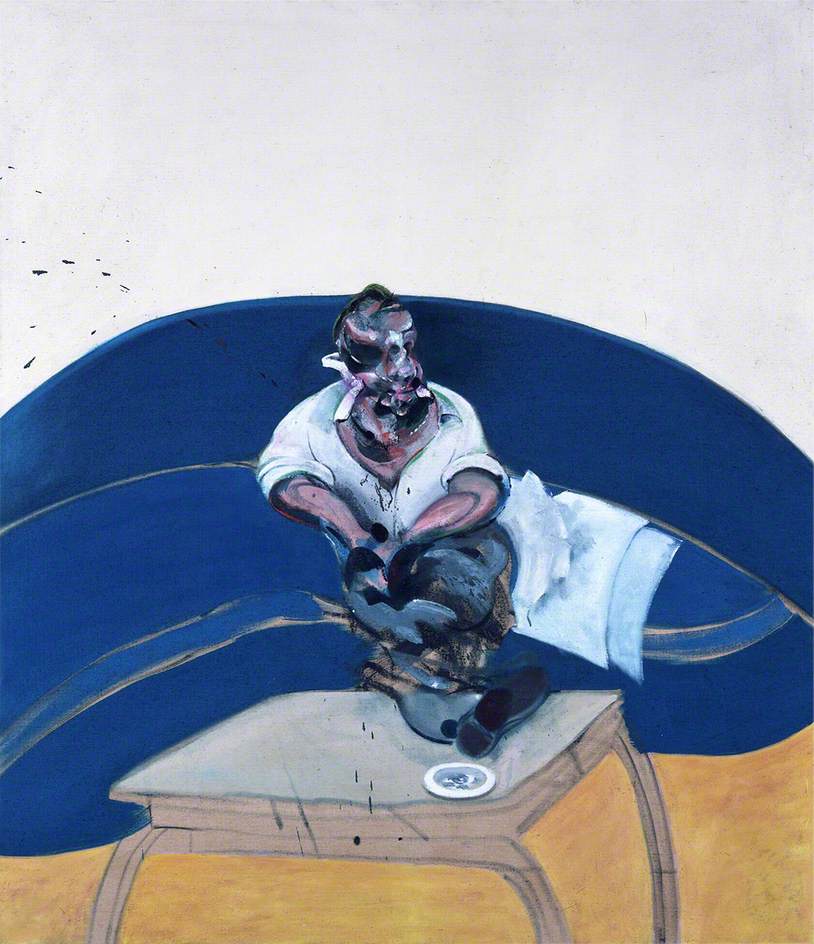


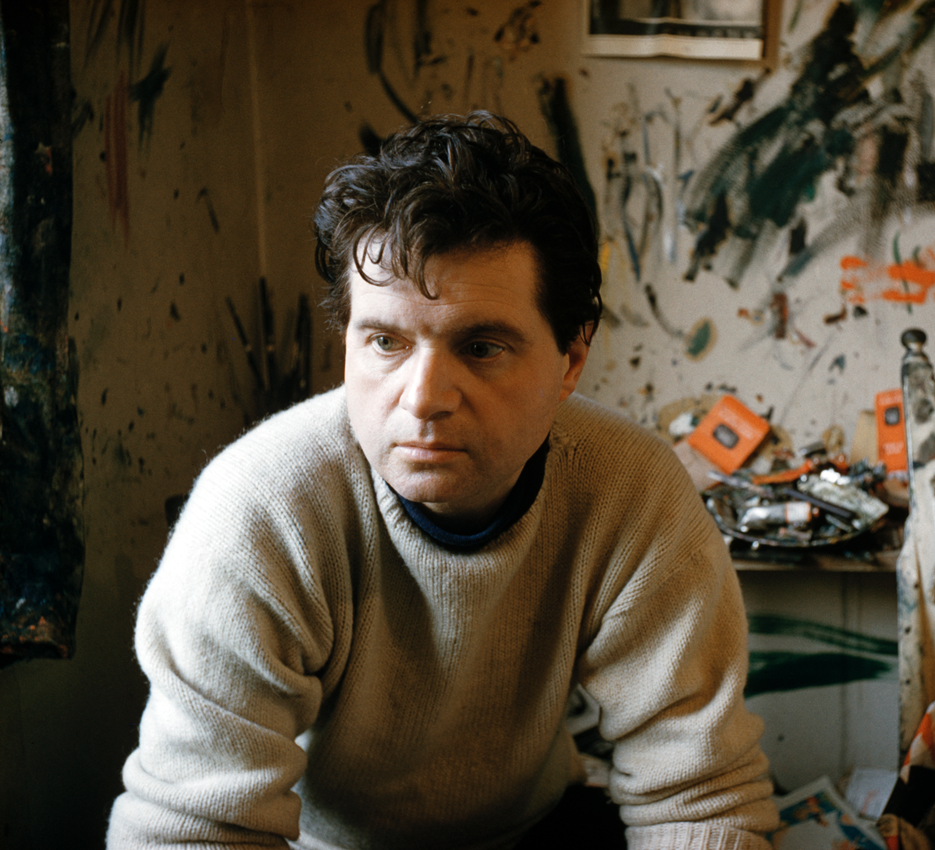
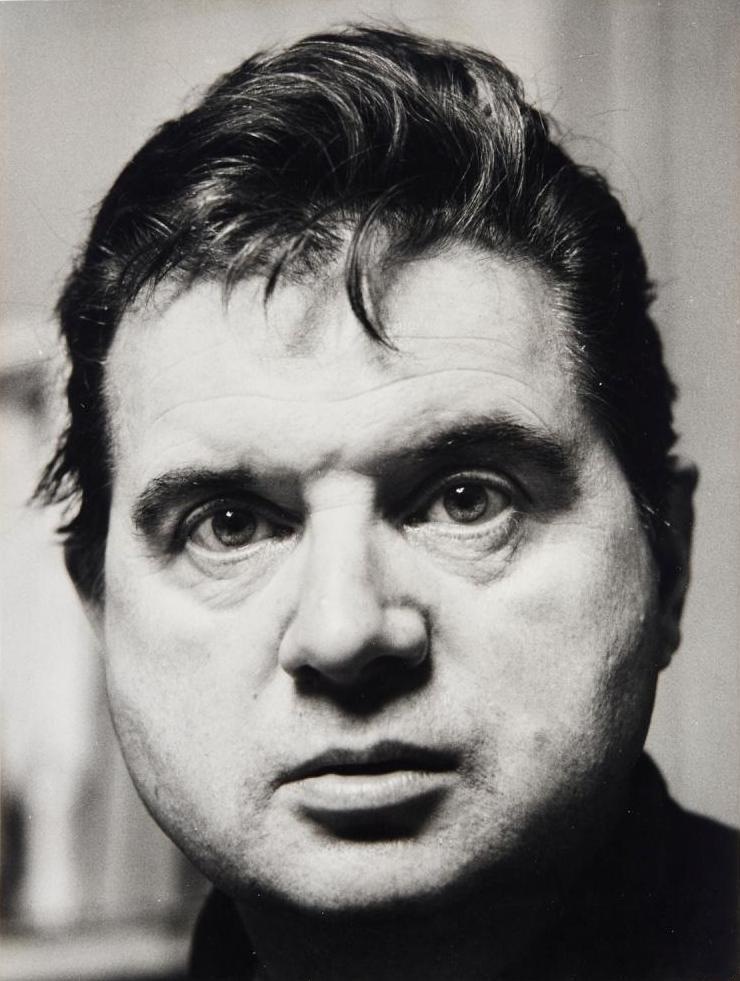


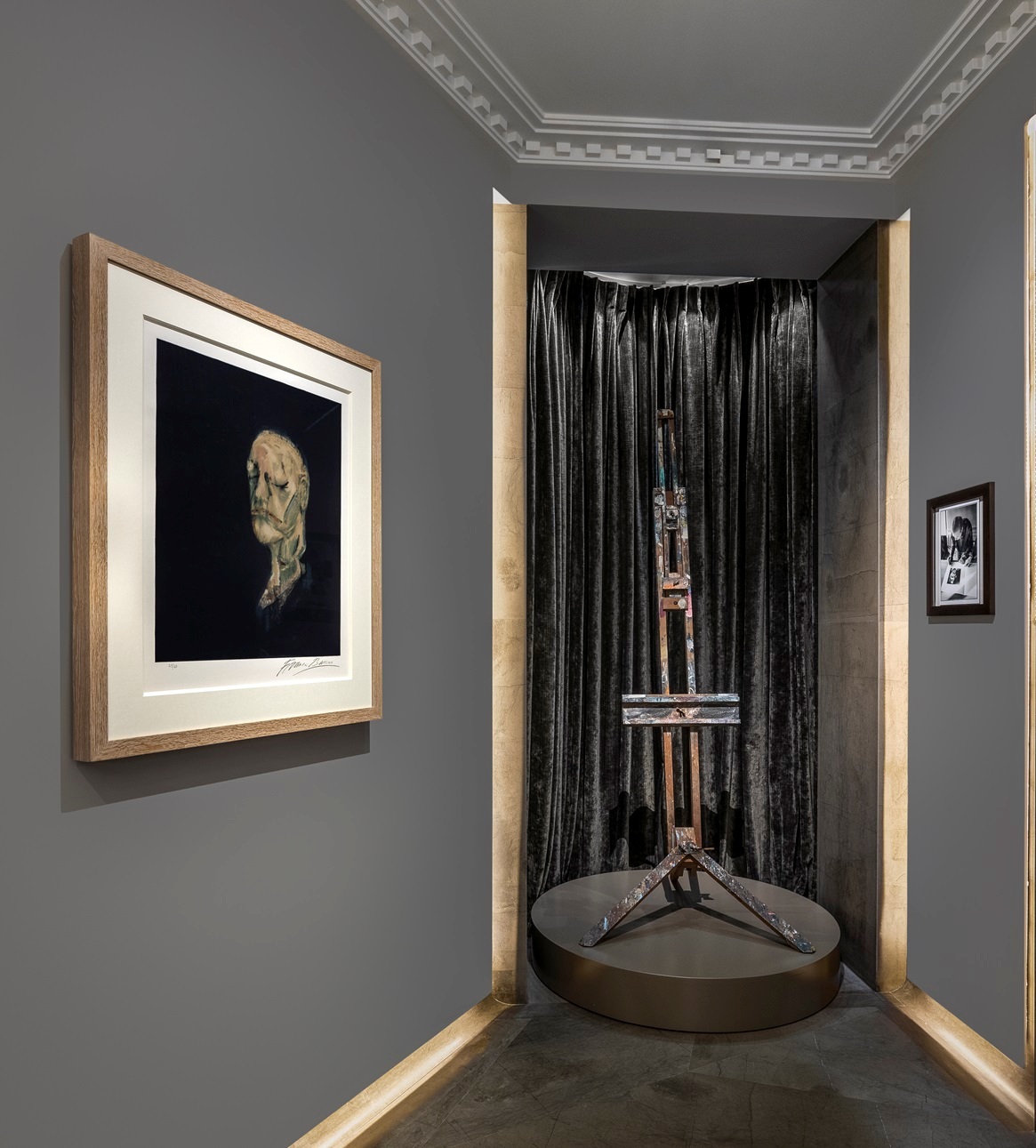

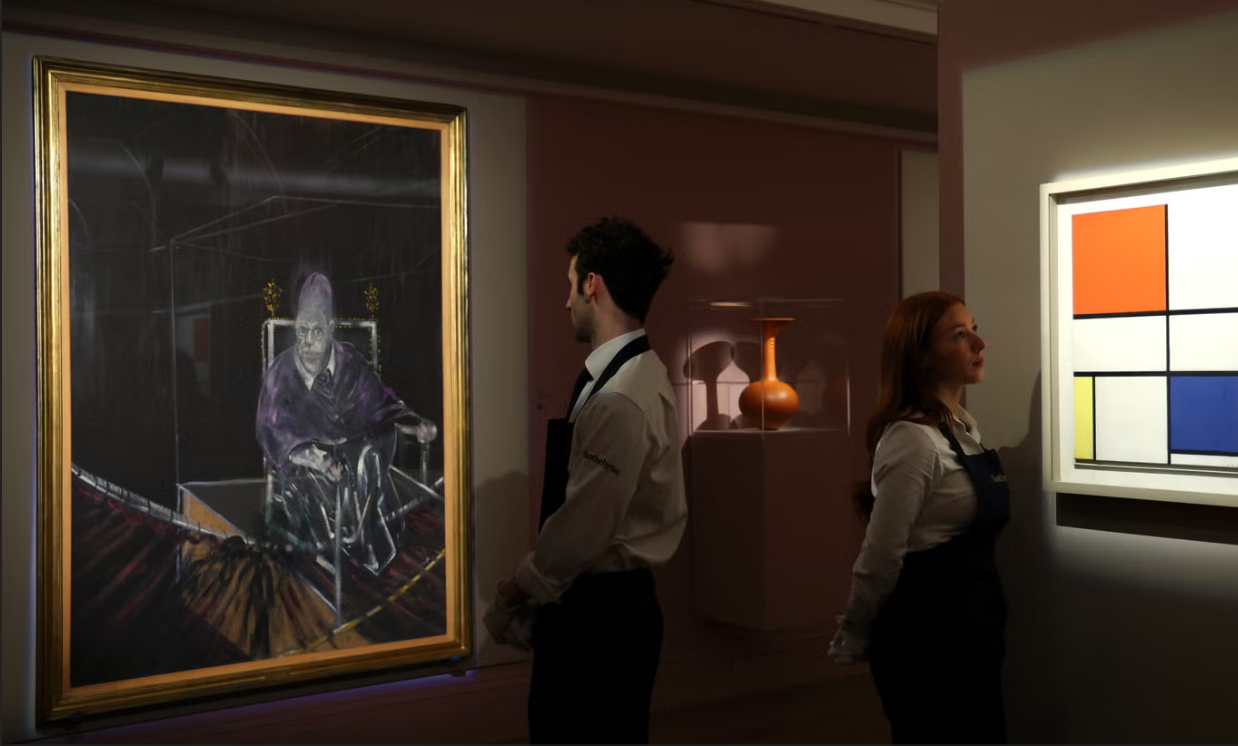
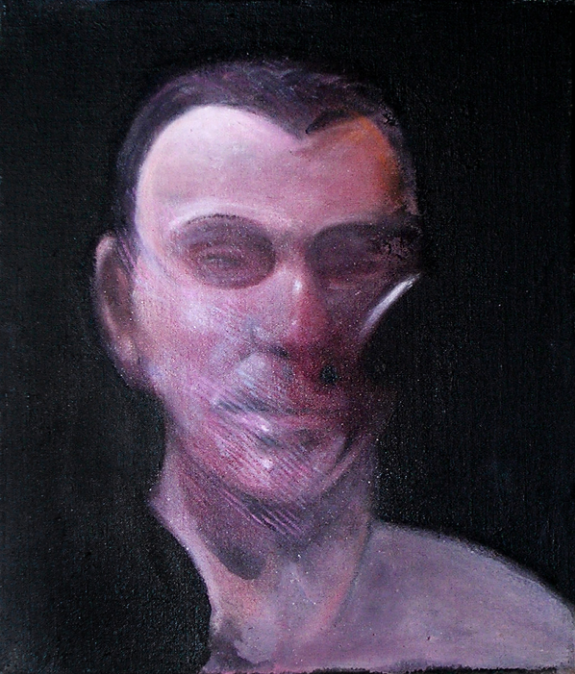




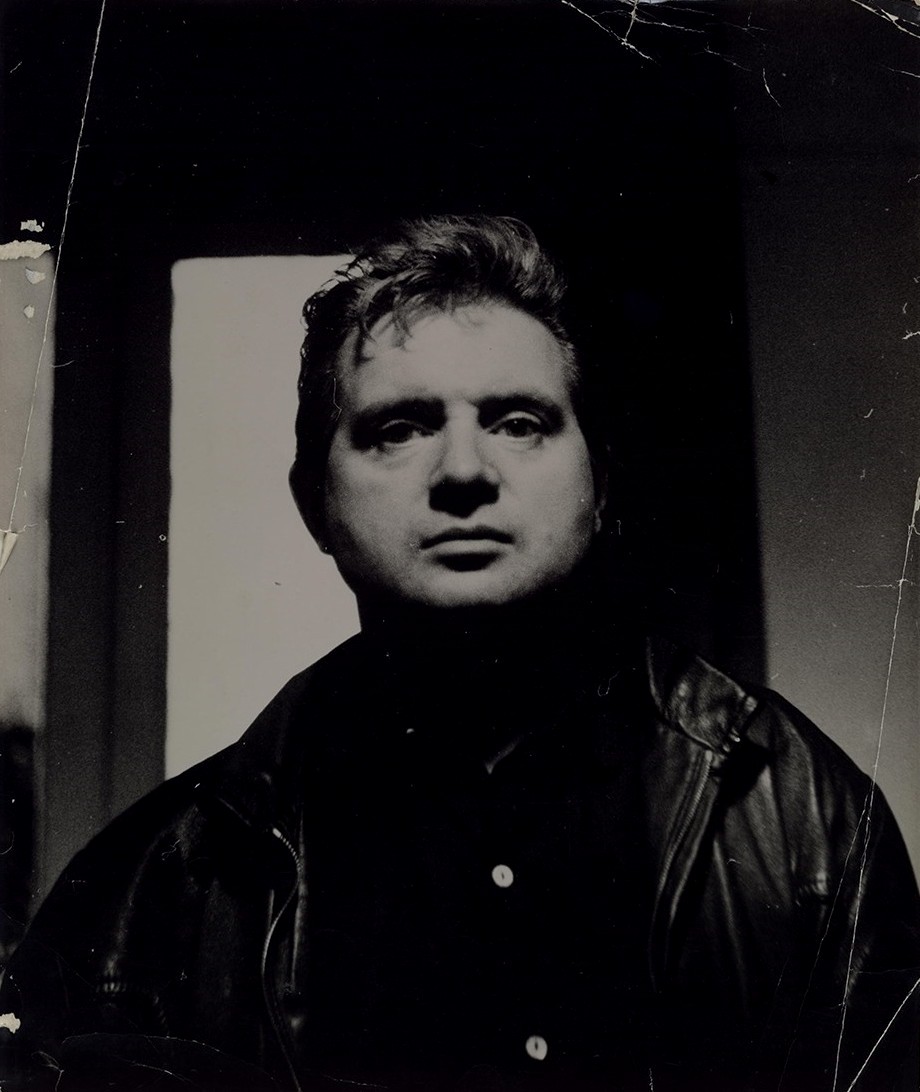
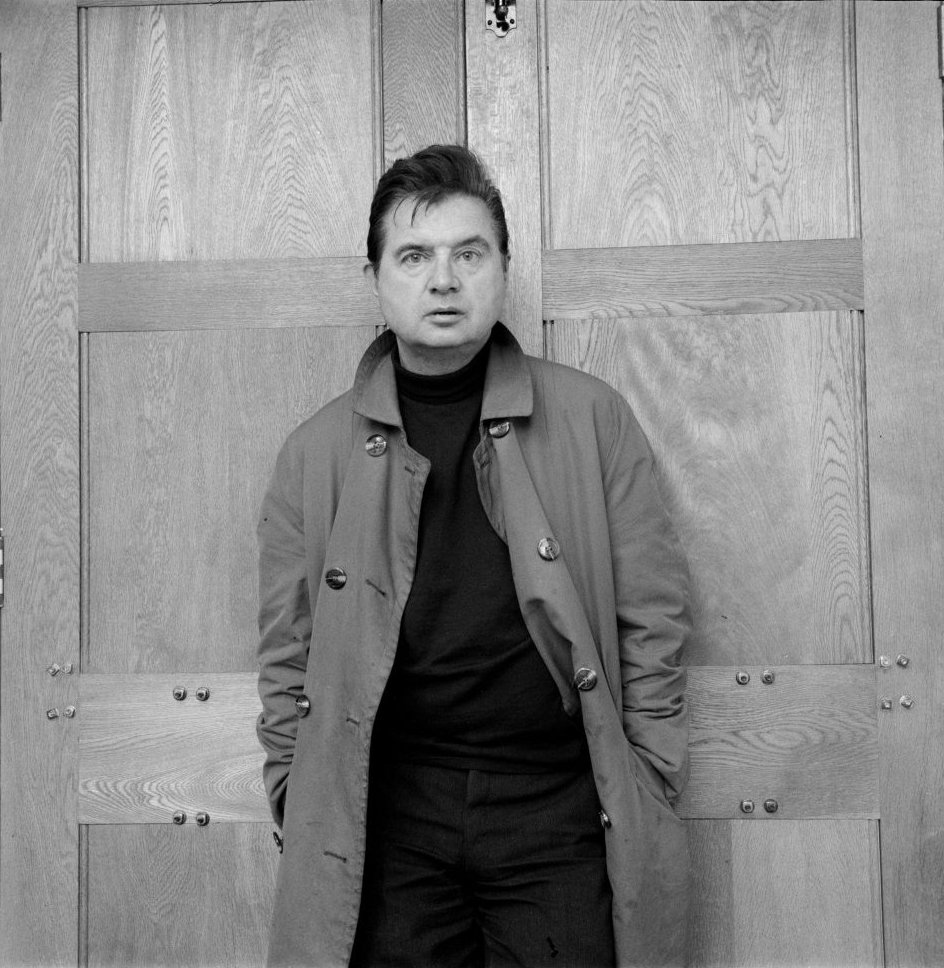
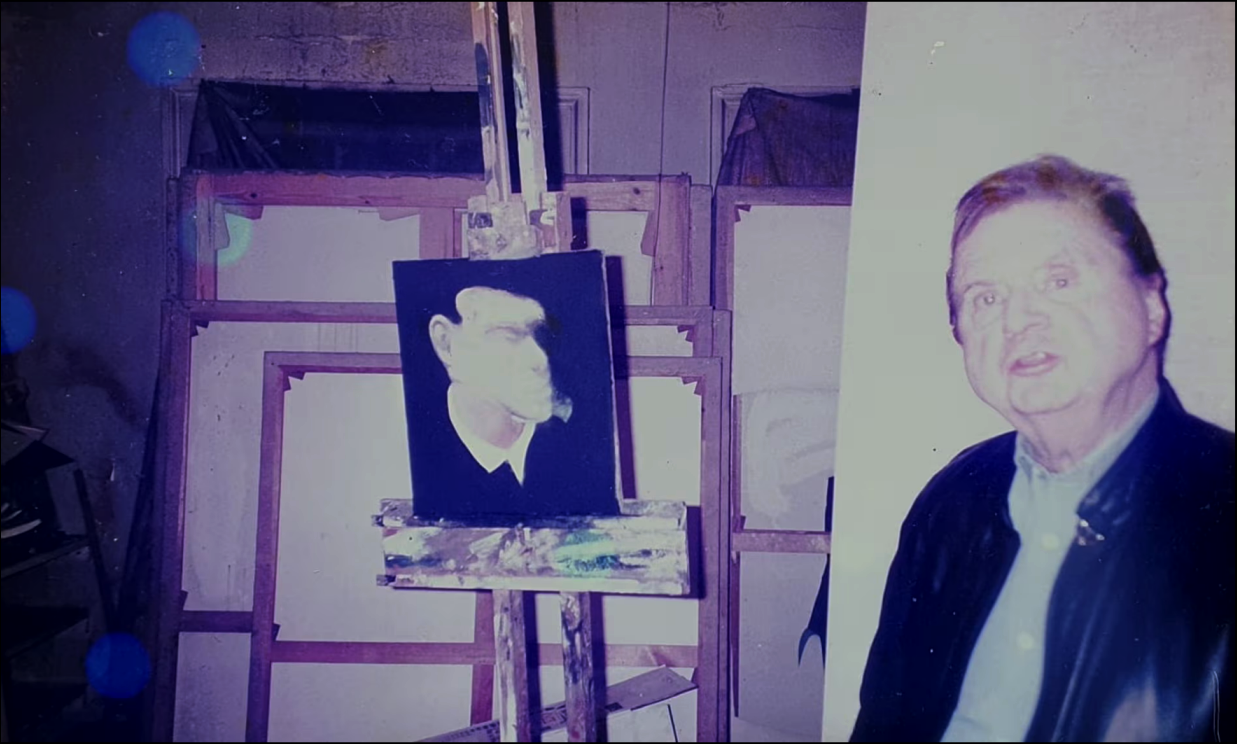
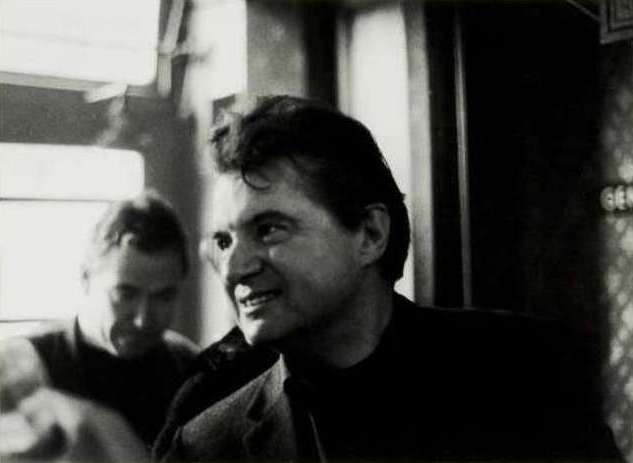
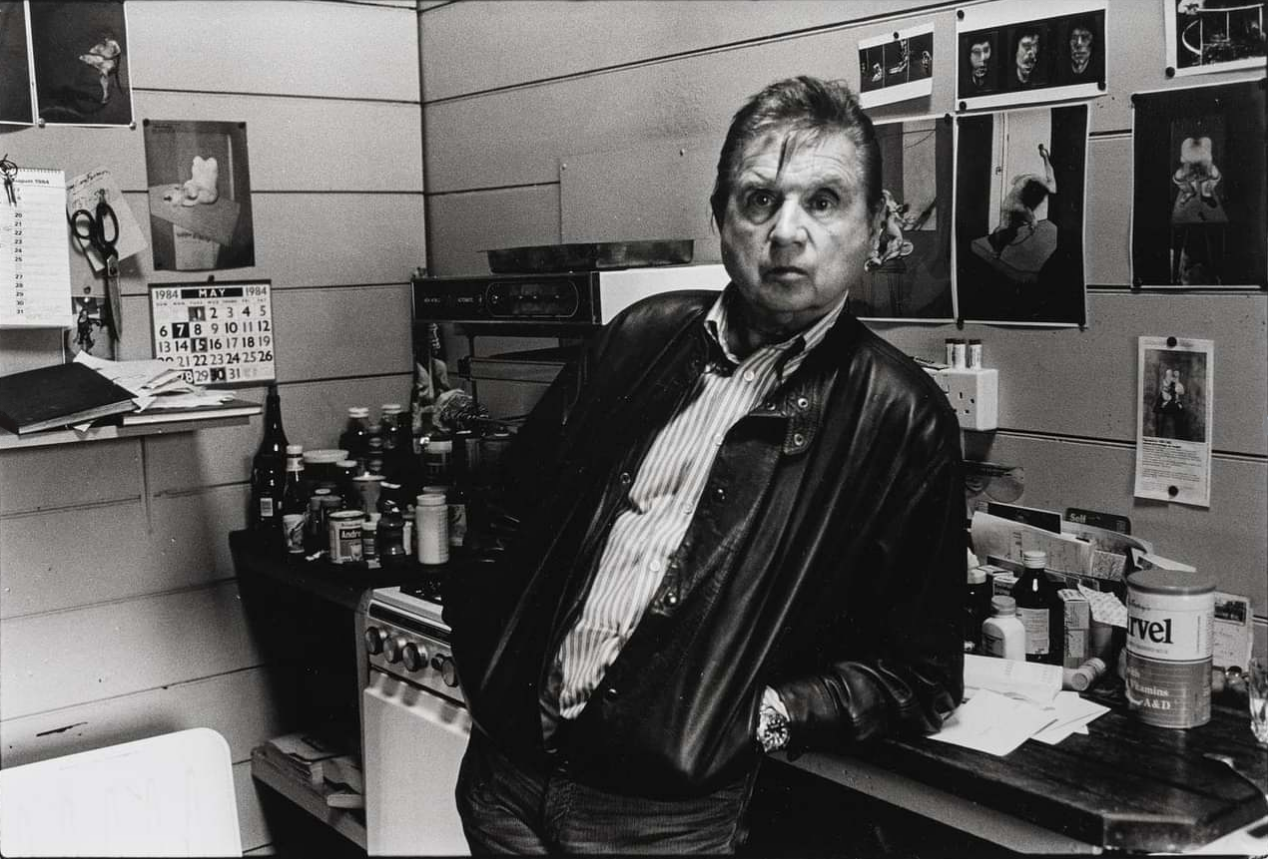
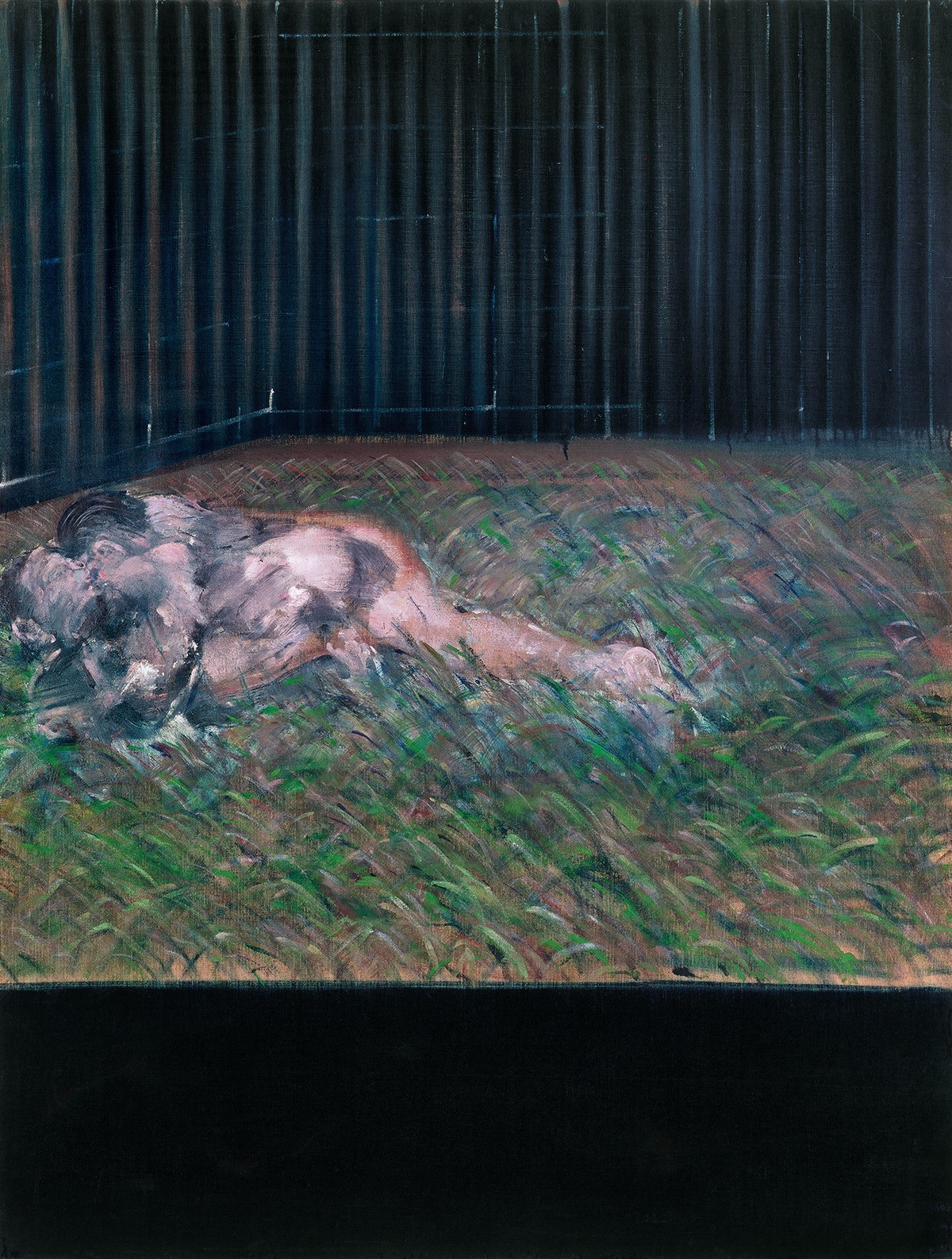
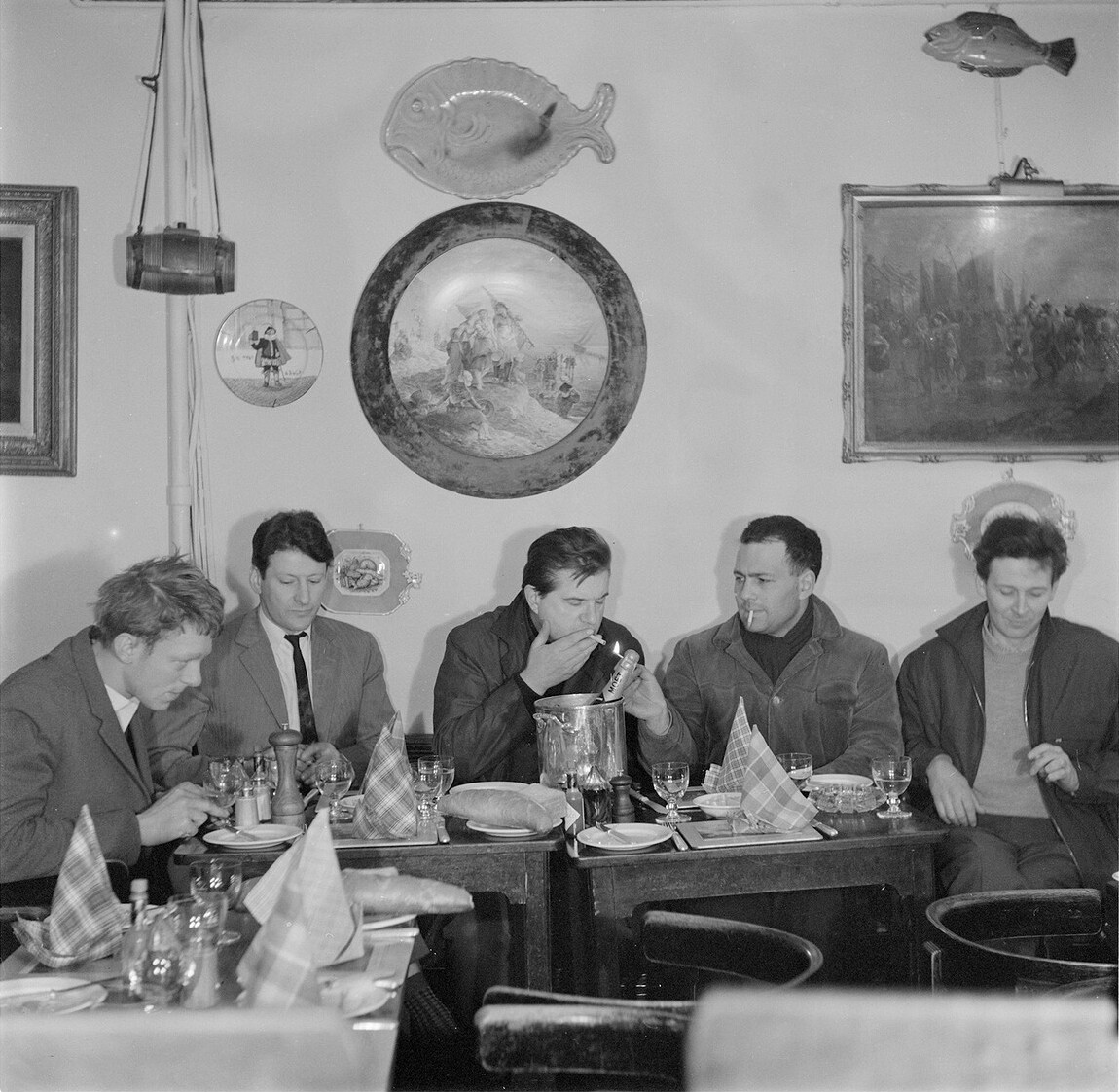
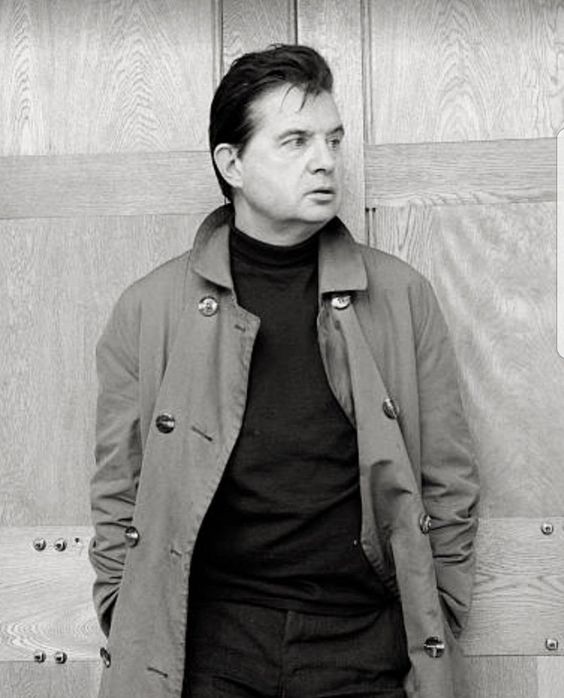

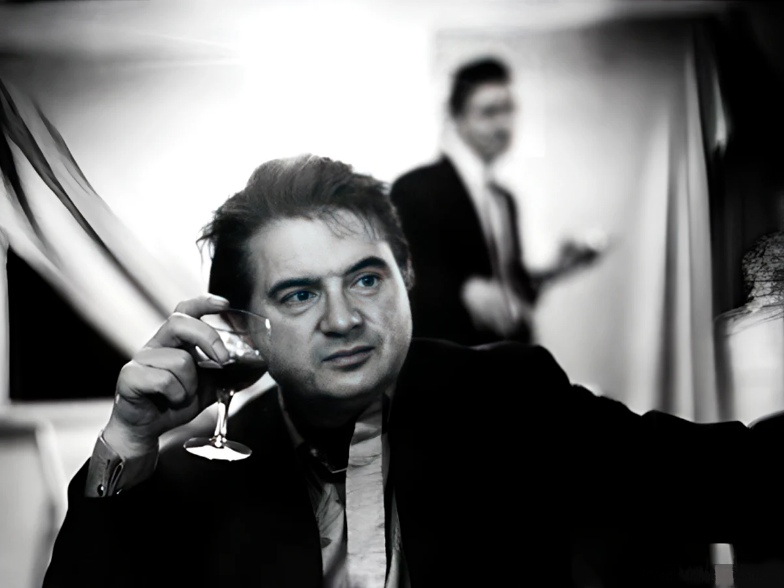
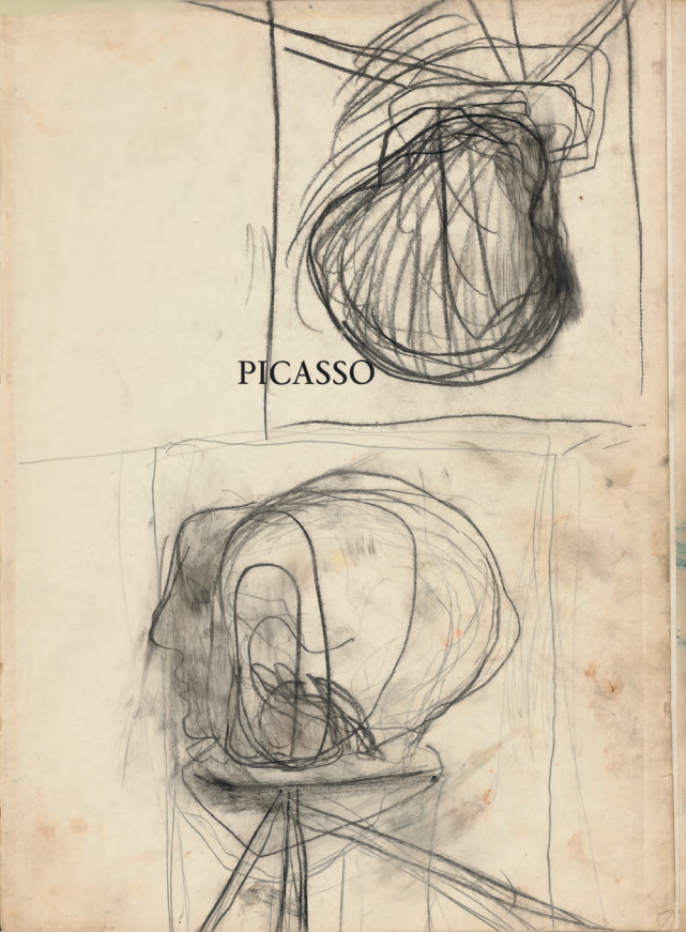


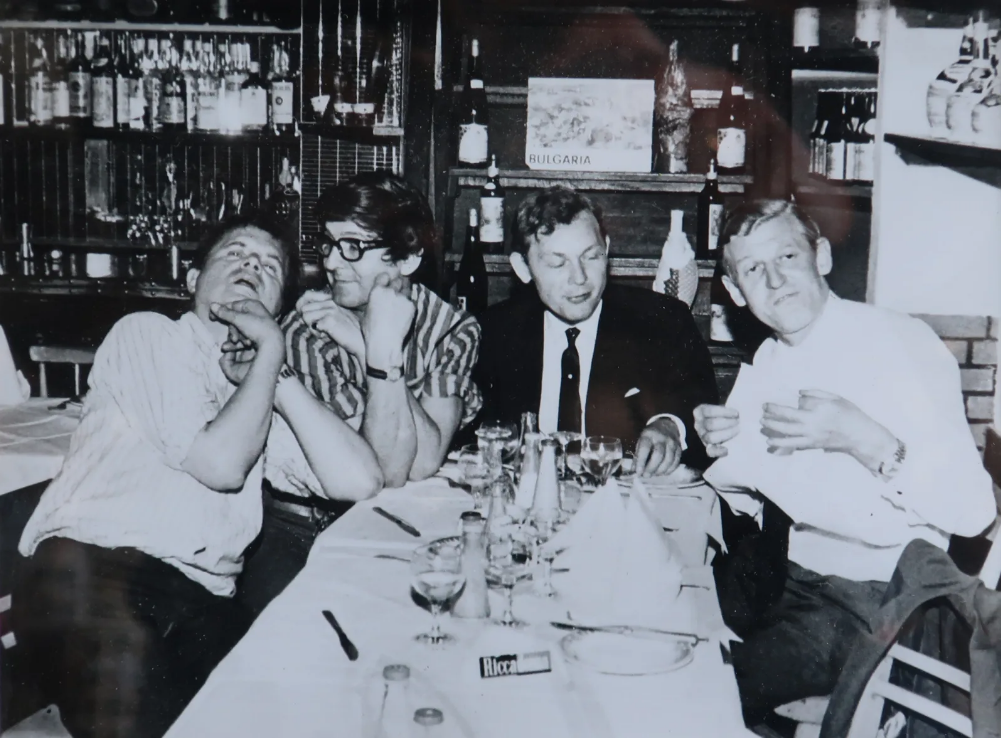



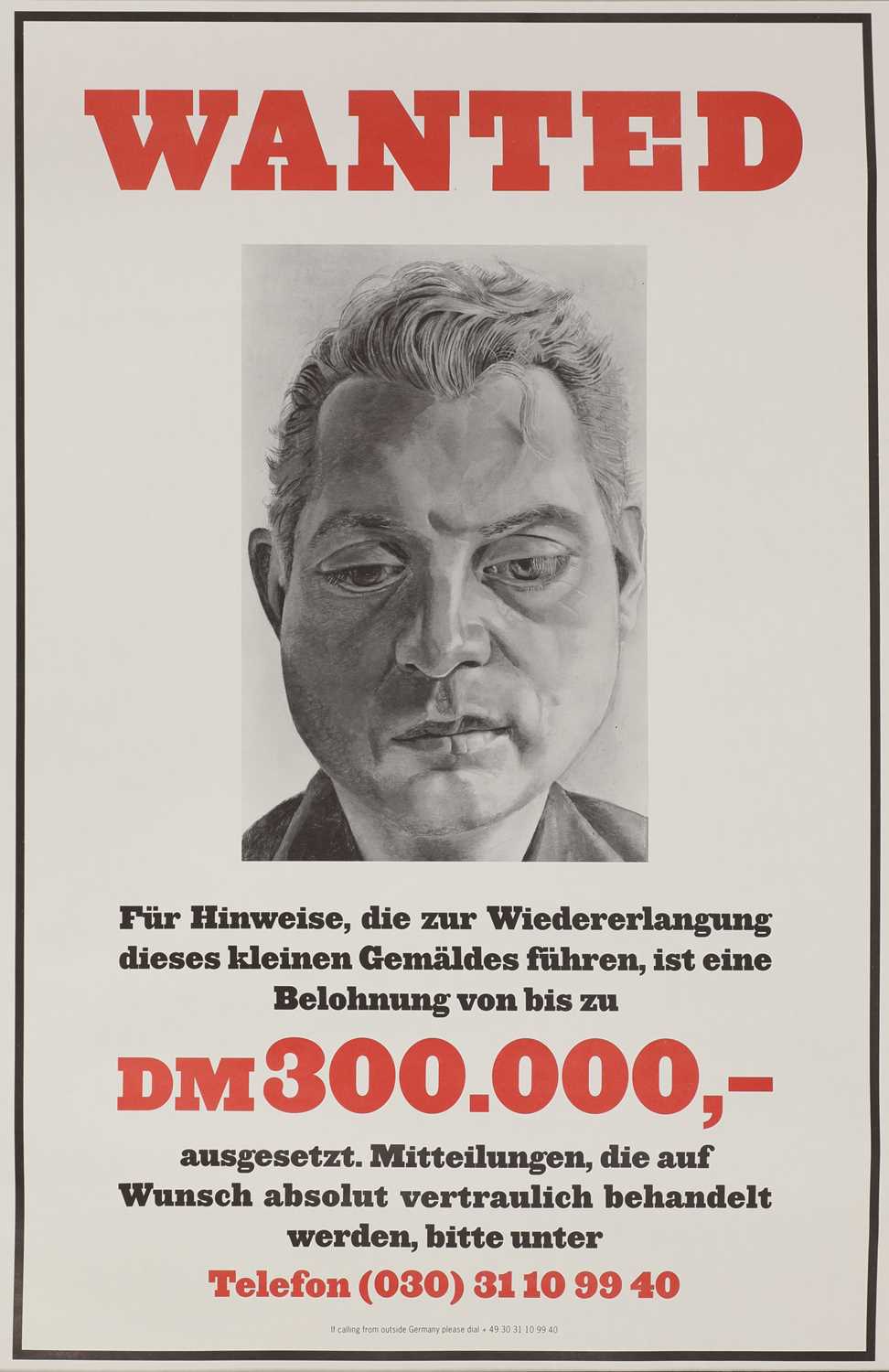
%202023.jpg)


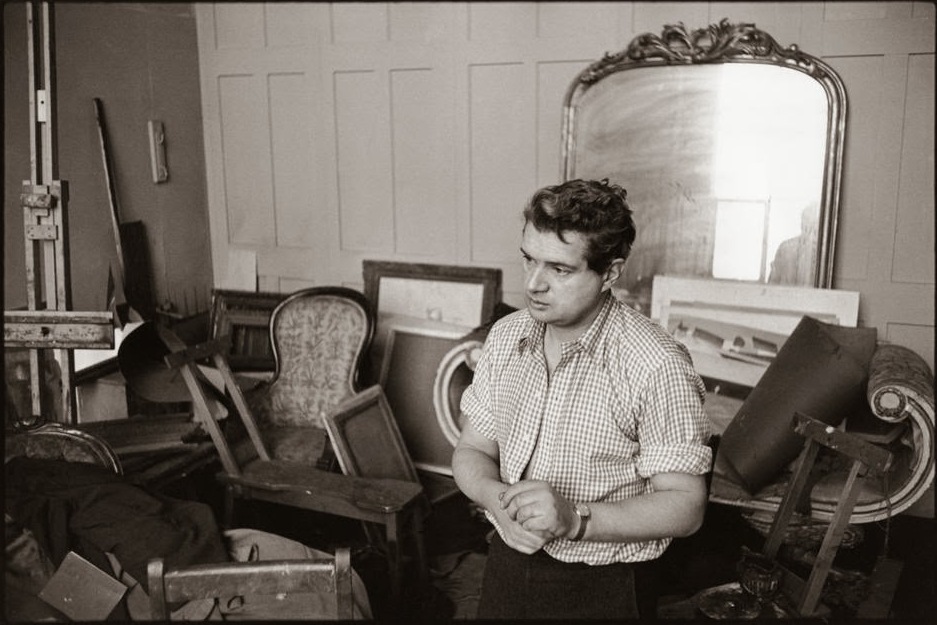
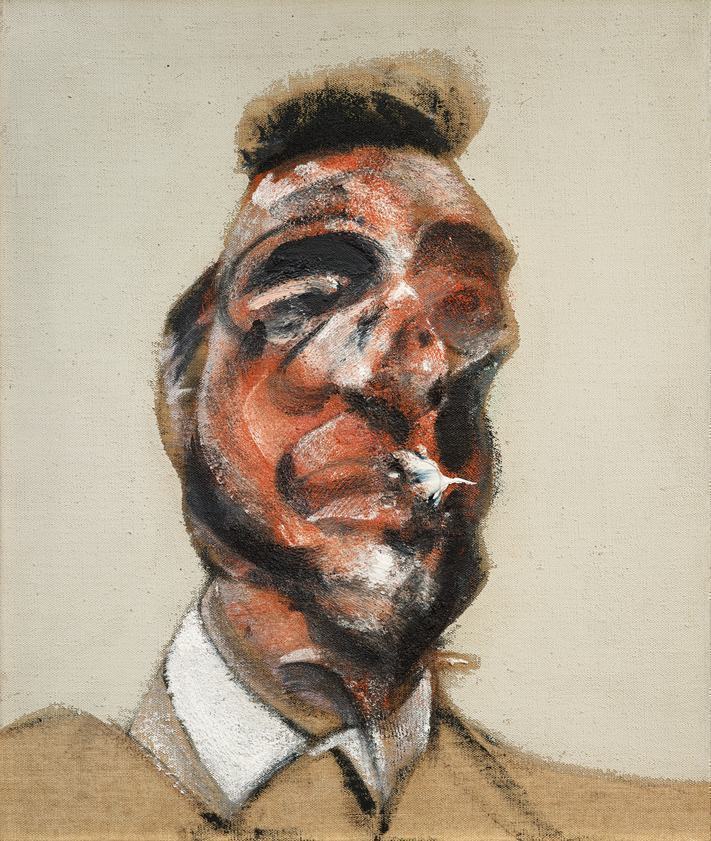
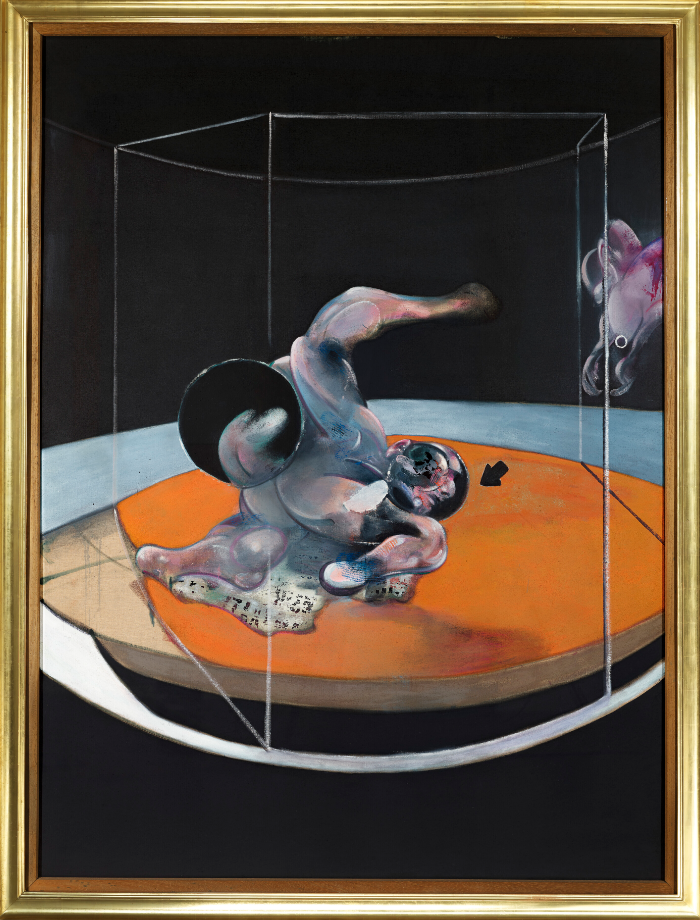
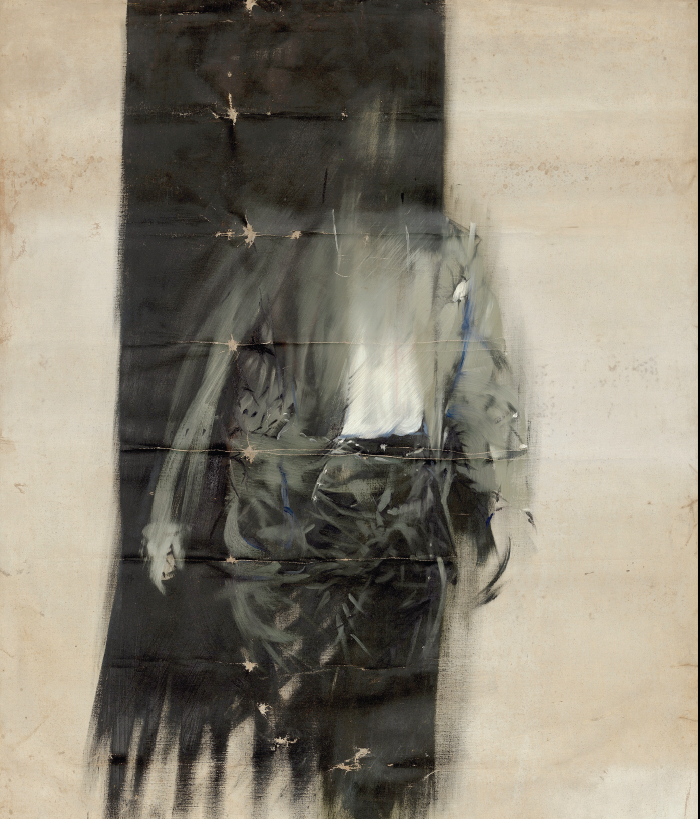
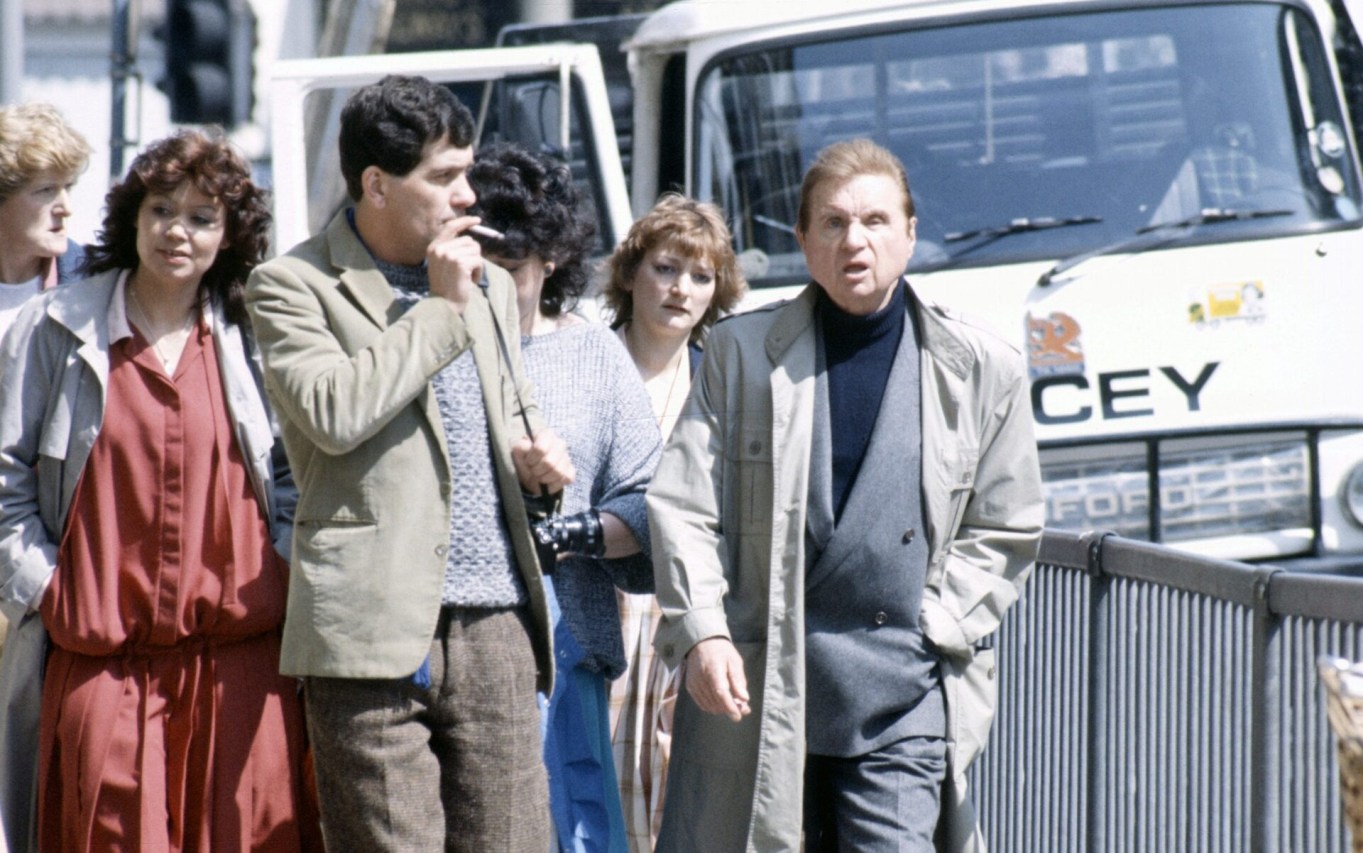
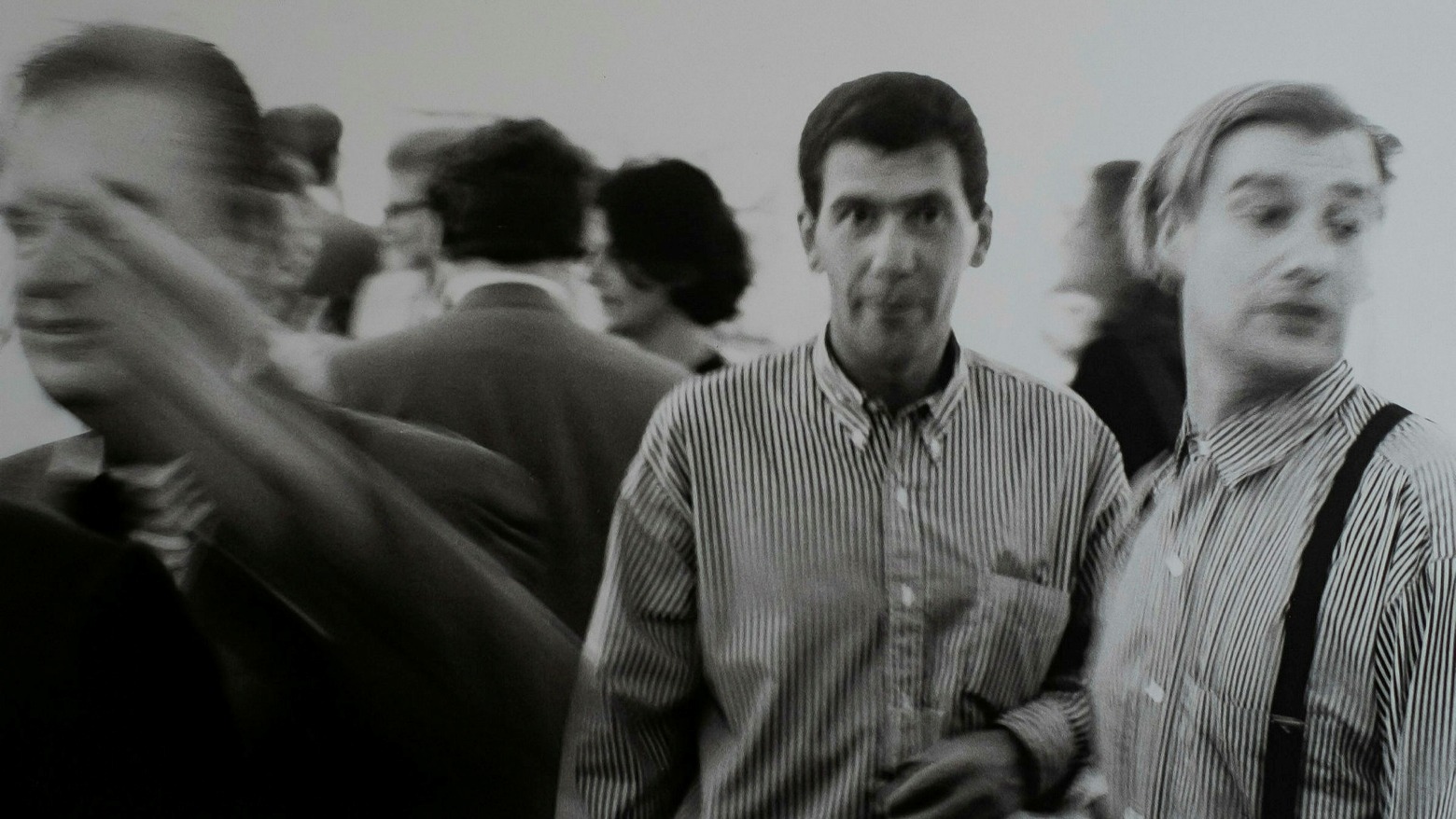
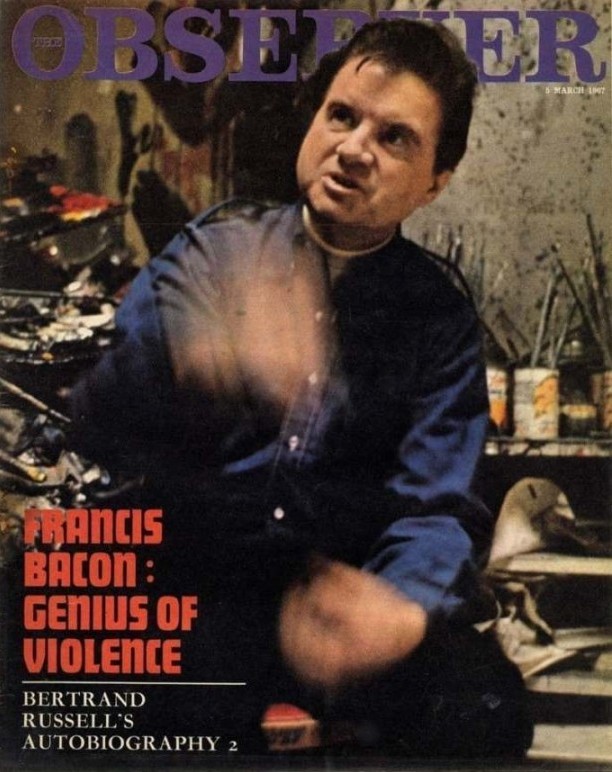
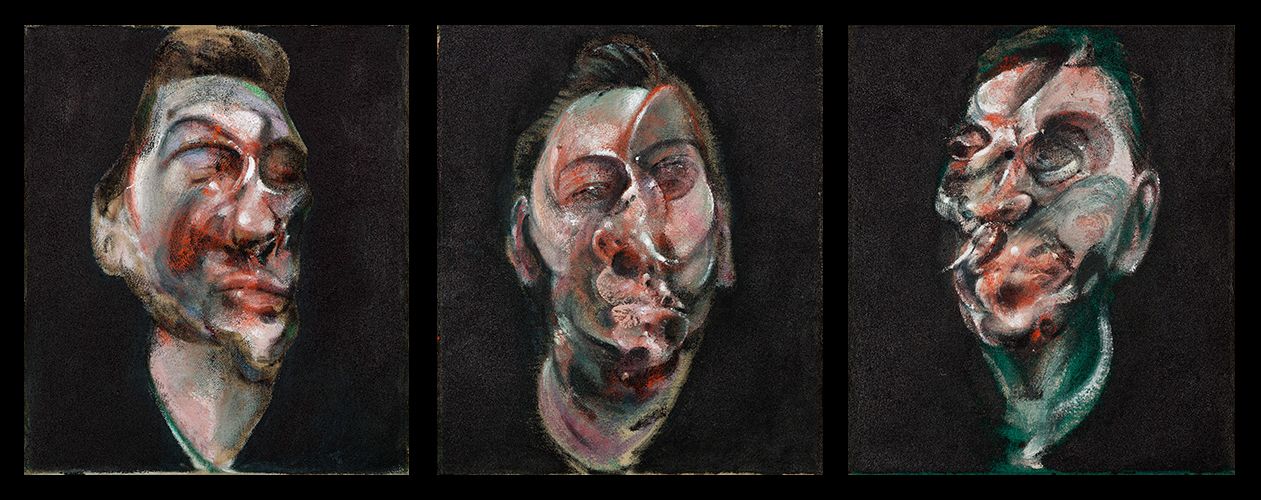


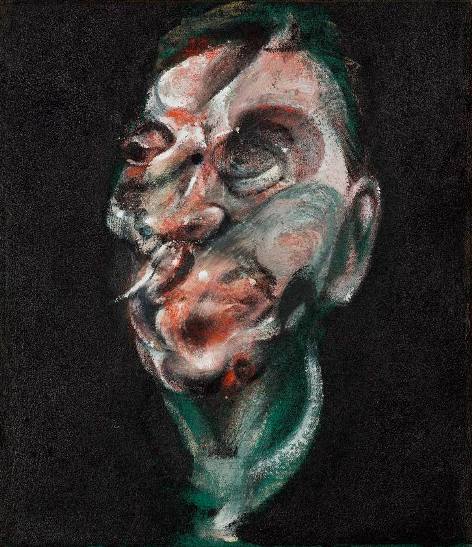

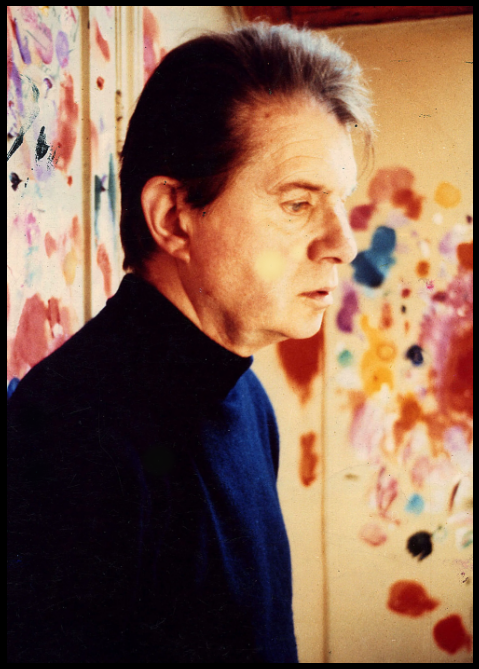
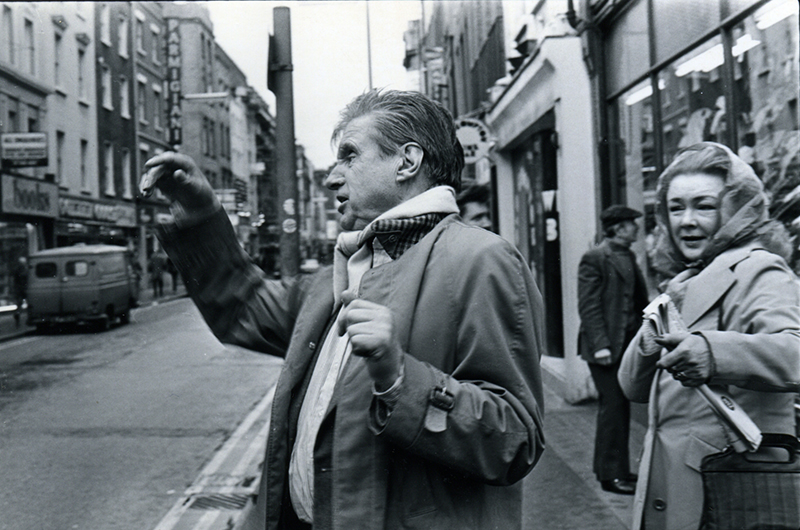


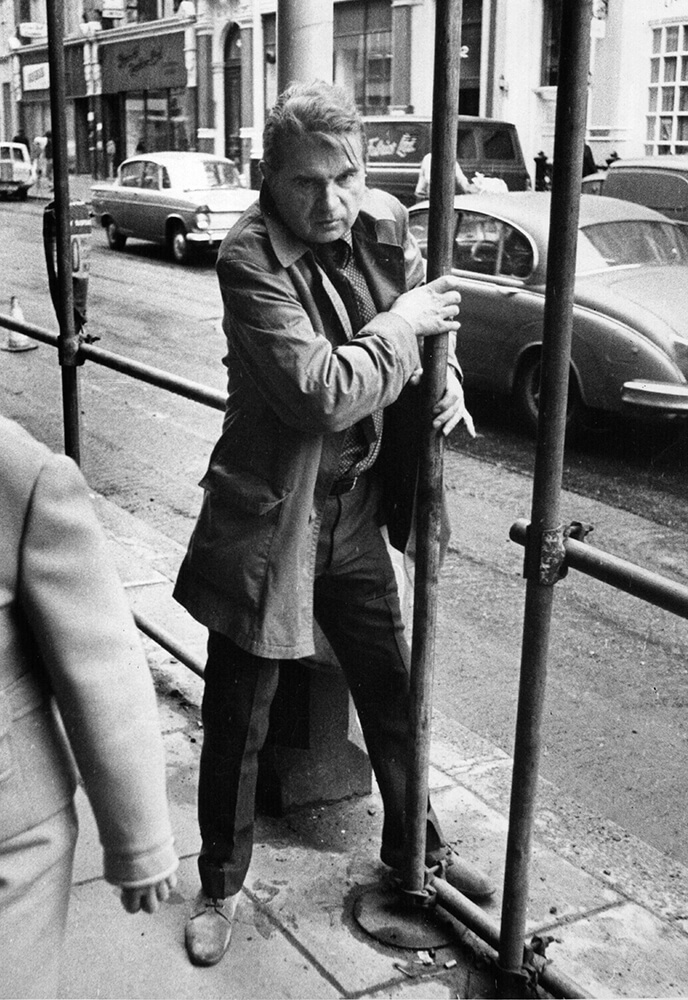
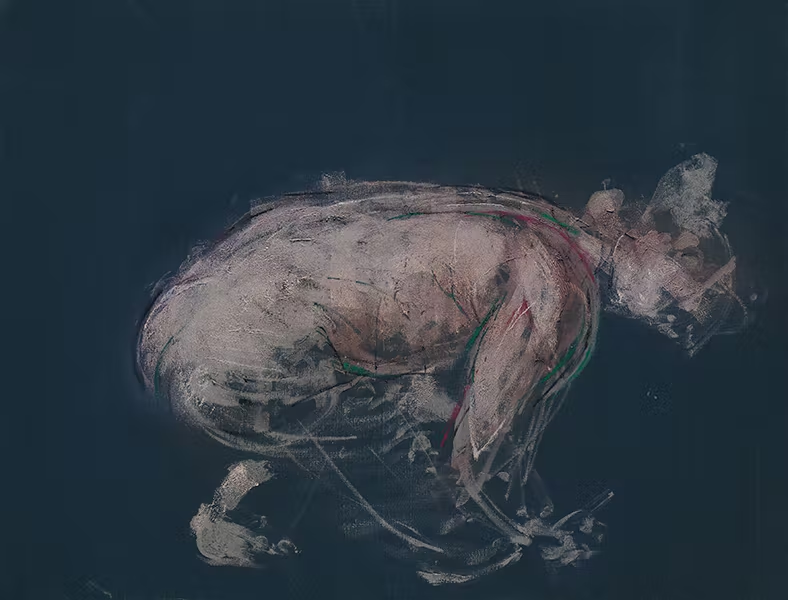
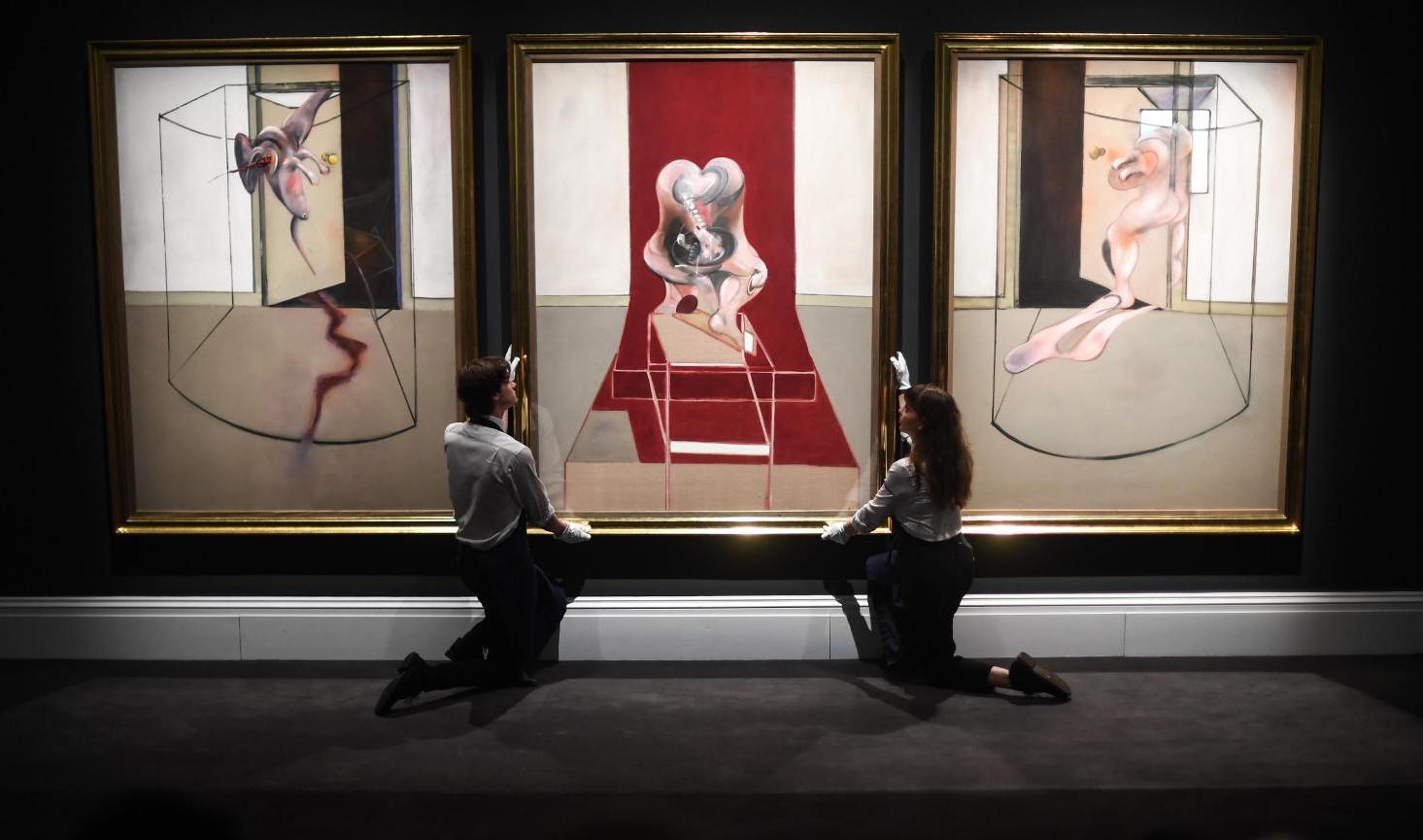

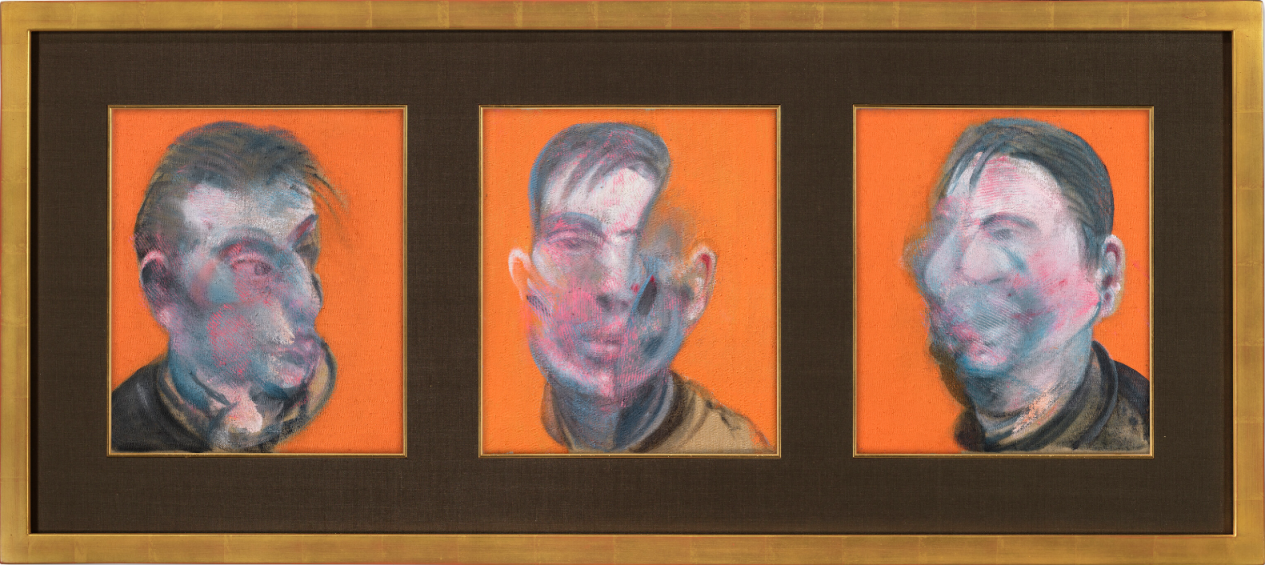

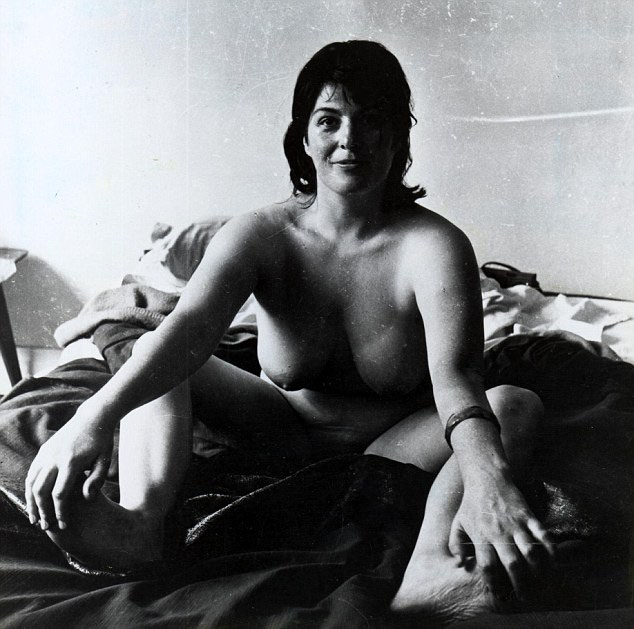
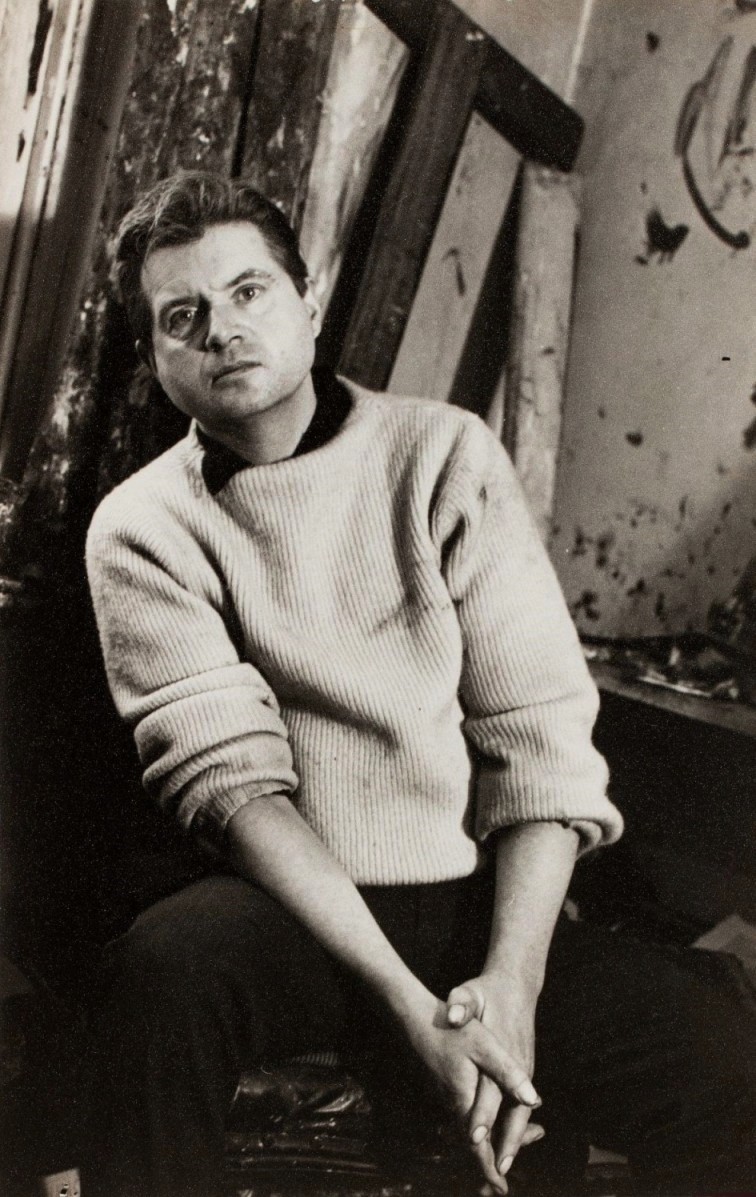


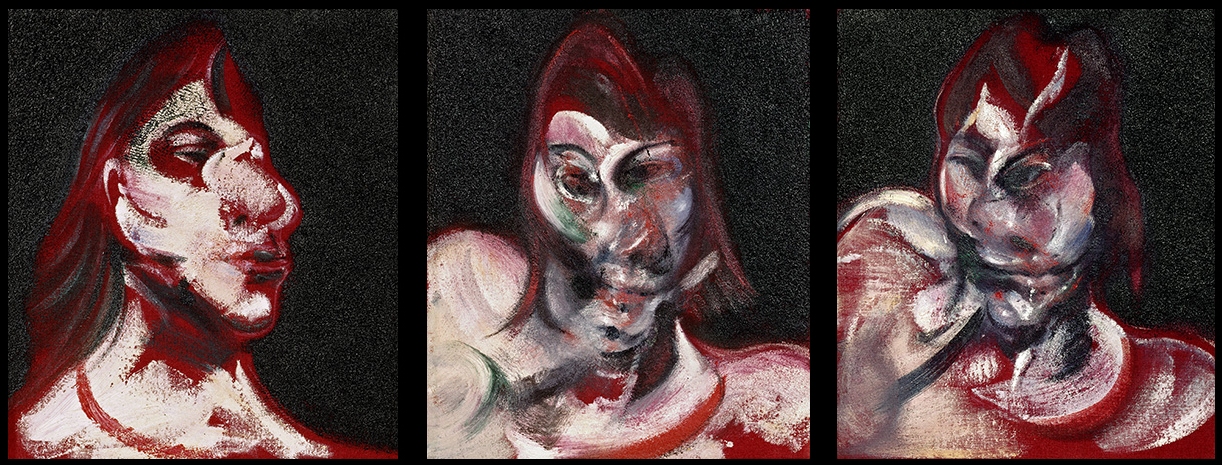
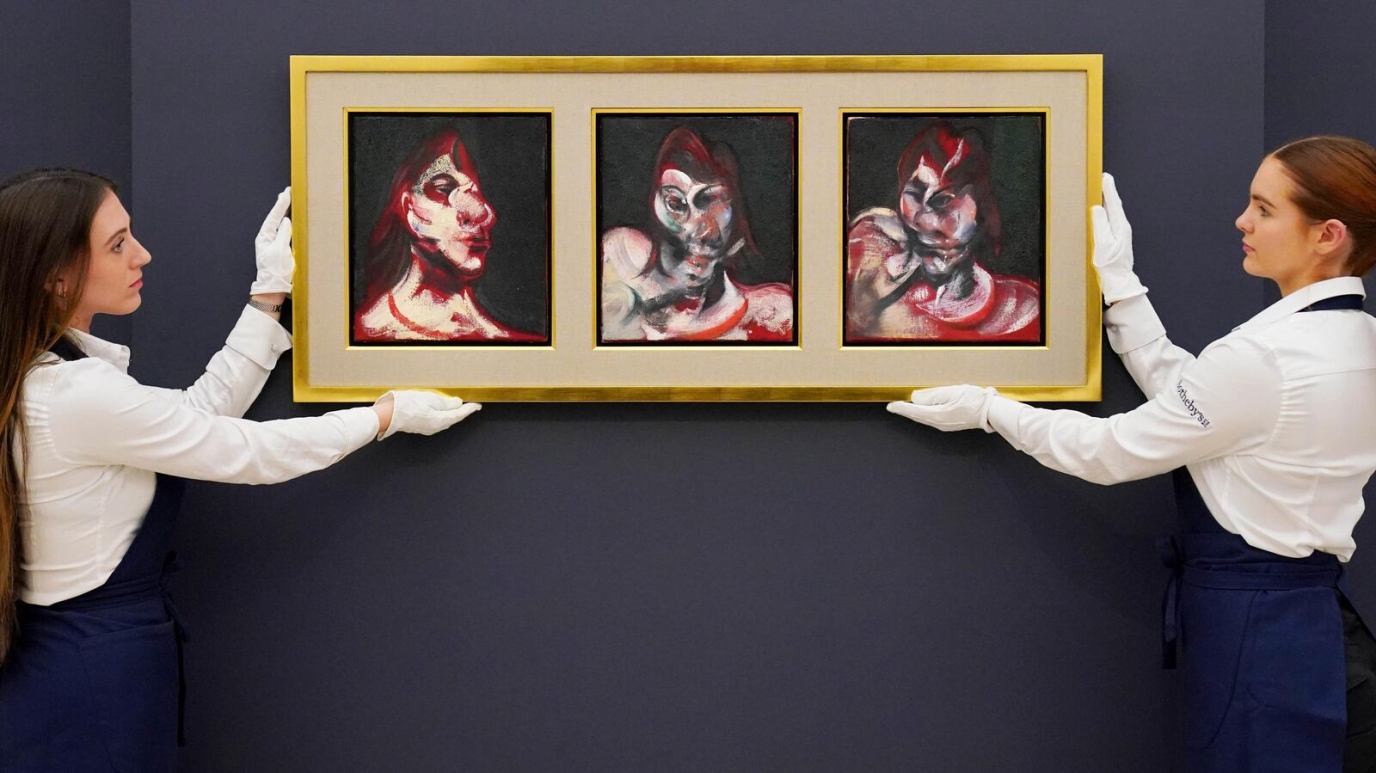
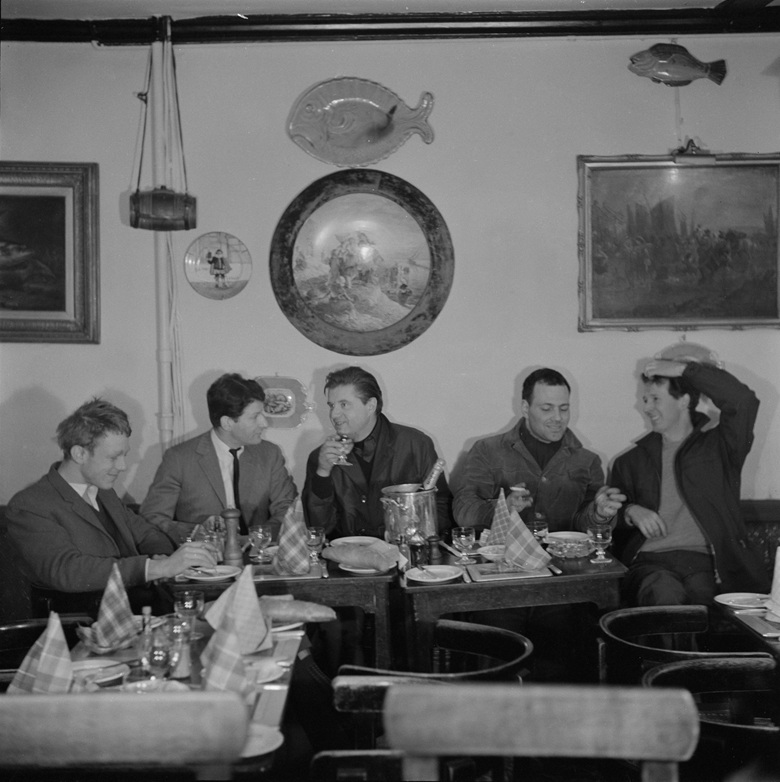
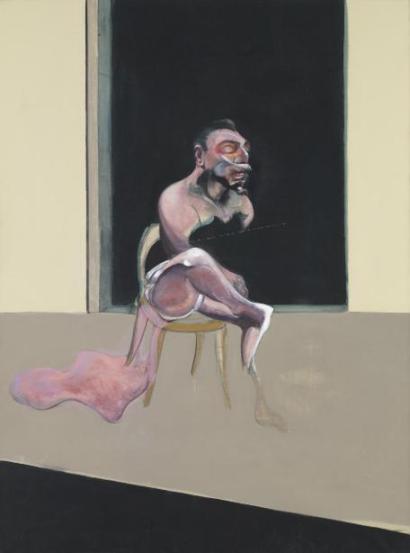
.jpg)
.jpg)
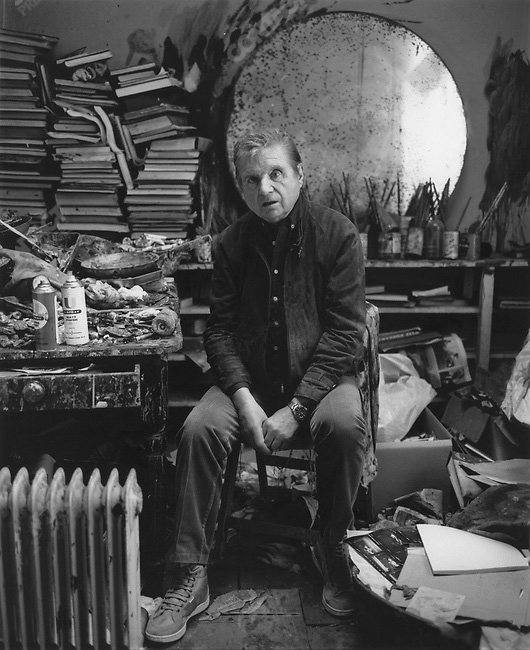
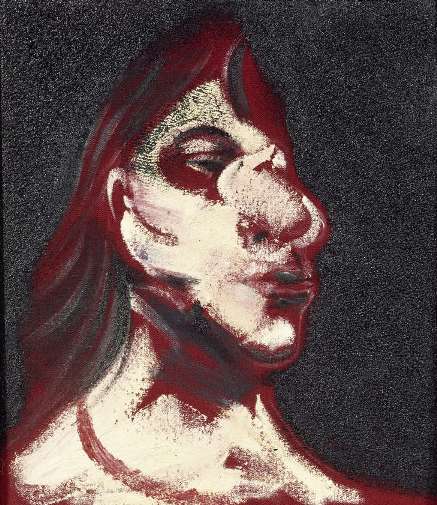
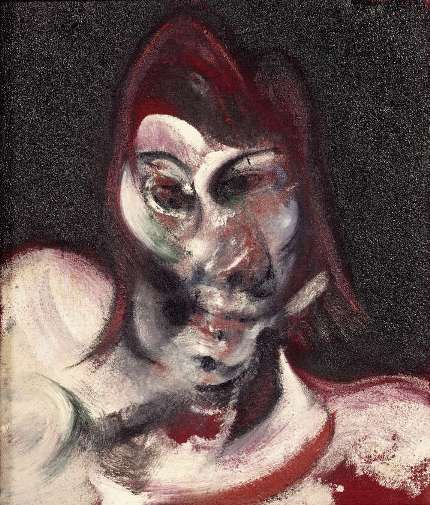


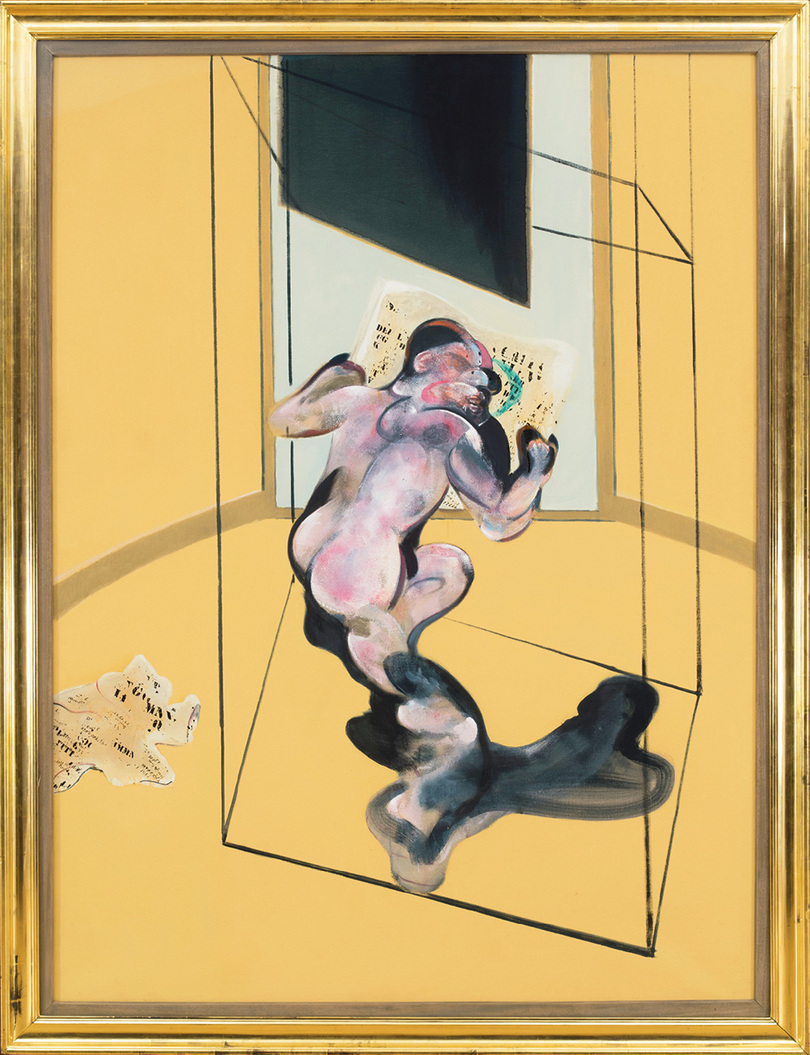
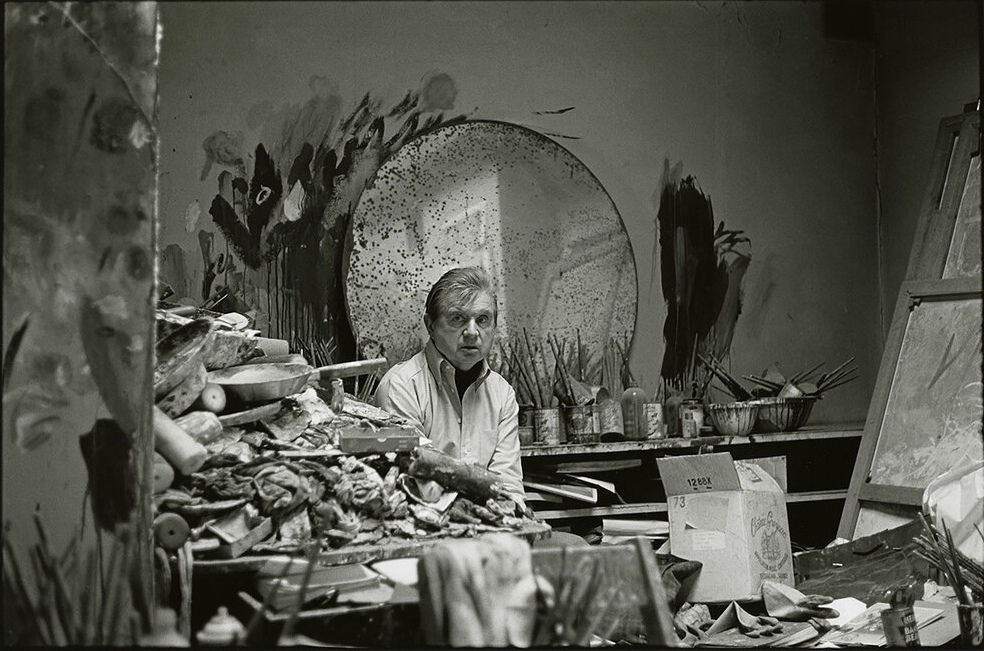


.jpg)

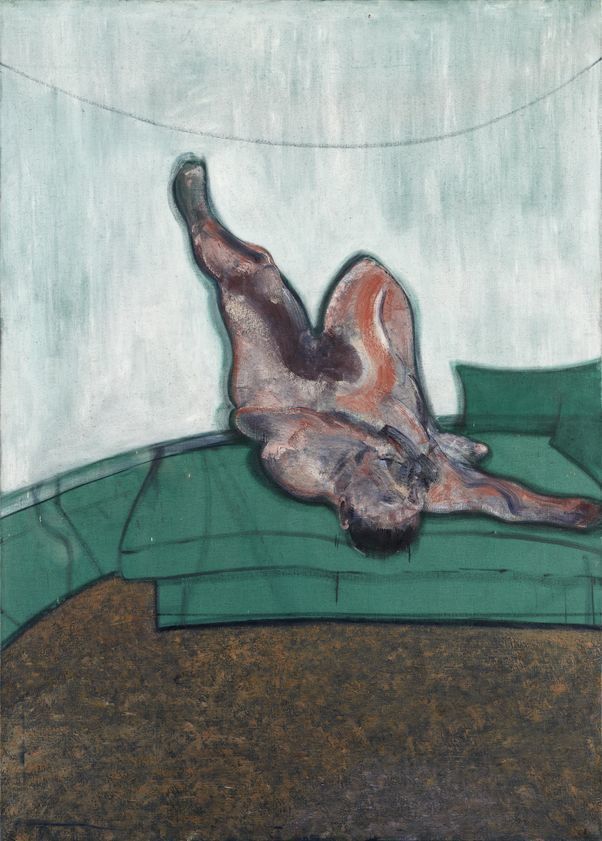


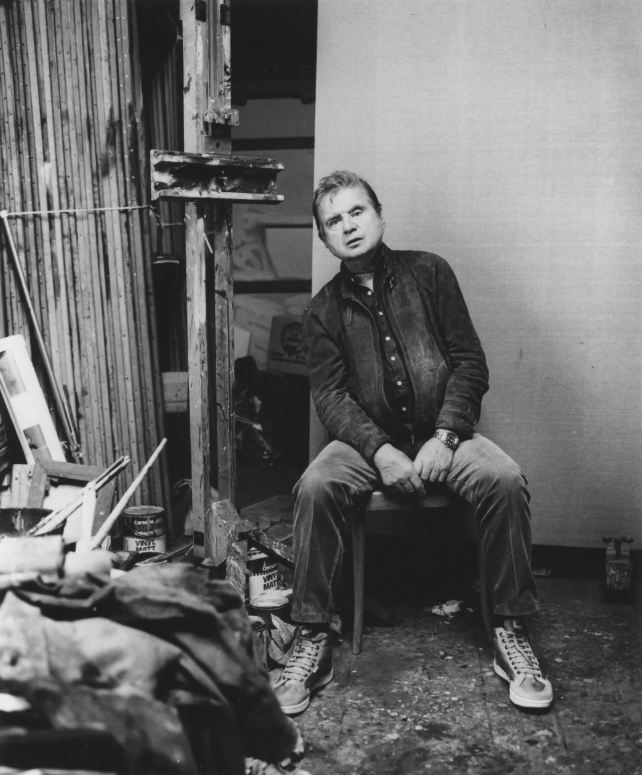

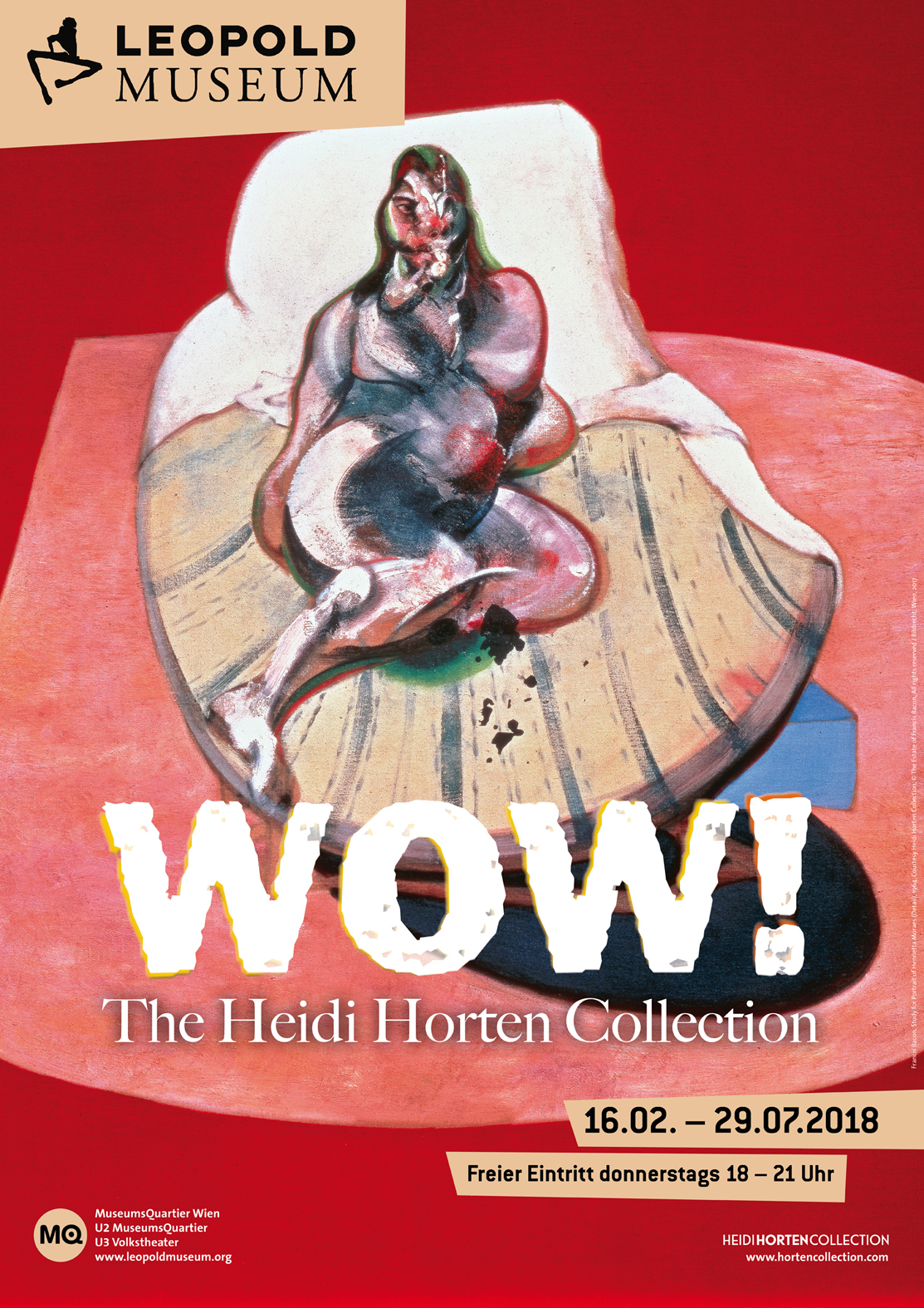
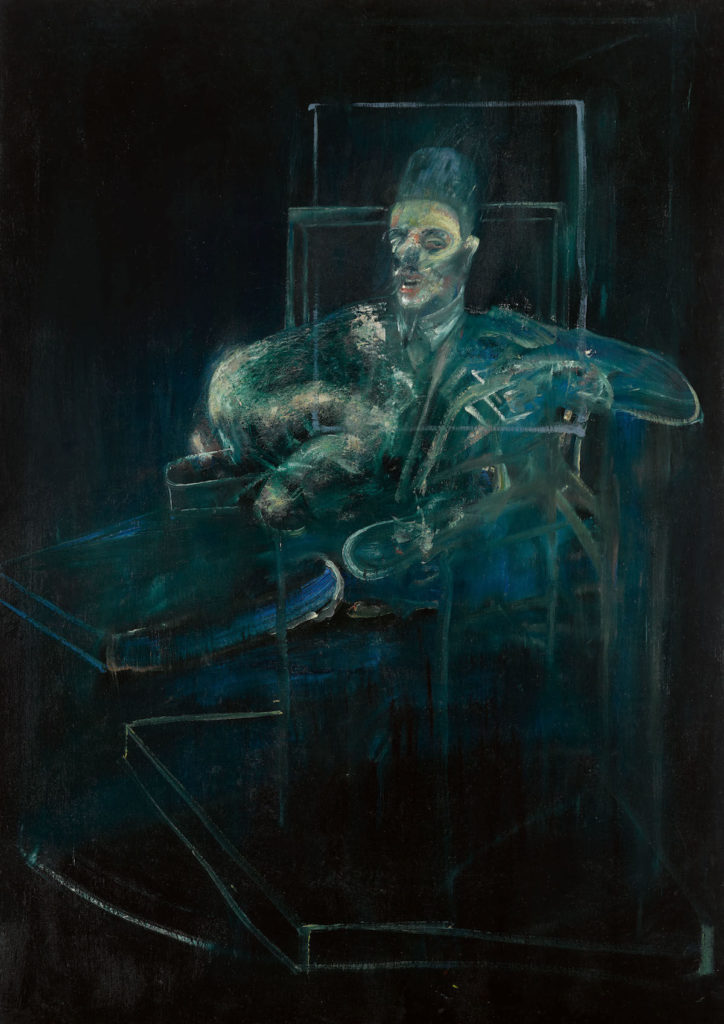


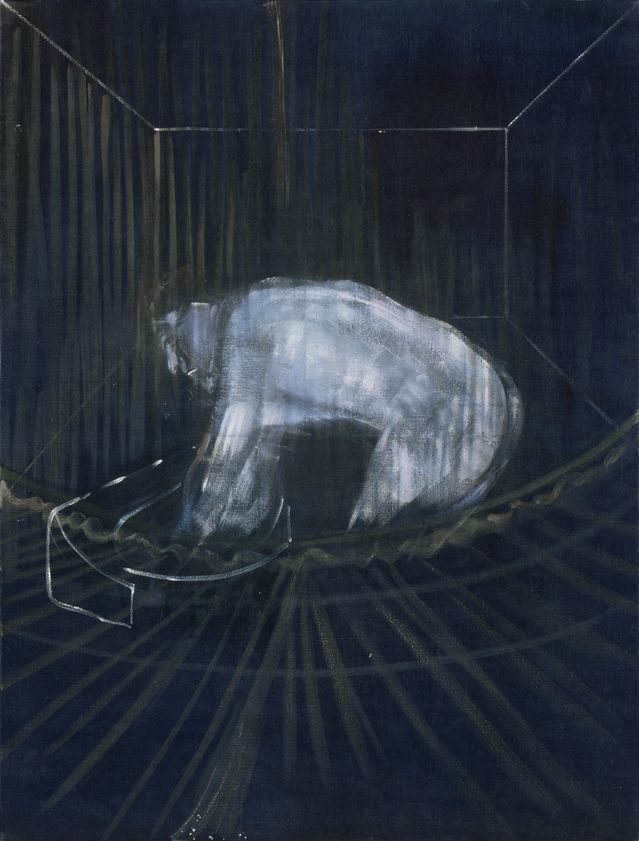
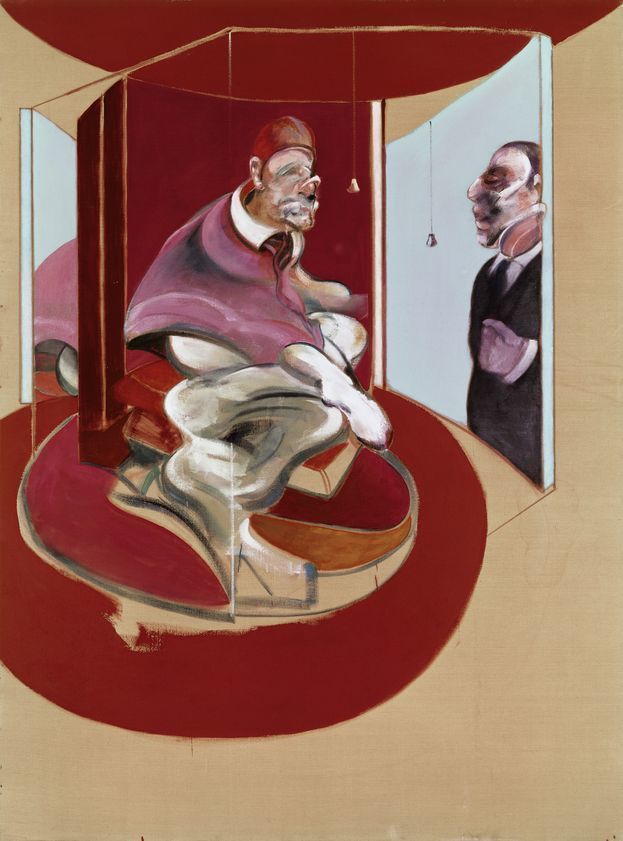
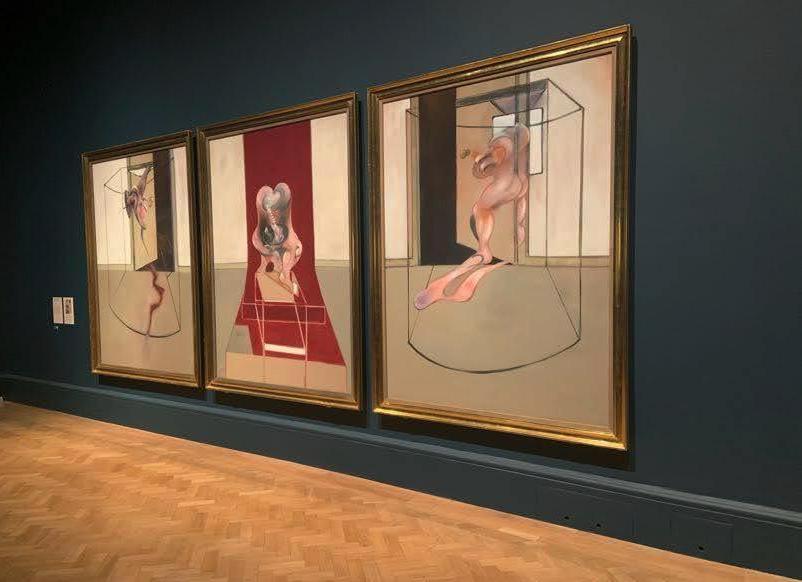

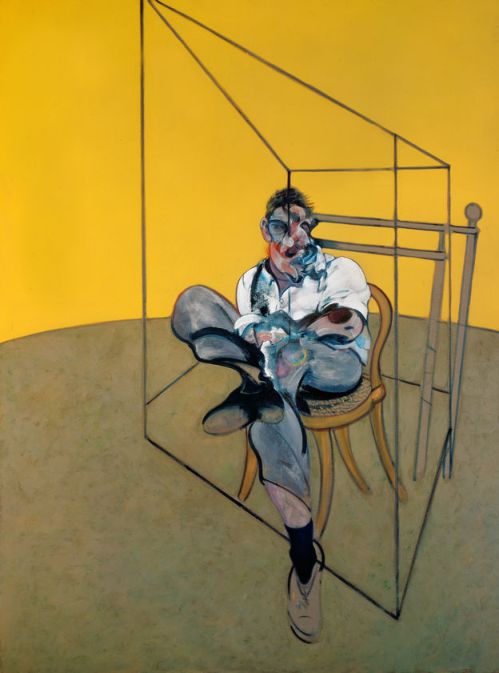

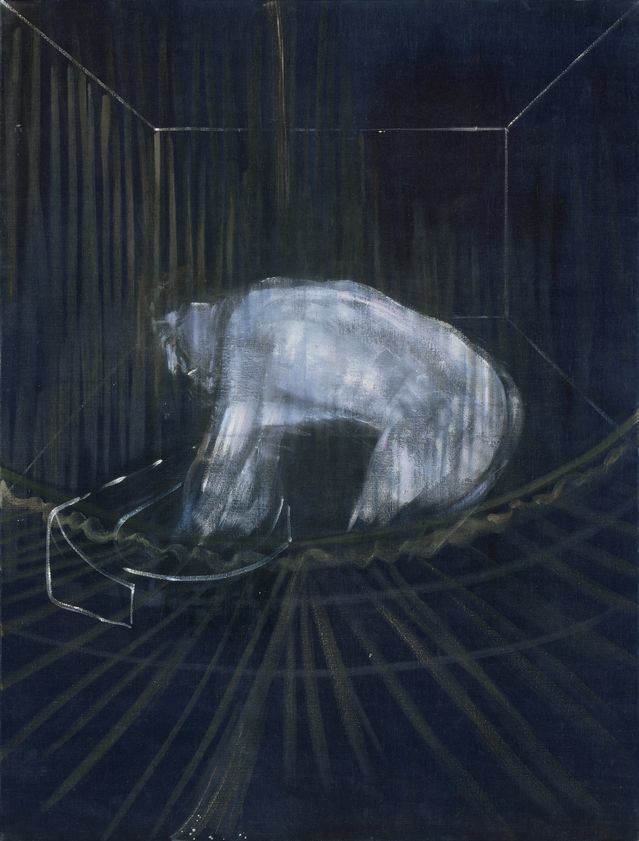


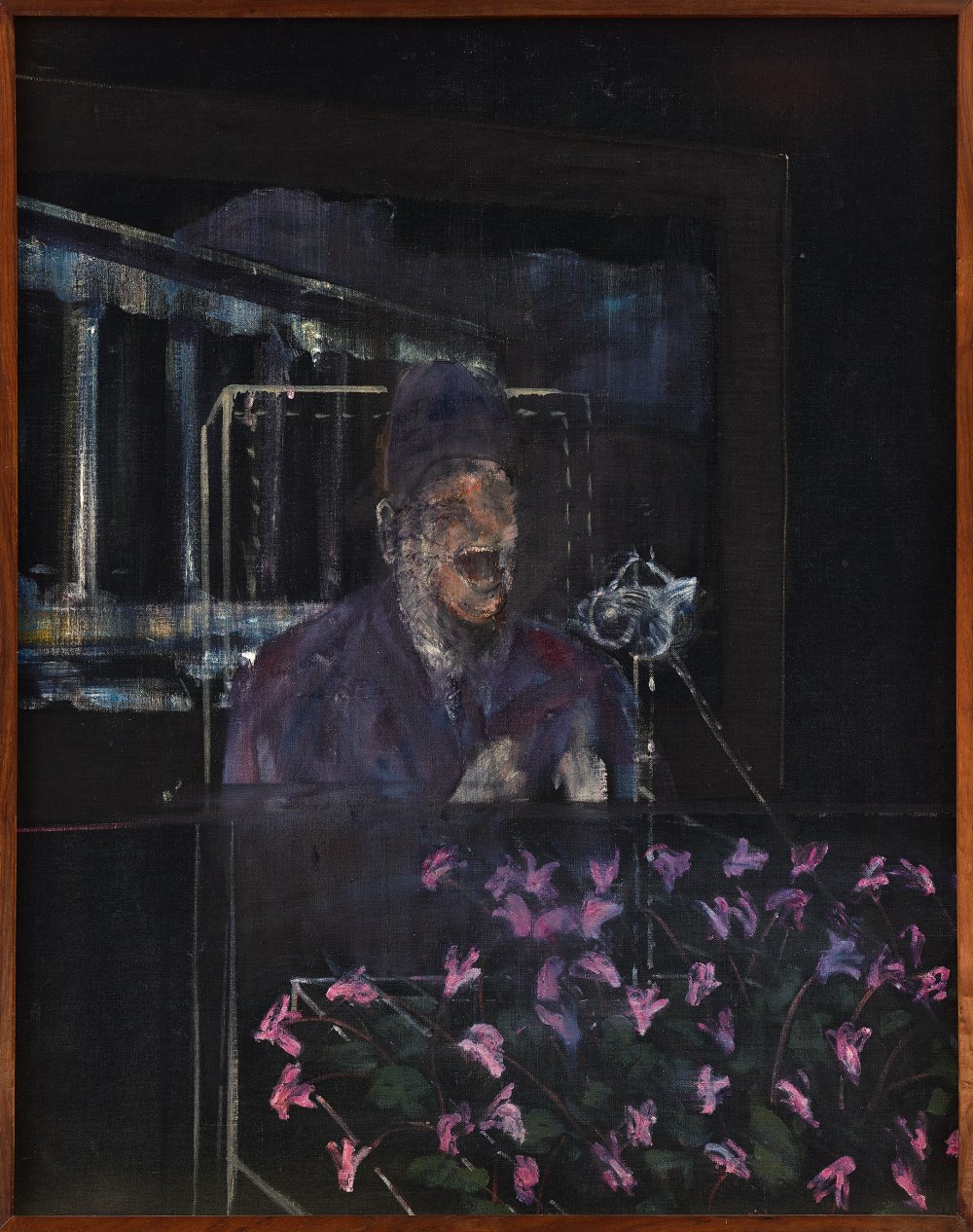

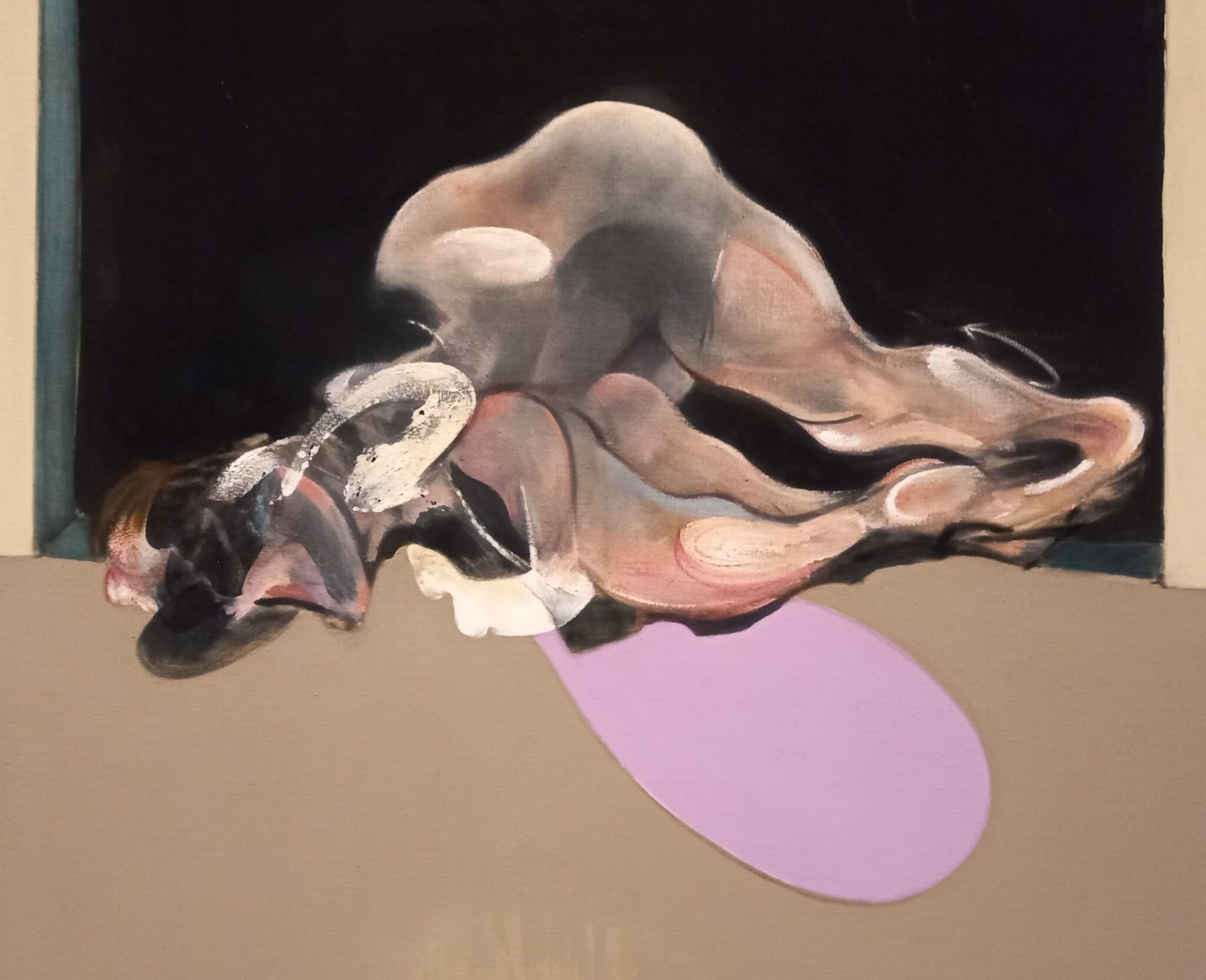

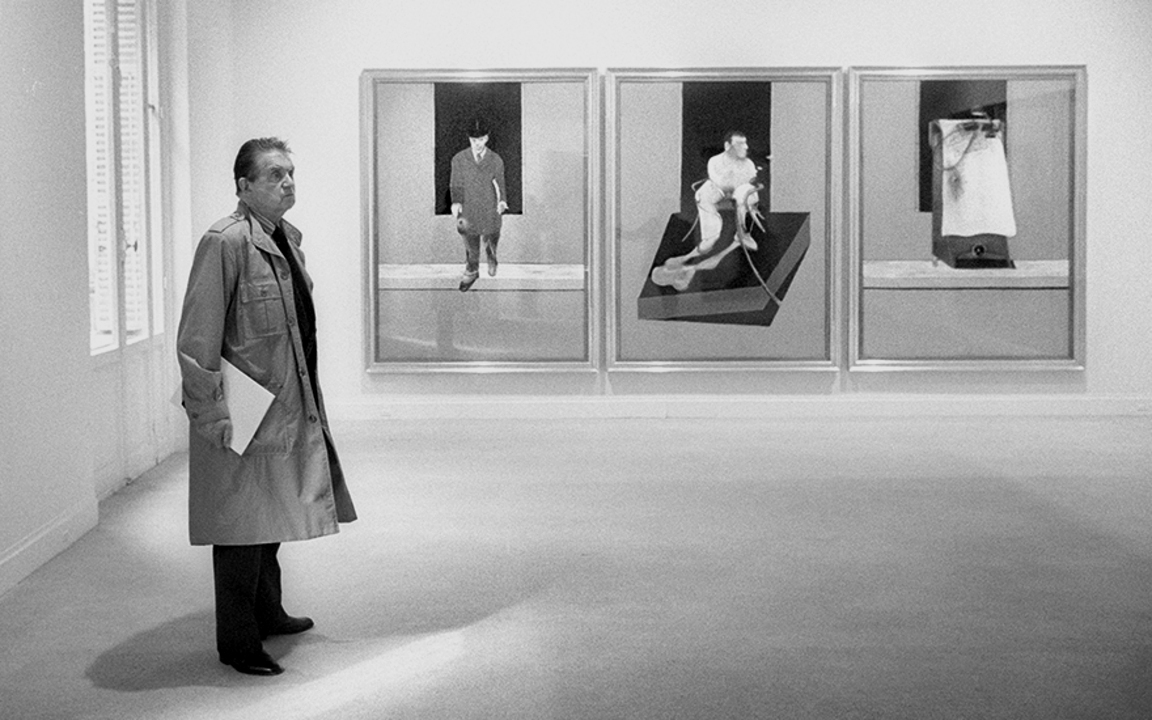
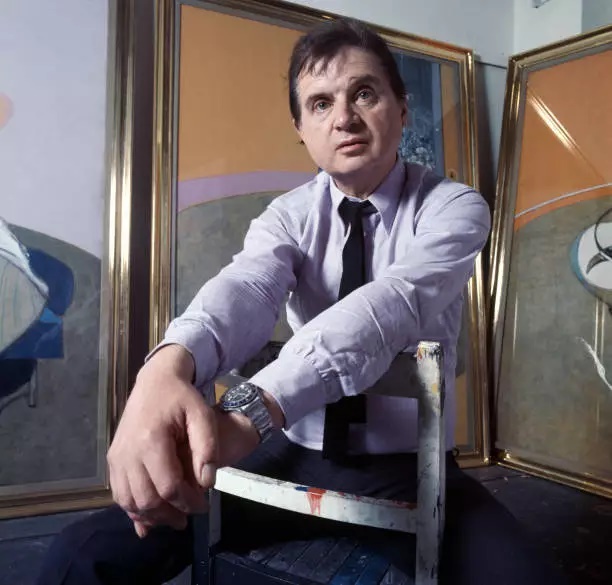

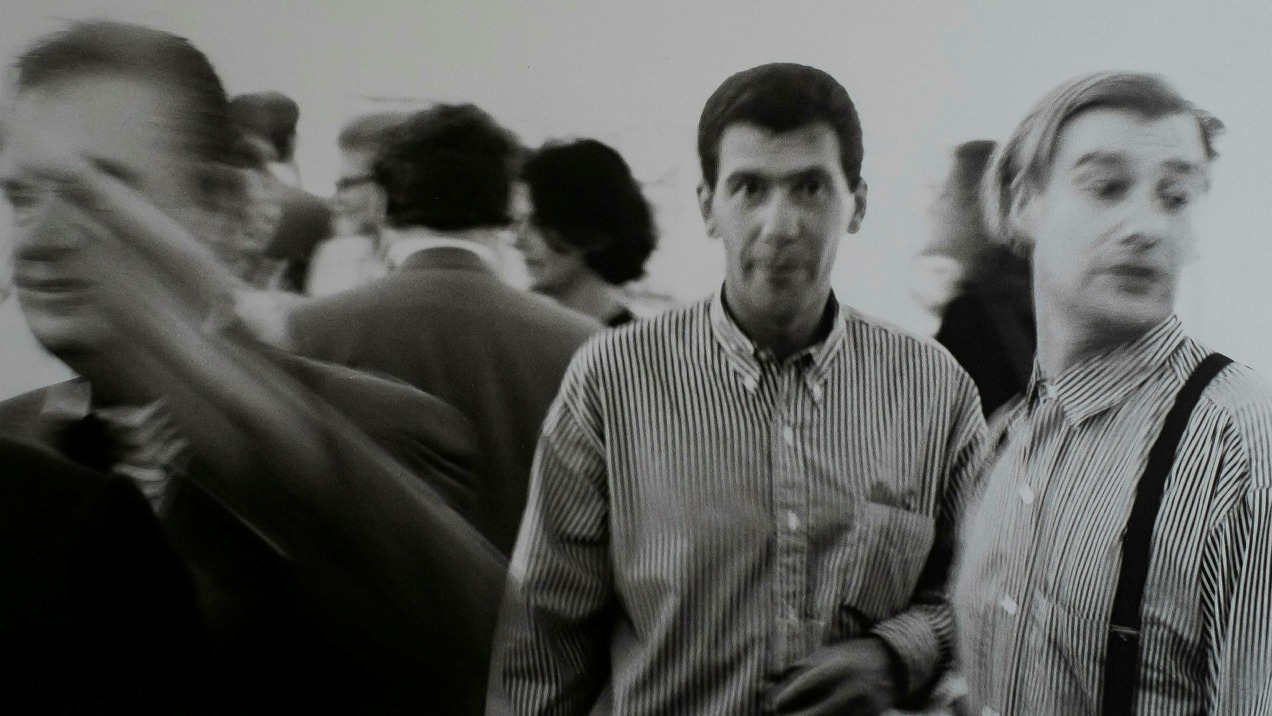

.jpg)

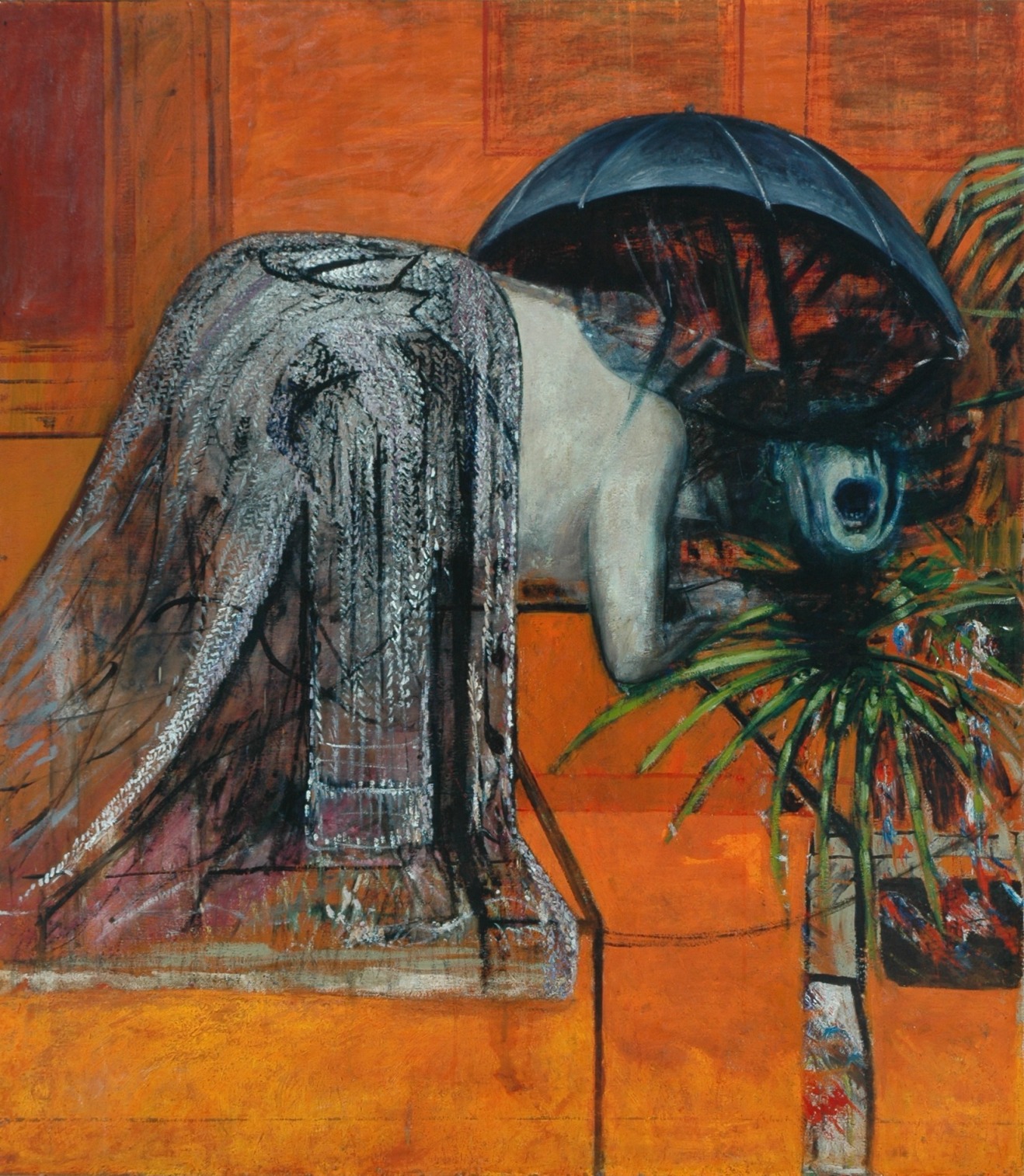

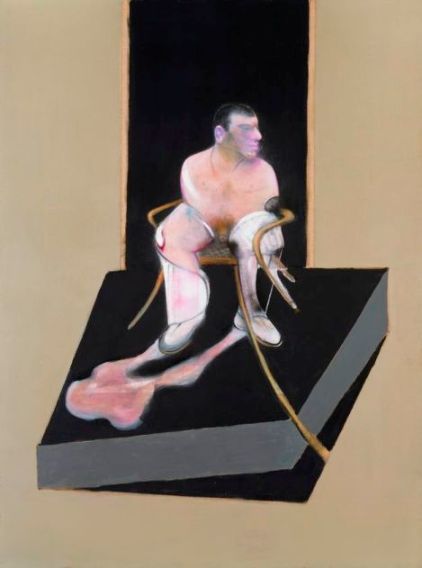
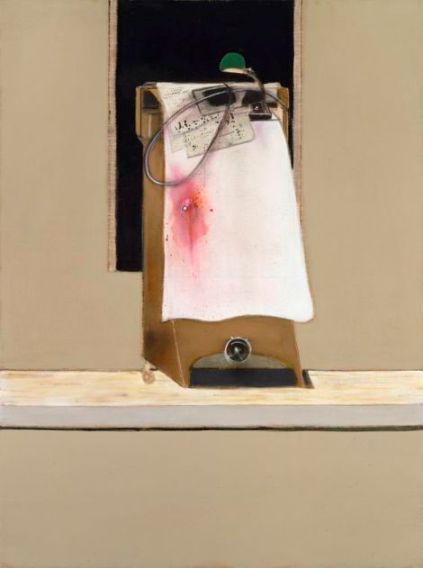

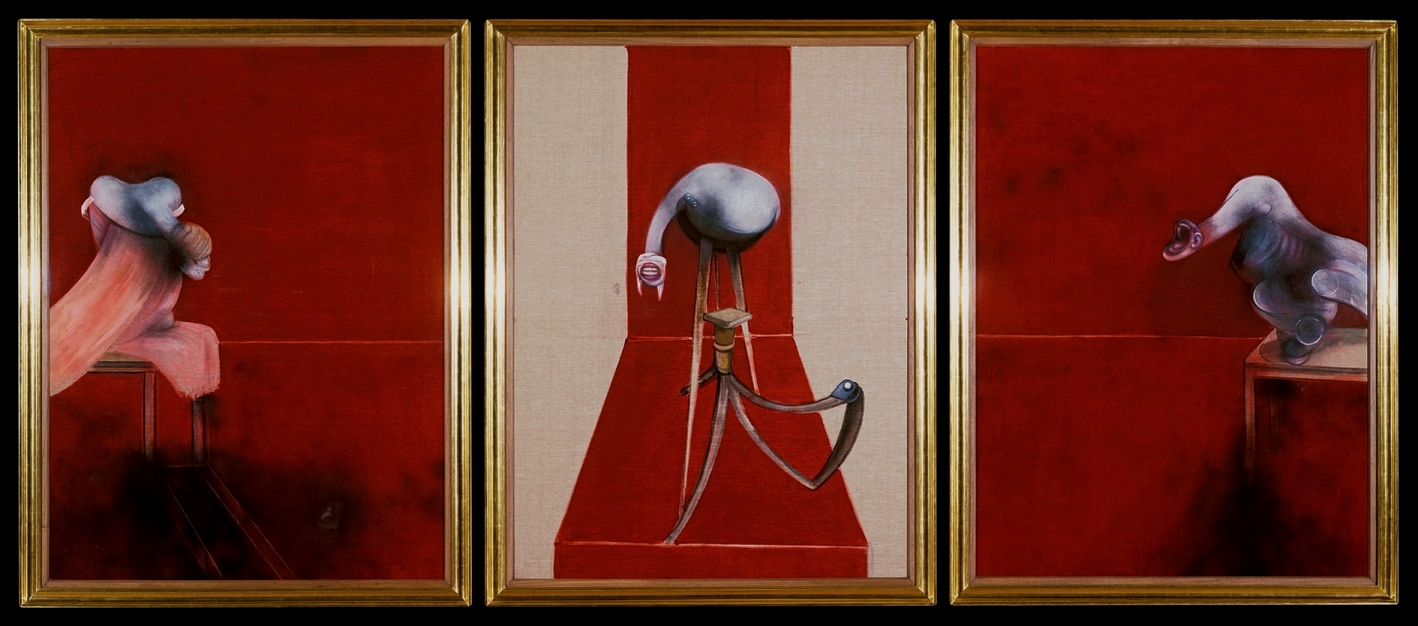

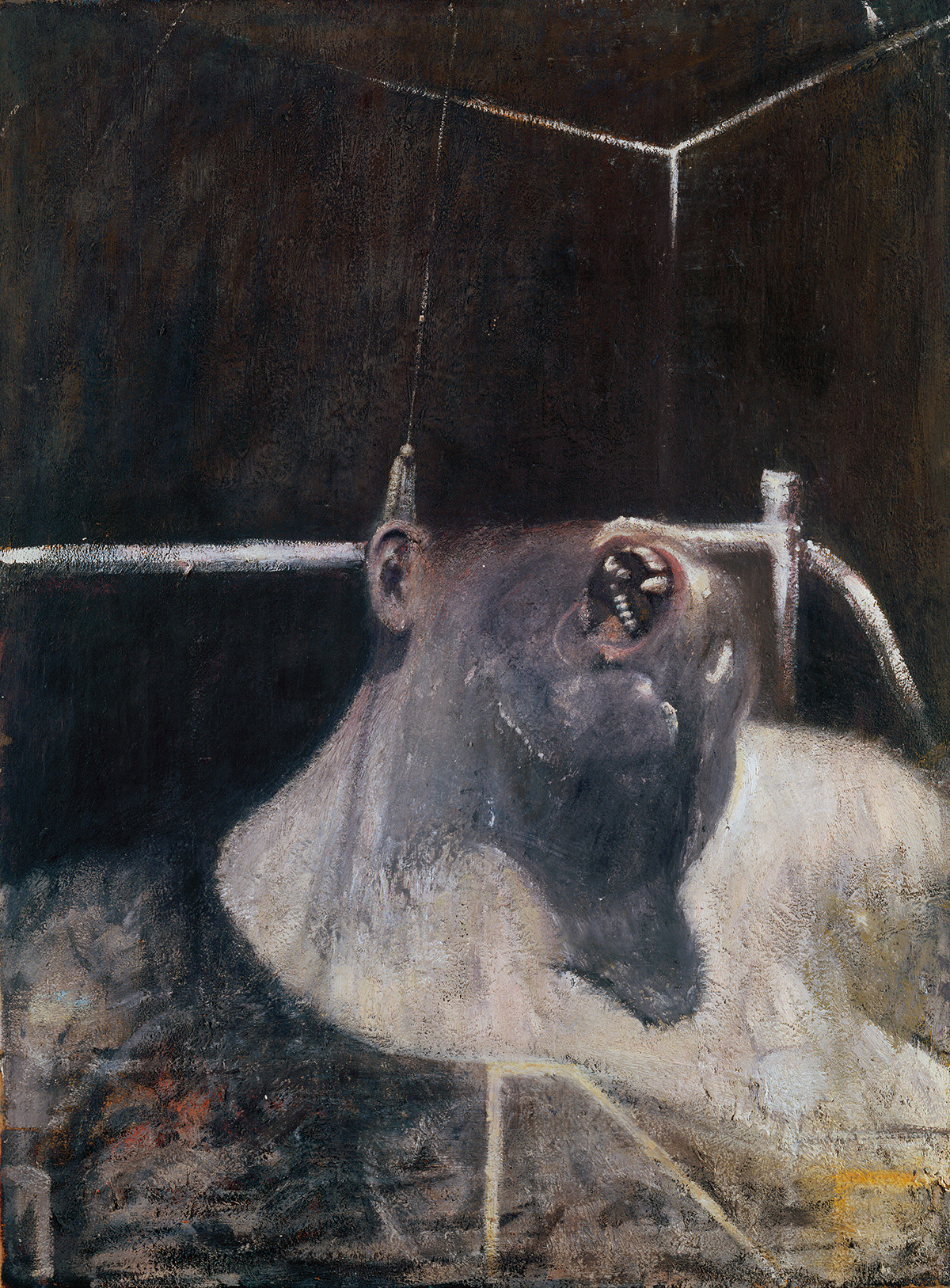


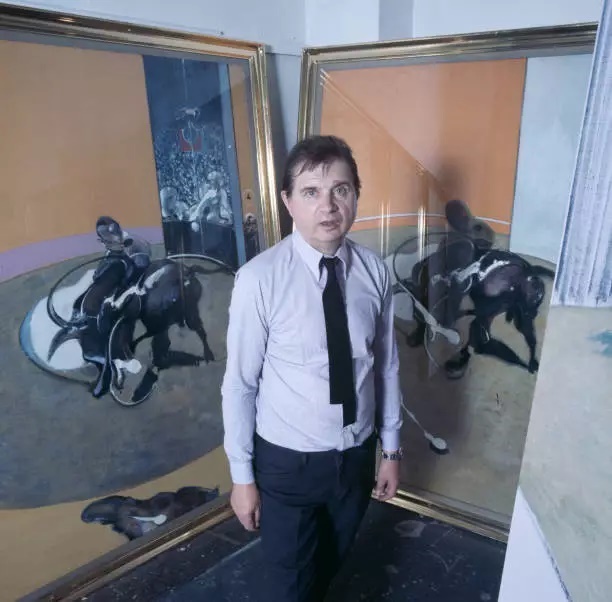
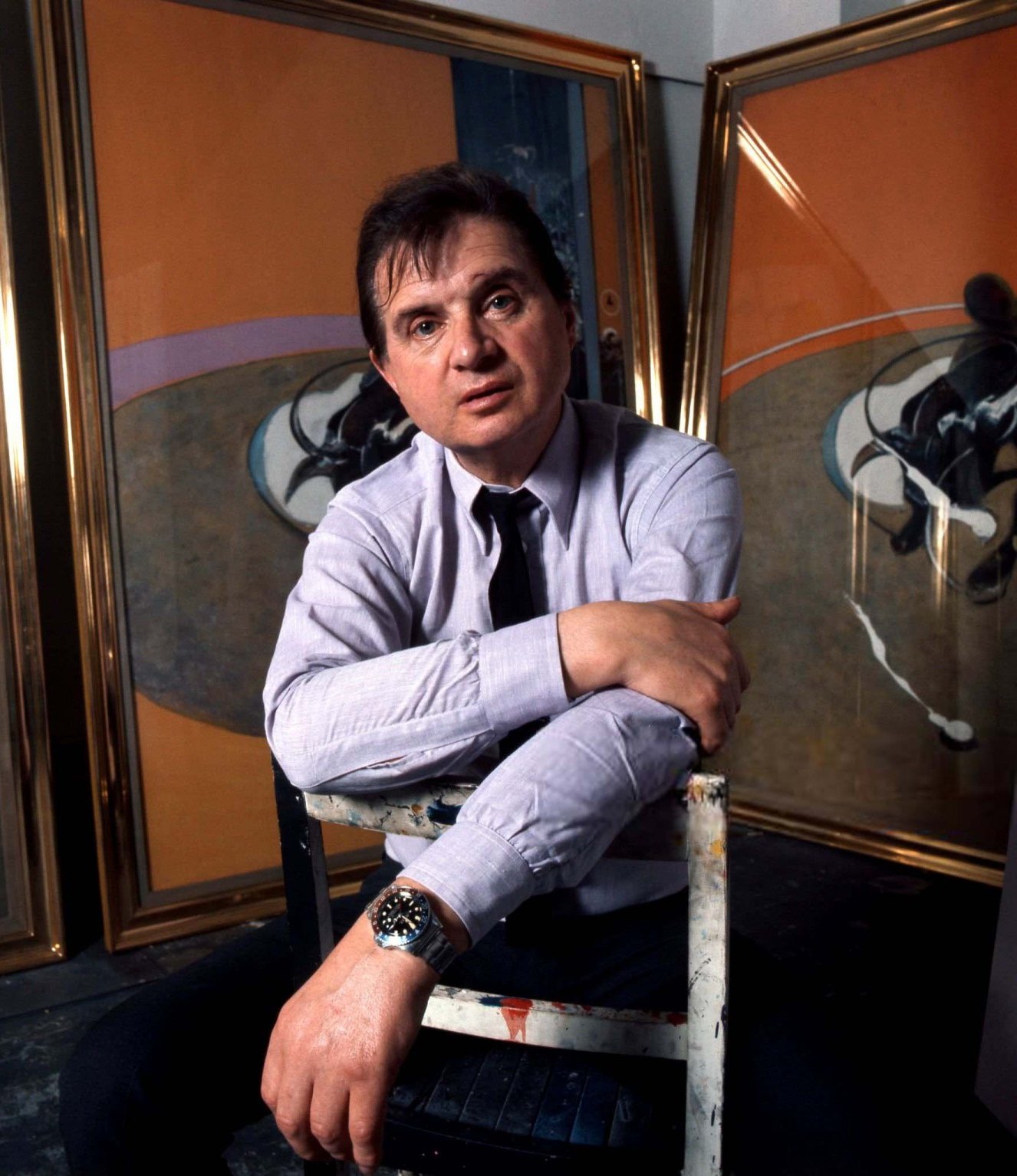
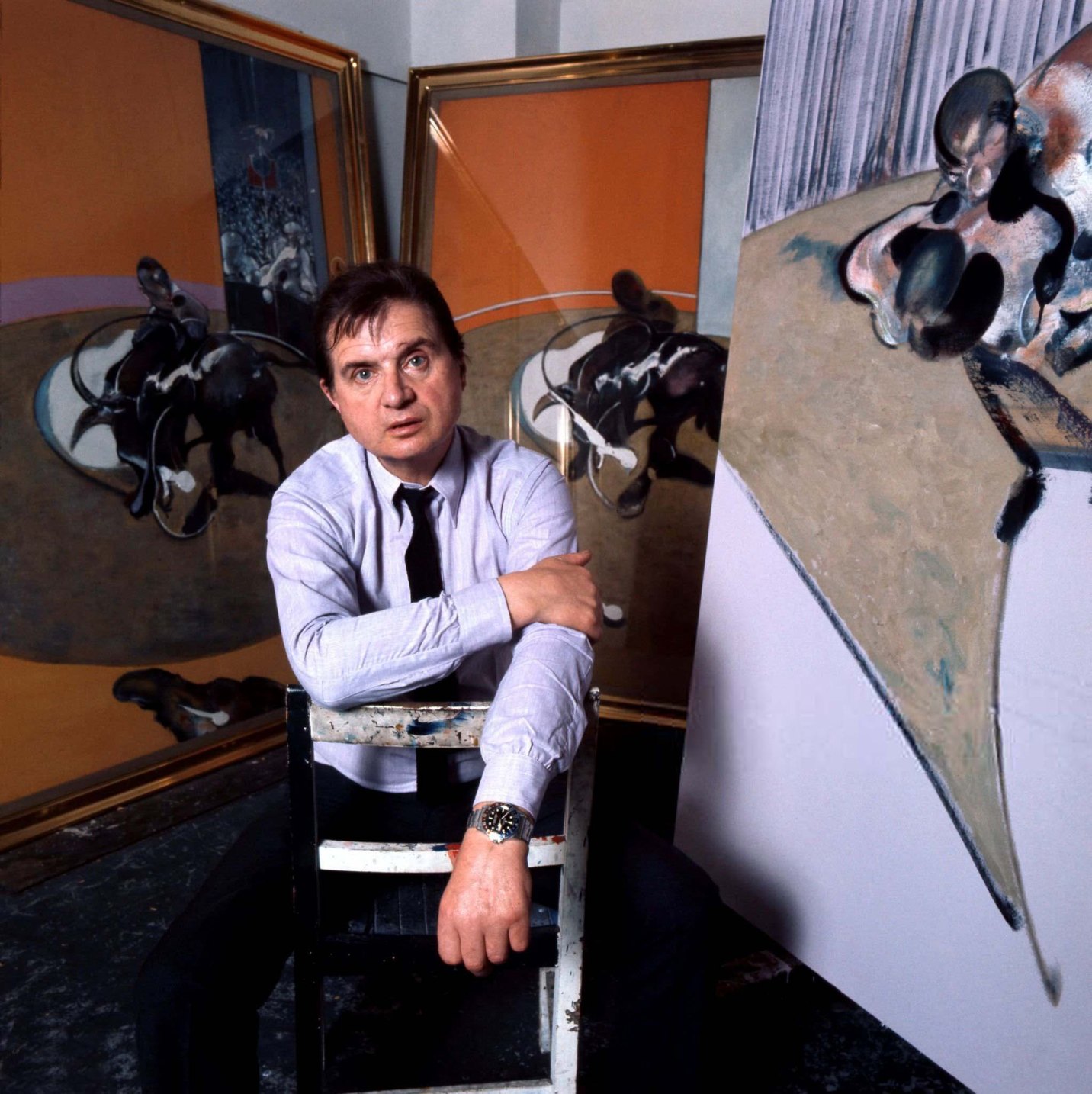
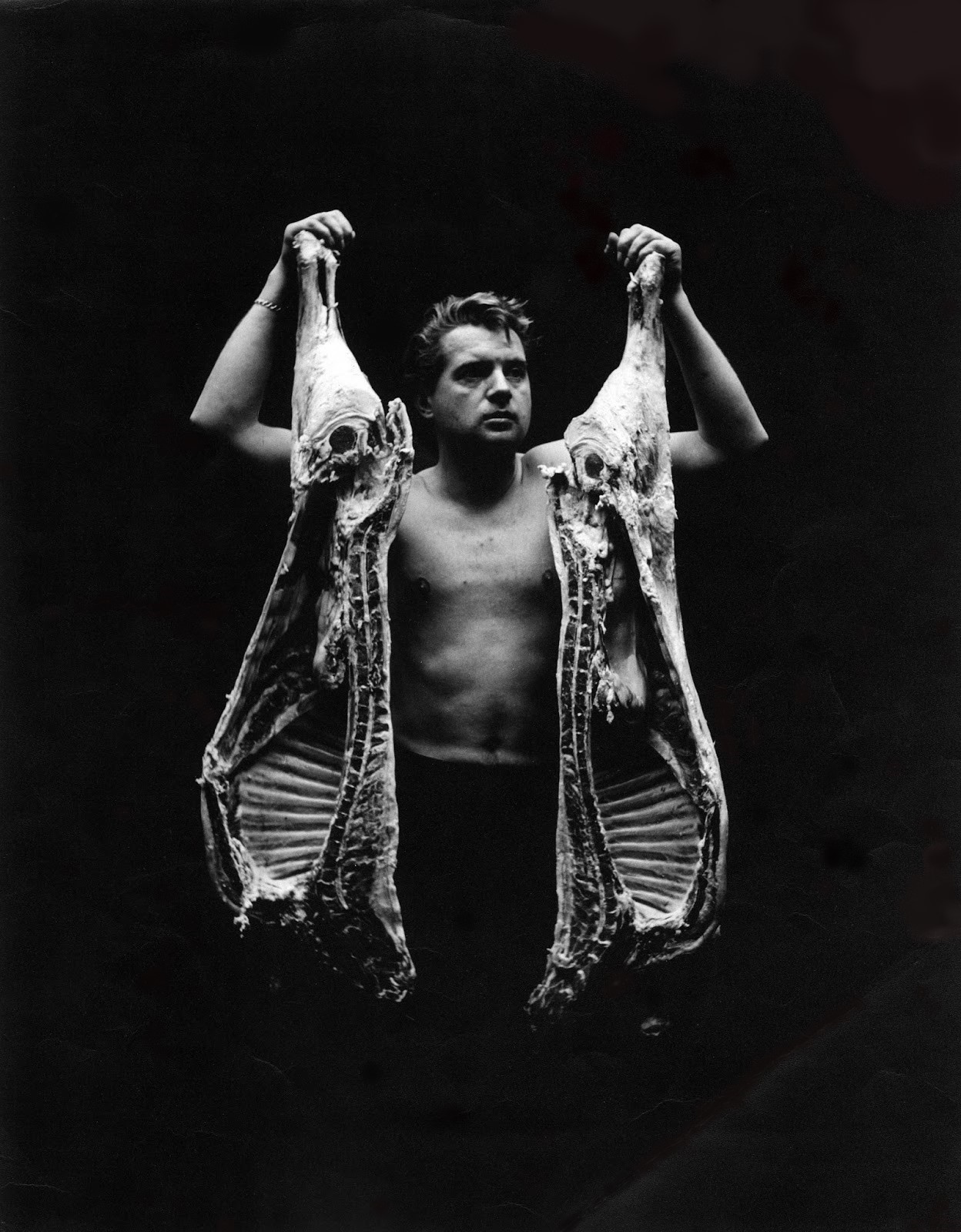

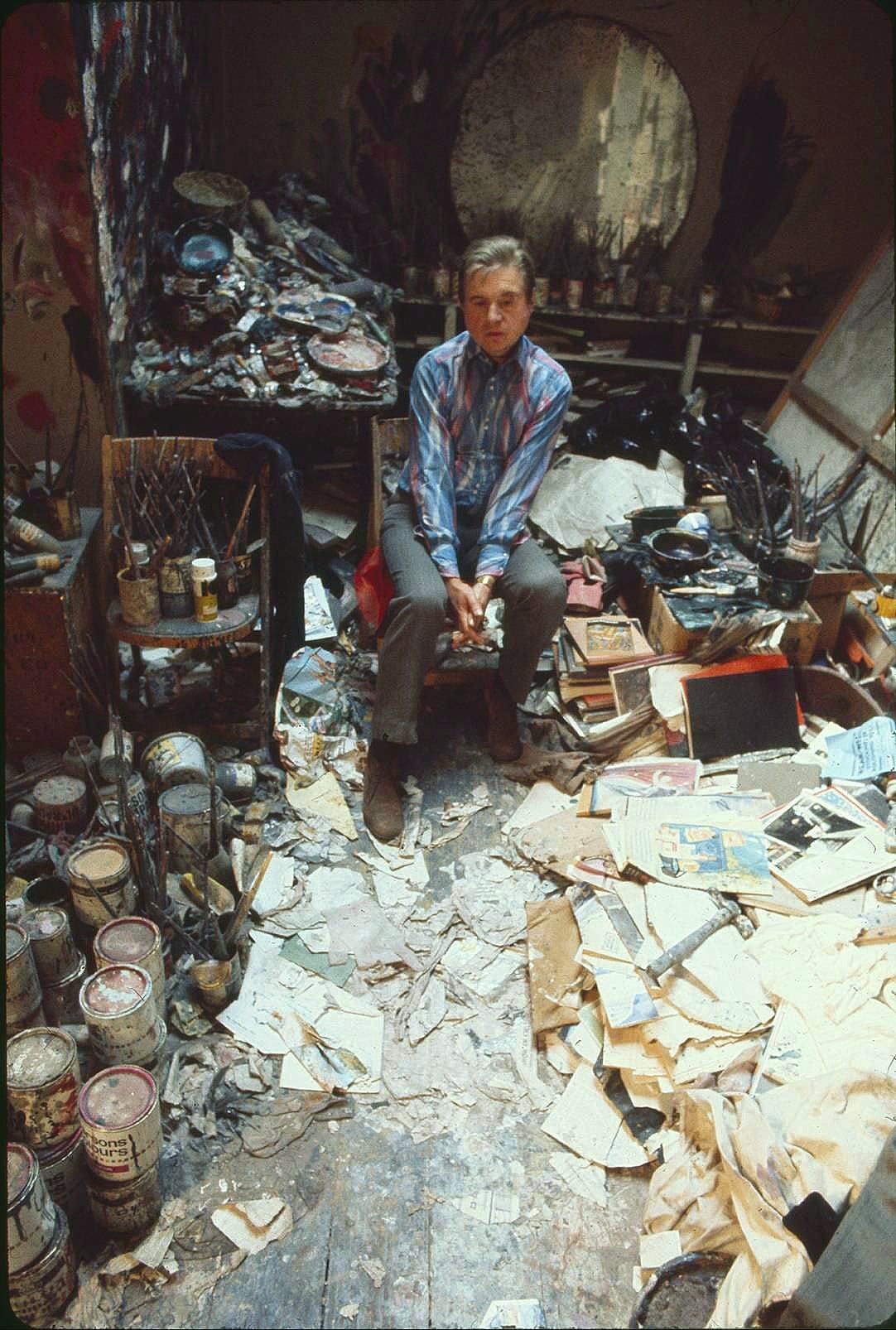
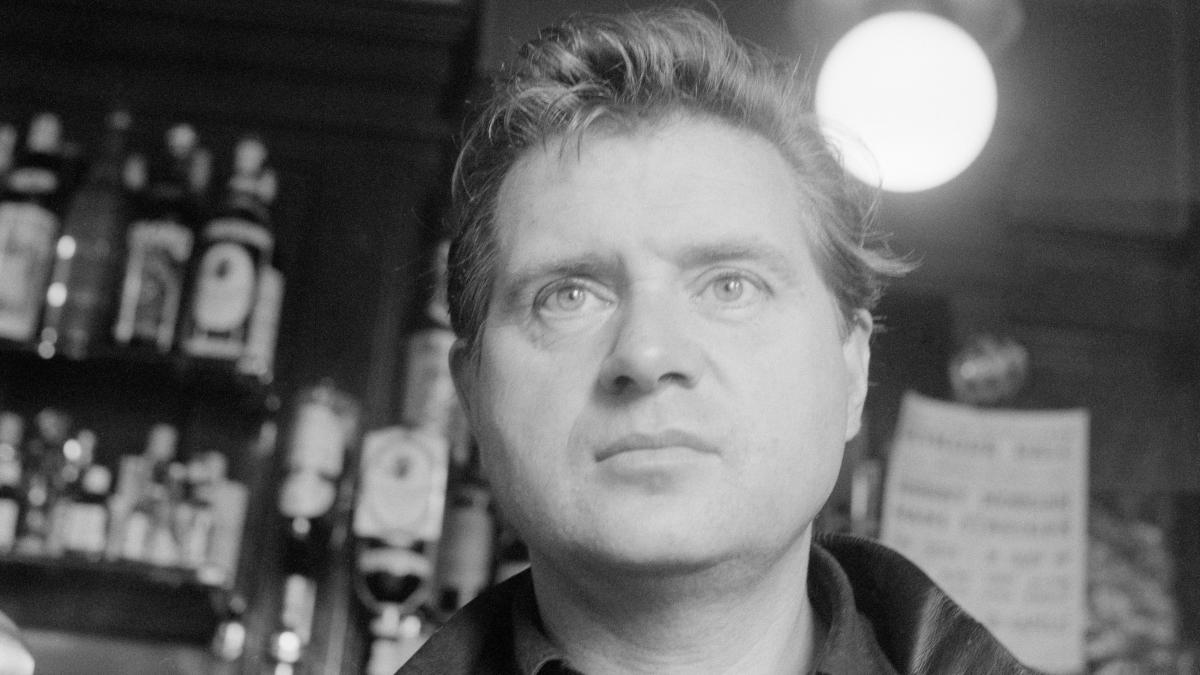
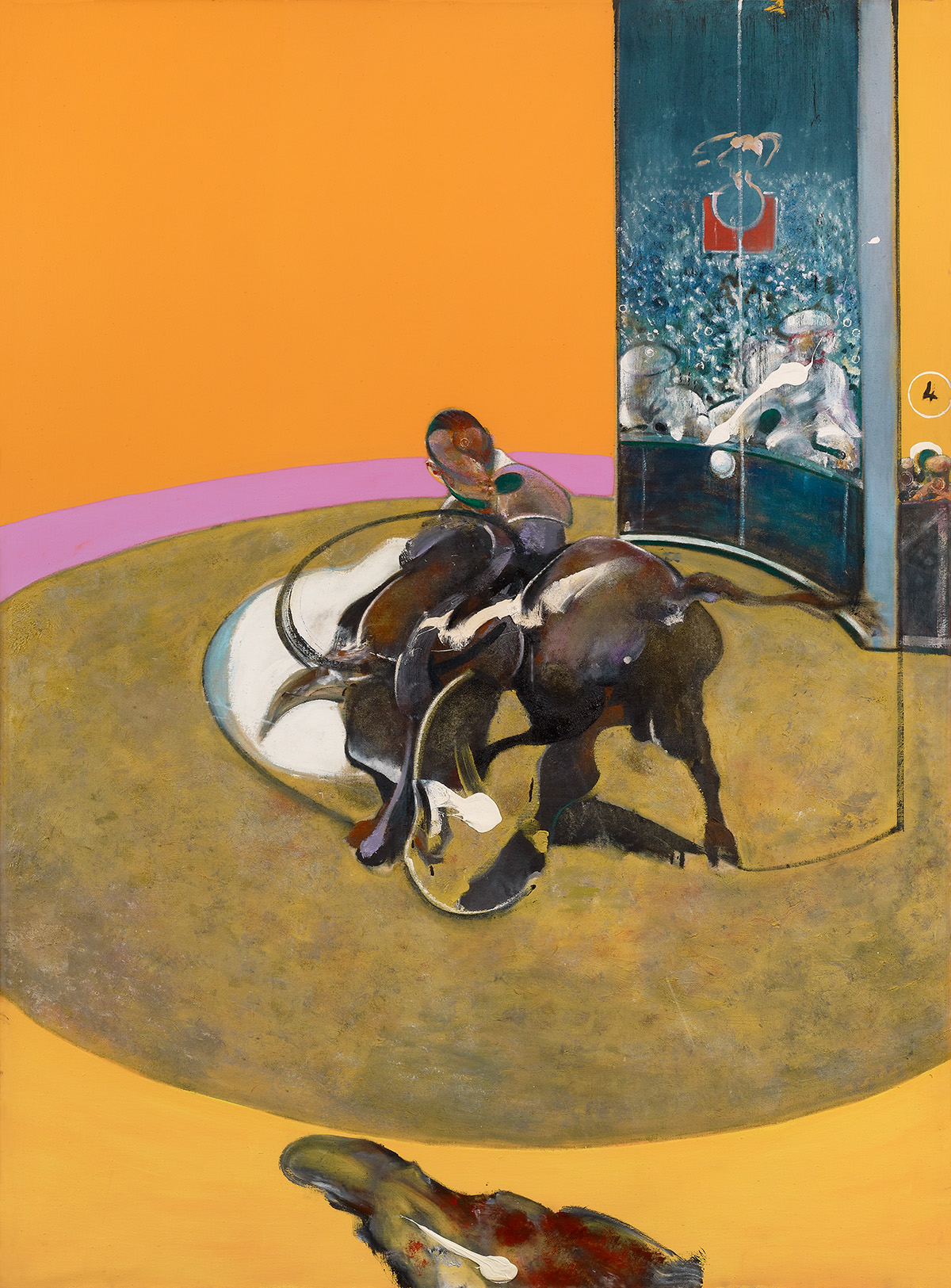
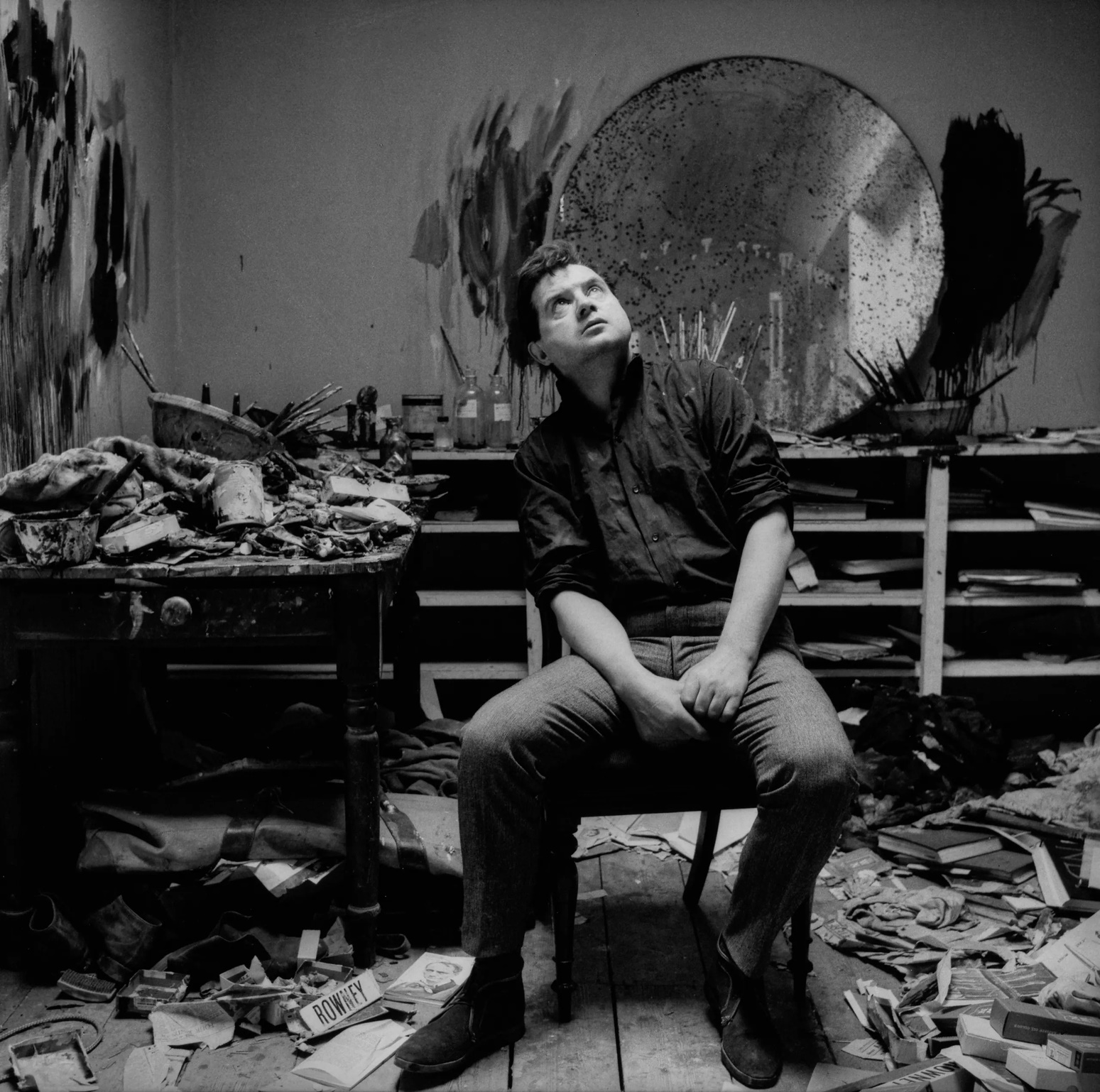
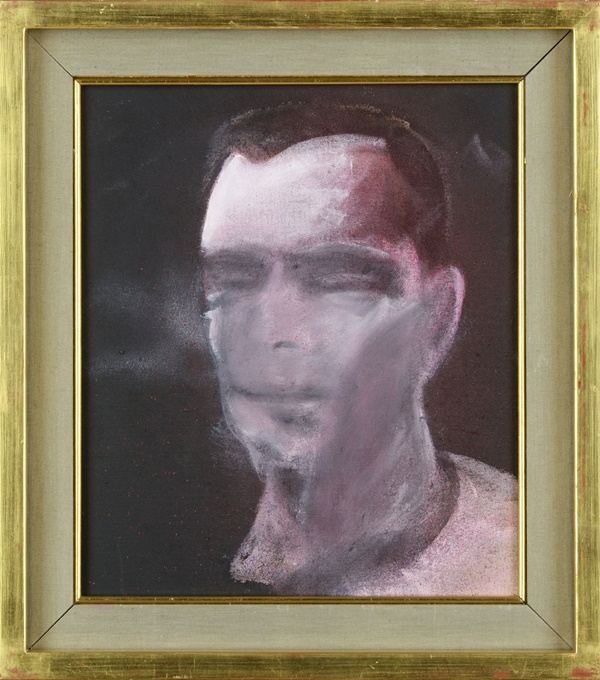
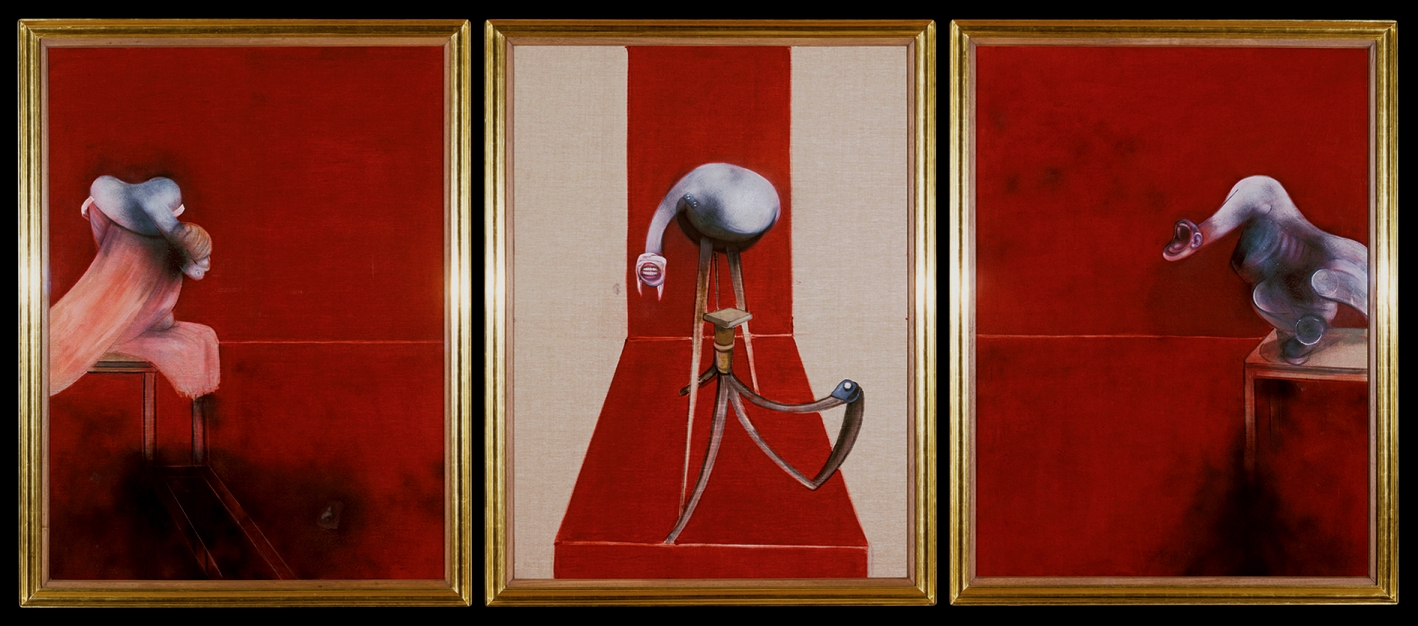




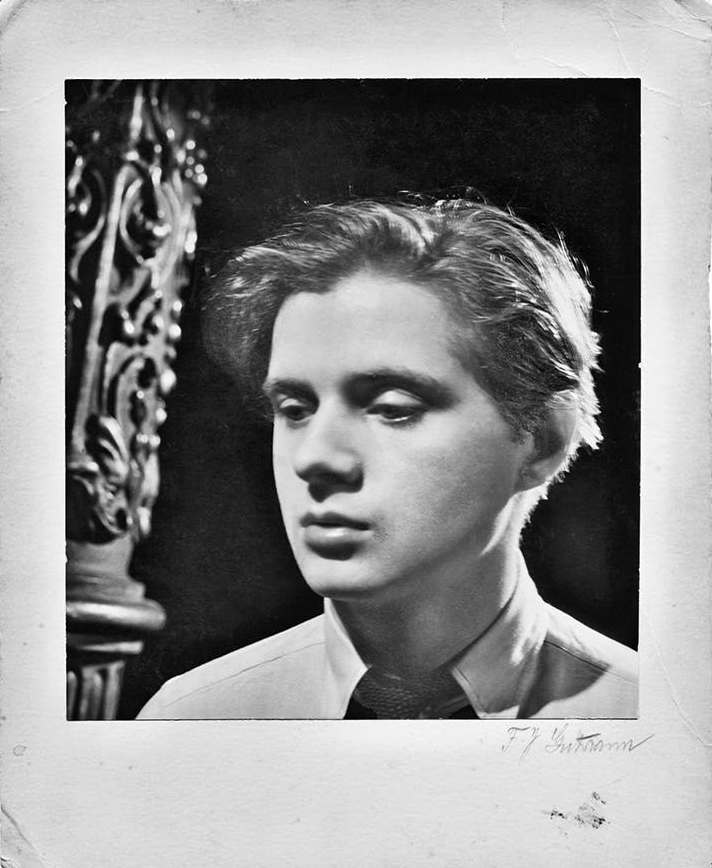

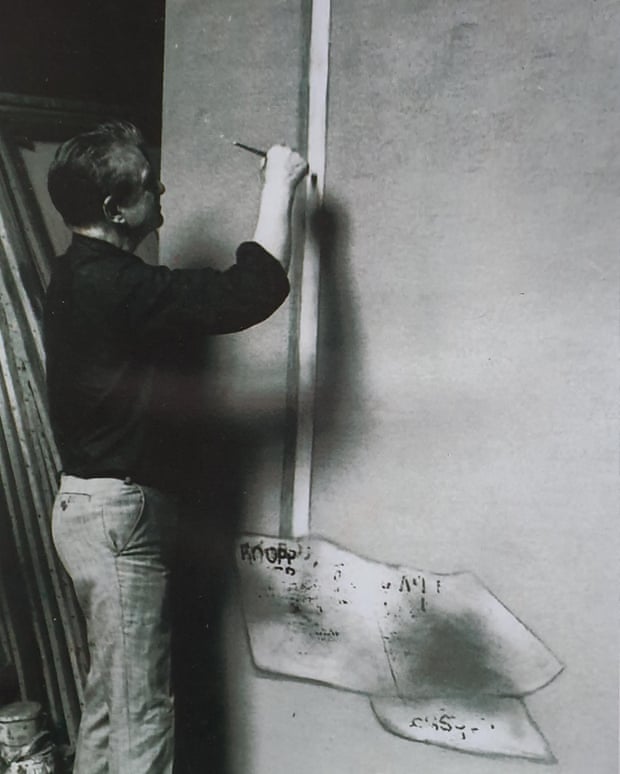
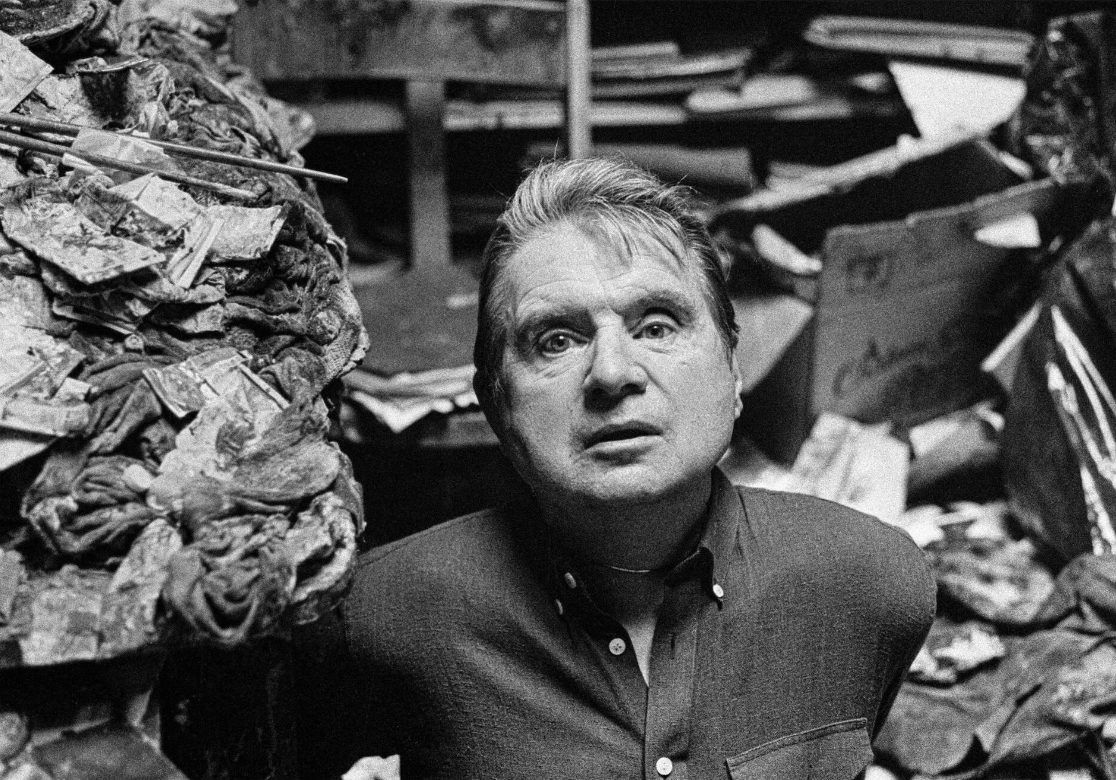


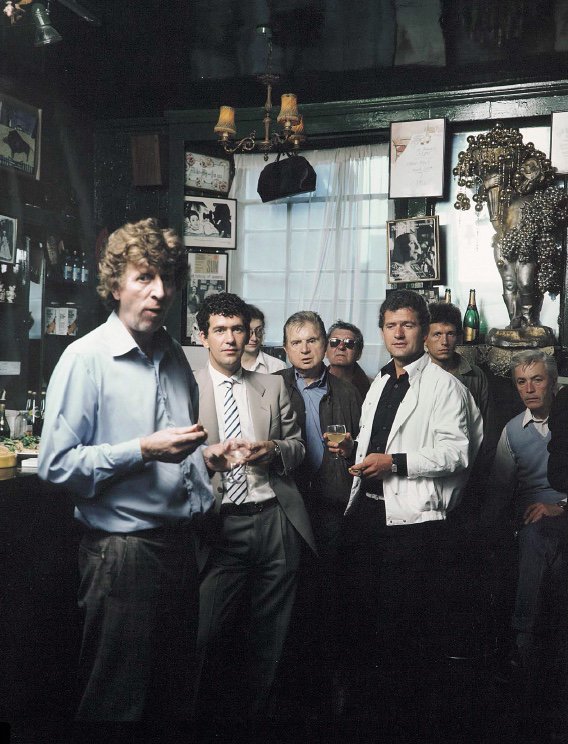

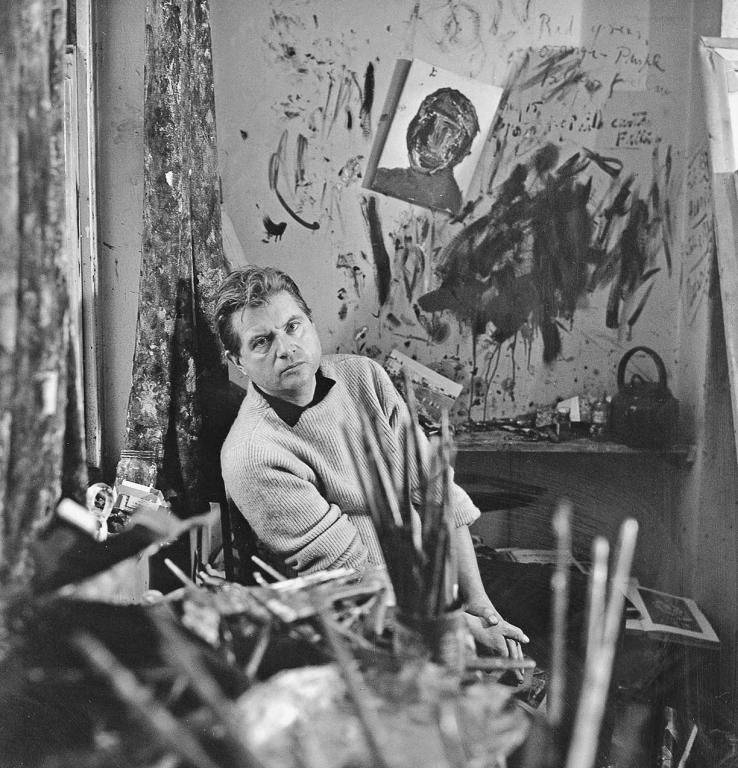


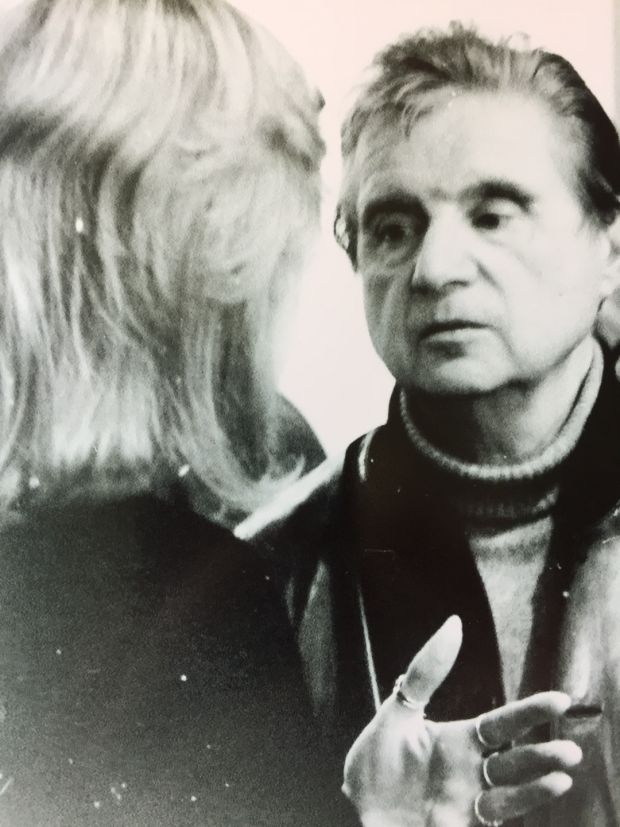
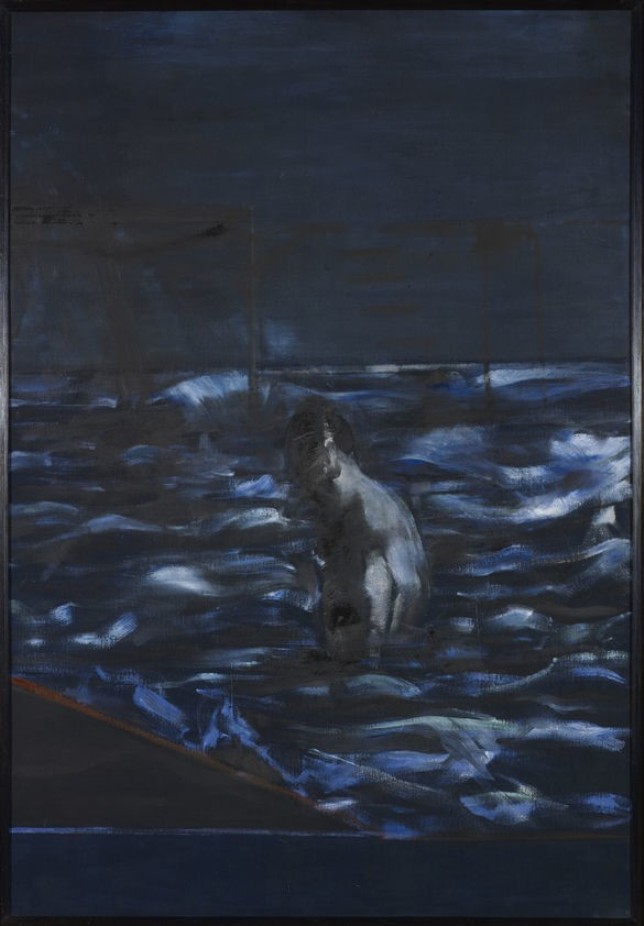
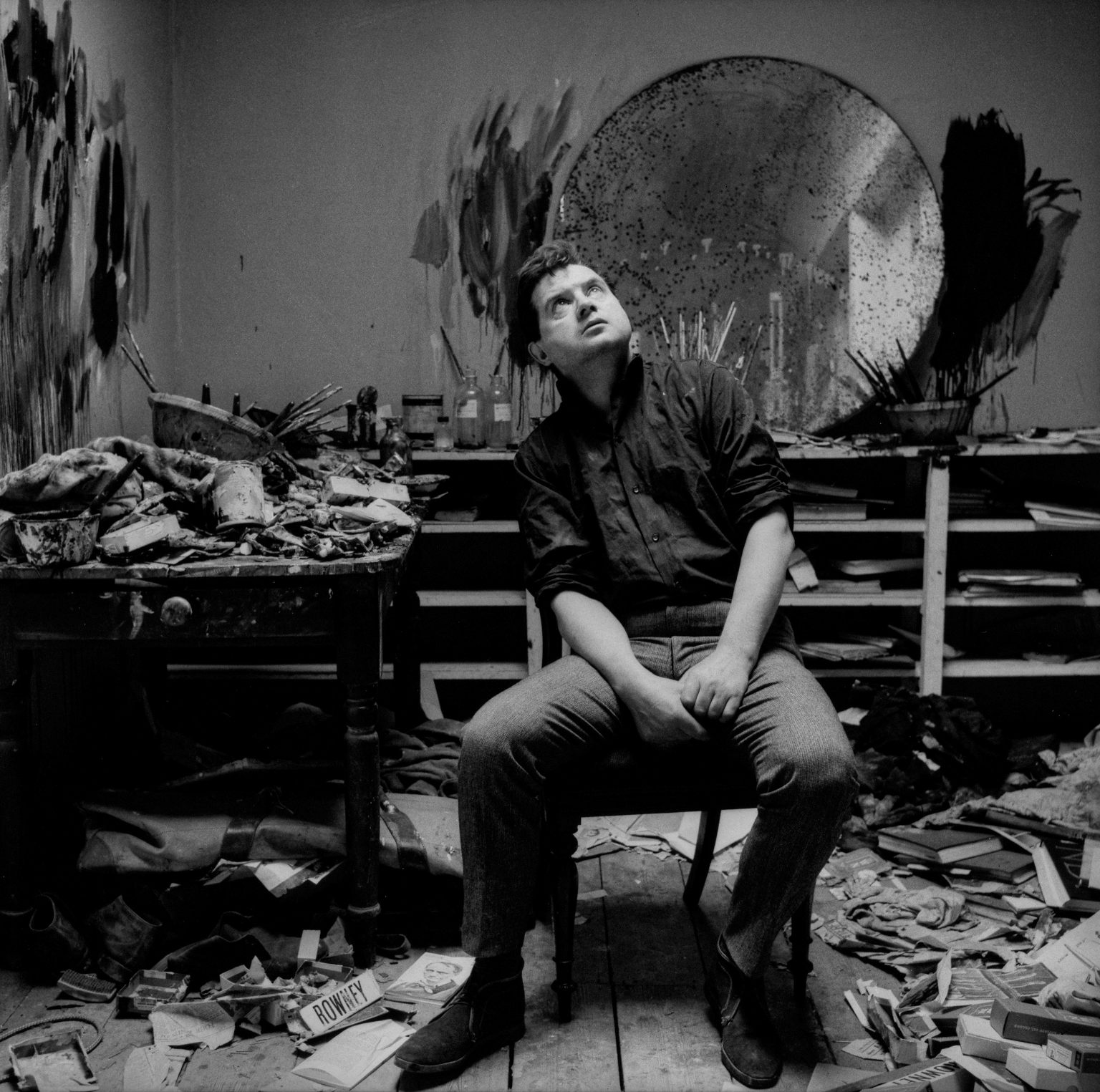
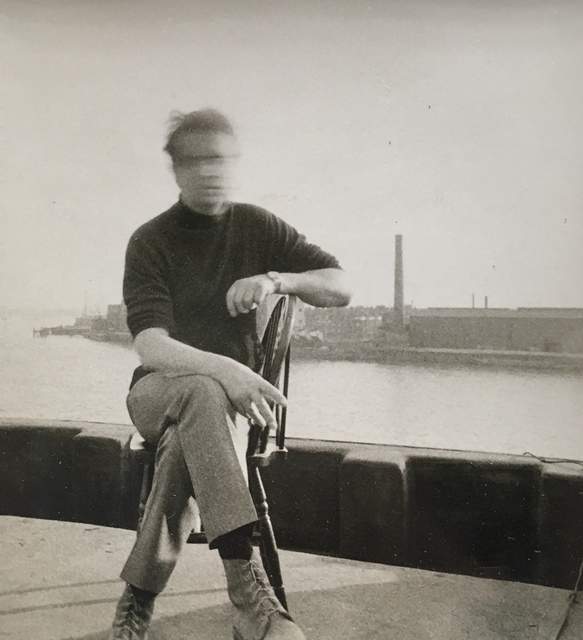
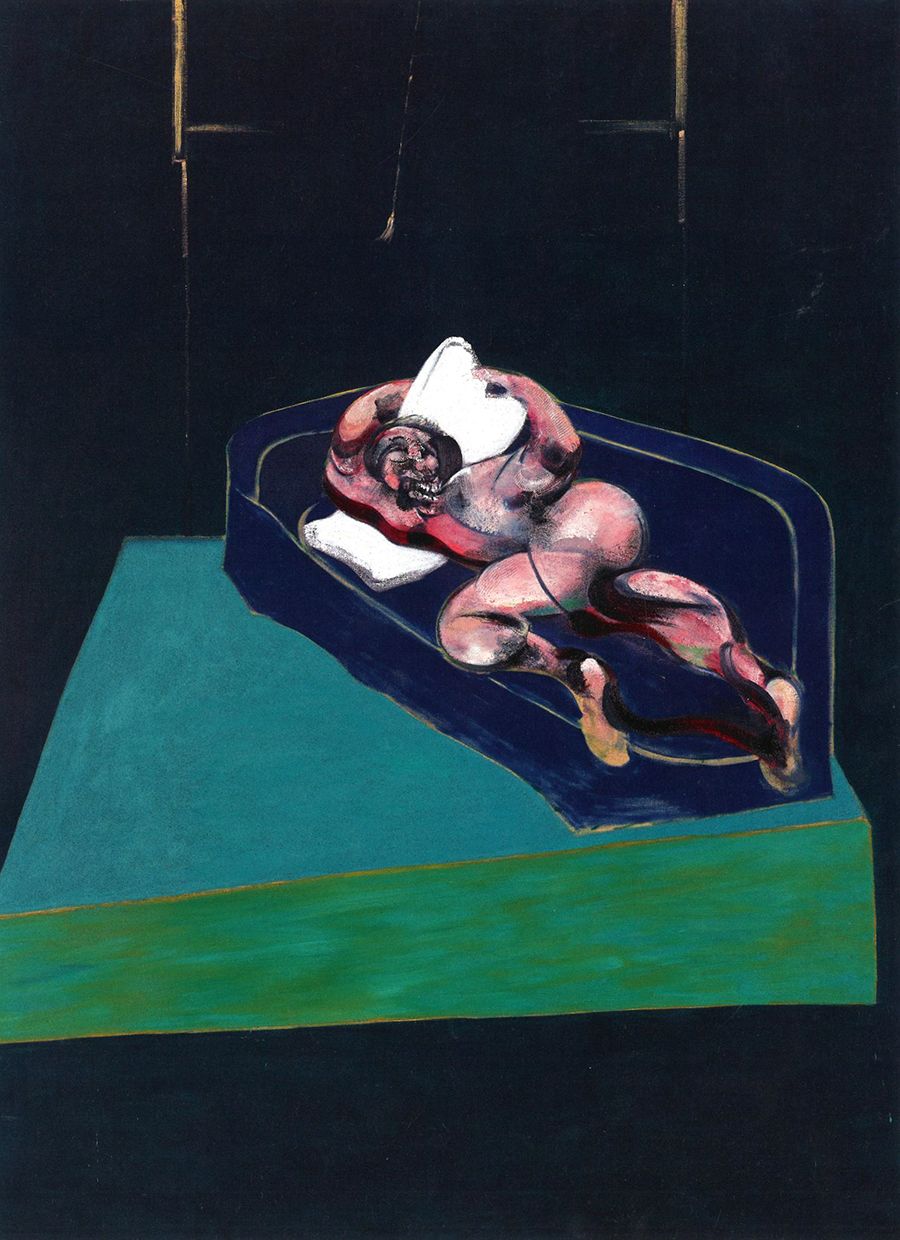


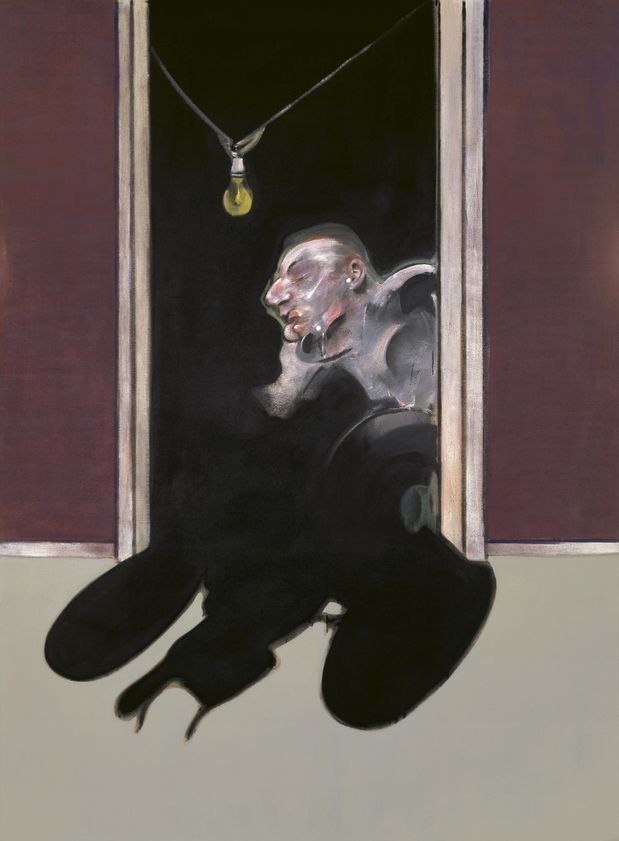
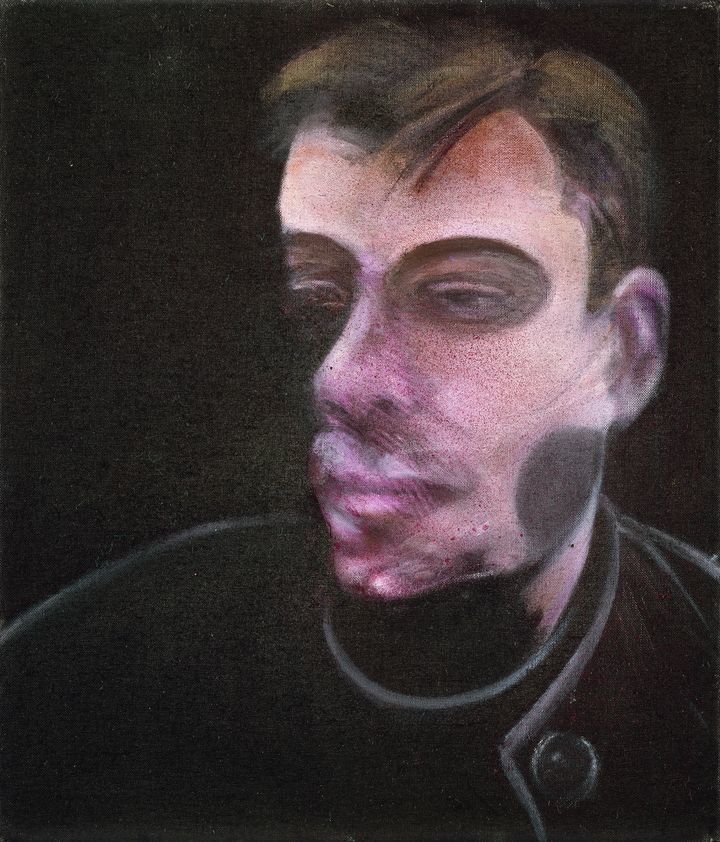
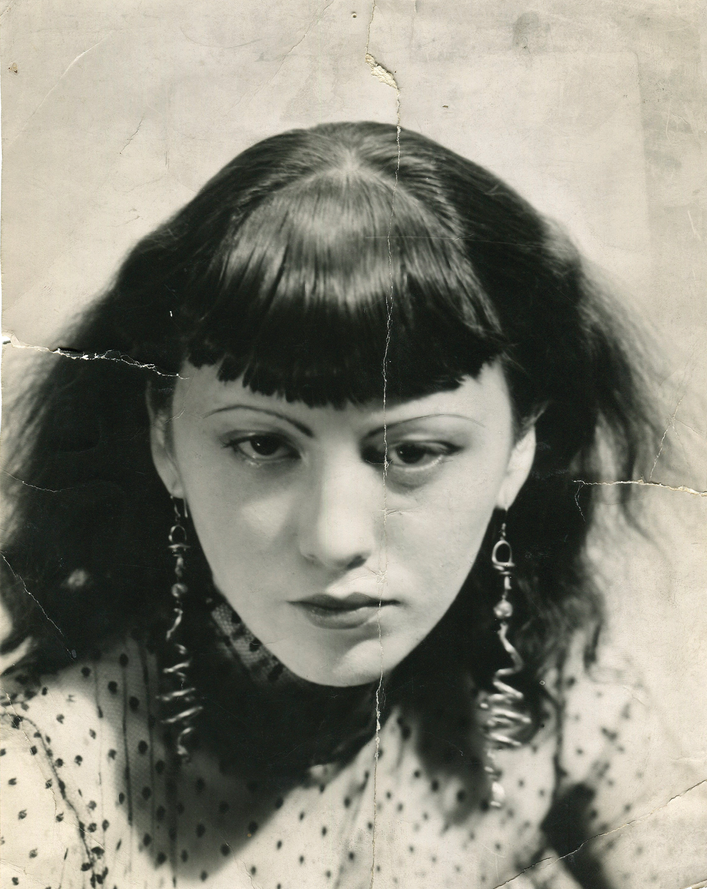

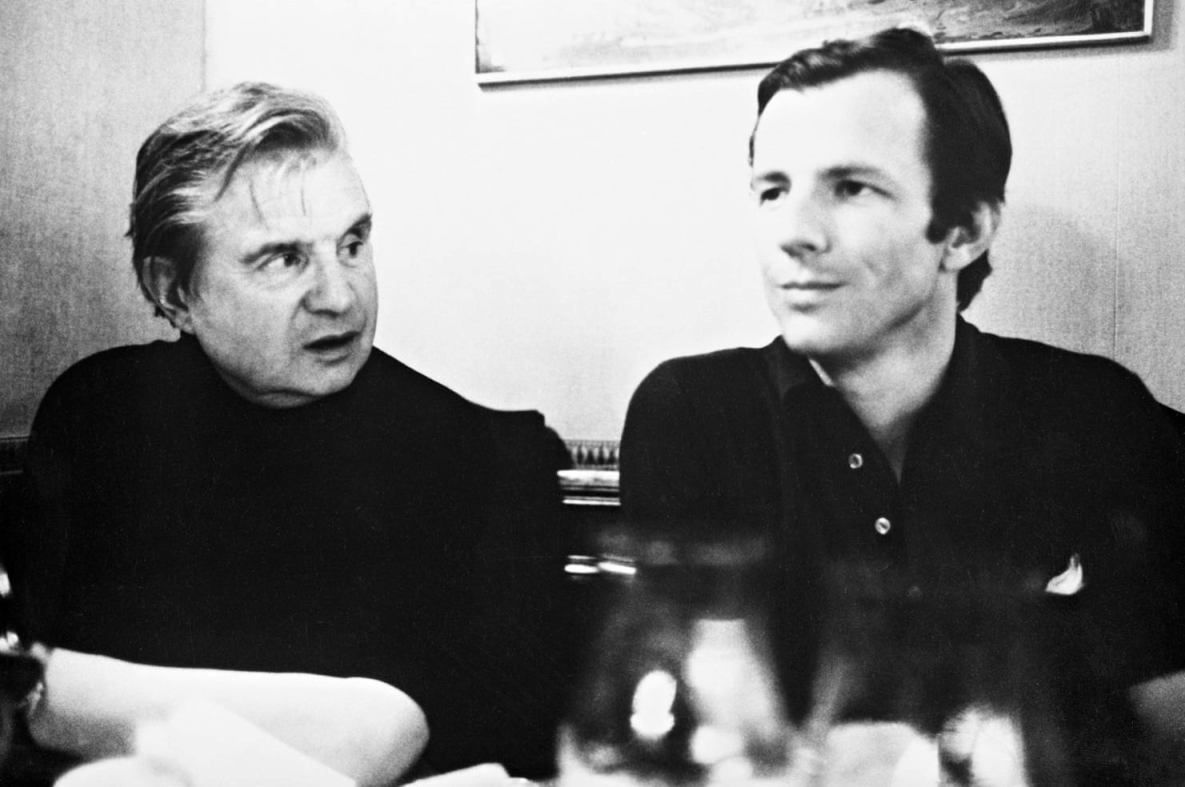
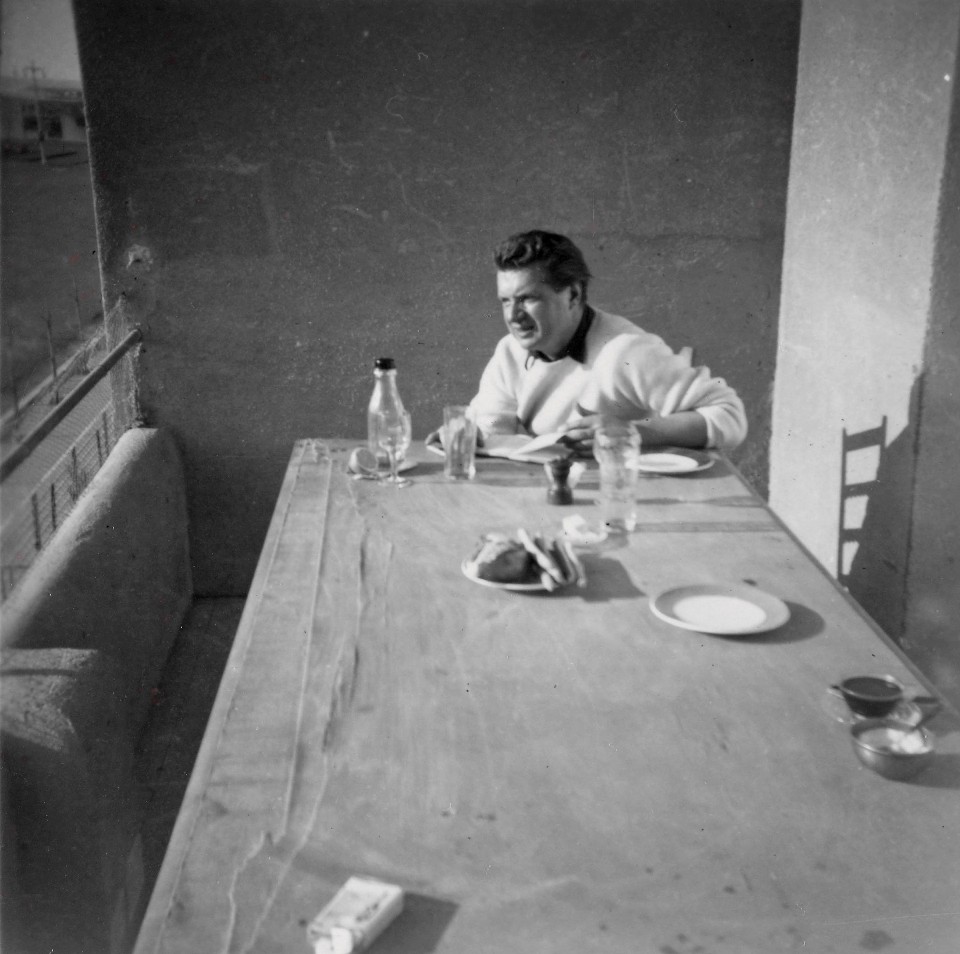

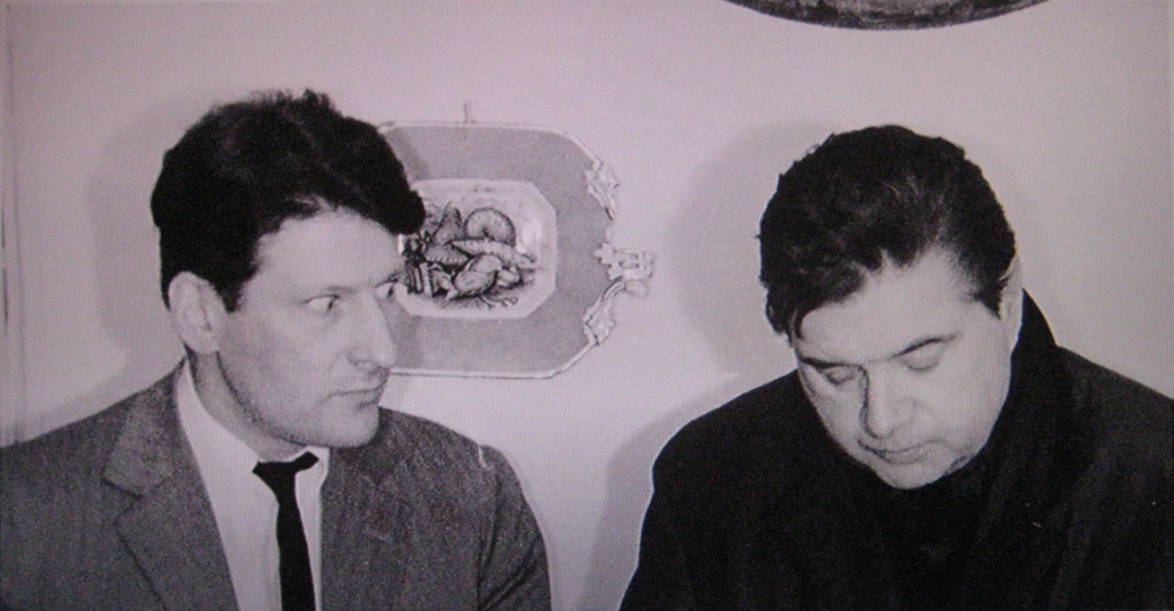
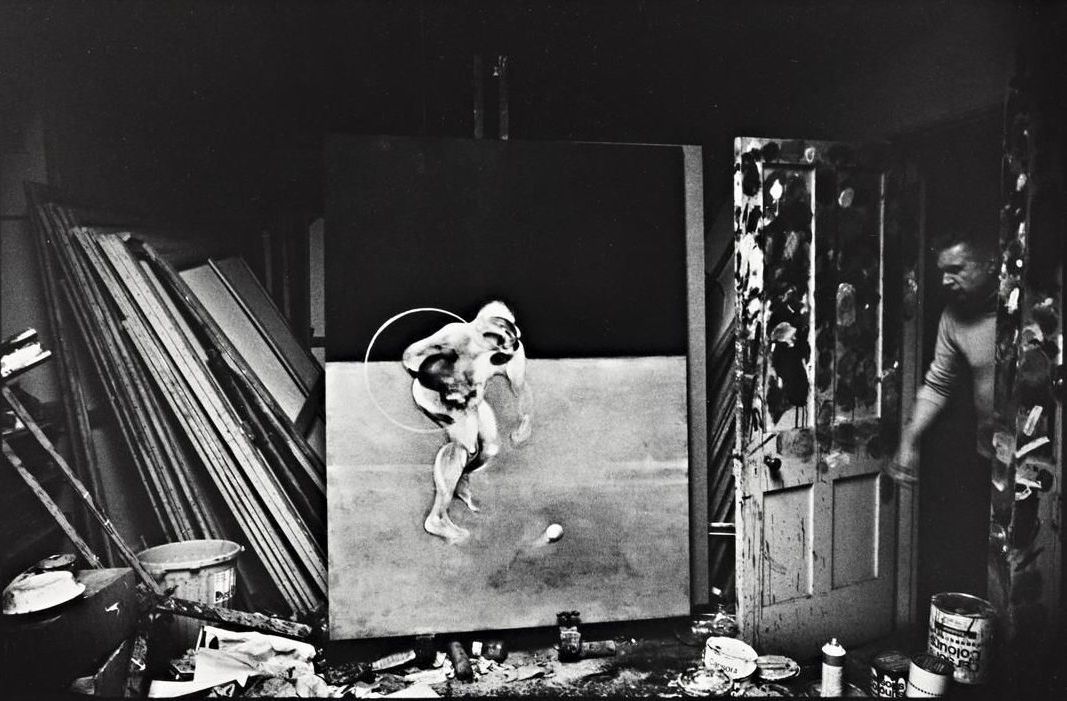

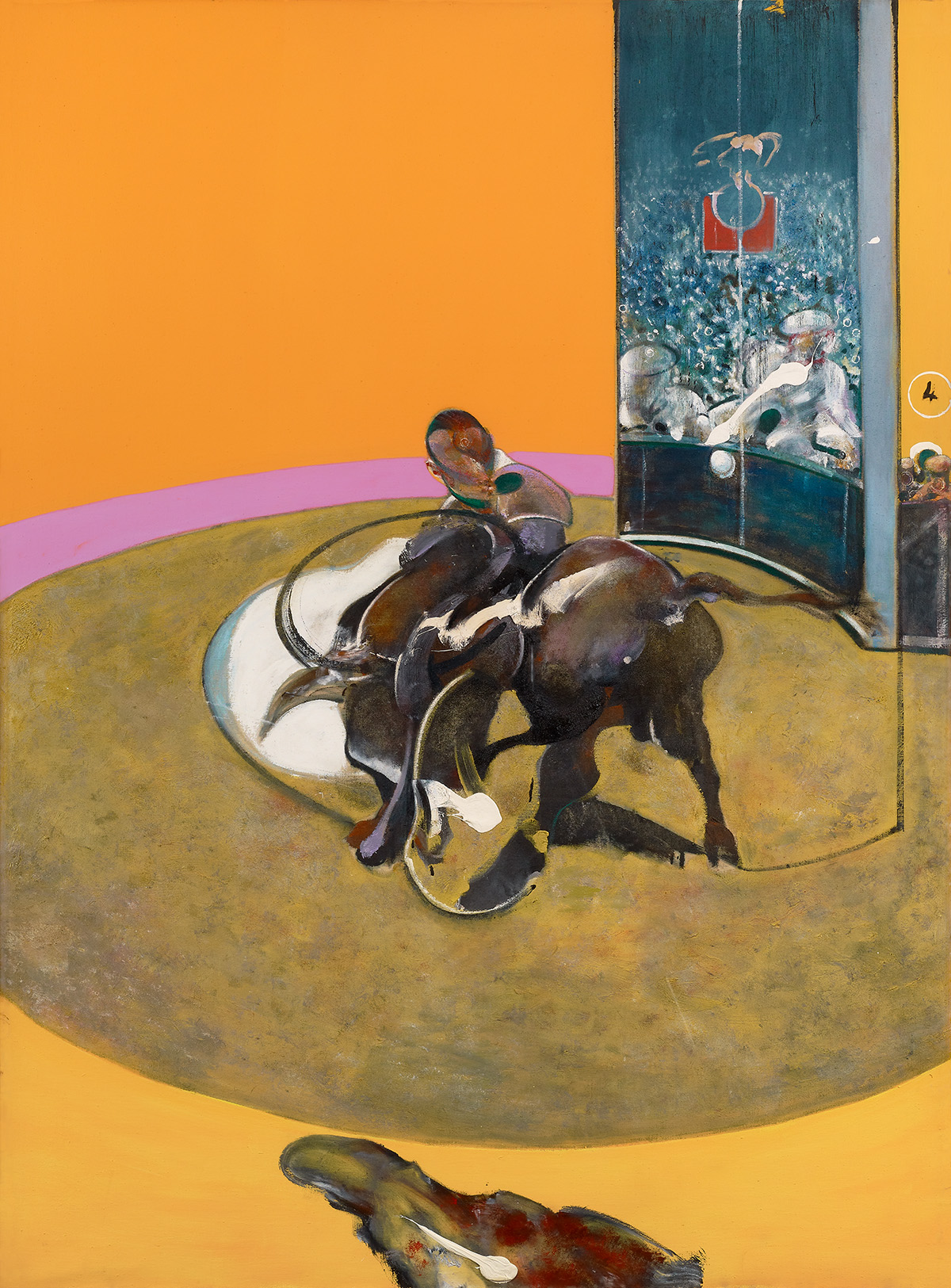
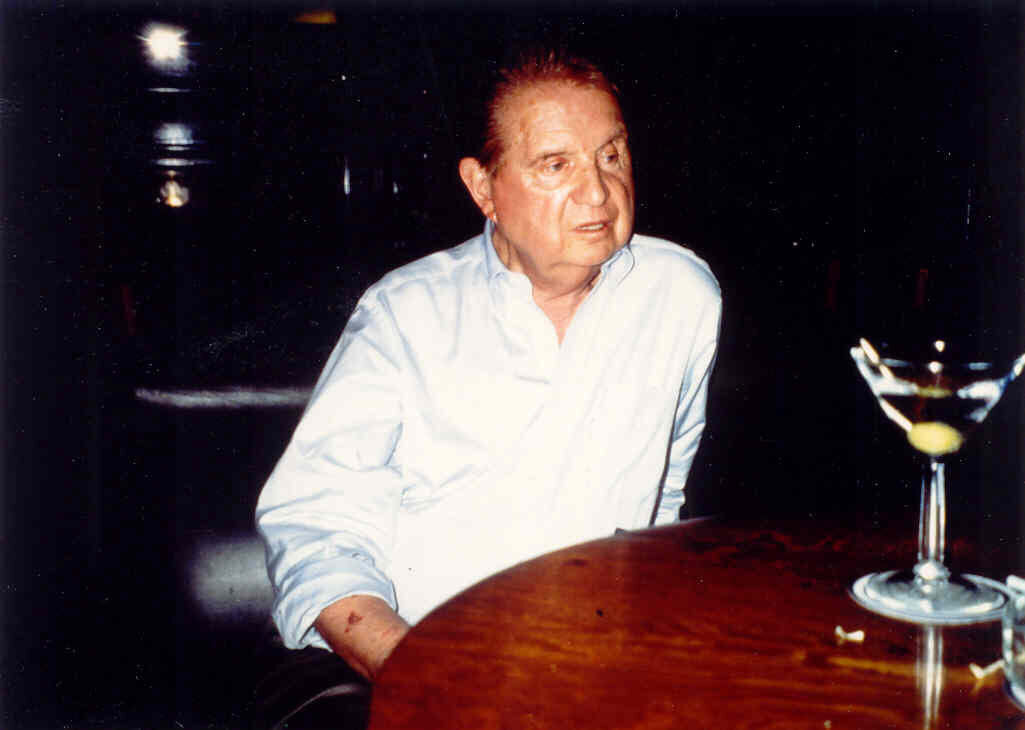
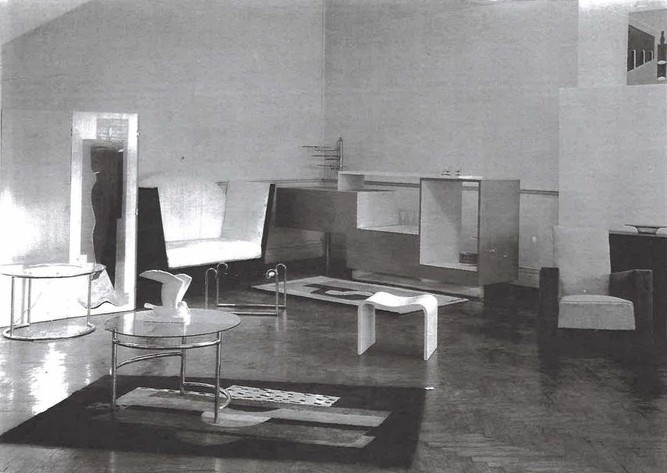
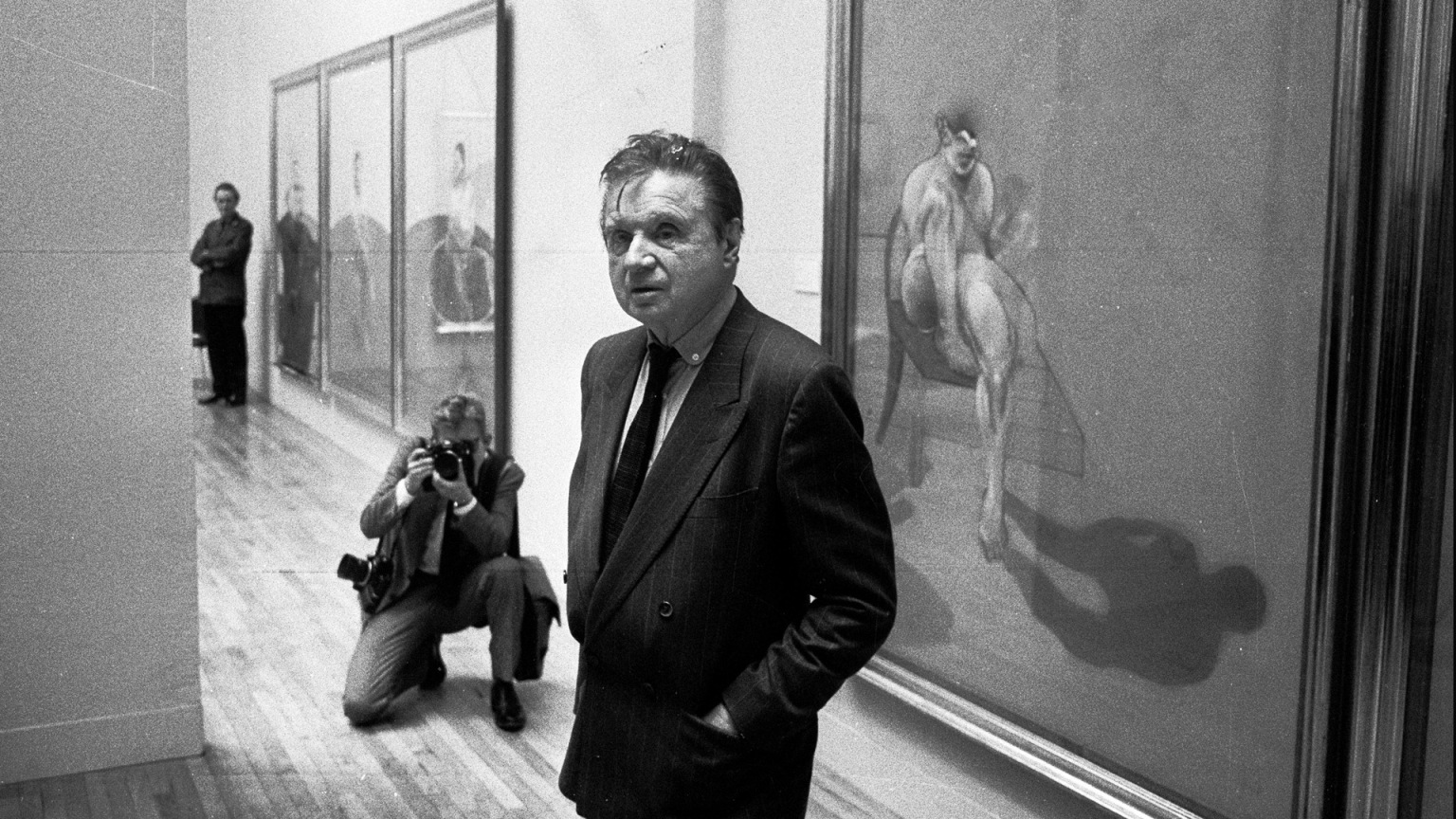

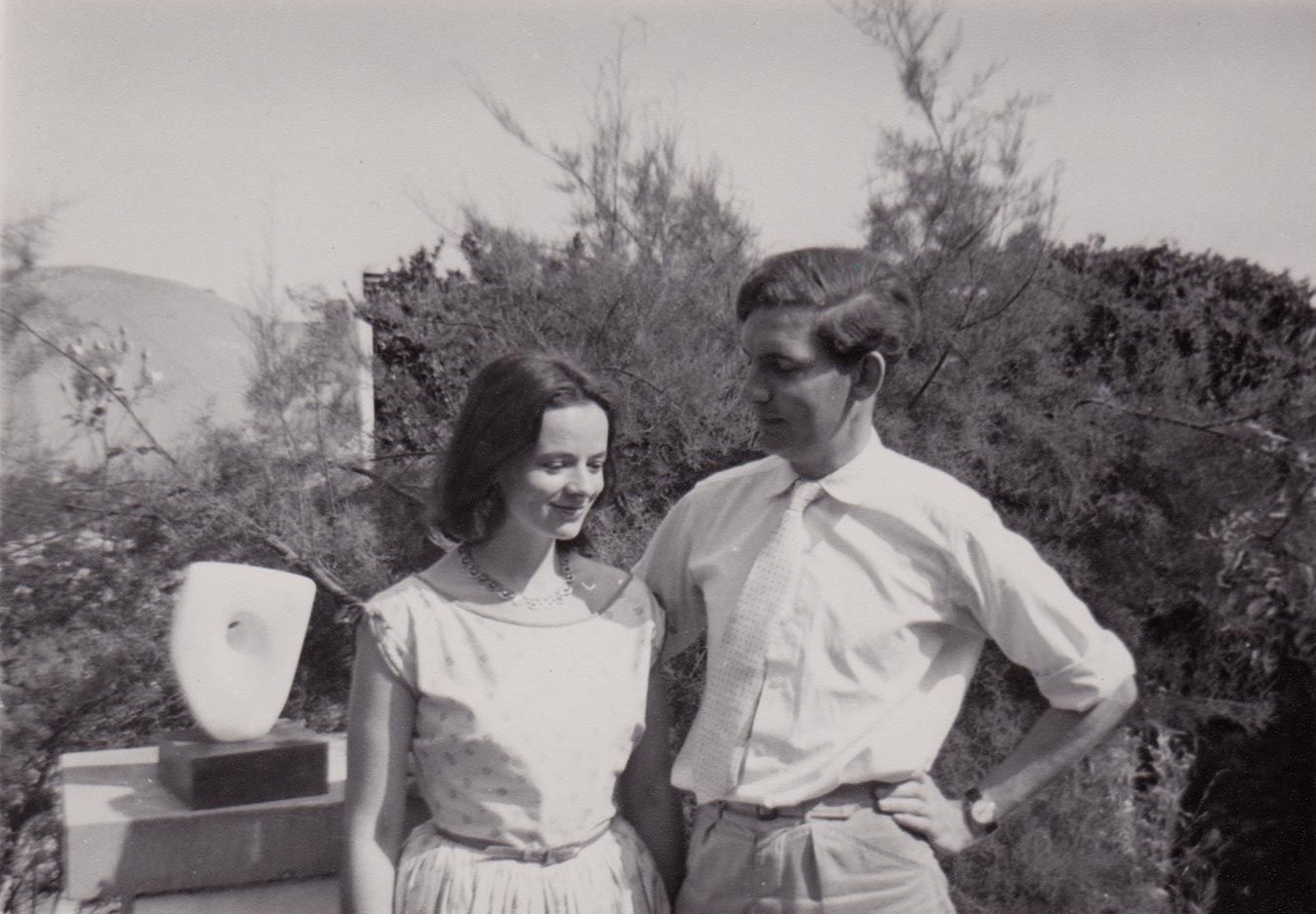
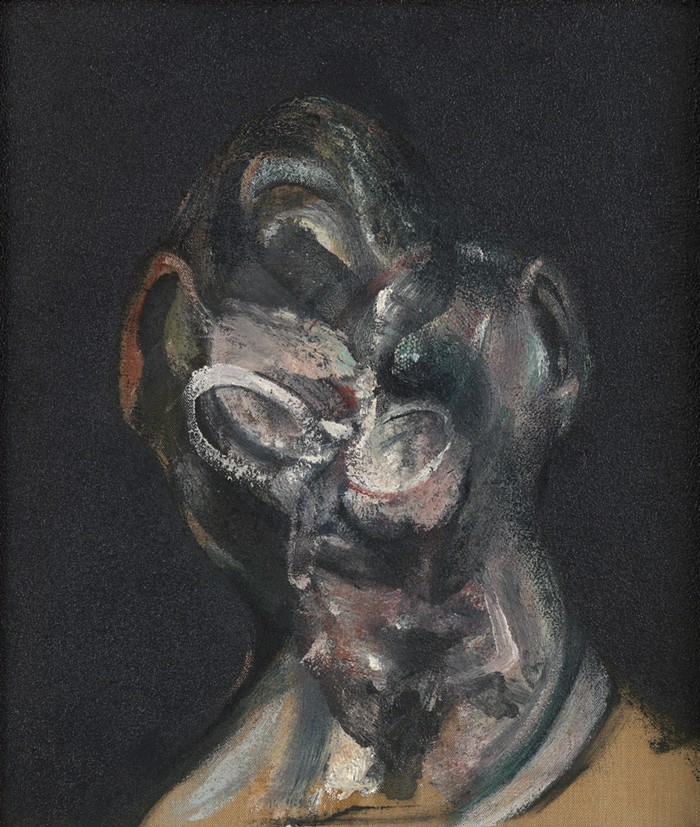

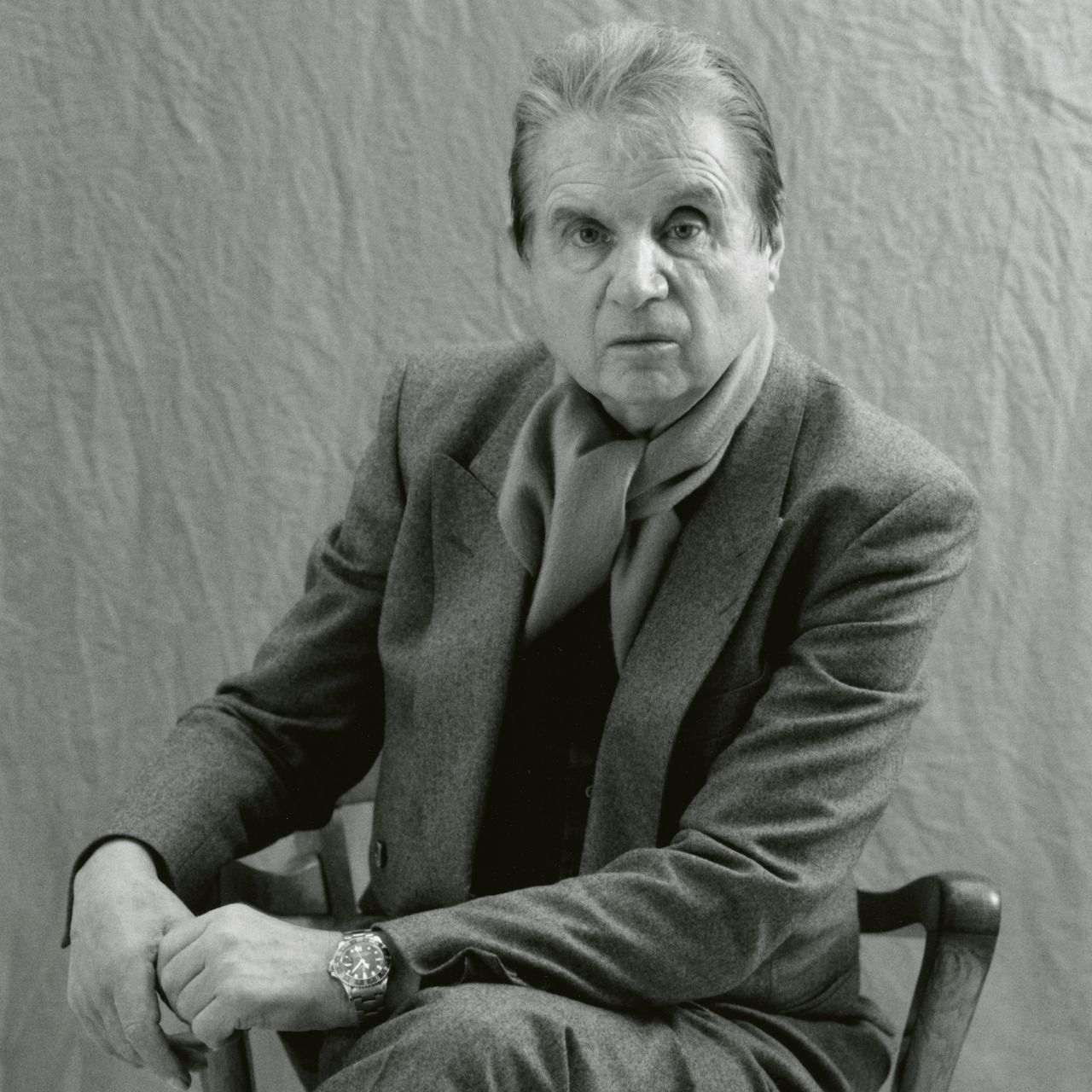

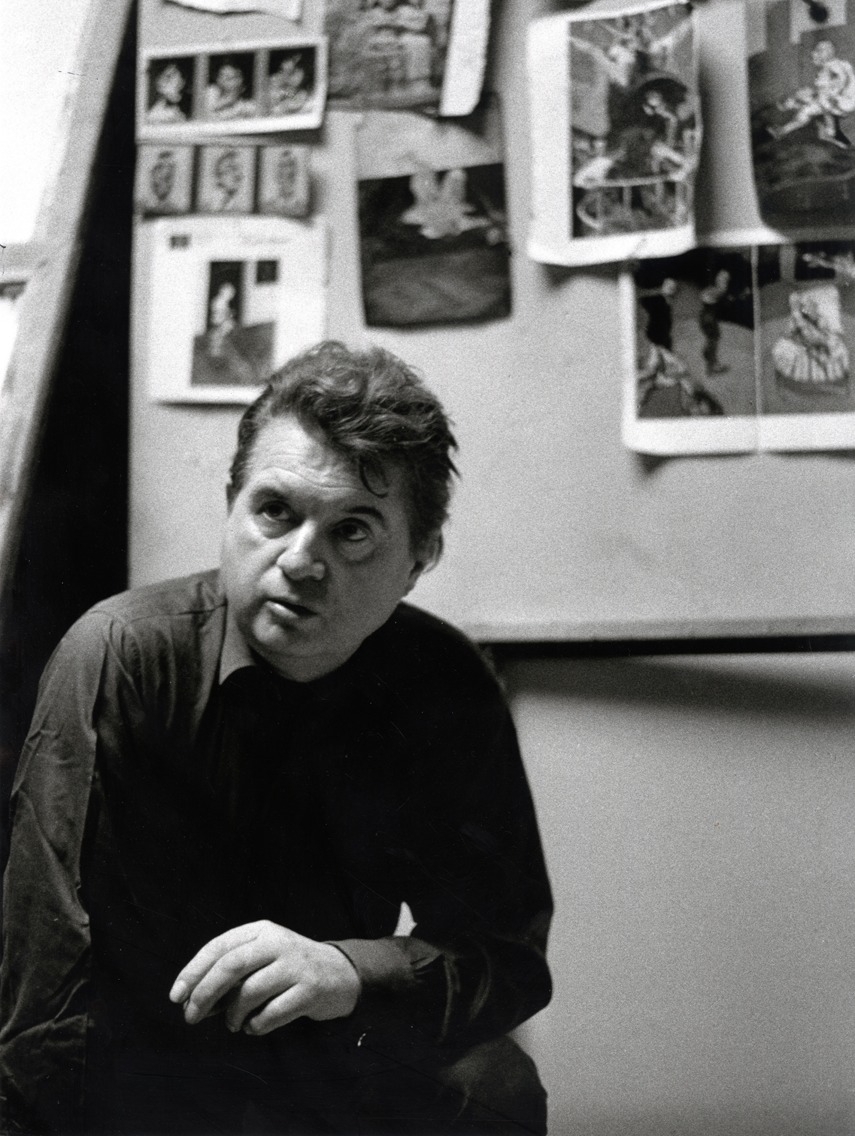
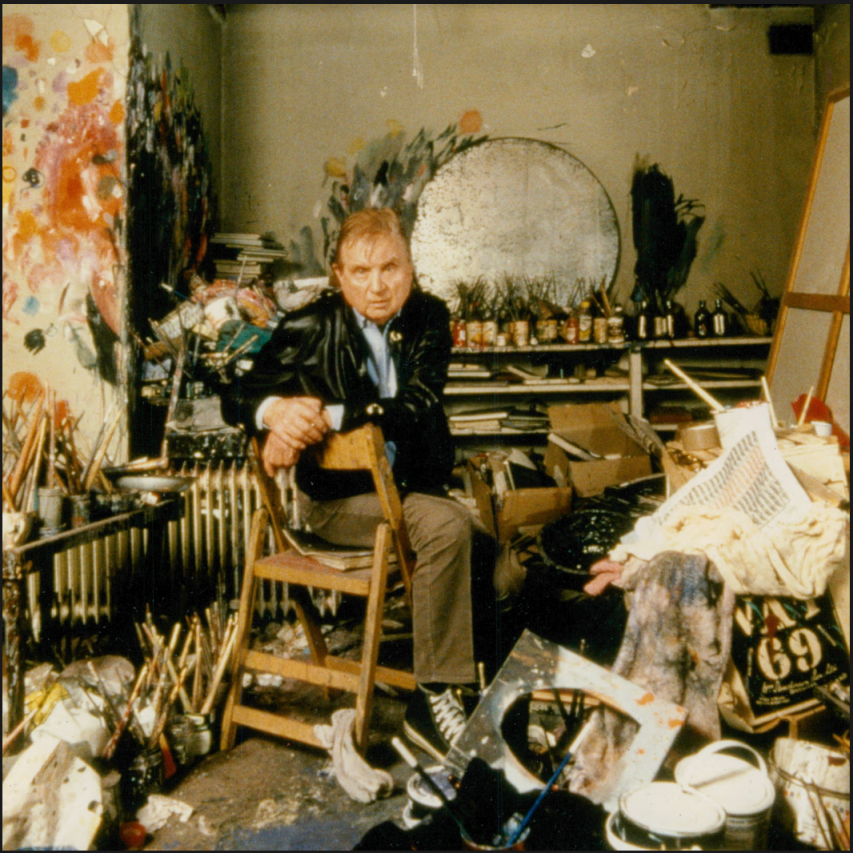


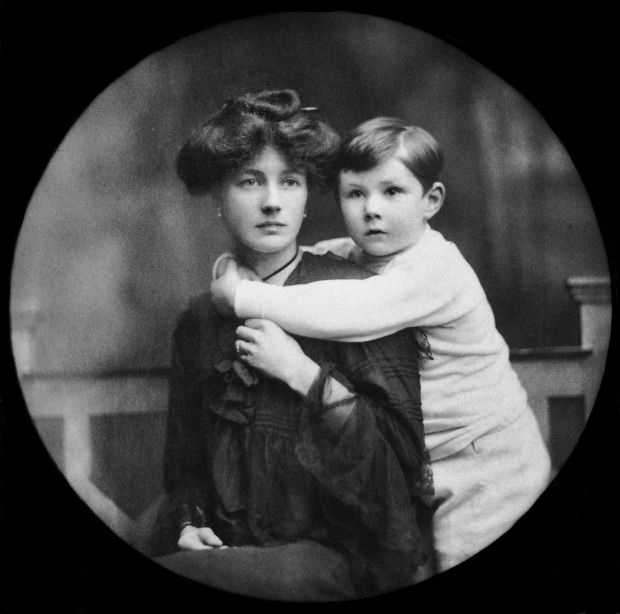


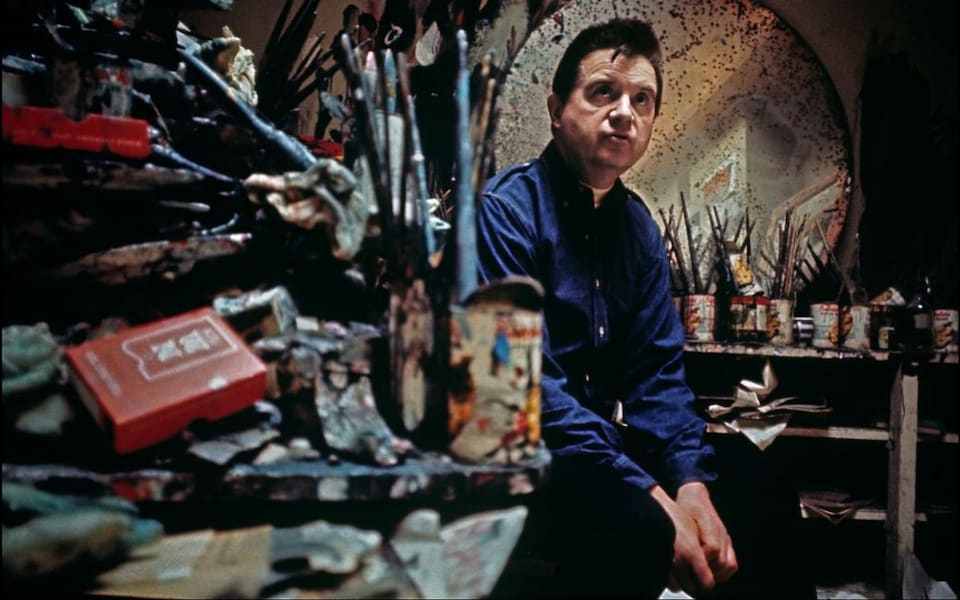


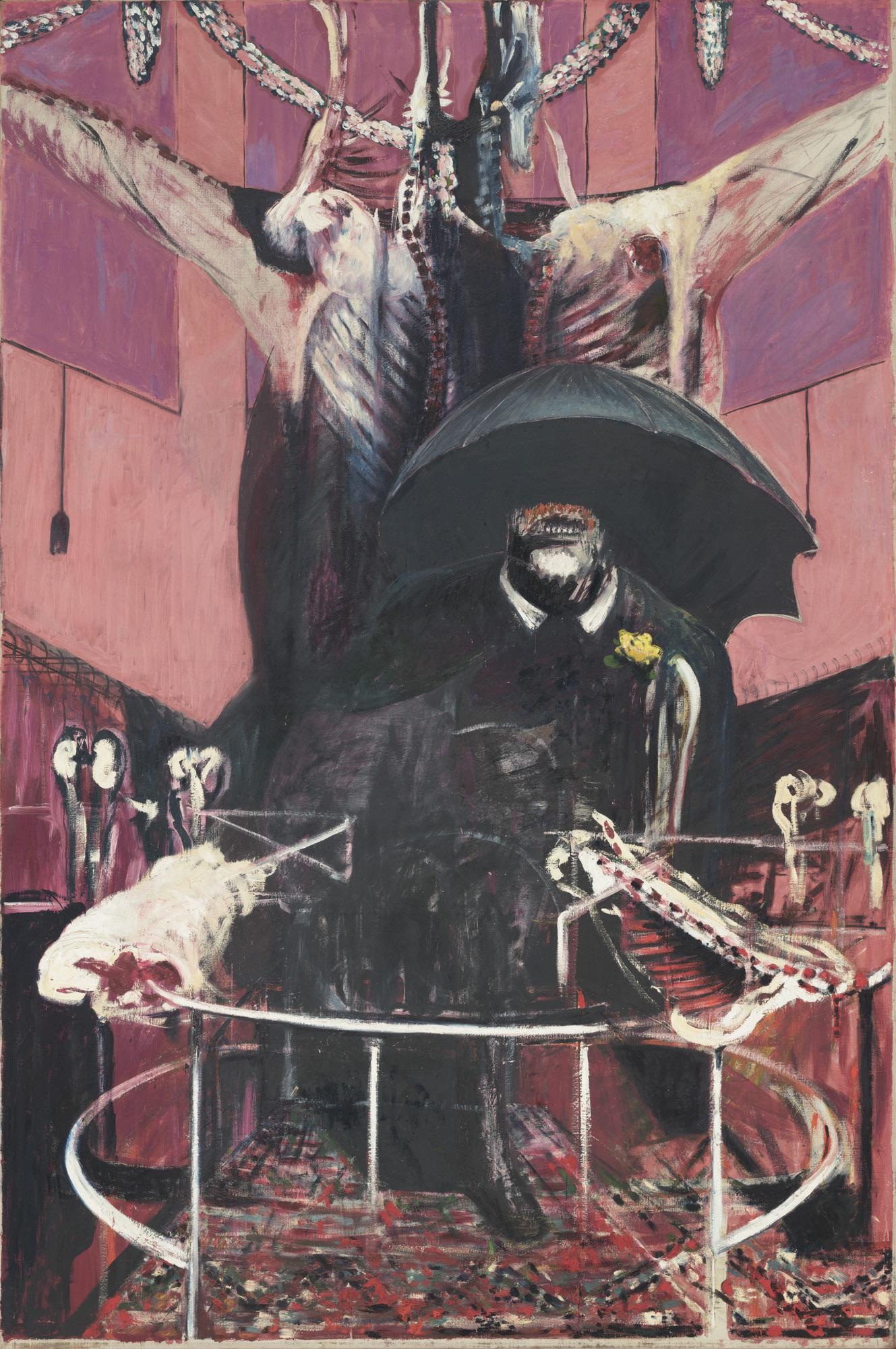
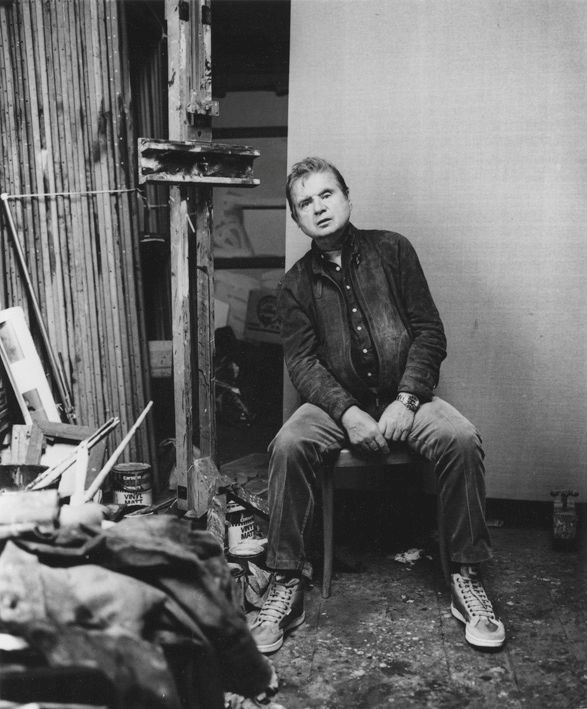
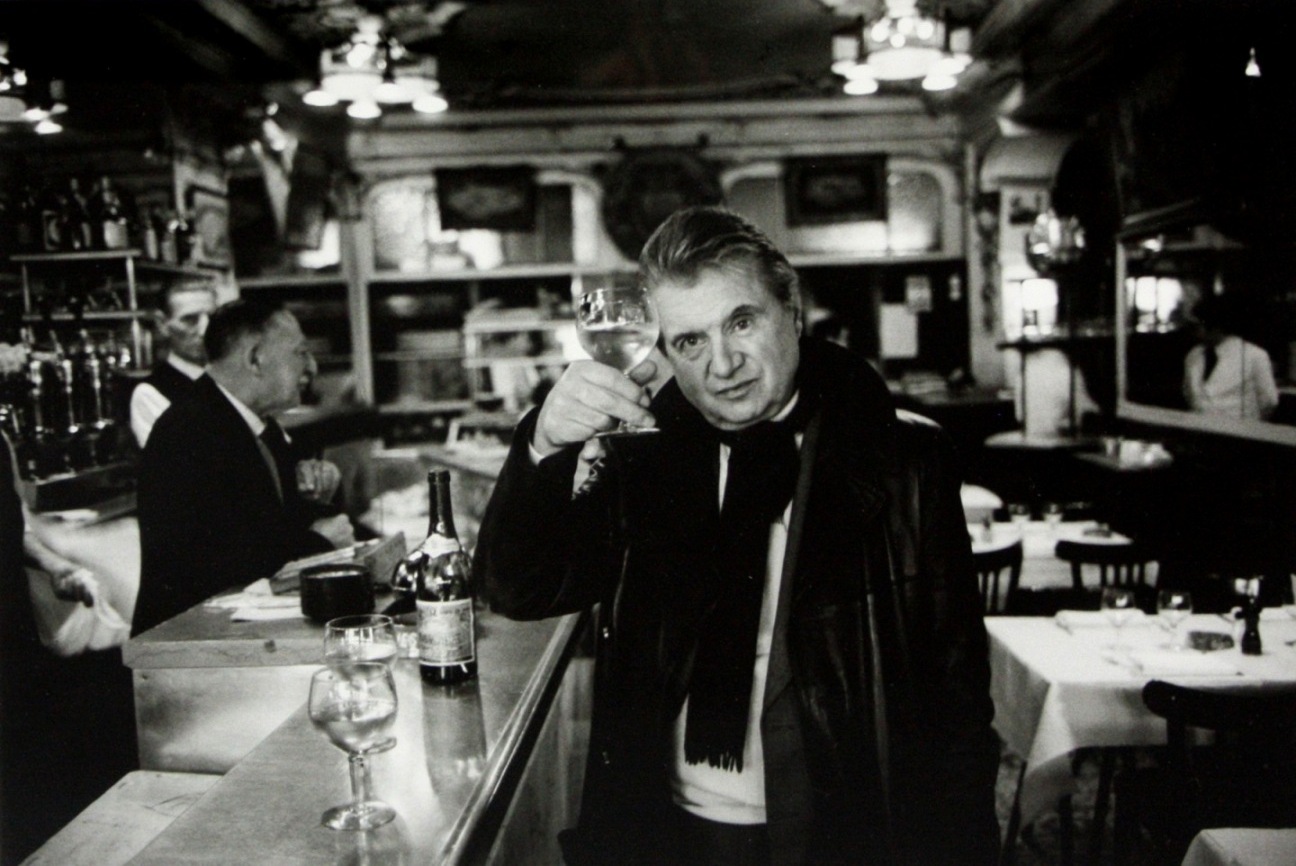

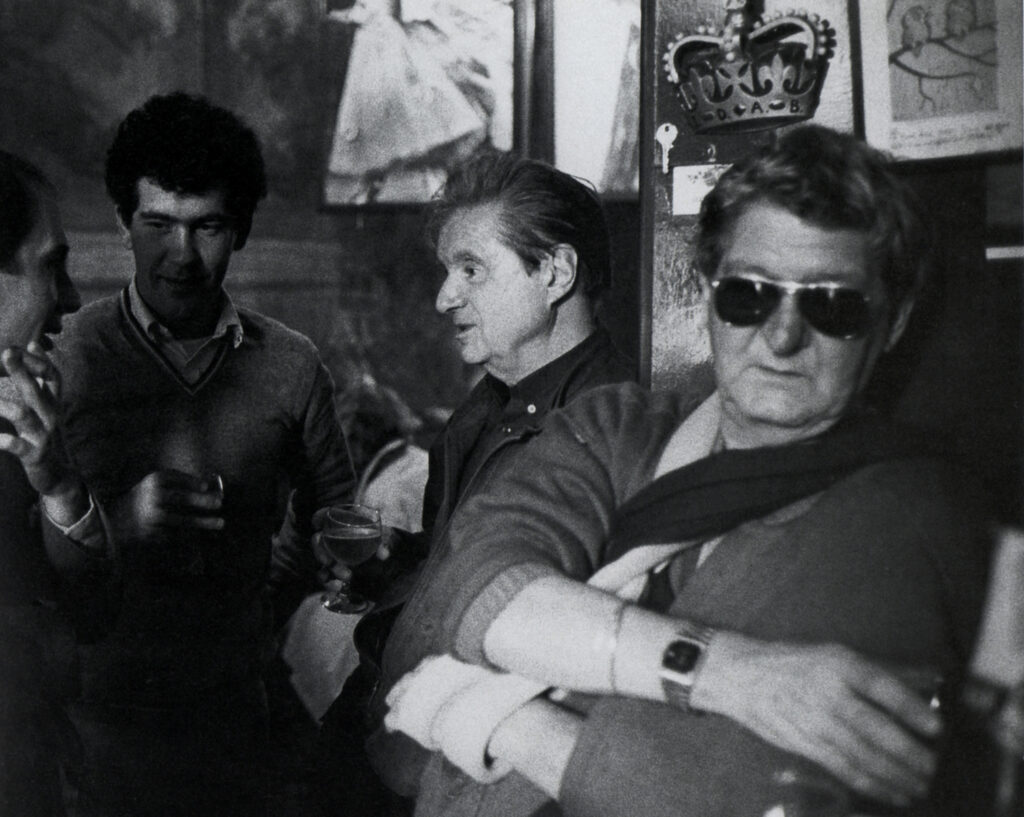


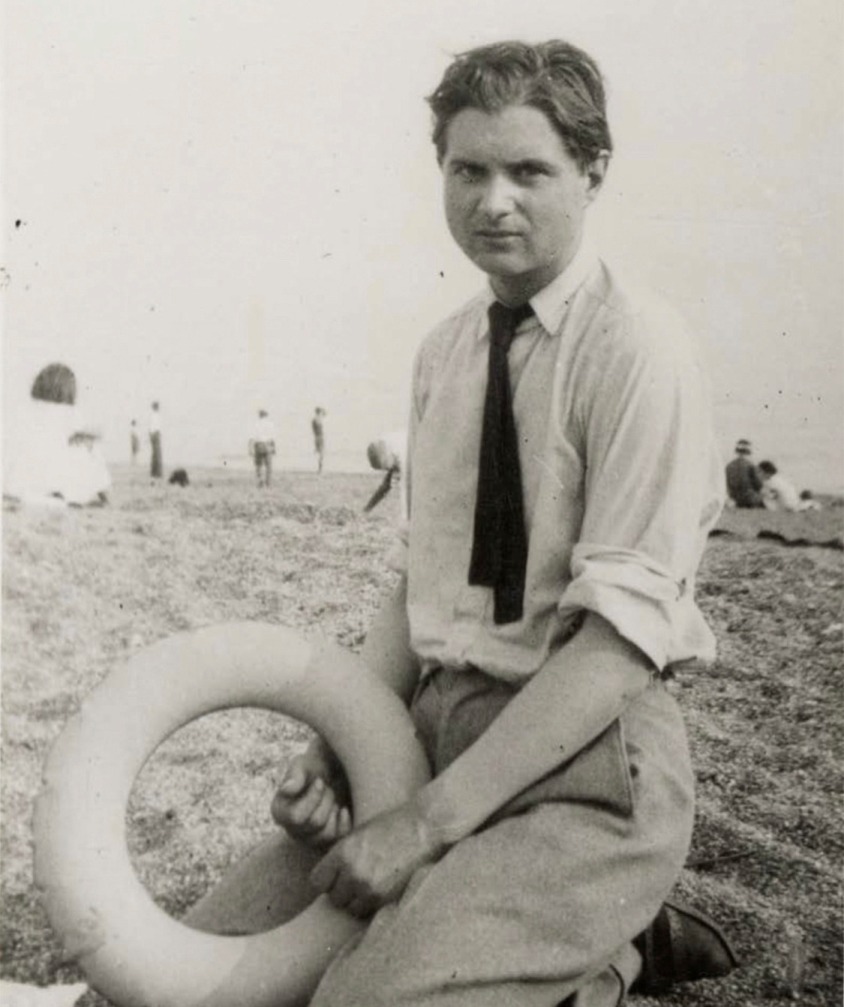
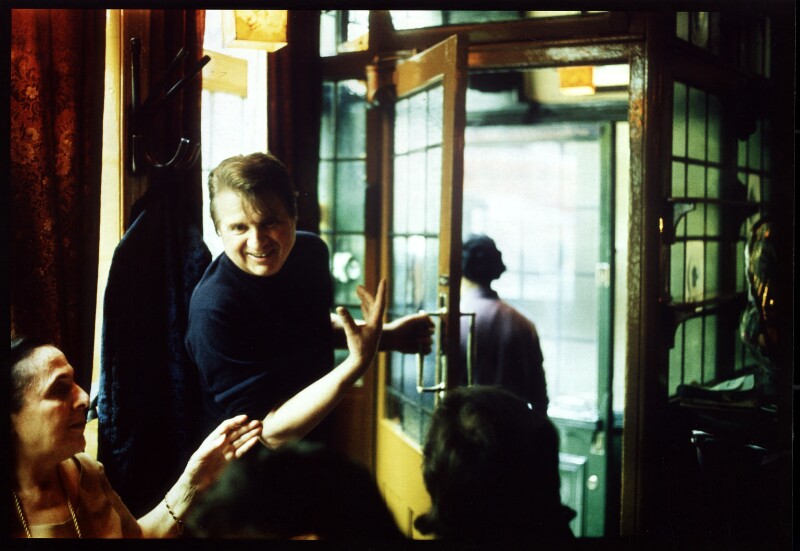
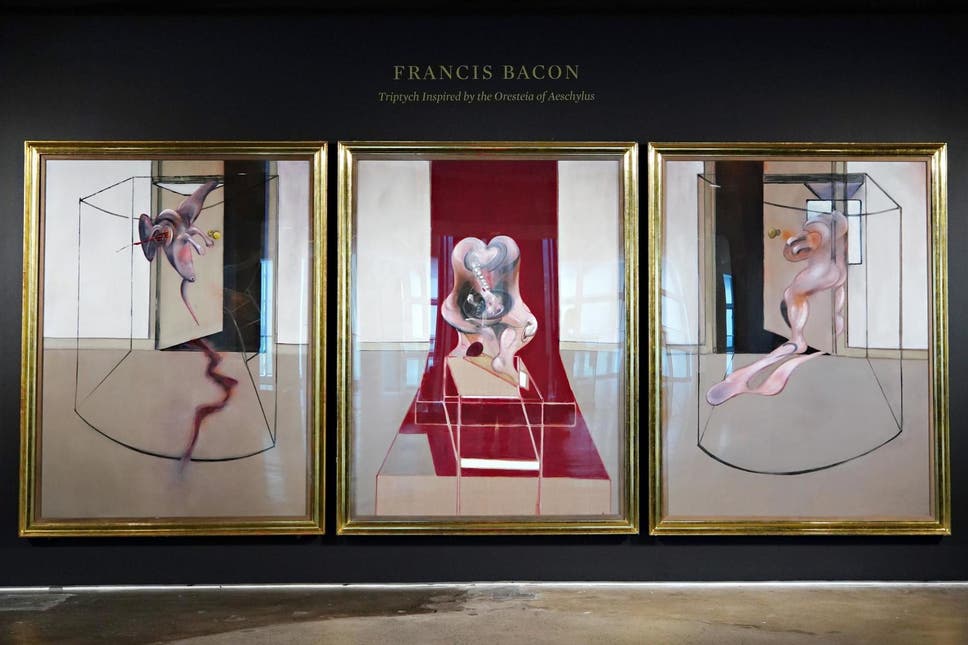

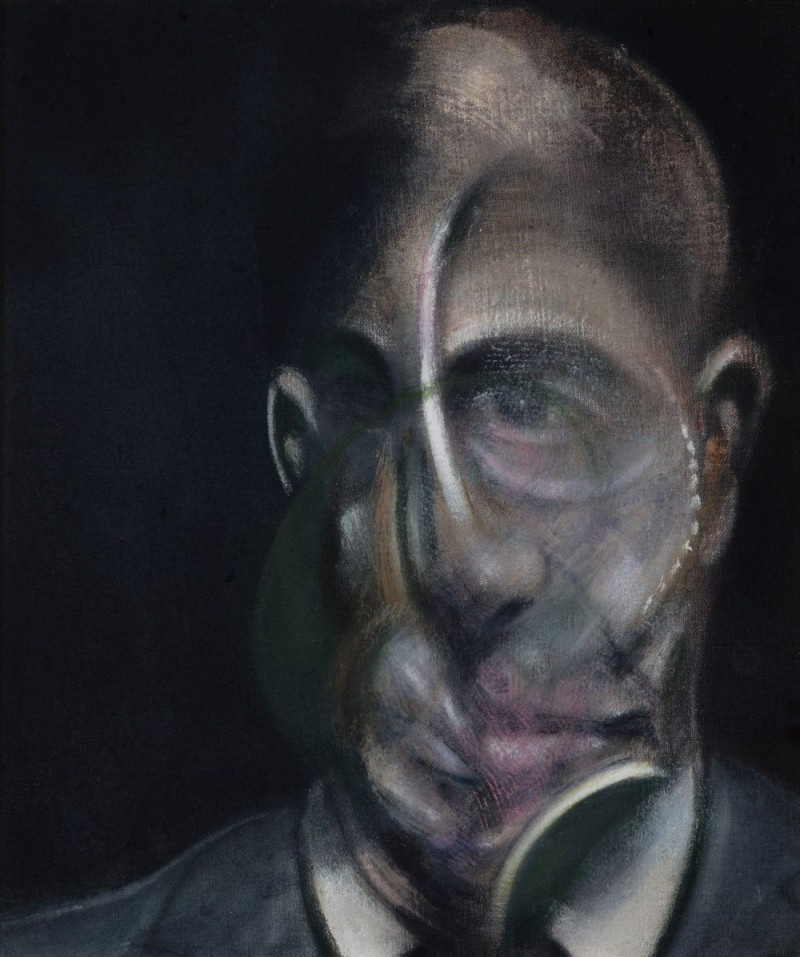
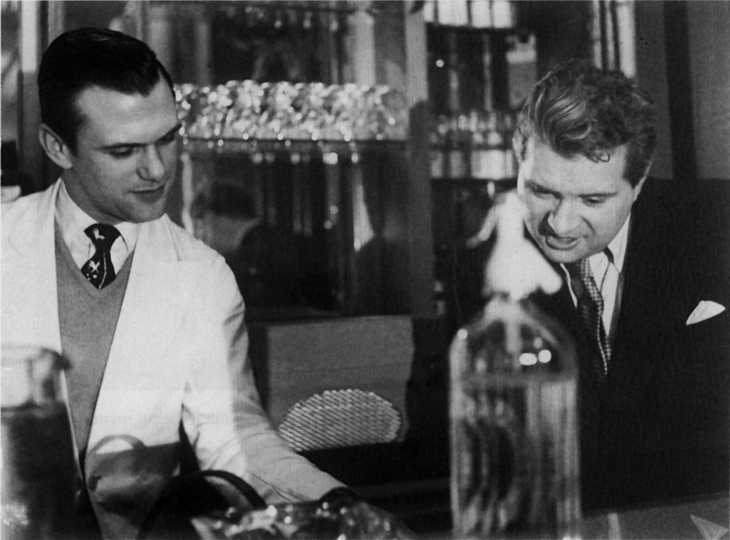
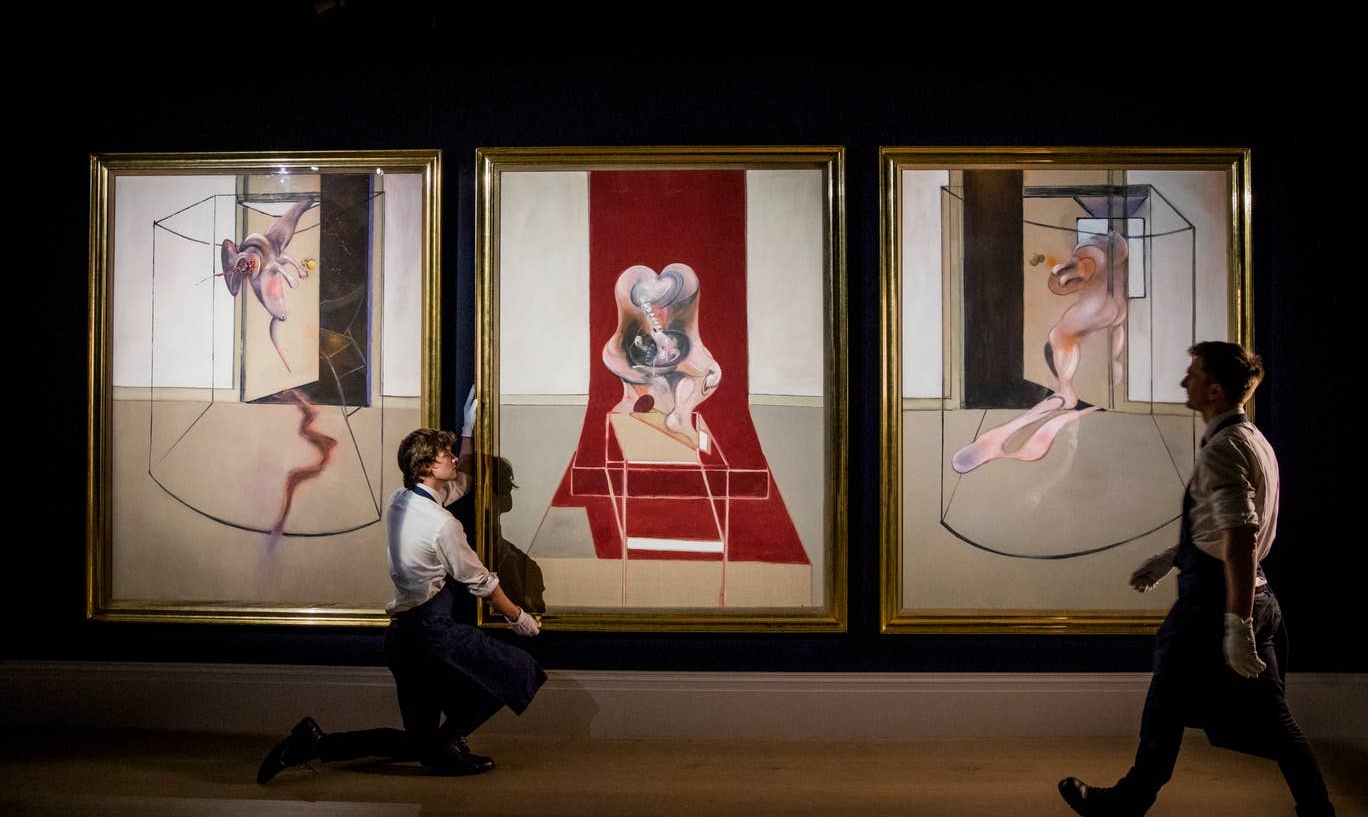
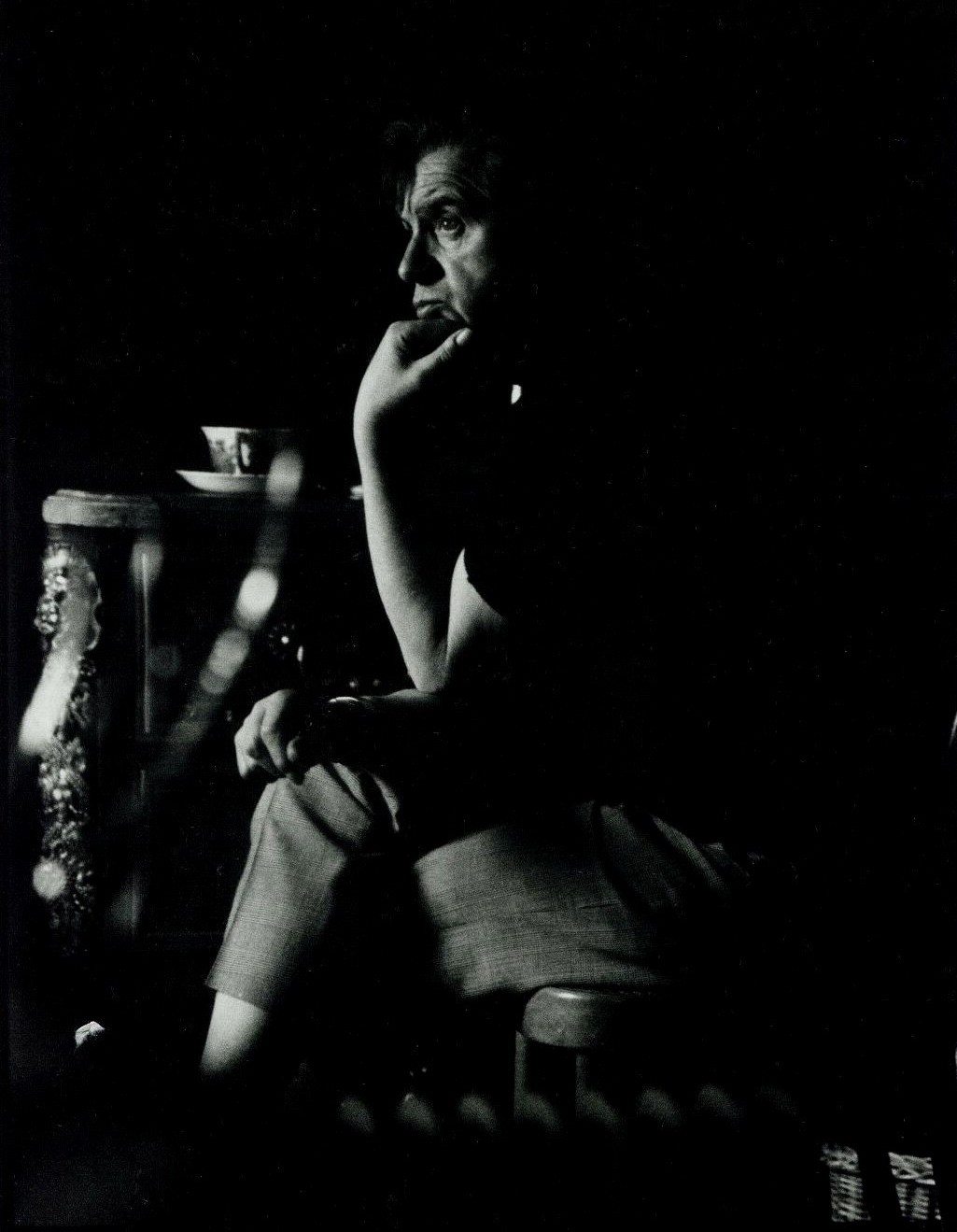

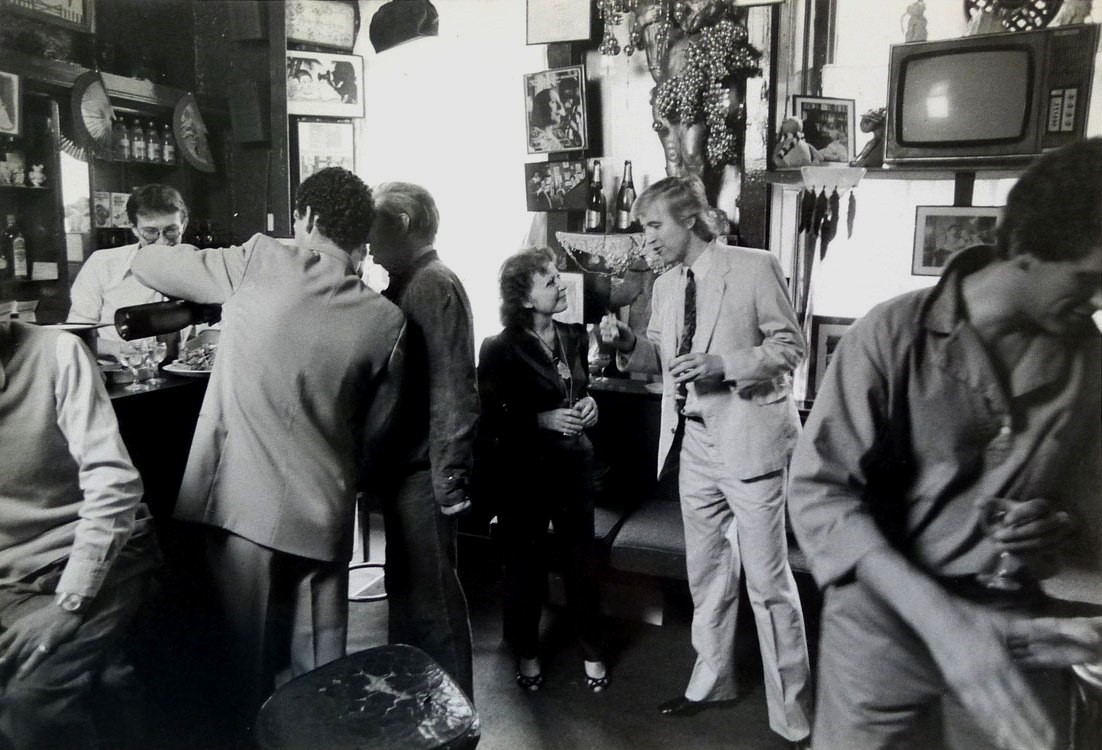
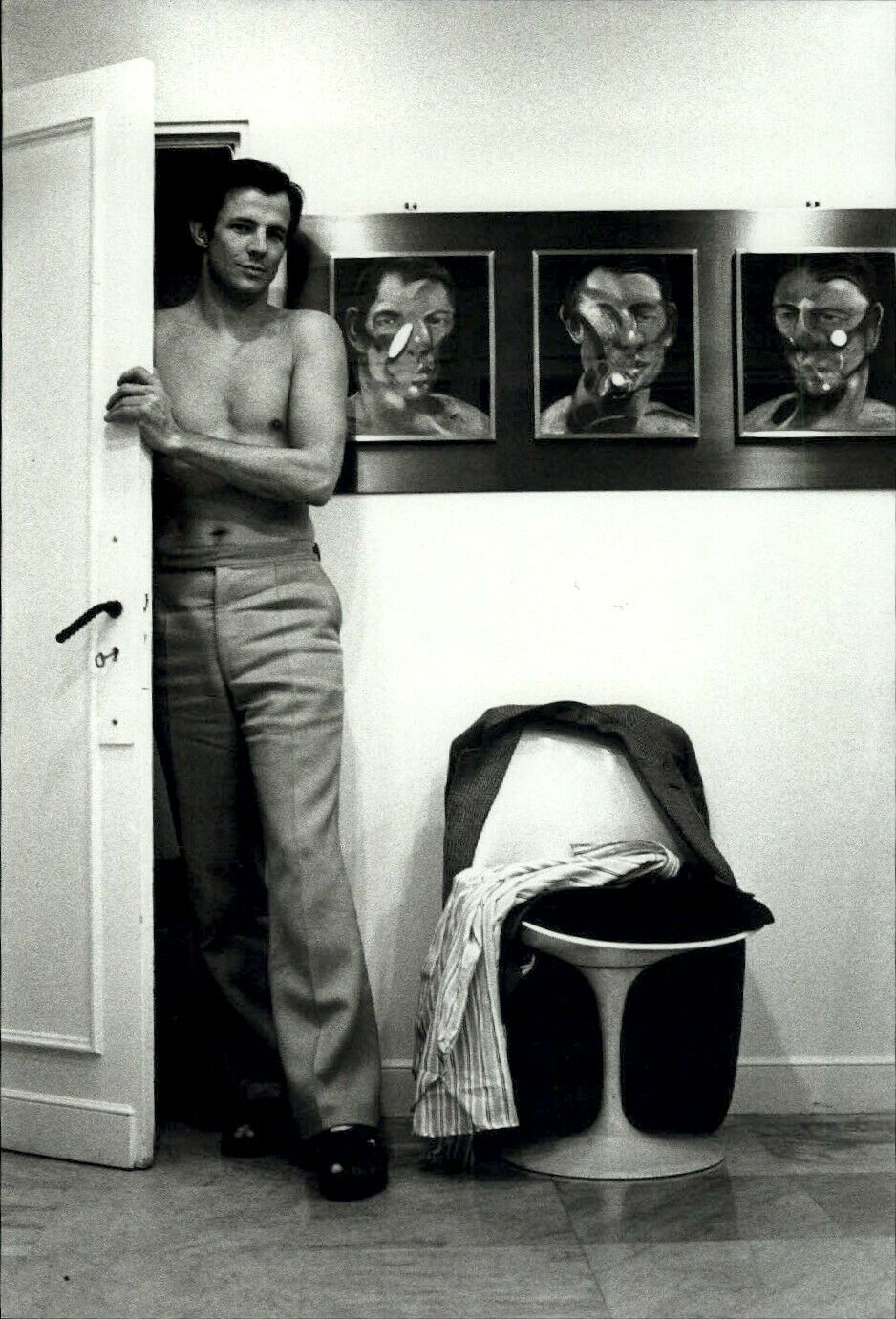


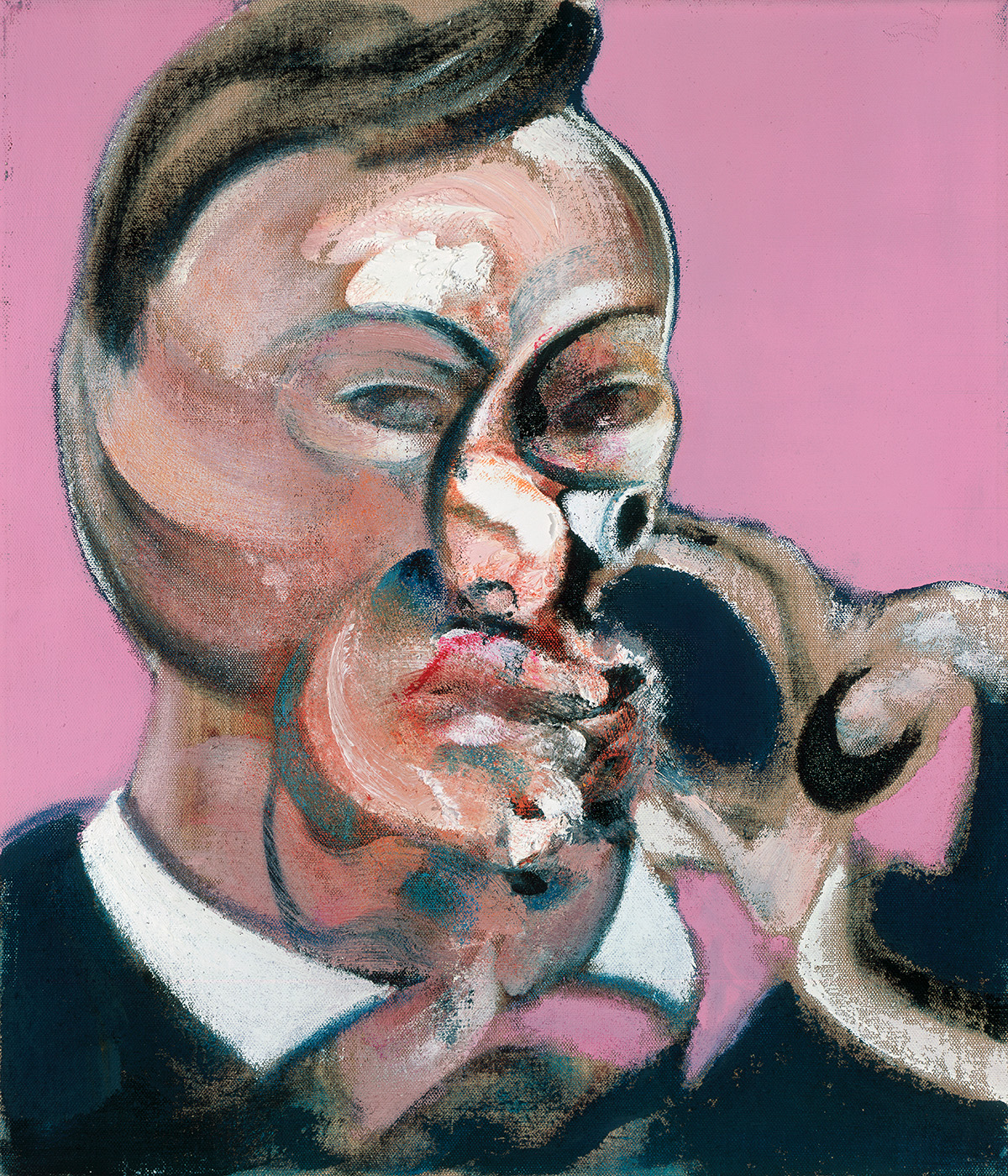
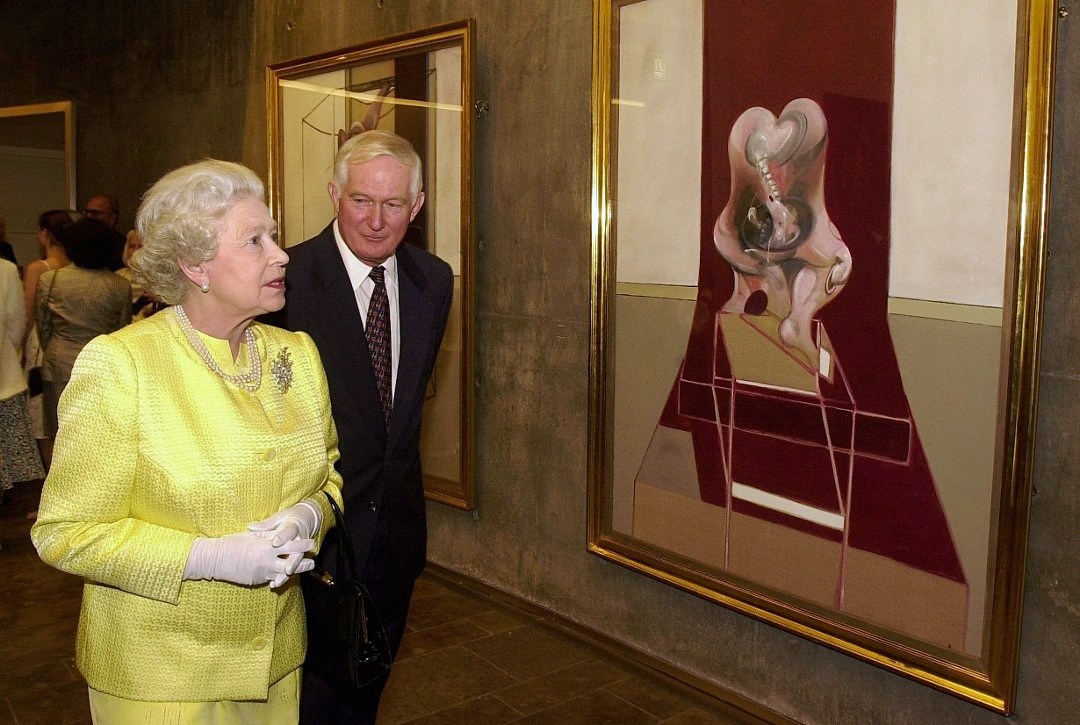
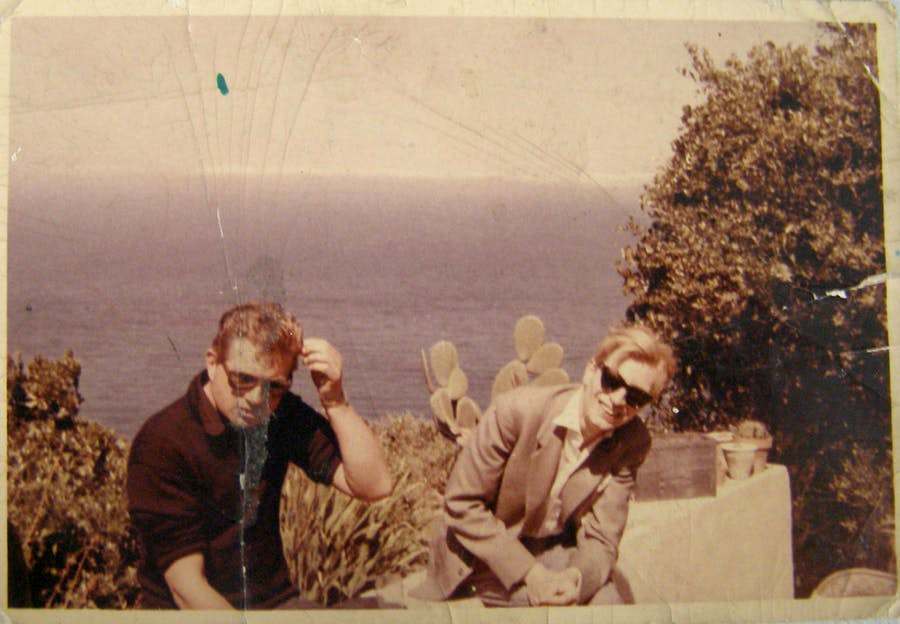
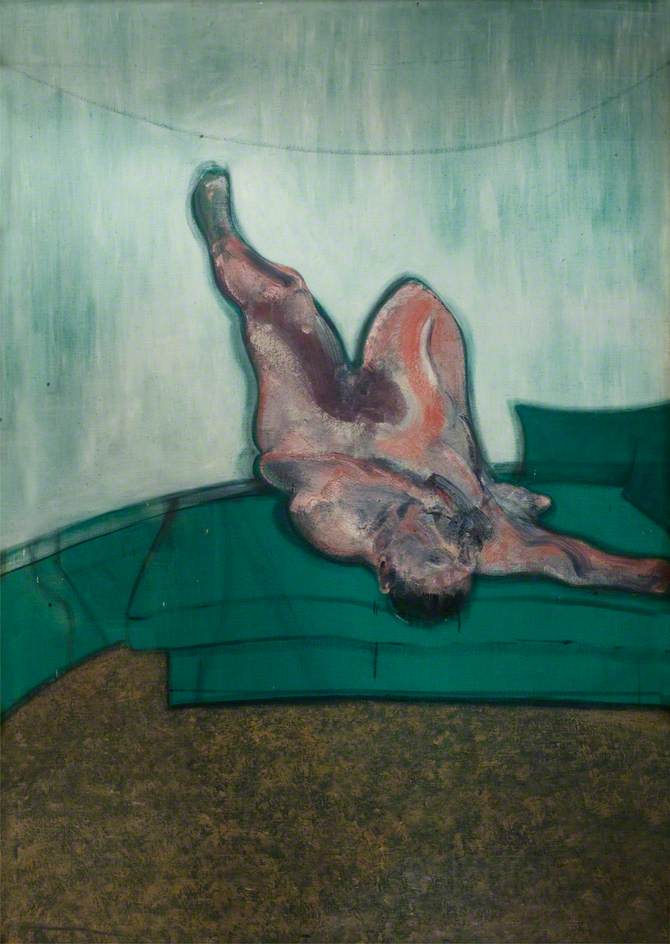
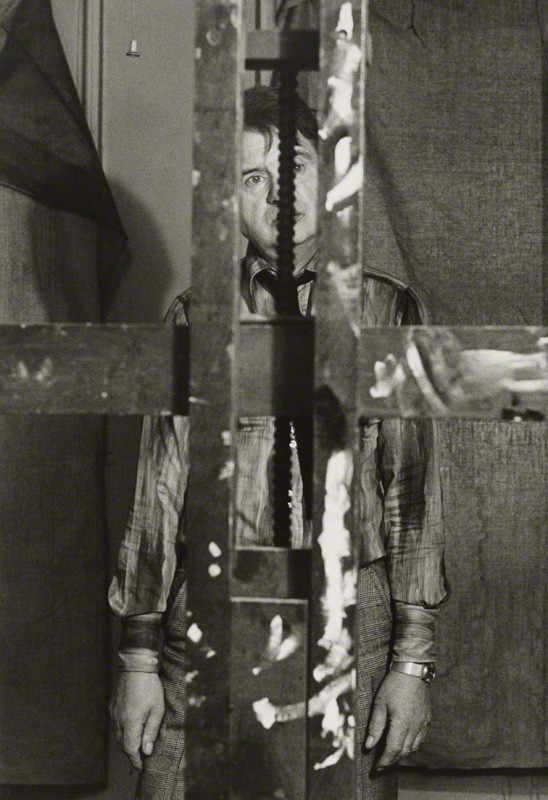


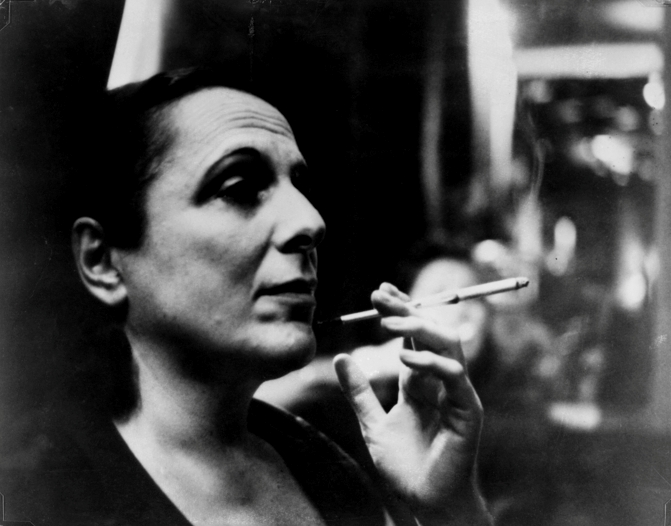

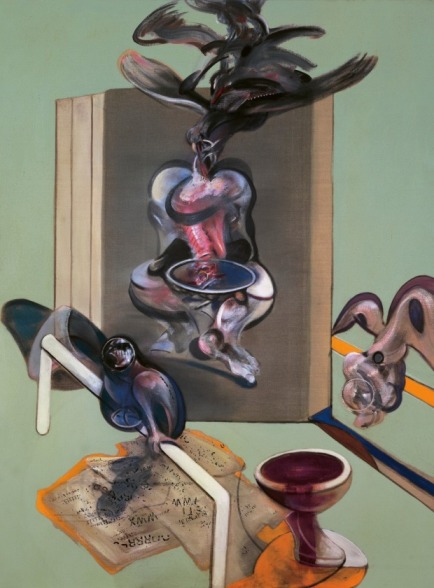
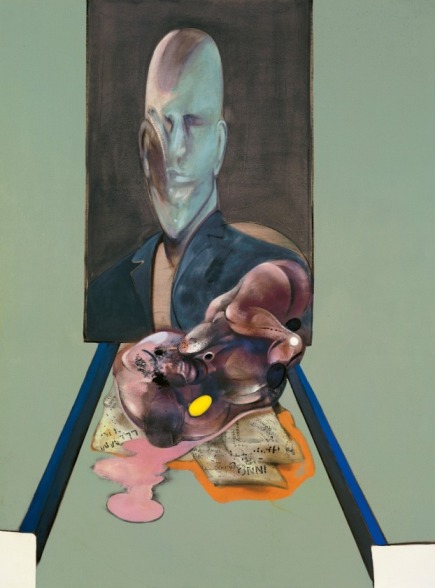
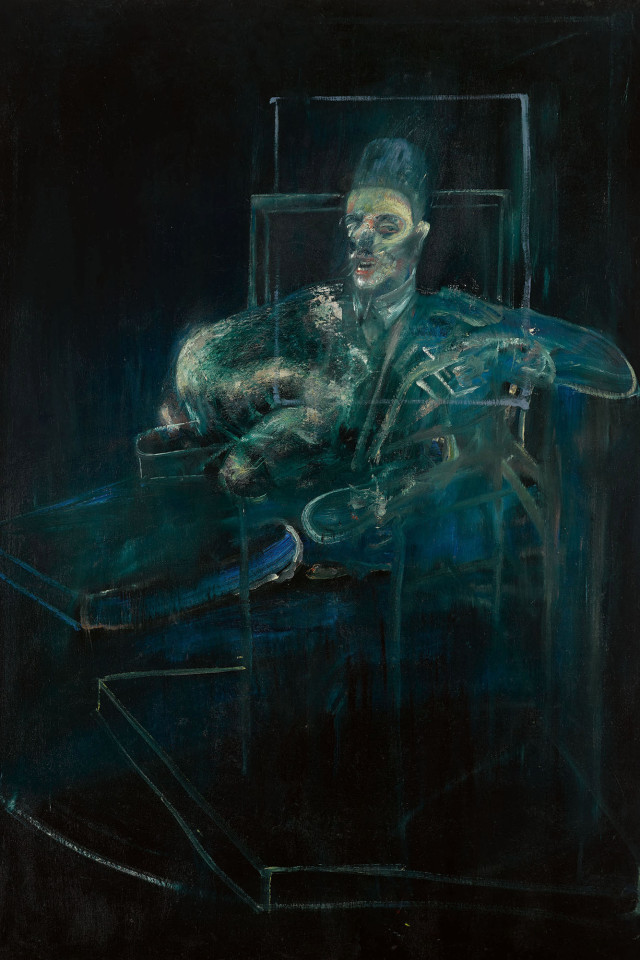
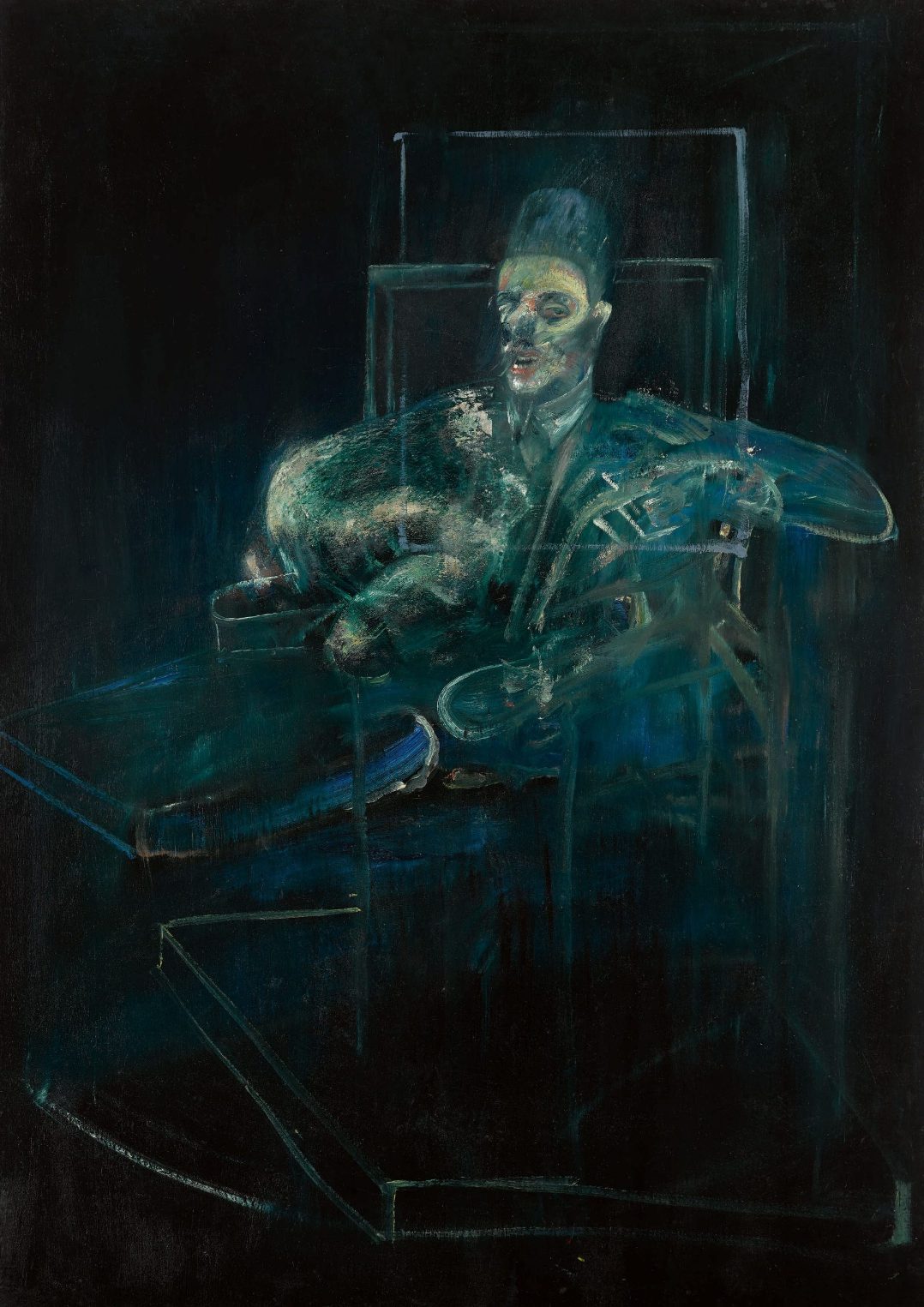


.png)

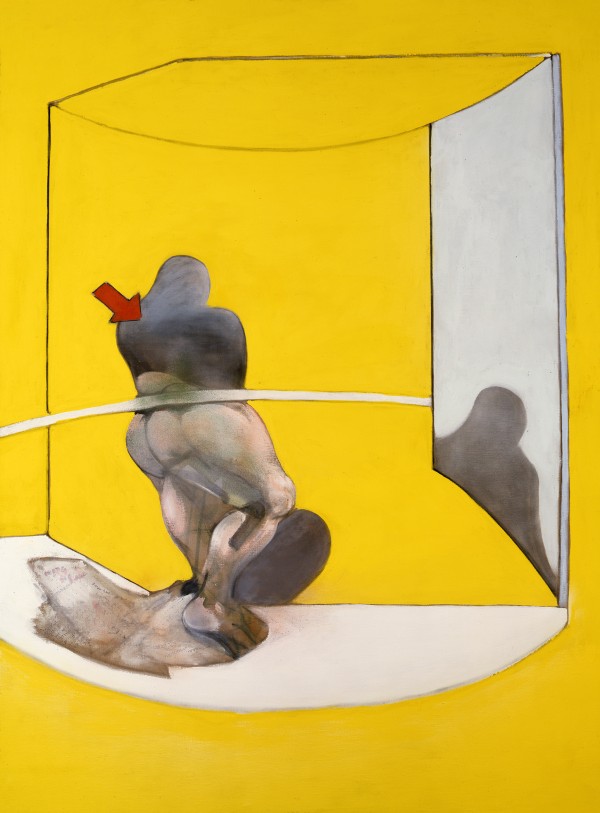
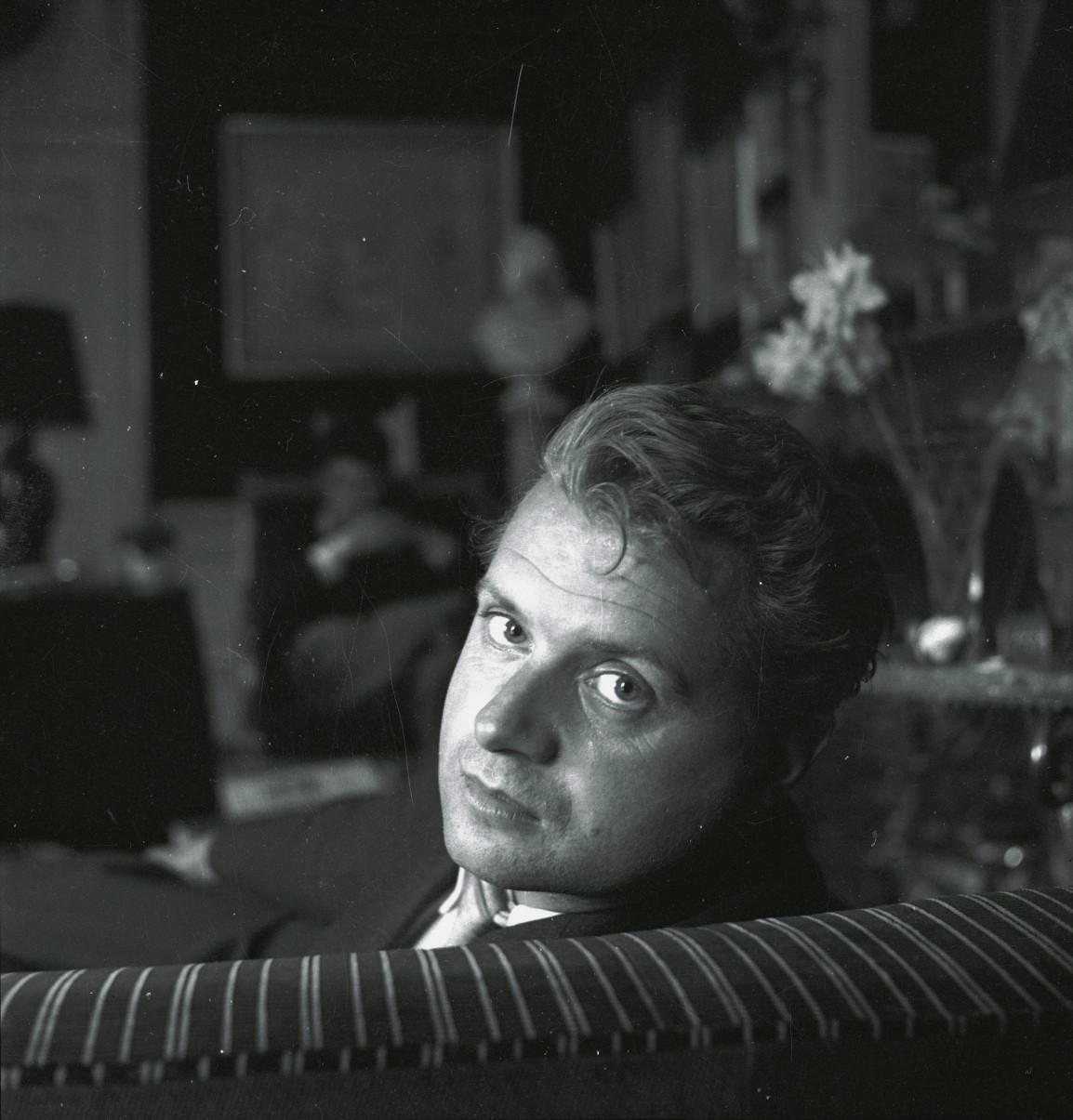


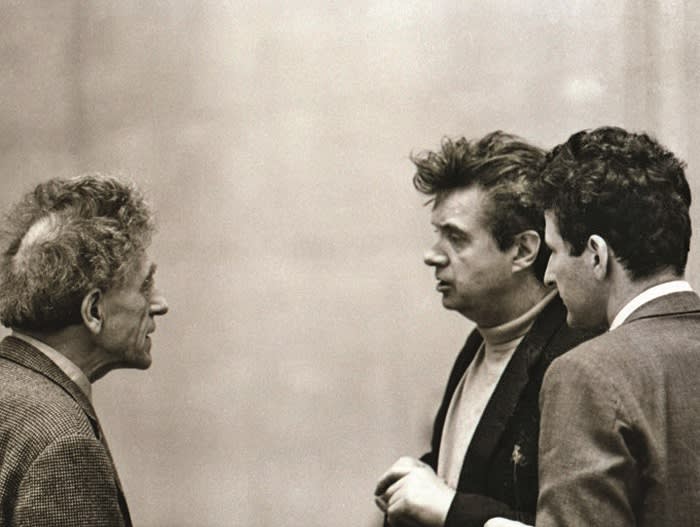
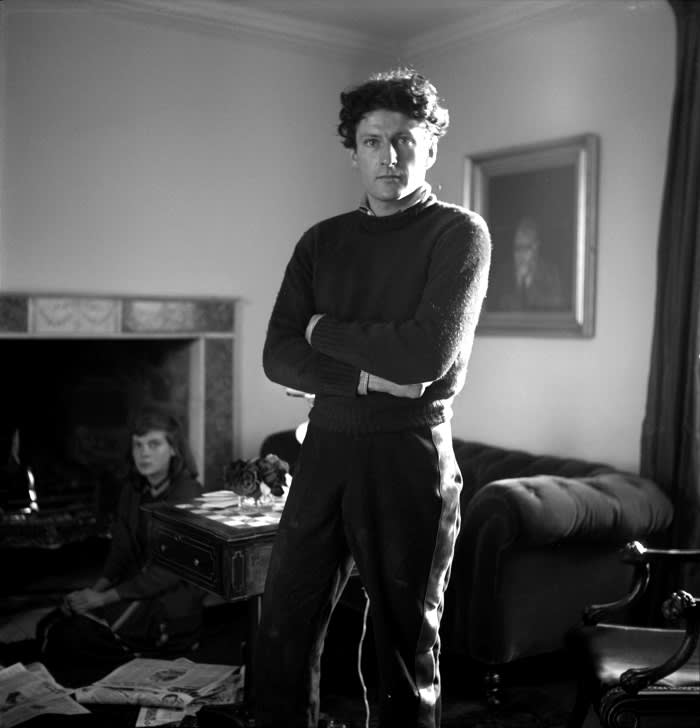


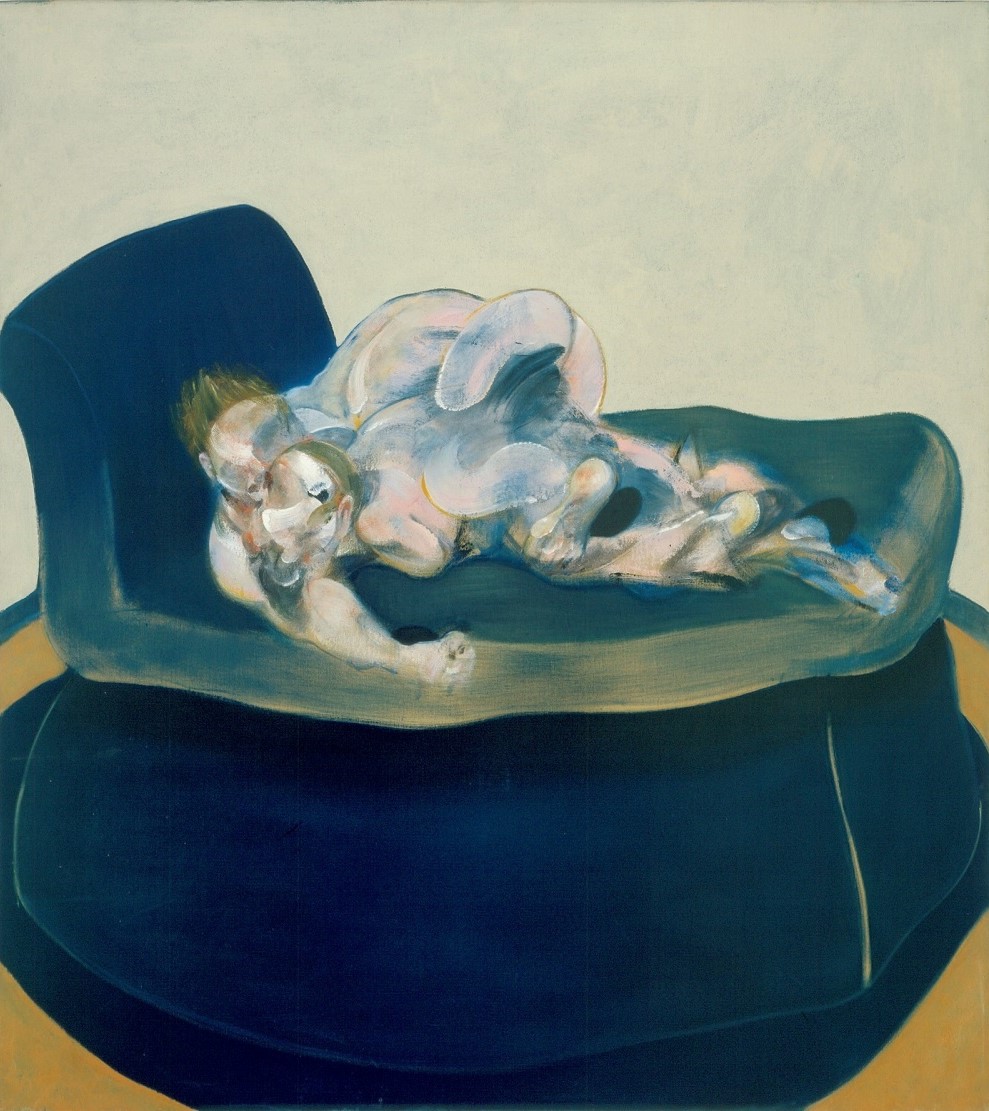


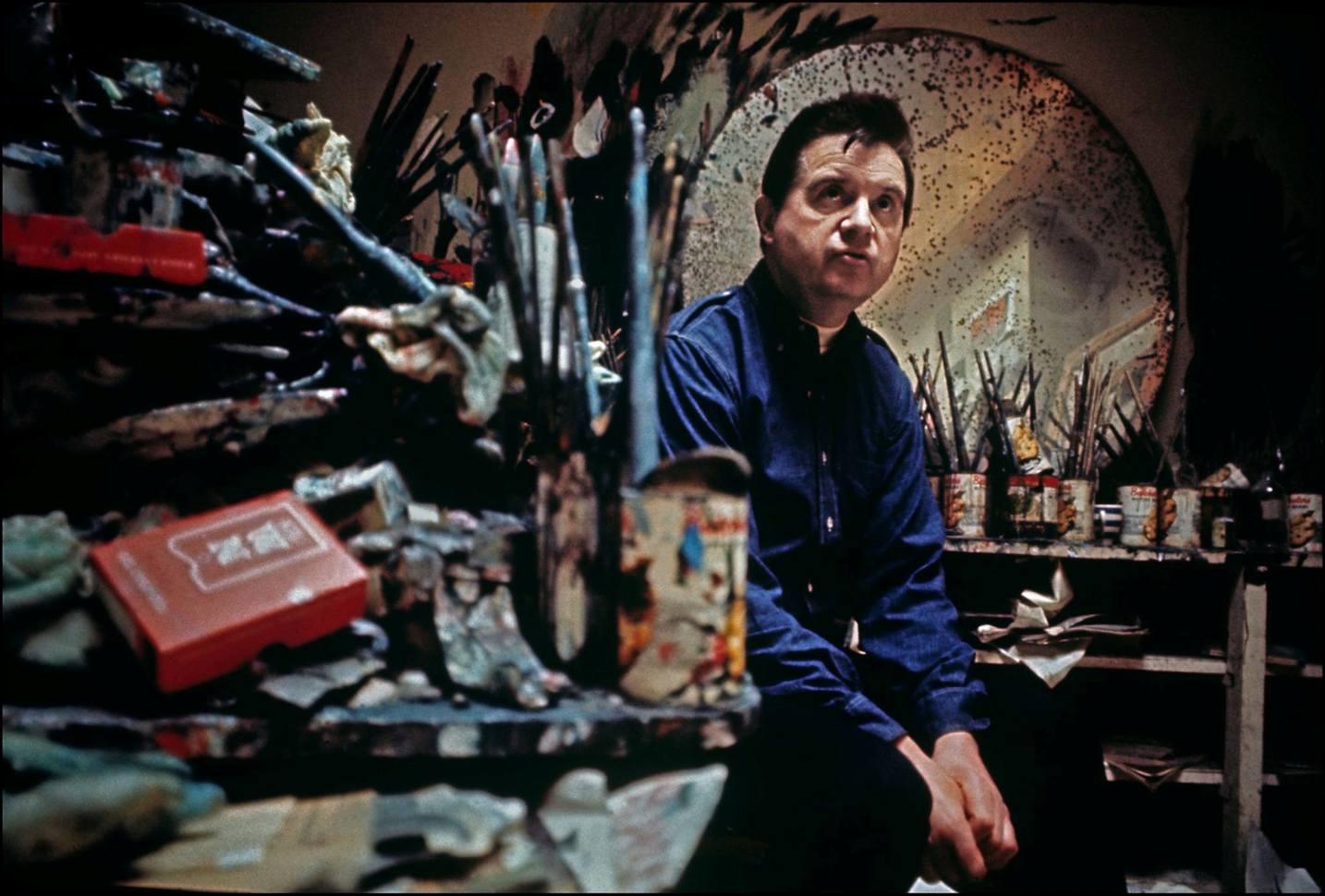
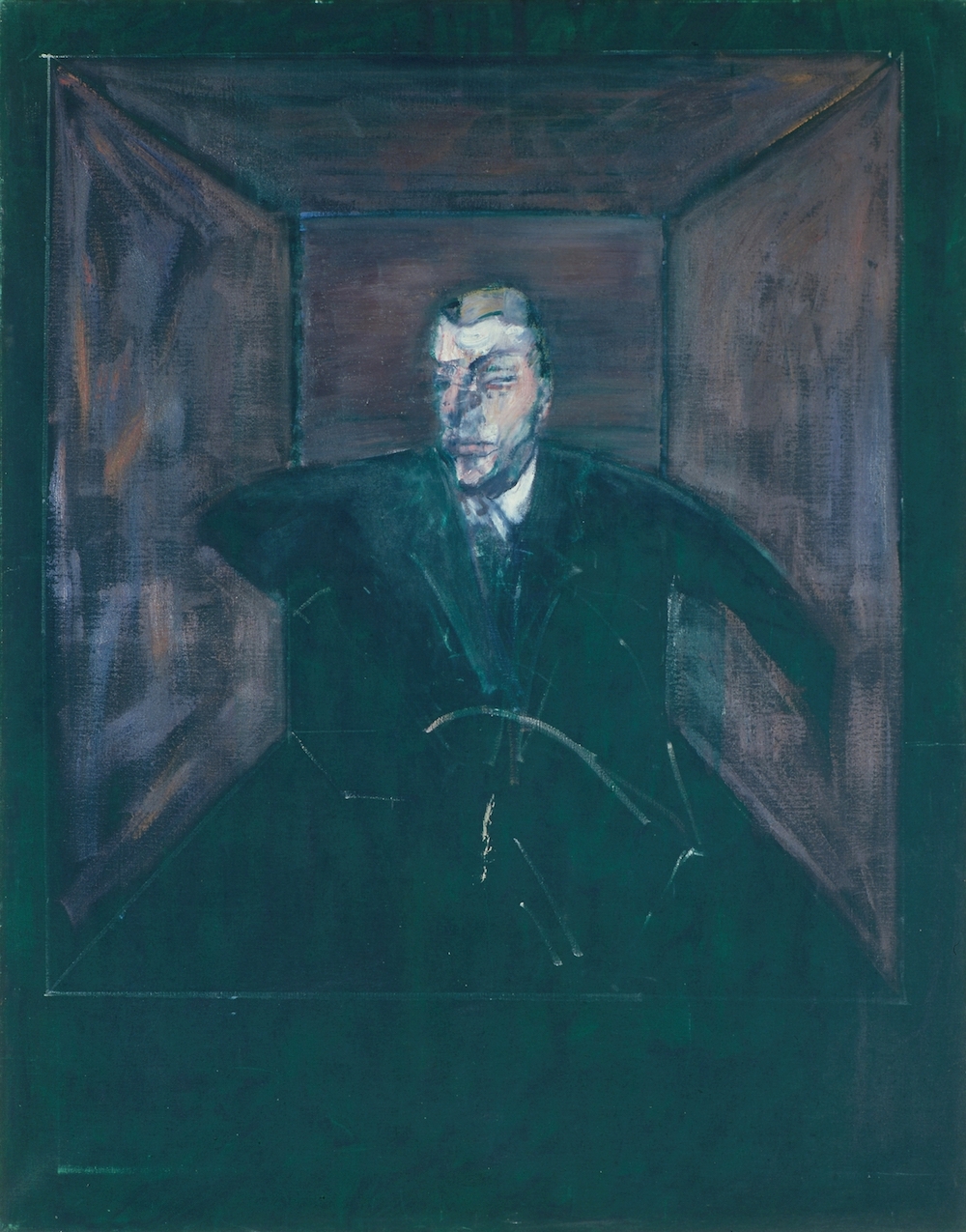

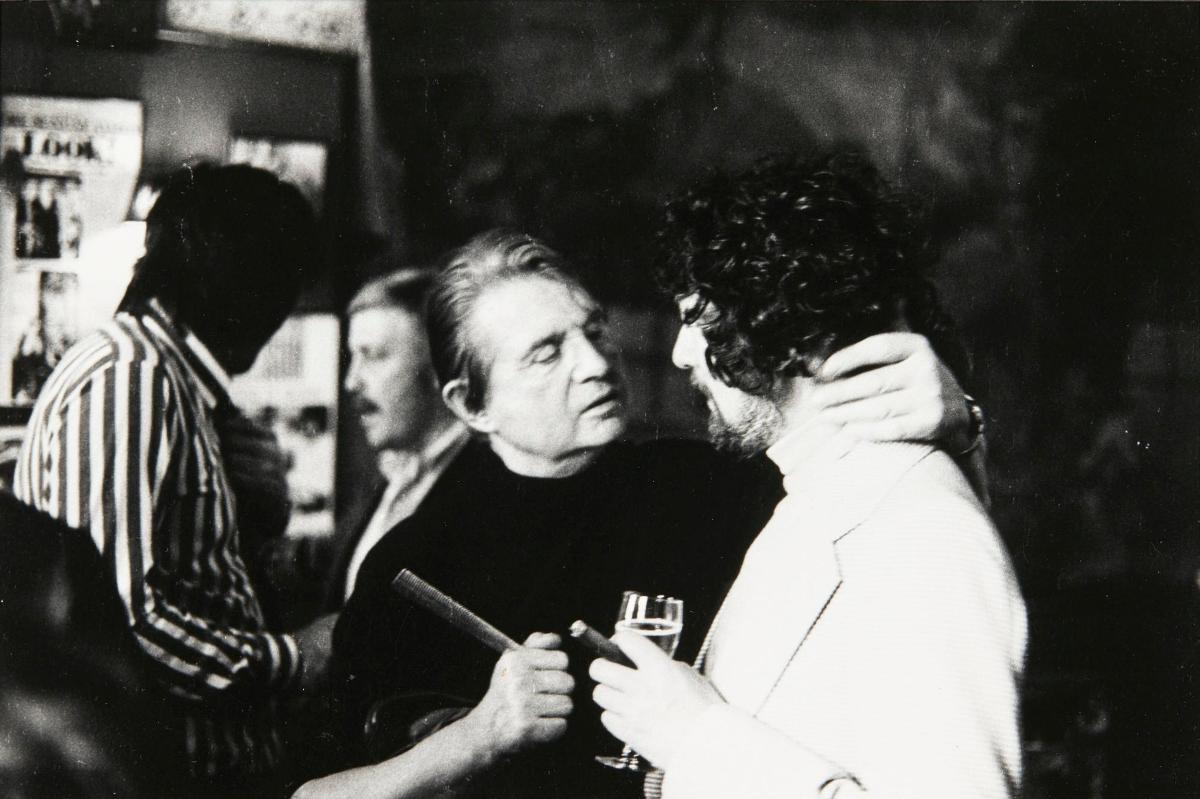

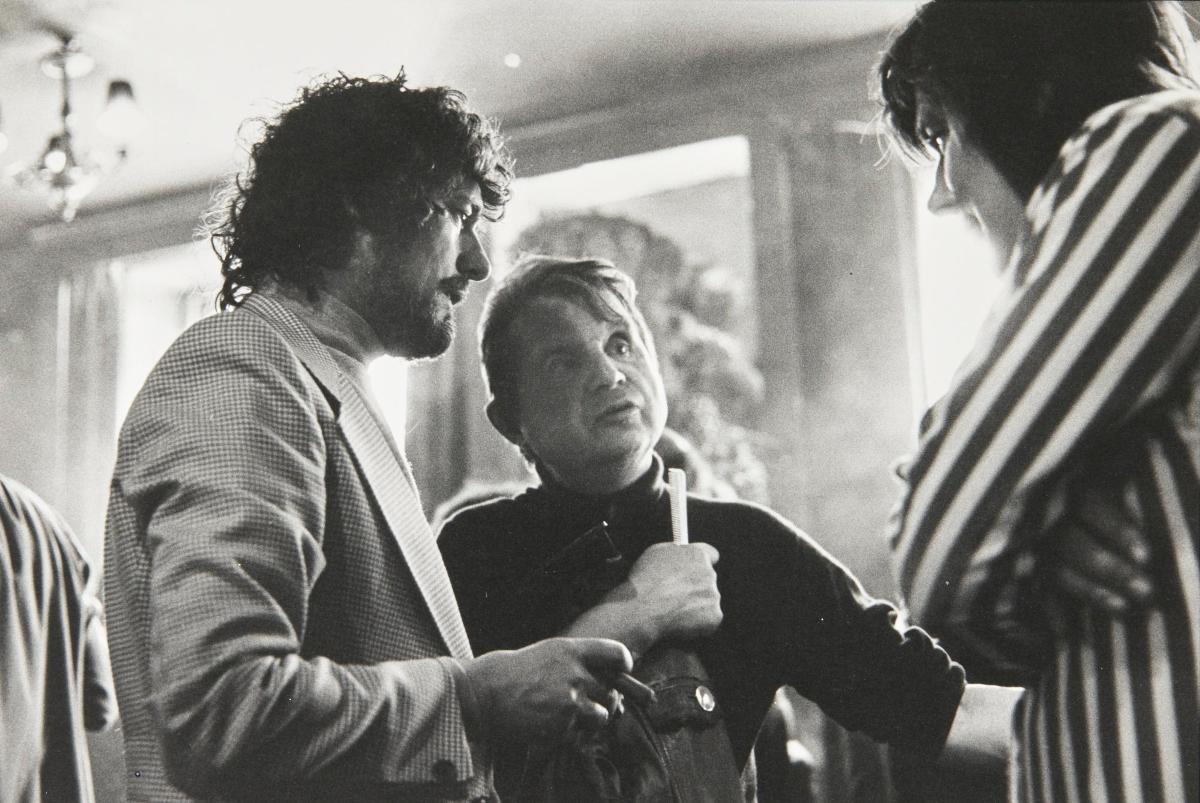
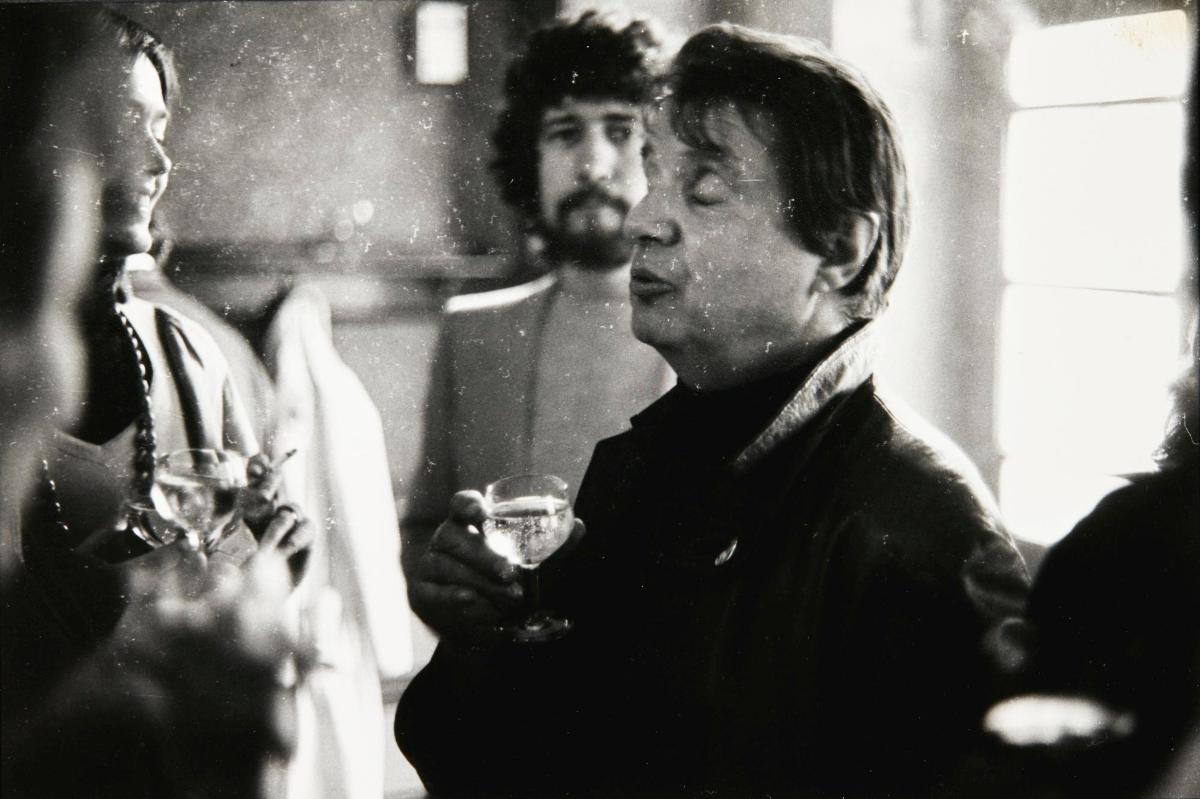

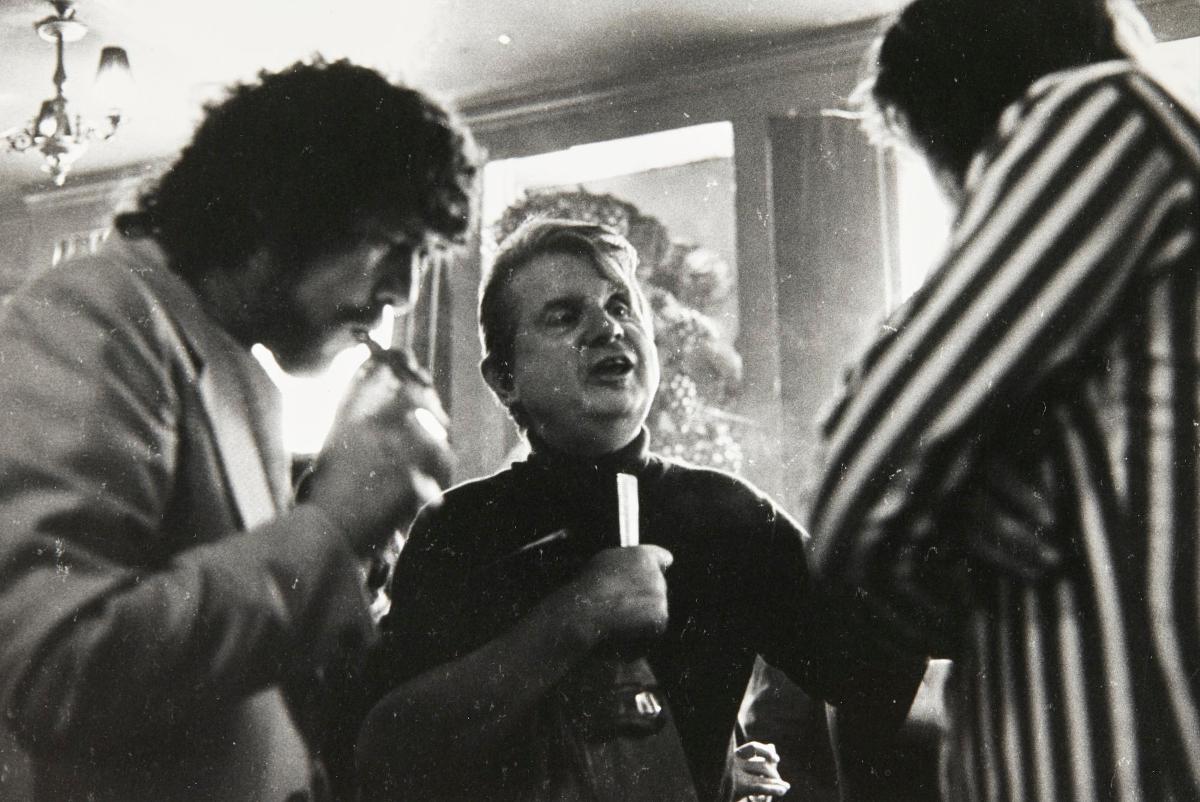
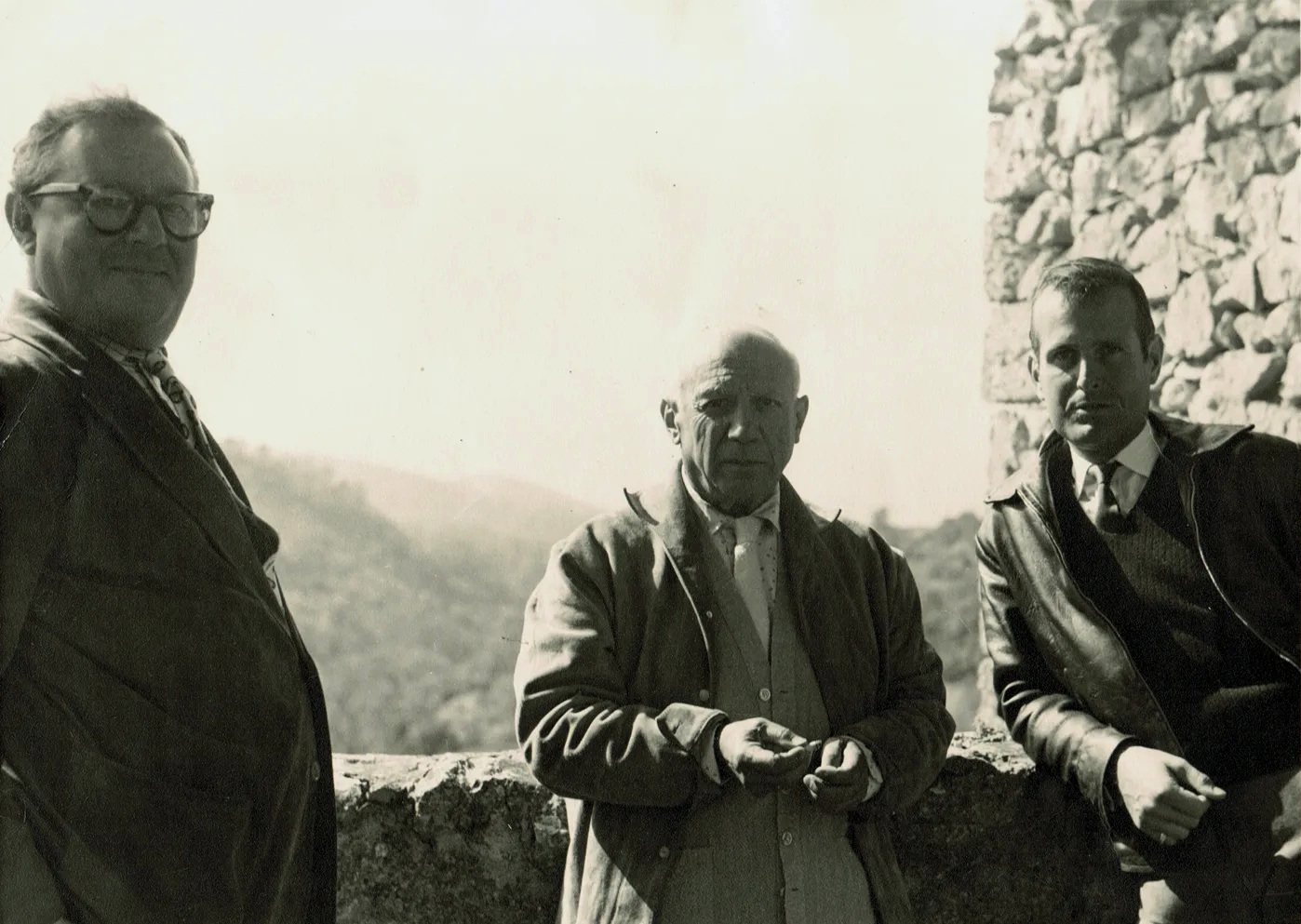


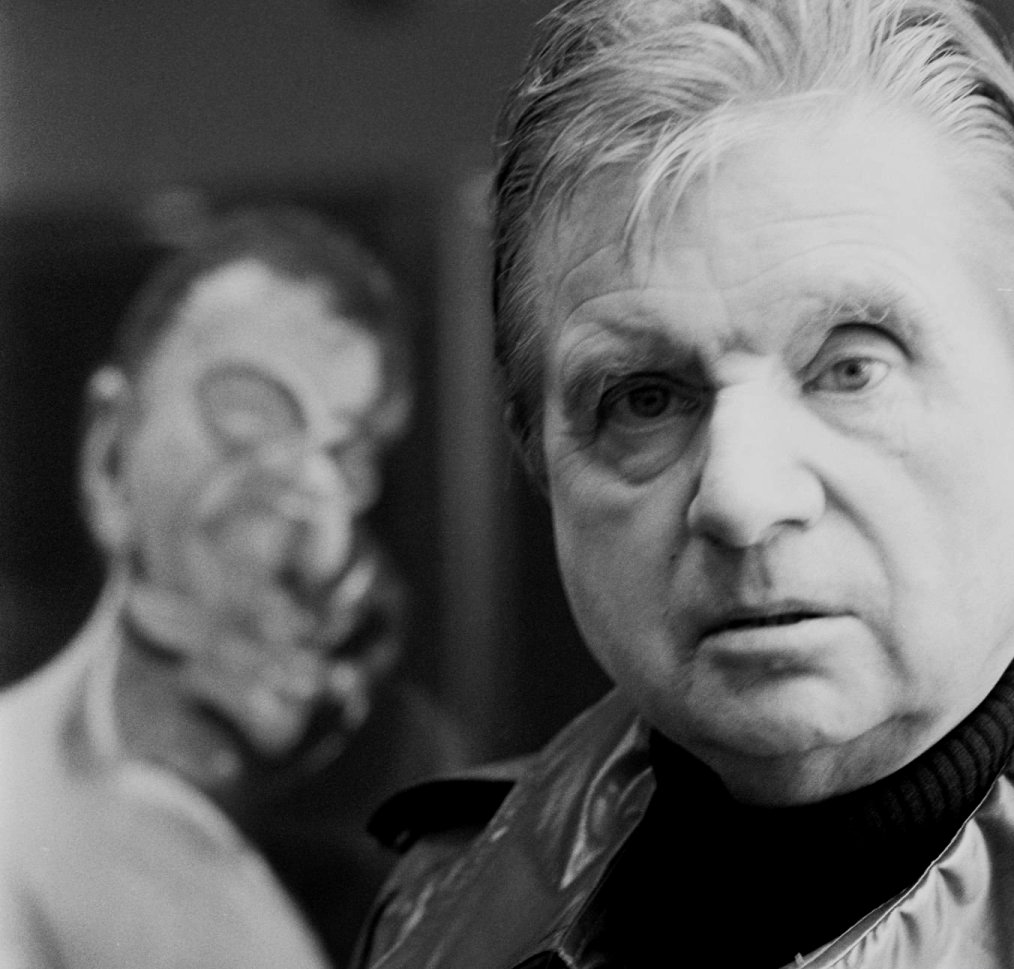
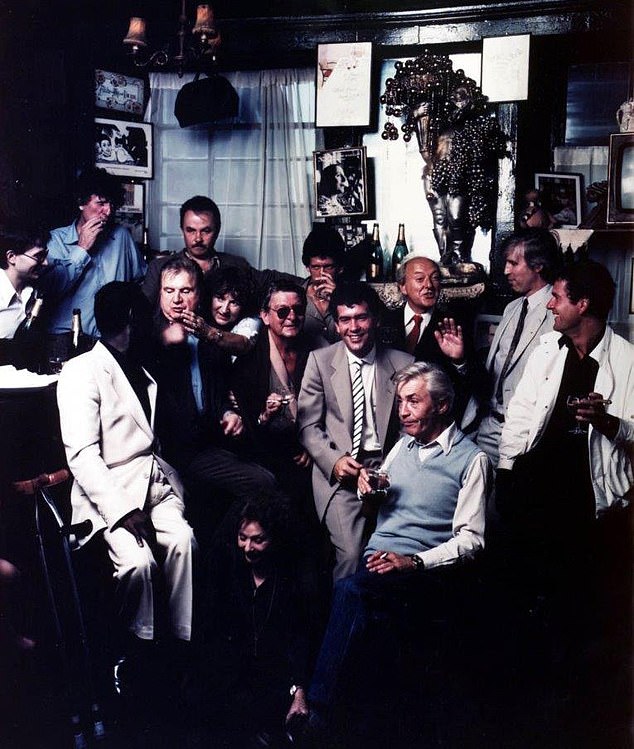


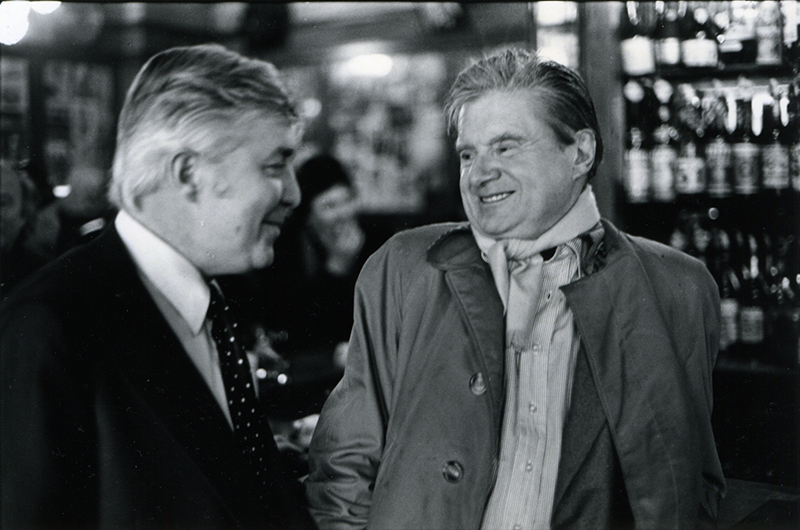

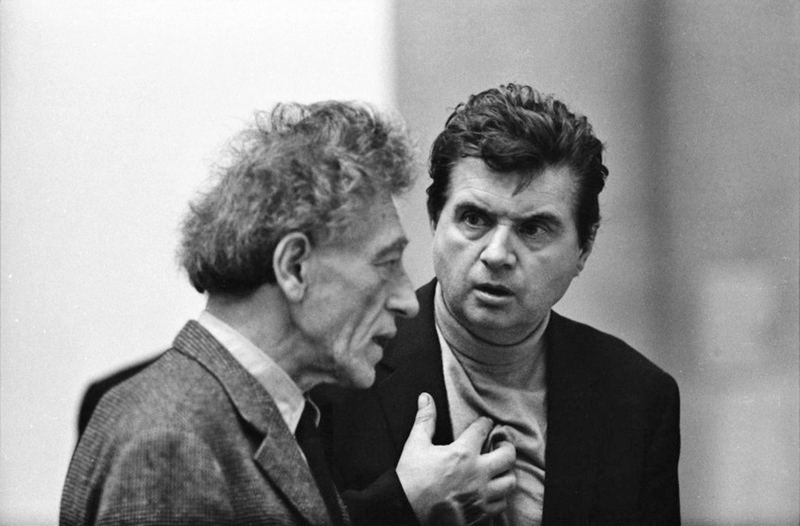


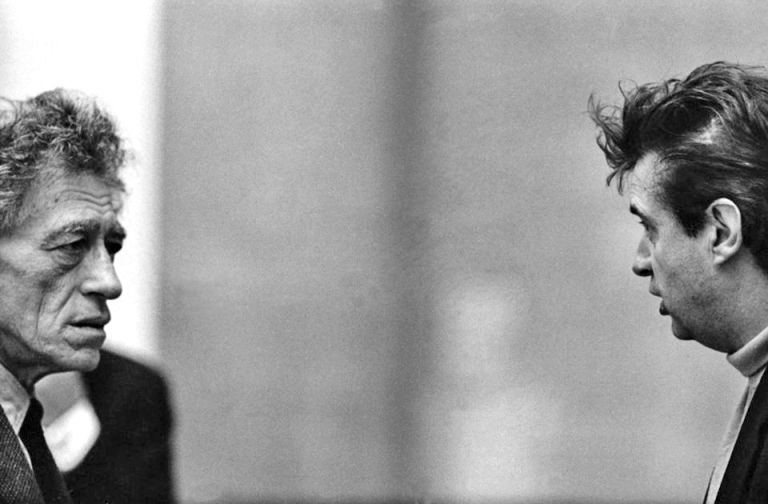

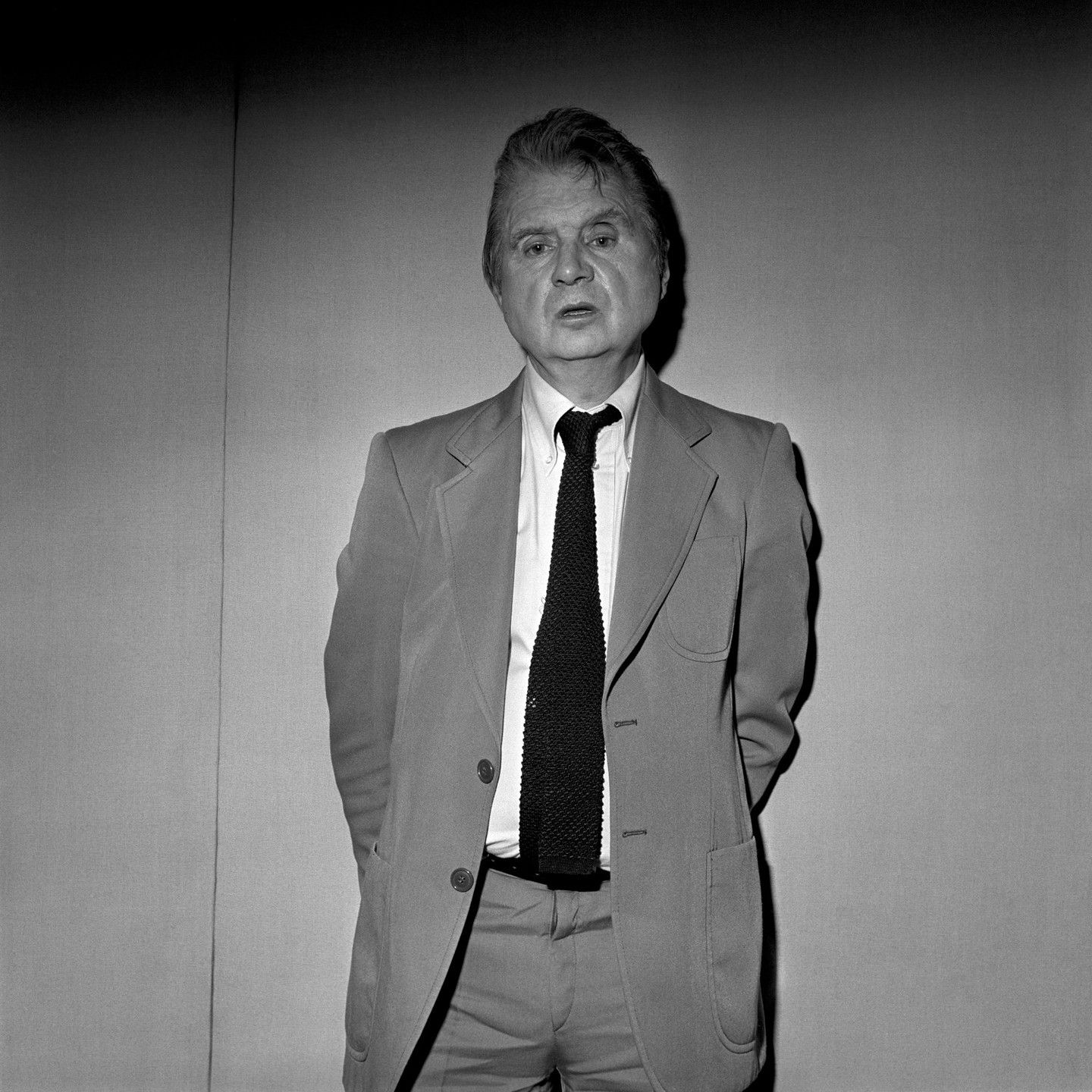


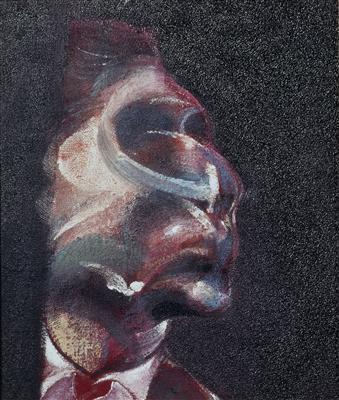
fff.jpg)
ffff.jpg)


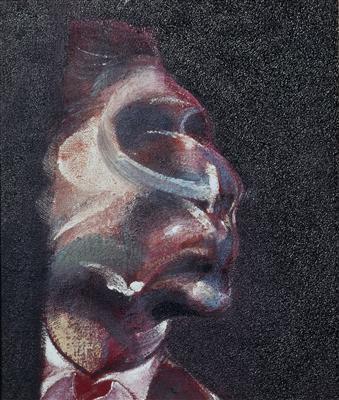
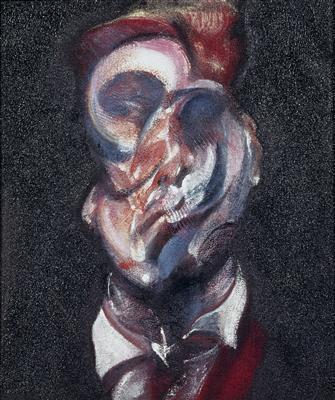
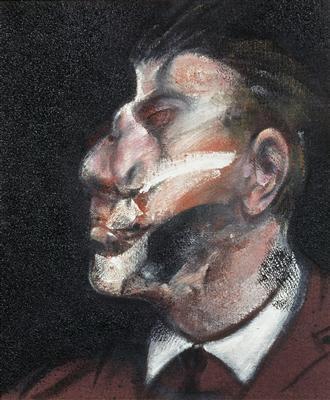

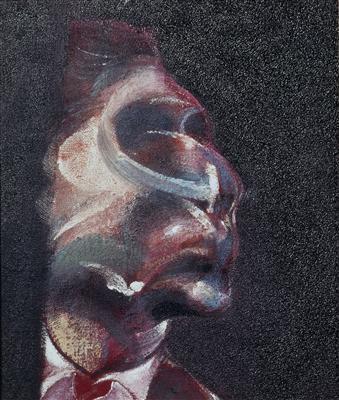
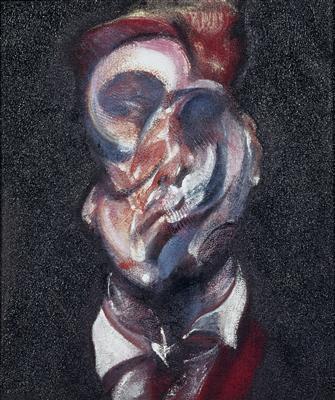


.jpg)